Vocabulary, grammar, and cultural contexts for Spanish language acquisition across all proficiency levels. Develops skills in reading, writing, speaking, and listening through structured linguistic analysis and practice.
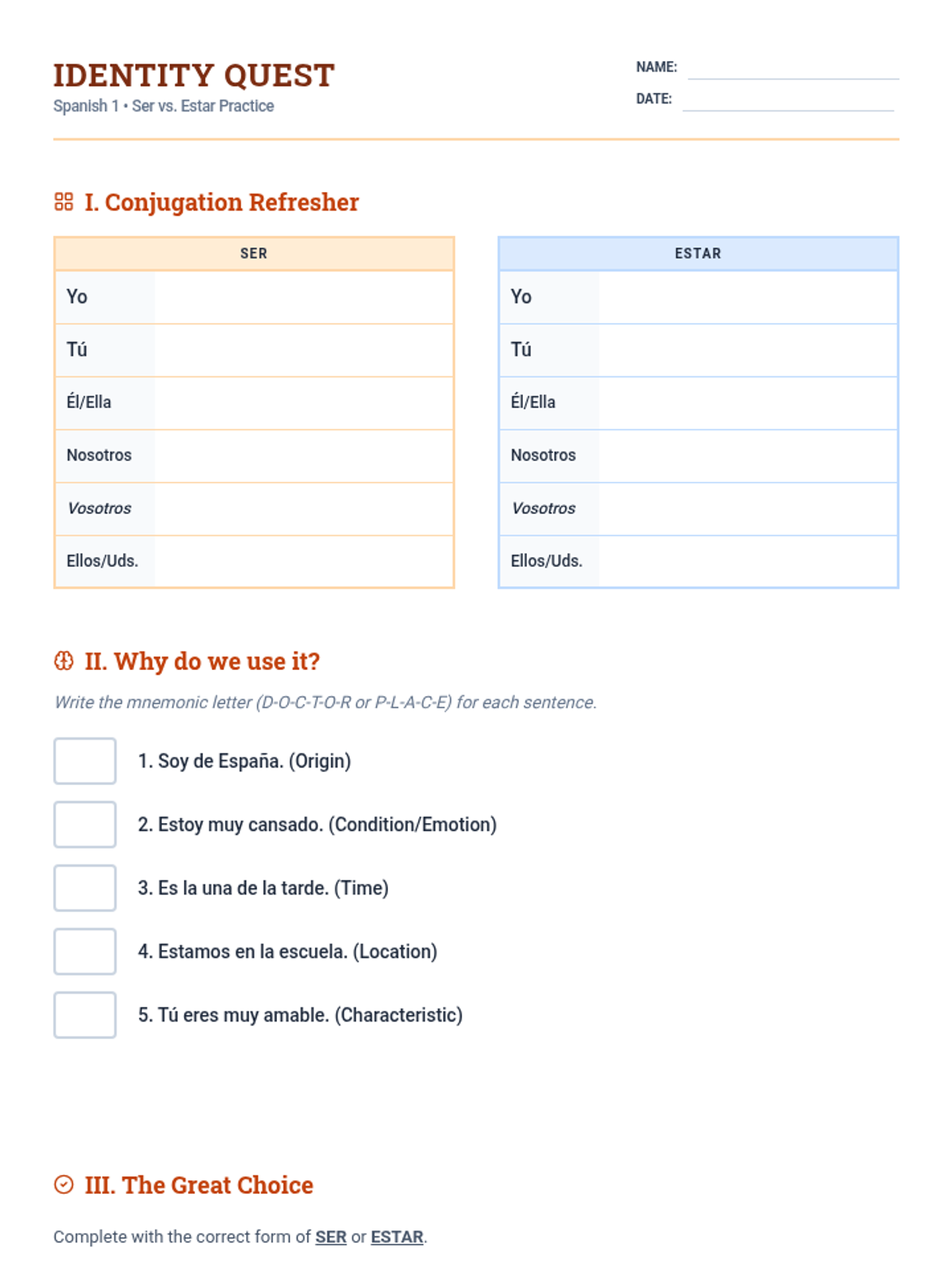
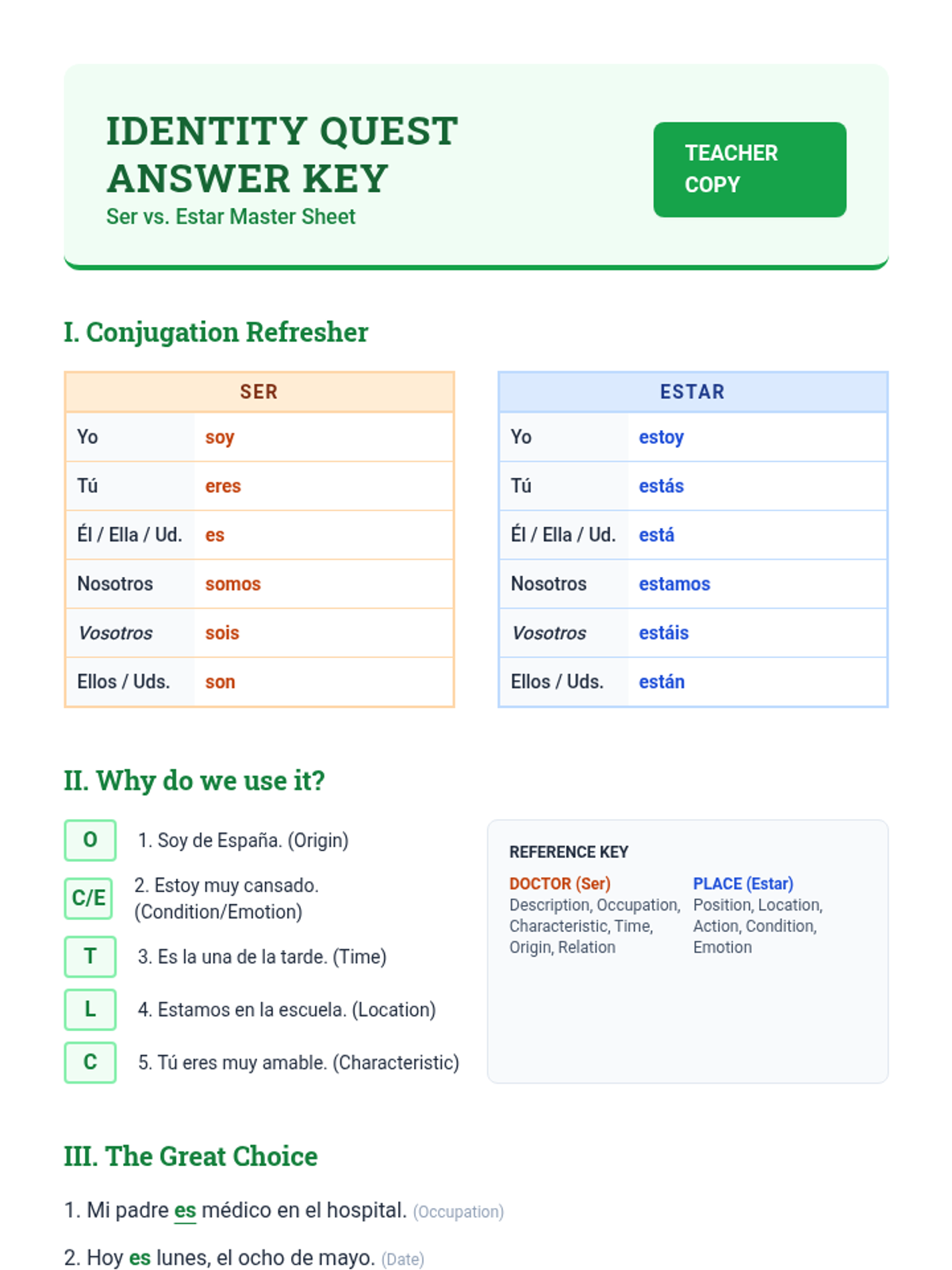
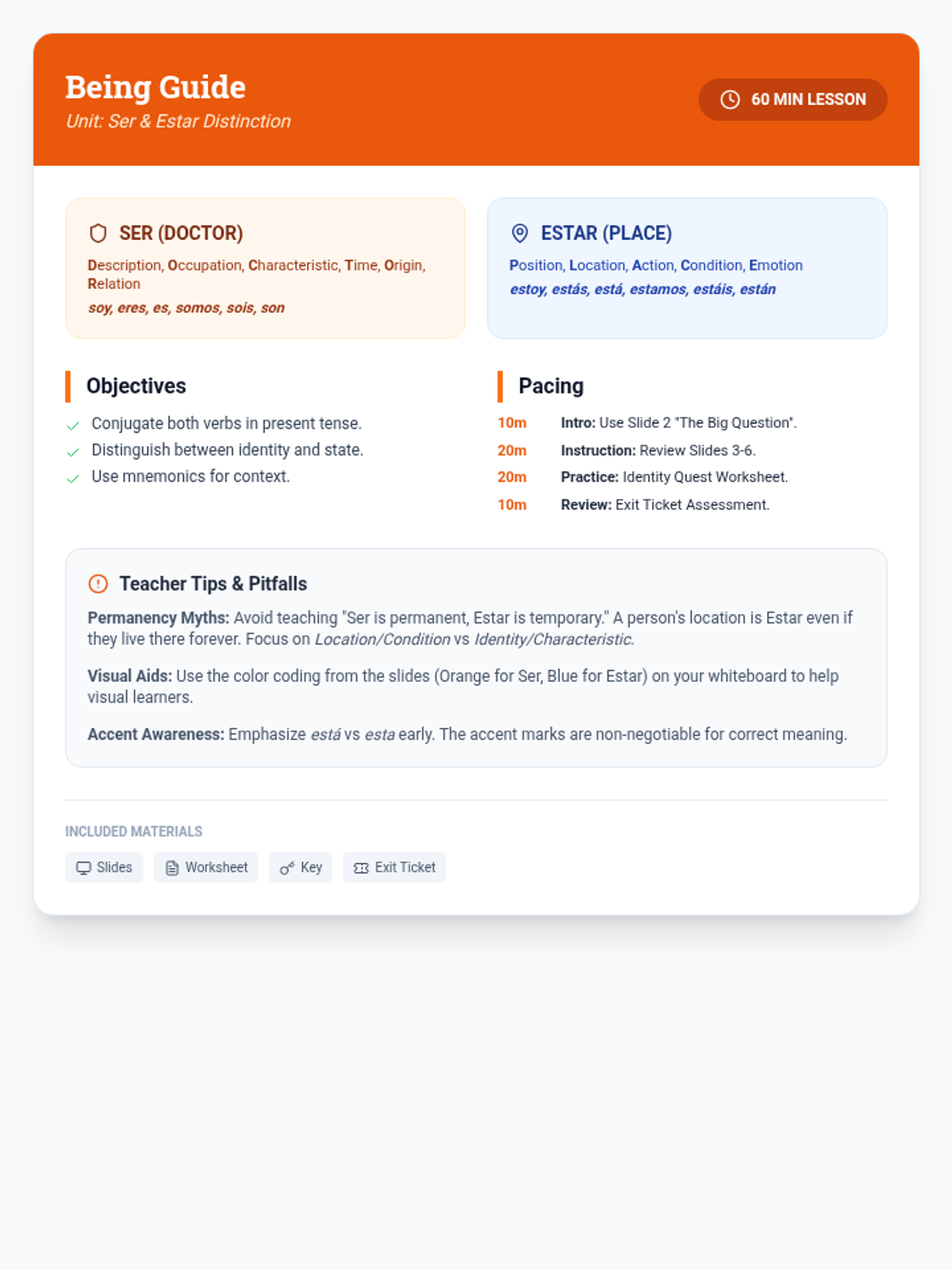
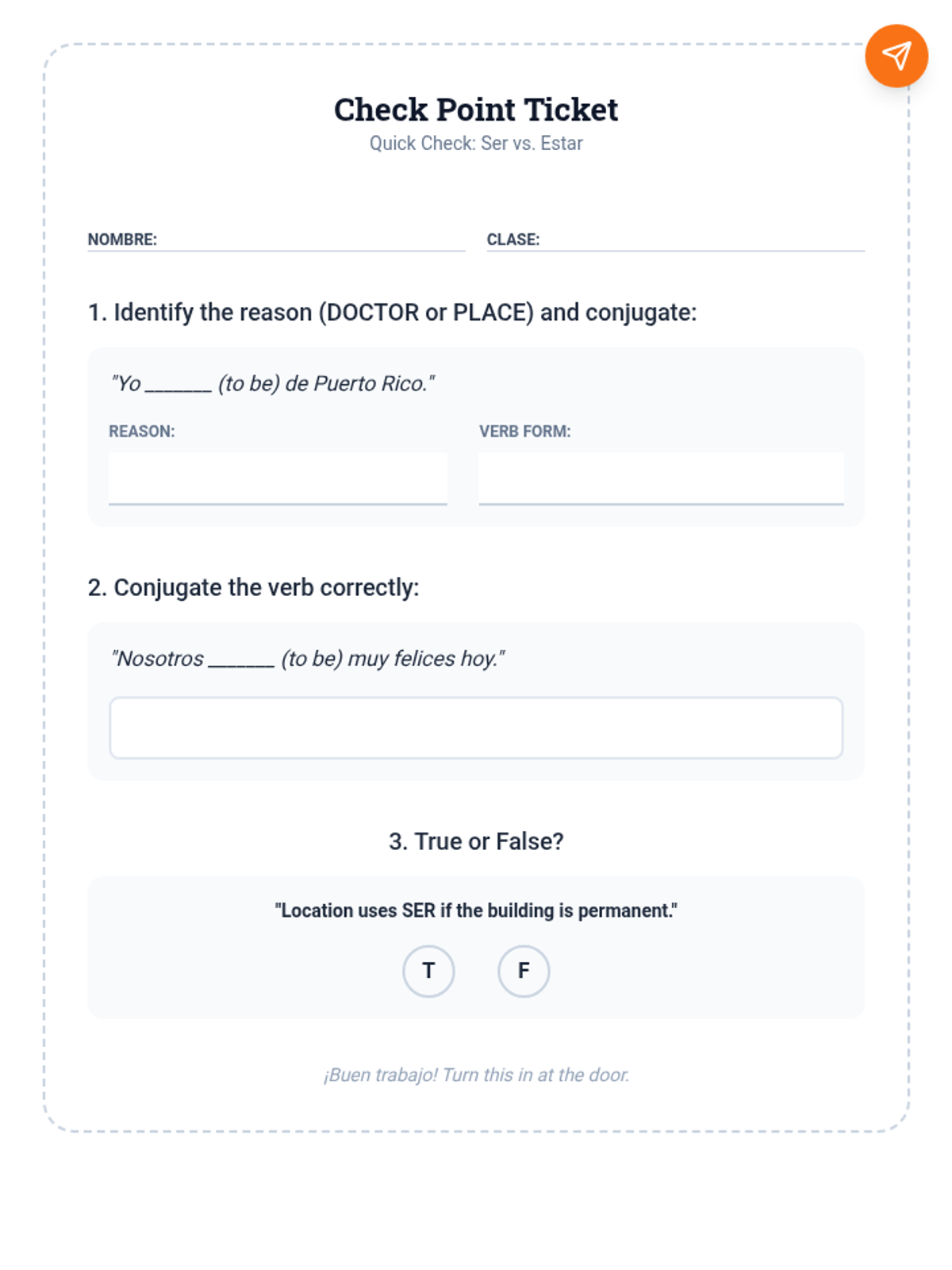
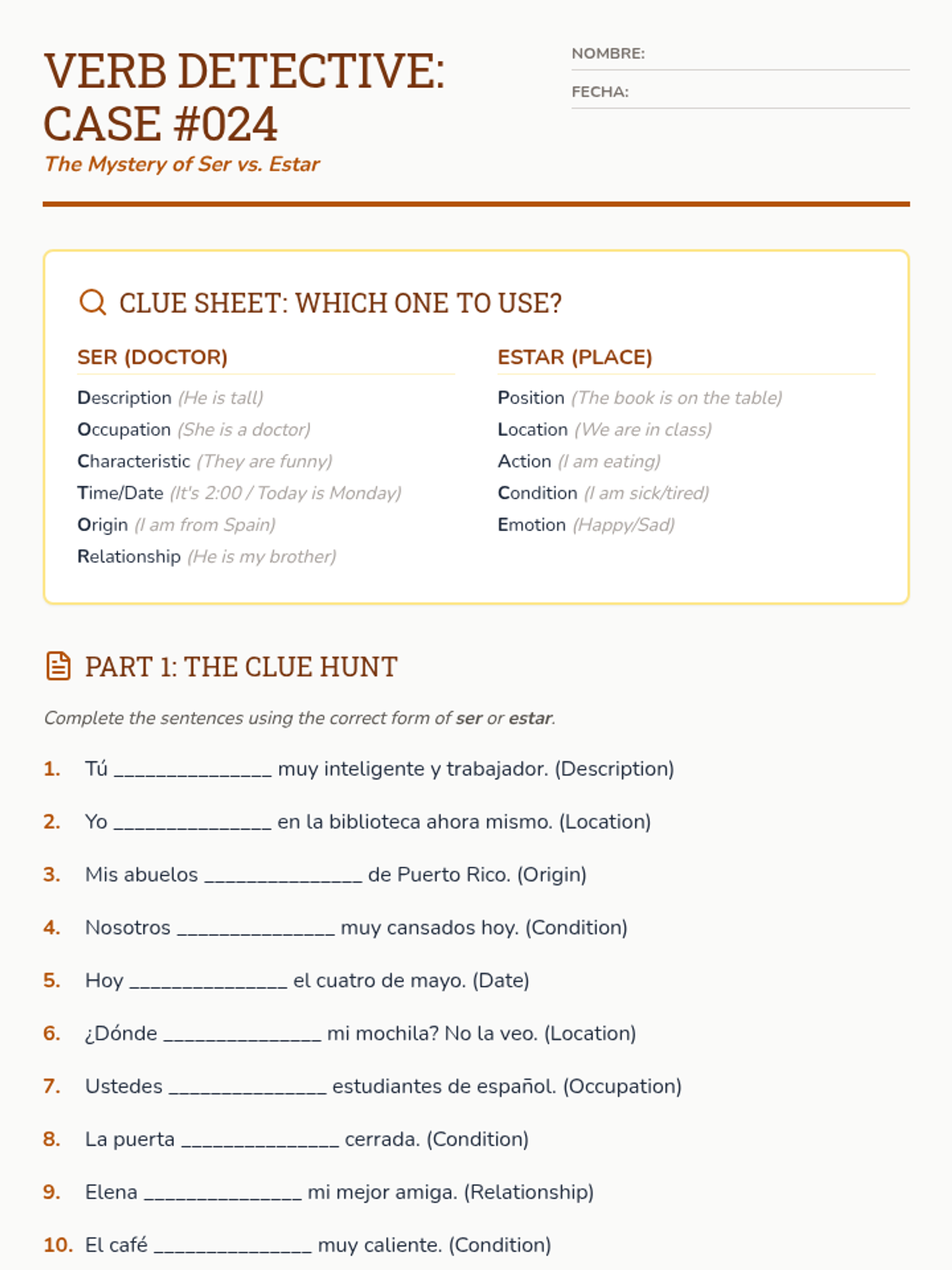
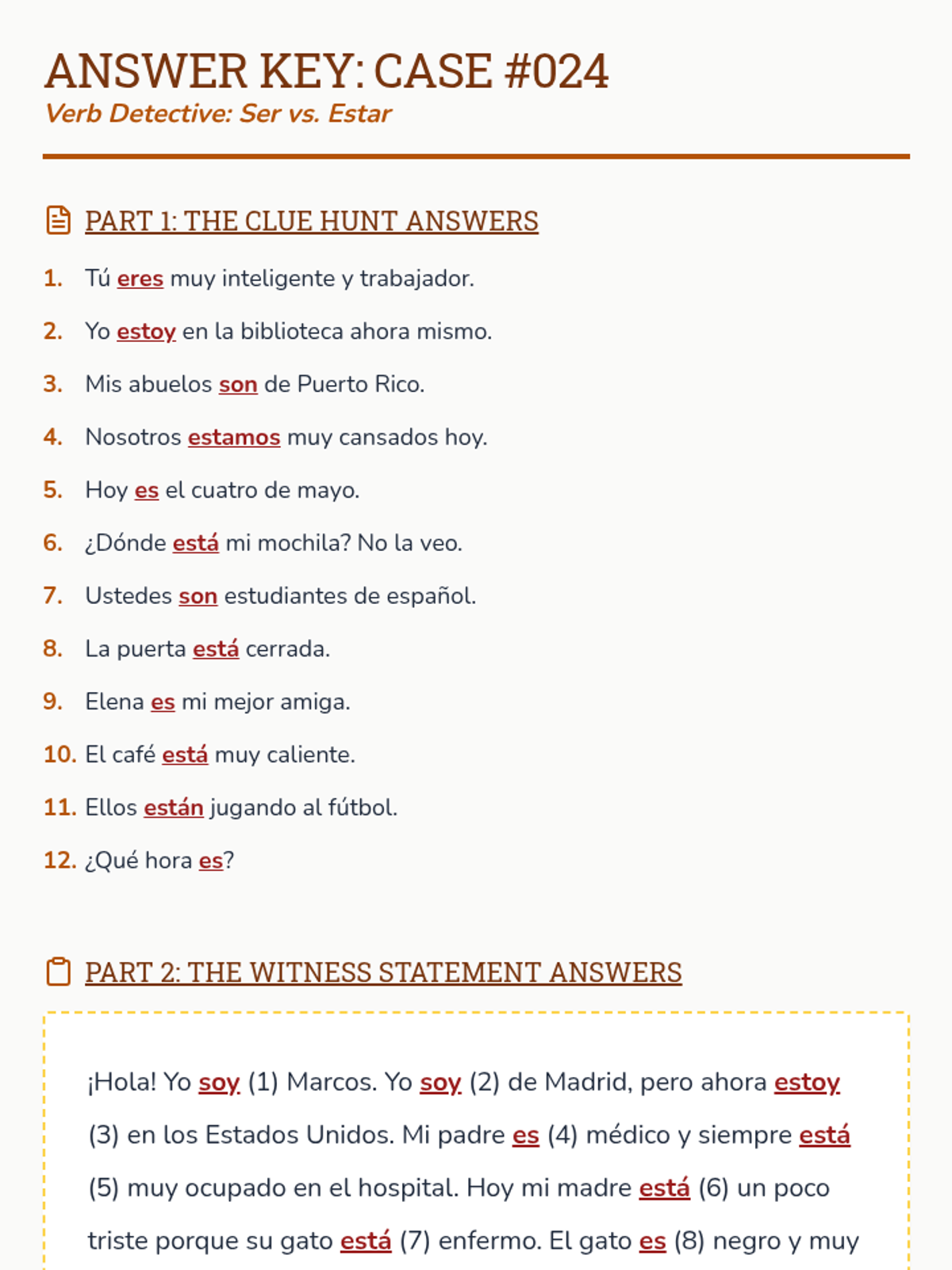
A comprehensive introduction to the Spanish verbs 'ser' and 'estar' for 9th-grade beginners, focusing on conjugation and the DOCTOR/PLACE mnemonics.
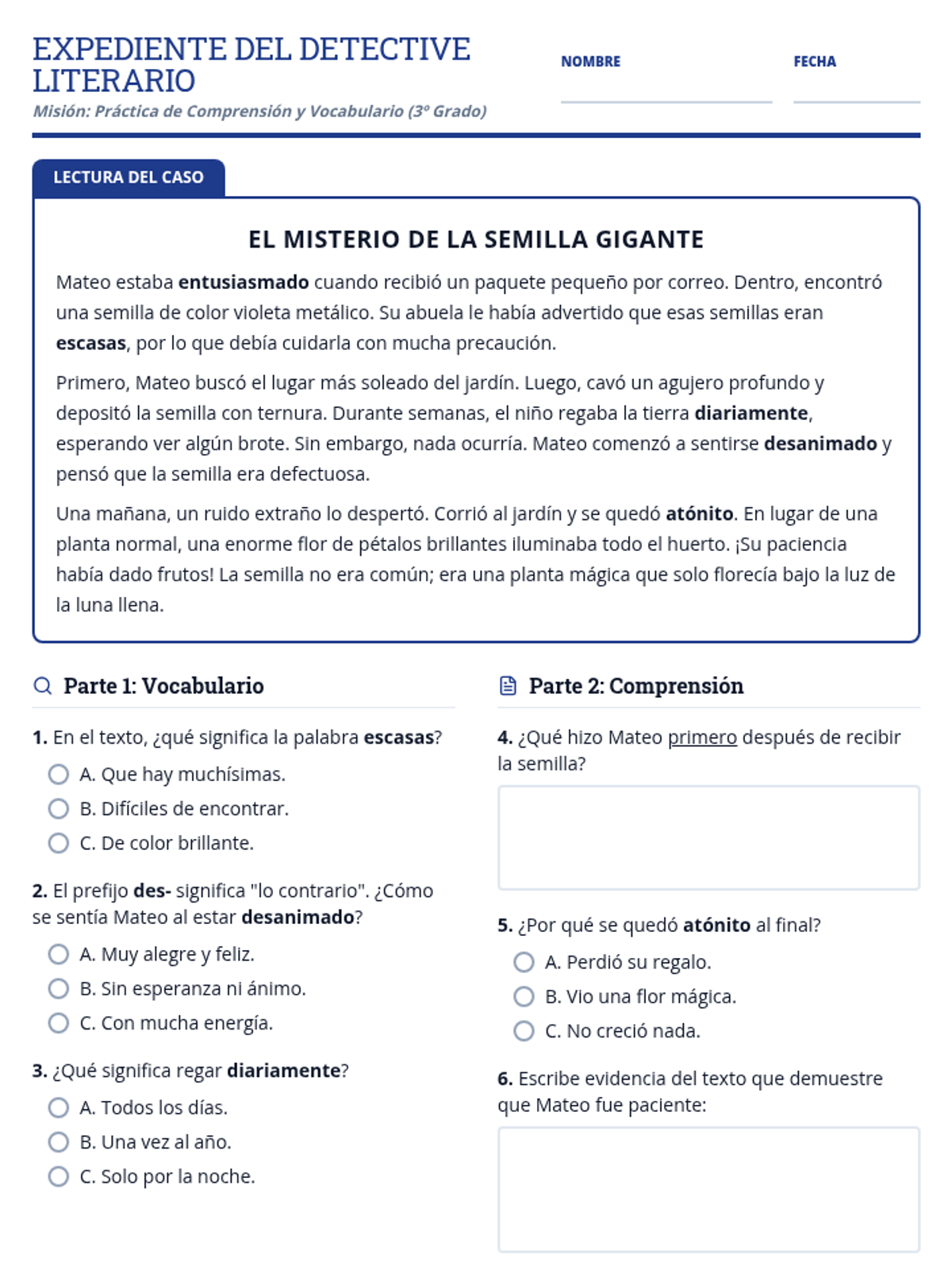
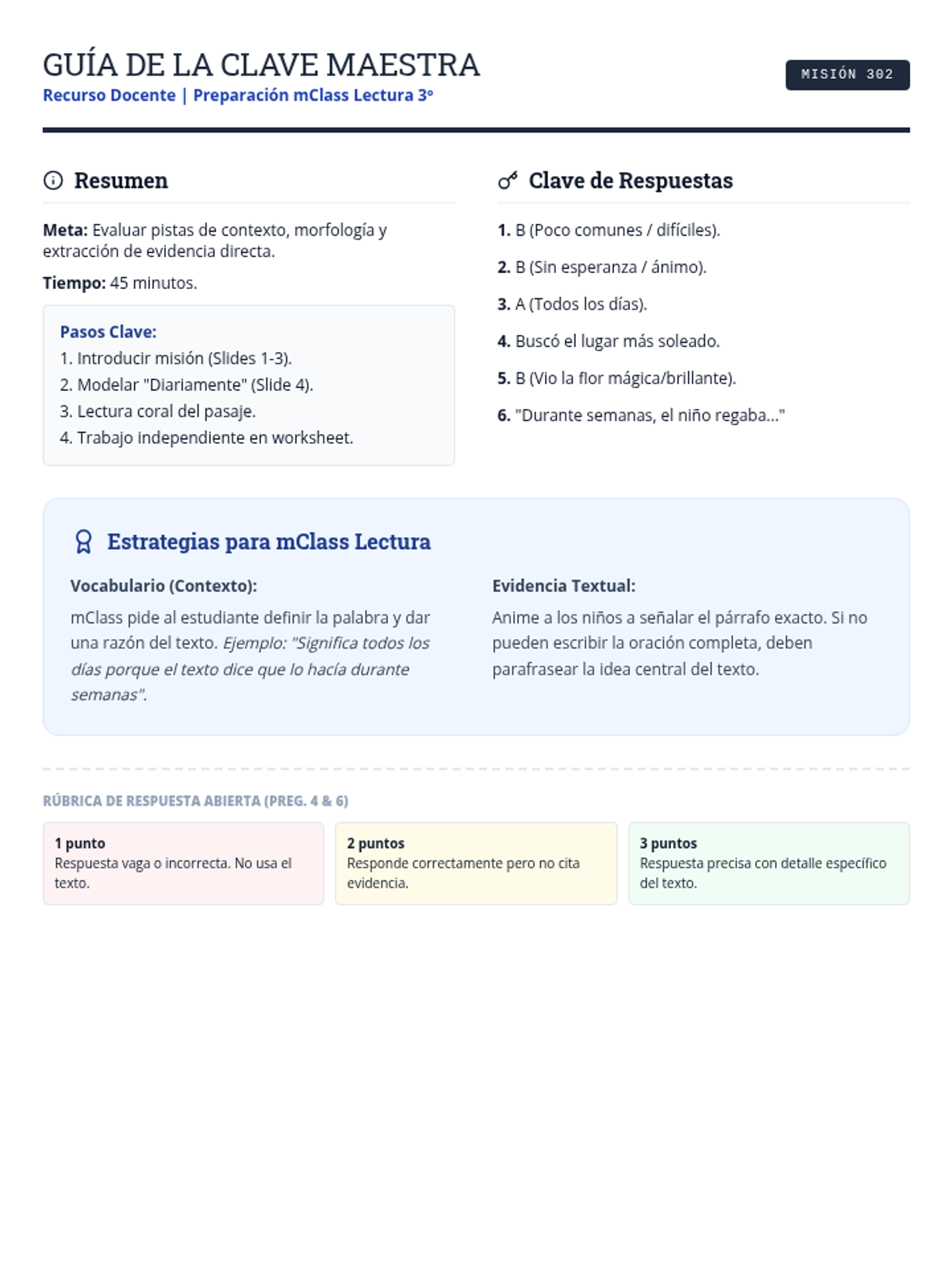
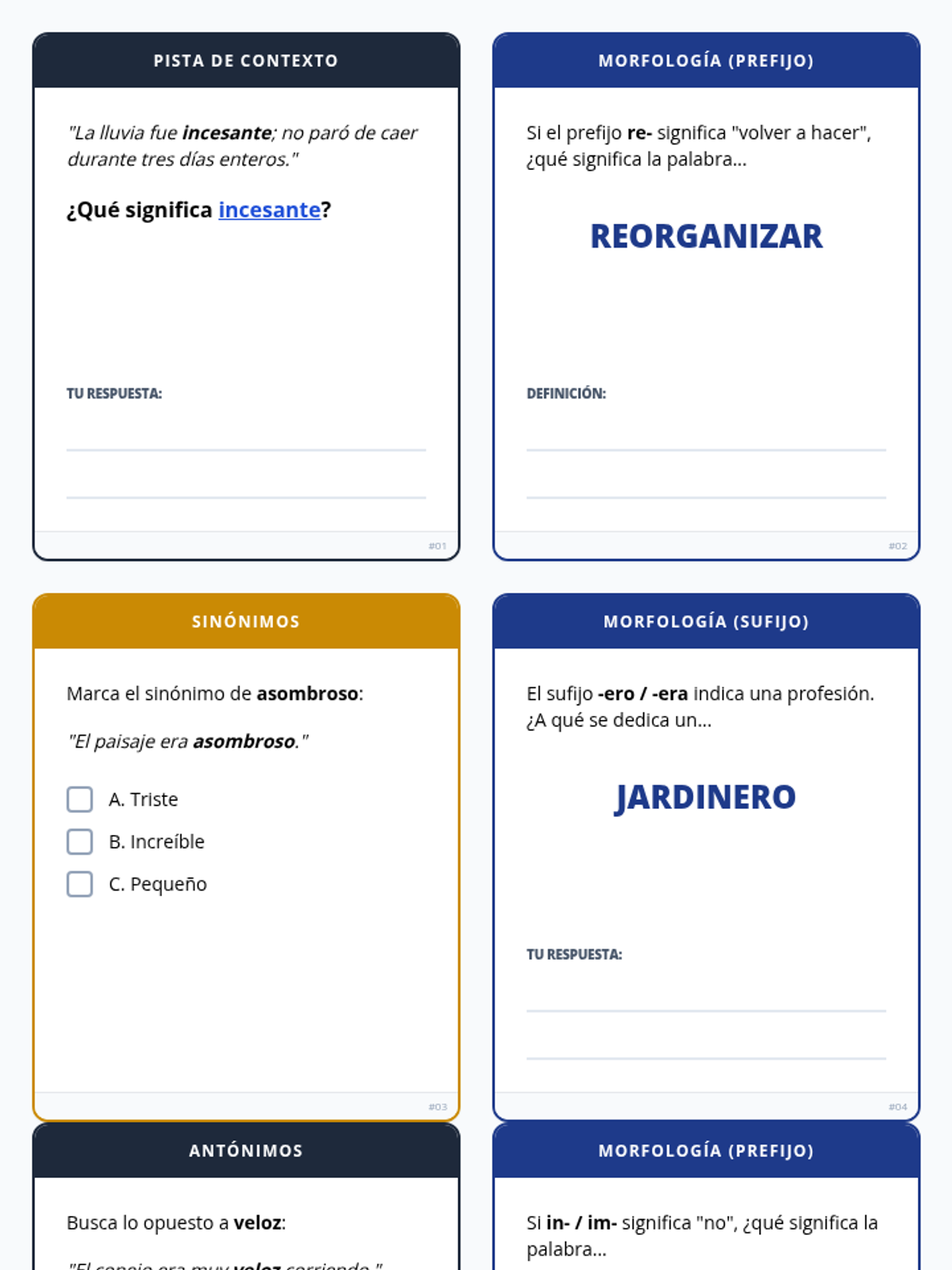
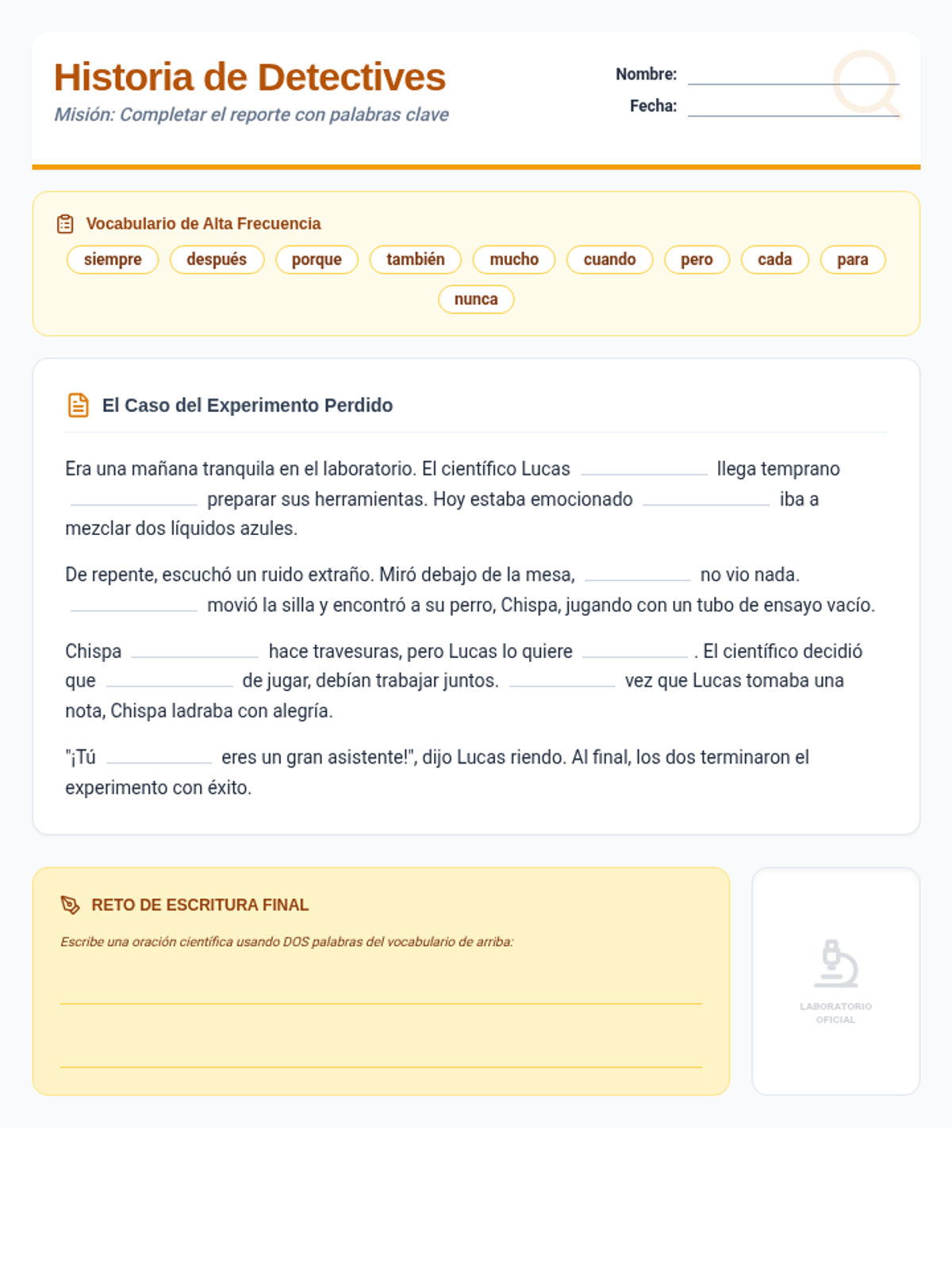
Una lección diseñada para preparar a estudiantes de tercer grado para las evaluaciones de mClass Lectura (Amplify), enfocándose en estrategias de pistas de contexto, morfología y extracción de evidencia textual. Incluye práctica de pasajes narrativos y ejercicios de vocabulario de alta frecuencia.
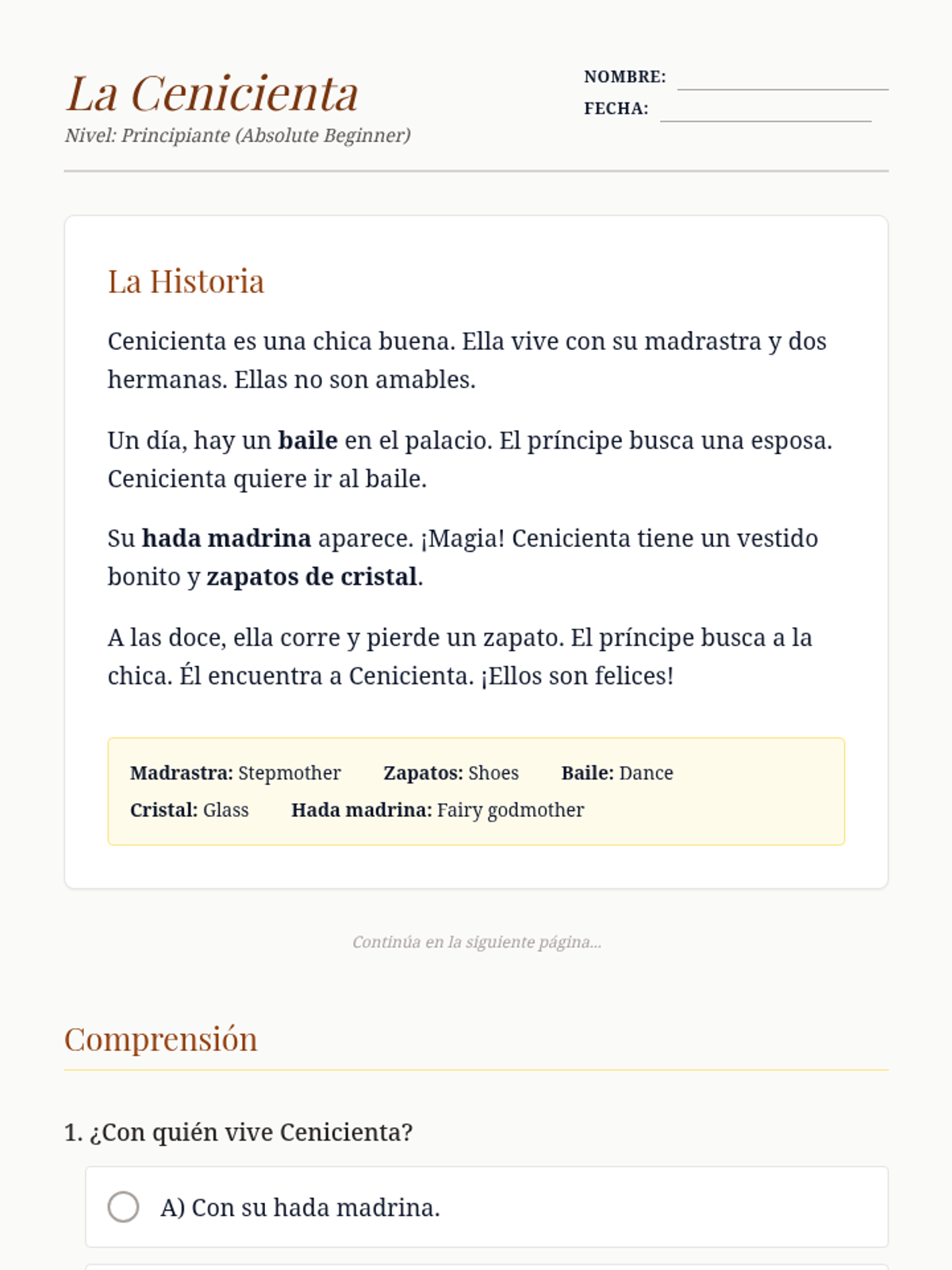
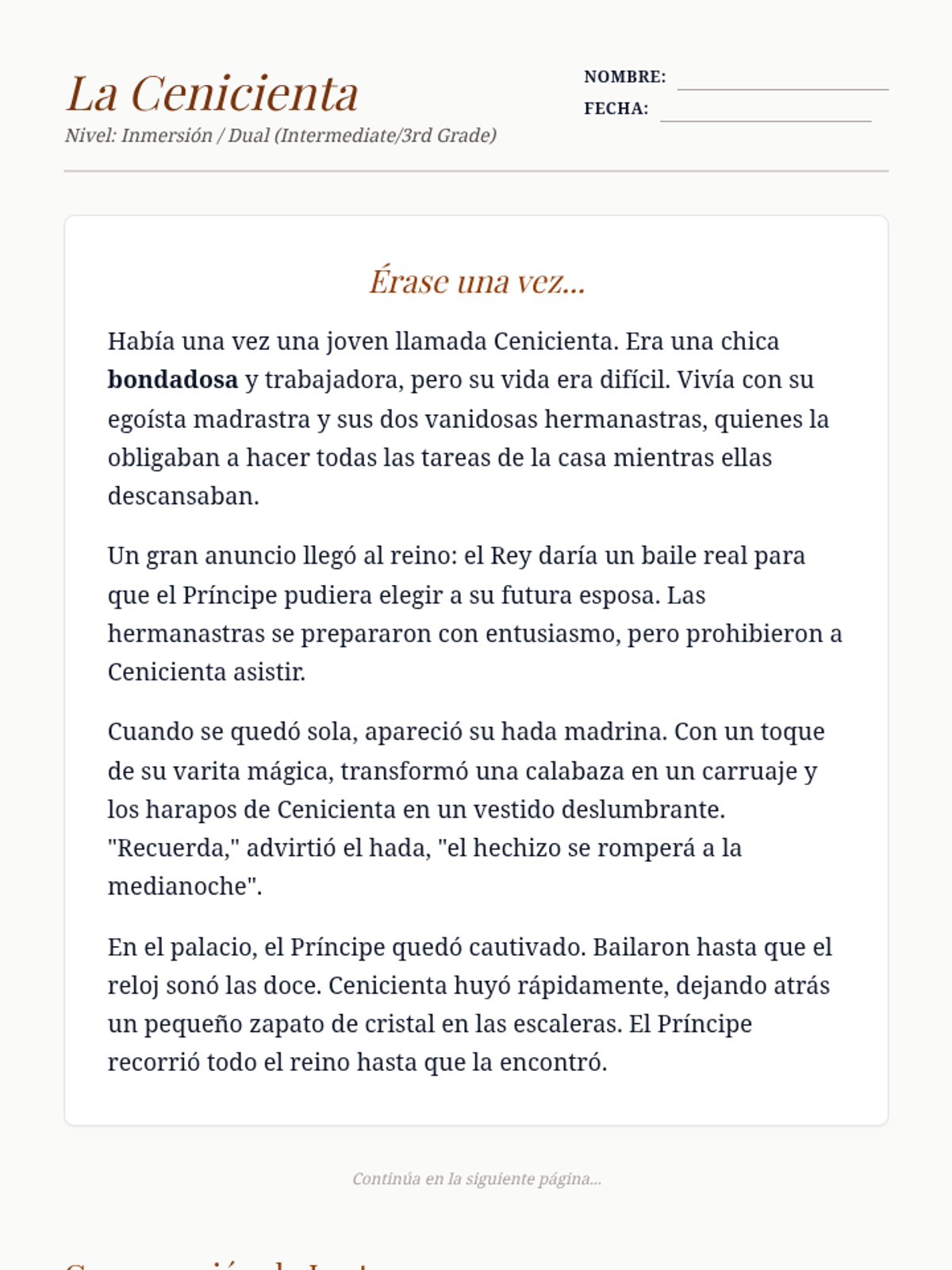
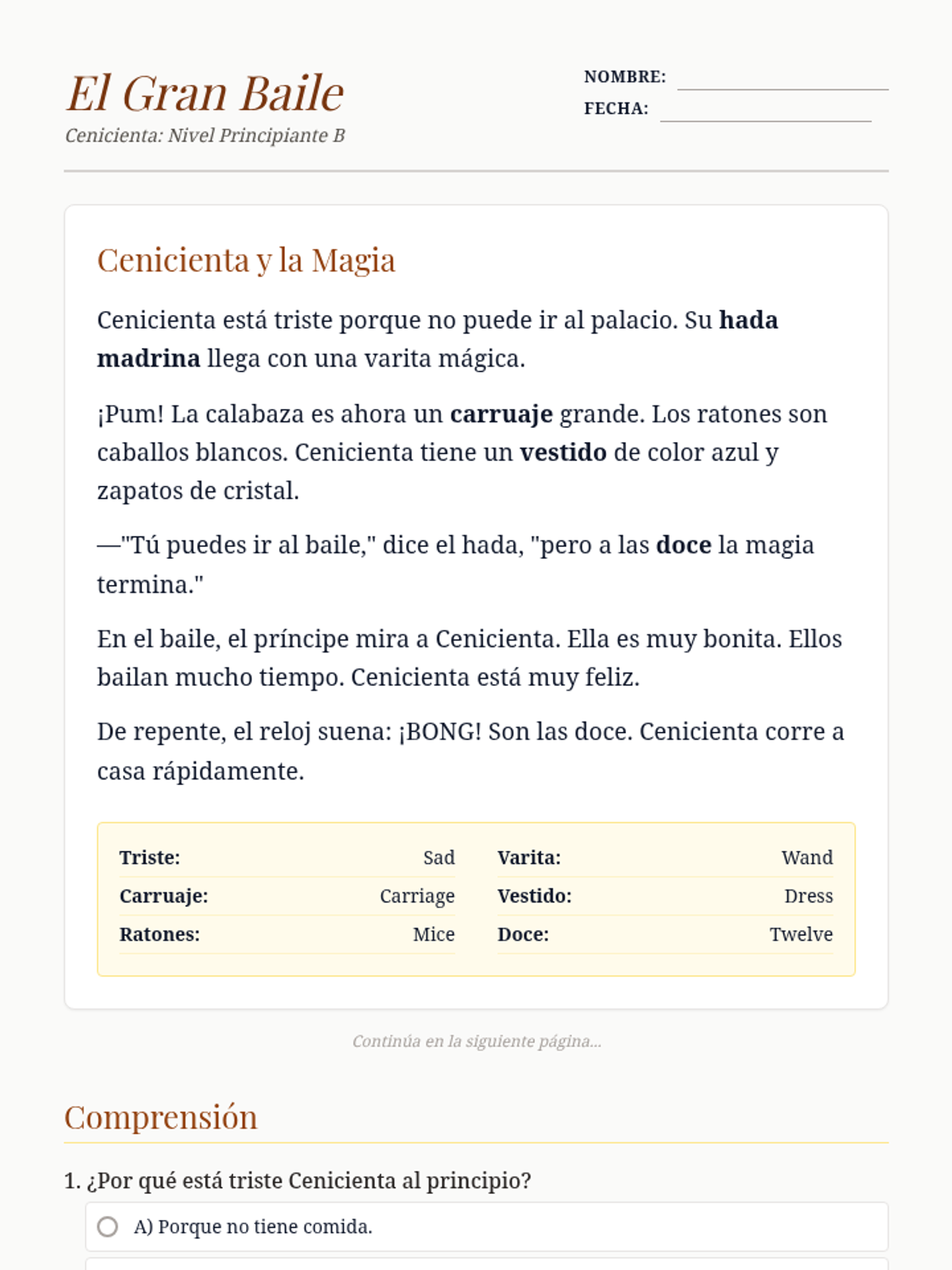
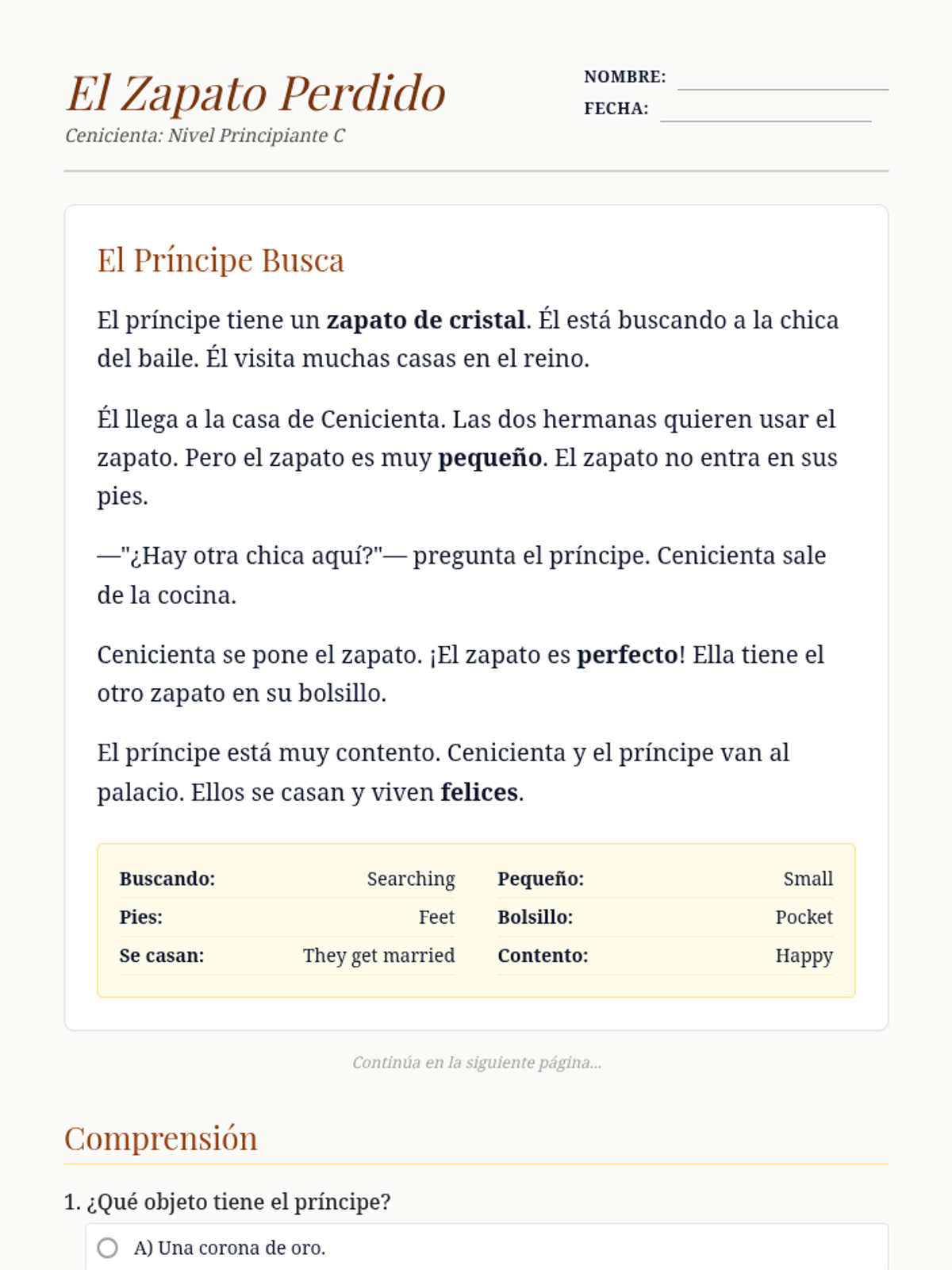
A collection of reading comprehension worksheets for third-grade Spanish learners based on the classic tale of Cinderella, tailored for both absolute beginners and dual-language students.
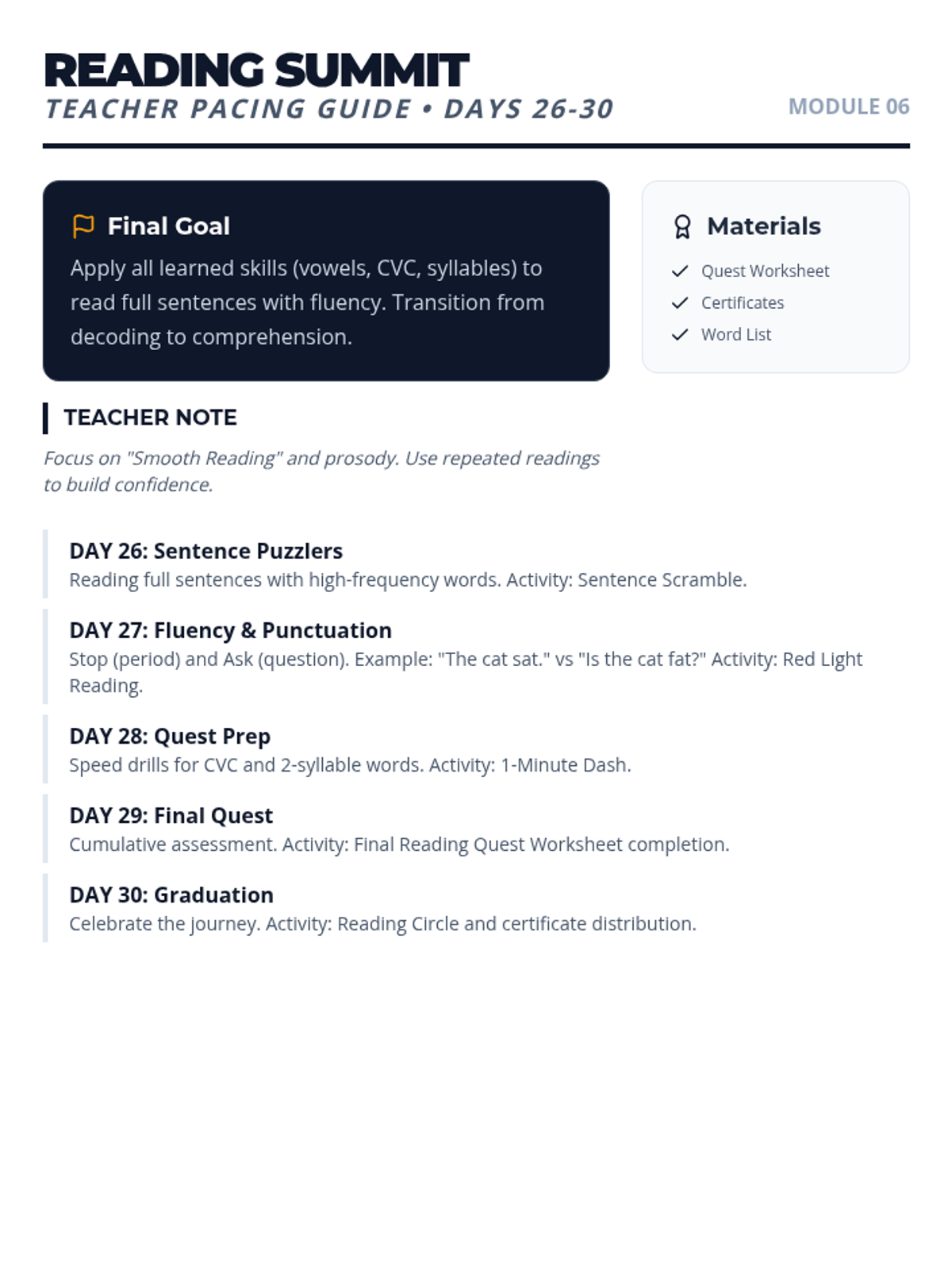
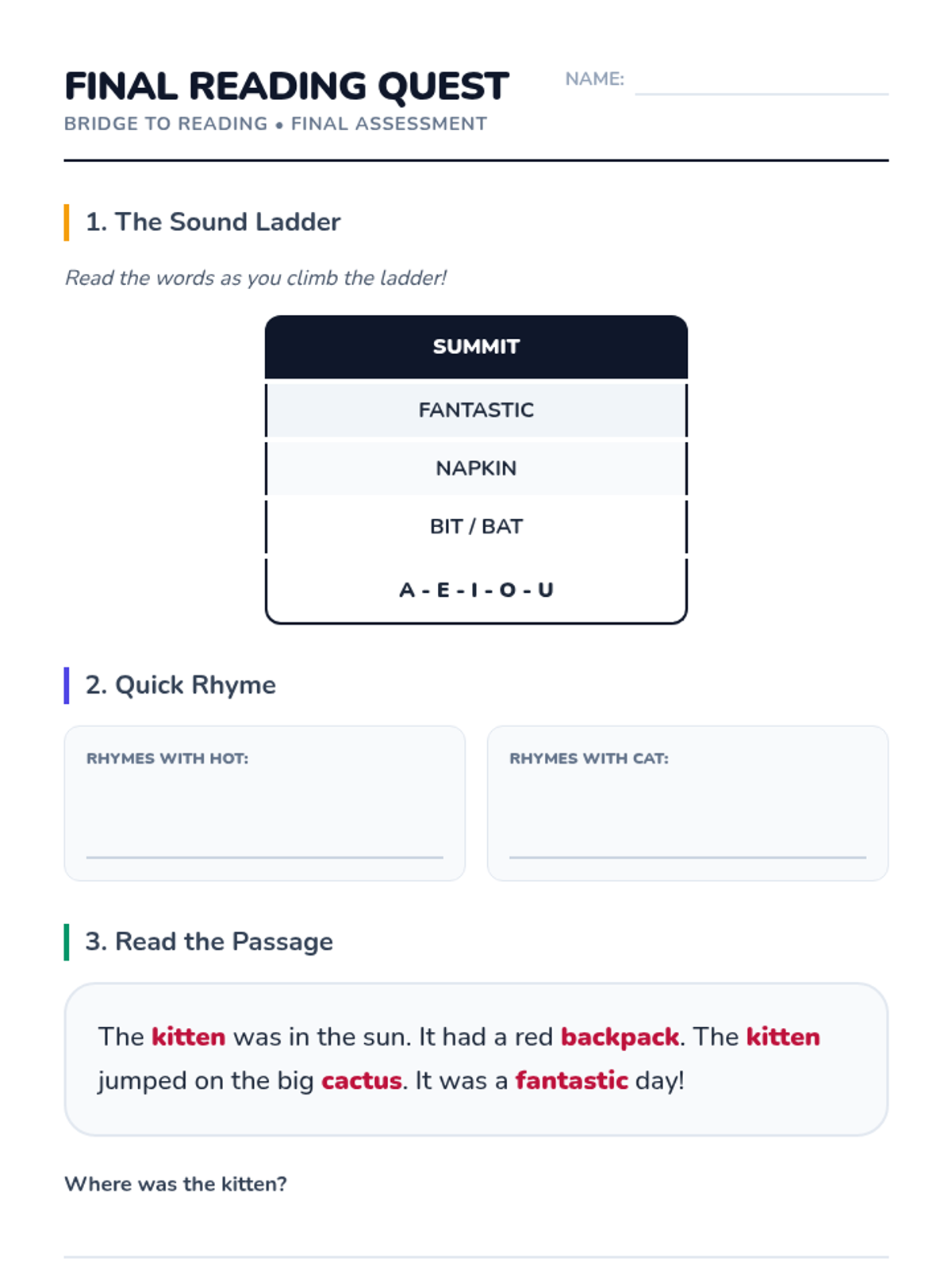
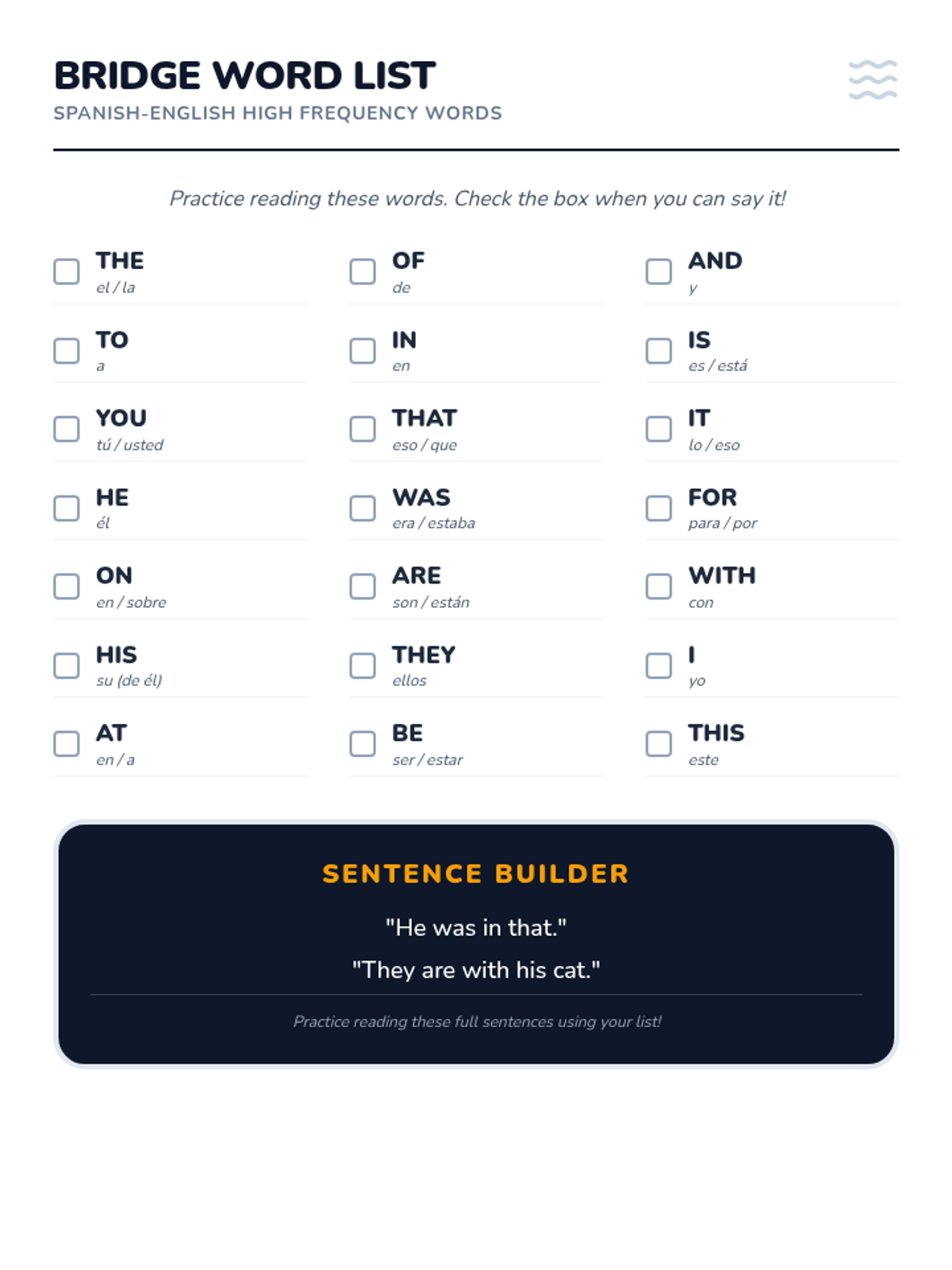
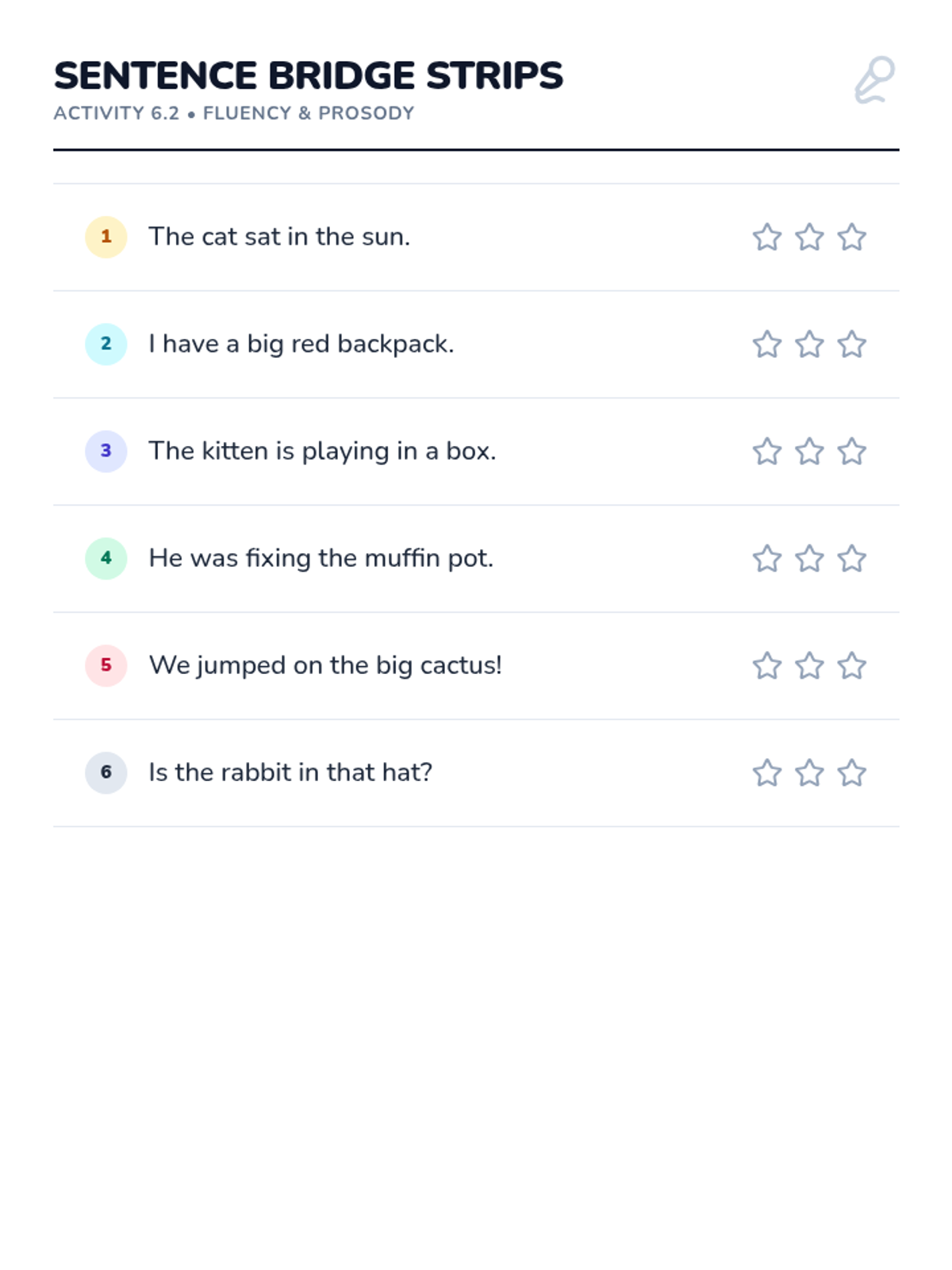
Consolidates all skills through fluency practice, sentence reading, and a final assessment of the 30-day journey. Days 26-30 of the 30-day plan.
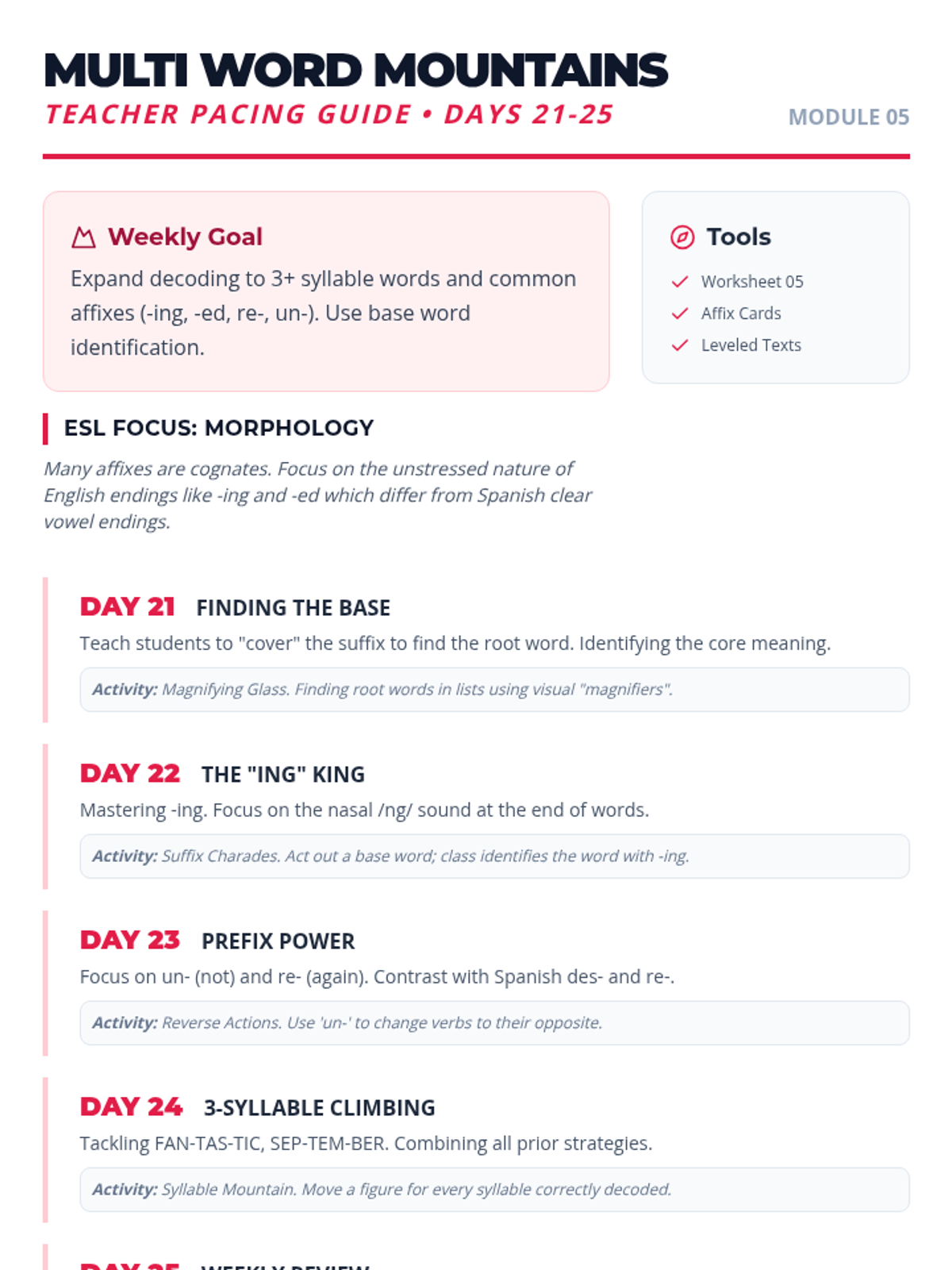
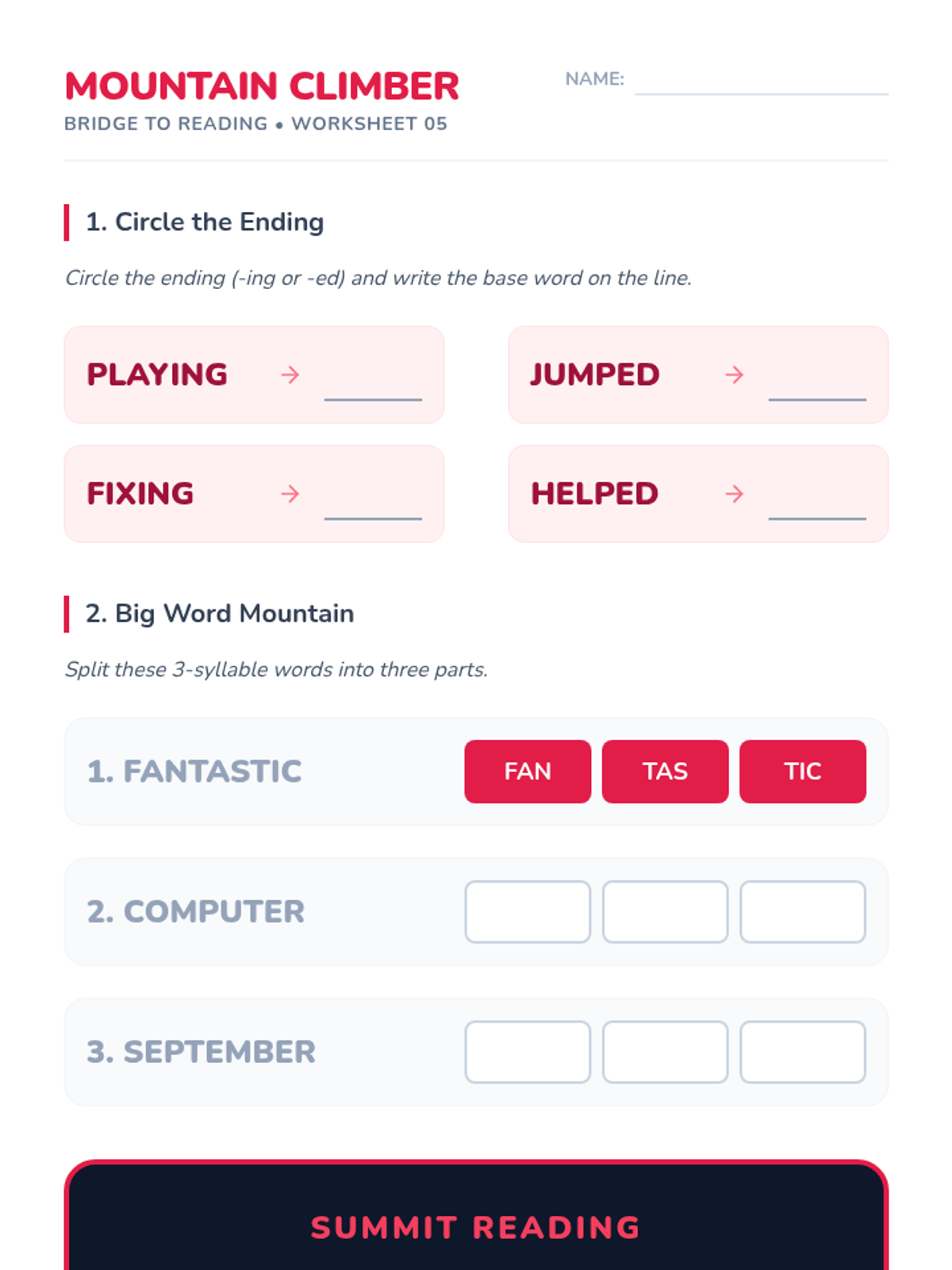
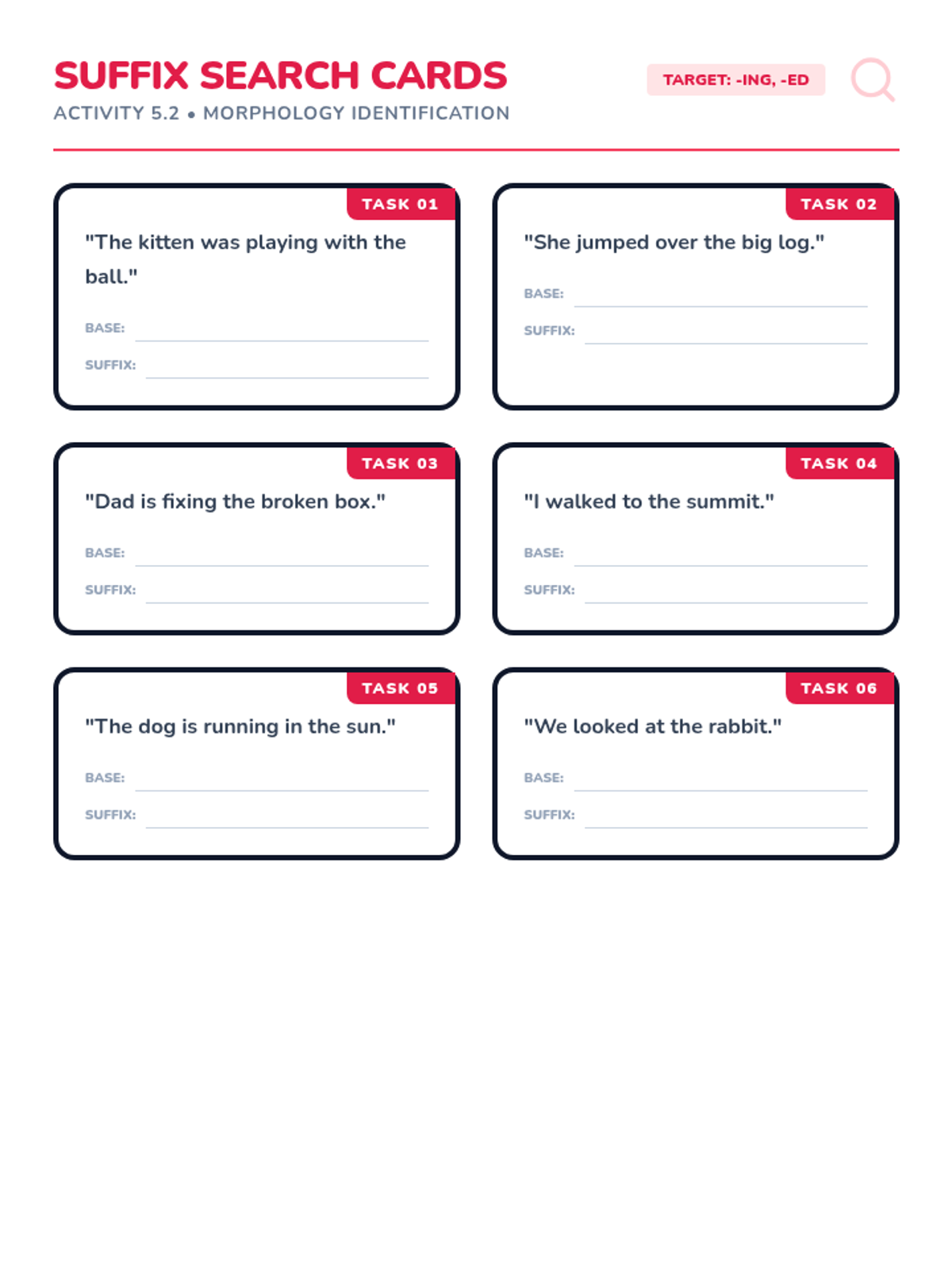
Focuses on more complex multisyllabic words, common prefixes, and suffixes to expand decoding capabilities. Days 21-25 of the 30-day plan.
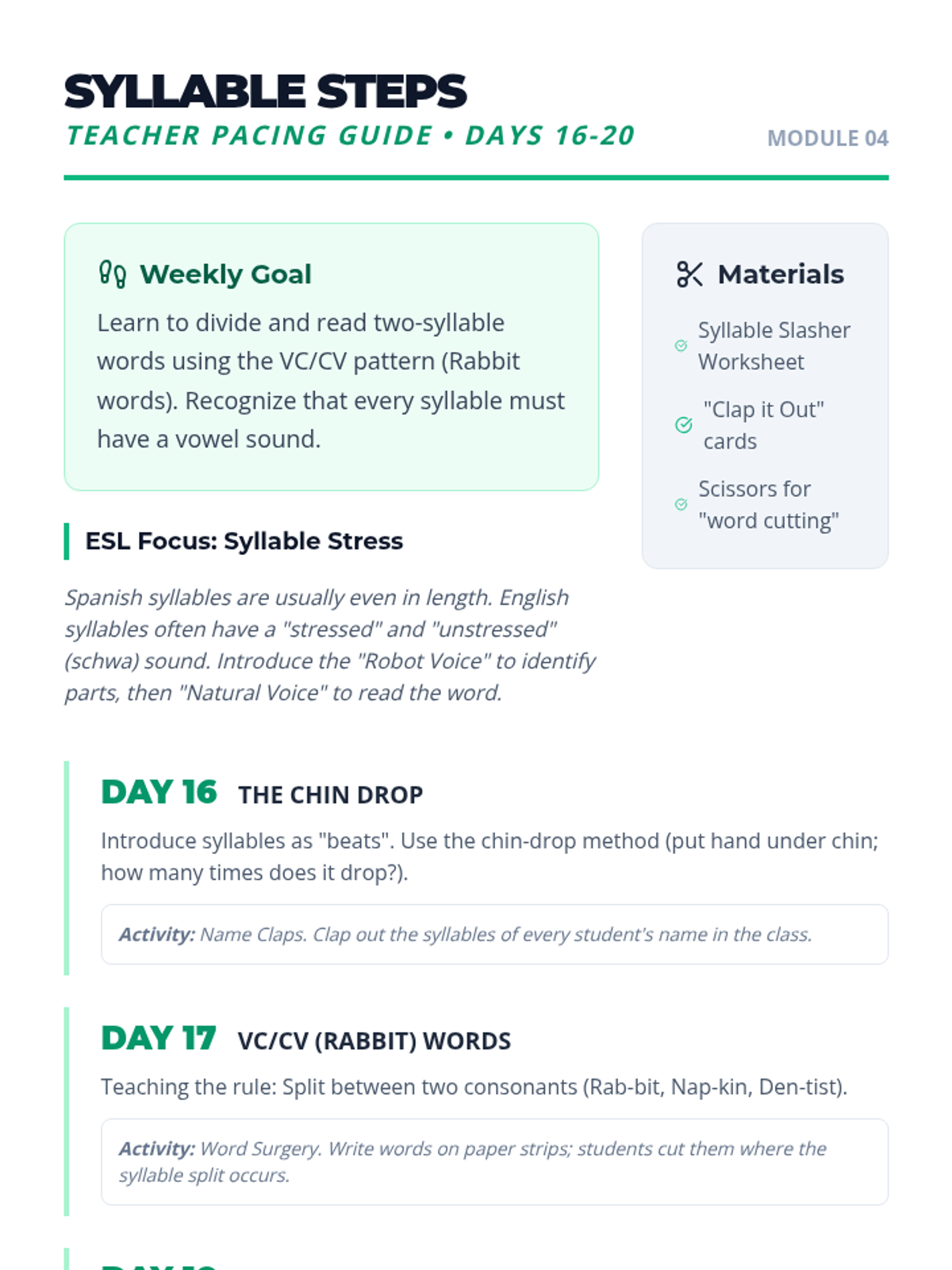
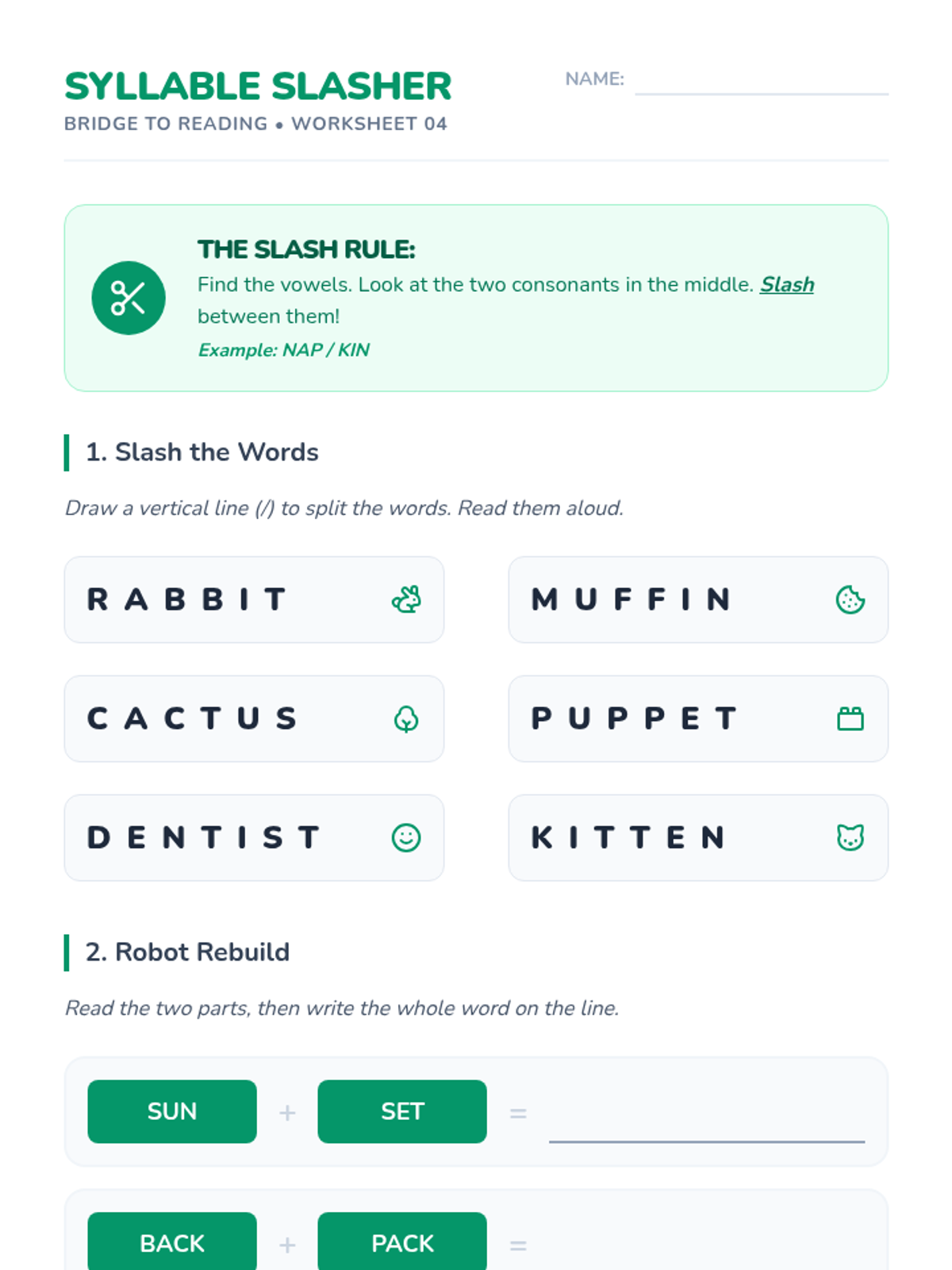
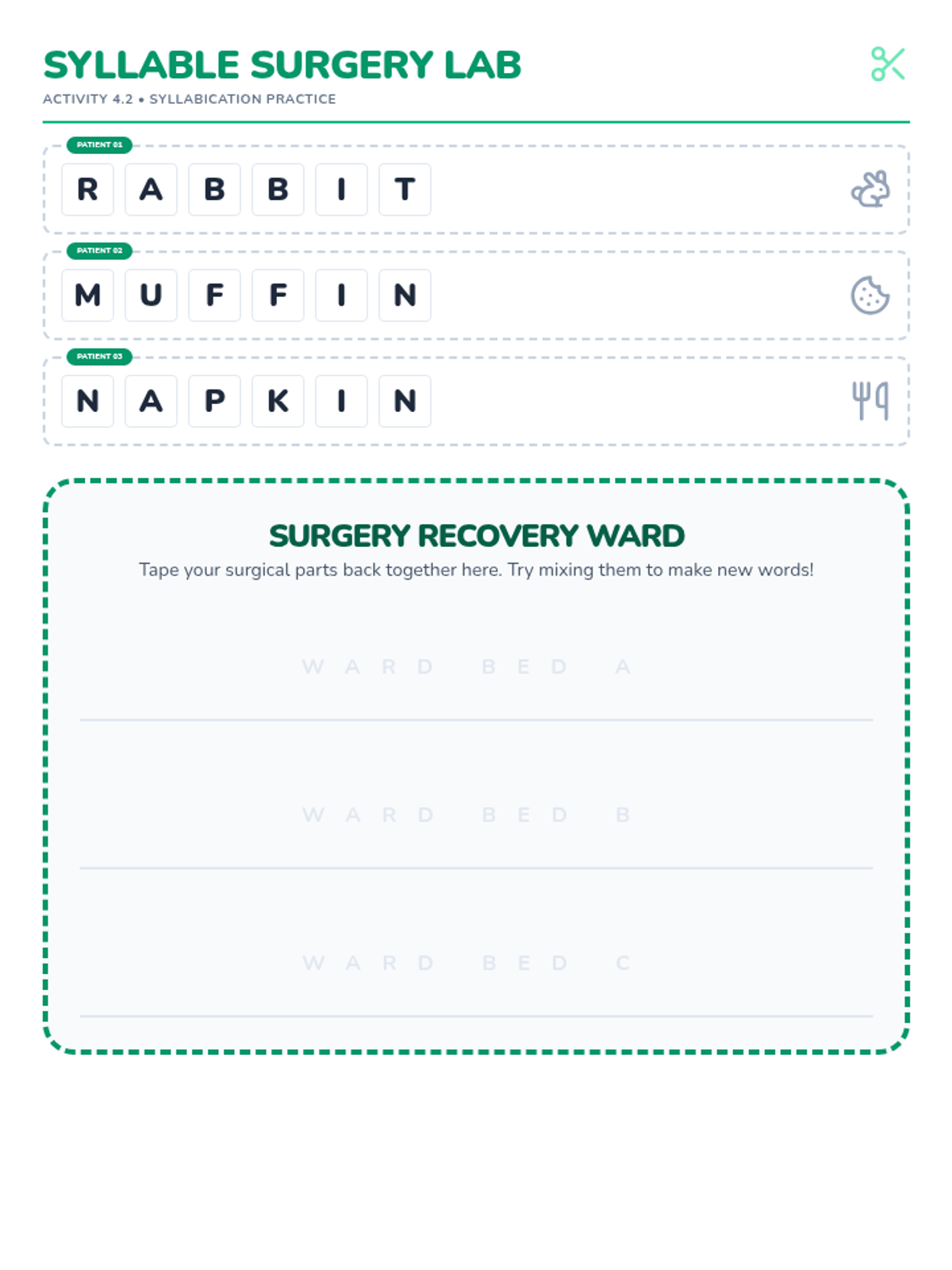
Introduces two-syllable words and basic syllabication rules (VC/CV), helping students tackle longer words. Days 16-20 of the 30-day plan.
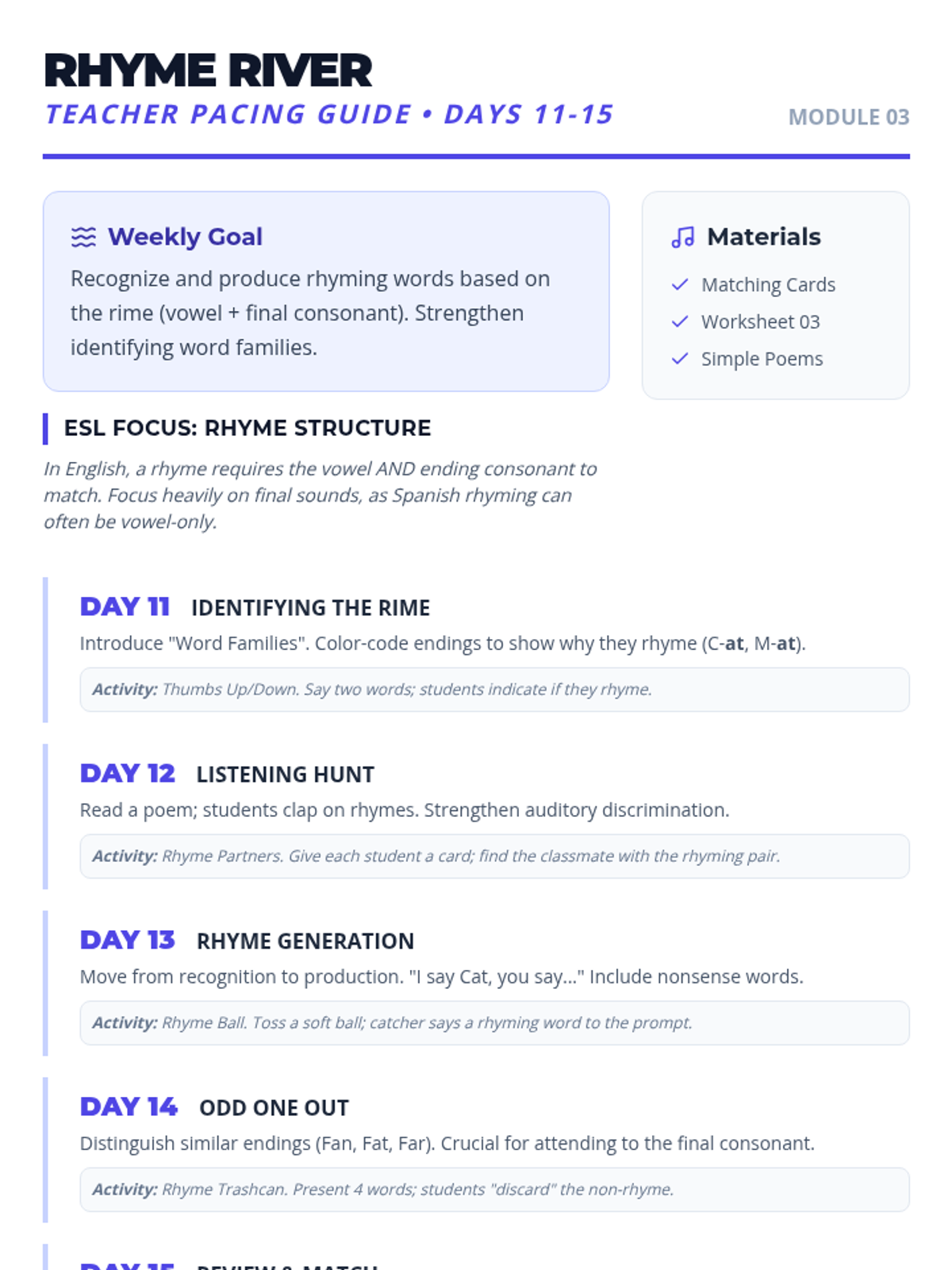
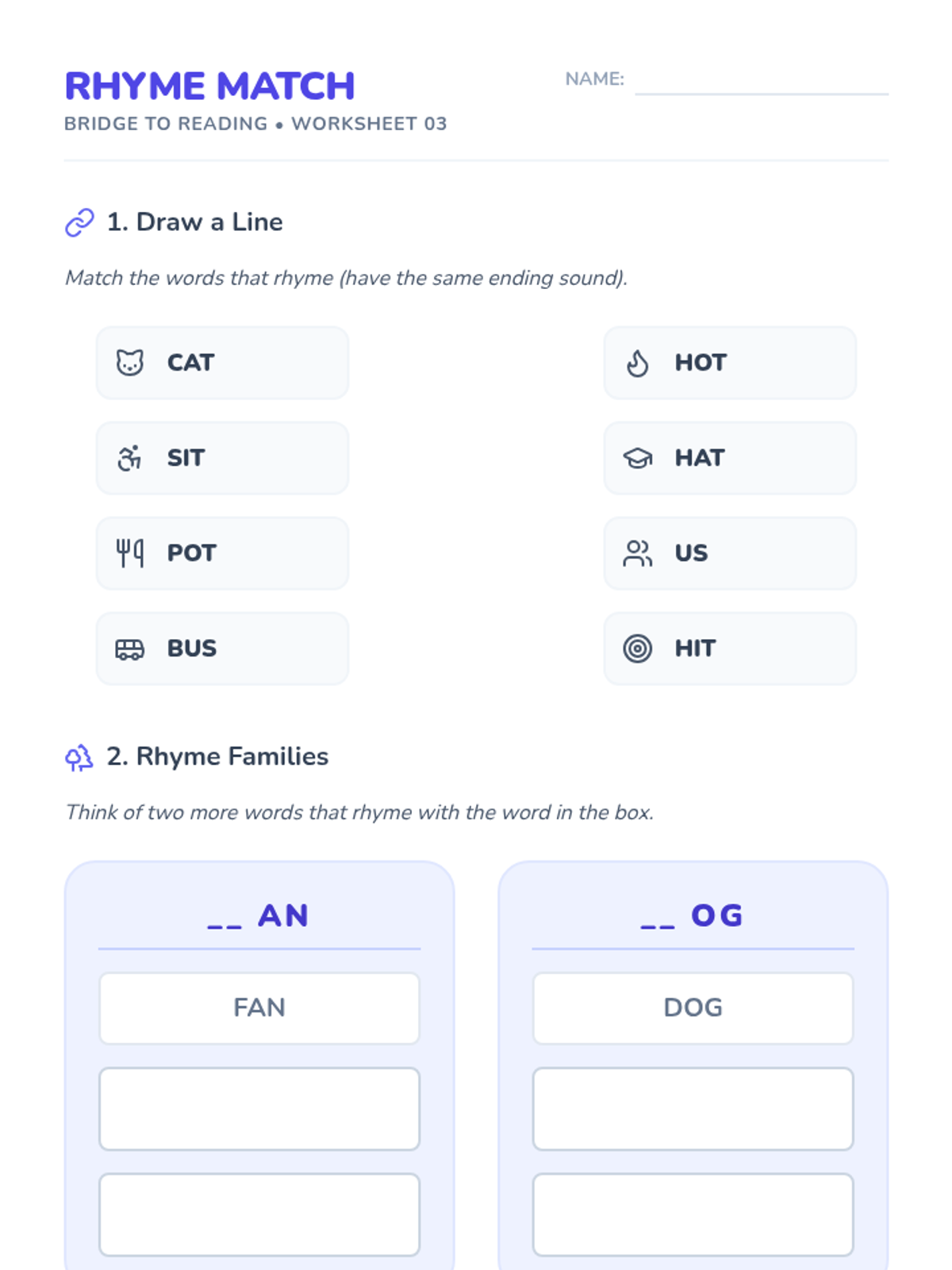
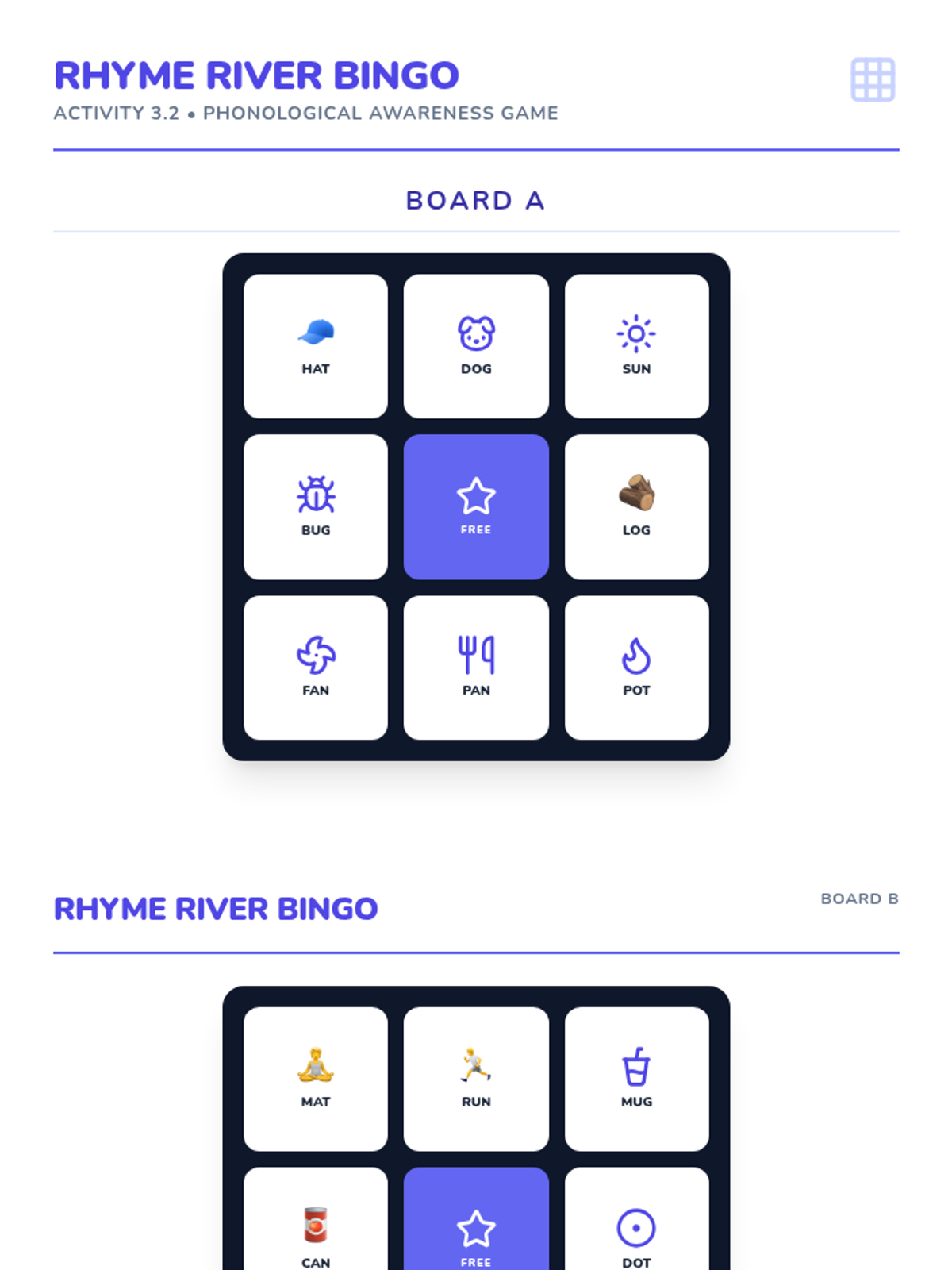
Explores phonological awareness through rhyming and word families, strengthening the connection between spelling patterns and sounds. Days 11-15 of the 30-day plan.
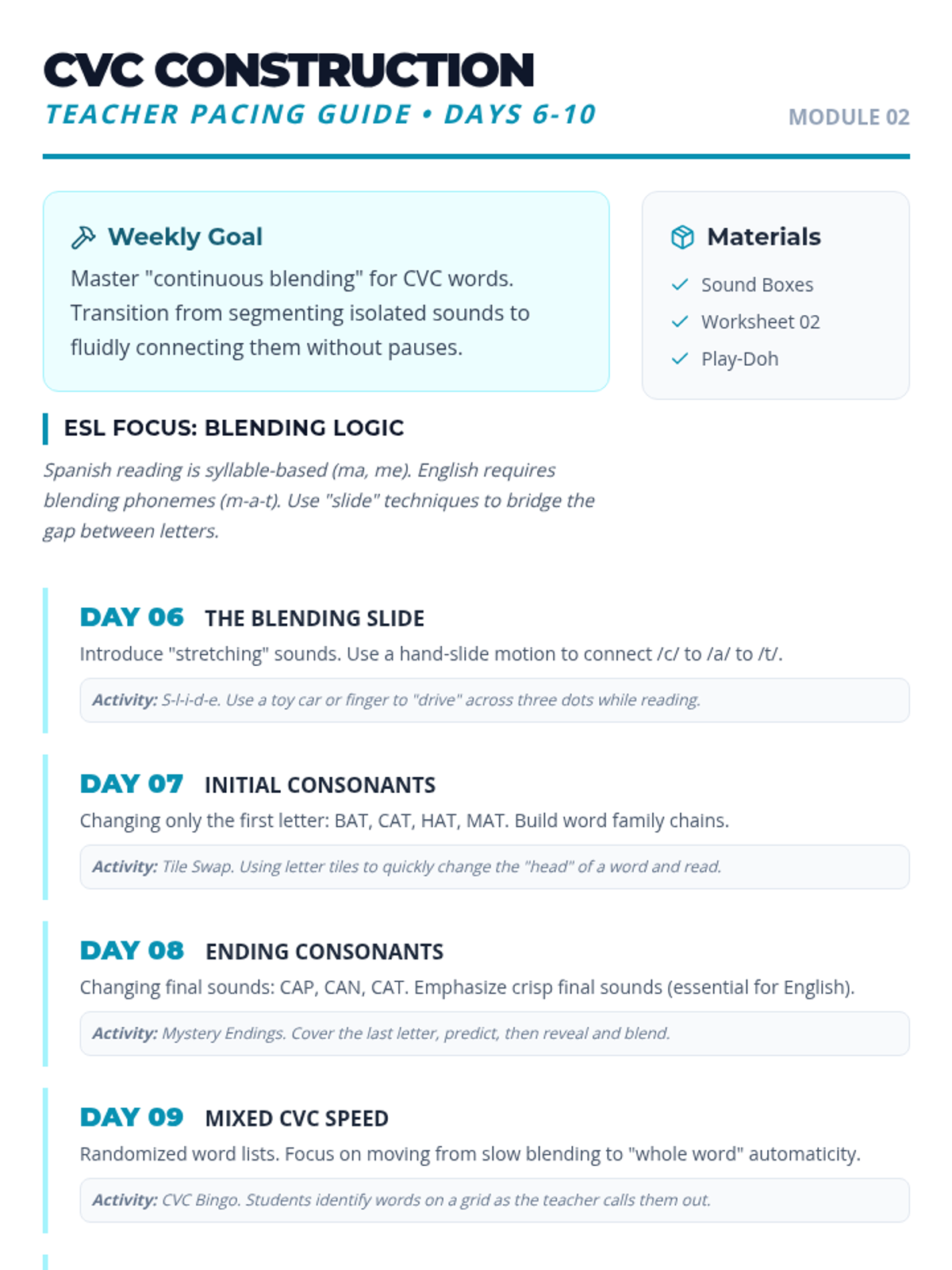
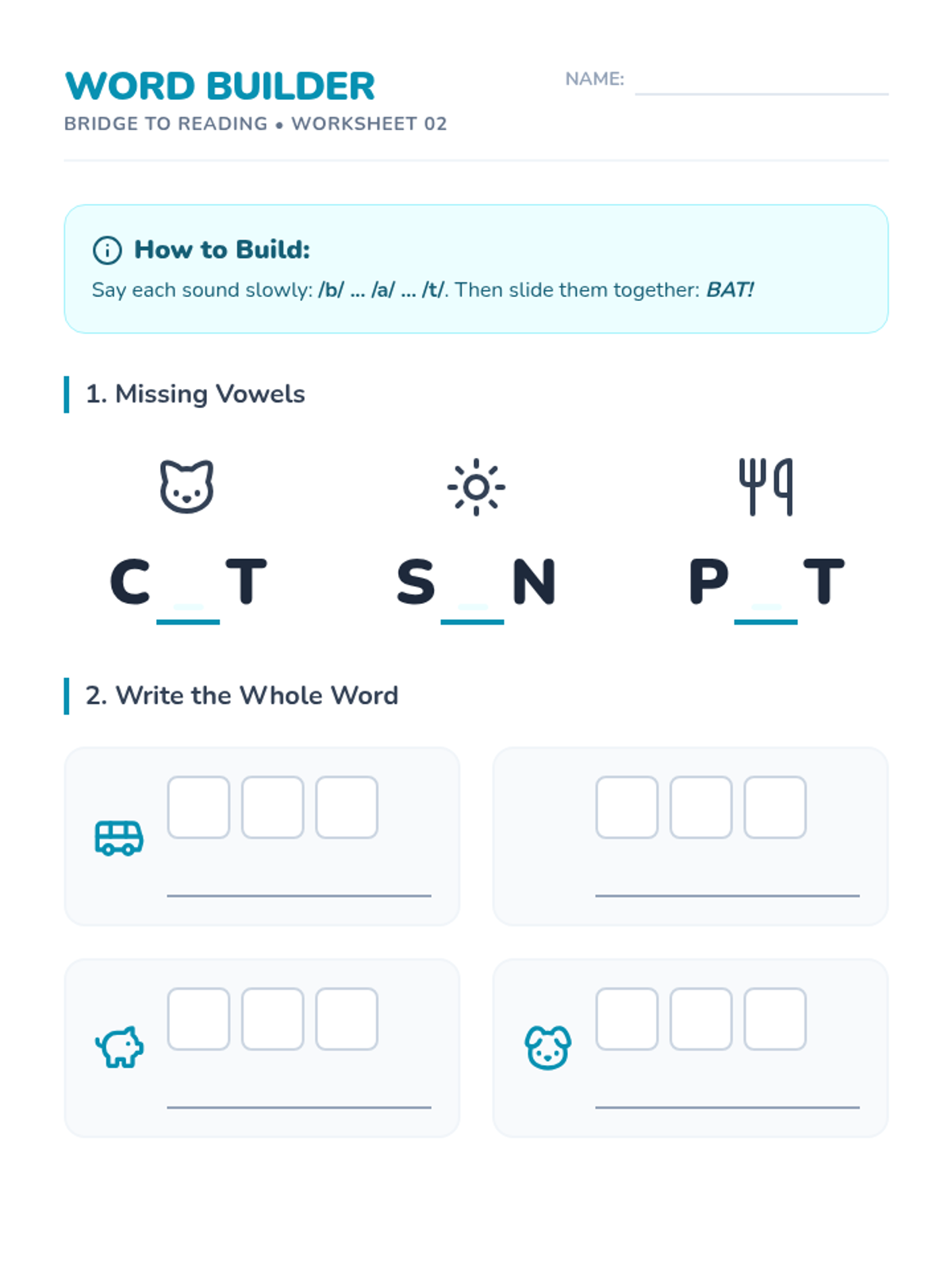
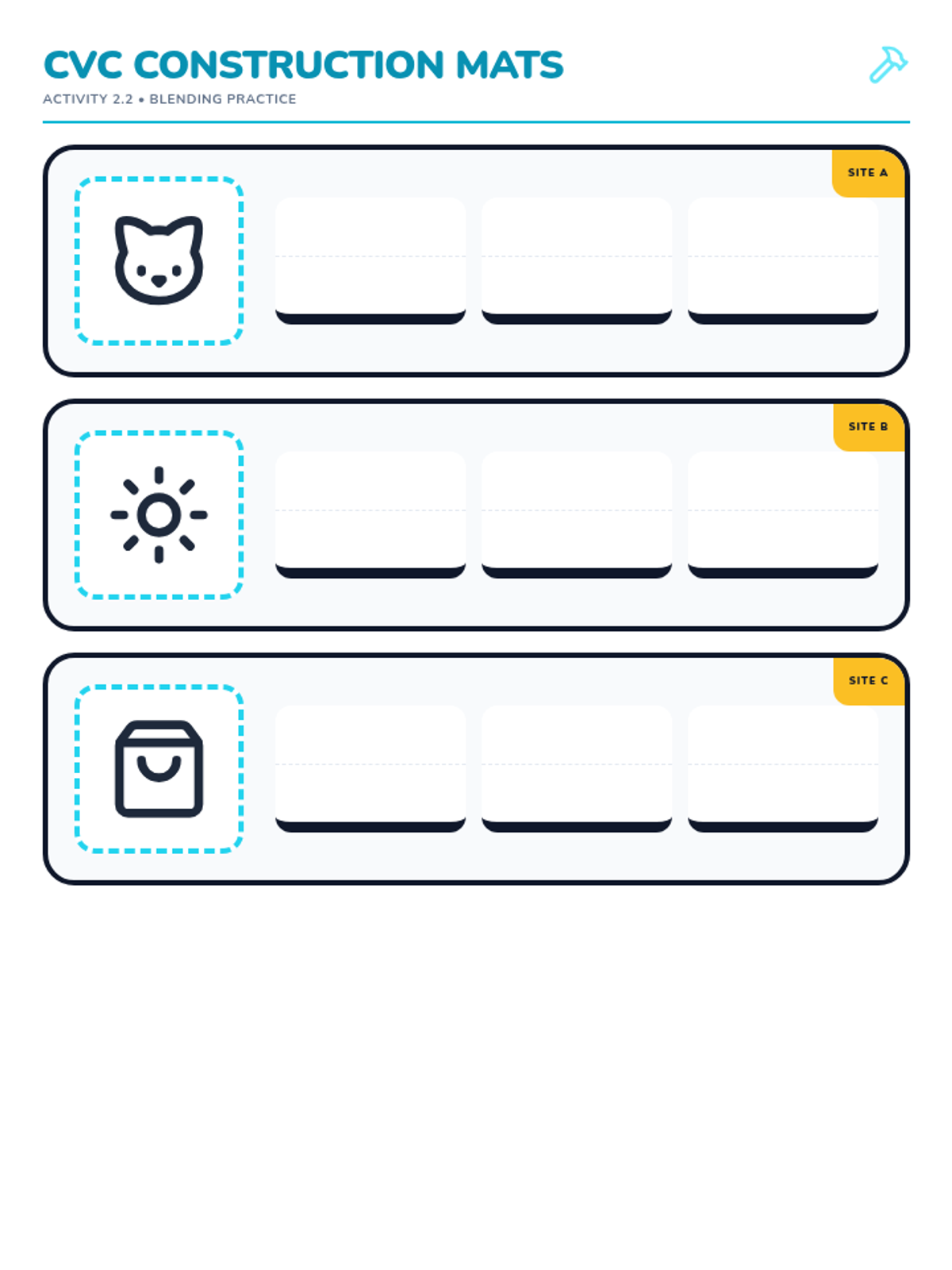
Introduces Consonant-Vowel-Consonant (CVC) blending and word families, transitioning students from isolated sounds to fluid reading. Days 6-10 of the 30-day plan.
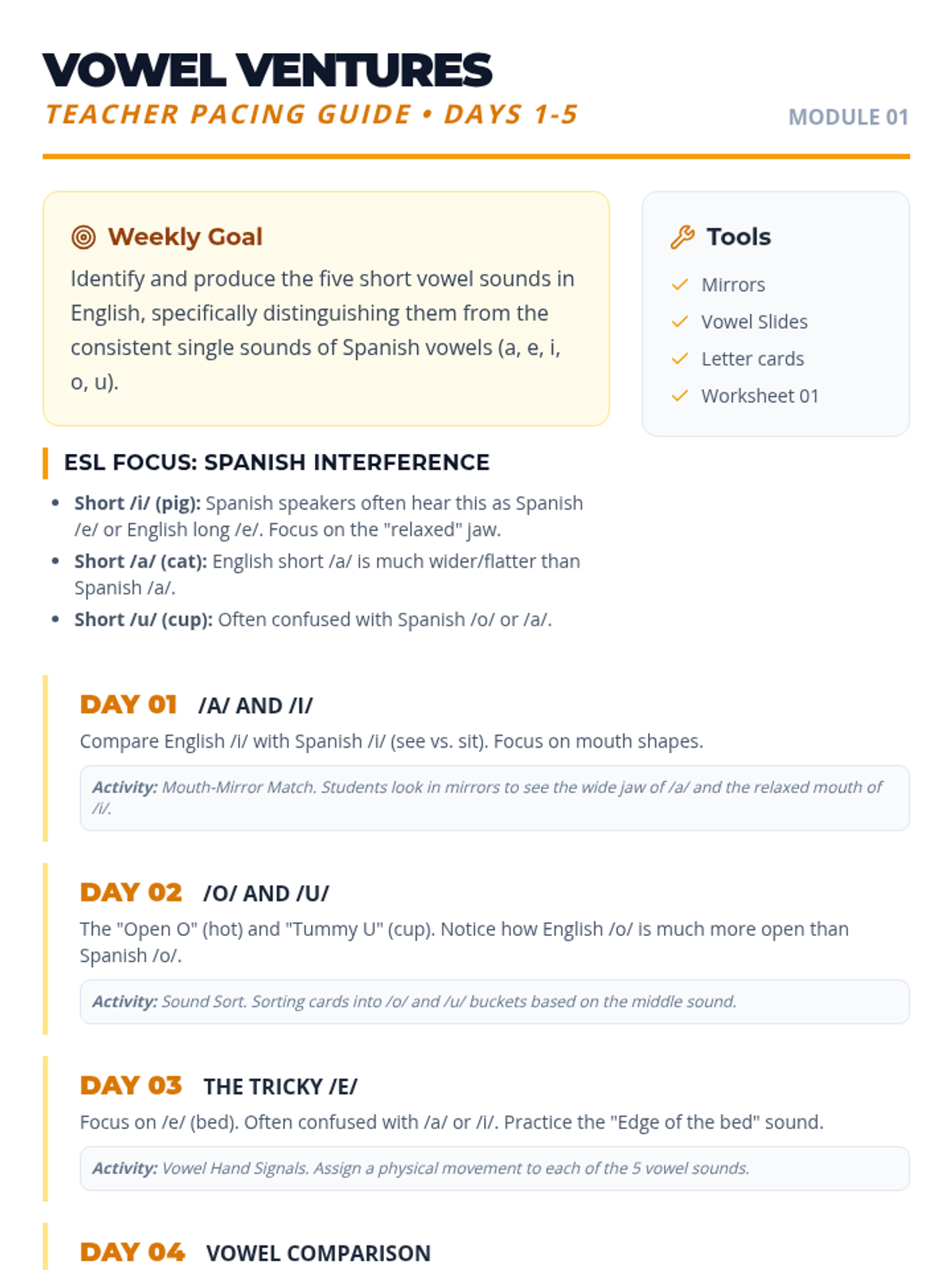
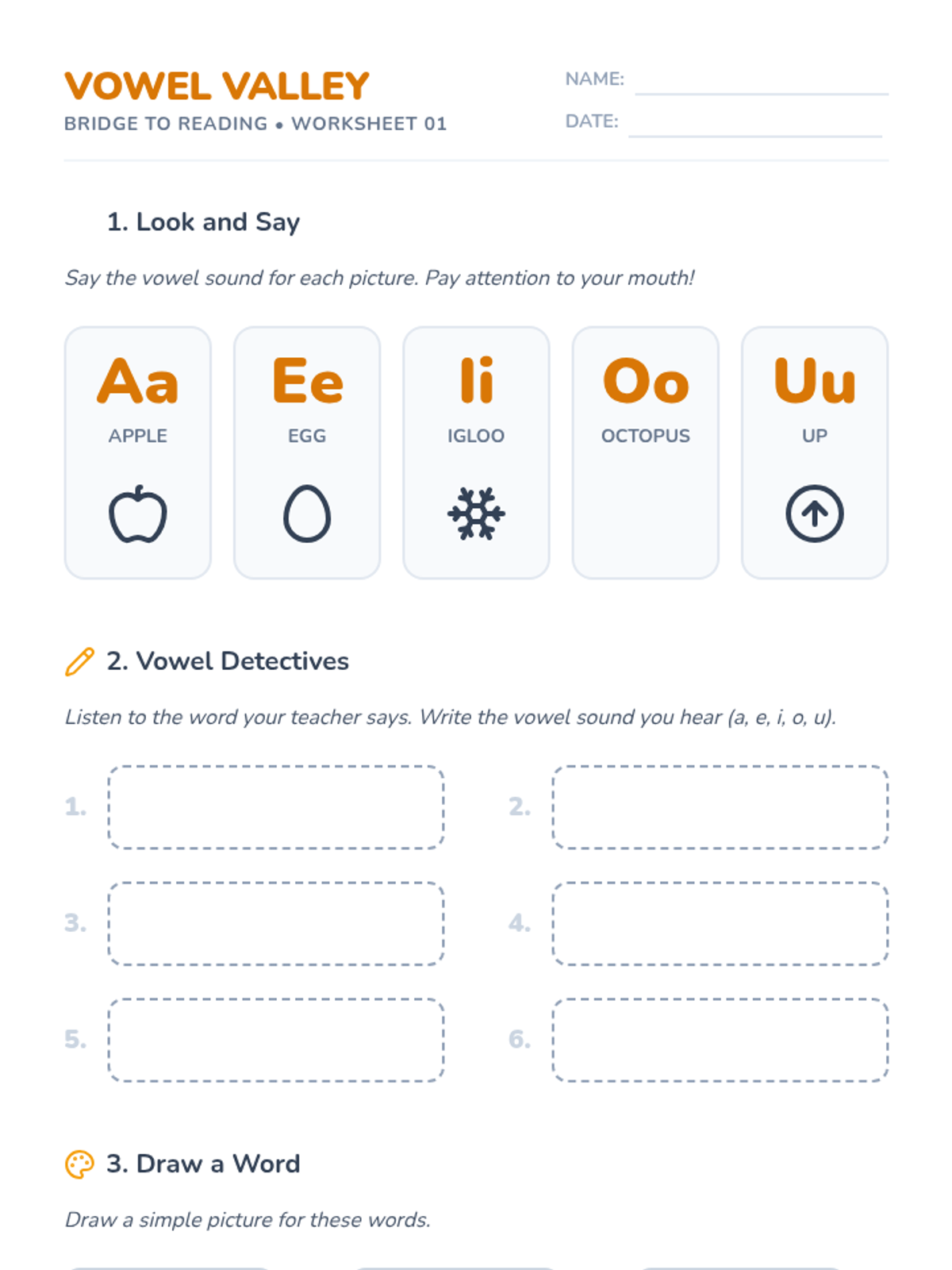
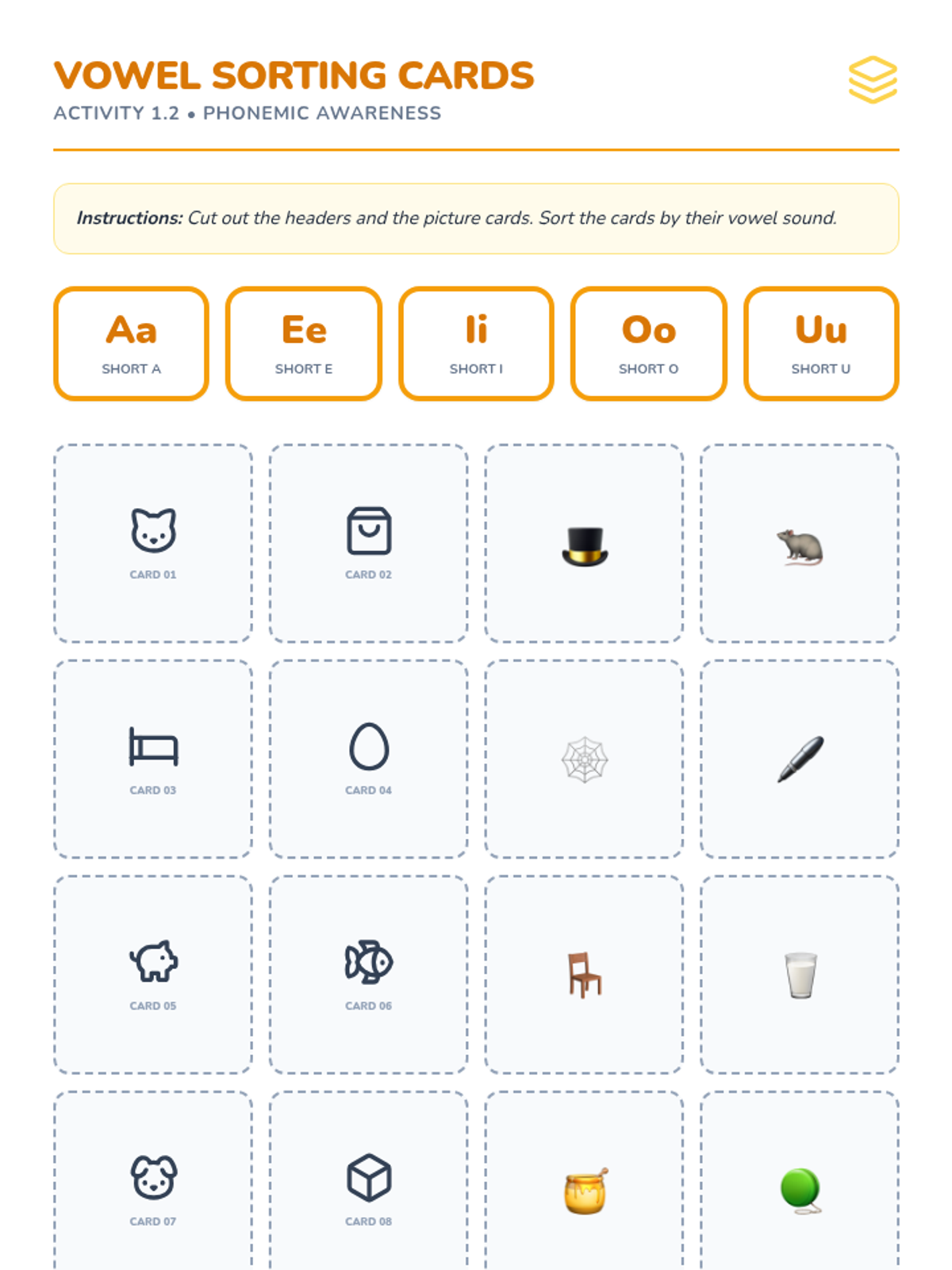
Focuses on the five short vowel sounds, contrasting them with Spanish vowel sounds to help students distinguish English phonemes. Days 1-5 of the 30-day plan.
A comprehensive lesson focused on distinguishing between the Spanish verbs 'ser' and 'estar' through the use of mnemonics and contextual practice.
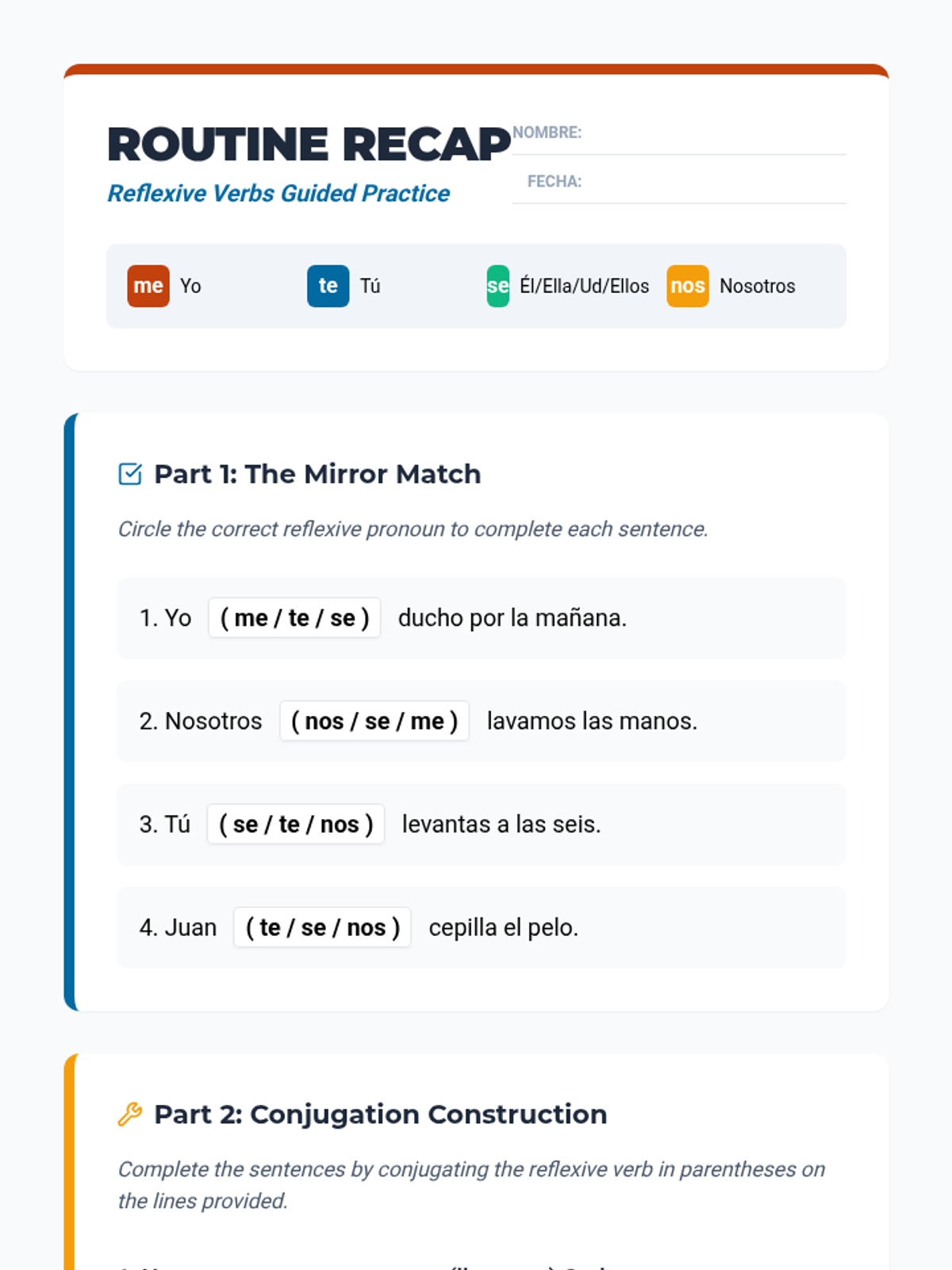
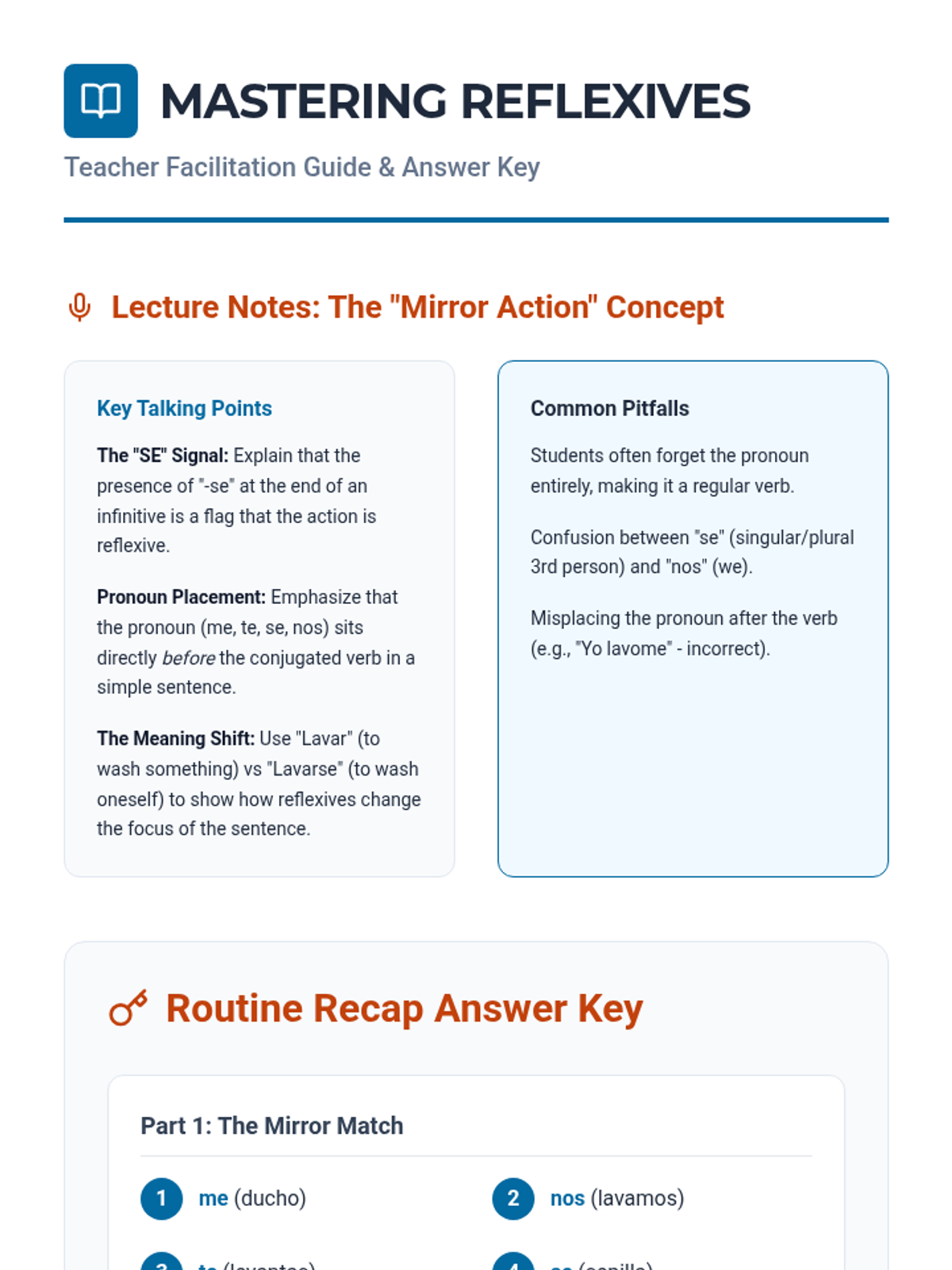
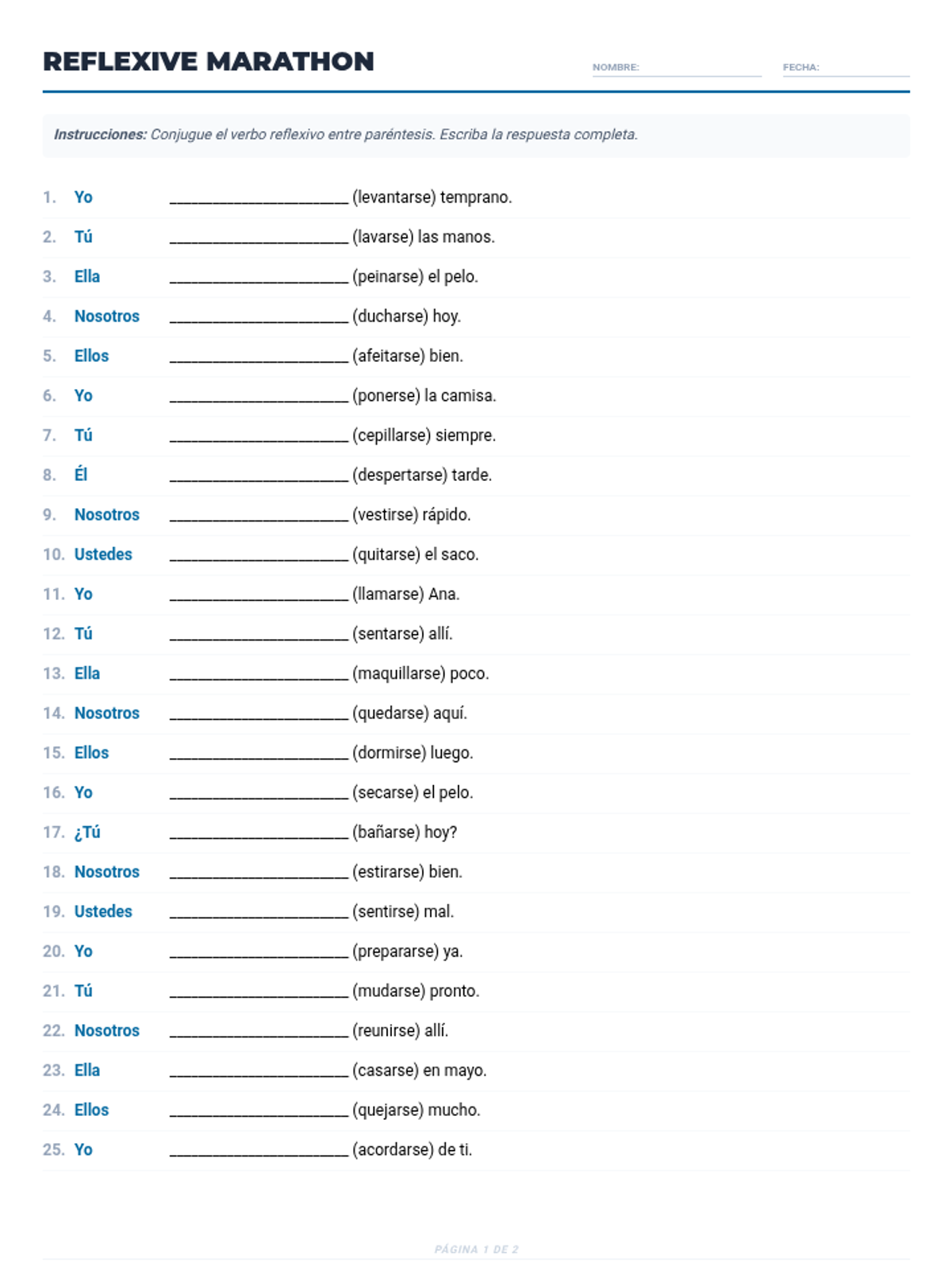
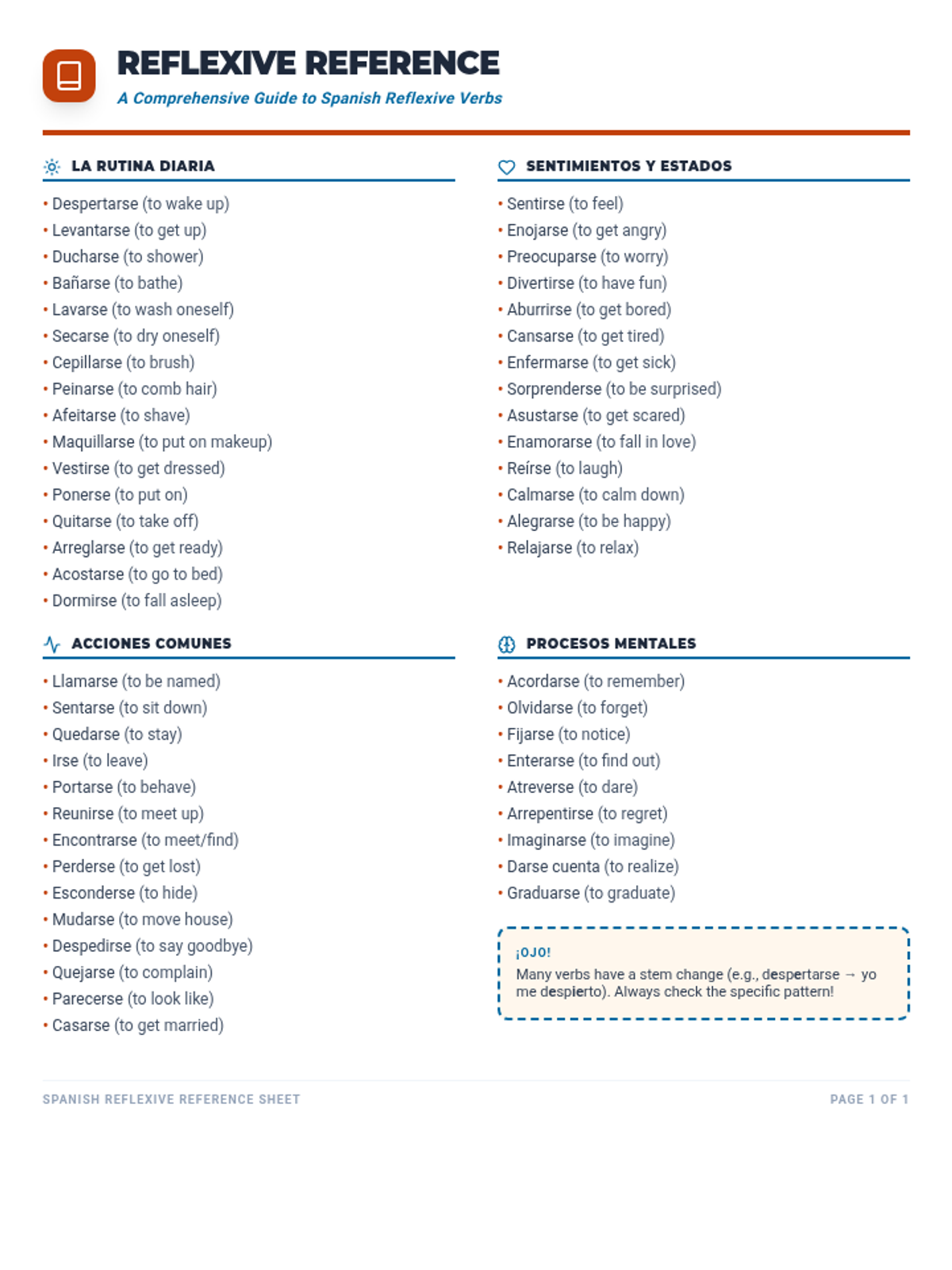
This lesson introduces students to reflexive verbs in Spanish, focusing on the pronouns me, te, se, and nos within the context of daily routines. Students will learn the mechanics of conjugation and how to describe their personal actions.
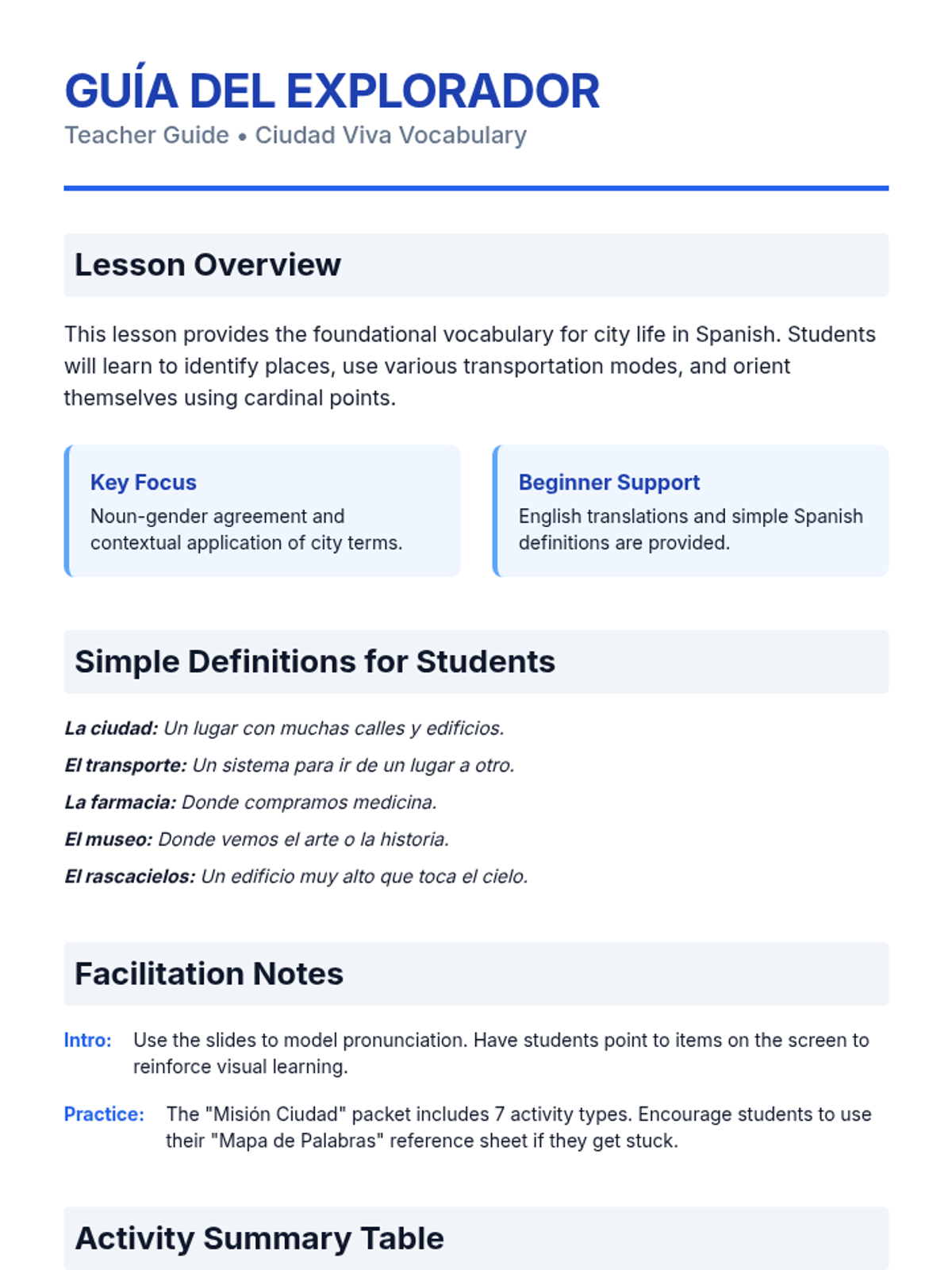
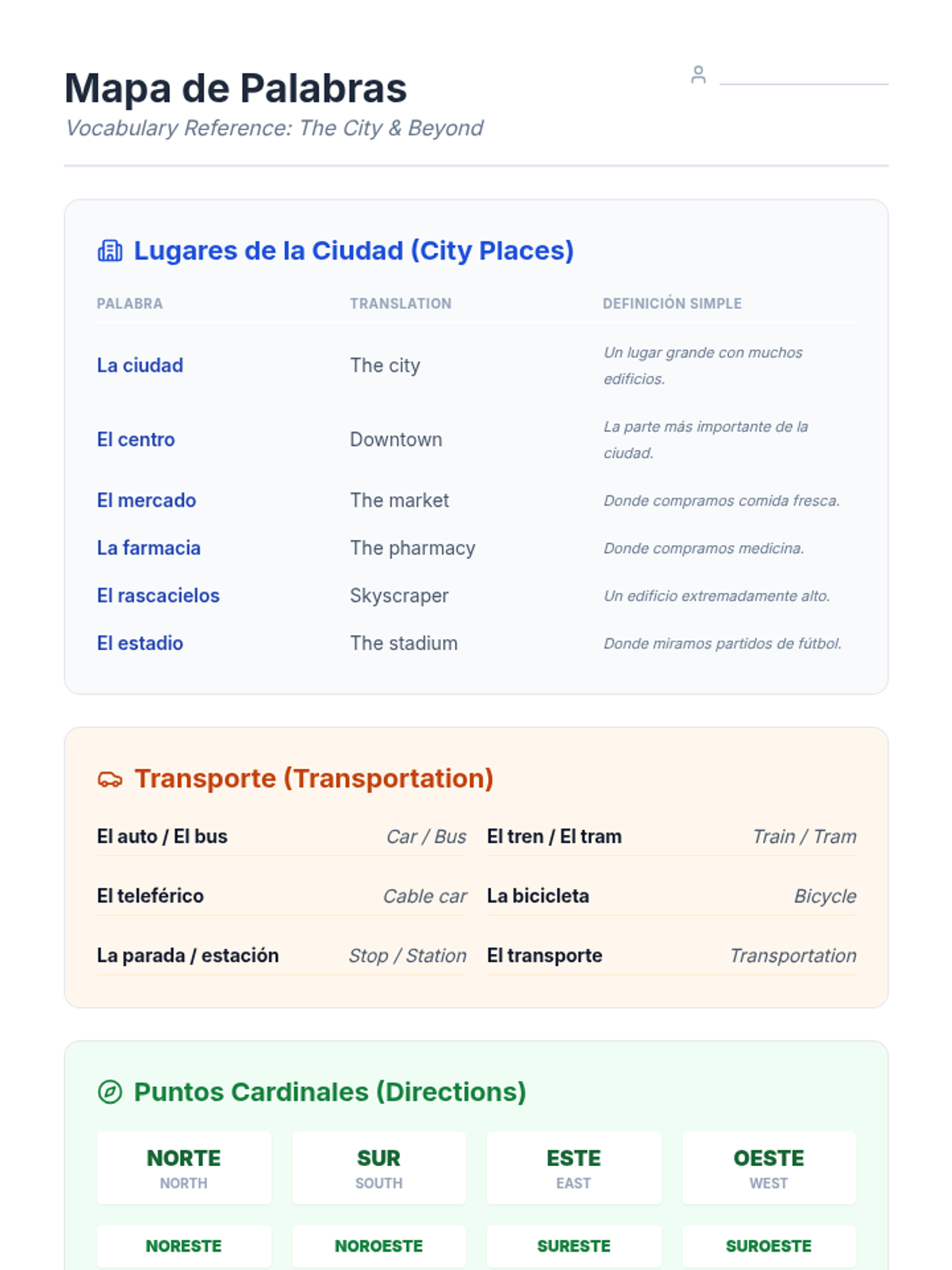
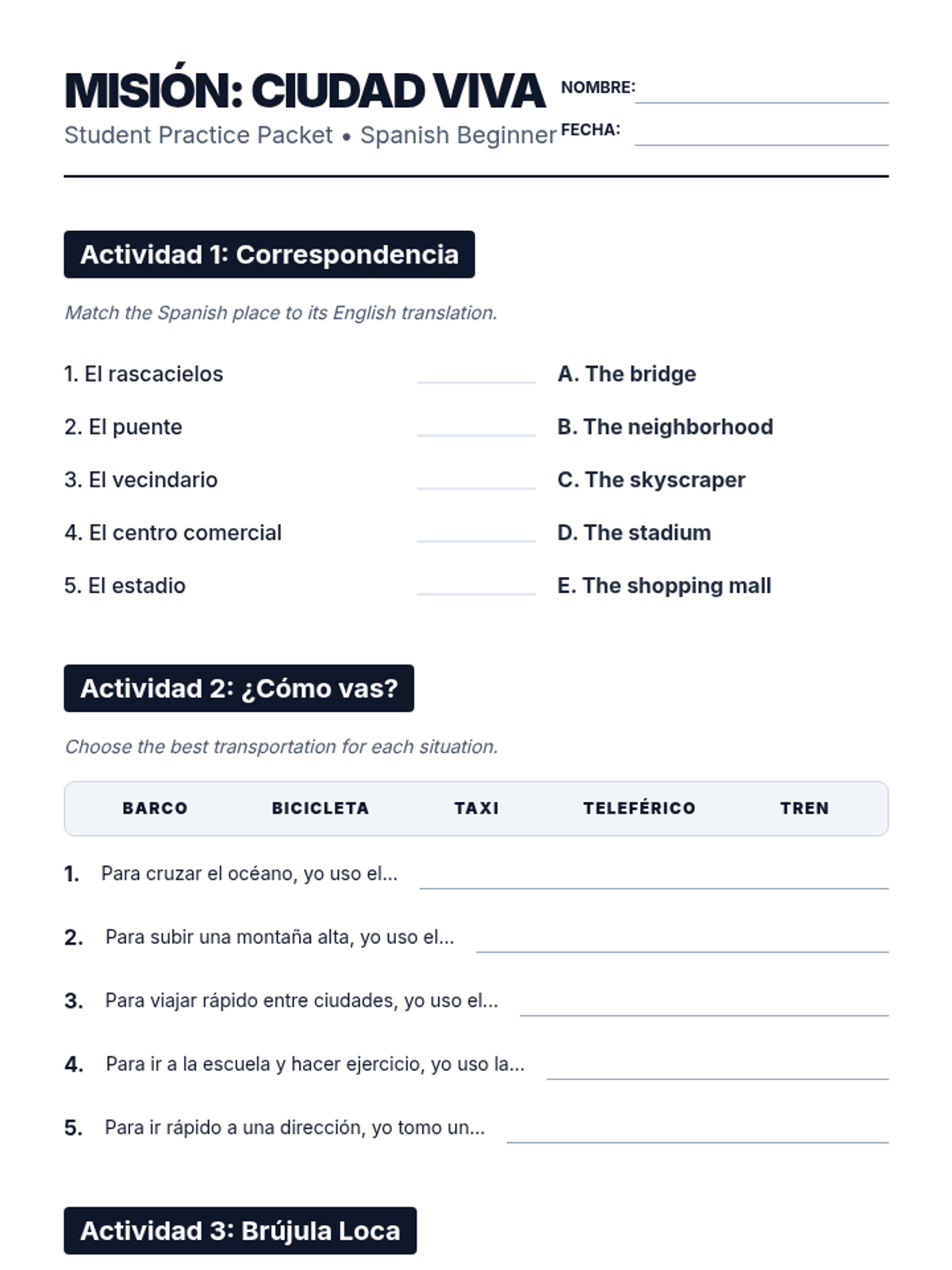
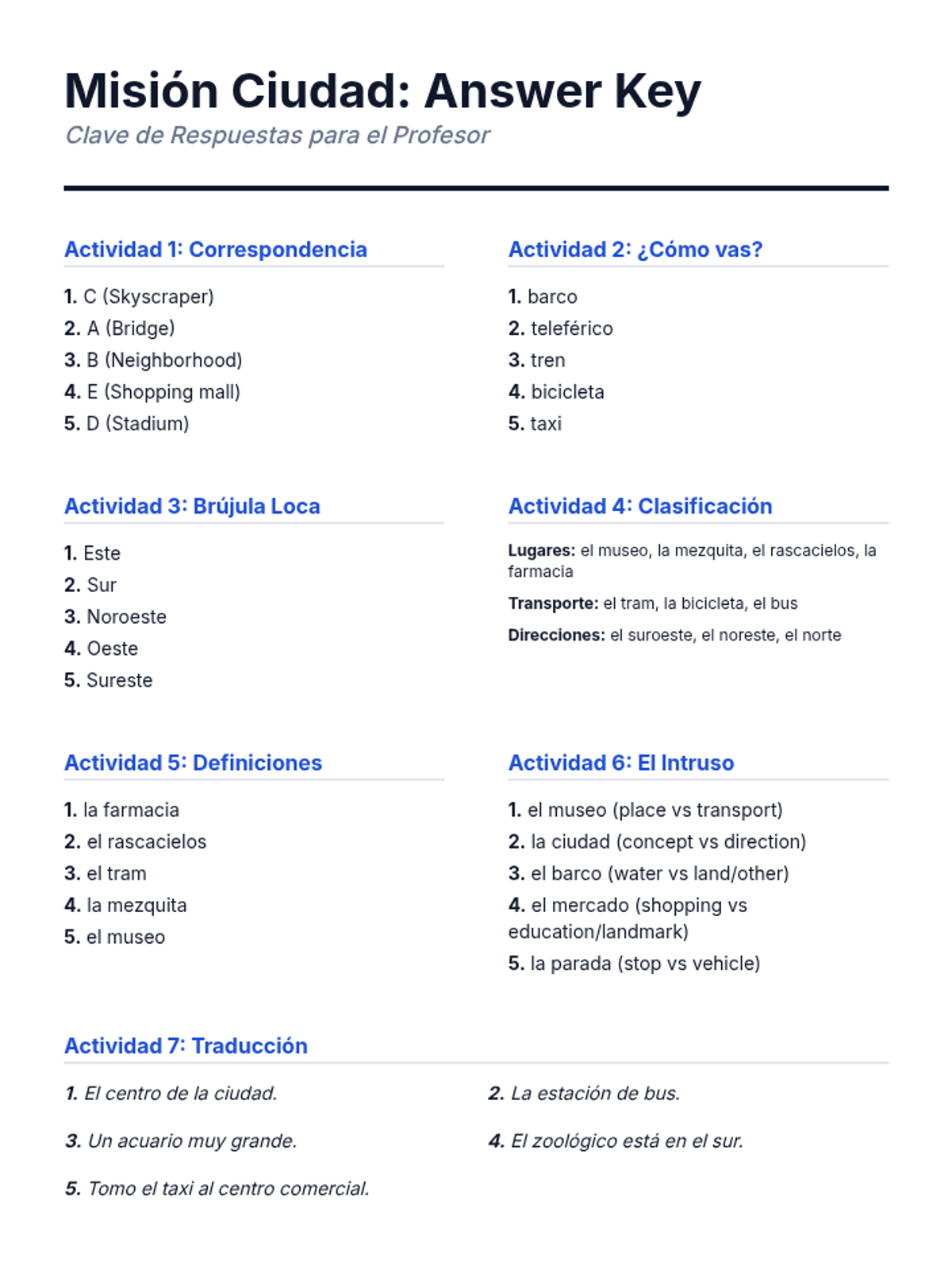
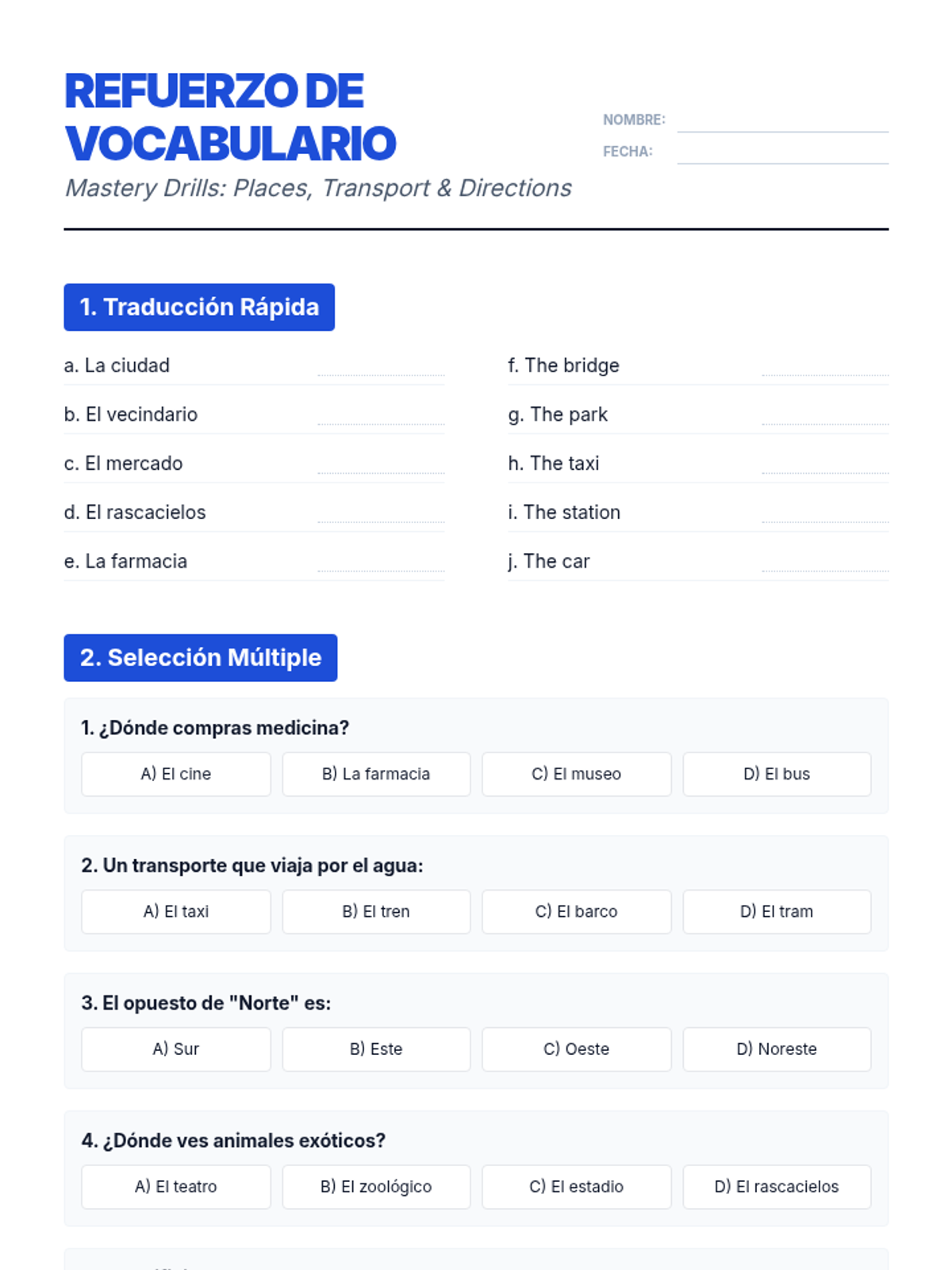
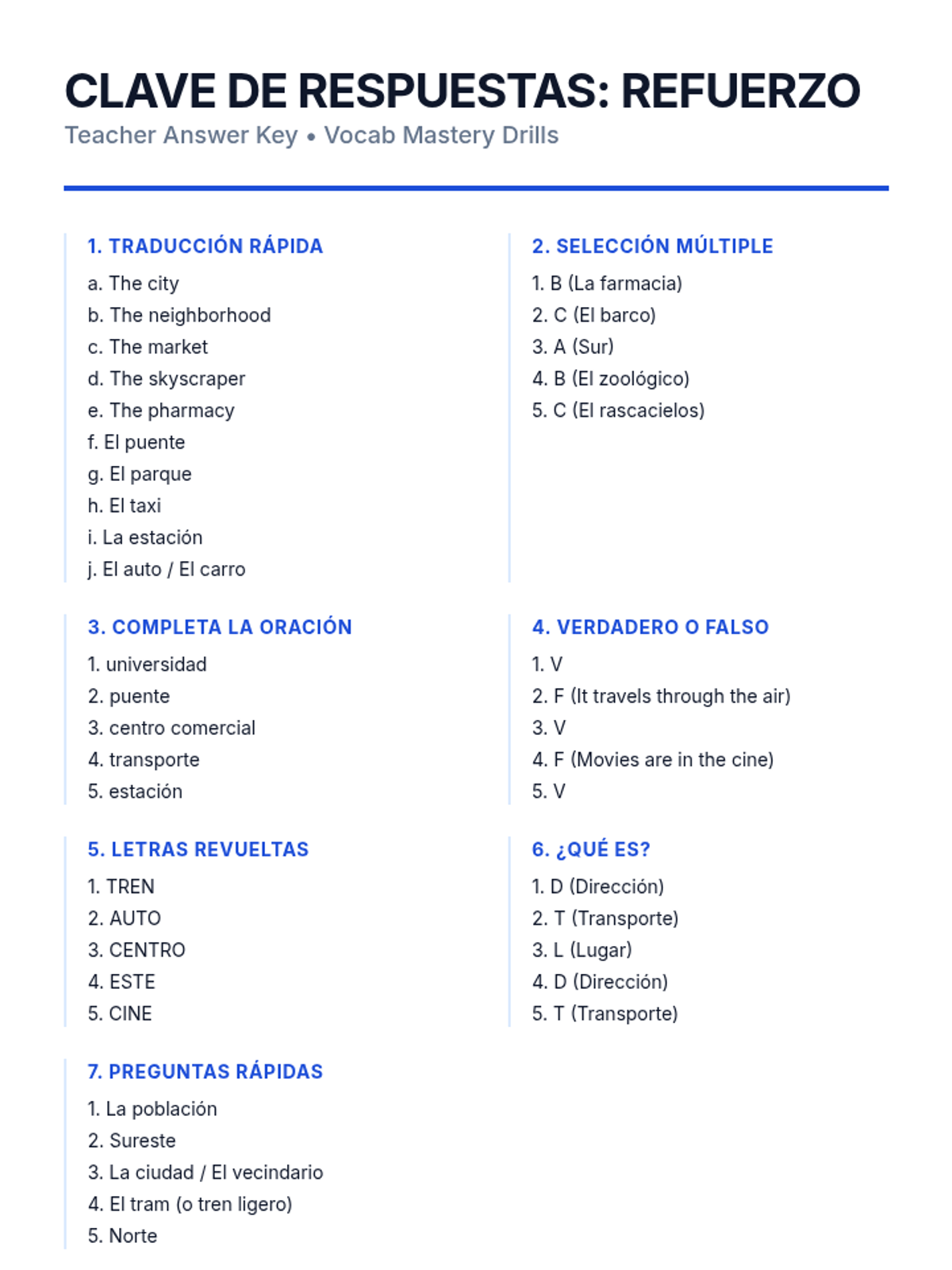
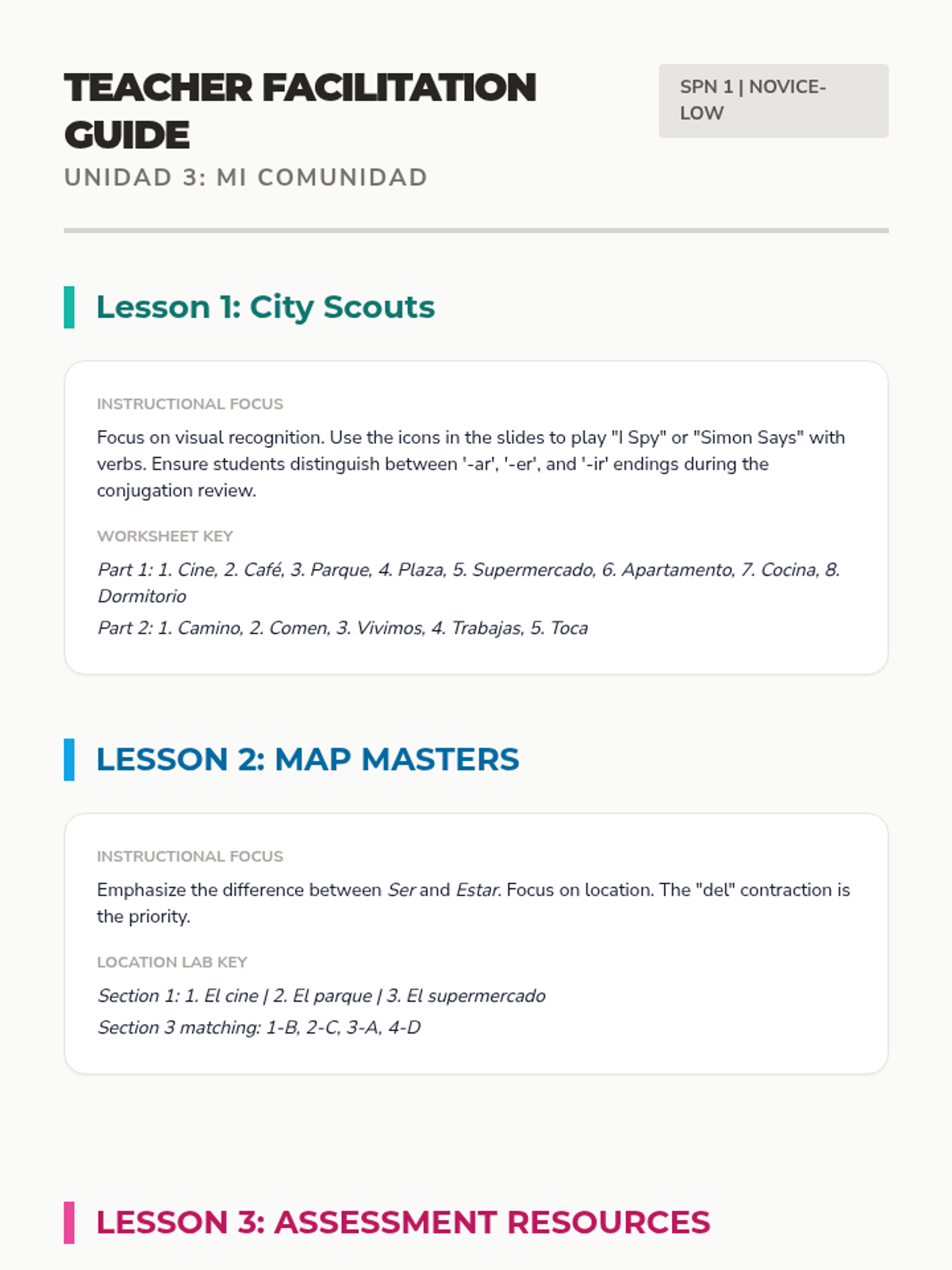
A comprehensive introductory lesson on Spanish vocabulary for city places, transportation, and directions. Includes visual slides, a teacher guide, and a multi-activity practice packet for beginners.
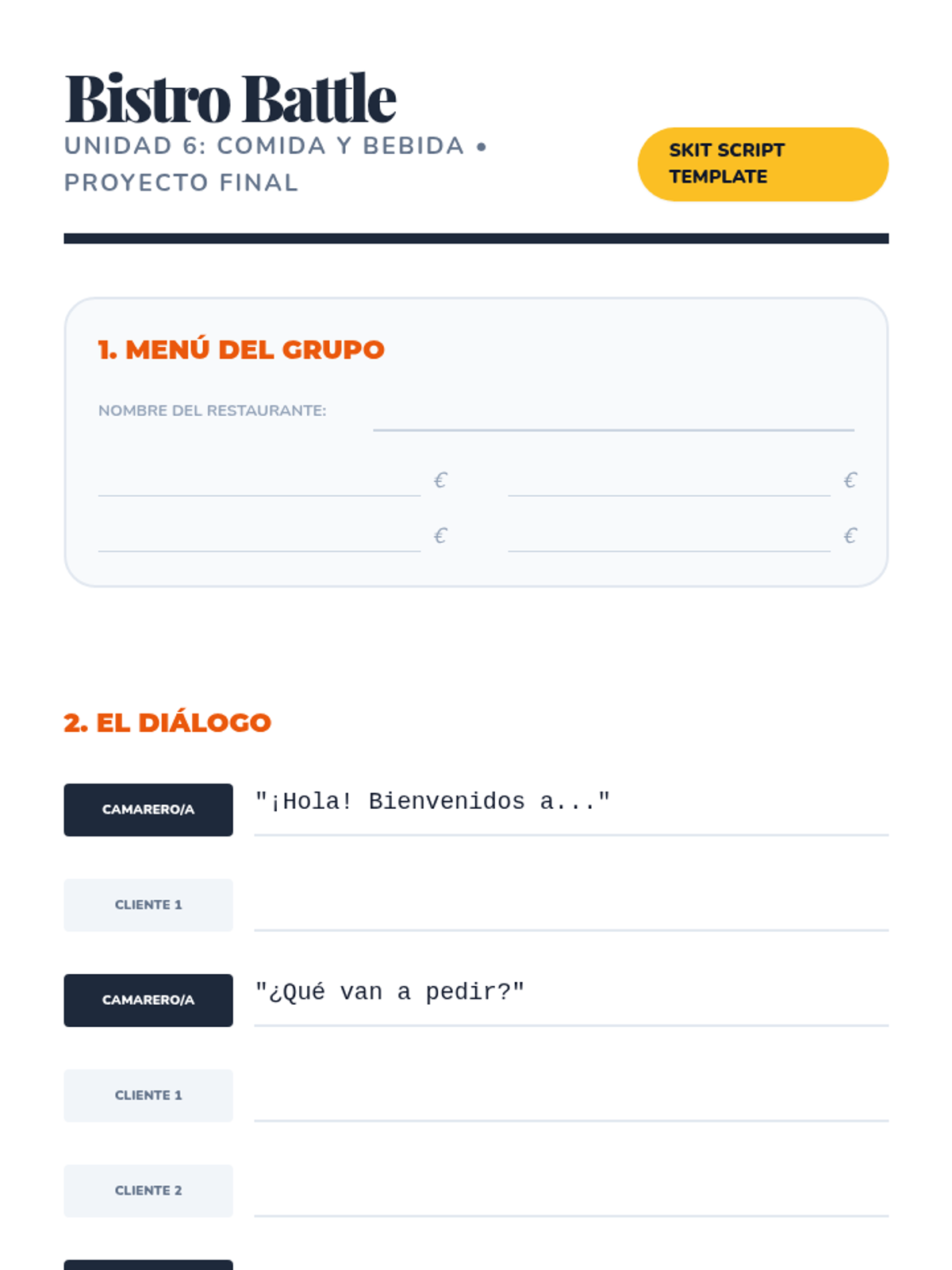
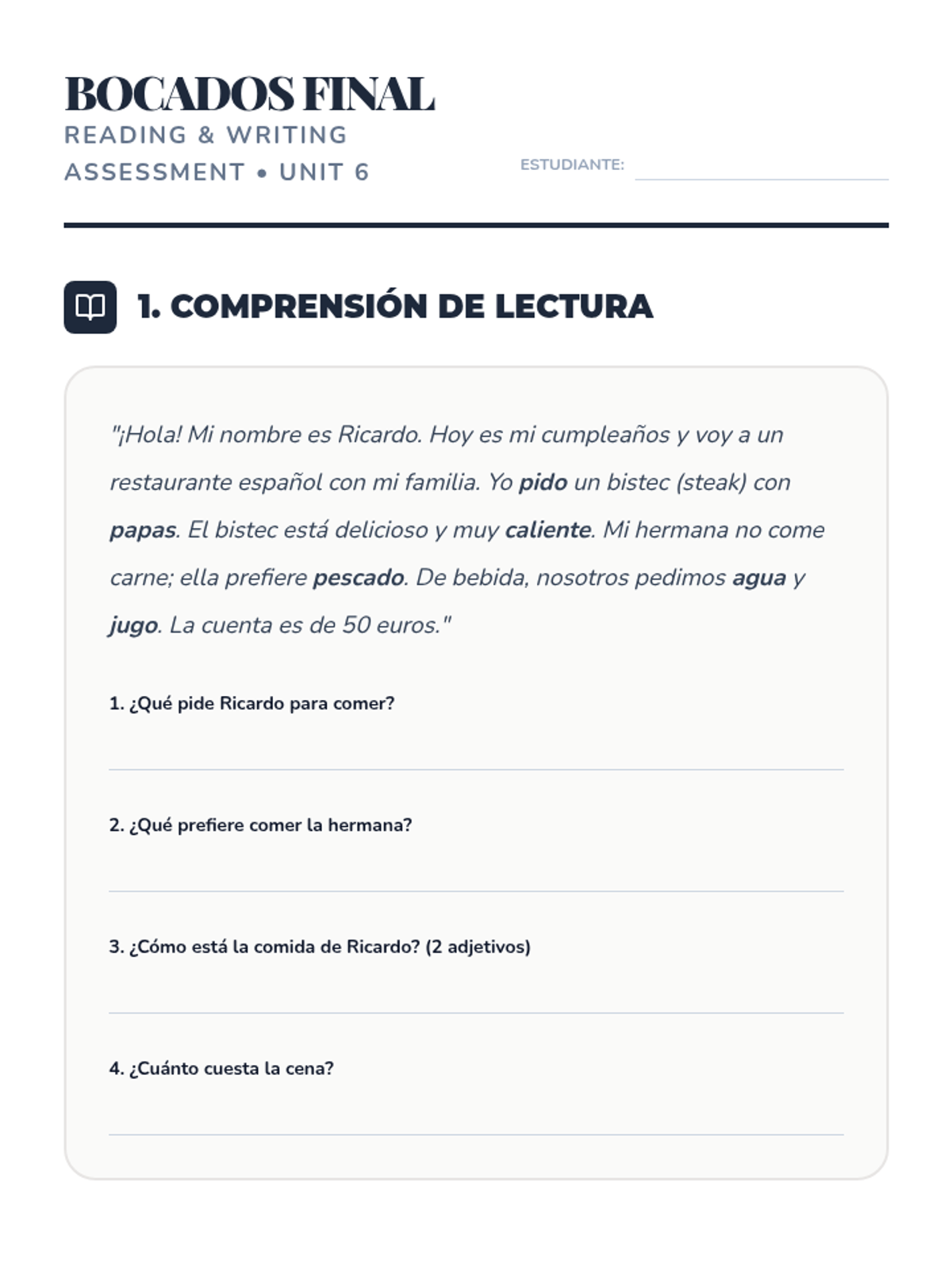
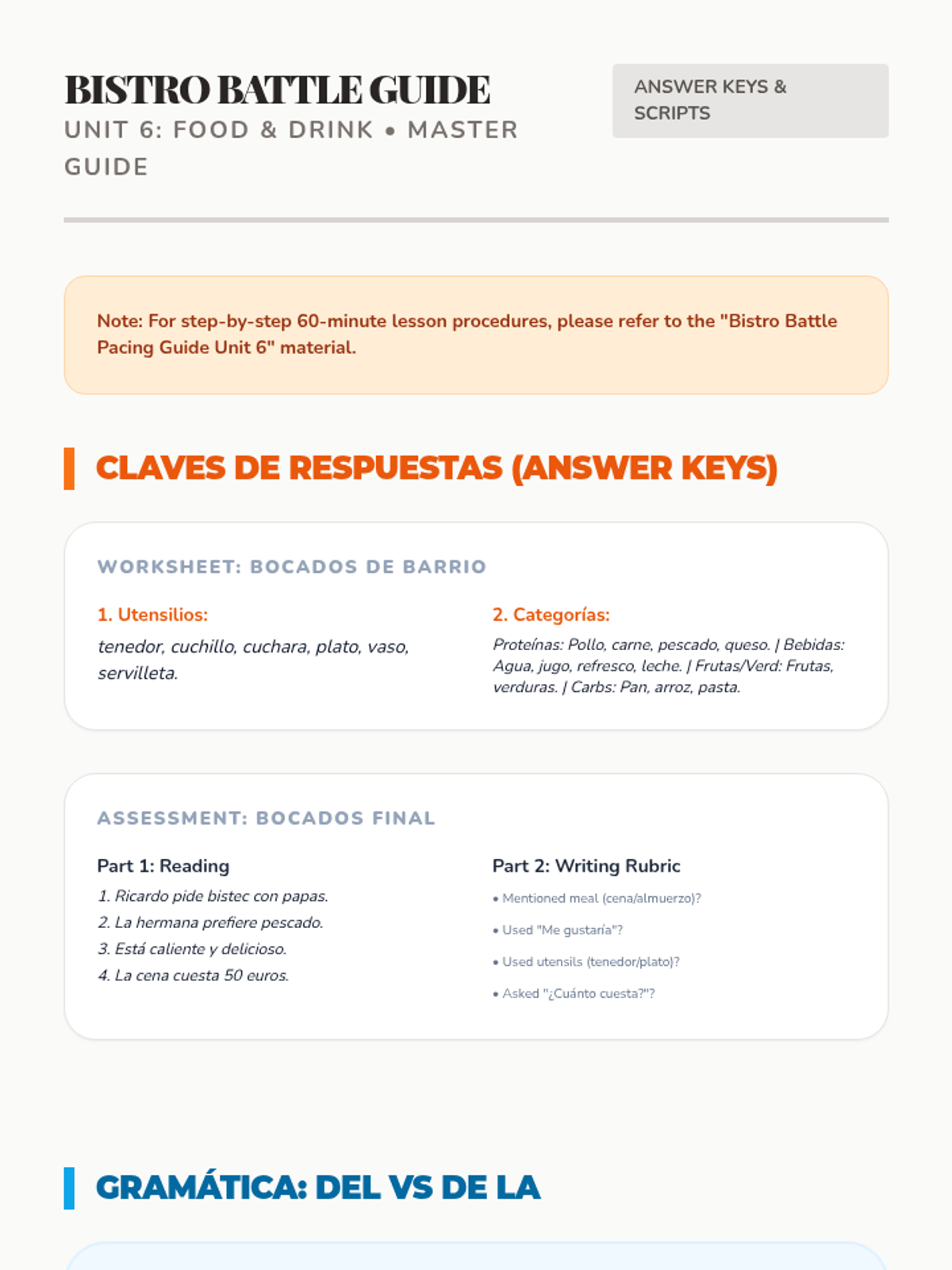
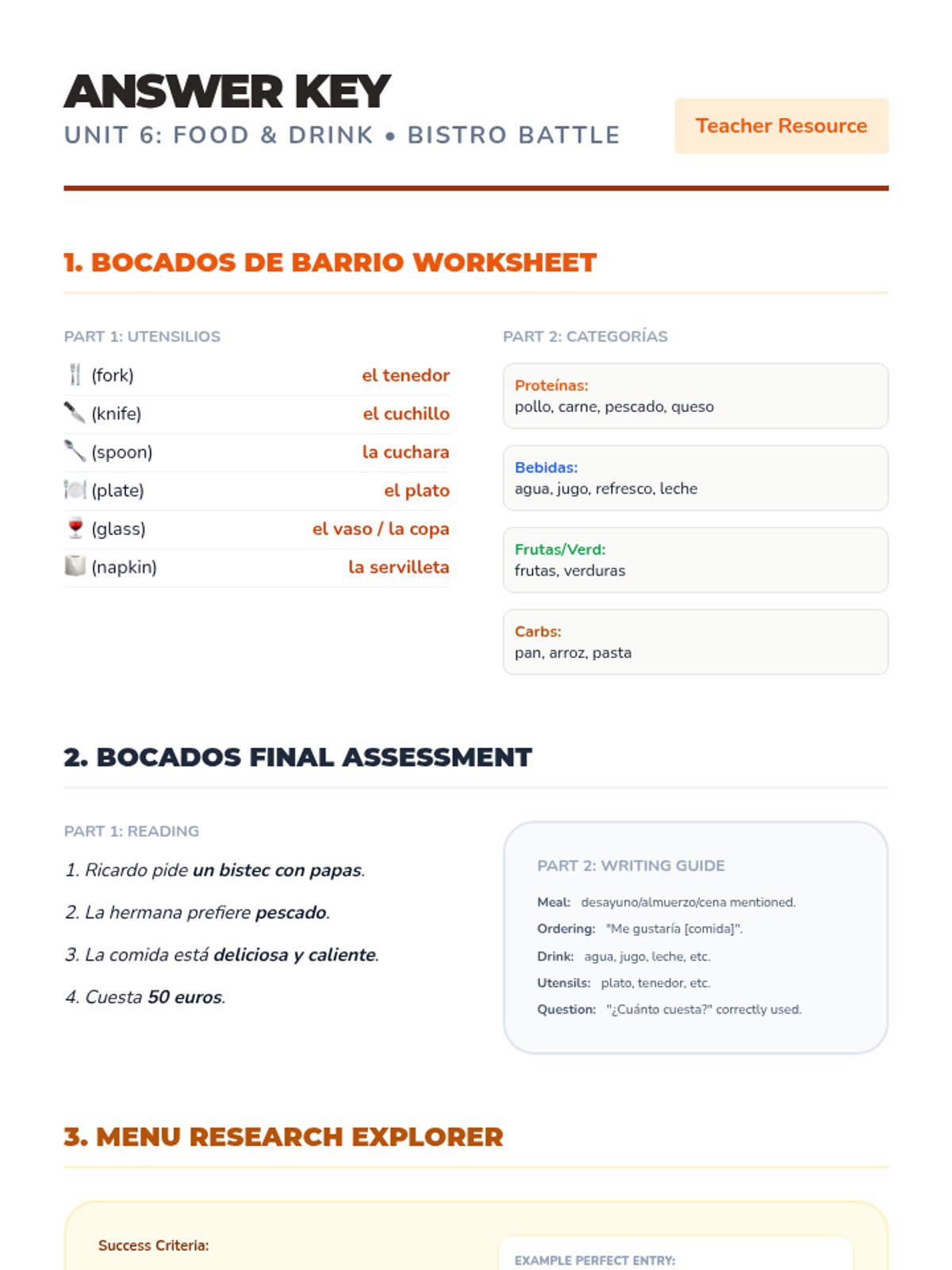
Students prepare and perform a restaurant skit assessment. Includes the final reading/writing assessment for the food and drink unit.
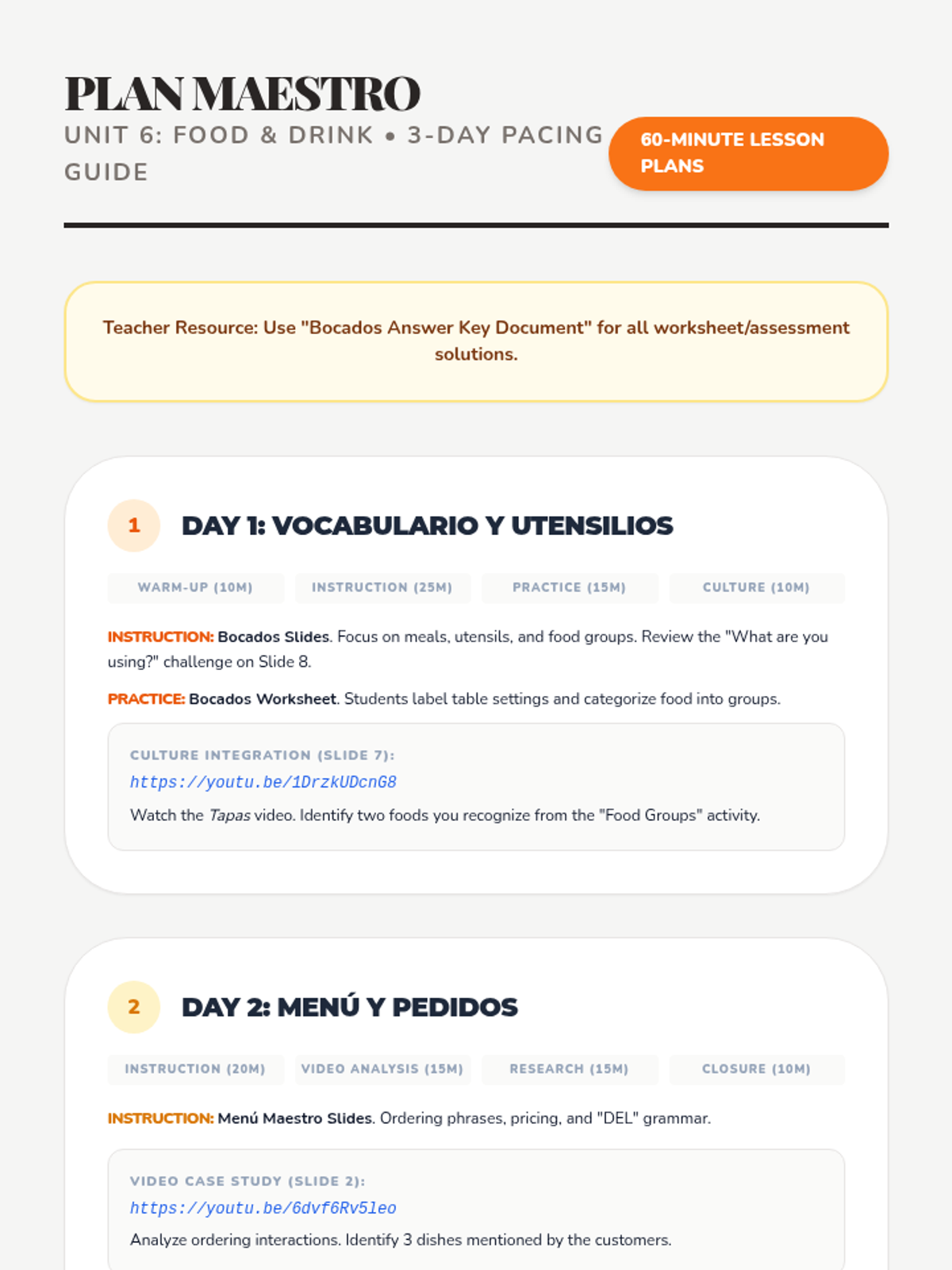
Students learn to order in a restaurant using "Me gustaría" and "quisiera," ask about prices, and explore cultural components of Spanish meals and tapas.
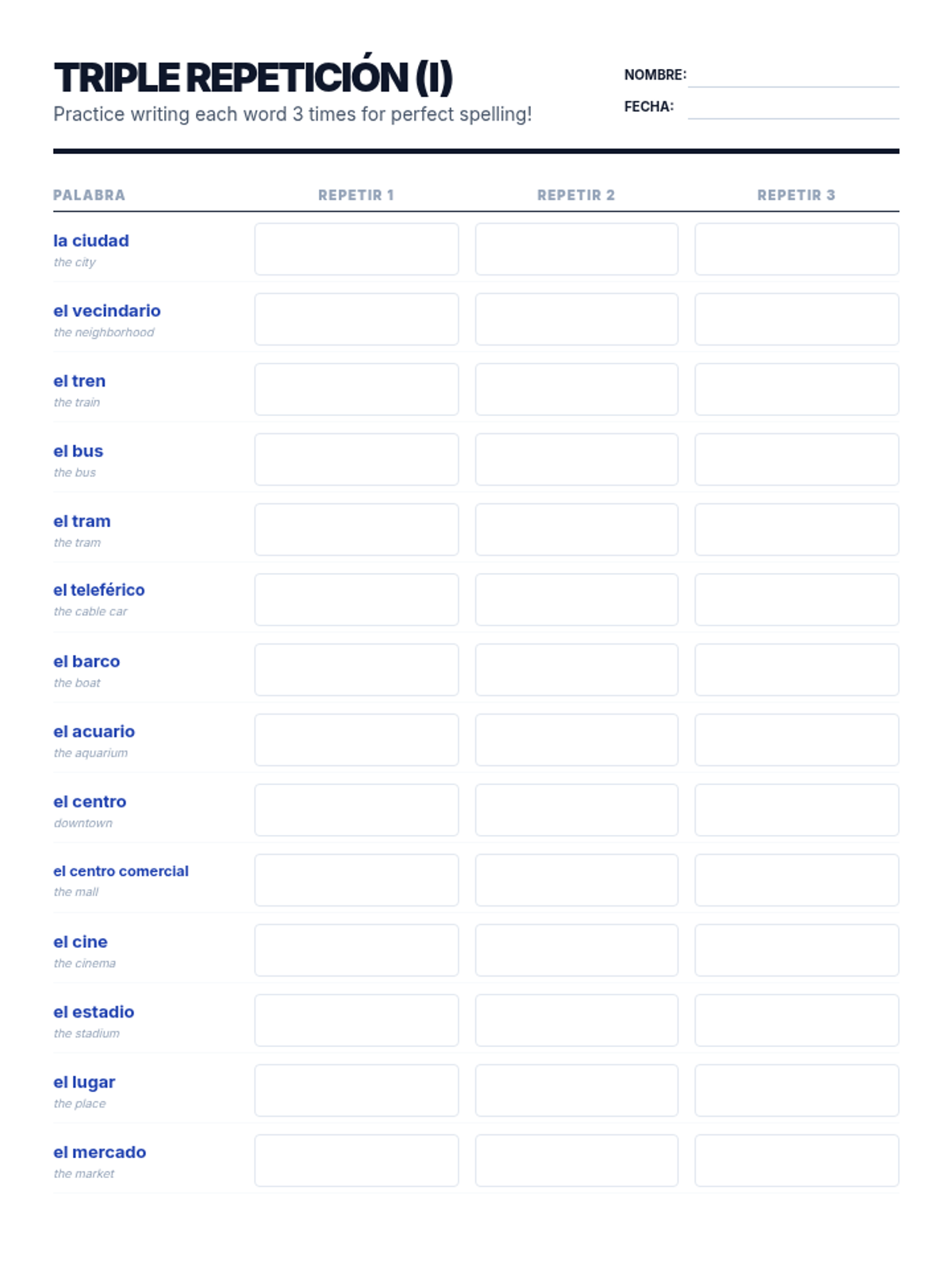
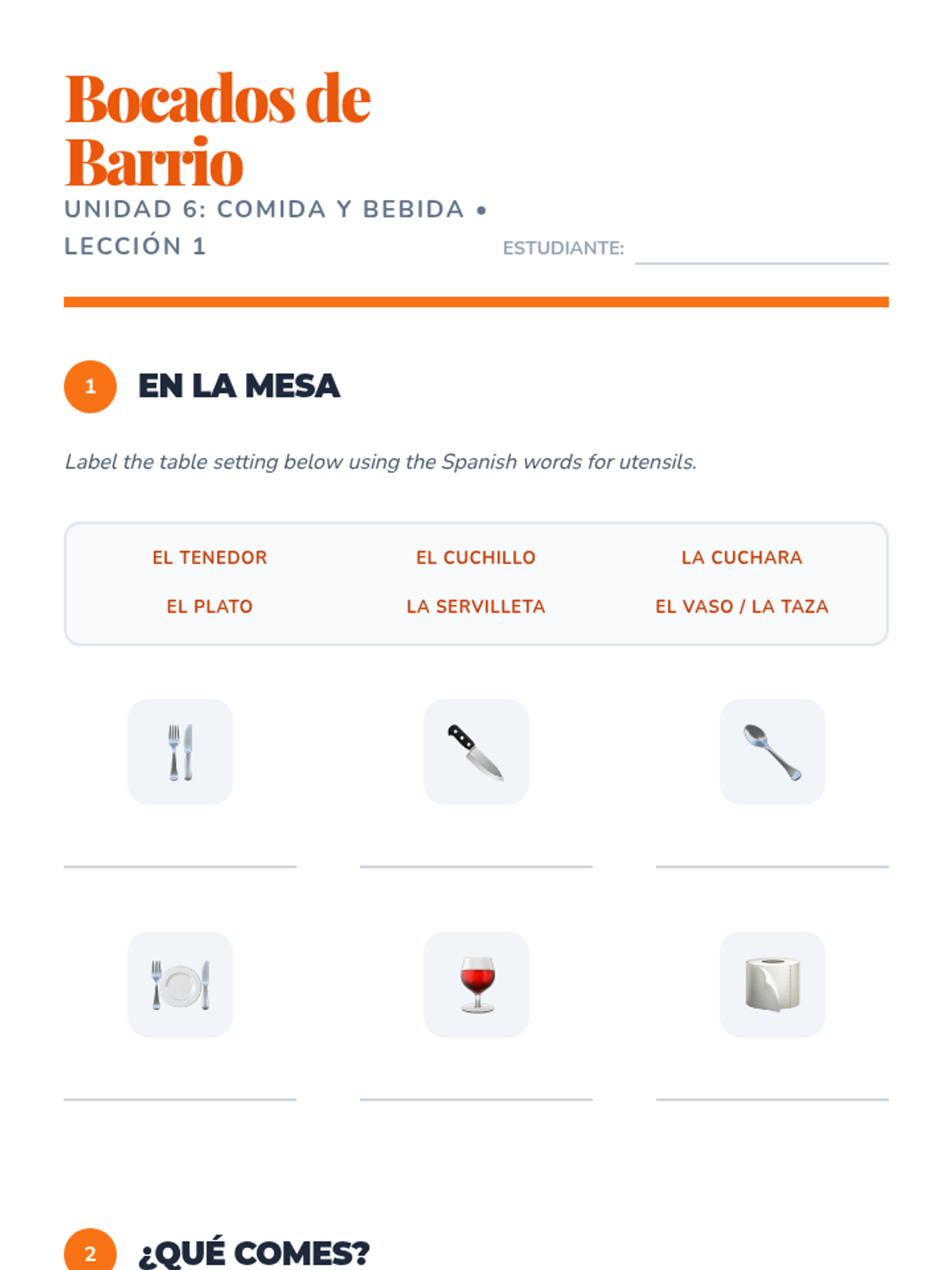
Students identify food and drink vocabulary, meal times, and table utensils. Focus on basic vocabulary acquisition through visual categorization and matching.
Students practice inviting others to events using 'querer', 'poder', and 'tener que'. Includes the summative performance assessments for speaking, writing, and listening.
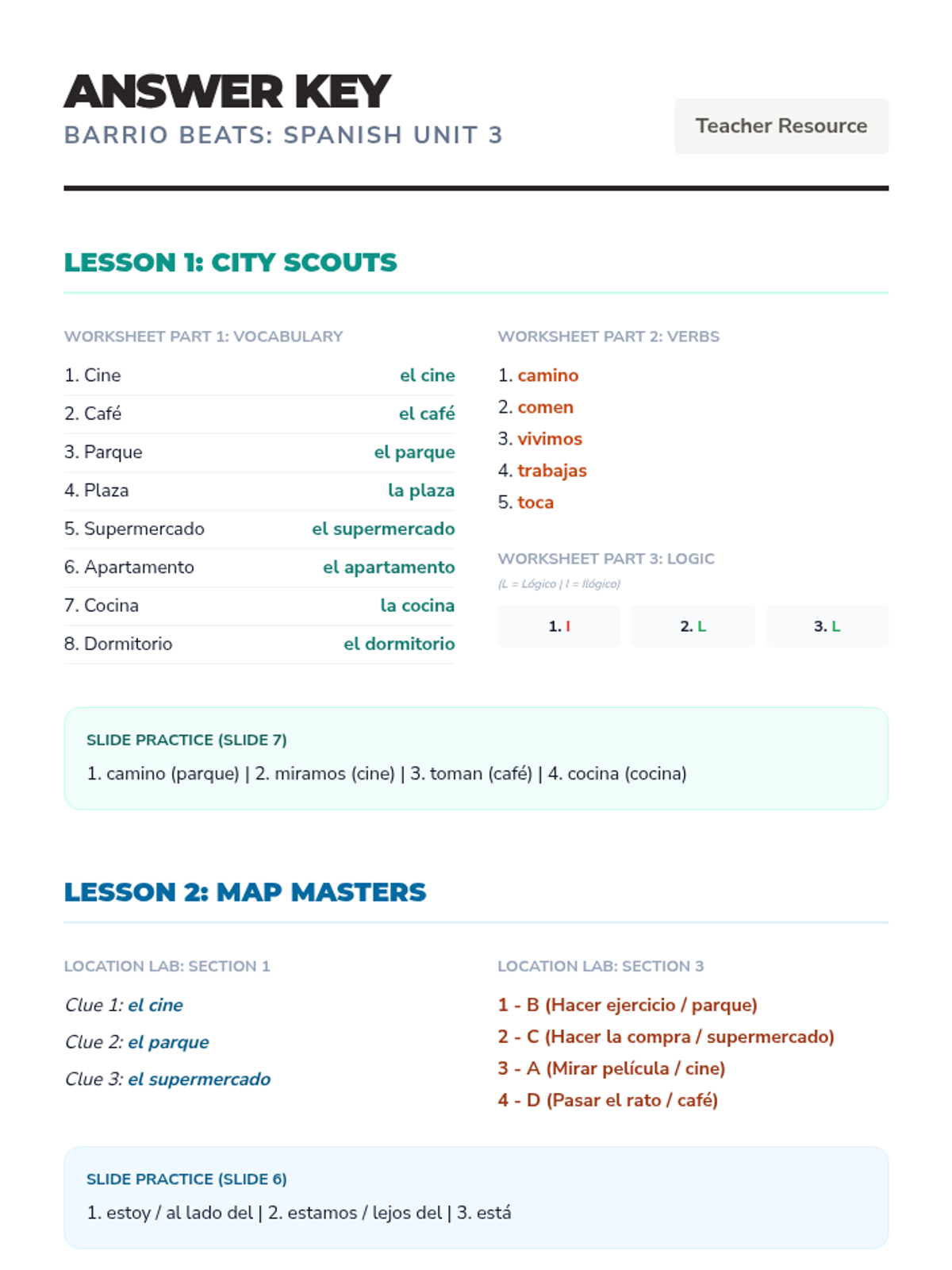
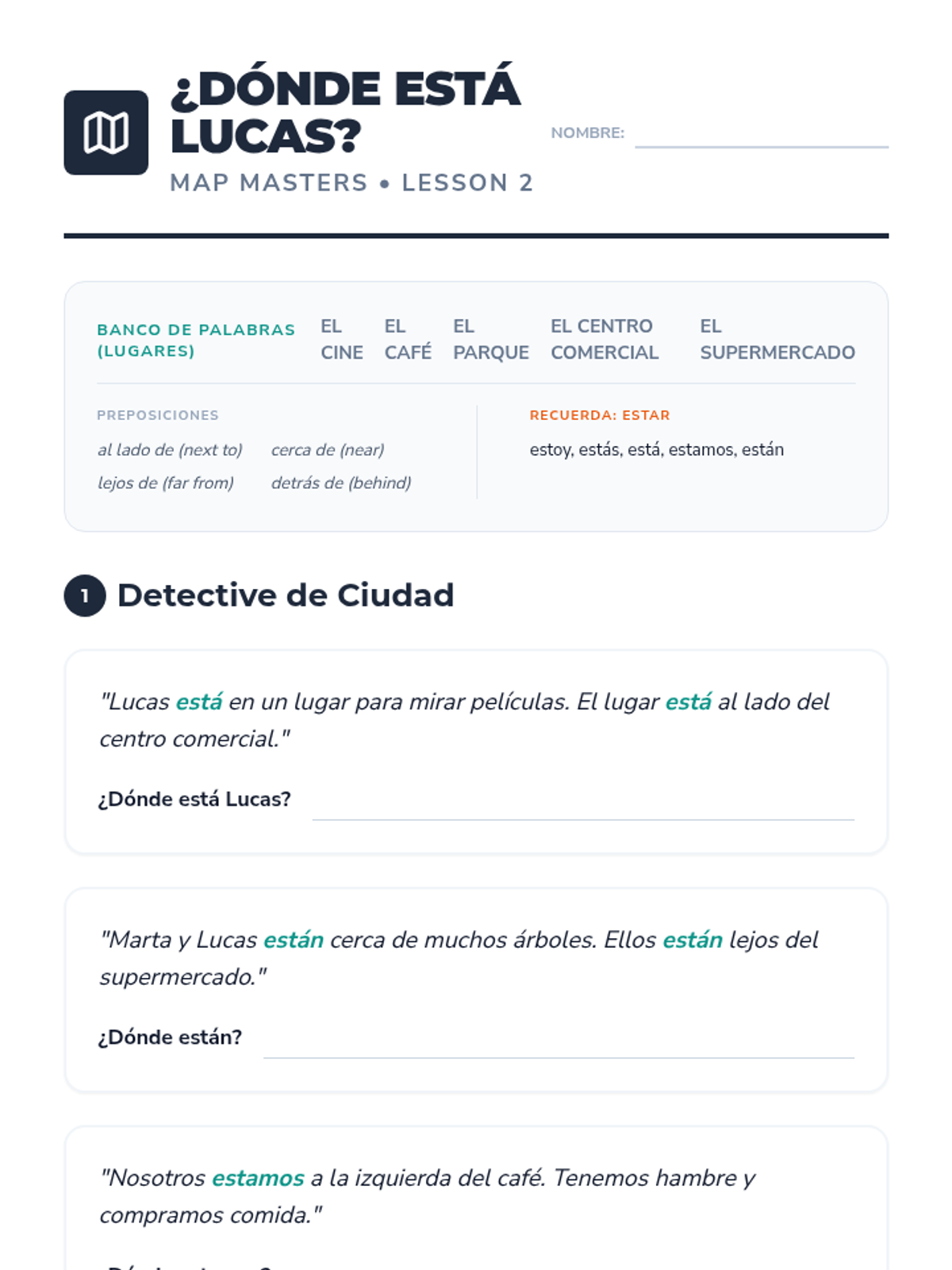
Focuses on the verb 'estar' for location and prepositions of place. Students learn to describe where they are and where buildings are located relative to each other using 'hacer' expressions.
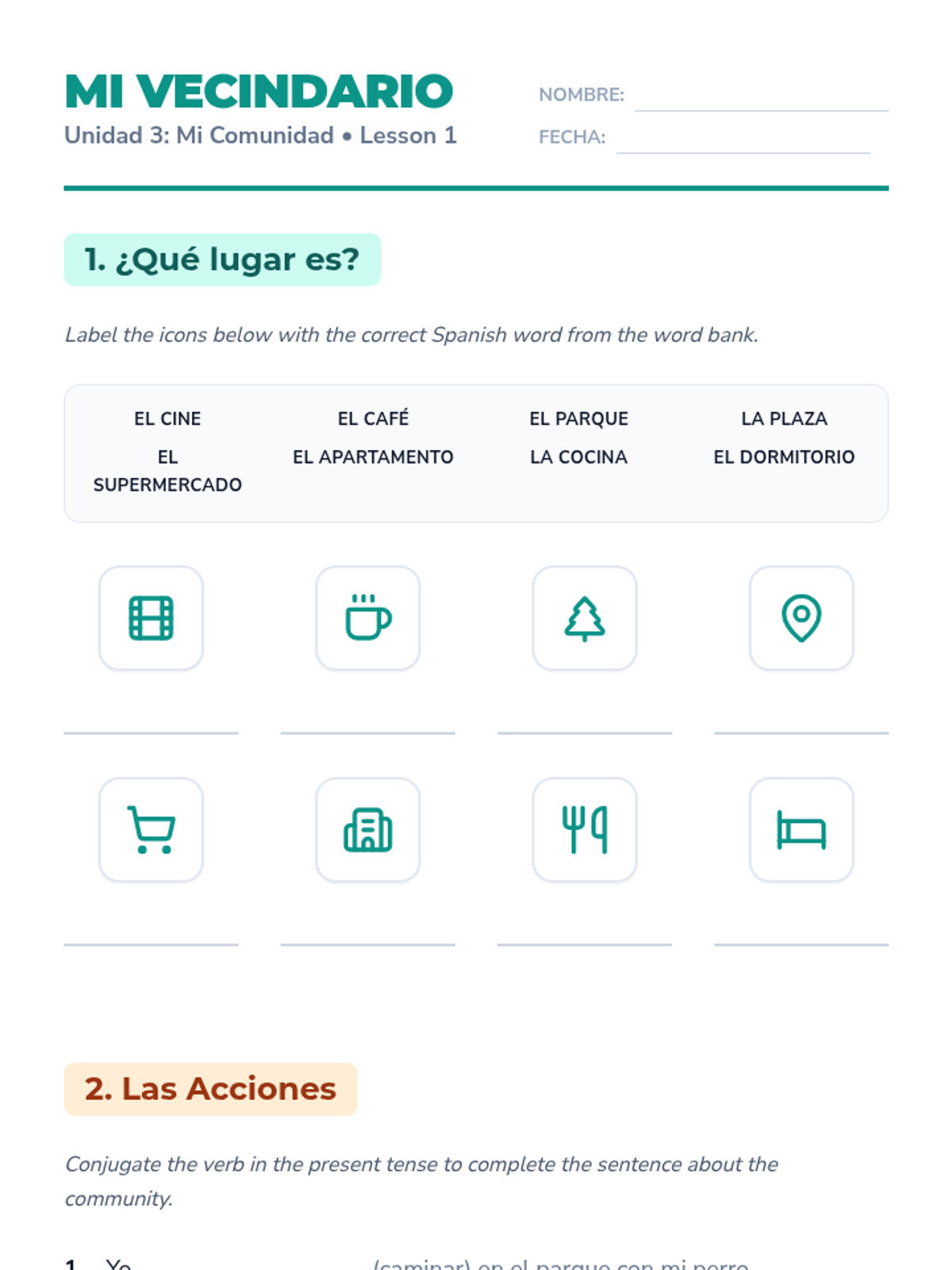
Students identify key community locations and associated verbs through visual mapping and matching activities. Focus on vocabulary acquisition of nouns (places) and regular '-ar', '-er', and '-ir' verbs.
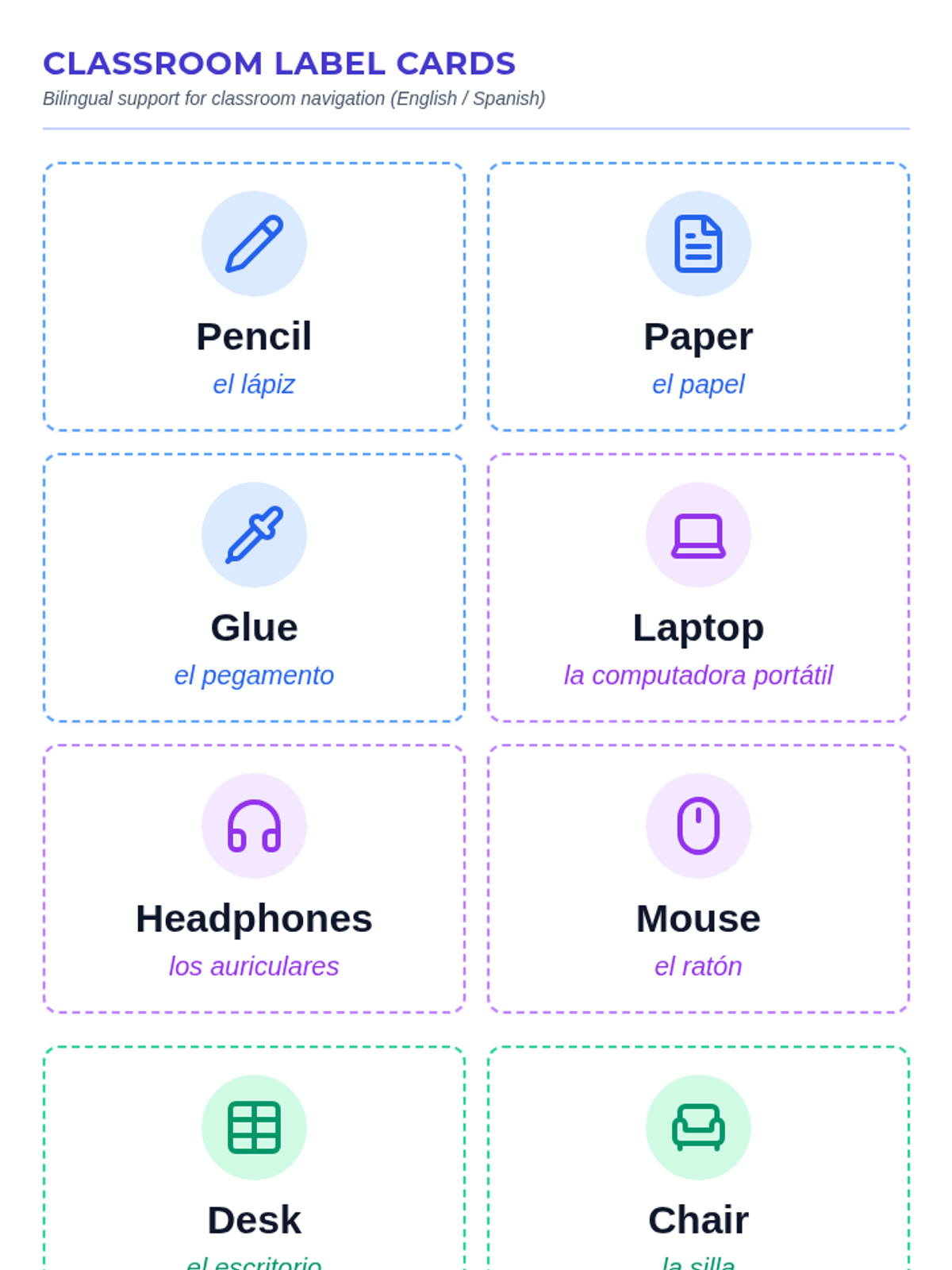
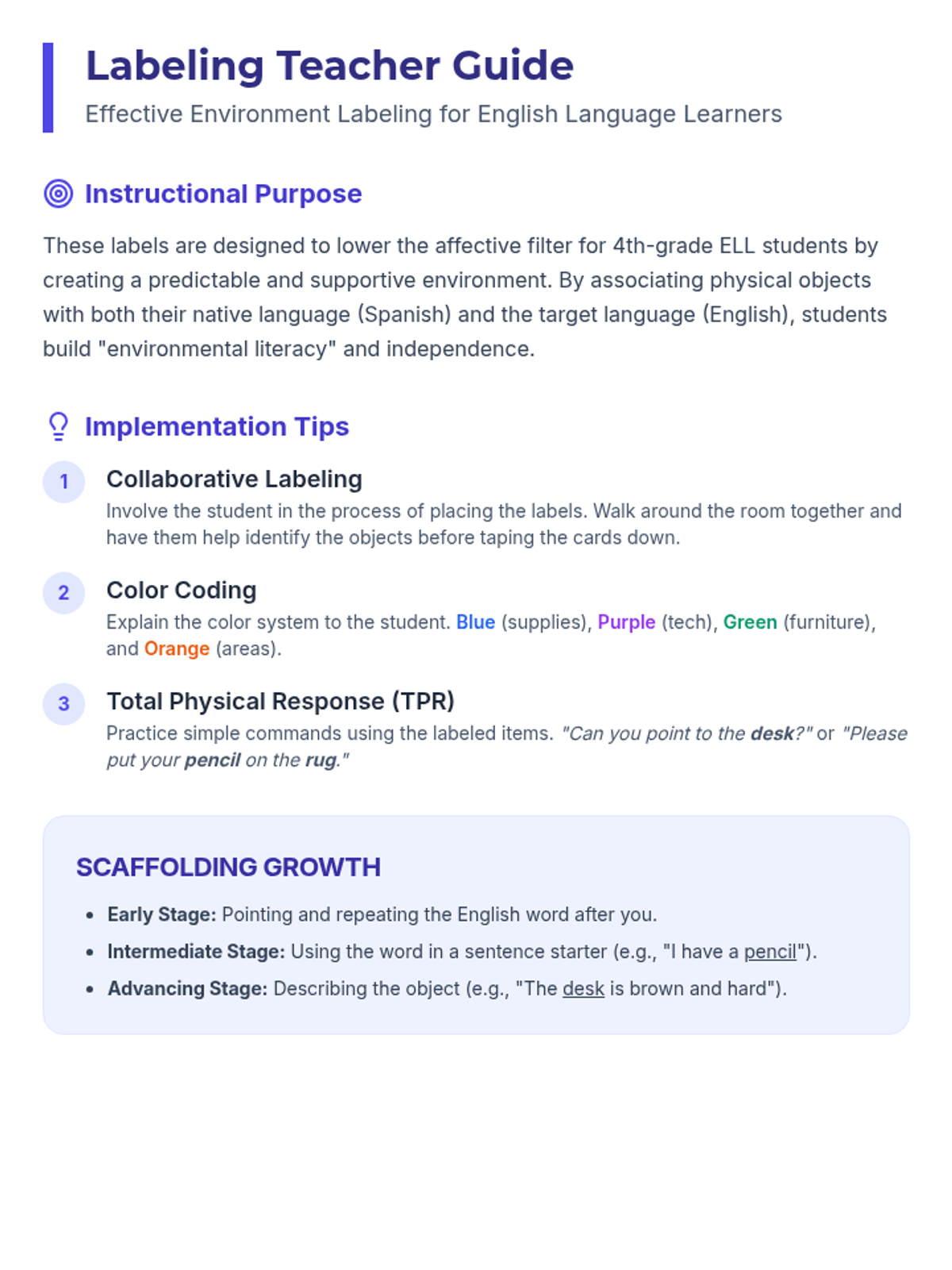
A lesson focused on identifying and labeling frequently used classroom items using bilingual cards to support language acquisition and environmental literacy.
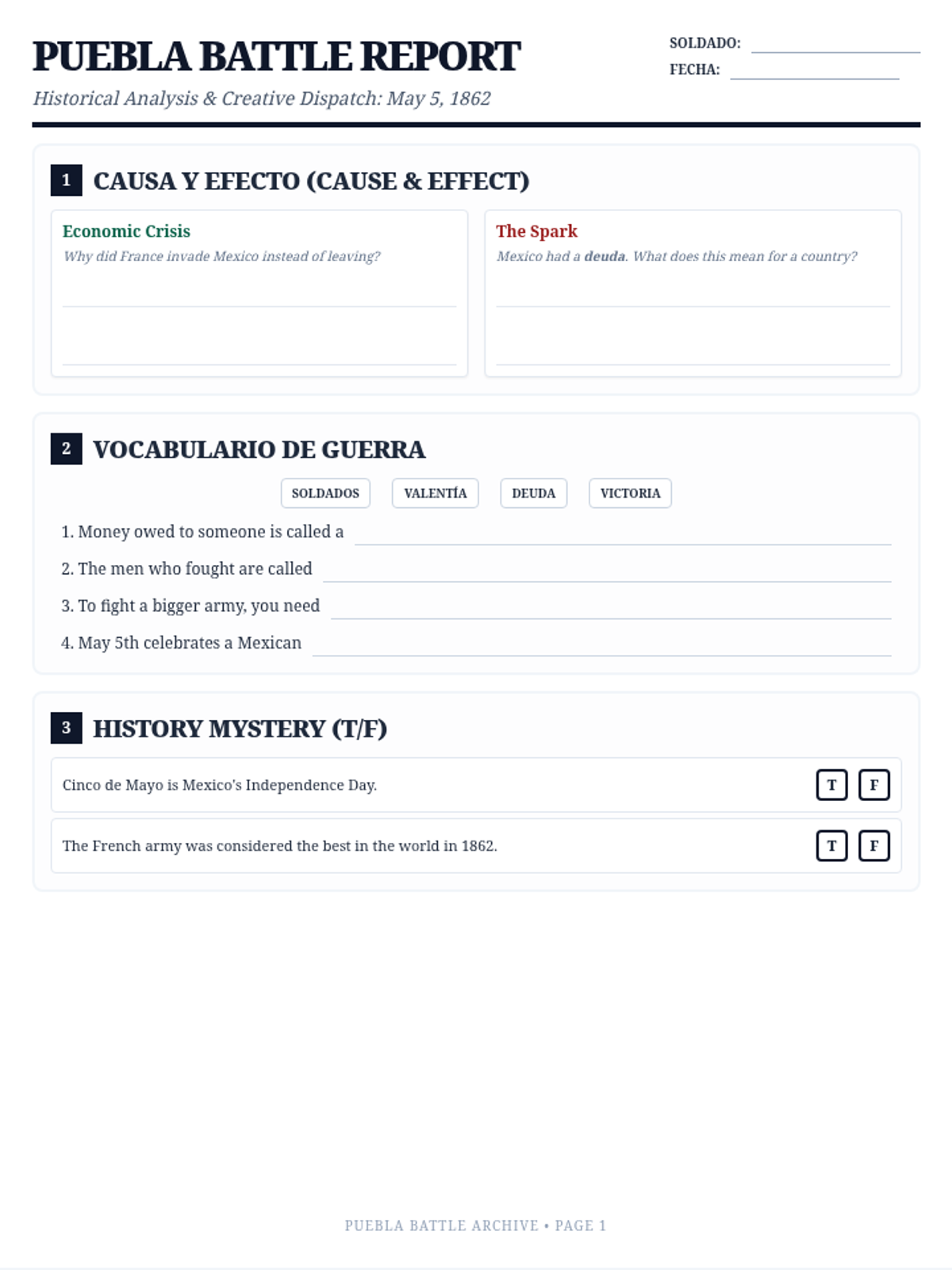
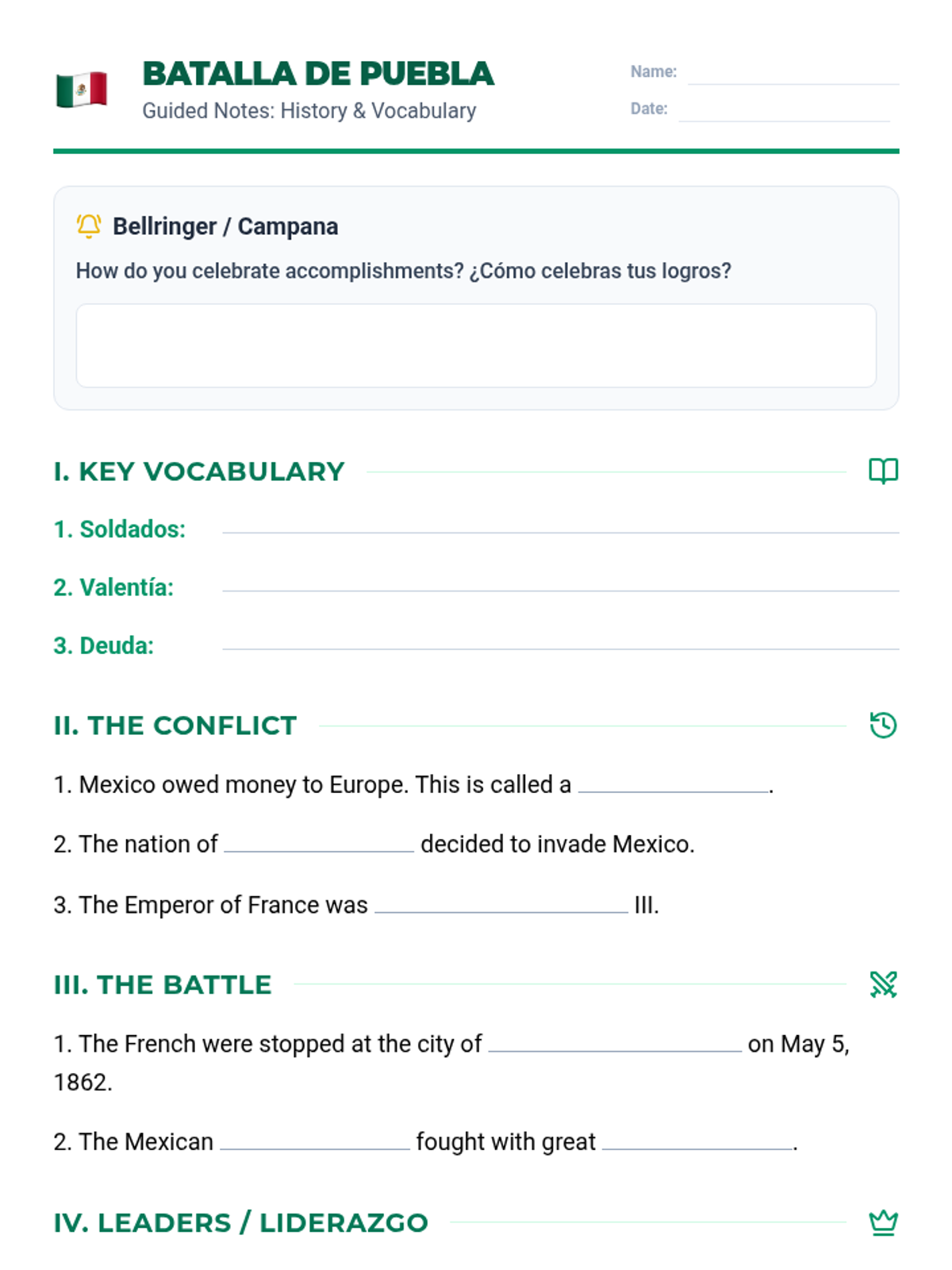
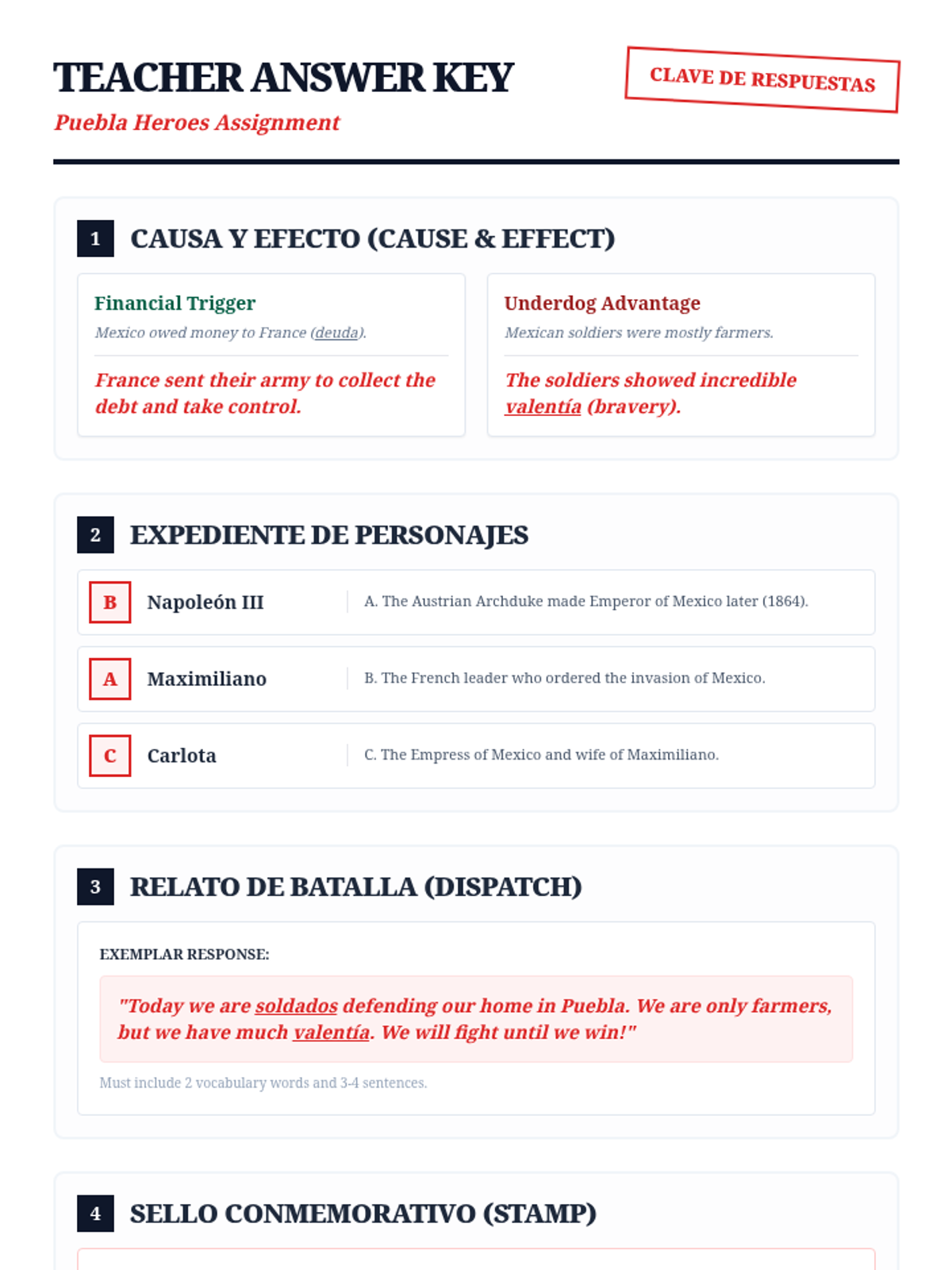
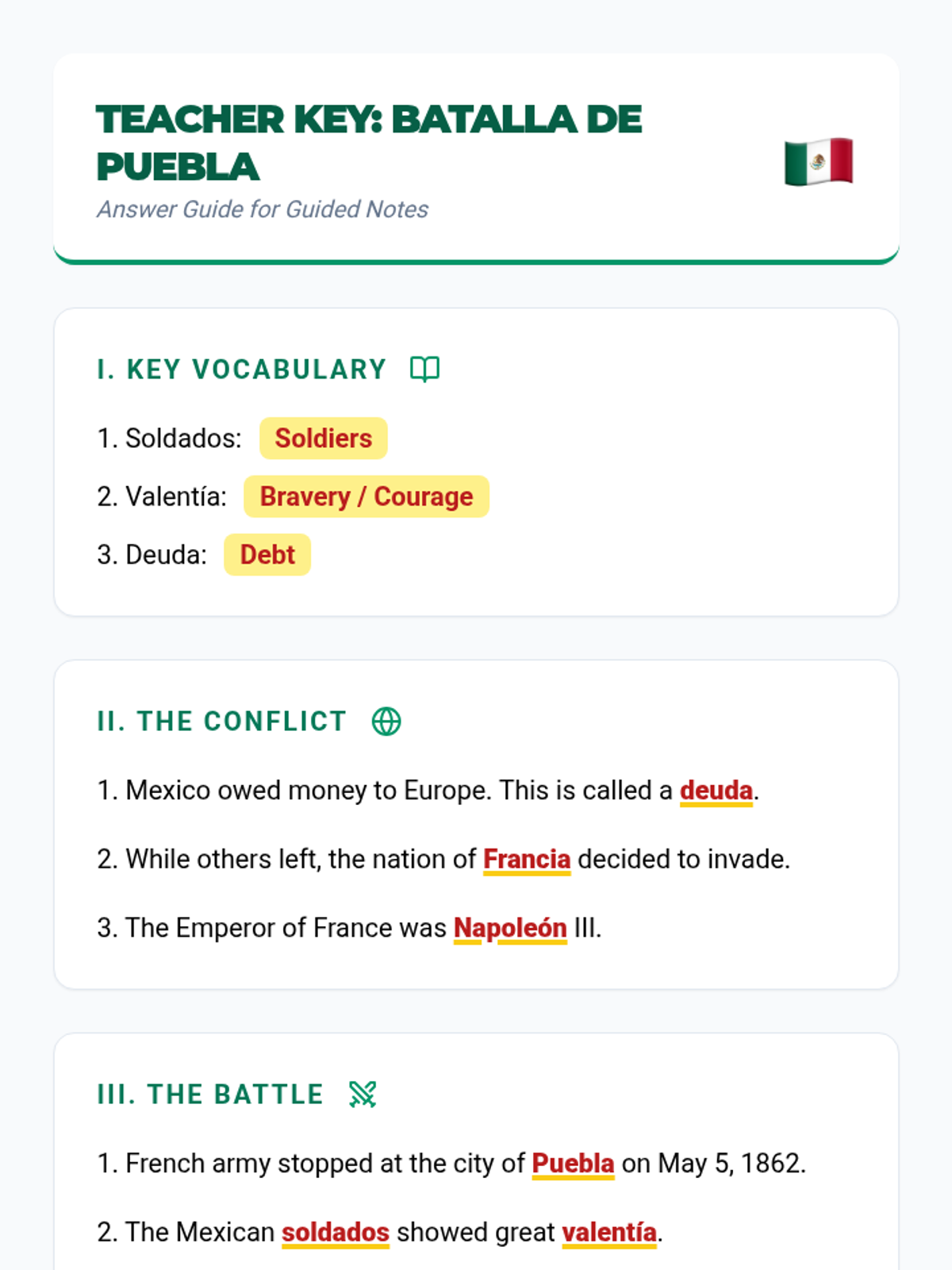
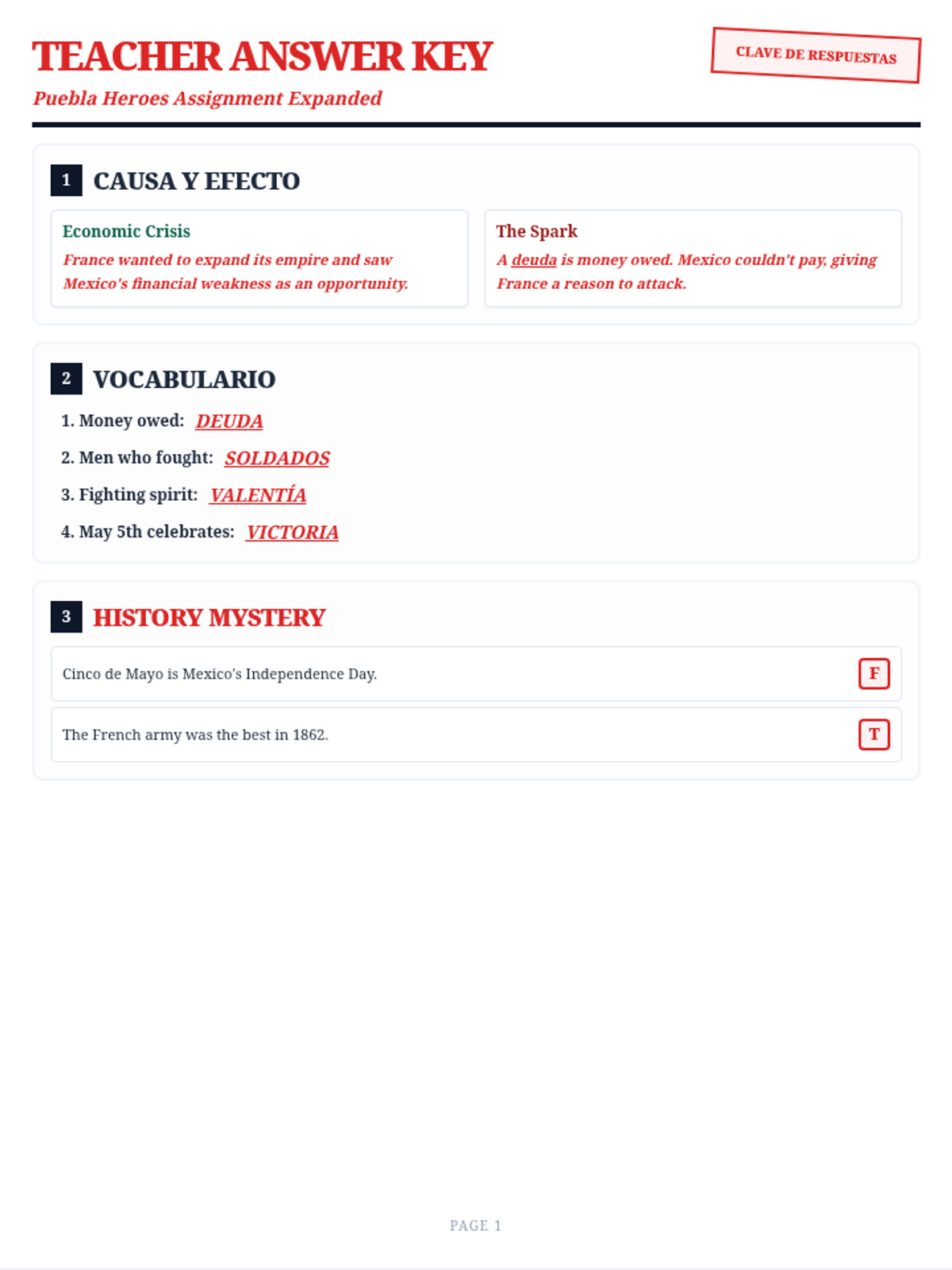
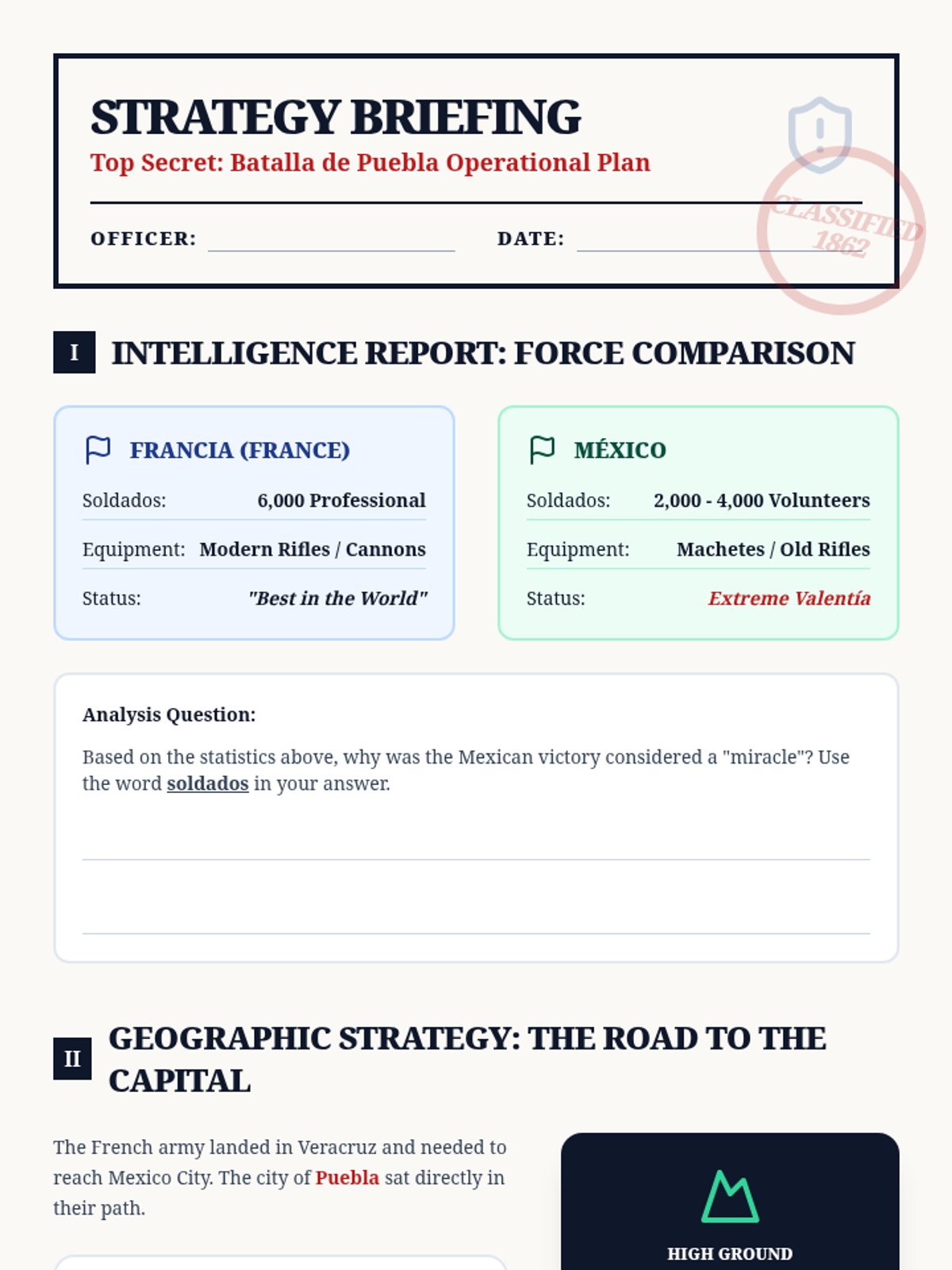
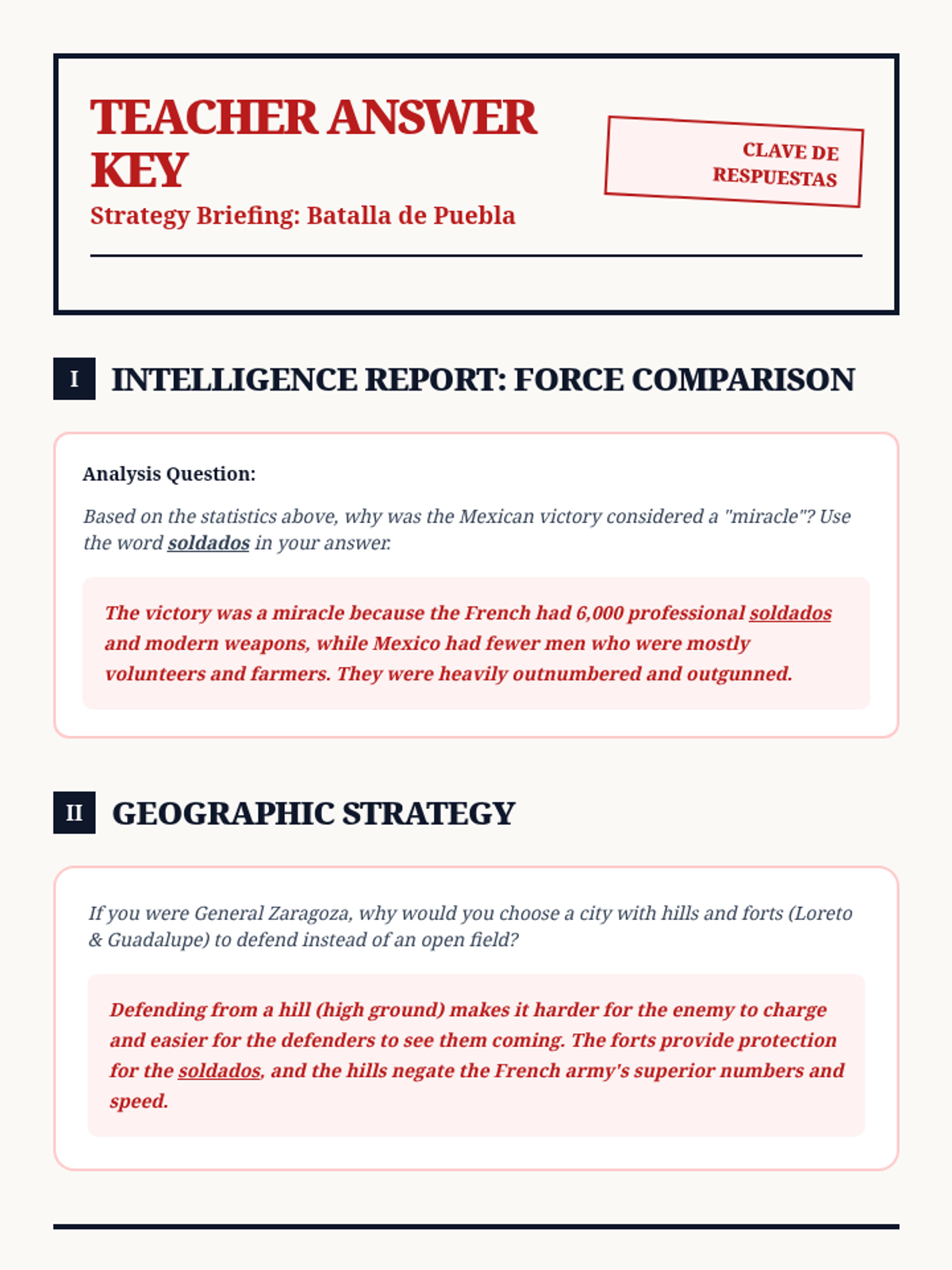
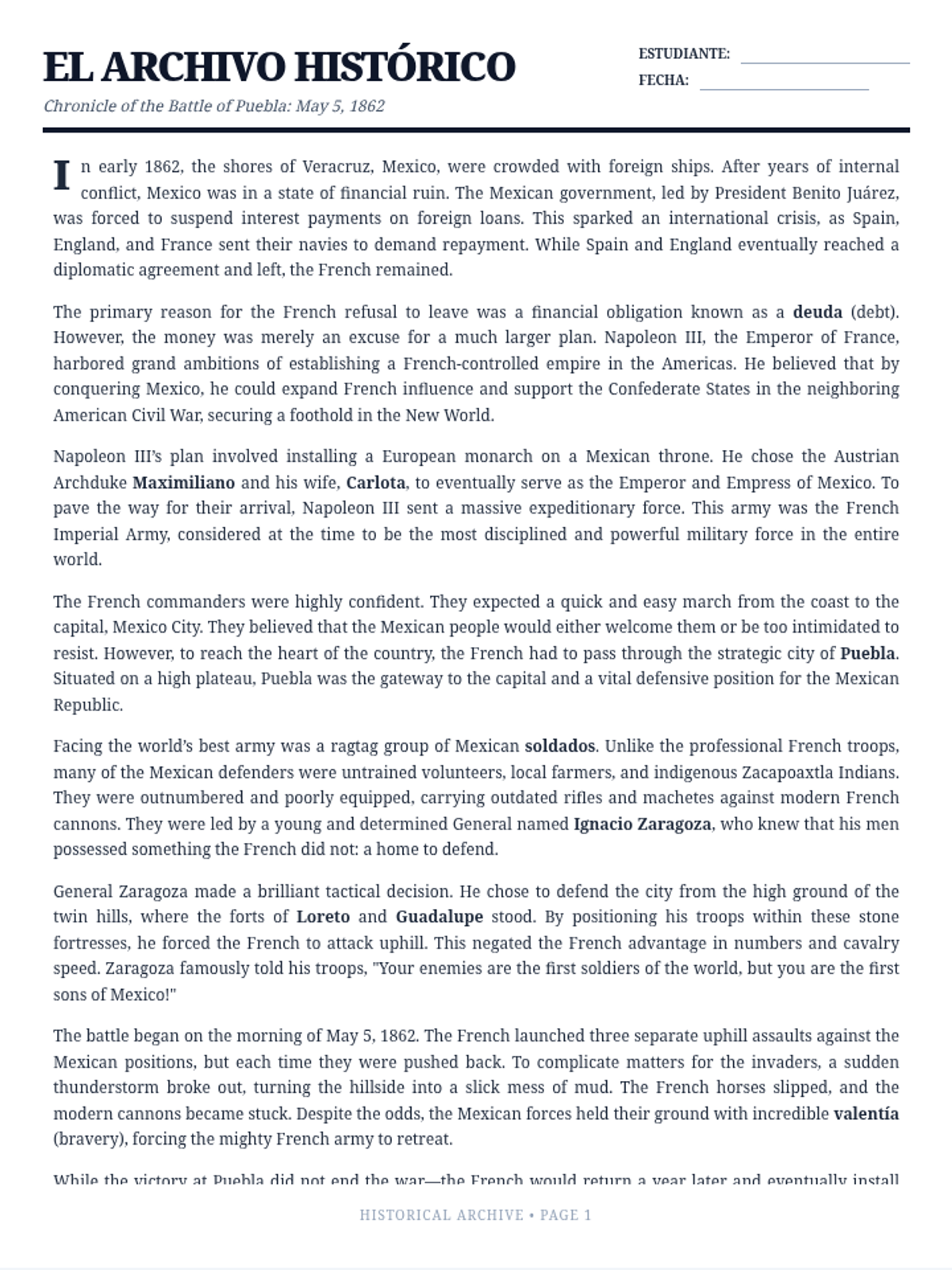
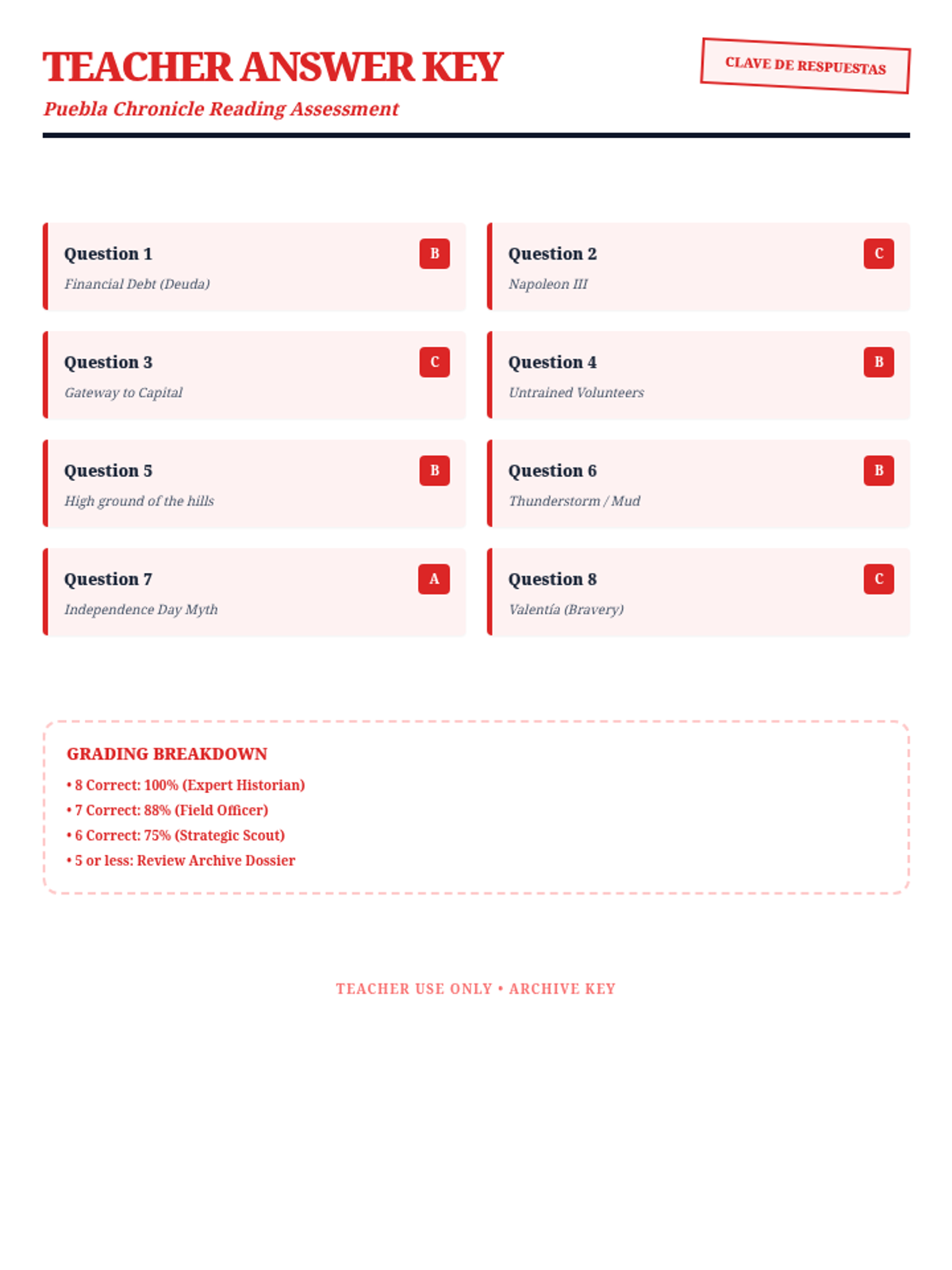
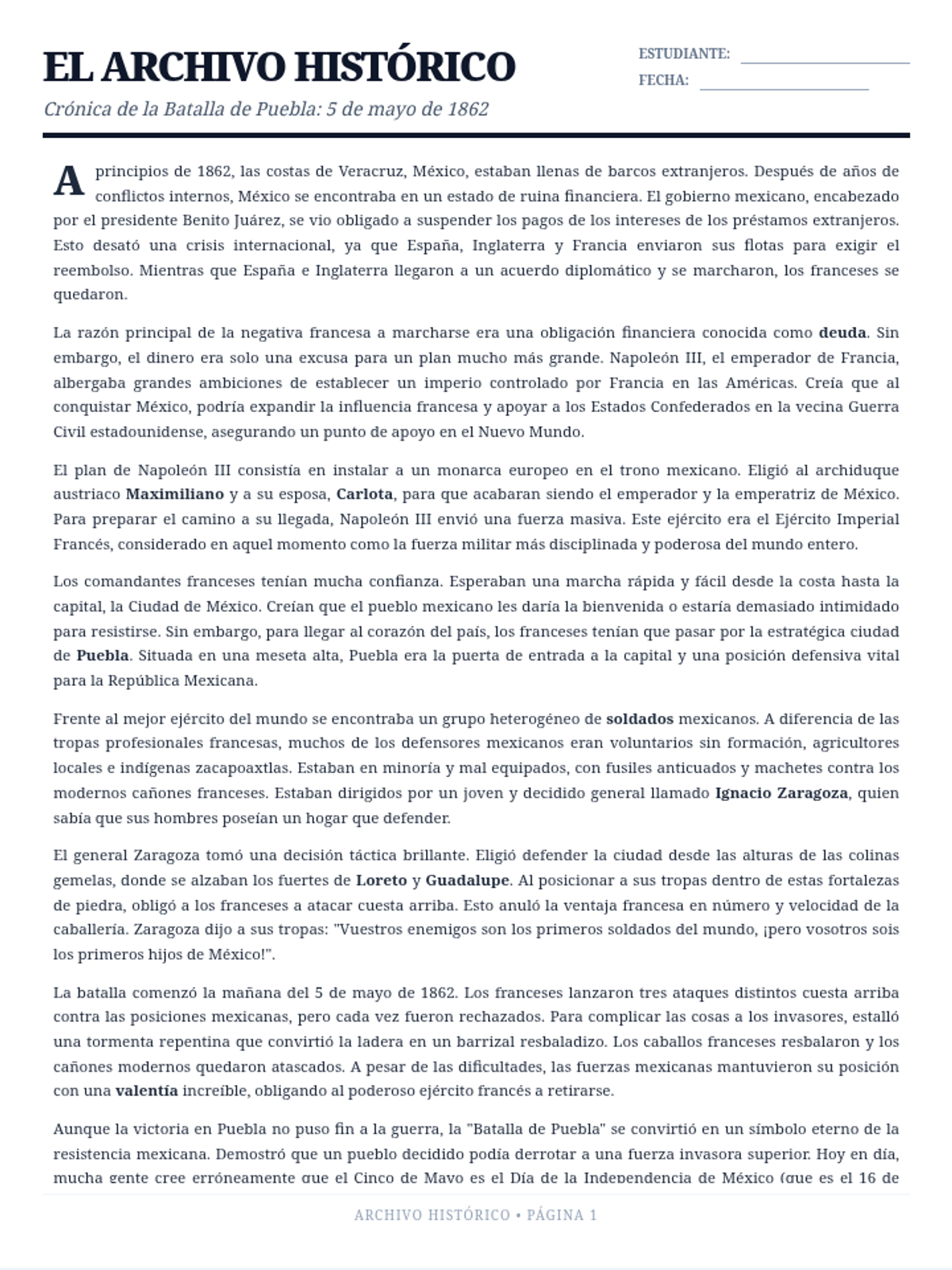
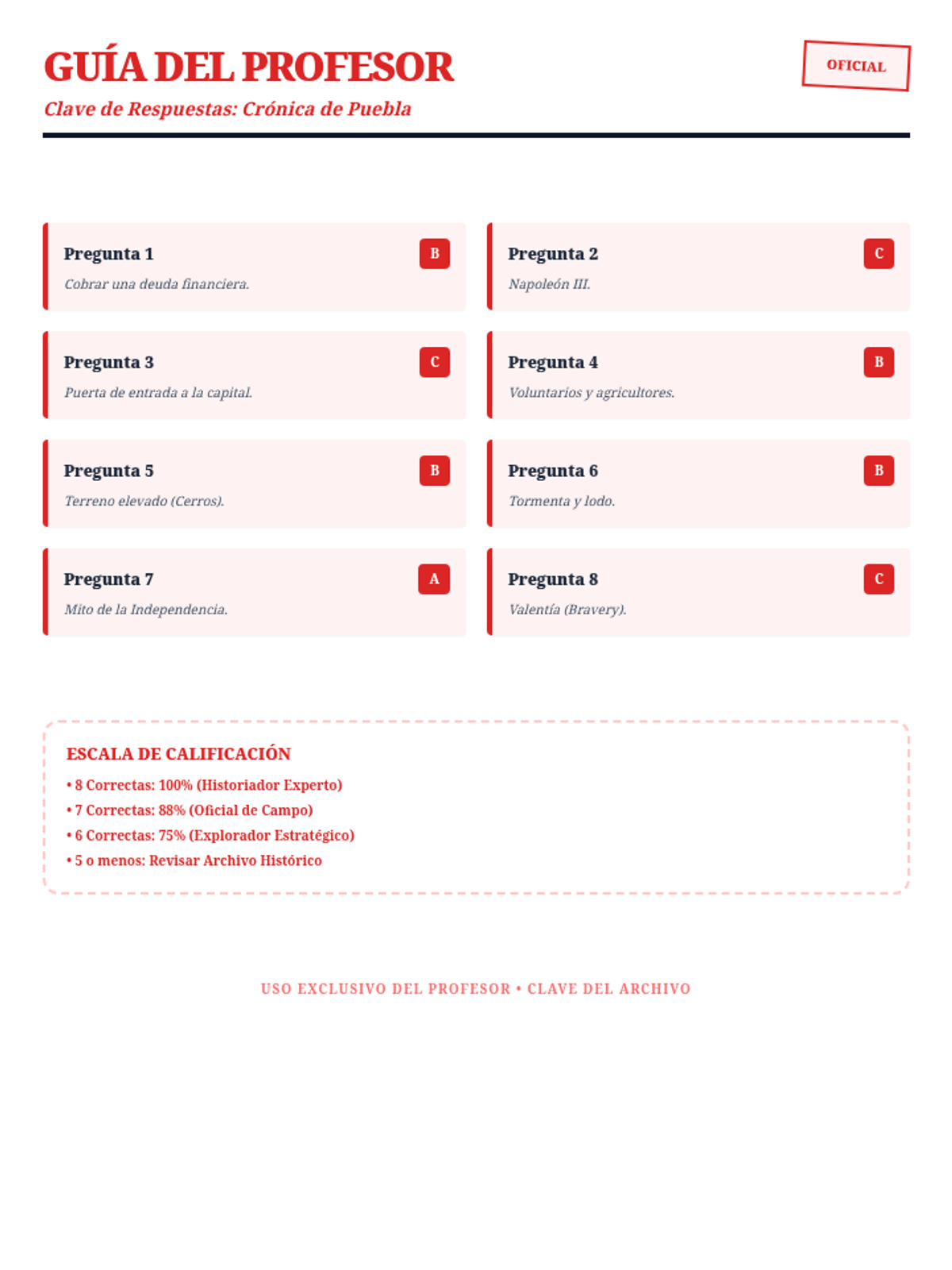
An introductory lesson on the history and vocabulary of Cinco de Mayo, focusing on the Battle of Puebla and the cultural significance of the holiday. Students explore key historical figures and the concept of bravery through guided instruction and collaborative activities.
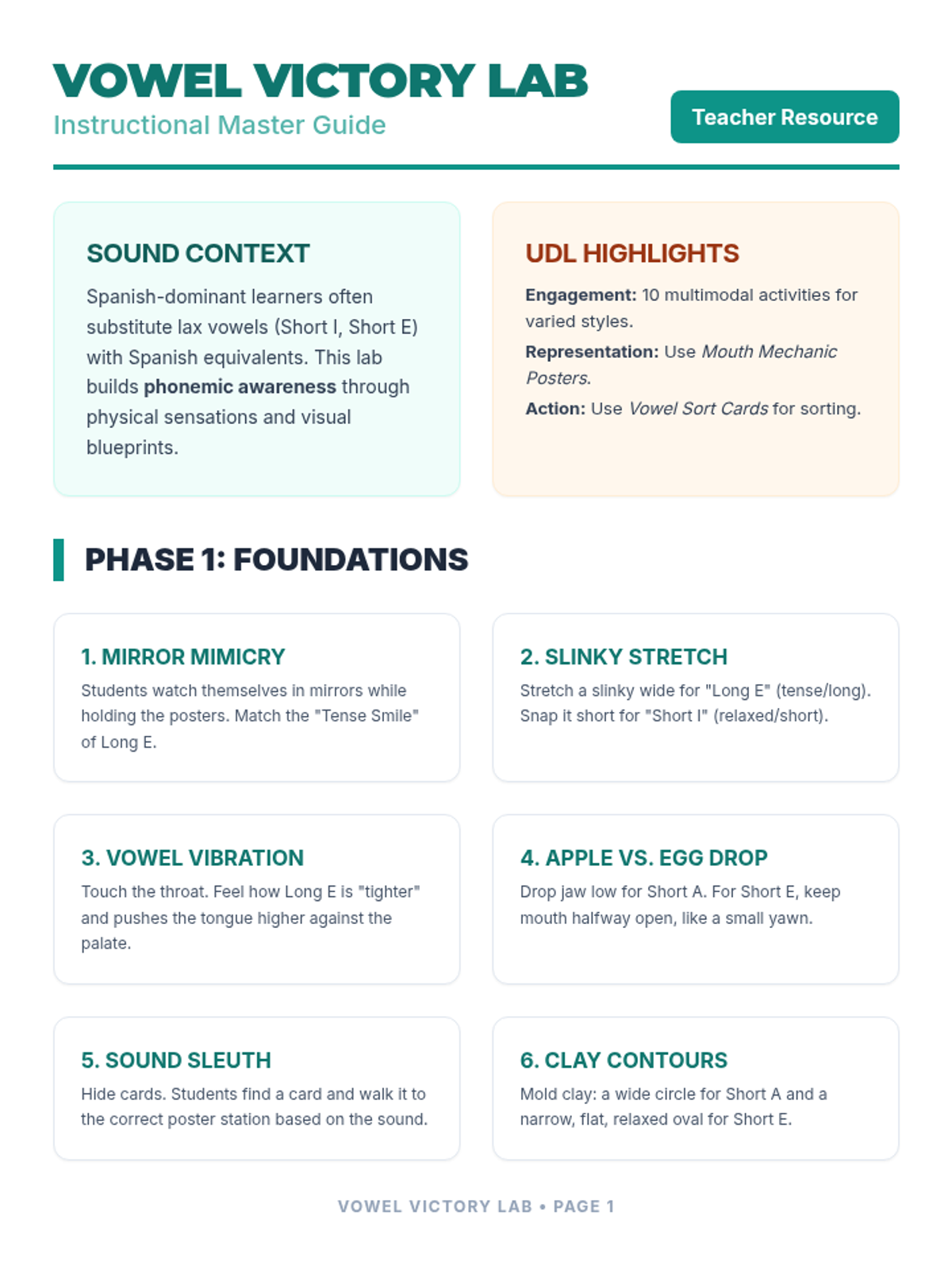
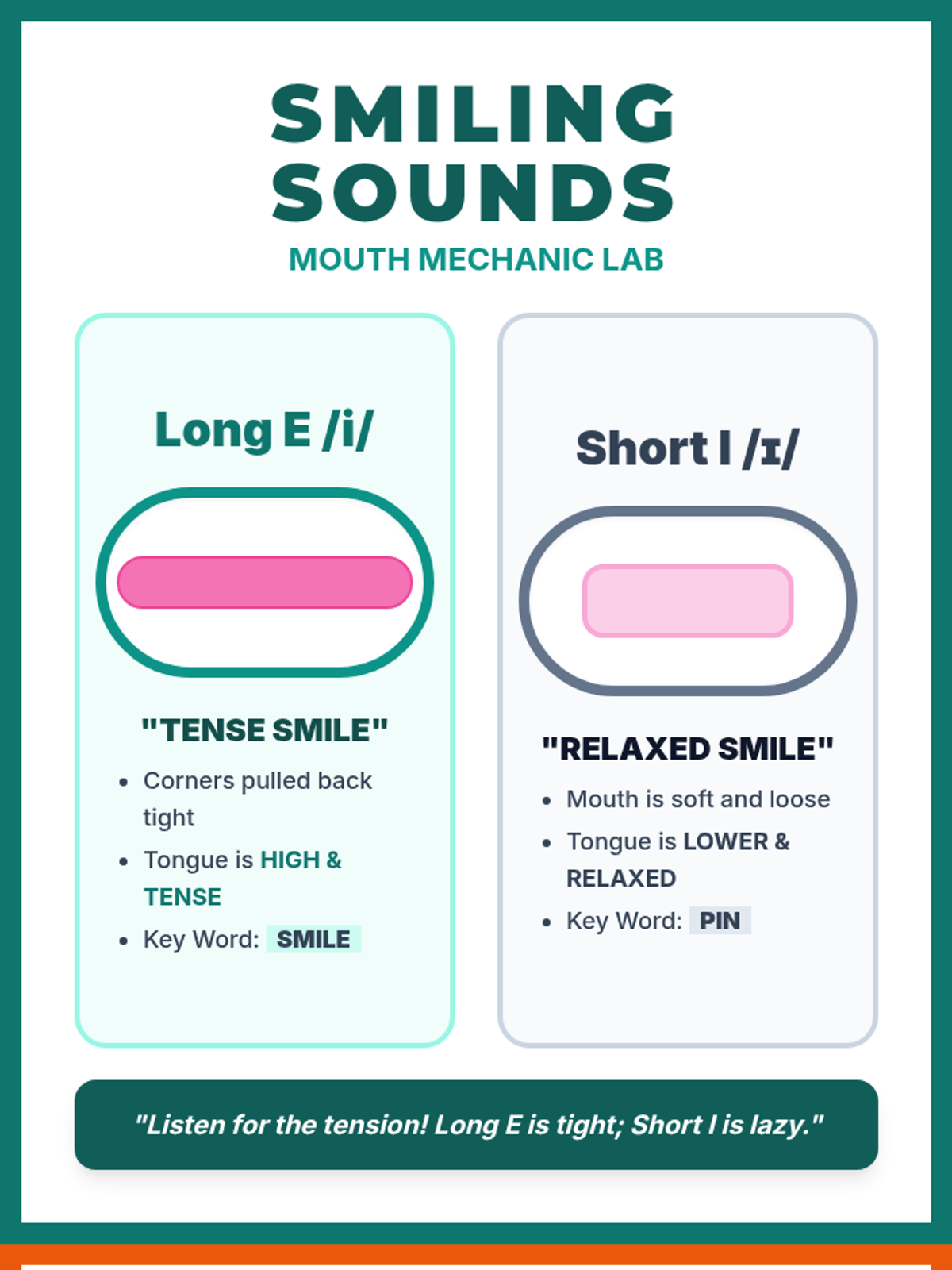
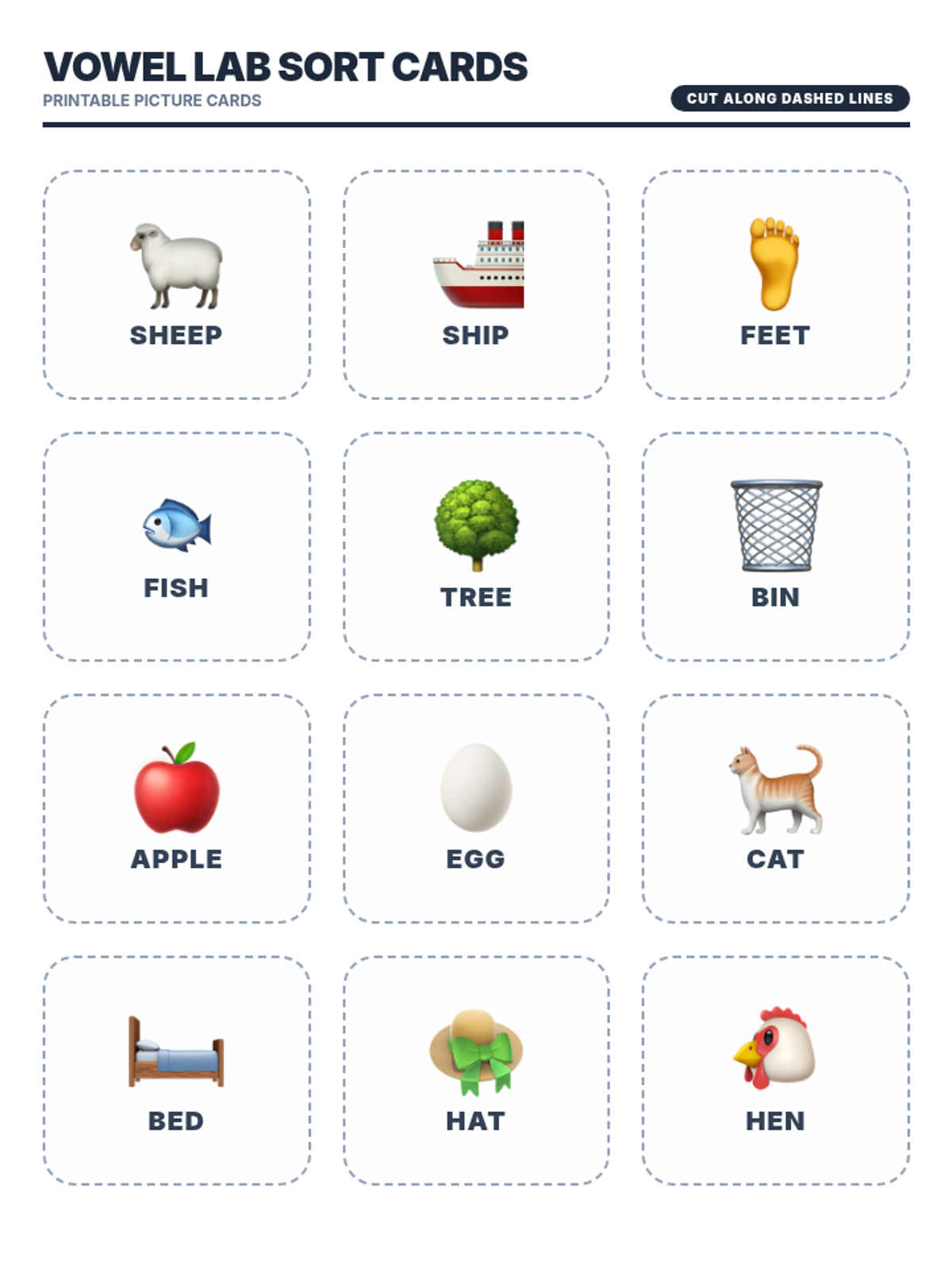
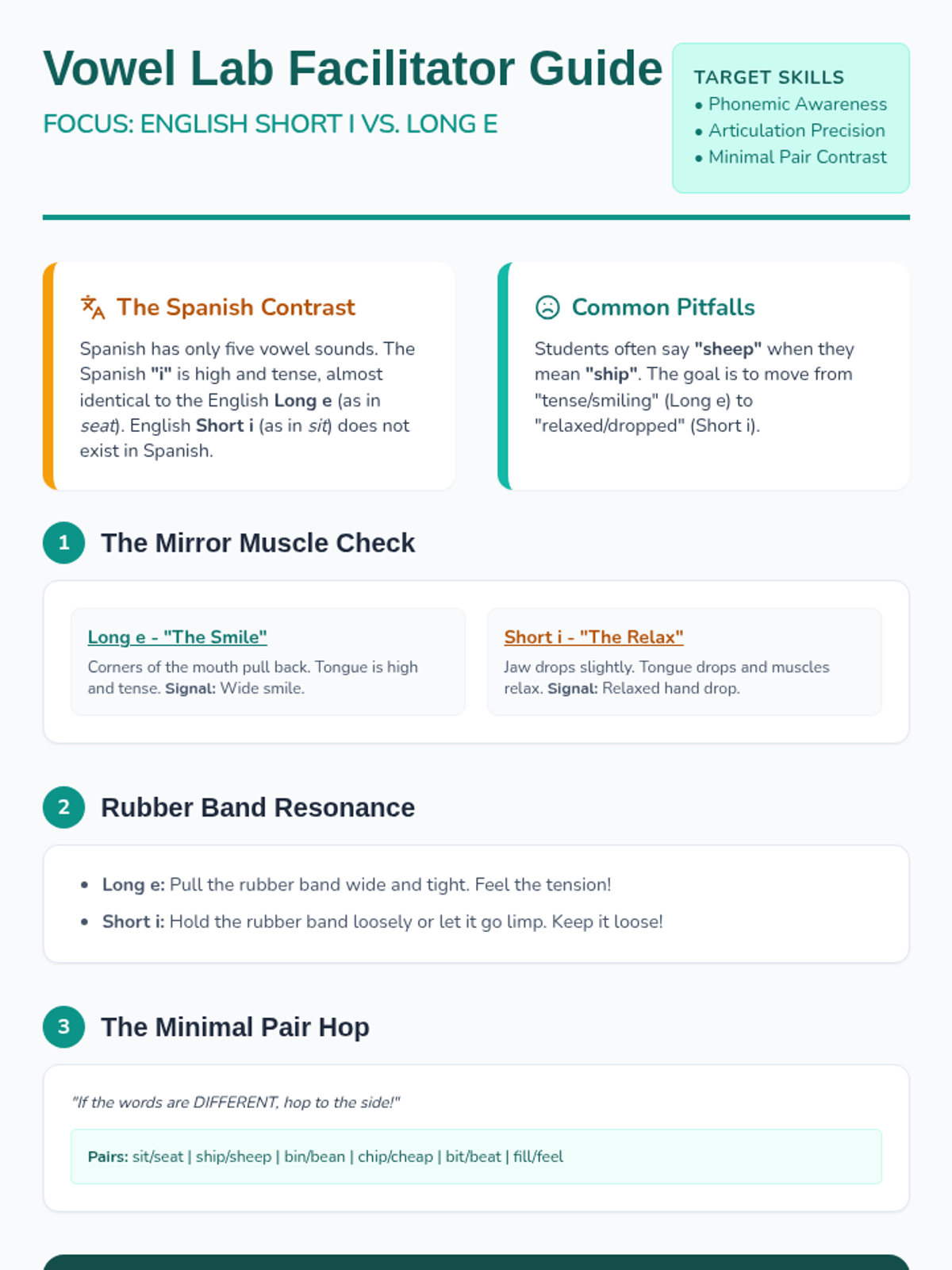
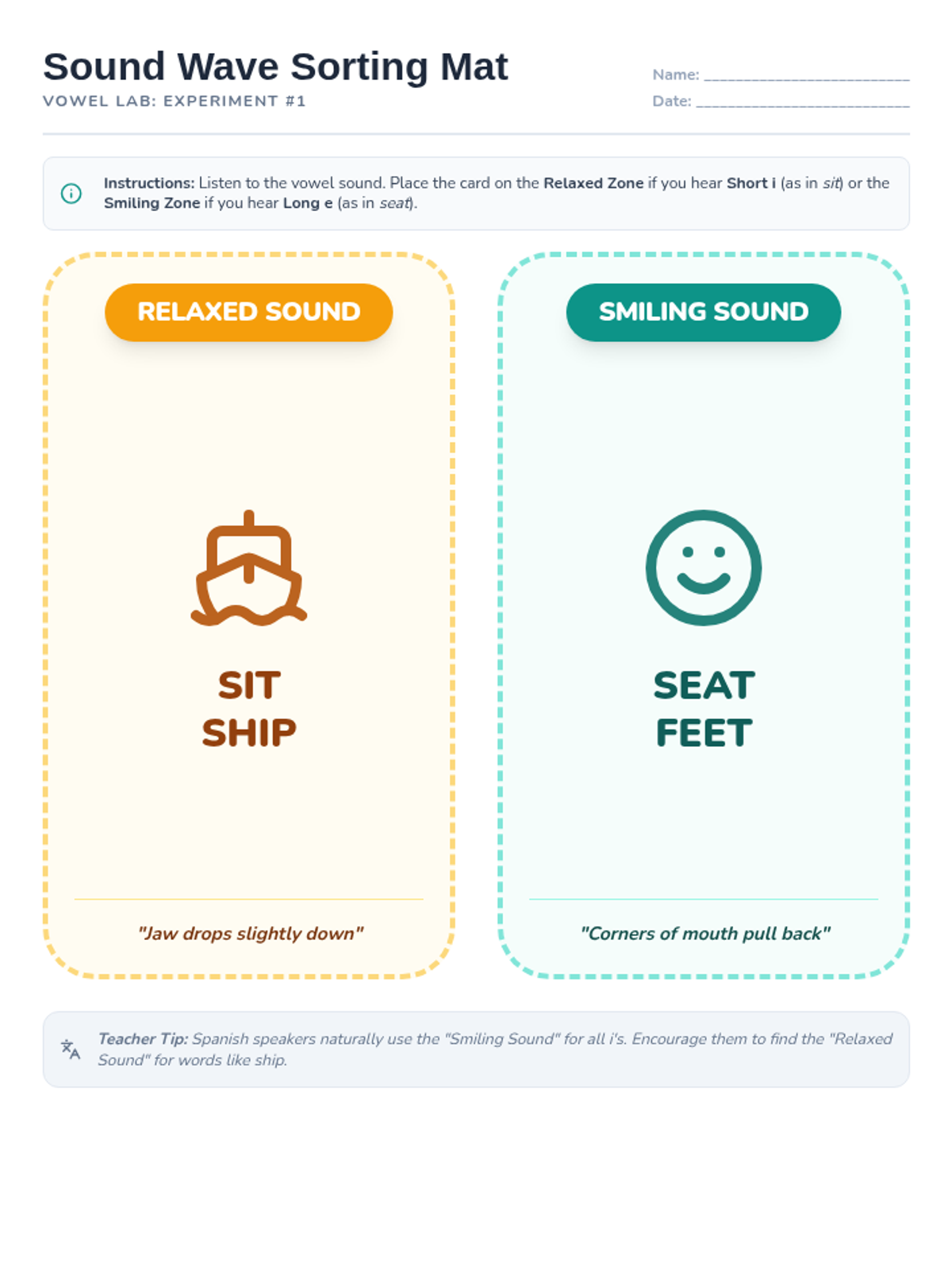
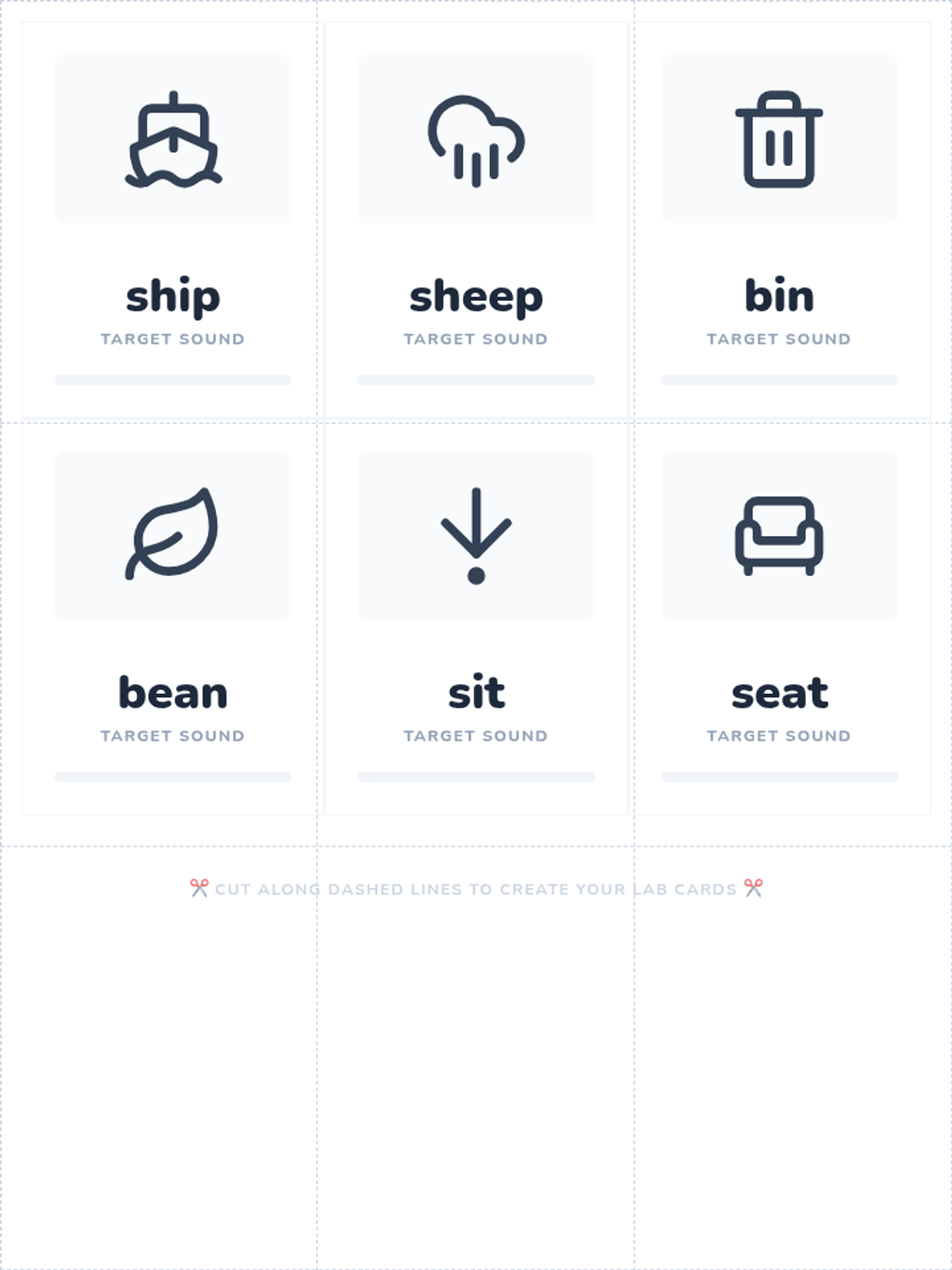
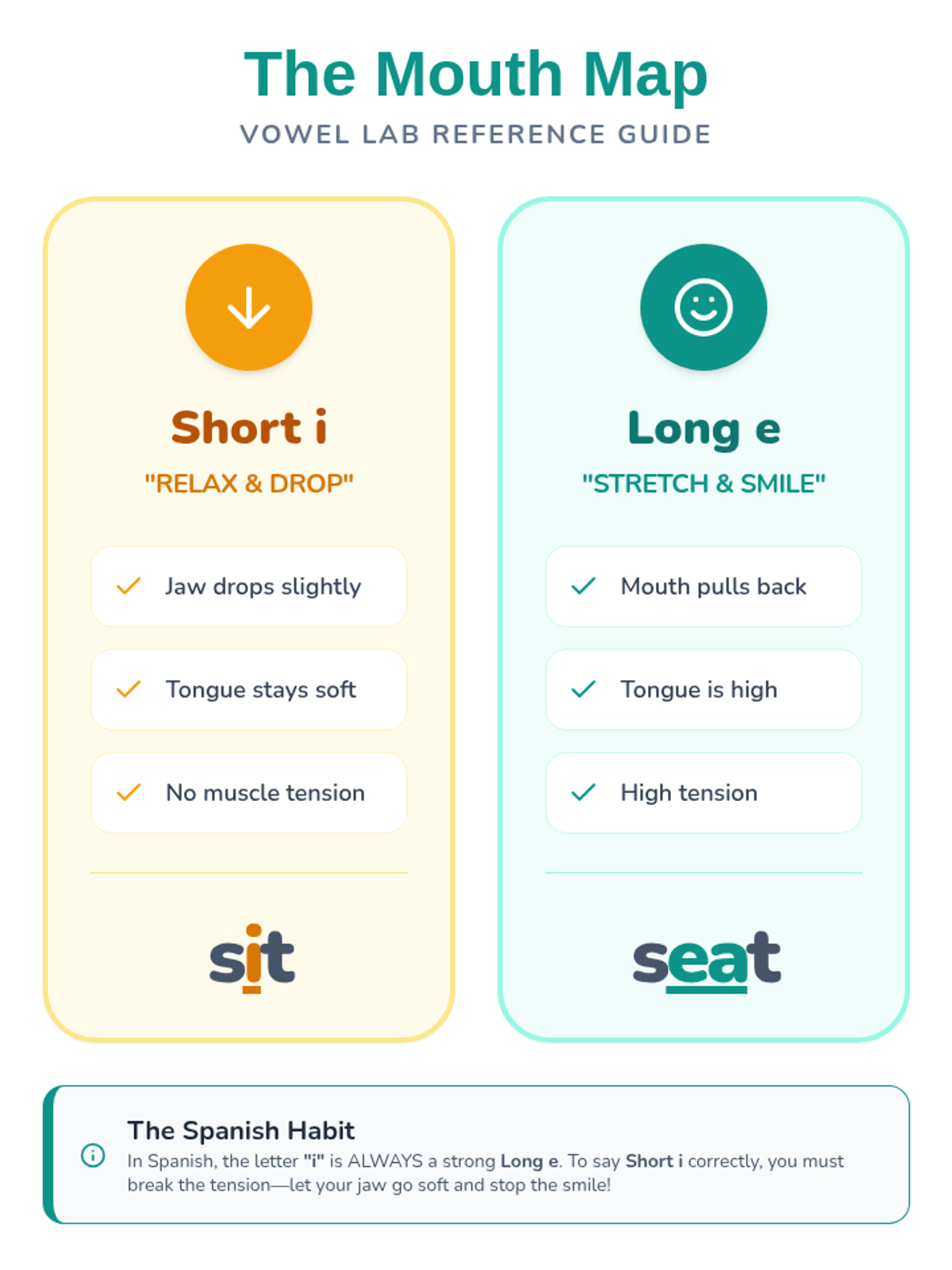
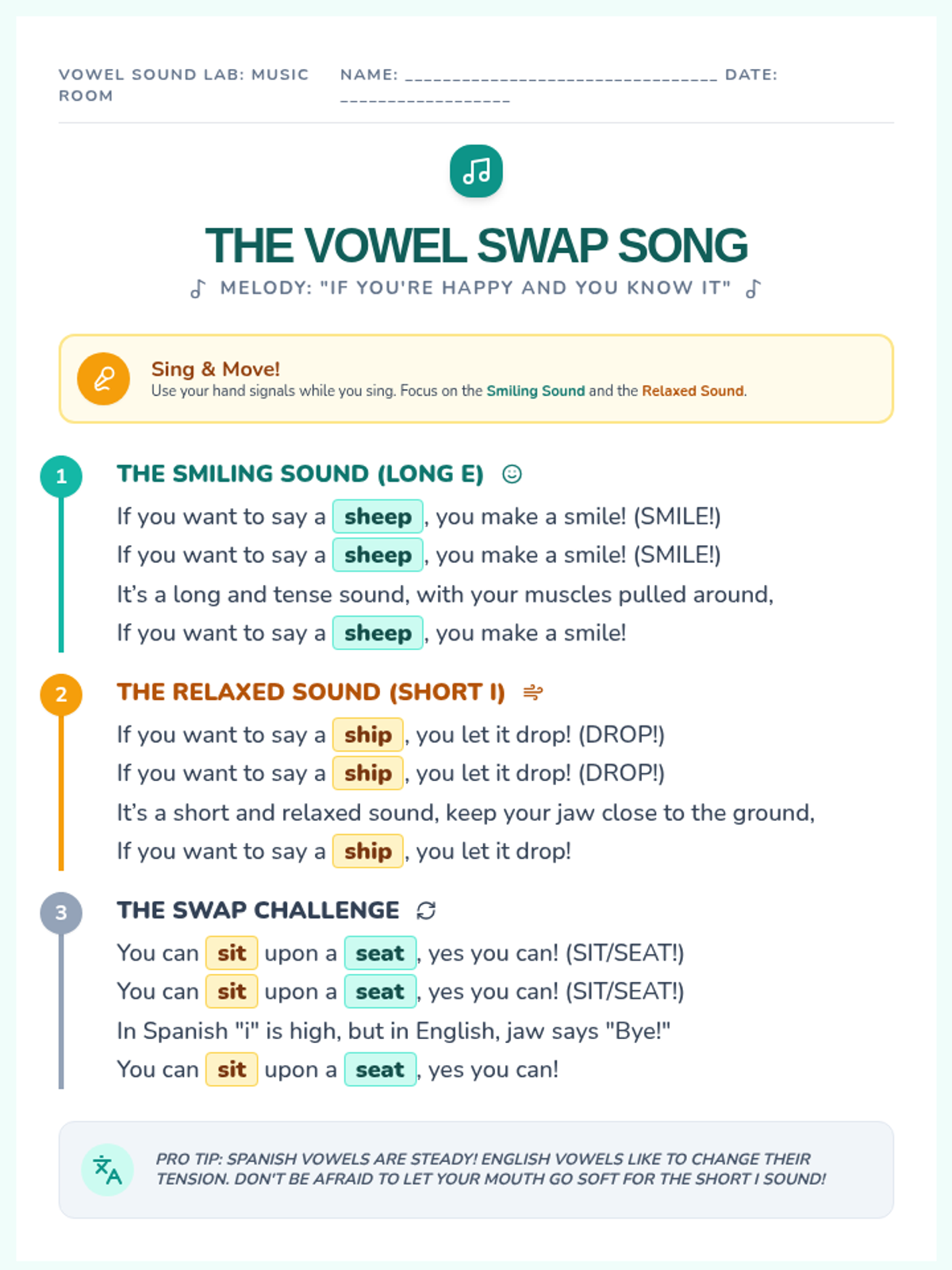
A comprehensive phonics lesson for bilingual students focusing on the specific vowel contrasts of Long E/Short I and Short A/Short E through multisensory, UDL-aligned activities.
A multisensory lesson focusing on the phonetic distinction between the English short /ɪ/ and long /i/ sounds, specifically designed for students bridging from Spanish.
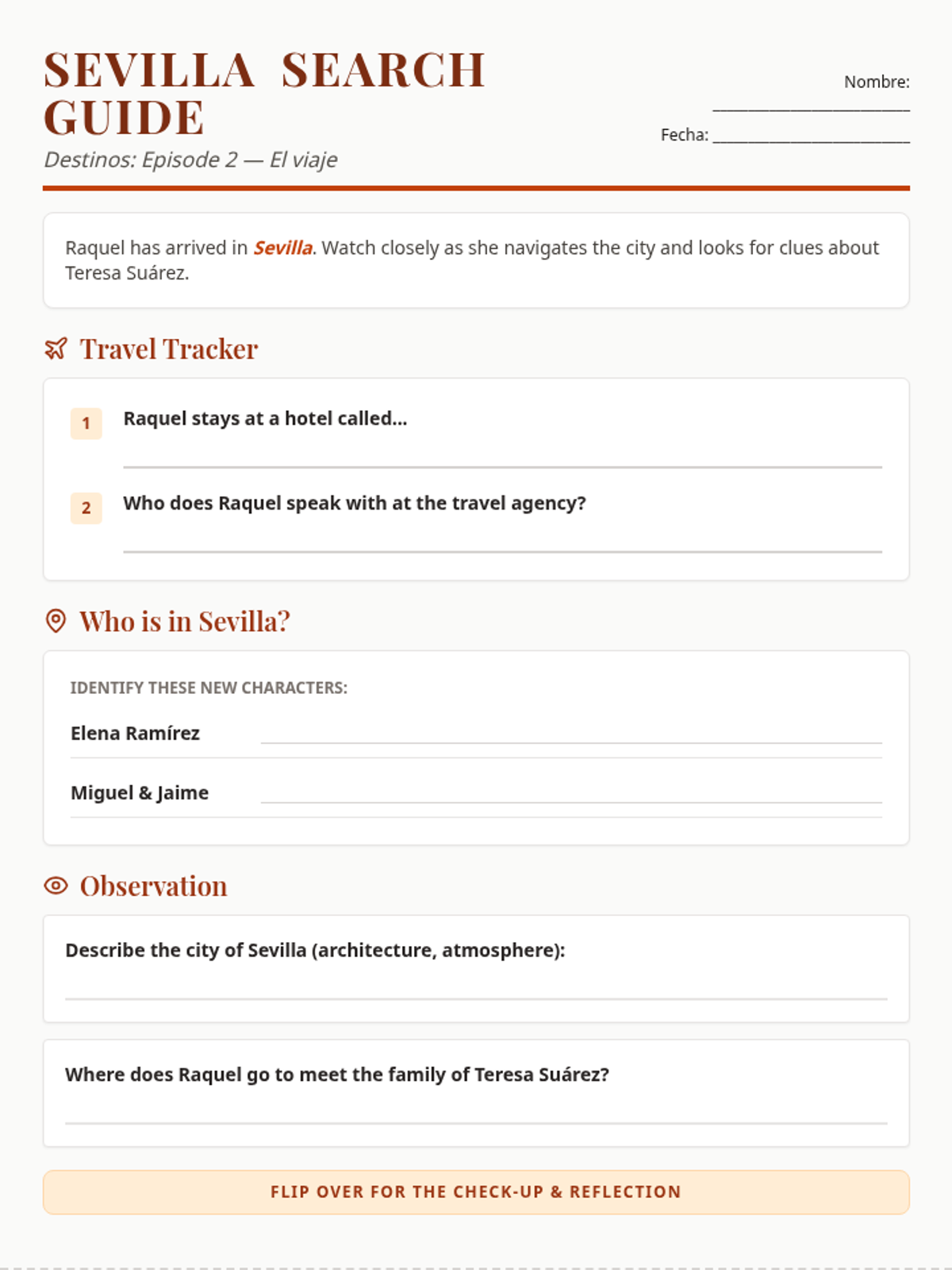
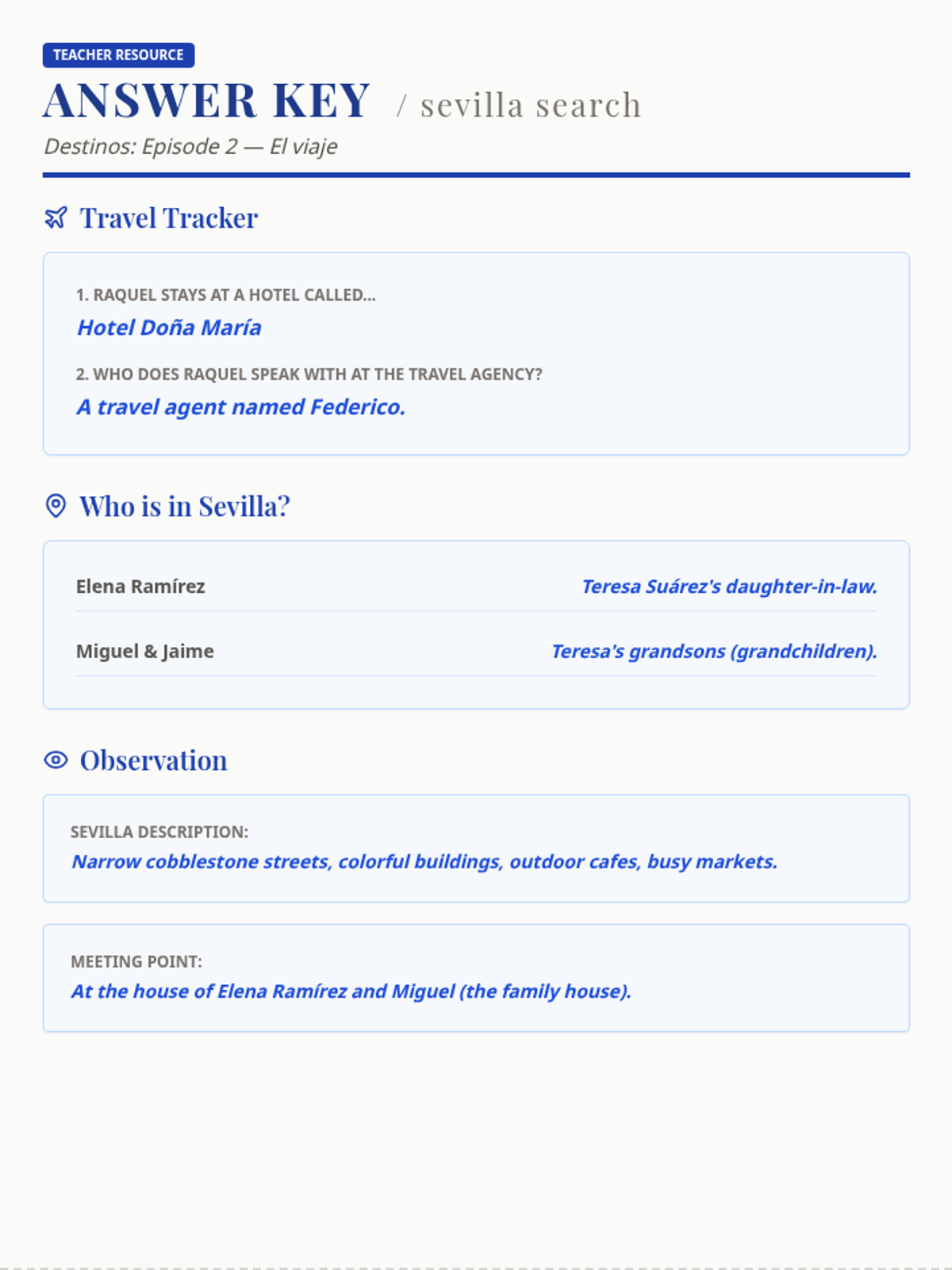
Raquel travels to Sevilla, Spain, to find Teresa Suárez. Students follow her arrival and introduction to the city and the family she meets at the travel agency and hotel.
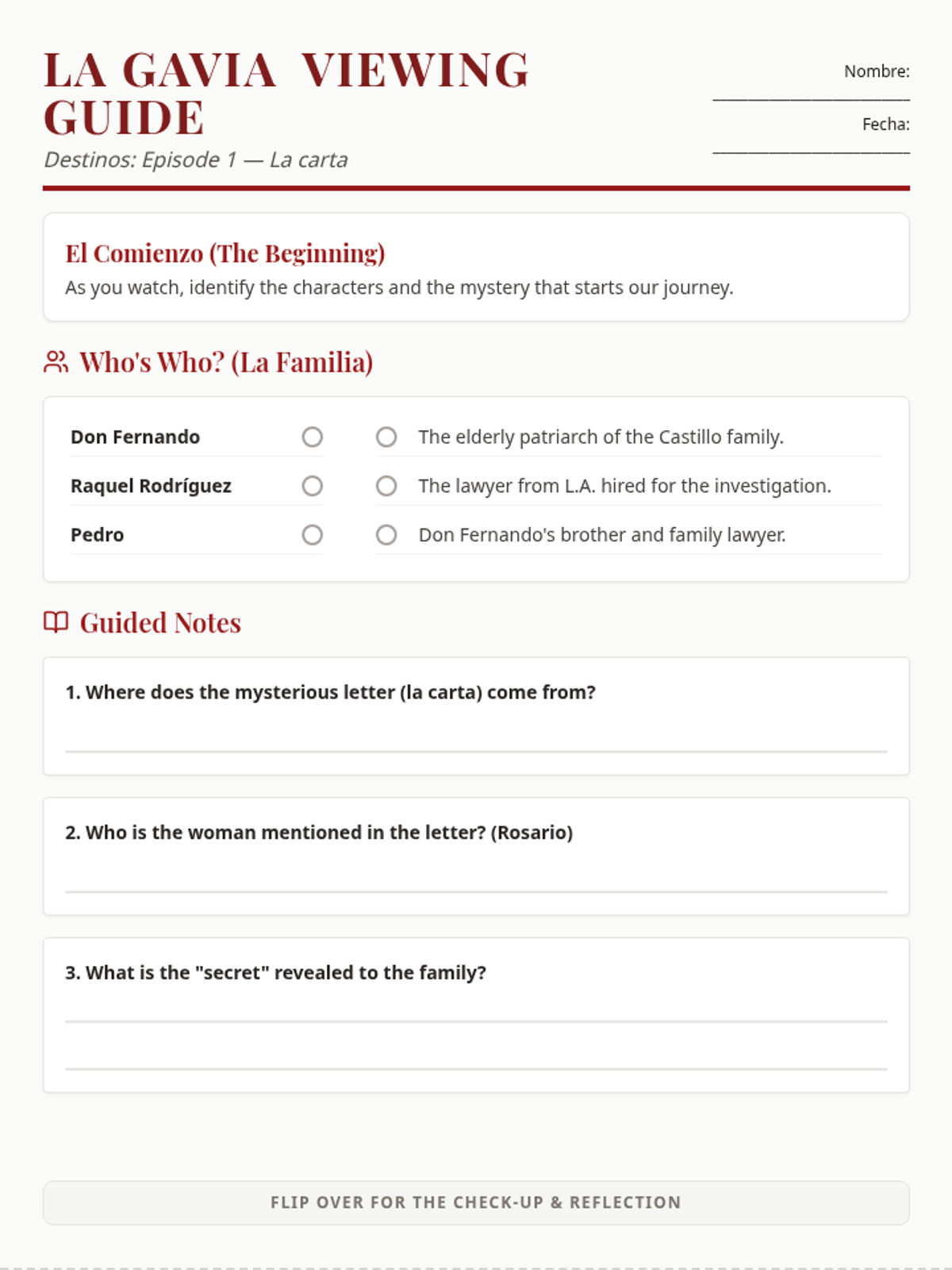
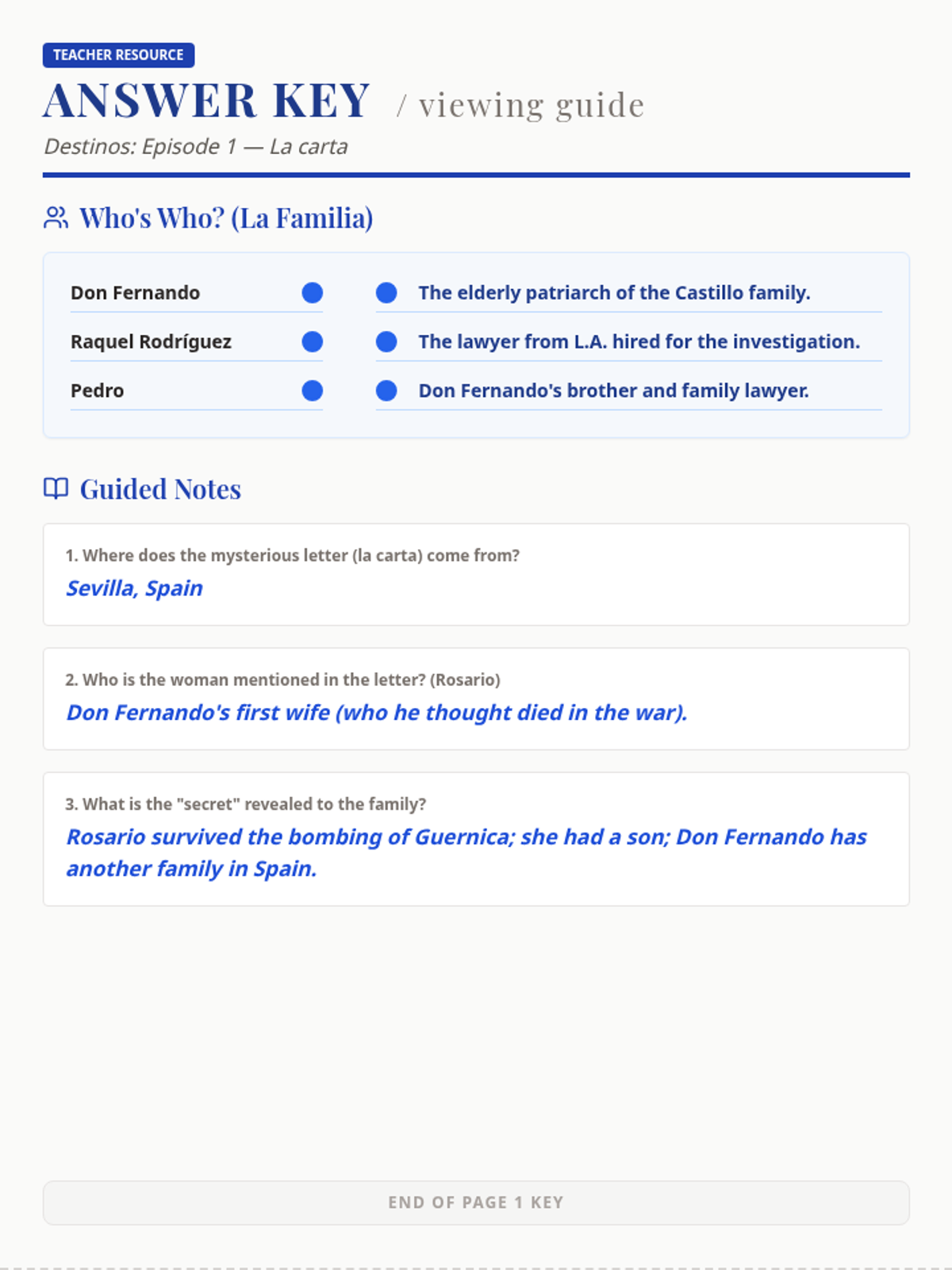
An introduction to the mystery of Destinos Episode 1. Students track the Castillo family and the mysterious letter from Spain through guided observation and character identification.
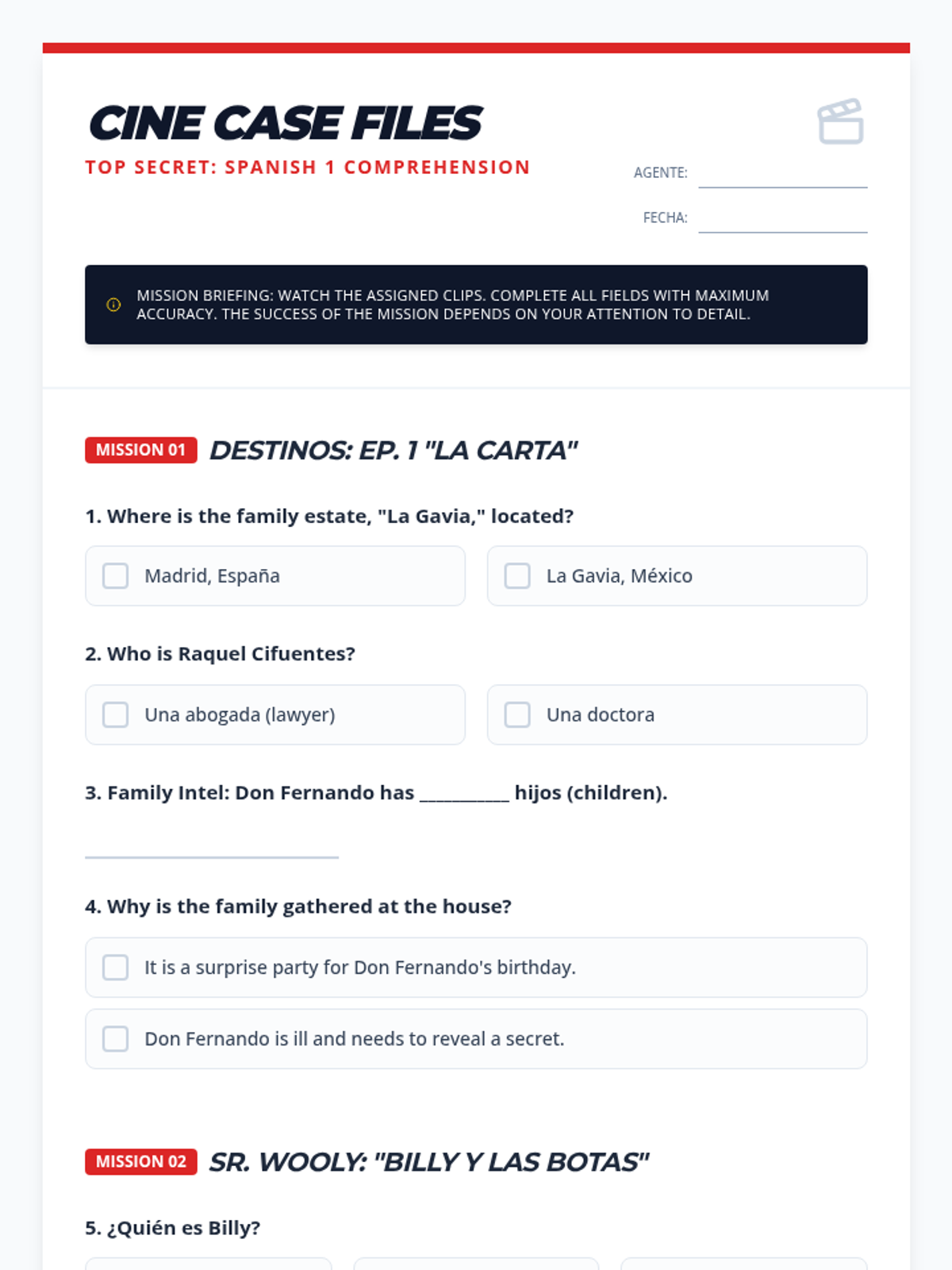
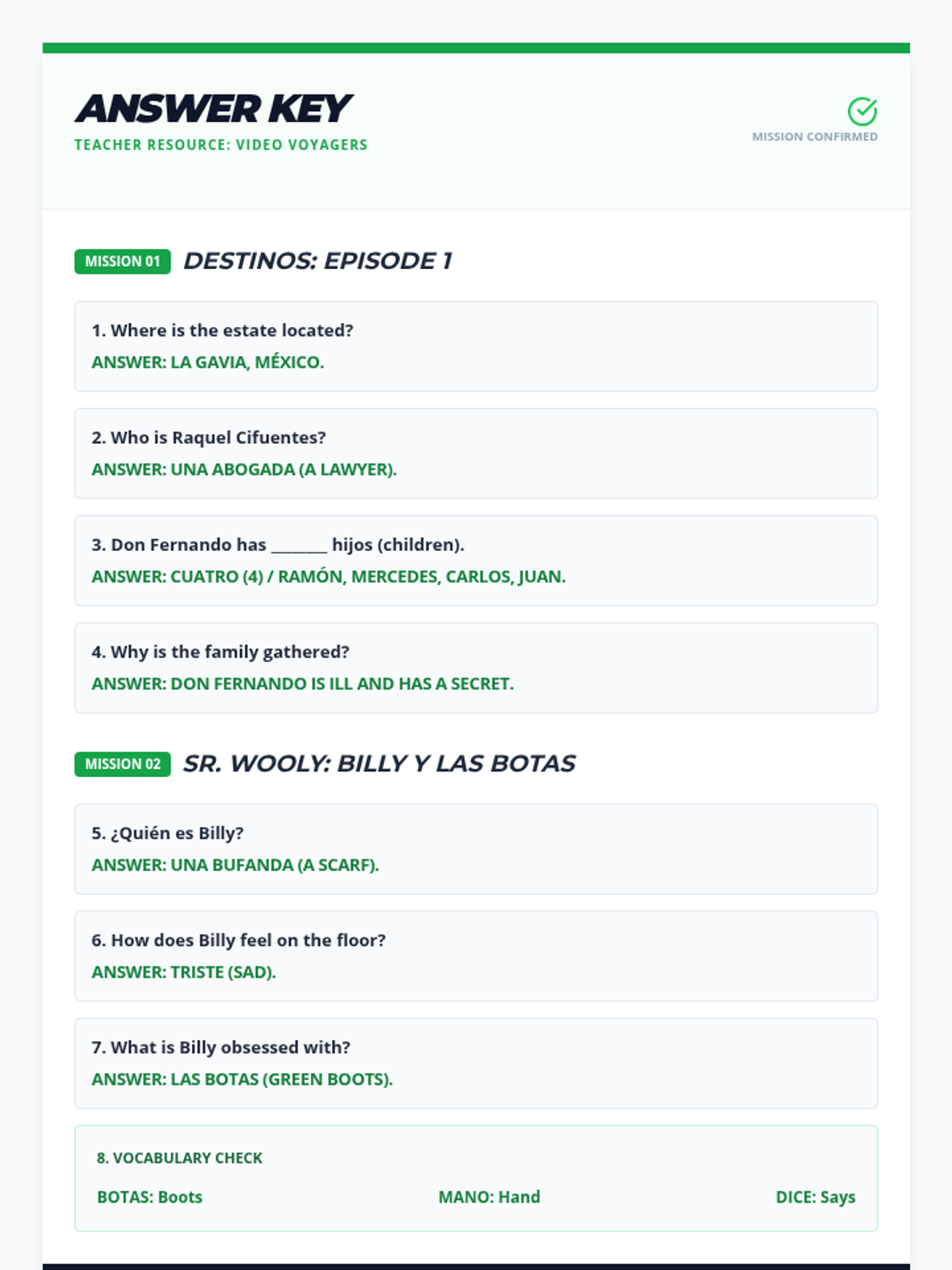
A beginner-friendly Spanish lesson centered on visual comprehension using the classic 'Destinos' series and the catchy 'Sr. Wooly' music videos. Students practice identifying basic vocabulary and plot points while viewing.
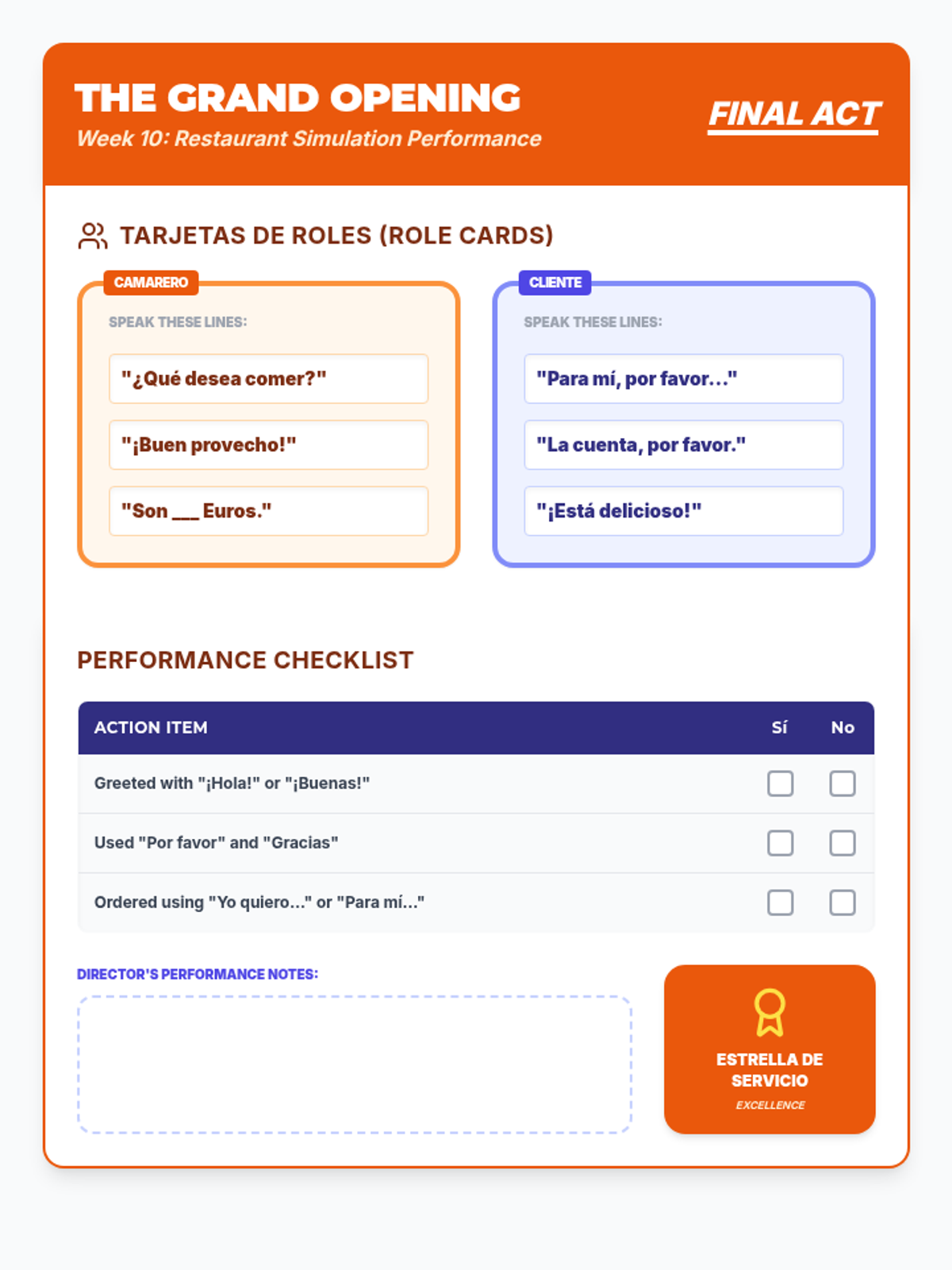
The final restaurant simulation where students act as servers and customers.
Mastering courtesy expressions and ordering food in a cafe setting.
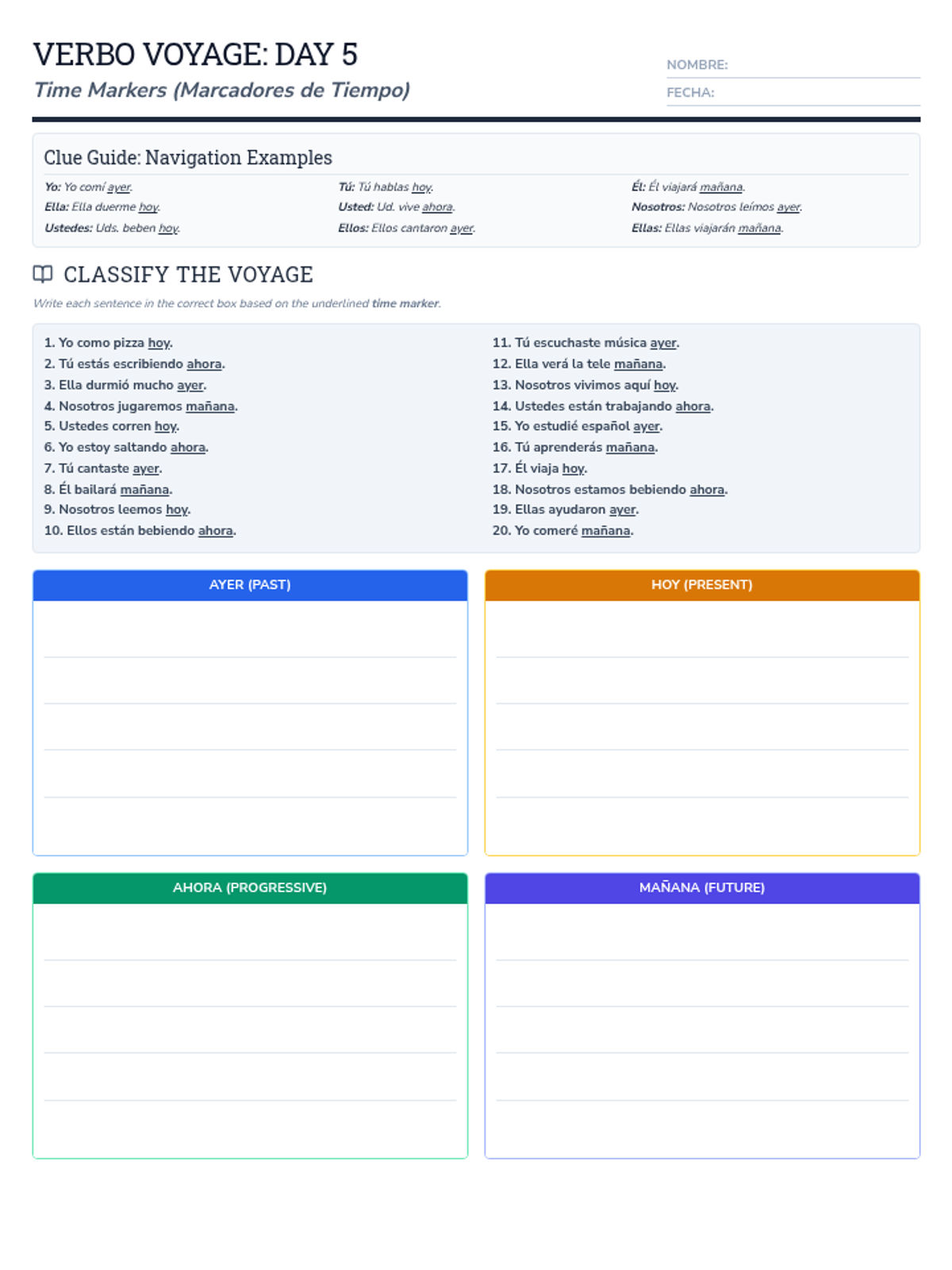
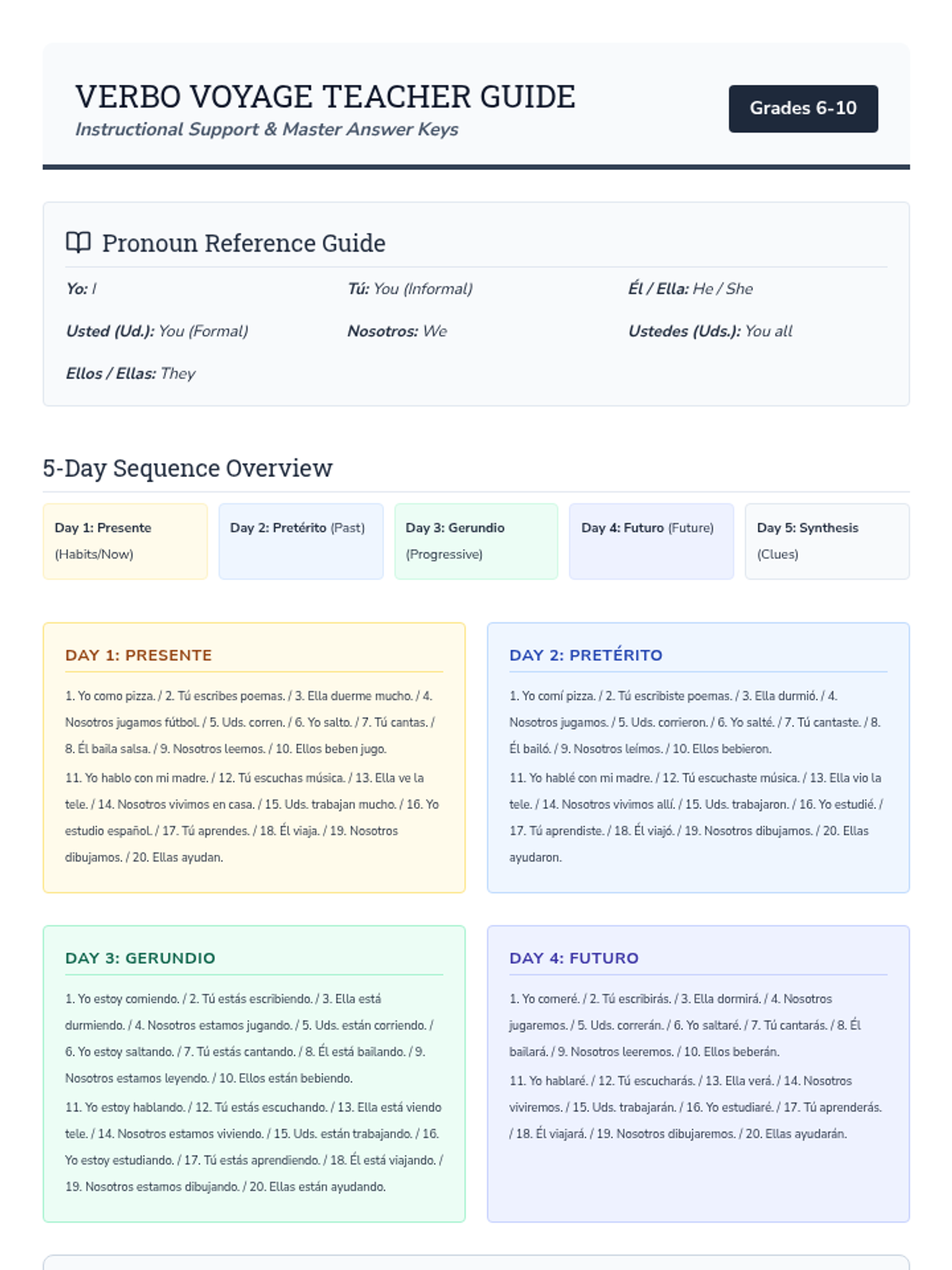
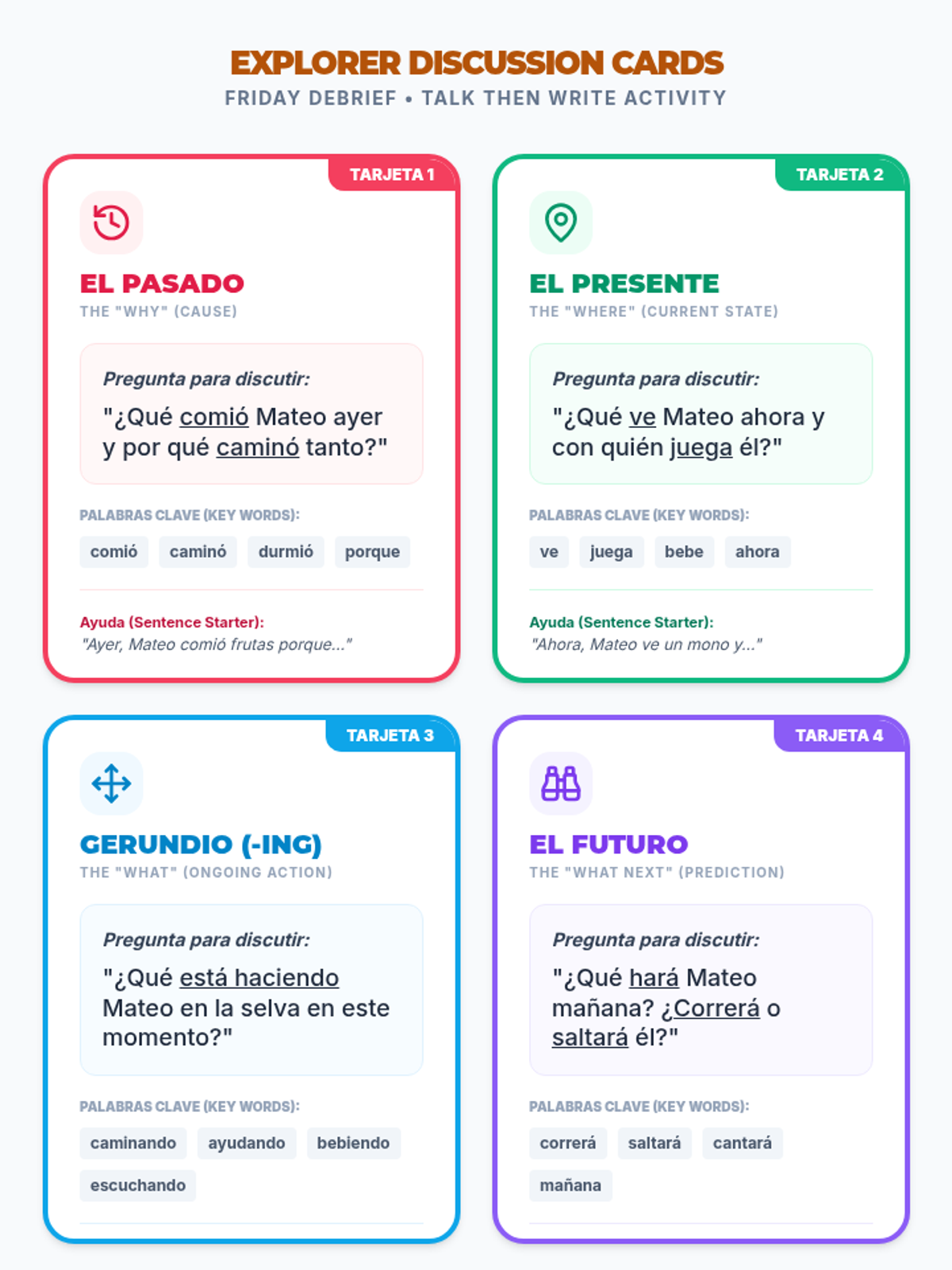
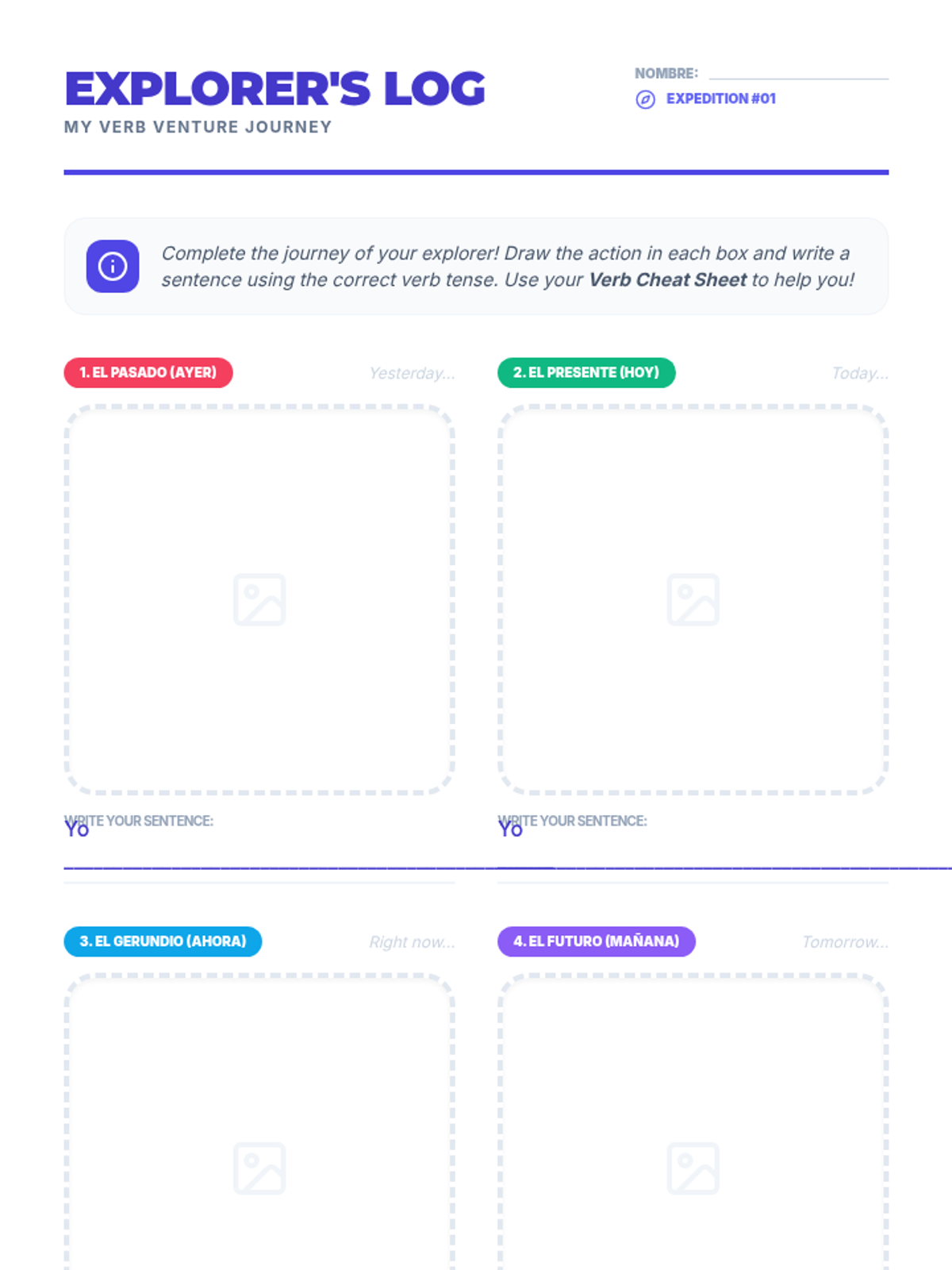
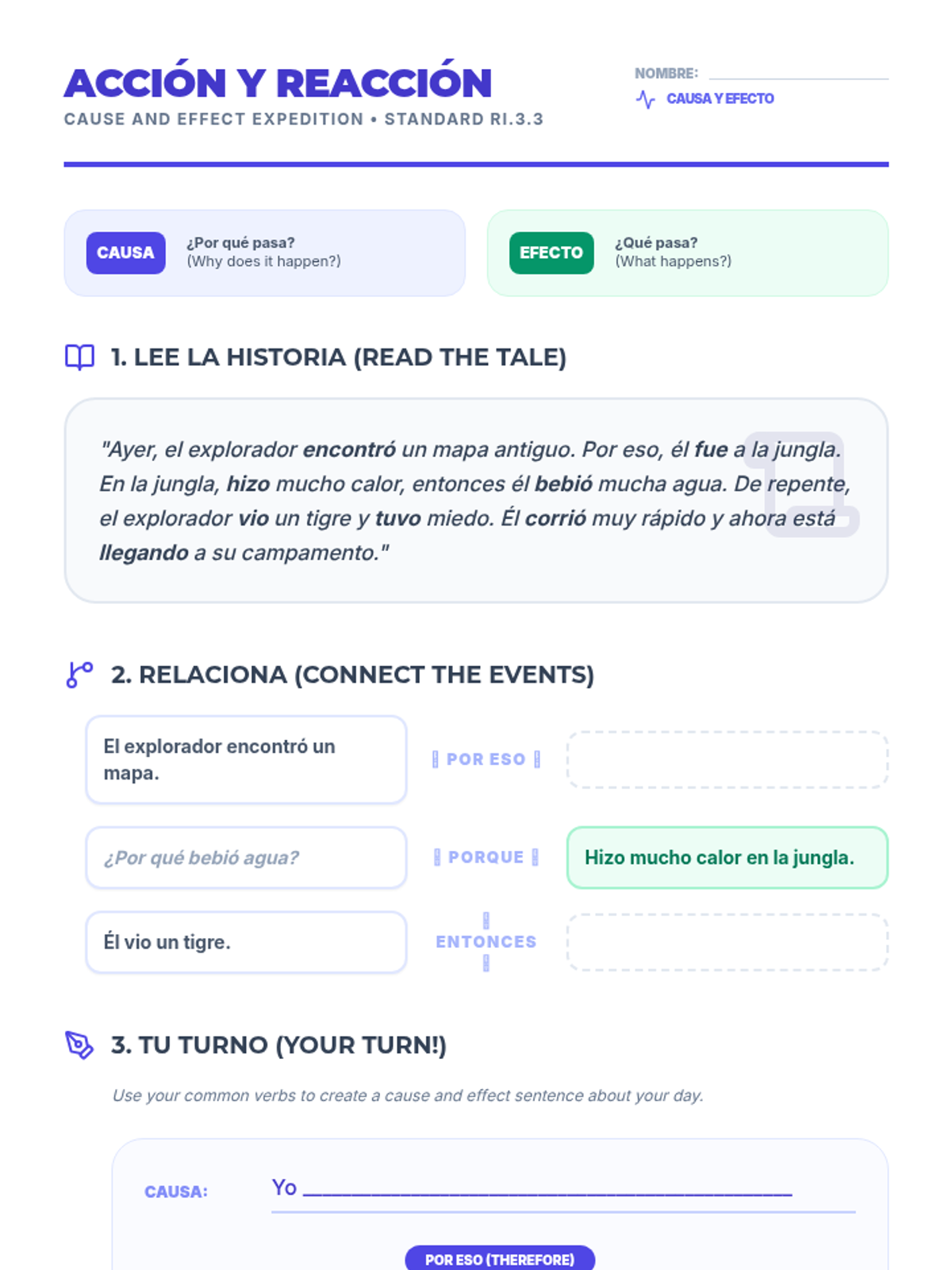
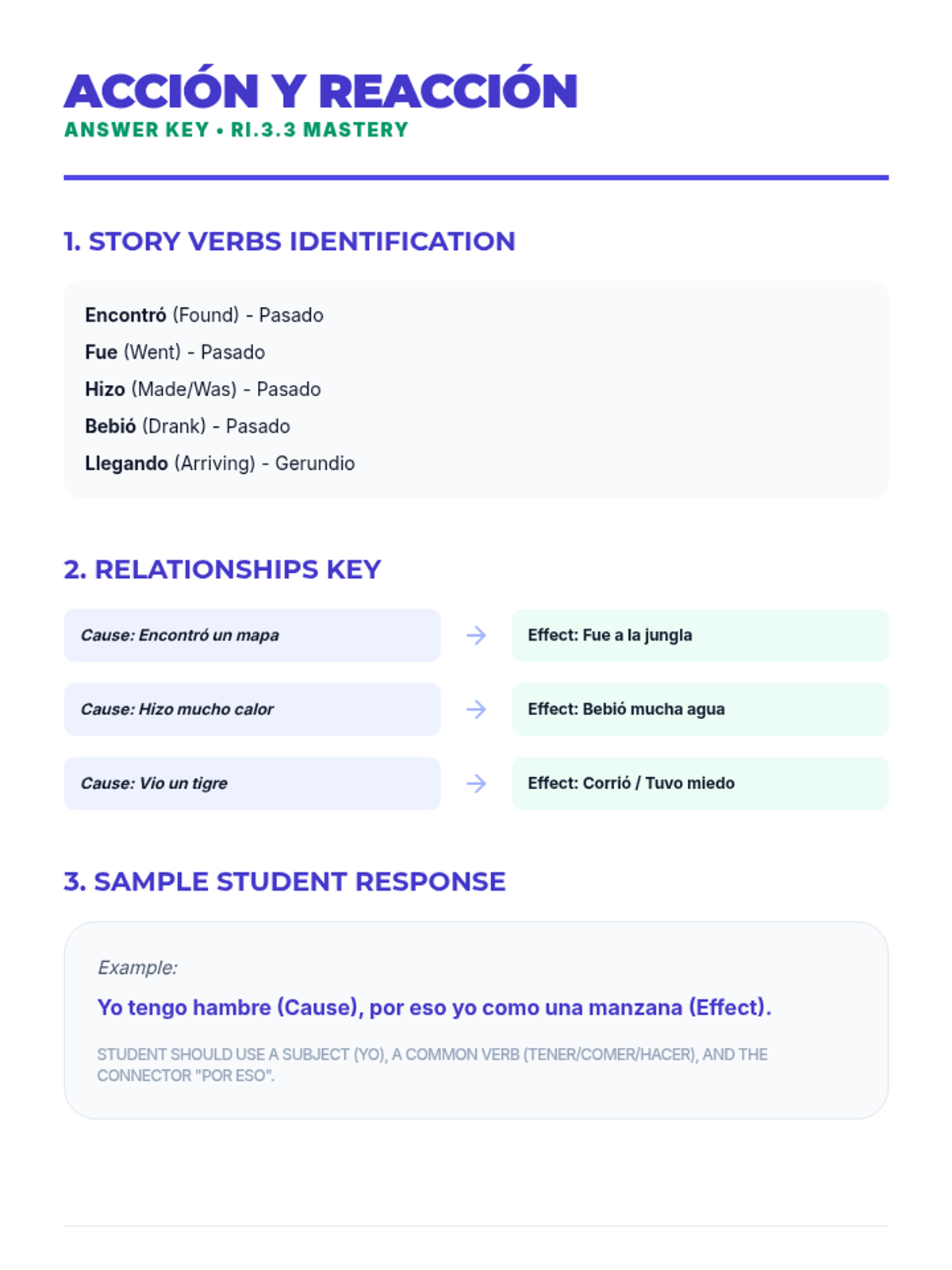
Synthesizes the week's learning by having students classify simple sentences based on time markers like 'hoy', 'ayer', 'mañana', and 'ahora'.
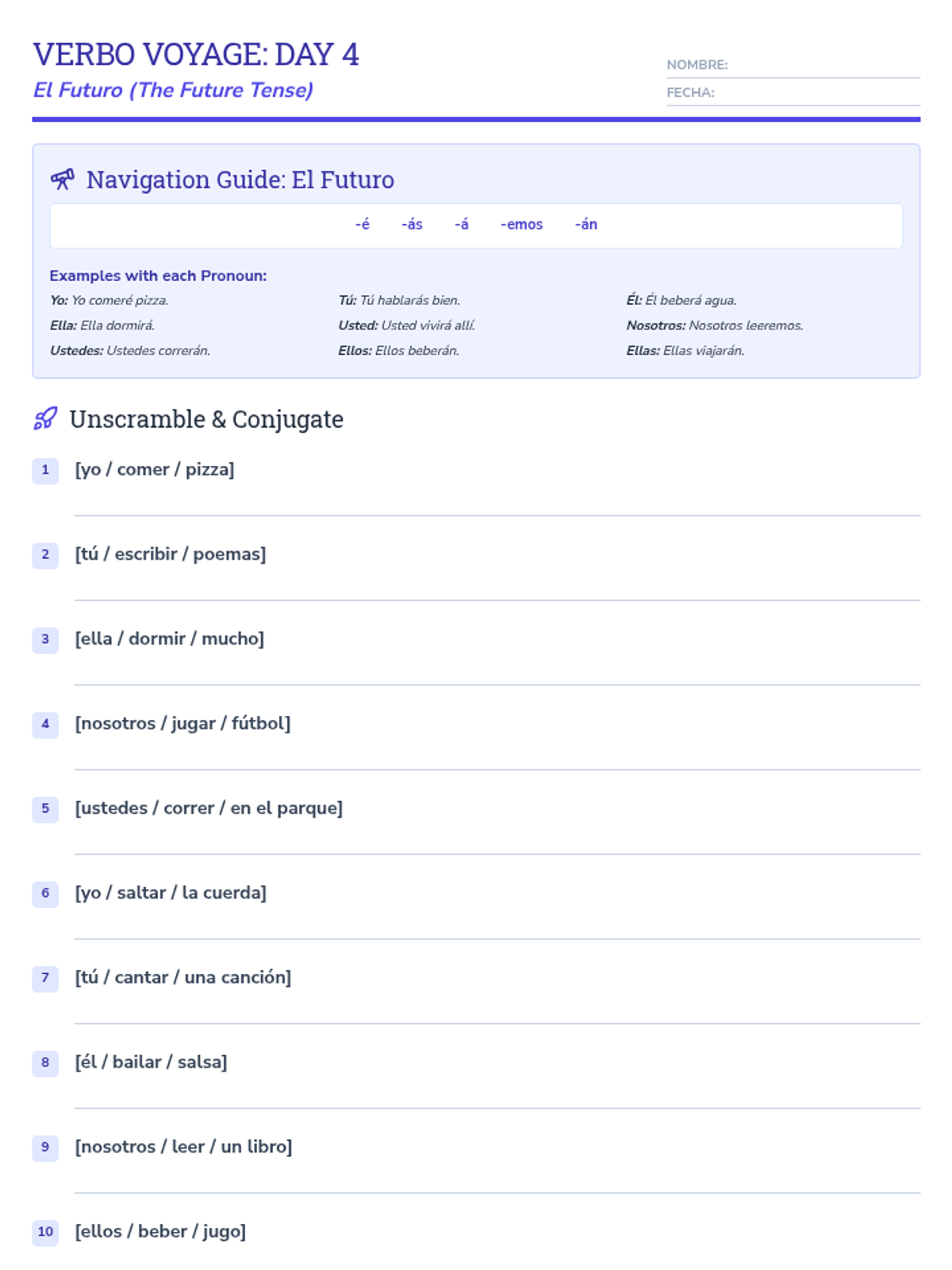
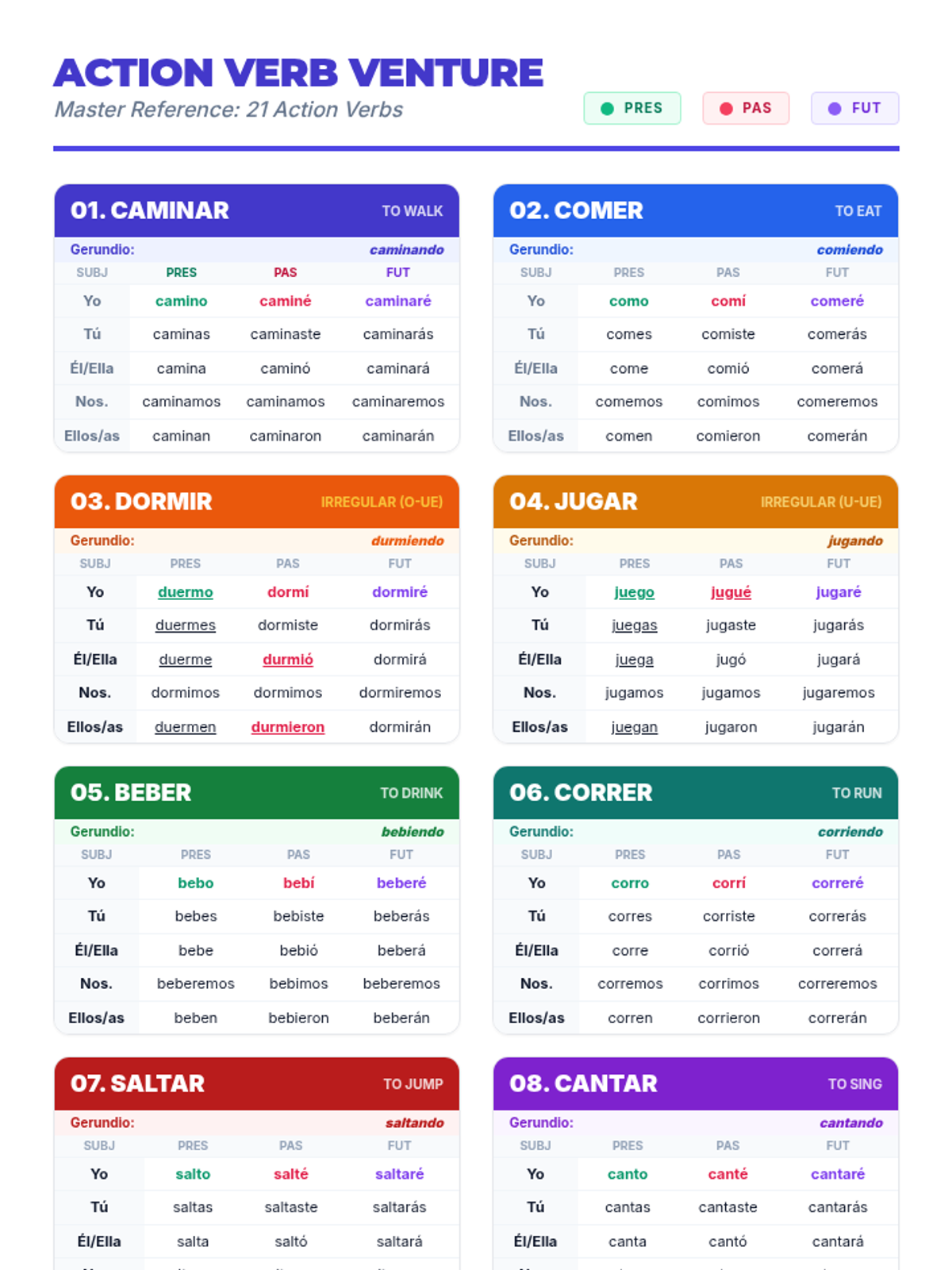
Explores the Future tense (Futuro) in Spanish, teaching students how to talk about upcoming events using 20 common verbs.
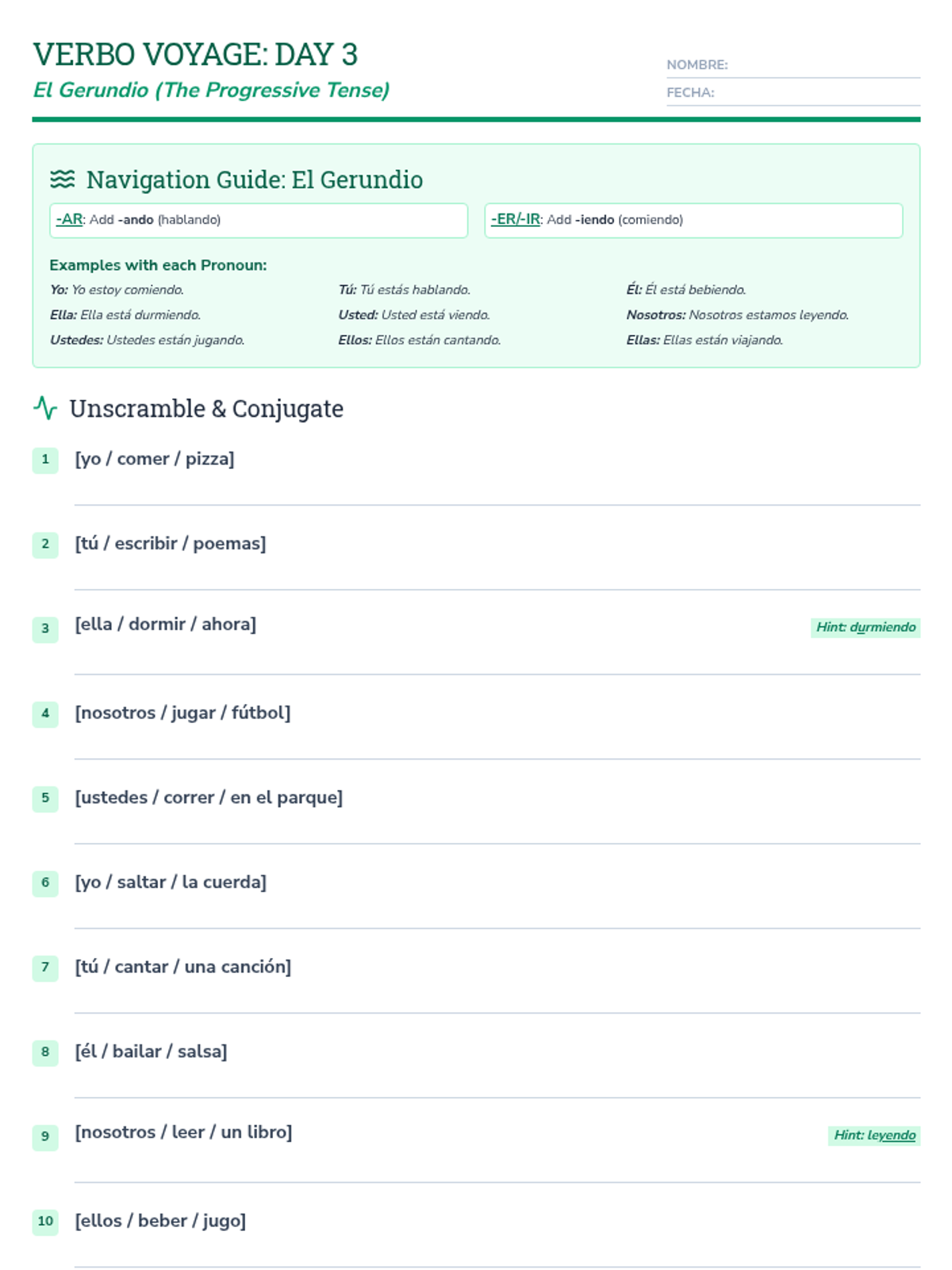
Introduces the Gerund (Gerundio) for ongoing actions, teaching the 'estar + -ndo' structure with intensive practice across all subject pronouns.
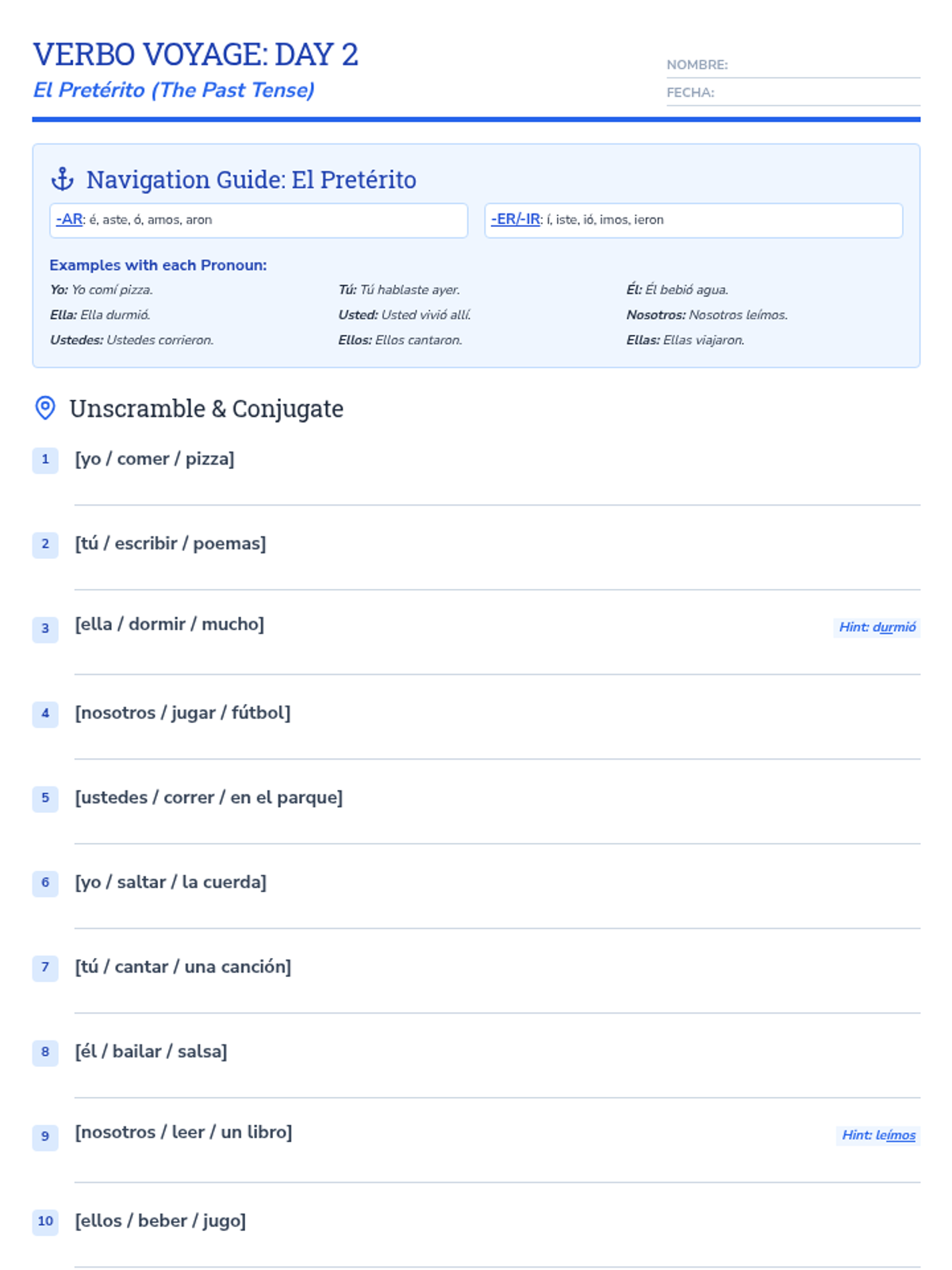
Covers the Preterite tense (Pretérito) for past actions, including an explanation of endings and a 20-sentence unscrambling activity using common verbs.
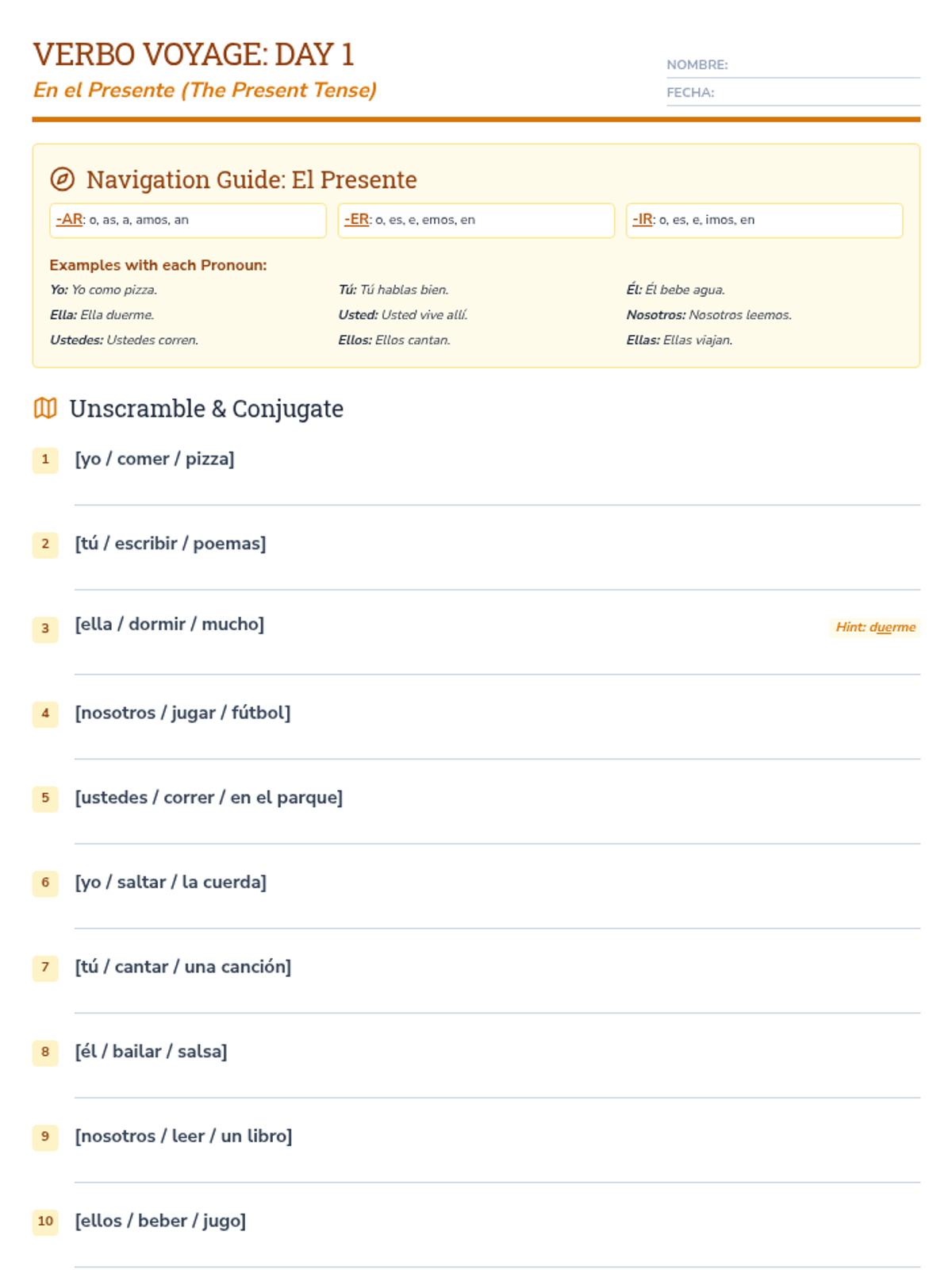
Focuses on the Present tense (Presente) in Spanish, introducing regular verb endings and practice unscrambling sentences with 20 common verbs and all subject pronouns.
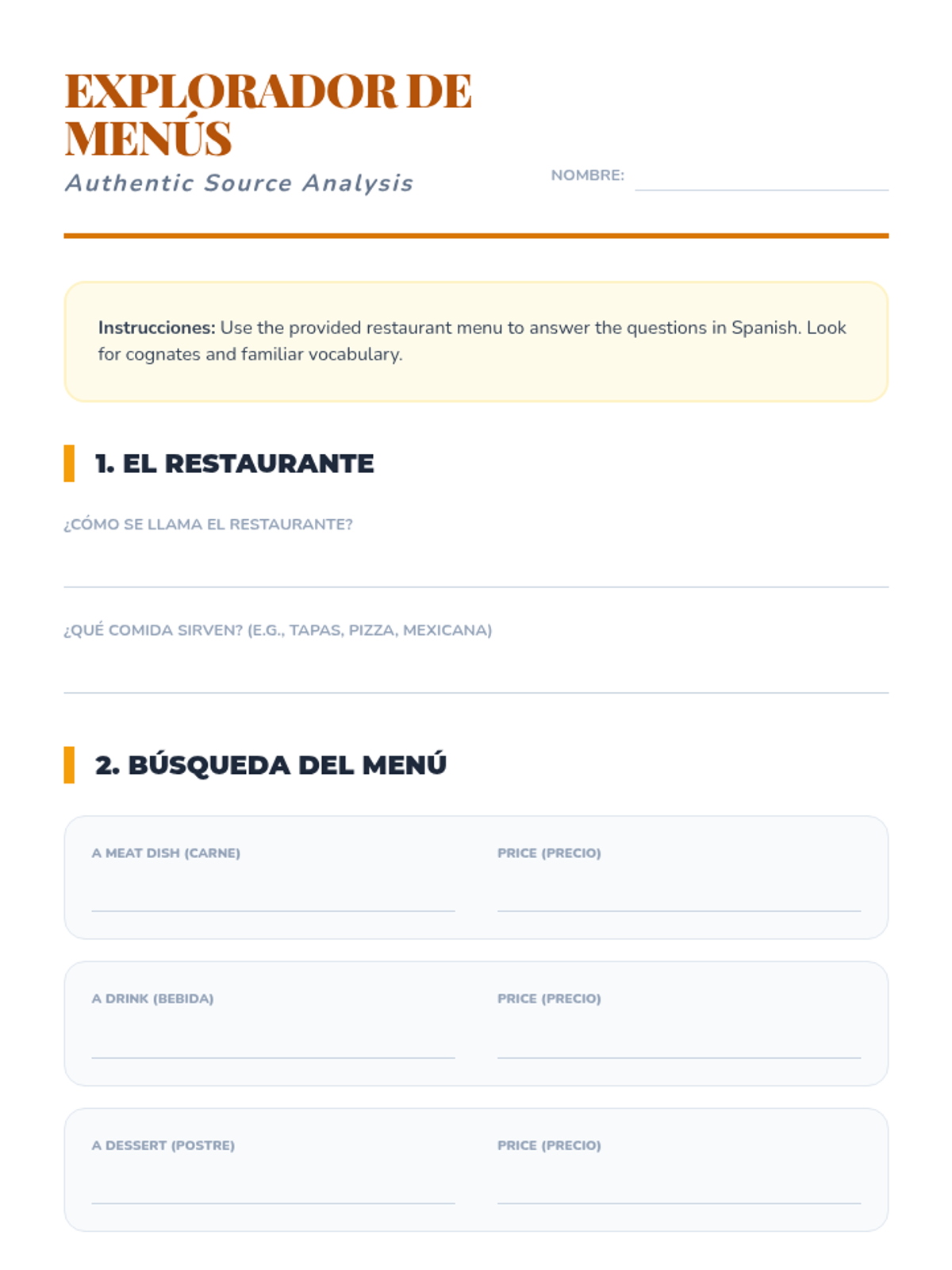
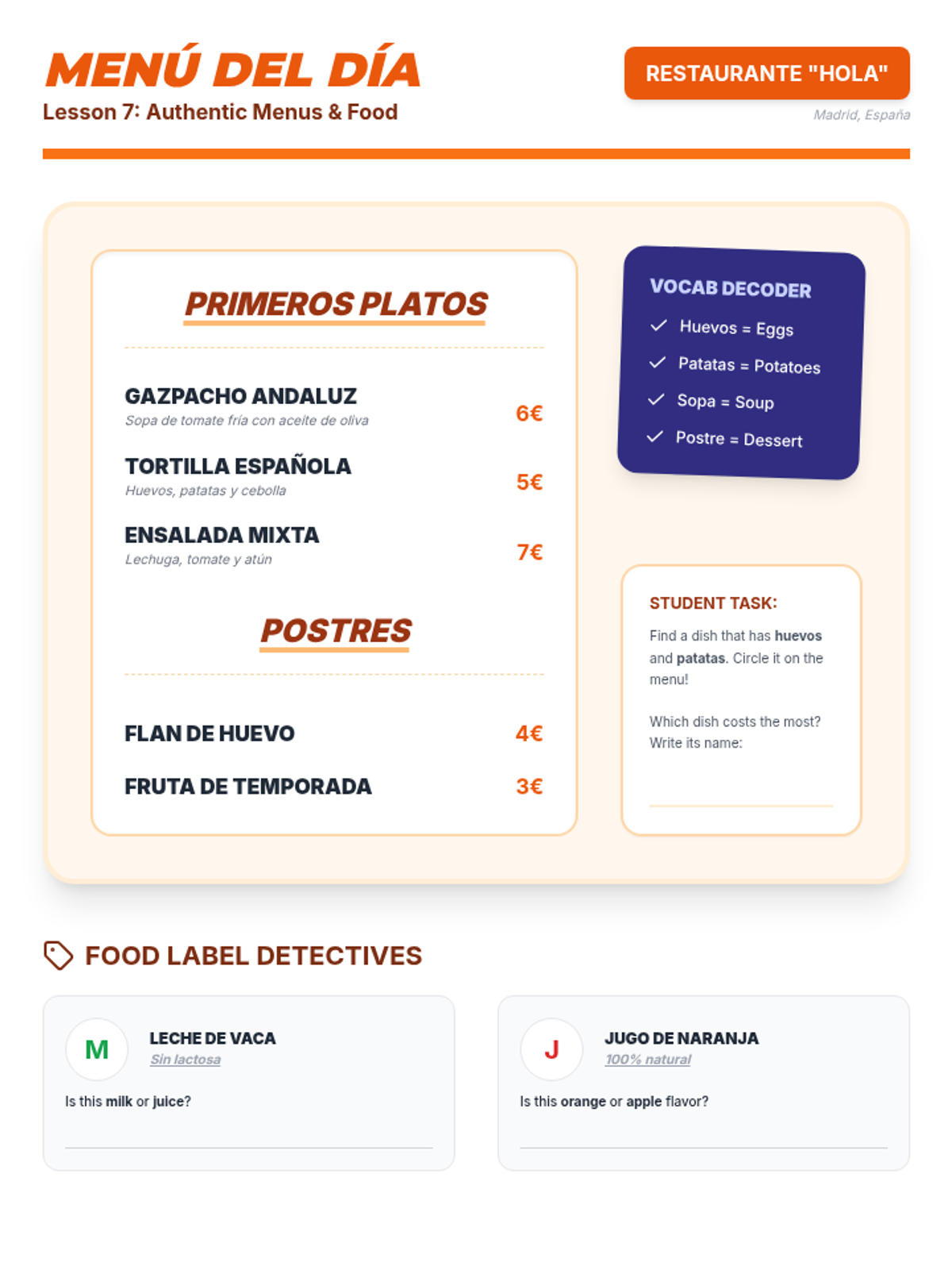
Exploring food labels and authentic menus to prepare for the restaurant project.
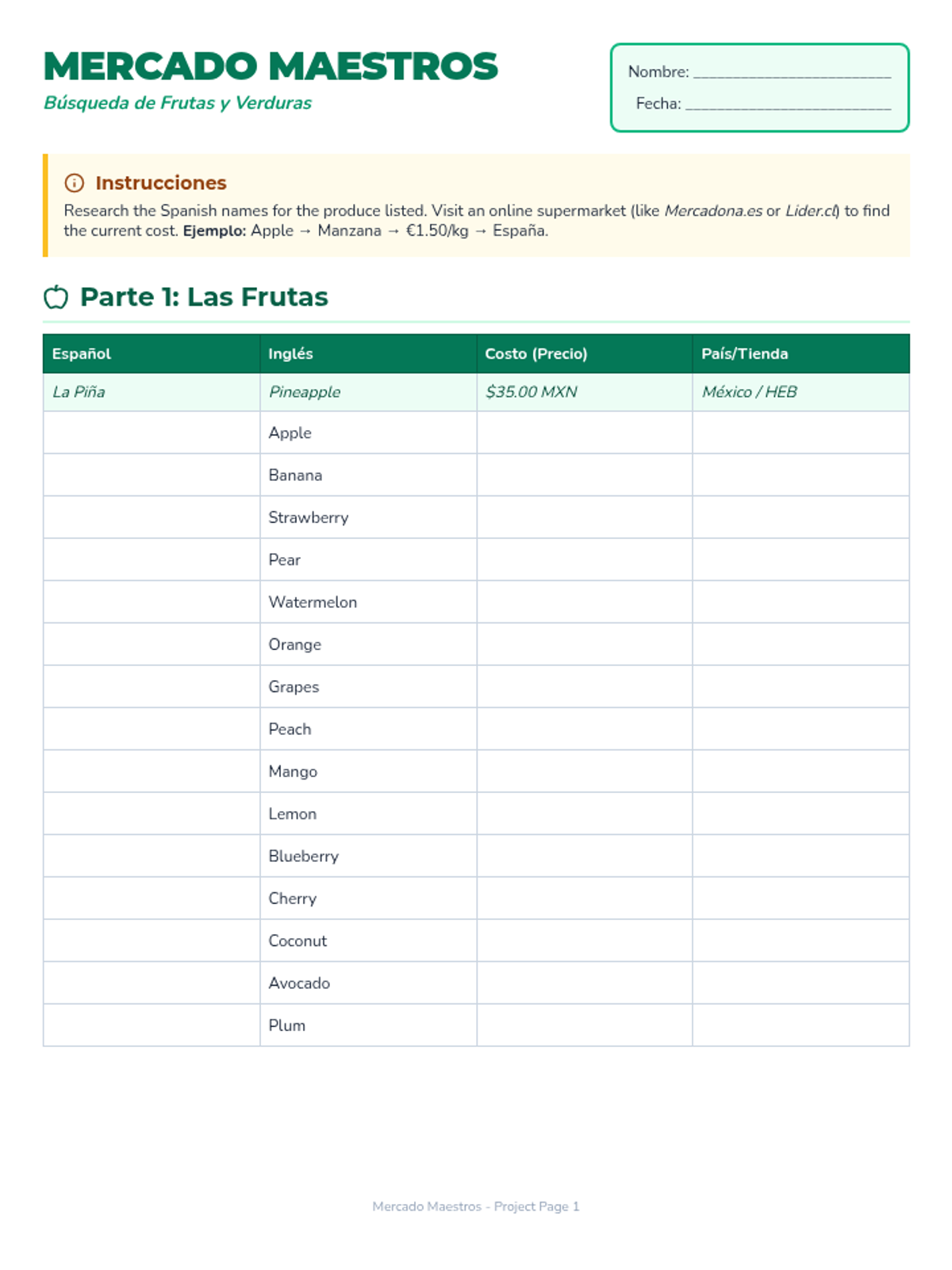
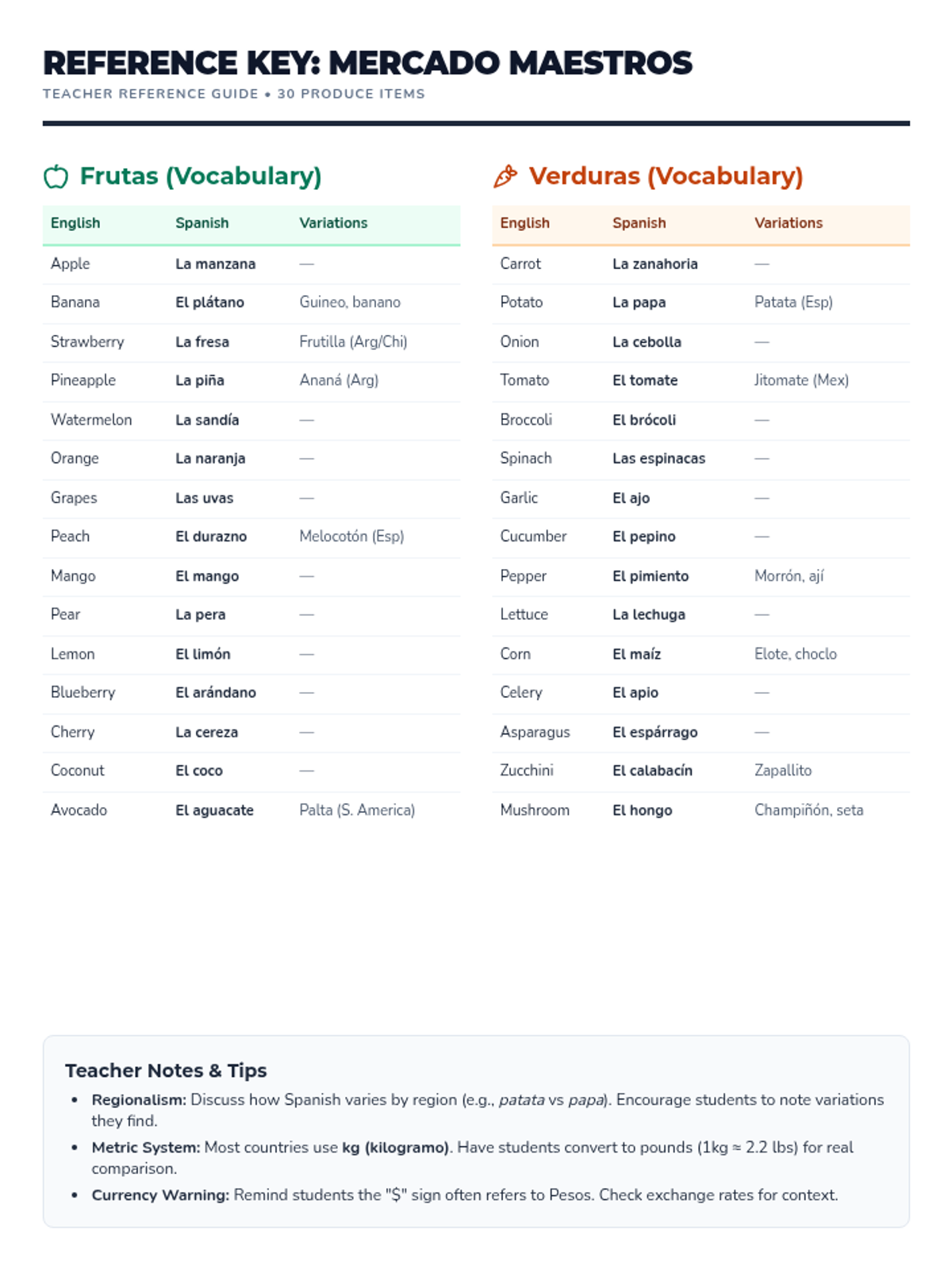
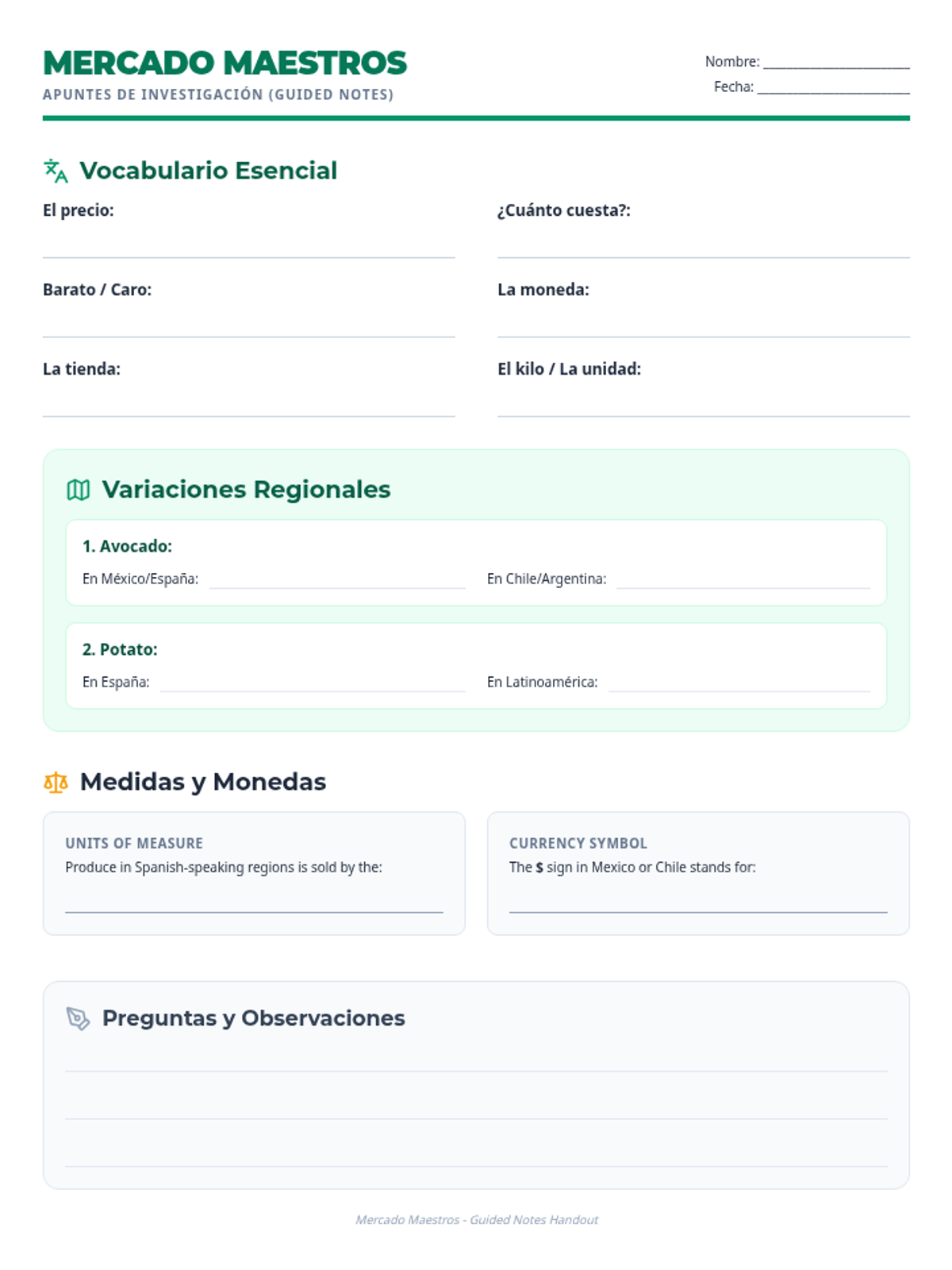
A research-based project where students explore Spanish vocabulary for produce and investigate real-world pricing from Spanish-speaking regions.
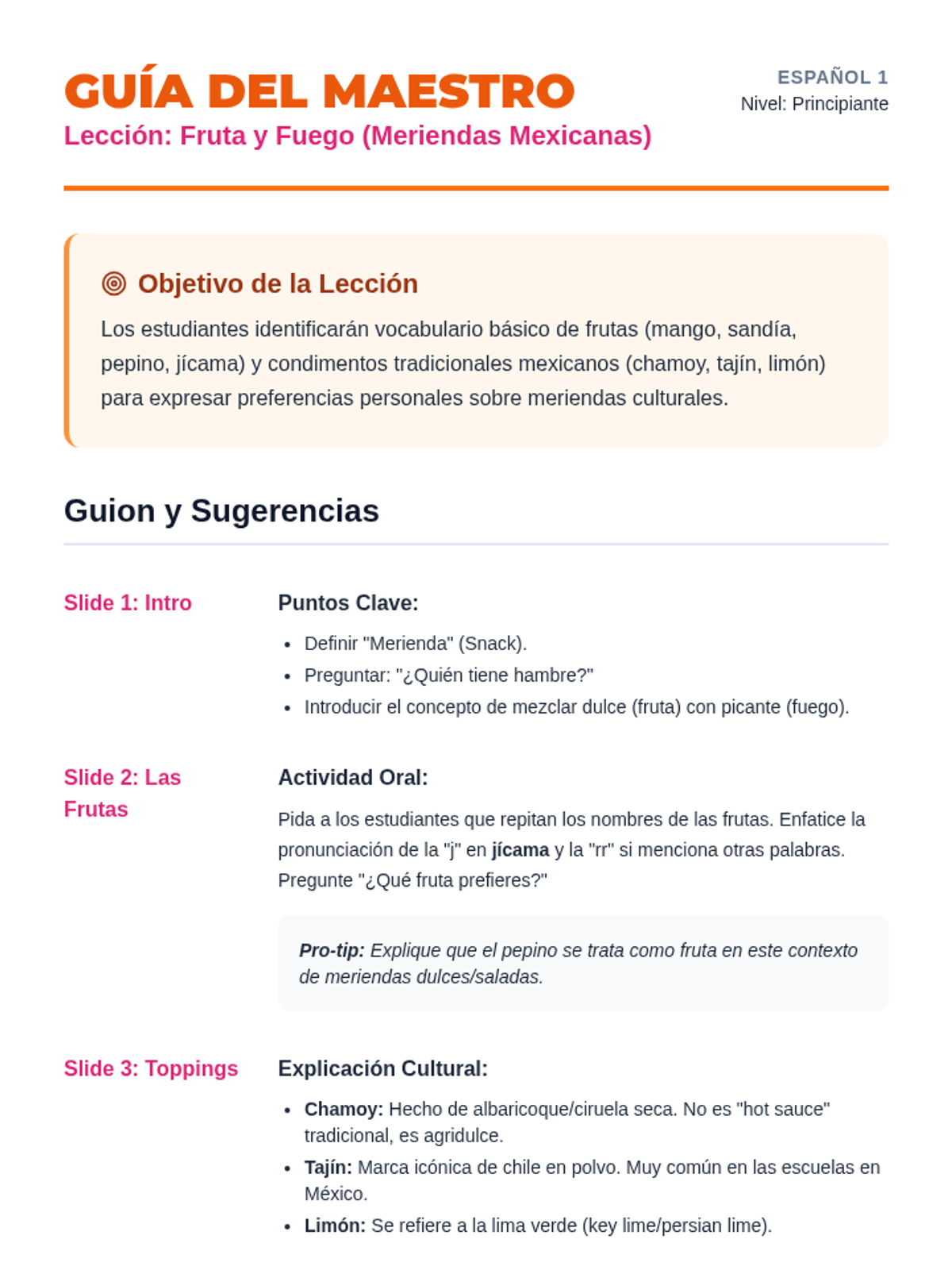
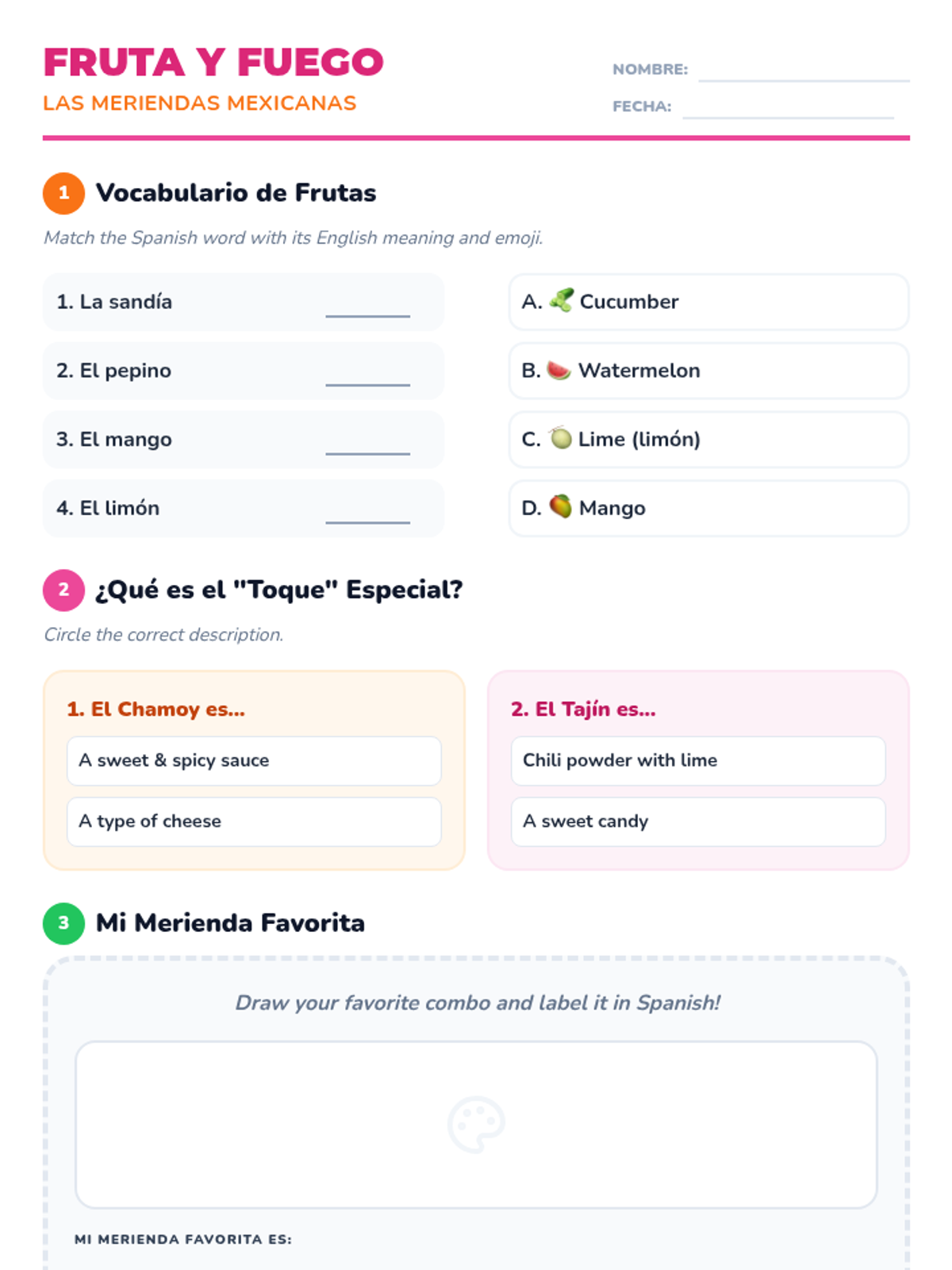
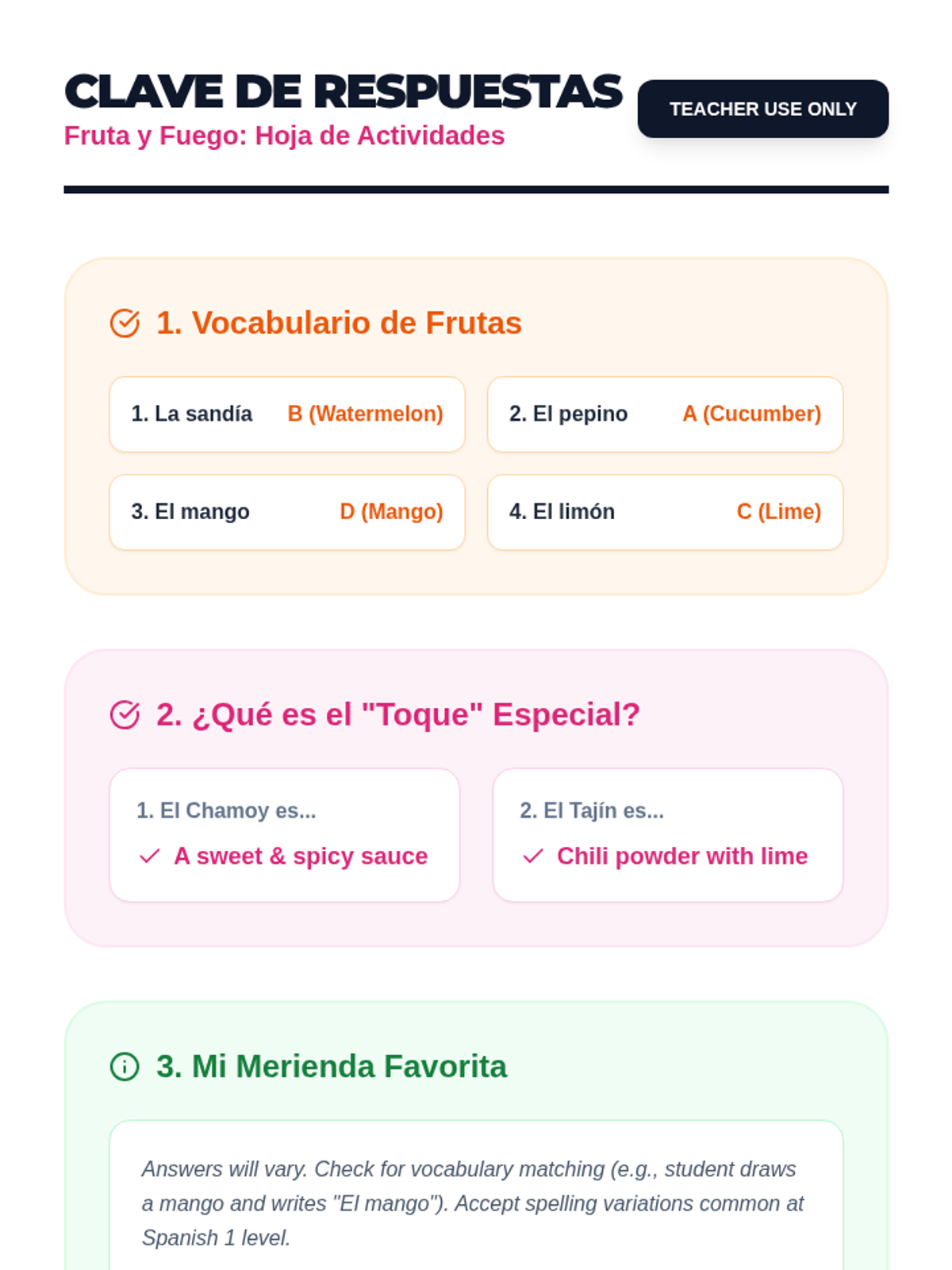
A beginner Spanish lesson exploring traditional Mexican fruit snacks, focusing on common fruit vocabulary and popular toppings like chamoy and tajín.
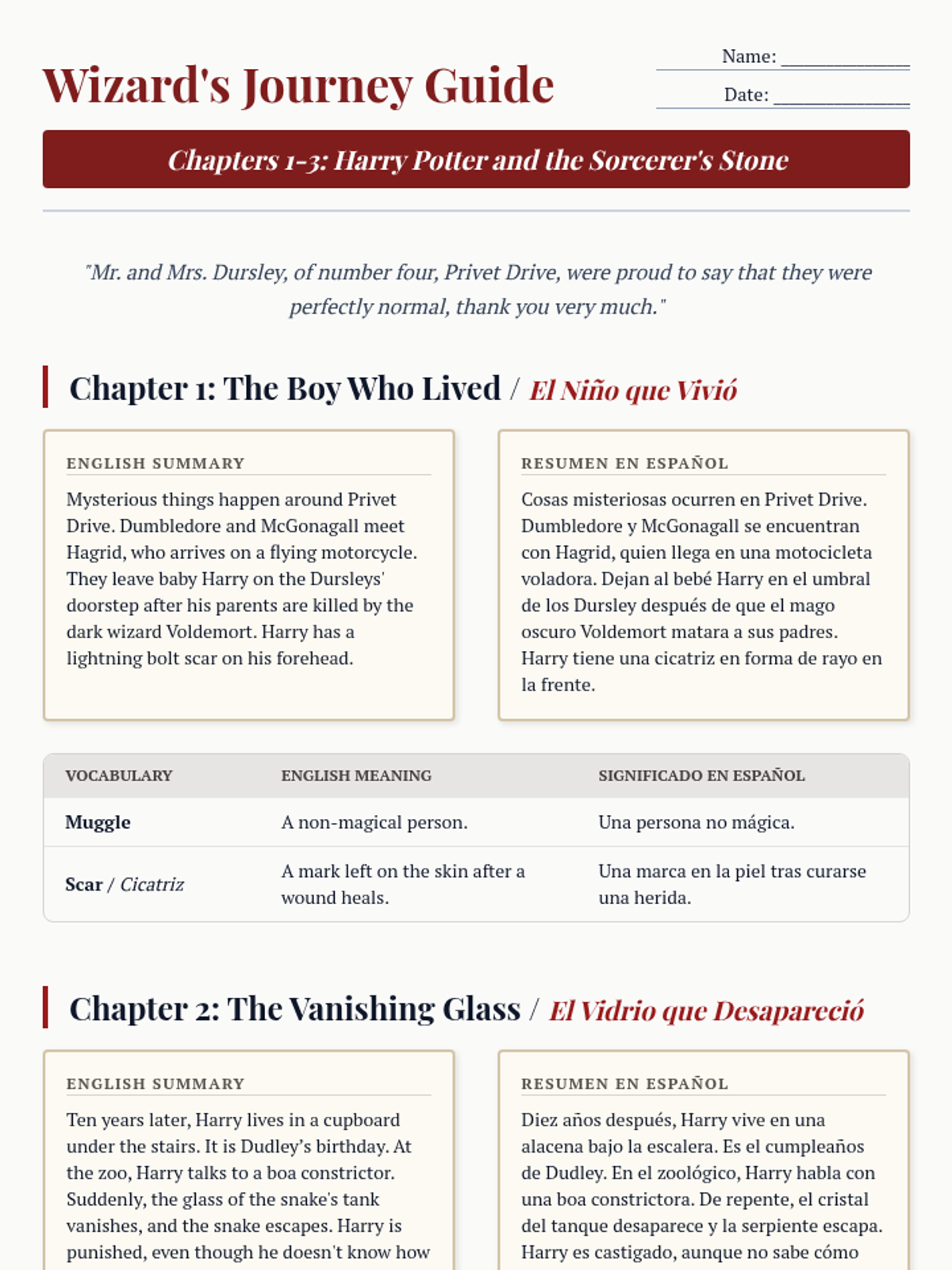
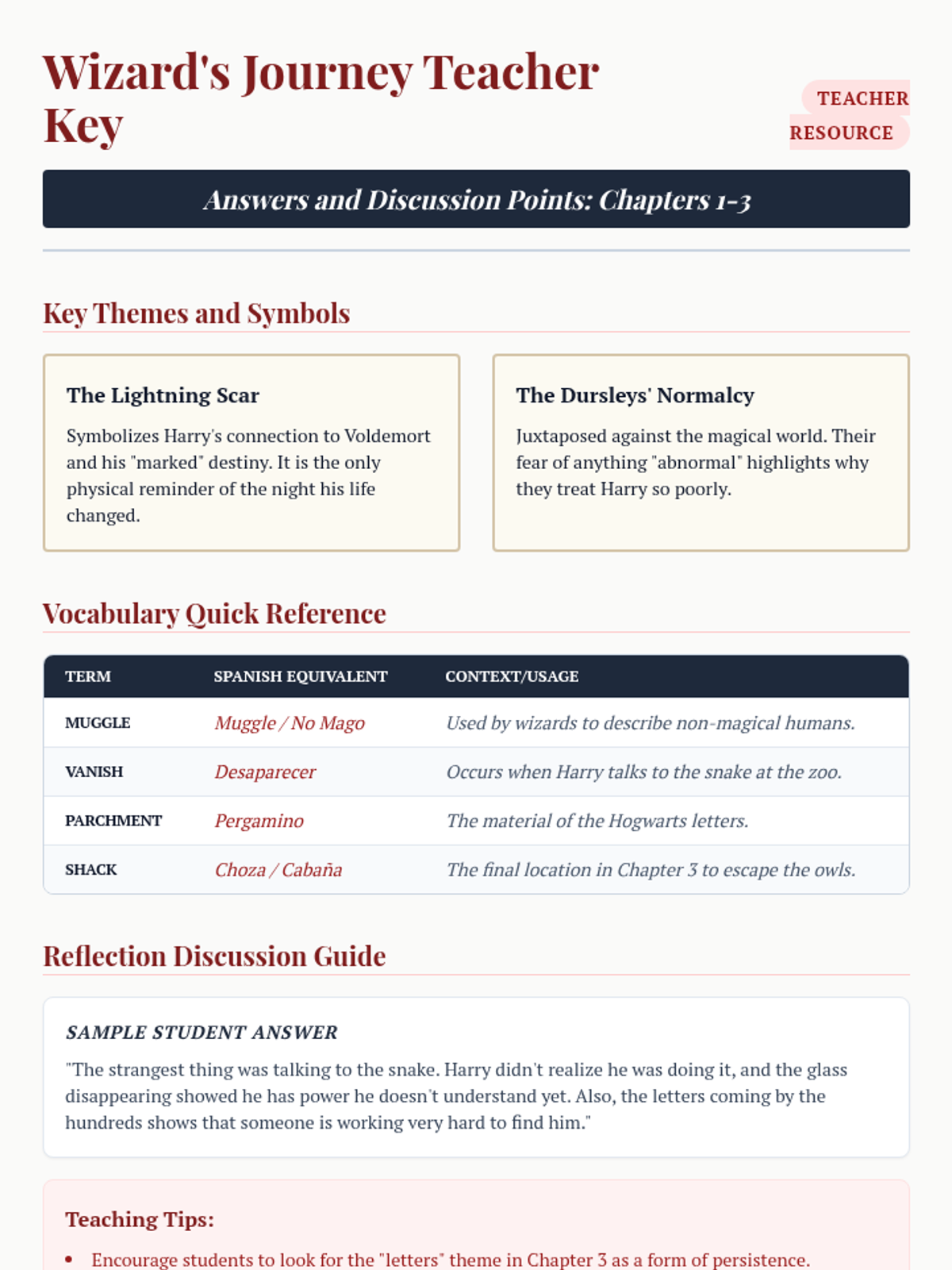
A foundational exploration of the first three chapters of Harry Potter and the Sorcerer's Stone, focusing on bilingual comprehension and key vocabulary.
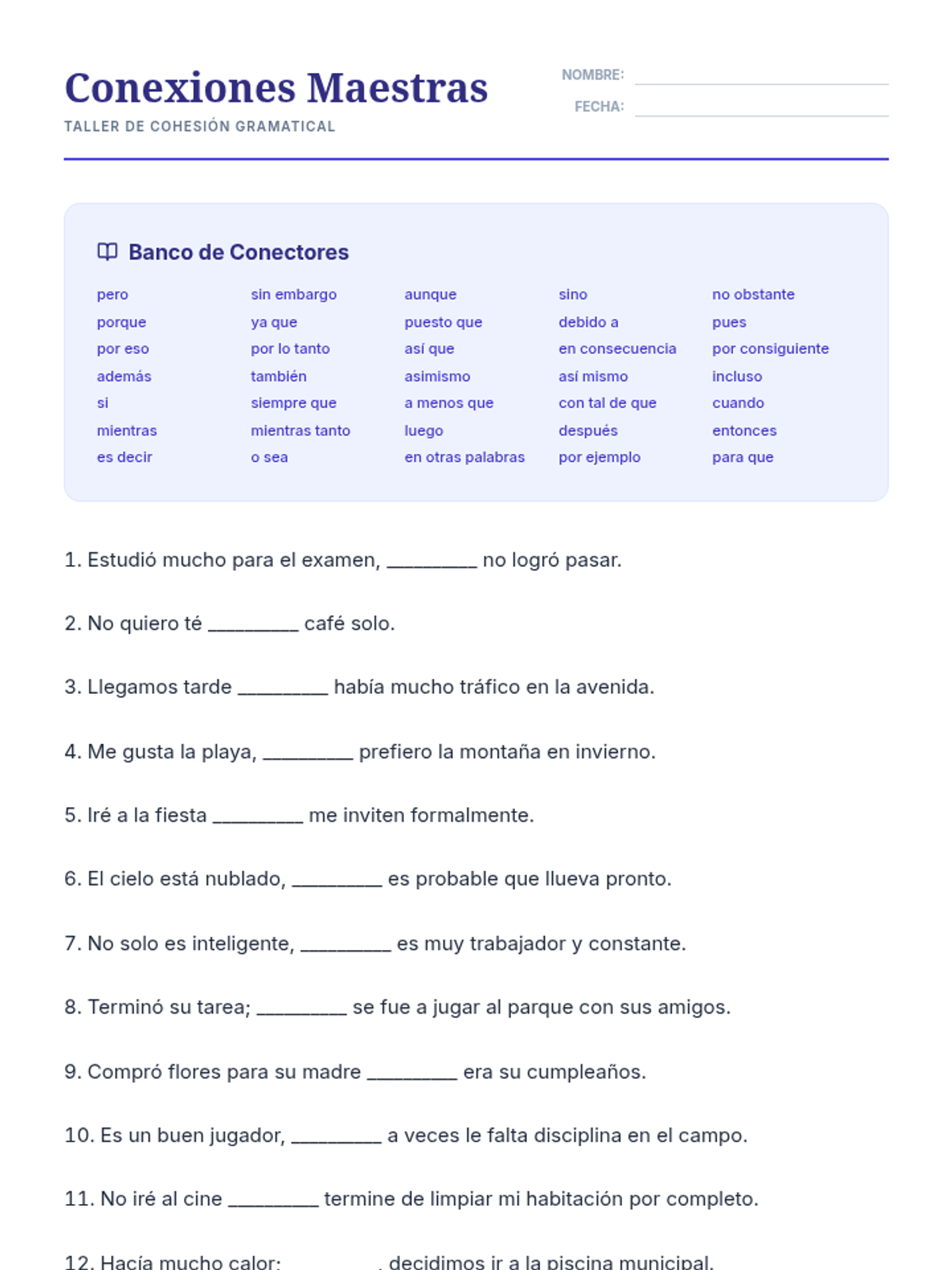
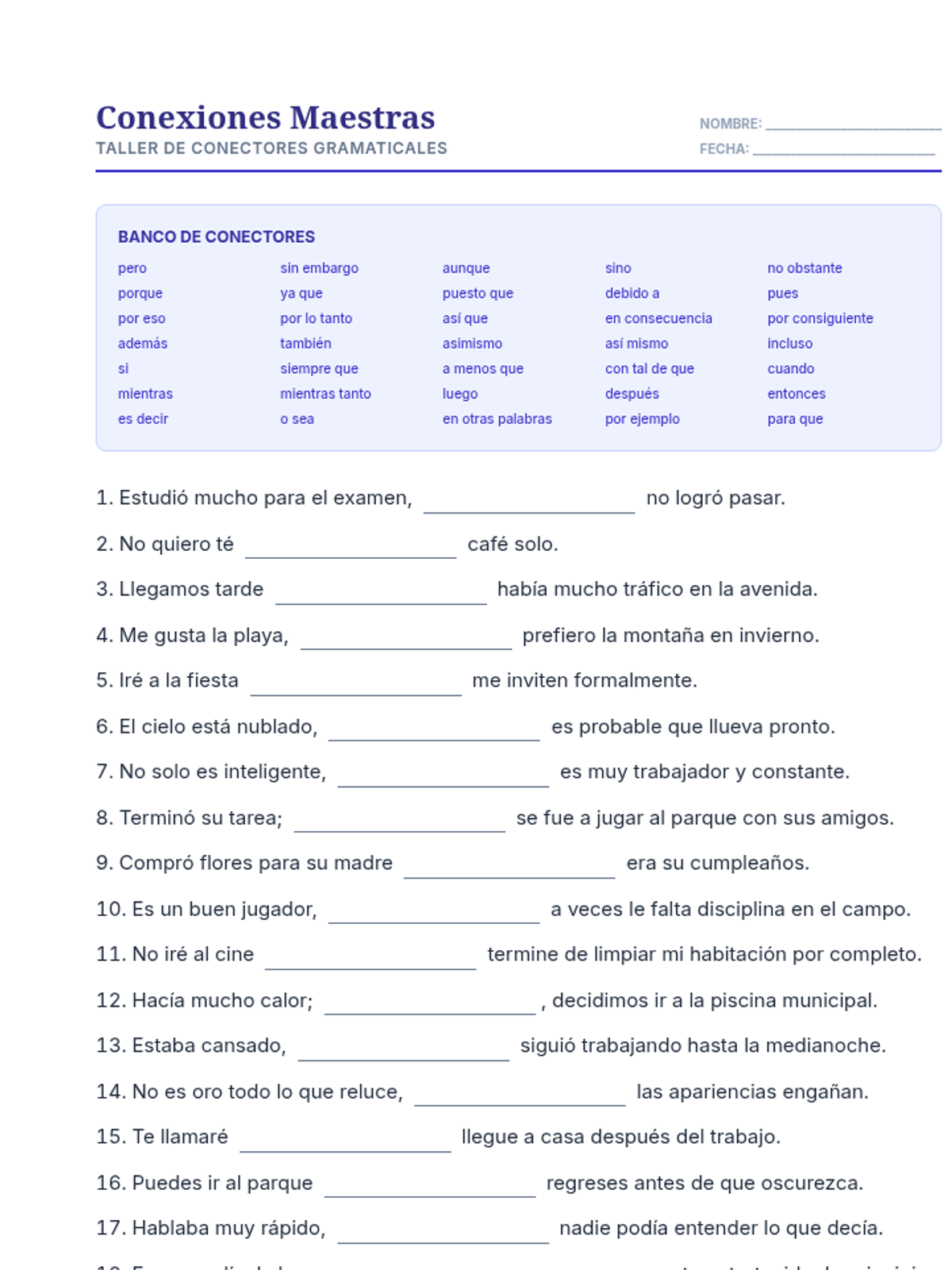
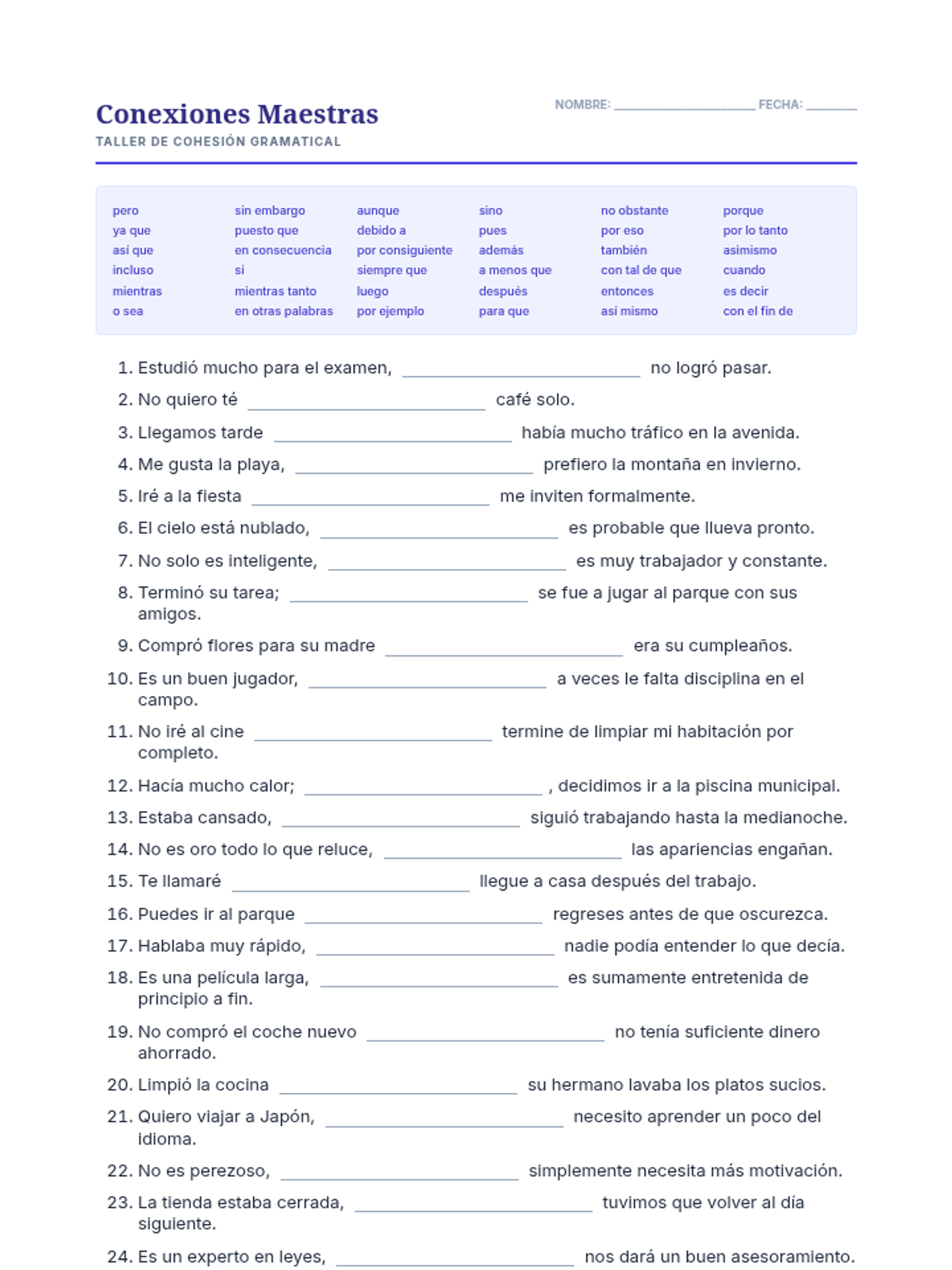
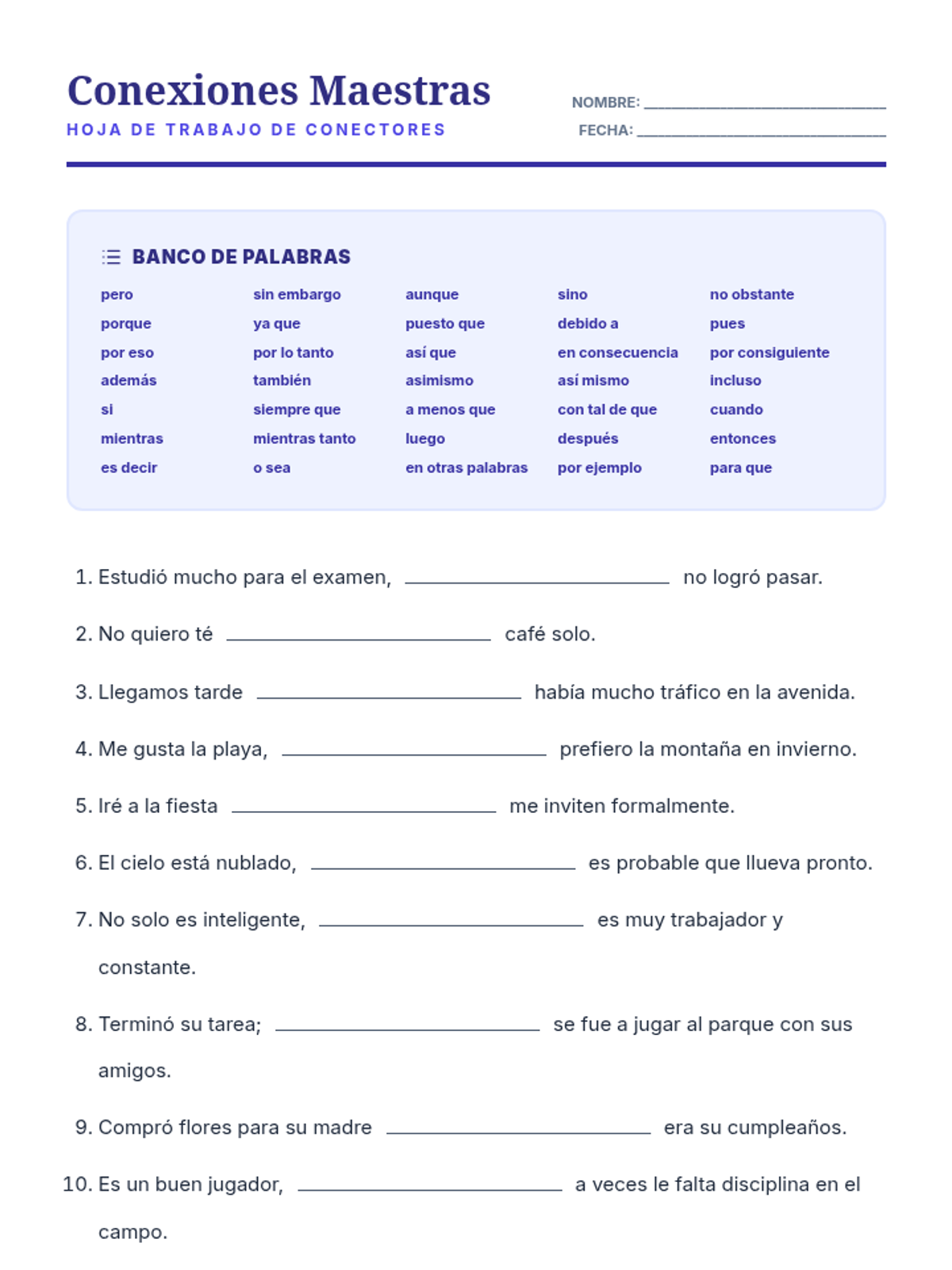
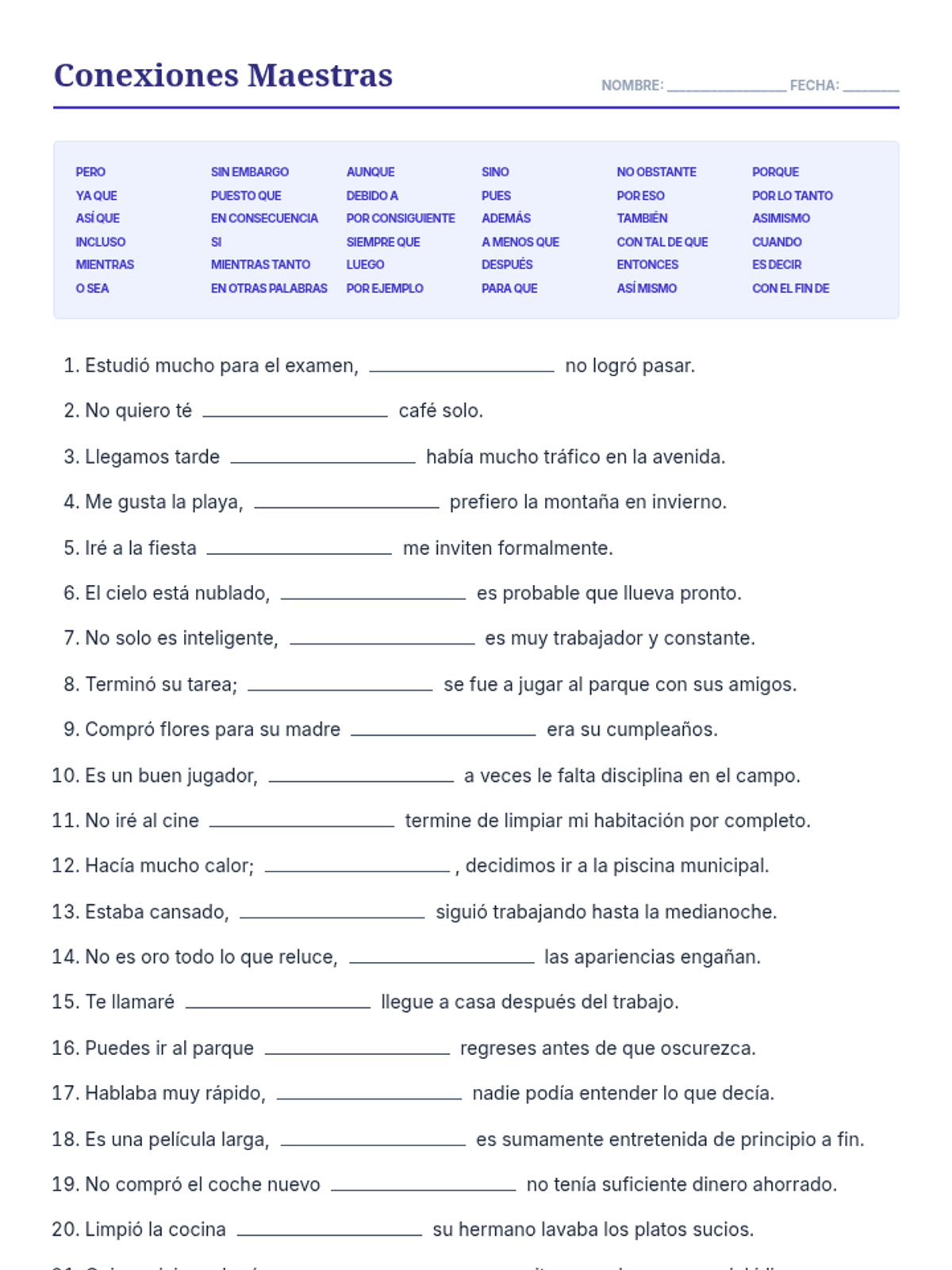
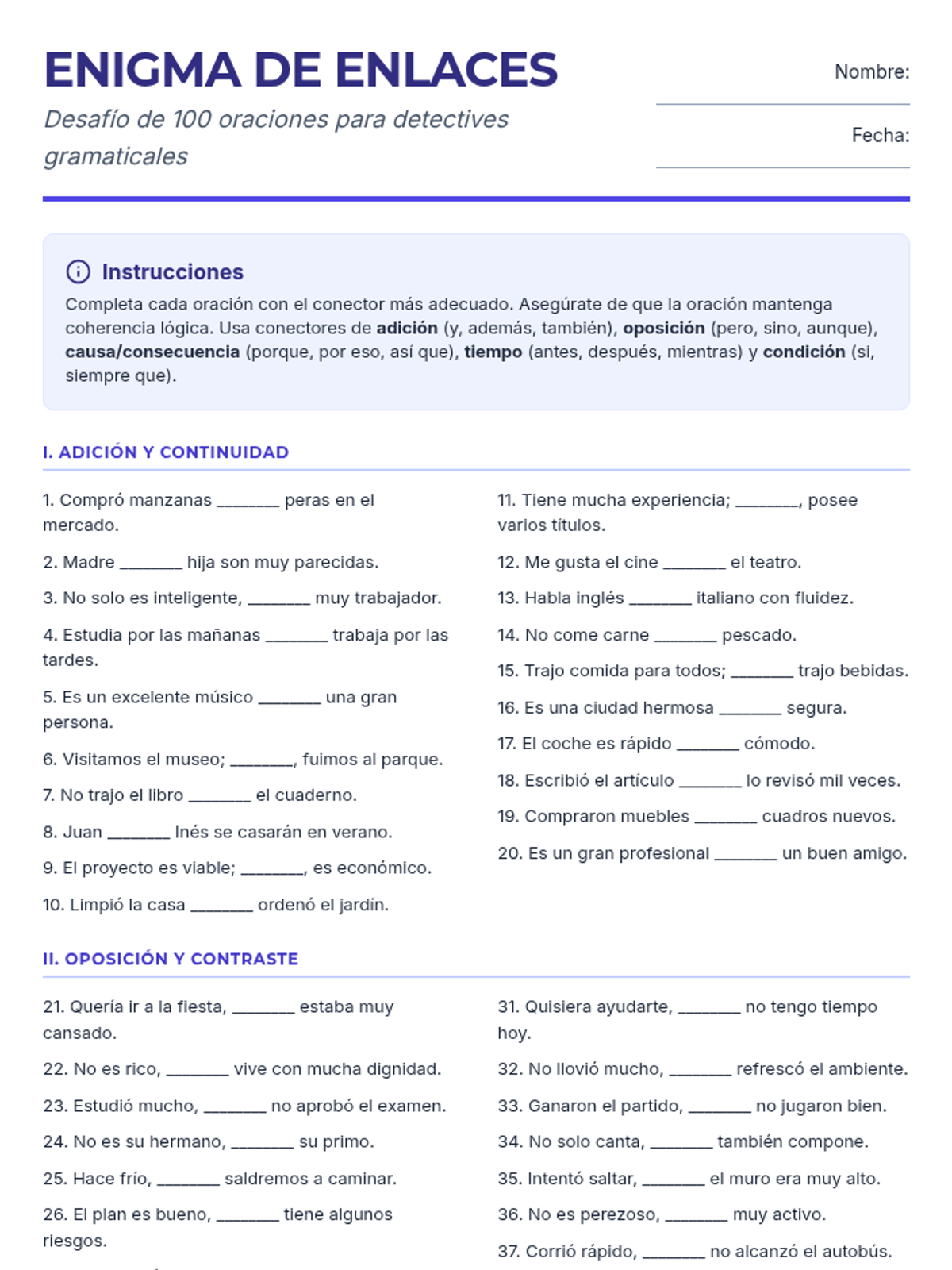
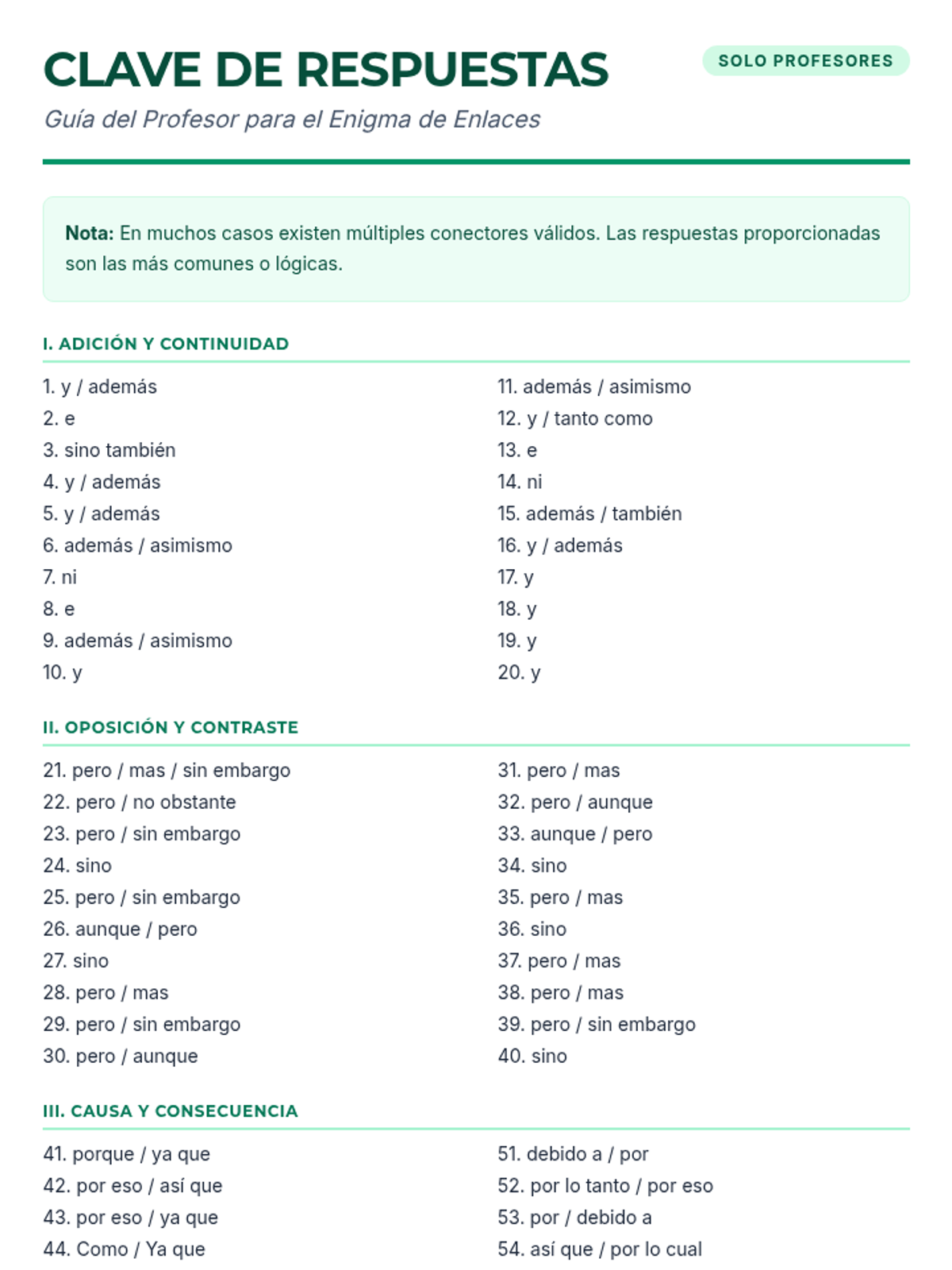
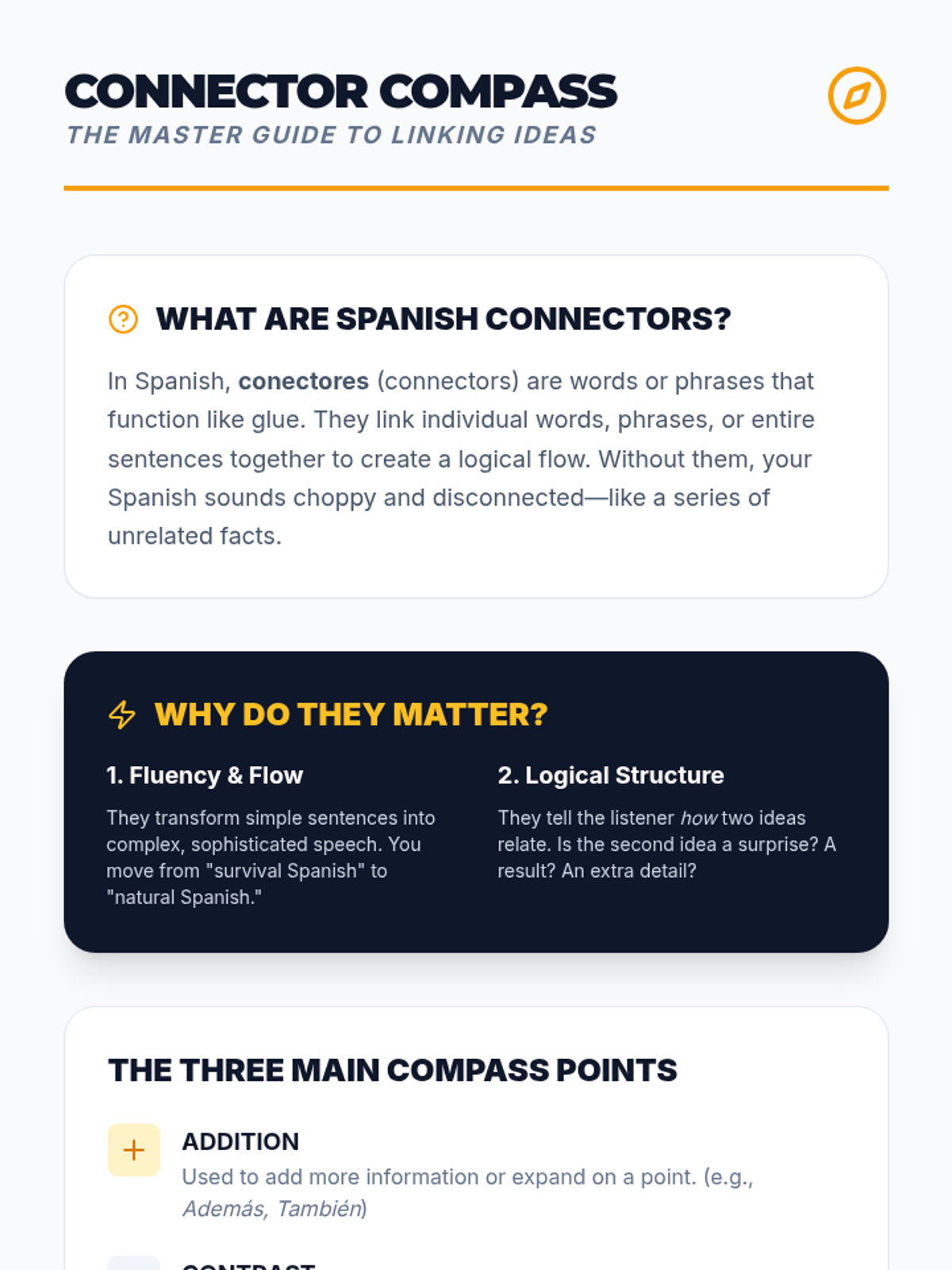
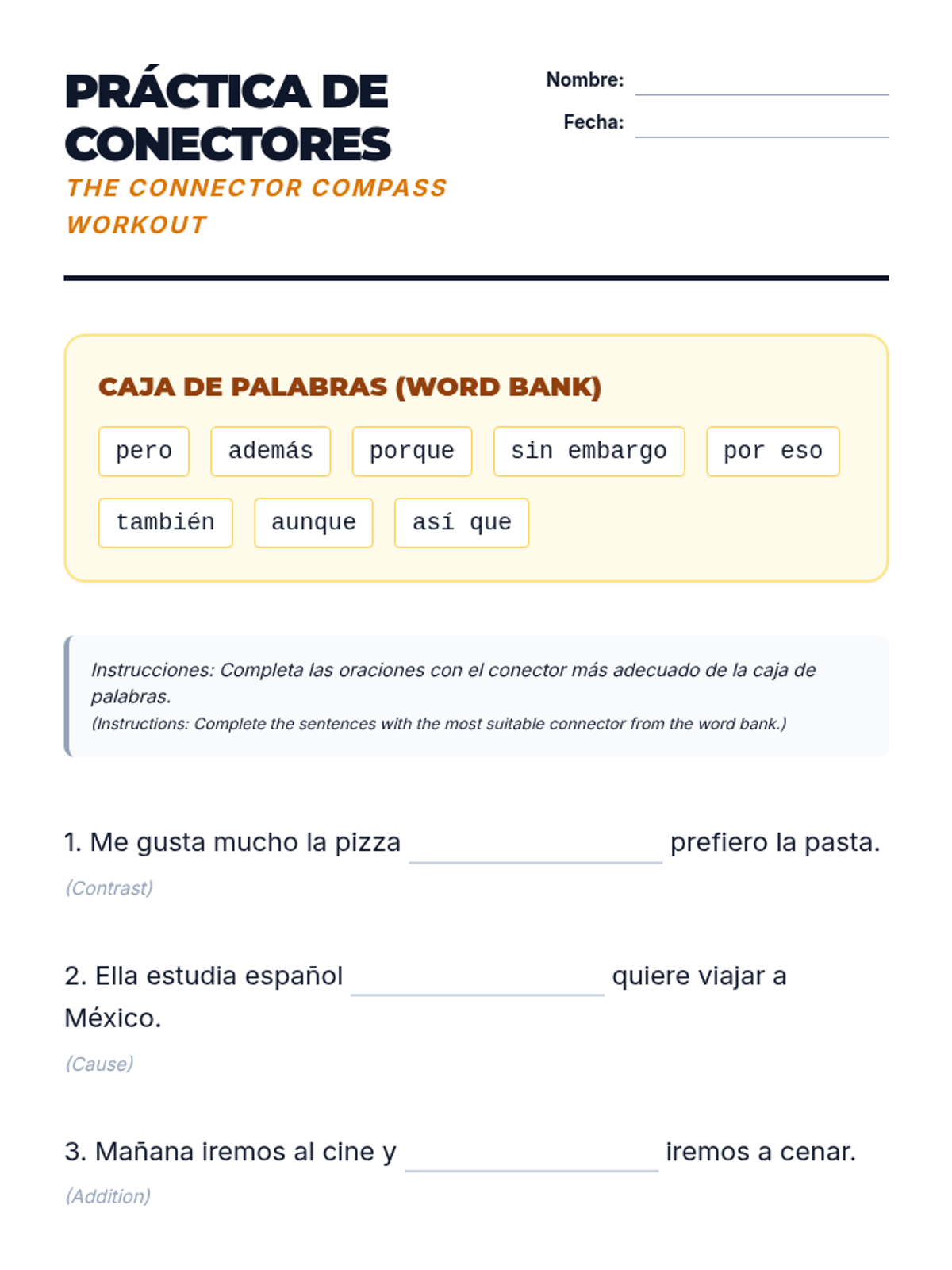
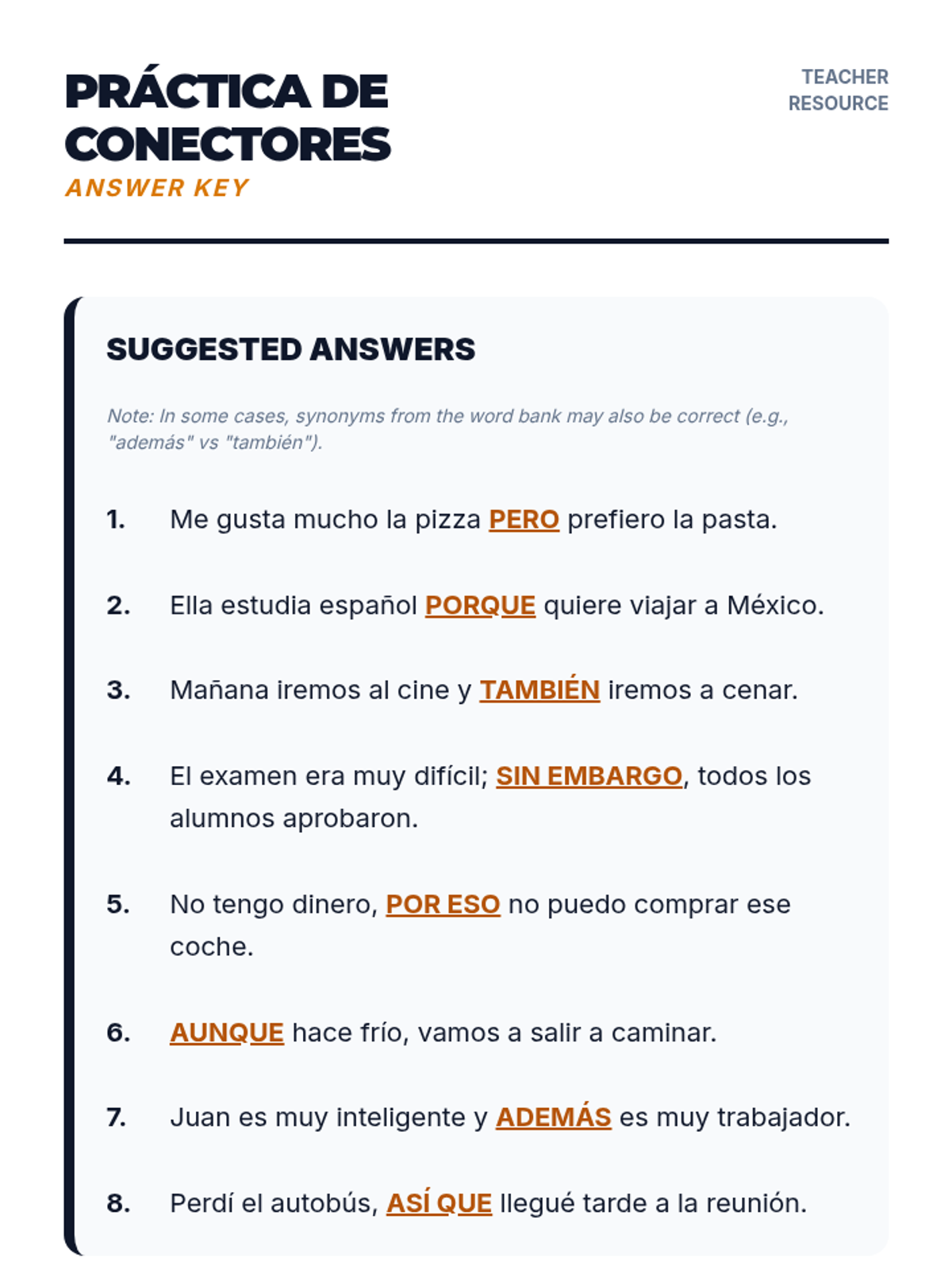
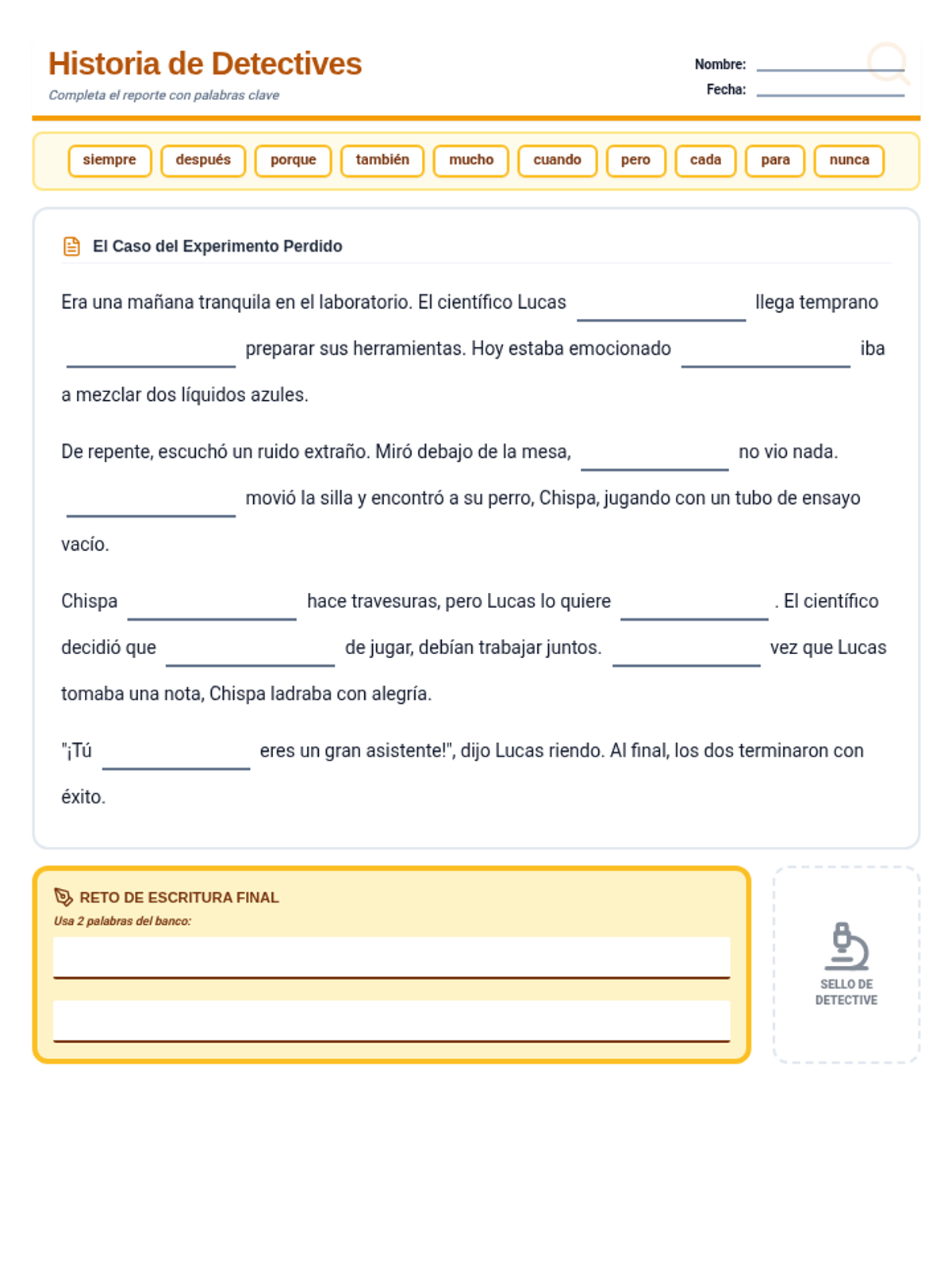
Una lección completa enfocada en el dominio de los conectores gramaticales en español a través de la práctica intensiva y el análisis de contexto.
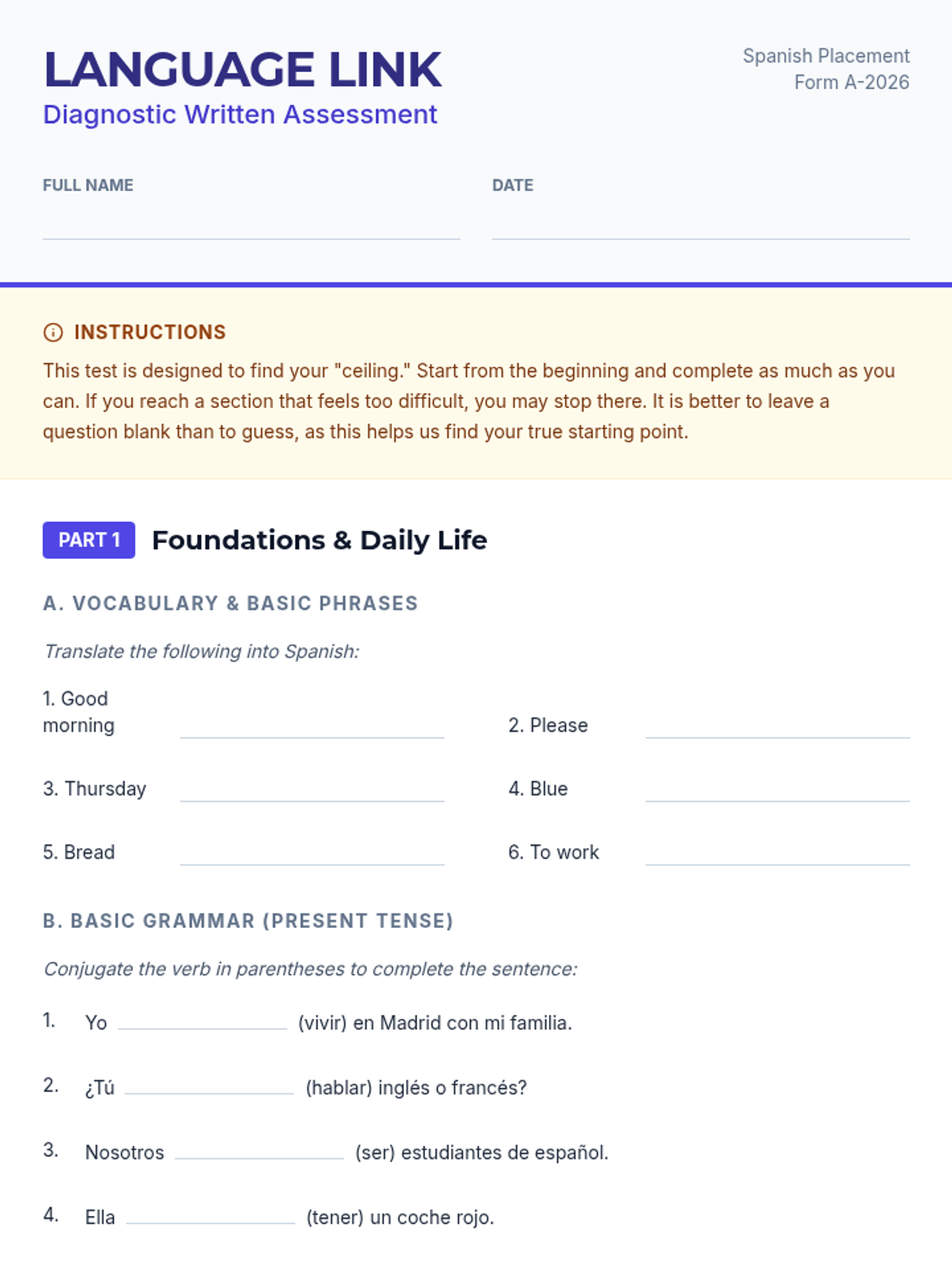
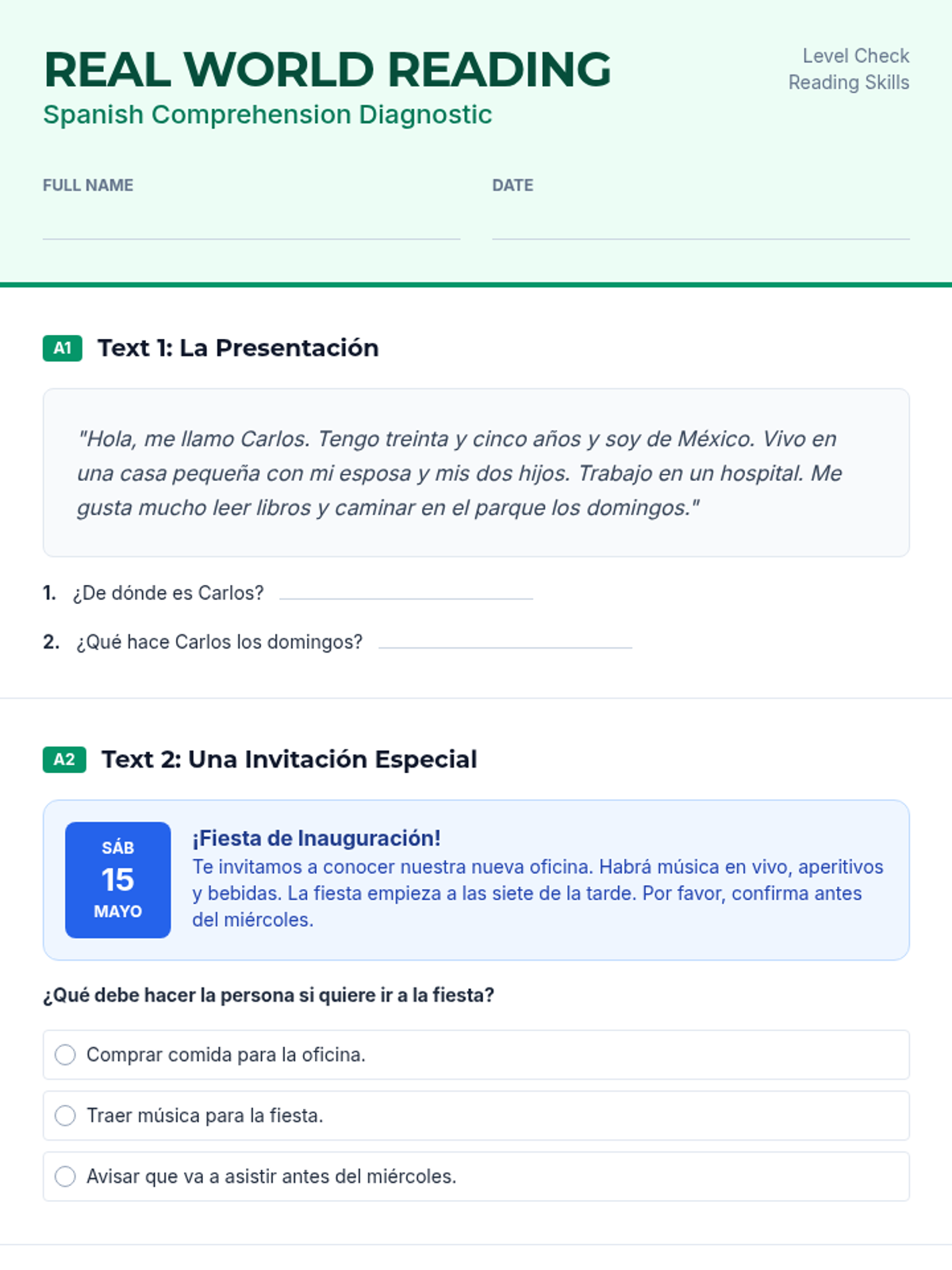
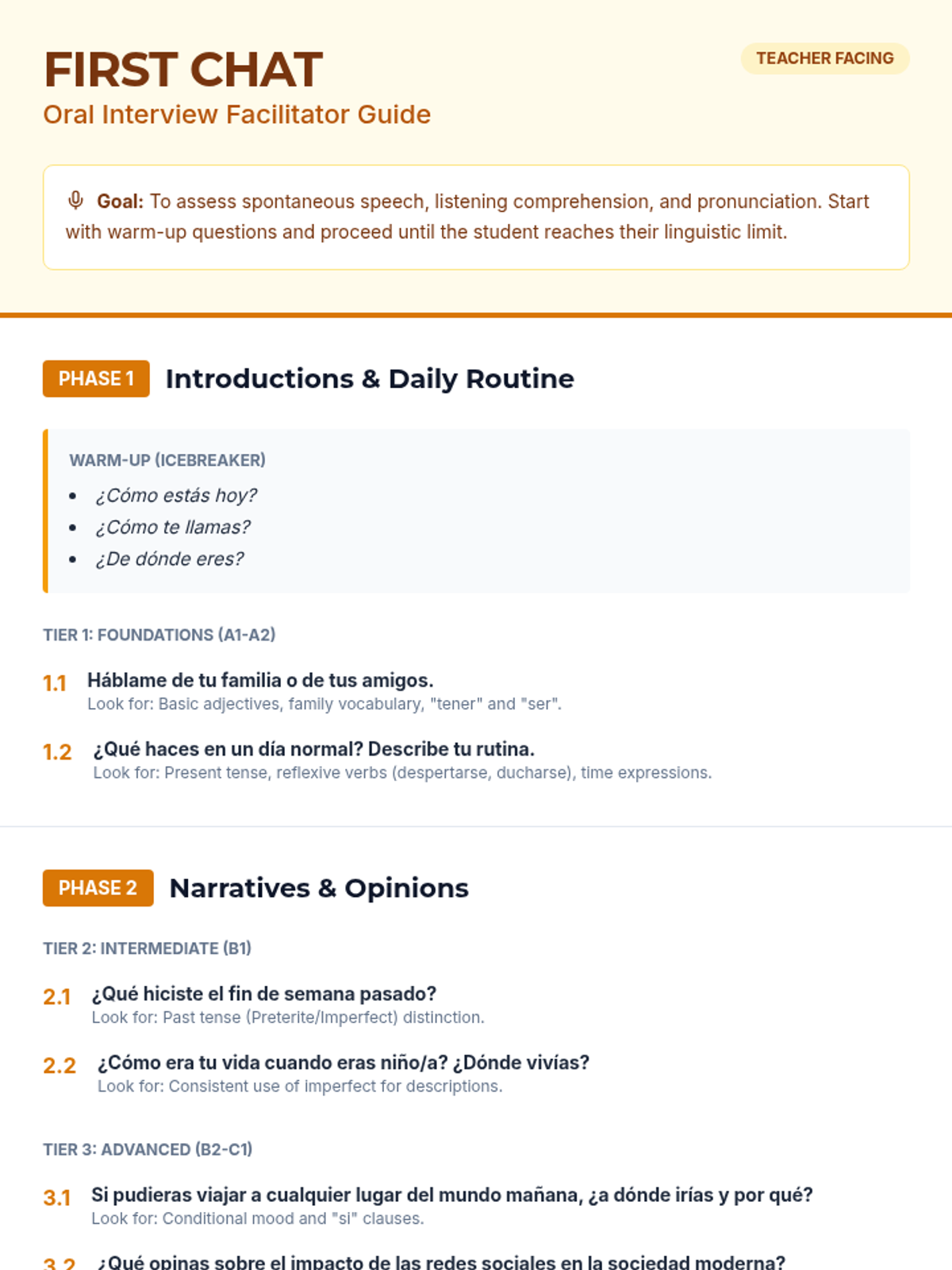
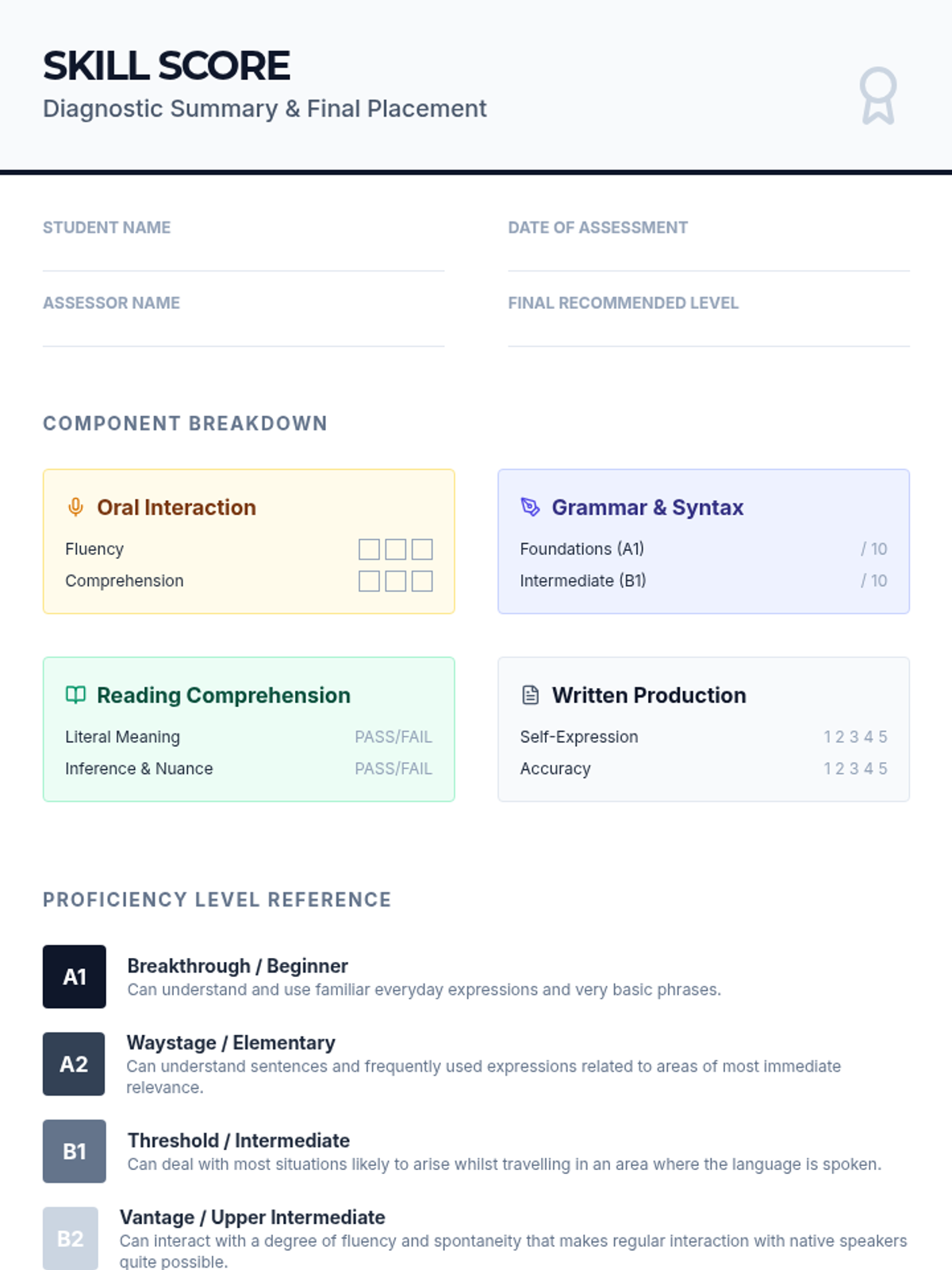
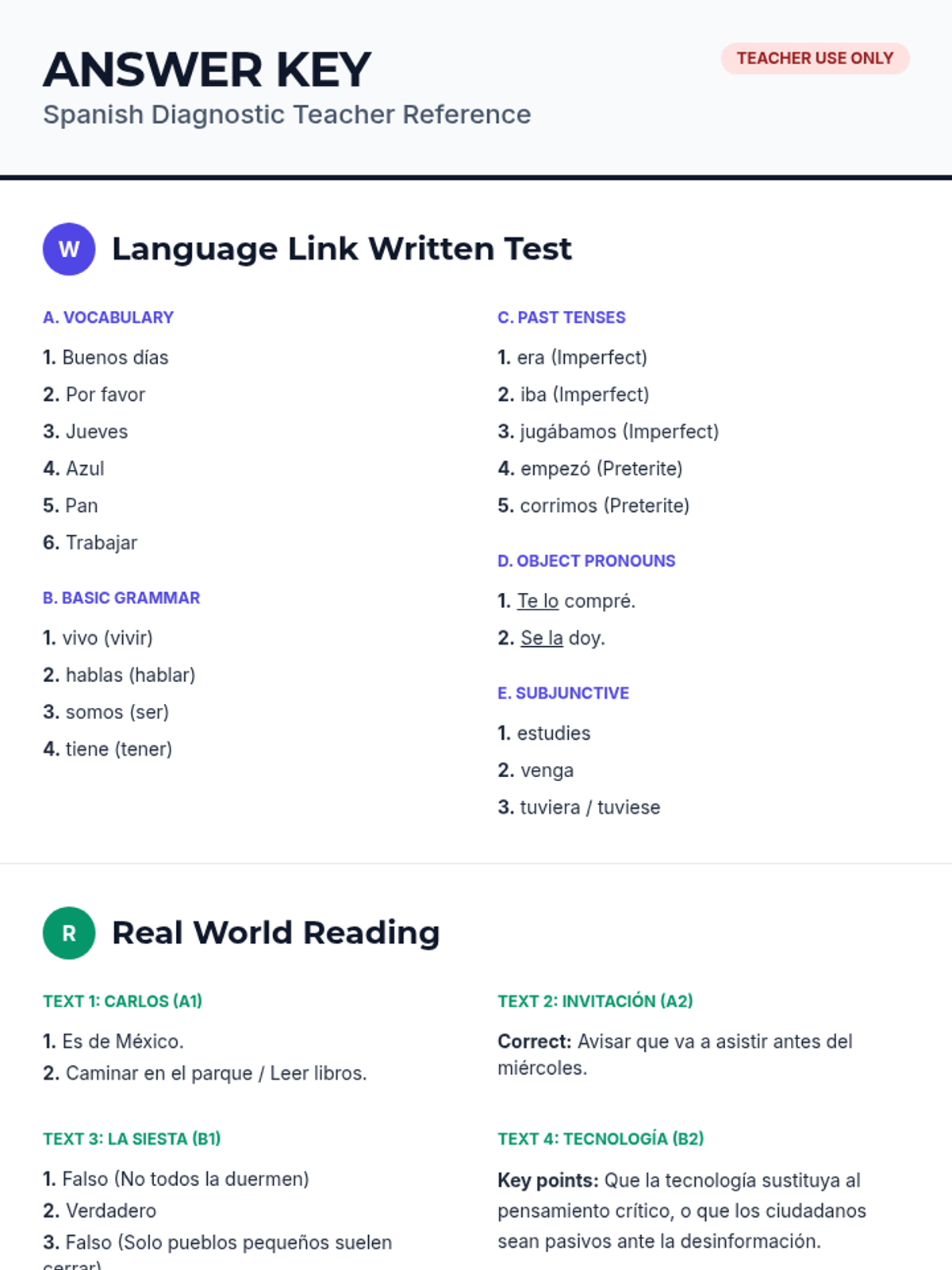
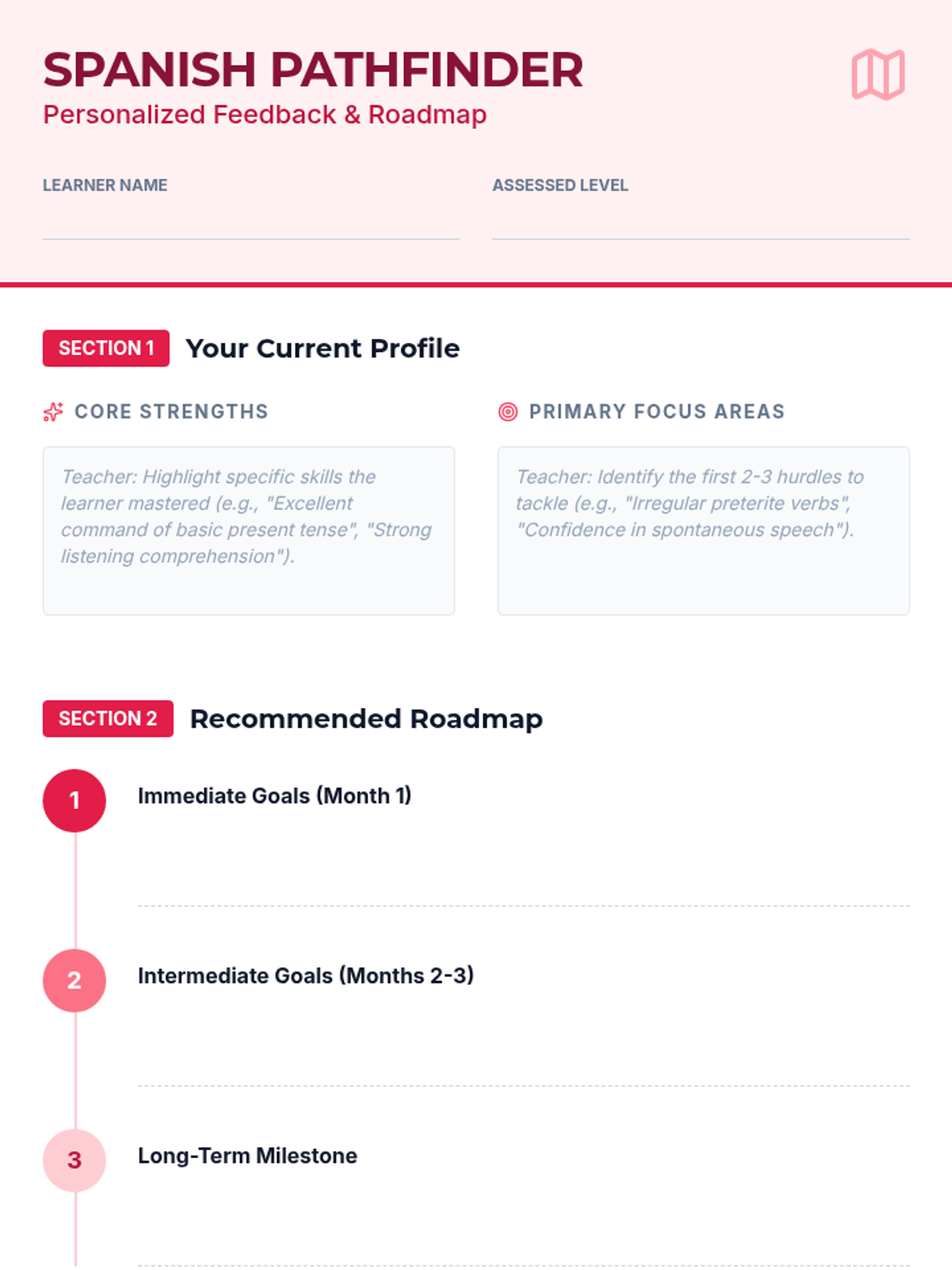
A comprehensive diagnostic assessment suite designed for adult learners to determine their current Spanish proficiency level across reading, writing, listening, and speaking. The materials move from foundational basics to advanced structures to provide a clear placement for the learner.
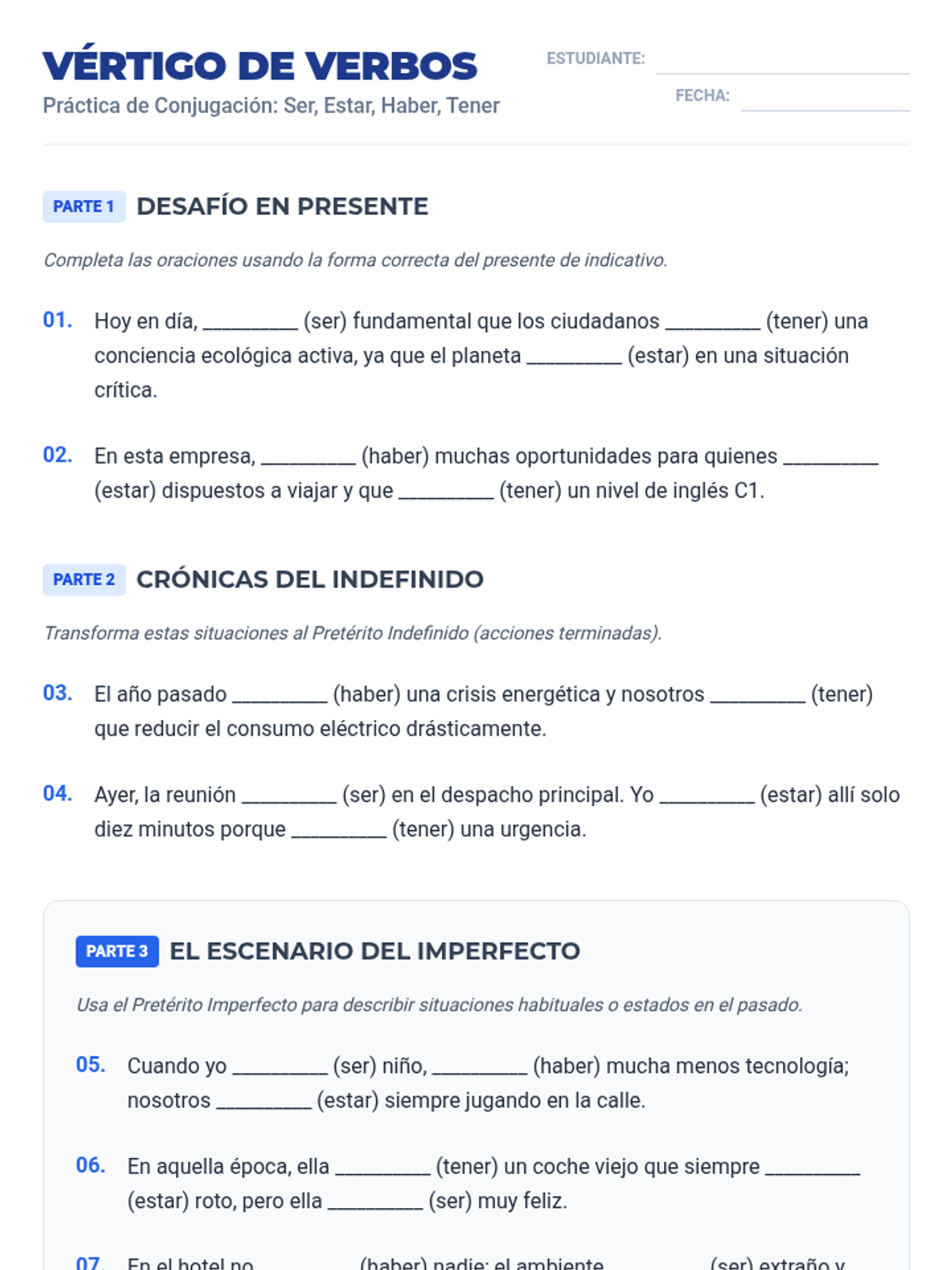
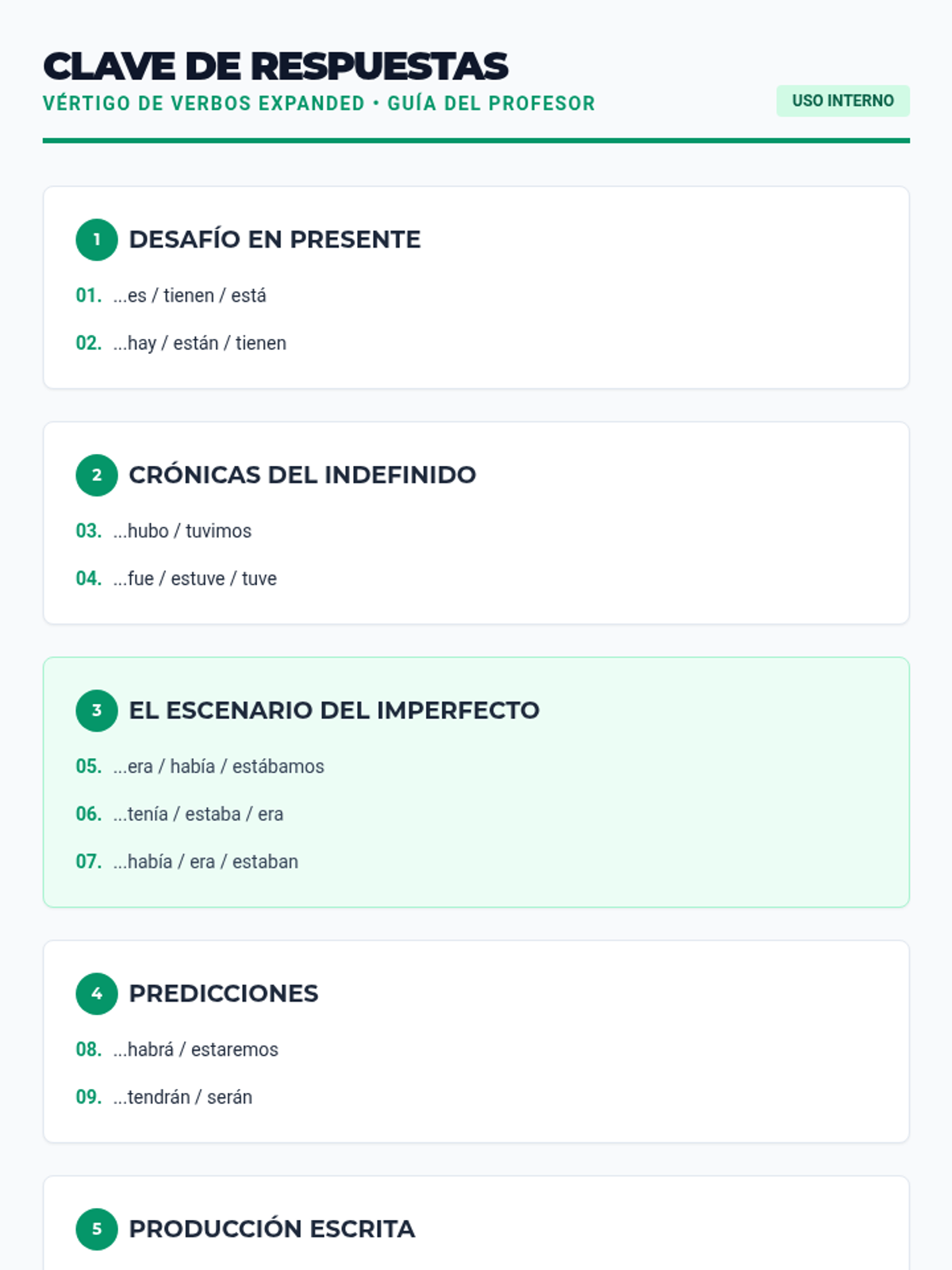
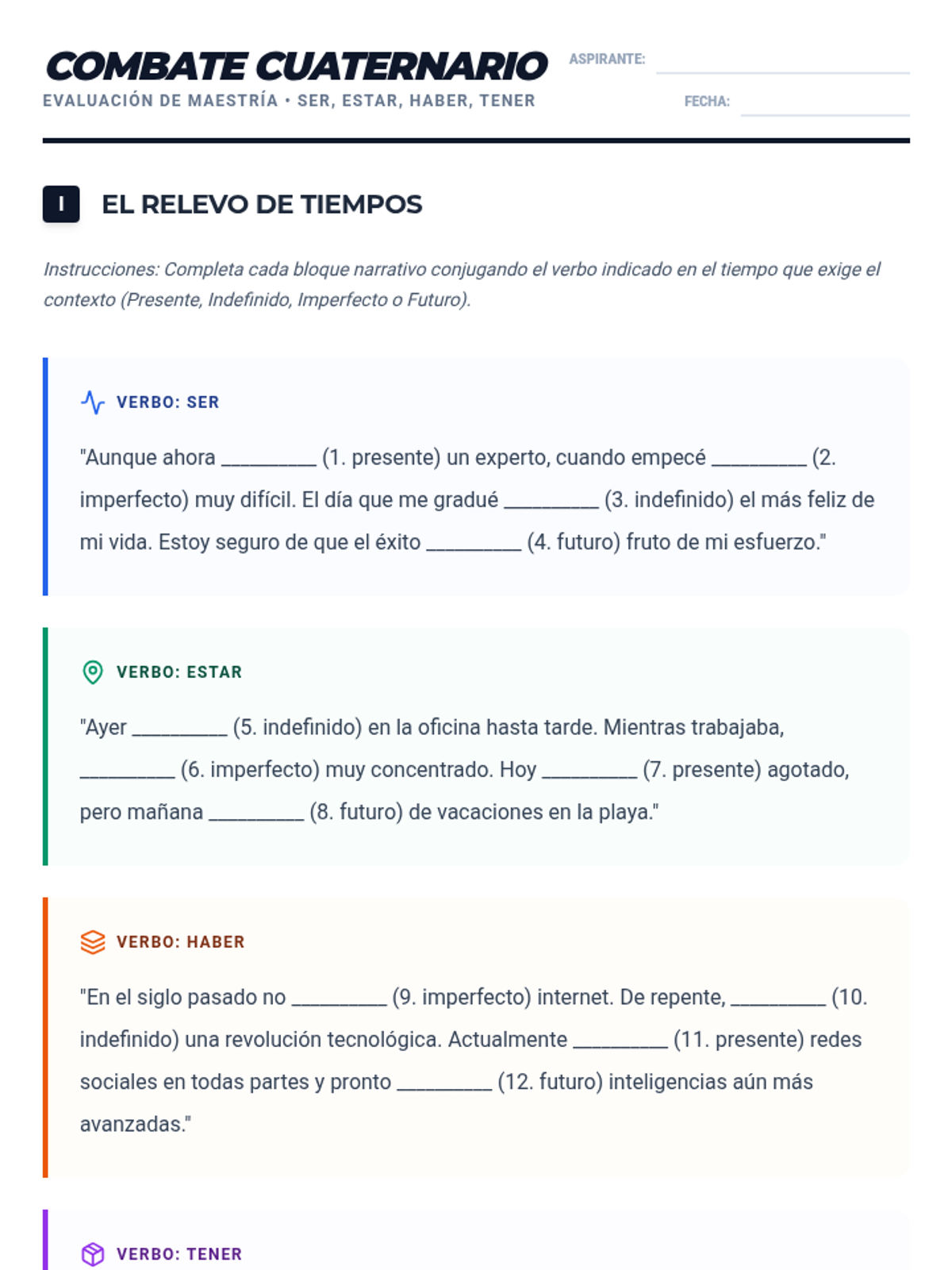
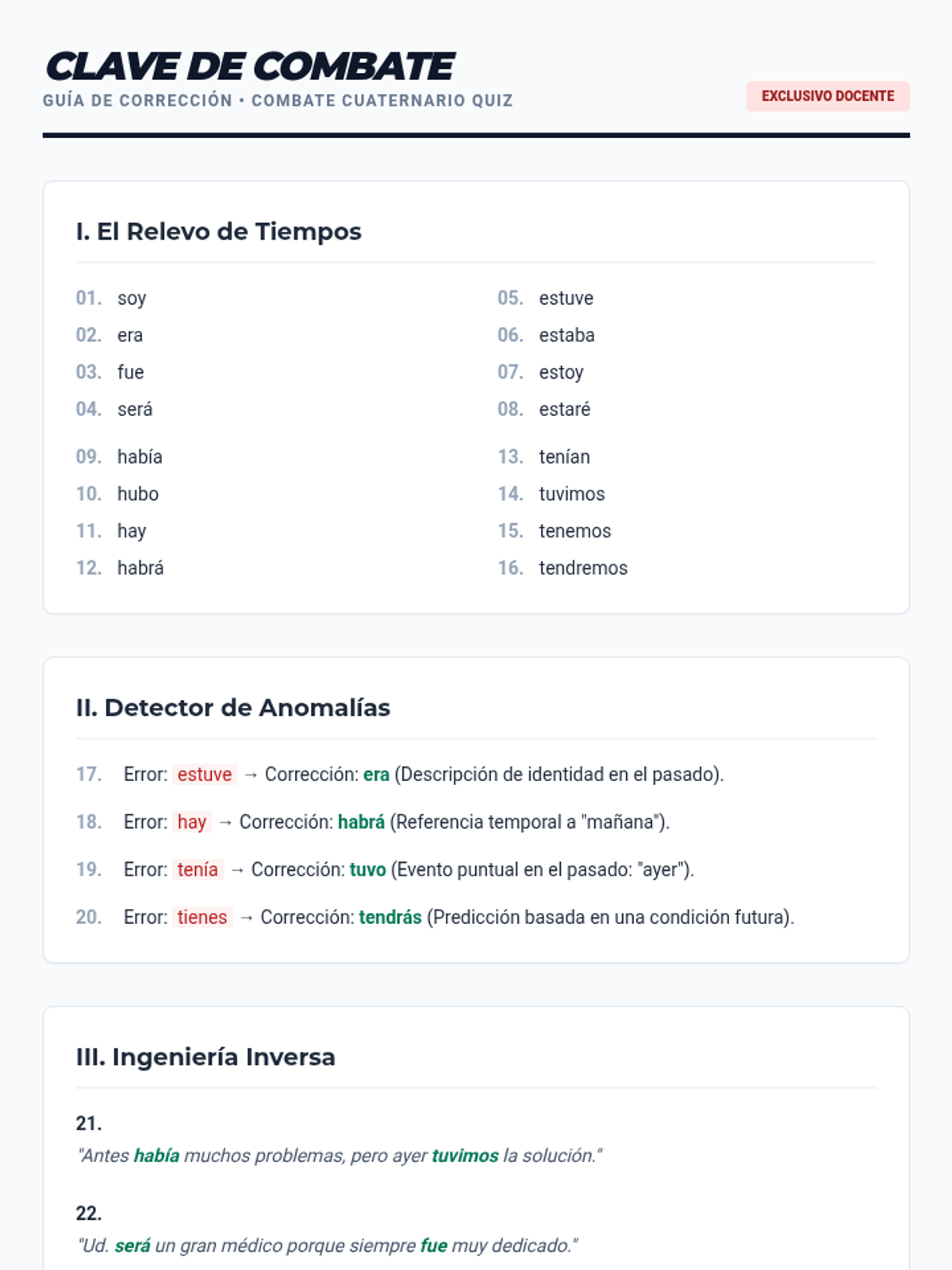
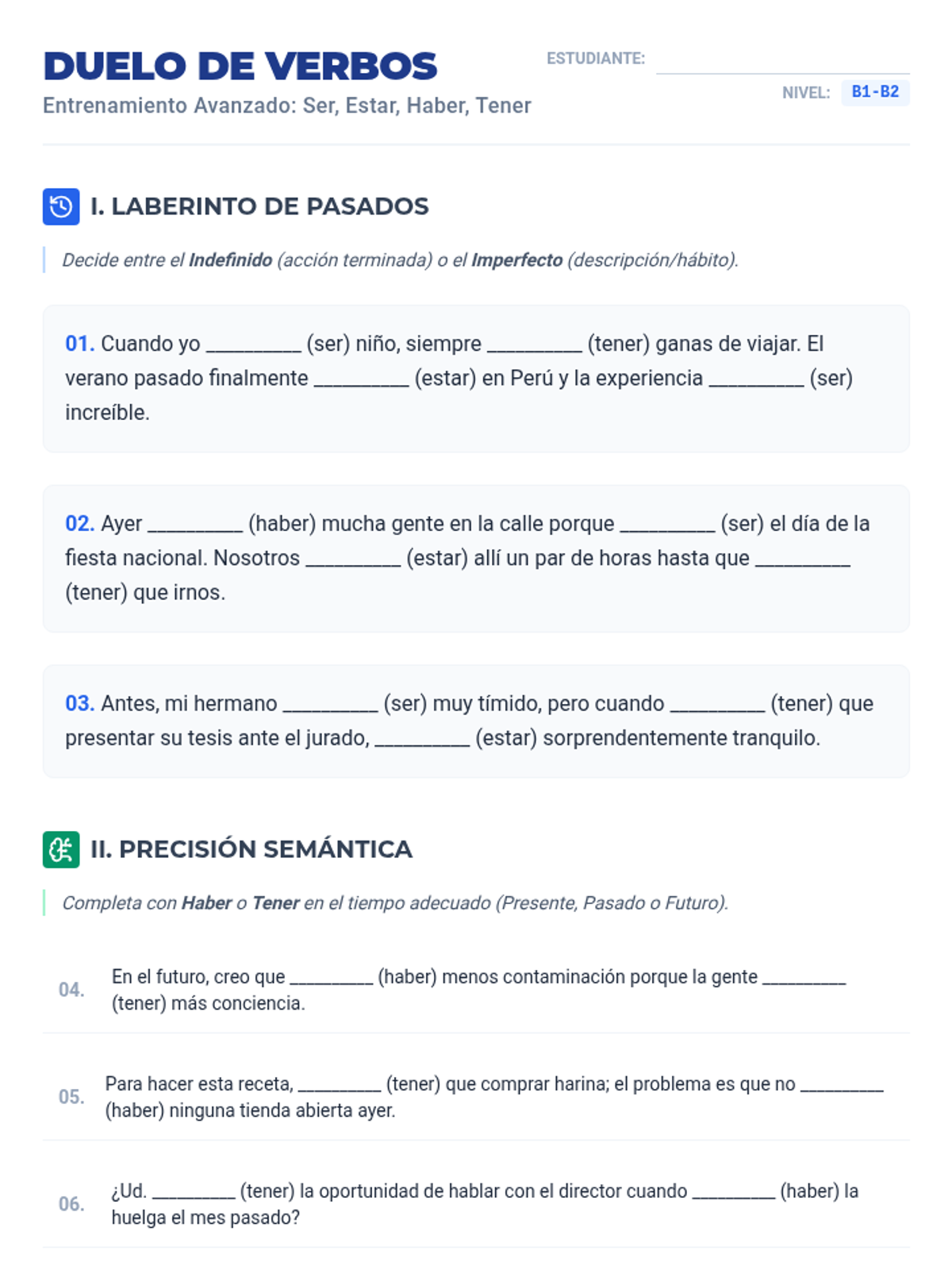
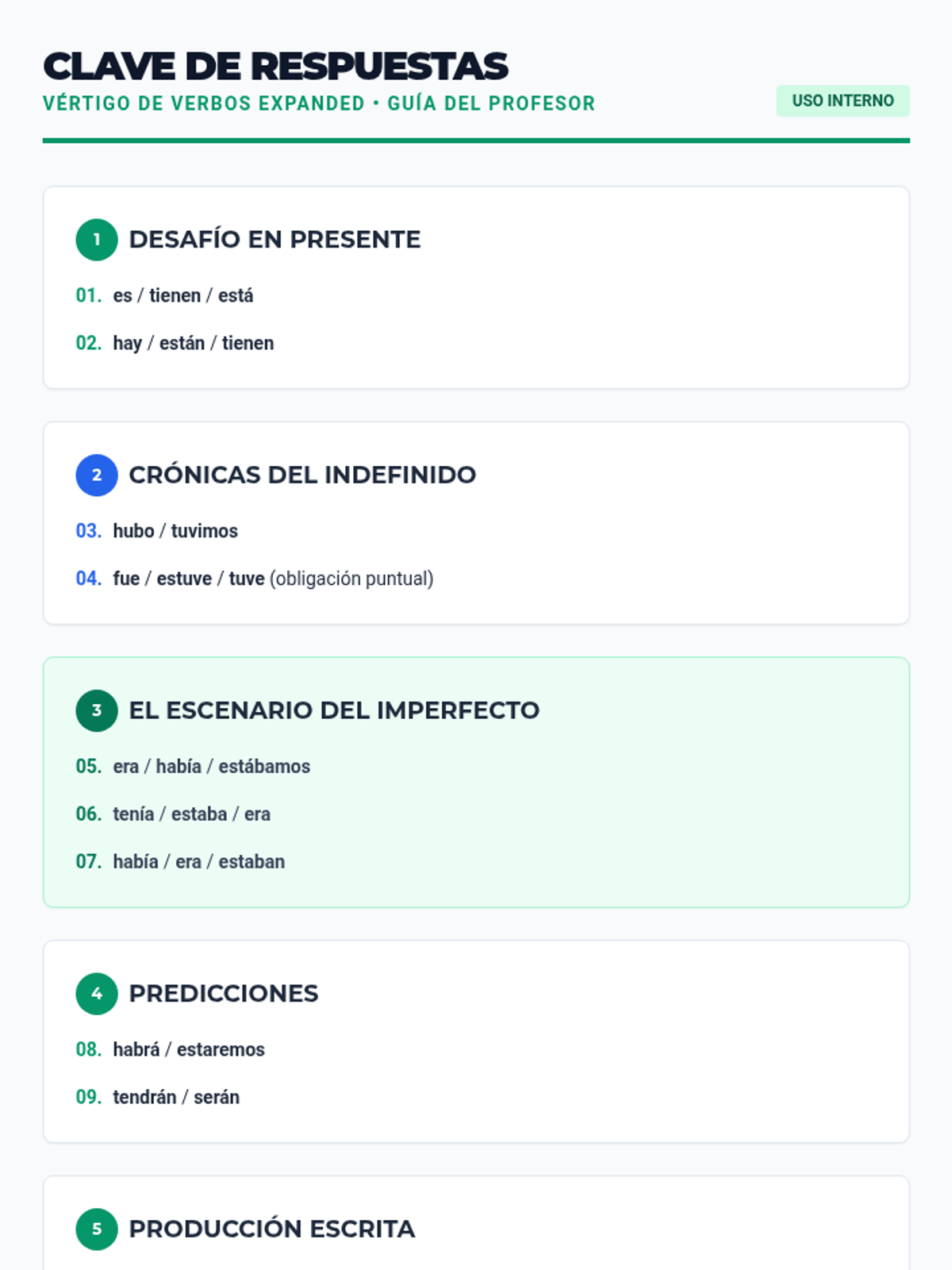
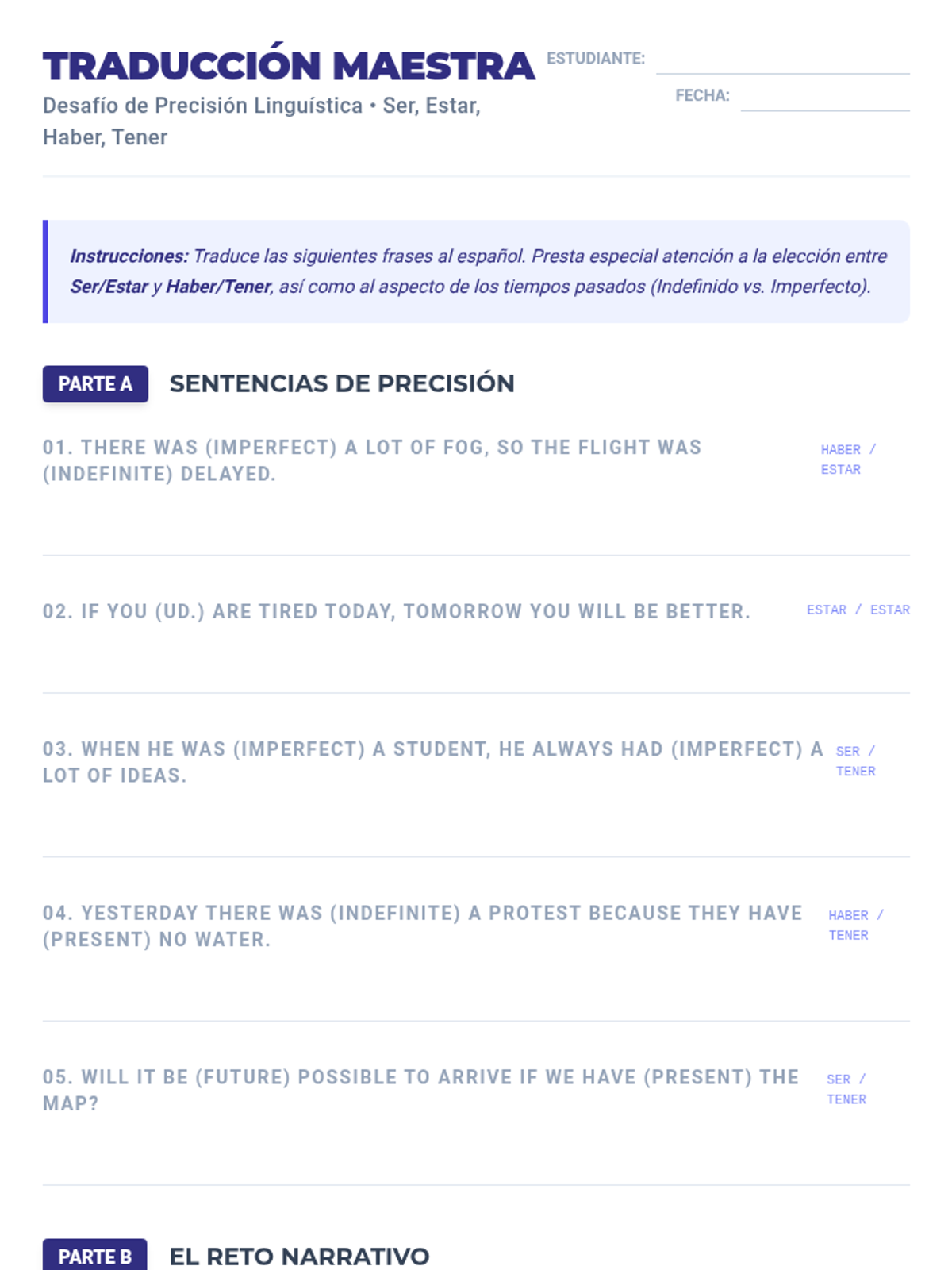
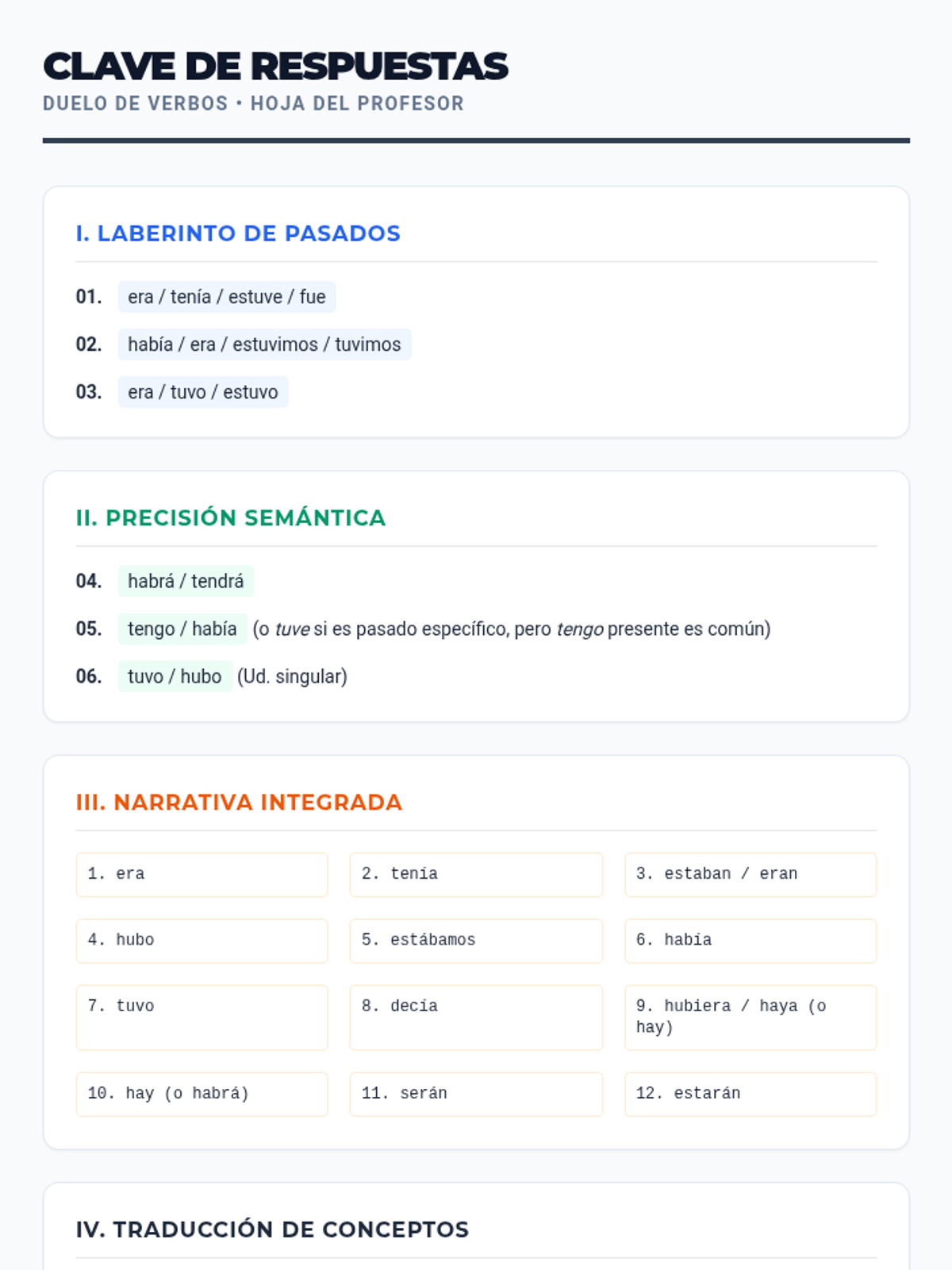
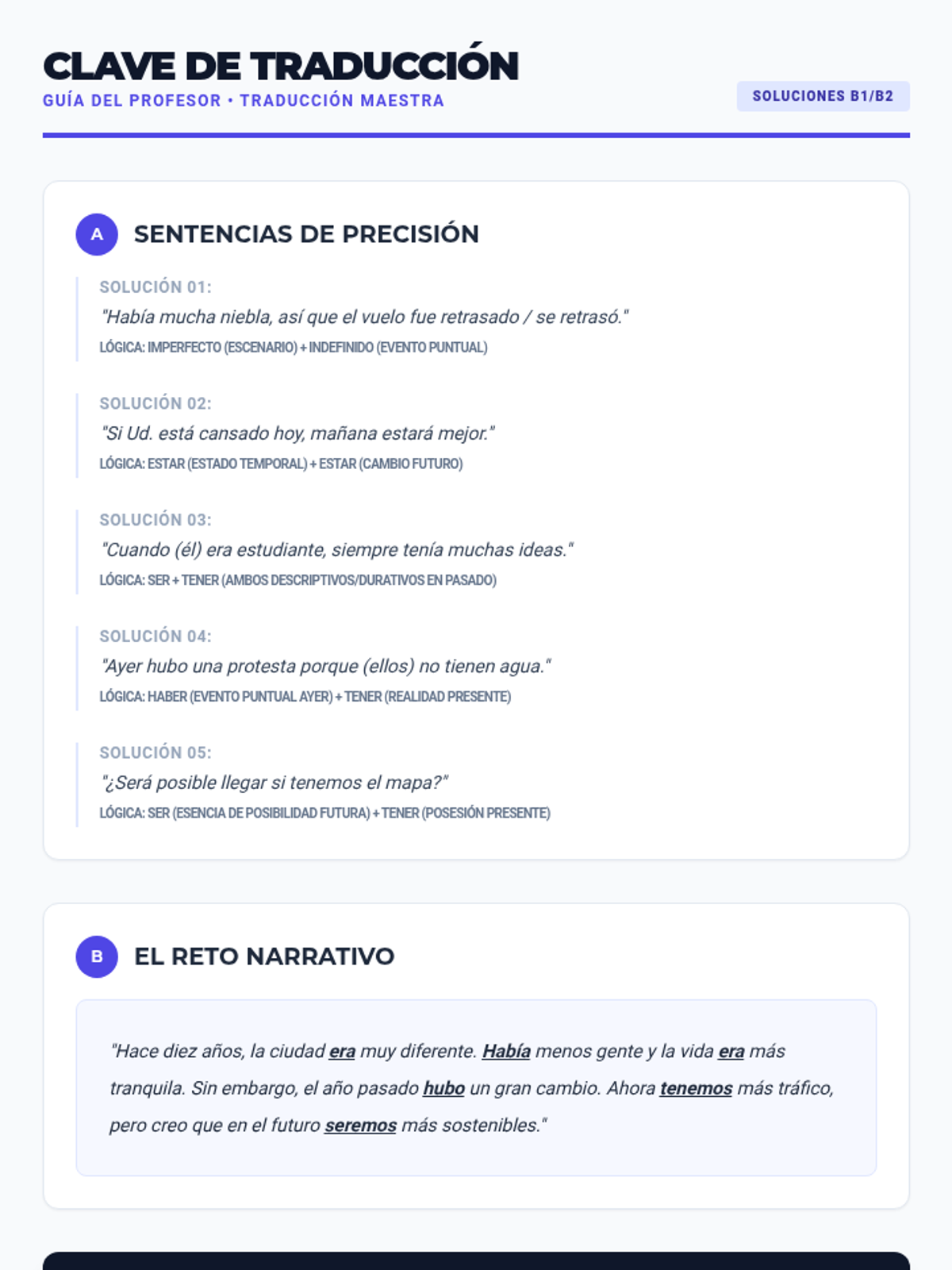
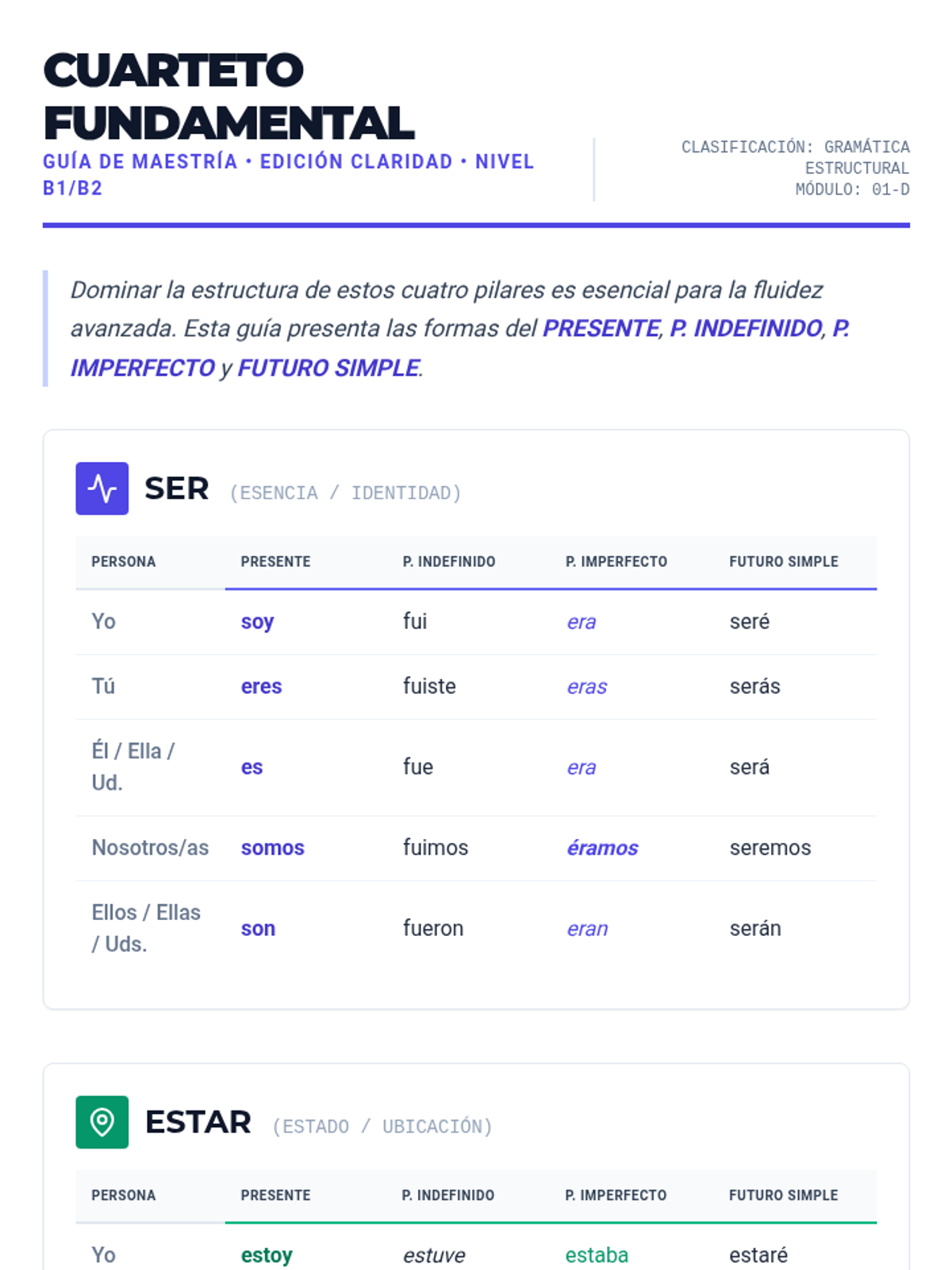
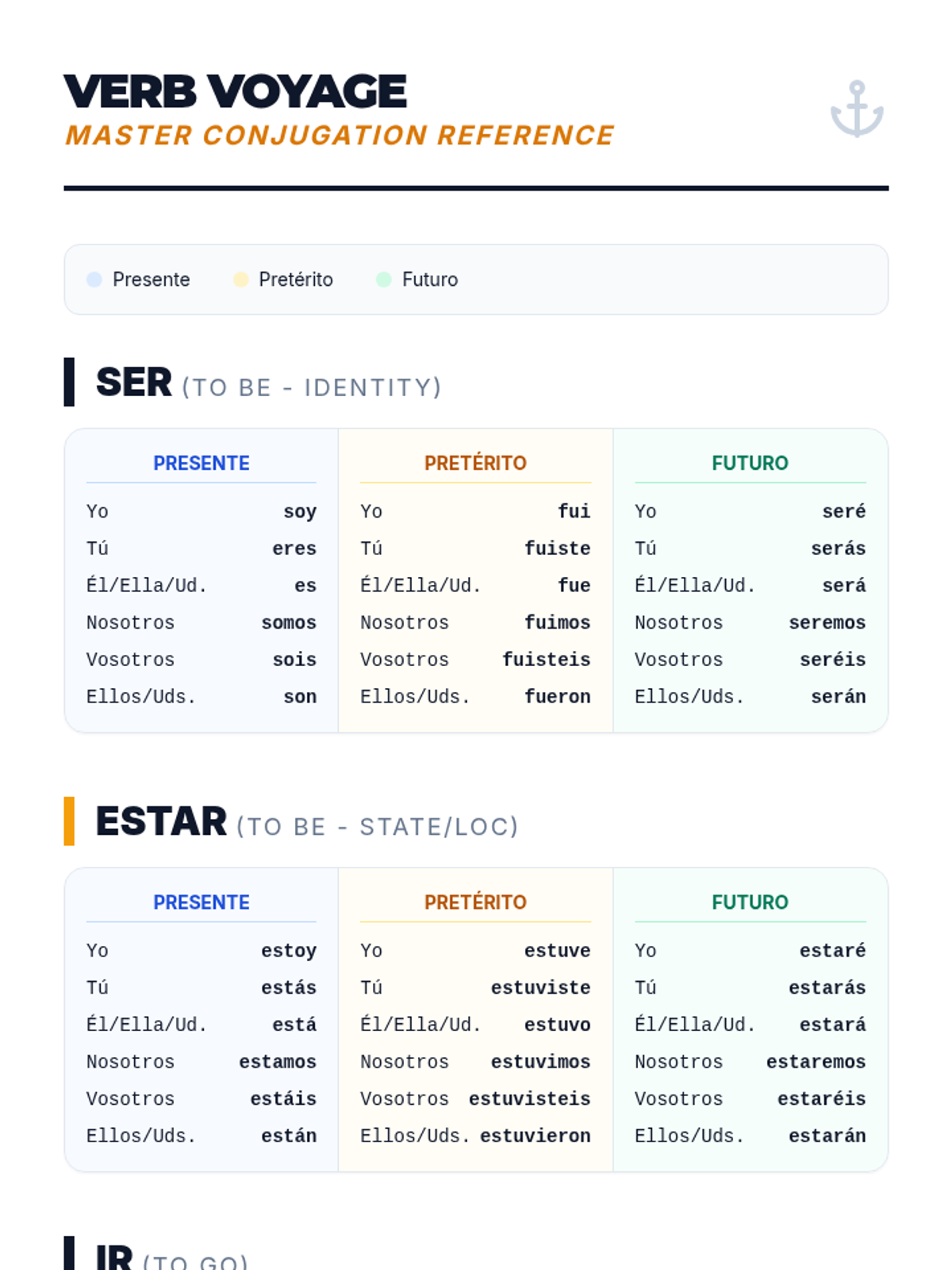
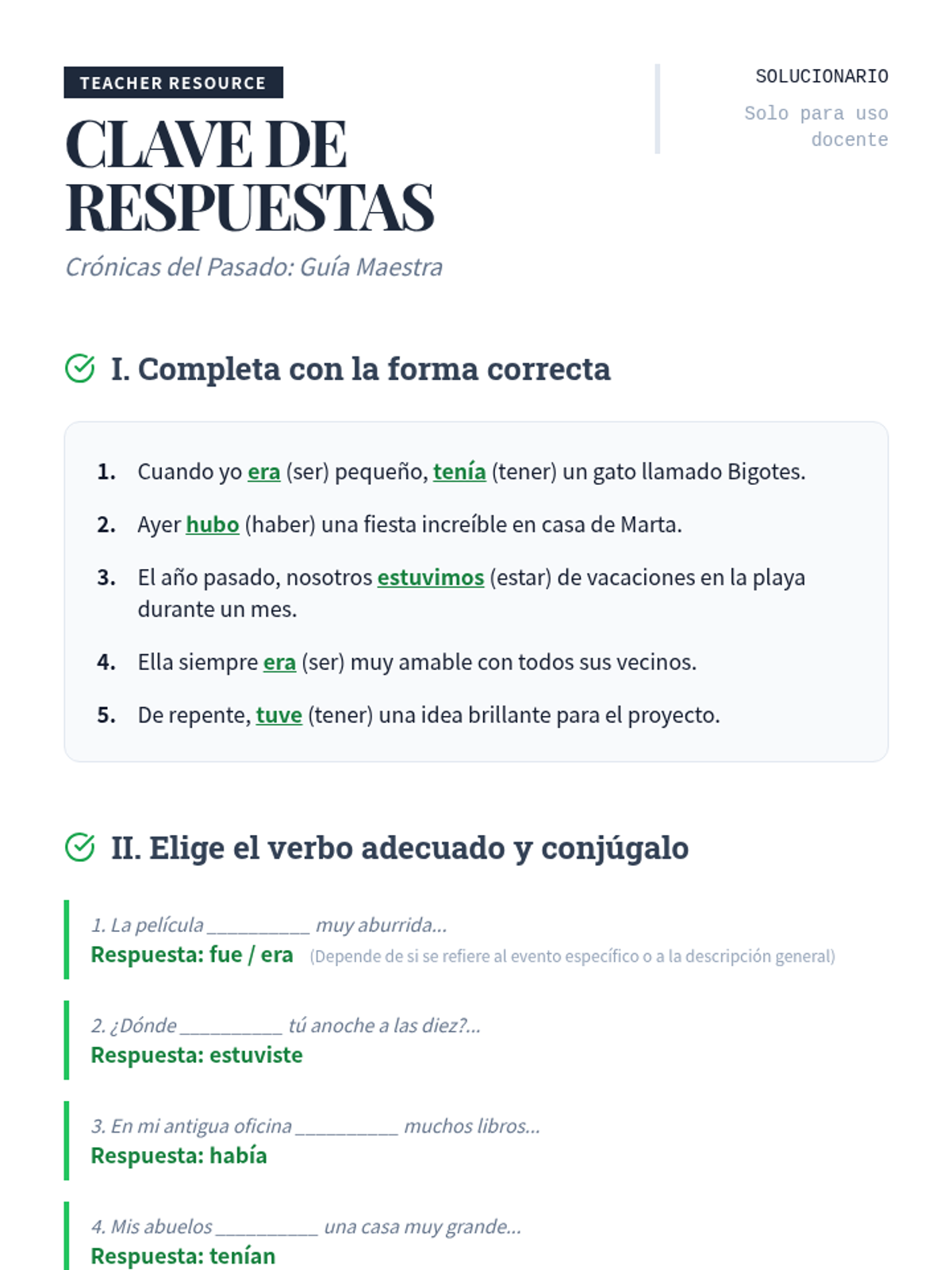
A comprehensive guide and practice set for mastering the four most essential Spanish verbs: ser, estar, haber, and tener across present, past, and future tenses.
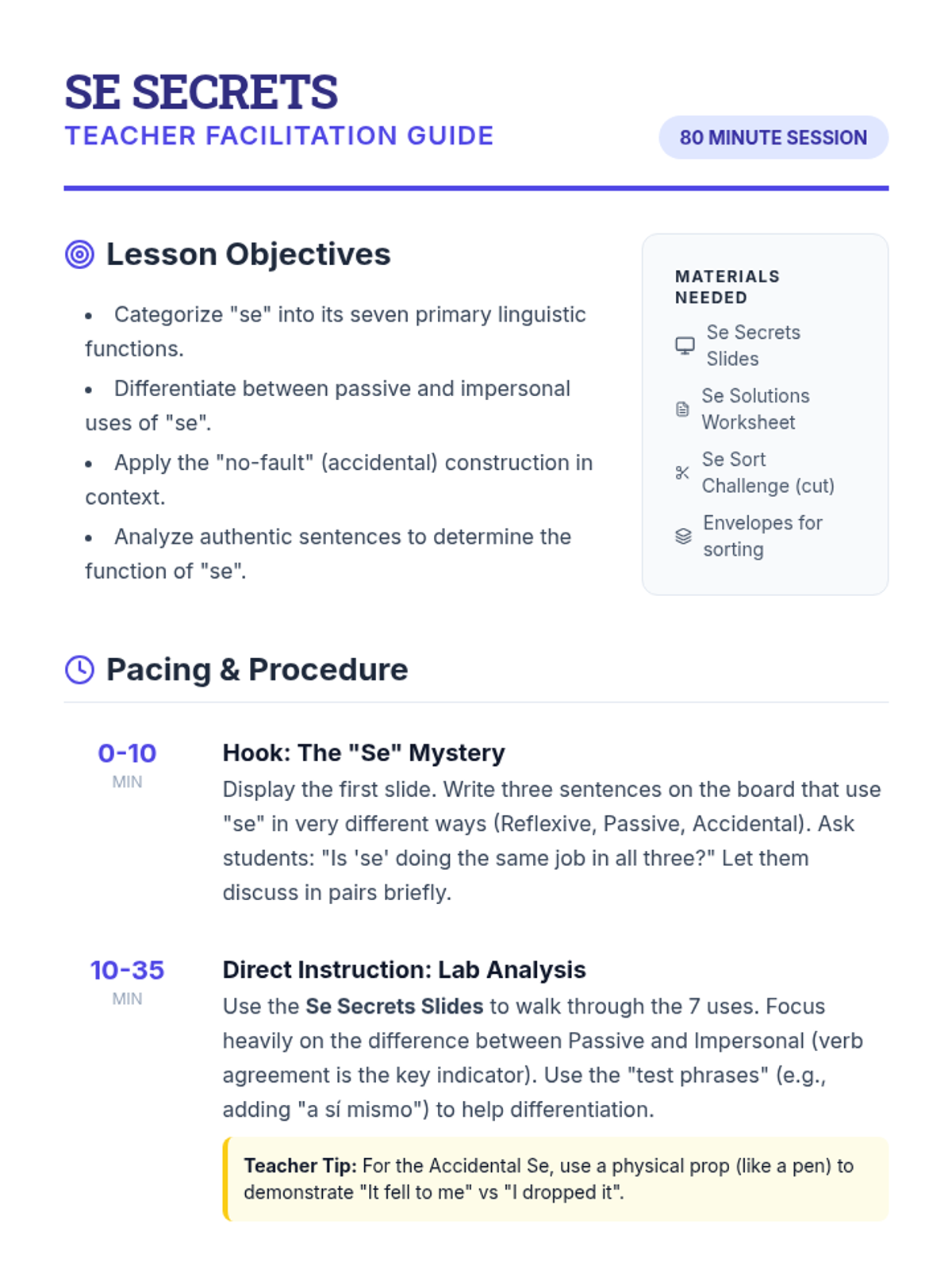
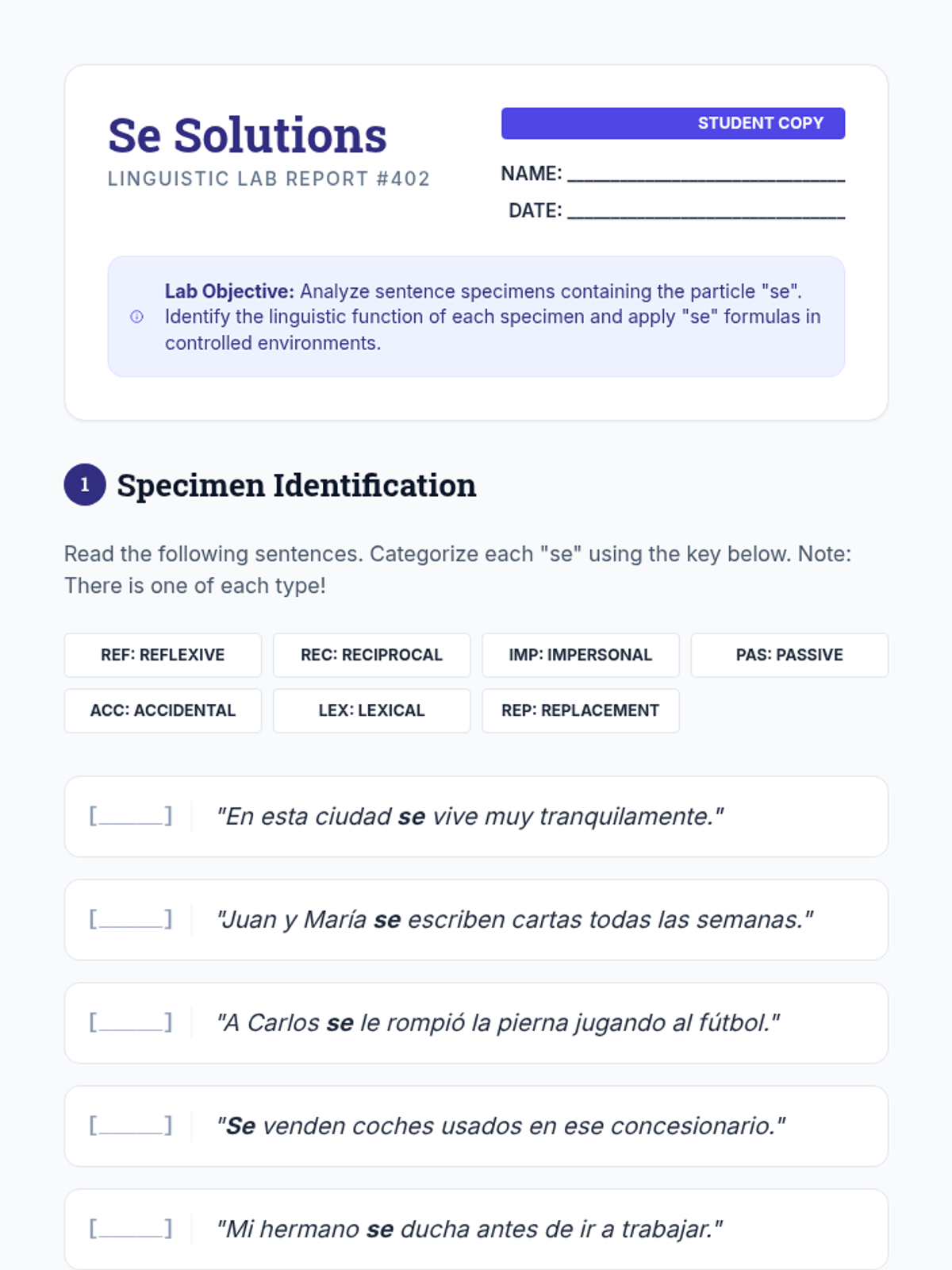
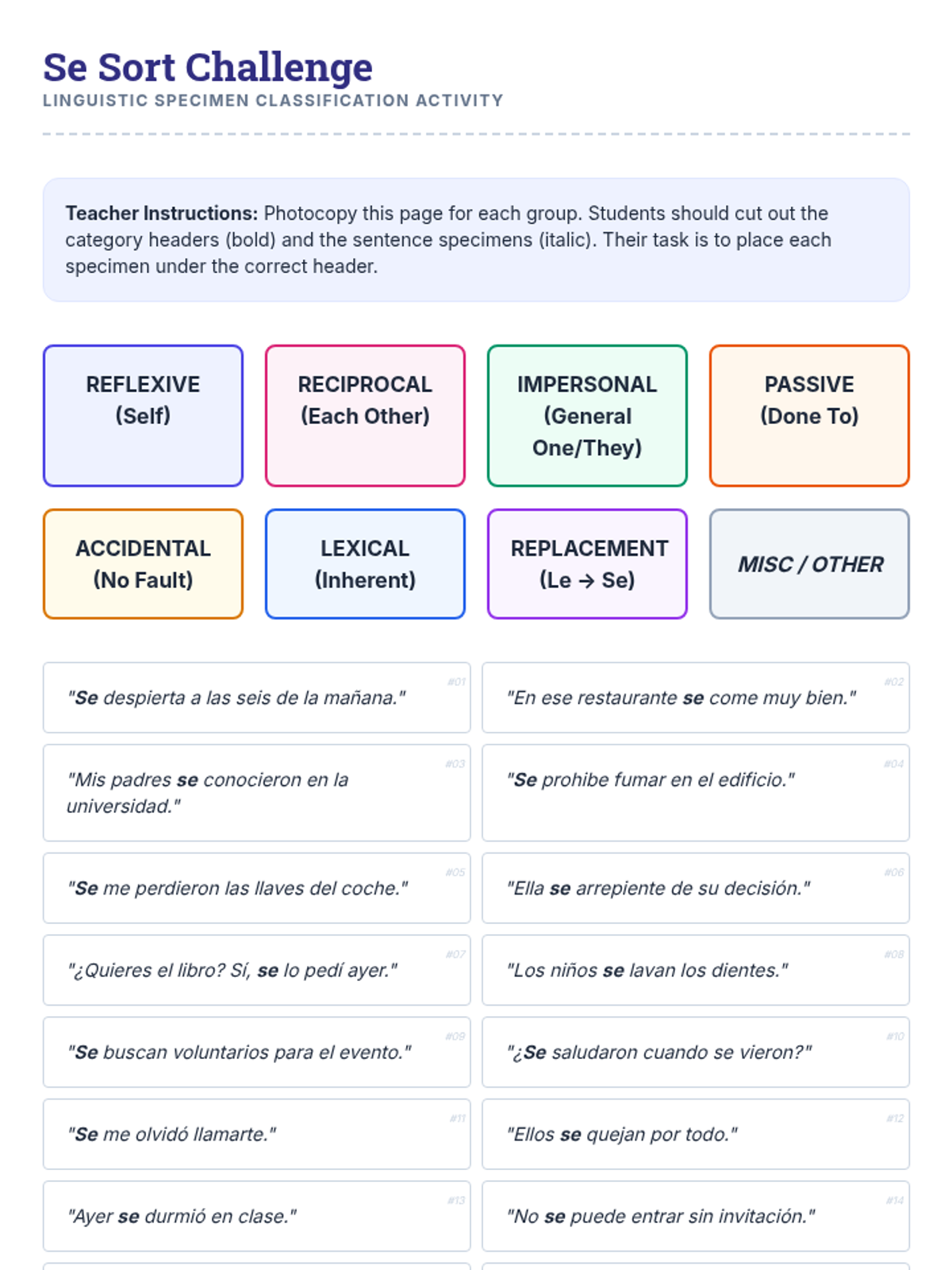
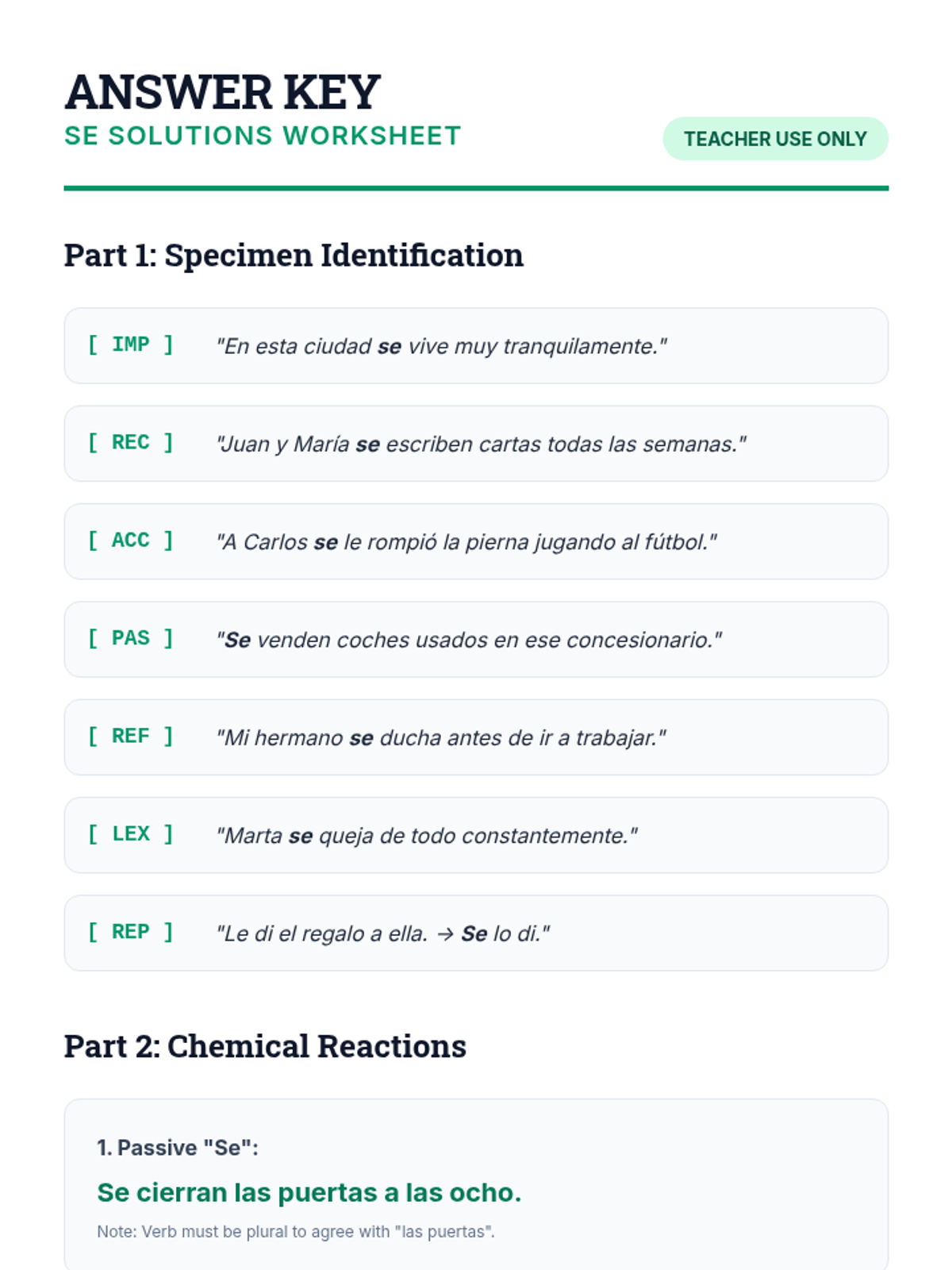
A comprehensive 80-minute lesson exploring the seven primary uses of 'se' in Spanish, featuring contextual analysis and hands-on practice.
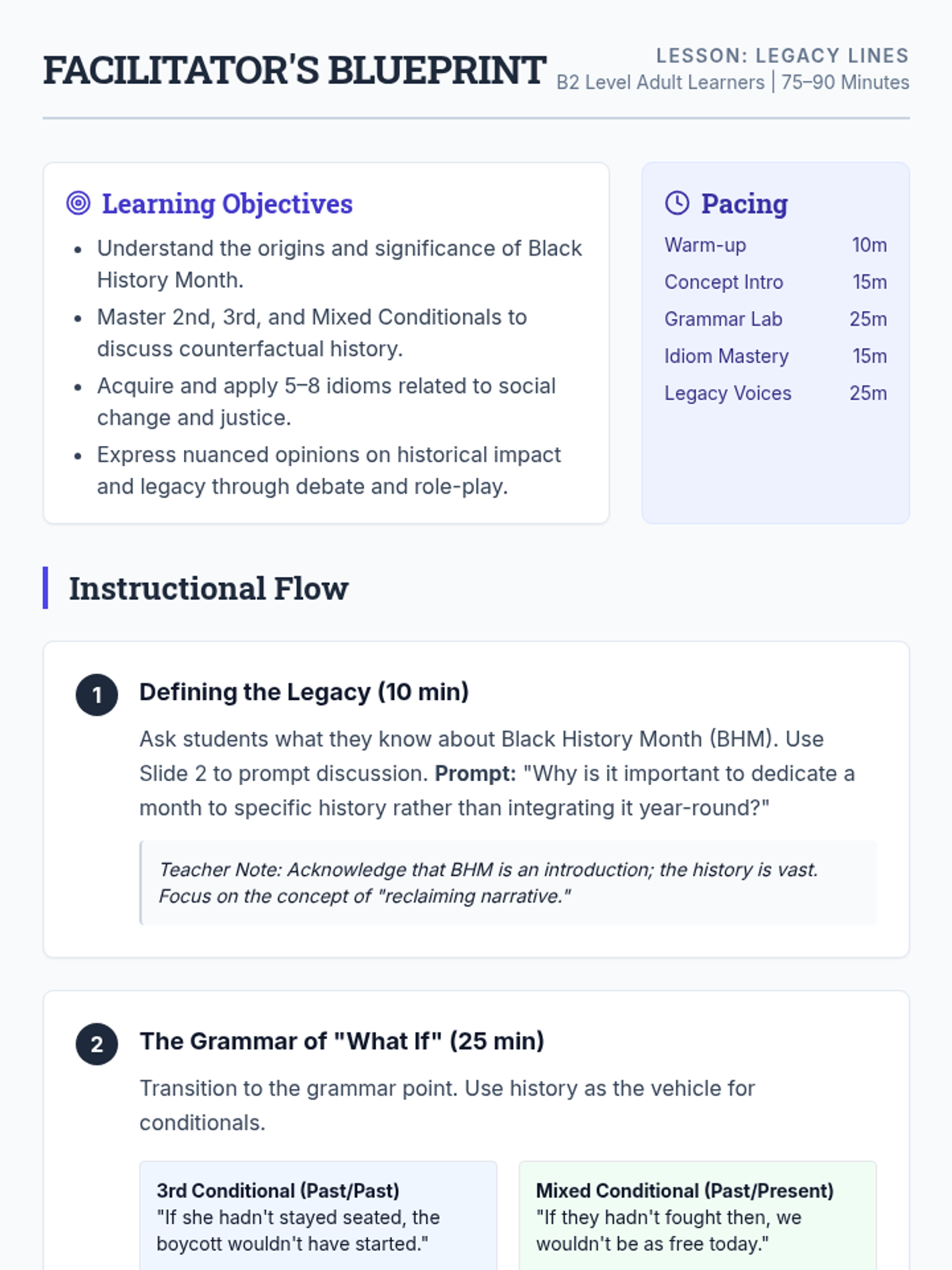
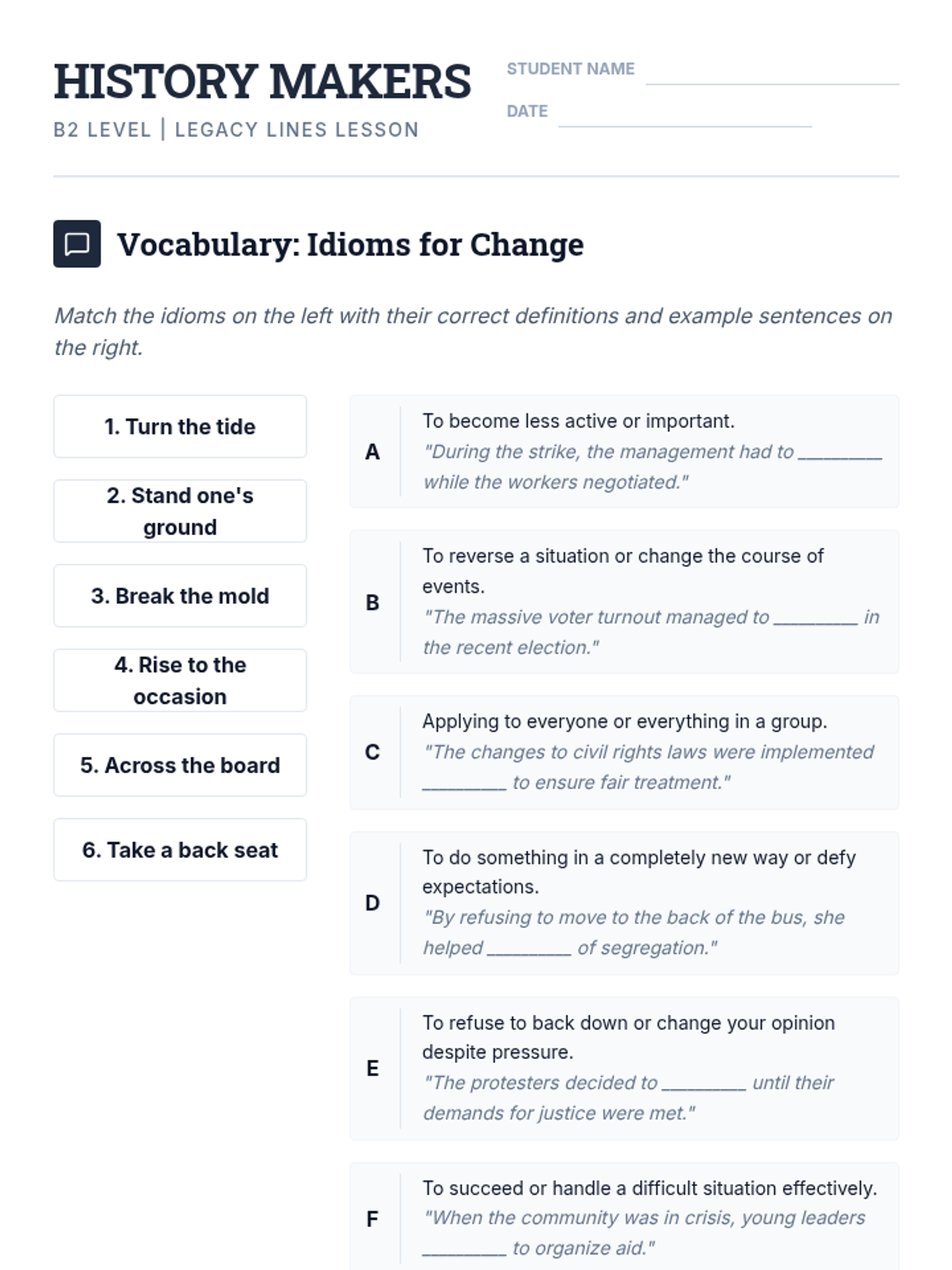
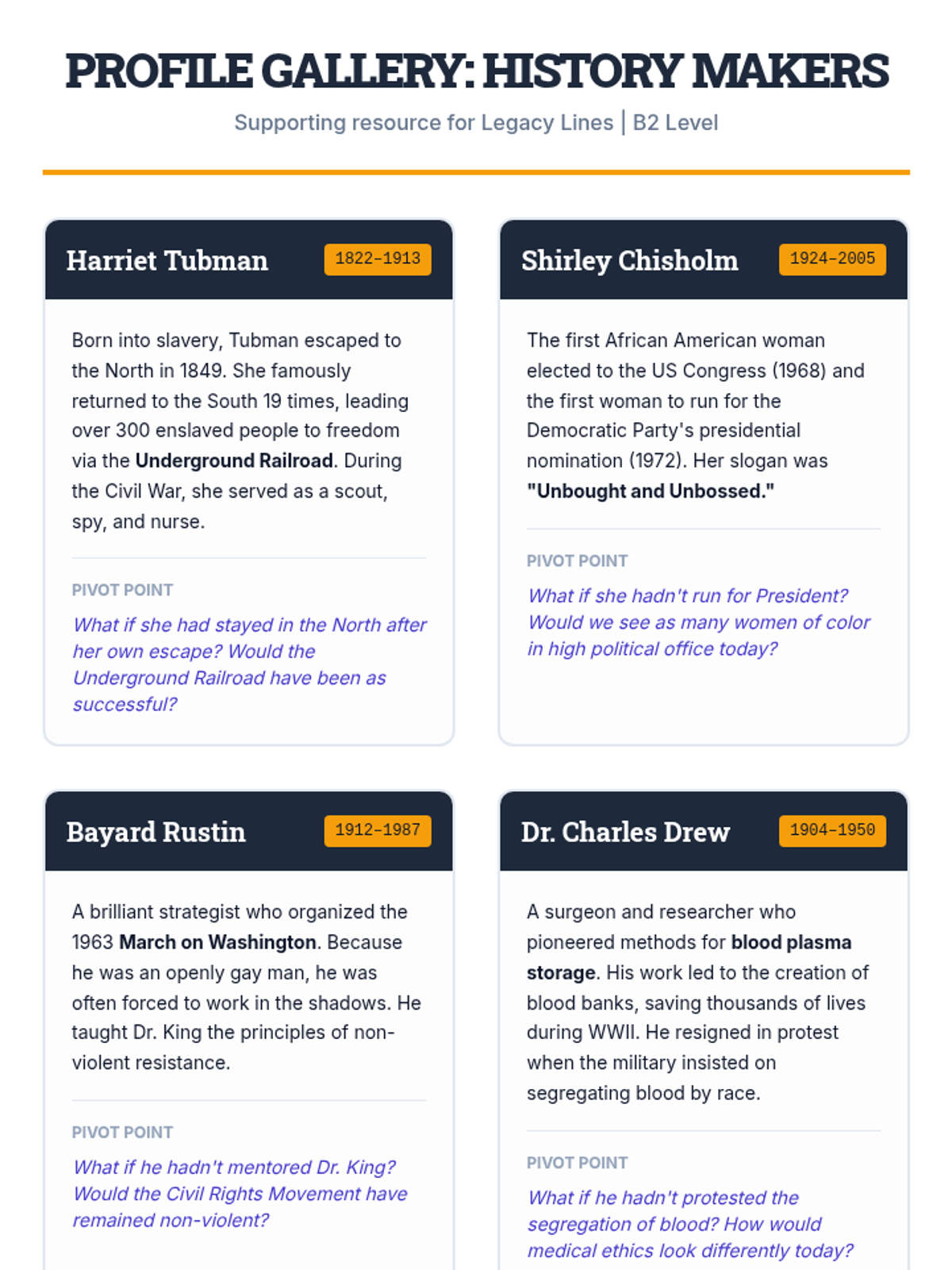
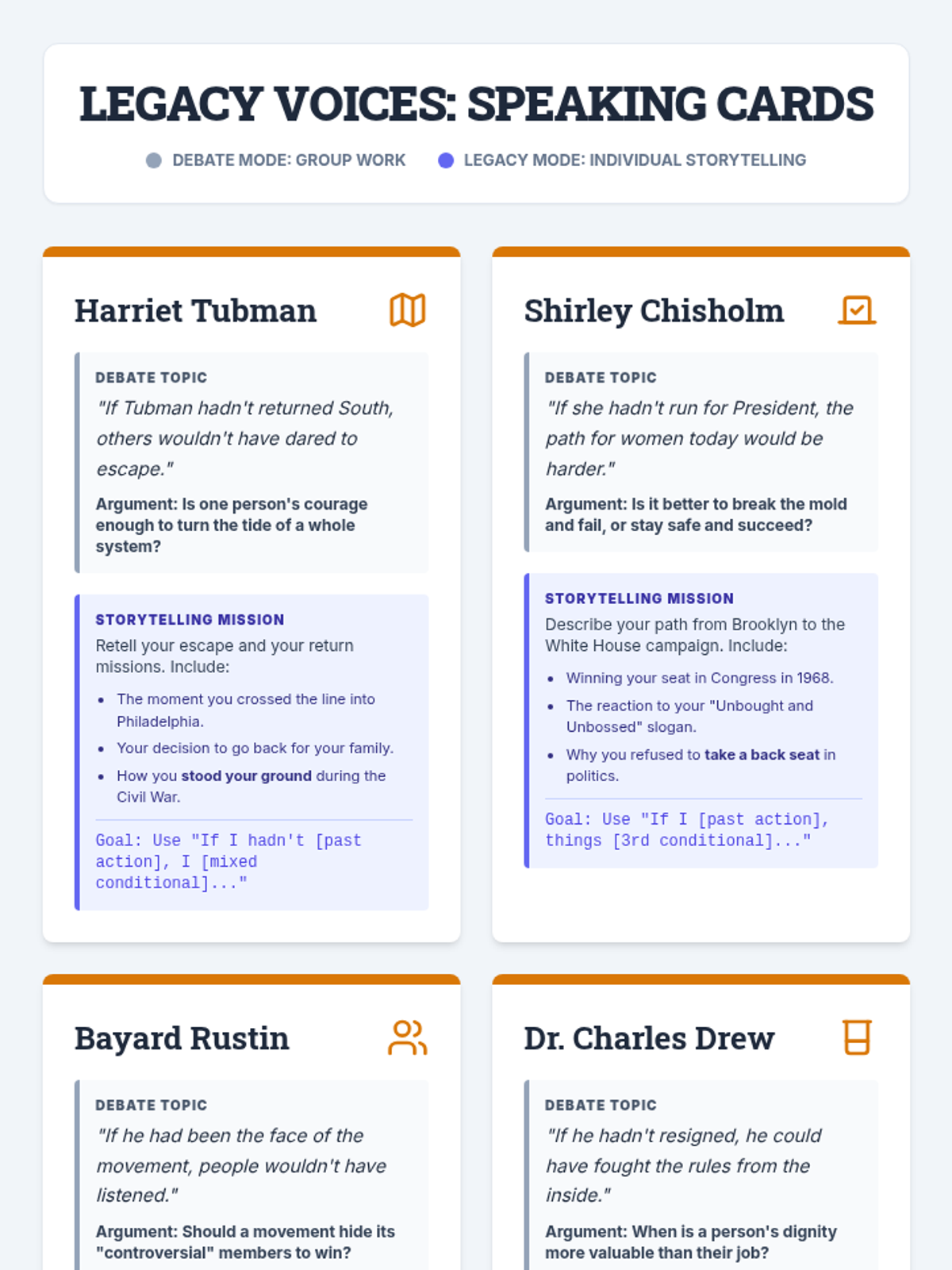
An introductory lesson for B2 adult students on Black History Month, focusing on counterfactual history using 2nd, 3rd, and mixed conditionals, alongside idioms for change and justice.
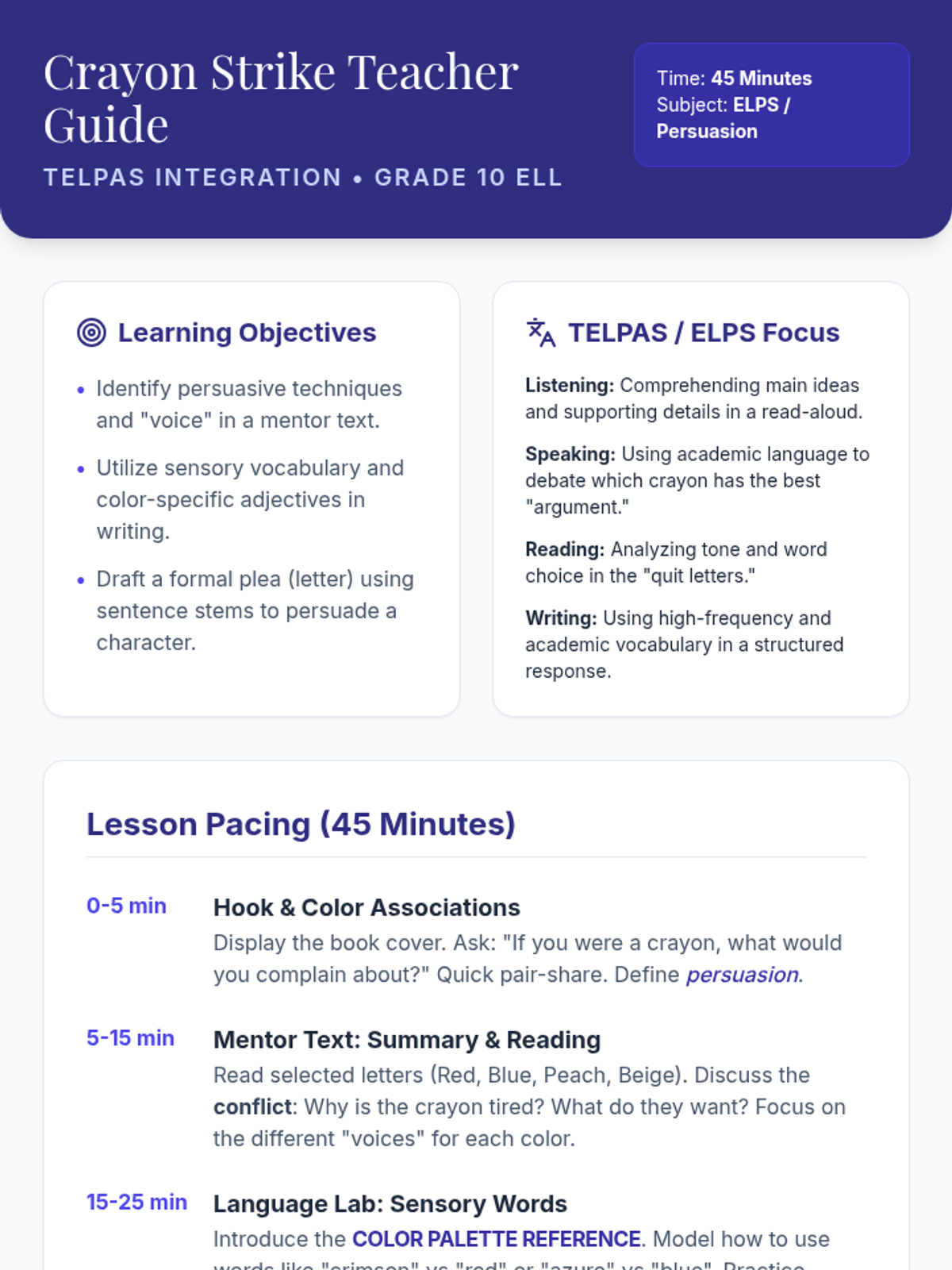
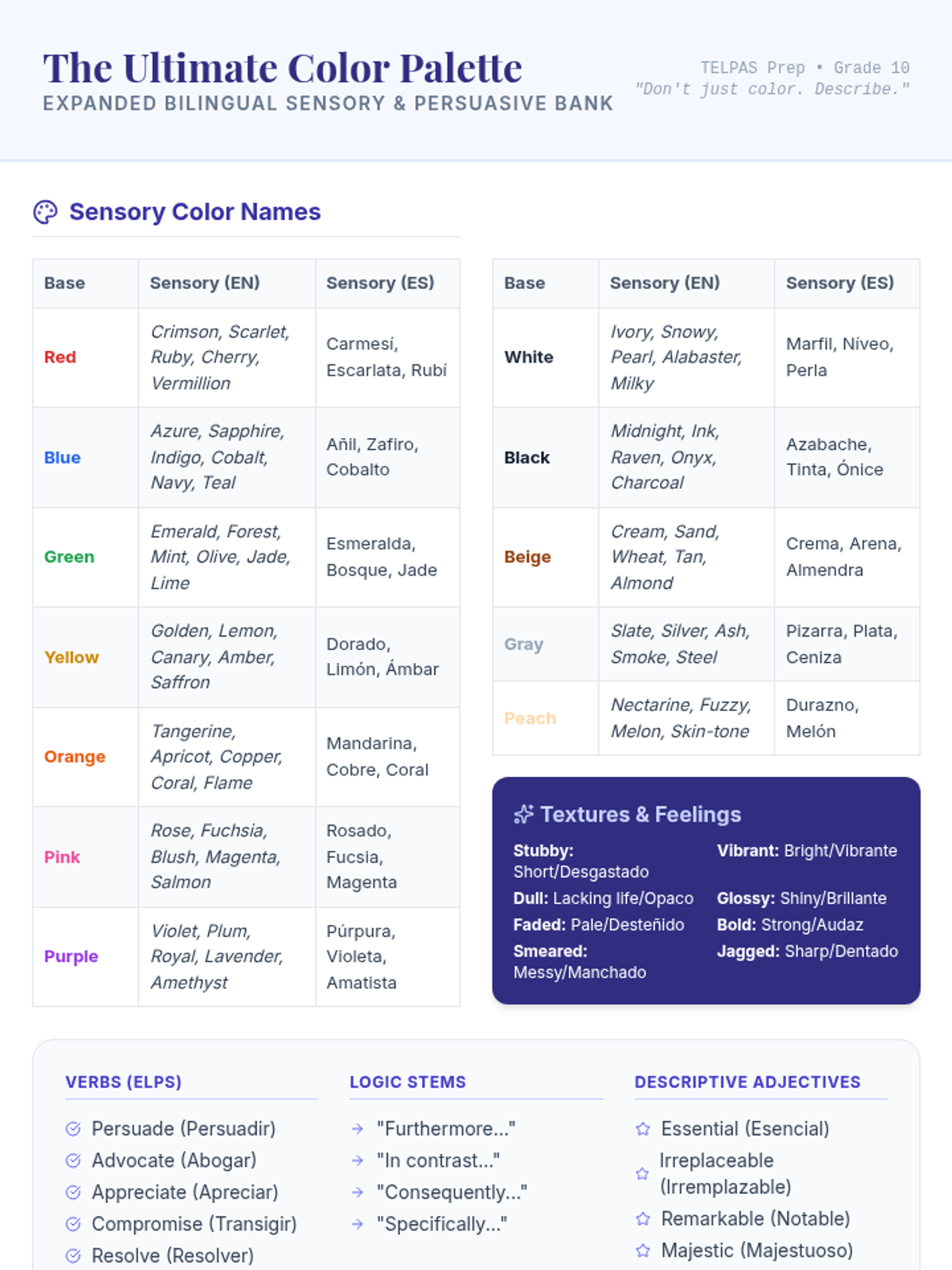
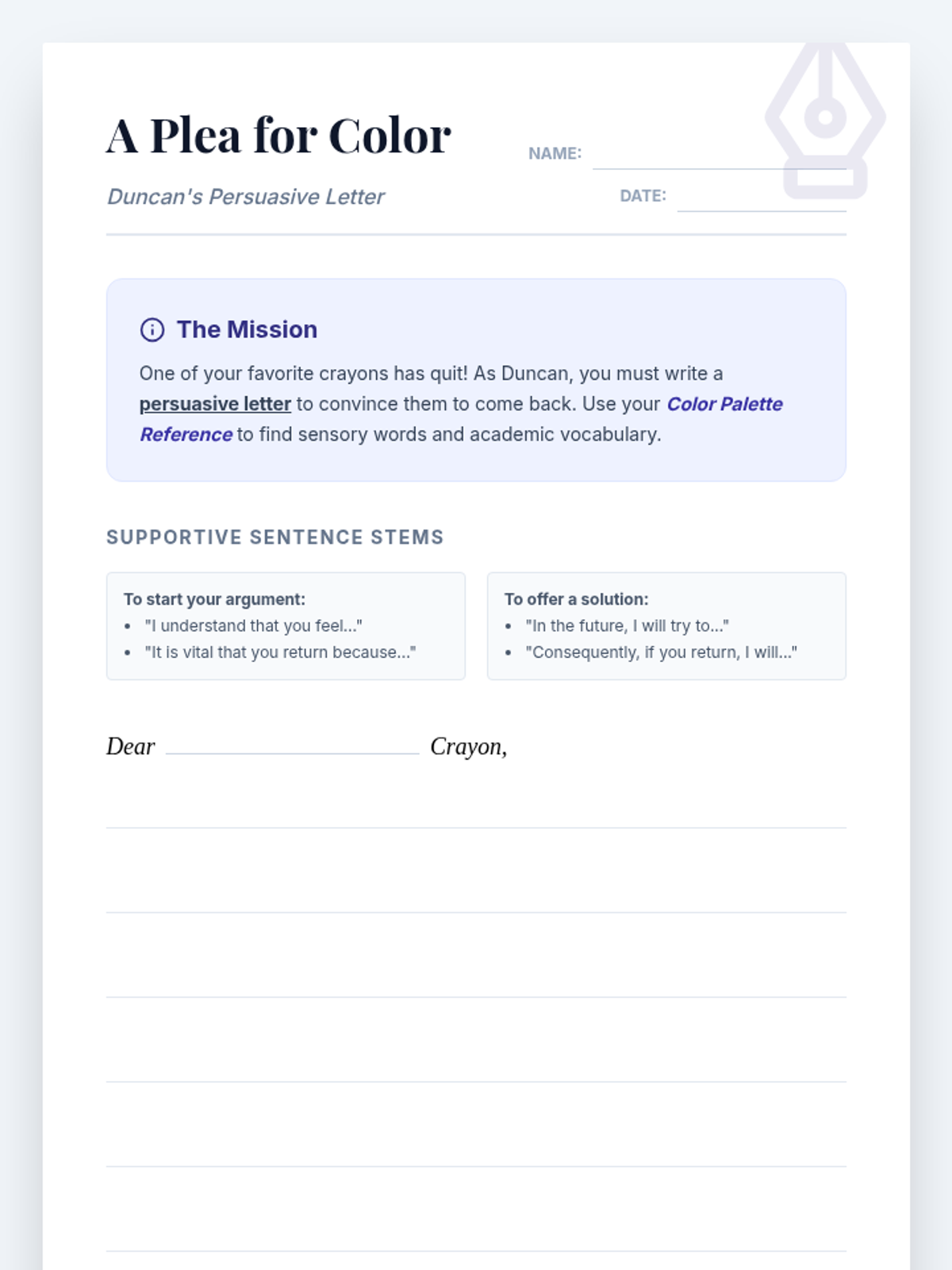
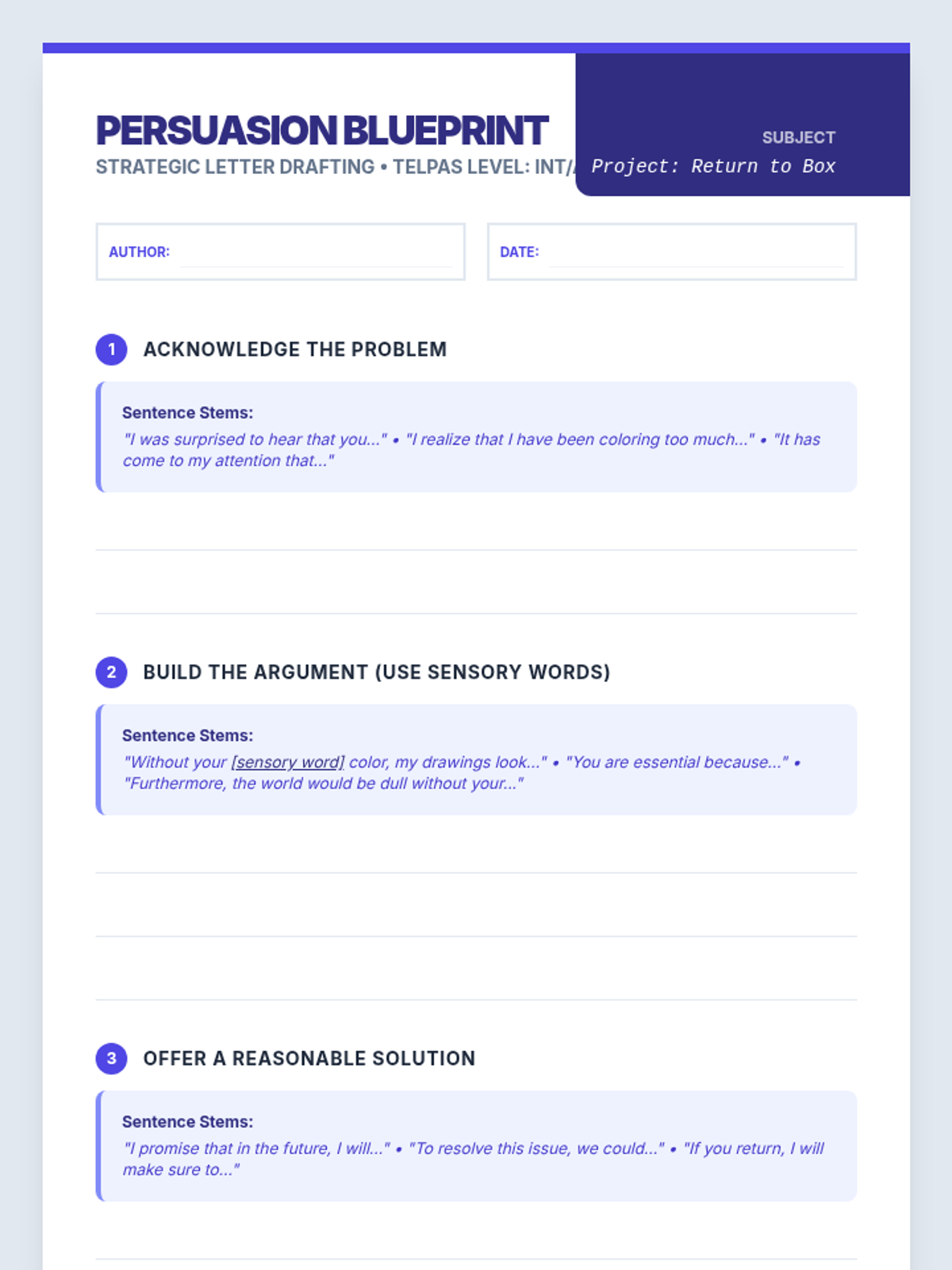
A 45-minute TELPAS-aligned lesson for 10th-grade ELLs using 'The Day the Crayons Quit' to practice persuasive writing, sensory language, and oral communication.
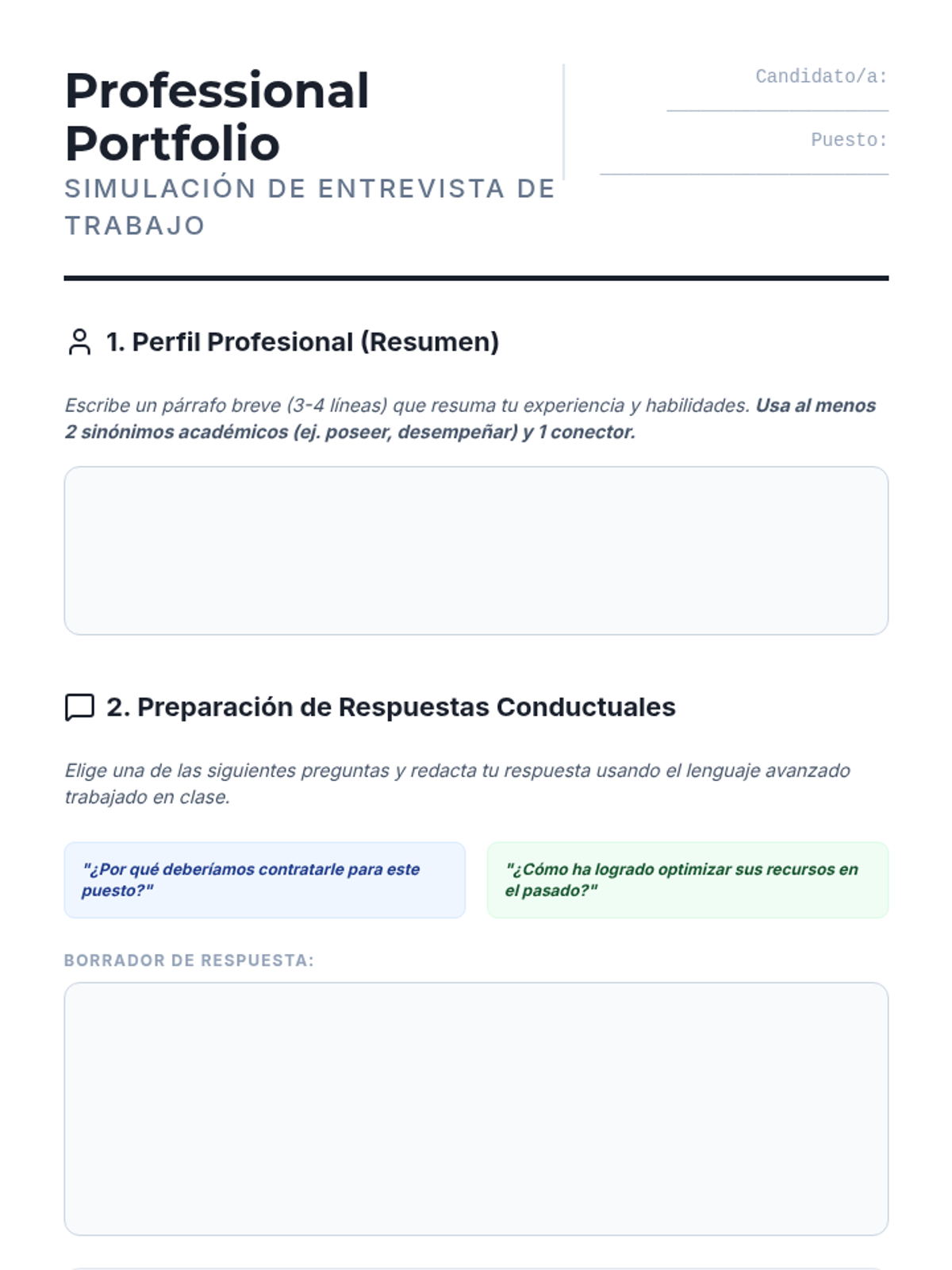
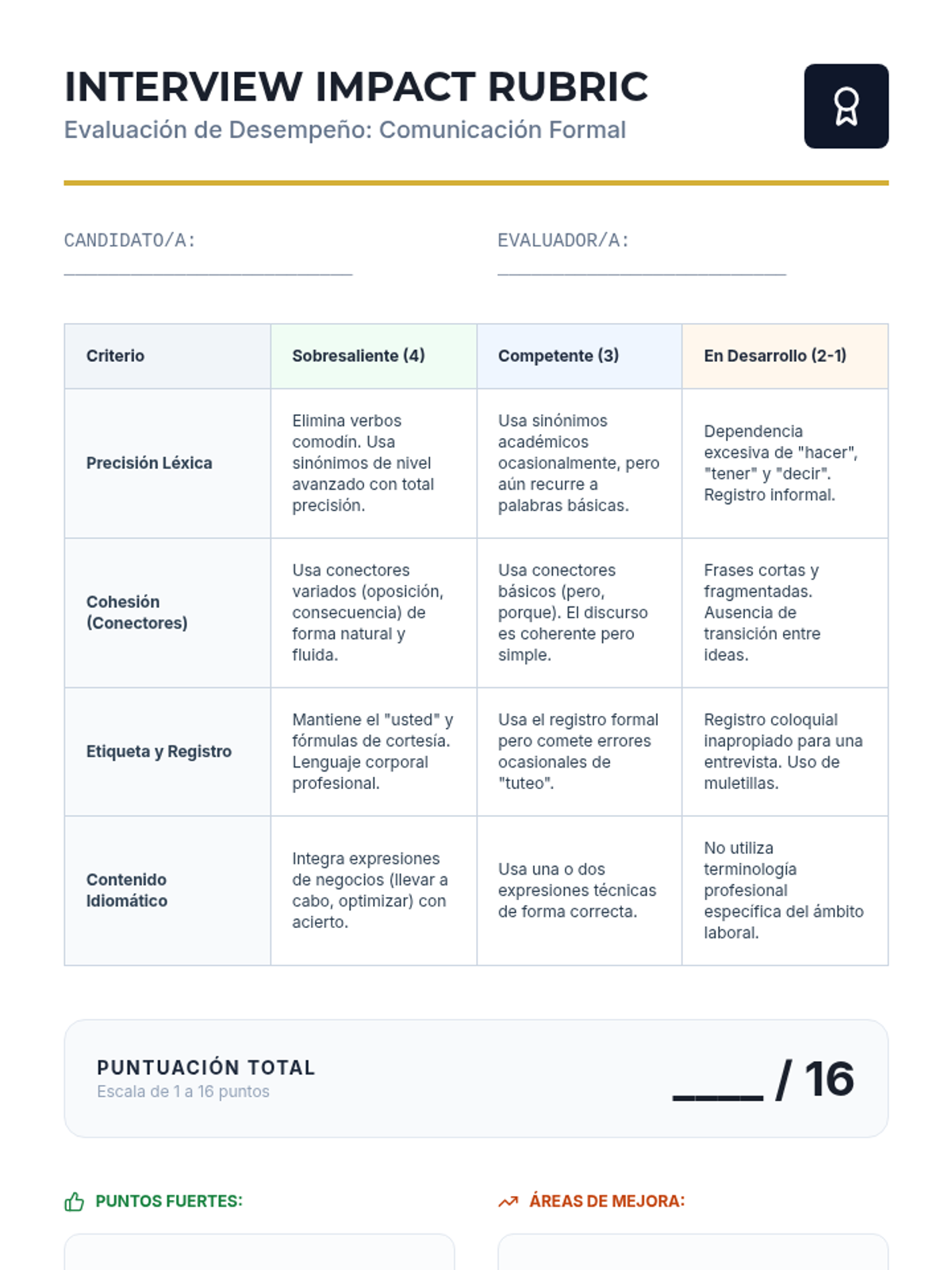
The sequence culminates in a professional interview simulation where students synthesize all acquired skills. They demonstrate oral proficiency and mastery of formal registers in a mock hiring environment.
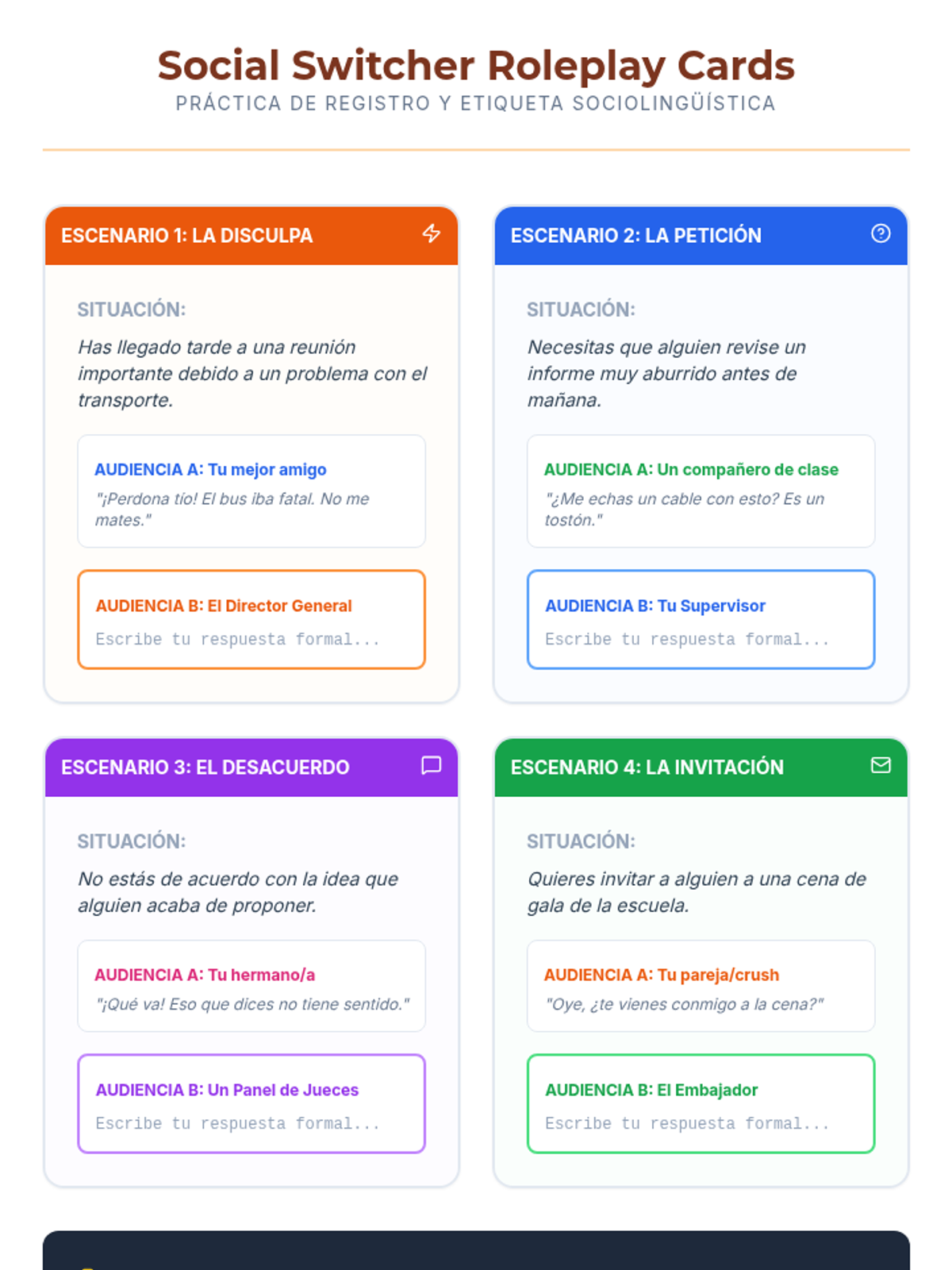
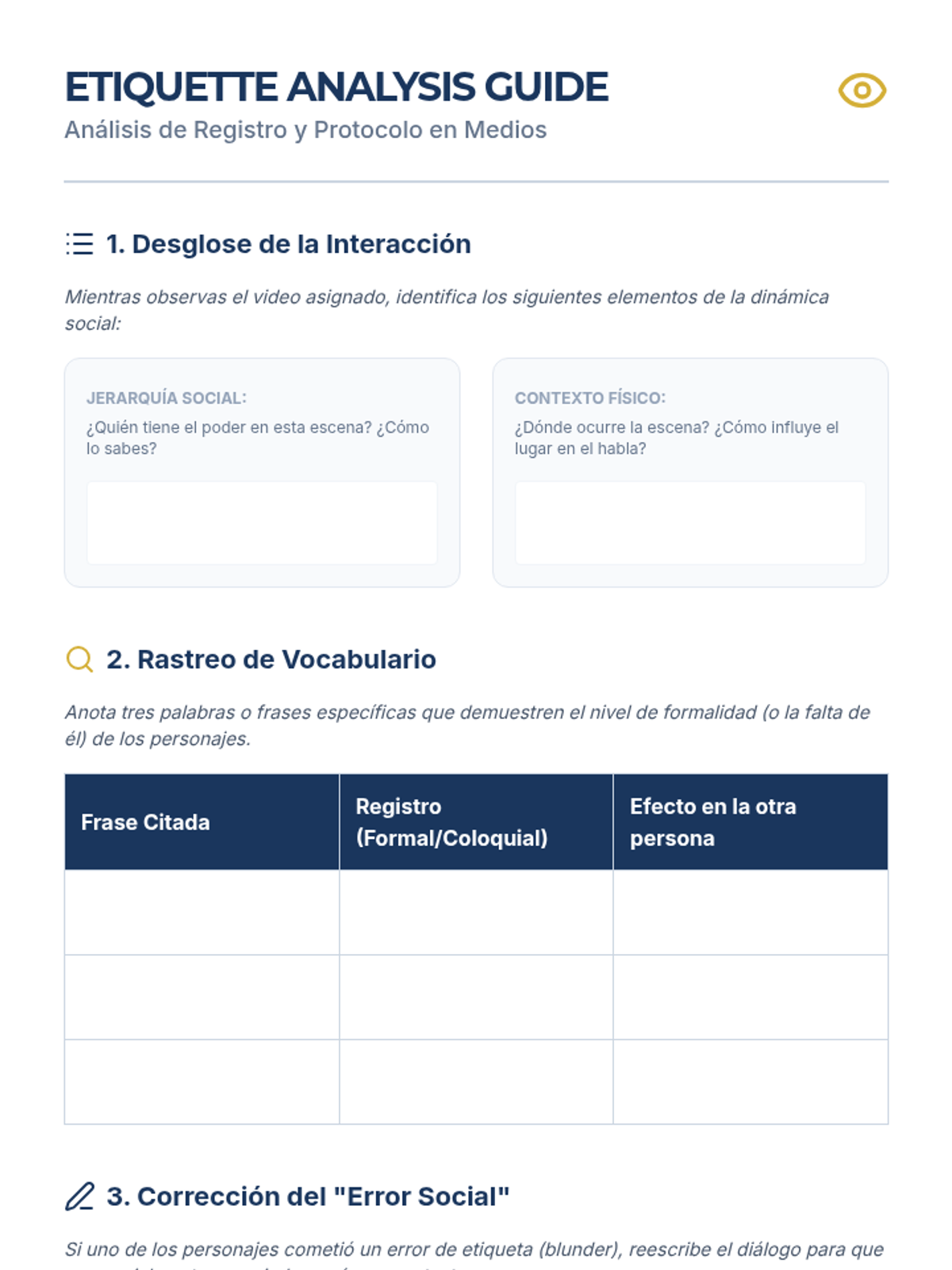
Students investigate the nuances of 'tú' vs 'usted' and formal etiquette in diverse social hierarchies. They practice code-switching based on audience and context.
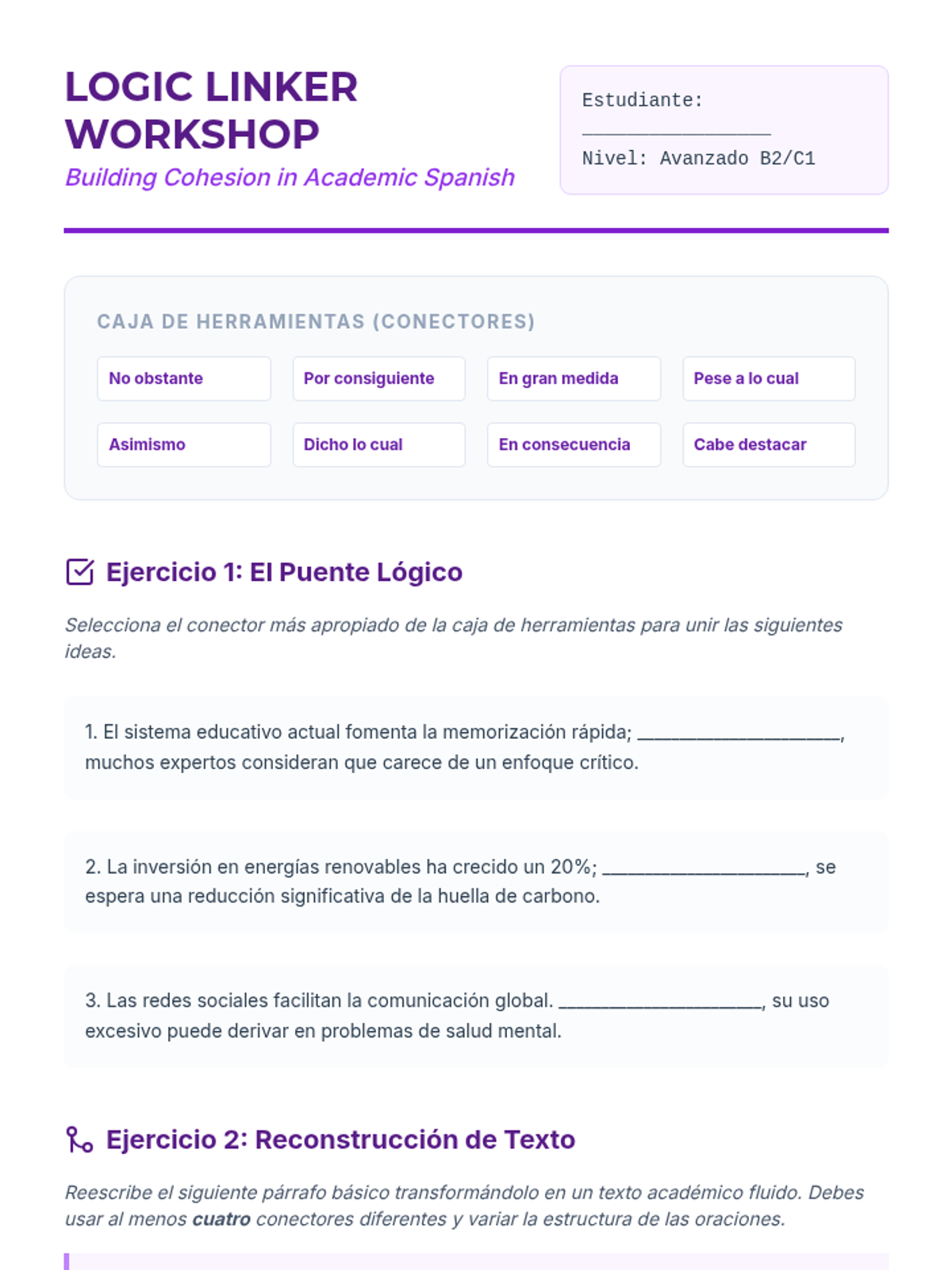
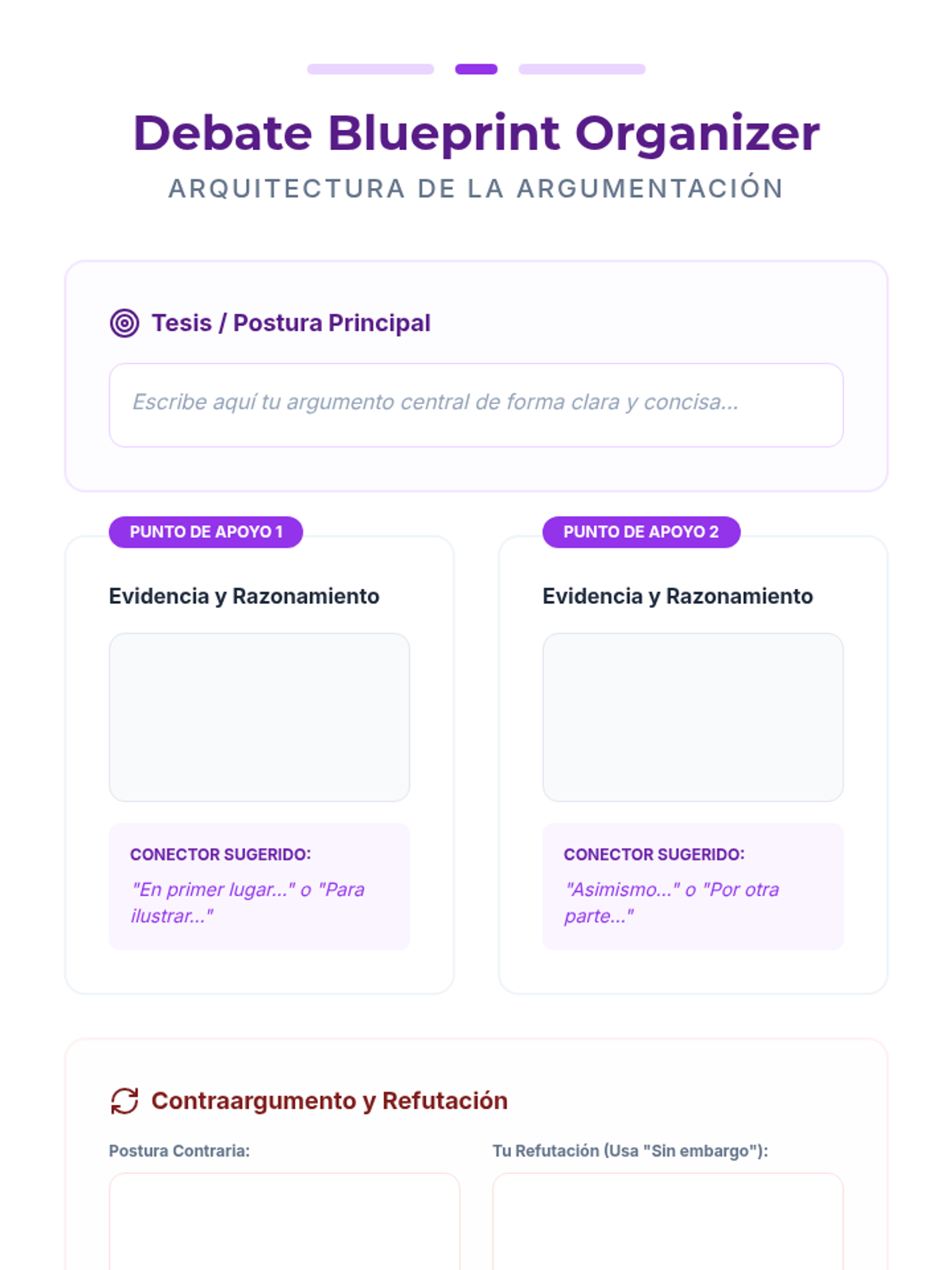
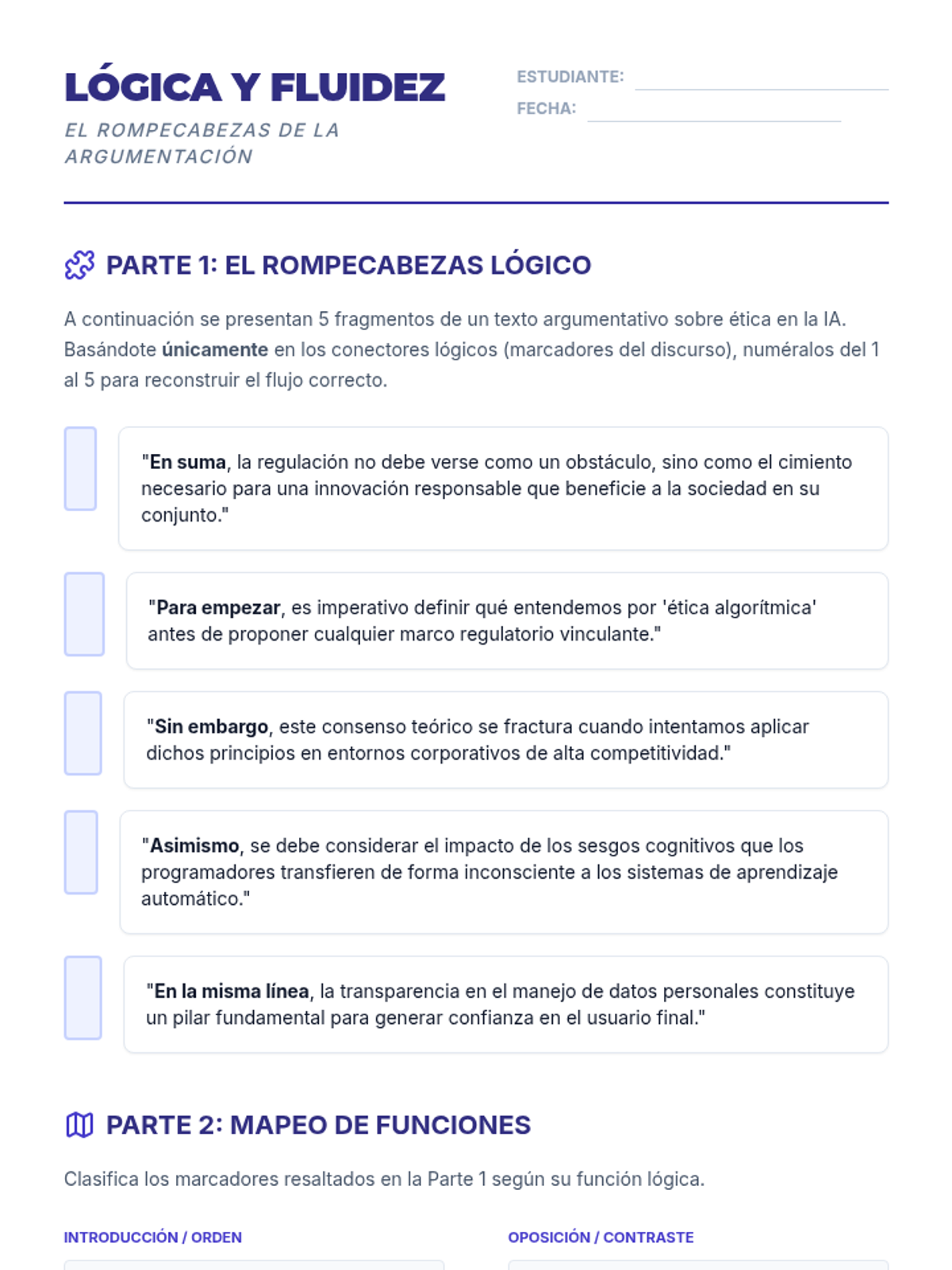
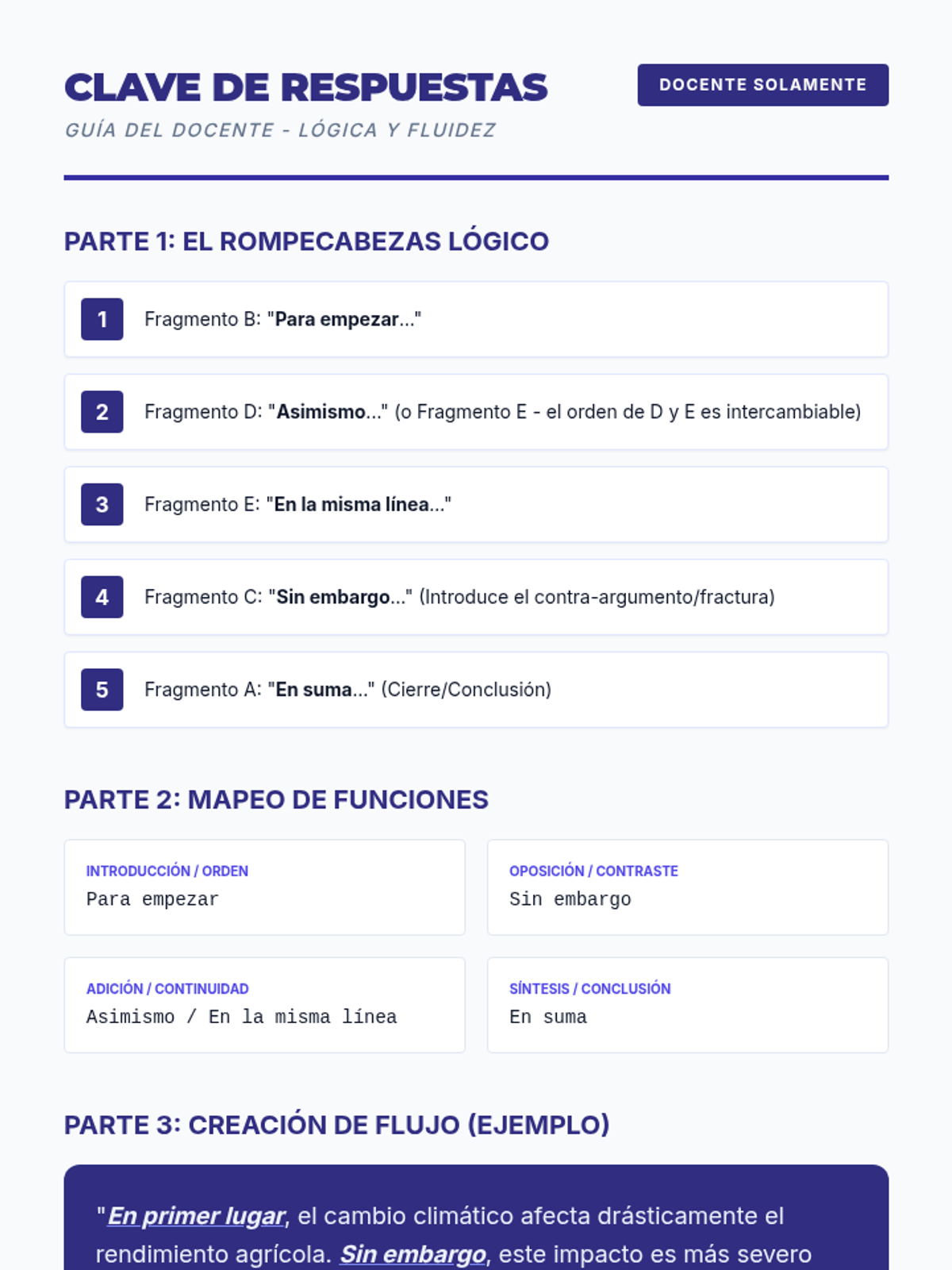
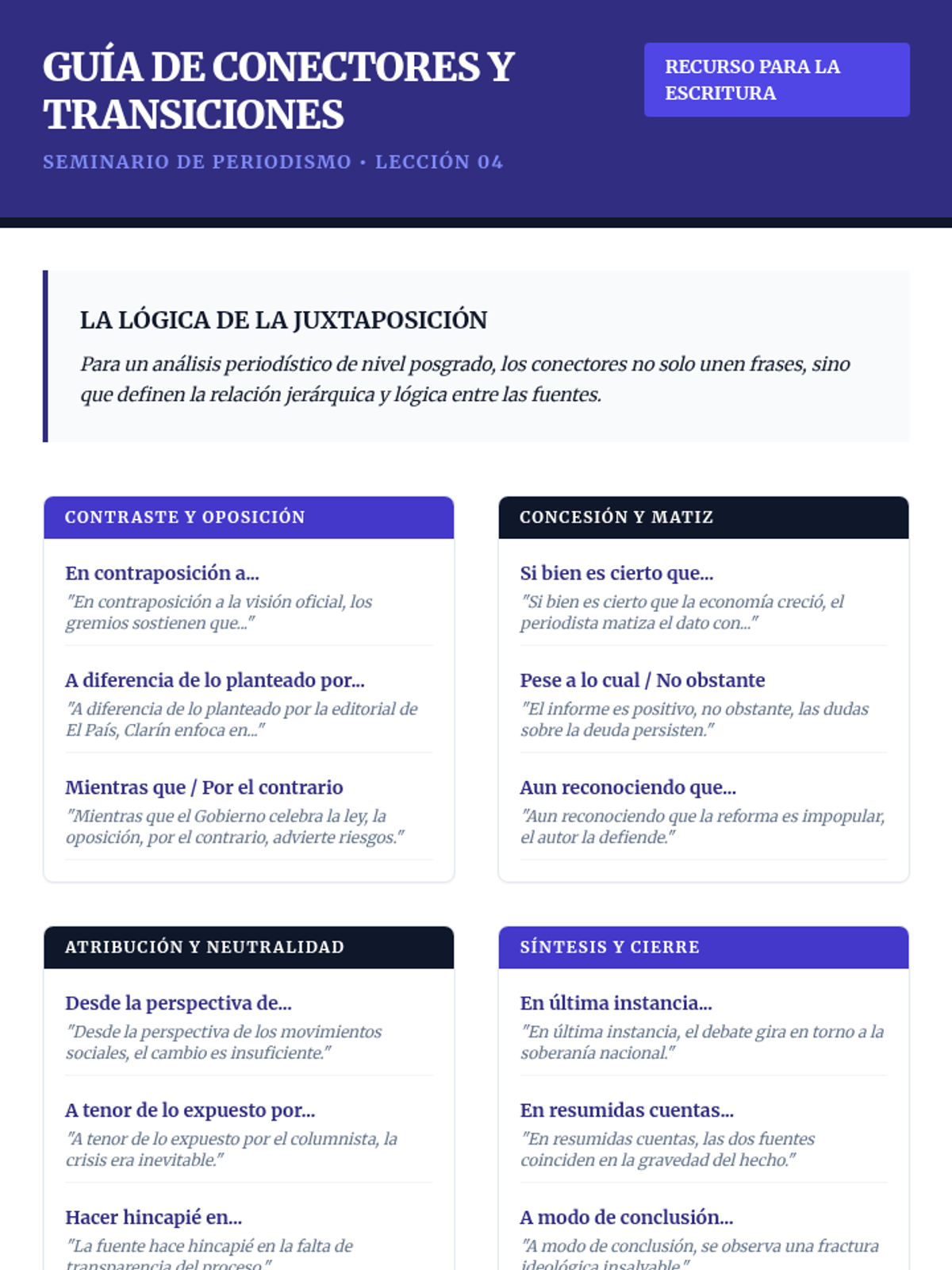
This lesson focuses on transition words and logical connectors to build cohesive academic arguments. Students practice complex sentence structures required for high-level argumentation.
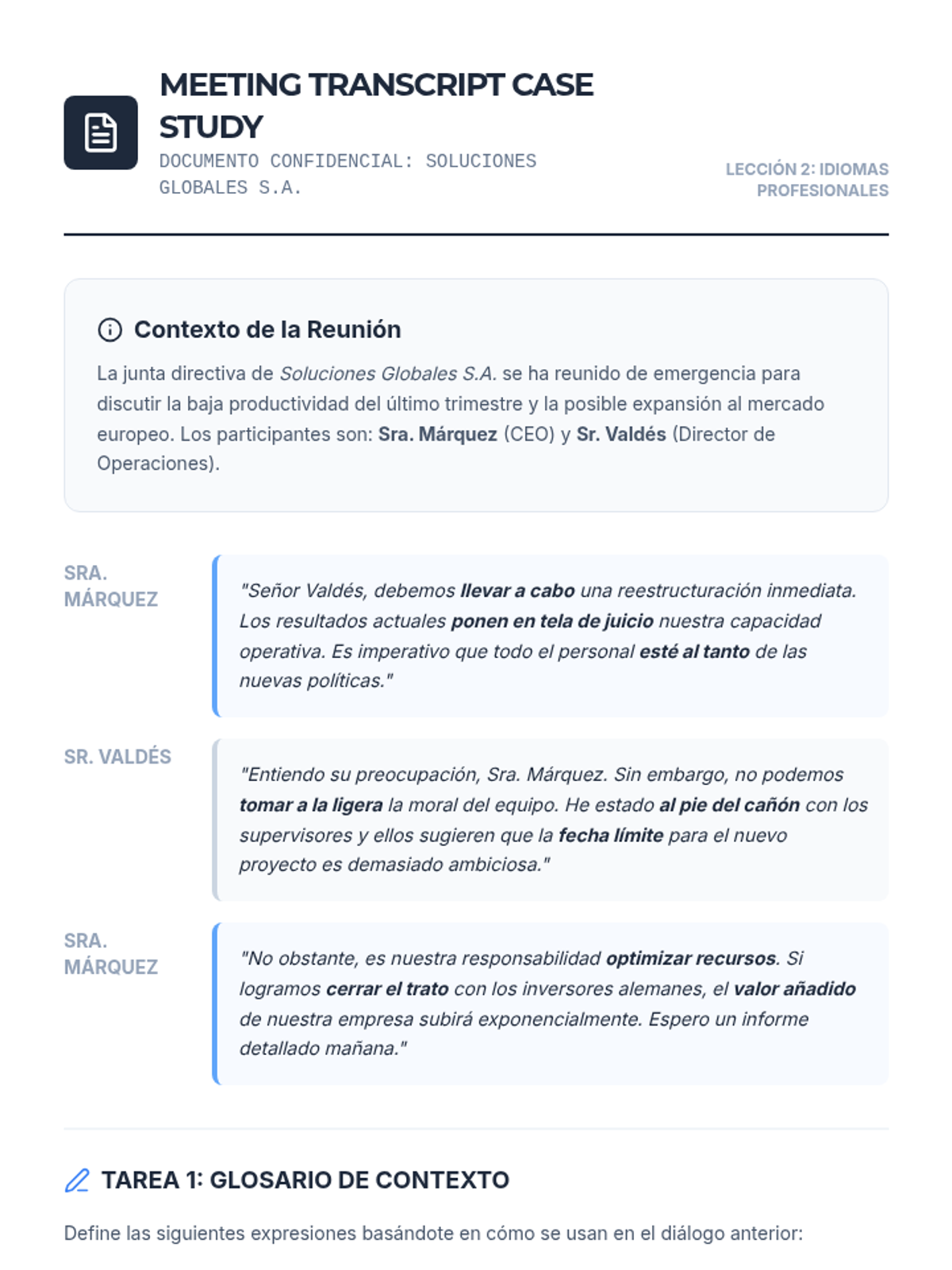
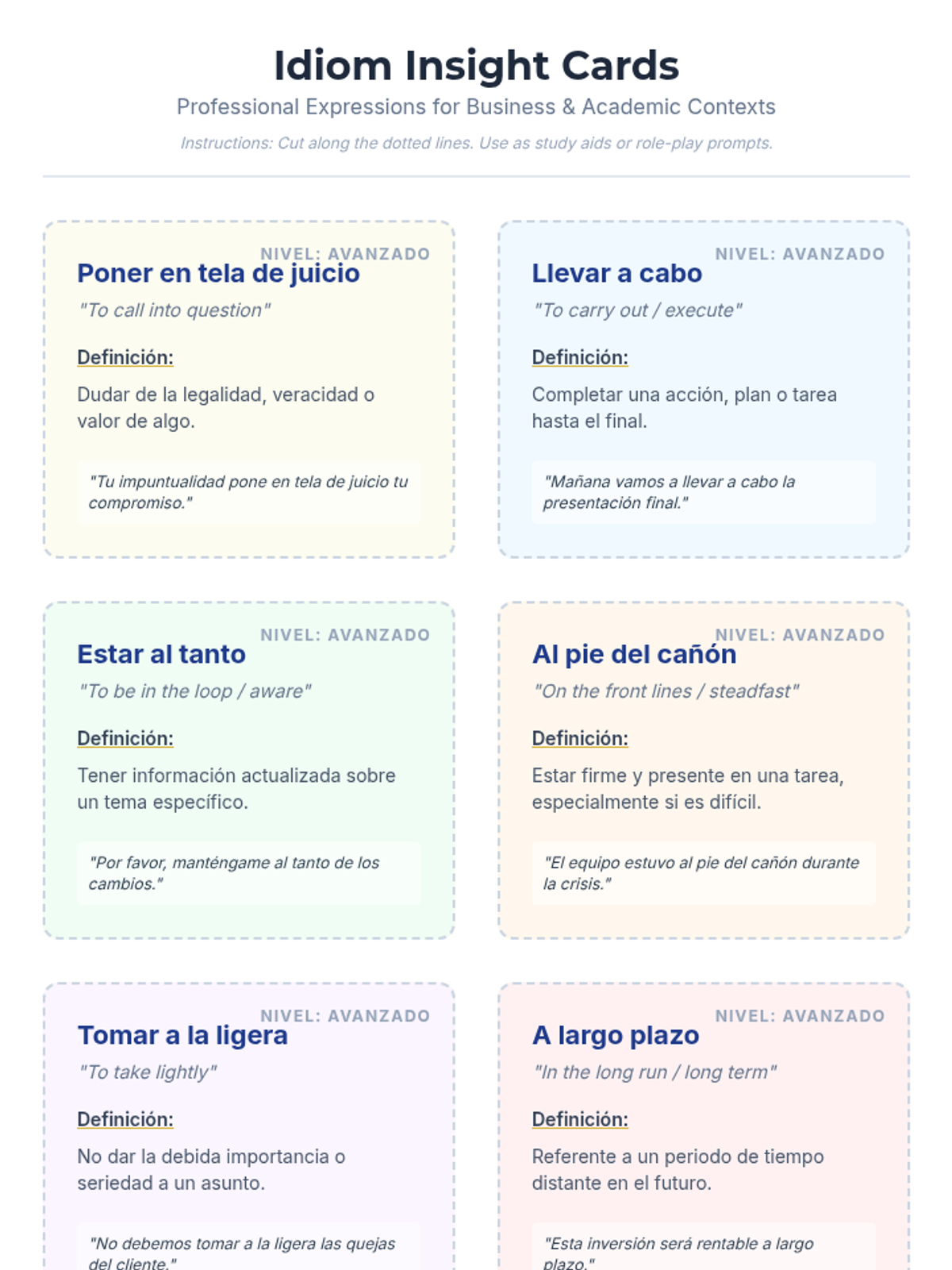
Learners acquire and apply idiomatic expressions and terminology specific to professional environments. They analyze workplace communication to identify literal vs. figurative meanings.
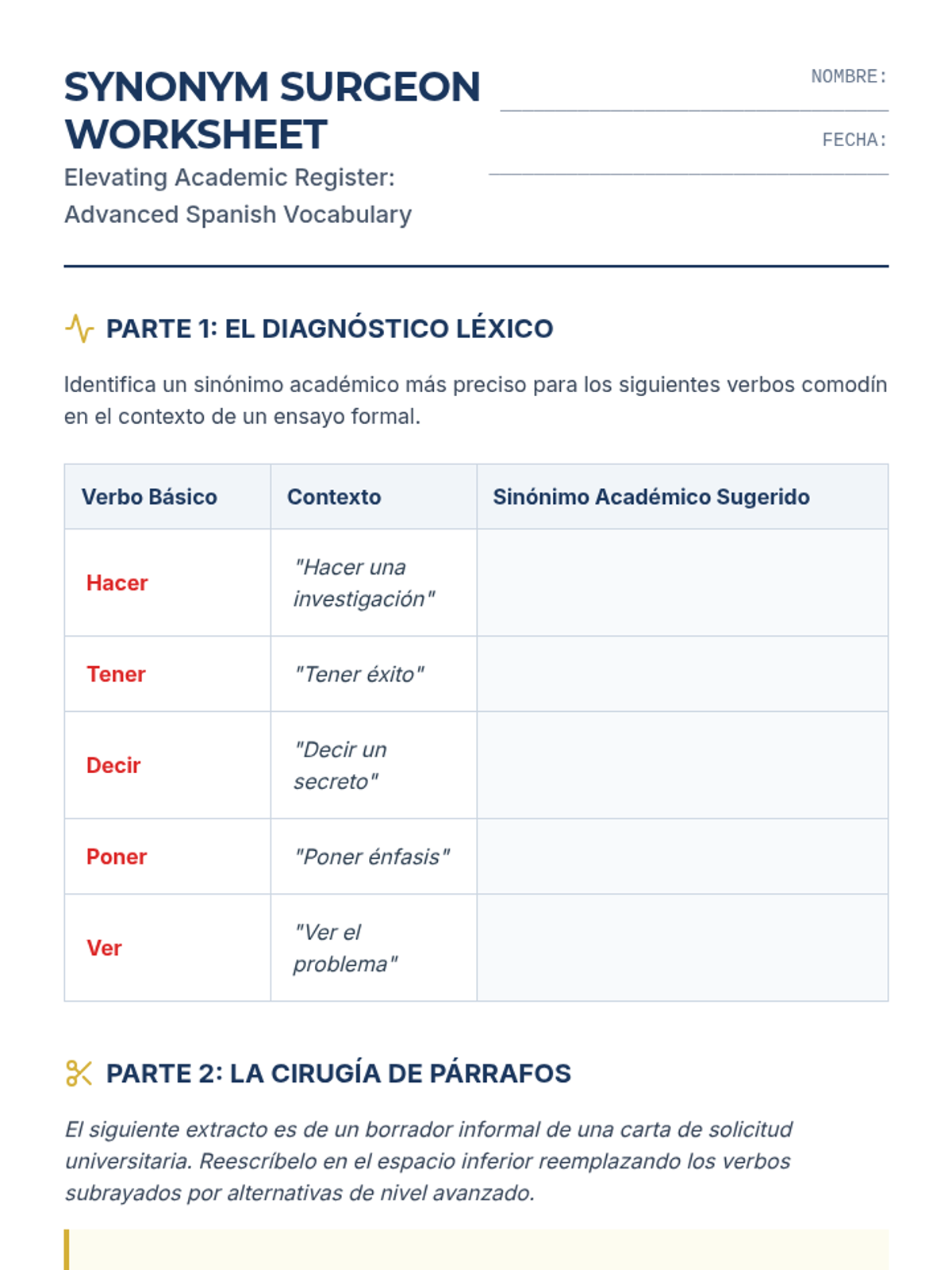
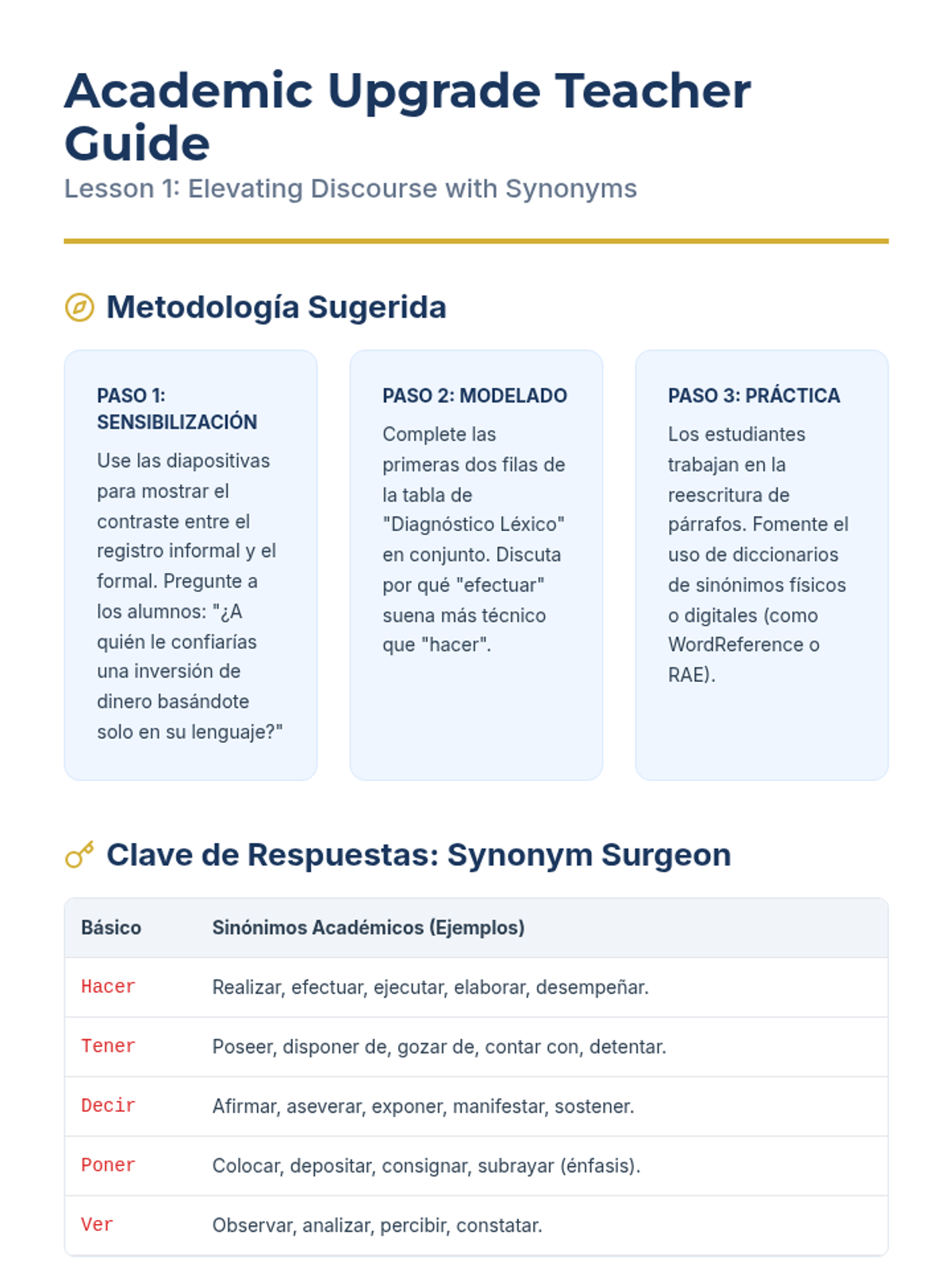
Students replace generic 'helper' verbs with high-level academic synonyms to elevate their written and spoken register. They analyze the impact of vocabulary choice on professional credibility.
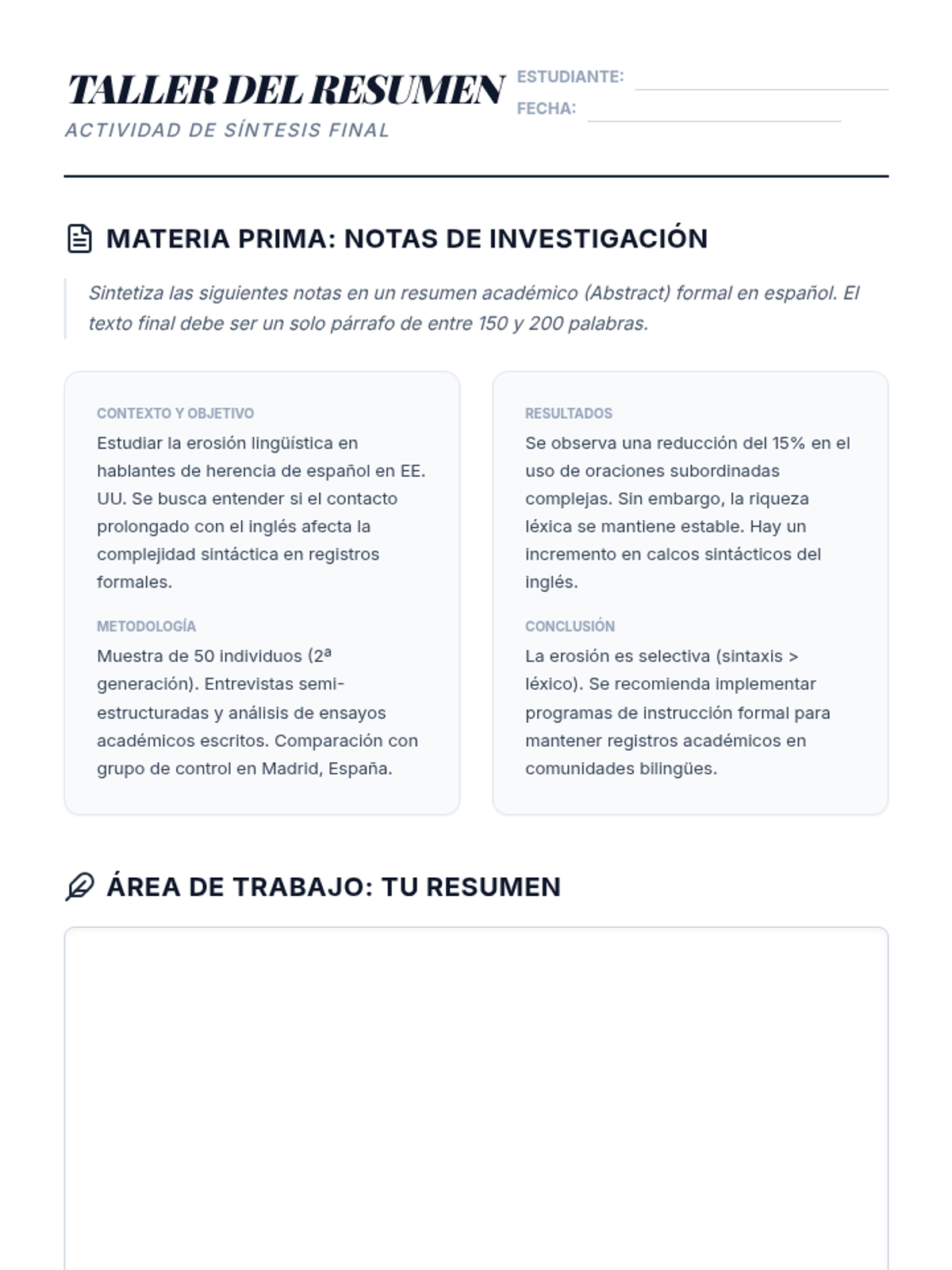
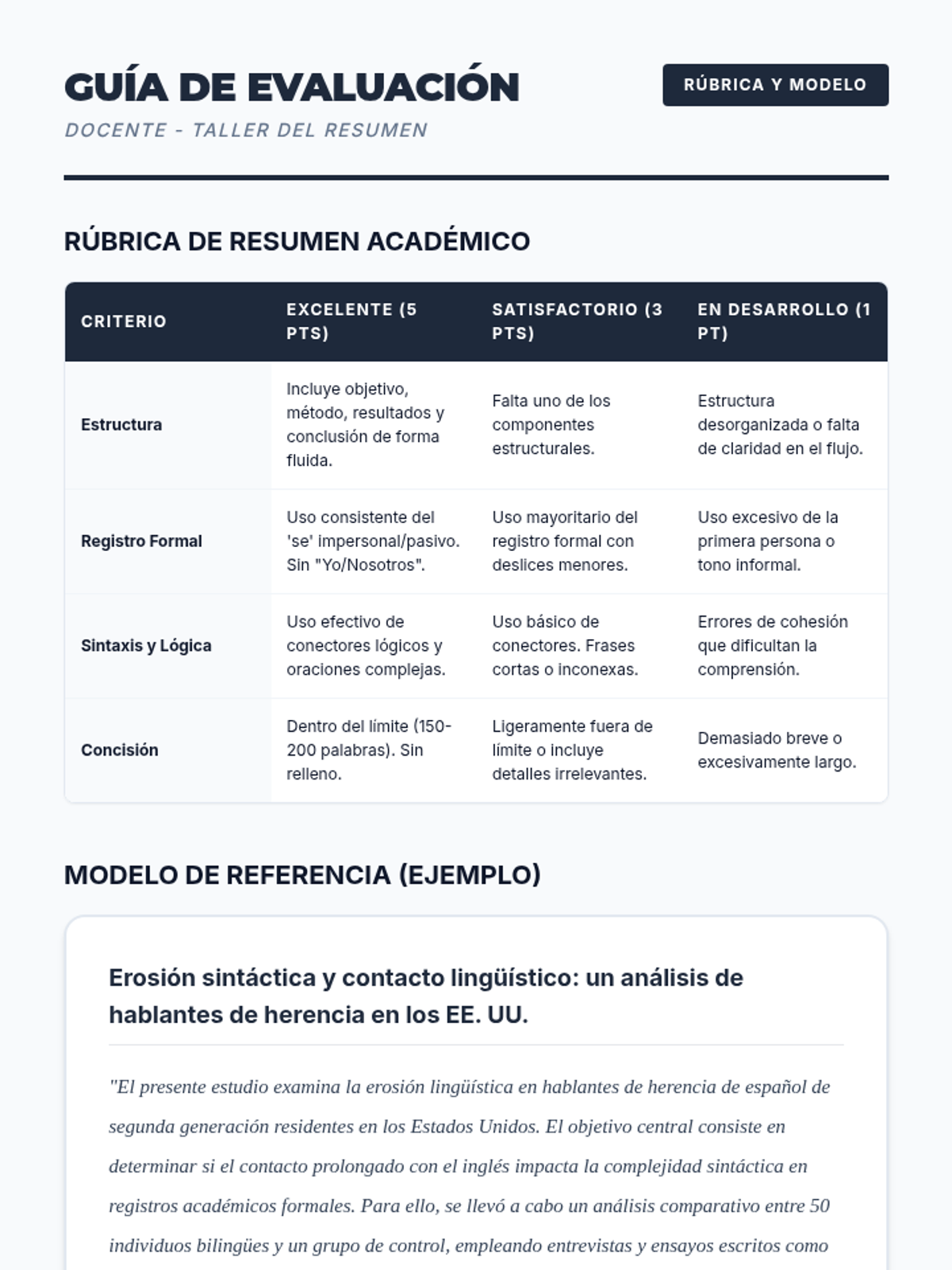
A culminating workshop where students synthesize research findings into formal academic abstracts in Spanish.
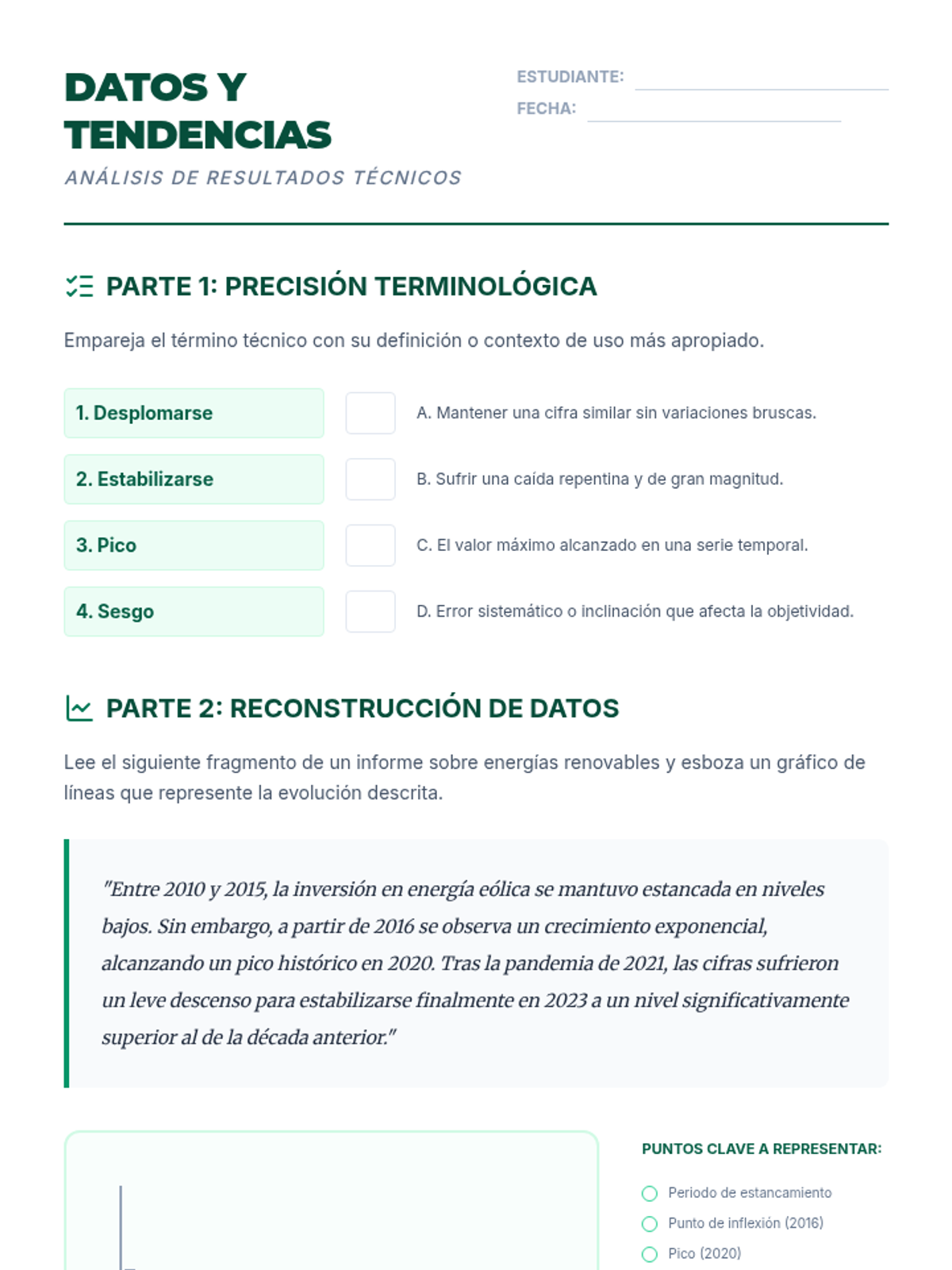
Focuses on the vocabulary of data description and the synthesis of graphical information with technical prose.
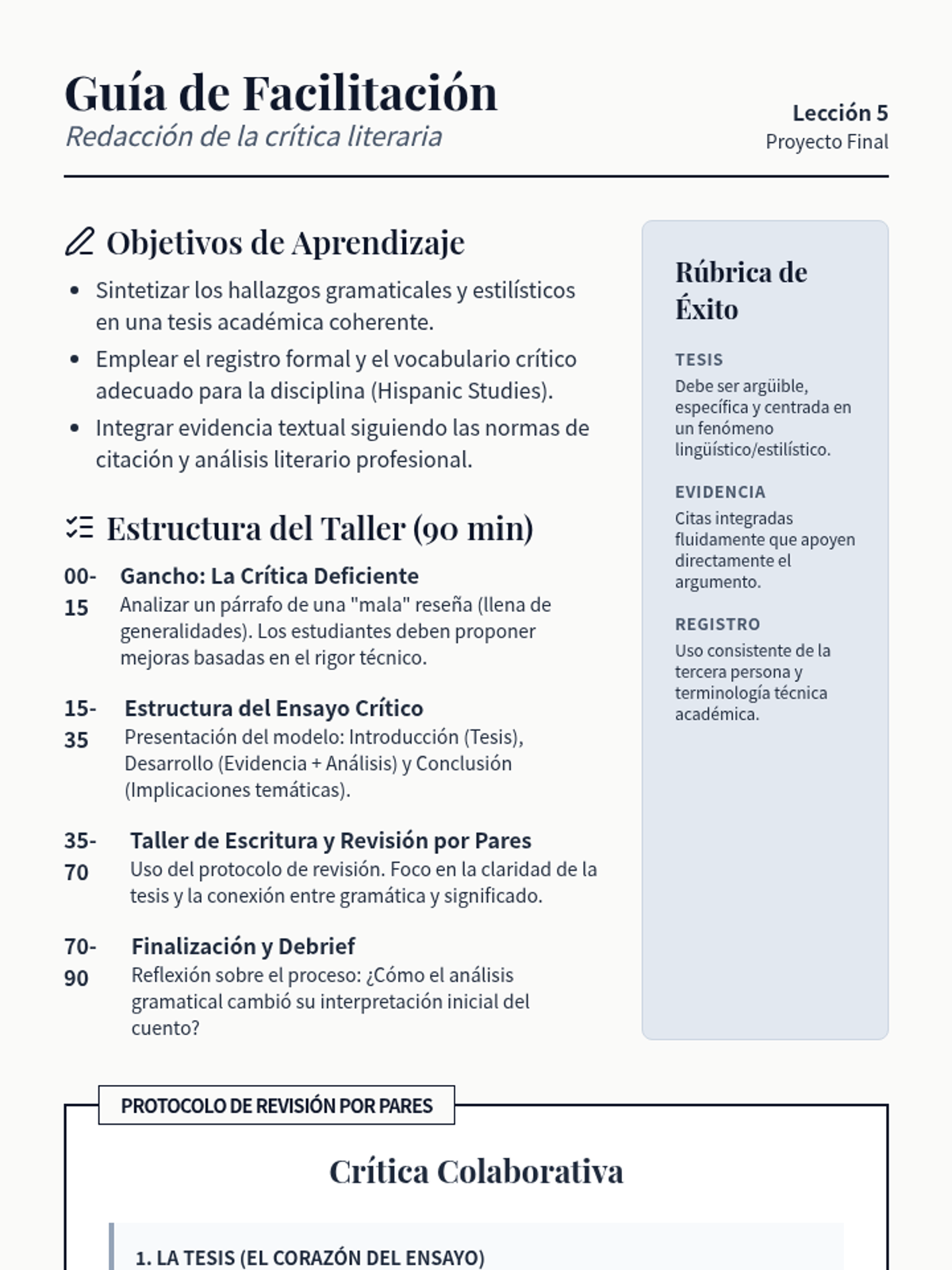
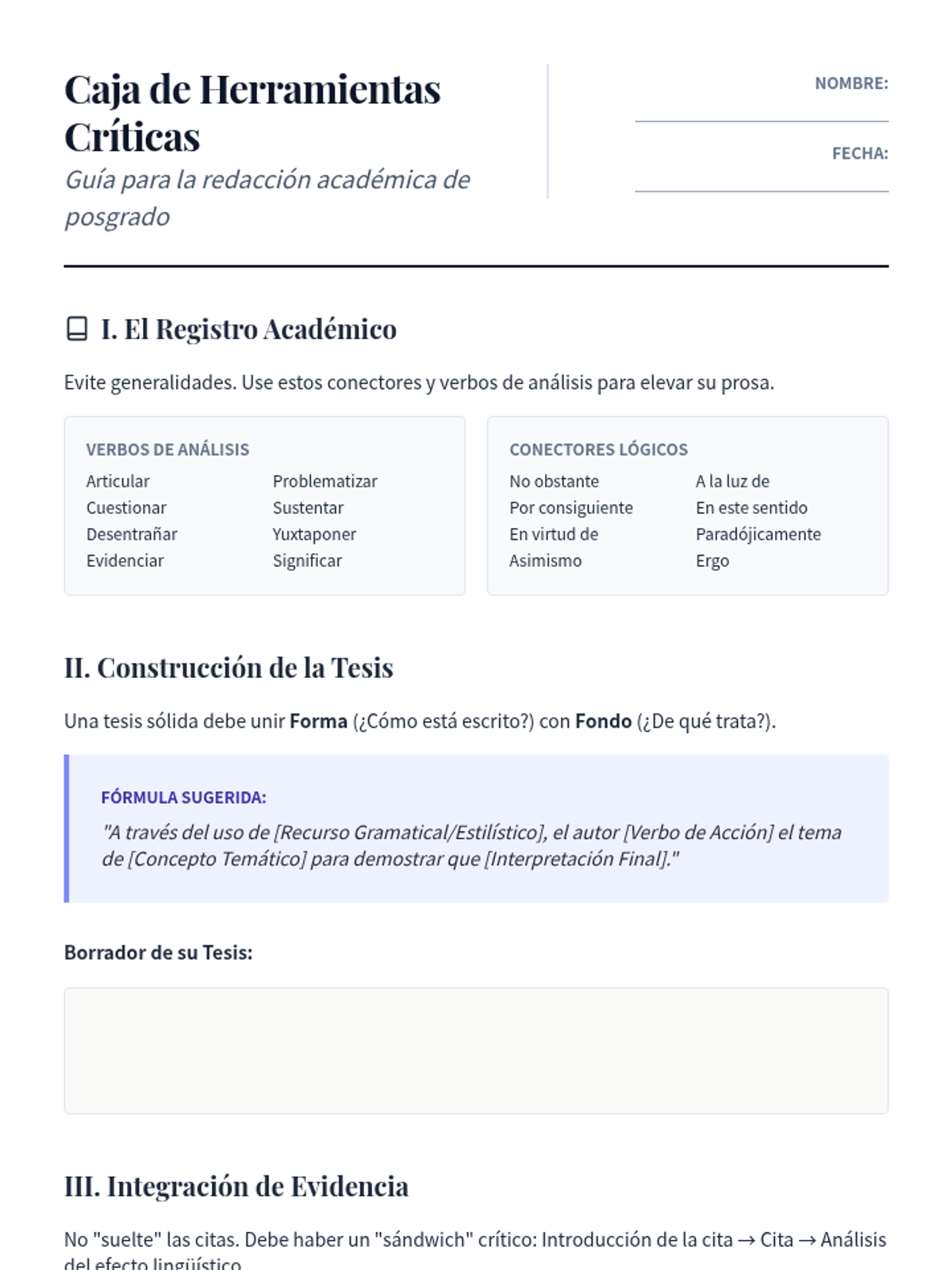
Synthesizes previous analysis into a formal academic essay. Students focus on thesis development, textual evidence, and the conventions of Hispanic literary criticism.
Explores the logical connectors and discourse markers essential for tracing and constructing sophisticated arguments in Spanish.
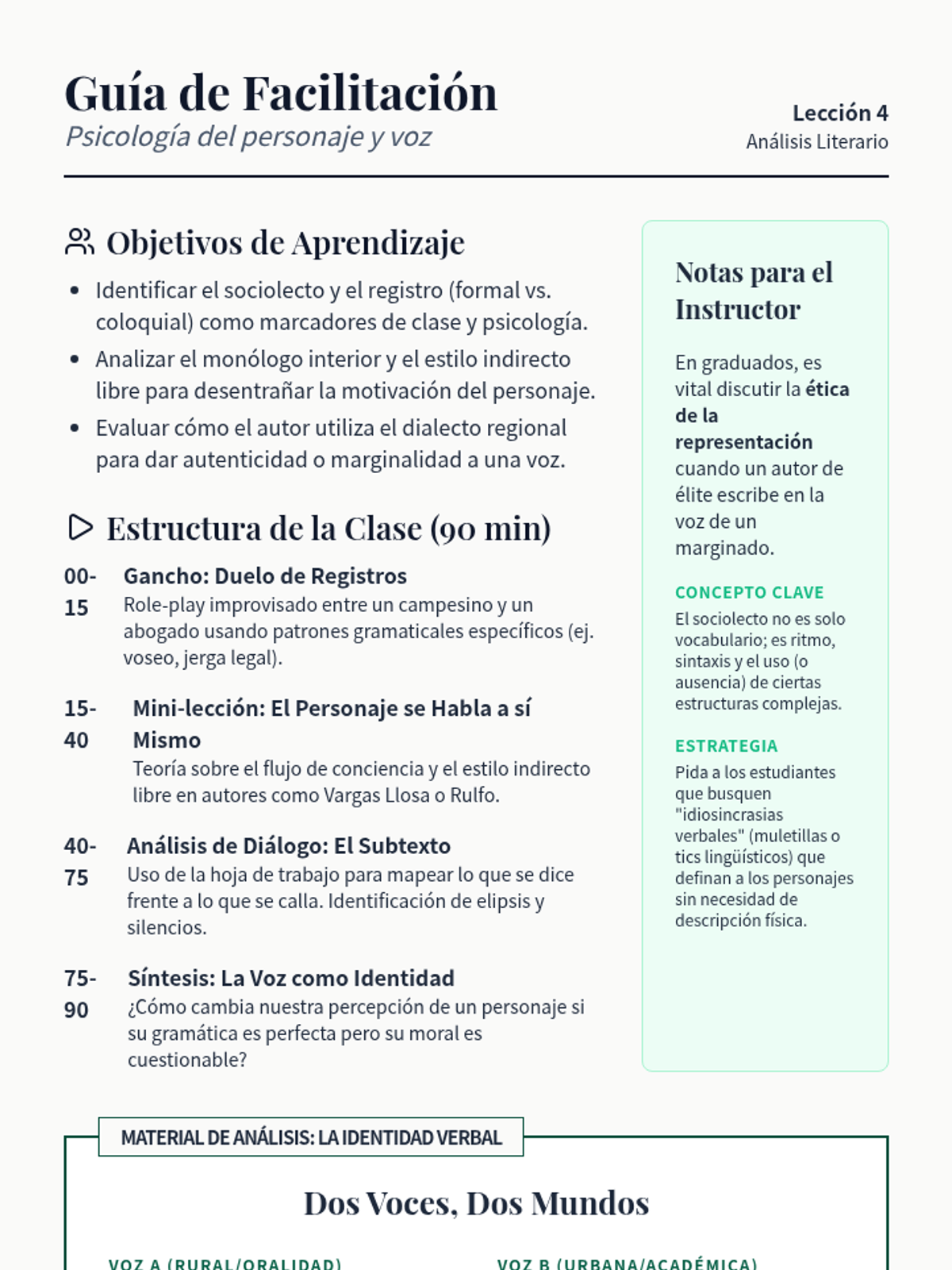
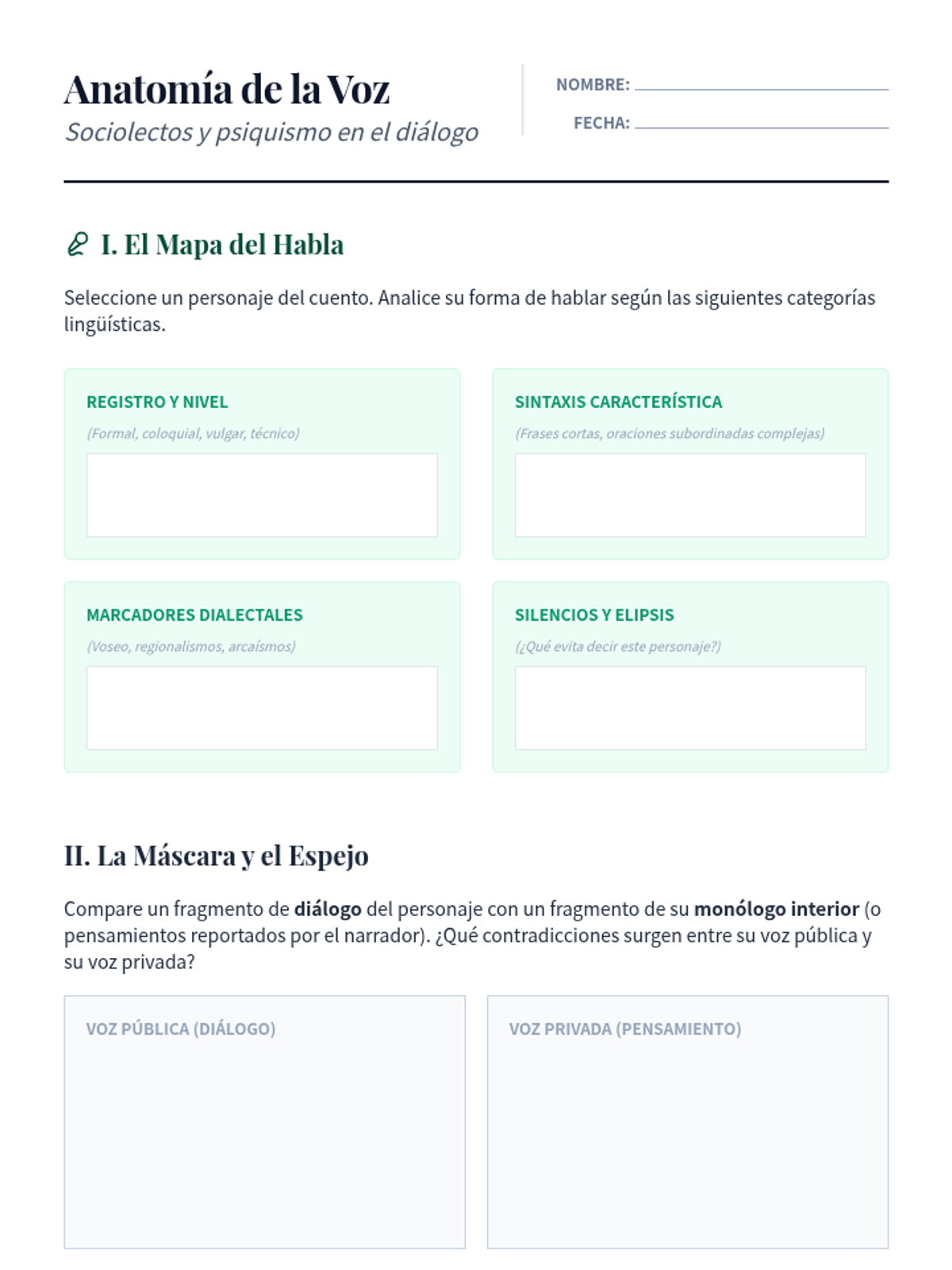
Examines character depth through dialogue, internal monologue, and sociolect. Students analyze how register shifts and colloquialisms reveal psychological motivation and social standing.
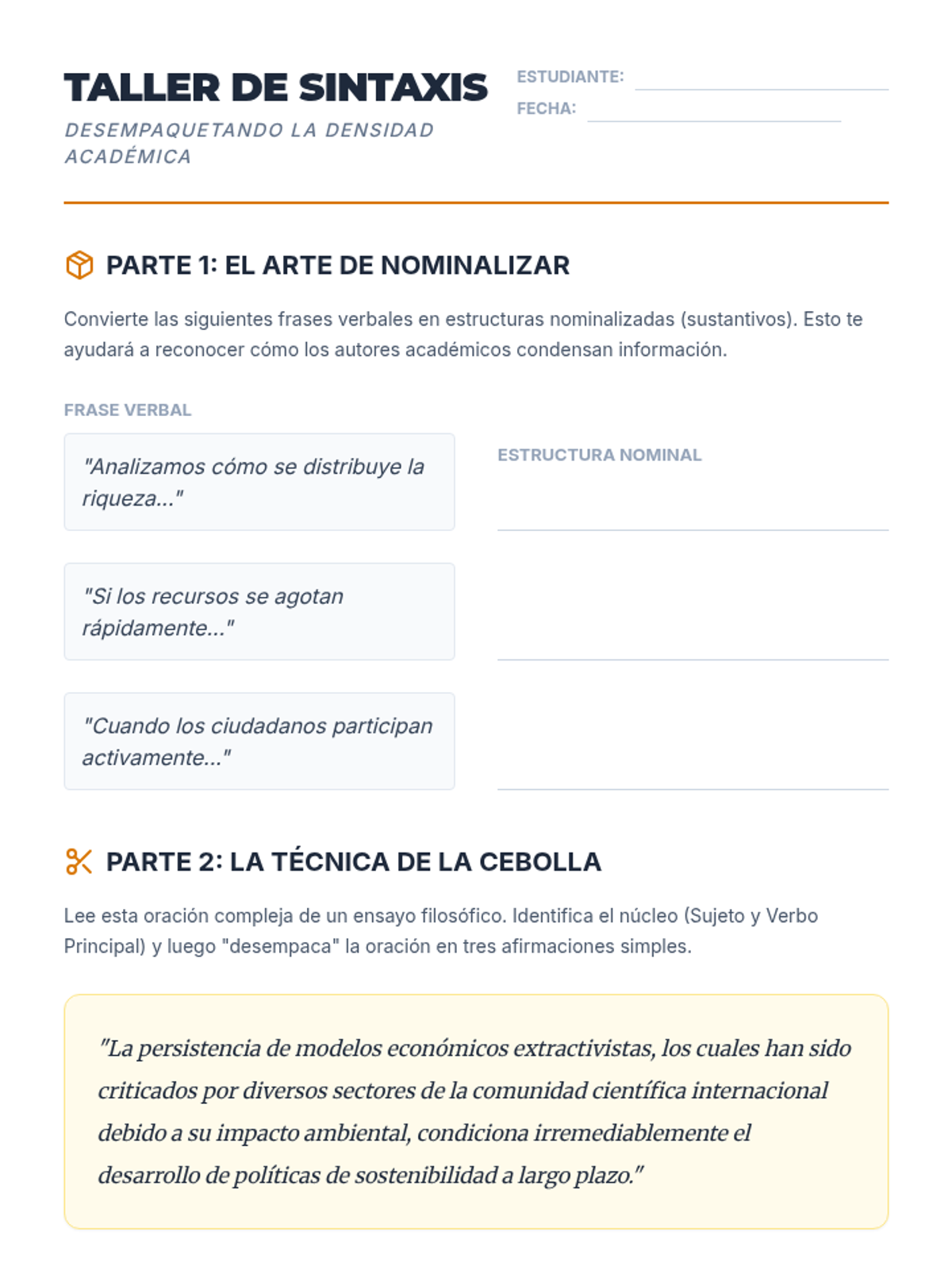
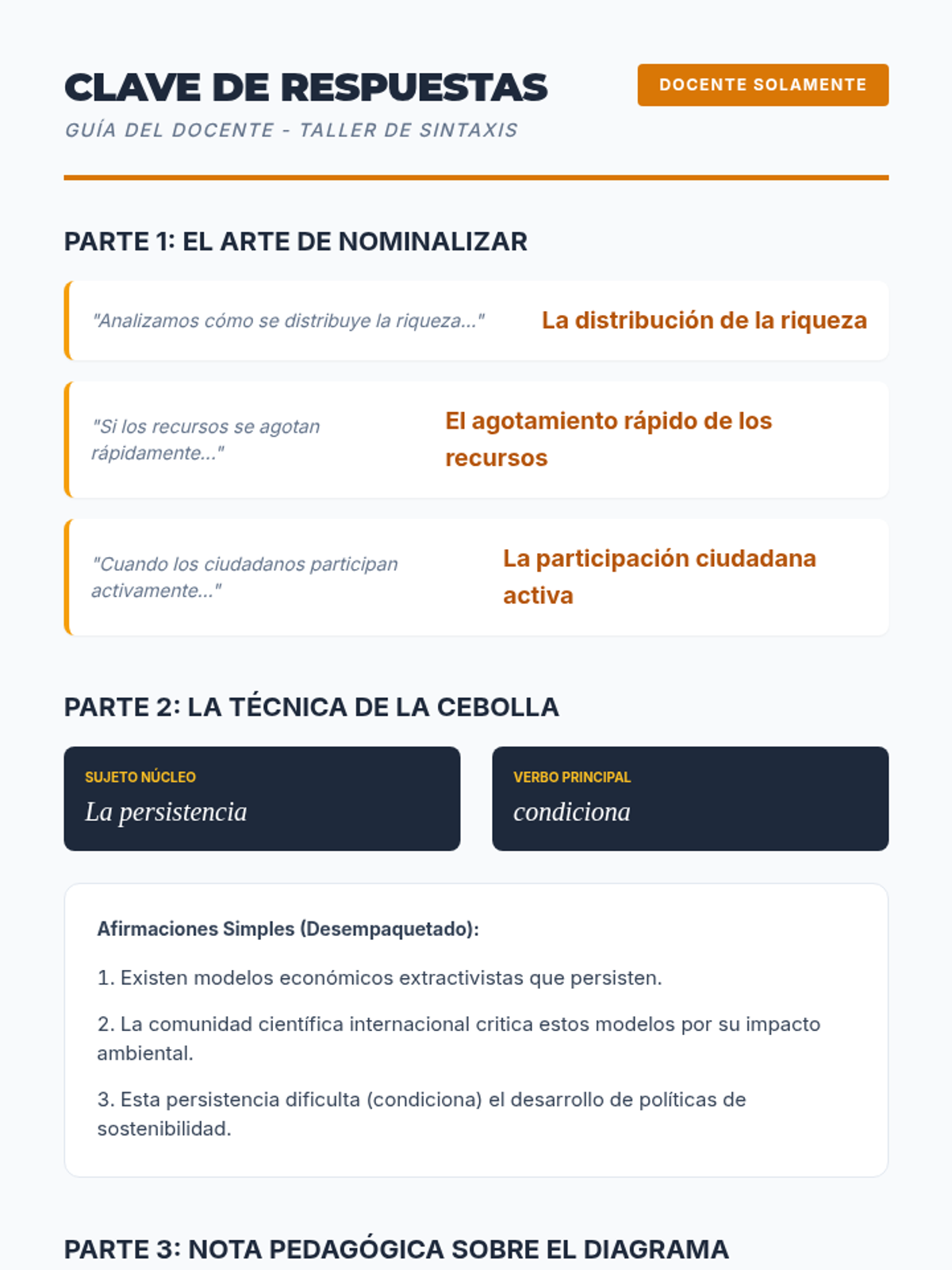
A workshop focused on parsing long, convoluted sentences and understanding how nominalization functions in formal academic Spanish.
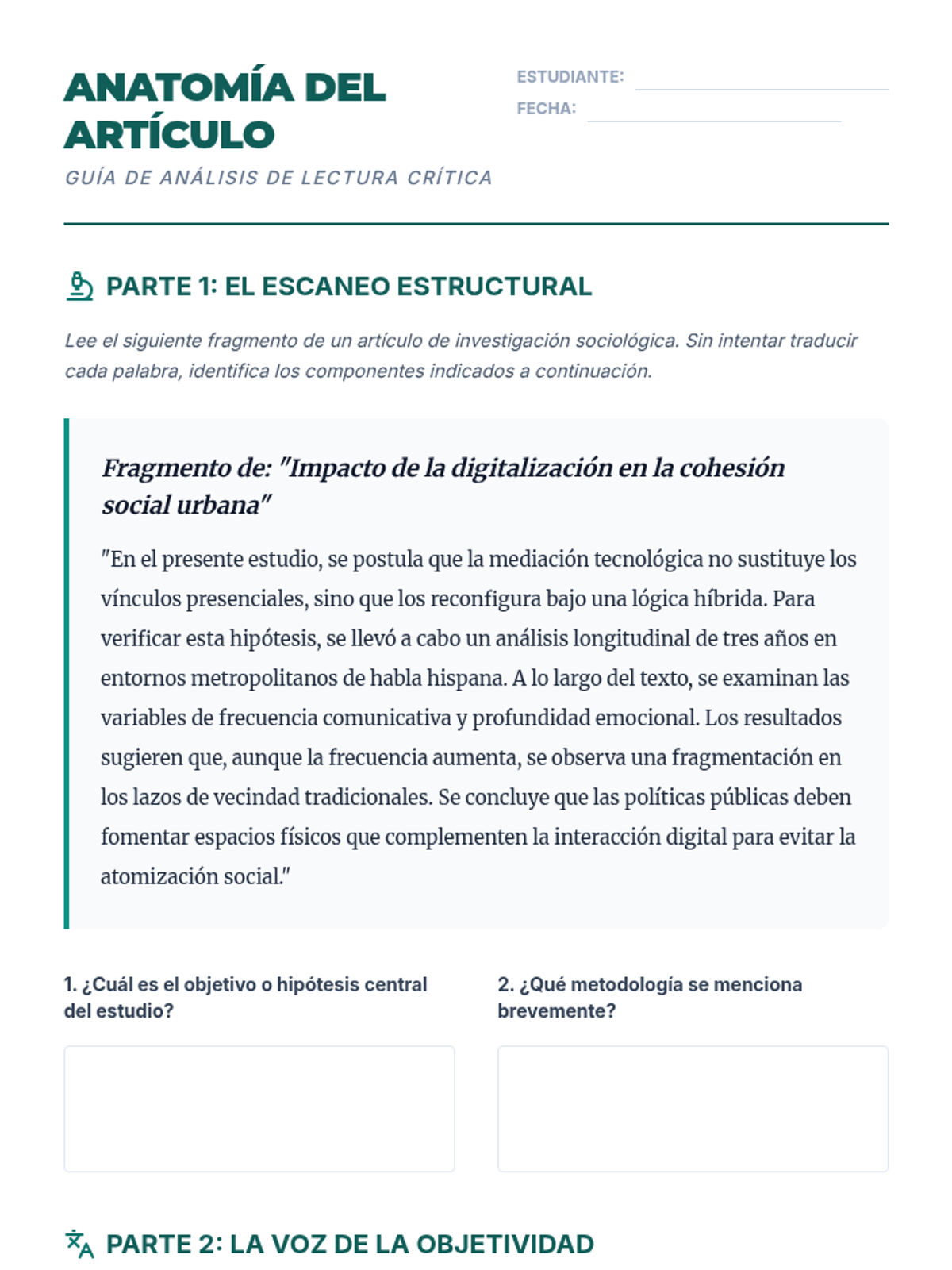
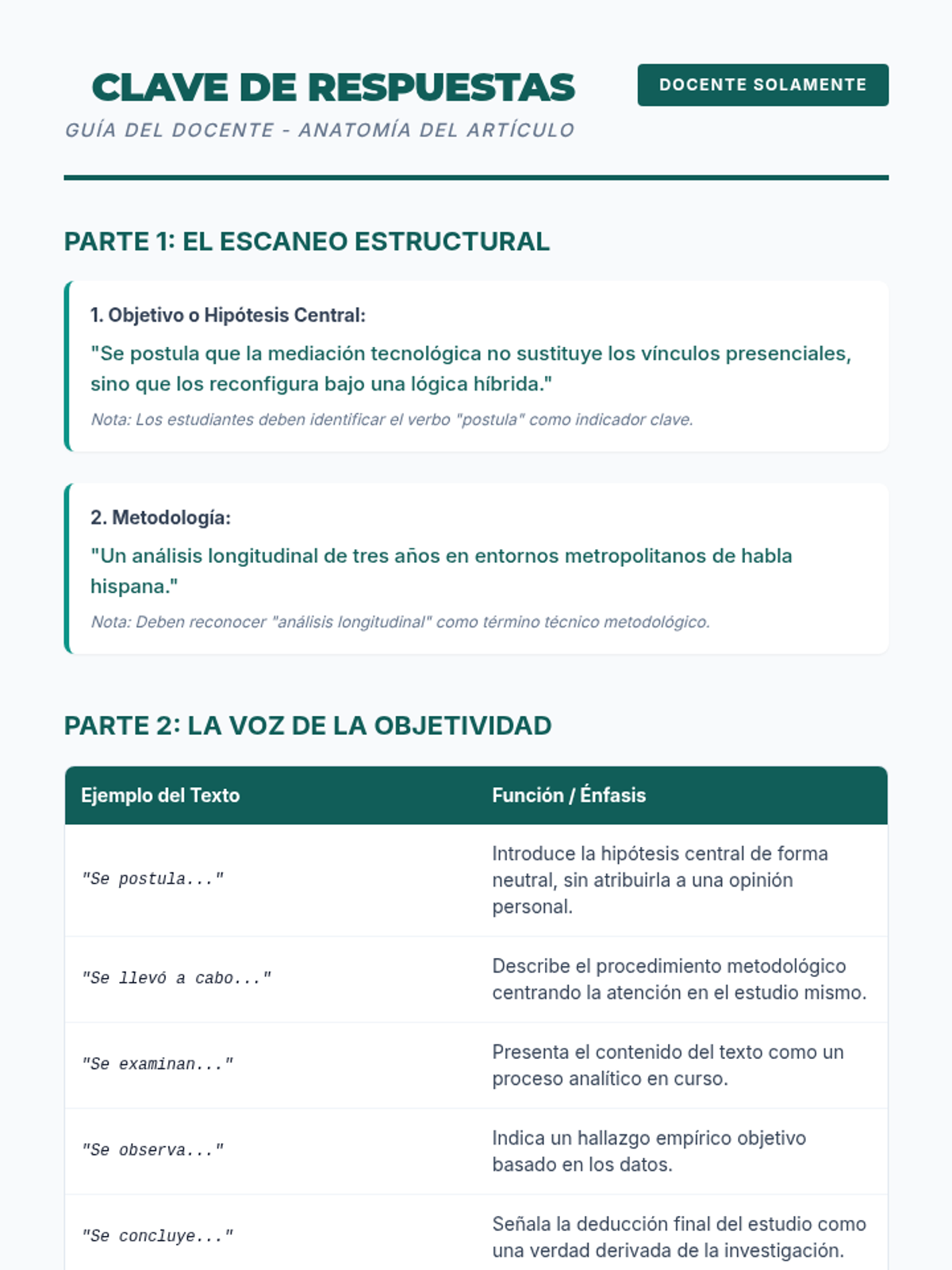
Students learn to identify the structural components of research articles while mastering formal grammatical structures like 'se impersonal' and passive constructions.
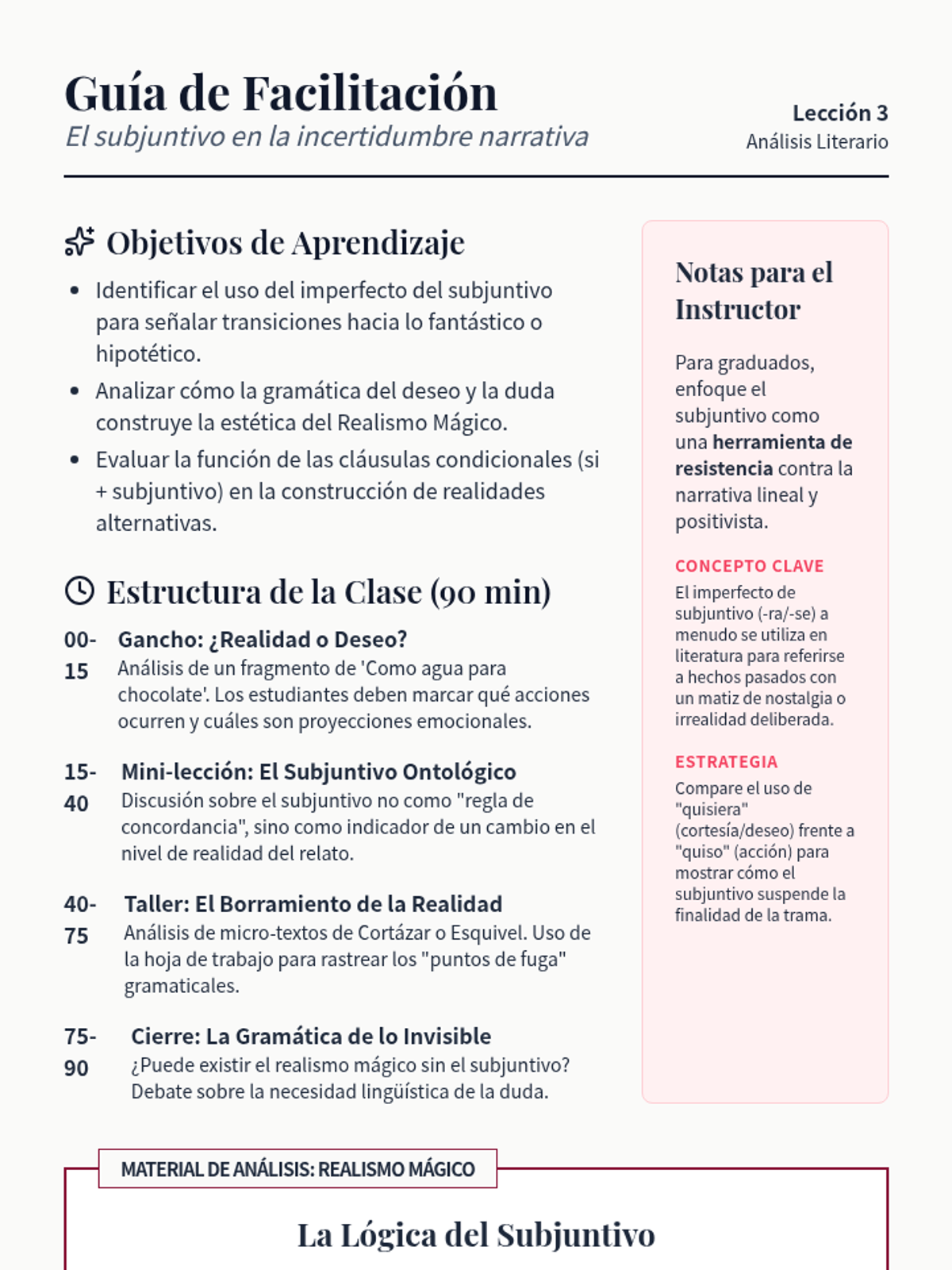
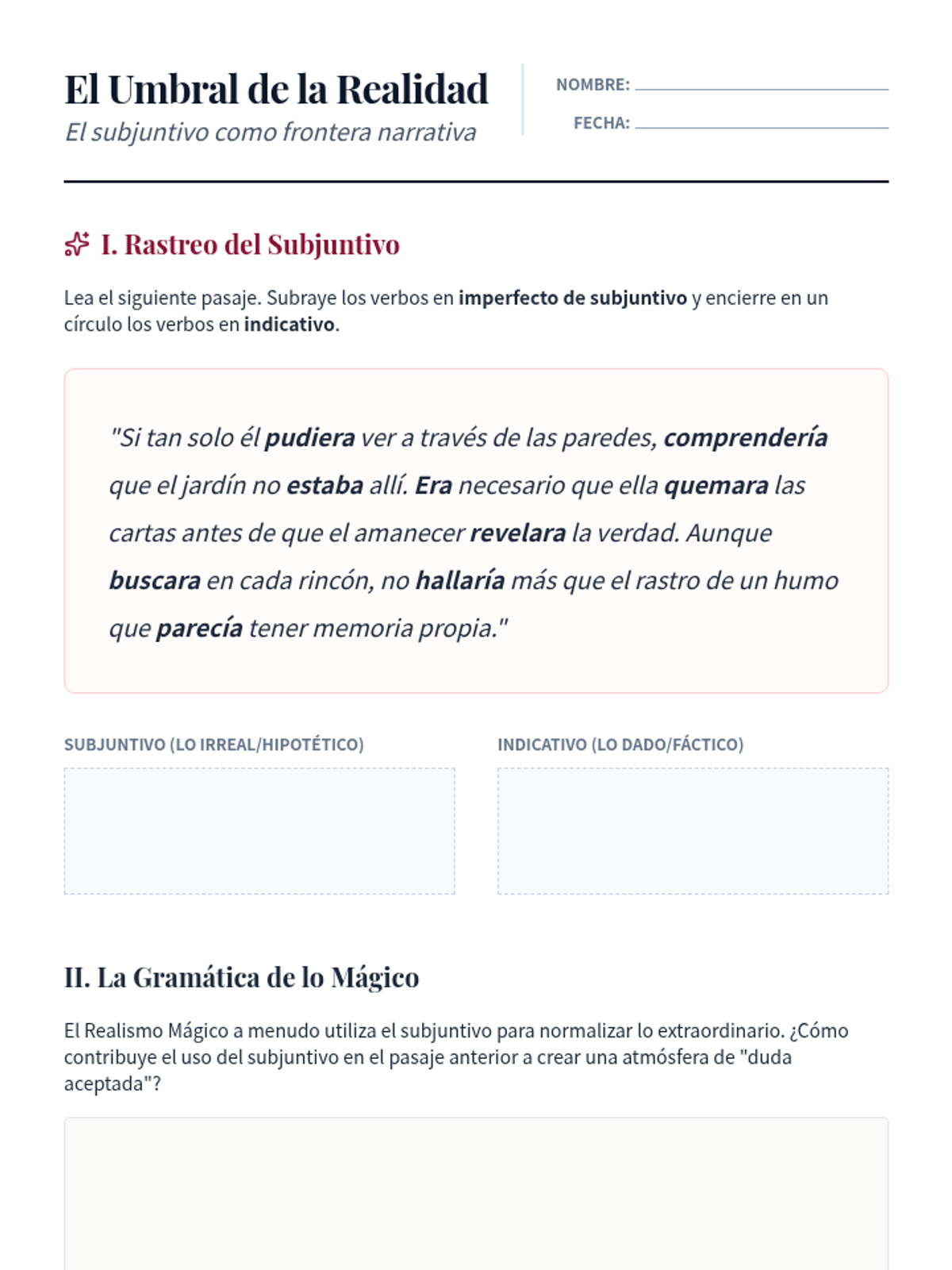
Investigates the role of the imperfect subjunctive in creating narrative uncertainty and magical realism. Students analyze how grammatical shifts signal transitions between reality and the hypothetical or magical.
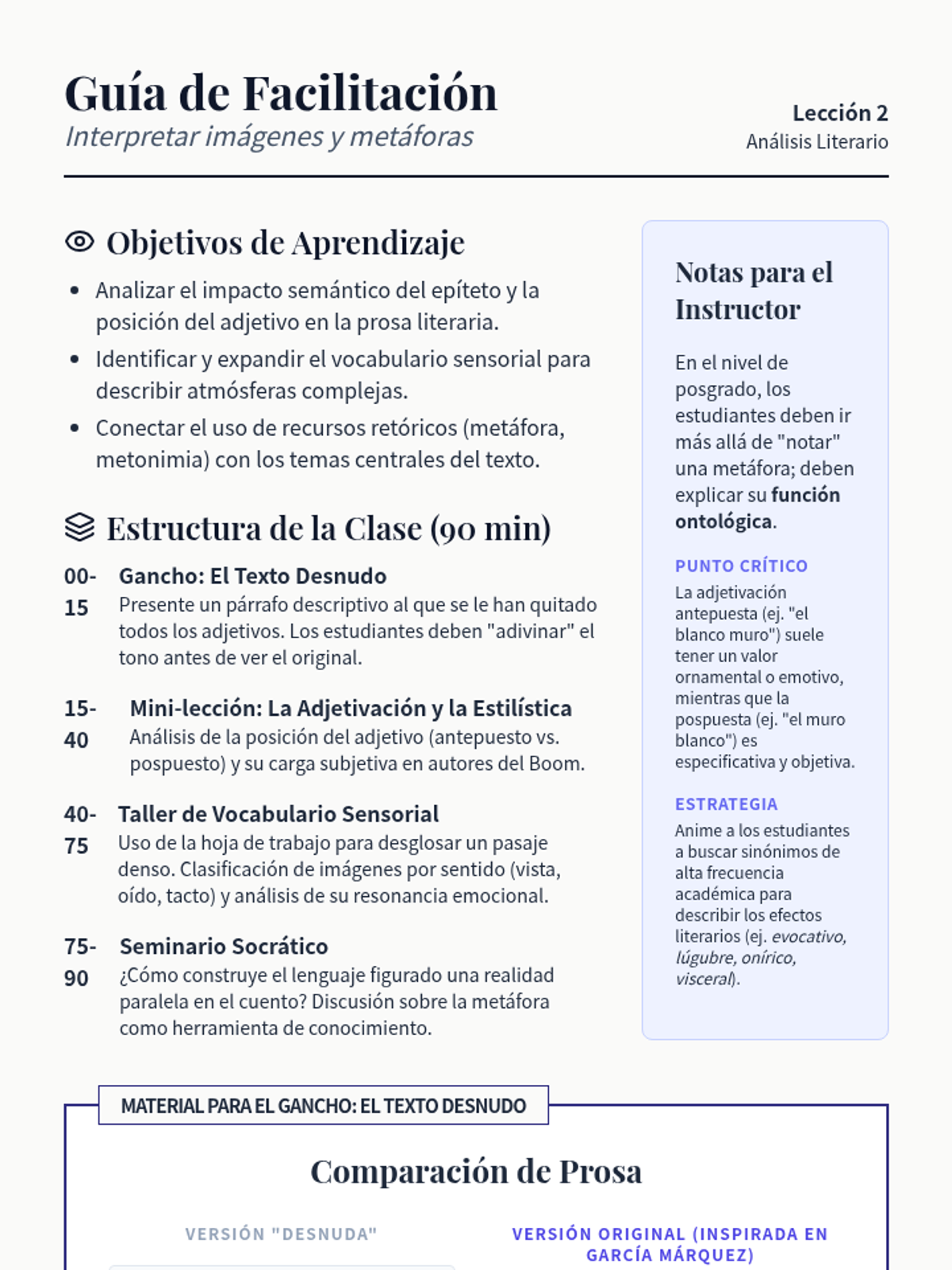
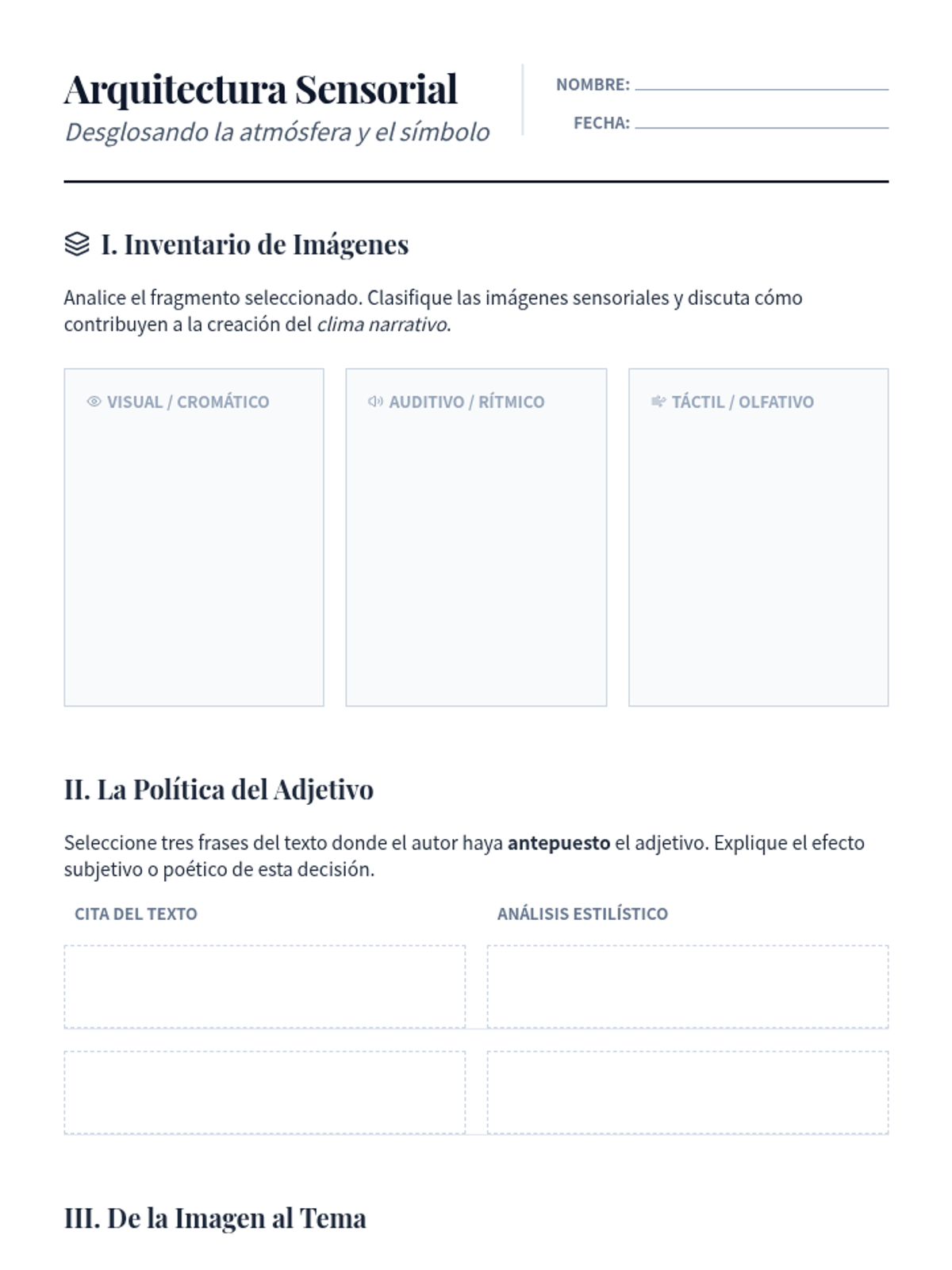
Explores sensory vocabulary, metaphor, and adjective placement in literary descriptions. Students practice close reading to identify how linguistic choices build atmosphere and emotional resonance.
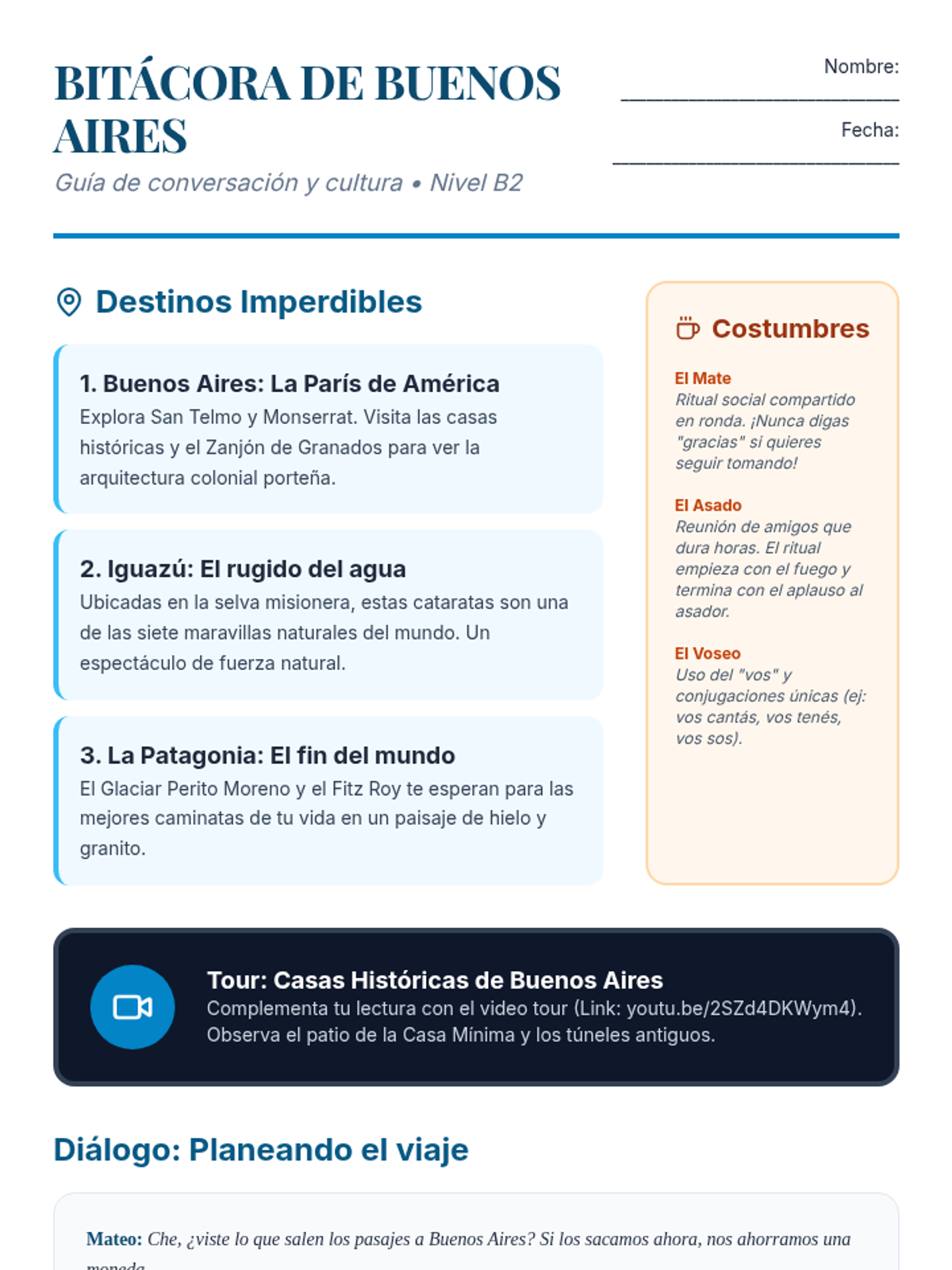
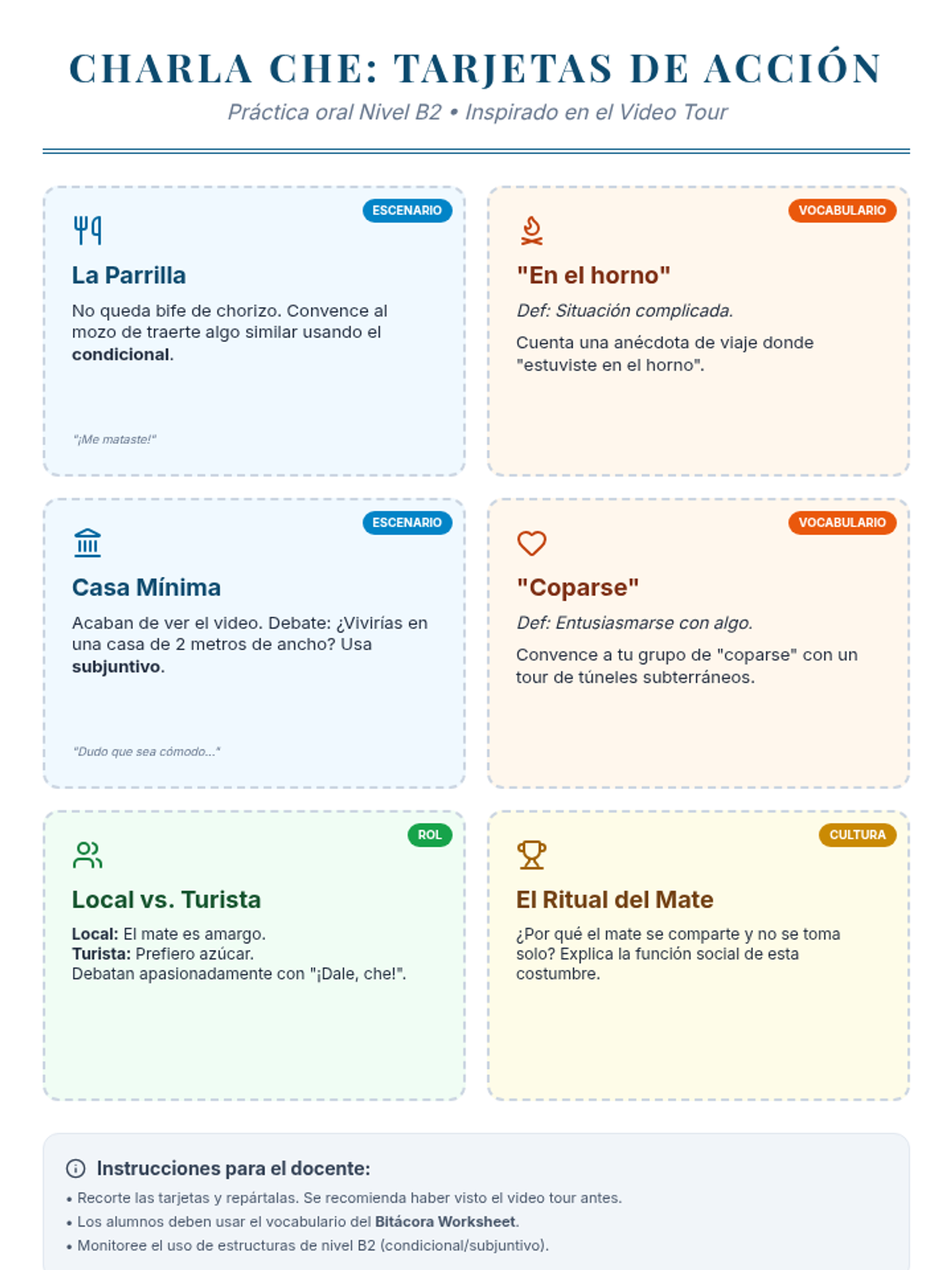
Una lección de nivel B2 centrada en la cultura, costumbres y turismo de Argentina, diseñada para fomentar la expresión oral y el intercambio cultural.
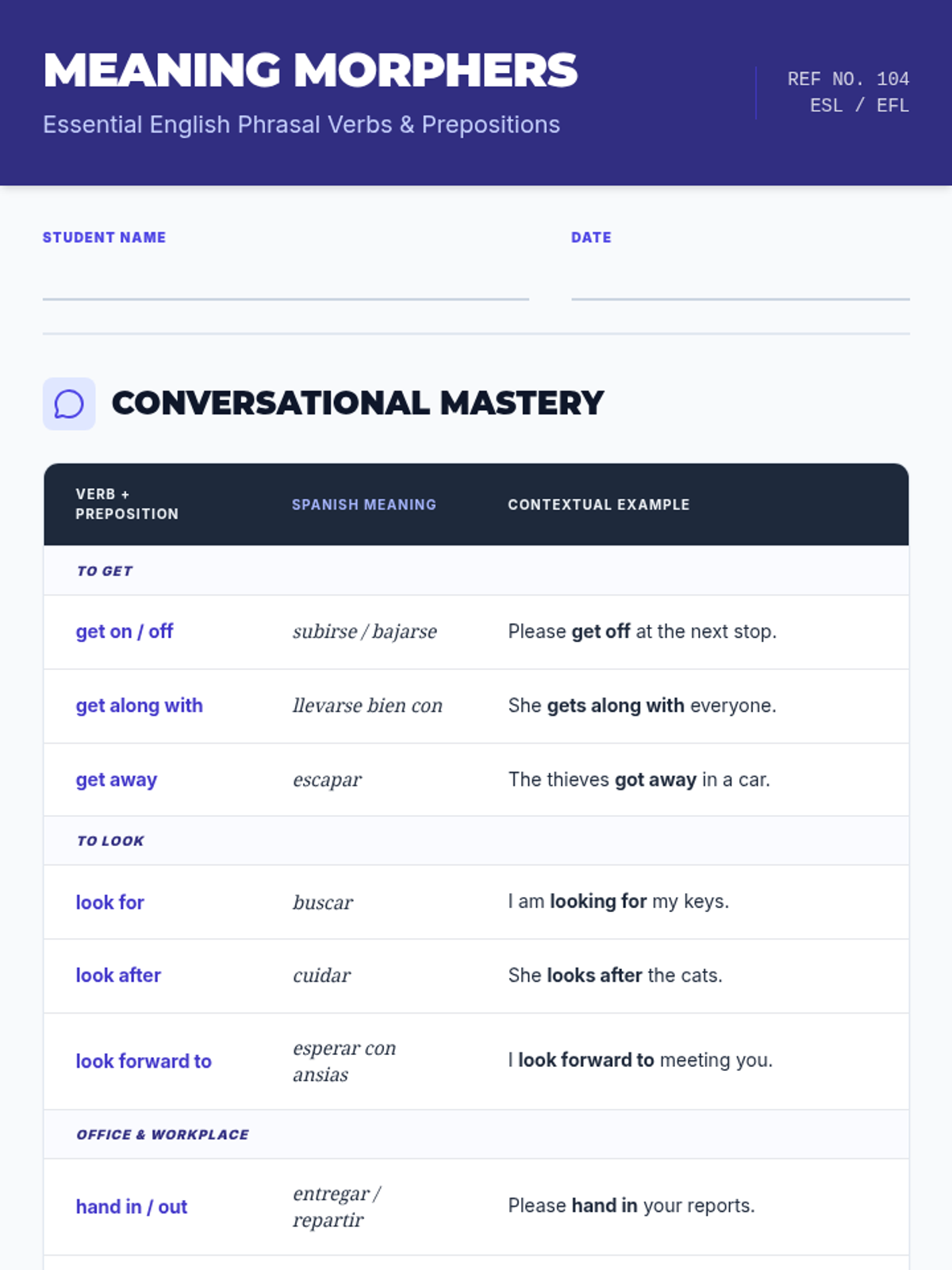
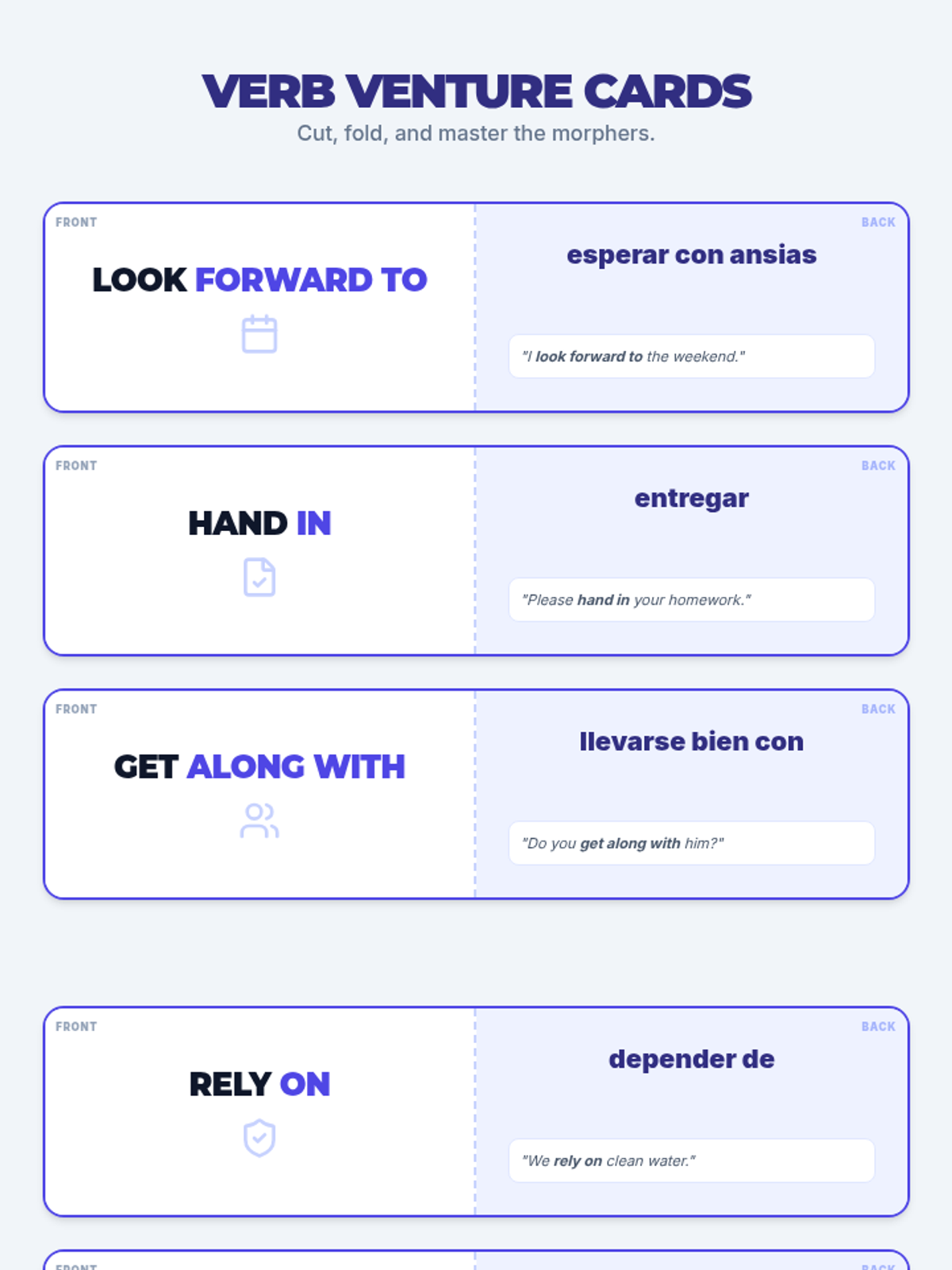
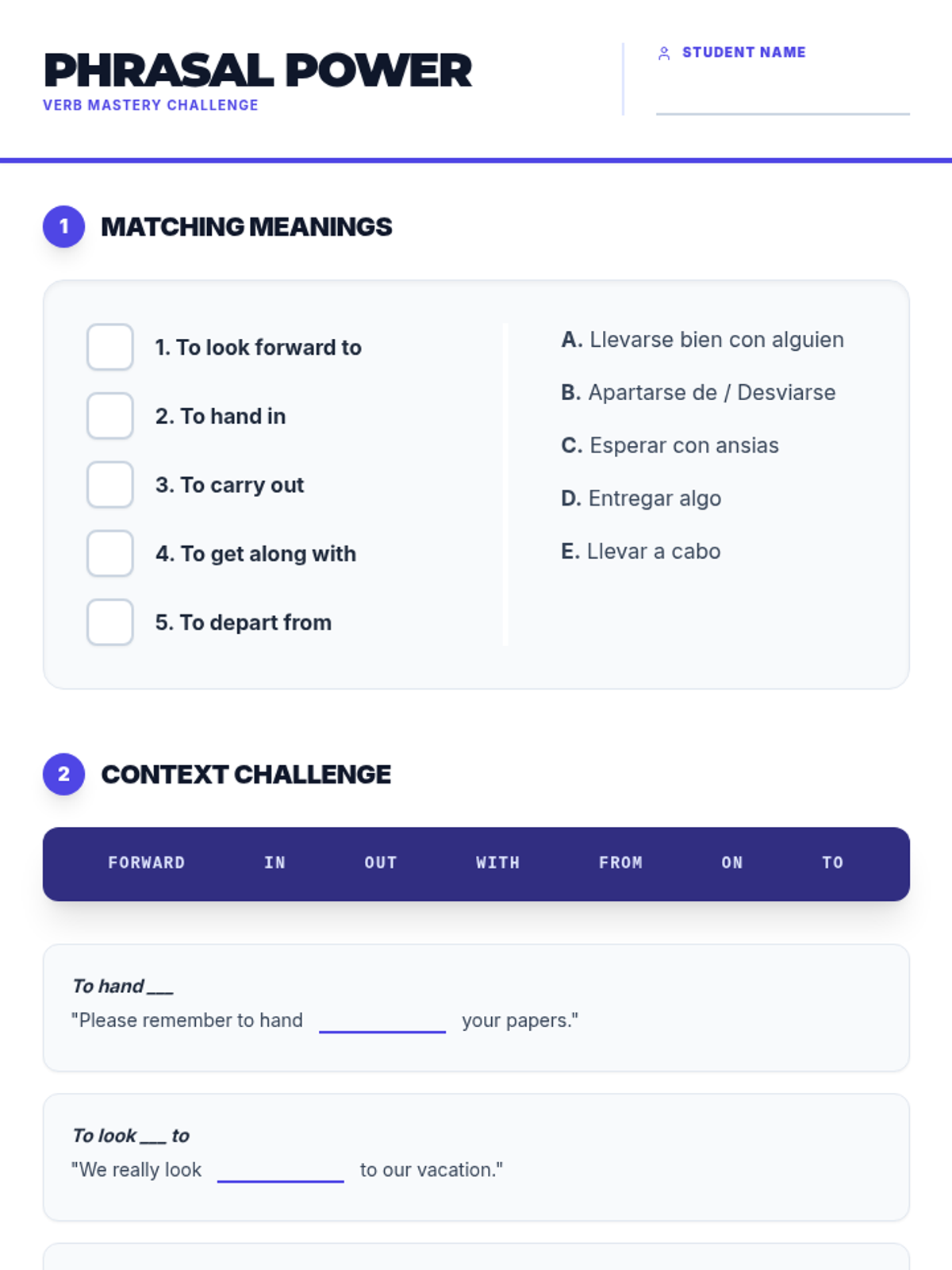
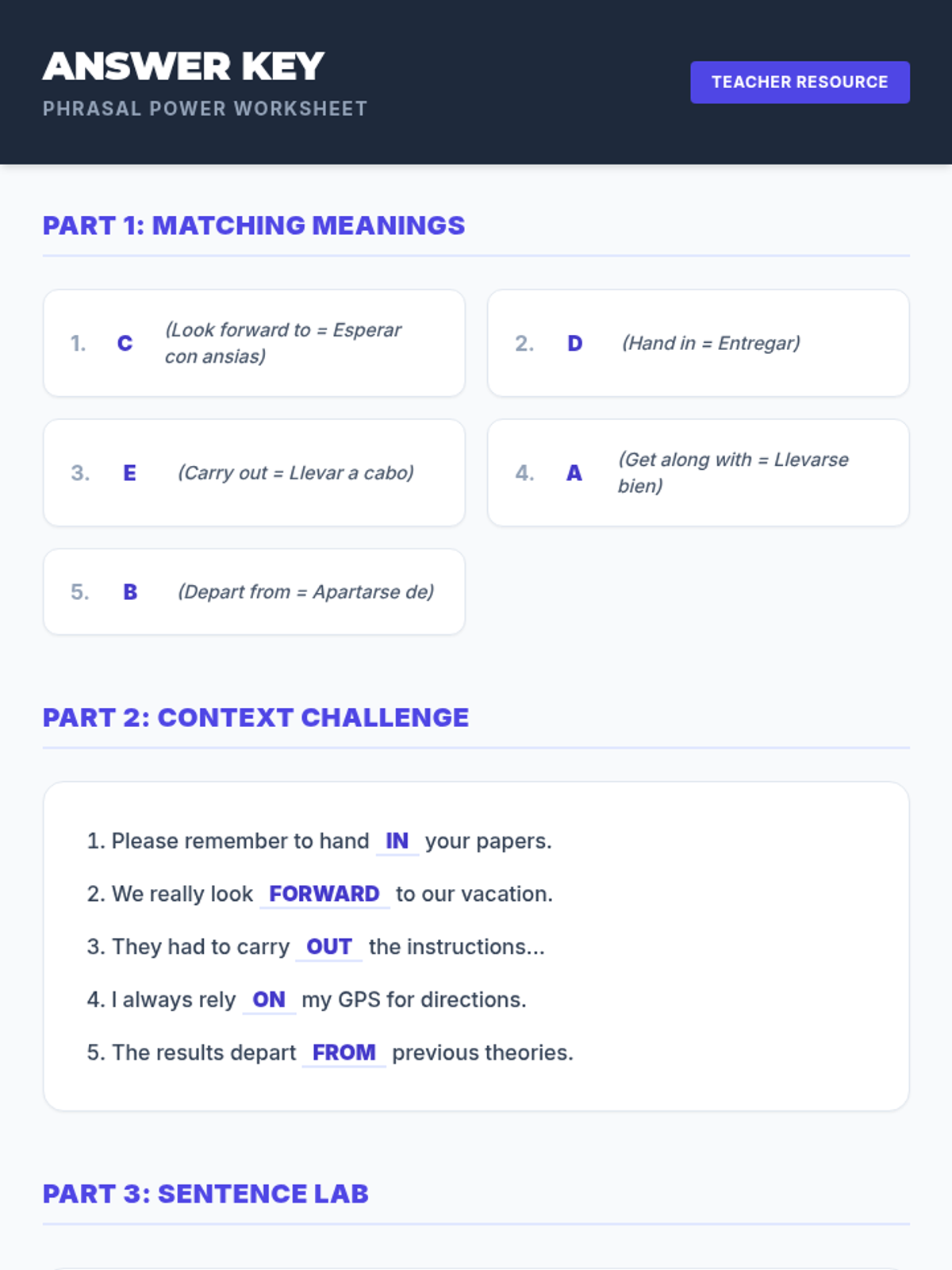
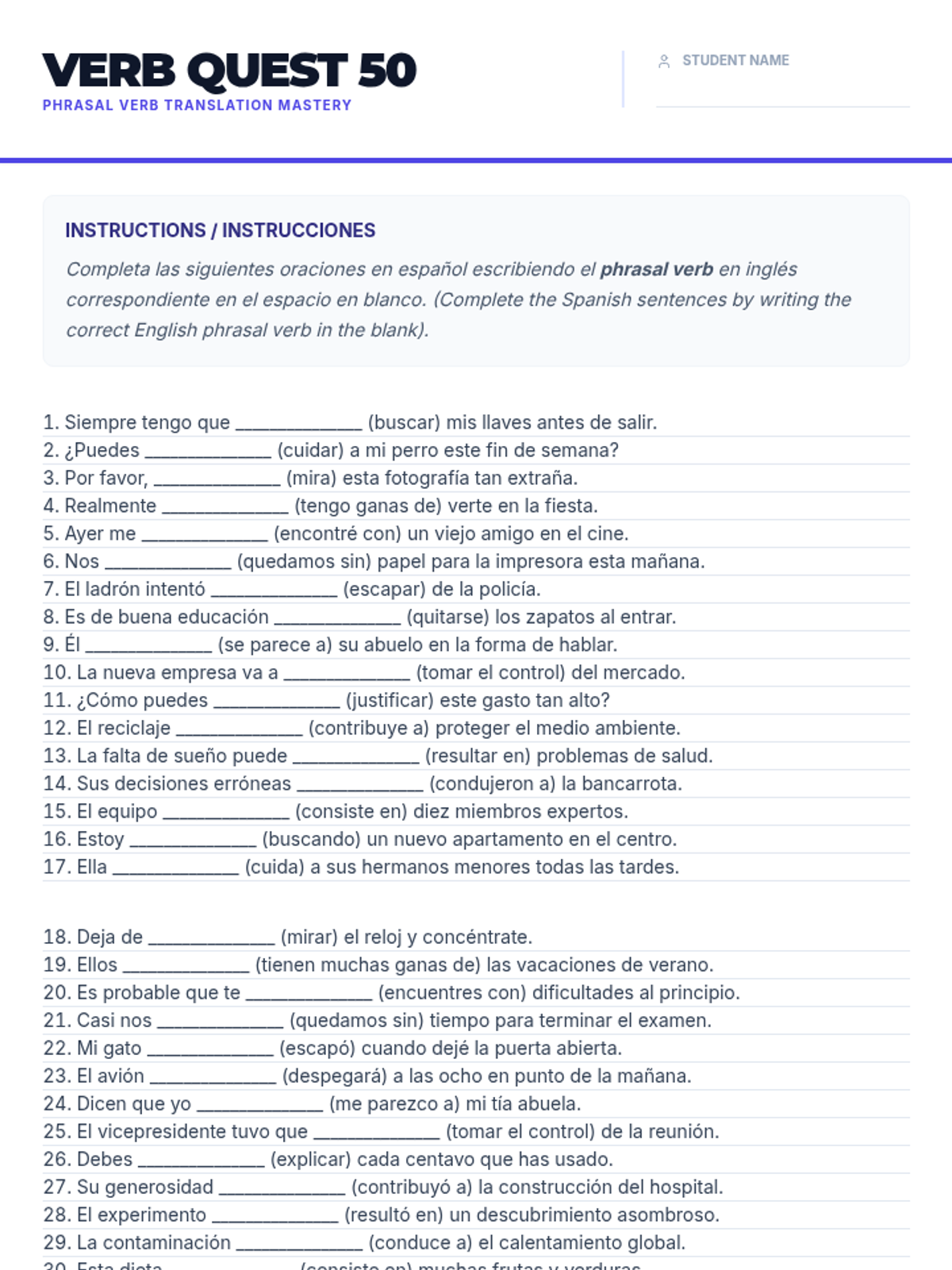
A comprehensive guide to English phrasal verbs, covering both everyday conversational use and formal academic contexts, with translations in Spanish.
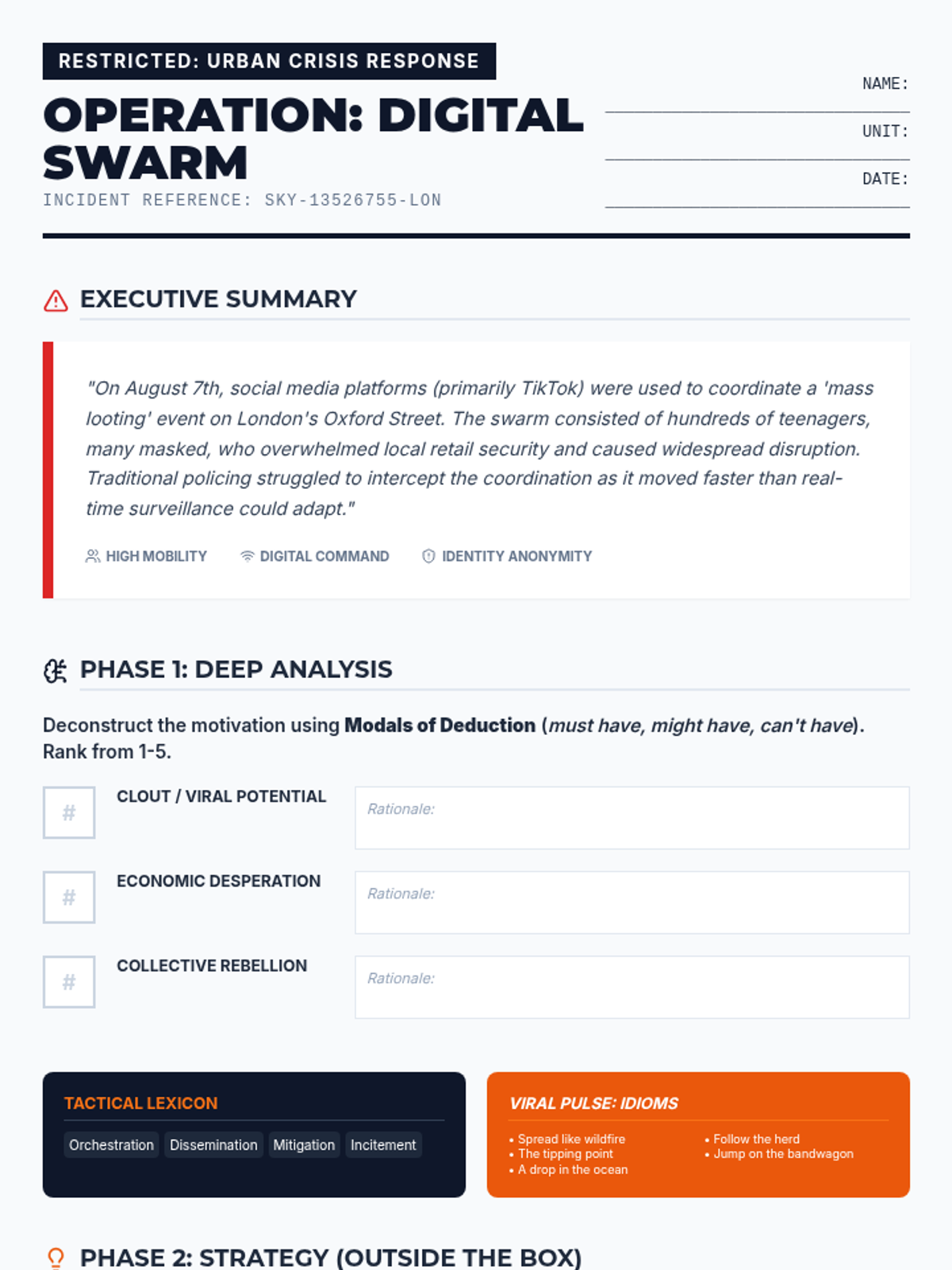
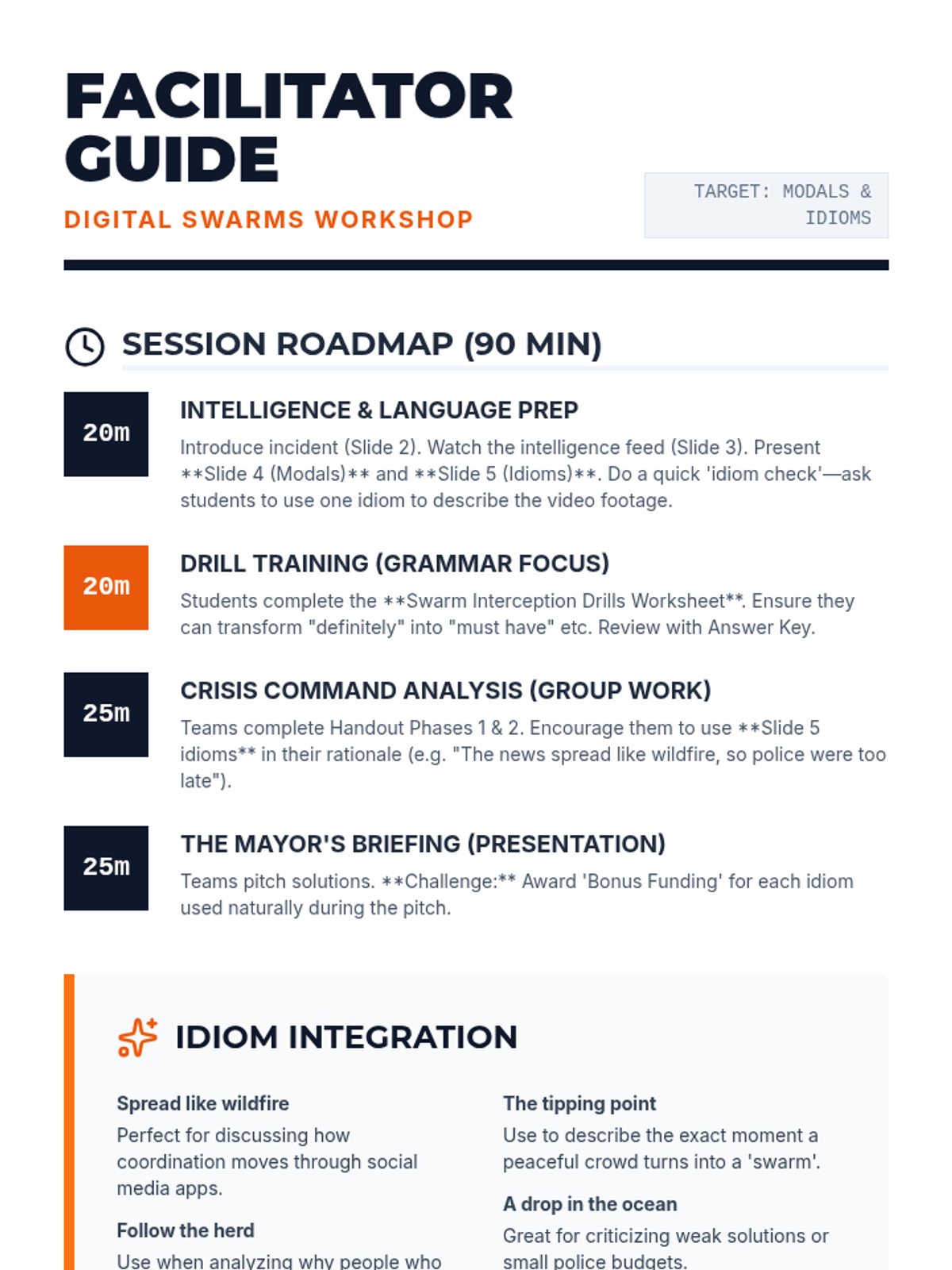
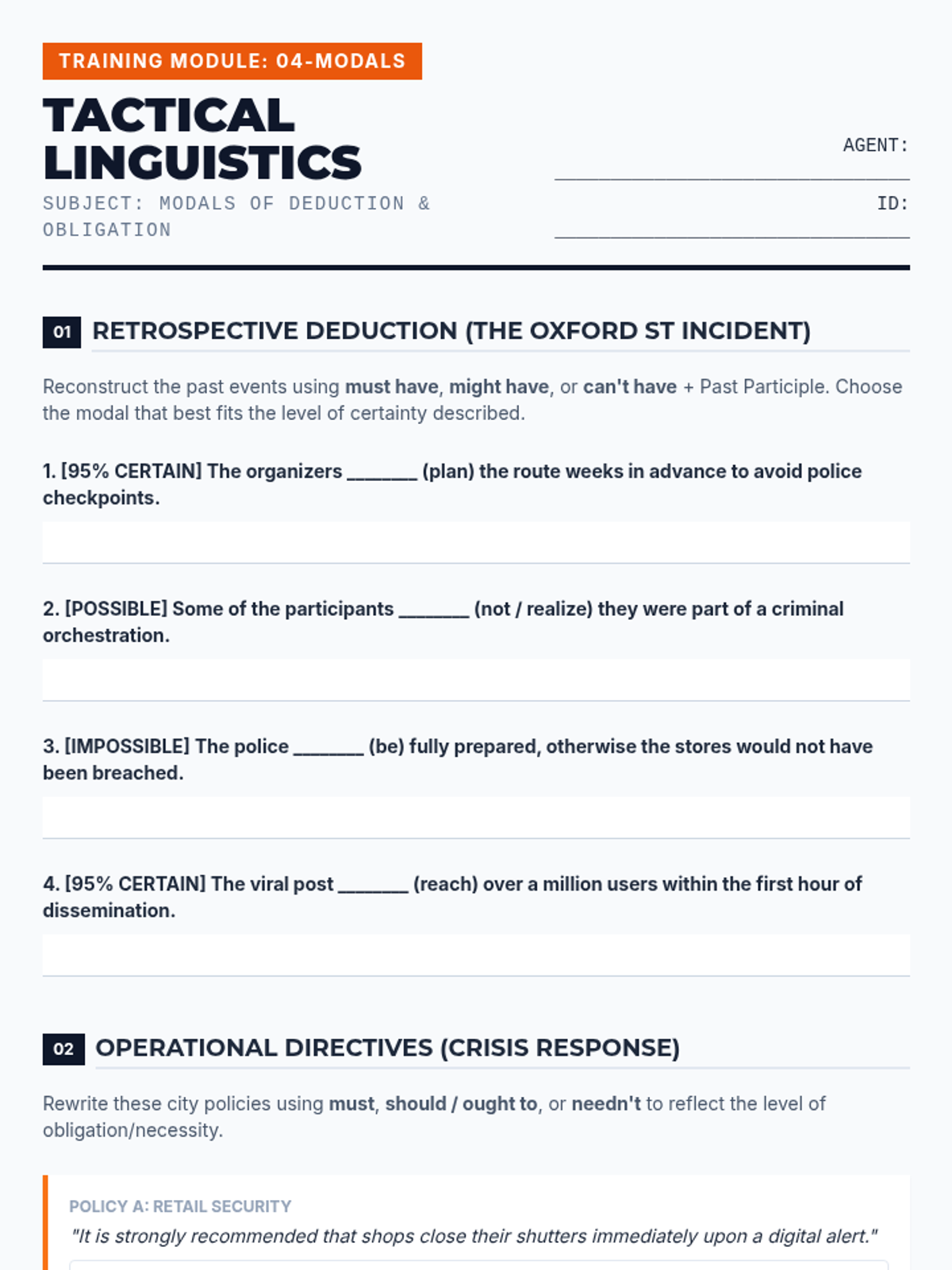
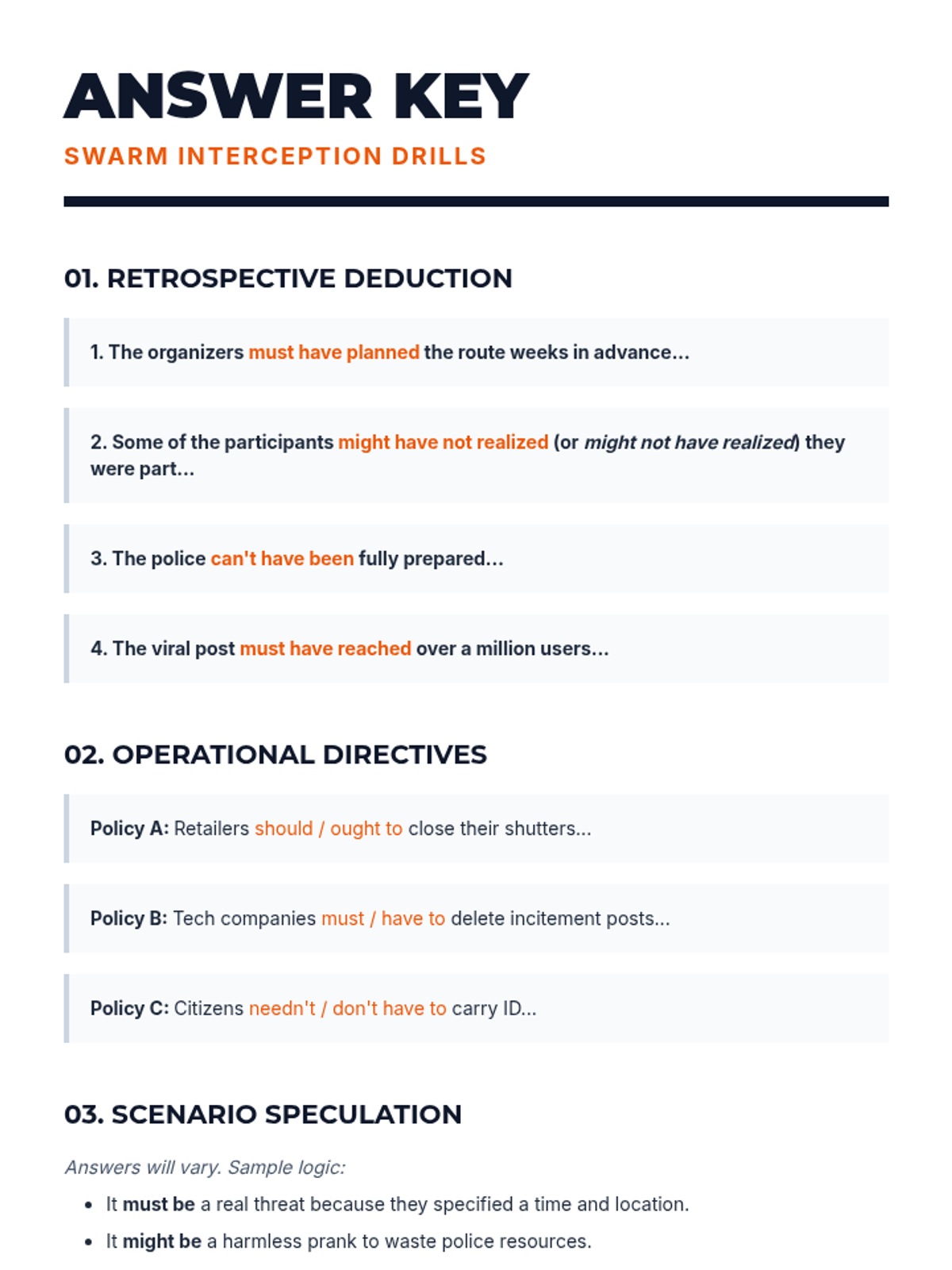
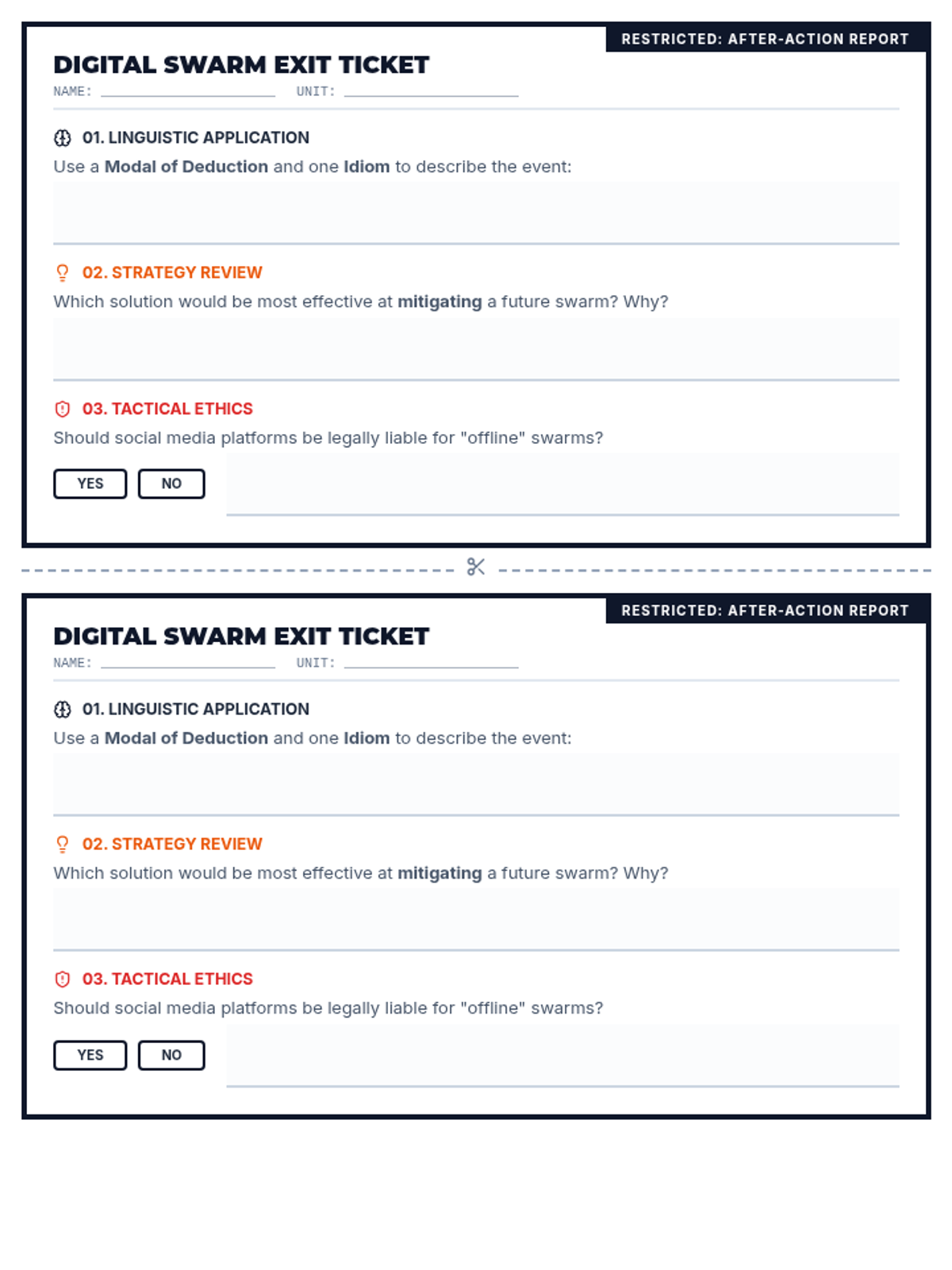
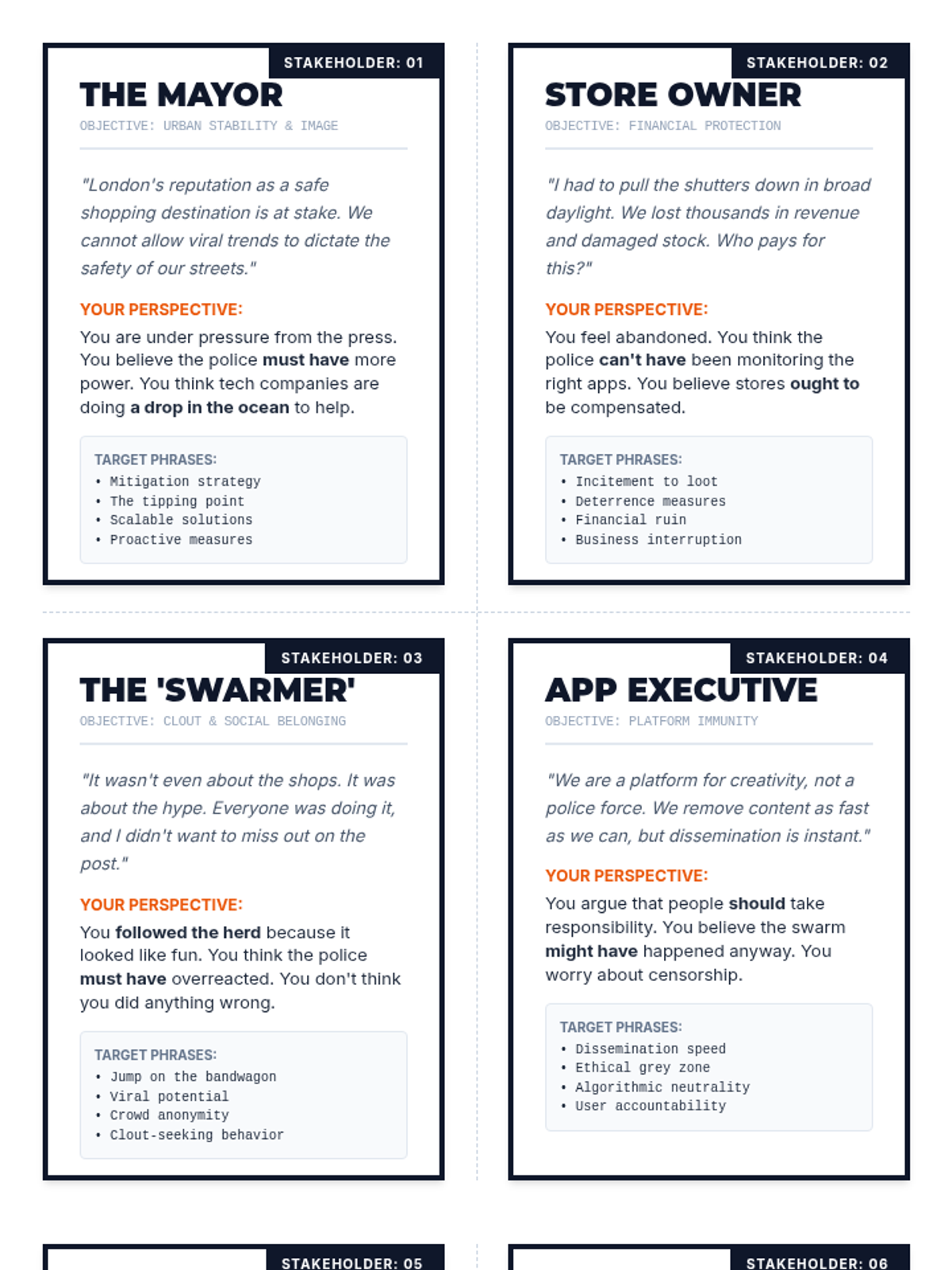
A problem-solving workshop for B2+ students based on social media flash mobs. Students act as a city's 'Digital Response Team' to design innovative solutions for urban chaos triggered by viral trends.
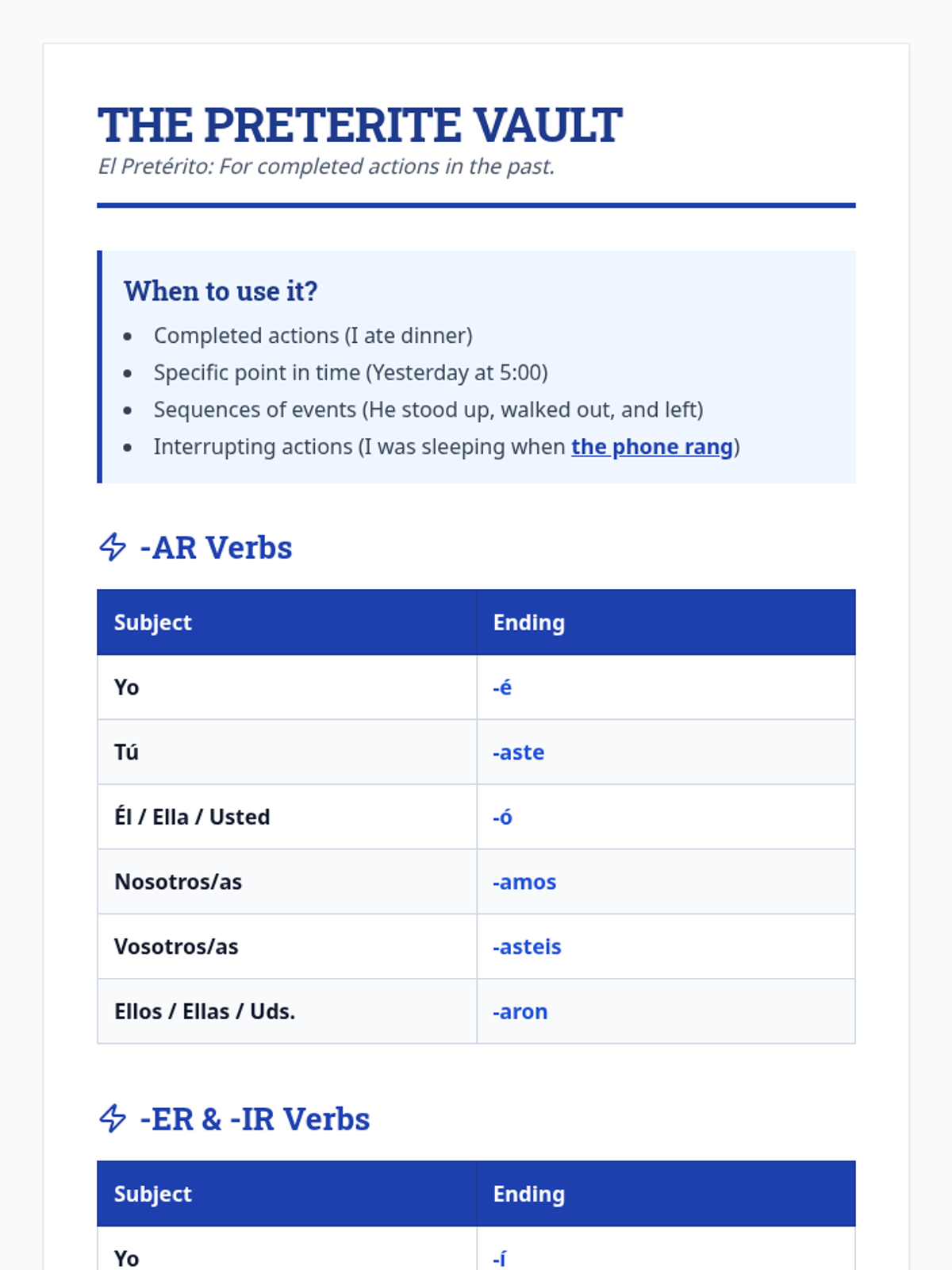
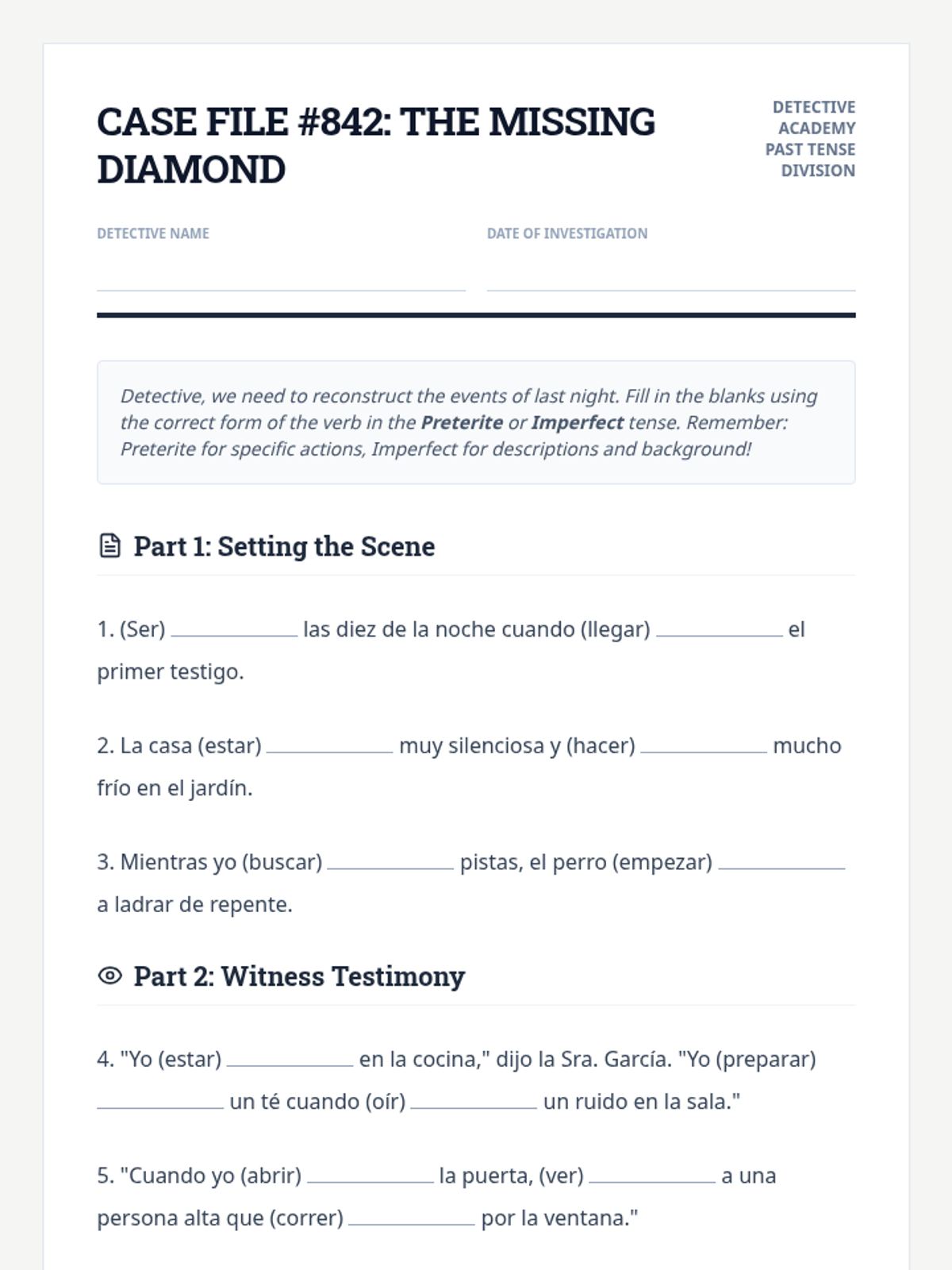
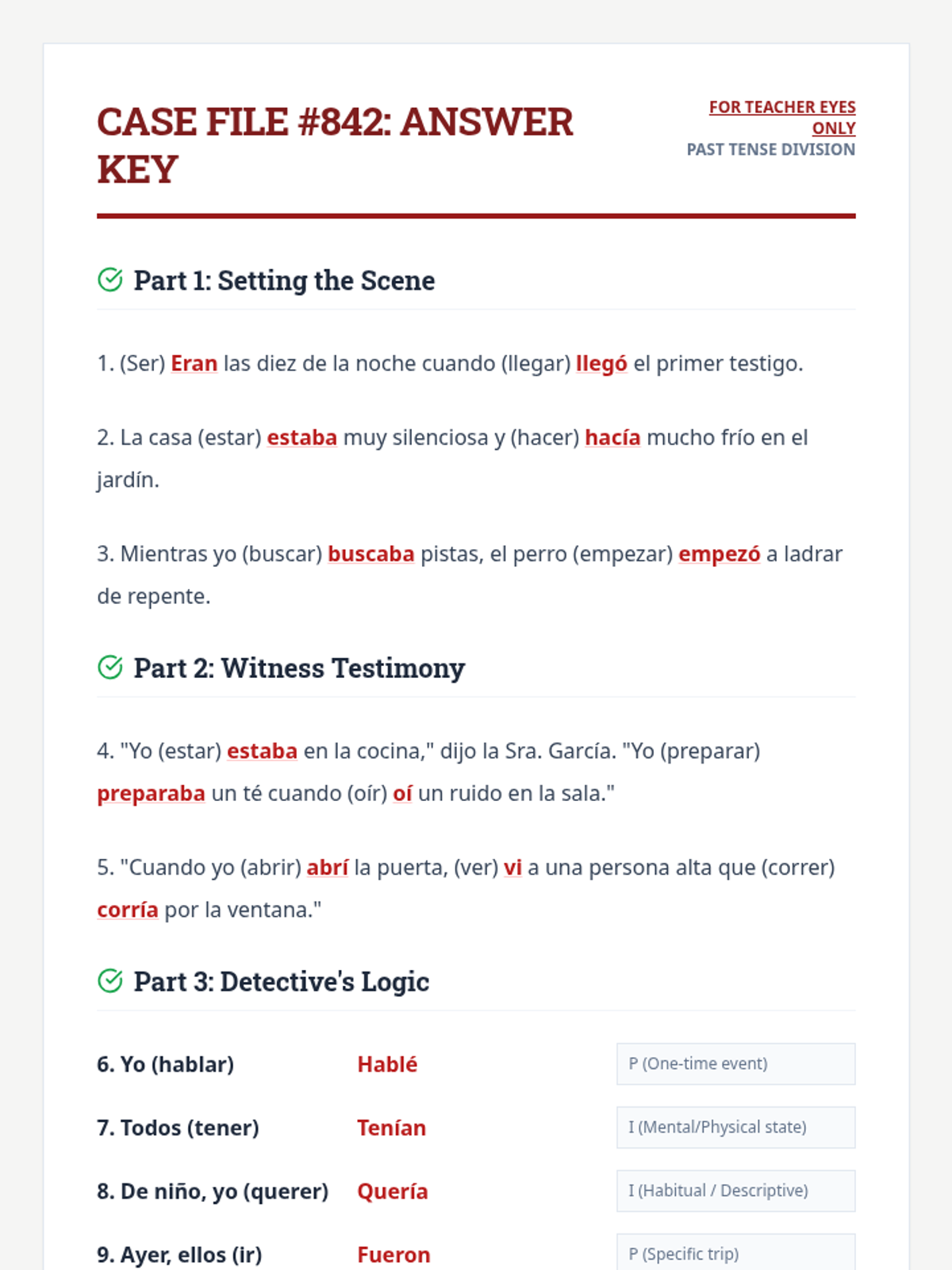
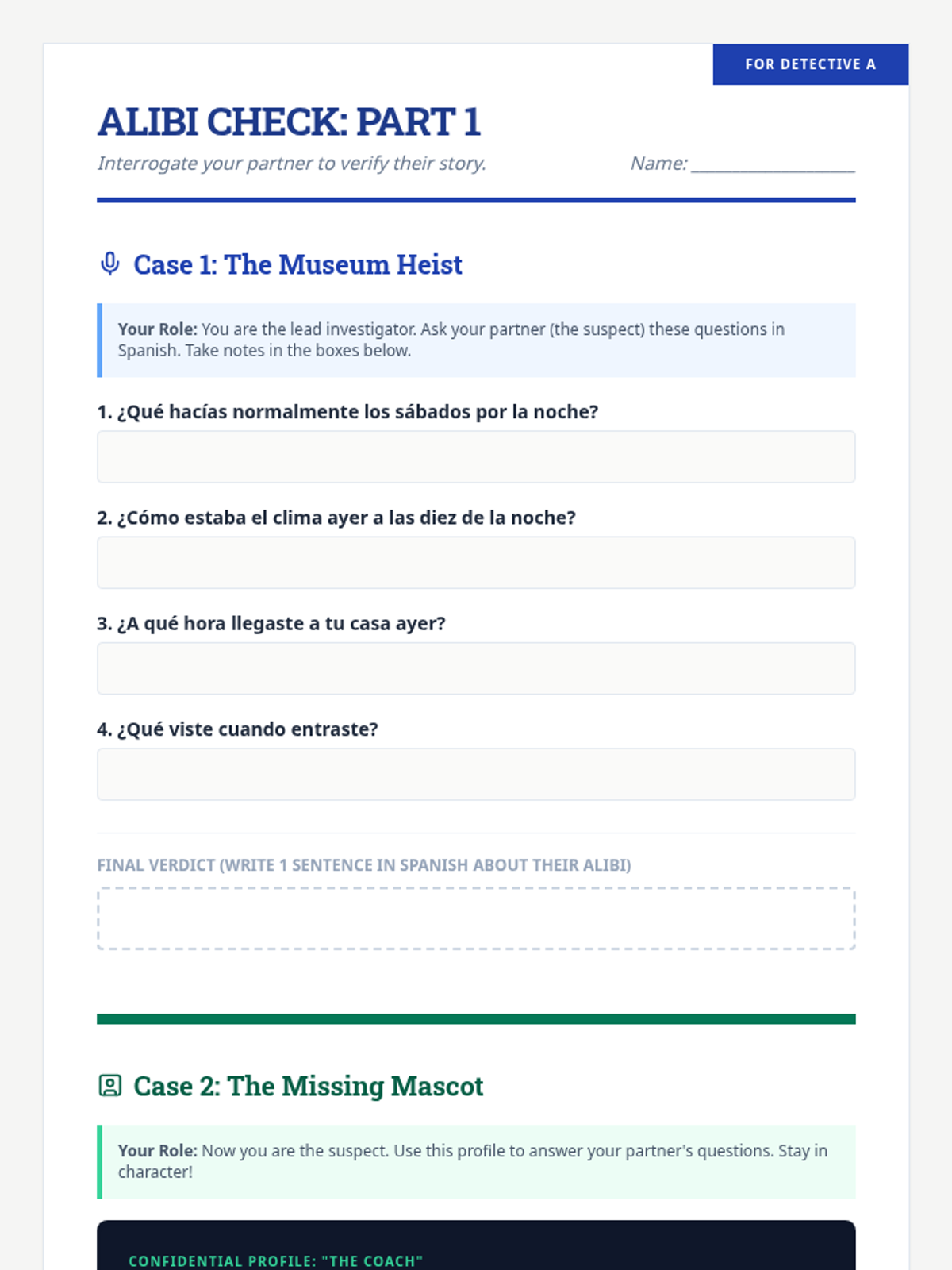
A comprehensive guide to mastering the Spanish Preterite and Imperfect tenses, featuring clear conjugation patterns and usage rules through a detective-themed lens.
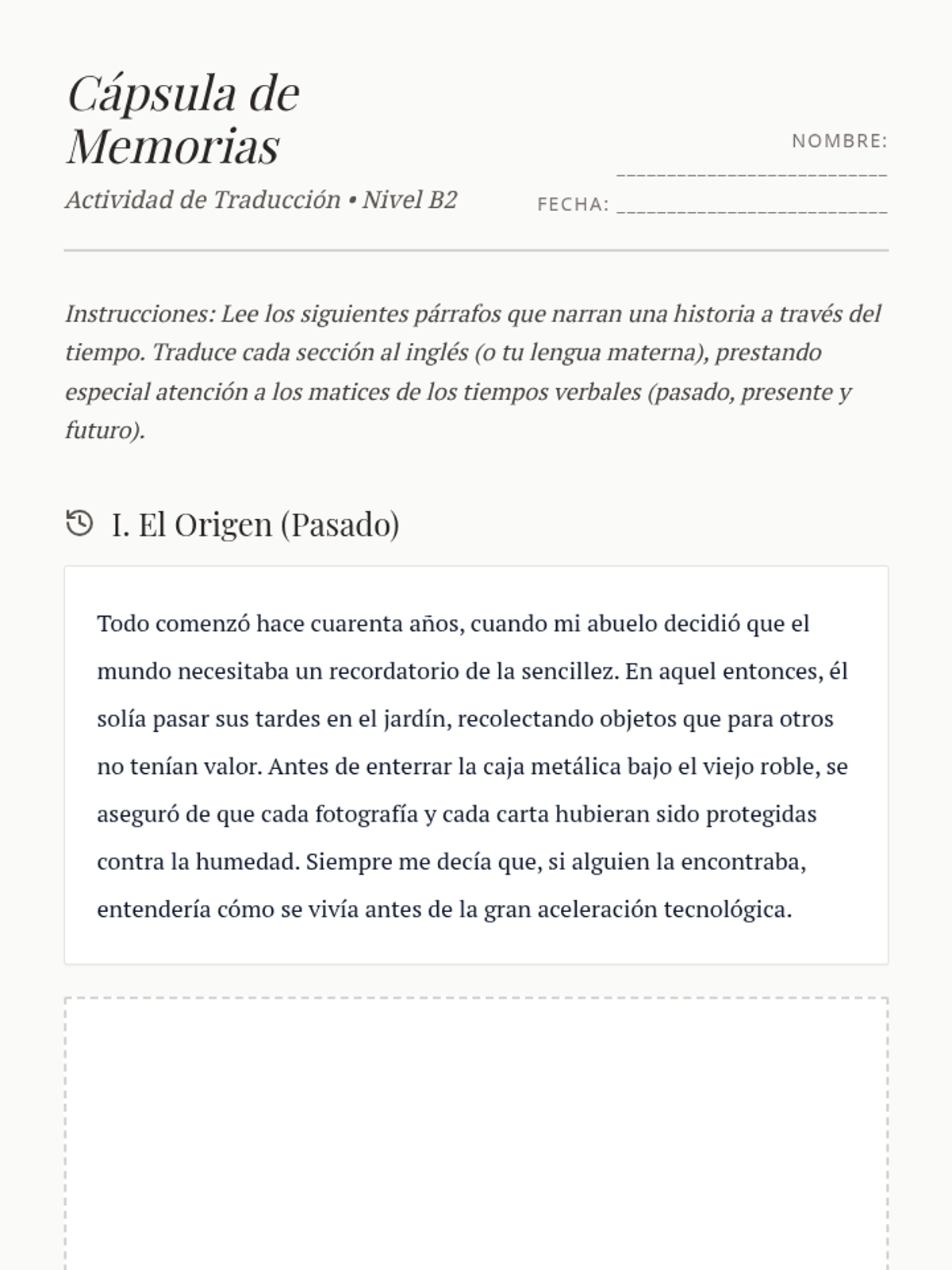
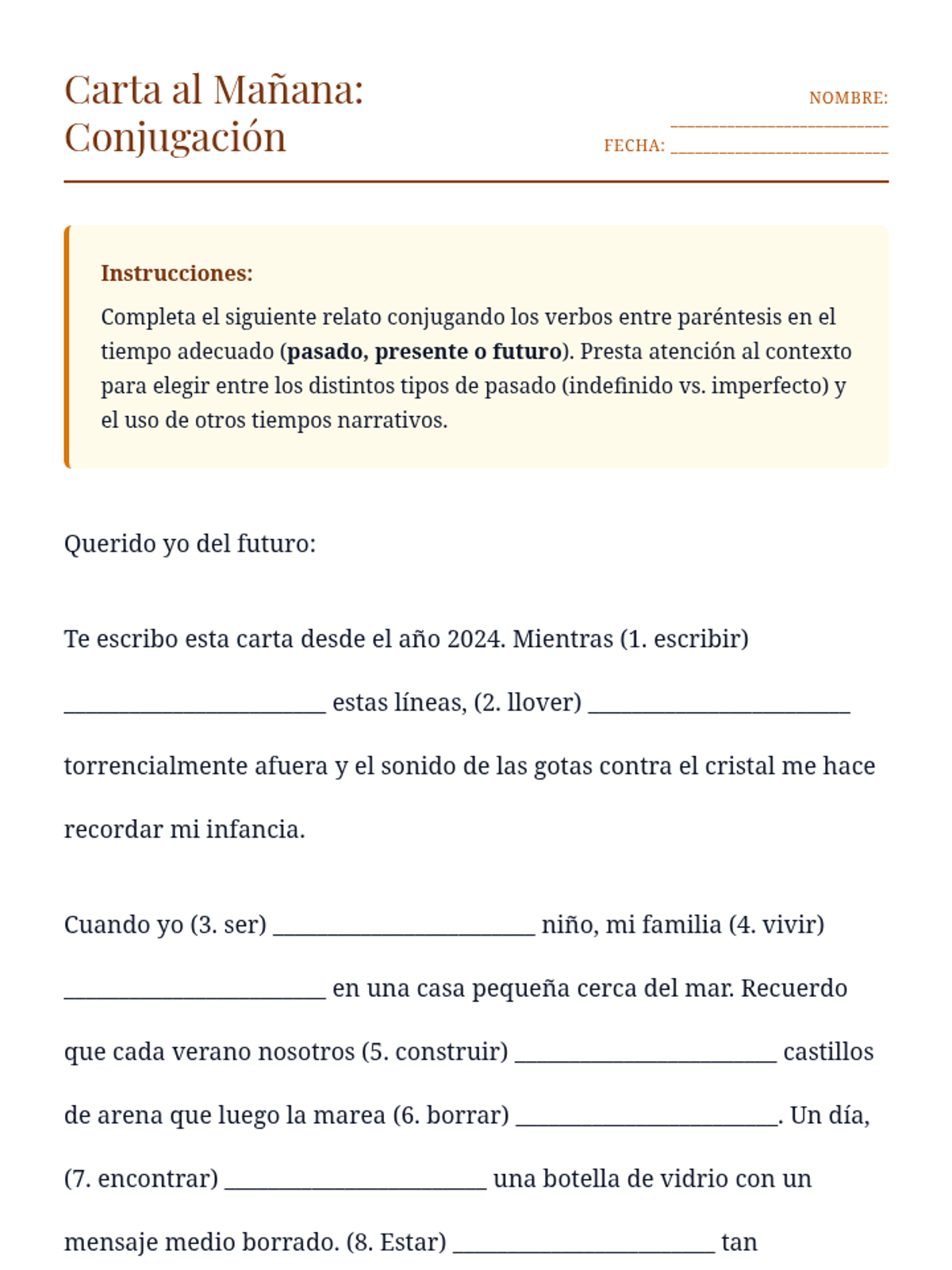
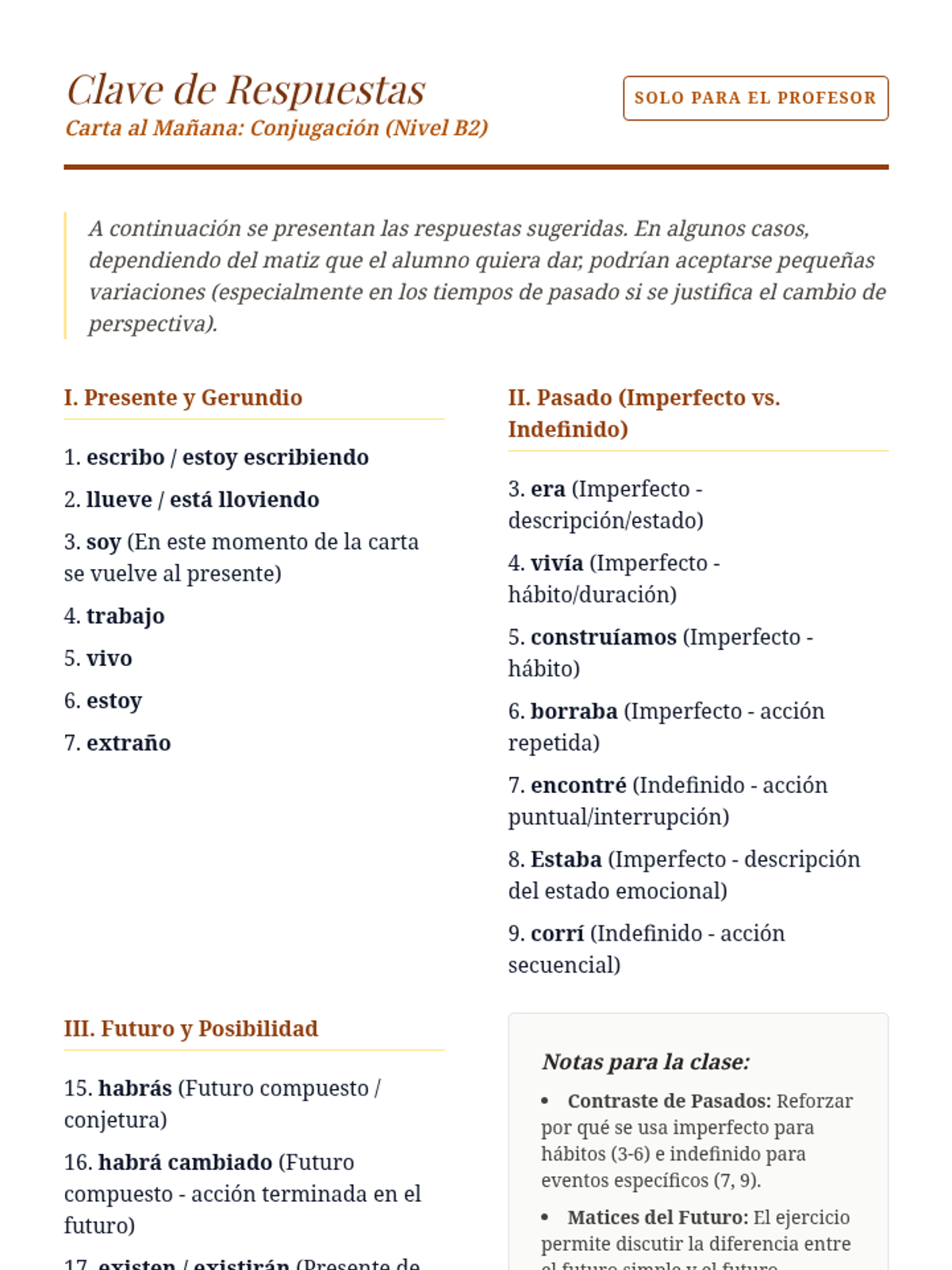
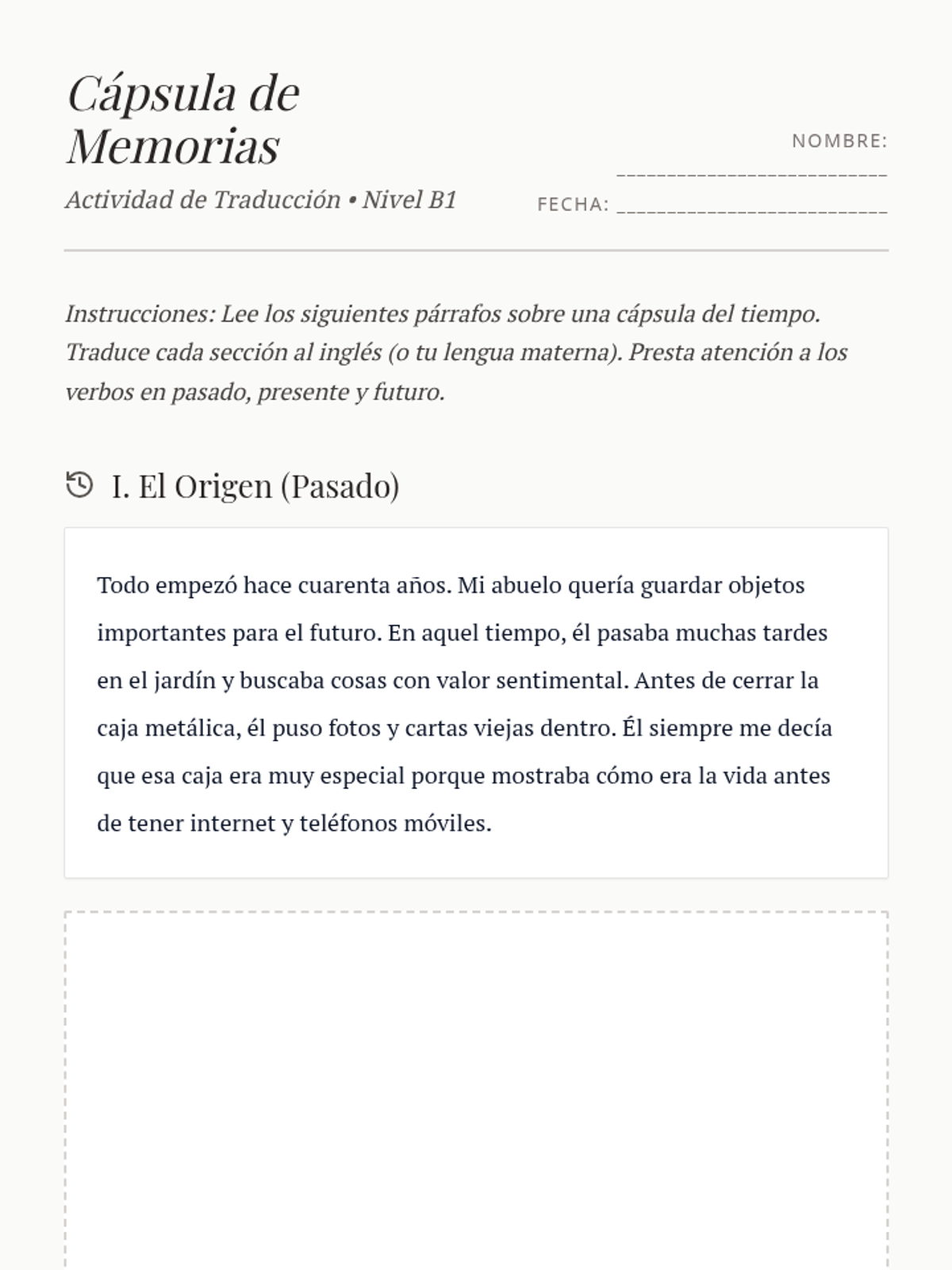
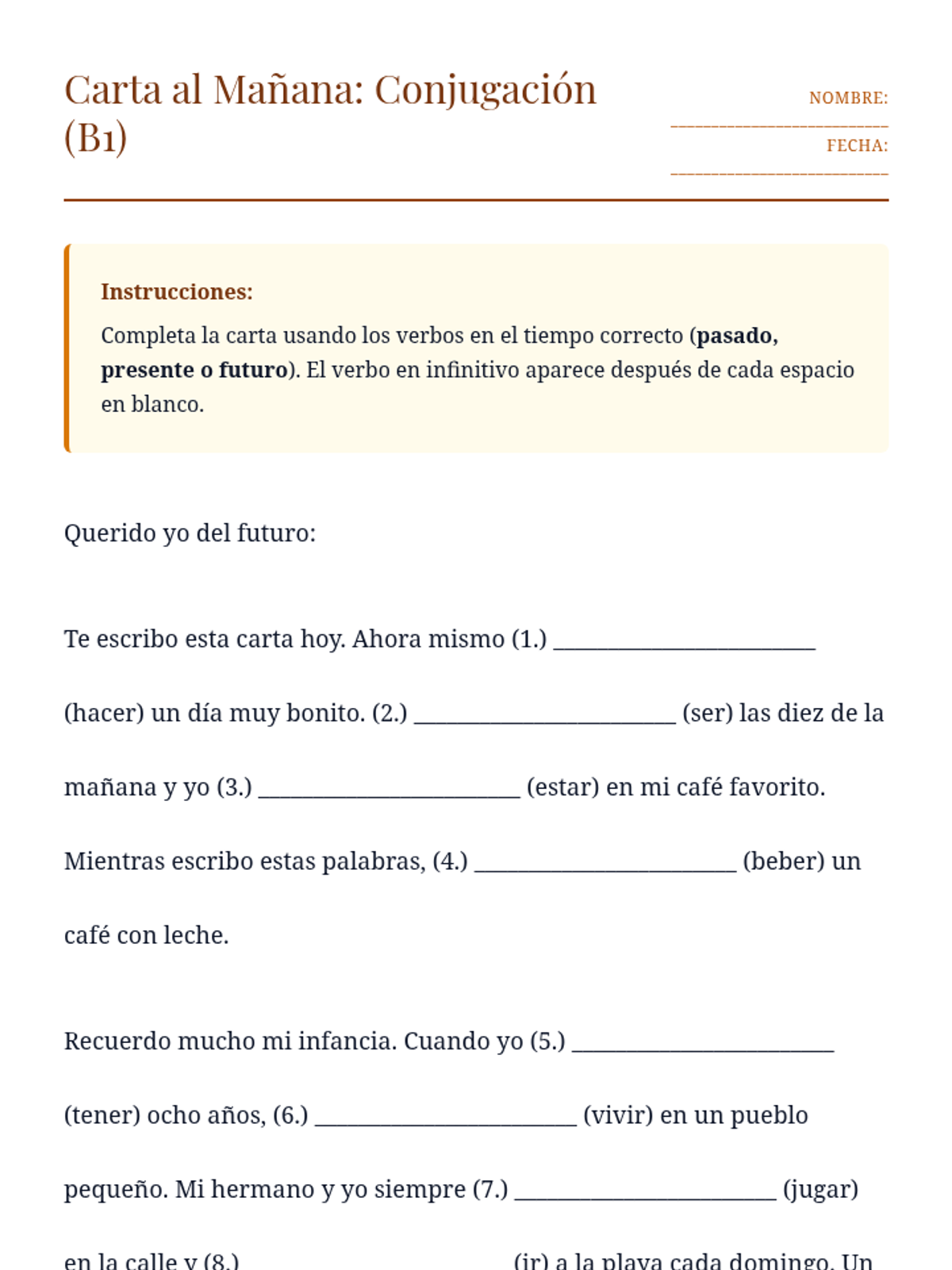
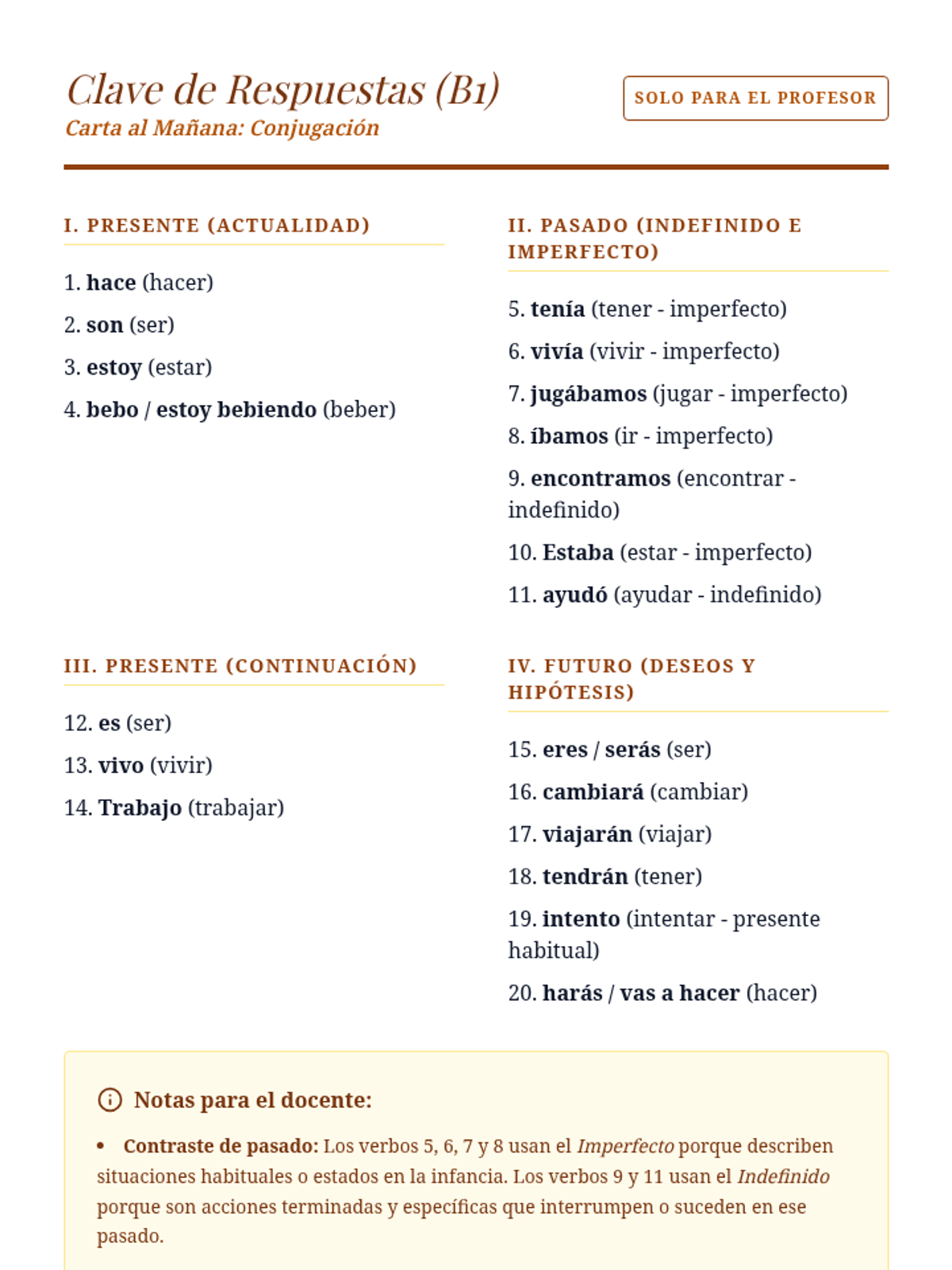
A B1-level Spanish lesson for adults focusing on narrative tenses. Students practice translating a multi-tense text and completing a verb-focused fill-in-the-blanks activity centered around the theme of time and personal history. Includes simplified vocabulary and clearer tense structures.
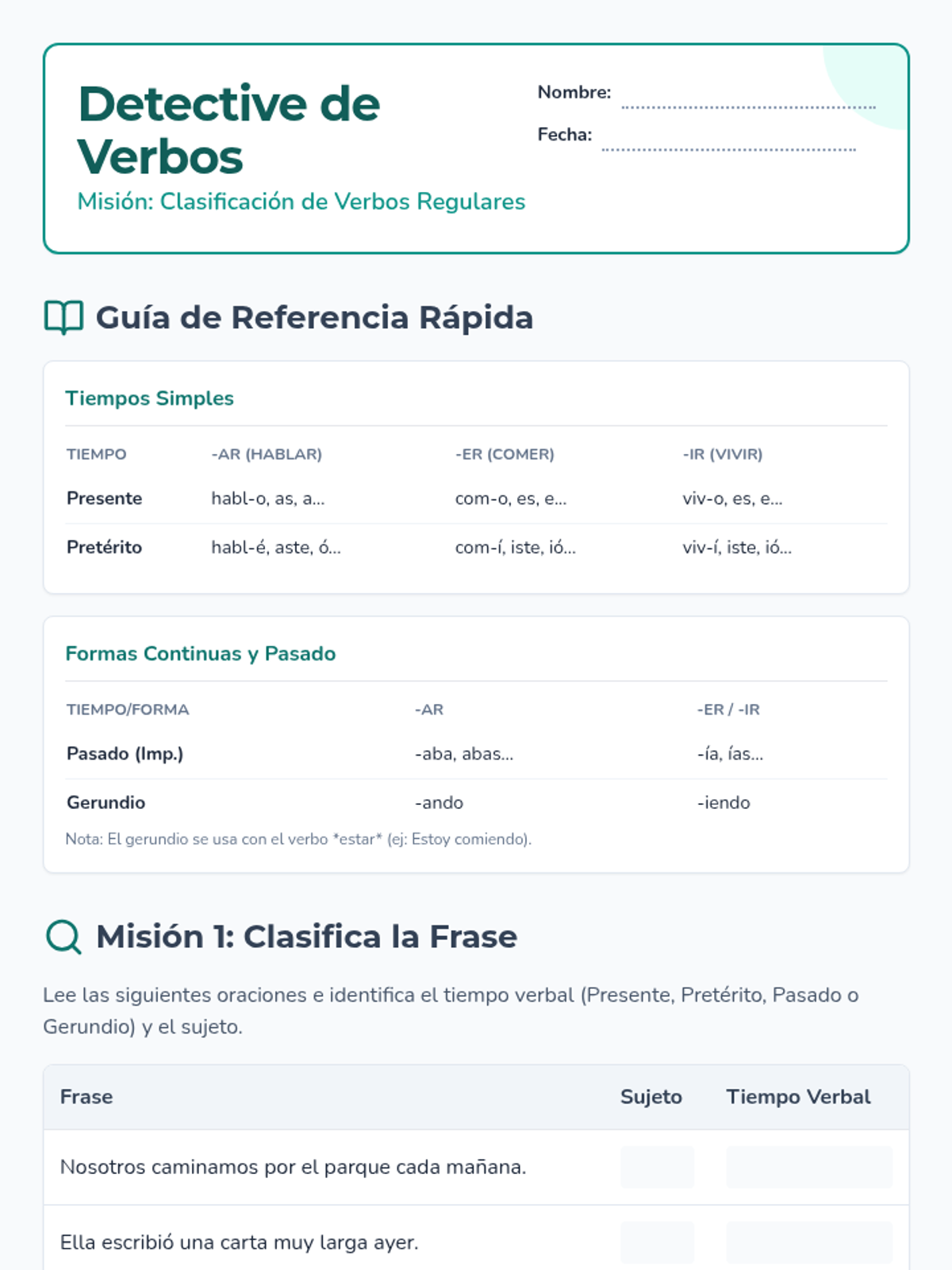
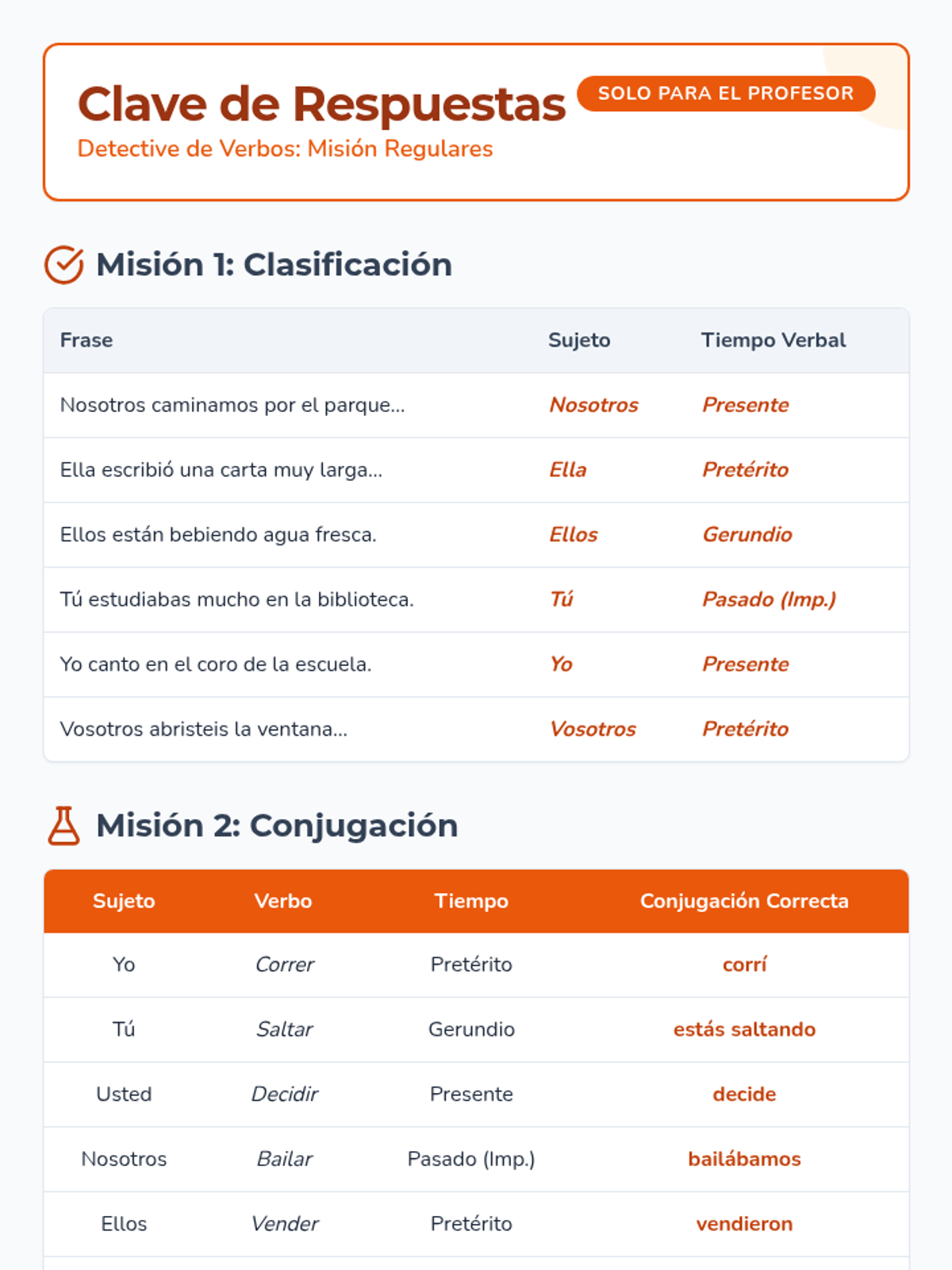
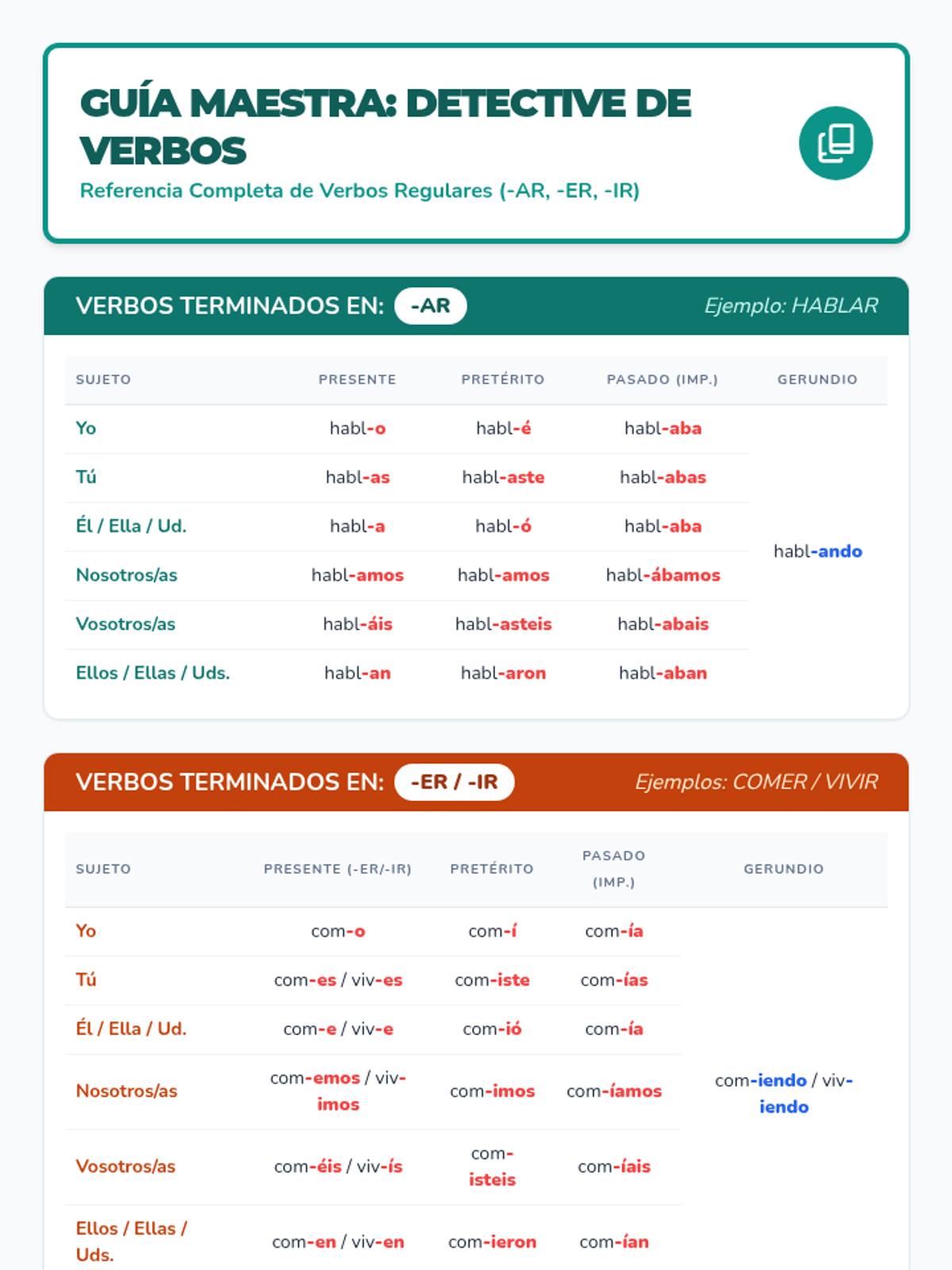
Una lección enfocada en la identificación y uso de verbos regulares en español en diferentes tiempos verbales.
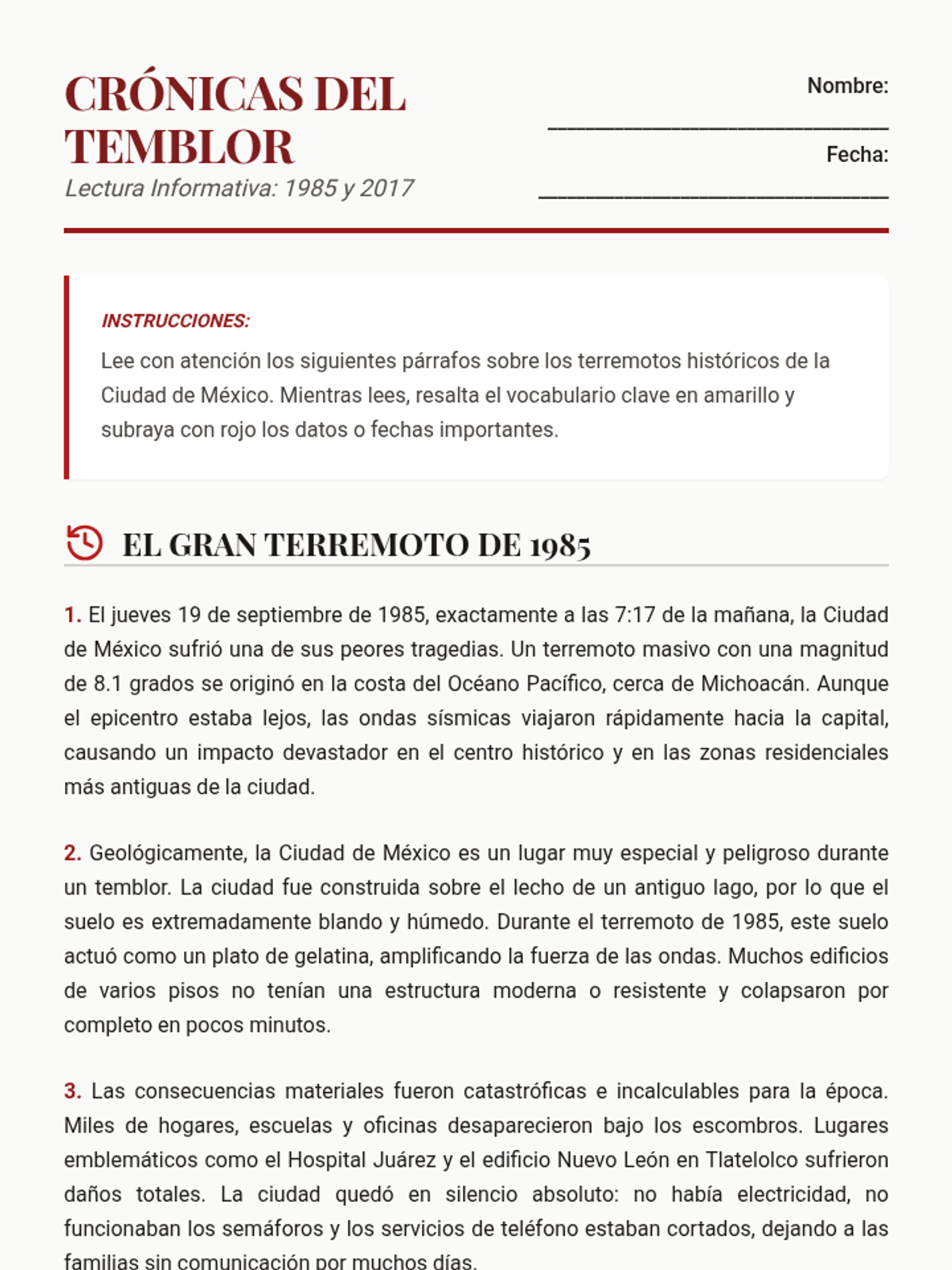
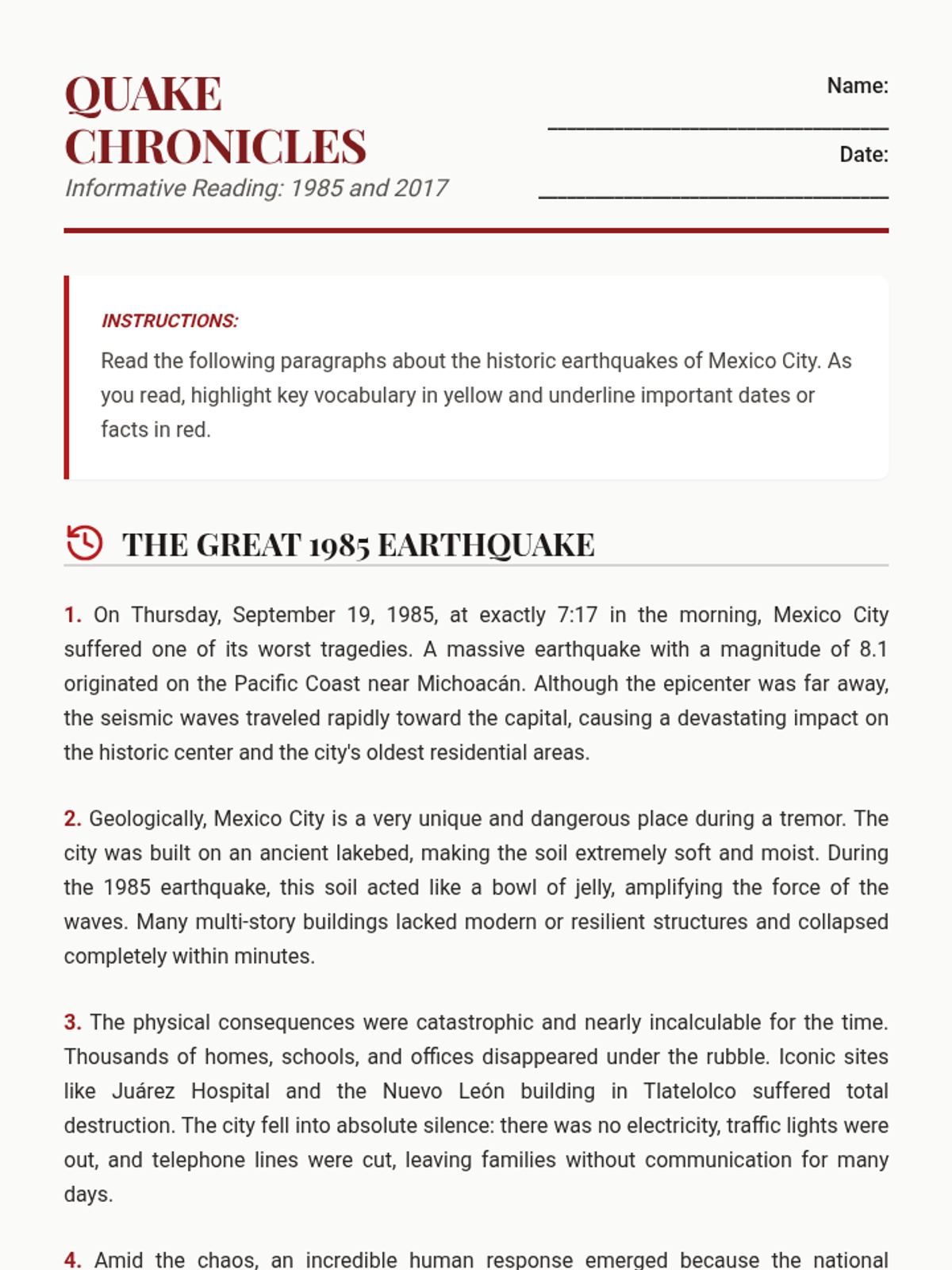
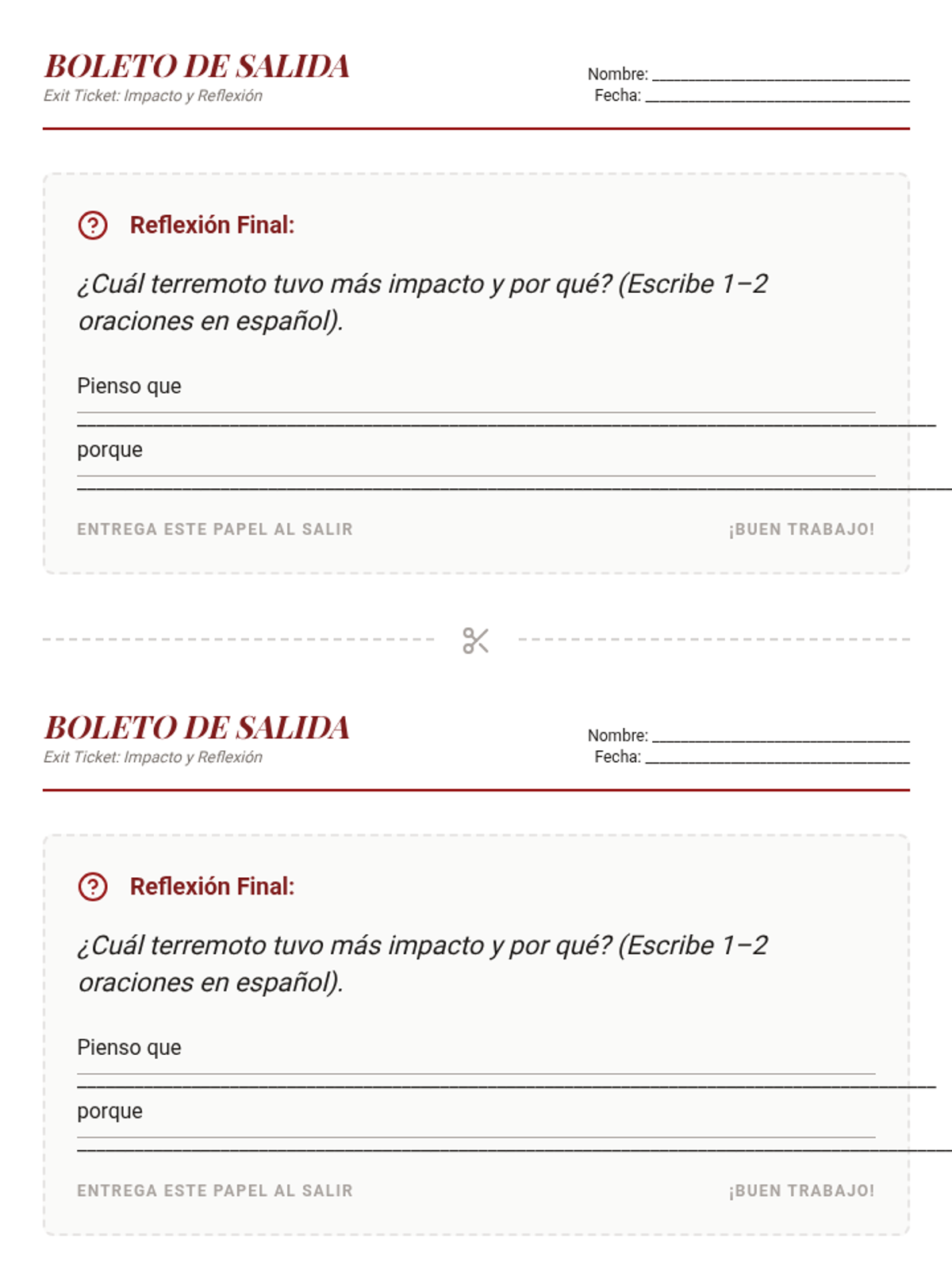
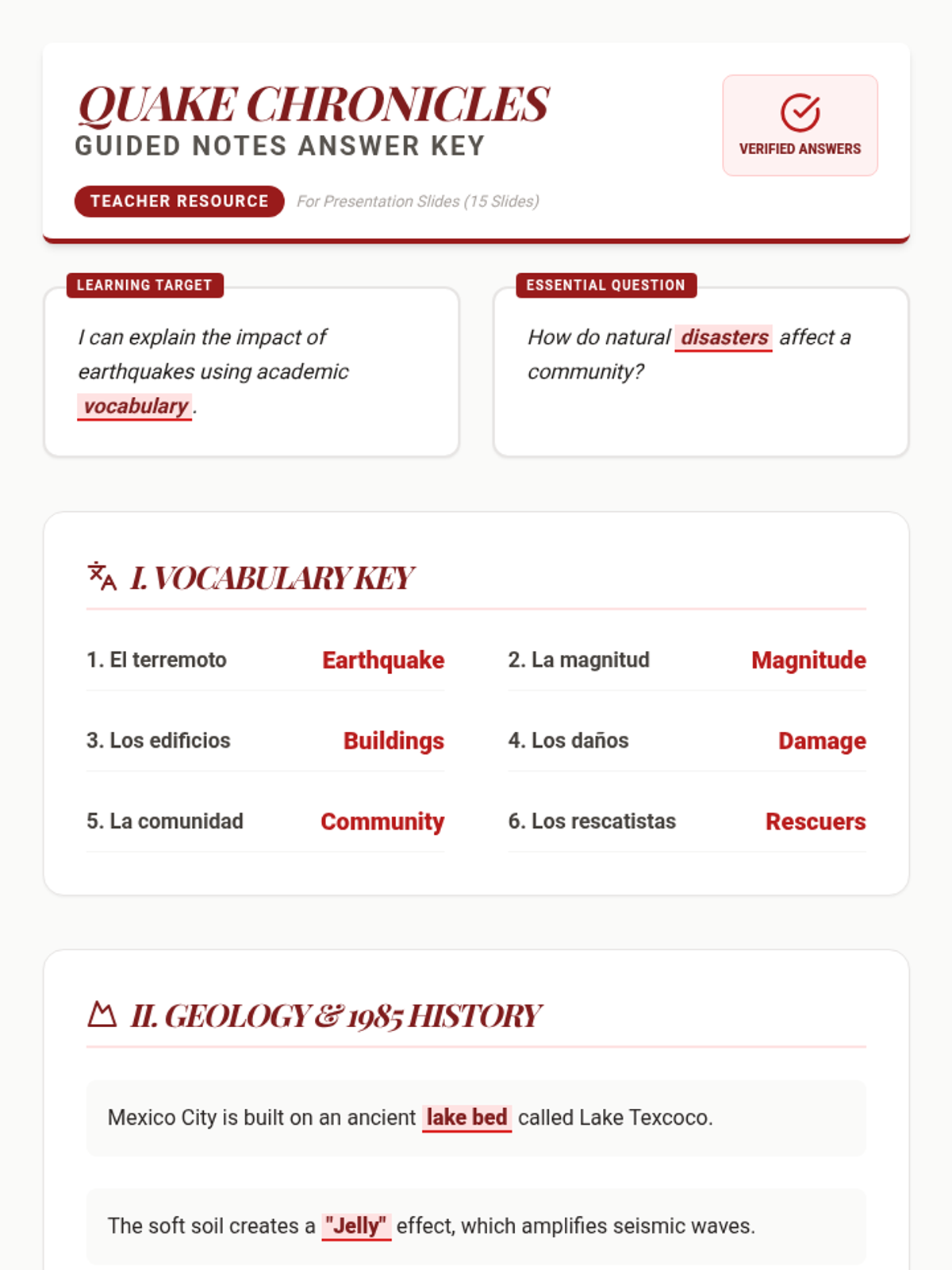
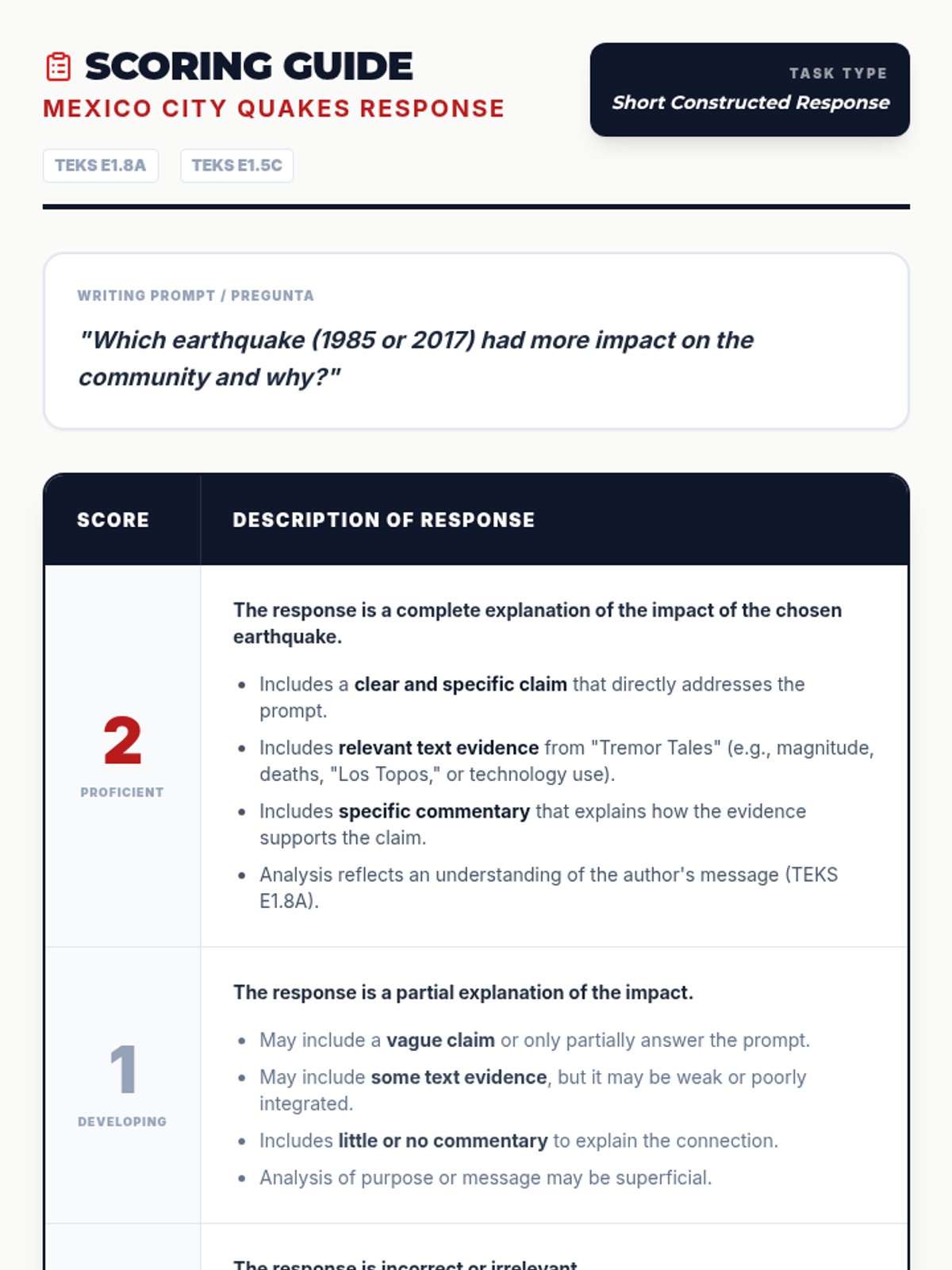
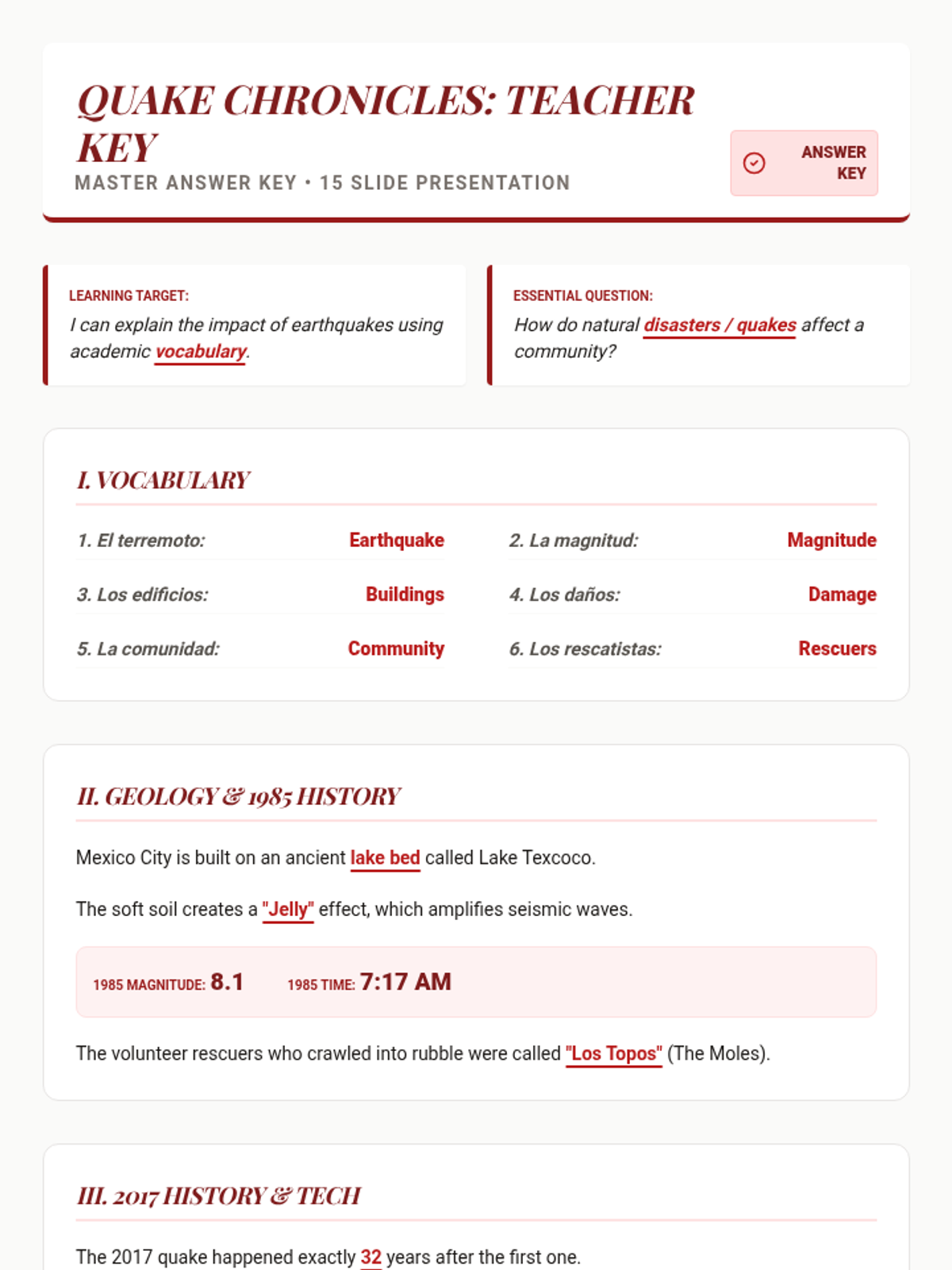
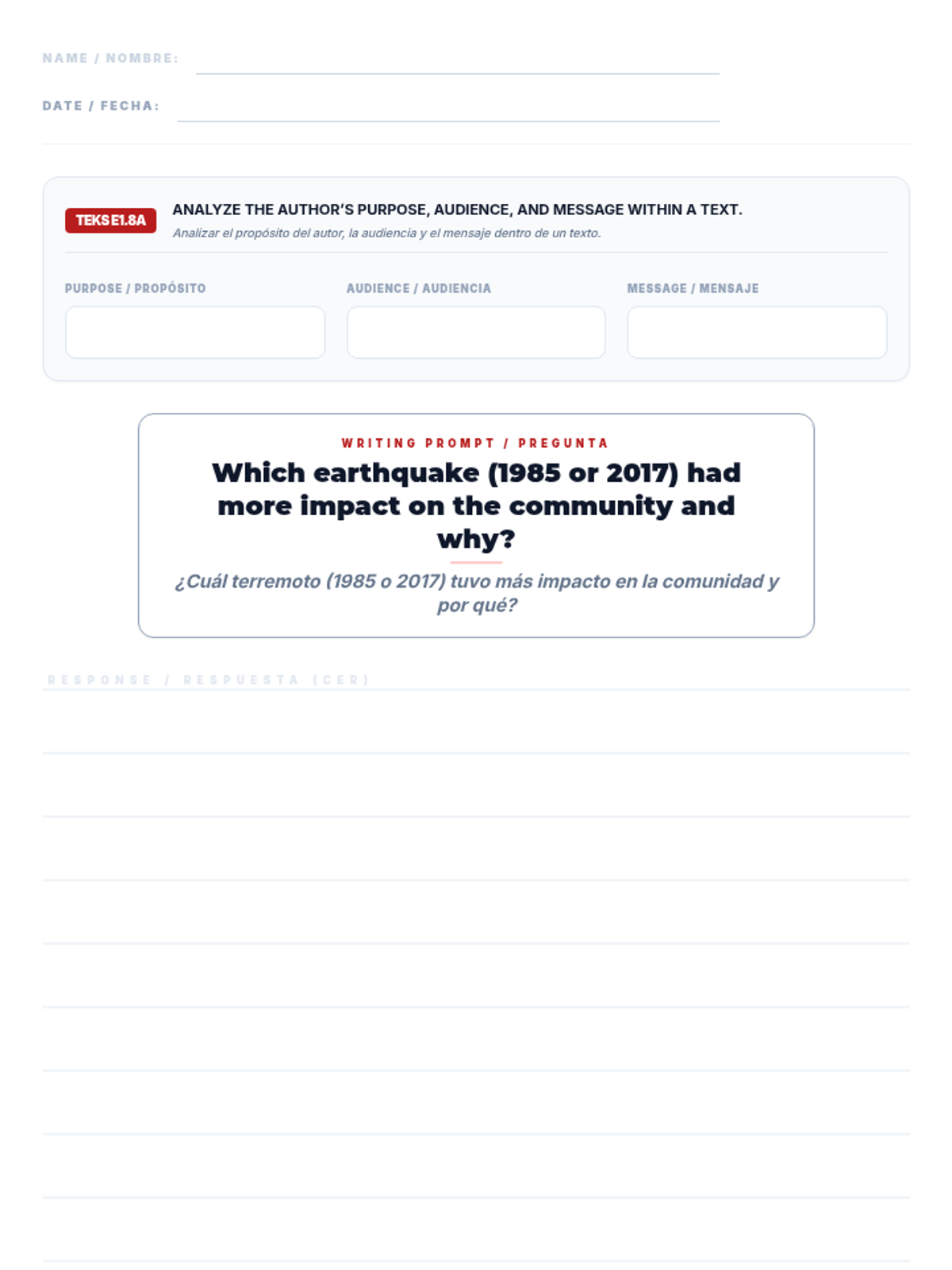
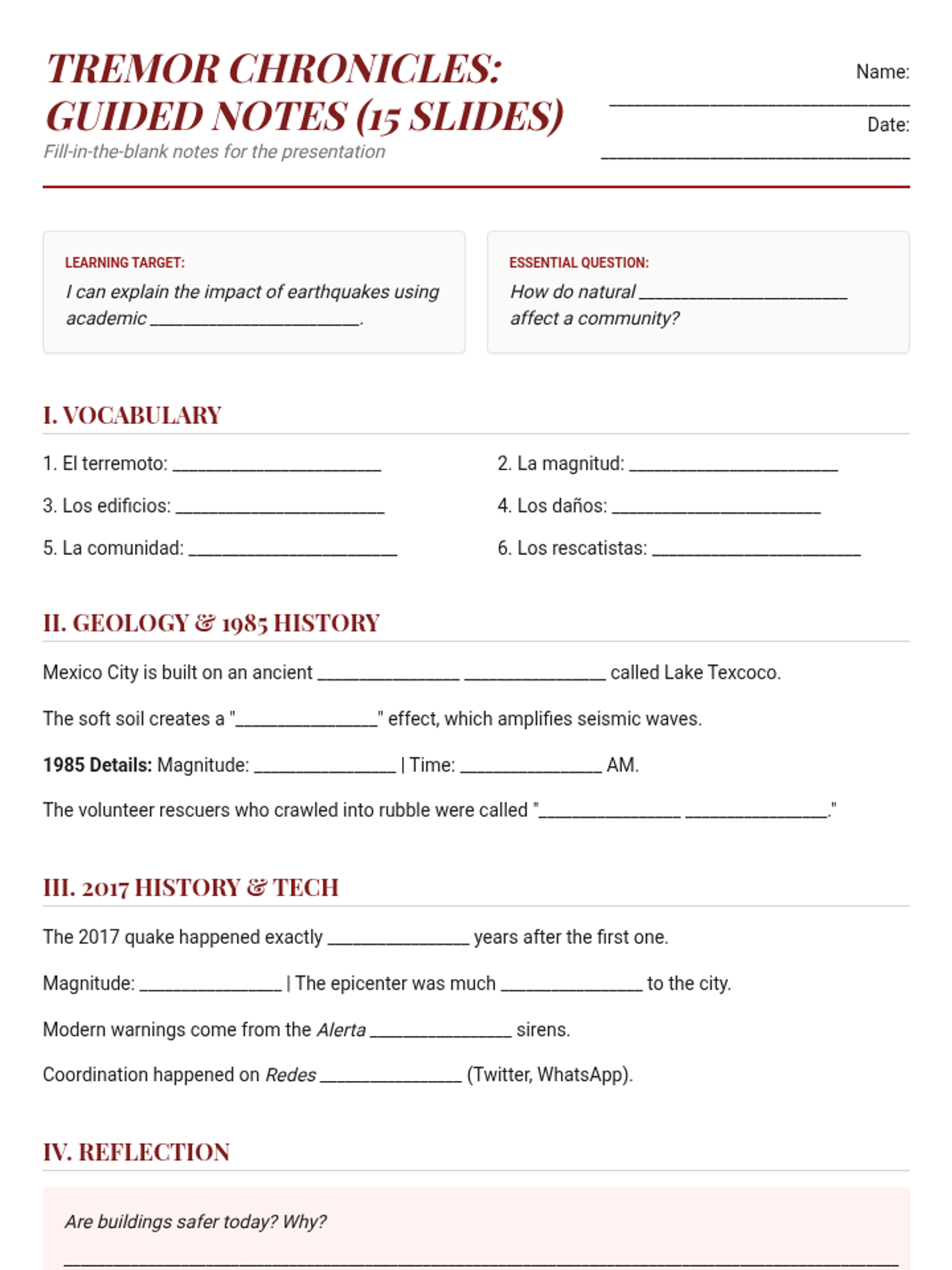
A comprehensive lesson on the historic earthquakes of Mexico City (1985 and 2017), focusing on interpretive reading and academic writing using the Claim, Evidence, Reasoning (CER) framework. Students explore community impact, resilience, and historical comparison.
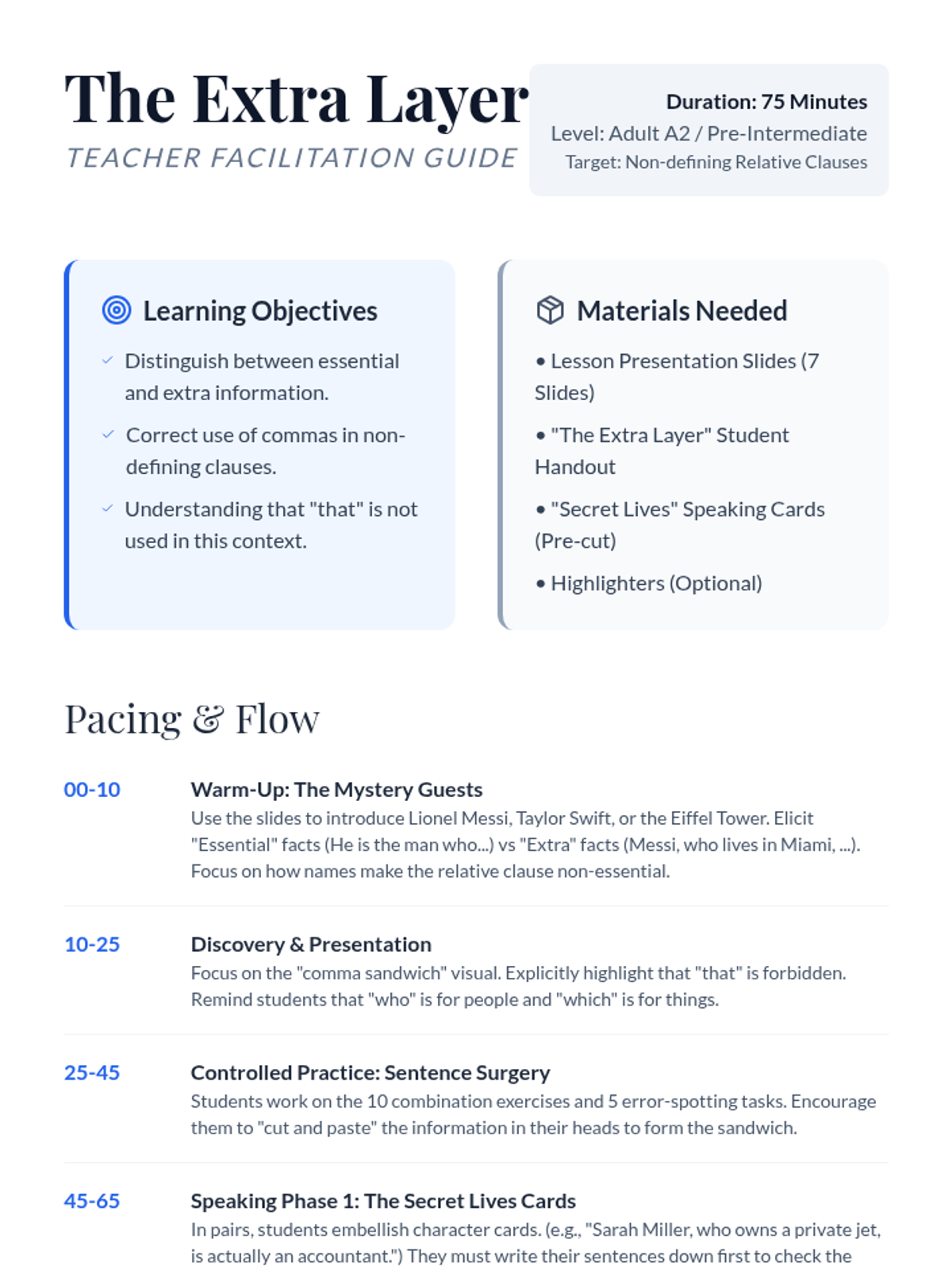
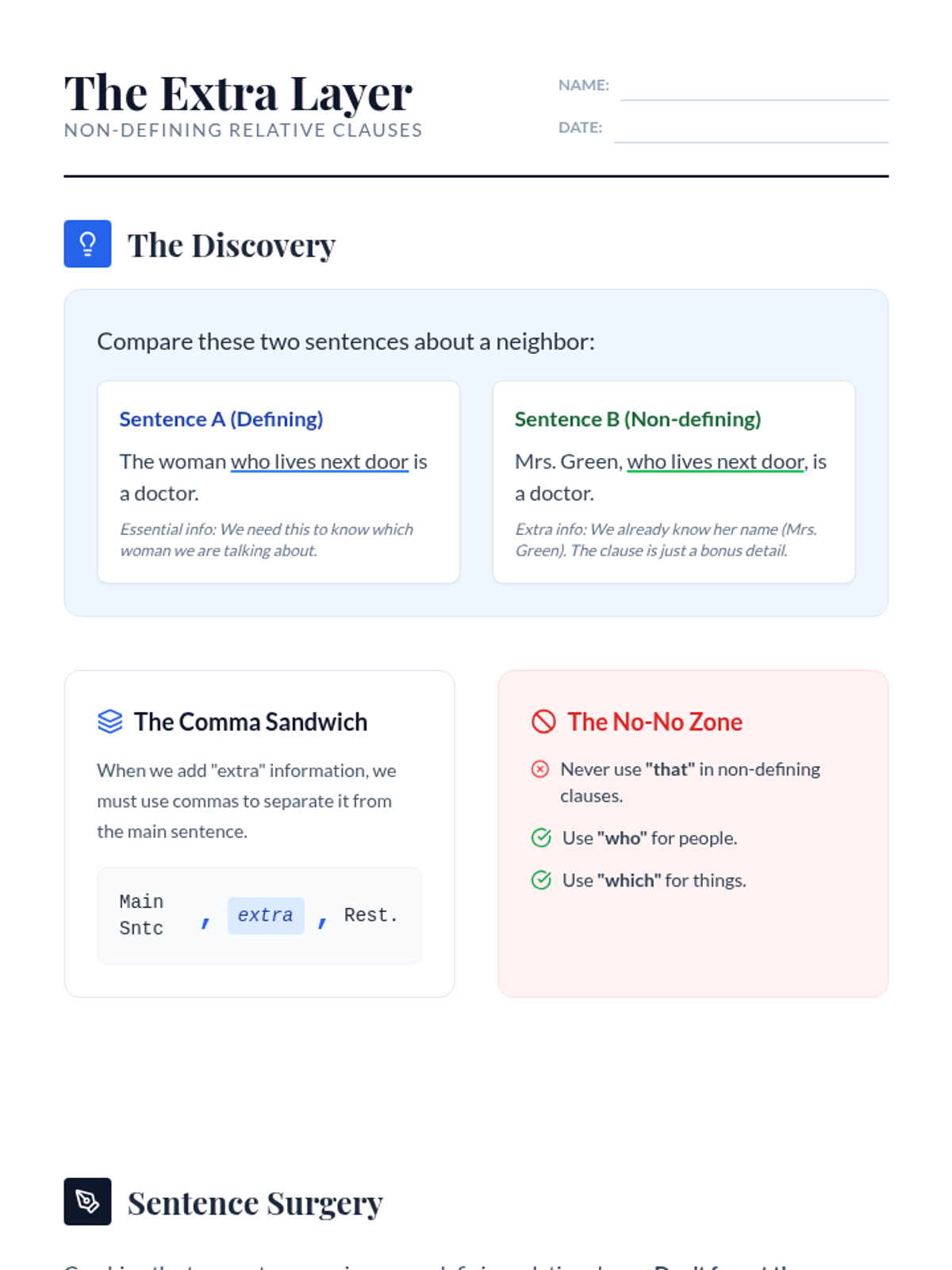
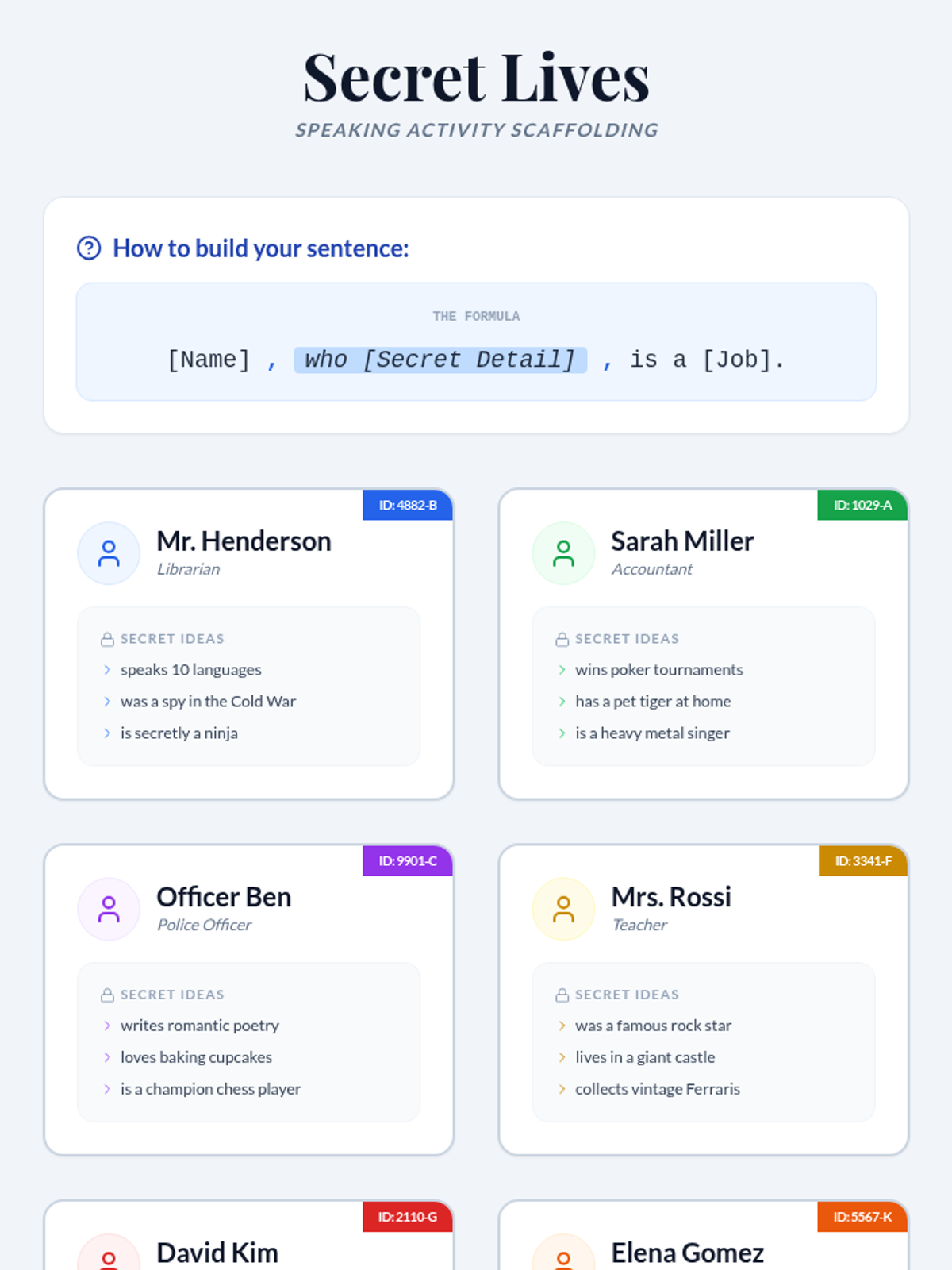
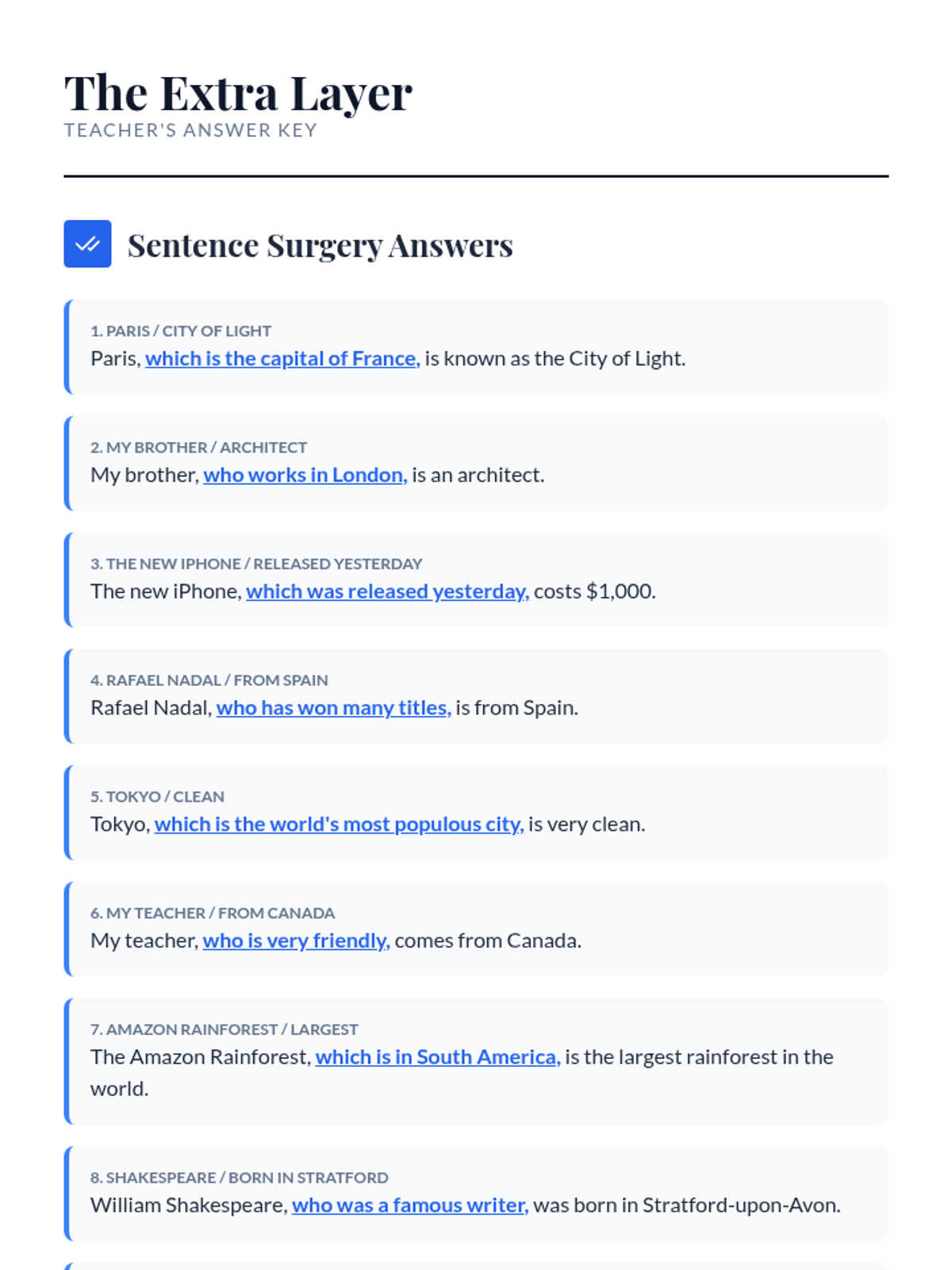
A comprehensive lesson for adult A2 learners focusing on non-defining relative clauses, featuring a blend of grammatical instruction and high-engagement speaking activities.
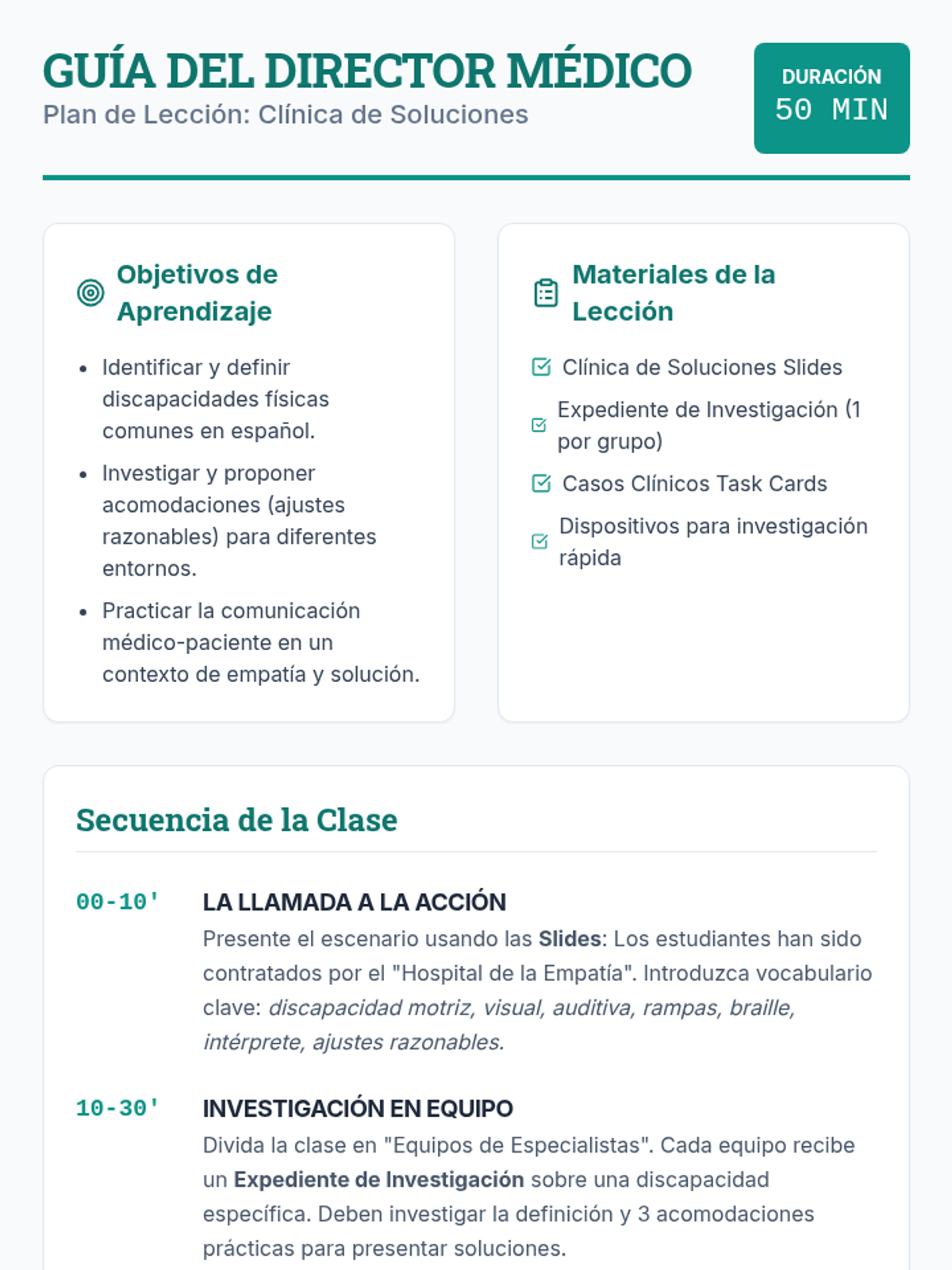
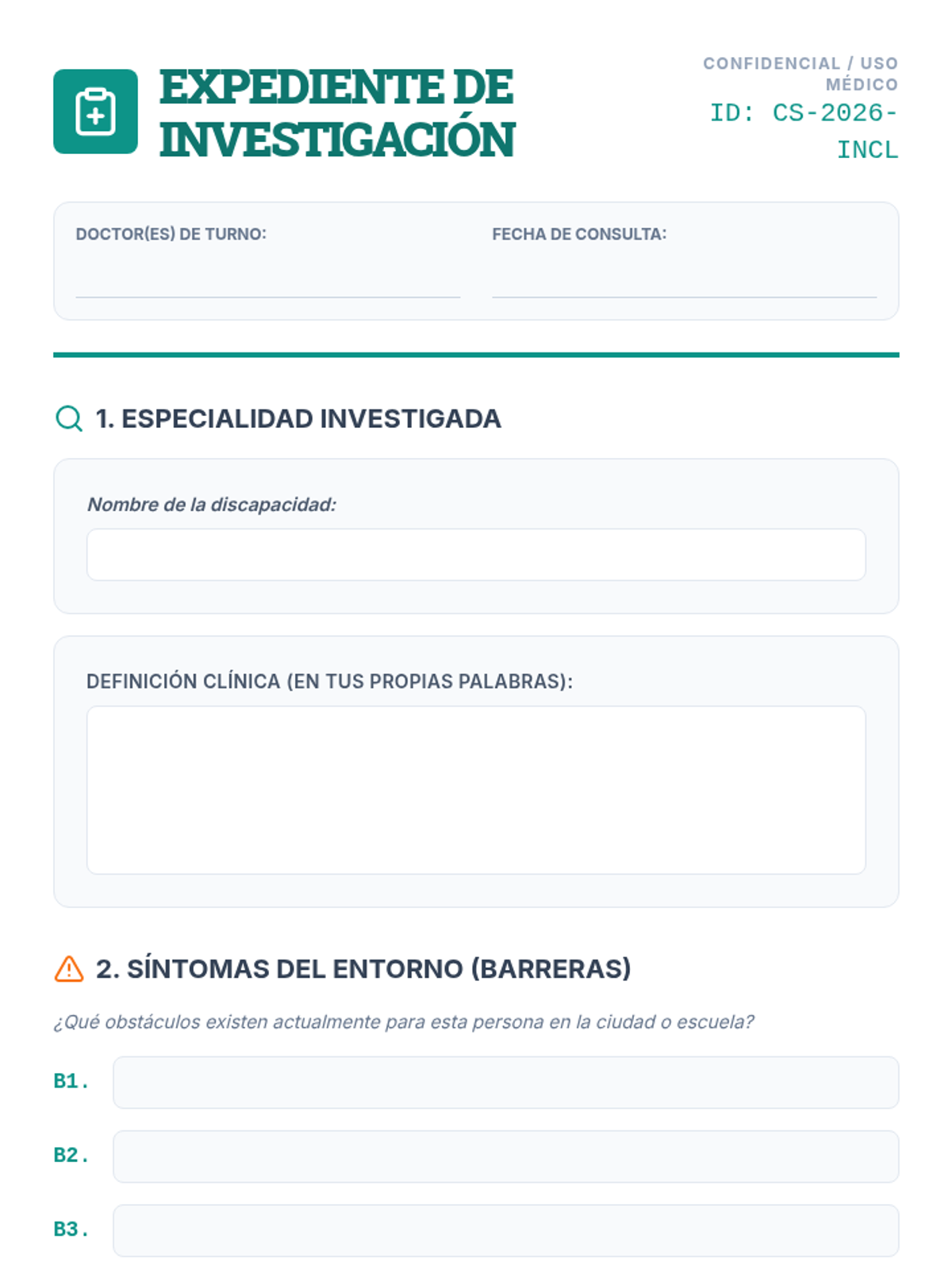
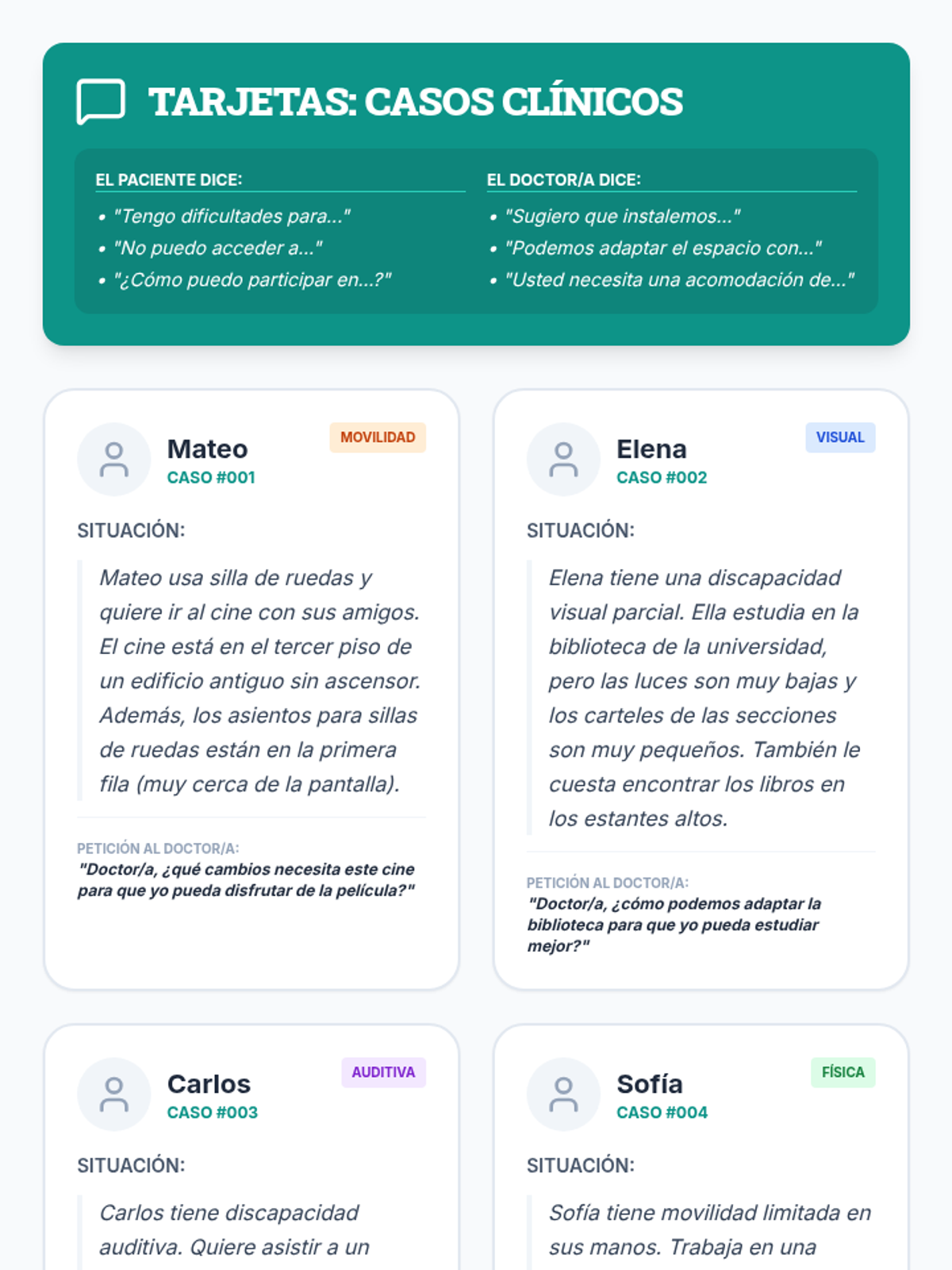
A high-energy, collaborative lesson where students act as medical consultants to research physical disabilities and design inclusive accommodations through role-play.
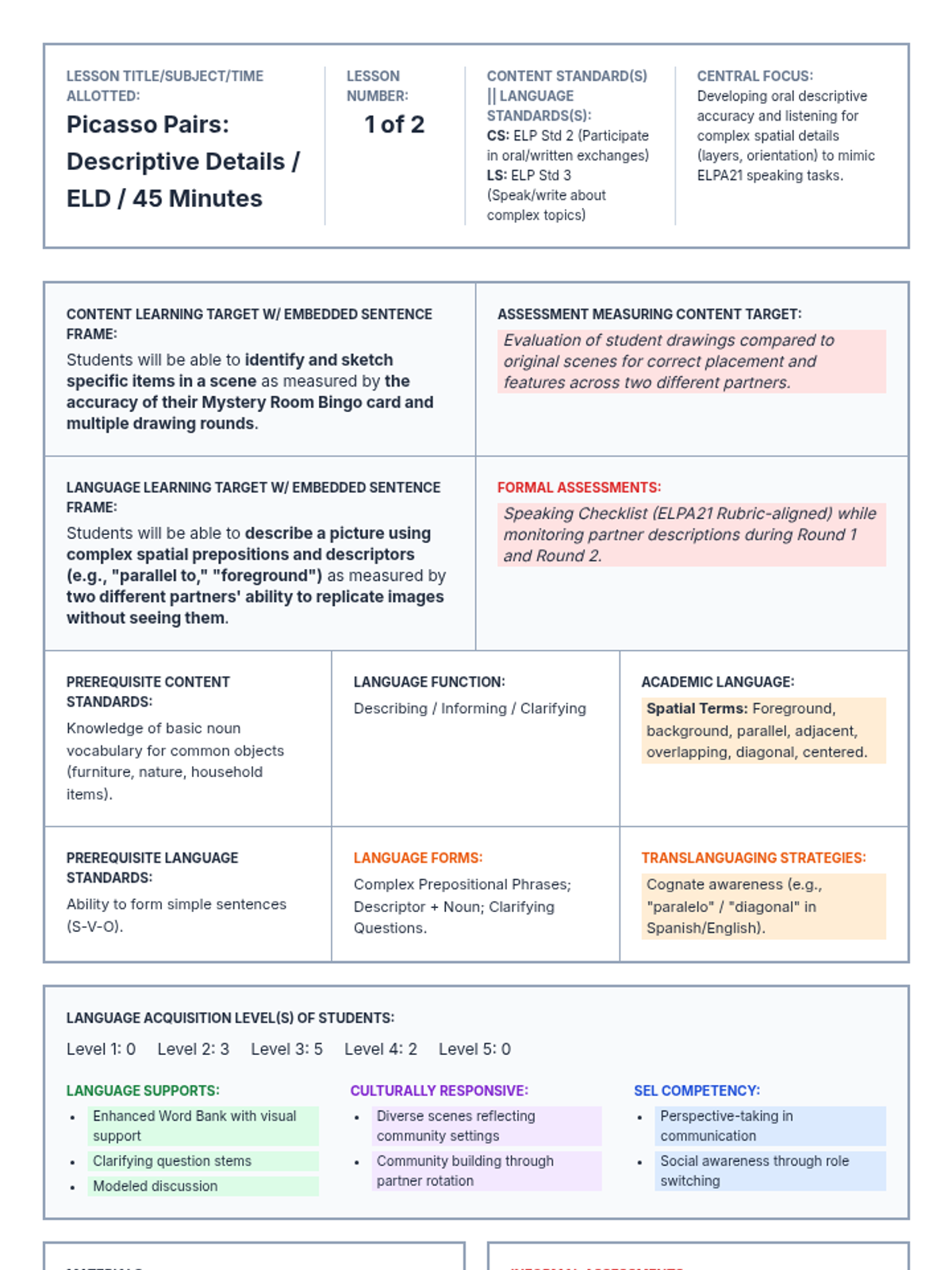
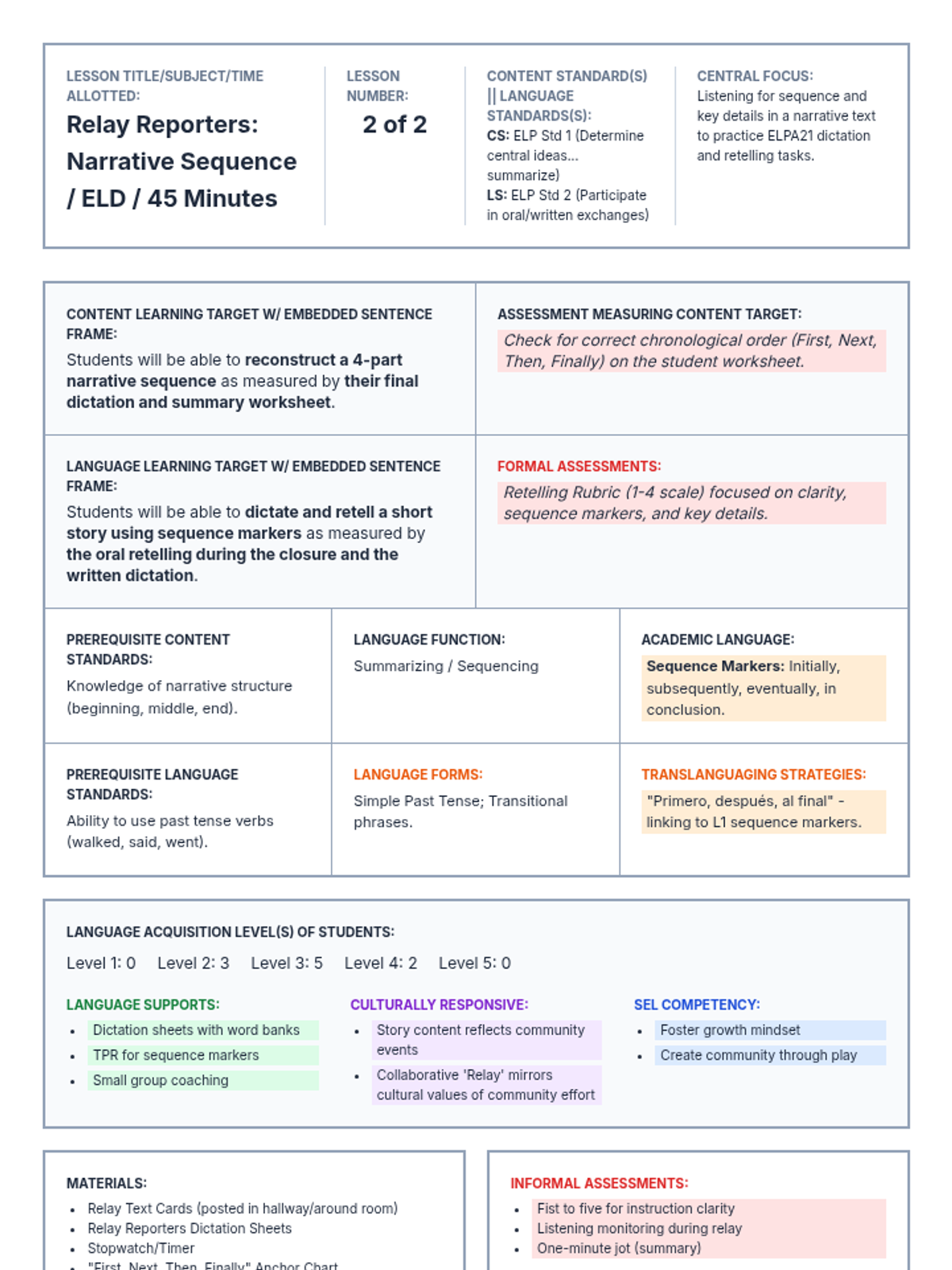
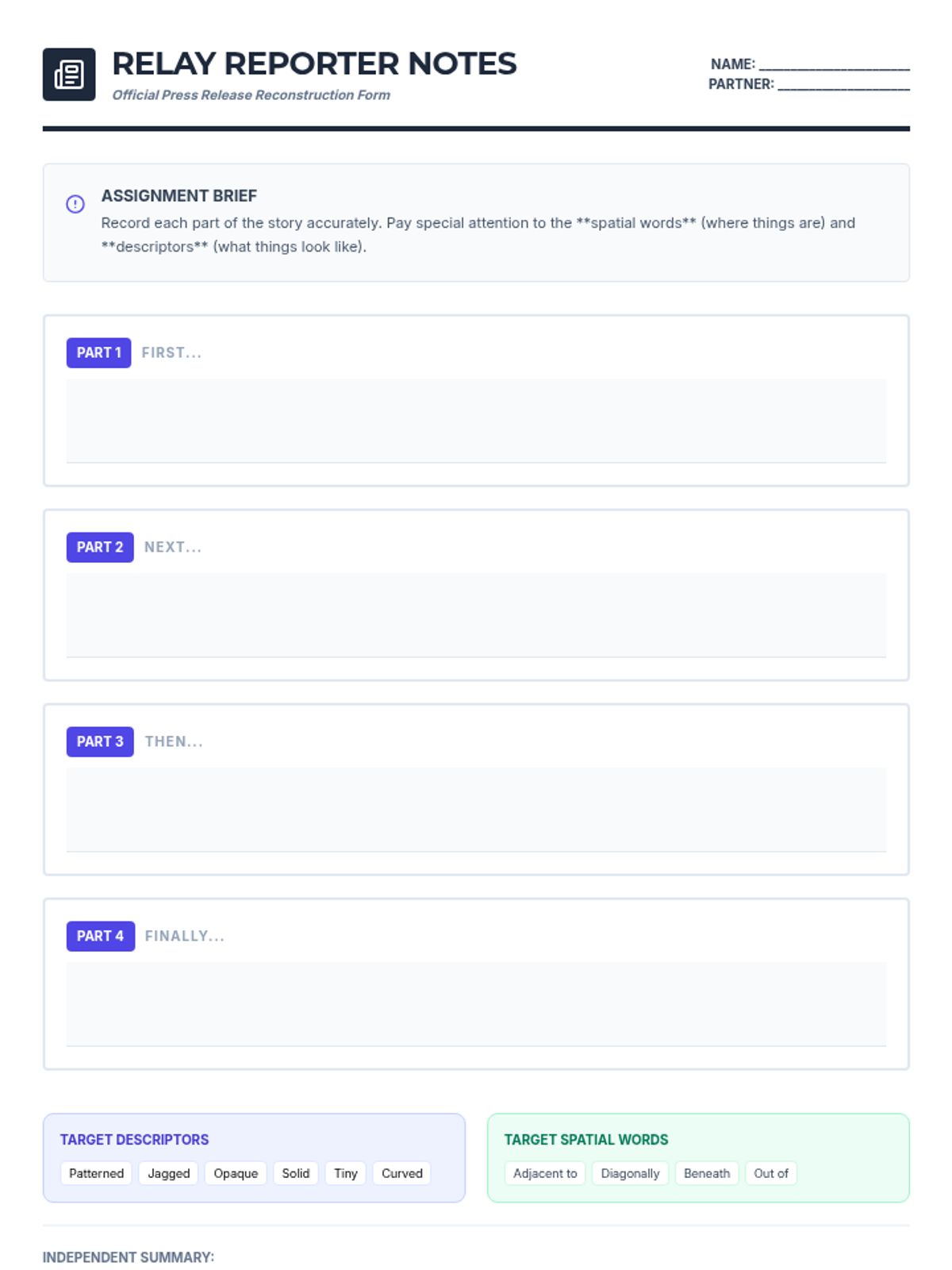
A lesson focused on listening for detail and narrative sequencing through a high-energy running dictation and retelling activity.
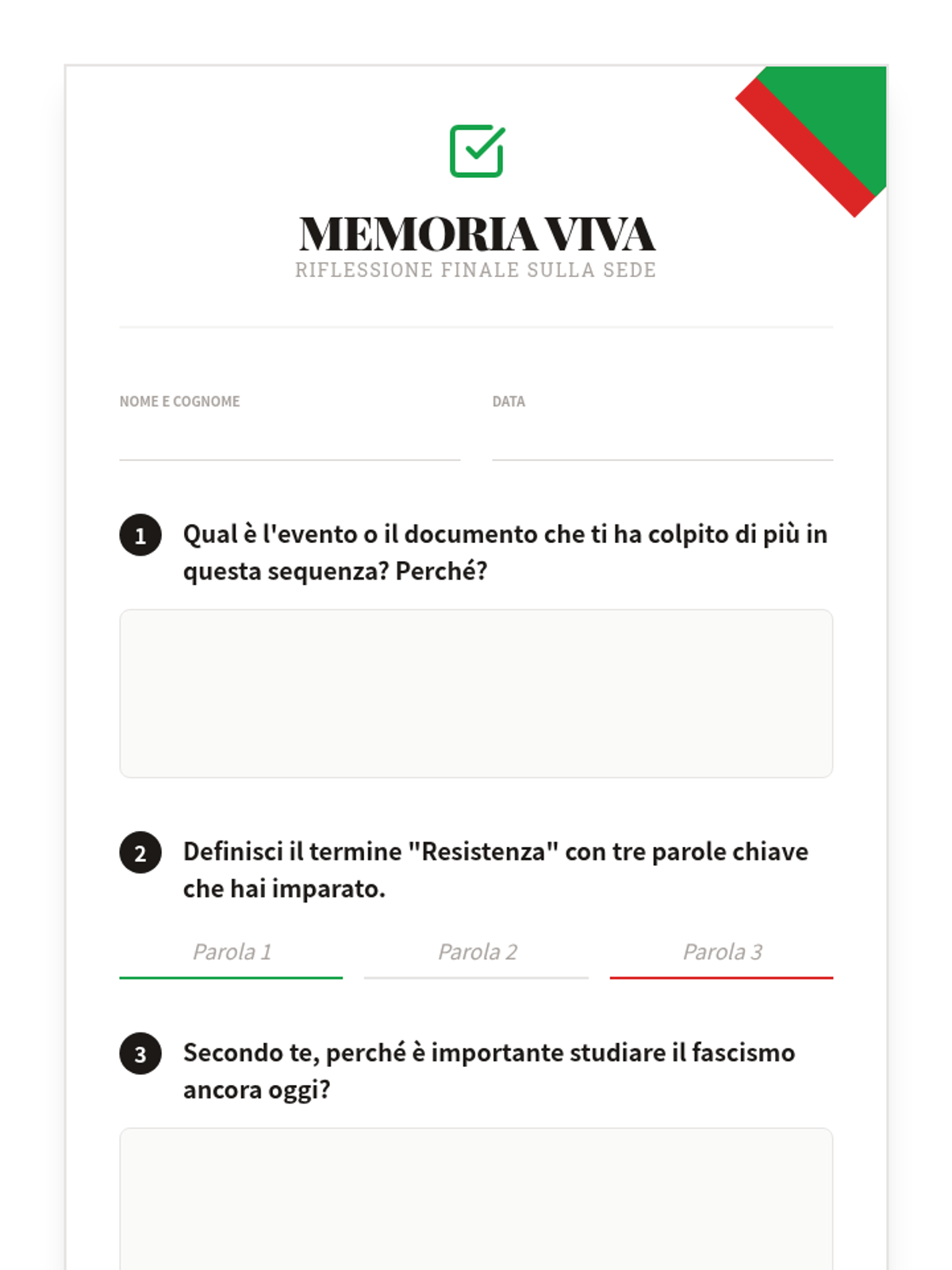
La fin du régime, la Libération du 25 avril et la réflexion sur l'héritage historique du fascisme.
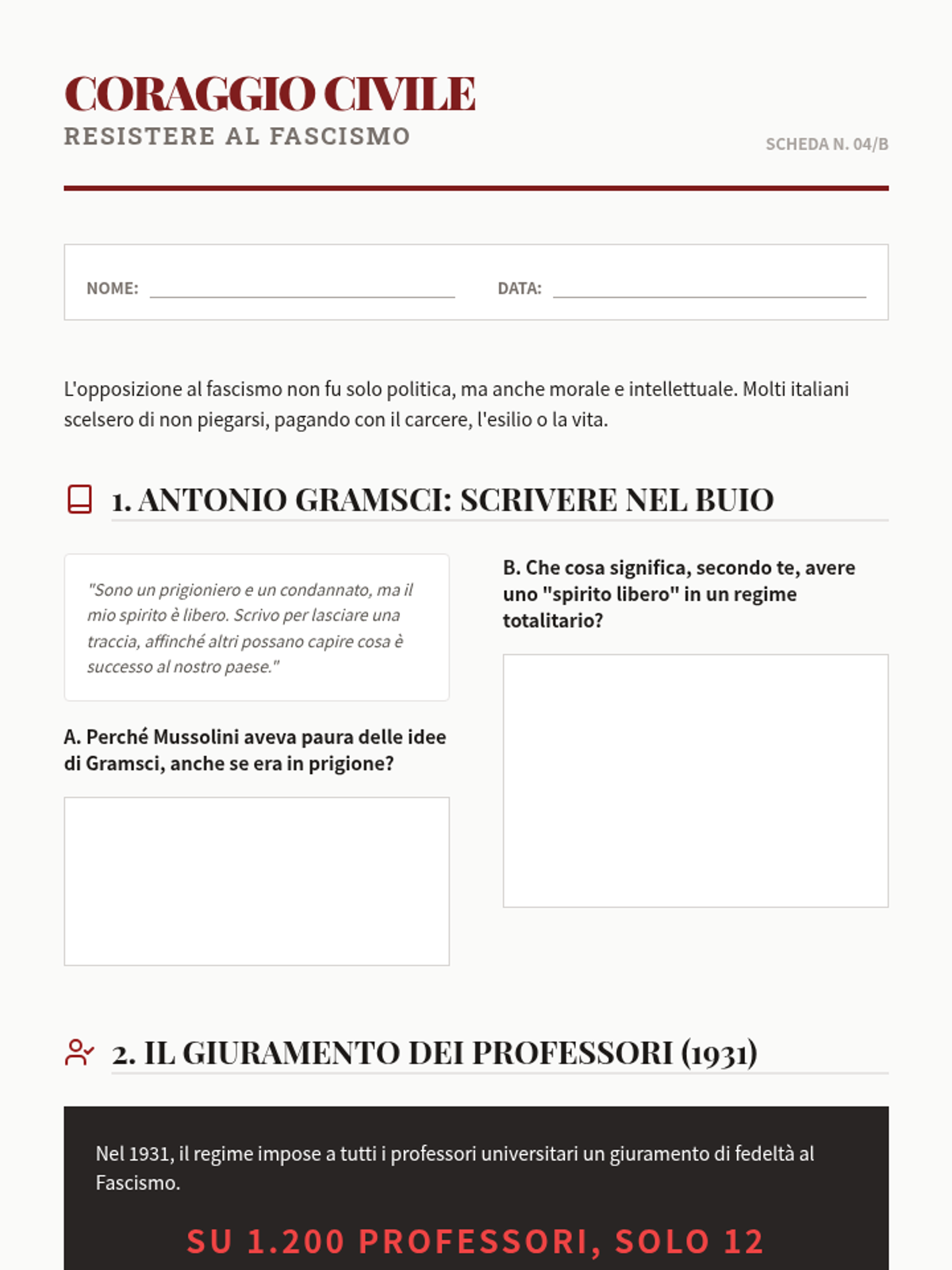
Découverte des figures de l'opposition antifasciste et des prémices de la Résistance.
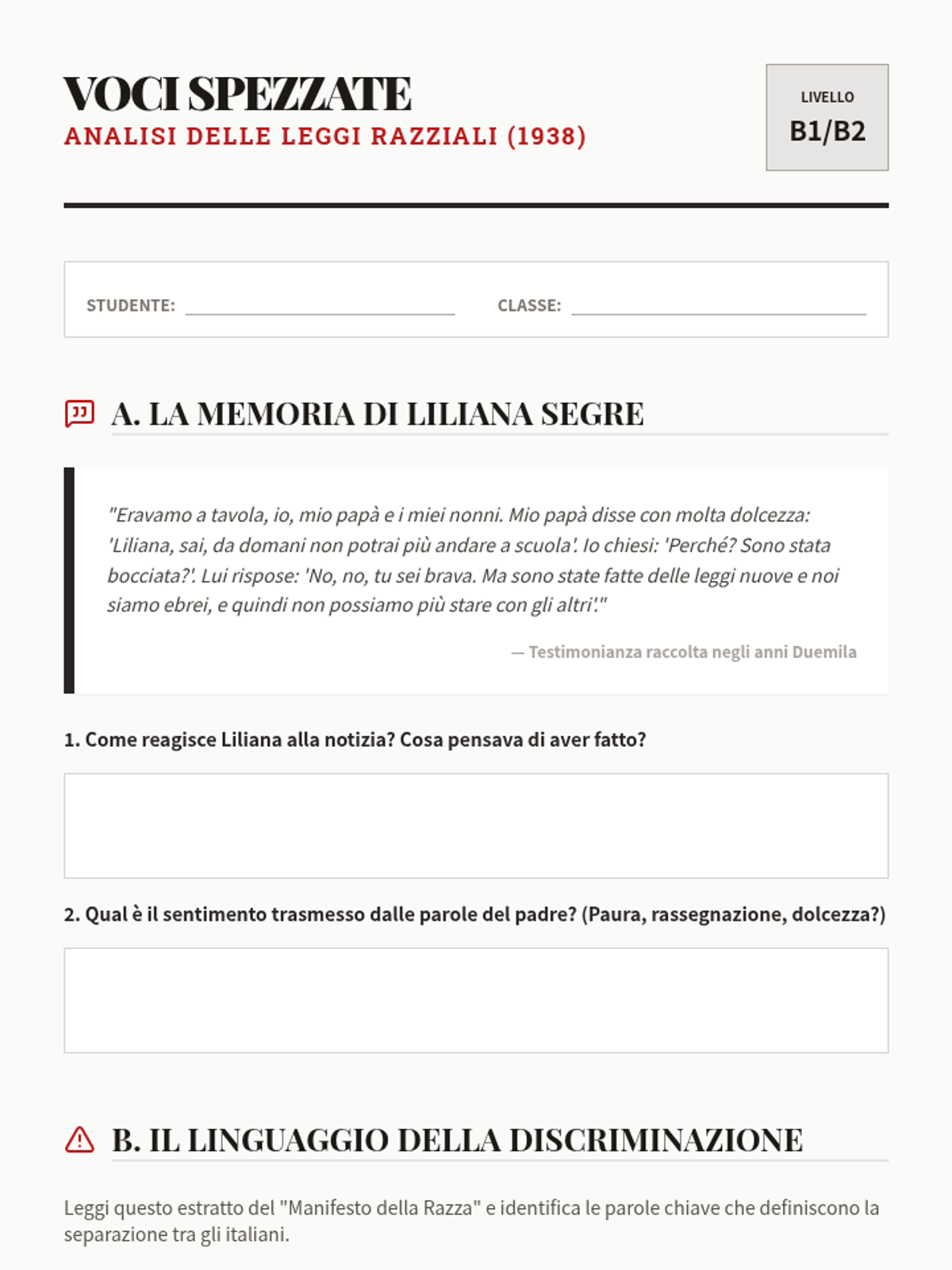
Examen de l'introduction des lois raciales de 1938 et de leur impact dévastateur sur la société italienne.
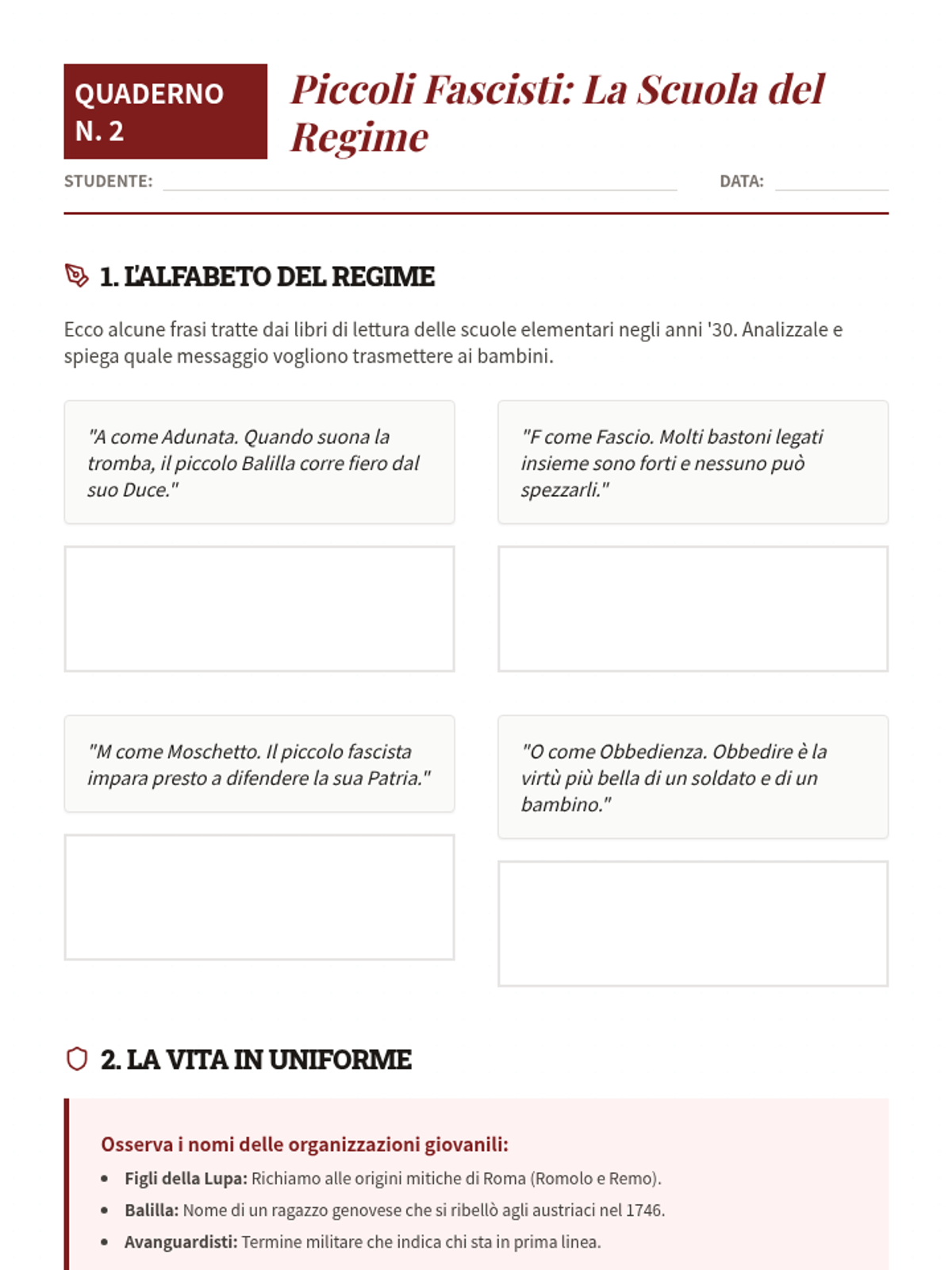
Analyse des outils de propagande, de l'embrigadement de la jeunesse et du culte de la personnalité du Duce.
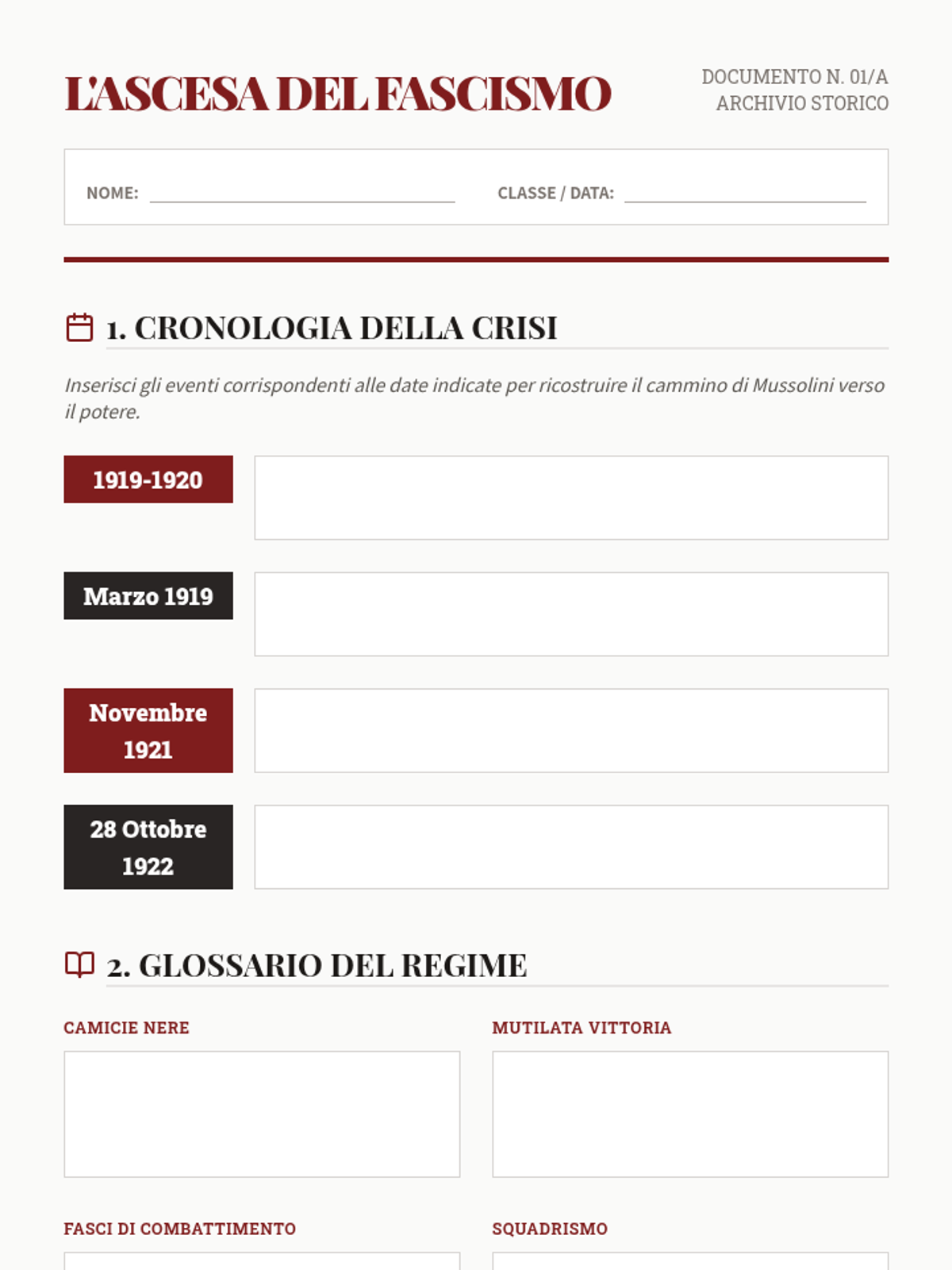
Étude de la crise de l'après-guerre en Italie et de la marche sur Rome qui a mené Mussolini au pouvoir.
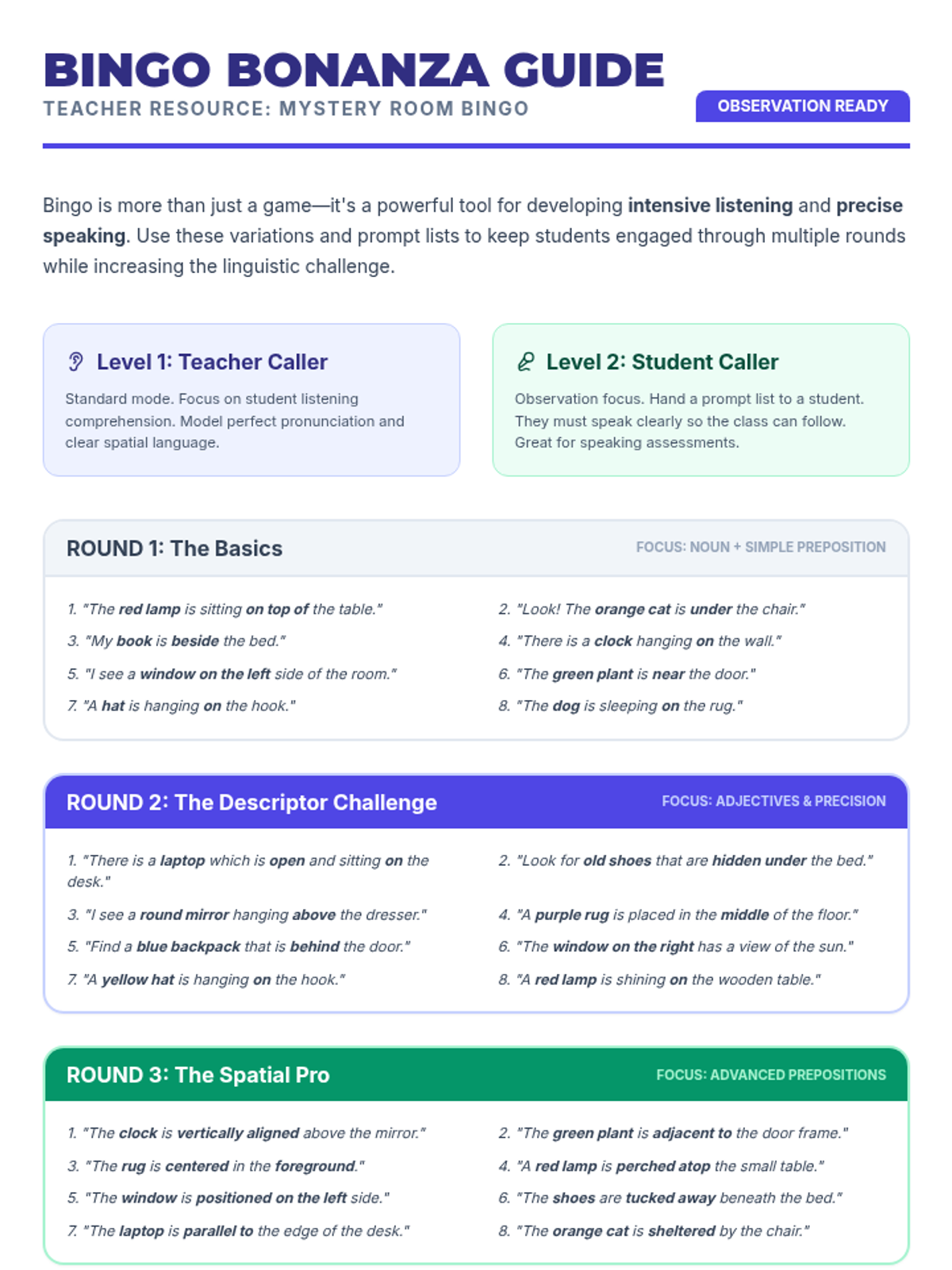
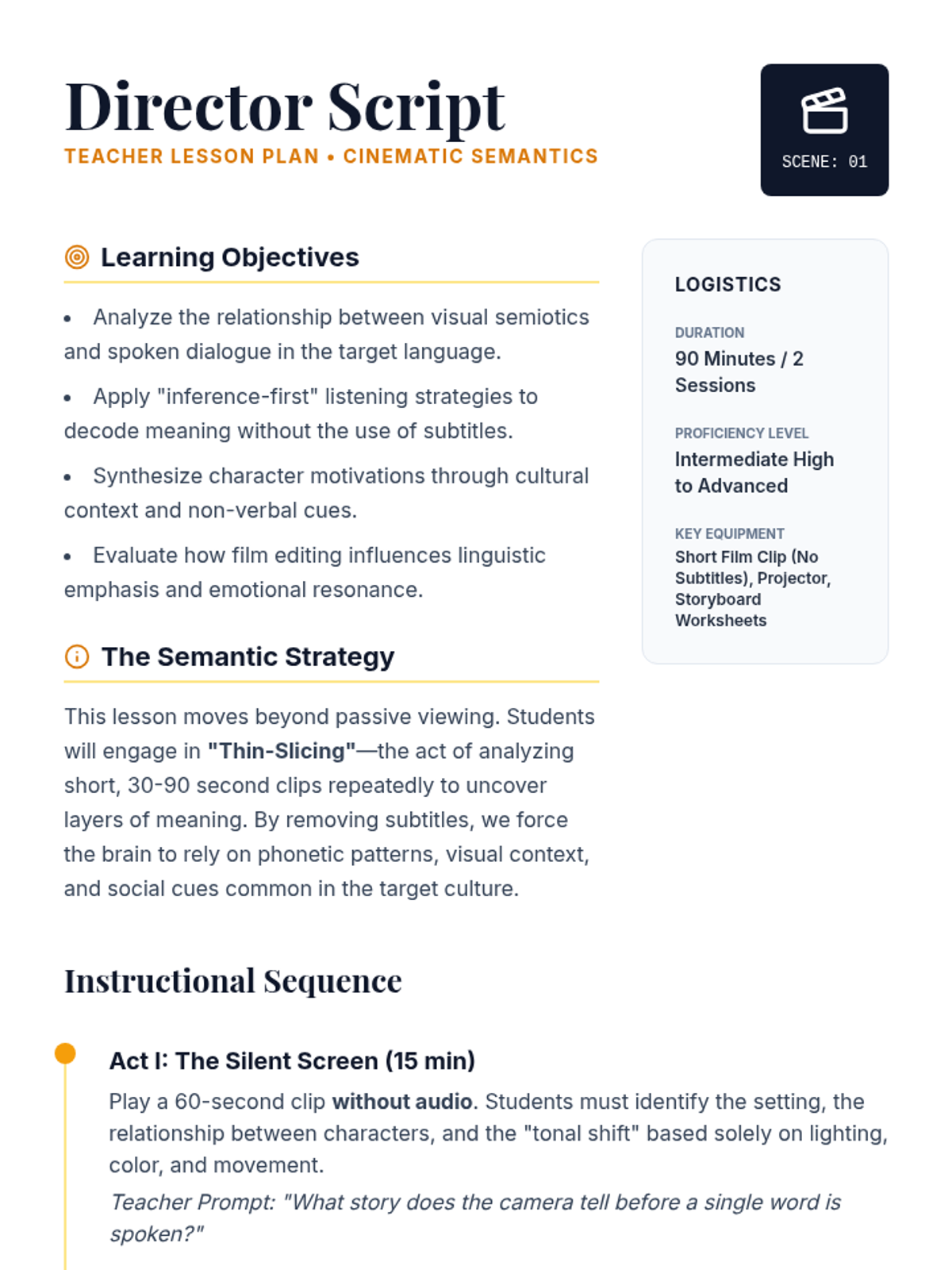
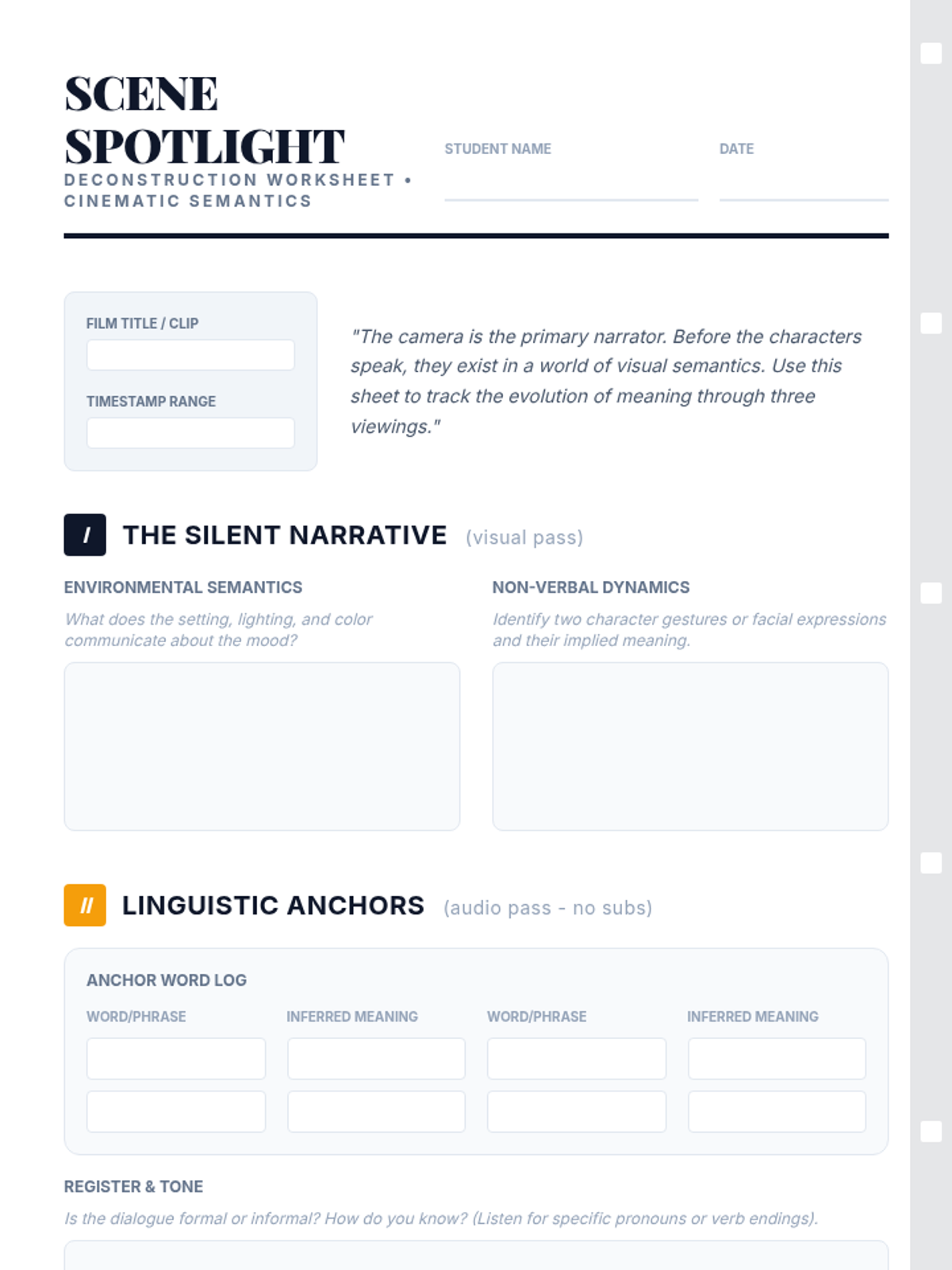
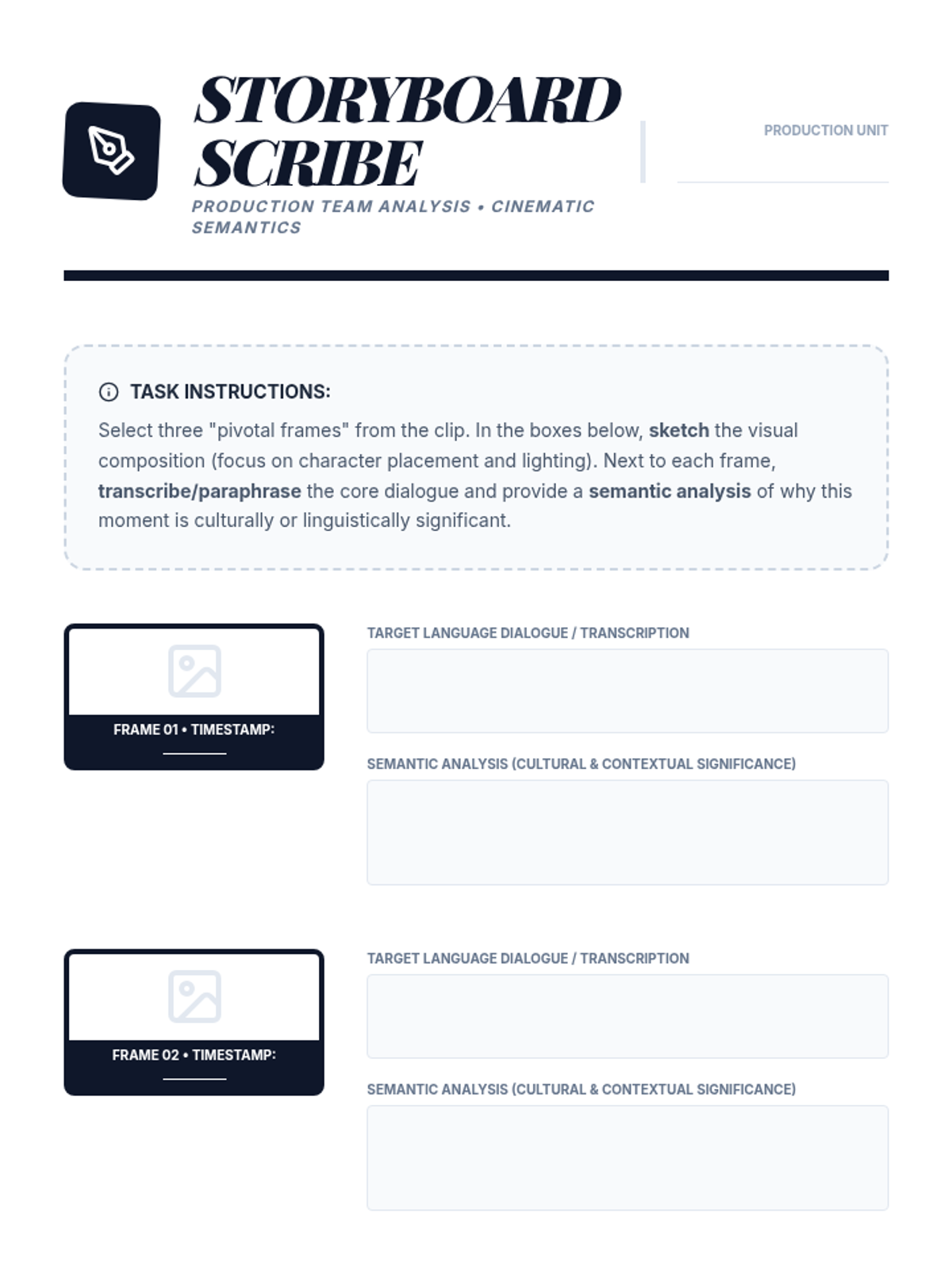
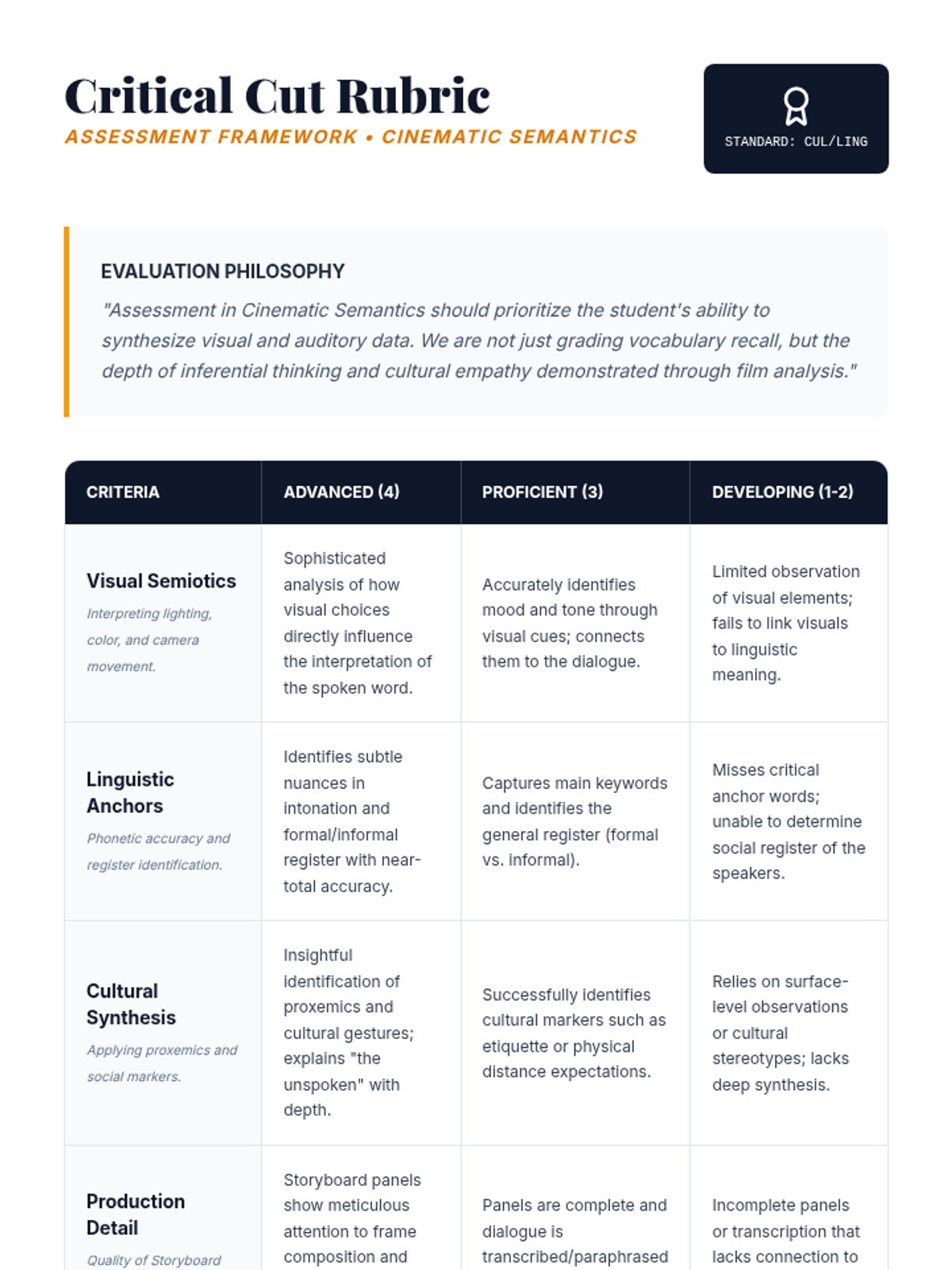
A comprehensive framework for foreign language educators to guide students through deep linguistic and cultural analysis of film, focusing on visual storytelling and advanced listening strategies.
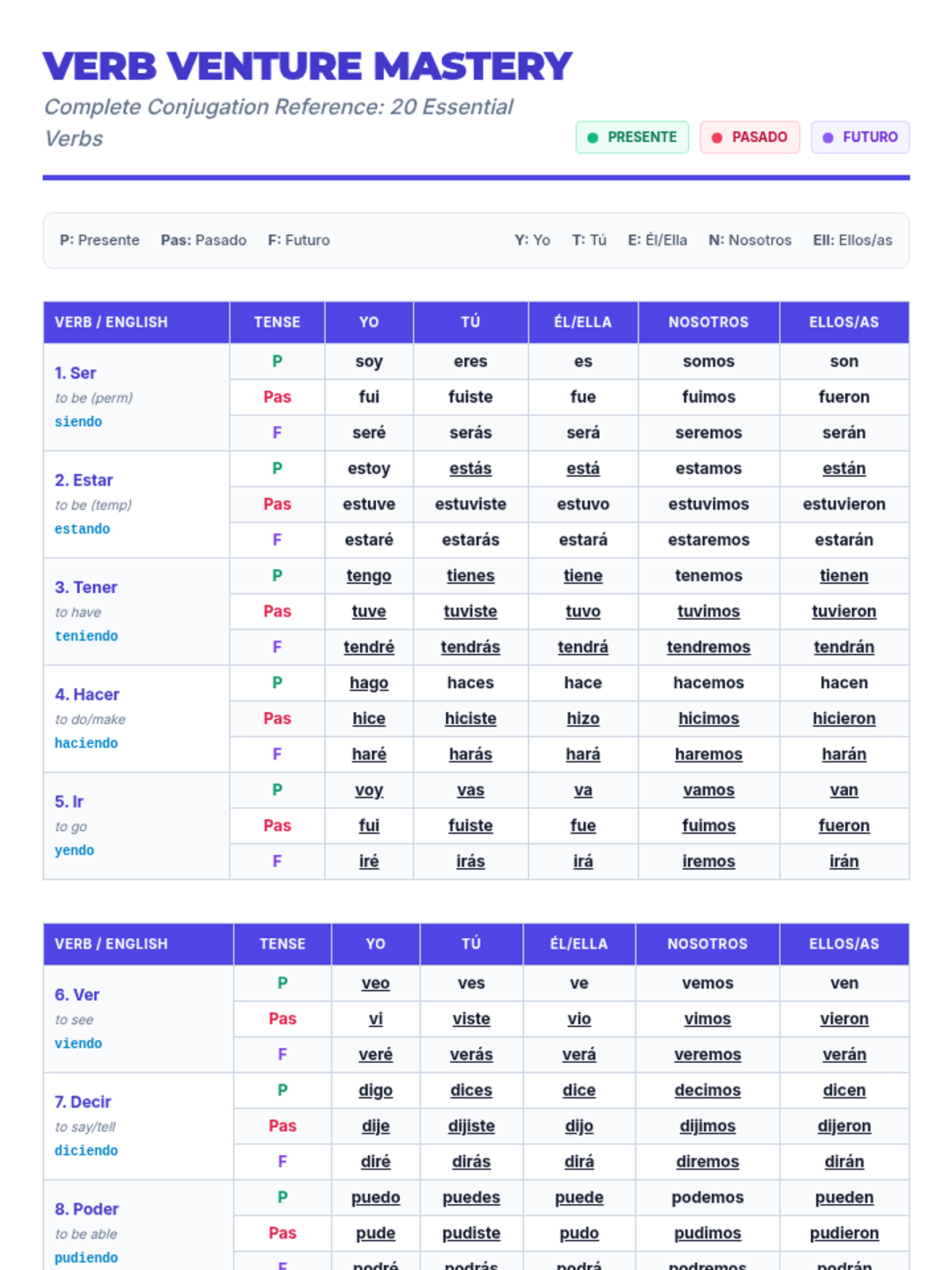
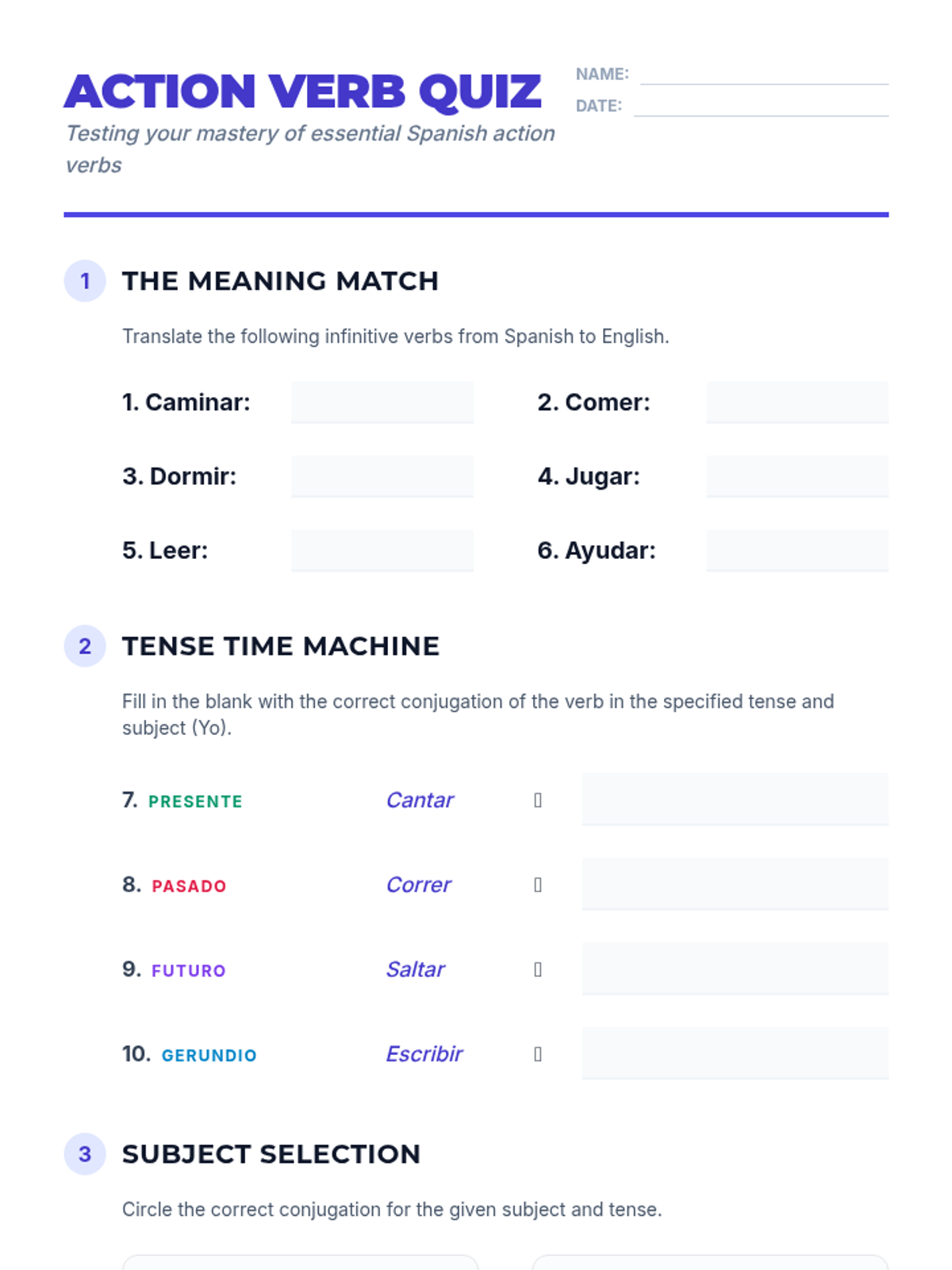
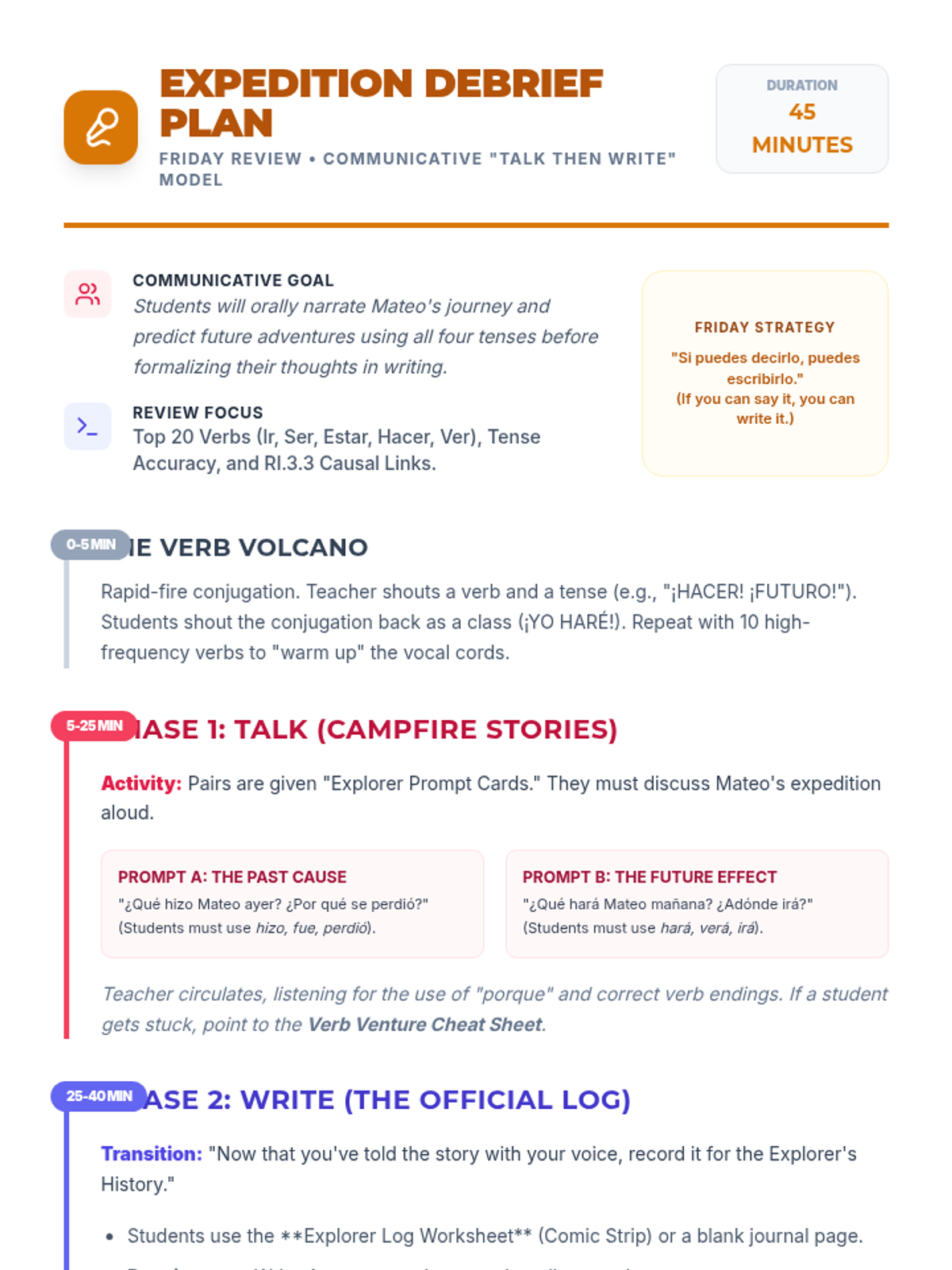
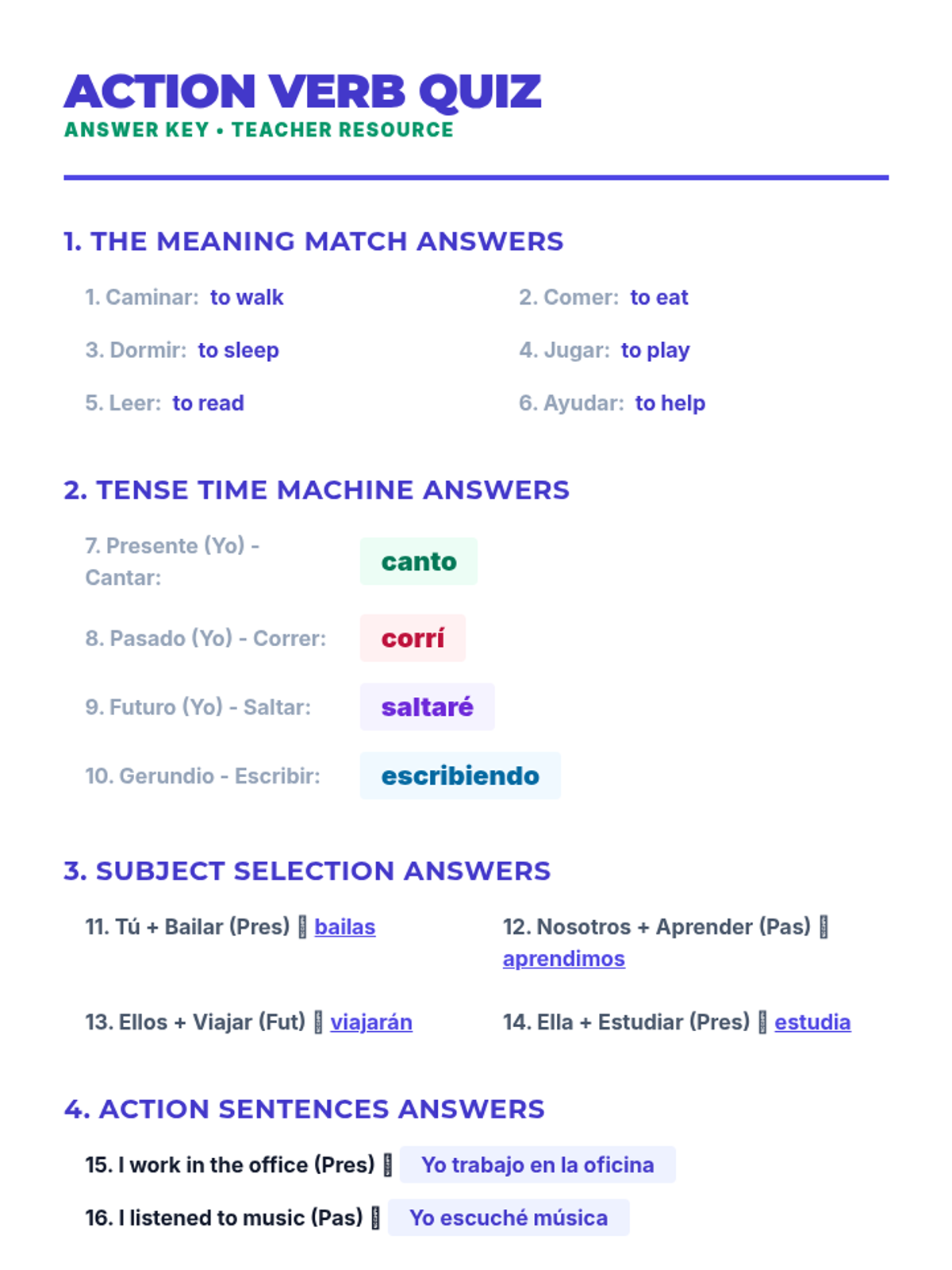
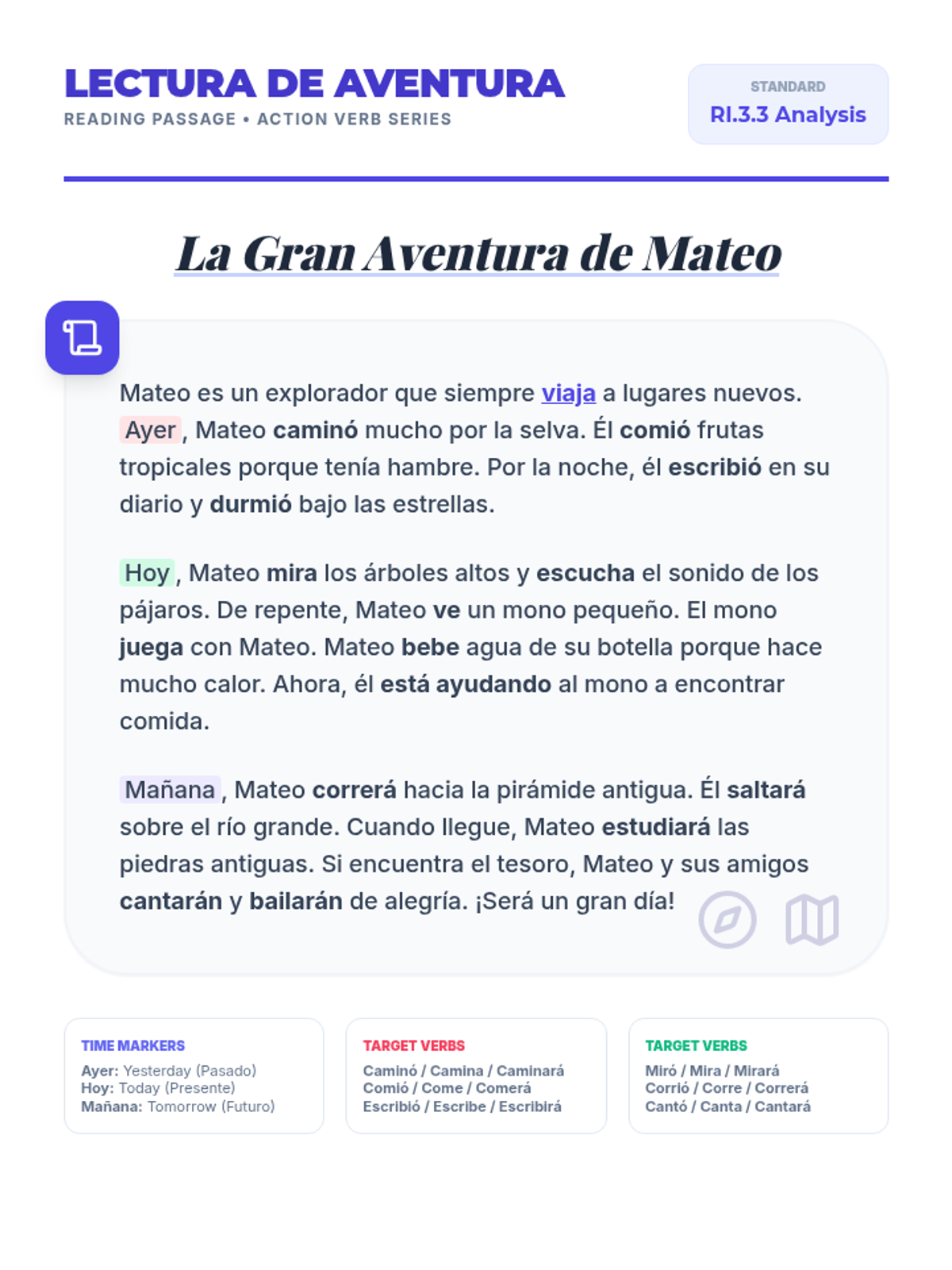
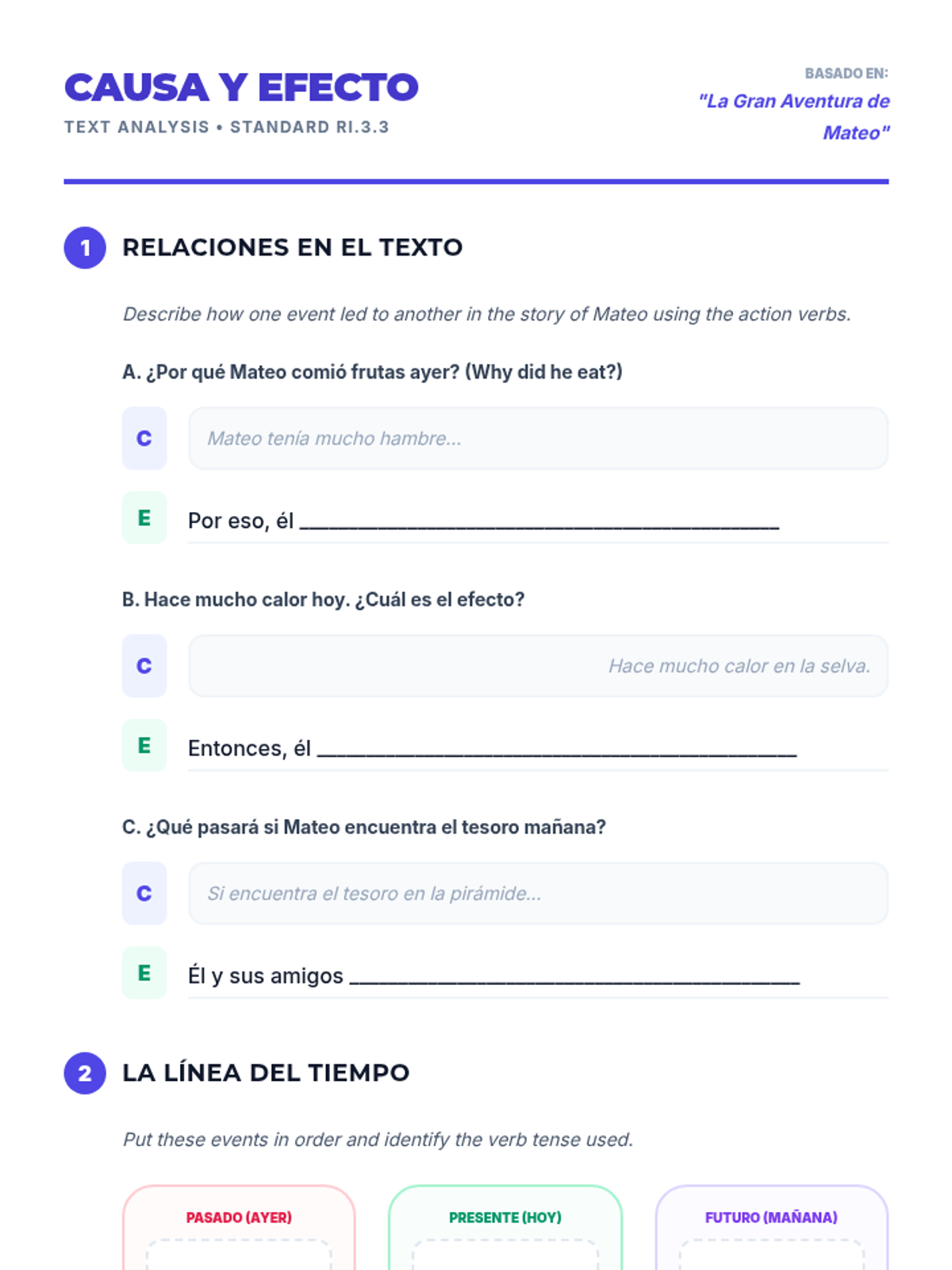
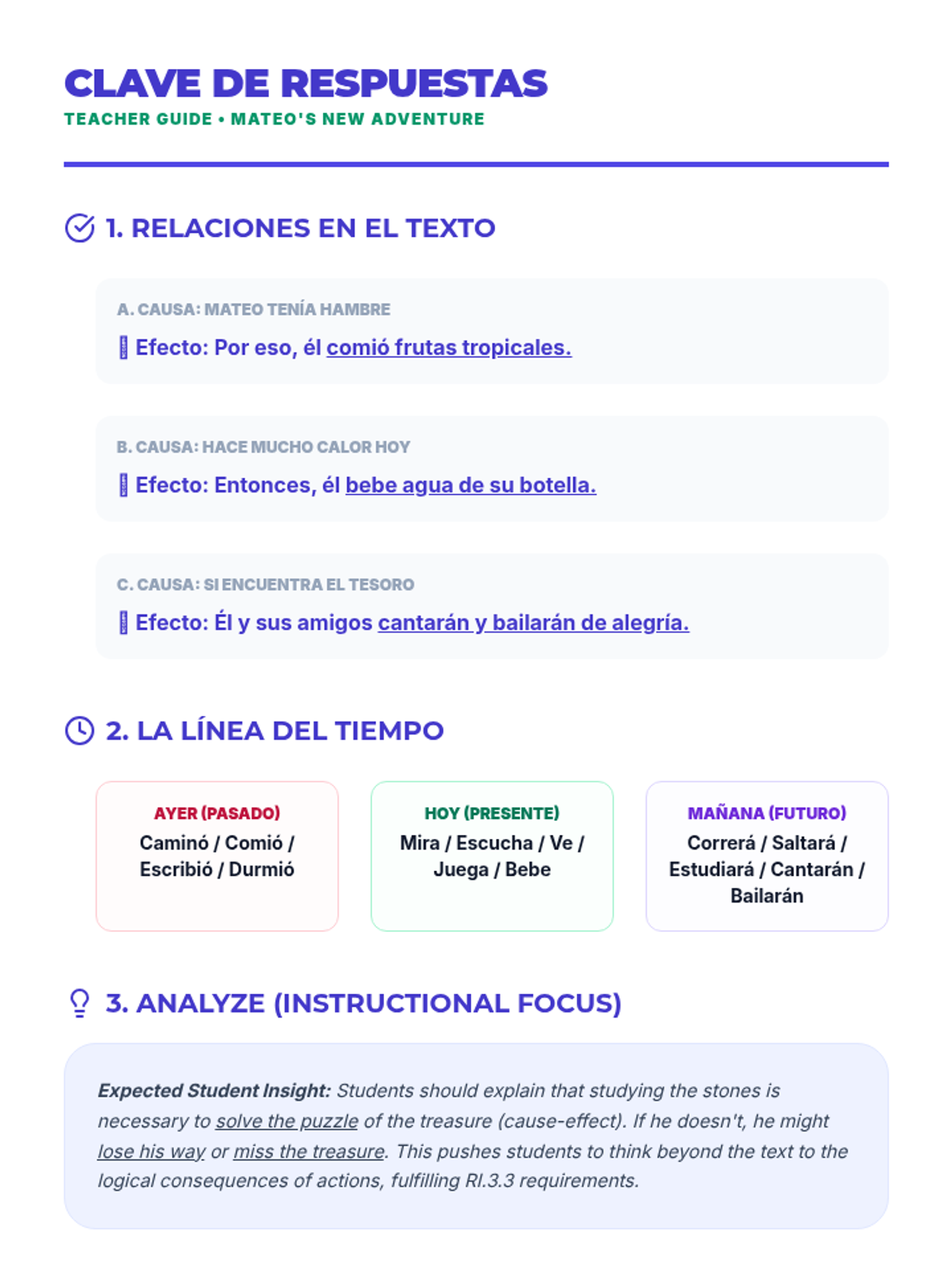
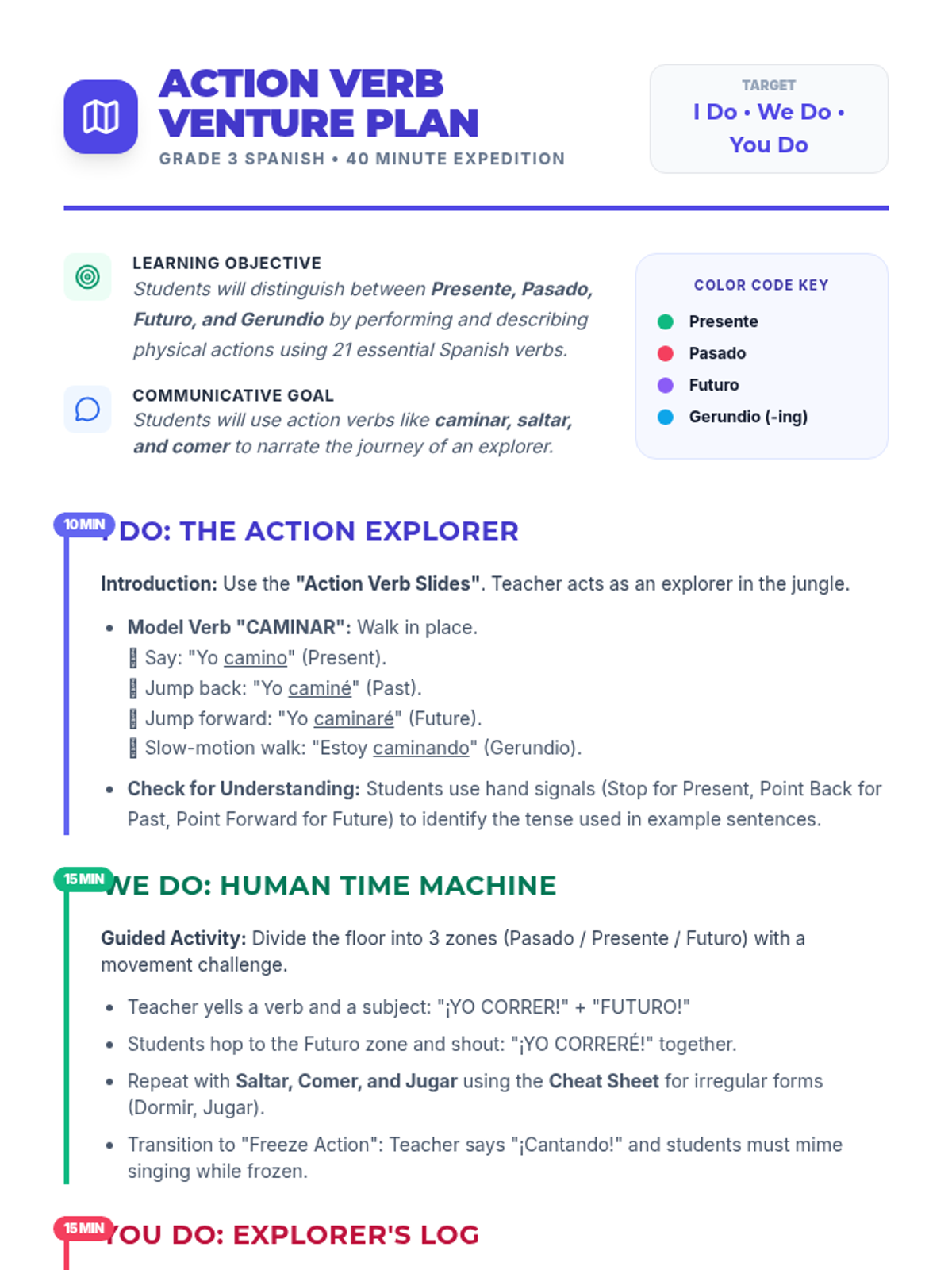
A comprehensive visual guide to the 20 most frequently used Spanish verbs, featuring conjugations, translations, and color-coded tenses.
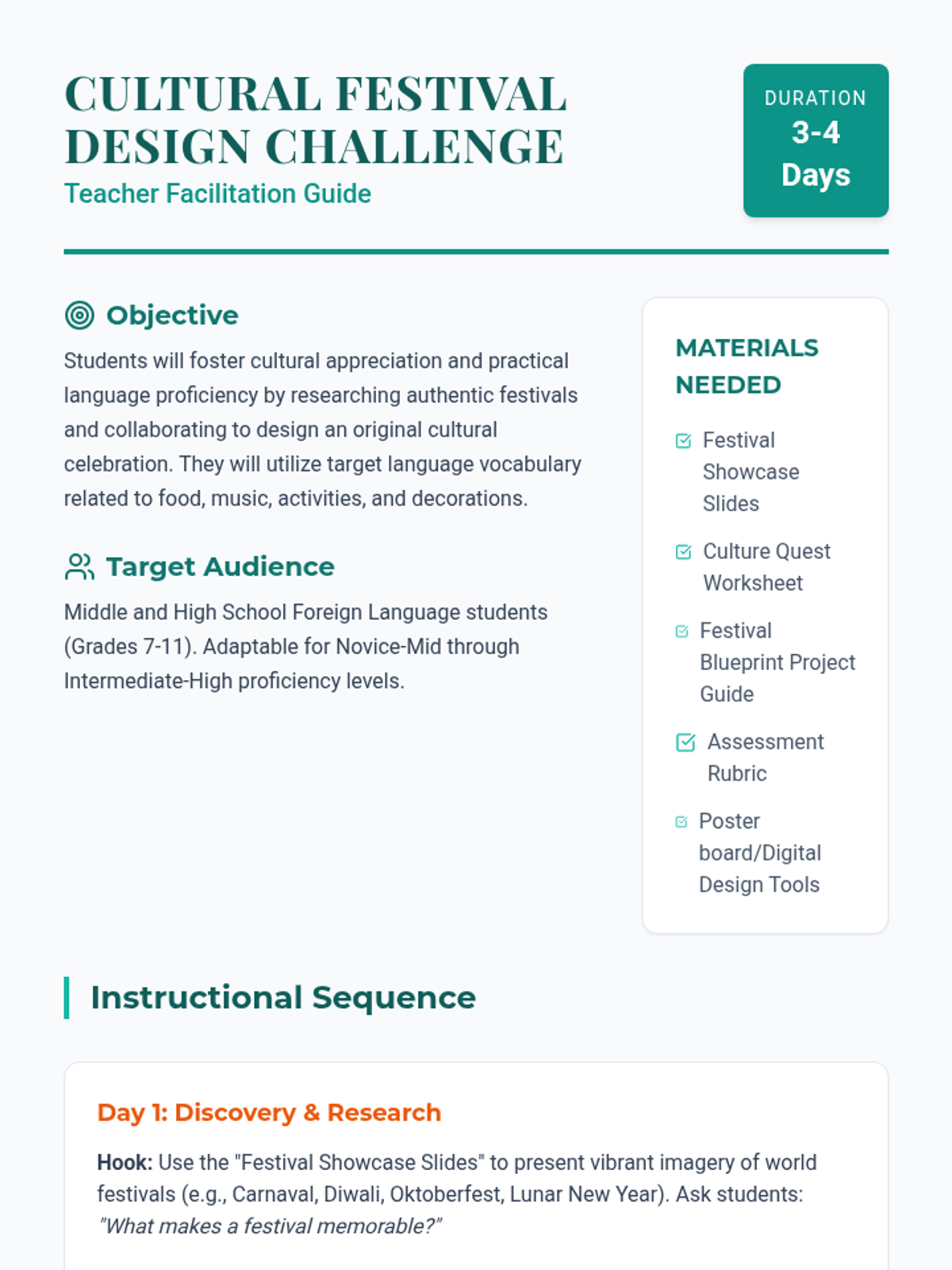
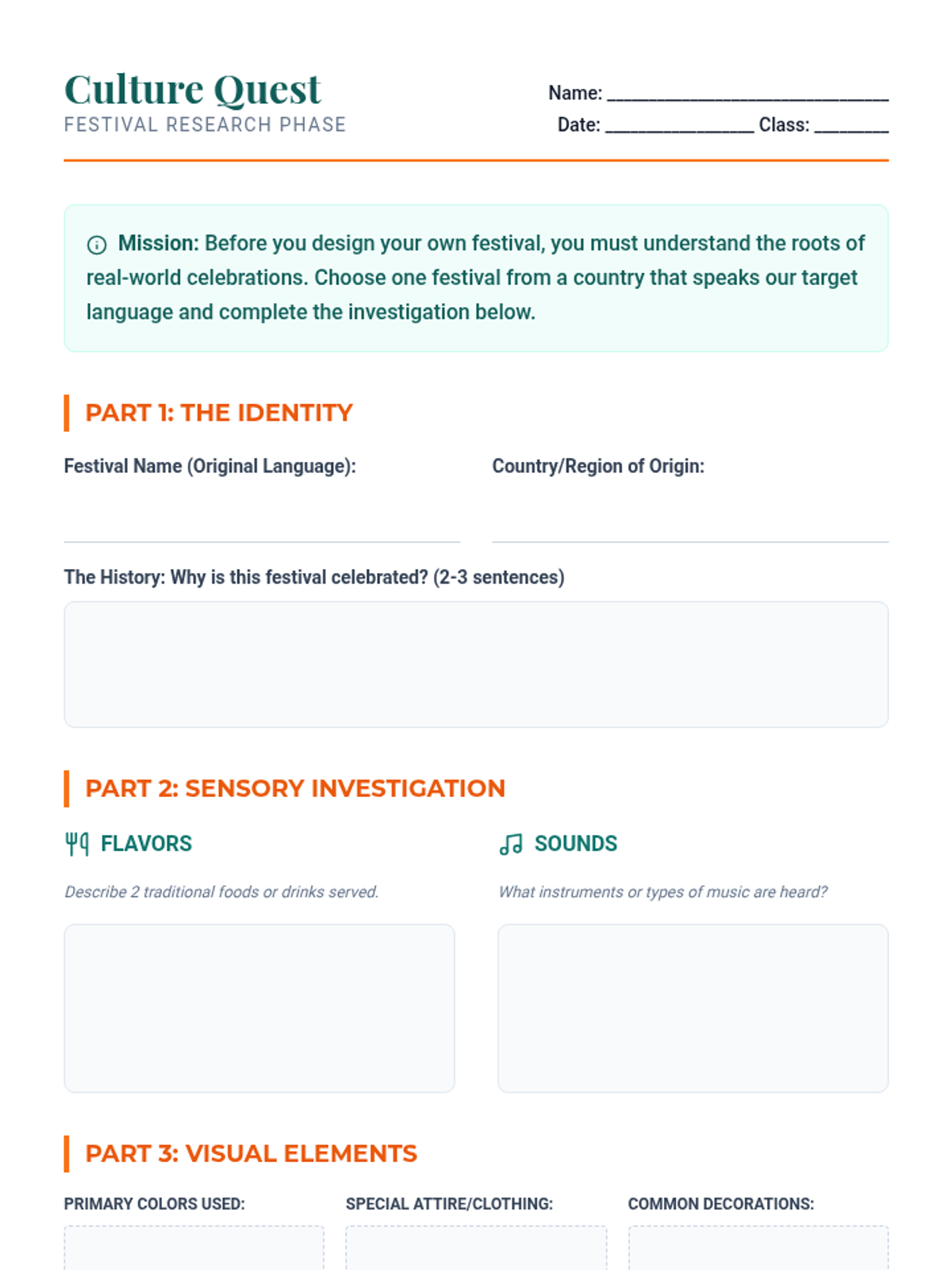
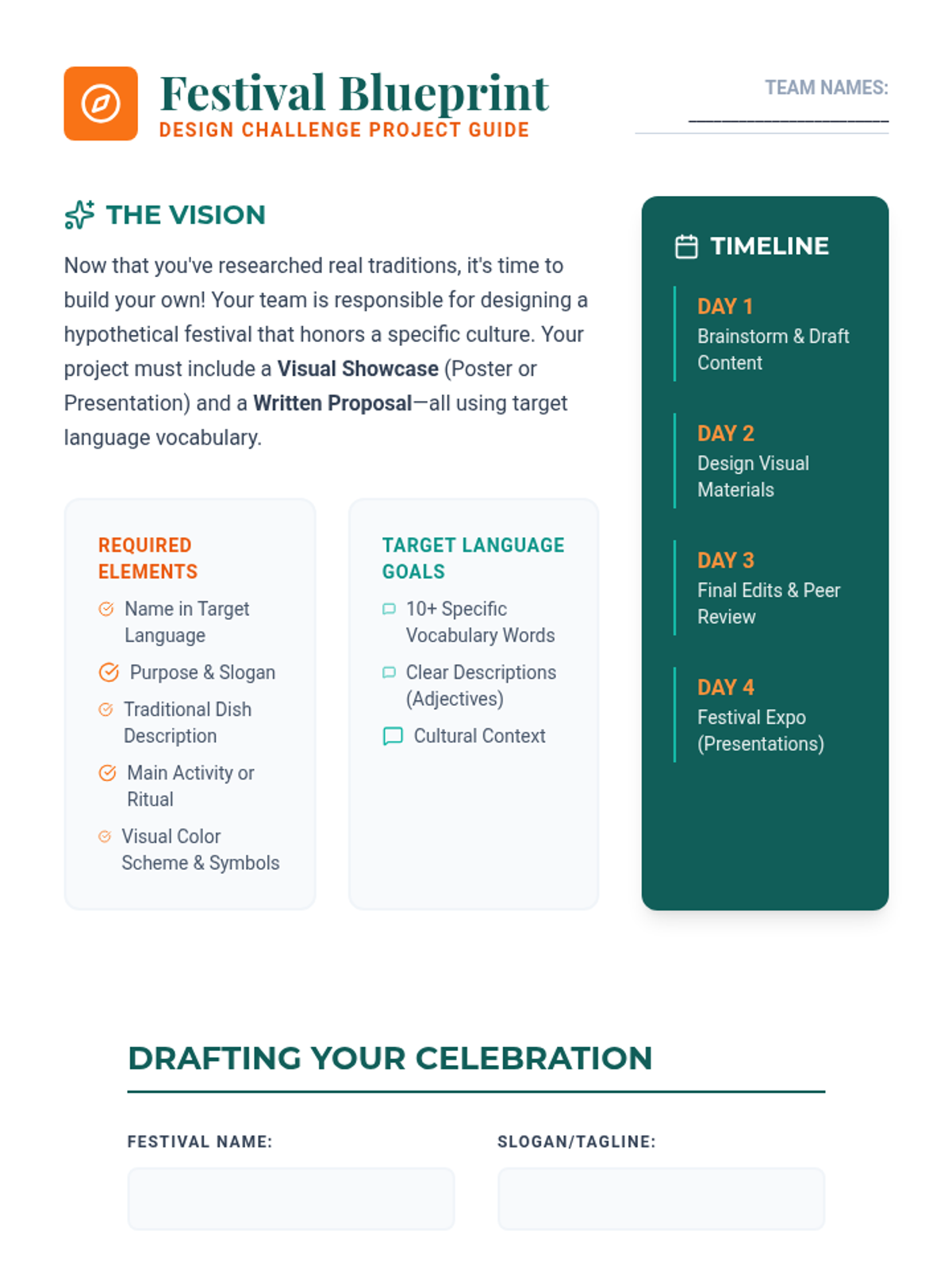
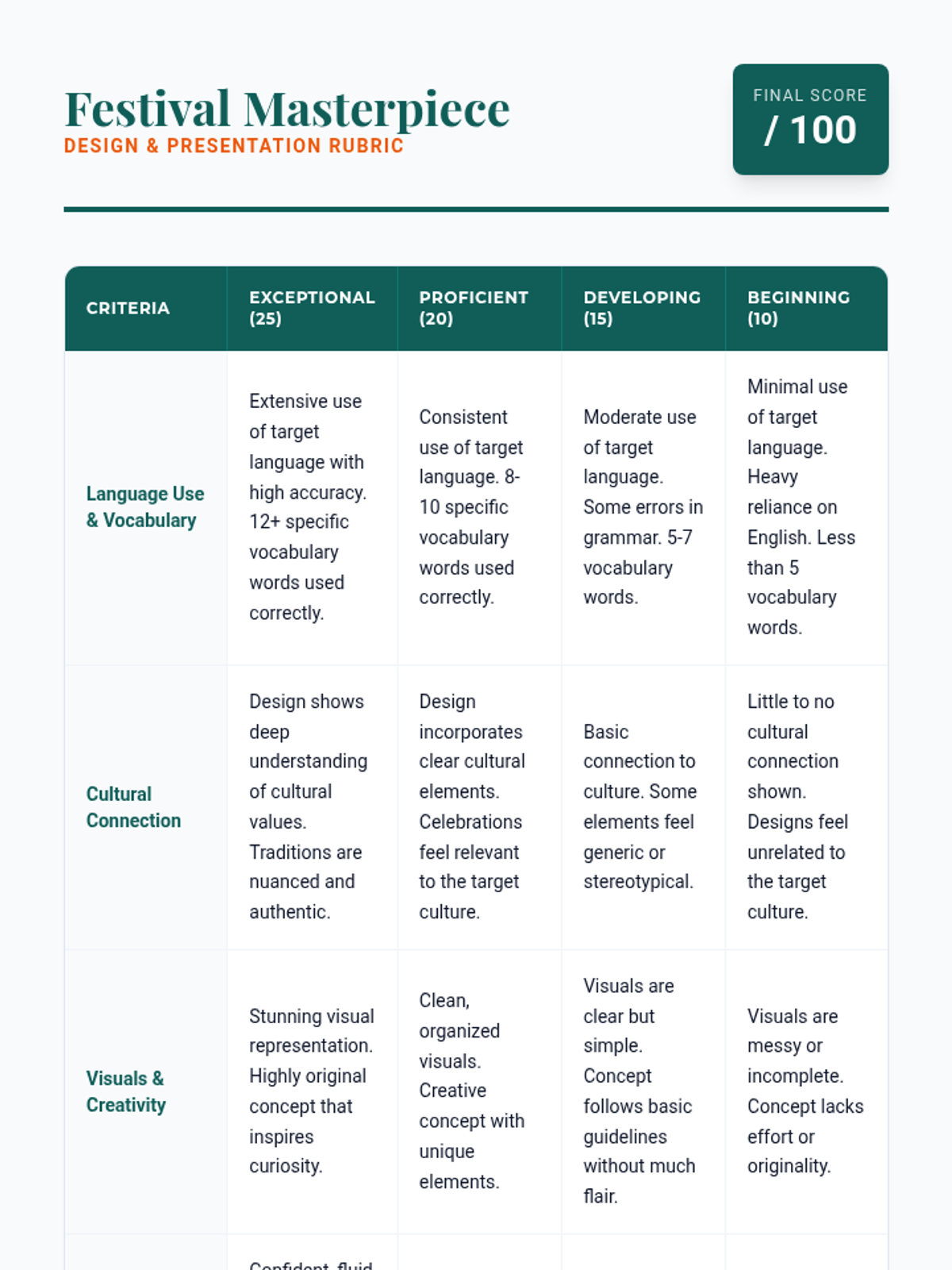
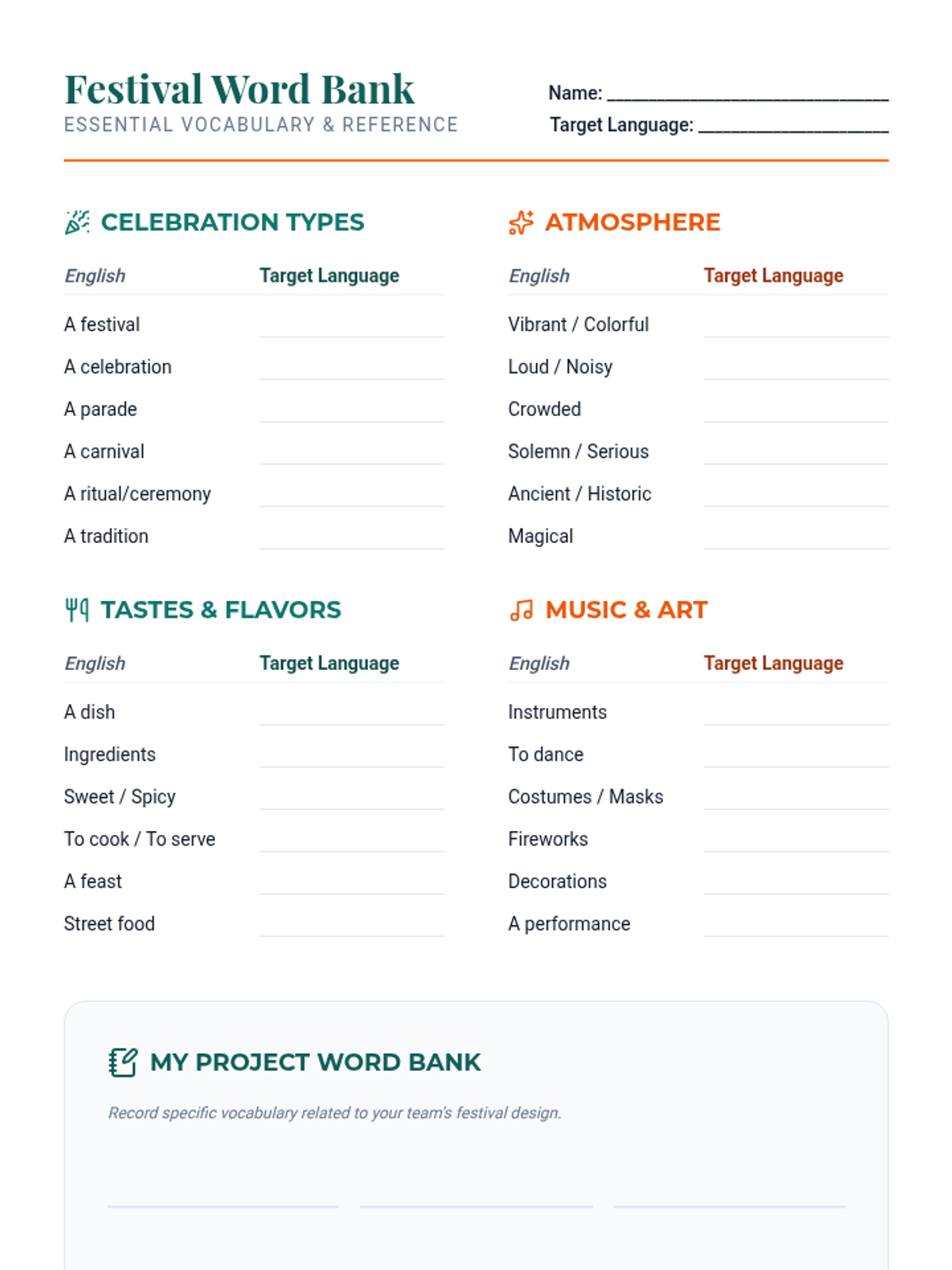
A collaborative project-based lesson where students research real-world cultural festivals and then design their own unique celebration, applying target language vocabulary for food, music, and traditions.
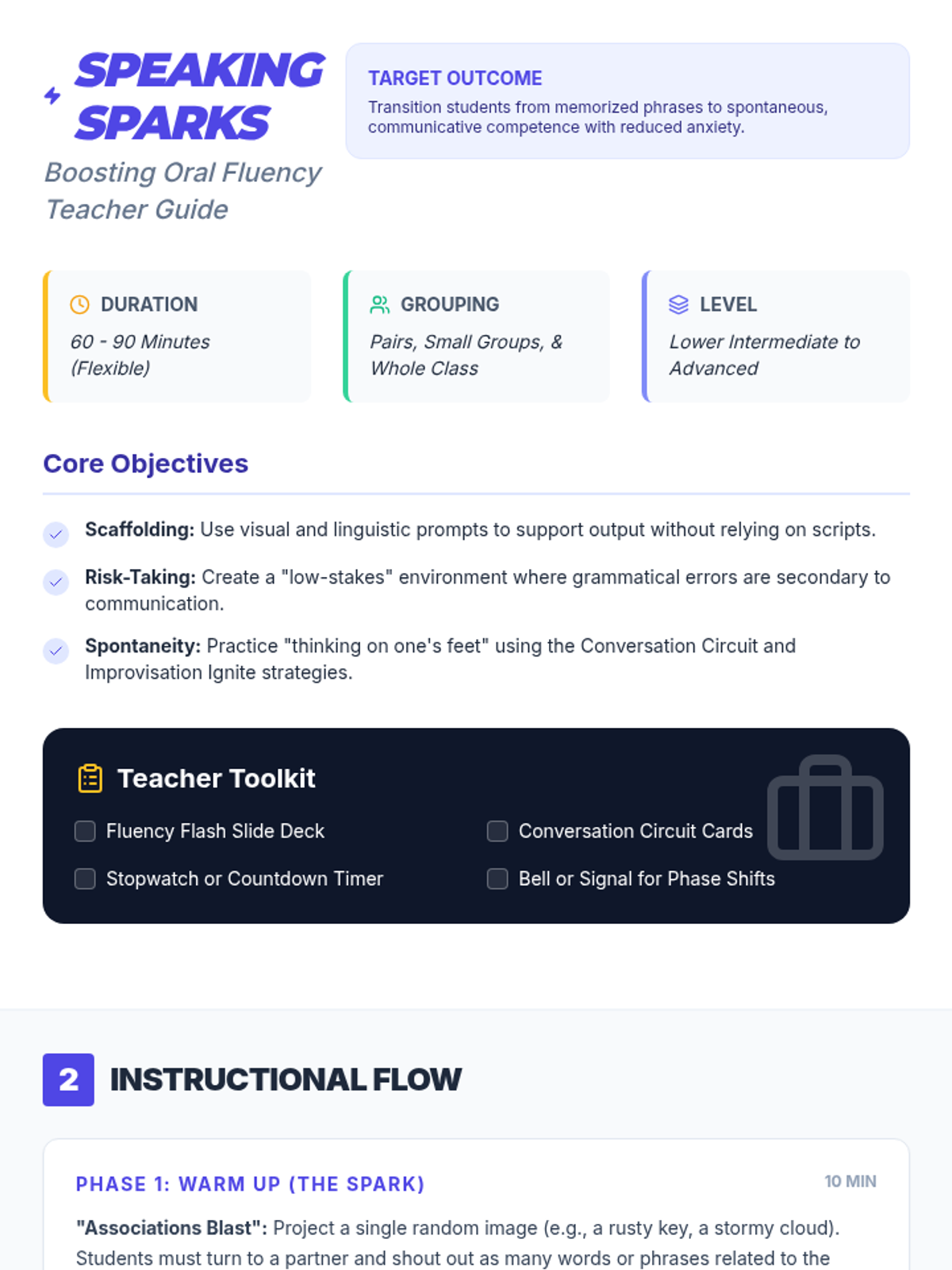
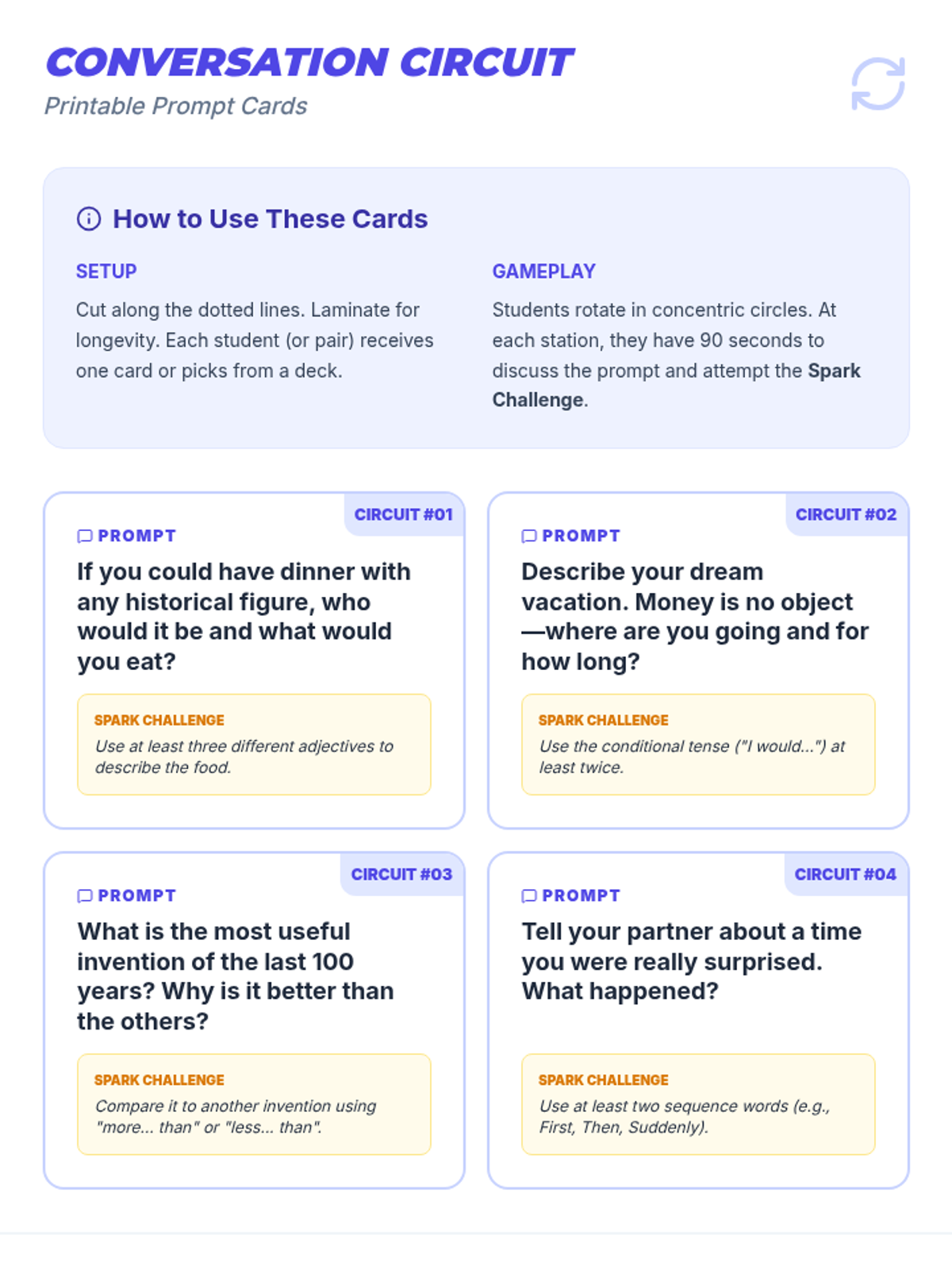
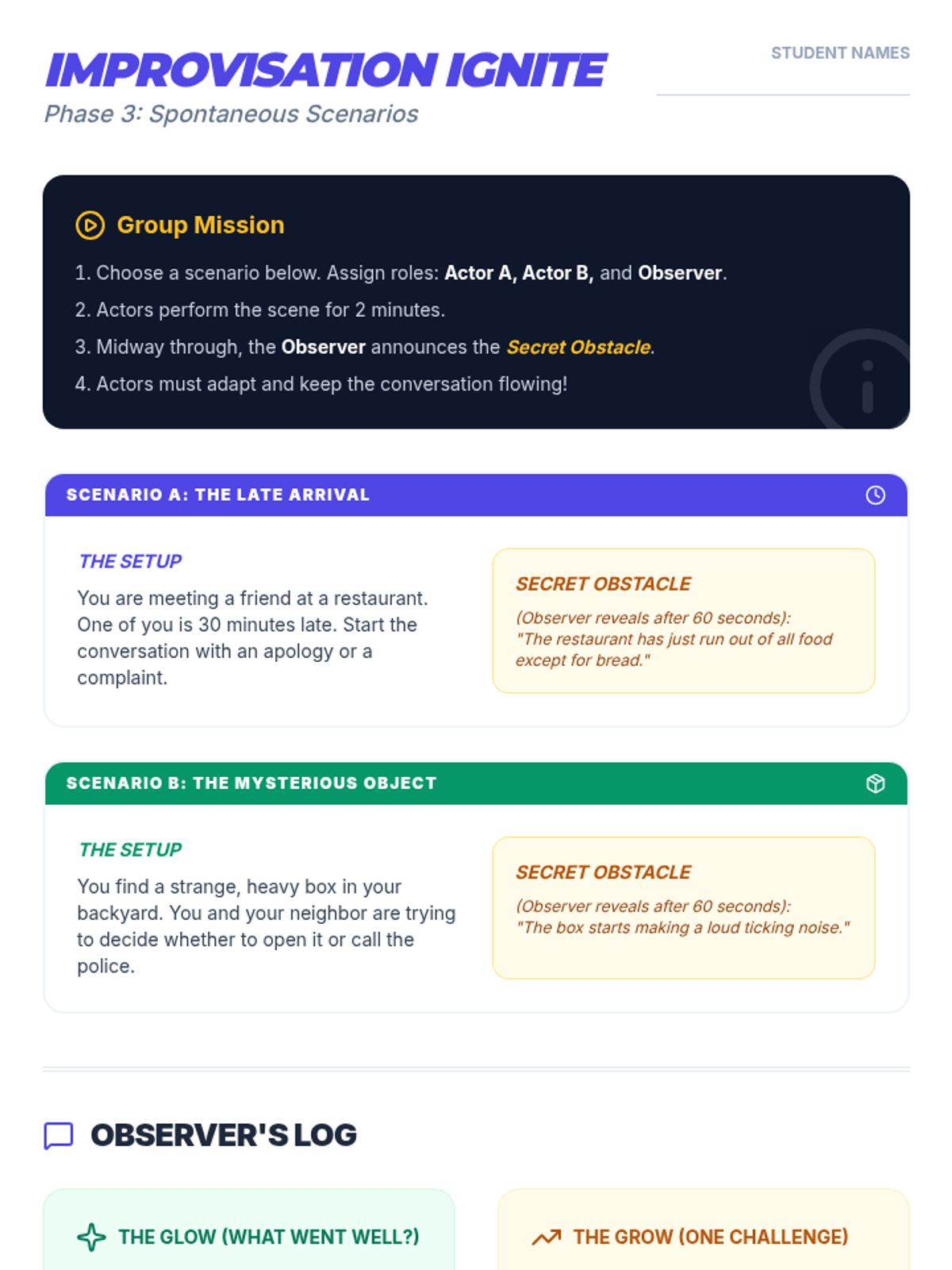
A comprehensive toolkit for foreign language teachers to bridge the gap between rote memorization and spontaneous oral communication through interactive activities and low-stakes scaffolding.
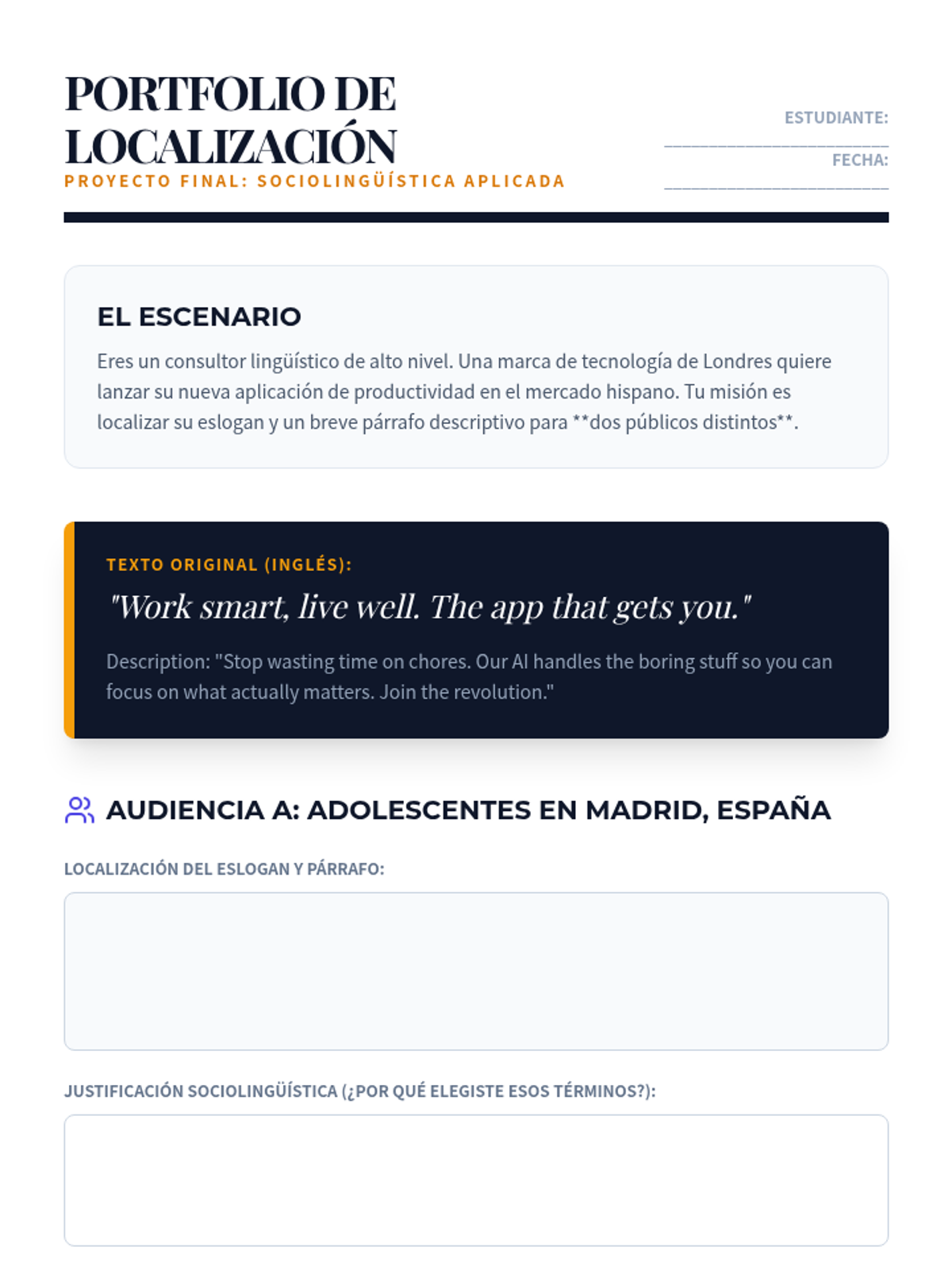
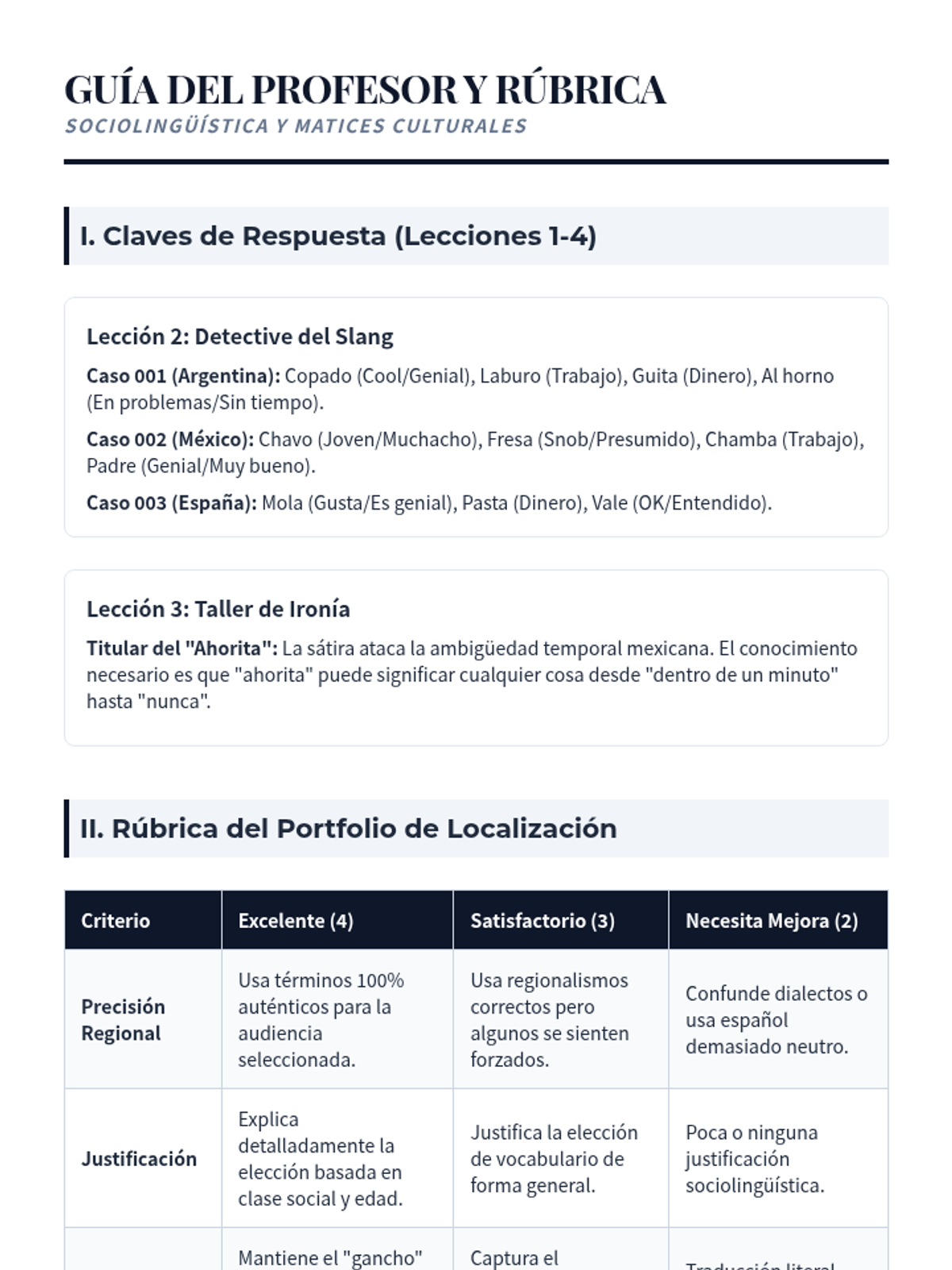
A culminating workshop where students localize English texts for specific Spanish-speaking audiences, justifying their sociolinguistic choices.
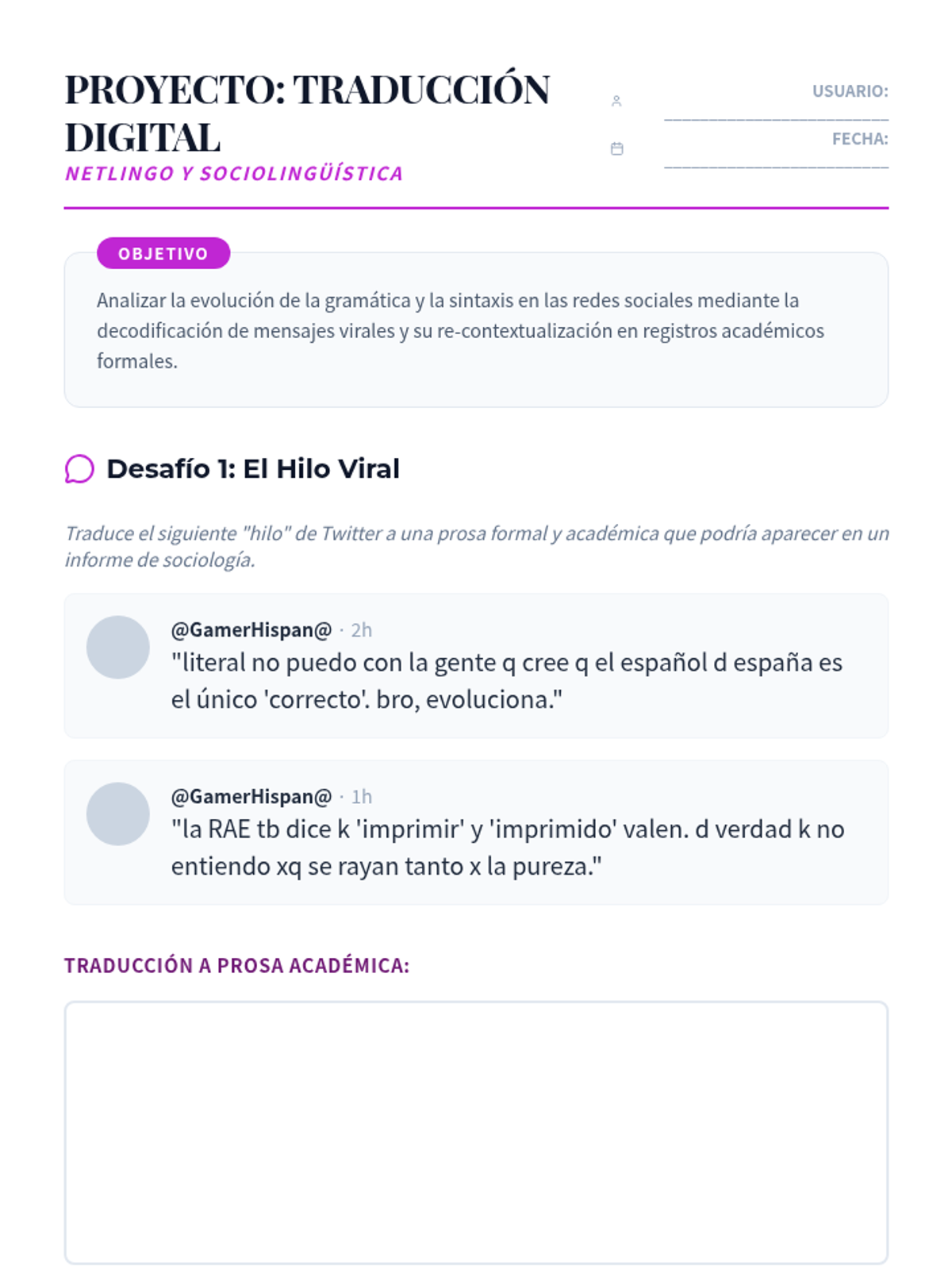
An examination of abbreviations, hashtags, and meme culture in Spanish digital spaces and their relationship to standard grammar.
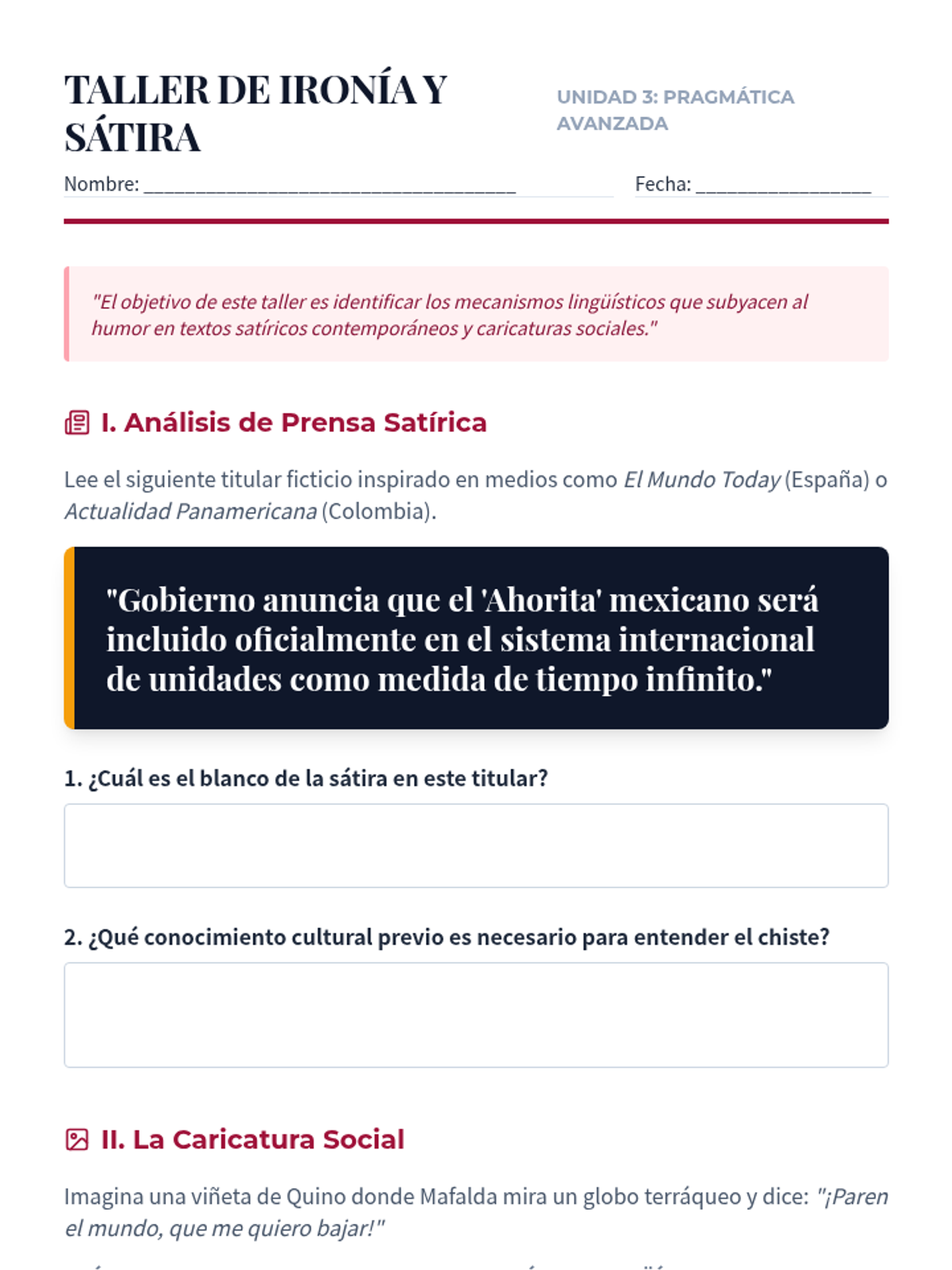
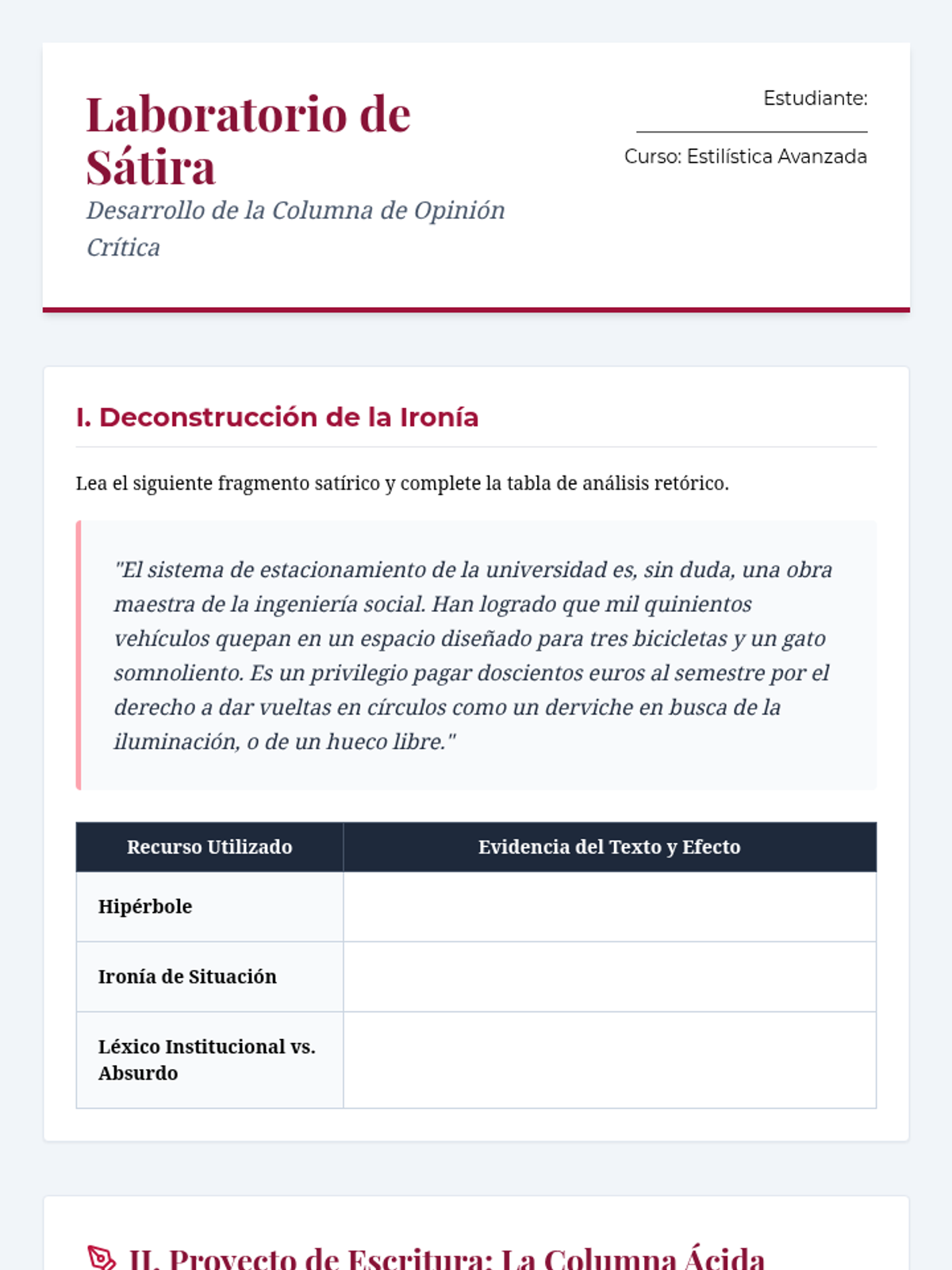
Students identify and analyze linguistic mechanisms of humor, irony, and sarcasm in Spanish satirical texts and comic strips.
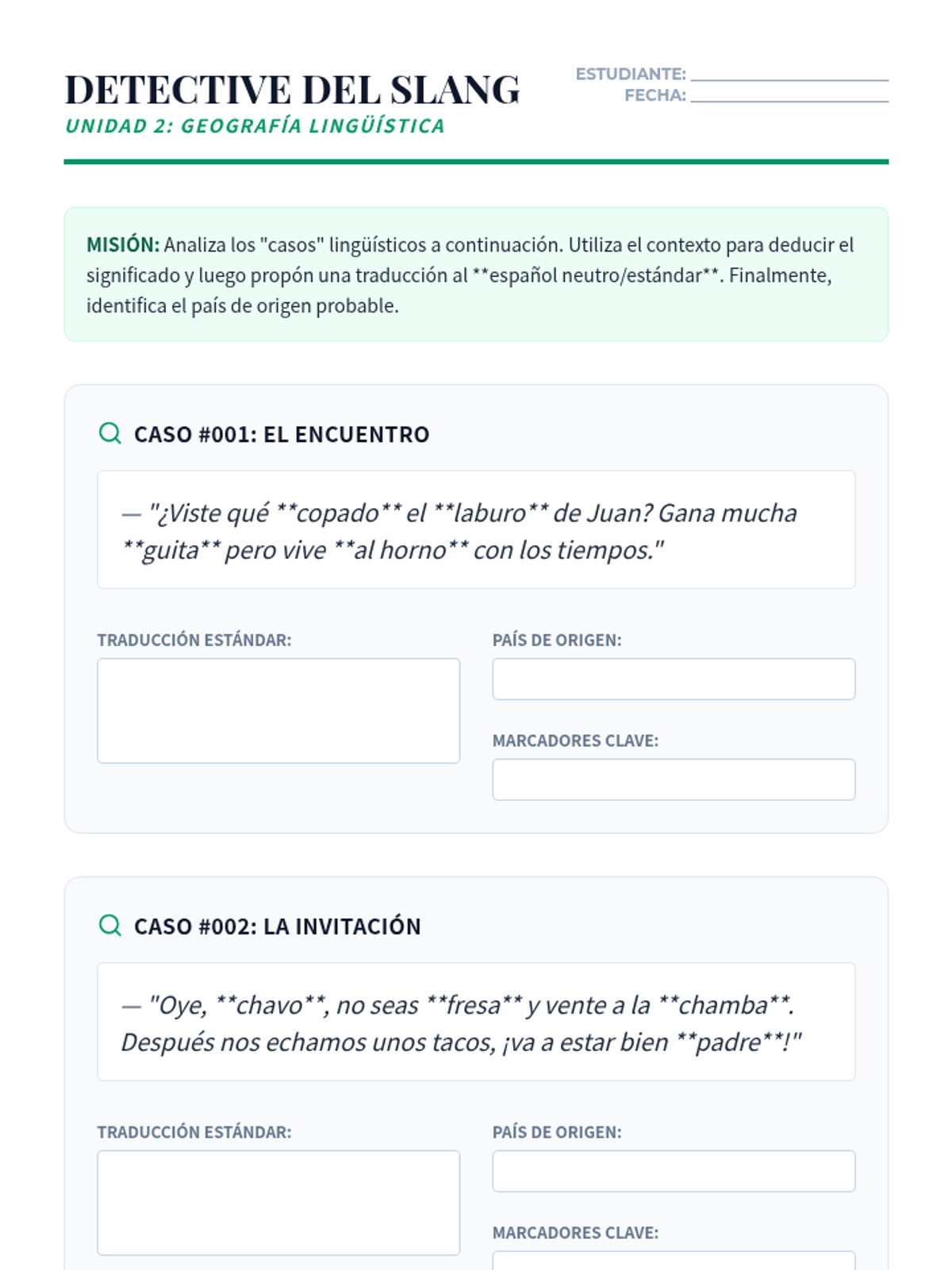
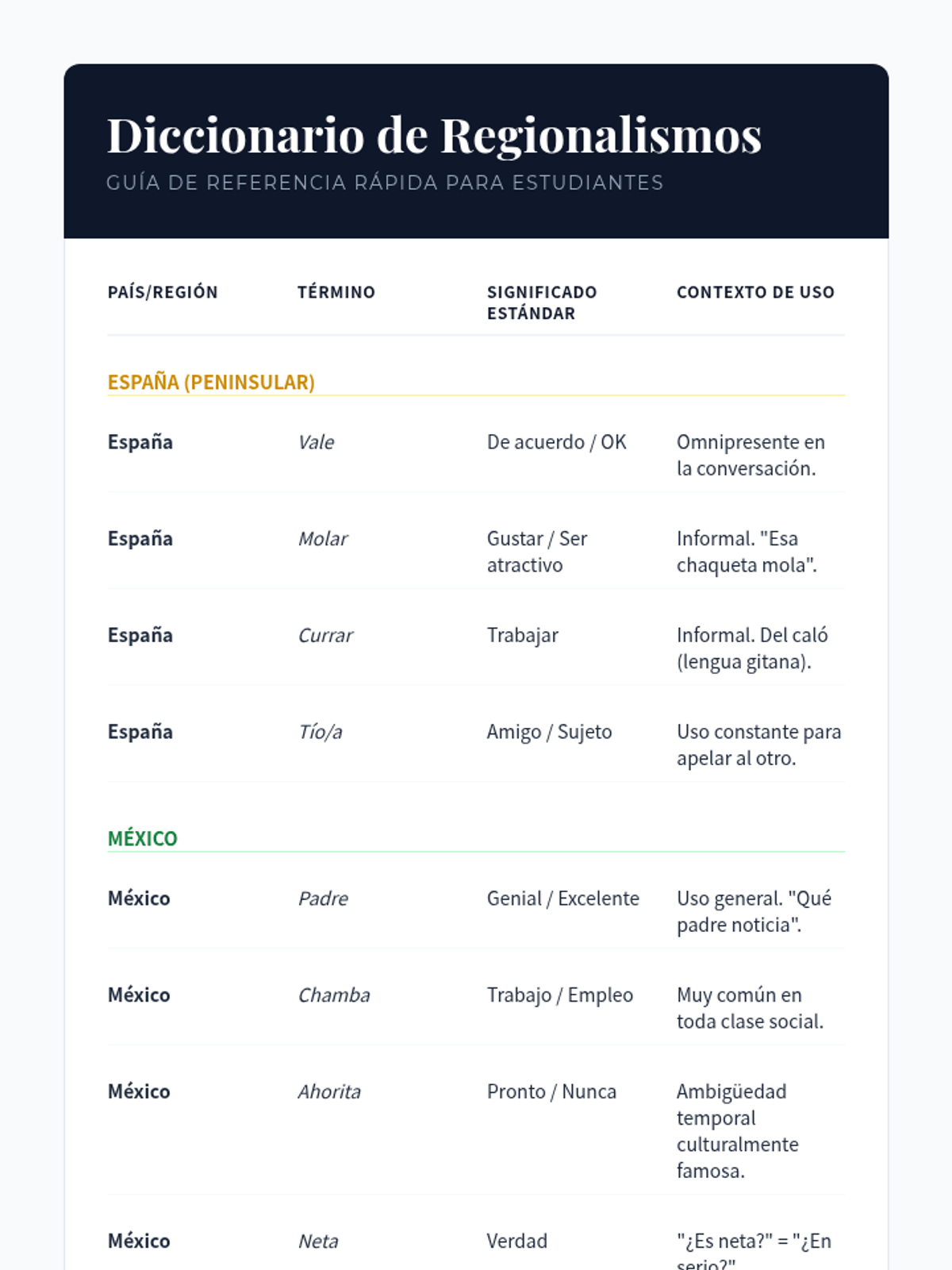
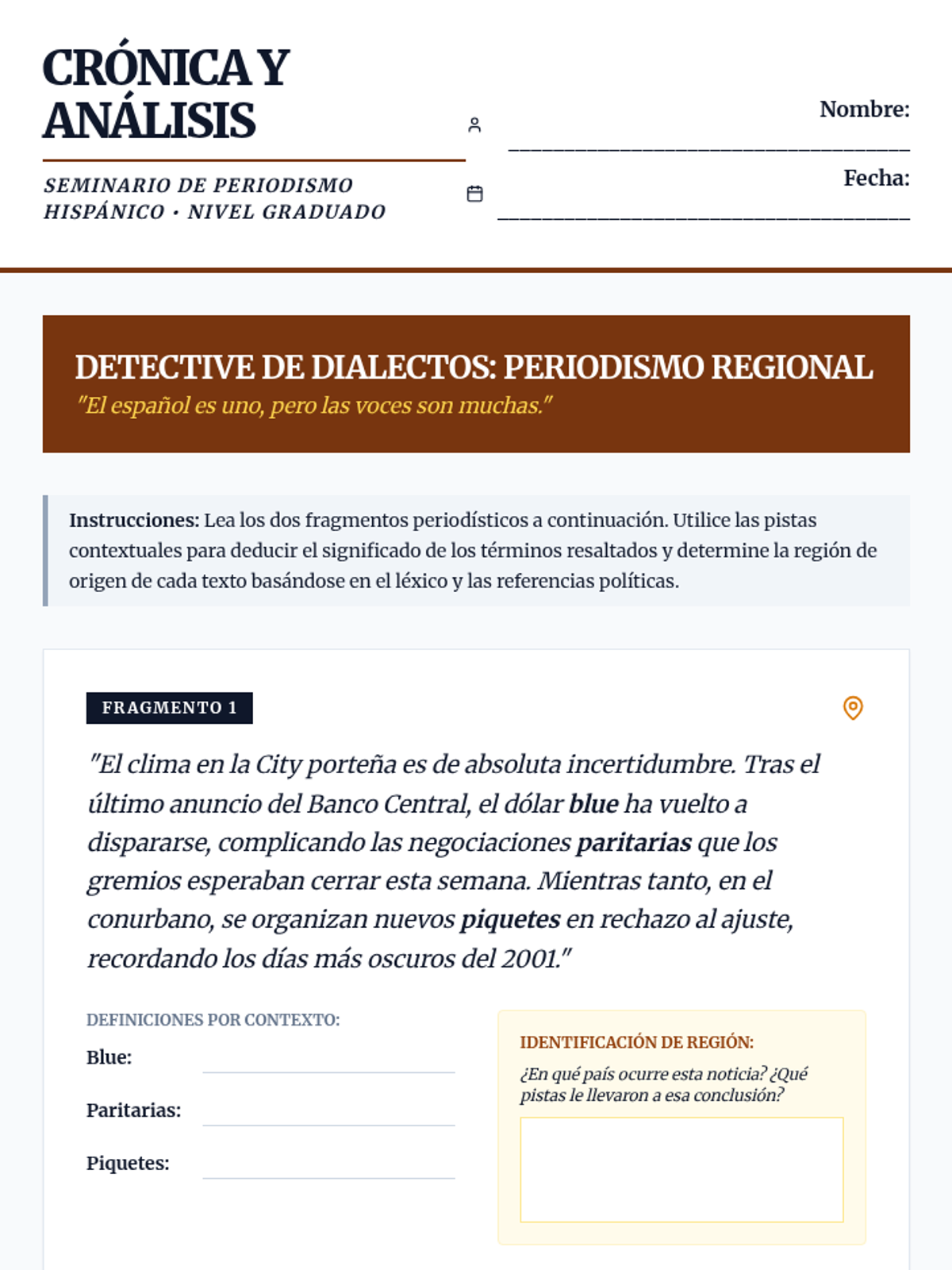
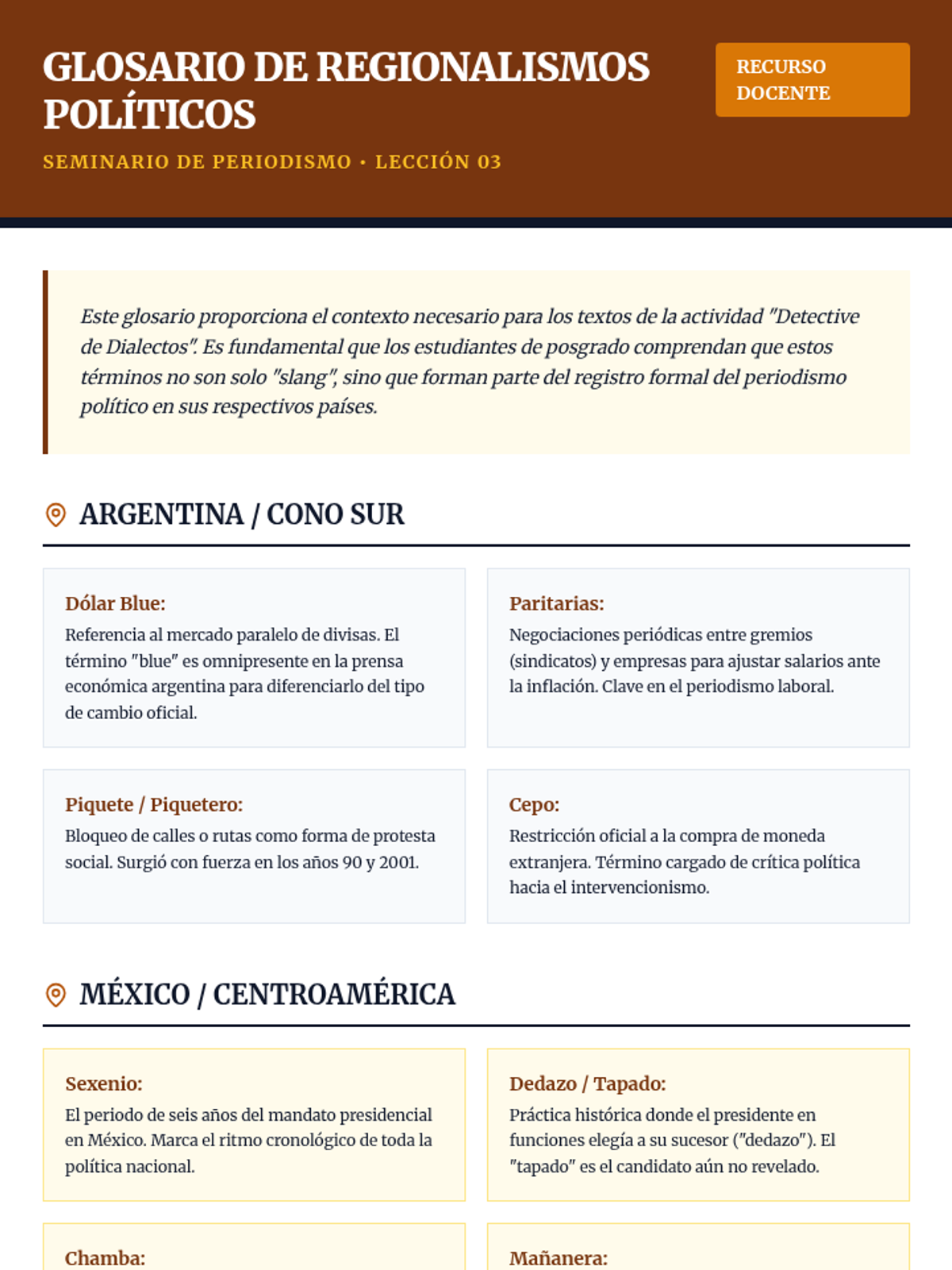
Learners explore regional lexicons from Spain, Mexico, and Argentina, deducing meanings of idioms through context and historical analysis.
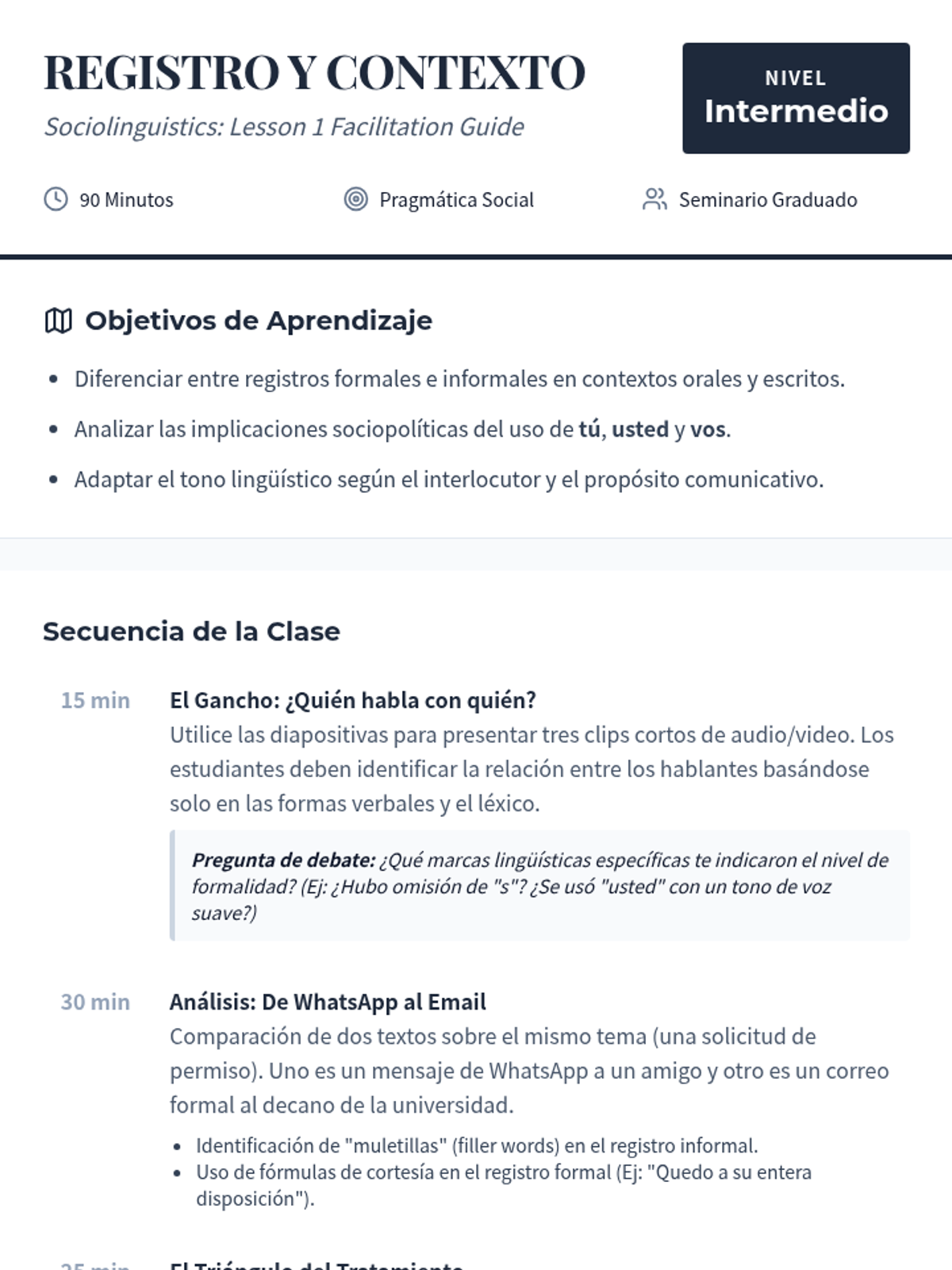
Students analyze the grammatical and lexical shifts between formal and informal Spanish, focusing on 'tú', 'usted', and 'vos' and their social implications.
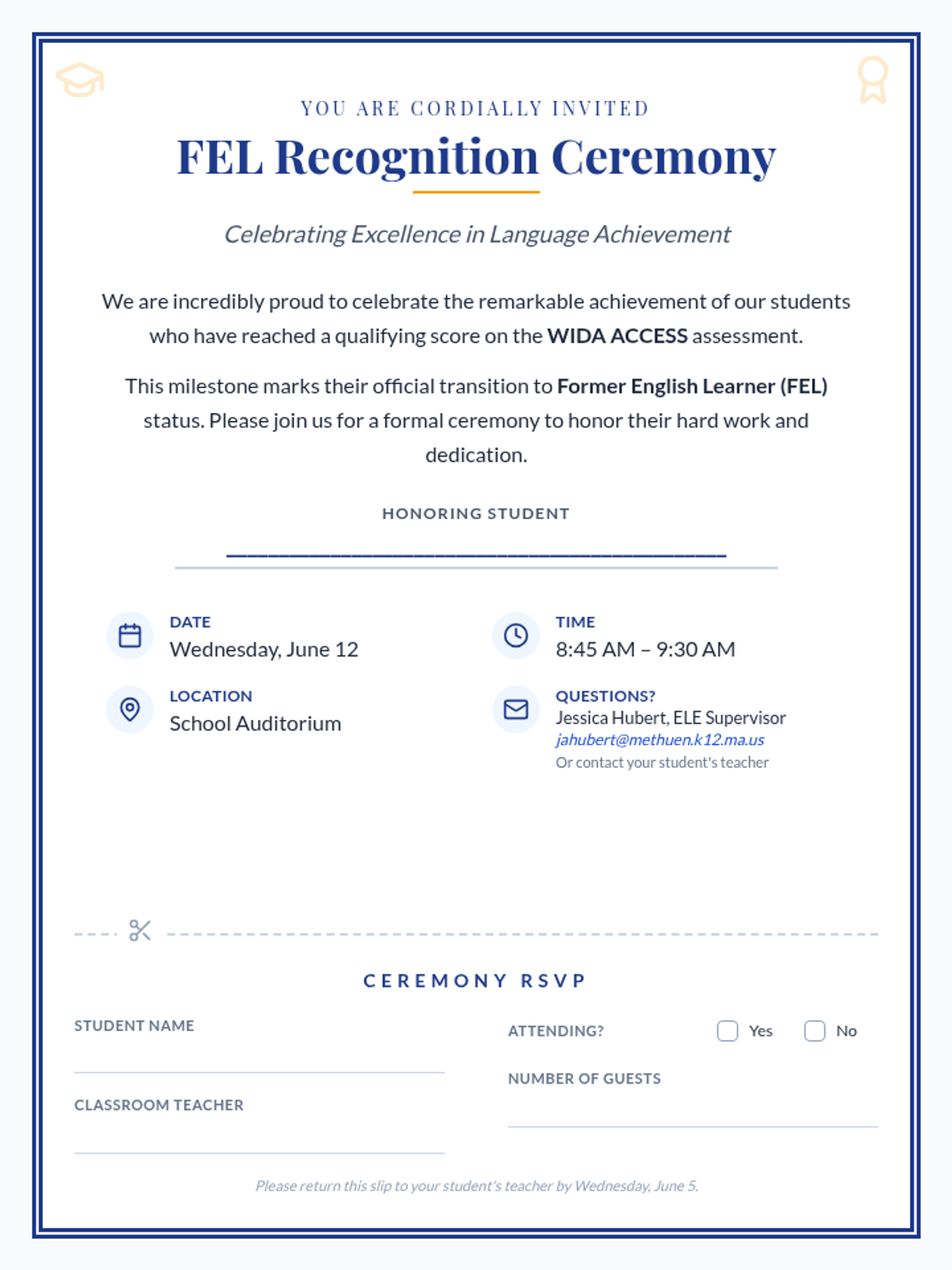
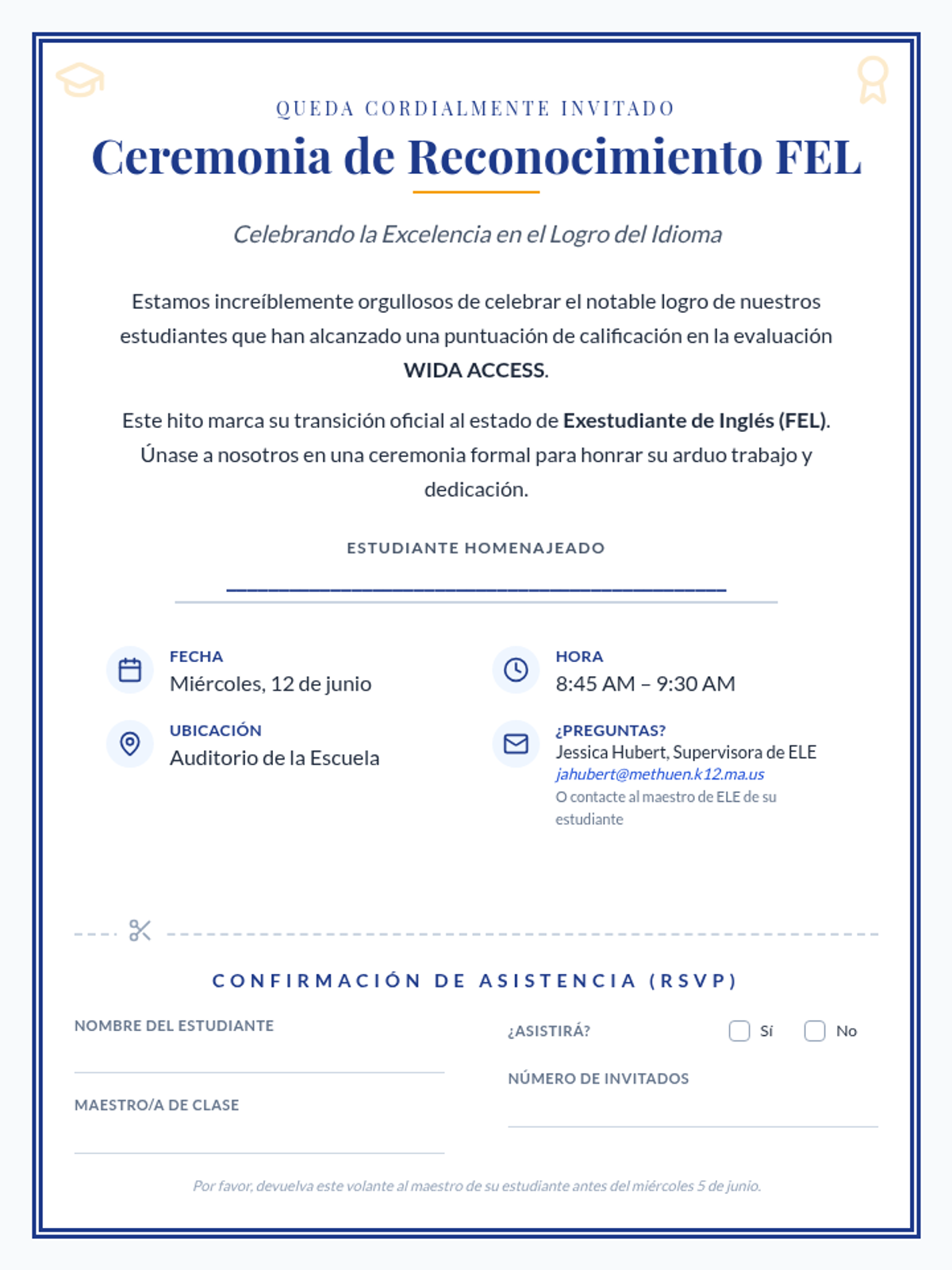
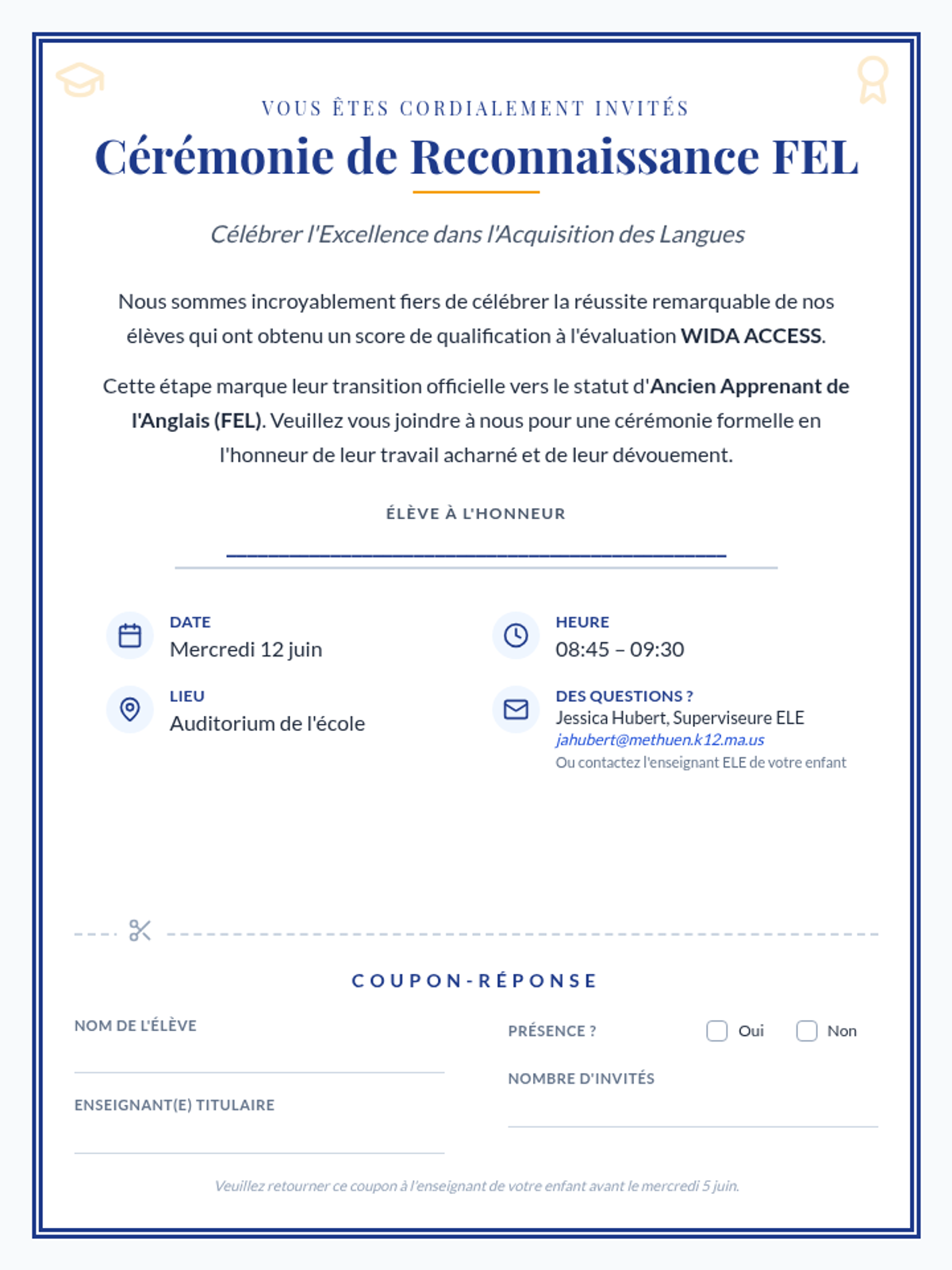
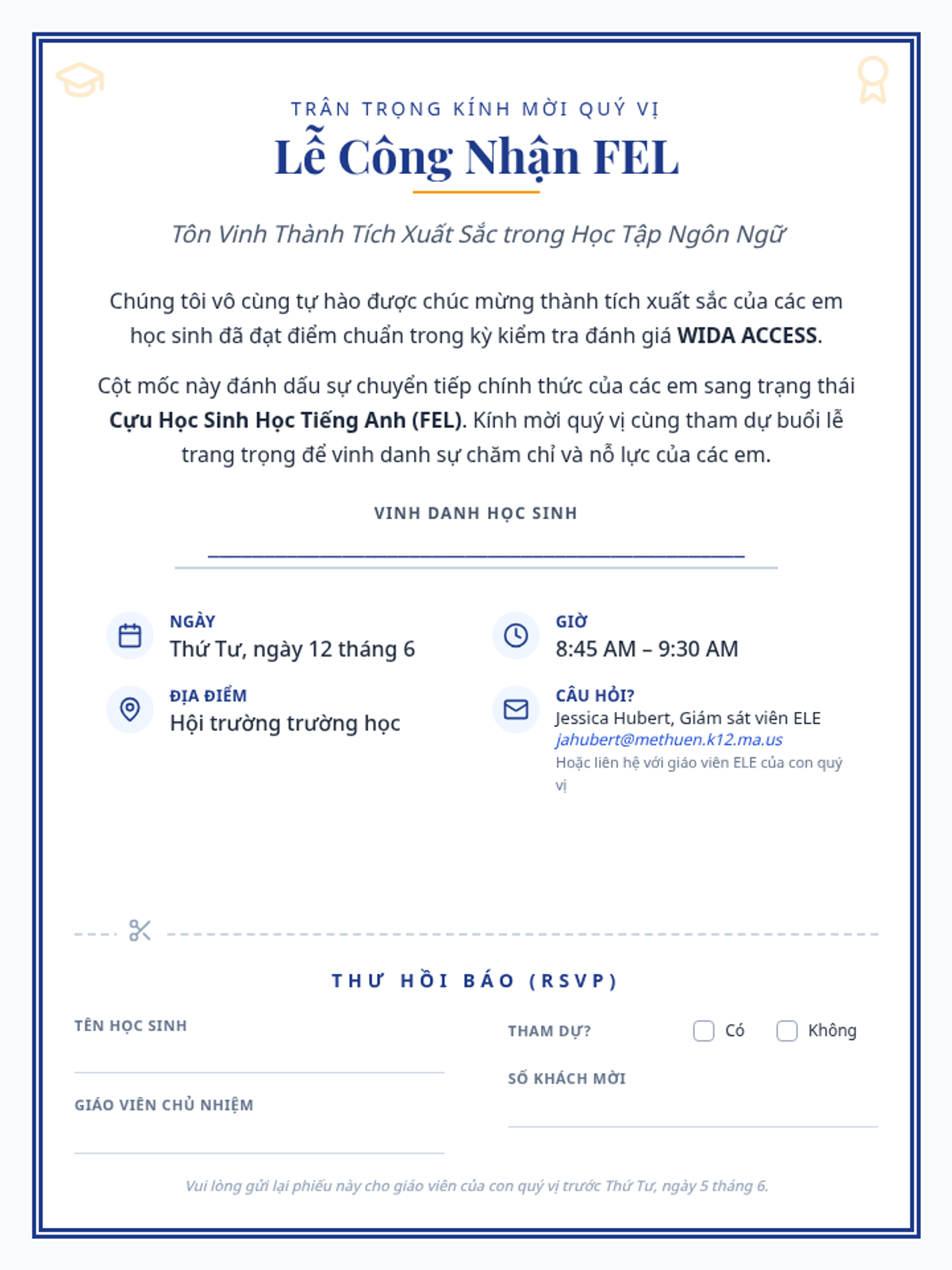
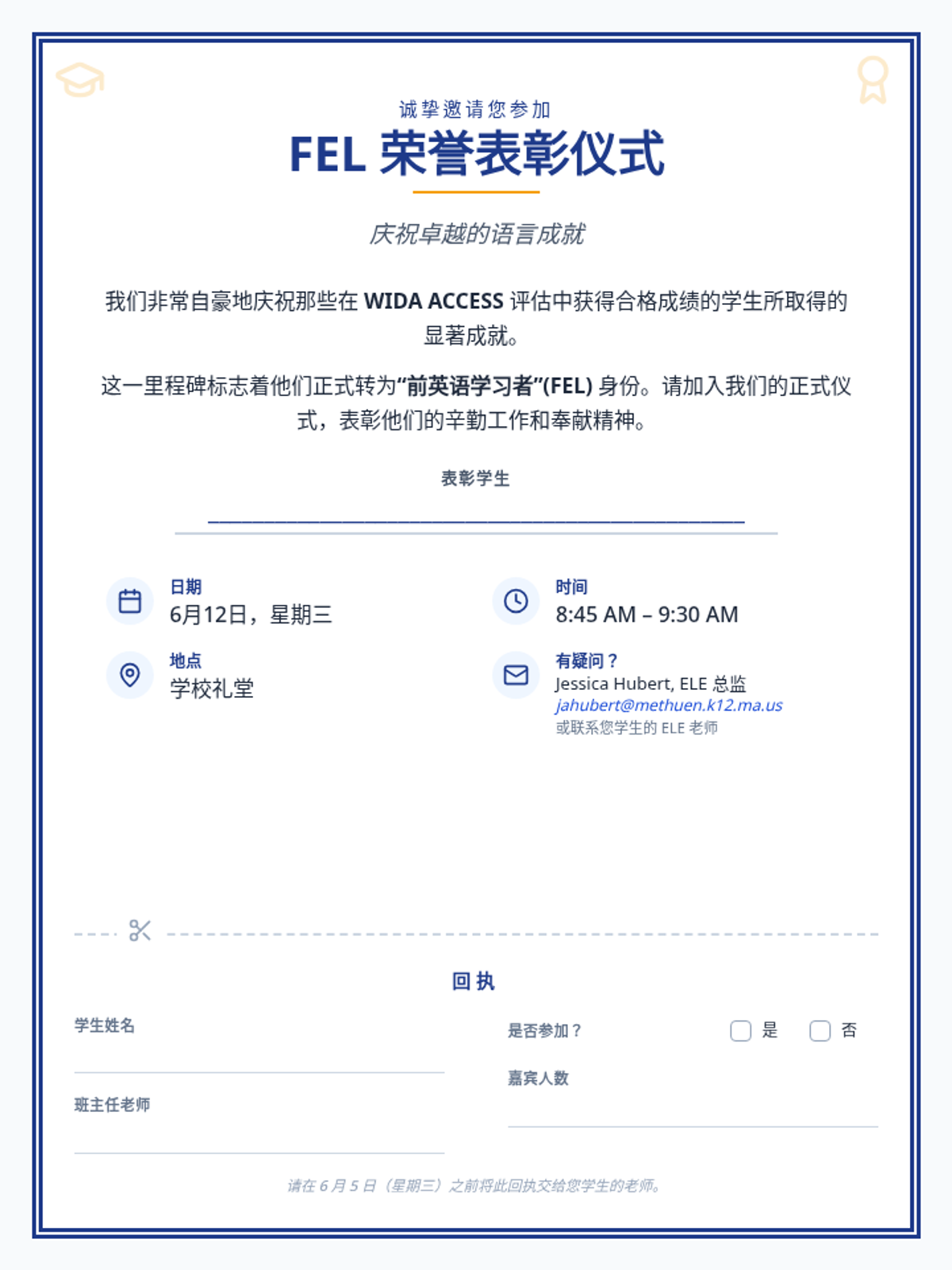
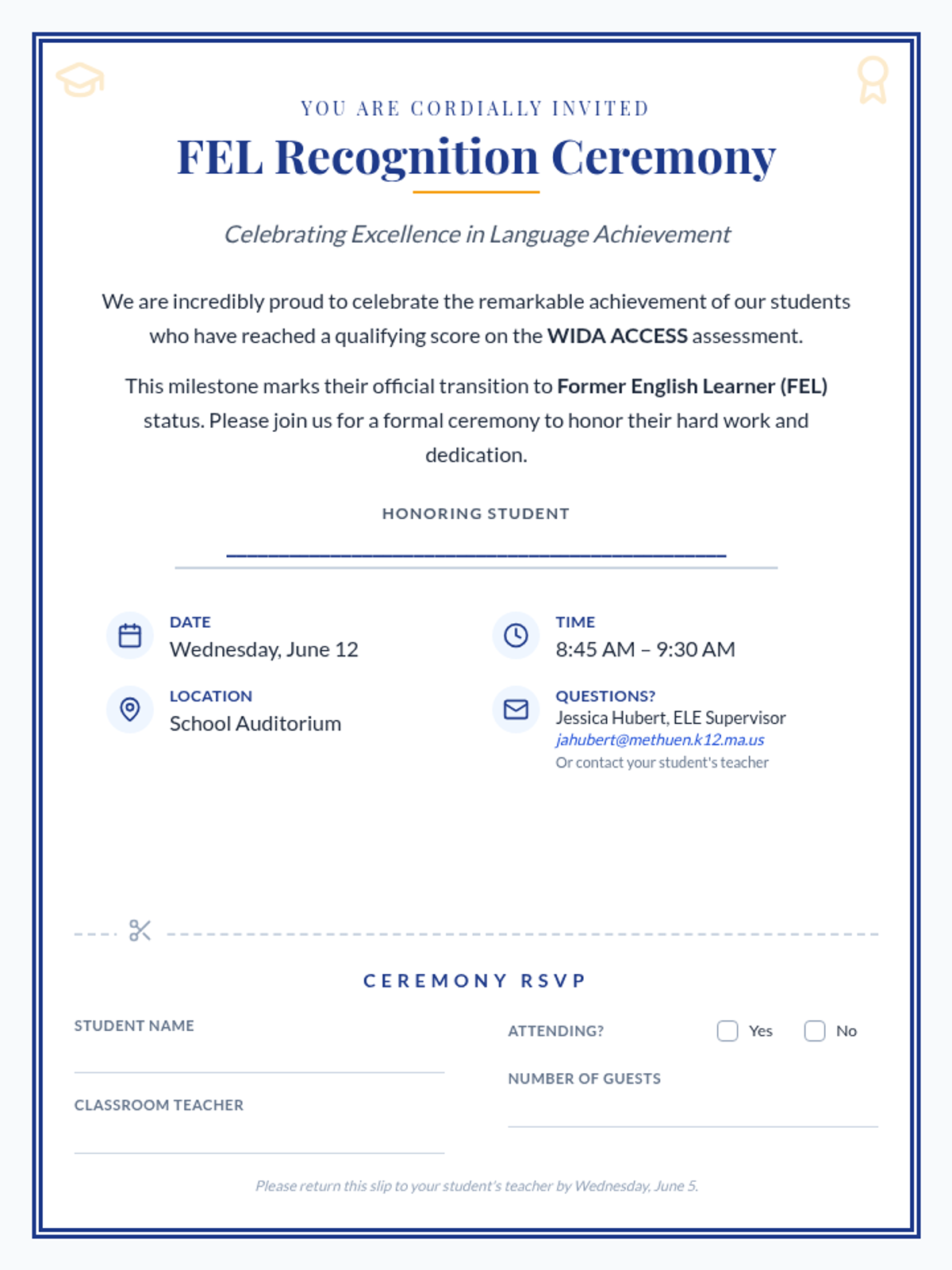
A collection of formal invitation flyers for the FEL Recognition Ceremony, provided in multiple languages to ensure all families can celebrate their student's transition from English Language Education services.
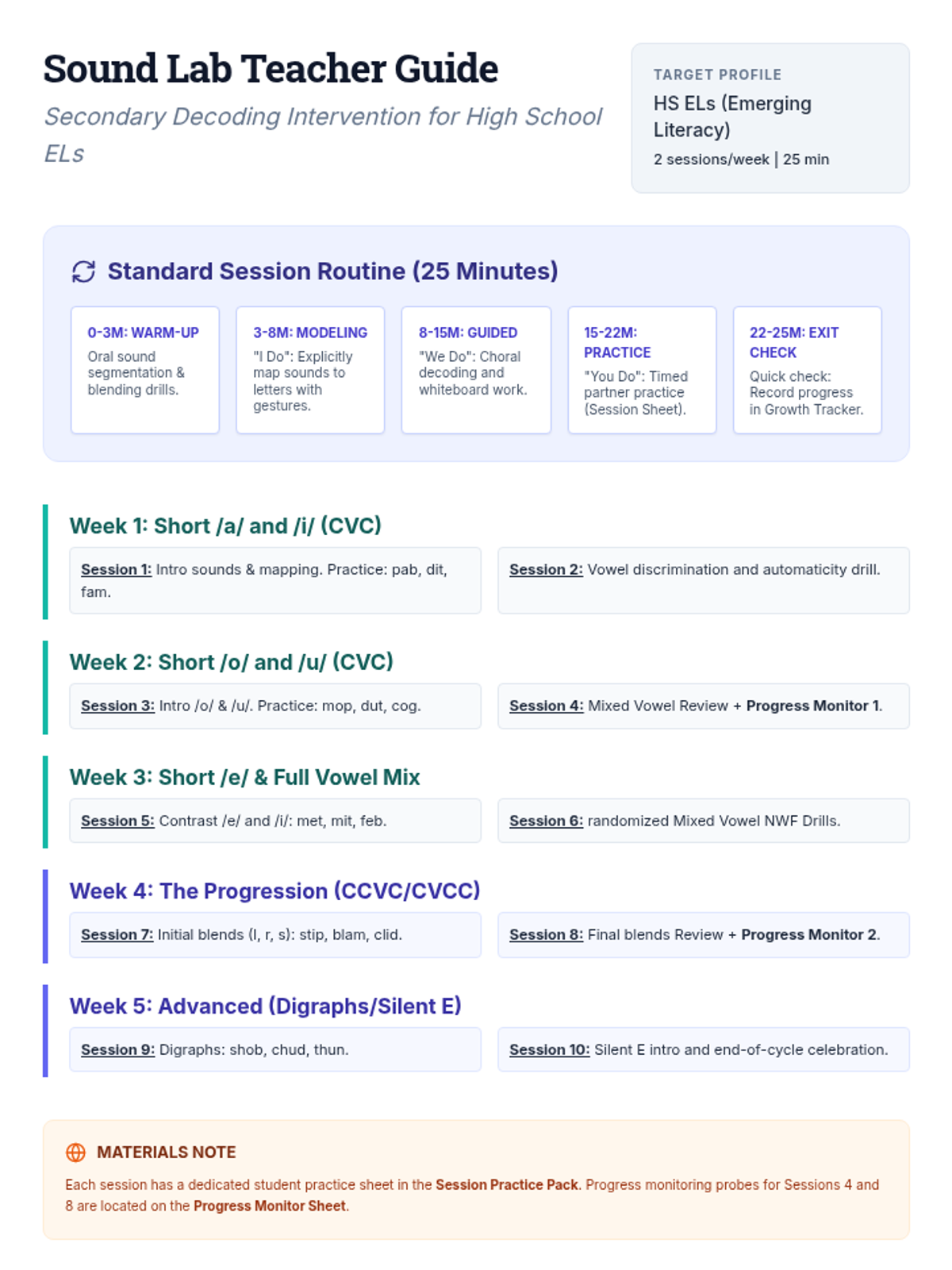
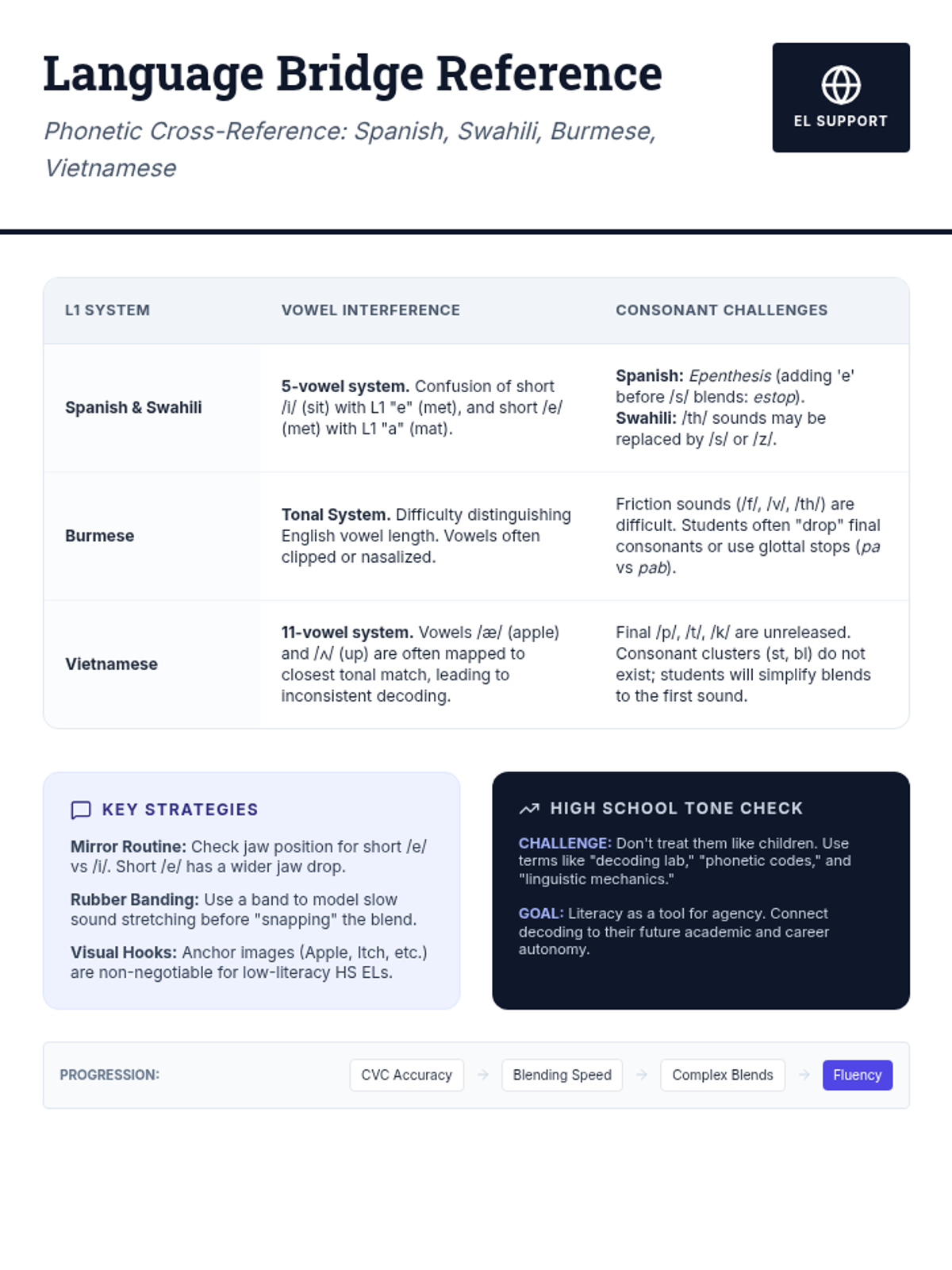
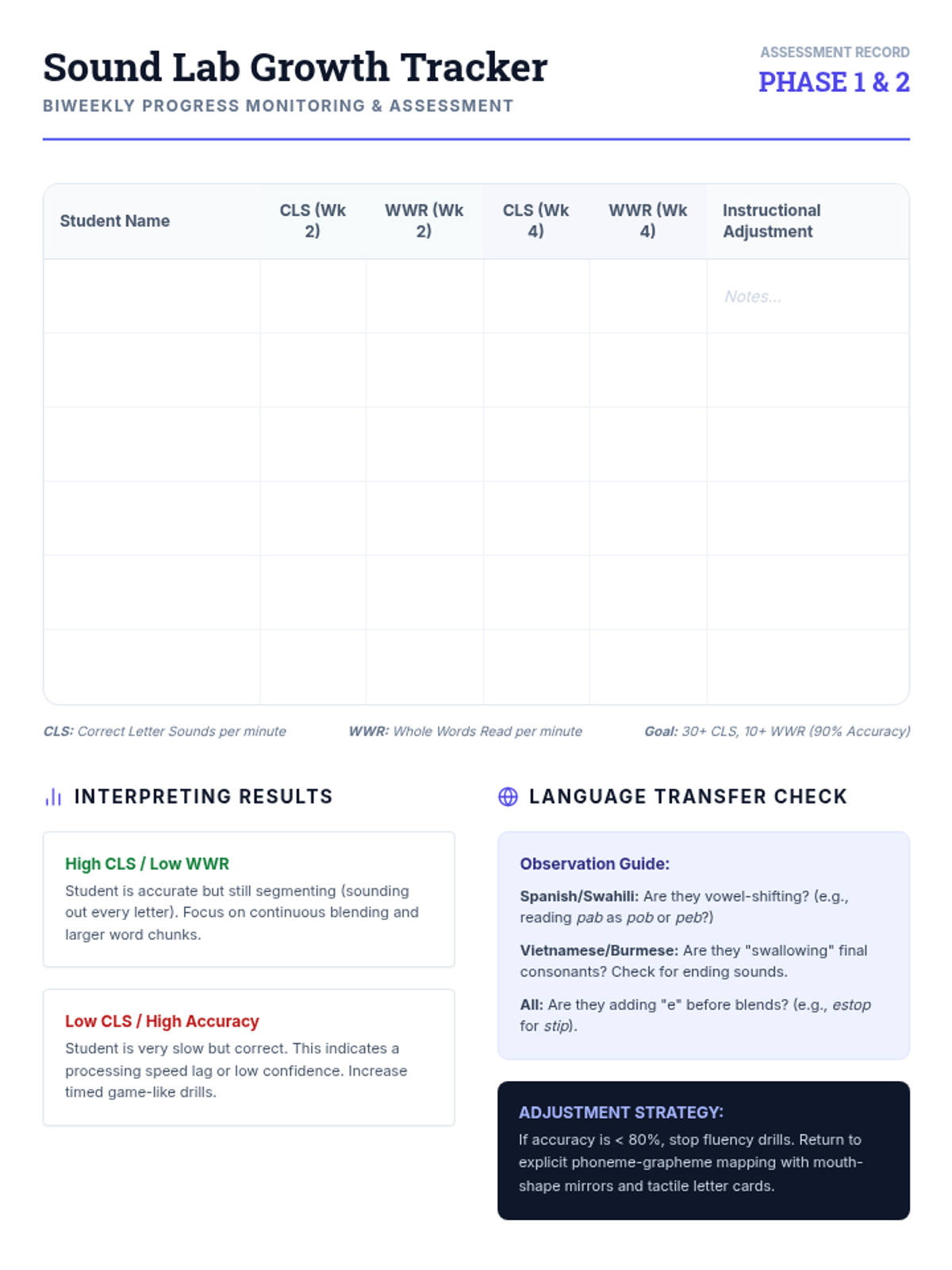
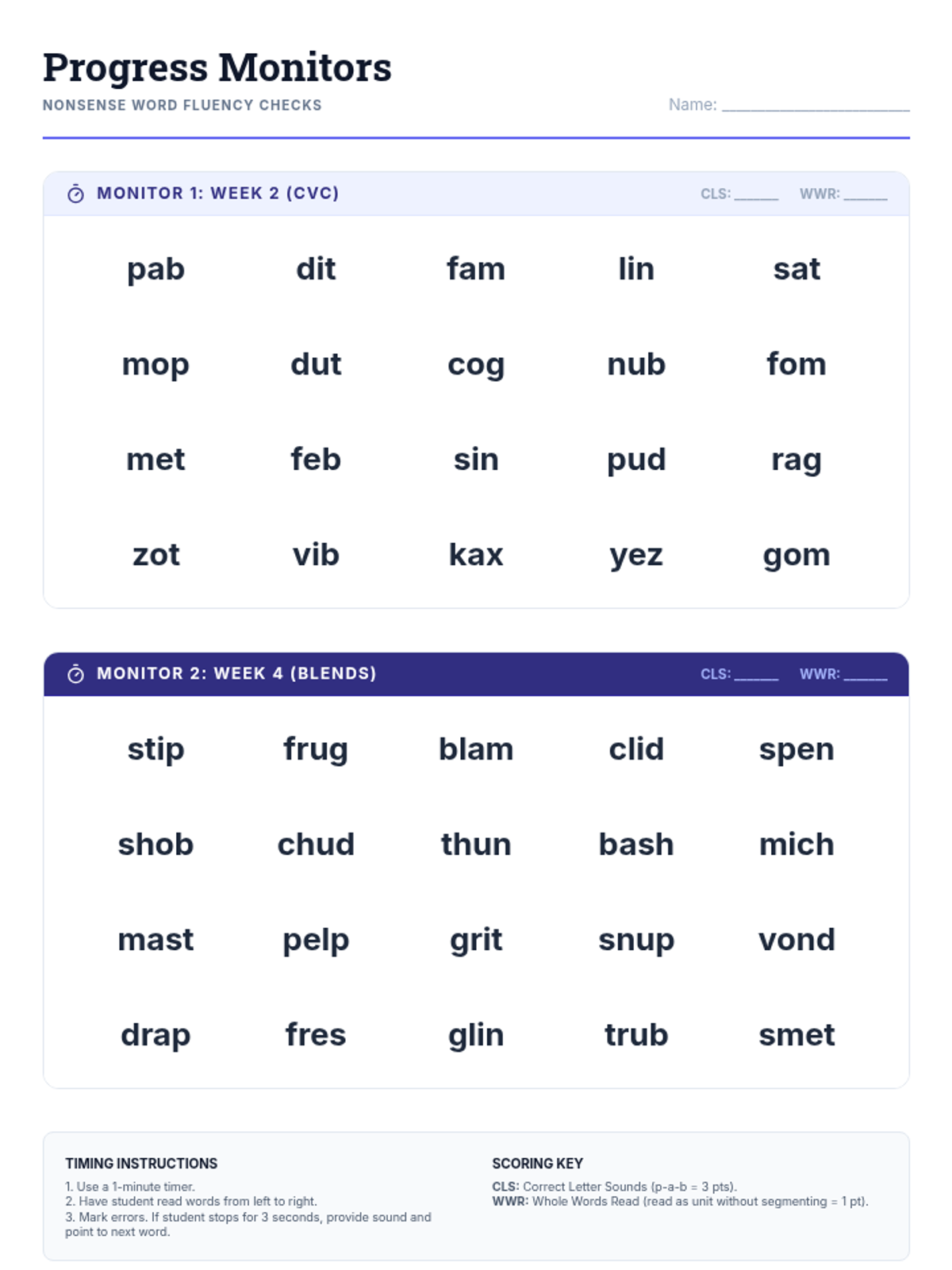
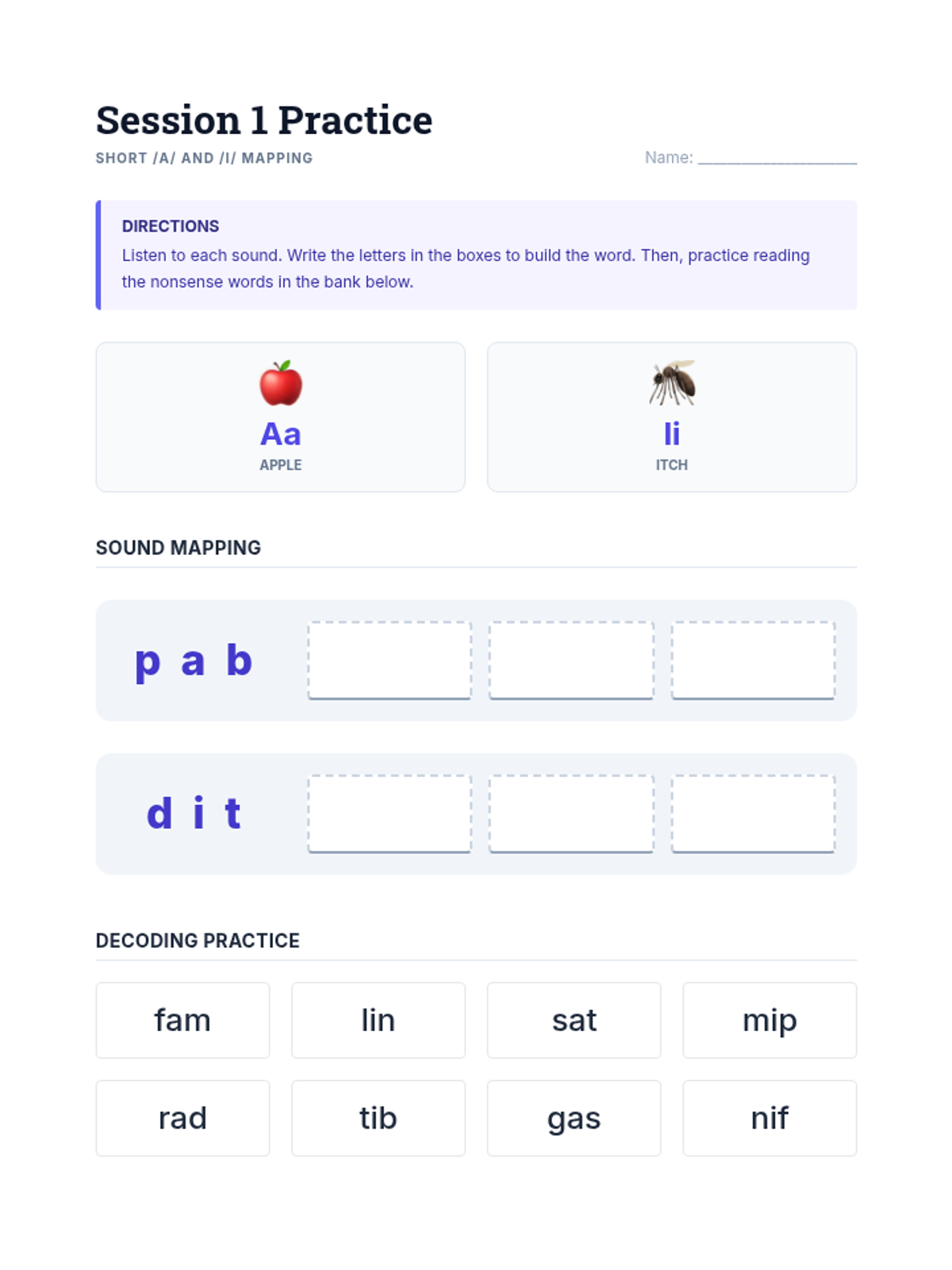
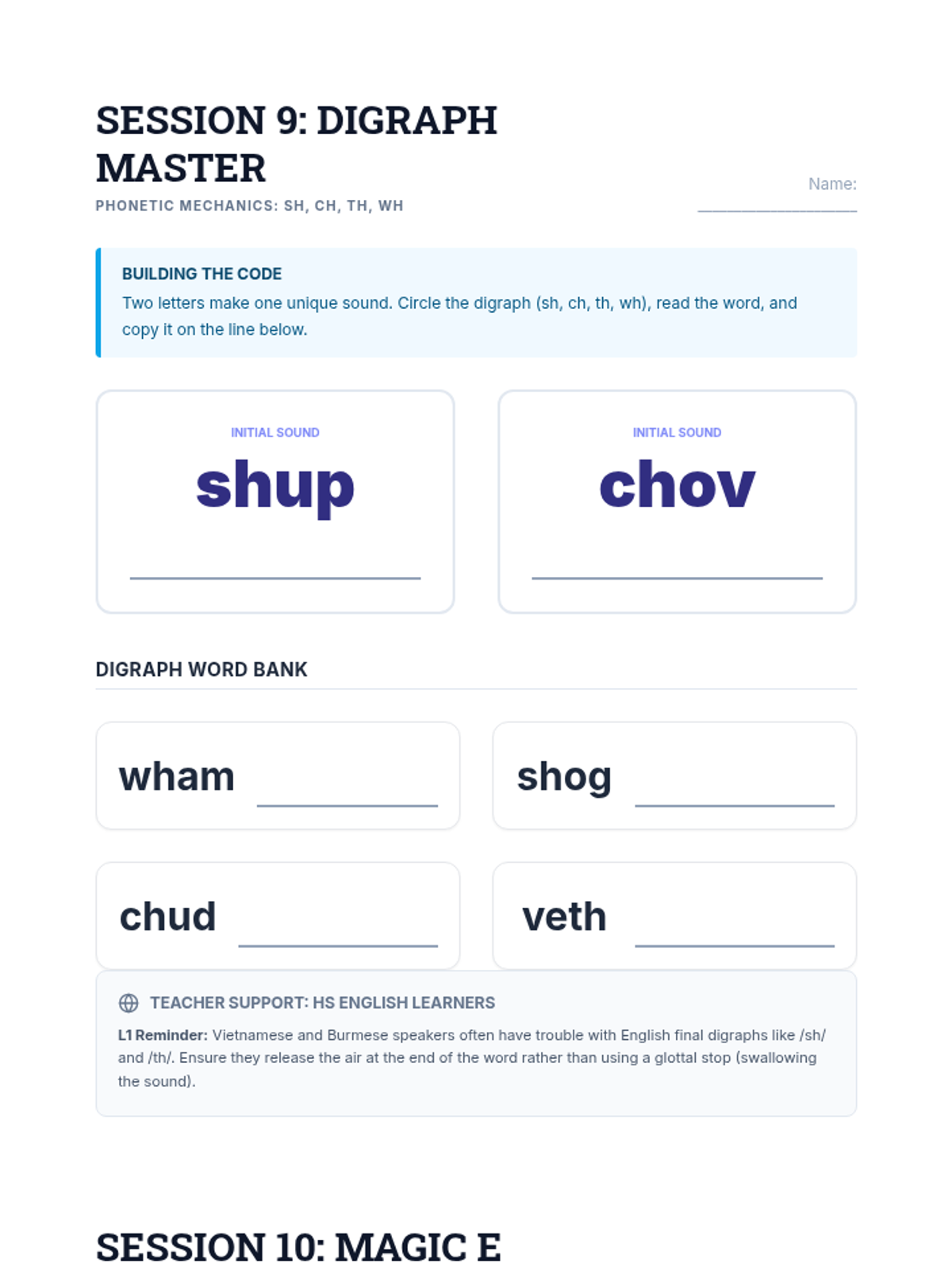
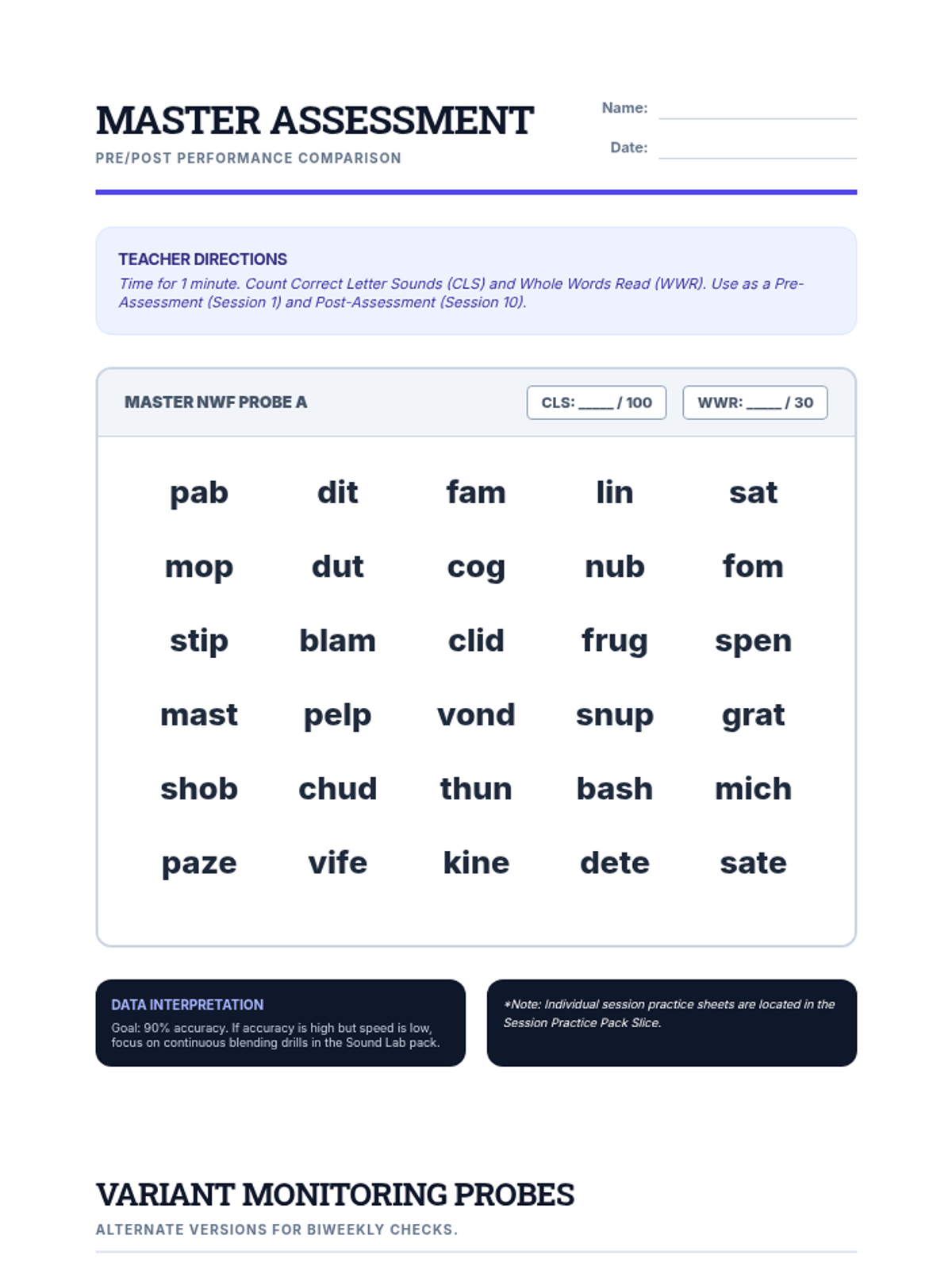
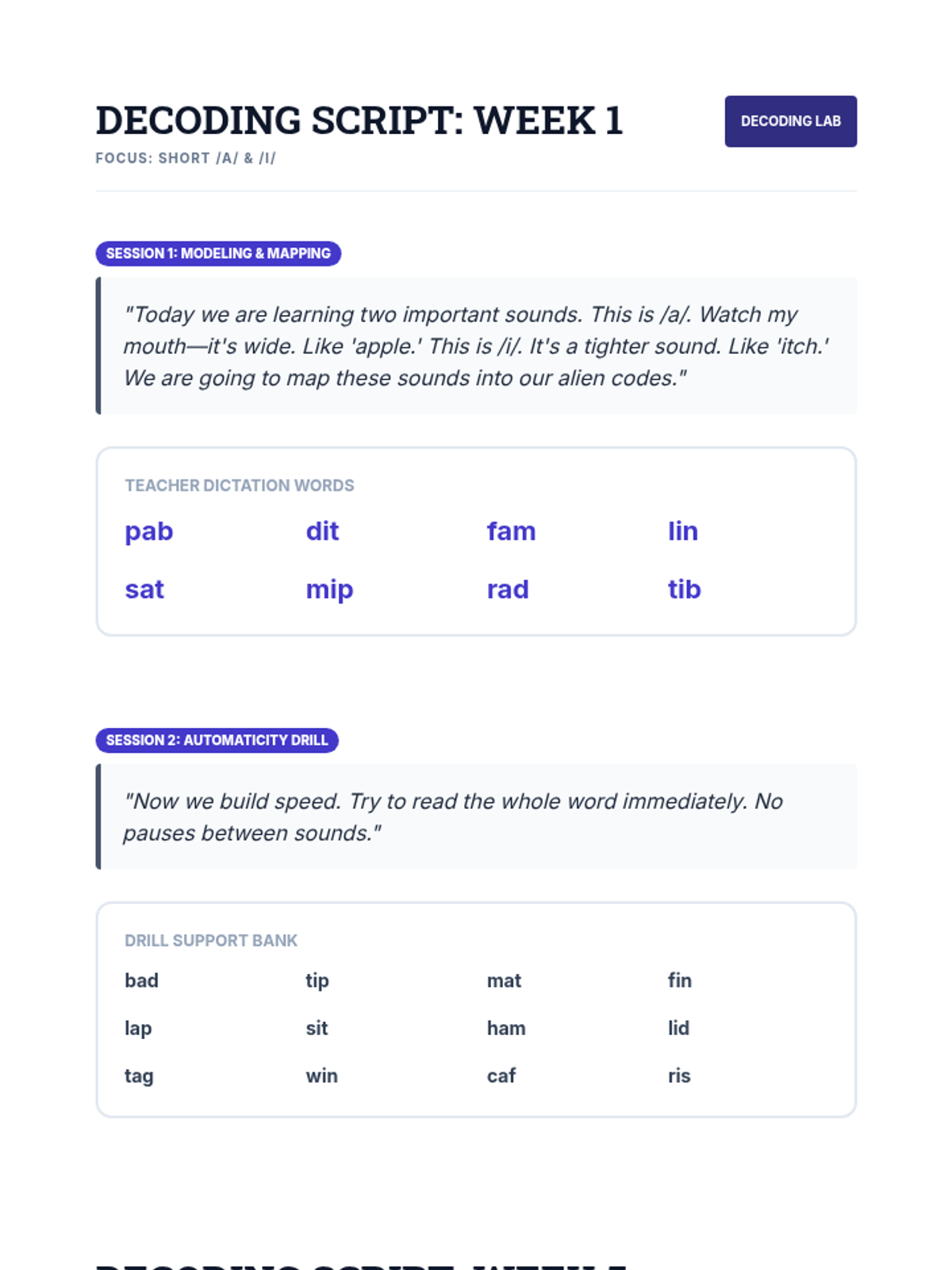
A comprehensive 5-week intervention for high school English Learners focusing on decoding through nonsense word fluency, specifically designed for students with limited or interrupted formal education.
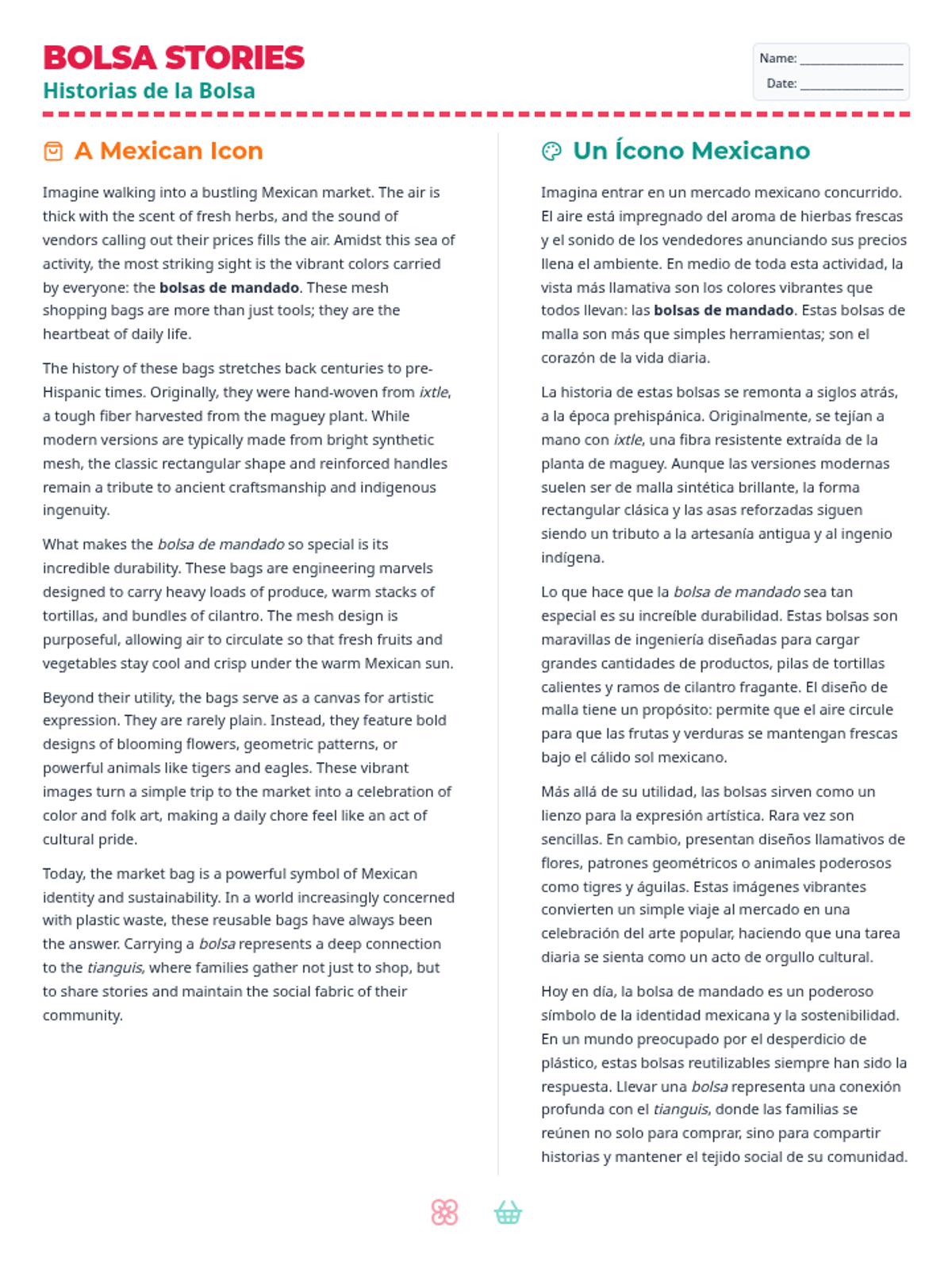
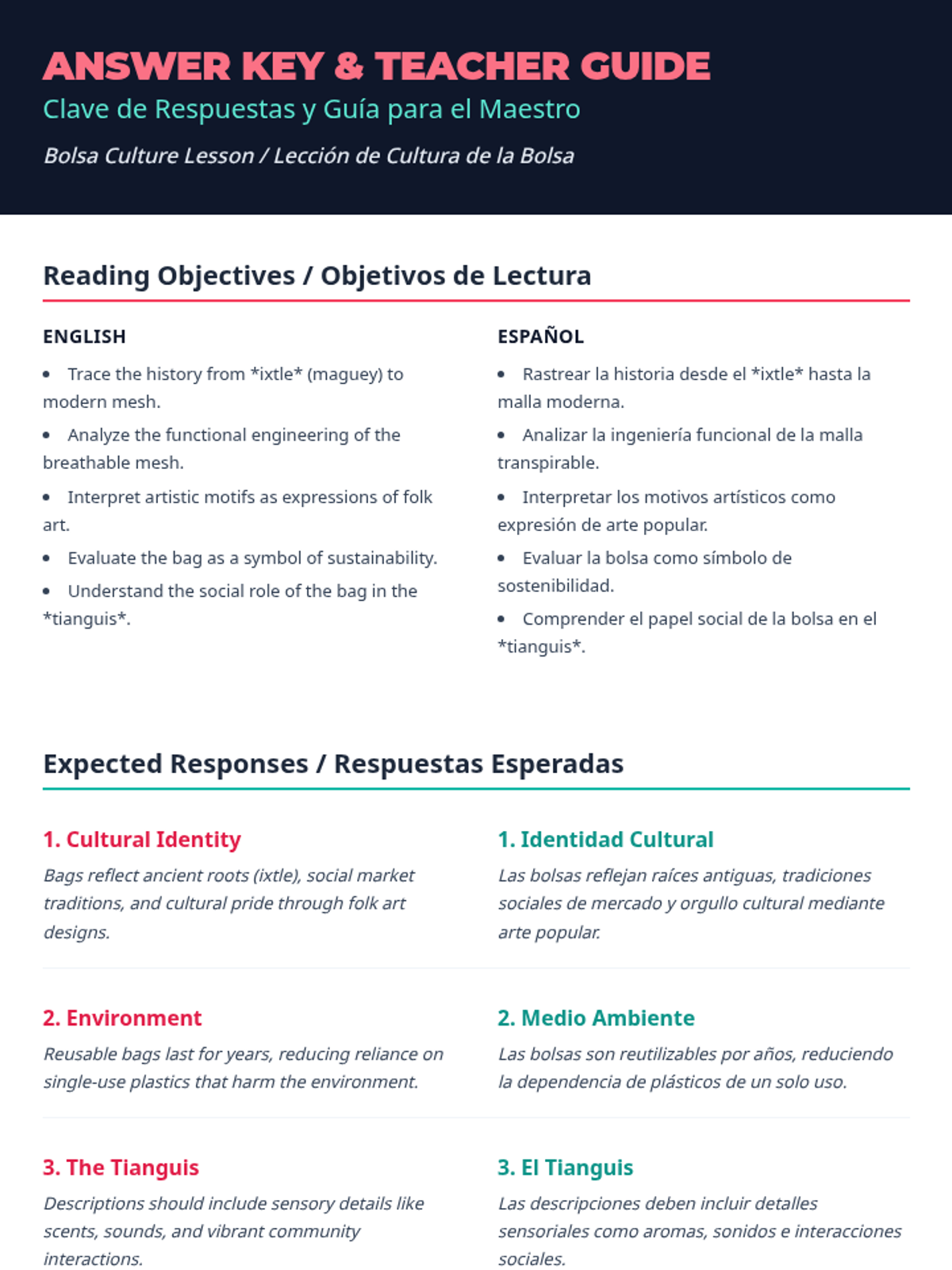
A dual-language exploration of the iconic Mexican market bag (bolsa de mandado), focusing on its history, utility, and cultural significance in Mexican traditions.
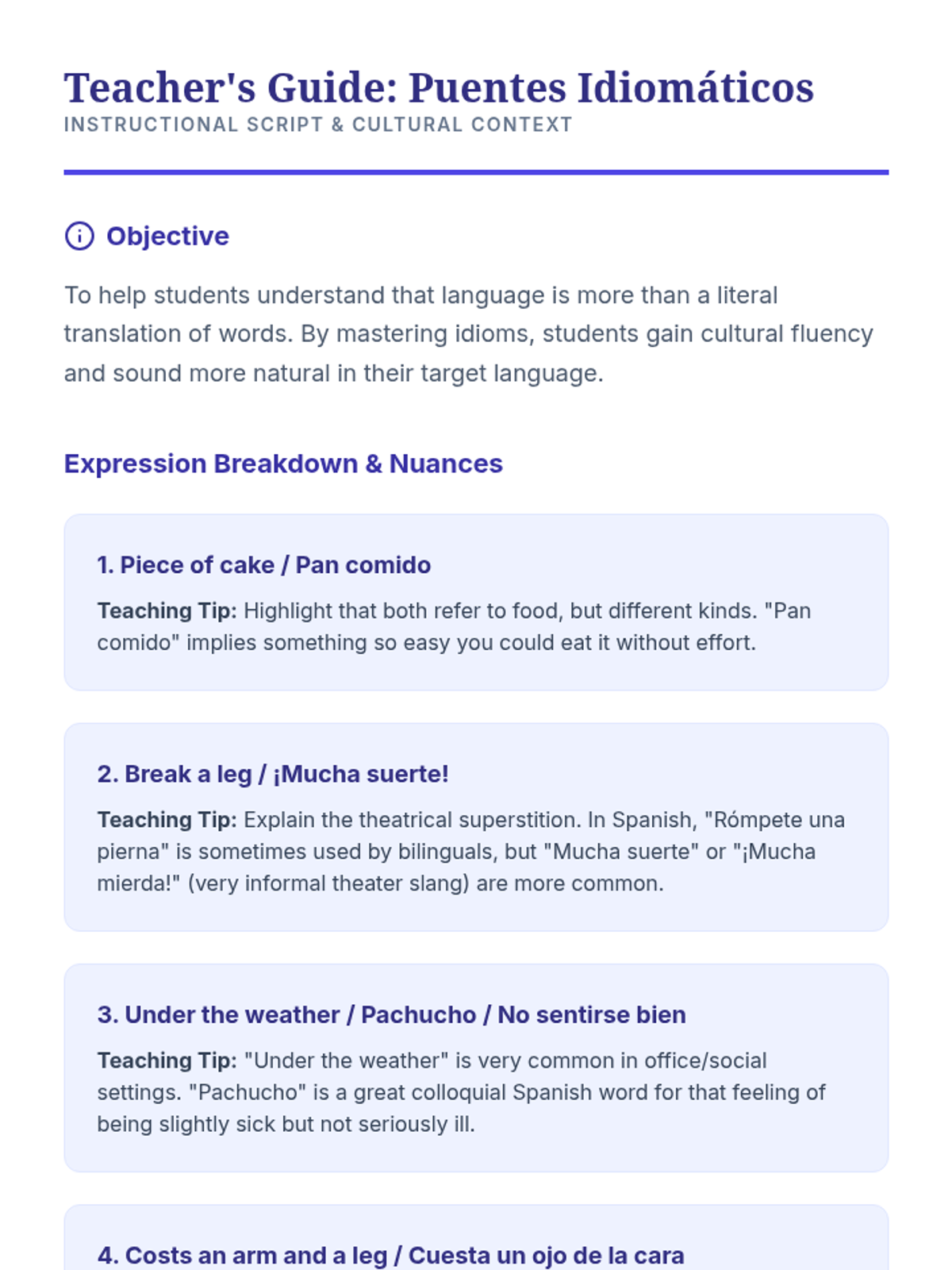
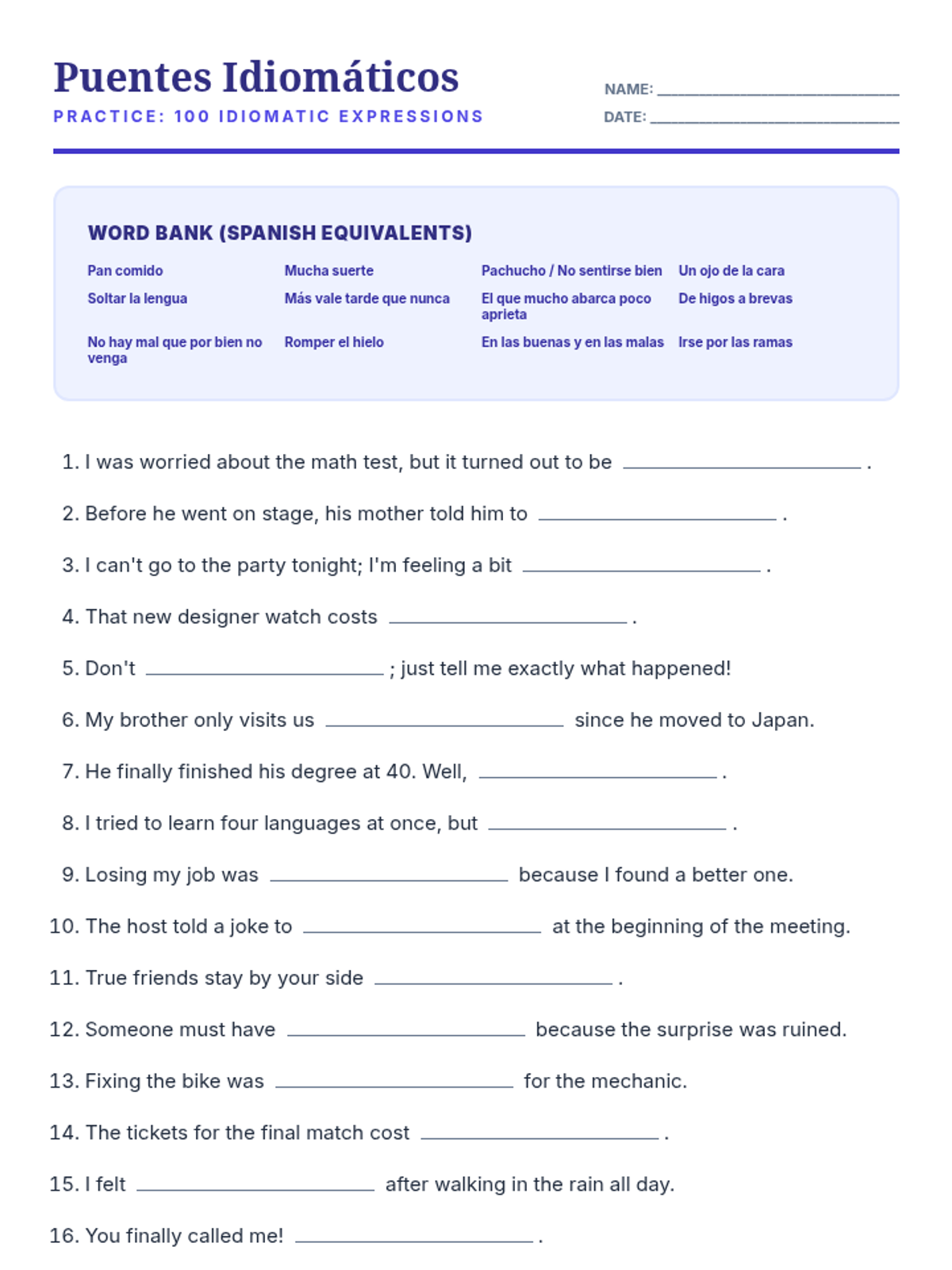
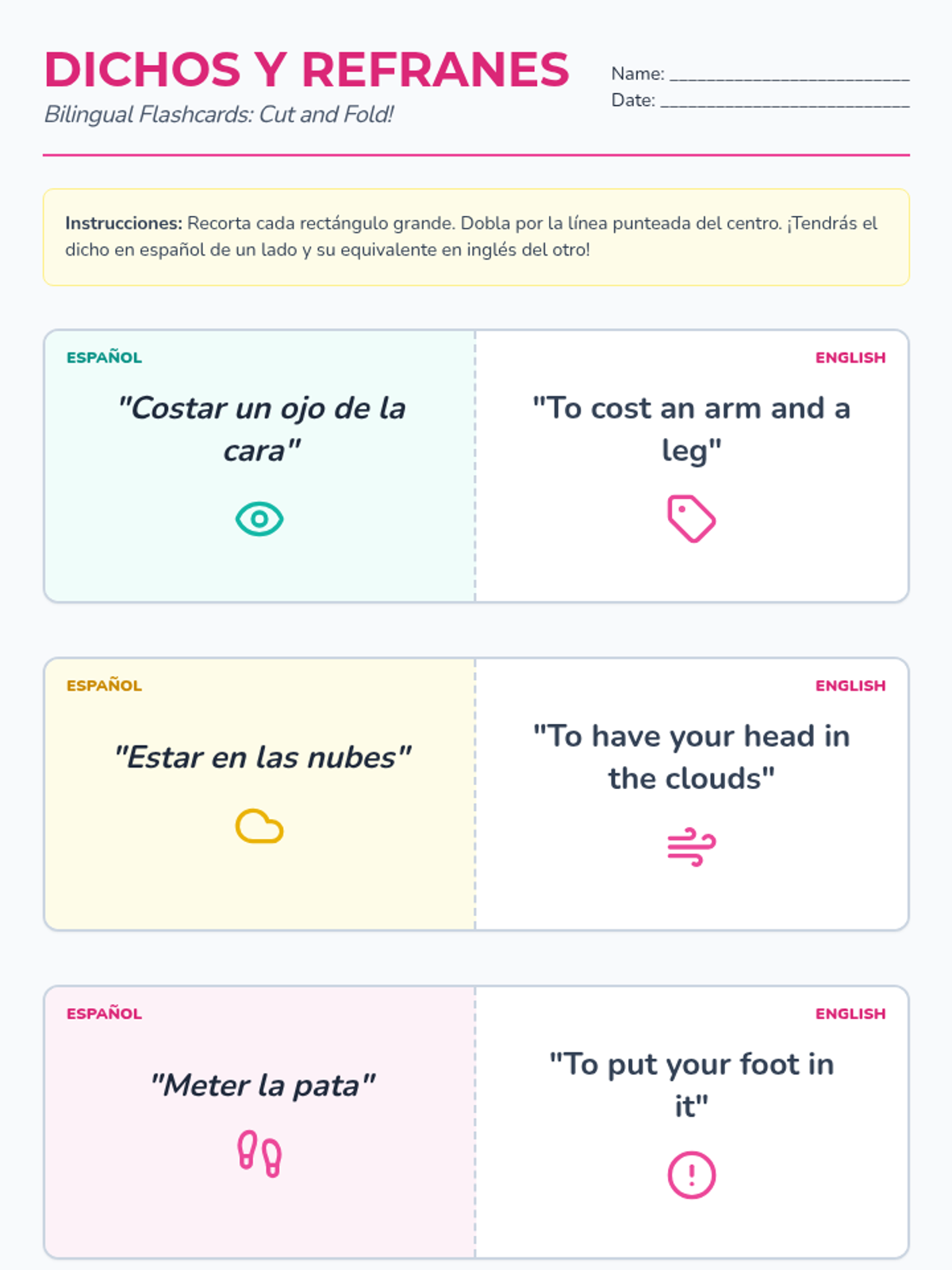
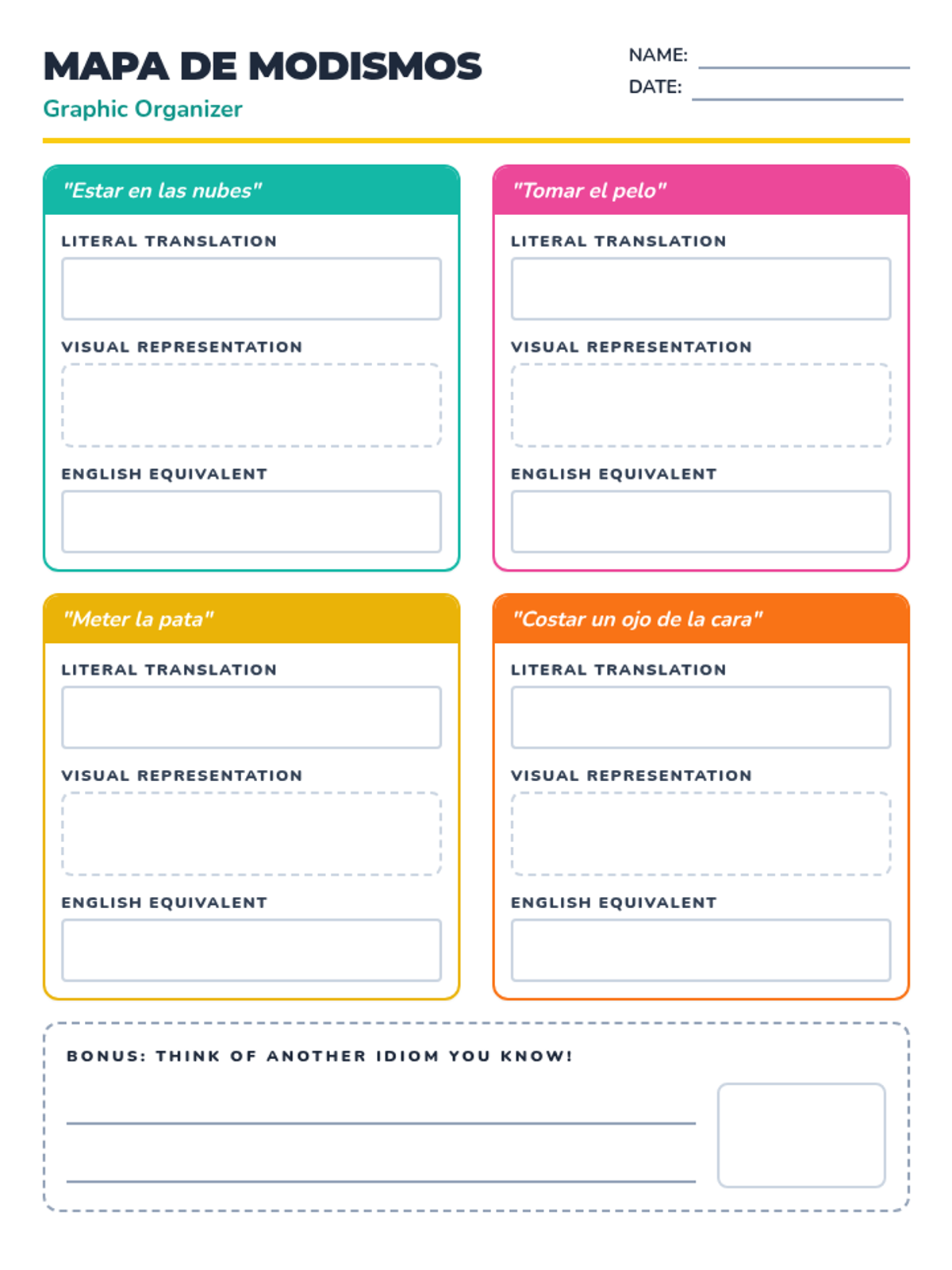
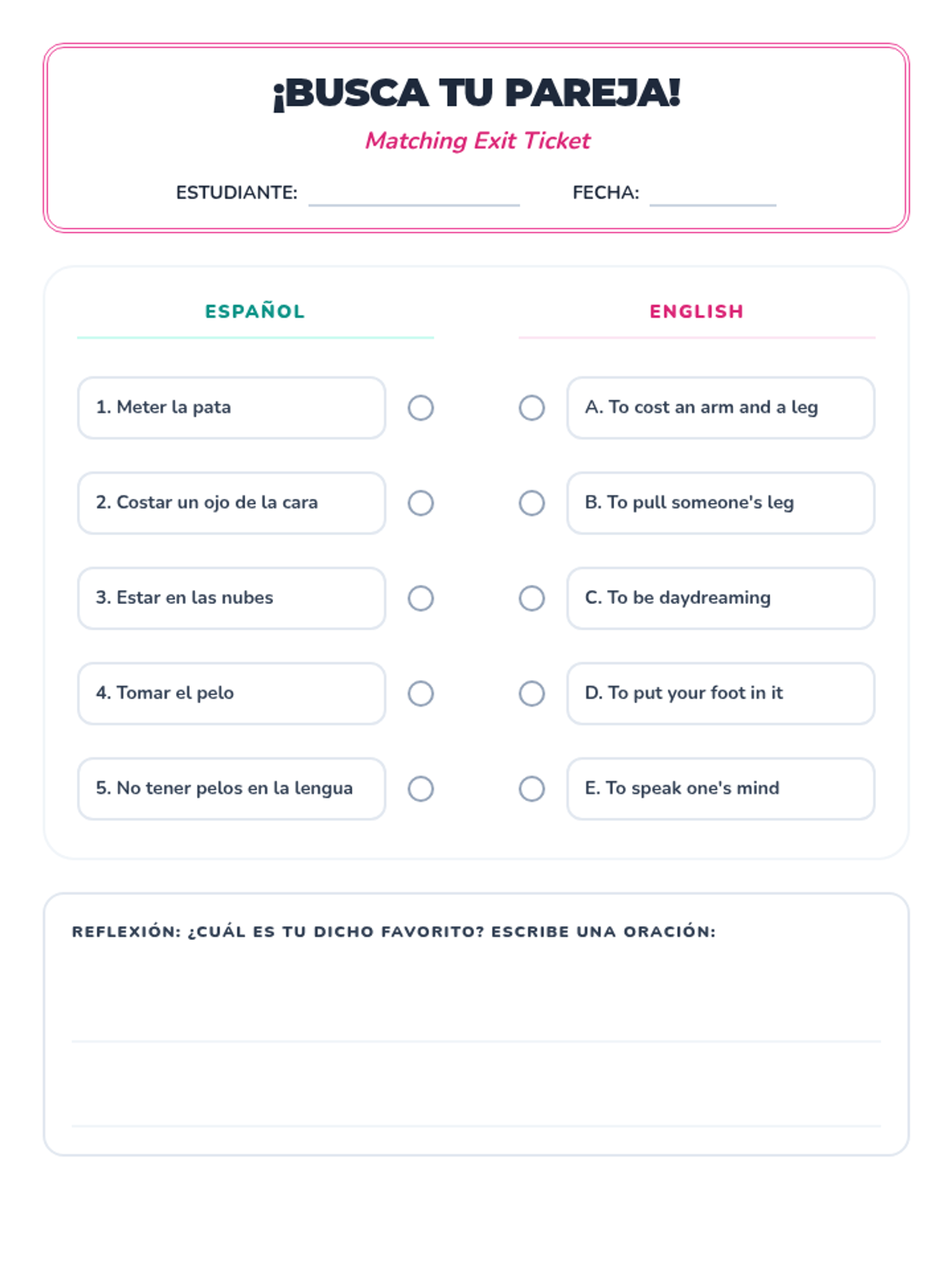
Una lección vibrante sobre modismos y expresiones comunes en español y sus equivalentes en inglés, explorando significados literales y figurados.
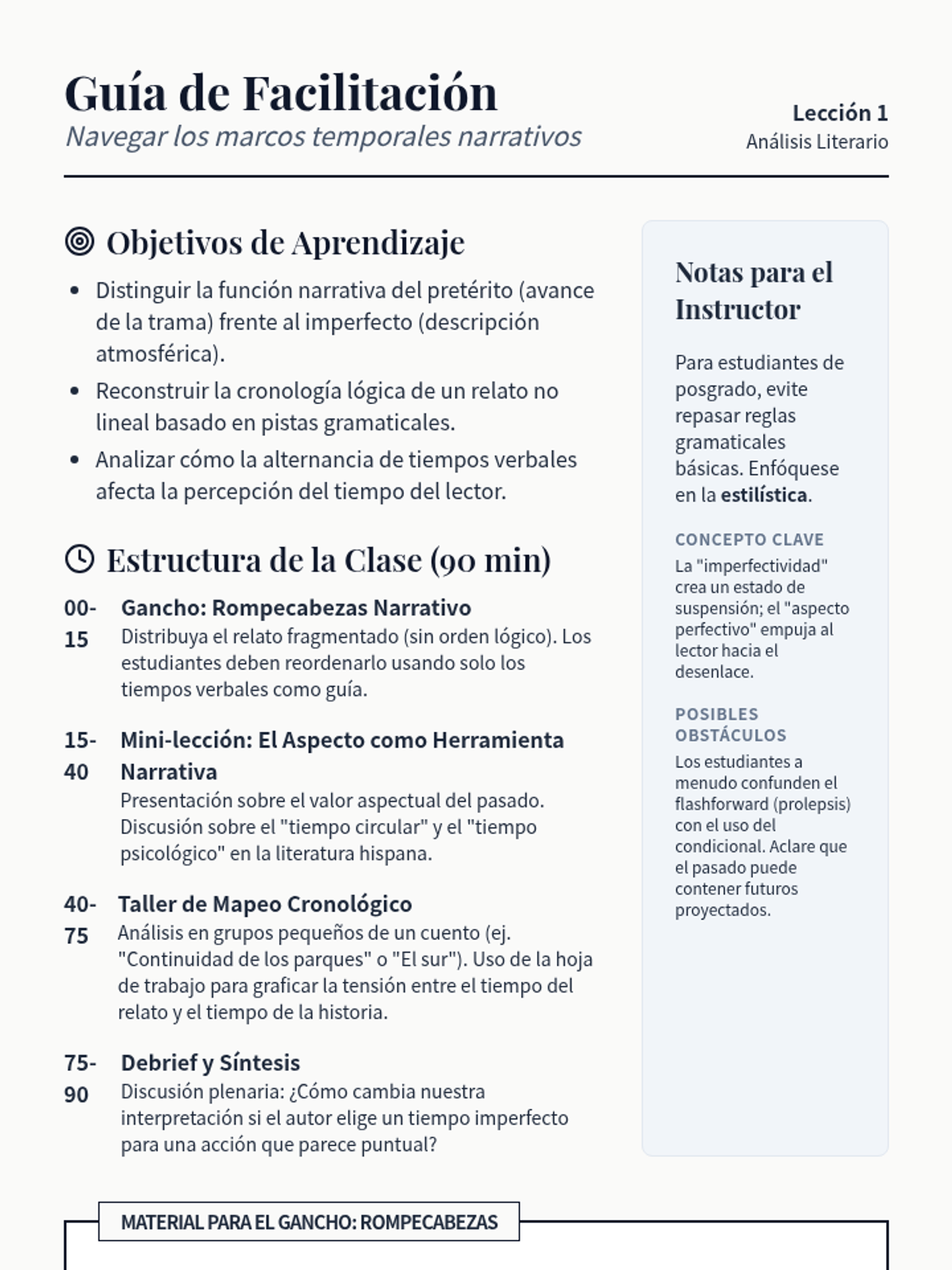
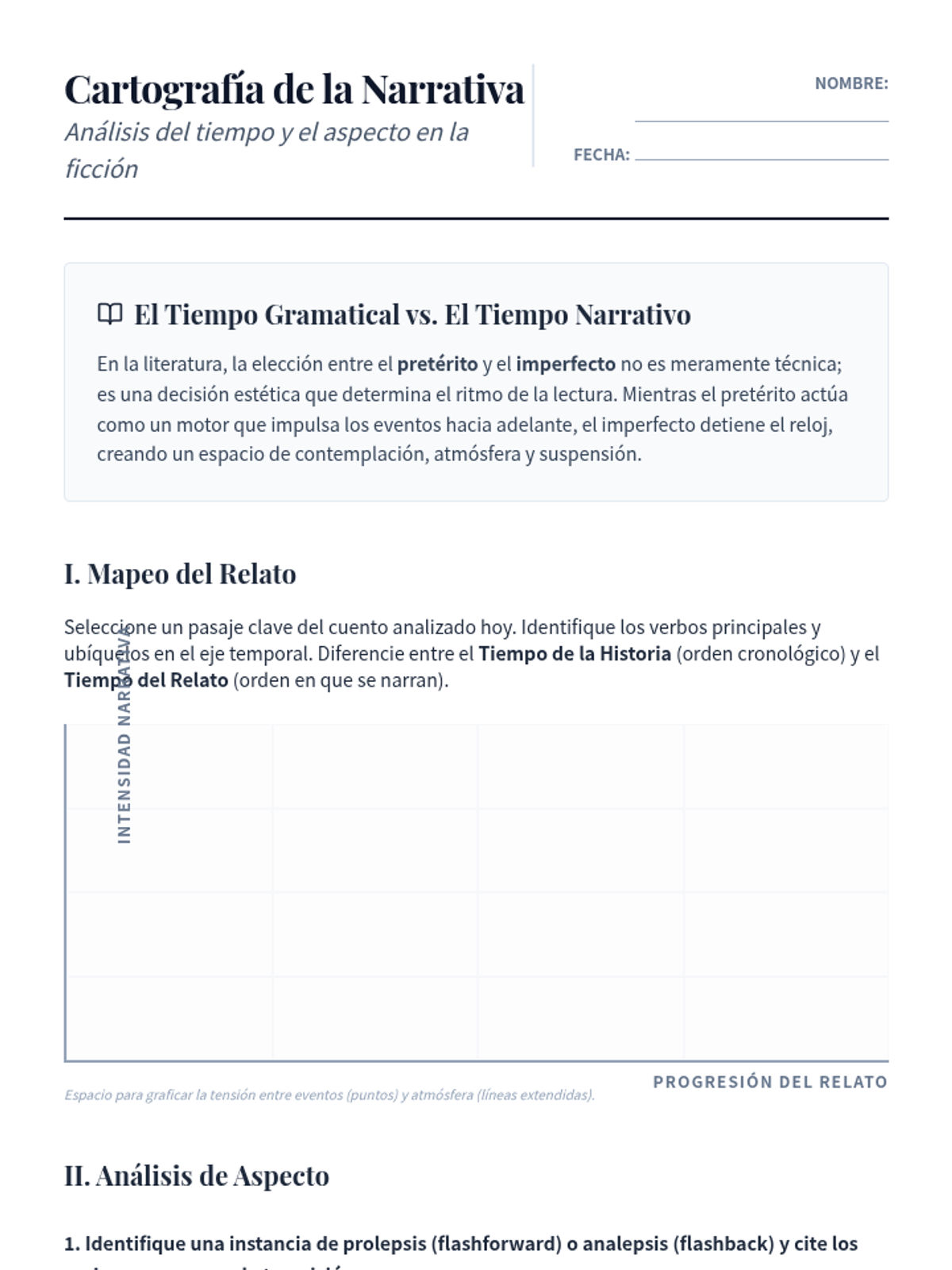
Focuses on the interplay between preterite and imperfect tenses in non-linear narratives. Students learn to map plot timelines against grammatical structures to understand how authors manipulate time.
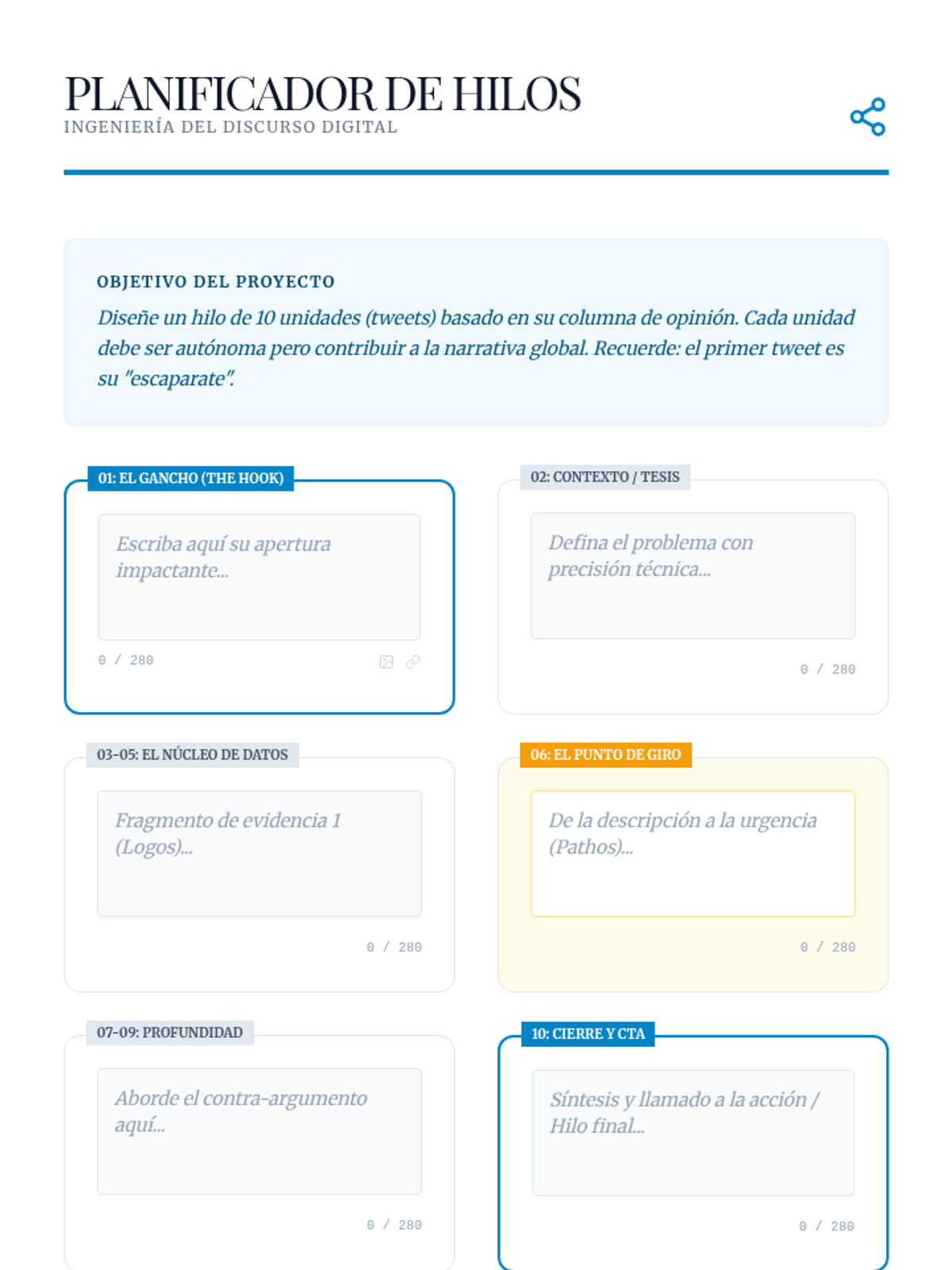
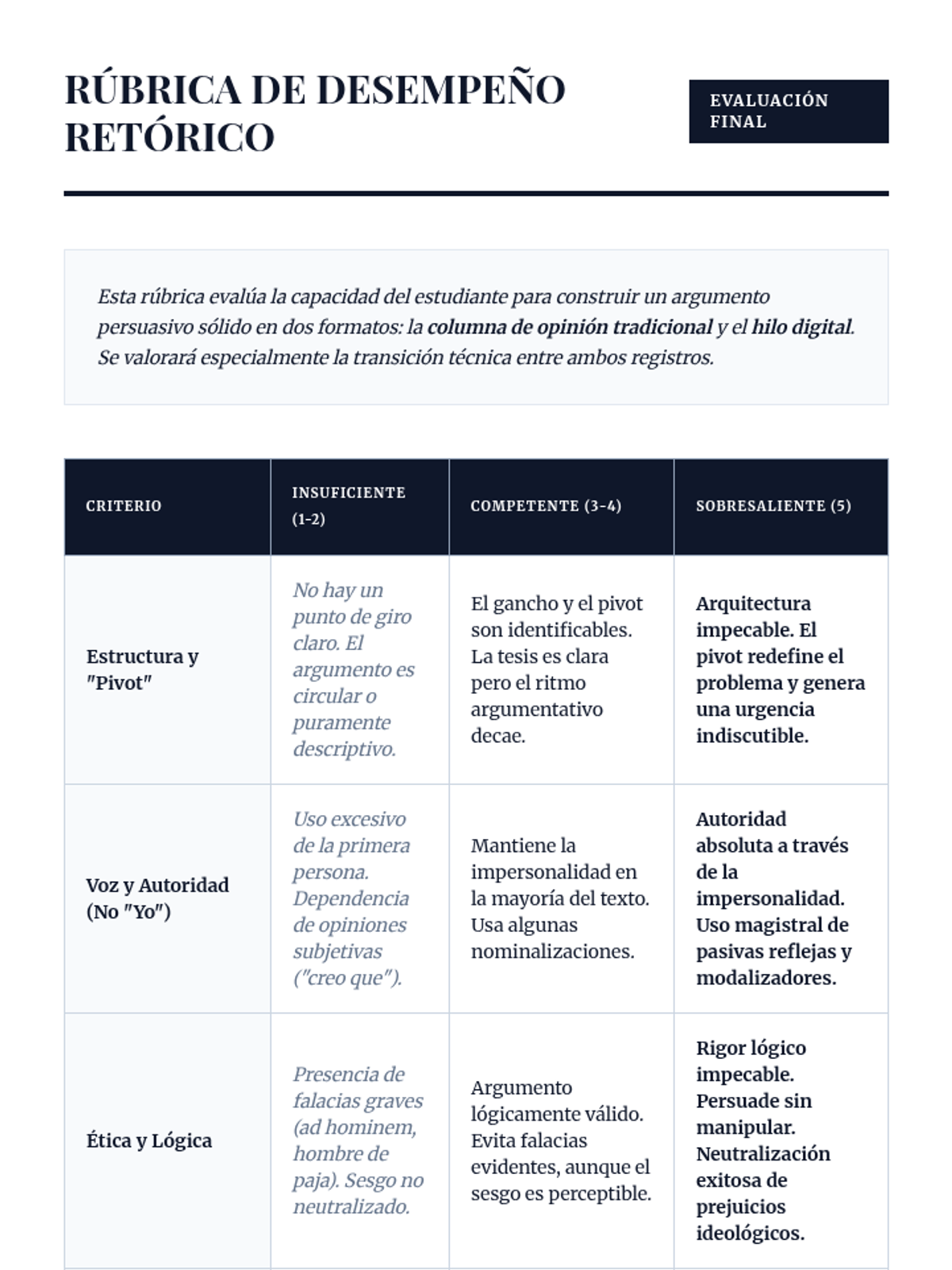
Adapting traditional rhetoric for digital platforms like blogs and social media threads, focusing on conciseness and academic rigor.
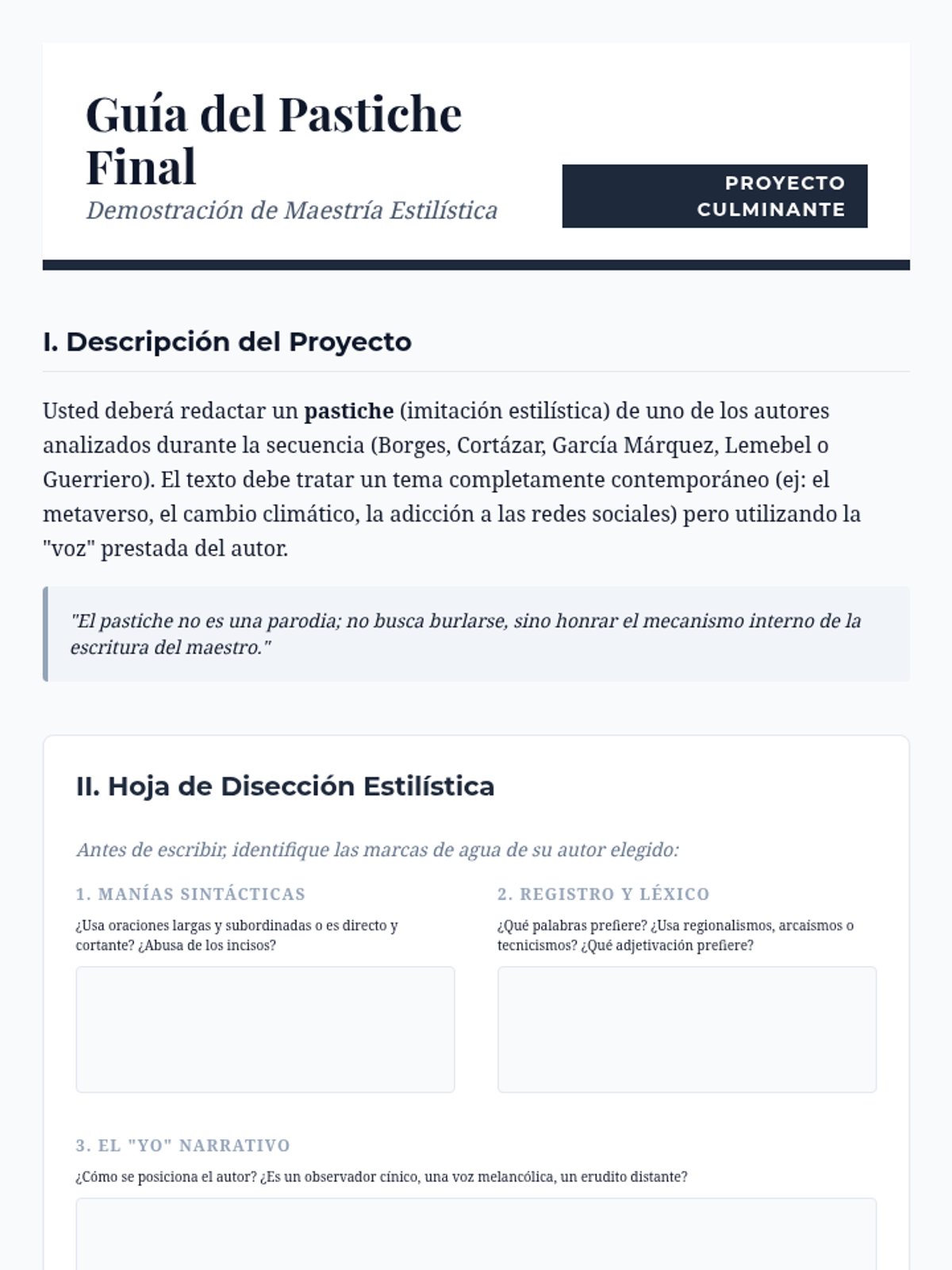
The culmination of the sequence where students demonstrate mastery by imitating the style of a master author. This pastiche exercise requires deep syntactical and lexical analysis of specific literary voices.
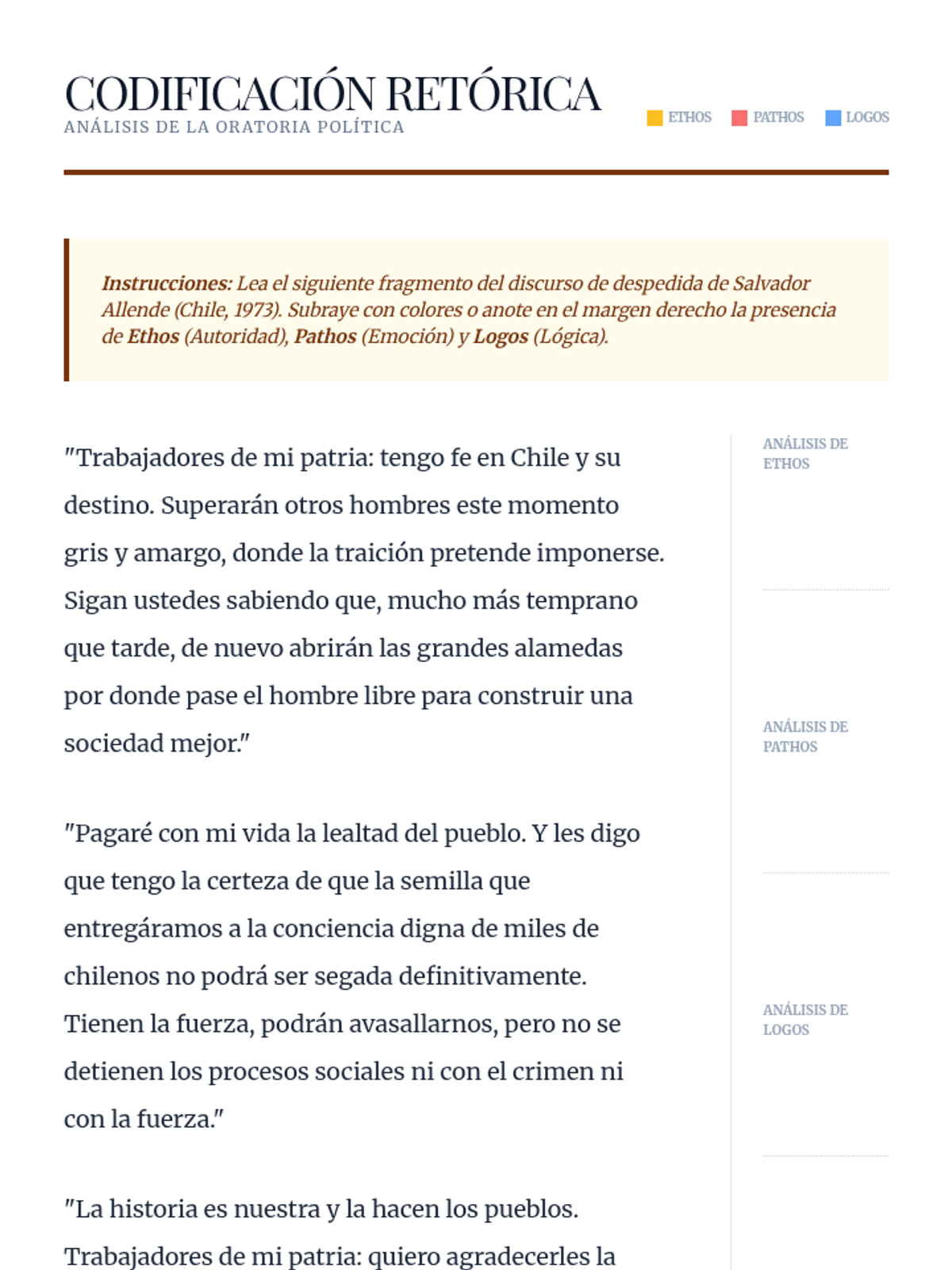
Students analyze transcripts of famous Latin American speeches to identify and code appeals to ethos, pathos, and logos.
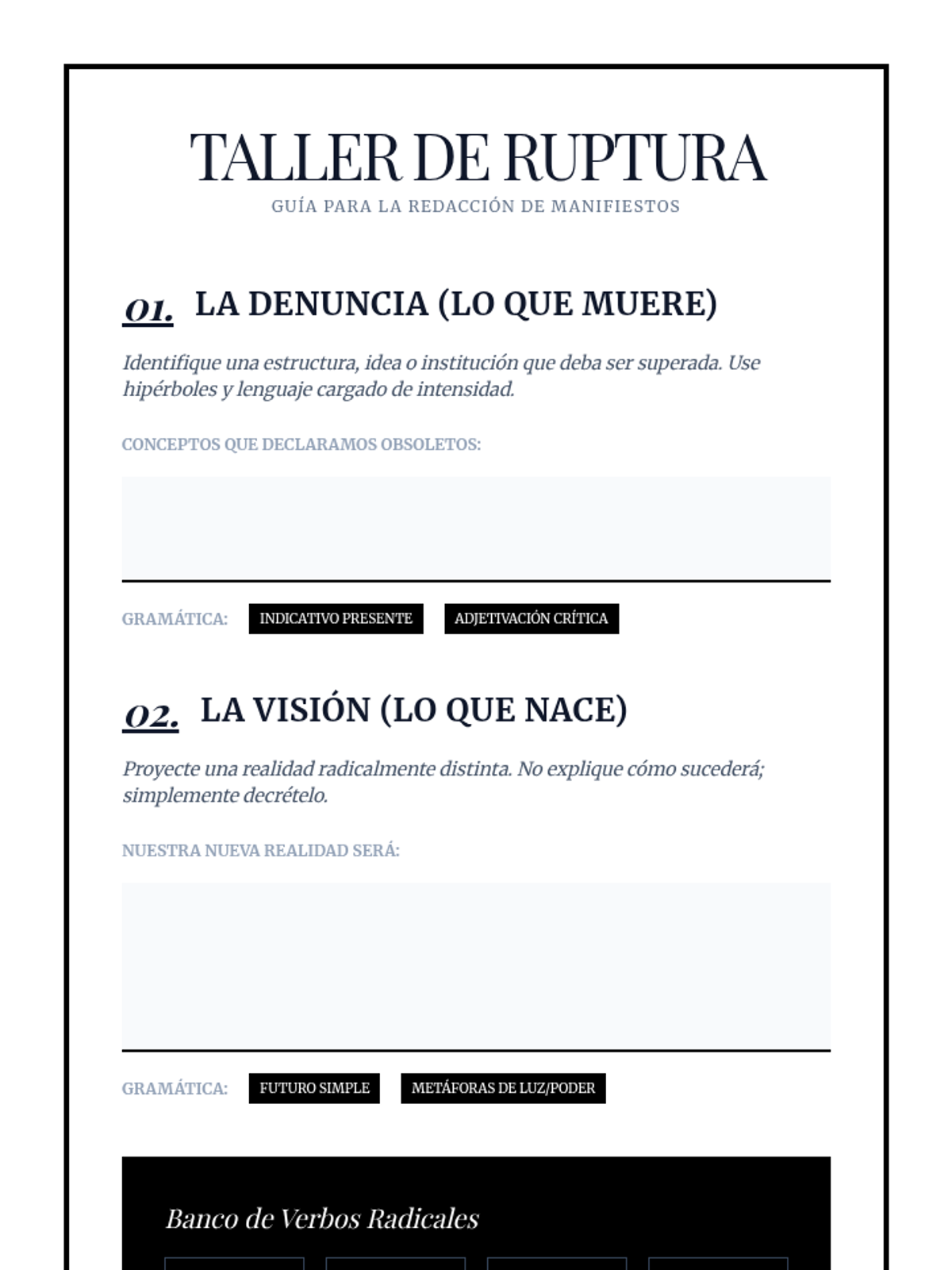
An exploration of the manifesto genre, analyzing imperative language and visionary writing through historical and artistic examples.
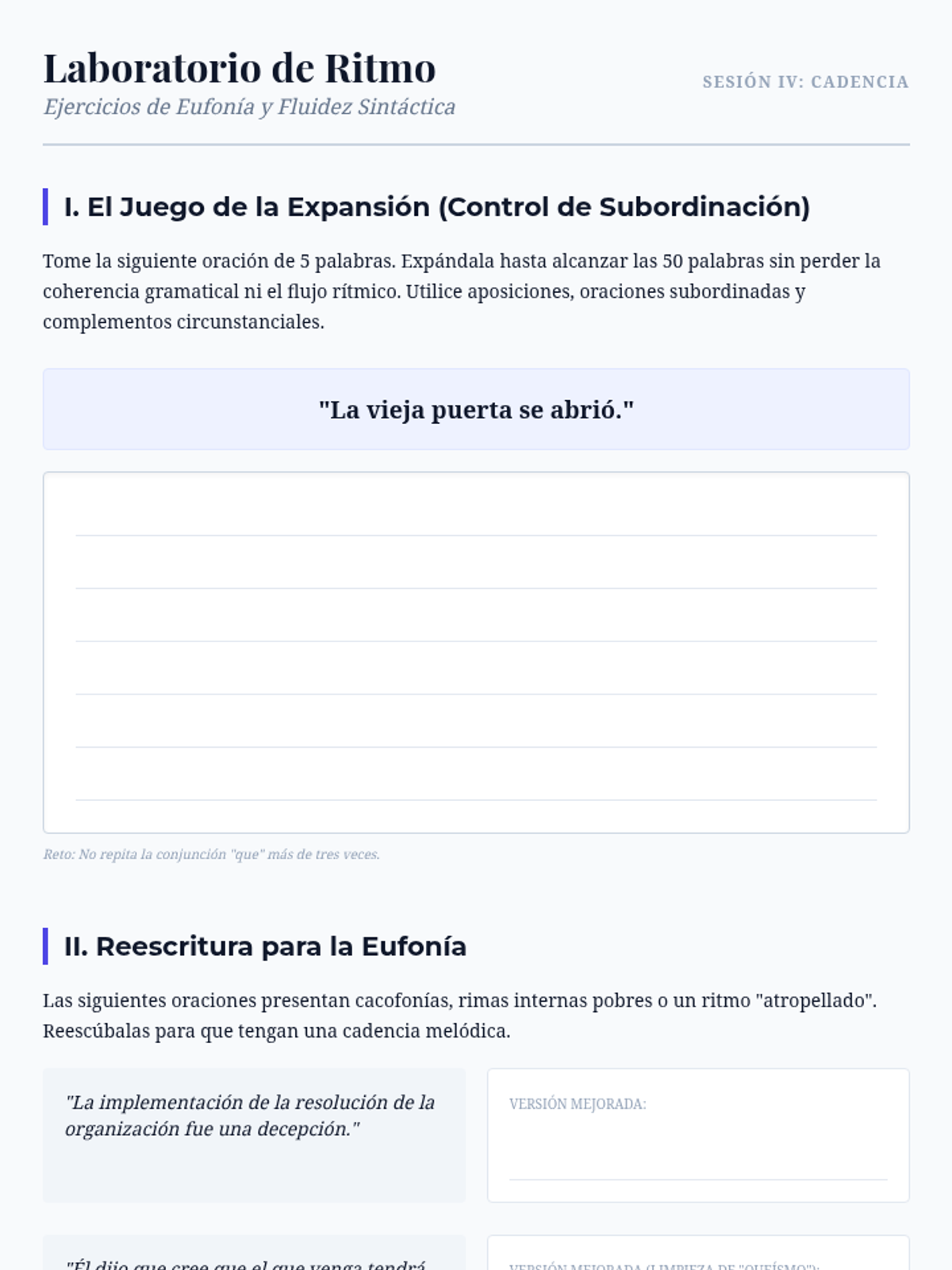
Focusing on the musicality of prose, students experiment with sentence length, syllabic rhythm, and euphonic flow. They learn to manipulate syntax to control the reader's pace and emotional engagement.
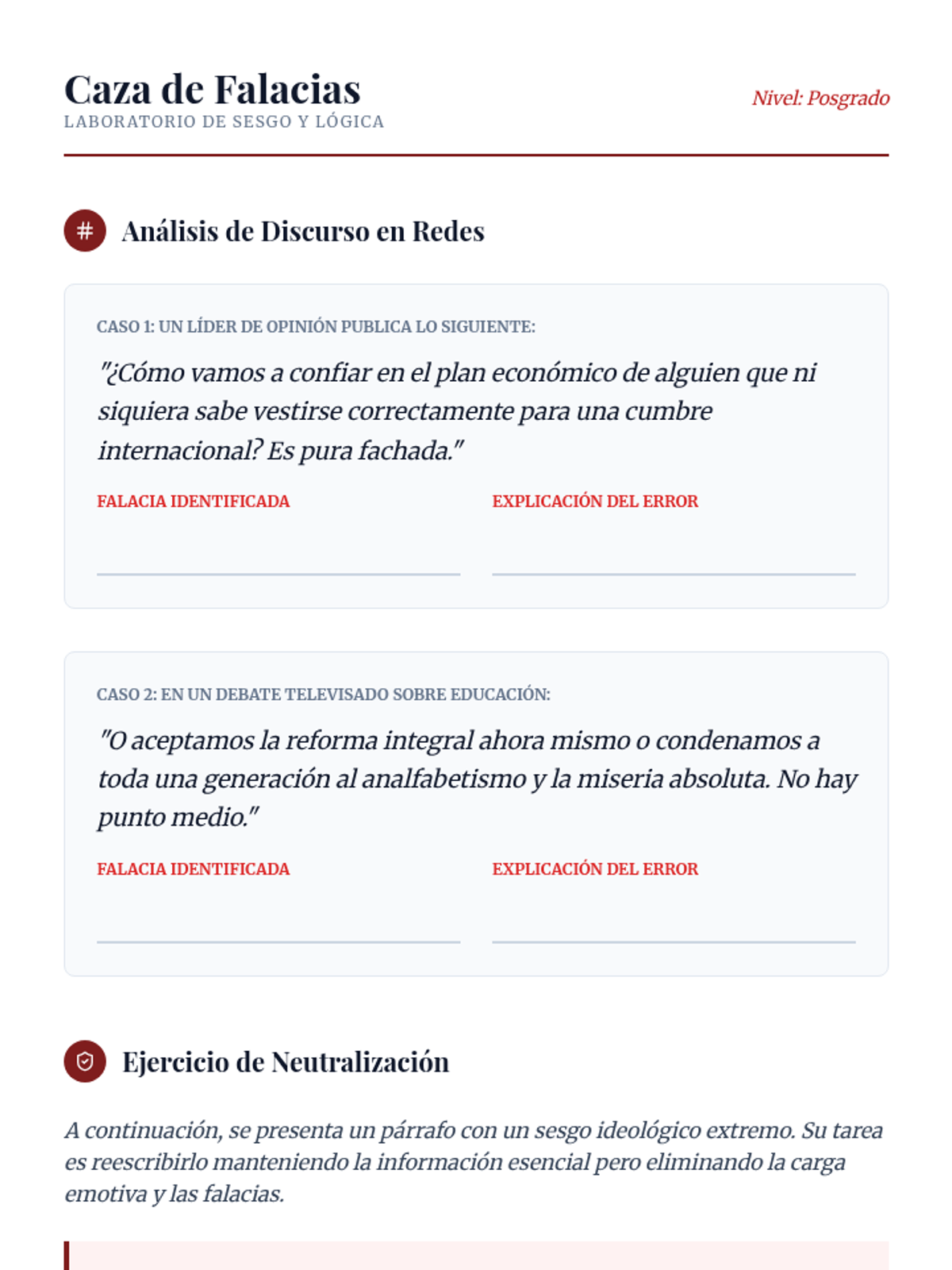
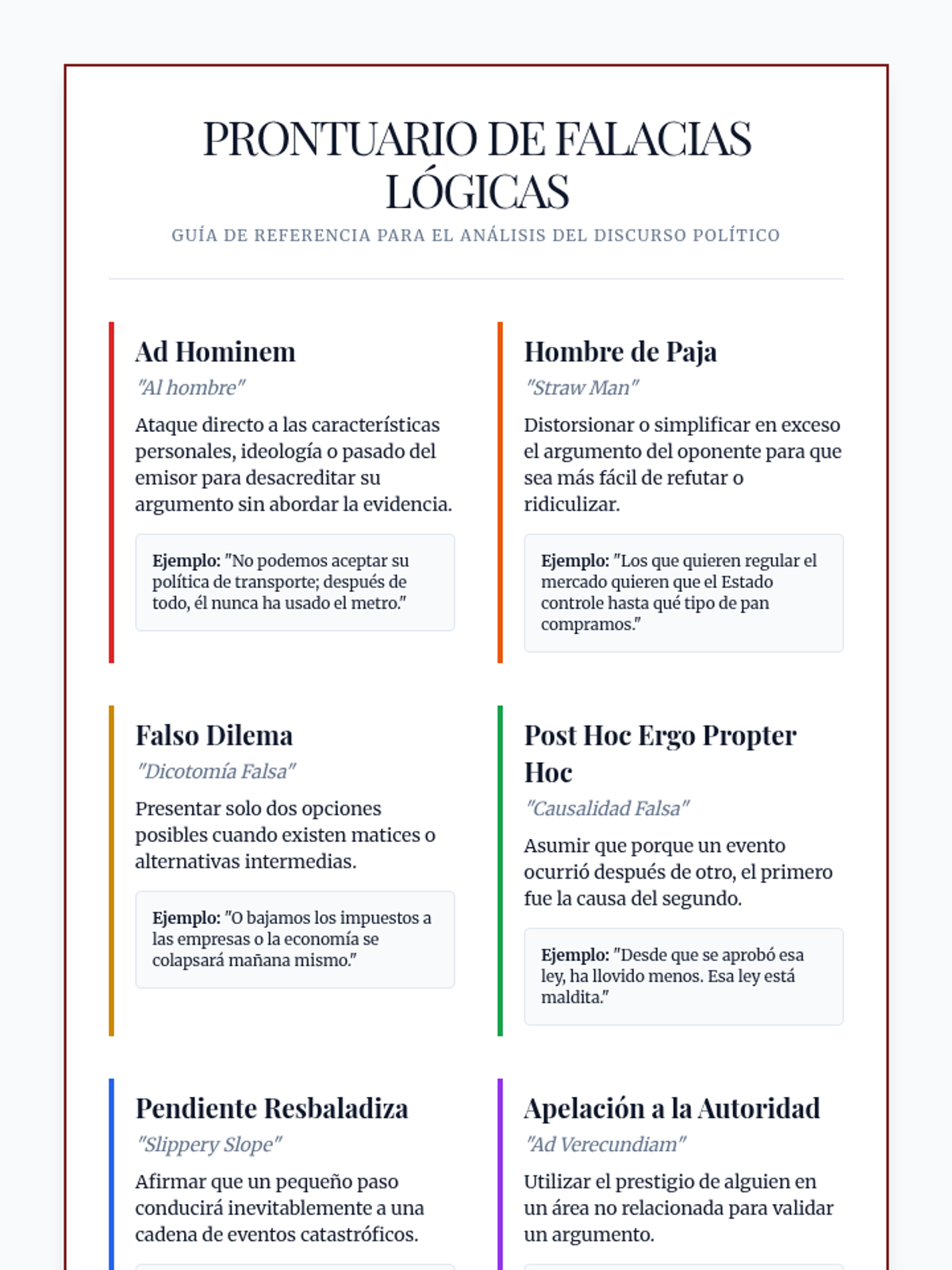
Students learn to identify common logical fallacies and analyze texts for subtle bias and emotive language within Spanish-language political debates.
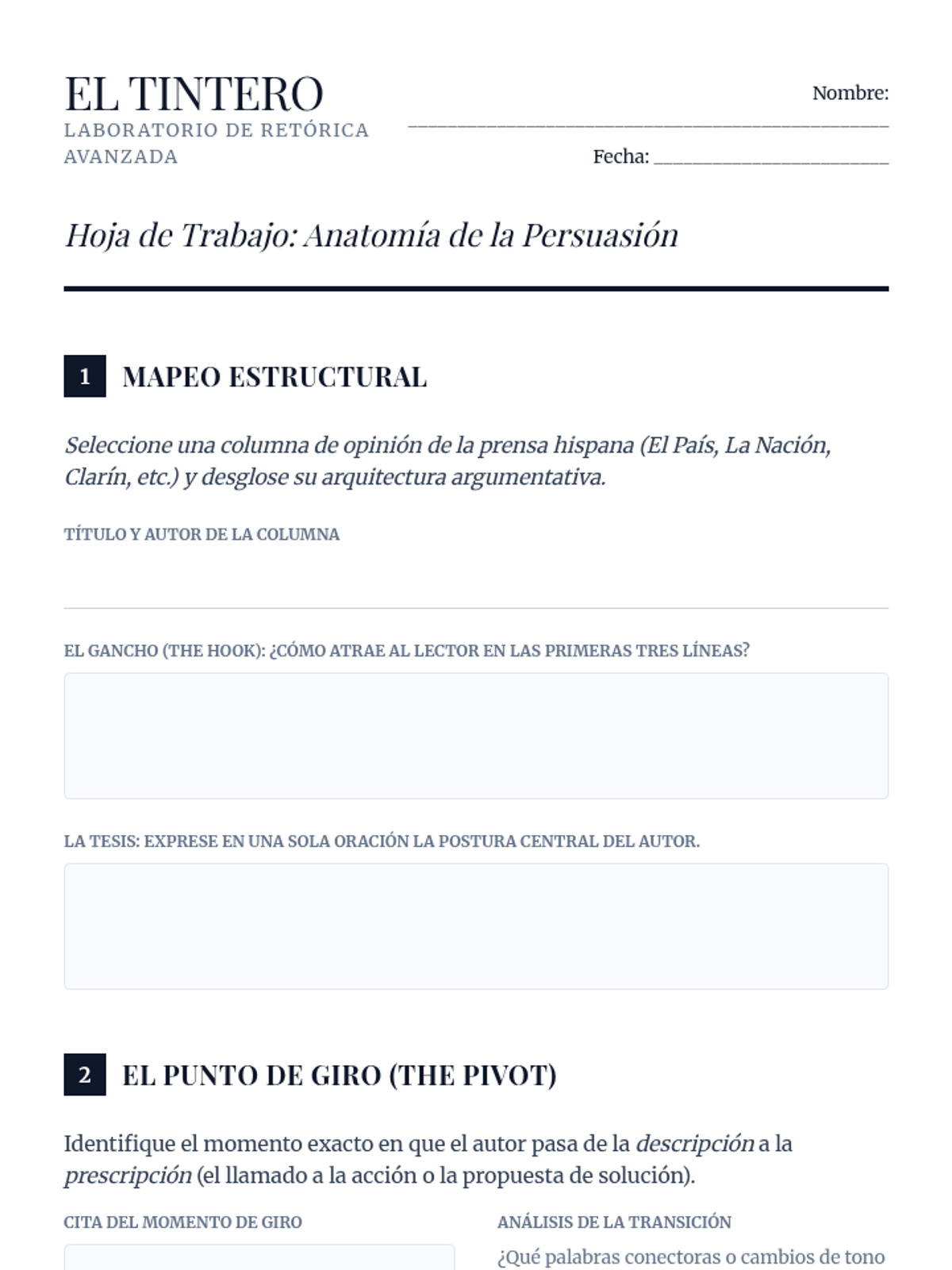
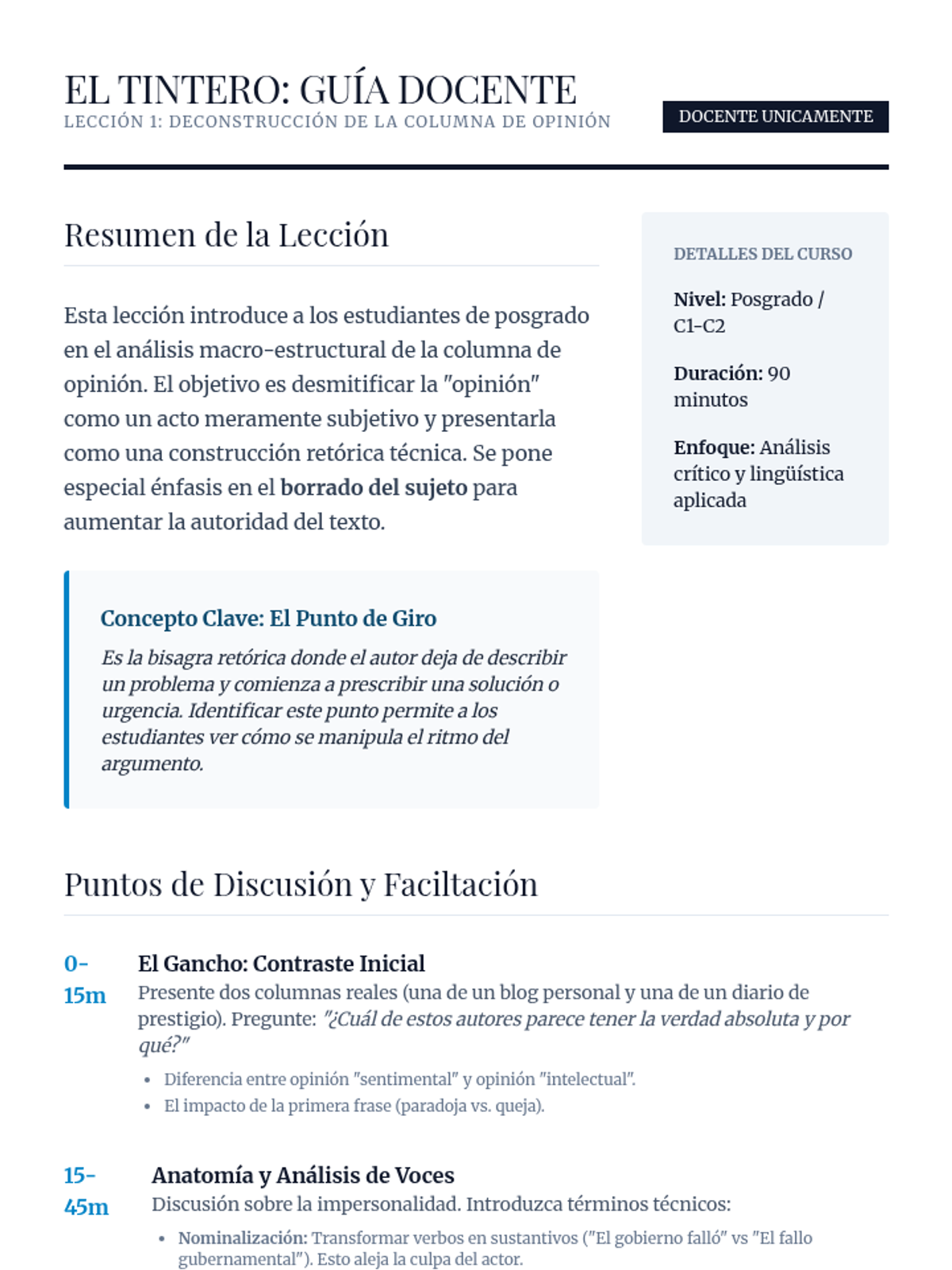
Students examine opinion pieces from major newspapers to diagram their rhetorical structure and identify structural elements like the hook and the pivot.
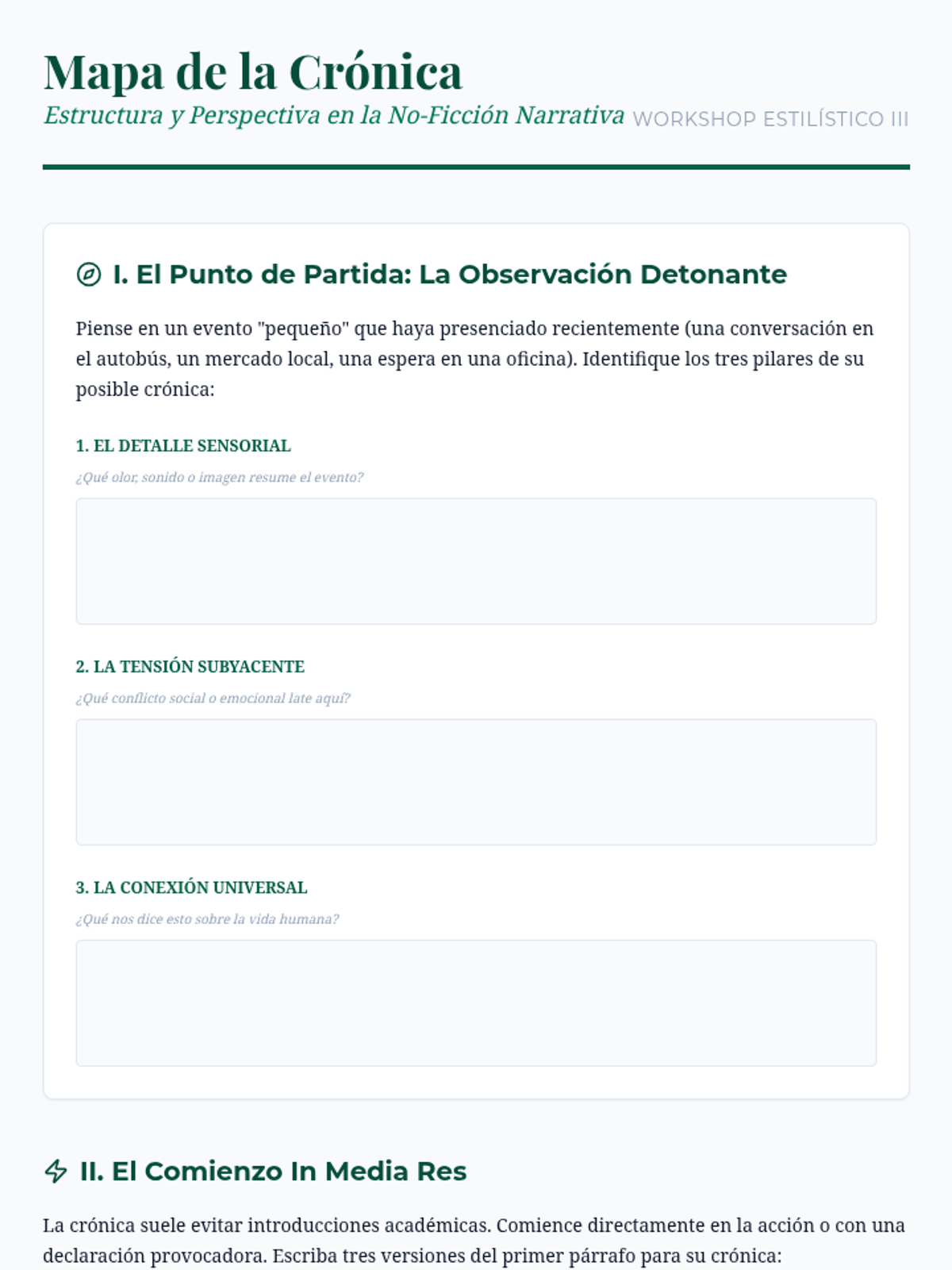
An exploration of the Latin American 'crónica', blending journalistic reporting with literary flair. Students learn to weave personal observation with social commentary to create compelling narrative non-fiction.
Deconstructing the mechanics of humor and satire in Spanish writing. Students identify tonal shifts and rhetorical devices like litotes and hyperbole to craft their own satirical pieces on contemporary issues.
Una lección completa para dominar el uso de conectores gramaticales en español a través de la práctica intensiva y el análisis de contexto.
An introduction to essential Spanish conjunctions and transition words to improve sentence structure and narrative flow.
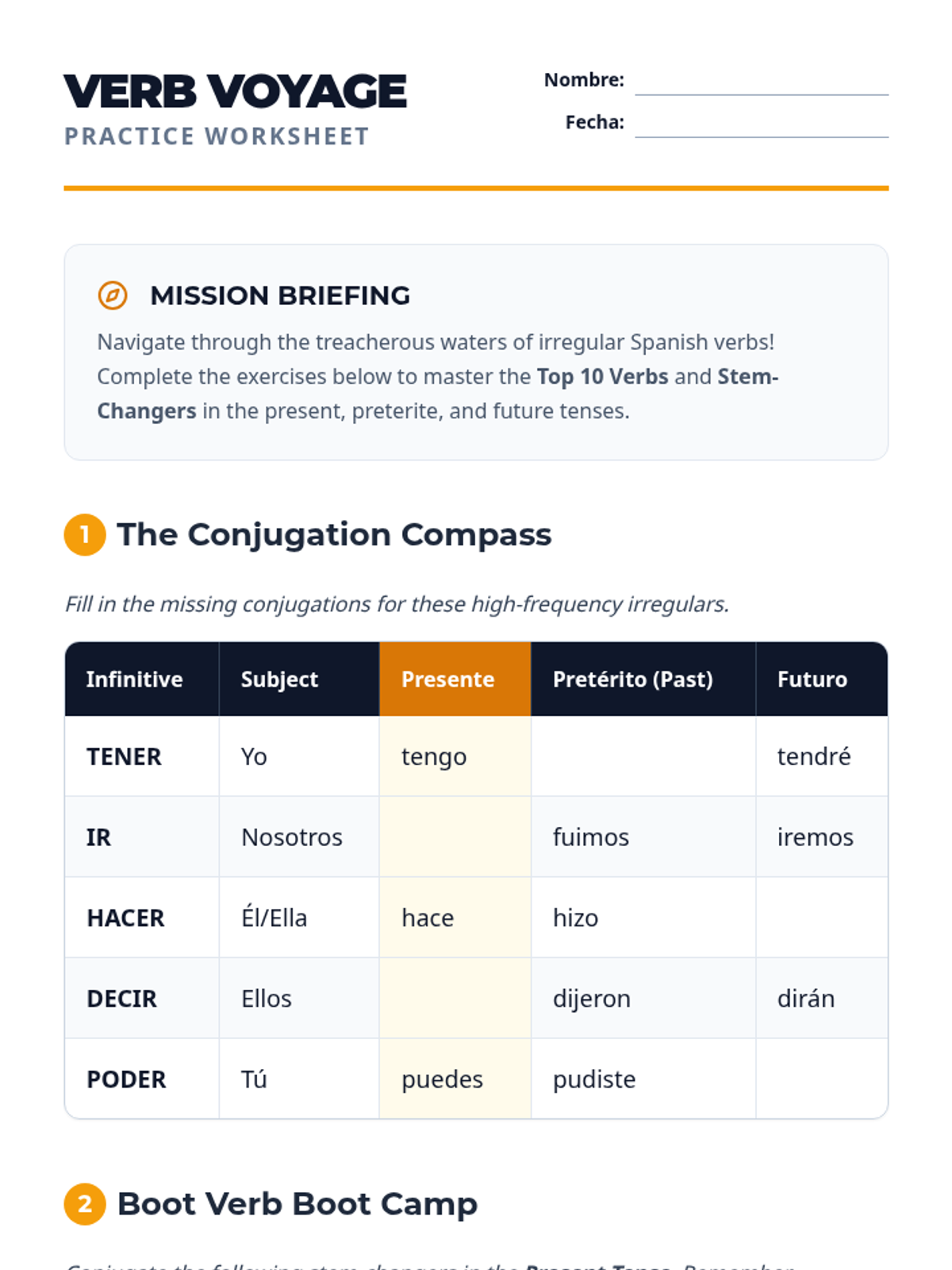
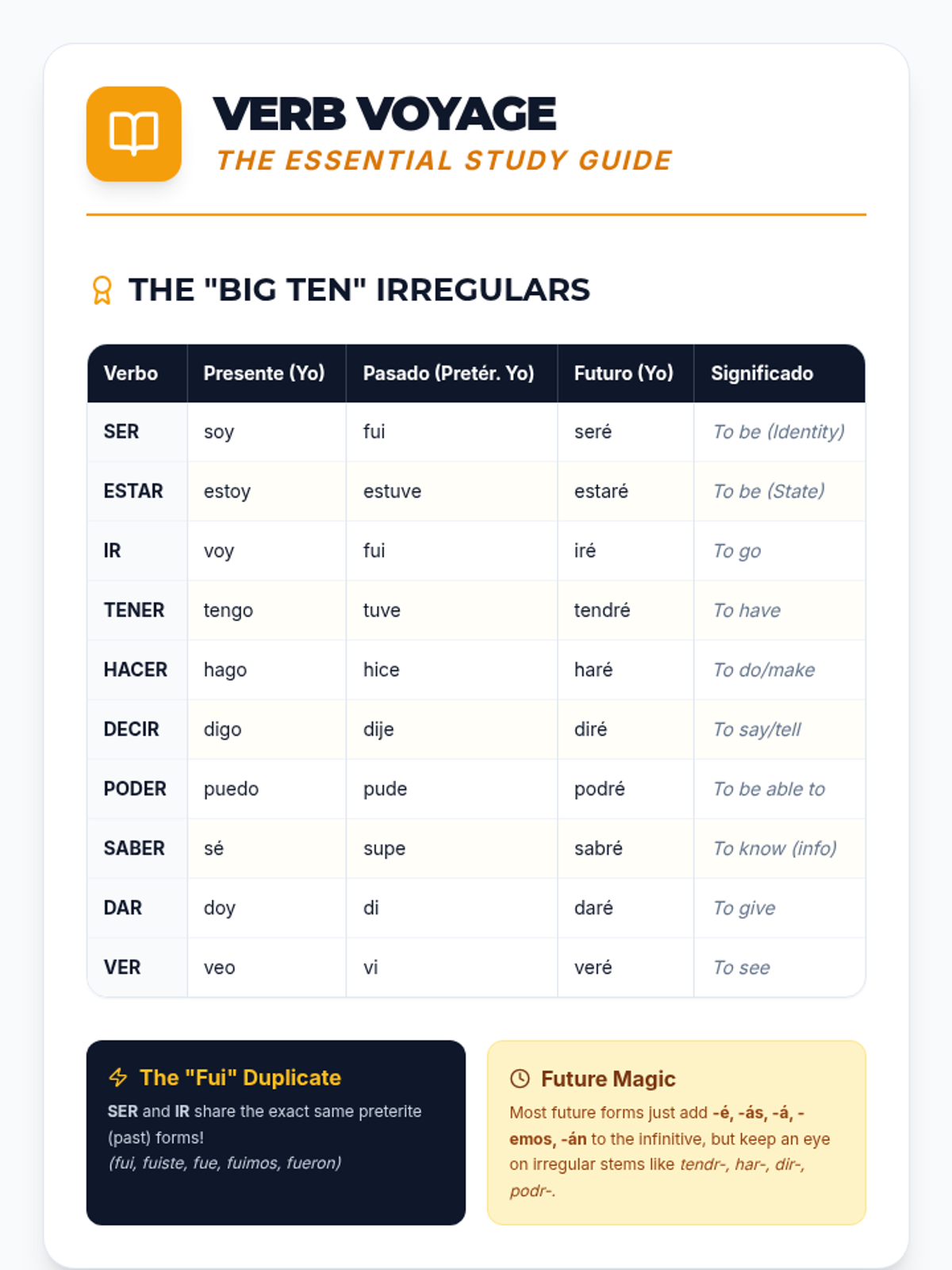
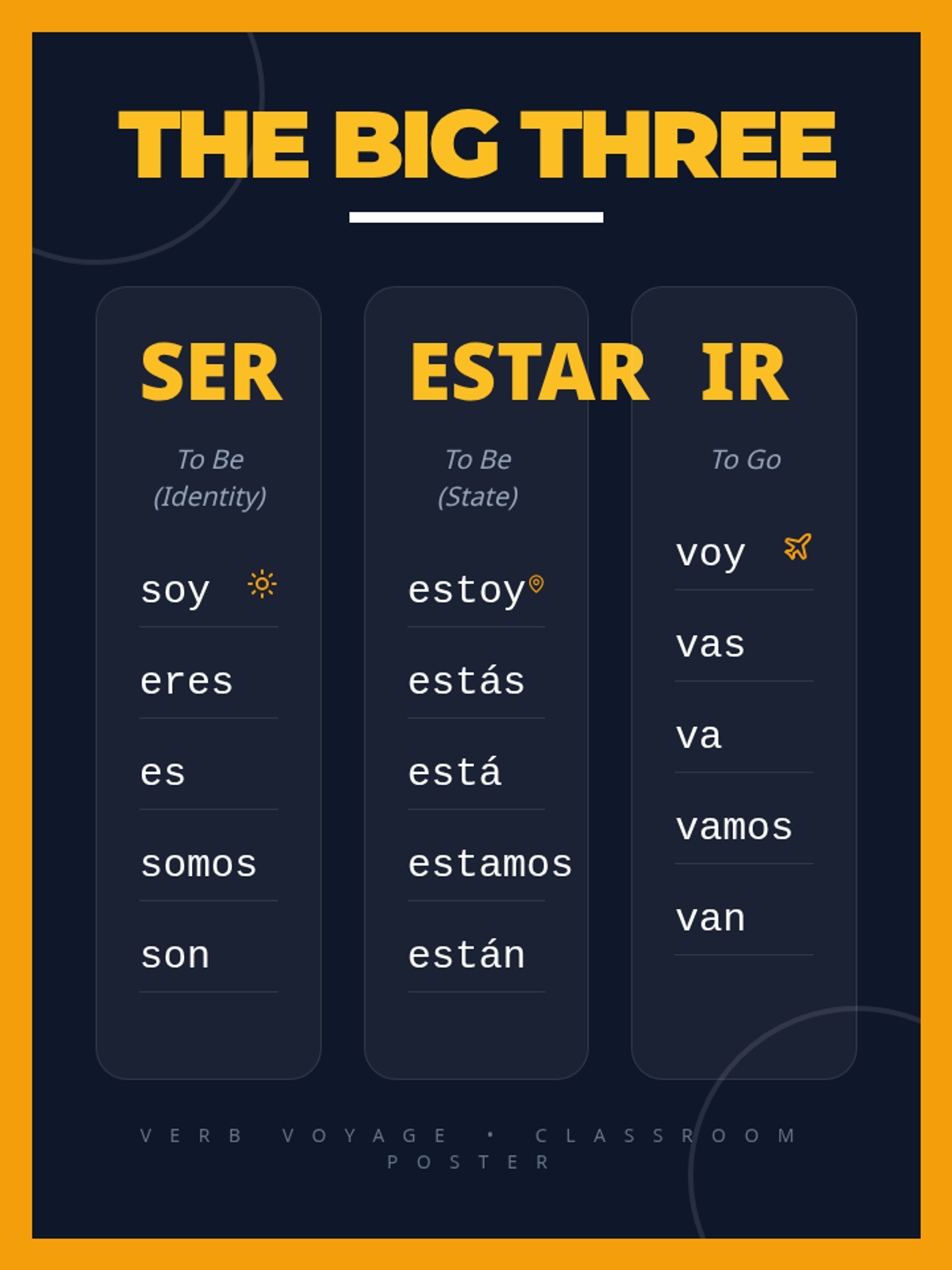
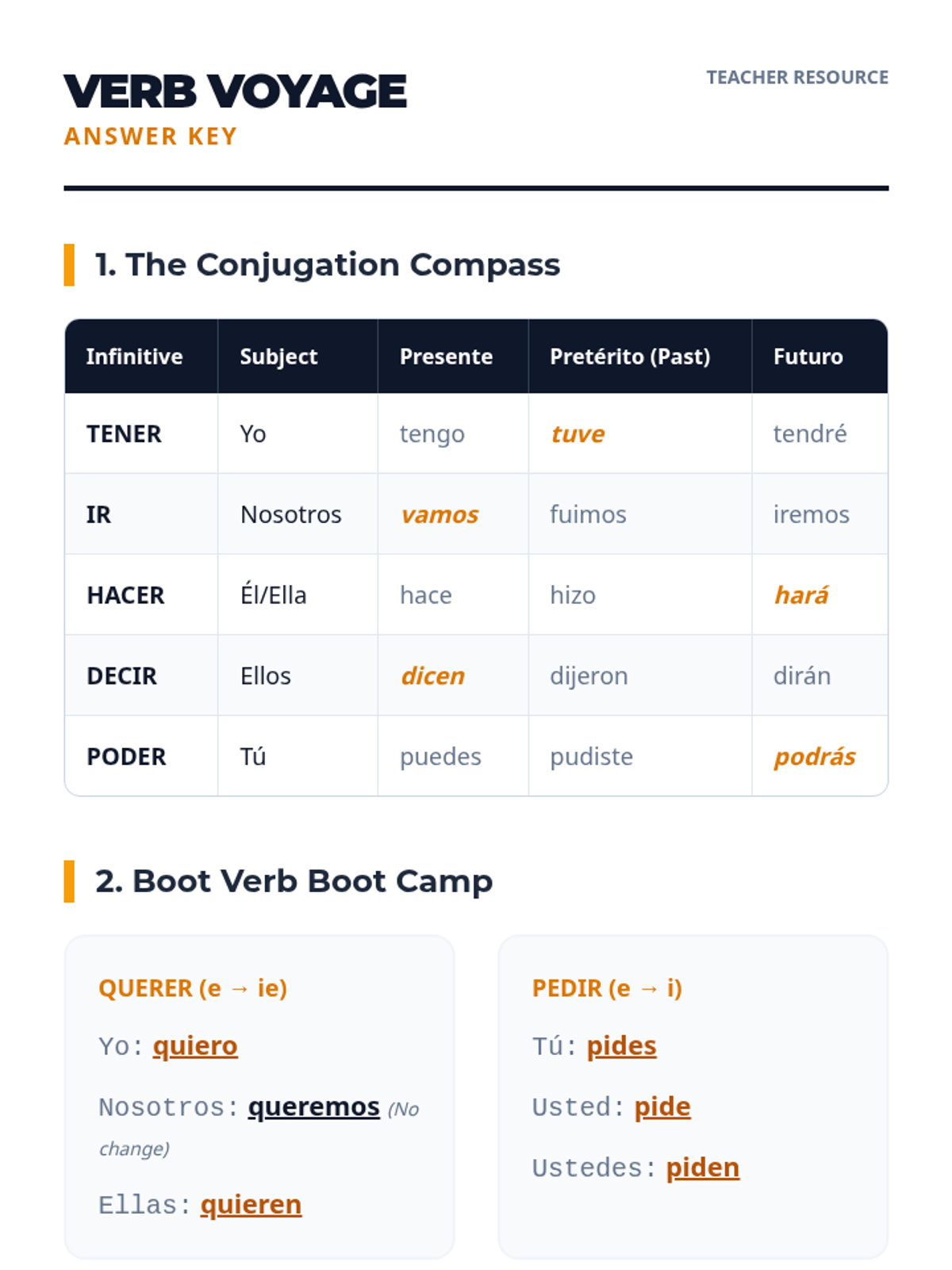
A comprehensive introduction to the most frequent irregular verbs in Spanish across present, preterite, and future tenses, including stem-changers.
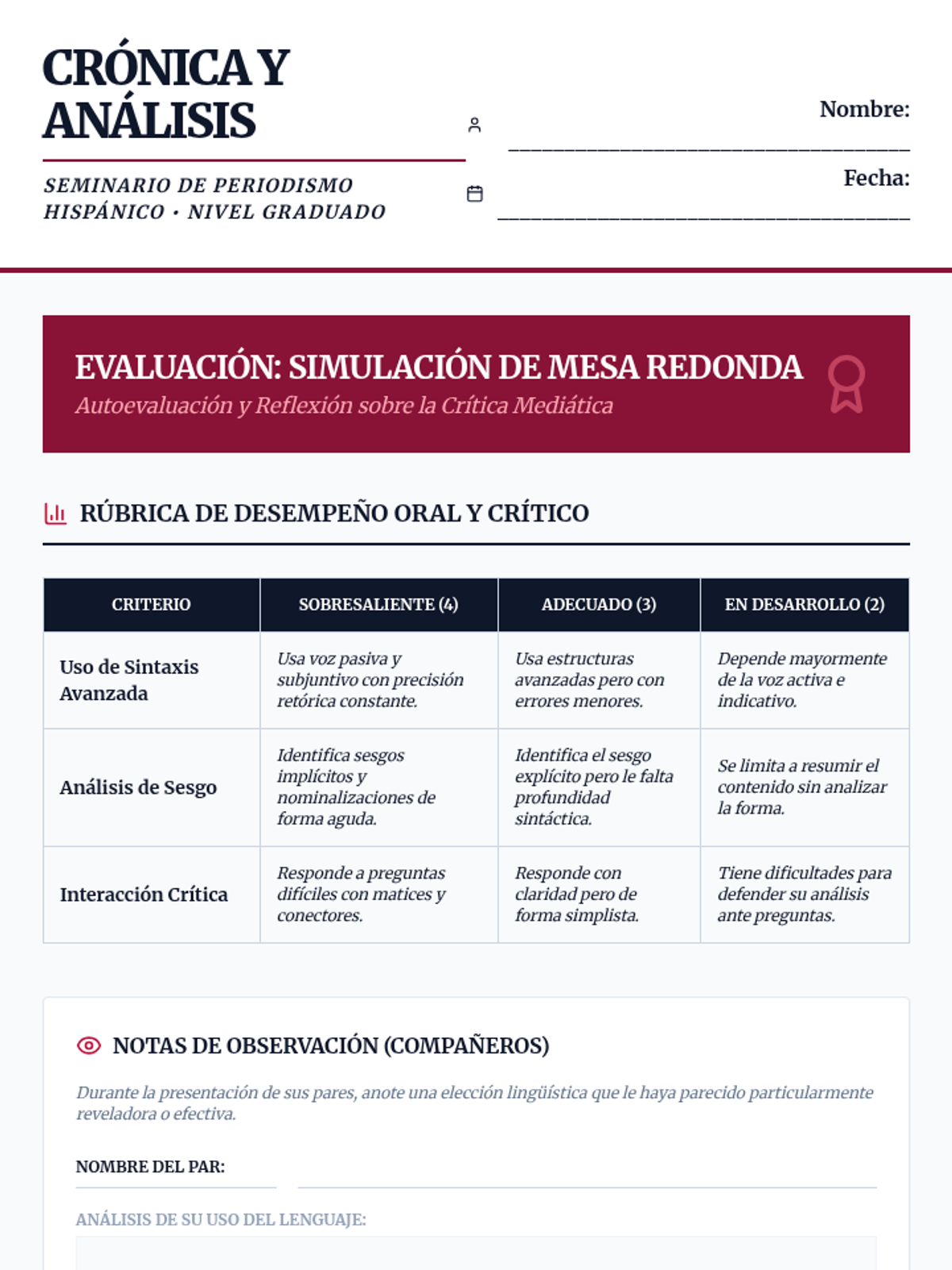
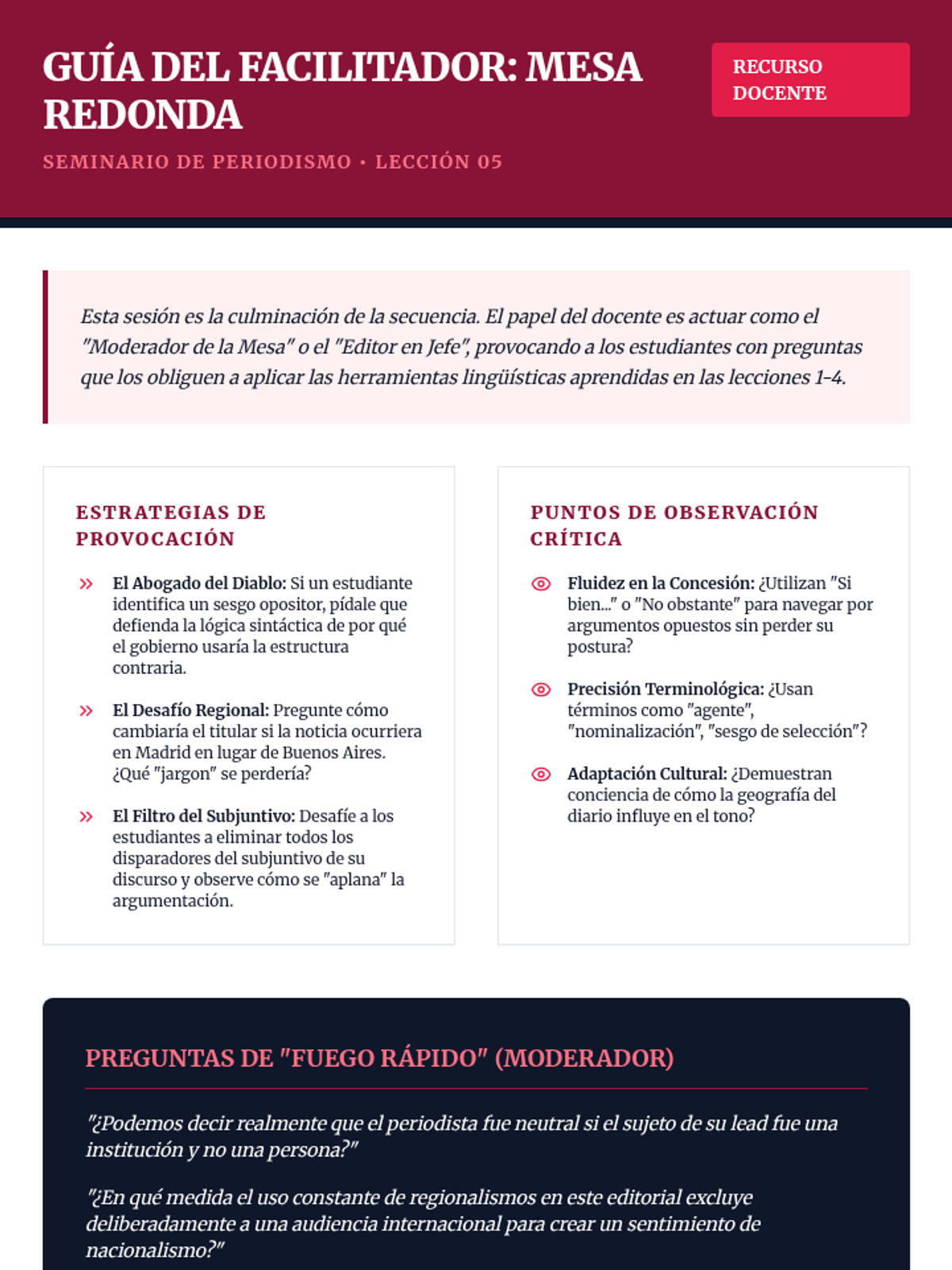
A culminating session where students present a brief analysis of a current event and field questions in a simulated press conference. The focus is on oral application of media literacy vocabulary.
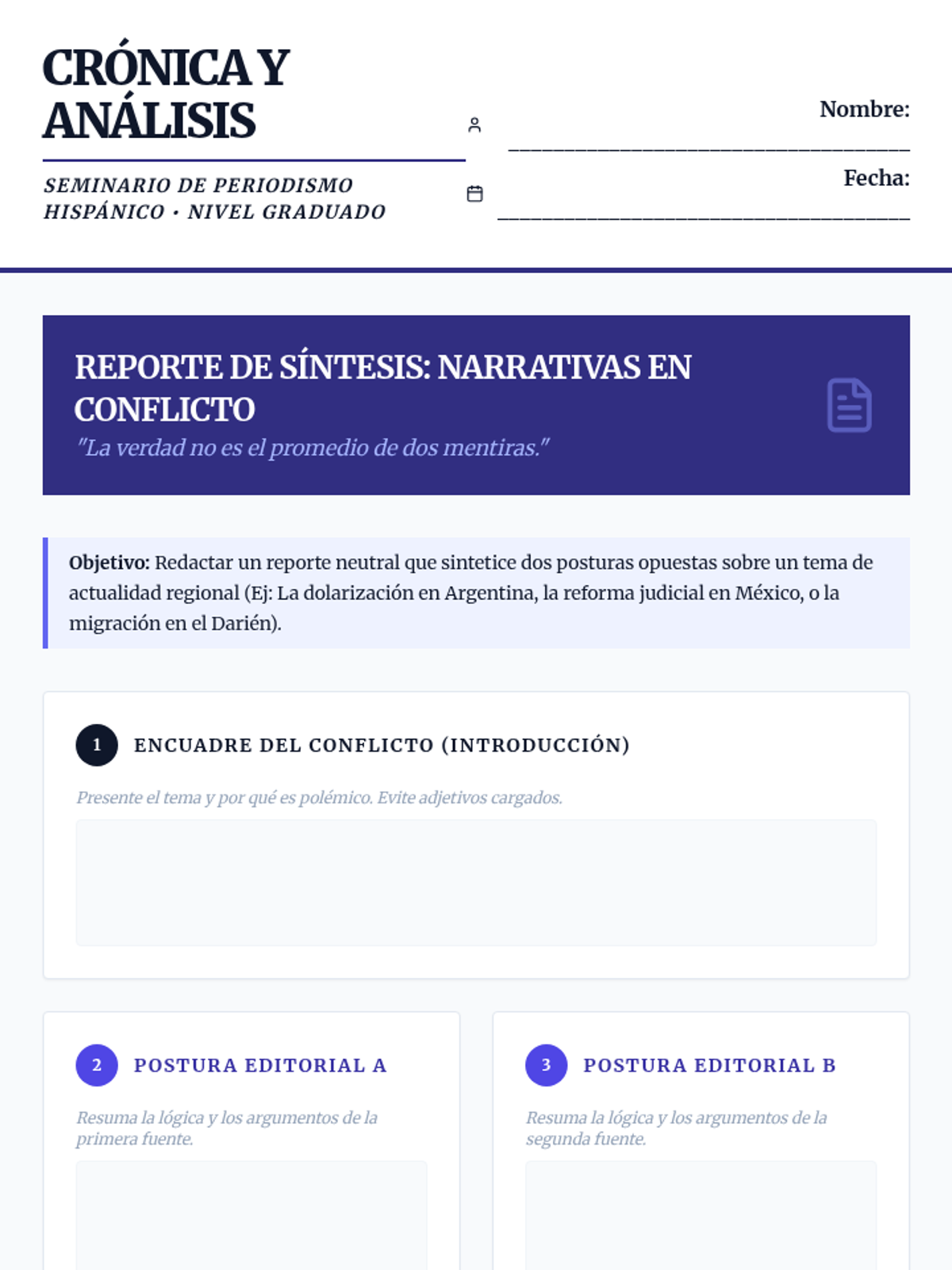
Students select two articles with opposing viewpoints and draft a synthesis report. The focus is on using sophisticated transition words to juxtapose arguments effectively in Spanish.
This lesson explores how regionalisms and culturally specific references affect comprehension. Students decode articles containing political jargon from the Southern Cone and the Caribbean.
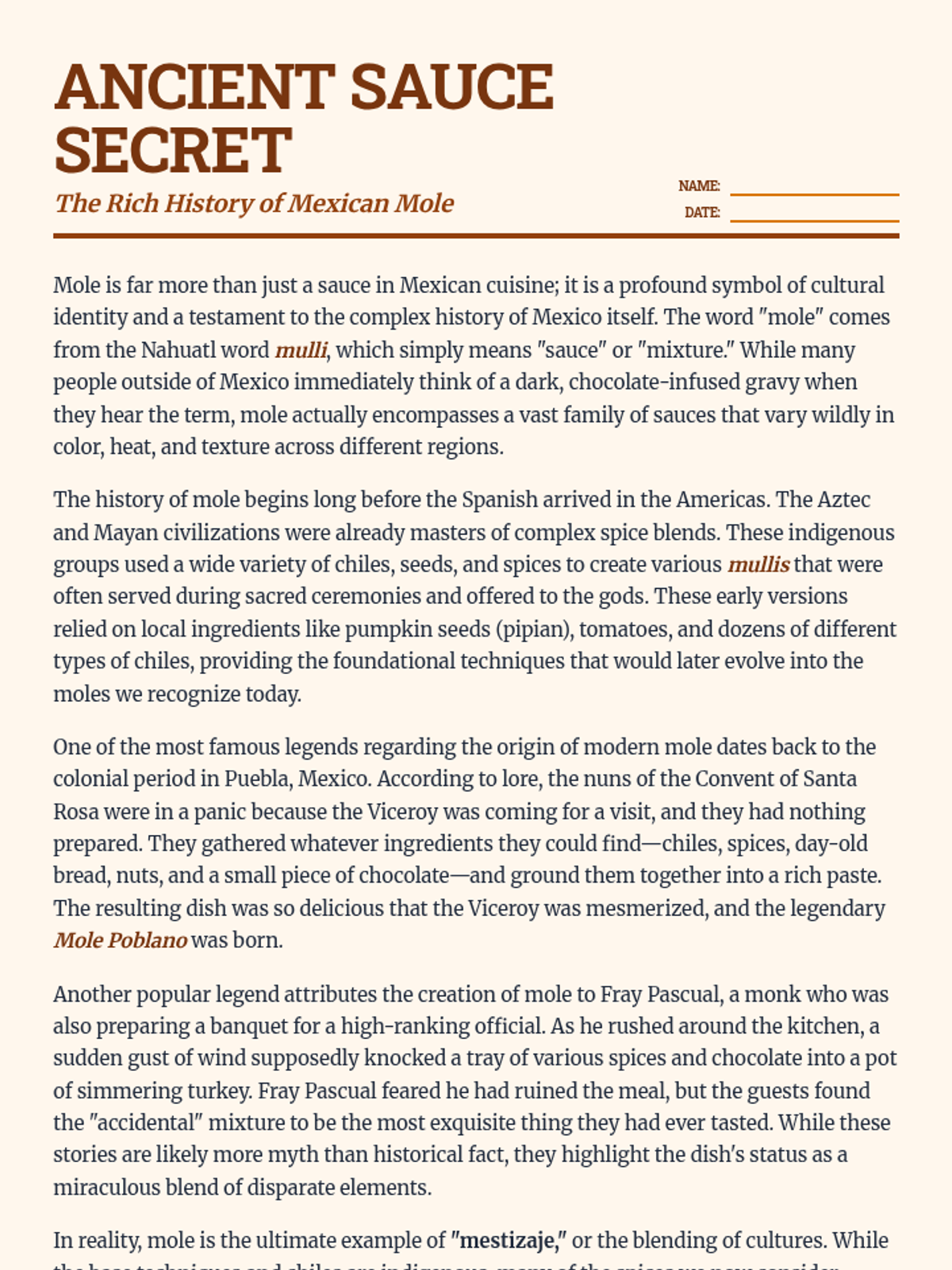
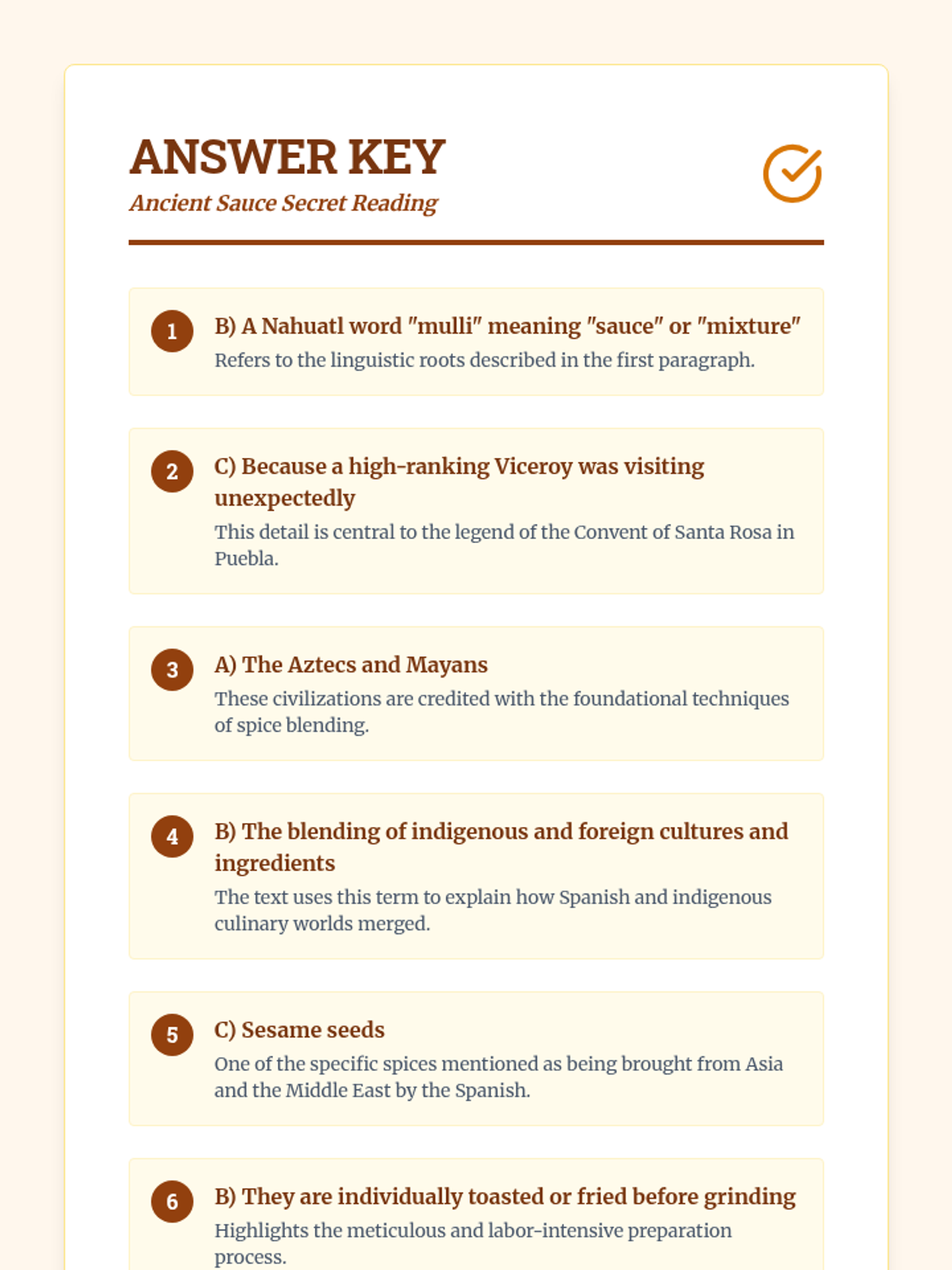
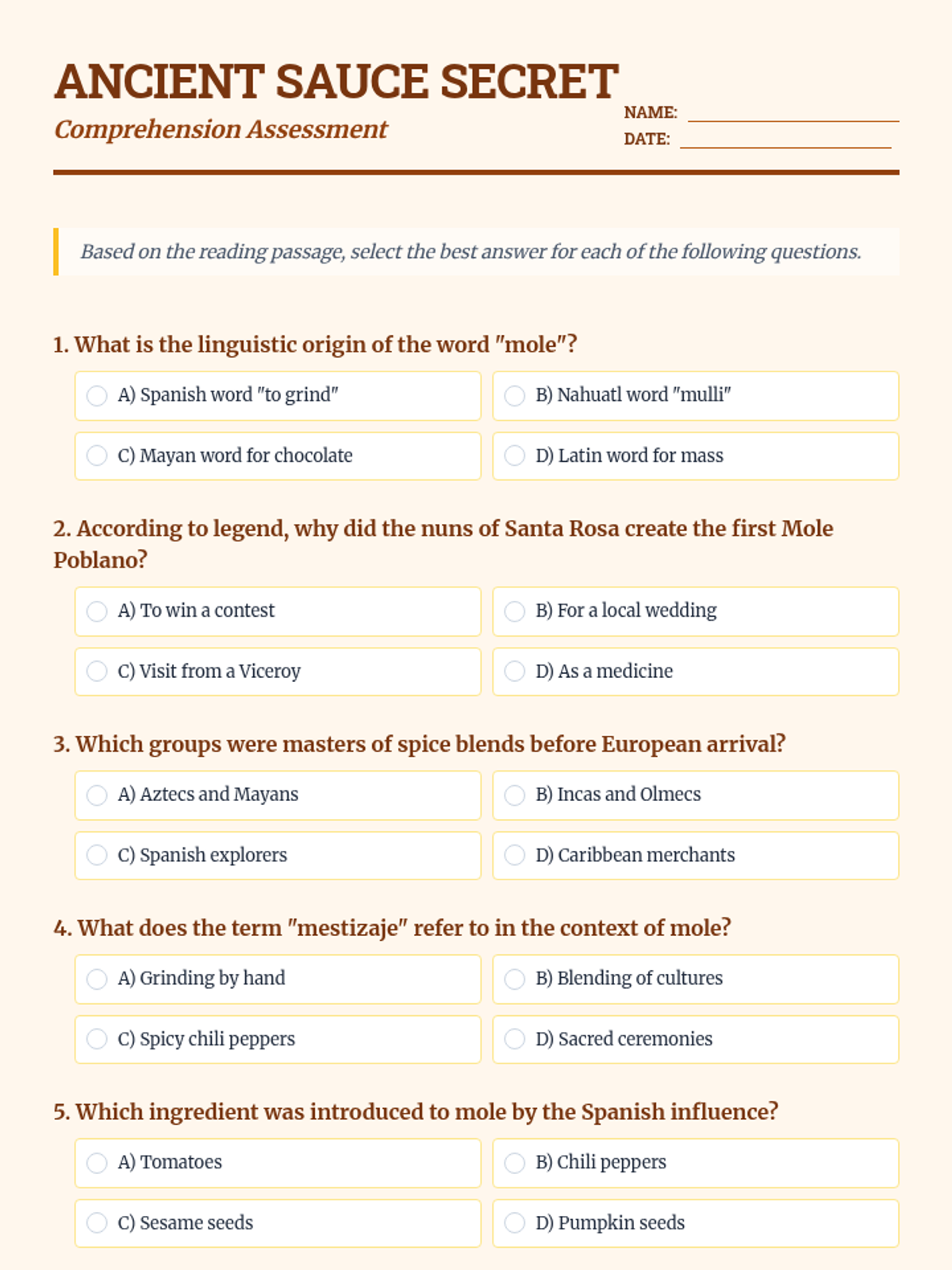
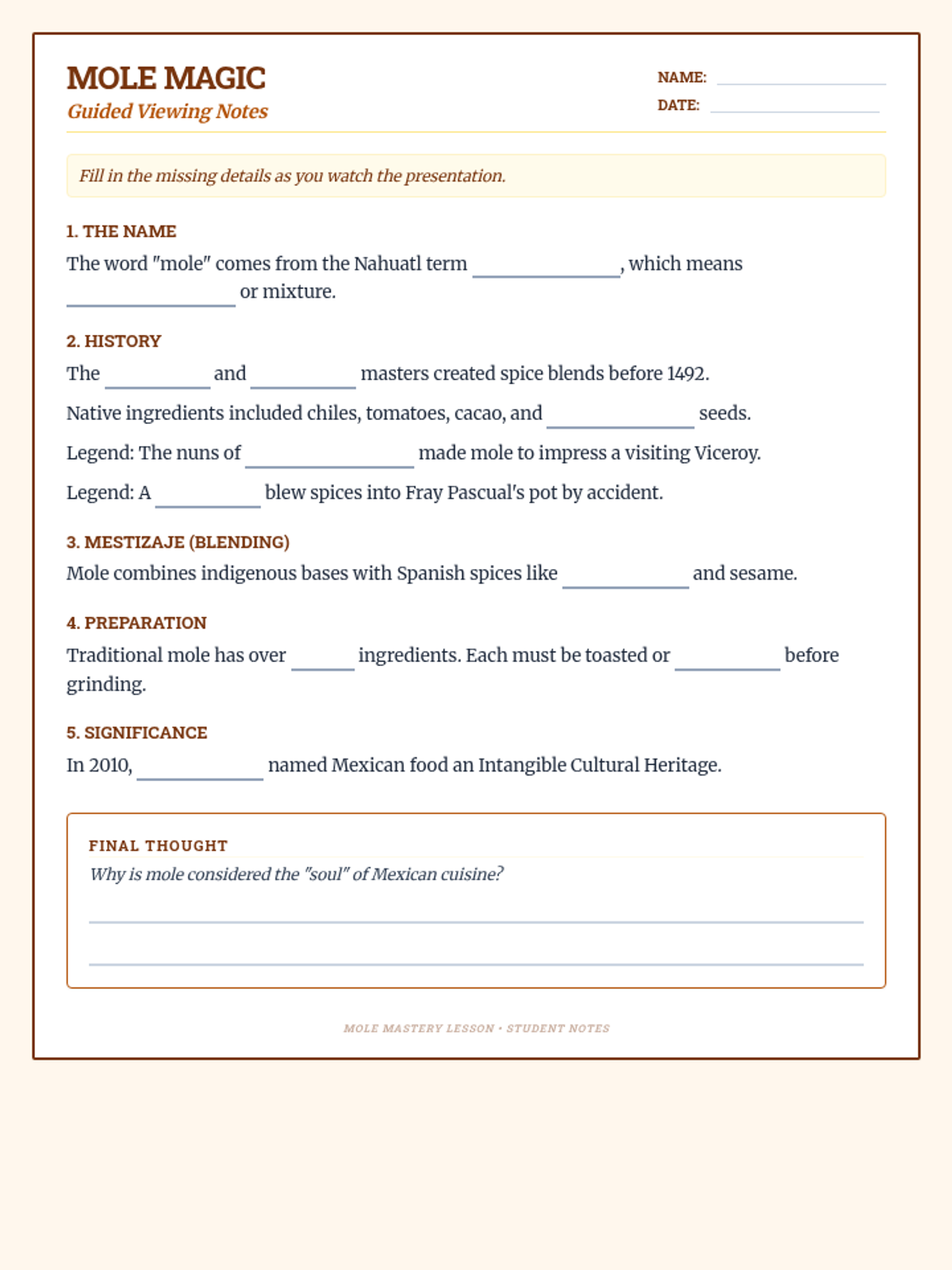
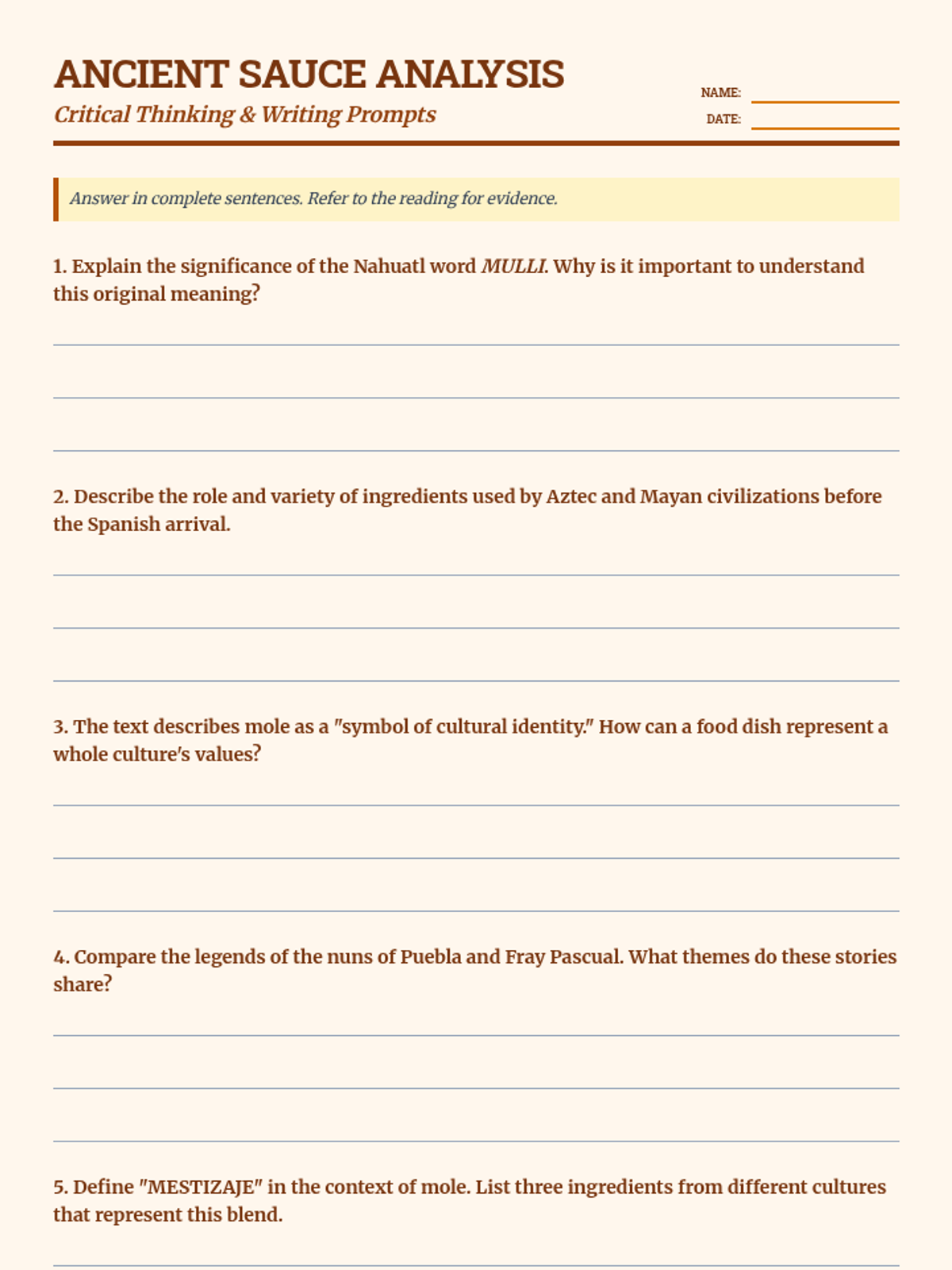
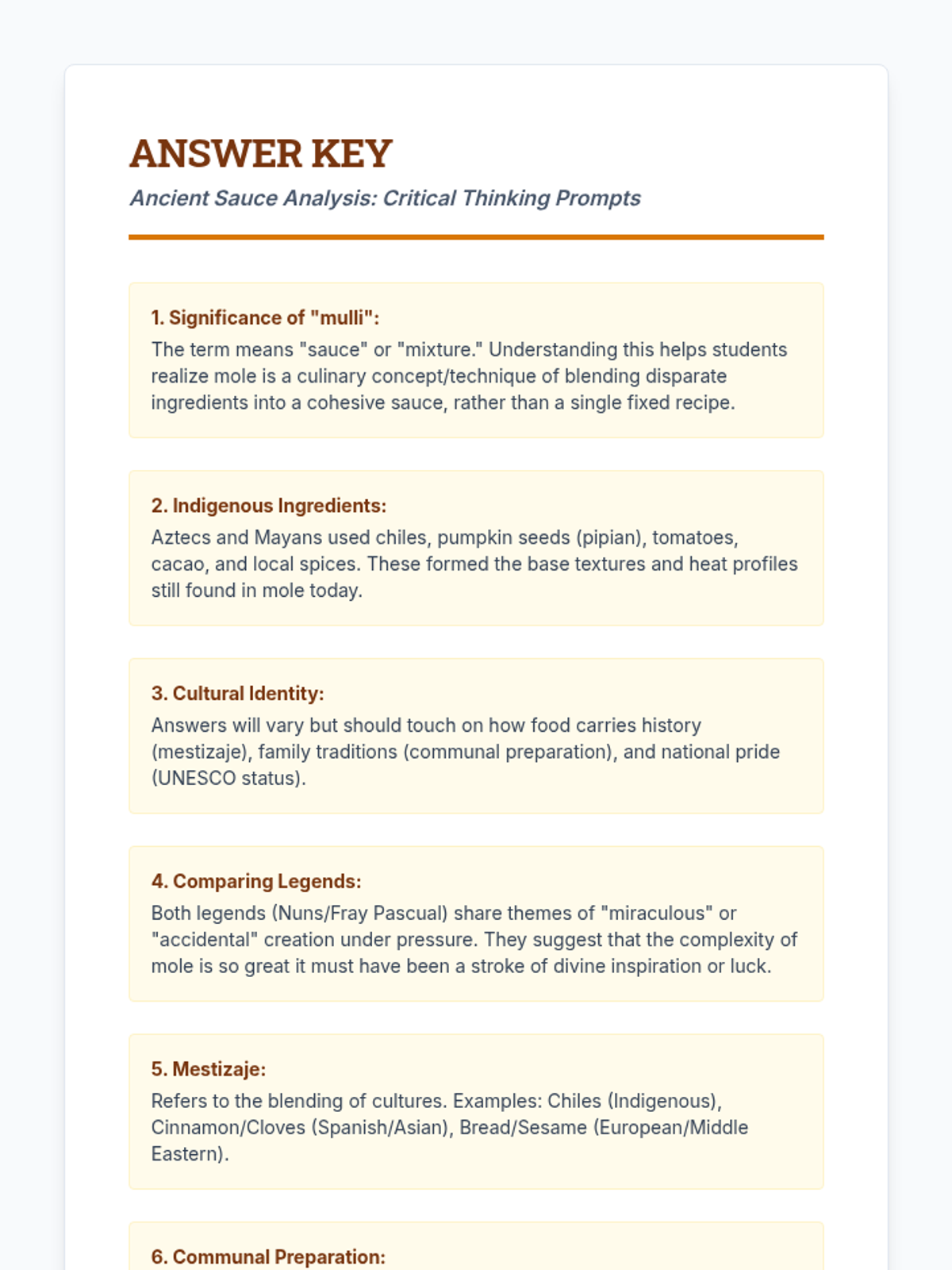
Explore the origins, legends, and cultural significance of Mexican mole. This lesson covers the indigenous roots of 'mulli', the colonial legends of Puebla, and the modern recognition of mole as a global cultural heritage through a reading passage and assessment.
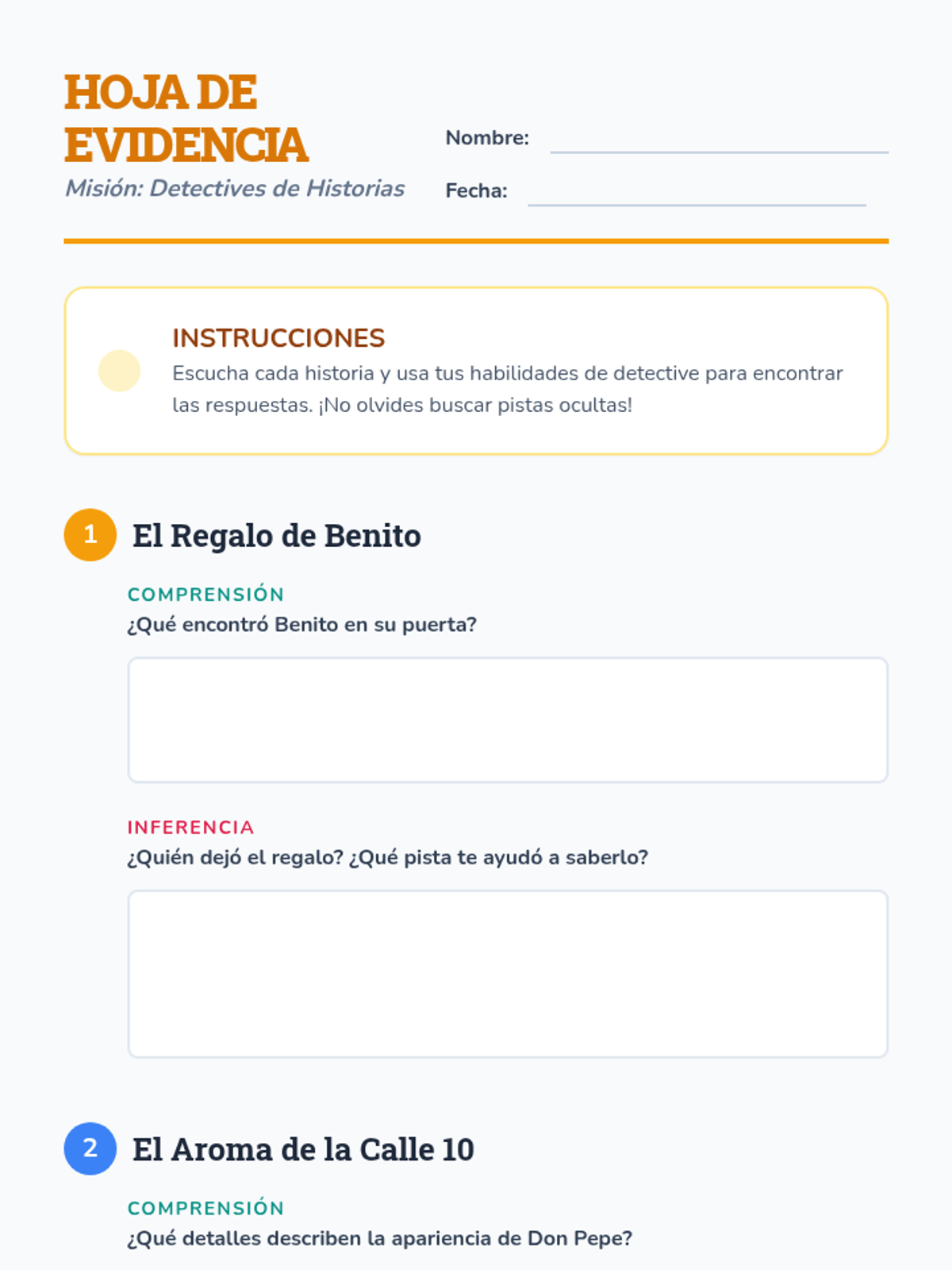
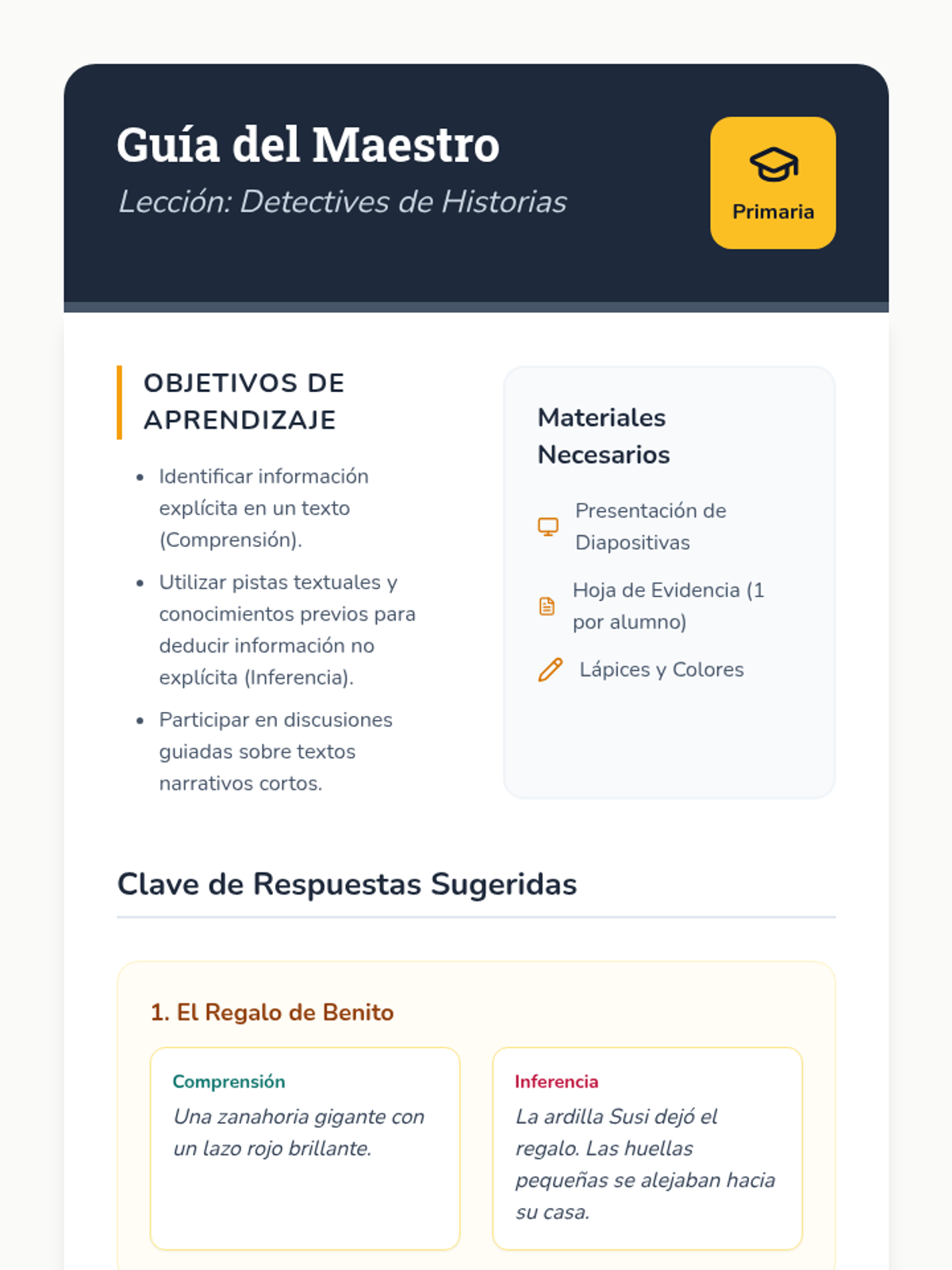
Una lección interactiva diseñada para enseñar a los estudiantes a comprender textos y realizar inferencias a través de tres cuentos cortos y encantadores. Incluye una mini-lección sobre las habilidades de pensamiento crítico necesarias para ser un detective de historias.
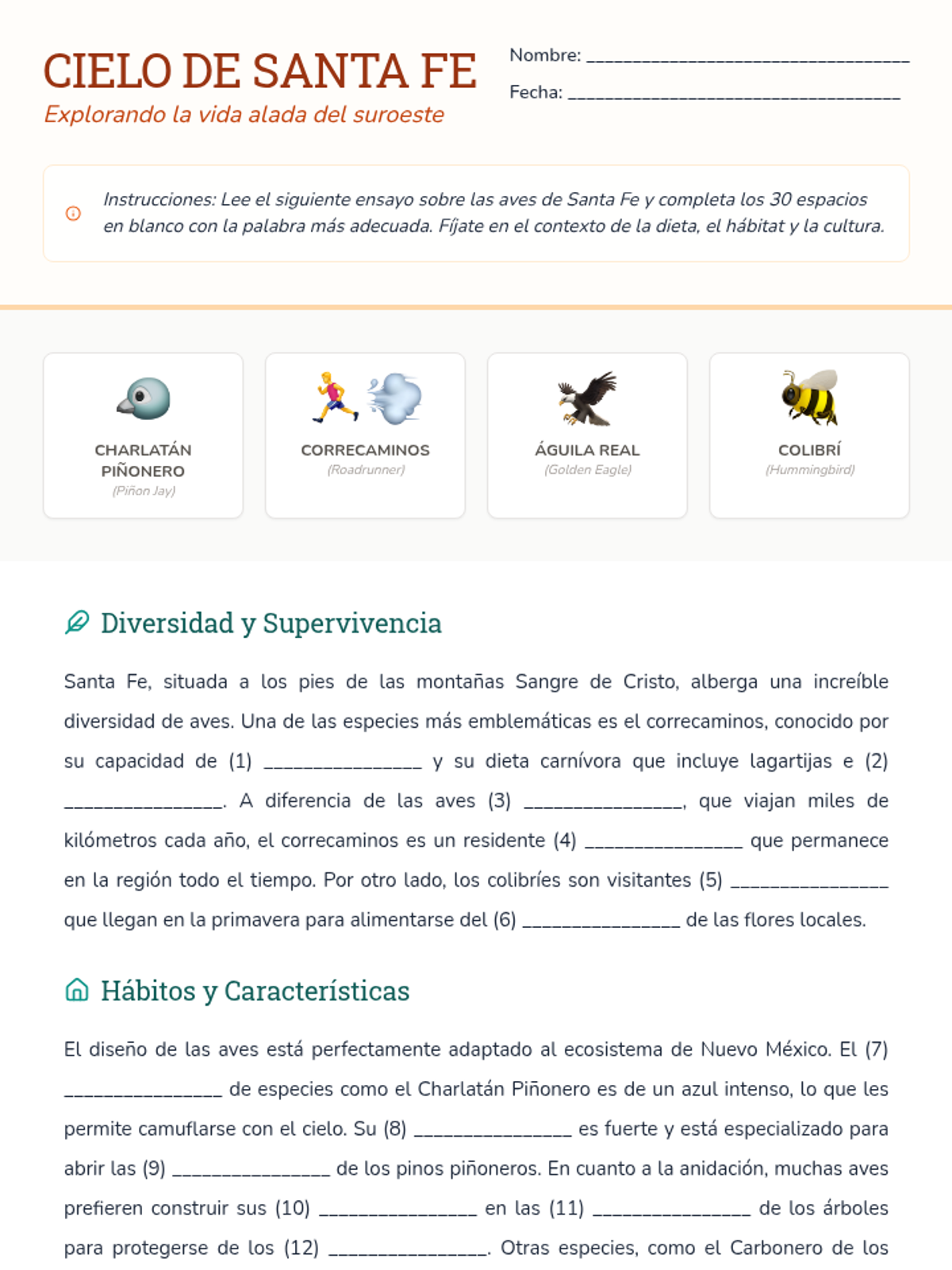
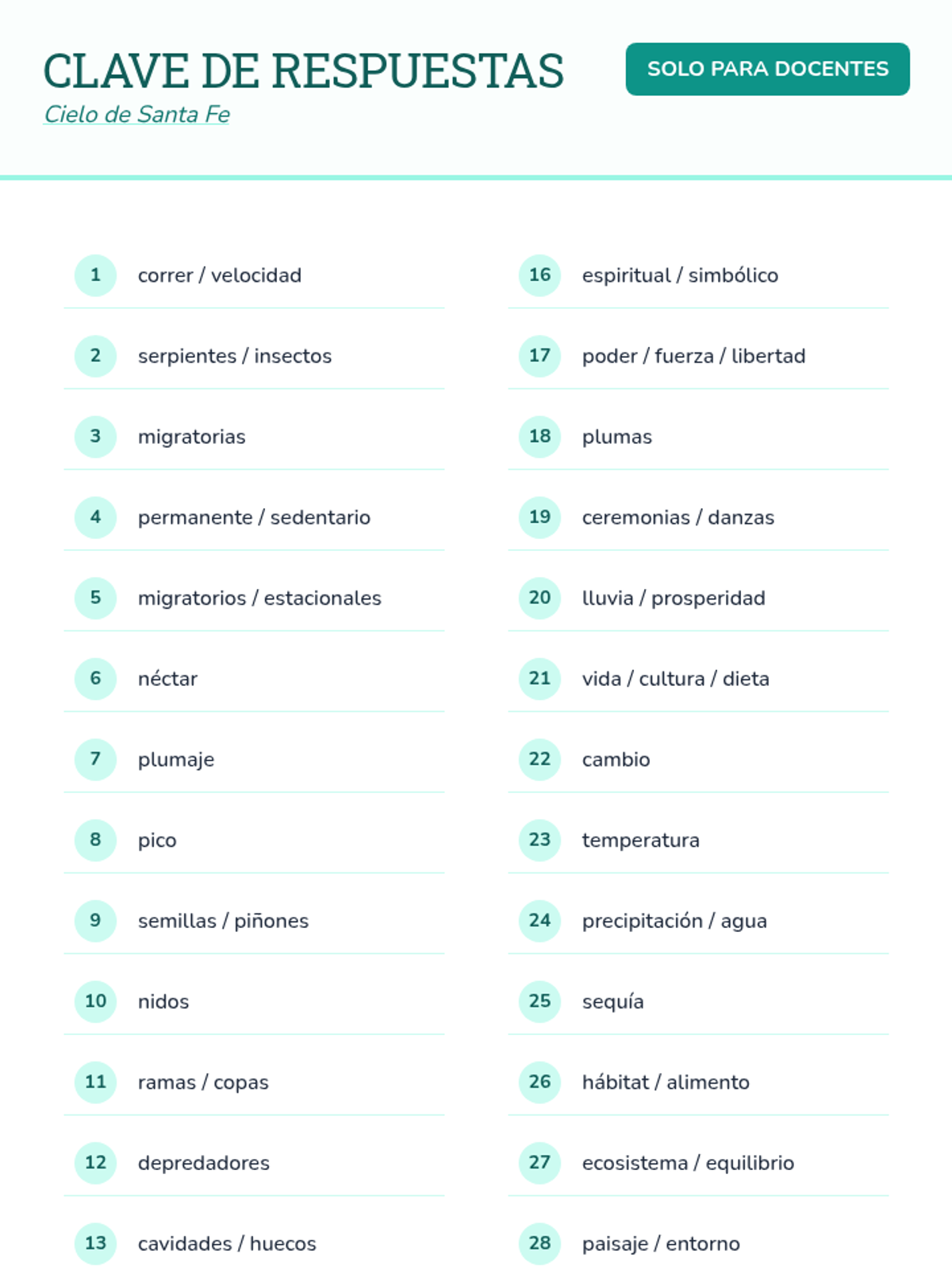
Una lección sobre la avifauna de Santa Fe, Nuevo México, que explora sus características físicas, su importancia cultural para los pueblos indígenas y los desafíos del cambio climático.
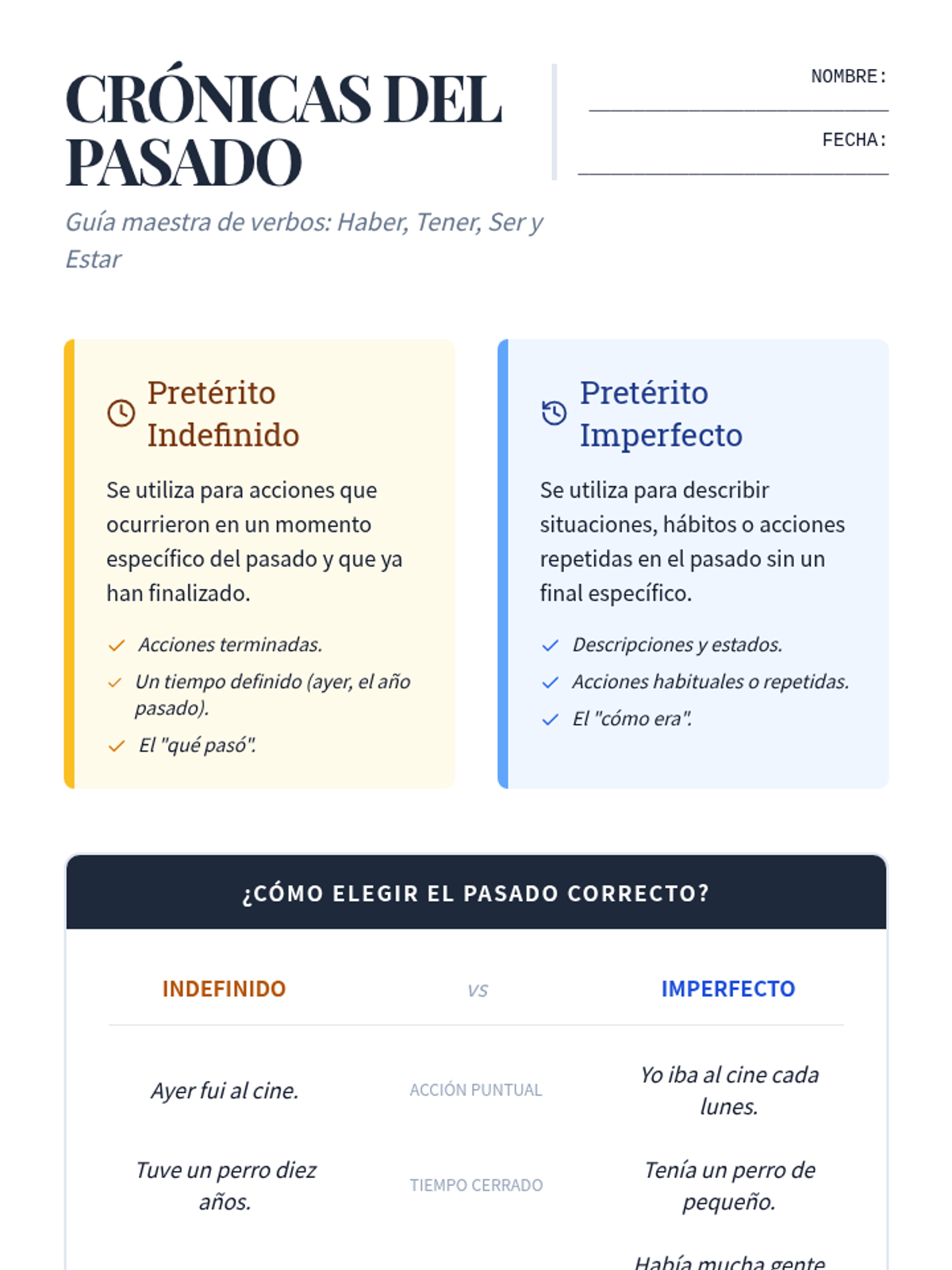
Una guía detallada para dominar los verbos fundamentales (haber, tener, ser, estar) en el pretérito indefinido y el imperfecto. Incluye explicaciones teóricas, tablas de conjugación y ejercicios prácticos.
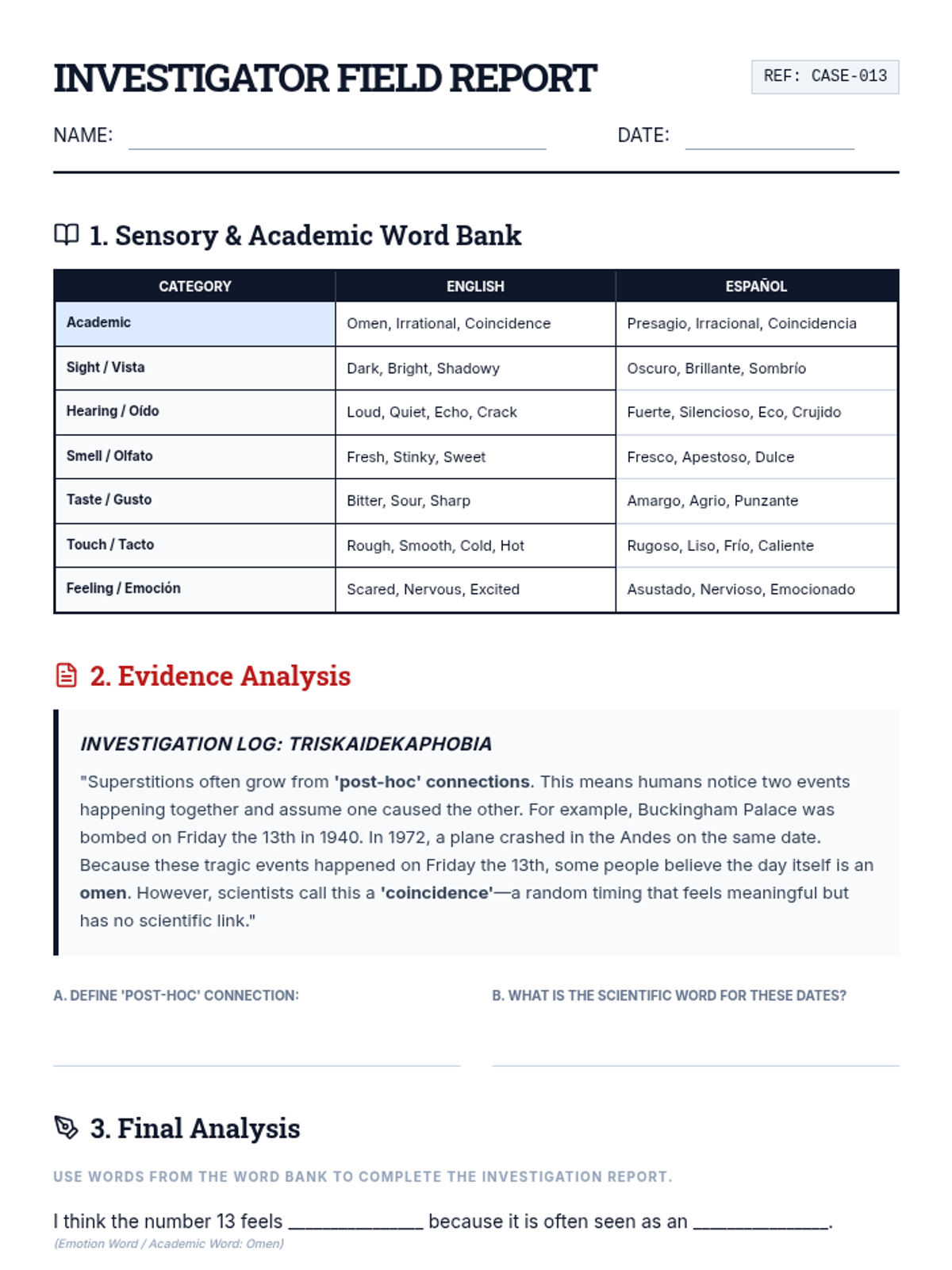
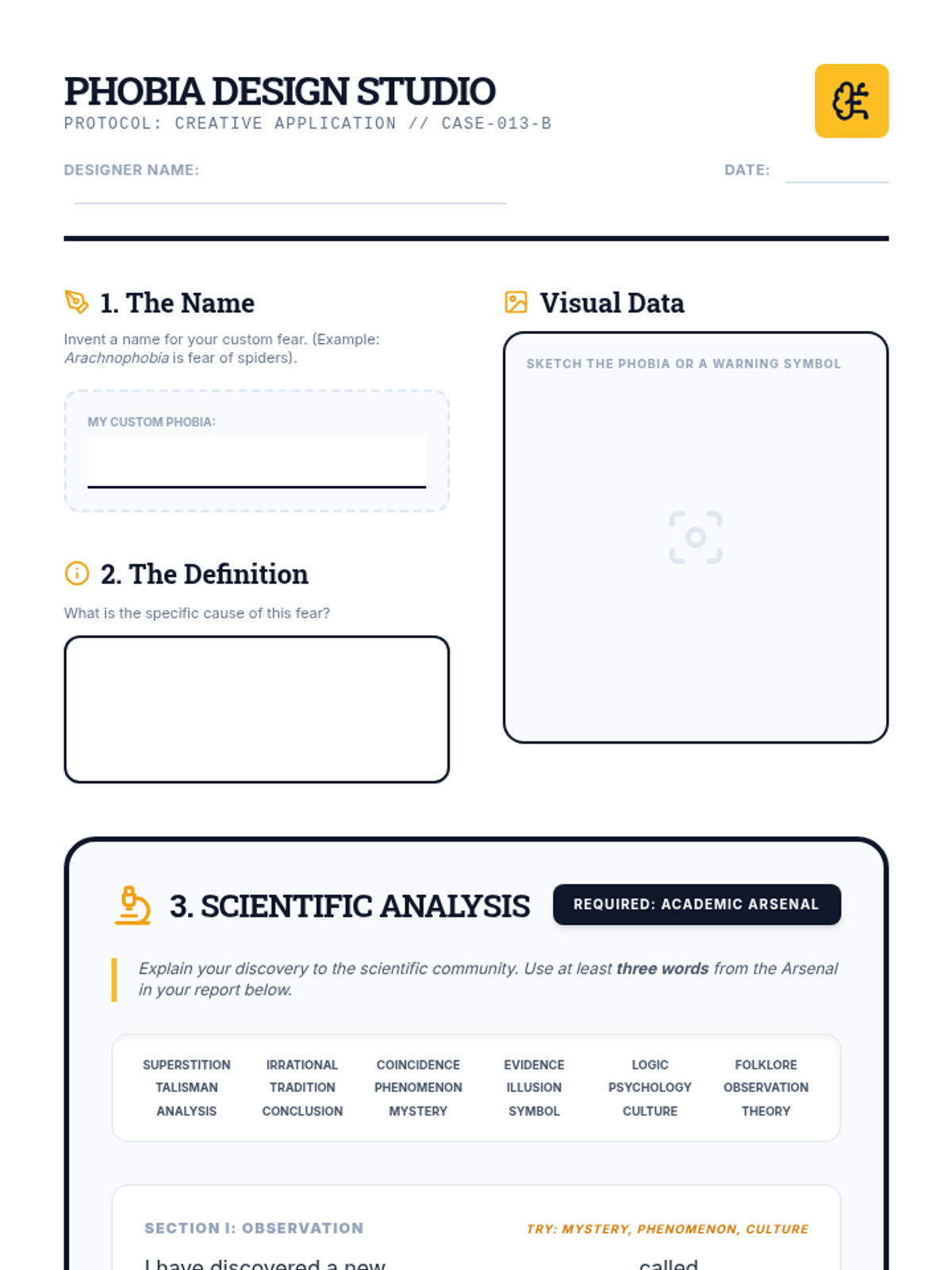
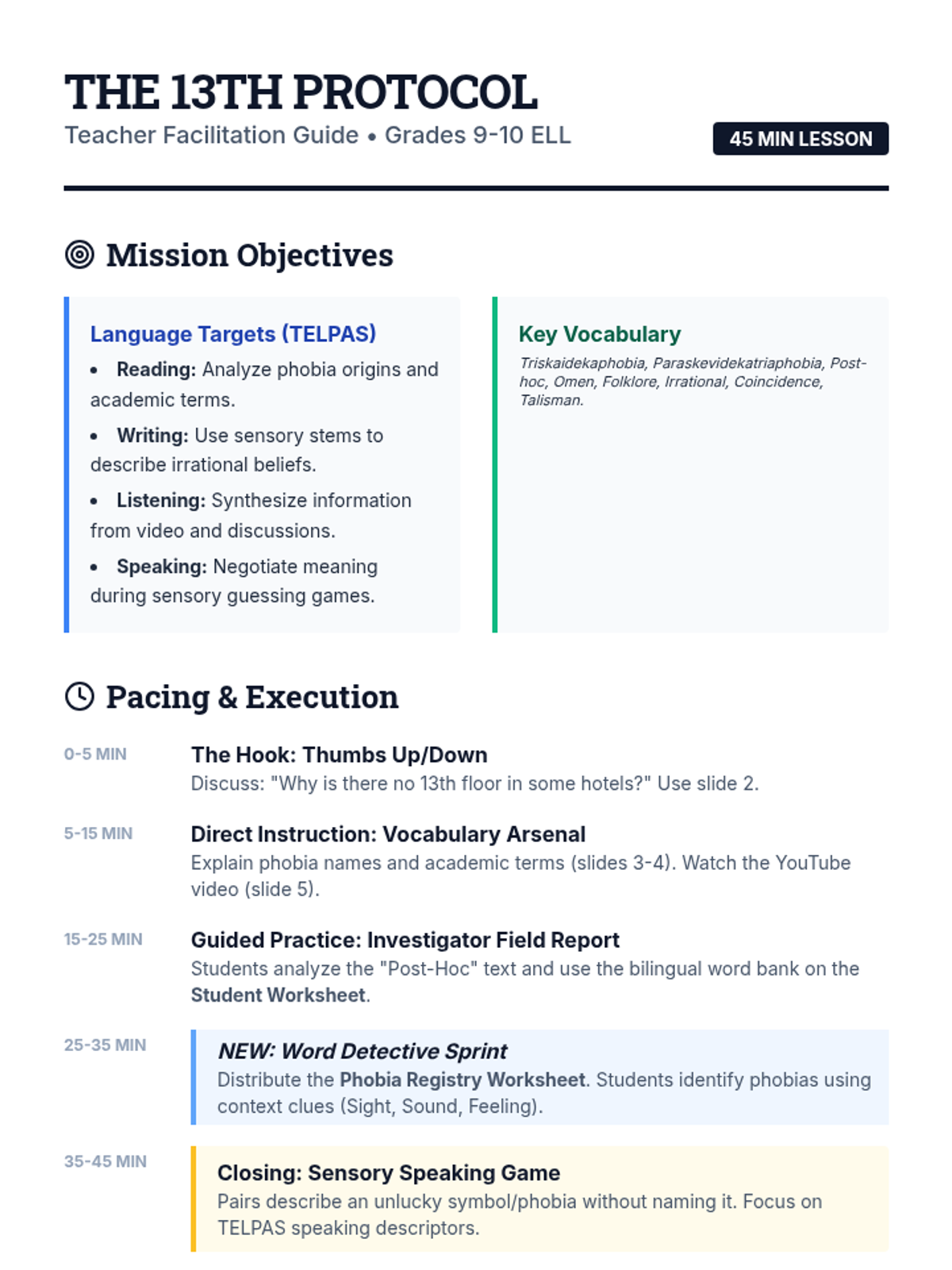
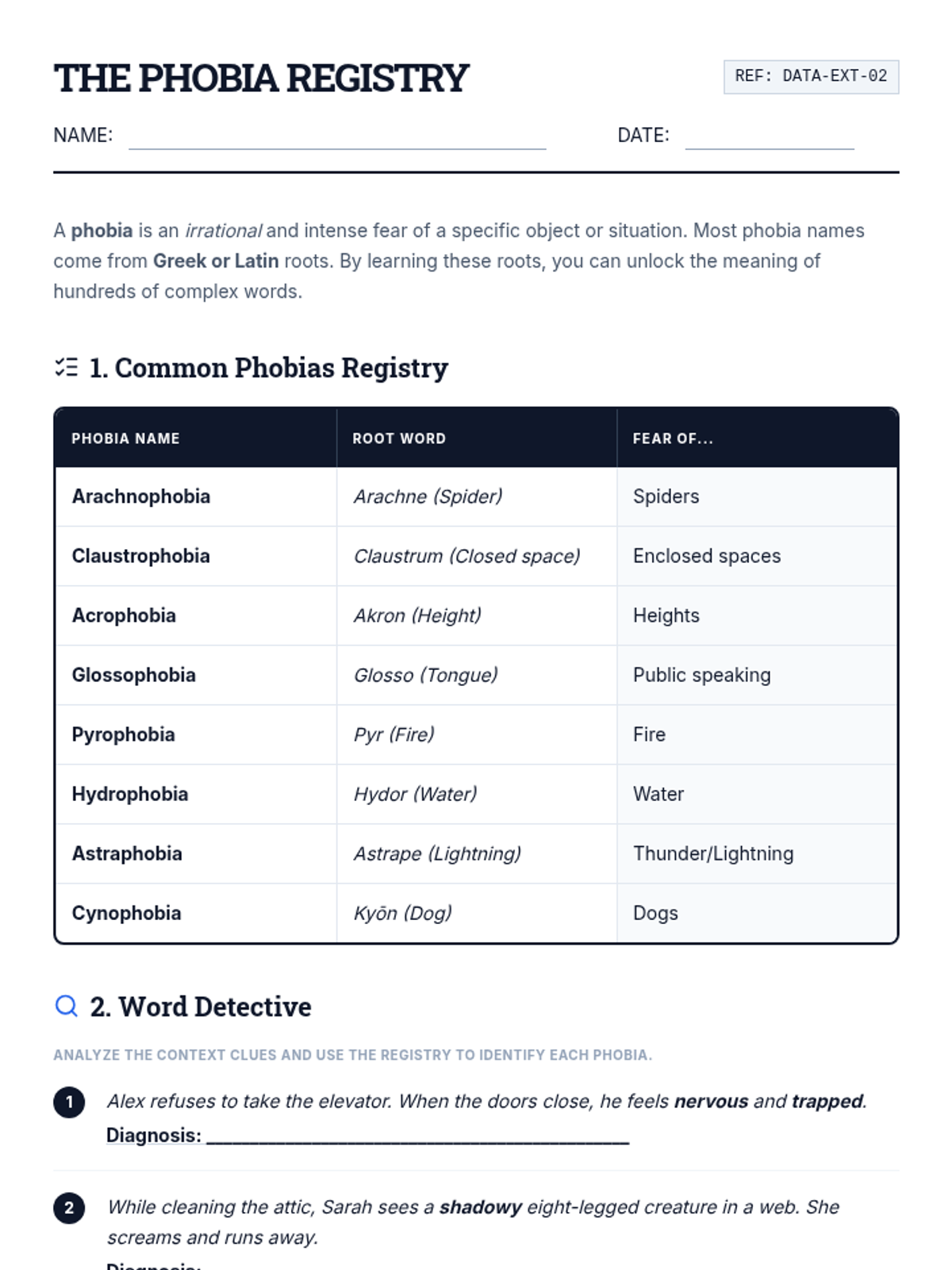
A 45-minute lesson exploring the origins of superstitions surrounding the number 13 and Friday the 13th, focusing on TELPAS speaking, listening, reading, and writing skills for 9th and 10th grade ELLs.
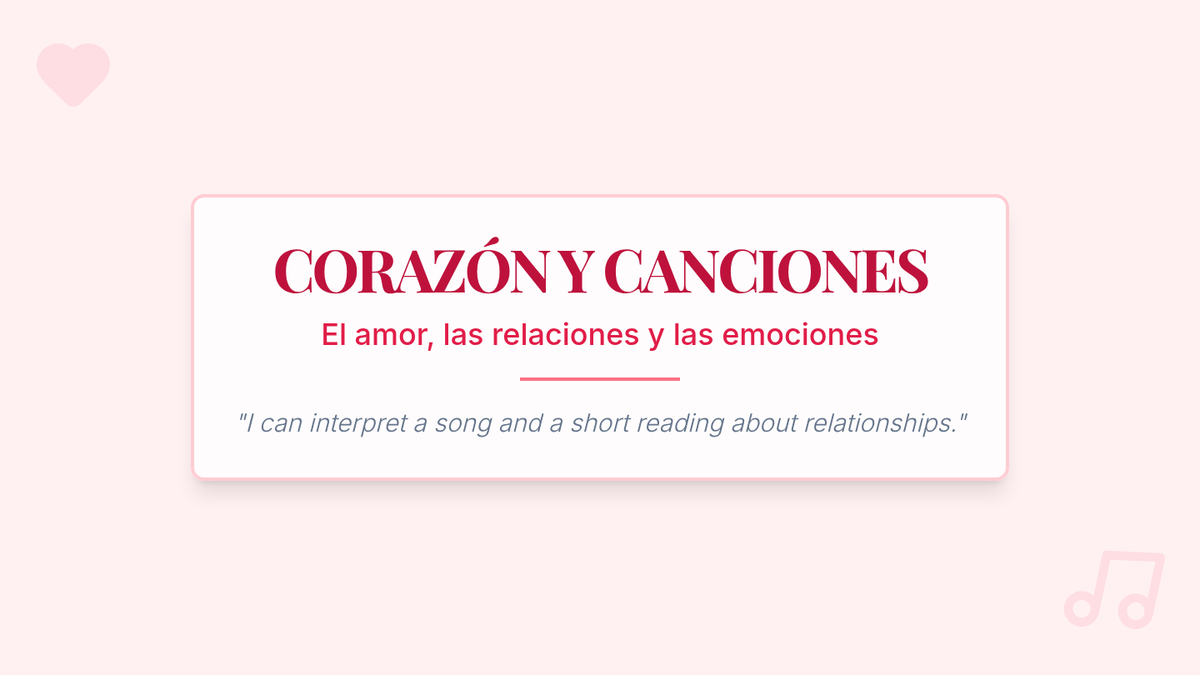
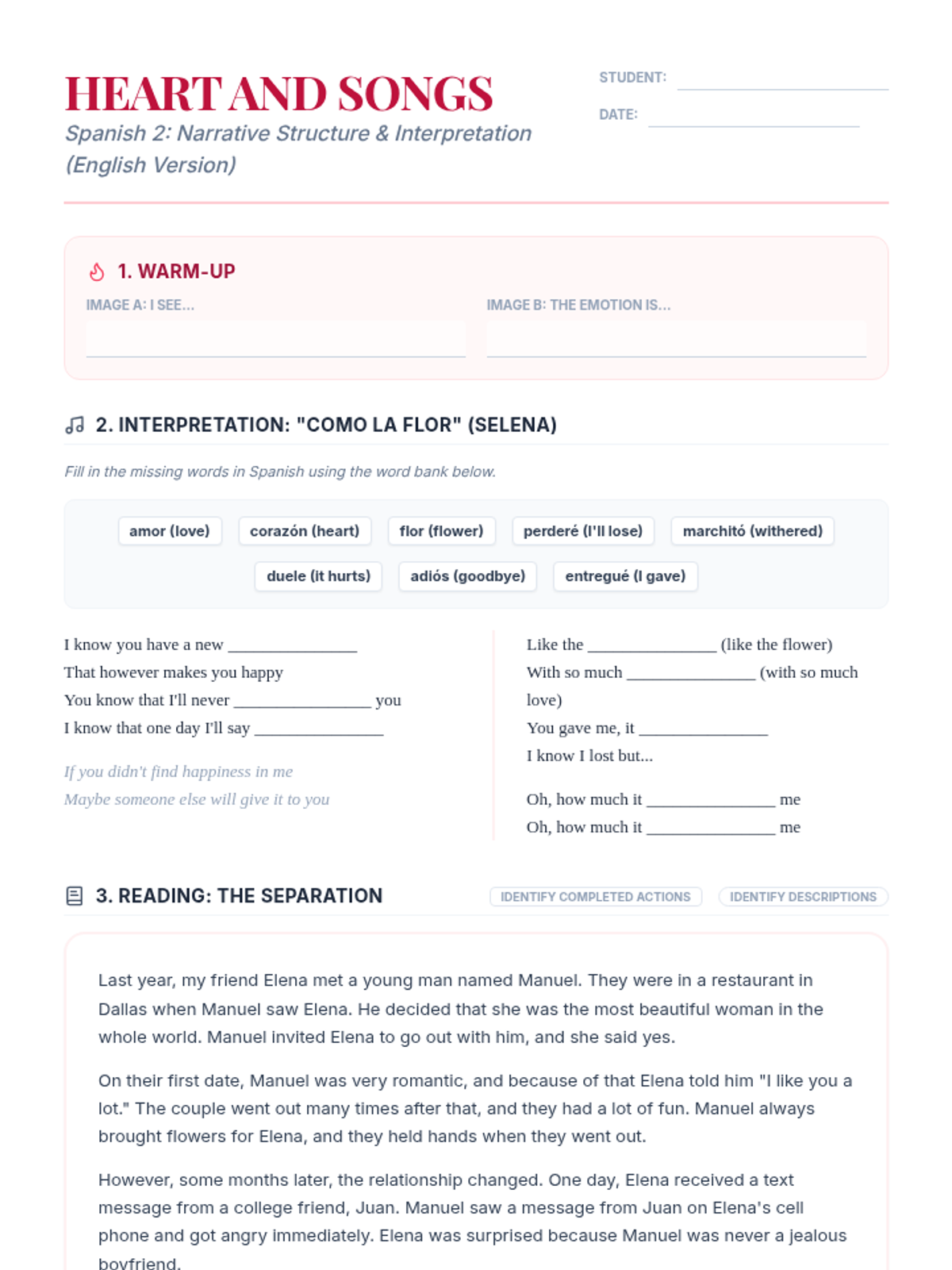
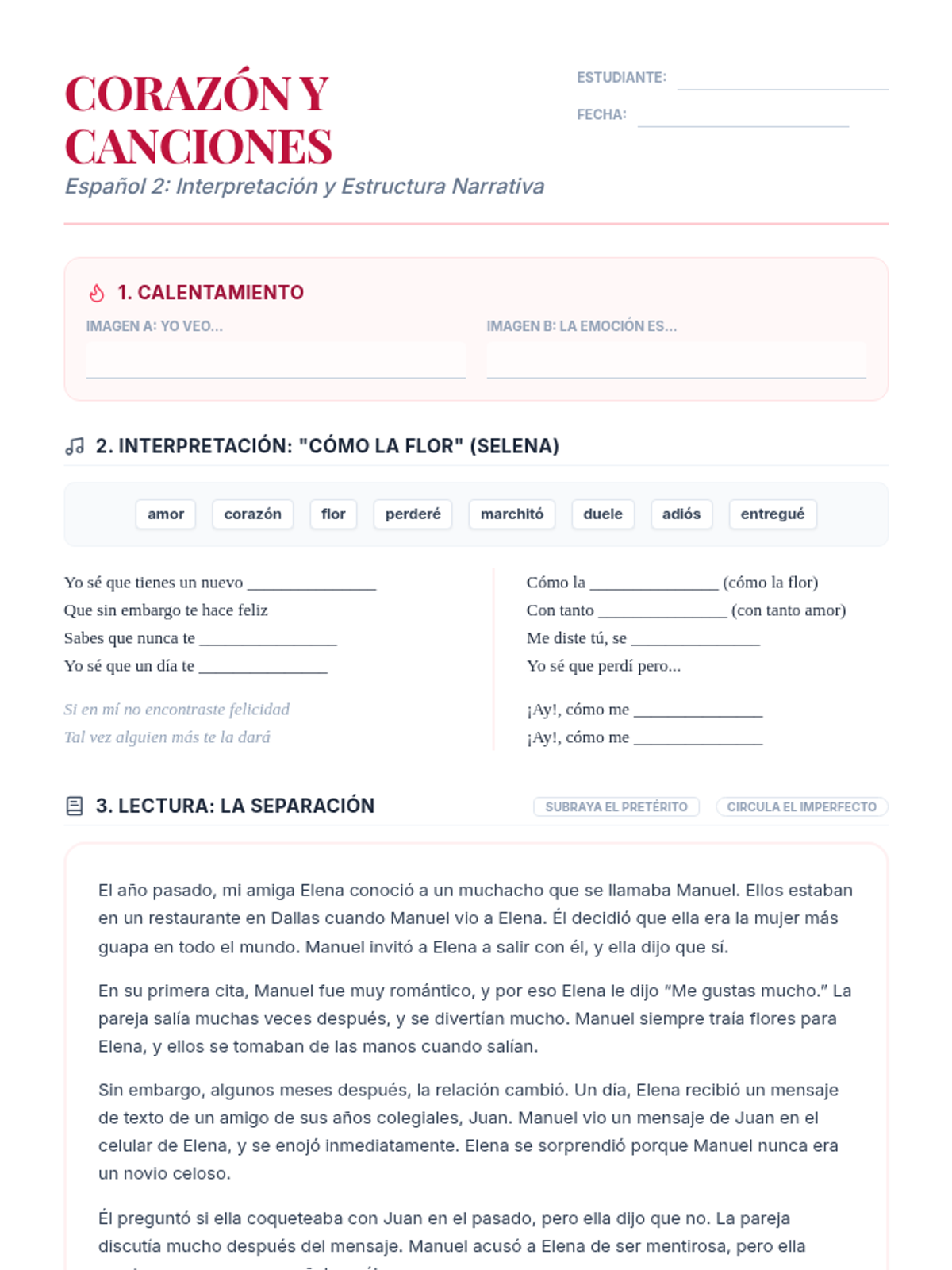
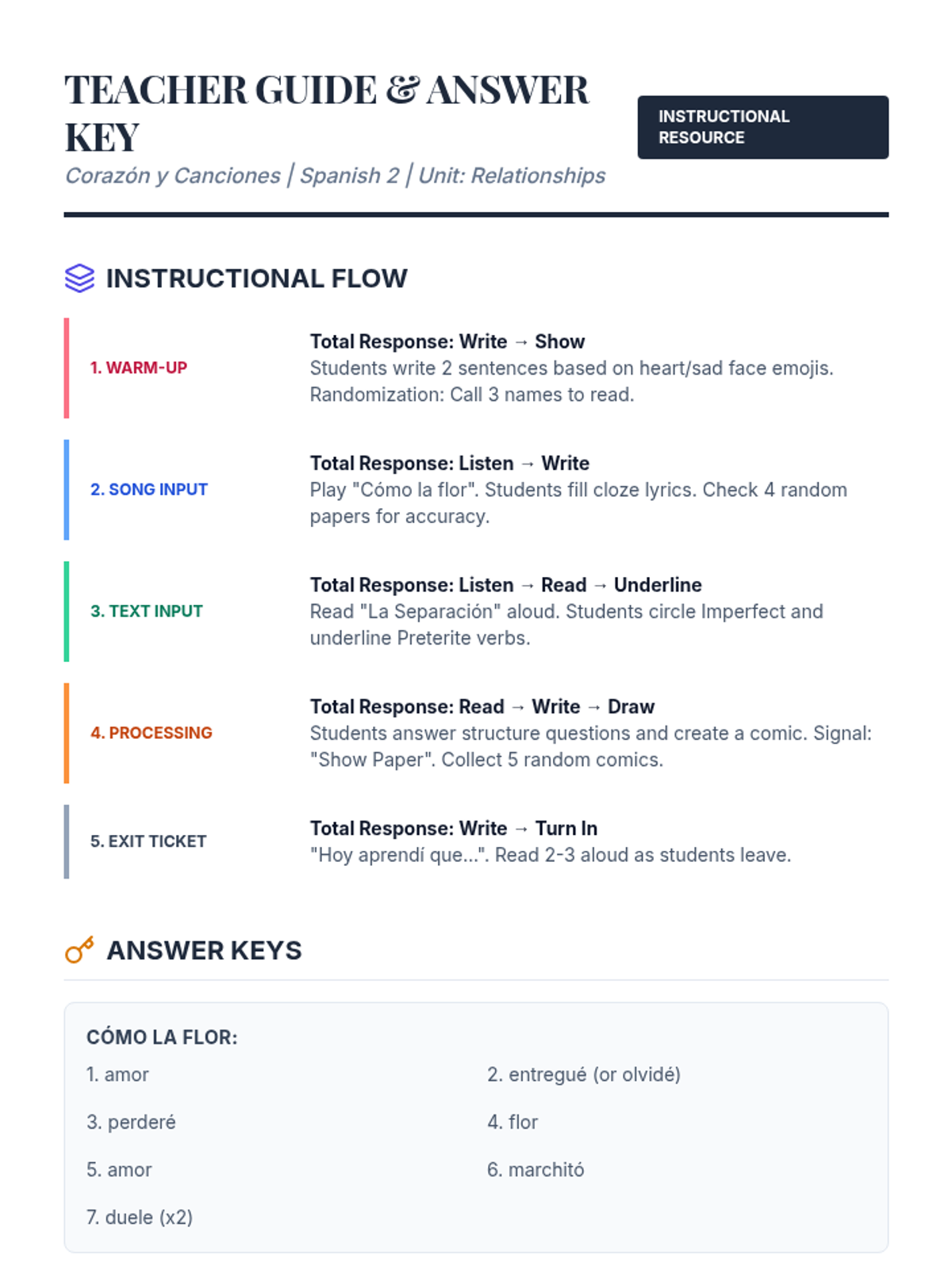
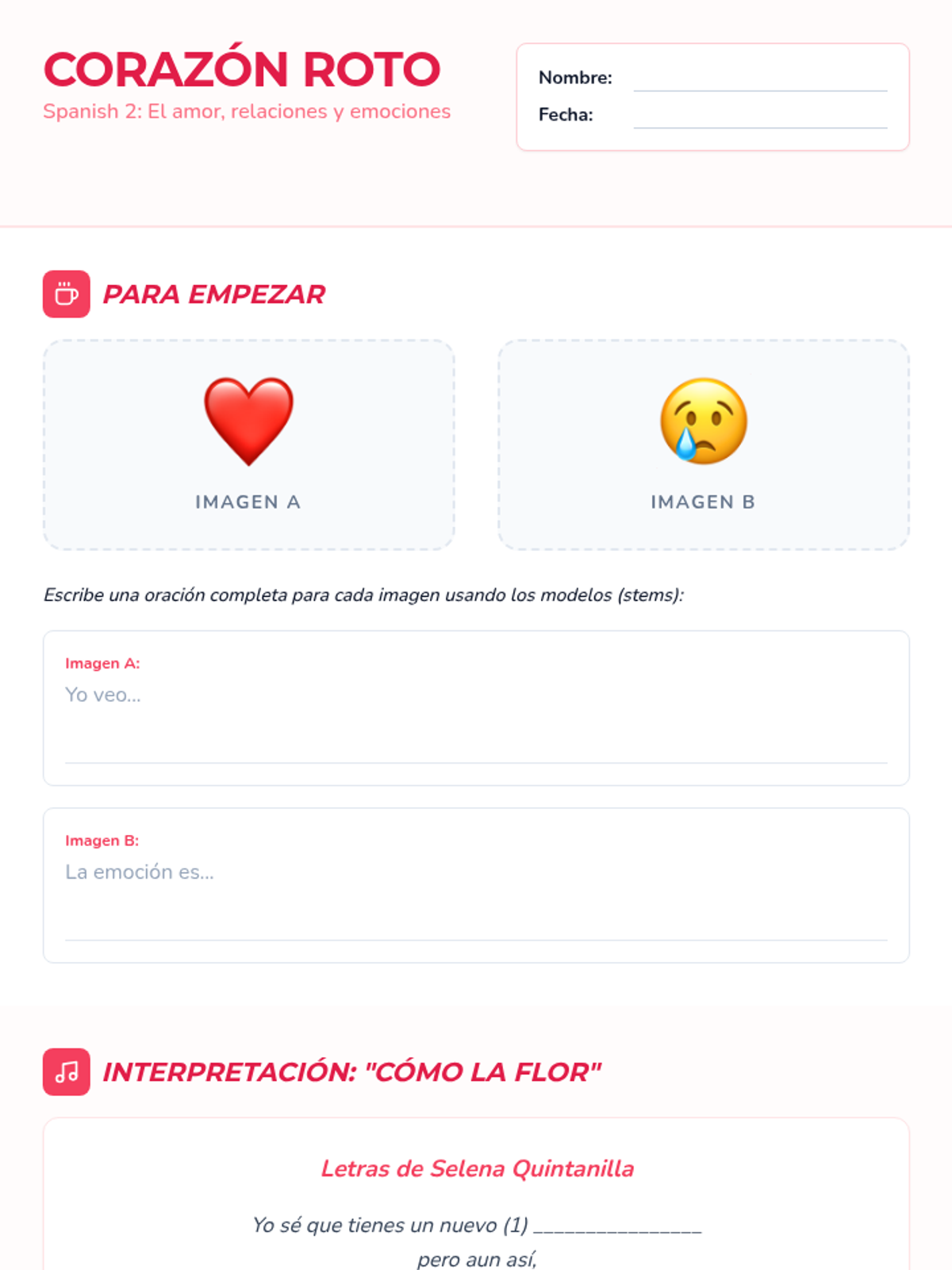
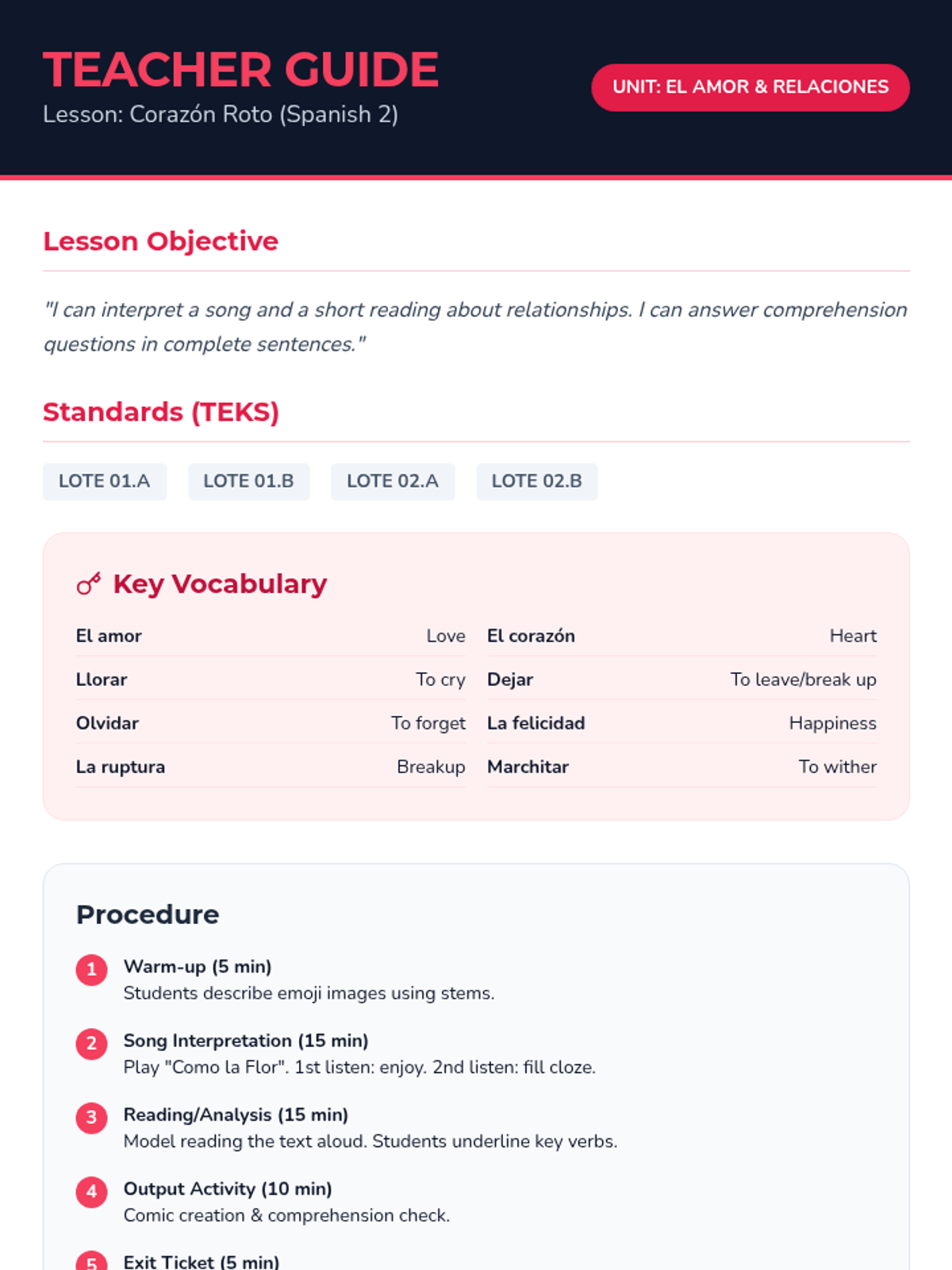
A Spanish 2 lesson focused on interpreting relationships and emotions through Selena's 'Cómo la flor' and a narrative text, with a focus on preterite vs. imperfect and narrative structure.
A Spanish 2 lesson focused on interpreting relationships and emotions through the lens of Selena's 'Como la Flor' and modern relationship concepts like the friend zone. Students practice interpretive skills through song and text, and presentational skills through sentence construction and comic creation.
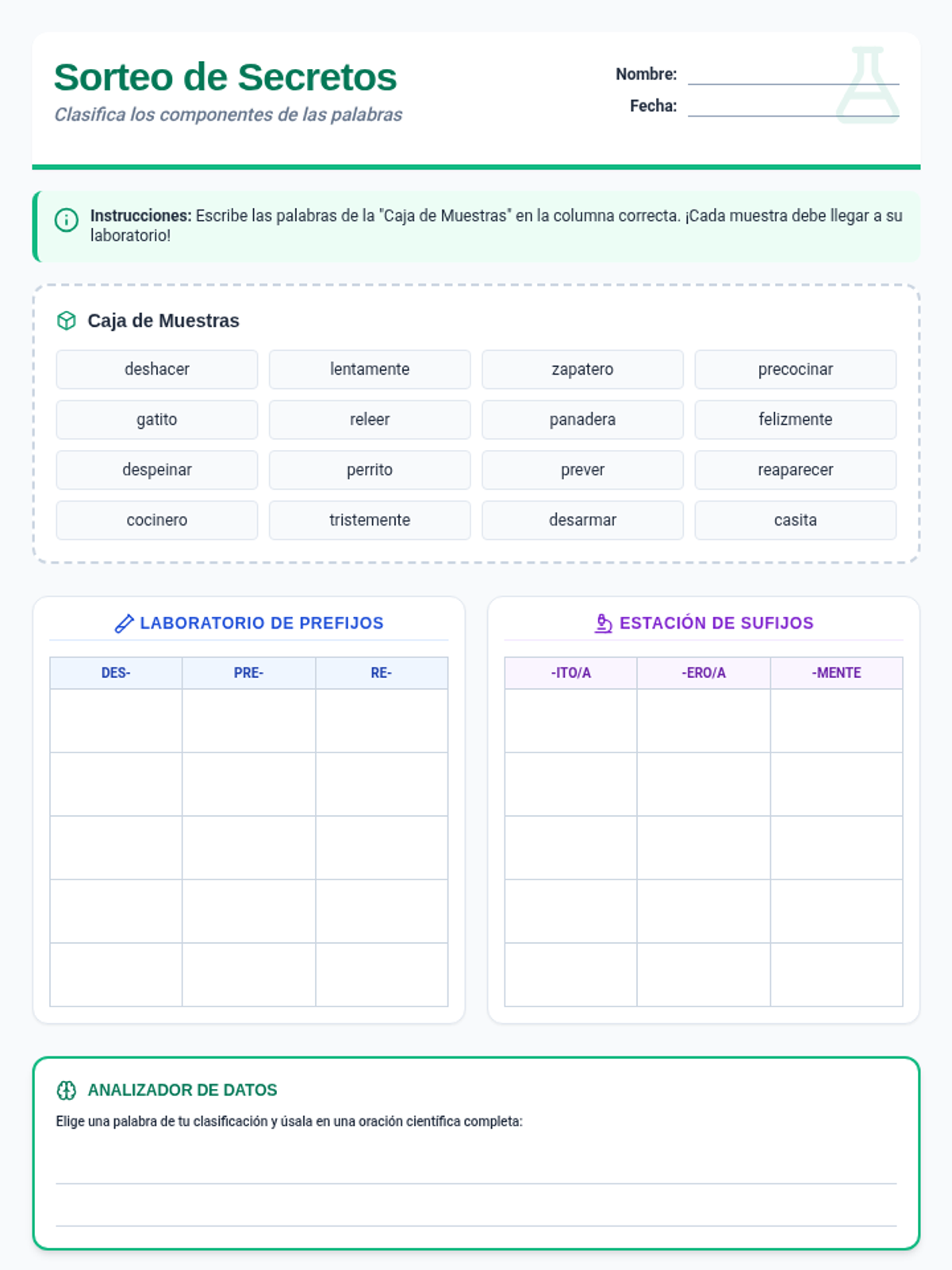
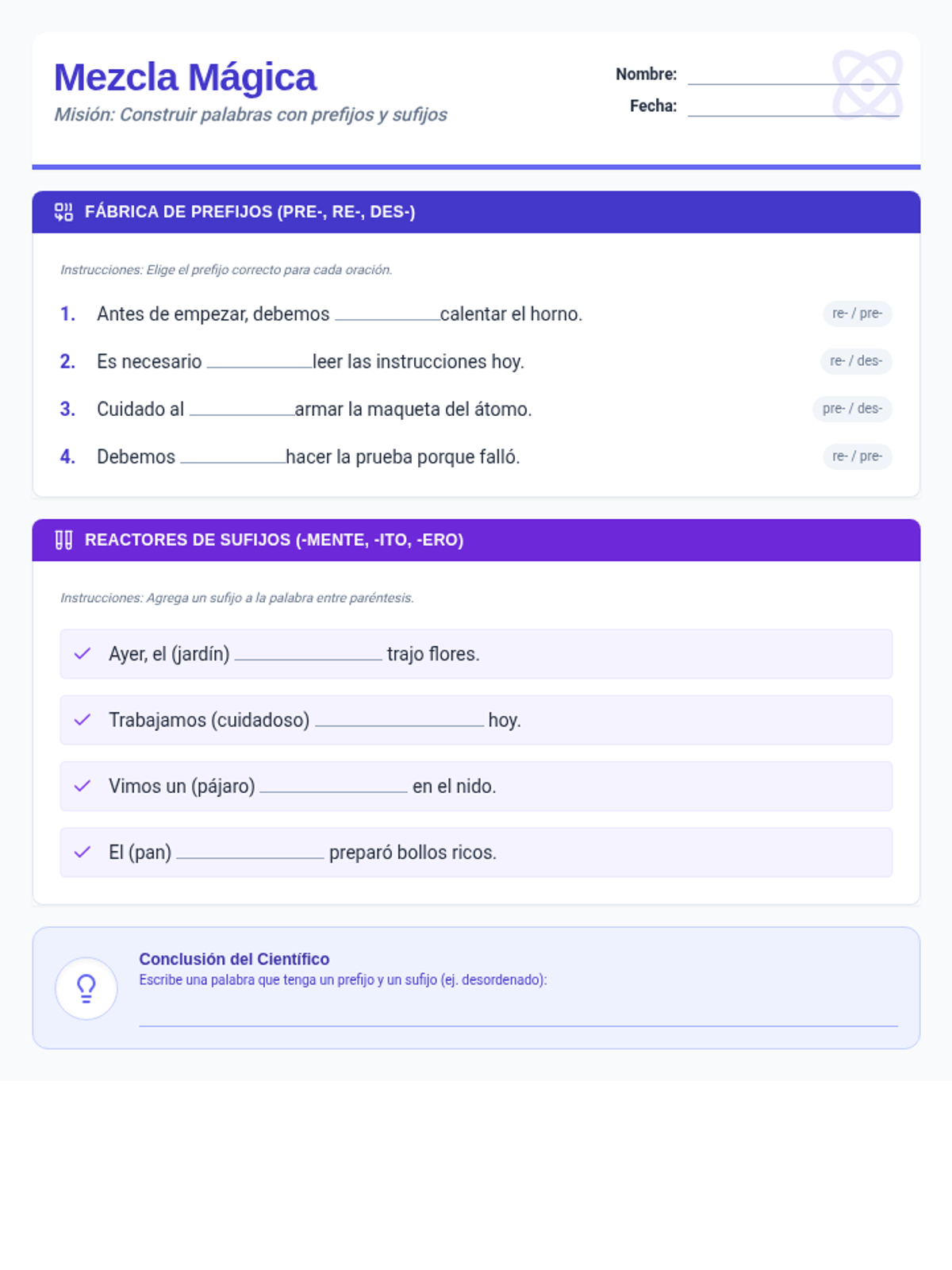
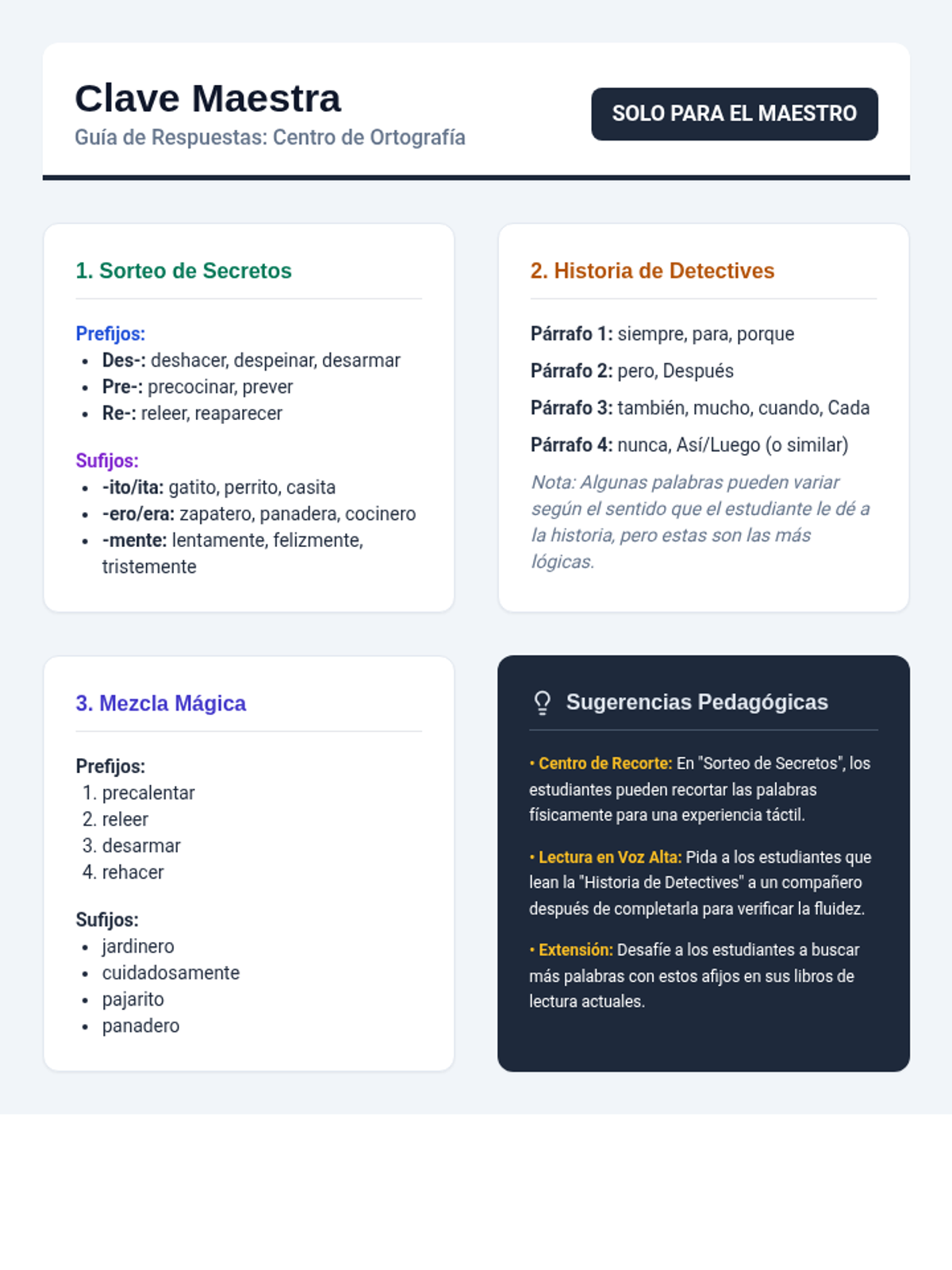
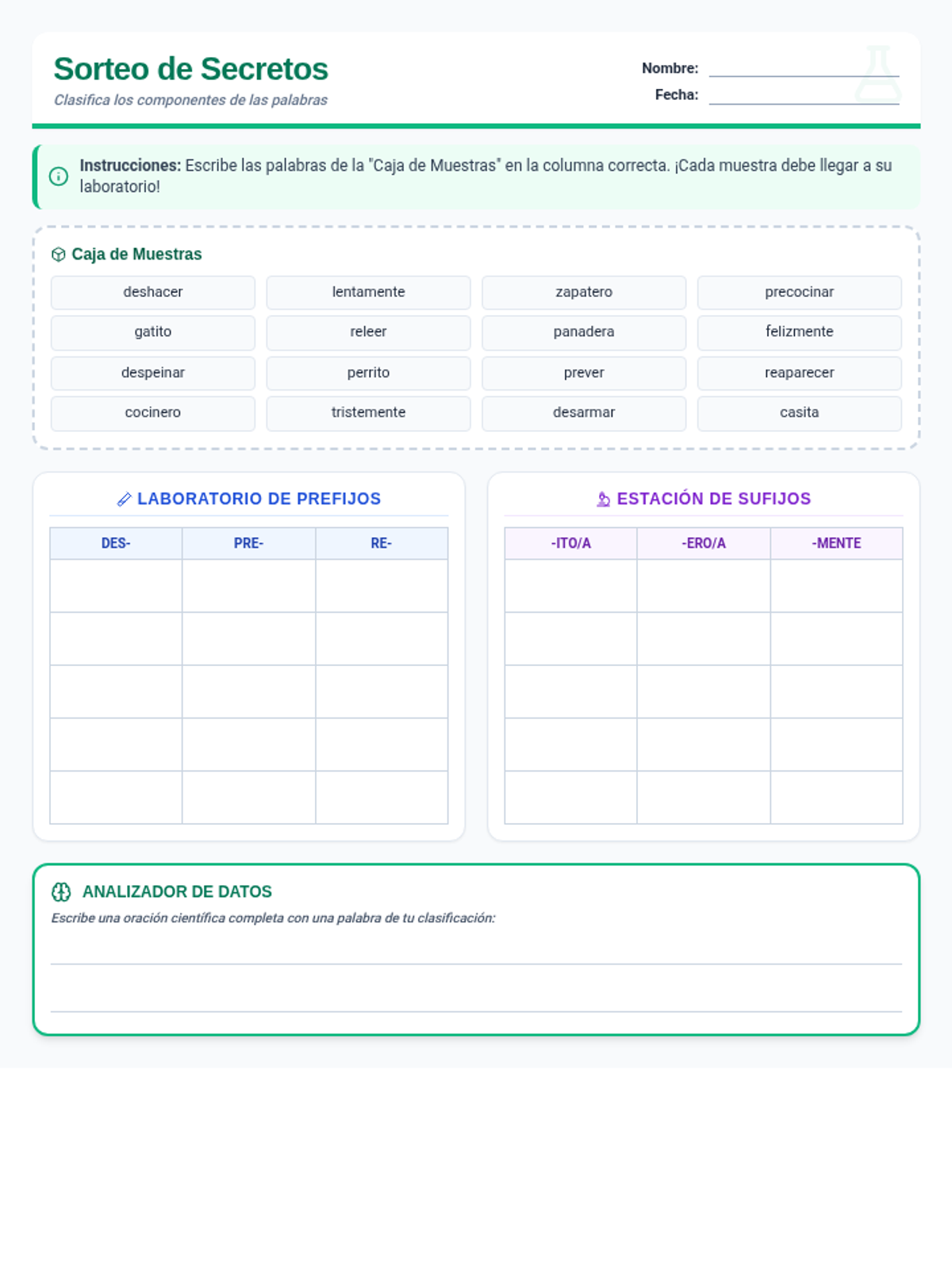
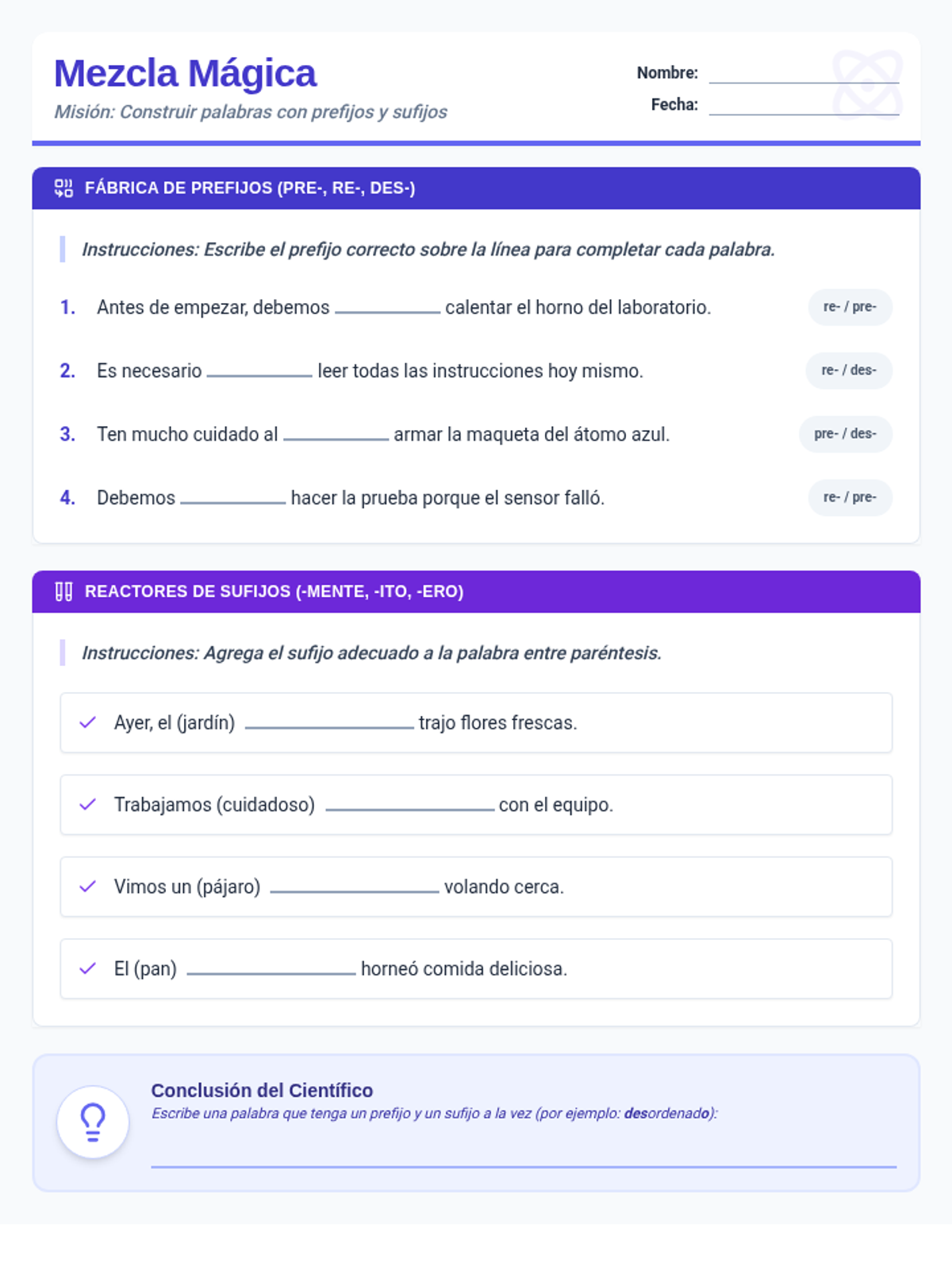
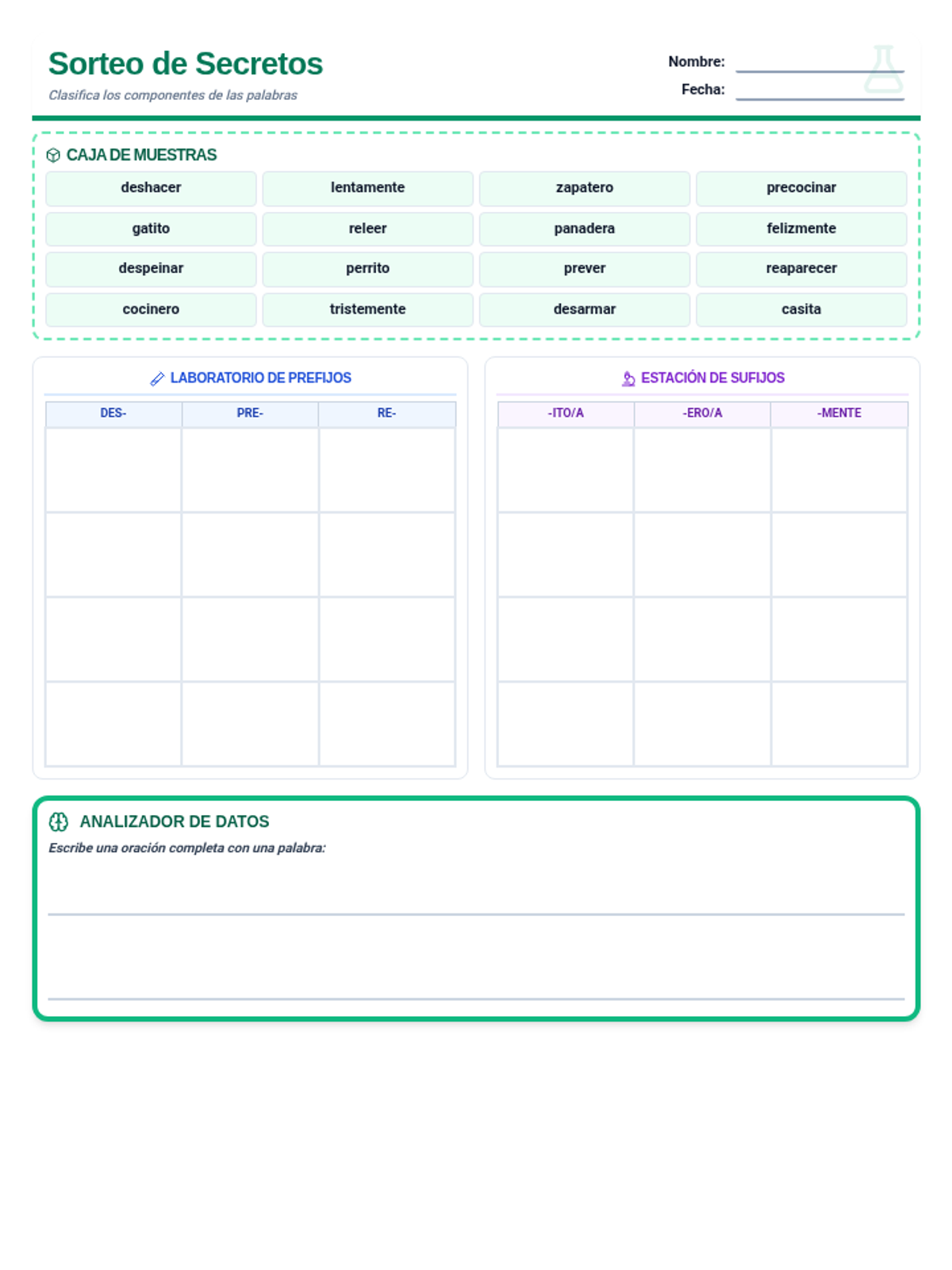
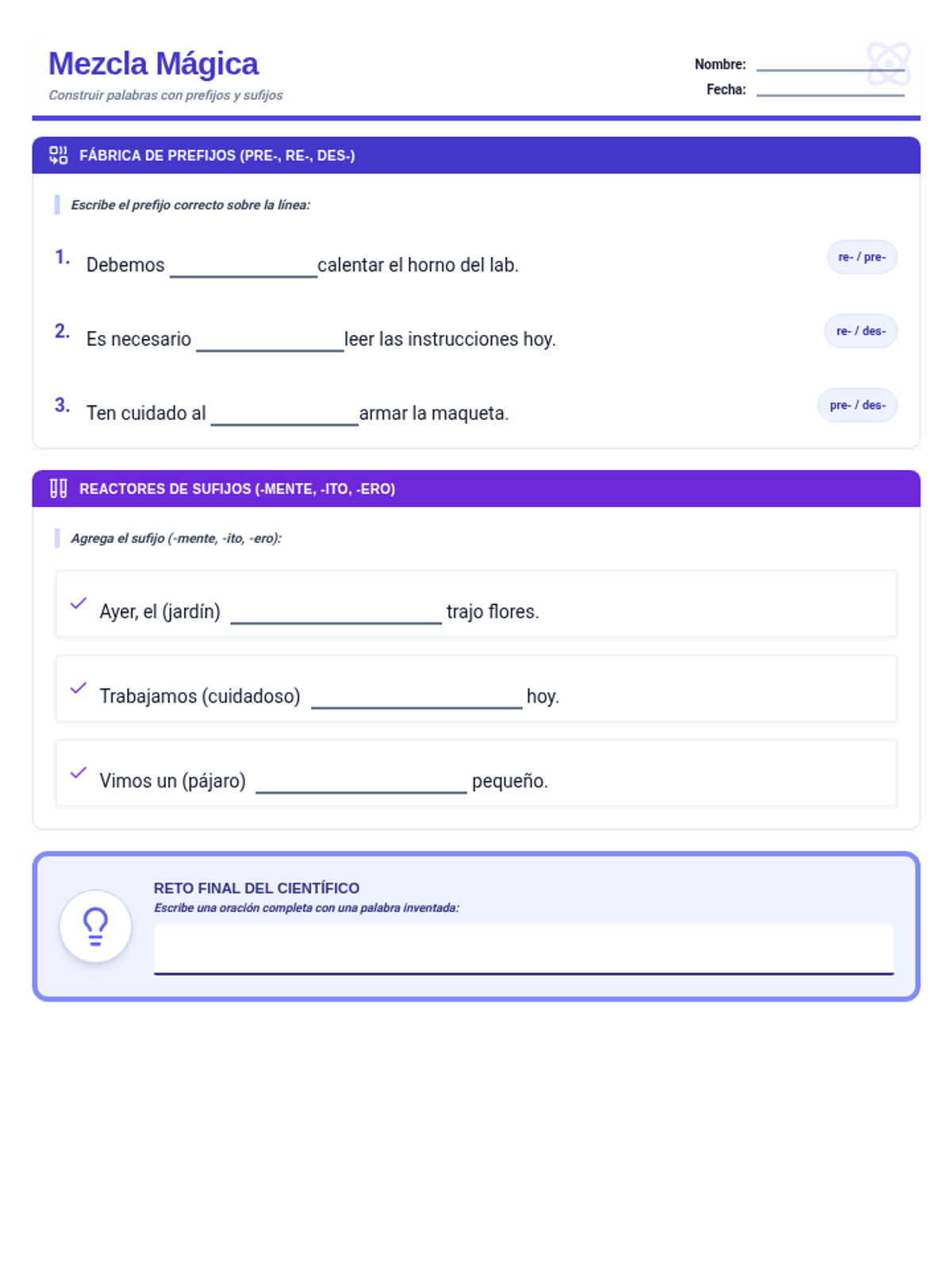
Una serie de actividades interactivas para centros de aprendizaje enfocadas en el dominio de prefijos, sufijos y palabras de alta frecuencia en español.