Vocabulary, grammar, and cultural contexts for Spanish language acquisition across all proficiency levels. Develops skills in reading, writing, speaking, and listening through structured linguistic analysis and practice.
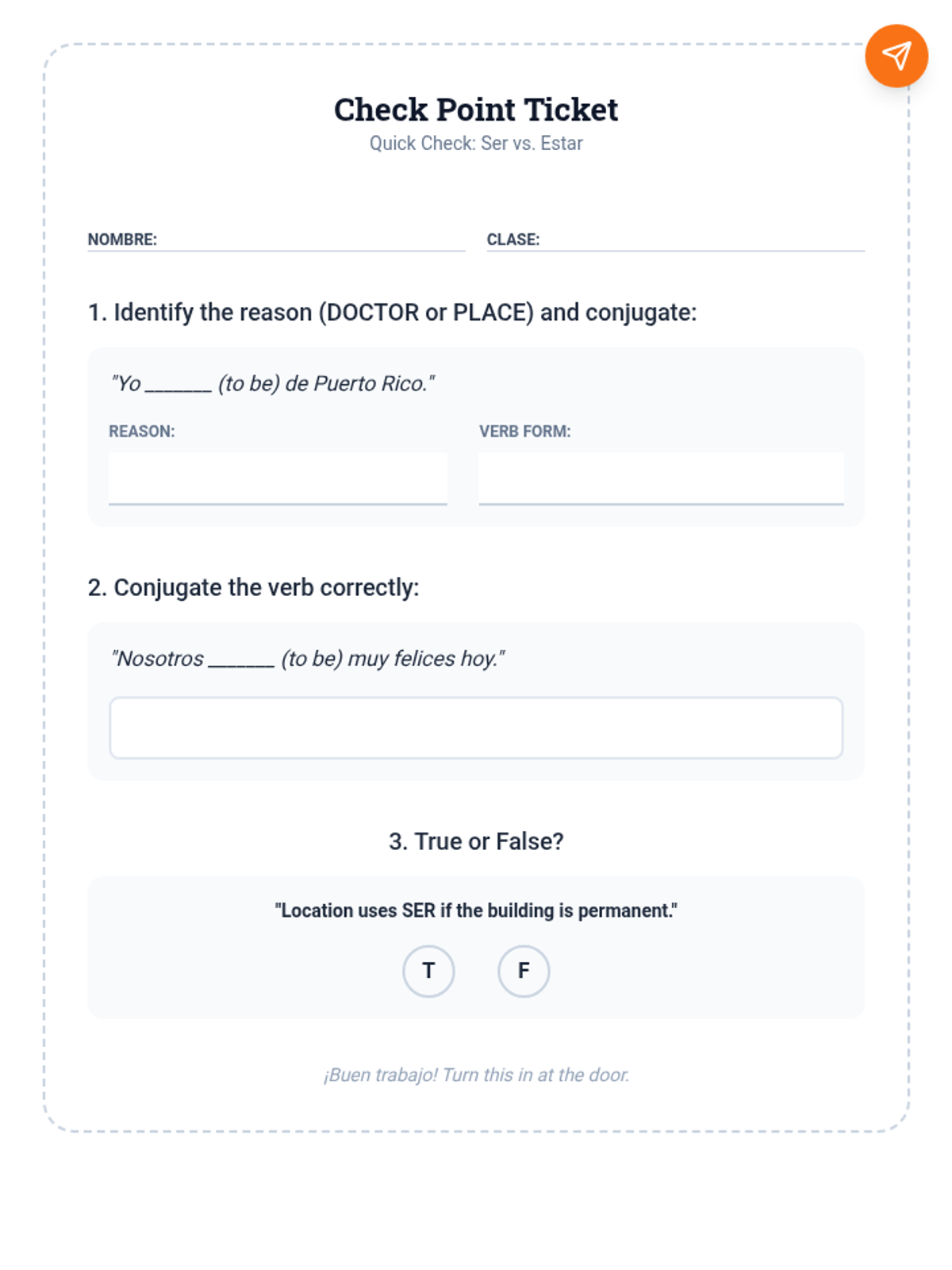
Short formative assessment (exit ticket) to gauge student understanding of the Ser vs Estar distinction at the end of the lesson. Revised for better writing space and label contrast.
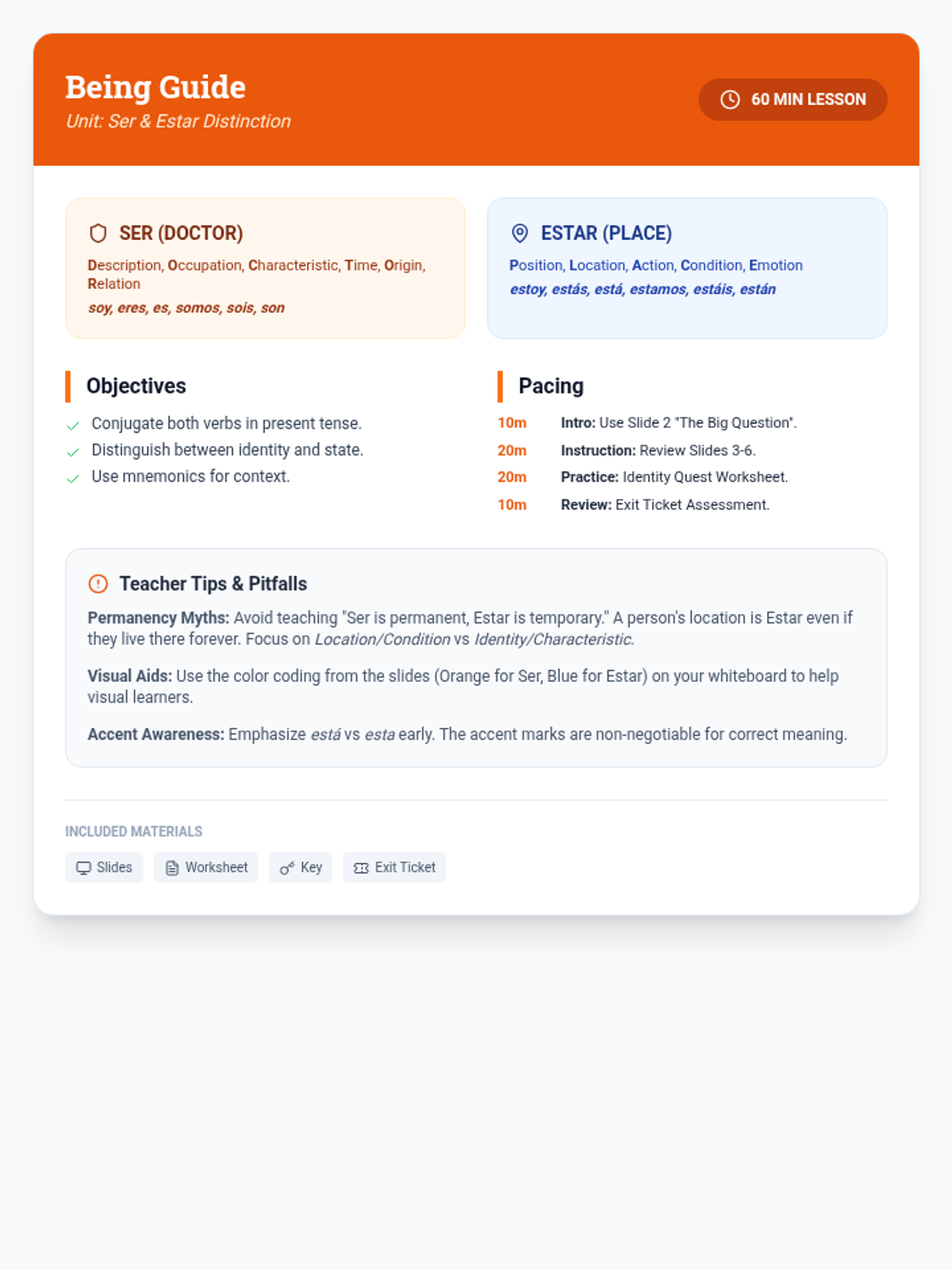
Teacher-facing guide providing lesson objectives, a detailed pacing guide, common student misconceptions, and instructional strategies for teaching Ser vs Estar. Tightened for a clean single-page presentation.
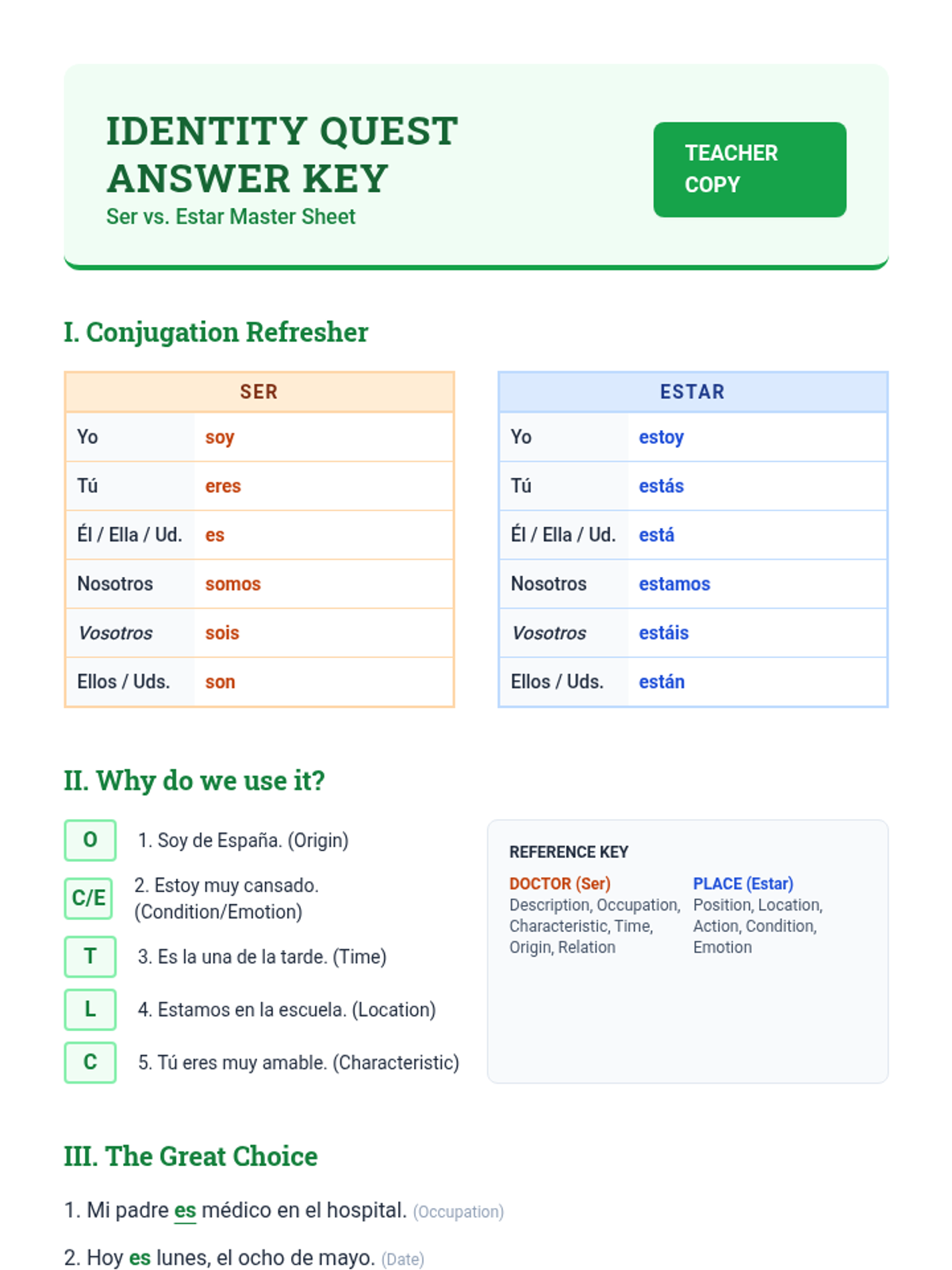
Answer key for the Identity Quest Worksheet, highlighting correct conjugations and usage reasons. Revised for layout consistency and added mnemonic reference.
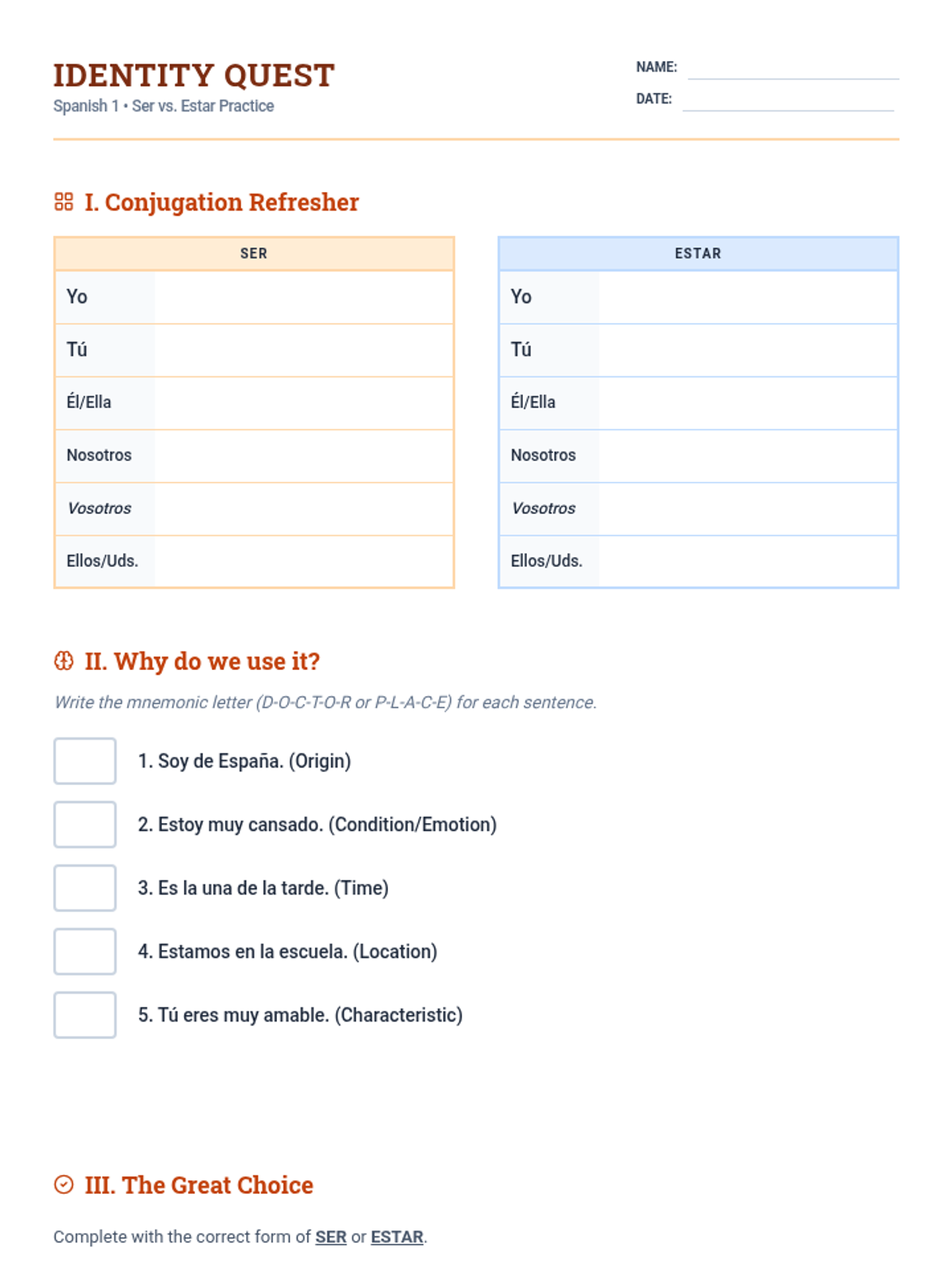
Comprehensive practice worksheet for Ser vs Estar, featuring conjugation tables, mnemonic matching, fill-in-the-blanks, and translation exercises. Revised for better spacing and clean two-page flow.
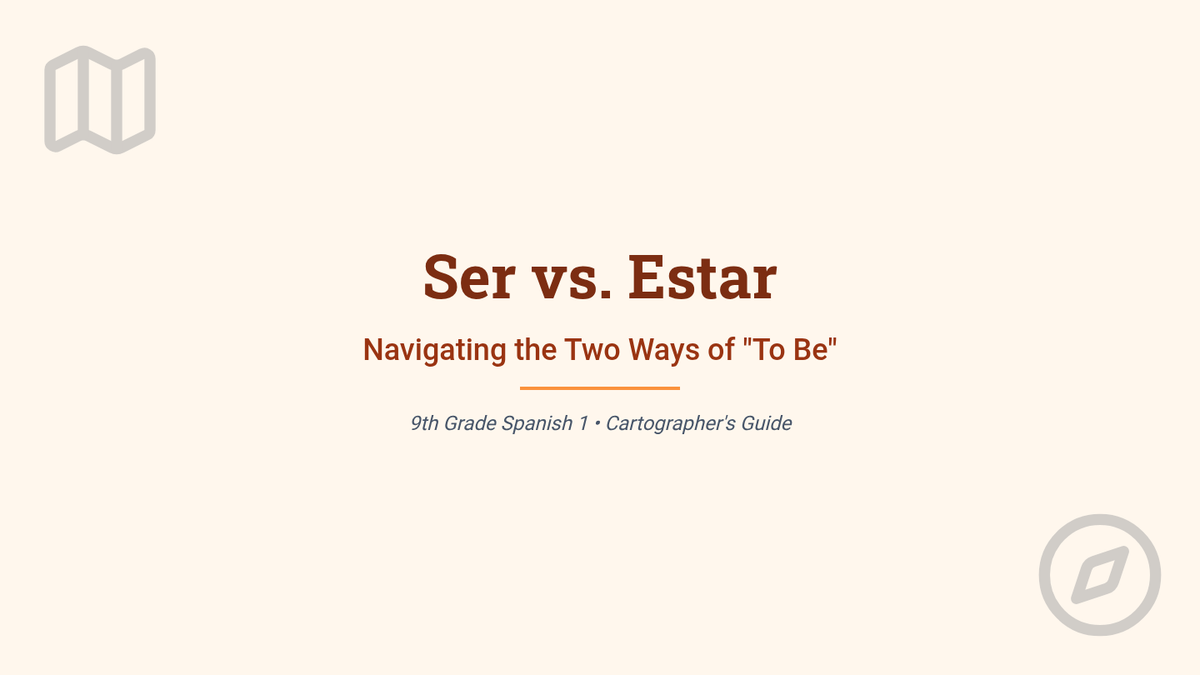
Visual presentation for teaching the differences between Ser and Estar, including conjugations and mnemonics (DOCTOR/PLACE).
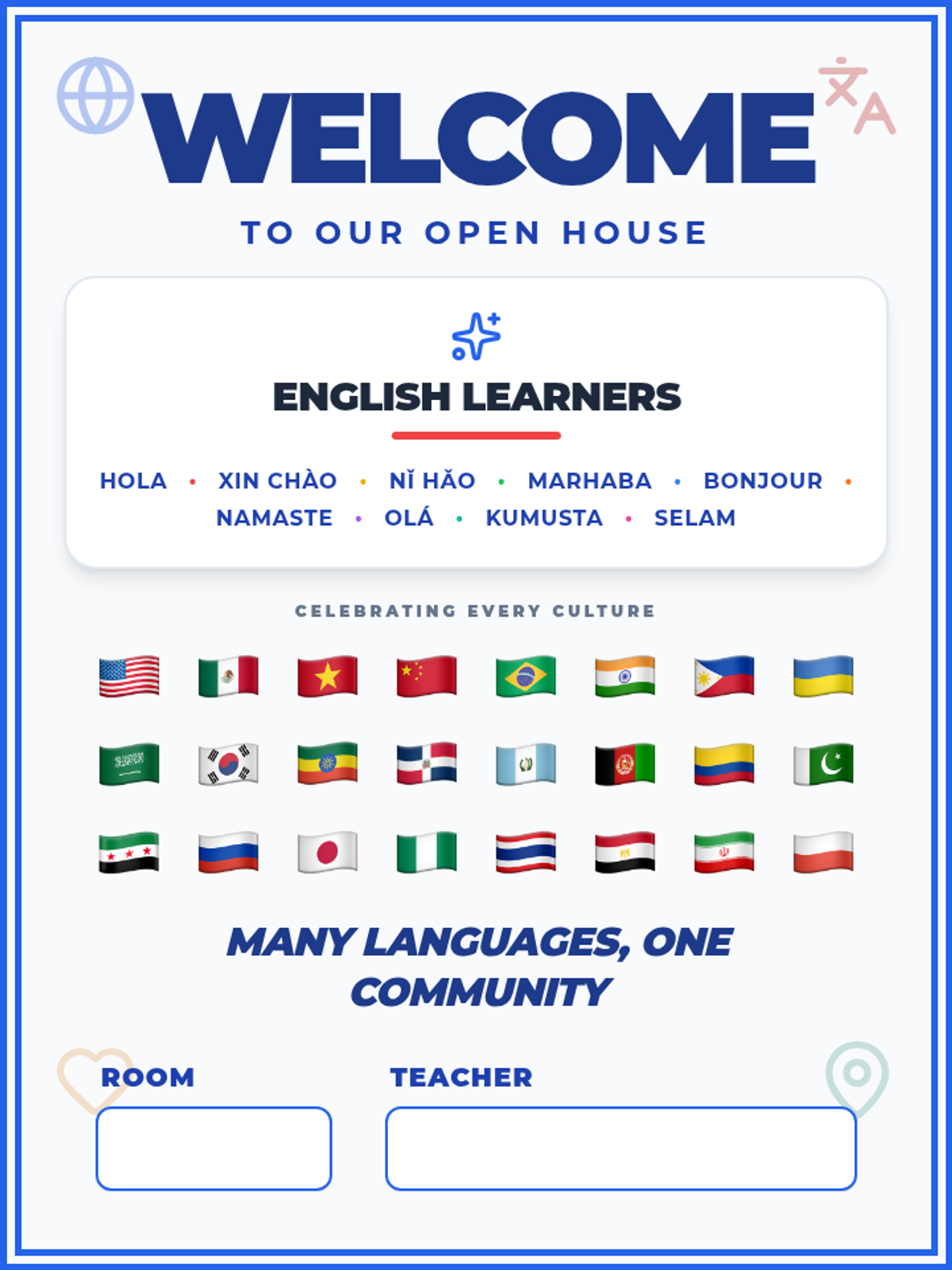
A vibrant, high-impact welcome poster for an EL (English Learners) classroom door. Features multilingual "Hello" greetings, a diverse set of flags, and the quote "Many Languages, One Community." Includes designated spaces for teacher name and room number.
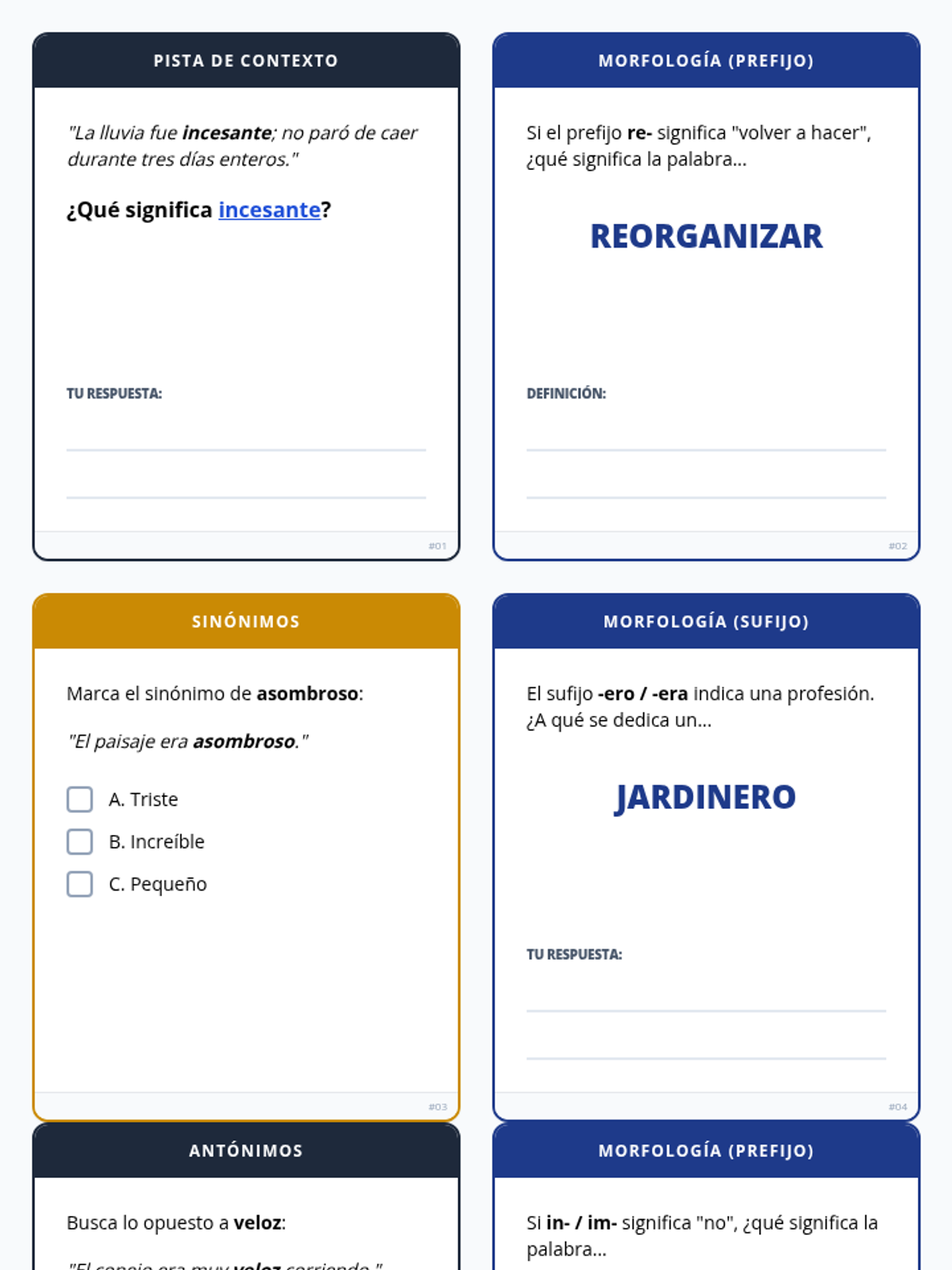
Set extendido de 8 tarjetas de tareas de vocabulario con áreas de respuesta designadas. Cubre pistas de contexto, antónimos, sinónimos y morfología (prefijos y sufijos) para práctica intensiva.
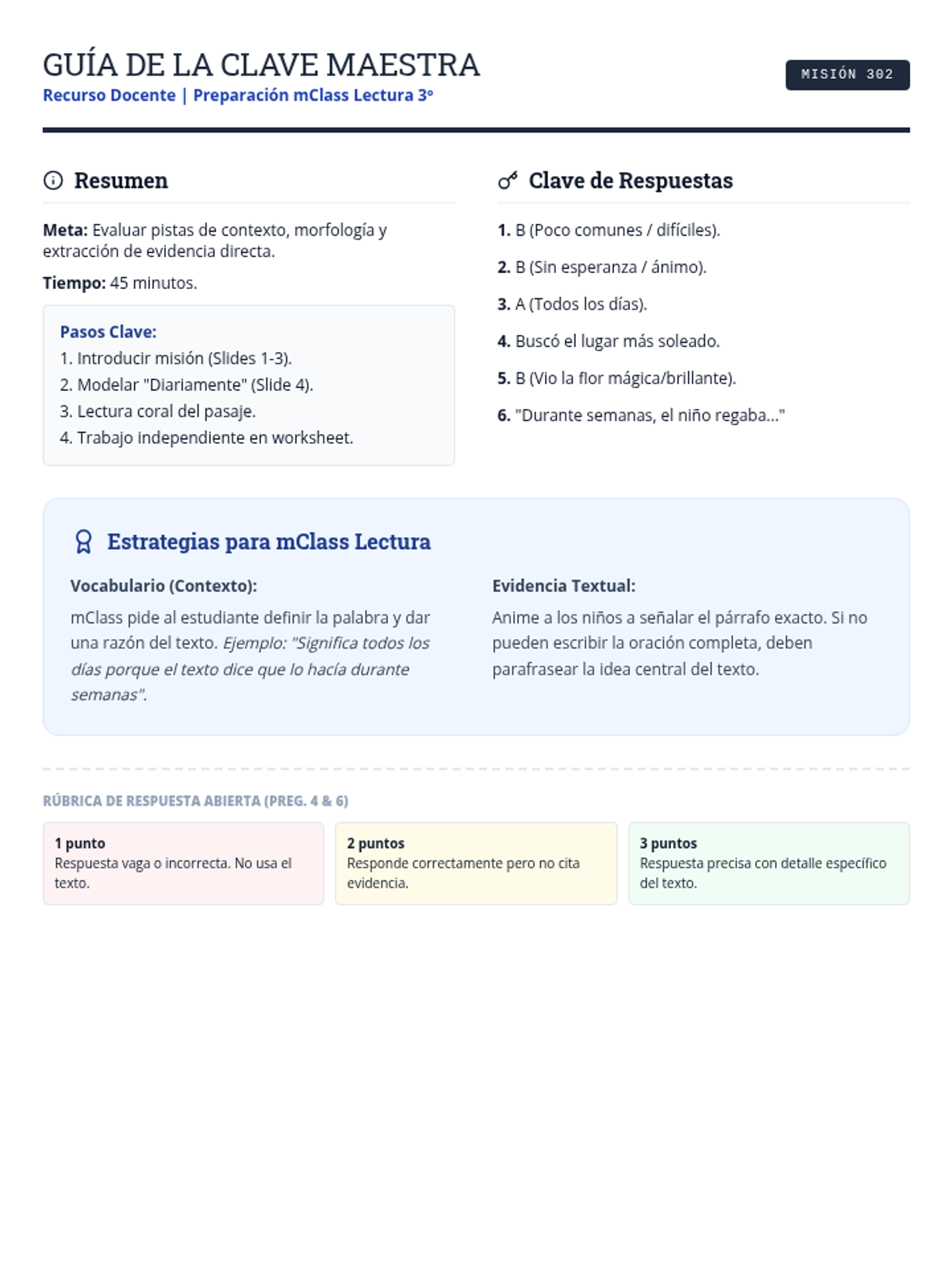
Guía docente condensada en una sola página para mayor practicidad. Incluye clave de respuestas alineada, estrategias específicas para la prueba mClass y una rúbrica rápida para evaluar respuestas abiertas.
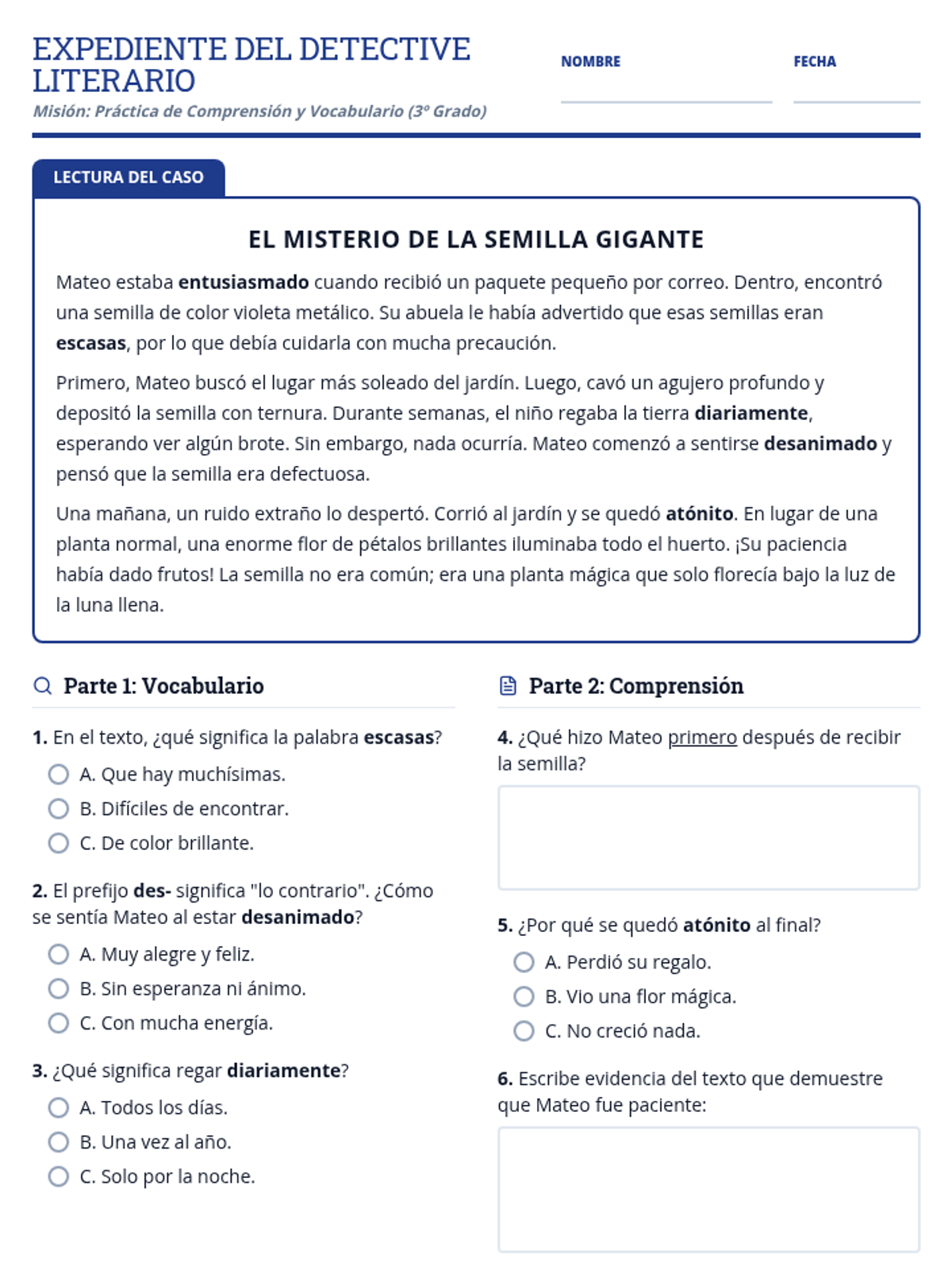
Hoja de trabajo optimizada para una sola página, con diseño de dos columnas, encabezado corregido y mayor contraste en los bordes para una mejor impresión. Incluye pasaje de lectura y 6 preguntas de práctica.
Versión corregida de la presentación de comprensión, con mejor contraste, espaciado de texto corregido y un ejemplo práctico directo que conecta con la hoja de trabajo.
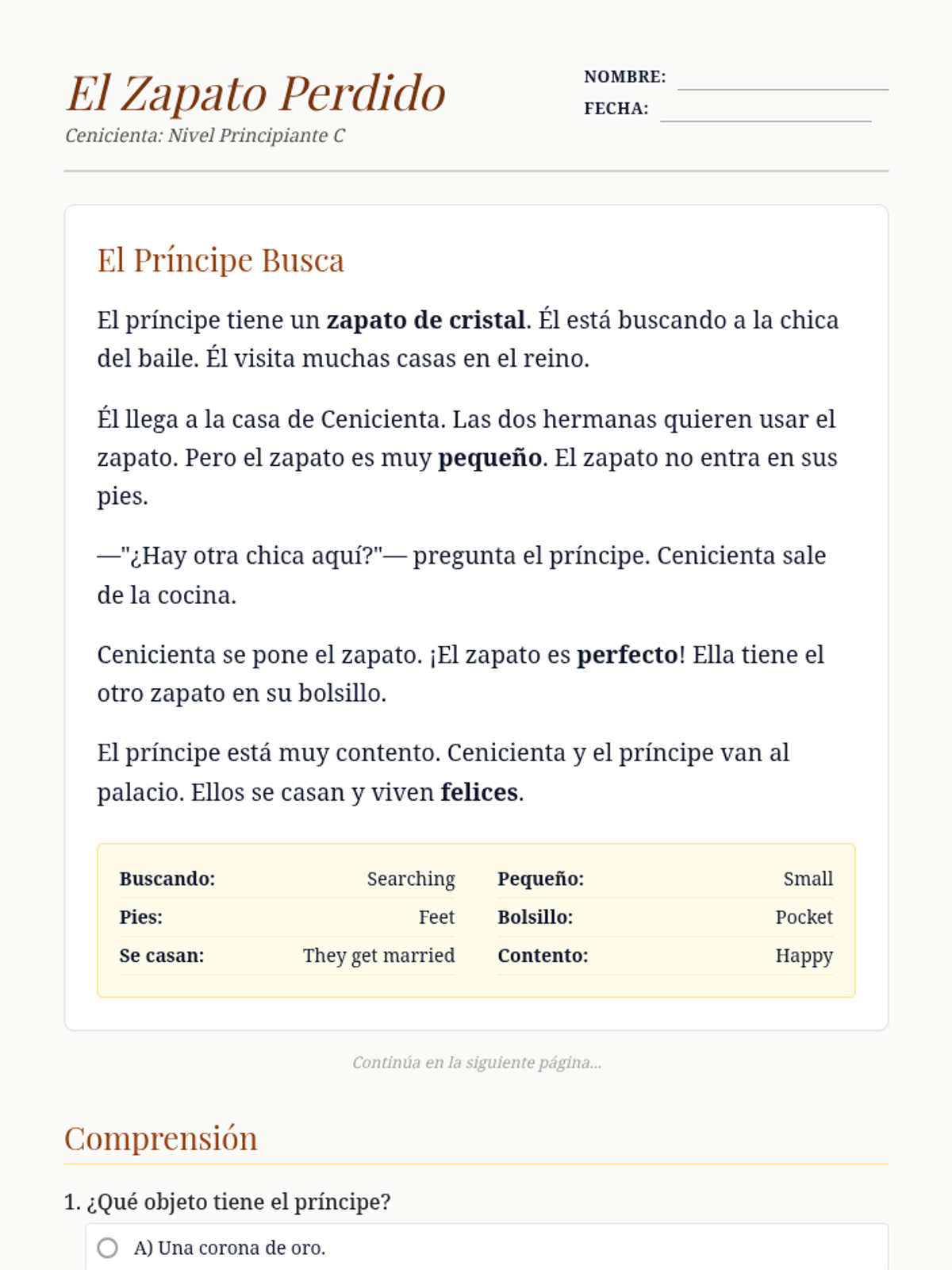
A third reading comprehension worksheet for absolute beginners, focusing on the search for the glass slipper and the happy ending of Cinderella. Includes a glossary, 5 literal multiple-choice questions, and an answer key. Revised to consolidate questions onto one page and improve glossary layout.
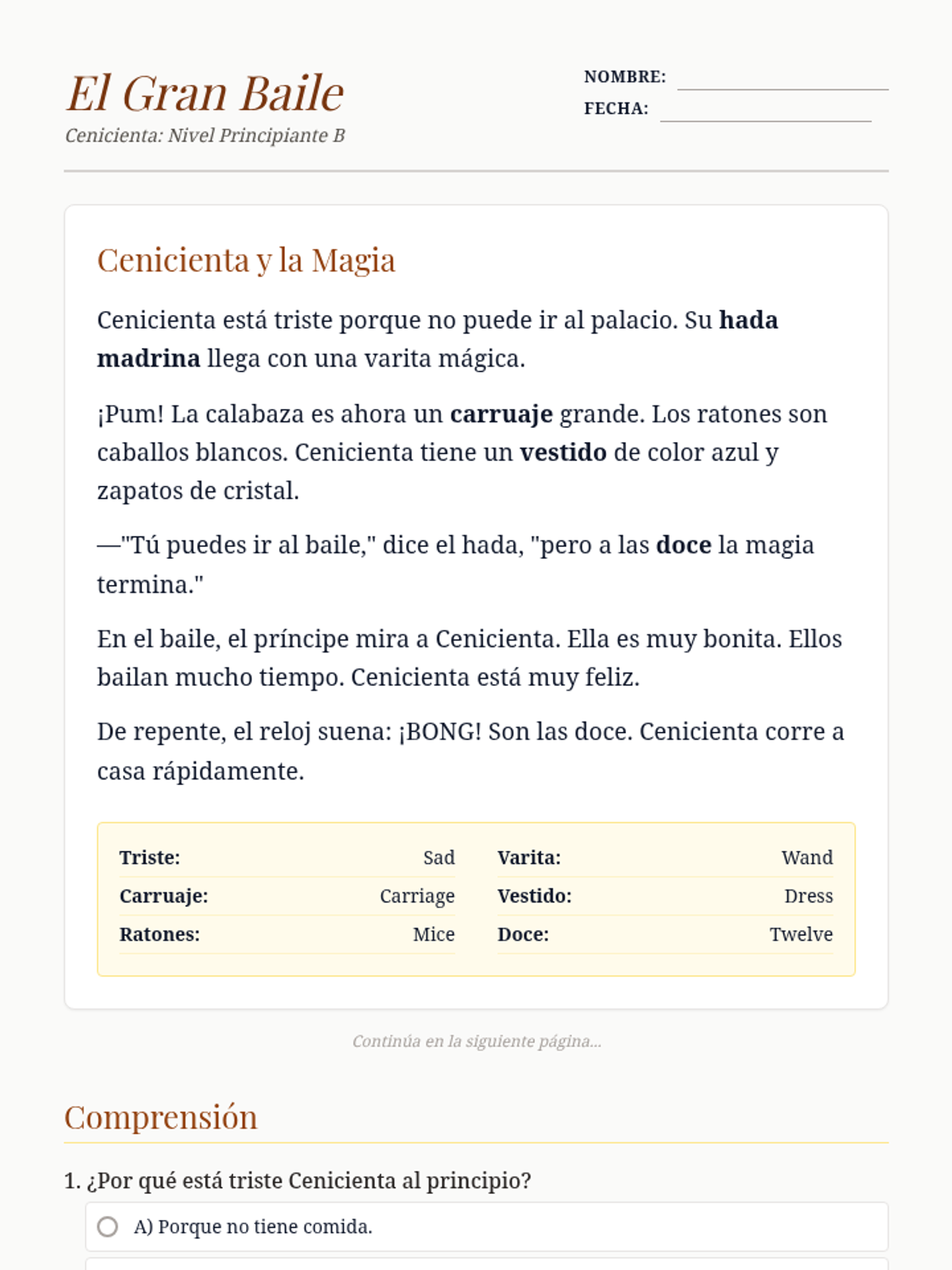
A second reading comprehension worksheet for absolute beginners, focusing on the magical transformation and the ball in Cinderella. Includes a glossary, 5 literal multiple-choice questions, and an answer key. Revised to consolidate questions onto one page and improve glossary layout.
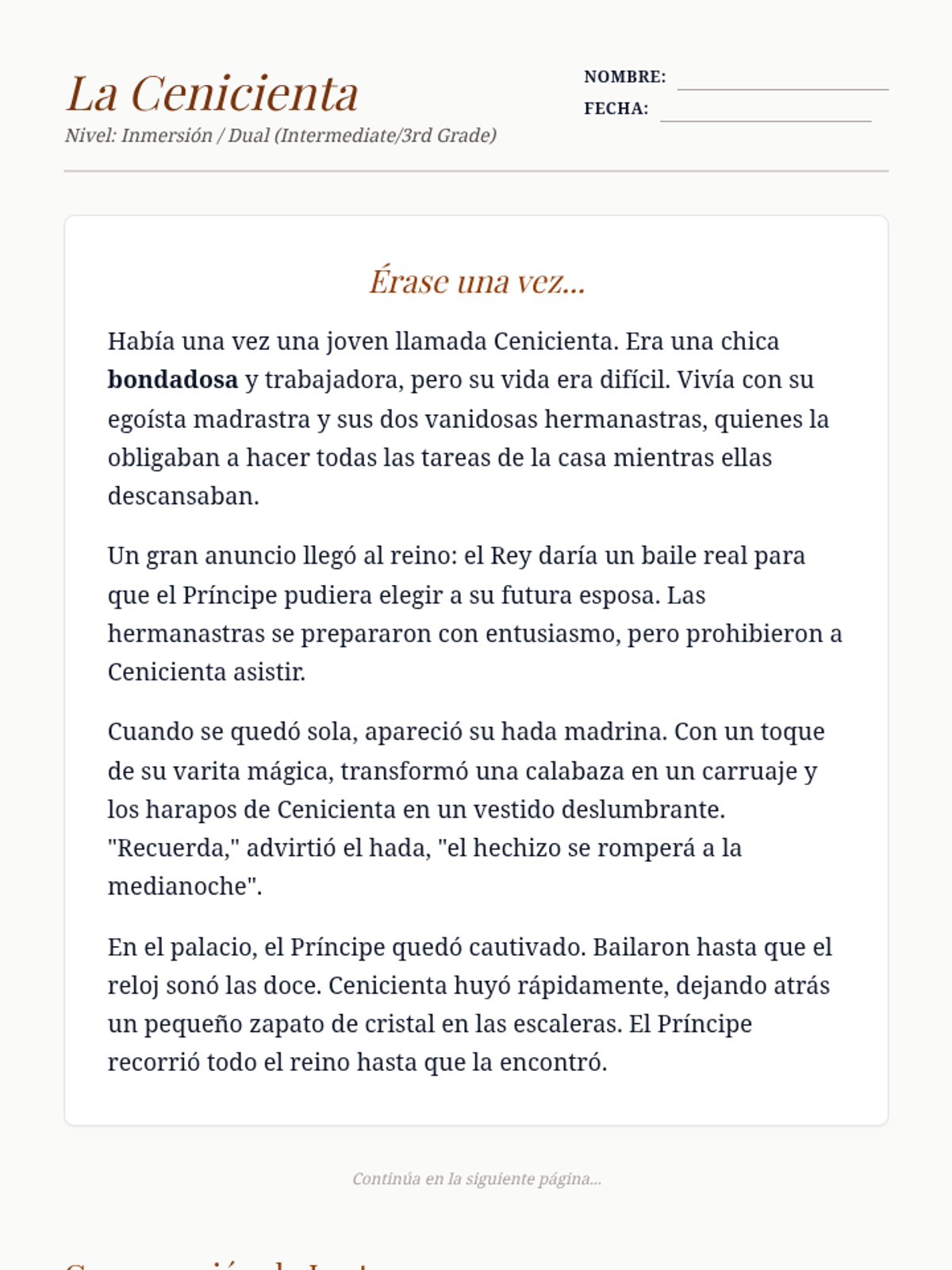
A Spanish reading comprehension worksheet for immersion students. Revised with the correct spelling of 'bondadosa', fixed page breaks, and includes the answer key at the end of the document.
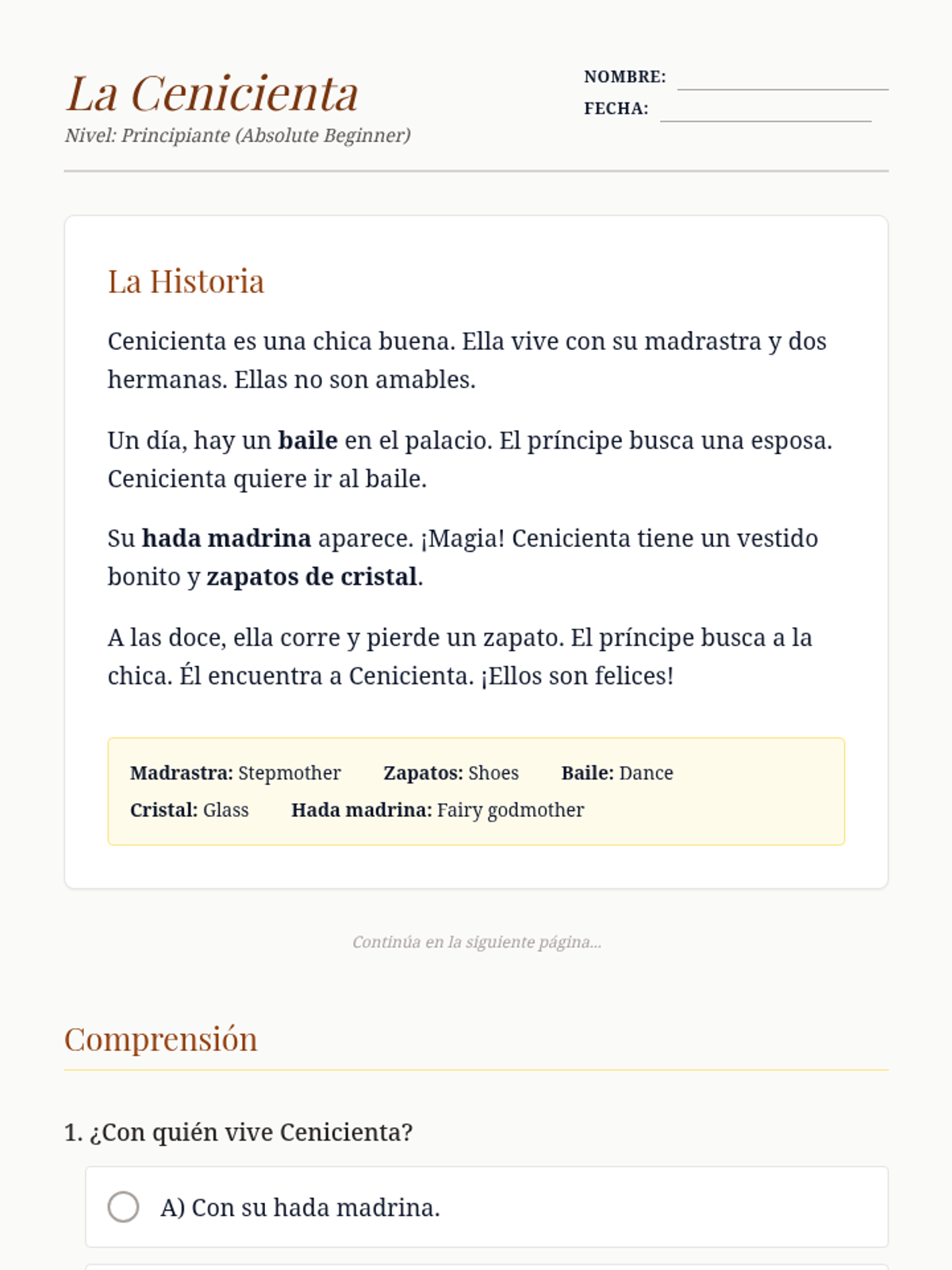
A reading comprehension worksheet for absolute beginners learning Spanish, featuring a simplified version of Cinderella with a glossary and 5 multiple-choice questions. Revised to ensure correct page breaks and identical choice styling. Now includes the answer key at the end.
A professional and encouraging graduation certificate for students who complete the Reading Bridge program. Features fields for the student's name, signature, and date, with bold 'Mission Accomplished' styling.
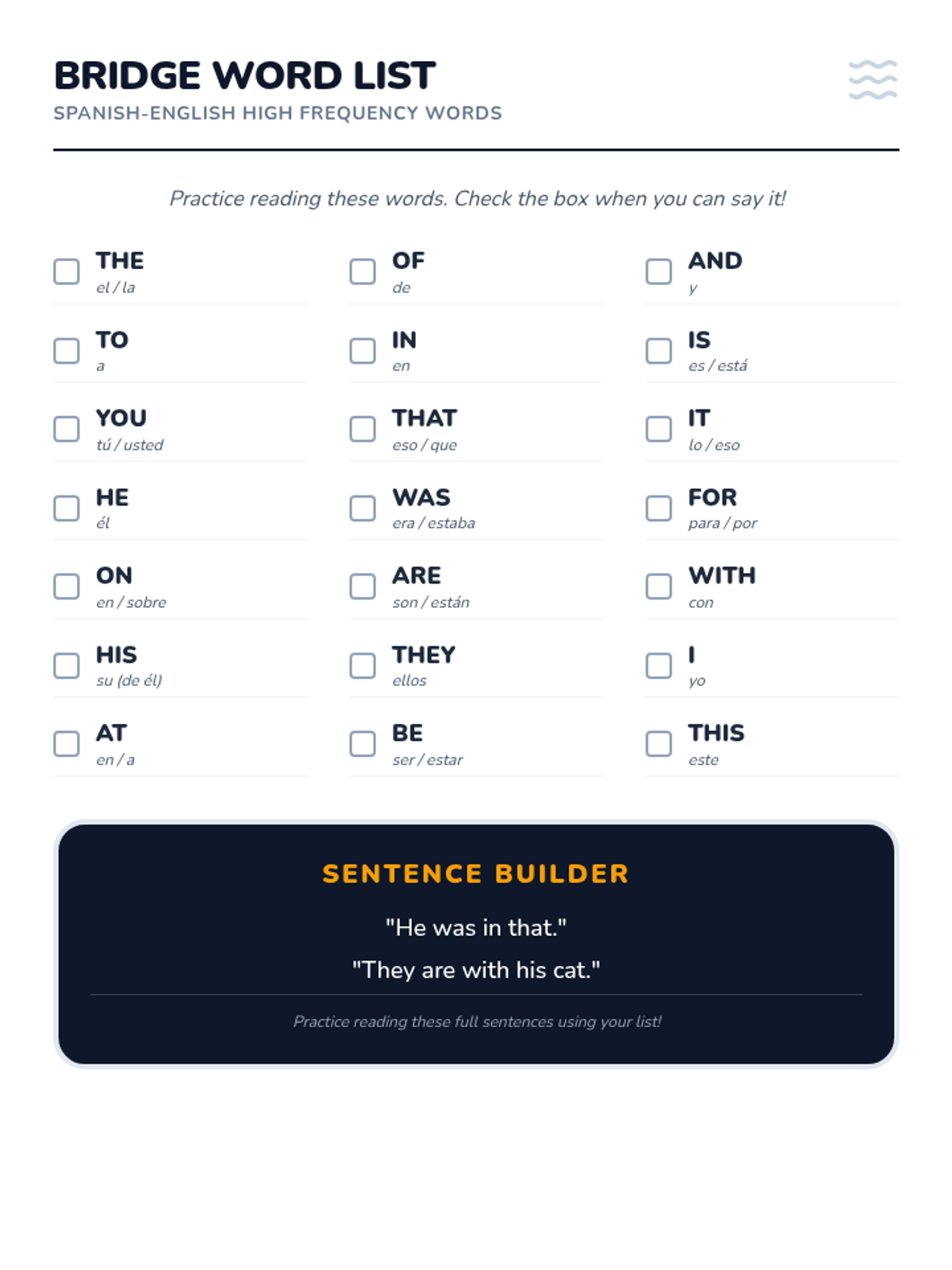
A clean, organized high-frequency word list featuring common English 'bridge' words for students to practice. Designed as a quick reference sheet for fluency practice.
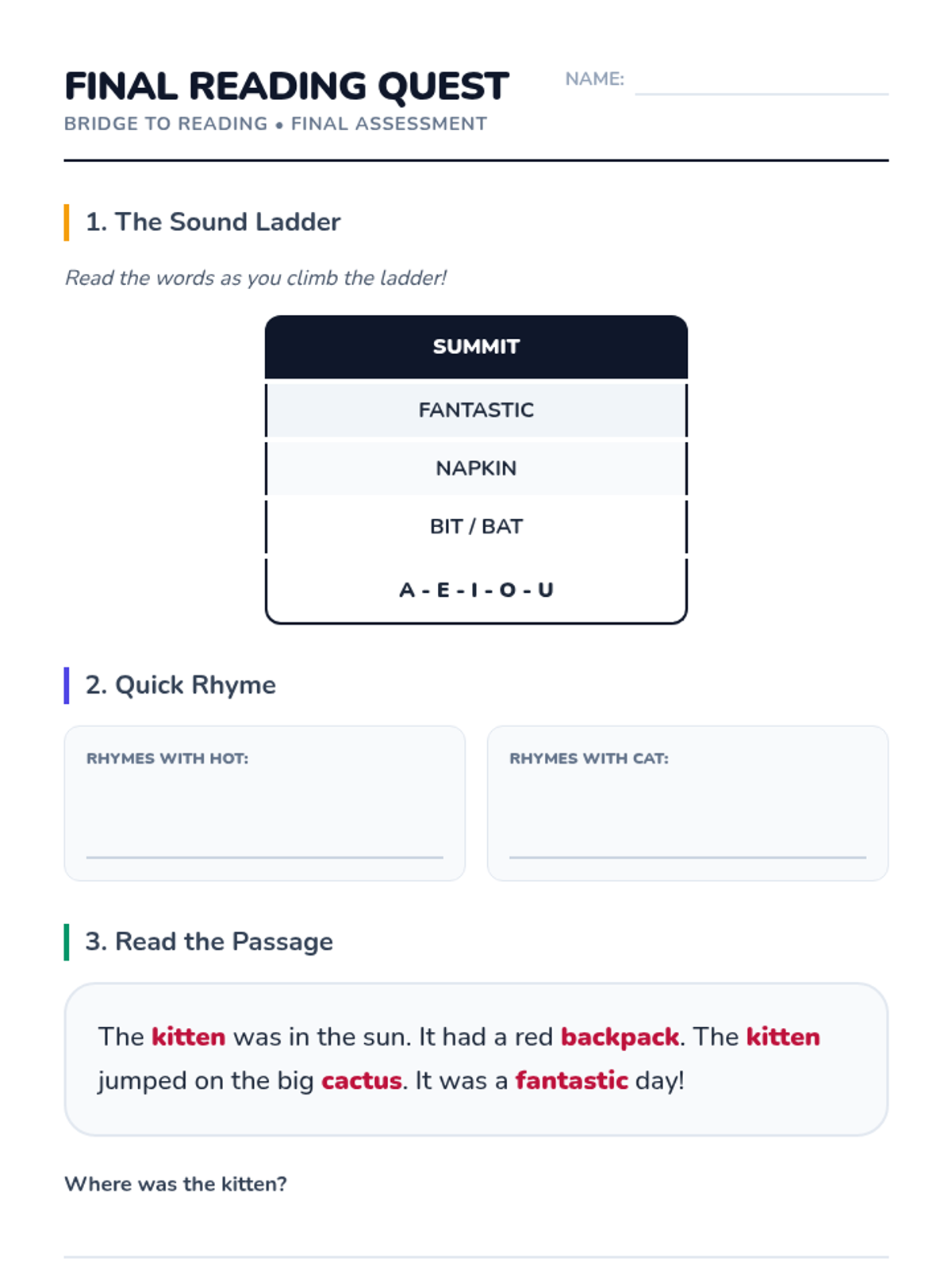
A final assessment worksheet for the 30-day program. Covers vowels, rhyming, multisyllabic words, and reading comprehension through a cumulative passage.
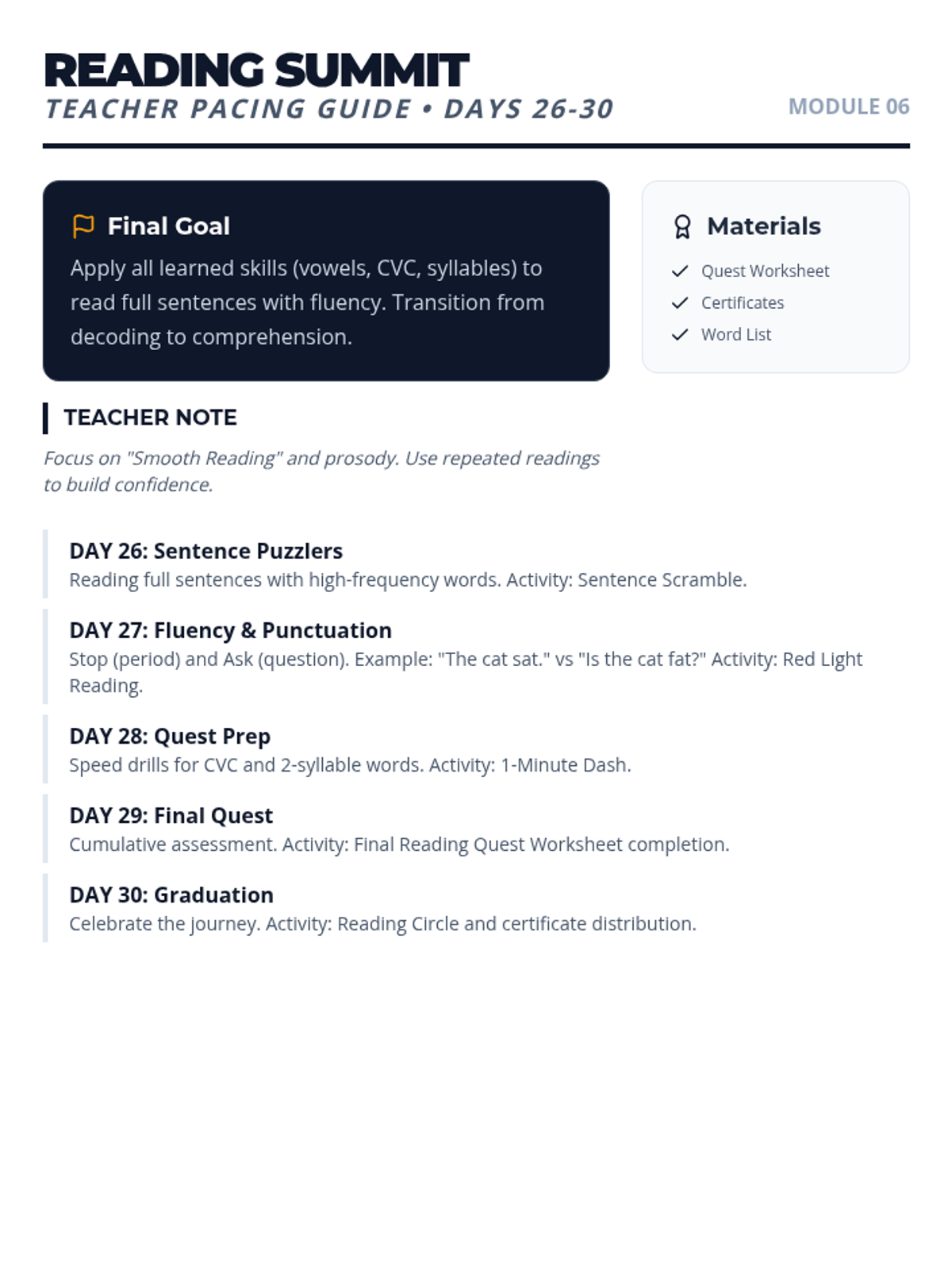
A teacher's pacing guide for the final week of the 30-day program. Focuses on fluency, sentence-level reading, and prosody (expression), concluding with a celebration of student progress.
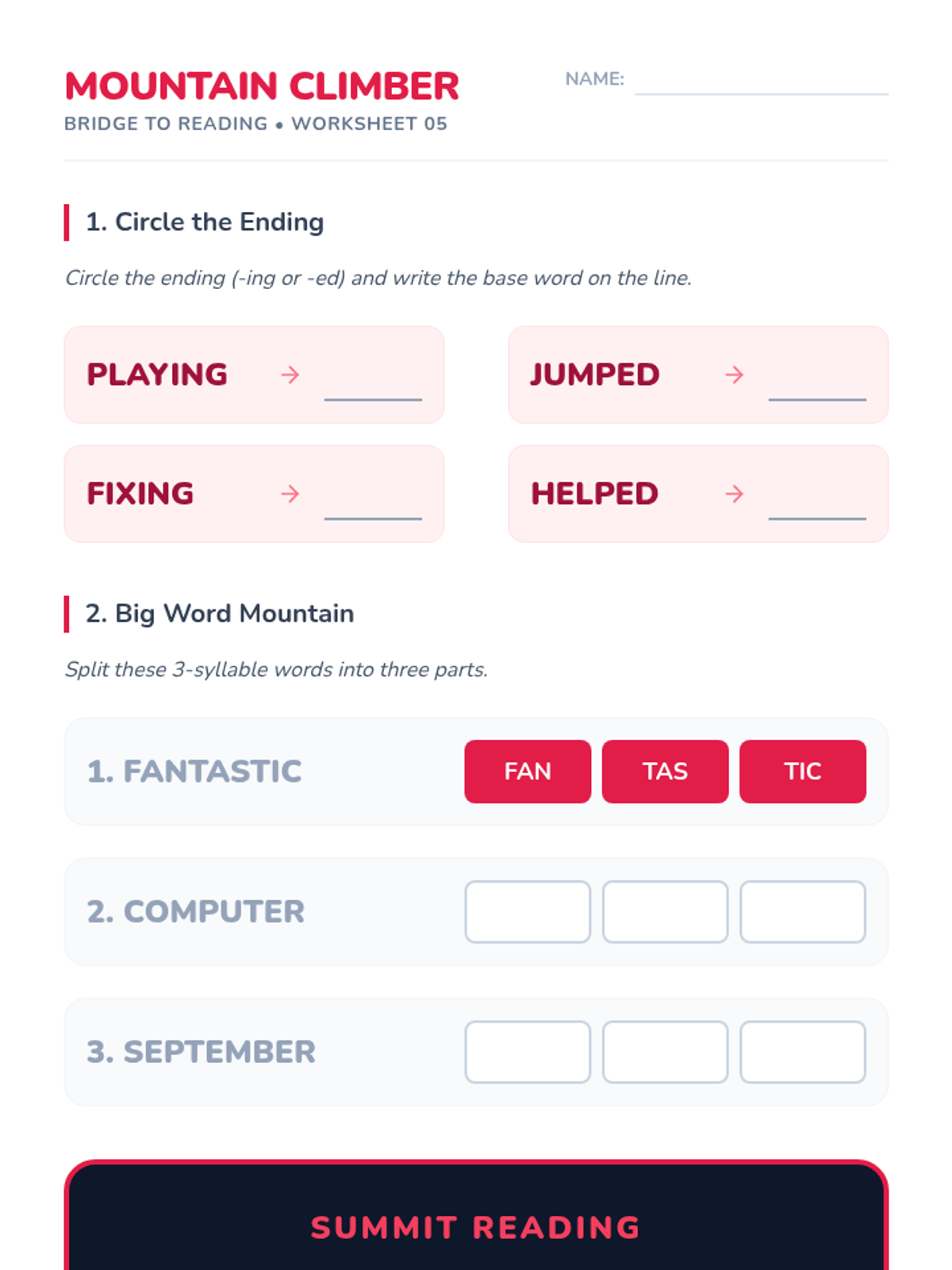
A student worksheet for multisyllabic words and suffixes. Includes suffix identification and a 'Big Word Mountain' activity for splitting three-syllable words.
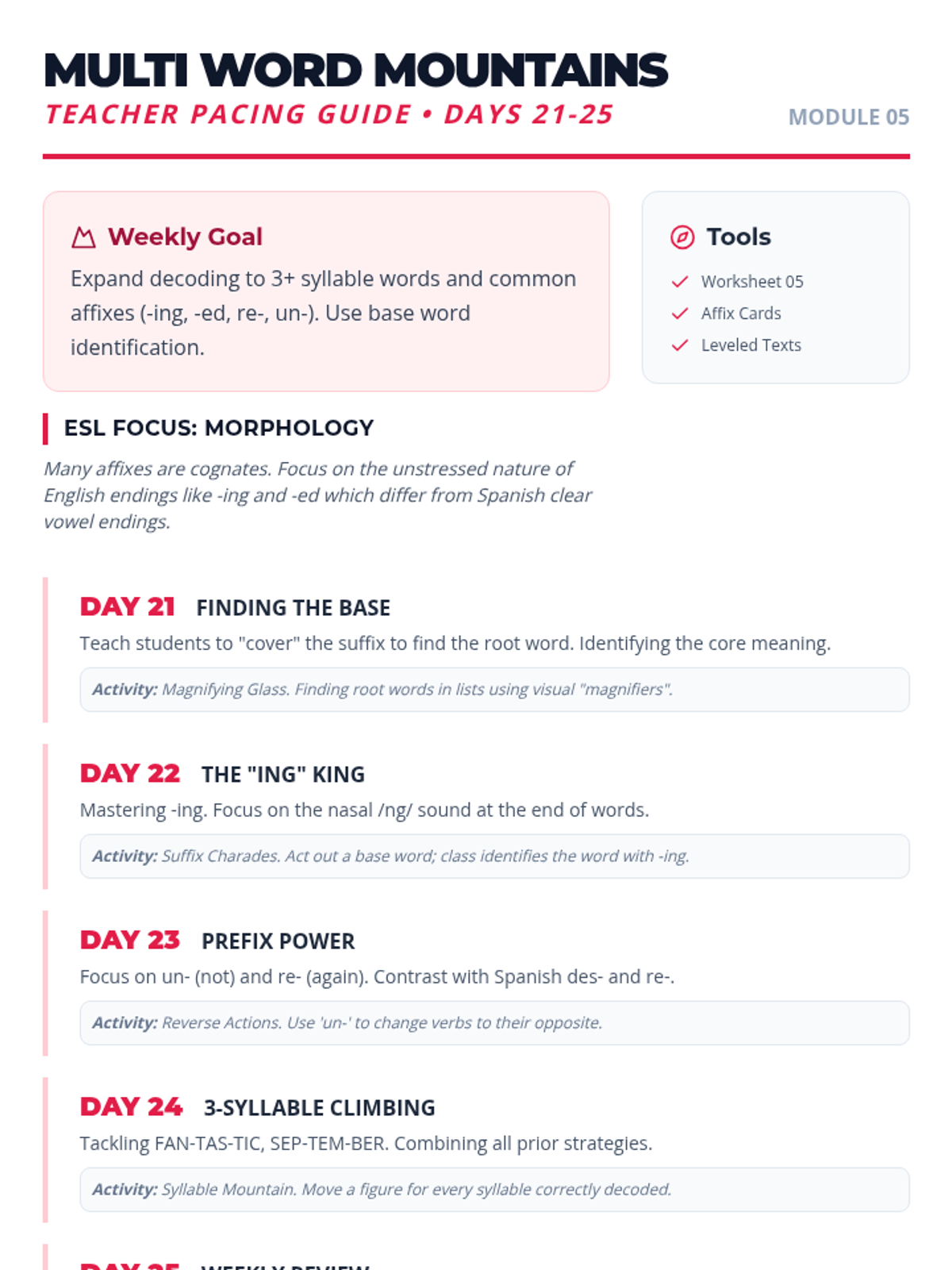
A teacher's pacing guide for week 5, focusing on multisyllabic words and morphology (prefixes/suffixes). Includes cognate-based strategies to leverage Spanish speakers' existing linguistic knowledge.
An engaging slide presentation to introduce the 'ser' vs 'estar' concepts using the DOCTOR and PLACE mnemonics. Designed for 8th-grade Spanish classes with high-impact visuals.
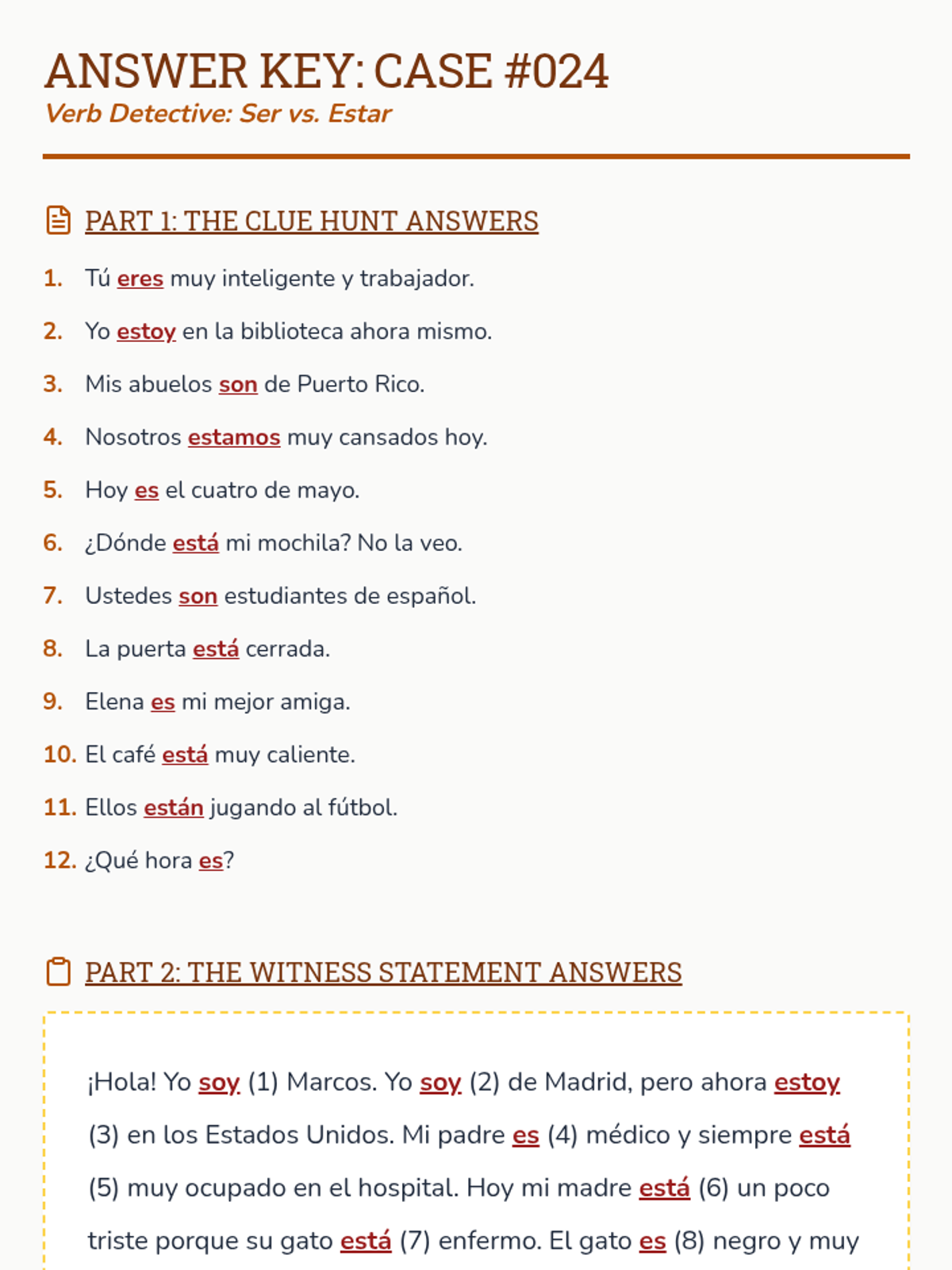
The teacher answer key for the Verb Detective worksheet, featuring complete answers for all fill-in-the-blank sections and grading notes for the creative writing portion.
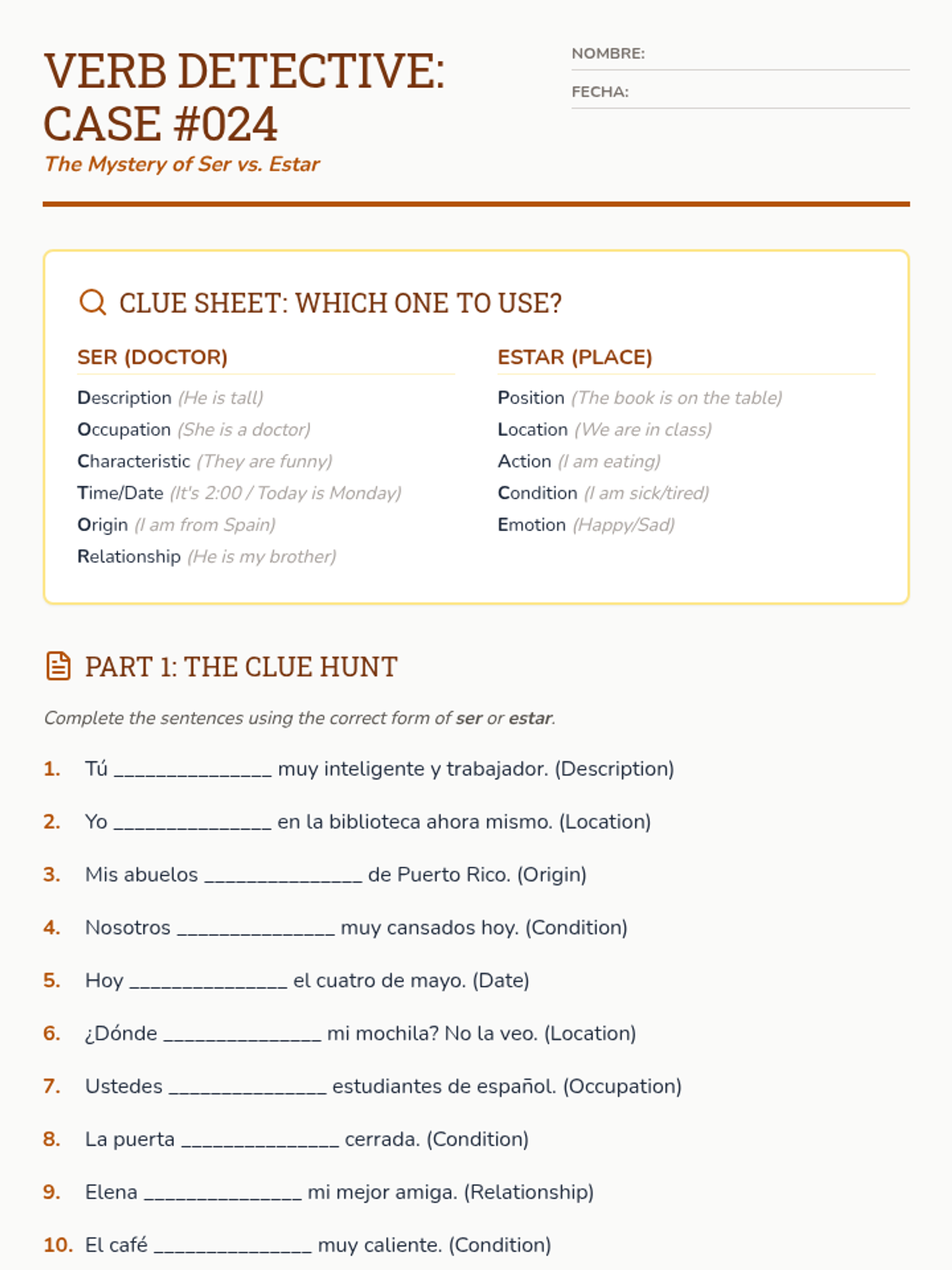
A detective-themed worksheet for 8th-grade Spanish students to practice the differences between 'ser' and 'estar'. Includes a reference guide, fill-in-the-blank sentences, a contextual paragraph, and creative writing prompts.
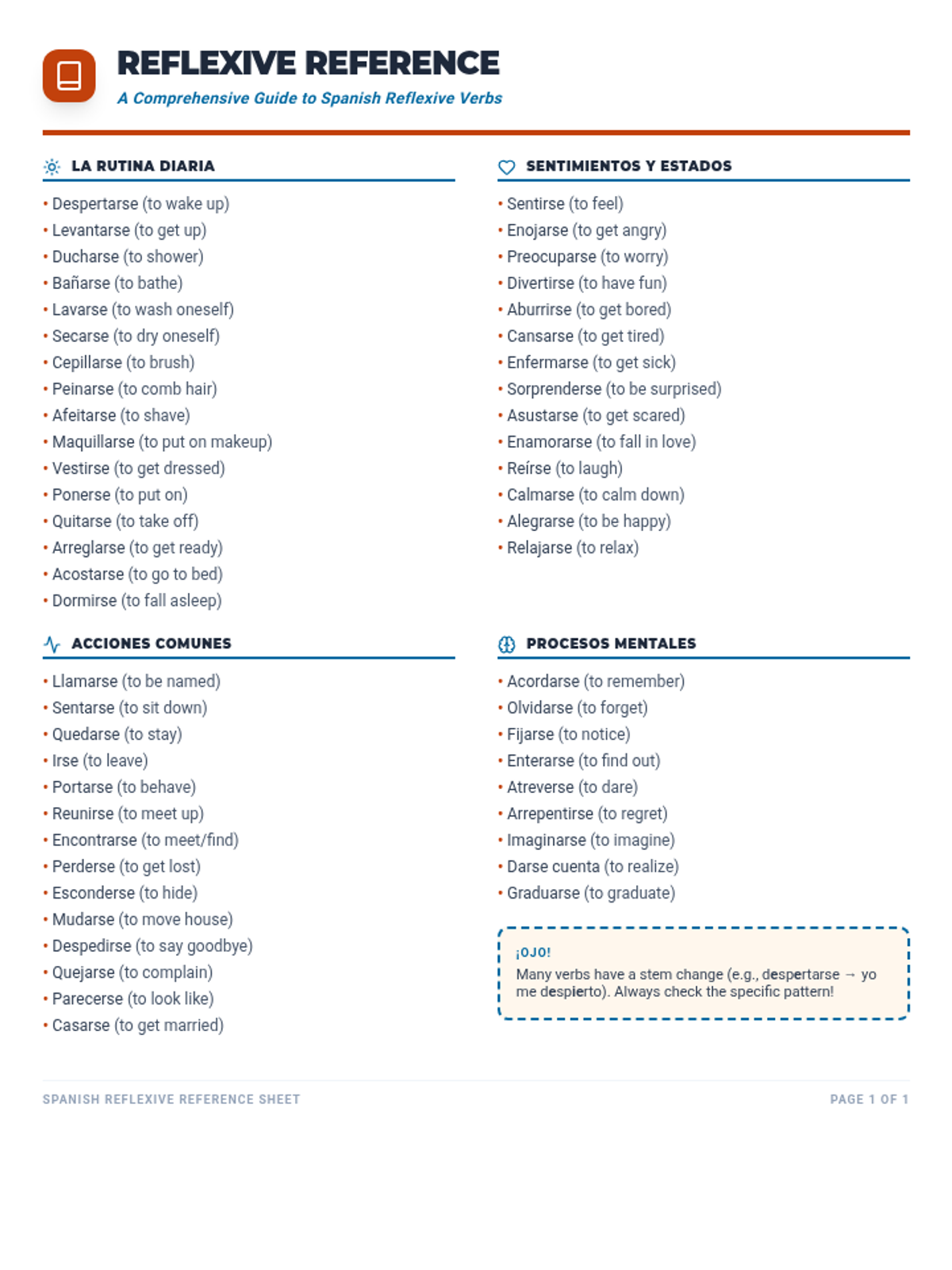
A comprehensive reference sheet listing common Spanish reflexive verbs grouped by category (Daily Routine, Feelings, Common Actions, and Mental Processes), each with its English translation. Revised for better page flow and contrast.
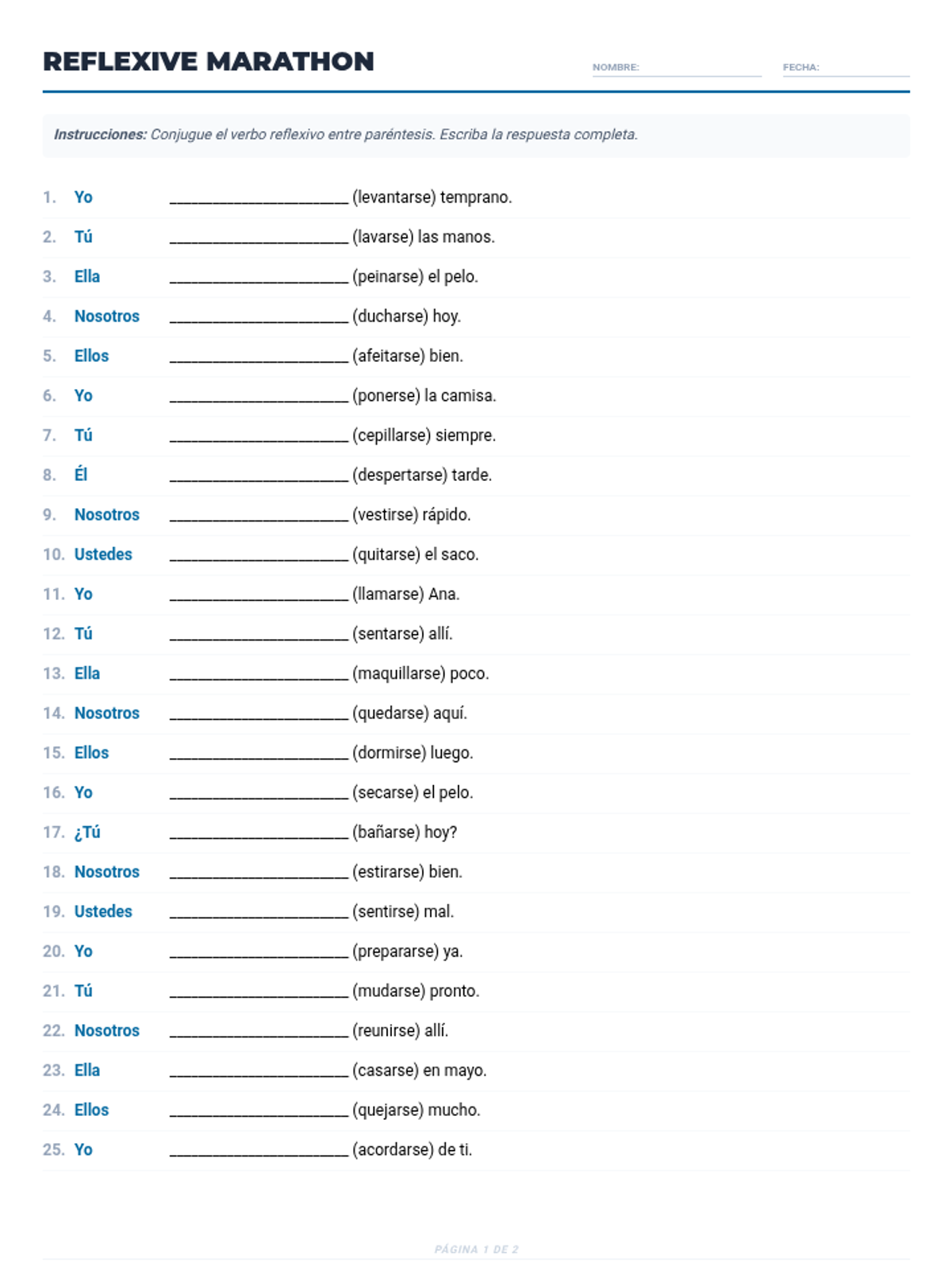
A high-repetition practice worksheet with 50 fill-in-the-blank sentences focusing on reflexive verb conjugations. Features double-spaced lines for clarity and ease of writing. Revised for efficiency and accuracy.
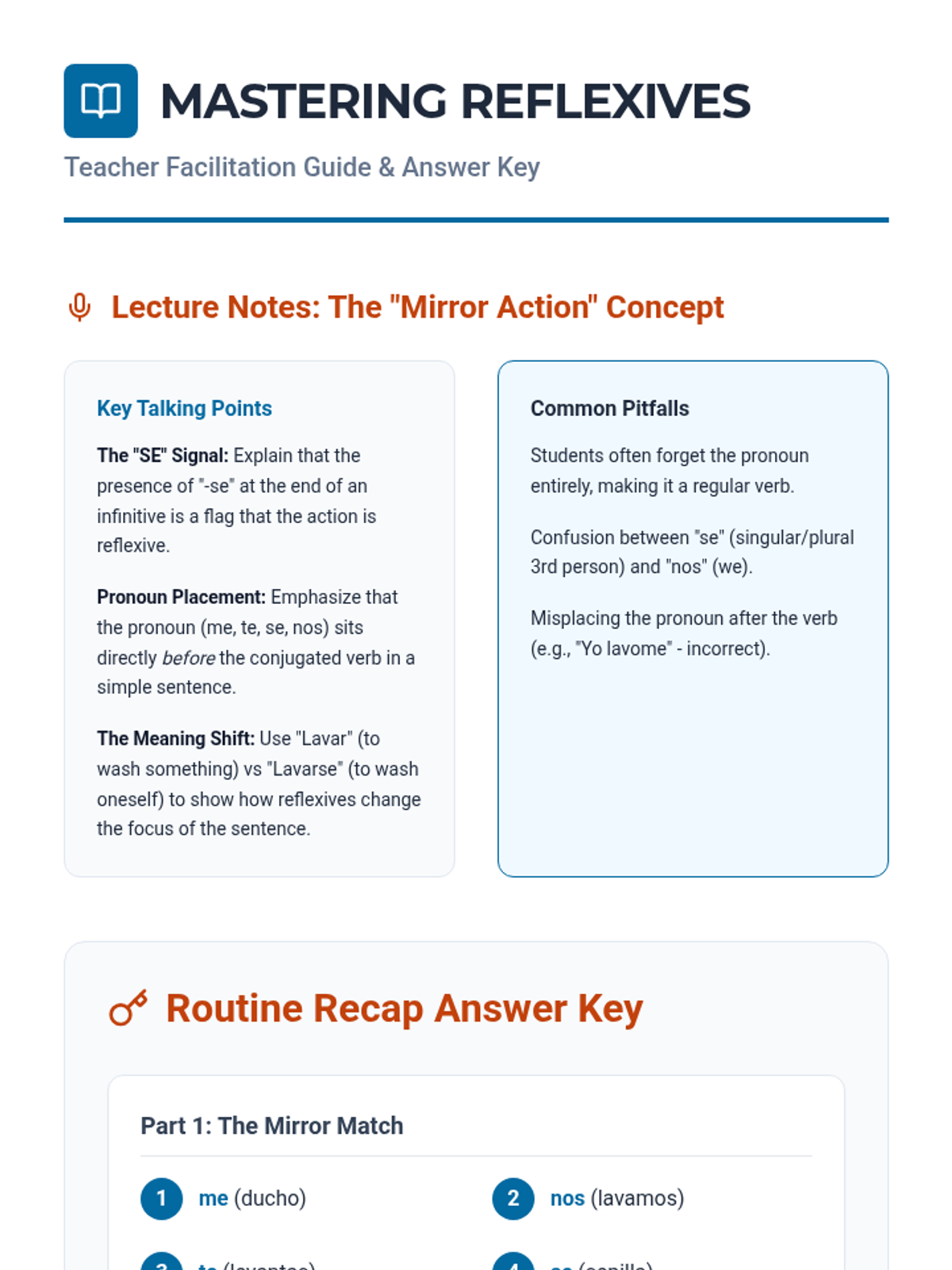
A teacher guide for the reflexive verbs lesson. Includes detailed lecture notes on the 'mirror action' concept, common student pitfalls, a full answer key for the student worksheet, and a quick-reference conjugation table. Revised for better page flow and consistent styling.
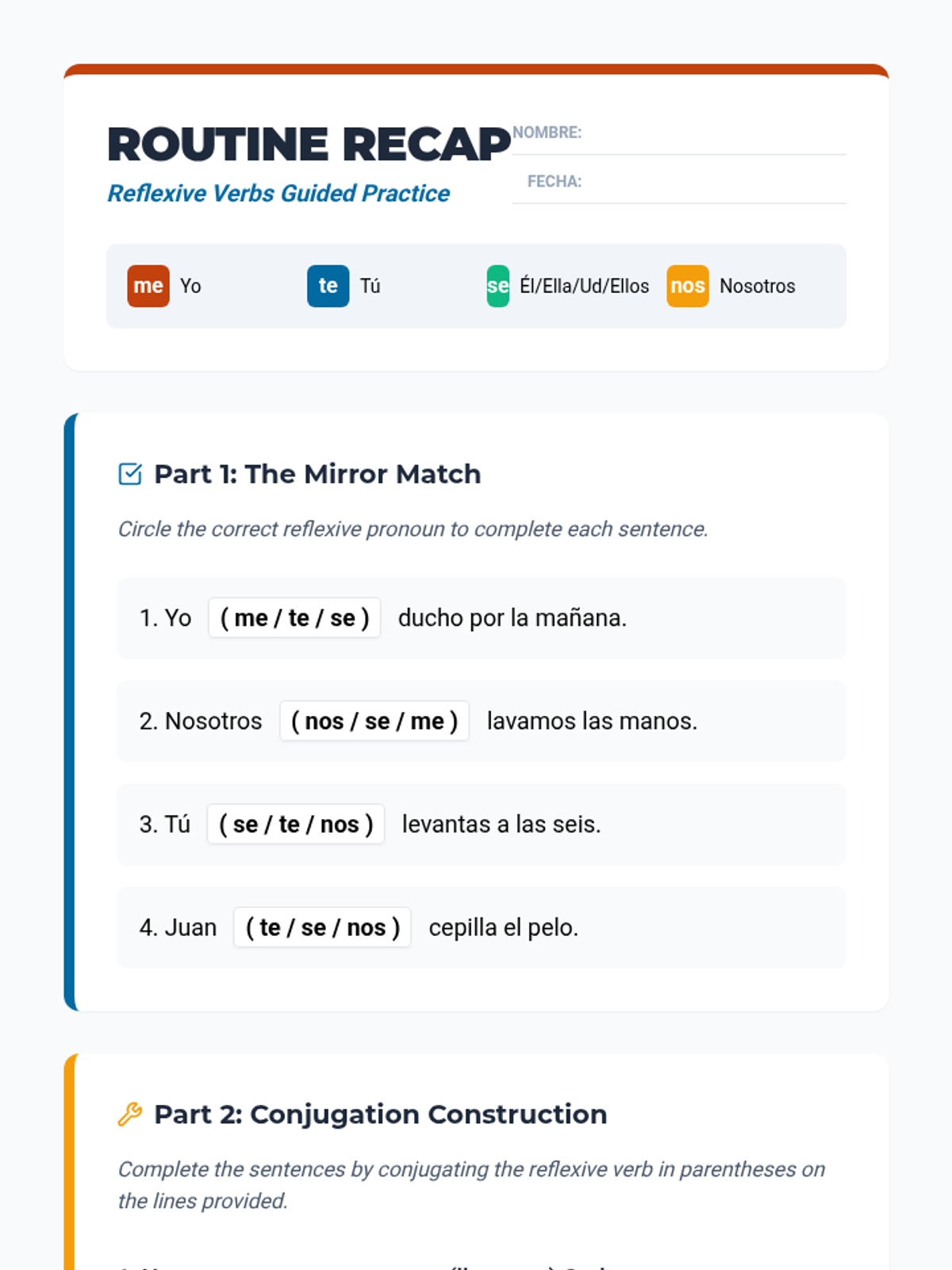
A student-facing worksheet for practicing reflexive verbs and pronouns (me, te, se, nos). Includes pronoun selection, verb conjugation, and a personal writing prompt focused on daily routines. Revised for better layout and clarity.
An engaging slide deck introducing reflexive verbs in Spanish. It covers the concept of reflexive actions, the pronouns me, te, se, nos, and step-by-step conjugation with daily routine examples.
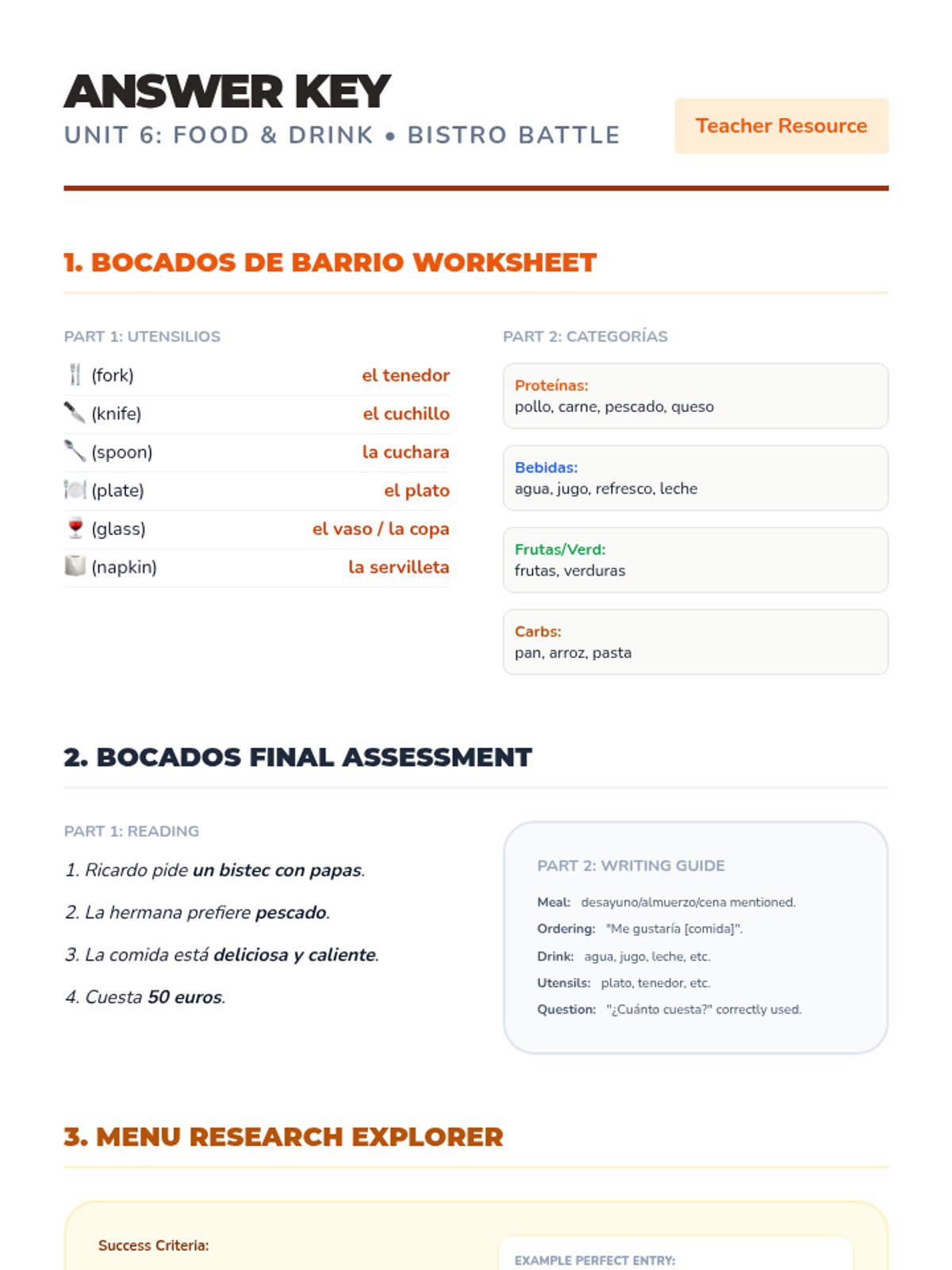
Consolidated answer key for the Unit 6 (Food and Drink) materials. Provides specific answers for the introductory worksheet and final assessment, plus a grading rubric and example responses for the menu research activity. Updated with improved formatting.
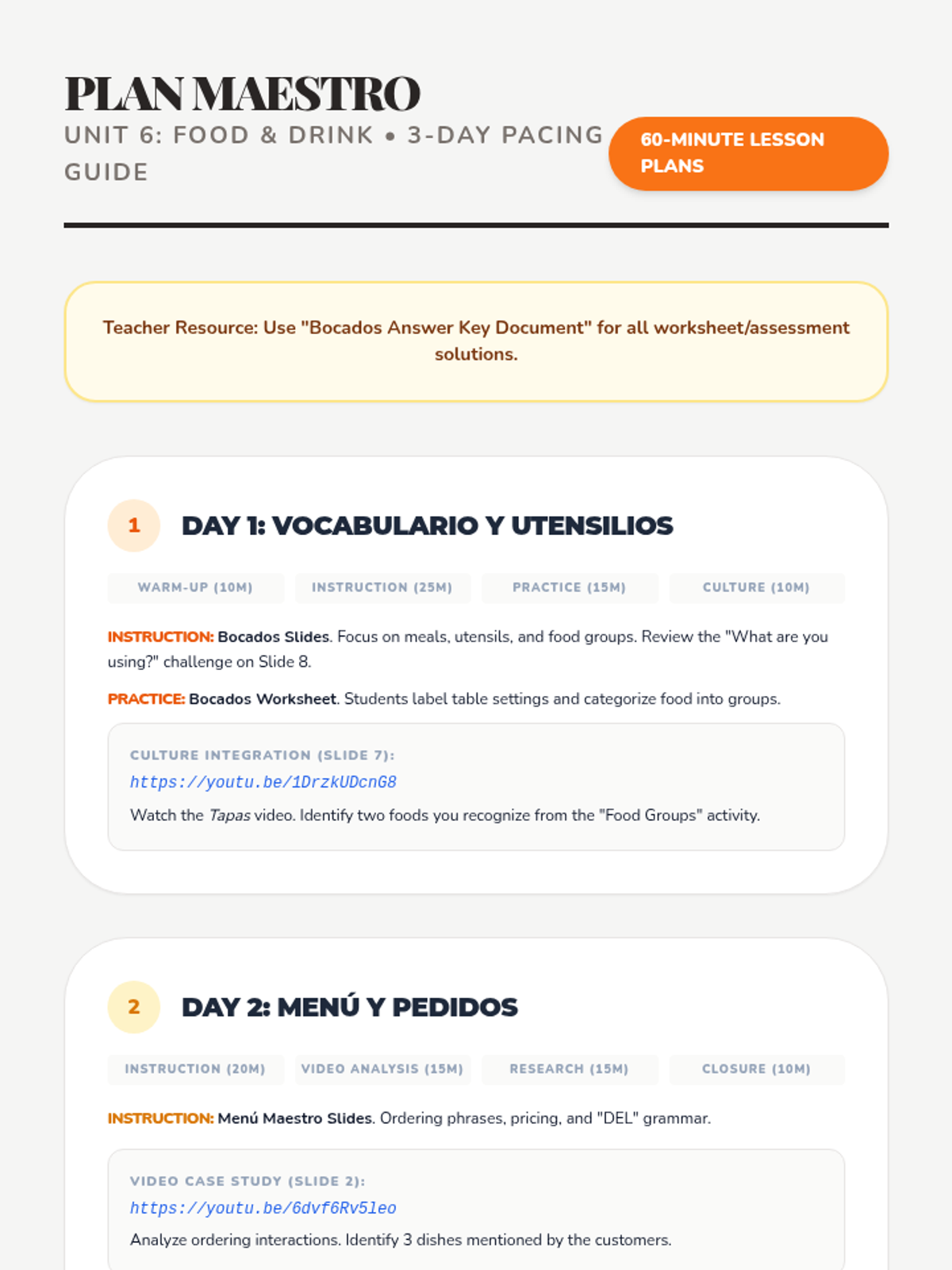
Detailed three-day lesson plan for the Unit 6 Food and Drink unit. Updated to include the Tapas cultural video on Day 1 and restaurant interactions on Day 2.
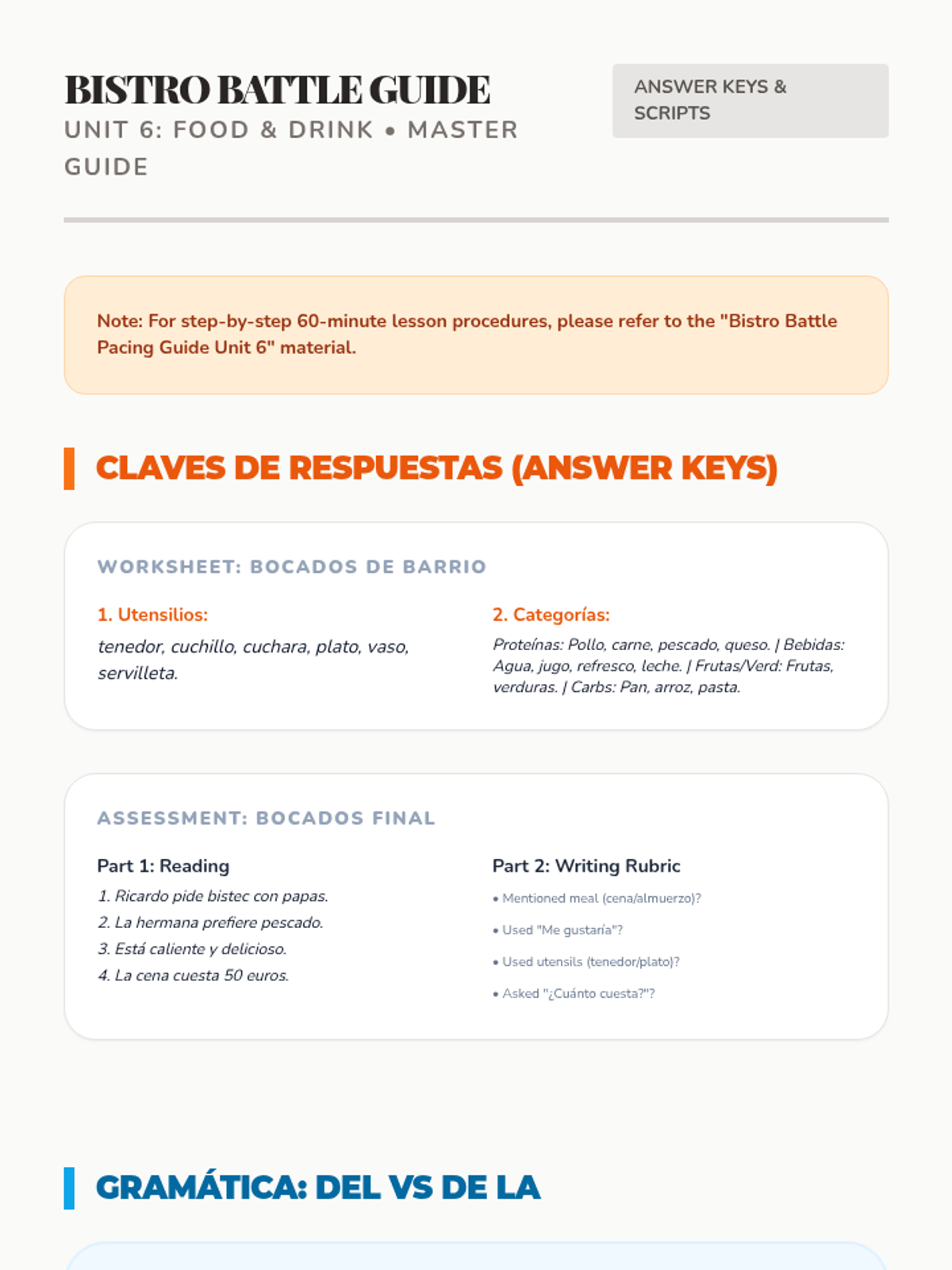
Master Teacher Guide for Unit 6 (Food and Drink). Includes answer keys for all worksheets, detailed grammar notes on contractions (comparing to Italian/French), and a scoring guide for the summative restaurant skit.
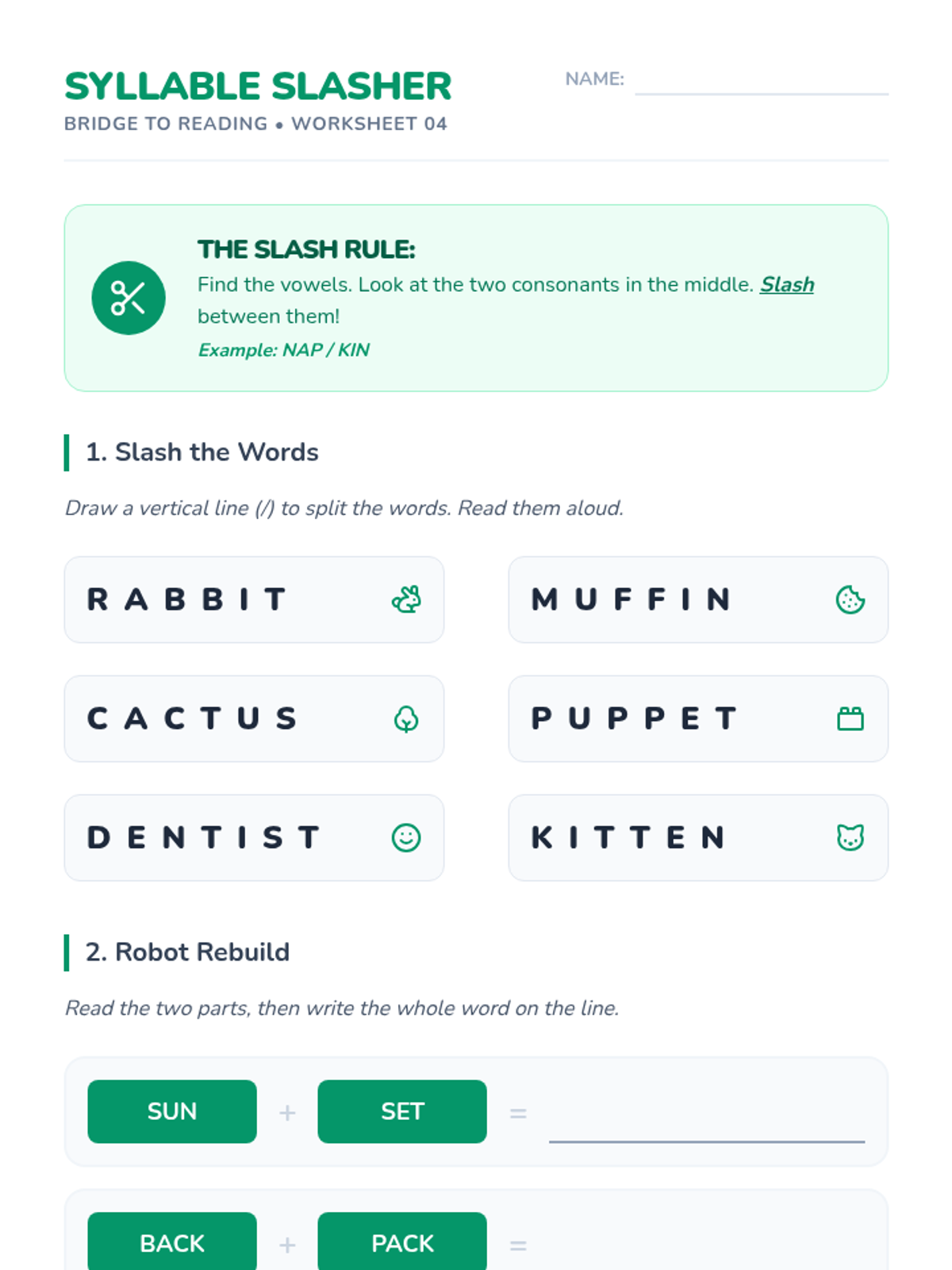
A student worksheet for practicing syllabication. Students 'slash' two-syllable words according to the VC/CV rule and combine syllable parts to form complete words.
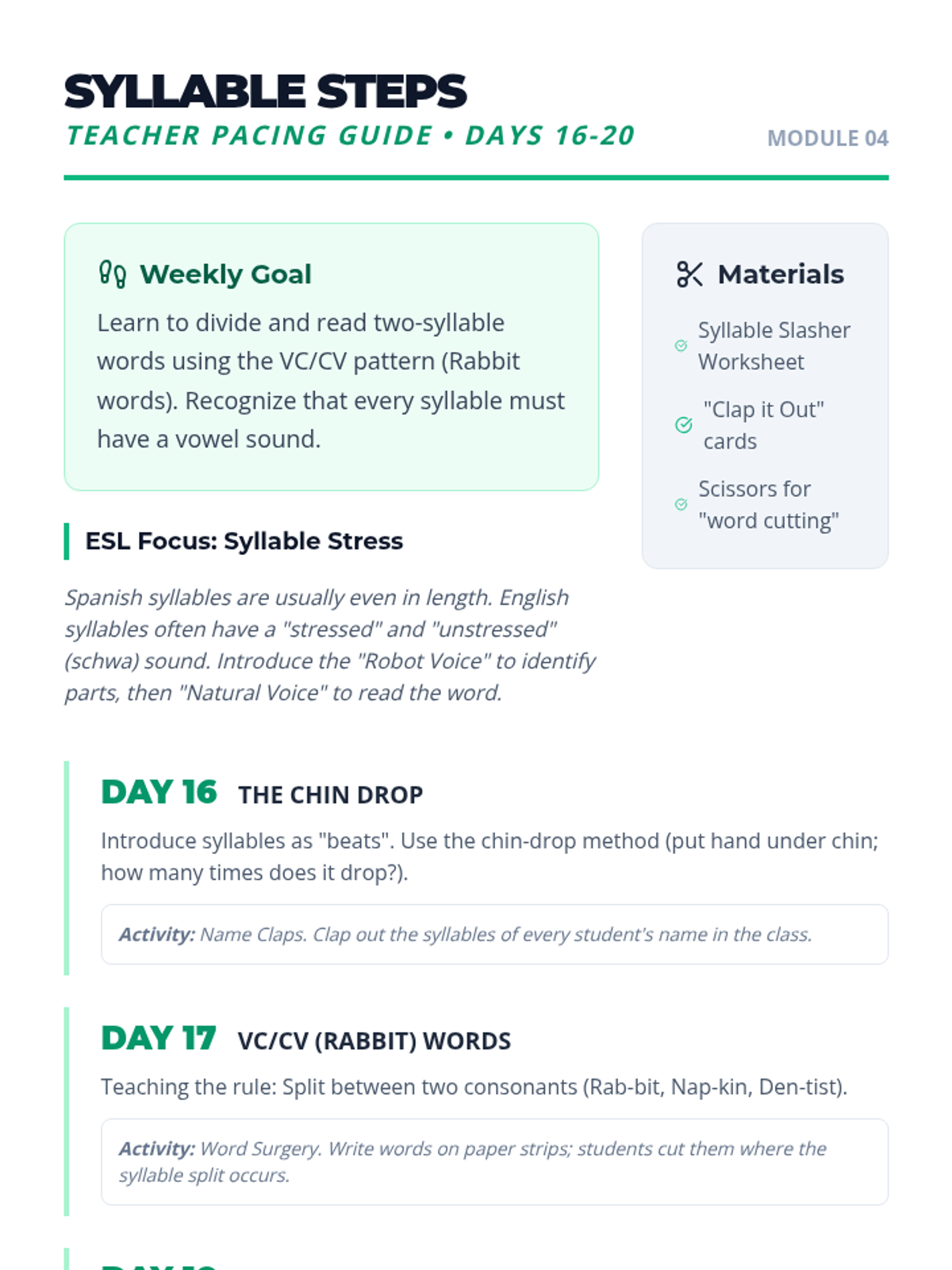
A teacher's guide for week 4, focusing on syllabication and two-syllable word decoding. Includes specific strategies like 'Word Surgery' and 'The Chin Drop' to help students identify word parts.
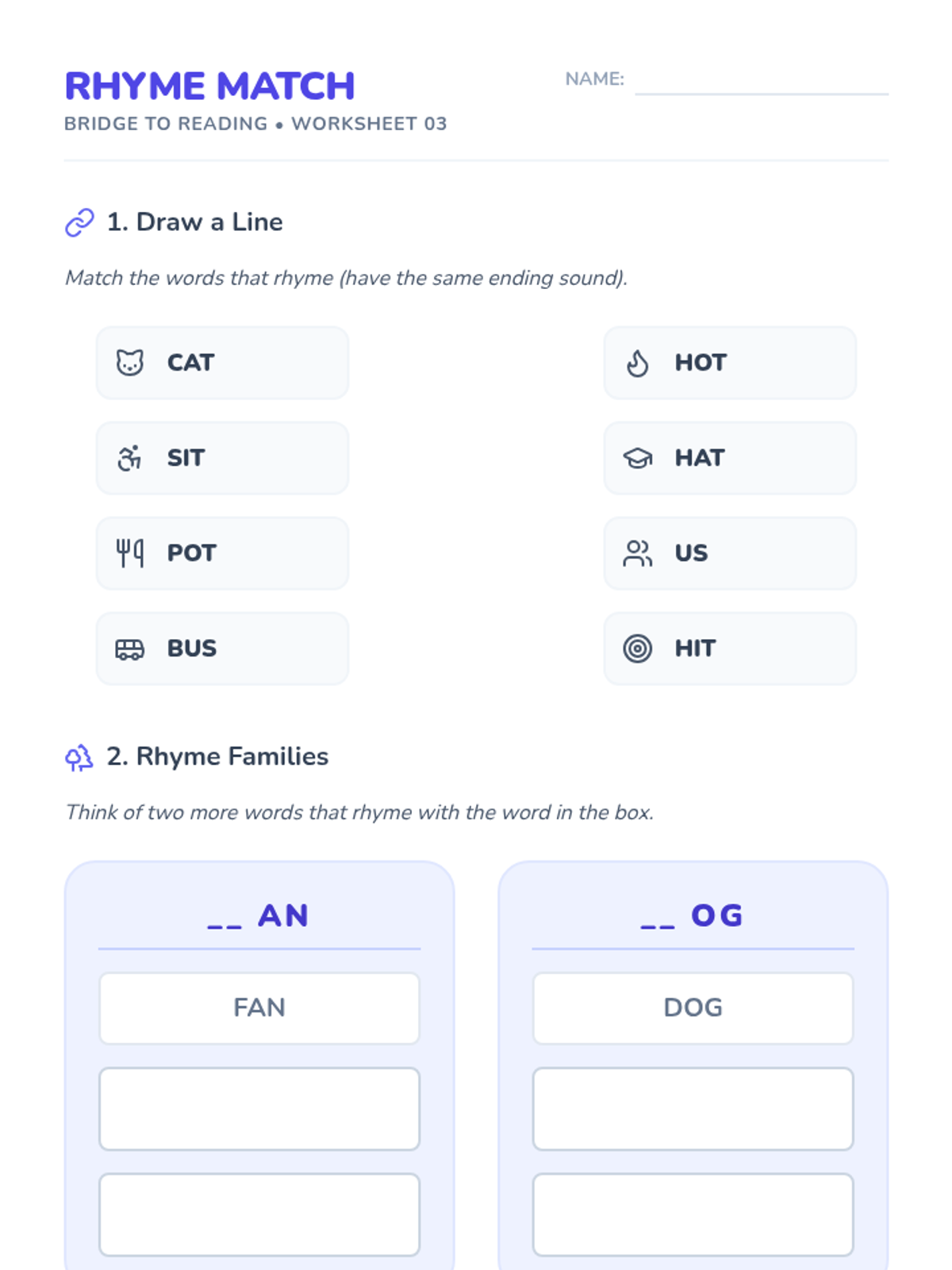
A rhyming activity sheet where students match rhyming pairs and brainstorm words for specific word families (-an and -og). Designed with clear visual icons to assist ESL learners.
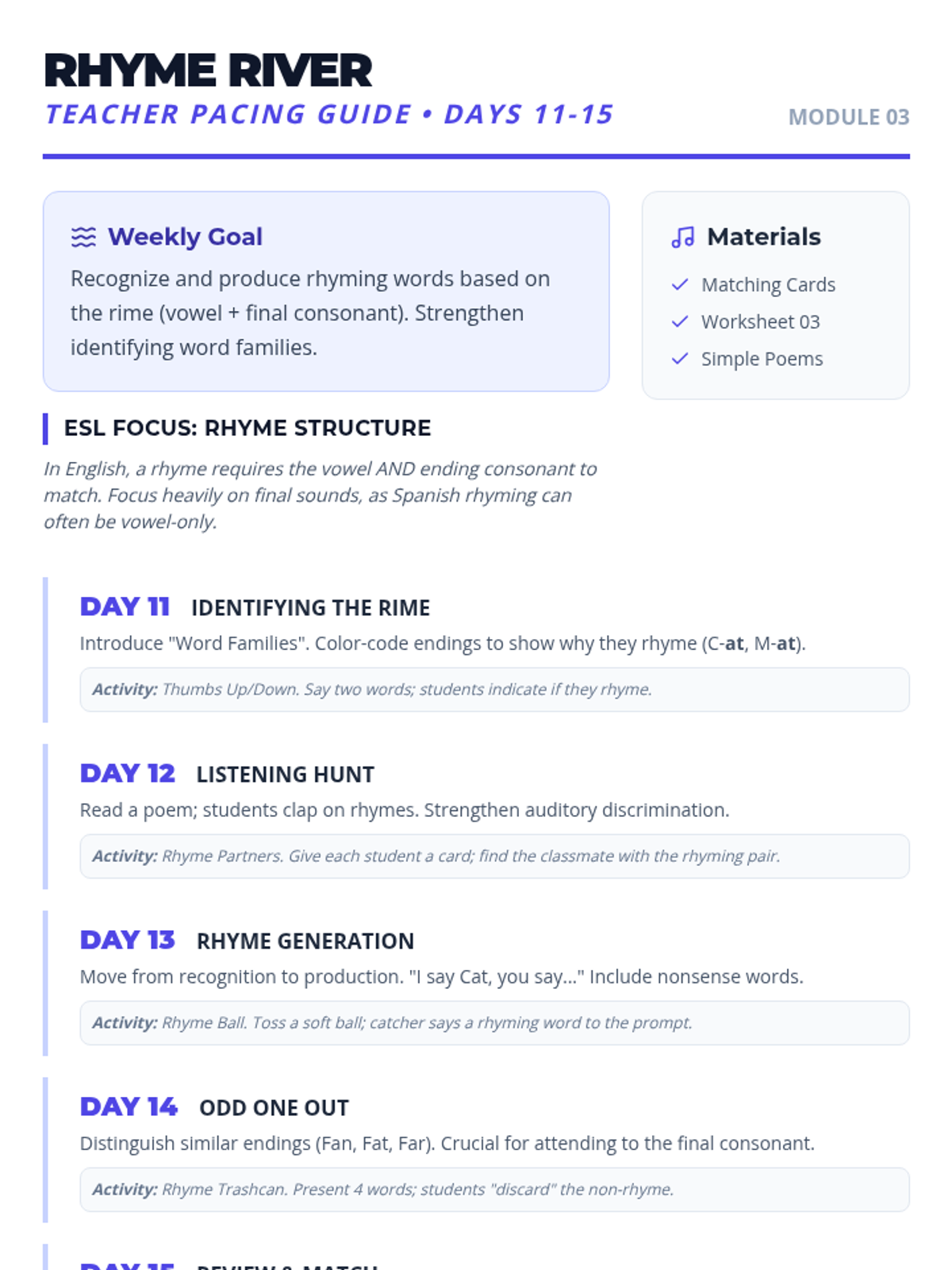
A teacher's pacing guide for week 3, dedicated to rhyming and word families. Includes strategies for helping Spanish speakers understand the English rhyming structure (vowel + coda).
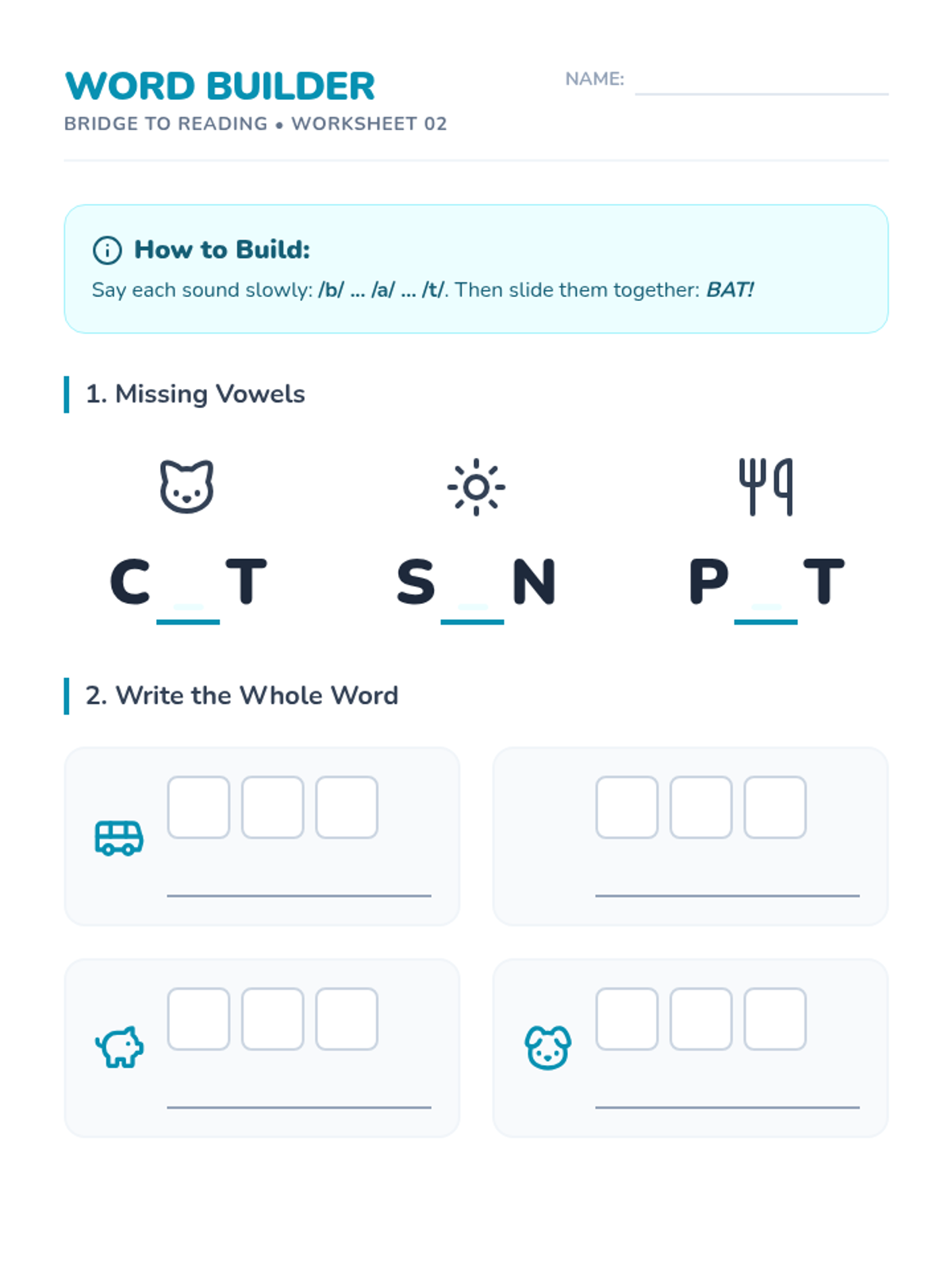
A CVC word-building worksheet where students fill in missing vowels and write full three-letter words based on visual prompts. Designed with spacious boxes for clear handwriting practice.
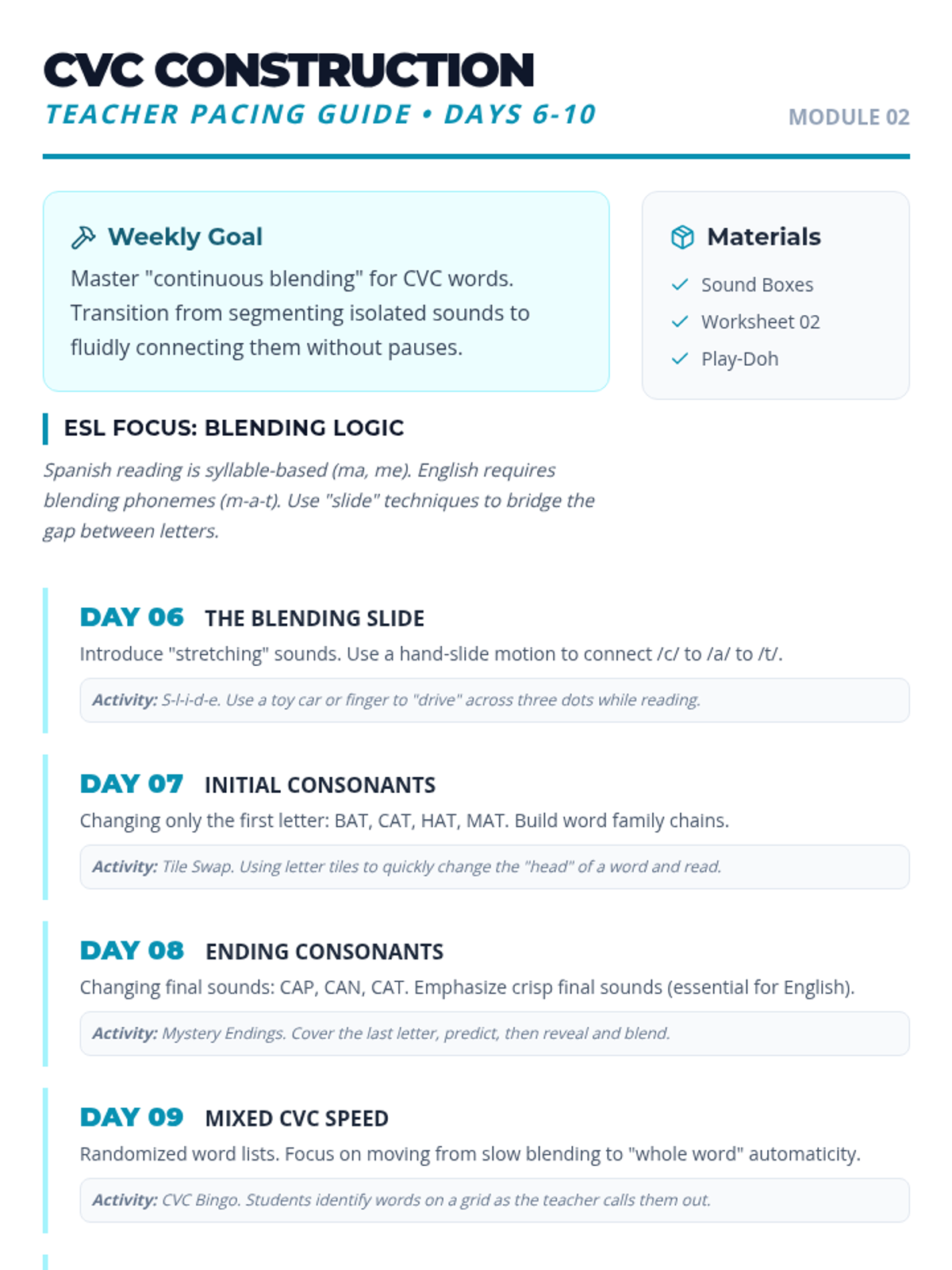
A teacher's pacing guide for the second week of the program, focusing on CVC word blending. Includes specific ESL strategies for transitioning from Spanish syllabic reading to English phonemic blending.
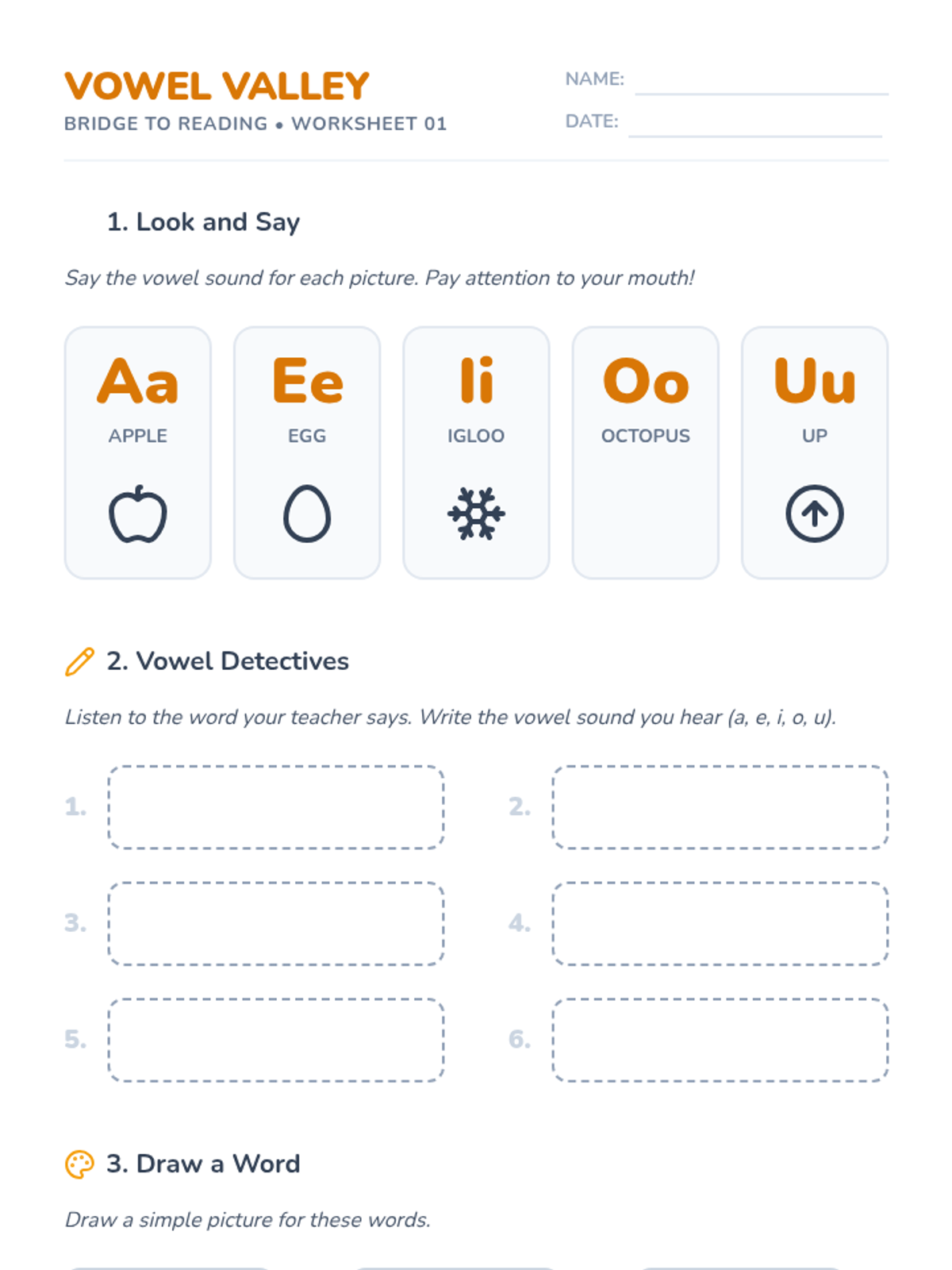
A student worksheet for vowel sound identification and mouth shape awareness. Includes sound sorting boxes and a creative drawing section to reinforce word associations.
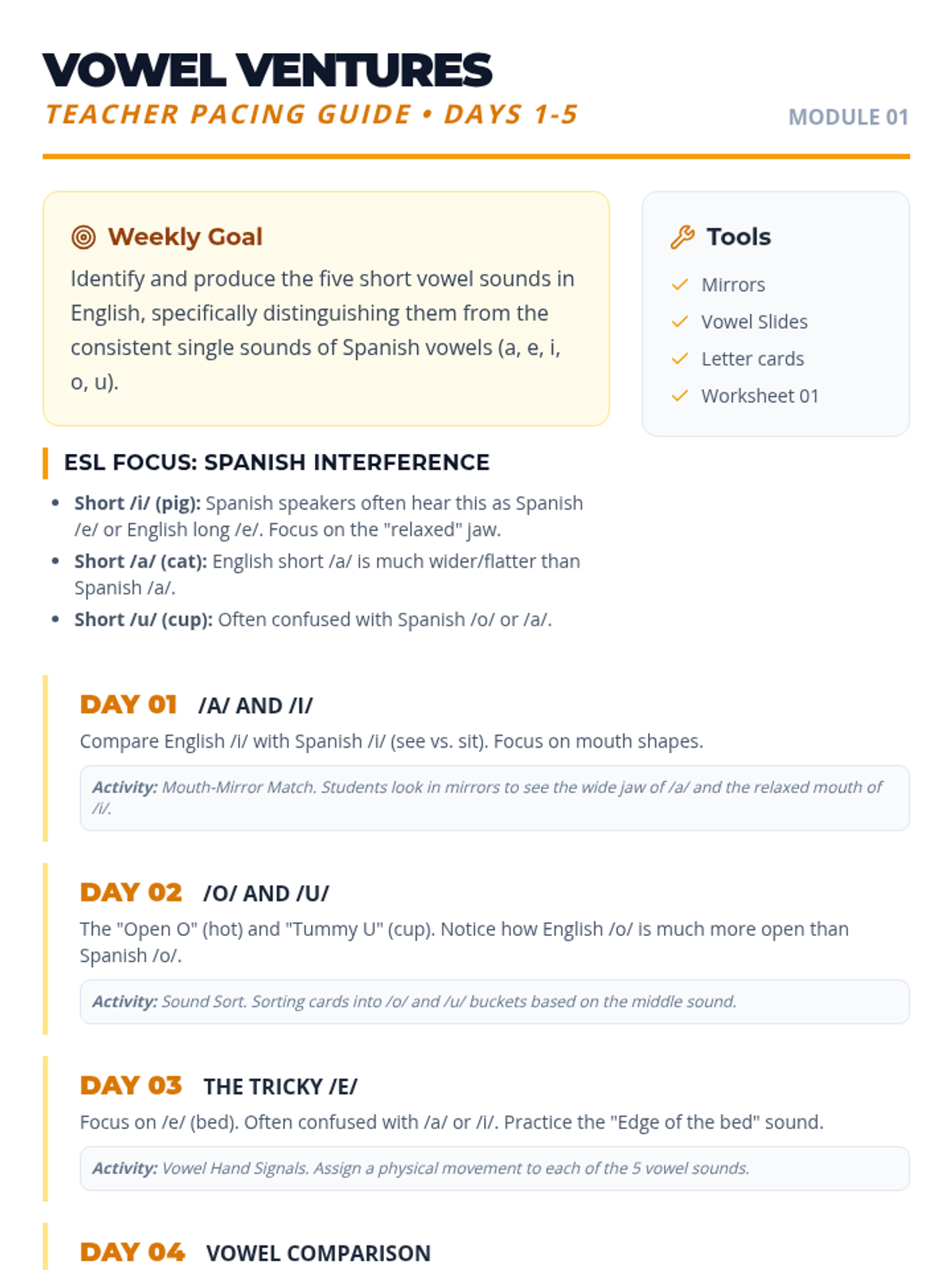
A detailed 5-day instructional guide for teachers, focusing on English vowel phonemes with specific tips for supporting Spanish-speaking students. includes daily activities and ESL-specific phonetic interventions.
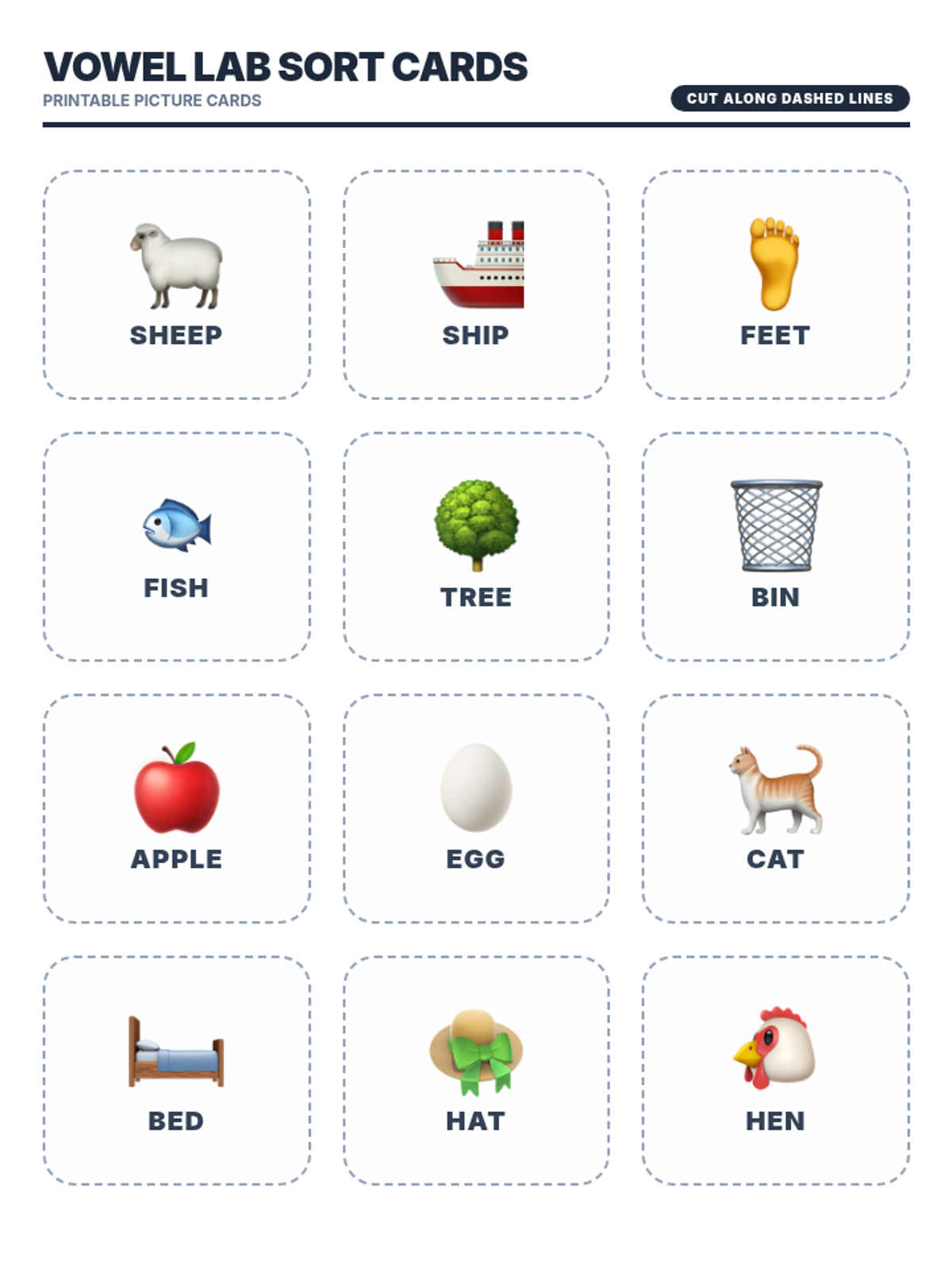
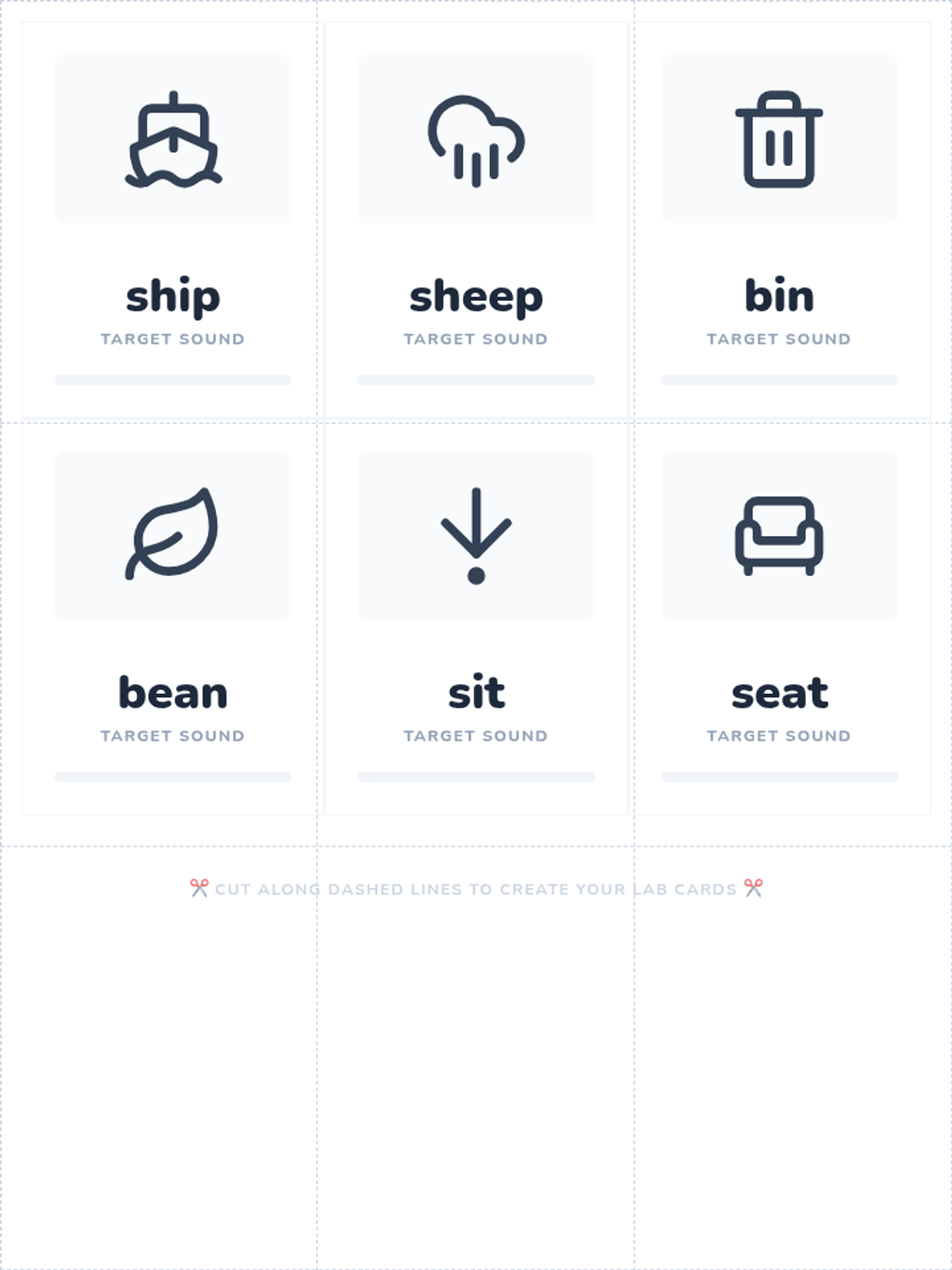
A collection of 12 printable picture cards with clear icons and labels, specifically chosen to represent the vowel contrasts for sorting and identification activities.
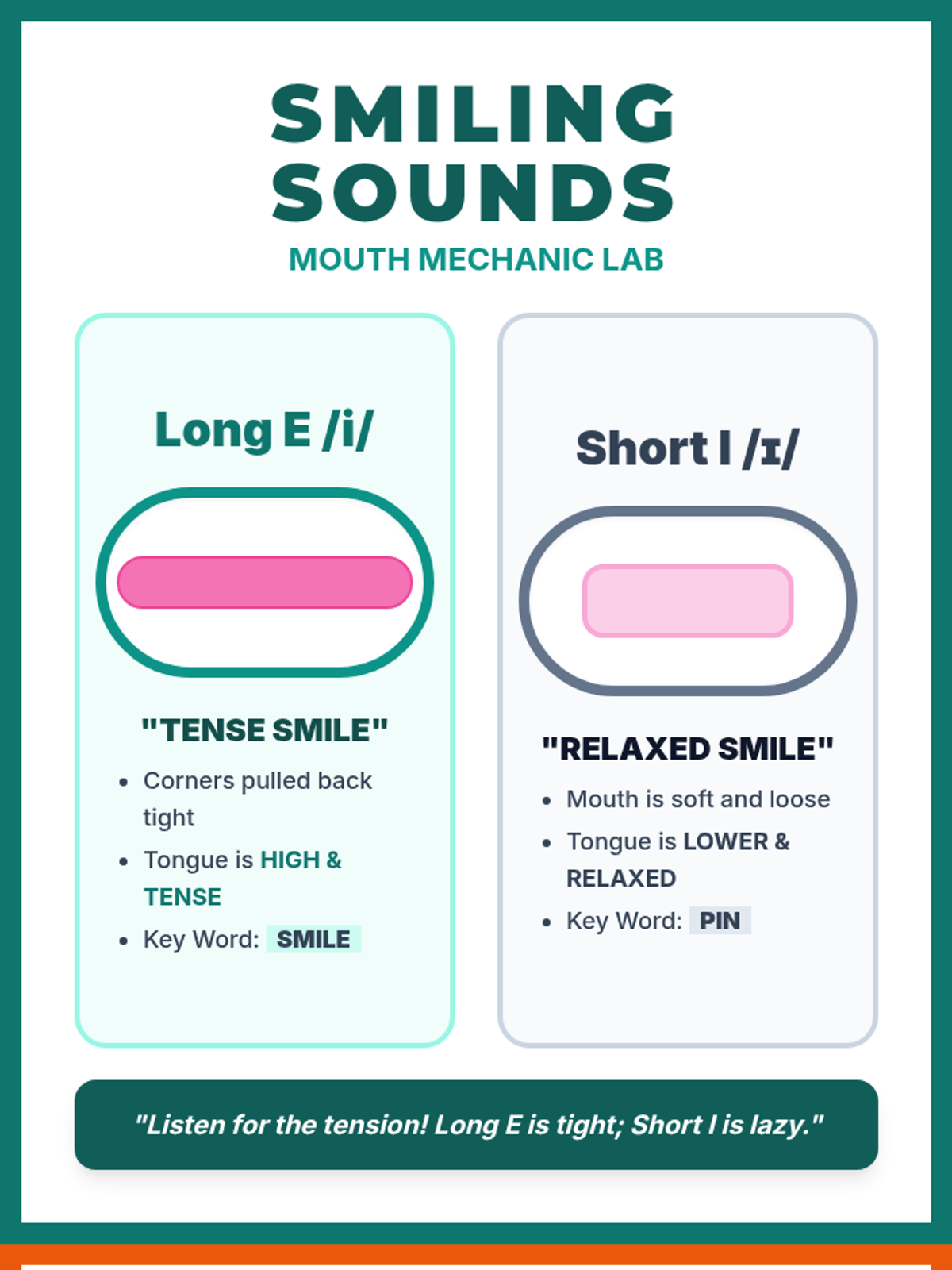
A set of two high-contrast posters illustrating the mouth positions for contrasting vowel sounds, using simple visual analogies and clear anatomical cues.
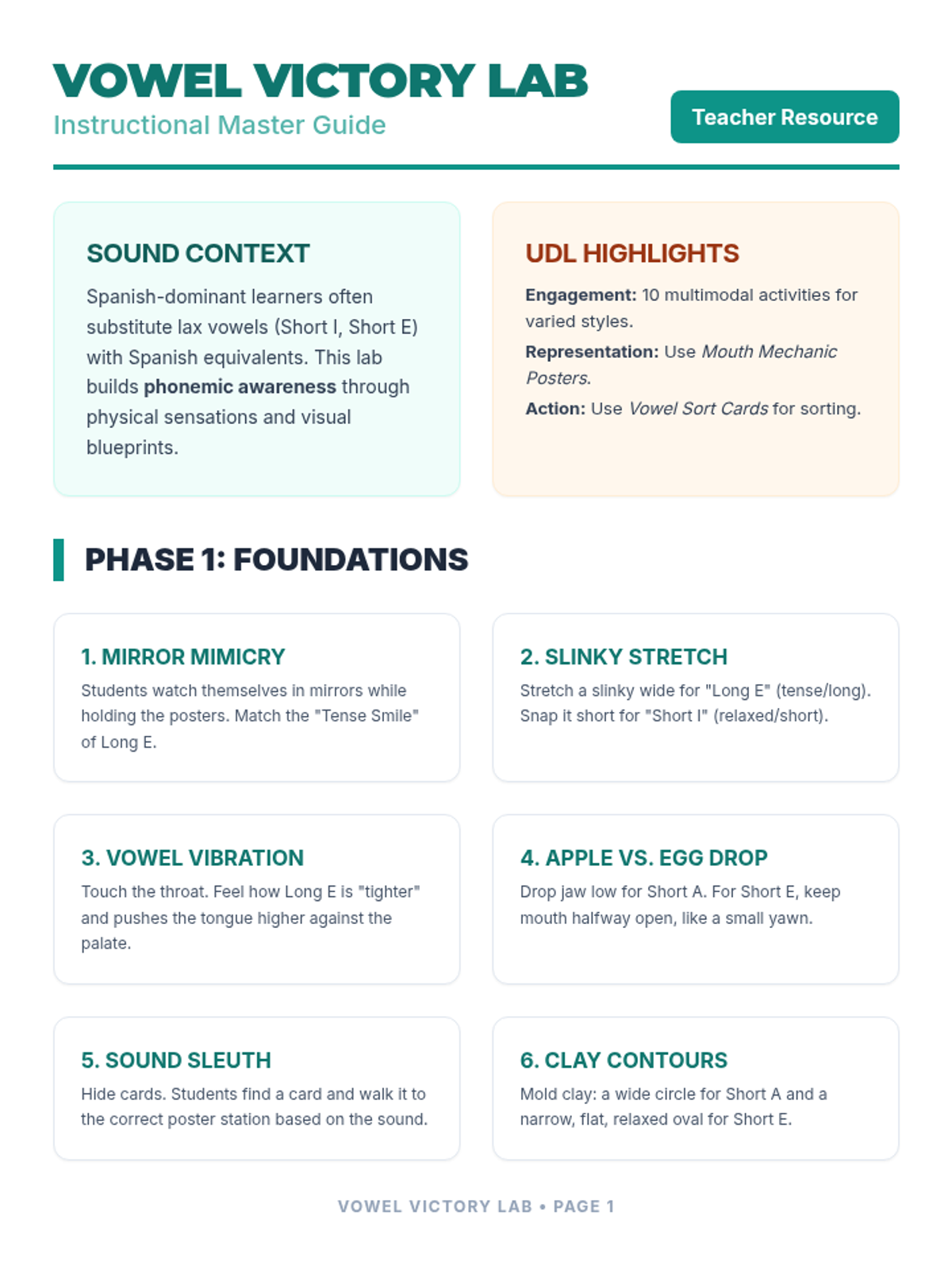
A comprehensive guide for teachers featuring 10 multisensory activities designed to help bilingual students differentiate between English vowel sounds using UDL principles.
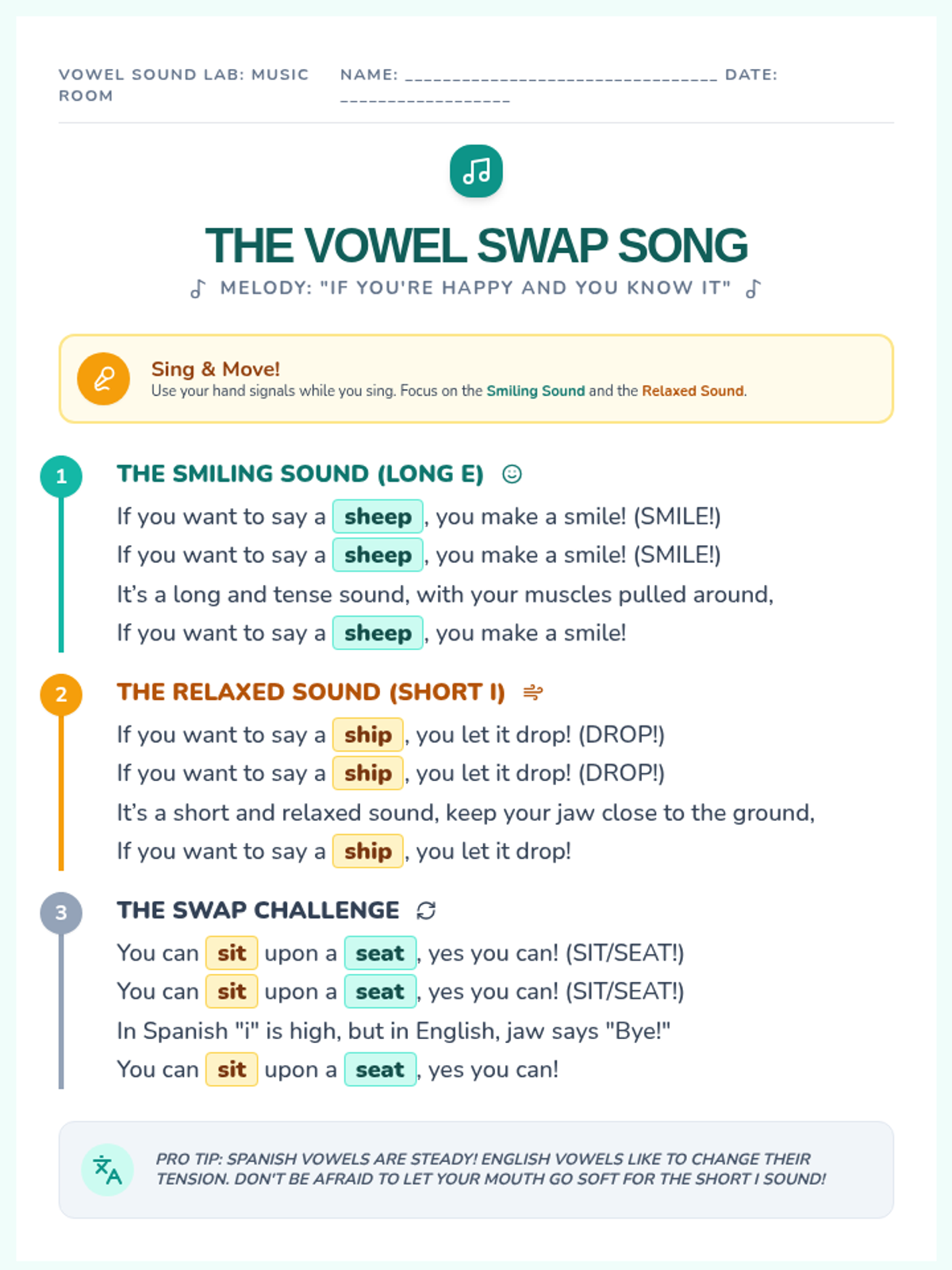
A song sheet set to the melody of "If You're Happy and You Know It," designed to help students practice the physical articulation and phonemic contrast between English short i and long e sounds.
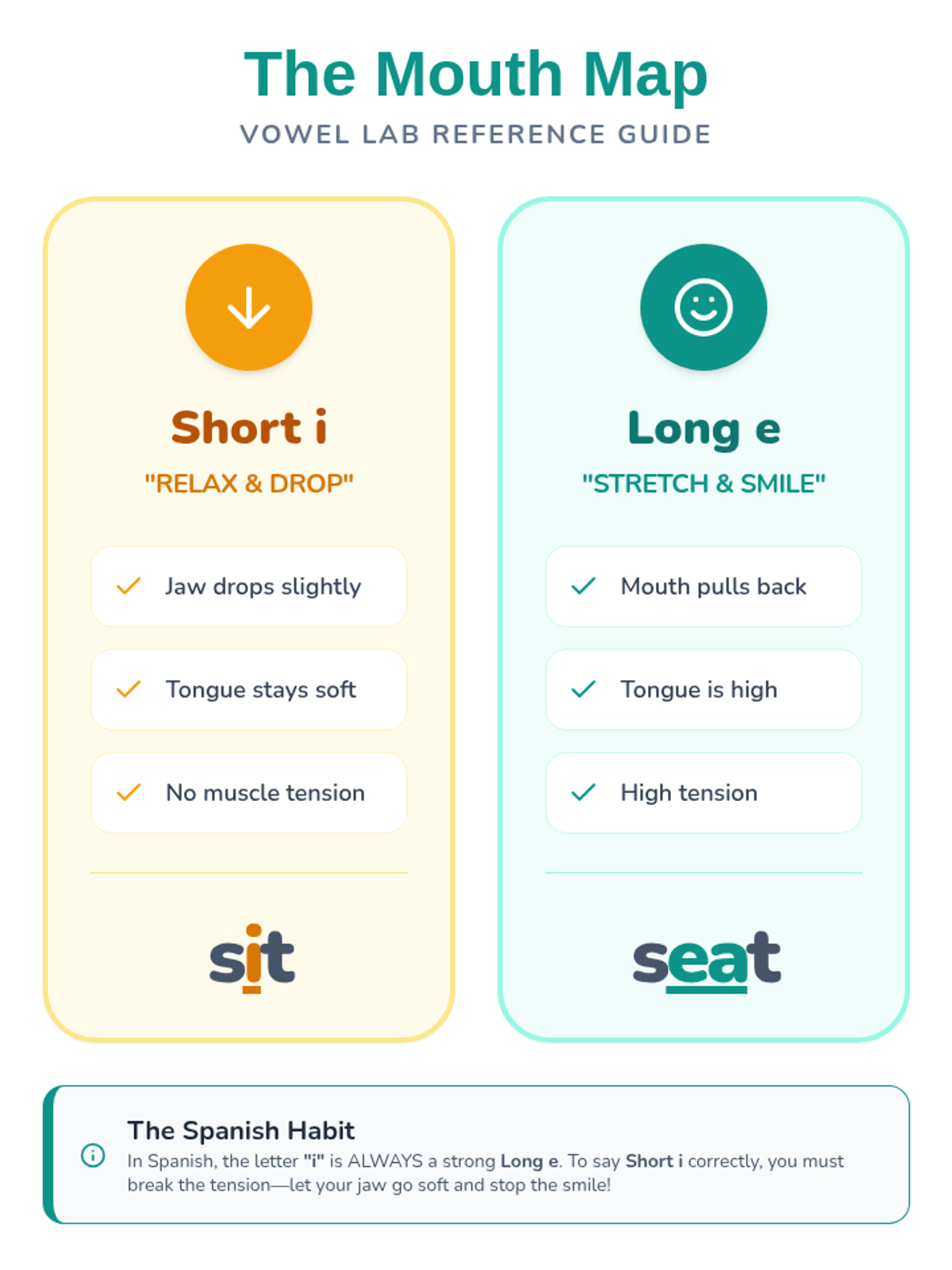
A high-contrast visual reference sheet (Mouth Map) that compares the articulatory features of /i/ and /e/ sounds, highlighting jaw position and muscle tension for ESL students.
A set of flashcards featuring minimal pairs (ship/sheep, bin/bean, sit/seat) with visual icons and color-coded phonetic categories to support sorting and identification activities.
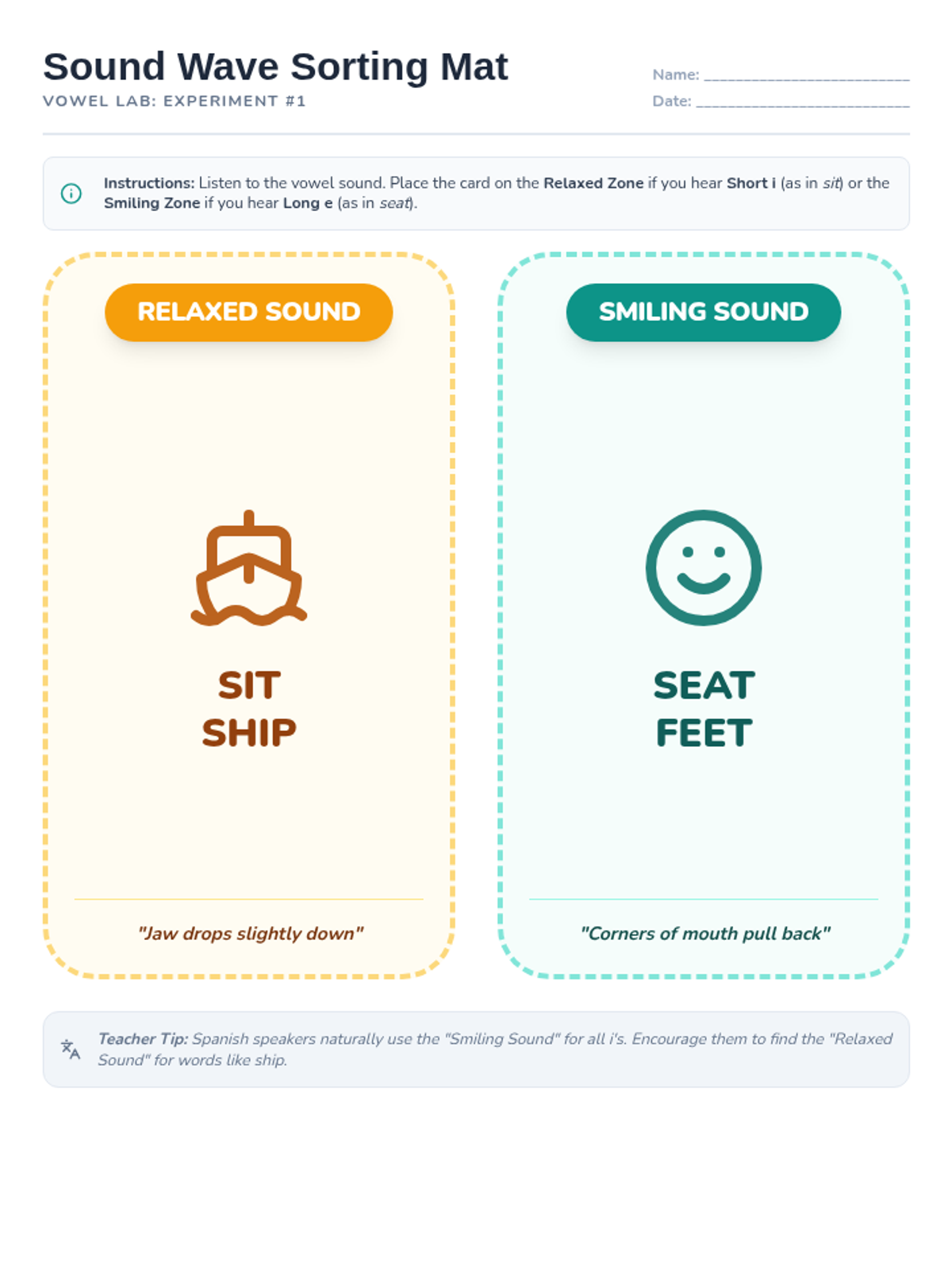
A tactile sorting mat for students to categorize vowel sounds. It features two distinct zones for "Relaxed /ɪ/" and "Smiling /i:/" with visual cues for mouth positioning.
An instructional slide deck that visually breaks down the mouth positions and muscle tension required for /i/ and /e/ sounds, including a "Great Swap Challenge" for minimal pairs.
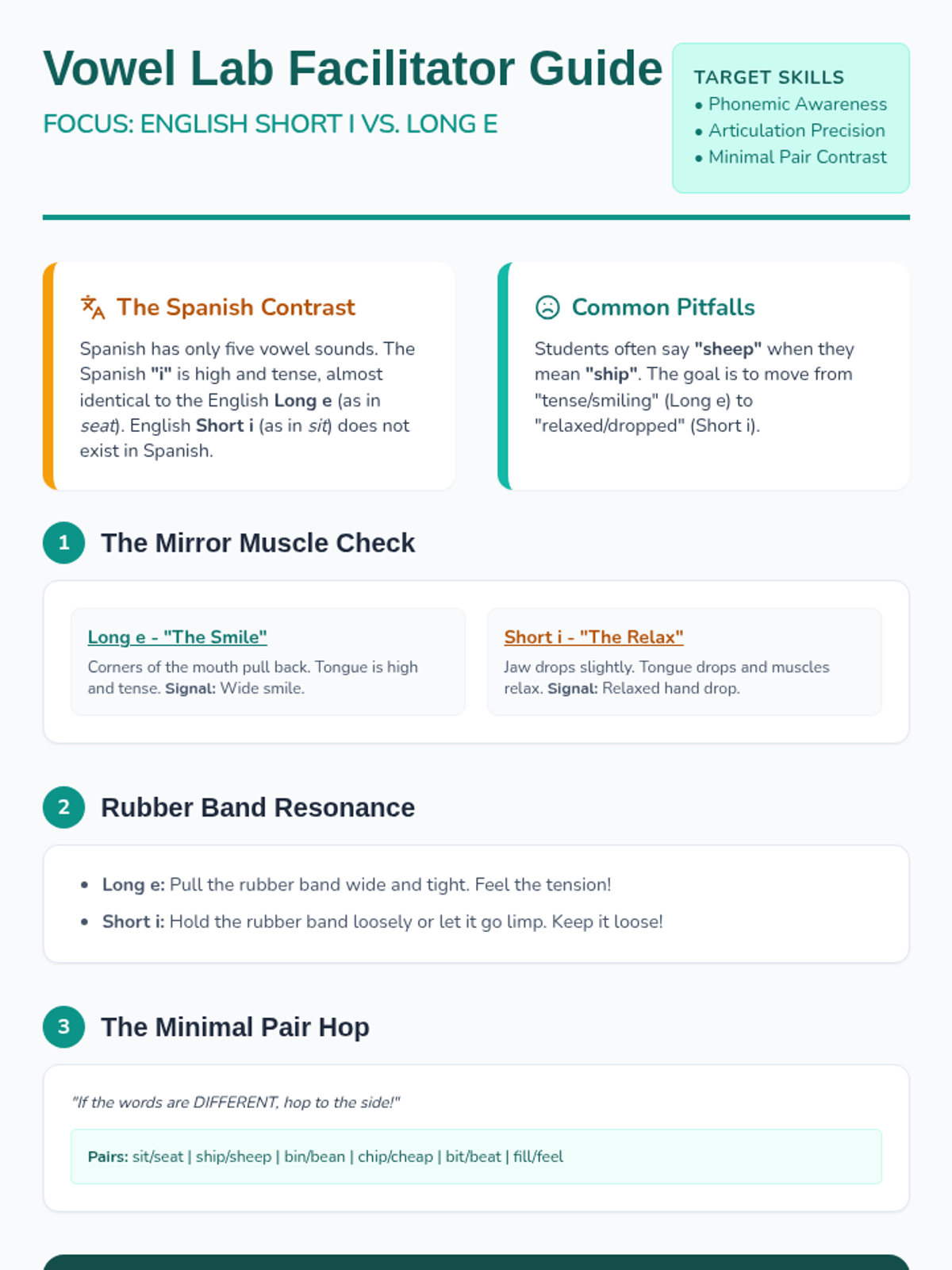
A comprehensive teacher's guide featuring three multisensory activities—The Mirror Muscle Check, Rubber Band Resonance, and Minimal Pair Hop—to help students distinguish between the English short /i/ and long /e/ sounds.
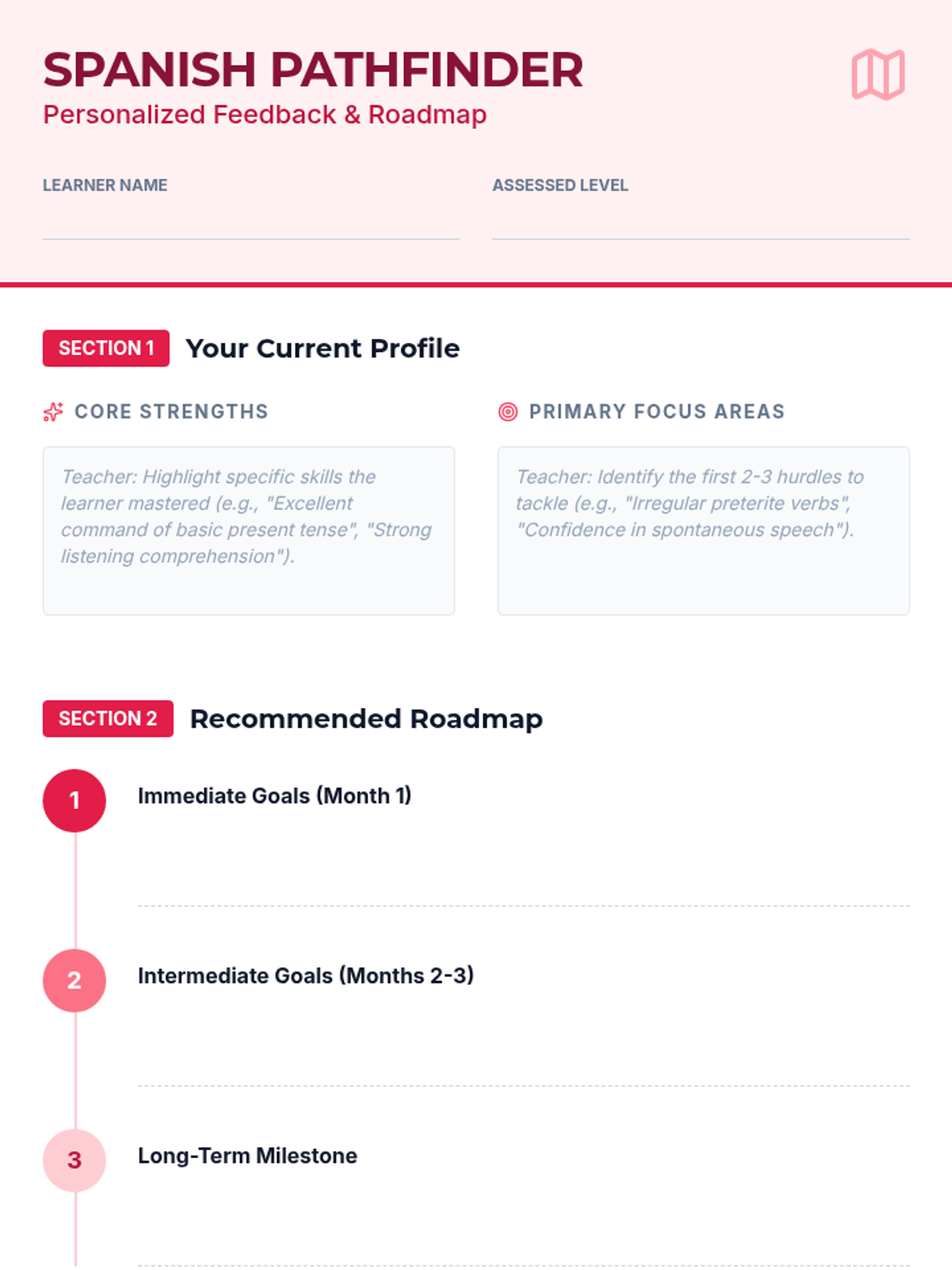
A personalized feedback and roadmap document for adult learners following their Spanish diagnostic. Includes sections for strengths, focus areas, a tiered learning roadmap, and a learner self-reflection space.
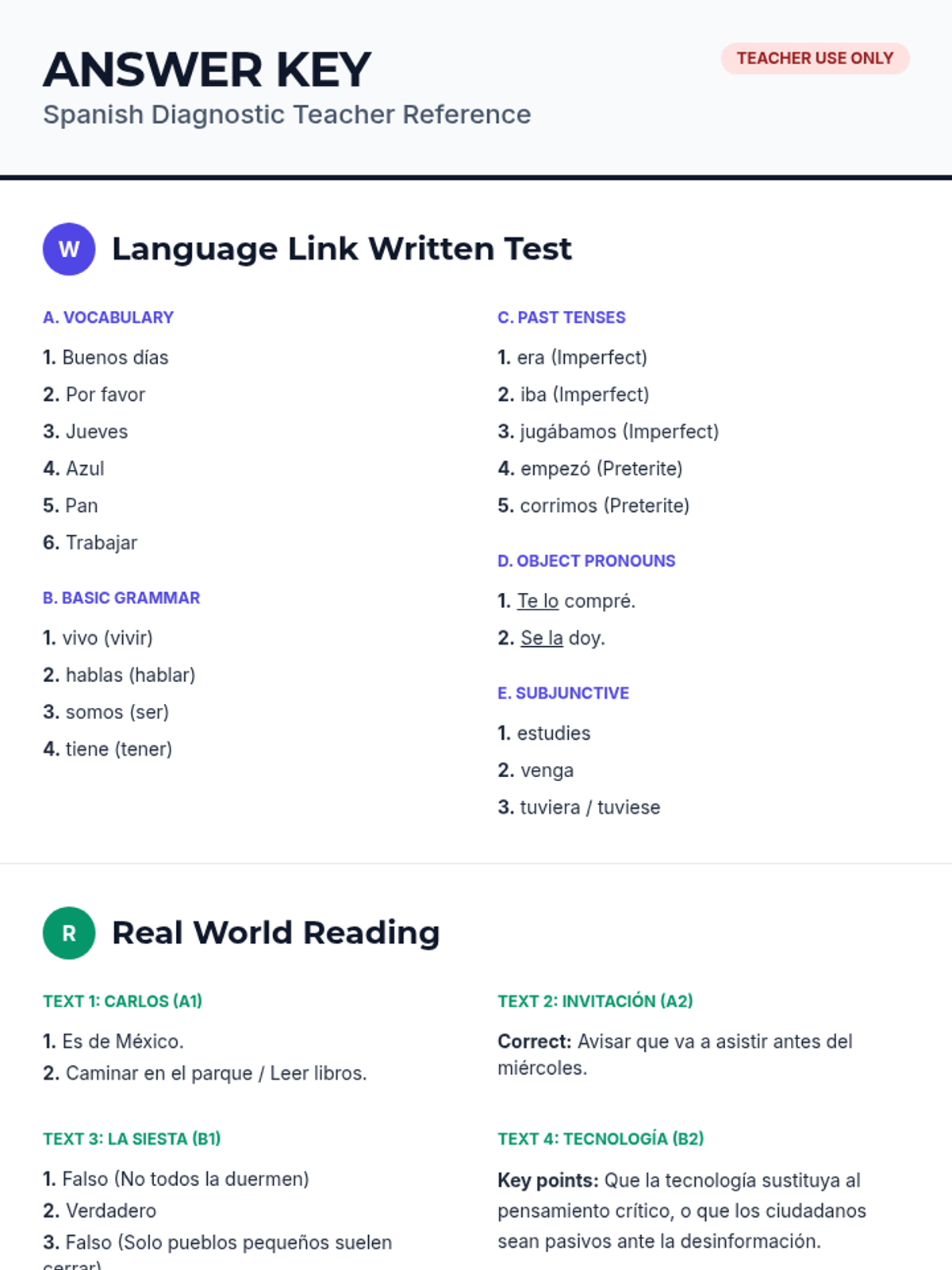
A teacher-facing answer key for the Spanish written and reading diagnostic tests. Includes correct responses for vocabulary, grammar, and reading comprehension sections, along with grading guidance for the instructor.
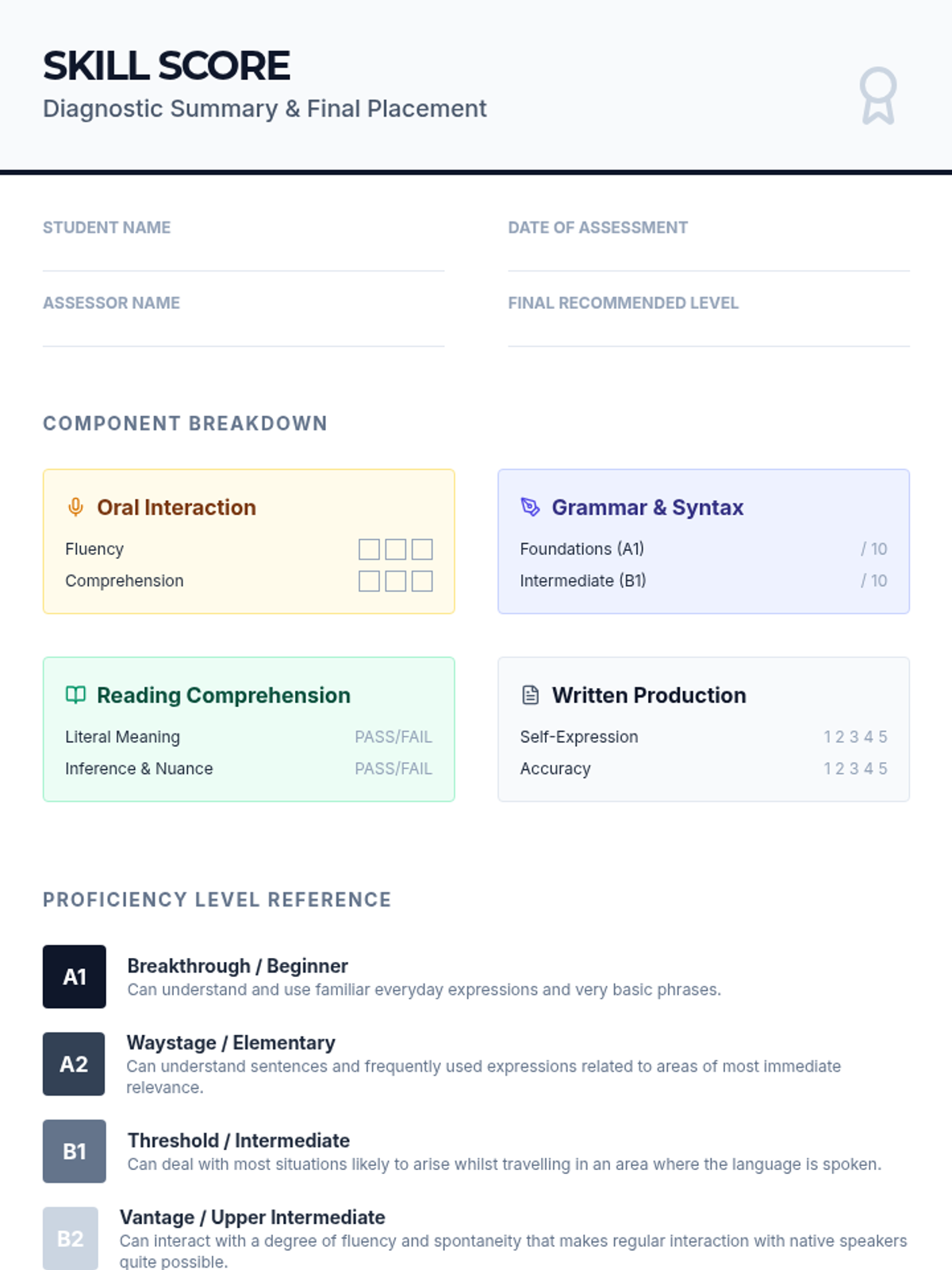
A comprehensive summary document for instructors to aggregate results from the 4-skill diagnostic. Includes scoring fields for oral, written, reading, and production components, along with a proficiency level reference guide for final placement.
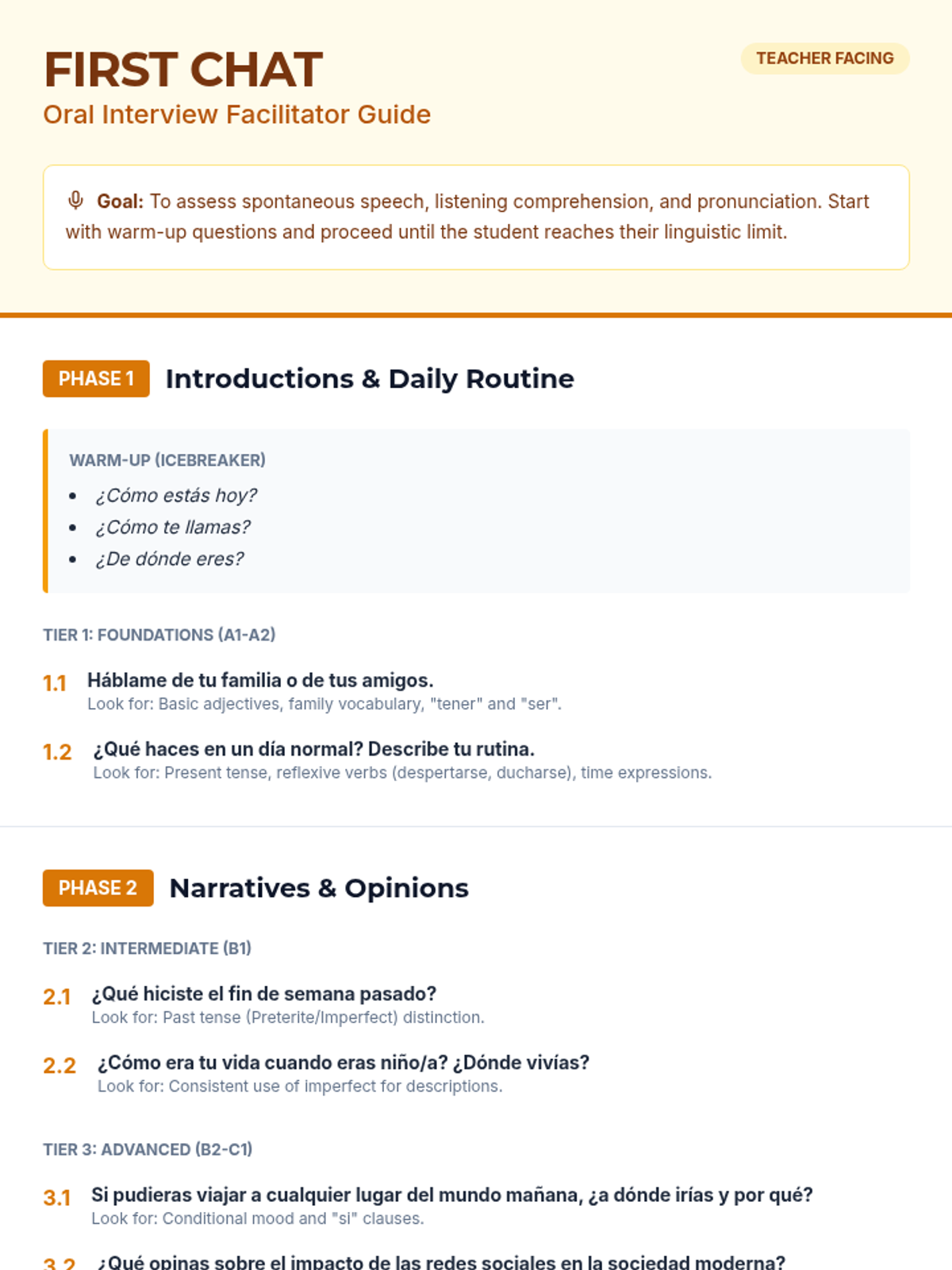
A facilitator guide for conducting oral diagnostic interviews. Includes tiered questions from basic introductions (A1) to complex social opinions (B2/C1), evaluation criteria for fluency, grammar, and vocabulary, and a notes section for teachers.
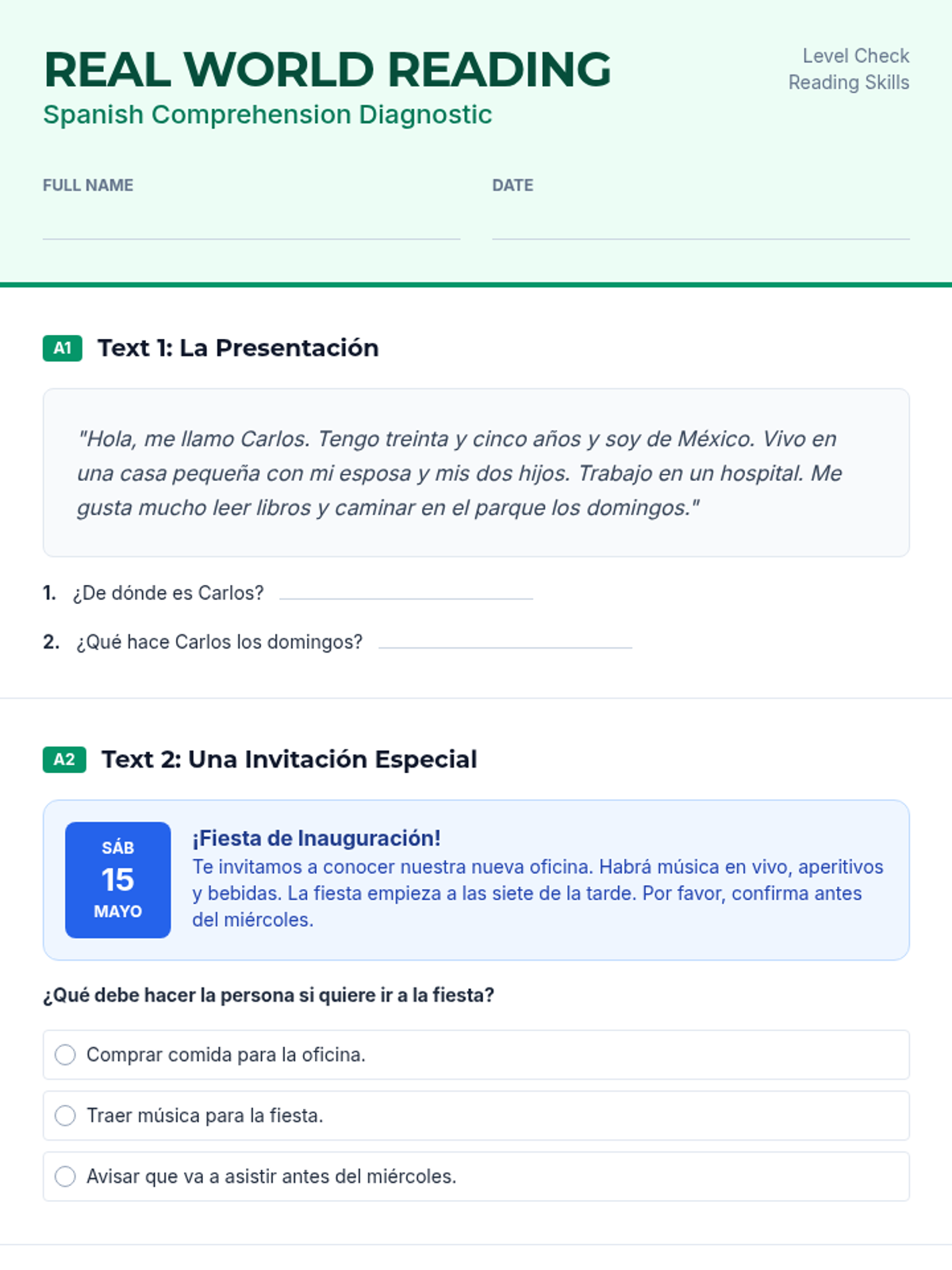
A reading comprehension diagnostic featuring four tiered texts (A1 to B2 level) ranging from a personal bio and a social invitation to cultural commentary and a critical opinion piece. Includes multiple choice, true/false, and short answer questions.
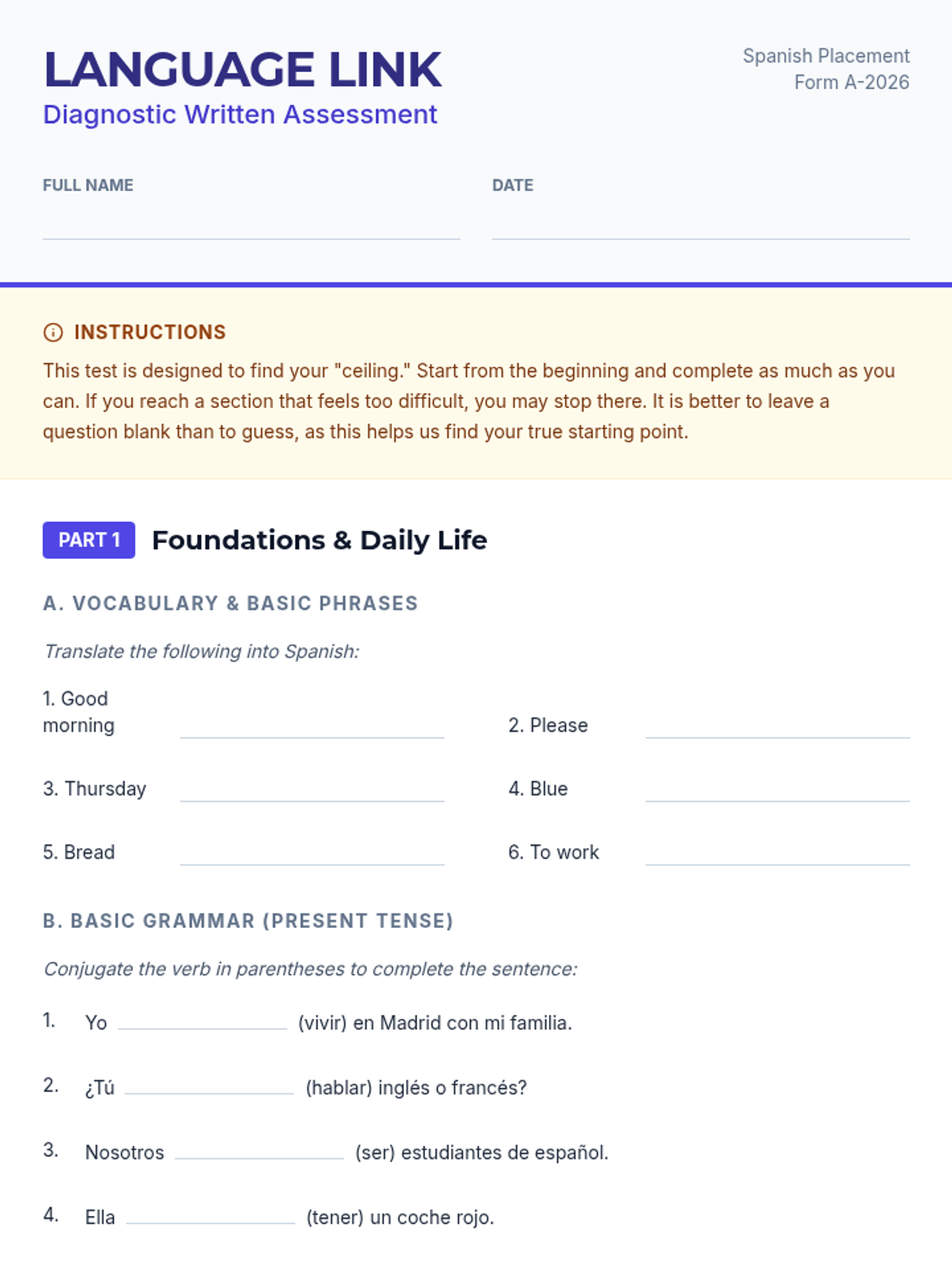
A tiered written diagnostic test for adult learners covering vocabulary, basic present tense, past narratives (Preterite/Imperfect), object pronouns, and the subjunctive mood. Includes a free writing section for holistic assessment.
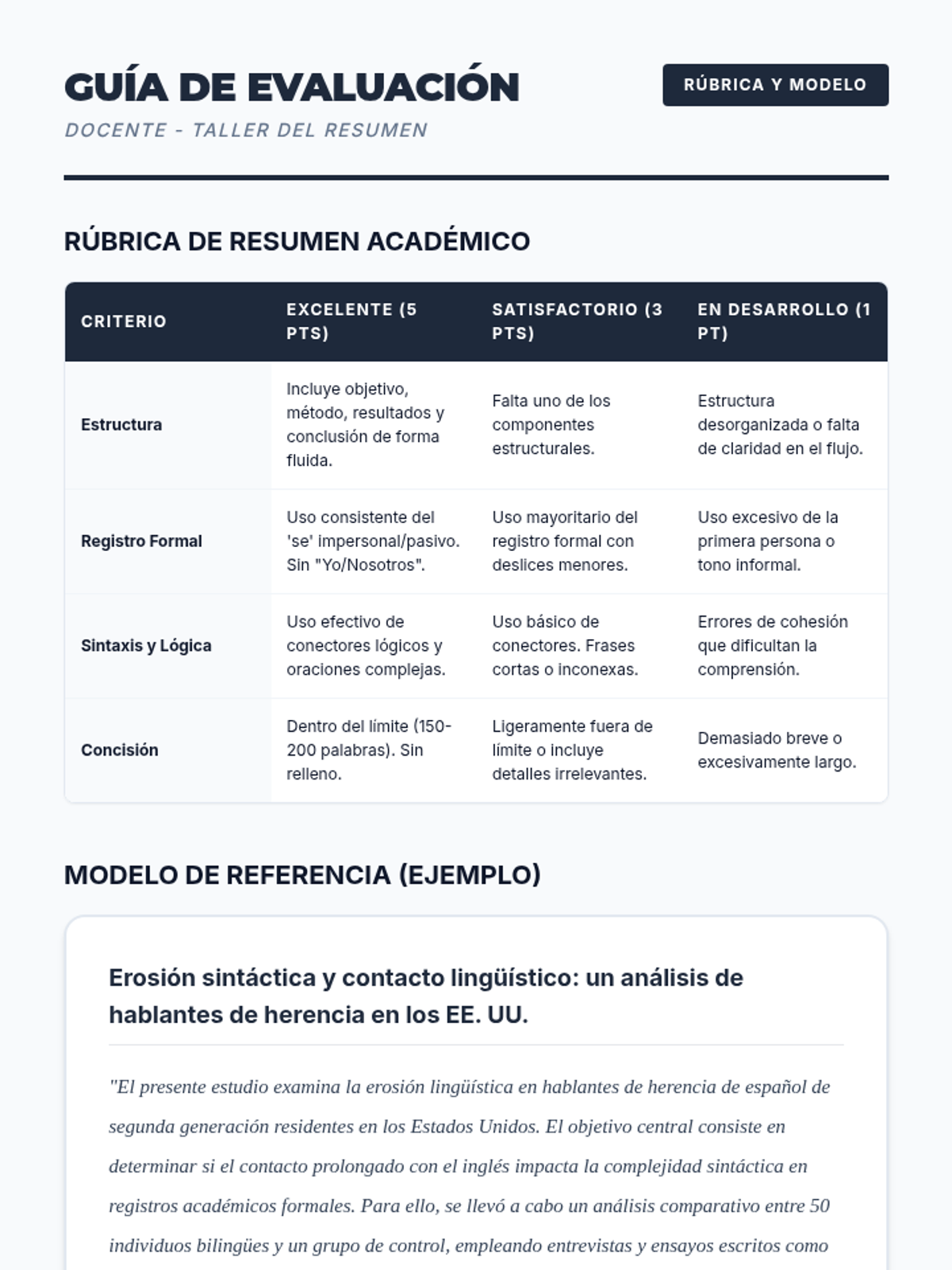
Answer key and teacher guide for the Lesson 5 Abstract Workshop Worksheet.
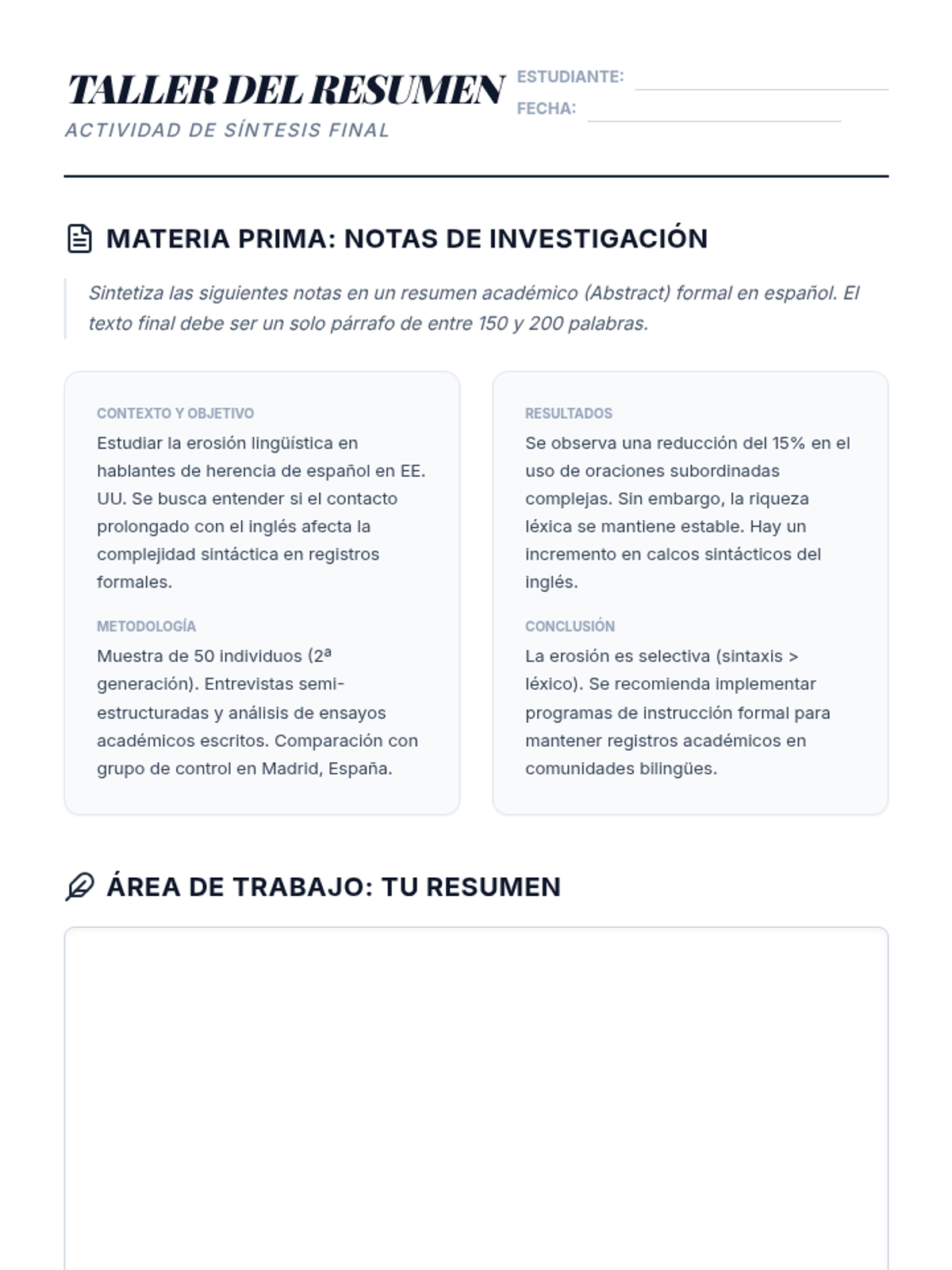
Culminating workshop activity where students synthesize research notes into a formal academic abstract in Spanish.
A slide deck for Lesson 5 (Drafting the Literary Critique) providing instructional guidance on thesis construction, avoiding pitfalls, and the peer review process.
Slides for Lesson 5 covering abstract structure, synthesis skills, and the formal register required for academic publishing in Spanish.
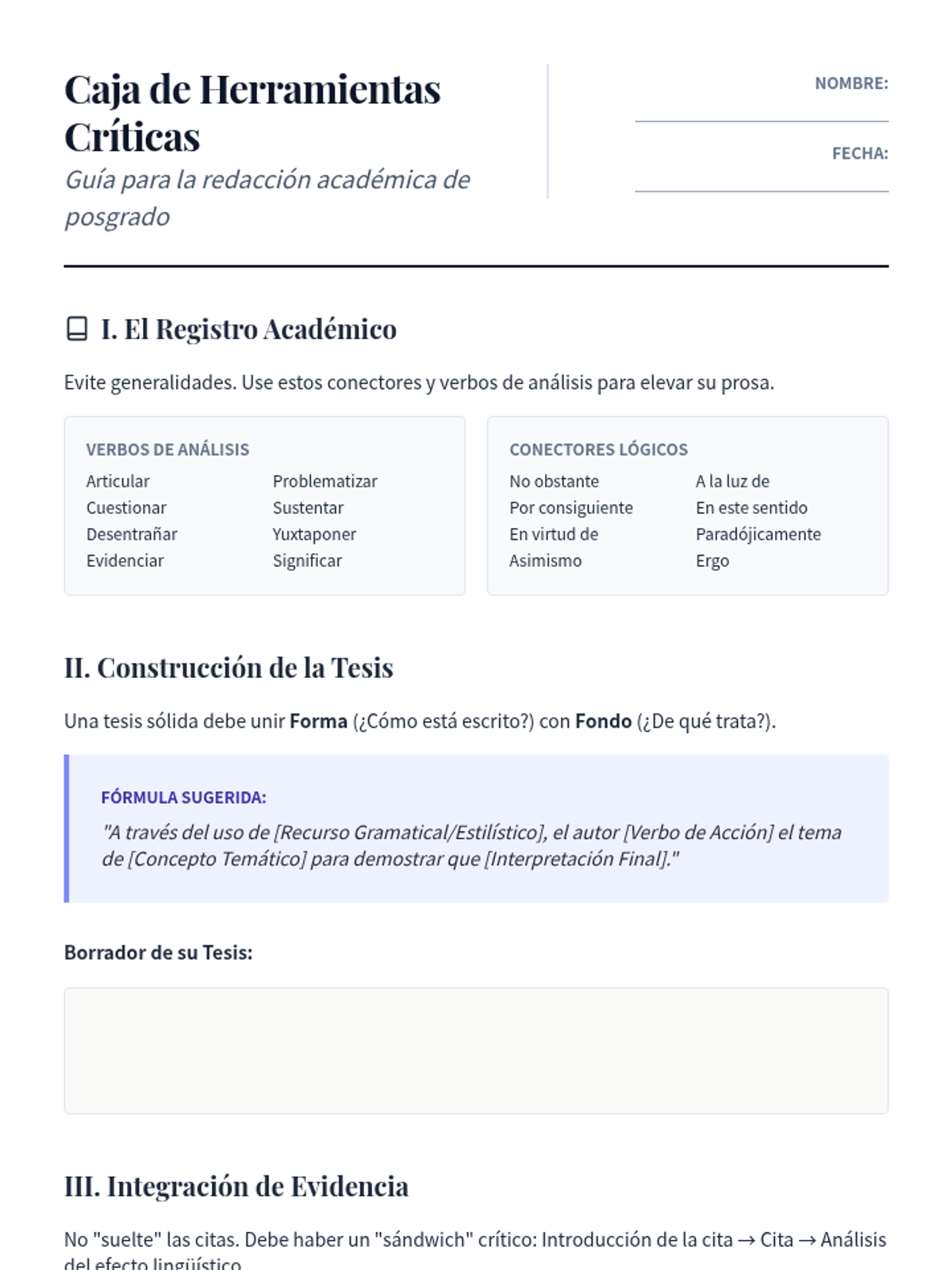
A student reference sheet and toolkit for Lesson 5, providing academic vocabulary, thesis construction formulas, and evidence integration strategies for writing a literary critique.
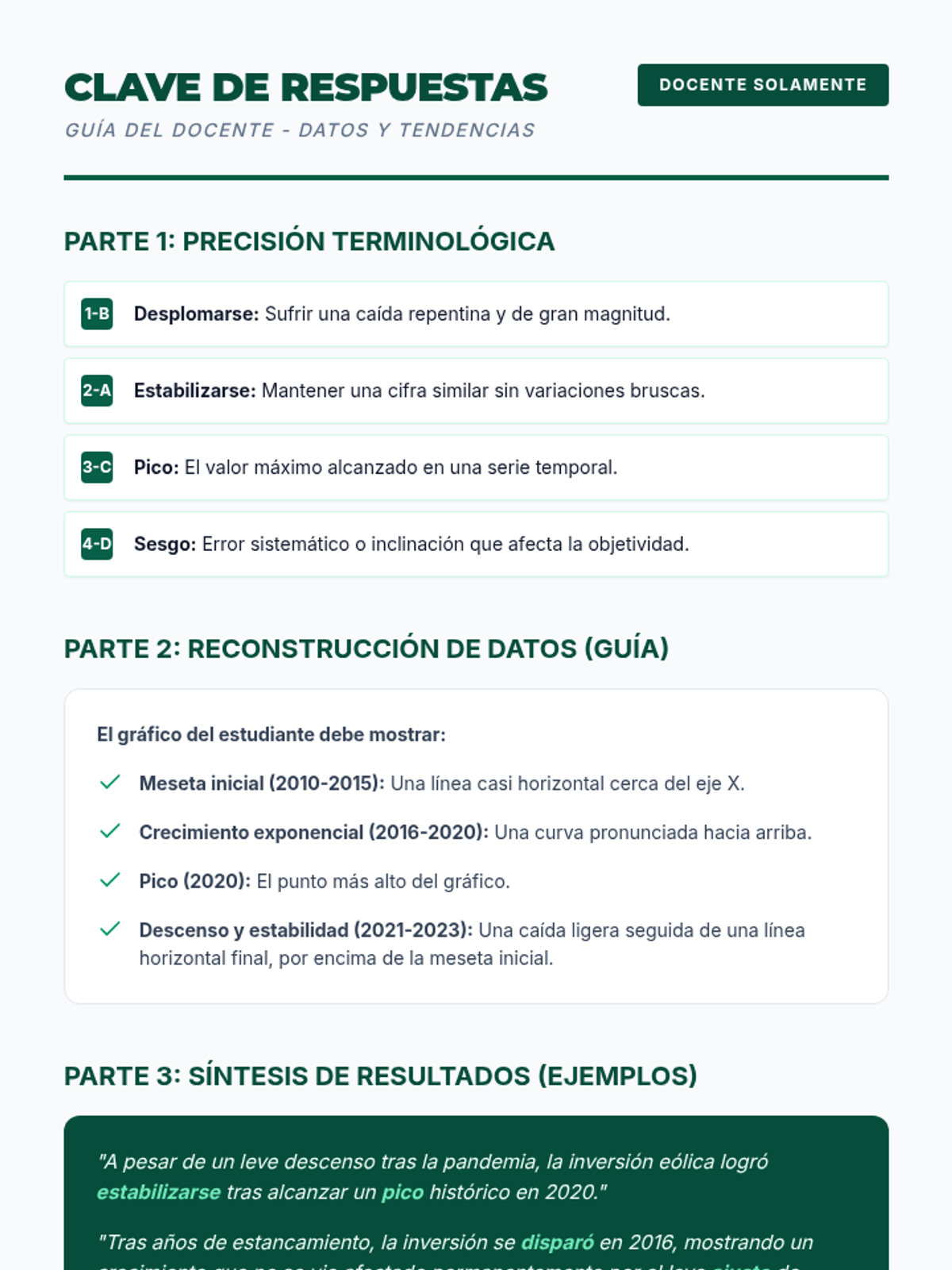
Answer key and teacher guide for the Lesson 4 Data and Trends Worksheet.
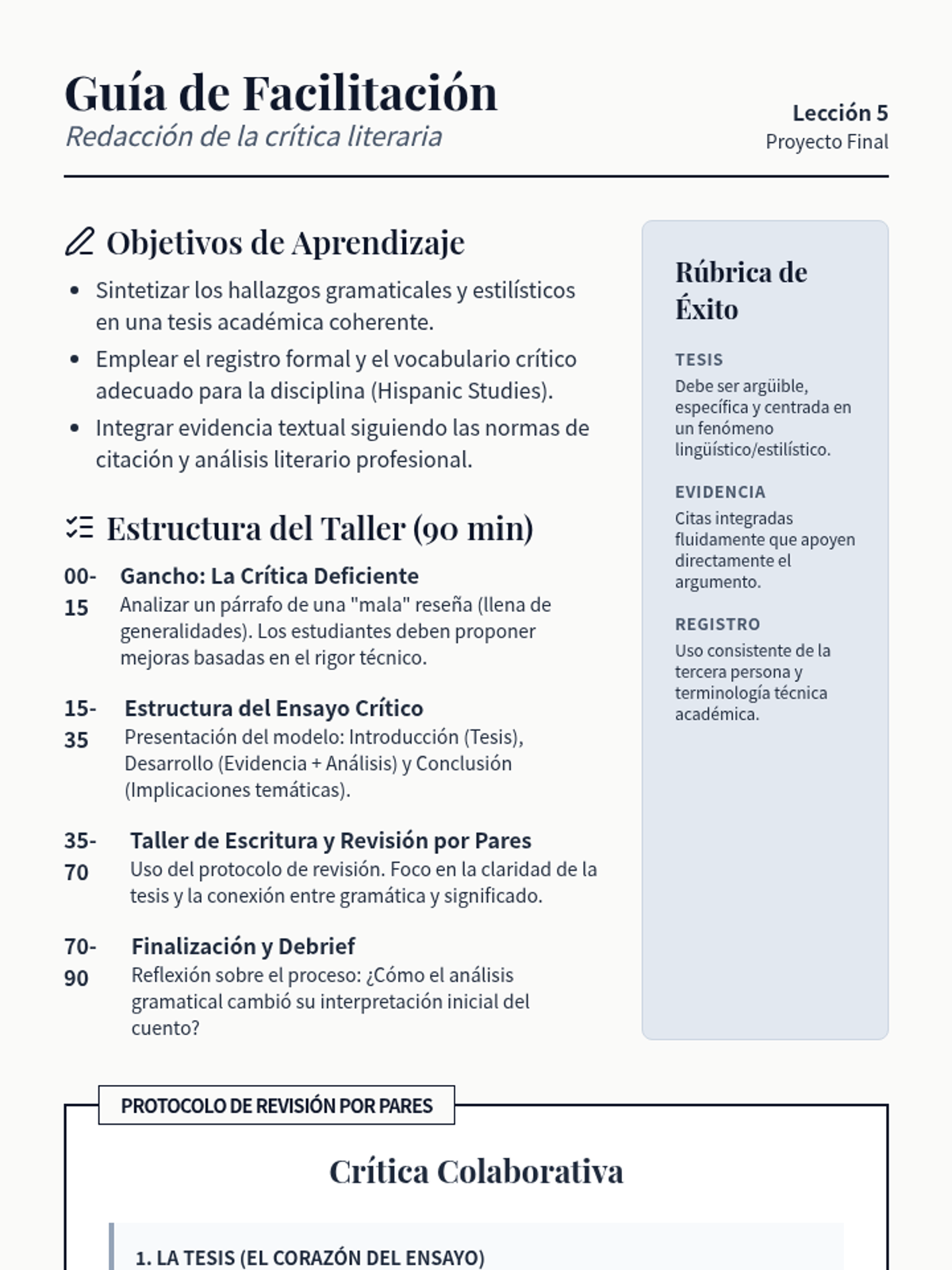
A teacher facilitation guide and peer review protocol for Lesson 5, focusing on the construction of a formal literary critique in Spanish.
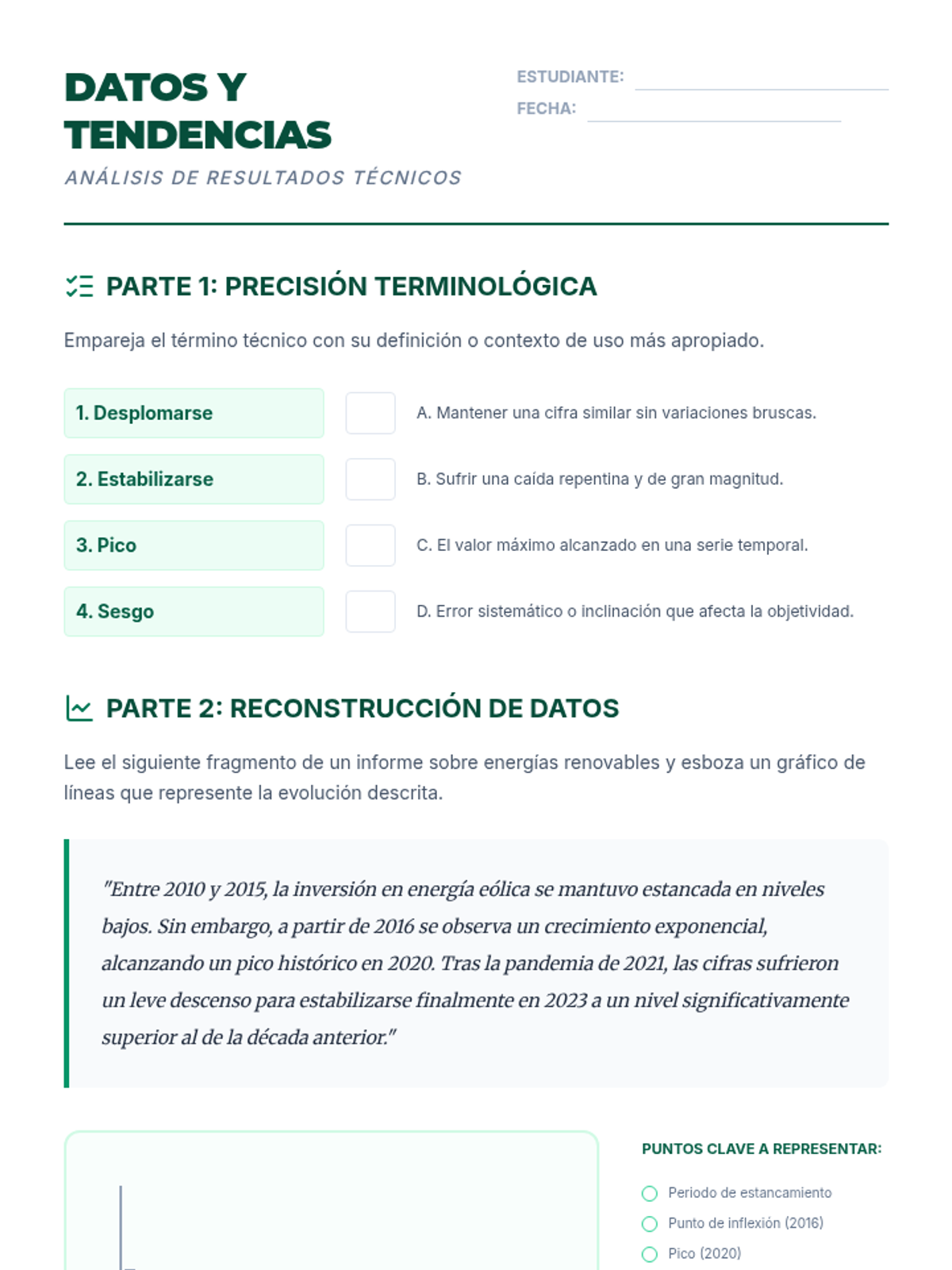
Worksheet for Lesson 4 where students interpret technical prose to reconstruct visual data and practice data description vocabulary.
A slide deck for Lesson 4 (Character Psychology and Voice) focused on sociolects, register shifts, and the tension between public and private voices in Spanish literature.
Slides for Lesson 4 focusing on data description vocabulary and correlating technical prose with graphical information.
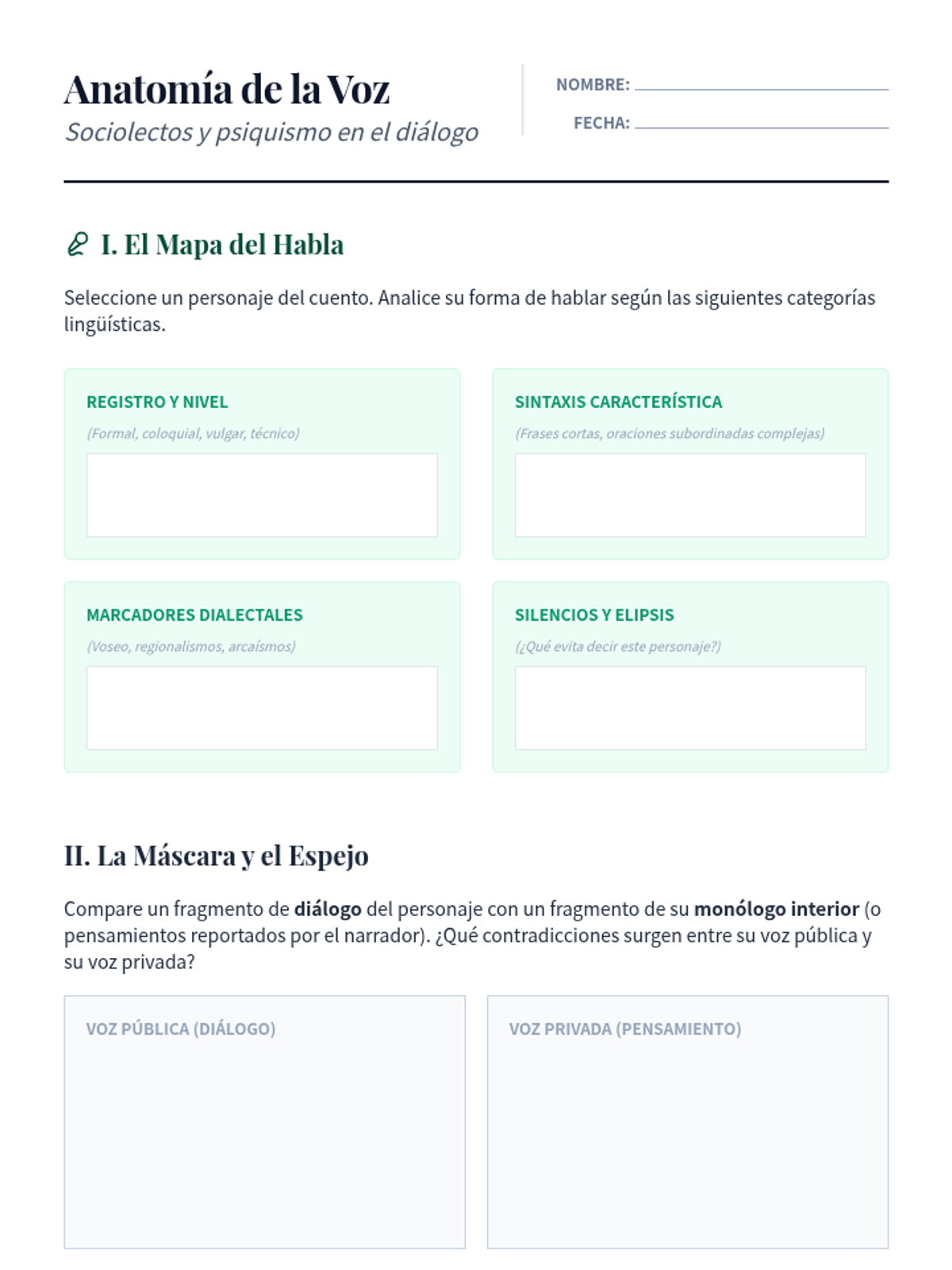
A student worksheet for Lesson 4 focusing on sociolect analysis, dialogue vs. inner monologue comparison, and character motivation in Spanish literature.
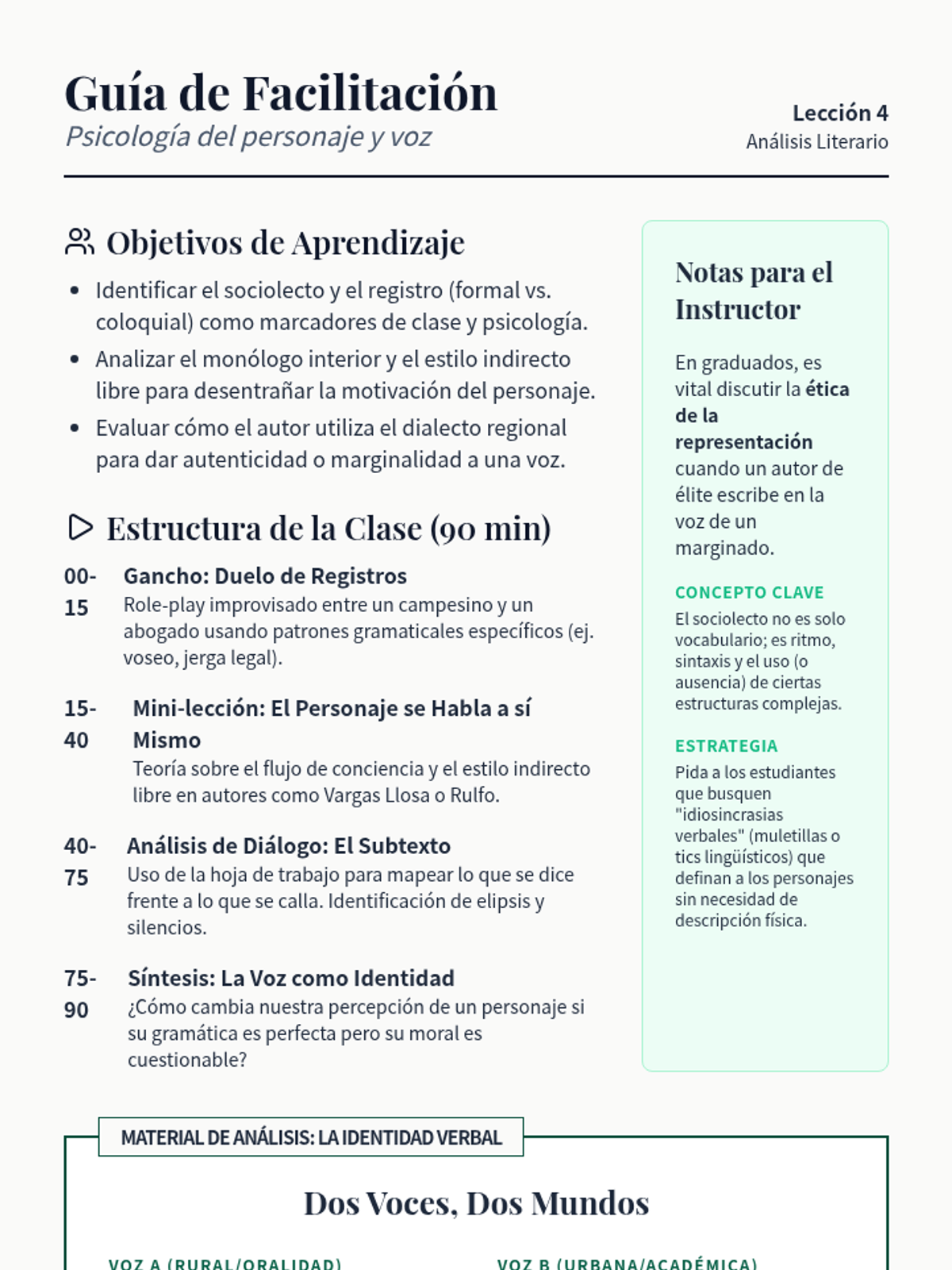
A teacher facilitation guide and character voice analysis material for Lesson 4, focusing on sociolects, registers, and psychological depth in Spanish literary dialogue.
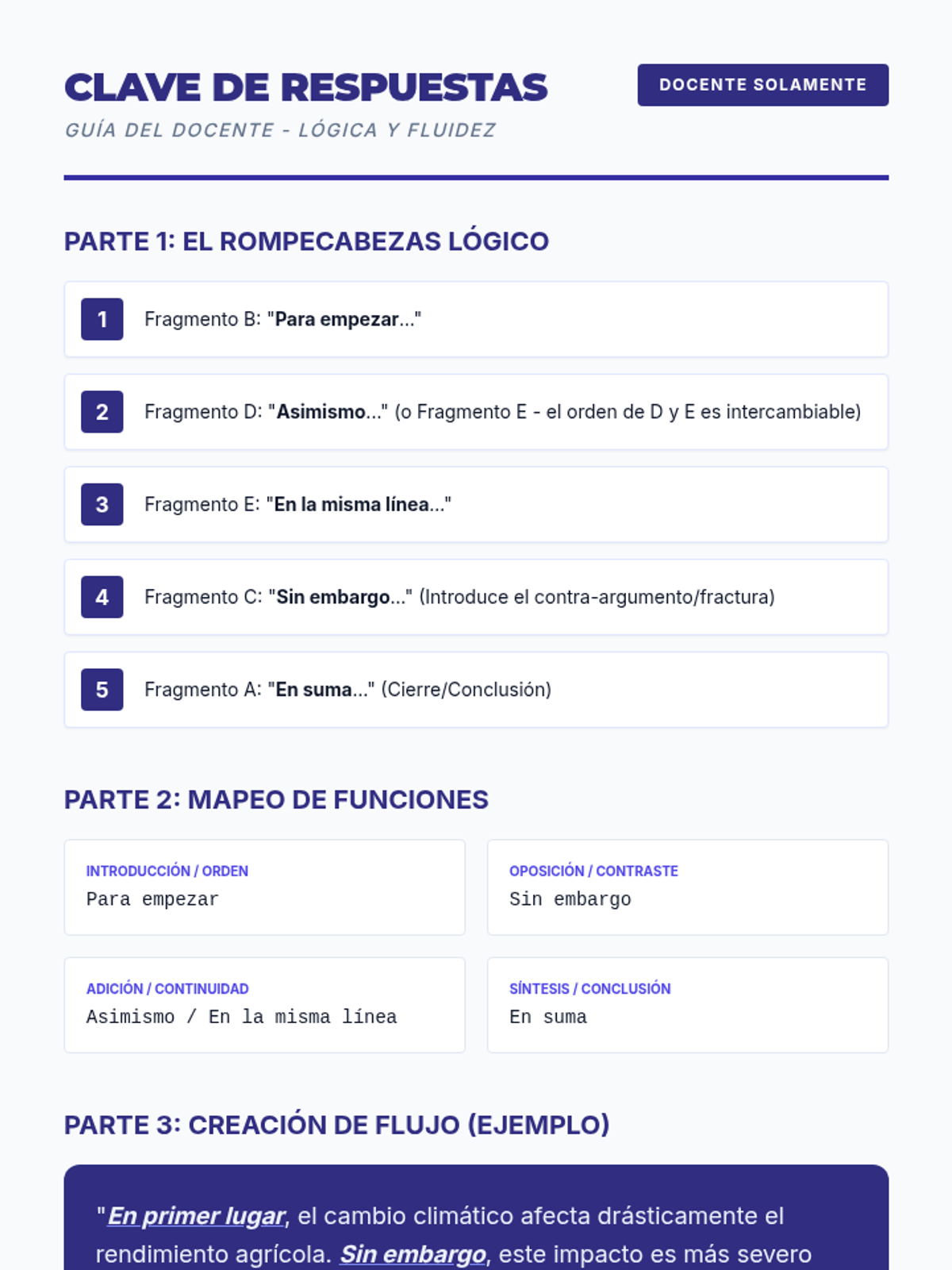
Answer key and teacher guide for the Lesson 3 Logic and Flow Worksheet.
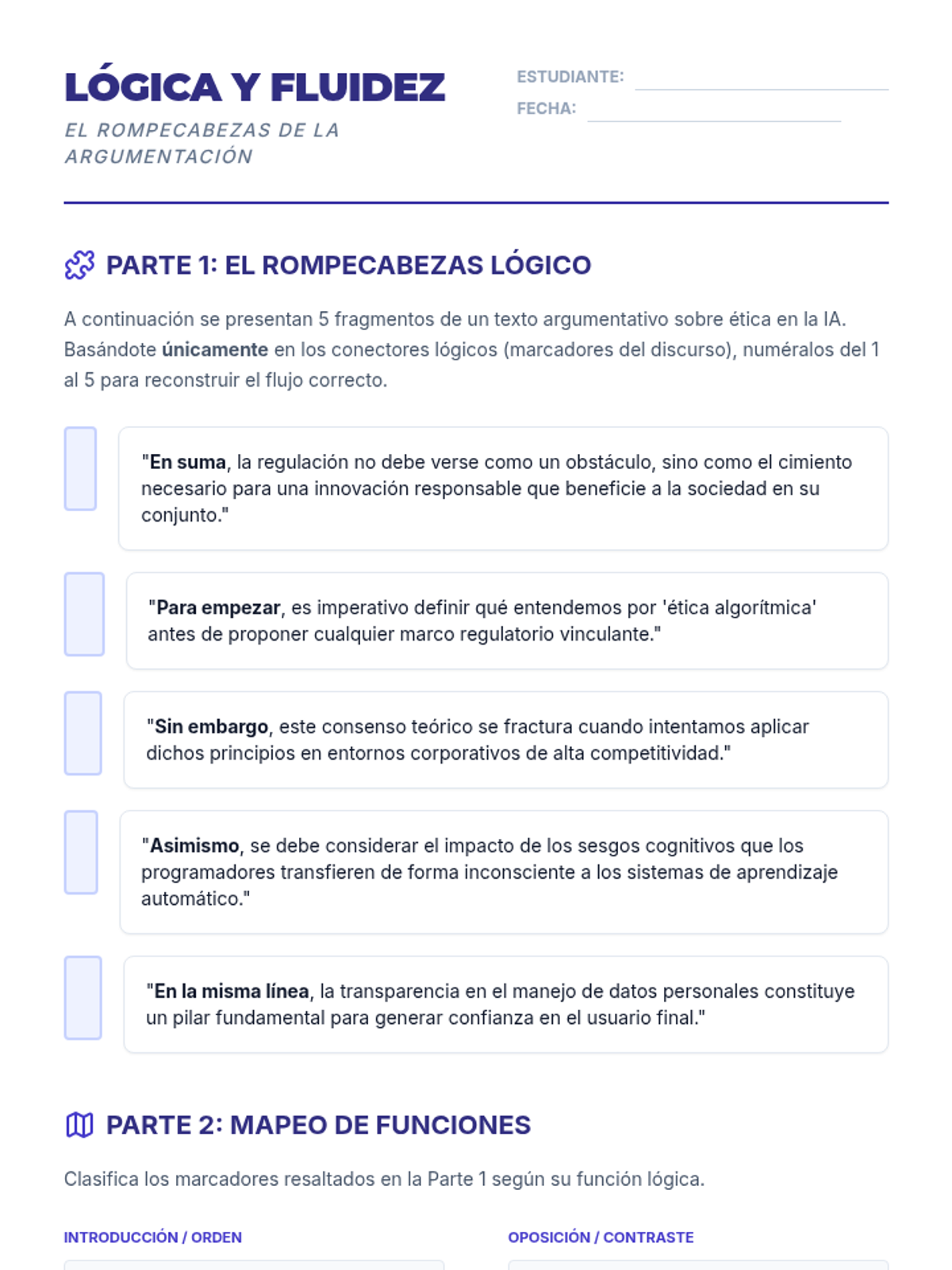
Worksheet for Lesson 3 focusing on logical connectors and tracing argumentative flow in academic Spanish essays.
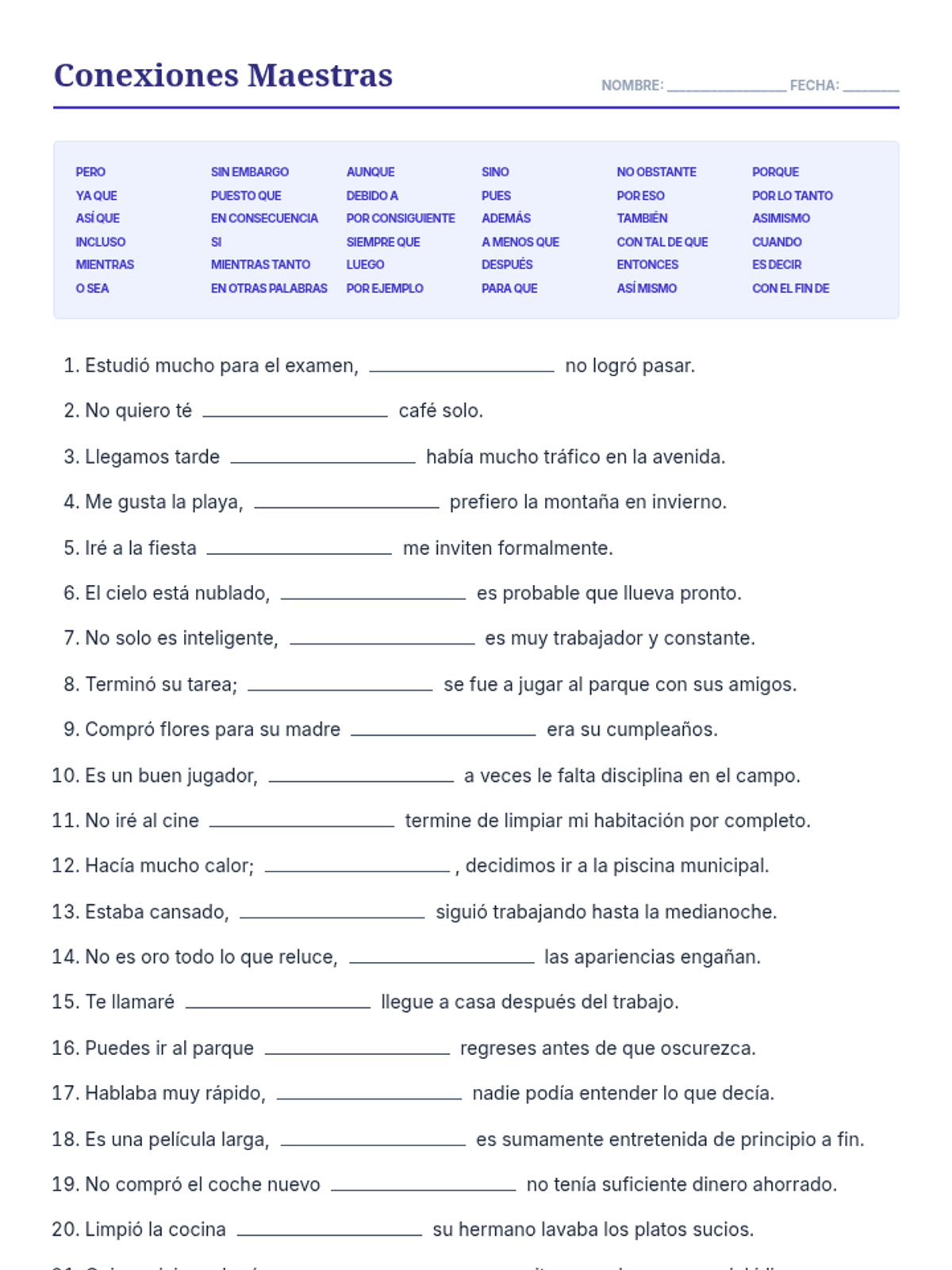
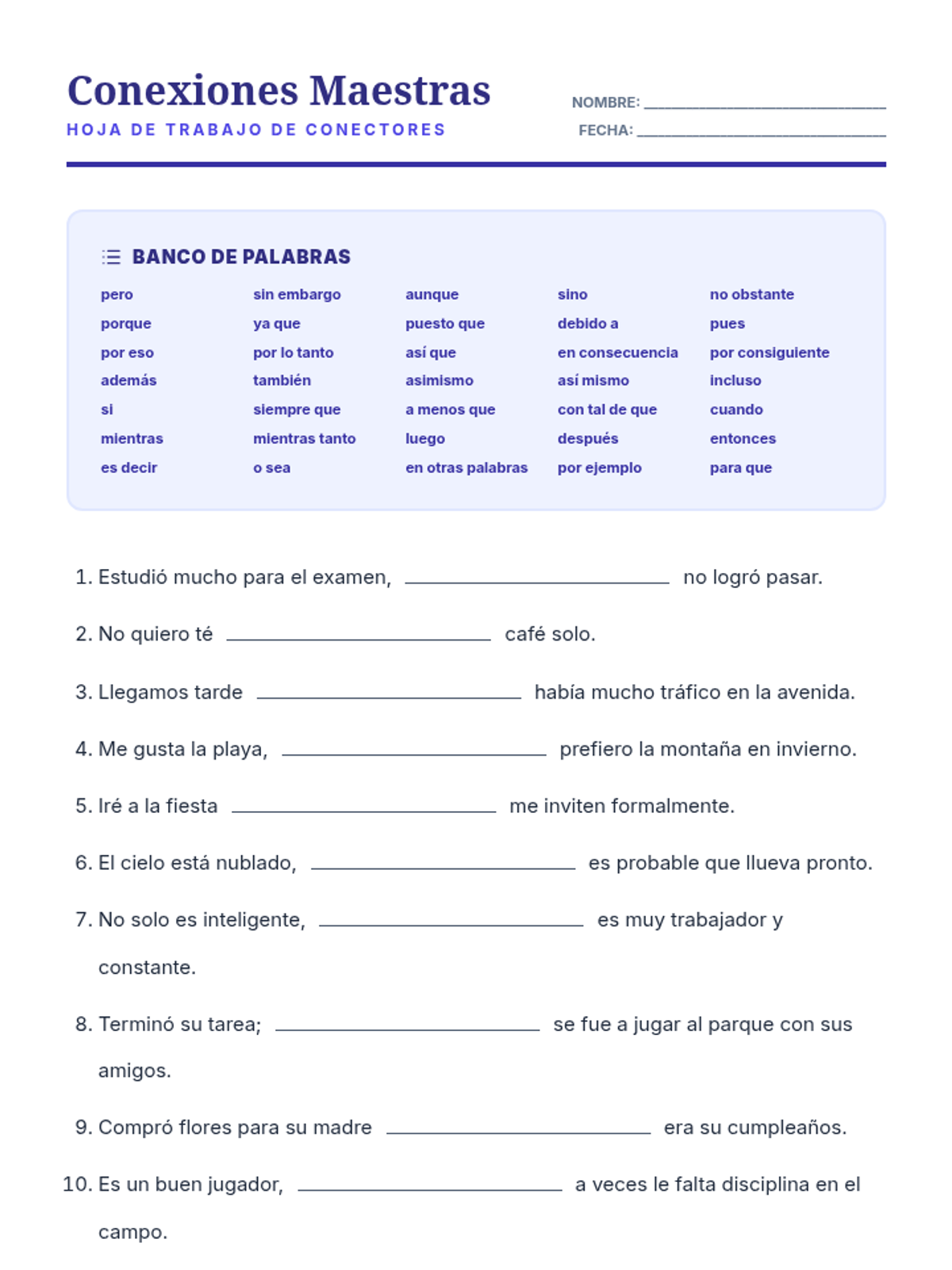
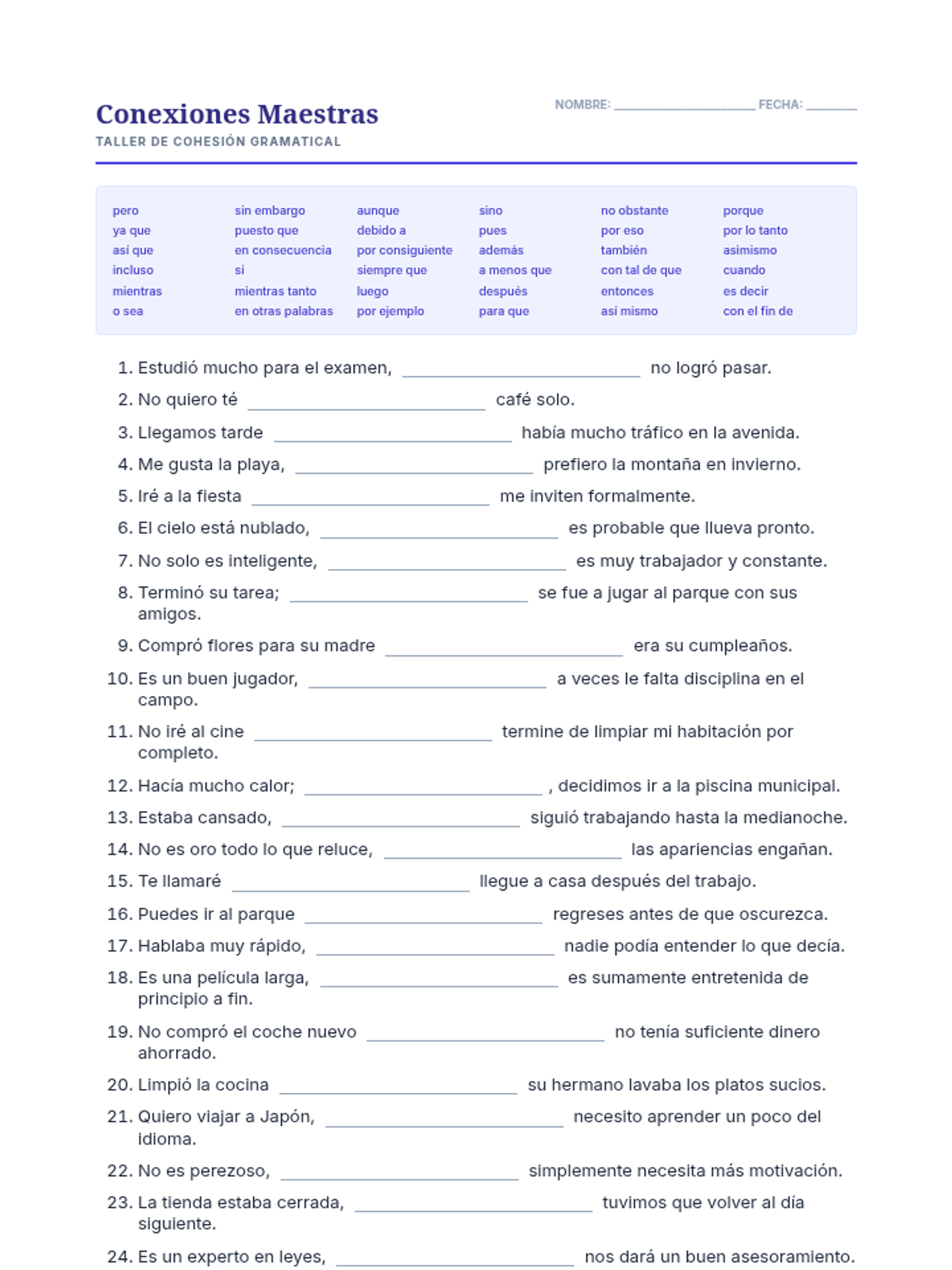
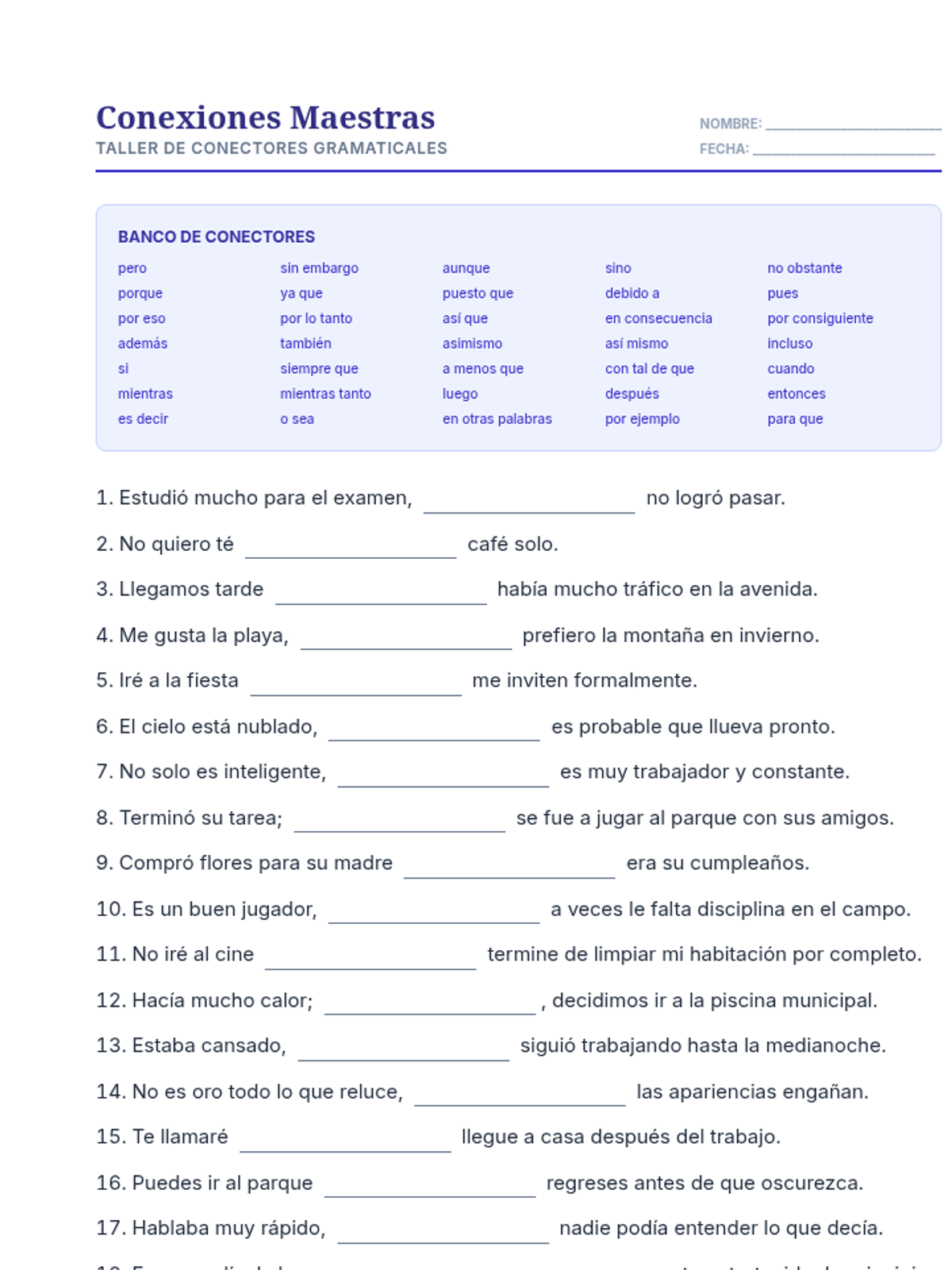
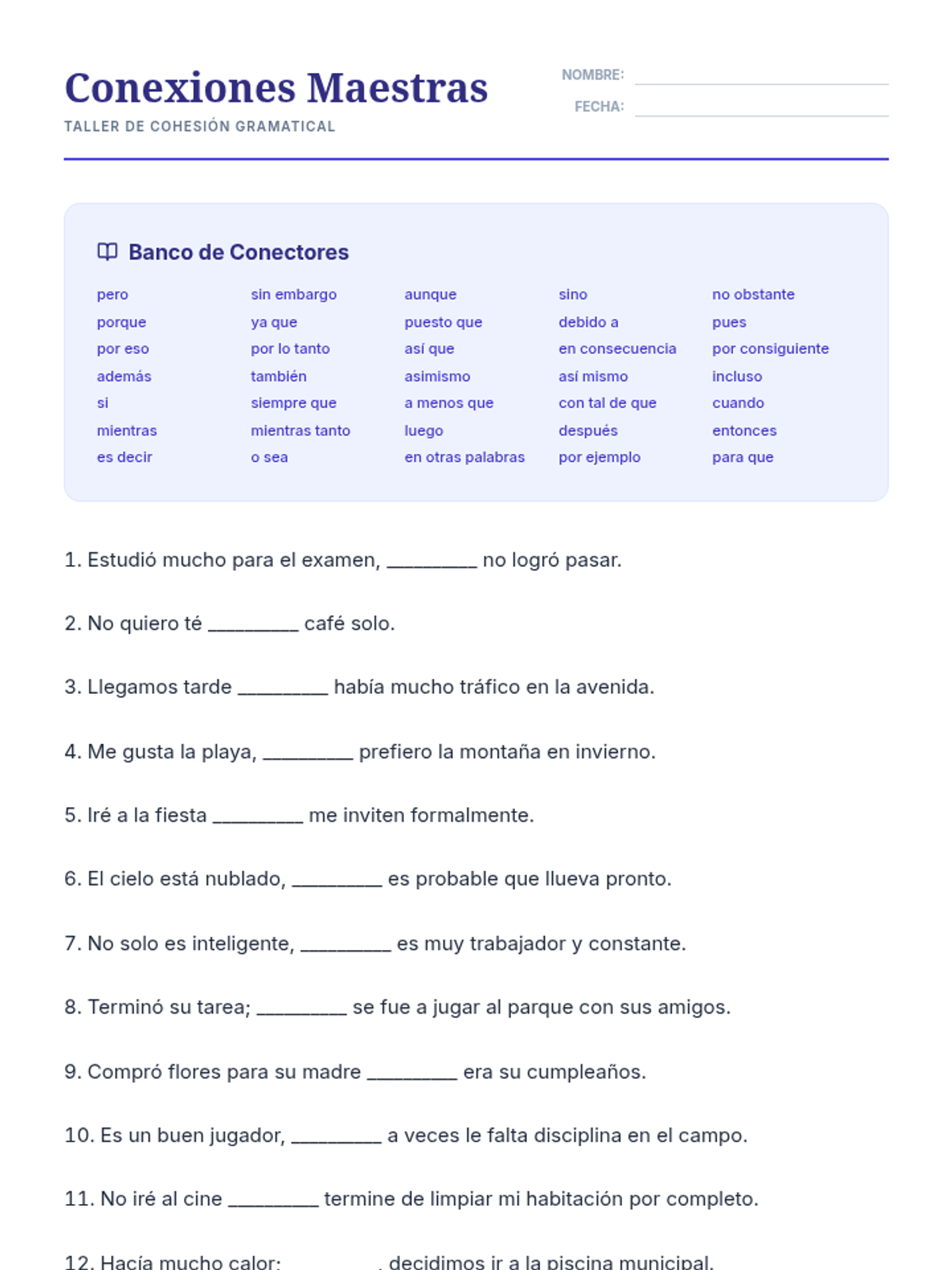
Una versión altamente optimizada de la hoja de trabajo de conectores gramaticales que ajusta 100 ejercicios en 4 páginas, maximizando el espacio para el estudiante y manteniendo la legibilidad.
Una hoja de trabajo extensa de 5 páginas con 100 ejercicios de completar espacios en blanco para practicar conectores gramaticales en español, incluyendo un banco de palabras y clave de respuestas consolidada.
Una hoja de trabajo extensa de 6 páginas con 100 ejercicios de completar espacios en blanco para practicar conectores gramaticales en español, incluyendo un banco de palabras y clave de respuestas consolidada.
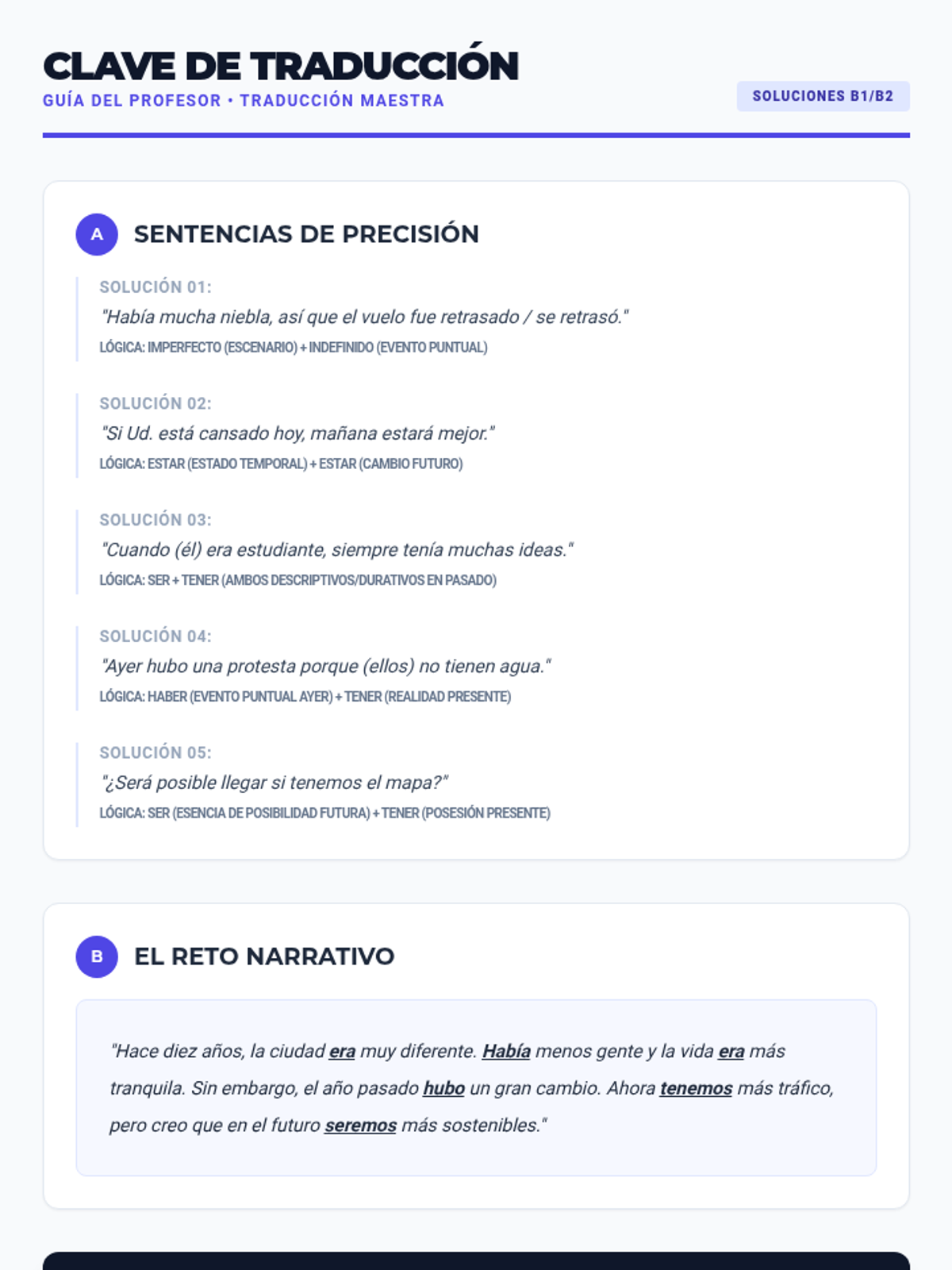
Answer key for the Traducción Maestra Worksheet, providing standard Spanish translations and pedagogical explanations for the tense contrasts between English and Spanish.
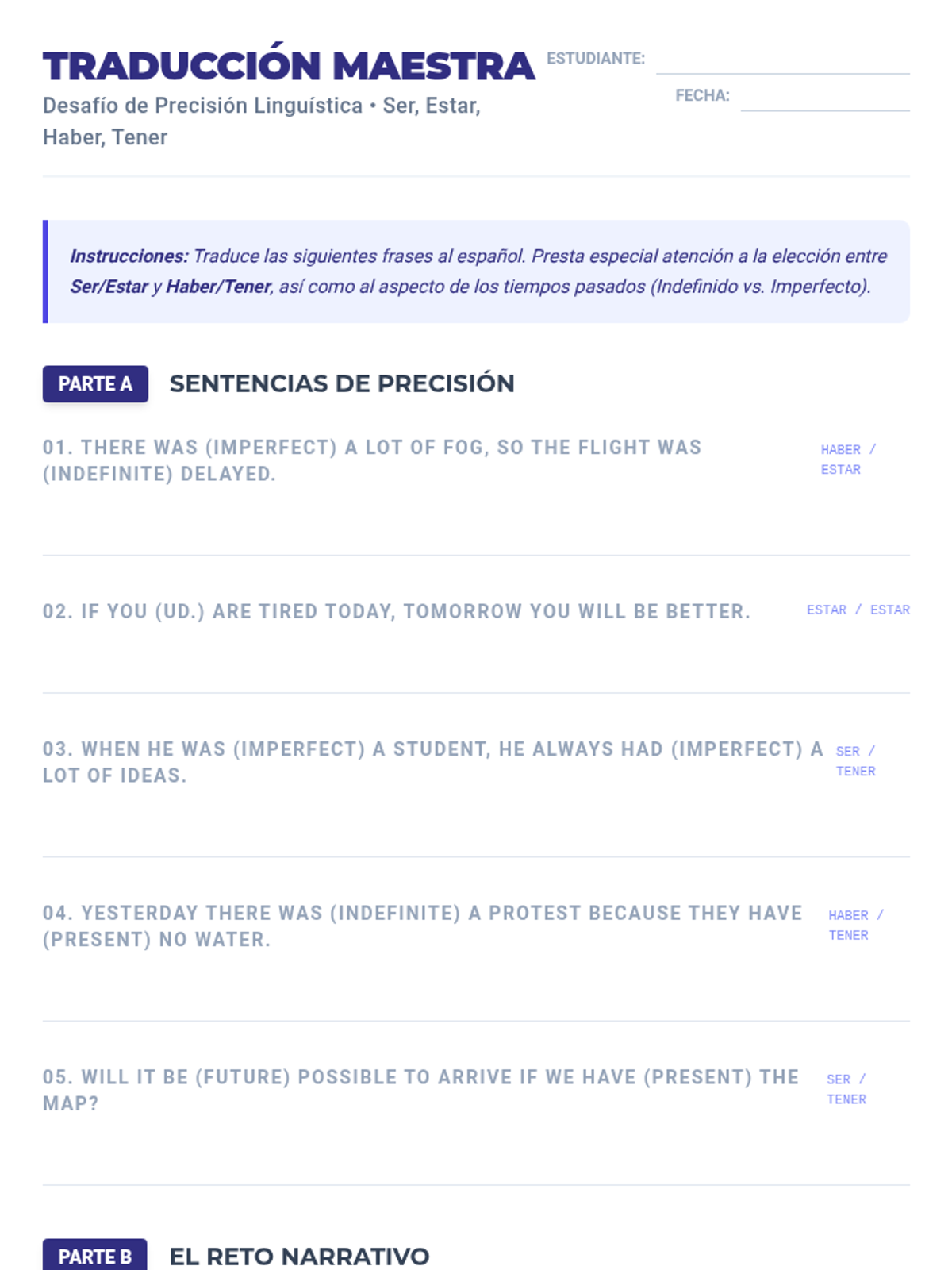
A specialized translation worksheet focusing on English-to-Spanish translation of the four master verbs. Challenges students to differentiate between tenses and semantic nuances in both sentences and paragraph form.
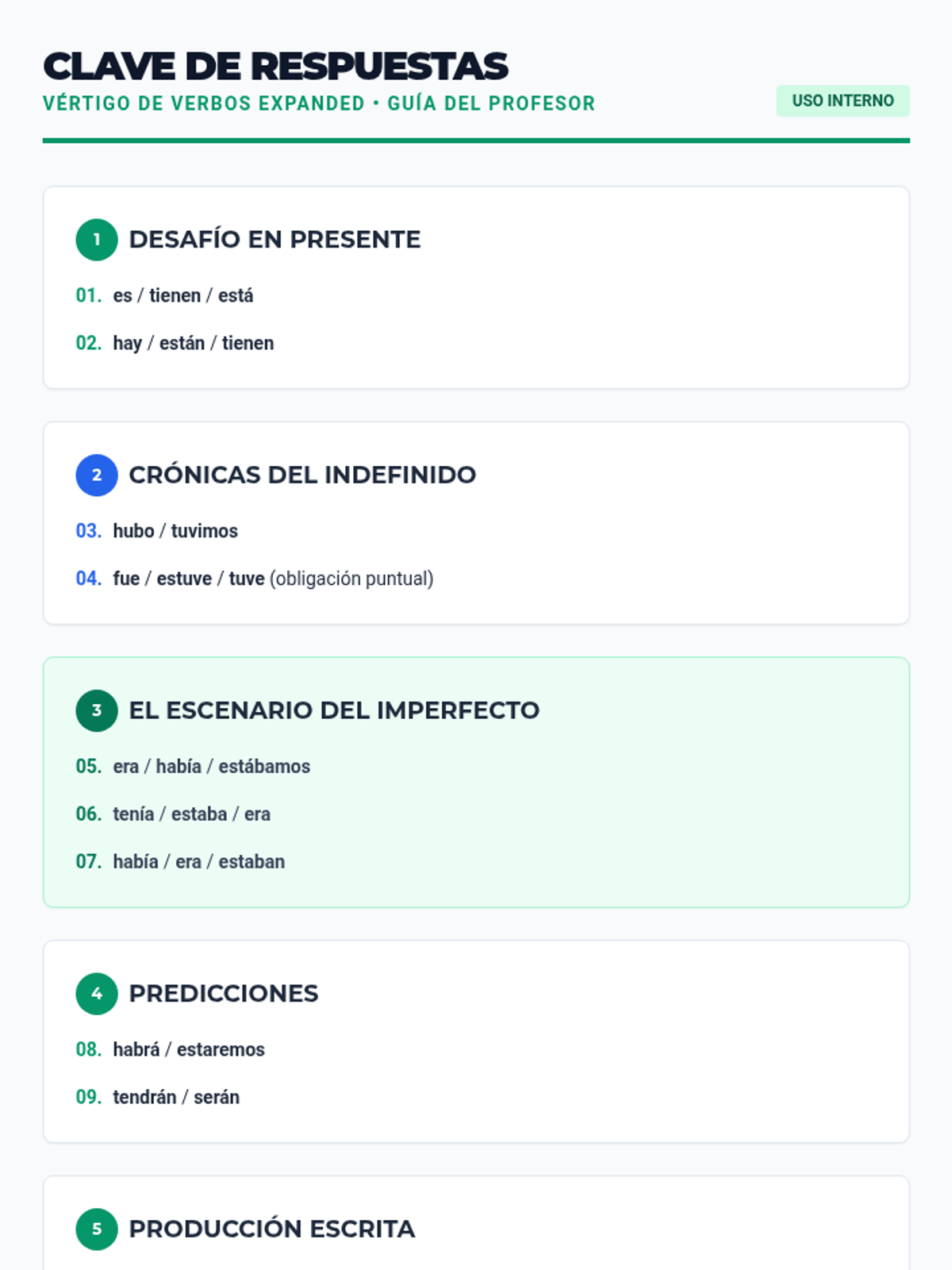
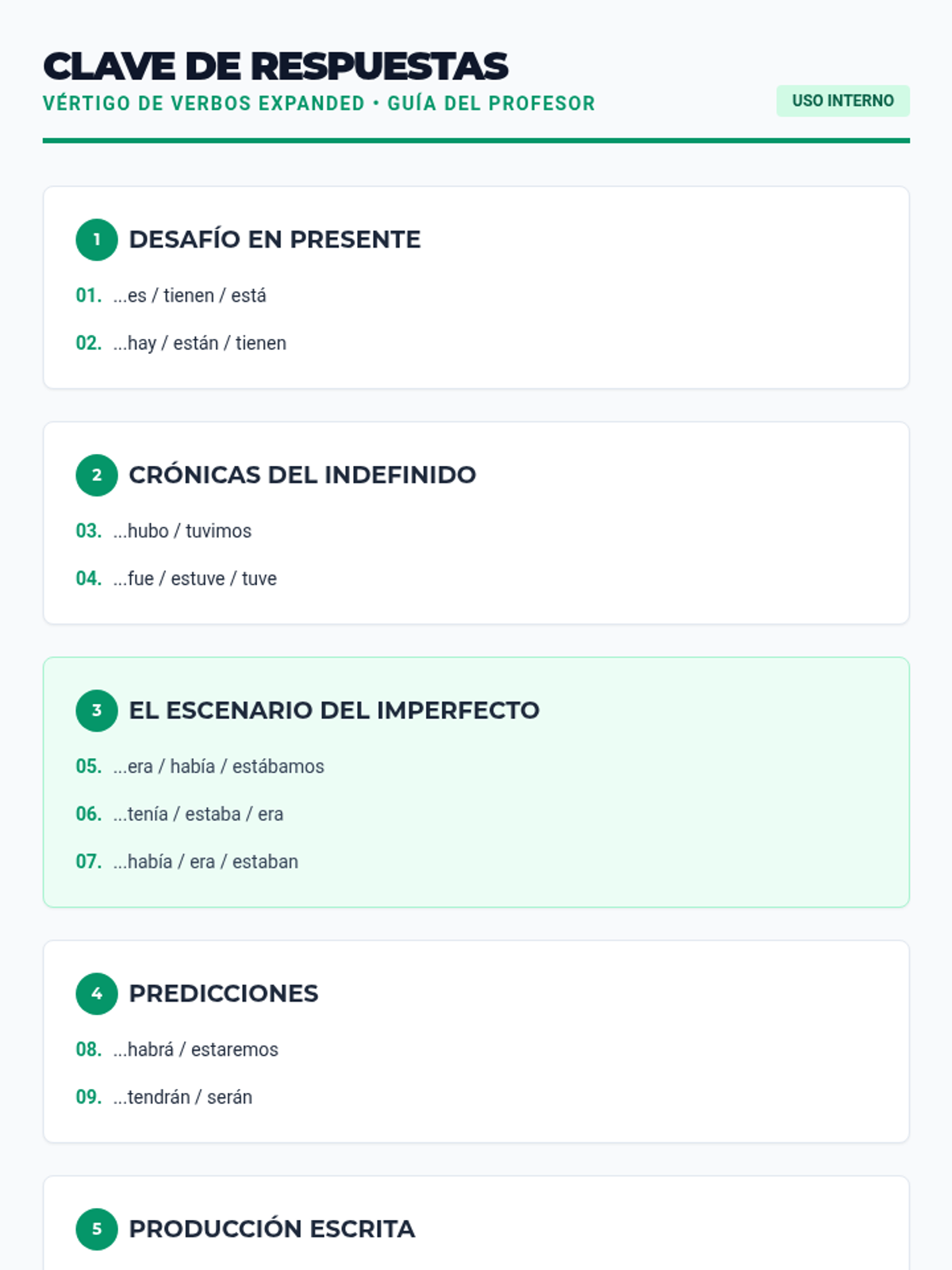
Answer key for the Vértigo de Verbos Worksheet, providing specific solutions for the expanded sections including Pretérito Imperfecto and ensuring alignment with the 9-item practice set.
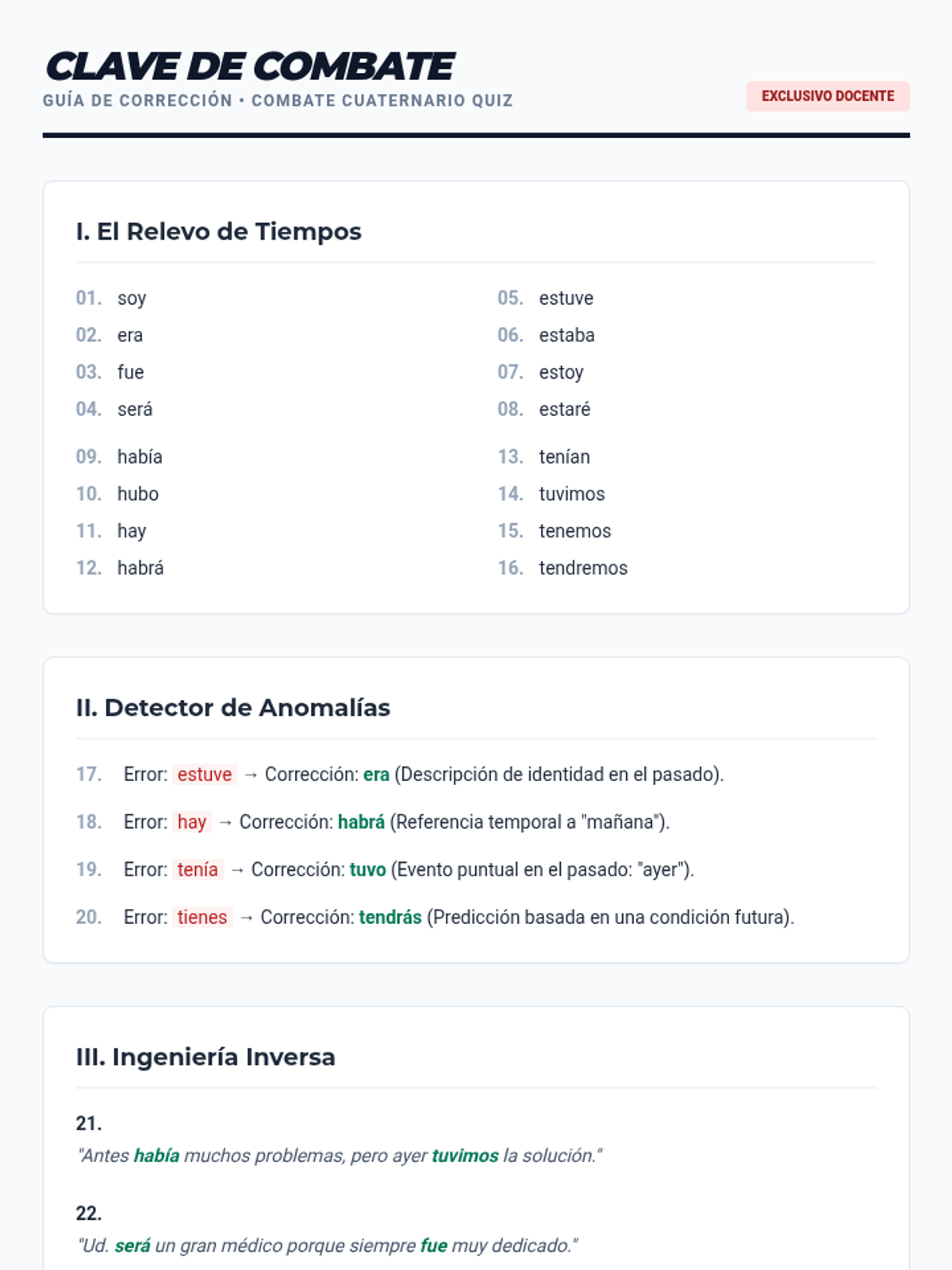
Detailed answer key for the Combate Cuaternario Quiz. Includes correct conjugations for all sections, detailed explanations for error correction, and a suggested grading rubric for the 26-point assessment.
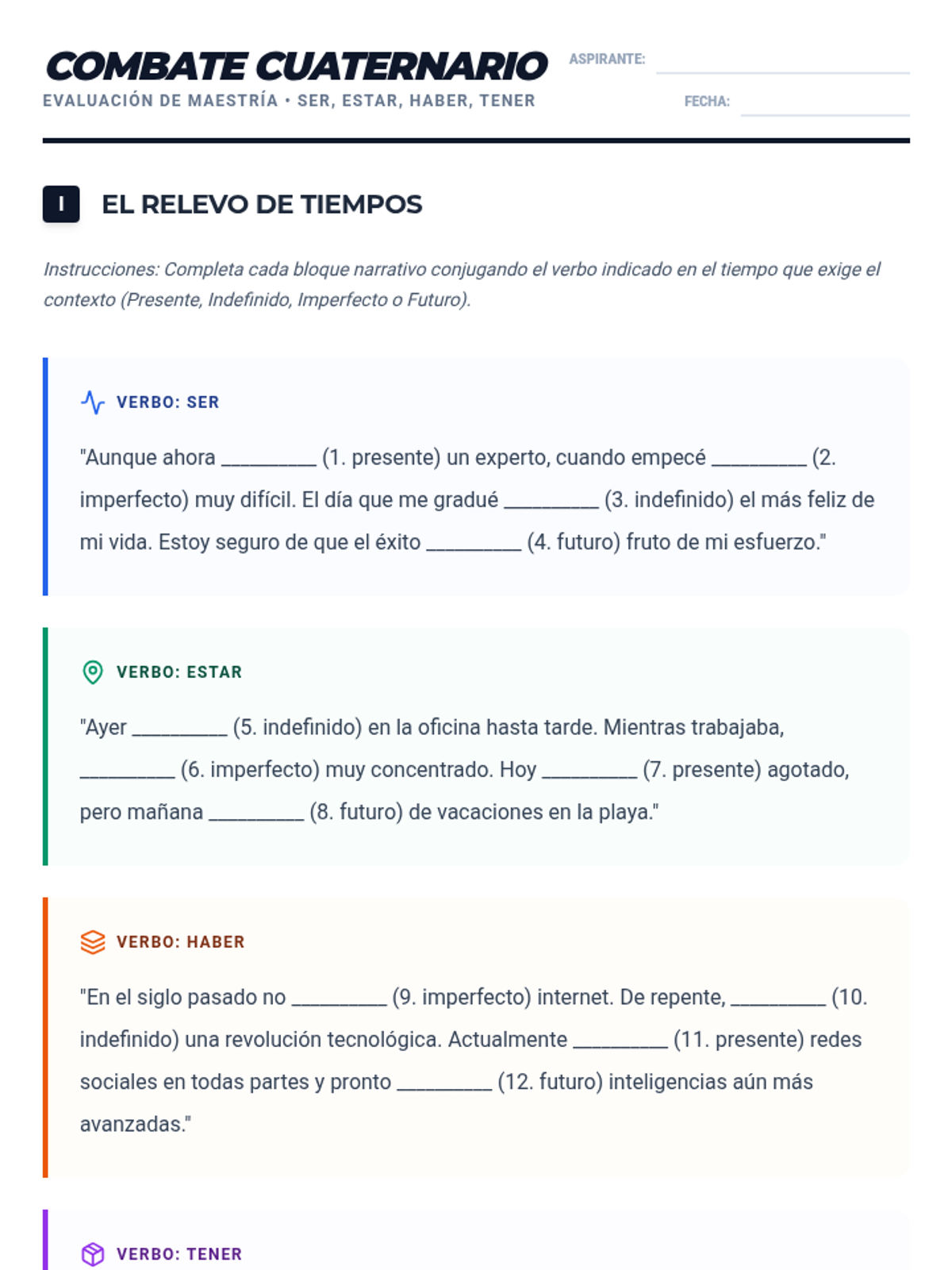
A comprehensive B1/B2 level quiz covering all four master verbs (Ser, Estar, Haber, Tener) across four tenses (Present, Indefinite, Imperfect, Future). Includes narrative completion, error correction, and translation challenges.
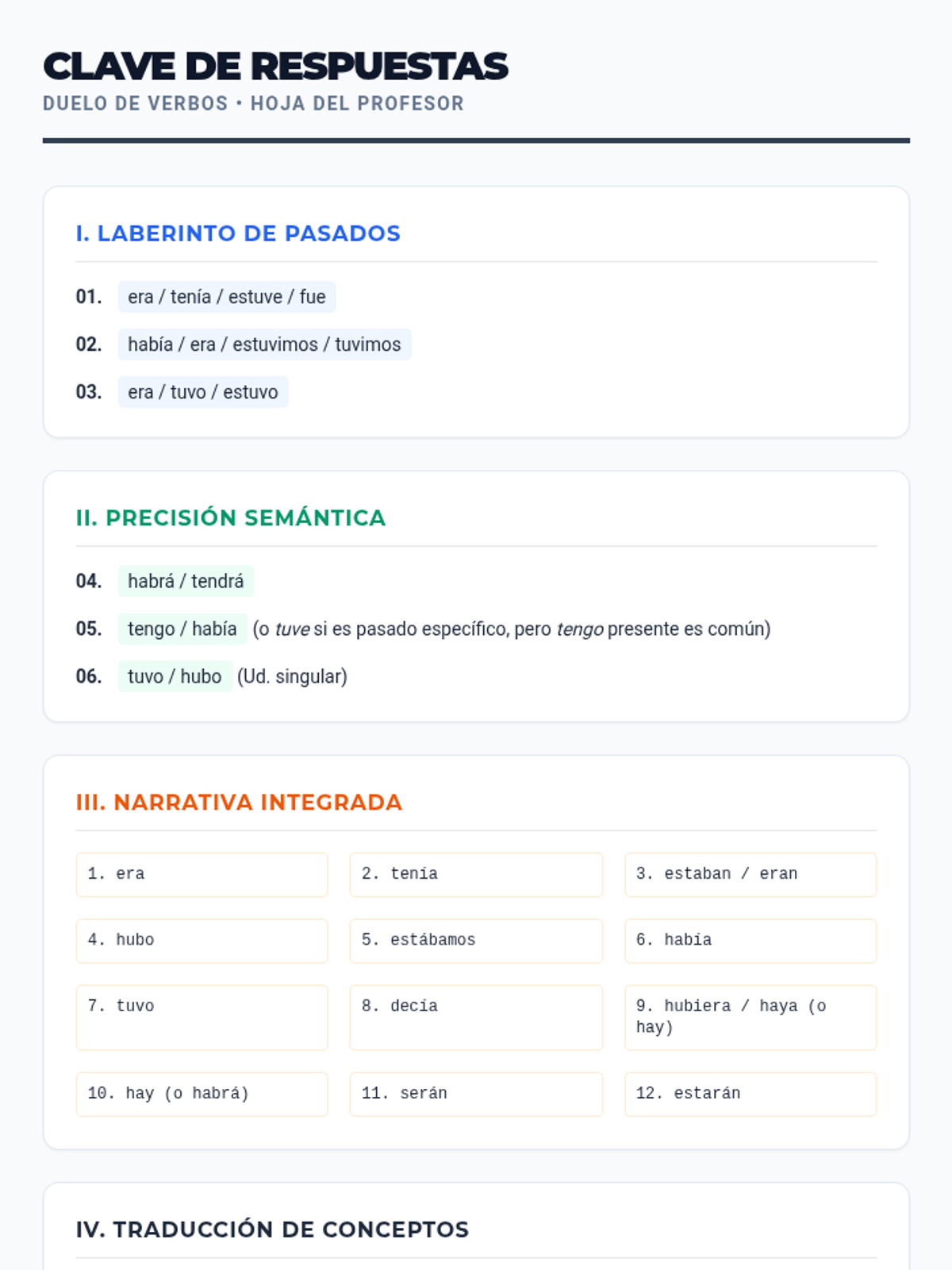
Answer key for the Duelo de Verbos Worksheet, providing detailed solutions and pedagogical notes on tense contrast for B1/B2 students.
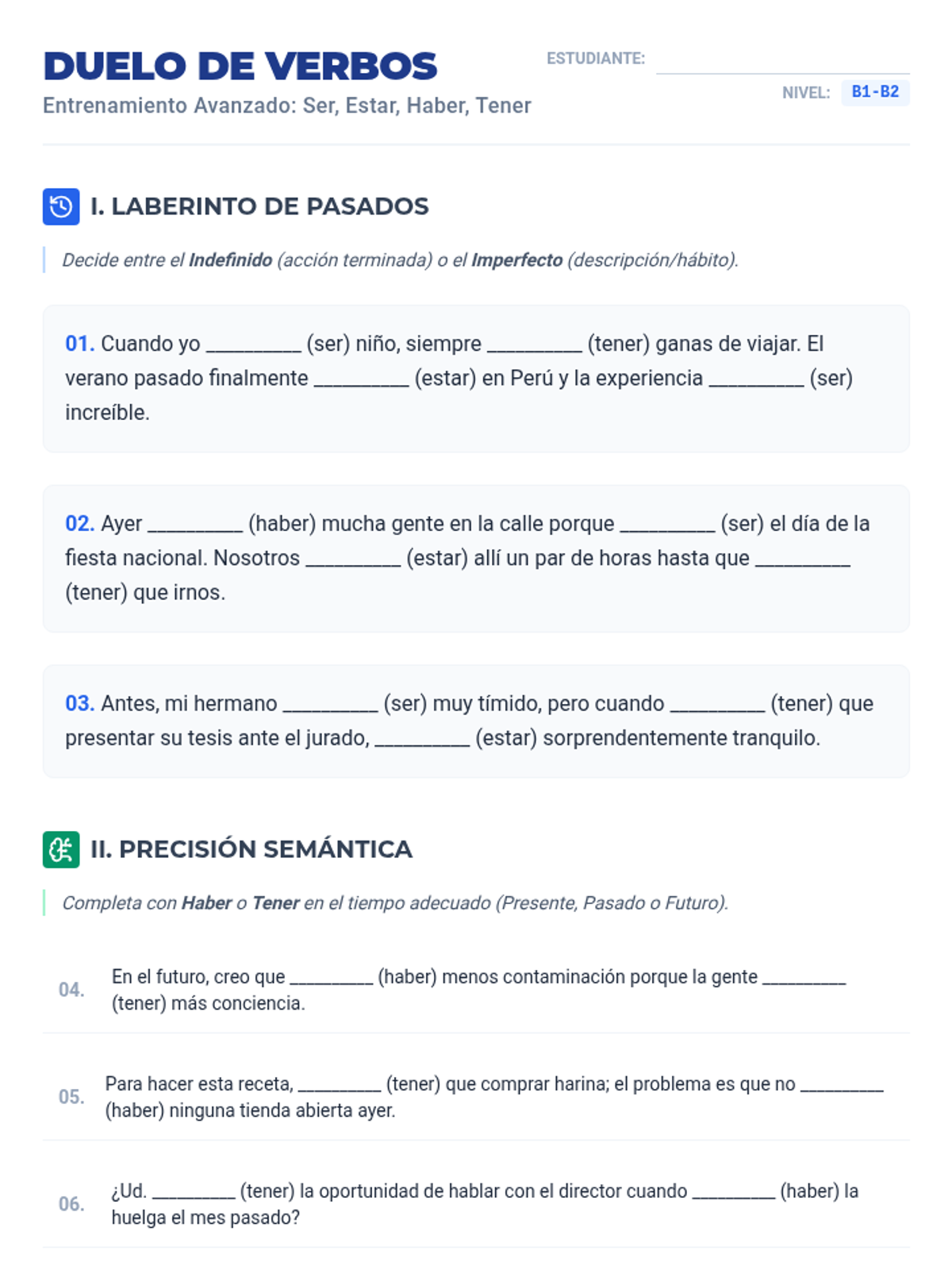
A secondary, high-level worksheet with diverse exercise types focusing on tense contrast (Indefinido vs. Imperfecto) and semantic precision of the four master verbs. Perfect for deepening B1/B2 skills.
A visual presentation deck for teaching the conjugation and contextual usage of Ser, Estar, Haber, and Tener for B1/B2 students. Omitted 'vosotros' and grouped Ud./Uds. as requested. Includes parallel tense slides and a scenario-based challenge.
Answer key for the Vértigo de Verbos Worksheet, including evaluation criteria for the creative writing section and pedagogical tips for teaching irregular verb forms at the B1/B2 level.
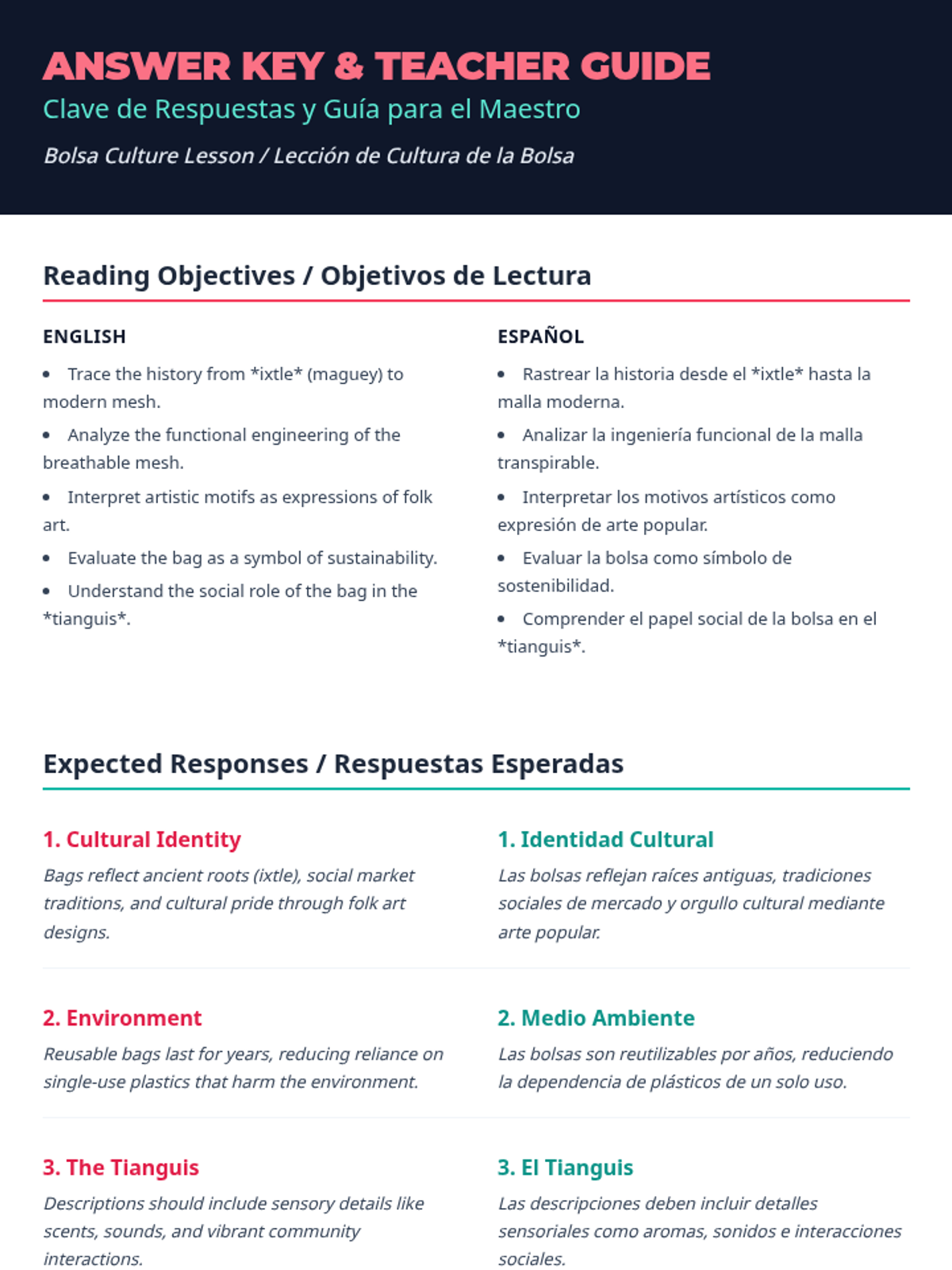
Bilingual answer key and teacher guide for the Bolsa Culture lesson, updated to include objectives for the 5-paragraph reading passage.
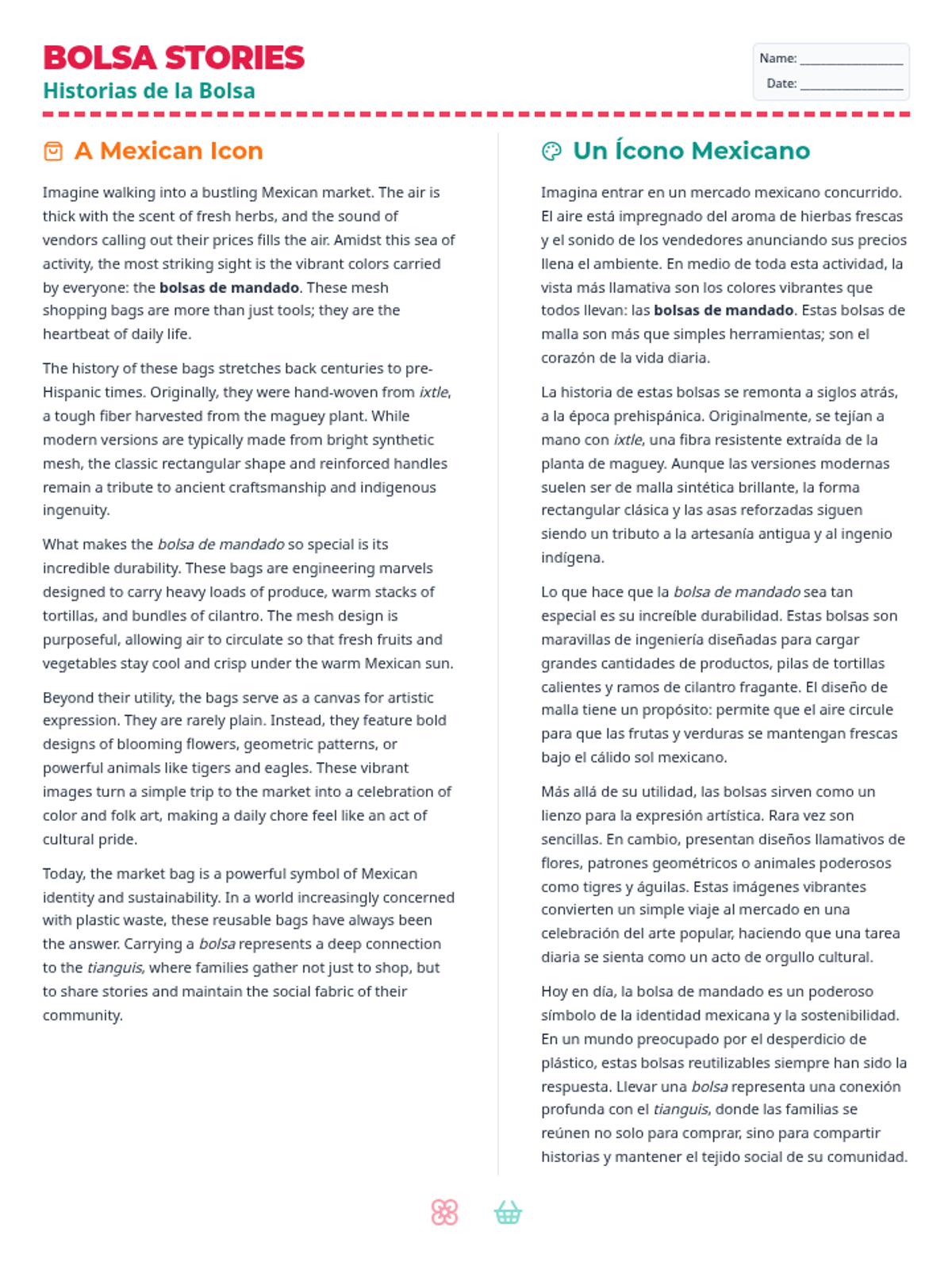
A comprehensive dual-language activity worksheet featuring a 5-paragraph reading passage about the "bolsa de mandado" and six writing questions with generous response areas. Layout optimized to prevent text cutoff.
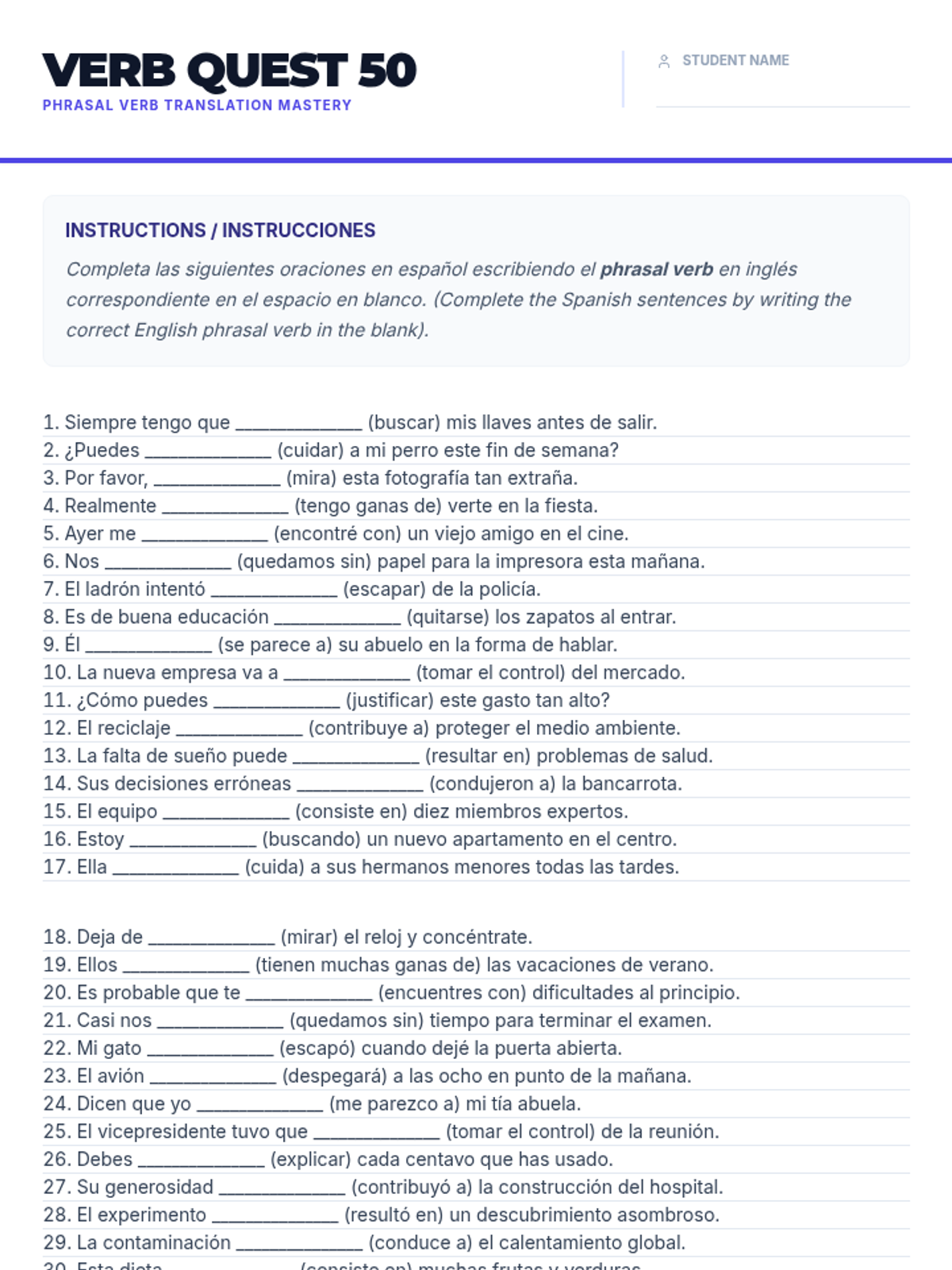
A 50-sentence fill-in-the-blank worksheet in Spanish designed to practice English phrasal verbs, featuring double-spaced lines and a comprehensive answer key on the final page.
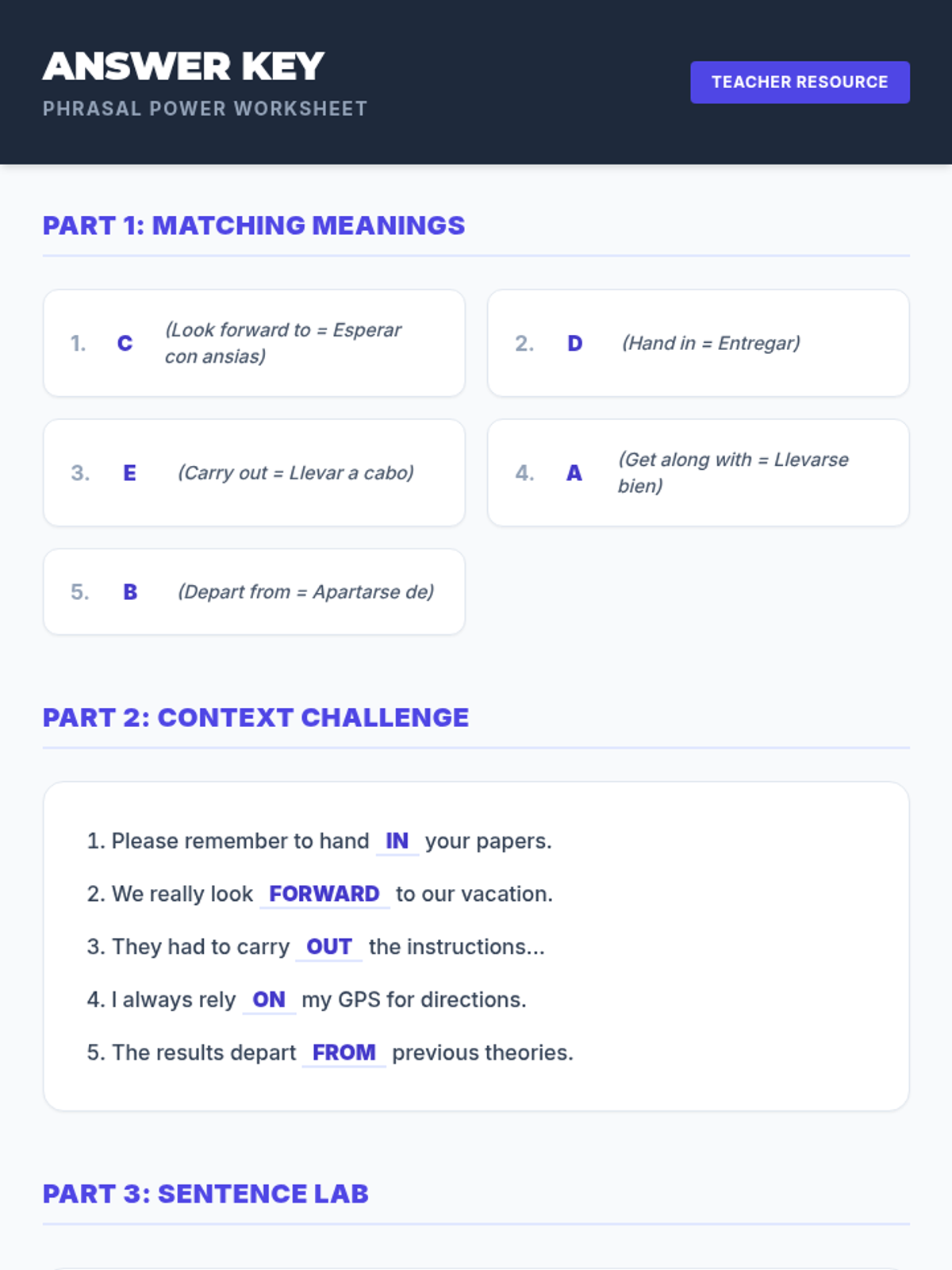
A teacher-facing answer key for the Phrasal Power Worksheet, providing correct answers for matching, fill-in-the-blank, and translation exercises, along with sample sentences.
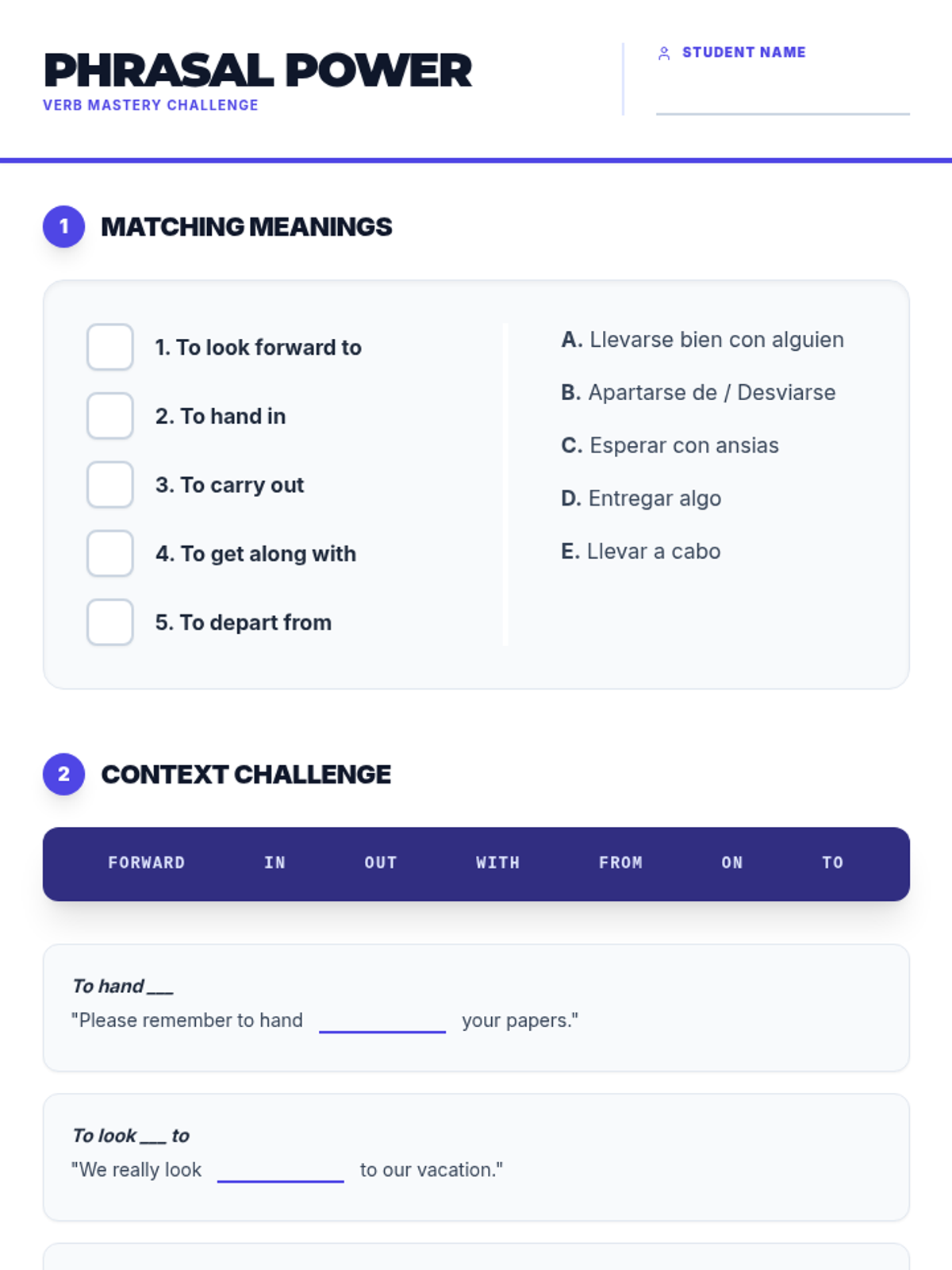
A practice worksheet containing matching exercises, fill-in-the-blank sentences, and translation tasks to reinforce the use of phrasal verbs in context.
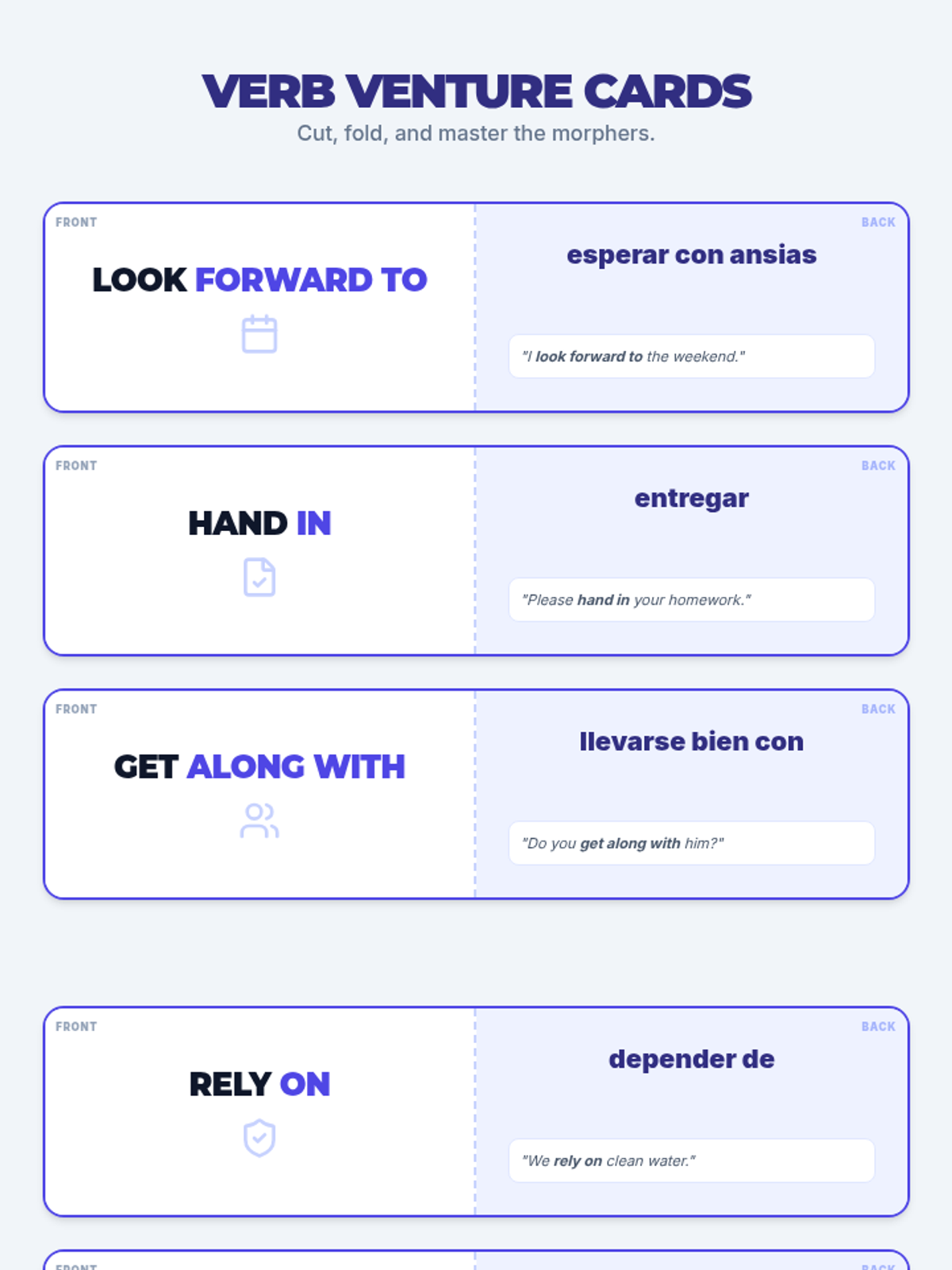
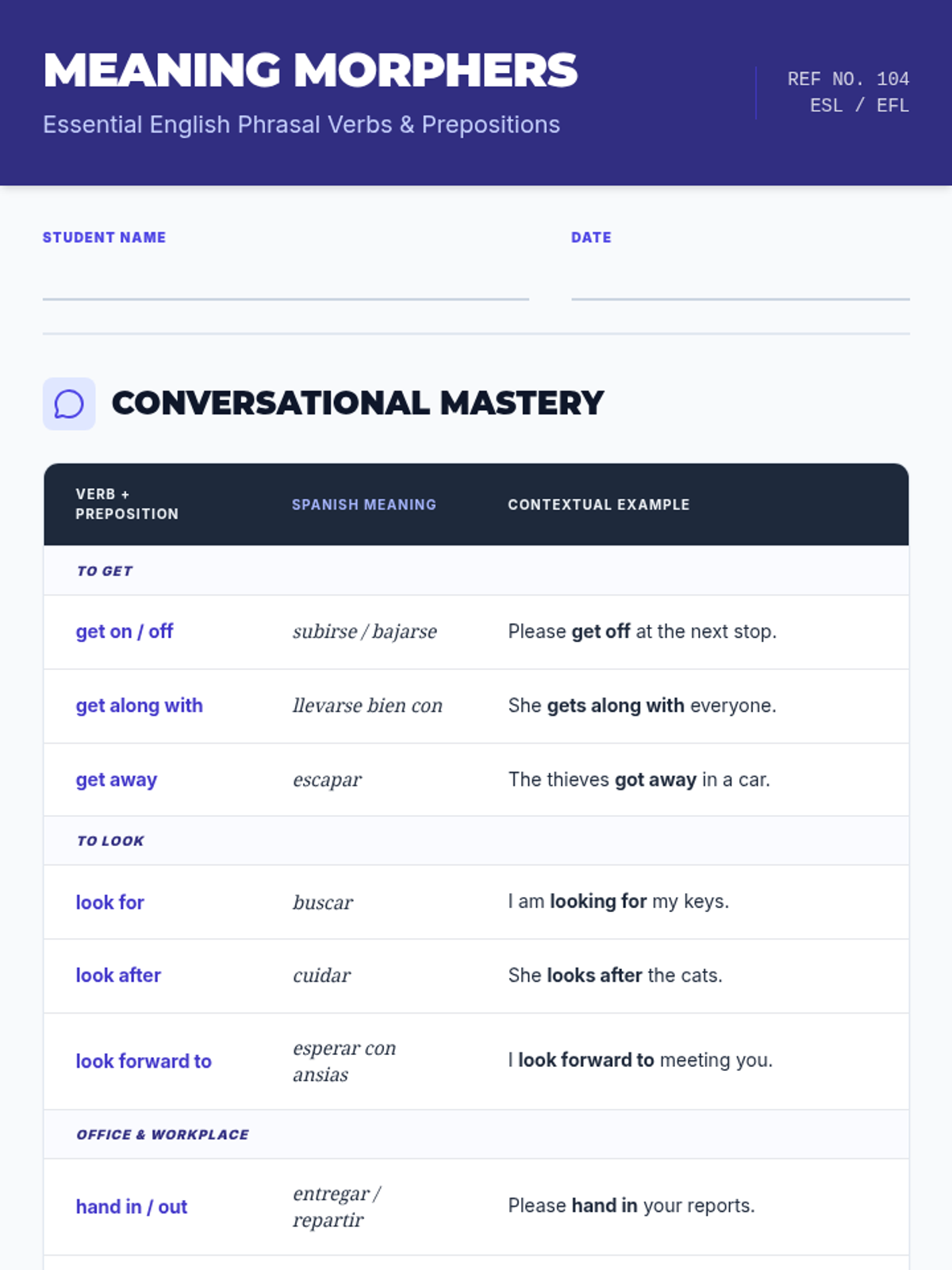
Printable vocabulary flashcards featuring phrasal verbs, their Spanish translations, and context-based examples for study and memorization.
A comprehensive study guide listing phrasal verbs with multiple meanings based on prepositions, including Spanish translations and example sentences for conversational and academic contexts.
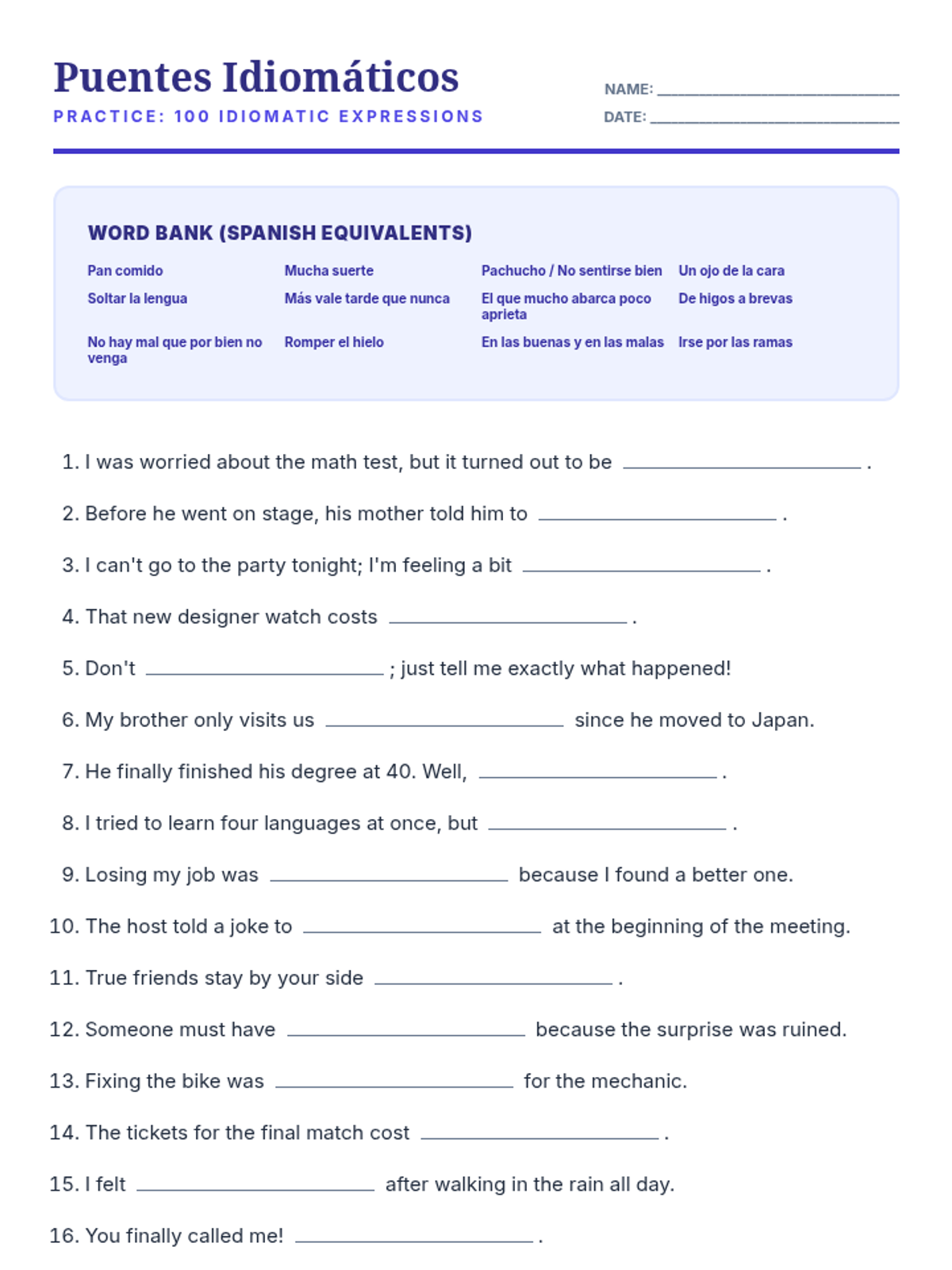
Hoja de trabajo con 100 oraciones para practicar modismos en inglés con sus equivalentes en español, diseñada para reforzar el uso contextual y la traducción figurada.
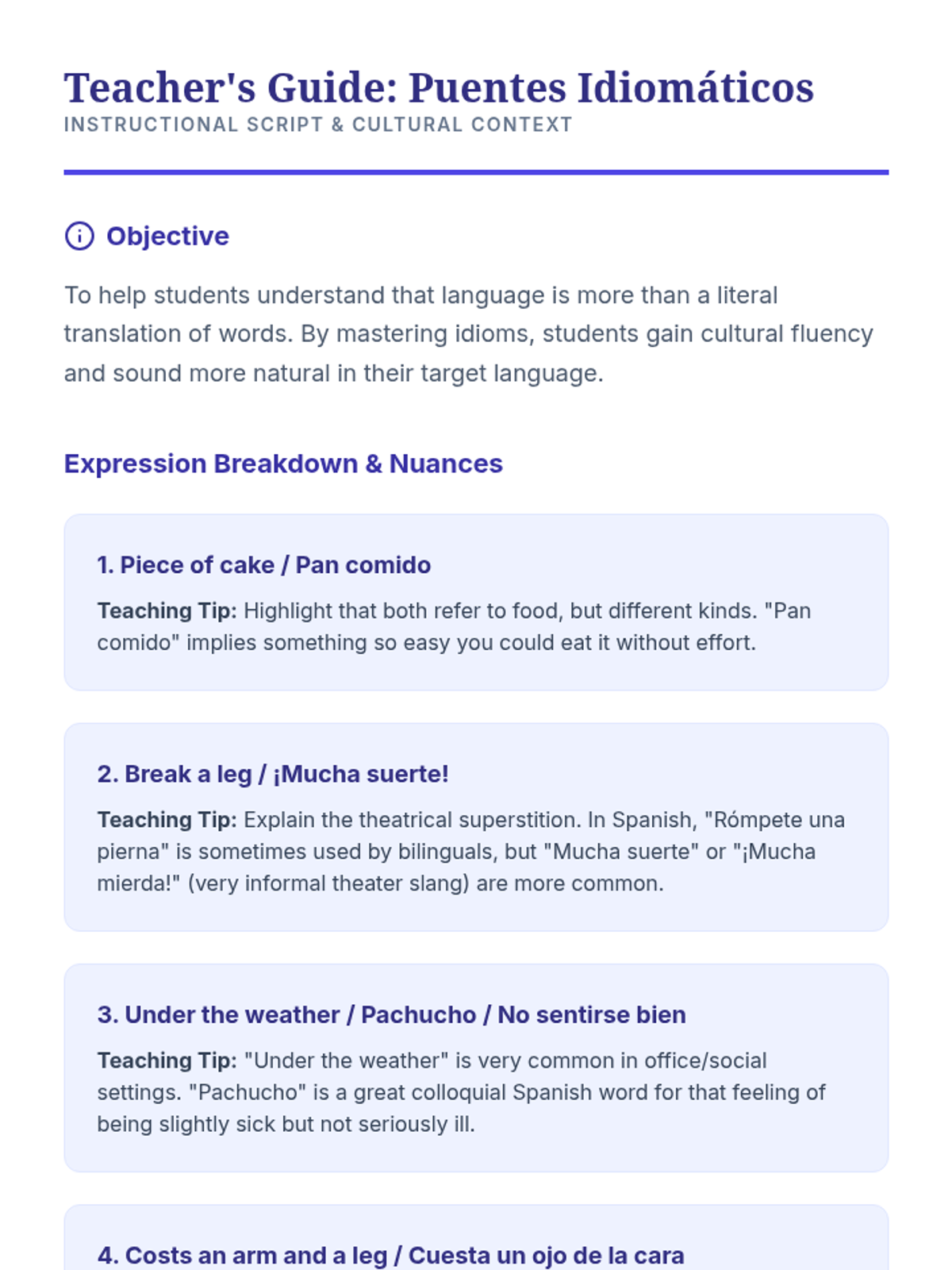
Guía para el docente con explicaciones detalladas en inglés sobre modismos, consejos pedagógicos y matices culturales para enseñar la equivalencia entre inglés y español.
Presentación visual que introduce modismos comunes en inglés con sus equivalentes en español, explicando sus significados y usos en contexto.
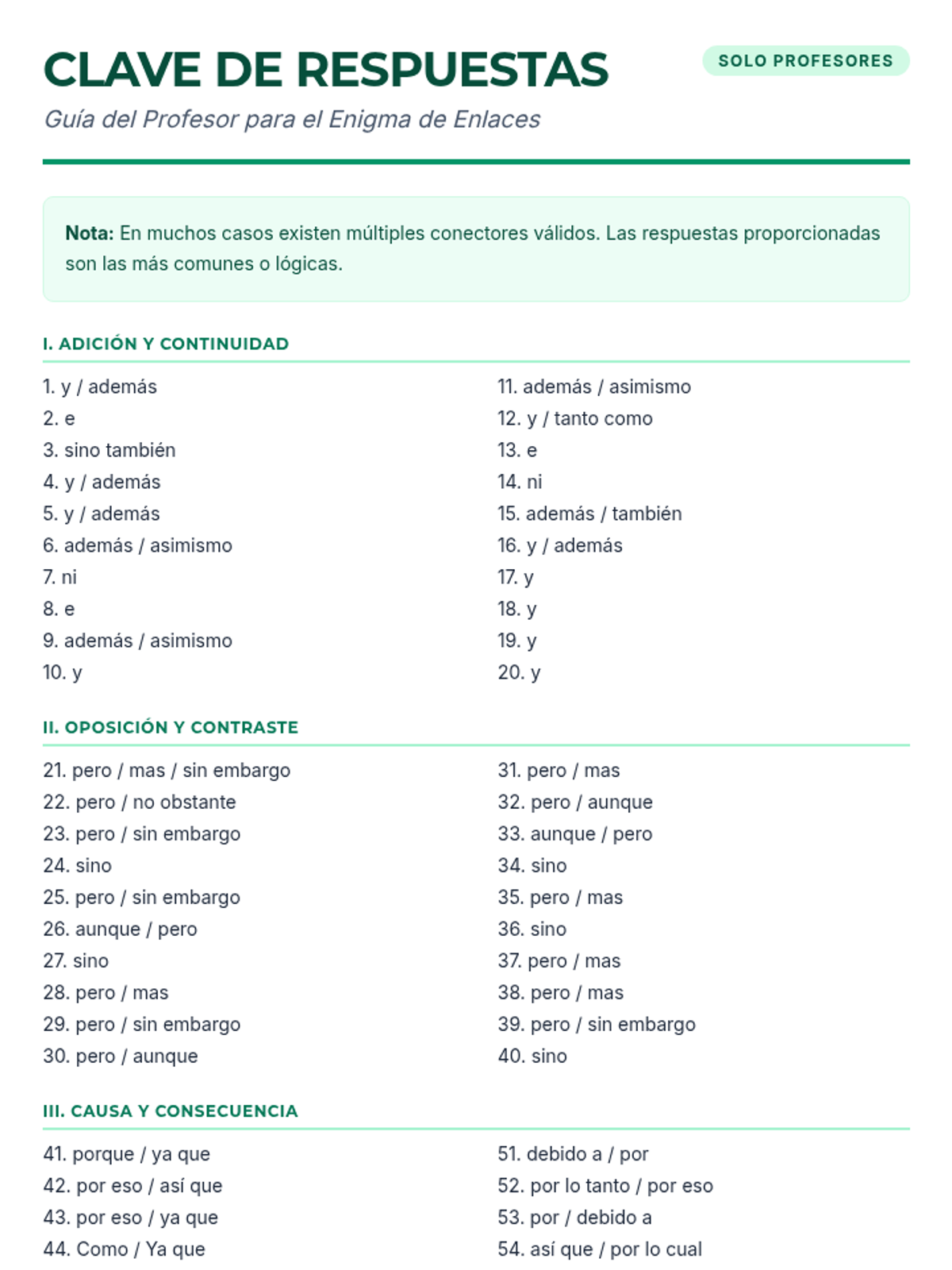
Clave de respuestas detallada para el Desafío de 100 oraciones de conectores. Proporciona las opciones más lógicas para cada ejercicio y sugerencias de alternativas para uso del docente.
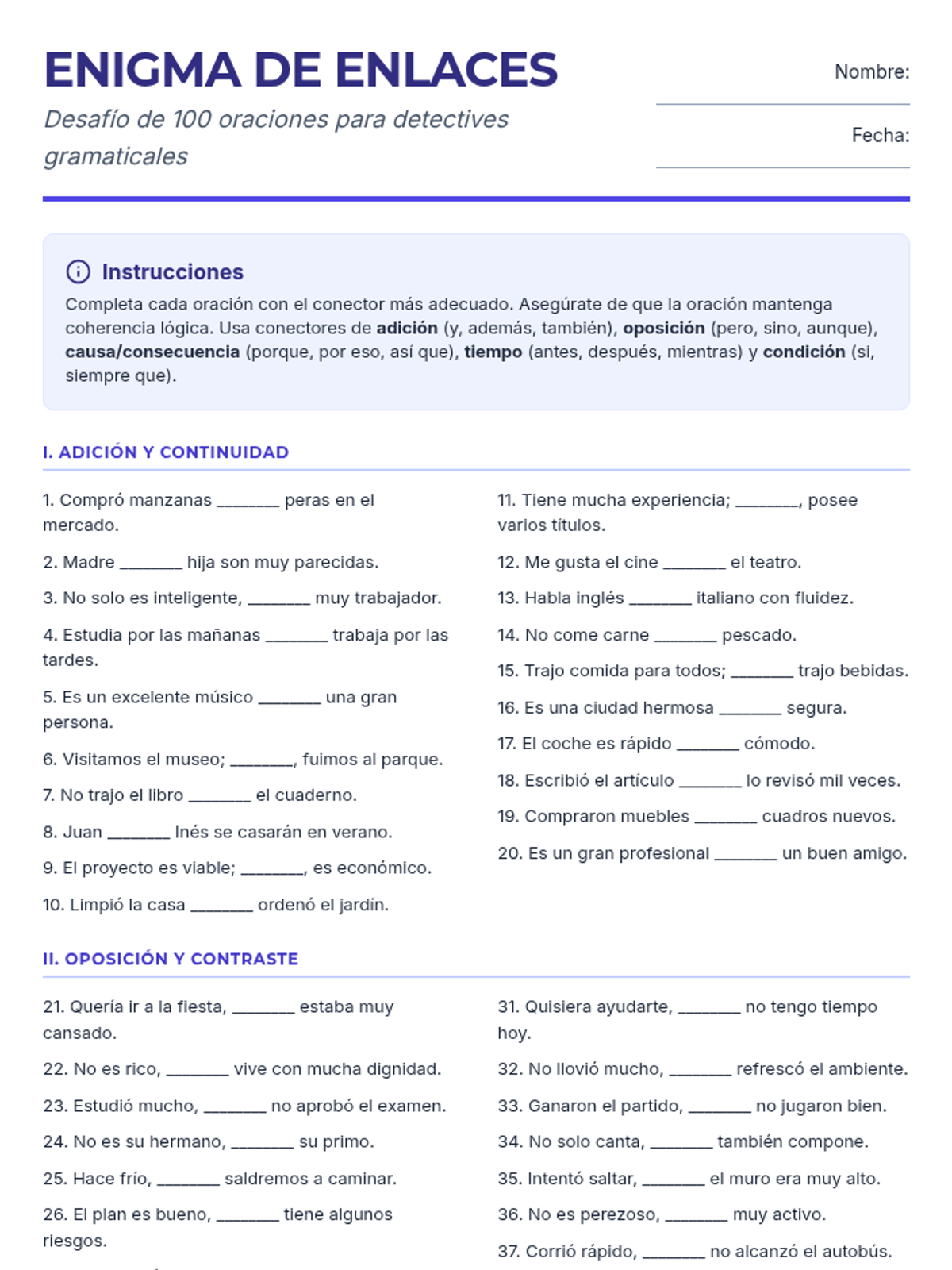
Una hoja de trabajo exhaustiva con 100 oraciones para completar, diseñada para practicar diversos tipos de conectores en español (aditivos, adversativos, causales, consecutivos, temporales y condicionales). Incluye secciones organizadas por categoría para facilitar el aprendizaje progresivo.
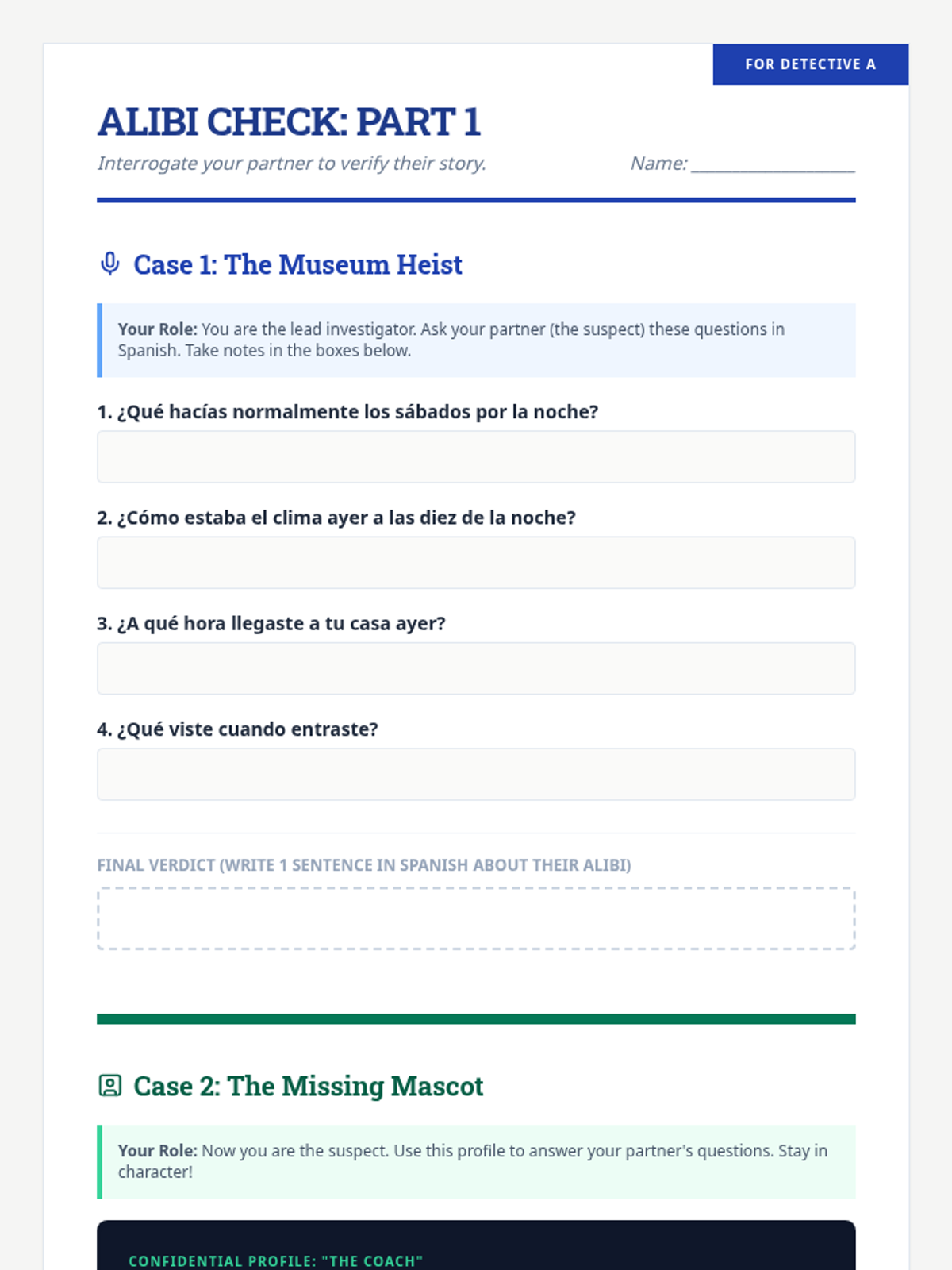
A partner speaking and writing activity where students take turns being a detective and a suspect, using Preterite and Imperfect to verify alibis.
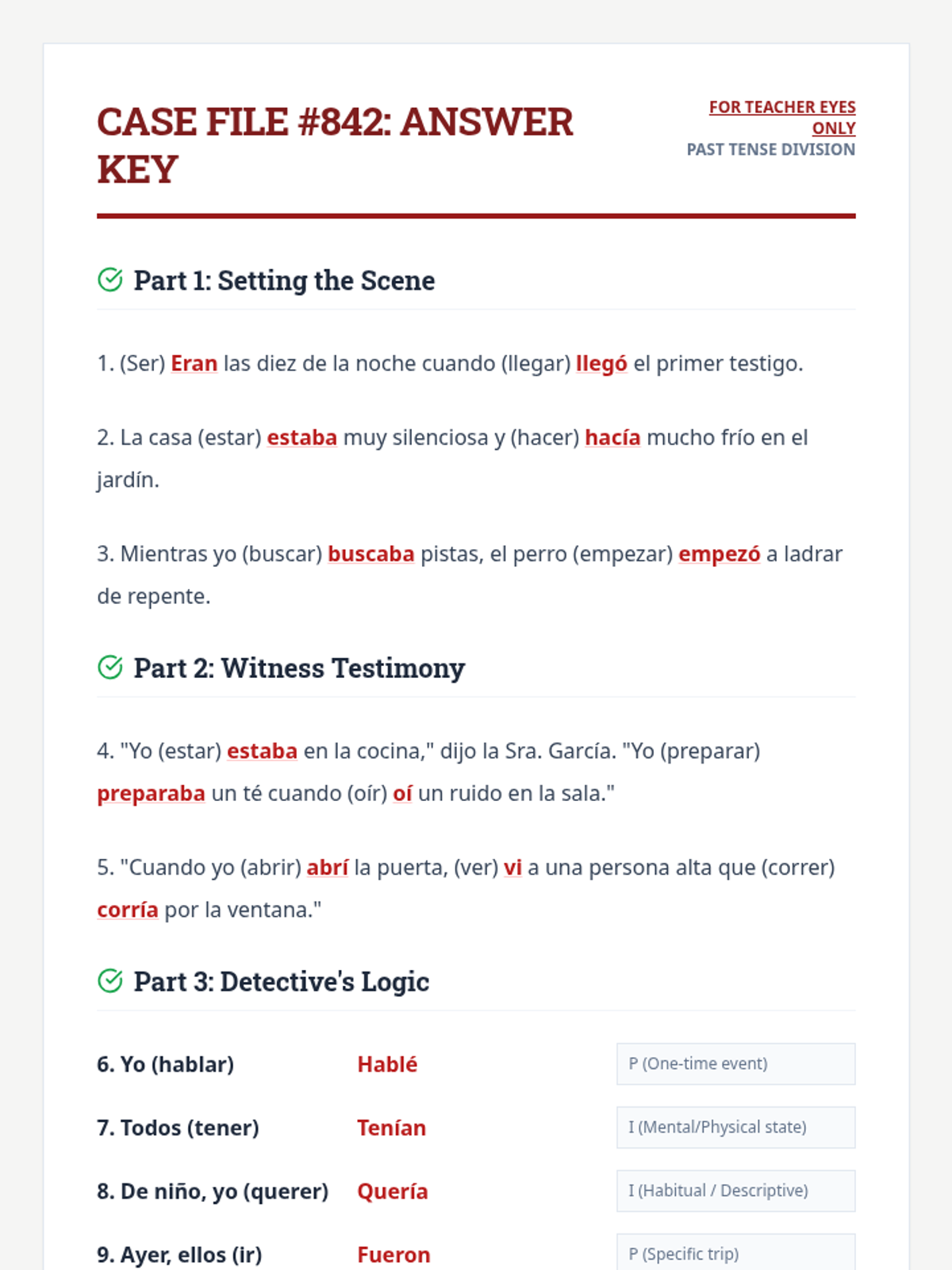
An answer key for the Case File Worksheet, providing the correct Spanish conjugations and reasoning for the detective story exercises.
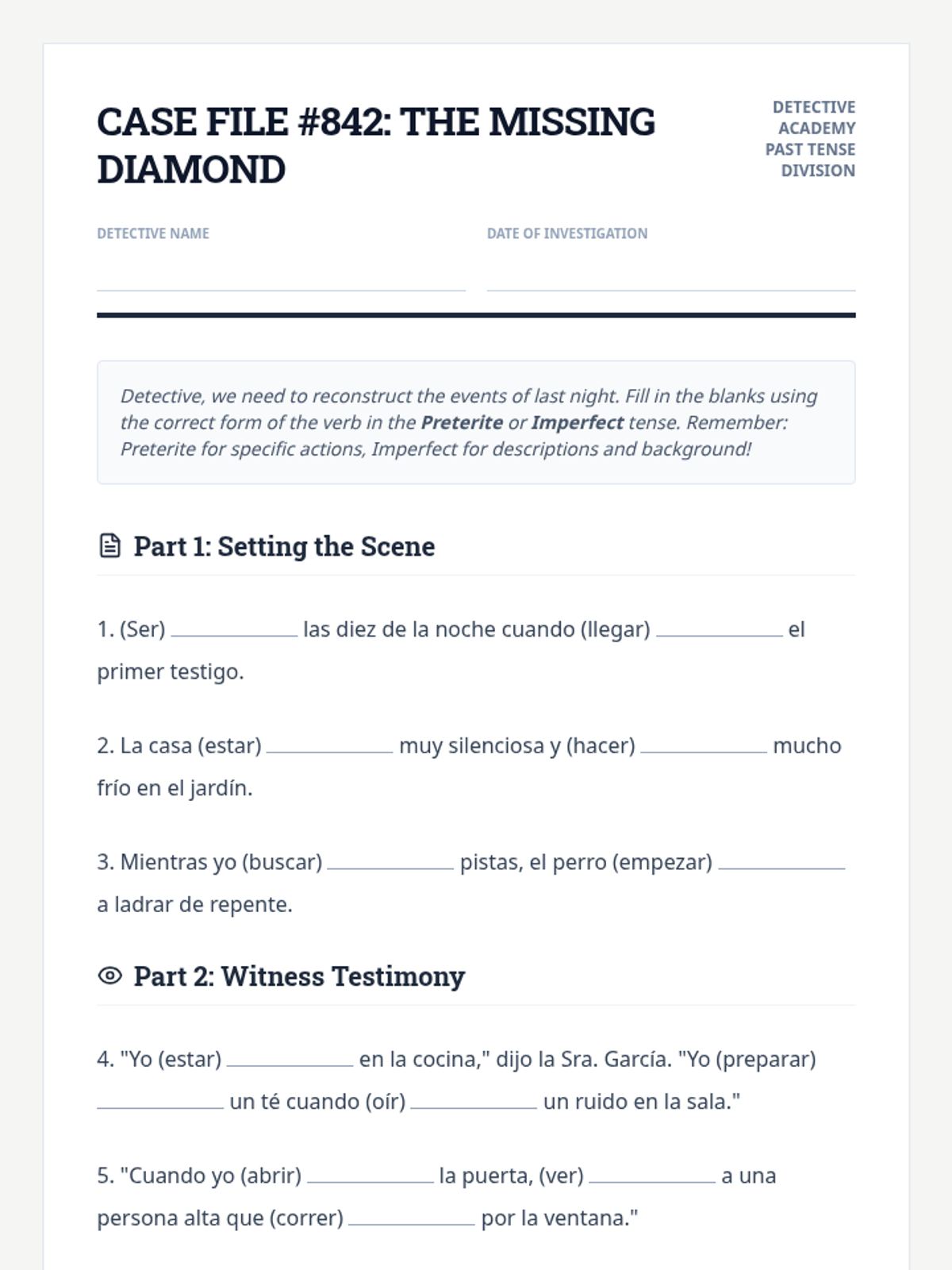
A student practice worksheet featuring a detective-themed story that requires students to distinguish between and conjugate verbs in the Preterite and Imperfect tenses.
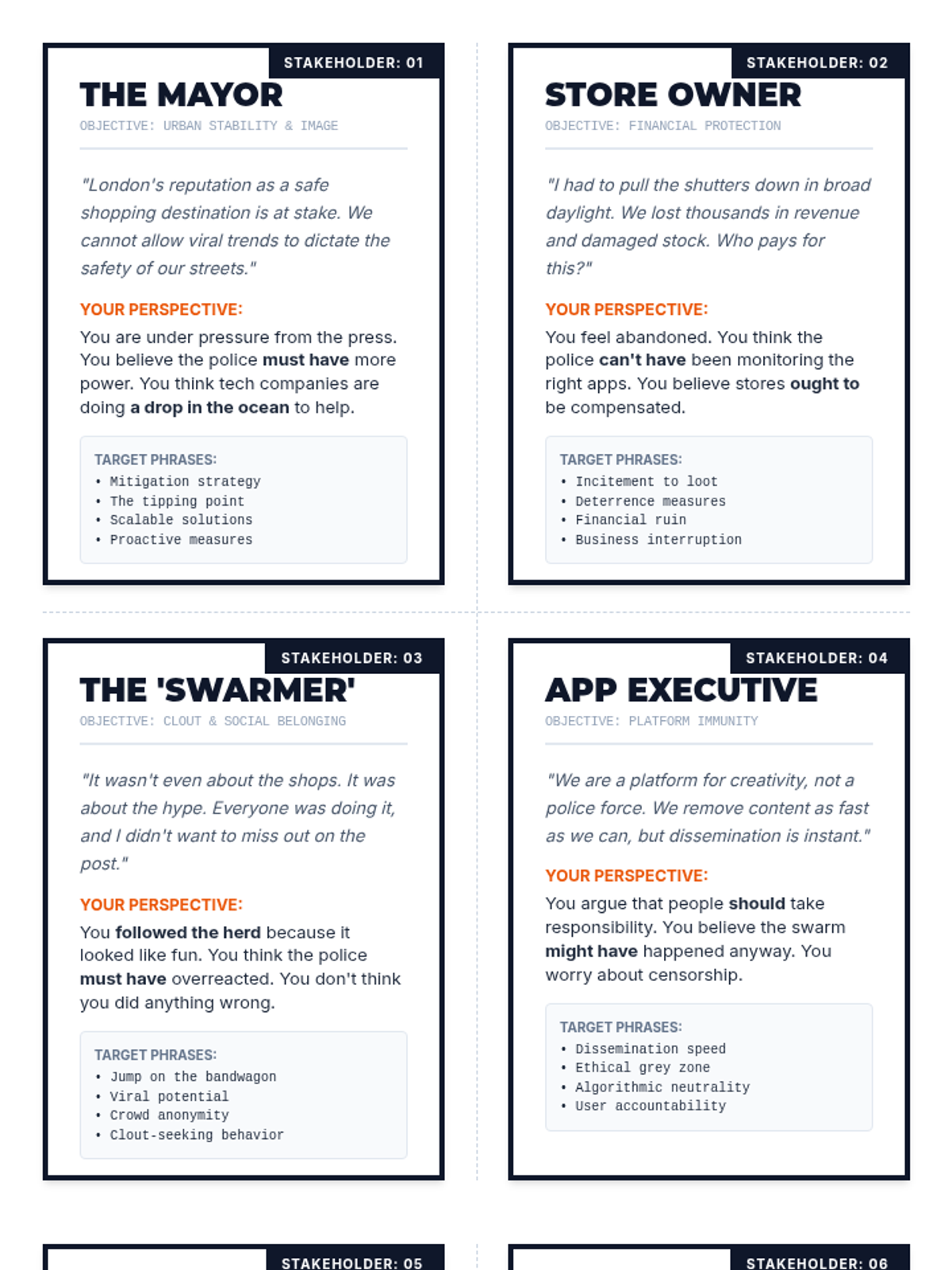
A set of eight role-play cards for the Digital Swarms workshop. Roles include the Mayor, Store Owner, Participant, Tech Executive, Police Chief, Witness, Civil Lawyer, and Influencer. Each card includes a persona, goal, specific perspective using target modals, and required vocabulary/idioms. It now includes 4 target phrases per card in a single column to prevent text overlap.
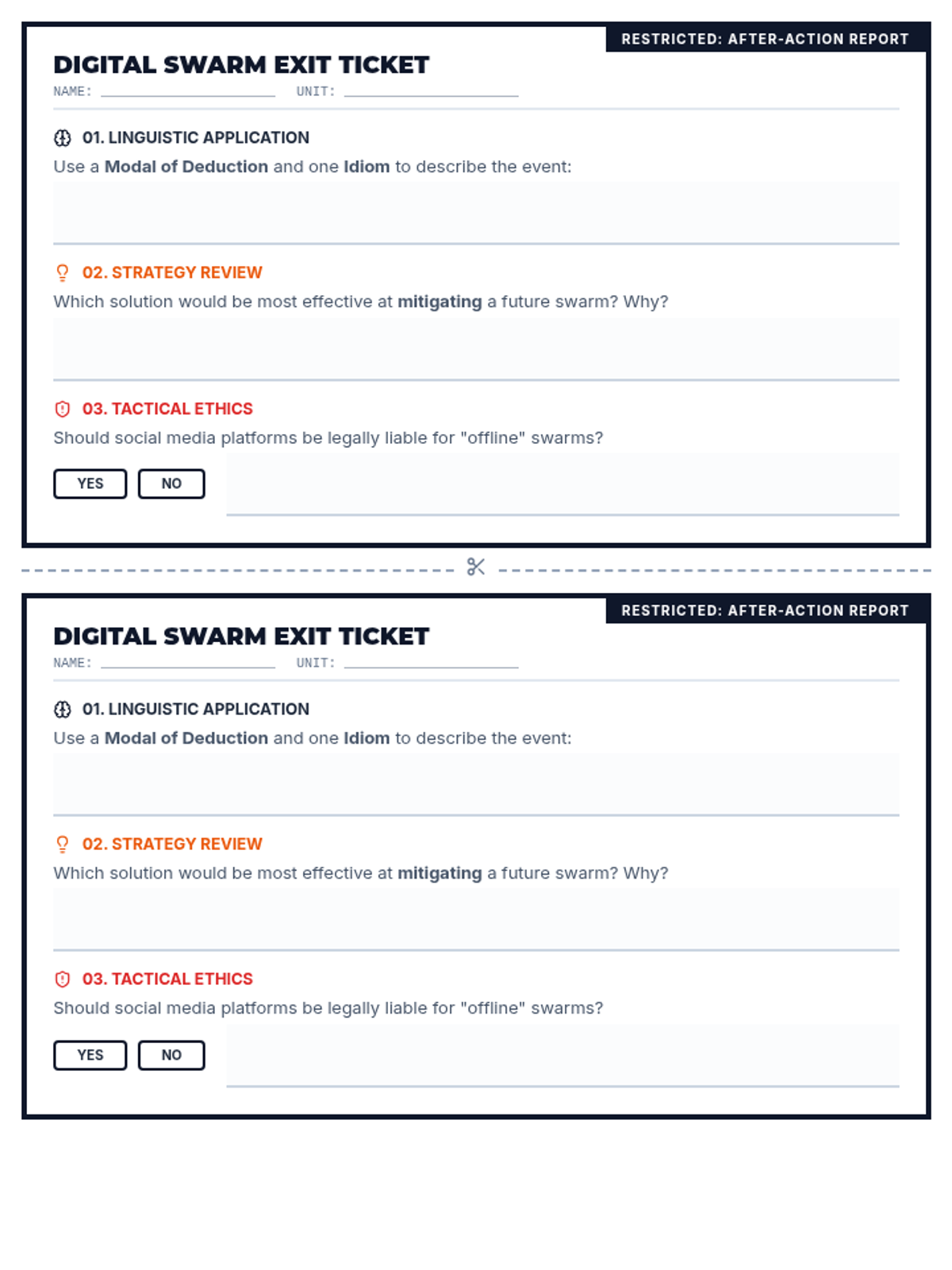
A single-page exit ticket for the Digital Swarms workshop, containing two identical copies for easy printing and distribution. It includes focused reflection questions on language (modals and idioms), strategy, and ethics, with adequate writing space for B2+ students. It now features uniform styling for all answer choices and improved vertical efficiency.
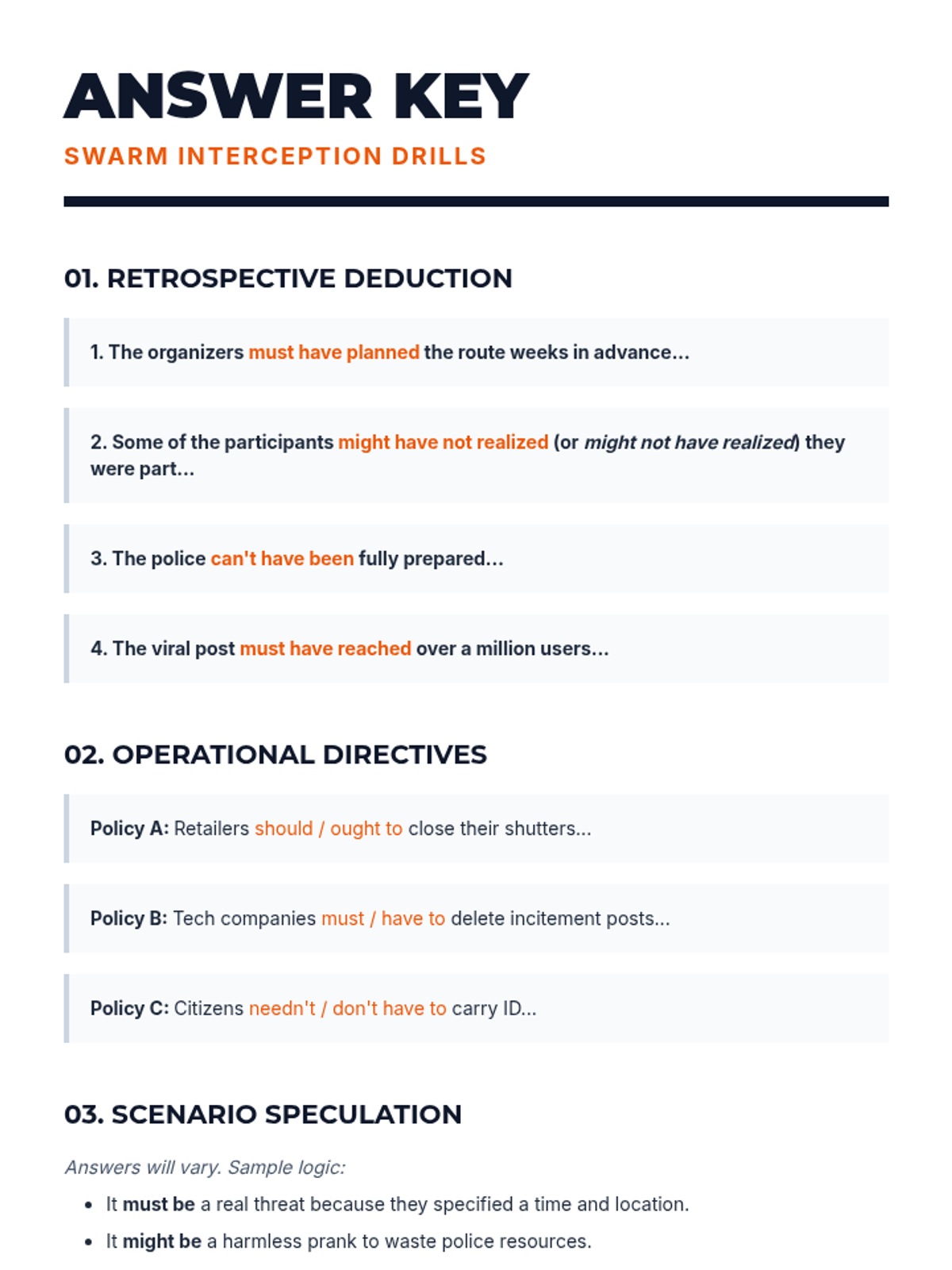
Answer key for the Swarm Interception Drills worksheet, providing correct modal verb forms and sample responses for the open-ended scenario.
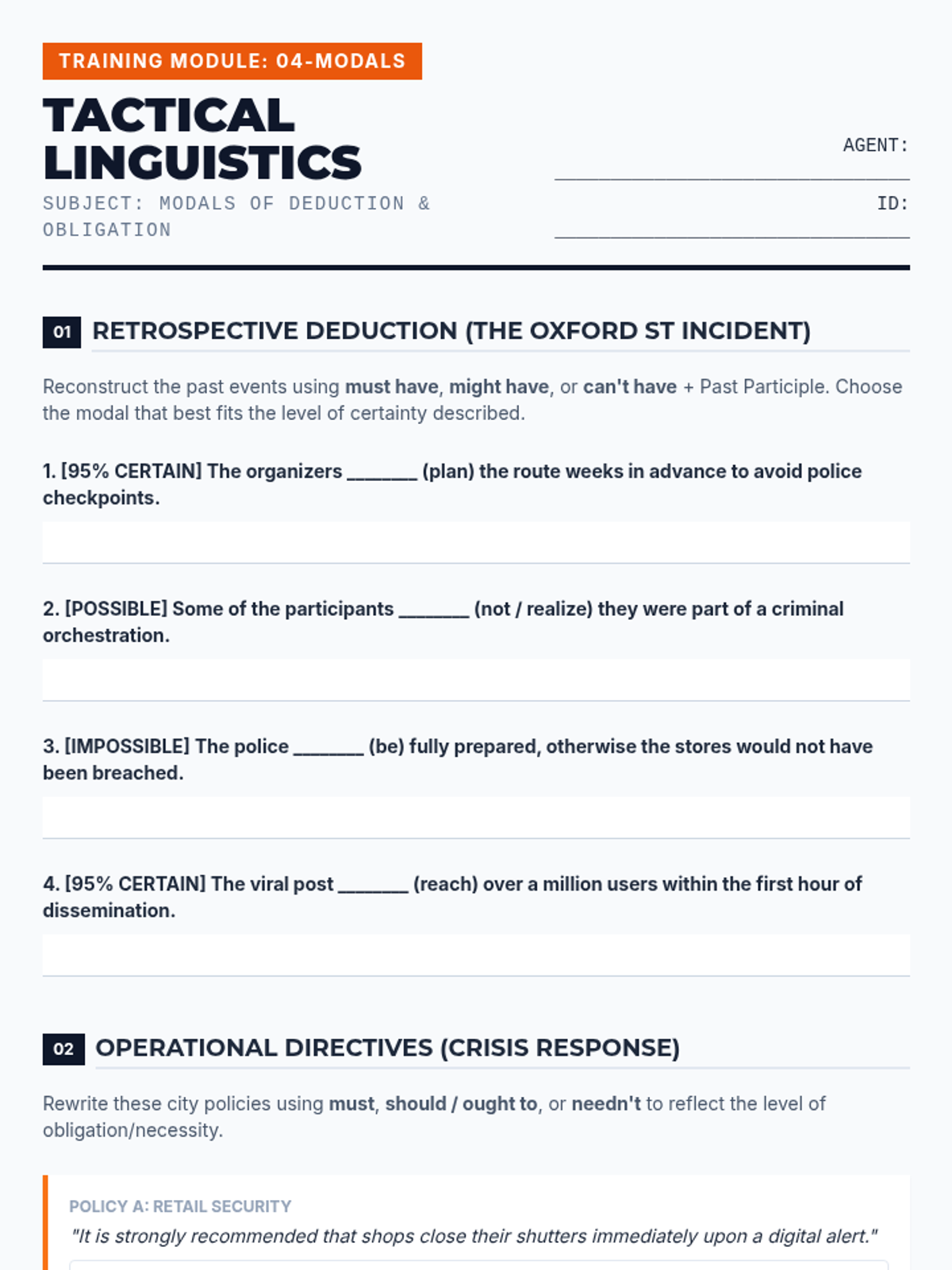
A grammar-focused worksheet providing structured practice with modals of deduction (past and present) and obligation in the context of the Digital Swarms scenario. Includes sentence transformation and scenario-based speculation tasks.
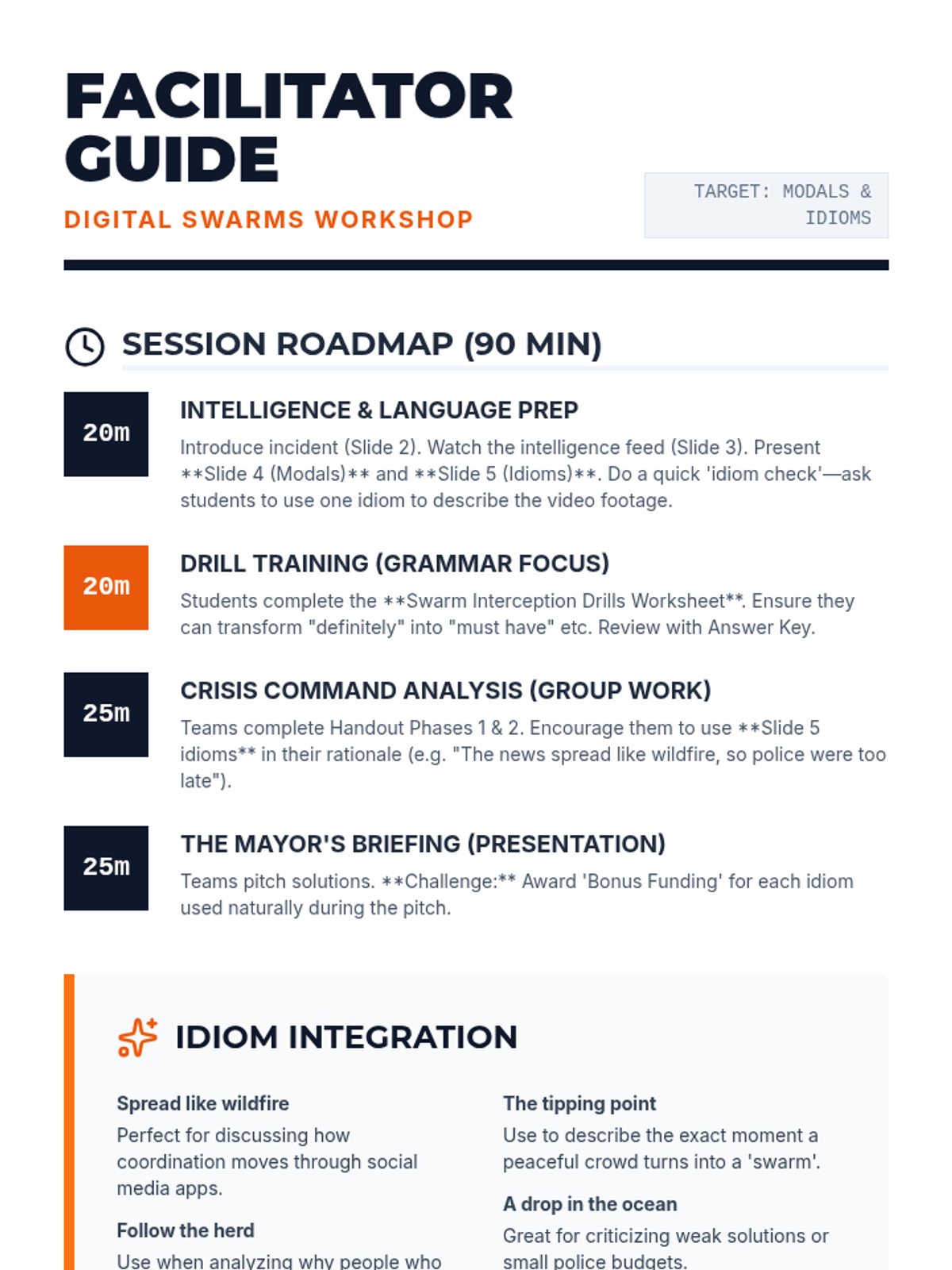
A comprehensive facilitation guide for the Digital Swarms workshop. It includes a timed lesson plan, B2+ assessment criteria, and questioning frameworks. It now features specific advice for integrating role-play cards and a stakeholders town-hall debate.
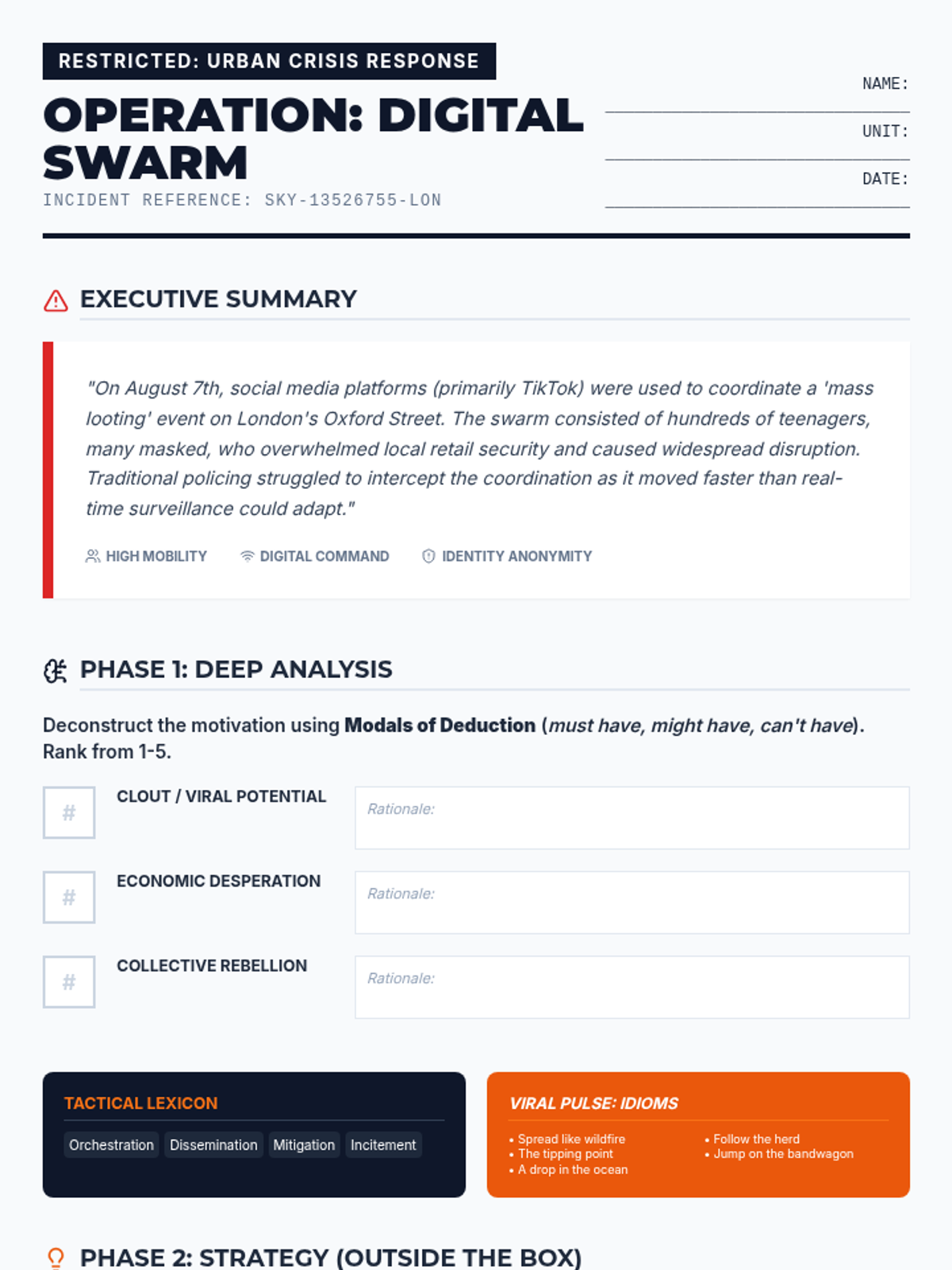
A two-page 'Crisis Brief' handout for students. It includes a case study summary, space for motivation analysis, creative strategy brainstorming with 'wildcard' prompts, and high-level vocabulary support. Layout is optimized for writing and visual clarity. It now includes a dedicated reference for idioms in the tactical sidebar.
An immersive presentation for a B2+ speaking workshop based on the TikTok flash mob news. It now includes a dedicated 'Viral Pulse' slide with five relevant idioms (Spread like wildfire, Follow the herd, Jump on the bandwagon, etc.) to help students elevate their speaking score.
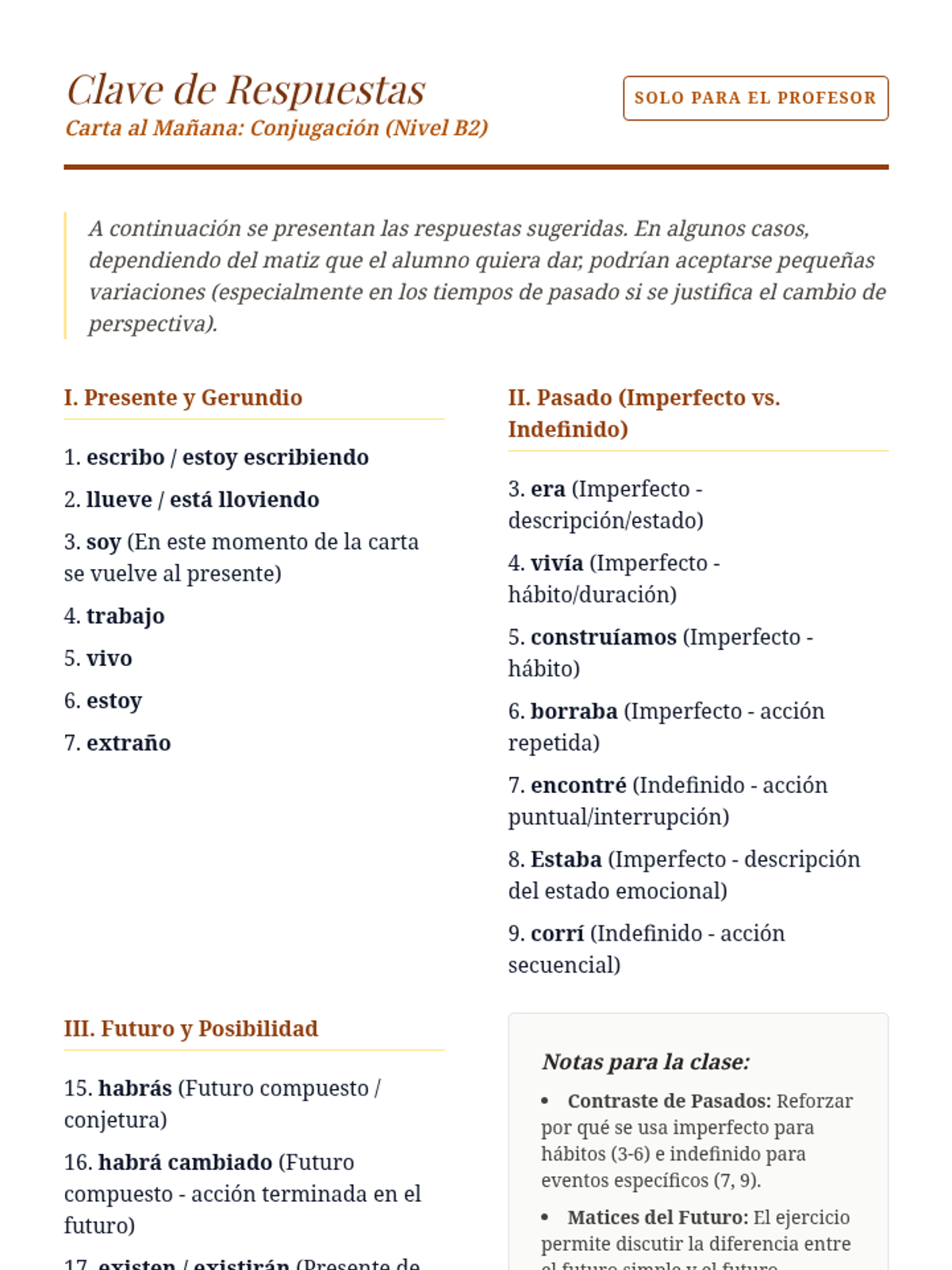
An answer key for the "Carta al Mañana" worksheet. Includes suggested conjugations for narrative tenses (past, present, future) and brief pedagogical notes for the teacher regarding tense selection.
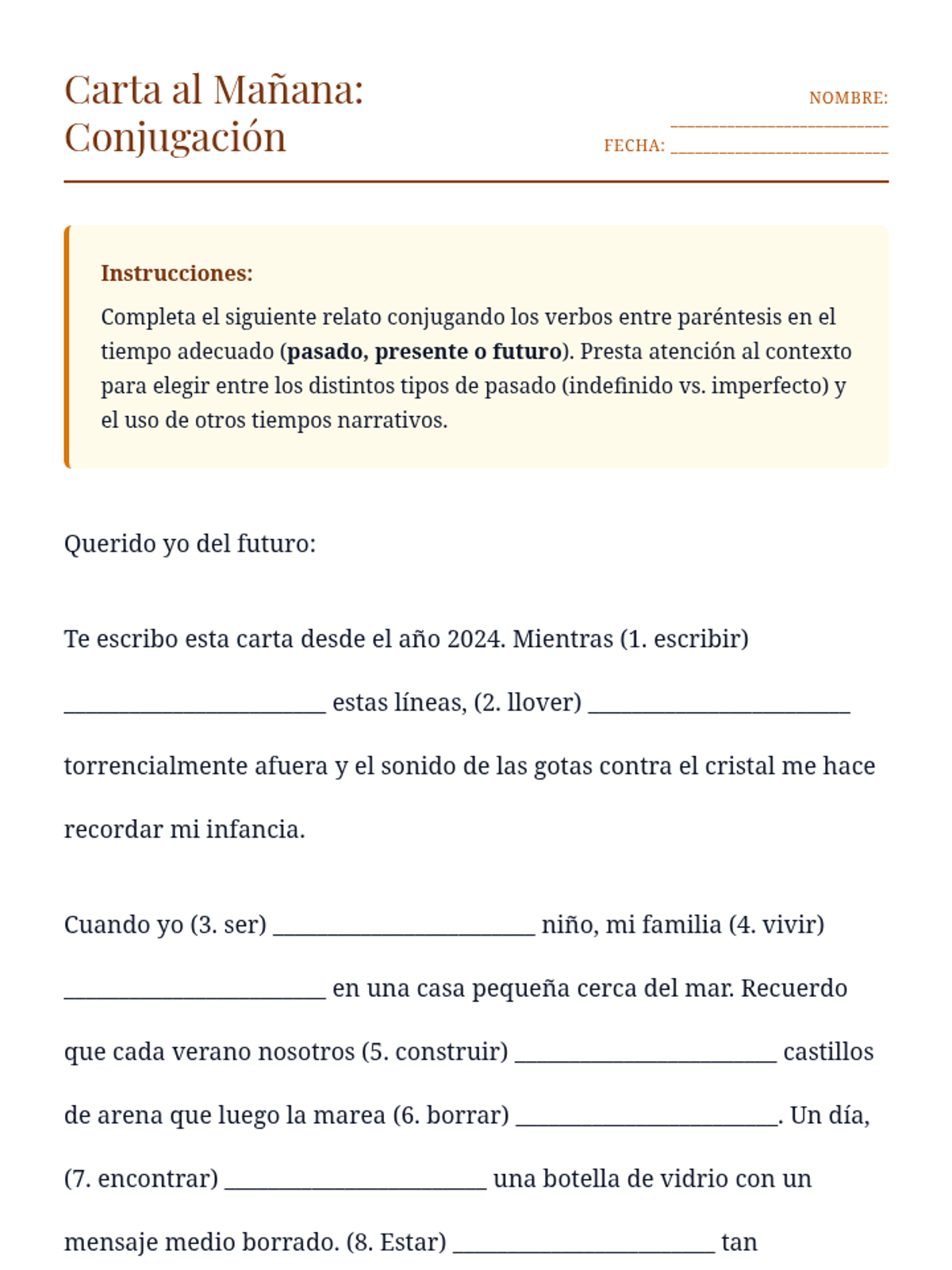
A B2-level Spanish fill-in-the-blanks worksheet focusing on narrative tenses (past, present, and future) through a letter written to one's future self. Includes a reflection section for open-ended practice.
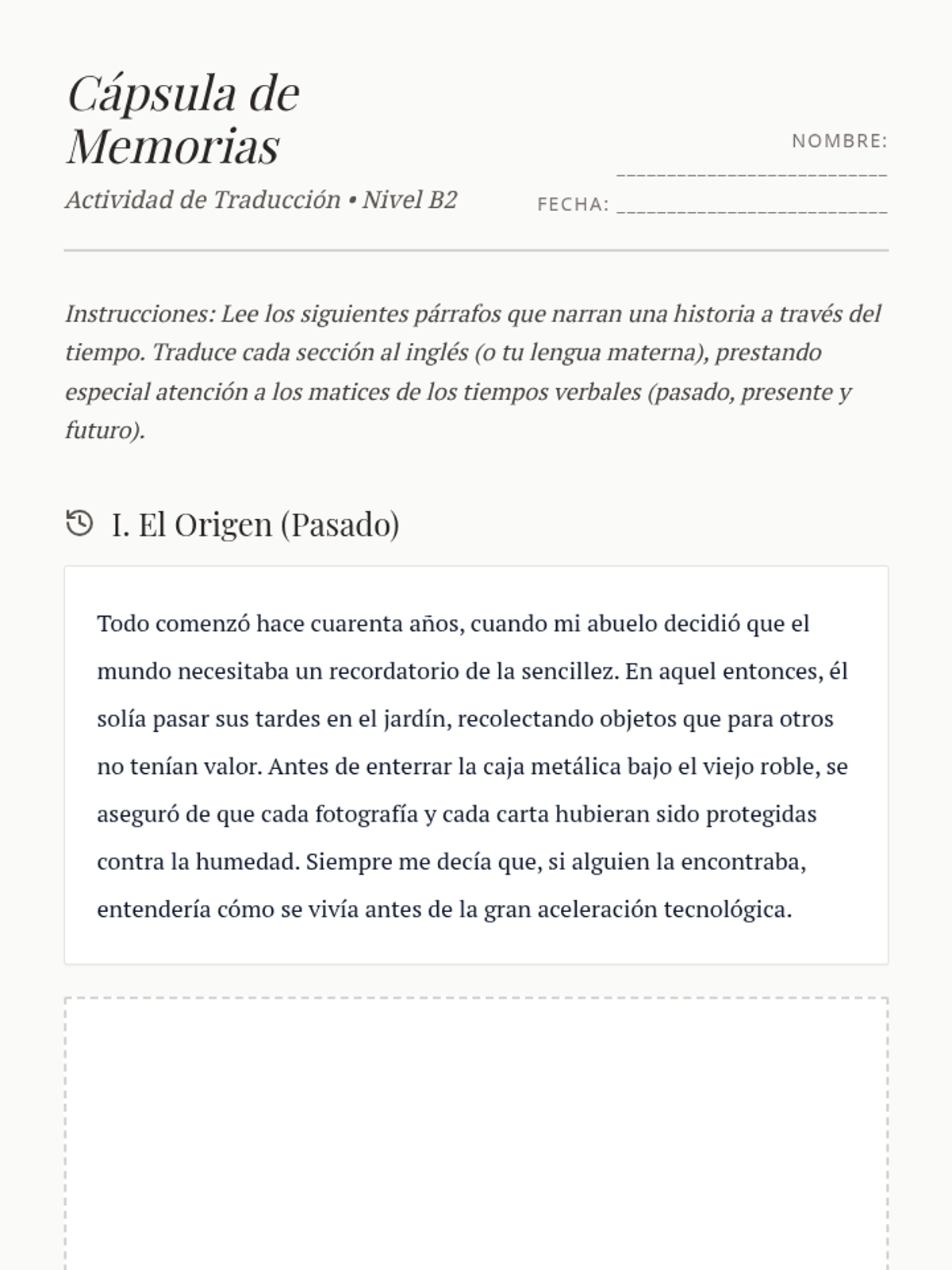
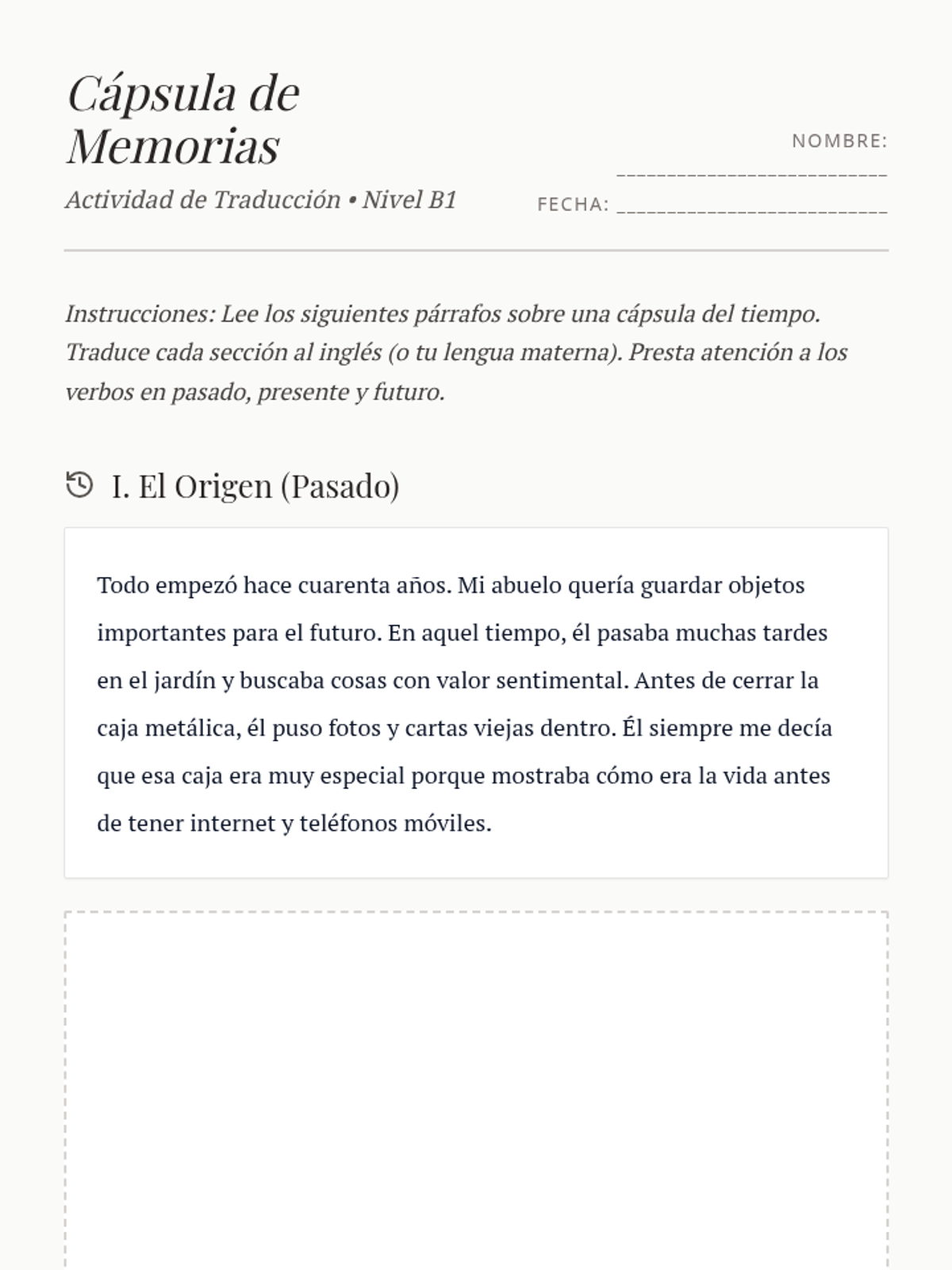
A B2-level Spanish translation worksheet featuring a three-part narrative (past, present, and future) about a time capsule. Students translate each paragraph into their native language to practice recognizing and rendering different verb tenses and nuances. Increased translation box height for better handwriting space.
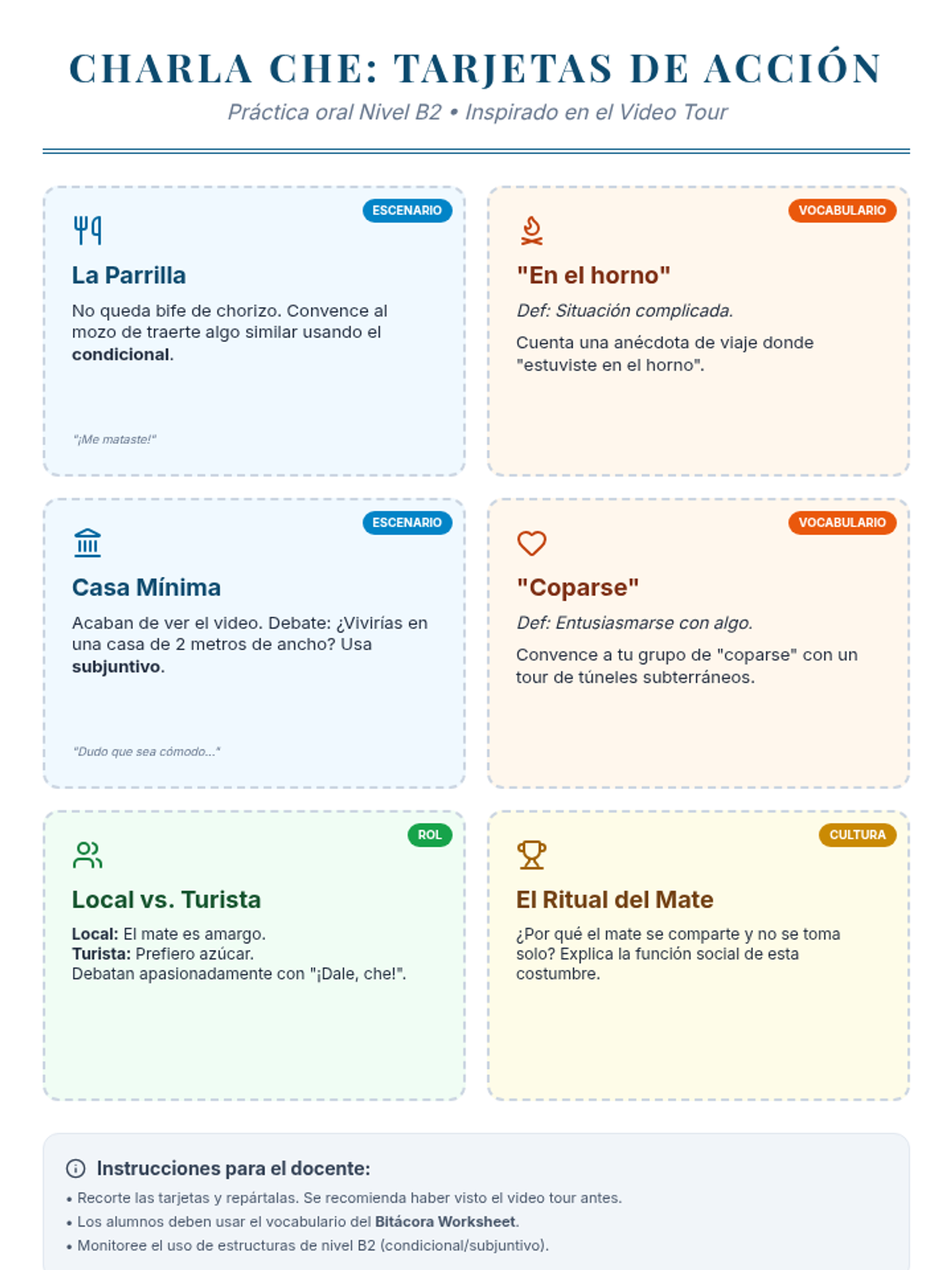
Un conjunto de 6 tarjetas recortables con escenarios de juego de roles, desafíos de vocabulario coloquial (lunfardo) y datos culturales para fomentar la interacción oral en clase. Incluye referencias al tour de casas históricas.
Una presentación visual de 6 diapositivas para introducir la geografía, cultura y particularidades lingüísticas de Argentina (voseo y lunfardo), con un tour por casas históricas de Buenos Aires en video y disparadores de conversación de nivel B2.
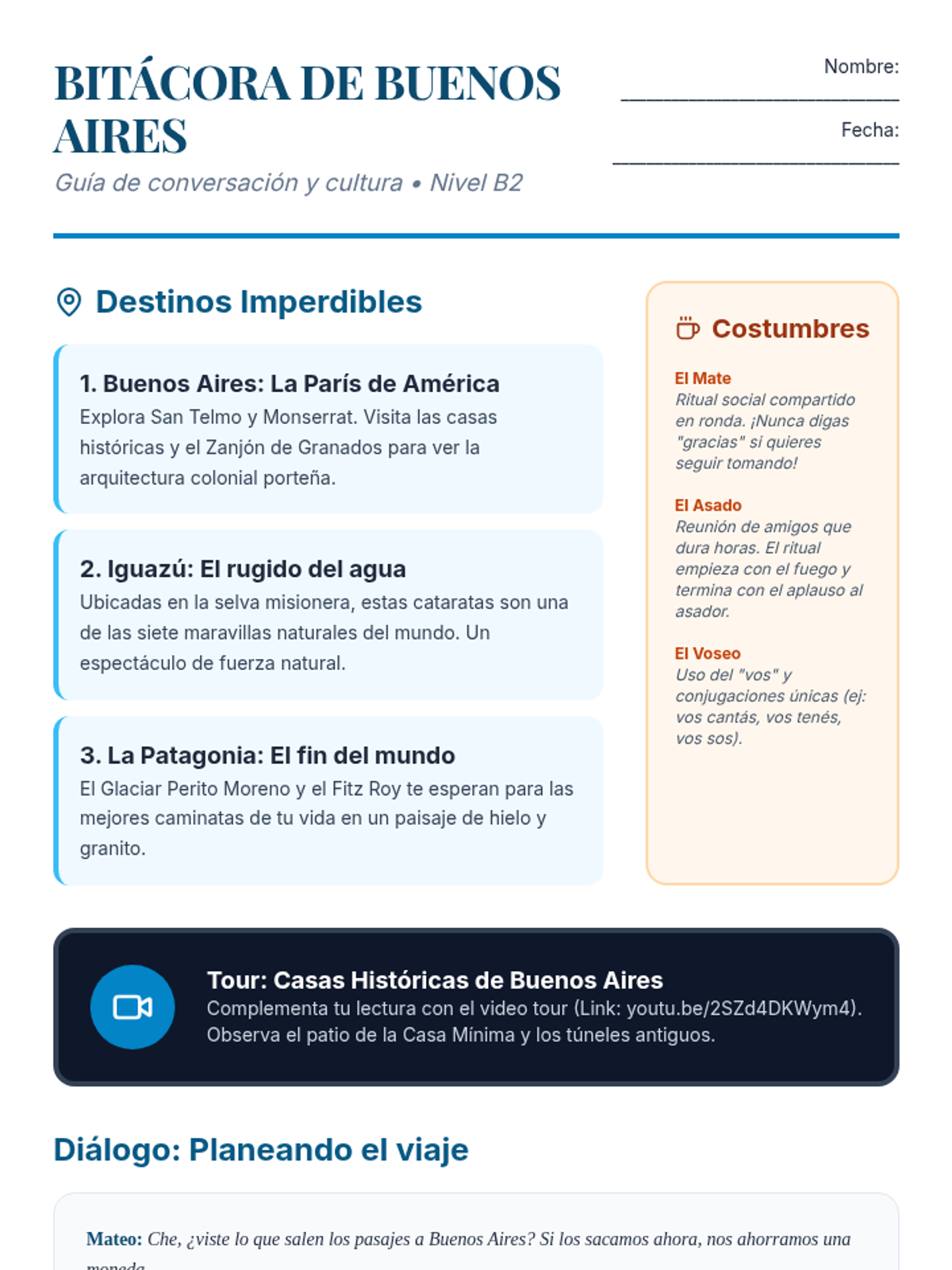
Una guía de conversación y cultura de Argentina para nivel B2 que incluye una reseña de lugares turísticos, costumbres, un diálogo coloquial con lunfardo y espacios para que los alumnos planifiquen su propio viaje usando estructuras gramaticales avanzadas. Incluye referencia al tour de casas históricas.
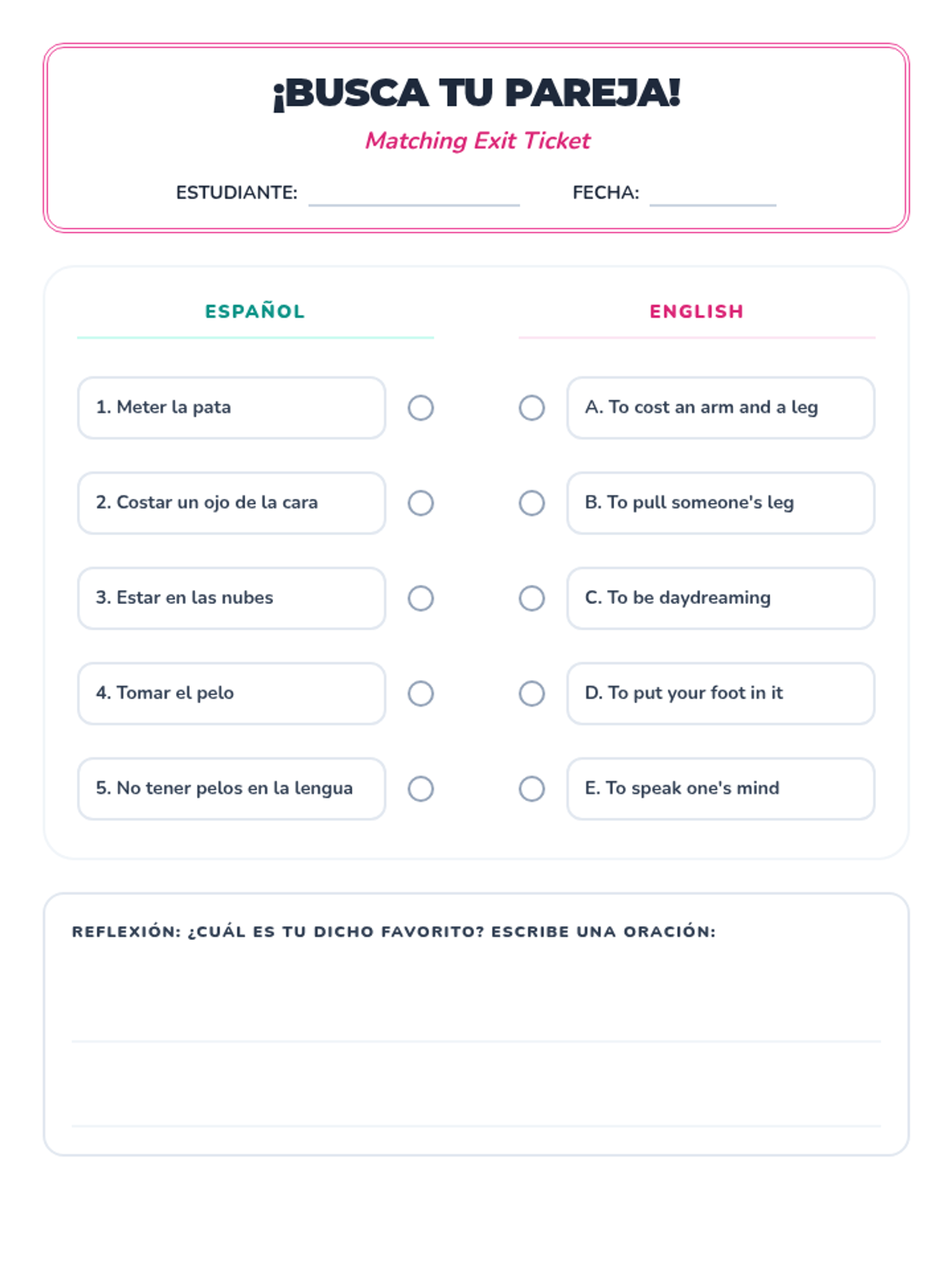
Ticket de salida de emparejamiento bilingüe, optimizado para caber en una sola página con una alineación vertical perfecta y mayor contraste para la impresión.
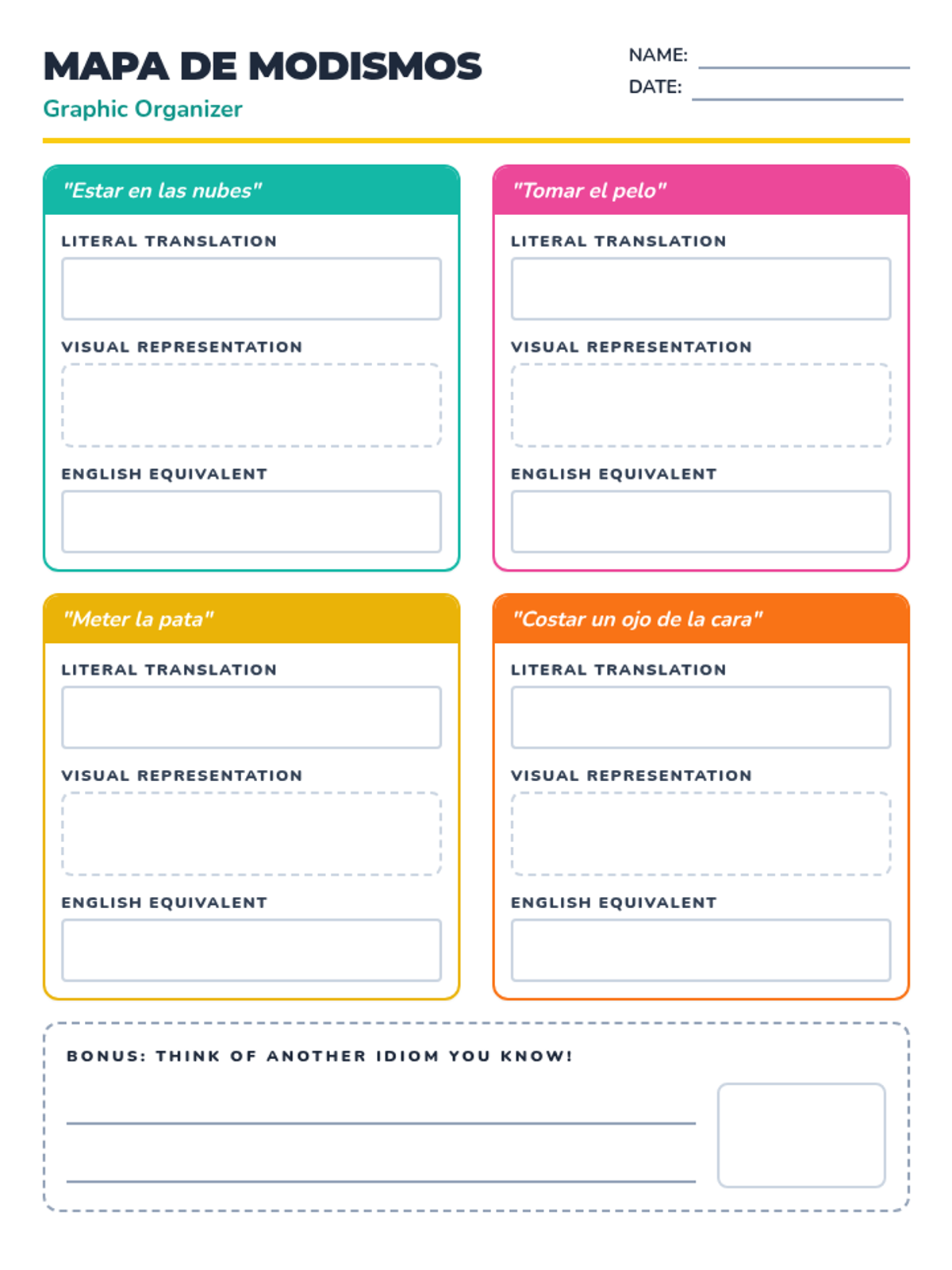
Organizador gráfico para el análisis de modismos, rediseñado para asegurar que todos los elementos quepan en una sola página con etiquetas de mayor contraste y áreas de trabajo claras.
Presentación de diapositivas que compara modismos en español e inglés, explicando conceptos literales y figurados con iconos actualizados y un diseño visualmente equilibrado.
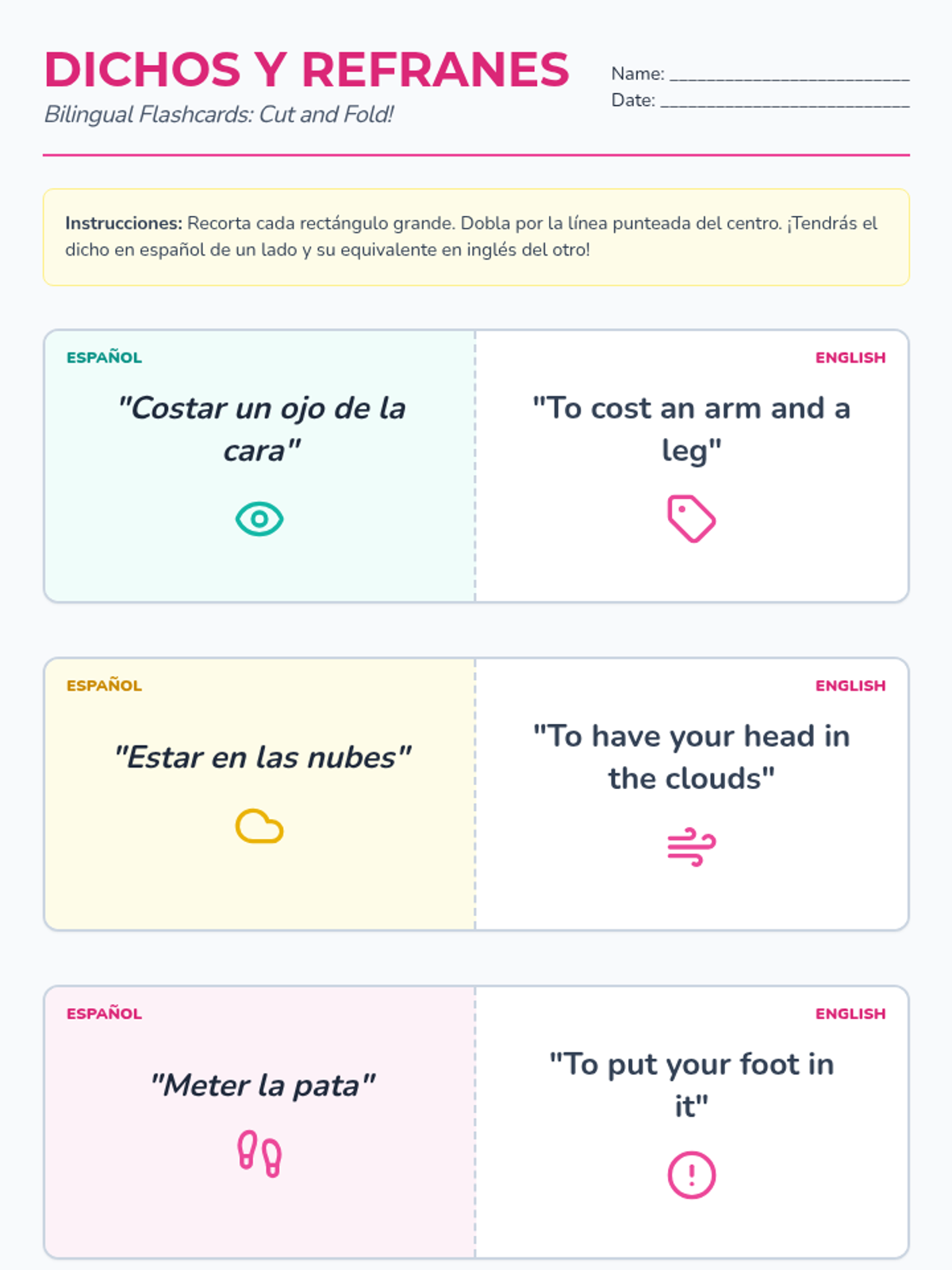
Tarjetas de vocabulario bilingües con un diseño plegable, presentando expresiones comunes en español y sus equivalentes en inglés con iconos visuales. Incluye instrucciones de corte y doblado.
A dynamic presentation for teaching the differences between Spanish Preterite and Imperfect tenses, including conjugation patterns and usage examples.
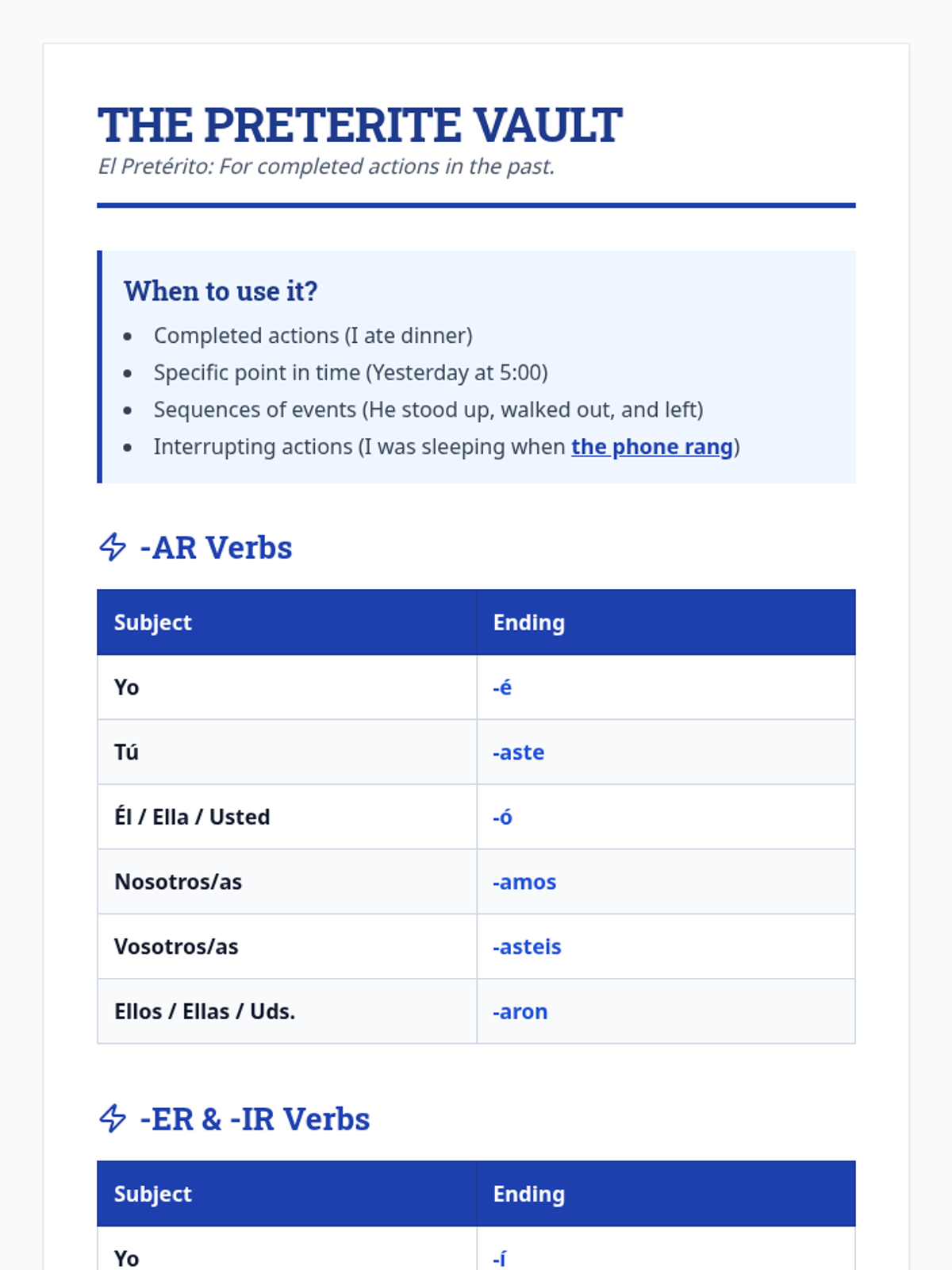
A set of printable conjugation charts for Spanish Preterite and Imperfect tenses, including regular endings, trigger words, and key irregular verbs.
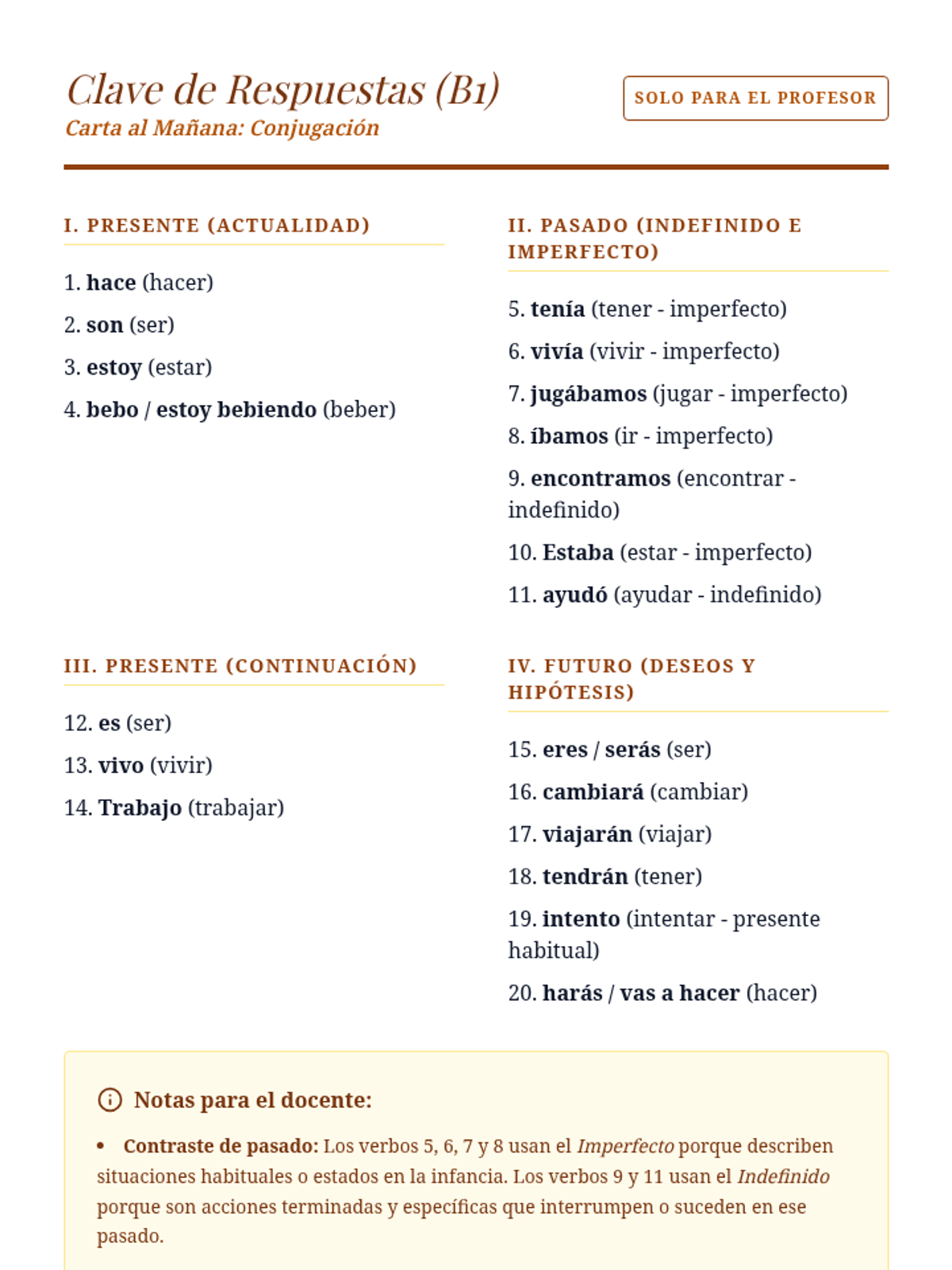
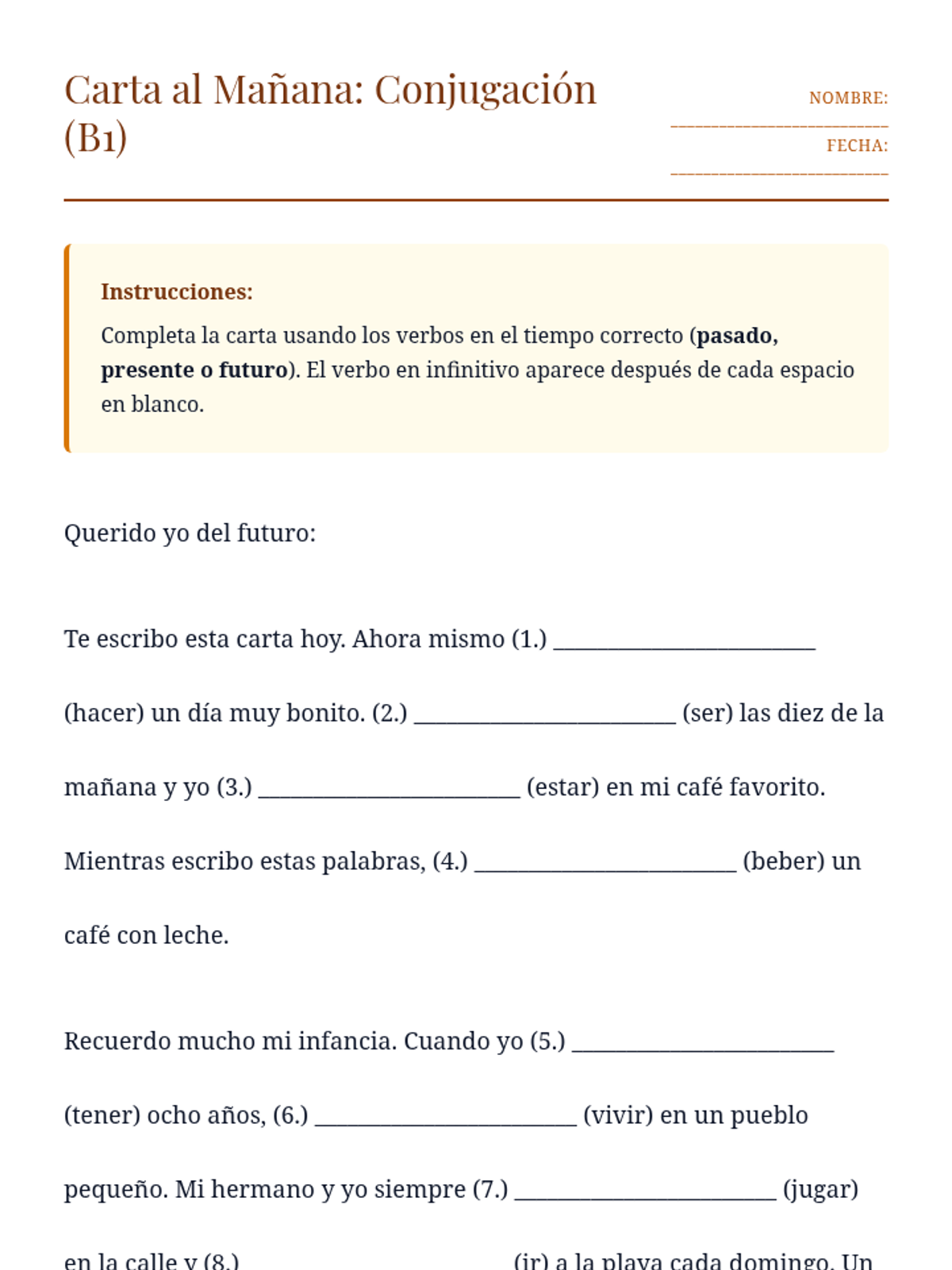
An answer key for the B1-level "Carta al Mañana" worksheet. Provides clear solutions categorized by tense and brief pedagogical tips for explaining the choice between Pretérito Indefinido and Imperfecto.
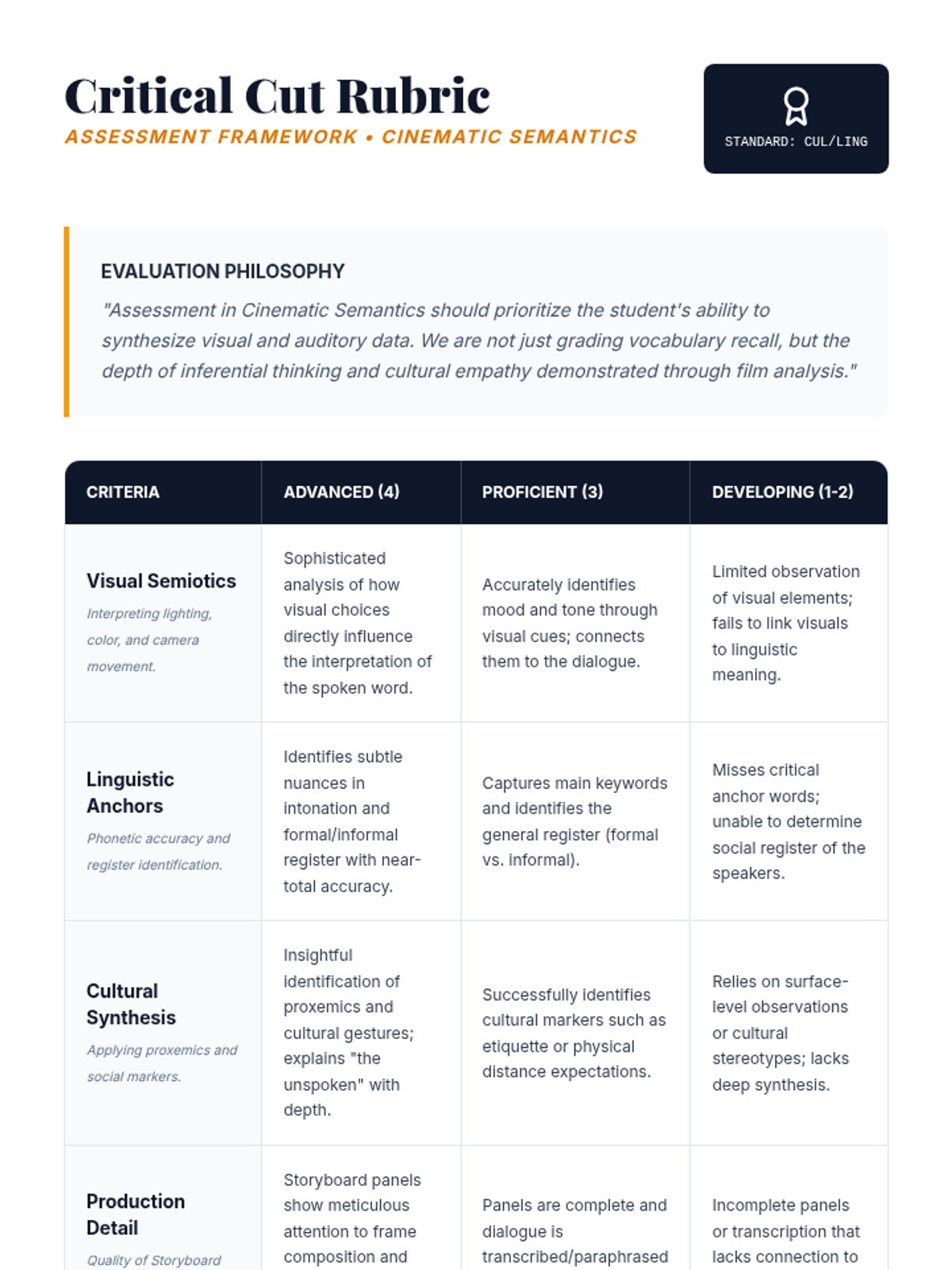
A professional assessment rubric titled 'Critical Cut Rubric' for educators to evaluate student film analysis across visual, linguistic, and cultural dimensions.
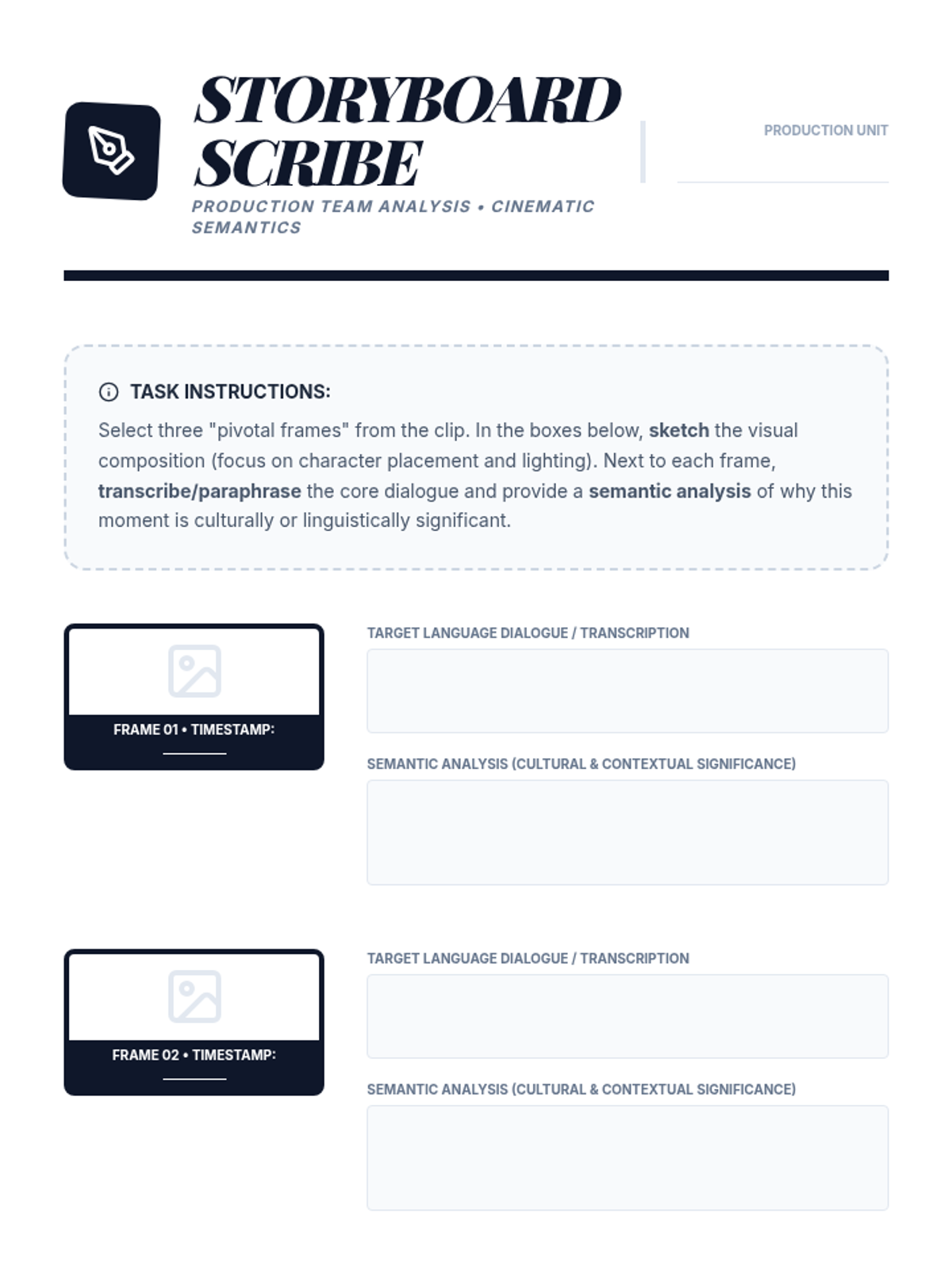
An advanced graphic organizer titled 'Storyboard Scribe' where students map critical film frames, transcribe dialogue, and perform deep semantic analysis.
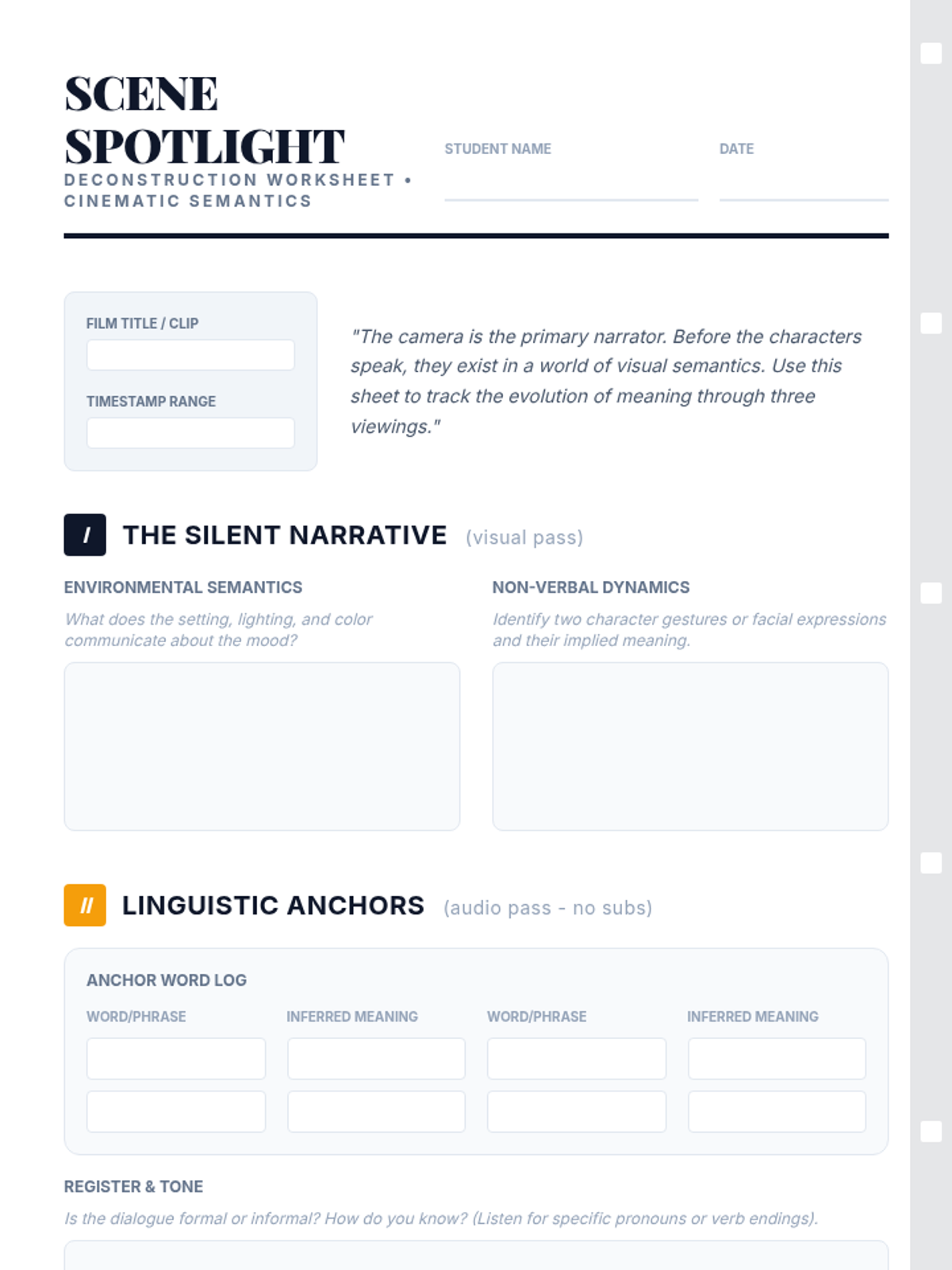
A student-facing worksheet titled 'Scene Spotlight' used for deconstructing film clips in three stages: visual narrative, linguistic anchors, and cultural synthesis.
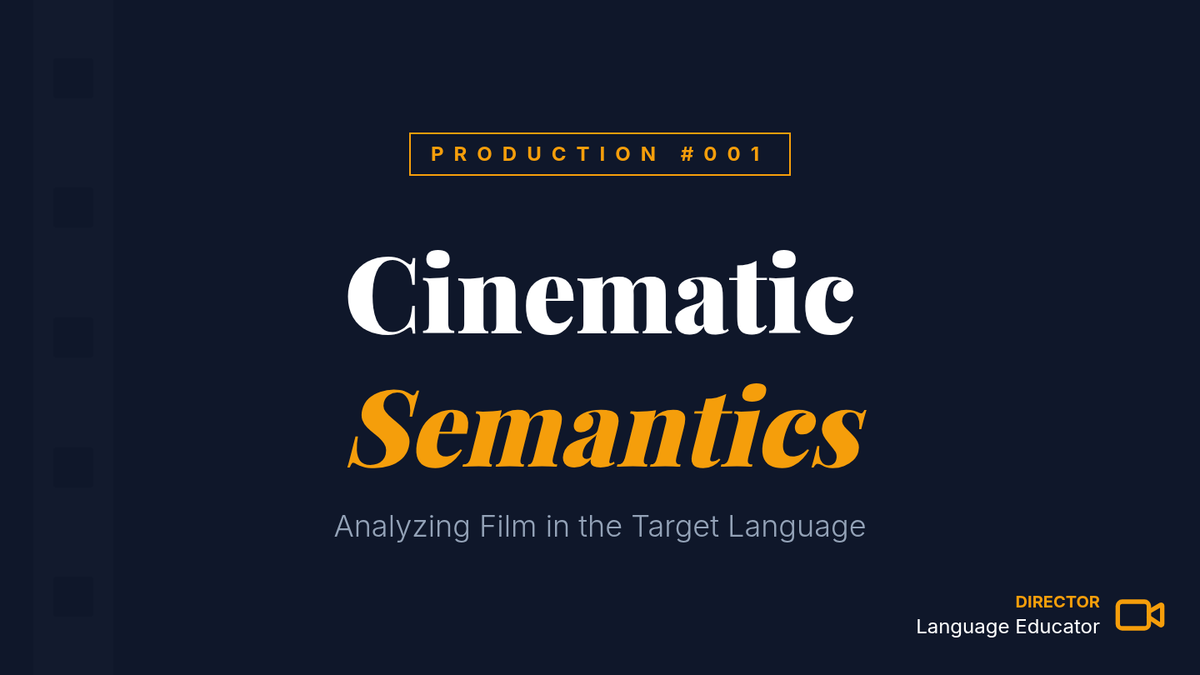
A visually striking slide deck for instruction on 'Cinematic Semantics', guiding students through visual-first analysis, auditory processing, and thin-slicing techniques.
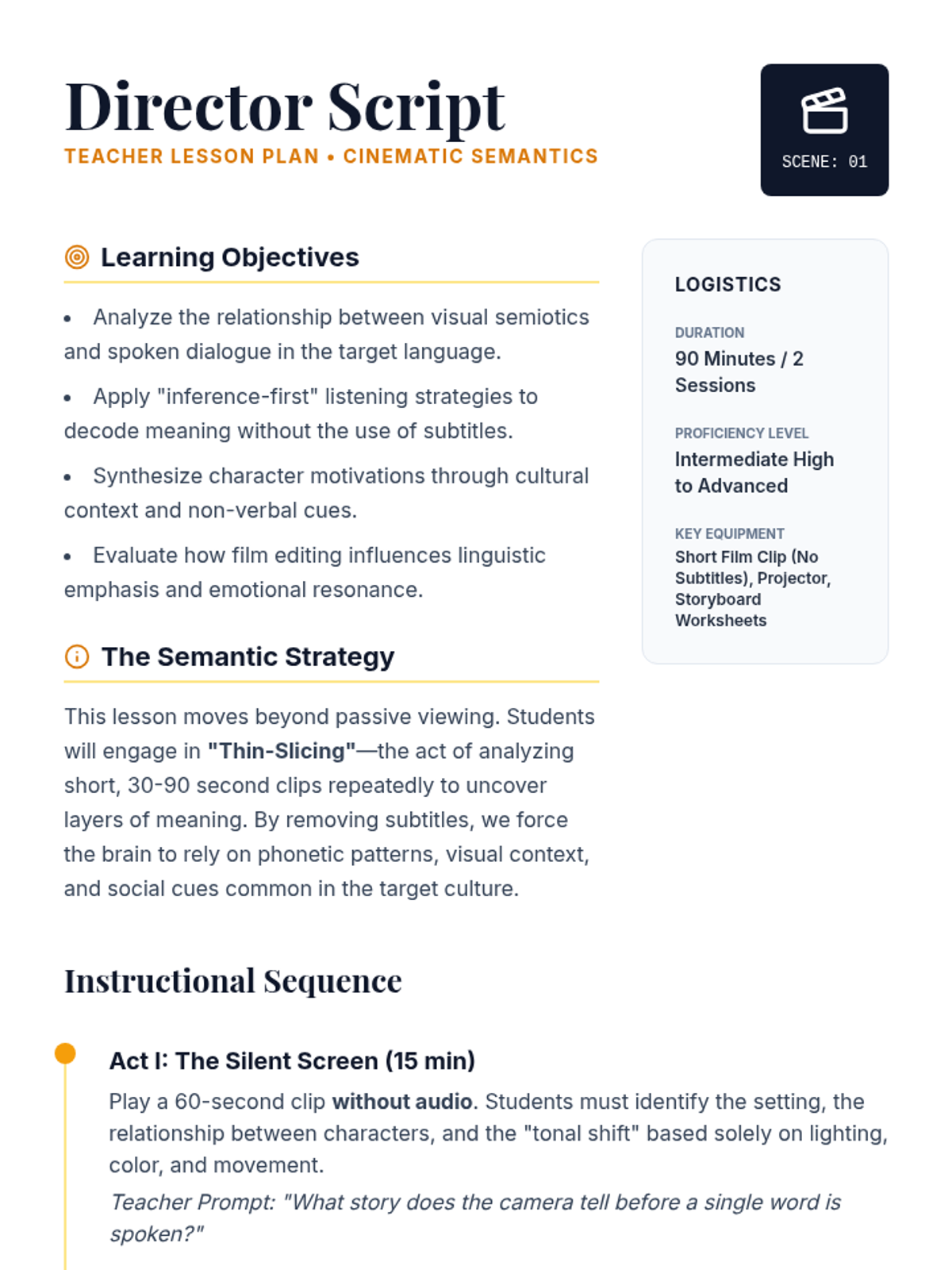
A detailed lesson plan for educators titled 'Director Script' that provides a pedagogical framework for analyzing film in the foreign language classroom through three 'Acts' of deconstruction.
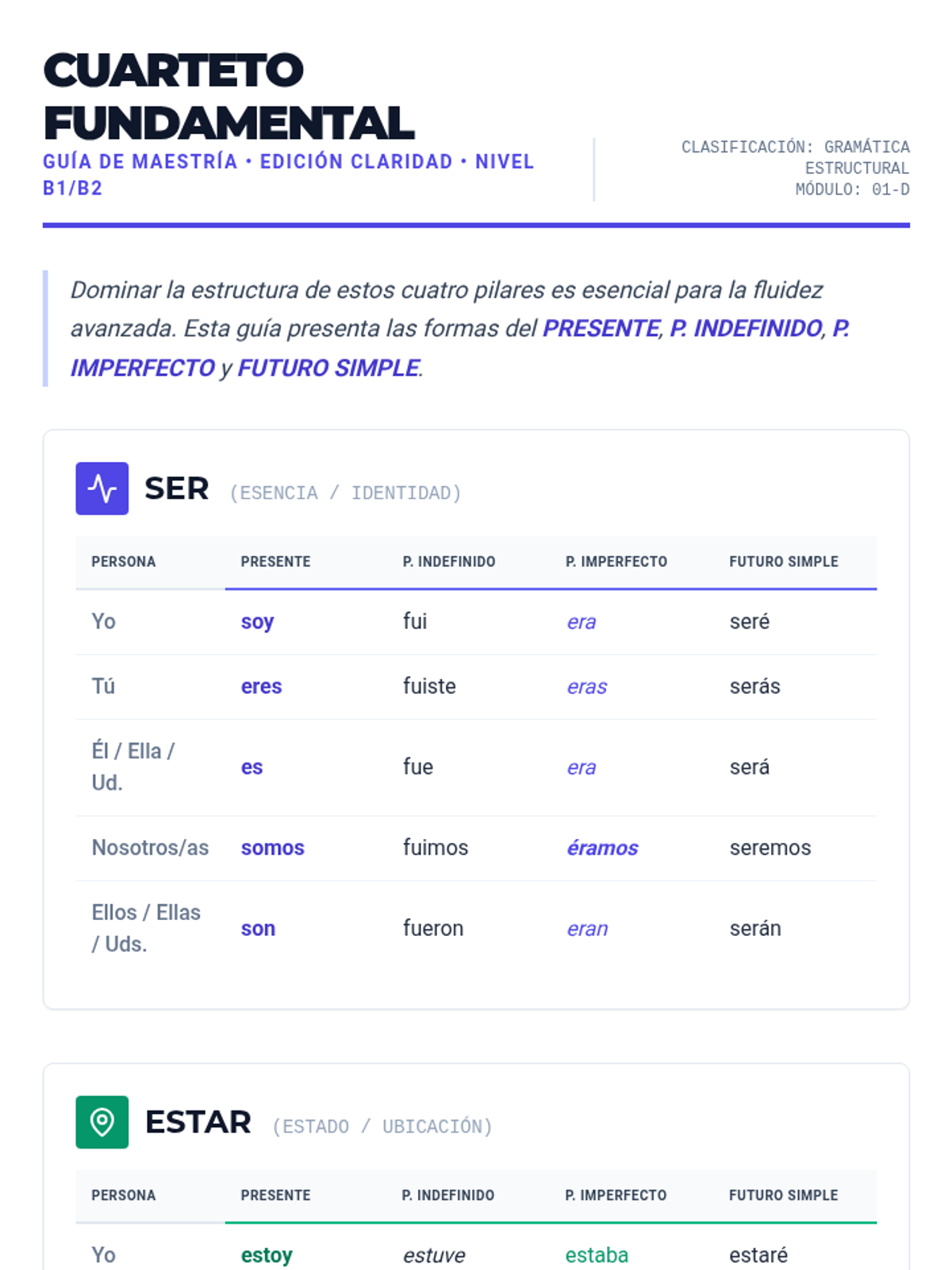
The definitive parallel conjugation guide for the four essential Spanish verbs: Ser, Estar, Haber, and Tener. Now updated to a clean, high-contrast light theme ('Claridad Edition') with white backgrounds and dark text for maximum legibility. Omitted 'vosotros' and grouped Ud./Uds. for efficiency.
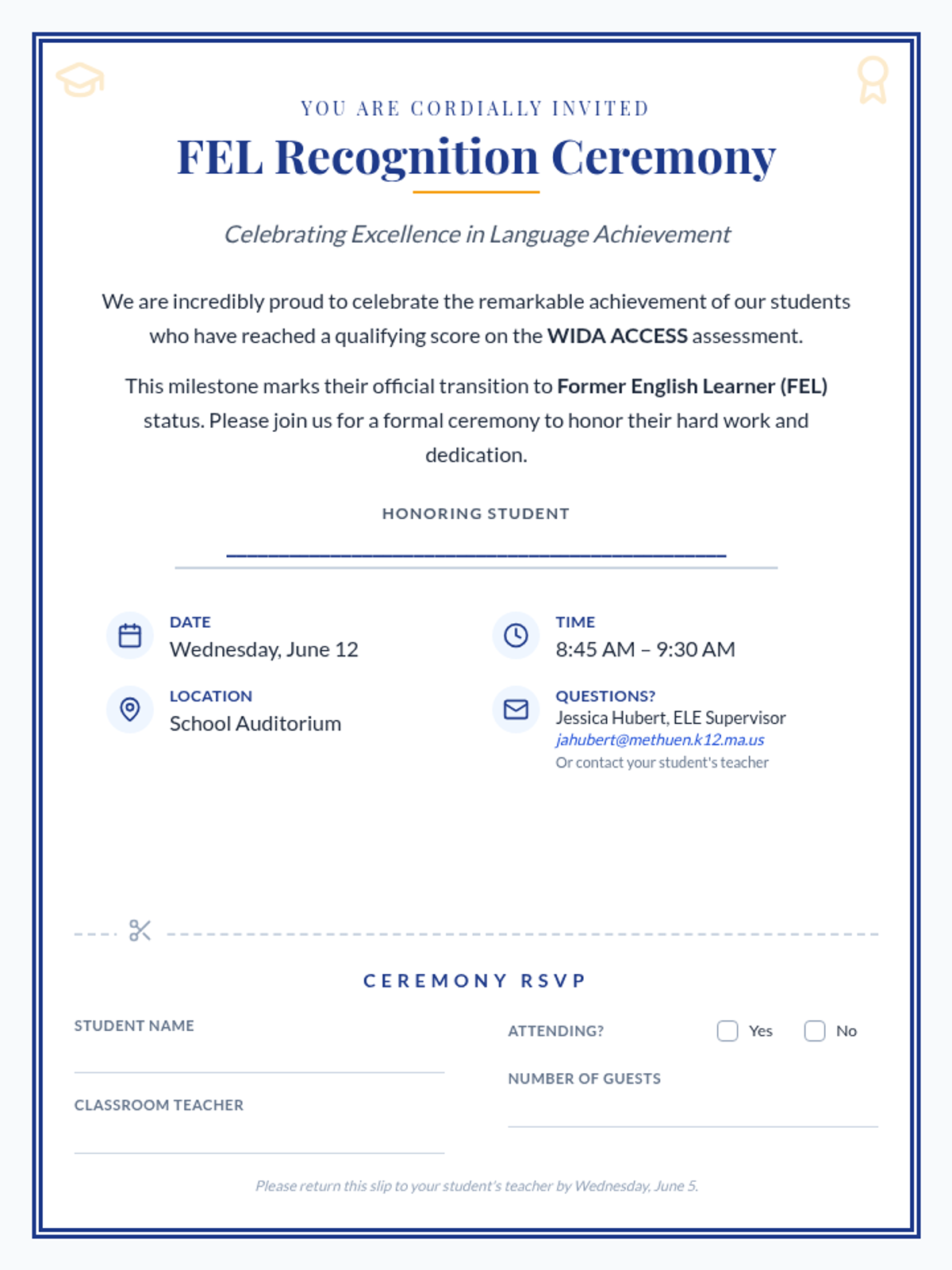
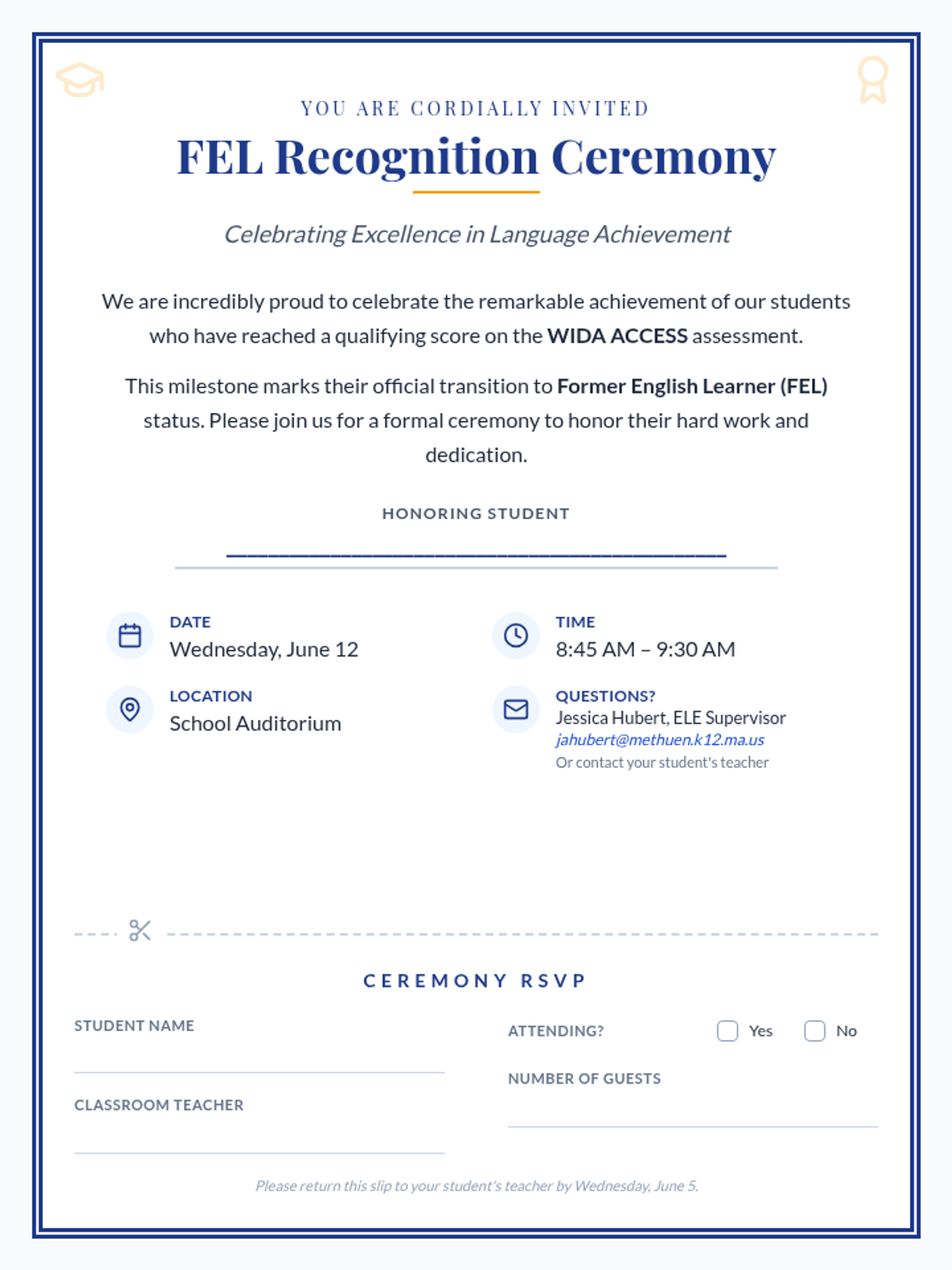
A formal printable invitation for families to celebrate their student's achievement of reaching a qualifying WIDA ACCESS score and transitioning to FEL status. The flyer features a professional layout with event details, a student name placeholder, and a detachable RSVP slip.
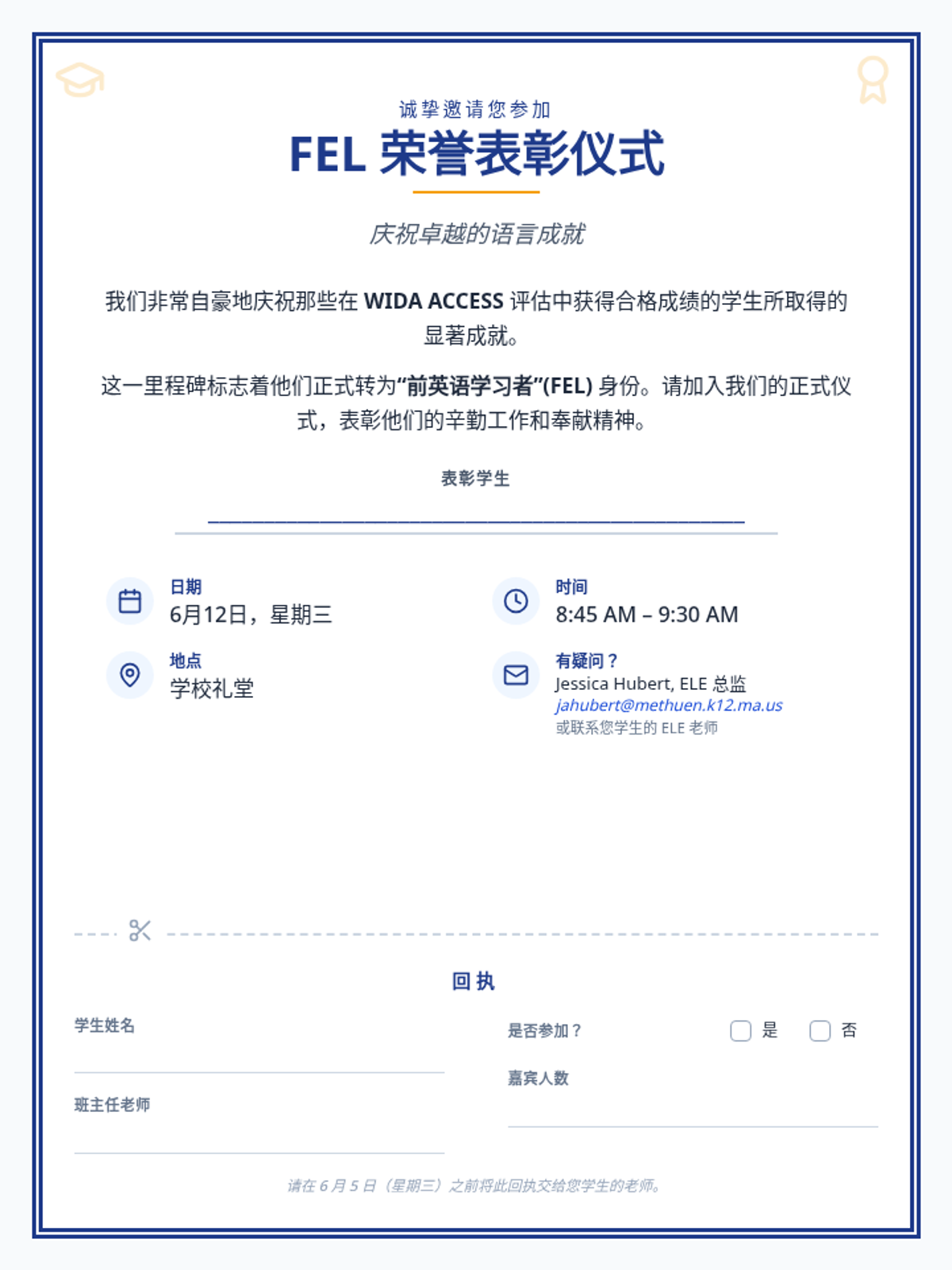
Mandarin Chinese translation of the FEL Recognition Ceremony invitation for families. Includes event details, student name placeholder, and detachable RSVP slip.
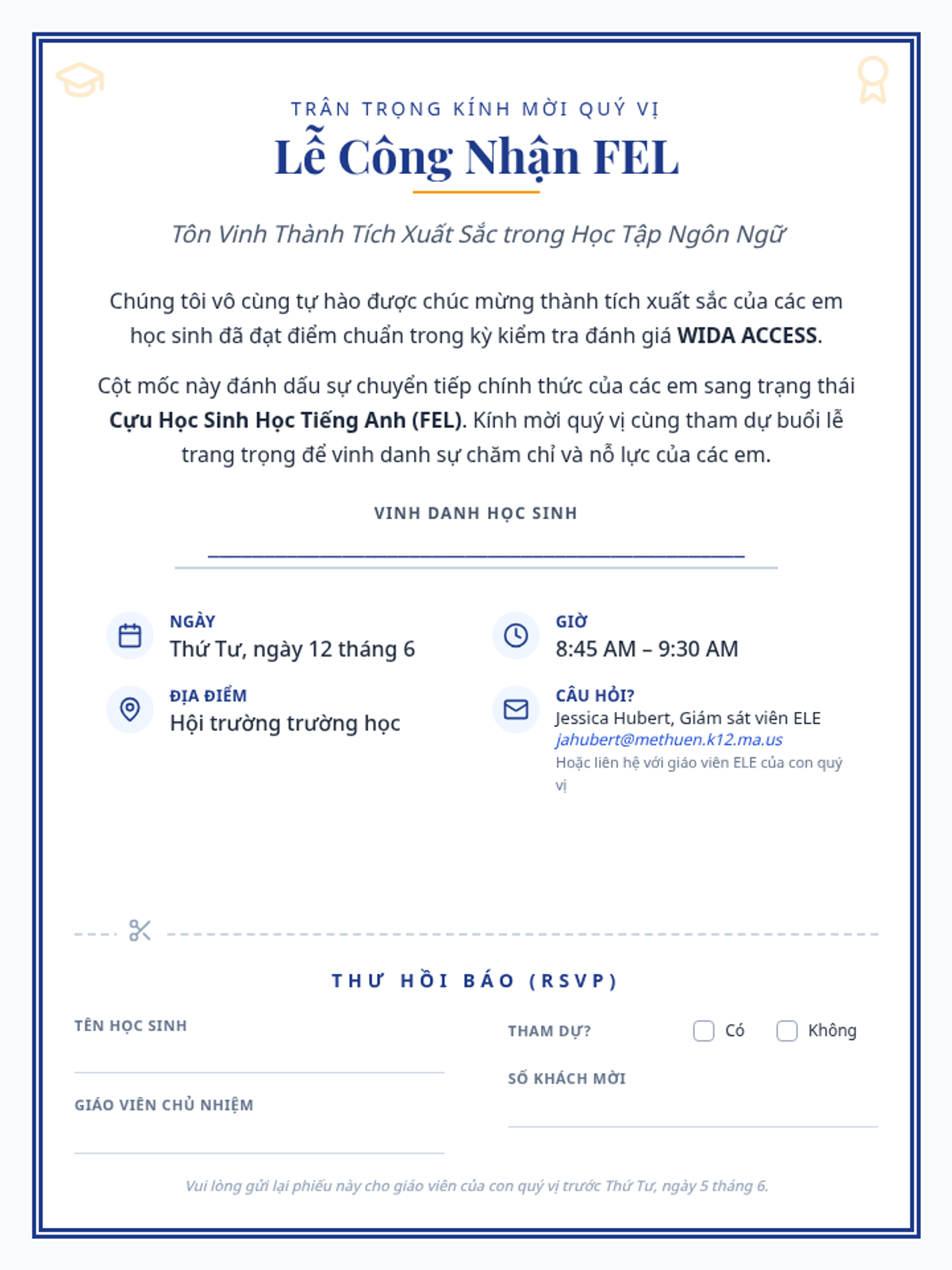
Vietnamese translation of the FEL Recognition Ceremony invitation for families. Includes event details, student name placeholder, and detachable RSVP slip.
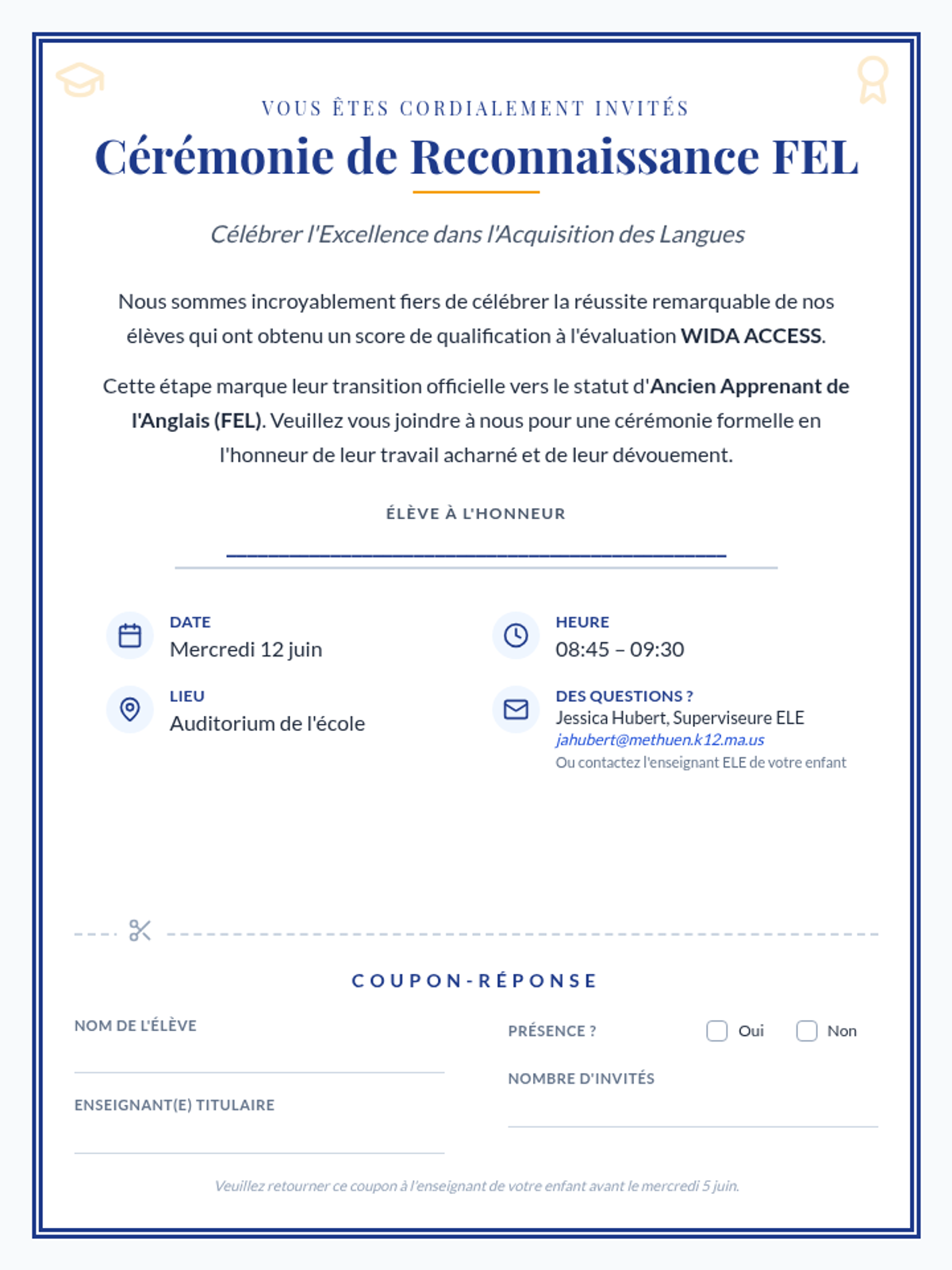
French translation of the FEL Recognition Ceremony invitation for families. Includes event details, student name placeholder, and detachable RSVP slip.
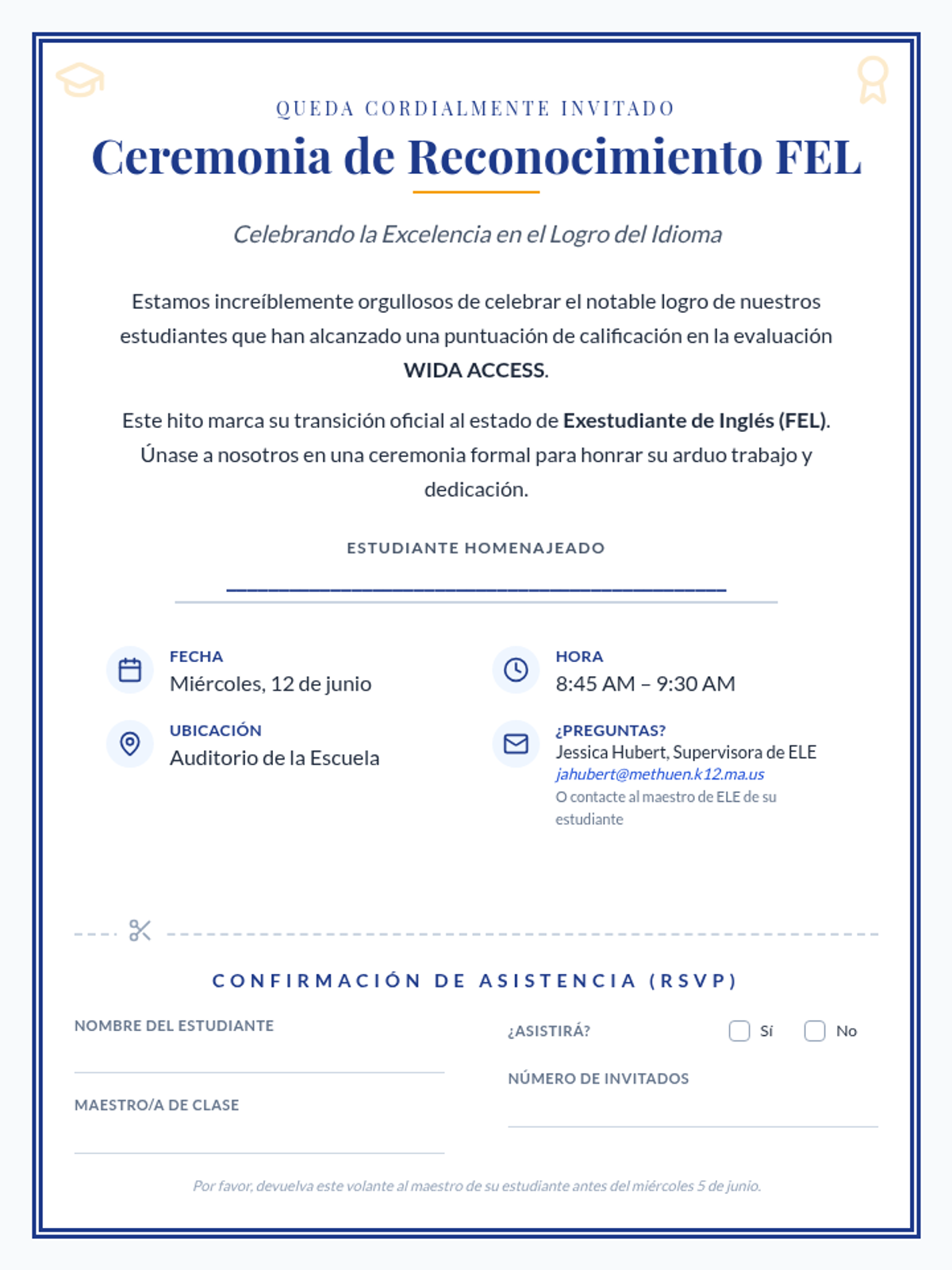
Spanish translation of the FEL Recognition Ceremony invitation for families. Includes event details, student name placeholder, and detachable RSVP slip.
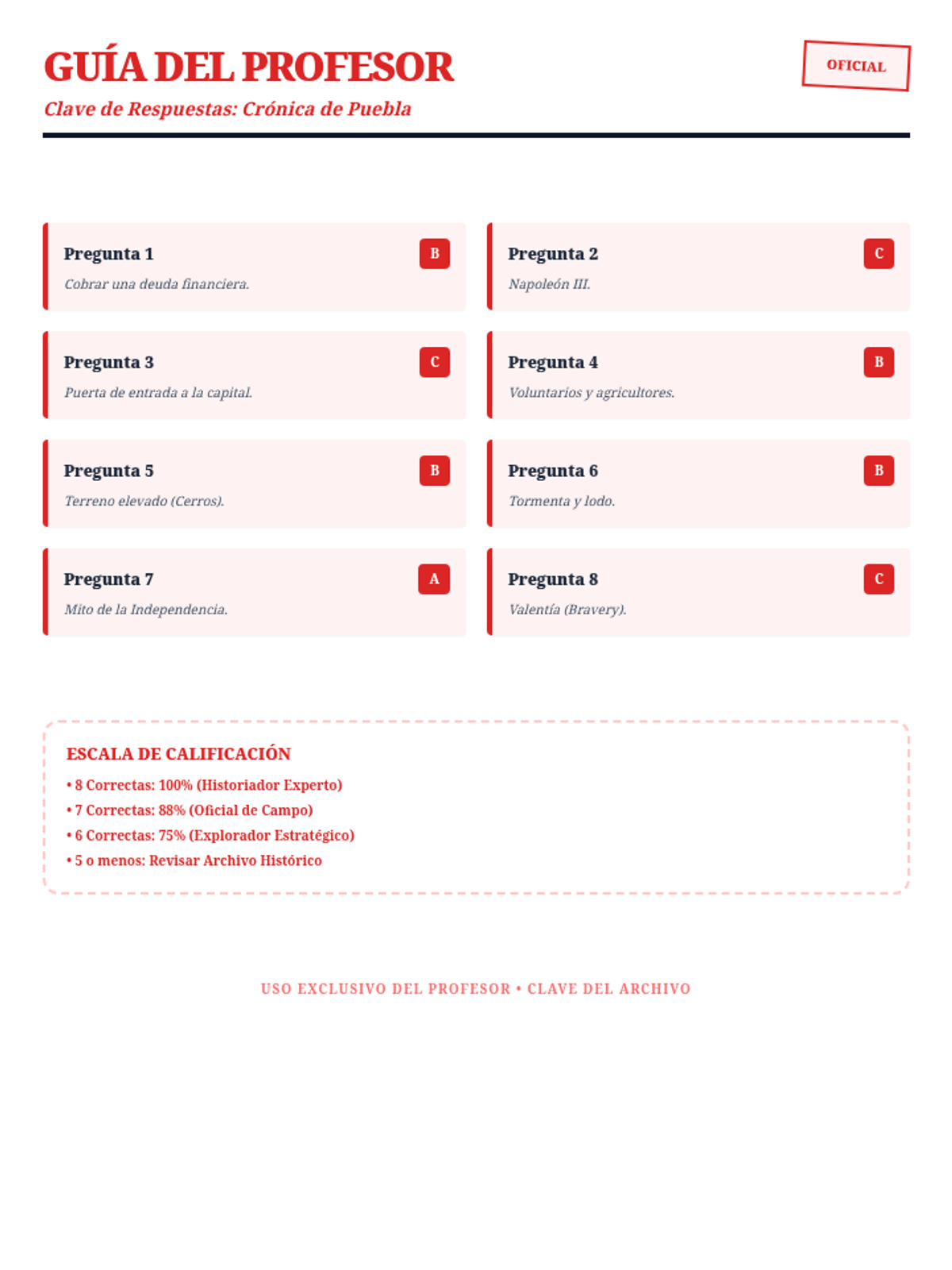
A teacher answer key for the Spanish version of the Puebla Chronicle Reading Assignment, providing correct answers and a grading scale.
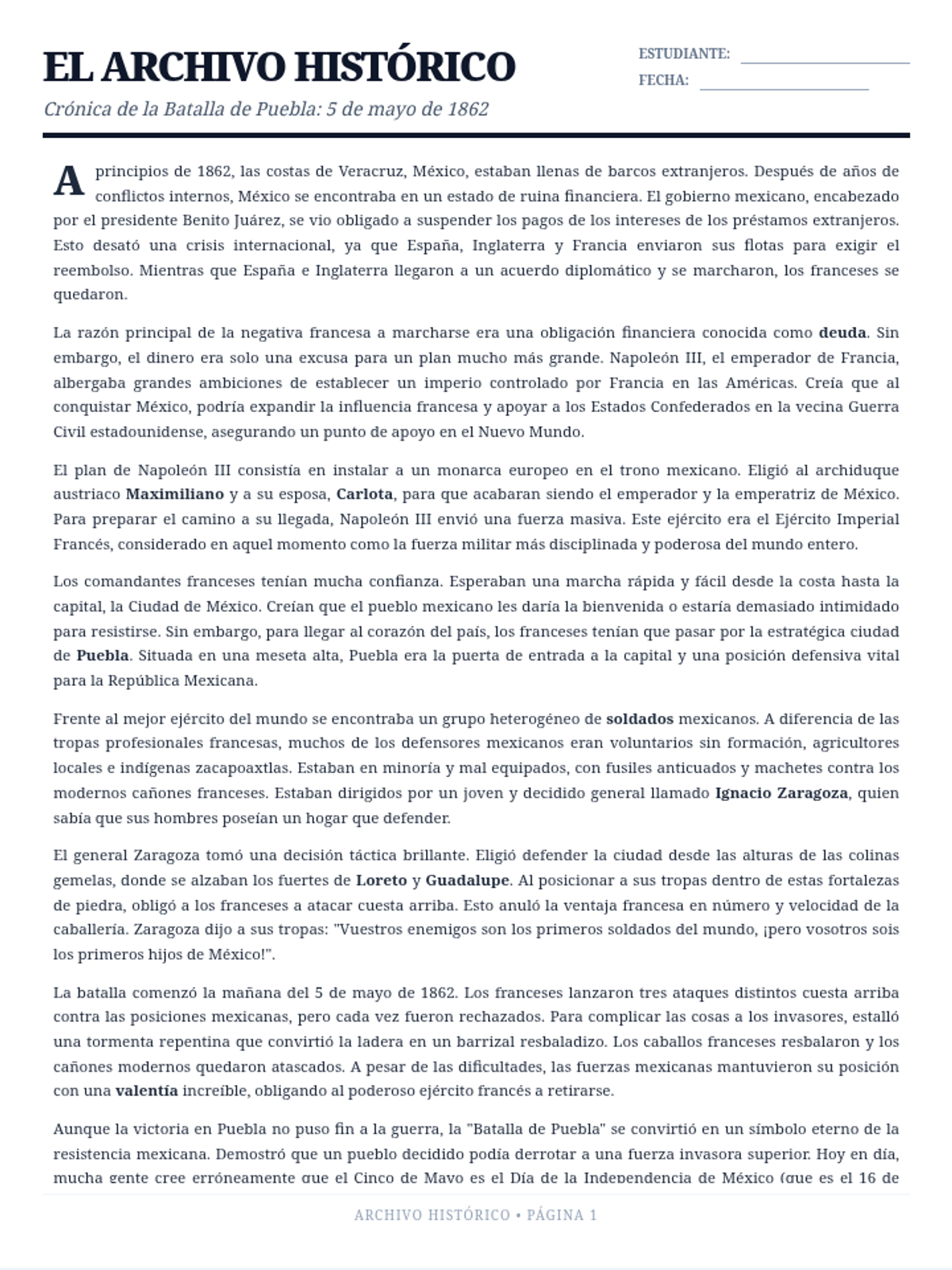
A comprehensive reading assignment about Cinco de Mayo and the Battle of Puebla in Spanish, featuring an 8-paragraph historical text and 8 multiple-choice comprehension questions. Designed with a clean "Historical Archive" aesthetic.
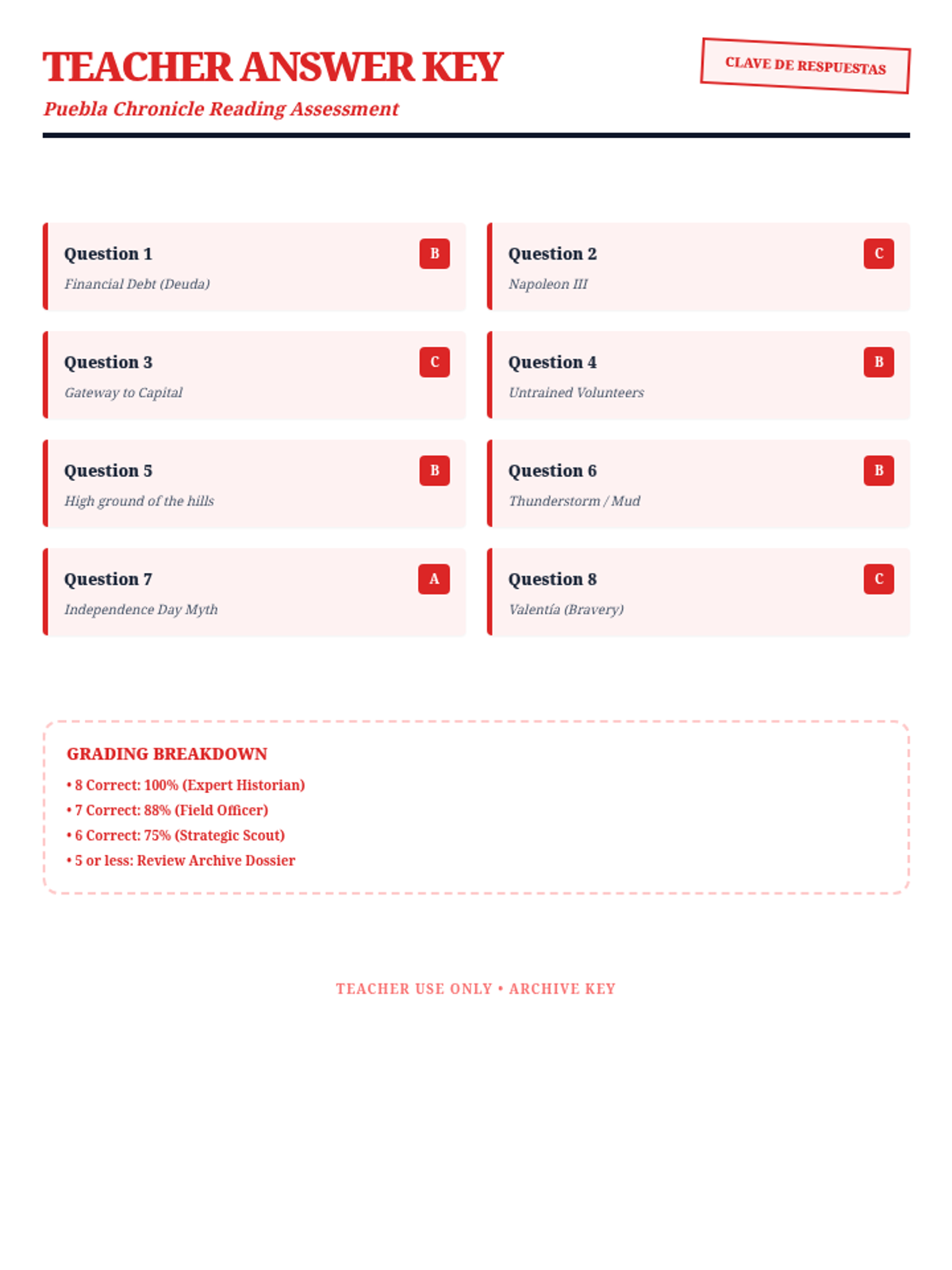
A teacher answer key for the Puebla Chronicle Reading Assignment, providing correct answers for the 8 multiple-choice comprehension questions along with brief explanations and a grading scale.
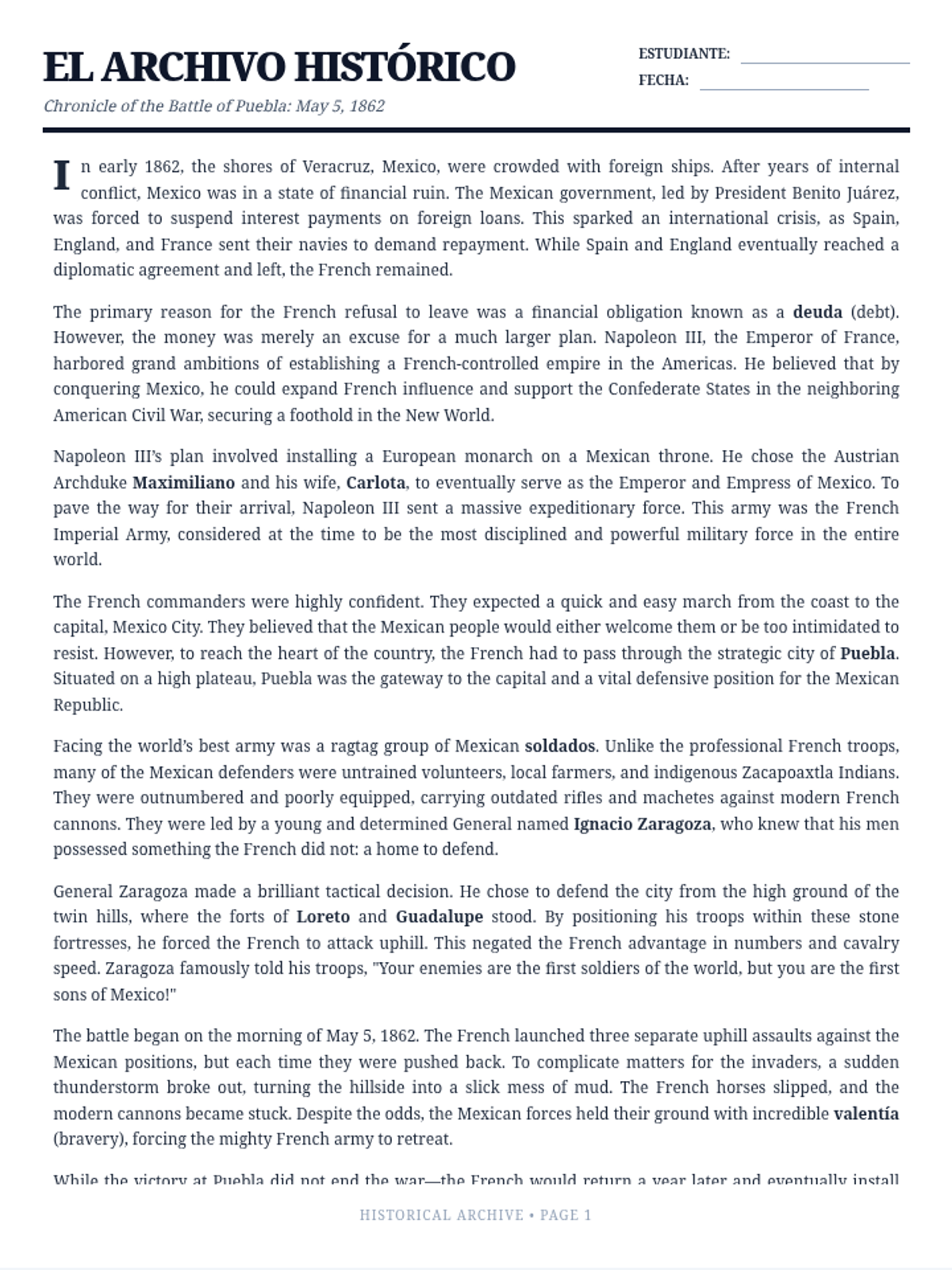
A comprehensive reading assignment about Cinco de Mayo and the Battle of Puebla, featuring an 8-paragraph historical text and 8 multiple-choice comprehension questions. Designed with a clean "Historical Archive" aesthetic.
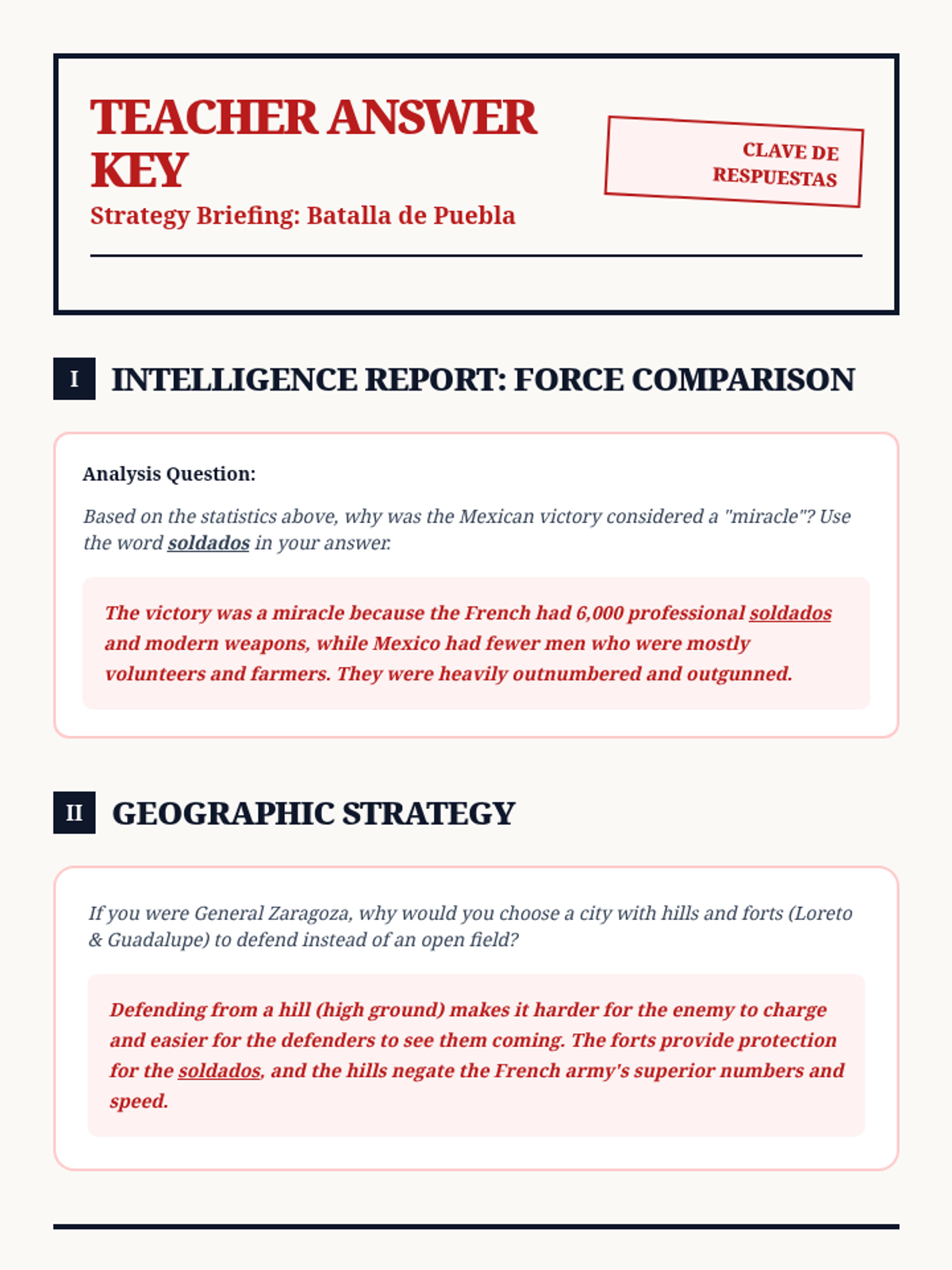
A teacher answer key for the Puebla Strategy Briefing assignment, providing exemplar responses for the force comparison analysis, geographic strategy logic, and historical reflection. Includes grading notes on key terminology.
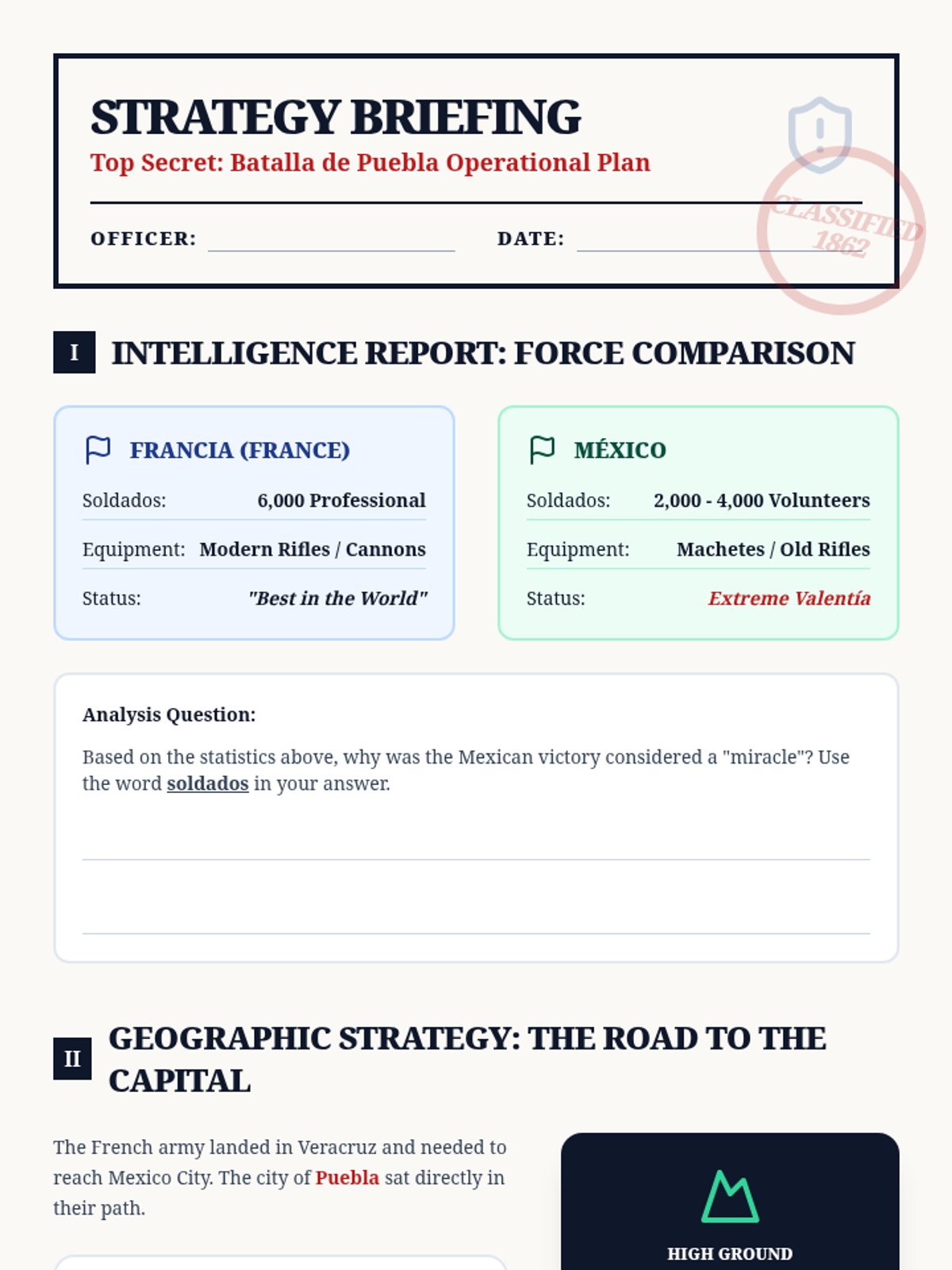
A military-themed strategy briefing assignment where students analyze the tactical advantages of the Mexican army, map out the strategic importance of Puebla, and reflect on the miracle of the underdog victory. Features force comparison charts and geographic logic questions.
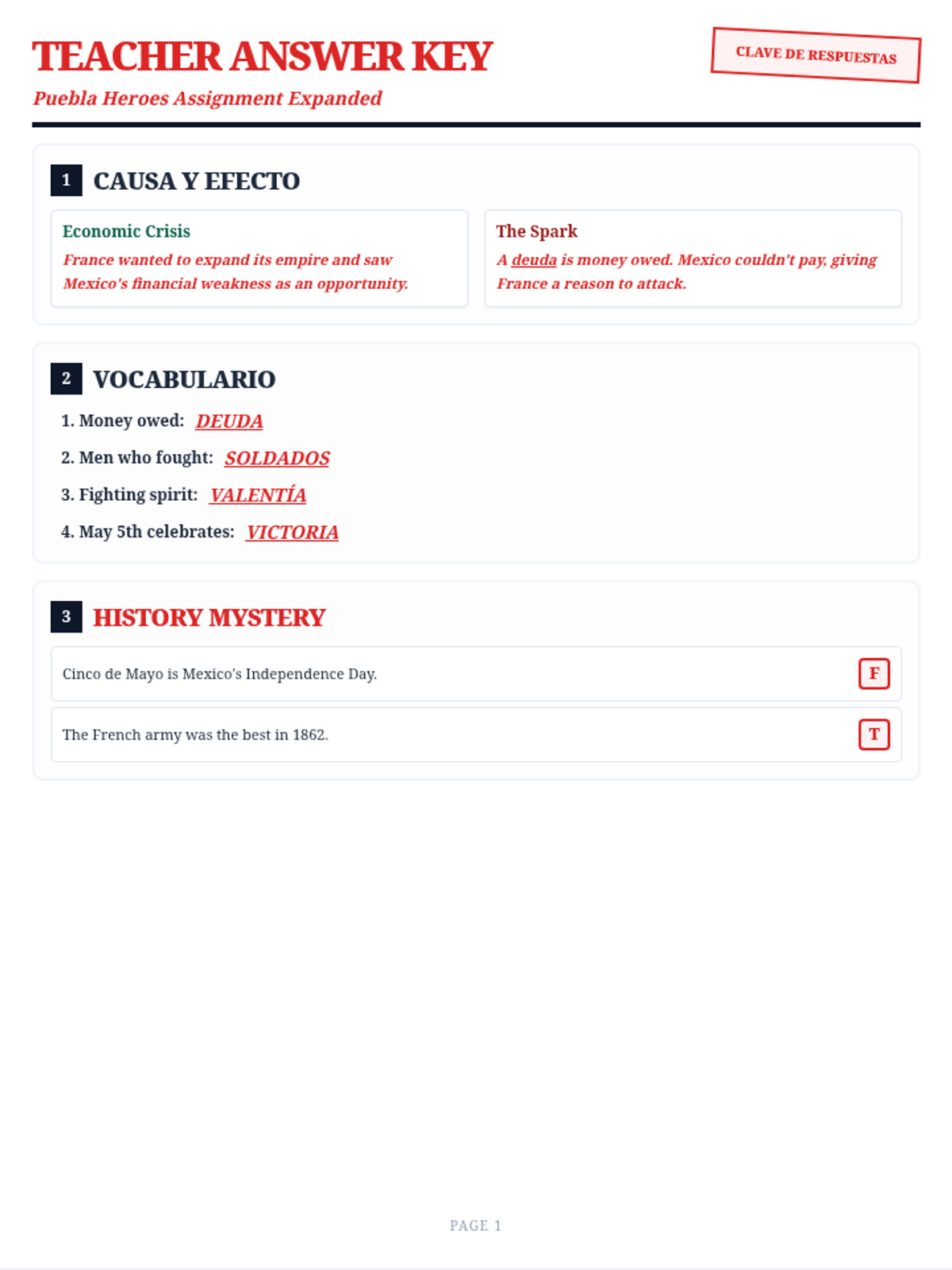
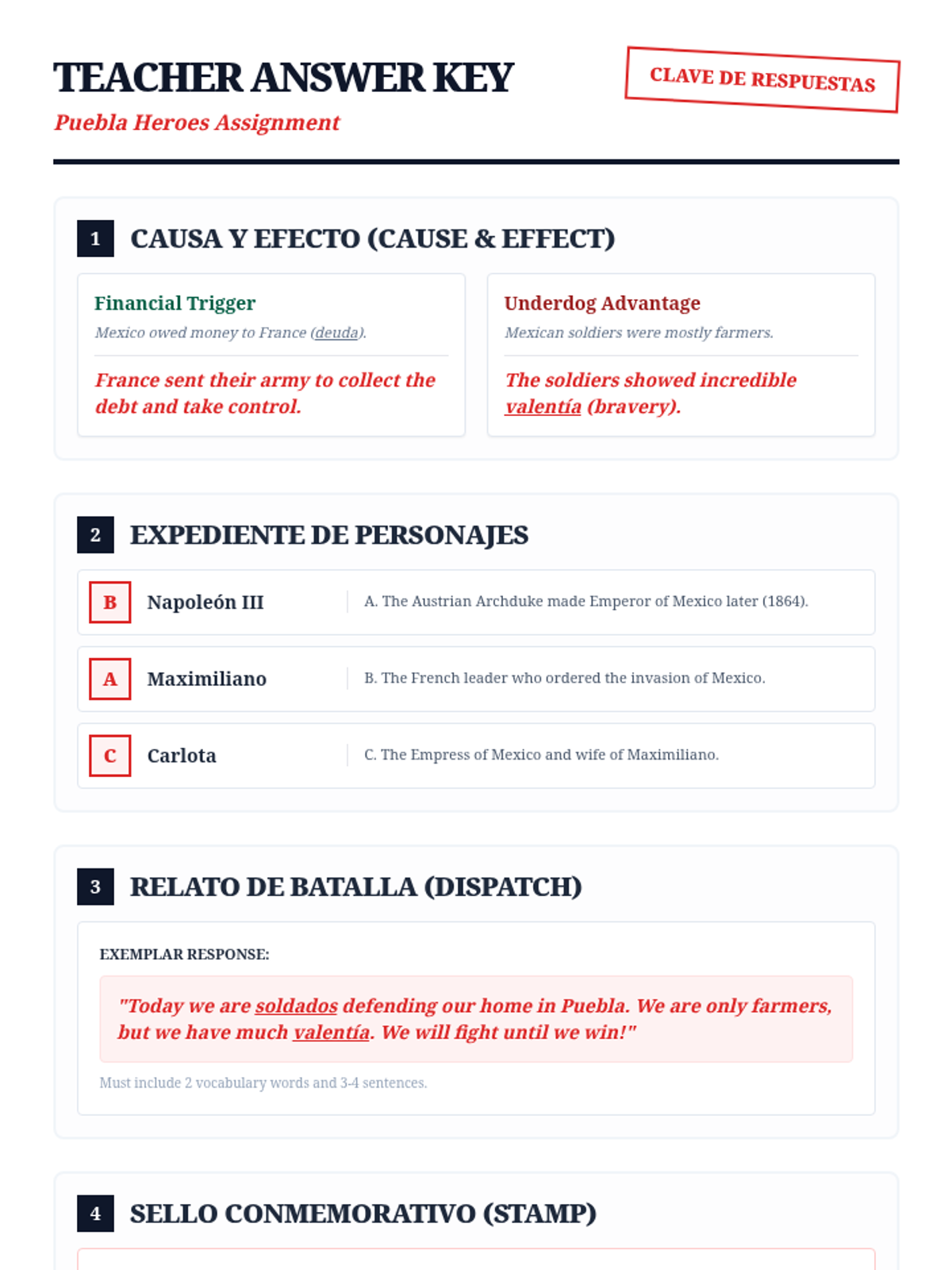
A teacher answer key for the expanded 2-page Puebla Heroes Assignment, providing correct answers for the cause-and-effect, vocabulary matching, True/False myths, and character identification. Features an exemplar writing response and grading checklist.
A teacher answer key for the Puebla Heroes Assignment, providing correct answers for the cause-and-effect, character identification, and writing prompts. Features clear grading notes and exemplar responses.
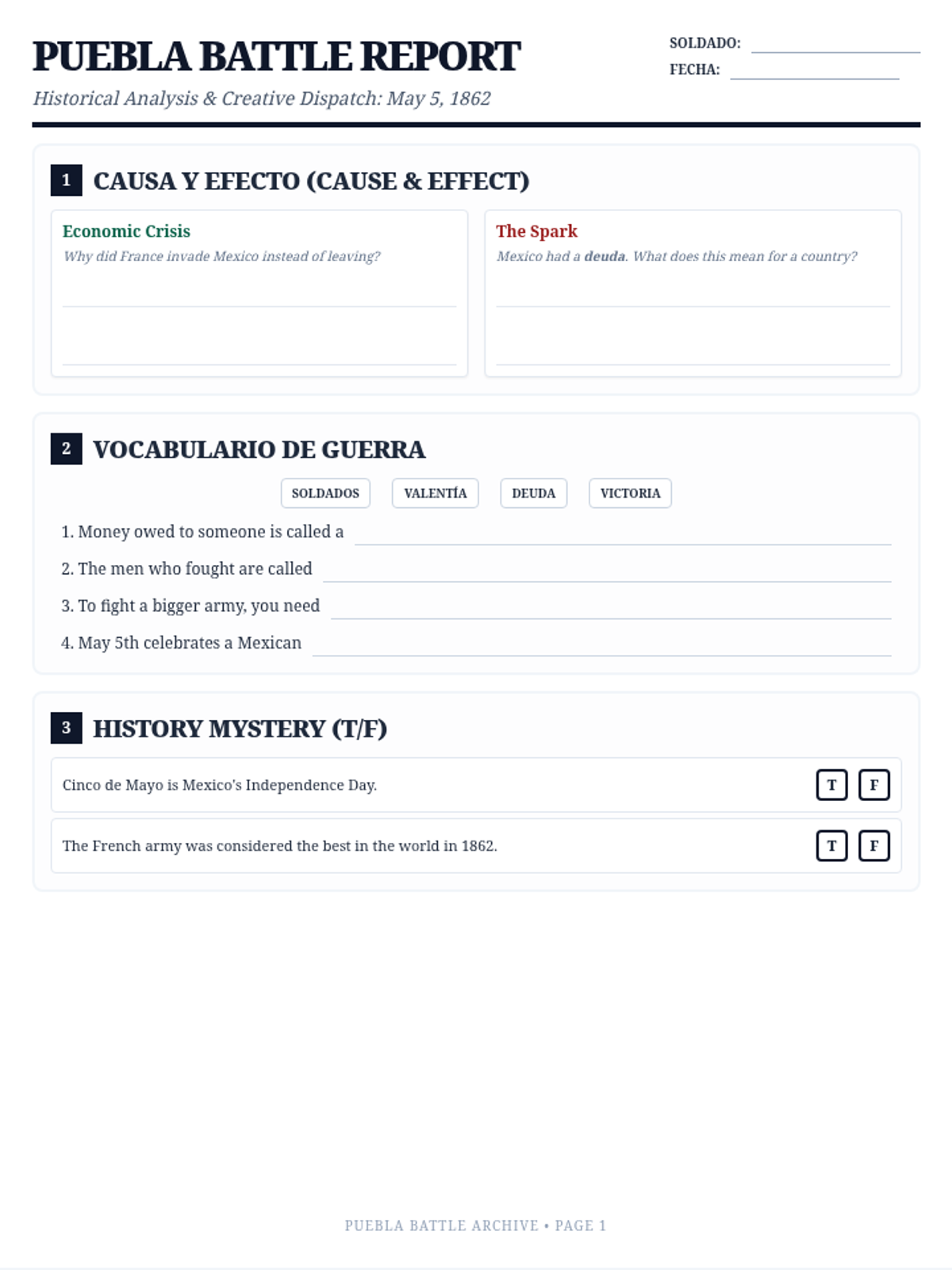
An expanded 2-page assignment for the Batalla de Puebla lesson, adding vocabulary matching, True/False historical myths, an expanded character list including General Zaragoza, and more writing space. Designed with a historical archive aesthetic.
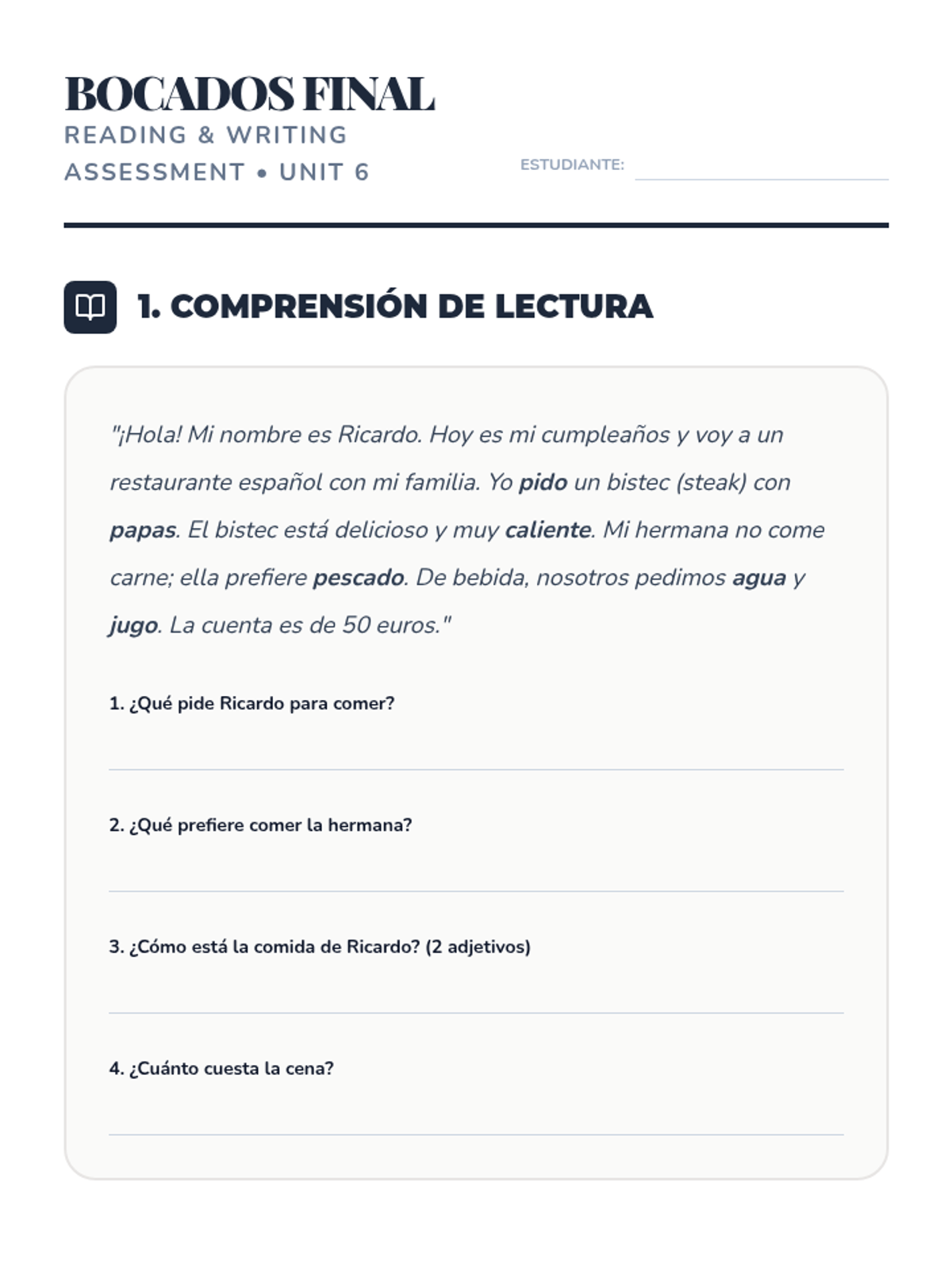
Final reading and writing assessment for Unit 6. Updated with improved answer line spacing and clearer writing prompts.
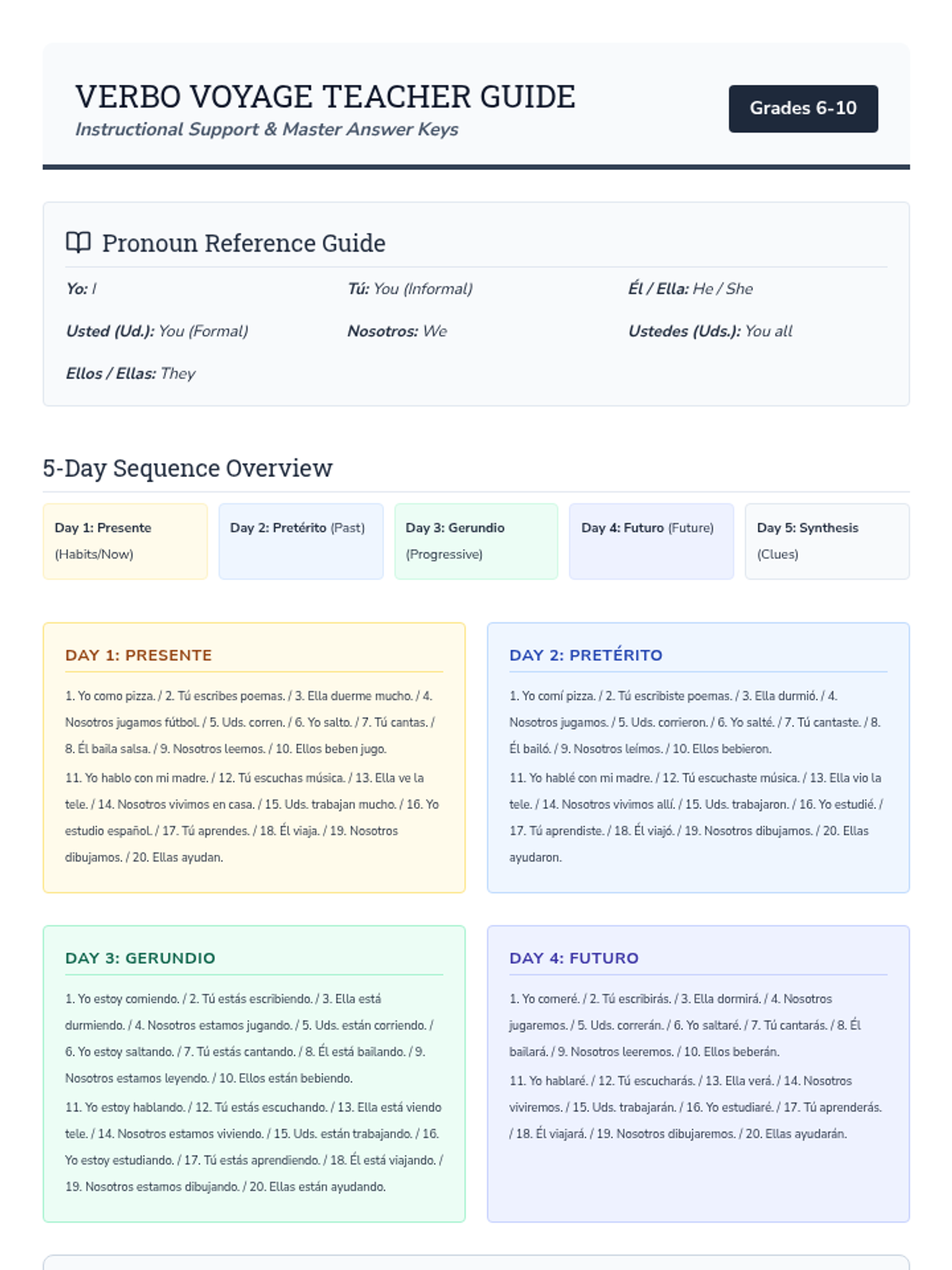
A comprehensive teacher guide with a pronoun reference section, pacing overview, and balanced answer keys for all 5 days of instruction. Corrected future tense key (item 16) and included user-requested 'ellos beberán' form.
A polished 6-slide presentation deck for Spanish verb instruction, featuring fixed layout issues, high-contrast text, and complete conjugation examples.
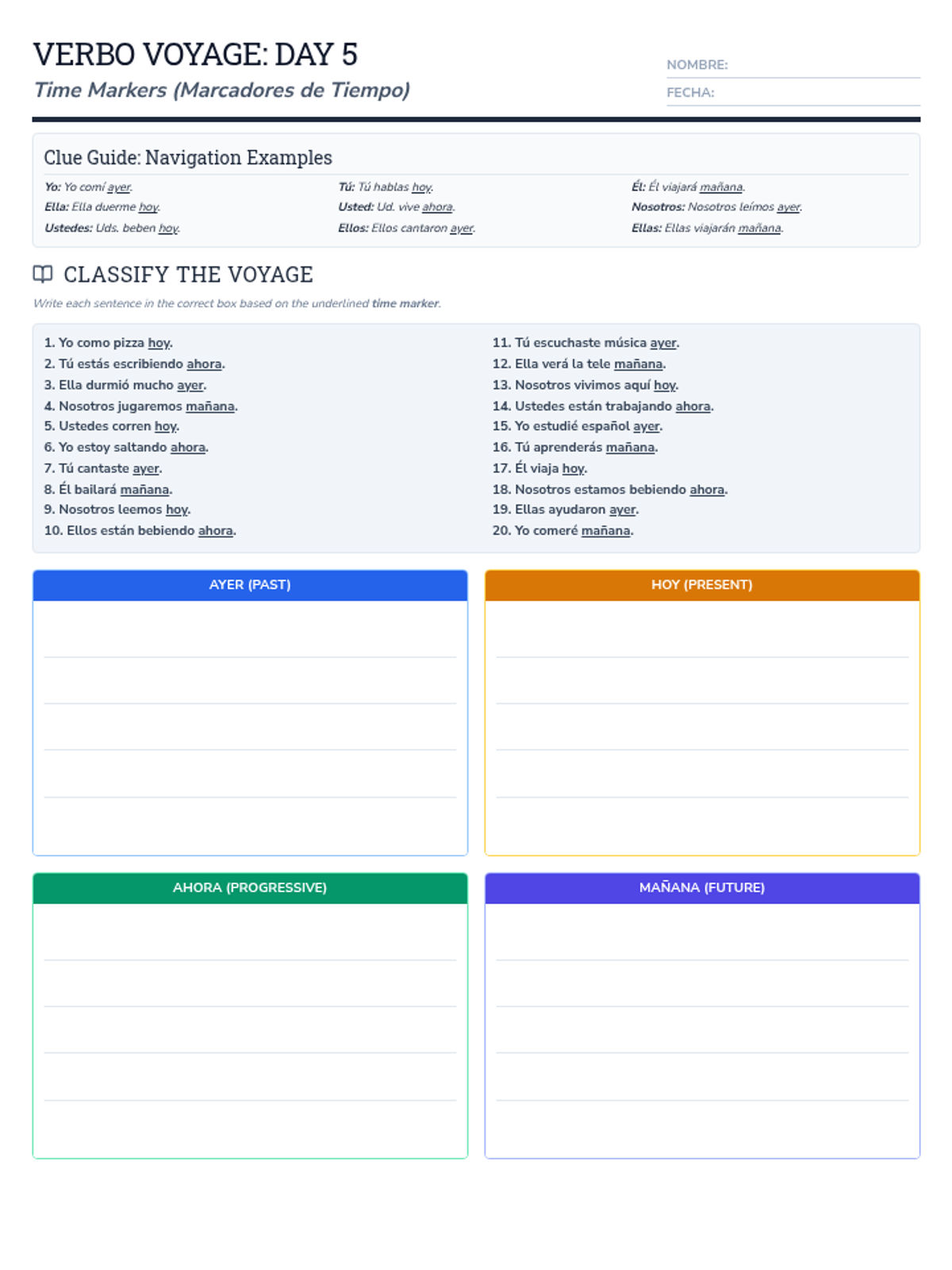
A polished Day 5 synthesis worksheet for Spanish time markers, featuring pronoun examples and a 2x2 grid layout for sentence classification with ruled lines. Fixed layout issues to ensure 1-page fit. Corrected 'ellos cantaron' grammar.
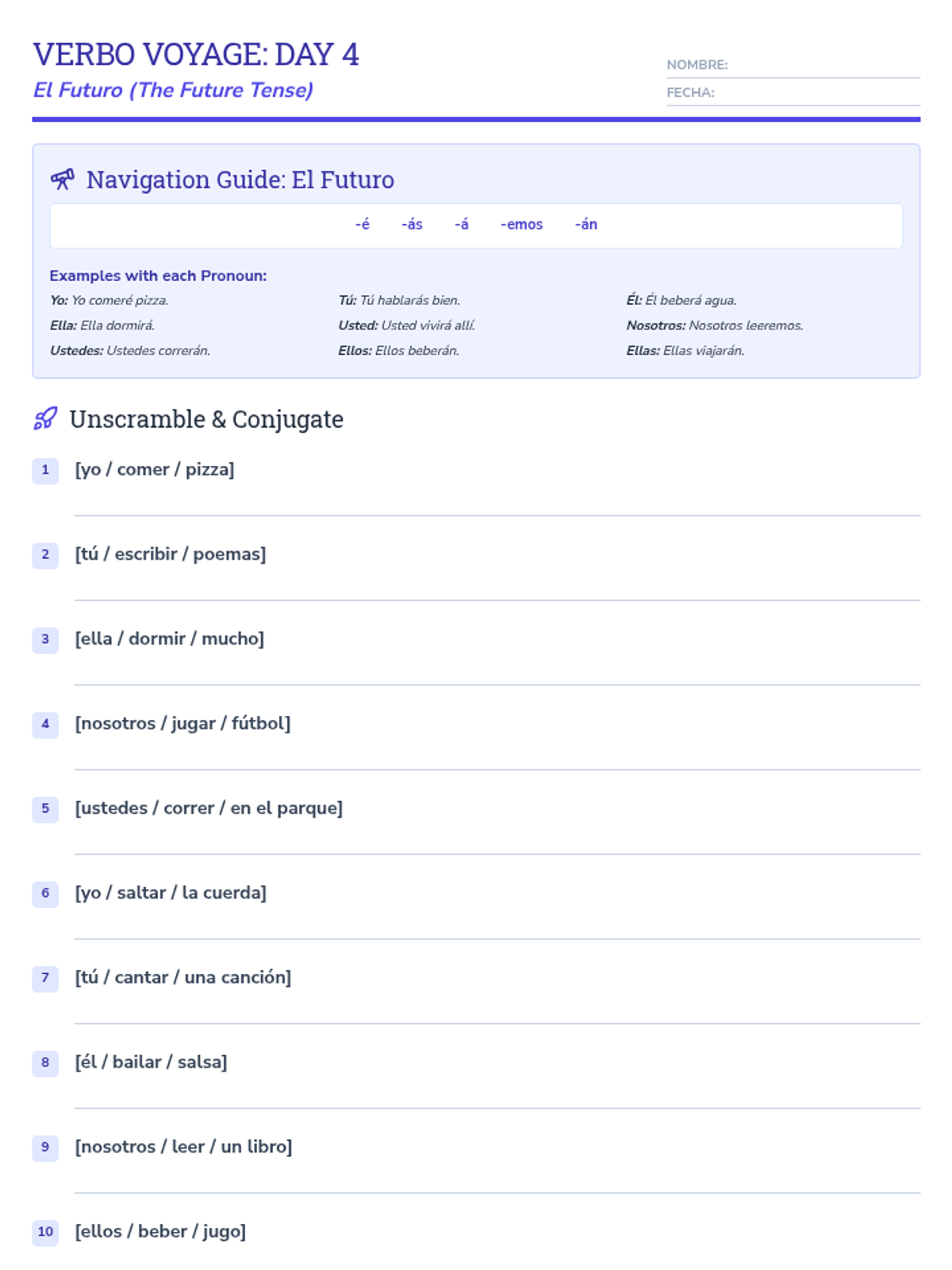
A polished Day 4 worksheet for the Spanish Future tense, featuring a concise grammar guide with corrected examples (ellos beberán) and a 20-item unscrambling activity optimized for 2 pages with fixed alignment. Change: Question 10 is now 'ellos beber' and Question 2 is 'tú escribir' to include the requested form.
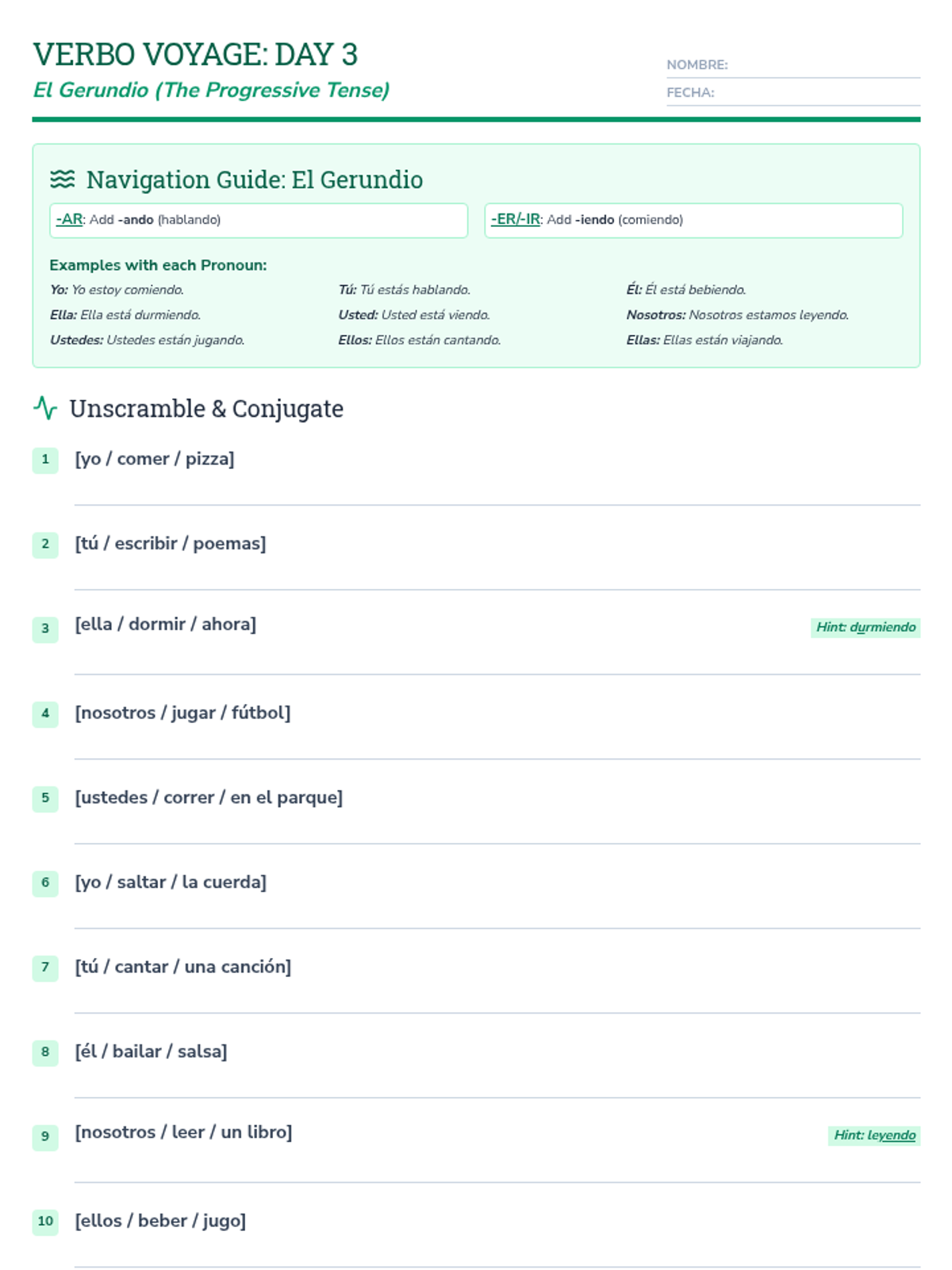
A polished Day 3 worksheet for the Spanish Gerund, including subject pronoun examples and a 20-item unscrambling activity optimized for 2 pages with fixed alignment. Change: Standardized all objects and added 'ellos beber' for consistency.
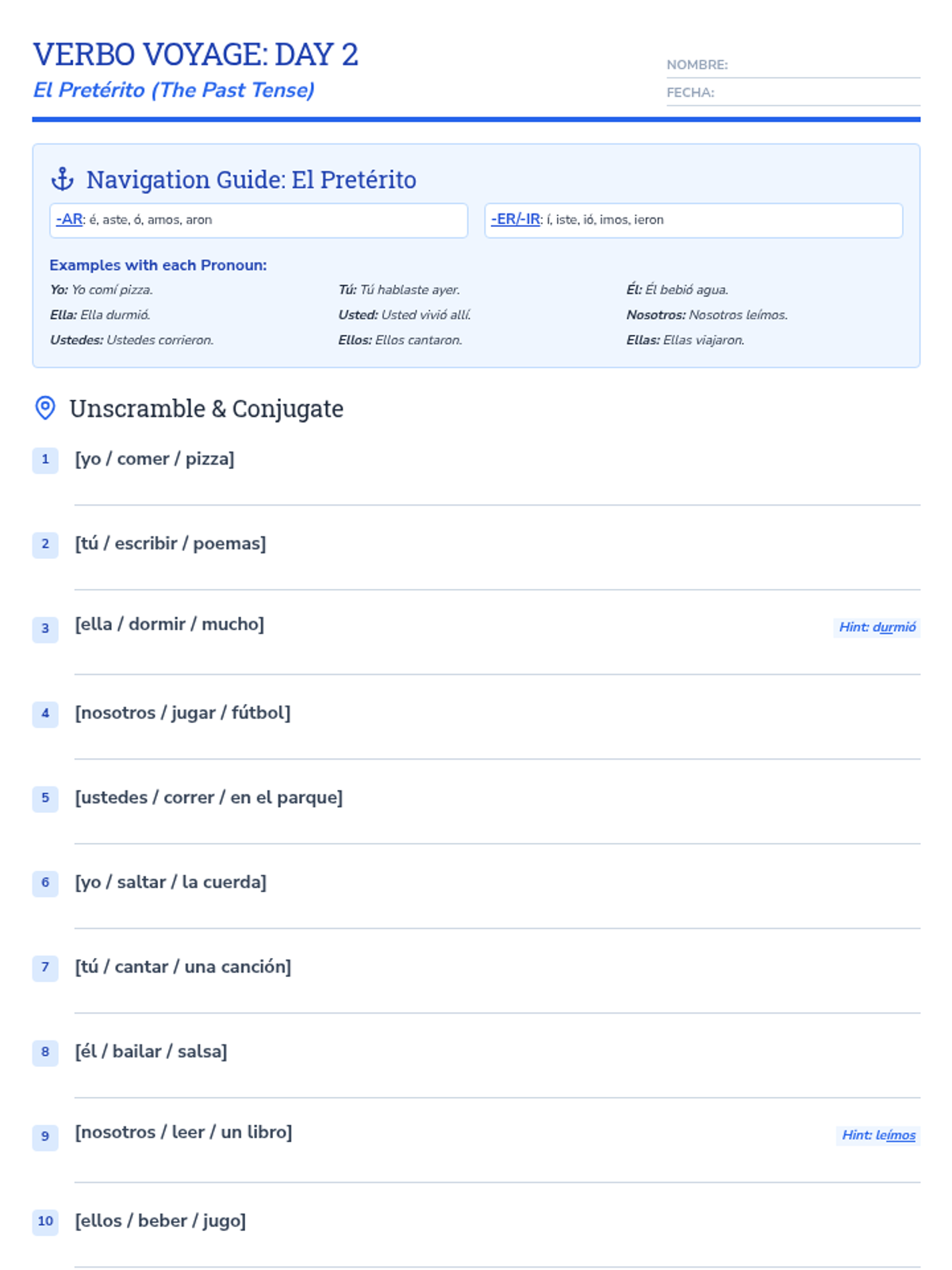
A polished Day 2 worksheet for the Spanish Preterite tense, featuring a compact grammar guide with all subject pronoun examples and a 20-item unscrambling activity optimized for 2 pages with fixed alignment. Change: Question 10 is now 'ellos beber' and Question 2 is 'tú escribir' to include the requested form.
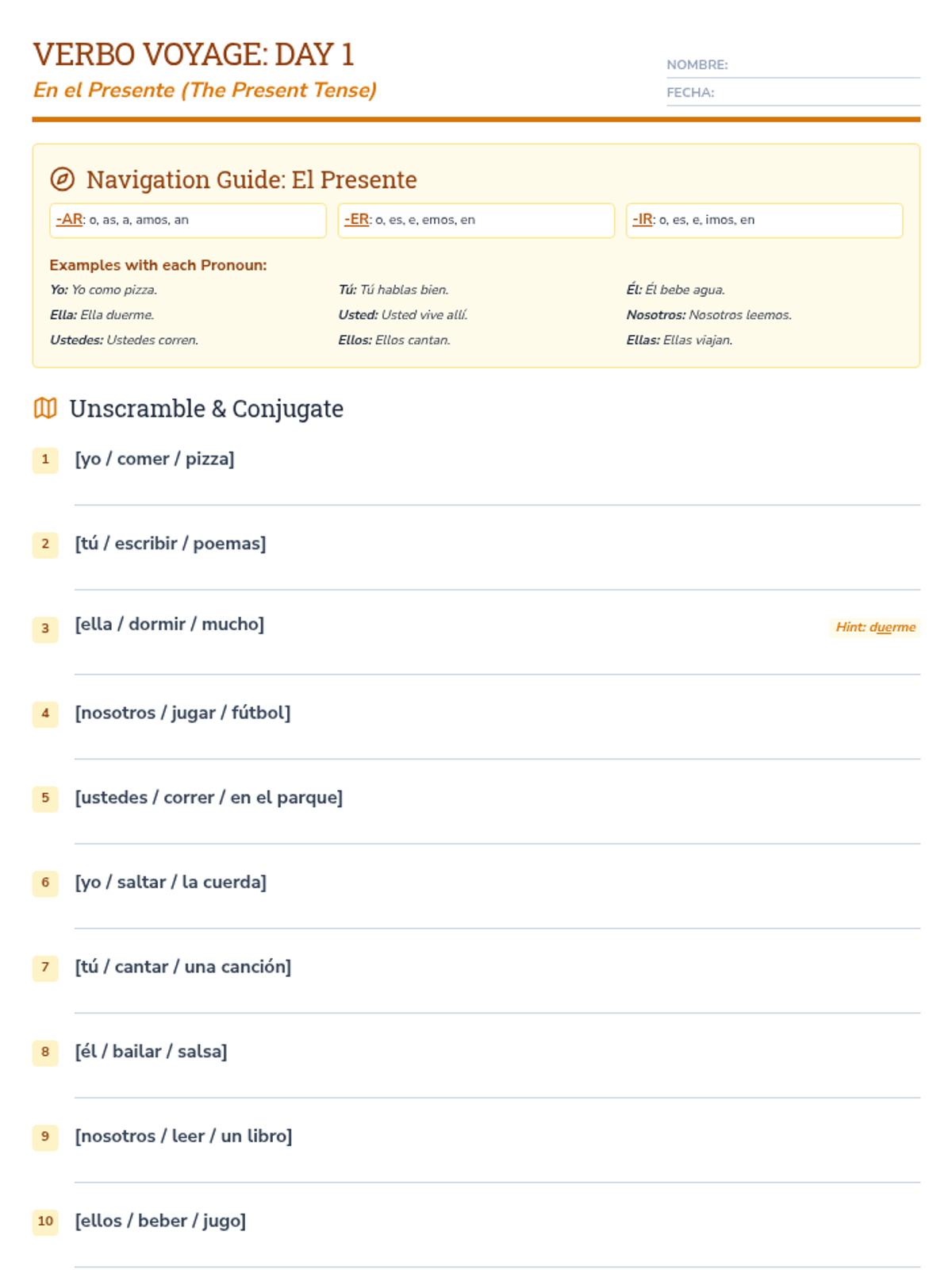
A polished Day 1 worksheet for the Spanish Present tense, featuring a concise grammar guide with all subject pronoun examples and a 20-item unscrambling activity optimized for 2 pages with fixed alignment. Change: Question 10 is now 'ellos beber' and Question 2 is 'tú escribir' to include the requested form.
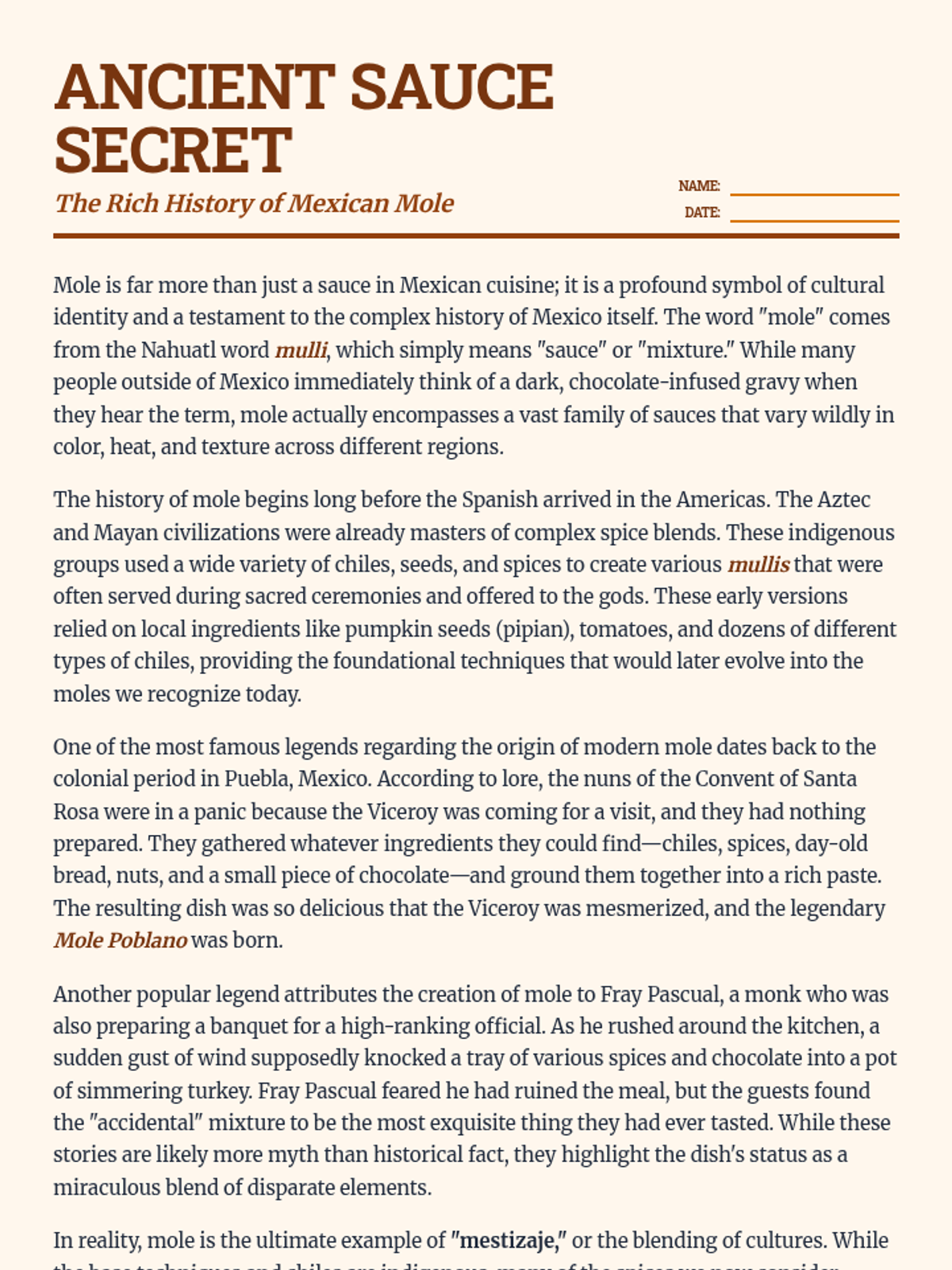
A comprehensive 17-slide presentation detailing the history, legends, and cultural significance of Mexican mole. Includes specific historical detail and 10 uniform multiple-choice knowledge check slides for effective classroom assessment.
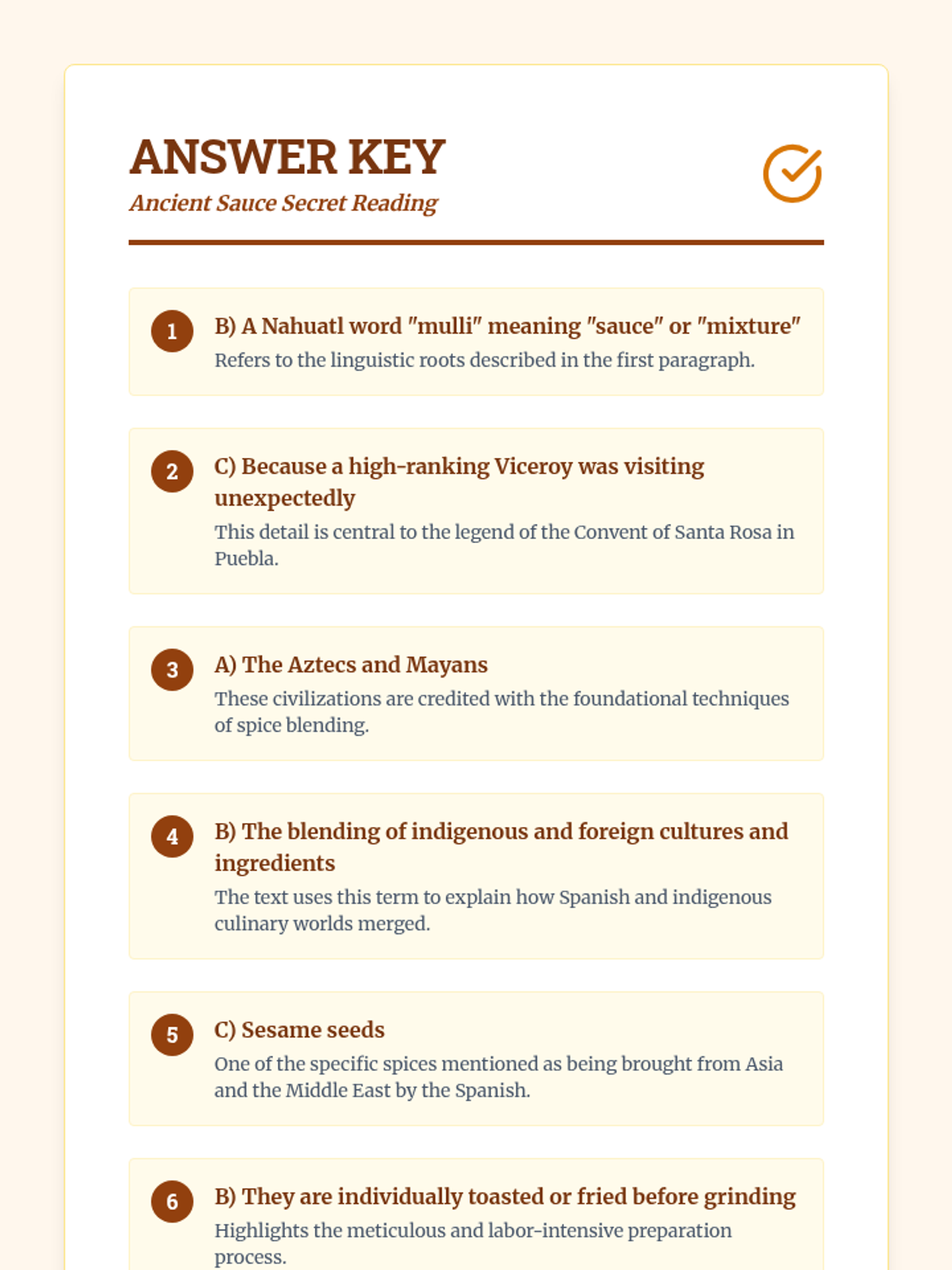
A detailed answer key for the 'Ancient Sauce Secret' assessment, featuring correct answers and brief explanations for each of the 10 questions. Designed for teacher use with a clean, clear layout.
An 8-paragraph reading passage exploring the history, legends, and cultural significance of Mexican mole. Designed for maximum readability and engagement with a clean, culinary-themed aesthetic. Fixes page alignment and footer orphans.
A B1-level Spanish fill-in-the-blanks worksheet focusing on past, present, and future tenses. Includes infinitives after each blank and simplified vocabulary. Increased line height for easy completion.
A B1-level Spanish translation worksheet featuring a three-part narrative (past, present, and future) about a time capsule. Students practice translating sentences with simpler vocabulary and clear tense changes. Includes generous work space.