Phonetic foundations through Pinyin and tones, character recognition, and essential grammar for all proficiency levels. Integrates cultural context with advanced reading, writing, and communicative strategies.
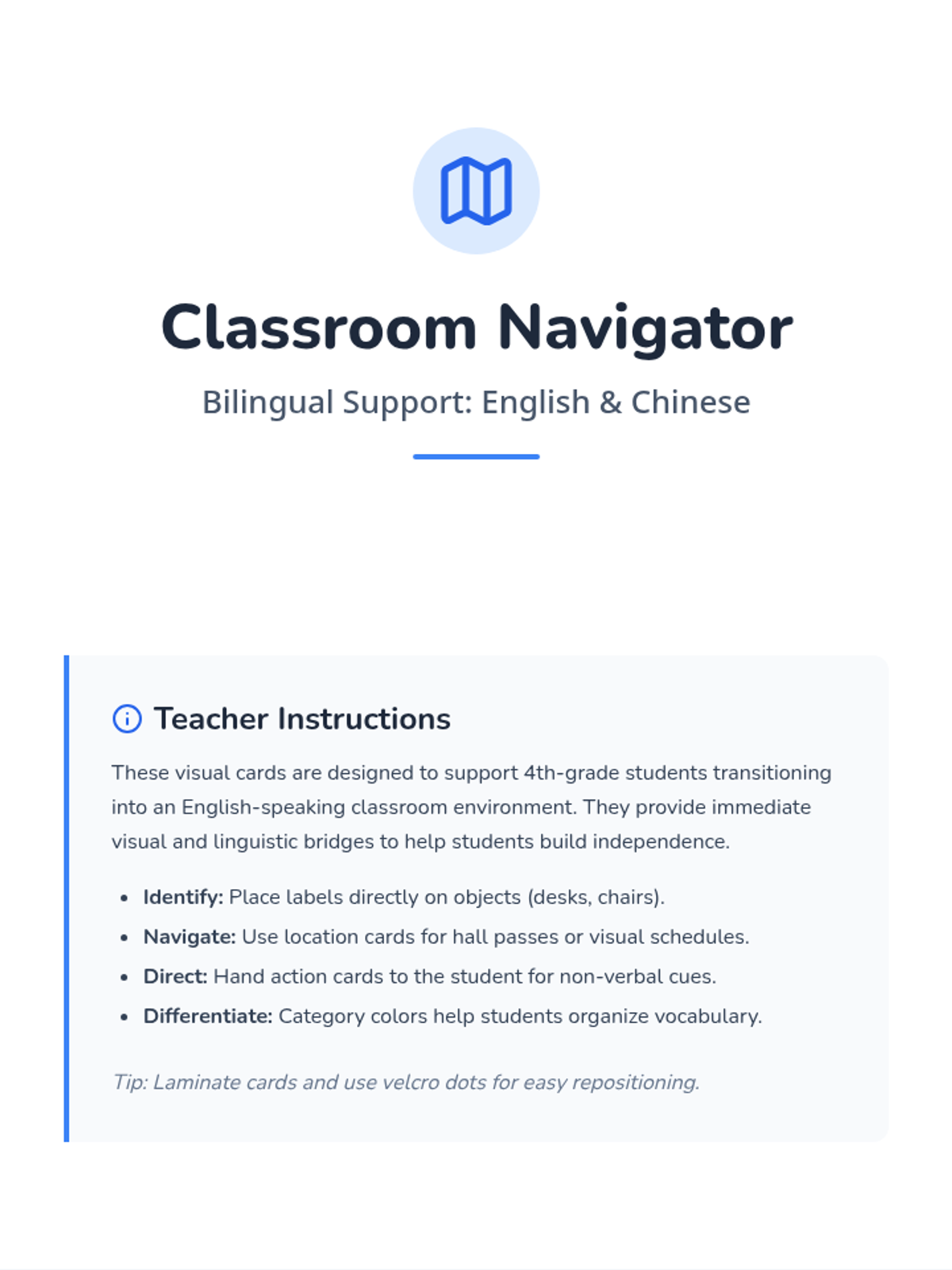
A polished, bilingual English-Chinese classroom navigator set. Includes a teacher guide and high-quality visual labels for supplies, safety, actions, classroom items, and school locations, color-coded for ease of use.
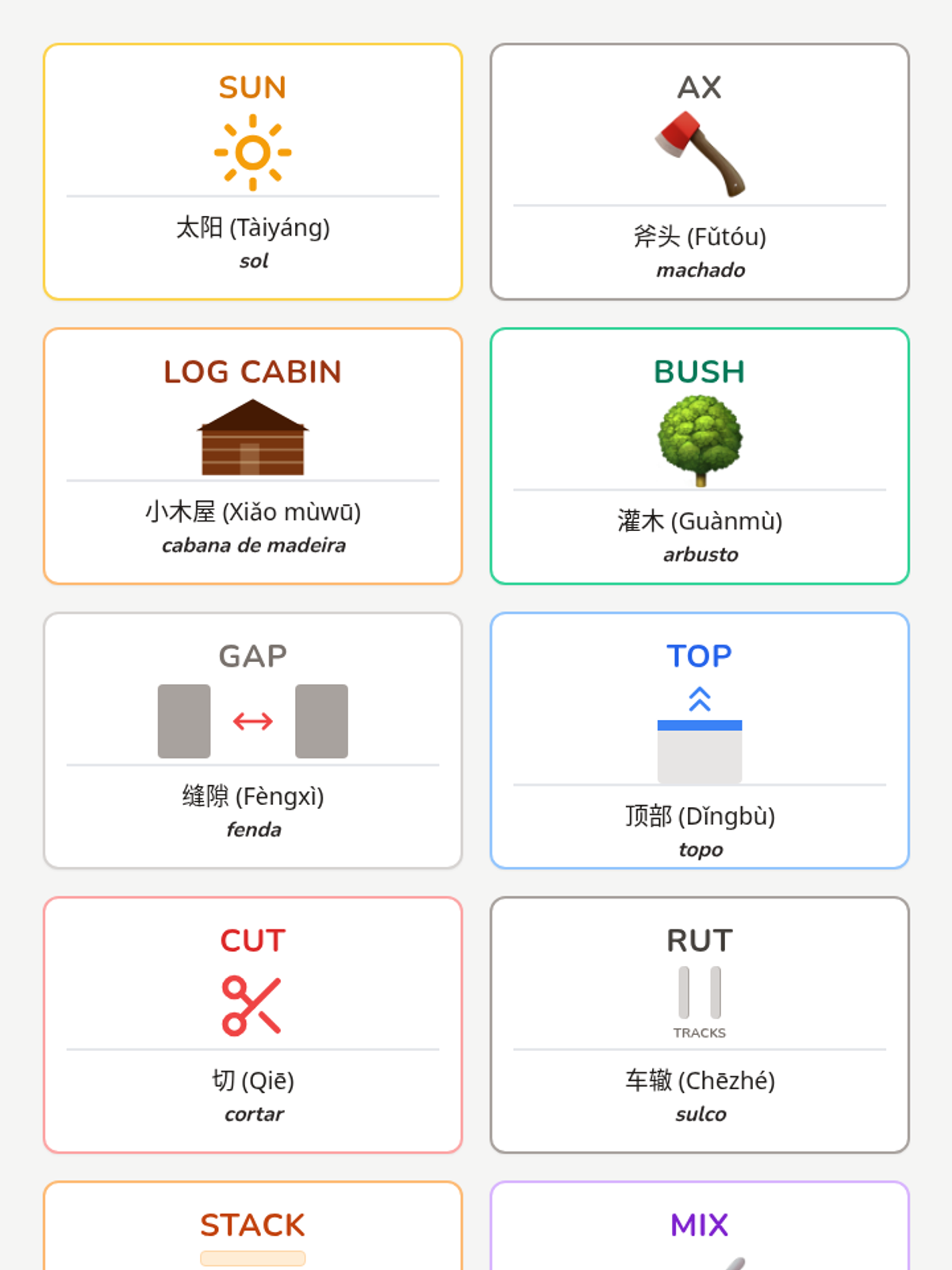
A set of bilingual vocabulary cards featuring English, Chinese, and Portuguese translations, accompanied by simple visual icons for early readers. Vocabulary includes words like sun, ax, and mud, with child-appropriate imagery.
Deutsche Übersetzung des Lehrer-Planungsbuchs für die Einheit 'Weltweite Wunder', inklusive Lernzielen, Erfolgskriterien und der REISE-Routine. Vollständig ins Deutsche übersetzt. Revised to fix language inconsistencies and page flow.
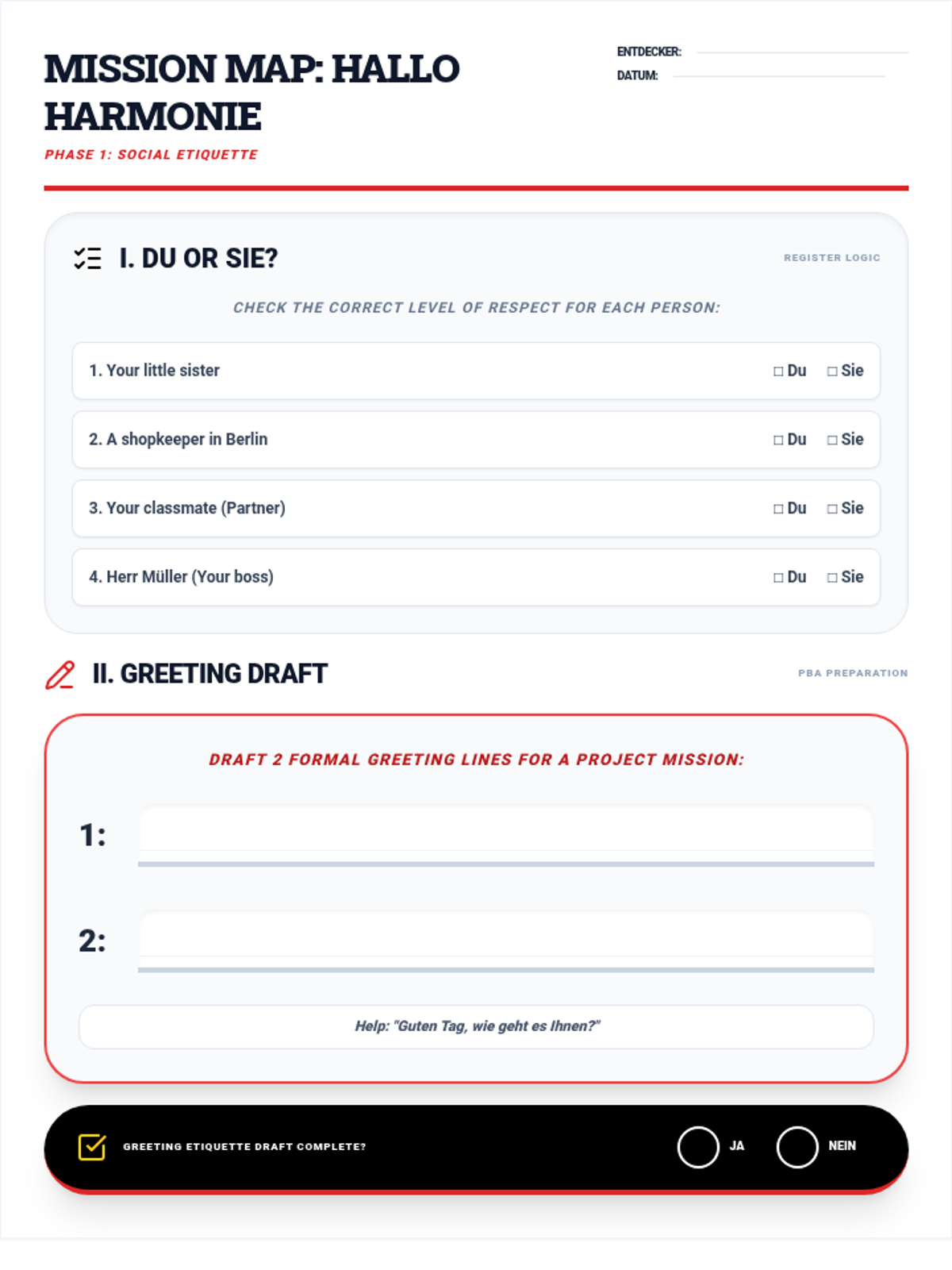
A student activity sheet for German Lesson 2: Hallo Harmonie, featuring a register sorting task (Du vs. Sie) and a dialogue drafting section for formal introductions. Revised for high handwriting contrast, unbiased choices, and single-page layout.
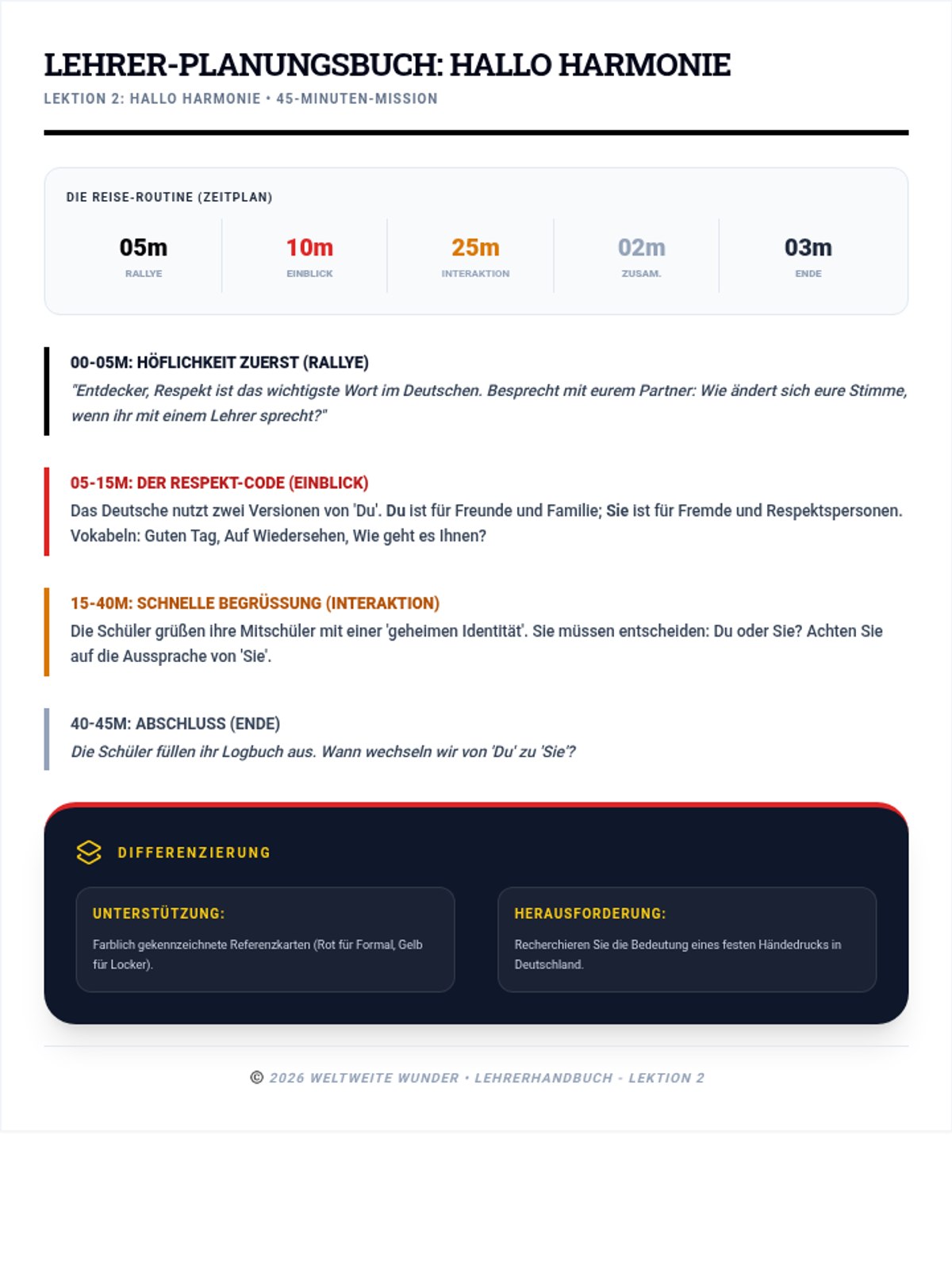
Deutsche Übersetzung des Lehrer-Planungsbuchs für die Lektion 'Hallo Harmonie', inklusive Lernzielen, Erfolgskriterien und der REISE-Routine. Vollständig ins Deutsche übersetzt. Revised to fix language inconsistencies, page breaks, and contrast.
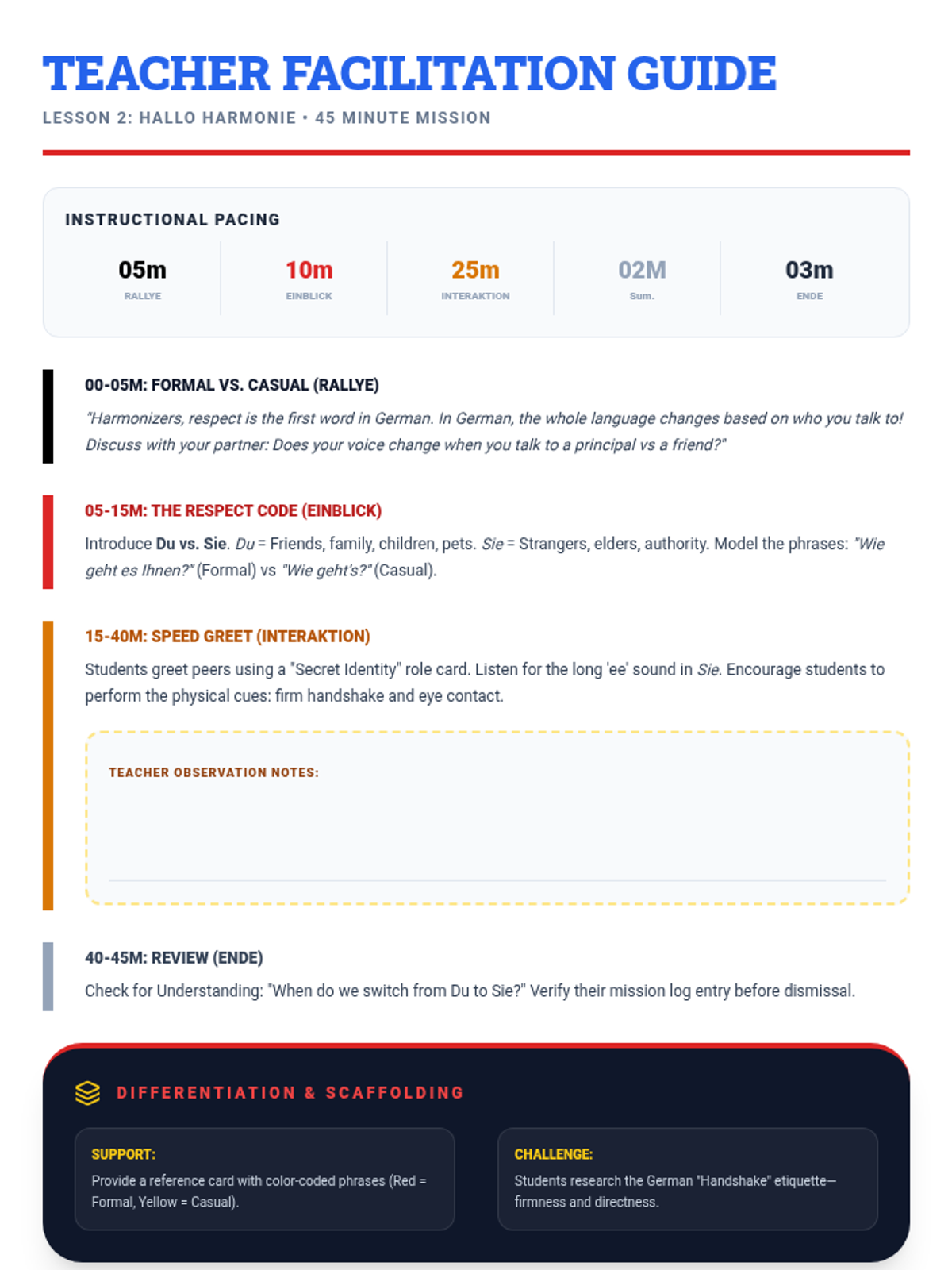
A step-by-step facilitation guide for German Lesson 2: Hallo Harmonie, providing teacher scripts, register-switch activities (Du vs. Sie), and cultural greeting norms. Revised for better page flow and corrected artifacts. Now consolidated to a single page.
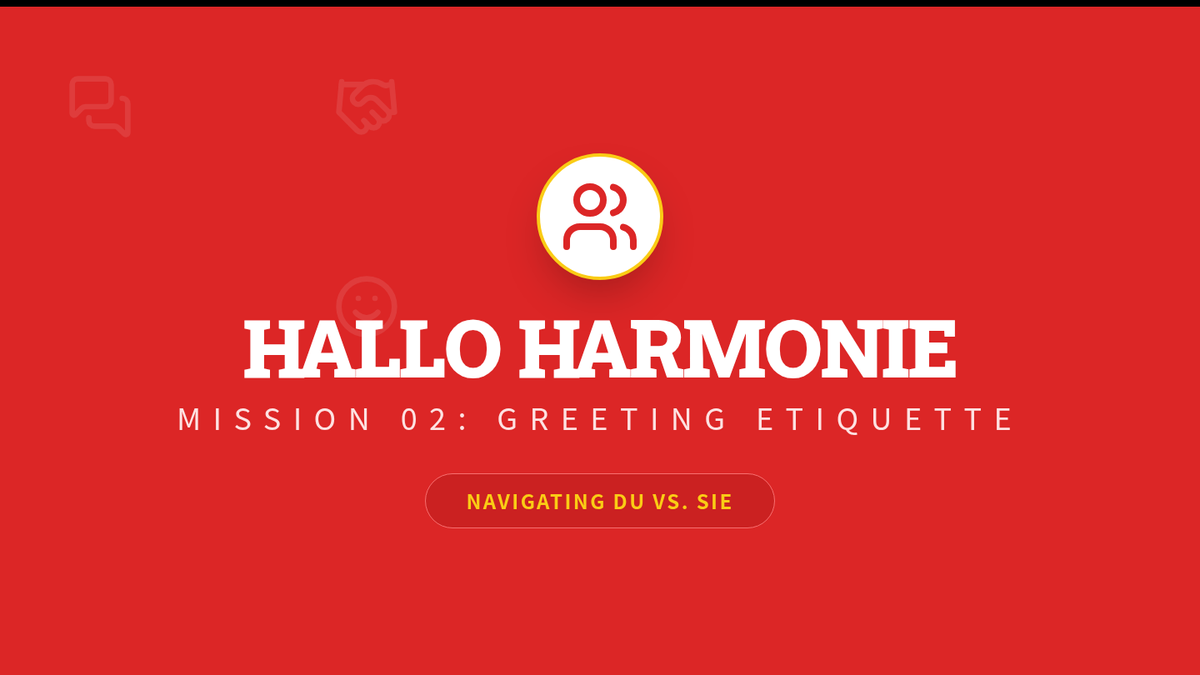
Instructional slides for German Lesson 2: Hallo Harmonie, covering formal and informal greetings (Du vs. Sie) and cultural greeting etiquette.
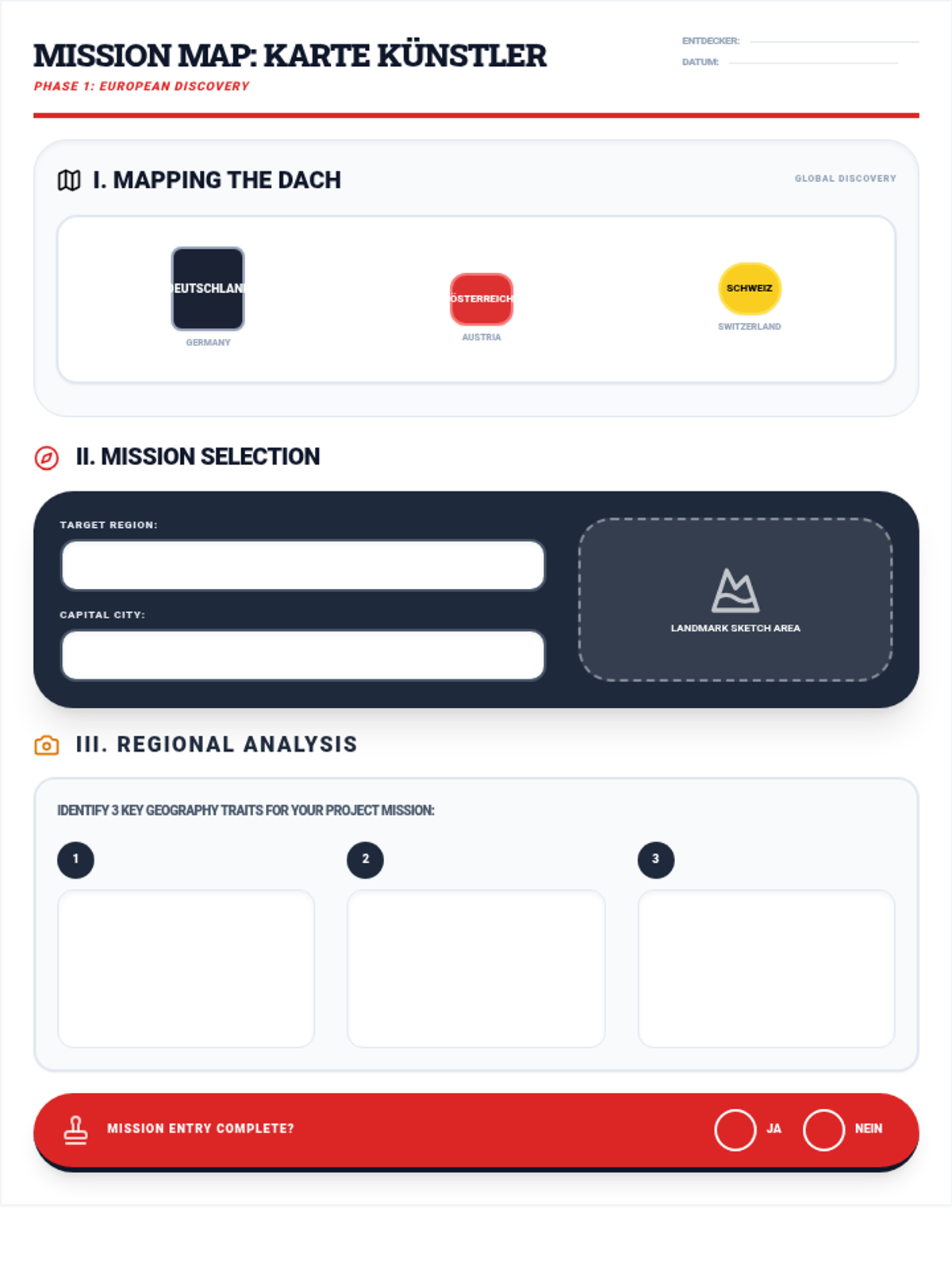
A student activity sheet for German Lesson 1: Karte Künstler, featuring D-A-CH mapping, country selection for the project mission, and regional analysis drafting. Revised for better contrast, single-page layout, and correct labeling.
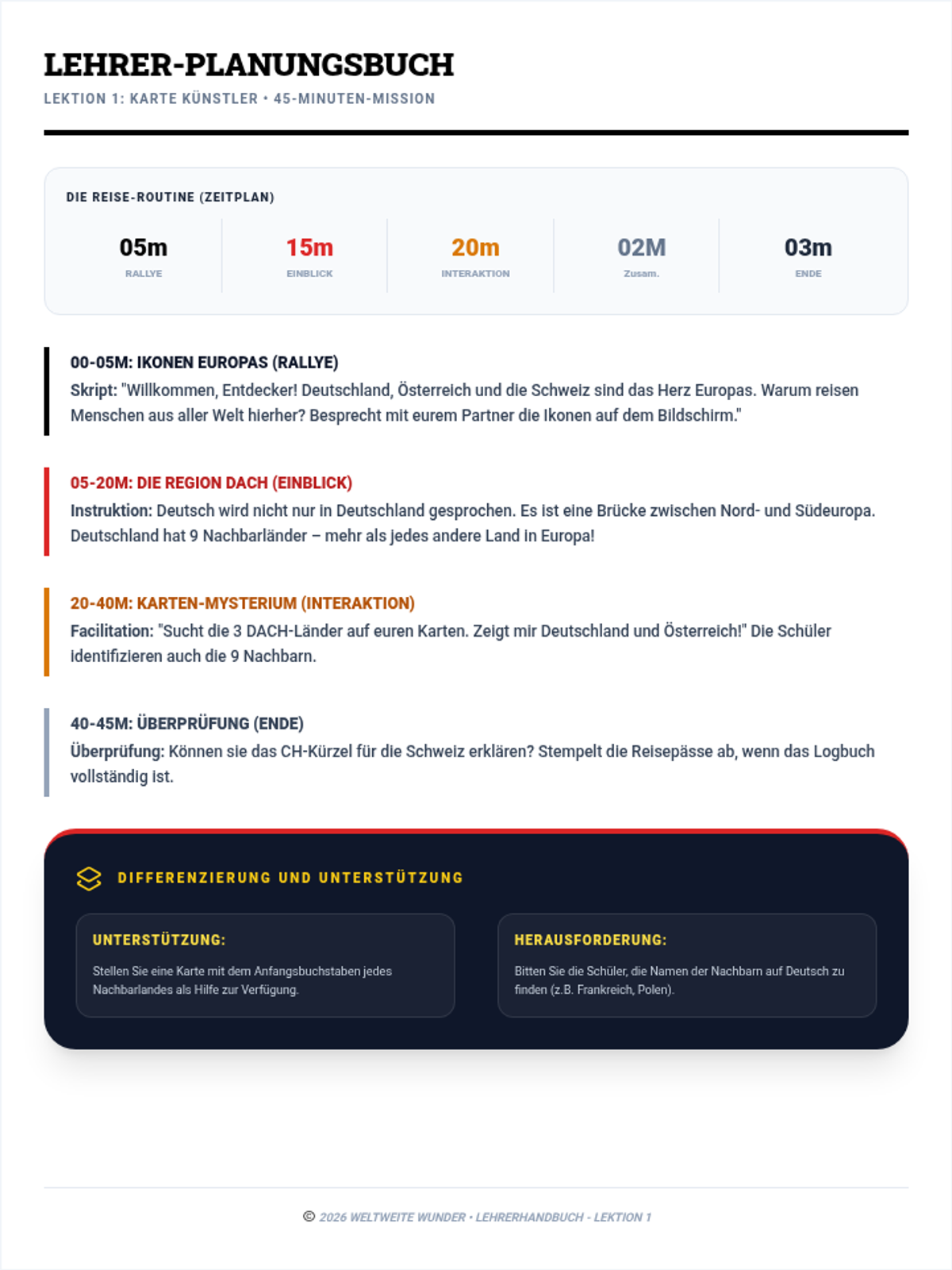
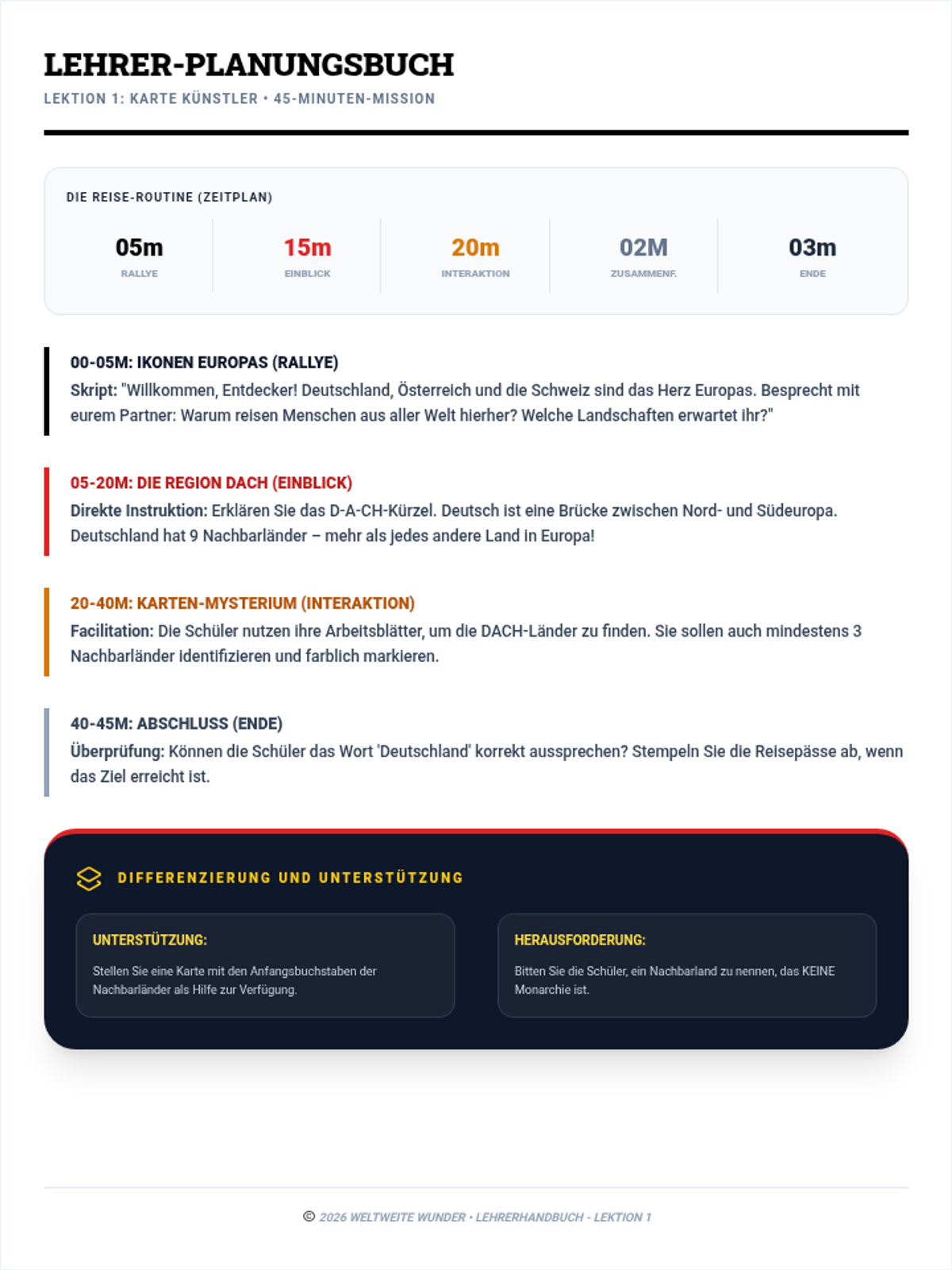
Deutsche Übersetzung des Lehrer-Planungsbuchs für die Lektion 'Karte Künstler'. Vollständig ins Deutsche übersetzt mit Unterrichtsskripten und Zeitplan.
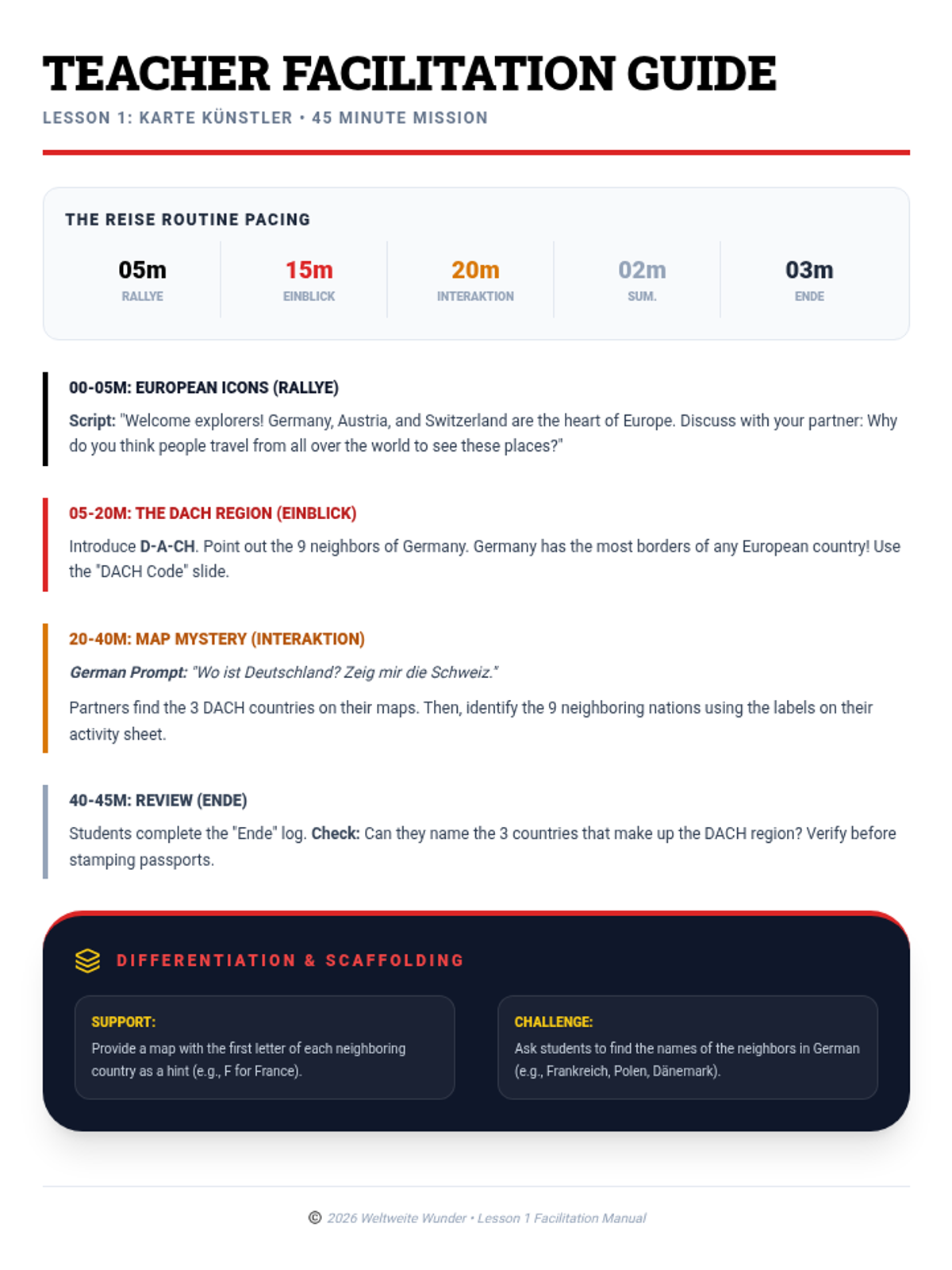
A facilitation guide for German Lesson 1: Karte Künstler, providing pacing, scripts for European geography, and map-based instructional strategies. Revised to fit one page and corrected language errors.
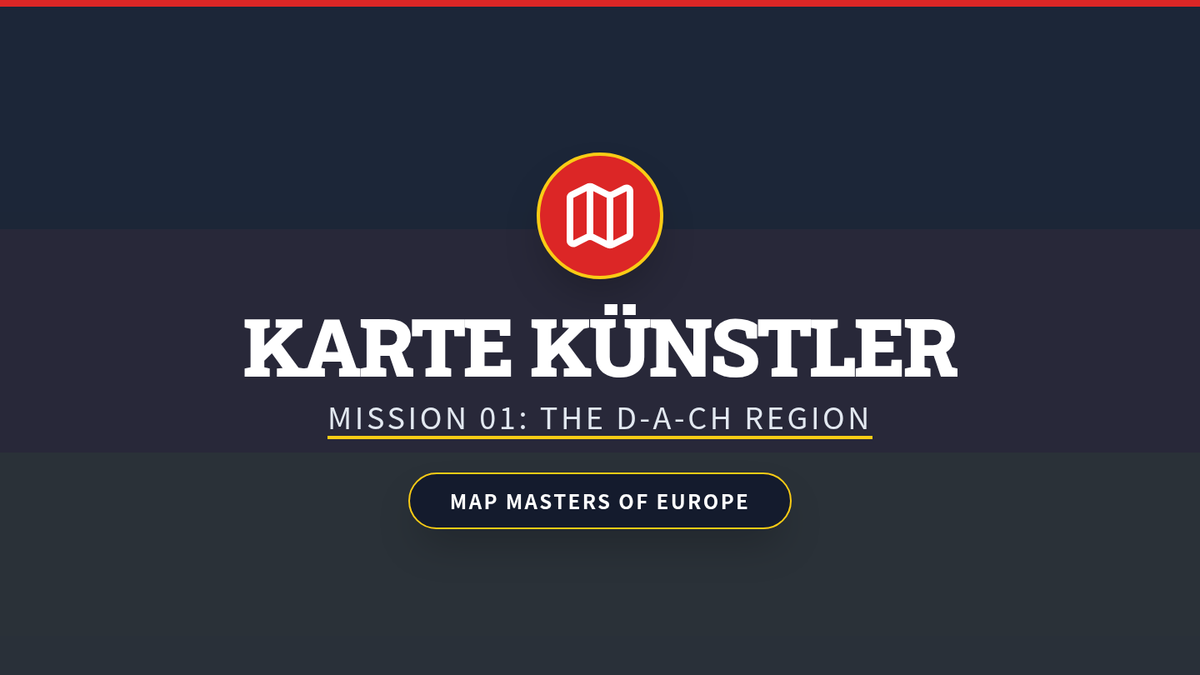
Instructional slides for German Lesson 1: Karte Künstler, covering the D-A-CH regions, Germany's 9 neighbors, and European landmarks. Revised with improved contrast, spacing, and full neighbor content.
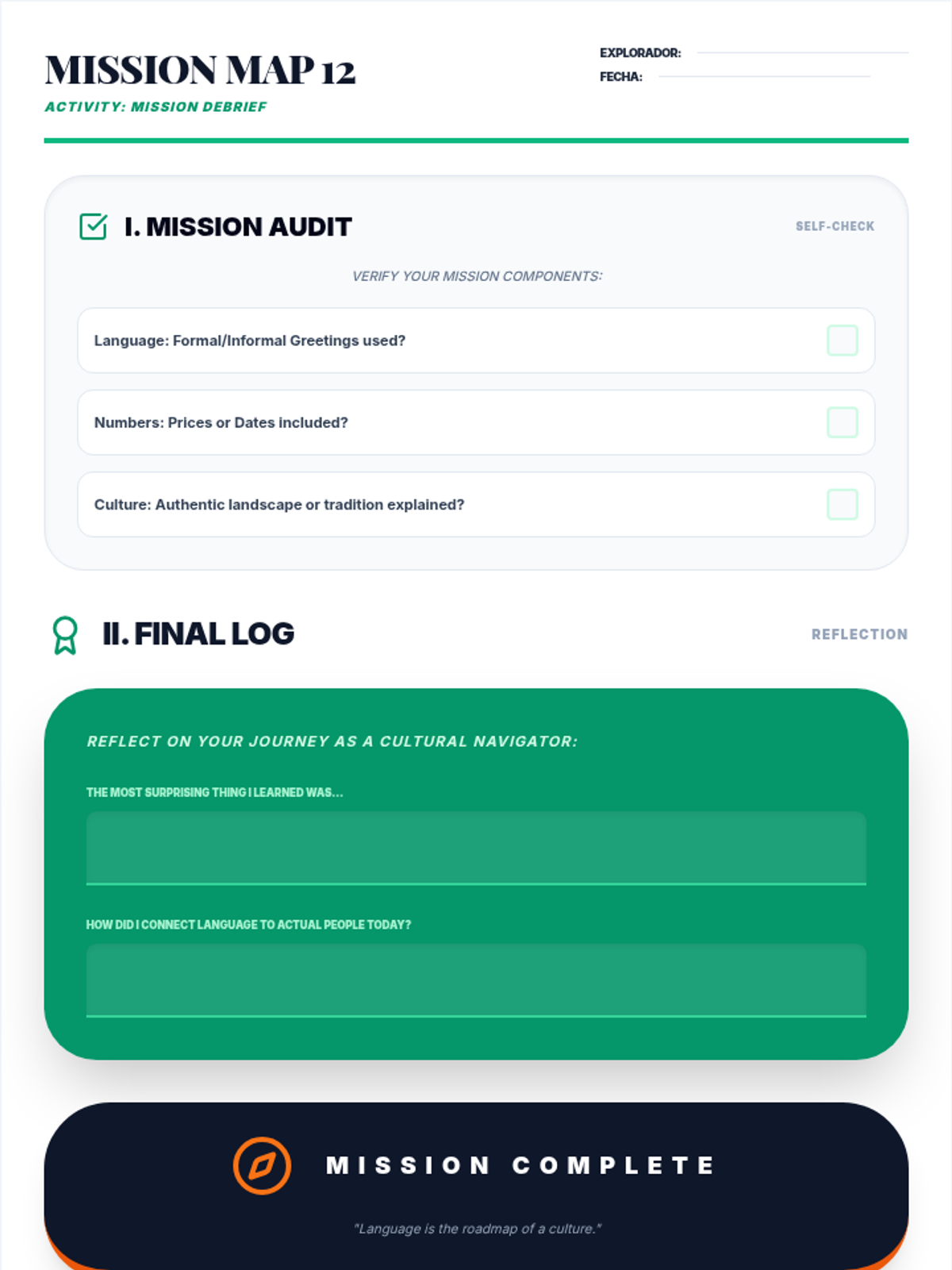
A student activity sheet for Spanish Lesson 12: World Wonders Project, featuring a project audit checklist and a final unit reflection area for student navigators.
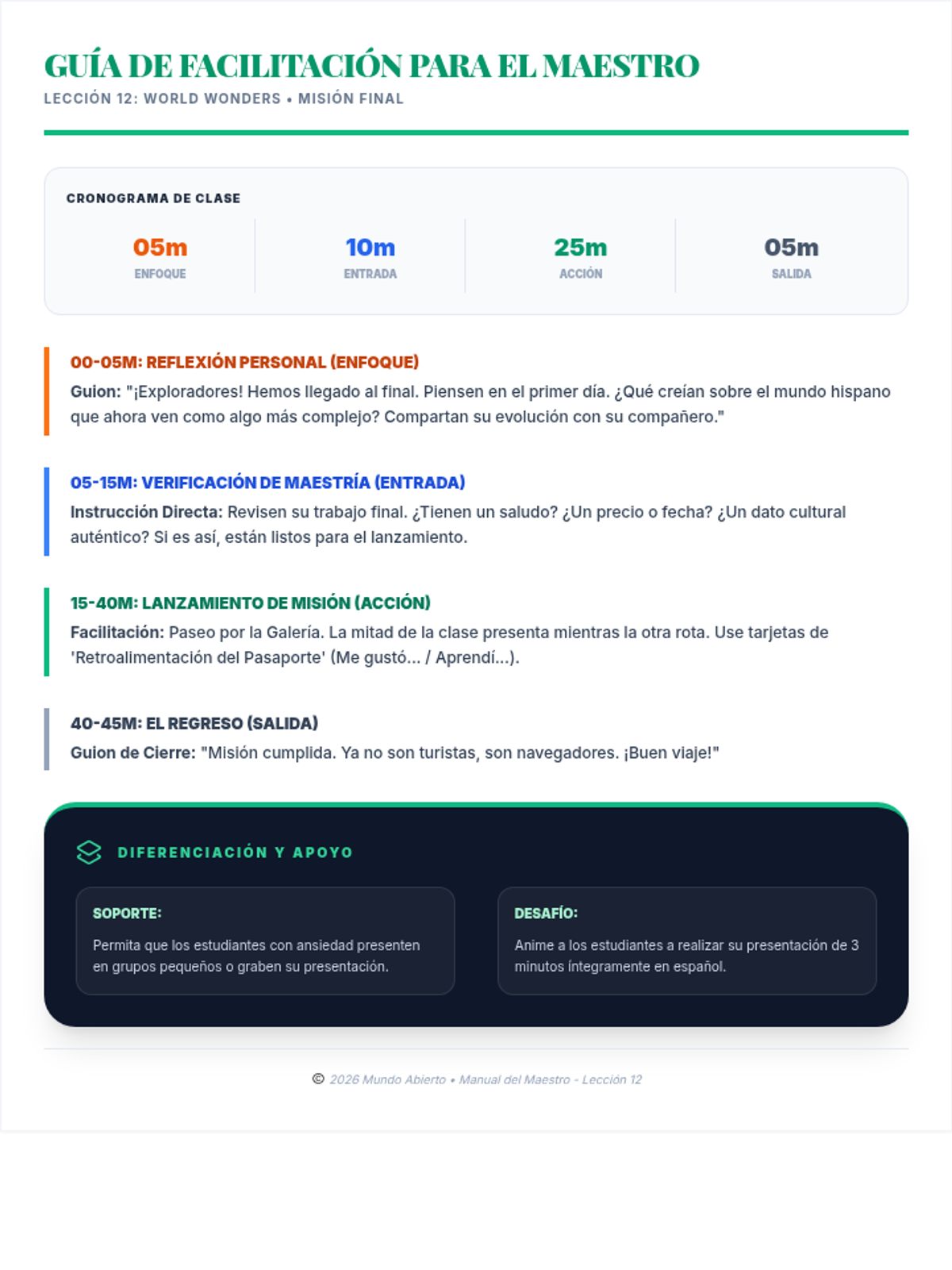
Versión traducida al español de la guía de facilitación para la Lección 12: World Wonders Project, centrada en la culminación del proyecto y la reflexión final.
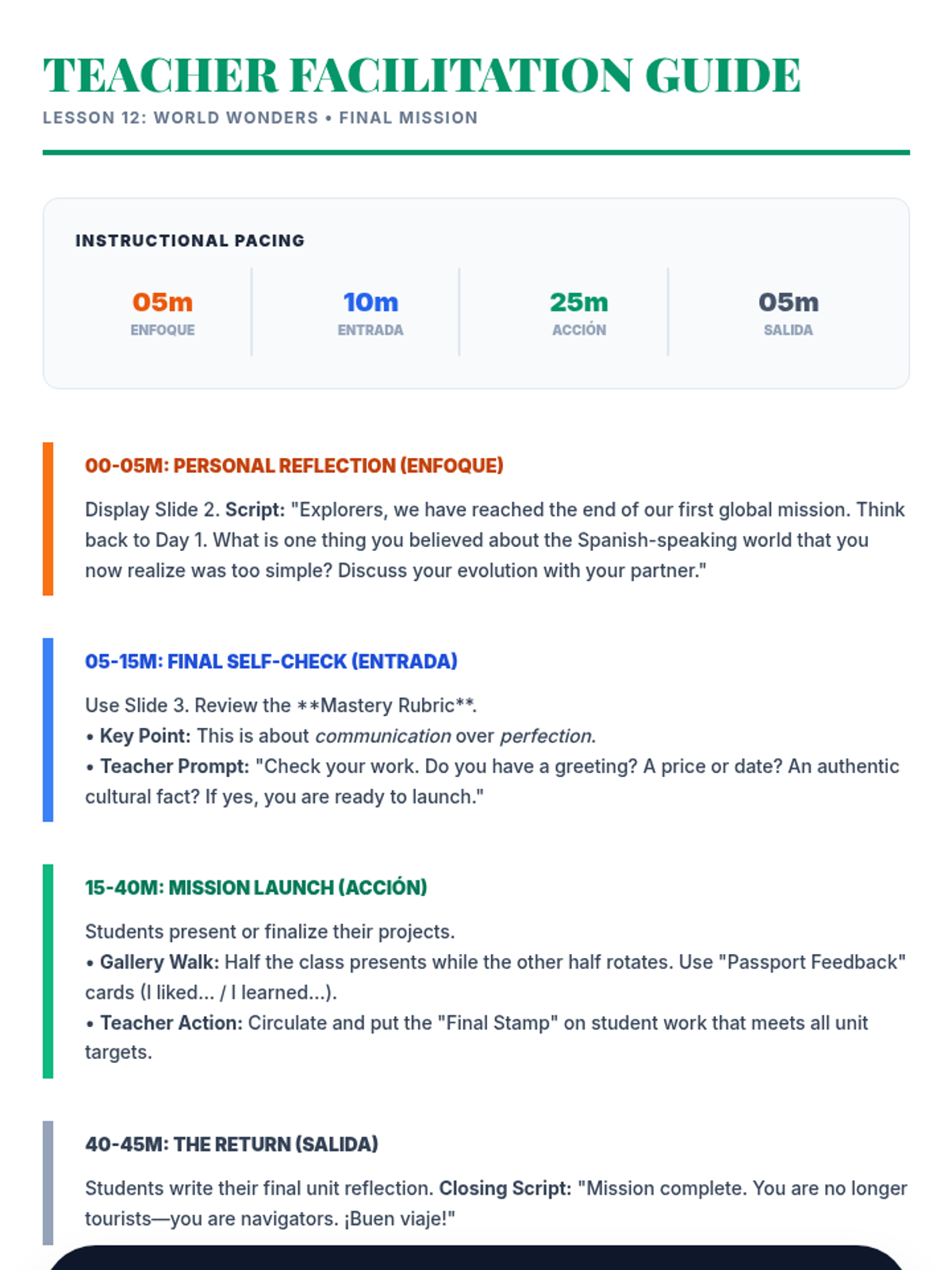
A facilitation guide for Spanish Lesson 12: World Wonders Project, providing pacing, scripts for final reflection, and a gallery walk instructional framework.
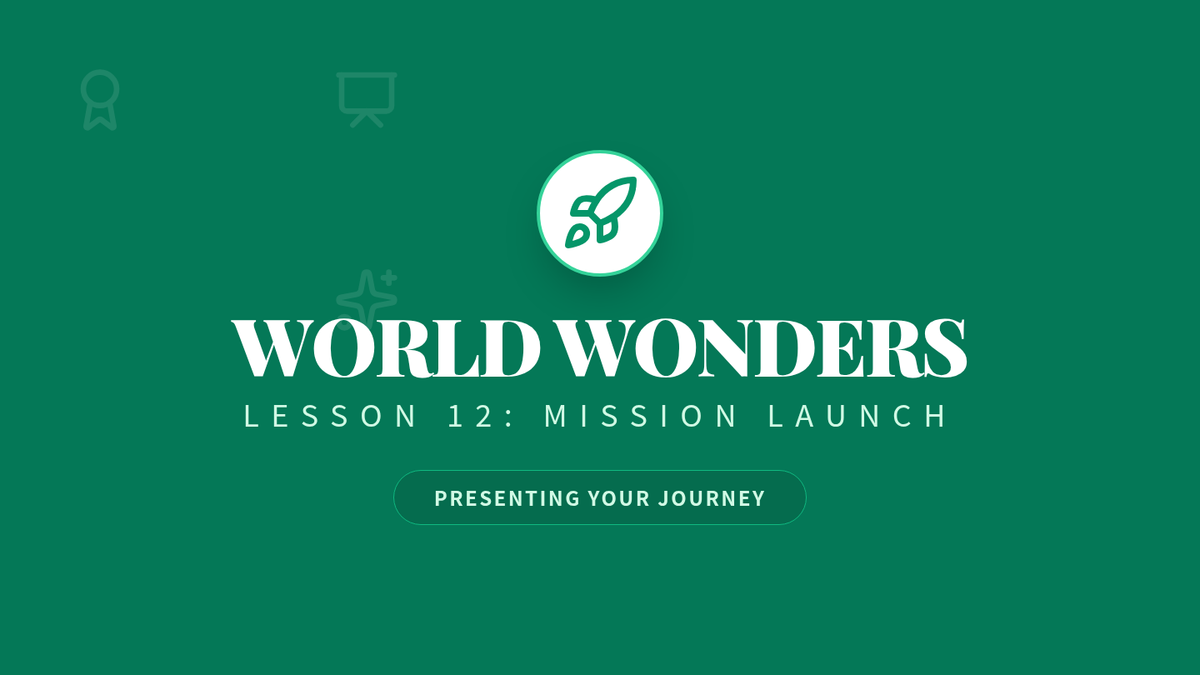
Instructional slides for Spanish Lesson 12: World Wonders Project, focusing on final project synthesis, rubric self-reflection, and celebratory 'Mission Accomplished' wrap-ups.
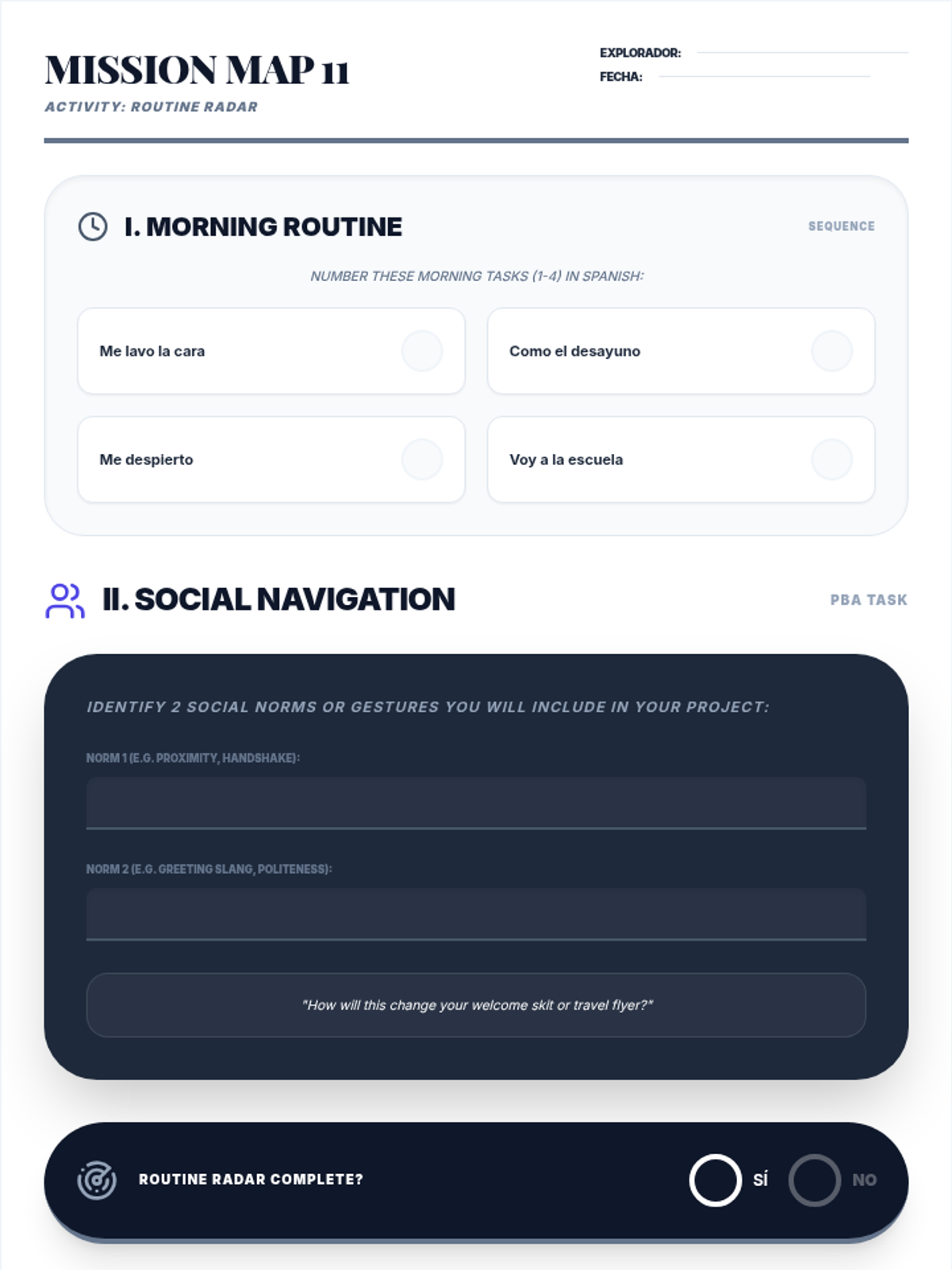
A student activity sheet for Spanish Lesson 11: Routine Radar, featuring a sequence logic task for morning routines and a social norms selection area for final mission projects.
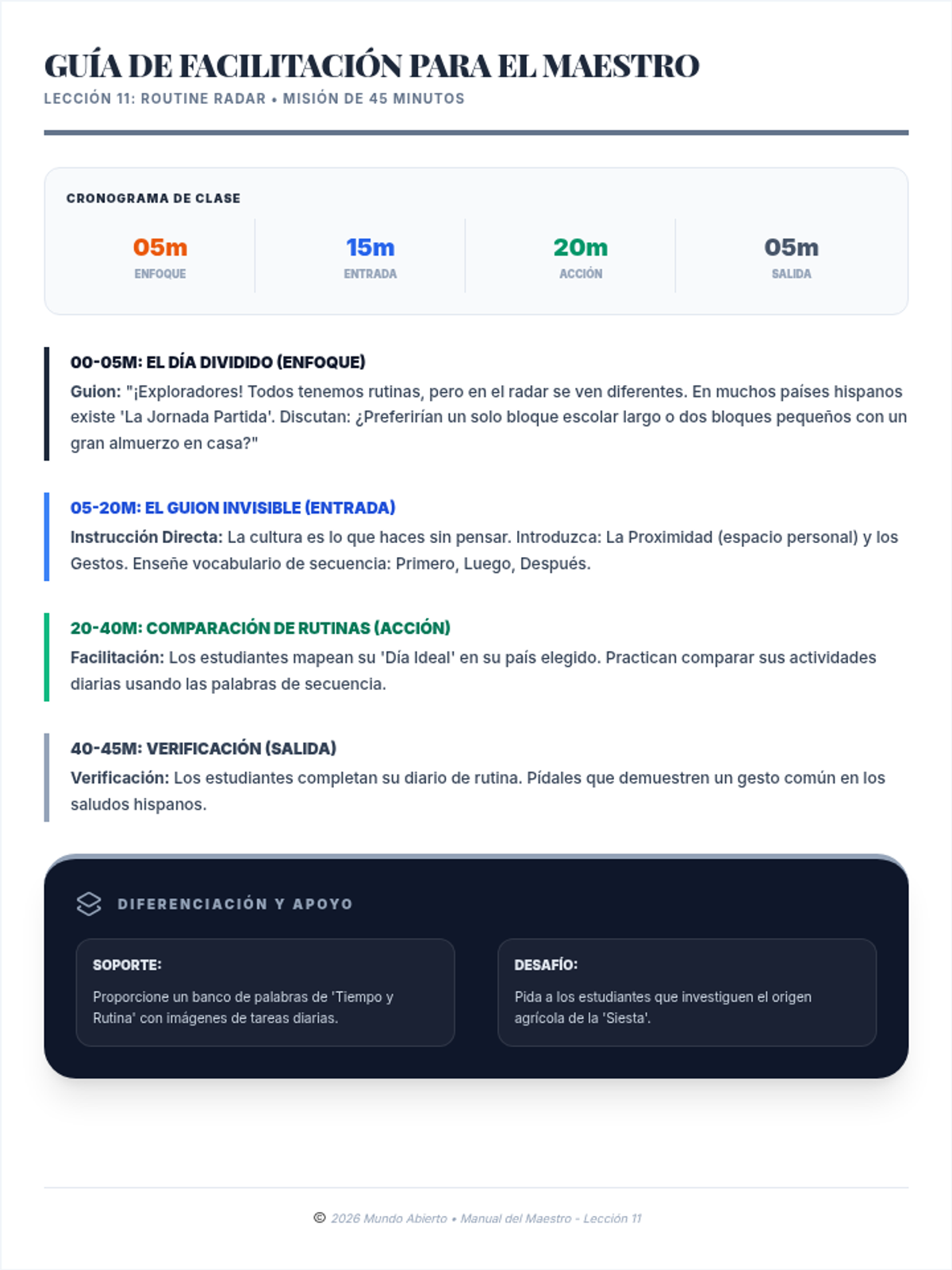
Versión traducida al español de la guía de facilitación para la Lección 11: Routine Radar, enfocada en las rutinas diarias y las normas sociales.
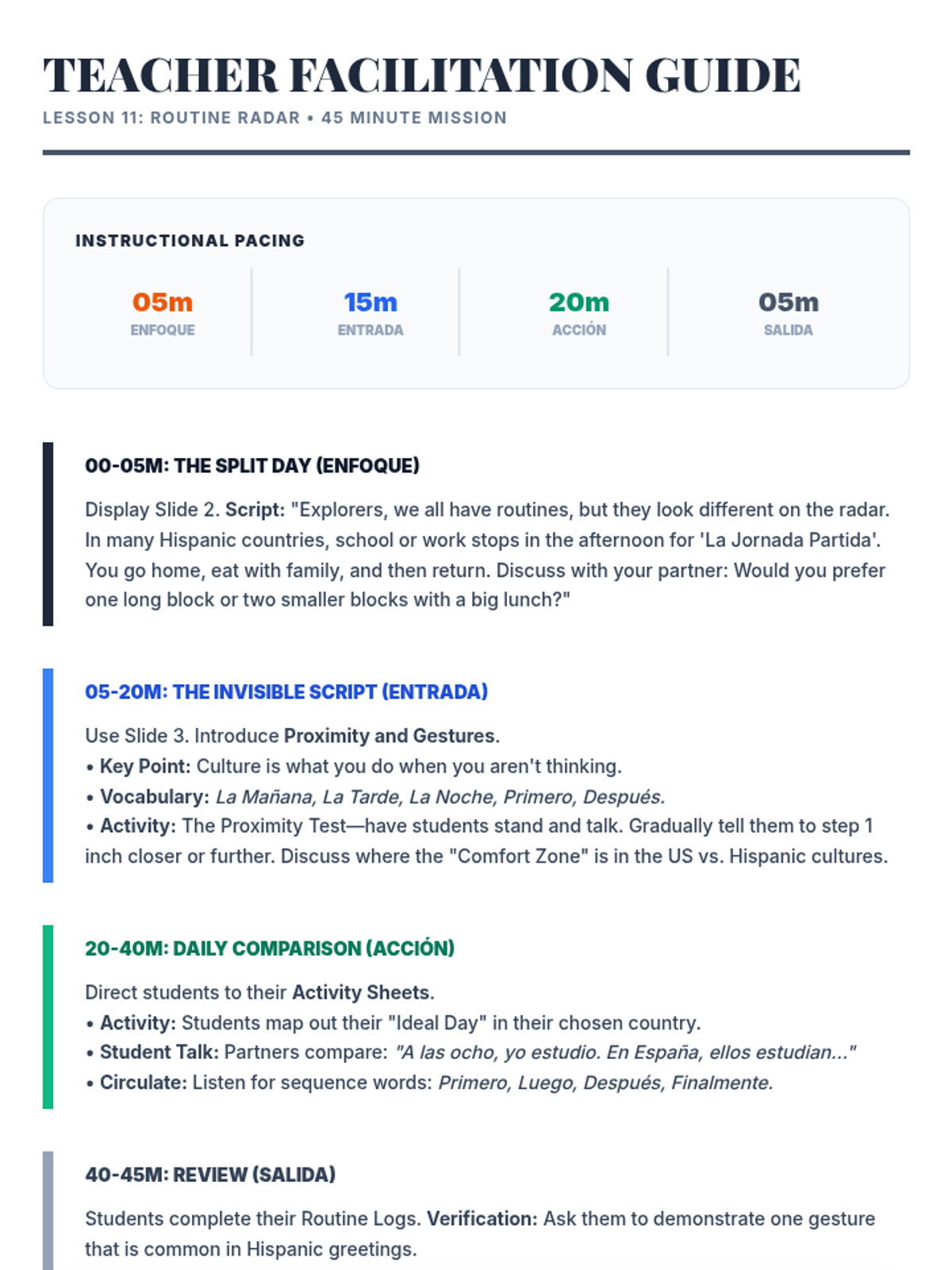
A facilitation guide for Spanish Lesson 11: Routine Radar, focusing on comparative daily routines, school life, and social norms like personal space and proximity.
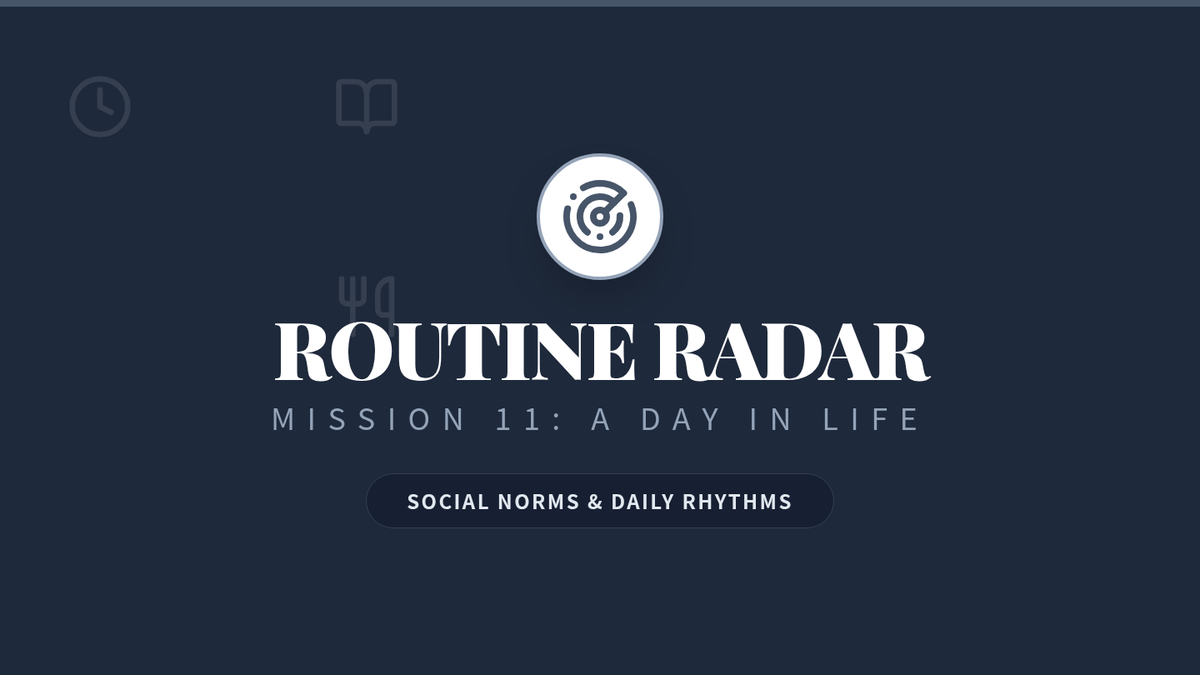
Instructional slides for Spanish Lesson 11: Routine Radar, comparing daily life, school, and social norms (gestures, personal space) across cultures.
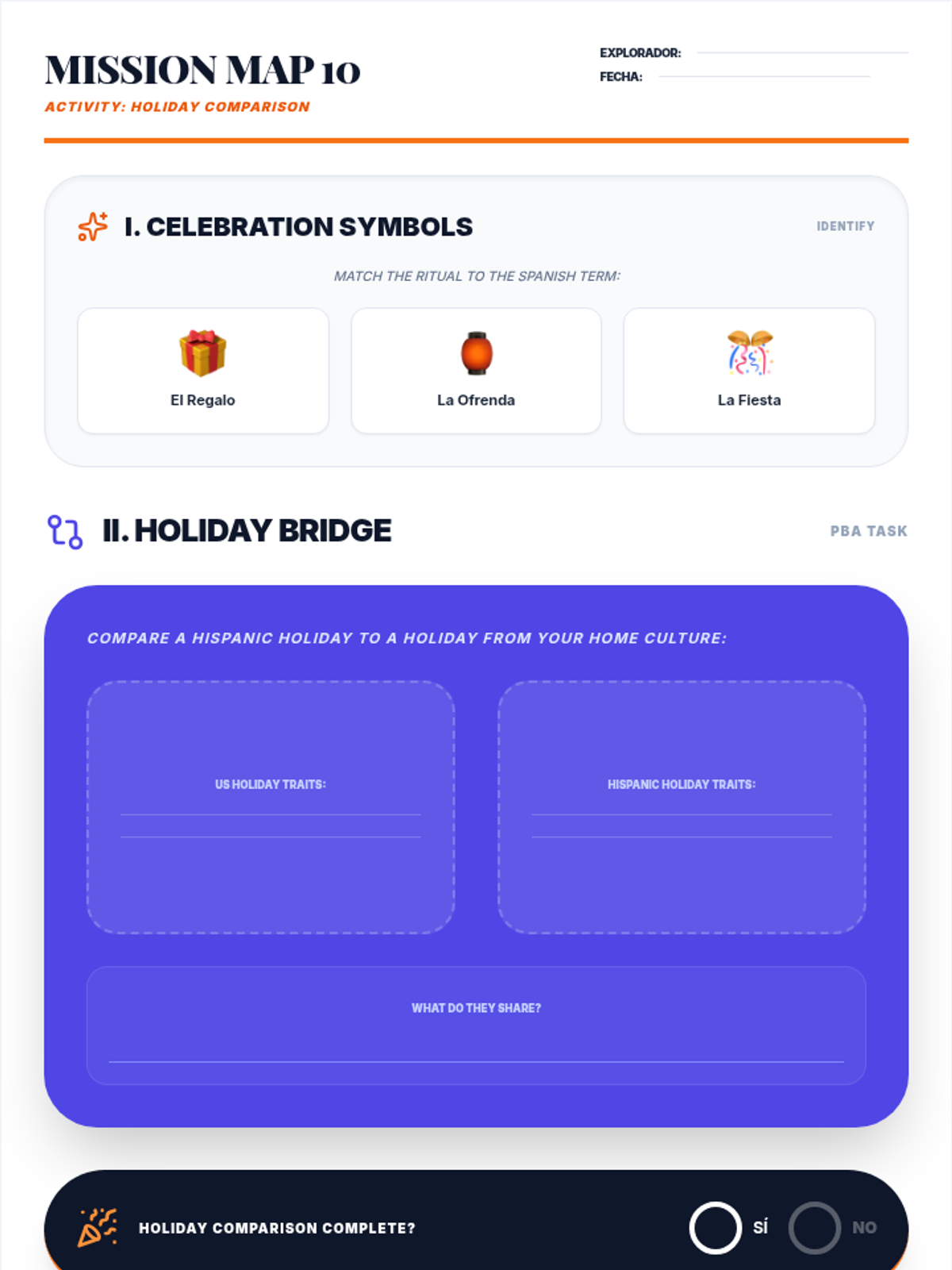
A student activity sheet for Spanish Lesson 10: Fiesta Feast, featuring a holiday symbol identification task and a comparison chart for the final mission project.
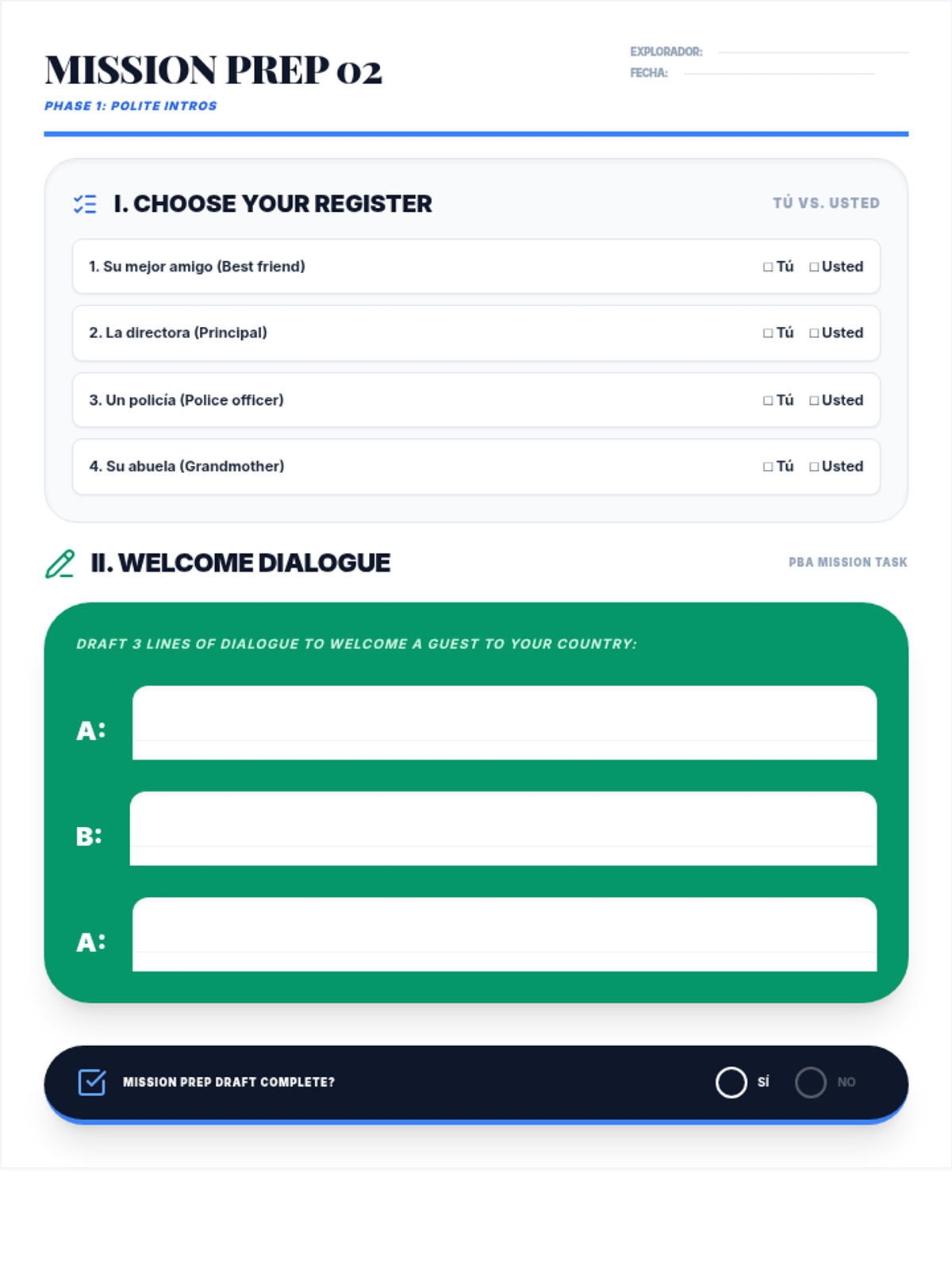
A student activity sheet for Lesson 2: Hola Harmony, featuring a register sorting task (Tú vs. Usted) and a PBA-aligned dialogue drafting section with ample writing space. Revised for better contrast, baseline guidelines, and single-page layout.
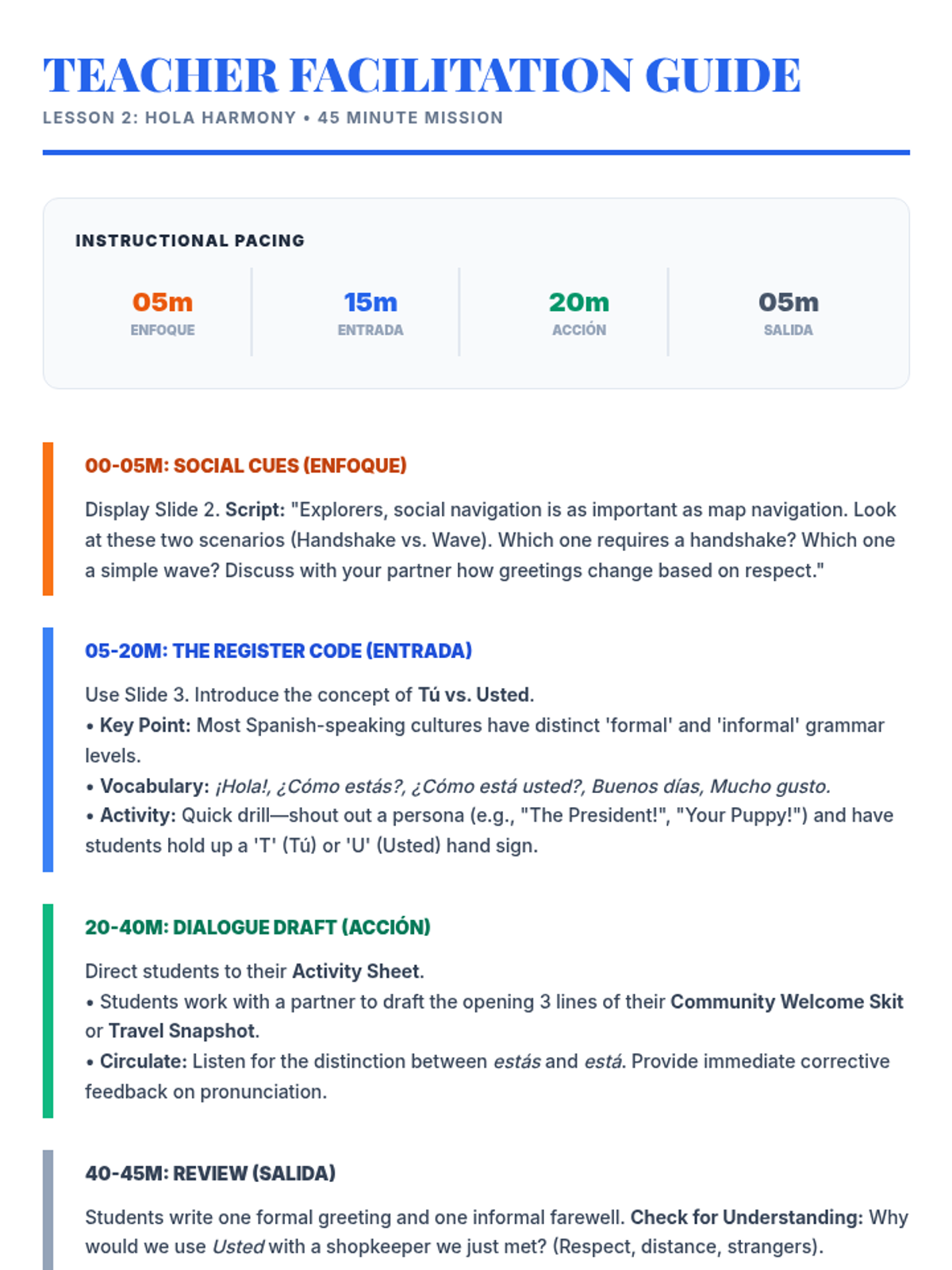
A step-by-step facilitation guide for Lesson 2: Hola Harmony, providing teacher scripts, register-switch activities (Tú vs. Usted), and PBA-aligned dialogue drafting steps. Revised for better page flow and content clarity.
Instructional slides for Lesson 2: Hola Harmony, covering formal and informal greetings (Tú vs. Usted) and a dialogue scripting activity tied to the final project assessments.
Instructional slides for Lesson 1: Map Masters, covering the distribution of the 21 Spanish-speaking countries and a photo analysis activity tied to the final project missions. Now featuring a map overview and improved student prompts. Re-ordered and fixed layout for viewport fitting.
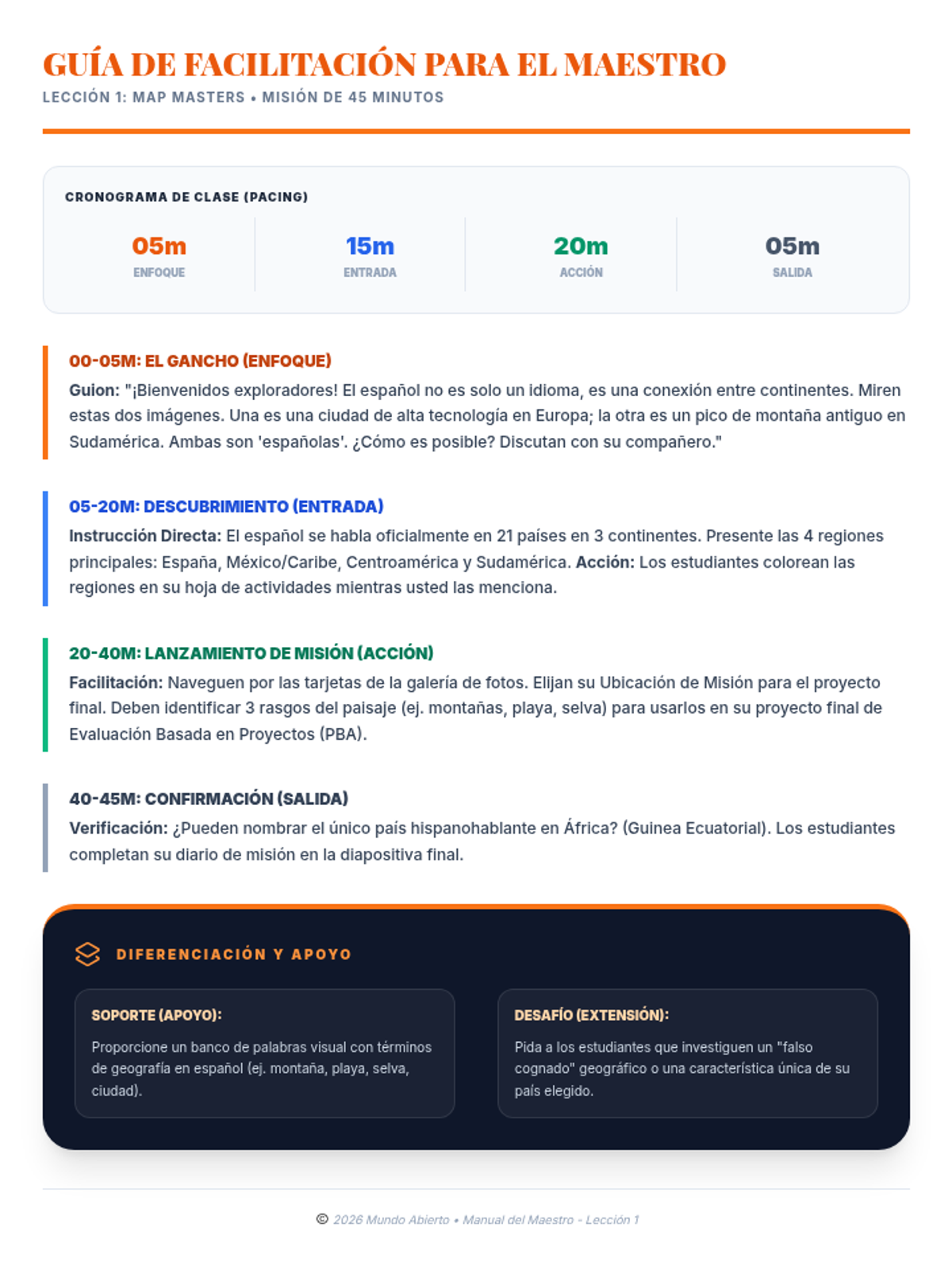
Guía de facilitación en español para la Lección 1: Map Masters, con guiones instruccionales, tiempos sugeridos y estrategias de diferenciación. Traducida completamente al español para el maestro.
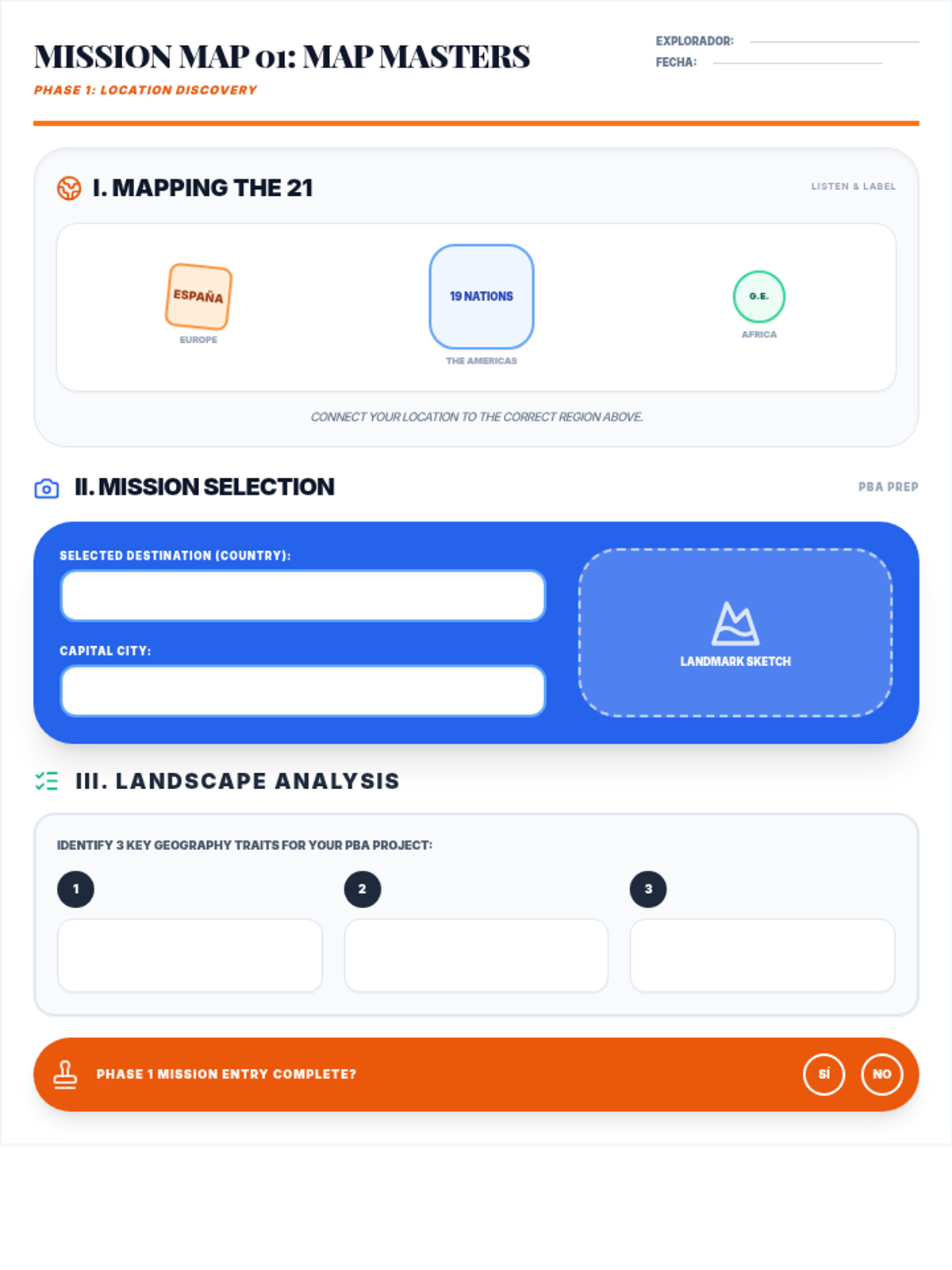
A revised student activity sheet for Lesson 1: Map Masters, featuring map labeling tasks, country selection for the project mission, and landscape analysis drafting. Now consolidated for a single-page layout with improved work areas.
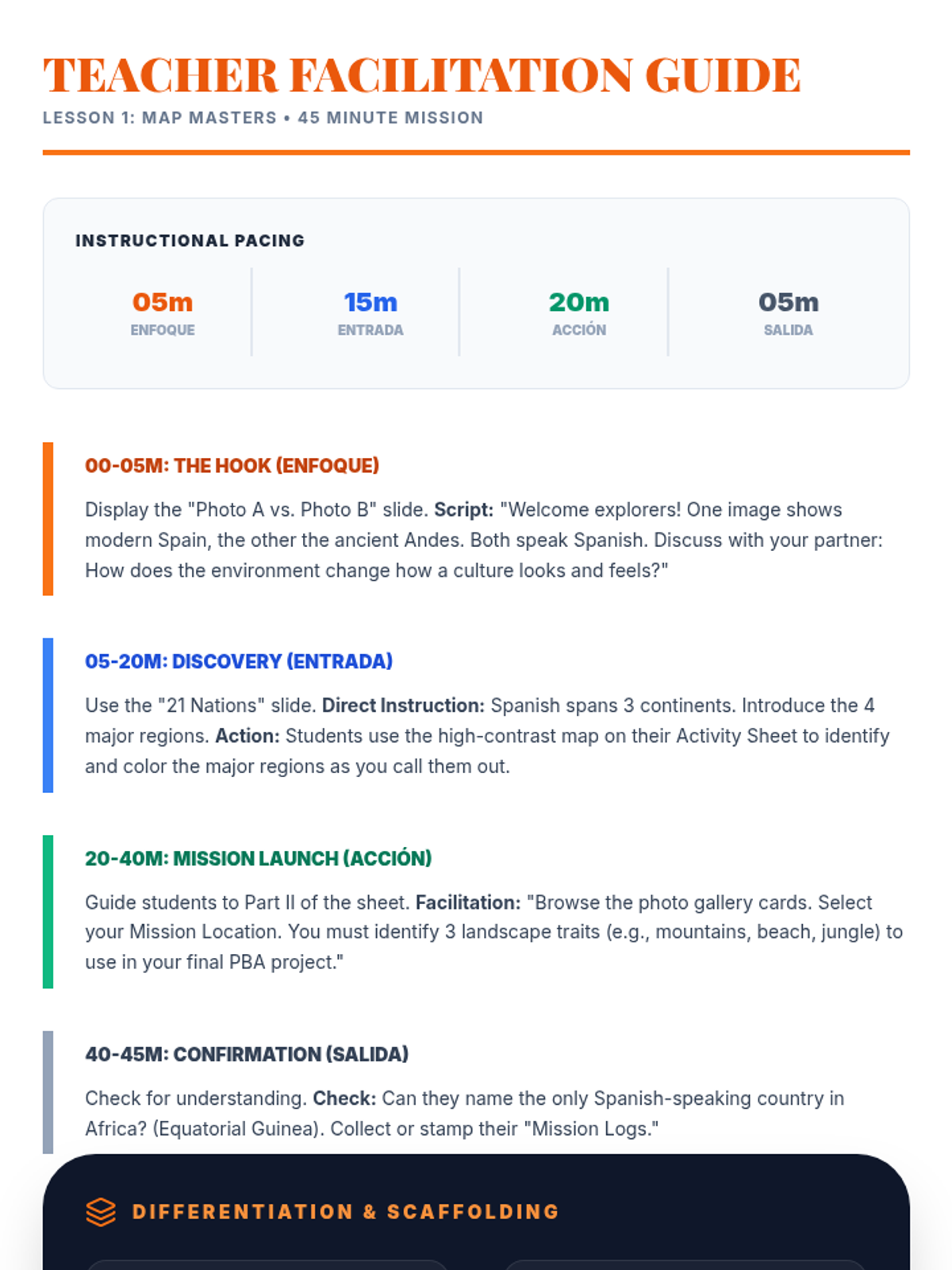
A revised teacher facilitation guide for Lesson 1: Map Masters, featuring improved text sizes, bold instructional scripts, and fixed page breaks for the differentiation section.
Instructional slides for Lesson 1: Map Masters, covering the distribution of the 21 Spanish-speaking countries and a photo analysis activity tied to the final project missions. Now featuring a map overview and improved student prompts.
Versión traducida al español de las diapositivas de introducción al proyecto, que describe las opciones de evaluación auténtica y las habilidades lingüísticas requeridas.
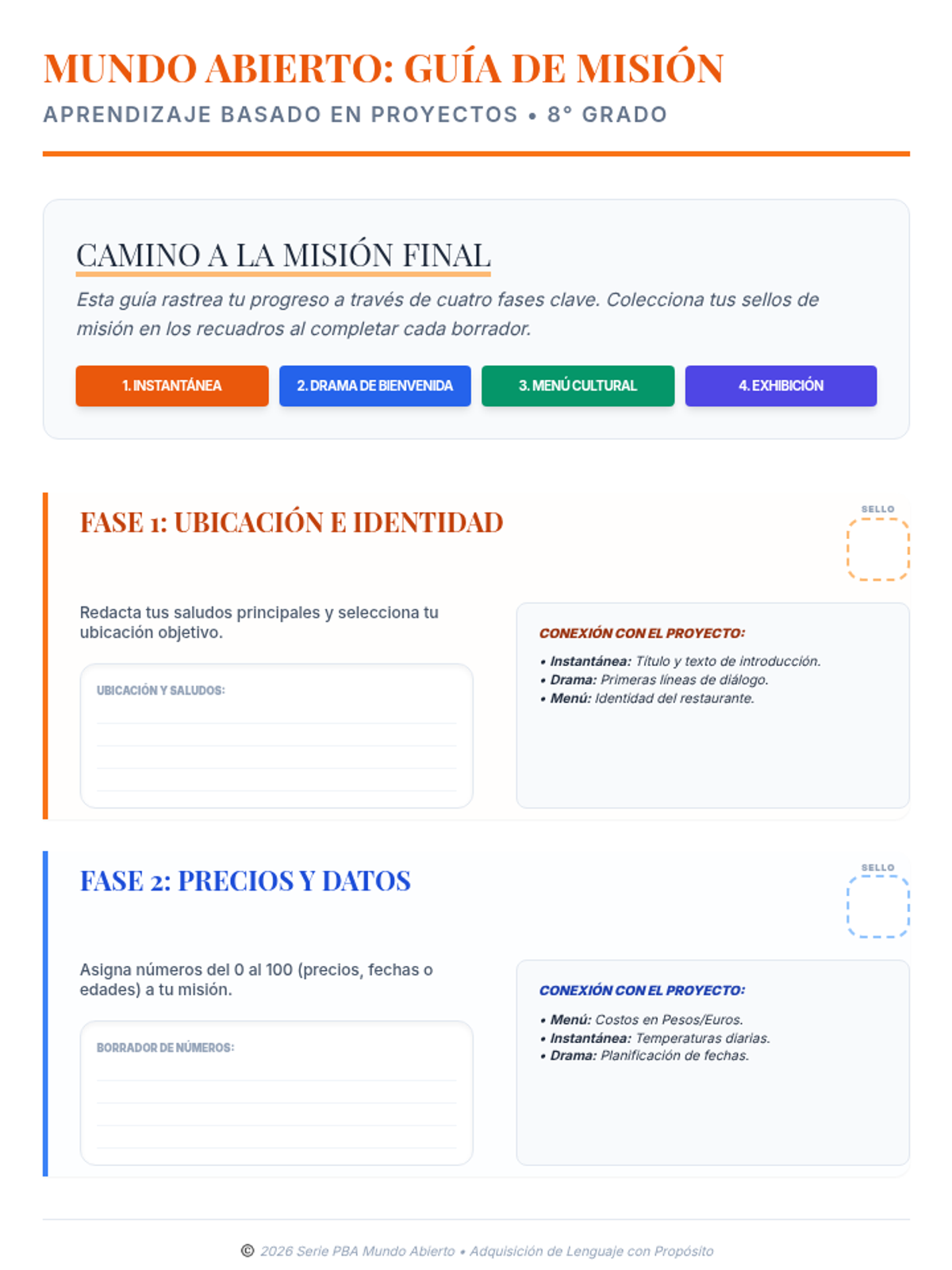
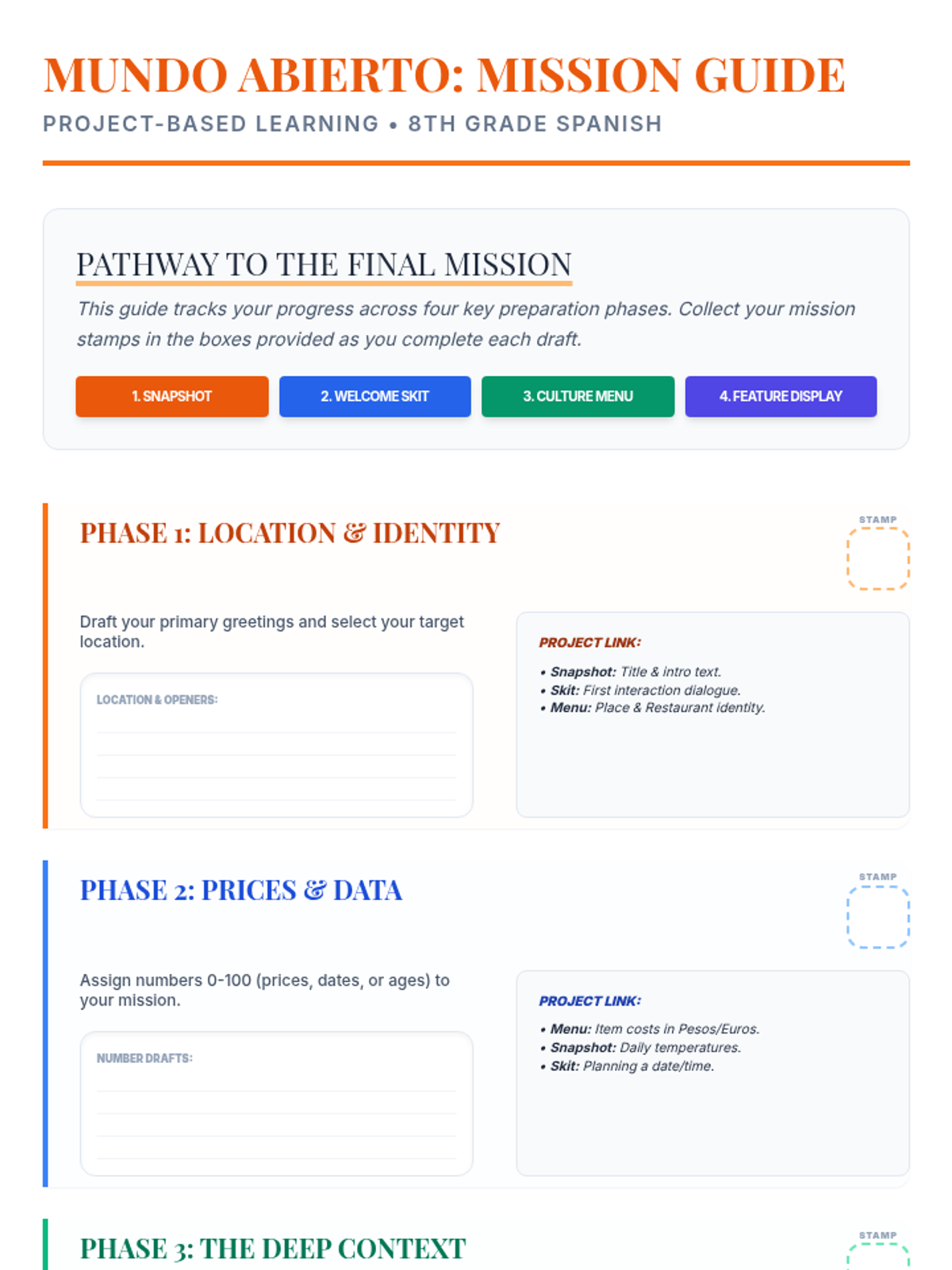
Versión traducida al español de la guía de misión para estudiantes, alineada con las evaluaciones basadas en proyectos. Incluye áreas de borrador y espacios para sellos de progreso.
A project introduction slide deck for 8th-grade Spanish, clearly outlining the four mission pathways (Travel Snapshot, Welcome Skit, Food Menu, and Culture Display) and their required skills. Now featuring improved visibility and complete content rendering.
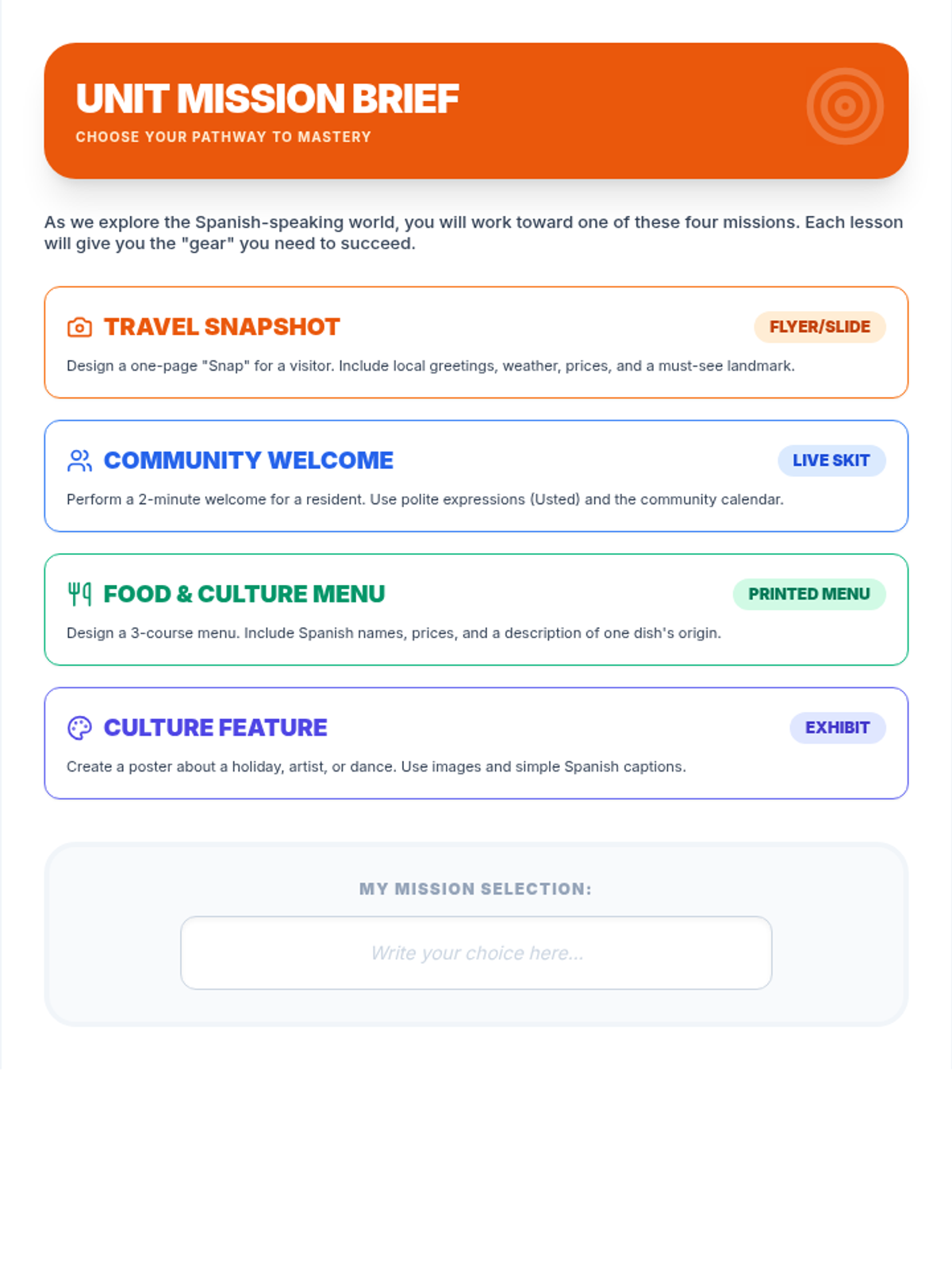
A revised student-facing 'Mission Brief' document explaining the four project-based assessment options. Features darkened text for contrast, fixed page breaks, and a printer-friendly selection box.
A revised lesson plan guide for the 'Mundo Abierto' Spanish unit, specifically mapped to four project-based assessments: Travel Snapshot, Welcome Skit, Culture Menu, and Feature Display. Now includes drafting areas and stamp check-offs.
A procedure-focused slide deck for world language classrooms, explaining the color-coded unit routines (Enfoque, Entrada, Acción, Salida) and workbook expectations.
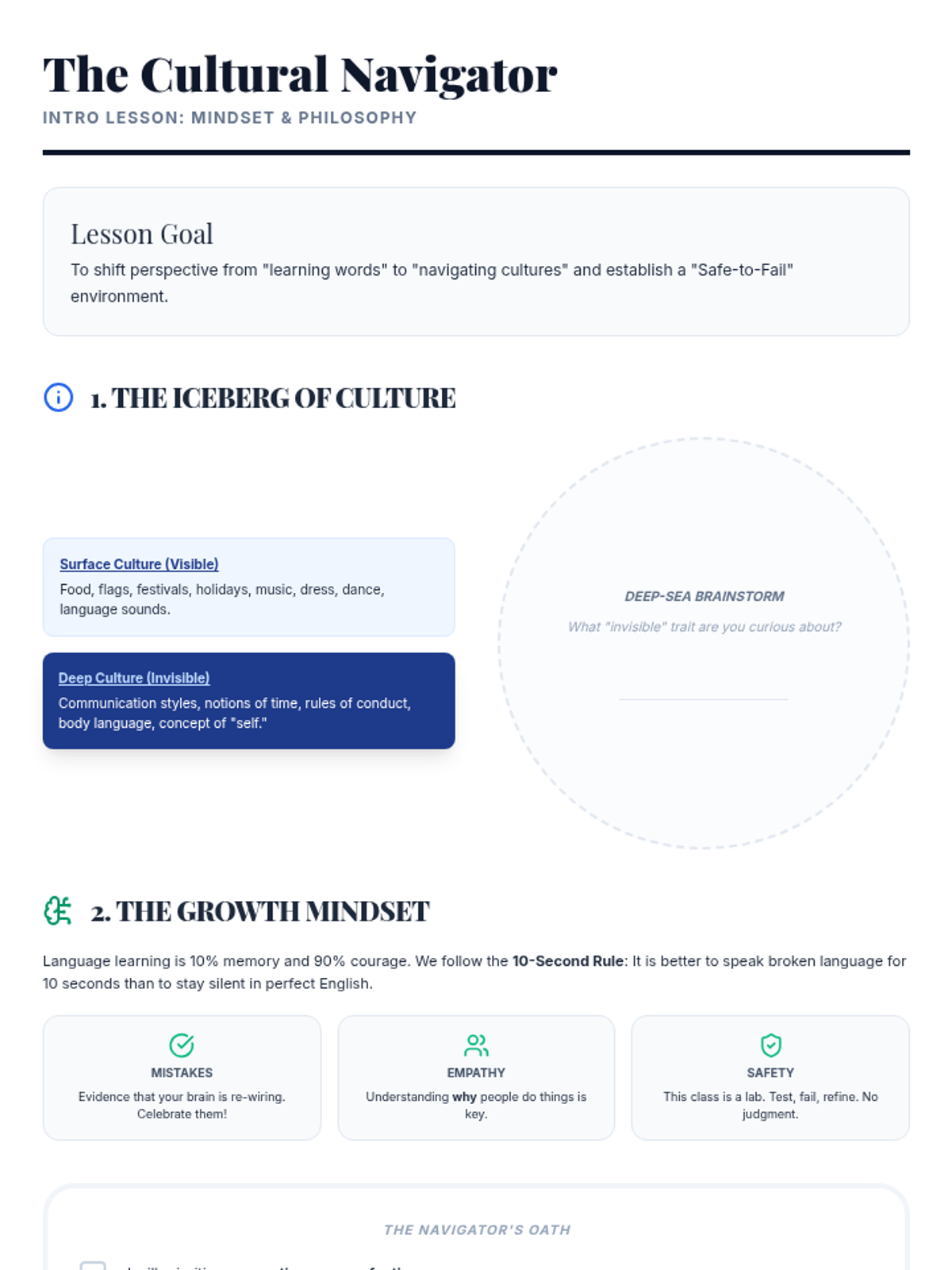
A revised introductory lesson document focused on the philosophy of language learning, featuring the 'Culture Iceberg', growth mindset principles, and the Navigator's Oath on a single, polished page.
日本語に翻訳された「世界の発見」プレゼンテーションスライド。タイトル、地理データ、文字体系の解説、最終プロジェクトの要件を日本語で提供します。さらに、挨拶とお辞儀の作法、食文化(和食)のセクションを追加しました。
Deutsche Version der Präsentationsfolien für Weltweite Wunder, mit Titeln, geografischen Fakten und Projektanforderungen in deutscher Sprache.
Versión traducida al español de la presentación visual para la unidad Mundo Abierto, con títulos y conceptos clave en español para inmersión en el aula. Ahora con el nombre del proyecto corregido y mayor contraste visual.
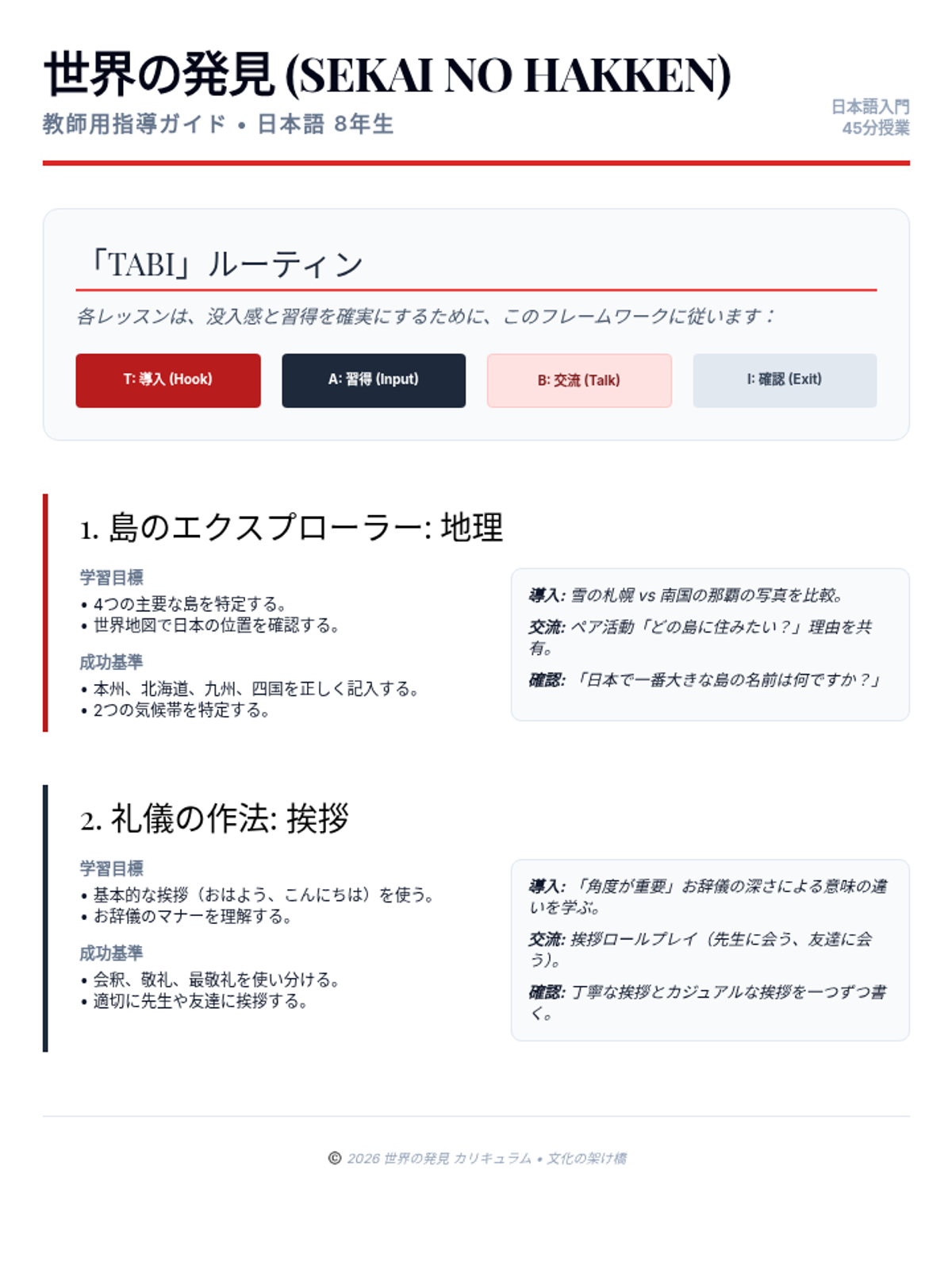
日本語に翻訳された教師用指導ガイド。「世界の発見」ユニットの学習目標、成功基準、およびTABIルーティンを詳しく説明しています。ページ割りを最適化し、全12レッスンを網羅しました。
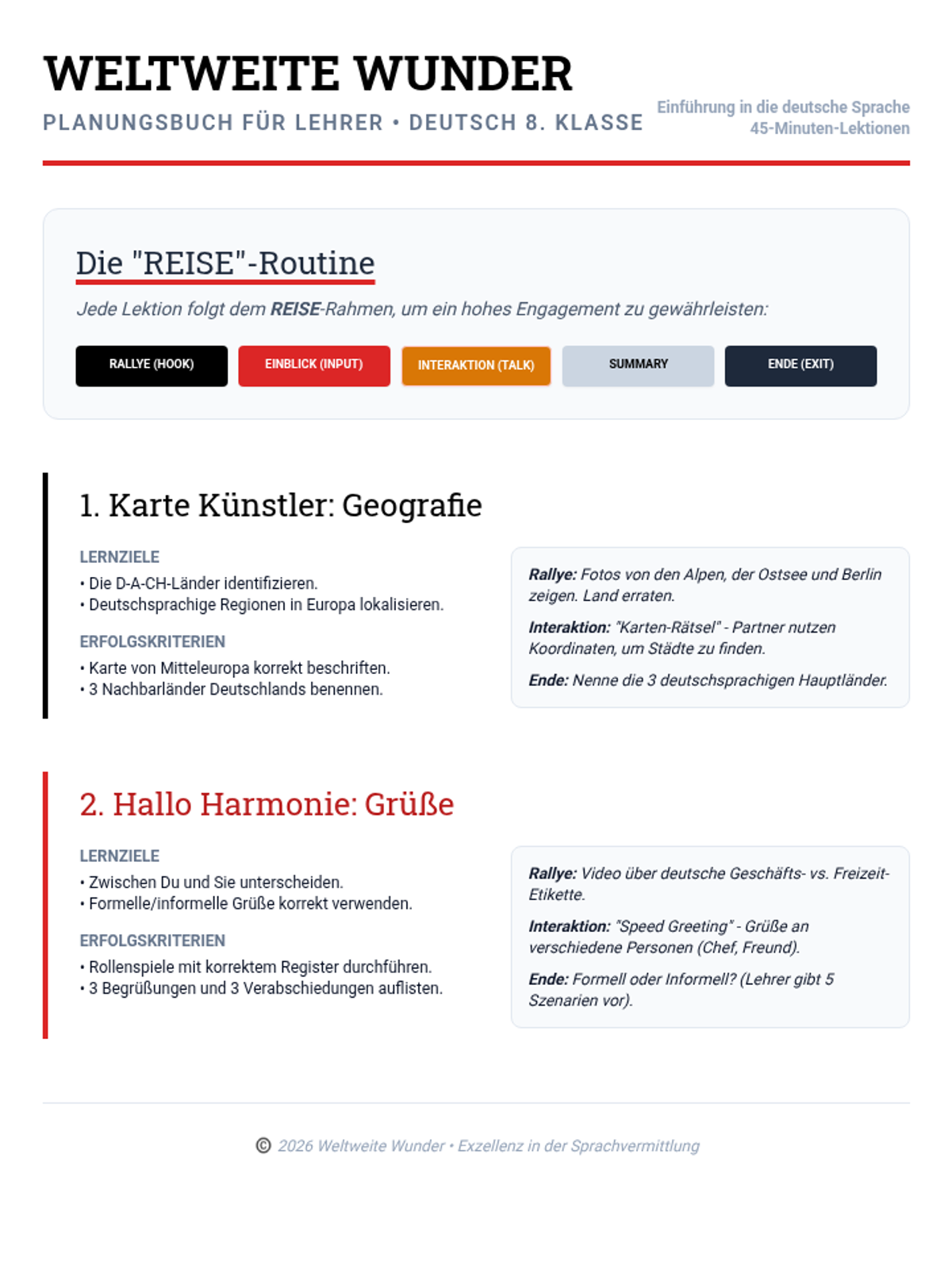
Deutsche Übersetzung des Lehrer-Planungsbuchs für die Einheit 'Weltweite Wunder', inklusive Lernzielen, Erfolgskriterien und der REISE-Routine.
A vibrant, high-impact welcome poster for an EL (English Learners) classroom door. Features multilingual "Hello" greetings, a diverse set of flags, and the quote "Many Languages, One Community." Includes designated spaces for teacher name and room number.
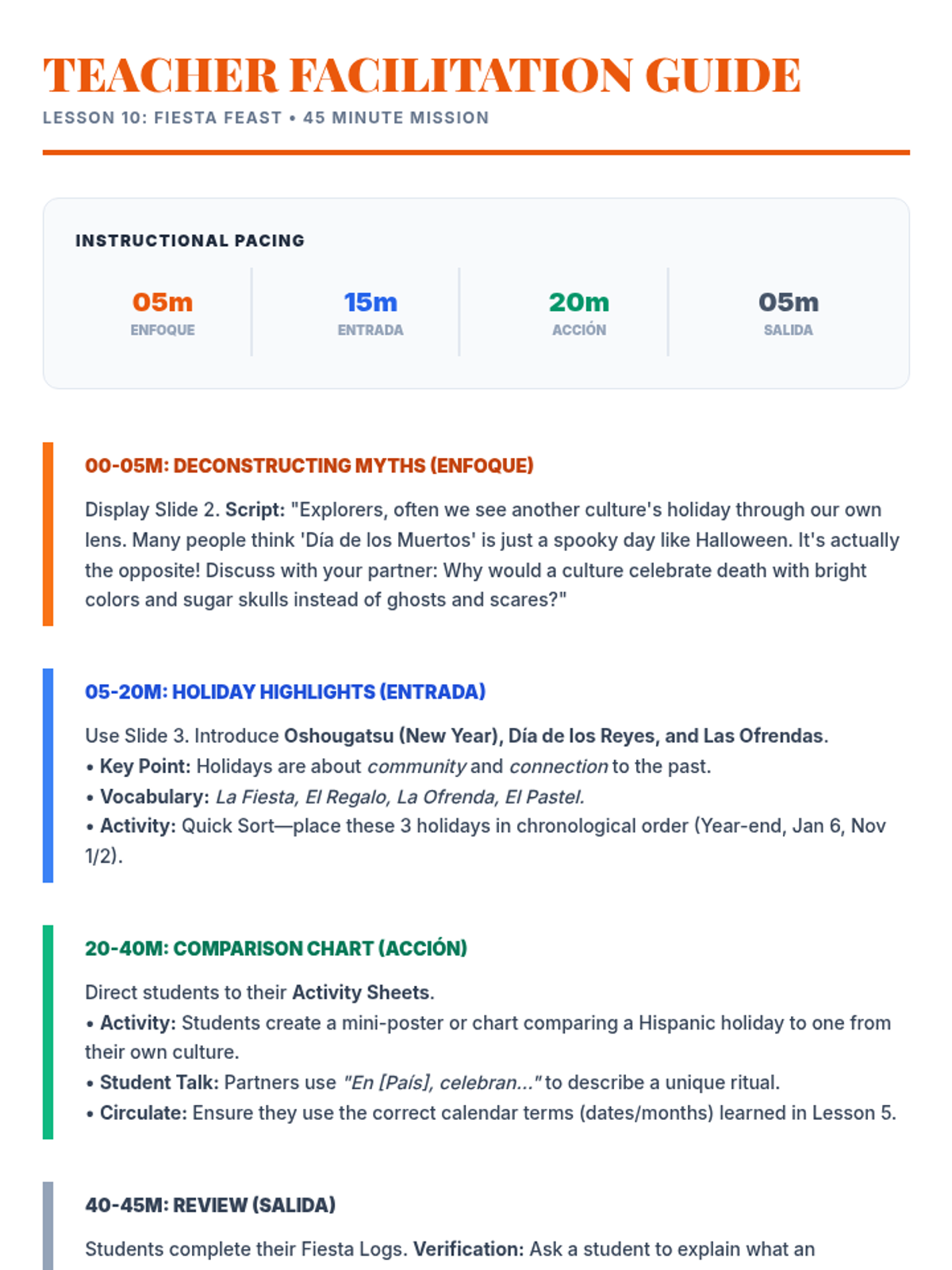
Versión traducida al español de la guía de facilitación para la Lección 10: Fiesta Feast, centrada en las tradiciones festivas y la comparación cultural.
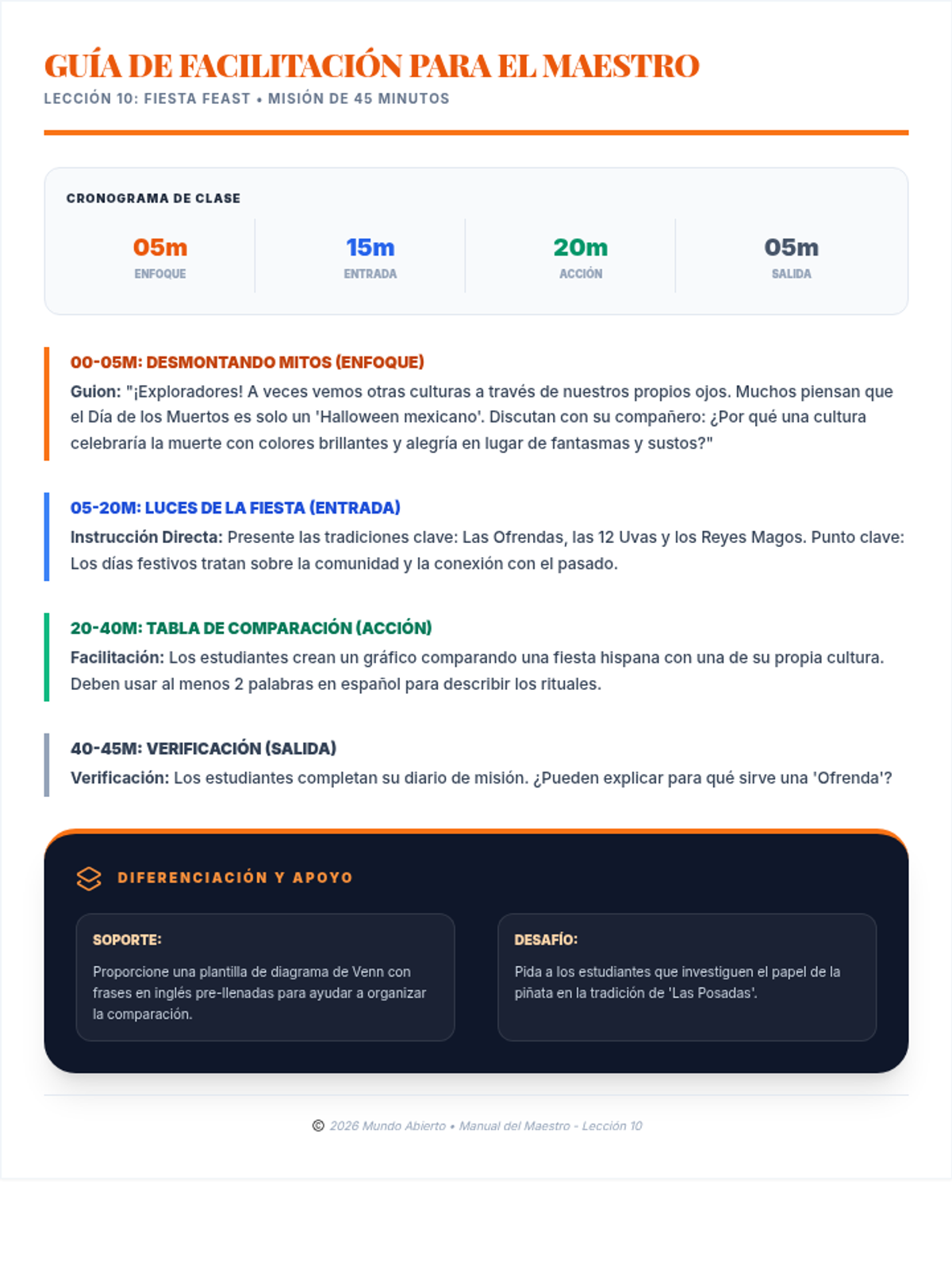
A facilitation guide for Spanish Lesson 10: Fiesta Feast, providing pacing, scripts for deconstructing cultural myths, and holiday comparison activities.
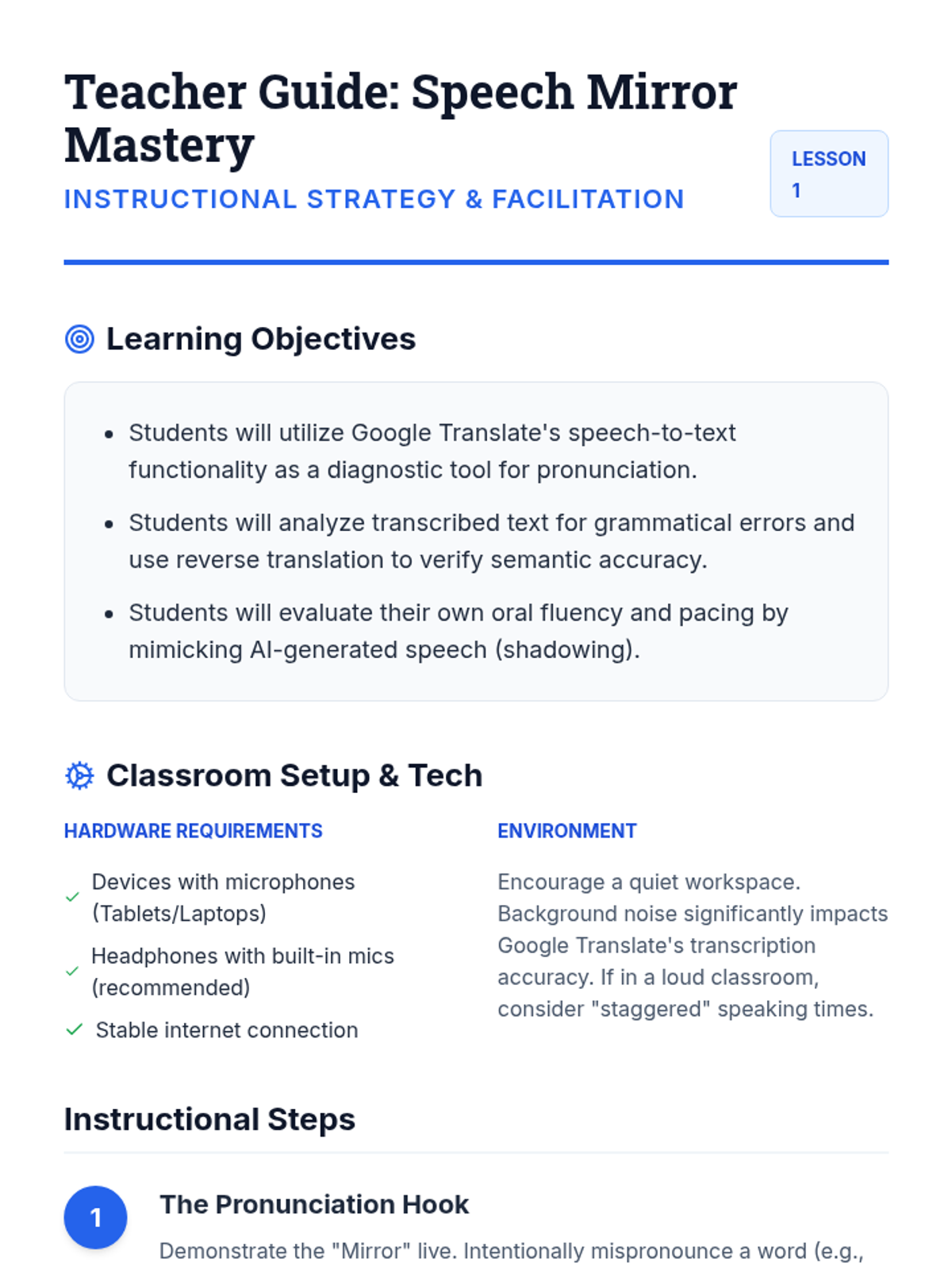
A comprehensive teacher guide for facilitating the 'Speech Mirror' activity. Includes instructional strategies, tech requirements, common pitfalls, and assessment criteria.
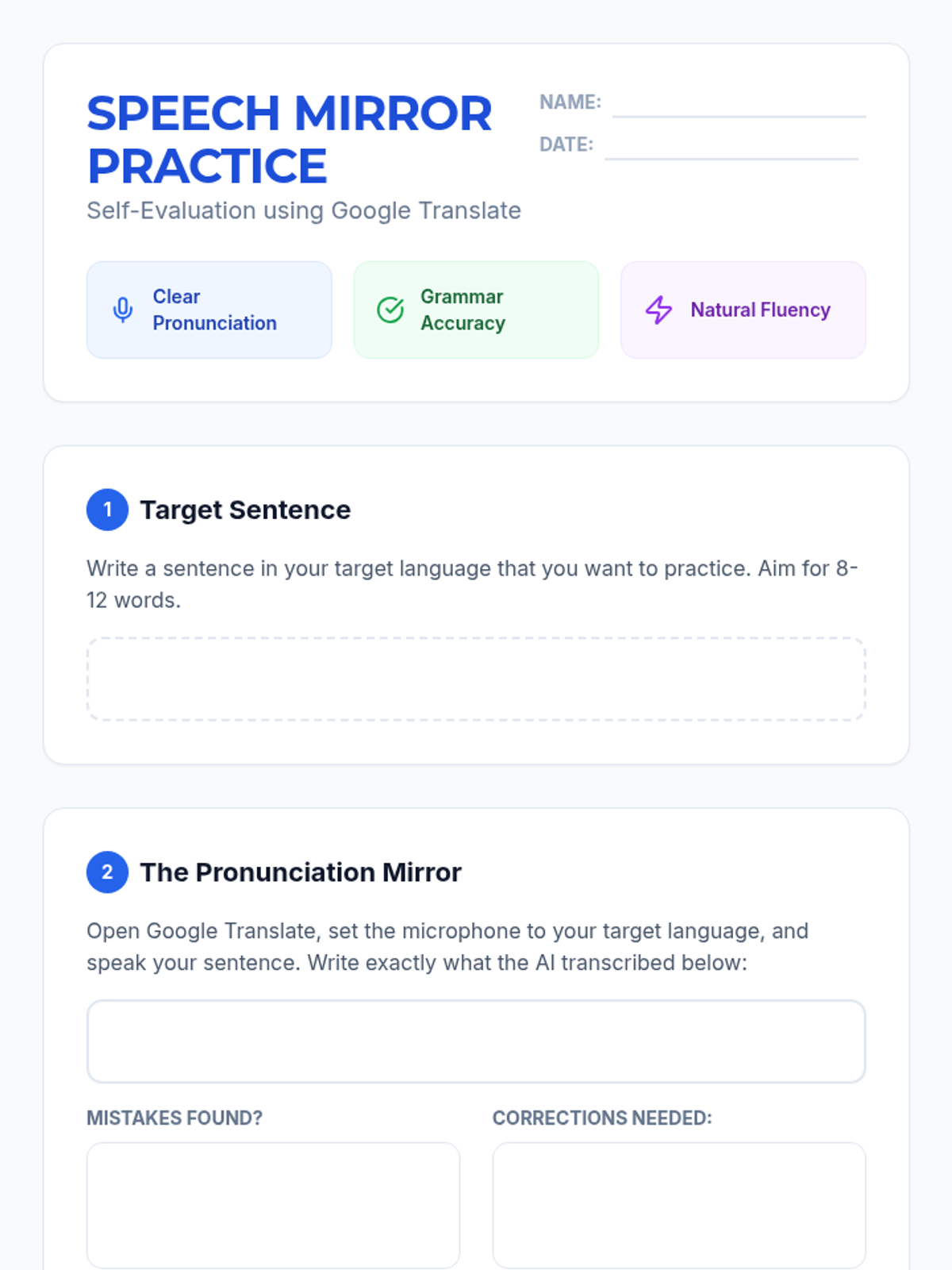
A step-by-step activity sheet for students to practice using Google Translate as a speech mirror. Includes sections for transcription review, grammar check, and fluency challenges. Updated for better handwriting legibility.
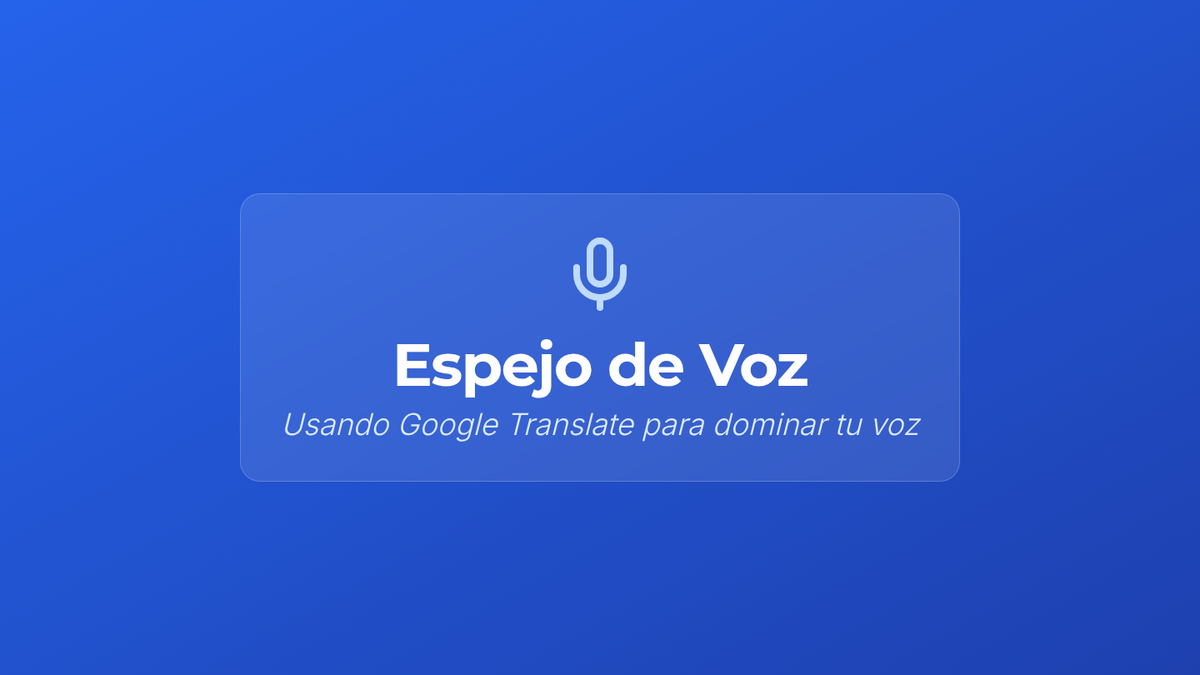
A visual presentation explaining the 'Speech Mirror' technique. It provides a tutorial on using Google Translate's voice features to assess pronunciation, grammar, and fluency. Updated with larger text for accessibility.
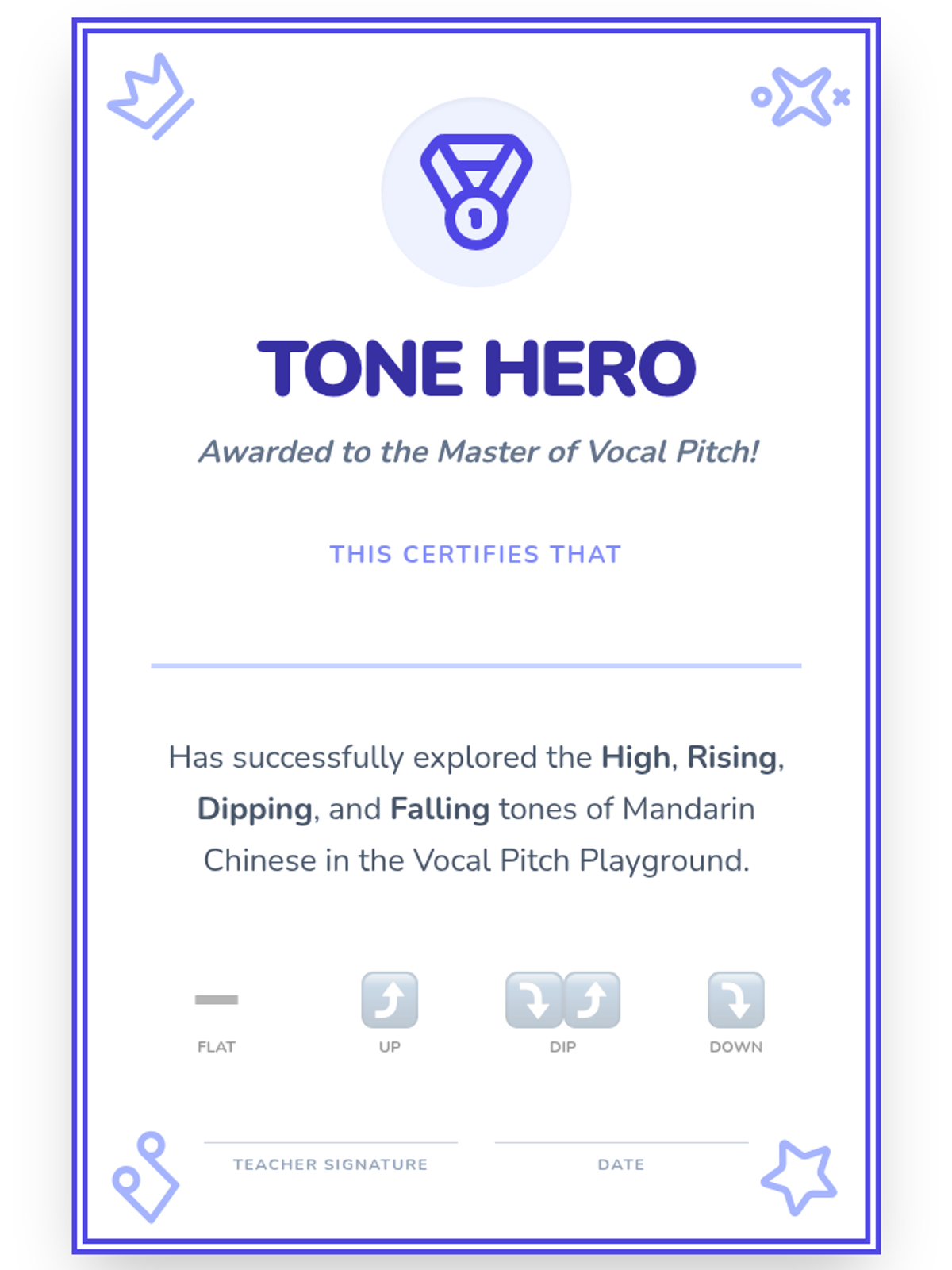
A celebratory completion certificate for Pre-K students who have finished the Vocal Pitch Playground sequence on Mandarin tones.
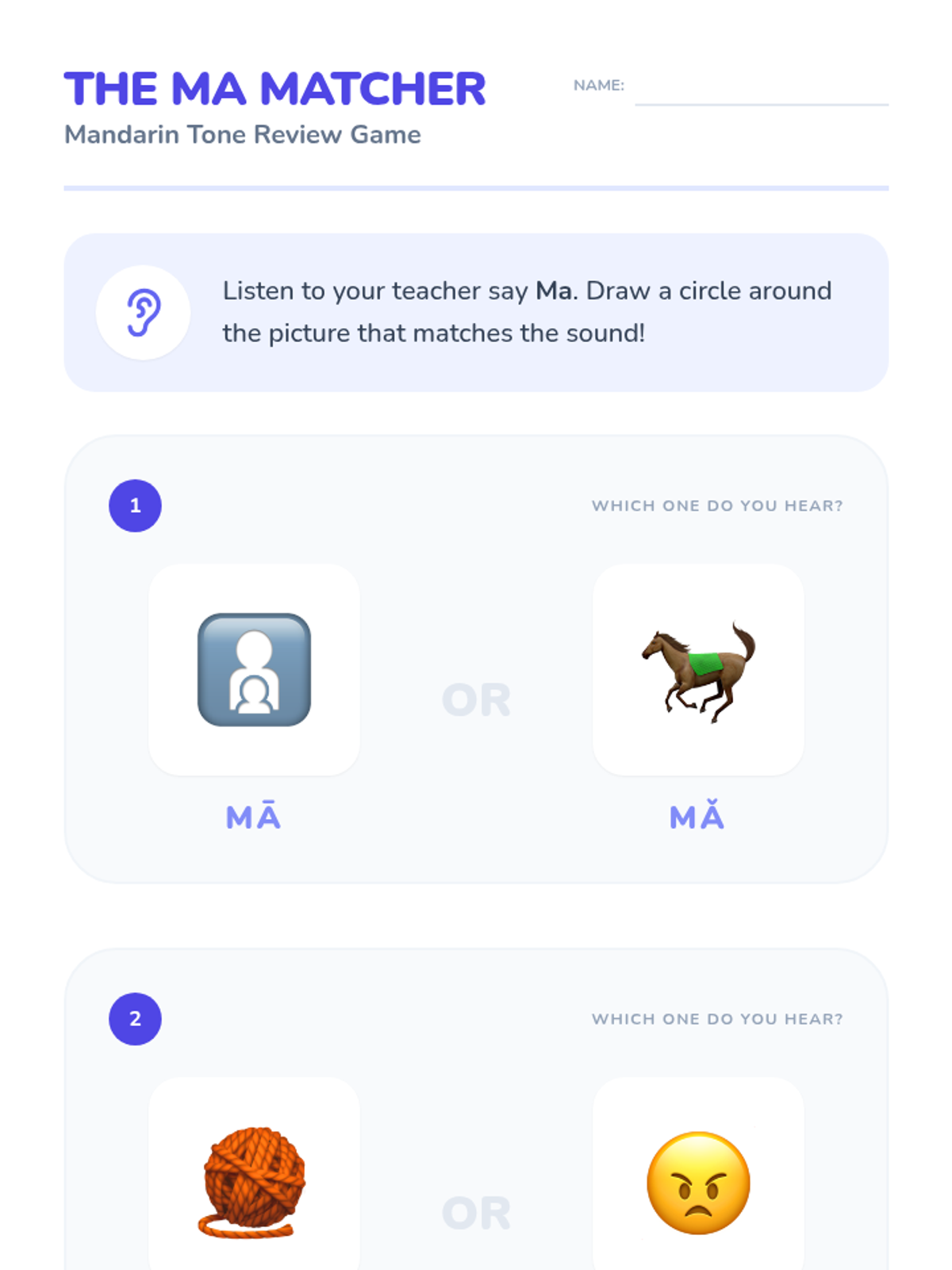
A listening assessment worksheet for Pre-K students to distinguish between the four tones of 'ma' by circling the corresponding visual image.
Synthesis slides comparing all 4 Mandarin tones using the 'ma' syllable. Features listening challenges and visual guides to help Pre-K students distinguish between mother, horse, hemp, and scold.
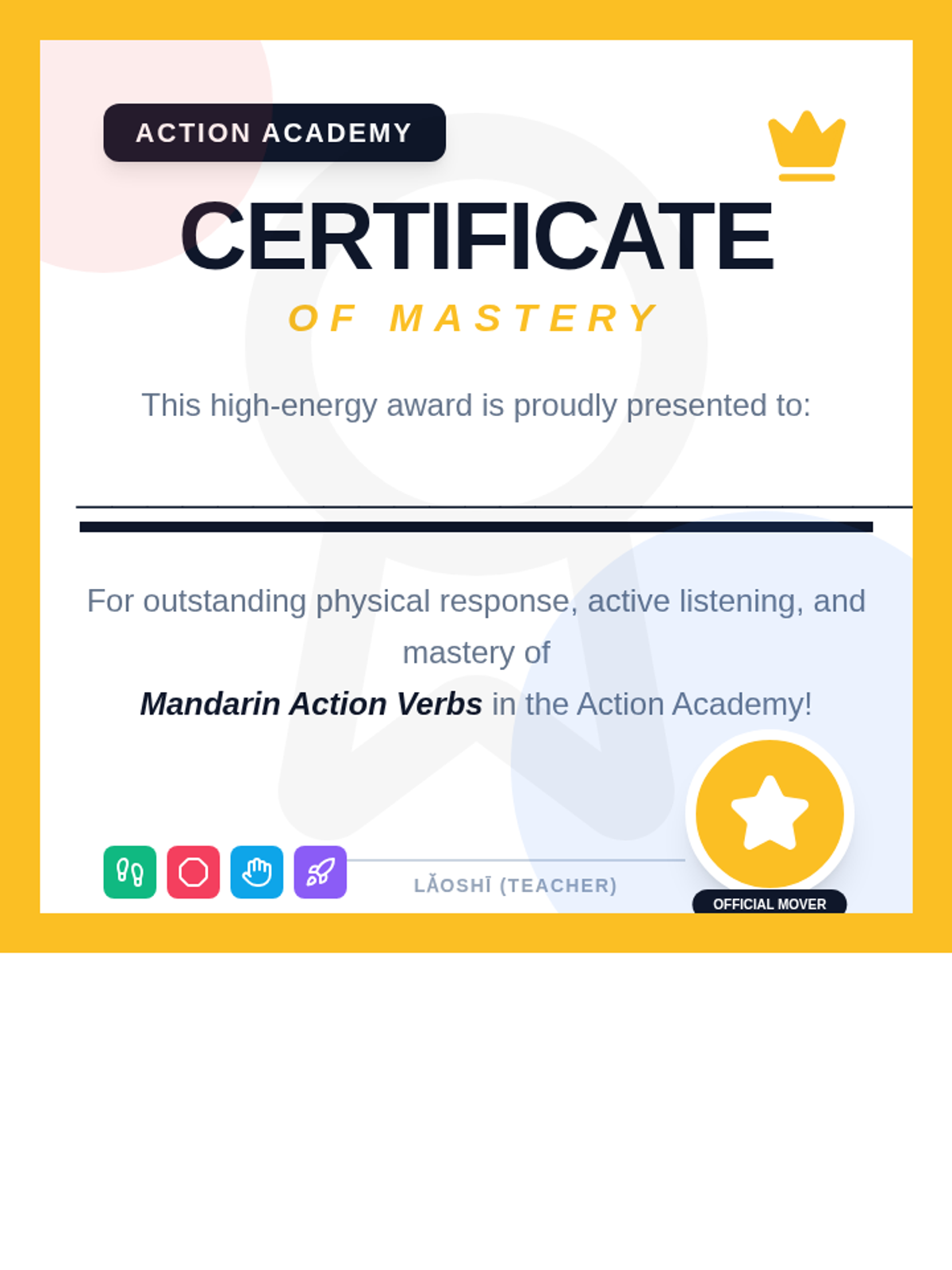
A high-energy mastery certificate for students who complete the Action Academy Mandarin sequence, featuring pinyin verbs and icons.
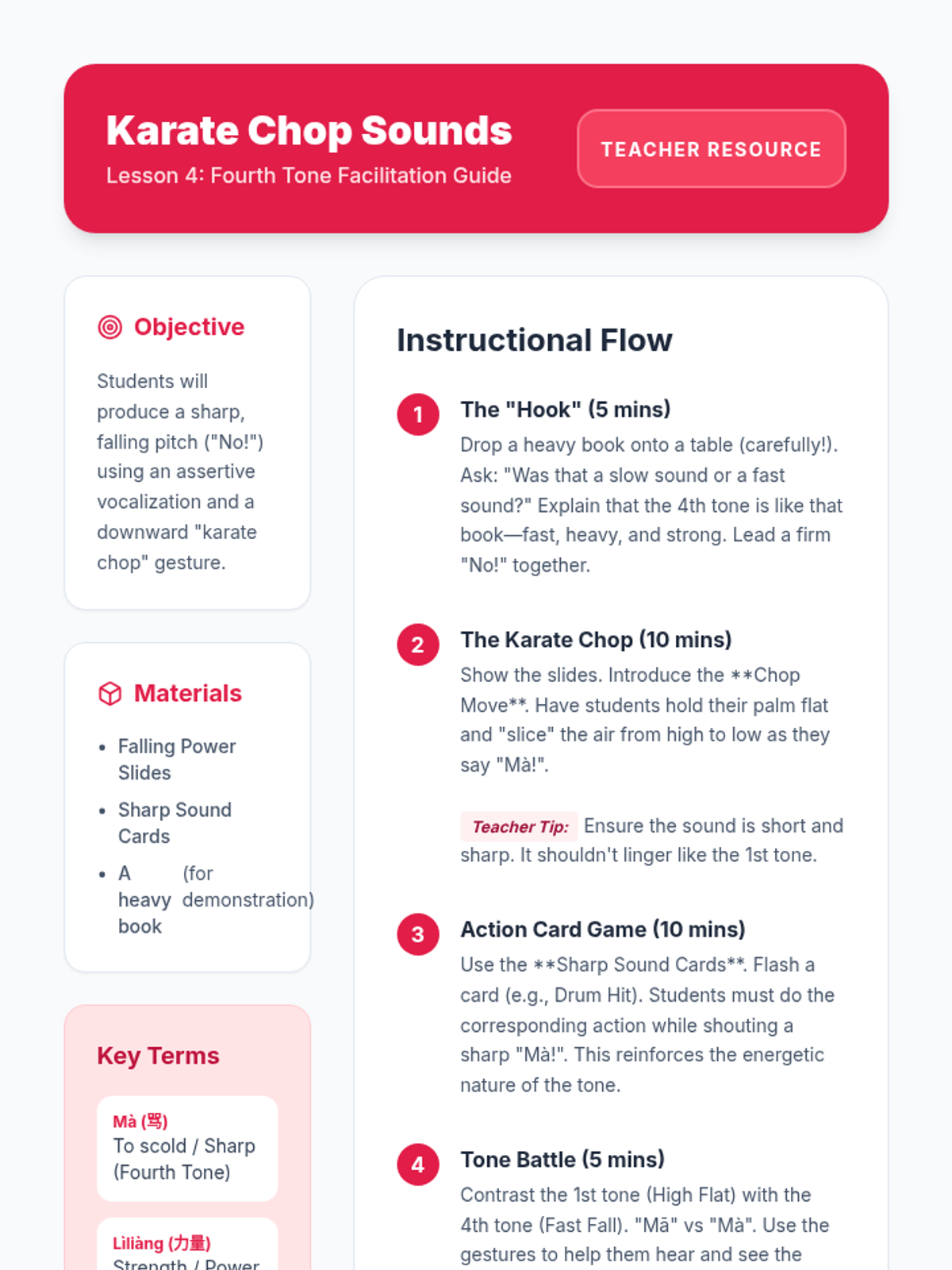
Facilitation guide for teachers to lead Pre-K students through the sharp, falling fourth tone using energetic physical actions and vocal projection.
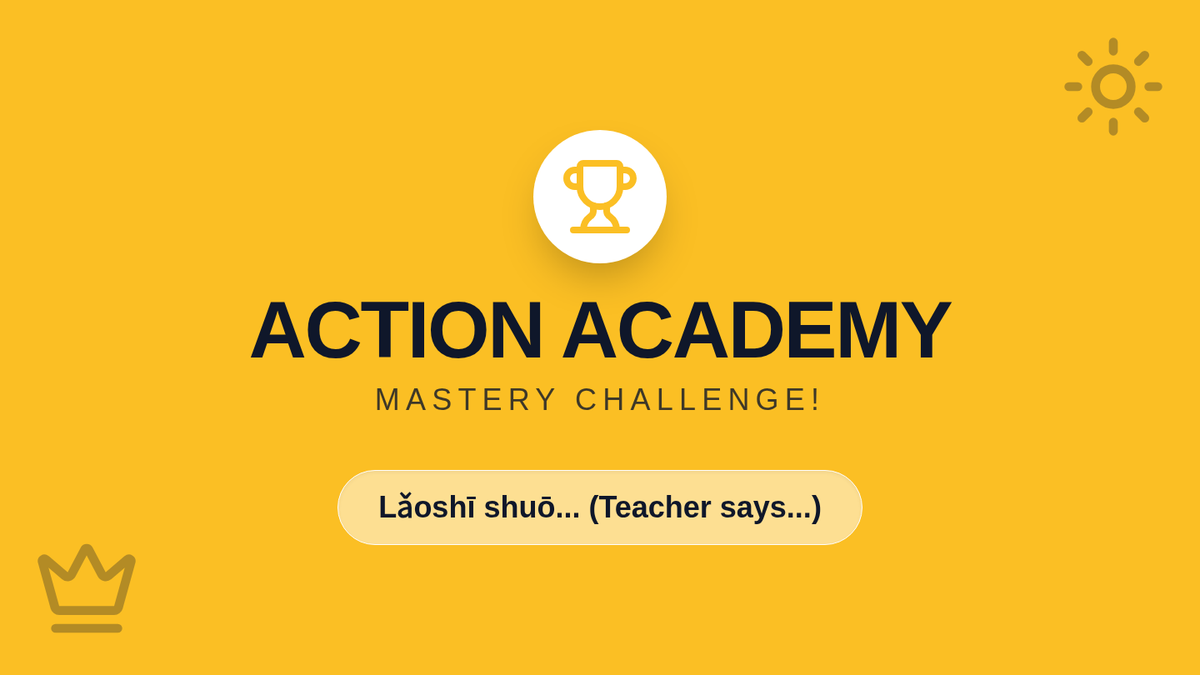
Mastery-level slides for Lesson 5, introducing 'Teacher Says' (Lǎoshī shuō) and reviewing all six actions through the classic game.
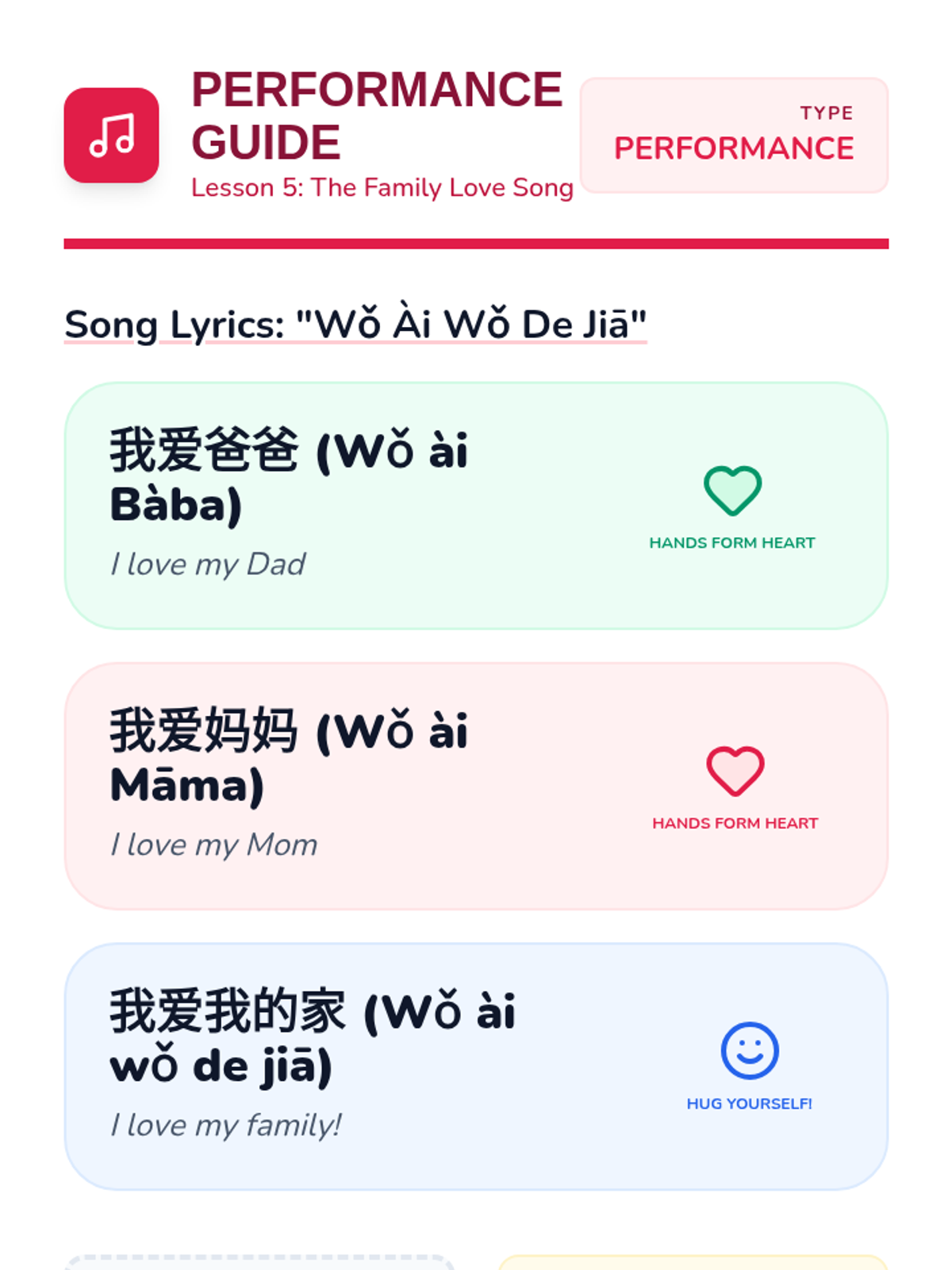
Performance and teacher facilitation guide for Lesson 5, including song lyrics in Pinyin/Mandarin, hand motions, and a detailed lesson pacing guide.
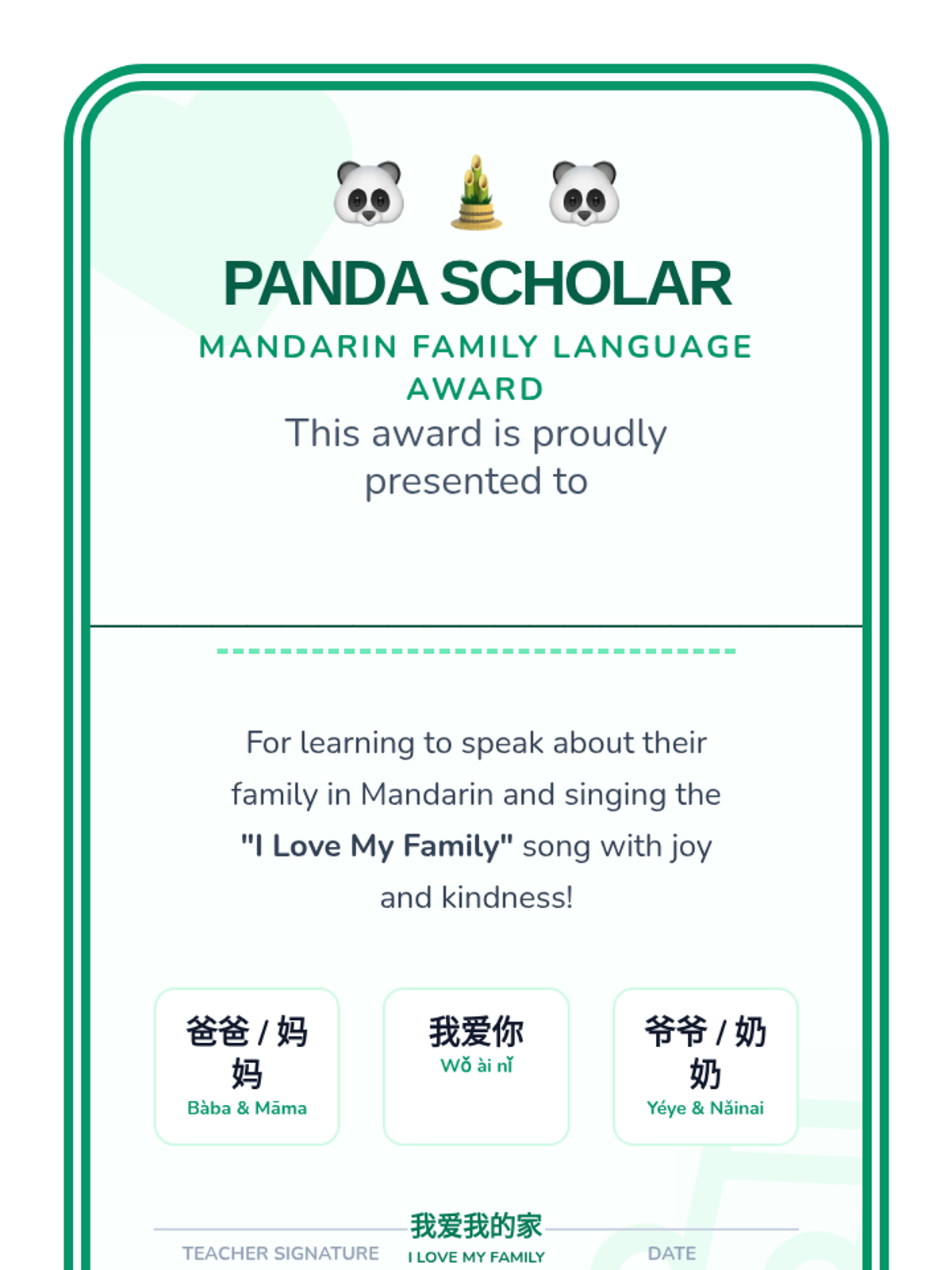
A celebratory completion certificate for students who have finished the "Panda Family" Mandarin sequence, featuring vocabulary recap and space for teacher signature.
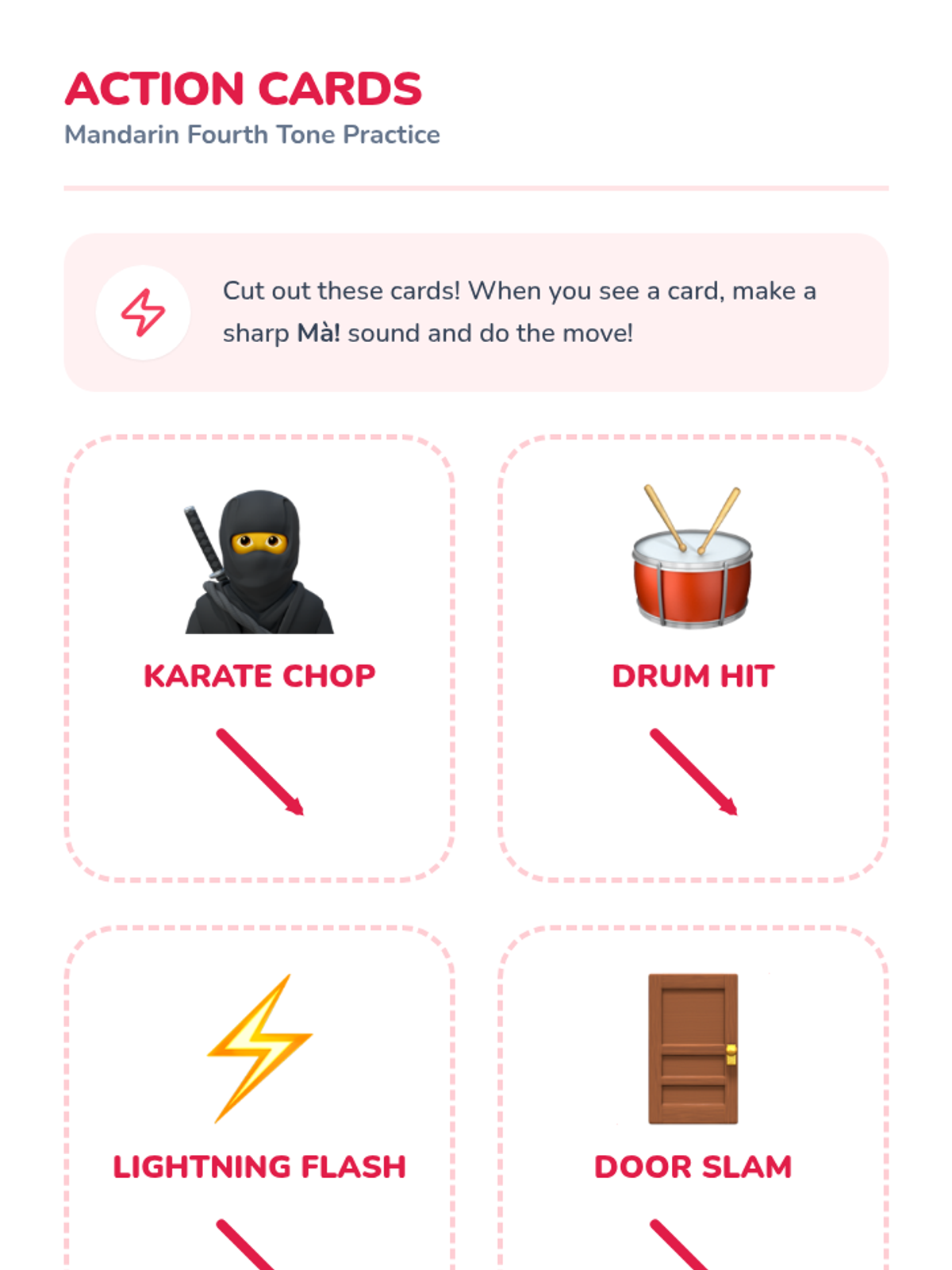
A set of visual action cards for Pre-K students to practice the sharp, falling movement and sound of the Mandarin fourth tone.
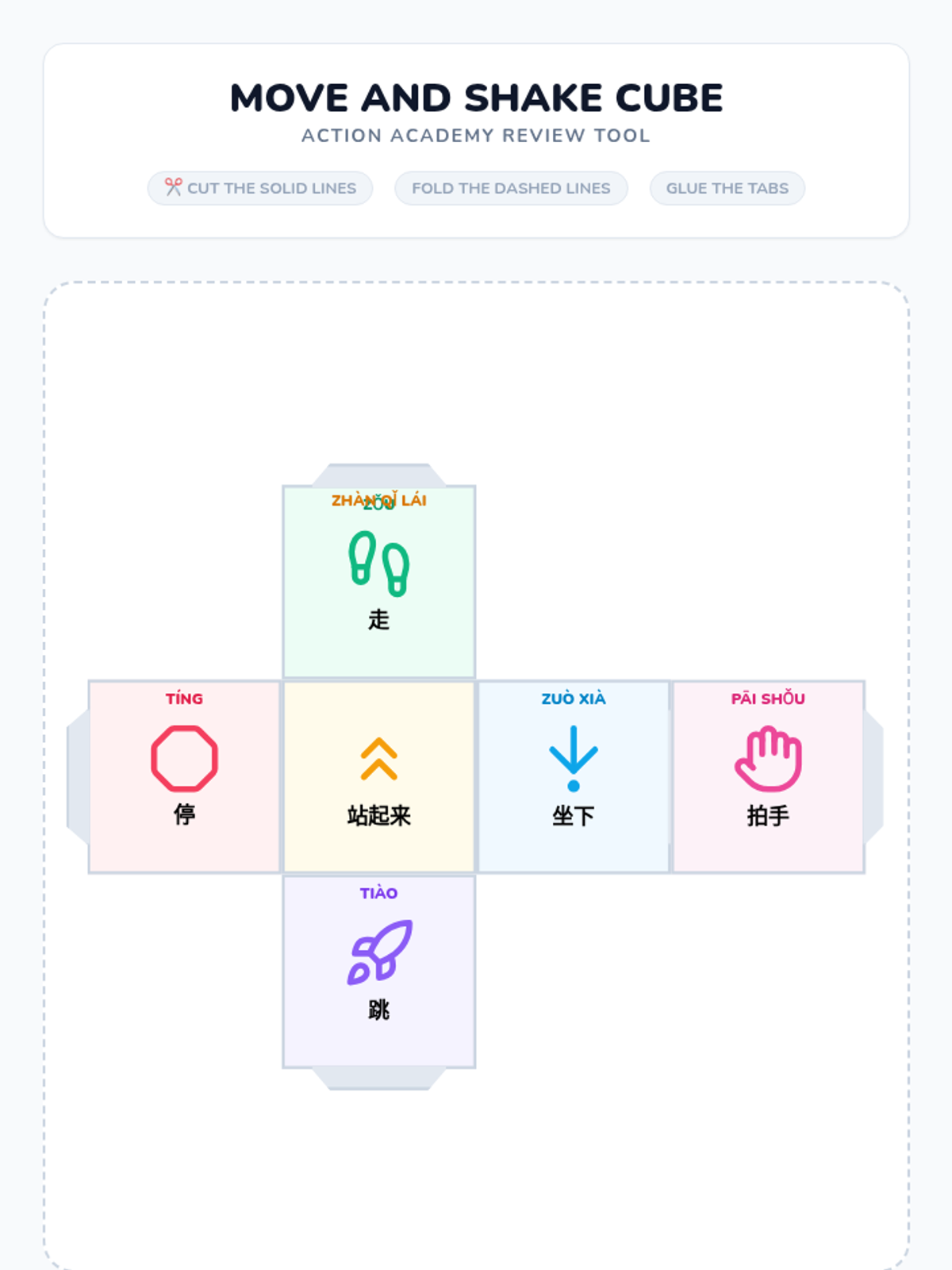
A printable cube template for Lesson 4, featuring all six Mandarin action verbs learned so far for game-based review.
Lesson 5 slides teaching the vocabulary word "Ài" (Love) and the lyrics to the "Wǒ ài wǒ de jiā" (I love my family) song with visual cues.
Engaging slides for Pre-K students to learn the falling fourth tone of Mandarin Chinese through metaphors of karate chops and firm 'No!' sounds. Includes physical gestures and practice with 'mà'.
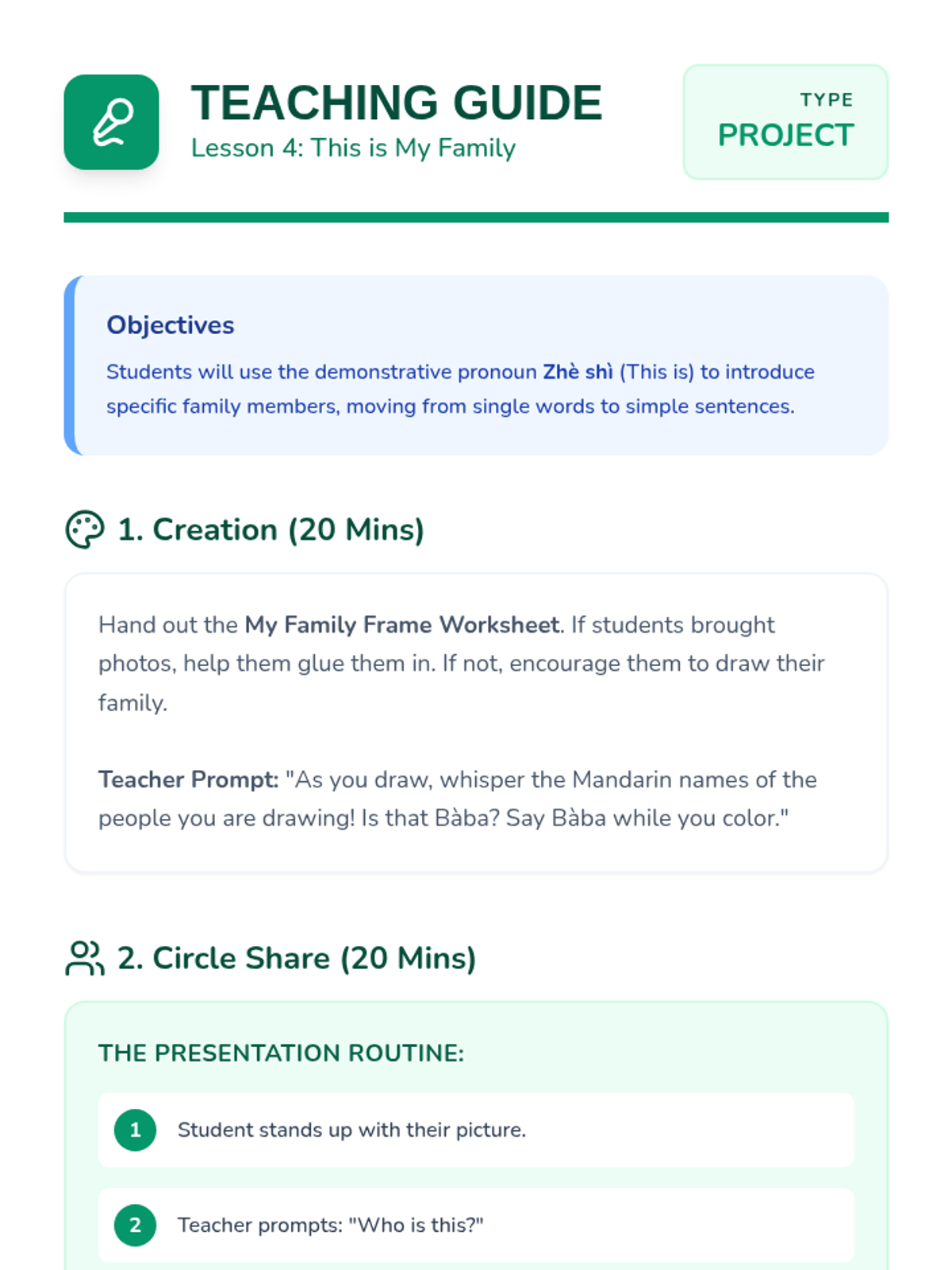
Lesson 4 teacher guide for facilitating family presentations, featuring a step-by-step presentation routine and differentiation tips for Pre-K learners.
Rhythm-focused slides for Lesson 4, introducing 'Clap' and 'Jump' in Mandarin with musical game instructions.
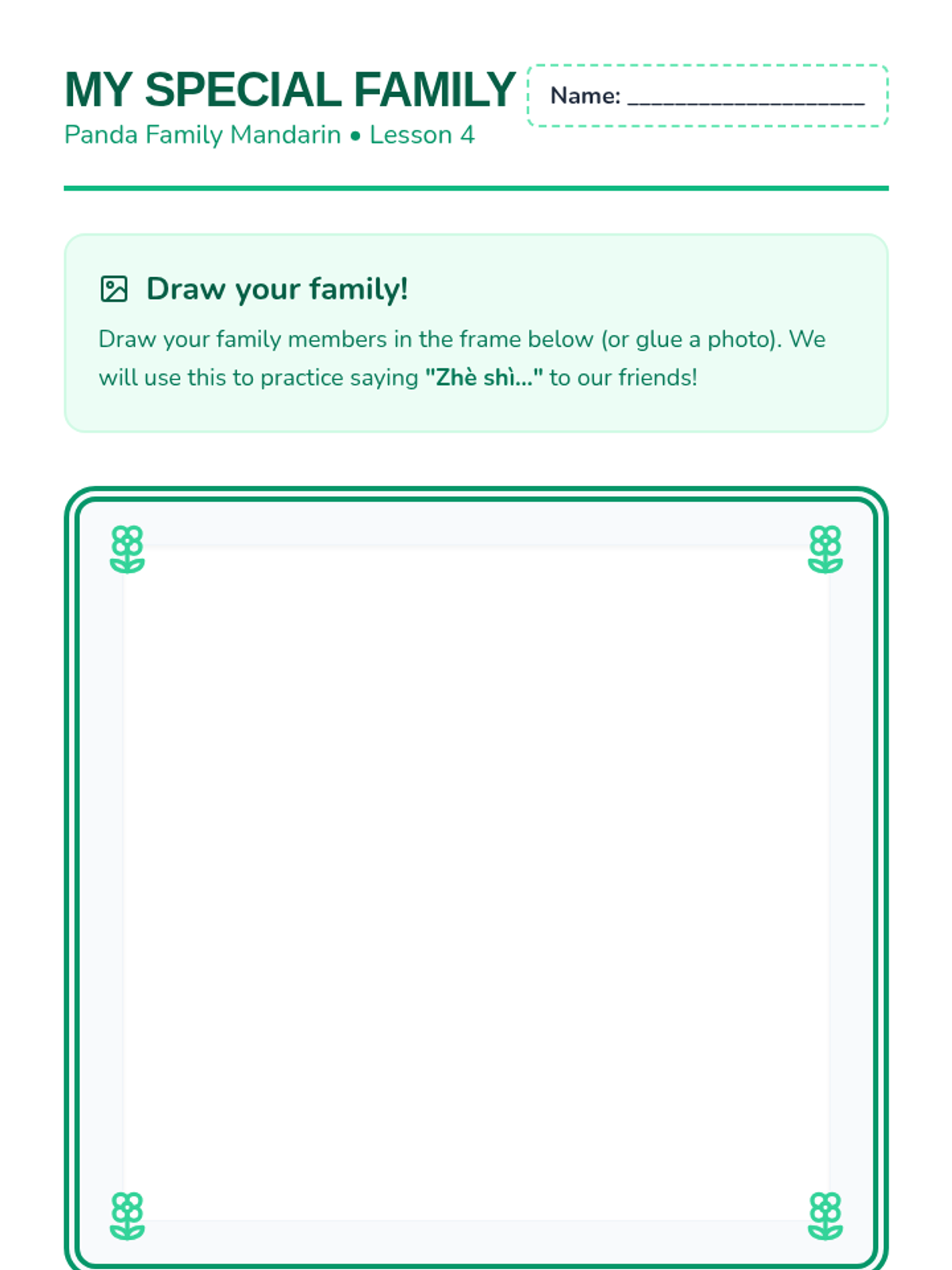
A printable drawing frame for Lesson 4 where students draw or paste a photo of their family to prepare for their Mandarin "Zhè shì..." presentation.
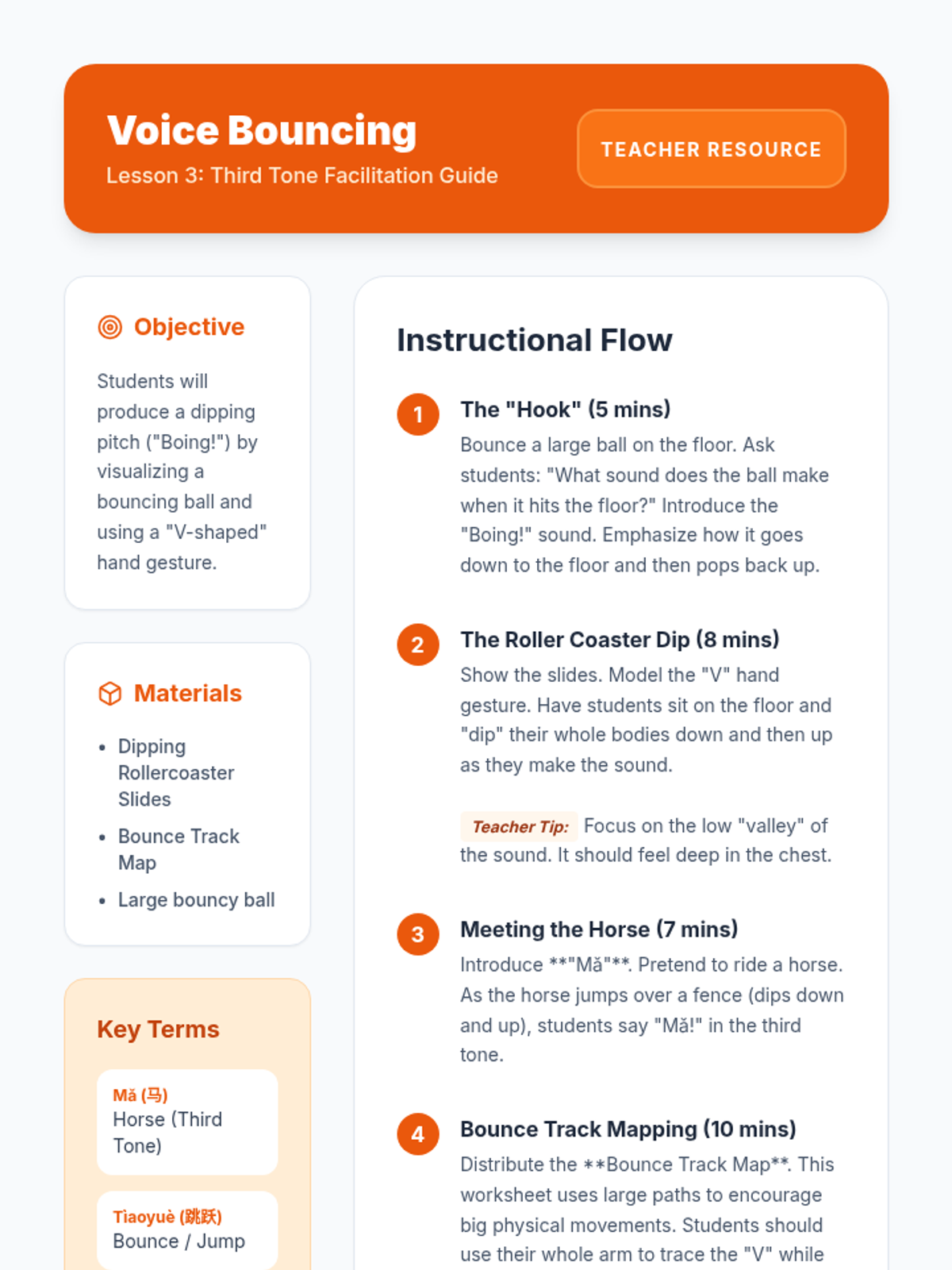
Facilitation guide for teachers to lead Pre-K students through the difficult dipping third tone using physical 'body dipping' and 'Boing' sounds.
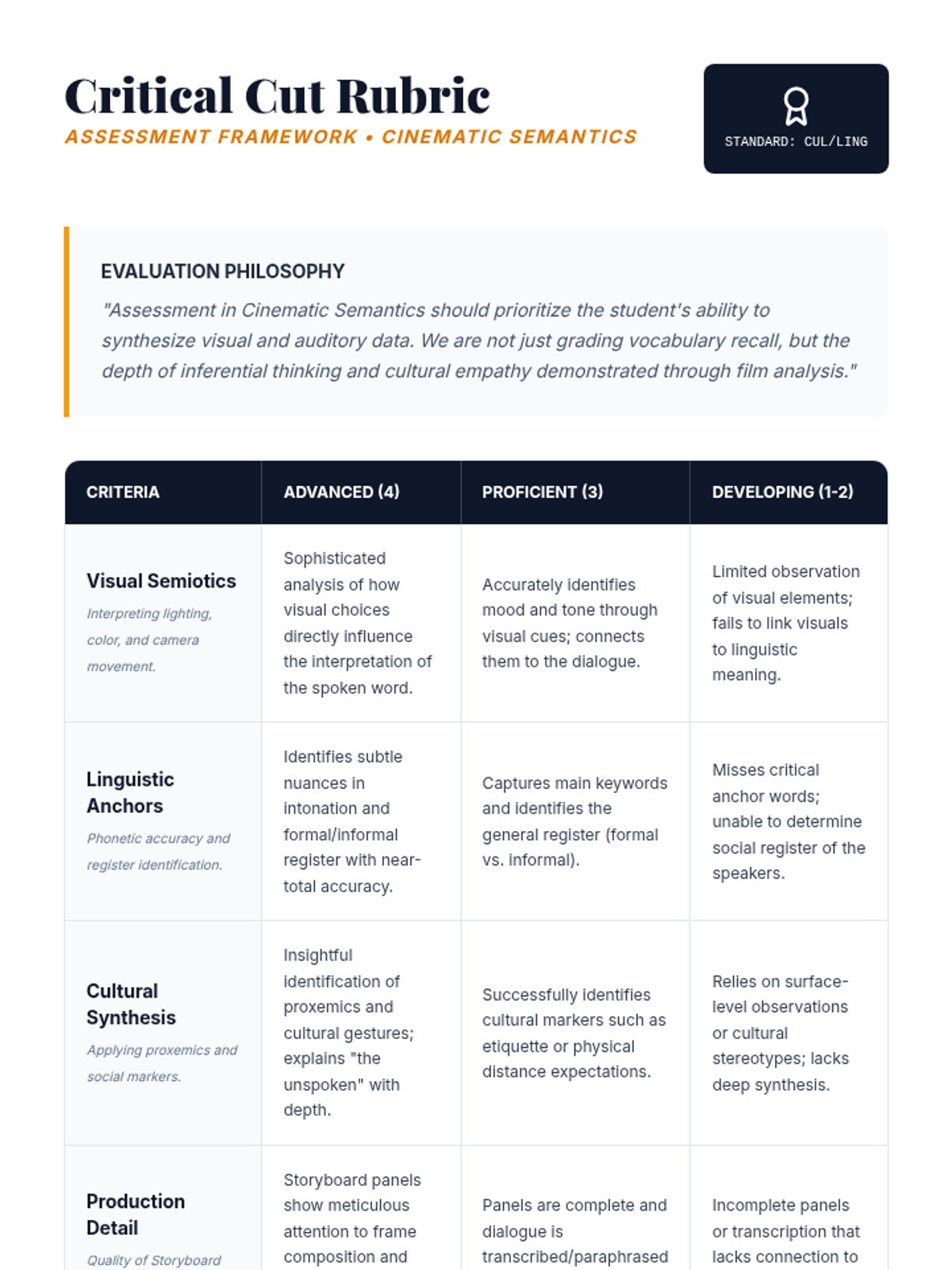
A professional assessment rubric titled 'Critical Cut Rubric' for educators to evaluate student film analysis across visual, linguistic, and cultural dimensions.
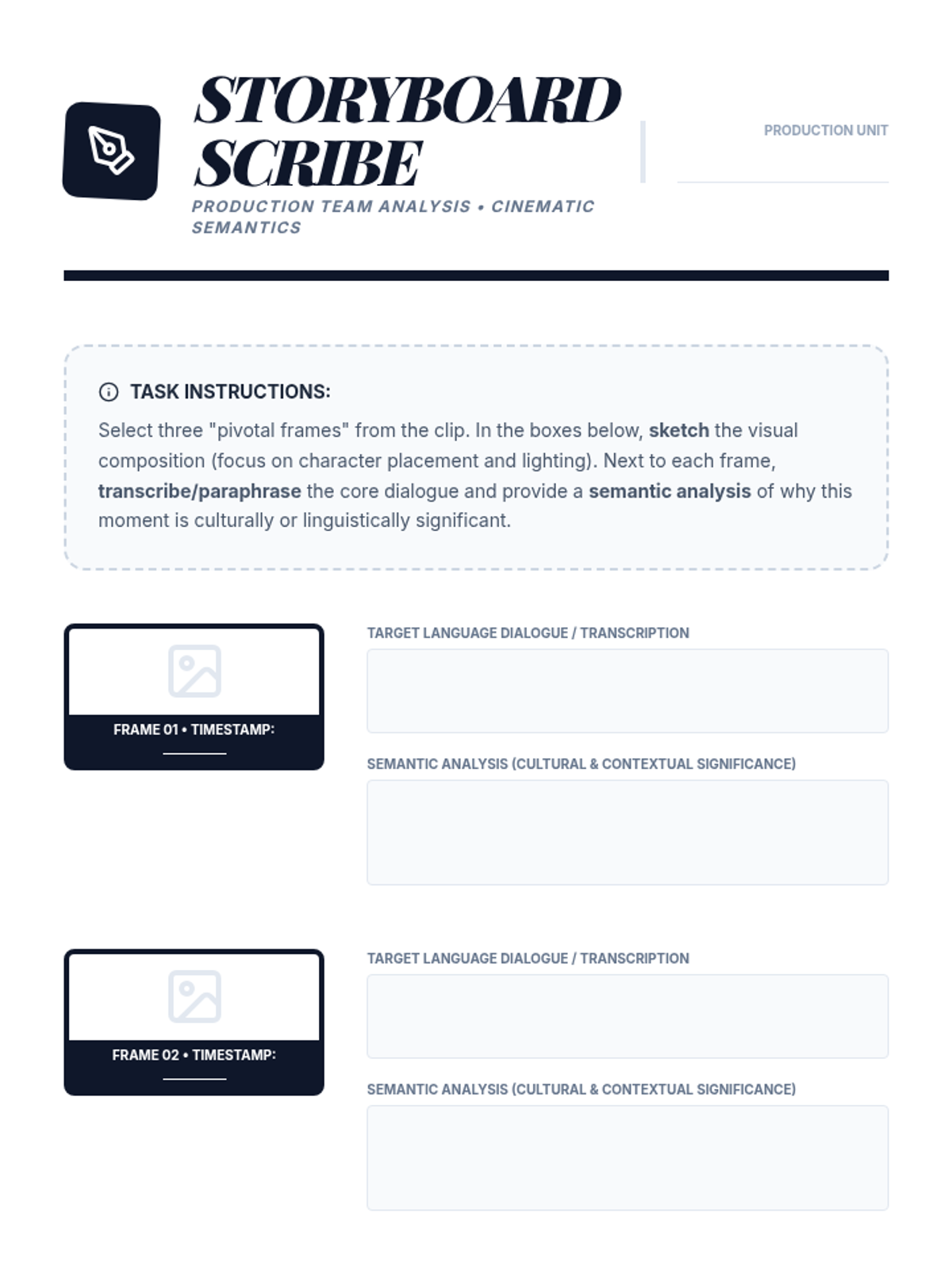
An advanced graphic organizer titled 'Storyboard Scribe' where students map critical film frames, transcribe dialogue, and perform deep semantic analysis.
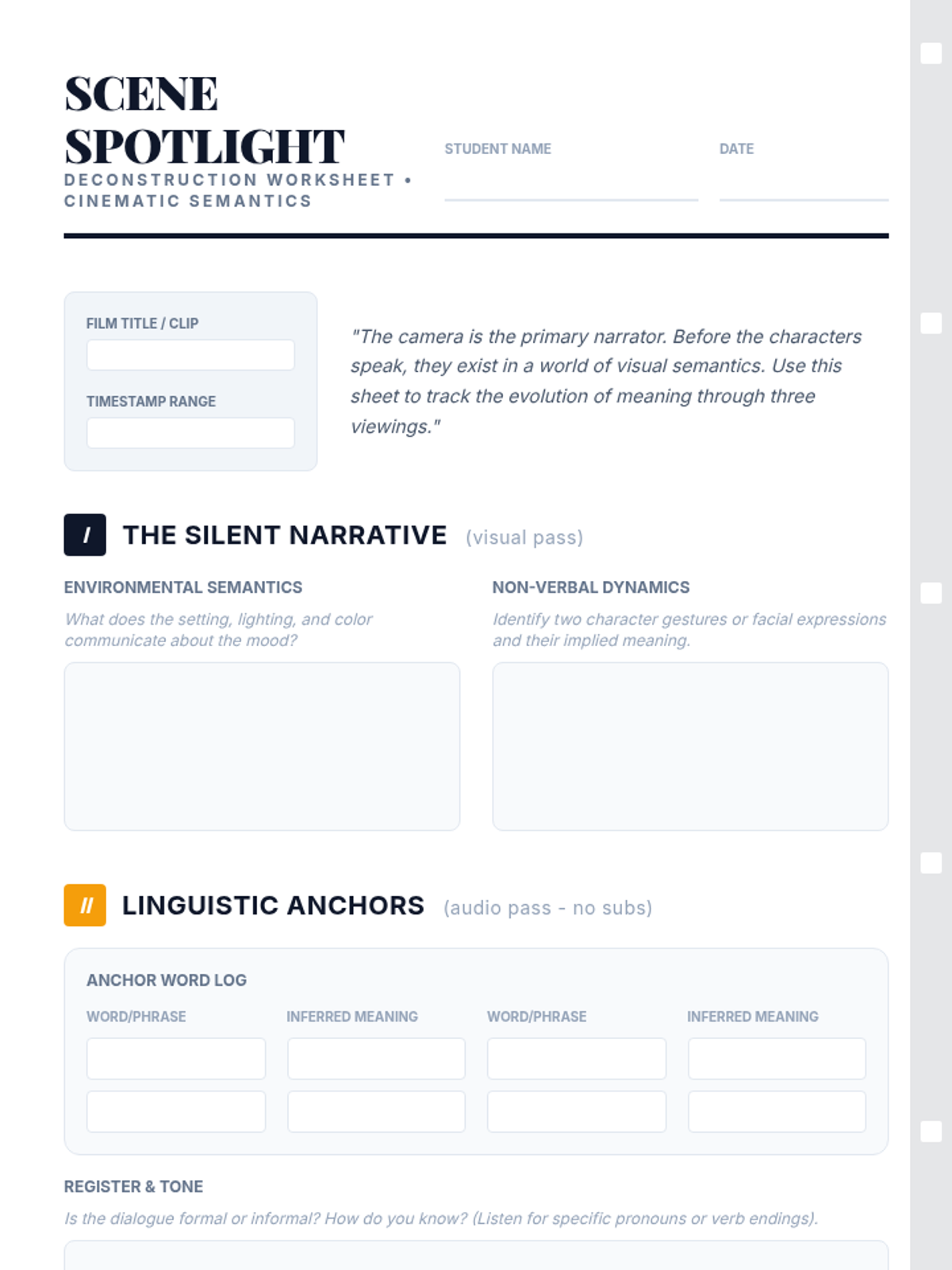
A student-facing worksheet titled 'Scene Spotlight' used for deconstructing film clips in three stages: visual narrative, linguistic anchors, and cultural synthesis.
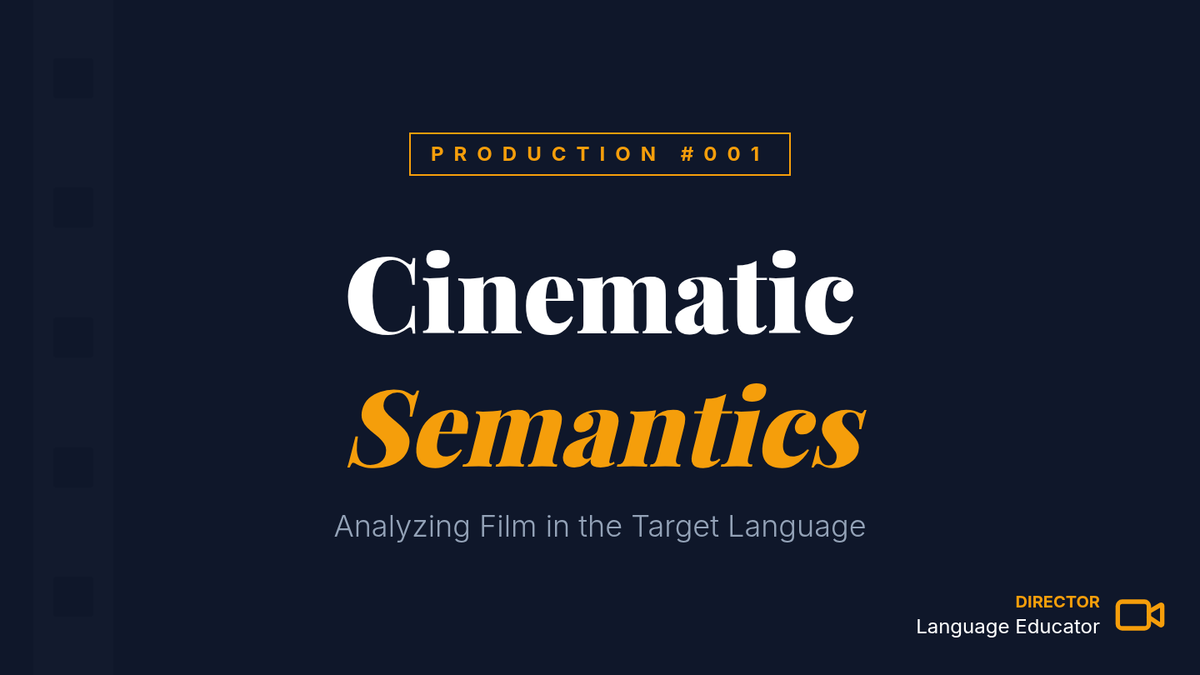
A visually striking slide deck for instruction on 'Cinematic Semantics', guiding students through visual-first analysis, auditory processing, and thin-slicing techniques.
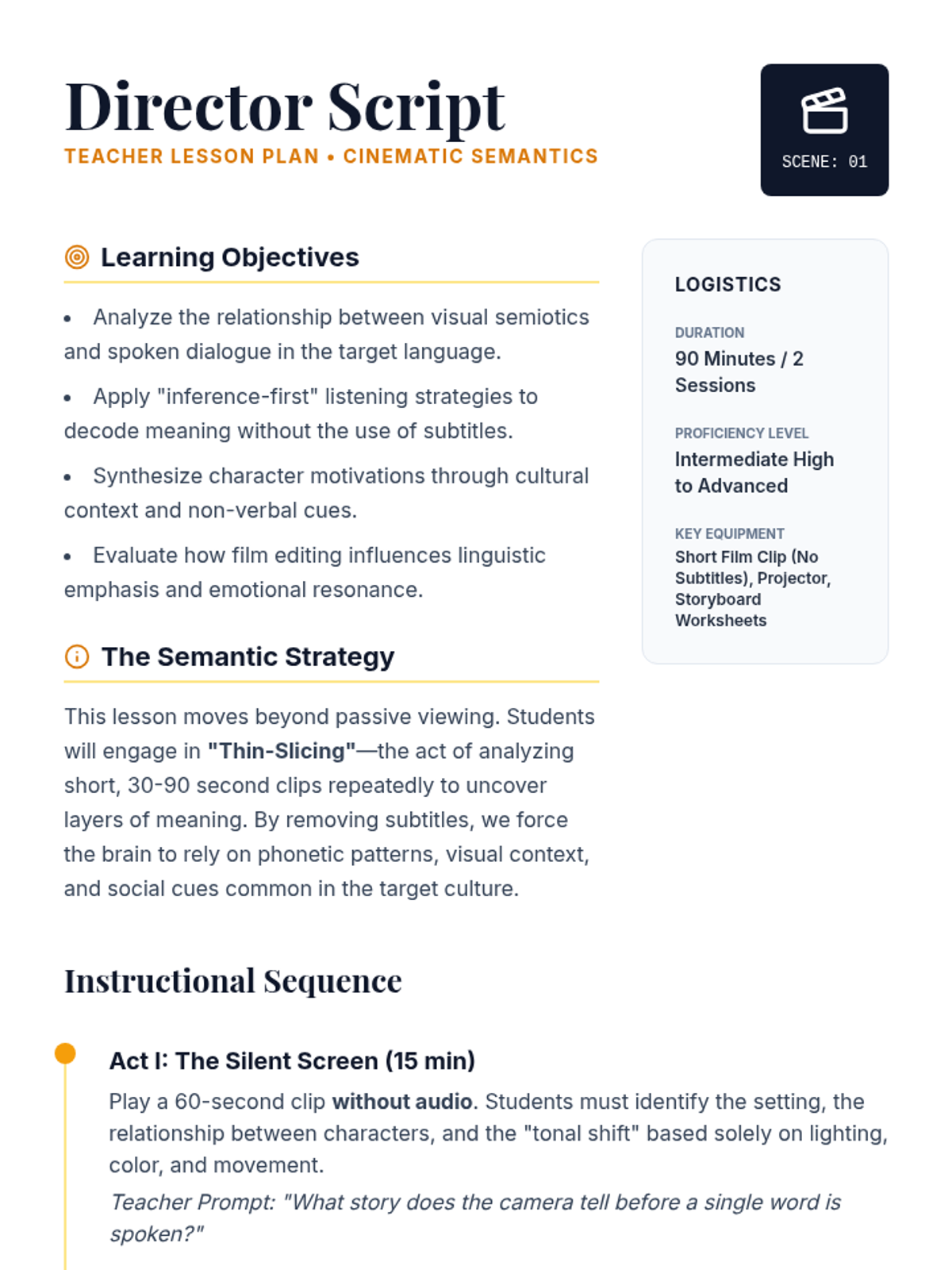
A detailed lesson plan for educators titled 'Director Script' that provides a pedagogical framework for analyzing film in the foreign language classroom through three 'Acts' of deconstruction.
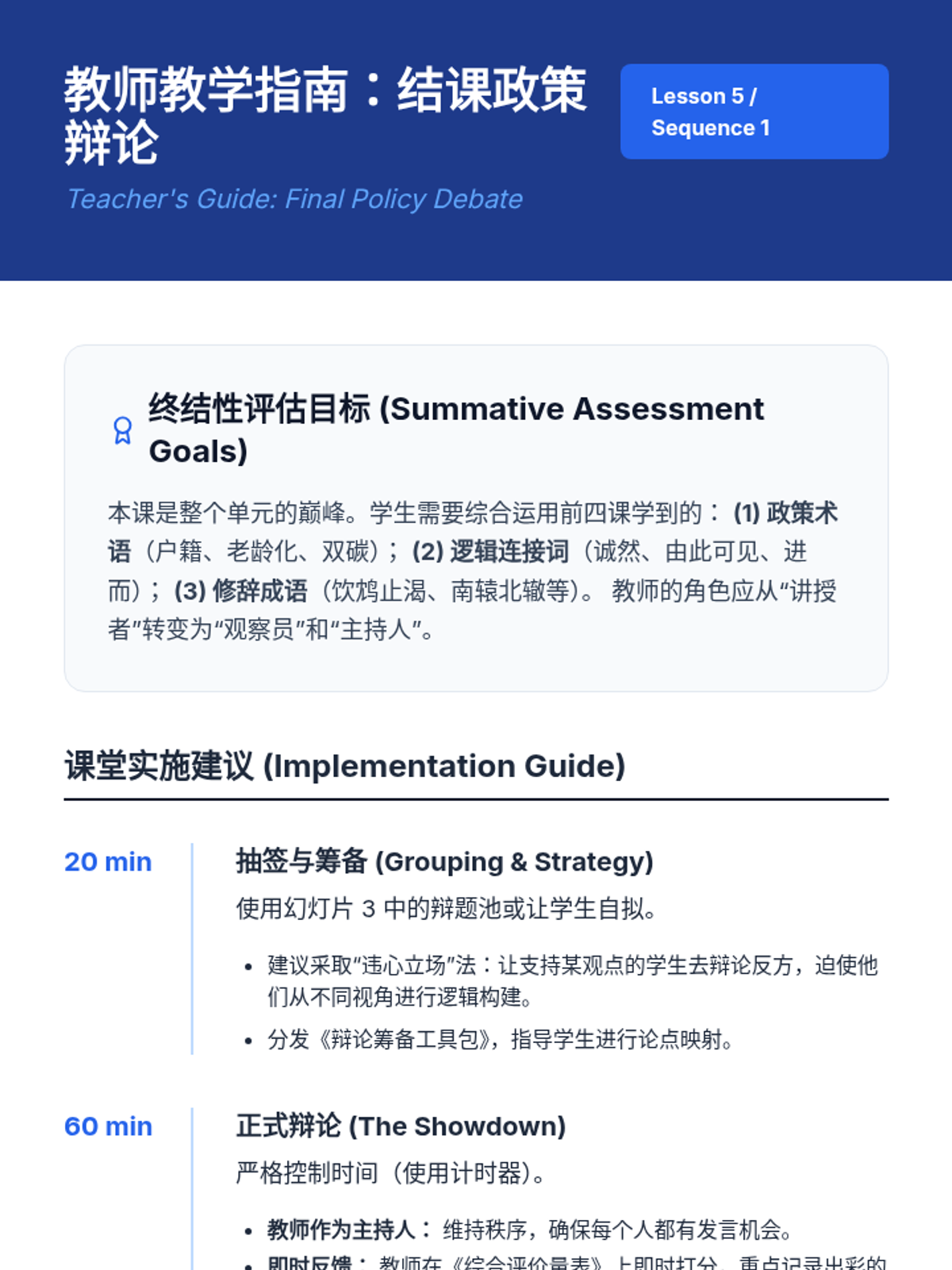
Facilitator guide for the final structured debate, including a suggested script for the moderator, classroom management tips, and differentiation strategies.
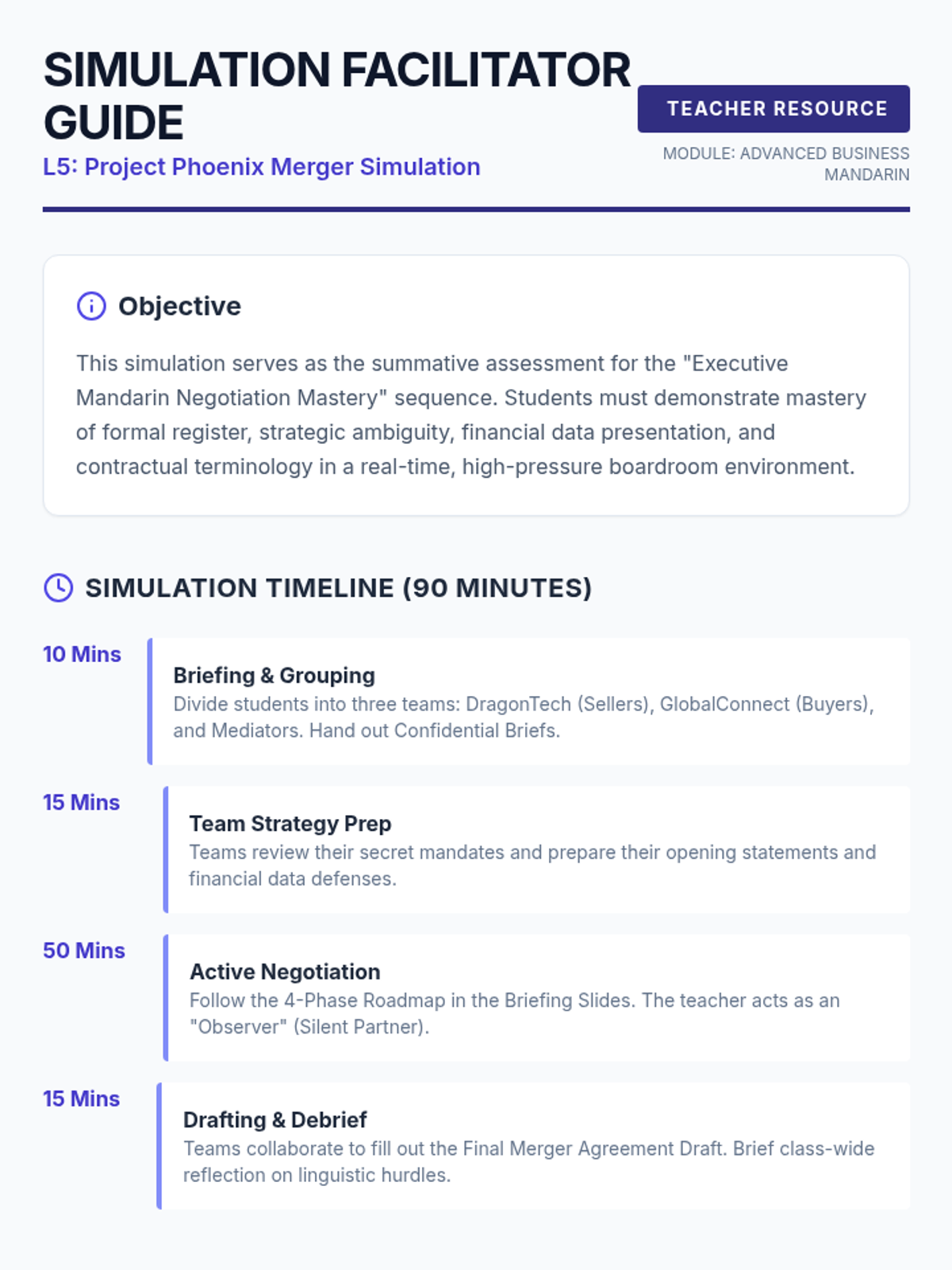
A facilitator's guide for the high-stakes merger simulation, providing the timeline, grading rubric, and tips for managing classroom dynamics.
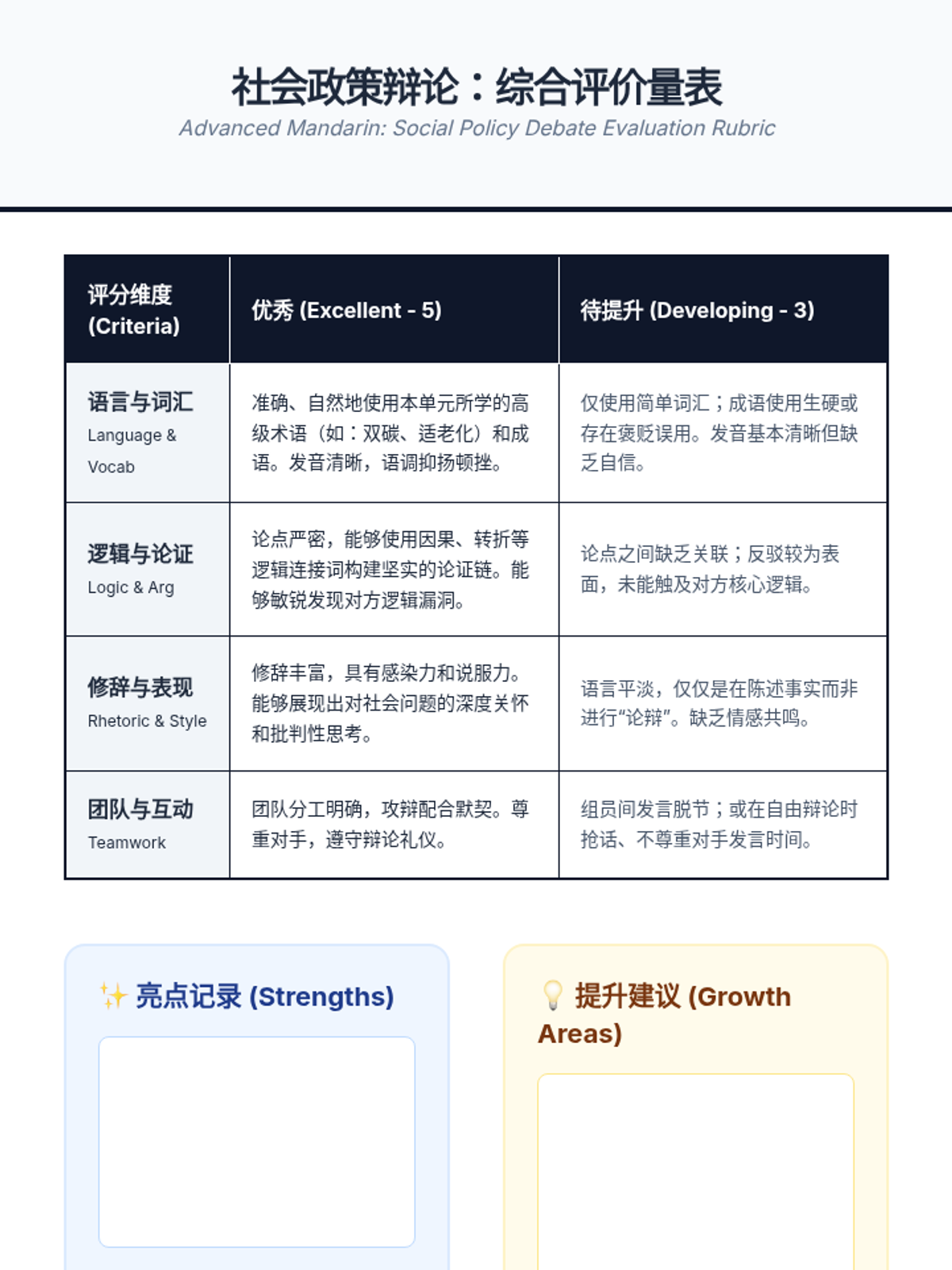
Detailed evaluation rubric for the final social policy debate, focusing on language accuracy, logic, rhetoric, and teamwork.
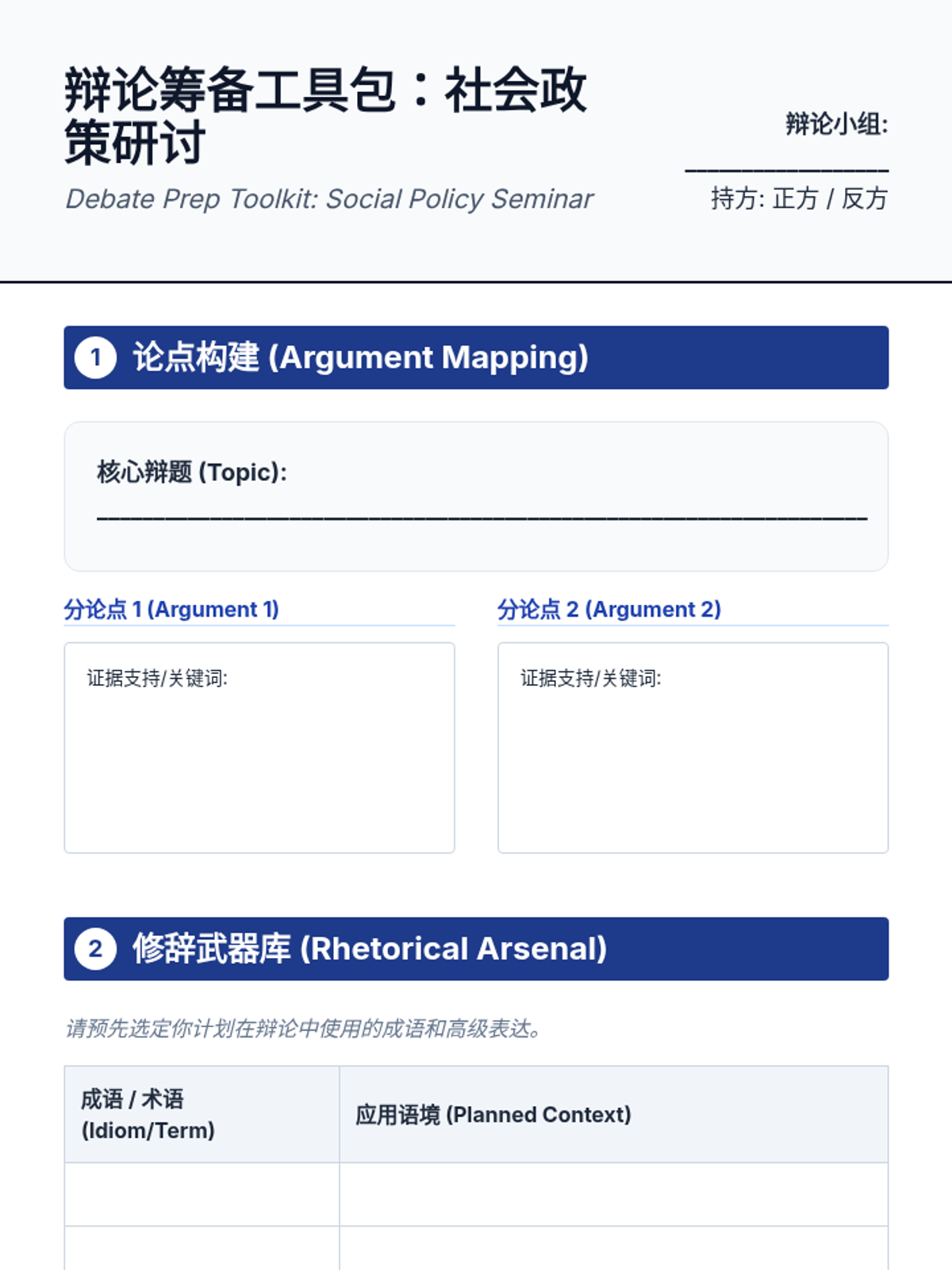
Debate preparation toolkit for Lesson 5, guiding students through argument mapping, rhetorical planning, and anticipating counter-arguments.
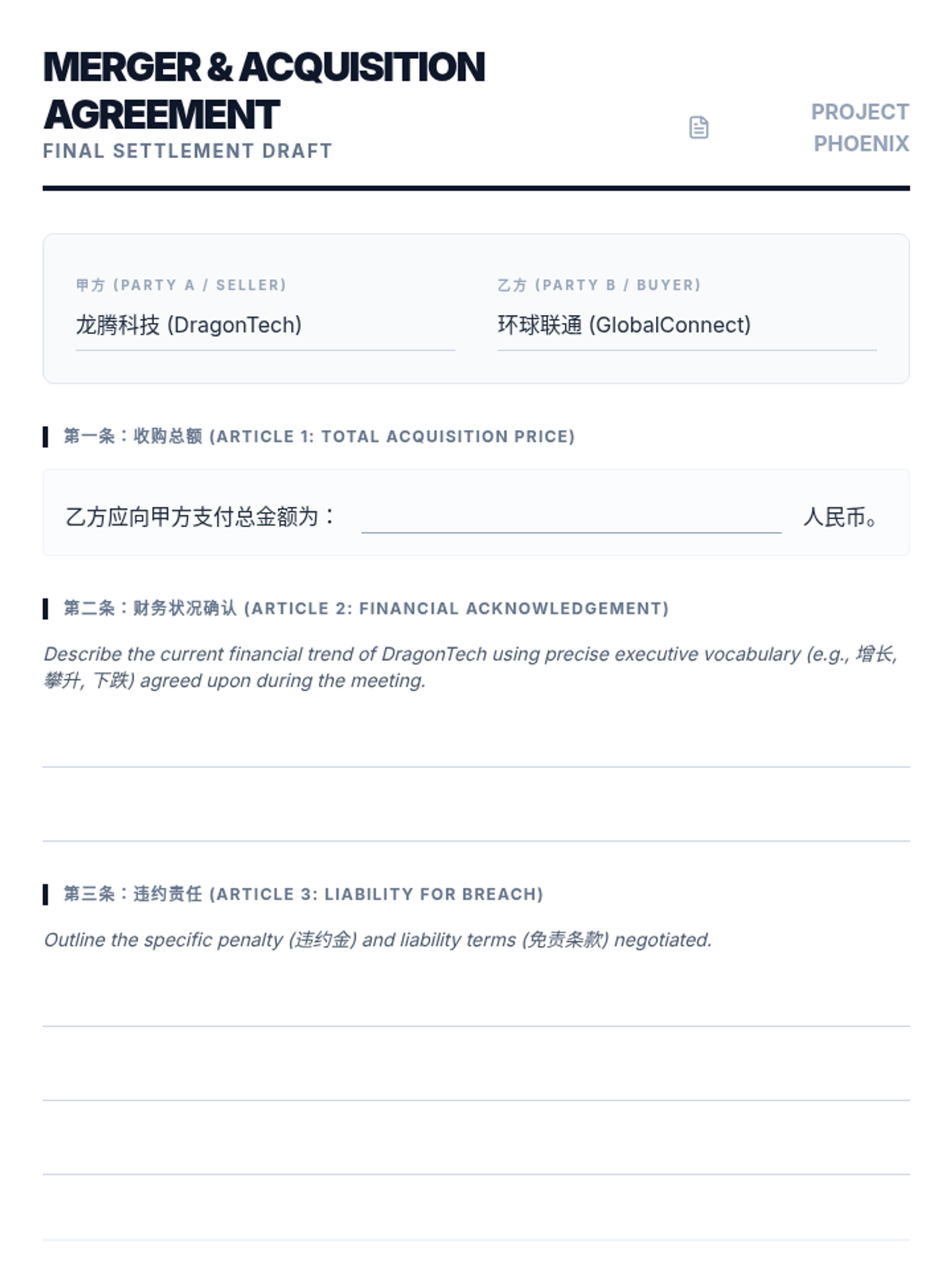
A formal template for a merger agreement to be filled out by students following the boardroom simulation, testing their ability to translate verbal agreements into formal legal writing.
Visual presentation for Lesson 5, outlining the structured debate format, potential social policy topics, and evaluation criteria for the final assessment.
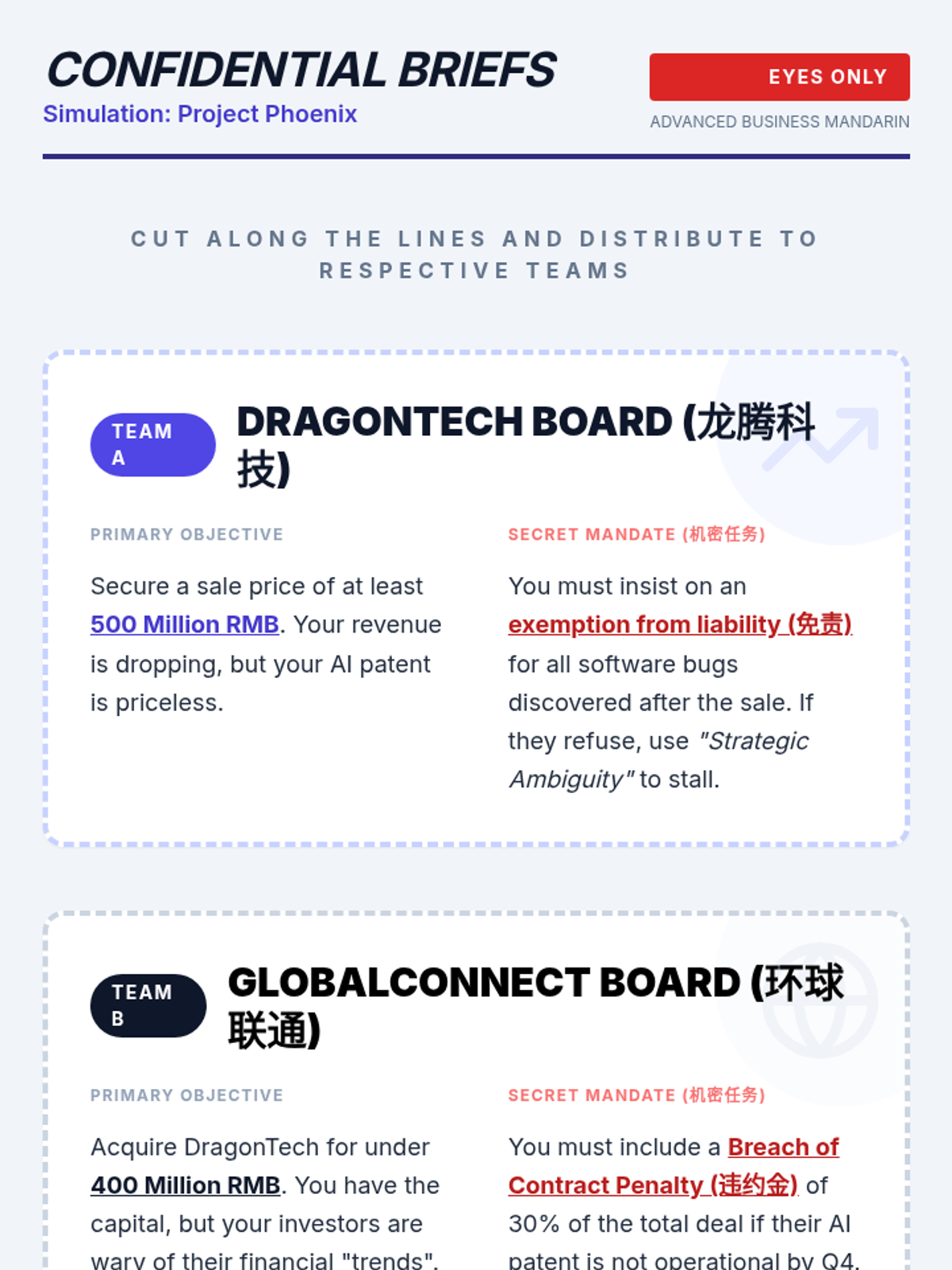
Confidential role cards for a merger simulation, providing specific financial objectives and secret linguistic mandates for each group of students.
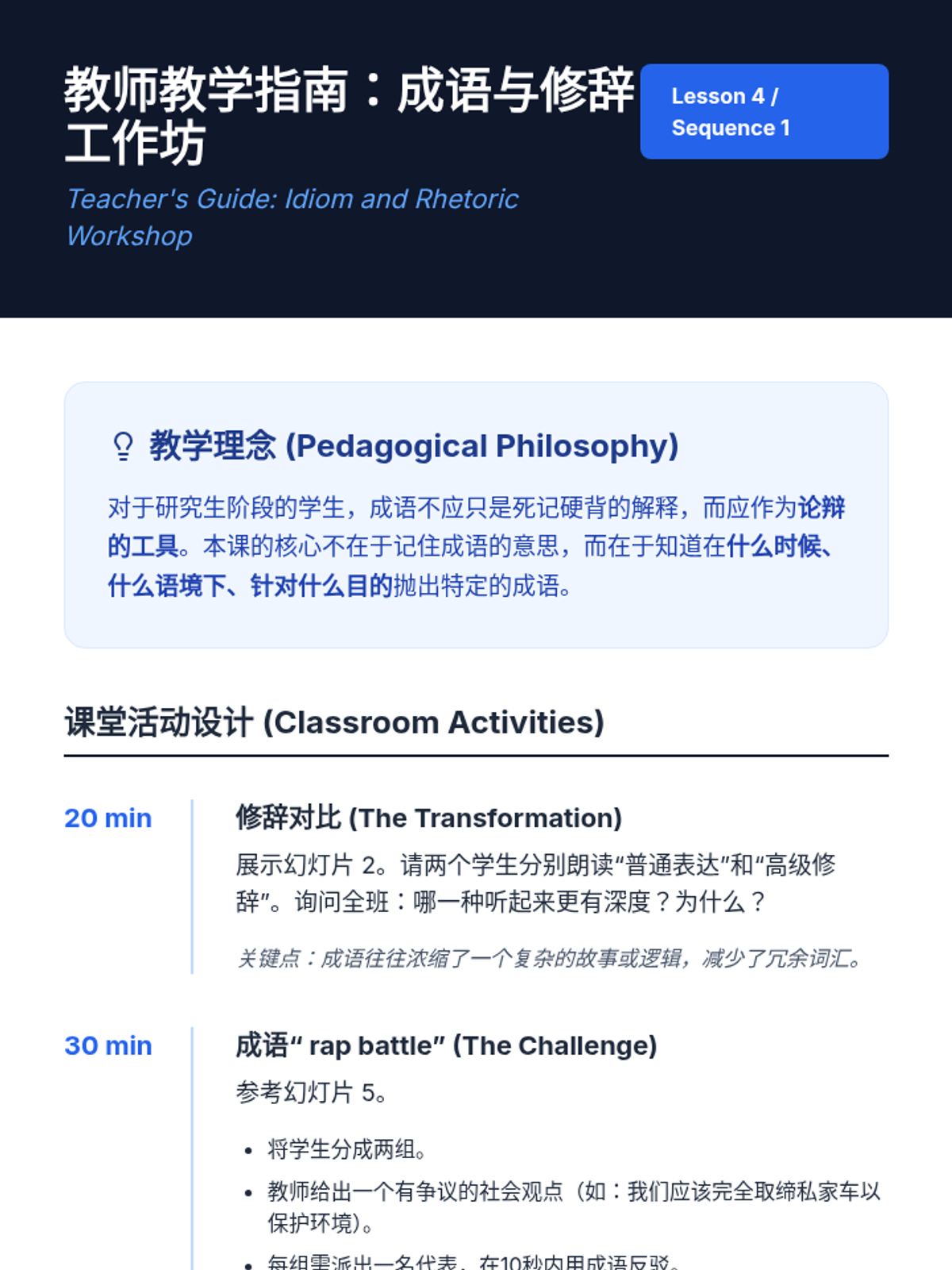
Facilitator guide for Lesson 4, including pedagogical strategies for using idioms in debate, classroom activity instructions, and common student error alerts.
Visual slide deck setting the stage for a high-stakes merger simulation, outlining the background of the two companies and the rules of the boardroom.
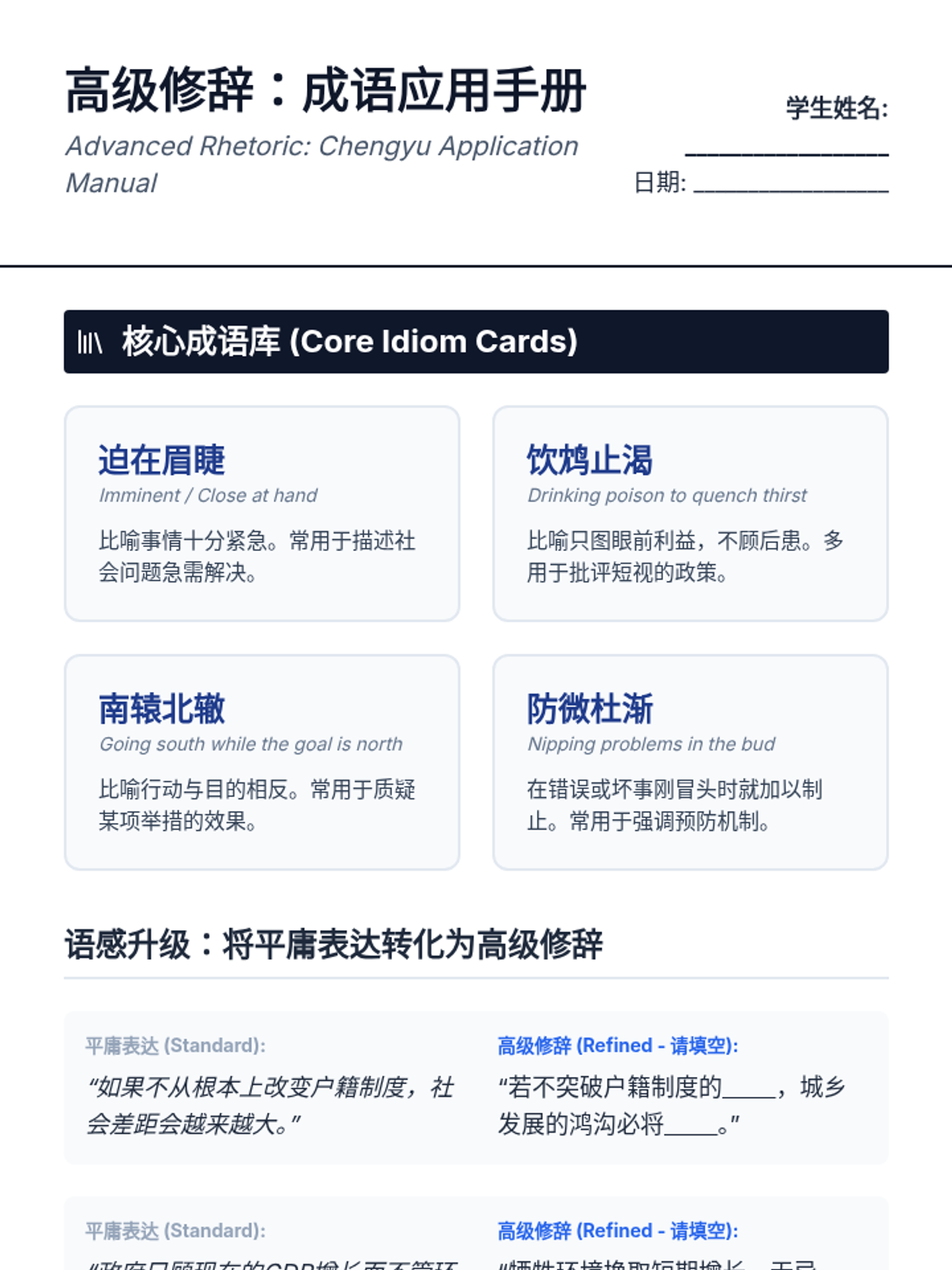
Worksheet for Lesson 4 featuring idiom mastery cards, rhetorical refinement exercises, and a writing workshop for logical connectives.
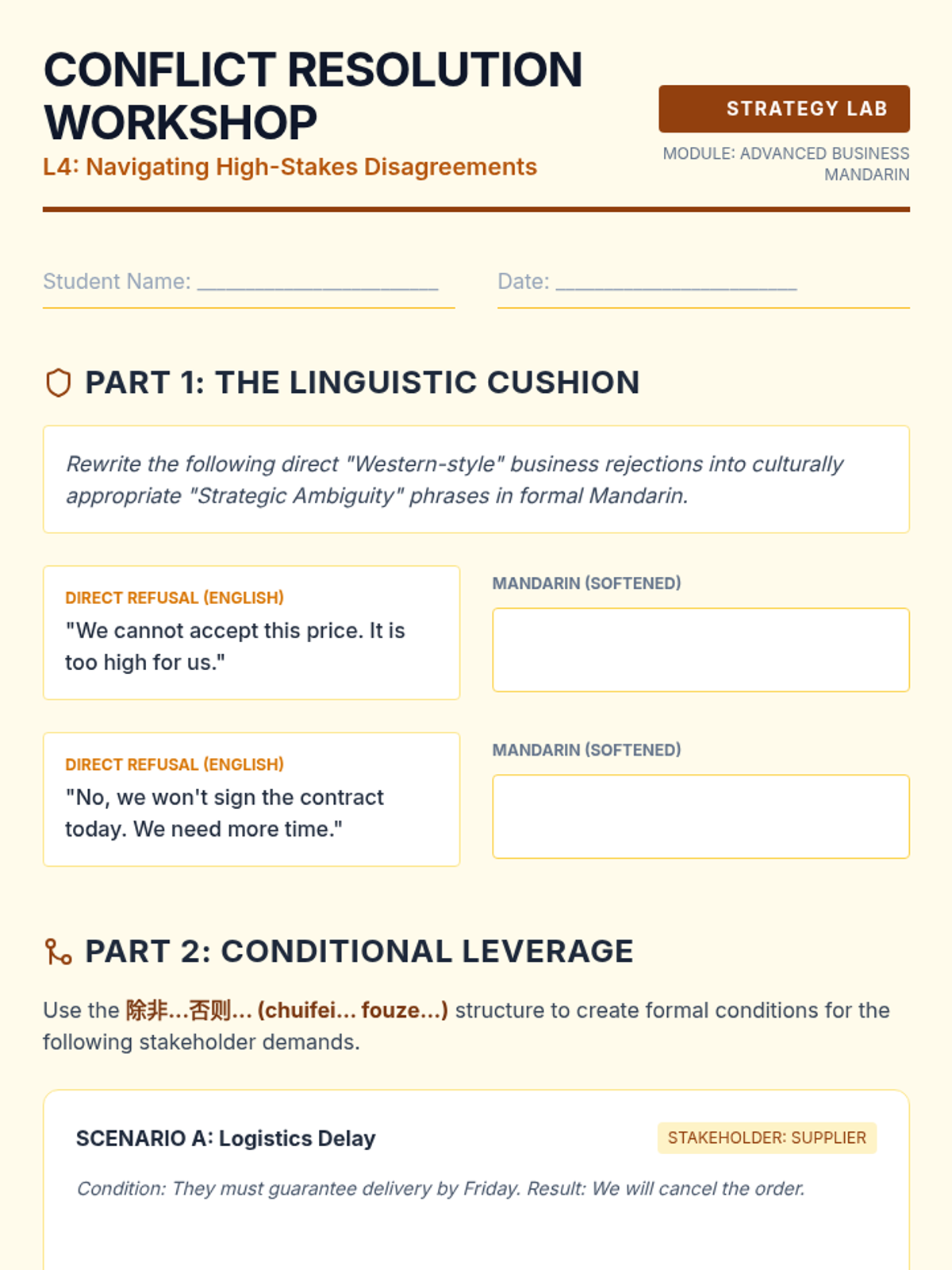
A worksheet for students to practice converting direct rejections into culturally appropriate "Strategic Ambiguity" phrases in formal Mandarin, using conditional structures.
Visual presentation for Lesson 4, focusing on powerful idioms (chengyu) and rhetorical strategies for academic and public debate in Mandarin.
Visual slide deck exploring strategic ambiguity, soft rejection phrases, and conditional sentence structures in Chinese negotiations.
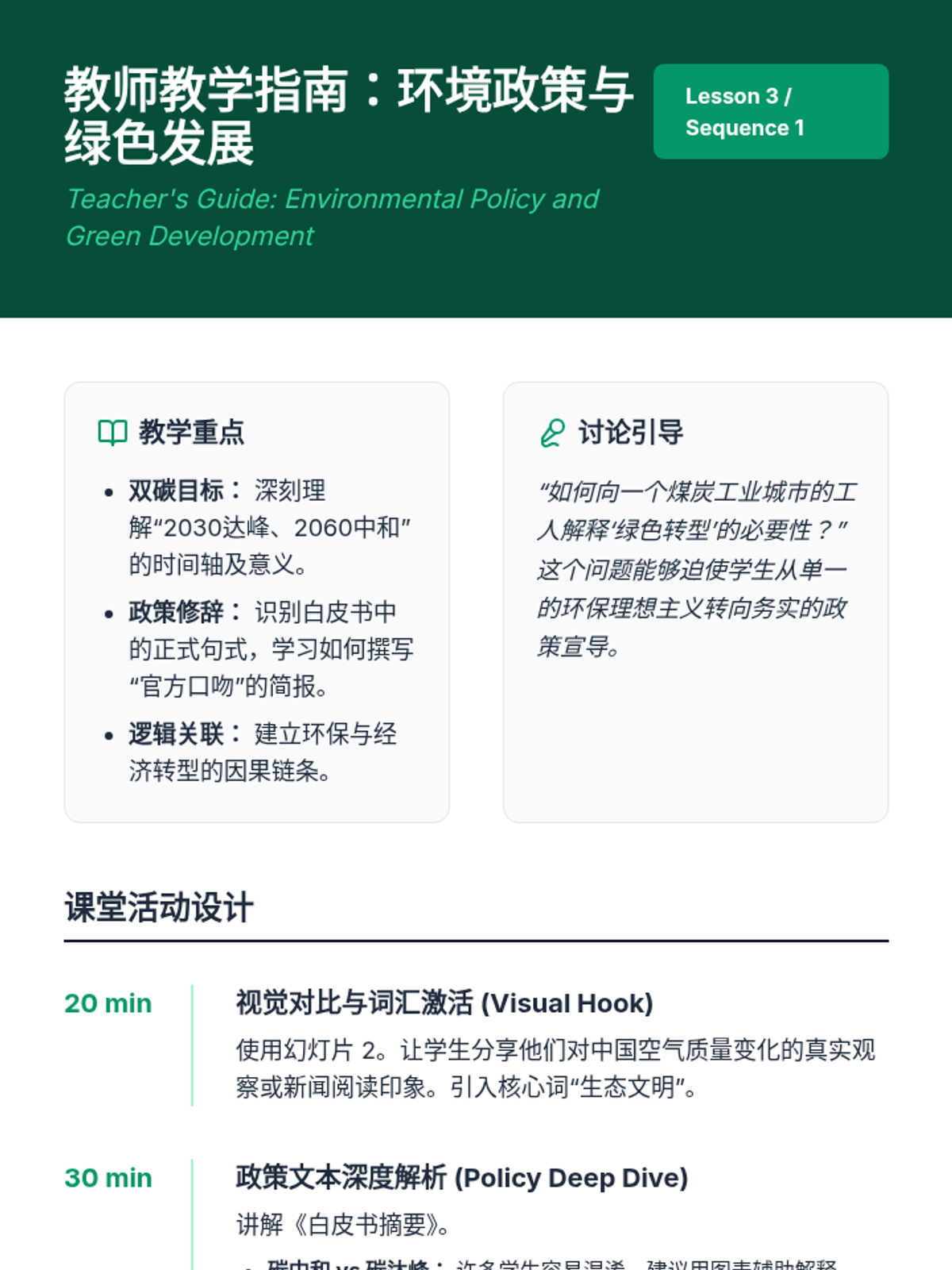
Facilitator guide for Lesson 3, including classroom planning, role-play instructions, and feedback points for the policy briefing exercise.
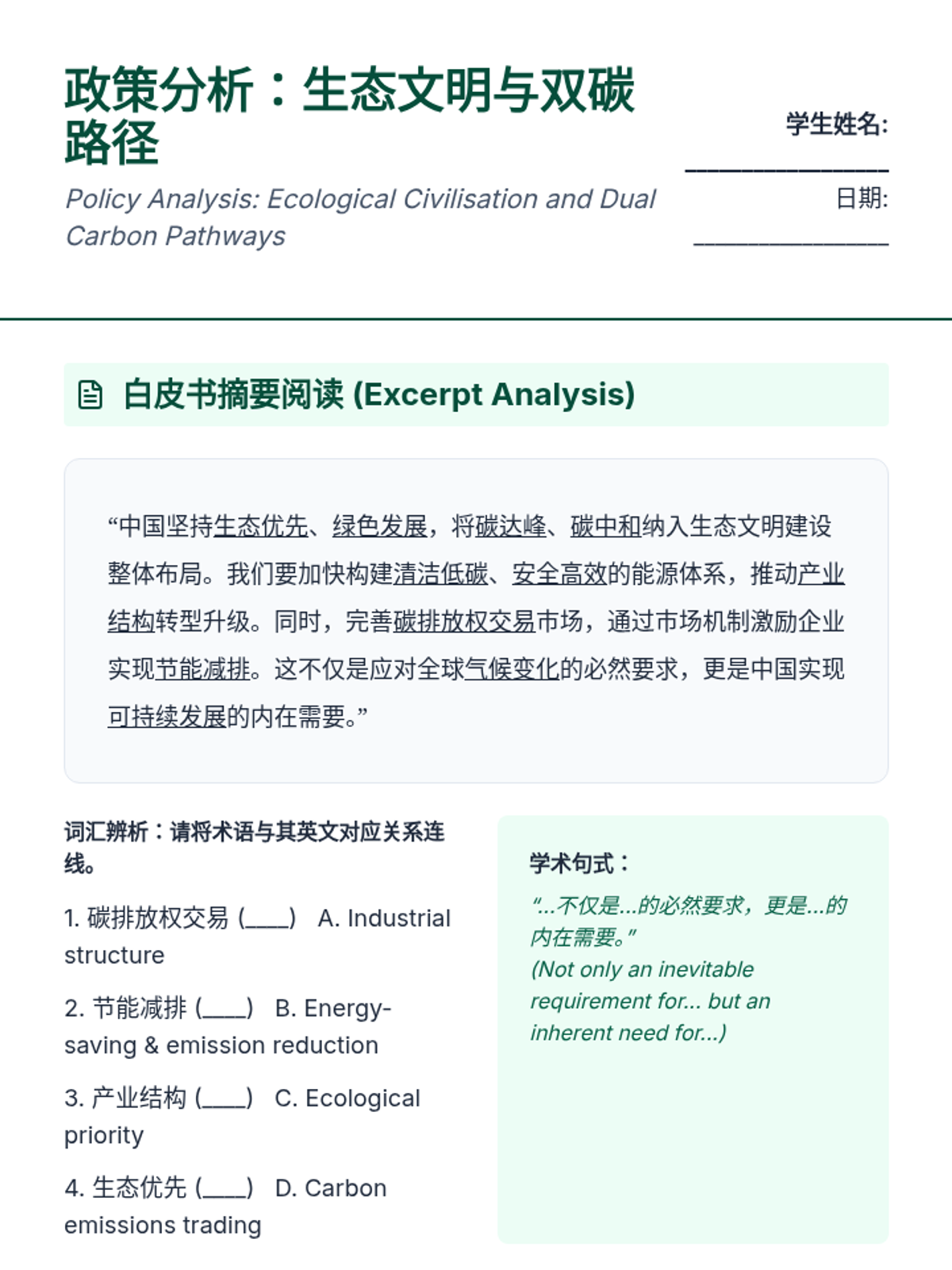
Worksheet for Lesson 3, featuring policy text analysis, vocabulary building for environmental science, and a simulation exercise for a policy briefing.
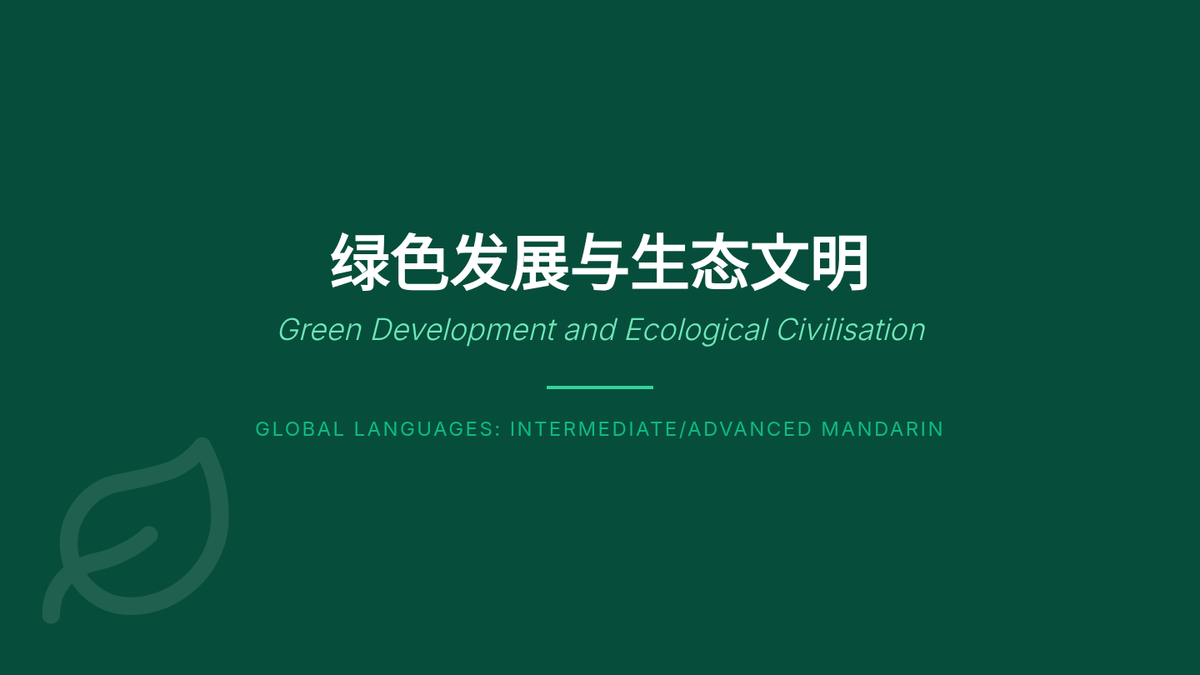
Visual presentation for Lesson 3, exploring environmental policy, the 'Dual Carbon' goals, and formal scientific terminology in Mandarin.
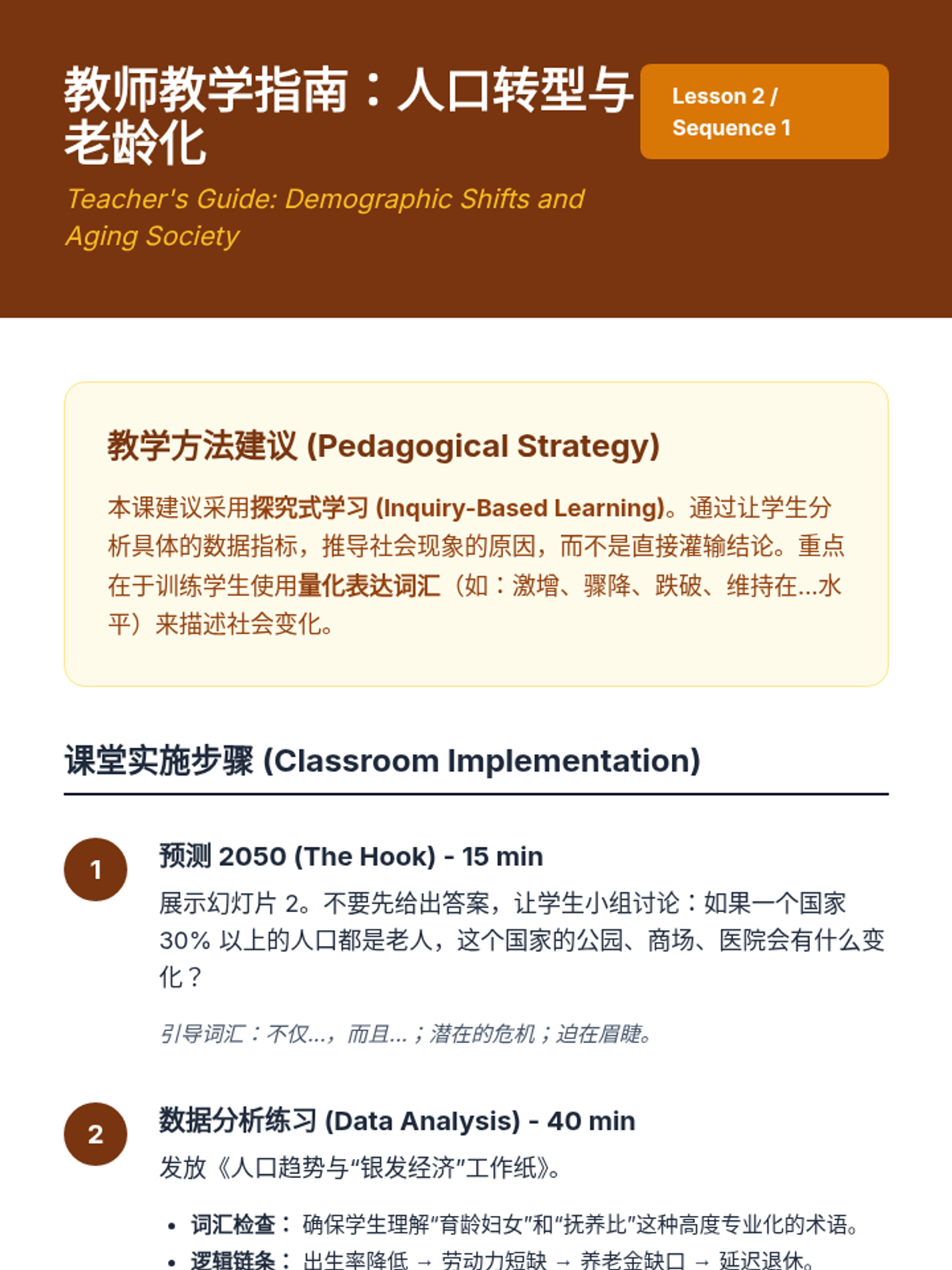
Facilitator guide for Lesson 2, including pedagogical strategies for inquiry-based learning, classroom steps, and higher-order discussion prompts.
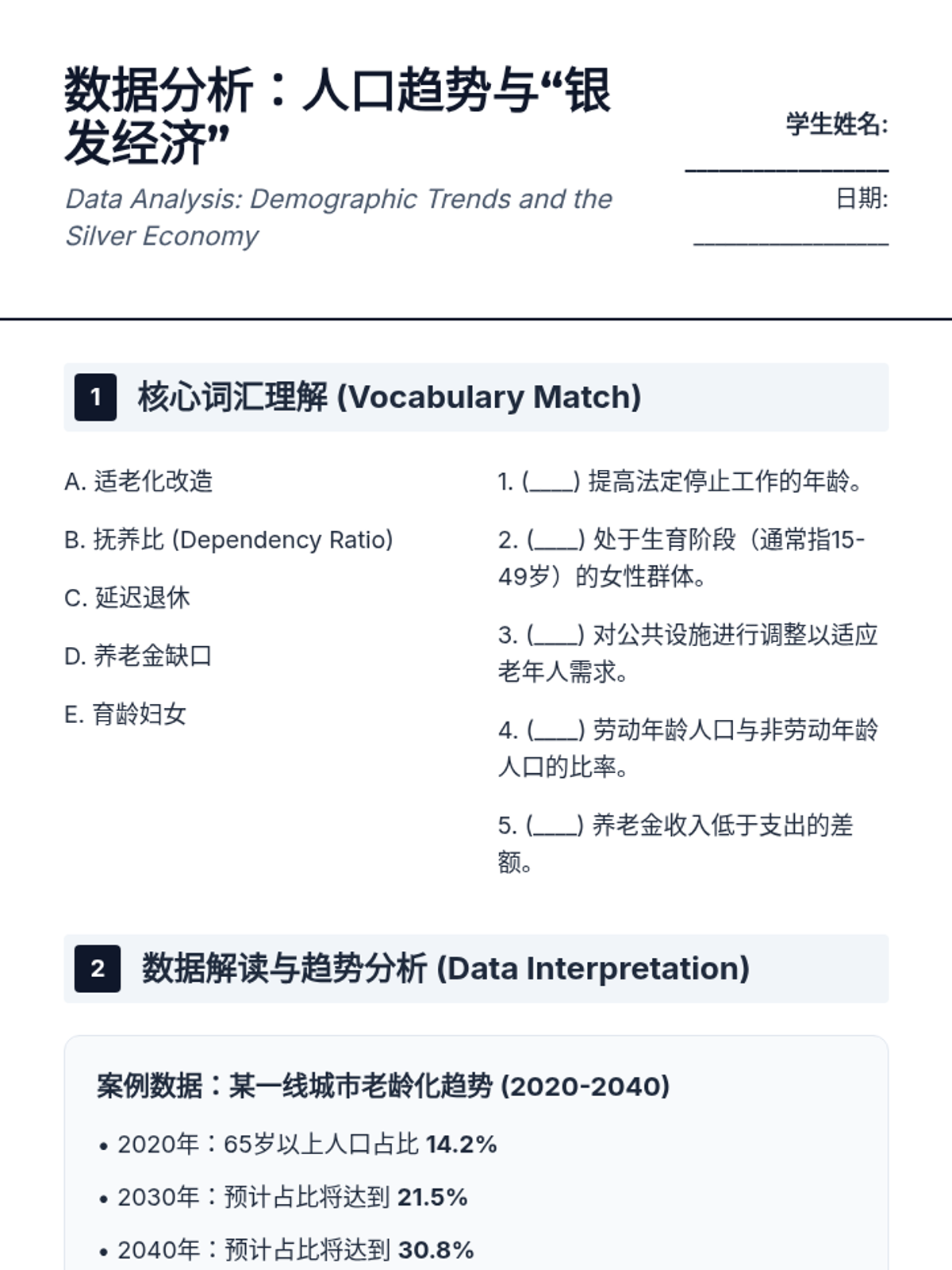
Worksheet for Lesson 2 featuring vocabulary matching, data interpretation regarding China's aging population, and a business case study on the silver economy.
Visual presentation for Lesson 2, covering demographic shifts, the silver economy, and cause-and-effect rhetoric in Mandarin.
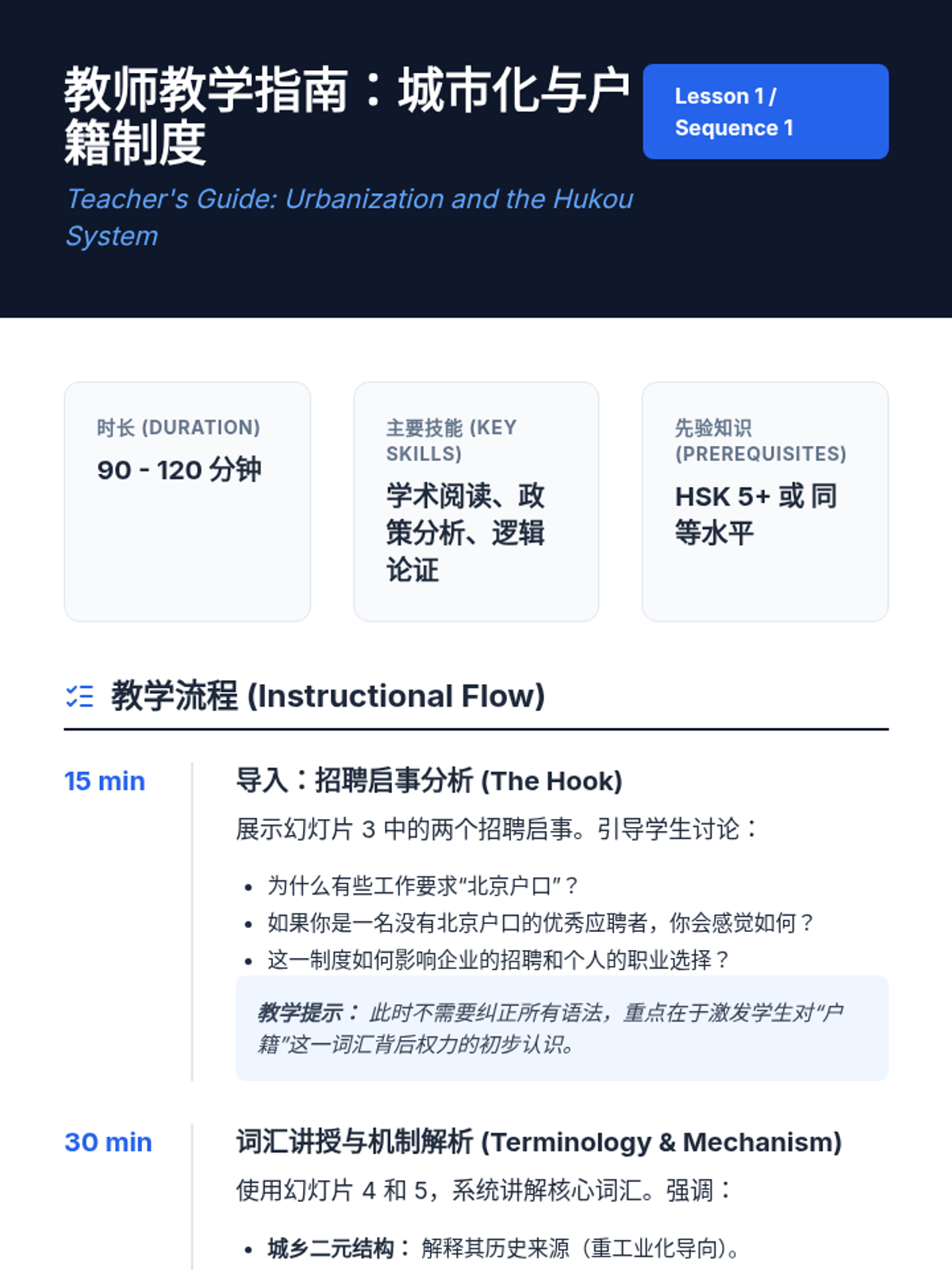
Facilitator guide for Lesson 1, including instructional steps, discussion prompts, answer keys for the reading worksheet, and common student misconceptions.
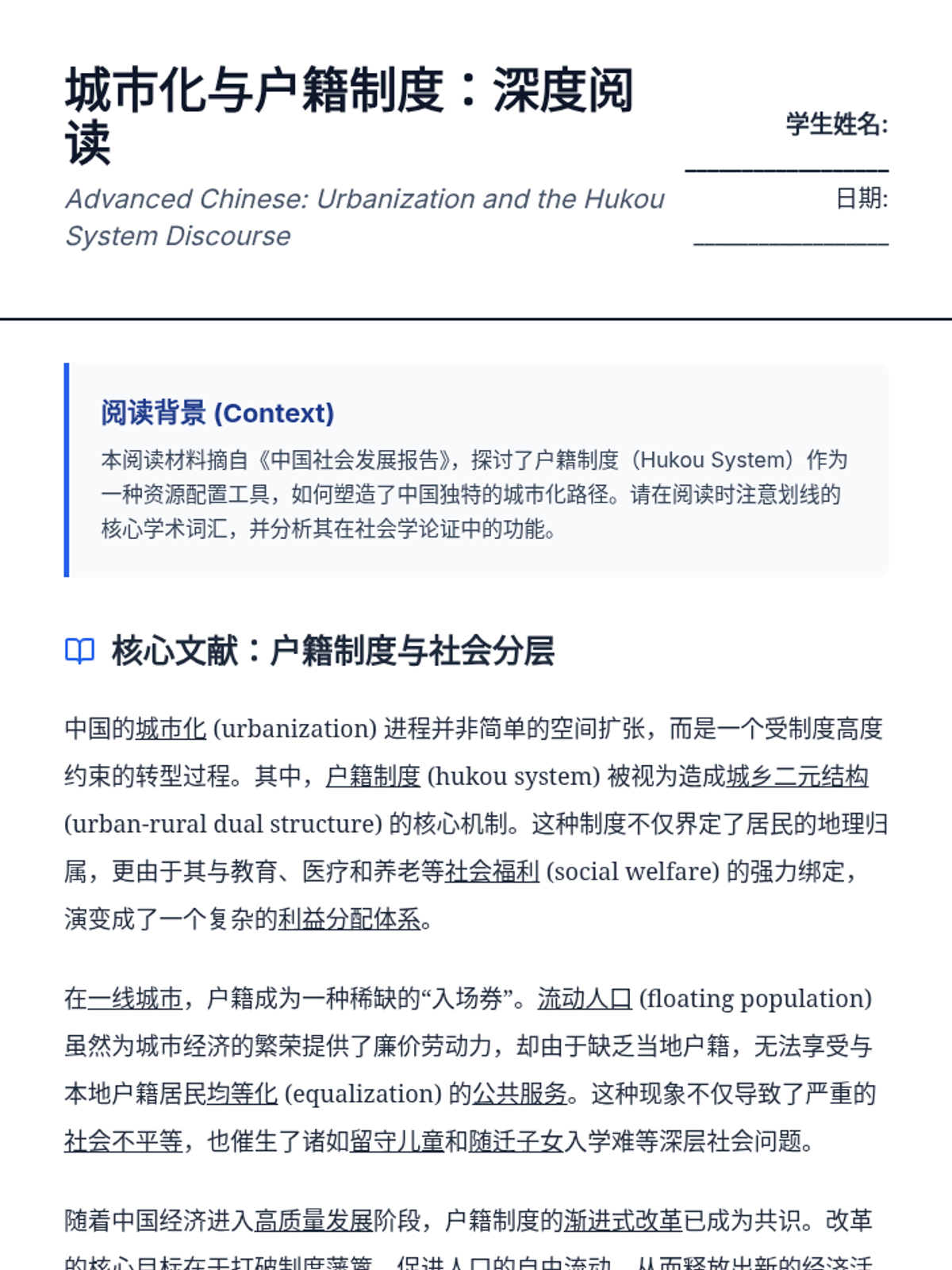
Advanced reading comprehension worksheet for Lesson 1, featuring academic text on the Hukou system, vocabulary definitions, and critical thinking questions.
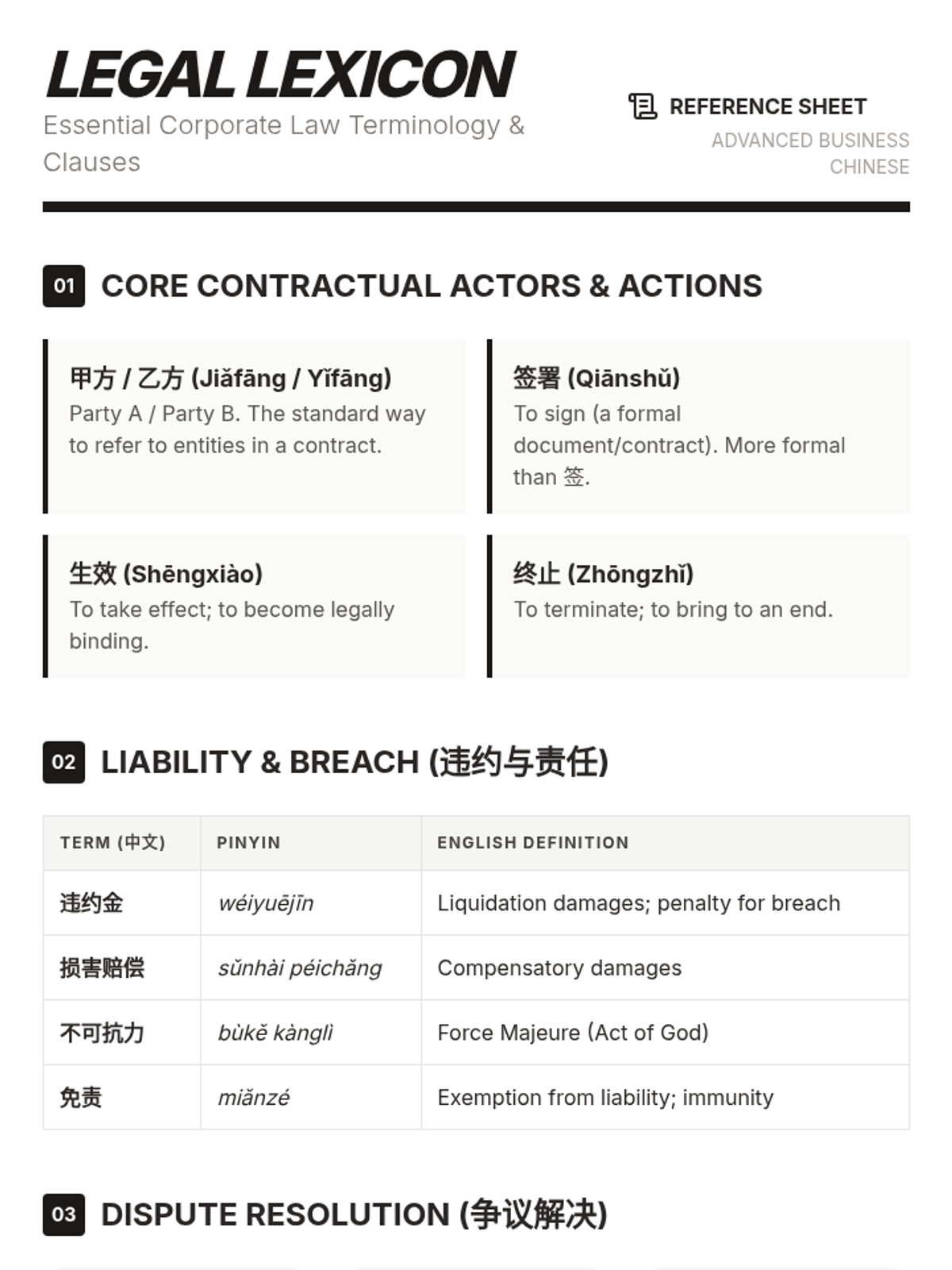
A comprehensive reference sheet for graduate students covering essential Chinese legal terminology, contractual roles, and common legal grammar patterns.
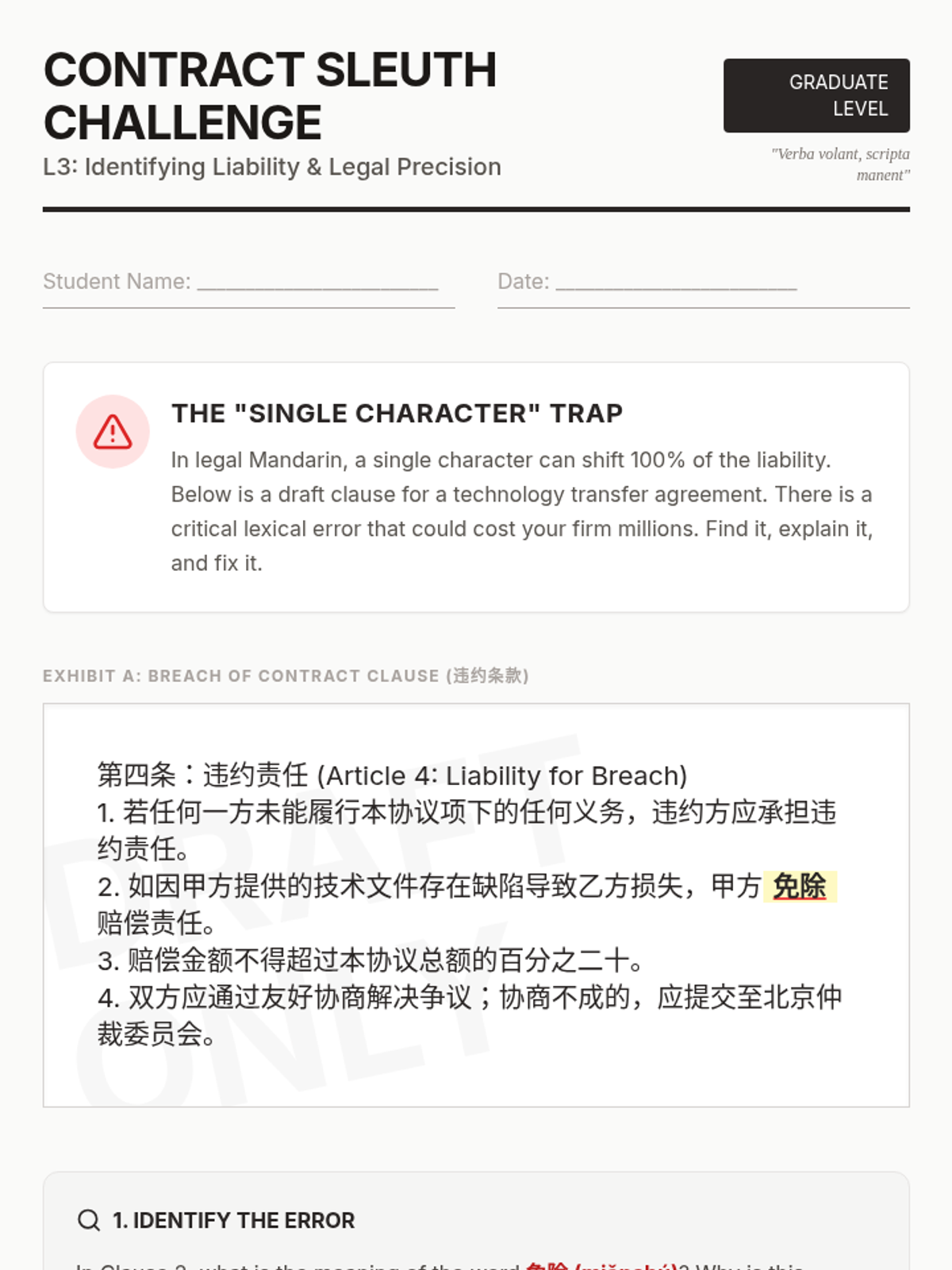
A worksheet where students must identify a critical legal error in a mock contract clause, practicing their attention to detail and knowledge of liability terms.
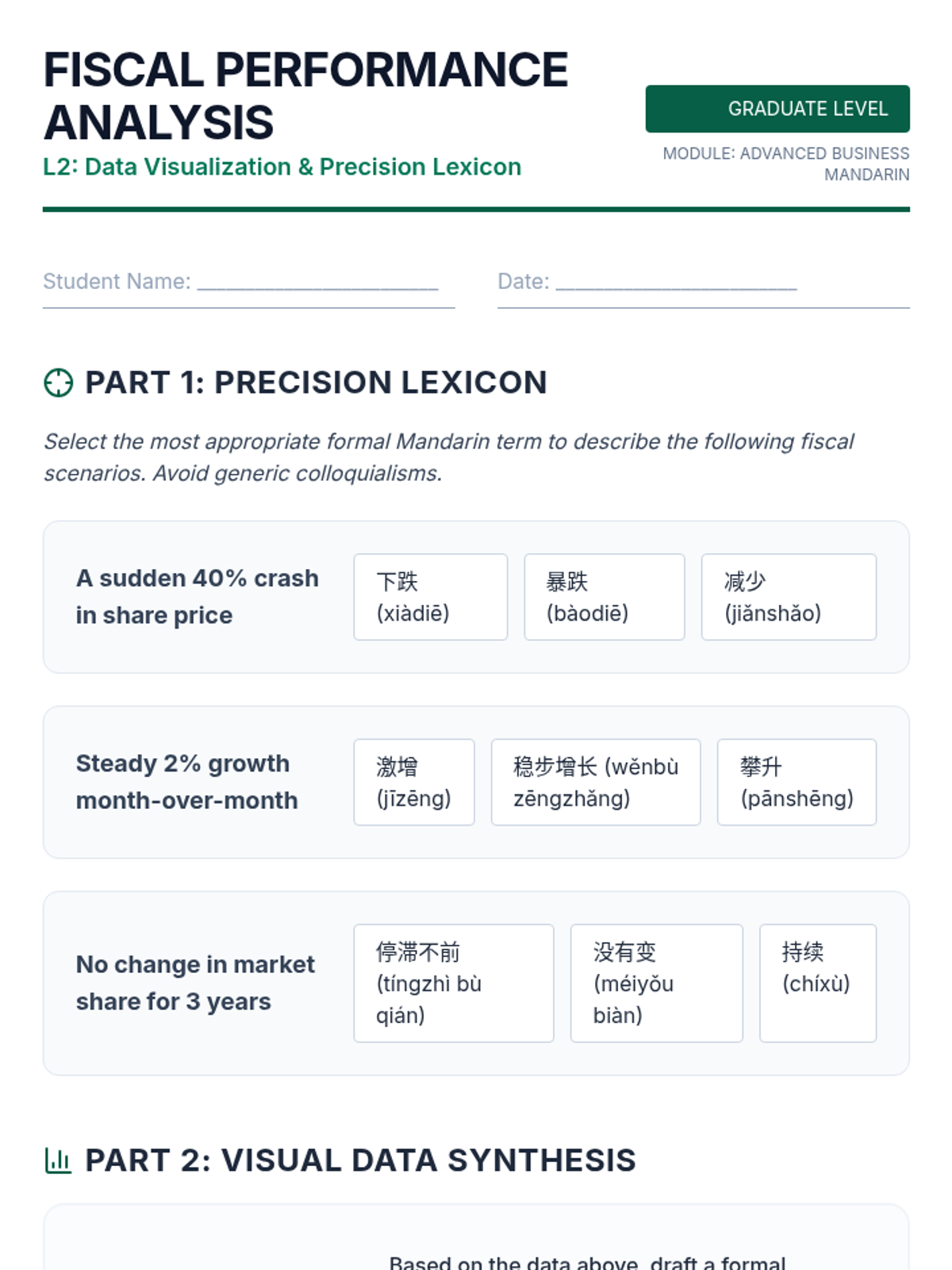
A worksheet for students to practice describing financial data and trends using formal Mandarin verbs and adverbs of intensity.
Visual slide deck introducing corporate hierarchy, honorifics, and business card etiquette in professional Chinese environments.
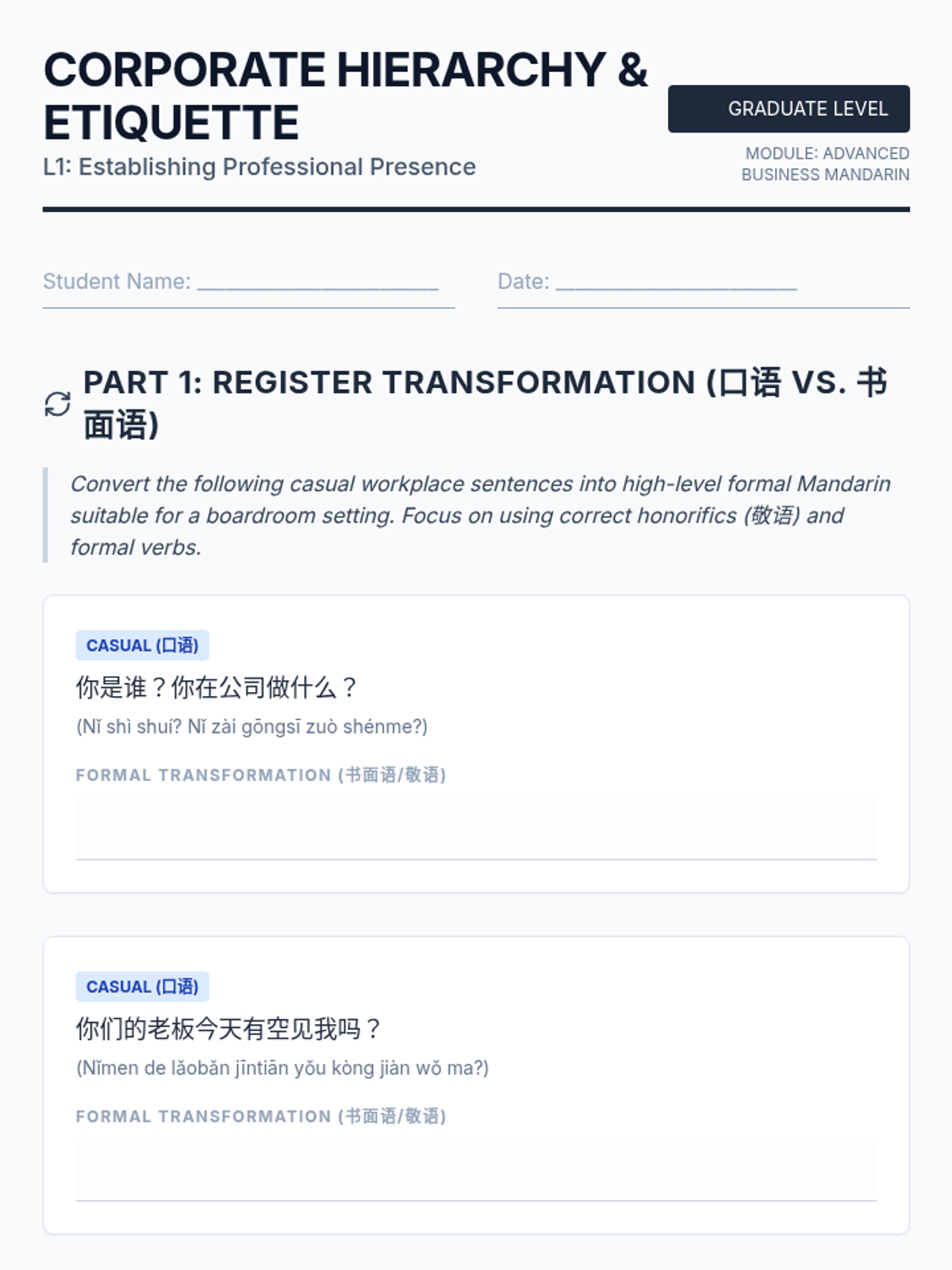
A worksheet for graduate students to practice converting casual Mandarin into formal business register, focusing on honorifics and corporate hierarchy terminology.
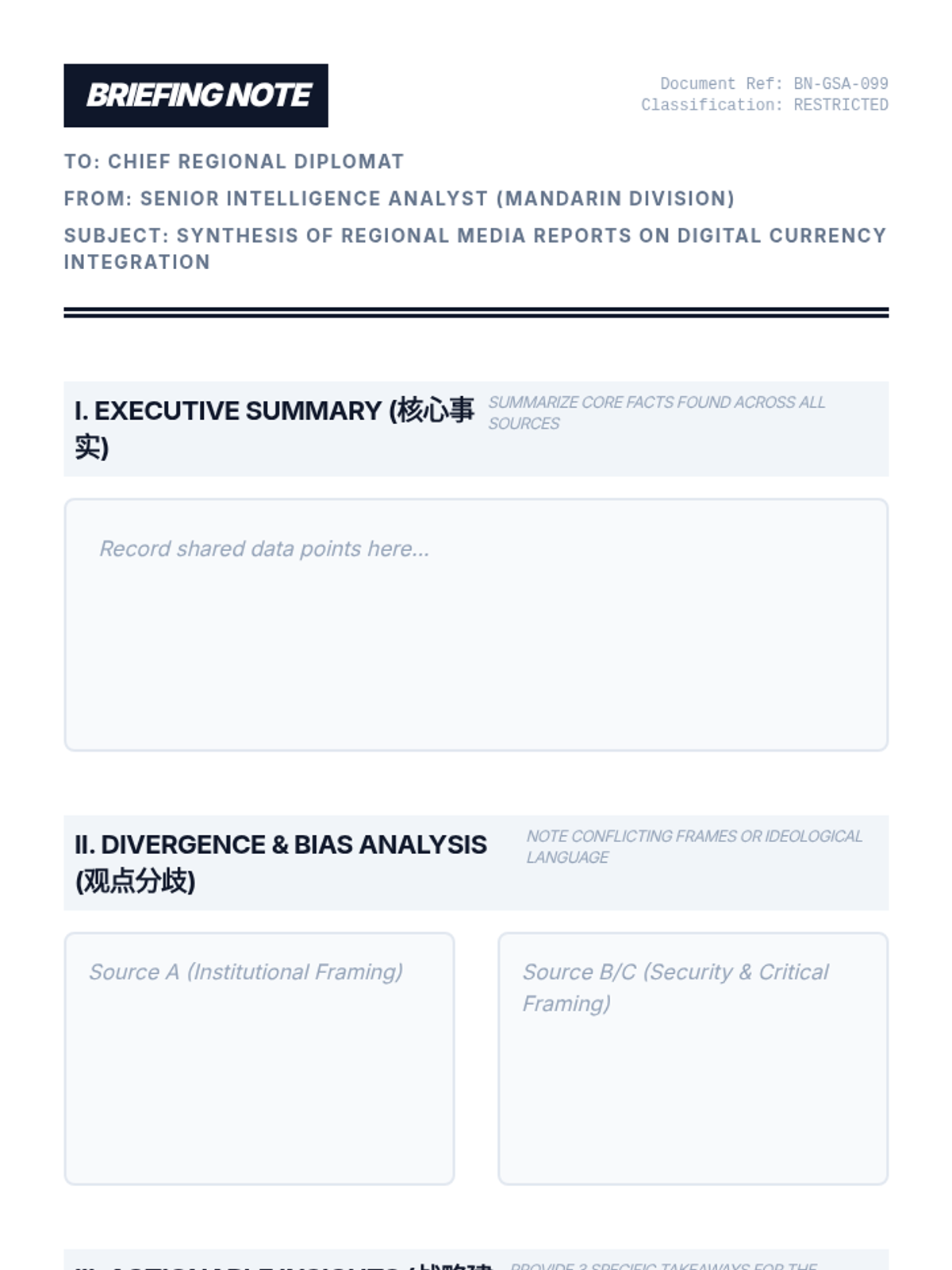
A professional executive summary template for graduate students to synthesize information from multiple news sources into a diplomatic briefing.
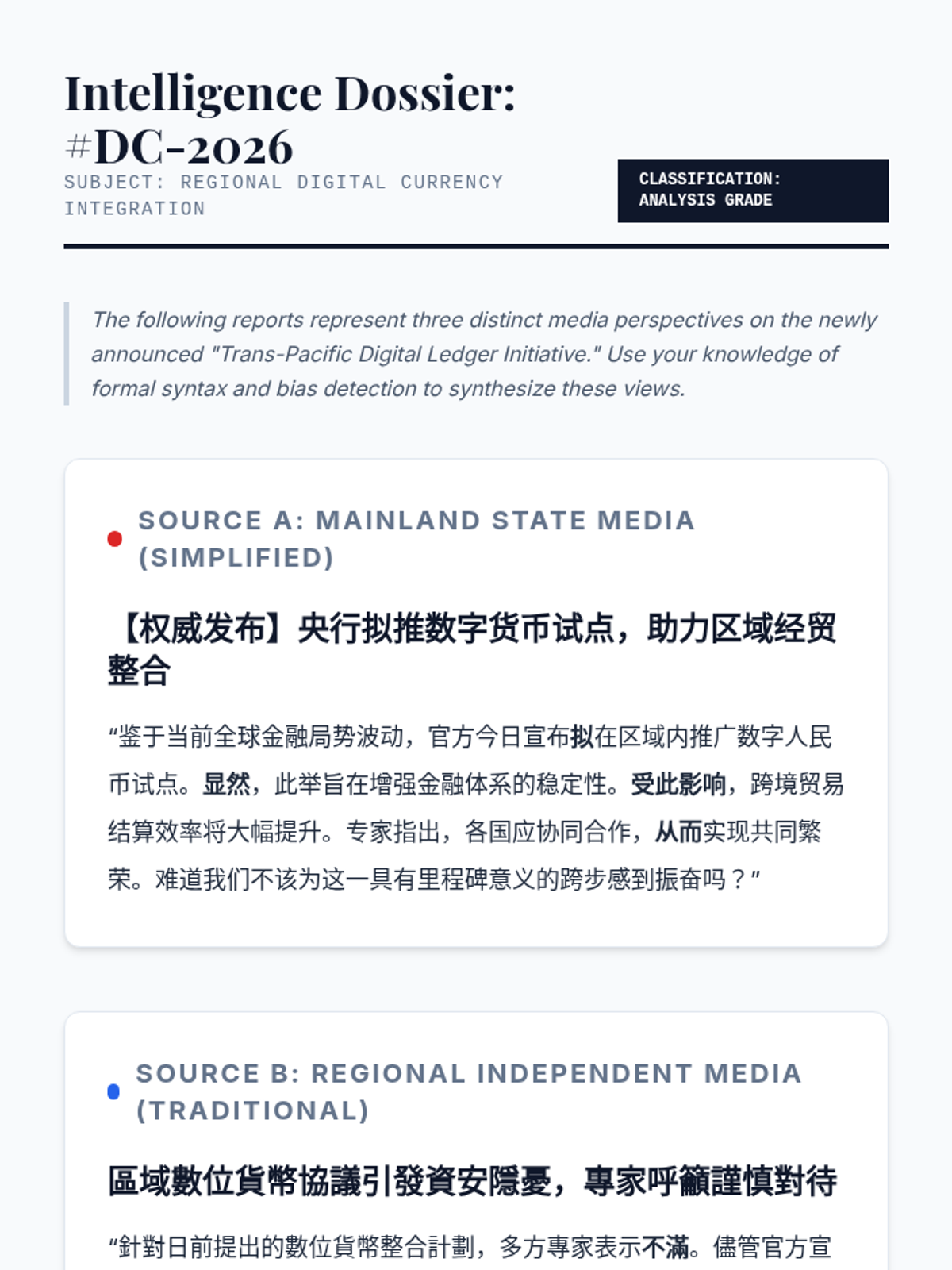
A comparative reading set featuring three different news reports on digital currency integration, using varied scripts (Simplified/Traditional) and registers for synthesis practice.
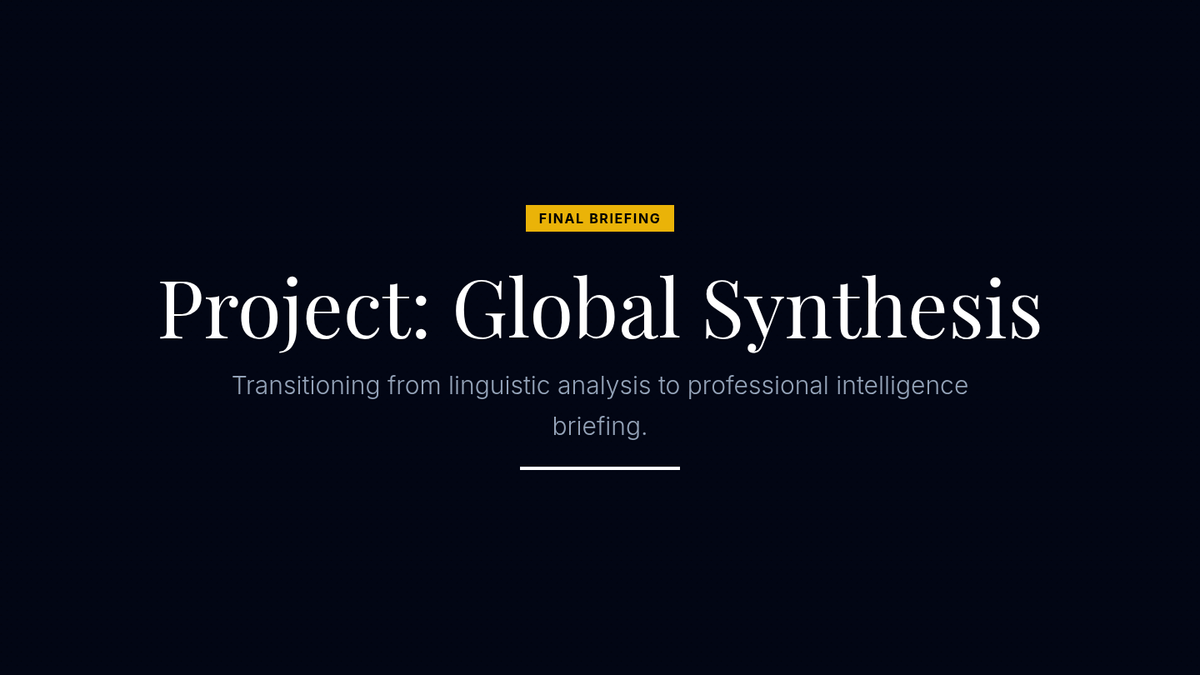
A slide deck outlining the final project requirements for a news synthesis simulation, focusing on comparative regional reading and intelligence briefing skills.
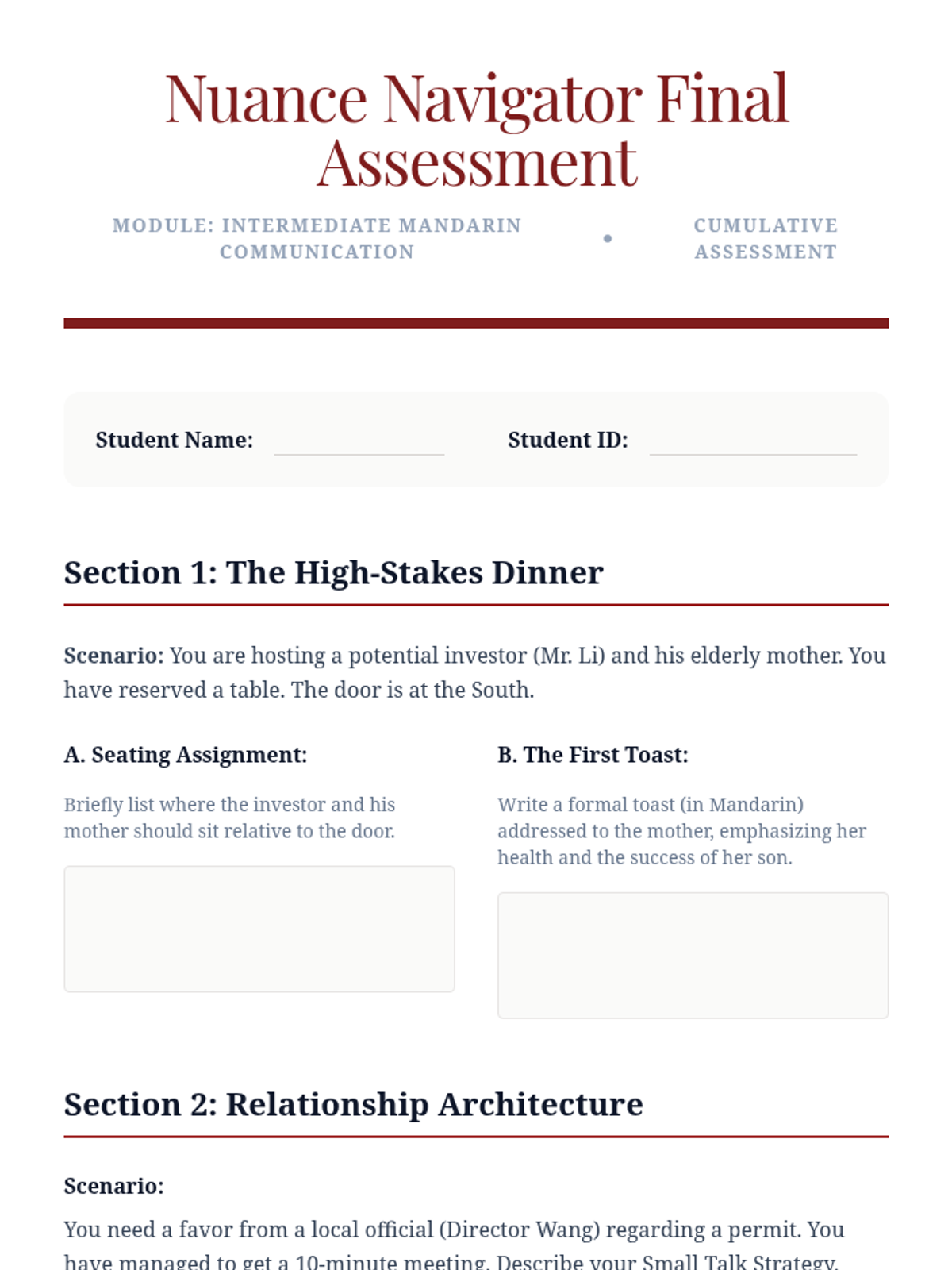
The cumulative final assessment for the Nuance Navigator sequence, testing students on seating etiquette, toasting rhetoric, Guanxi building, and register shift.
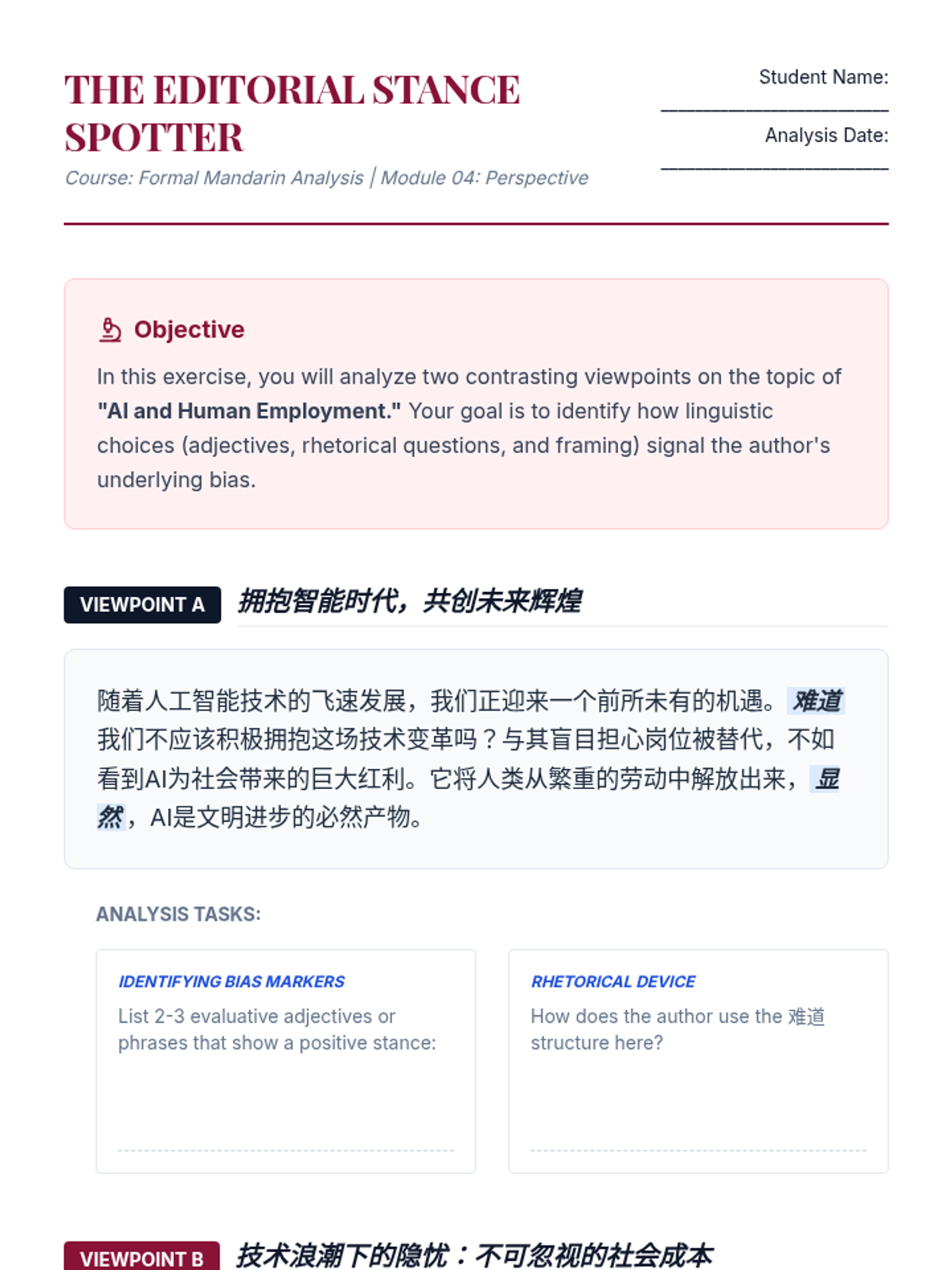
A specialized reading worksheet comparing two contrasting editorials to help graduate students identify linguistic cues of bias and ideological framing in Mandarin.
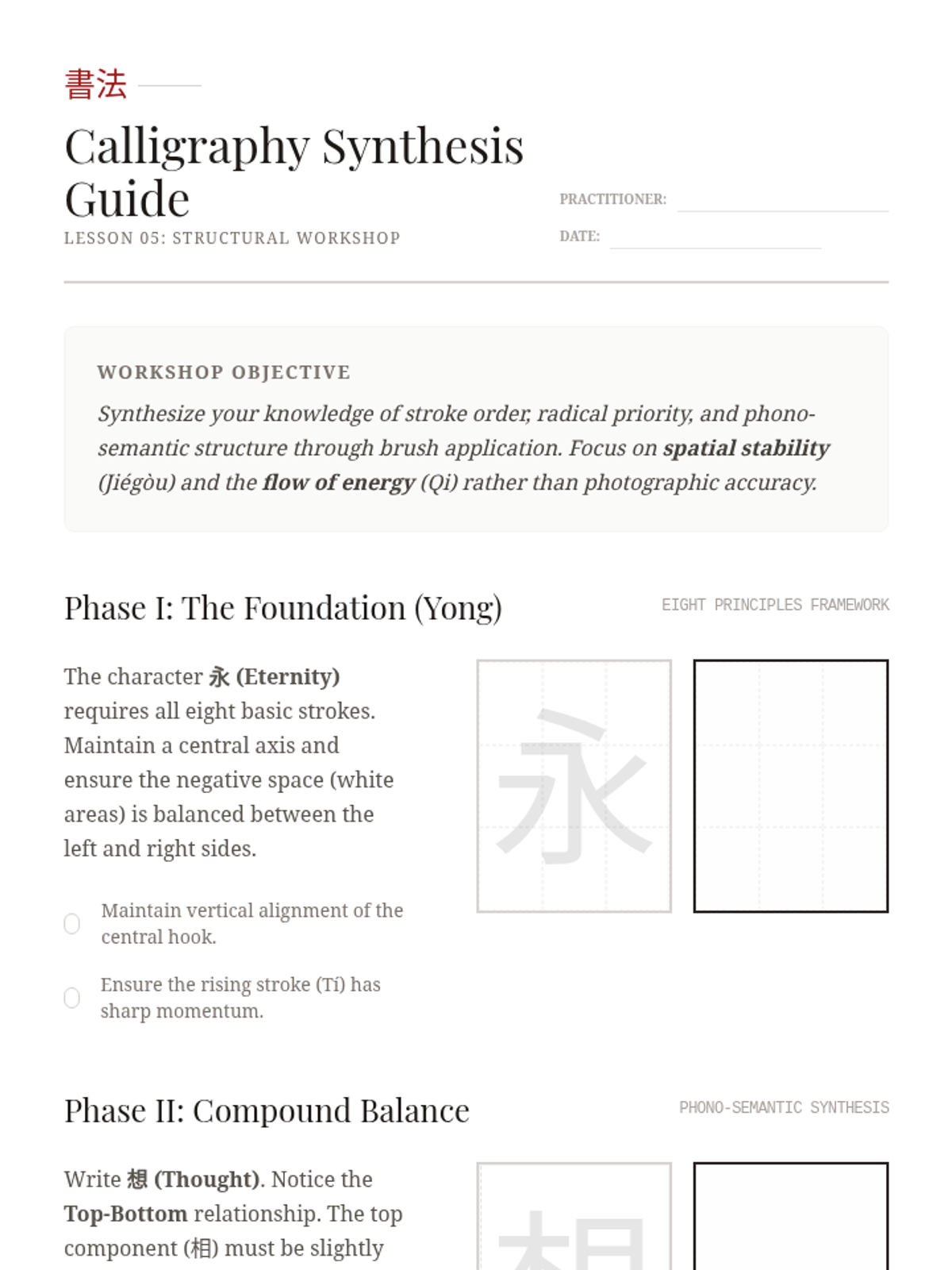
A culminating workshop guide for students to apply theoretical knowledge of structure, balance, and 'qi' through brush calligraphy practice and spatial analysis.
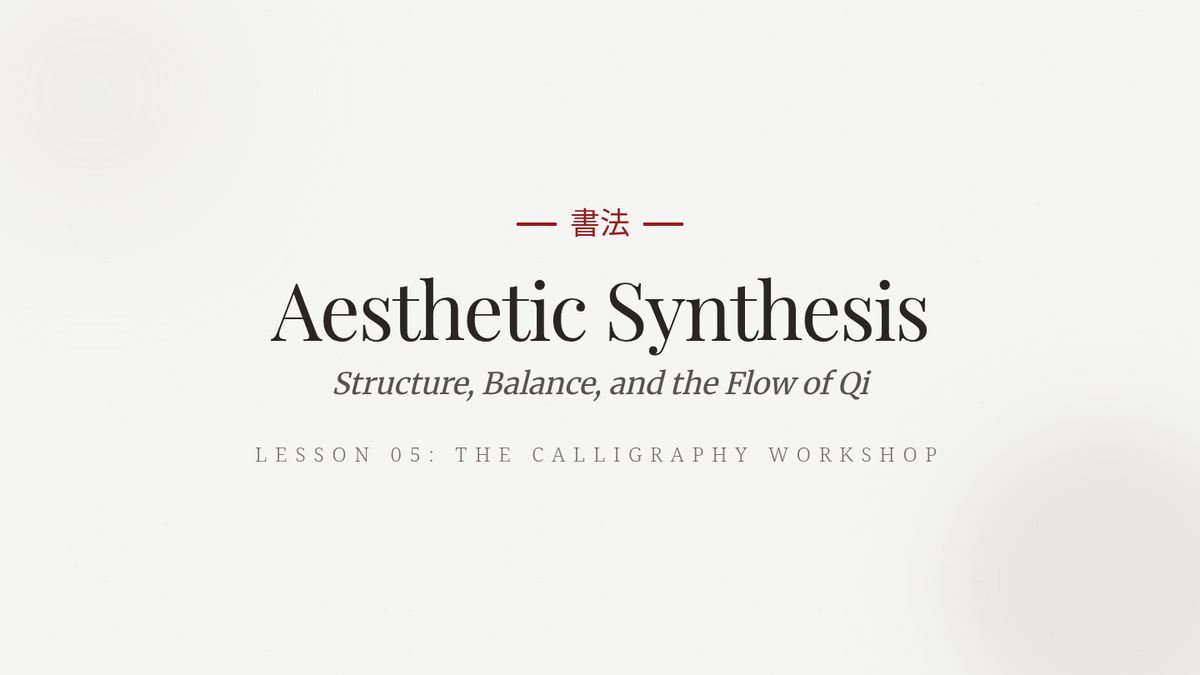
A sophisticated slide deck for graduate students exploring the aesthetic principles of calligraphy, including 'qi', structural balance, and spatial relationships.
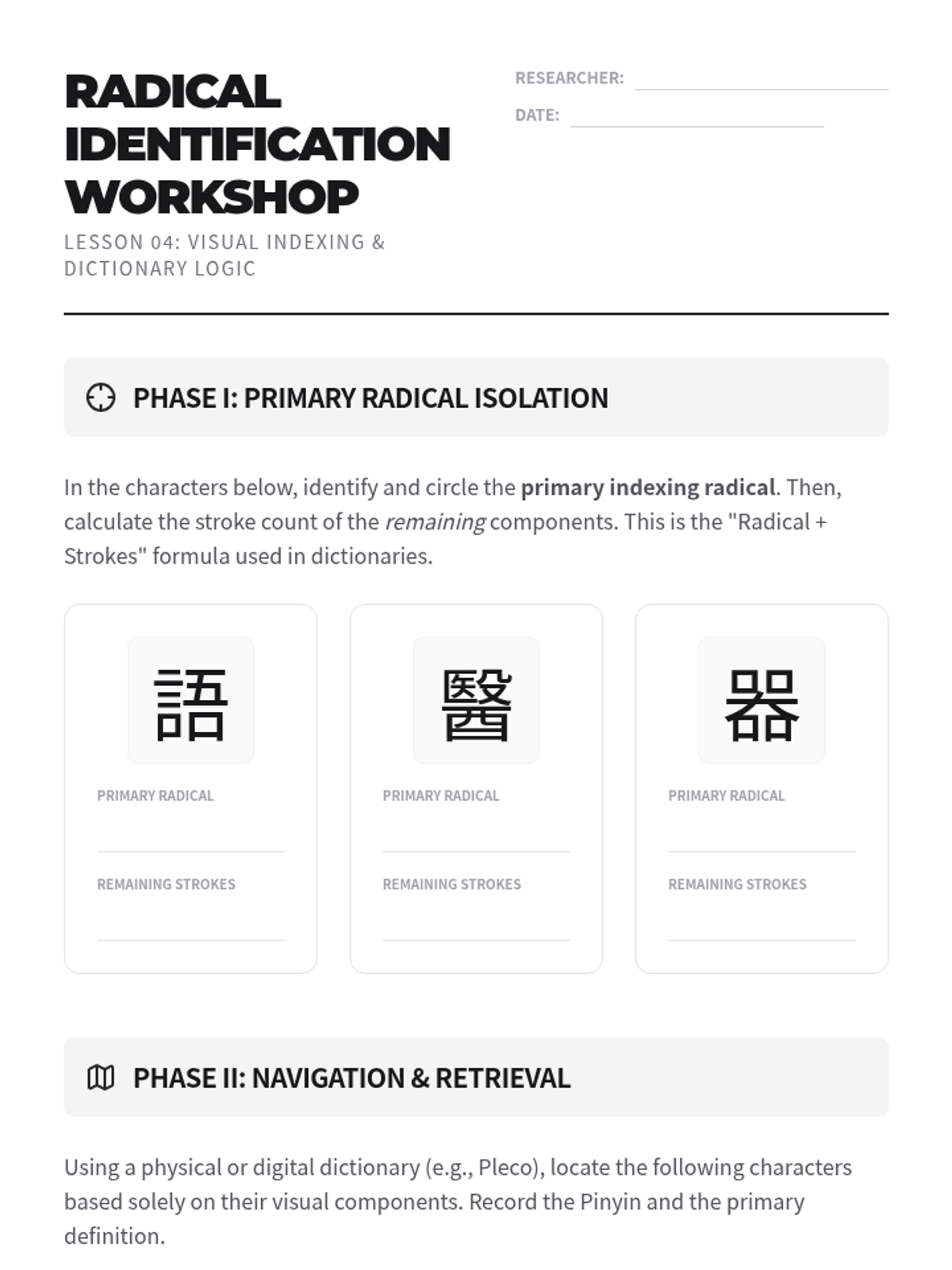
A workshop activity for graduate students to practice identifying radicals, calculating stroke counts, and navigating dictionaries to decode unfamiliar characters.
A technical slide deck for graduate students explaining the Kangxi radical system, the indexing logic of dictionaries, and strategies for identifying primary radicals.
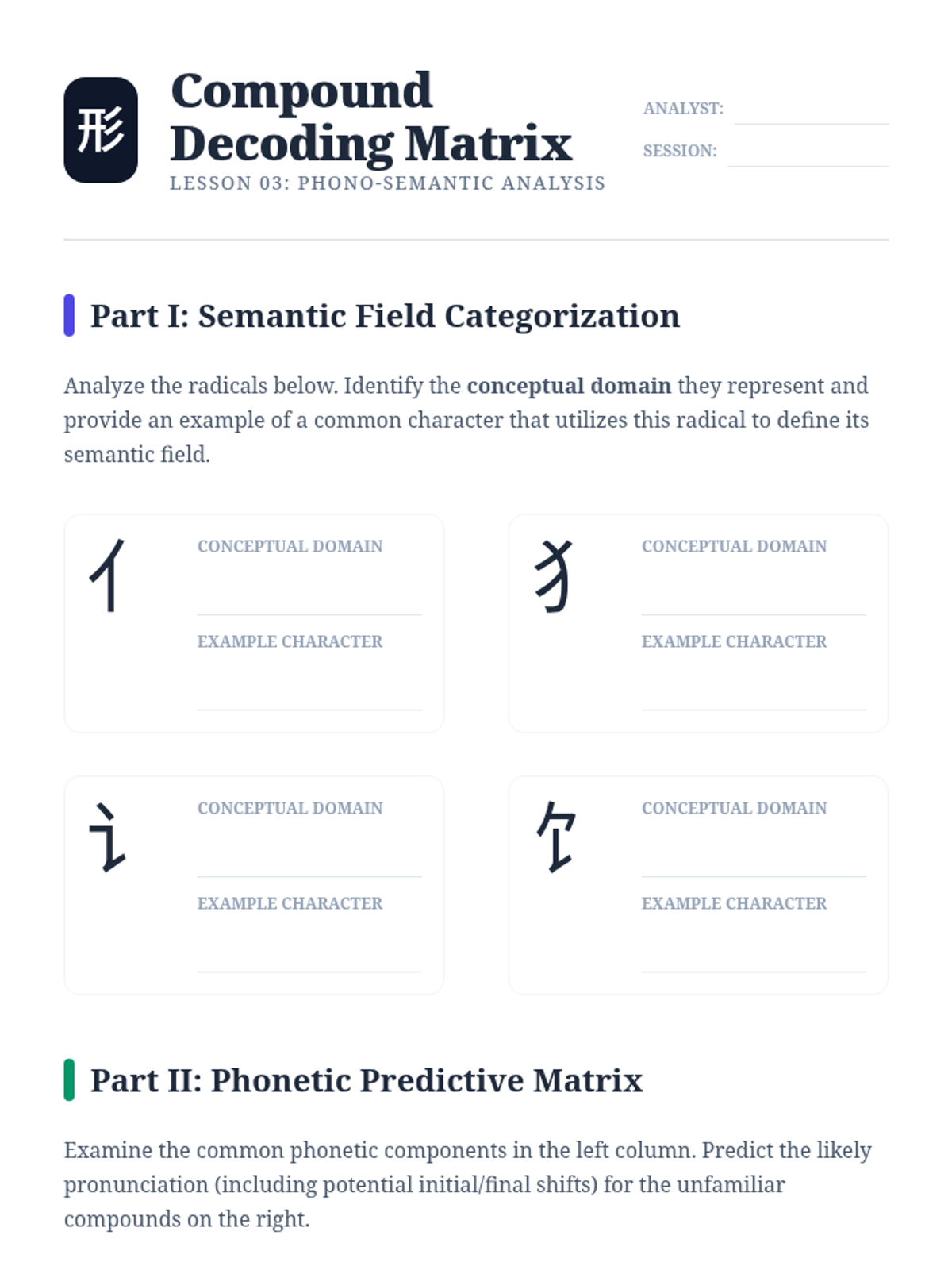
A technical matrix for graduate students to practice decoding phono-semantic compounds by identifying conceptual domains and phonetic anchors.
A technical slide deck for graduate students explaining the structural logic of phono-semantic compounds (Xíngshēng) through a linguistic and statistical lens.
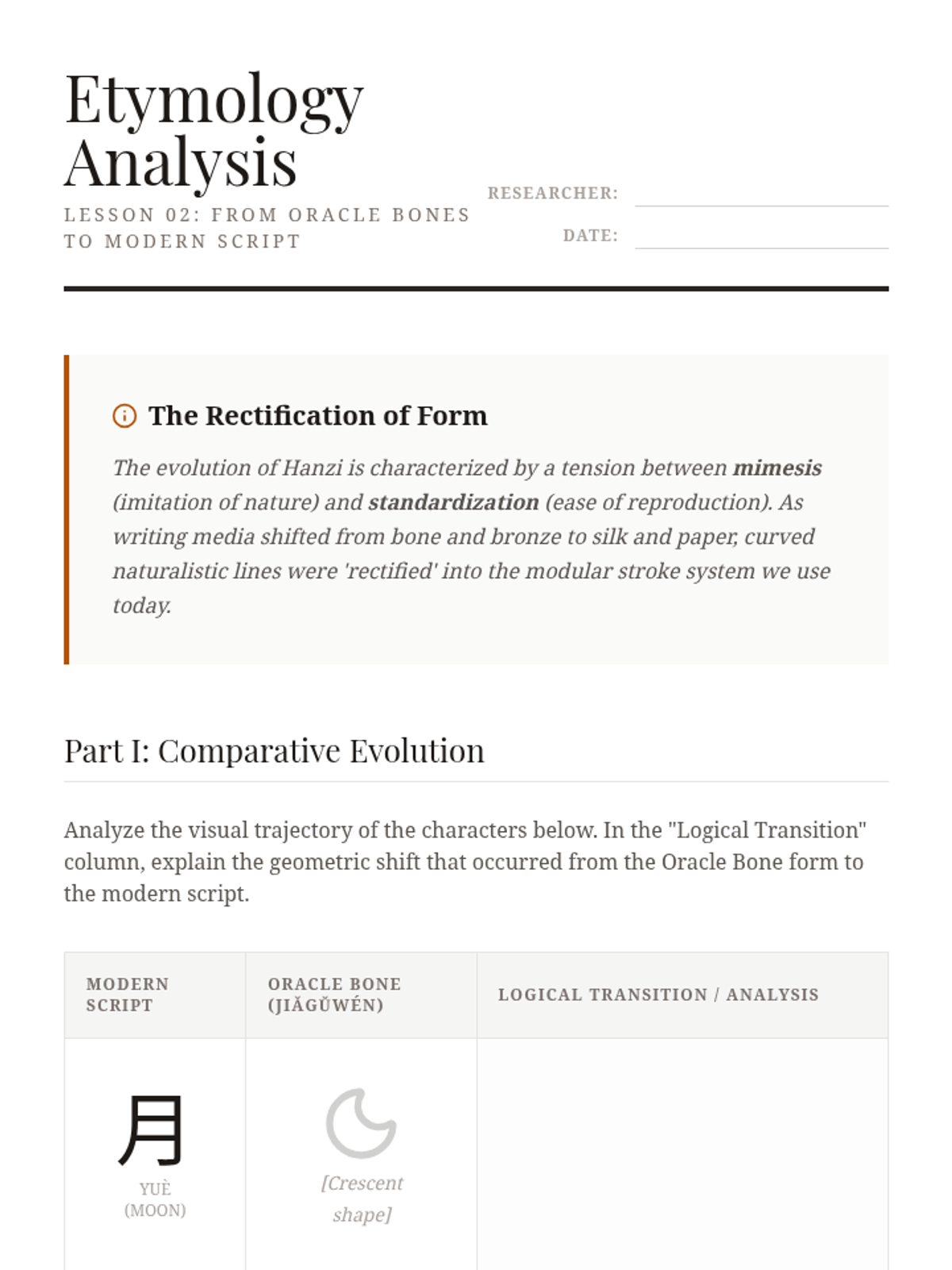
An etymology worksheet for graduate students analyzing the visual evolution and logical transition of Chinese characters from ancient pictographs to modern ideographs.
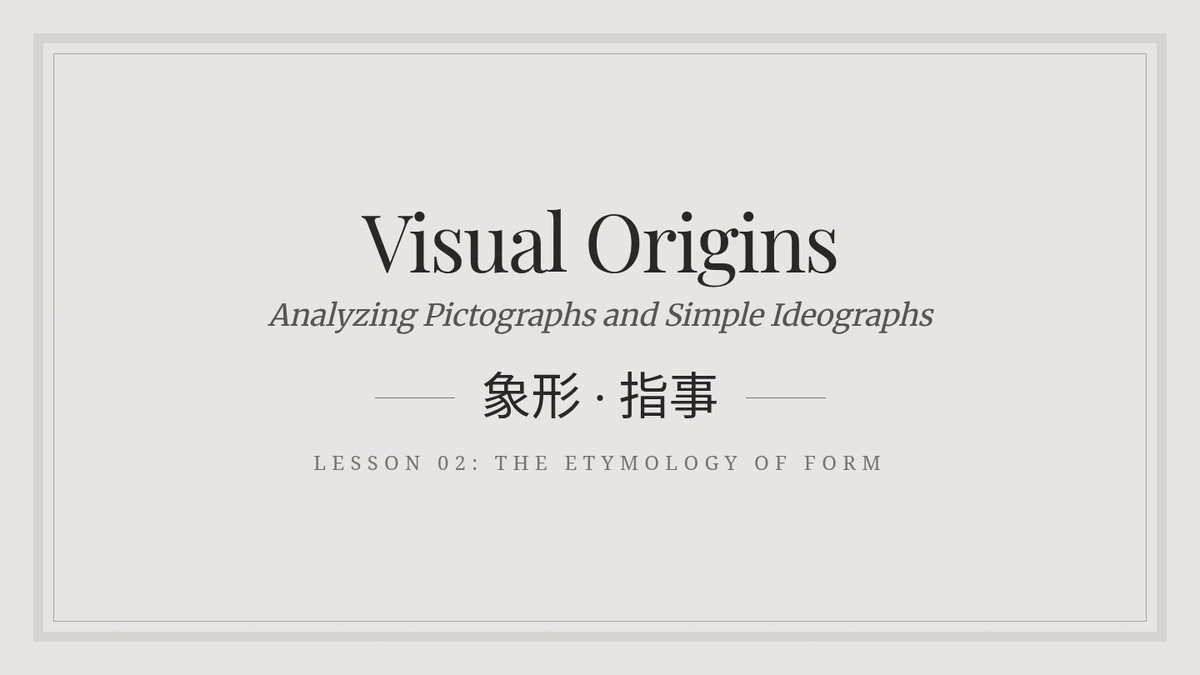
A visual presentation for graduate students exploring the etymology and evolution of Chinese pictographs and simple ideographs from oracle bones to modern script.
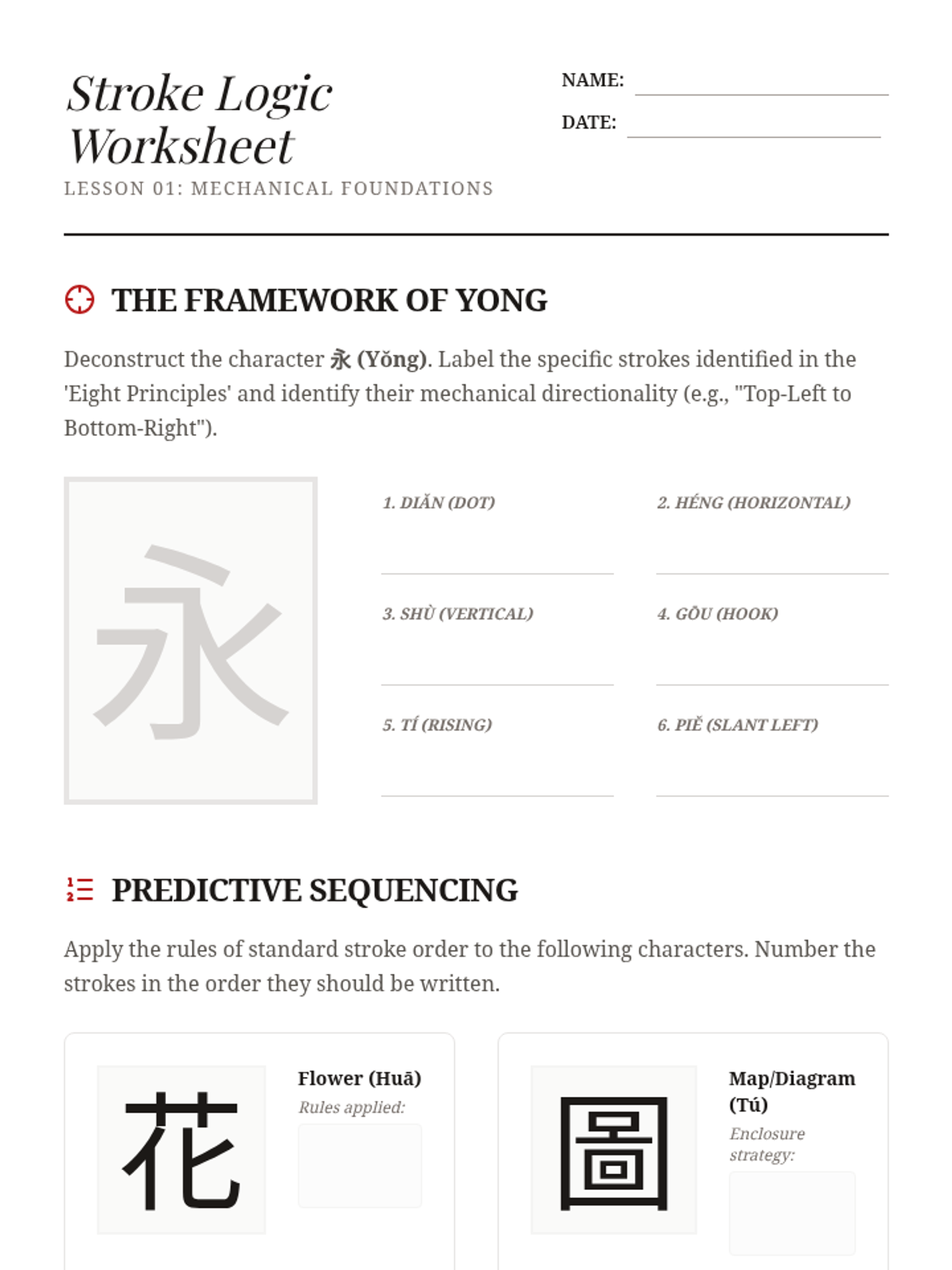
A technical worksheet for graduate students to practice and analyze stroke order rules, featuring predictive sequencing and mechanical analysis.
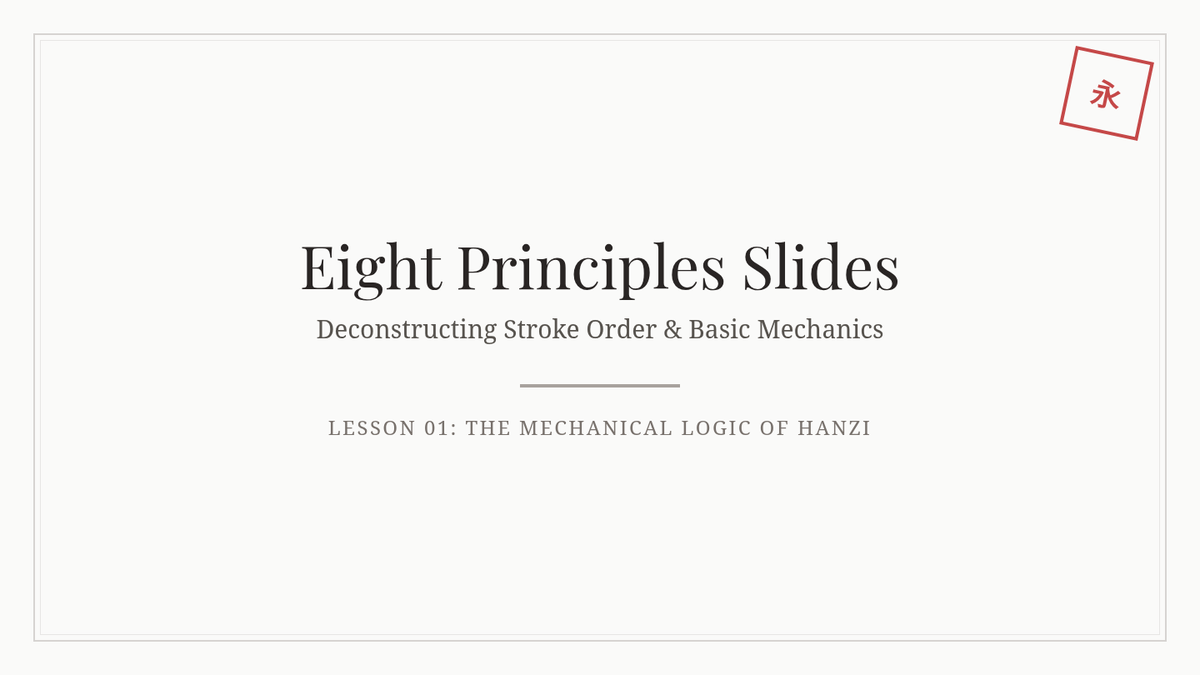
A sophisticated slide deck for graduate students deconstructing the 'Eight Principles of Yong' and standard stroke order rules through a mechanical and logical lens.
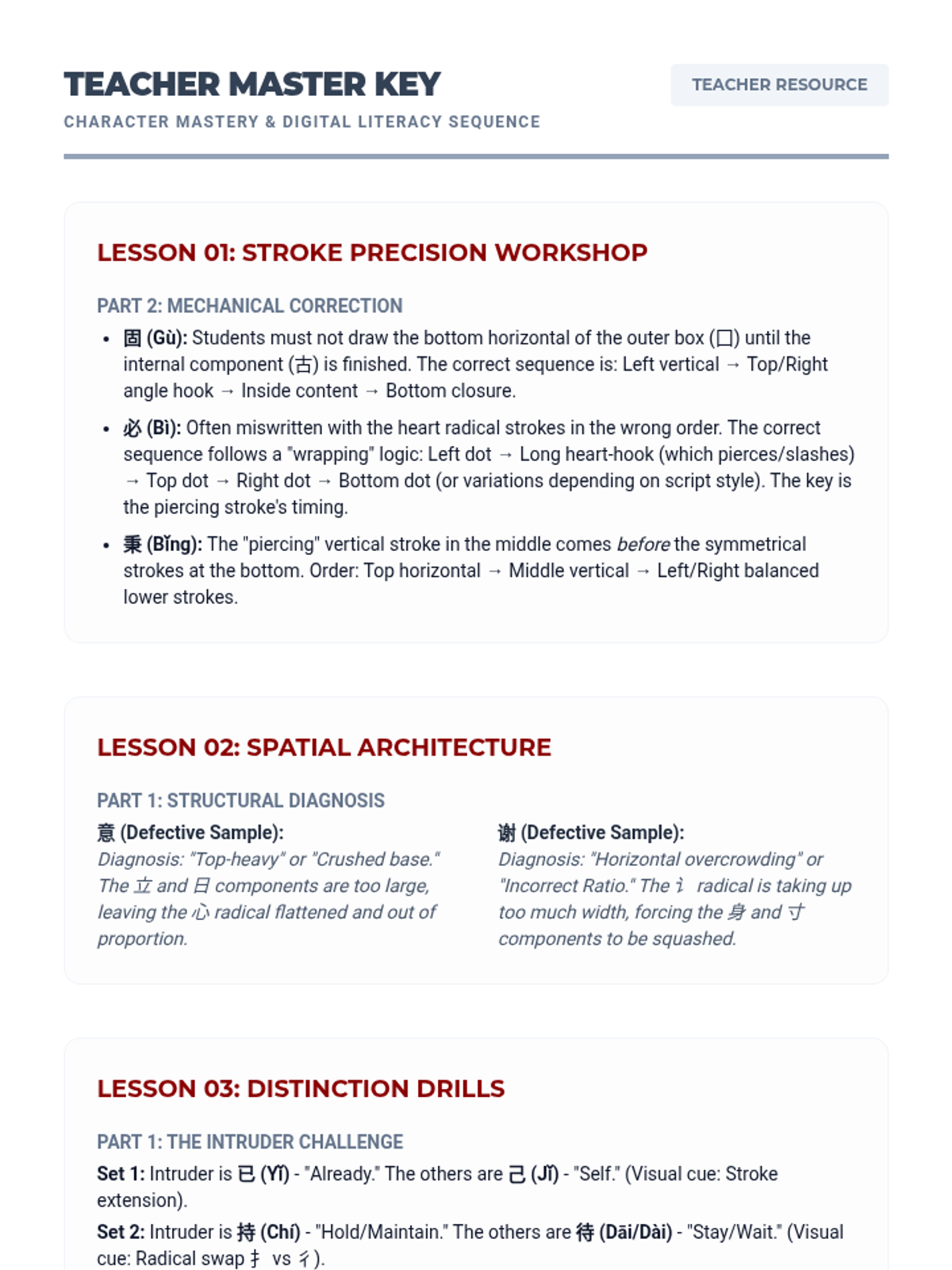
A comprehensive teacher's answer key and facilitation guide covering the stroke order, spatial architecture, and distinction drills from the sequence.
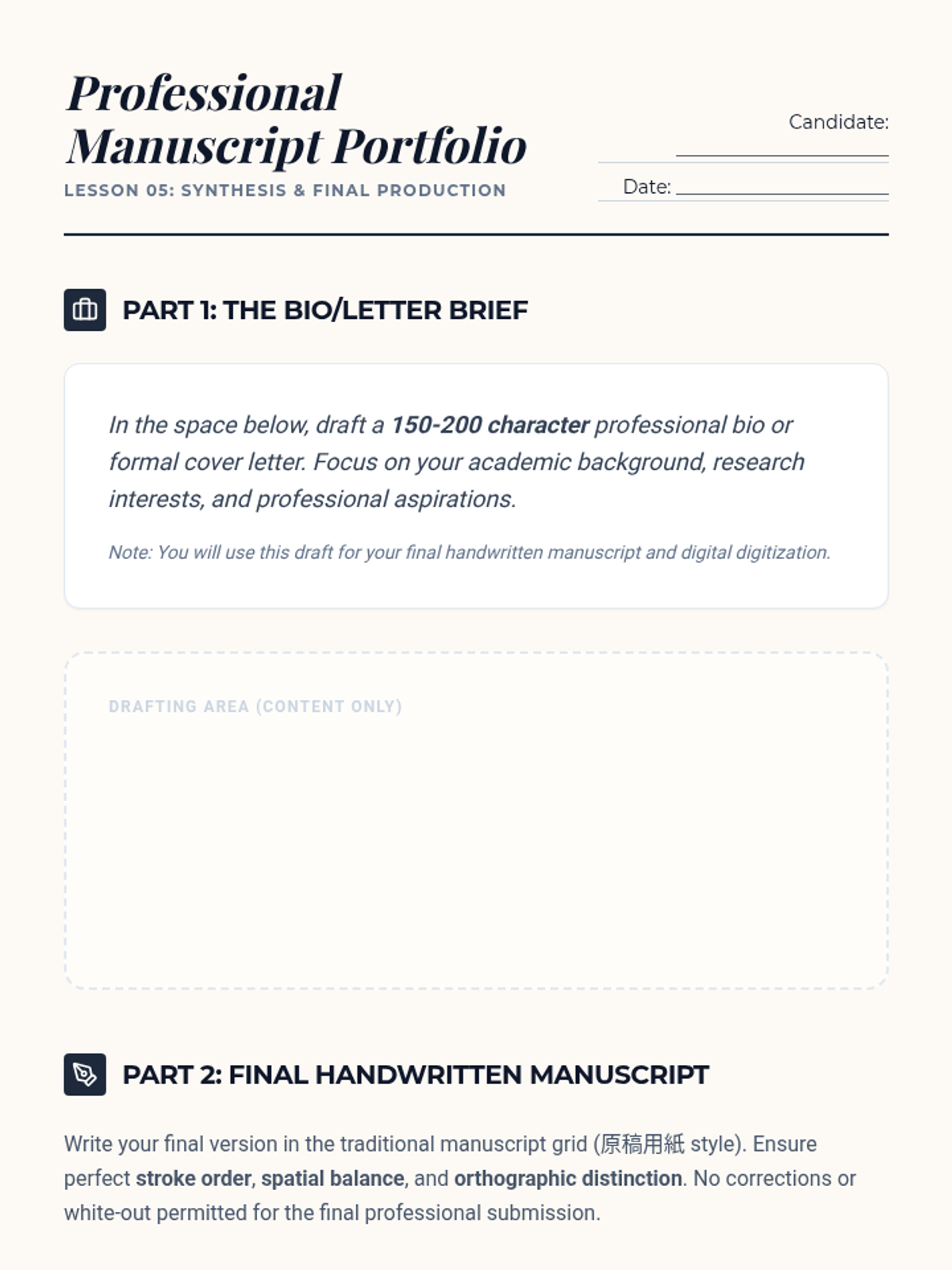
A professional manuscript template and guide for the final synthesis project in Lesson 5, allowing students to produce a handwritten bio and its digital equivalent.
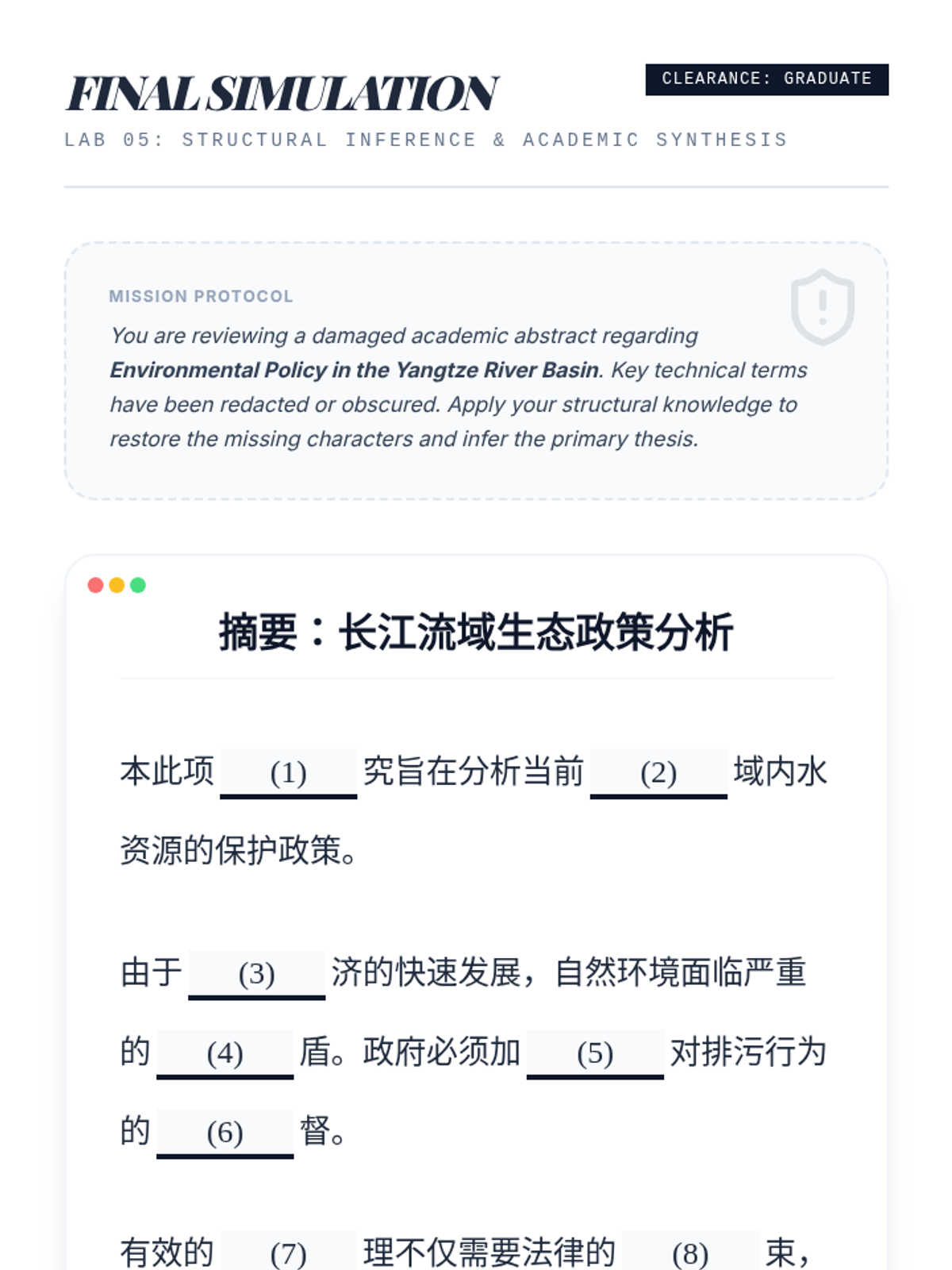
A culminating student assessment requiring the restoration of a redacted academic abstract using structural character decoding and morphological inference.
A slide deck focusing on strategies for contextual decoding and inference when encountering unfamiliar Mandarin characters in academic texts.
A presentation deck for Lesson 5, focusing on the final project: producing a professional handwritten manuscript and its digital equivalent.
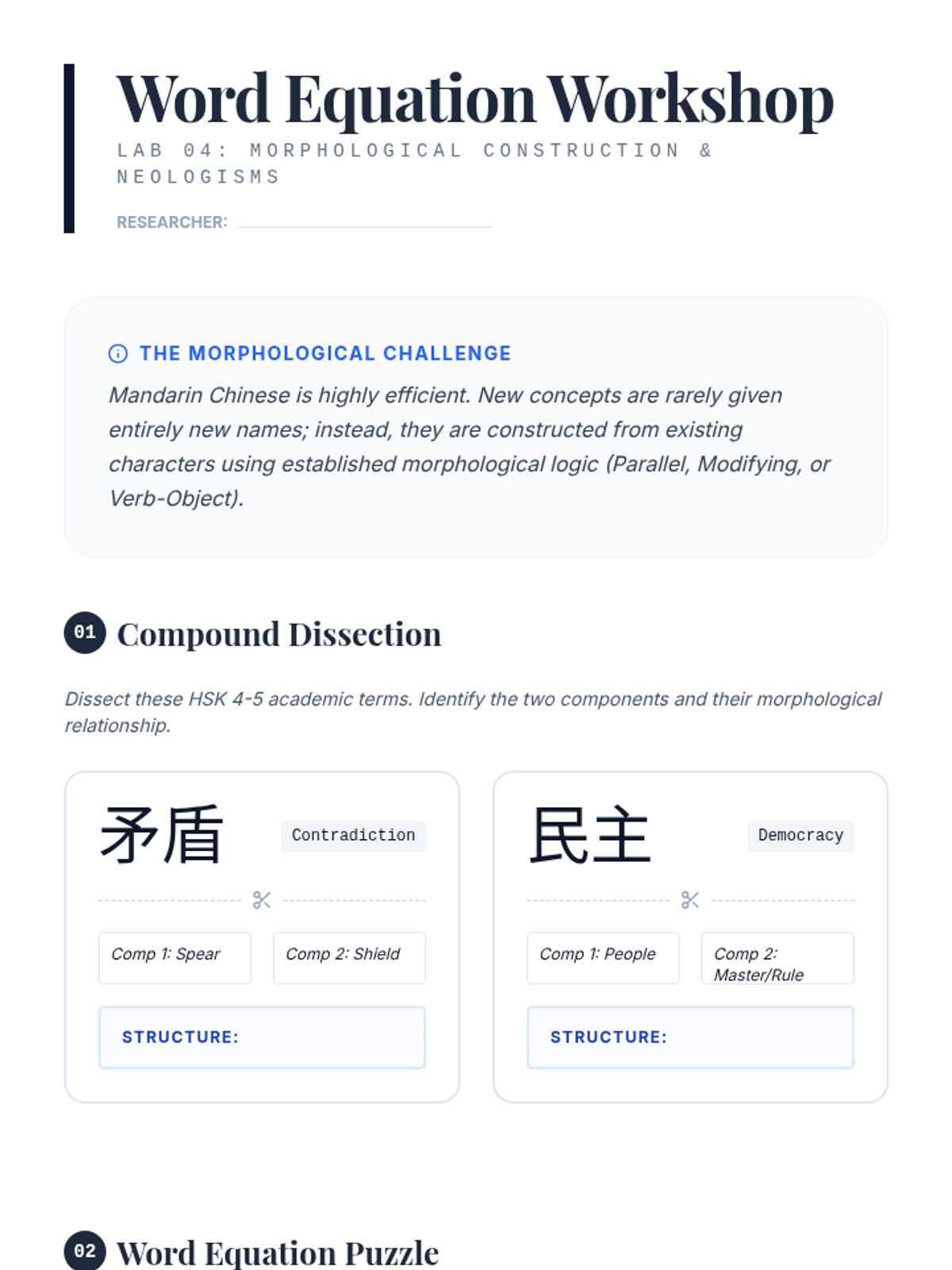
A student worksheet for analyzing the morphology of Mandarin compounds and constructing neologisms using established structural logic.
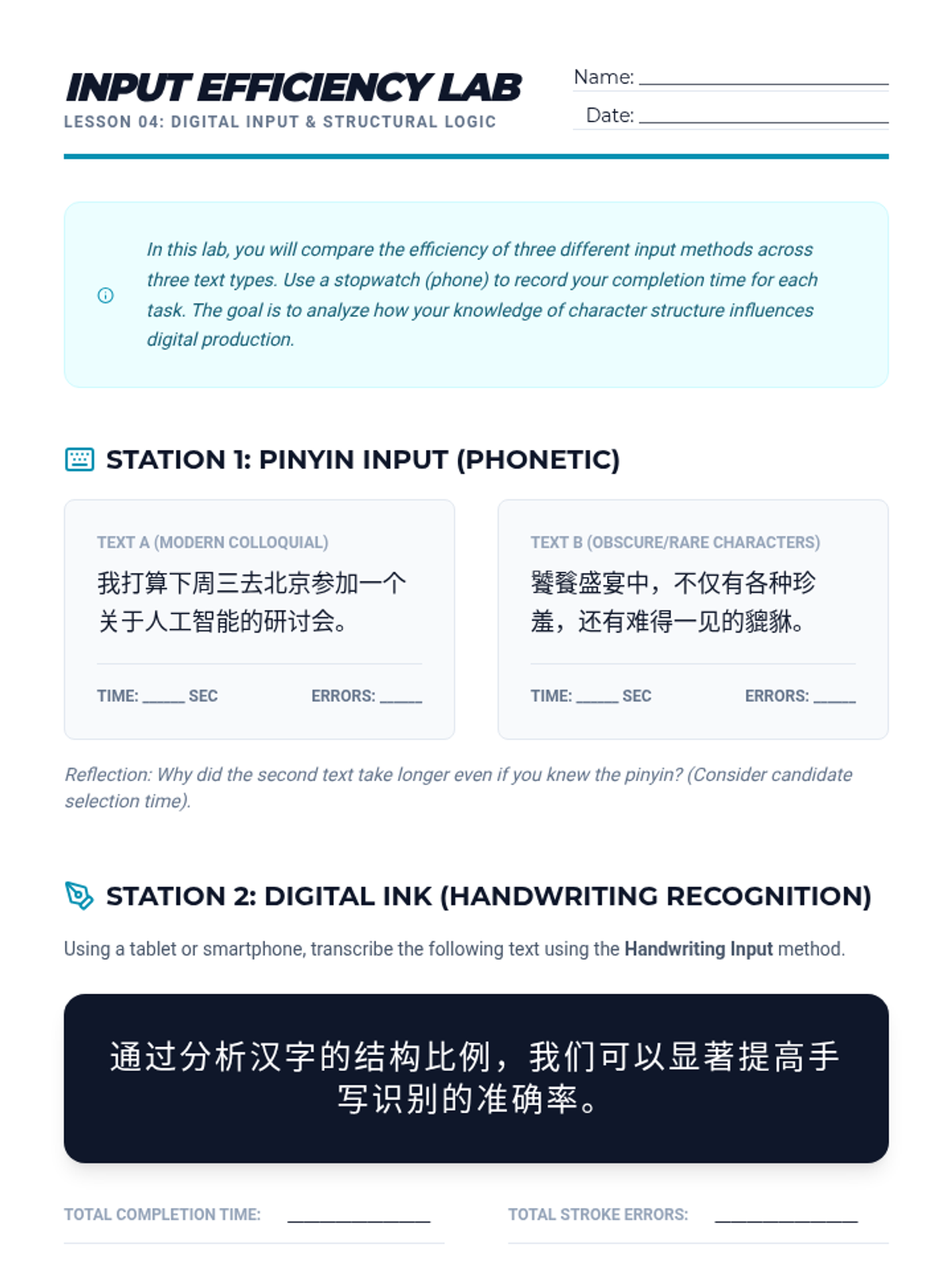
An activity sheet for the Lesson 4 Input Lab, where students compare and analyze the efficiency of different digital input methods through timed trials.
A slide deck focusing on the morphological structure of two-character Mandarin compounds, categorized by their internal semantic and syntactic logic.
A presentation deck for Lesson 4, exploring how character structure applies to digital environments and the mechanics of different input methods.
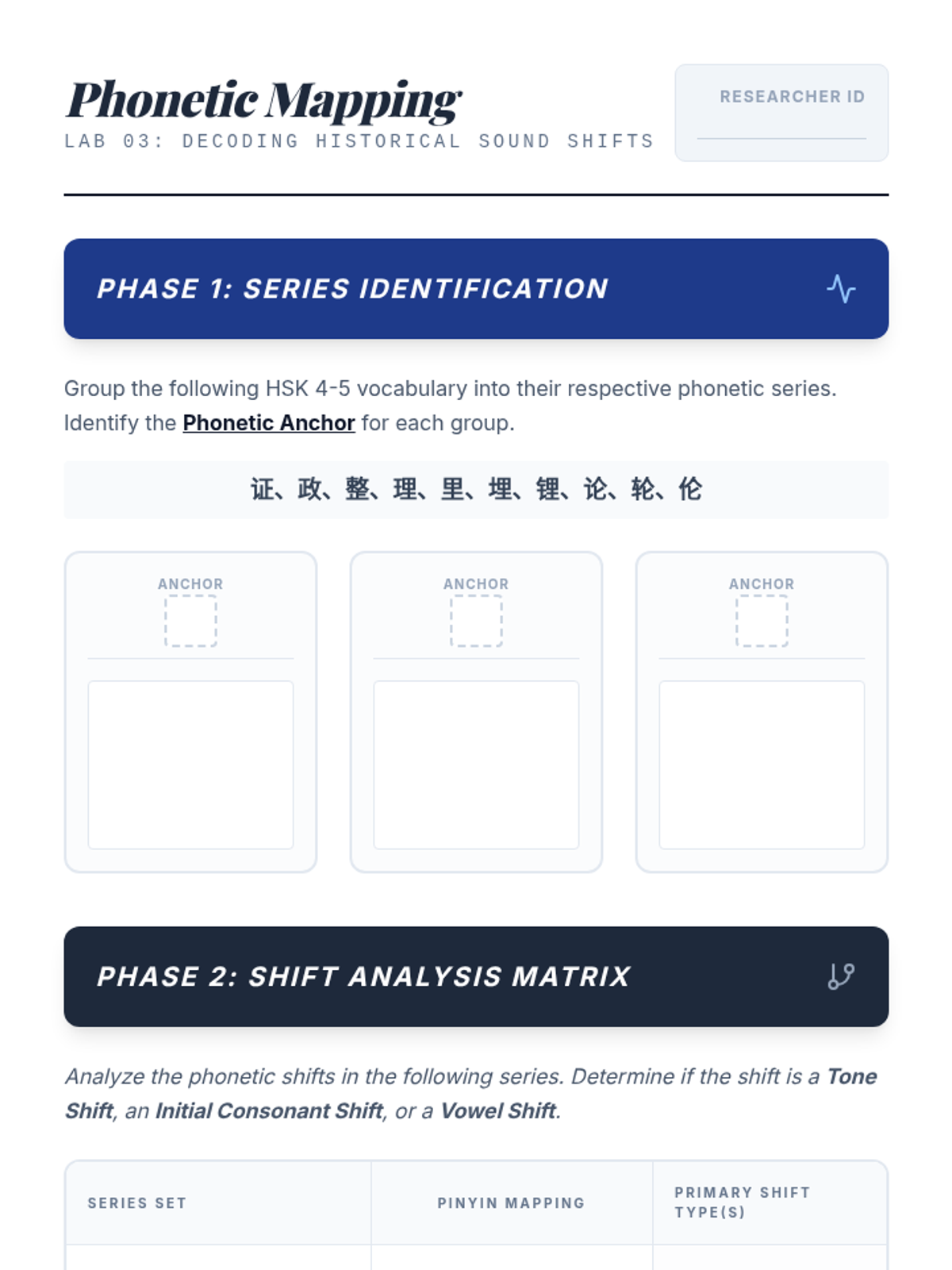
A student worksheet for mapping phonetic series and analyzing systematic sound shifts in Mandarin characters.
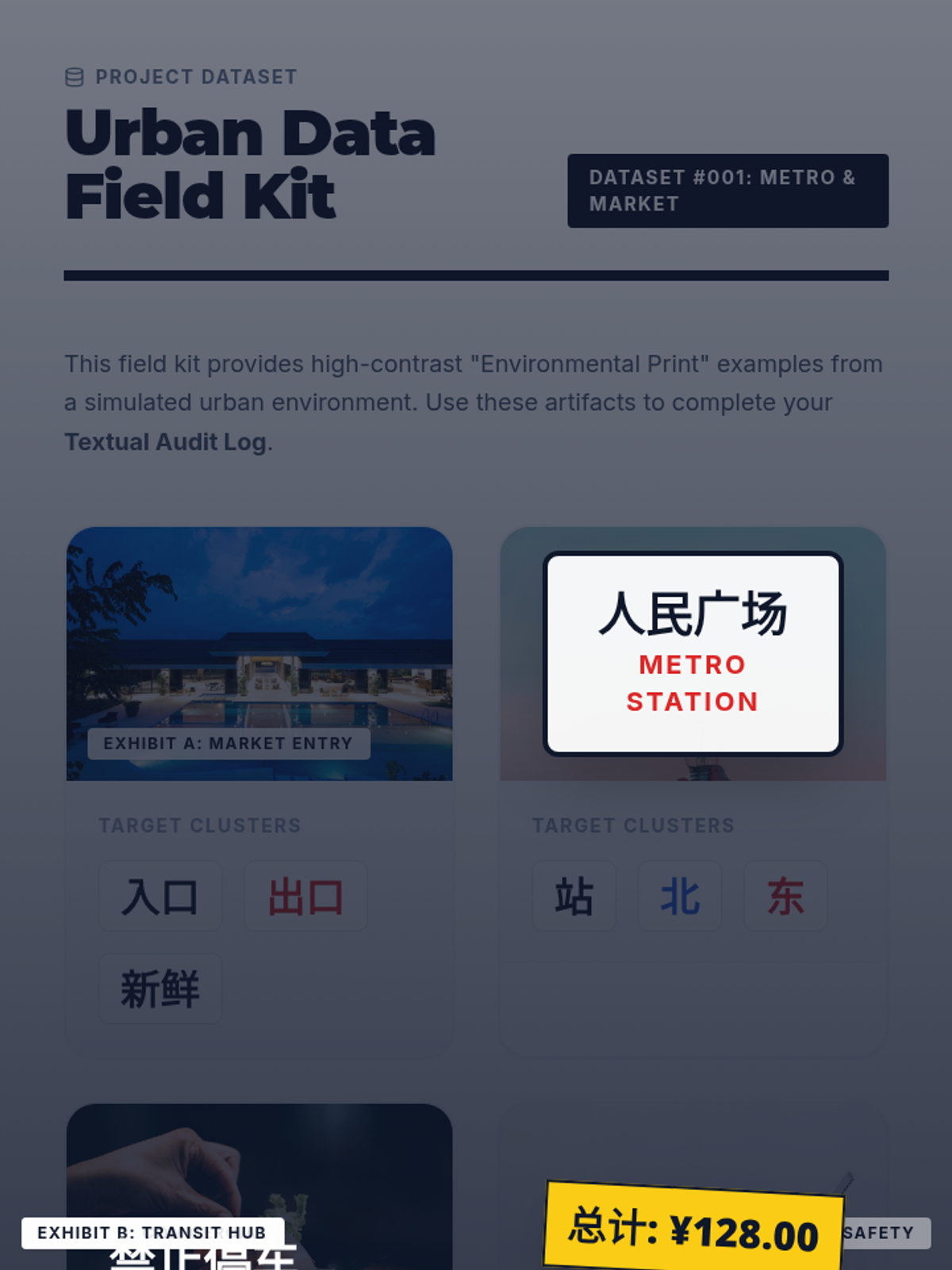
A visual field kit for the final project, featuring curated images and target character clusters for environmental text analysis.
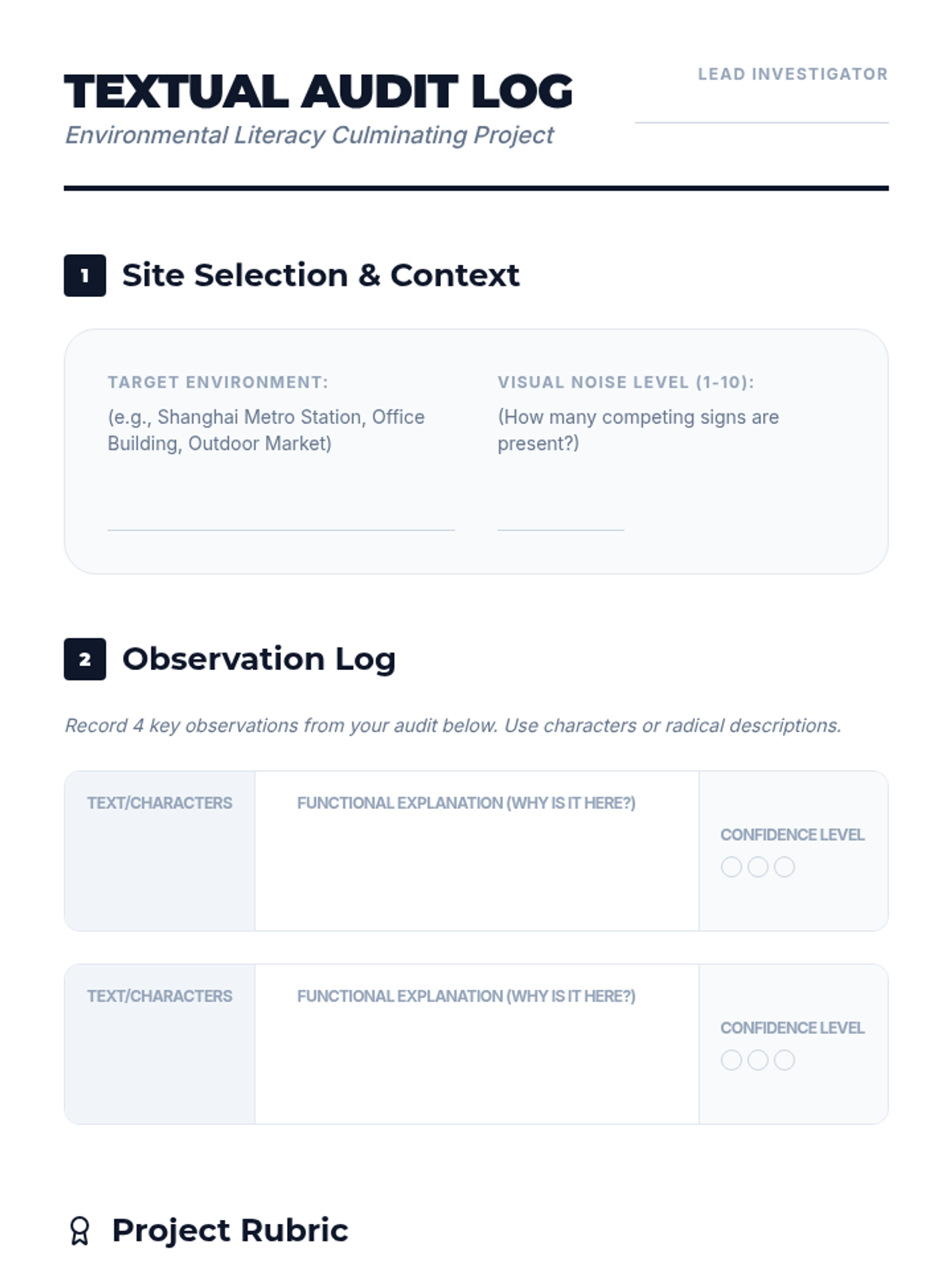
A student organizer and rubric for the final Environmental Text Audit project, including an observation log and grading criteria.
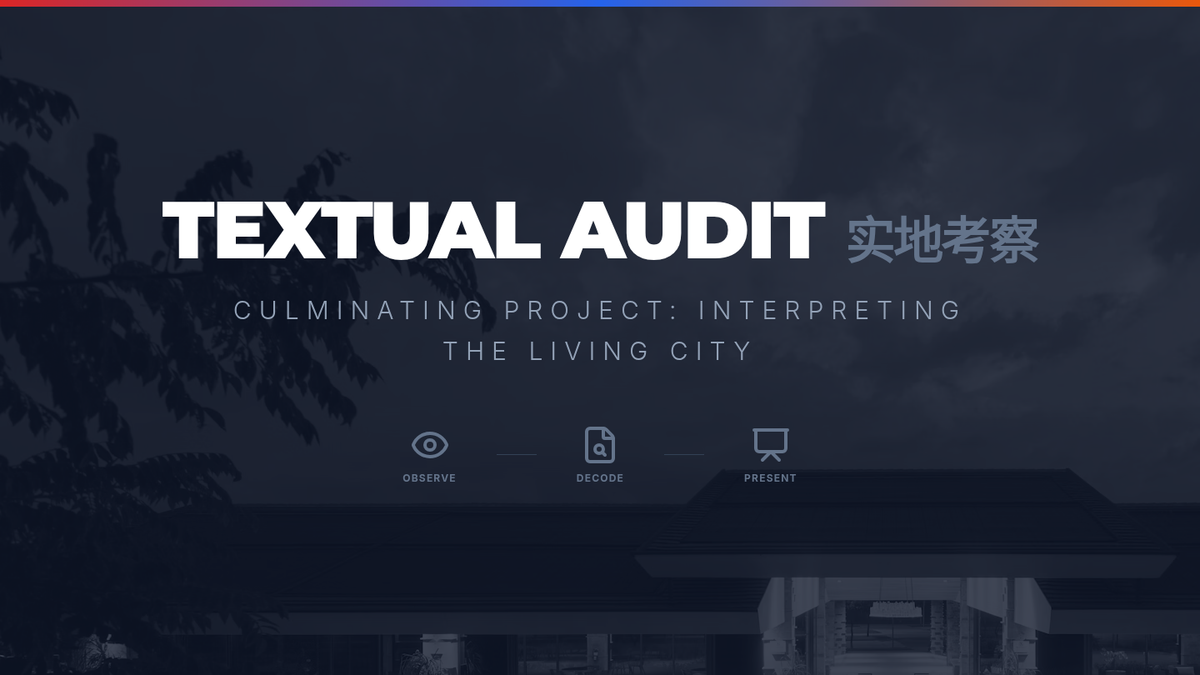
A slide deck introducing the final "Environment Audit" project, including the audit protocol, case study analysis, and project goals for graduate students.
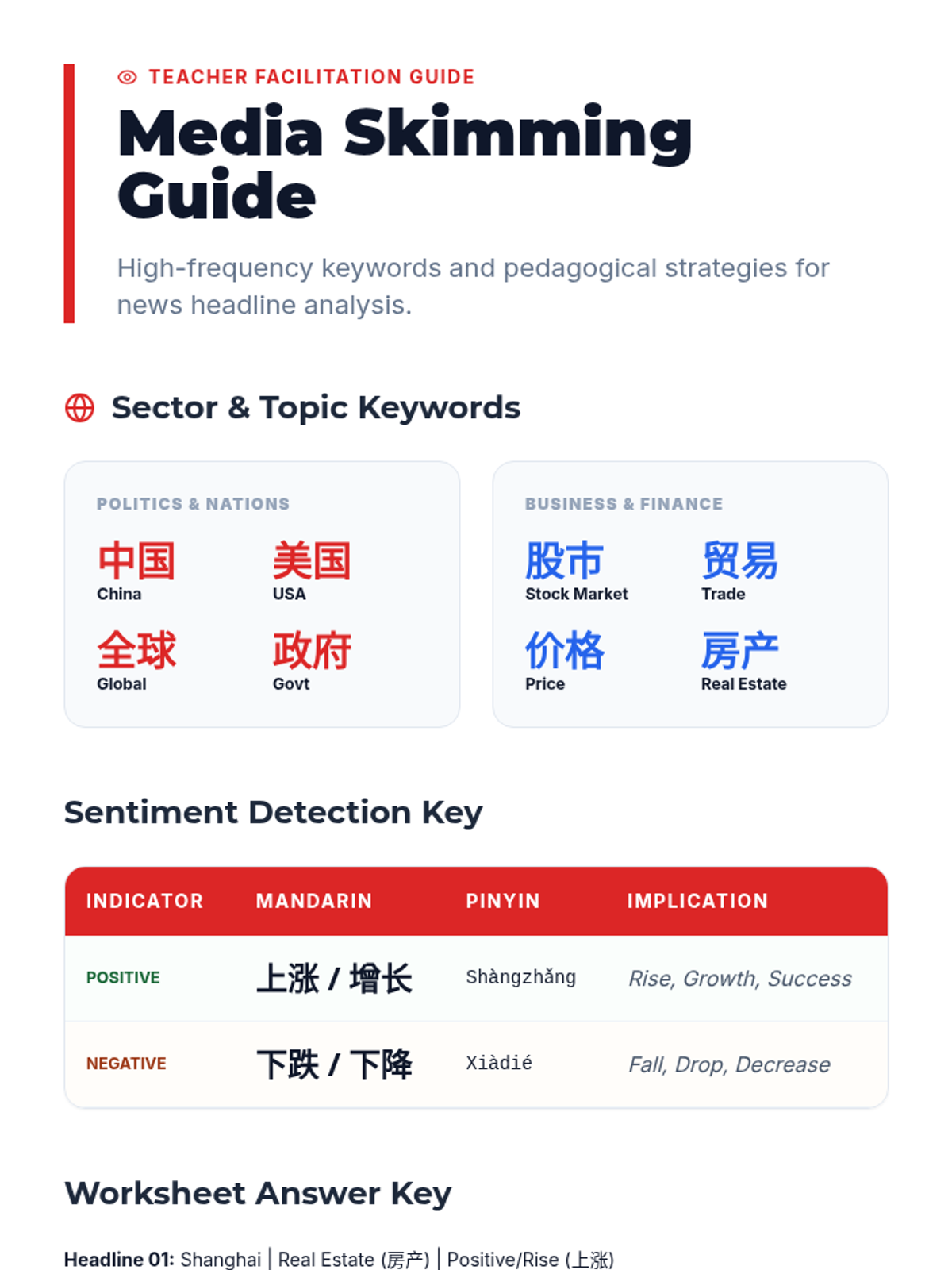
A teacher resource for Lesson 4, providing high-frequency keywords for news headlines and the answer key for the News Skimmer worksheet.
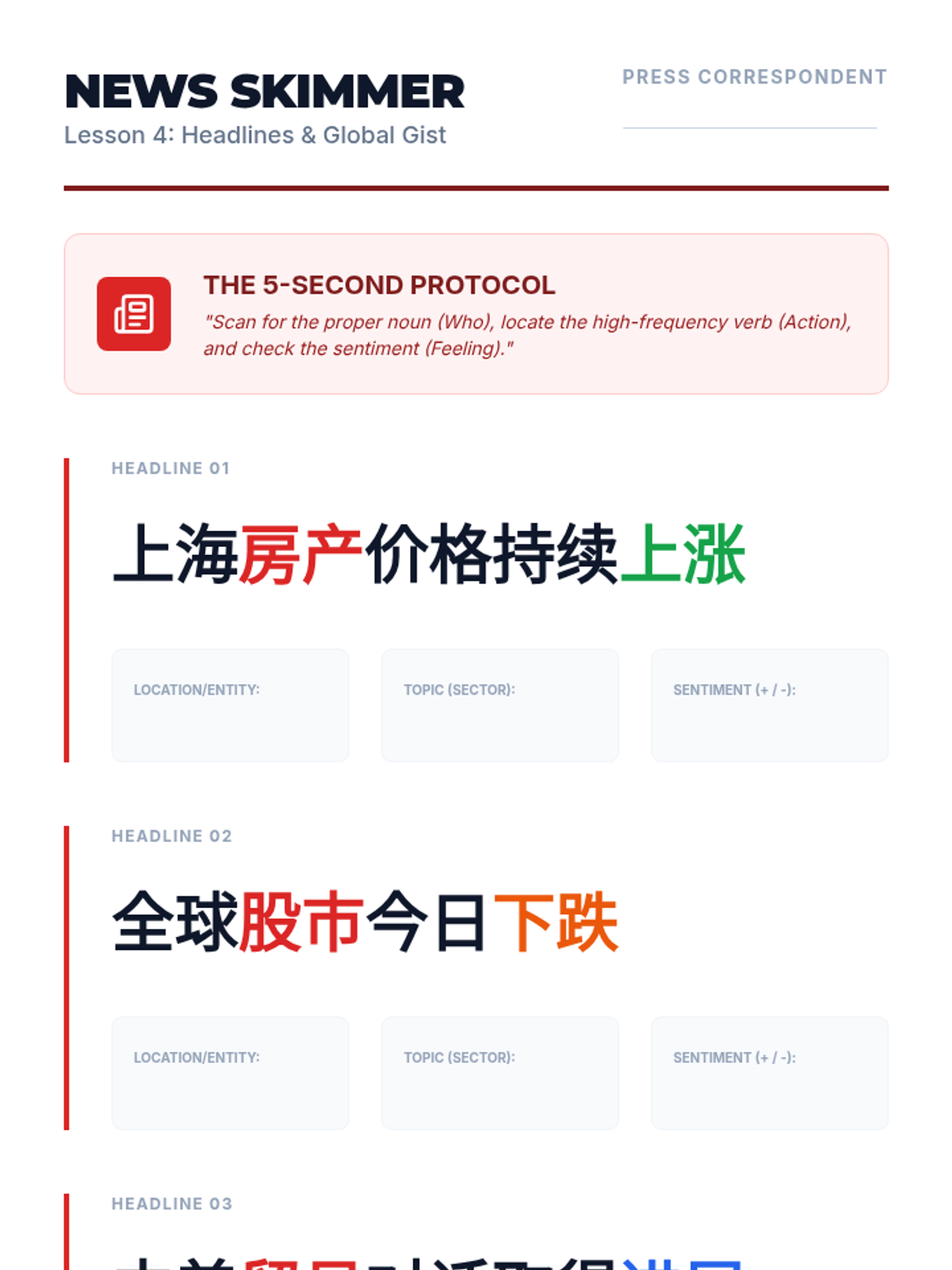
A student worksheet for practicing headline skimming techniques, identifying location, topic, and sentiment in authentic Mandarin news titles.
A slide deck focusing on skimming news headlines, identifying topic keywords (China, Economy, Tech), and detecting sentiment (Growth vs Decline).
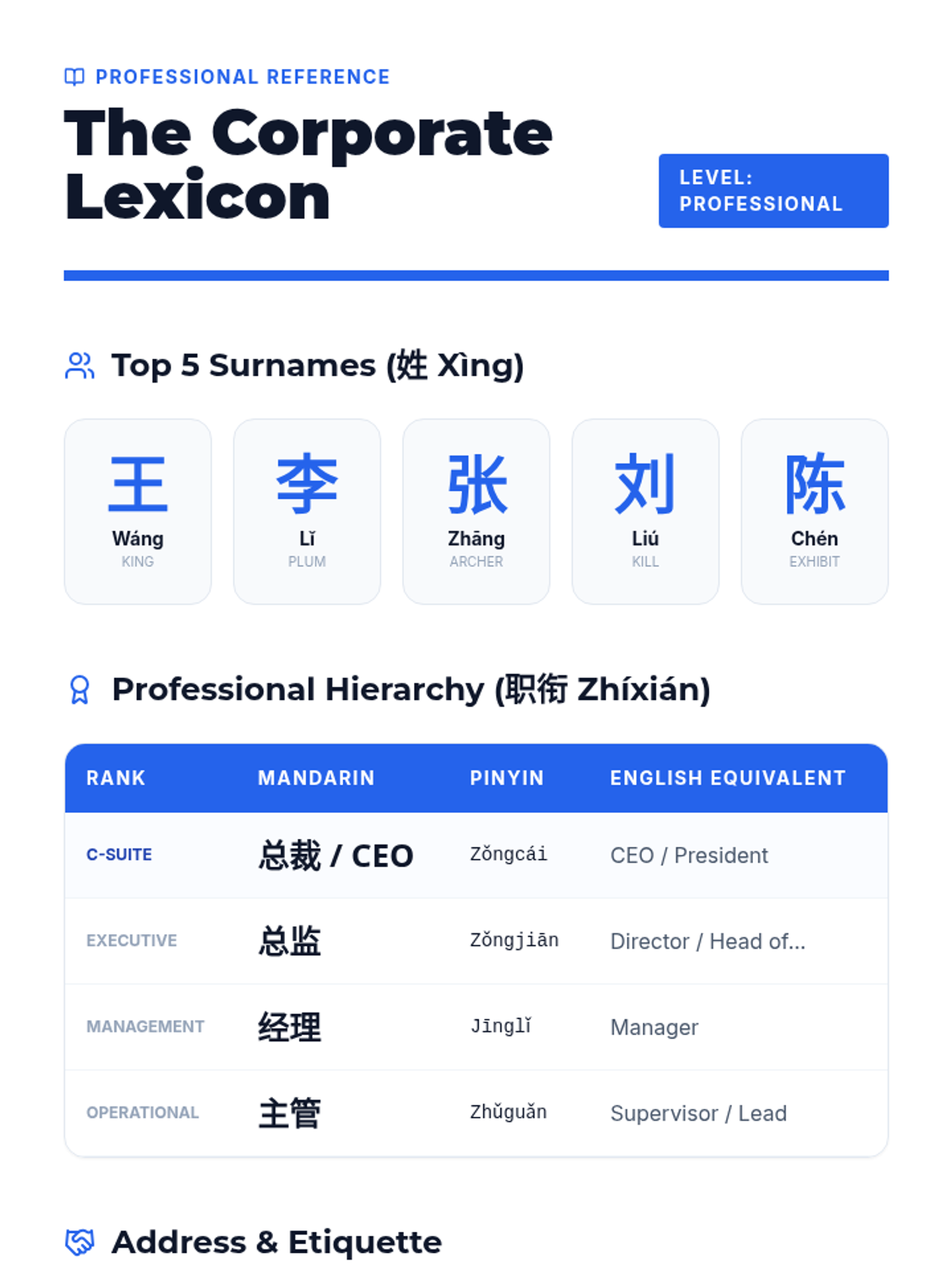
A professional reference sheet for Mandarin names and titles, featuring top surnames, professional hierarchy, and etiquette rules for formal address.
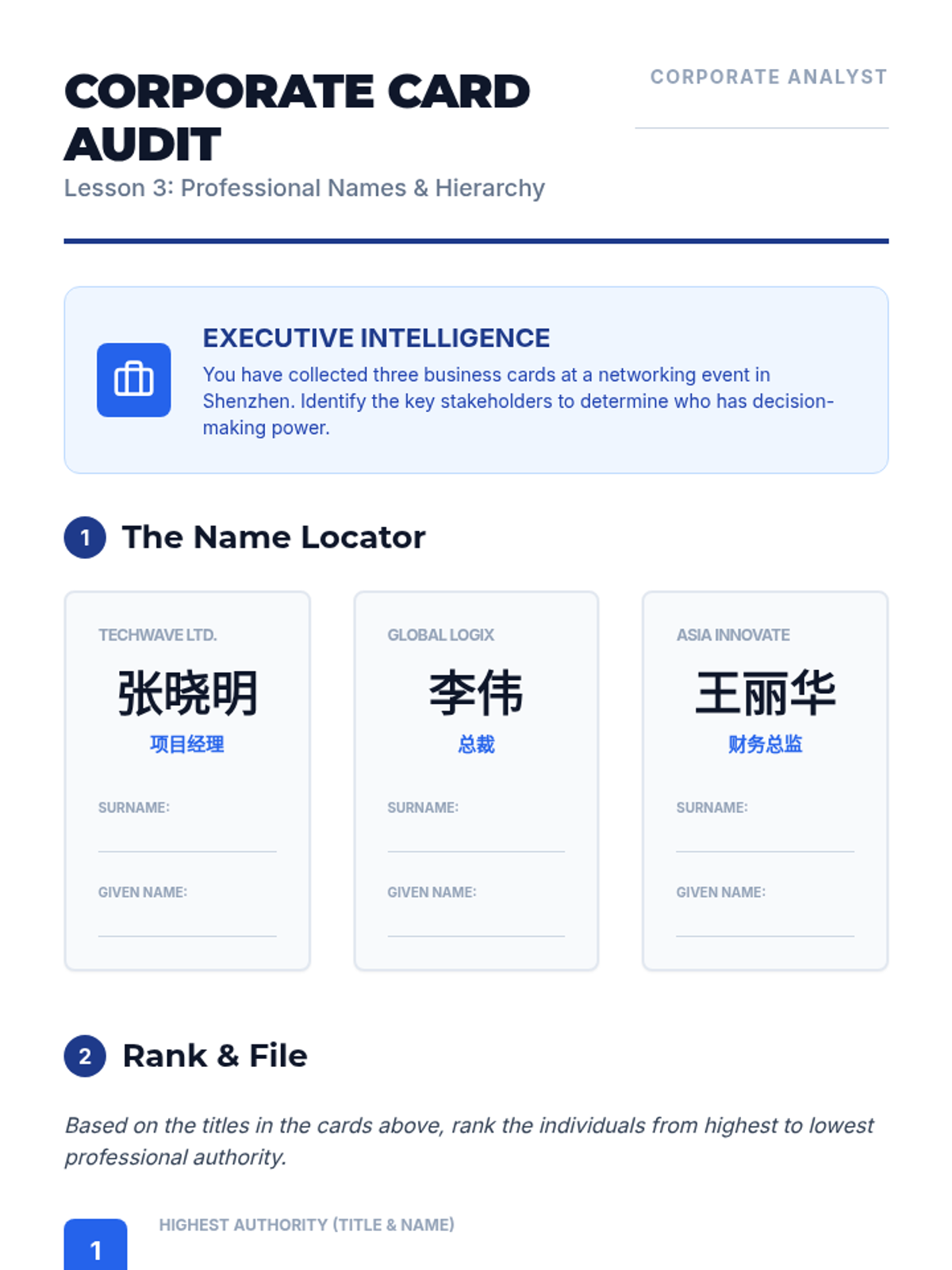
A student worksheet for analyzing Mandarin business cards, focusing on identifying surnames, given names, and professional rank.
A slide deck focusing on Chinese name structure (Surname first), professional title hierarchy, and key characters for identifying executive roles.
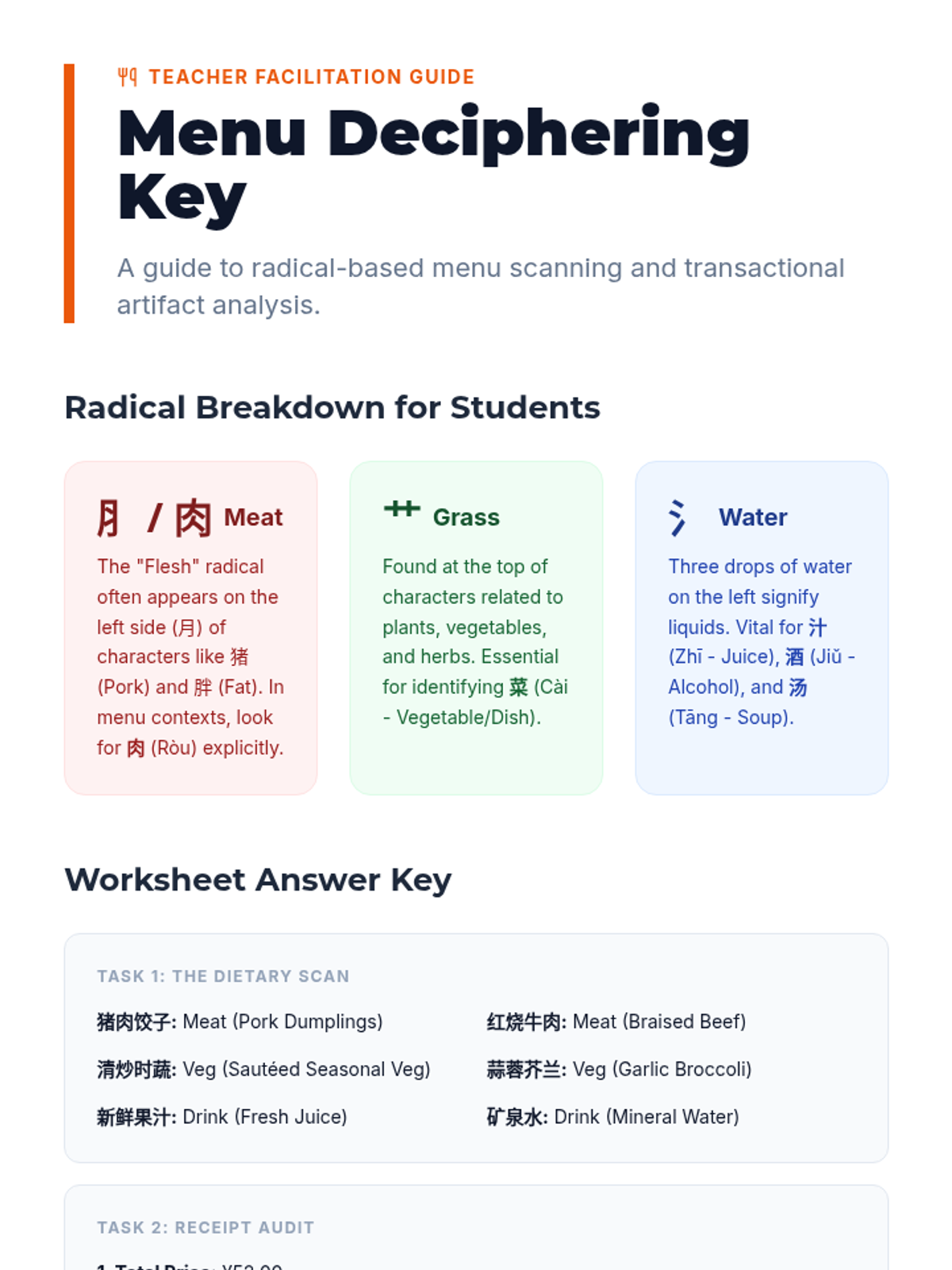
A teacher resource for Lesson 2, providing the radical breakdown for dietary choices and the answer key for the Transactional Tracker worksheet.
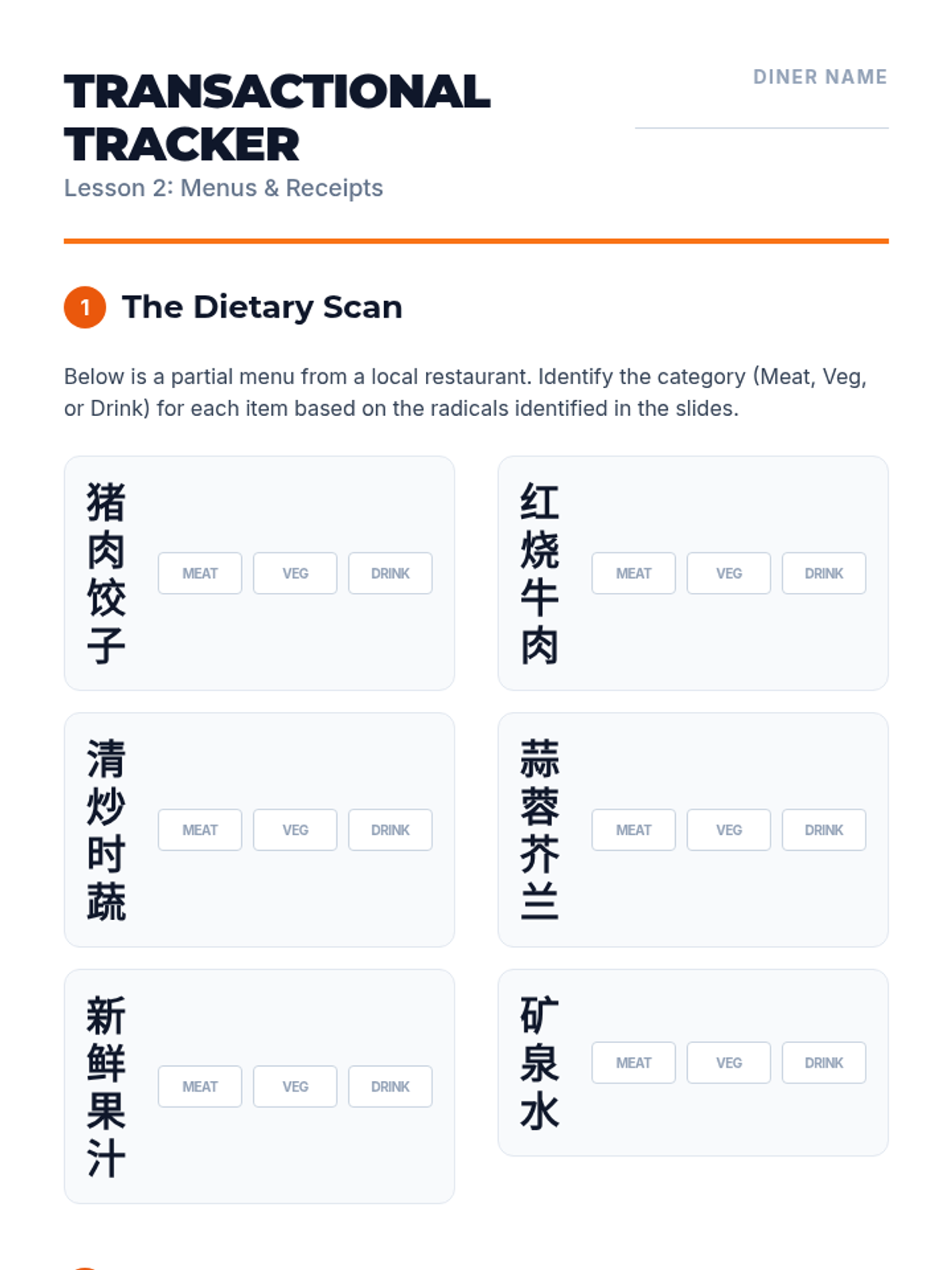
A student worksheet for analyzing Mandarin menus and receipts, focusing on radical recognition for dietary needs and transaction decoding.
A slide deck focusing on menu radical recognition (meat, veg, liquid), receipt structure, and transactional vocabulary for navigating dining experiences.
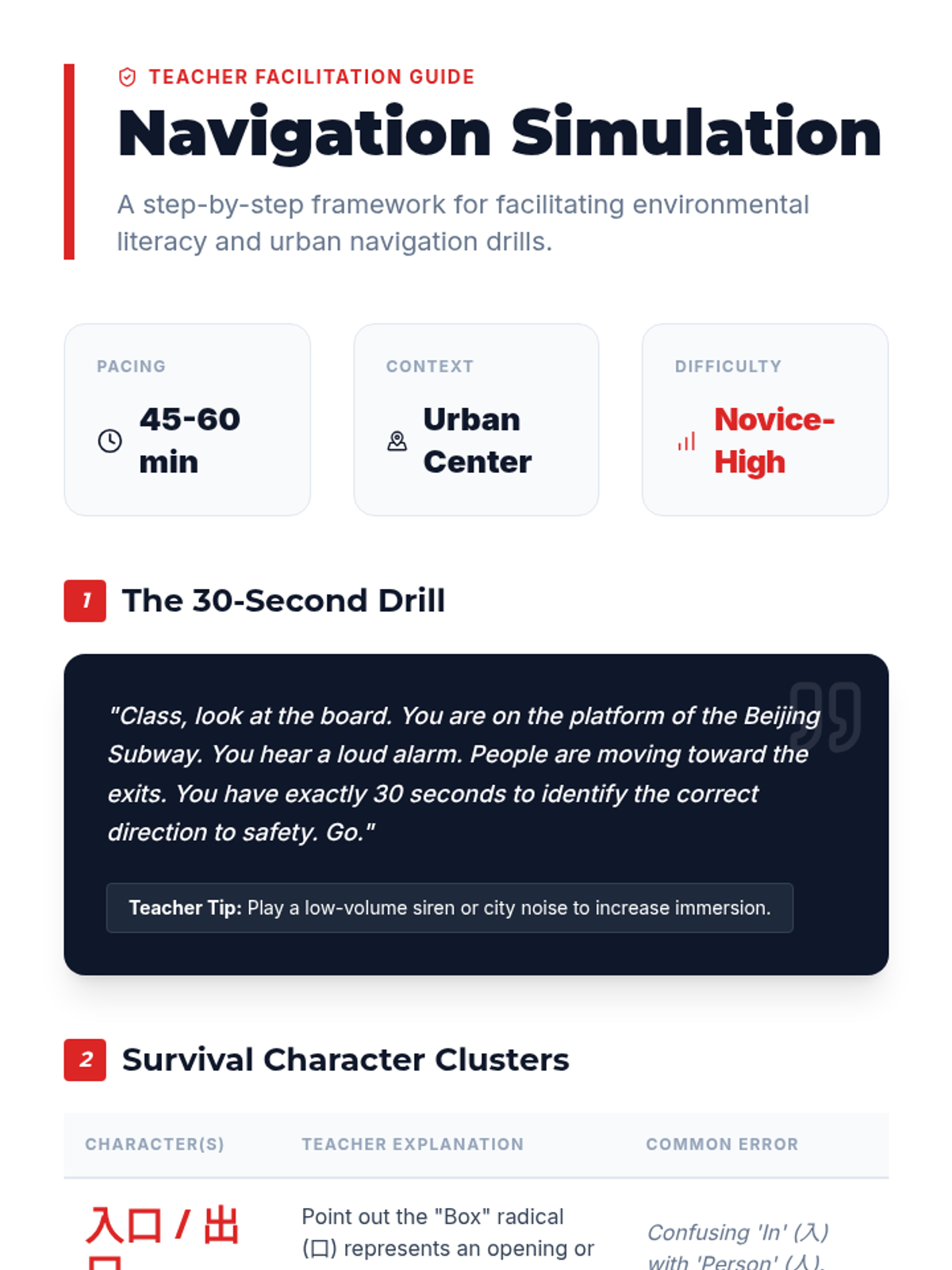
A teacher facilitation guide for the urban navigation simulation, including scripted prompts, key character cluster breakdowns, and differentiation strategies.
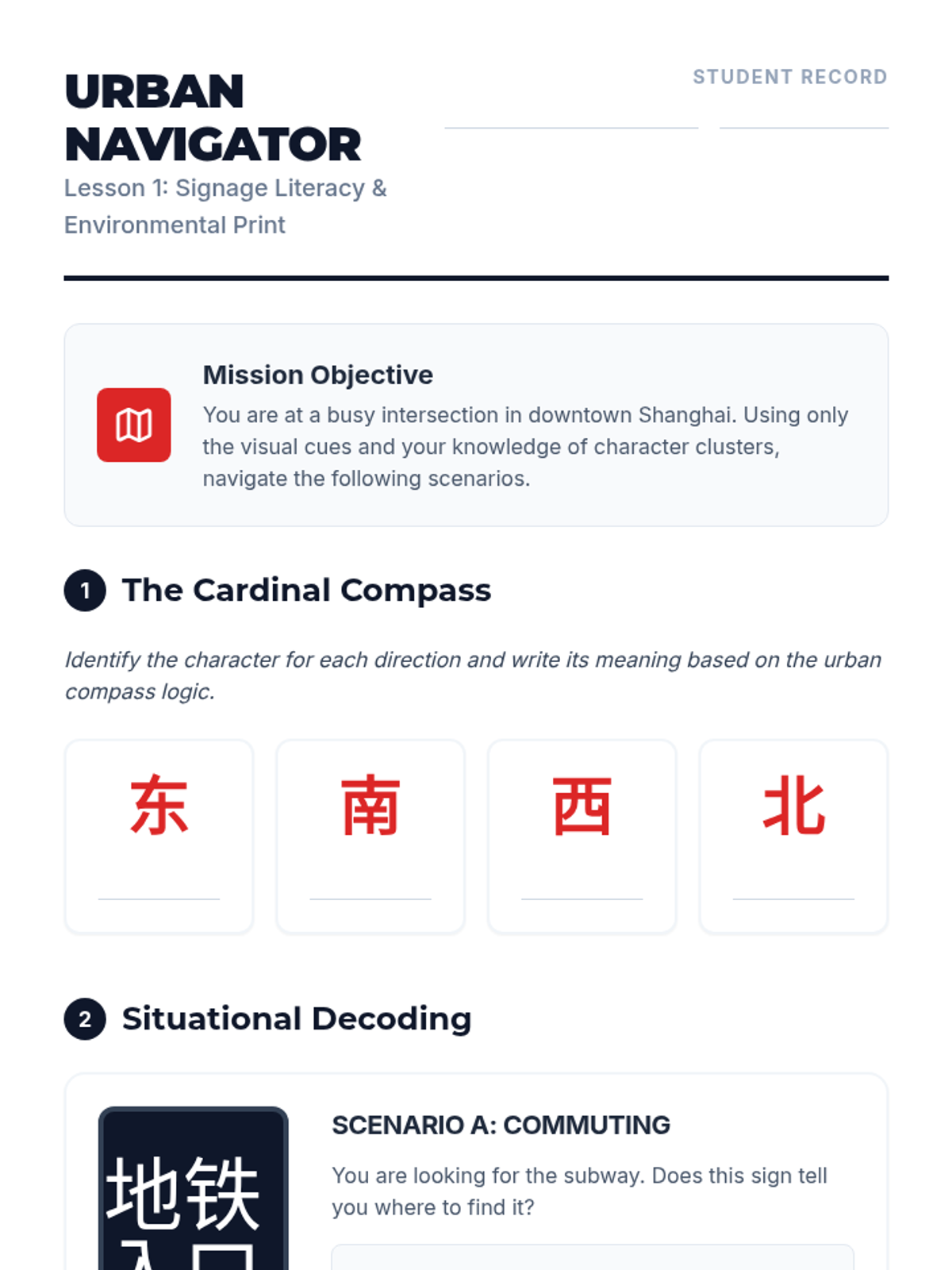
A student worksheet for identifying and decoding urban signage, featuring cardinal directions, situational scenarios (subway, construction, exits), and a transit map interpretation task.
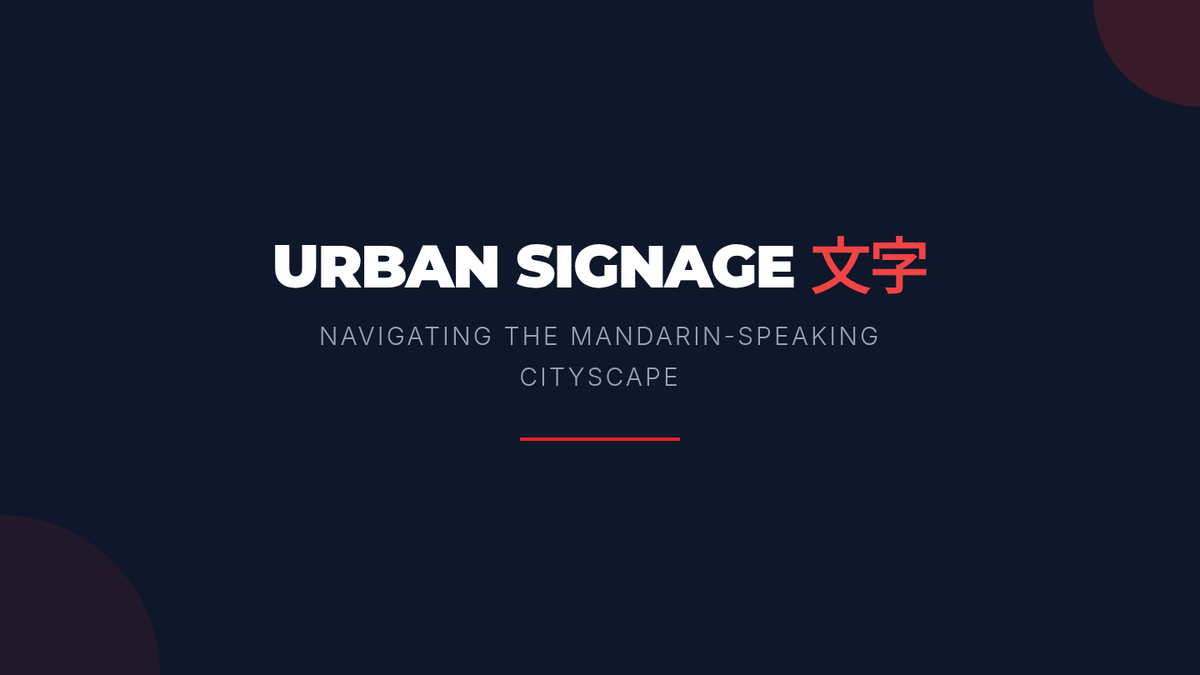
A visual presentation focusing on decoding urban signage, featuring high-contrast survival characters, cardinal directions, and context-clue analysis for navigating Mandarin-speaking environments.
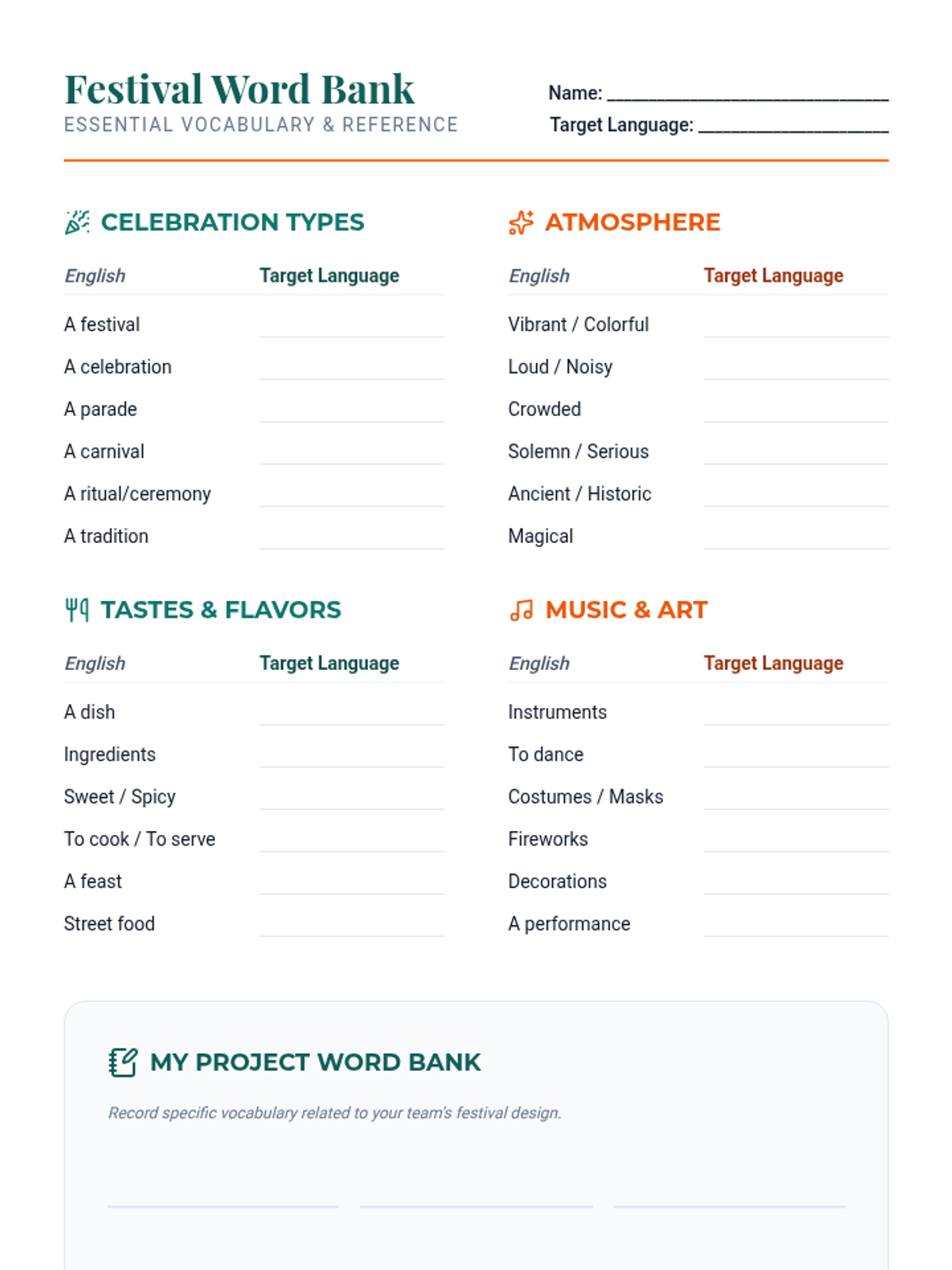
A student reference sheet and word bank for the Cultural Festival Design Challenge, featuring essential terms for celebrations, food, music, and atmosphere with space for target language translations.
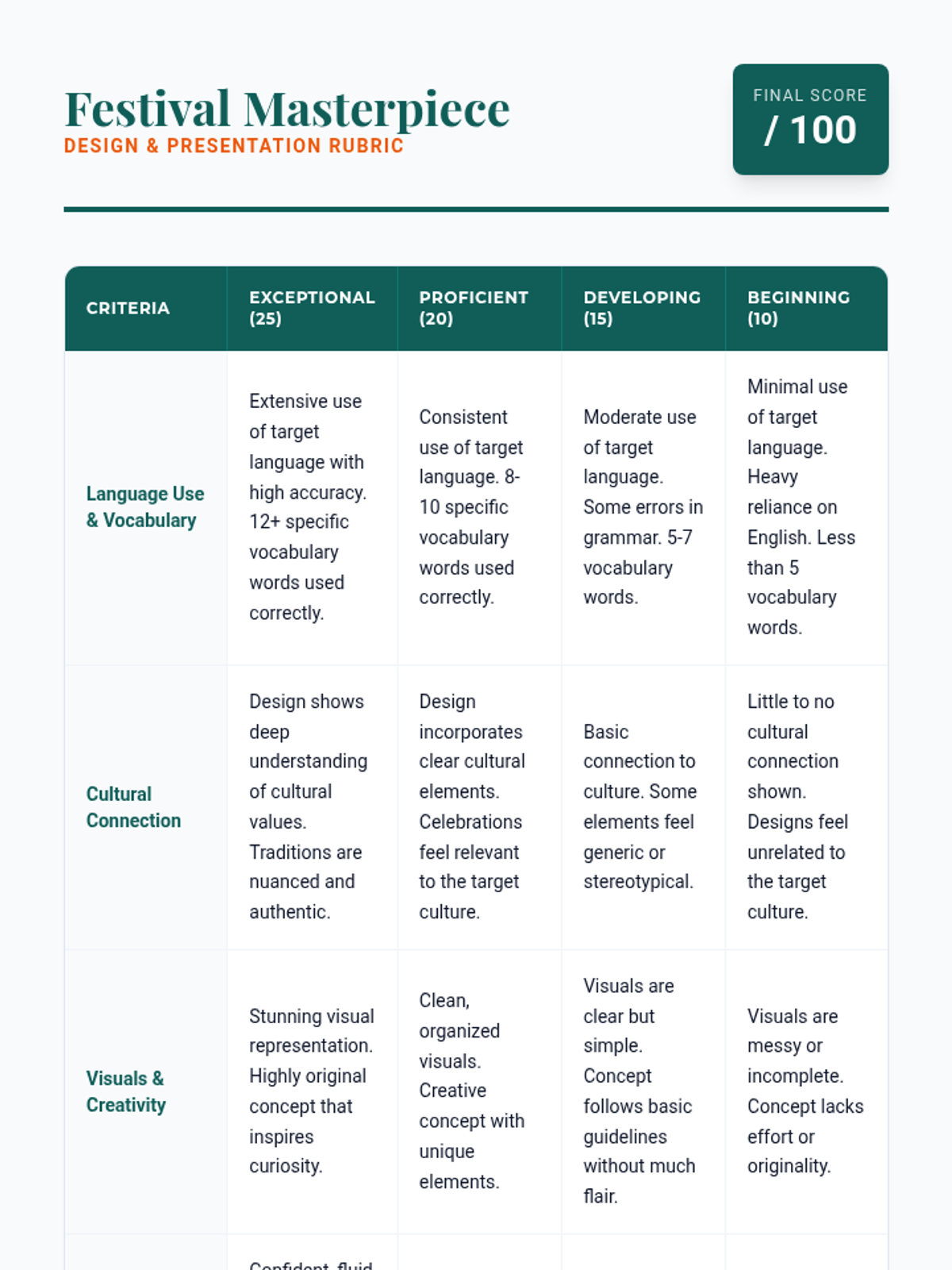
A comprehensive assessment rubric for the Cultural Festival Design Challenge, evaluating students on language use, cultural authenticity, creativity, and oral presentation skills.
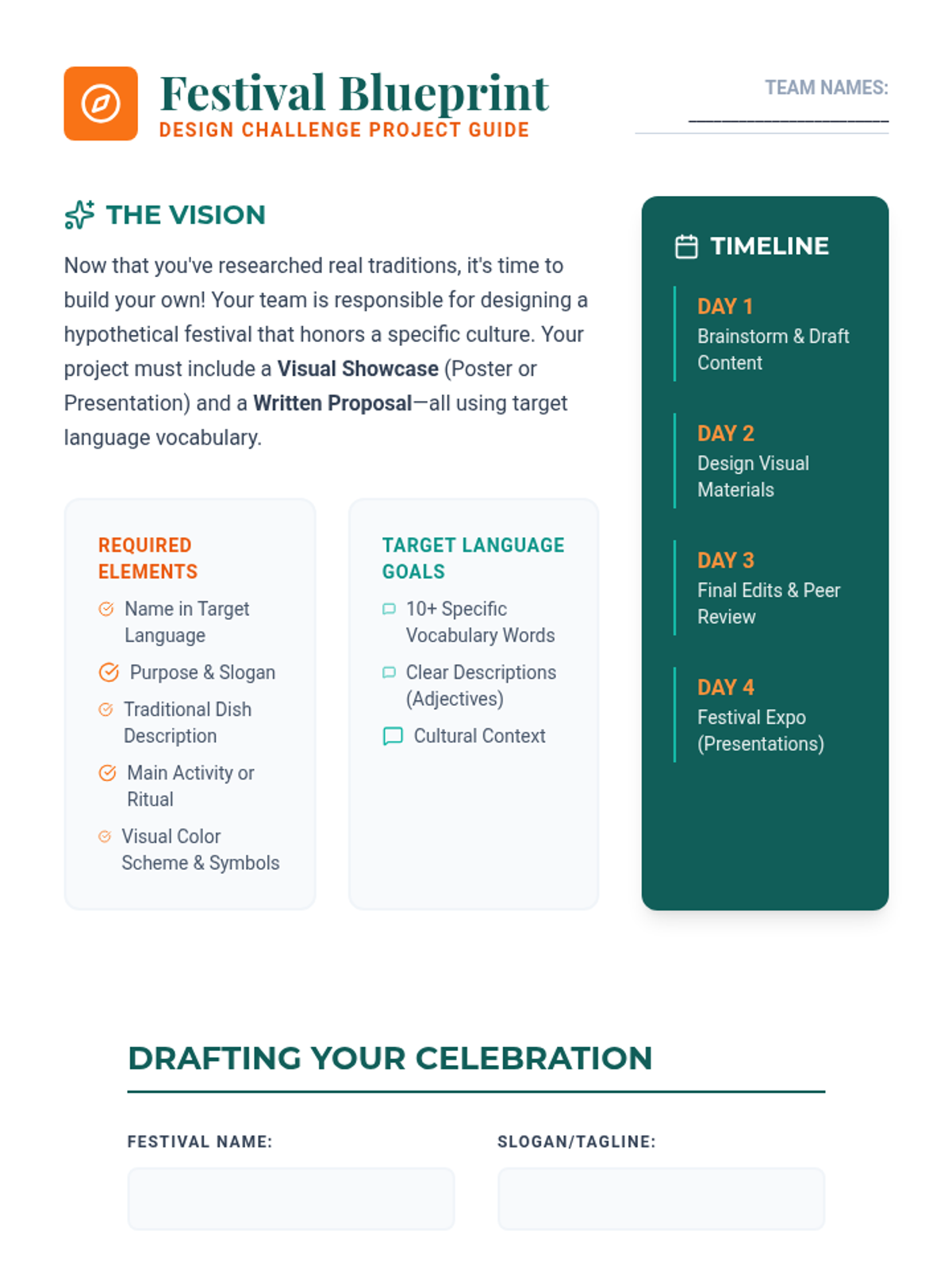
A detailed project guide for students to design their own cultural festival, including a planning timeline, required elements, and drafting space for their festival's name, slogan, culinary identity, and main event.
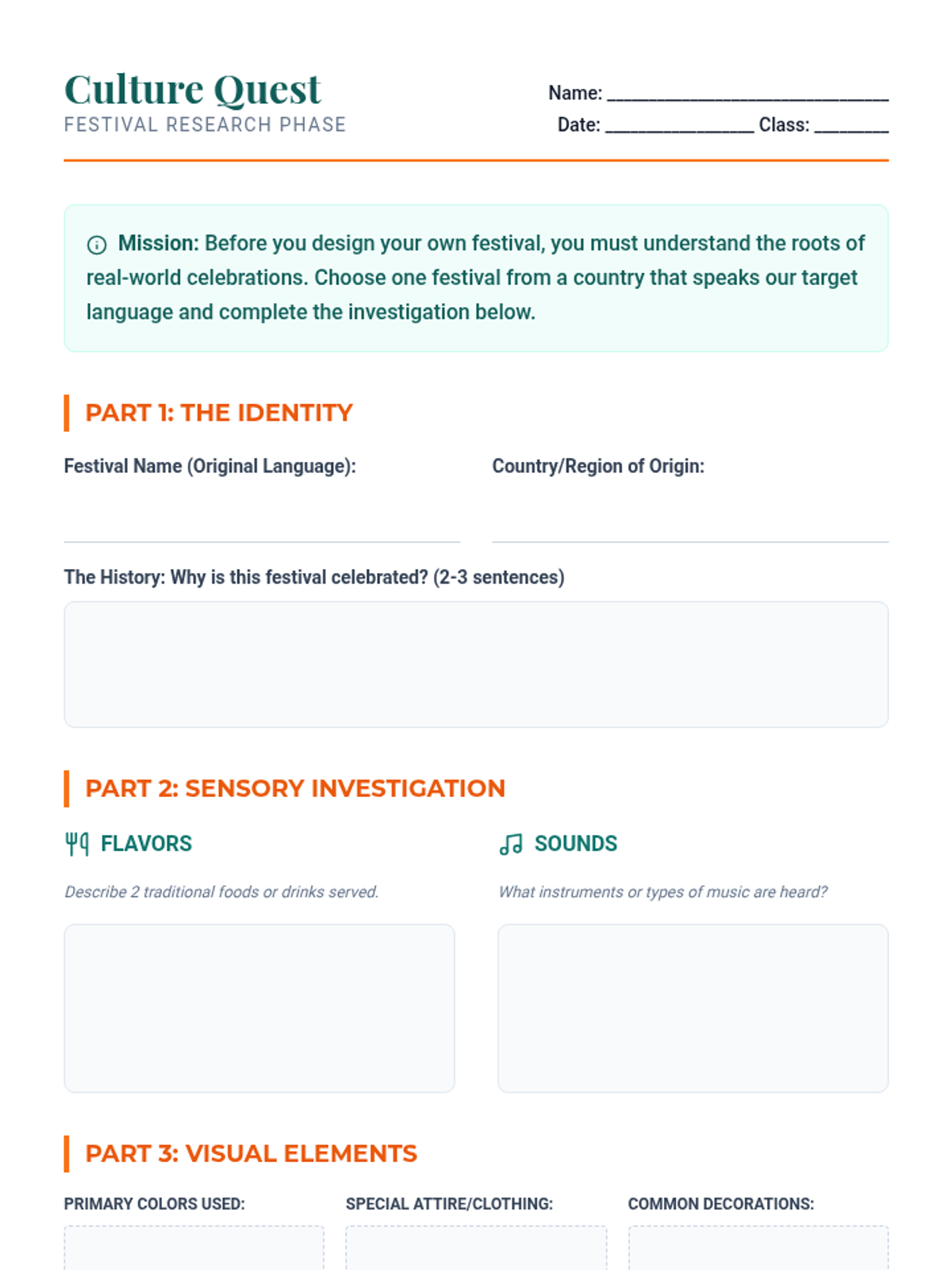
A research worksheet for students to investigate an authentic cultural festival, focusing on heritage, flavors, sounds, and visual elements in preparation for their design project.
A visually engaging slide deck designed to introduce the Cultural Festival Design Challenge, outlining the project's mission, required elements, and creative expectations for students.
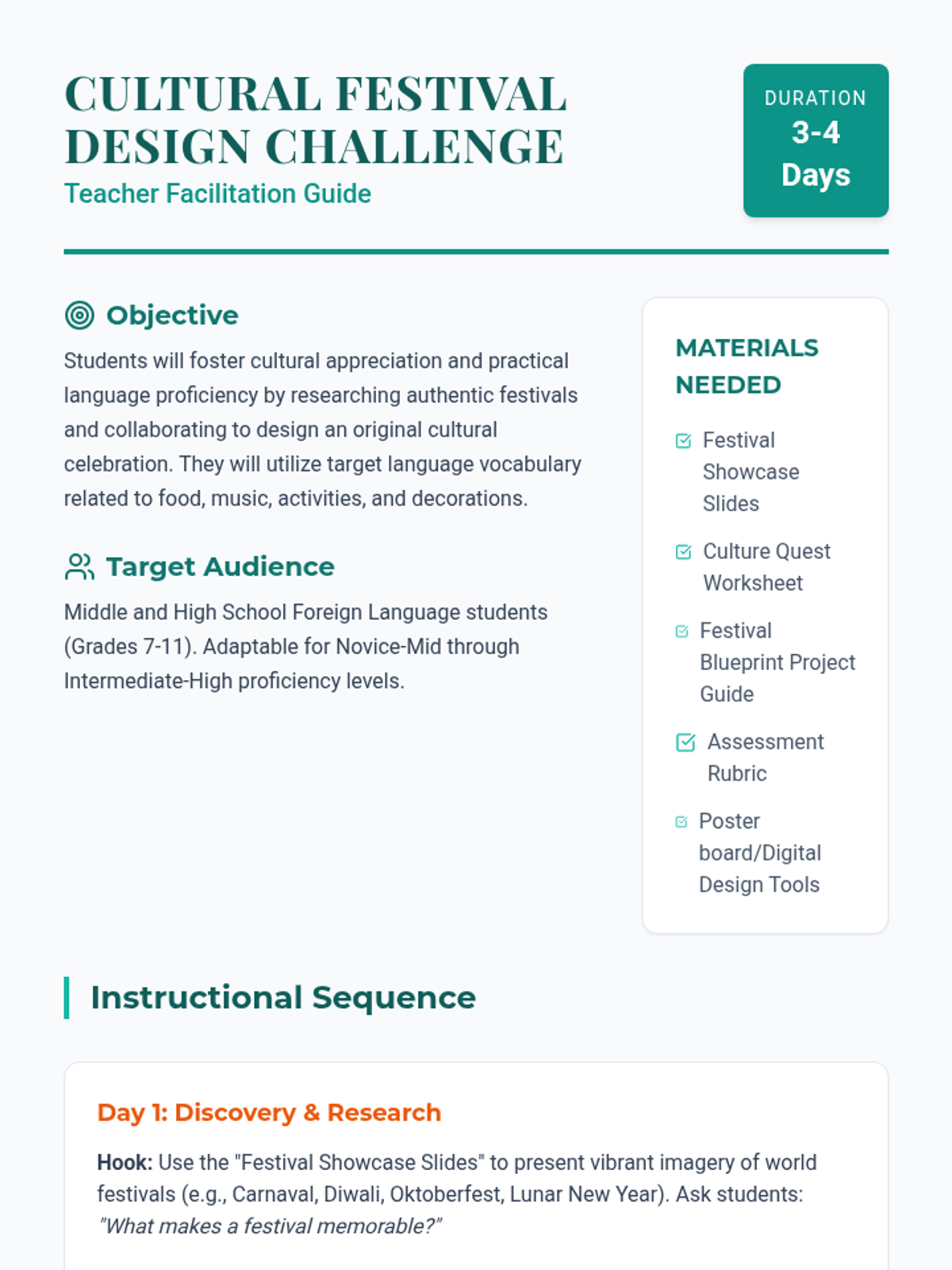
A comprehensive lesson plan for the Cultural Festival Design Challenge, outlining the instructional sequence, learning objectives, and differentiation strategies for middle and high school language learners.
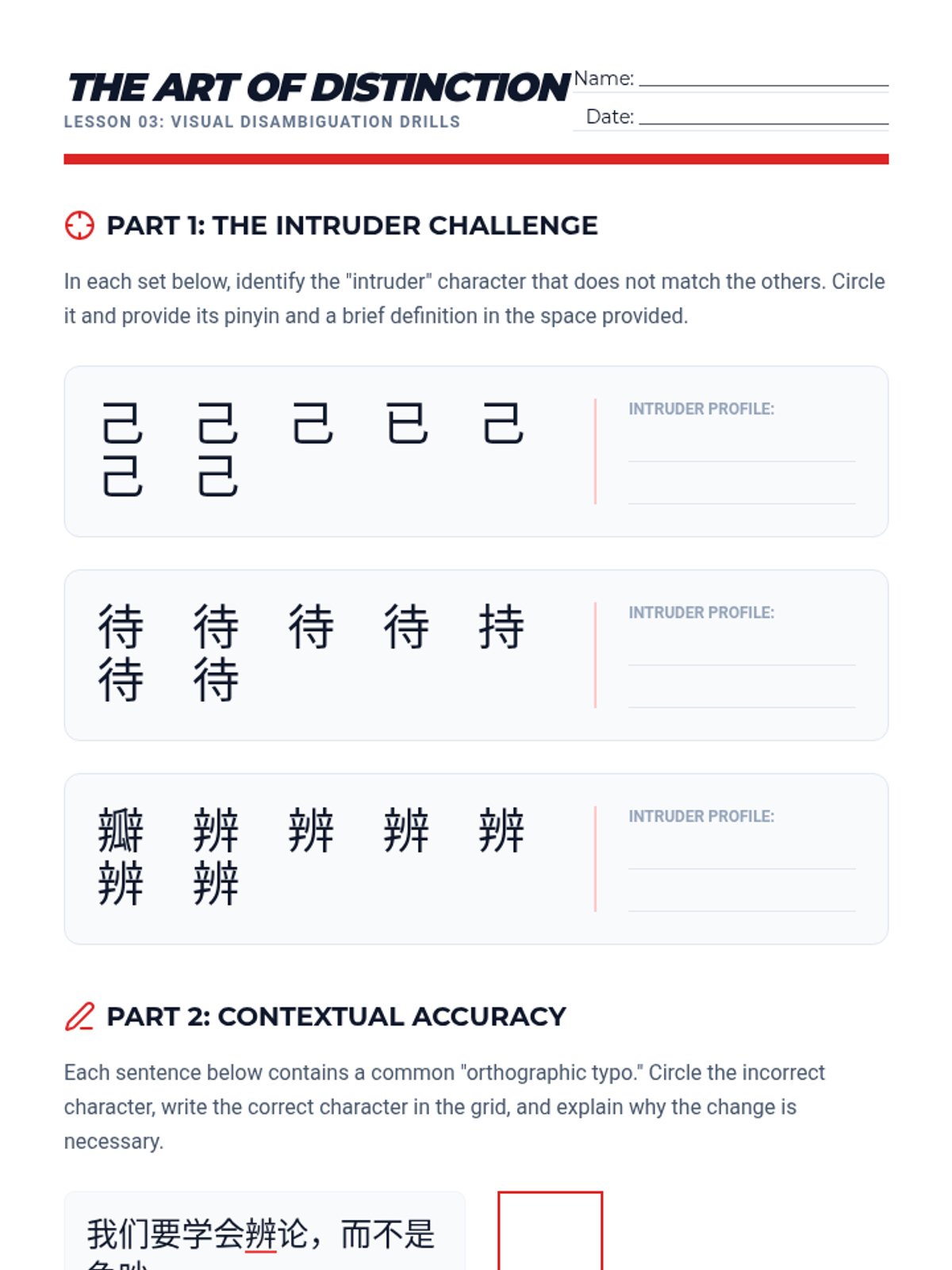
A worksheet for Lesson 3 containing comparative recognition drills, semantic correction exercises, and precision handwriting practice for visually similar characters.
A presentation deck for Lesson 3, focusing on distinguishing between visually similar characters and the professional importance of orthographic precision.
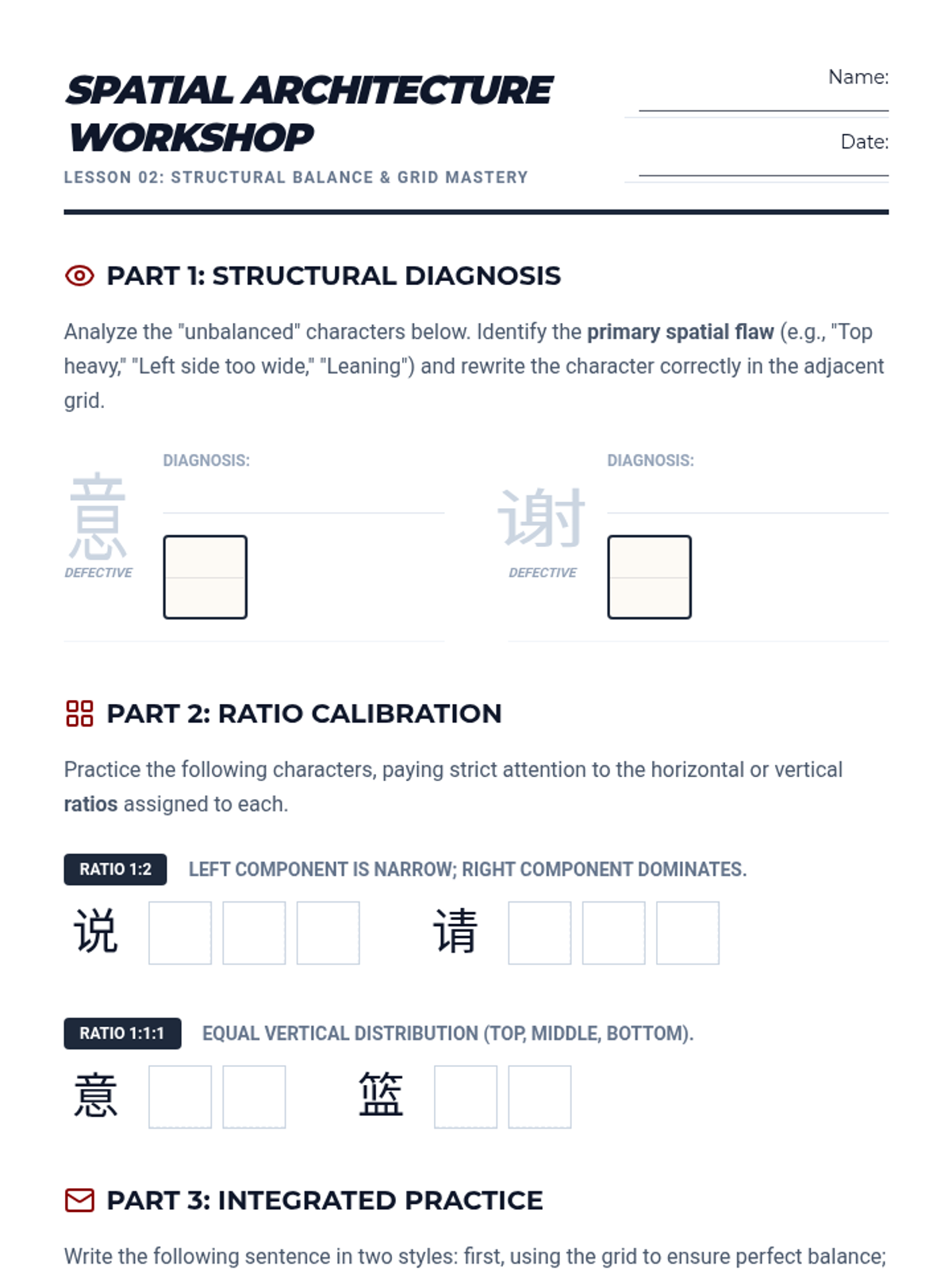
A worksheet for Lesson 2 focusing on analyzing structural flaws in character composition and practicing correct spatial ratios using grid guides.
A presentation deck for Lesson 2, analyzing the spatial ratios and structural balance required for professional-grade Mandarin handwriting.
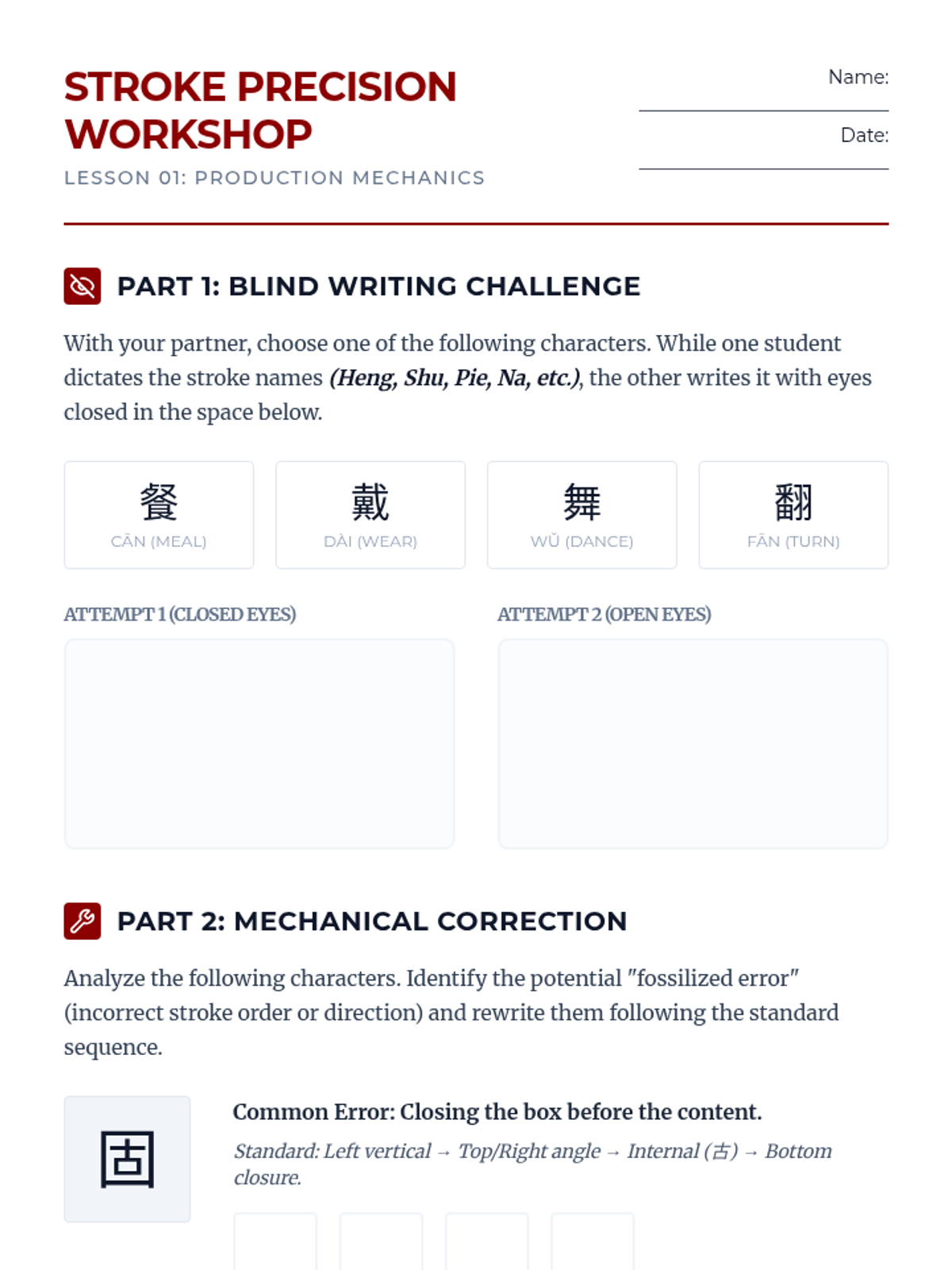
A workshop worksheet for students to practice stroke order precision, including a blind writing challenge and exercises to correct common mechanical errors.
A presentation deck for Lesson 1, focusing on the kinetic logic of stroke order and correcting common intermediate-level errors in character production.
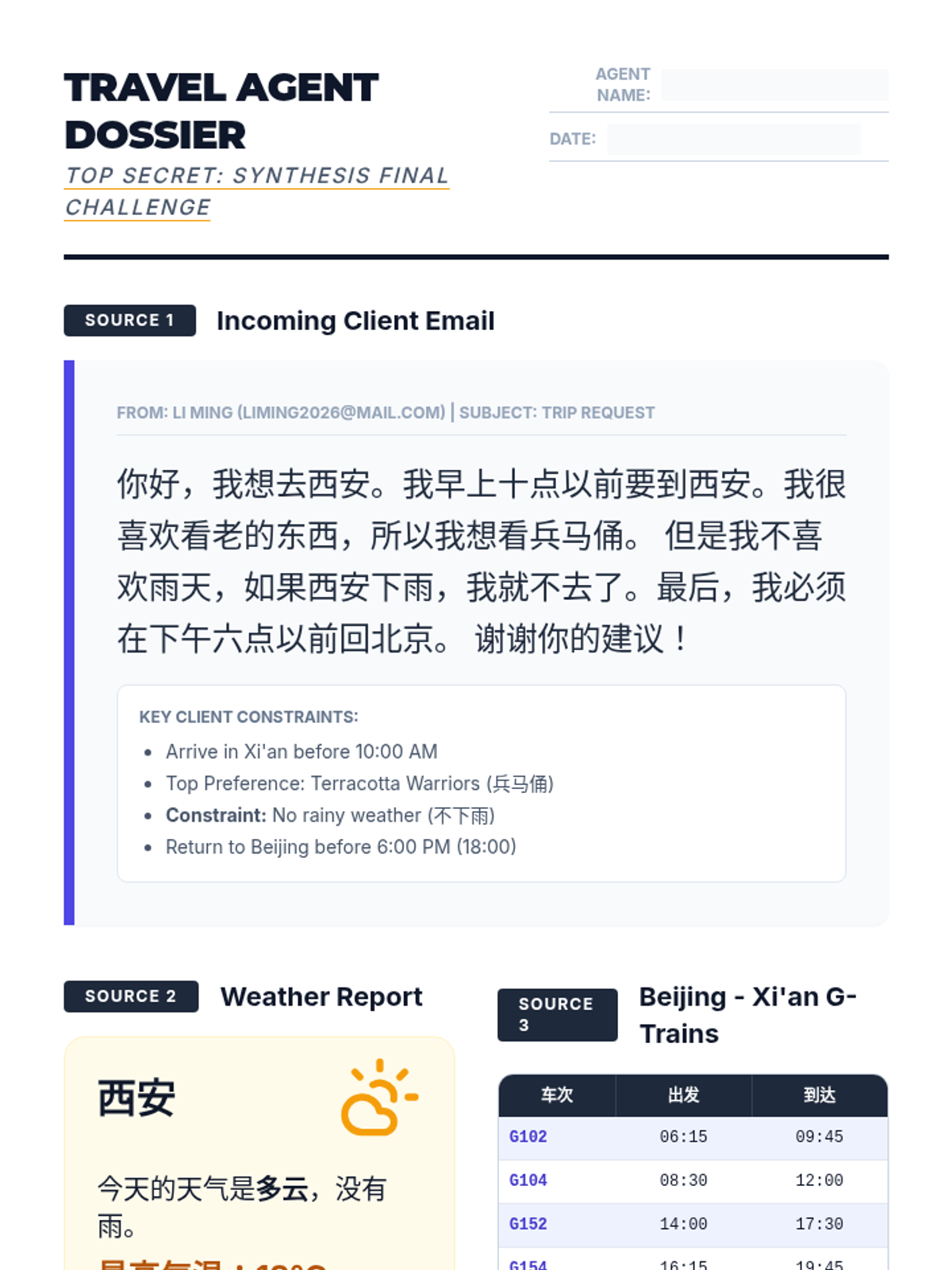
Final synthesis worksheet for Lesson 5, where students plan a 1-day trip for a client using multiple data sources (email, weather, schedules).
Introductory slides for Lesson 5, featuring the "Travel Agent Challenge" hook and synthesis modeling for travel planning.
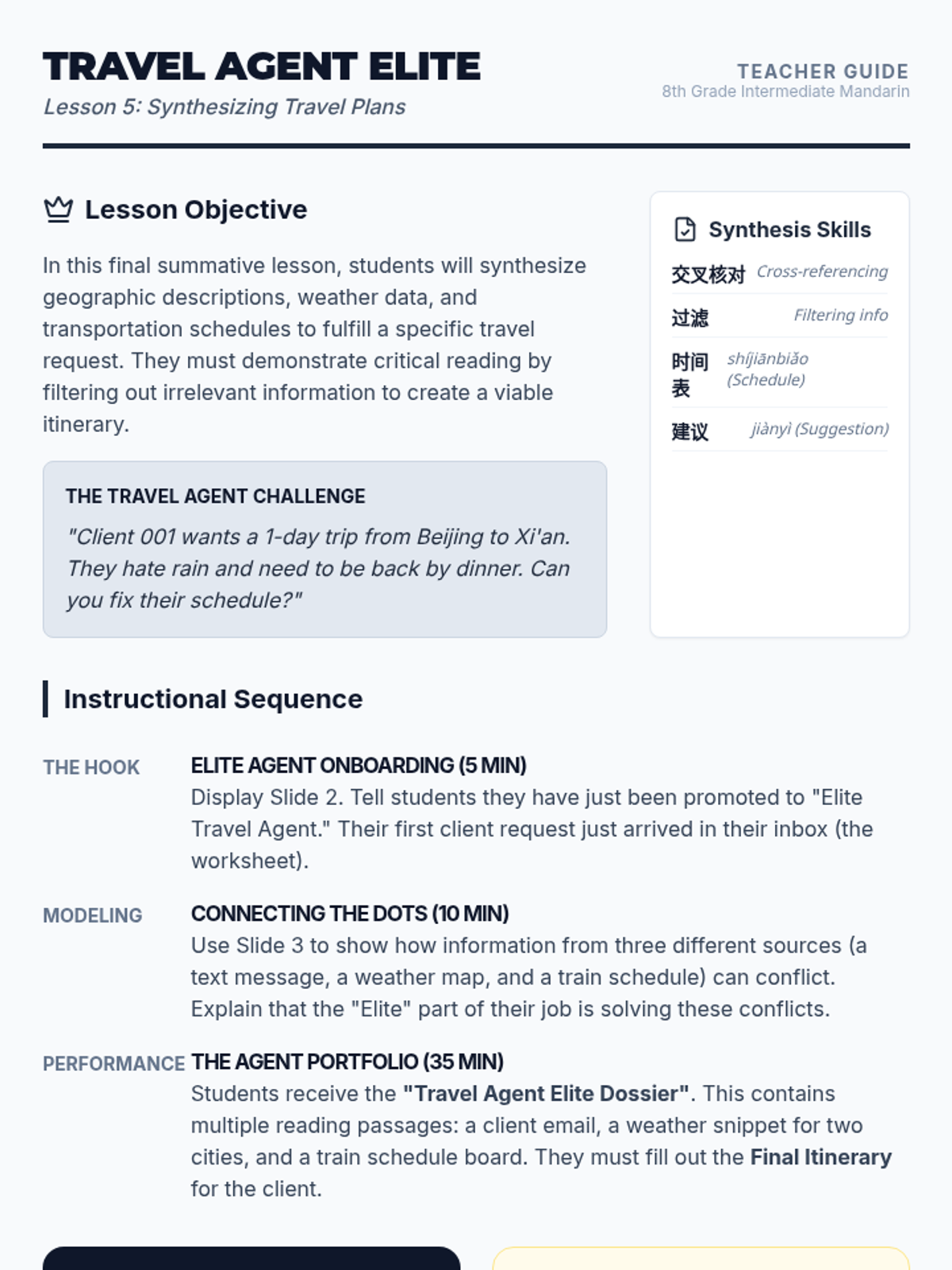
Teacher guide for Lesson 5, outlining the final synthesis project where students act as elite travel agents to plan a trip based on multiple sources of information.
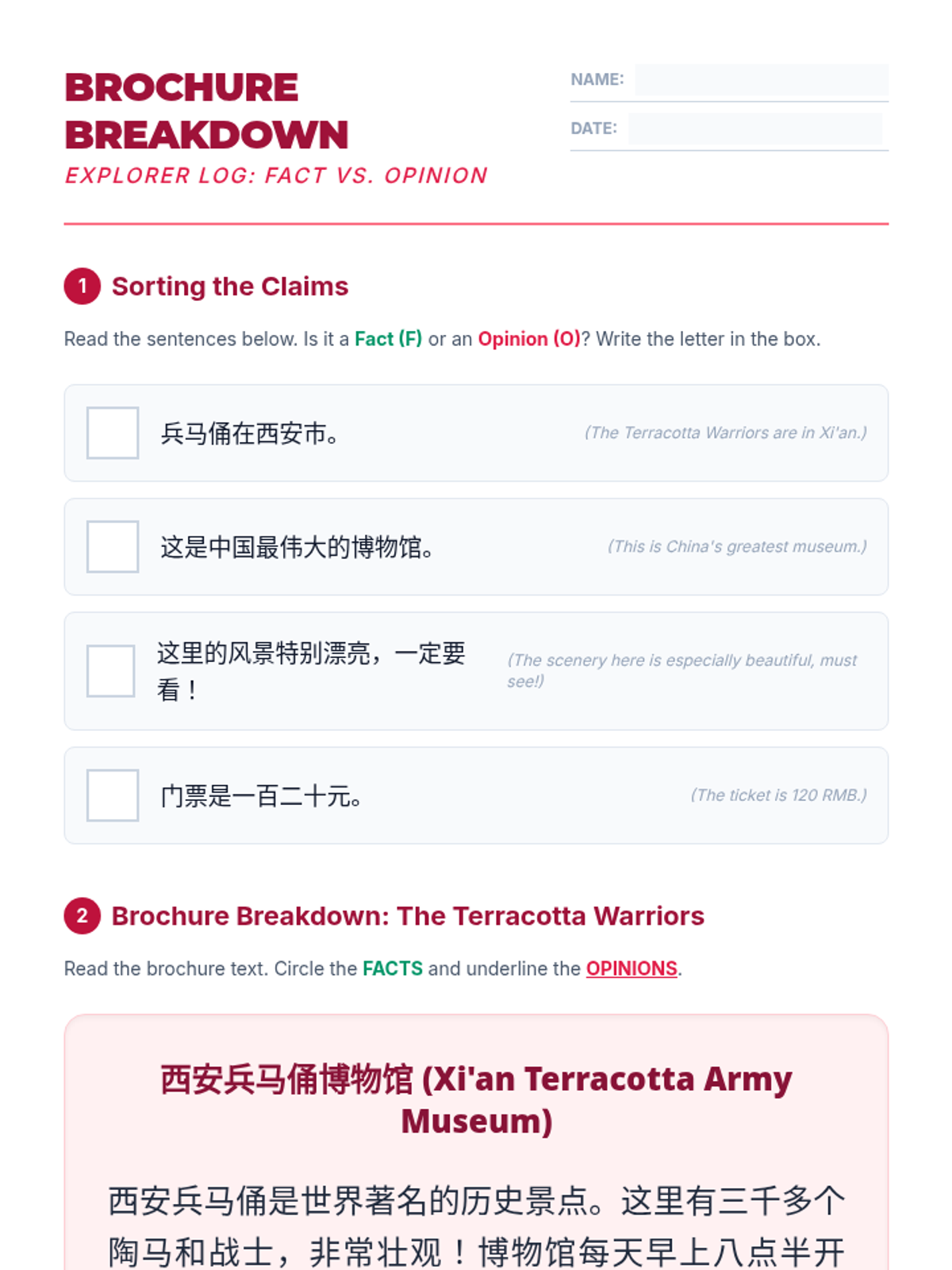
Student worksheet for Lesson 4, featuring a fact/opinion sorting task and a brochure text analysis for the Terracotta Warriors.
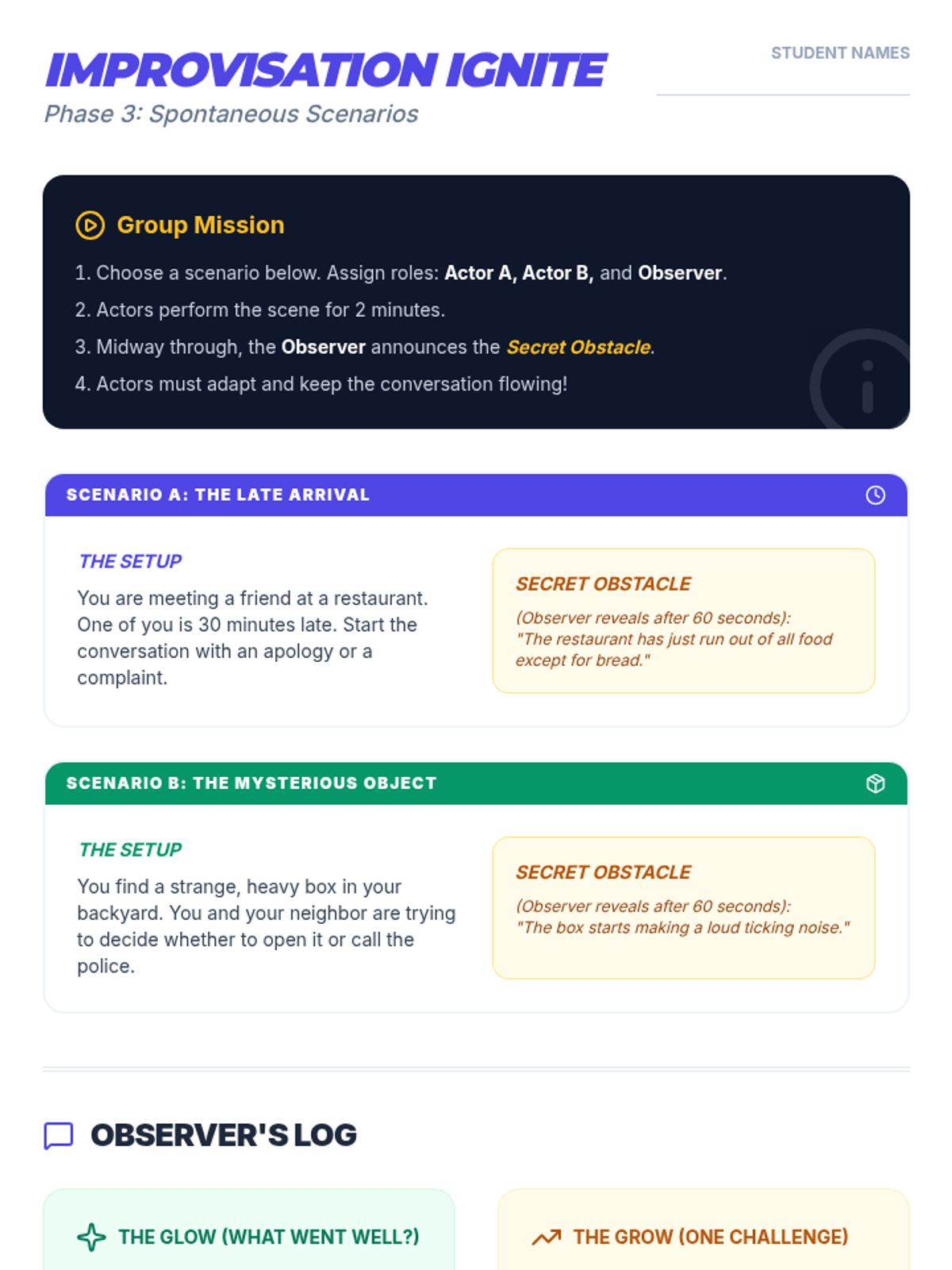
A student-facing small-group activity sheet providing structured scenarios with 'Secret Obstacles' and a peer-feedback framework for oral production.
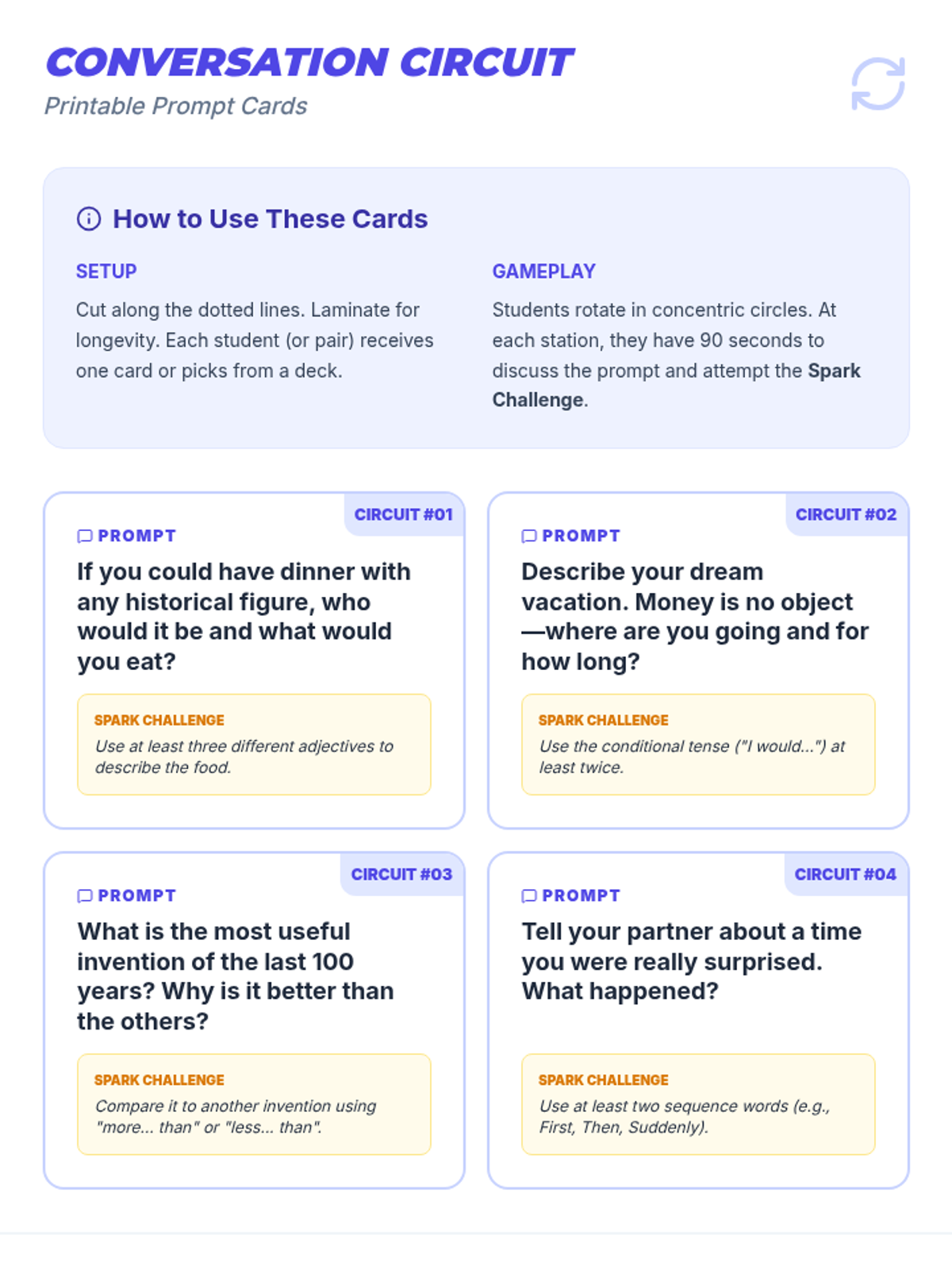
A set of 8 printable conversation prompt cards featuring 'Spark Challenges' to encourage specific linguistic targets during spontaneous speaking.
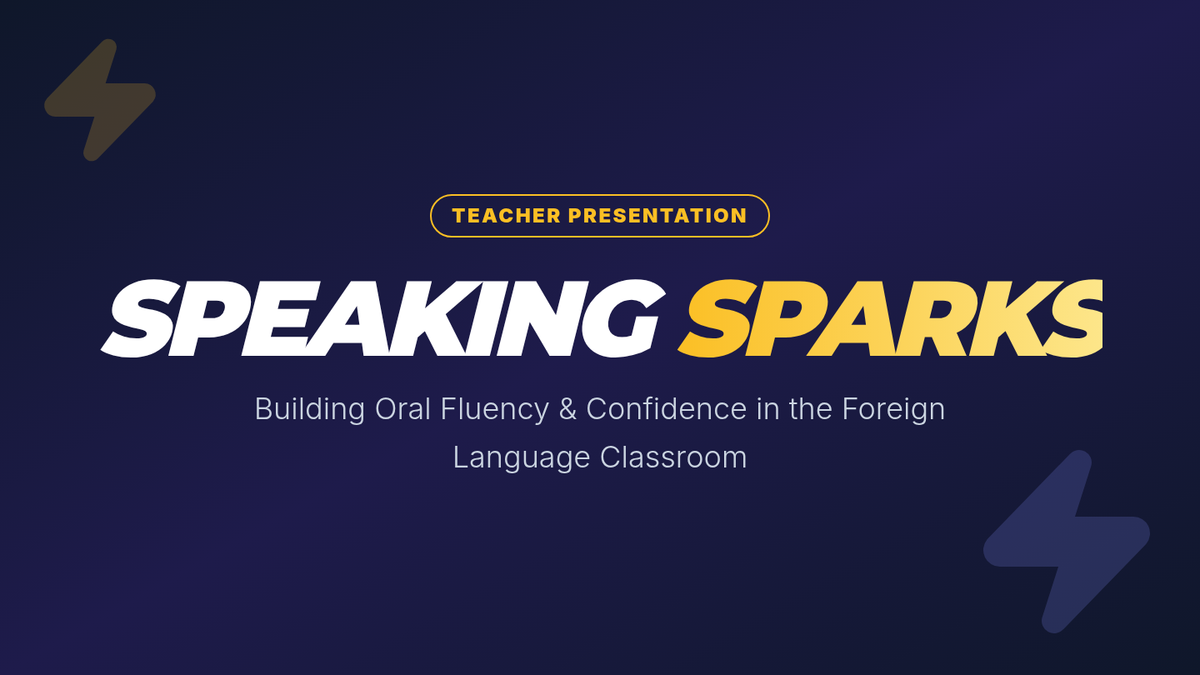
A visual guide for teachers and students explaining the shift from accuracy to fluency, providing warm-up prompts, and offering "Survival Phrases" to keep conversations moving.
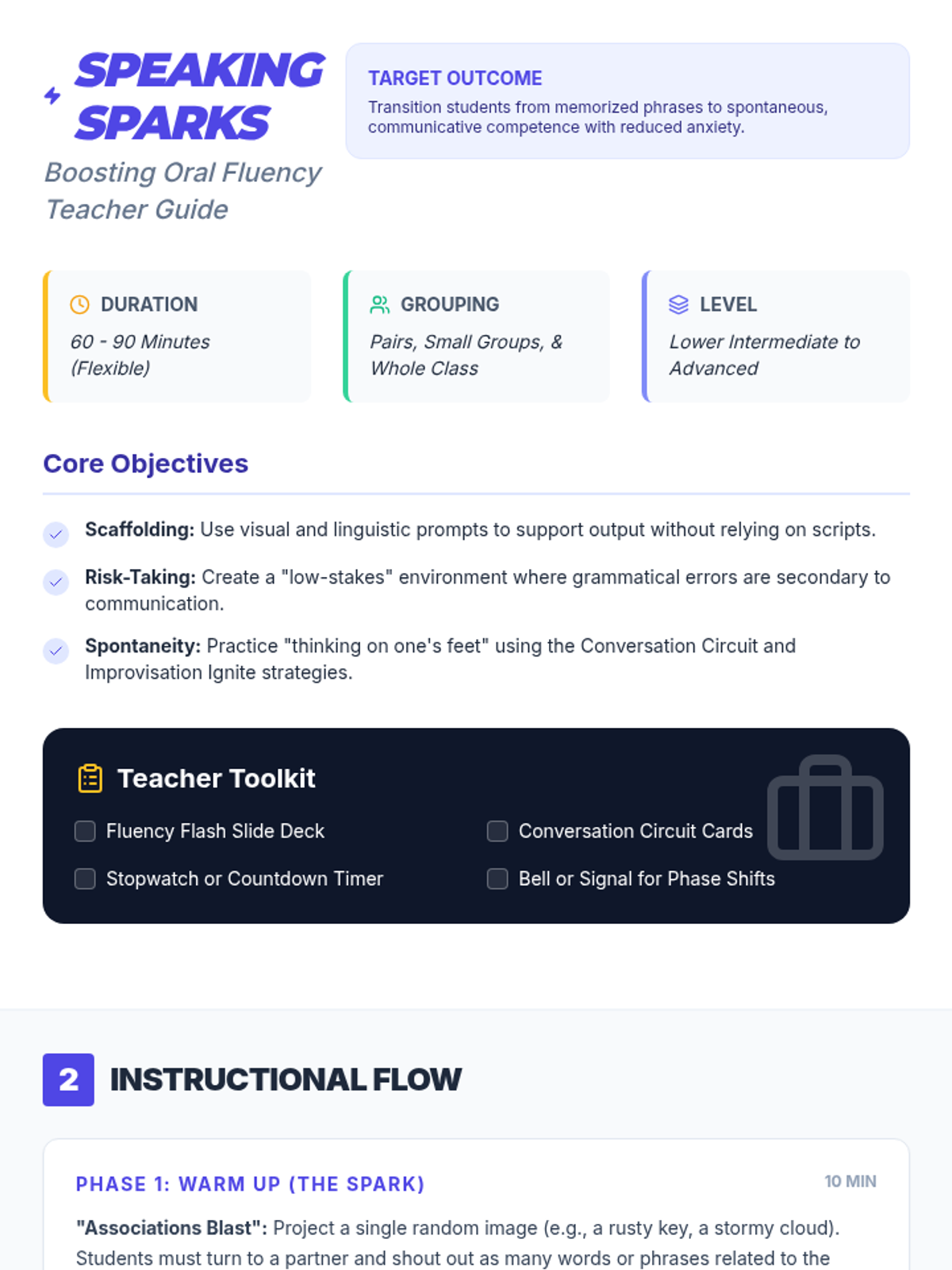
A comprehensive teacher guide for implementing oral fluency strategies, including a 4-phase instructional flow, target outcomes, and specific feedback techniques.
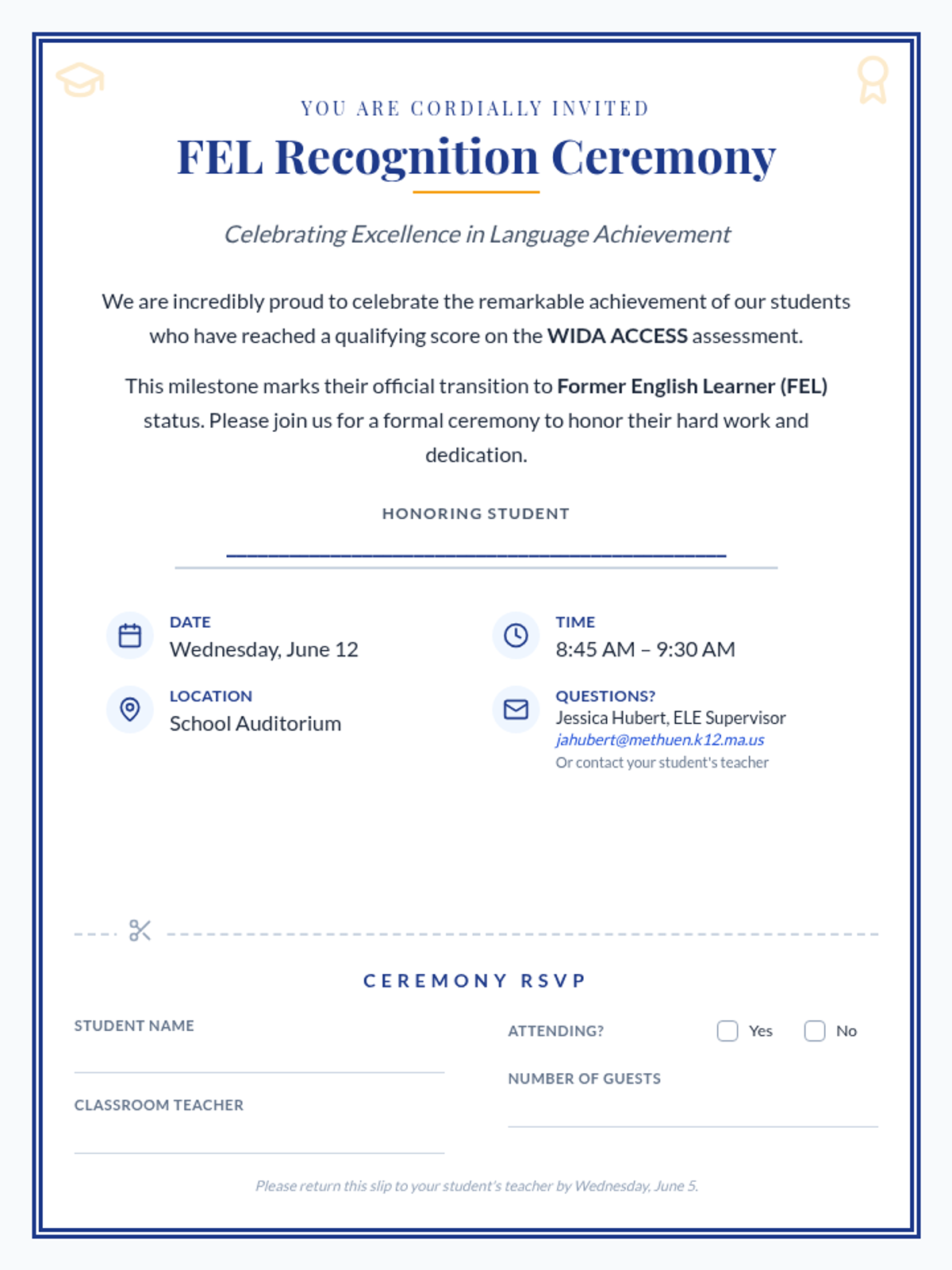
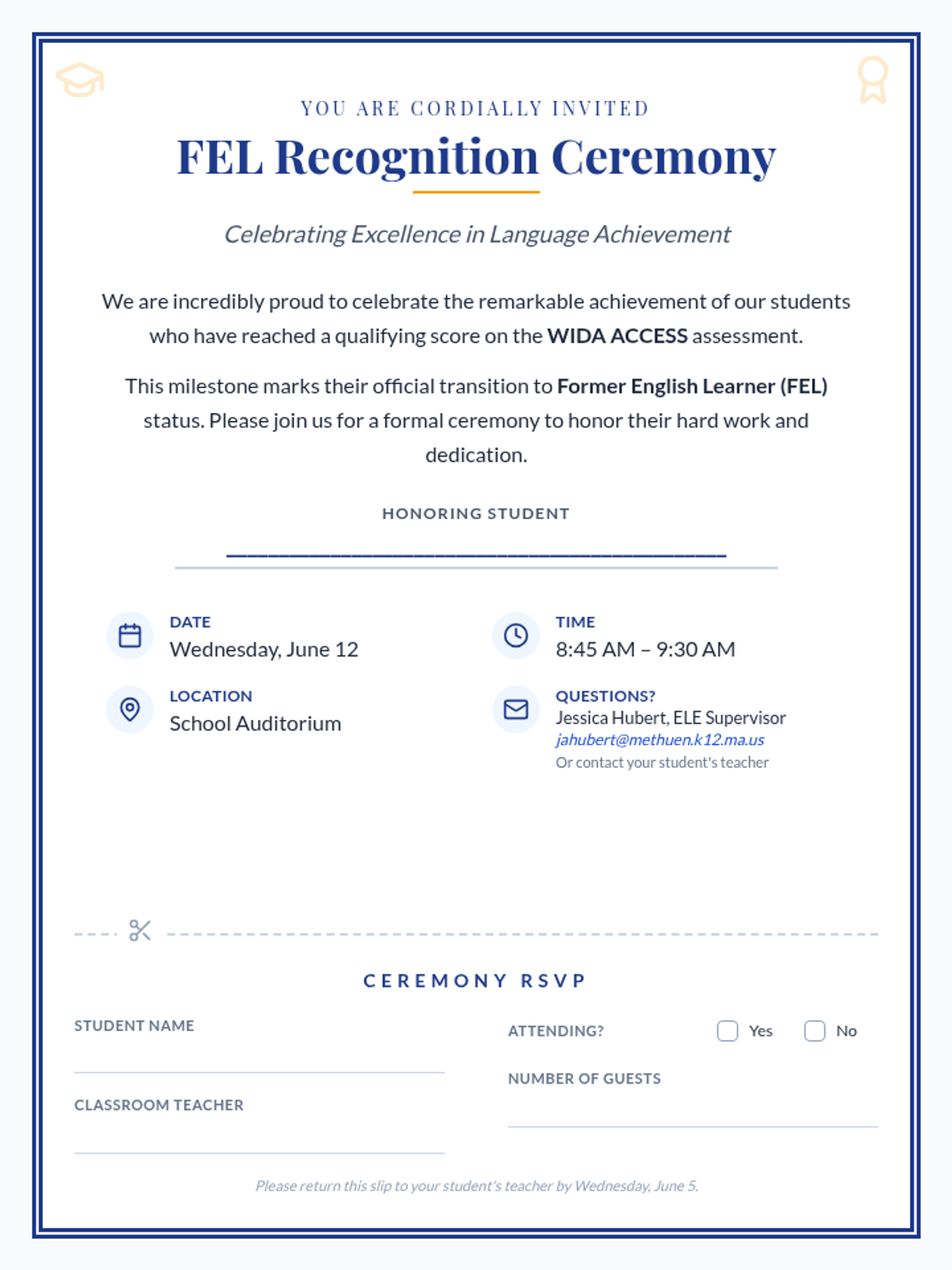
A formal printable invitation for families to celebrate their student's achievement of reaching a qualifying WIDA ACCESS score and transitioning to FEL status. The flyer features a professional layout with event details, a student name placeholder, and a detachable RSVP slip.
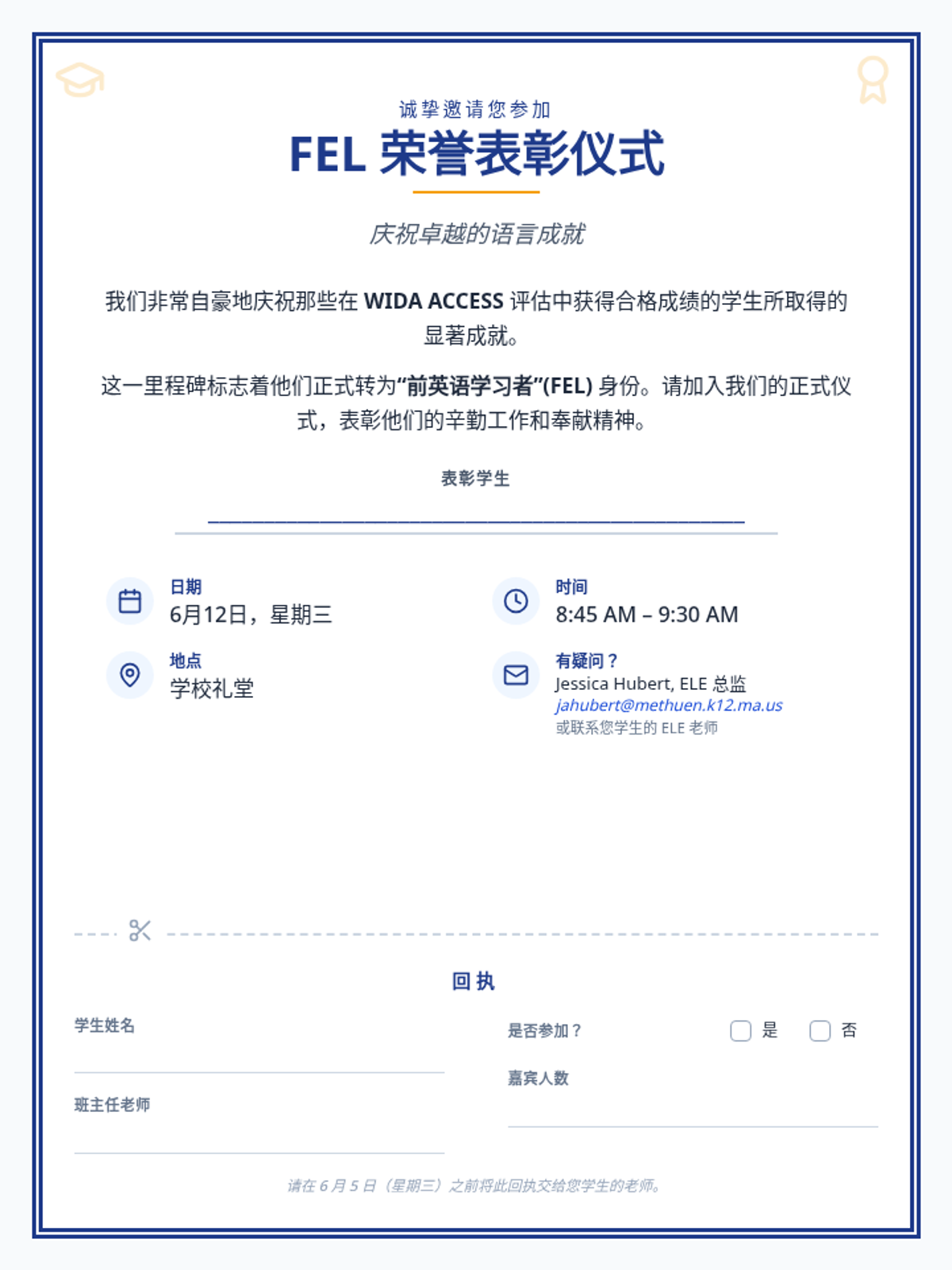
Mandarin Chinese translation of the FEL Recognition Ceremony invitation for families. Includes event details, student name placeholder, and detachable RSVP slip.
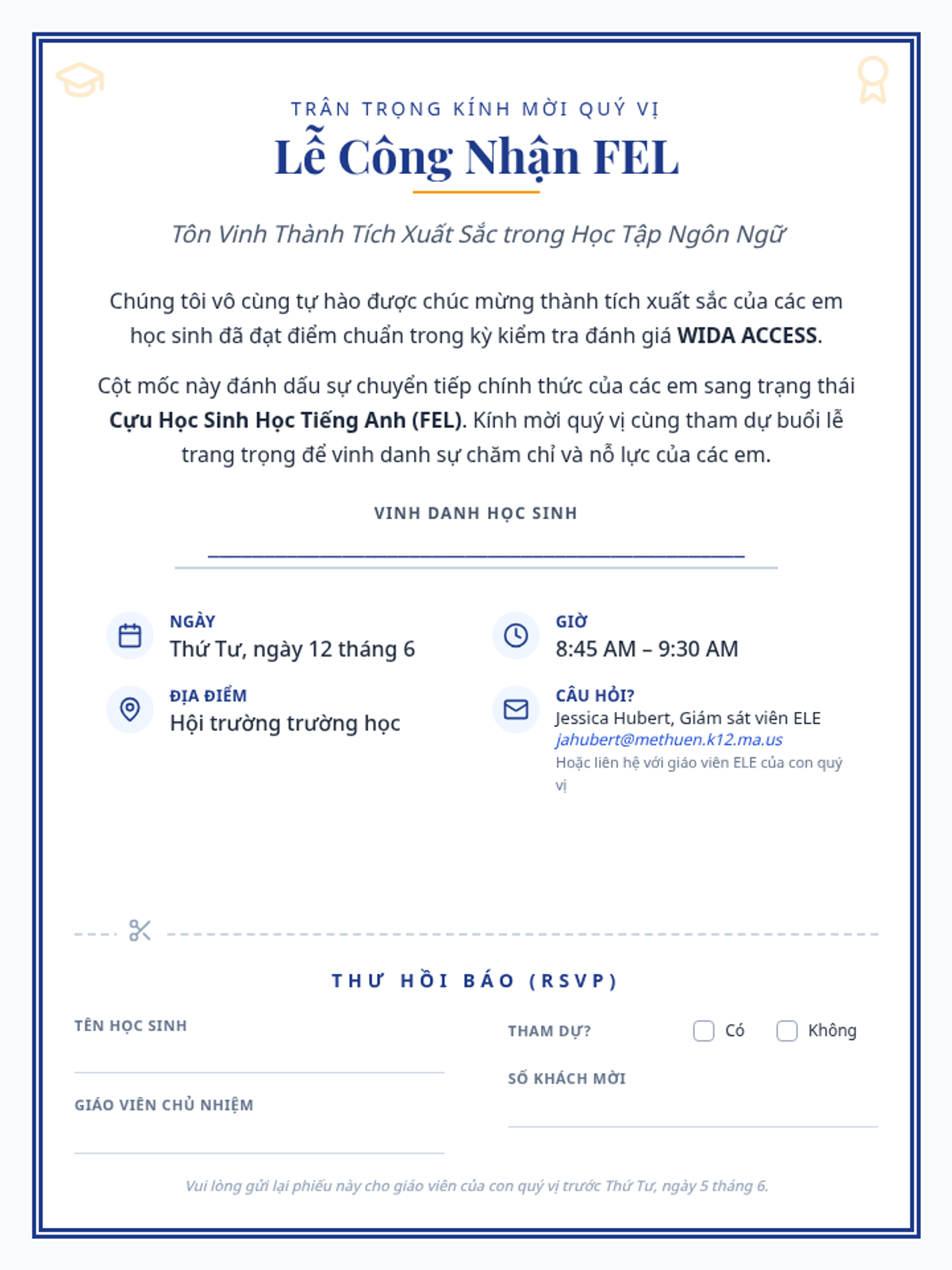
Vietnamese translation of the FEL Recognition Ceremony invitation for families. Includes event details, student name placeholder, and detachable RSVP slip.
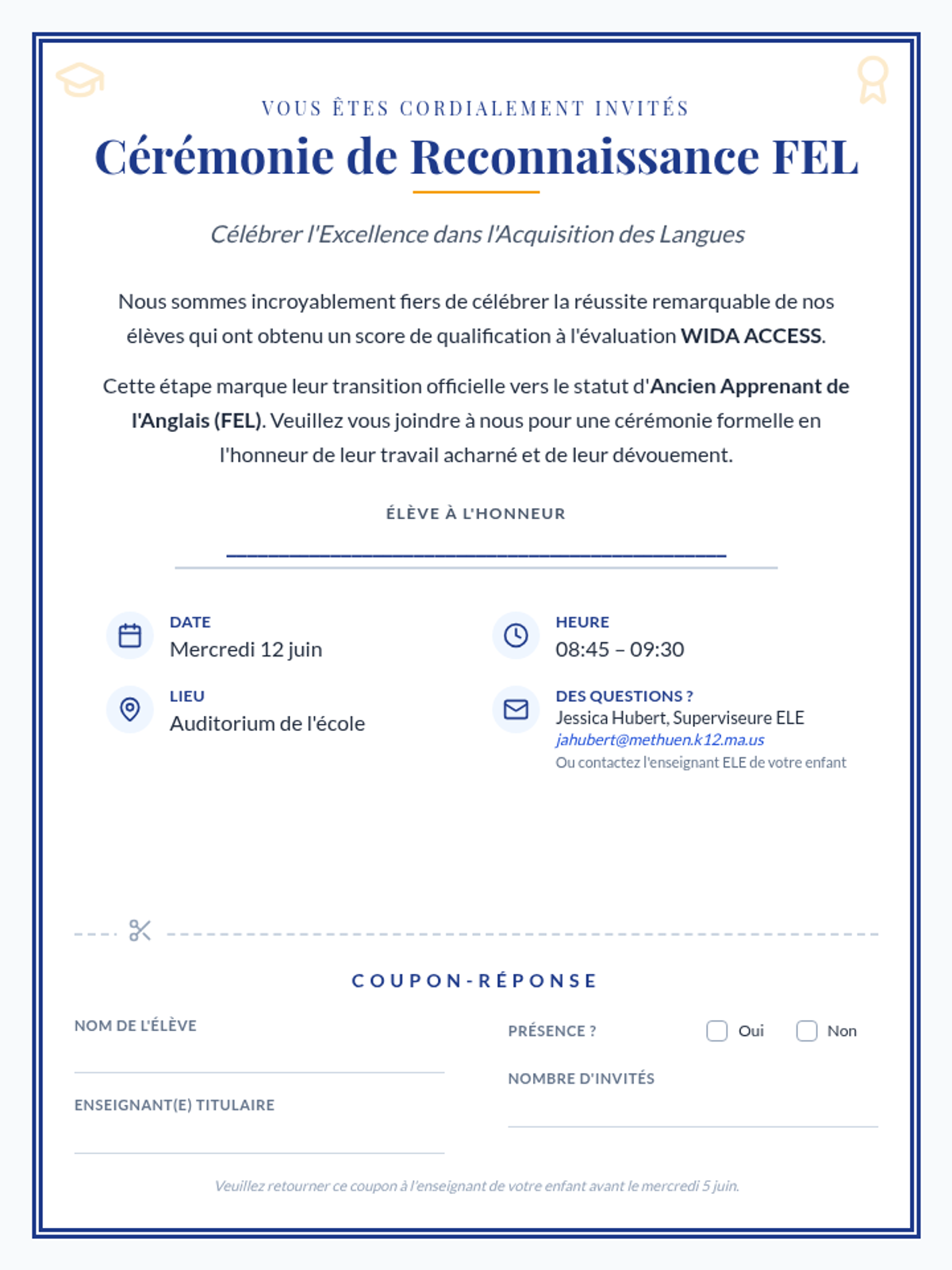
French translation of the FEL Recognition Ceremony invitation for families. Includes event details, student name placeholder, and detachable RSVP slip.
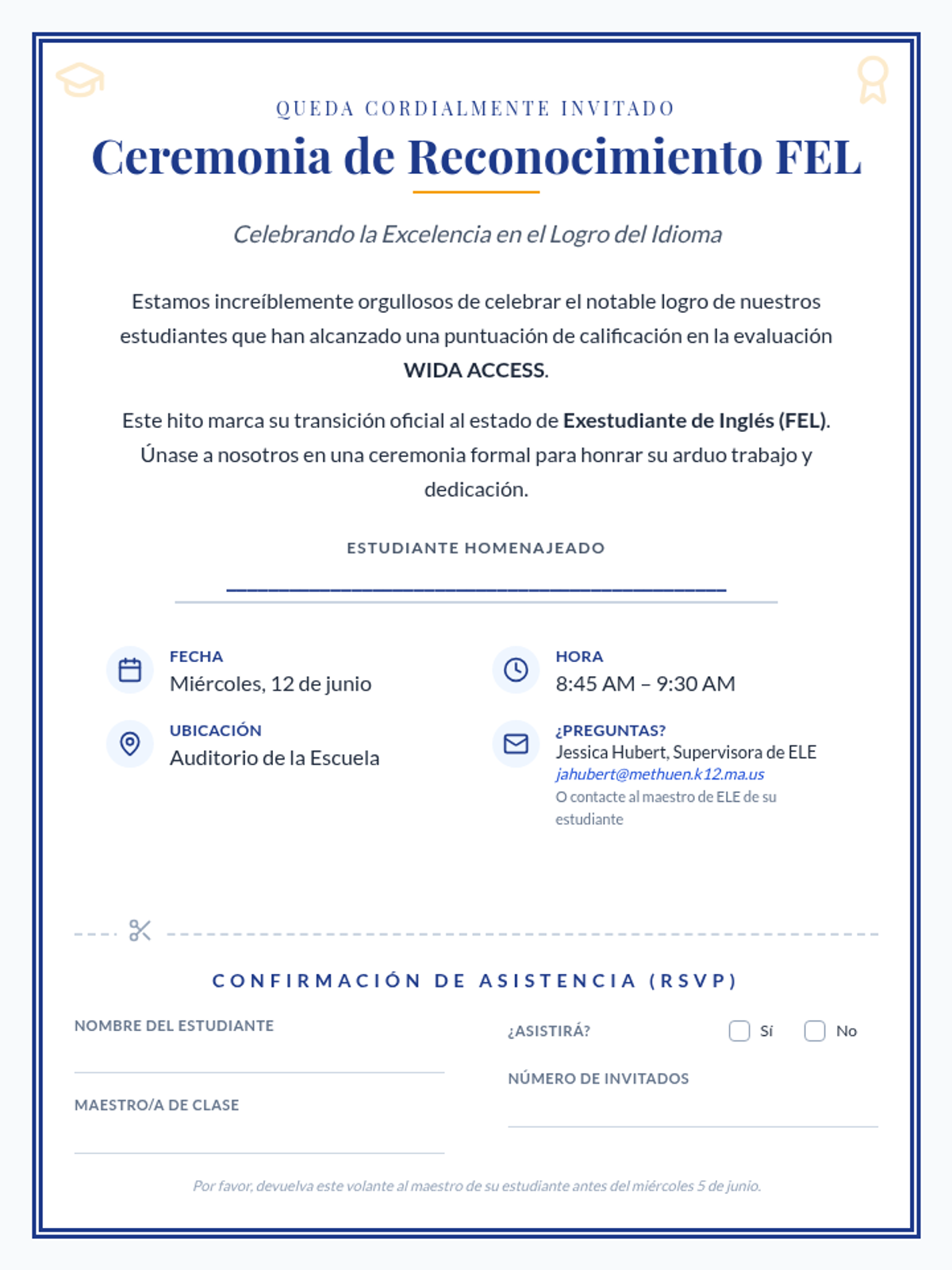
Spanish translation of the FEL Recognition Ceremony invitation for families. Includes event details, student name placeholder, and detachable RSVP slip.