Time management, question analysis, and distractor elimination techniques for high-stakes academic exams. Equips learners with skimming and scanning skills to improve efficiency on standardized assessments.
A sequence designed for 7th-grade ESL students to master the art of inferring unknown academic vocabulary through context clues, morphology, syntax, and tone analysis. This unit transforms vocabulary gaps from roadblocks into solvable puzzles using a "Word Detective" theme.
A 5-lesson unit for 6th-grade ESL students focused on transforming search habits from natural language questions to strategic keyword and Boolean operator techniques. Students move from basic vocabulary brainstorming to navigating academic databases and skimming snippets for relevance.
This sequence helps 4th Grade ESL students master test-taking strategies focusing on time management and anxiety regulation. Students learn the 'traffic light' method for prioritization, the 'skip and return' technique for pacing, mindfulness strategies for stress, and mechanics for accurate bubbling.
A 5-lesson unit for 4th Grade ESL students focusing on test-taking strategies for reading comprehension. Students learn to use their 'detective tools' to find evidence, annotate effectively, and navigate passages with a focus on 'proving' their answers rather than guessing.
A comprehensive sequence for 4th Grade ESL students to master test-taking logic. Students learn the Process of Elimination (POE), identify extreme language red flags, categorize common distractor types, and evaluate the 'best' vs. 'correct' answers, culminating in a creative workshop where they design their own distractors.
A comprehensive 4th Grade ESL sequence focused on academic English test-taking strategies. Students learn to deconstruct question stems, identify negative qualifiers, isolate keywords, predict answers, and rephrase complex academic prompts into student-friendly language.
A 4th-grade ESL sequence focusing on academic reading efficiency through skimming for main ideas and scanning for specific details, using a 'Text Detective' theme.
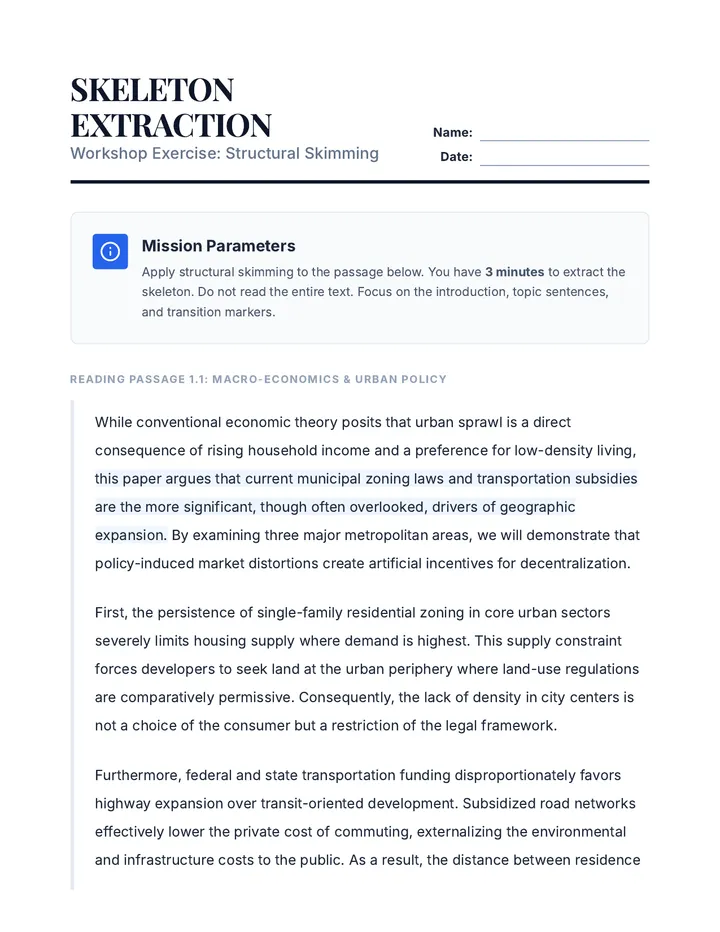
A high-intensity workshop sequence designed for graduate students to master the reading demands of the GRE, GMAT, and TOEFL. Focuses on skimming, scanning, contextual vocabulary, and syntactic deconstruction for maximum efficiency.
This sequence trains graduate-level ESL students to analyze the psychometric logic of standardized test questions. Students learn to identify common distractor patterns—such as absolute language, irrelevant truths, and faulty inferences—transforming their approach from guessing to systematic logical elimination.
A comprehensive sequence designed for graduate ESL students to master the integrated writing and speaking tasks of high-stakes academic exams like TOEFL iBT and IELTS. The curriculum focuses on shorthand note-taking, identifying inter-source relationships, utilizing structural templates, and rapid synthesis under timed conditions.
A comprehensive 3rd-grade sequence focused on transition from passive to active reading for ESL students, mastering annotation, summarization, and visual analysis strategies.
This sequence equips 3rd-grade ESL students with logical strategies for multiple-choice tests, focusing on identifying and eliminating 'distractor' answers. Through a 'Detective Academy' theme, students move from spotting obvious errors to navigating nuanced traps and complex answer formats.
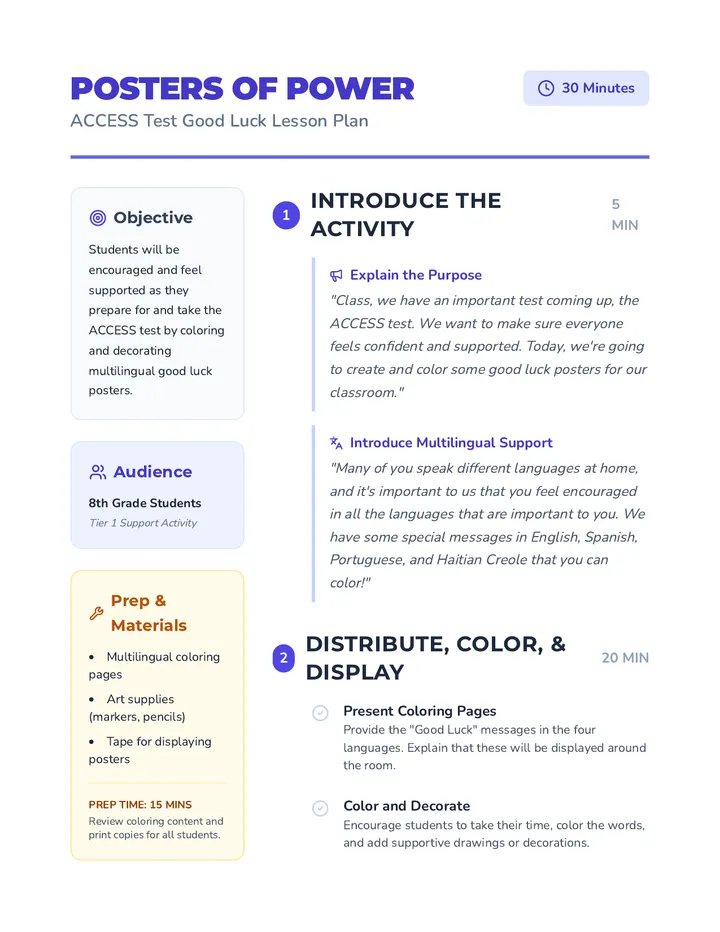
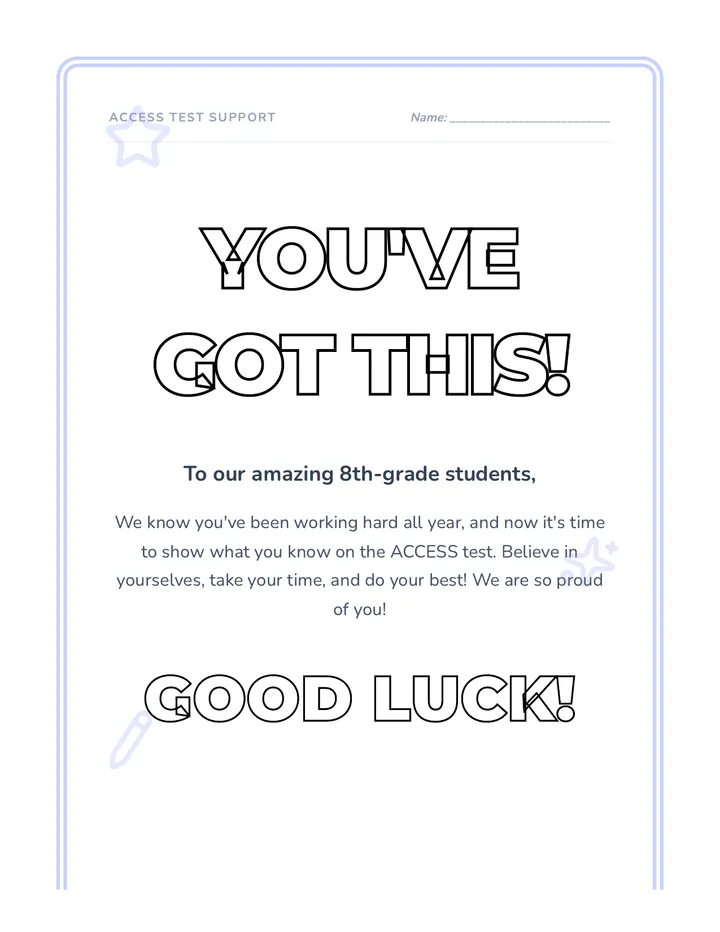
A quick and supportive activity for 8th-grade students to create, color, and display multilingual good luck posters for the ACCESS test, fostering an inclusive and encouraging classroom environment.
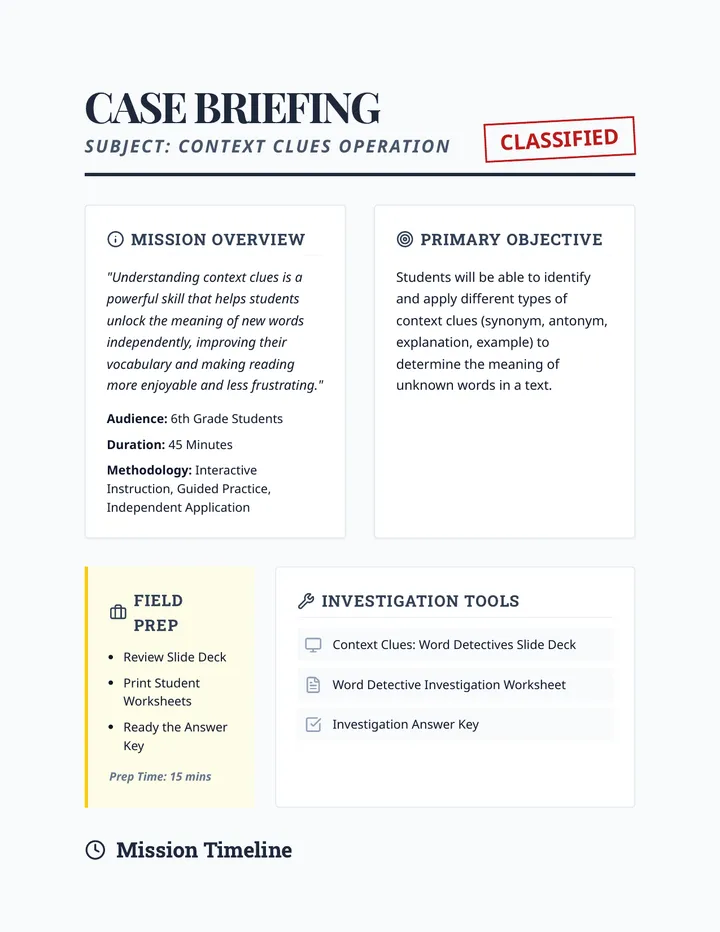
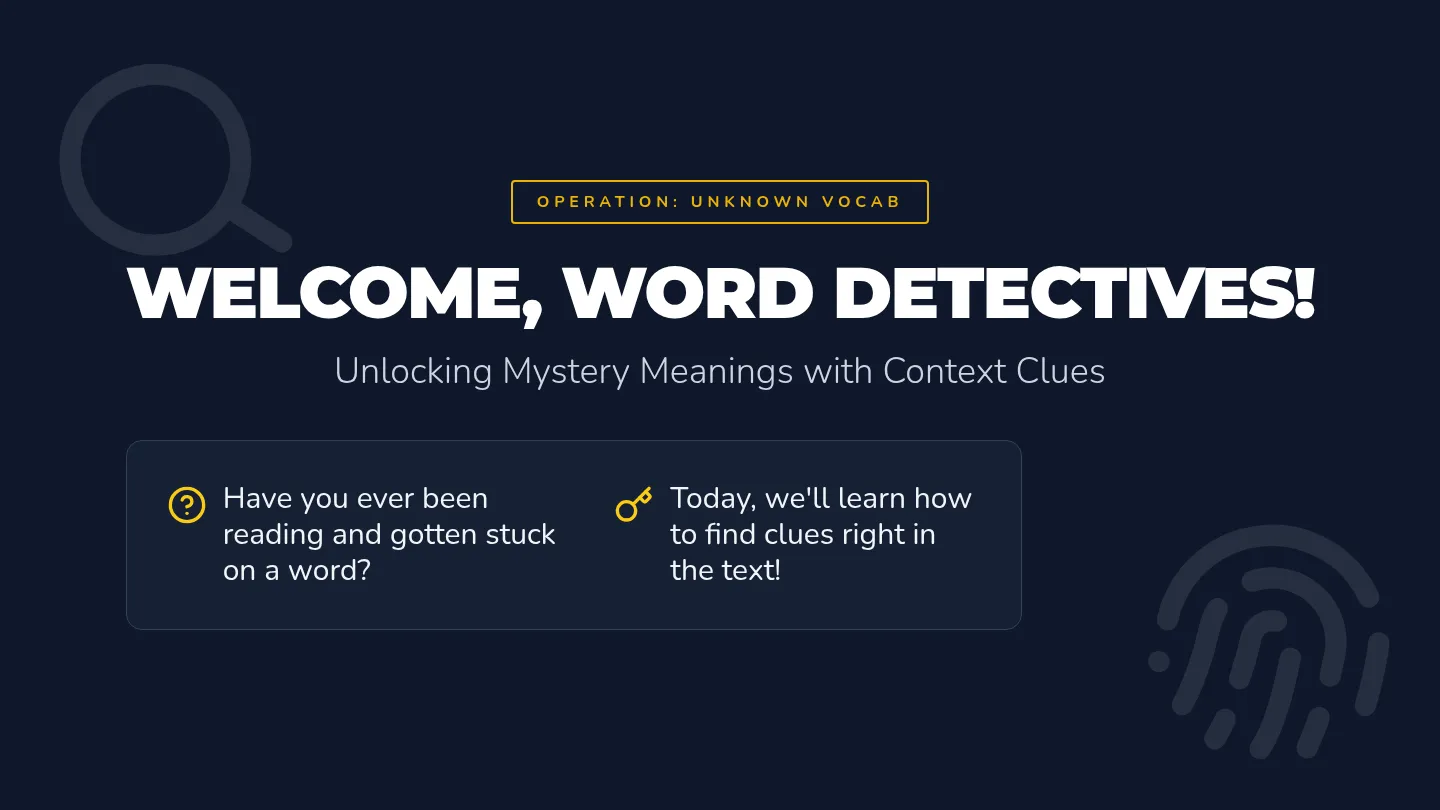
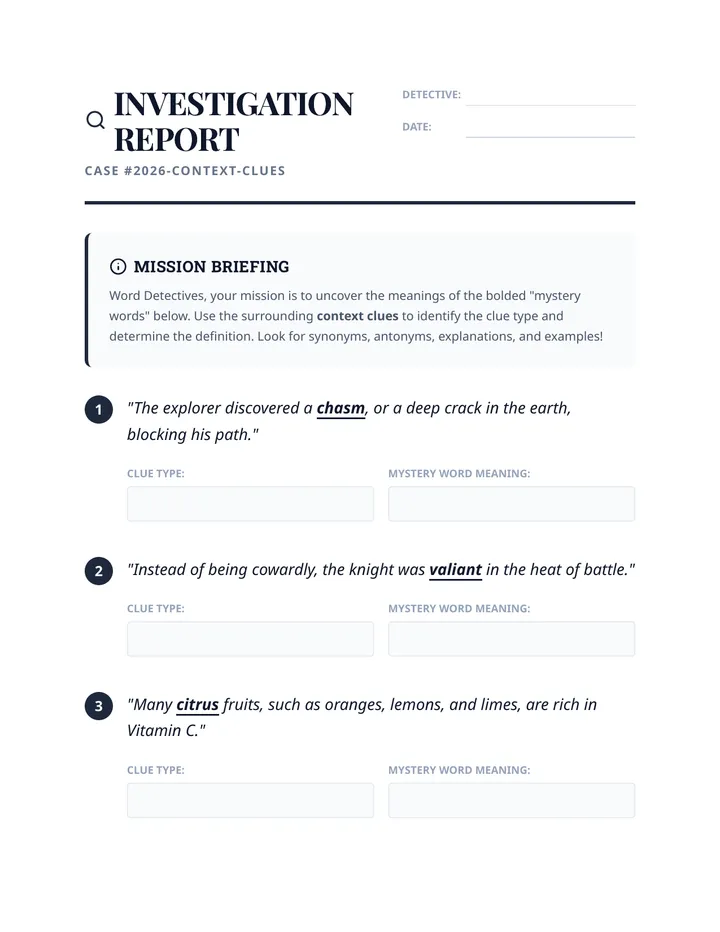
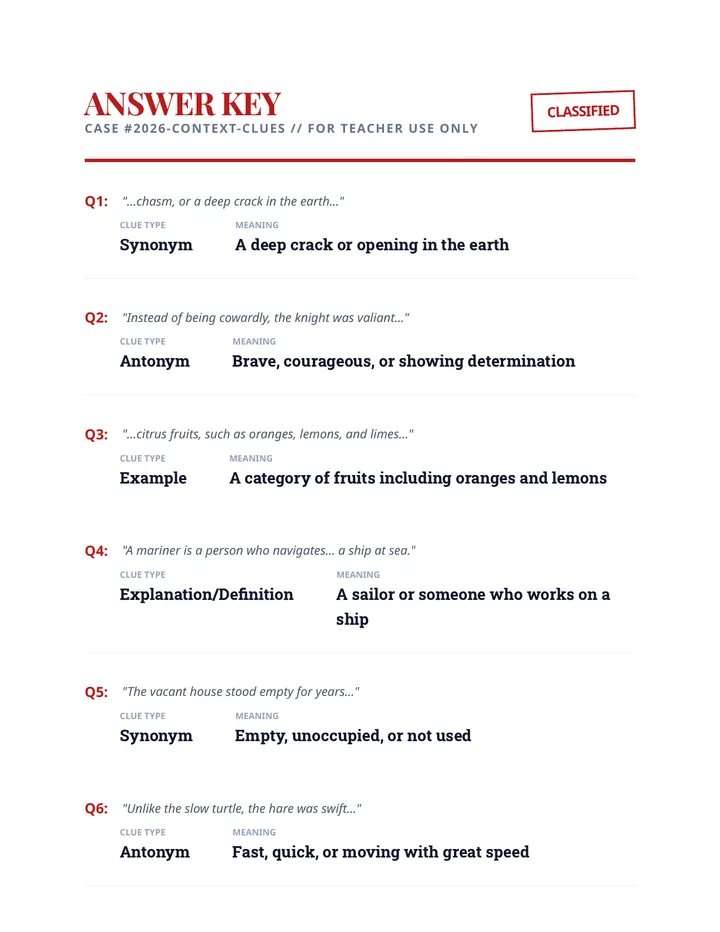
A 45-minute lesson for 6th graders to master four types of context clues (synonym, antonym, explanation, and example) through an engaging 'Word Detective' theme.
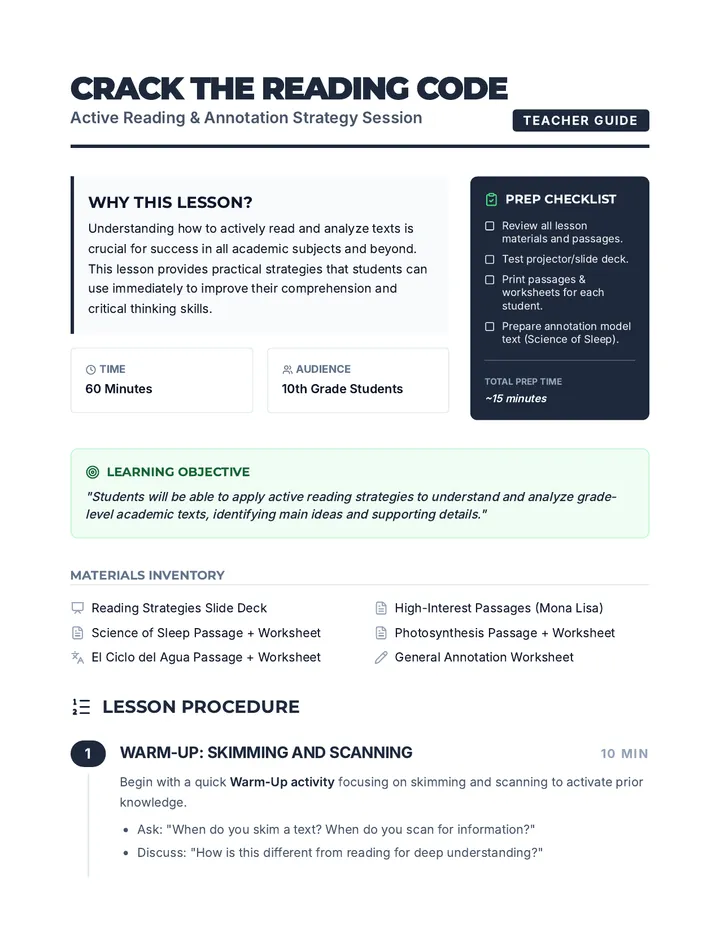
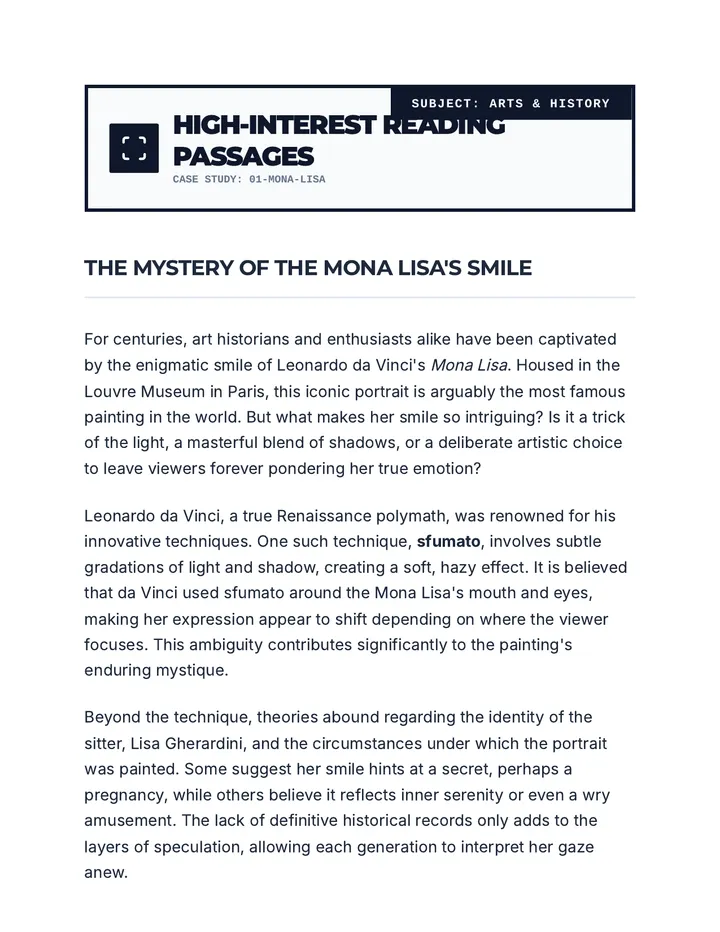
A 60-minute lesson for 10th-grade students focused on active reading strategies, annotation techniques, and identifying main ideas. Students will practice these skills through guided and independent reading of high-interest academic texts.
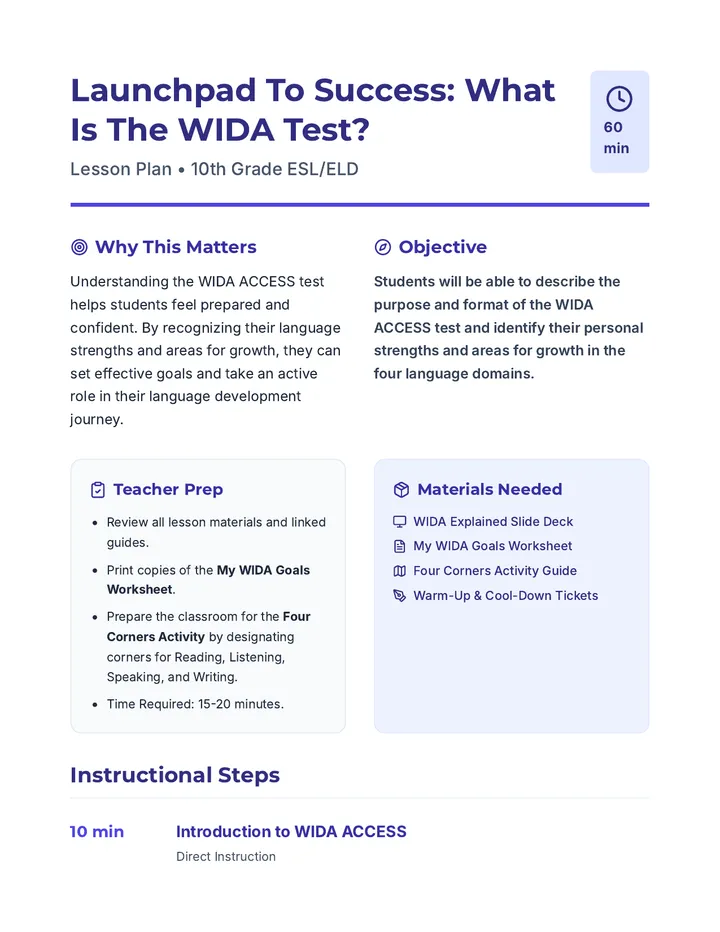
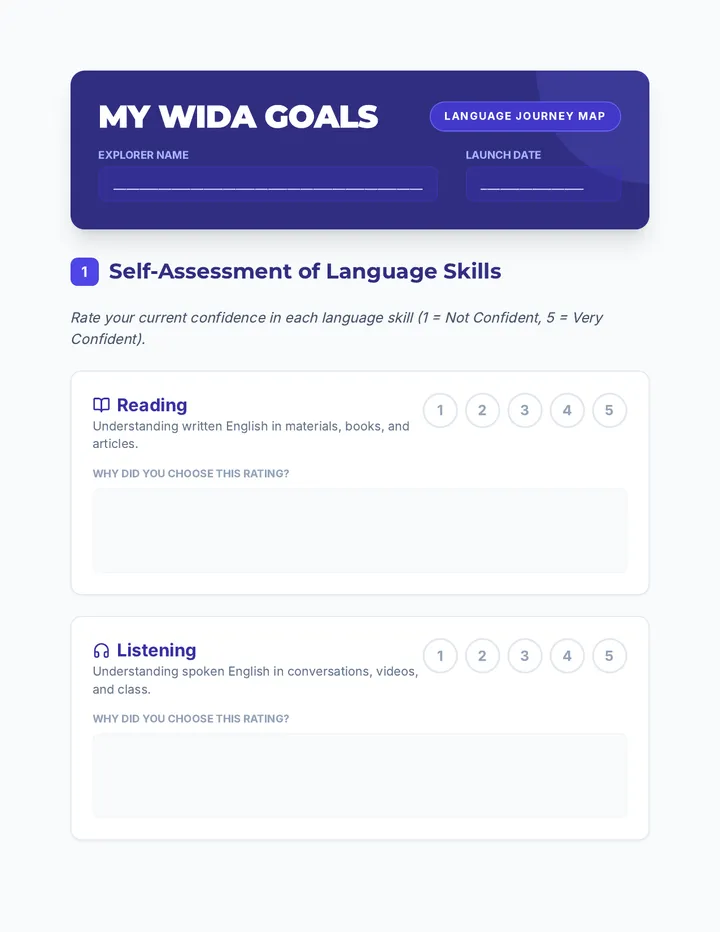
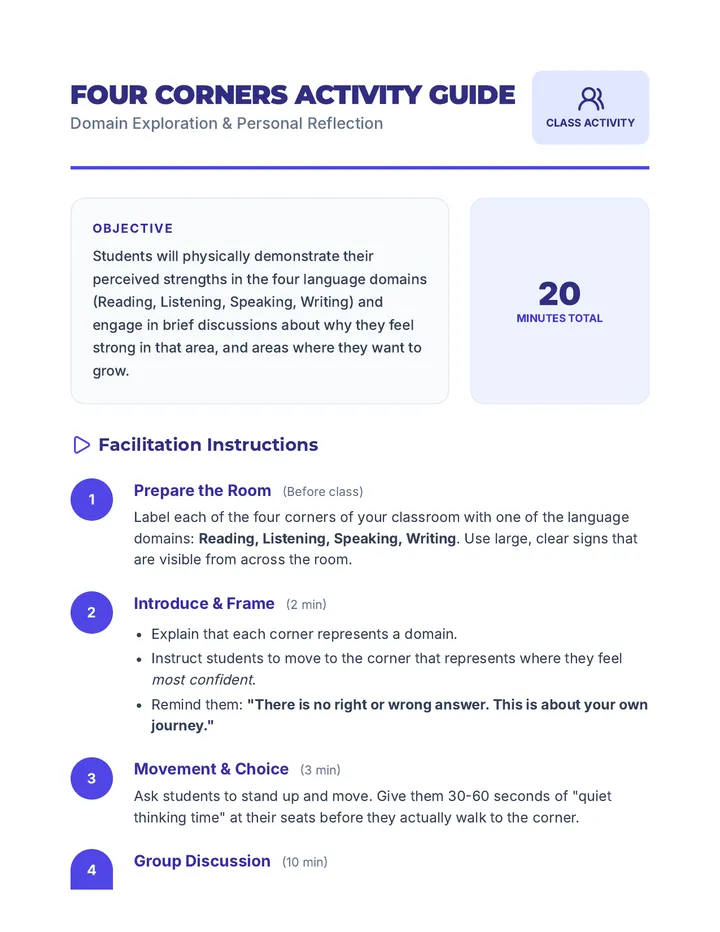
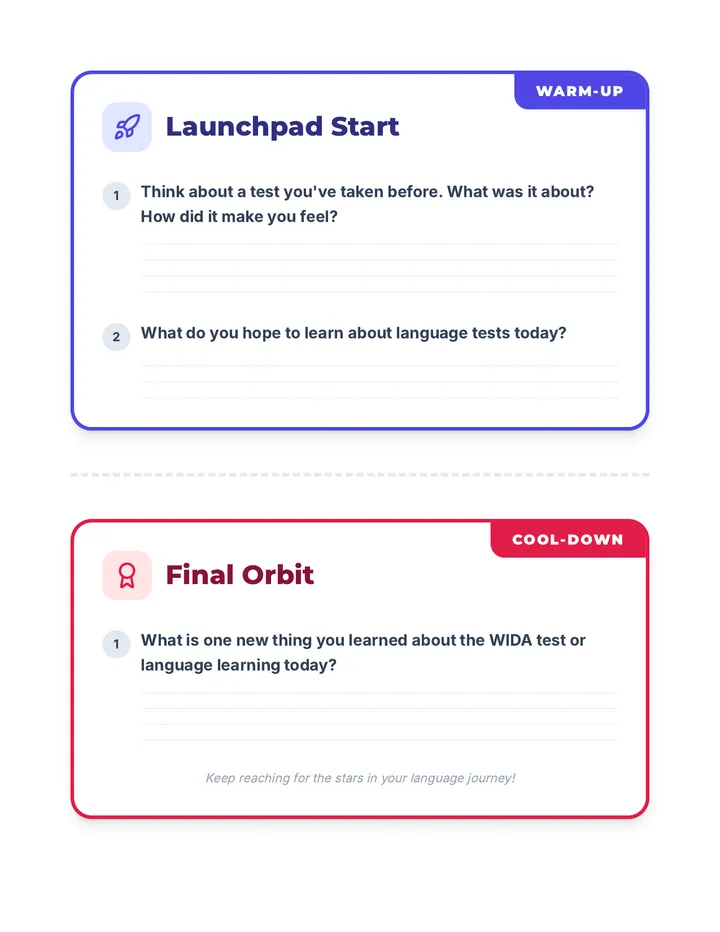
This lesson introduces 10th-grade students to the WIDA ACCESS test, helping them understand its purpose and format while identifying personal language strengths and areas for growth.
A high-energy, 30-minute game-based lesson designed for Long-Term English Learners to sharpen listening, speaking, and writing skills for the ELPAC test. Students practice active listening and clear communication through a competitive 'whisper relay' format.
En esta lección de repaso, los estudiantes reforzarán la conservación del agua dulce respondiendo preguntas de opción múltiple y completando actividades de rellenar espacios en blanco en español. Ideal para clases de ciencias o inmersión en español de secundaria.