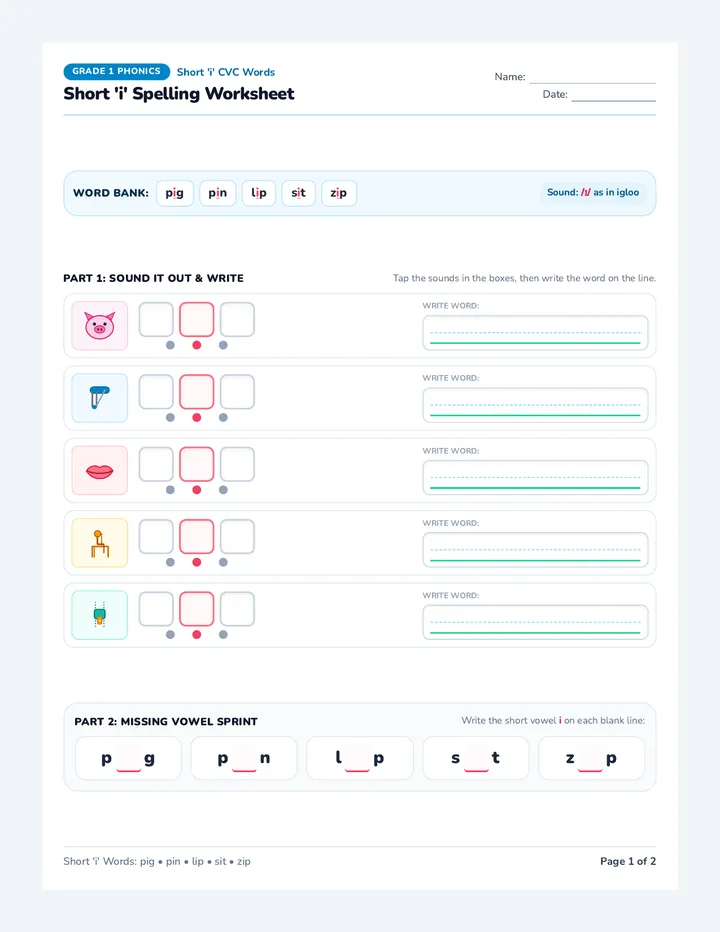
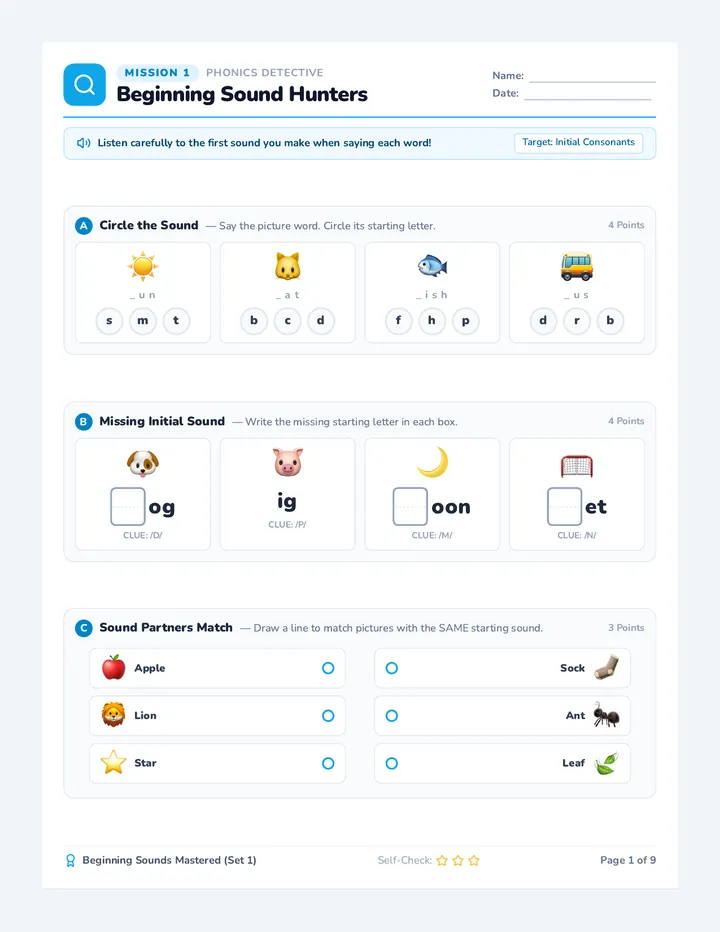
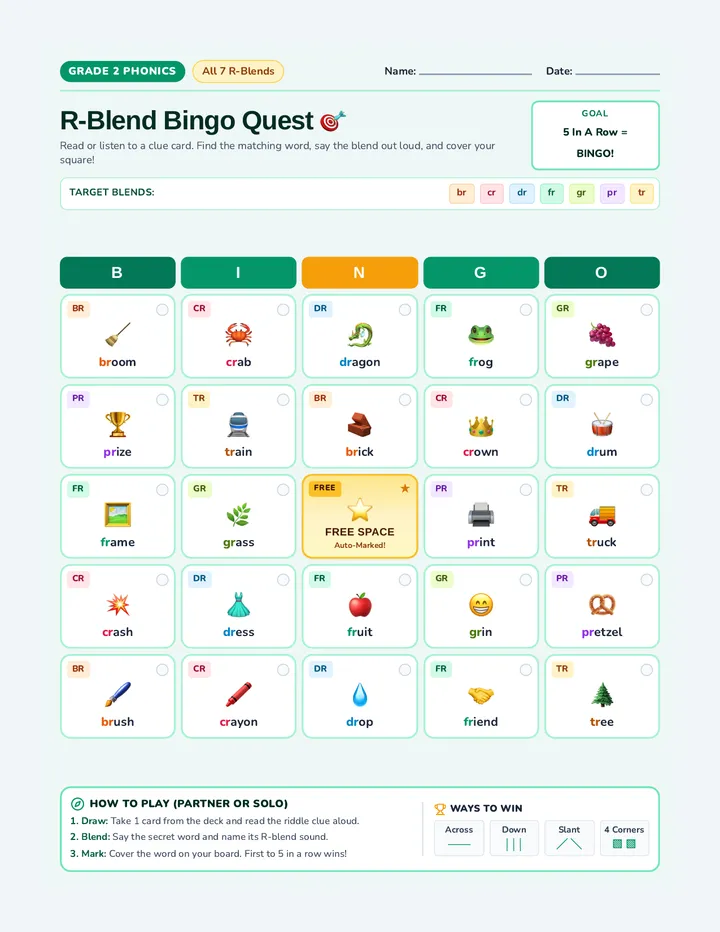
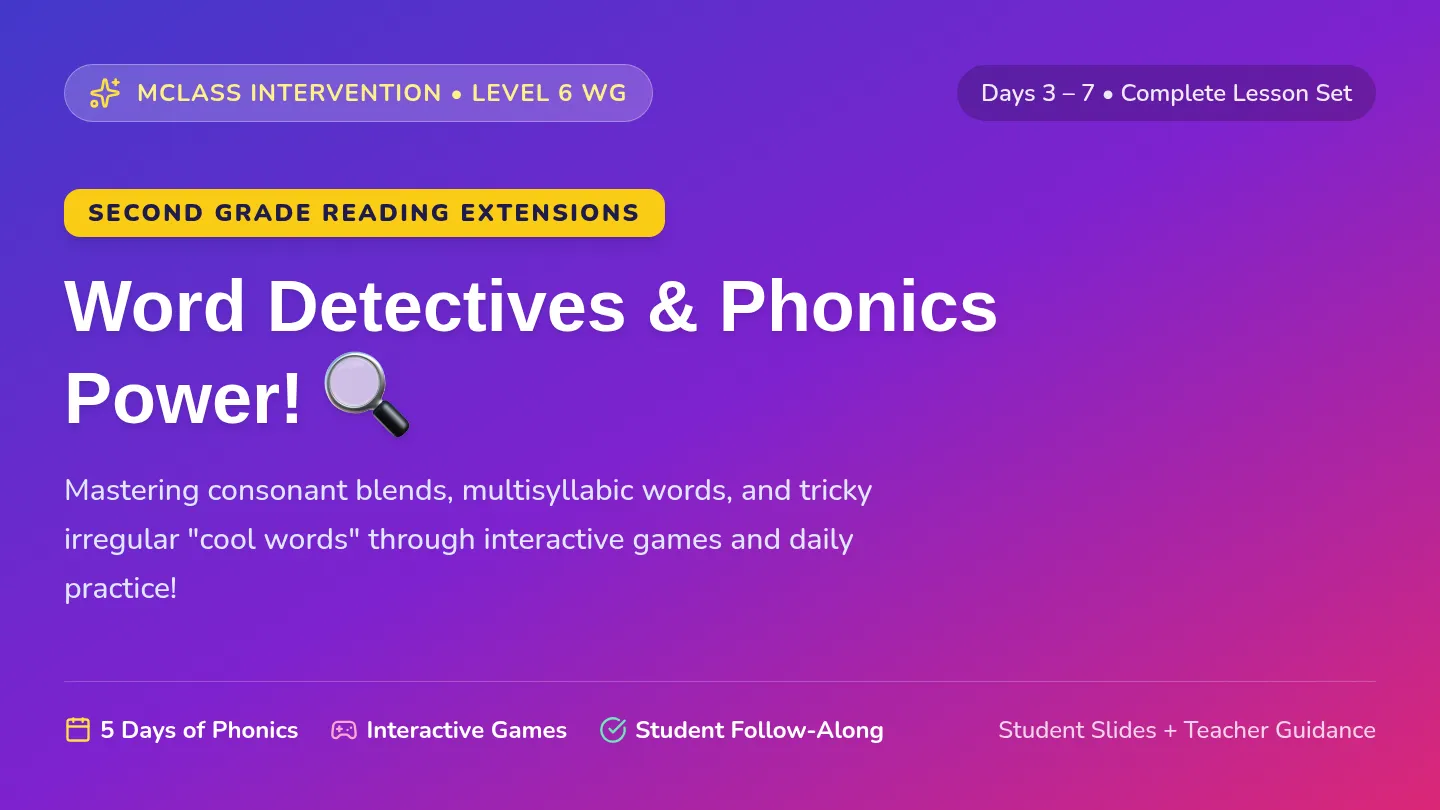
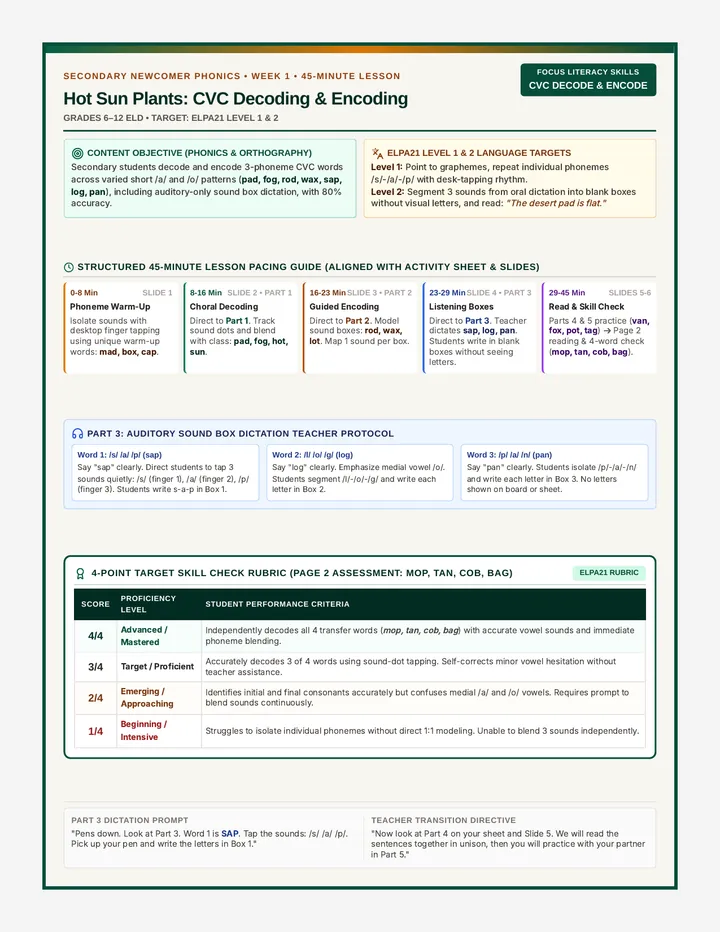
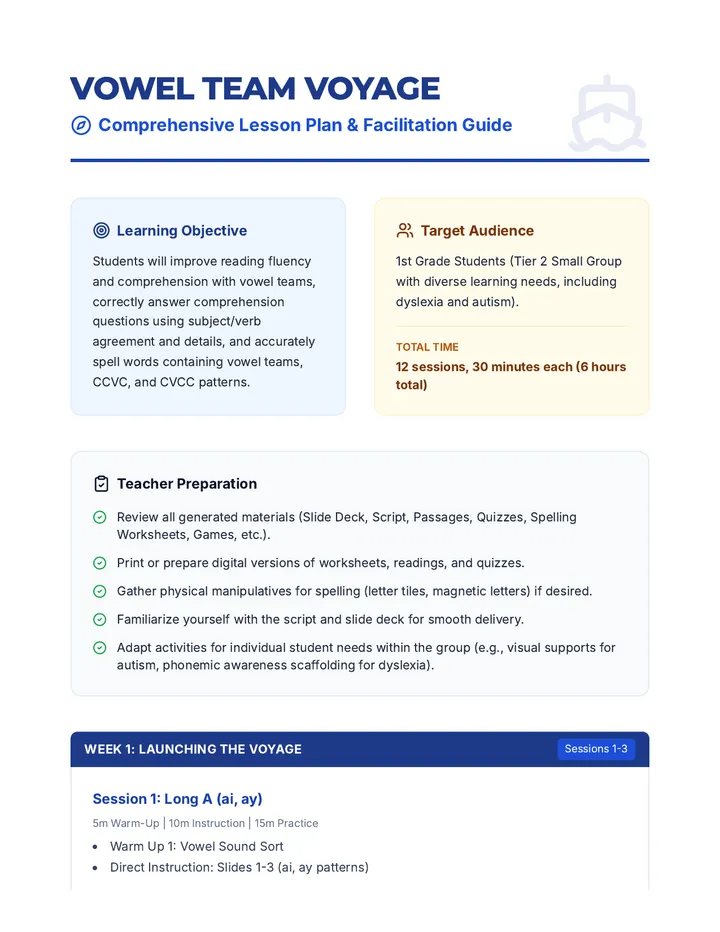
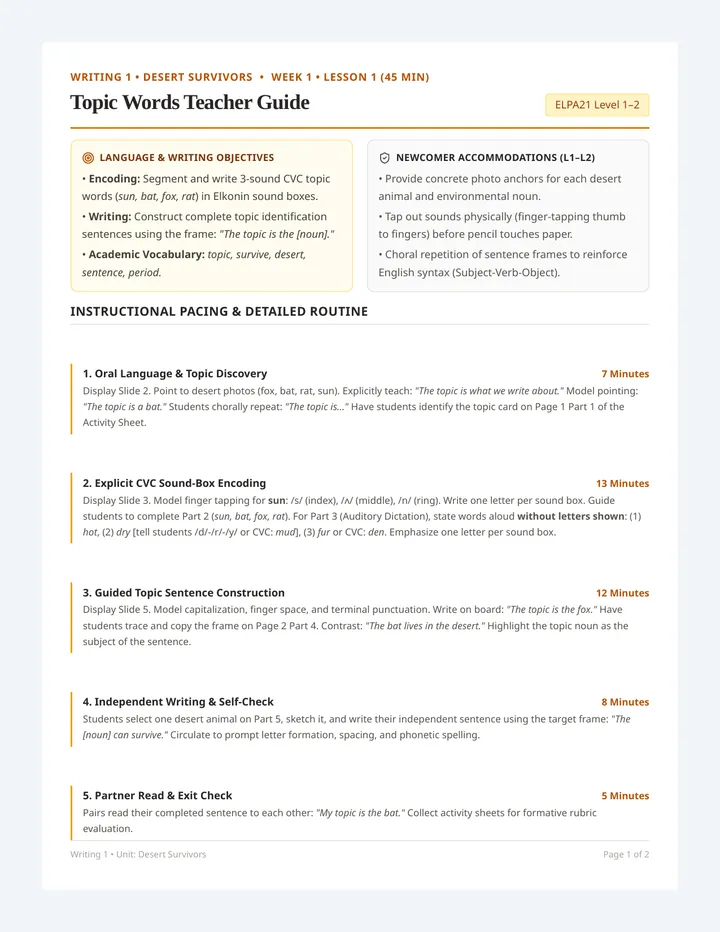
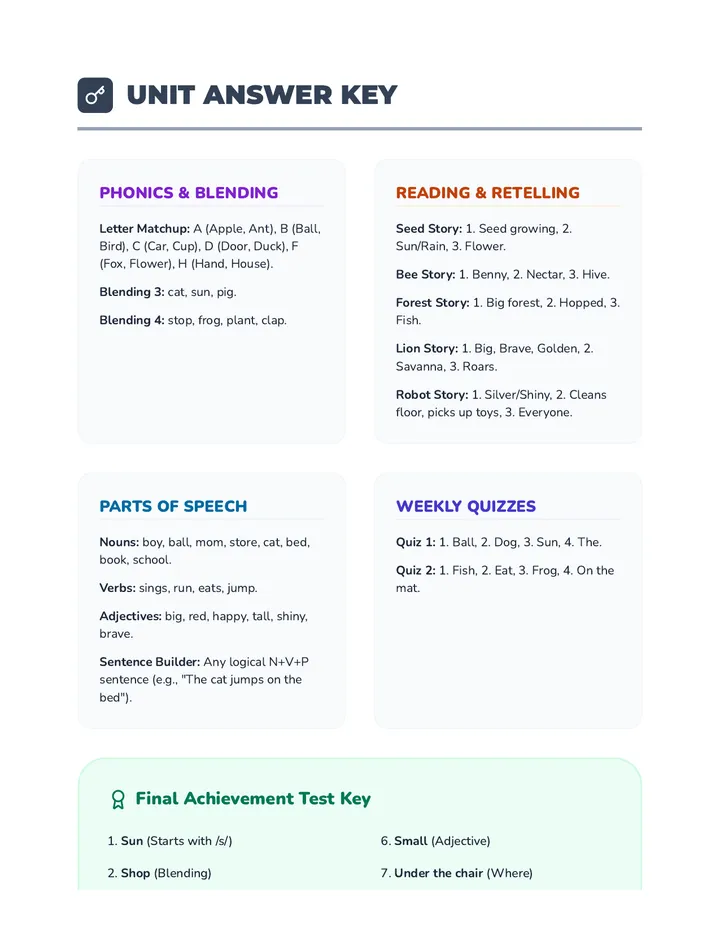
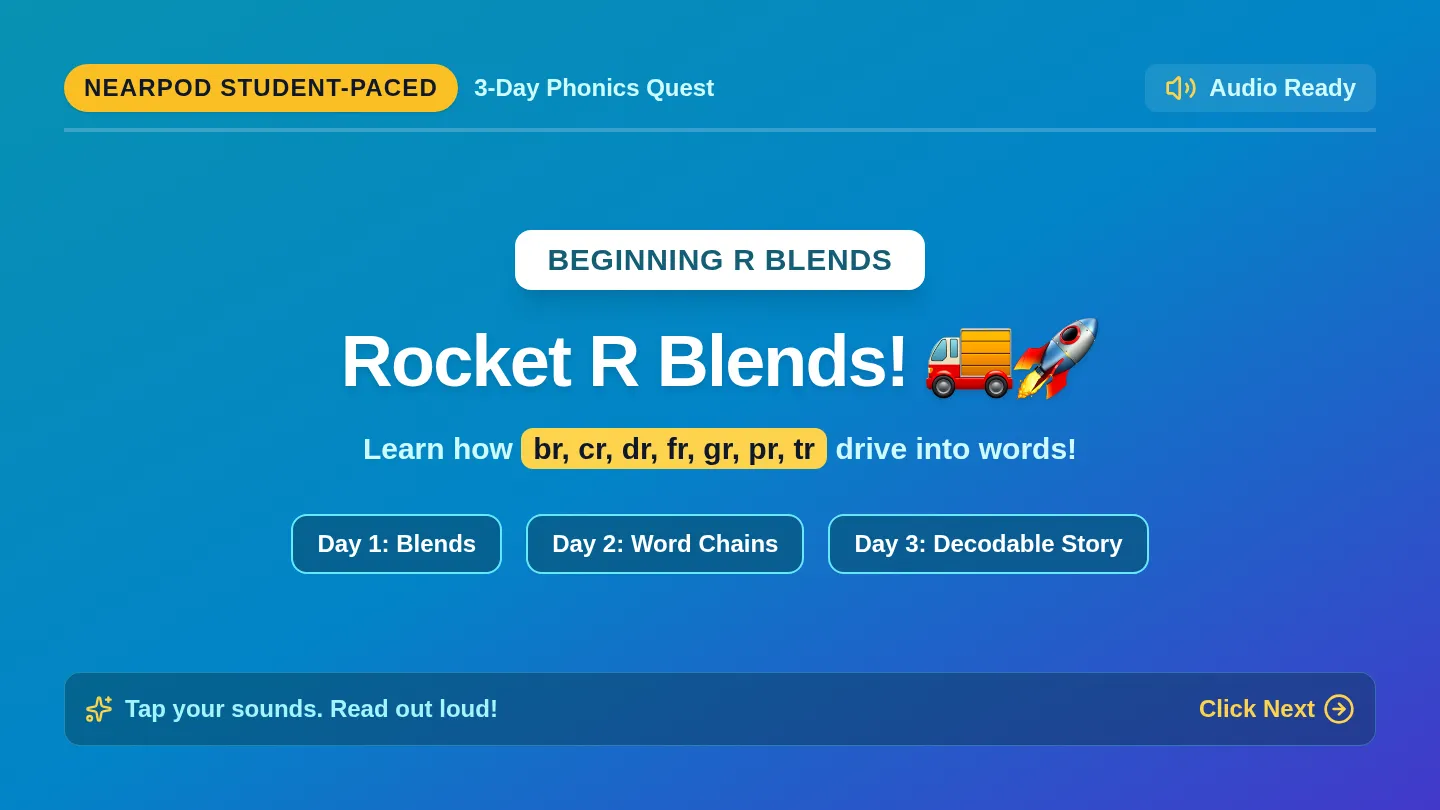
Phonics, sight word recognition, and basic sentence structures for early literacy. Builds decoding skills and comprehension of short, everyday texts.
A 5-lesson sequence for 5th Grade ESL students focused on the mechanics of finding information. Students move from basic keyword generation to using Boolean operators, navigating text features, utilizing academic databases, and refining failed searches to become efficient digital researchers.
This 5-lesson sequence for 6th-grade ESL students covers the ethical use of information, focusing on intellectual property, MLA citation components, digital tools, and in-text attribution. Students progress from conceptual understanding to creating a mini-bibliography for a personal project.
This 3rd-grade ESL sequence teaches students the foundations of academic integrity, focusing on why and how to give credit to authors. Students learn to locate bibliographic information, format simple citations, and synthesize research notes into a final product with a proper source list.
A workshop-style workshop sequence for 3rd grade ESL students focusing on note-taking and paraphrasing. Students learn to extract information without plagiarizing using strategies like keyword highlighting, visual sketching, and the 'Read-Cover-Write' method.
A 5-lesson sequence for 3rd-grade ESL students to learn the basics of source credibility and fact-checking through the lens of 'Information Detectives'. Students learn to distinguish fact from fiction, identify authors, recognize advertisements, and cross-check information.
A 5-lesson unit for 3rd grade ESL students on foundational research skills, focusing on formulating questions, using keywords, navigating text features, and evaluating source relevance.
A comprehensive 4th-grade ESL project-based sequence on academic integrity and citation standards. Students transition from understanding the ethics of intellectual property to mastering the technical skills of citing books and websites, culminating in a mini-research project.
A comprehensive digital literacy unit for 4th Grade ESL students, framing research skills as 'Digital Detective' training. Students learn to distinguish fact from opinion, master keyword searching, evaluate website credibility, and verify information through cross-referencing.
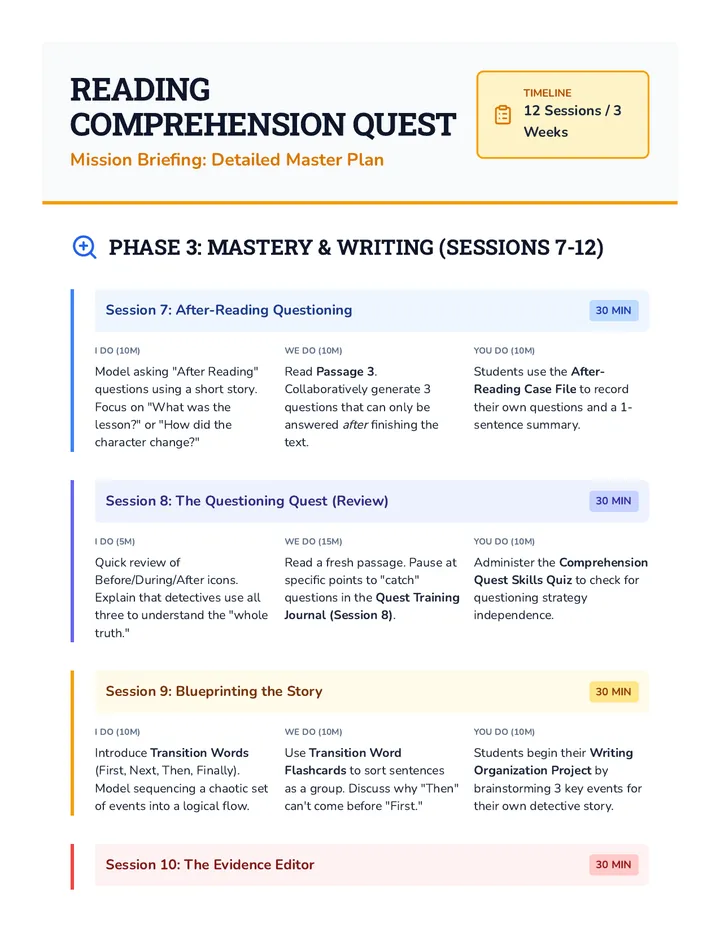
A 5-lesson unit for 4th Grade ESL students focusing on test-taking strategies for reading comprehension. Students learn to use their 'detective tools' to find evidence, annotate effectively, and navigate passages with a focus on 'proving' their answers rather than guessing.
A 4th-grade ESL sequence focusing on academic reading efficiency through skimming for main ideas and scanning for specific details, using a 'Text Detective' theme.
A comprehensive 3rd-grade sequence focused on transition from passive to active reading for ESL students, mastering annotation, summarization, and visual analysis strategies.
This sequence equips 3rd-grade ESL students with logical strategies for multiple-choice tests, focusing on identifying and eliminating 'distractor' answers. Through a 'Detective Academy' theme, students move from spotting obvious errors to navigating nuanced traps and complex answer formats.
In this final project-based lesson, students synthesize their learning by creating a "Research Credits" poster. They select a topic of interest, find three sources, summarize key information, and produce a perfectly formatted Works Cited section.
Students create a mini-research poster on a topic of their choice. They apply their knowledge by including three facts and a correctly formatted, alphabetized bibliography with at least three sources. The lesson includes a gallery walk for peer feedback.
Students learn the mechanics of in-text attribution, practicing how to introduce sources using "signal phrases" (e.g., 'According to...'). They understand how to bridge the gap between their own ideas and those of external experts.
Students learn how to organize individual citations into a list, emphasizing alphabetical order. They practice formatting a simple bibliography page using citations generated in previous lessons. This prepares them for the final structural requirement of research papers.
Students learn the benefits and risks of using digital citation tools. This lesson focuses on identifying common machine errors, such as capitalization issues and missing data, and emphasizes student accountability for final accuracy.
Students learn how to find citation information on websites, which is often harder to locate. They practice finding the URL, site name, and access date. Students compare the differences between book and website citations.
Students learn to identify and format the four core elements of an MLA citation: Author, Title, Publisher, and Date. They use color-coding to demystify the punctuation and structure of citations.
Students handle physical books to locate the title page, author, publisher, and copyright date. They learn a simplified citation format and practice finding bibliographic data.
Students analyze search failures and practice iterative strategies to refine their inquiries when initial attempts don't yield the desired results.
Students transition from open web searches to curated databases, comparing the reliability and organization of professional search tools.
Students practice using text features like indices, headings, and sidebars to locate information quickly through skimming and scanning techniques.
Learners use Boolean operators like AND, OR, and quotation marks to narrow or broaden search results in a digital scavenger hunt.
A cumulative exit ticket for the "Search Superstars" sequence, assessing student mastery of keywords, Boolean operators, text features, and database usage.
A troubleshooting-focused worksheet that presents students with failed search scenarios and requires them to diagnose the error and rewrite the search string using effective strategies.
A visual guide for 5th grade ESL students on troubleshooting failed search attempts, focusing on identifying too-long sentences and overly specific terms as common causes of zero results.
Comprehensive grading rubric for the Research Credits poster project, evaluating summary quality, in-text attribution, Works Cited formatting, and visual design.
Final project rubric for Lesson 5. Evaluates academic integrity, citation formula accuracy, alphabetical organization, and punctuation. Includes sections for teacher feedback.
Teacher guide for Lesson 5. Features category sorting challenges, instructional tips for using graphic organizers, and a summary of the Research Ranger sequence.
A comprehensive teacher resource for Lesson 4, including the lesson hook, ESL scaffolding strategies, debriefing questions, and a troubleshooting guide for database usage.
Detailed planning document for the Research Credits poster project, providing space for 6th-grade students to track sources, draft their summary, and plan their layout.
Printable 'Lead Detective' badges to be awarded to students upon completion of the Information Detectives sequence.
A student graphic organizer for sorting informational facts into categories (Habitat, Diet, Appearance, Interesting Info). Features a bank of elephant facts for sorting practice.
A structured research poster template for the final project. Includes sections for a title, three facts, an illustration, and a formatted bibliography.
A guided comparison worksheet for 5th graders to track and analyze the differences between an open web search (Google) and a curated school database.