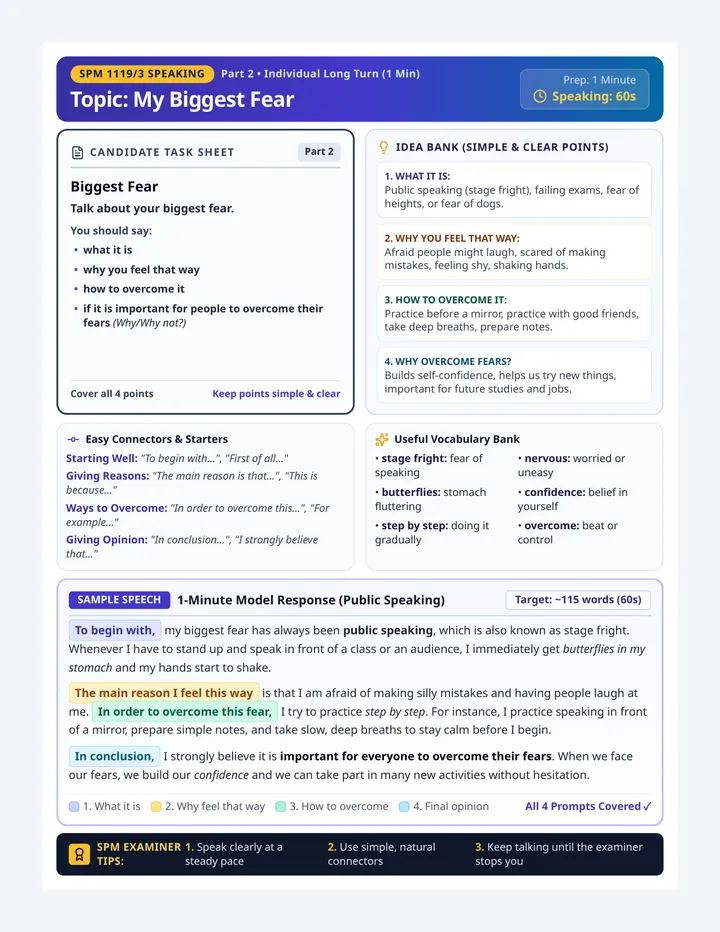
Refines conversational fluency through practice with idiomatic expressions and complex sentence structures. Targets pronunciation and appropriate register for professional and social settings.
Students engage in a 'shadowing' technique, repeating audio immediately after hearing it to internalize the rhythm and flow of connected speech. This active processing reinforces their ability to predict and process sound streams.
A high-stakes simulated networking mixer where students must apply their knowledge of idioms, phrasal verbs, and social listening to complete specific "missions."
Focusing on function words, this lesson tackles common reductions like 'gonna,' 'wanna,' and weak forms of auxiliary verbs. Students analyze unscripted interviews to catch these reductions in context.
Students analyze how speakers use shorthand references to history, pop culture, and sports to convey complex ideas, and develop strategies for asking for clarification when references are missed.
Students learn how sounds influence their neighbors (e.g., 'hand bag' becoming 'hambag'). The lesson uses minimal pair discrimination and dictation exercises to train ears to recognize words despite phonological changes.
The final stage where students review citations, credit images, and finalize their bibliography for presentation.
Students synthesize their research notes into a cohesive draft, focusing on using attribution verbs and clear sentence structures.
Focuses on extracting key facts and paraphrasing using keywords to avoid plagiarism and organize information effectively.
Students learn to find and validate credible sources using search strategies and a simplified evaluation checklist.
Students transition from broad topics to focused, open-ended research questions through a 'Wonder Wall' activity and peer review.
Focuses on the transition from formal to informal spoken English by identifying and decoding phrasal verbs in narrative segments.
A teacher guide for the The Final Verdict lesson, providing a simulation setup, a scoring rubric for the assessment, and debrief discussion questions.
Answer key for the Lesson 4 worksheet on grammatical reductions.
Teacher guide for "The Source Weaver" lesson. It outlines the synthesis process, provides a hook activity, transition words for ESL support, and a sample synthesized paragraph.
Answer key for the Lesson 3 worksheet on assimilation.
A student assessment worksheet for evaluating the credibility of two different sources on the same topic using a structured framework.
Answer key for the Lesson 2 worksheet on elision.
Answer key for the Lesson 1 worksheet on linking and intrusion.
Capstone student project for "The Source Weaver" lesson. Students analyze two short texts about Mars, take notes, and synthesize the information into a single coherent paragraph using their own vocabulary and sentence structures.
Introductory slides for "The Final Verdict", teaching students a simplified evaluation framework (Currency, Relevance, Authority, Purpose) to apply to sources.
A comprehensive teacher guide for the Speech Lab sequence, including audio scripts, instructional cues, pacing, and differentiation strategies.
Teacher facilitation guide for Lesson 5, including clip selection protocols, implementation phases, and assessment criteria for the transcription masterclass.
Visual slides for "The Source Weaver" lesson. These slides introduce students to the concept of synthesis as connecting ideas from multiple sources to create a new, coherent whole.
A comprehensive 5-lesson project-based sequence for 5th Grade ESL students to master the research cycle, from questioning to final publication. Students develop academic English skills through searching, evaluating, and synthesizing information on a chosen topic.
A comprehensive workshop-style unit for 6th Grade ESL students focused on the linguistic mechanics of paraphrasing and synthesizing information. Students move from identifying core concepts to orally retelling information, transforming individual sentences, and finally weaving multiple sources into a single coherent paragraph without plagiarizing.
A comprehensive sequence for 6th Grade ESL students to develop critical research and information literacy skills. Students progress from distinguishing basic facts and opinions to applying professional evaluation frameworks like the CRAAP test to determine source credibility.
A 5-lesson sequence for graduate students to master idiomatic language, phrasal verbs, and cultural nuances in professional and academic networking environments. Students move from decoding literal meaning to applying figurative language in a high-stakes networking simulation.
A comprehensive series for intermediate ESL graduate students focused on decoding natural, rapid English by mastering connected speech phenomena like linking, elision, and assimilation.
This sequence targets the mechanical difficulties of understanding natural, fast-paced English. Students explore phonological rules like linking, elision, and assimilation to decode authentic, fluid speech patterns found in campus social life.
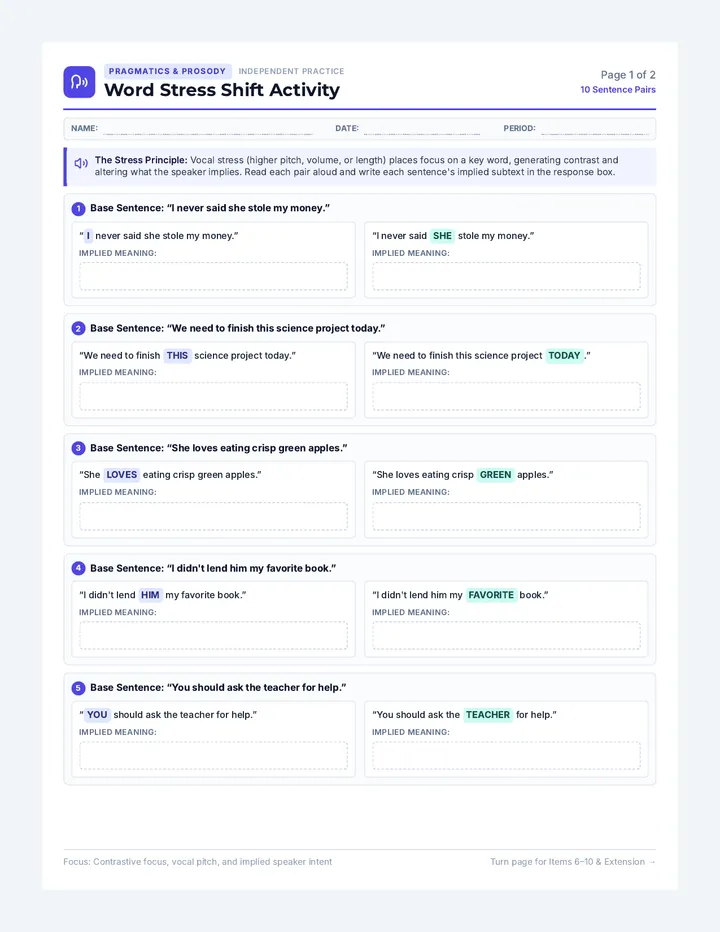
This sequence guides intermediate ESL students through the nuances of pragmatic meaning in English. Students will learn to decode indirect speech, sarcasm, hedging language, and emotional undertones in academic and social contexts to improve their listening comprehension and communicative competence.
A 4th-grade ESL listening sequence that transforms students into 'Sound Detectives' to master narrative elements. Students learn to filter 'auditory fluff' for main ideas, analyze character traits through vocal cues, track plot sequences using signal words, and predict endings using foreshadowing.
A comprehensive ESL listening sequence for 4th graders focusing on natural speech patterns, emotional tone, idioms, and social registers. Students act as 'Ear Detectives' to decode the hidden meanings in how English is actually spoken vs. how it is written.
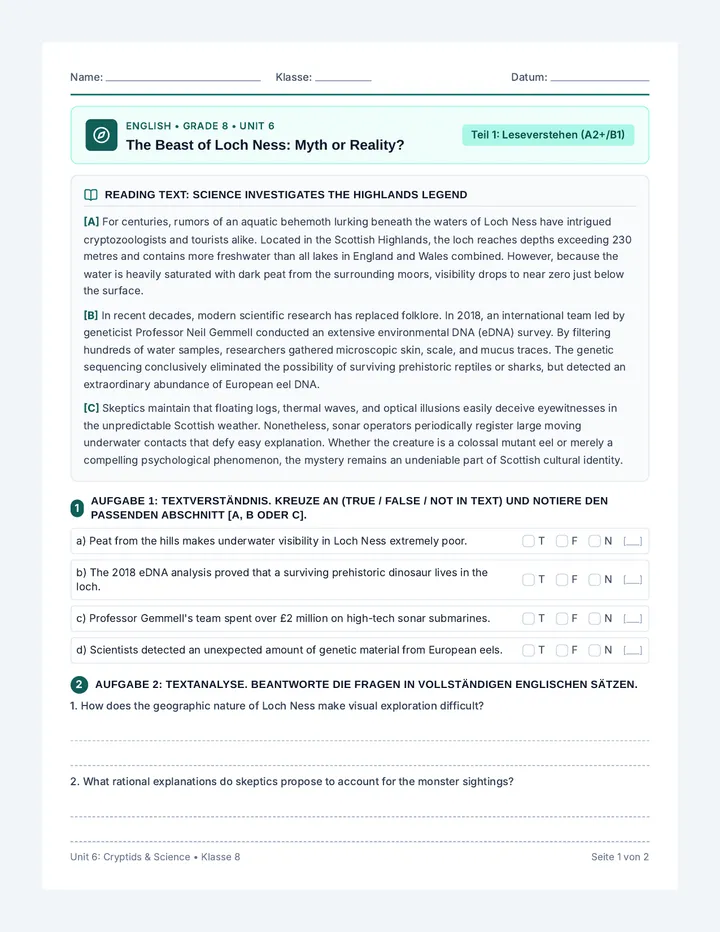
A comprehensive sequence for 8th-grade ESL students to master information literacy. Students progress from identifying bias and evaluating source credibility to performing advanced searches and ethically synthesizing research with proper MLA citations.
A comprehensive 5-lesson sequence for 10th-grade intermediate ESL students focused on decoding natural spoken English, including connected speech, reductions, idioms, and prosody. Students move from 'textbook' understanding to recognizing the fluid rhythms and figurative language of native speakers.
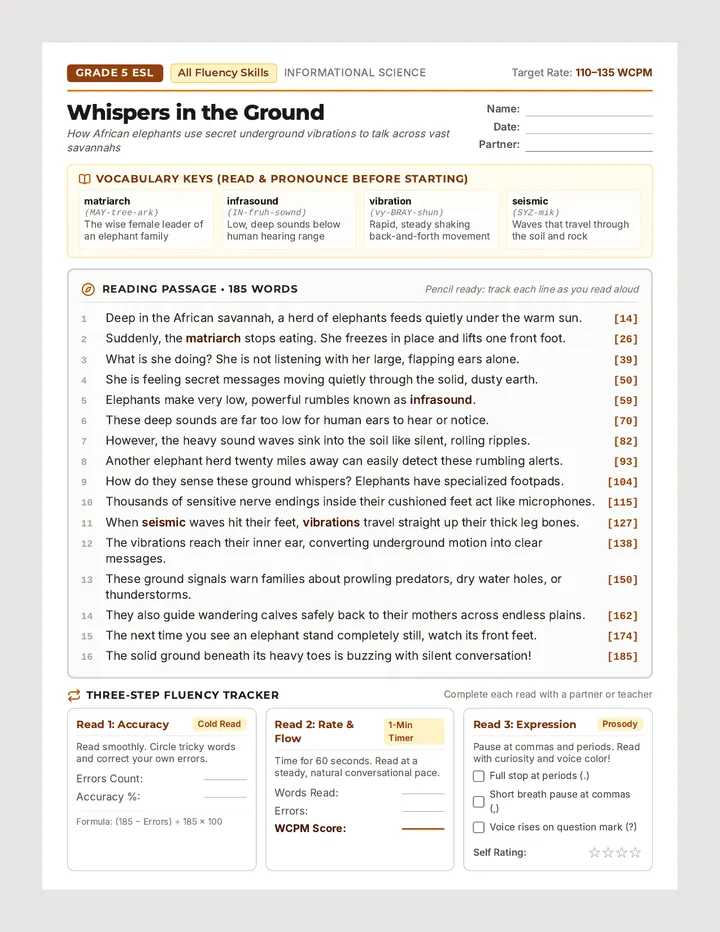
An ESL listening sequence for 5th-grade intermediate students focused on narrative comprehension through oral storytelling, podcasts, and auditory analysis. Students move from identifying basic story elements to evaluating complex themes and character motivations through spoken discourse.