Techniques for evaluating source credibility, executing database searches, and applying ethical citation standards. Strengthens the ability to synthesize academic texts and maintain academic integrity in research projects.
Students explore how an author's purpose and point of view influence the information presented. Through comparative analysis of articles, they learn to identify loaded language and balanced reporting to ensure their research reflects a comprehensive understanding of an issue.
A 10th-grade ESL sequence focused on advanced listening skills. Students learn to detect bias, analyze tone, identify rhetorical devices, and infer speaker relationships through various audio sources like news, speeches, and podcasts.
A comprehensive 7th-grade ESL sequence focusing on the ethics of academic integrity, the mechanics of paraphrasing and summarizing, and the technical accuracy of MLA citations. Students transition from understanding intellectual property to performing independent 'plagiarism audits' on research samples.
This 5-lesson sequence for 6th-grade ESL students covers the ethical use of information, focusing on intellectual property, MLA citation components, digital tools, and in-text attribution. Students progress from conceptual understanding to creating a mini-bibliography for a personal project.
A comprehensive digital literacy unit for 4th Grade ESL students, framing research skills as 'Digital Detective' training. Students learn to distinguish fact from opinion, master keyword searching, evaluate website credibility, and verify information through cross-referencing.
An advanced exploration of English orthography for undergraduate students, focusing on the etymological origins and morphological structures of blends, digraphs, and trigraphs. This sequence prepares future educators to explain the 'why' behind spelling irregularities using historical linguistics and structural analysis.
A 30-minute digital literacy lesson for 10th graders focused on identifying AI hallucinations and applying robust fact-checking strategies to verify AI-generated content.
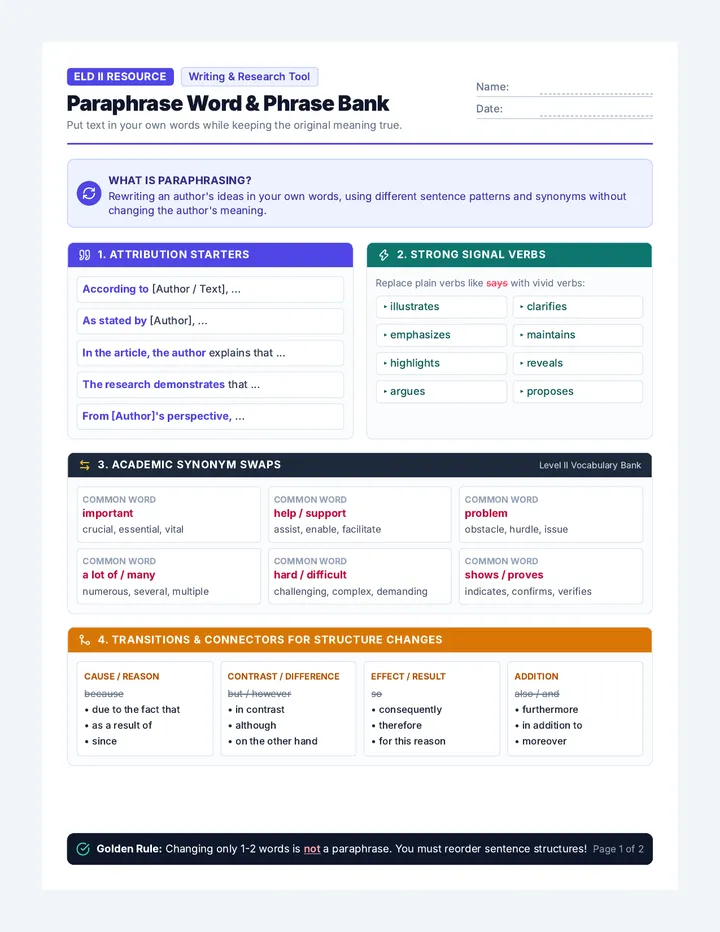
A targeted instructional collection for ELD Level II writers featuring foundational paraphrasing frameworks, signal vocabulary, and topic-specific word banks across 12 high-frequency essay topics.
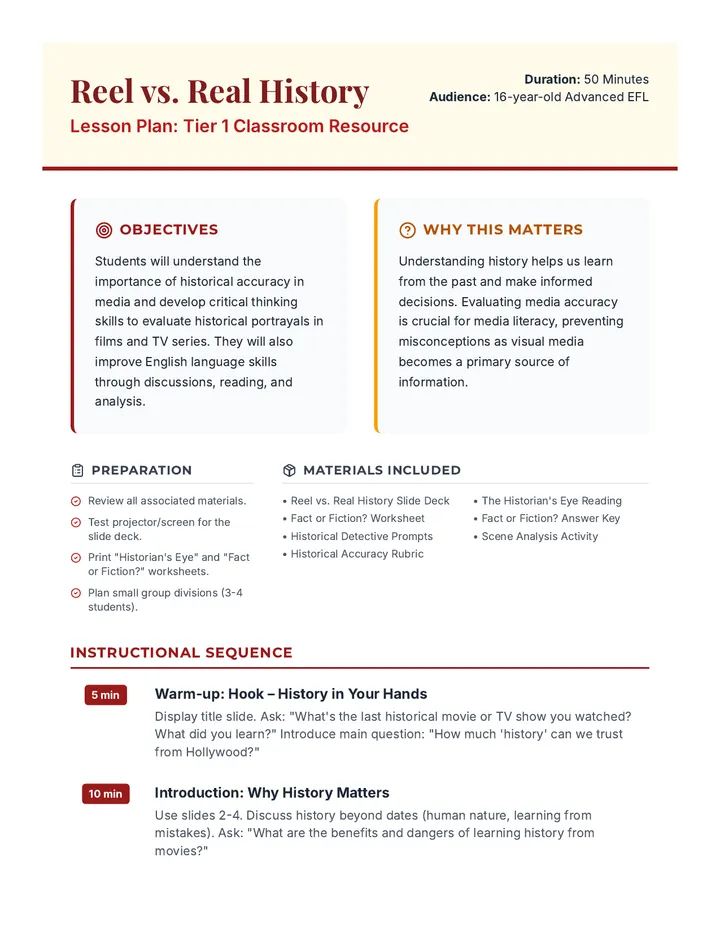
A 50-minute lesson for advanced EFL students exploring the tension between historical accuracy and cinematic storytelling, fostering critical thinking and media literacy.
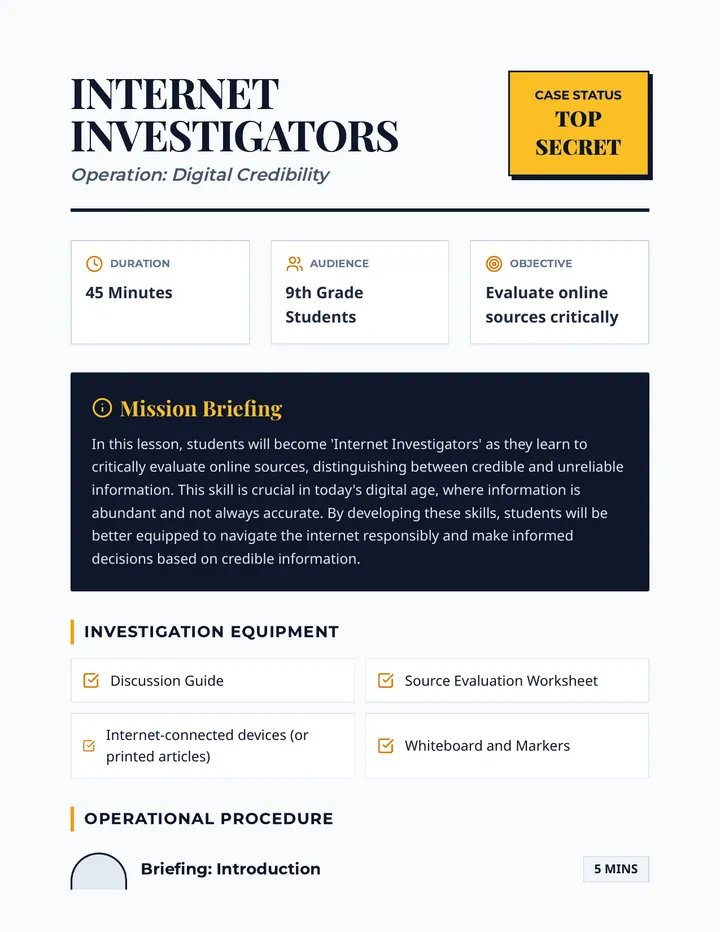
Students become 'Internet Investigators' as they learn to critically evaluate online sources, distinguishing between credible and unreliable information through hands-on evaluation of 'suspect' articles.