Complex rhetorical devices, idiomatic expressions, and nuanced intonation for high-level discourse. Targets mastery of formal debate, academic presentations, and professional negotiation.
A comprehensive 5-page academic vocabulary reference guide for high school ESL students, featuring everyday-to-academic verb upgrades, precision adjectives, sophisticated transitions, abstract academic nouns with nominalization, and academic hedging with discussion frames and editing checklists.
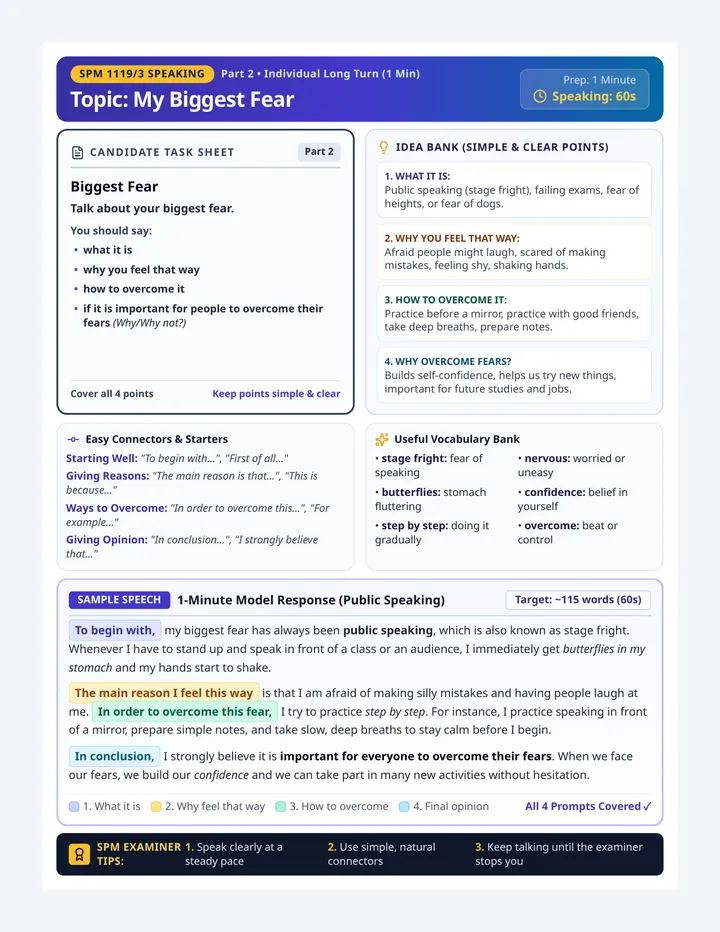
A one-page visual infographic and speaking guide for SPM English 1119/3 Part 2 on the topic of Biggest Fear, adjusted to a clear and accessible medium English level (CEFR B1-B2) with student-friendly vocabulary, practical sentence starters, and an easy-to-deliver 1-minute model speech.
A 10th-grade ESL sequence focused on advanced listening skills. Students learn to detect bias, analyze tone, identify rhetorical devices, and infer speaker relationships through various audio sources like news, speeches, and podcasts.
This advanced ESL sequence focuses on mastering natural, unscripted English. Students move beyond textbook grammar to analyze connected speech, regional dialects, and the subtle subtext of authentic media like podcasts and interviews.
A 5-lesson sequence for 12th-grade ESL students focused on interpreting tone, intent, and implicit meaning in professional settings like job interviews and negotiations.
A 5-lesson sequence for graduate students to master idiomatic language, phrasal verbs, and cultural nuances in professional and academic networking environments. Students move from decoding literal meaning to applying figurative language in a high-stakes networking simulation.
This sequence for graduate ESL students explores the nuances of English beyond literal meaning. Students will master the ability to detect sarcasm, bias, contrastive stress, and professional register, equipping them for complex academic and professional communication.
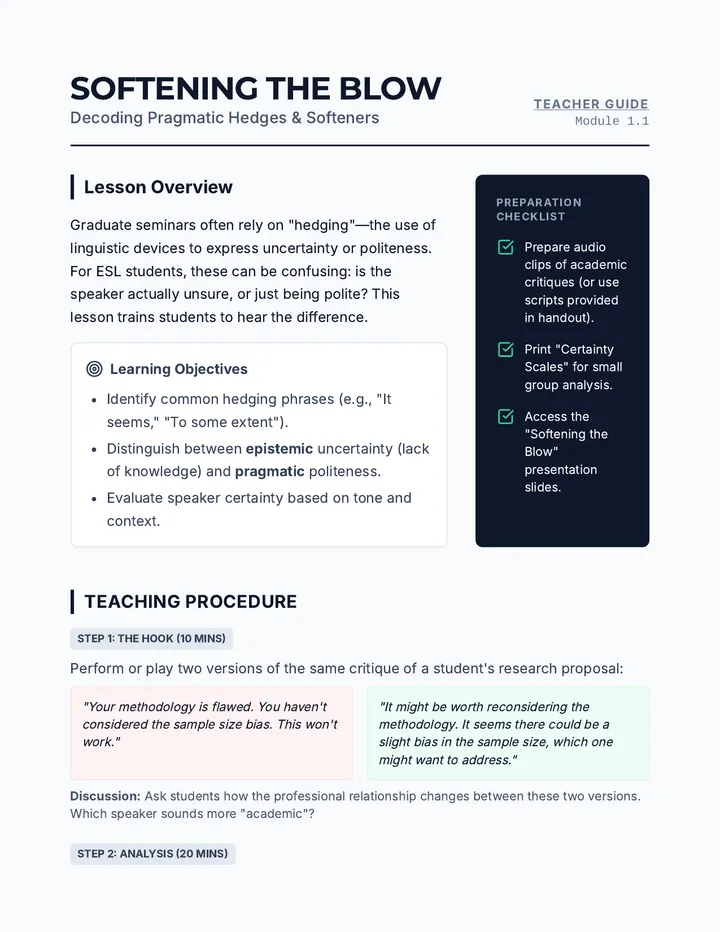
A graduate-level ESL listening sequence focused on the pragmatics of academic discourse. Students learn to navigate the subtleties of seminar discussions by identifying hedging, turn-taking signals, disagreement strategies, and multi-speaker argument threads.
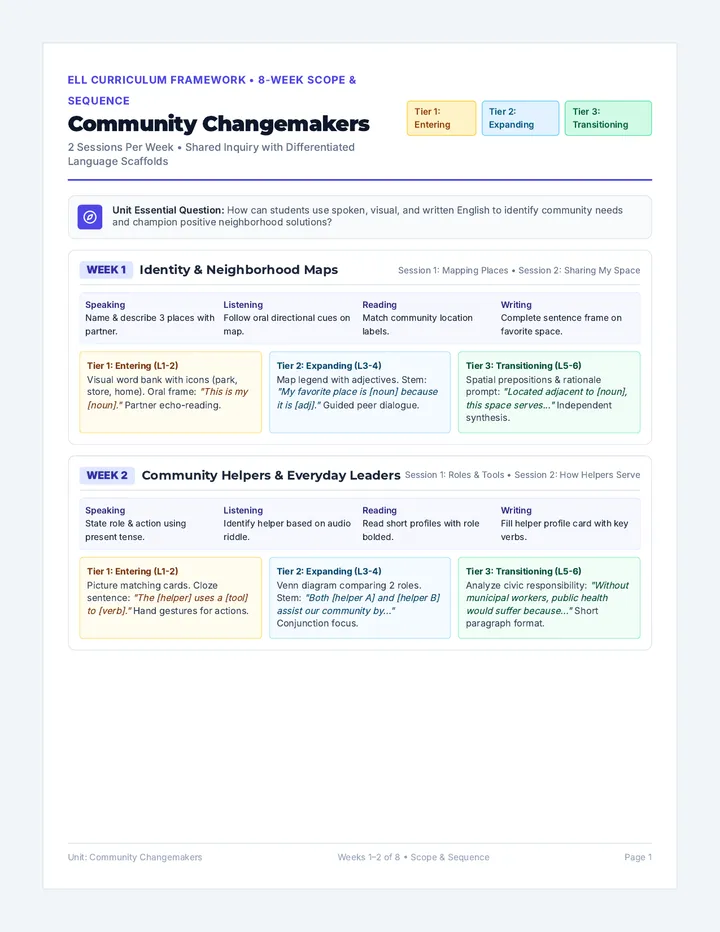
A comprehensive 8-week English Language Development bundle centered on community engagement and civic voice, featuring tiered scaffolds across Entering, Expanding, and Transitioning proficiency levels. Includes two sessions per week with explicit four-domain language targets, differentiated student worksheets, and teacher assessment frameworks.
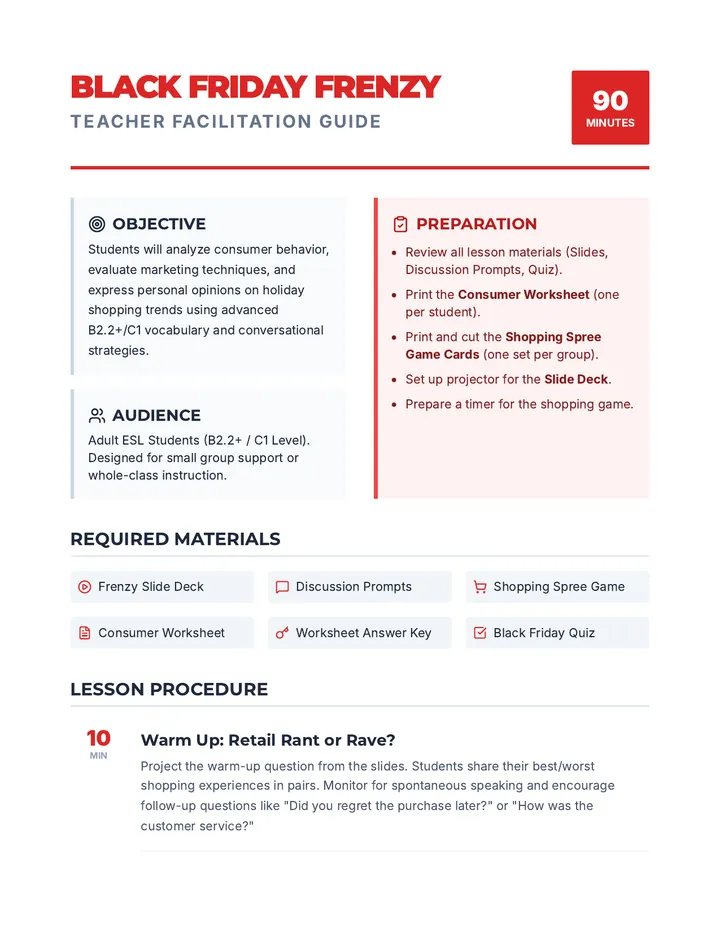
A 90-minute ESL lesson for B2.2+/C1 adult students exploring the cultural and psychological impact of Black Friday and Cyber Monday. Students will analyze marketing strategies, practice advanced vocabulary, and engage in a strategic shopping game.
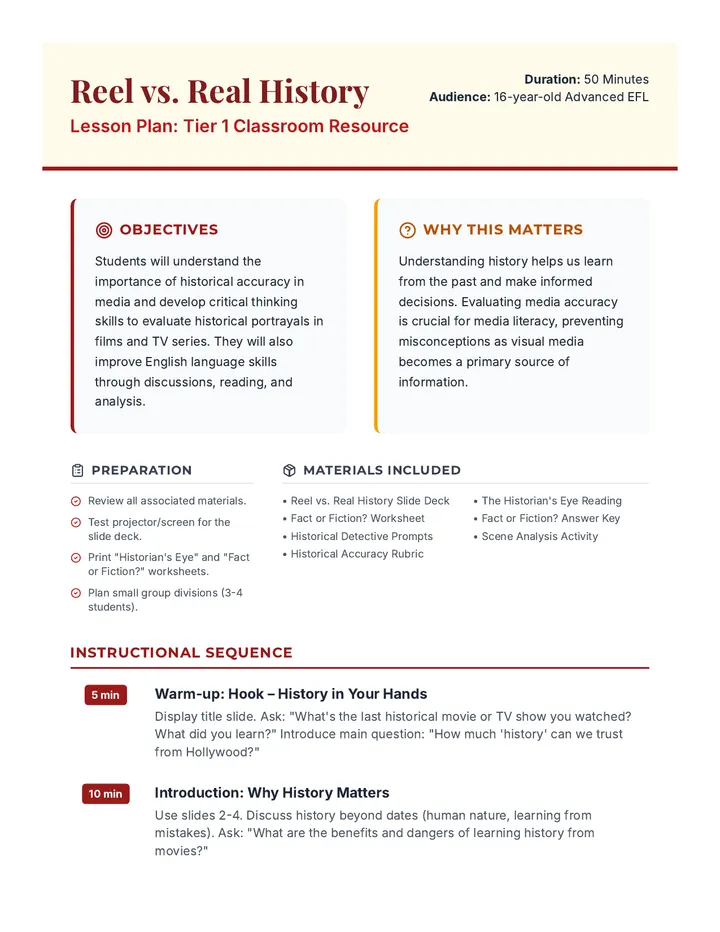
A 50-minute lesson for advanced EFL students exploring the tension between historical accuracy and cinematic storytelling, fostering critical thinking and media literacy.
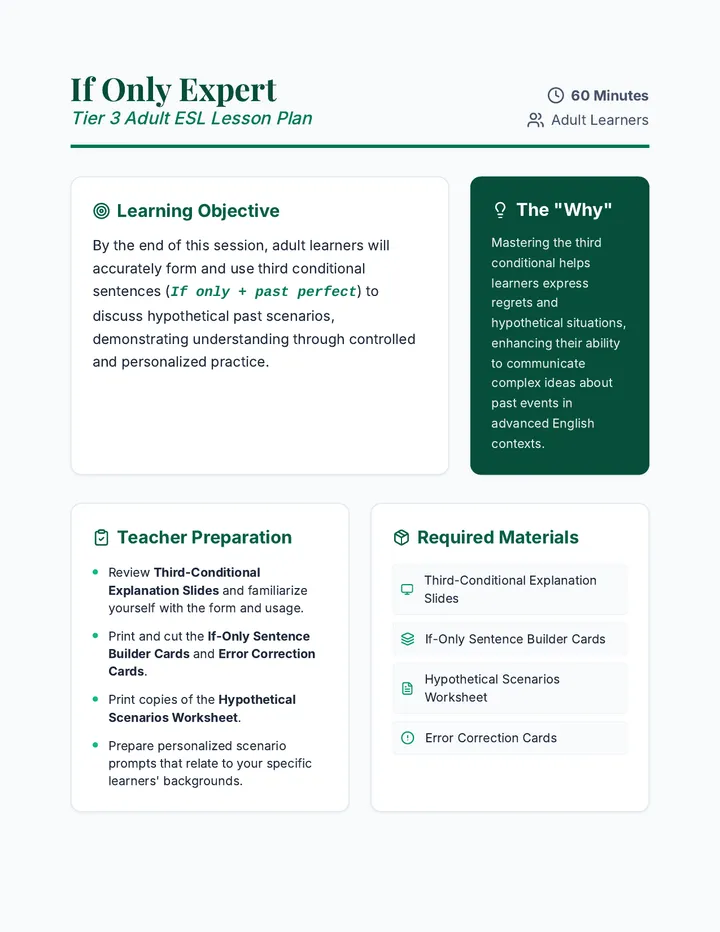
A 60-minute Tier 3 session for adult learners focused on mastering the third conditional to express regrets and hypothetical past scenarios. Participants will move from guided form analysis to personalized application through scenarios and error correction.
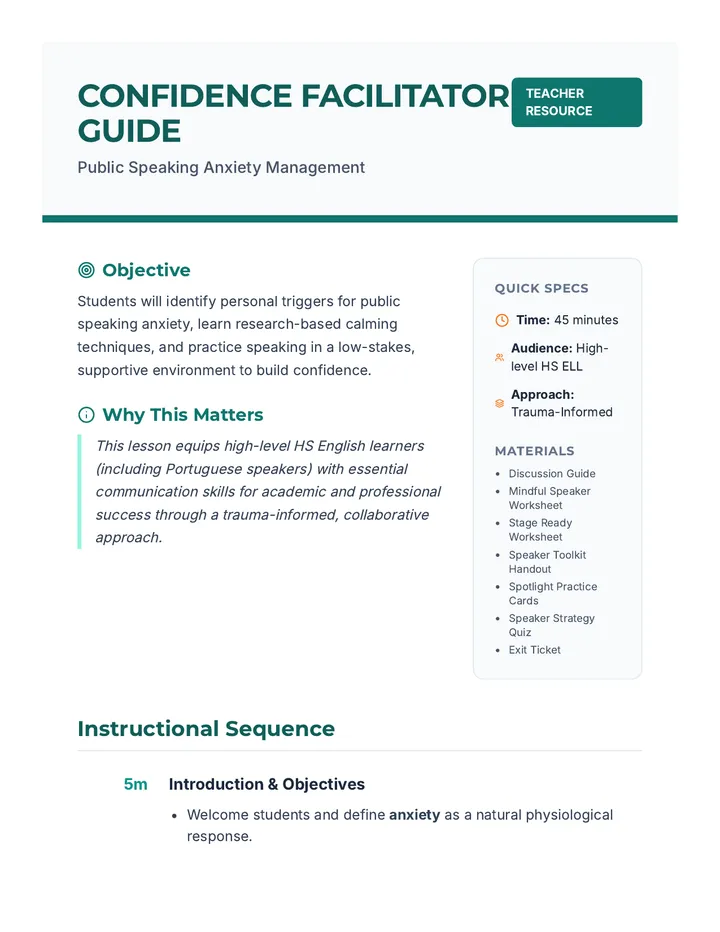
A comprehensive lesson designed for high-level high school English learners to manage public speaking anxiety through trauma-informed strategies and collaborative role-playing. Students will identify personal triggers, learn specific calming techniques, and practice speaking in a supportive environment.
A comprehensive preparation bundle for Cambridge B2 First Speaking, featuring five complete practice tests across all four exam parts. Includes teacher presentation slides, examiner interlocutor scripts, student practice booklets with visual prompts, and official assessment rubrics.