Complex sentence structures, rhetorical strategies, and nuanced academic vocabulary for professional contexts. Develops proficiency in constructing cohesive arguments and adapting tone across diverse scholarly and technical genres.
A comprehensive 5-page academic vocabulary reference guide for high school ESL students, featuring everyday-to-academic verb upgrades, precision adjectives, sophisticated transitions, abstract academic nouns with nominalization, and academic hedging with discussion frames and editing checklists.
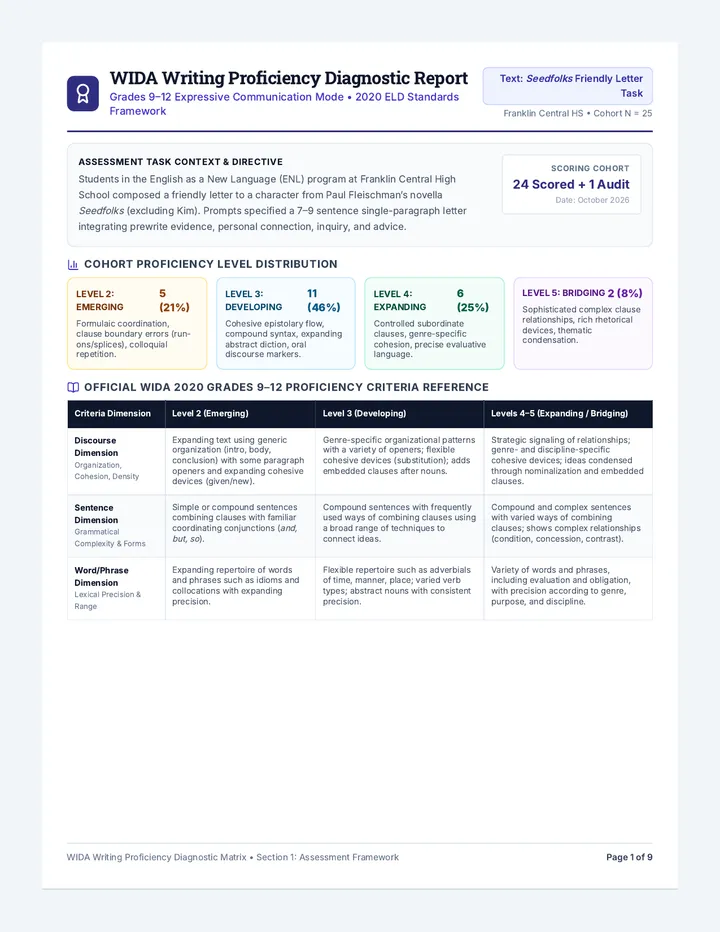
Official Grades 9-12 WIDA Writing Rubric scoring matrix, detailed student rationales across Discourse, Sentence, and Word/Phrase dimensions, and targeted small-group instructional action plans for 25 high school multilingual learner writing samples on Seedfolks.
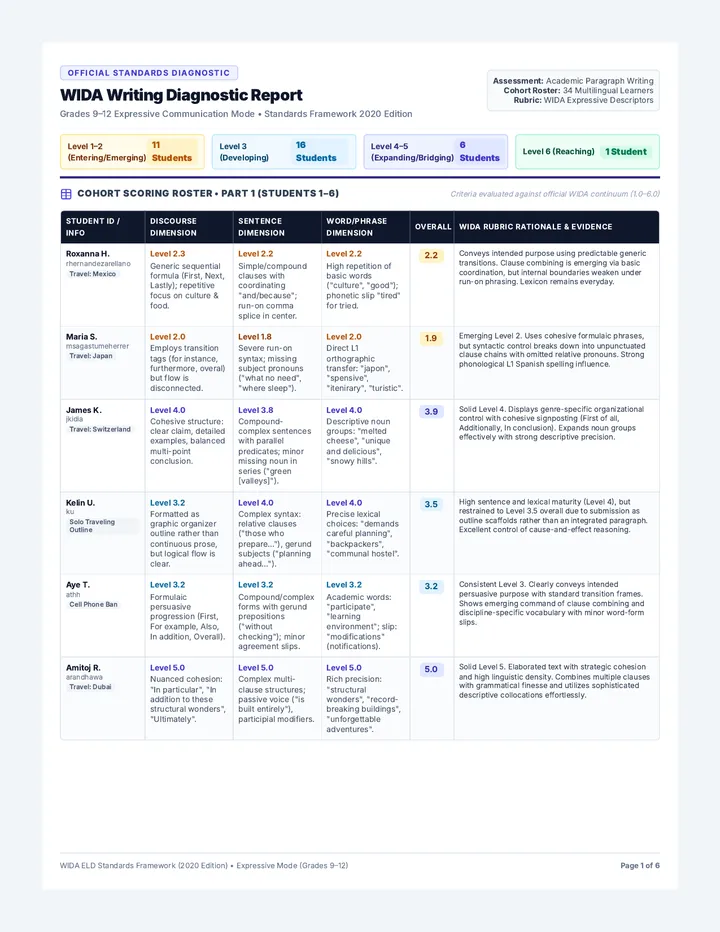
Official WIDA Grades 9-12 writing scoring report and instructional grouping action plan. Features an exhaustive 34-student diagnostic spreadsheet evaluated across Discourse, Sentence, and Word/Phrase dimensions with specific rubric rationales, followed by targeted small-group clusters and high-leverage instructional next steps.
A grammar-focused ESL unit where students act as investigators to solve a classroom mystery. They master passive voice, modals of deduction, reported speech, and past perfect to write an objective case report.
A comprehensive sequence designed for graduate ESL students to master the integrated writing and speaking tasks of high-stakes academic exams like TOEFL iBT and IELTS. The curriculum focuses on shorthand note-taking, identifying inter-source relationships, utilizing structural templates, and rapid synthesis under timed conditions.
A mastery-based sequence for undergraduate ESL students focused on rapid structuring and drafting for standardized writing exams like the TOEFL and GRE. Students learn to decode prompts, outline in under three minutes, and use formulaic language to produce high-scoring academic essays under pressure.
This sequence develops advanced ESL academic skills focused on shorthand, signpost recognition, and synthesis for integrated exam tasks. Students learn to build efficient note-taking systems to manage cognitive load during high-stakes listening and reading assessments.
A comprehensive sequence for 12th Grade ESL students focused on mastering the writing sections of high-stakes English proficiency exams. Students learn formulaic yet effective strategies for prompt analysis, outlining, introductory structure, body paragraph development, and rapid proofreading to maximize scores under strict time limits.
This sequence equips advanced 7th-grade ESL students with the skills to navigate complex academic lectures. It covers identifying verbal transitions, mastering Cornell notes, distinguishing main ideas from trivia, visualizing oral descriptions, and synthesizing information into accurate summaries.
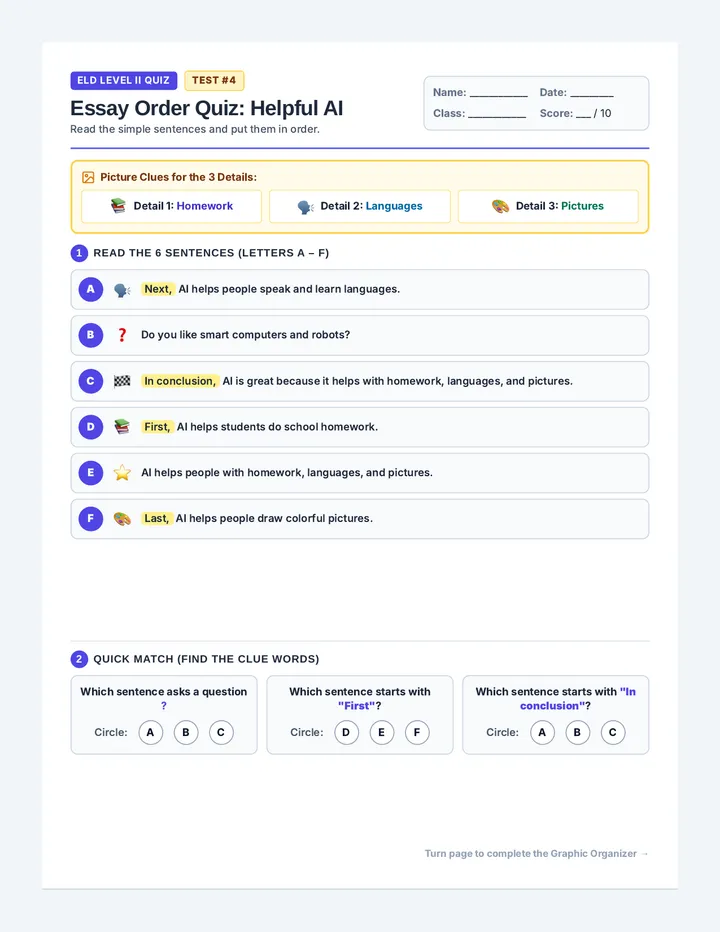
A differentiated lesson resource set providing informational essay structure quizzes and graphic organizers for English language learners across proficiency levels.
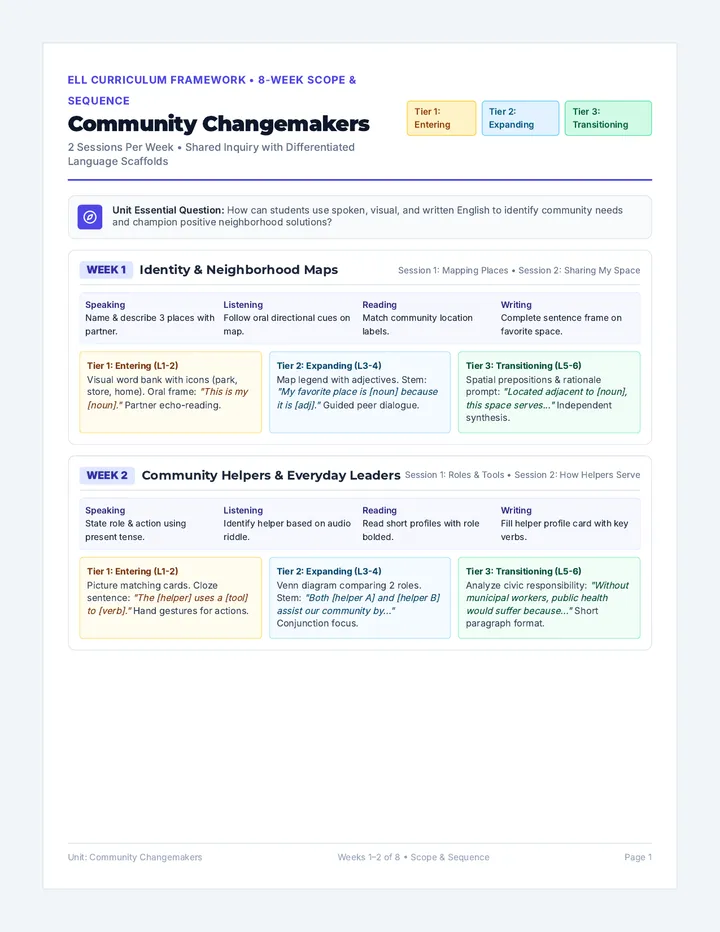
A comprehensive 8-week English Language Development bundle centered on community engagement and civic voice, featuring tiered scaffolds across Entering, Expanding, and Transitioning proficiency levels. Includes two sessions per week with explicit four-domain language targets, differentiated student worksheets, and teacher assessment frameworks.
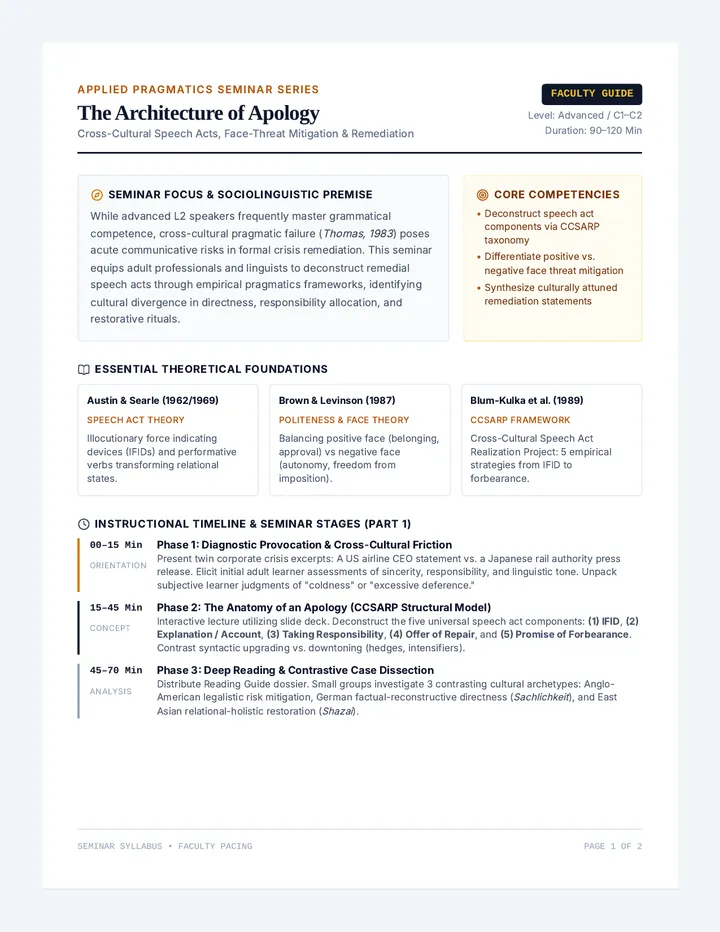
An applied pragmatics seminar for advanced adult foreign language learners examining speech act realization, cross-cultural politeness theories, and formal remediation across linguistic contexts.
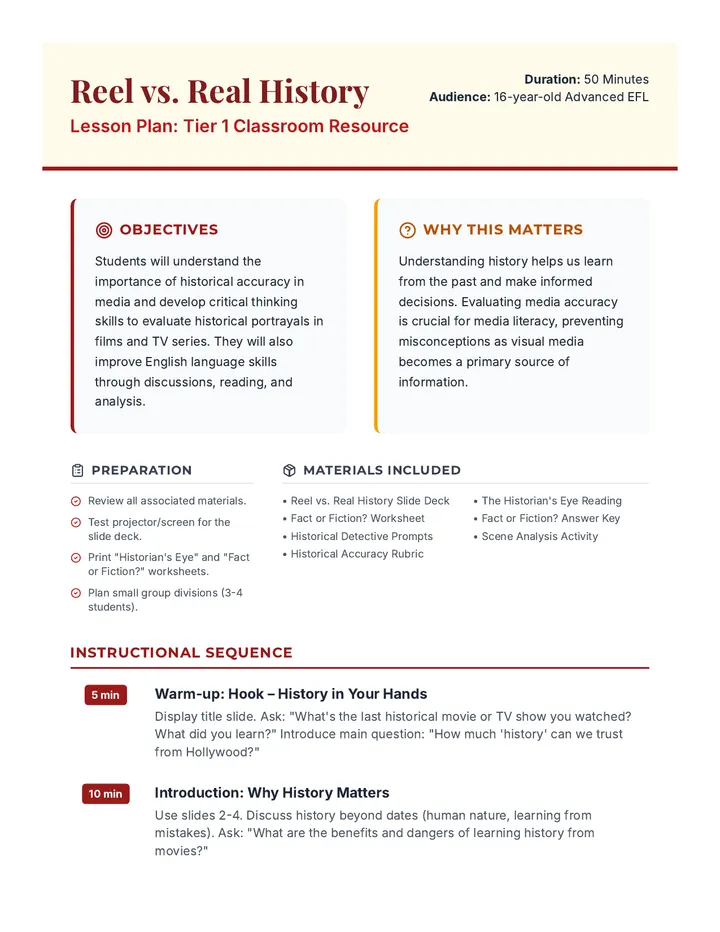
A 50-minute lesson for advanced EFL students exploring the tension between historical accuracy and cinematic storytelling, fostering critical thinking and media literacy.
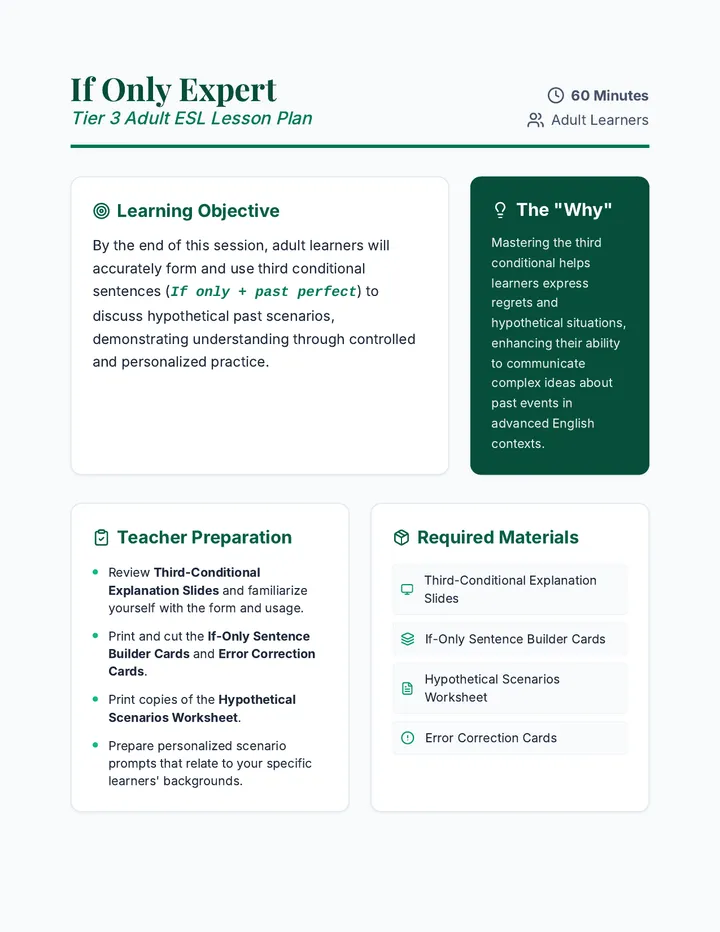
A 60-minute Tier 3 session for adult learners focused on mastering the third conditional to express regrets and hypothetical past scenarios. Participants will move from guided form analysis to personalized application through scenarios and error correction.