Time management, question analysis, and distractor elimination techniques for high-stakes academic exams. Equips learners with skimming and scanning skills to improve efficiency on standardized assessments.
A 5-lesson unit for 6th-grade ESL students focused on transforming search habits from natural language questions to strategic keyword and Boolean operator techniques. Students move from basic vocabulary brainstorming to navigating academic databases and skimming snippets for relevance.
This sequence helps 4th Grade ESL students master test-taking strategies focusing on time management and anxiety regulation. Students learn the 'traffic light' method for prioritization, the 'skip and return' technique for pacing, mindfulness strategies for stress, and mechanics for accurate bubbling.
A 5-lesson unit for 4th Grade ESL students focusing on test-taking strategies for reading comprehension. Students learn to use their 'detective tools' to find evidence, annotate effectively, and navigate passages with a focus on 'proving' their answers rather than guessing.
A comprehensive sequence for 4th Grade ESL students to master test-taking logic. Students learn the Process of Elimination (POE), identify extreme language red flags, categorize common distractor types, and evaluate the 'best' vs. 'correct' answers, culminating in a creative workshop where they design their own distractors.
A comprehensive 4th Grade ESL sequence focused on academic English test-taking strategies. Students learn to deconstruct question stems, identify negative qualifiers, isolate keywords, predict answers, and rephrase complex academic prompts into student-friendly language.
A 4th-grade ESL sequence focusing on academic reading efficiency through skimming for main ideas and scanning for specific details, using a 'Text Detective' theme.
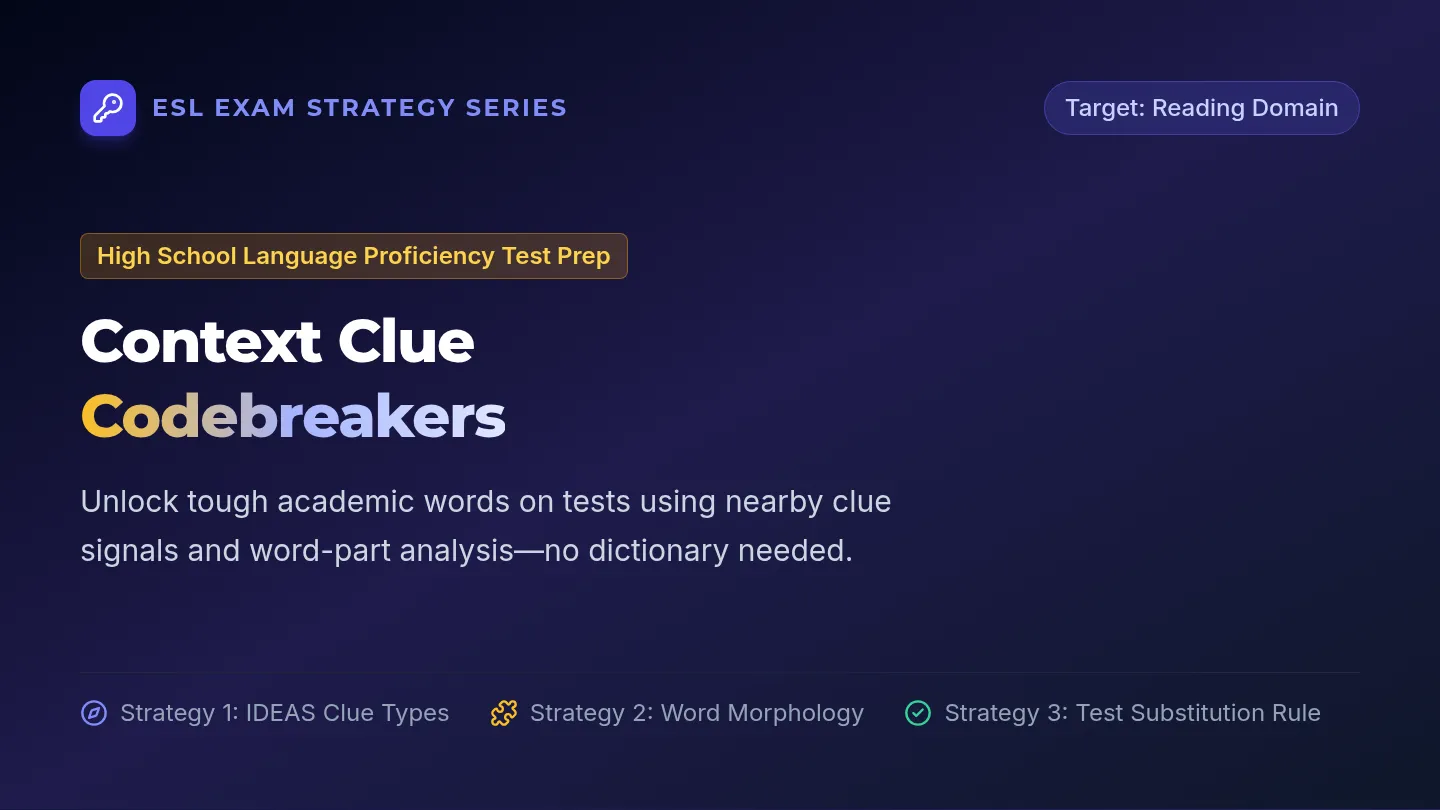
A high-intensity workshop sequence designed for graduate students to master the reading demands of the GRE, GMAT, and TOEFL. Focuses on skimming, scanning, contextual vocabulary, and syntactic deconstruction for maximum efficiency.
This sequence trains graduate-level ESL students to analyze the psychometric logic of standardized test questions. Students learn to identify common distractor patterns—such as absolute language, irrelevant truths, and faulty inferences—transforming their approach from guessing to systematic logical elimination.
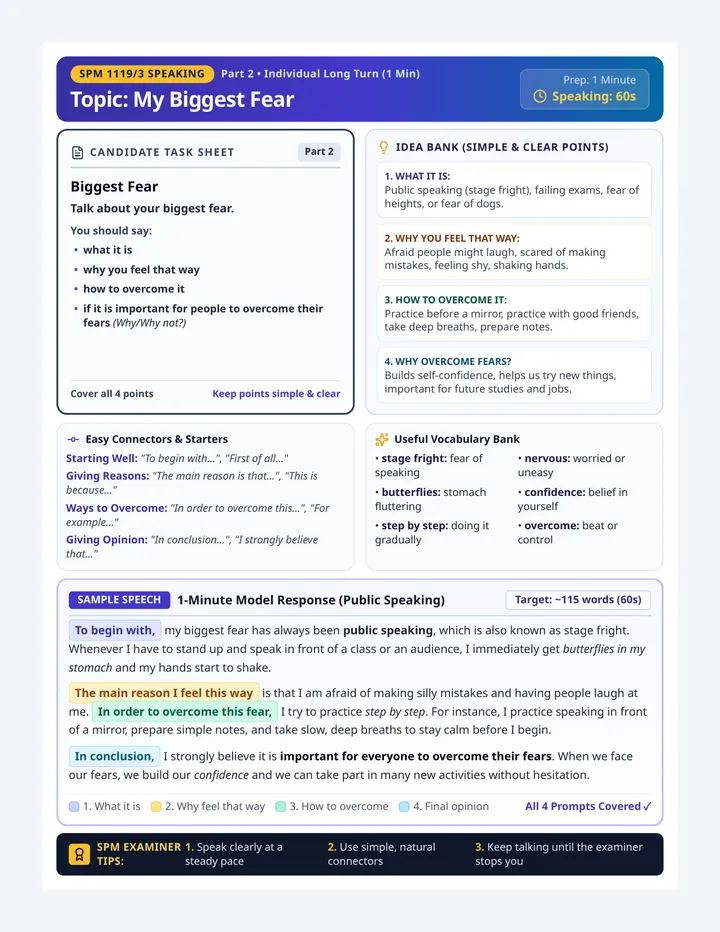
A comprehensive sequence designed for graduate ESL students to master the integrated writing and speaking tasks of high-stakes academic exams like TOEFL iBT and IELTS. The curriculum focuses on shorthand note-taking, identifying inter-source relationships, utilizing structural templates, and rapid synthesis under timed conditions.
A comprehensive 3rd-grade sequence focused on transition from passive to active reading for ESL students, mastering annotation, summarization, and visual analysis strategies.
This sequence equips 3rd-grade ESL students with logical strategies for multiple-choice tests, focusing on identifying and eliminating 'distractor' answers. Through a 'Detective Academy' theme, students move from spotting obvious errors to navigating nuanced traps and complex answer formats.
A 5-lesson unit for 3rd Grade ESL students focused on dissecting test questions, identifying academic verbs, and predicting answers to improve test-taking performance. Students act as 'Test Detectives' to uncover the requirements of various question types and provide evidence for their answers.
Students engage in a timed simulation that combines pacing, skipping, and anxiety management strategies. Afterwards, they debrief on which strategies helped them feel calm and finish on time.
A practical lesson on the physical act of testing: bubbling correctly, checking that question numbers match answer numbers, and maintaining focus. Students correct a 'messy' answer sheet to identify common pitfalls.
This lesson introduces quick, desk-friendly physical and mental reset techniques (deep breathing, stretching, positive visualization) to use when feeling overwhelmed during a long exam.
In the final lesson, students apply their skimming and scanning skills to a sample standardized test passage and reflect on their growth in reading speed and comprehension efficiency.
A culminating scavenger hunt challenge where students apply all previous skills to find obscure information and document their search paths.
Focuses on the skill of rapid appraisal by teaching students how to read and interpret search result snippets, titles, and bolded terms before clicking.
Students explore the specific features of academic databases, including filters, metadata, and specialized search bars, comparing them to general search engines.
Introduces Boolean operators (AND, OR, NOT) through visual and physical activities to help students understand how to narrow or expand their search results.
Students learn to deconstruct complex questions into core keywords and brainstorm synonyms to expand their search potential, moving away from typing full sentences into search engines.
Students participate in a 'Race for Information' where they must decide between skimming or scanning based on the question type, building metacognitive awareness and strategy selection.
Students practice the discipline of skipping difficult questions and returning to them later. The lesson emphasizes marking the skipped question clearly to avoid bubbling errors on answer sheets.
Students learn to scan for 'anchors' like proper nouns, dates, and numbers, practicing vertical and diagonal eye movements to find specific facts quickly.
Final assessment for the Search Strategy Academy unit, covering keywords, Boolean operators, database use, and snippet analysis.
Student scavenger hunt log for Lesson 5, where students document their search strings and answers to obscure research questions.
Introductory slide deck for Lesson 5, reviewing all strategic search techniques and introducing the culminating Scavenger Hunt challenge.
Teacher answer key and discussion guide for the "To Click or Not to Click" worksheet, focusing on snippet analysis and evaluation.
A short mock test simulation designed to let students apply all learned strategies (tagging, skipping, bubbling, and breathing) in one final practice session.
Student worksheet for Lesson 4 where students practice identifying the best search result based on snippets, titles, and URLs.
Introductory slide deck for Lesson 4, teaching students how to read and interpret search result snippets, titles, and bolded terms before clicking.
Teacher facilitation guide for Lesson 5: Timed Stamina Challenge. Includes steps for running the final simulation and facilitating the strategy debrief.
Teacher facilitation guide for Lesson 3, providing instructions for the "Database Race" activity and tips for database exploration.
A strategy reflection exit ticket for Lesson 5. Students reflect on which time management and anxiety regulation techniques were most helpful during the final simulation.
Visual presentation for Lesson 5: Timed Stamina Challenge. Encourages students to combine all learned strategies in a final simulation.
Student checklist for Lesson 3 where students explore an academic database by performing a keyword search, applying filters, and identifying metadata.