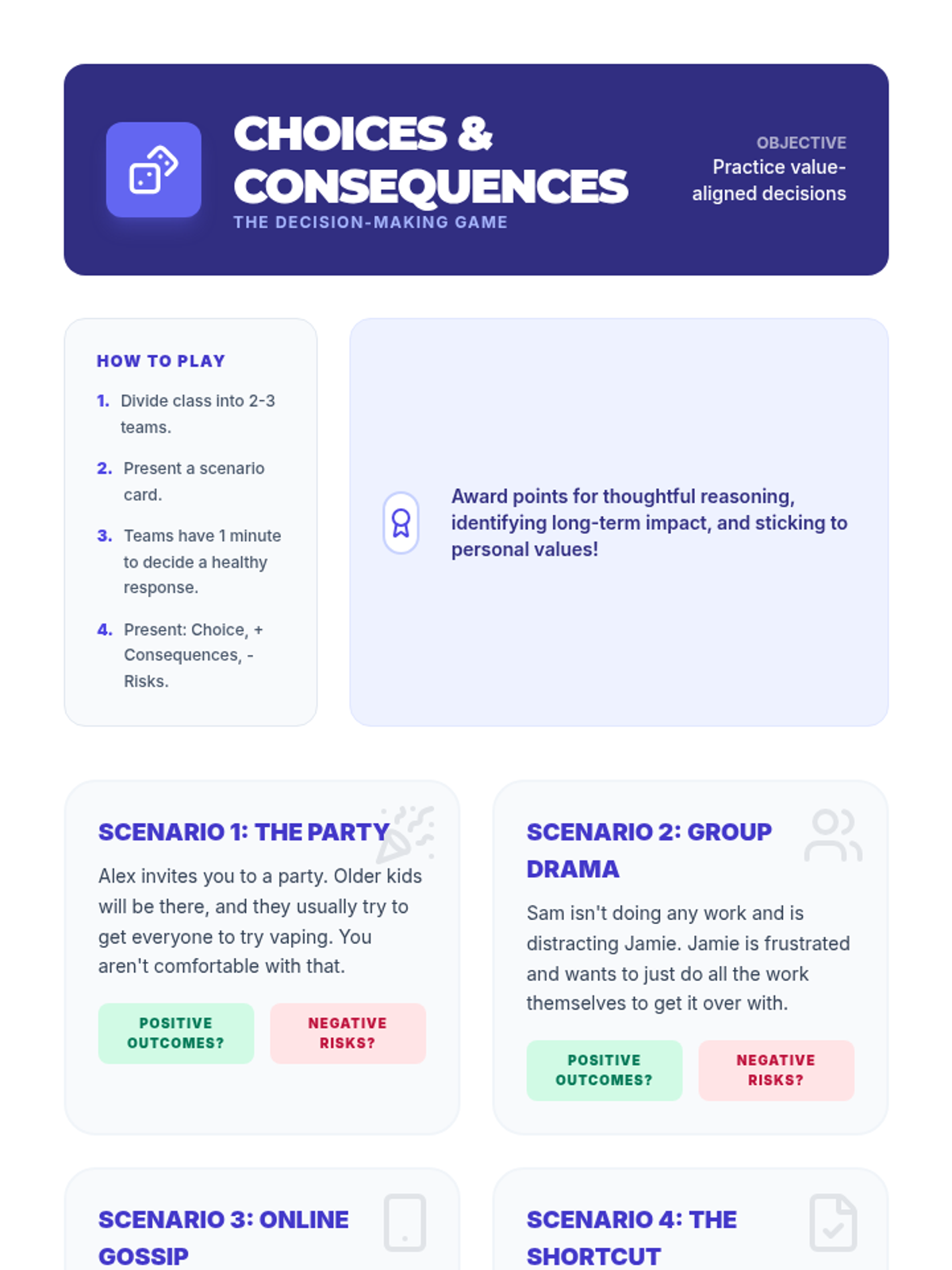
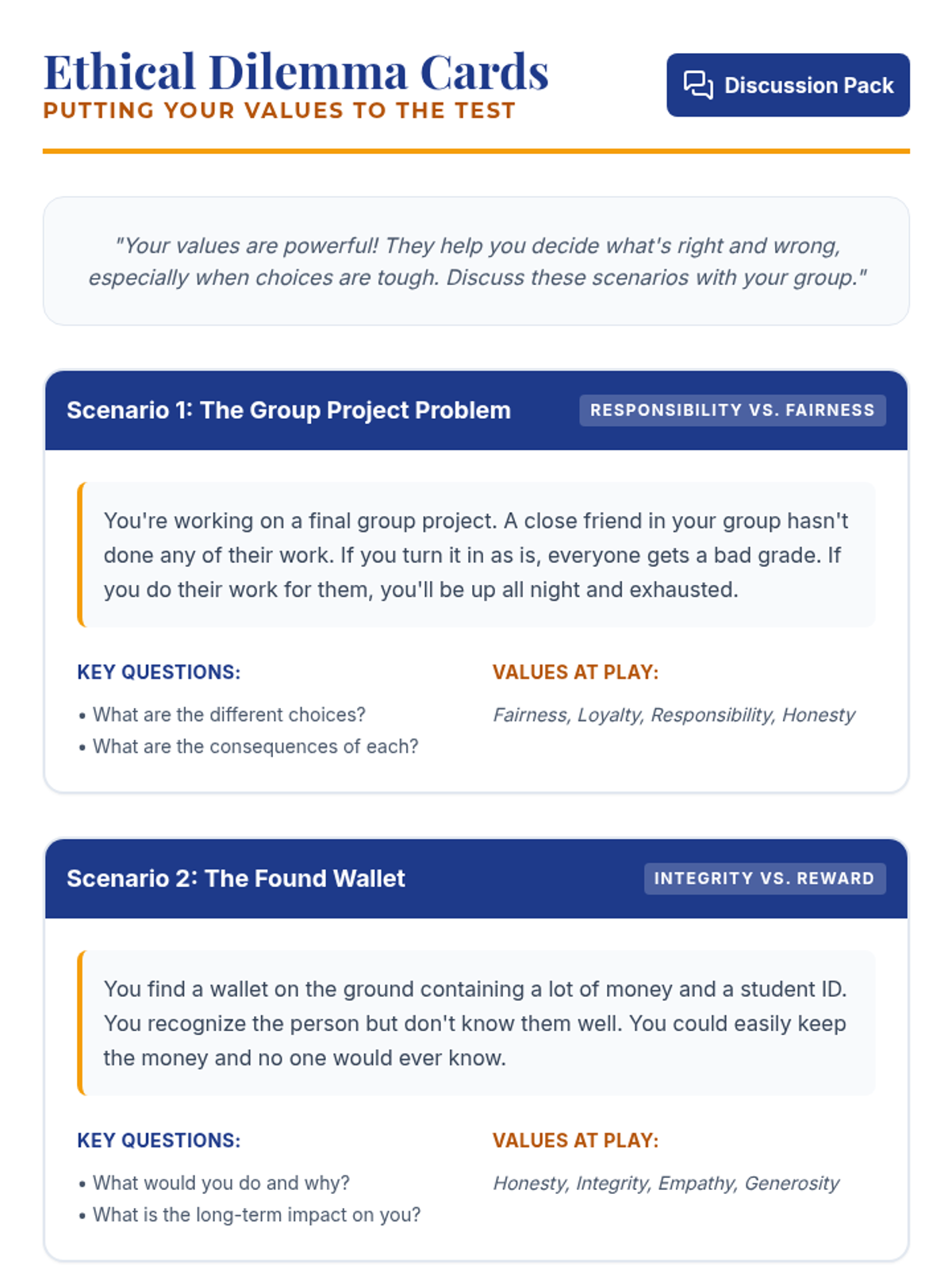
Root cause analysis and brainstorming techniques for everyday problem-solving. Equips learners with ethical frameworks and risk-benefit evaluation skills to predict consequences and make informed choices.
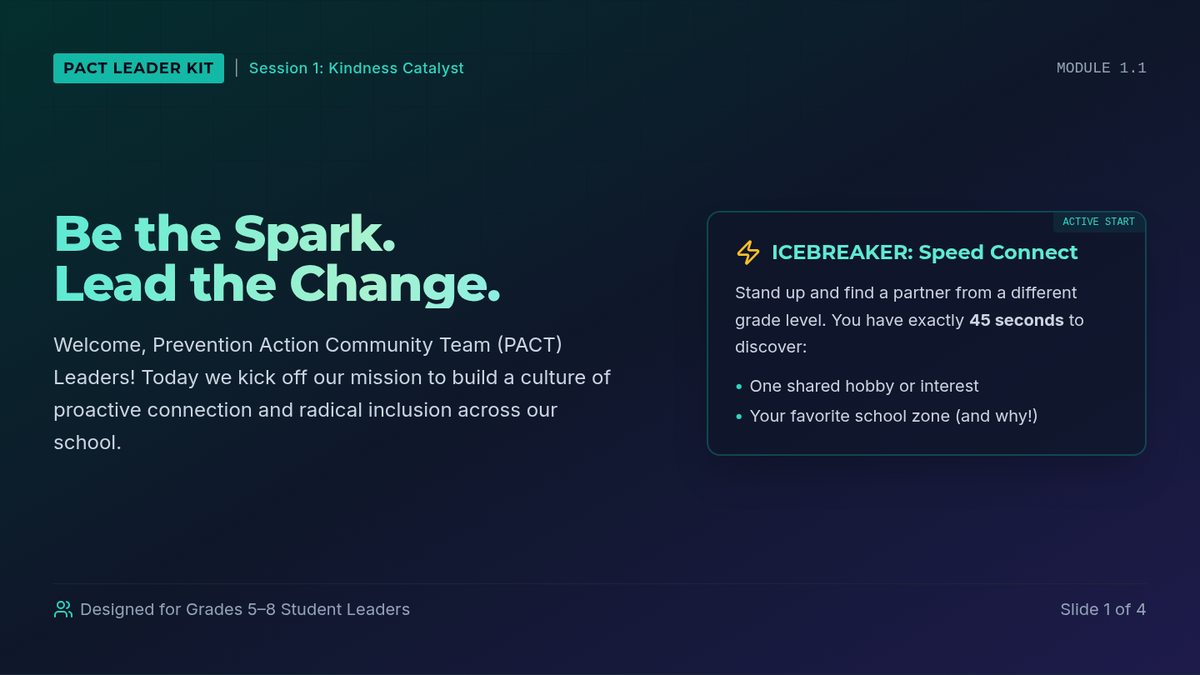
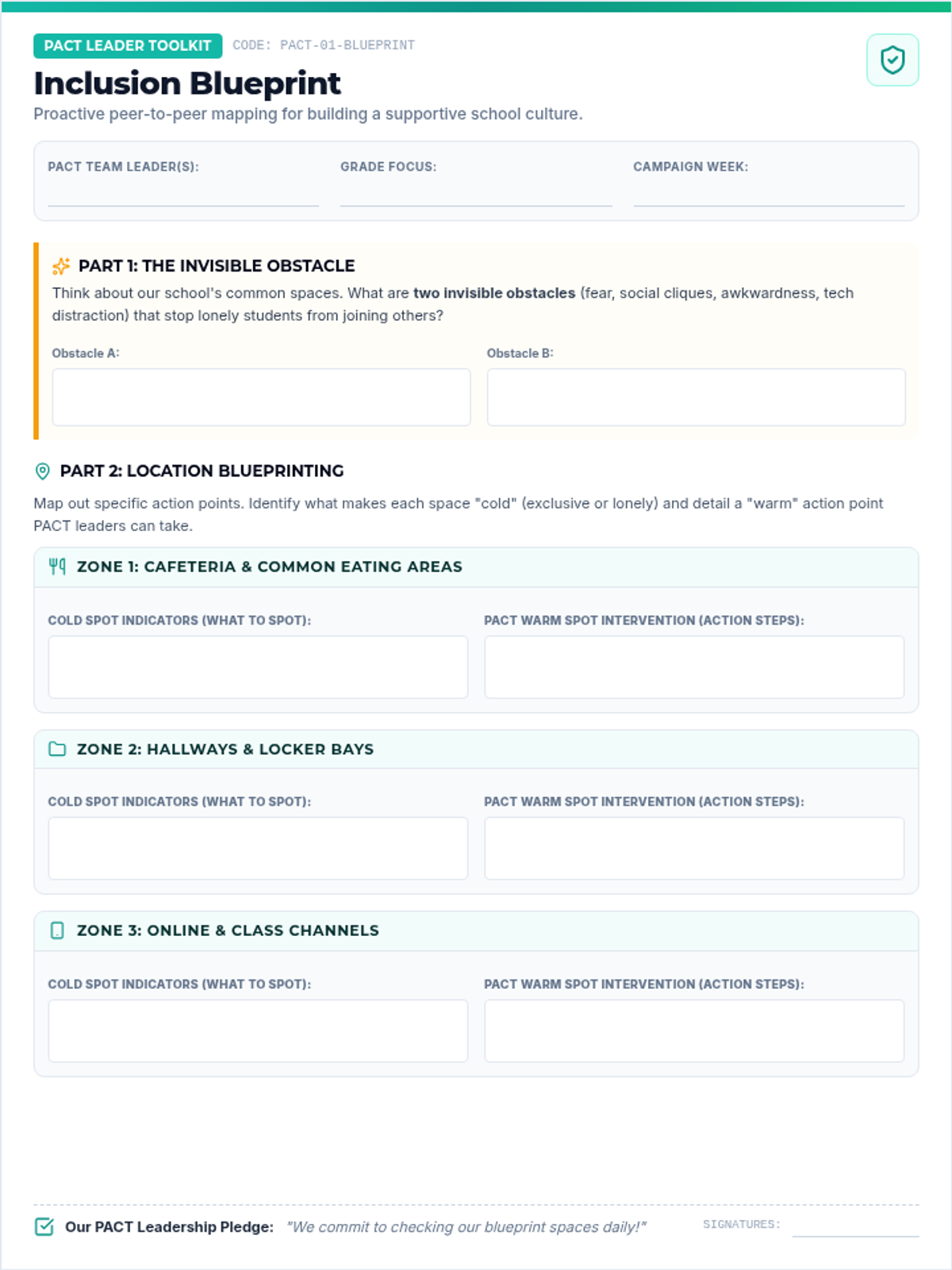
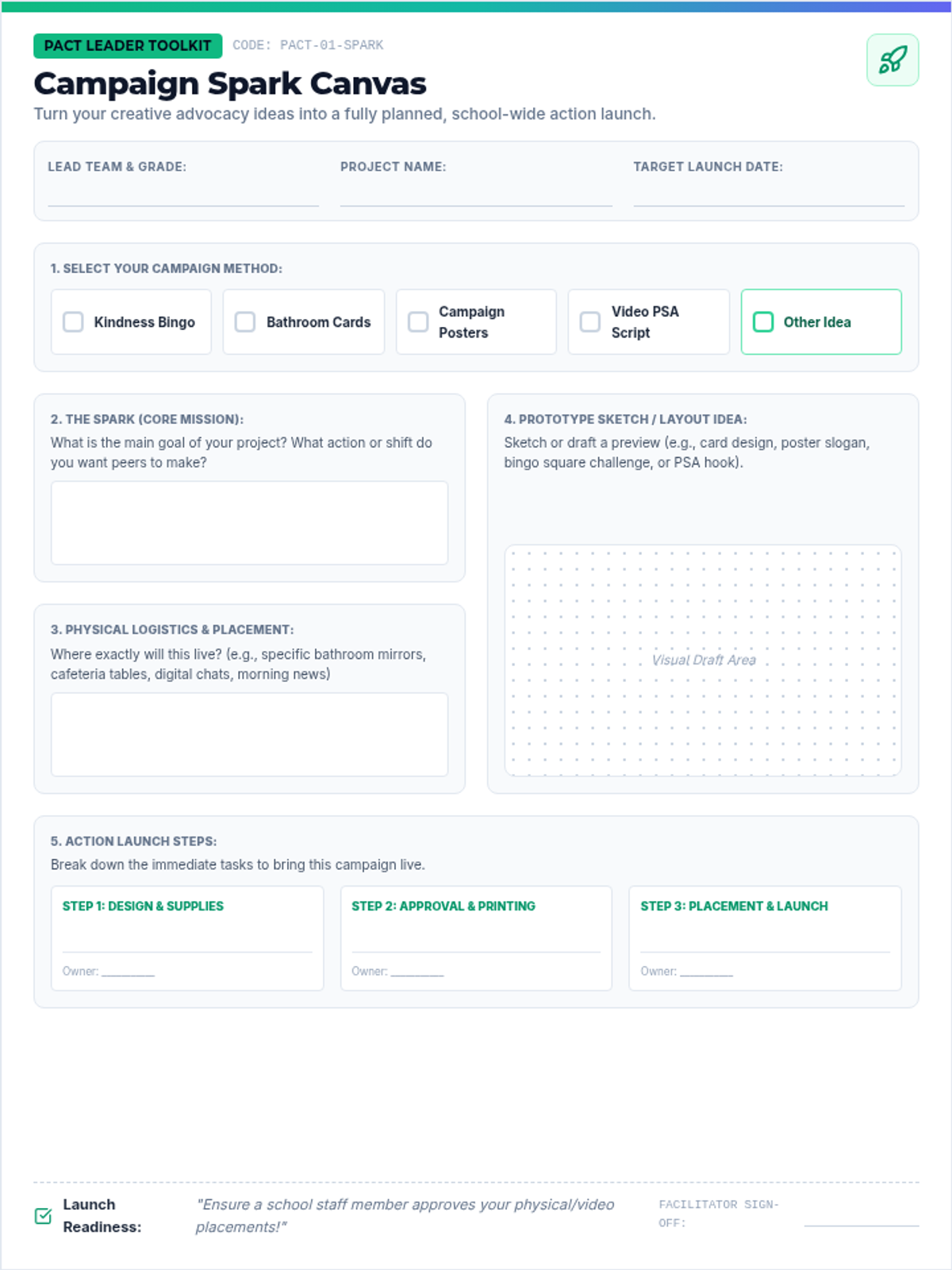
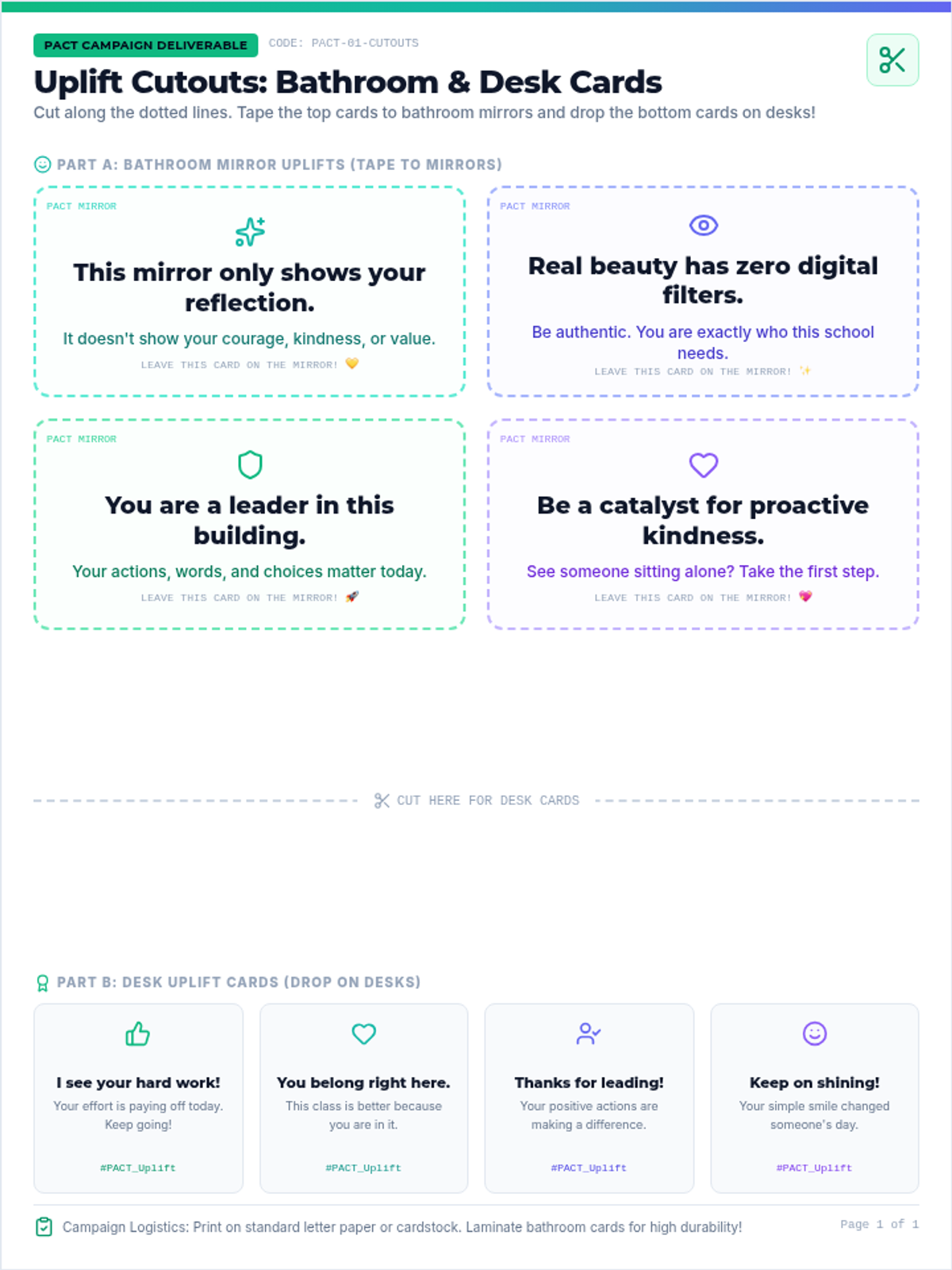
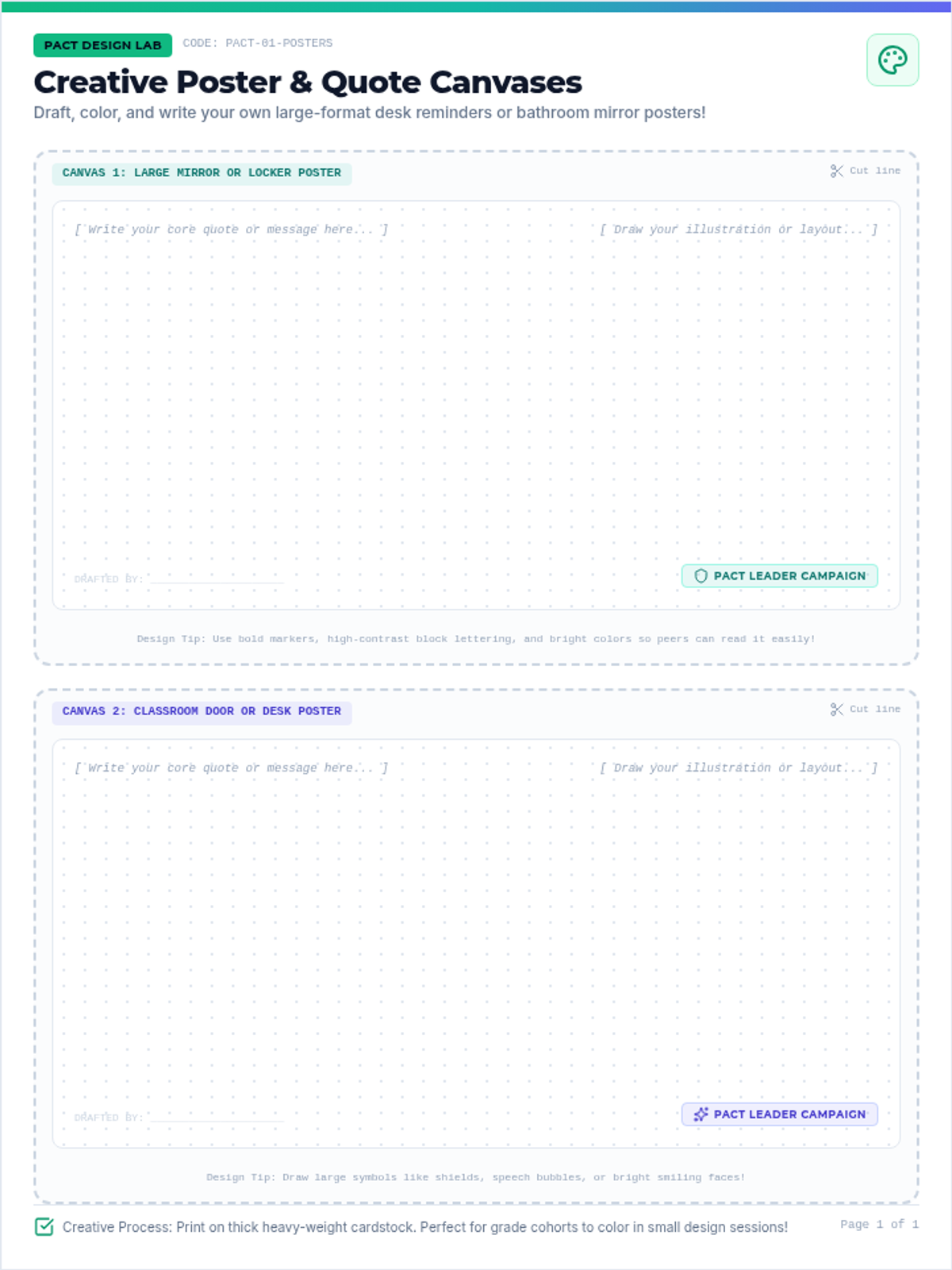
A comprehensive campaign kit and activity-based curriculum for Prevention Action Community Team (PACT) student leaders in grades 5-8. The program trains and equips leaders to facilitate conversations on bullying prevention, healthy self-image, and proactive kindness.
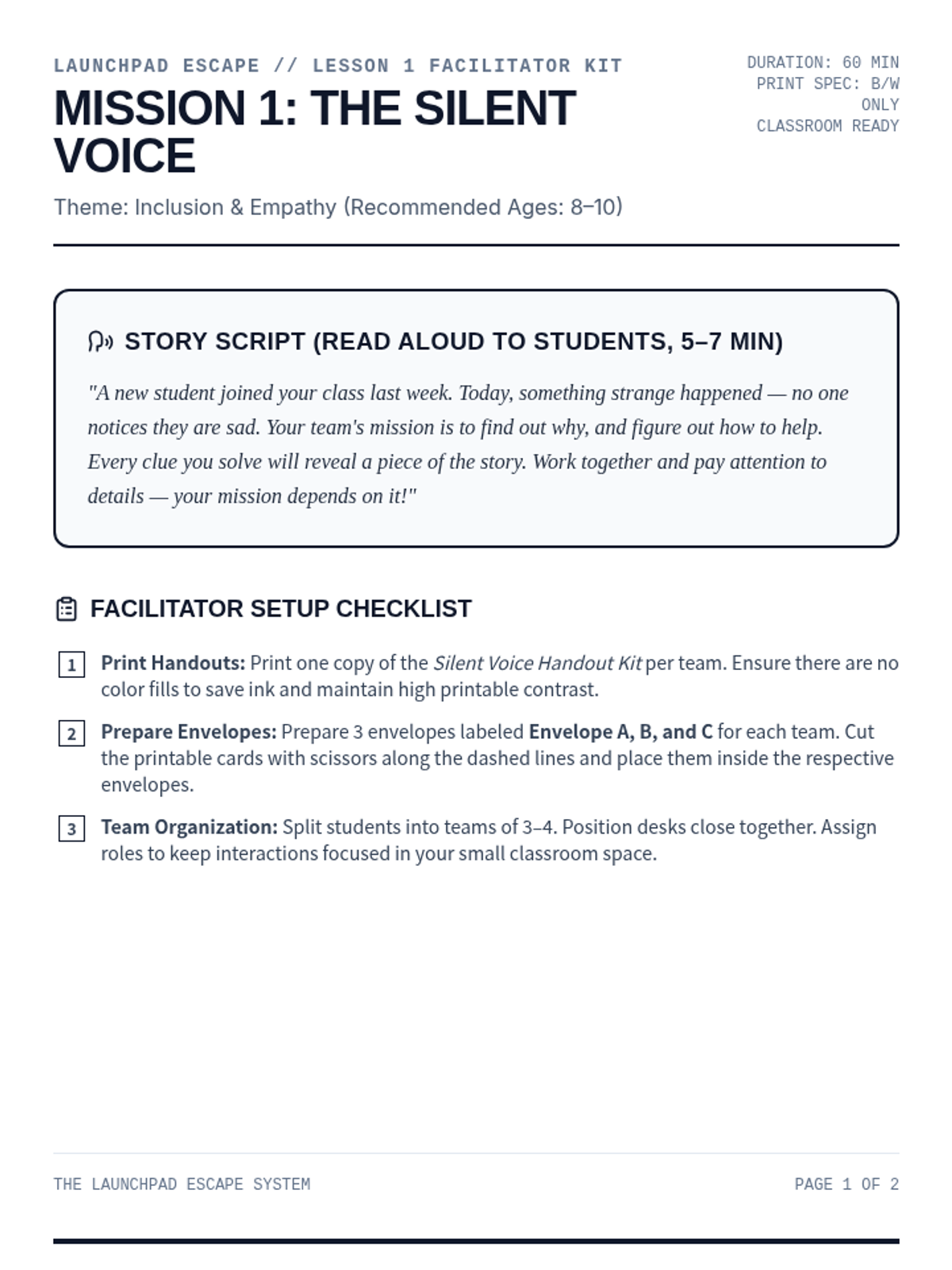
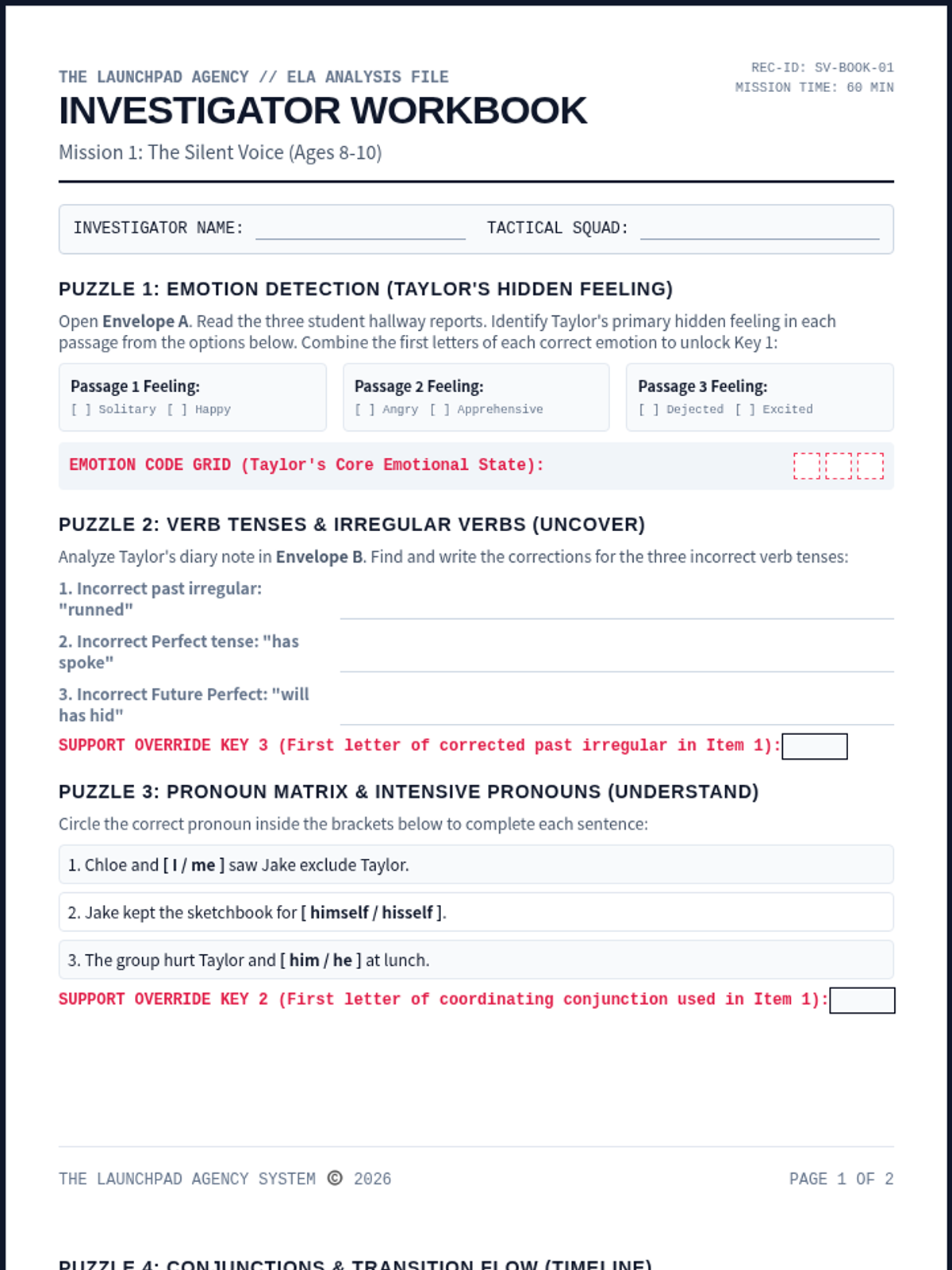
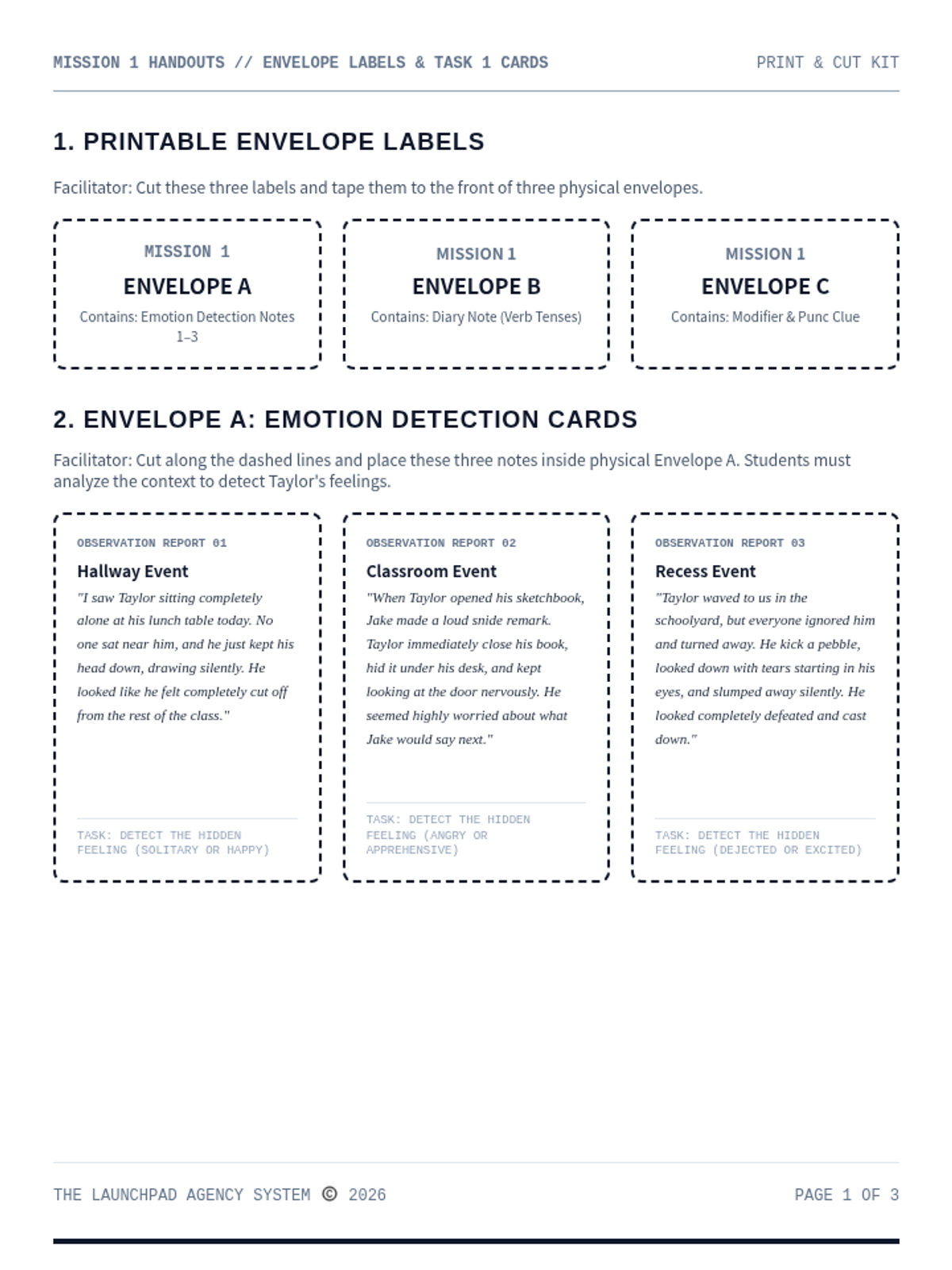
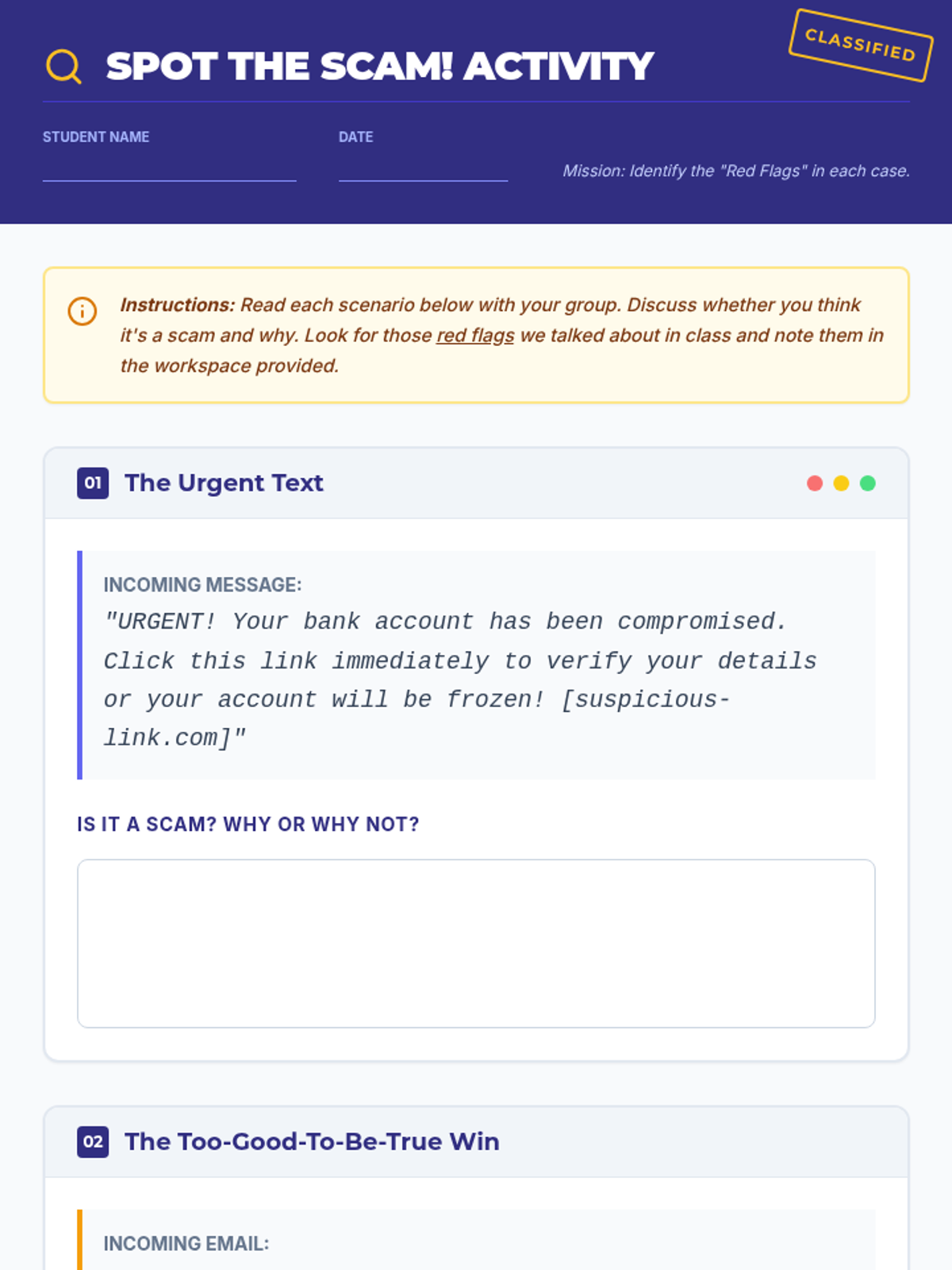
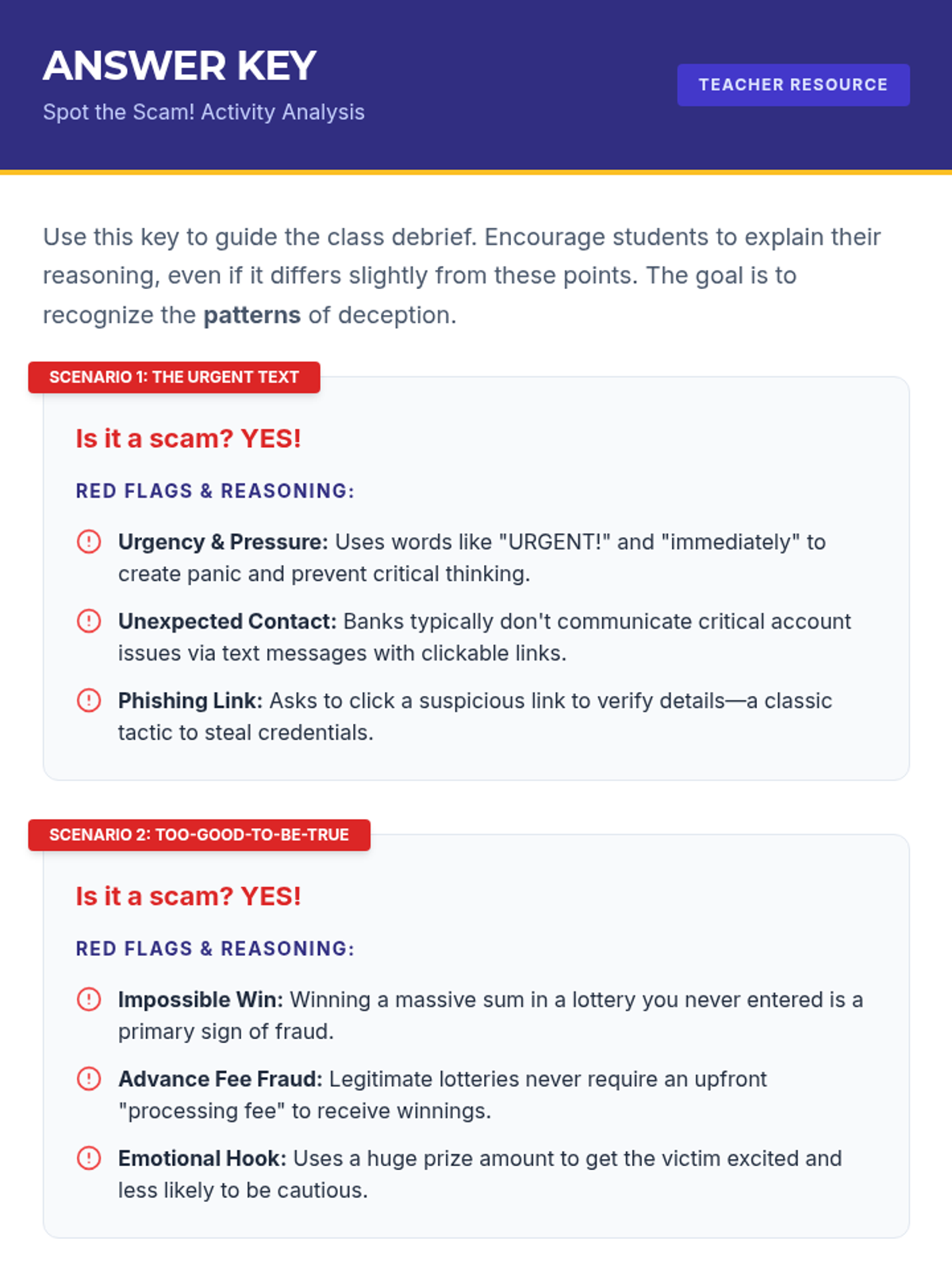
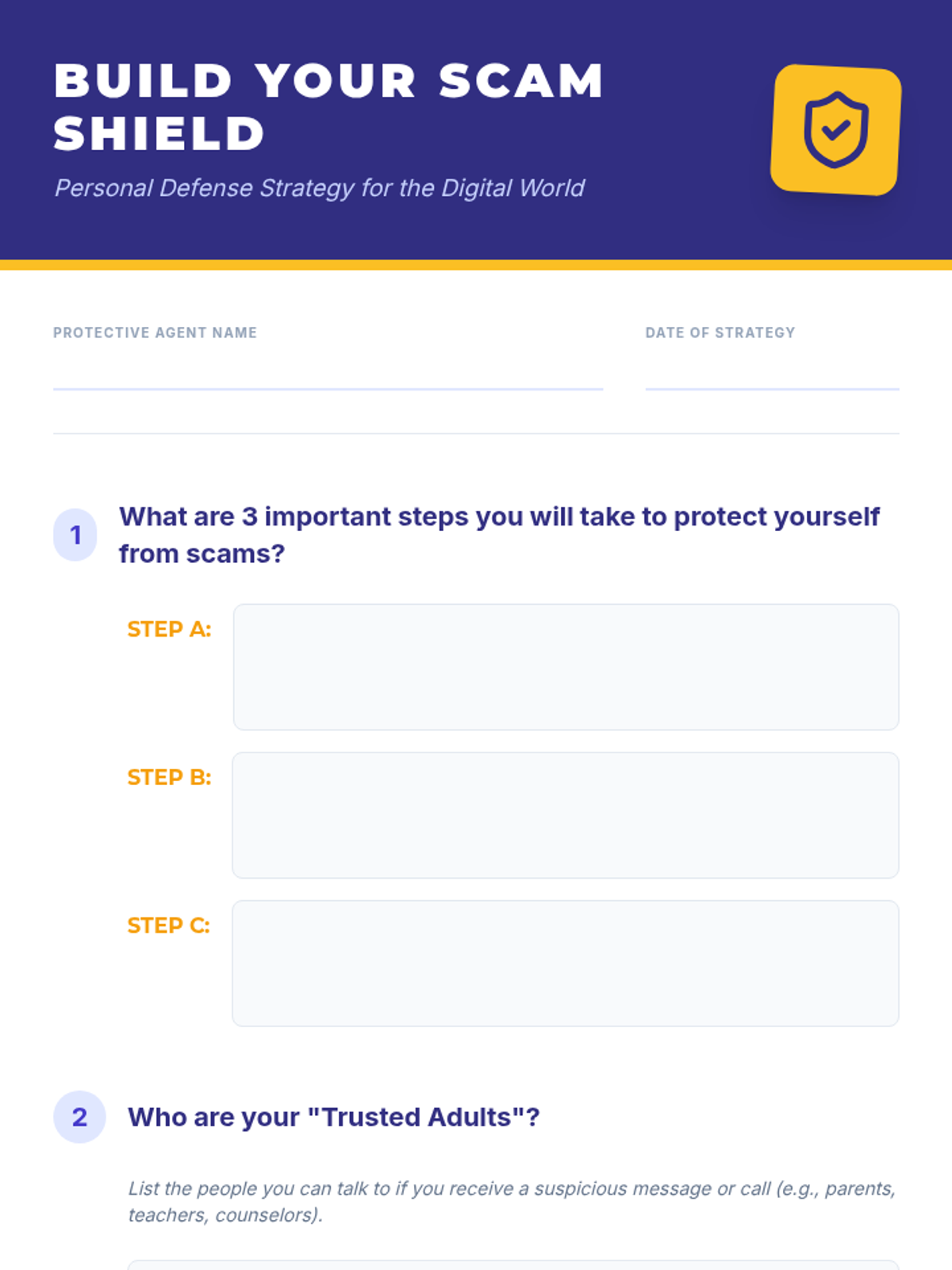
A high-stakes, collaborative tabletop escape curriculum. Missions are self-contained and fun, targeting academic anxiety, family duty, digital literacy, and friendship & peer pressure (e.g. someone left out, group conflict escalating, friend pressured to do wrong). Recruits build decision-making, social intelligence, and value systems.
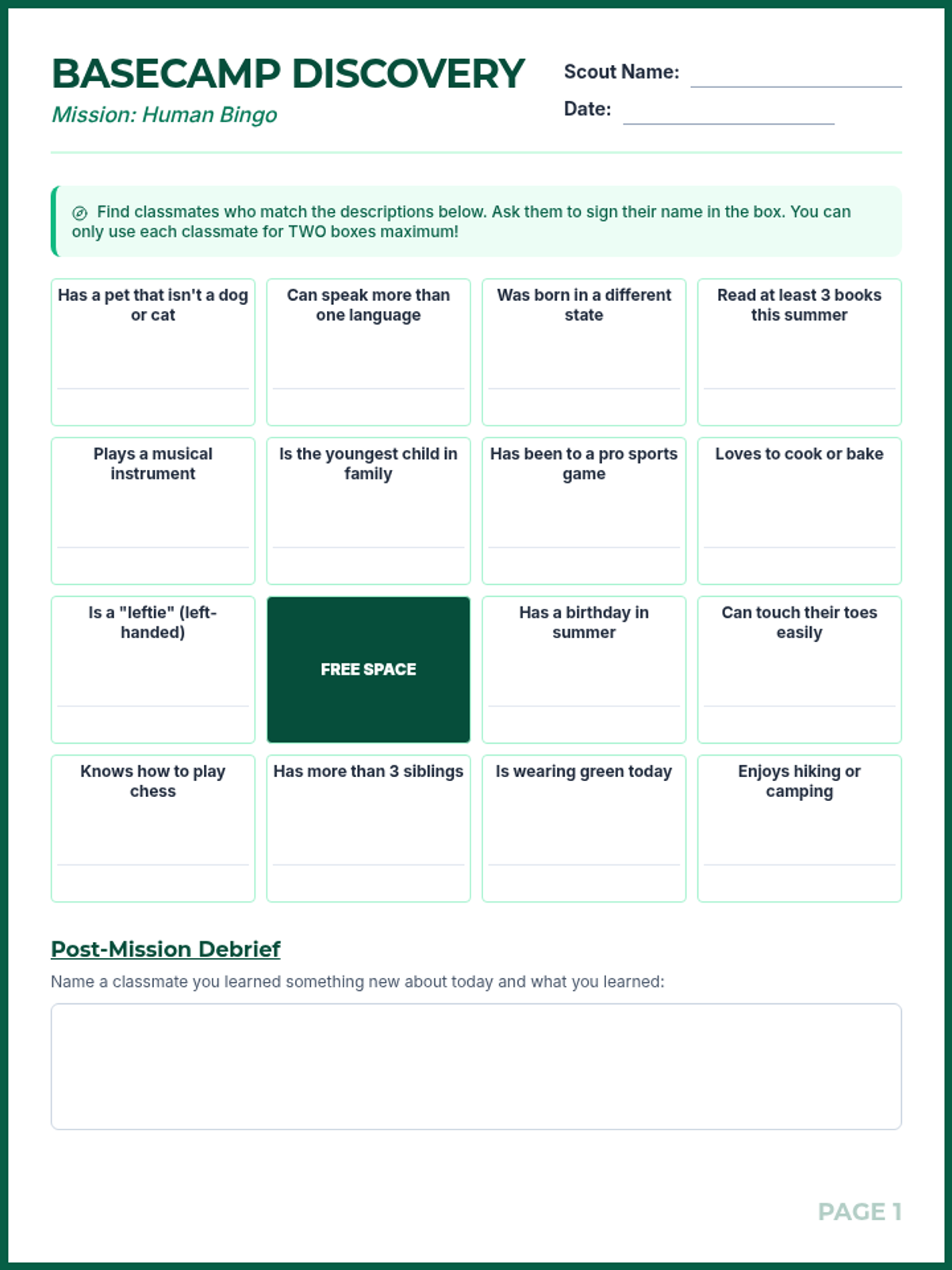
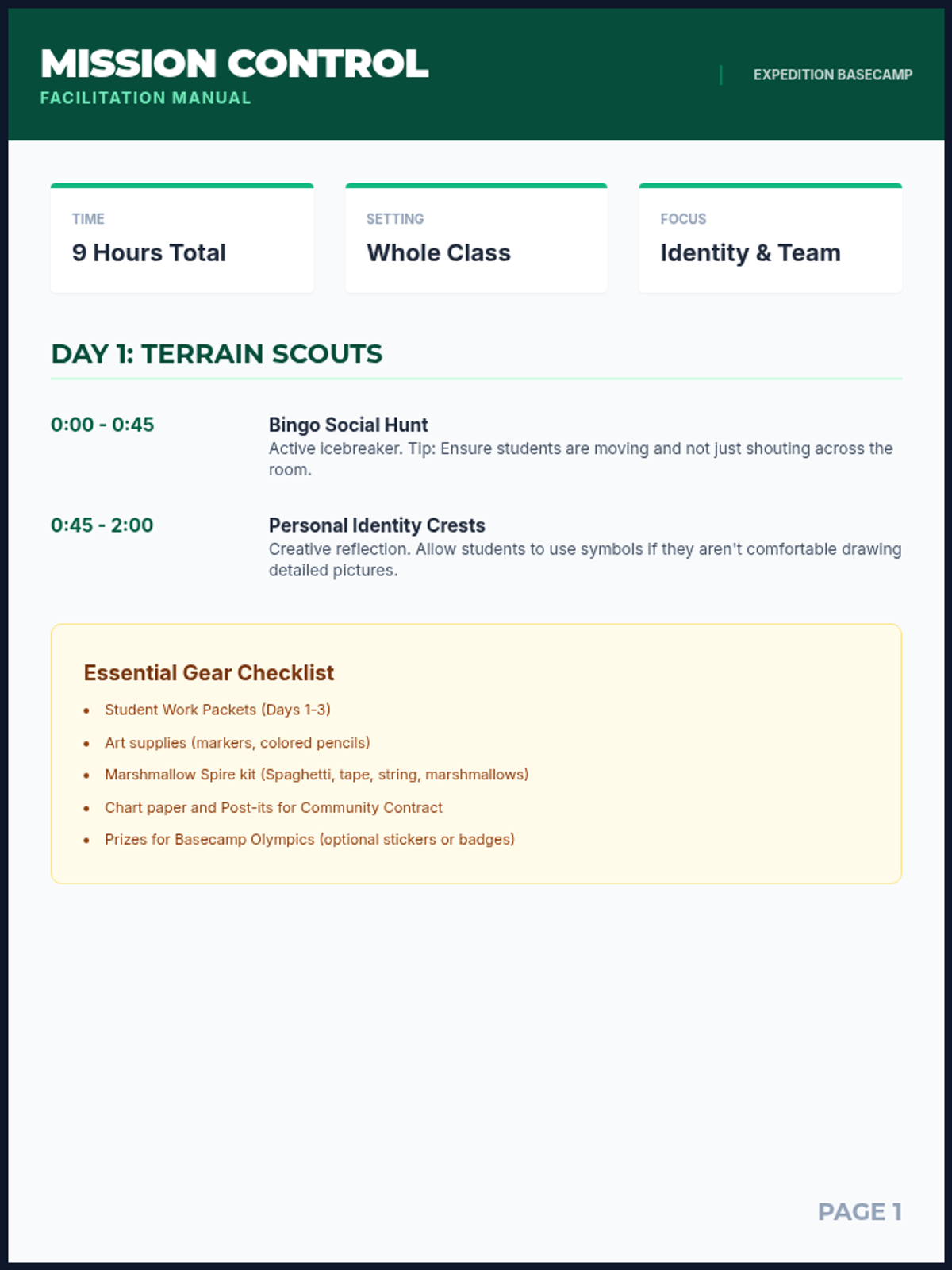
A three-day orientation sequence designed to build classroom community through team challenges, interdisciplinary puzzles, and reflective goal-setting with an 'Expedition Basecamp' theme.
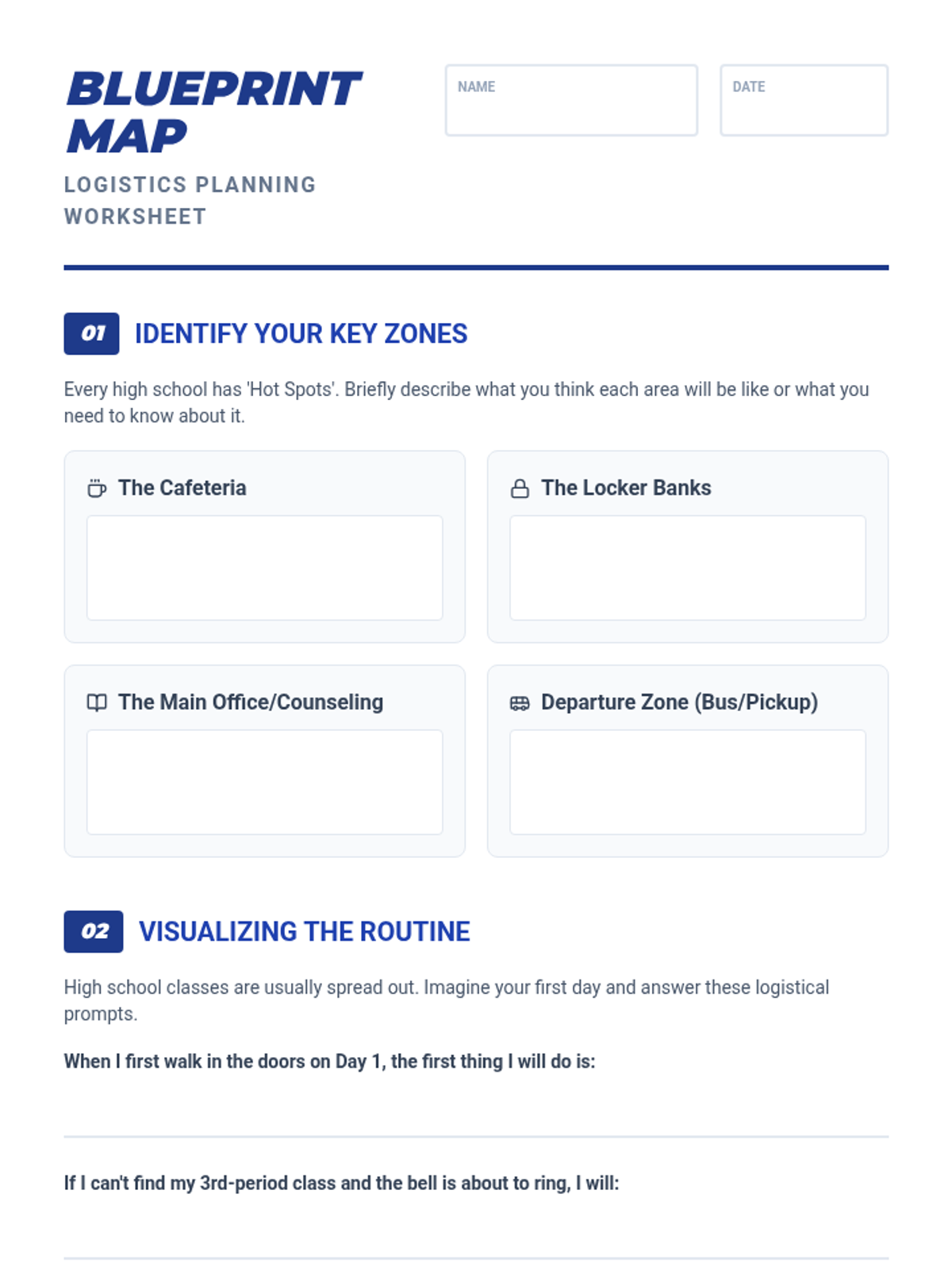
A 4-part morning meeting series designed to help 8th-grade students navigate the logistical, social, and emotional transition to high school using a 'playbook' theme.
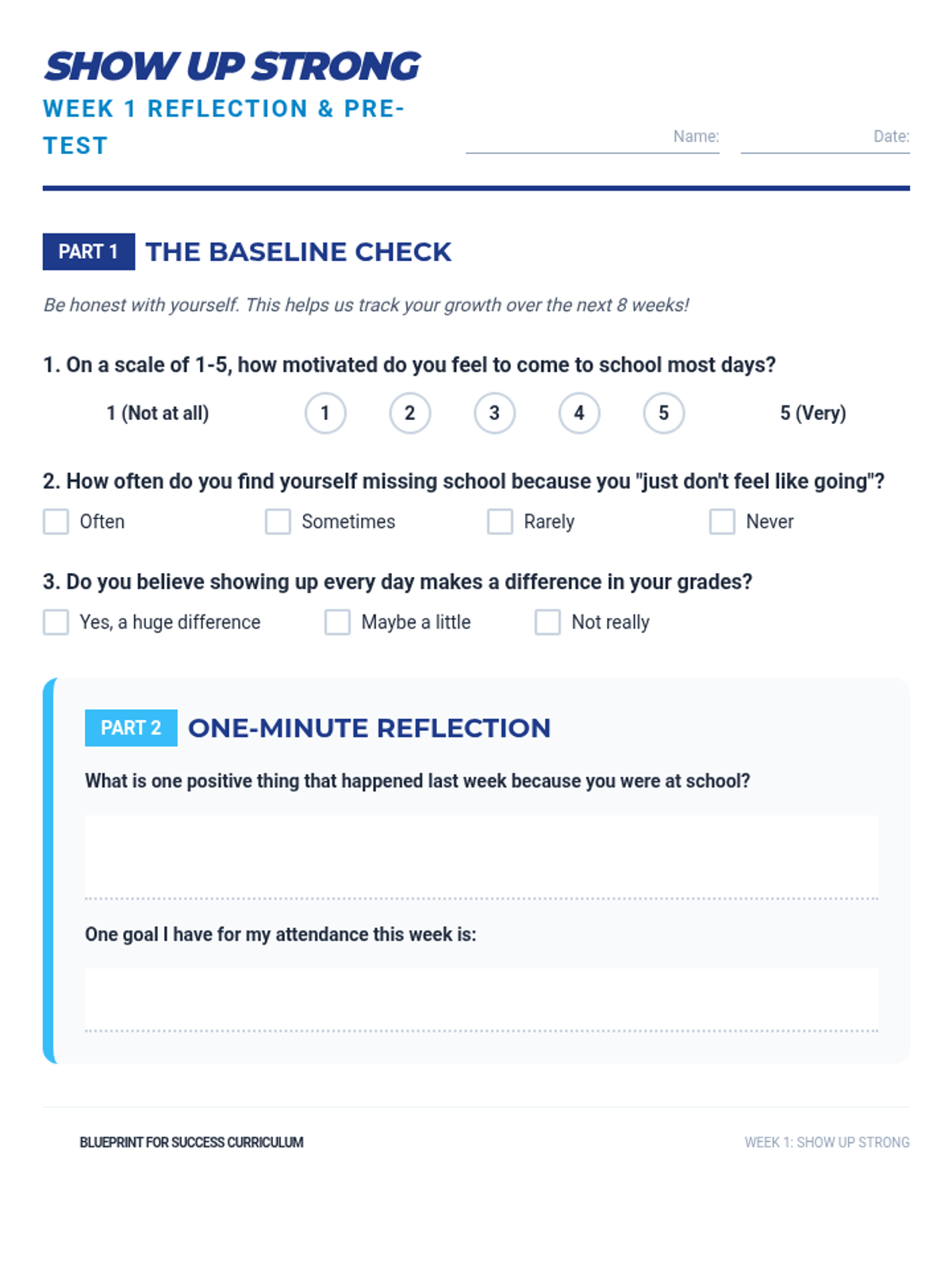
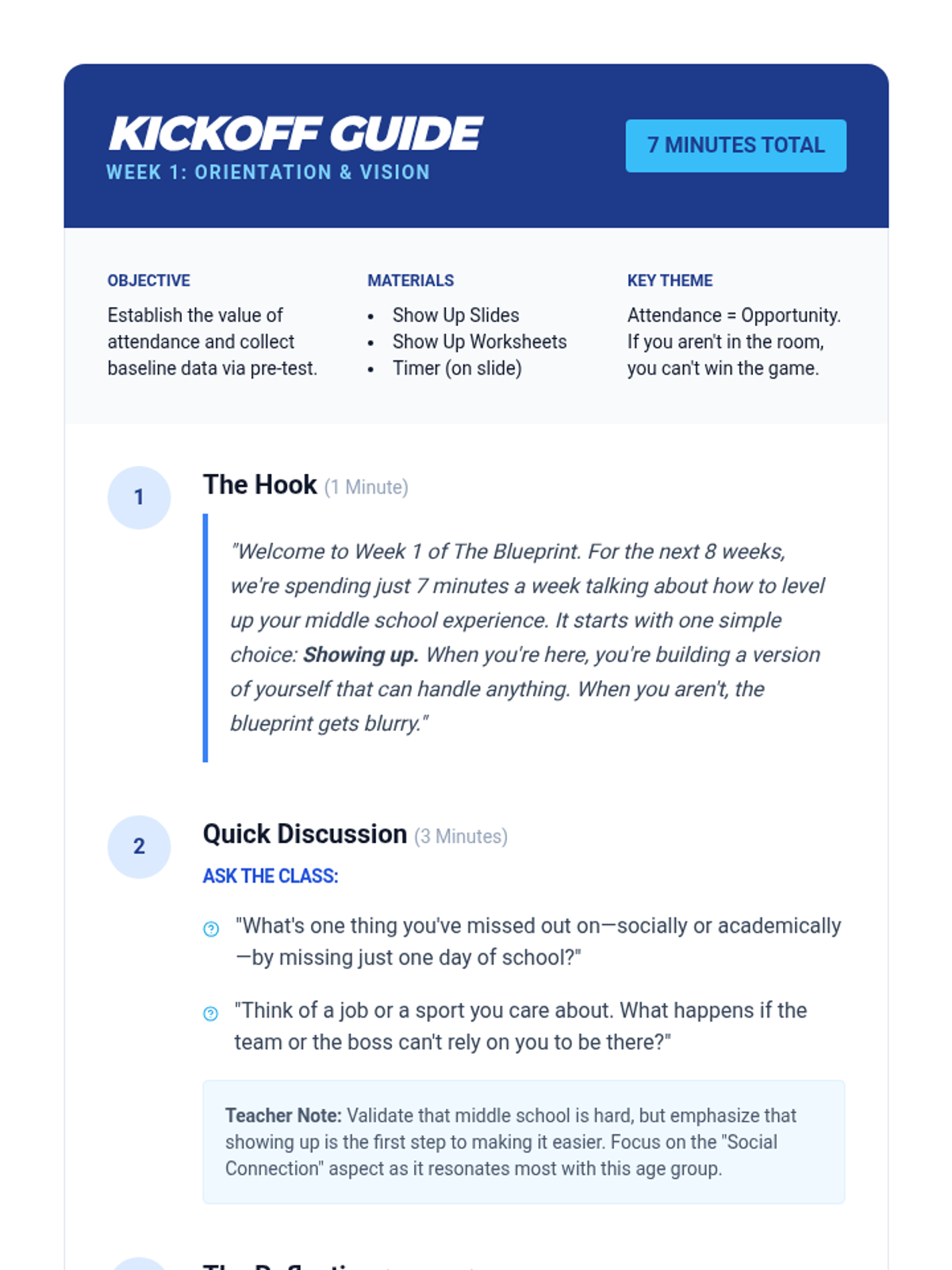
An 8-week curriculum for middle schoolers focusing on attendance, academic habits, behavioral choices, and mental wellness using a 'Blueprint' theme. Each lesson is designed to be delivered in 7 minutes, including a brief presentation and a 1-minute reflection.
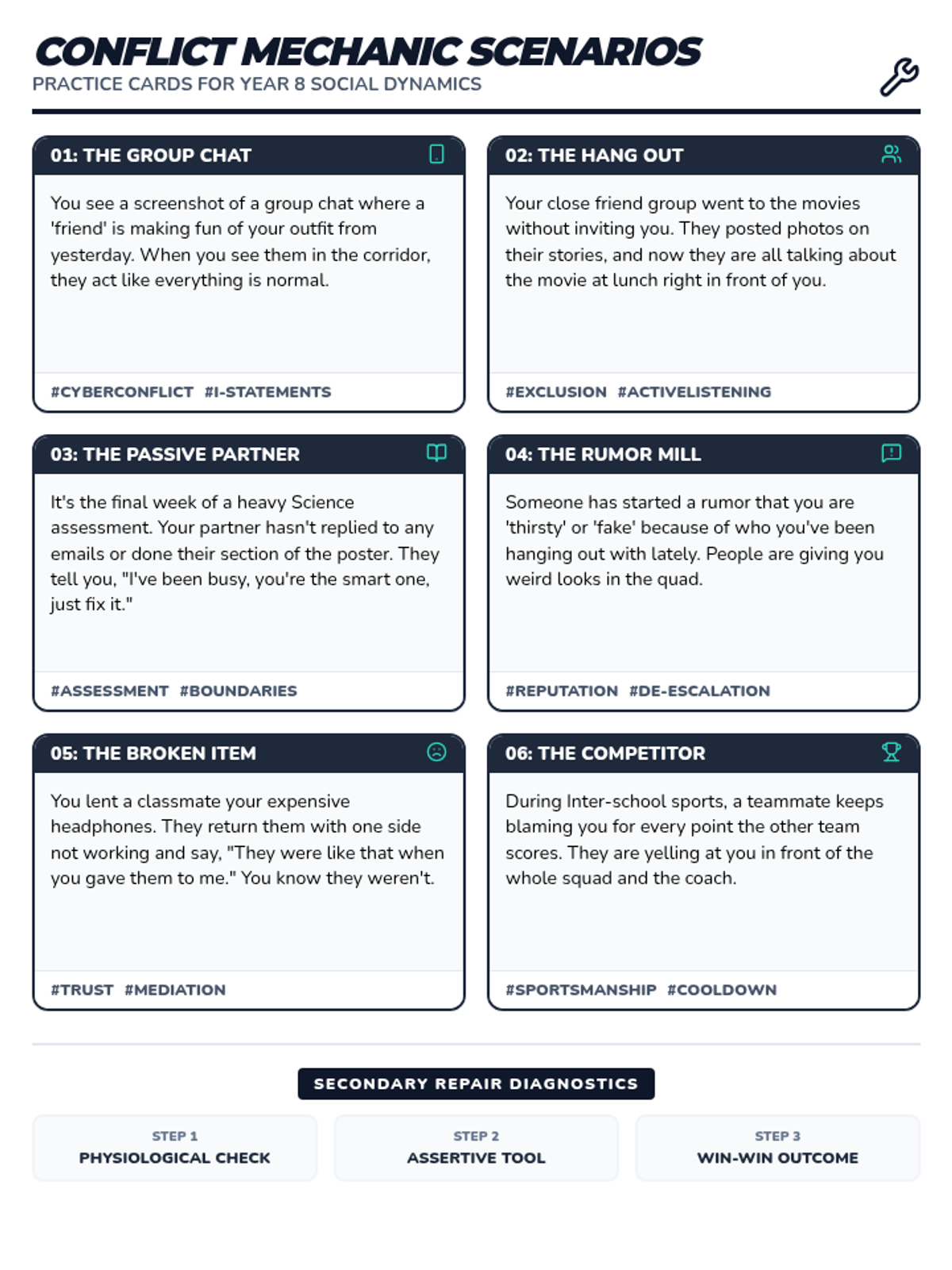
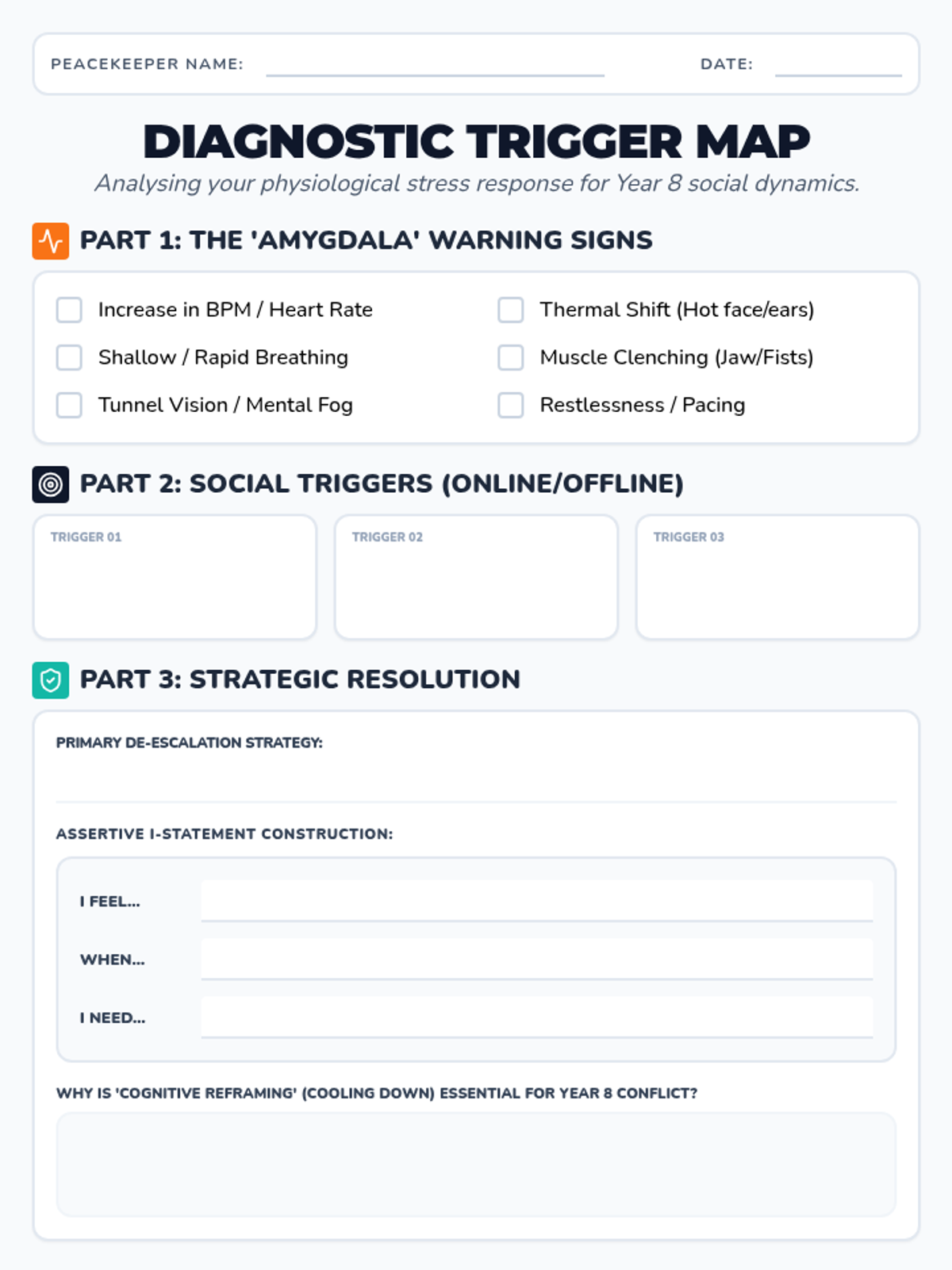
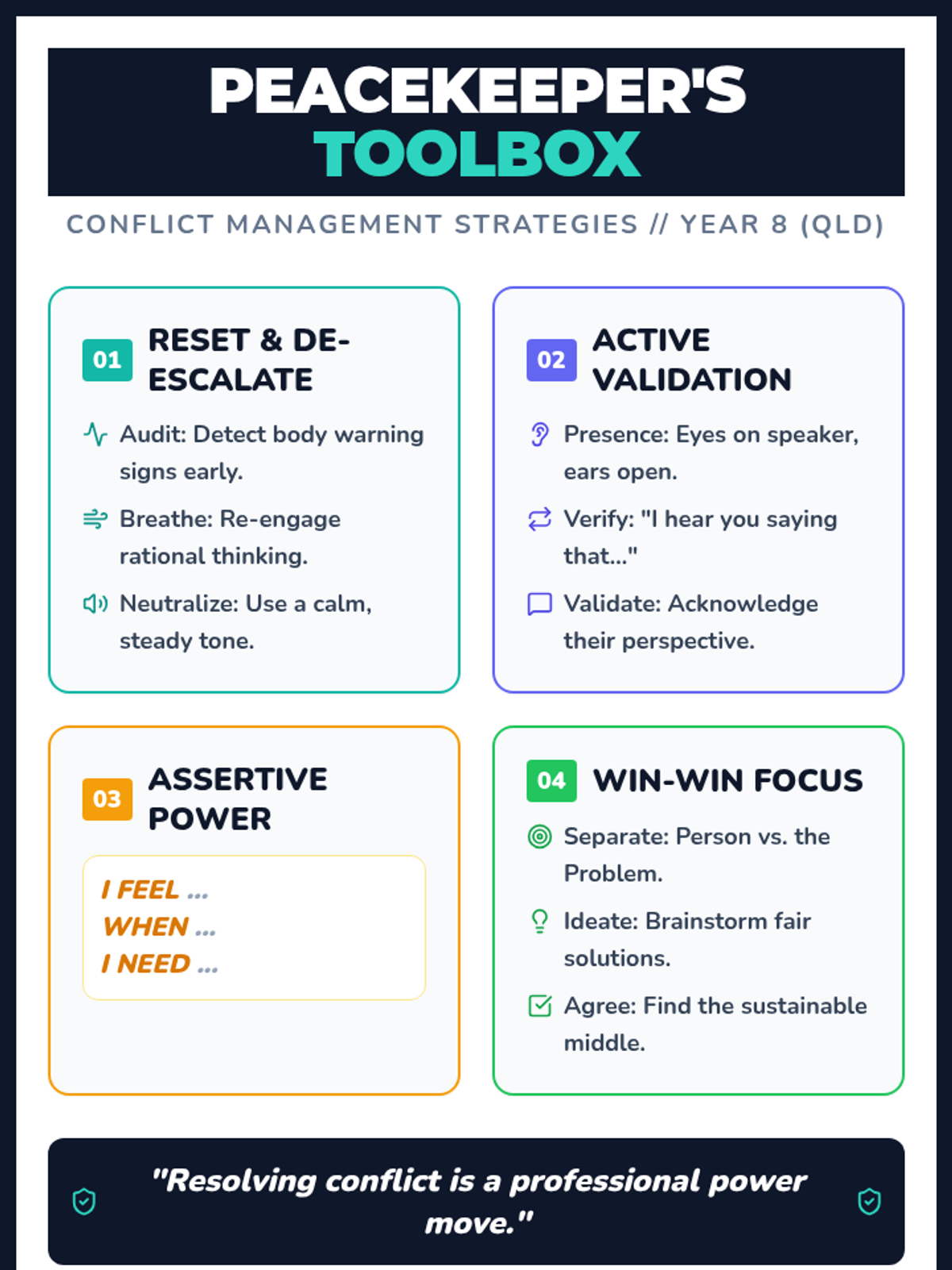
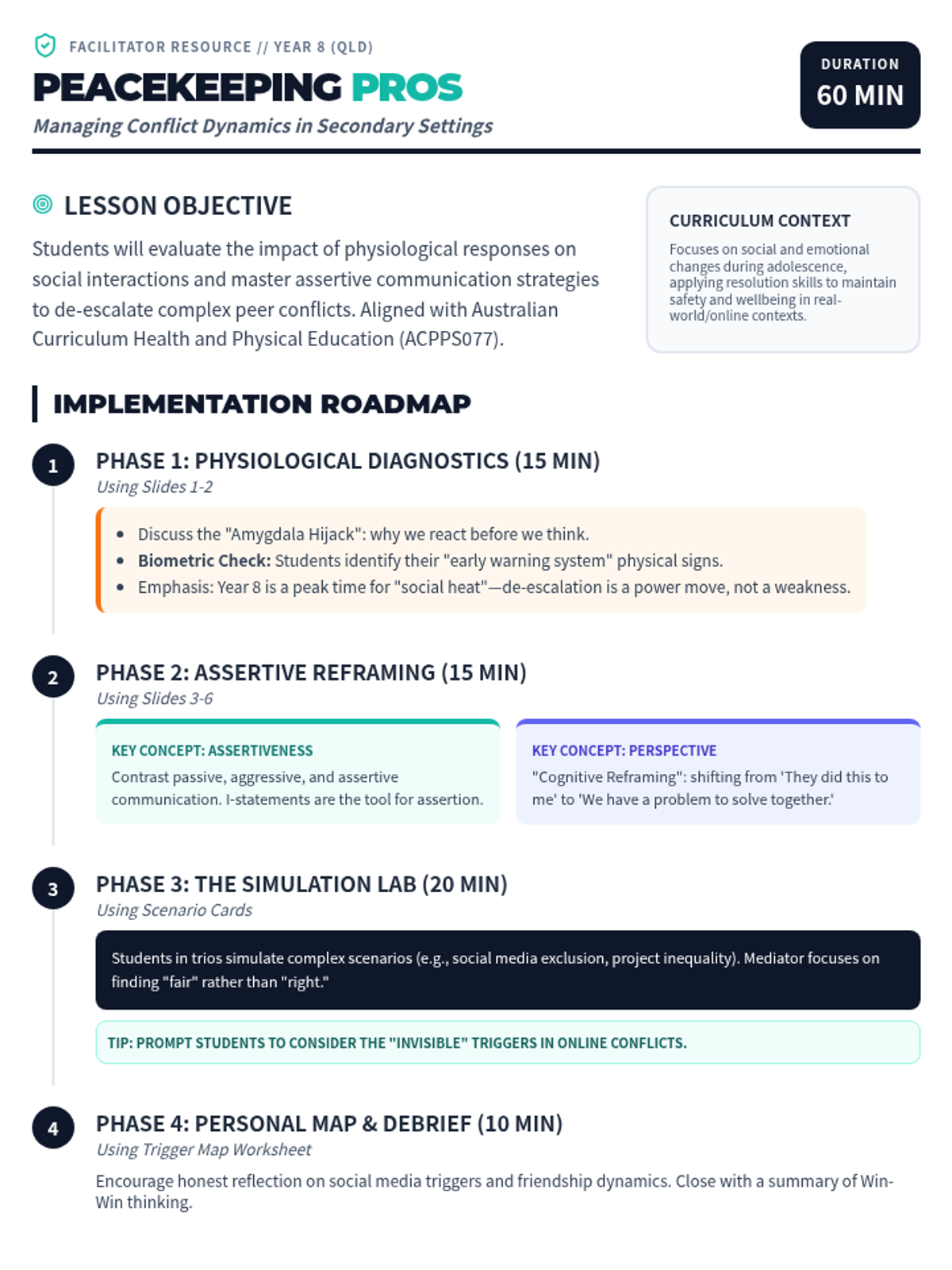
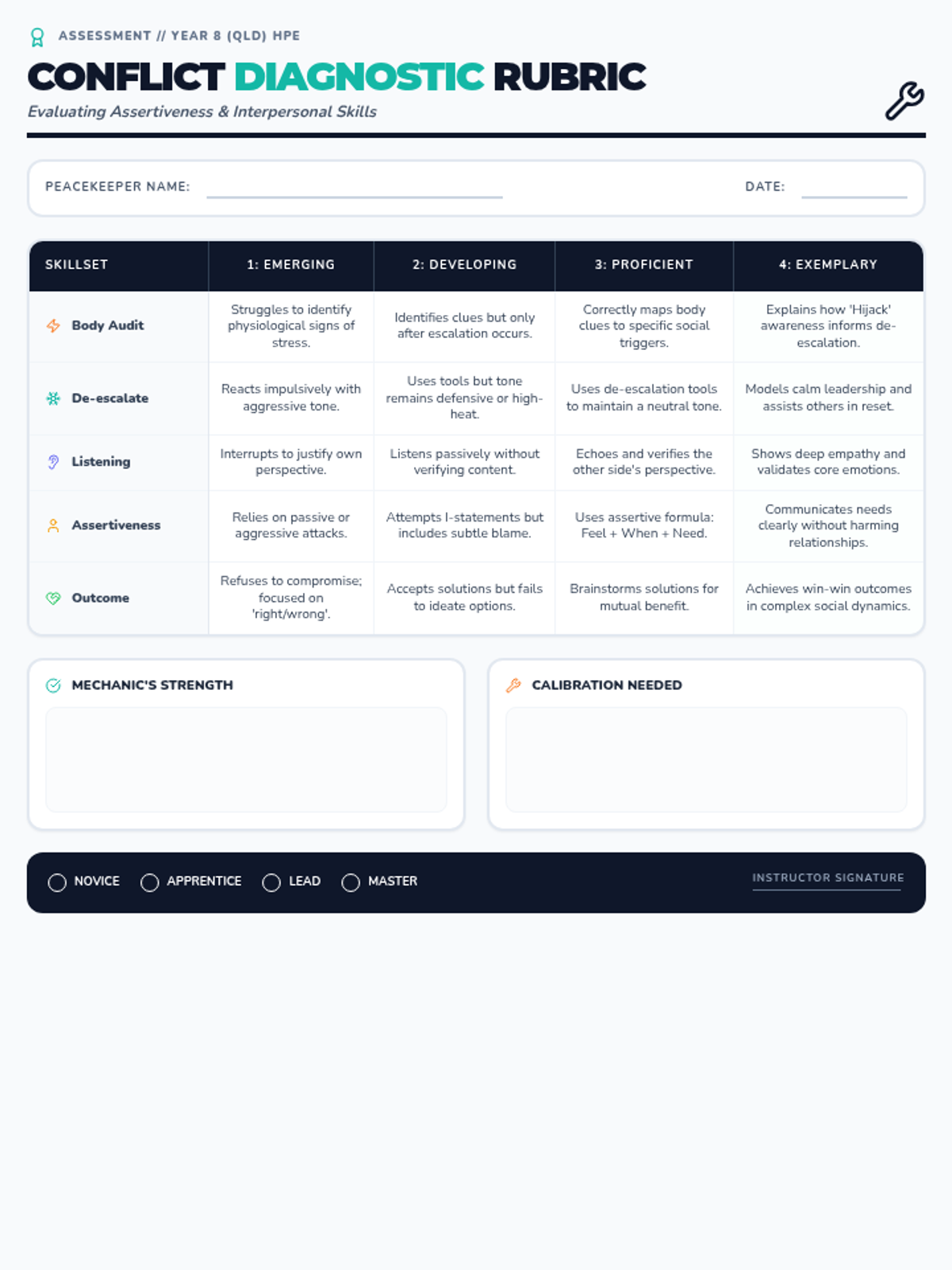
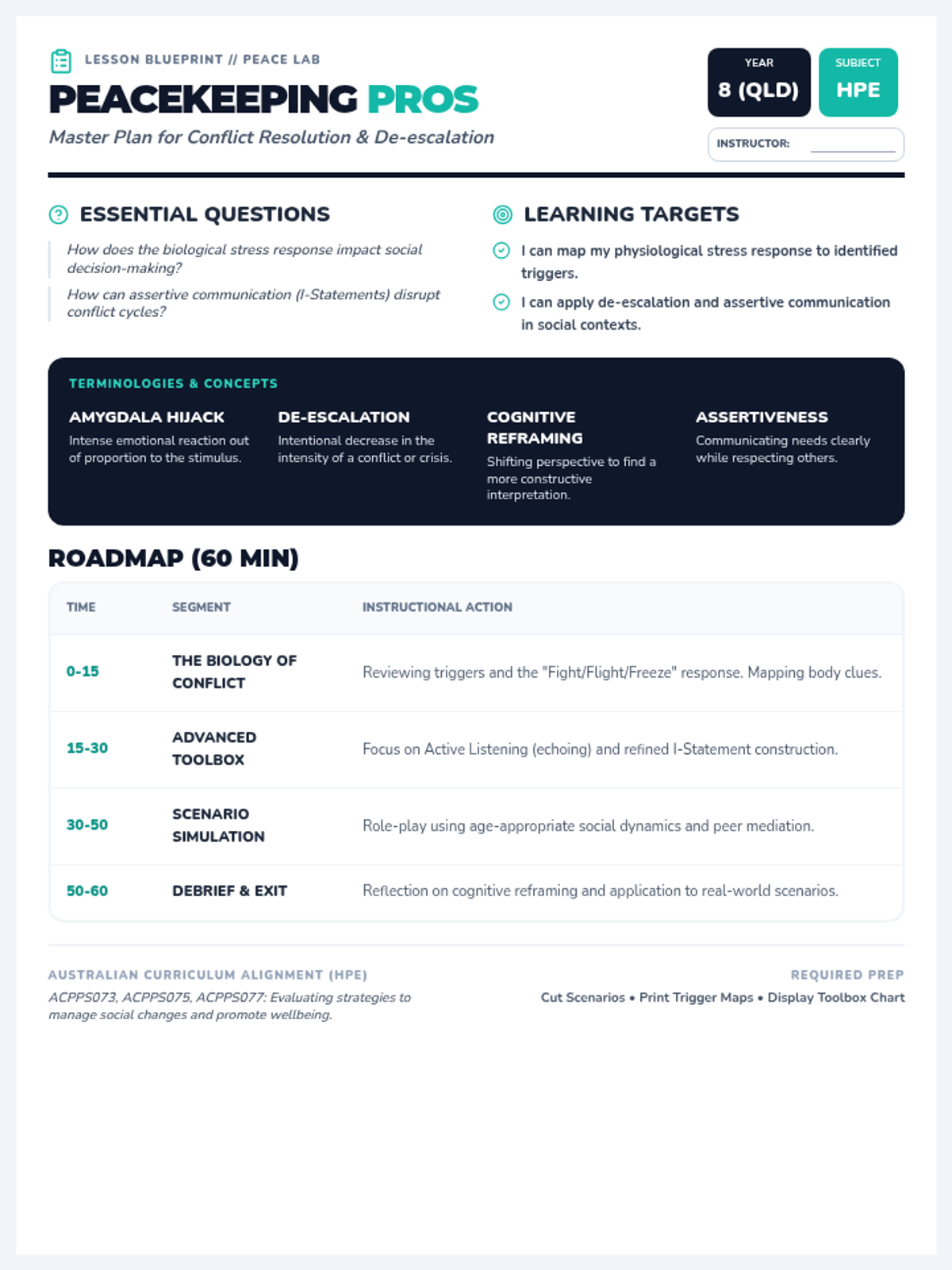
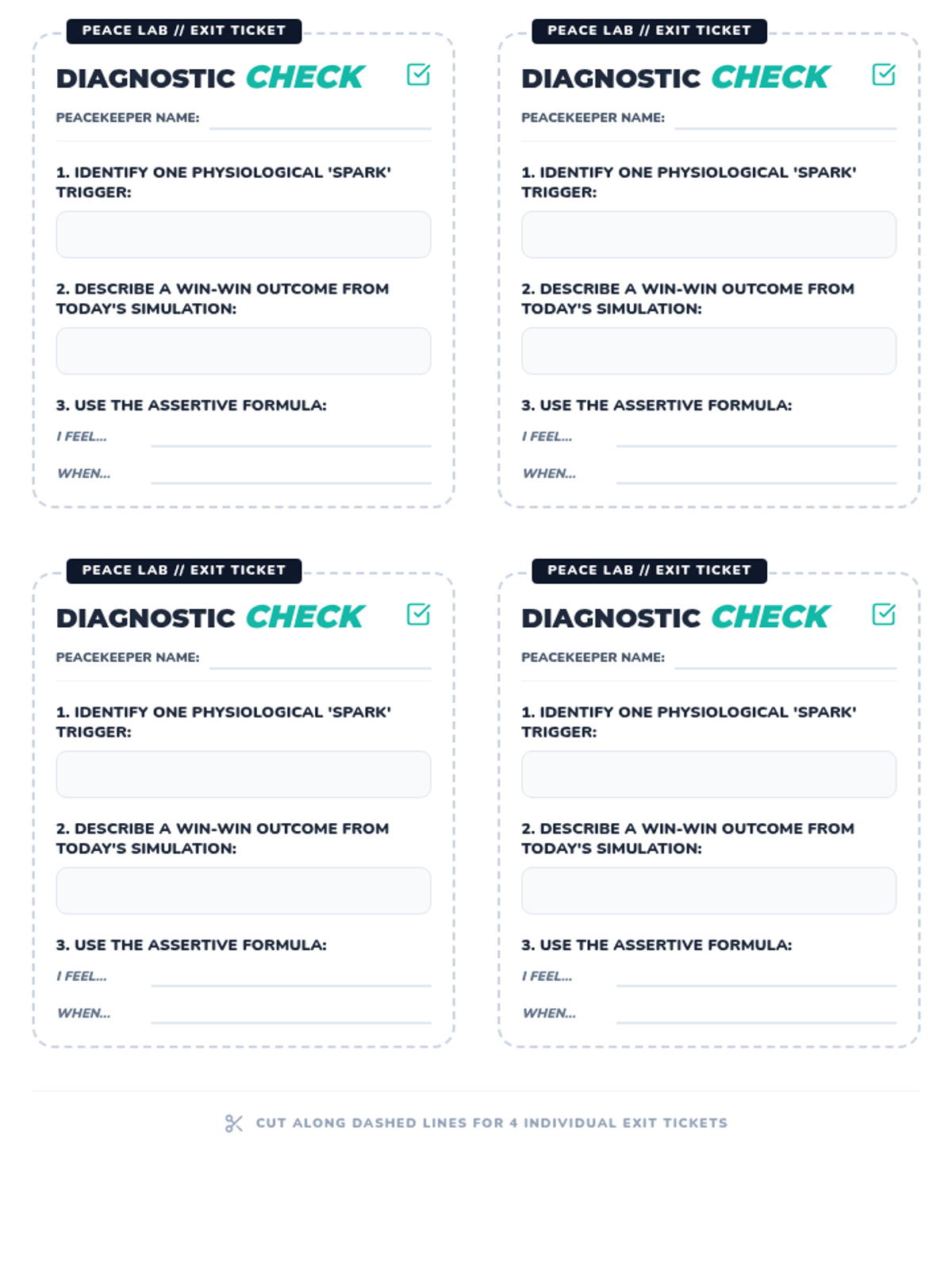
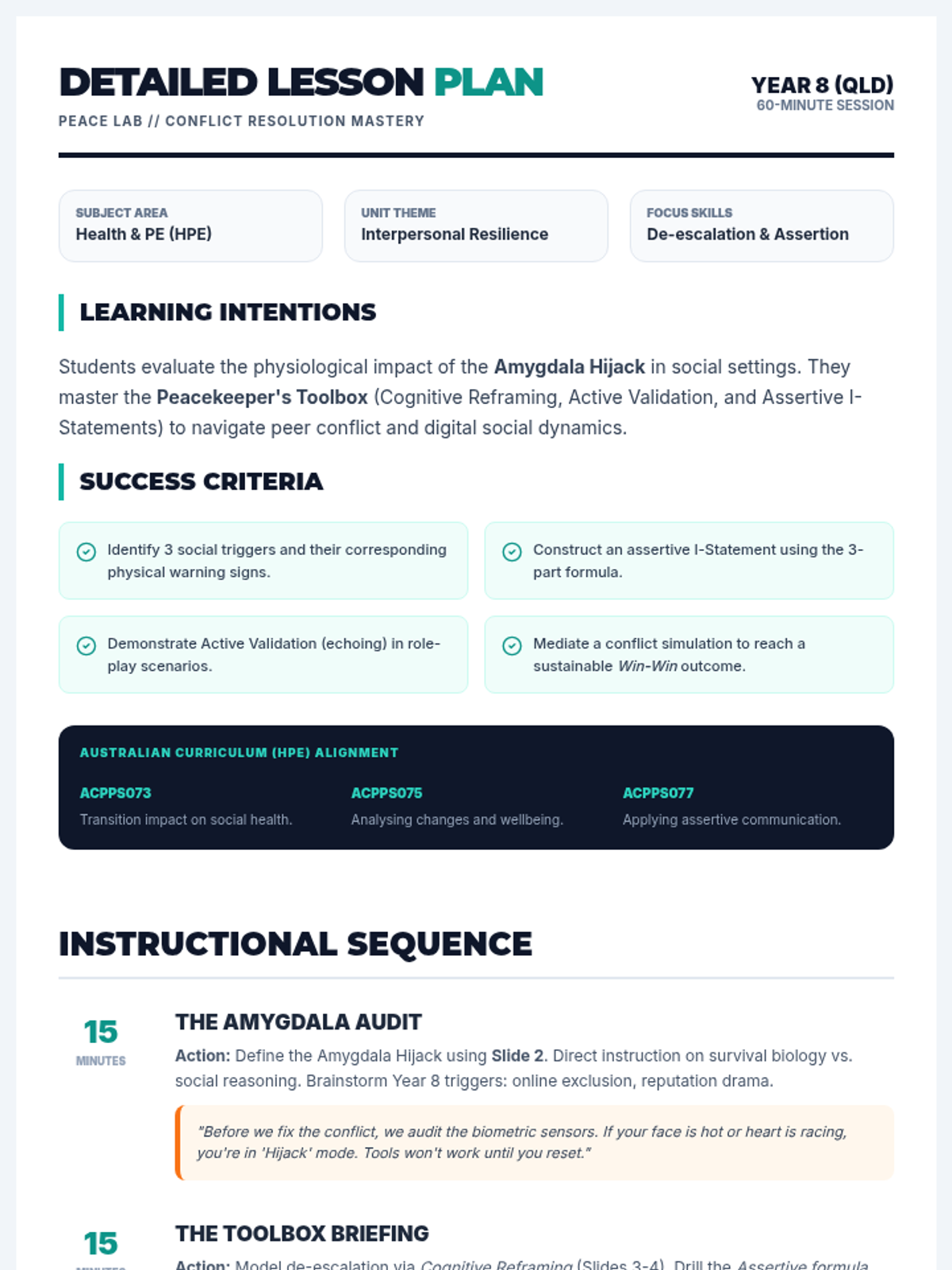
A comprehensive sequence of lessons for secondary students (Yr 7-8) focused on conflict resolution, social media responsibility, and assertive communication in both physical and digital spaces.
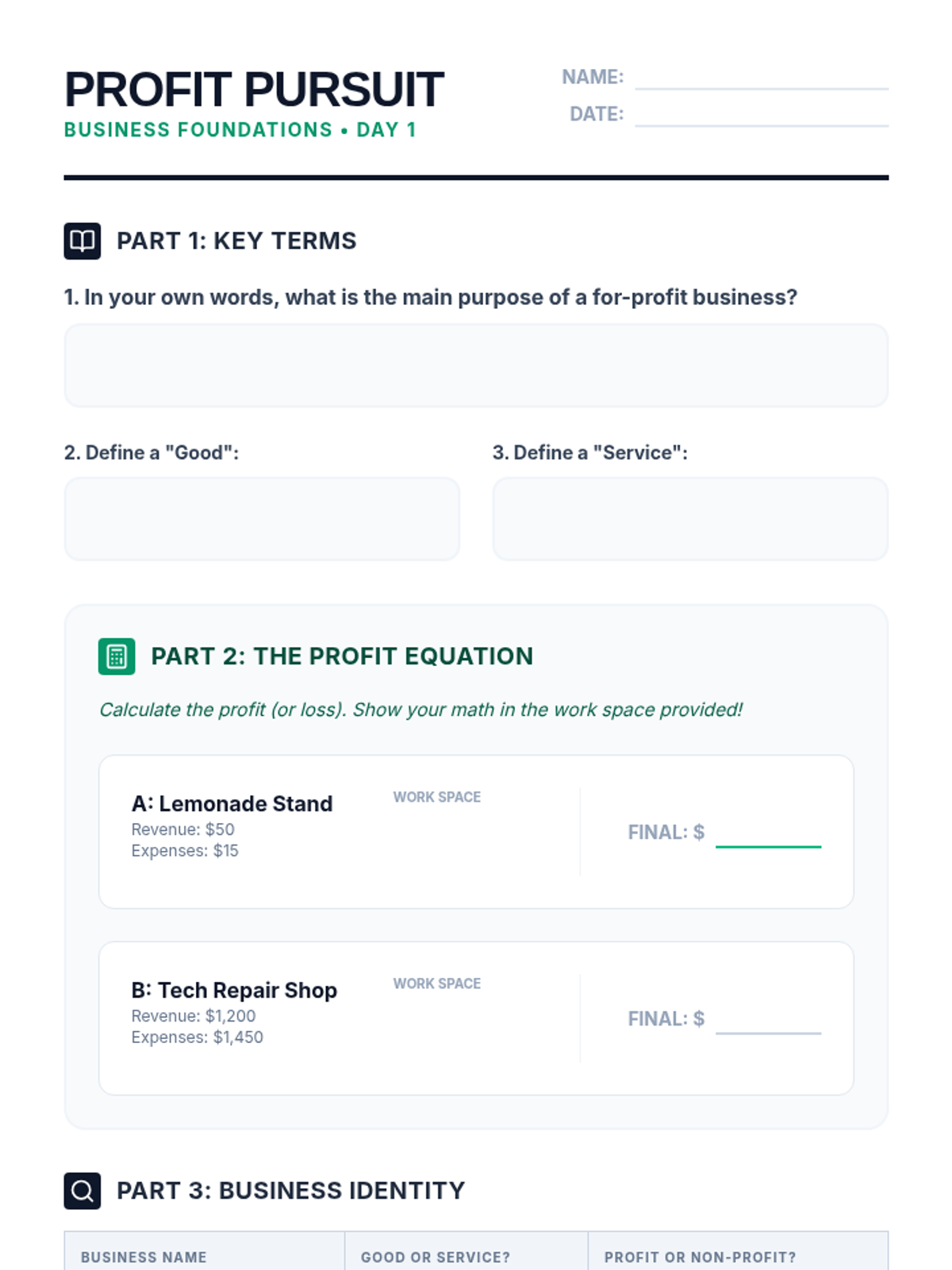
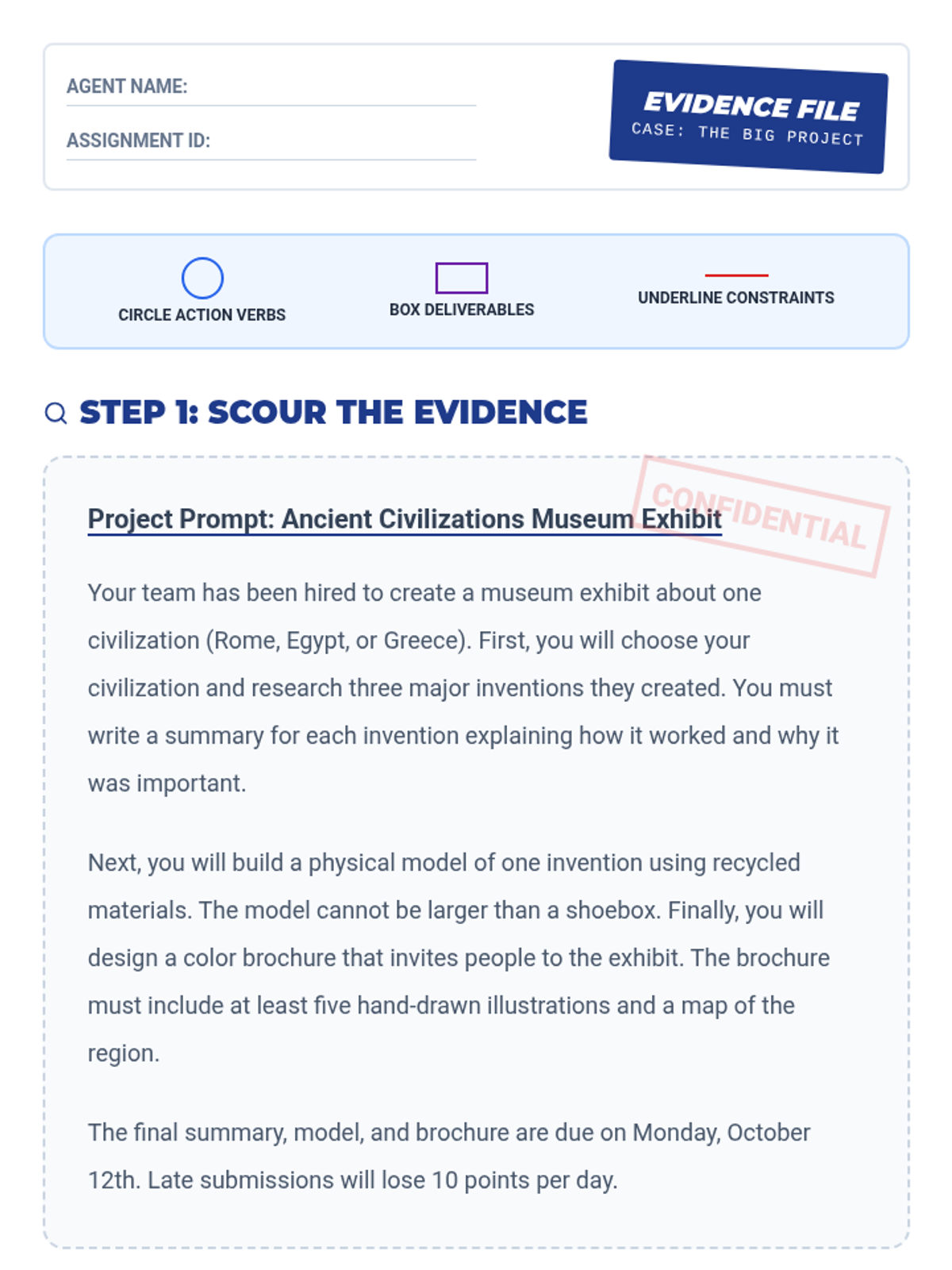
A comprehensive 7-day introduction to business and entrepreneurship. Students explore foundations, economic principles, ownership models, internal structures, and the mindset and process needed to launch a new business idea.
Um currículo abrangente de 13 semanas para alunos do ensino fundamental focado nos quatro módulos principais da Terapia Comportamental Dialética: Atenção Plena (Mindfulness), Eficácia Interpessoal, Regulação Emocional e Tolerância ao Mal-estar. Os alunos dominam habilidades de vida em um ambiente de grupo colaborativo.
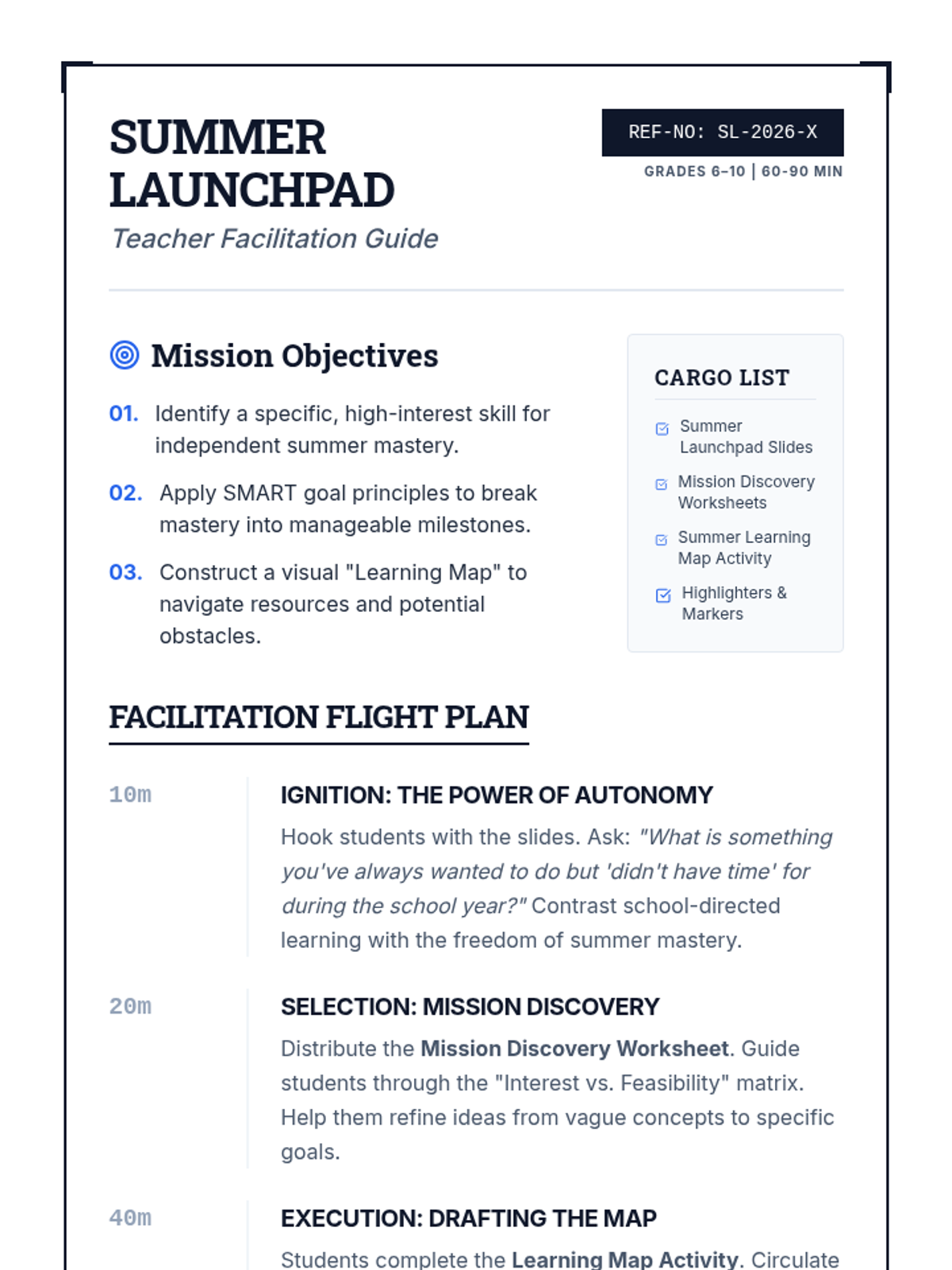
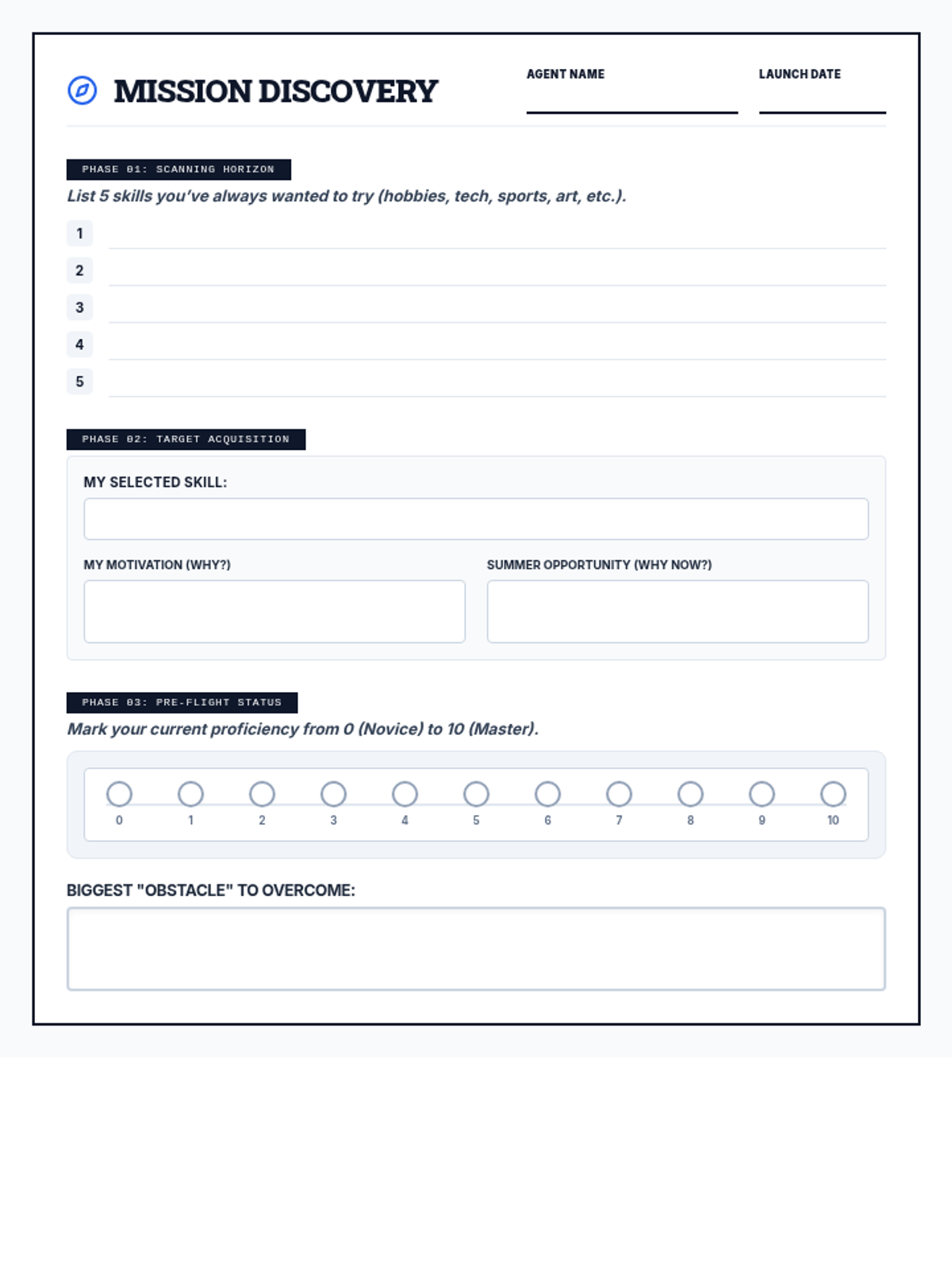
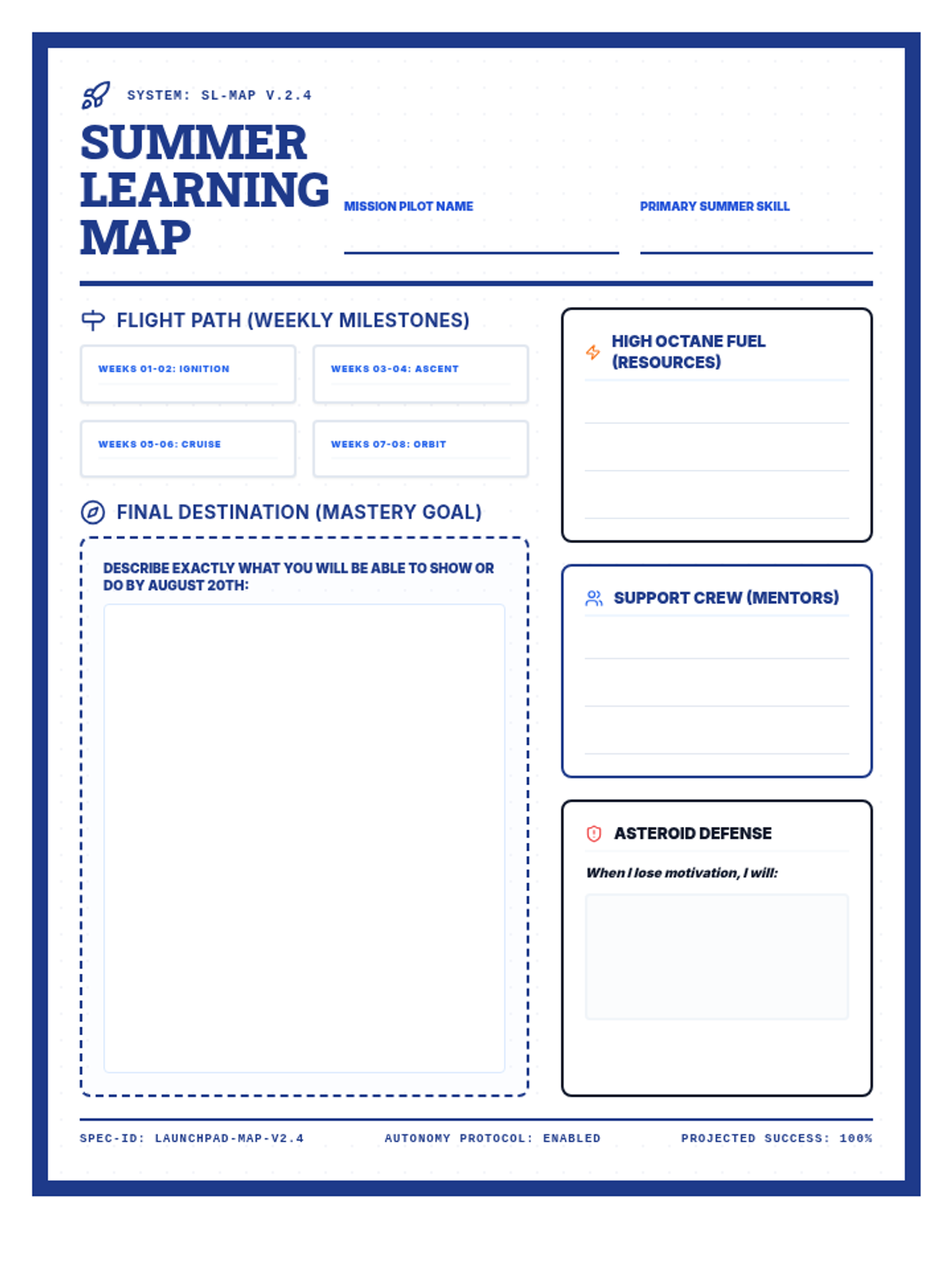
A self-directed goal-setting workshop where students in grades 6-10 identify a skill to master over summer break and design a comprehensive 'learning map' to achieve it.
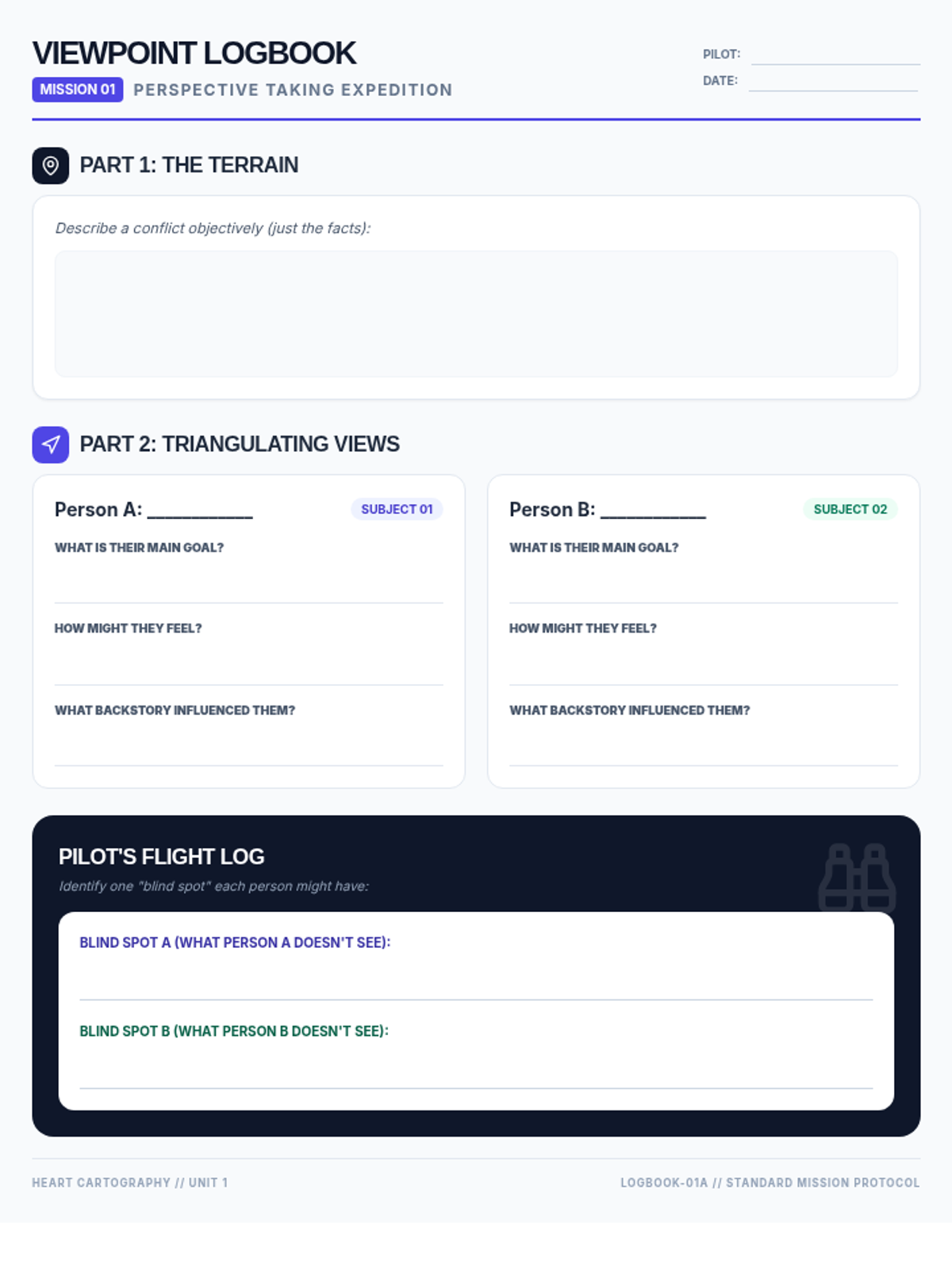
A comprehensive unit on empathy that guides students through the three main stages: cognitive empathy (perspective-taking), affective empathy (feeling with others), and compassionate empathy (taking action). The sequence uses a 'Heart Cartography' theme to help students map the social and emotional landscape of their communities.
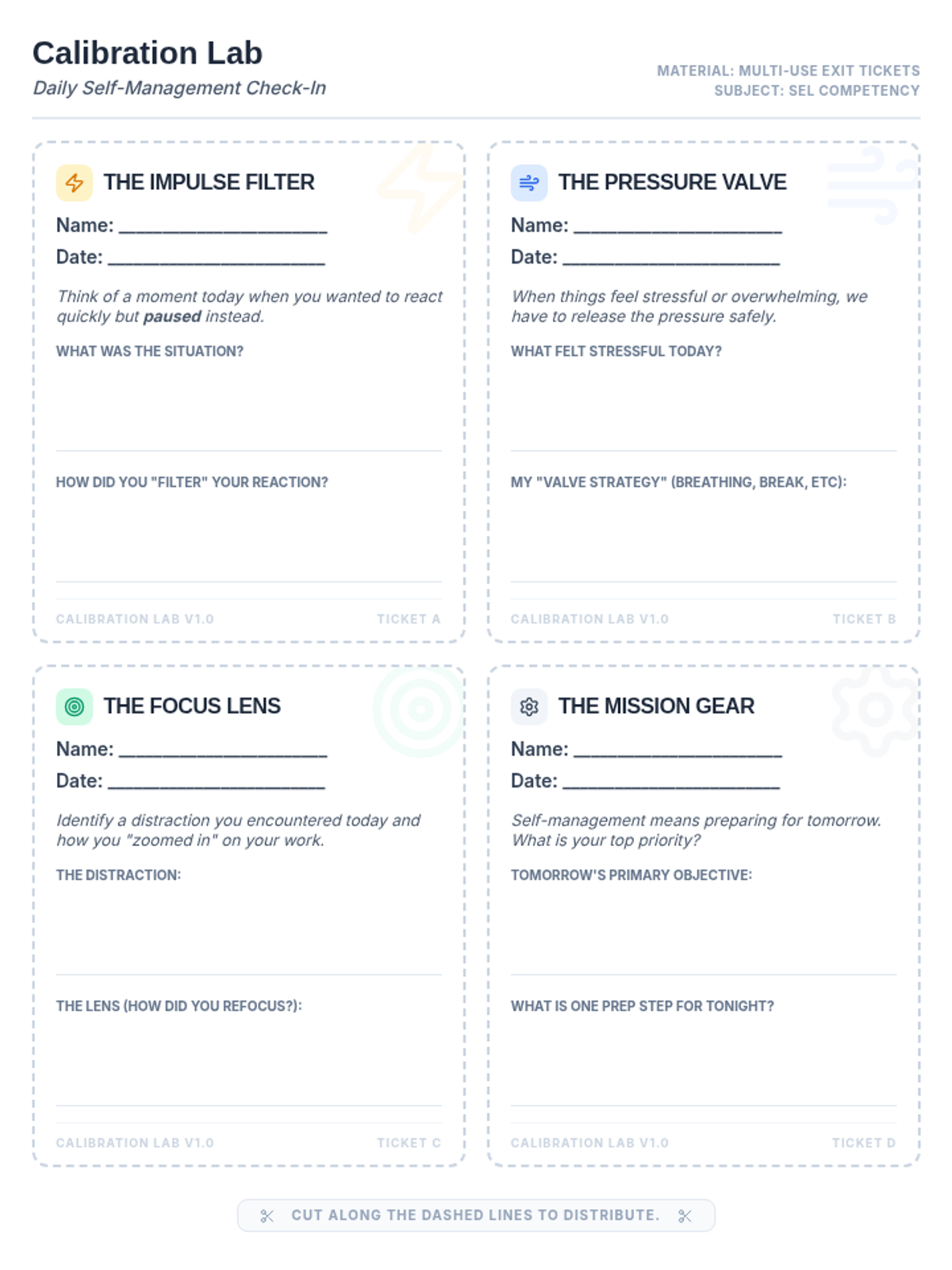
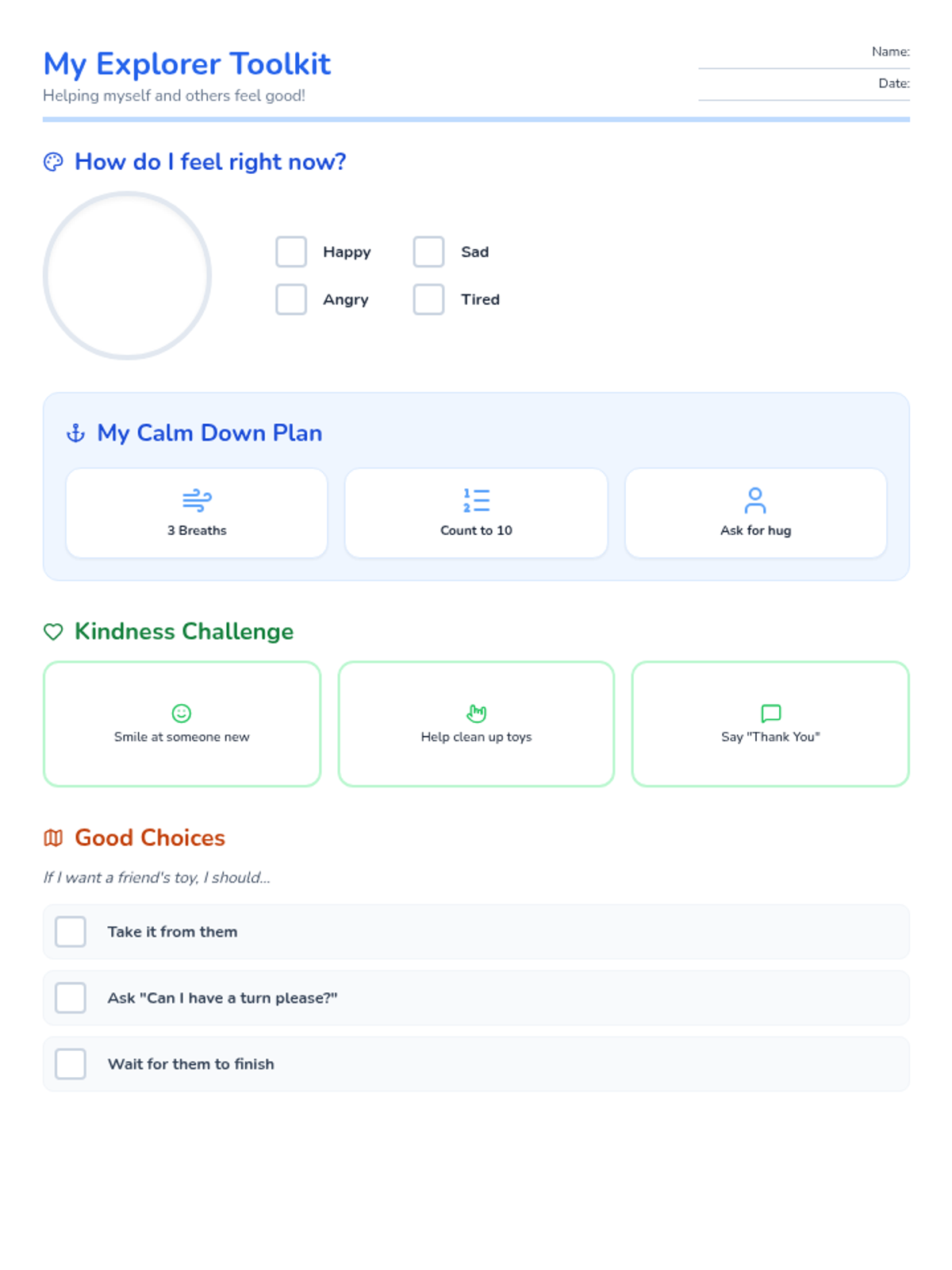
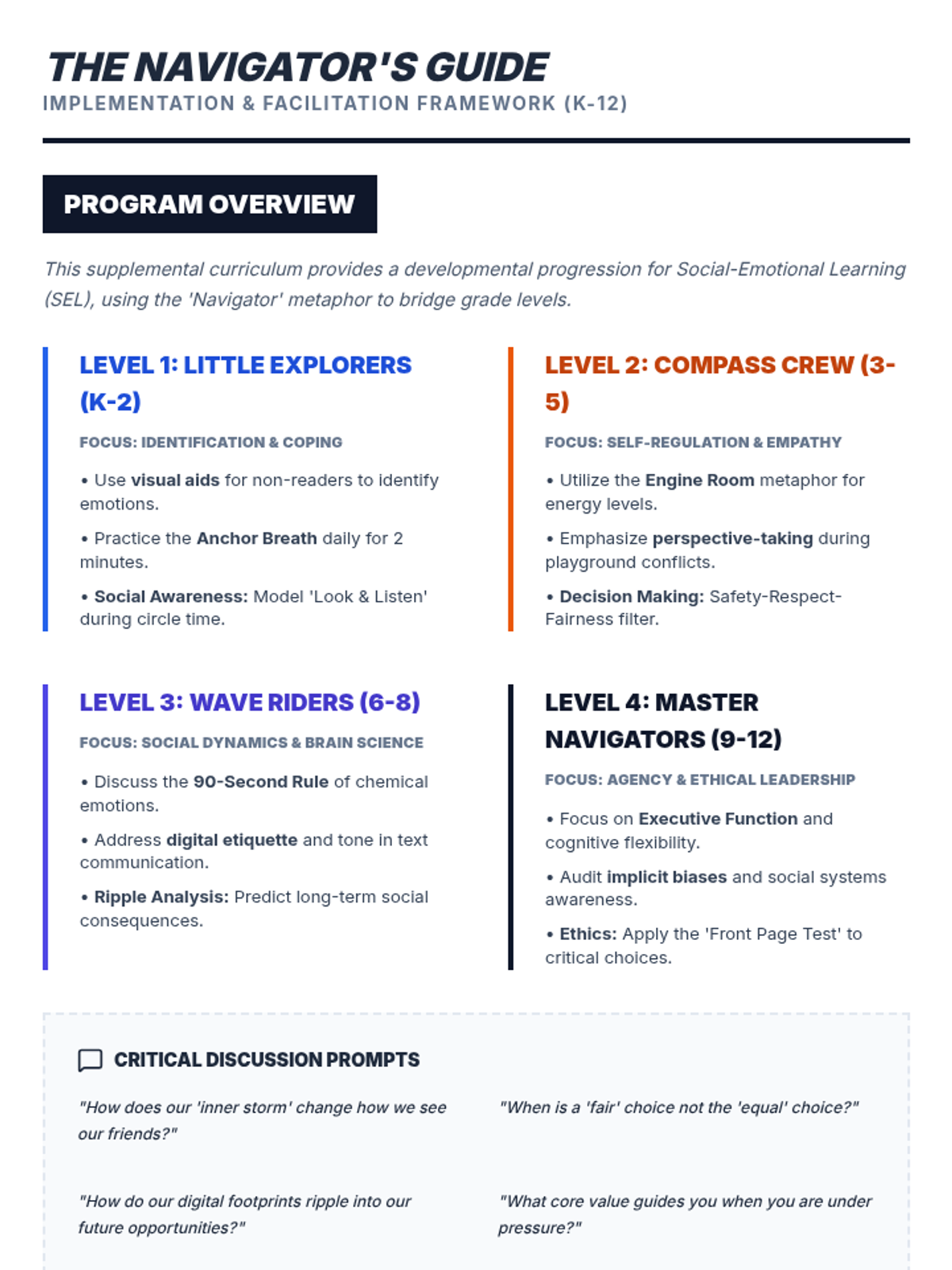
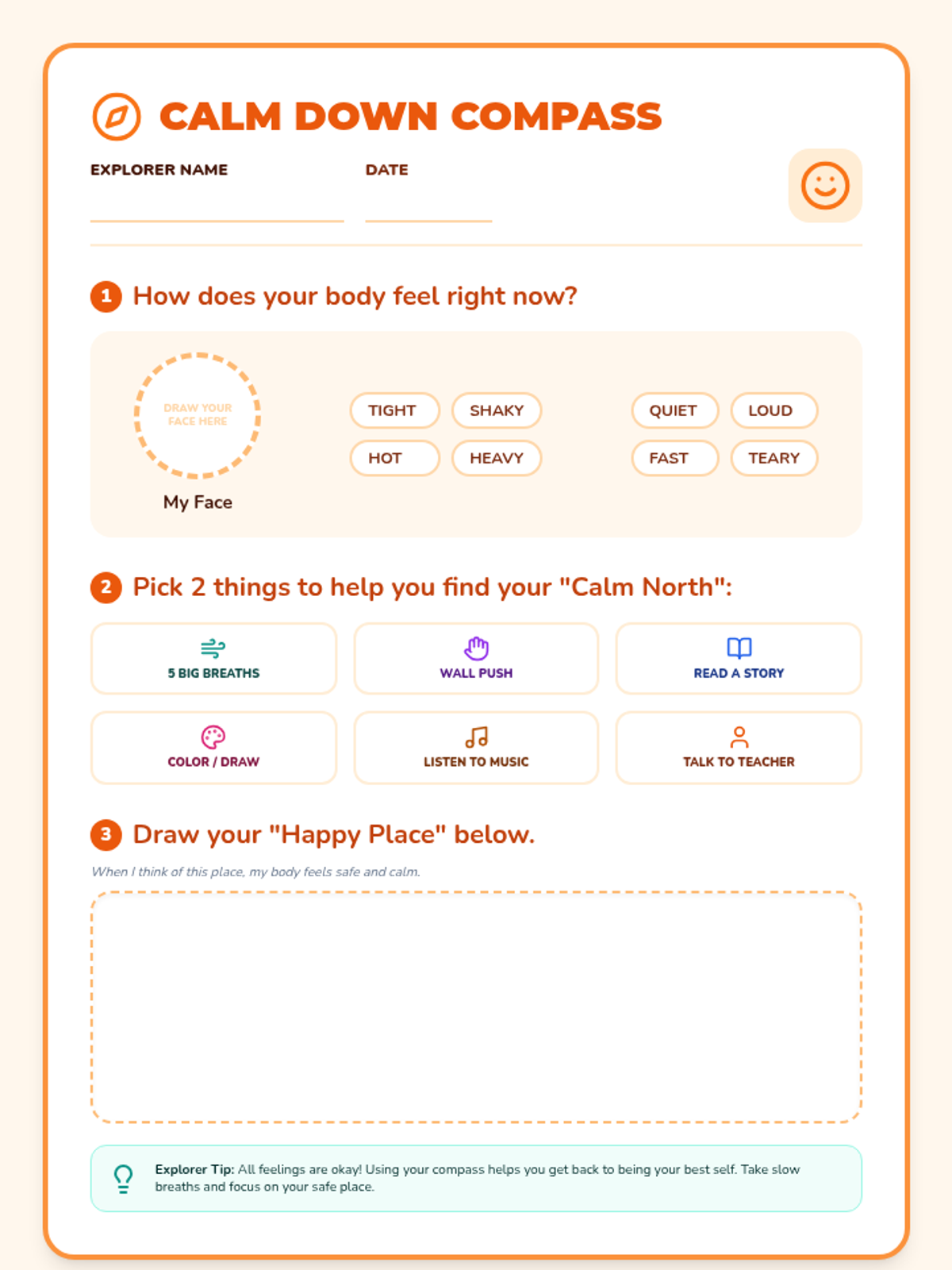
A comprehensive SEL curriculum designed for K-12 students, focusing on self-management, coping skills, social awareness, and responsible decision-making using a nautical 'Navigator' theme.
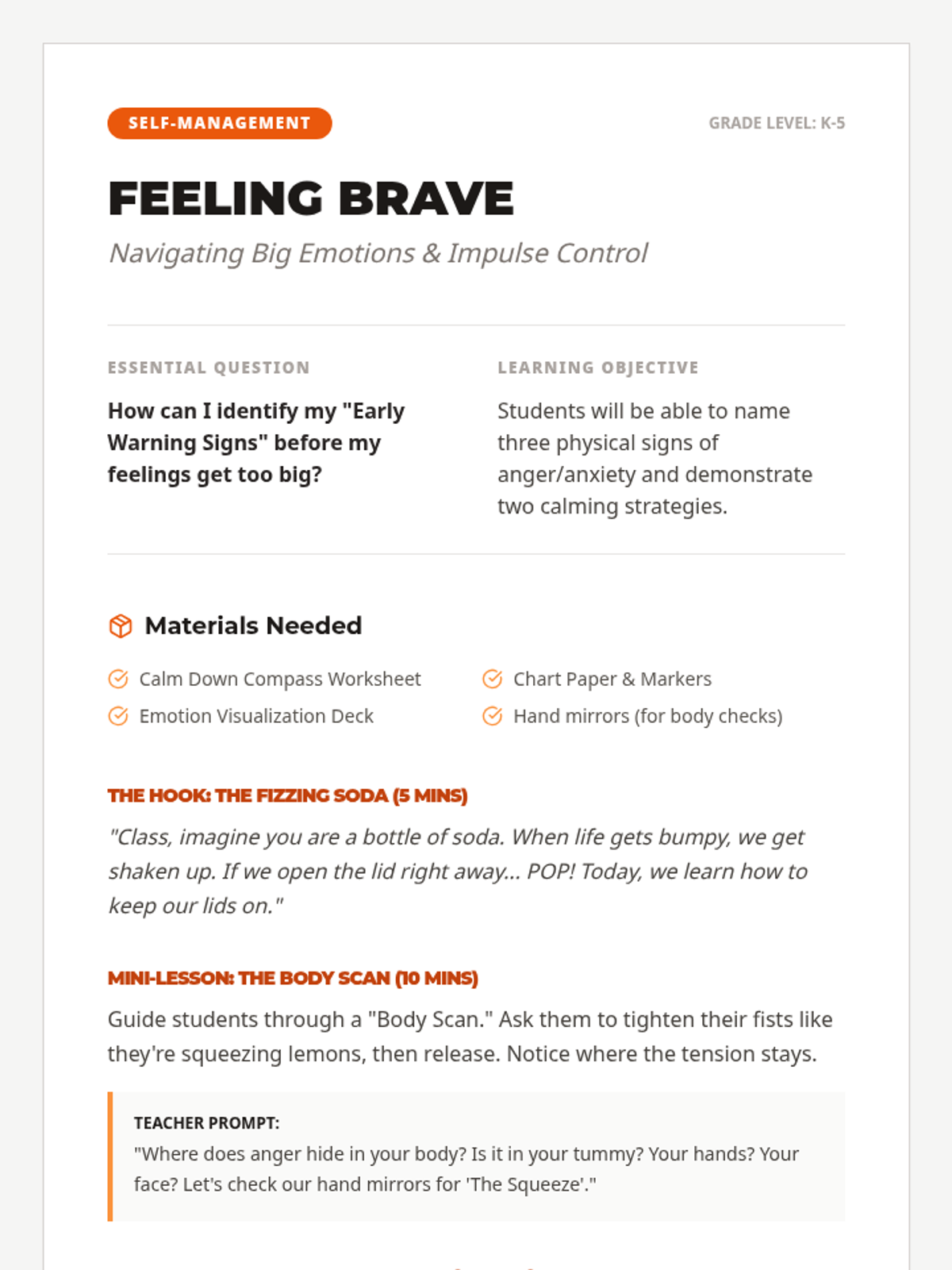
A comprehensive K-12 Social-Emotional Learning curriculum focusing on behavior regulation, social skills, and mental health resilience. This sequence provides a developmental pathway from emotional foundations in elementary school to complex coping strategies and social navigation in high school.
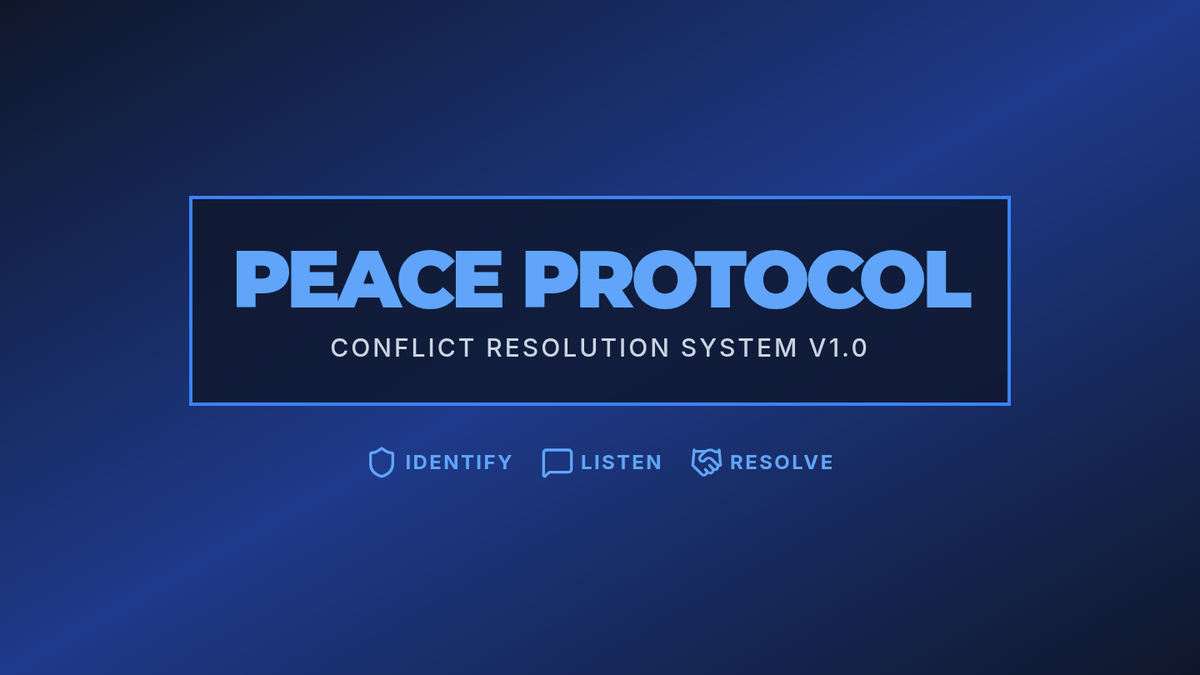
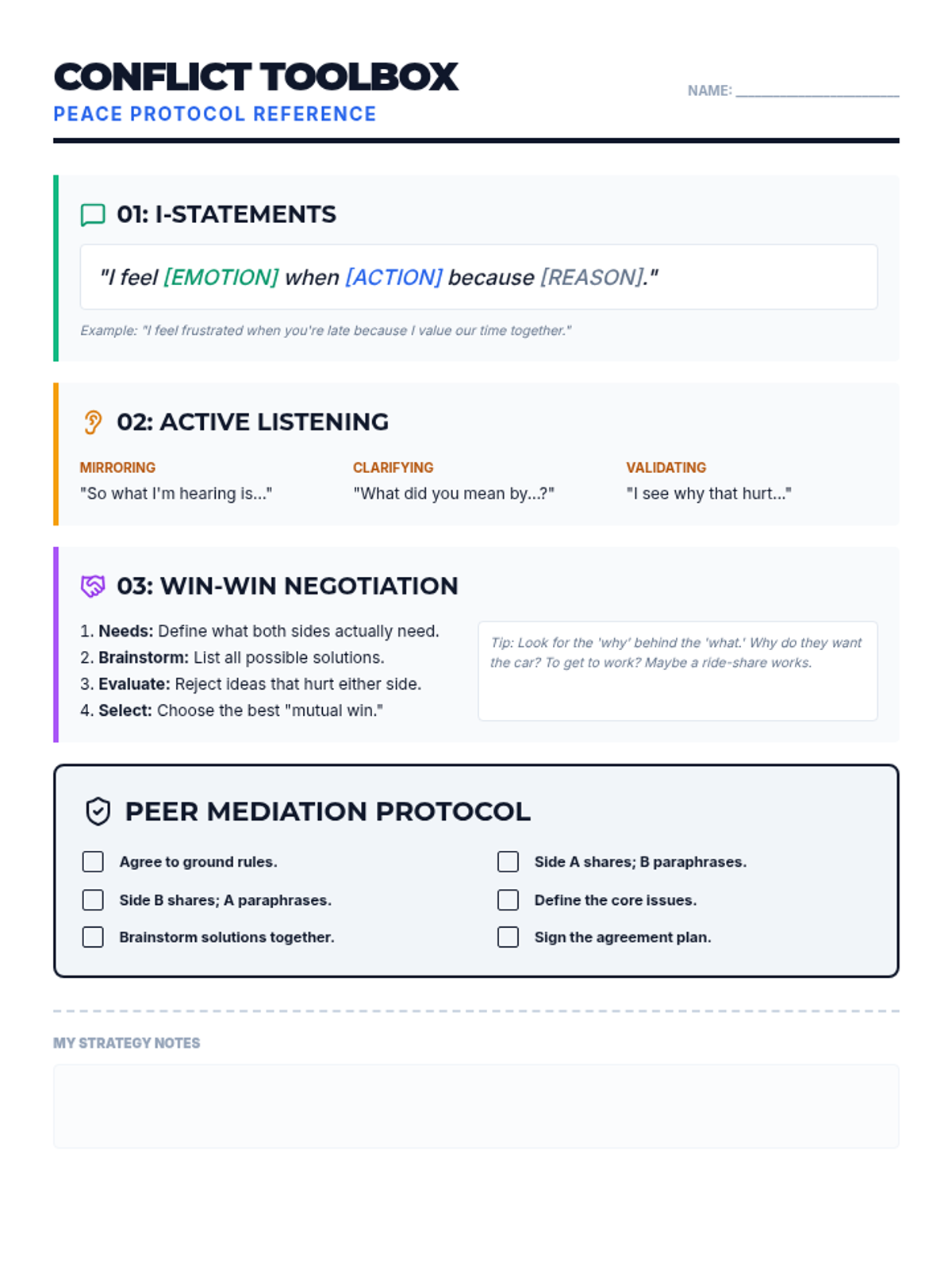
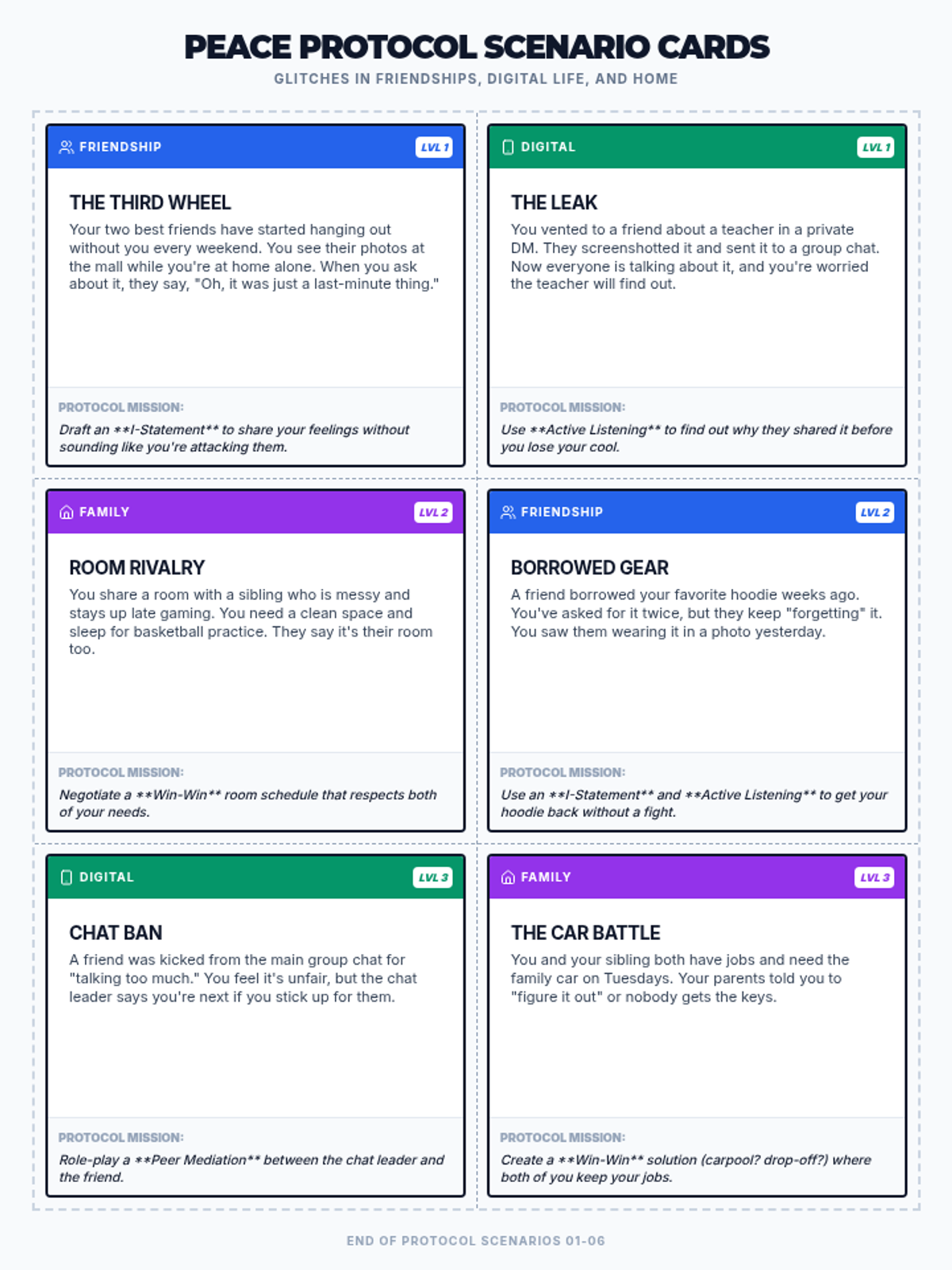
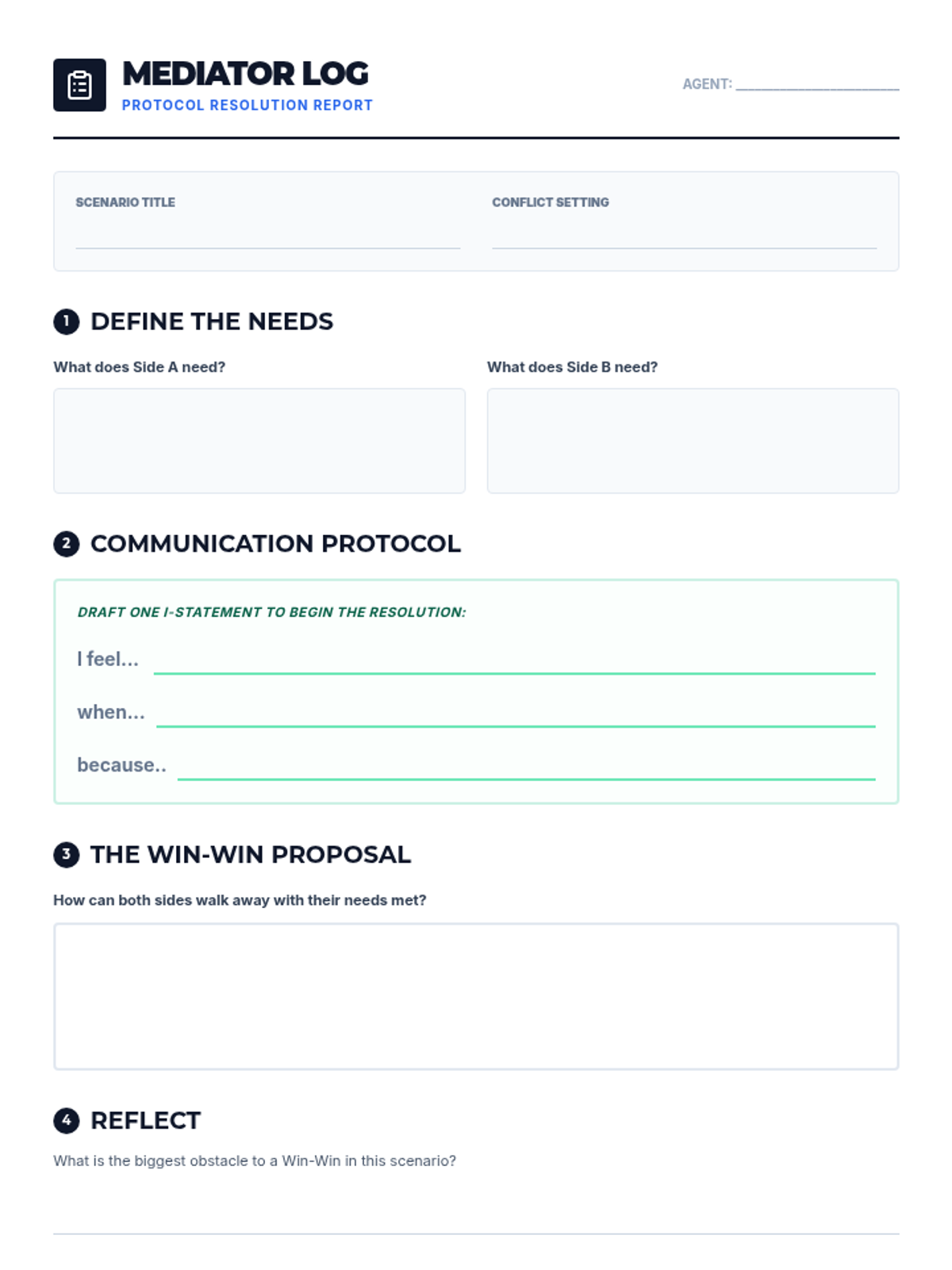
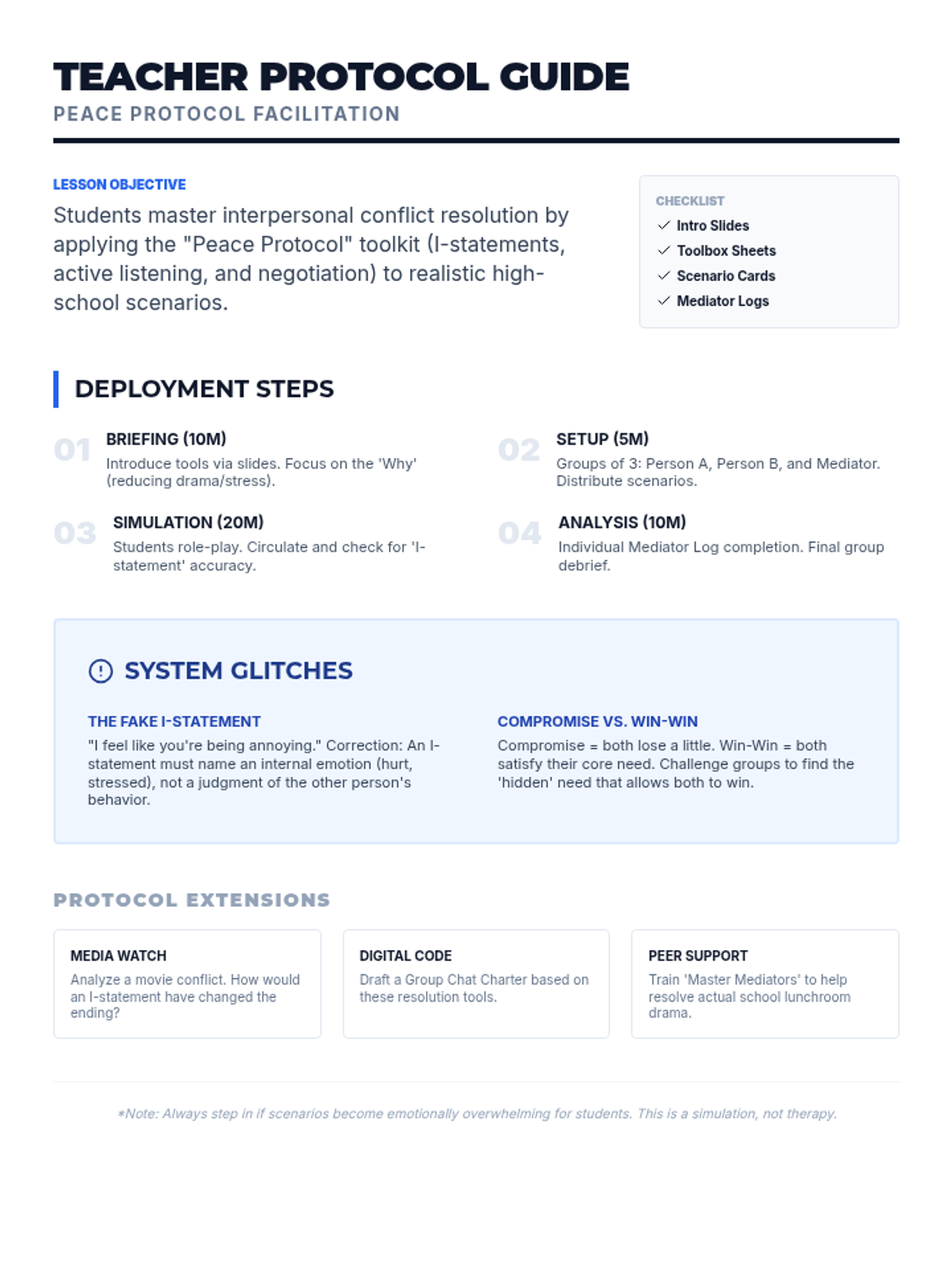
A comprehensive series of social-emotional "protocols" for teens, focusing on communication, self-regulation, and interpersonal success using a modern, high-tech aesthetic.
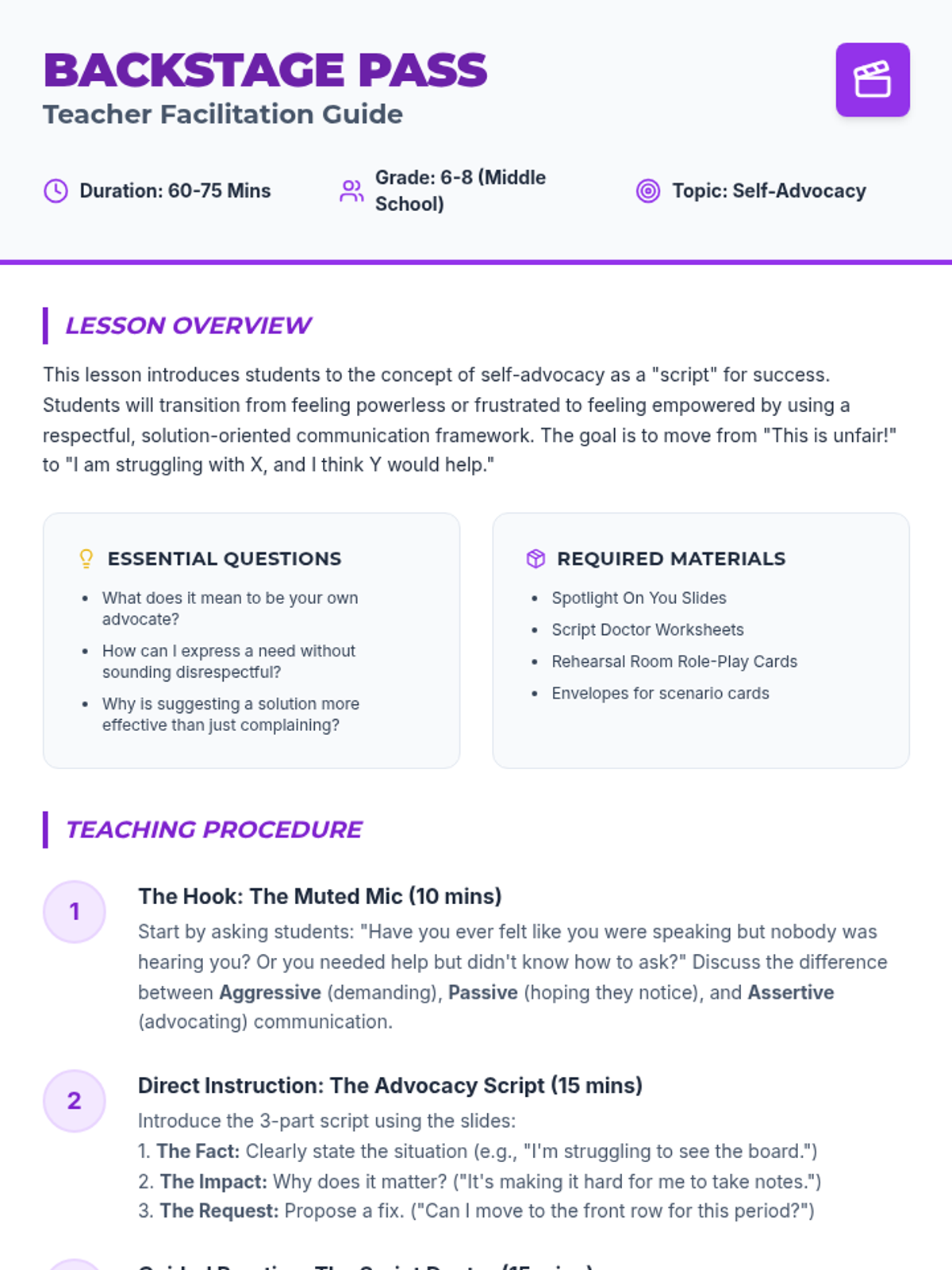
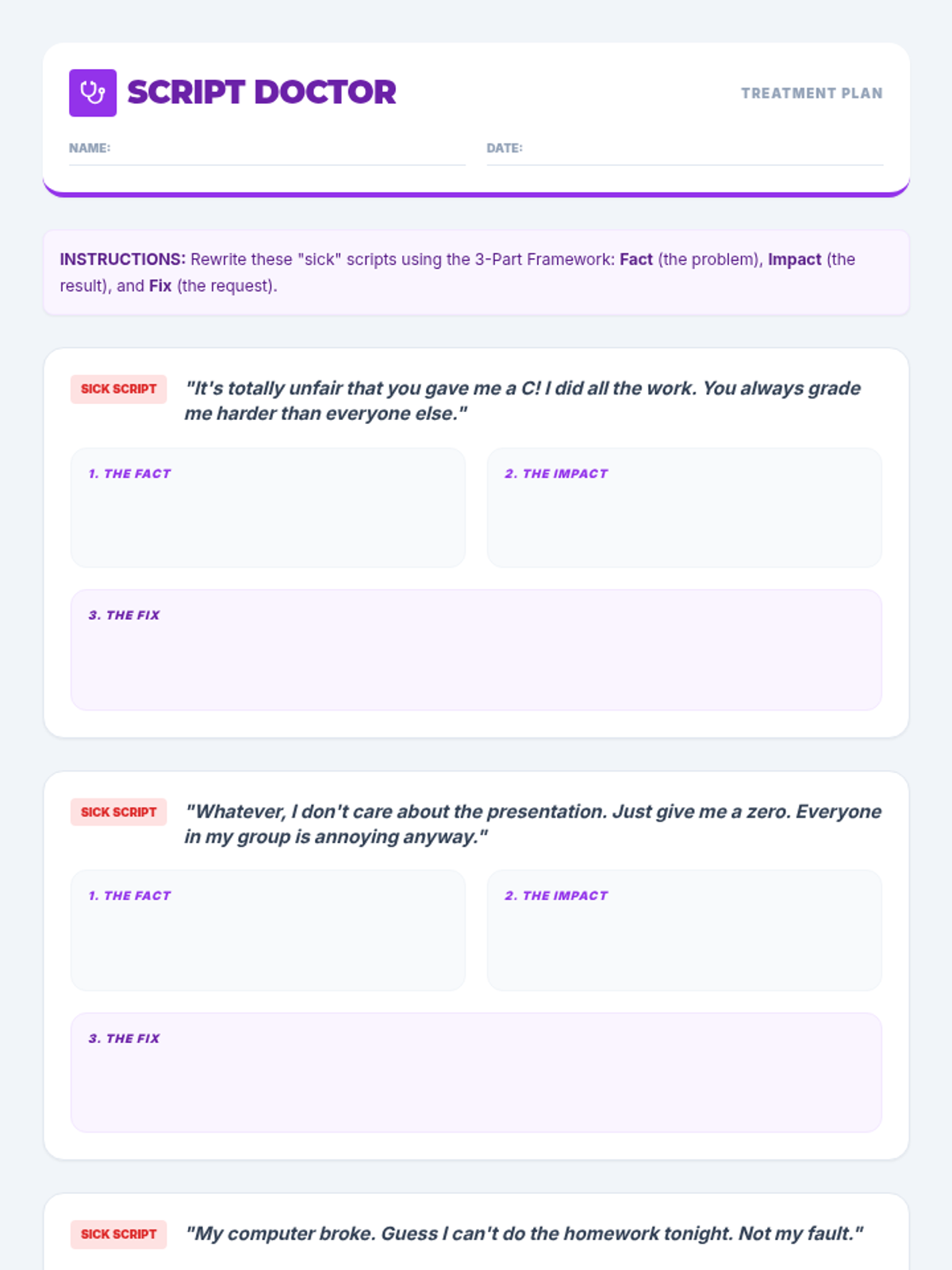
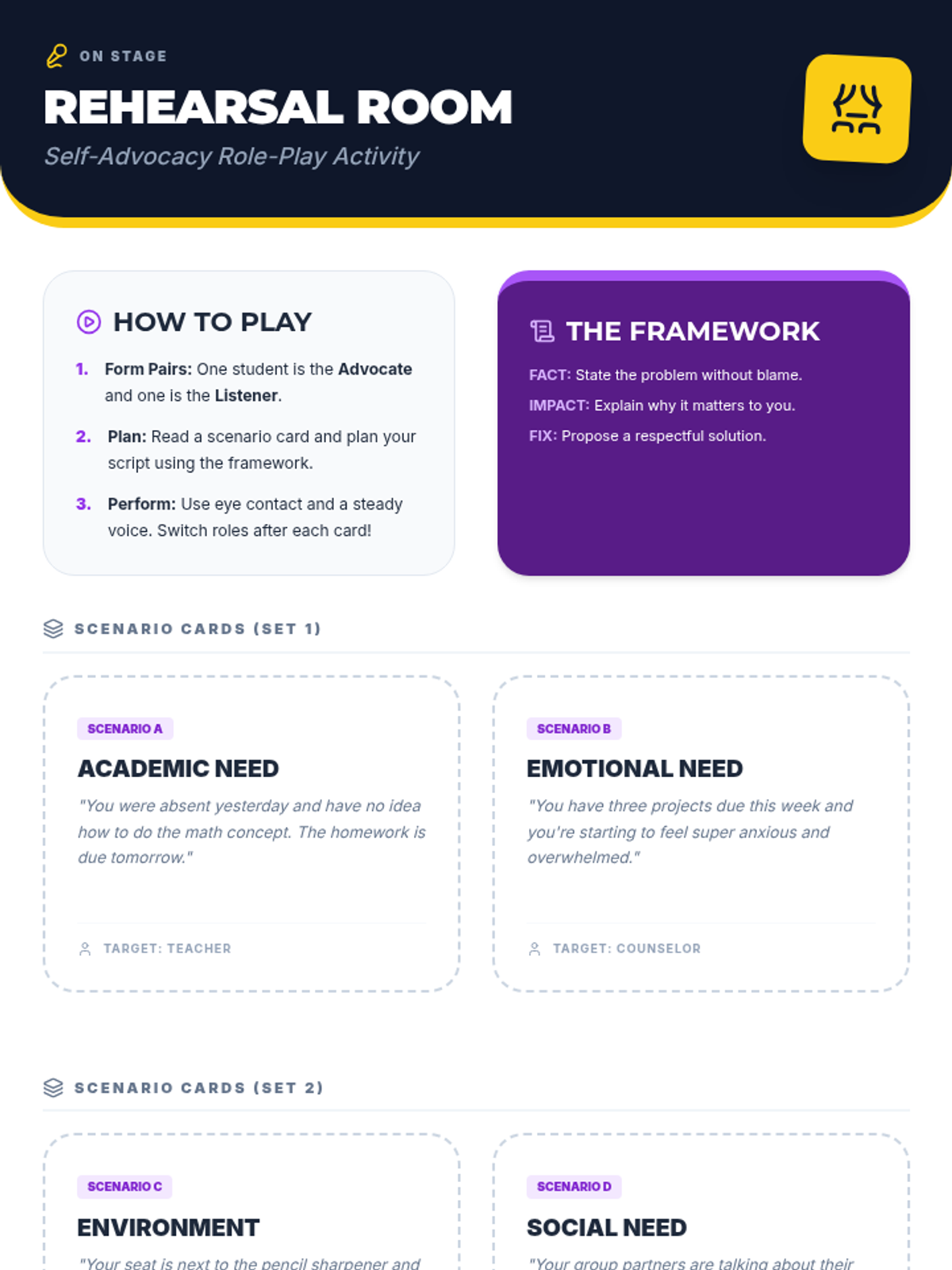
A comprehensive unit for middle school students focused on developing the confidence and communication skills needed to advocate for their academic and emotional needs. Students learn practical frameworks to express themselves respectfully to authority figures and peers.
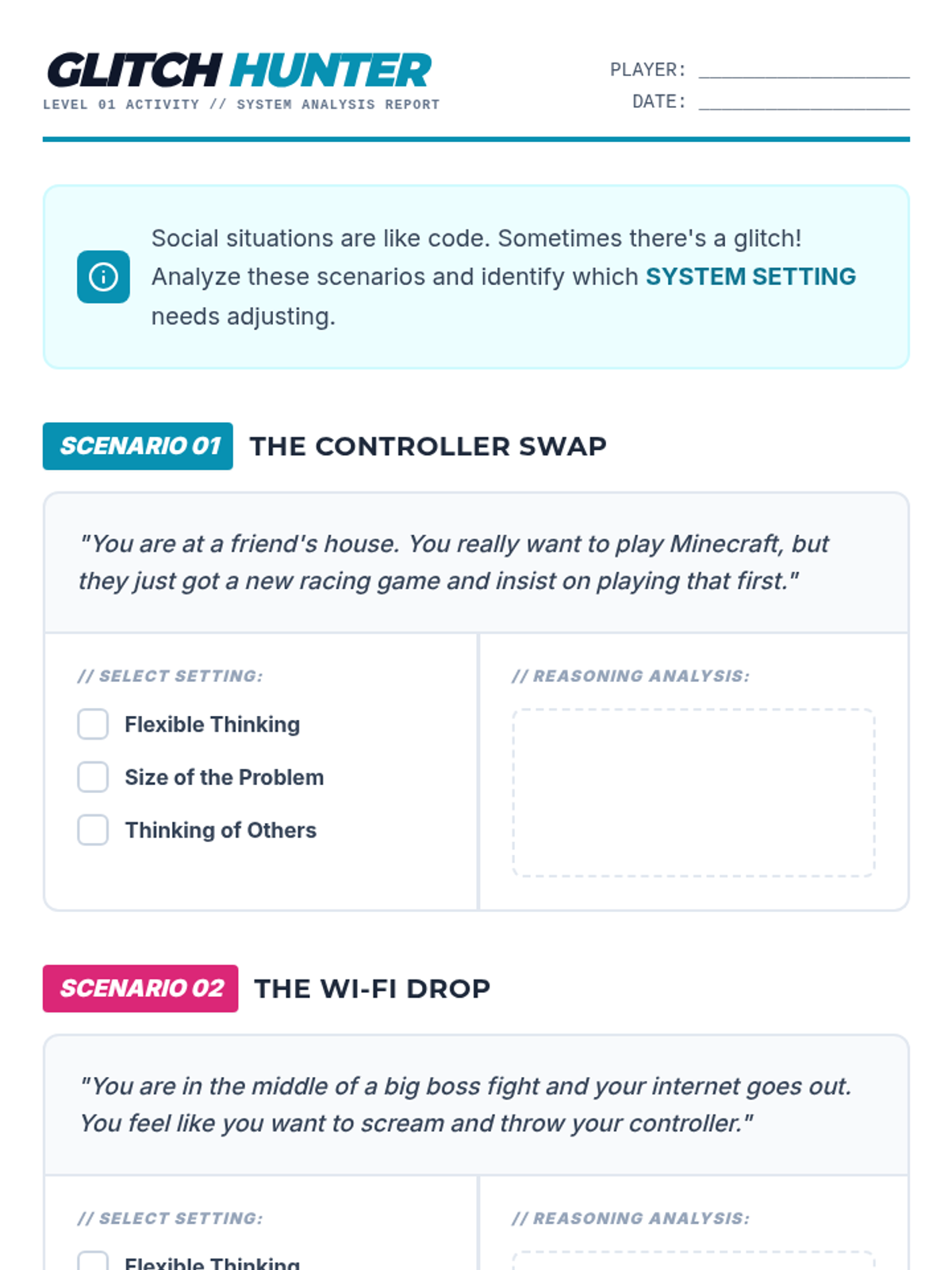
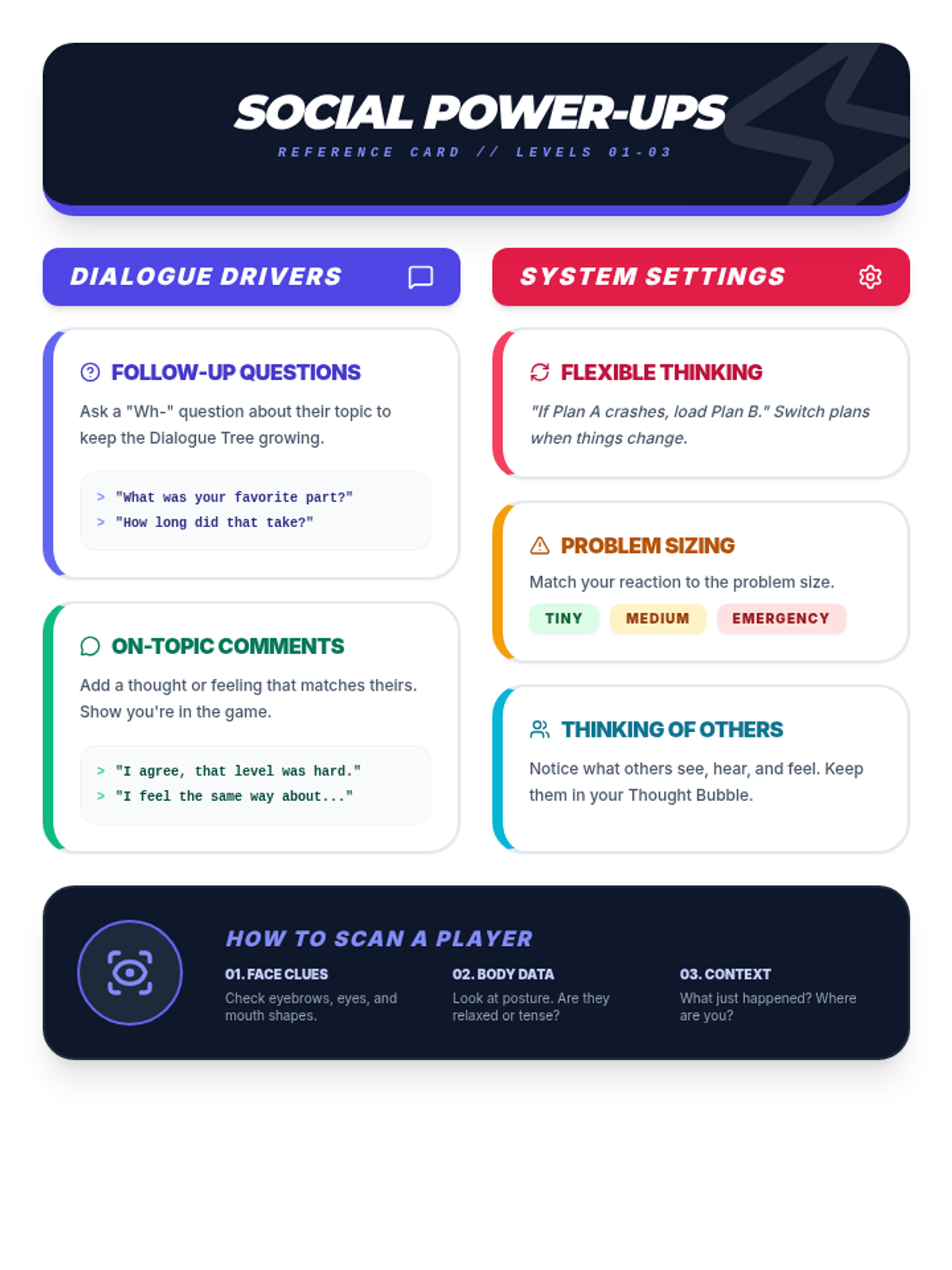
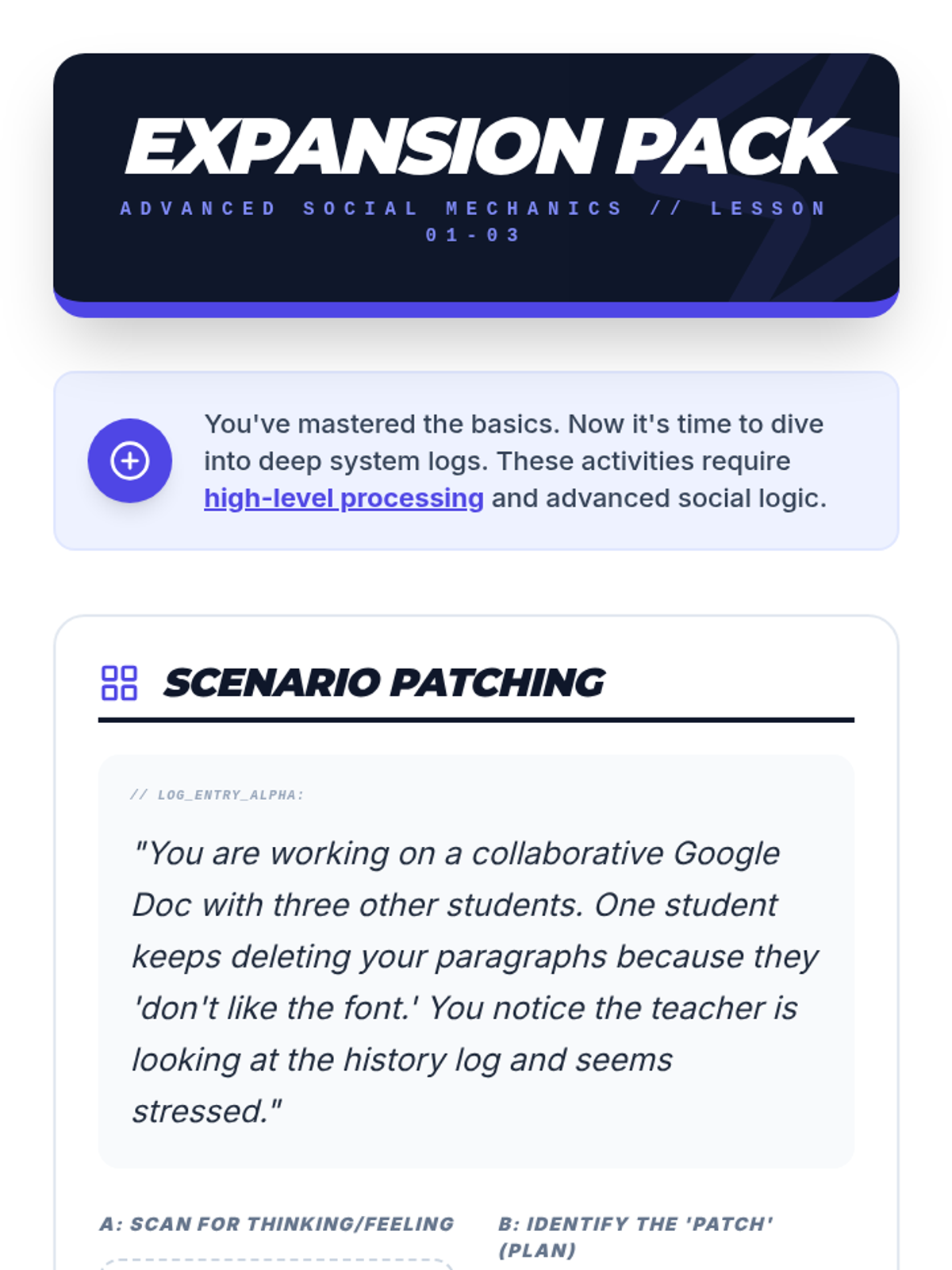
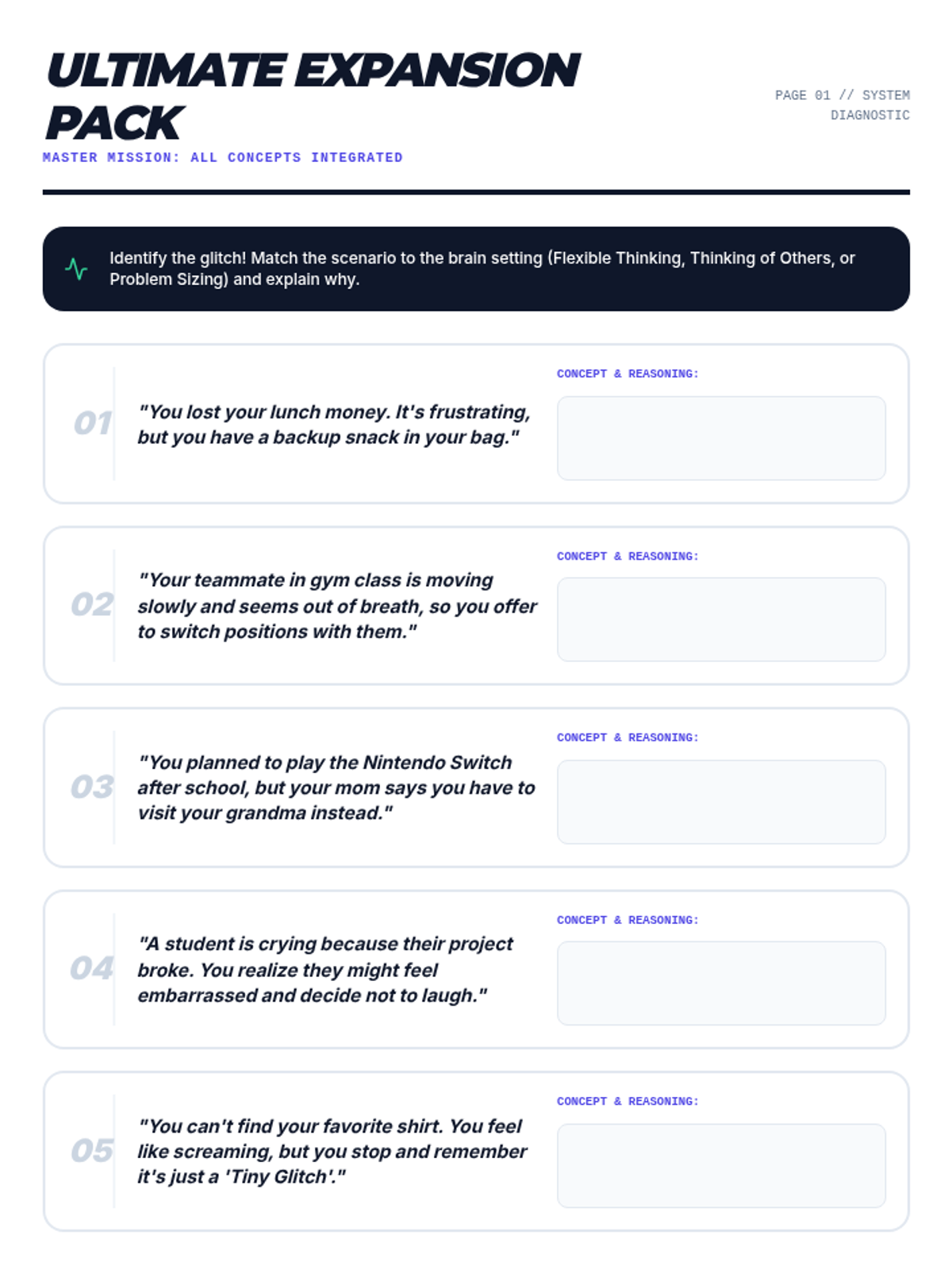
A video game-themed social skills sequence designed for high-ability students with autism. It uses gaming metaphors like 'glitches,' 'dialogue trees,' and 'system scans' to teach Social Thinking concepts, conversation drivers, and perspective-taking.
A comprehensive 4-week SEL curriculum designed for twice-weekly counseling sessions, guiding students from basic self-advocacy to advanced collaborative problem-solving and emotional regulation.
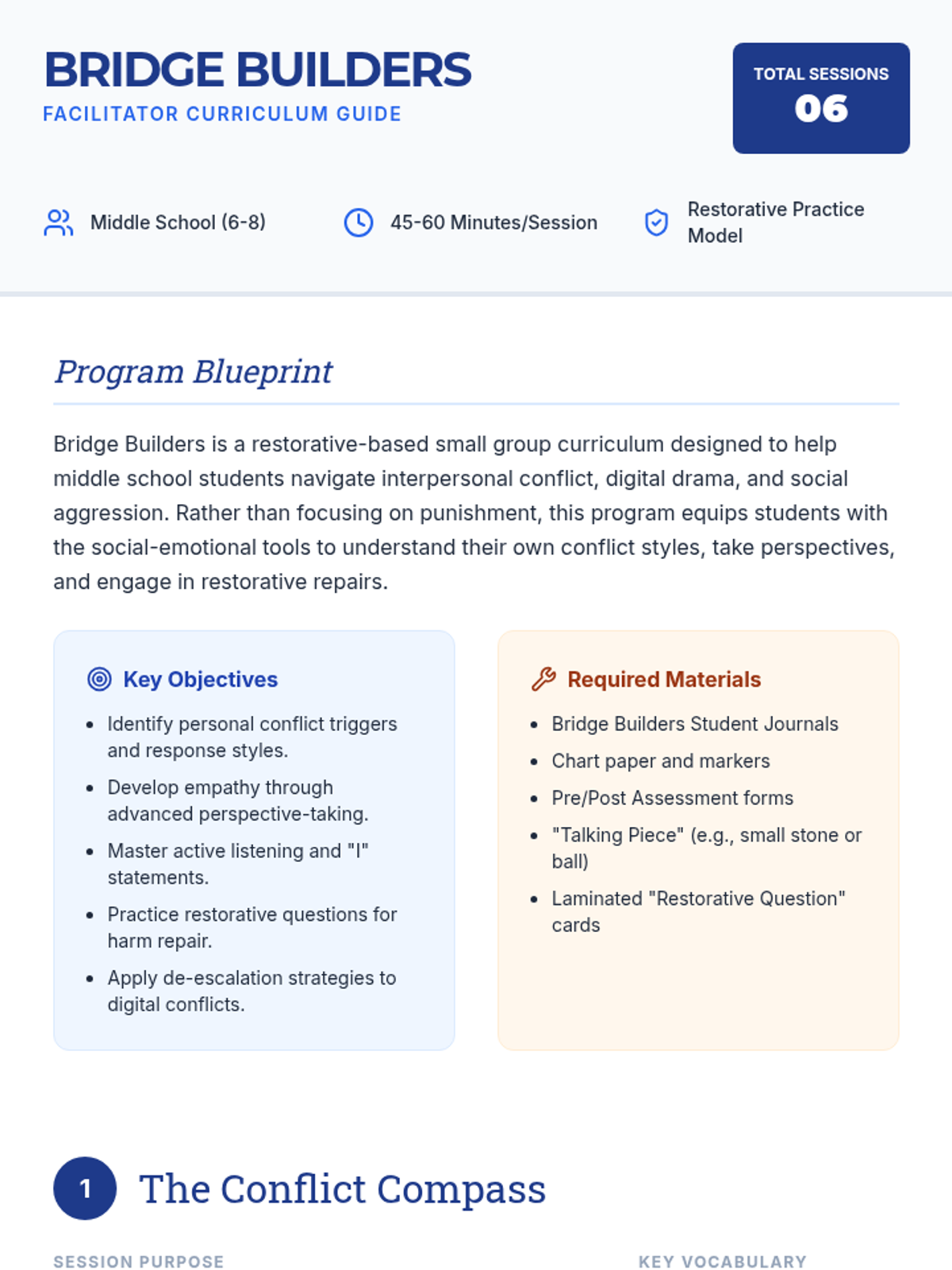
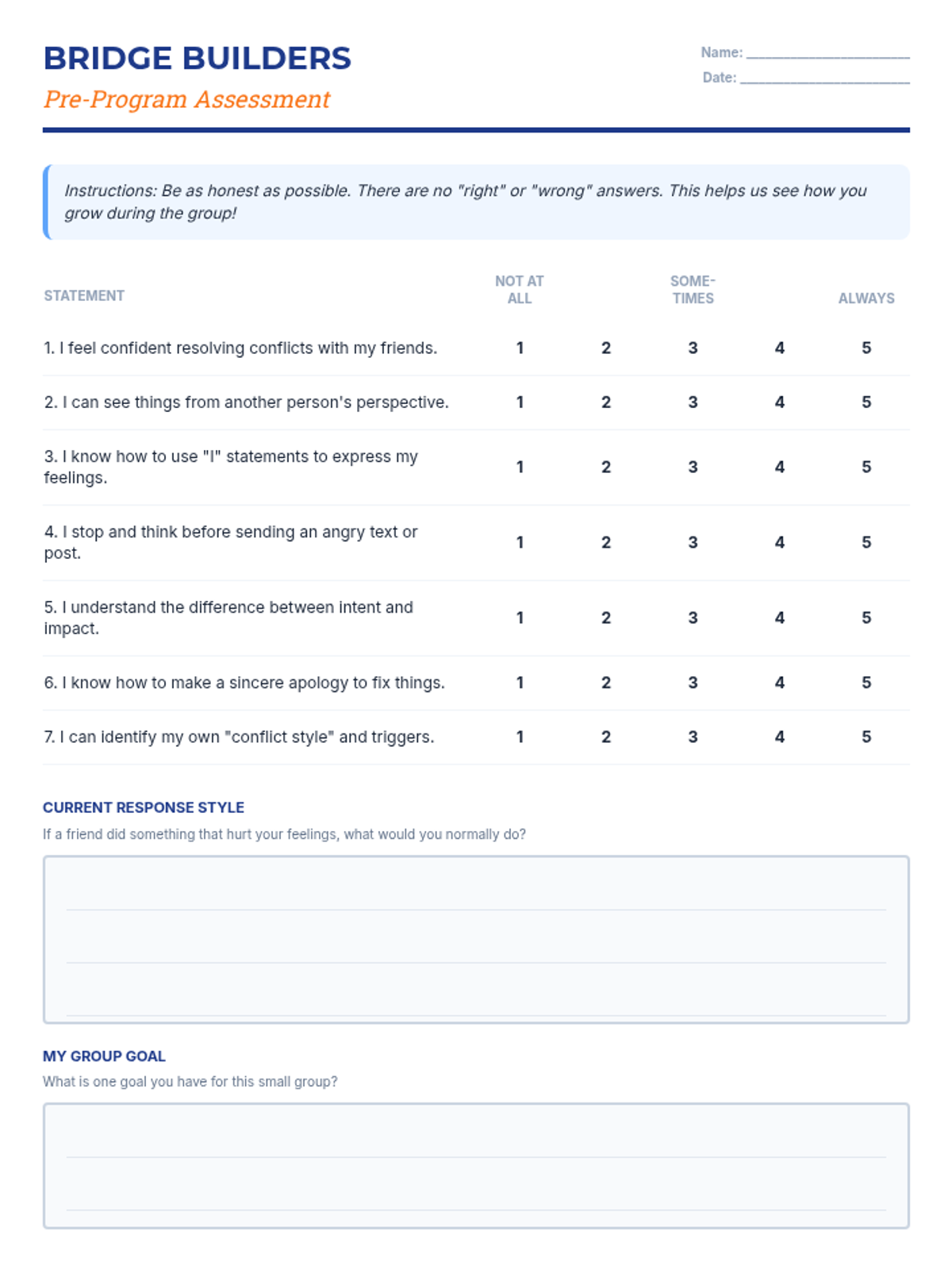
A 6-session restorative-based small group program for middle school students to resolve peer conflict, develop perspective-taking, and master digital communication. The program focuses on building 'bridges' rather than 'walls' through practical skills and restorative conversations.
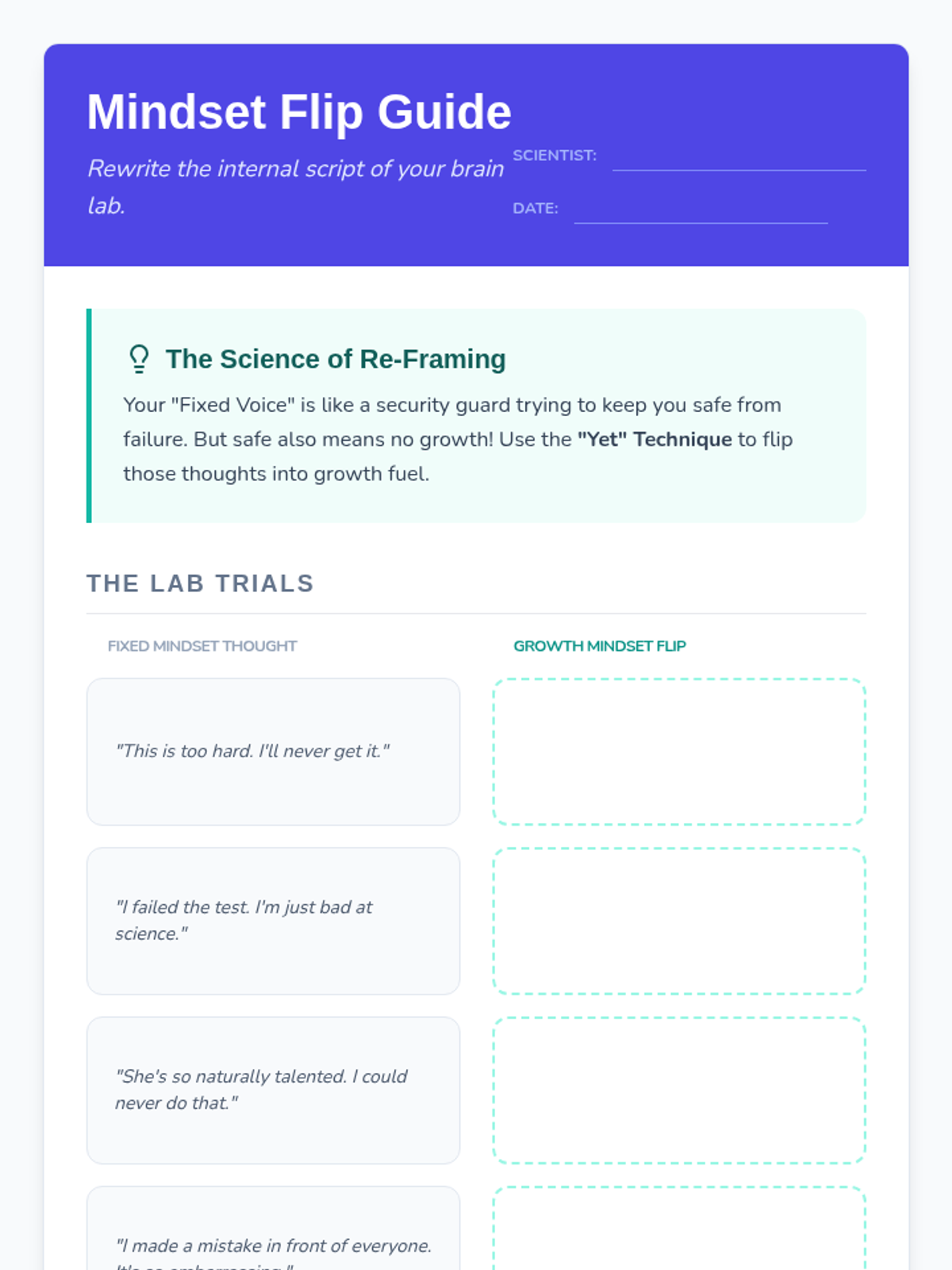
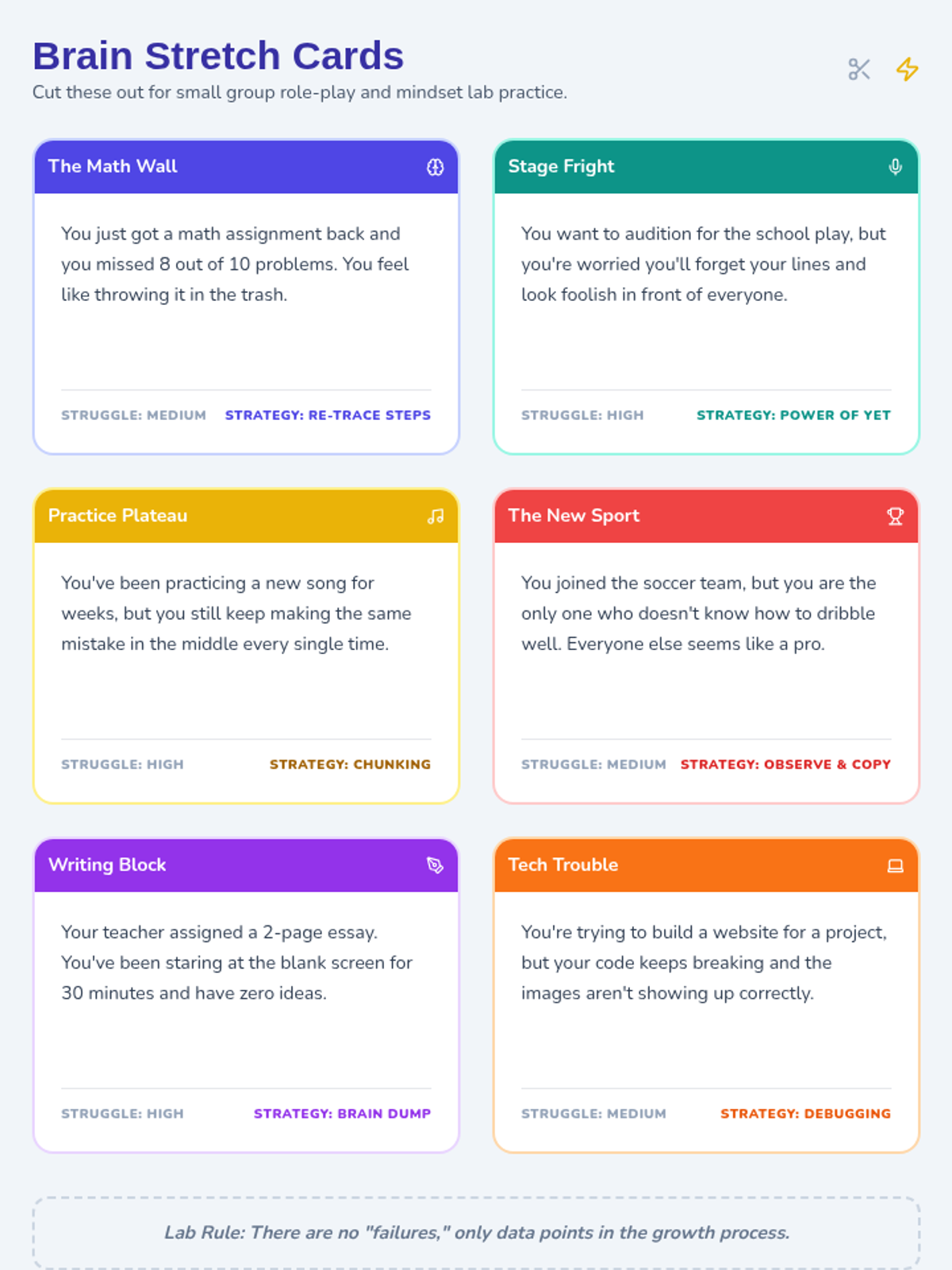
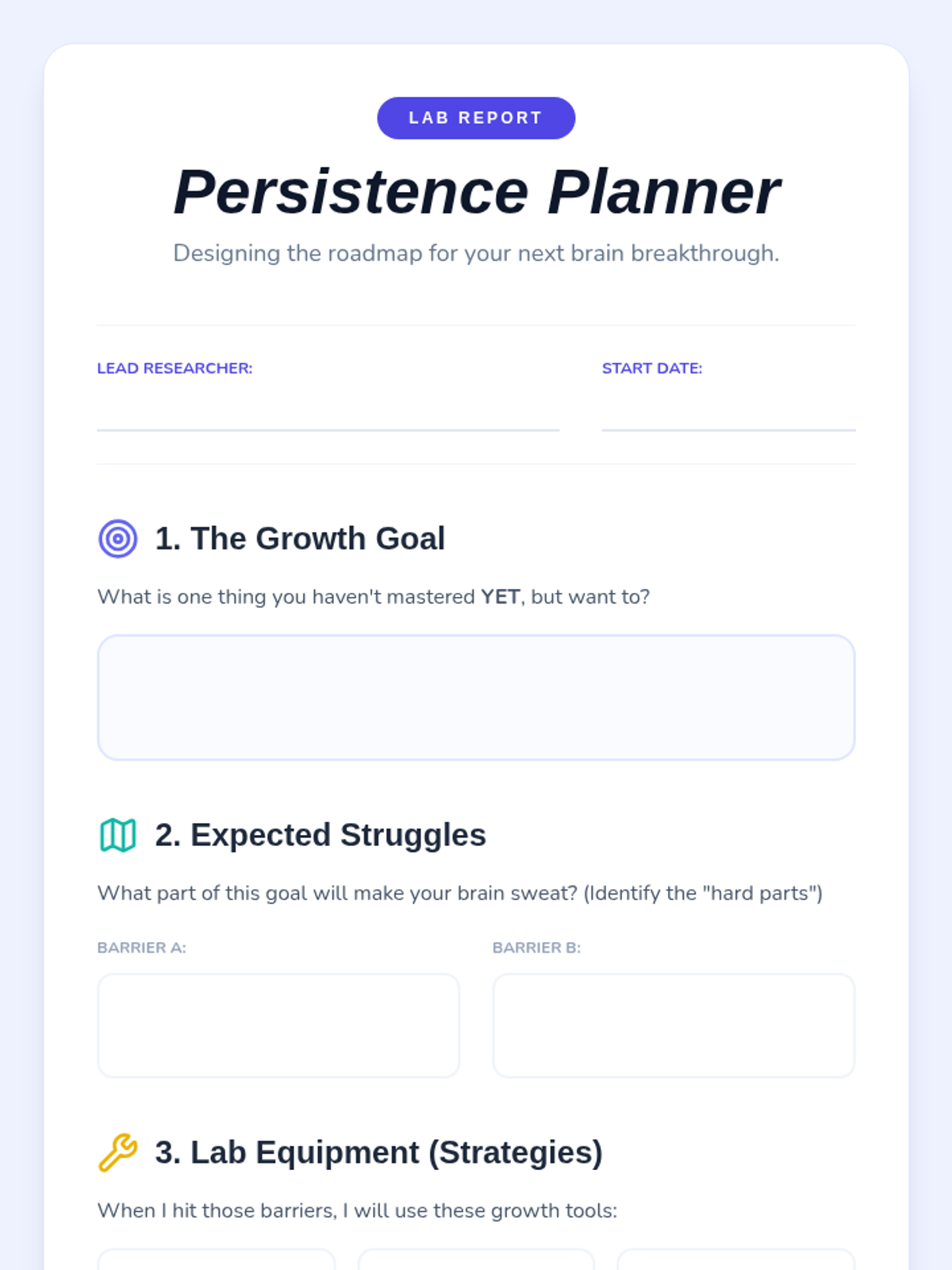
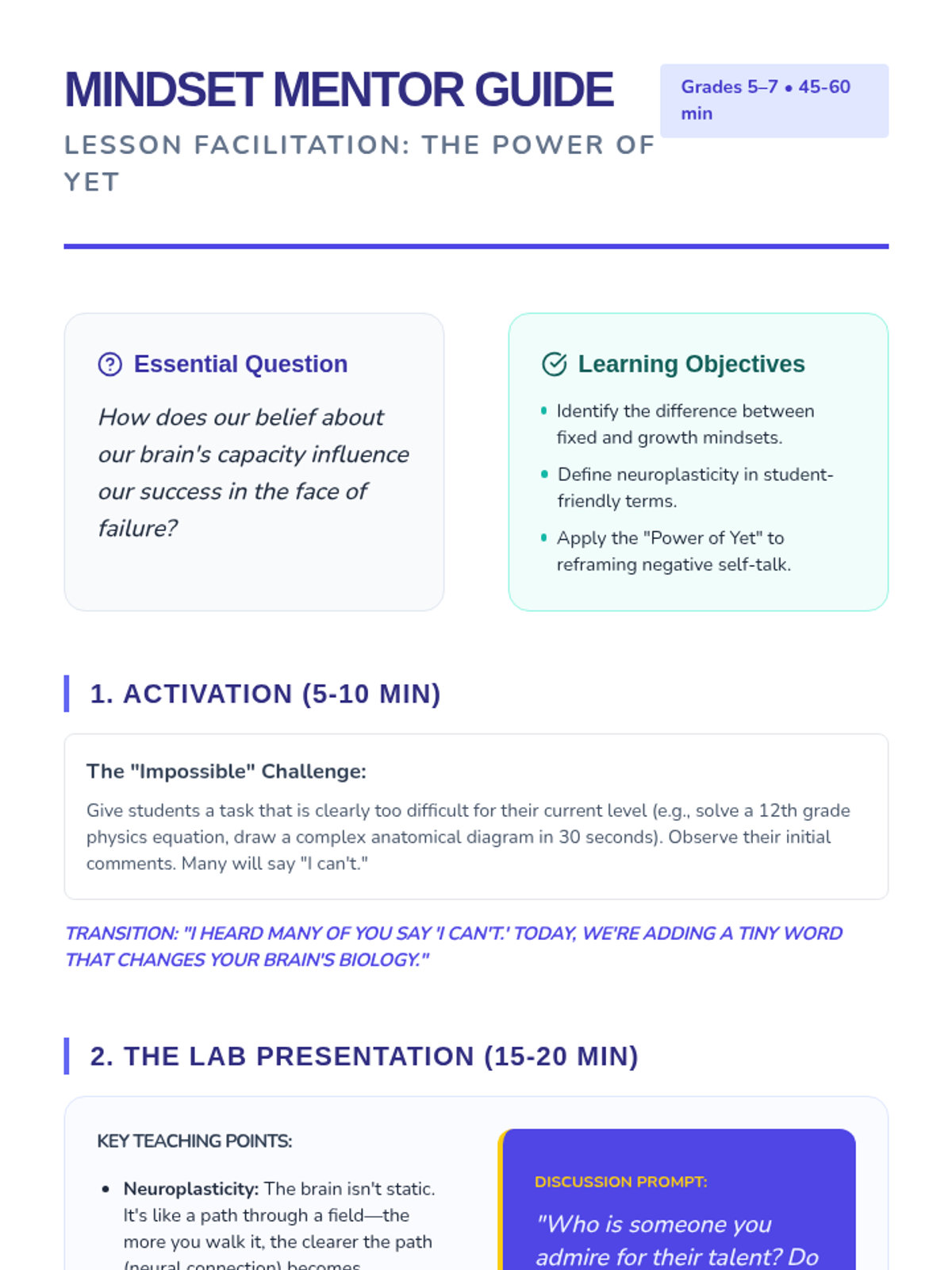
A comprehensive unit for middle school students to develop a growth mindset, focusing on neuroplasticity, the power of 'Yet', and reframing challenges as opportunities for brain growth.
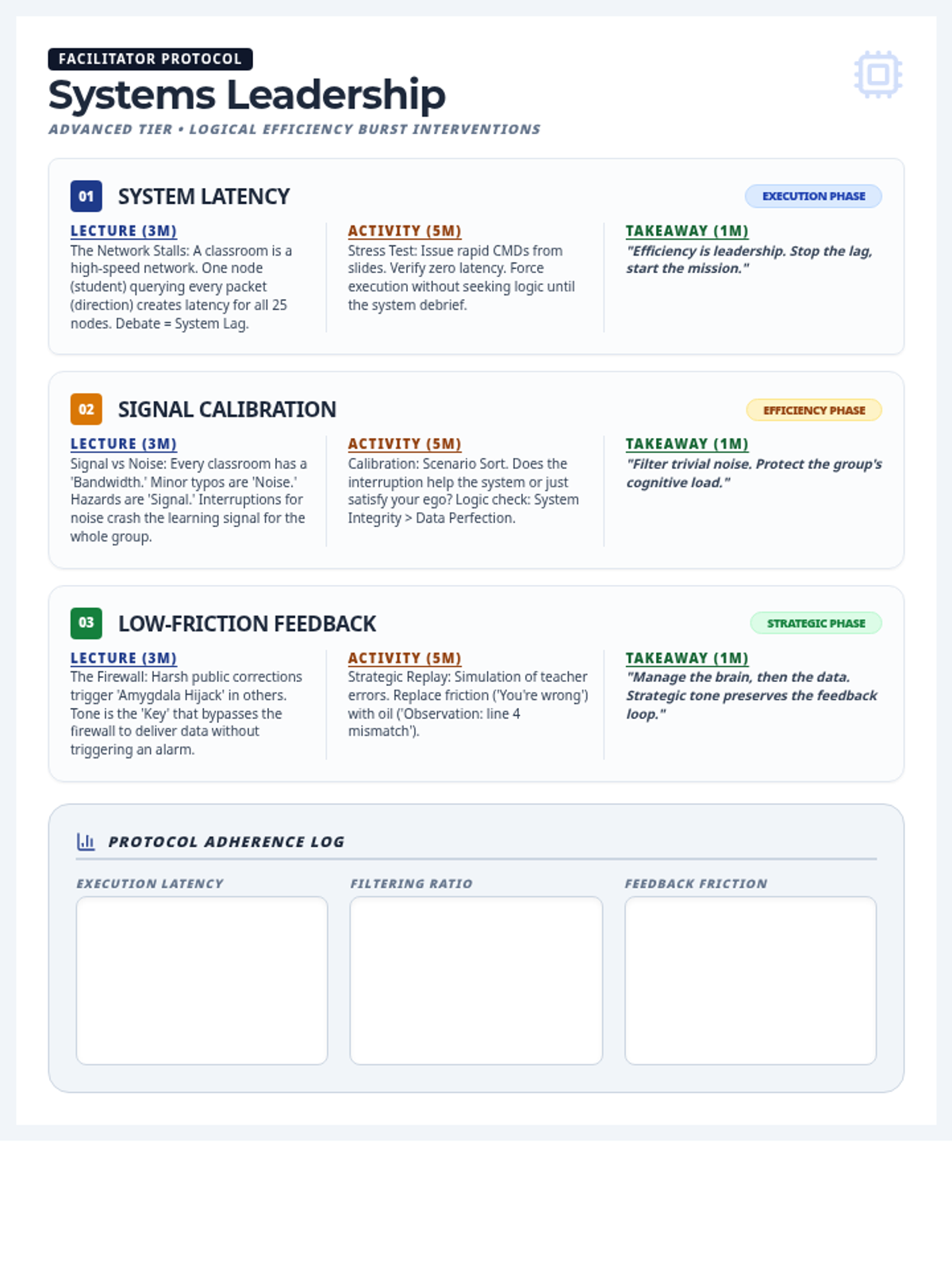
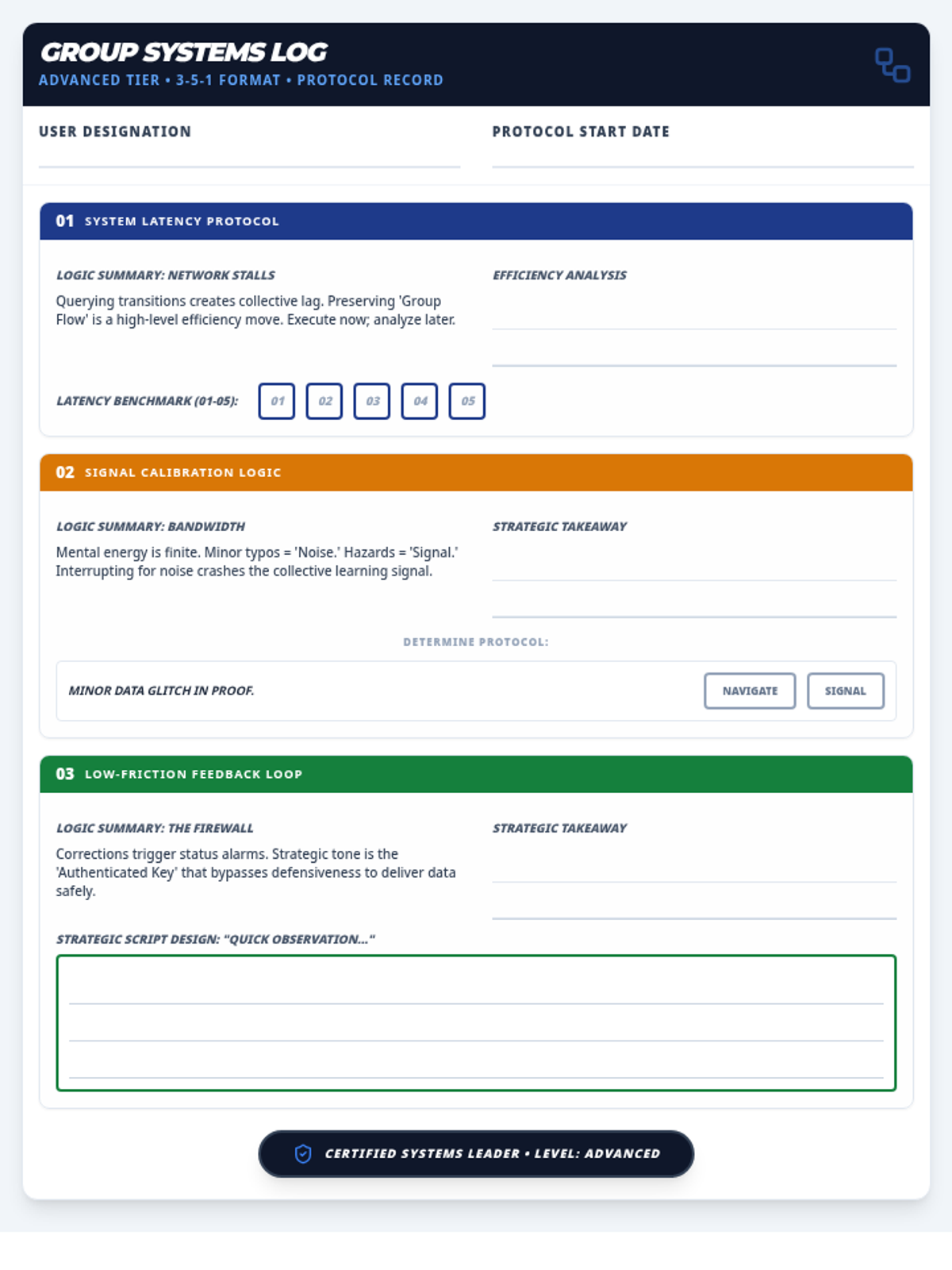
A series of three 10-minute 'burst' sessions designed to teach classroom leadership through systems-thinking and logical efficiency. Focuses on minimizing group latency, calibrating priority, and mastering low-friction feedback.
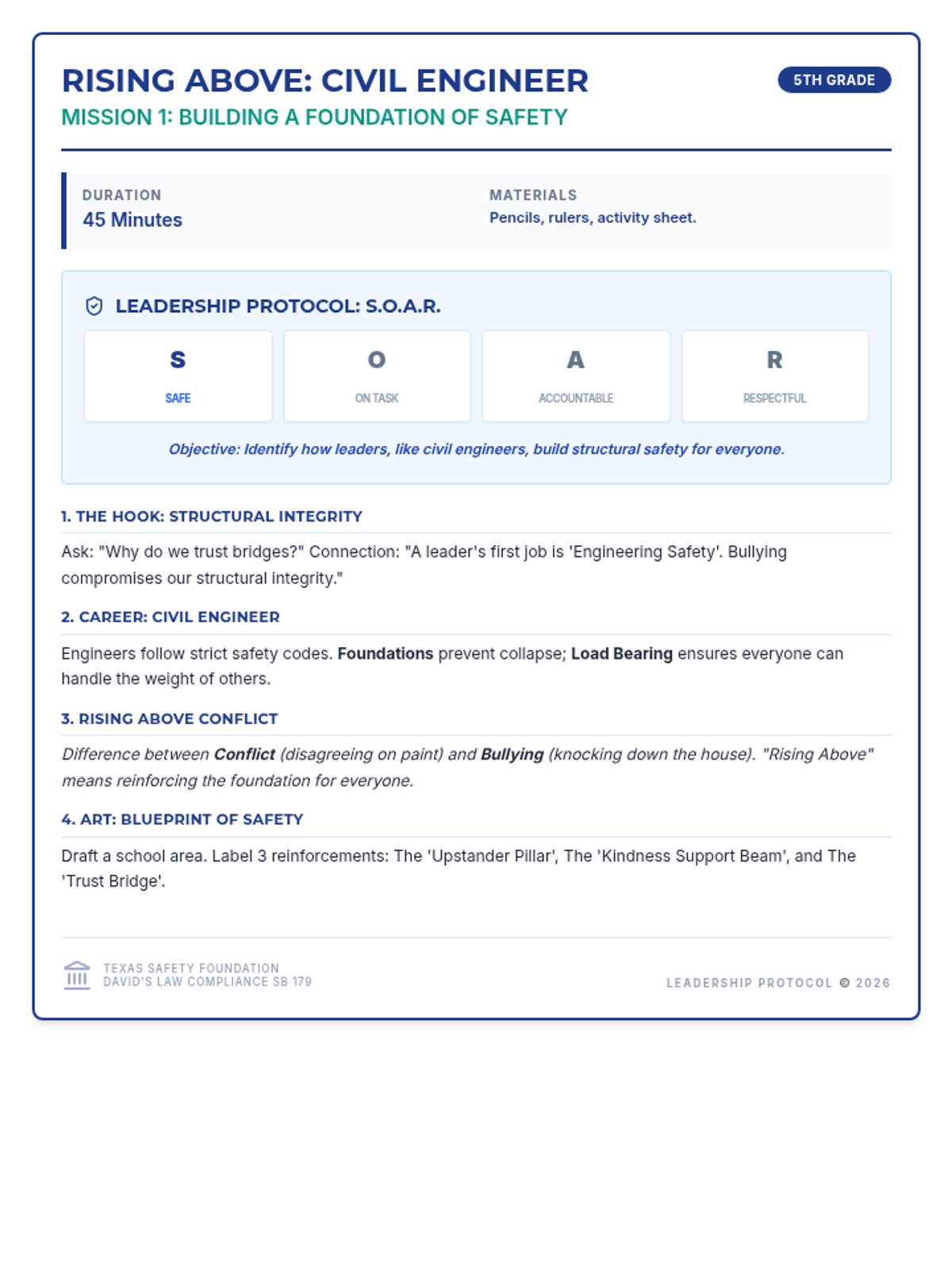
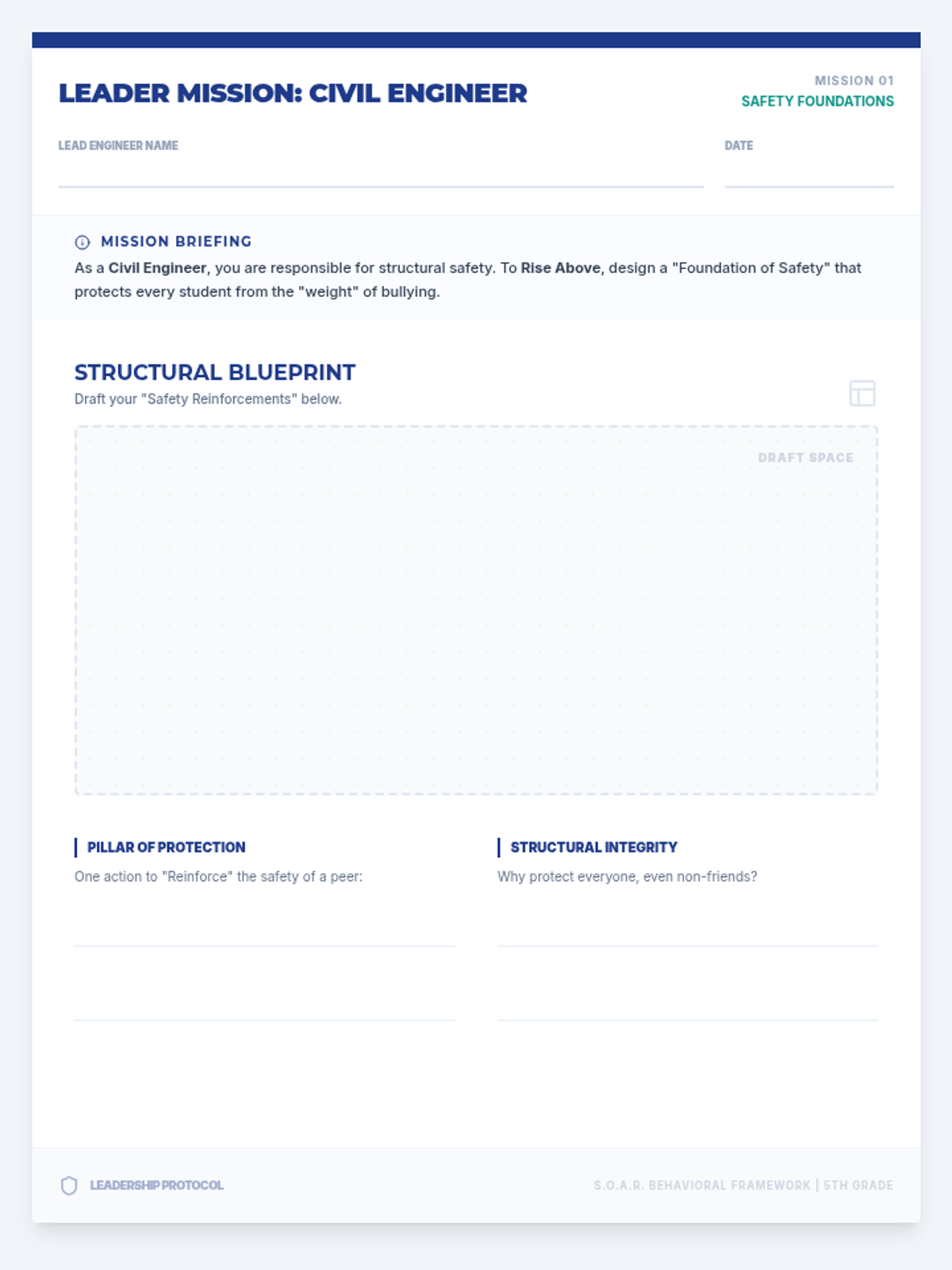
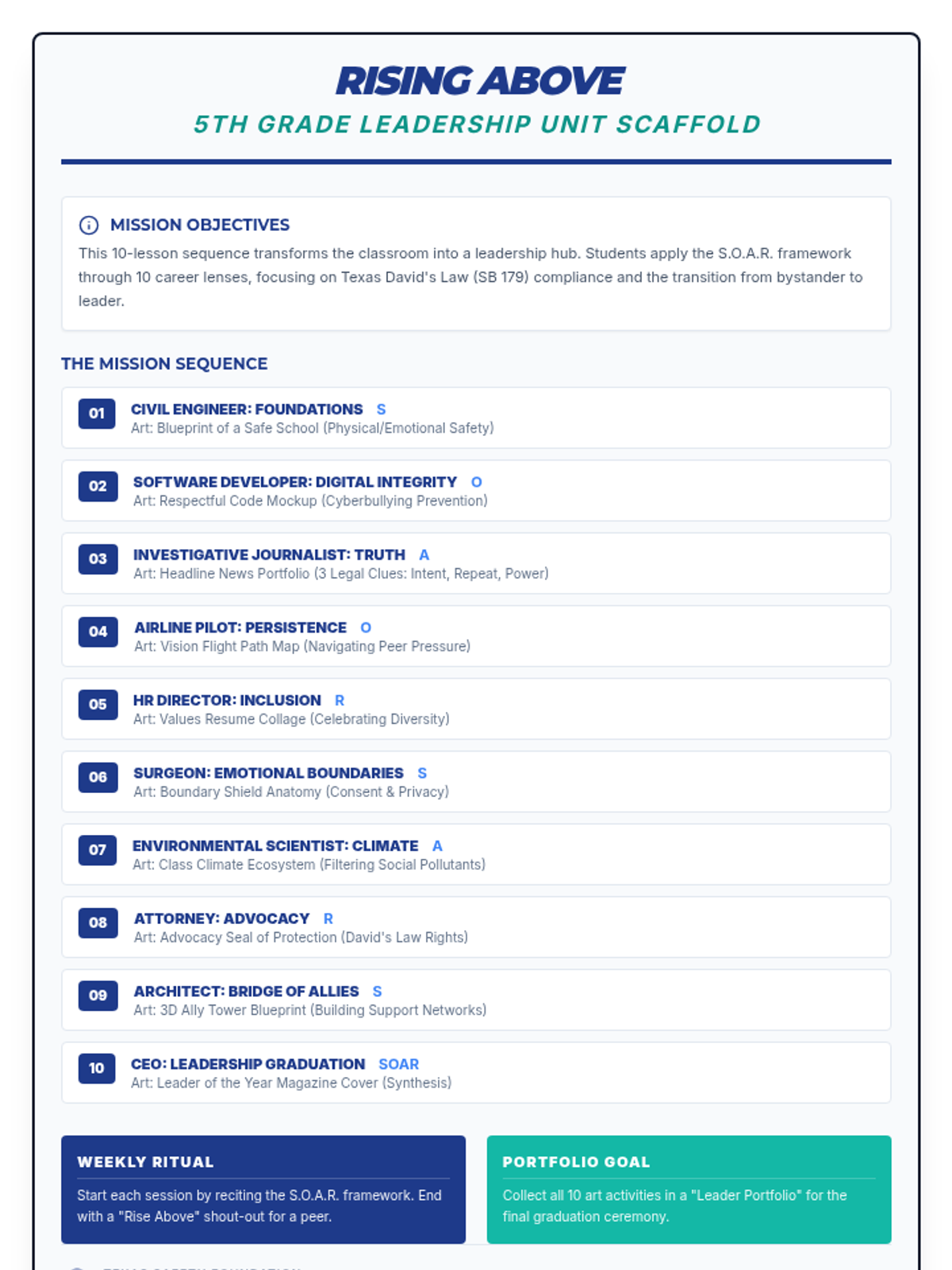
A comprehensive K-12 bullying prevention curriculum strictly aligned with Texas David's Law and TEC Chapter 37, focusing on the distinction between conflict and bullying, cyberbullying, and school safety. Now renamed to the Leadership Protocol.
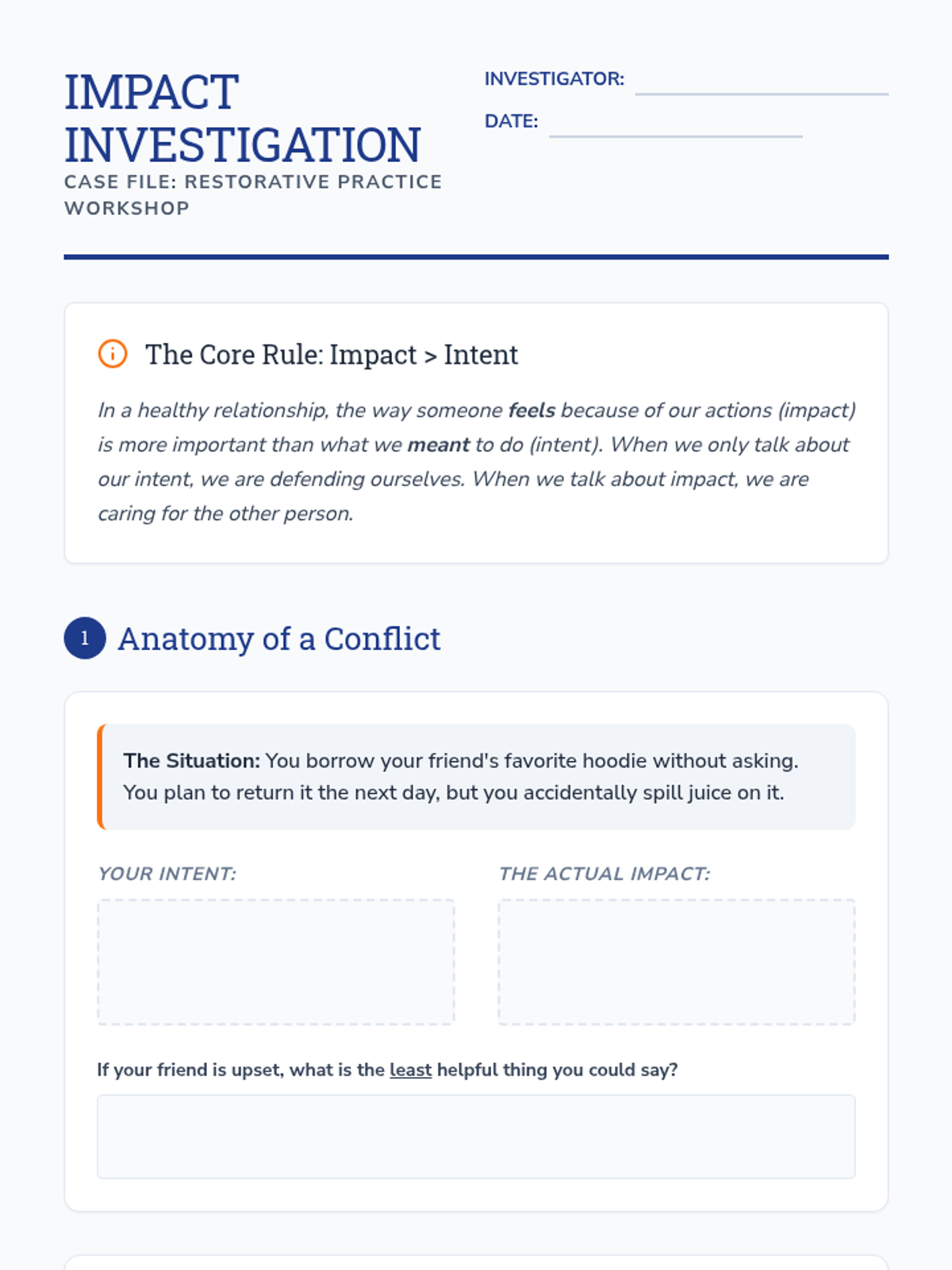
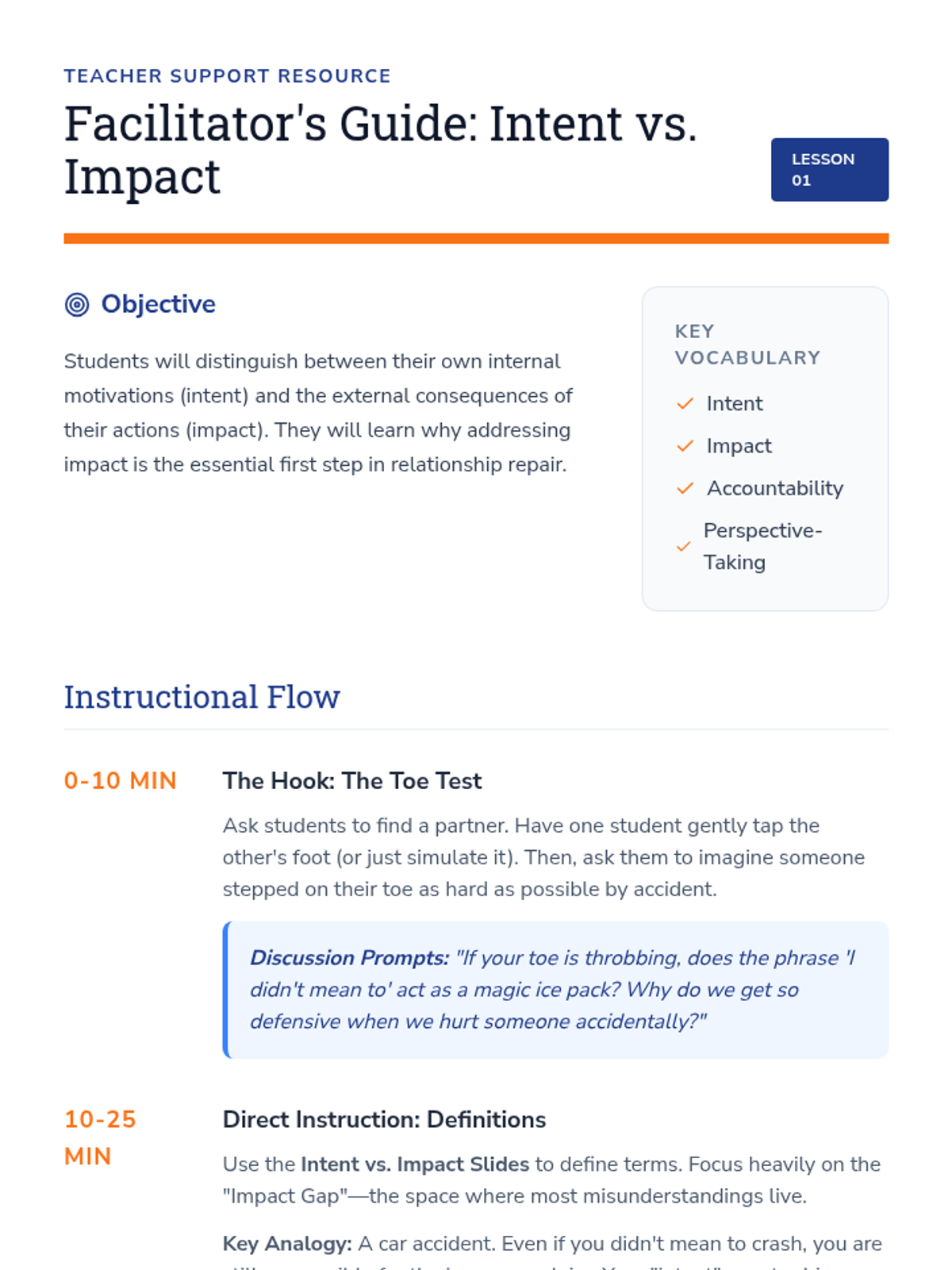
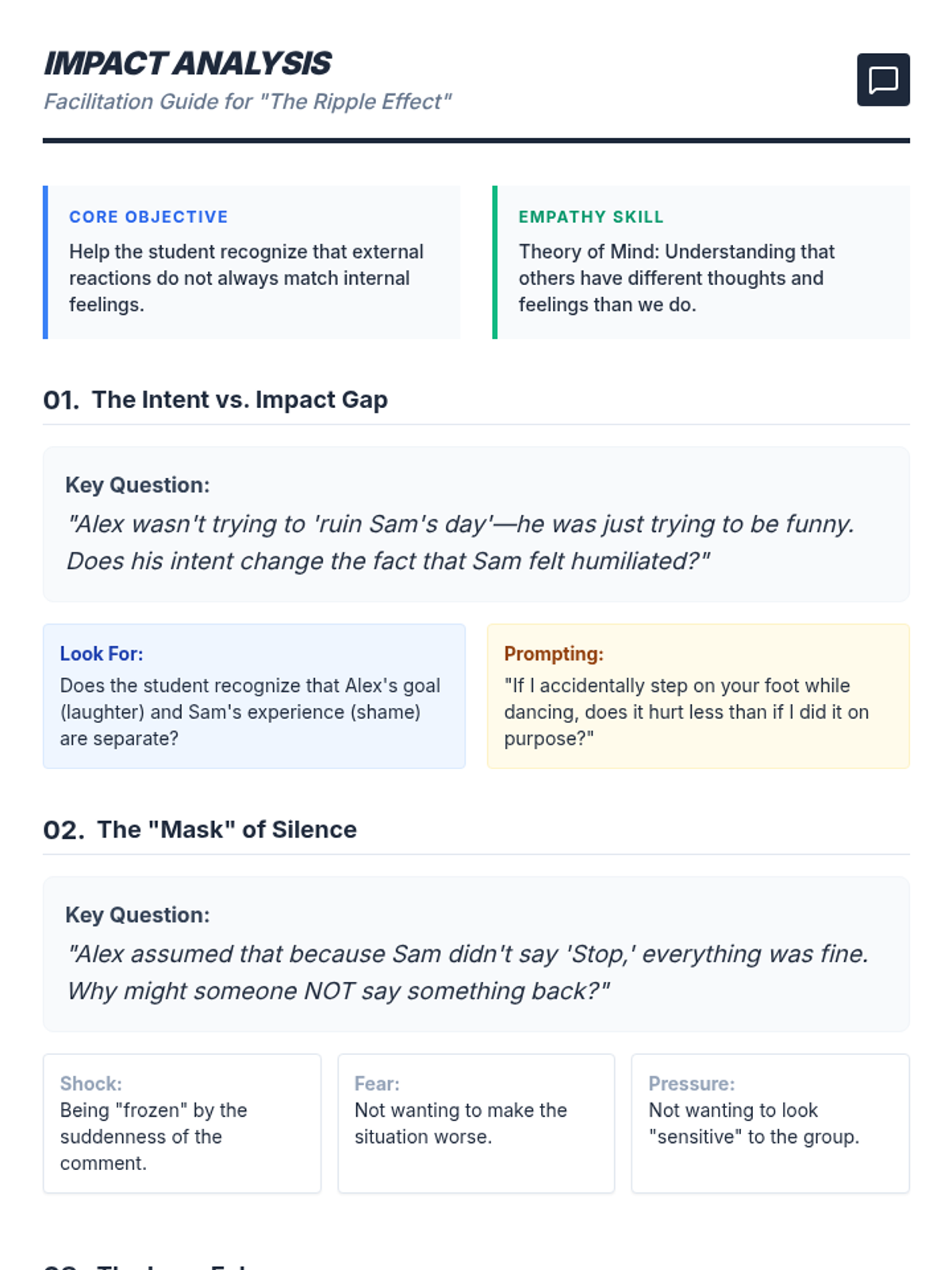
A 5-lesson sequence for 7th grade students focusing on restorative practices, the difference between intent and impact, crafting genuine apologies, and the long-term process of rebuilding trust after conflict.
A comprehensive unit for 6th-grade students exploring the ethical, privacy, and career implications of emerging technologies like AI, deepfakes, and automation. Students move from understanding personal data footprints to creating a personal 'Future Readiness Charter' for safe and productive digital living.
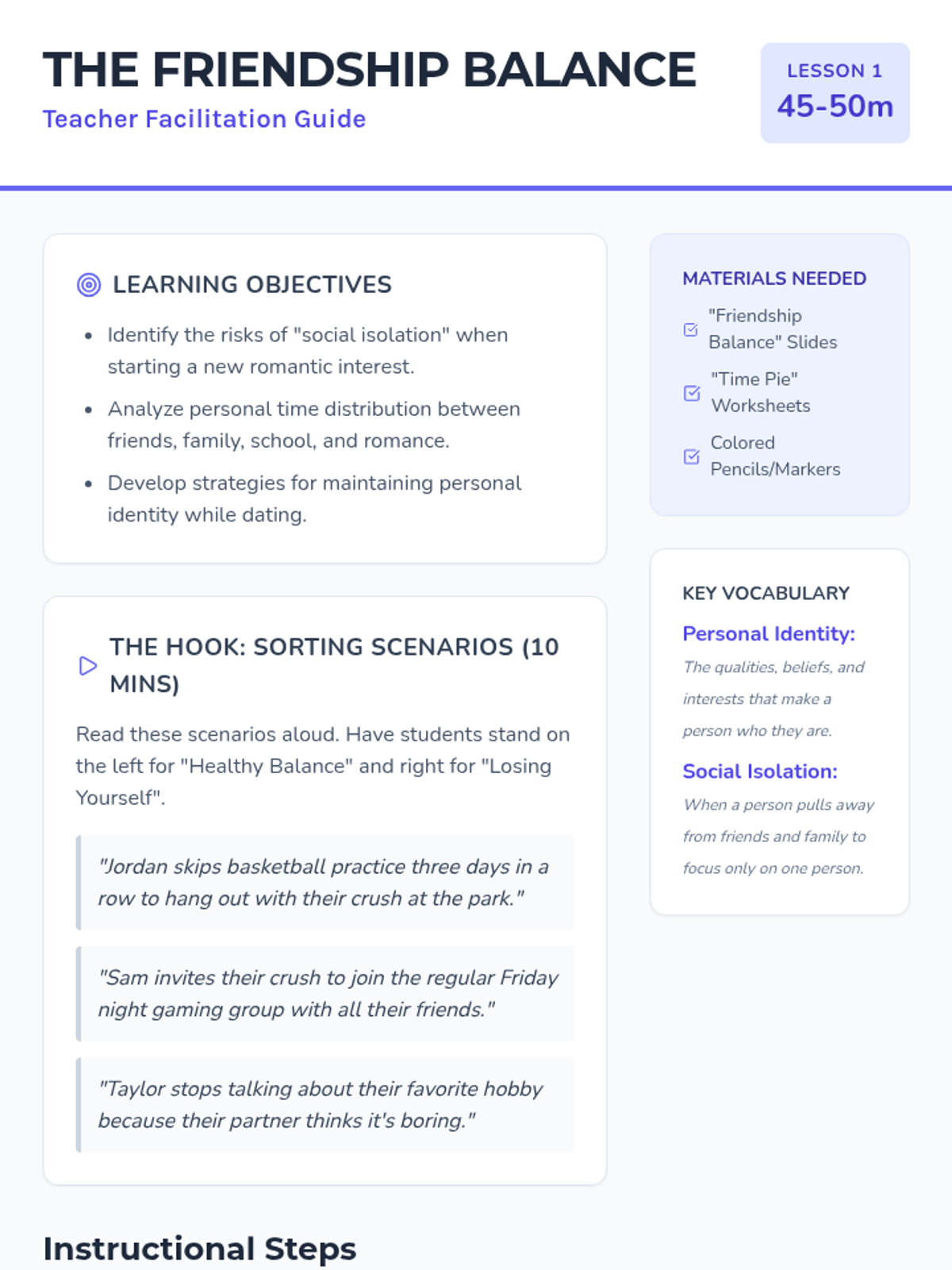
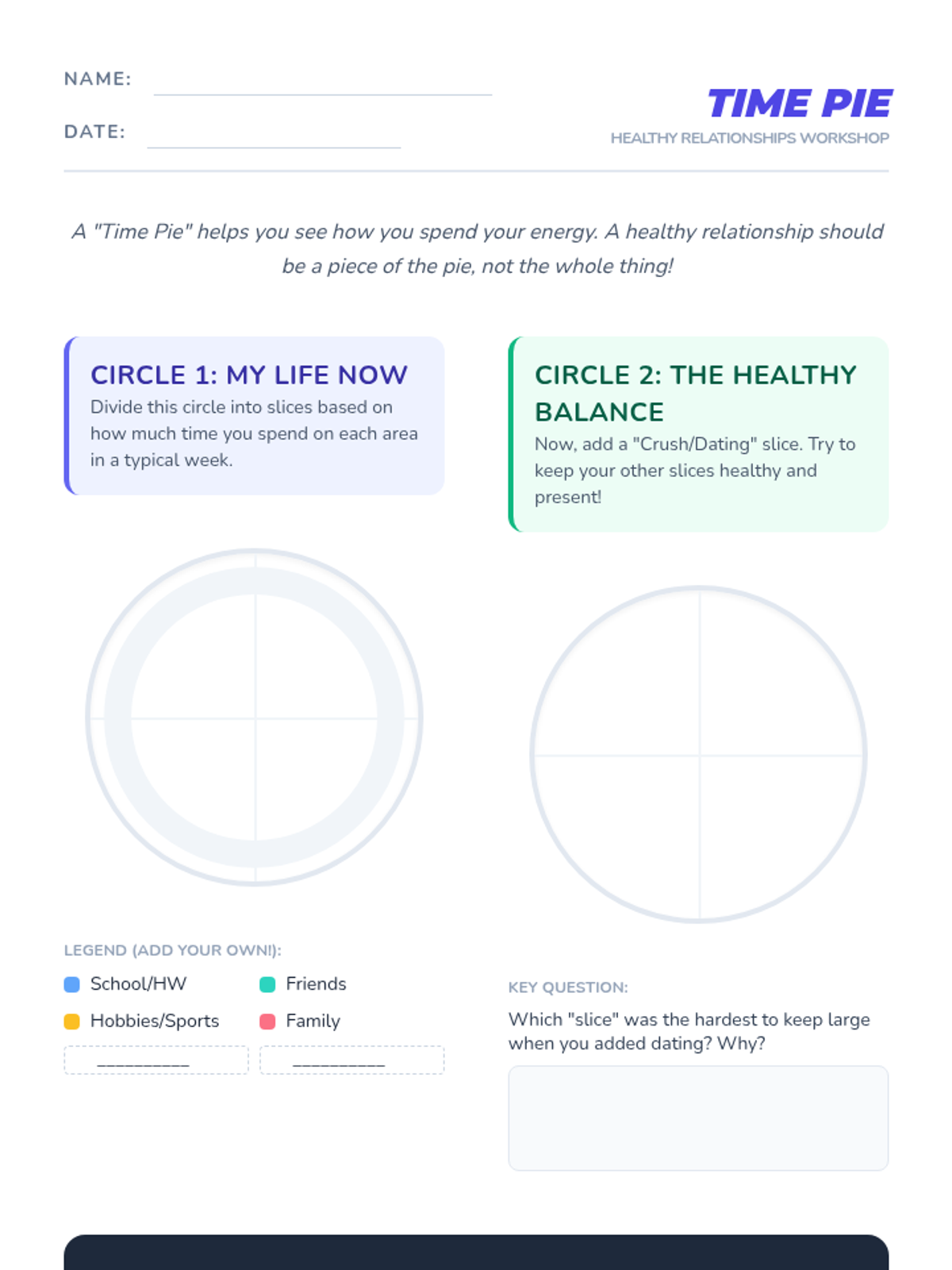
This project-based sequence explores emotional safety and decision-making in relationships. Students learn to balance friendships with romantic interests, trust their intuition, build resilience through rejection, and advocate for equality in their connections, culminating in a personal 'Relationship Rights' zine.
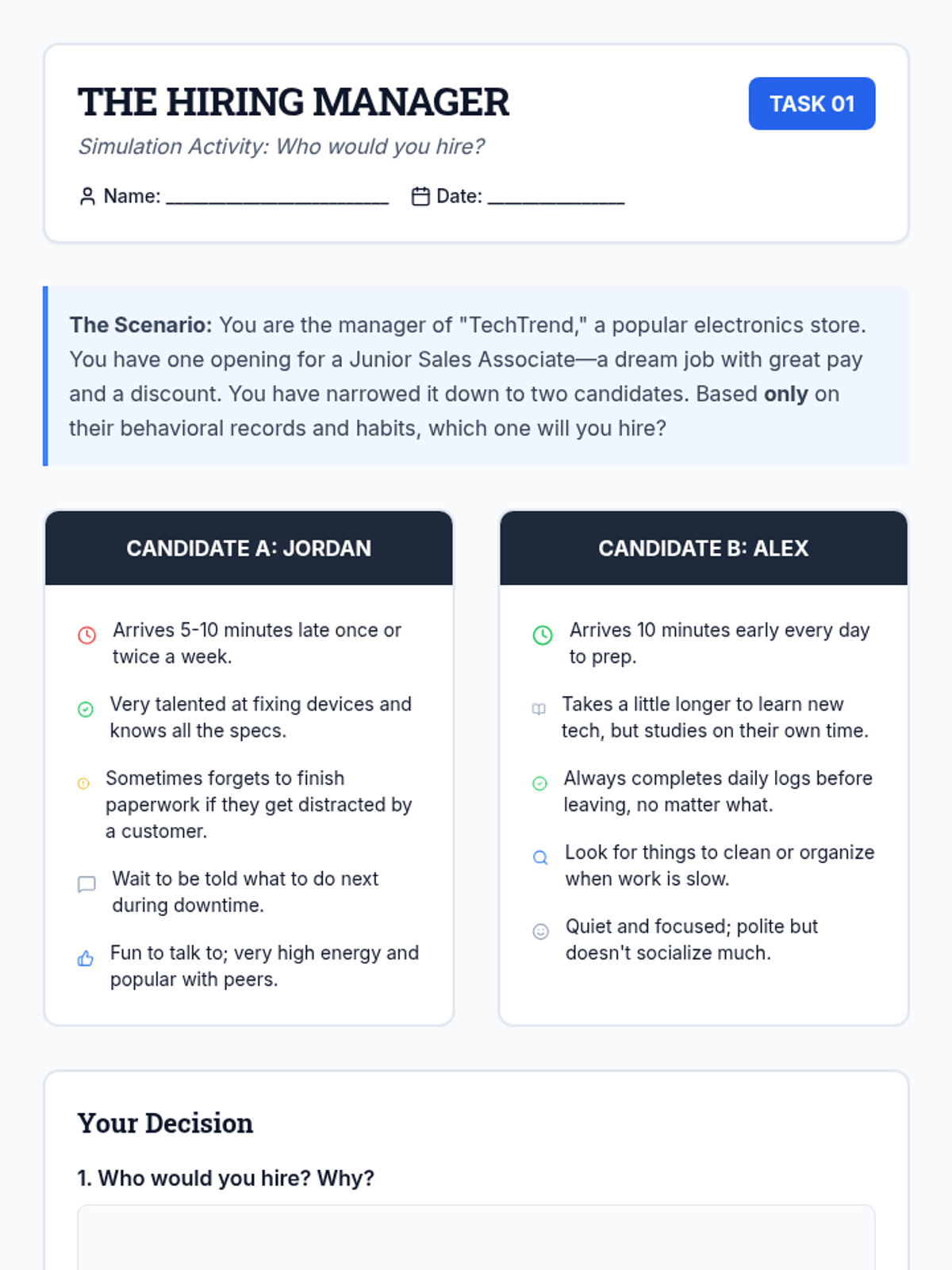
A 5-lesson unit for 7th graders on developing professional work ethic, reliability, and accountability. Students move from defining professionalism to practicing ethical decision-making and professional communication.
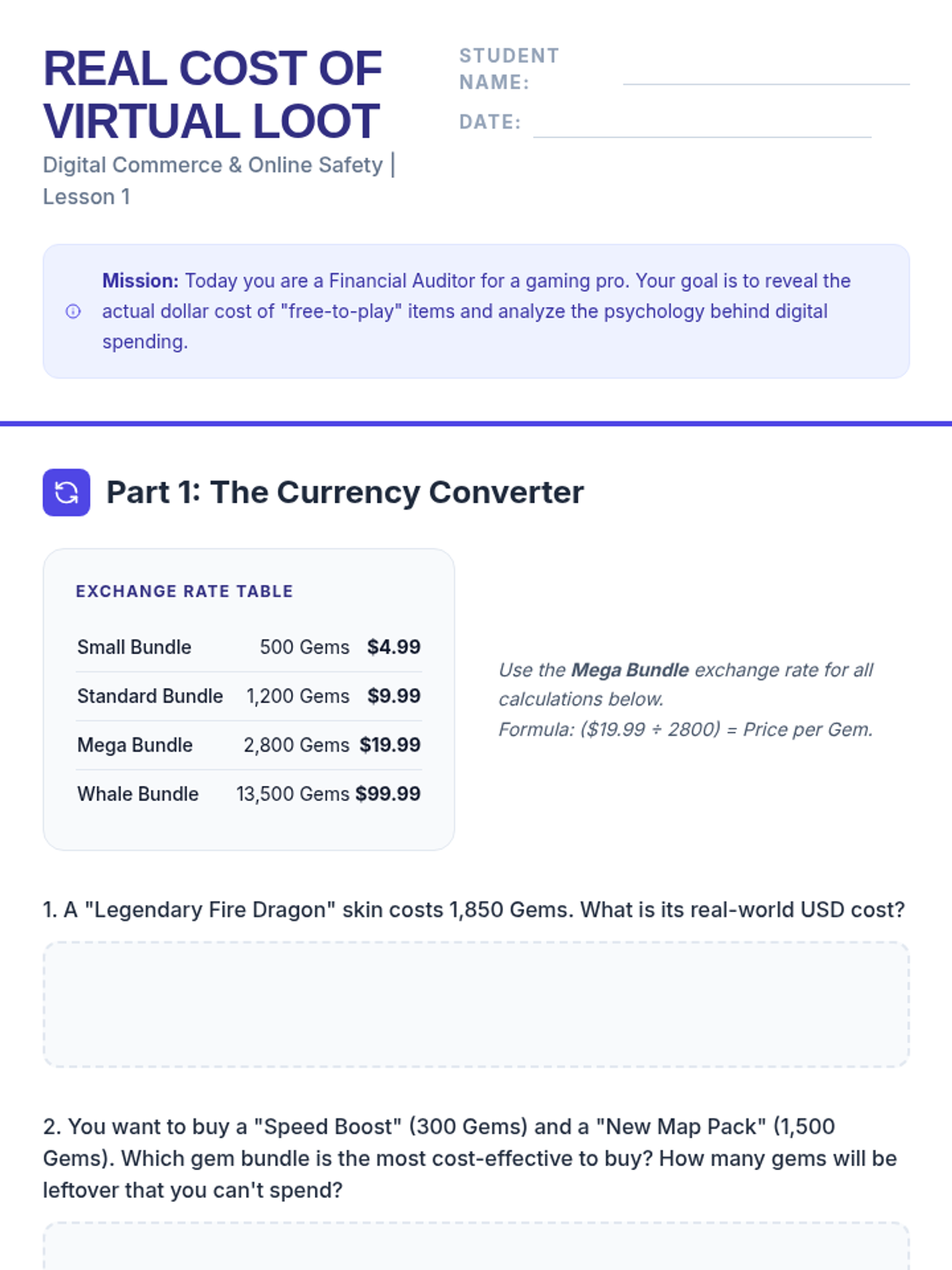
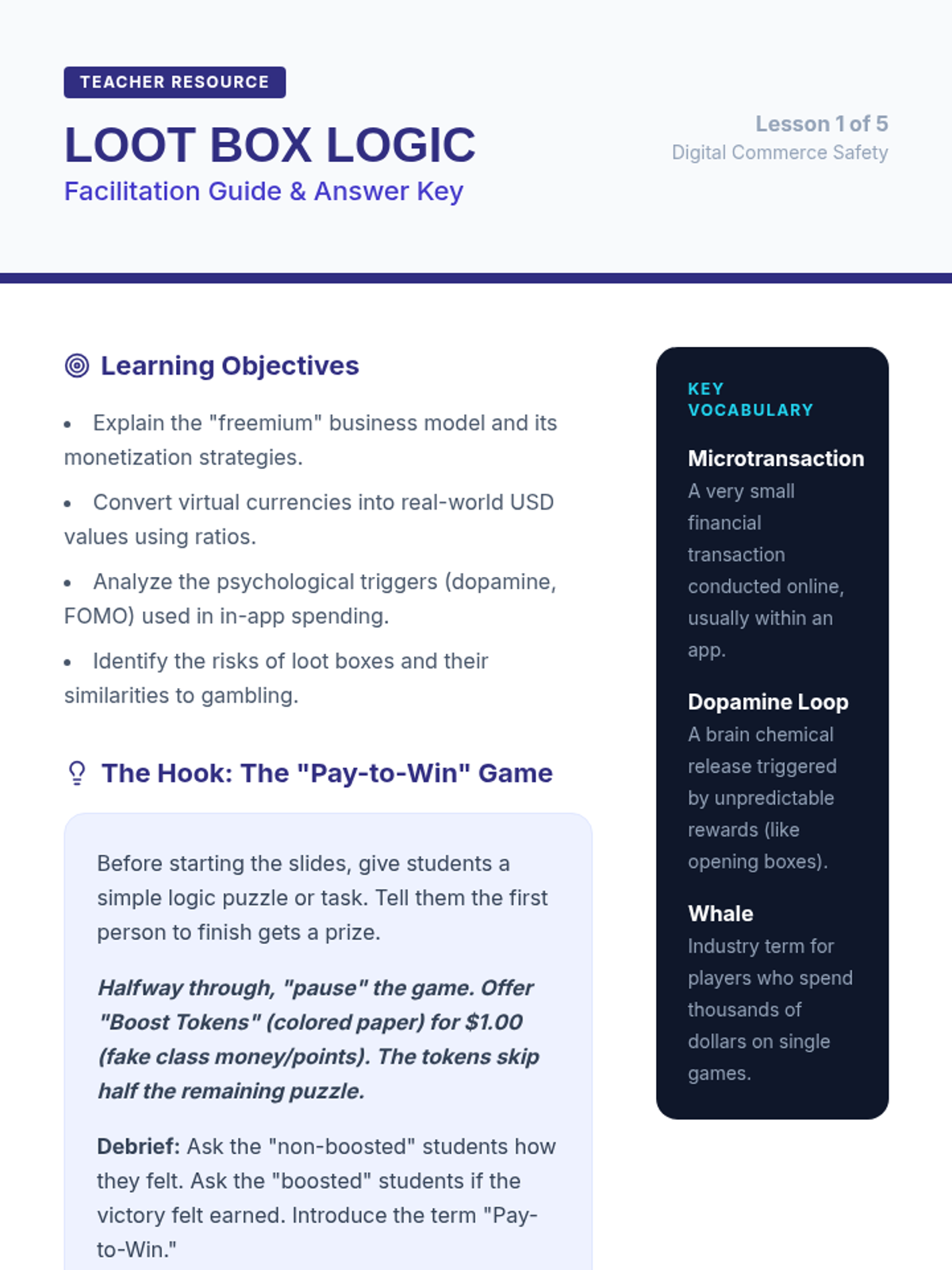
A comprehensive sequence for 8th-grade students on navigating the digital marketplace. It covers in-app purchases, subscription traps, digital payment security, terms of service agreements, and the ethical implications of the gig economy.
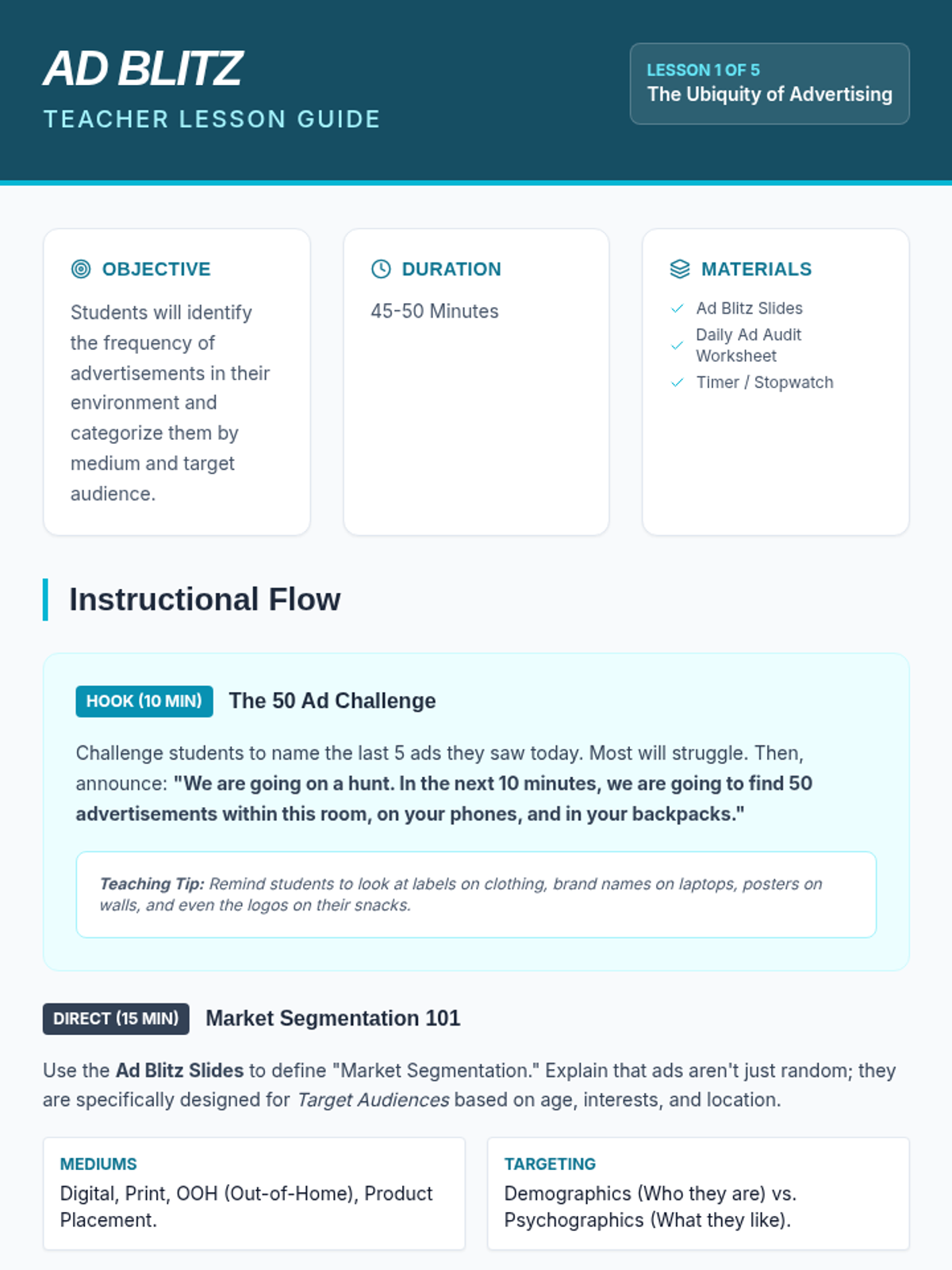
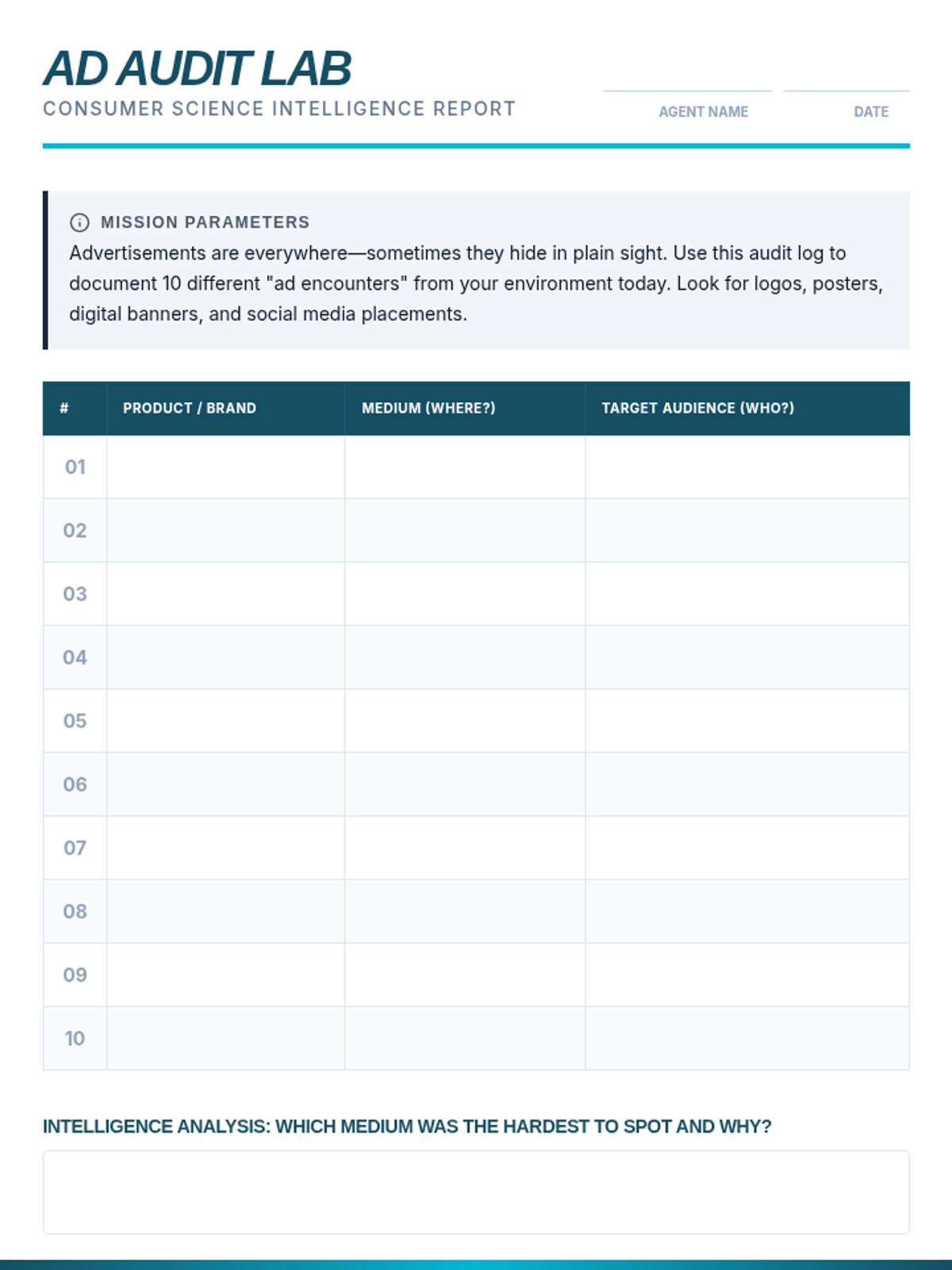
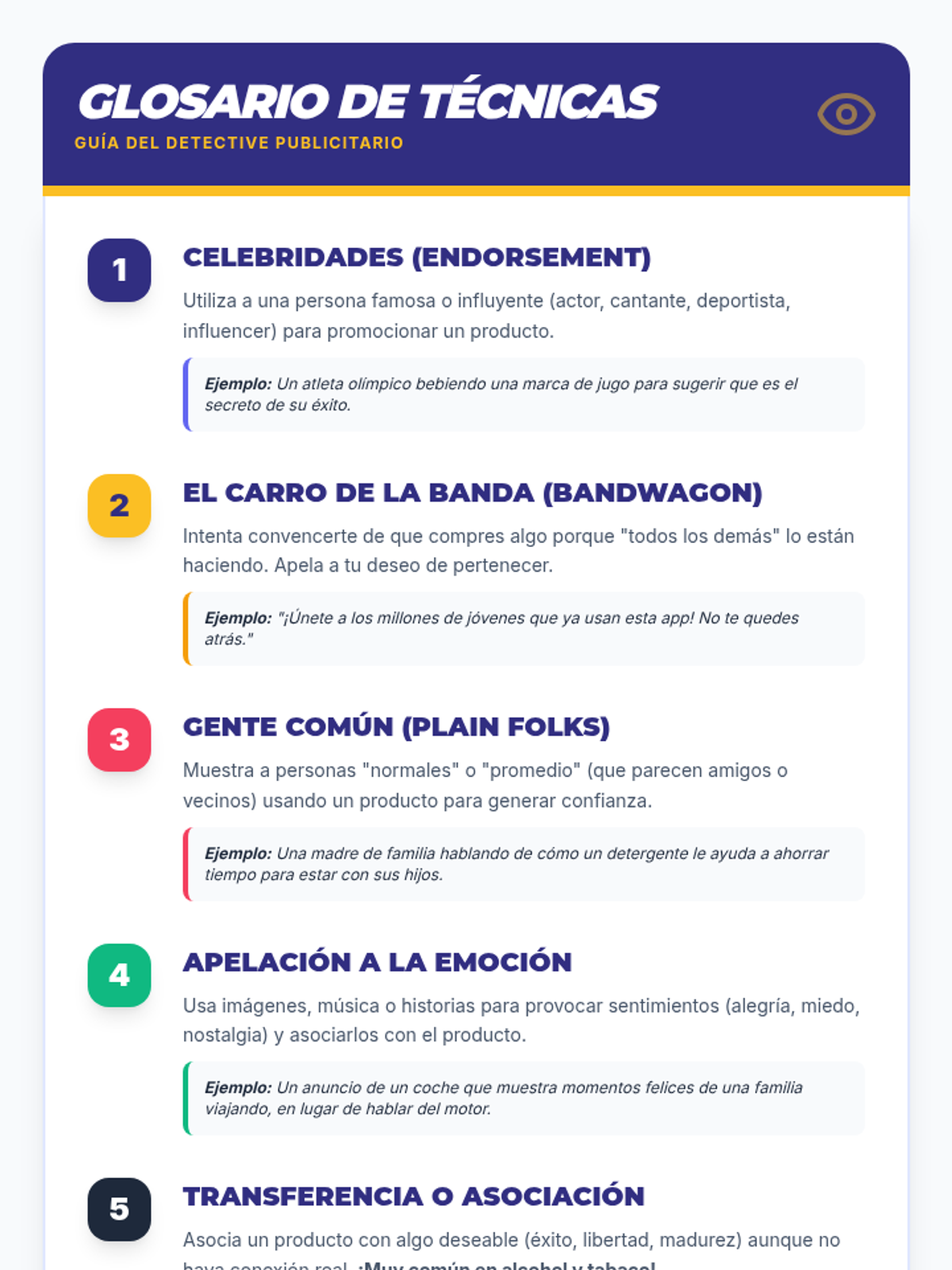
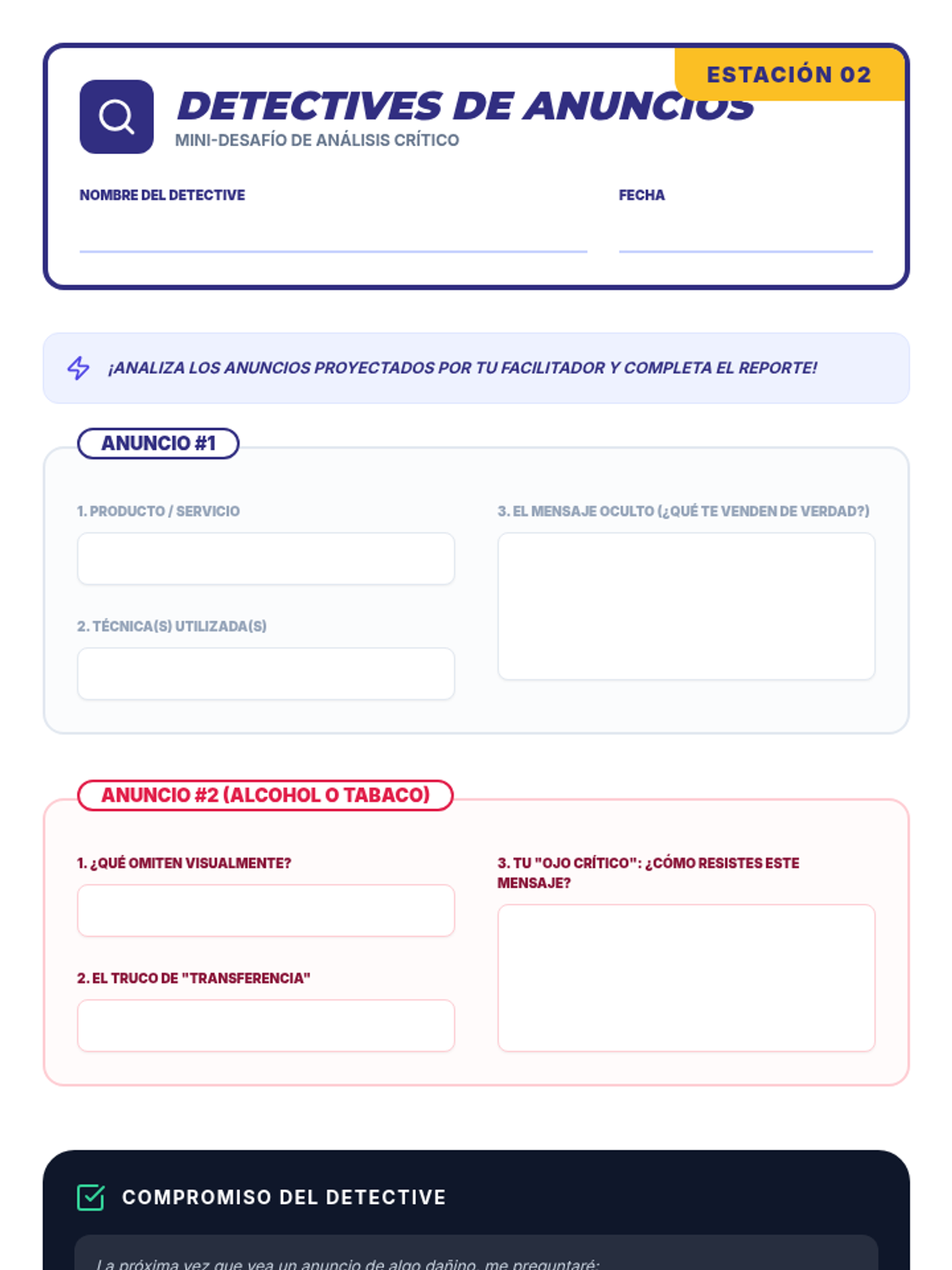
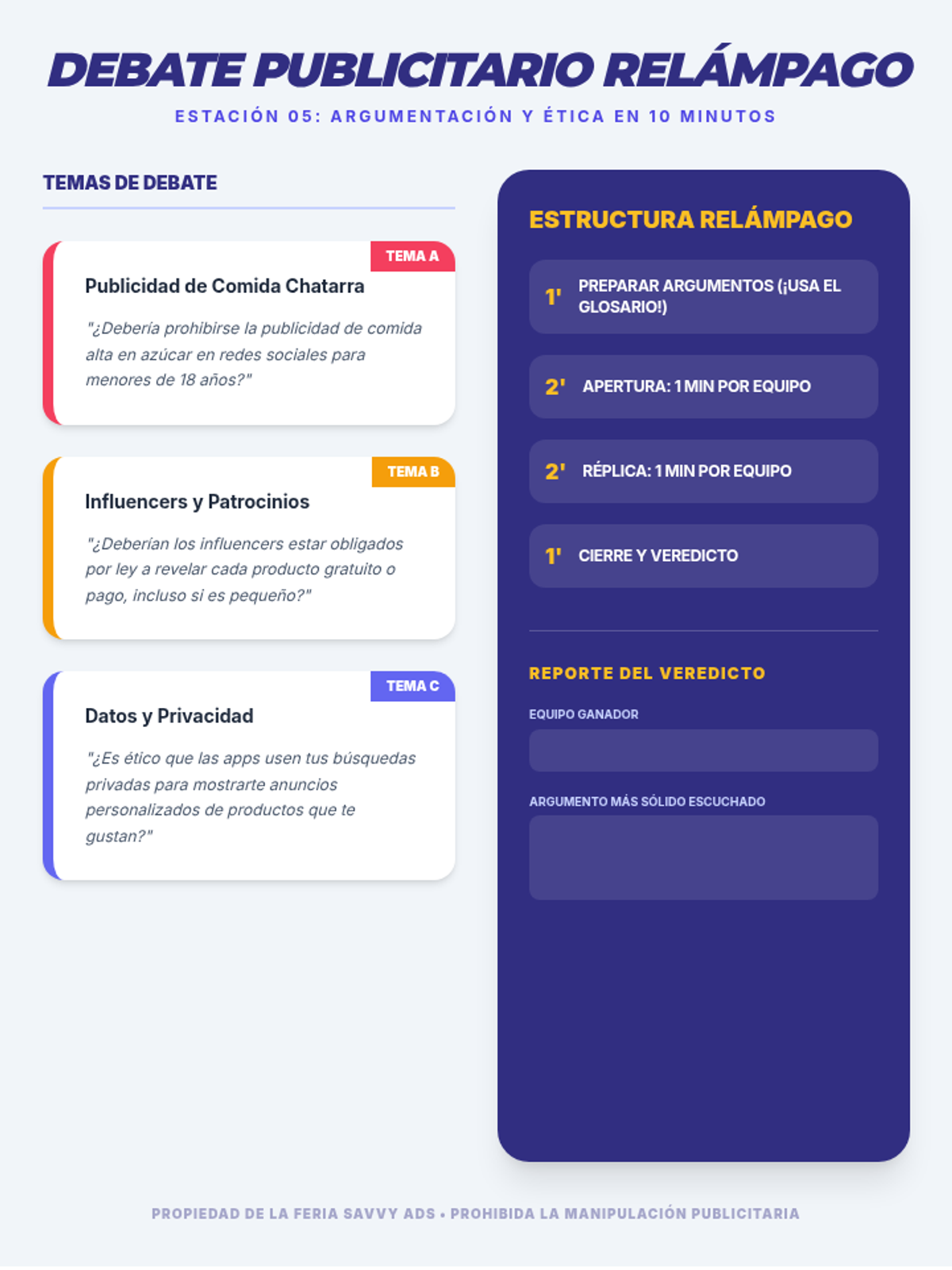
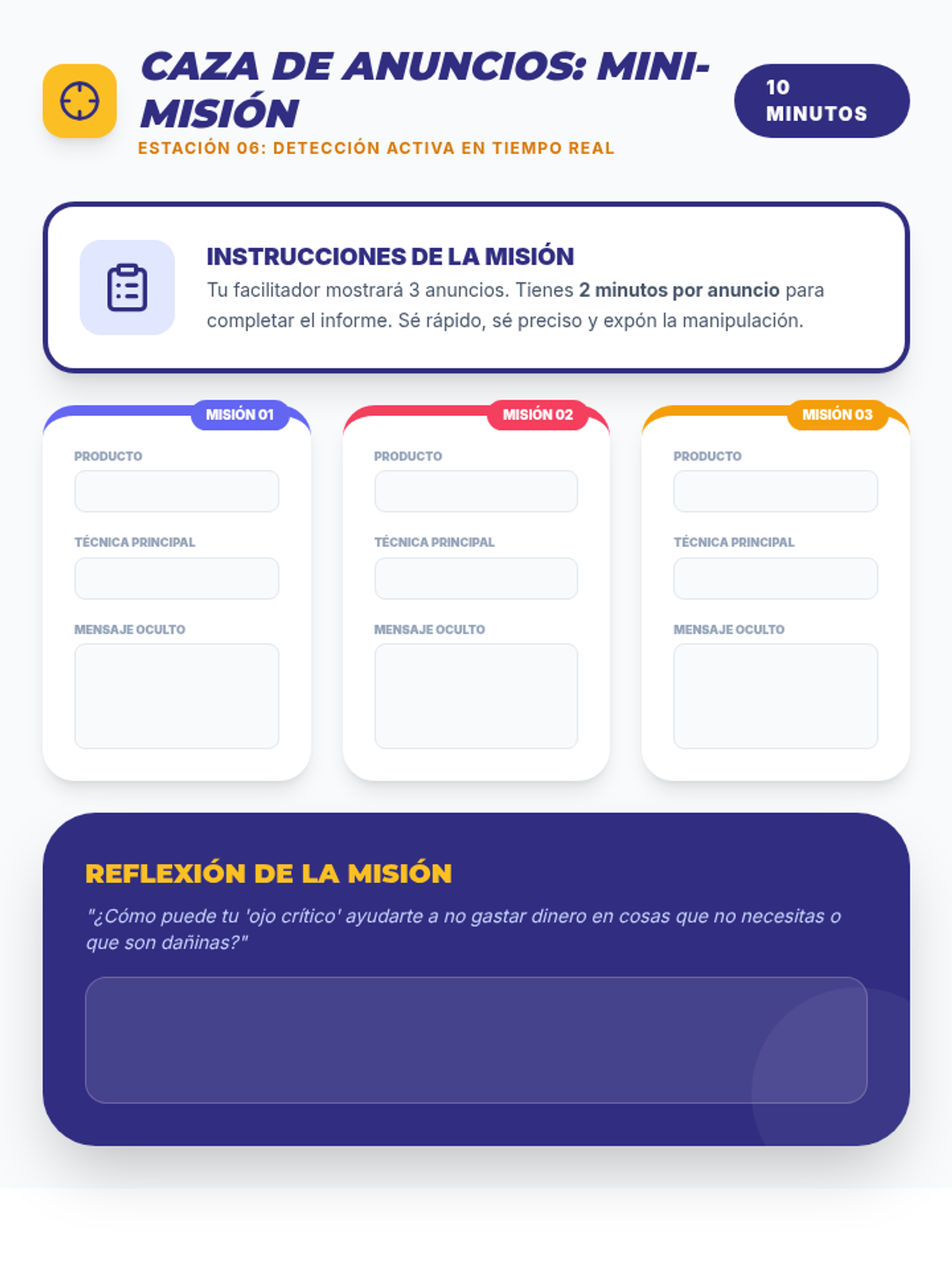
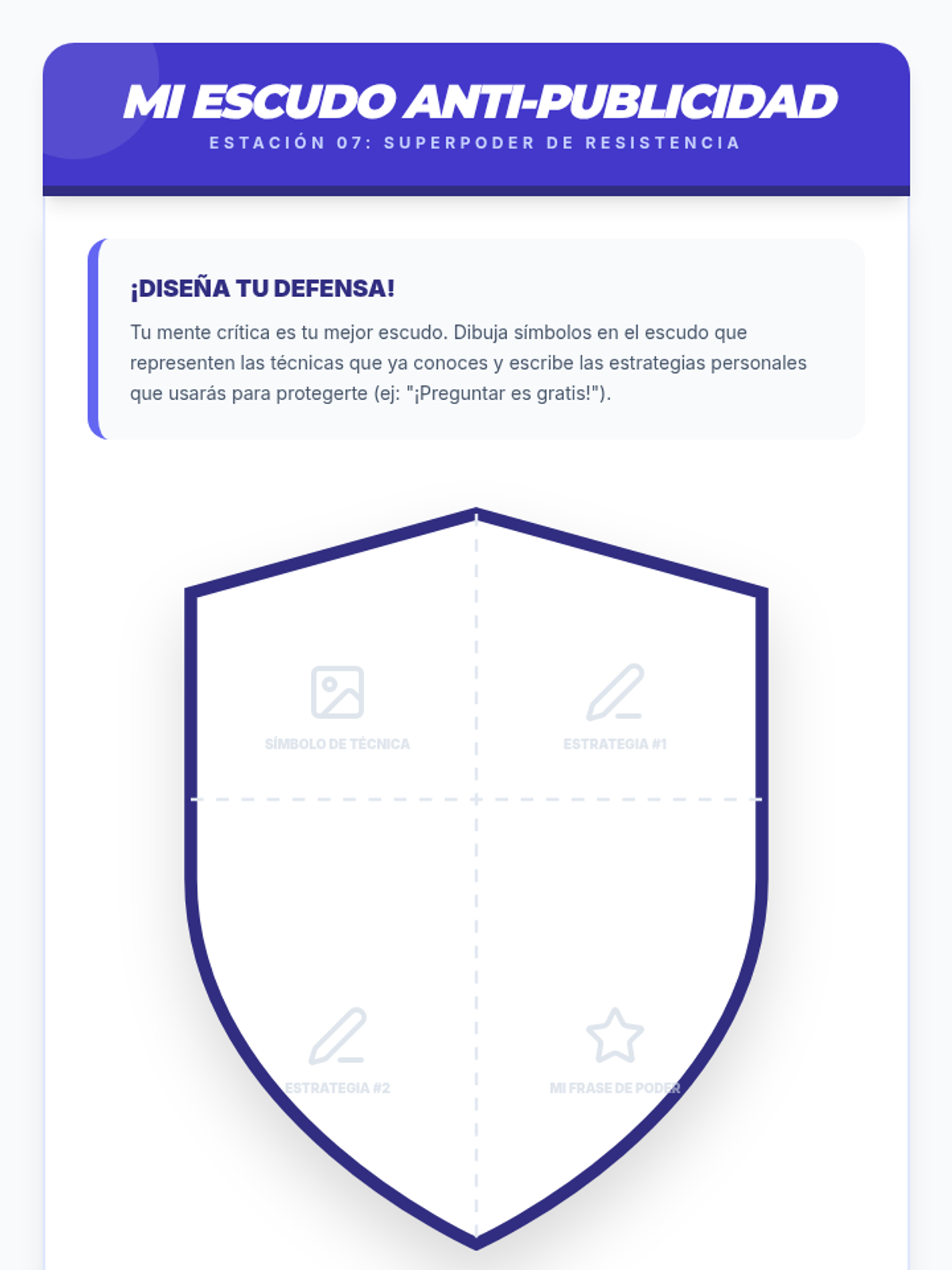
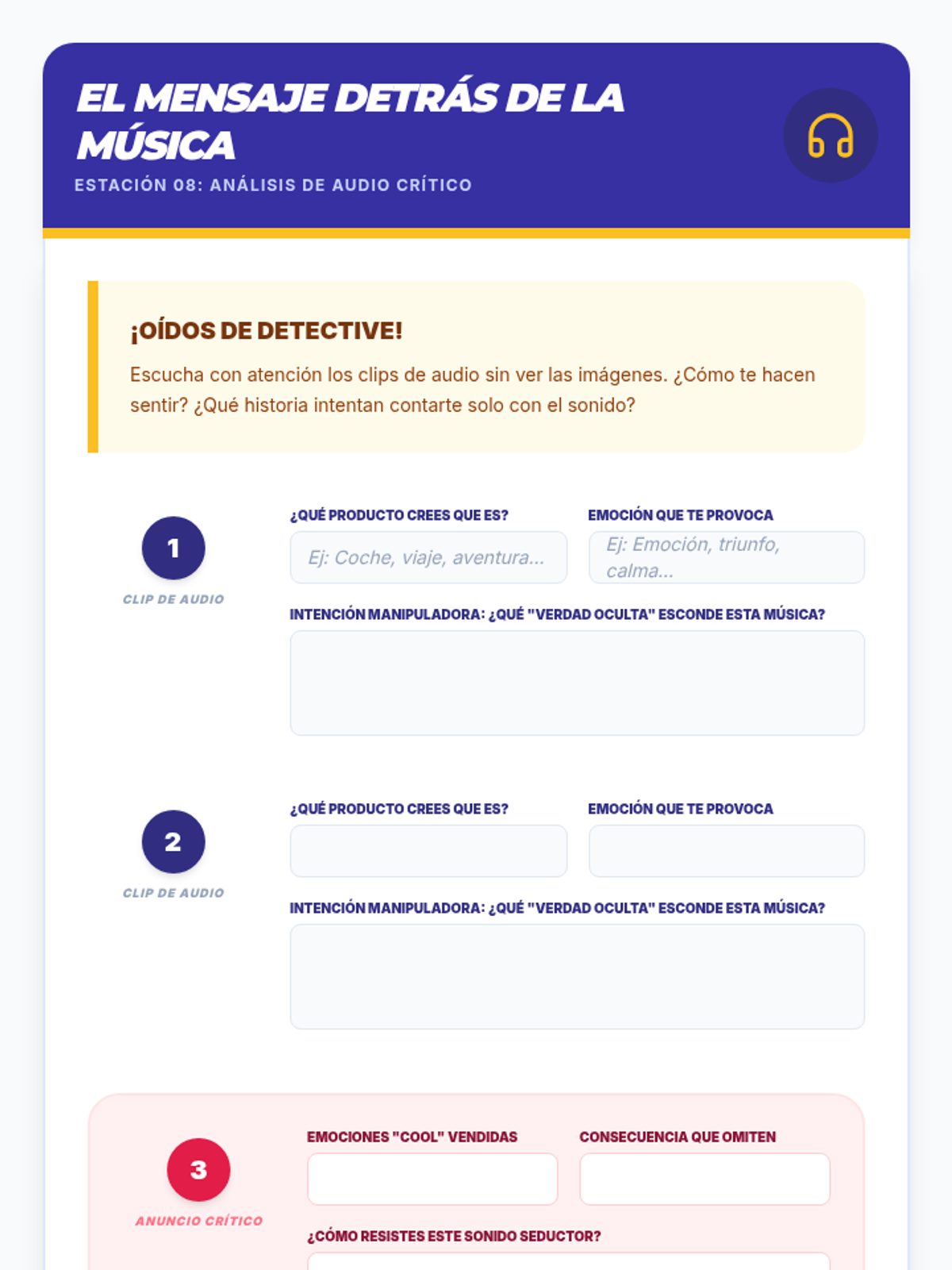
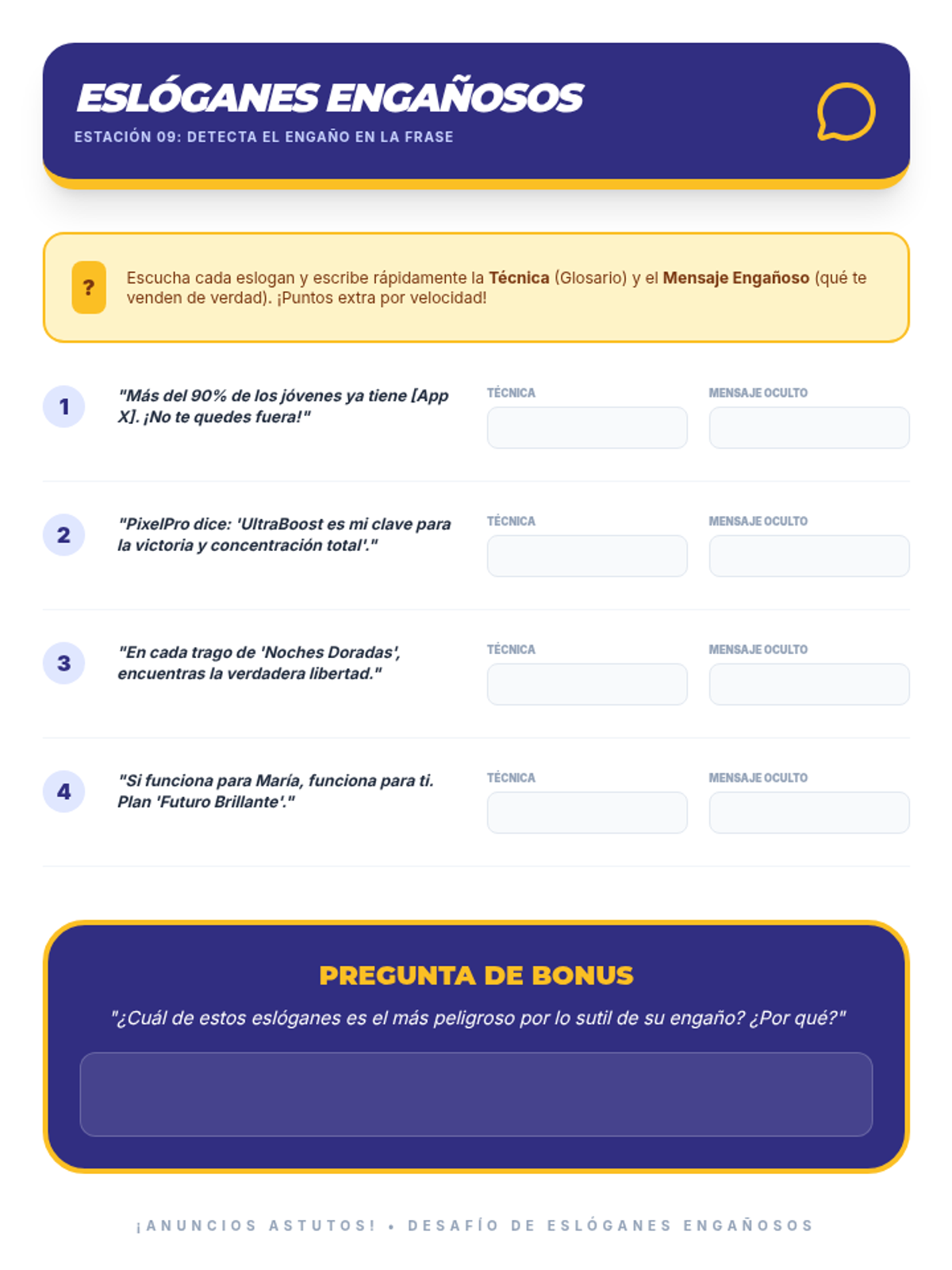
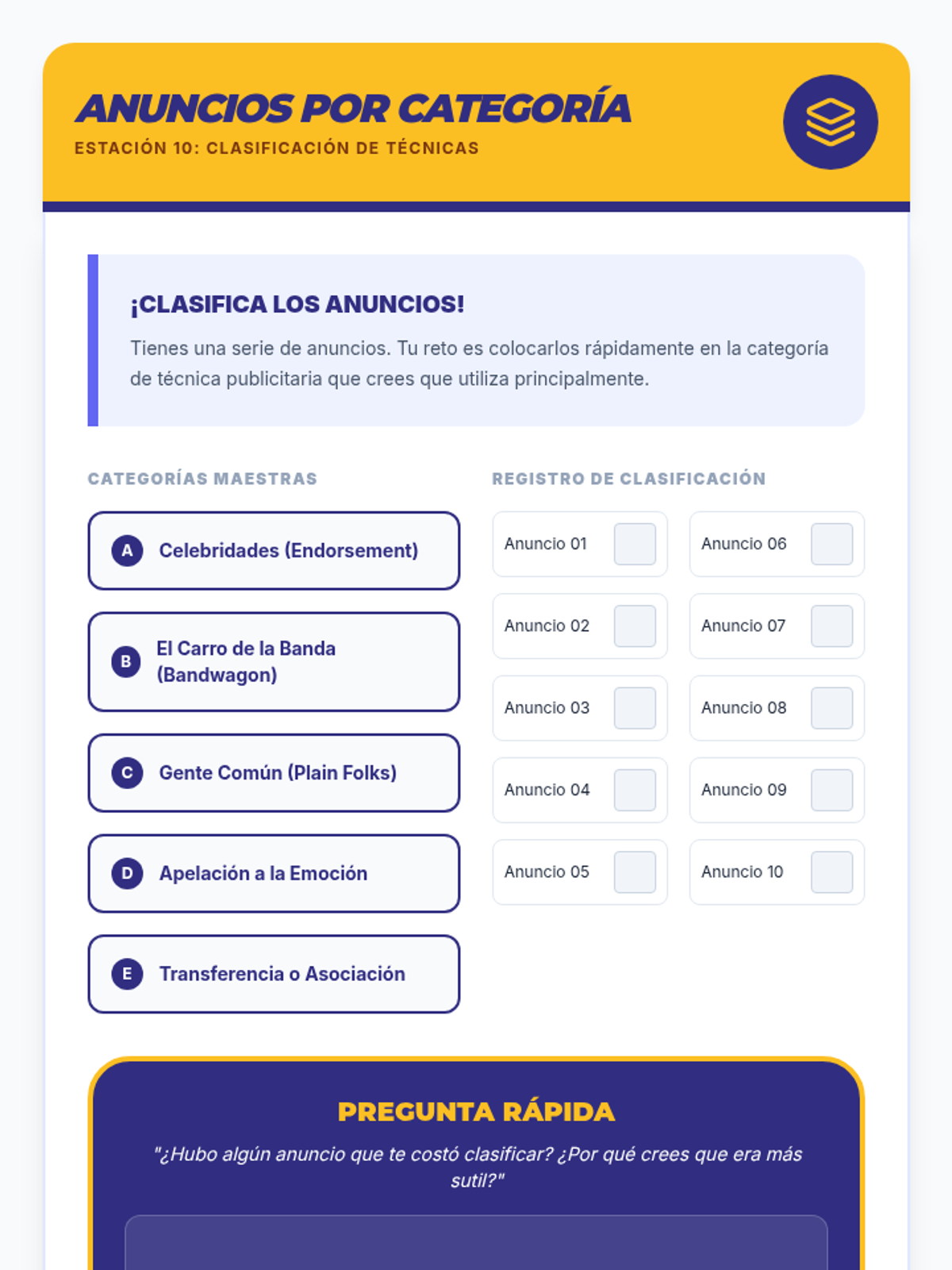
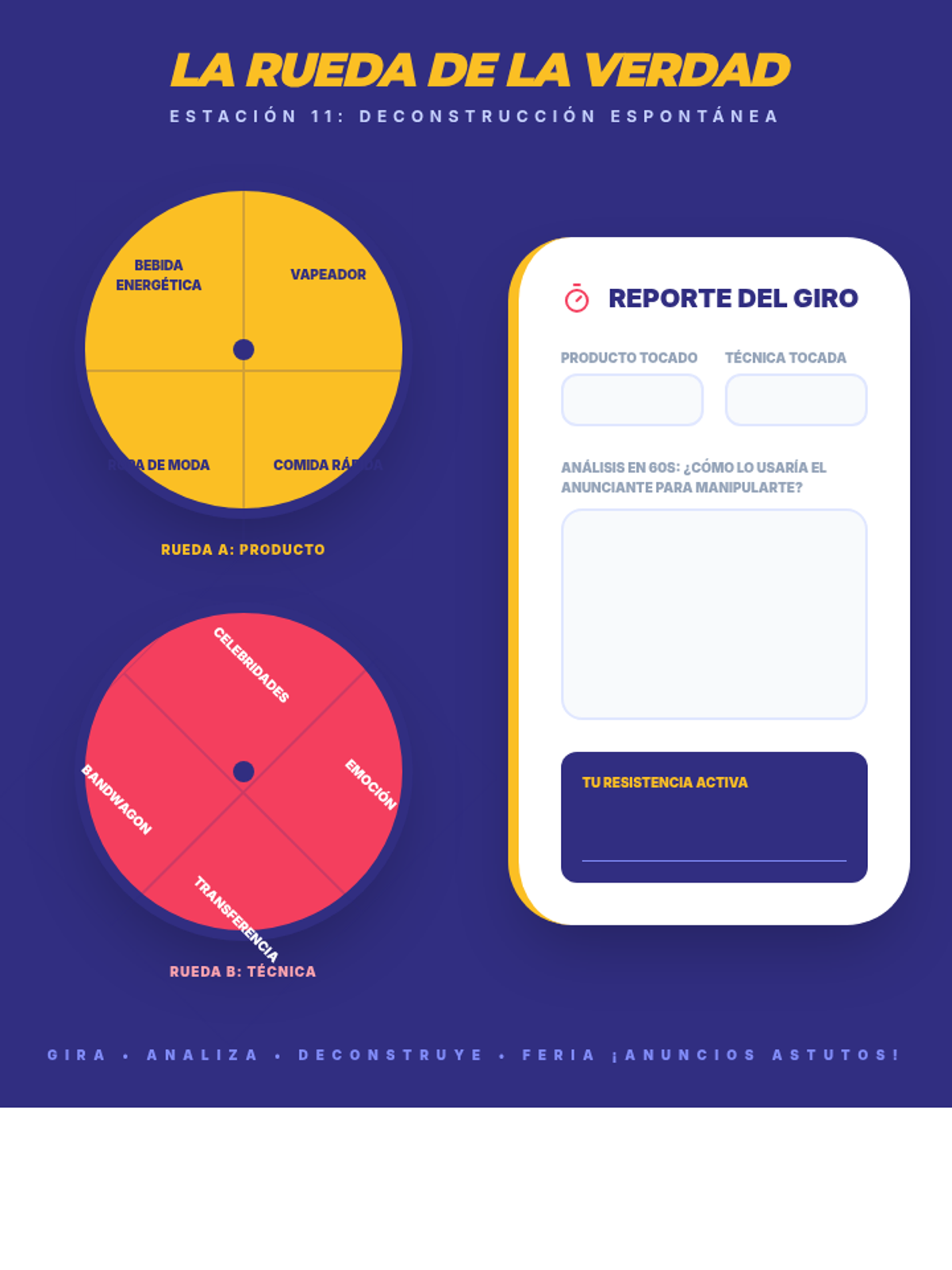
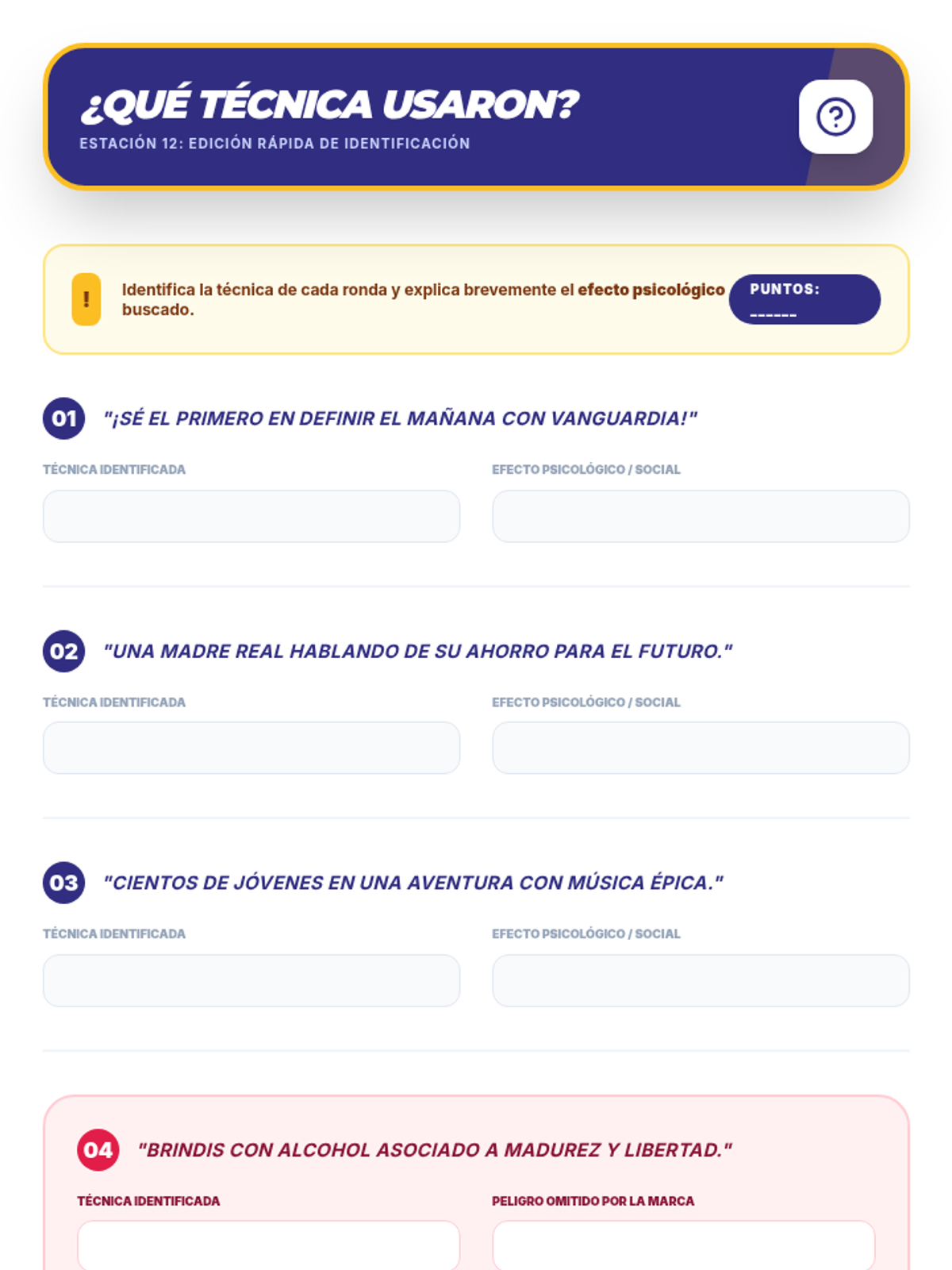
A comprehensive media literacy unit for 7th graders that teaches students to identify, analyze, and deconstruct persuasive advertising techniques across various media platforms. Students progress from recognizing the frequency of ads to critiquing the psychological and visual strategies used to influence consumer behavior.
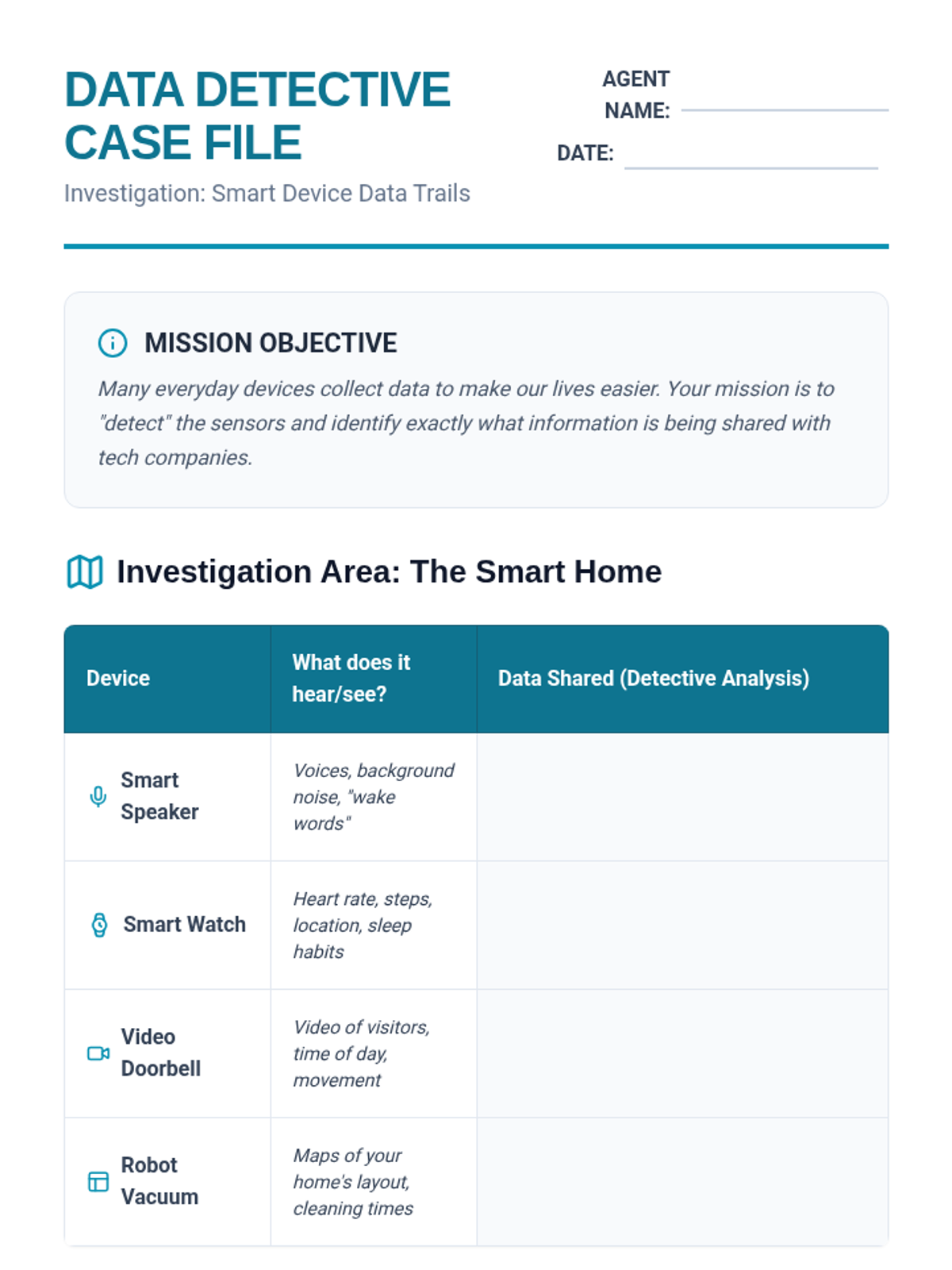
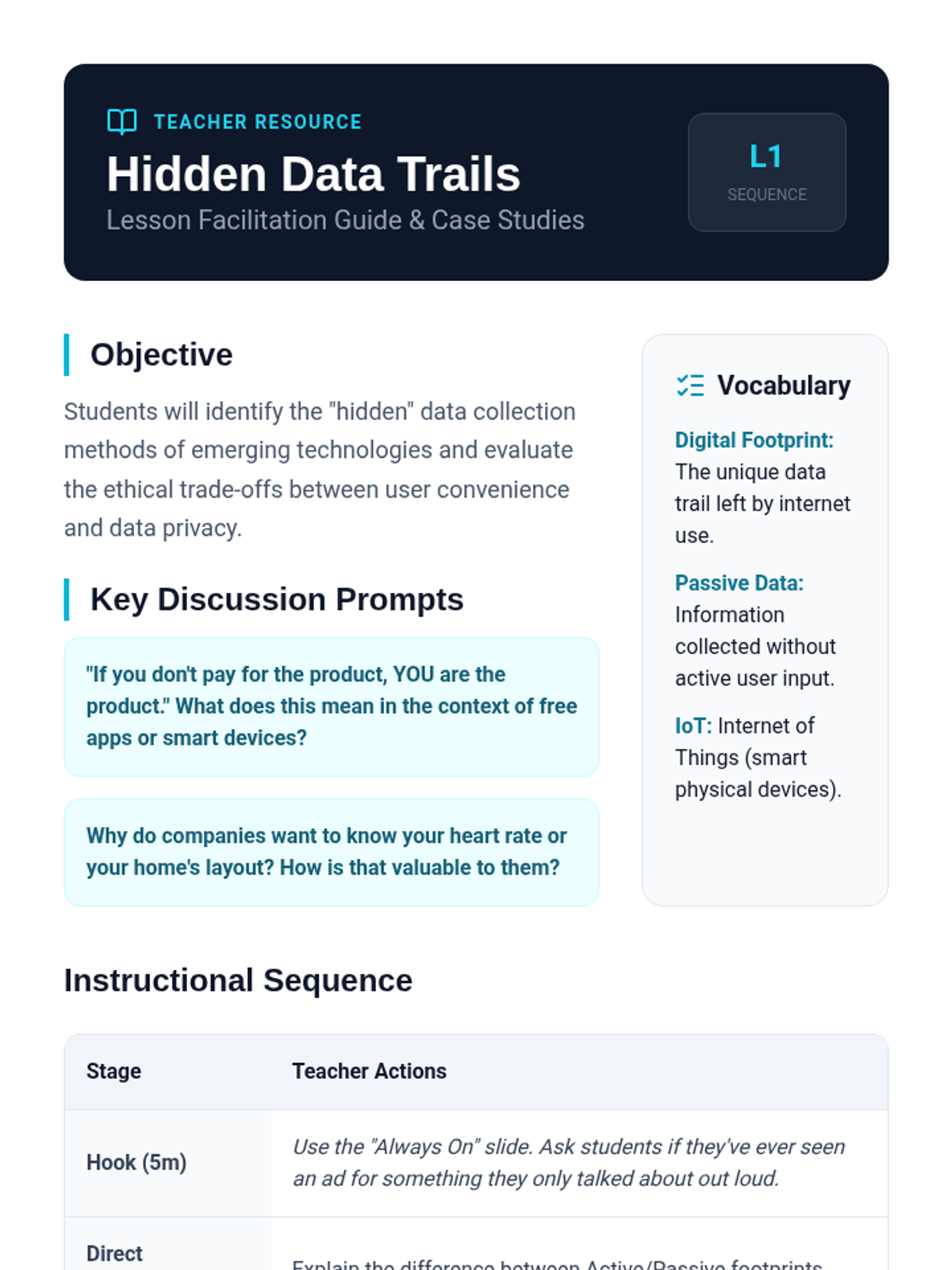
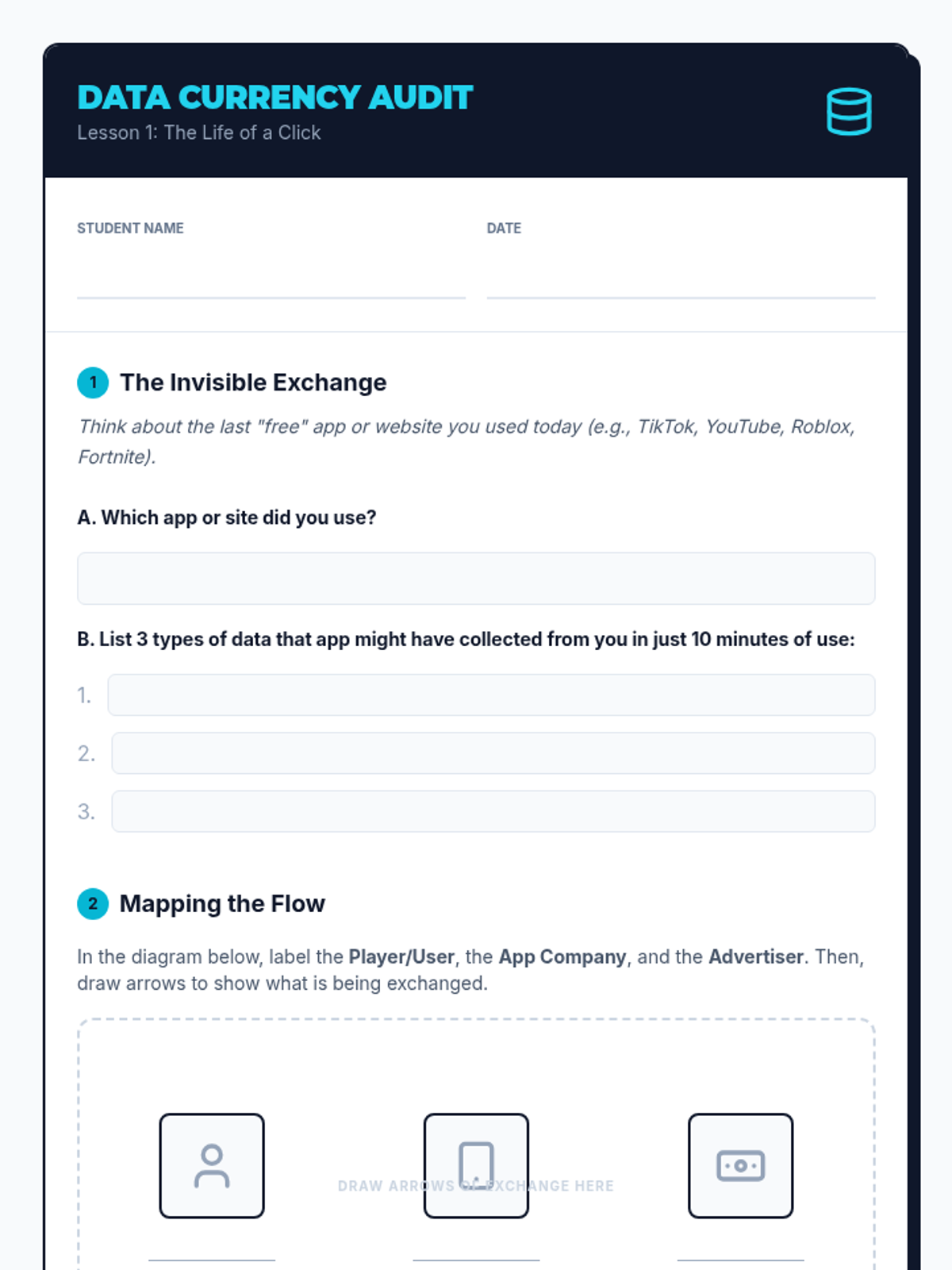
An inquiry-driven exploration of data privacy, surveillance, and the hidden economy of AI. Students investigate how their personal information is collected, used as currency, and the ethical trade-offs between digital convenience and personal privacy.
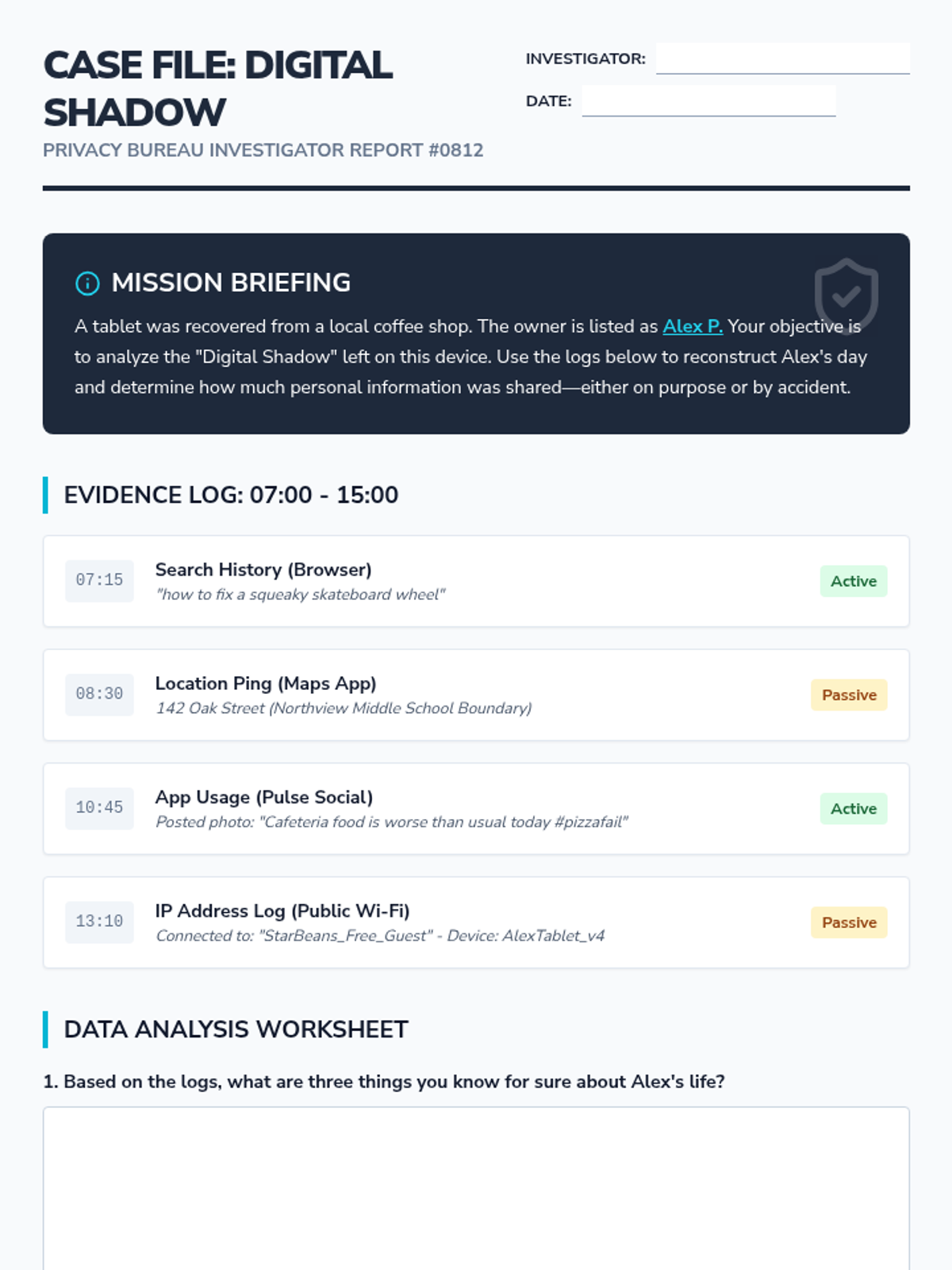
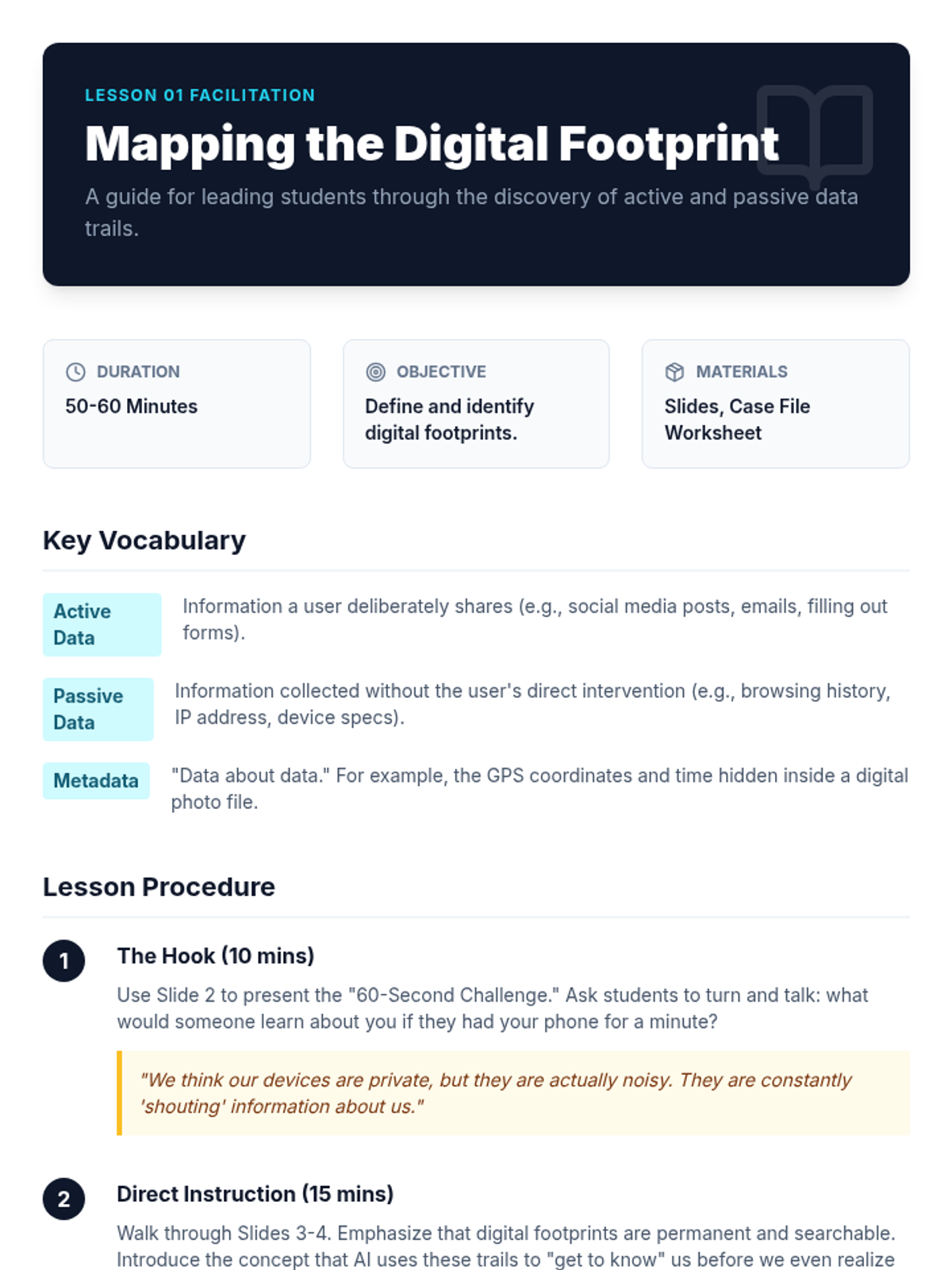
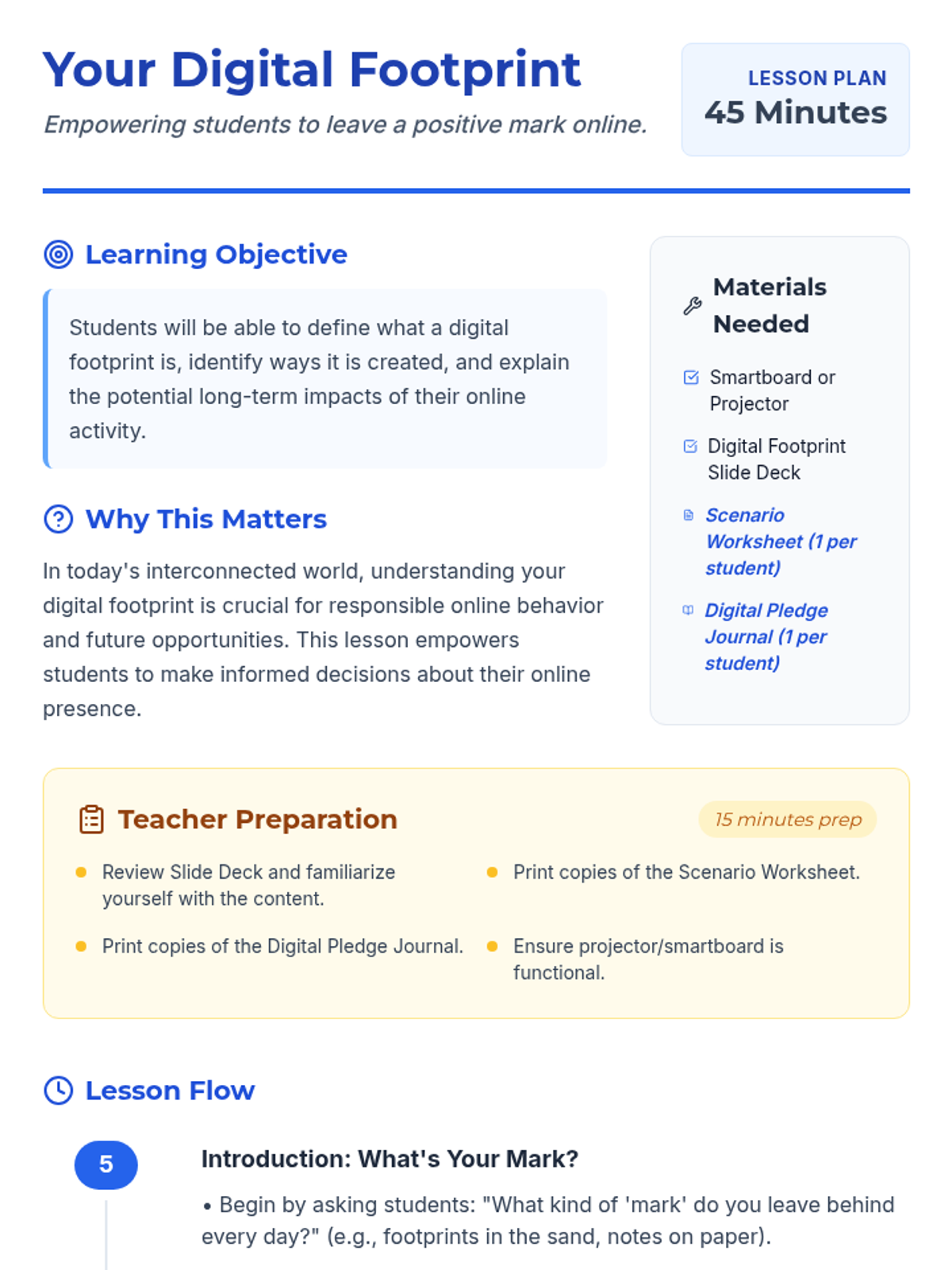
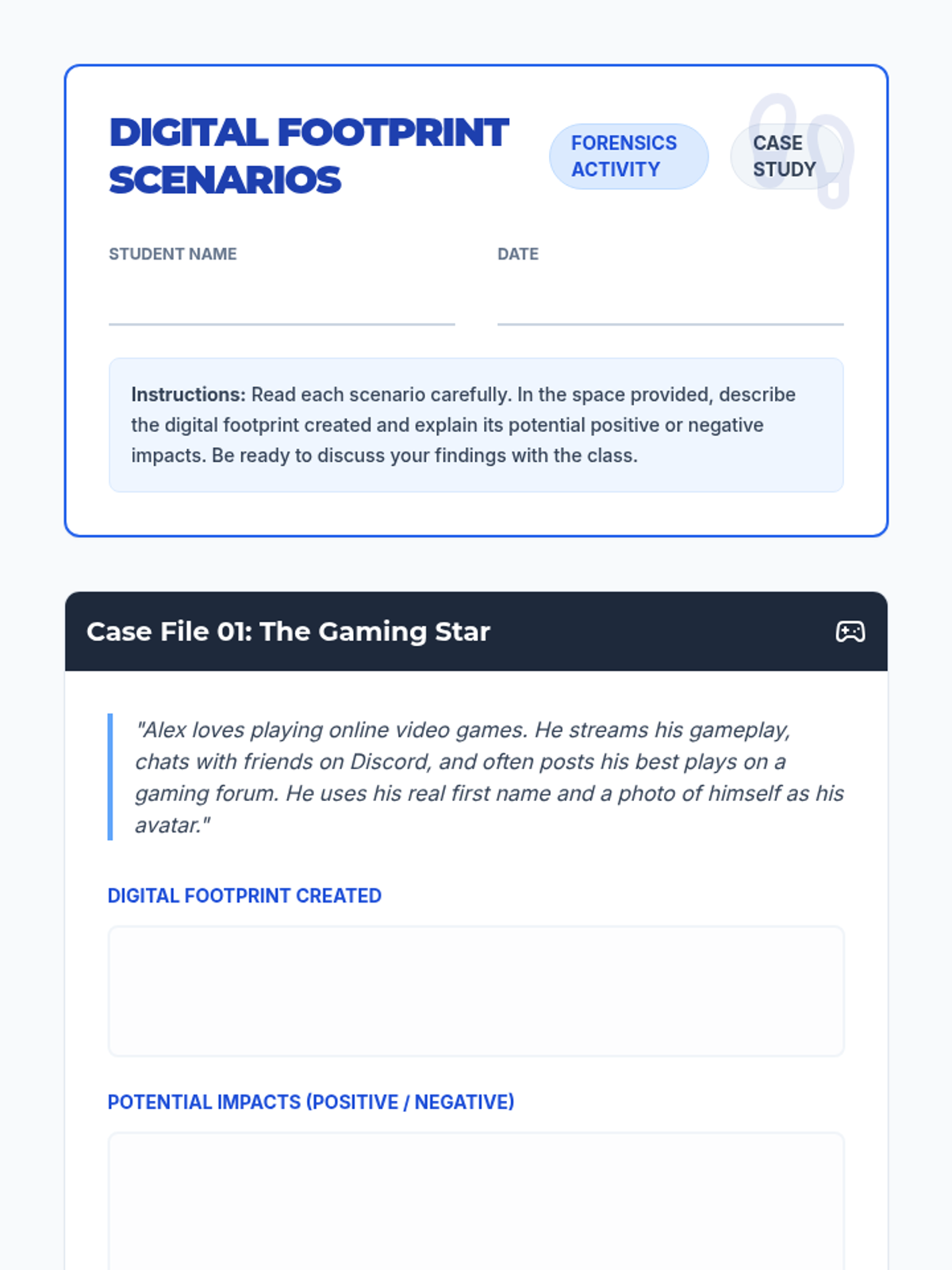
Students explore the intersection of personal data, privacy, and AI-driven tracking. They analyze digital footprints, decode terms of service, debate the ethics of smart devices, and create their own data protection standards.
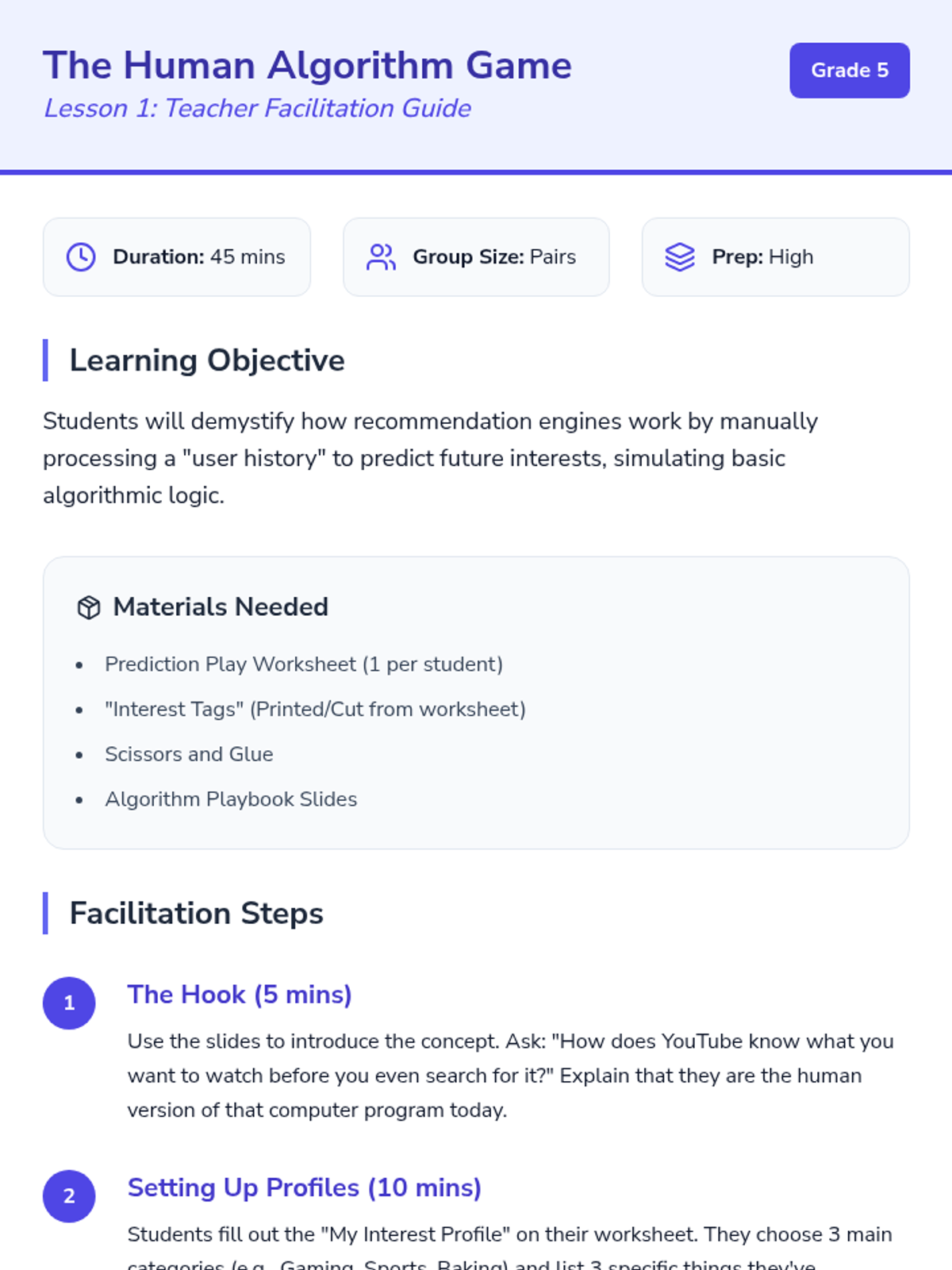
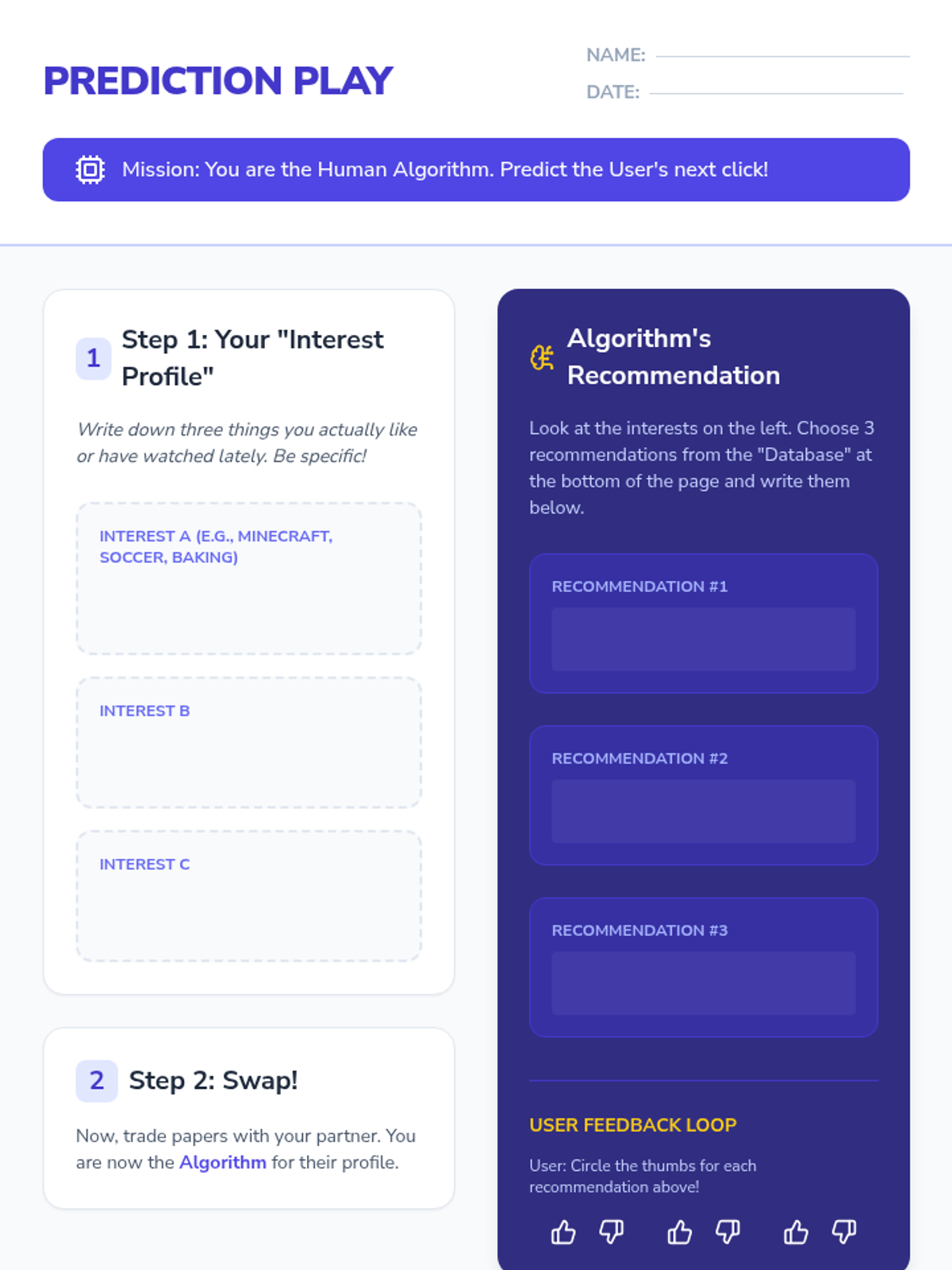
This sequence examines the invisible algorithms that curate content on video platforms and social media. Students investigate the 'attention economy' and how algorithms predict user preferences to keep them engaged. By analyzing their own experiences and simulated feeds, they identify how recommendation engines can create 'filter bubbles.' The learning arc moves from understanding the mechanism of recommendation to evaluating its impact on critical thinking and exposure to new ideas.
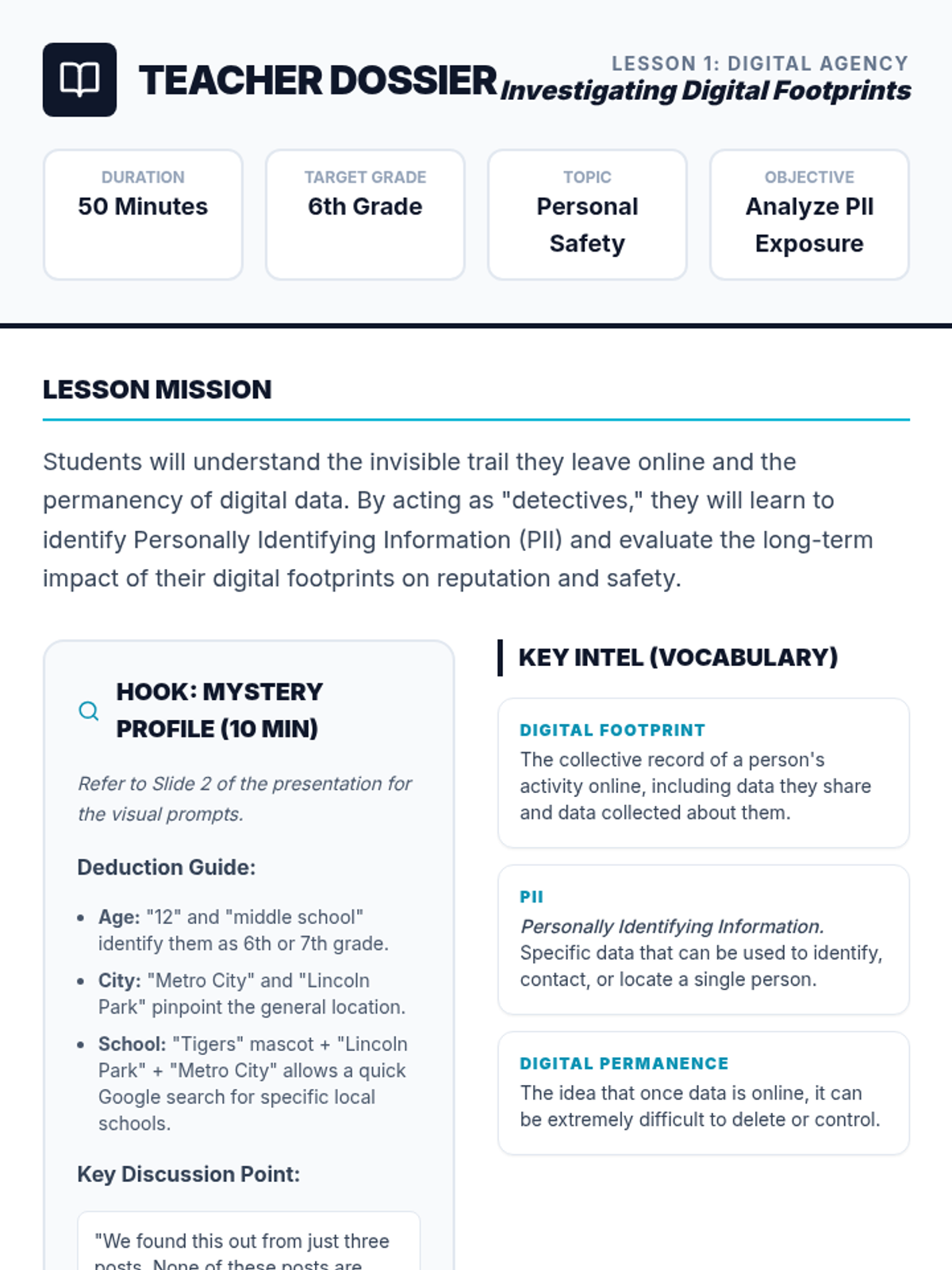
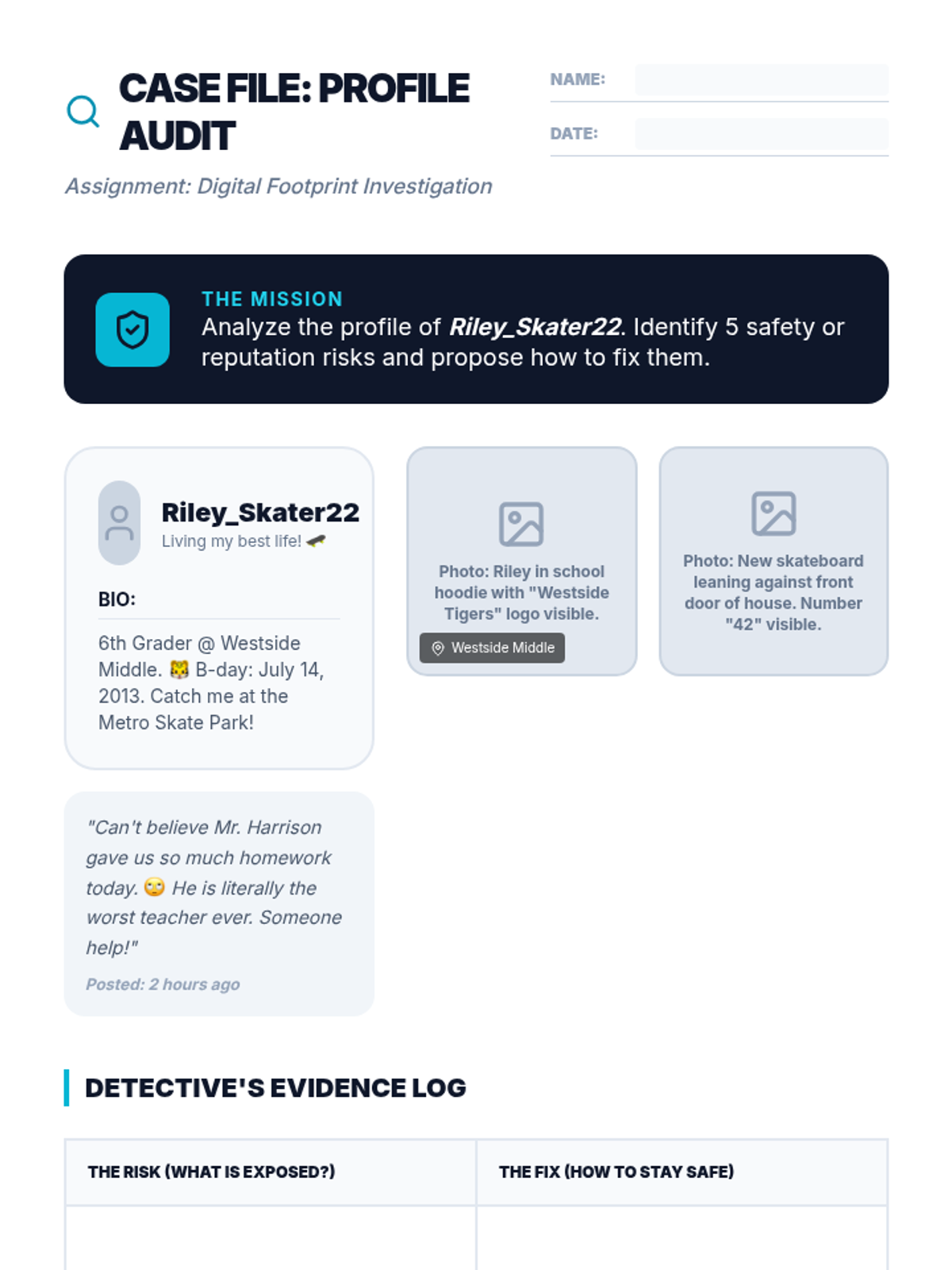
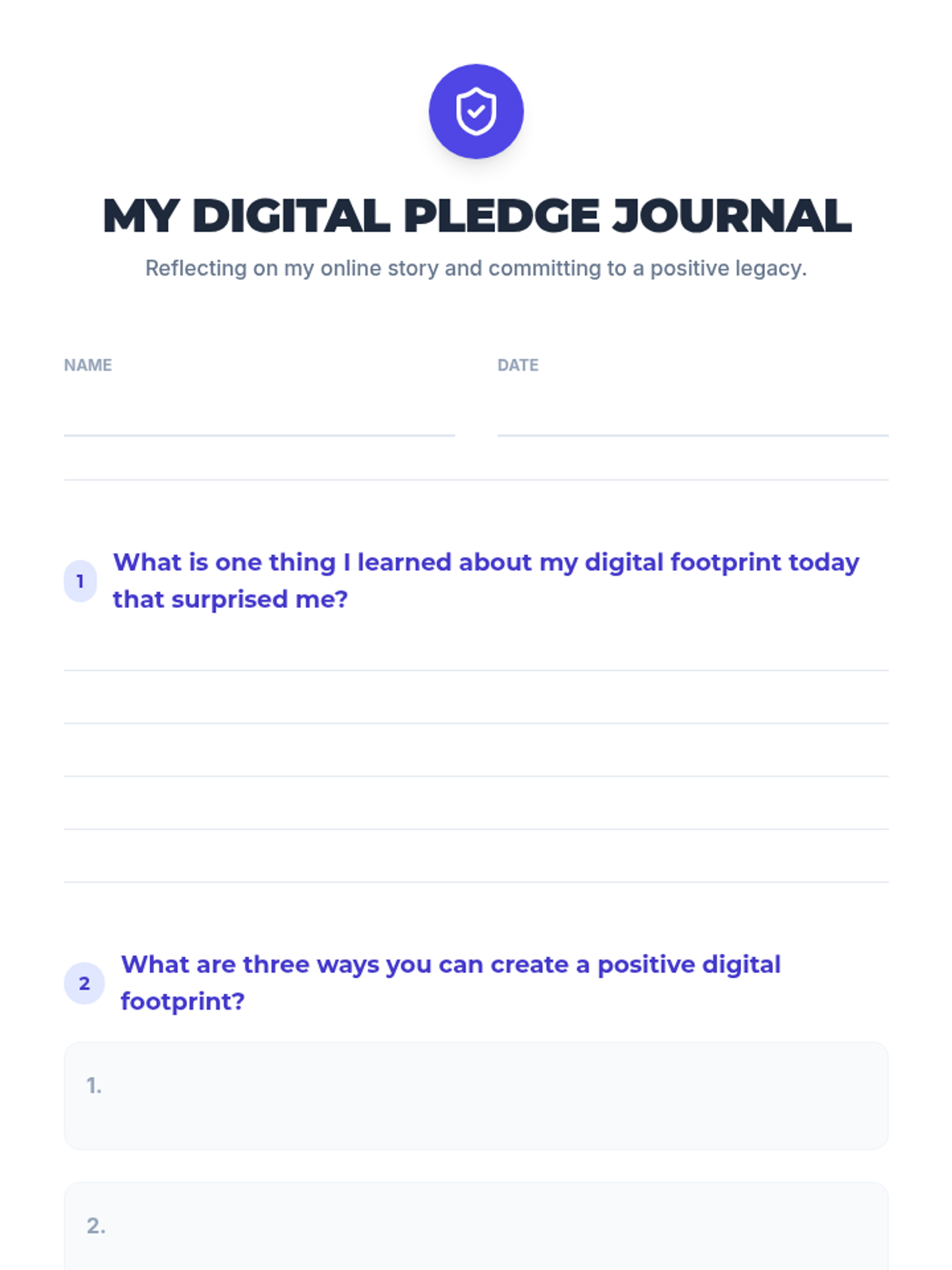
This sequence guides 6th-grade students through the complexities of maintaining a safe, positive, and secure online presence. Students investigate digital footprints, configure privacy settings, deconstruct cyberbullying, and practice upstander interventions, culminating in the creation of a personal Digital Constitution.
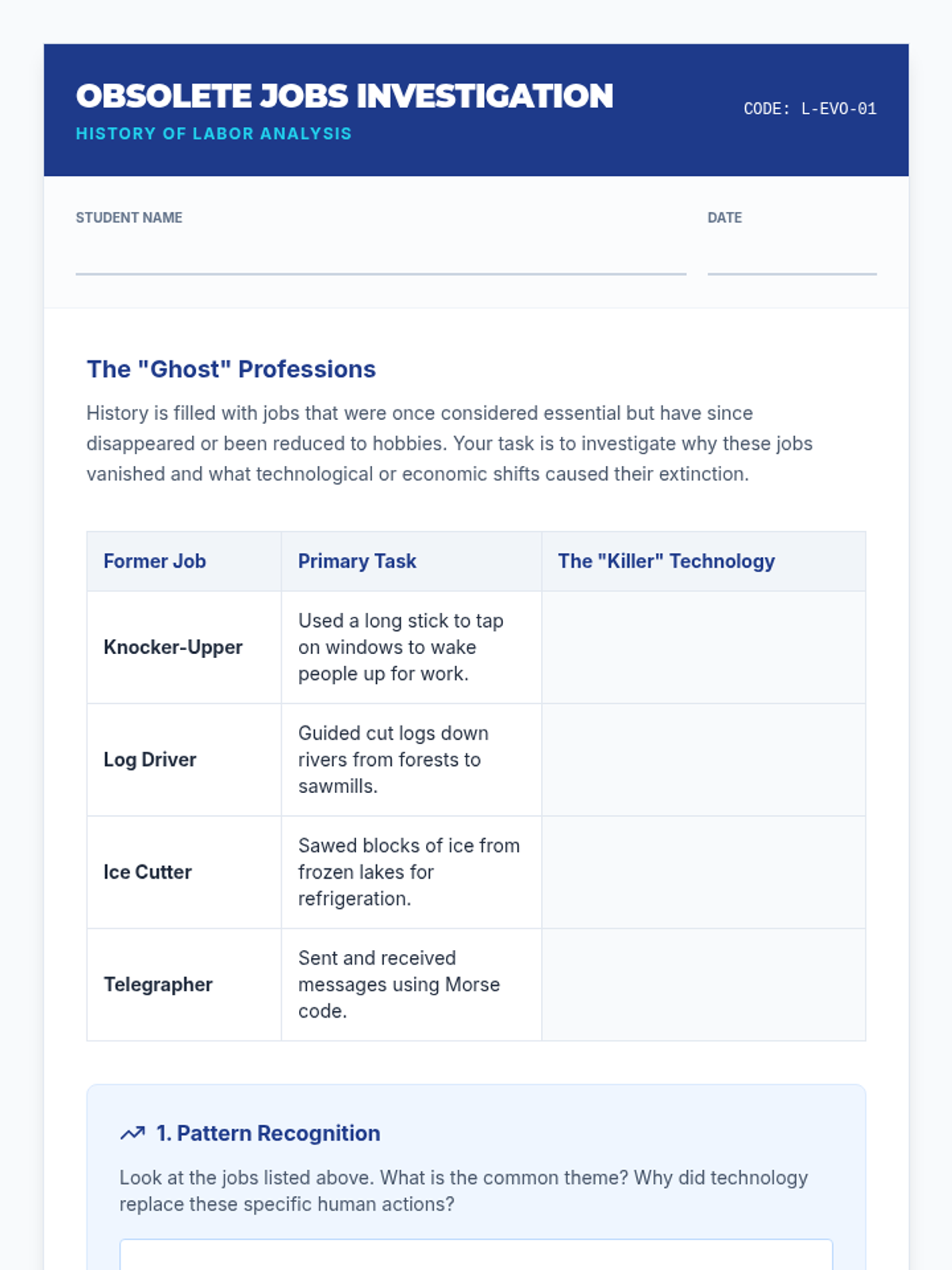
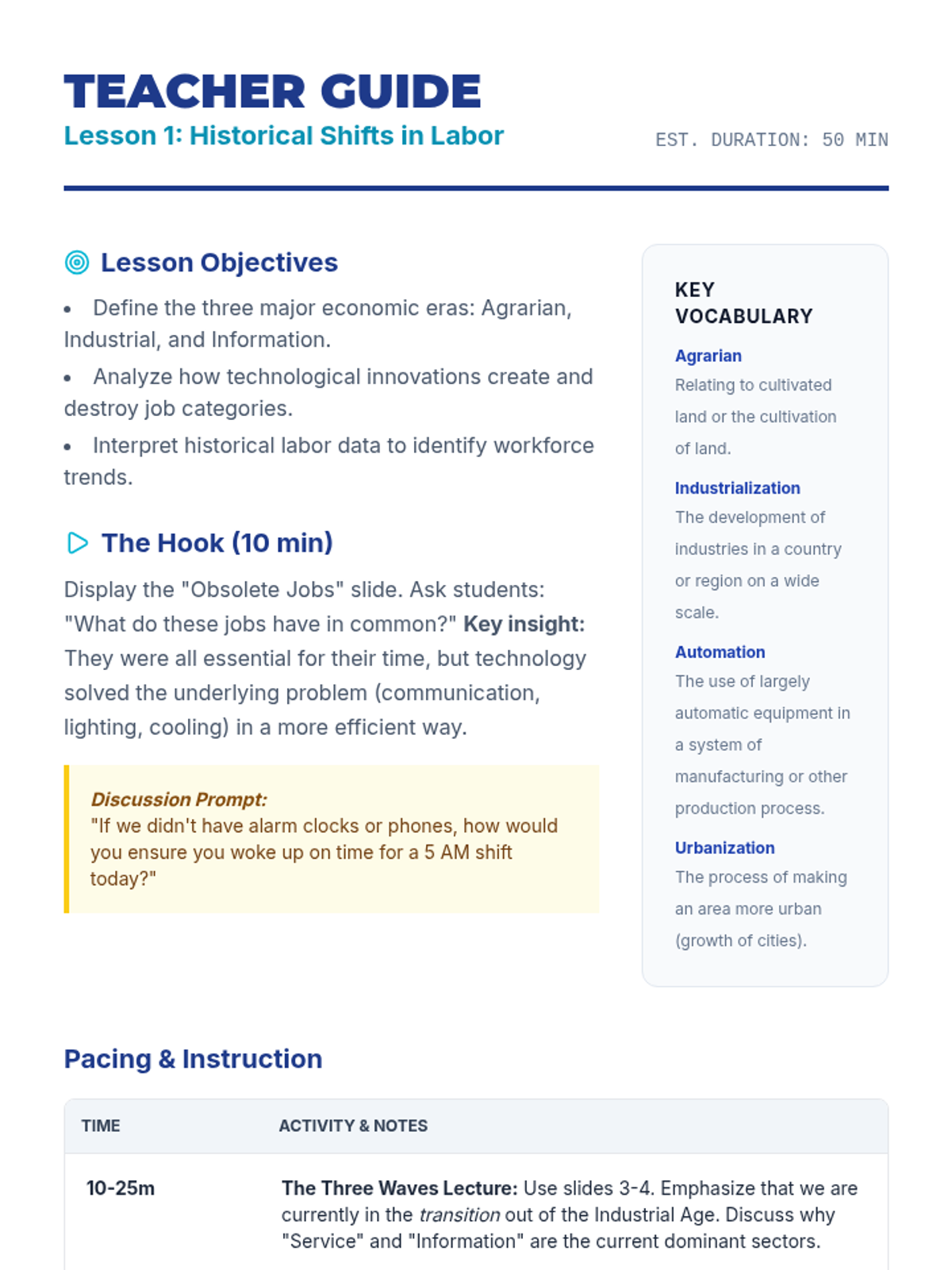
This sequence guides 8th-grade students through the evolution of the workplace, from historical industrial shifts to modern disruptors like AI, automation, and the gig economy. Students analyze data, participate in simulations, and forecast future skills needed for a globalized, digital workforce.
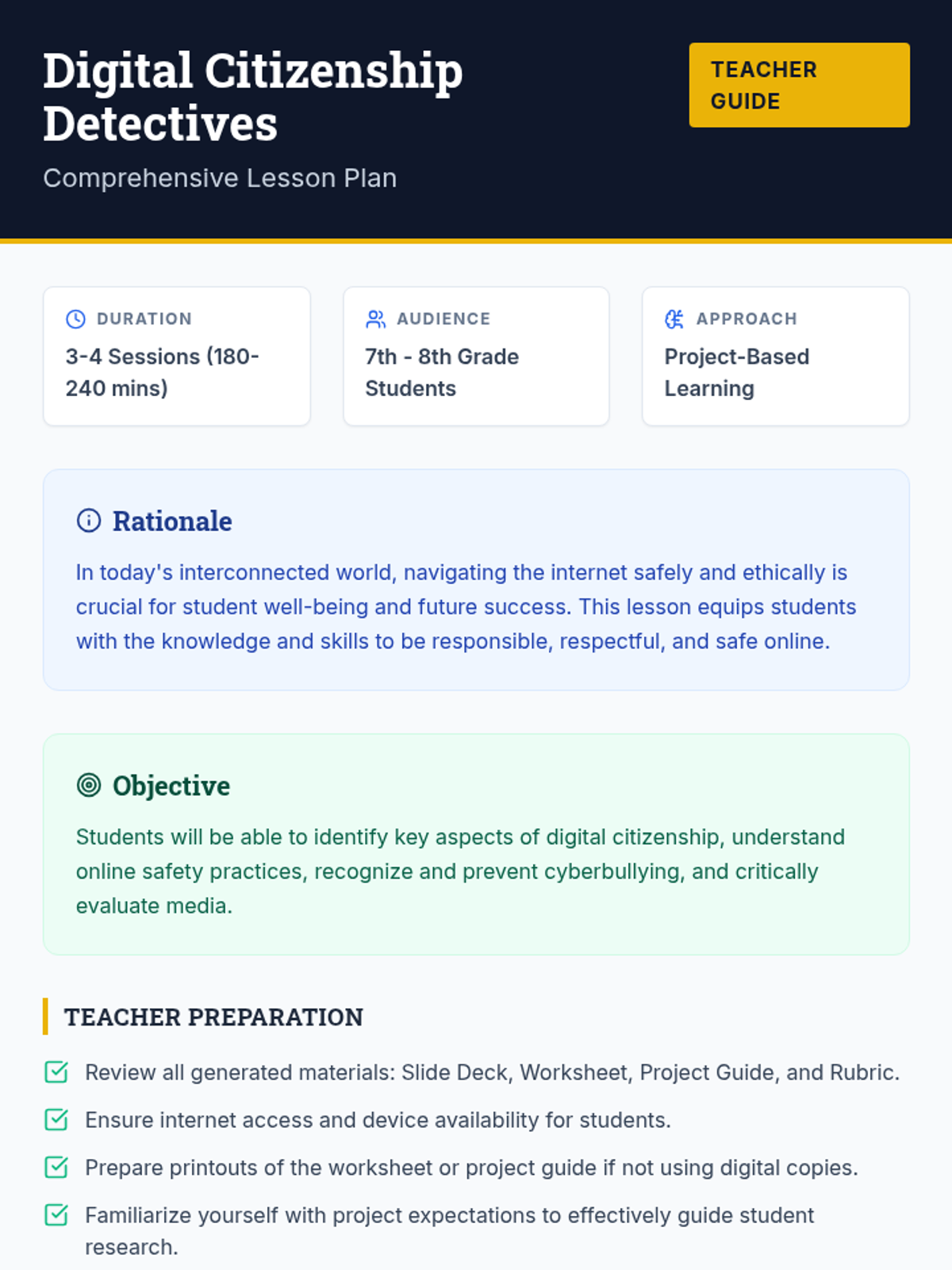
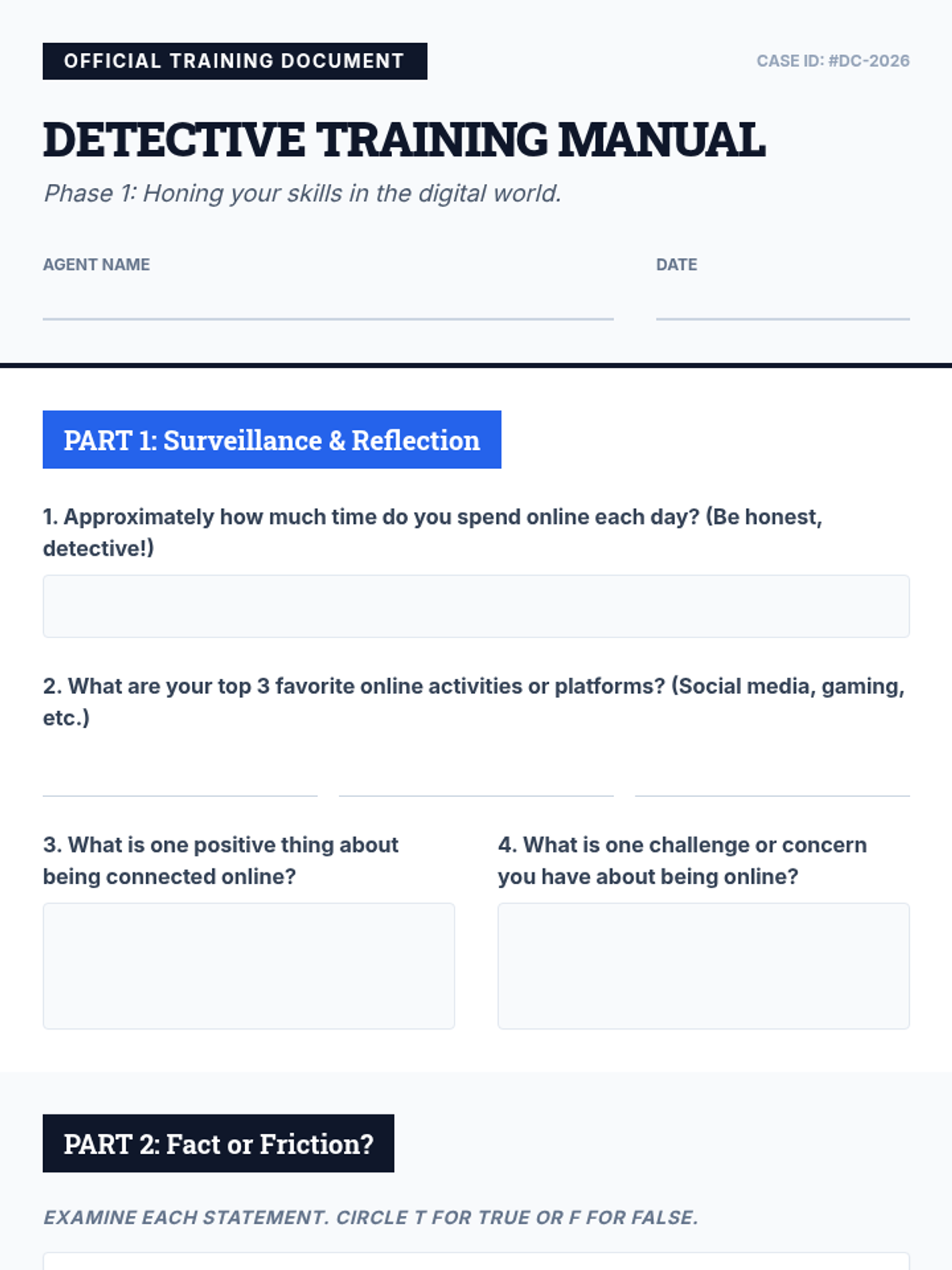
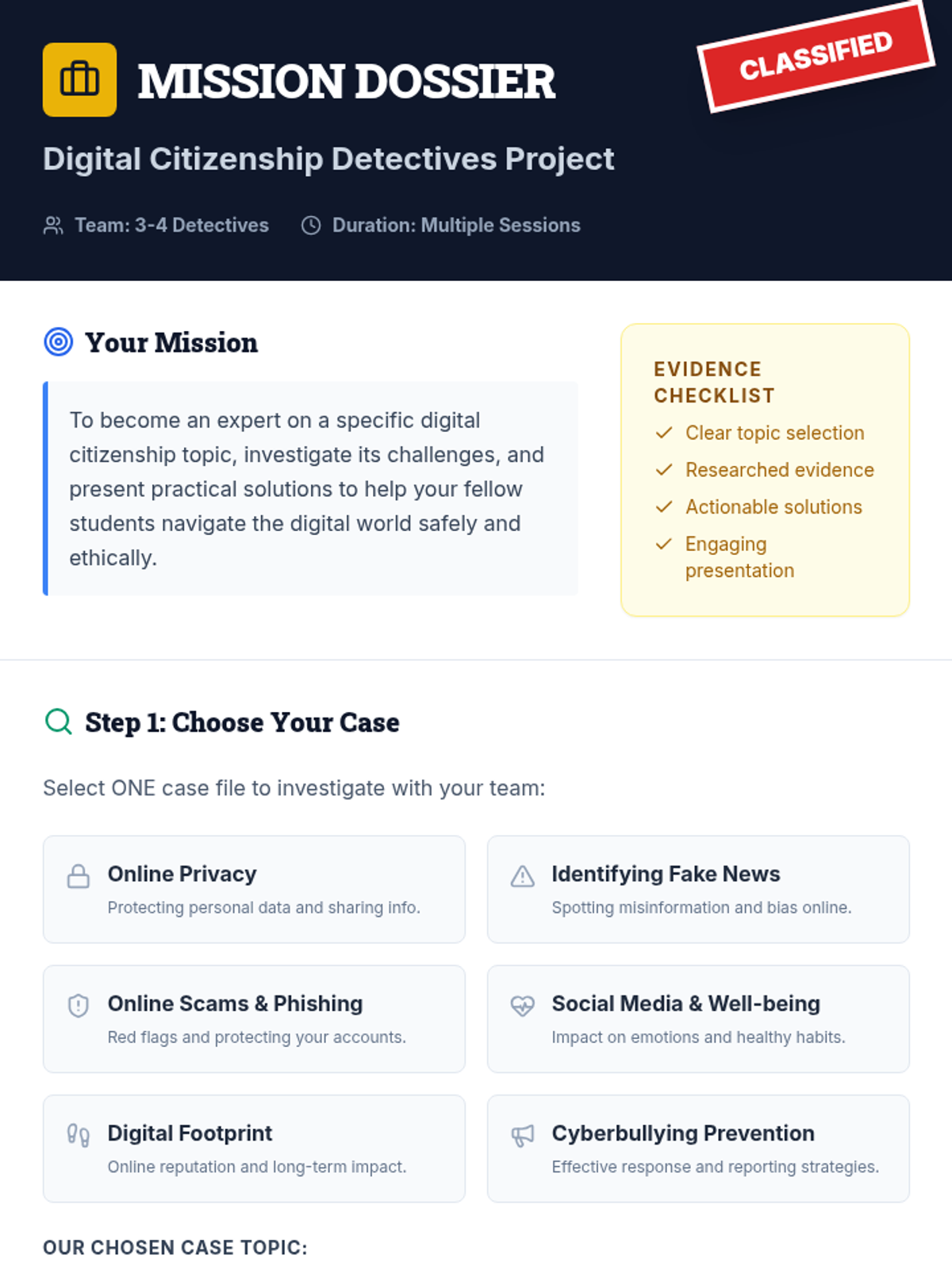
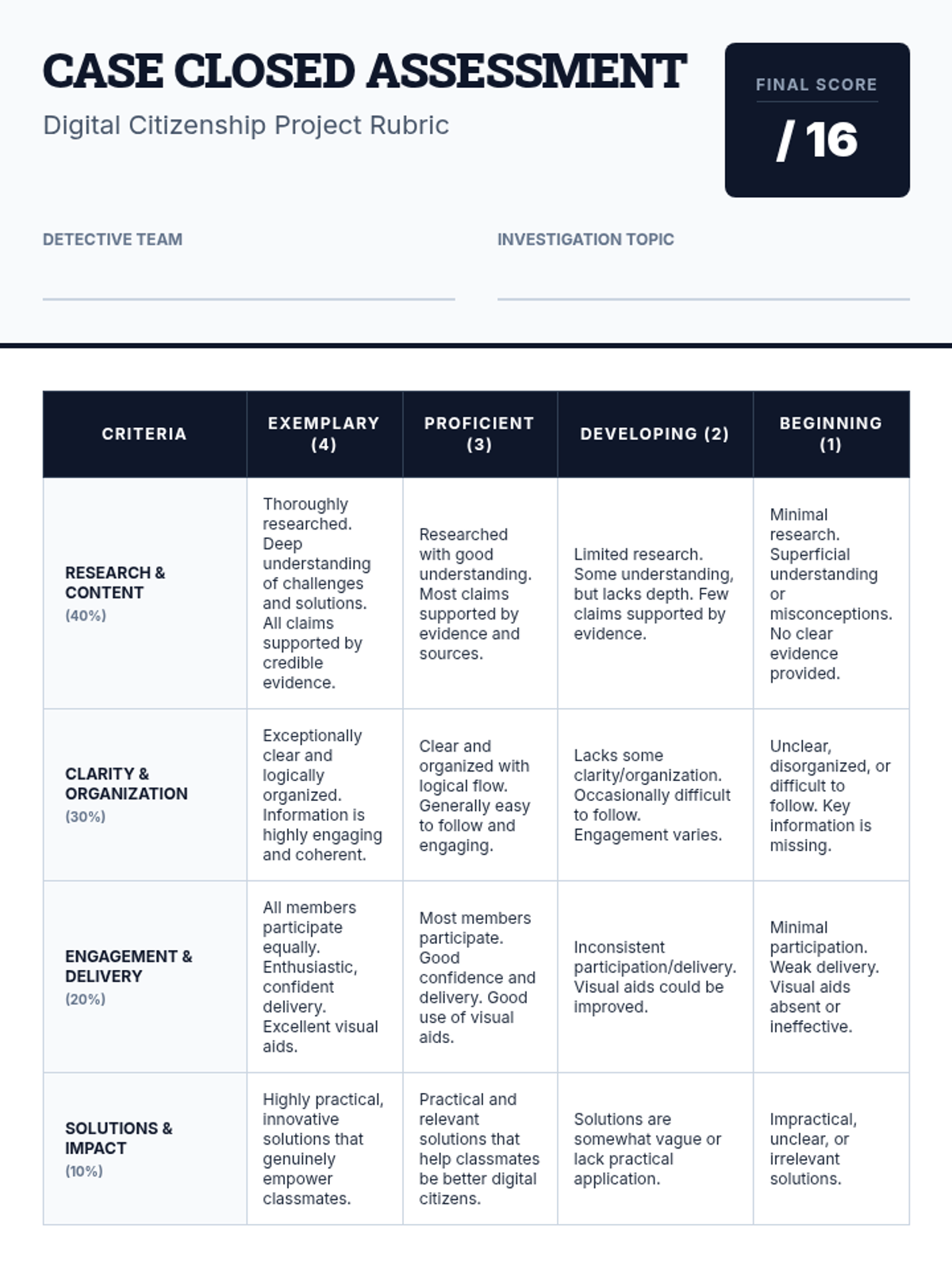
A comprehensive project-based unit that empowers students to navigate the digital world safely and ethically through collaborative research and investigation.
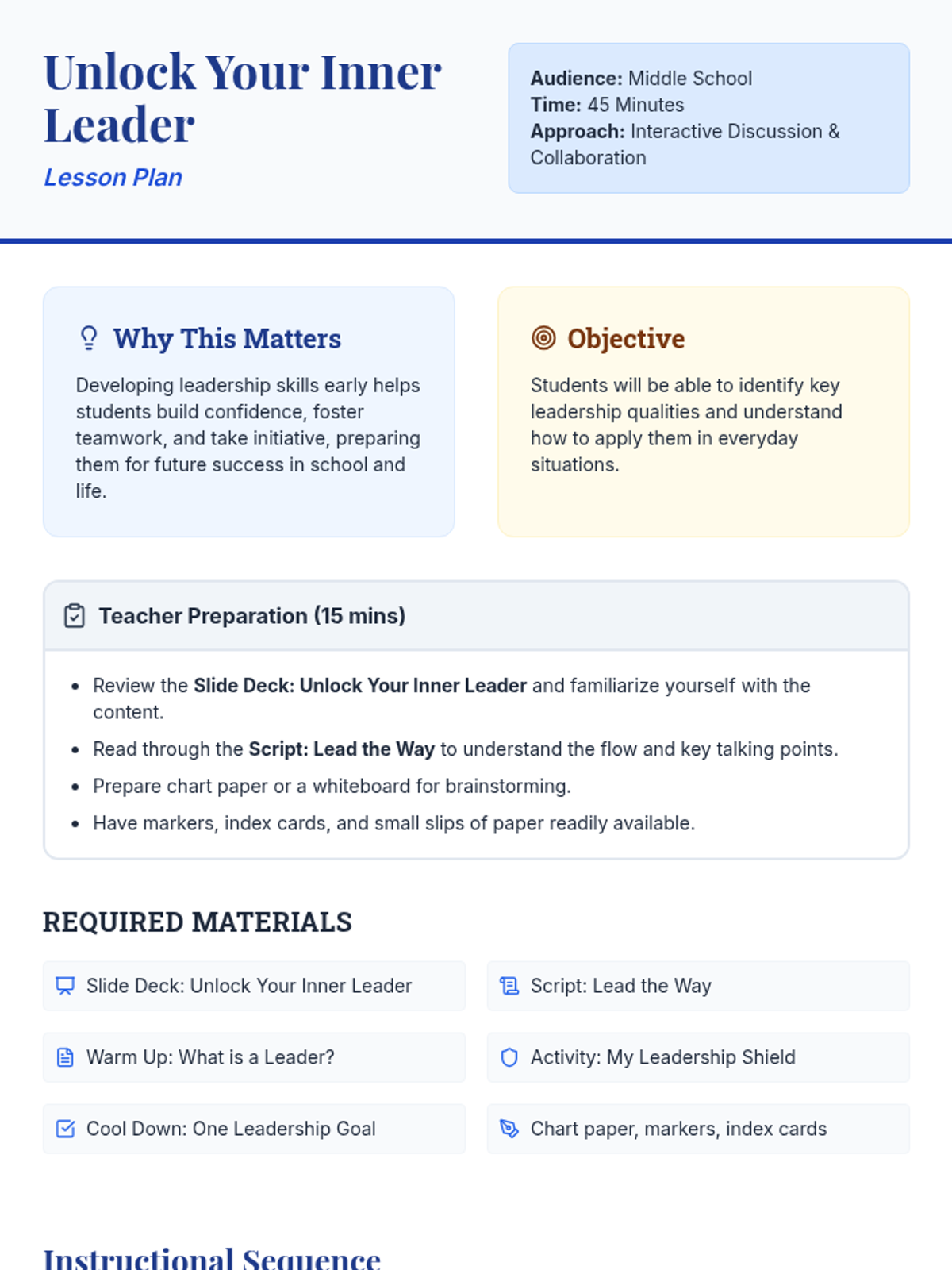
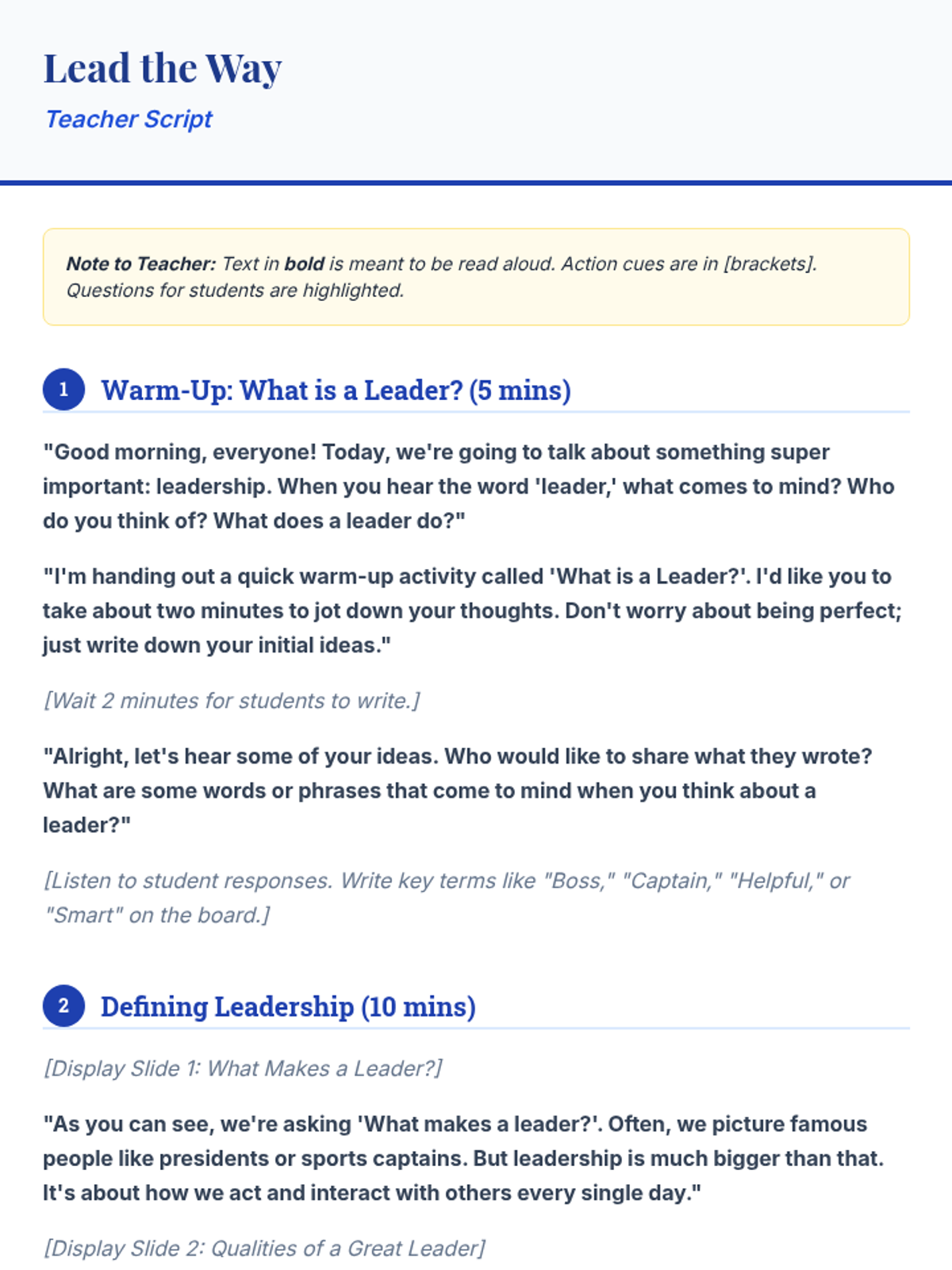
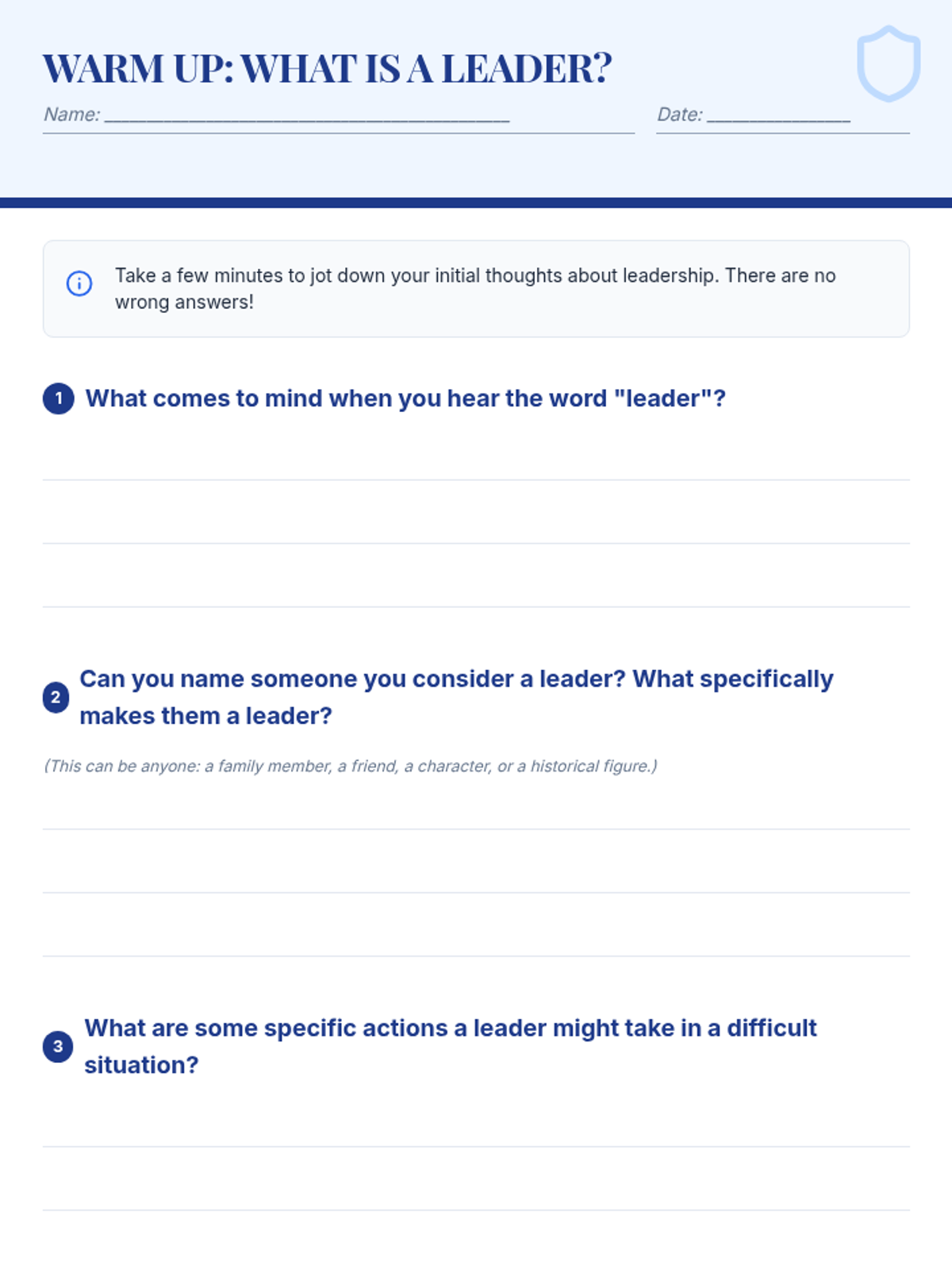
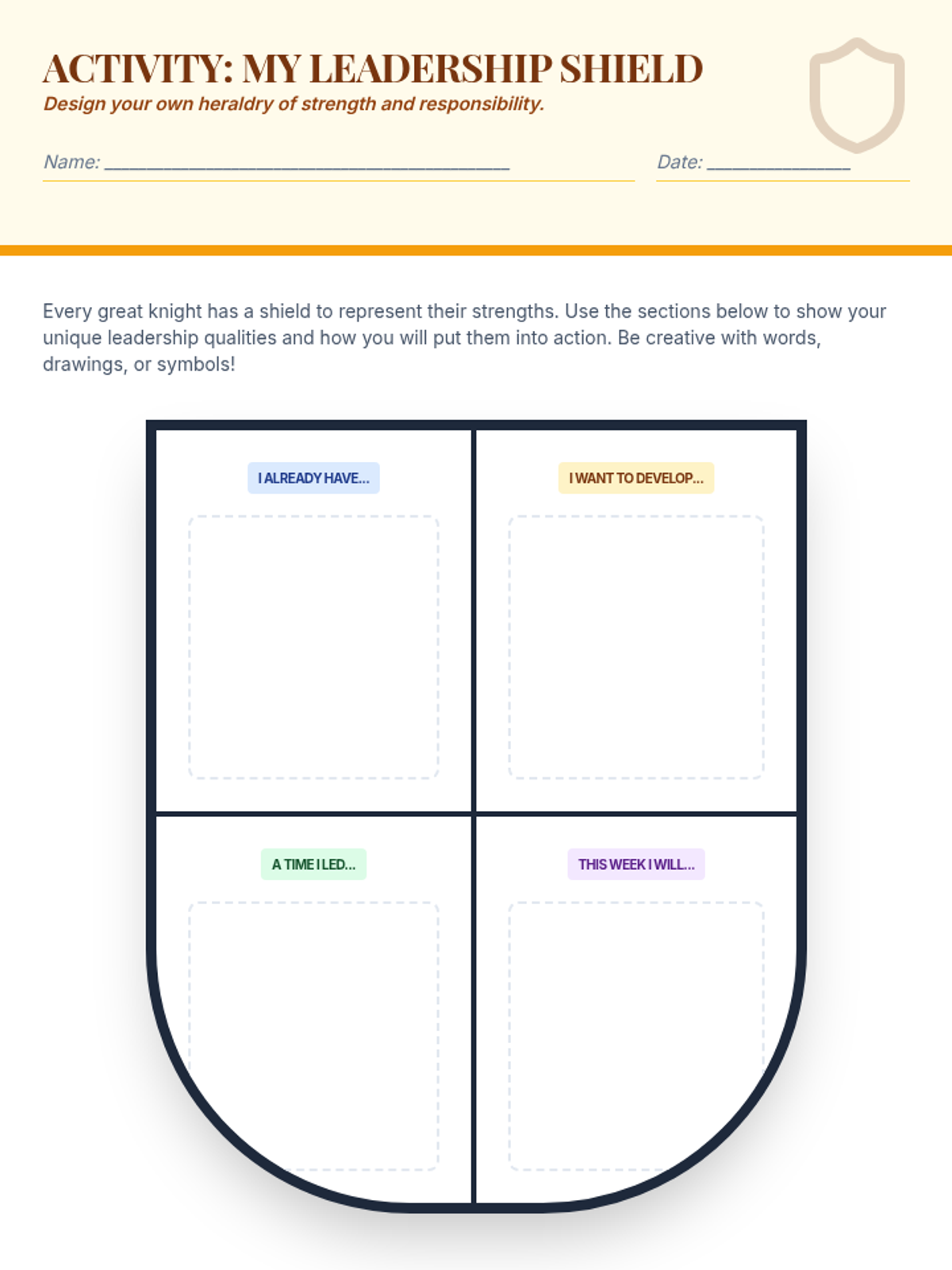
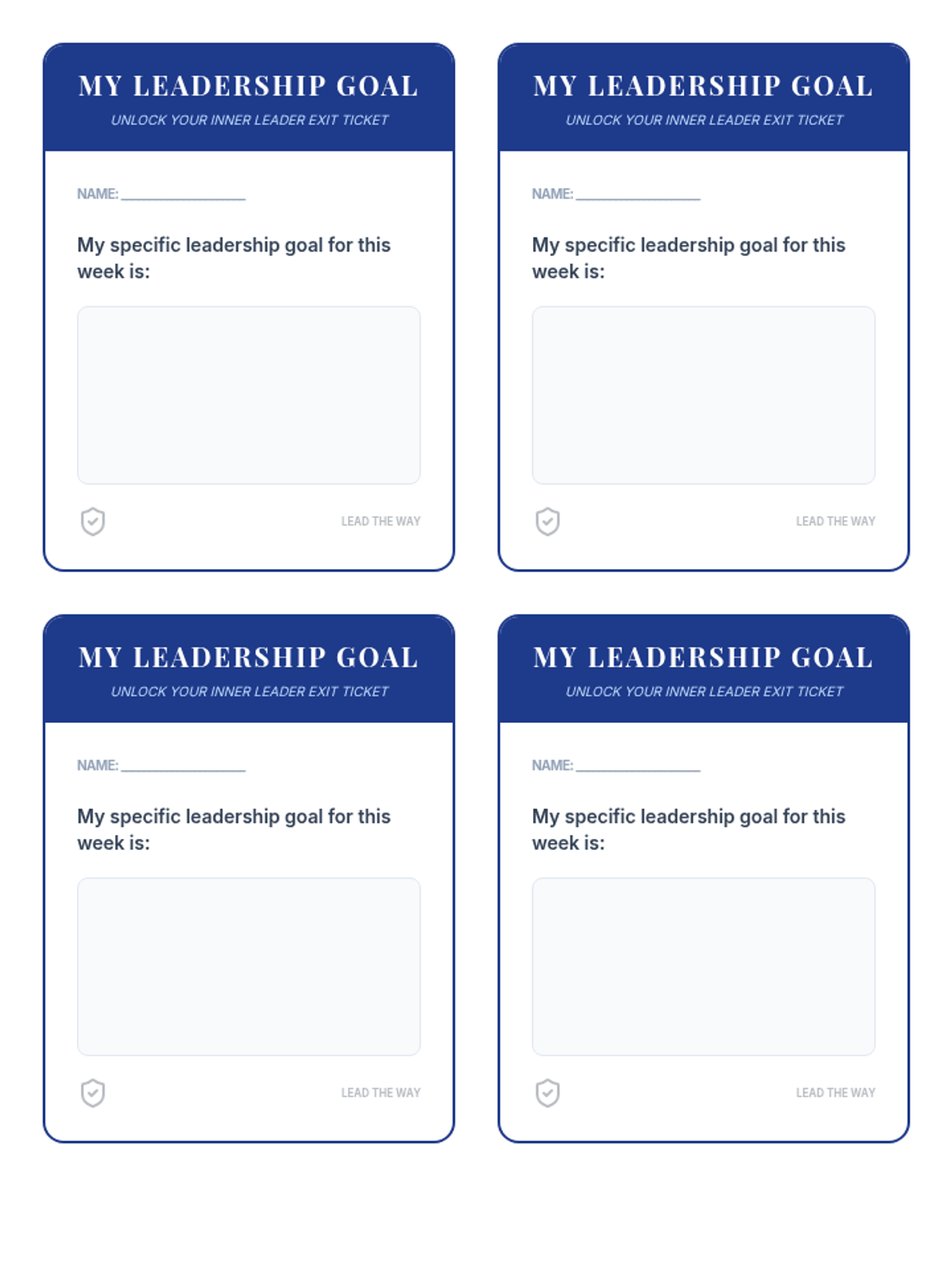
This character-building sequence guides students through discovering their leadership potential and practicing humility. It includes tailored lessons for middle school and elementary levels, using a 'shield' motif to represent personal growth and strength.
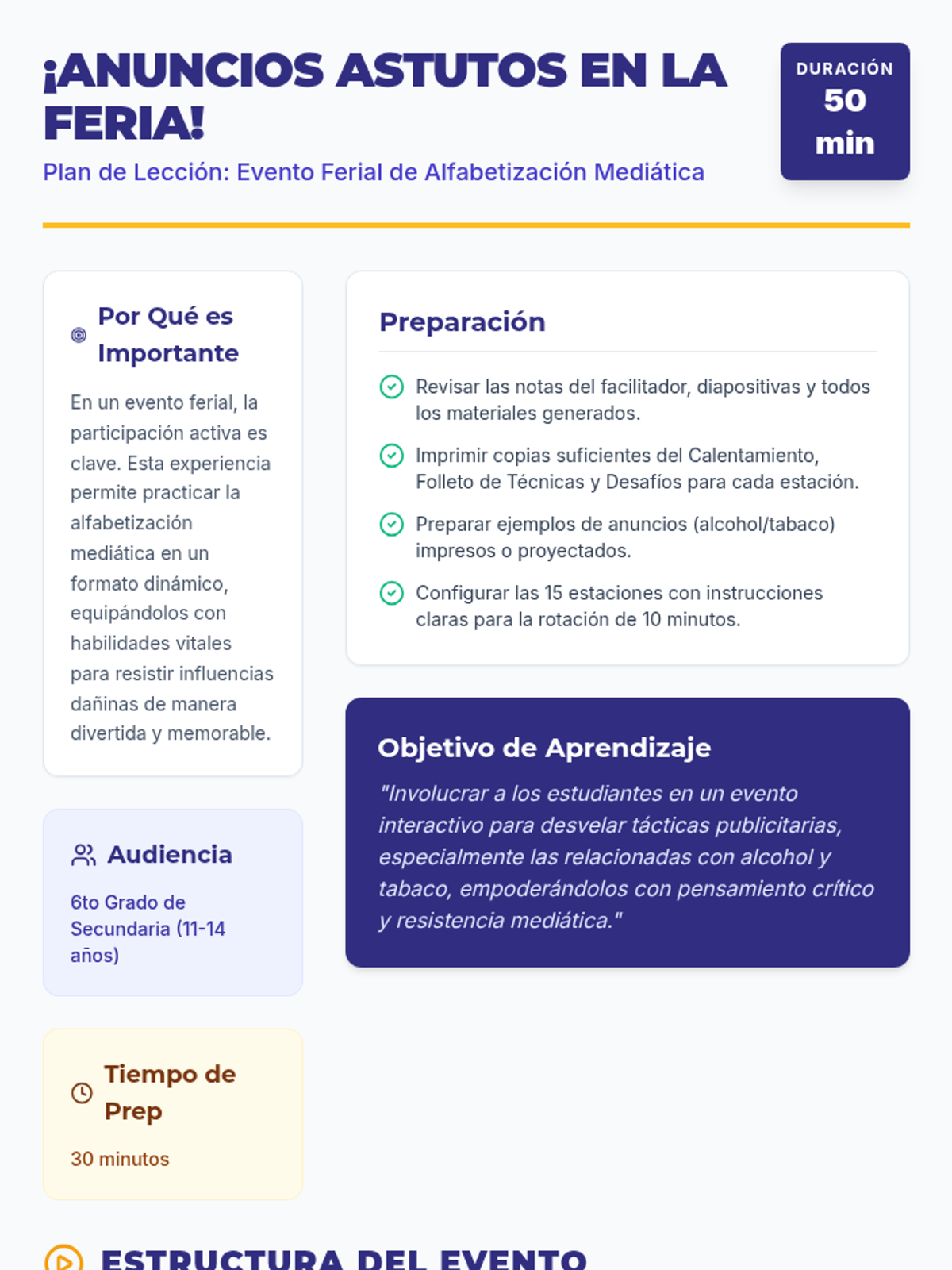
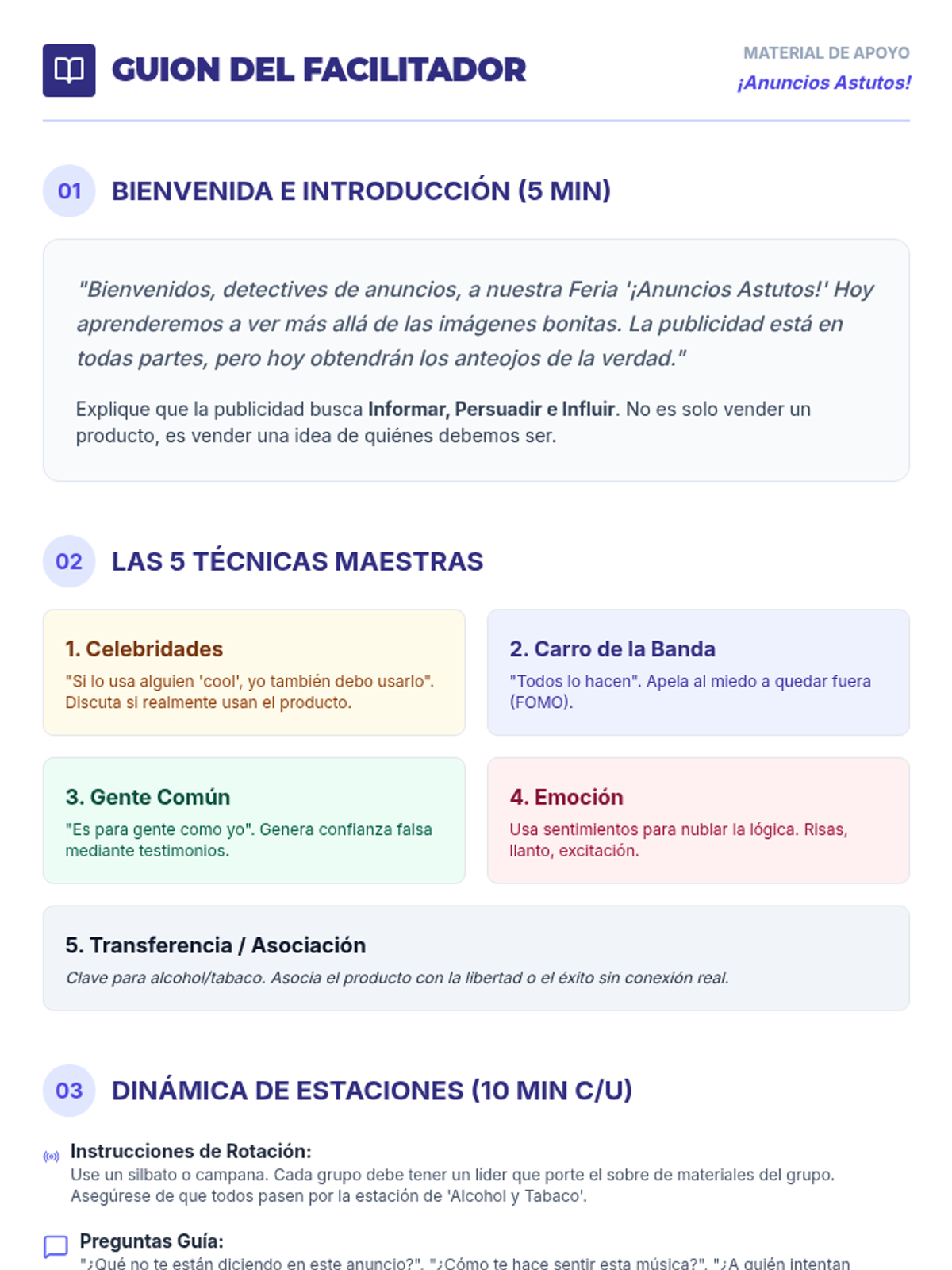
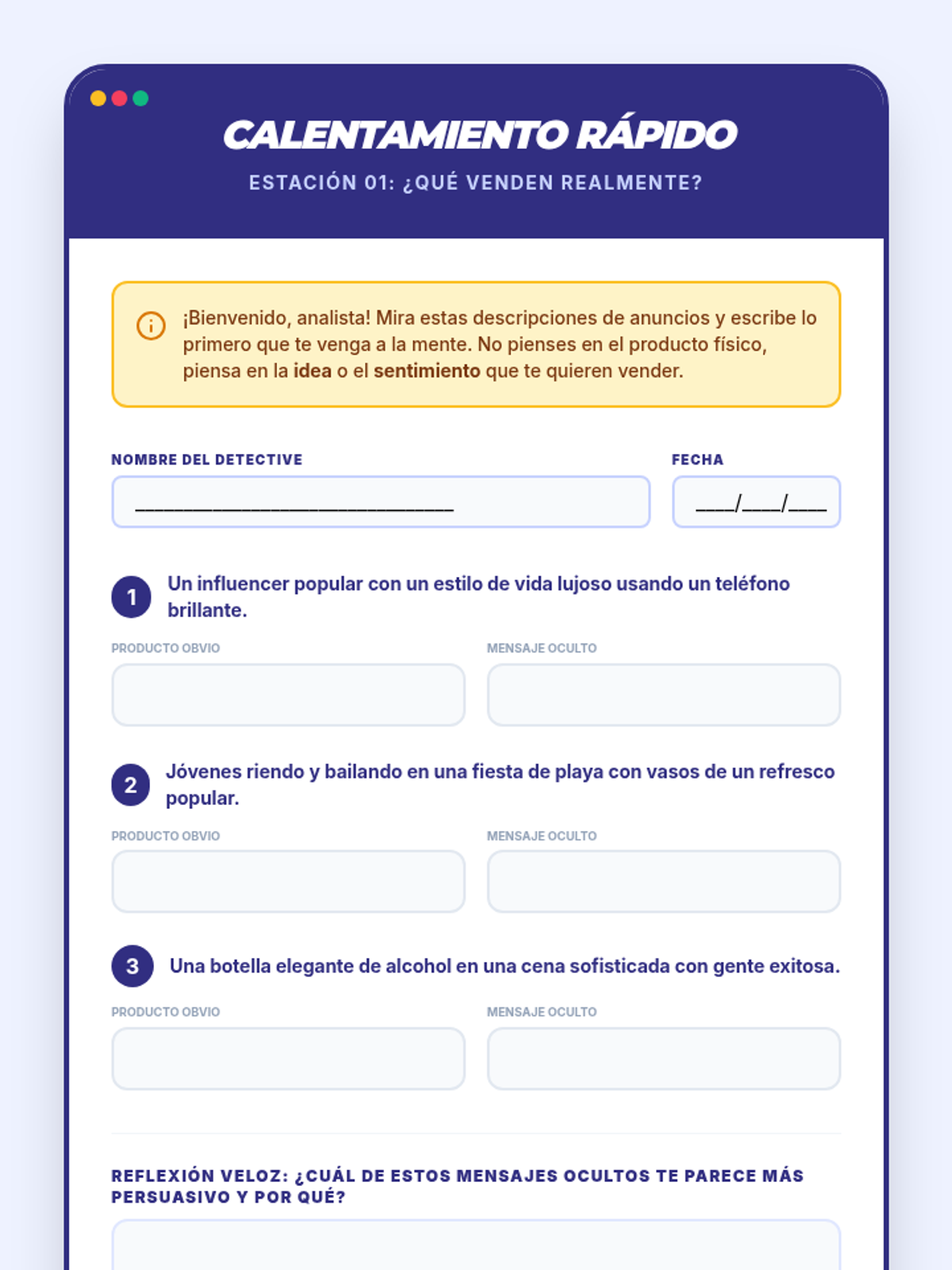
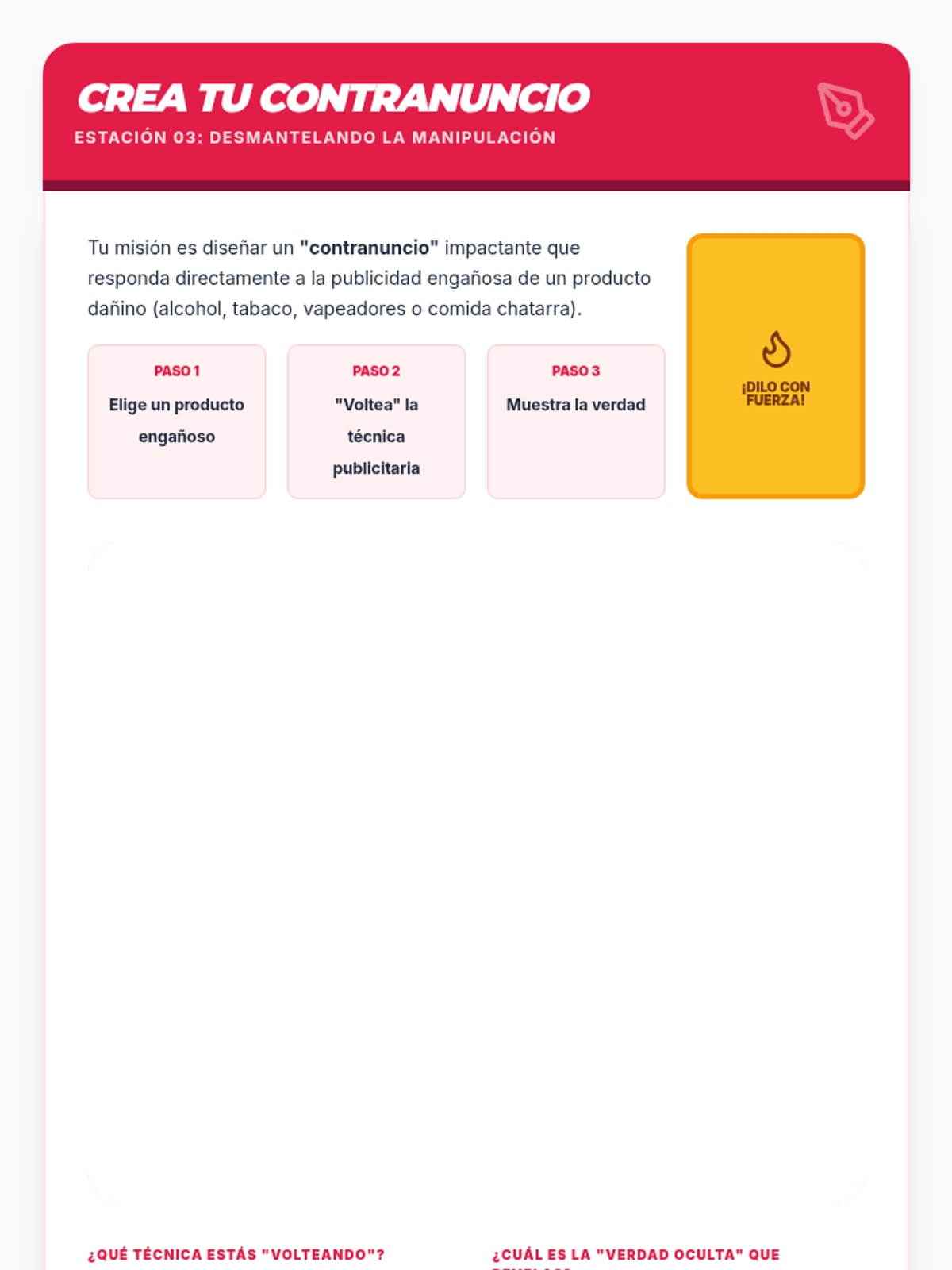
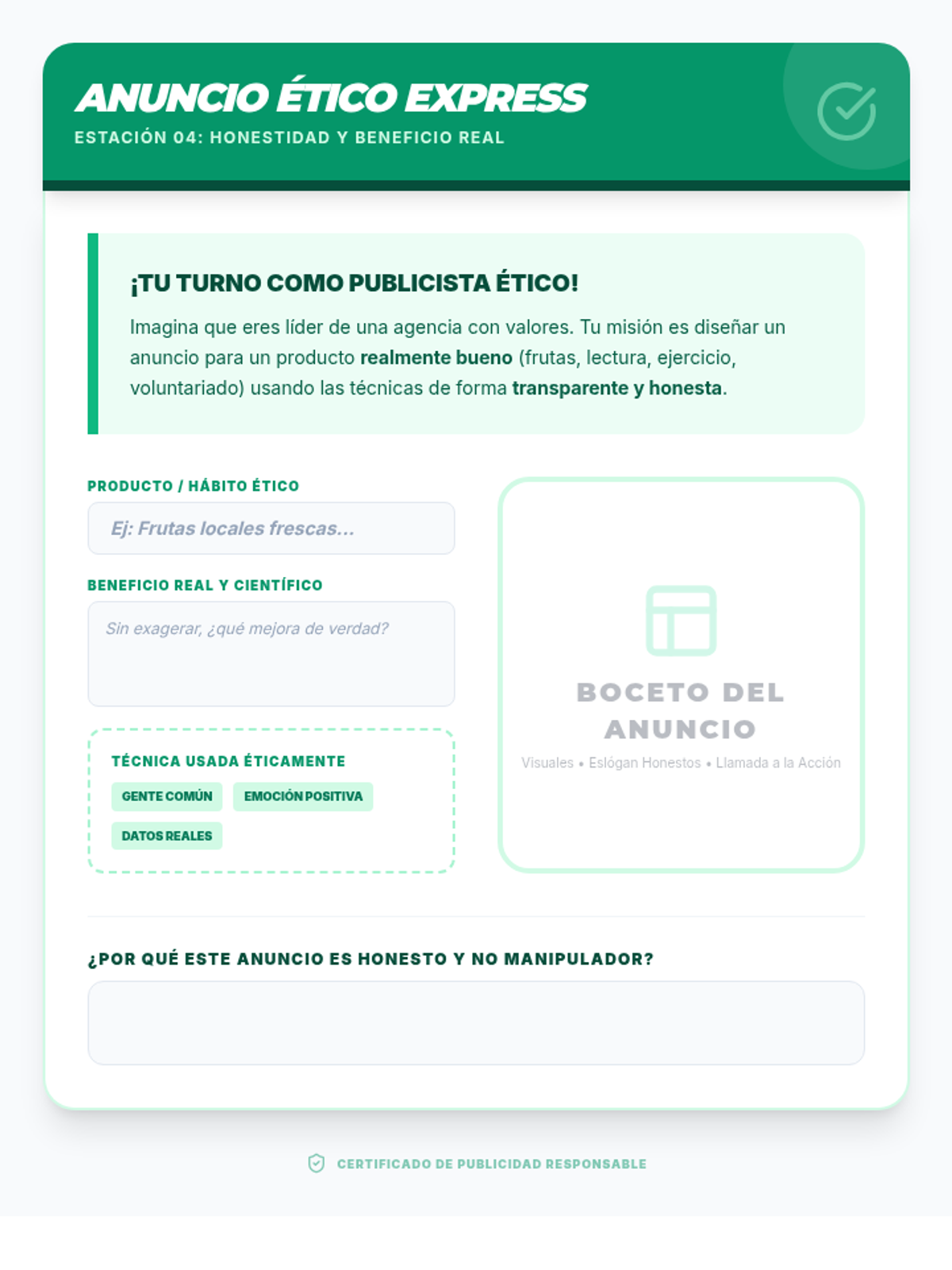
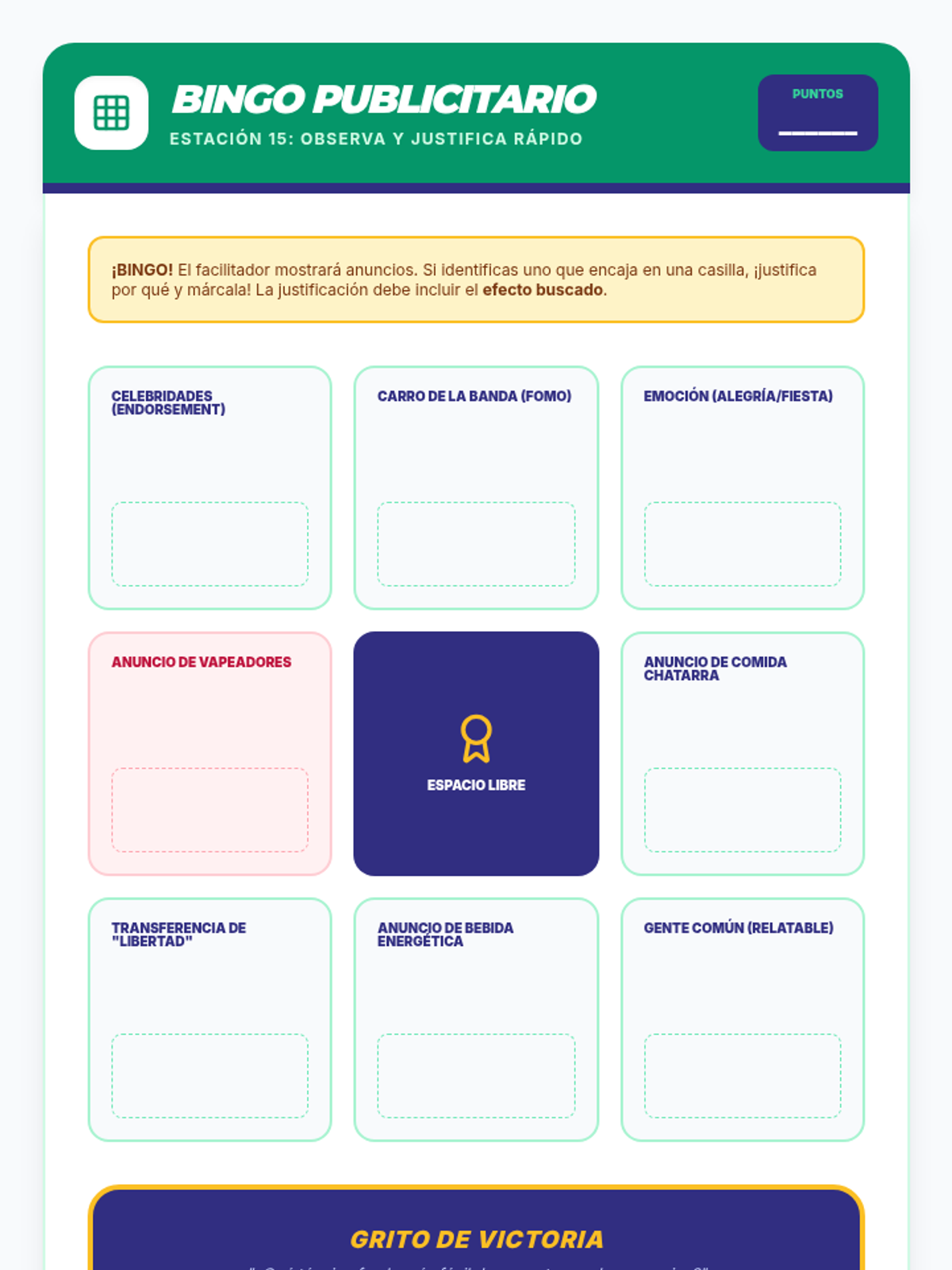
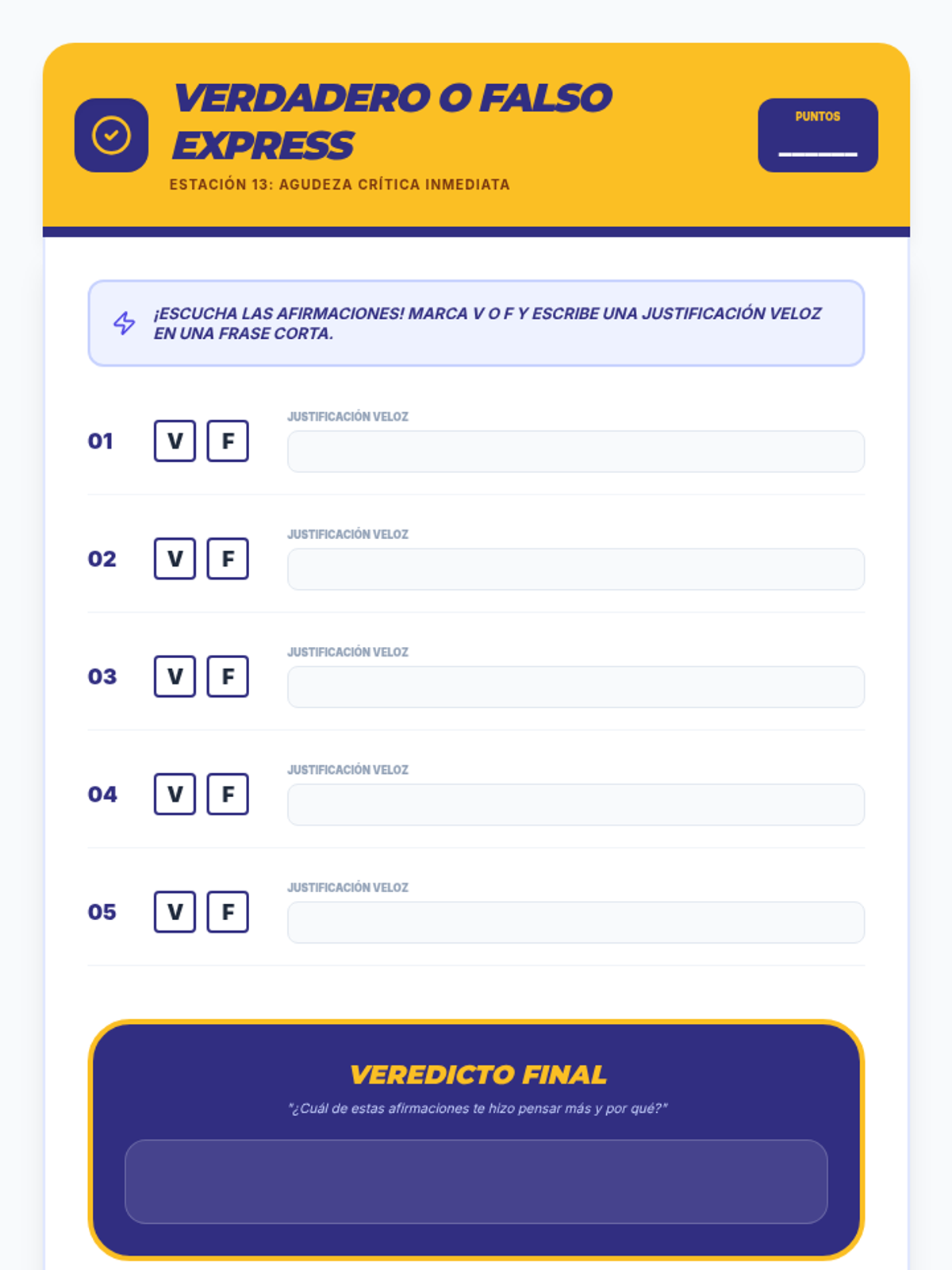
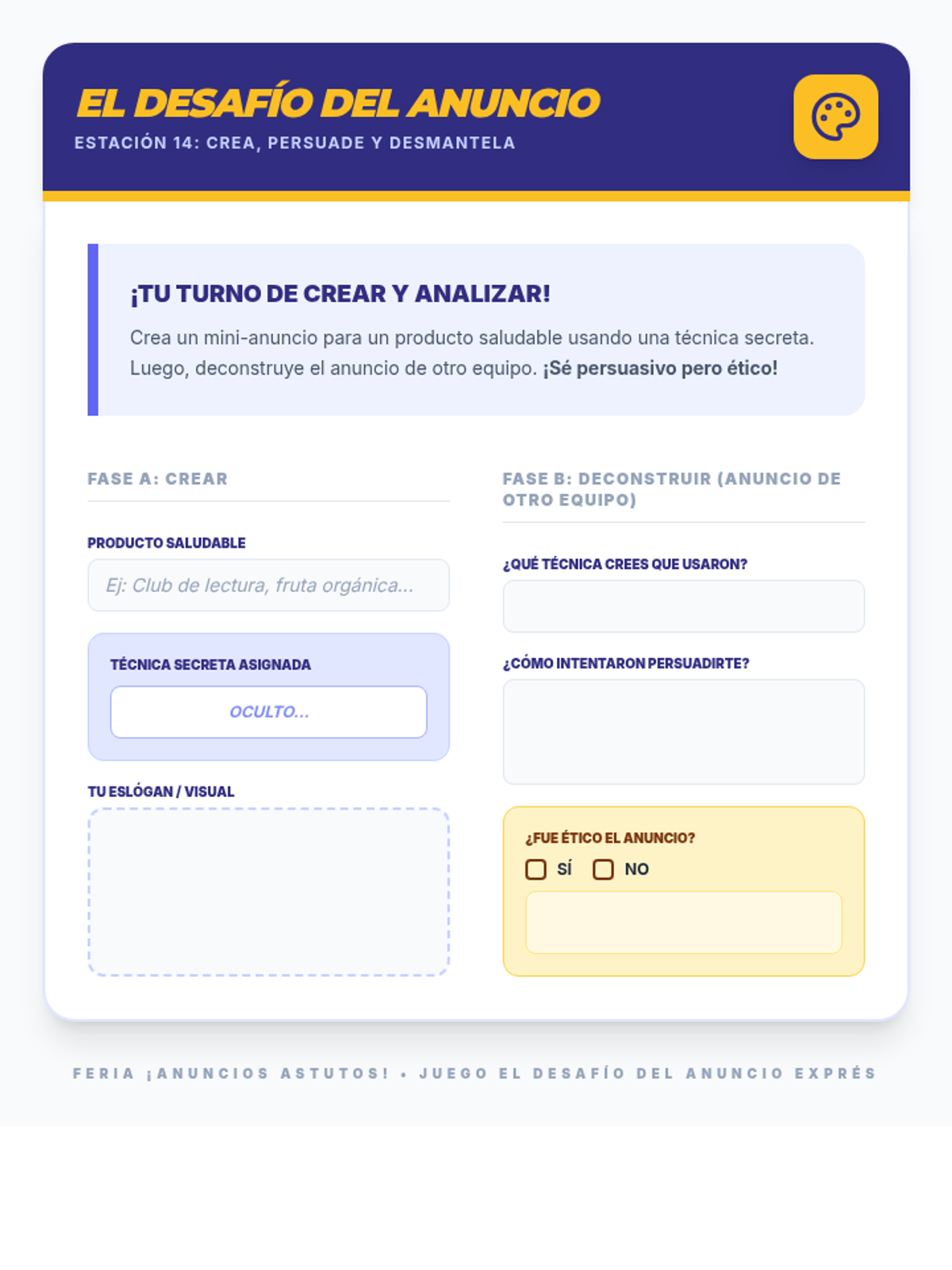
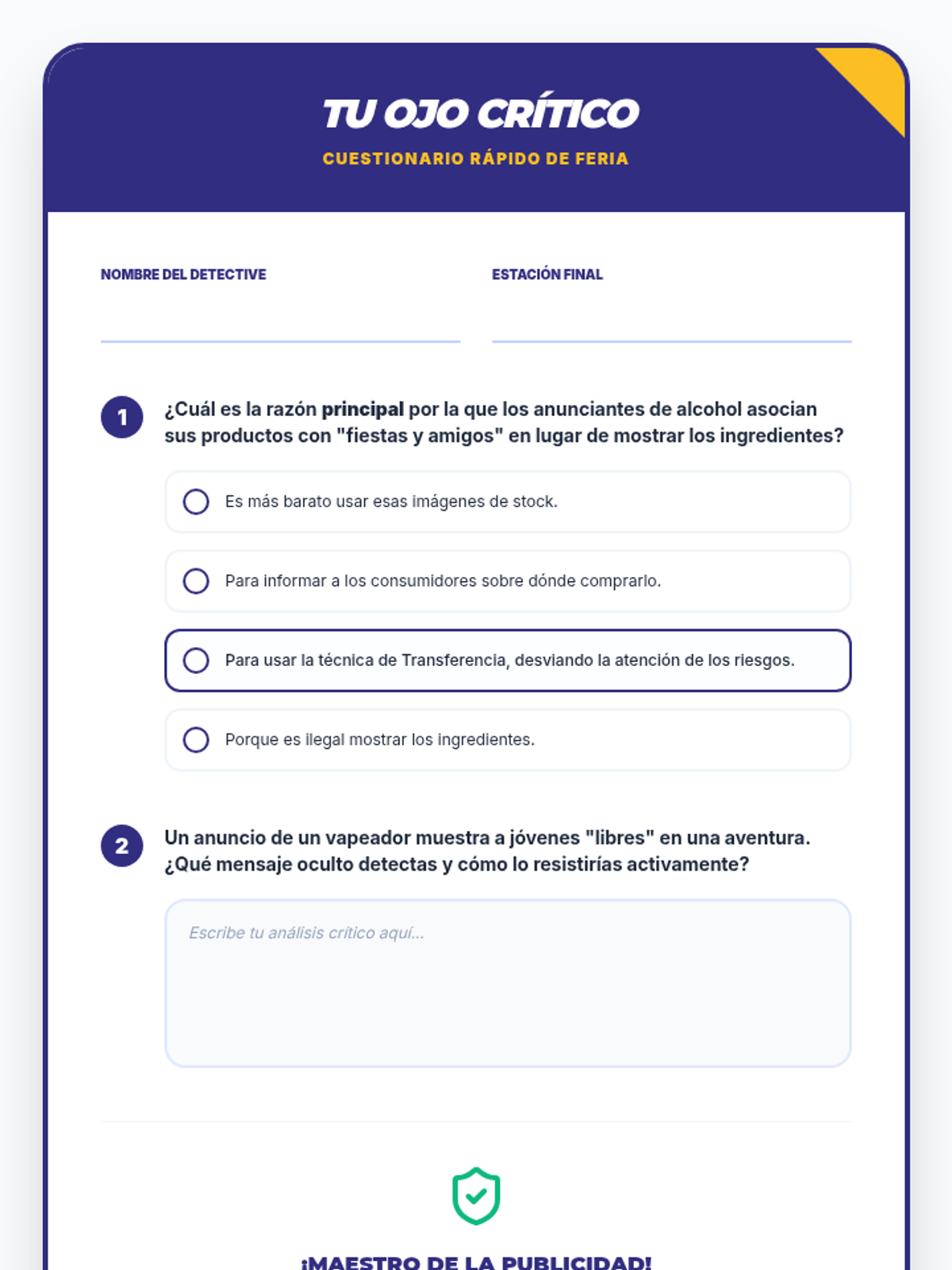
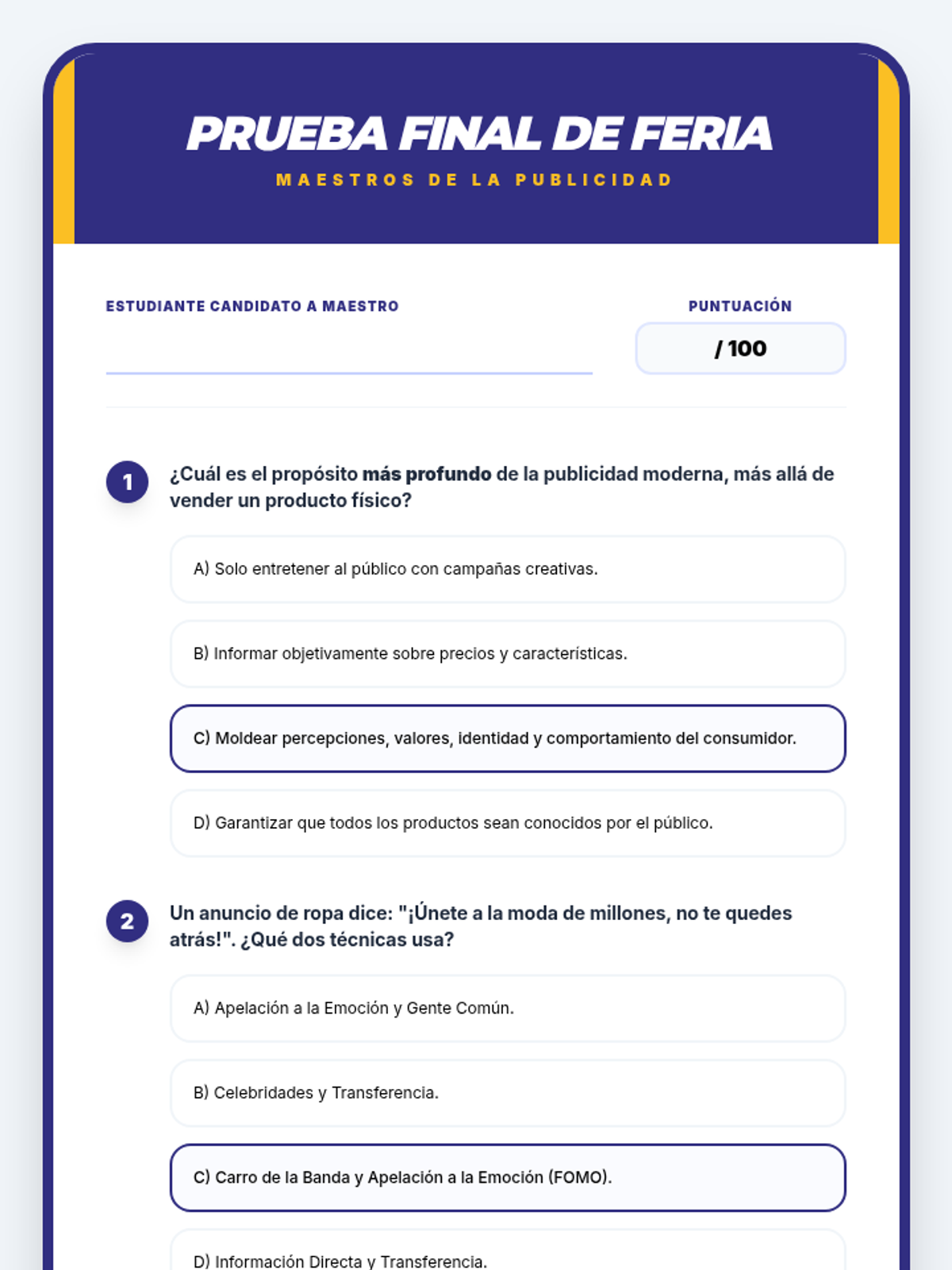
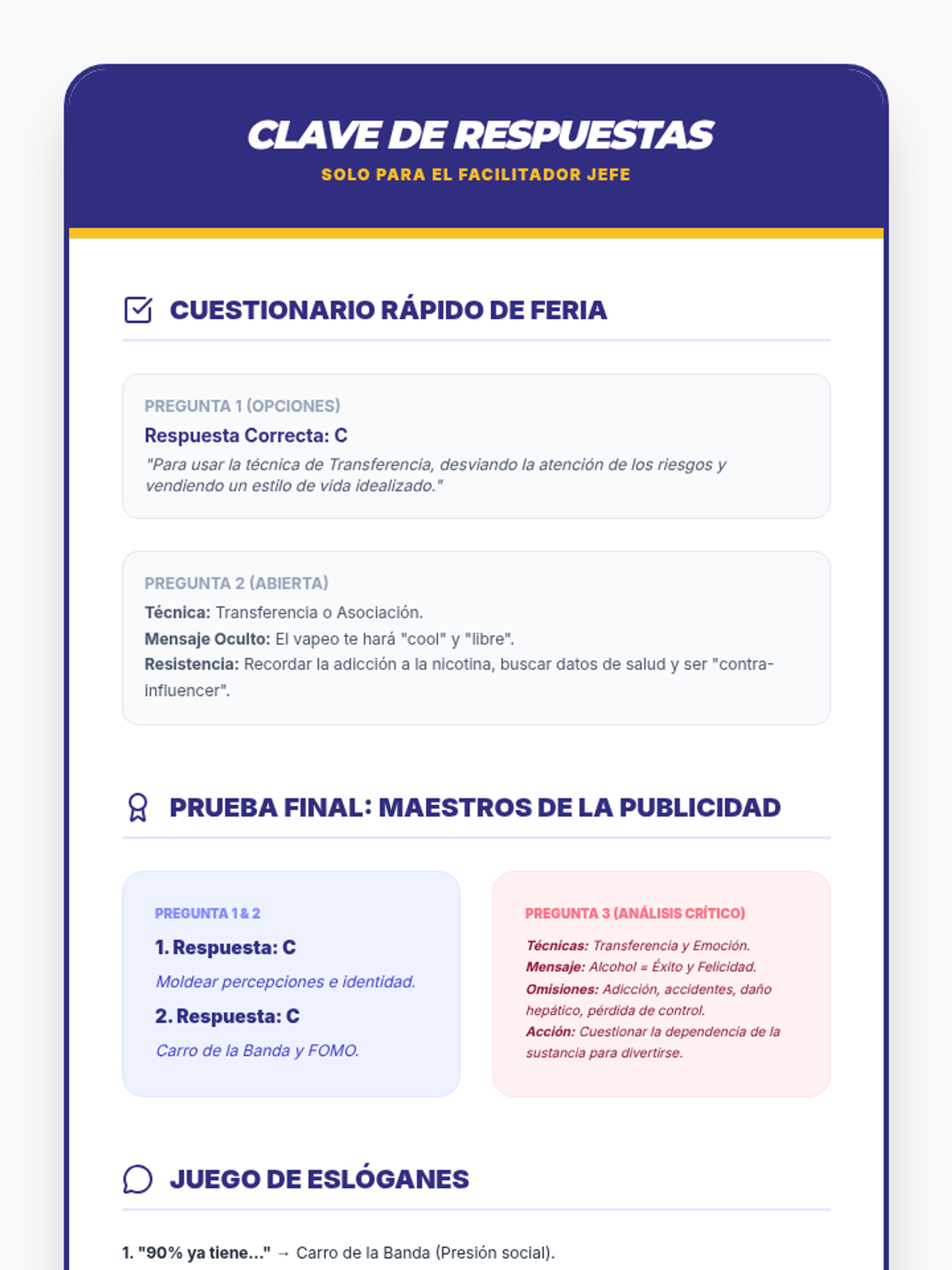
Una secuencia educativa diseñada para empoderar a estudiantes de secundaria en la alfabetización mediática, enfocándose en desmantelar las tácticas de persuasión de la publicidad, especialmente en productos de alcohol y tabaco.
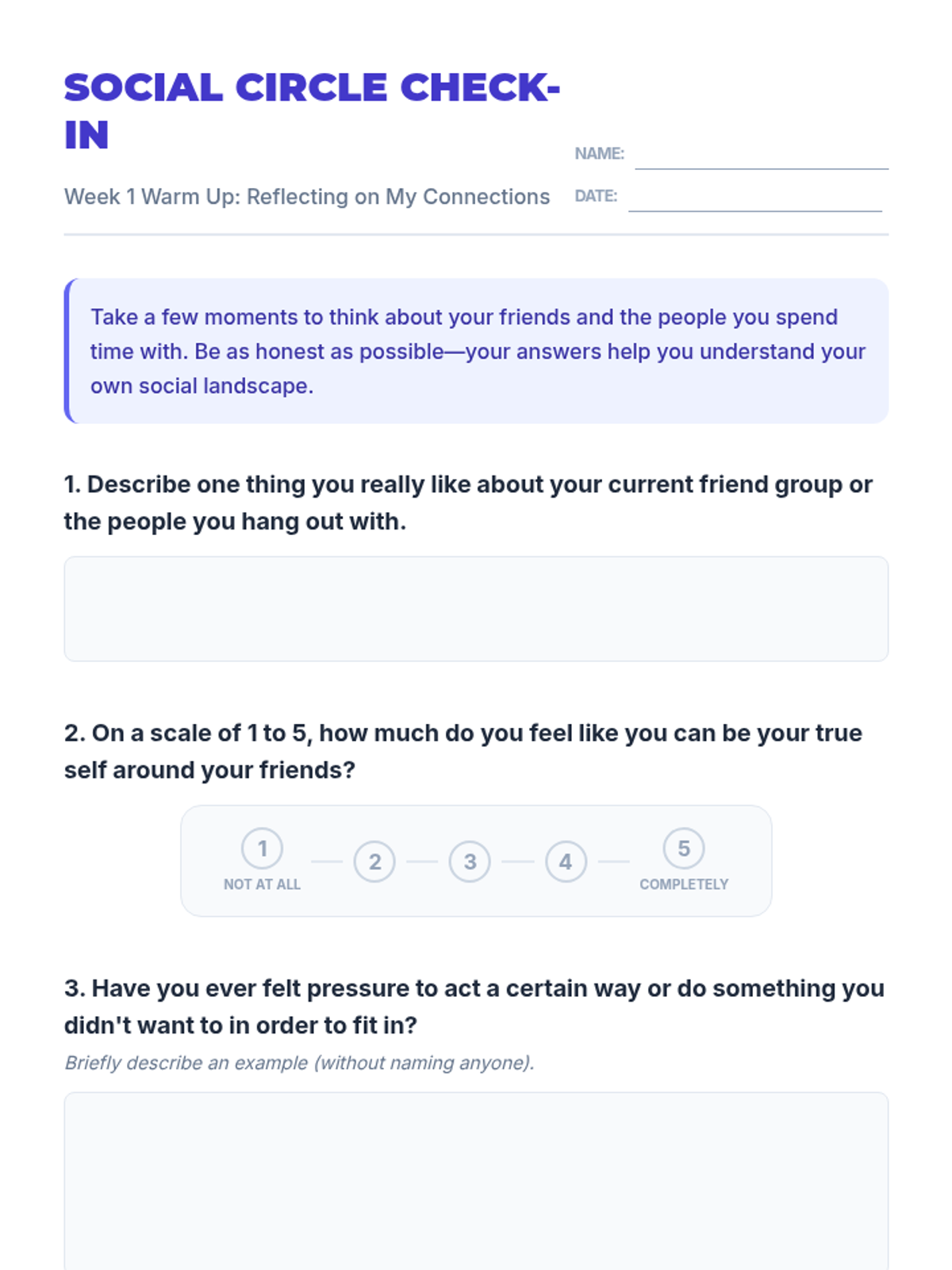
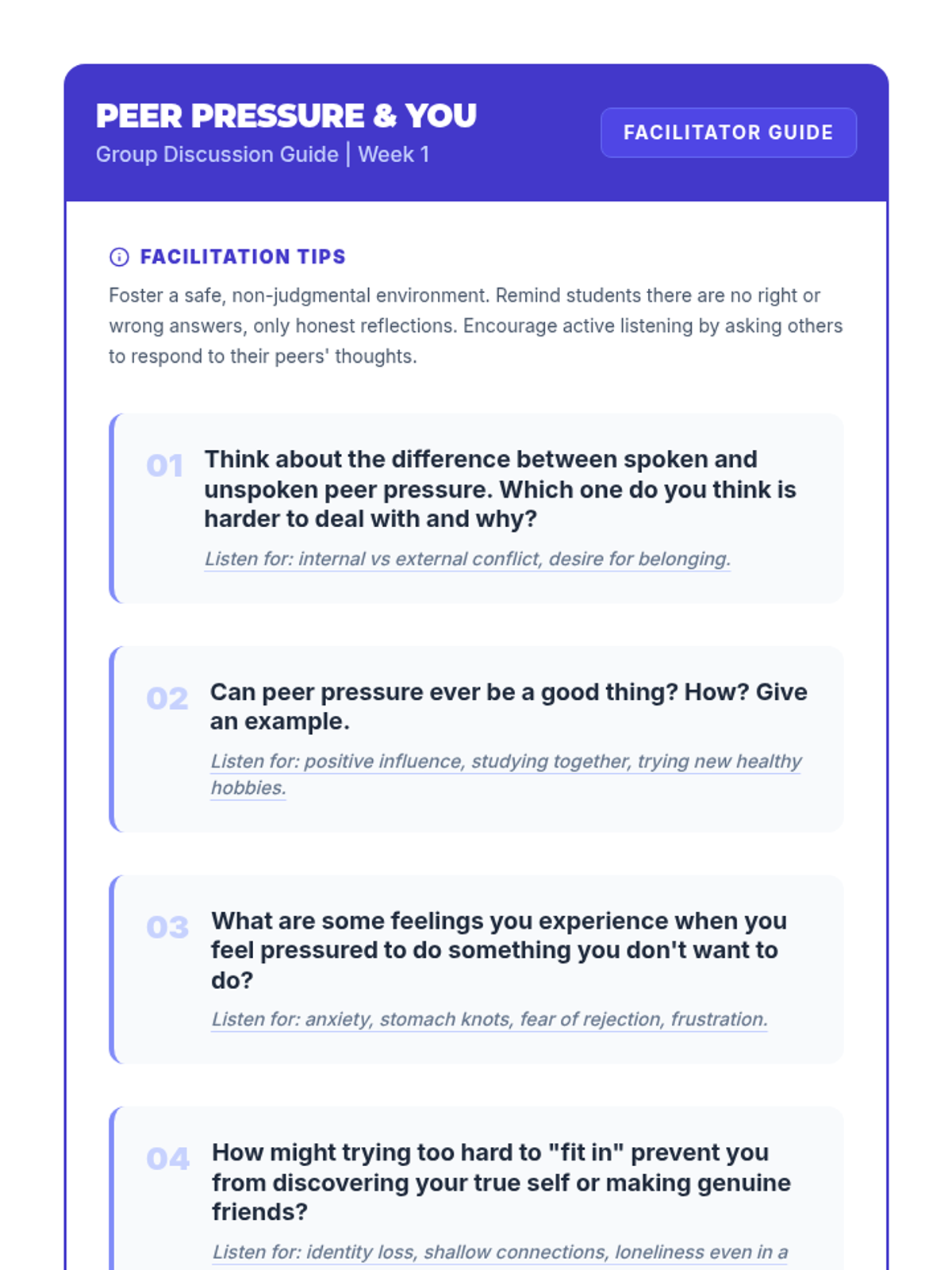
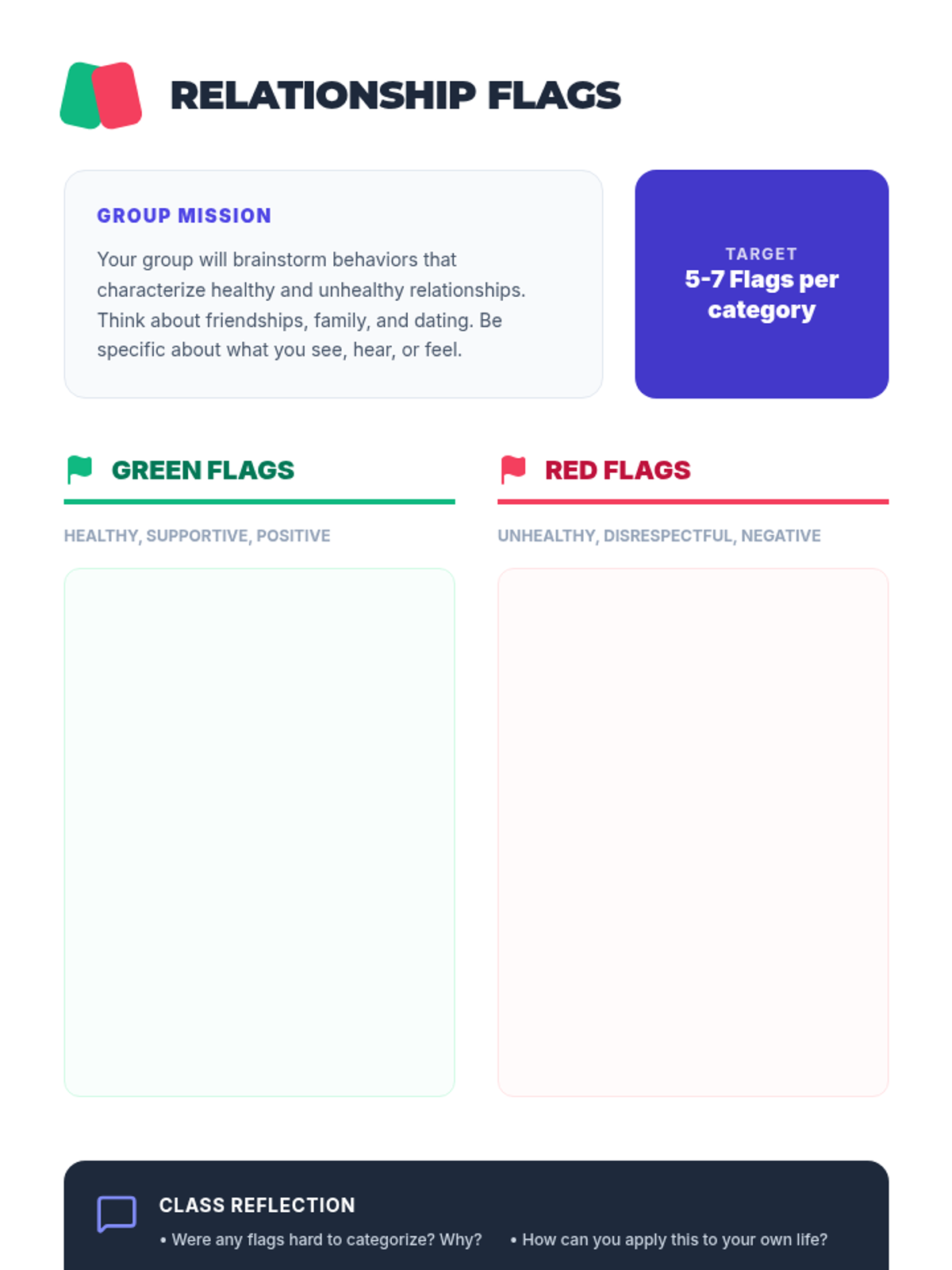
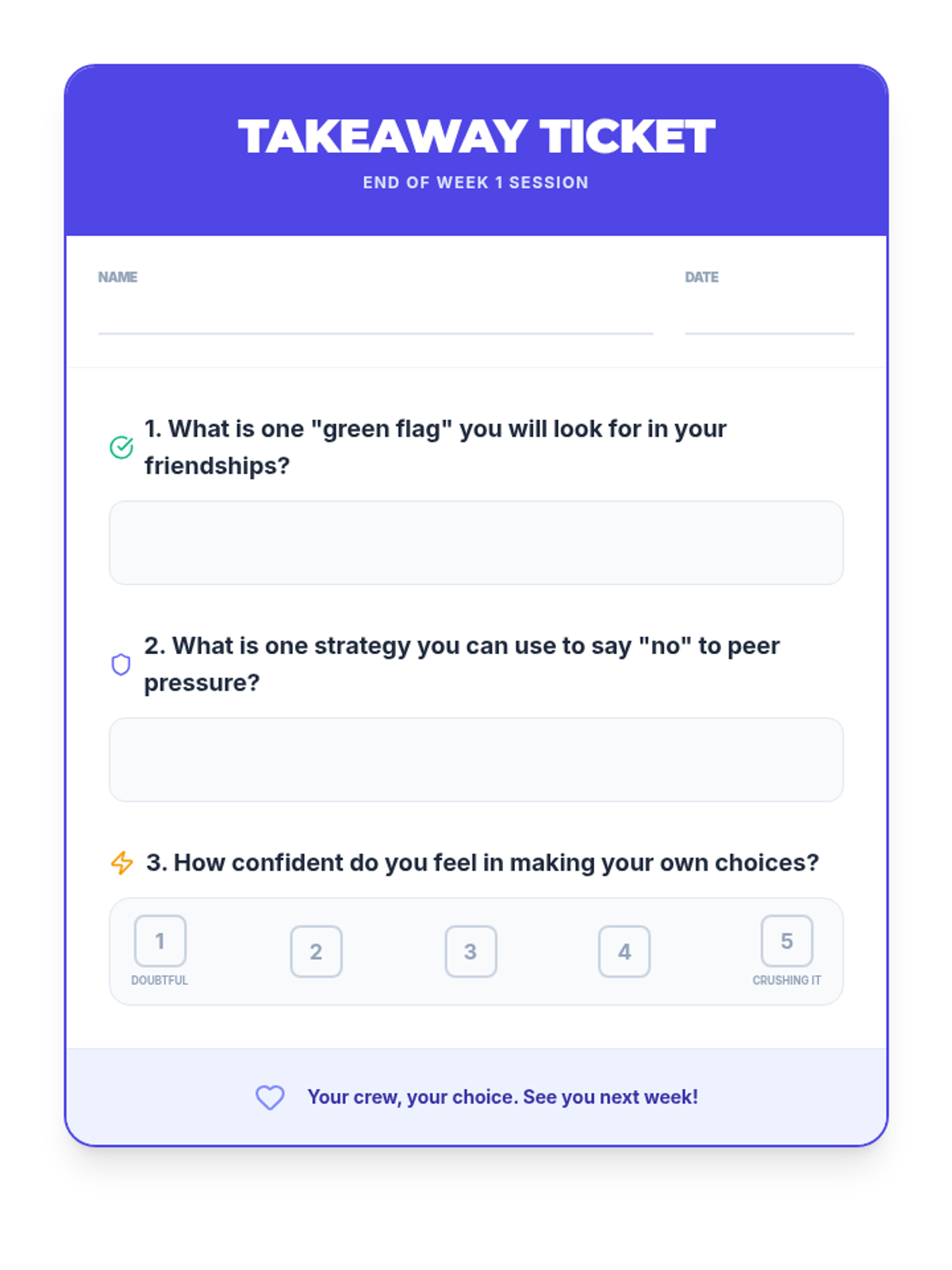
A 4-week Tier 2 intervention for 8th-grade students to navigate peer pressure, understand social dynamics, and build healthy relationships through interactive sessions and self-reflection.
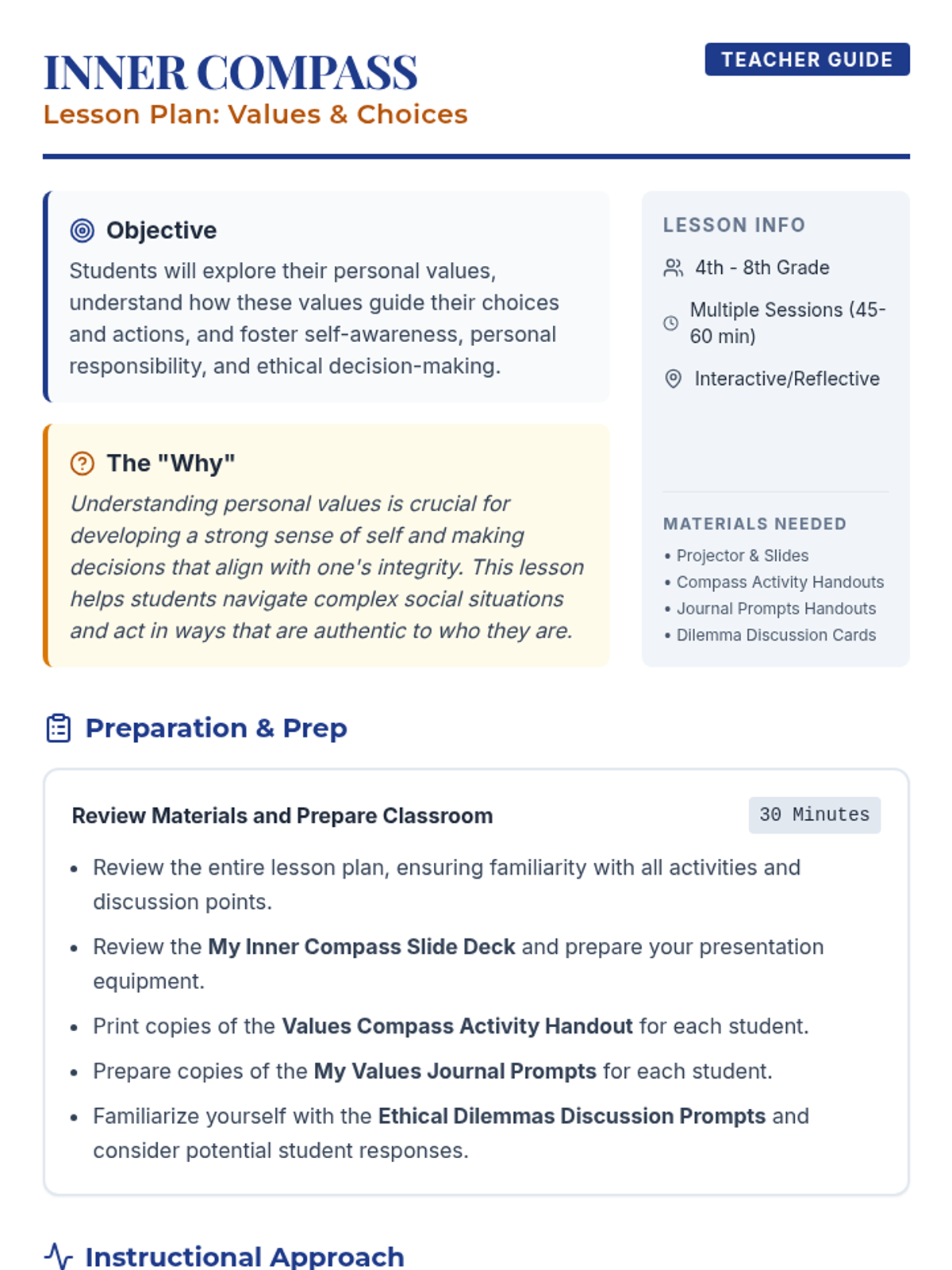
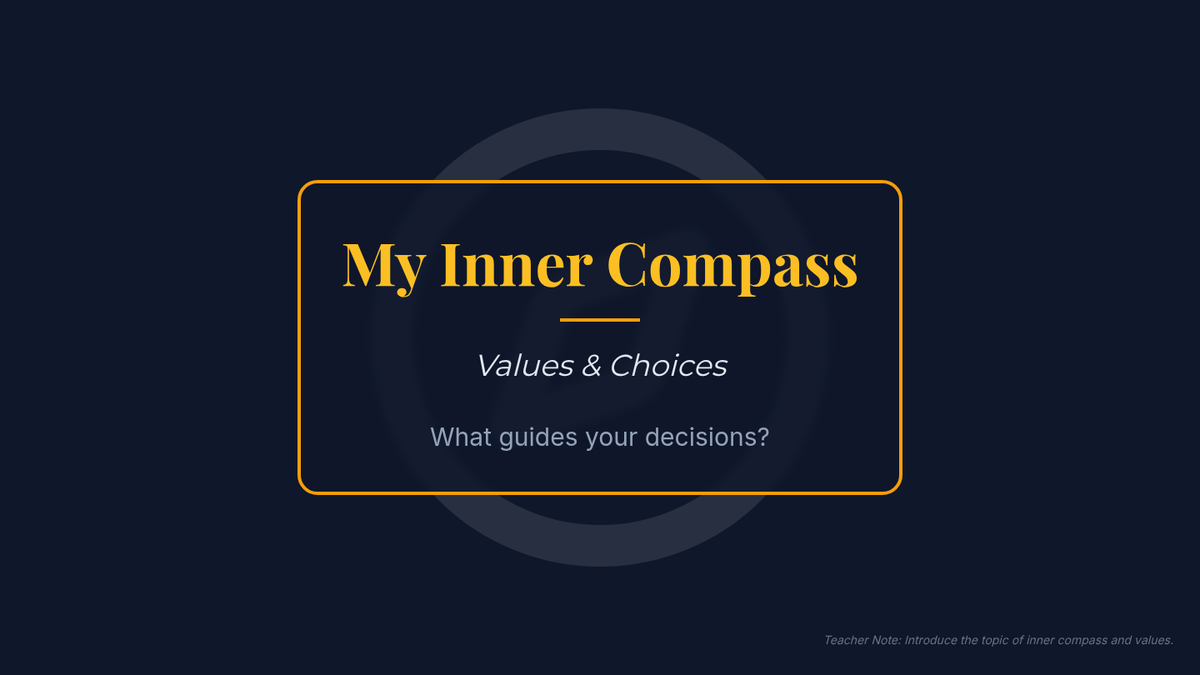
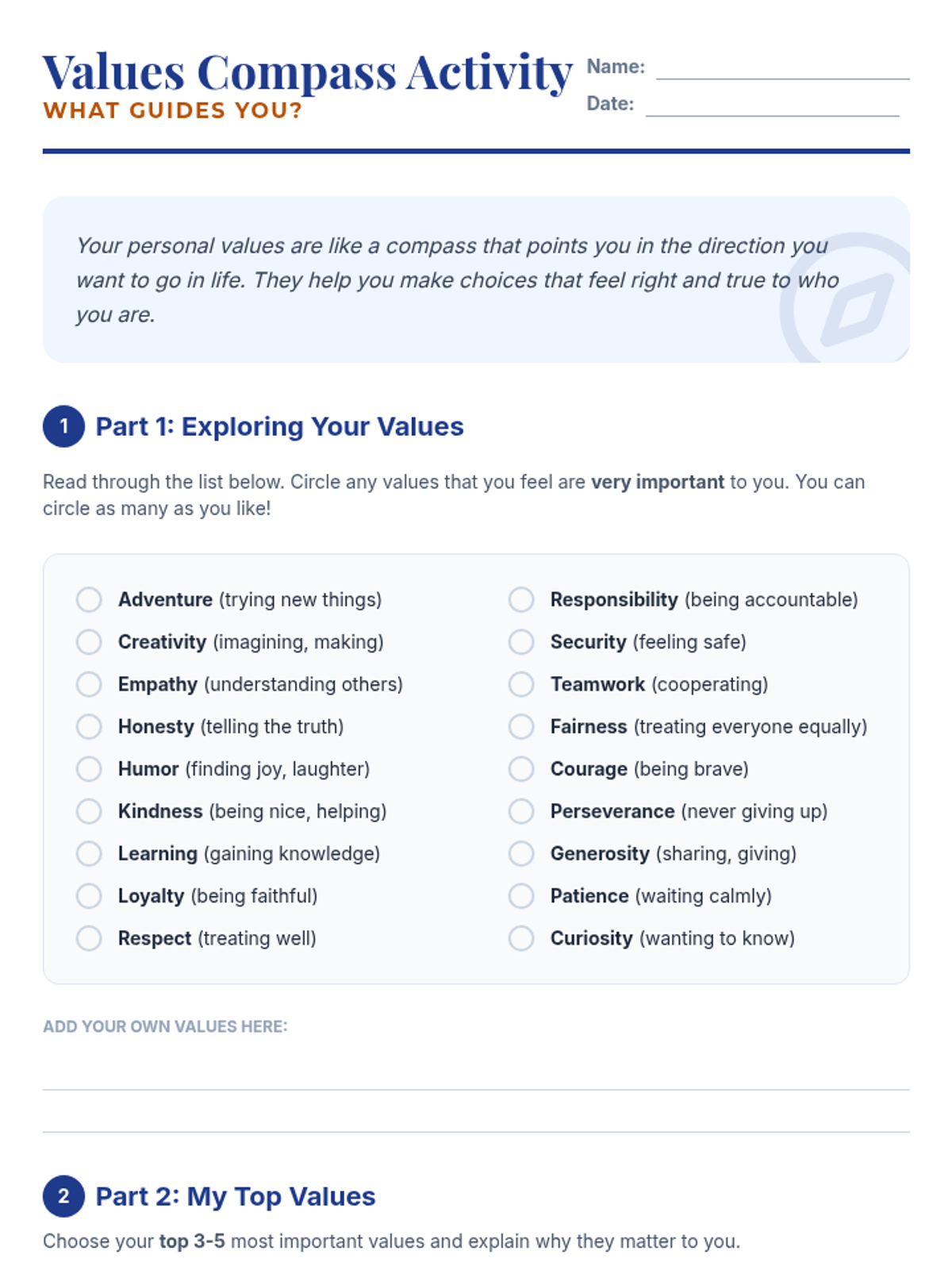
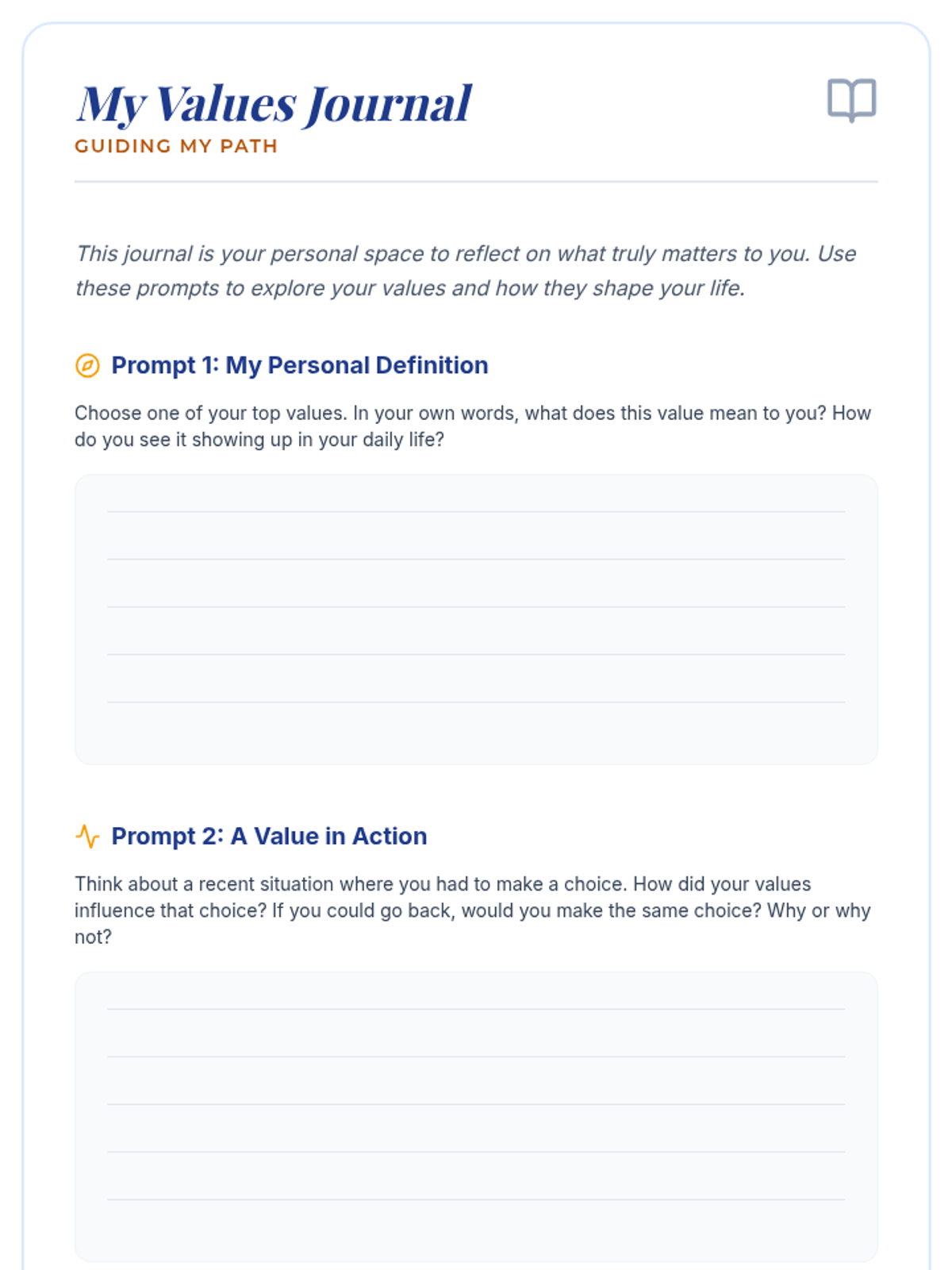
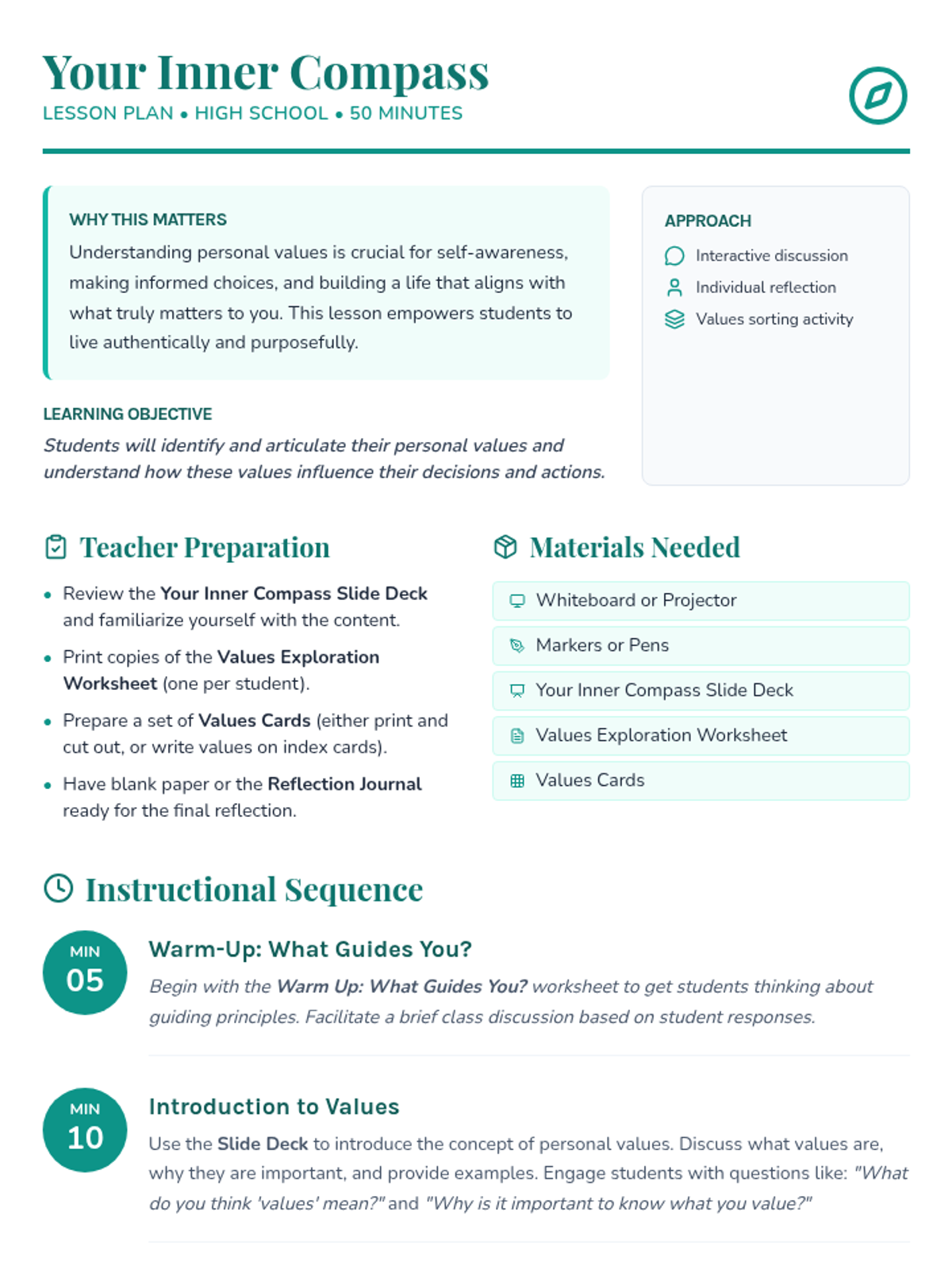
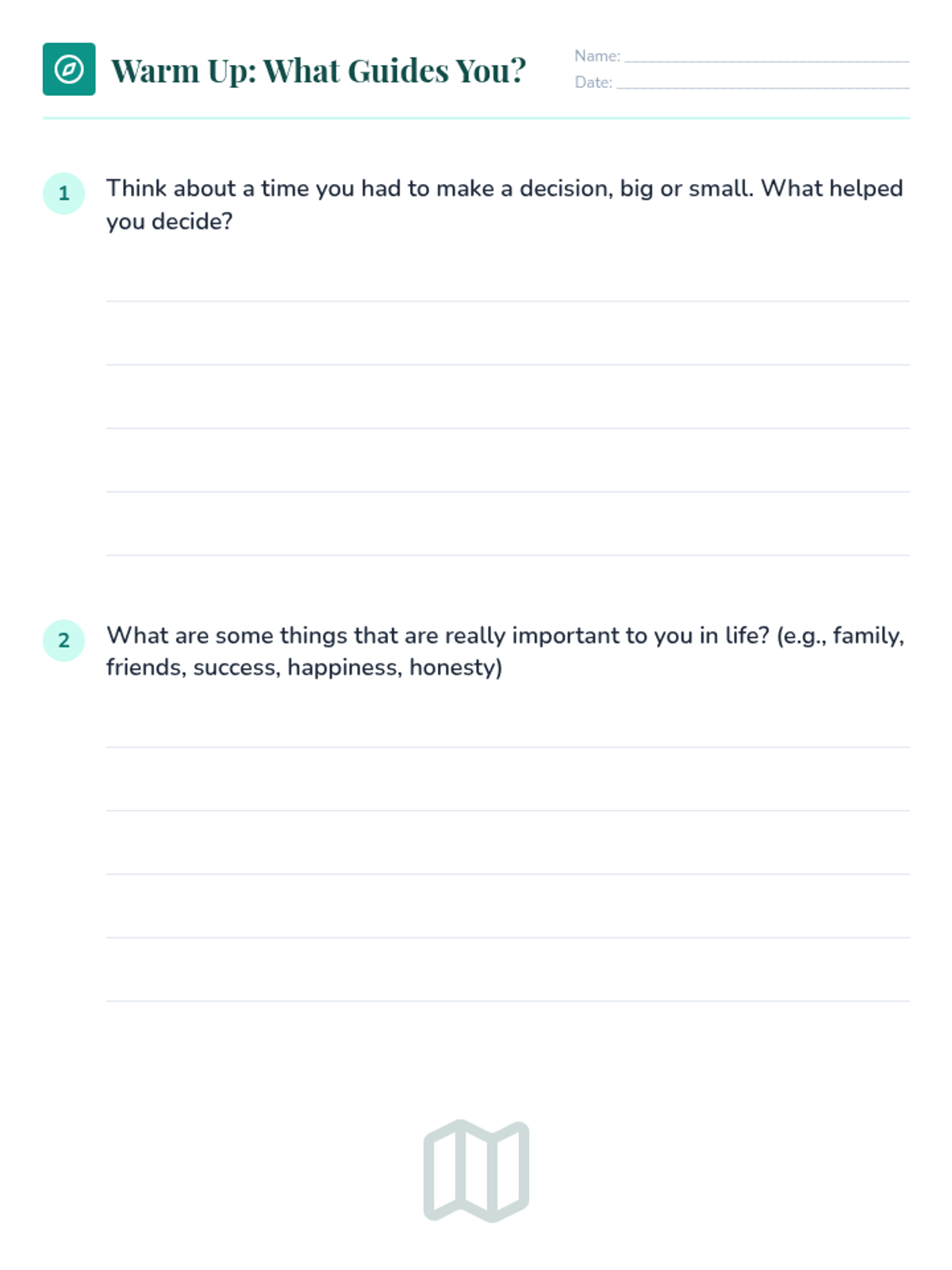
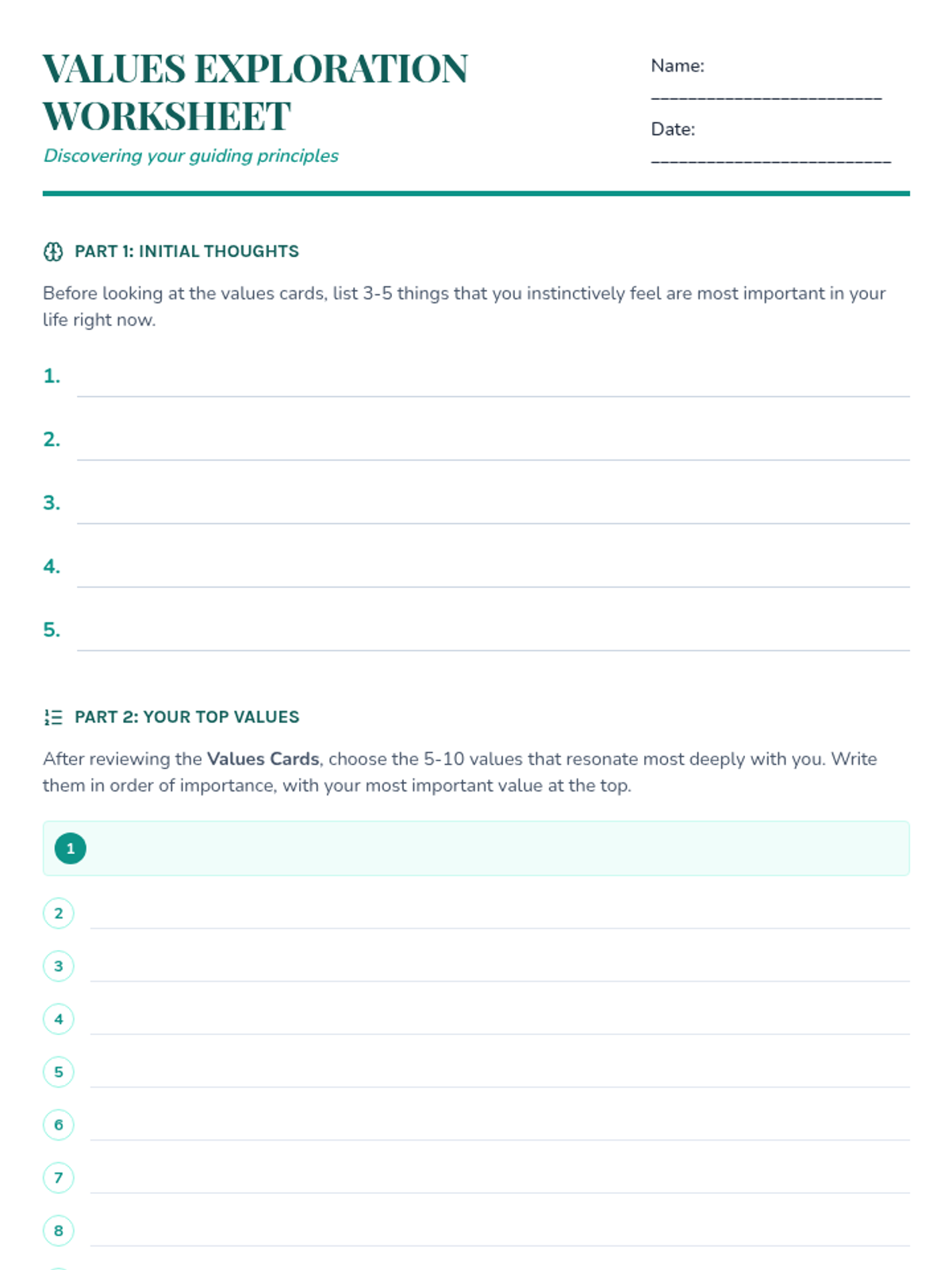
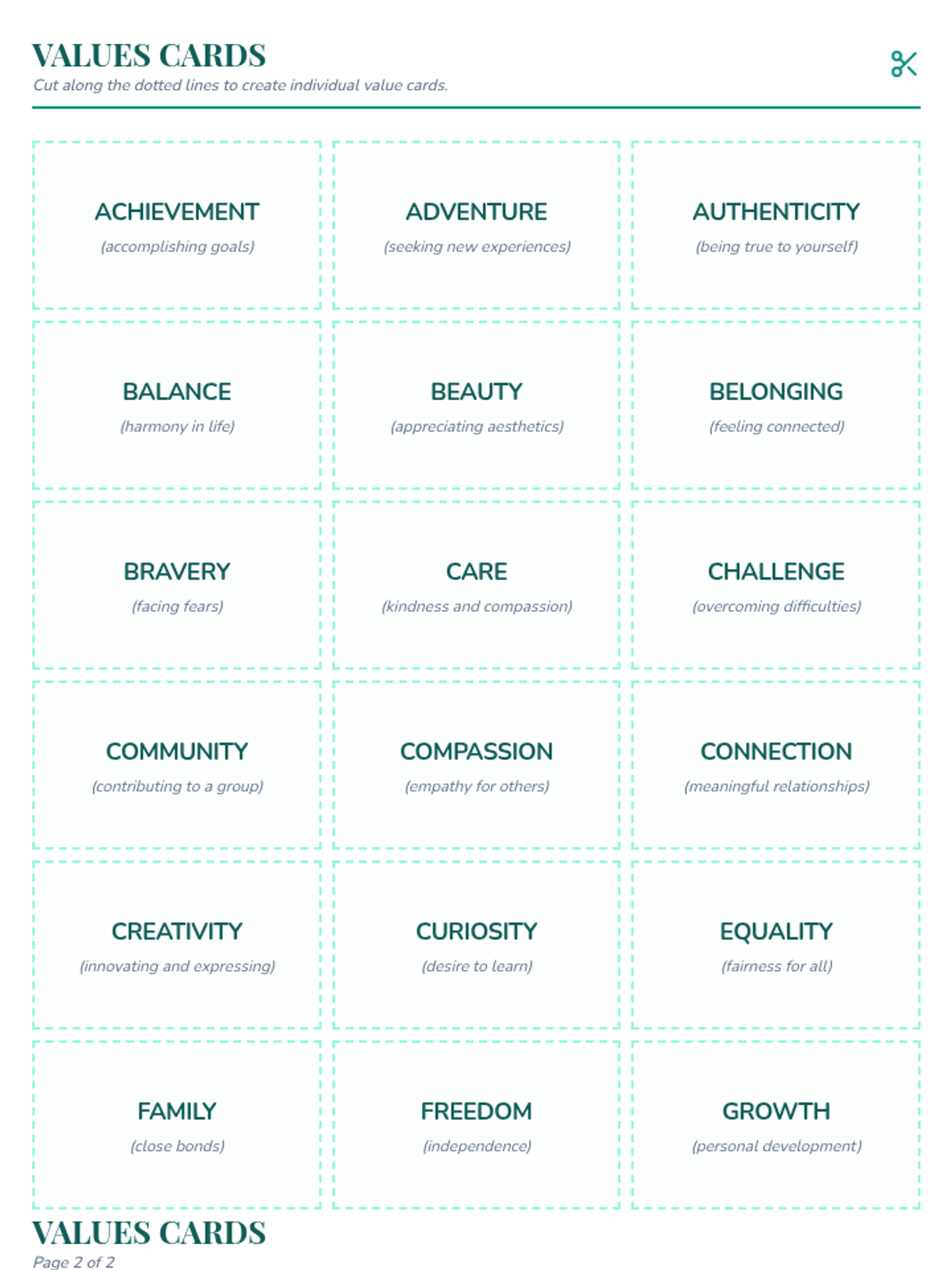
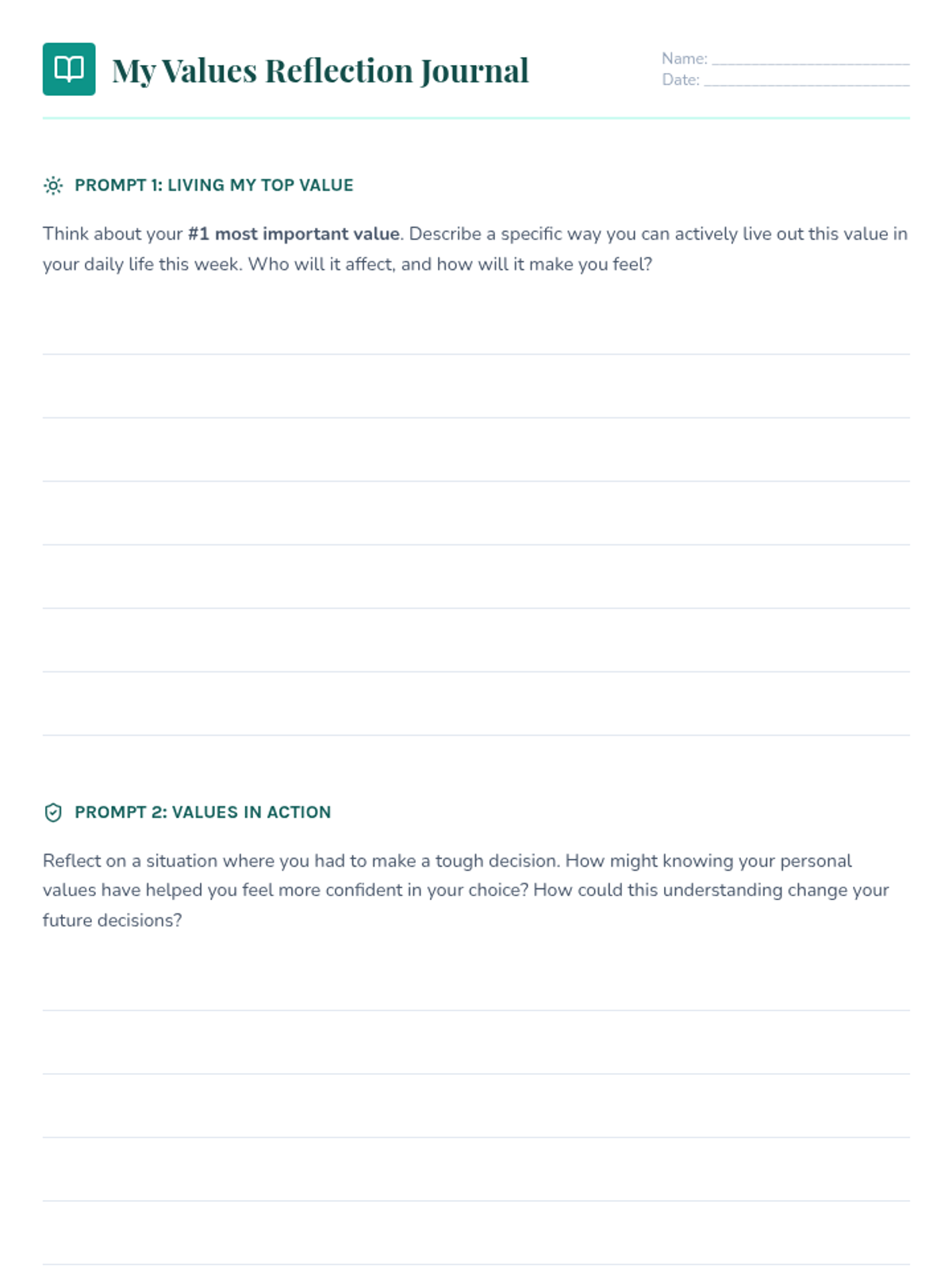
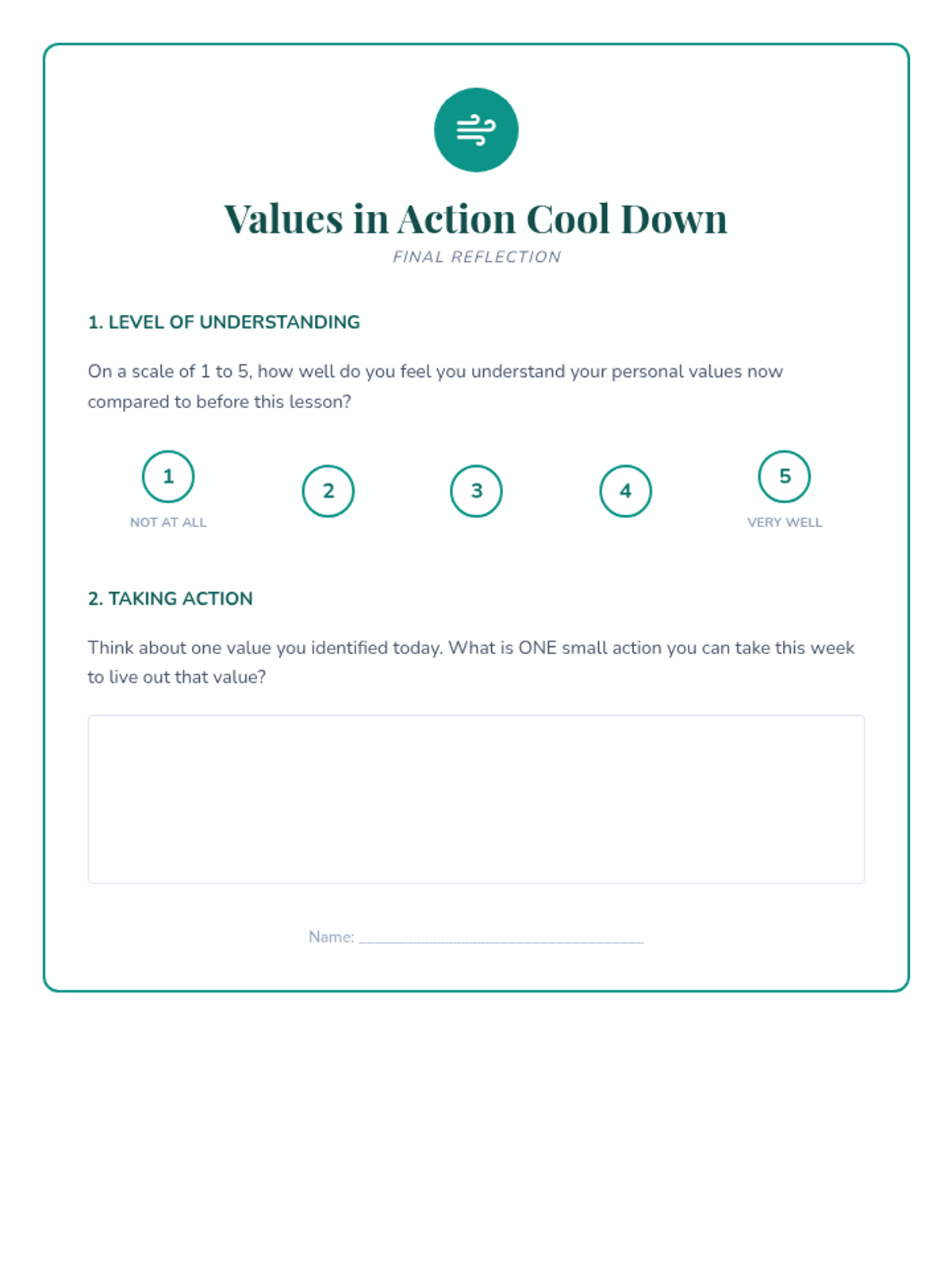
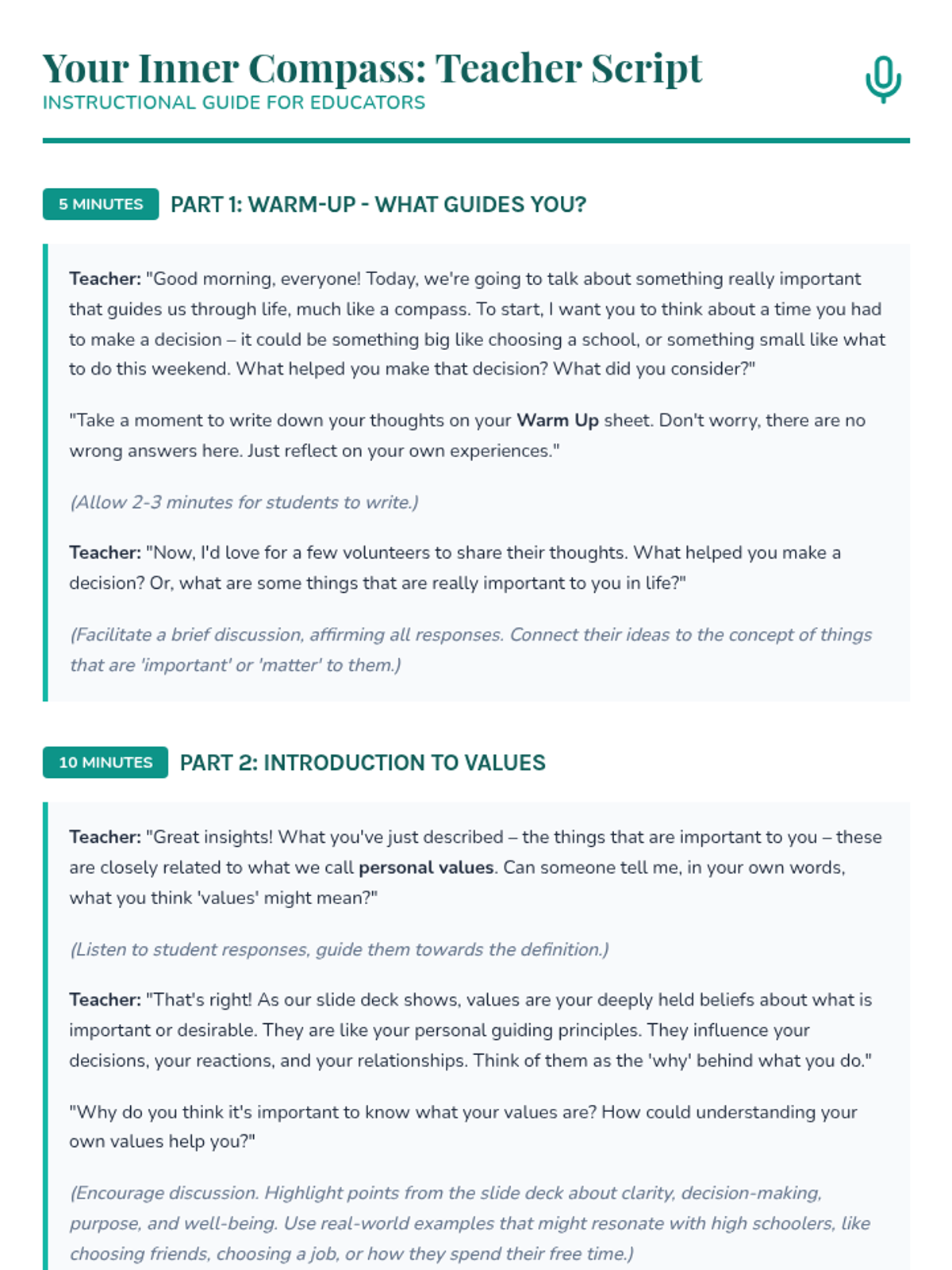
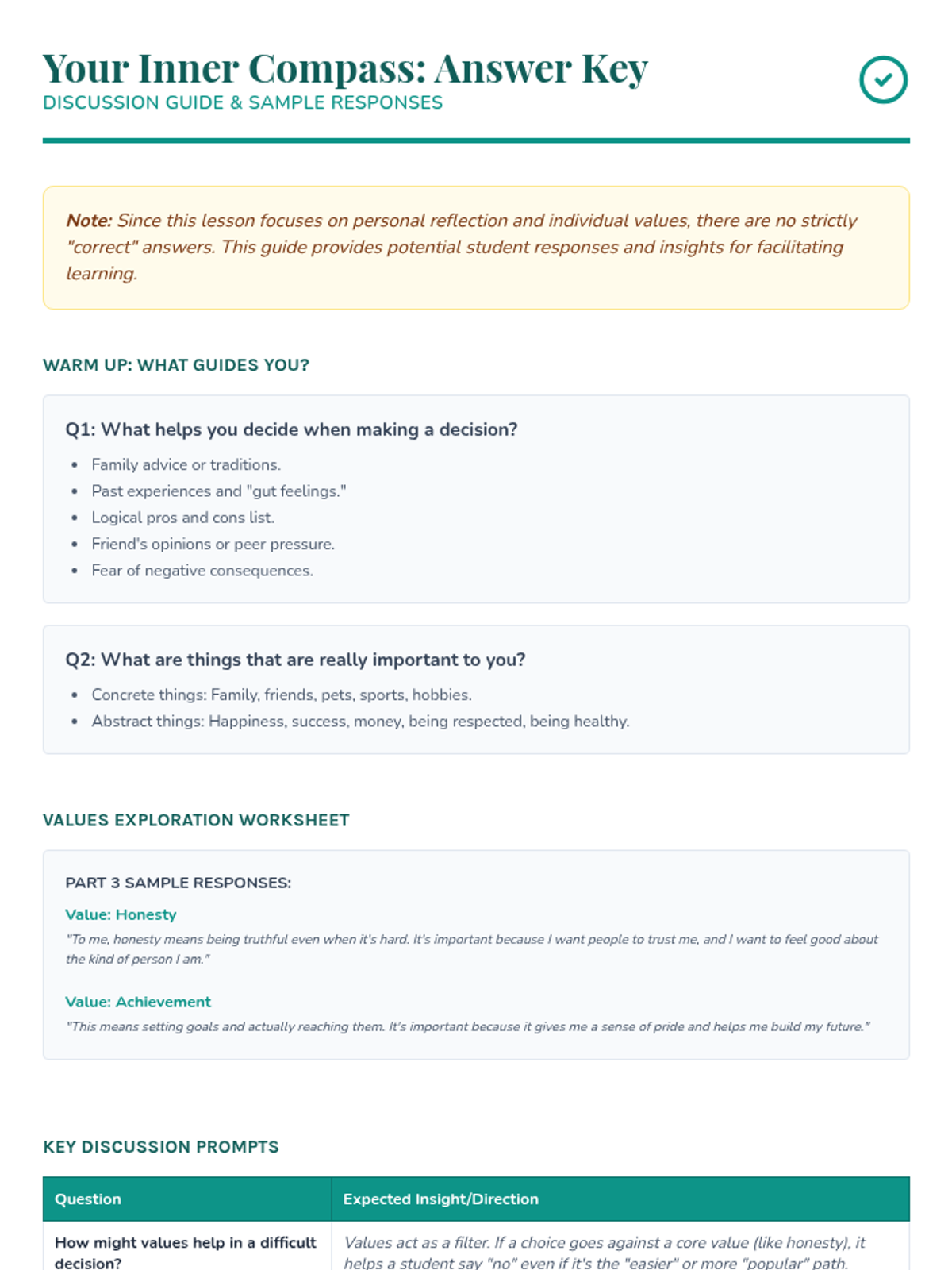
A multi-session series for middle school students to explore personal values and how they act as an 'inner compass' for ethical decision-making.
A comprehensive sequence covering digital citizenship for middle schoolers and interpersonal communication styles for adult learners. These lessons empower students to navigate both online and offline social landscapes with responsibility and respect.
A series of self-discovery lessons designed to help students navigate their personal identity, from identifying core values in high school to building self-esteem in middle school.
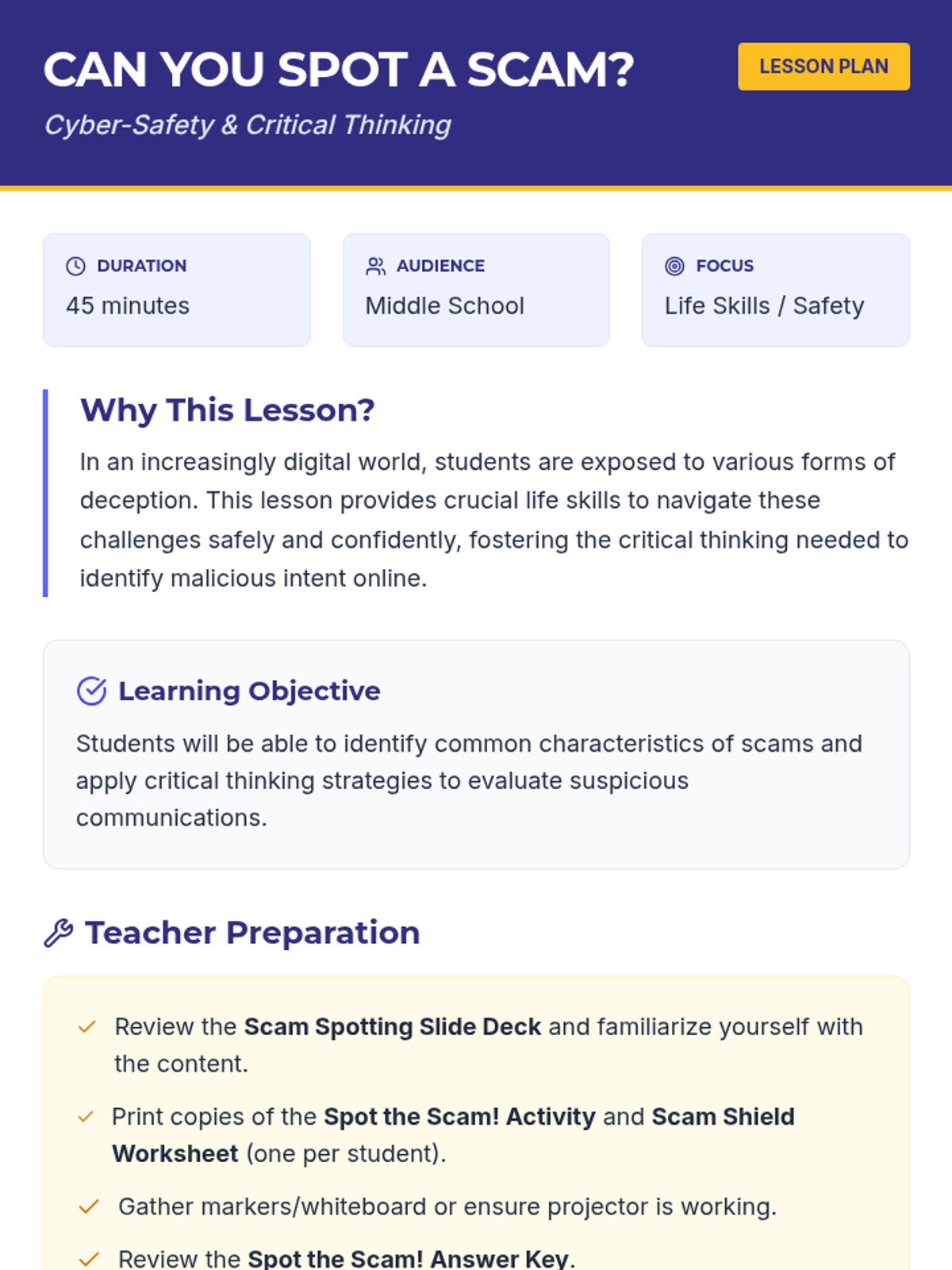
A sequence of two life skills lessons designed to empower students with critical thinking skills for digital safety and personal character development.
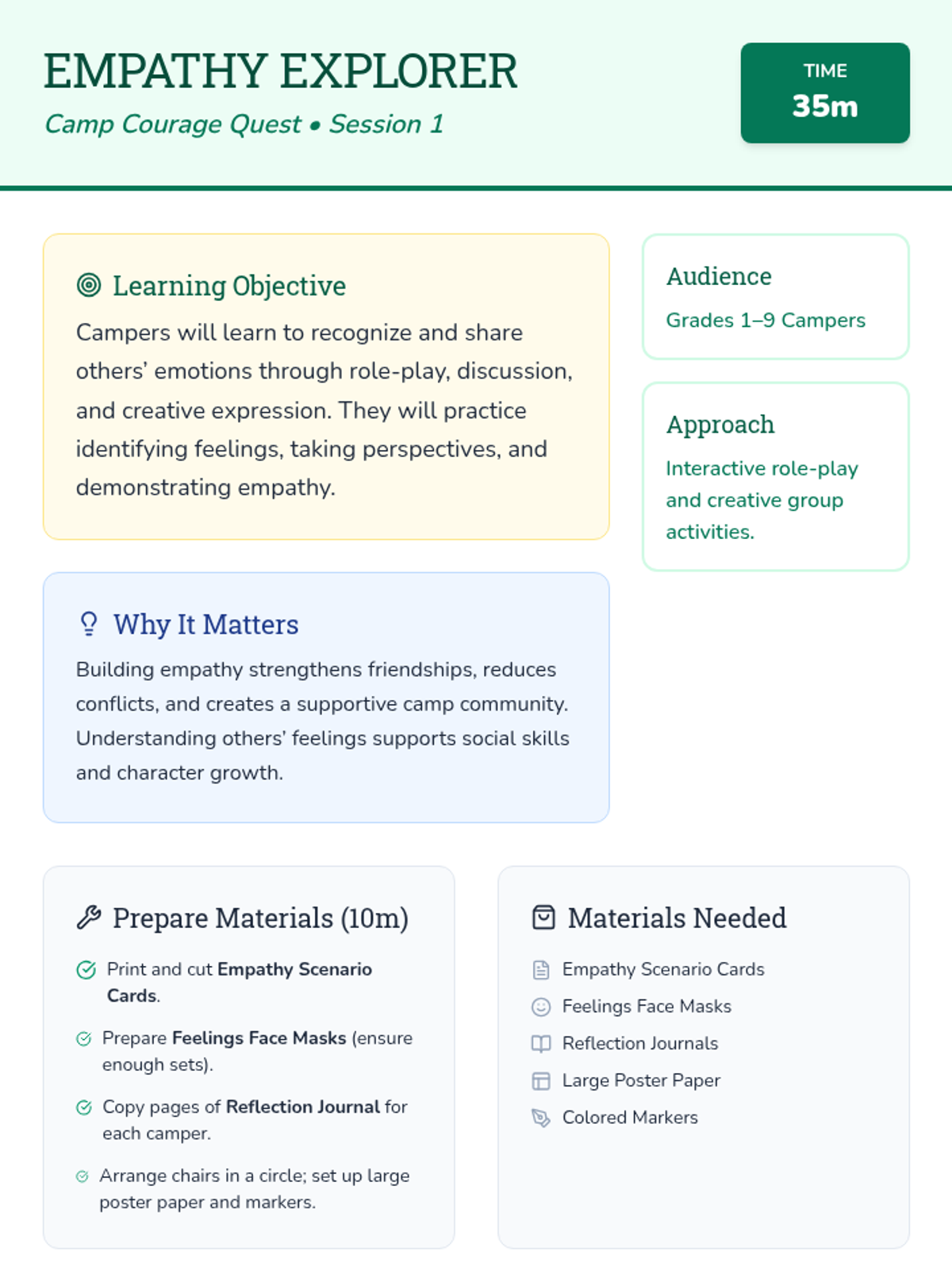
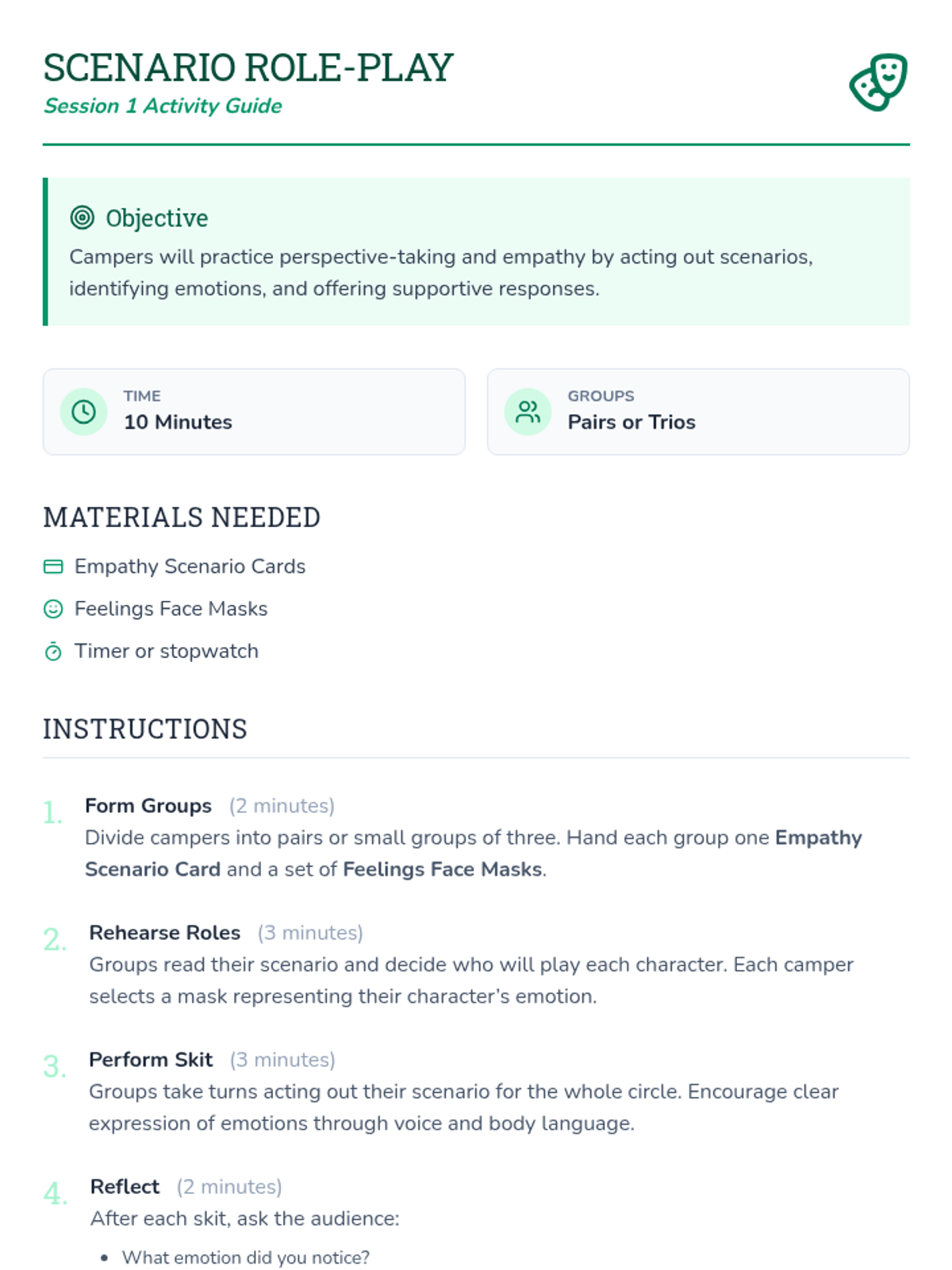
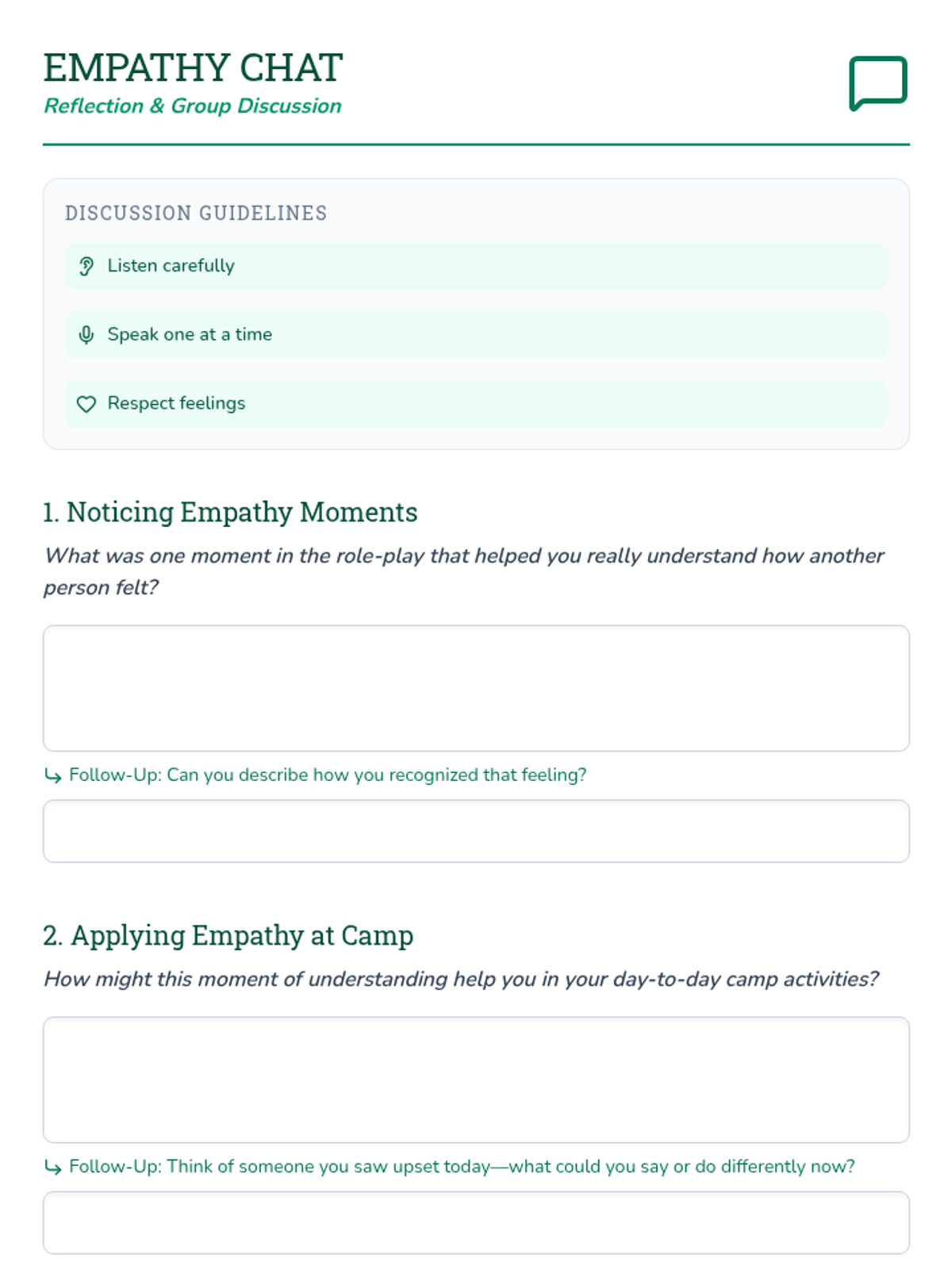
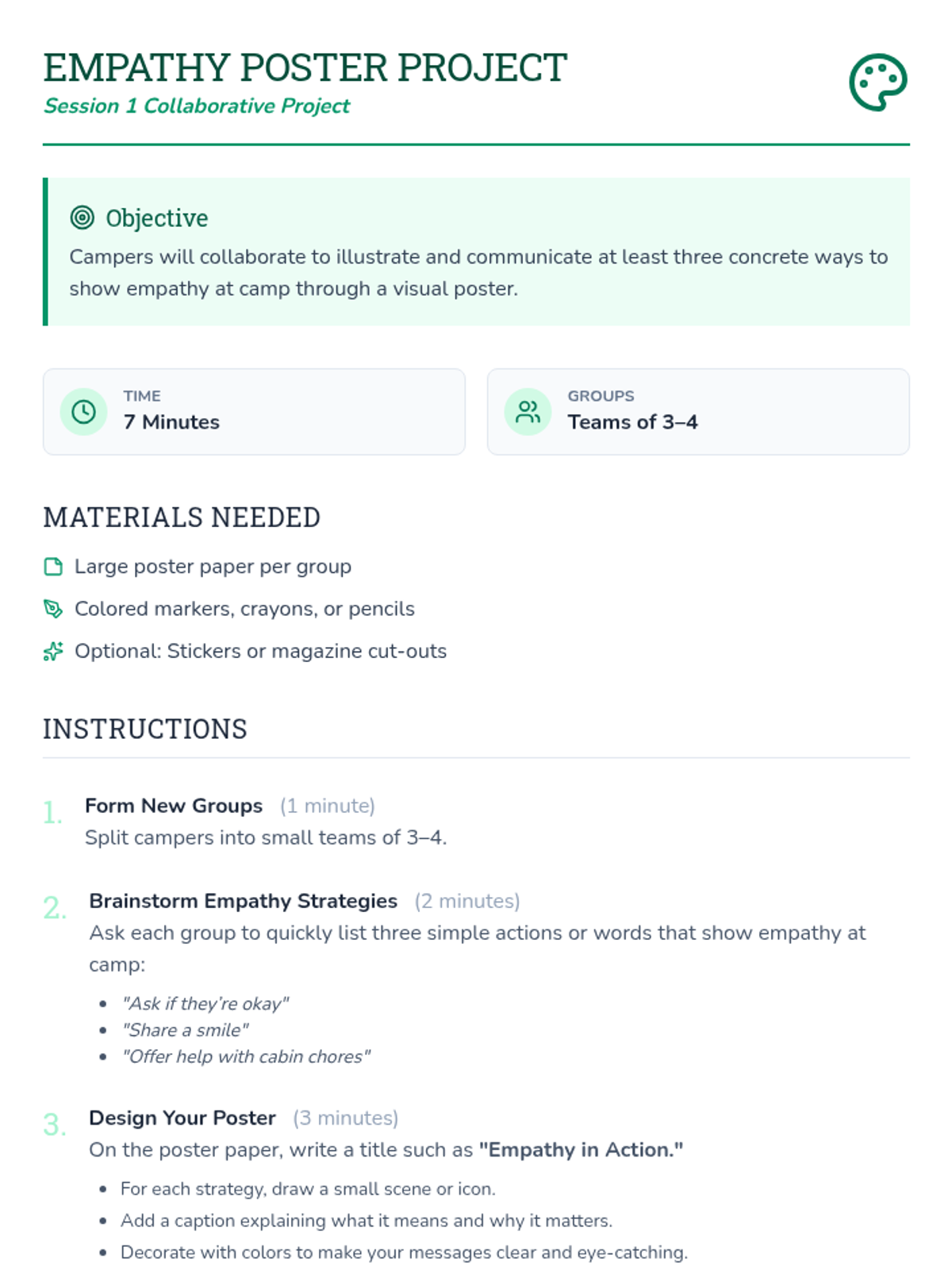
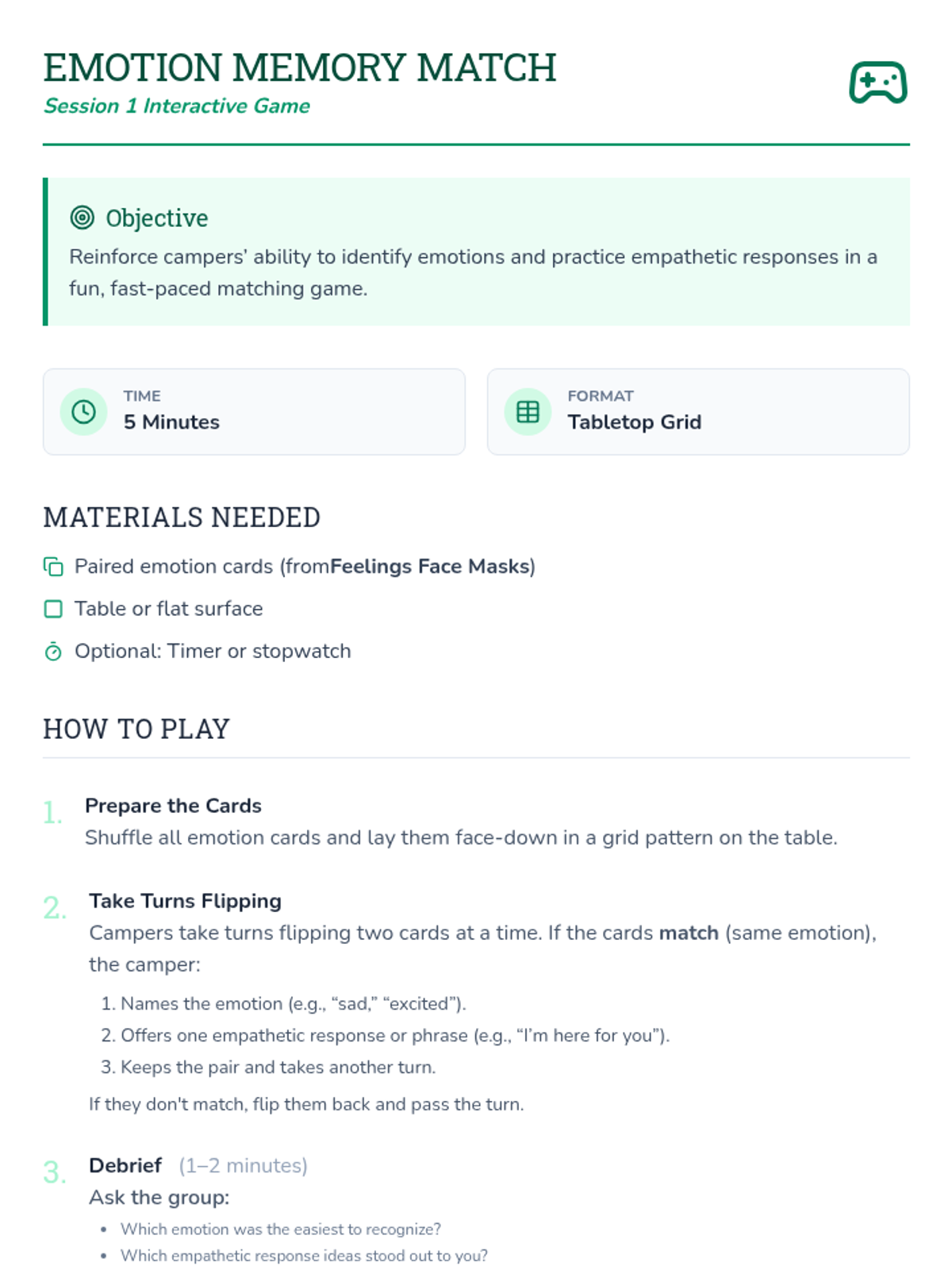
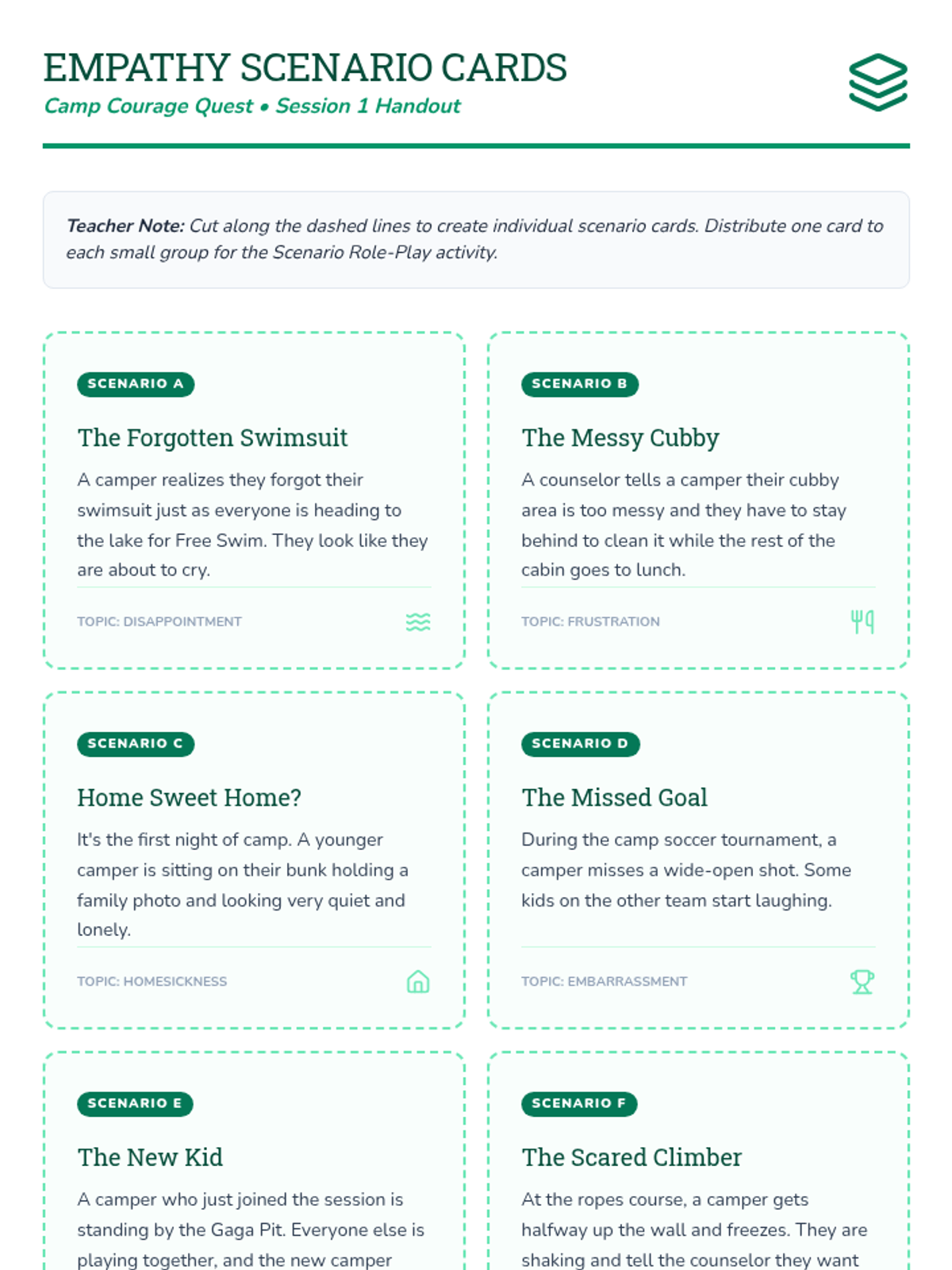
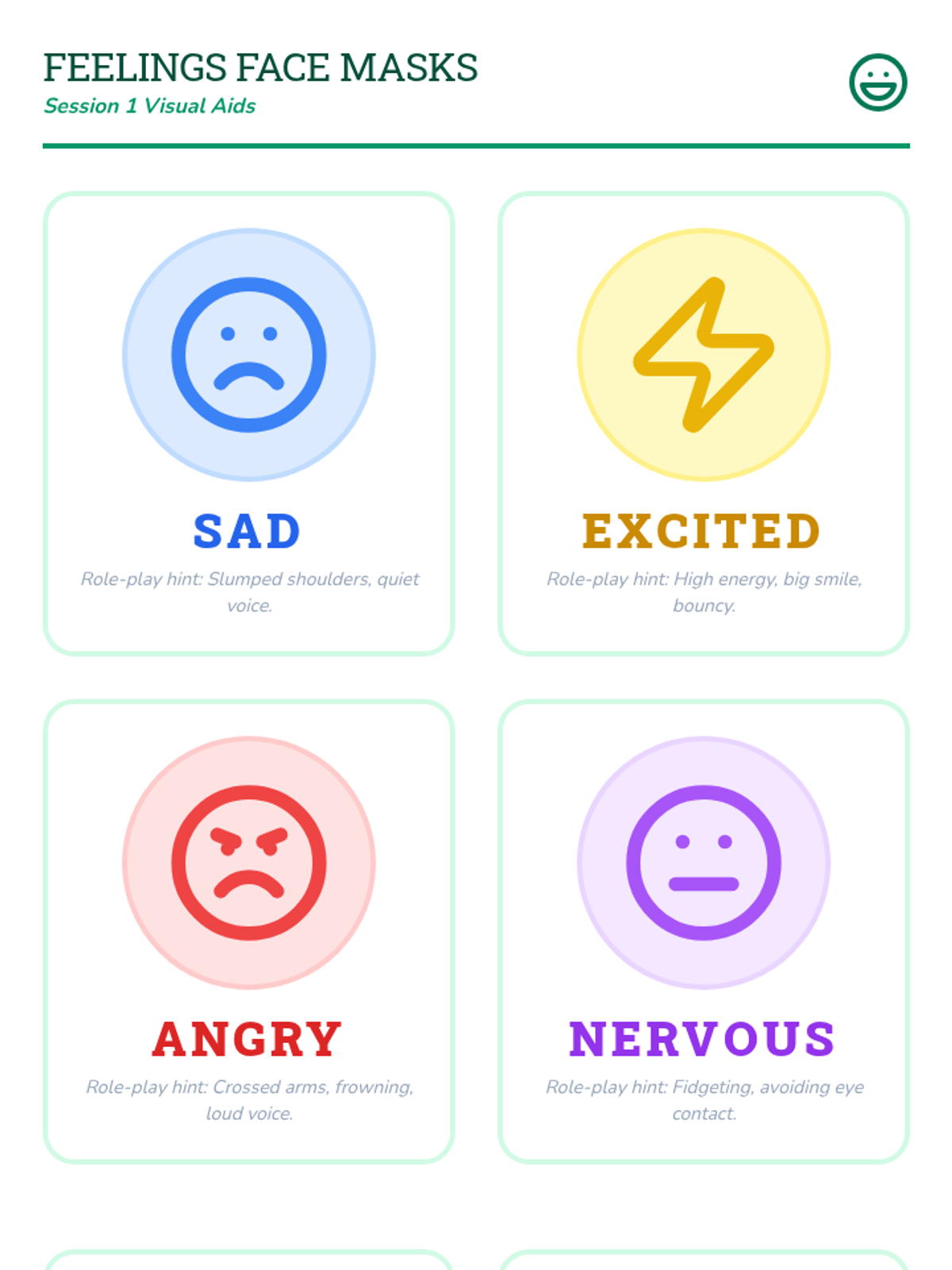
A 4-session character development curriculum for campers in grades 1–9 focusing on empathy, resilience, teamwork, and integrity through interactive group activities.
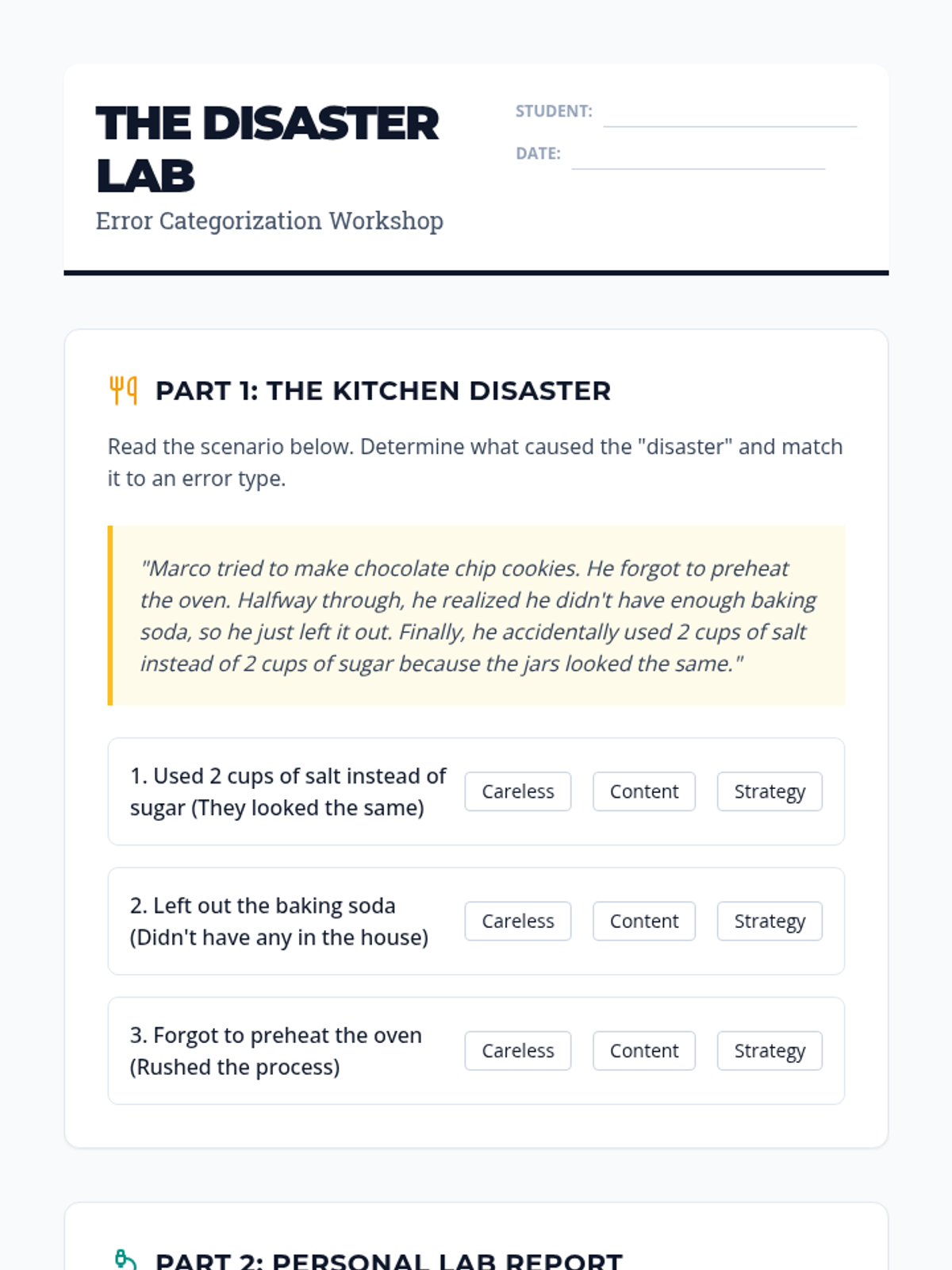
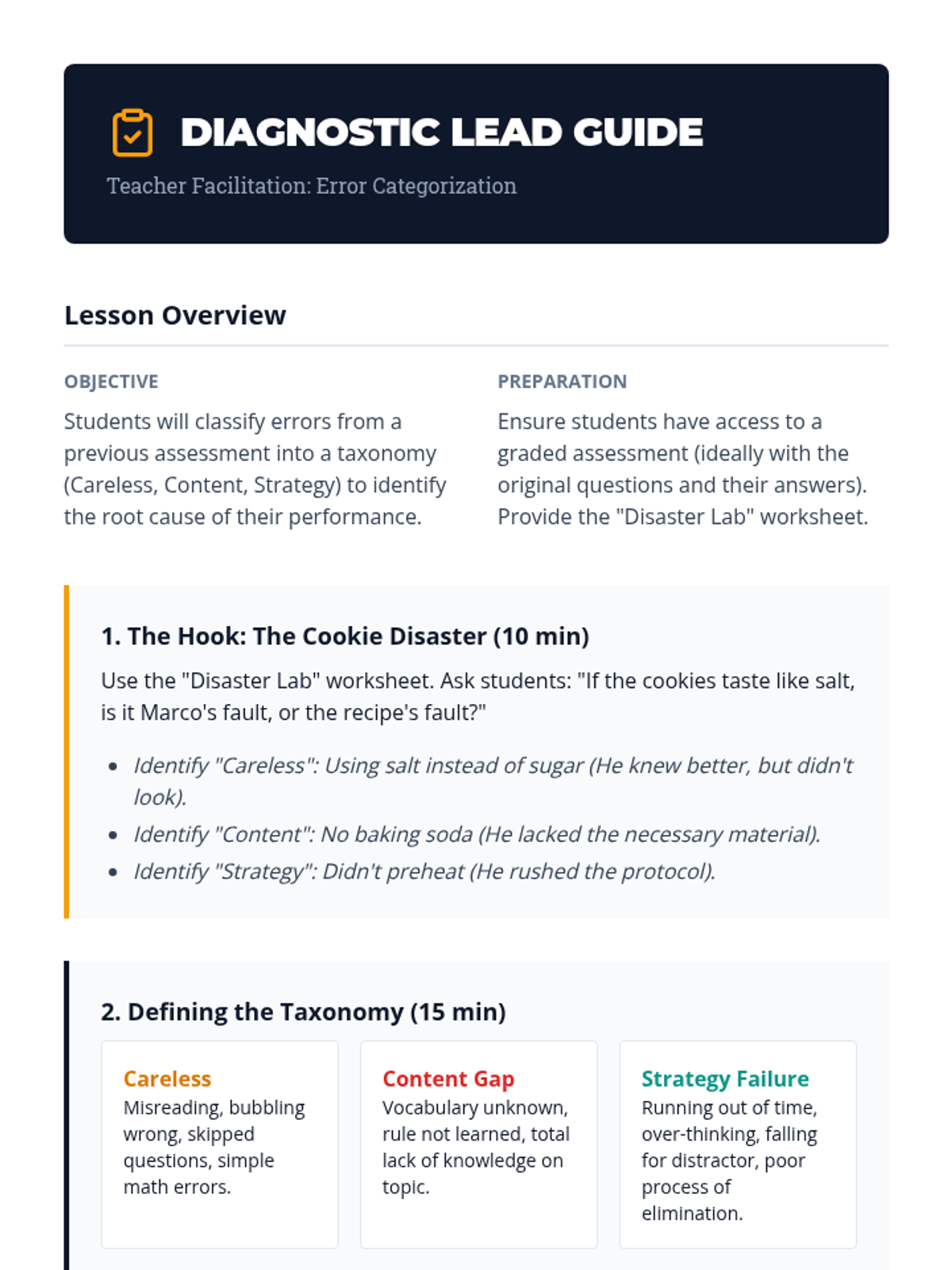
A comprehensive sequence on metacognitive error analysis, teaching students to categorize, analyze, and learn from their mistakes to improve test-taking performance. Students move from simple error classification to deep retrospective correction and personal strategy development.
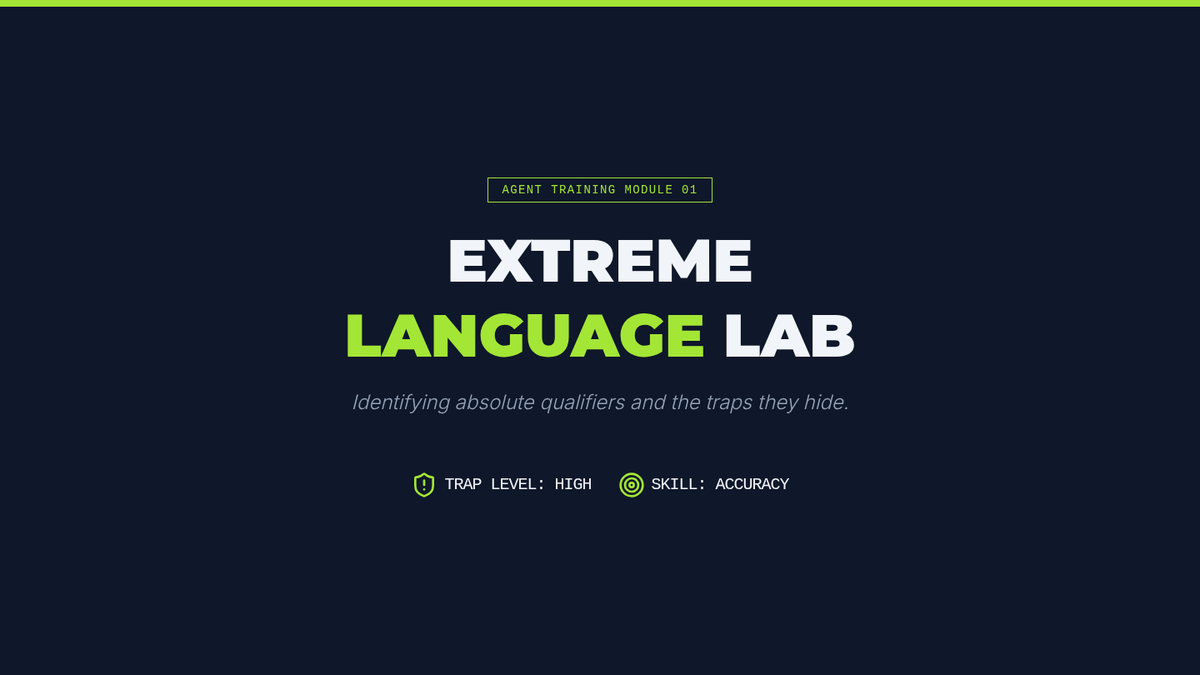
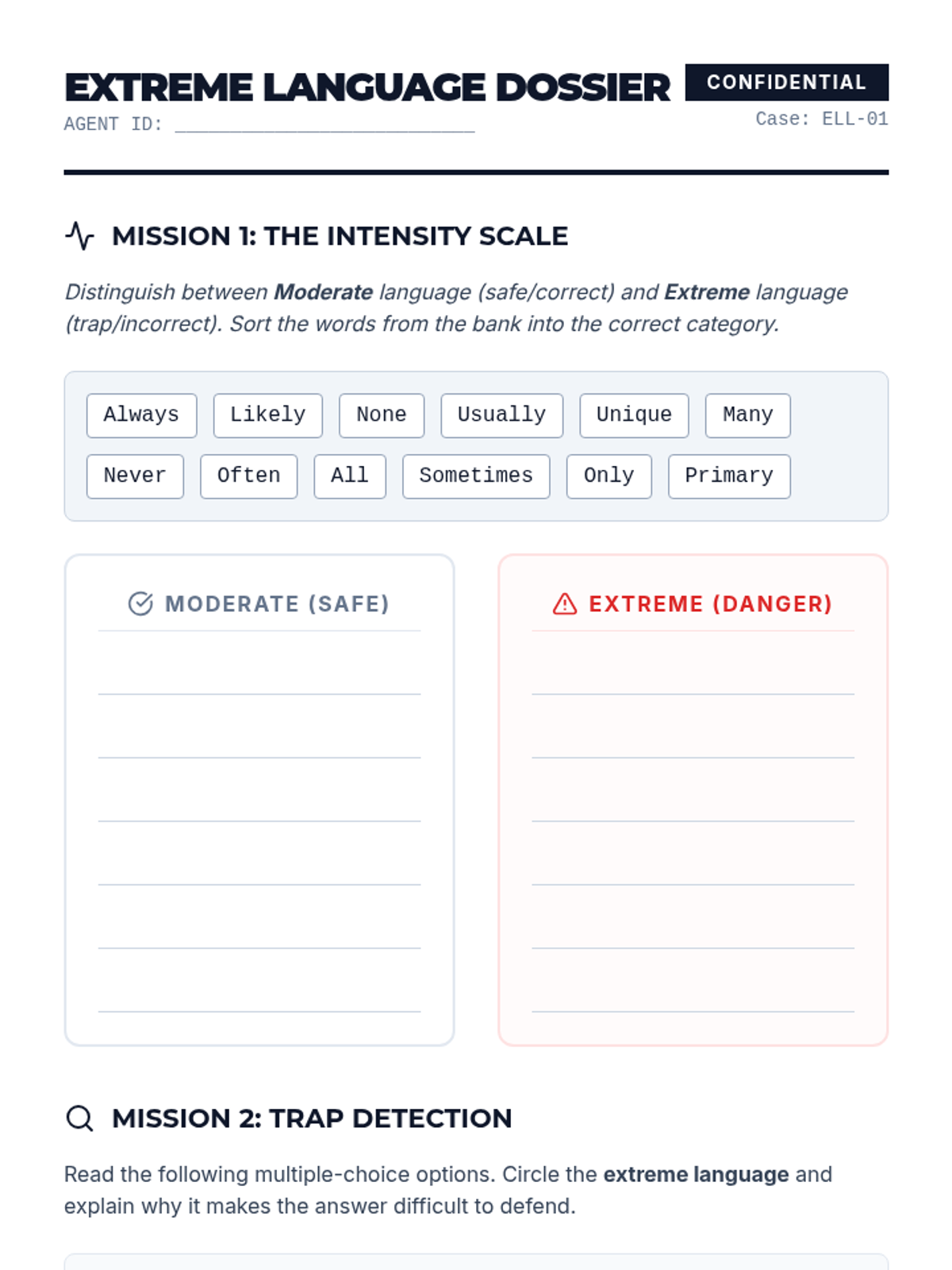
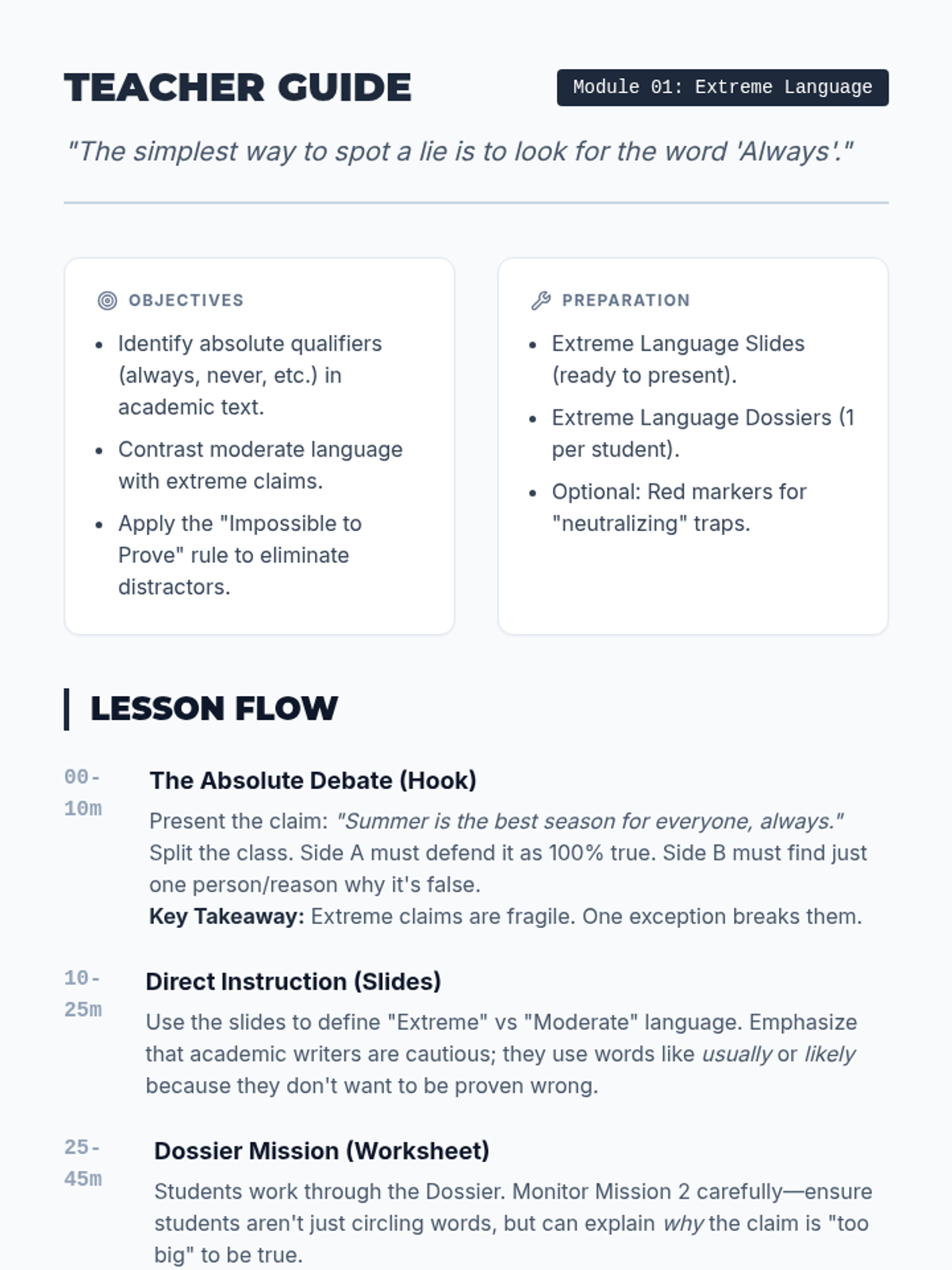
This sequence transforms students into 'Trap Detectives' who can identify and eliminate common distractors in academic tests. Students learn to spot extreme language, half-right traps, and out-of-scope answers through gamified lessons and role-reversal activities.
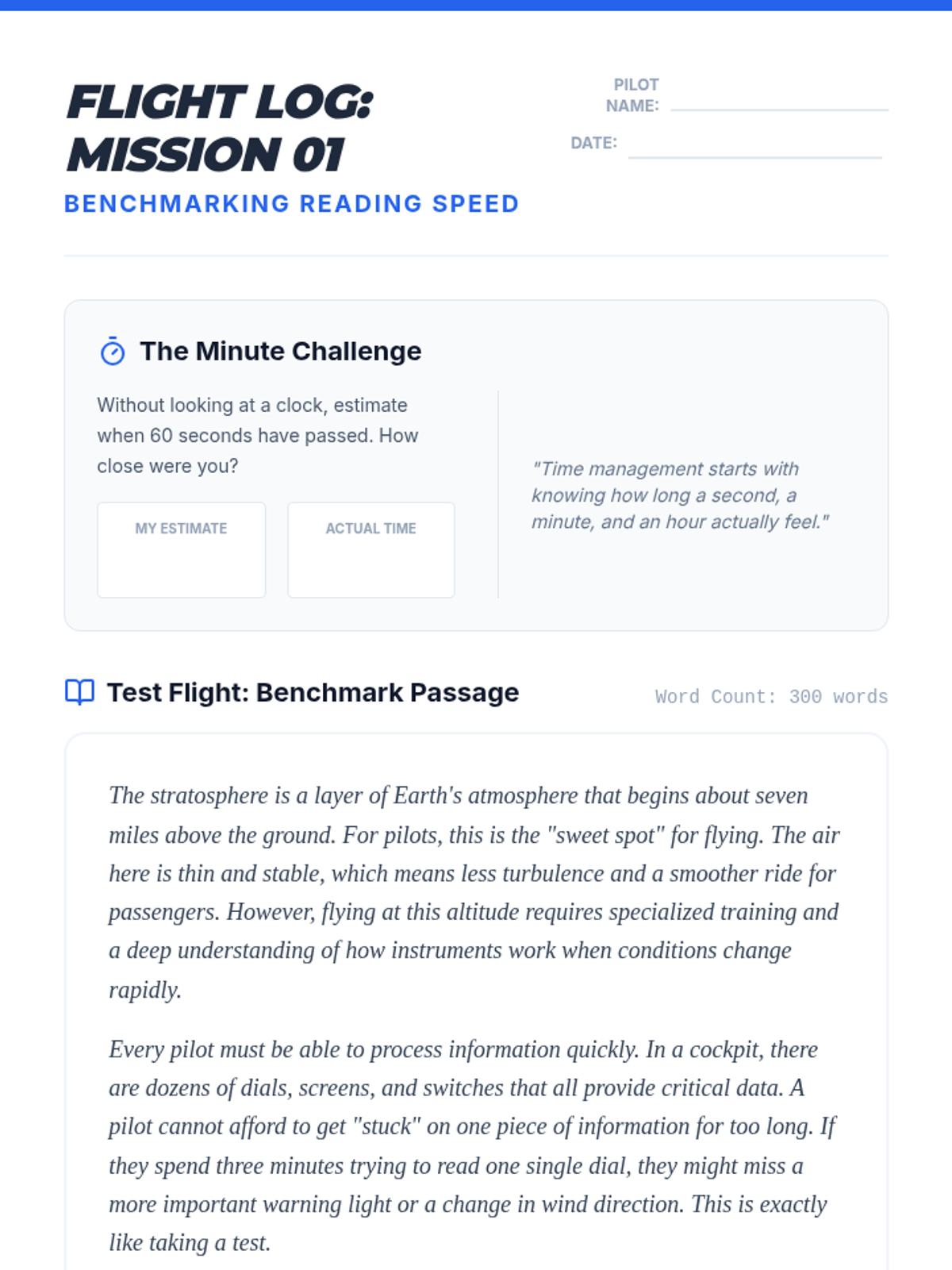
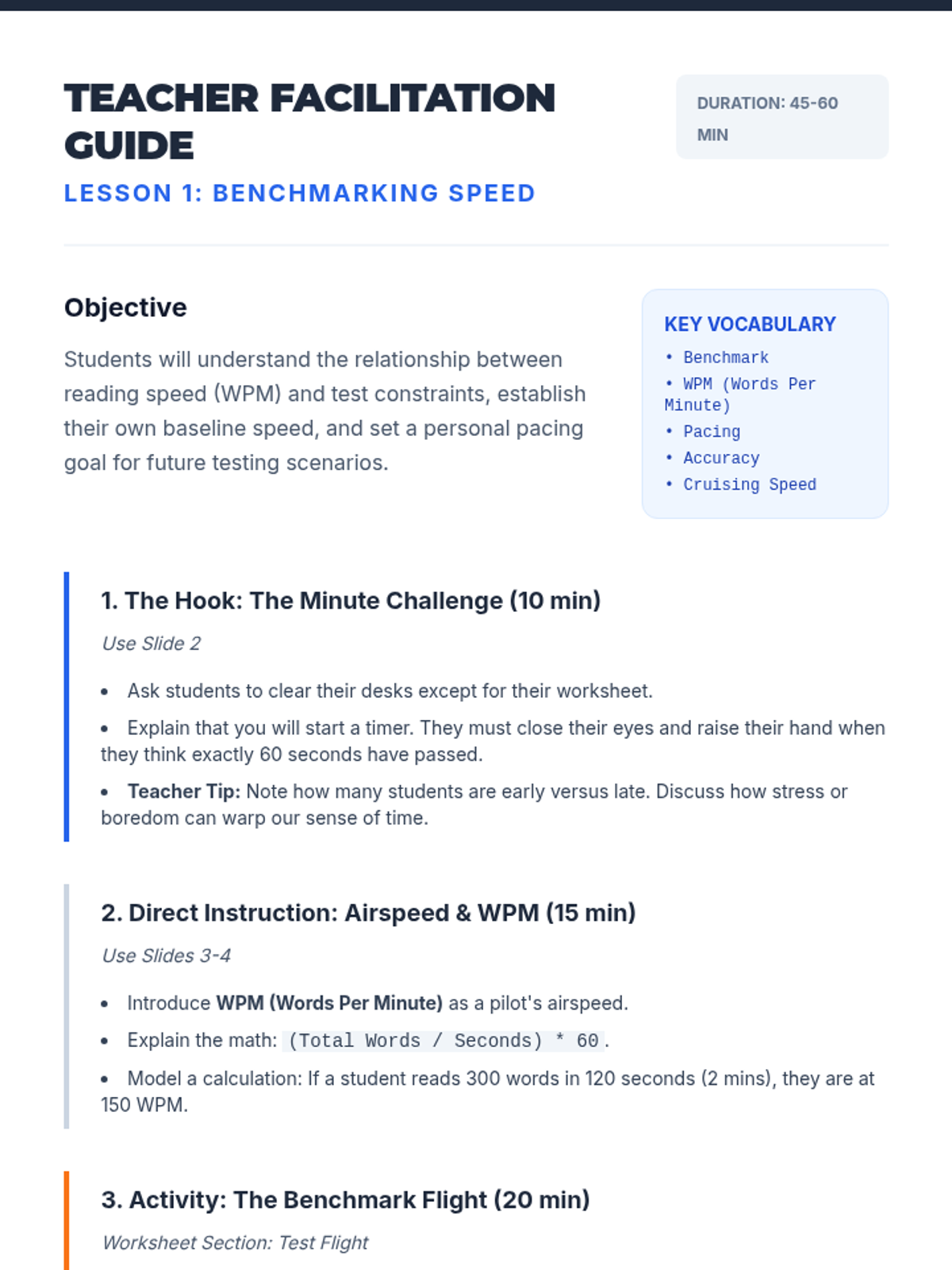
A comprehensive sequence for 7th Grade ESL students focused on developing the executive functioning skills needed for successful test-taking. Students learn to manage time, prioritize questions, annotate for focus, and regulate anxiety through a 'Test Pilot' theme.
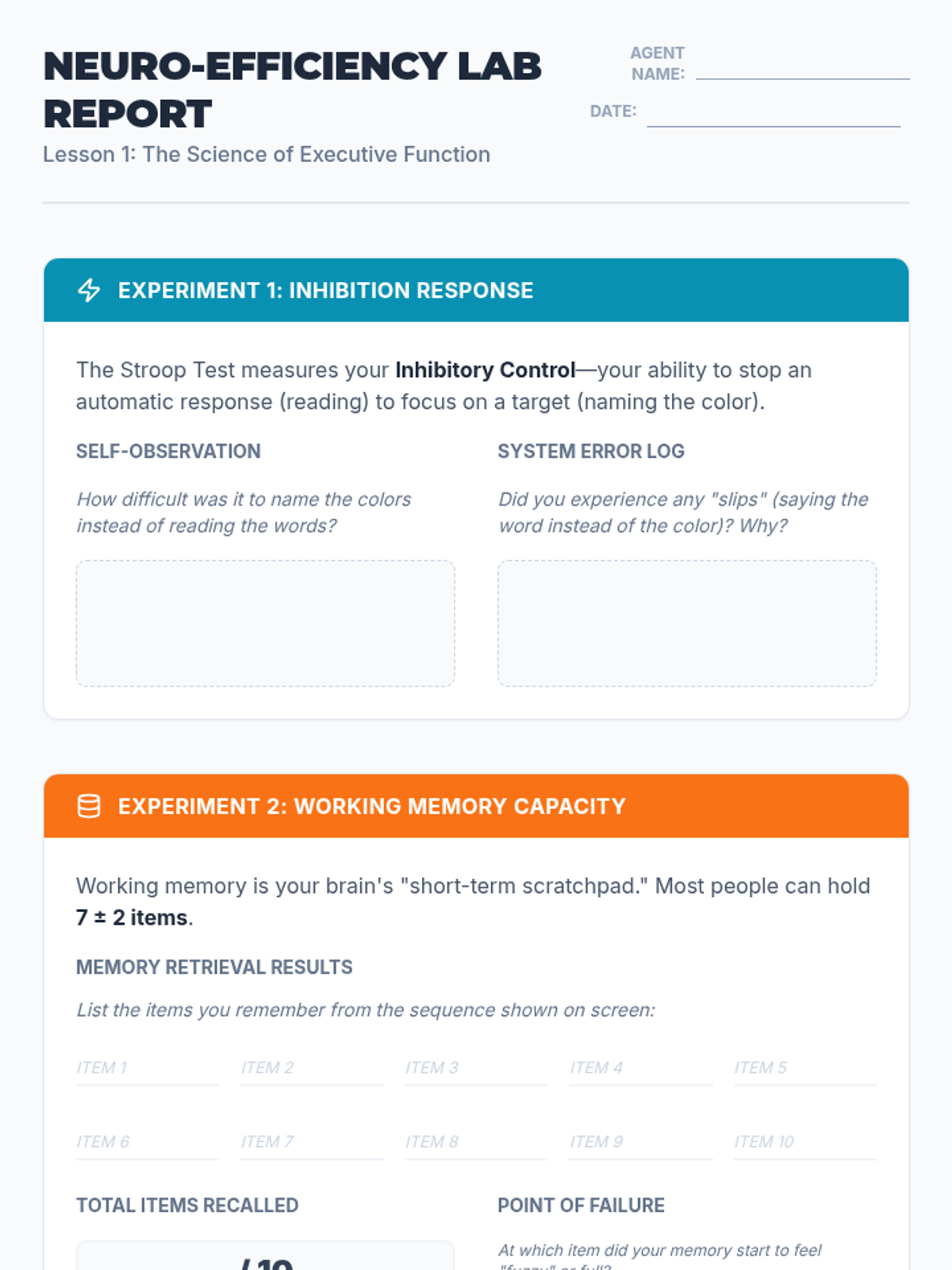
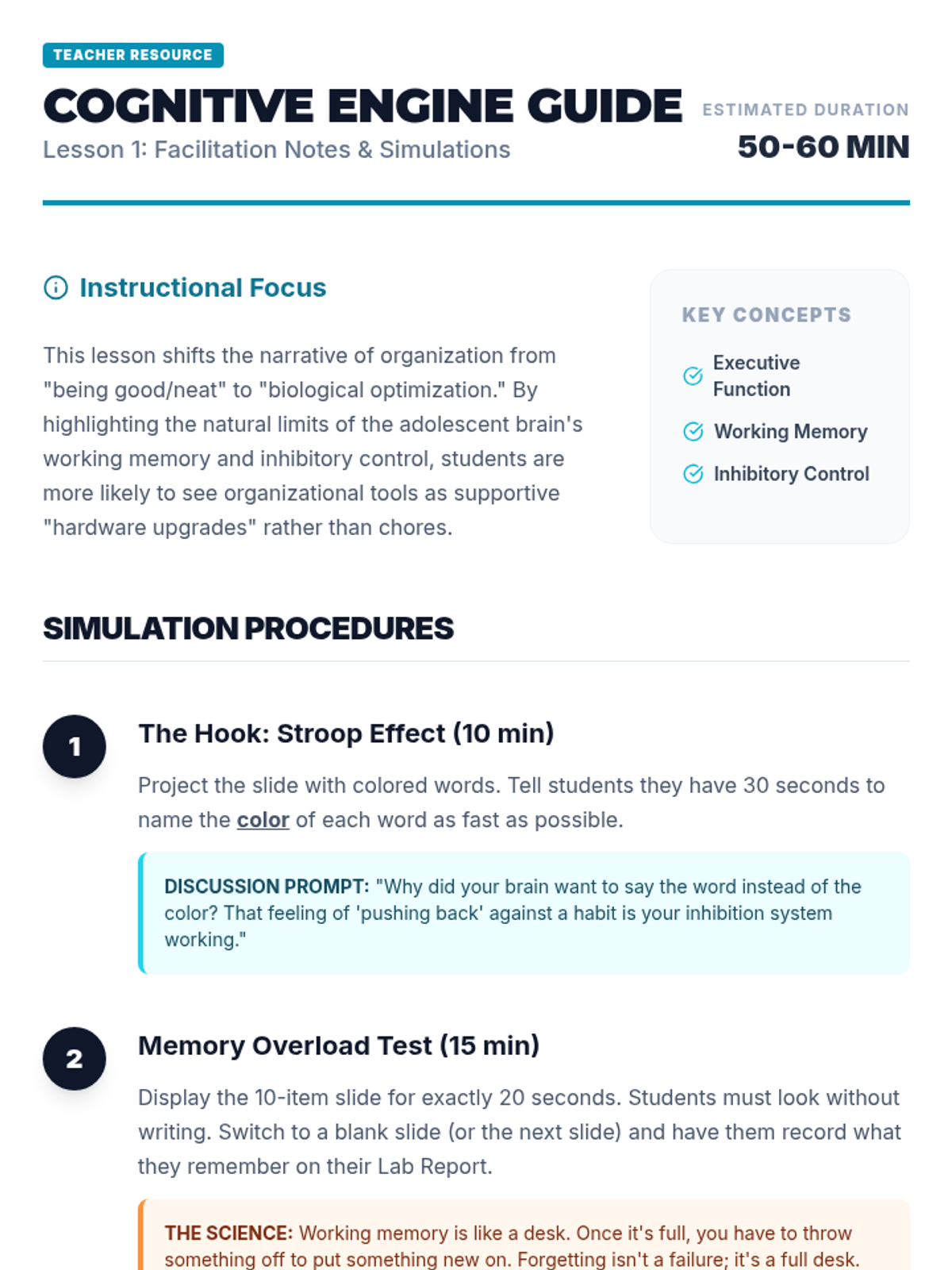
This sequence guides 8th-grade students through the engineering of their physical and digital environments to support executive function. Students move from understanding the neurological 'why' of organization to building a personalized operating manual for their own workflow optimization.
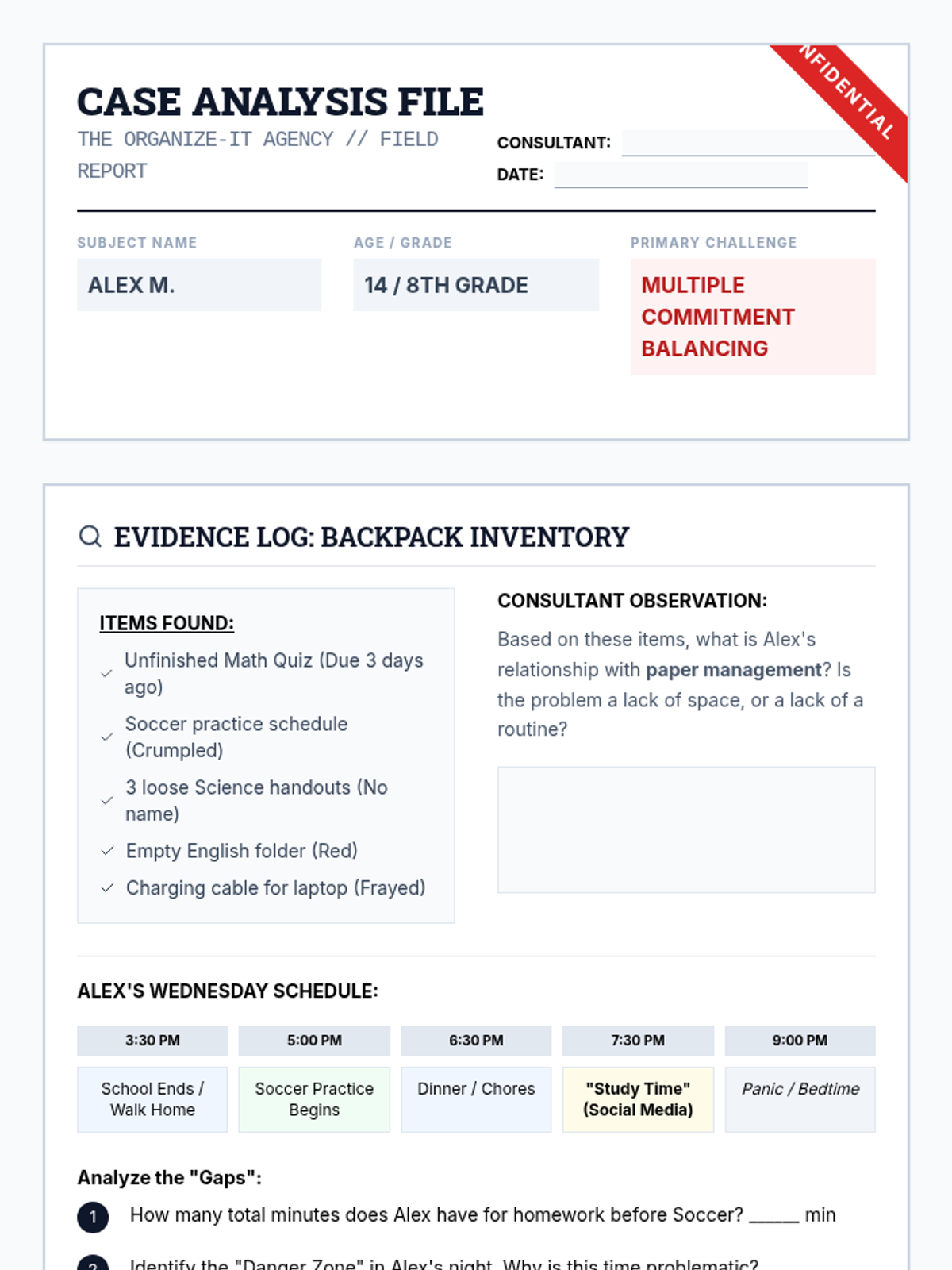
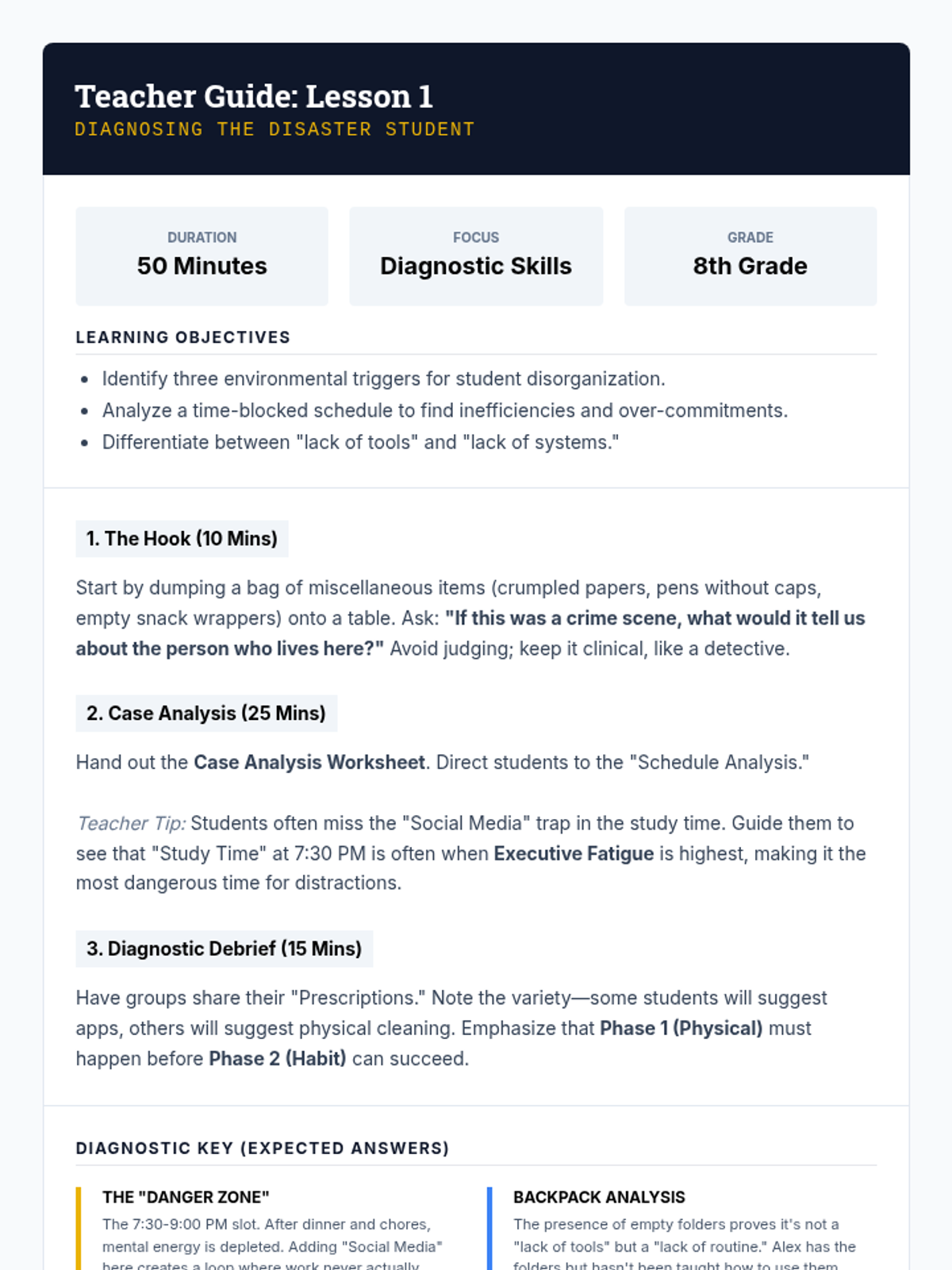
A comprehensive sequence where 8th-grade students act as 'organizational consultants' to diagnose and solve scheduling conflicts and executive functioning challenges through case studies. Students learn root cause analysis, professional self-advocacy, emotional regulation strategies for procrastination, and tool evaluation before creating a final consultancy report.
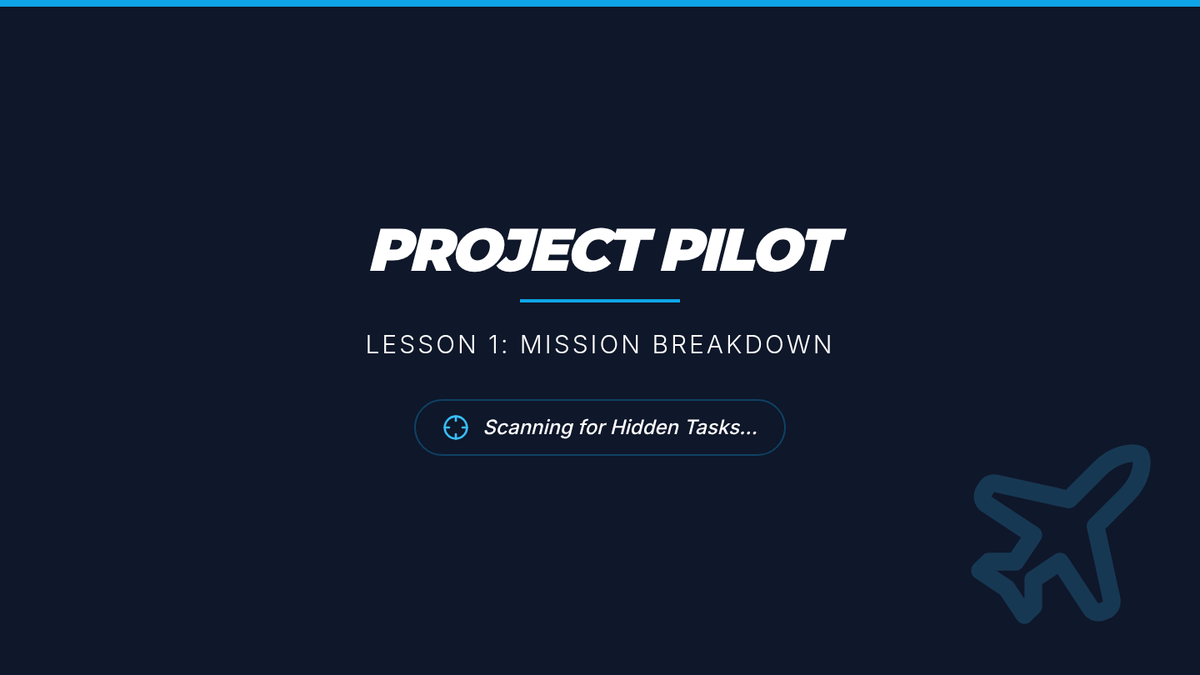
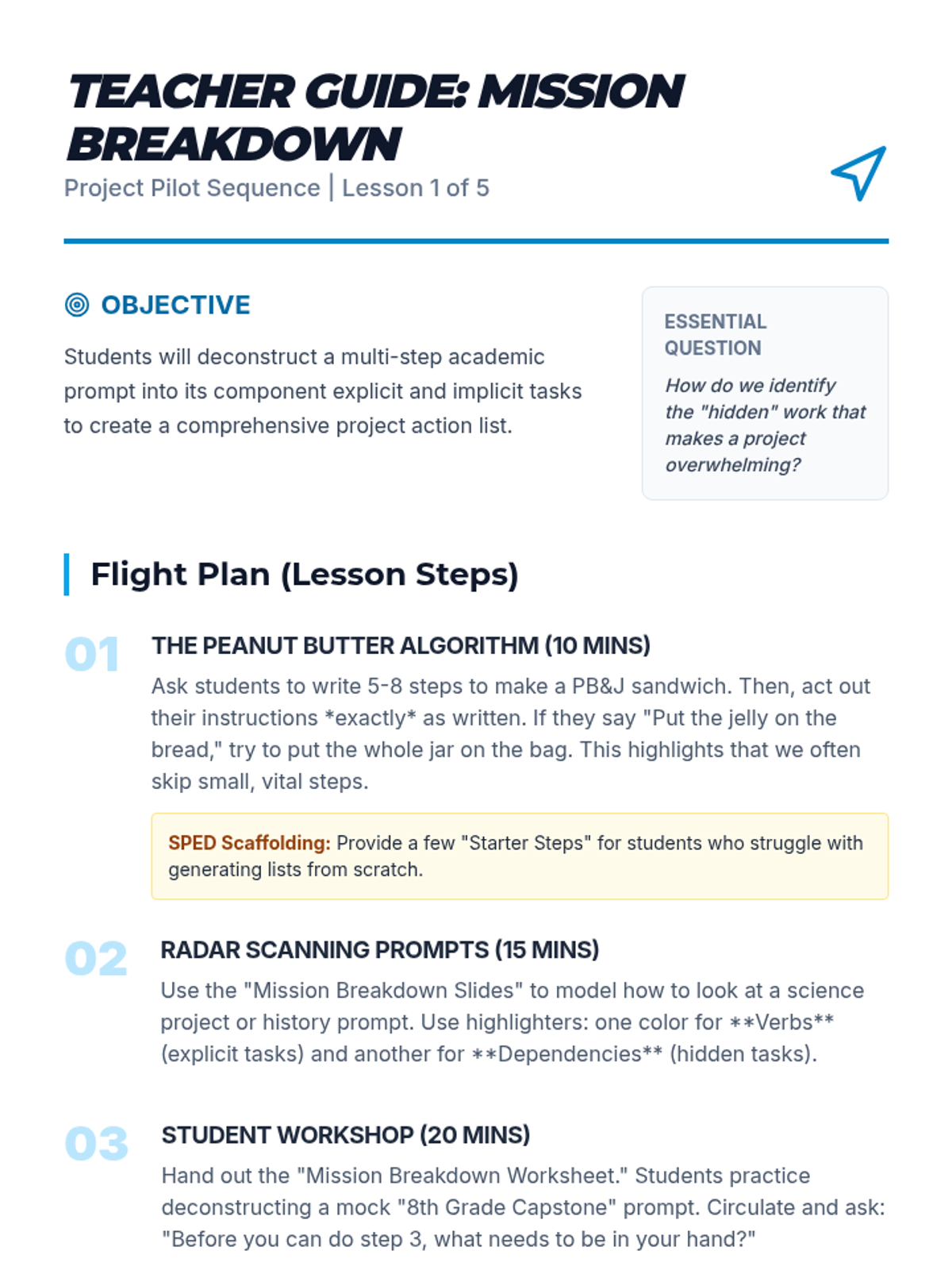
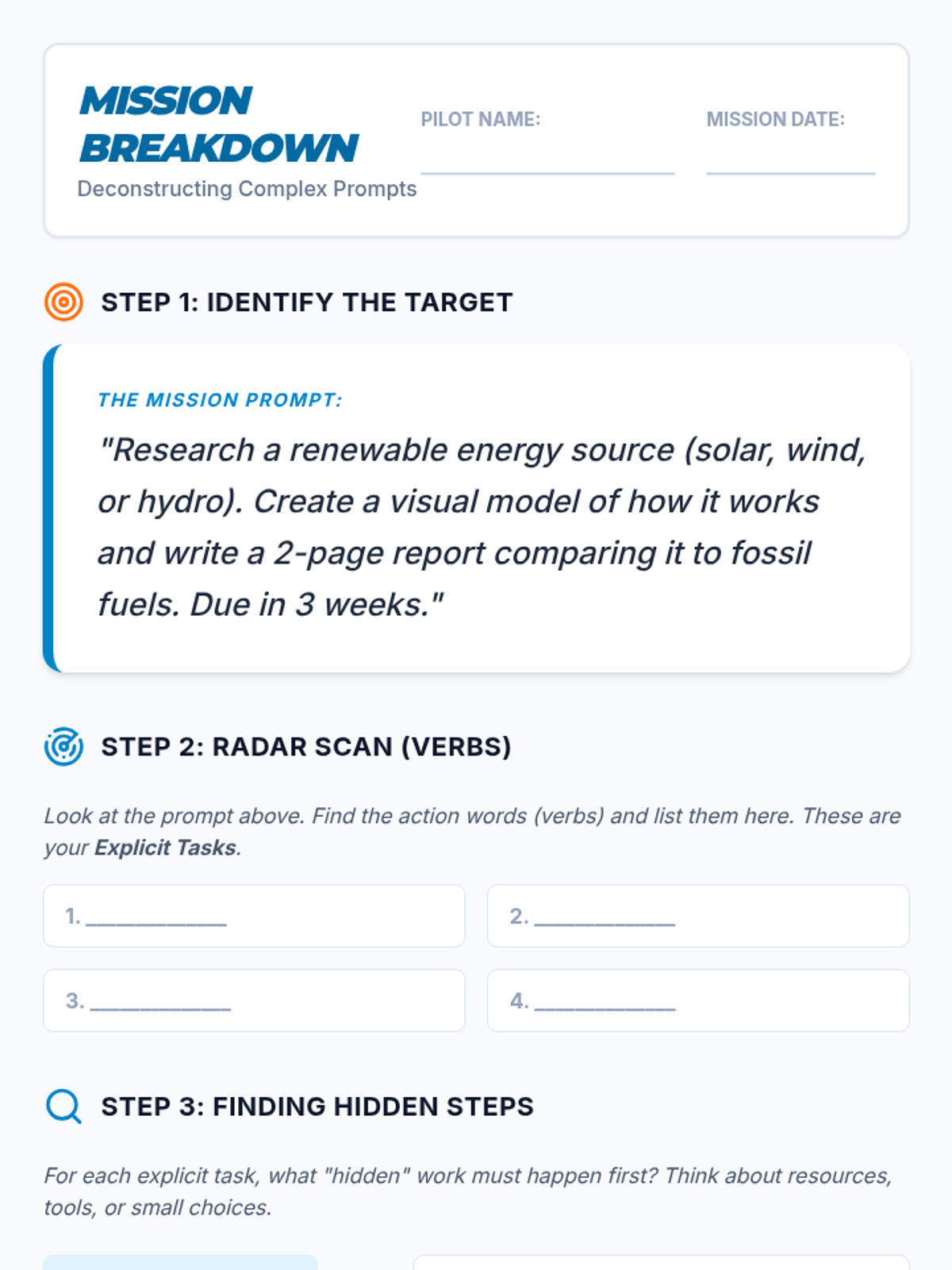
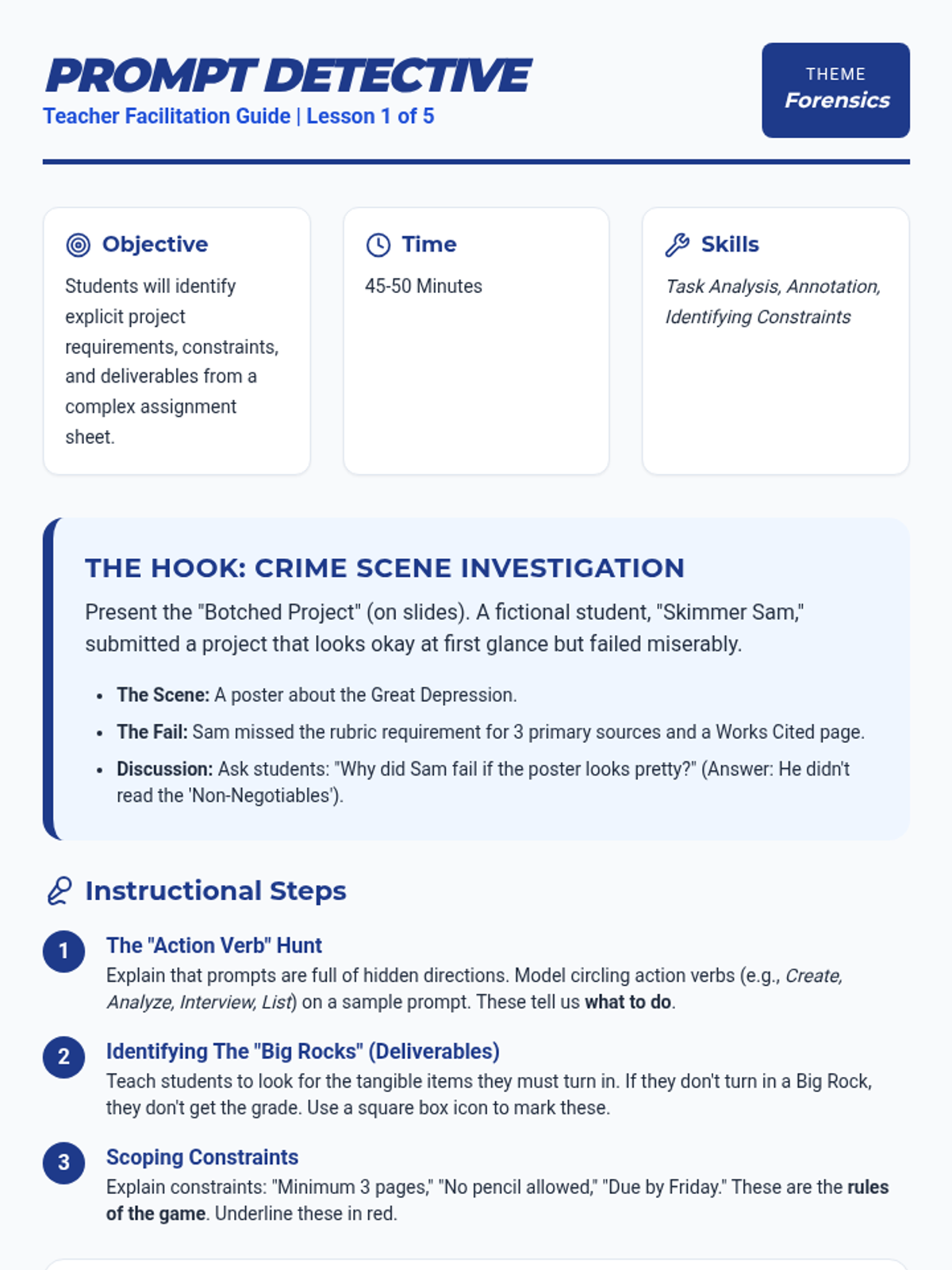
A specialized sequence for 8th-grade students focusing on executive functioning skills related to project management. Students learn to deconstruct complex assignments, plan backwards from deadlines, visualize overlapping tasks using Gantt charts, and adjust plans when setbacks occur.
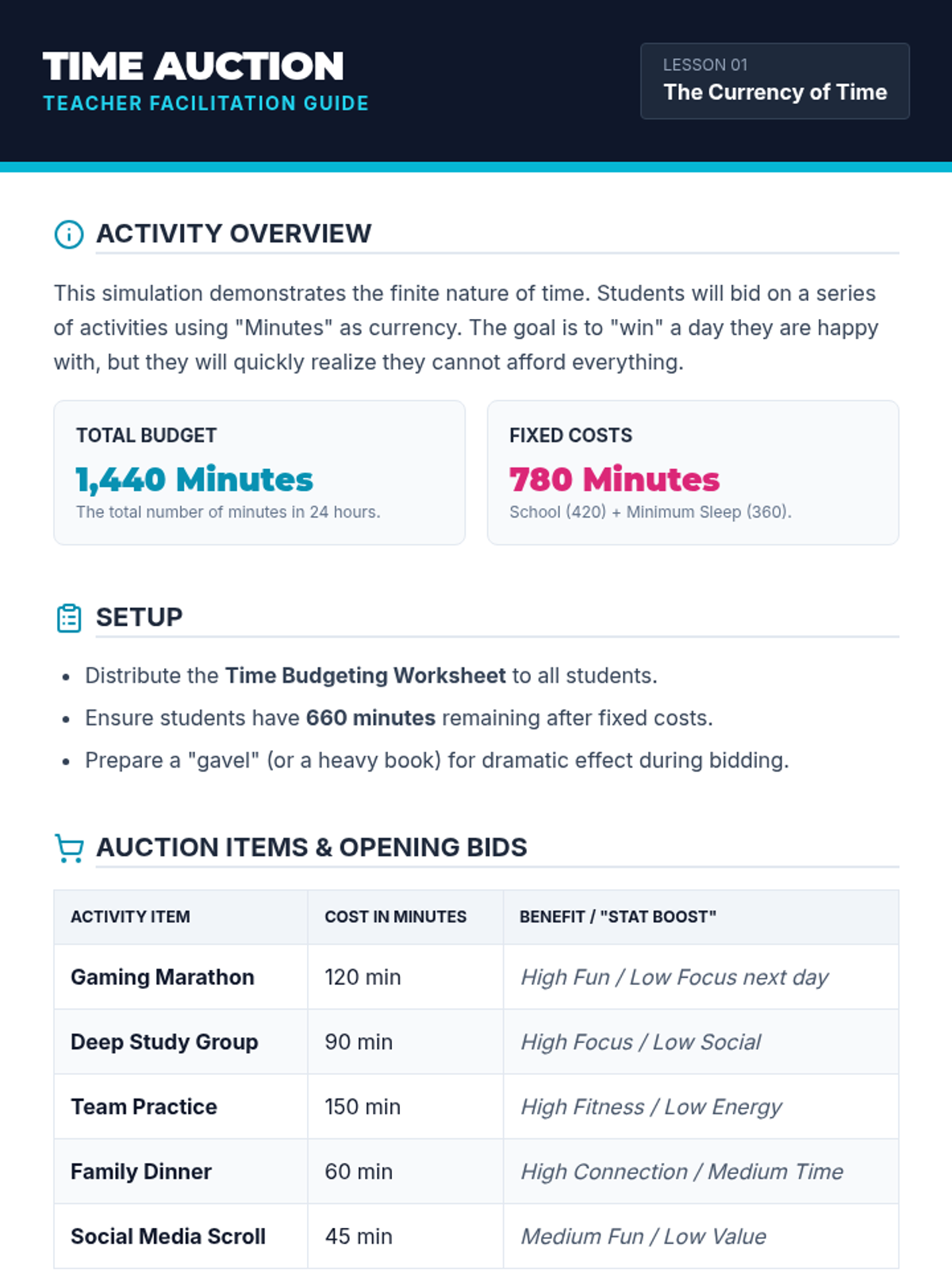
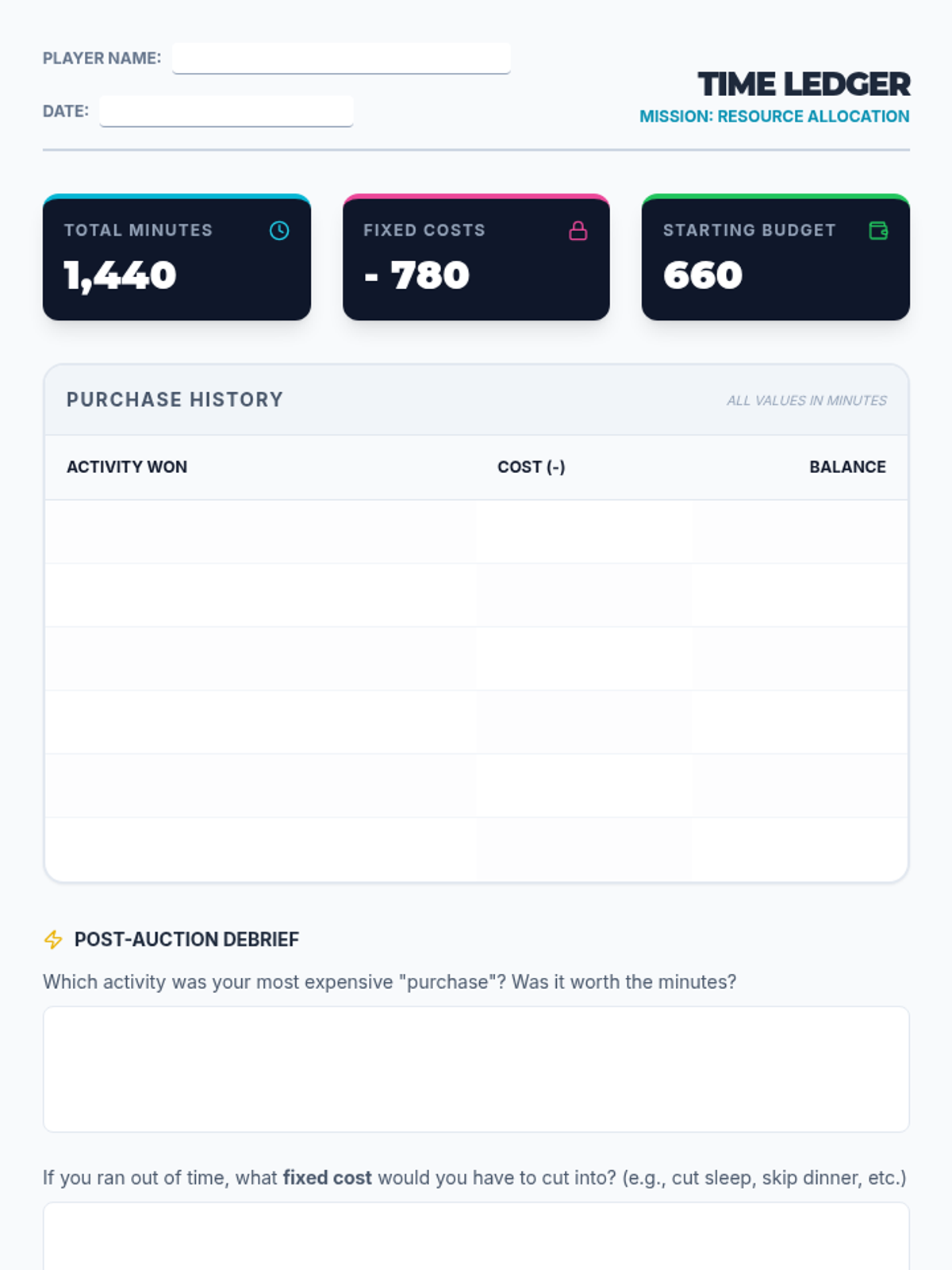
A game-based simulation sequence for 8th-grade students to master time and energy management. Students treat time as a finite currency, navigate trade-offs through opportunity cost simulations, and design a sustainable weekly schedule.
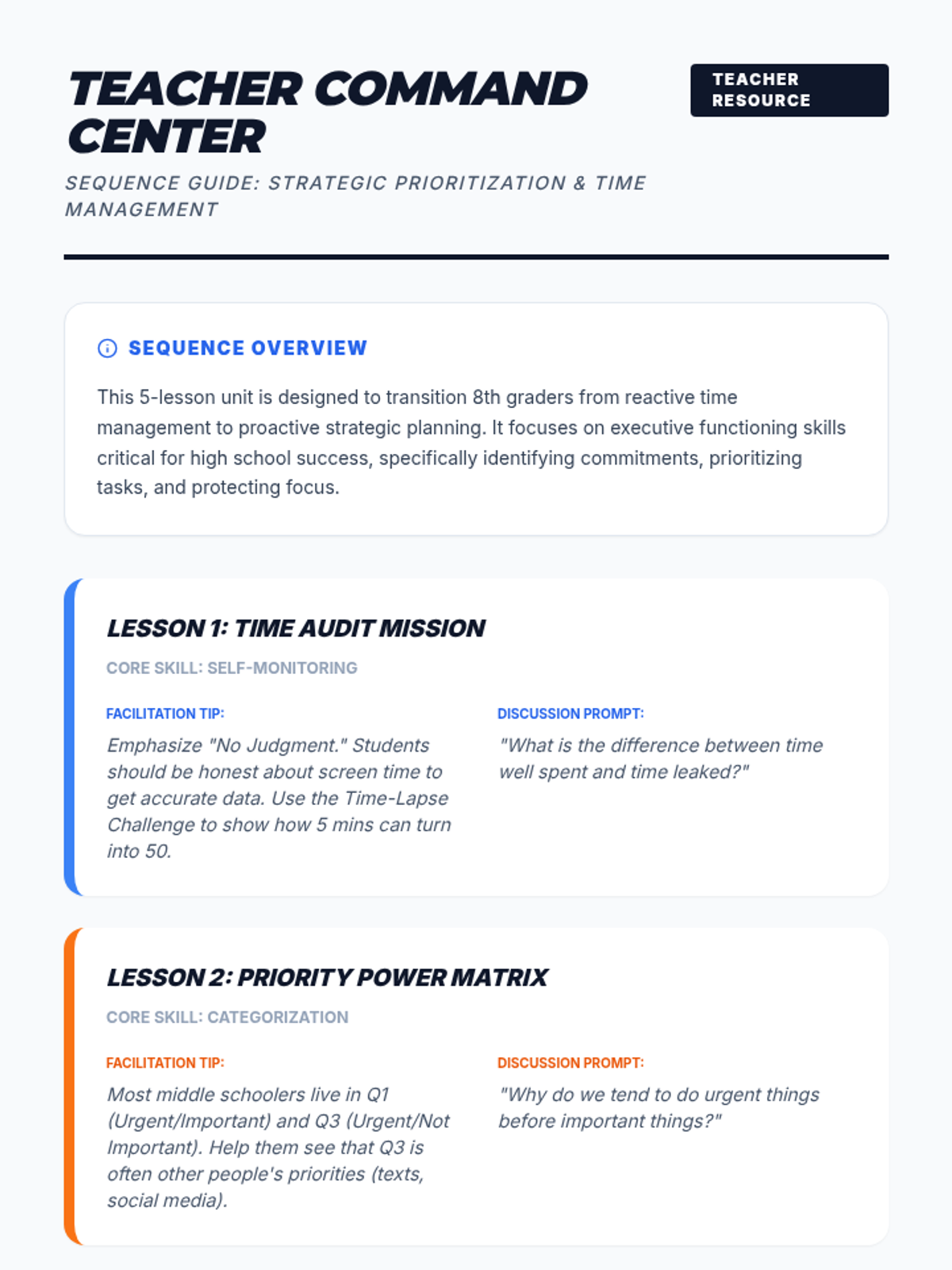
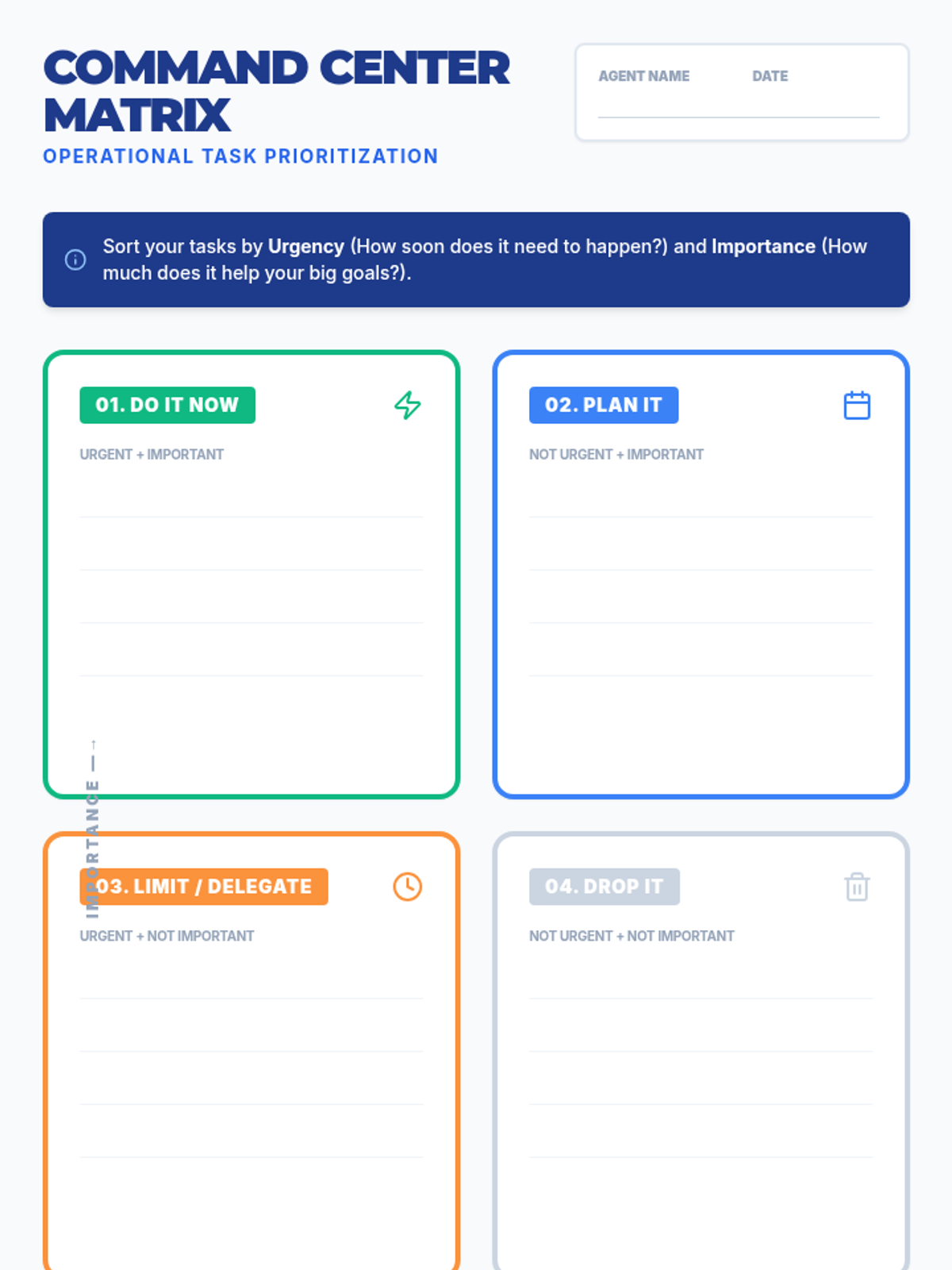
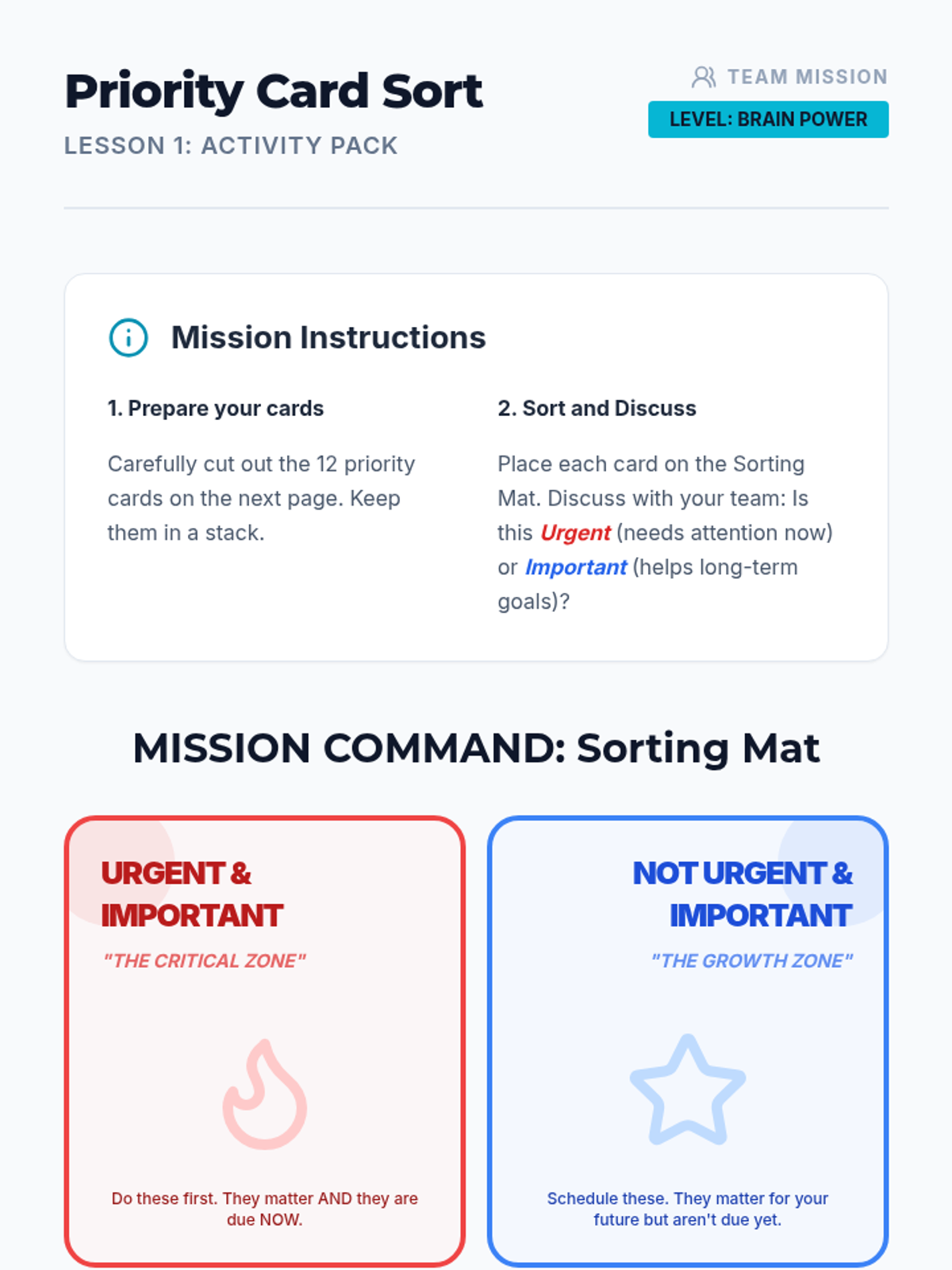
A comprehensive unit for 8th graders to master time management, prioritization using the Eisenhower Matrix, and time-blocking techniques to balance school and life.
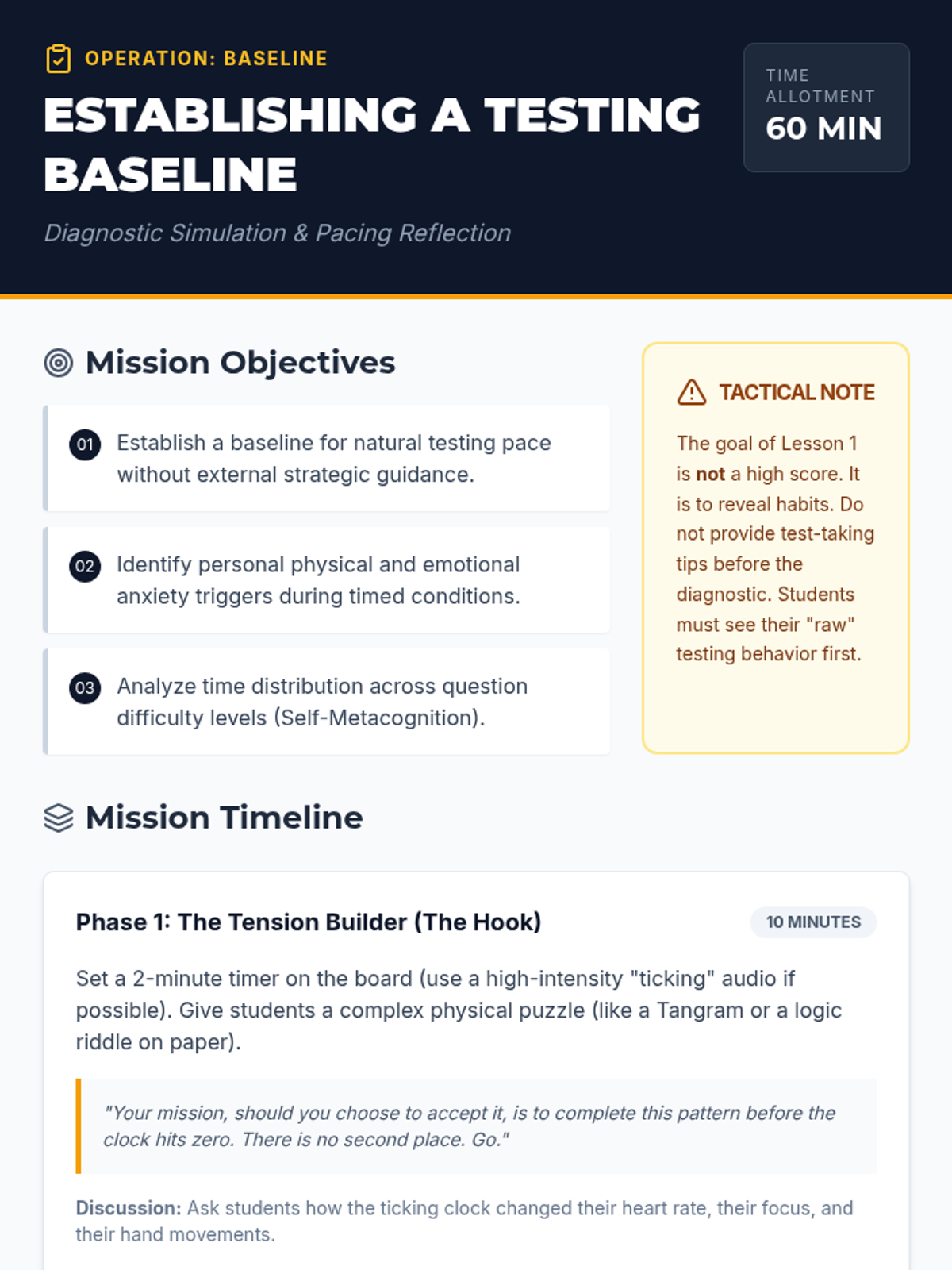
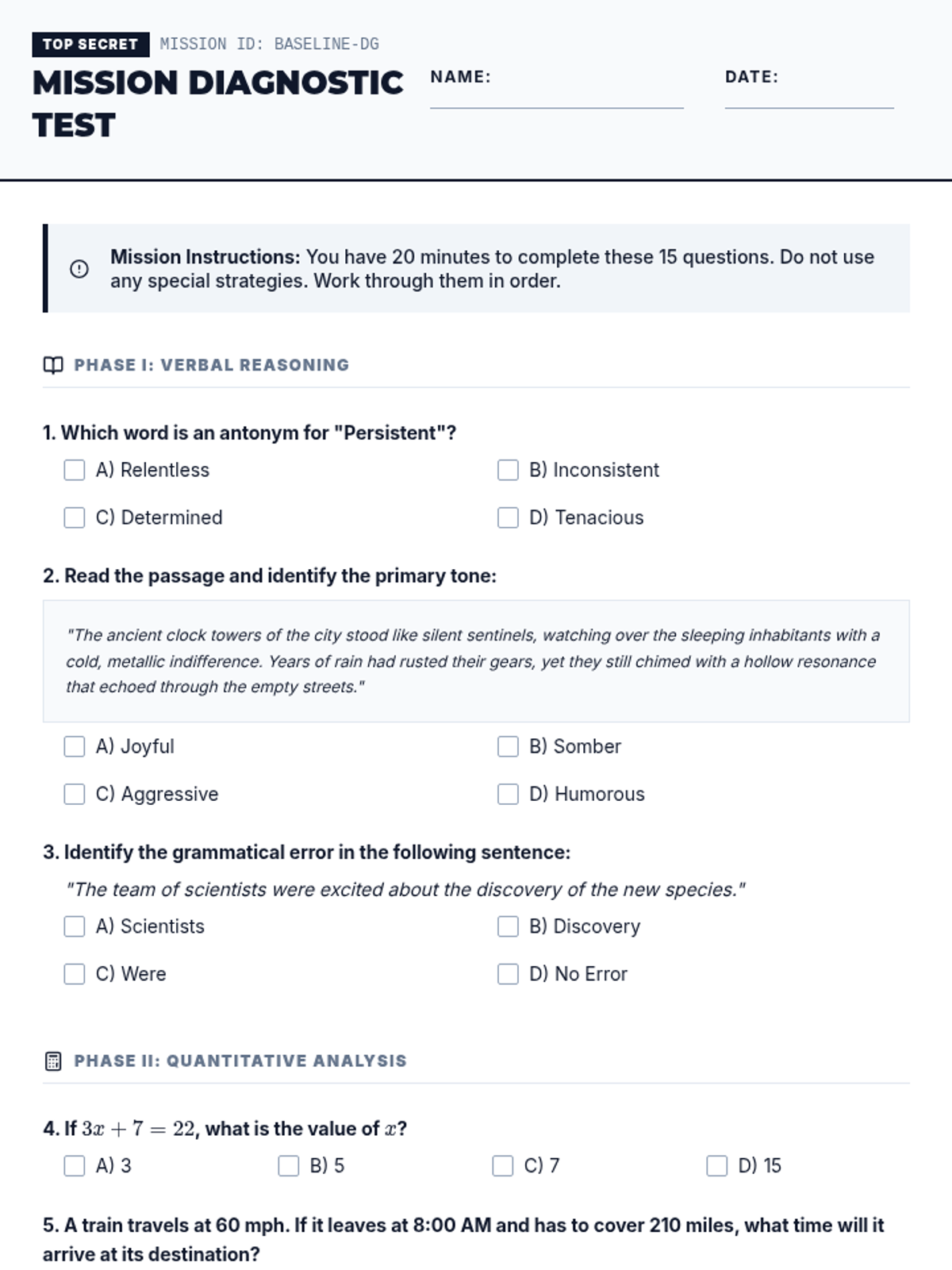
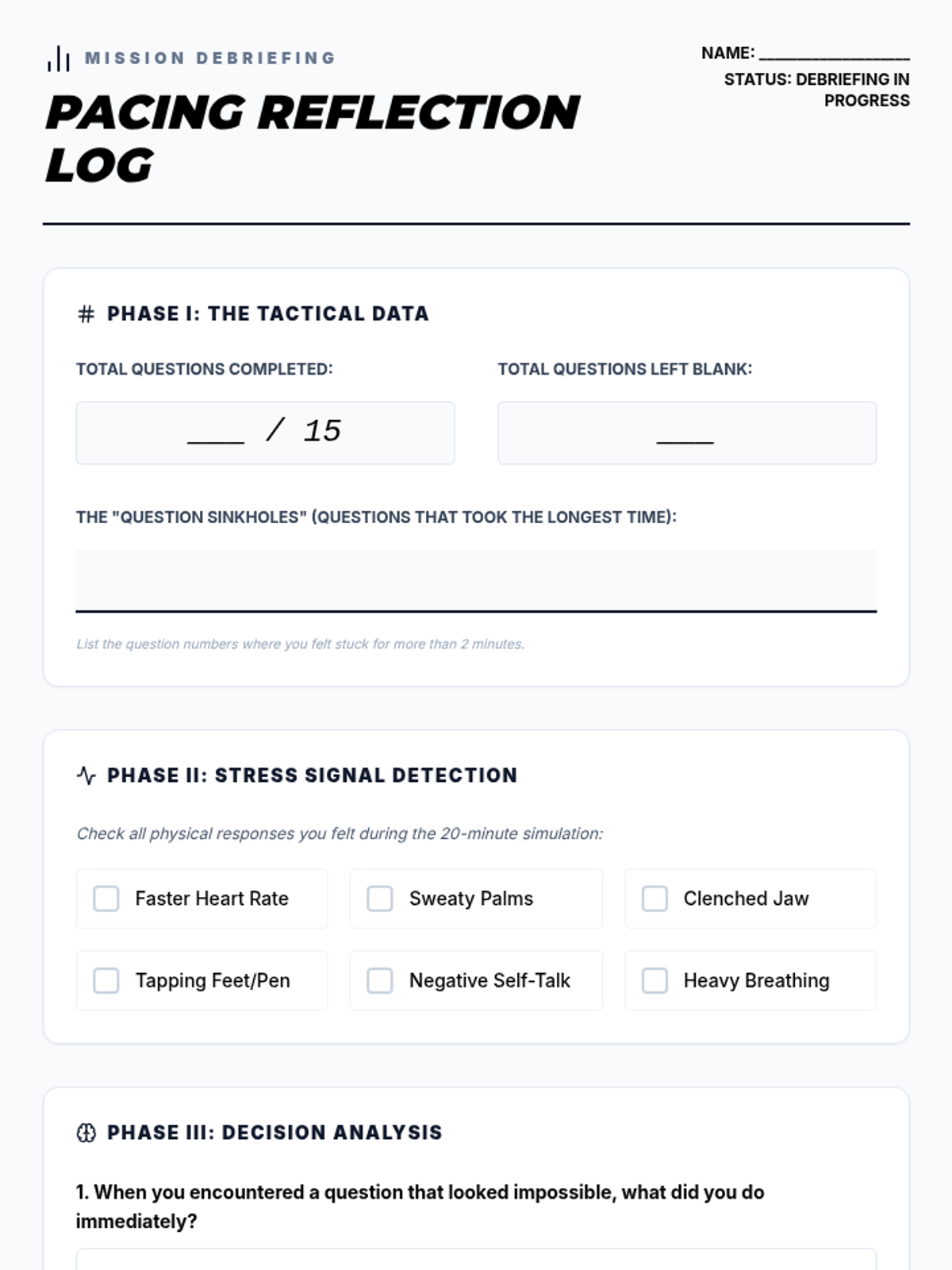
A comprehensive 5-lesson sequence for 8th Grade ESL students focused on the psychological and strategic aspects of timed exams, including pacing, triage, guessing, and stress management.
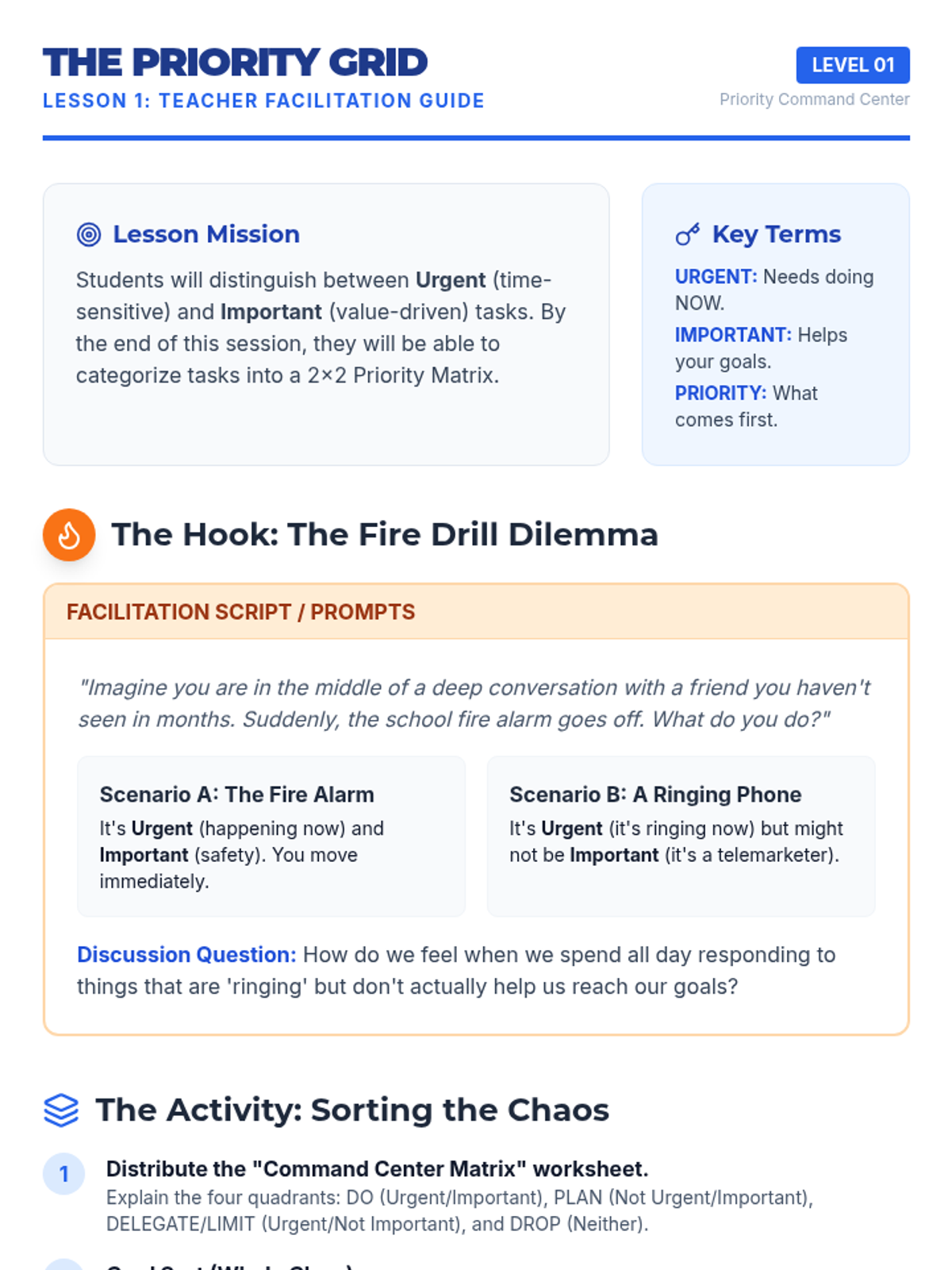
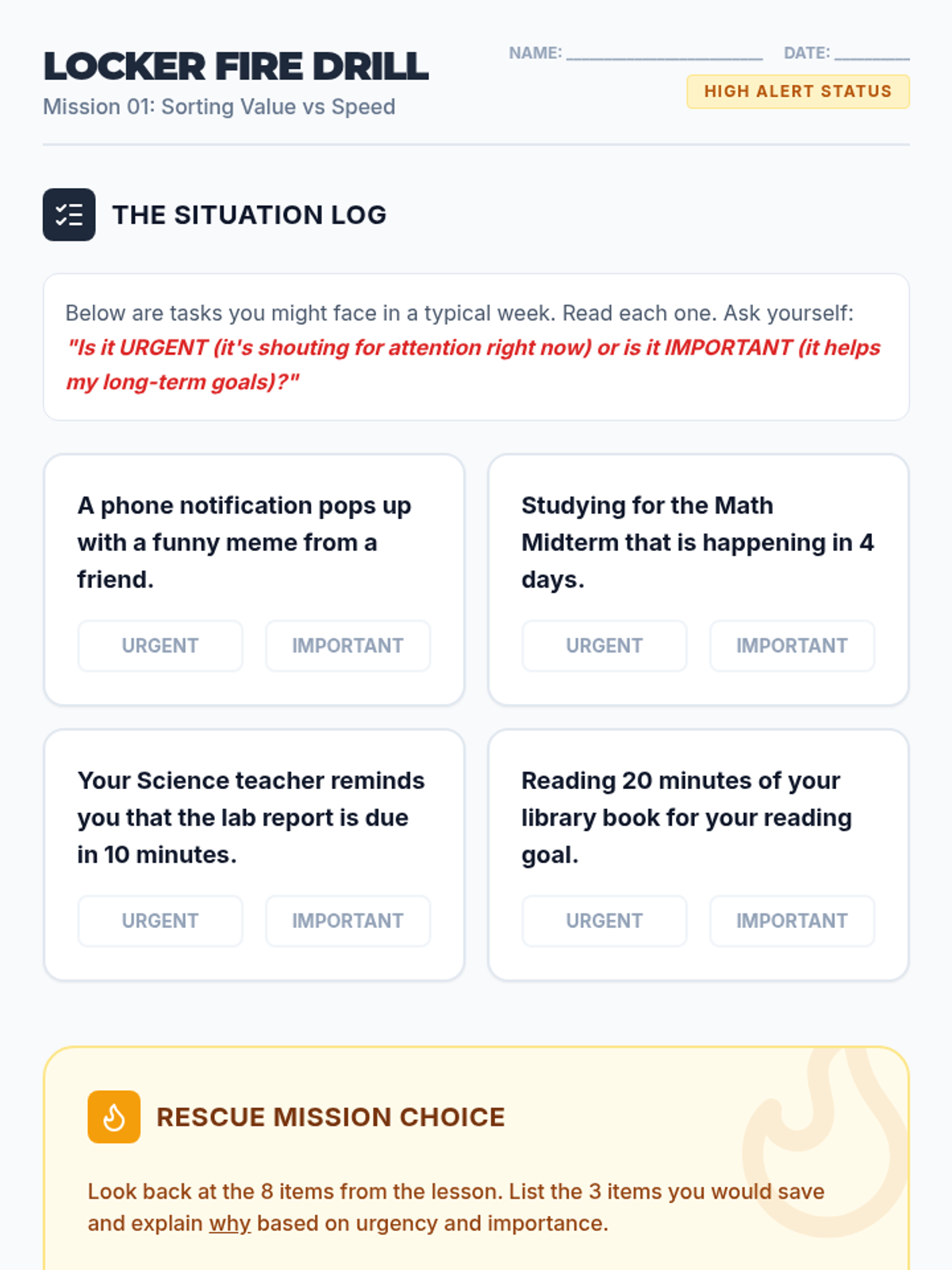
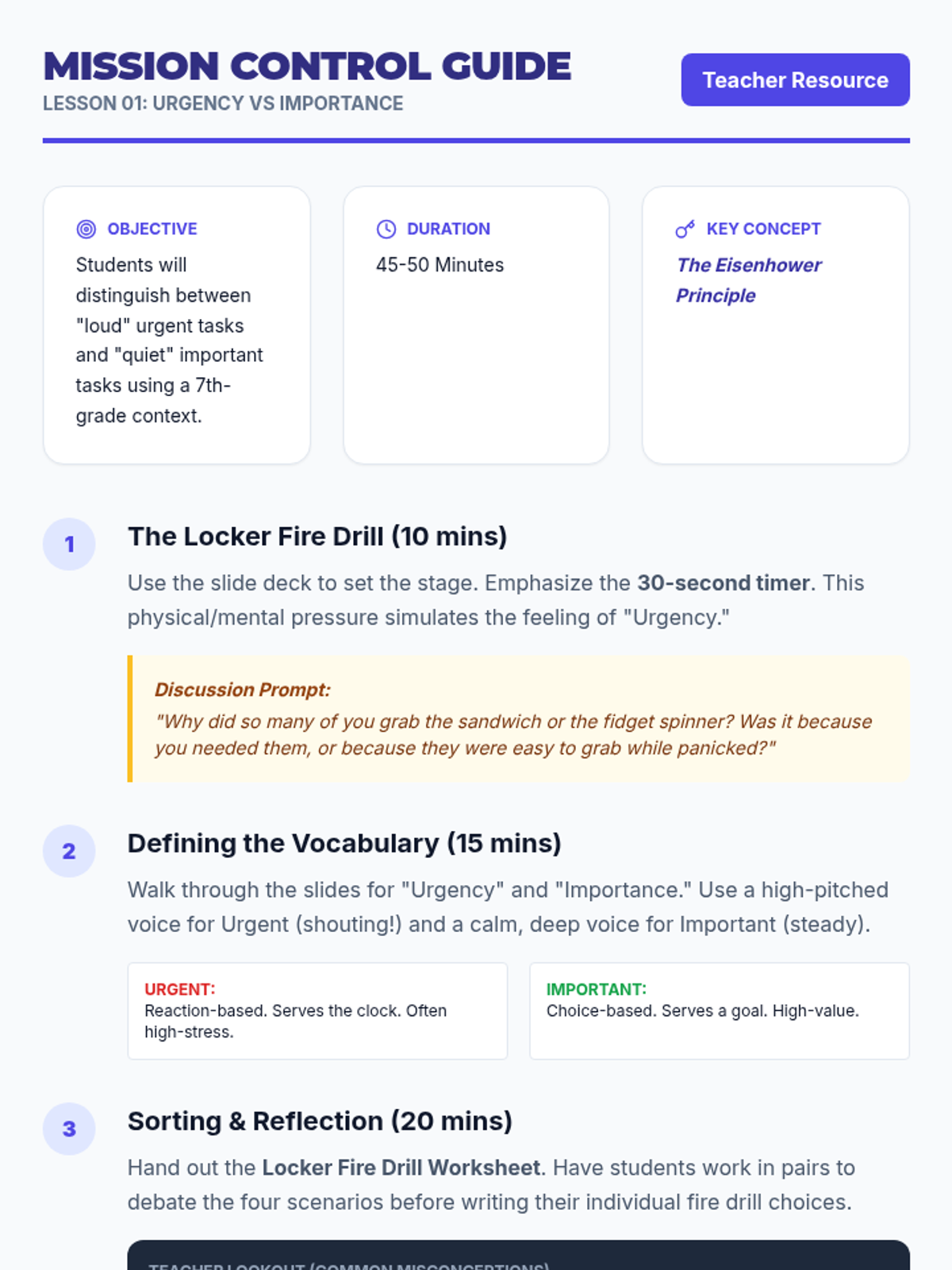
This sequence teaches 6th-grade students how to balance multiple commitments using urgency and importance frameworks. Through game-based simulations and the 'Jar of Rocks' analogy, students develop executive function skills for effective prioritization.
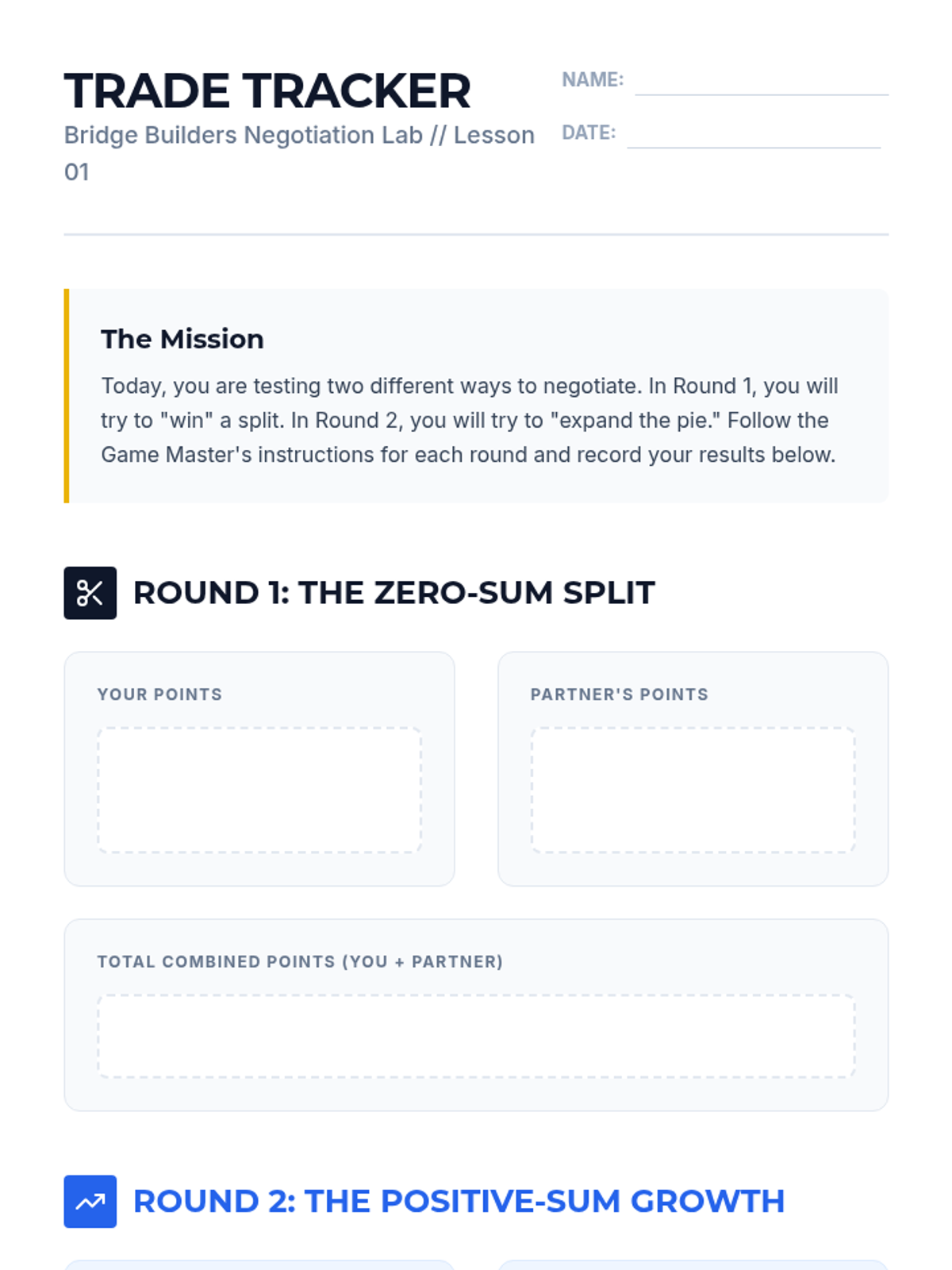
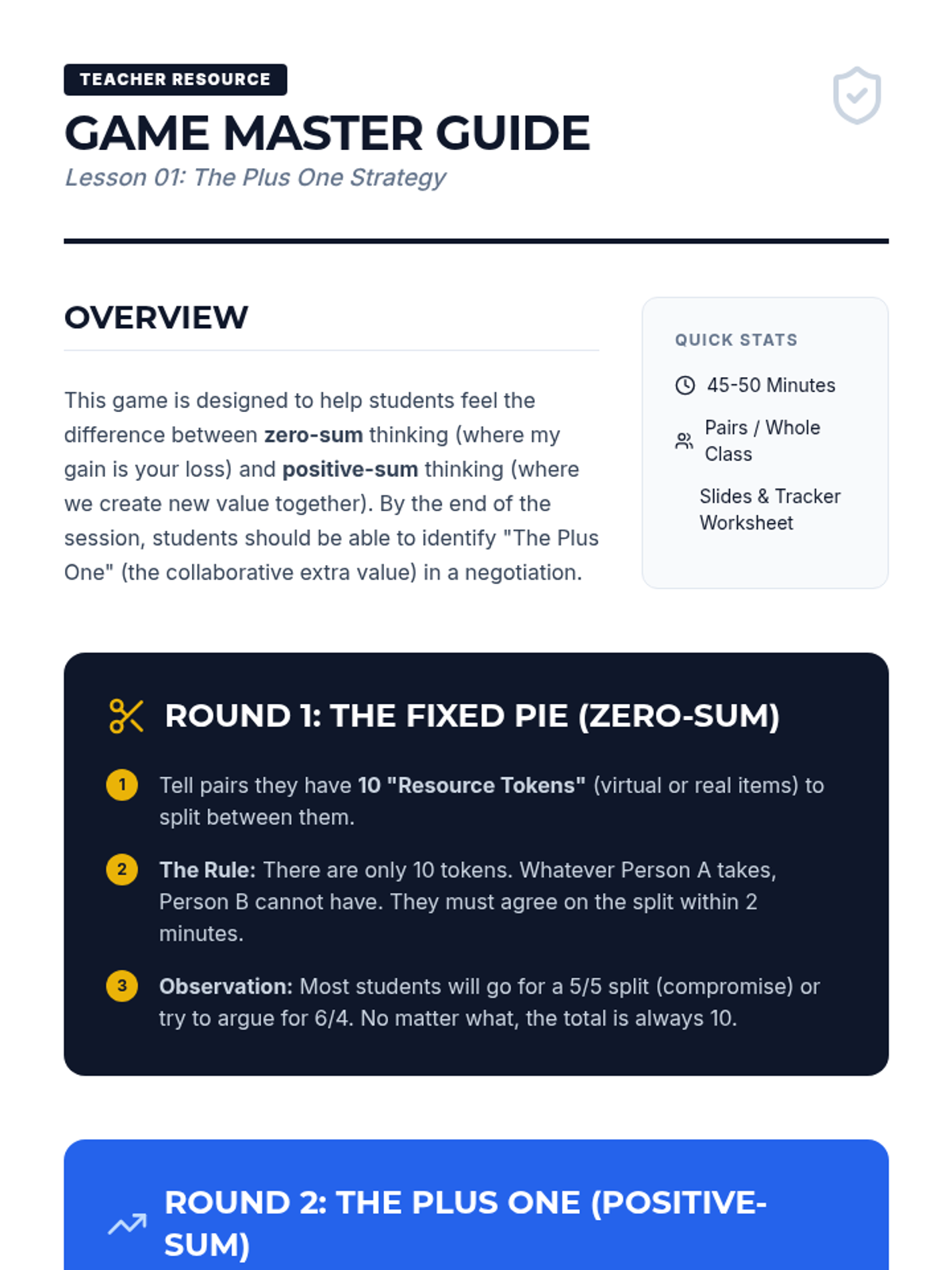
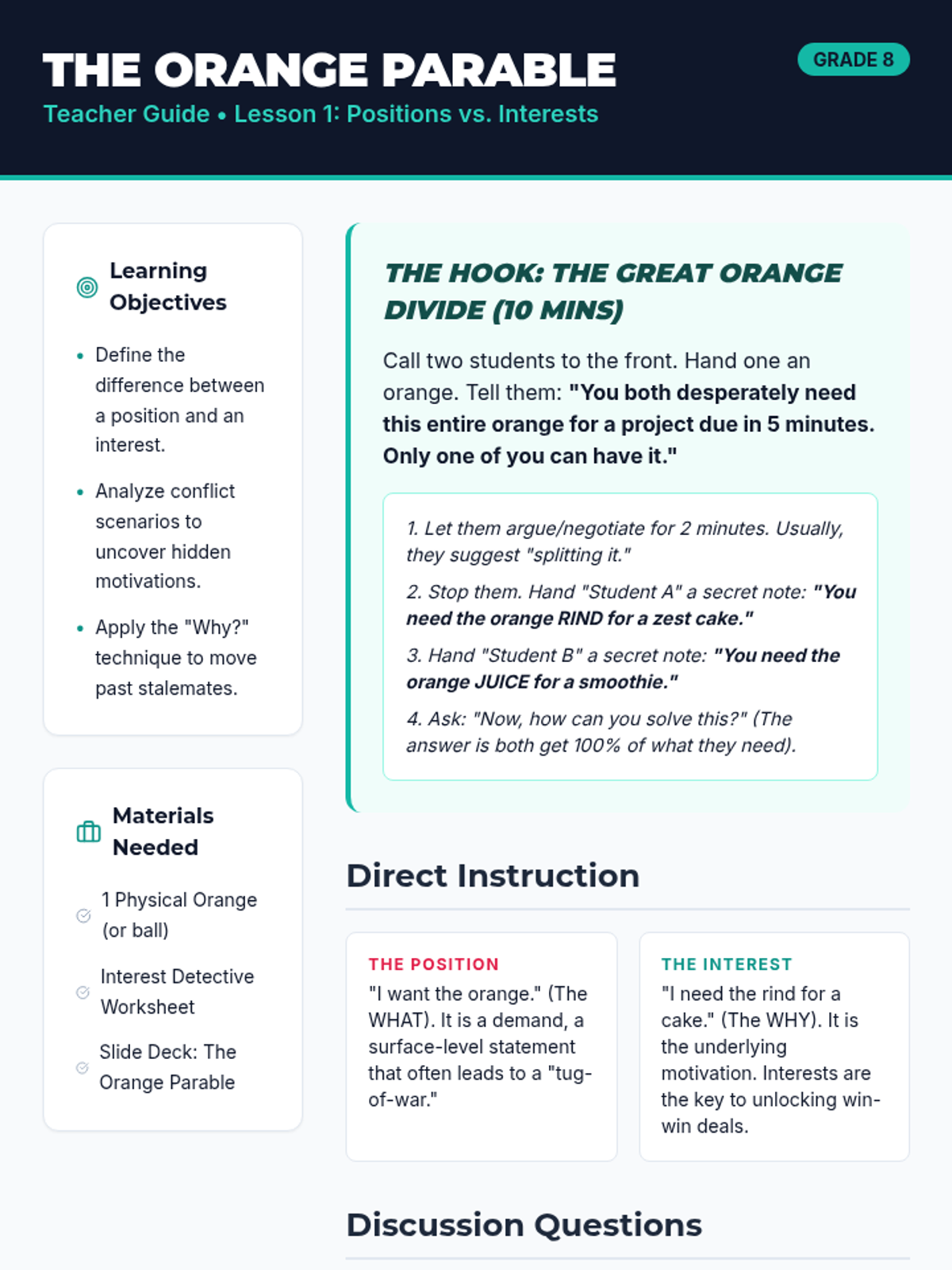
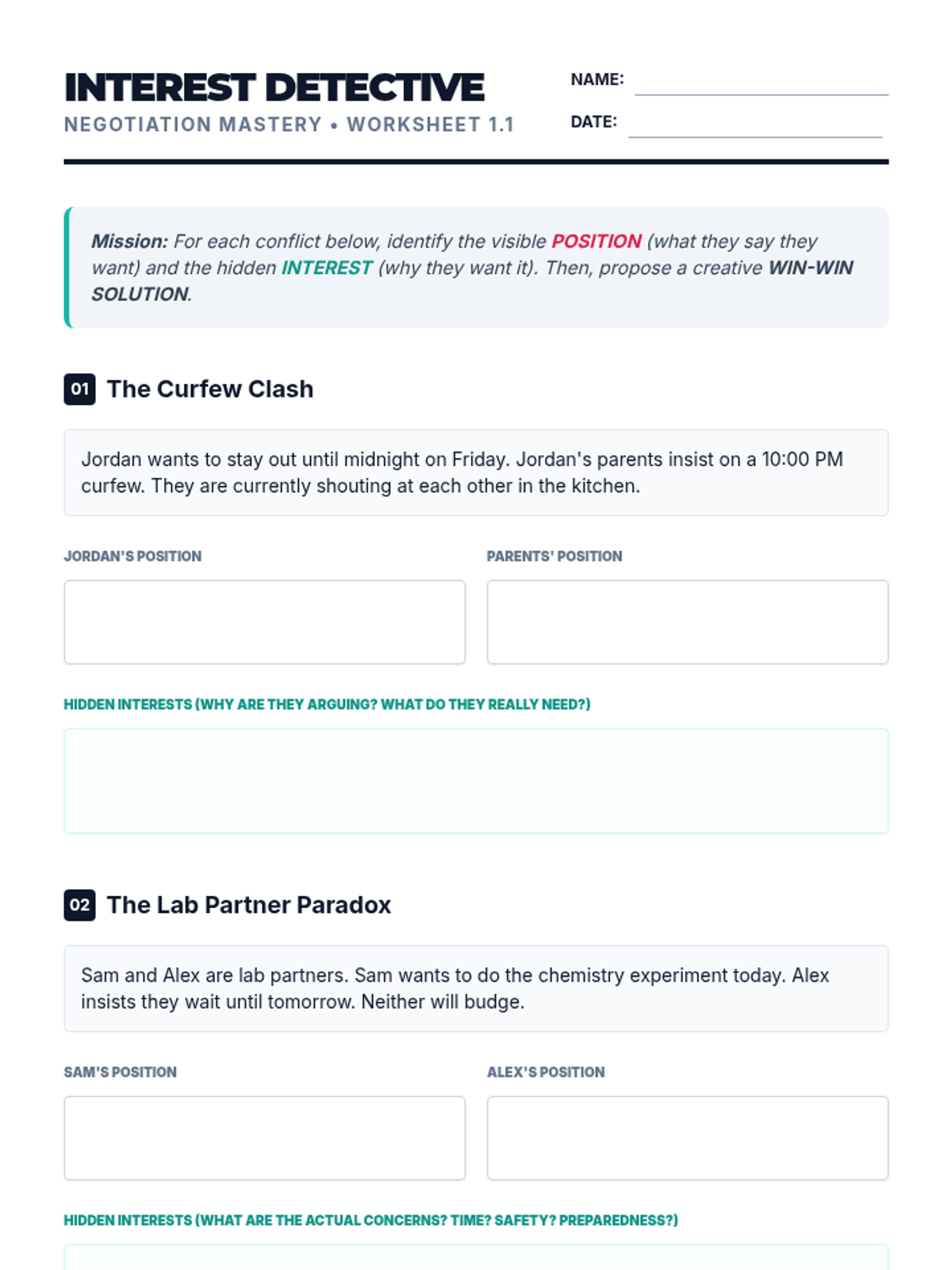
This sequence teaches 7th-grade students how to move beyond simple compromise to collaborative negotiation. Students learn to separate people from problems, brainstorm creative 'win-win' options, use objective criteria for fairness, and develop a BATNA (Best Alternative to a Negotiated Agreement) to handle complex conflicts effectively while preserving relationships.
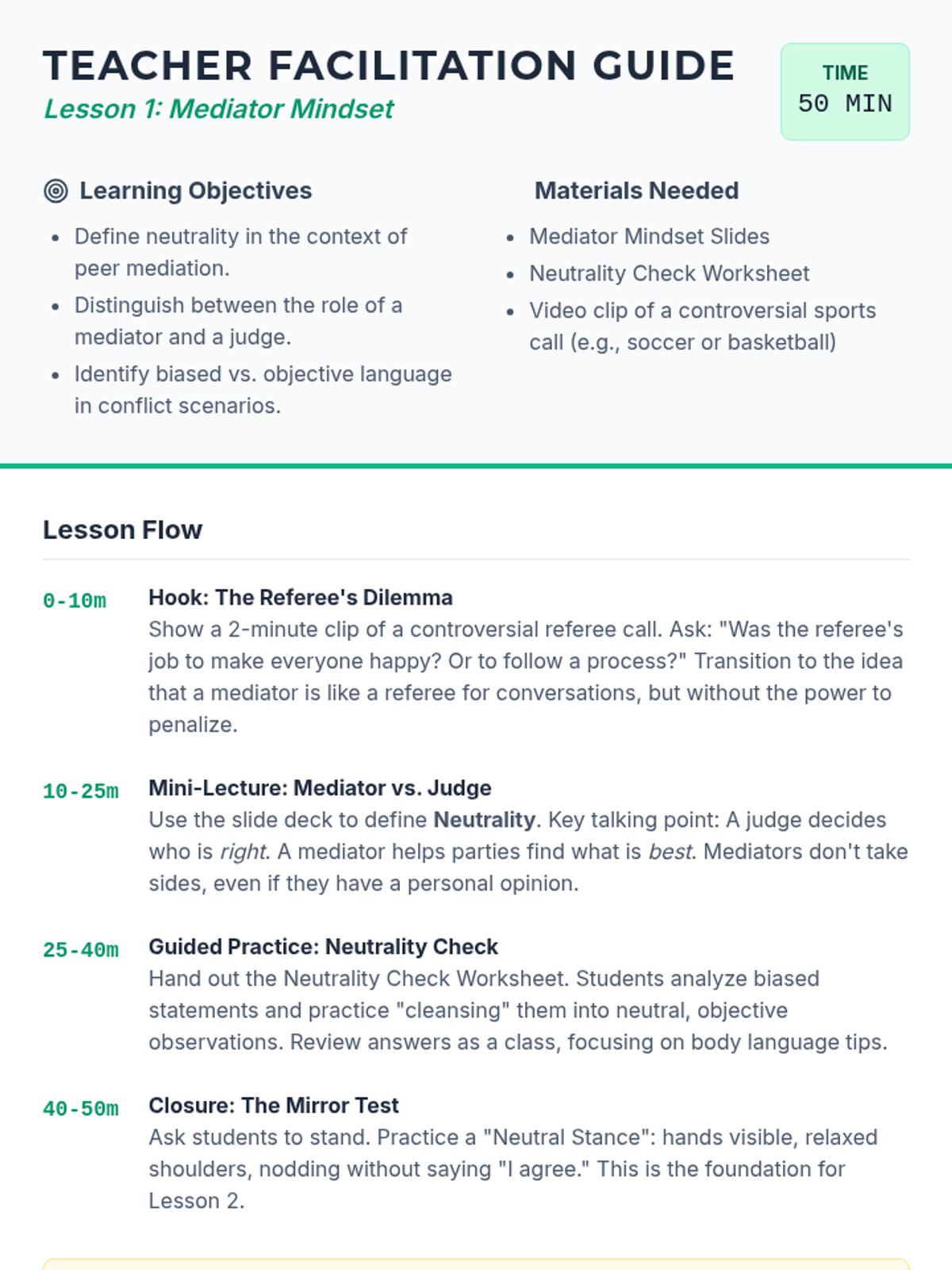
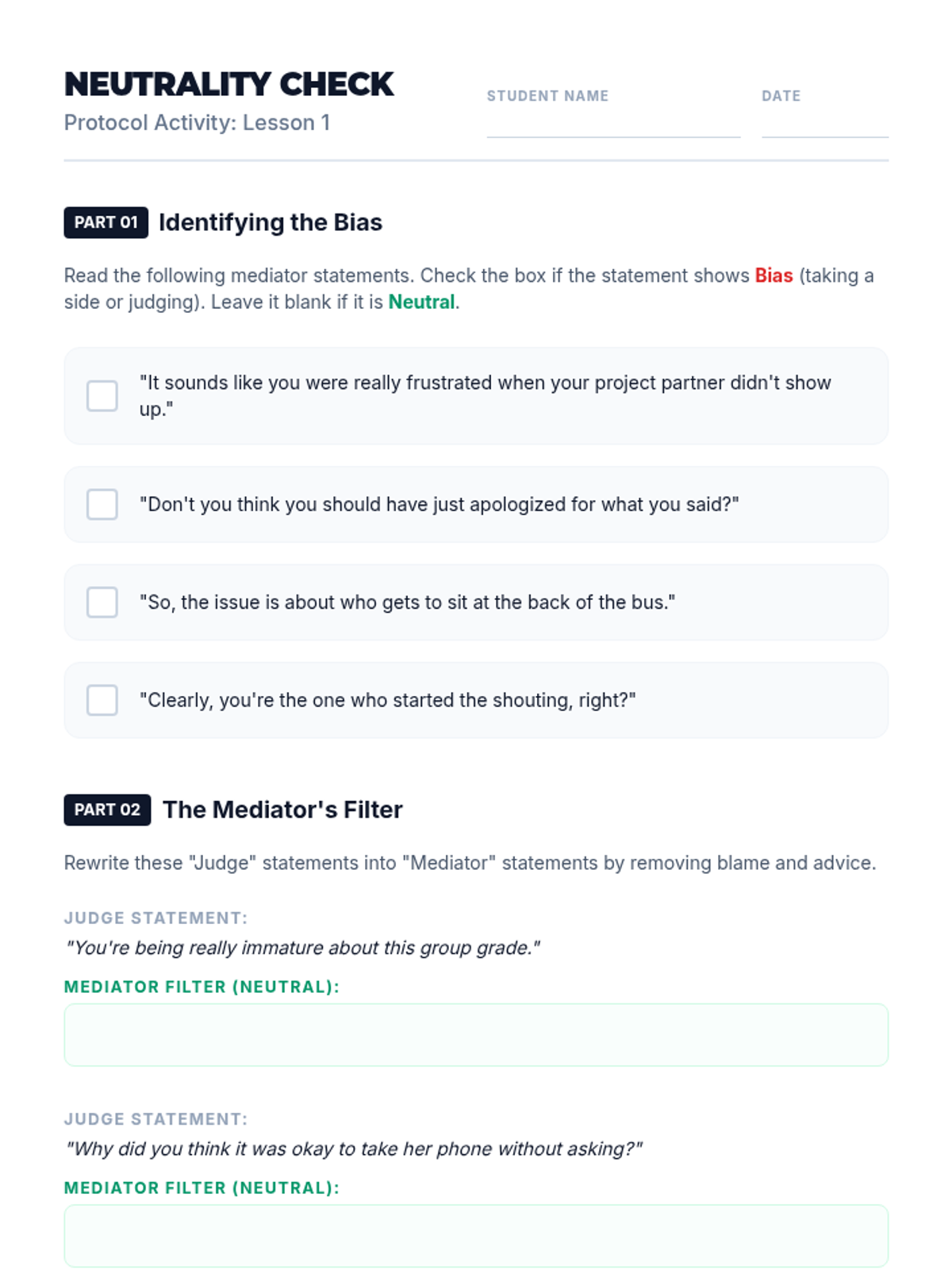
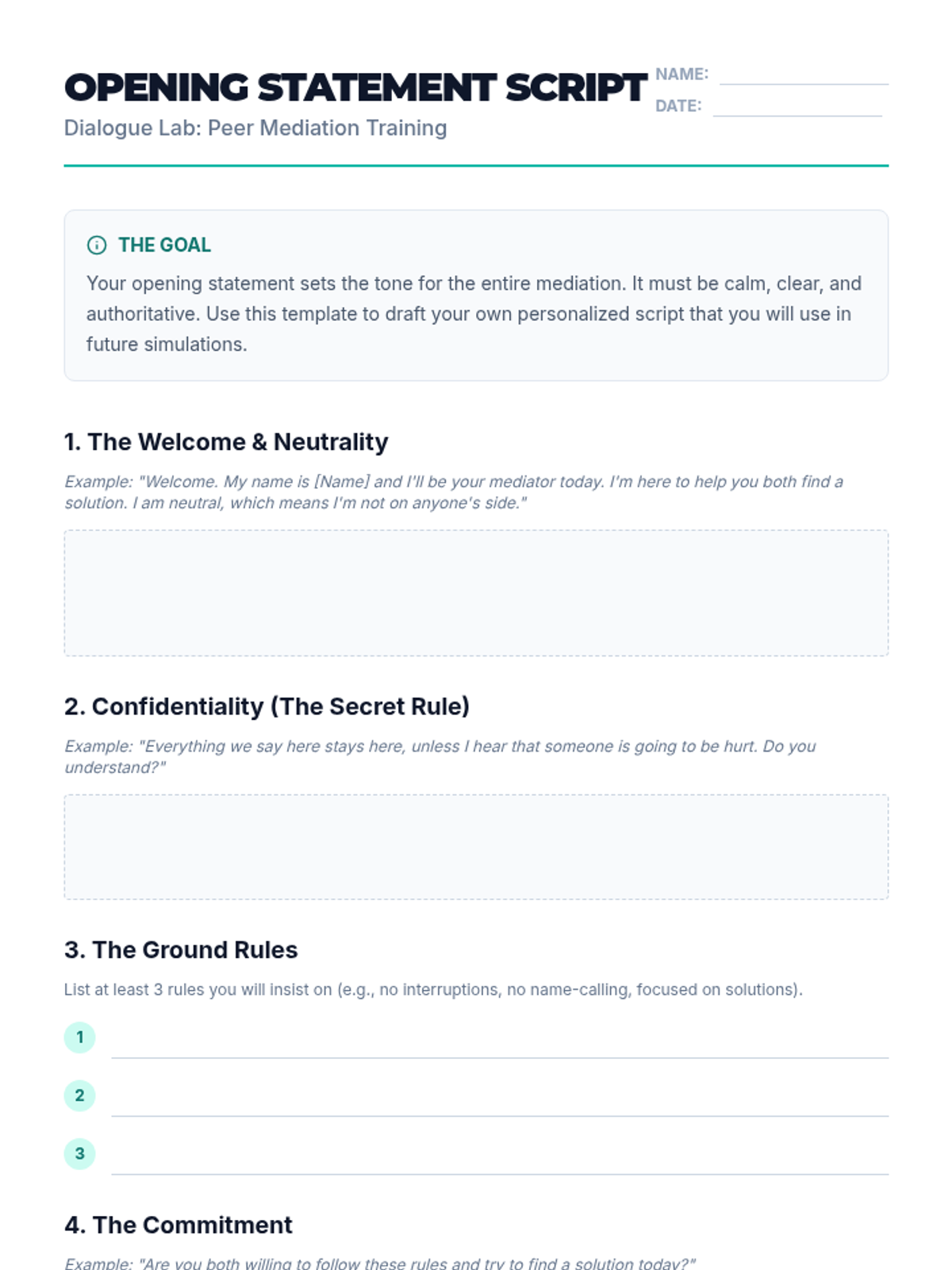
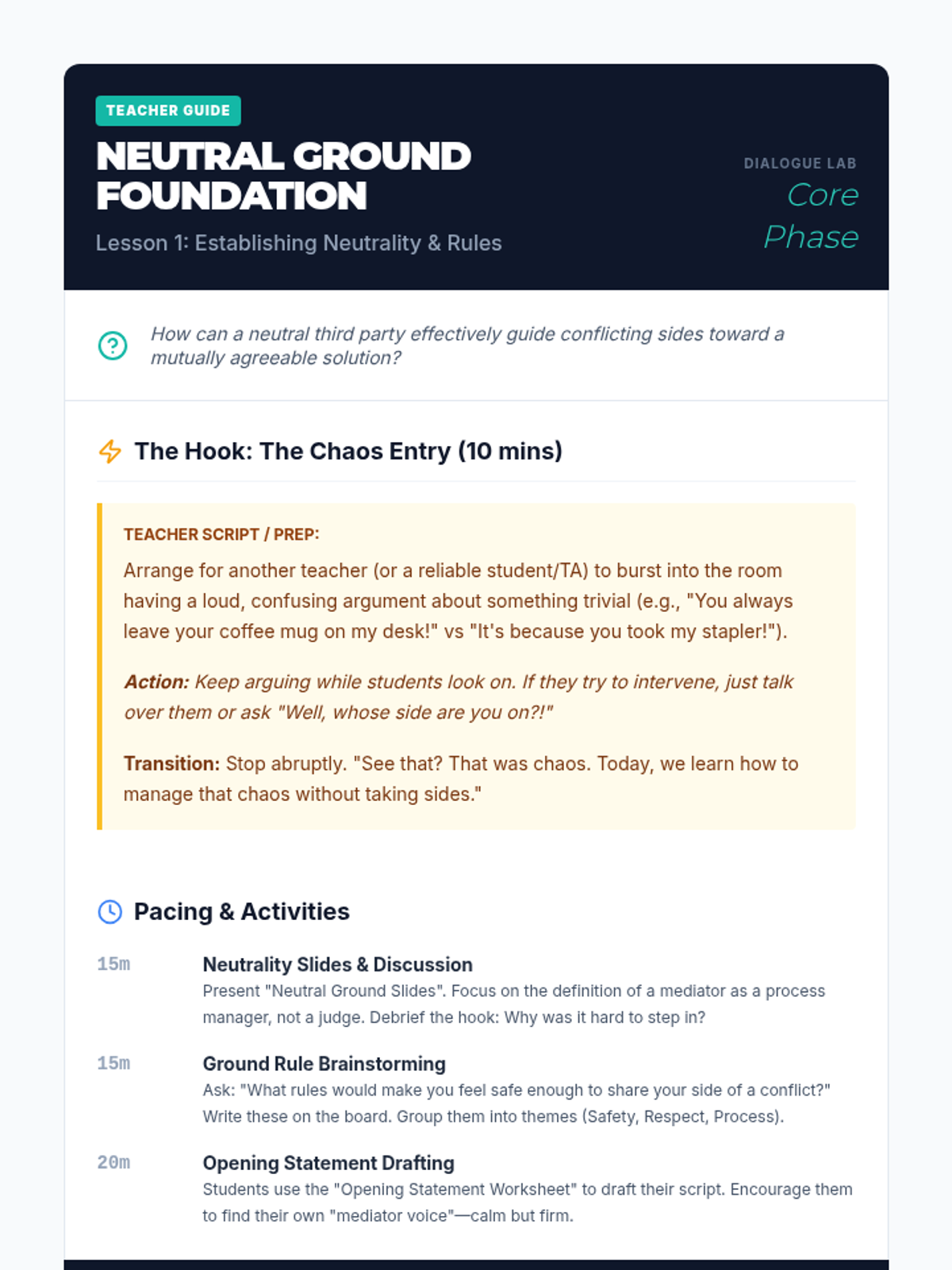
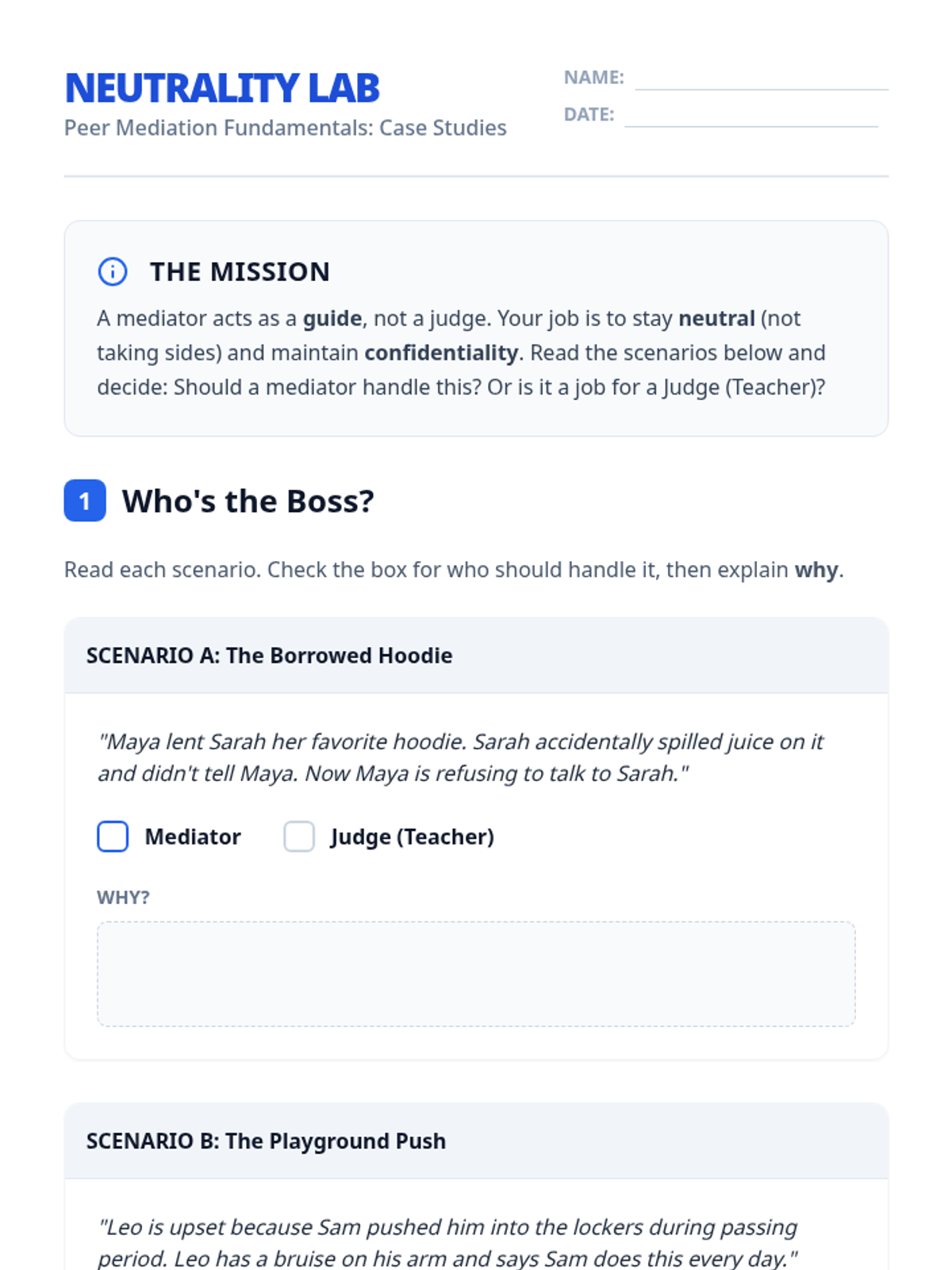
A 5-lesson unit for 7th graders on the formal structure of peer mediation. Students transition from observers to facilitators, learning to maintain neutrality, set ground rules, reframe toxic language, and guide parties toward mutually agreed-upon solutions.
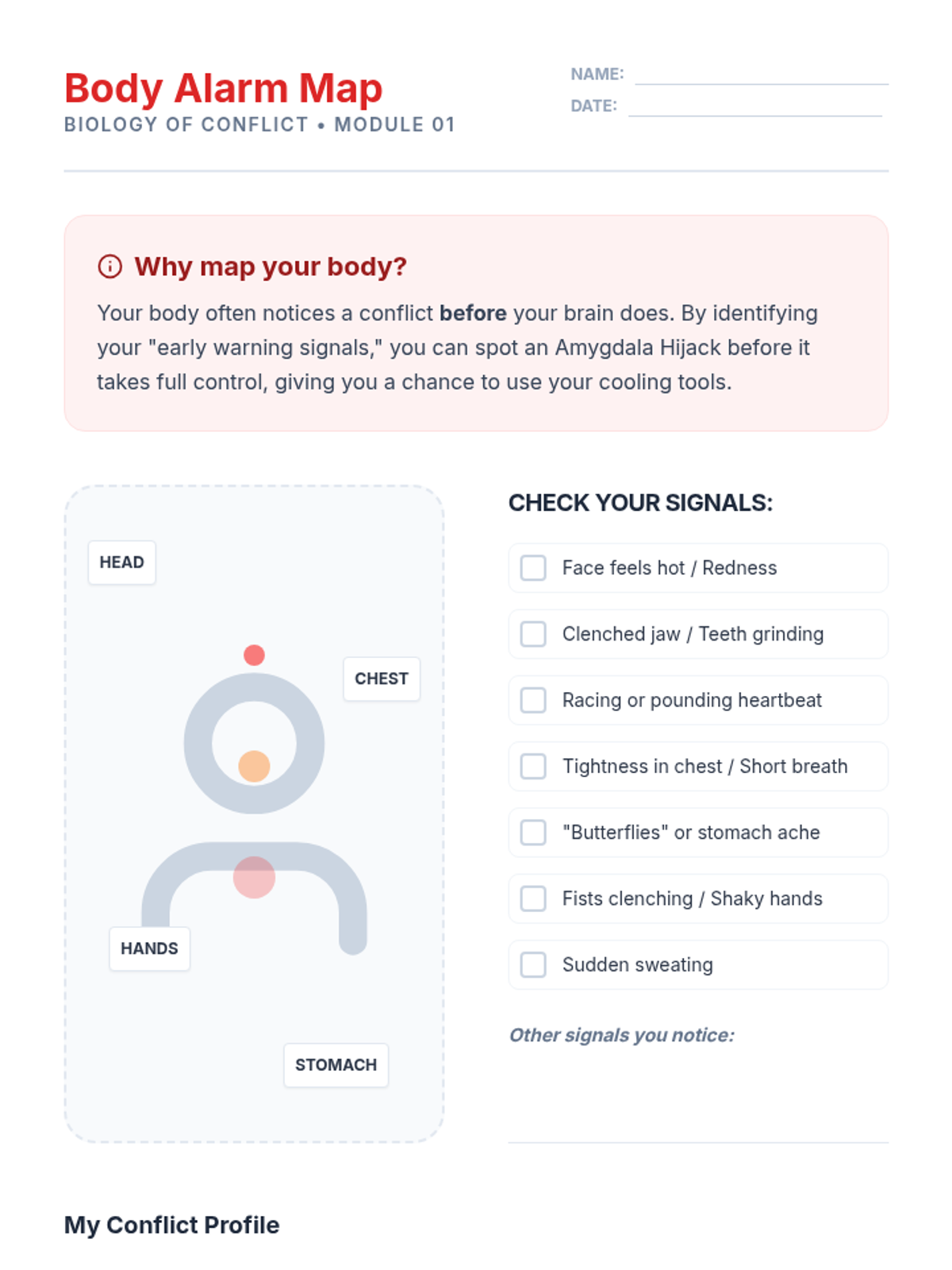
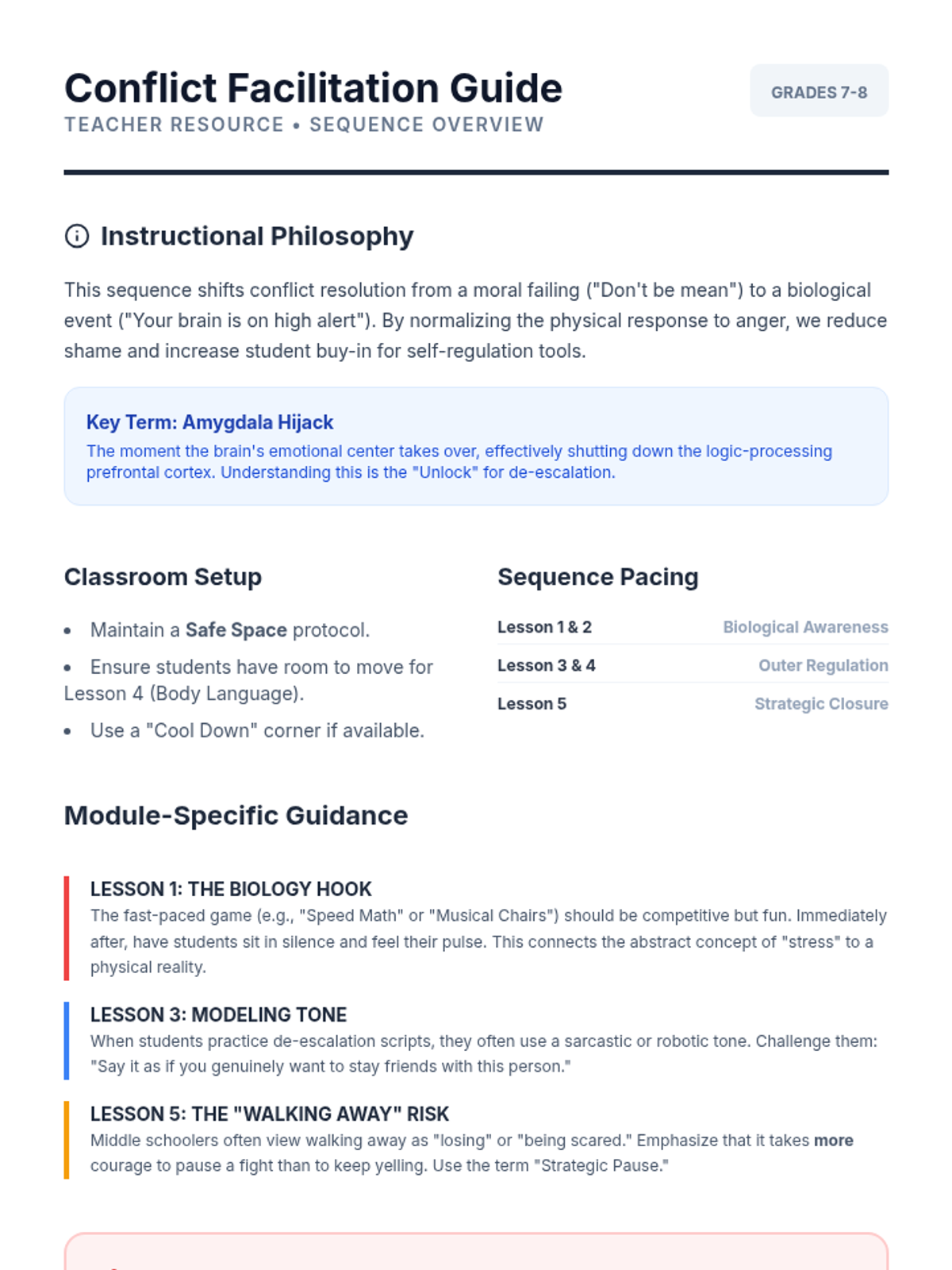
This sequence explores the physiological and psychological aspects of high-conflict situations, providing 7th-grade students with tools for self-regulation, verbal de-escalation, and constructive re-engagement.
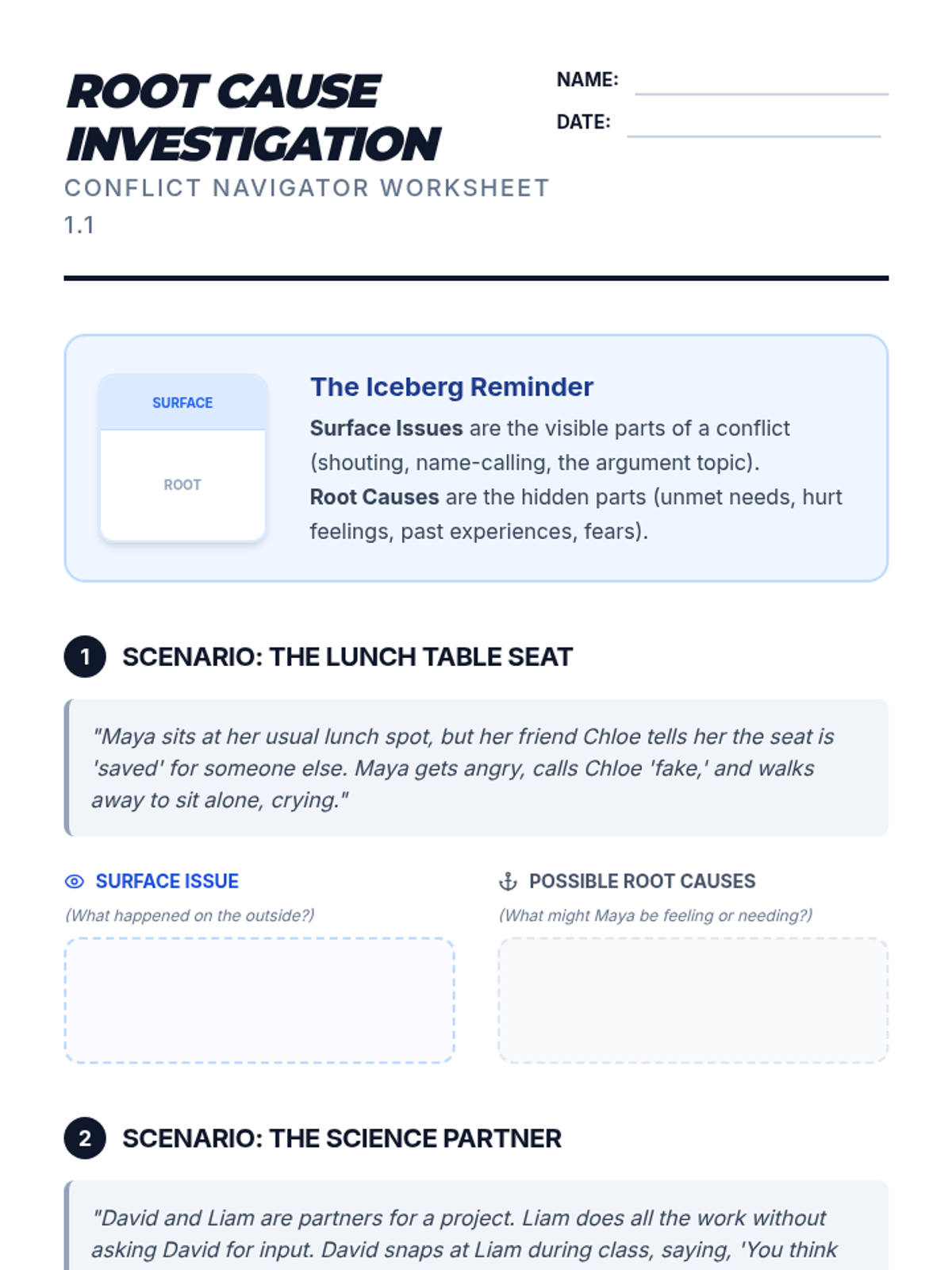
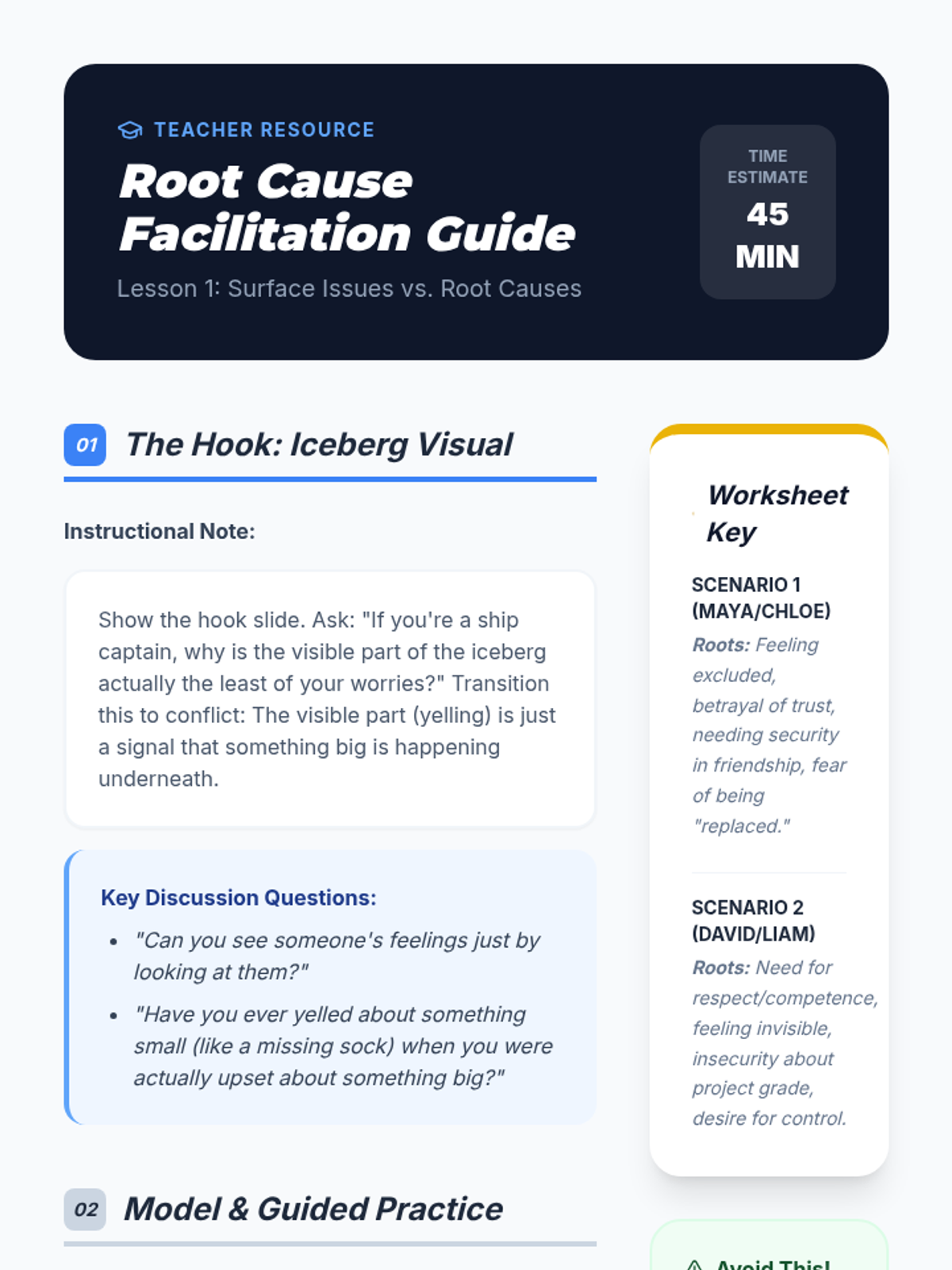
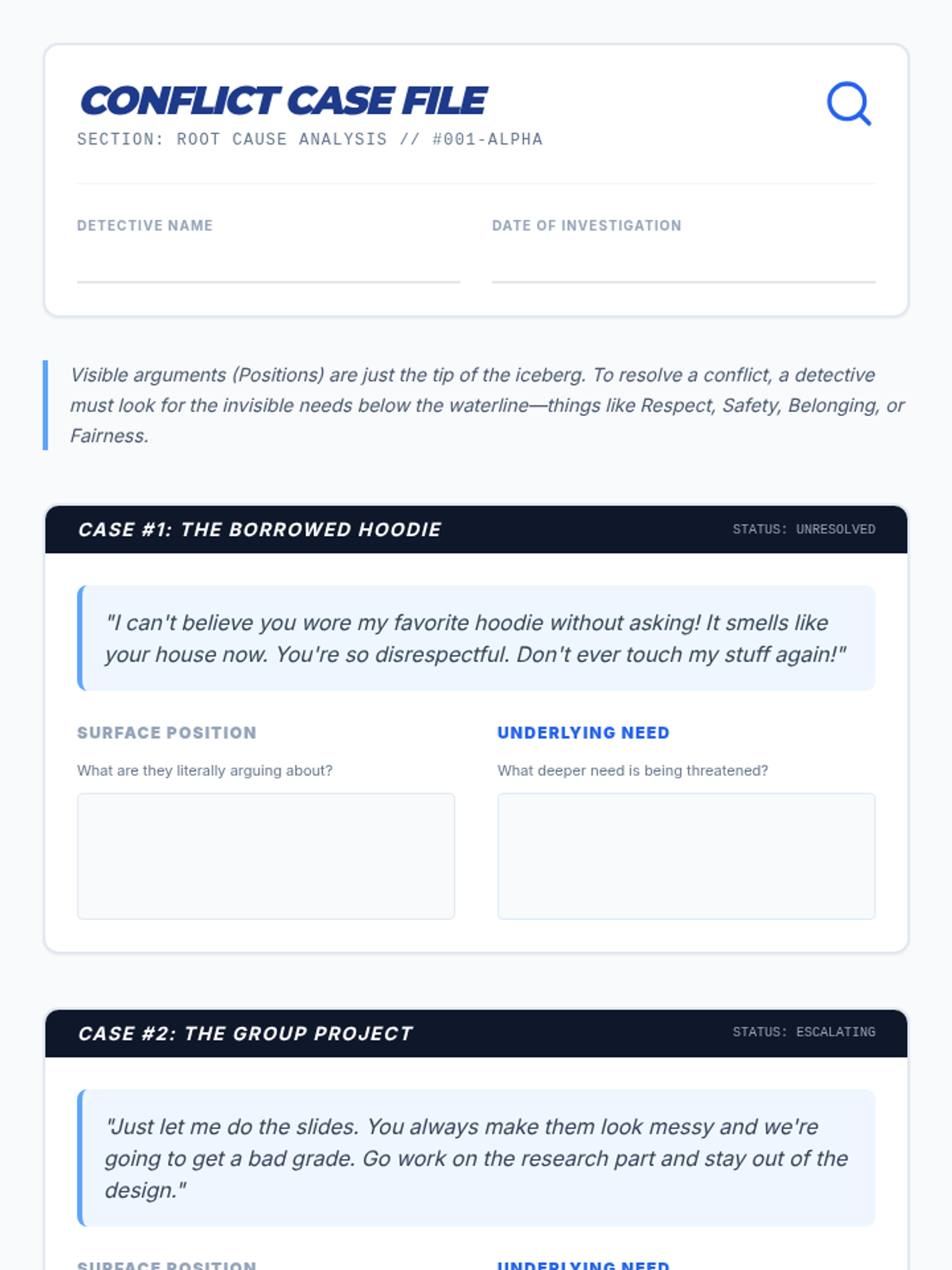
A comprehensive 6th-grade sequence on conflict navigation, teaching students to identify root causes, recognize personal conflict styles, practice perspective-taking, understand escalation, and diagnose complex disputes.
A 5-lesson unit teaching 6th-grade students how to distinguish between urgency and importance using a Decision Matrix (Eisenhower Matrix) to manage their schoolwork and personal life.
A comprehensive executive functioning unit for 7th grade students to master task prioritization using the Eisenhower Matrix. Students move from conceptual understanding to practical, daily application through simulations and personalized planning.
A game-based sequence teaching 8th-grade students the mechanics of principled negotiation. Students learn to move from competitive 'win-lose' mindsets to collaborative 'win-win' solutions by identifying interests, generating options, using objective criteria, and understanding their BATNA.
This simulation-heavy sequence trains 8th-grade students to act as neutral peer mediators. Students move from establishing ground rules and neutrality to mastering advanced communication skills like reframing and open-ended questioning, culminating in a full mock mediation of complex social conflicts.
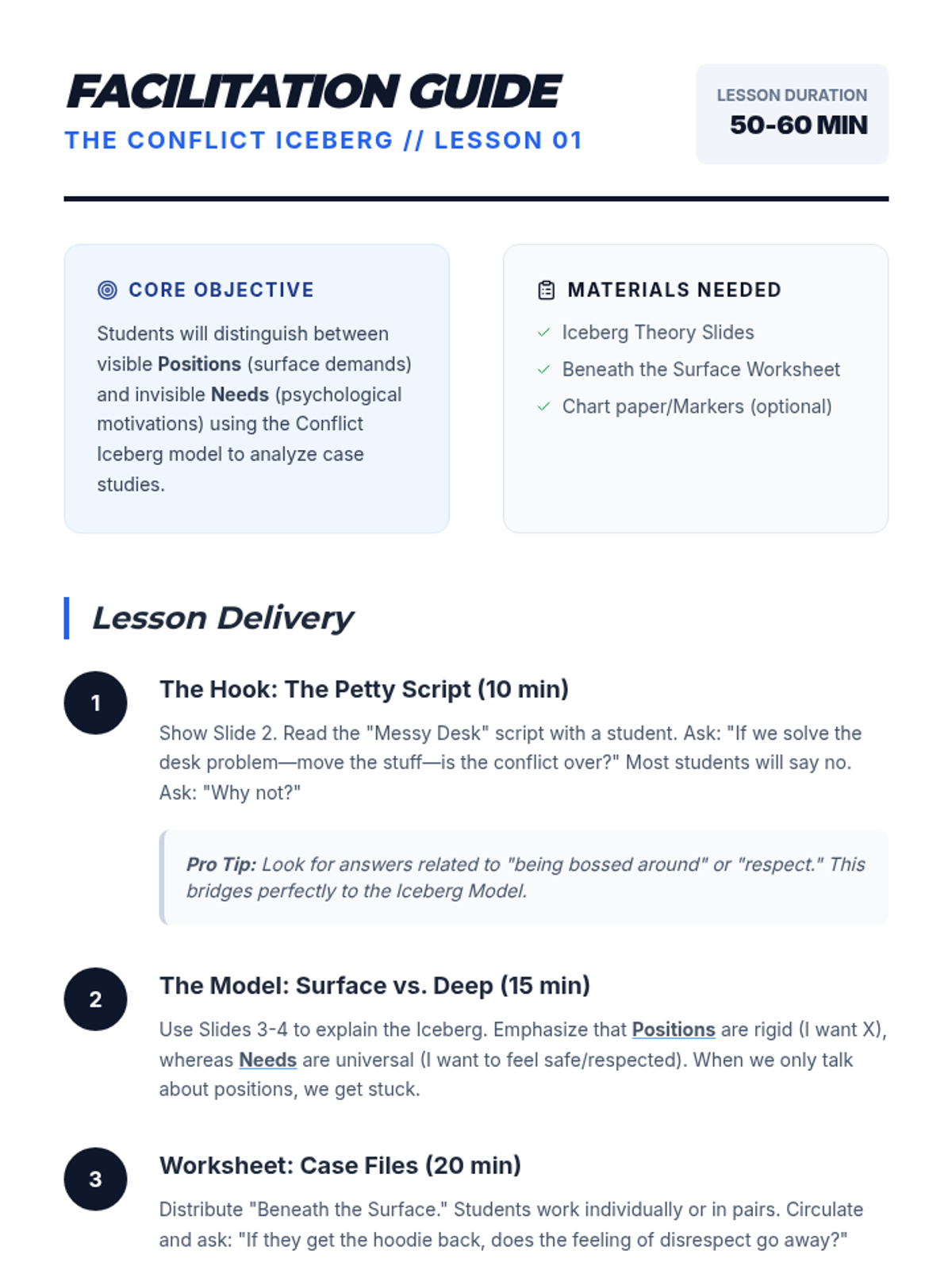
An 8th-grade counseling sequence focused on identifying the psychological root causes of conflict and managing high-arousal emotions using the Conflict Iceberg model and neuroscience-based de-escalation.
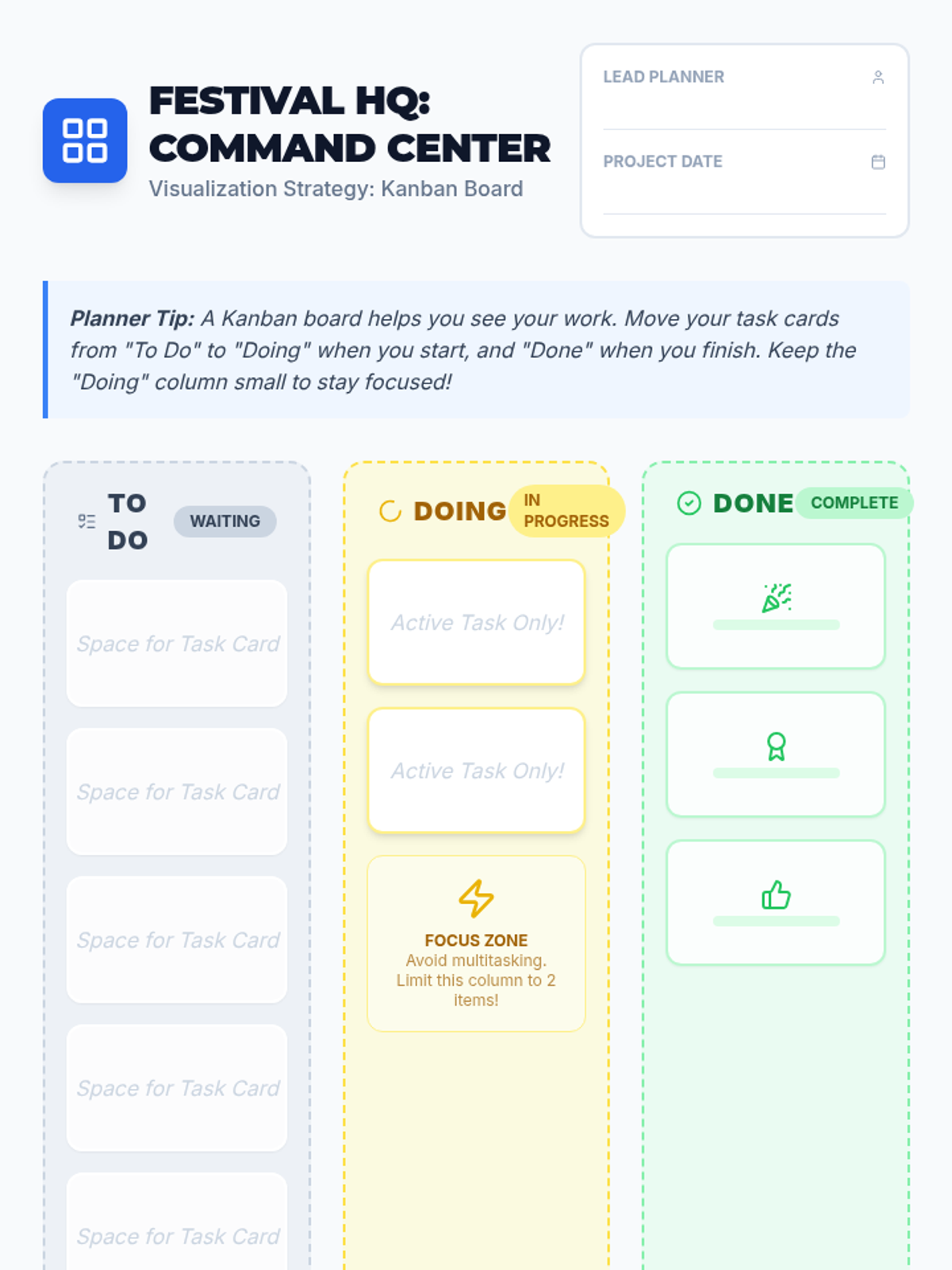
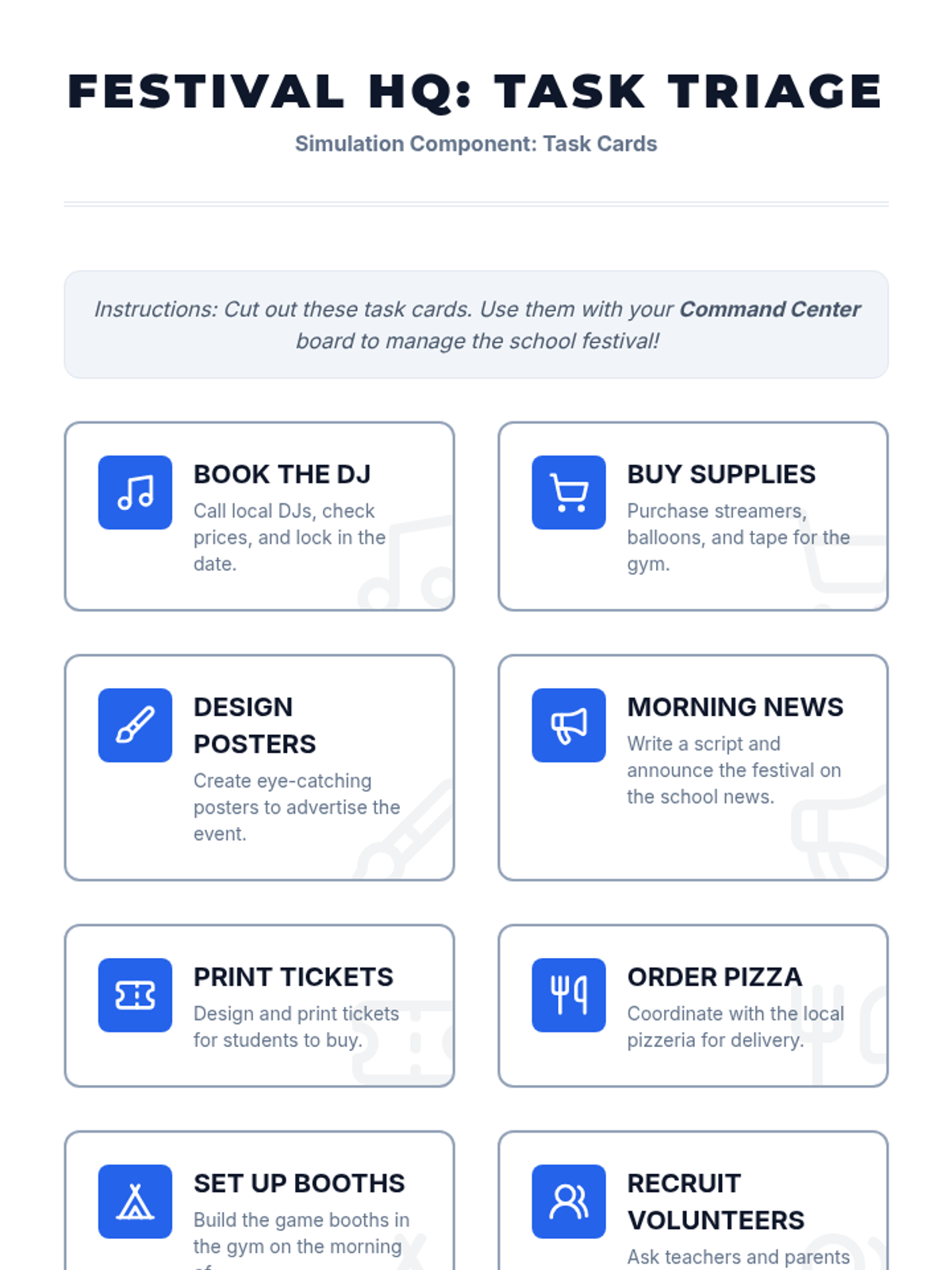
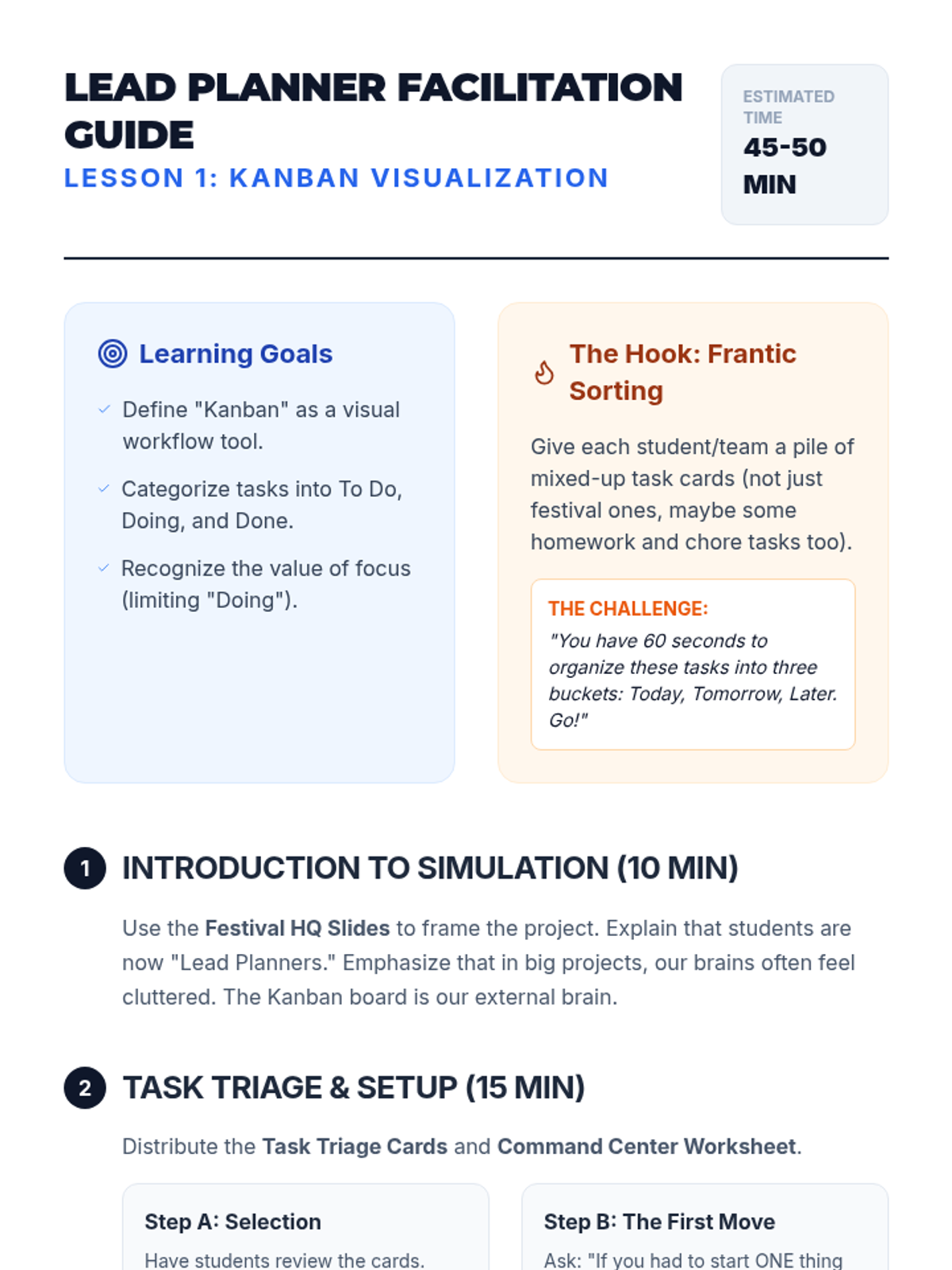
A simulation-based sequence where 6th-grade students act as Event Planners for a school festival to master multi-day project management, workflow visualization, and adaptability.
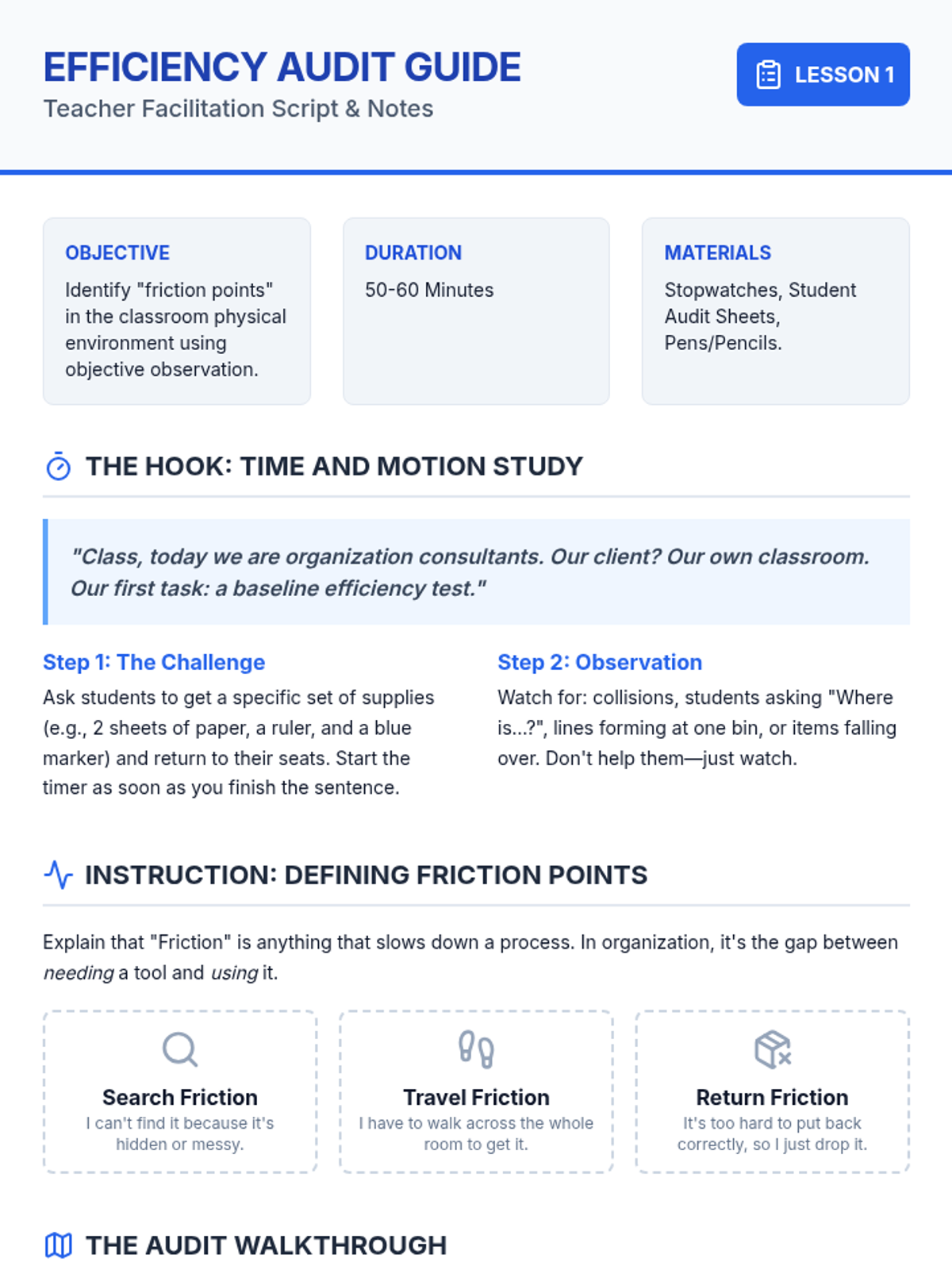
A project-based unit where students act as organization consultants to evaluate, redesign, and implement efficient physical systems in their classroom. Students learn systems thinking, visual communication, and the psychology of environmental design to create a more functional learning space.
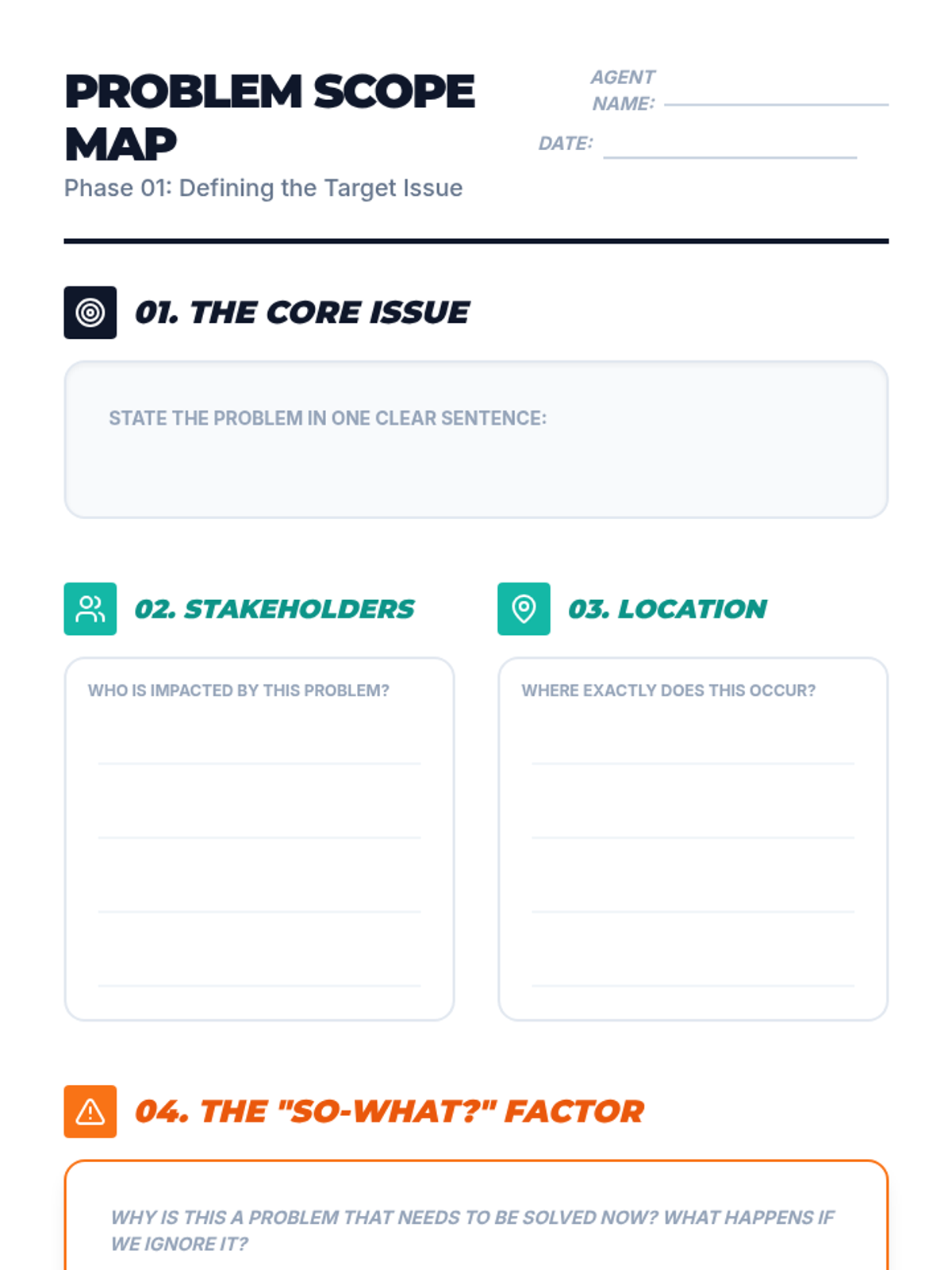
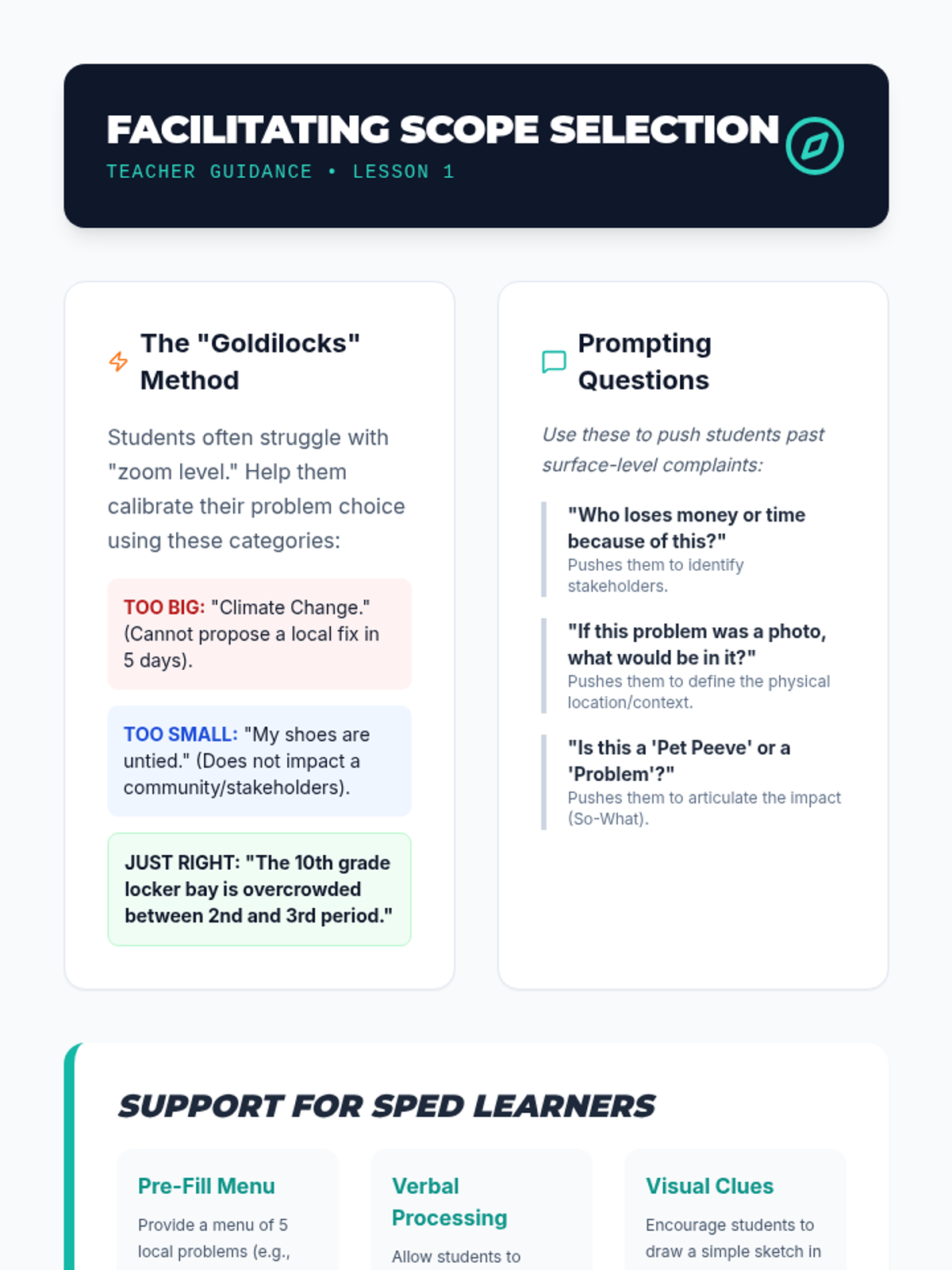
A project-based unit where students act as systems analysts, using cause-and-effect and problem-solution graphic organizers to investigate real-world community issues and propose evidence-based solutions.
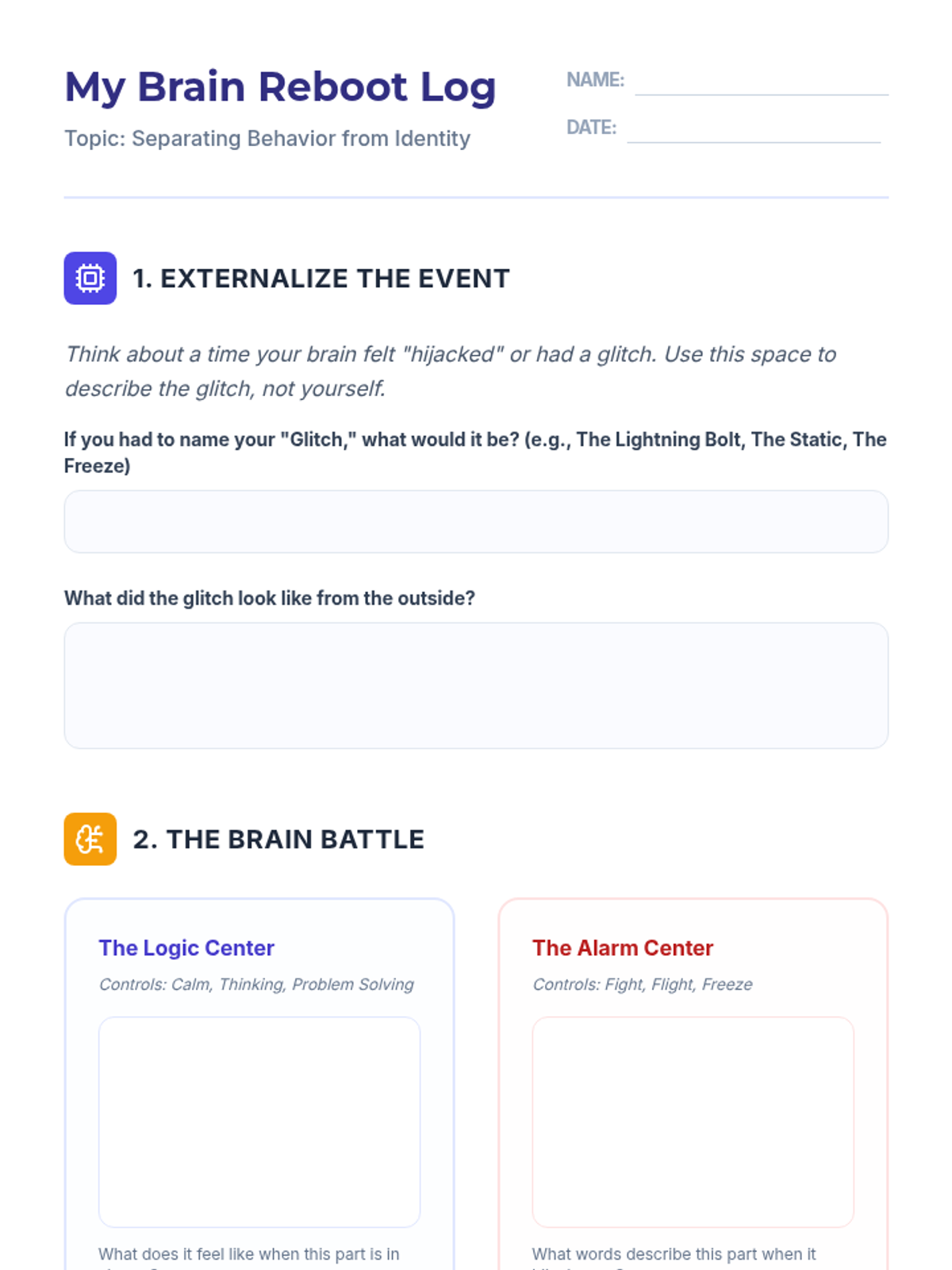
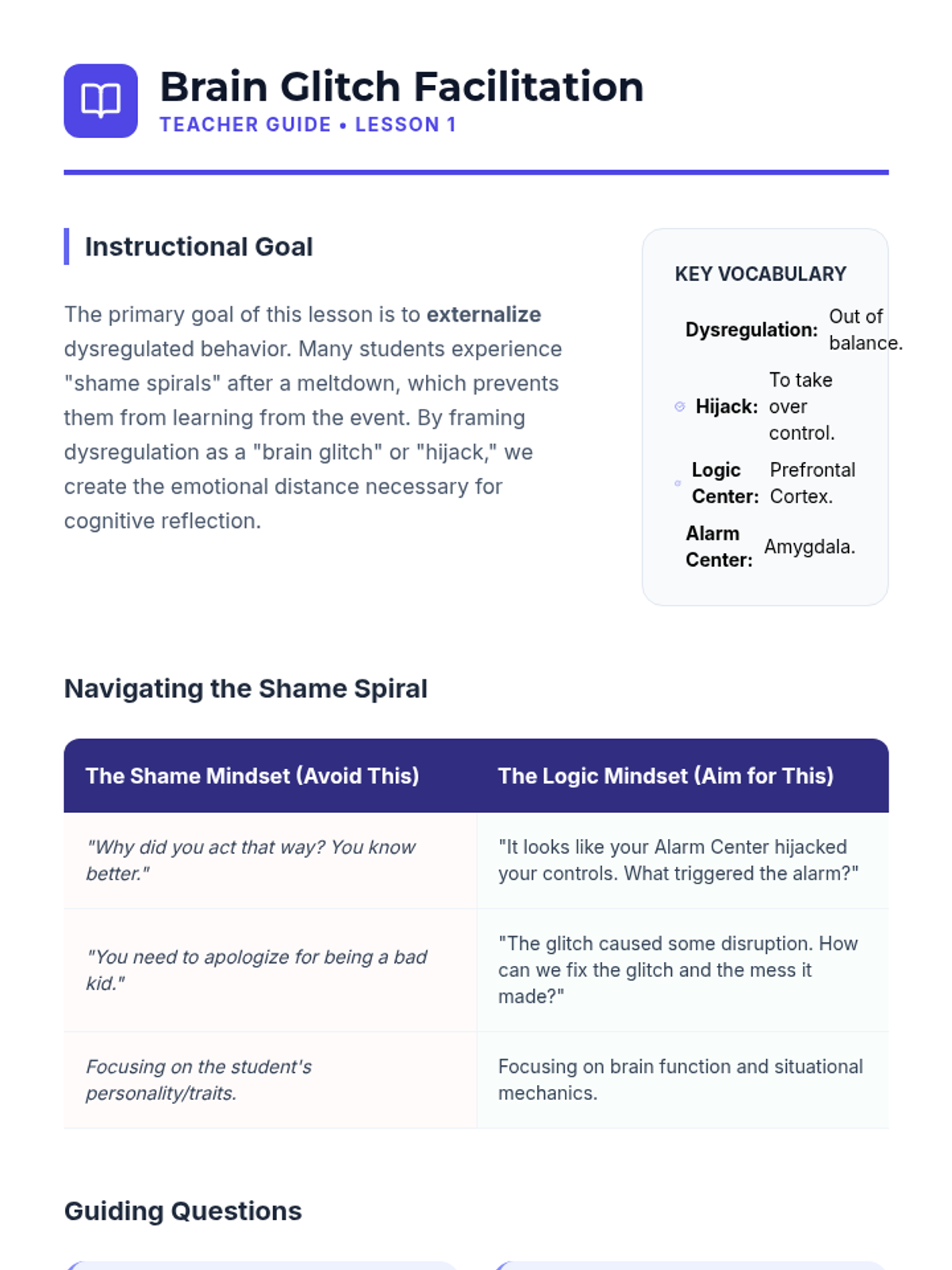
A 5-lesson sequence for 5th-grade students focused on post-dysregulation recovery. This series helps students move from shame to logic by externalizing behaviors, analyzing event timelines, practicing restorative apologies, and planning for future success.
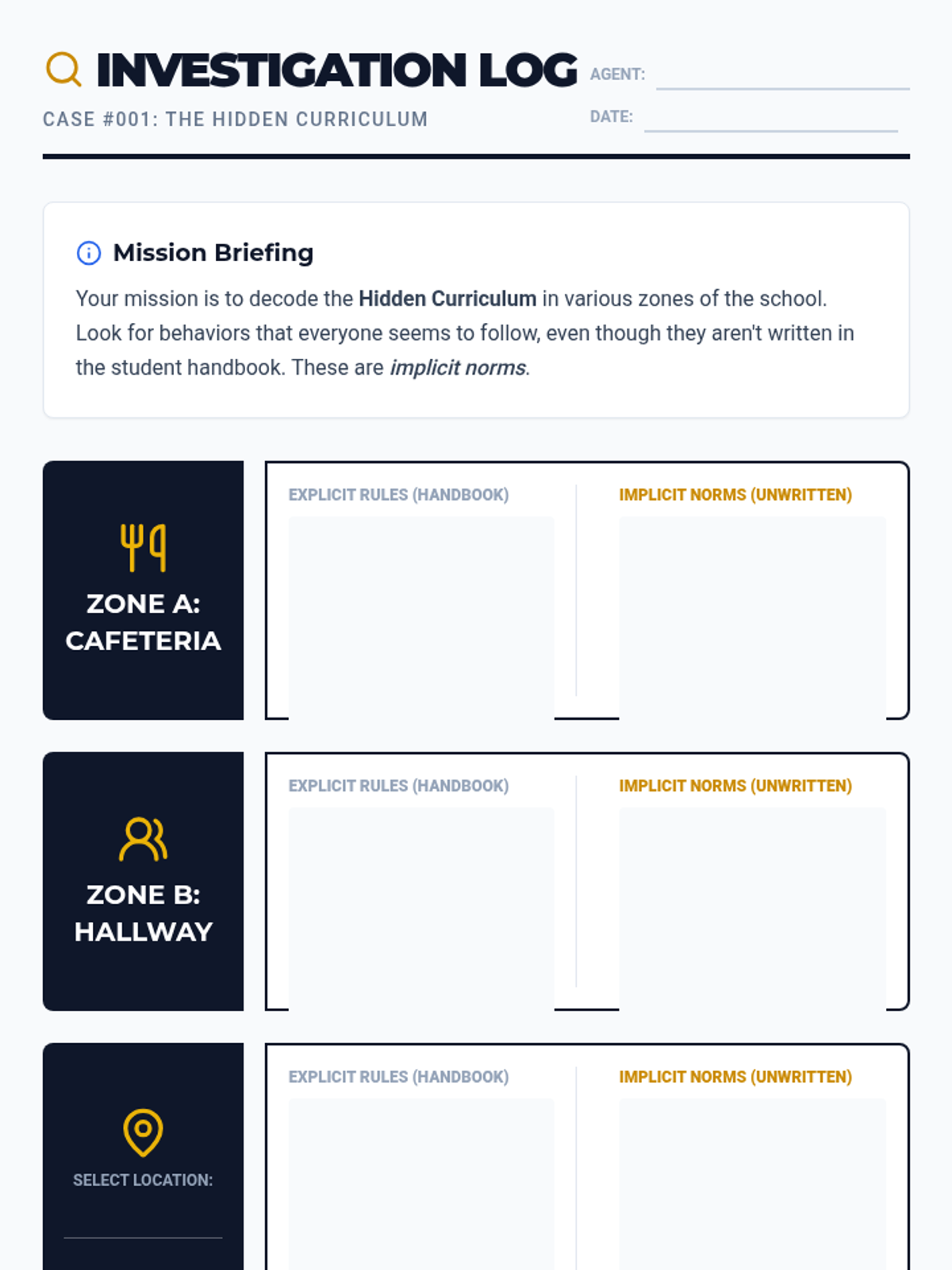
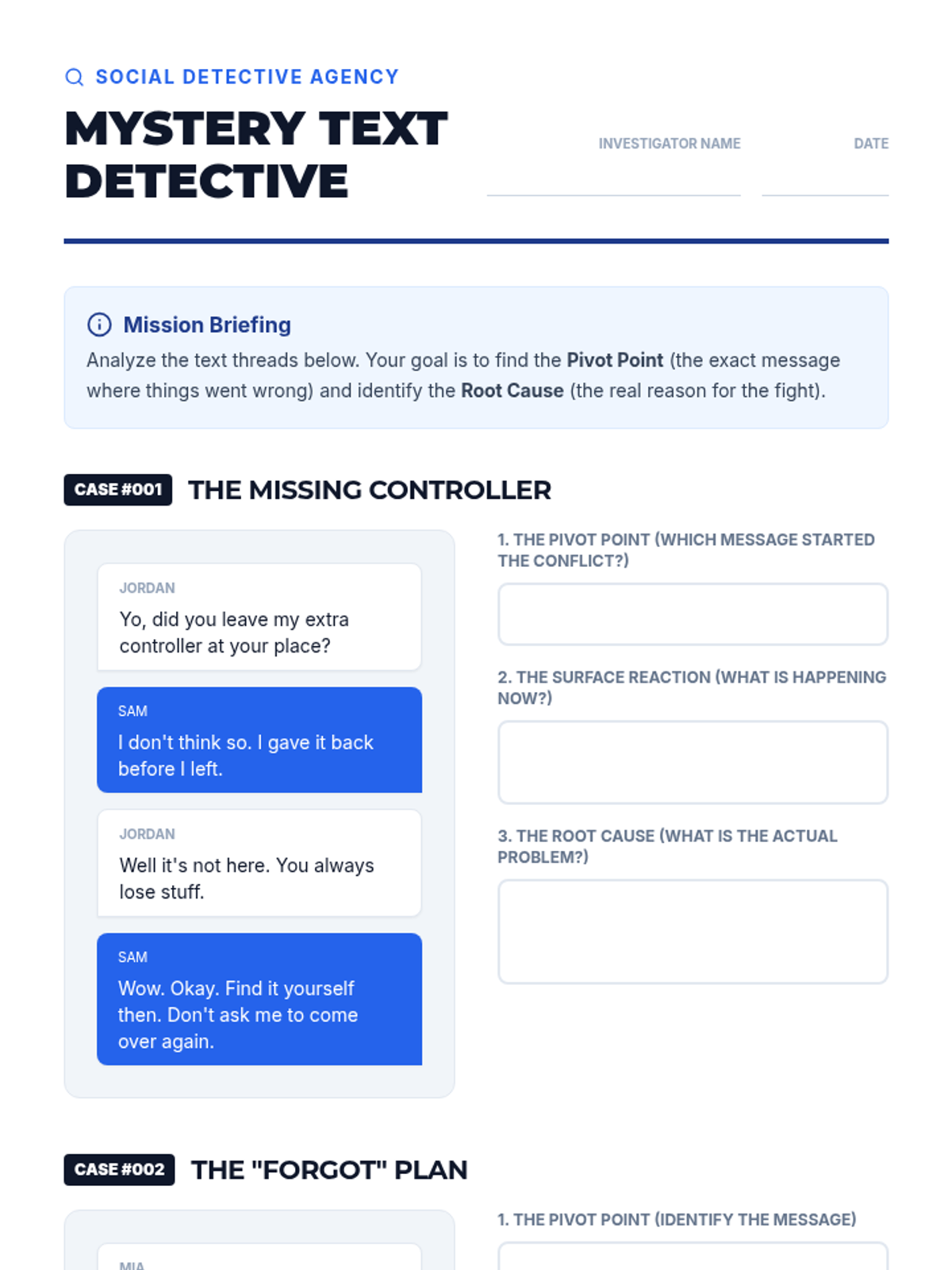
A comprehensive unit for middle school students to decode the 'hidden curriculum' of social interactions. Students learn to analyze, deconstruct, and critique social narratives using a 'Social Detective' framework, focusing on descriptive, perspective, and directive elements.
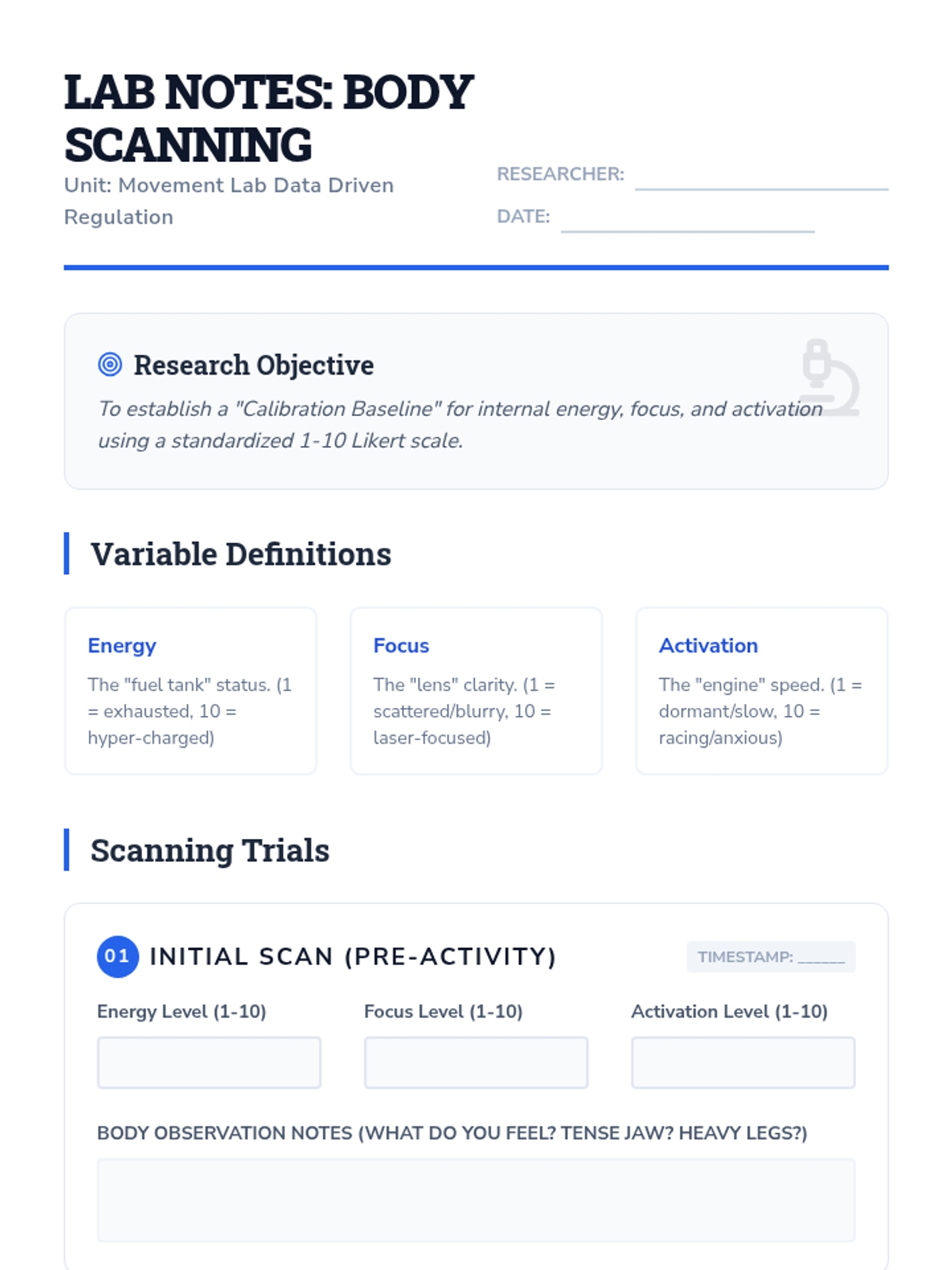
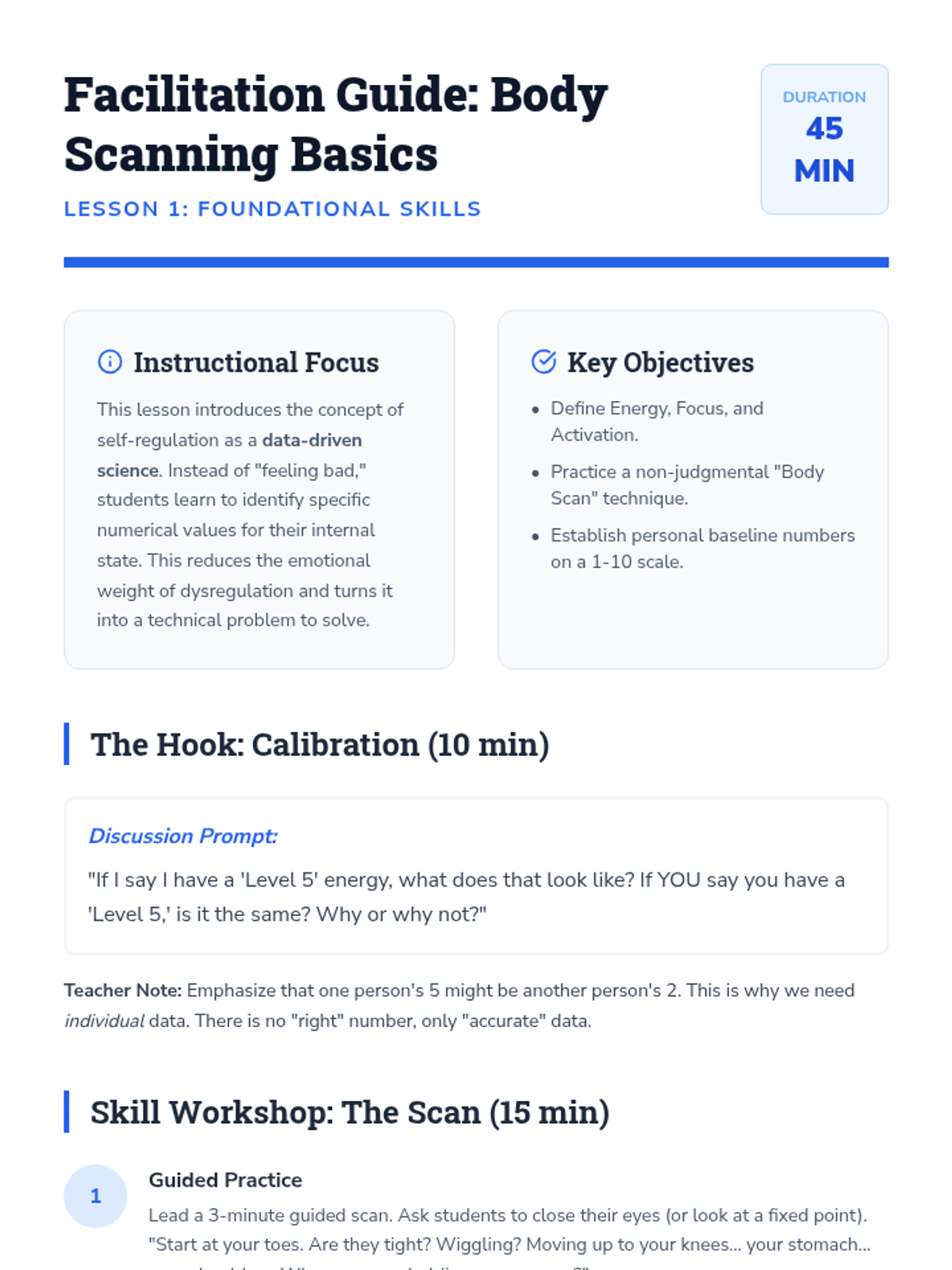
A metacognitive science-themed unit where 8th-grade students treat their sensory regulation as a scientific study. They collect and analyze data on movement breaks to build a personalized, evidence-based regulation menu for academic success.
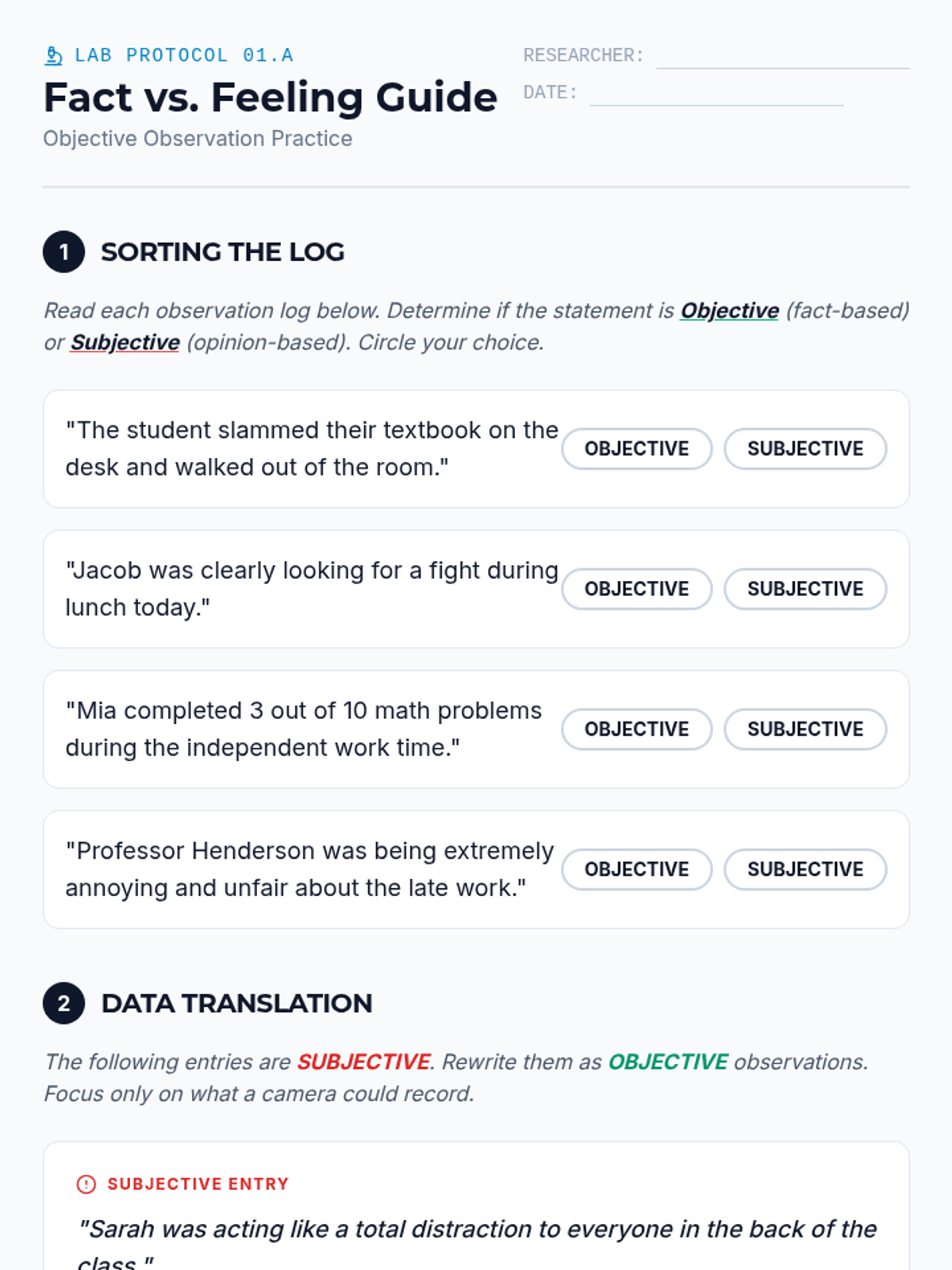
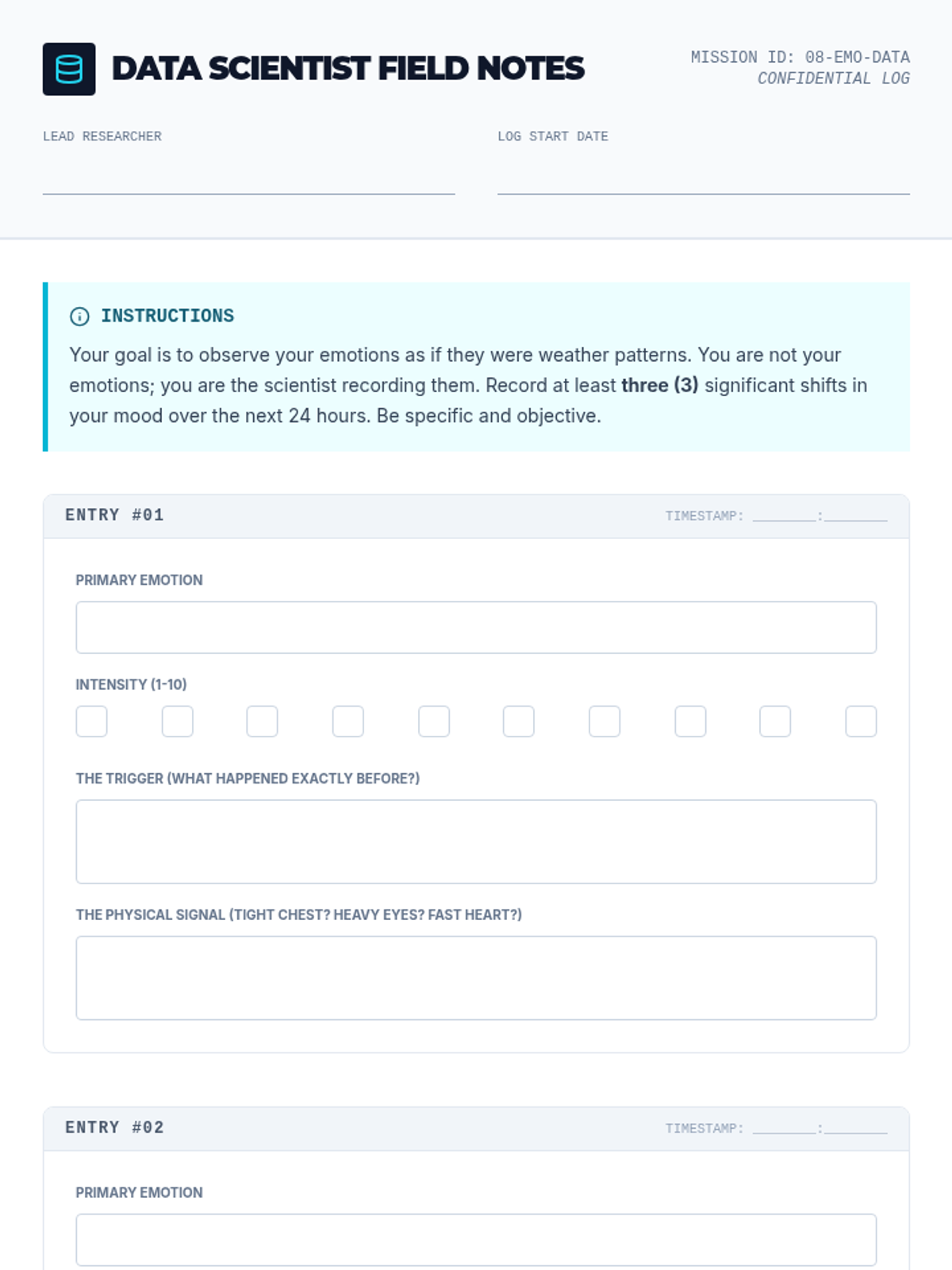
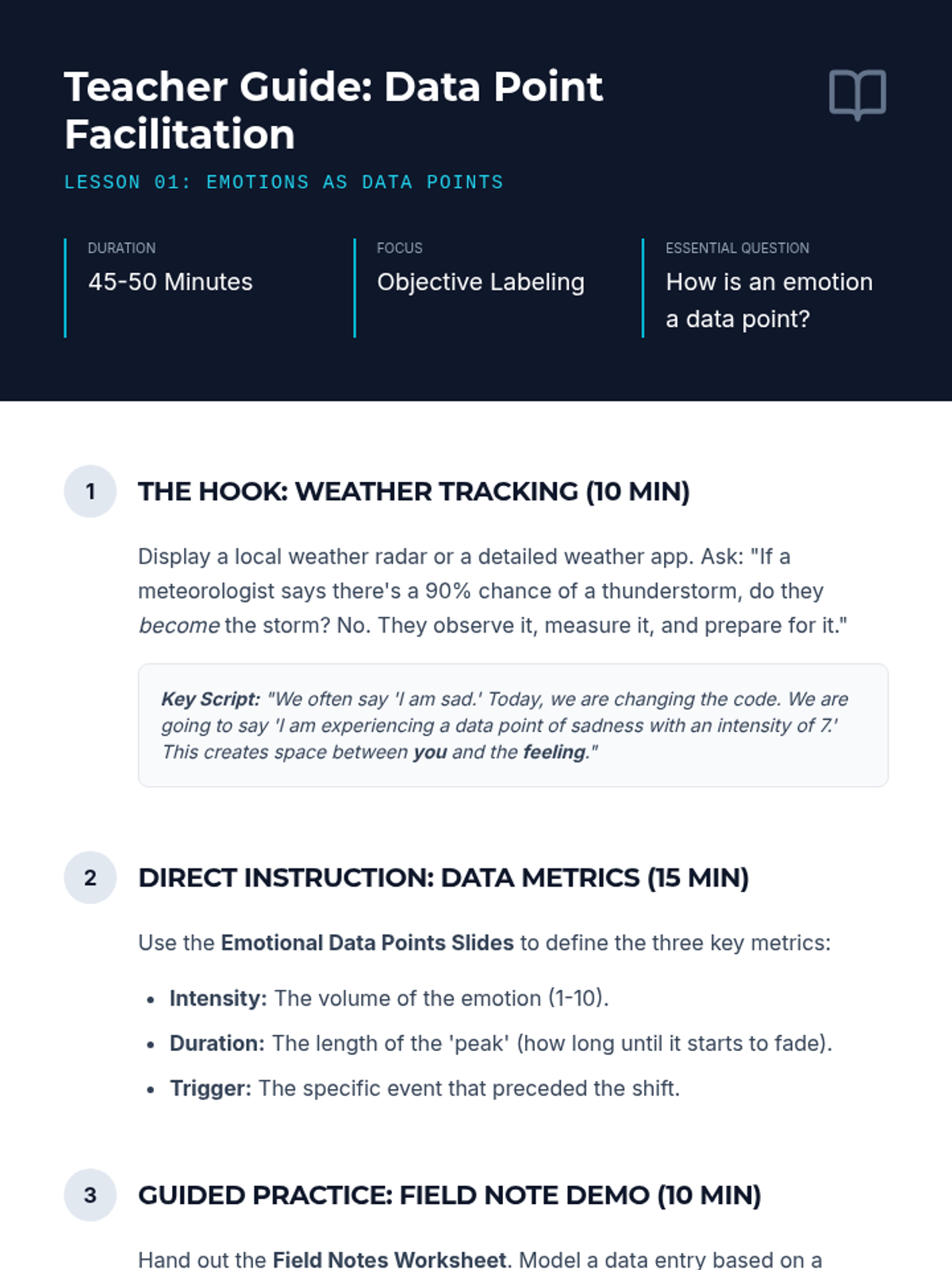
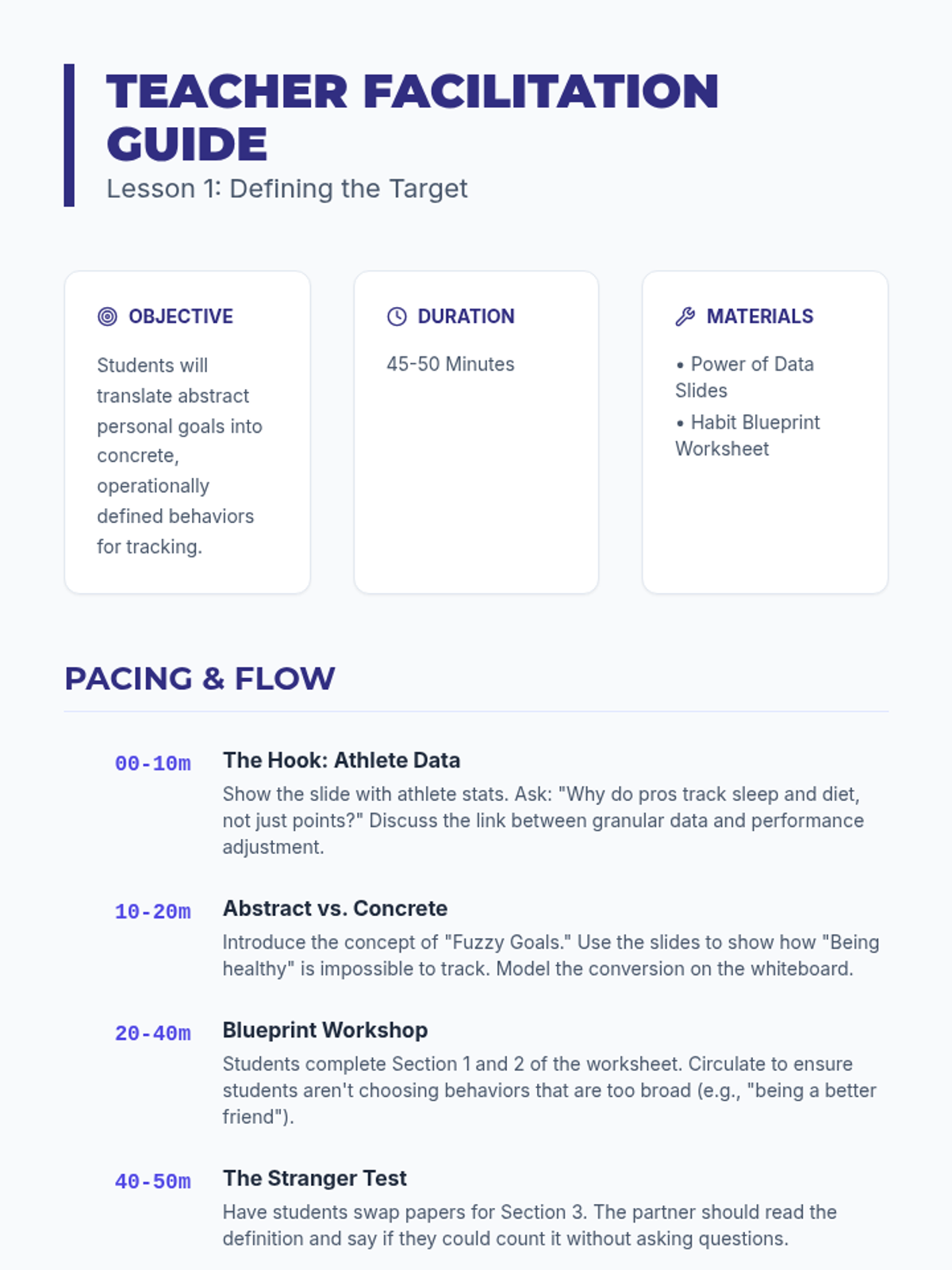
This sequence guides 8th-grade students through the process of viewing their behavior as data. Students learn to distinguish between subjective feelings and objective actions, identify triggers and antecedents, analyze trends over time, and develop proactive 'circuit breaker' plans to manage their behavior effectively for academic success.
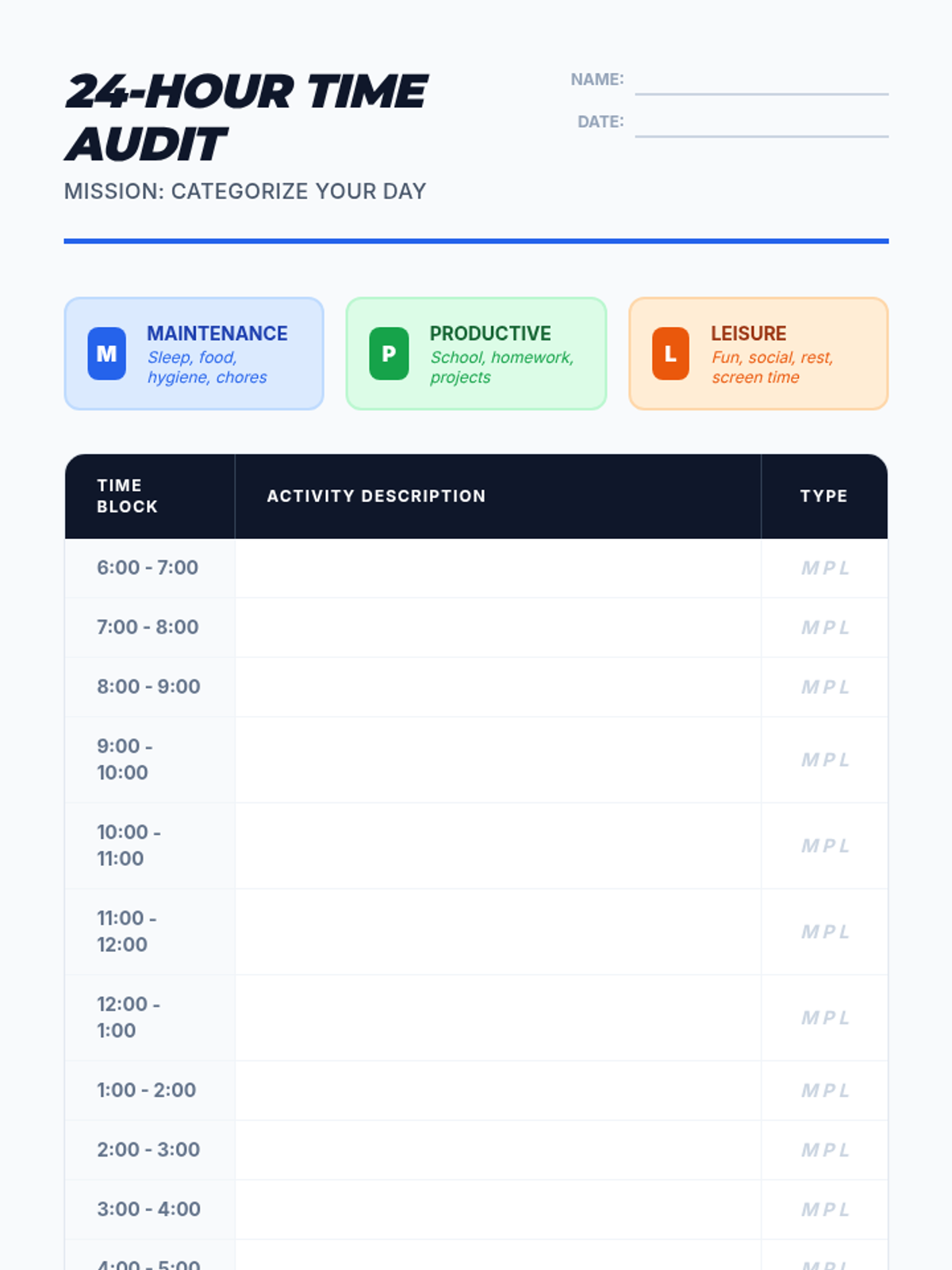
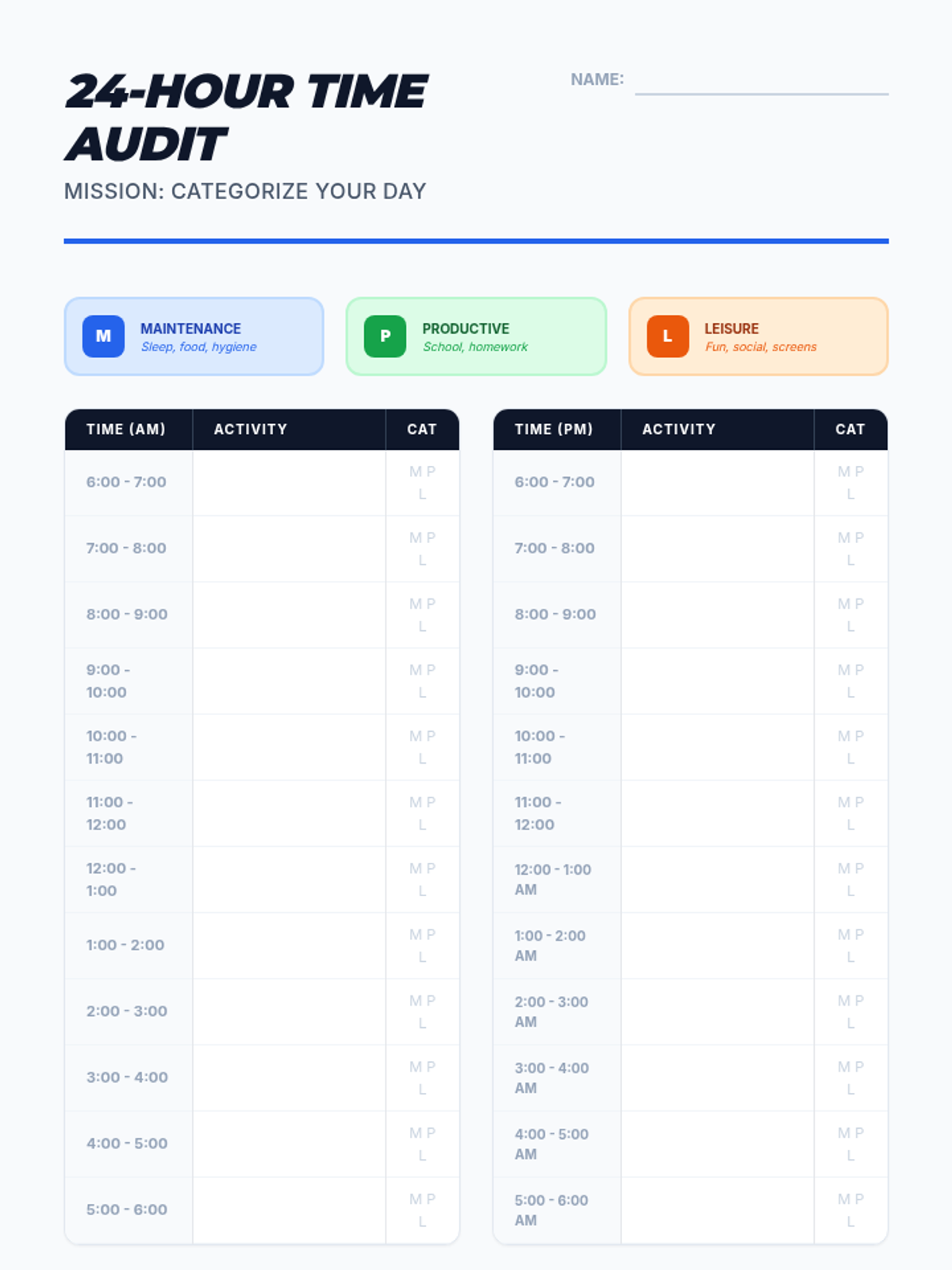
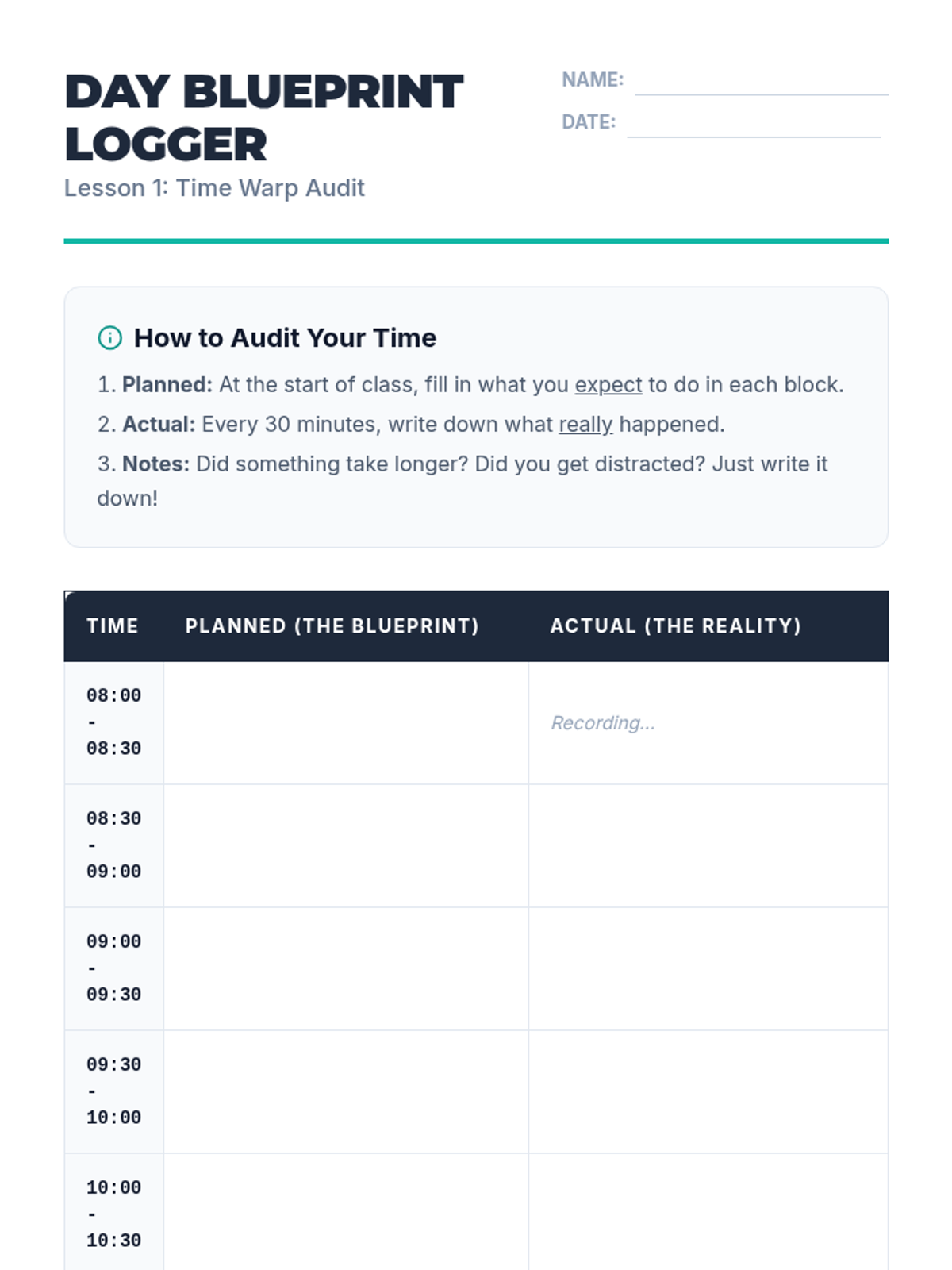
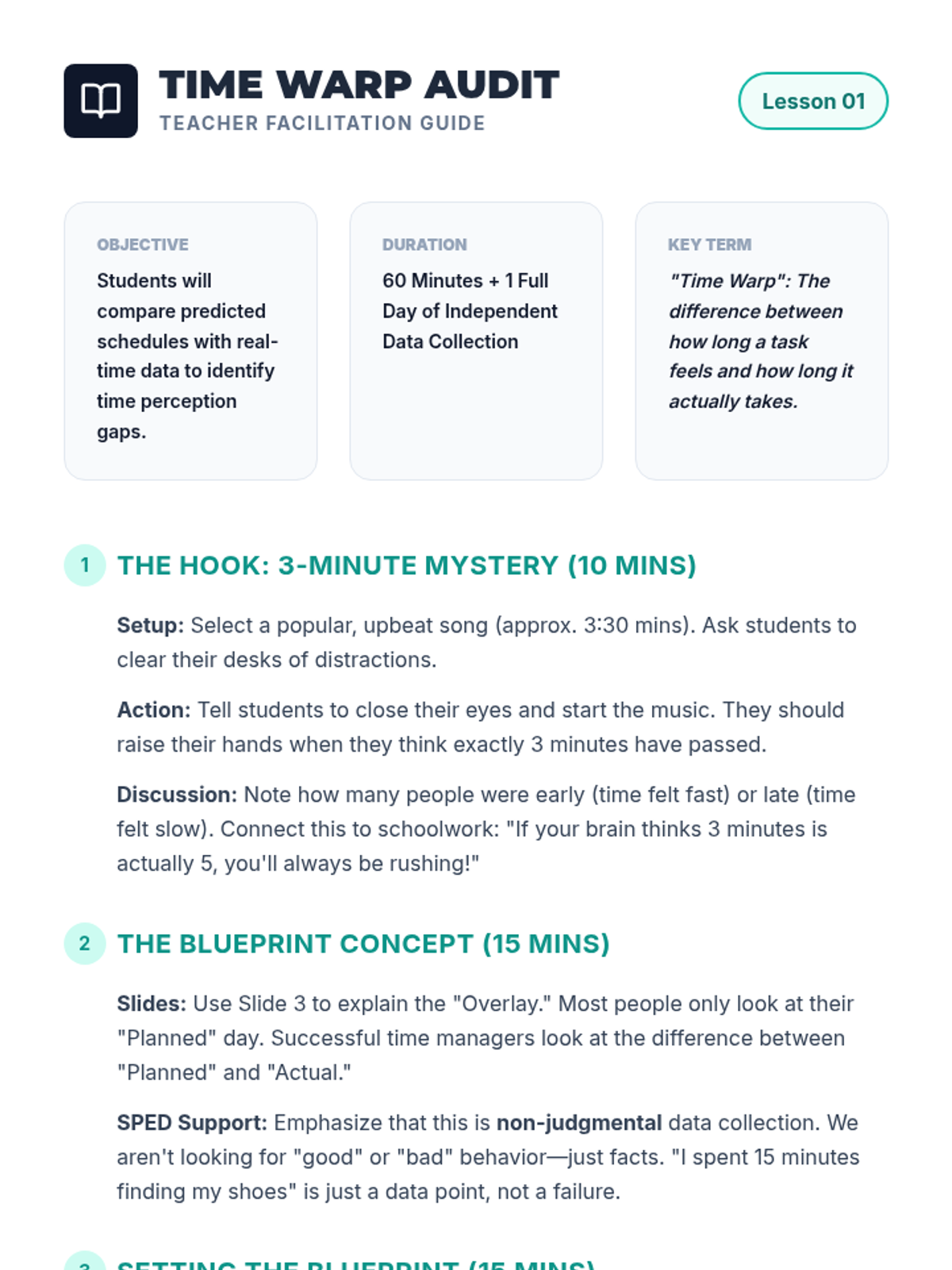
A 5-lesson sequence for 8th-grade SPED students focusing on using digital calendars for time auditing, identifying time management gaps, and customizing alert sensory profiles to match cognitive styles. Students move from data collection to designing a personalized productivity system.
A data-driven approach to emotional health where 8th-grade students learn to view emotions as temporary data points. Students track, graph, and analyze their emotional patterns to identify triggers, understand baseline shifts, and create a predictive 'User Manual' for personal well-being.
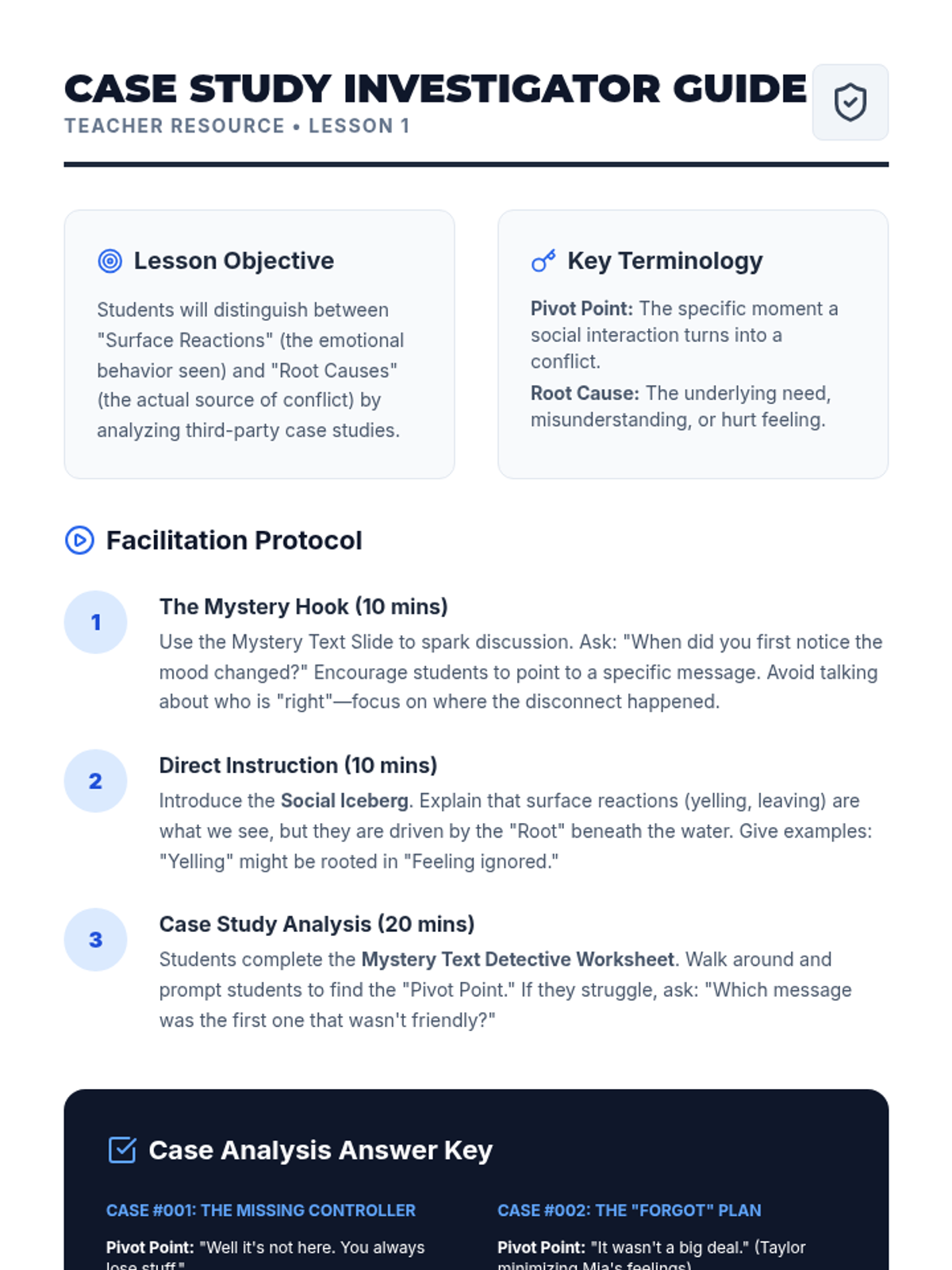
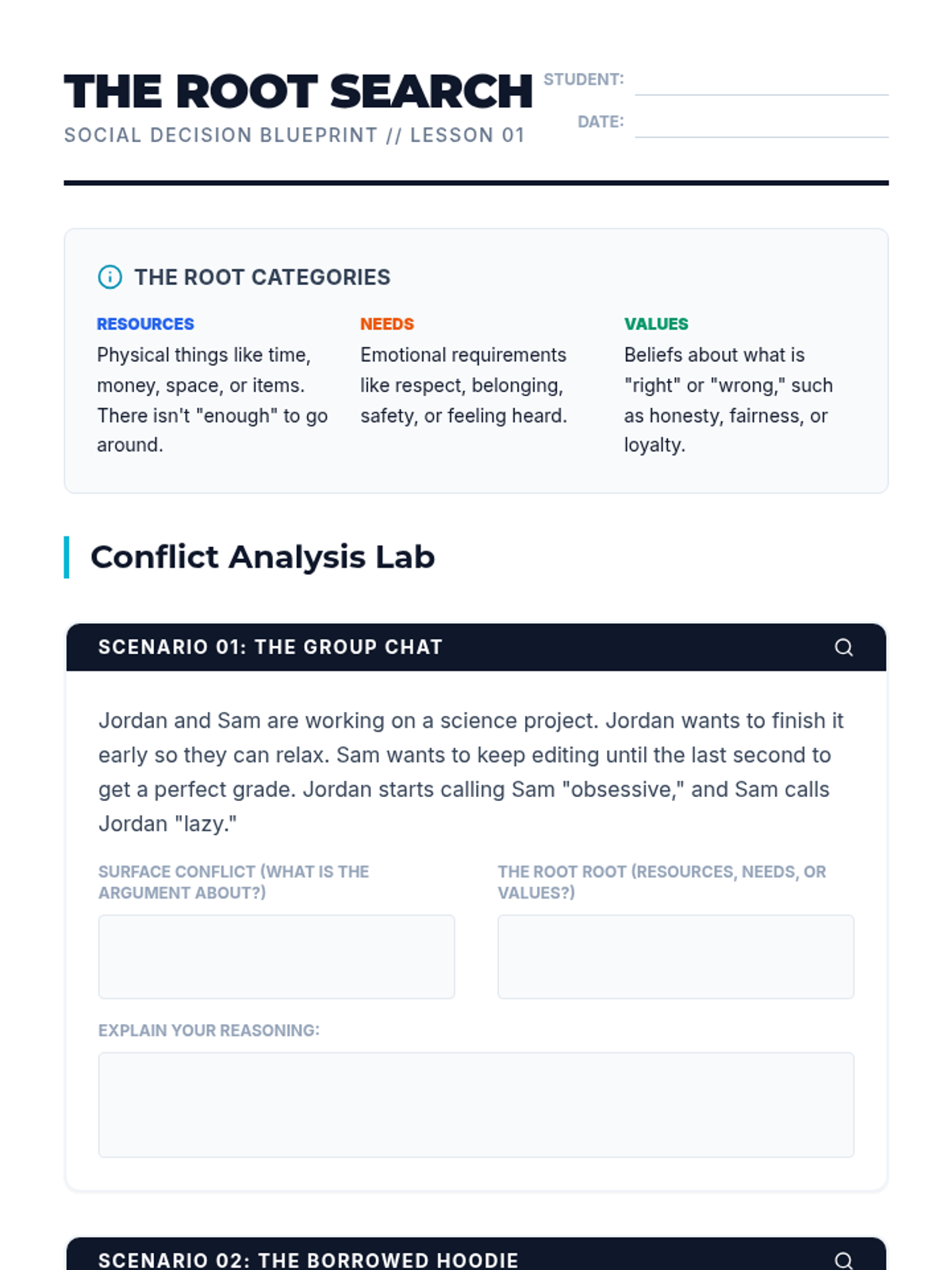
A 5-lesson sequence for 8th-grade social communication students focusing on identifying root causes, brainstorming diverse solutions, and mapping consequences to resolve social conflicts effectively. Students use a case study 'investigator' approach to build objective analysis skills before applying them to personal experiences.
An 8th-grade social communication sequence focusing on assertive communication, conflict analysis, and negotiation. Students transition from reactive behavior to strategic social decision-making during interpersonal challenges.
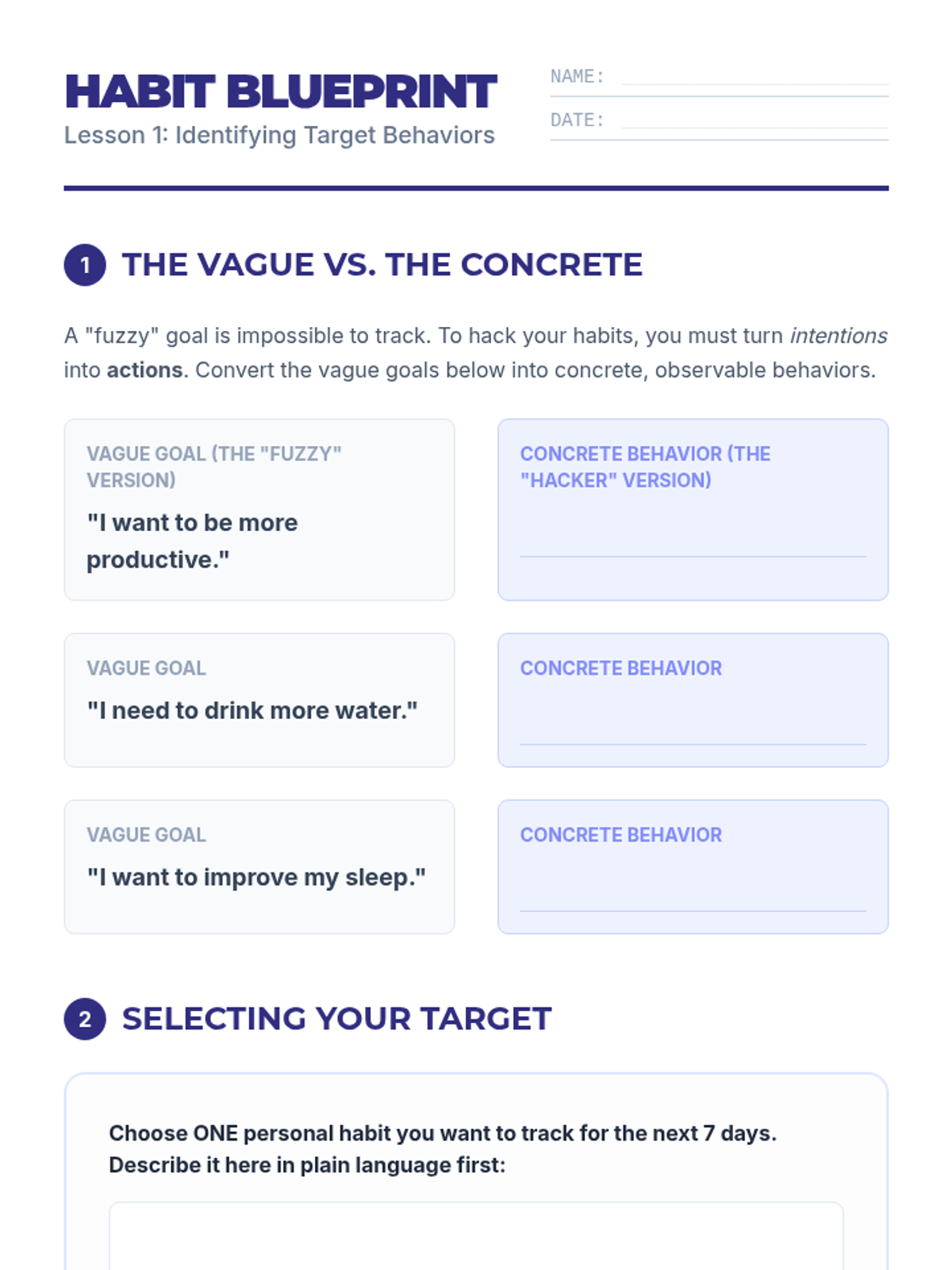
A sequence empowering students to apply the principles of behavior tracking to their own lives through the 'Quantified Self' movement. Students identify personal habits, explore data logging methods, create visual trackers, and analyze performance to understand how accountability impacts self-discipline.
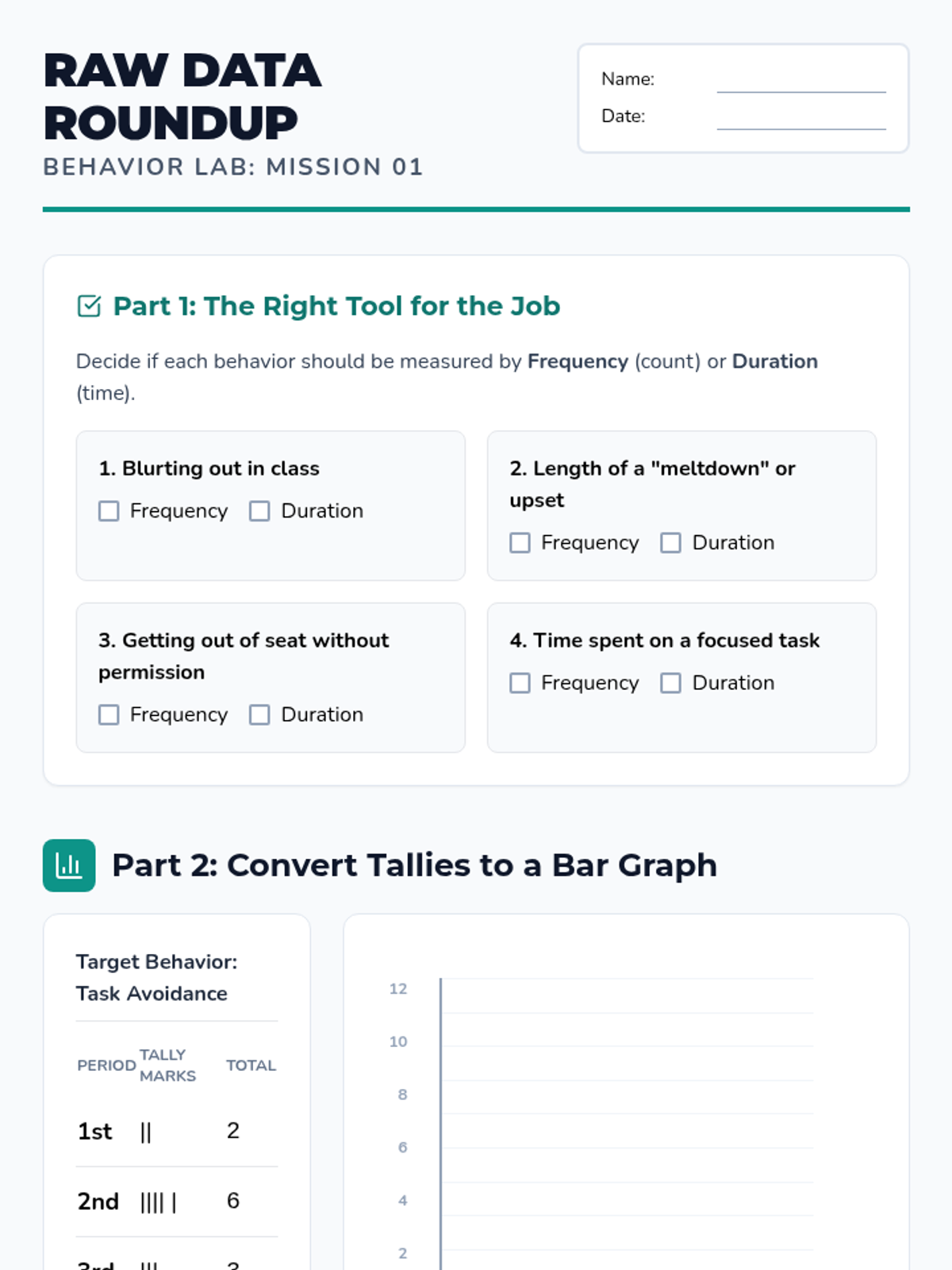
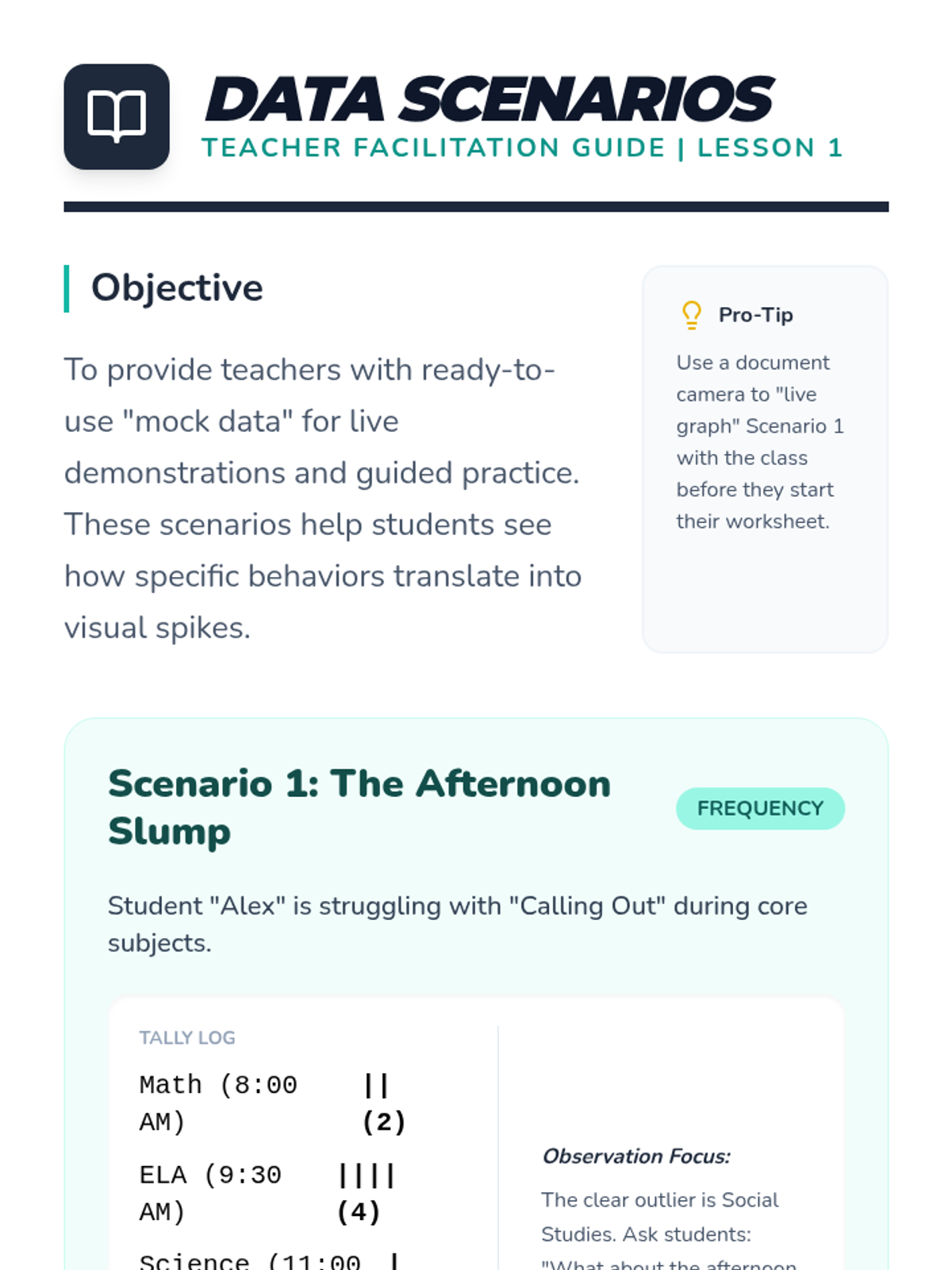
A data-focused sequence that teaches students how to transform behavioral tracking into visual insights. Students learn to graph frequency and duration, identify patterns and triggers, and develop data-driven interventions for personal growth.
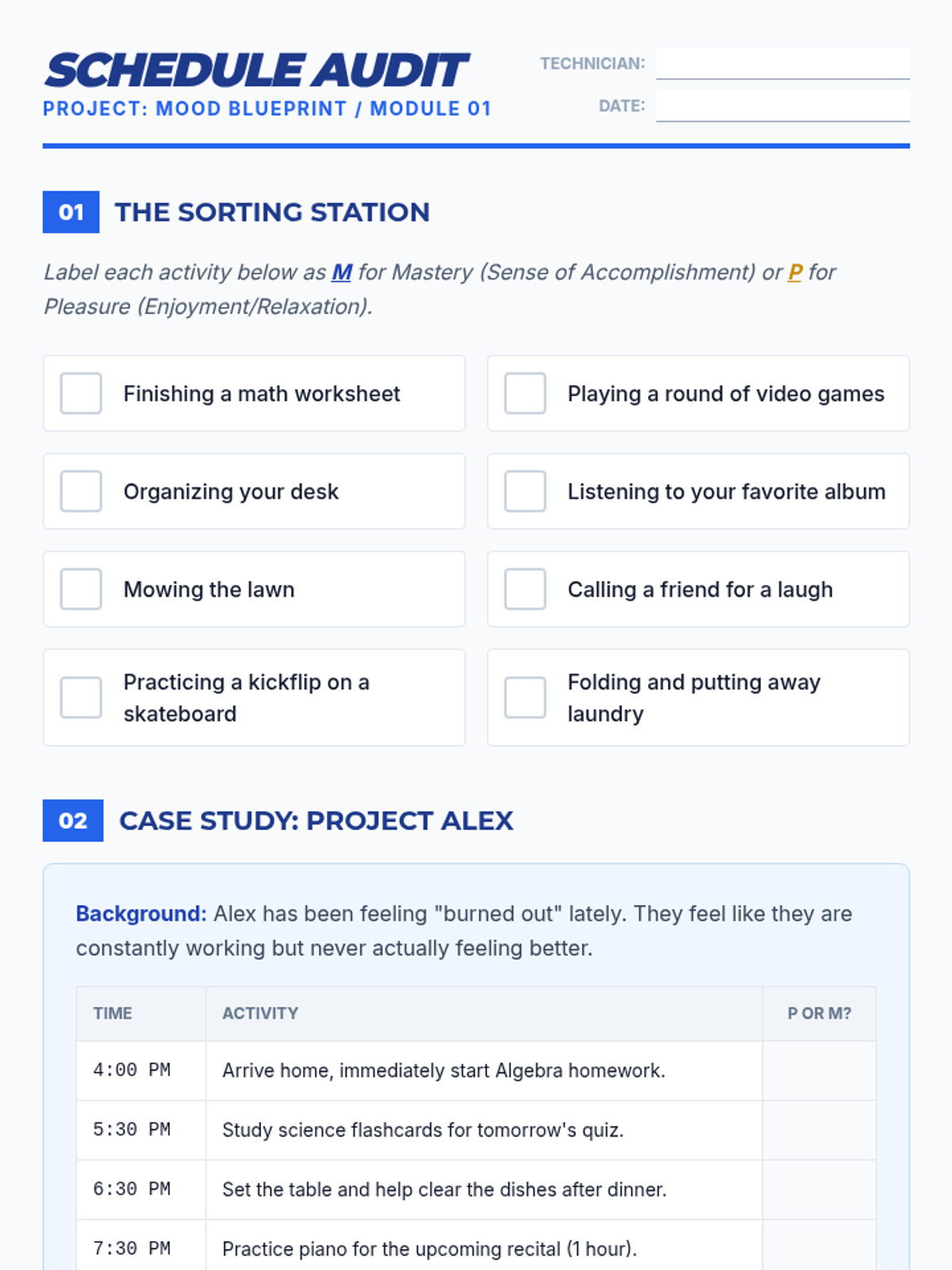
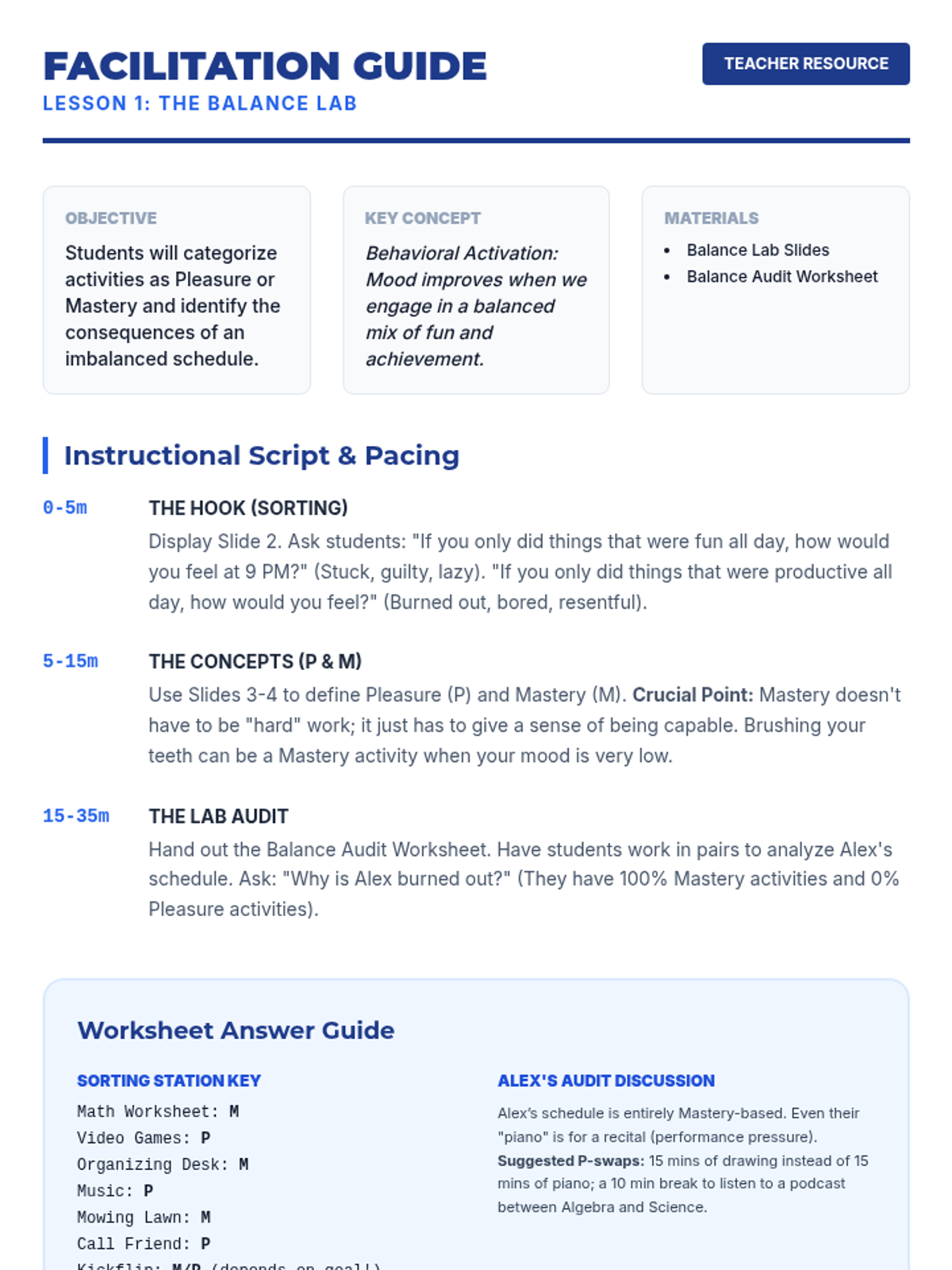
A 5-lesson series for 8th graders to design personalized behavioral activation plans. Students learn to balance pleasure and mastery, create activity menus, set micro-goals, and troubleshoot barriers to build a sustainable mood-boosting routine.
This sequence empowers students to act as third-party neutrals, introducing the specific structure and skills of Peer Mediation. Students learn the distinct phases of a mediation session, the importance of neutrality, and how to facilitate dialogue without taking sides.
A 5-lesson executive function bootcamp for 7th-grade students, focusing on breaking down complex projects, backwards planning, and visual task management. Students learn to transition from reactive to proactive habits through hands-on activities and visual tracking systems.
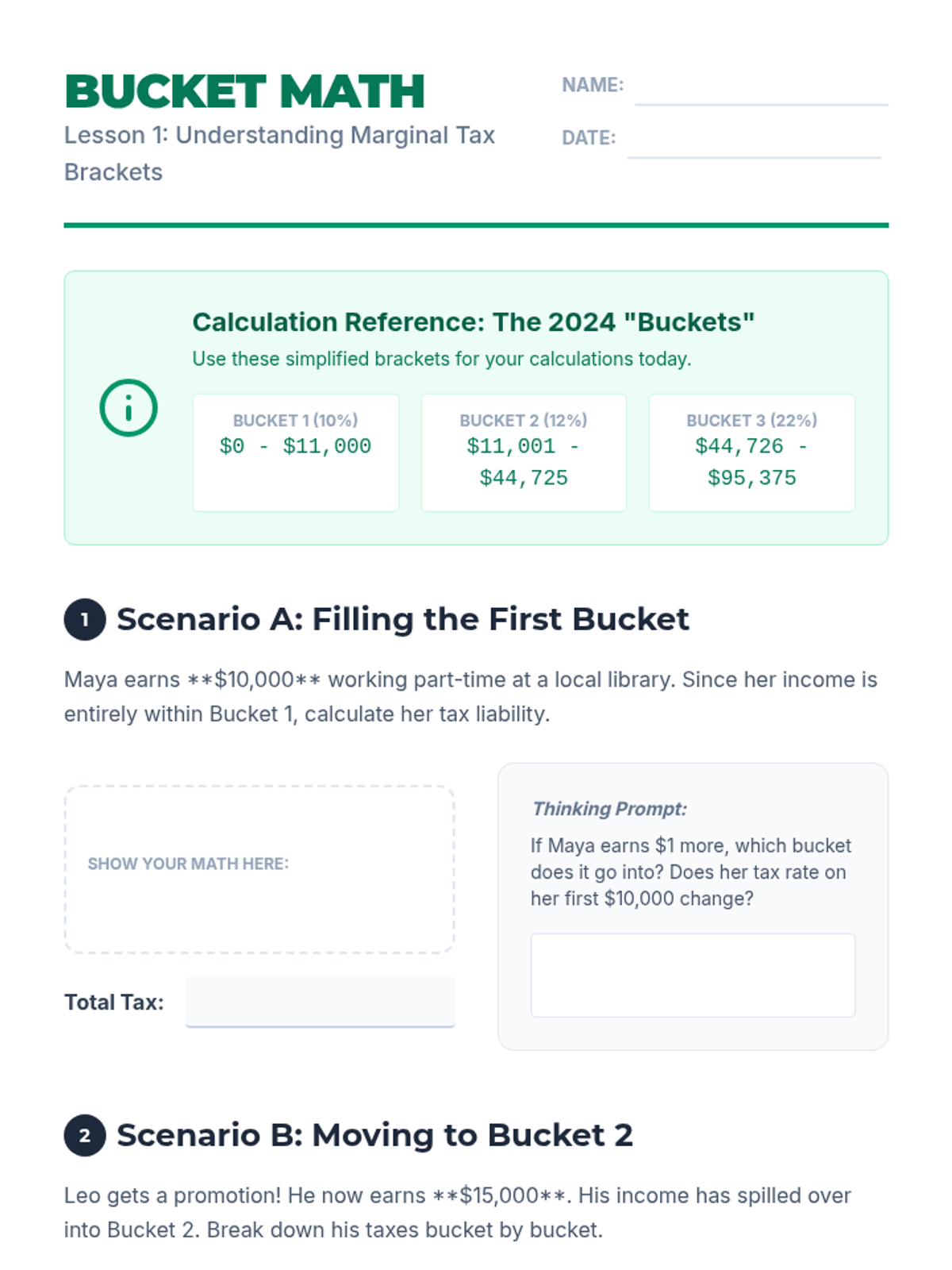
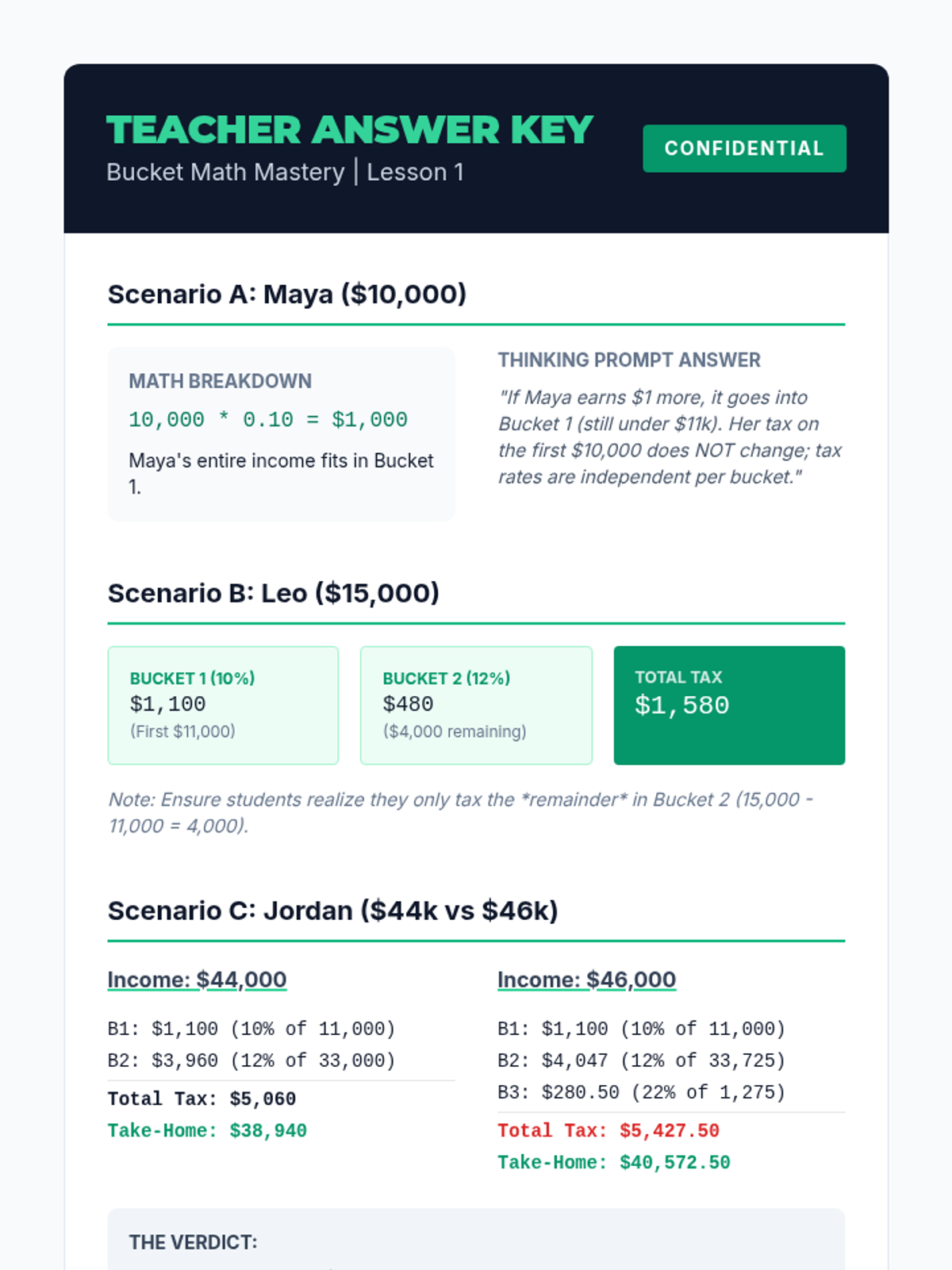
An inquiry and math-focused sequence for 8th-grade students exploring the mechanics of tax liability. Students learn about marginal tax brackets, deductions, credits, and self-employment taxes through skill-building exercises, case studies, and a strategic simulation game.
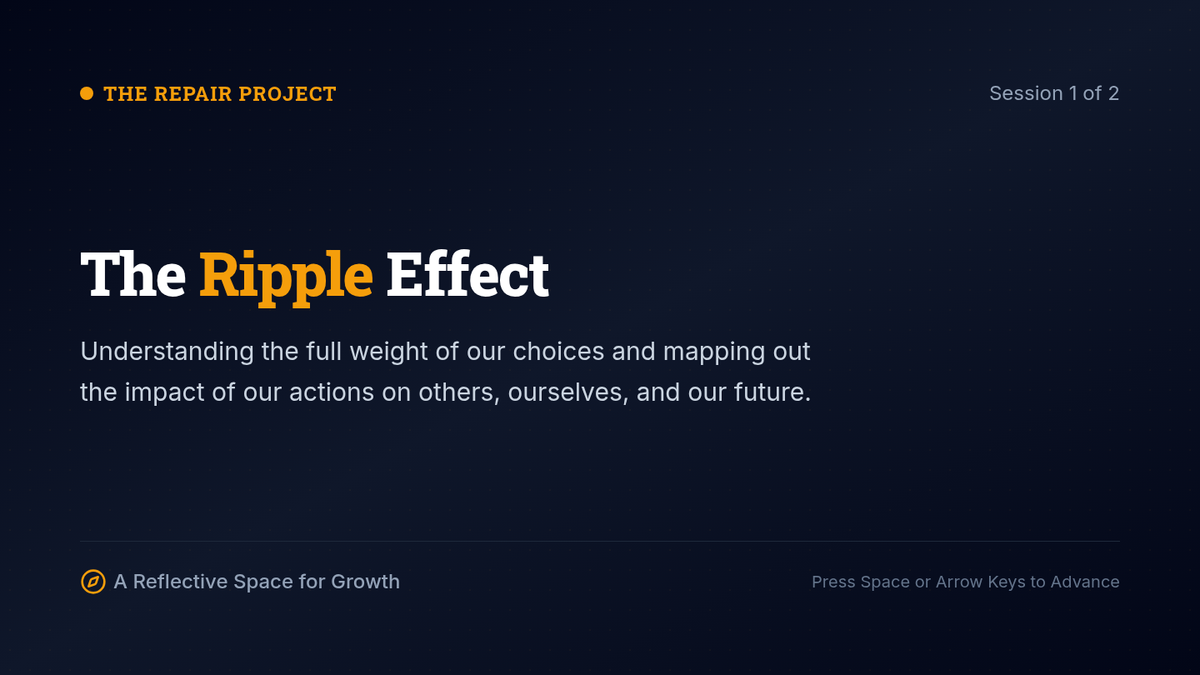
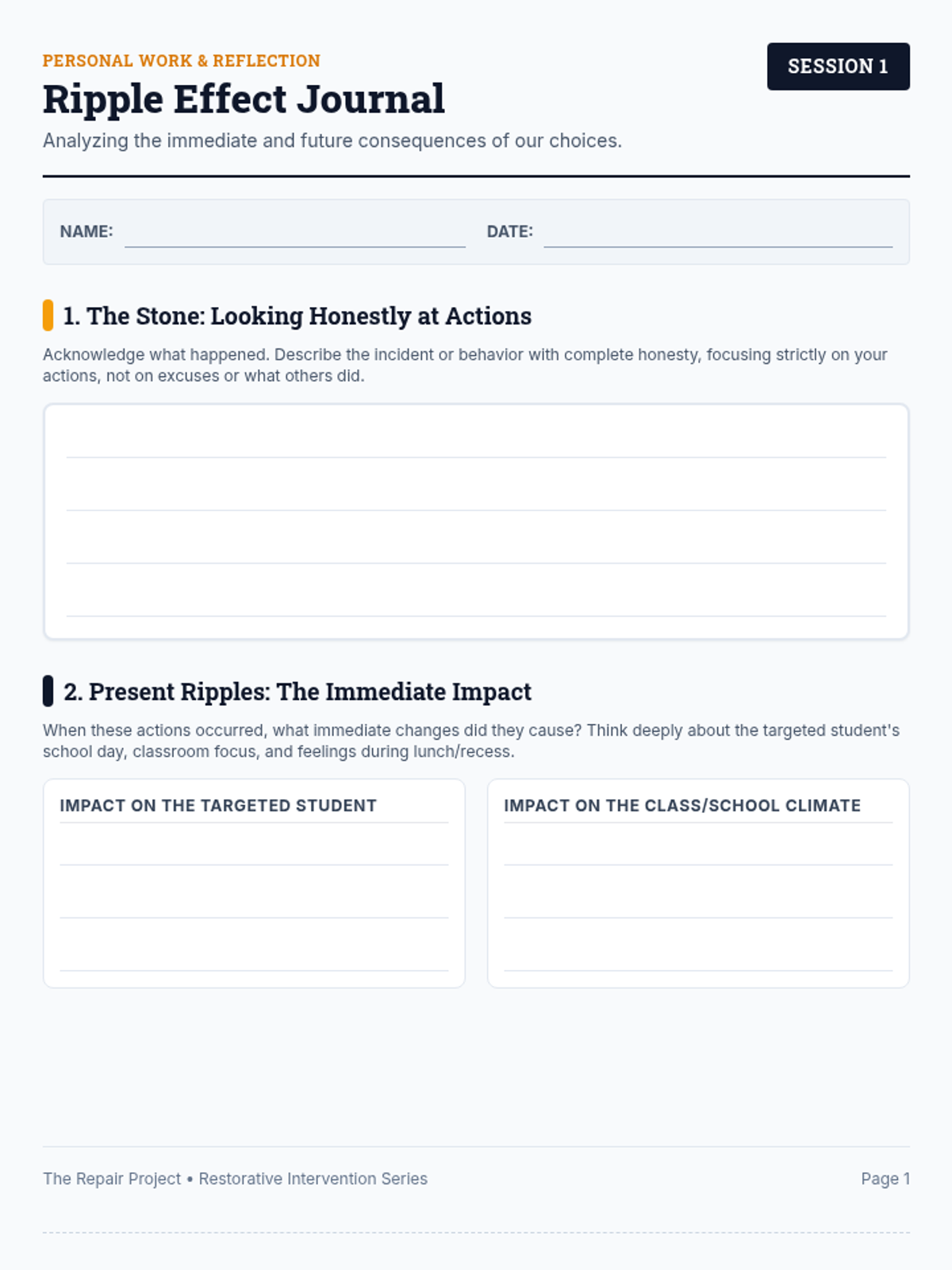
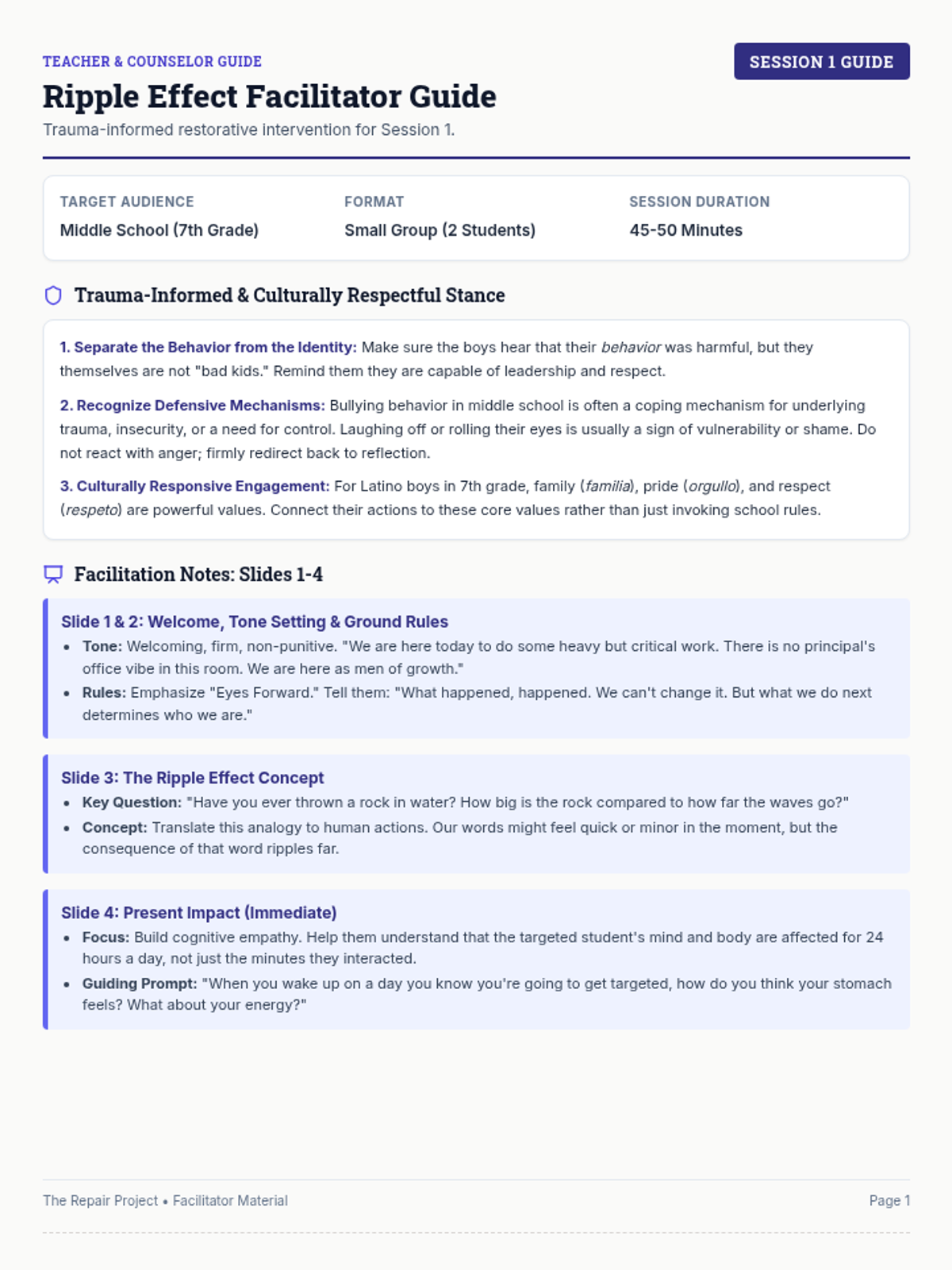
A two-session restorative intervention sequence designed for middle school students who have engaged in bullying behaviors. It uses a trauma-informed, restorative justice framework to help students understand the immediate and long-term impact of their actions and develop a concrete blueprint to repair the harm.
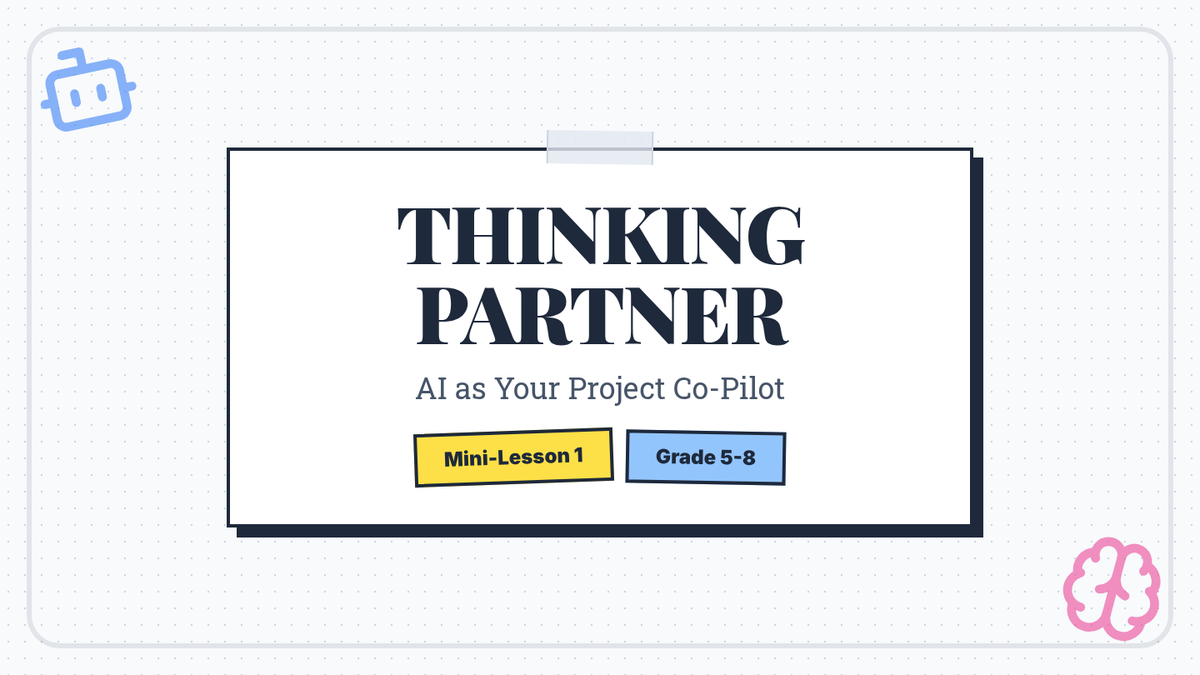
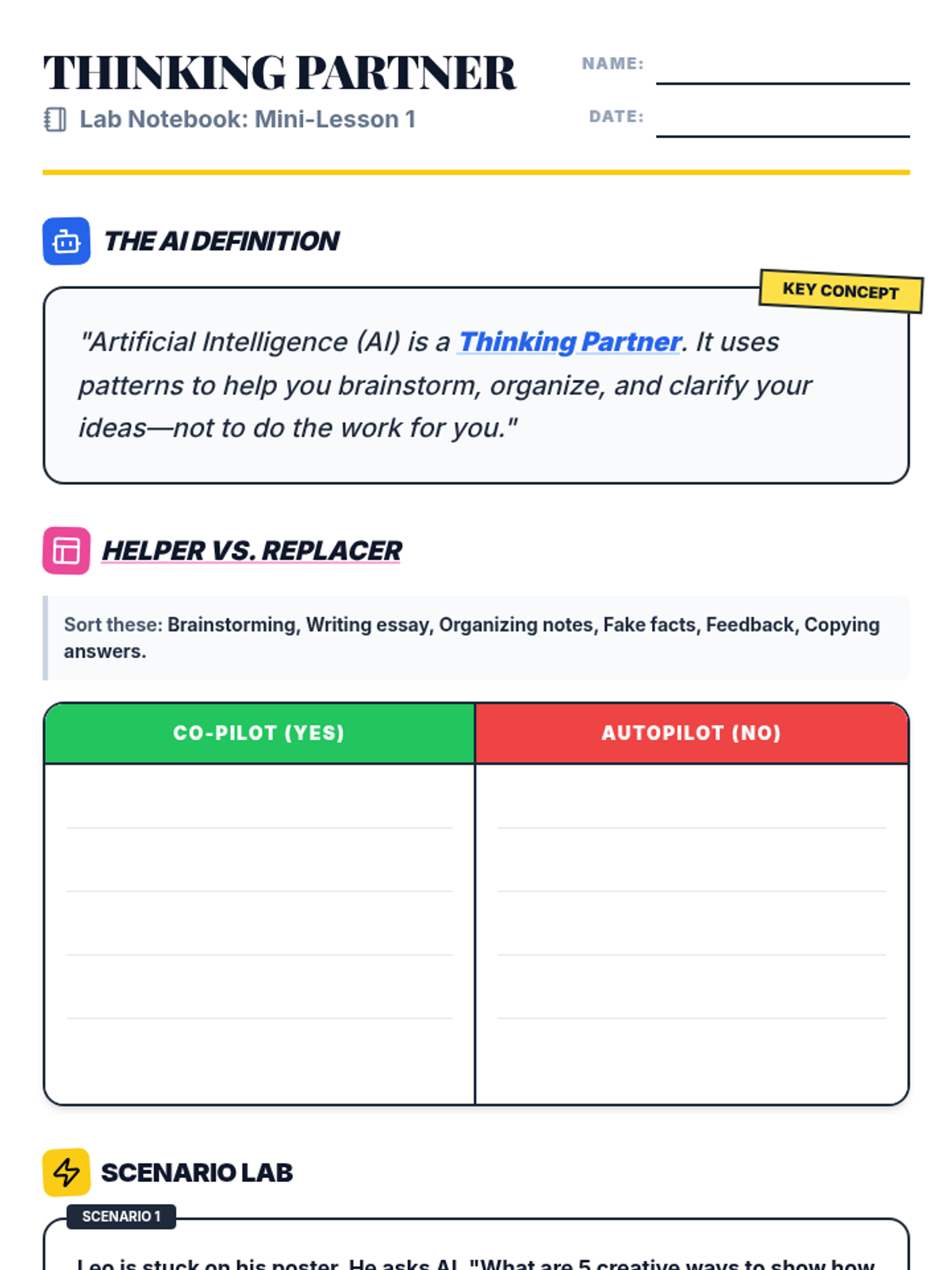
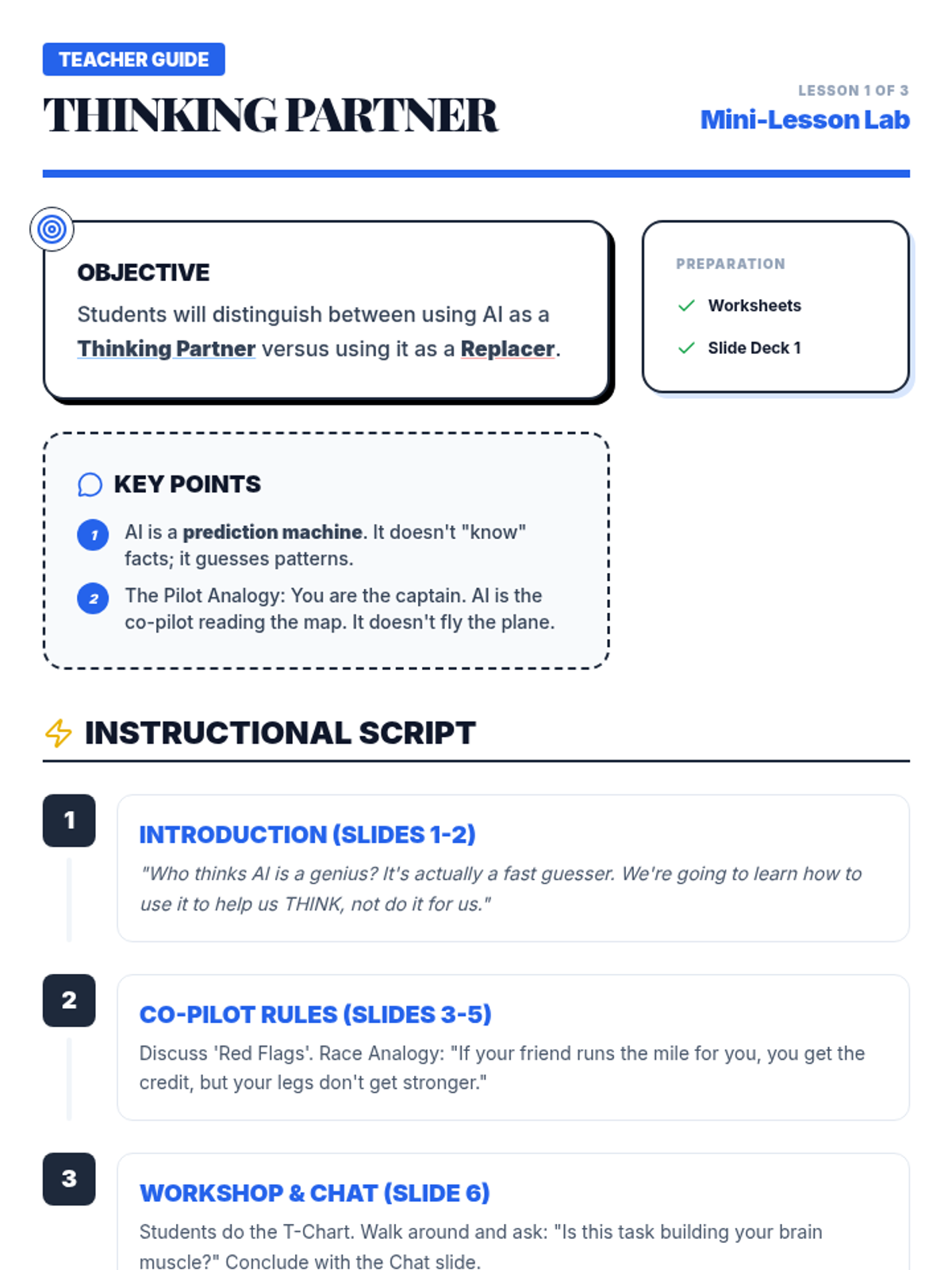
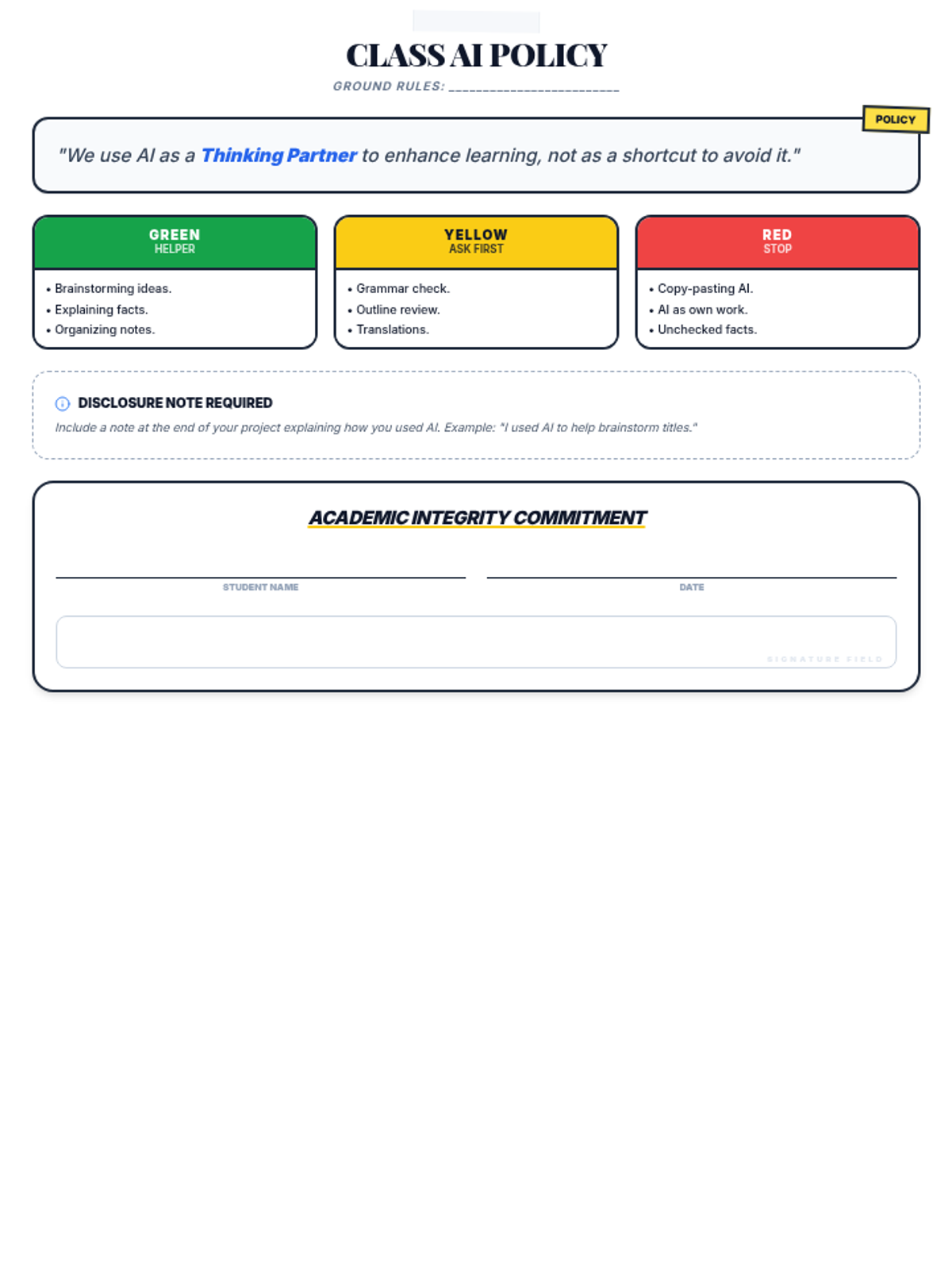
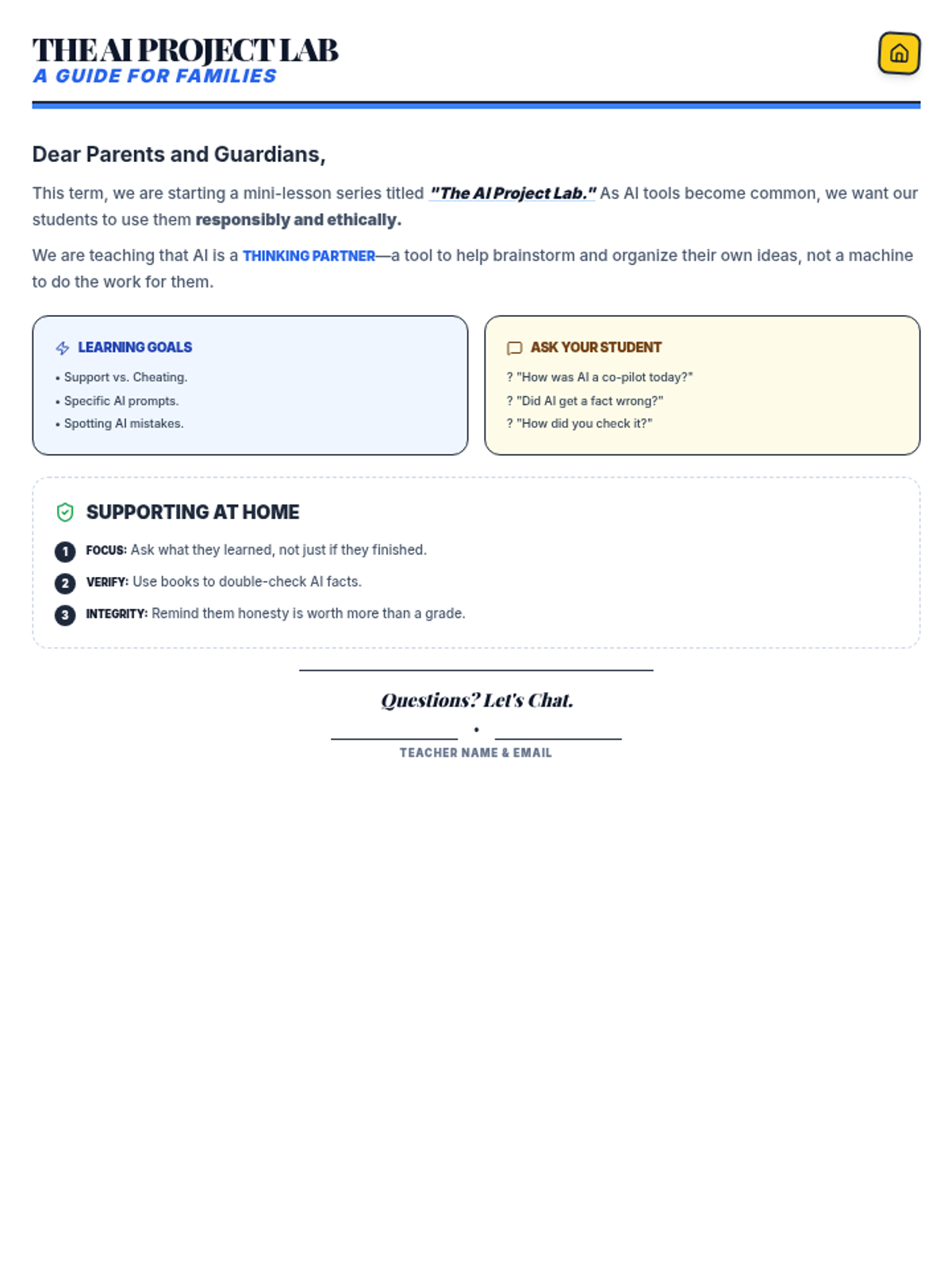
A 3-part mini-lesson series designed to teach middle schoolers how to use AI tools responsibly for final projects. The series focuses on AI as a thinking partner, prompt engineering, and critical fact-checking through a modern 'Notebook/Sketch' aesthetic.
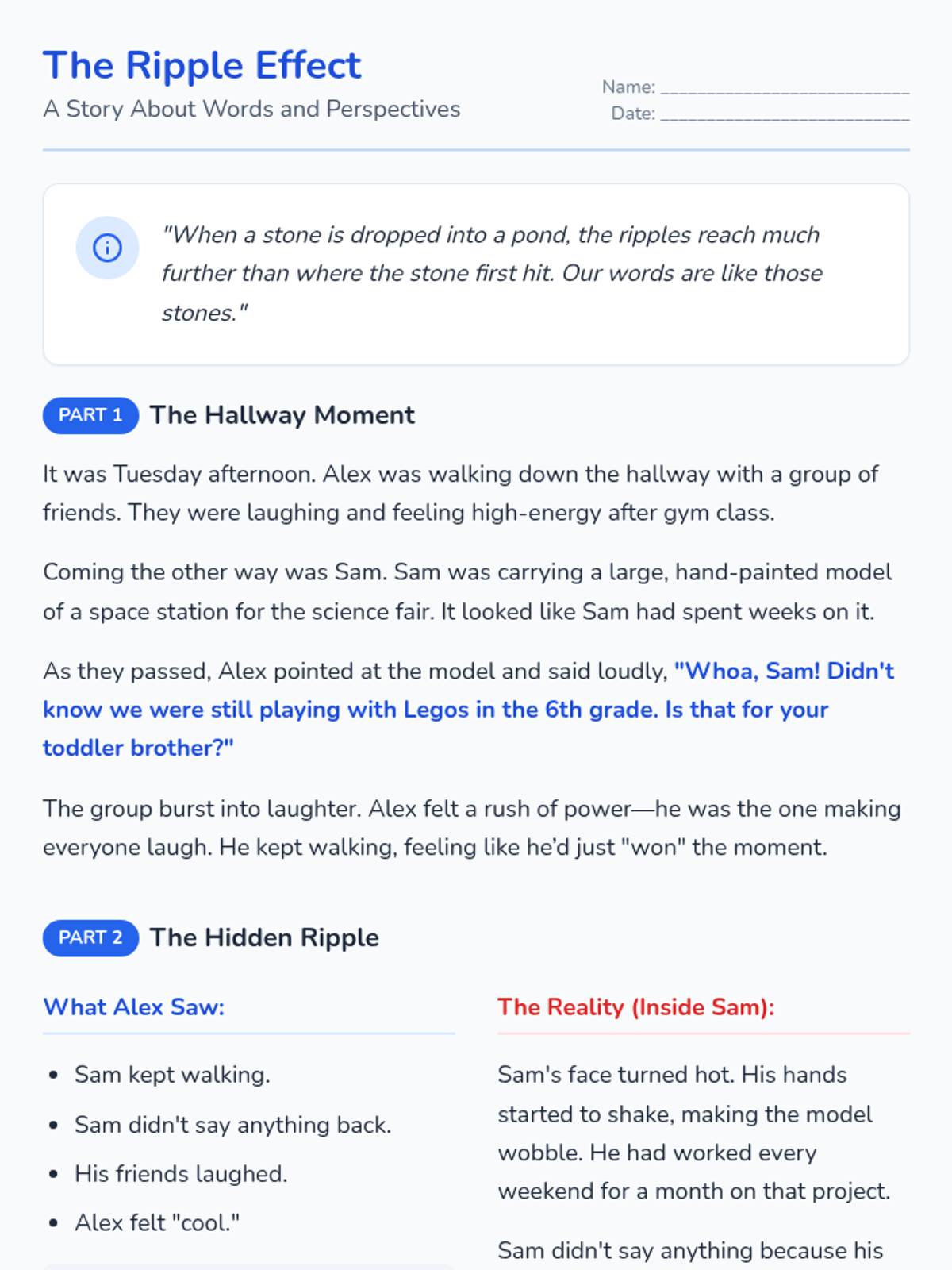
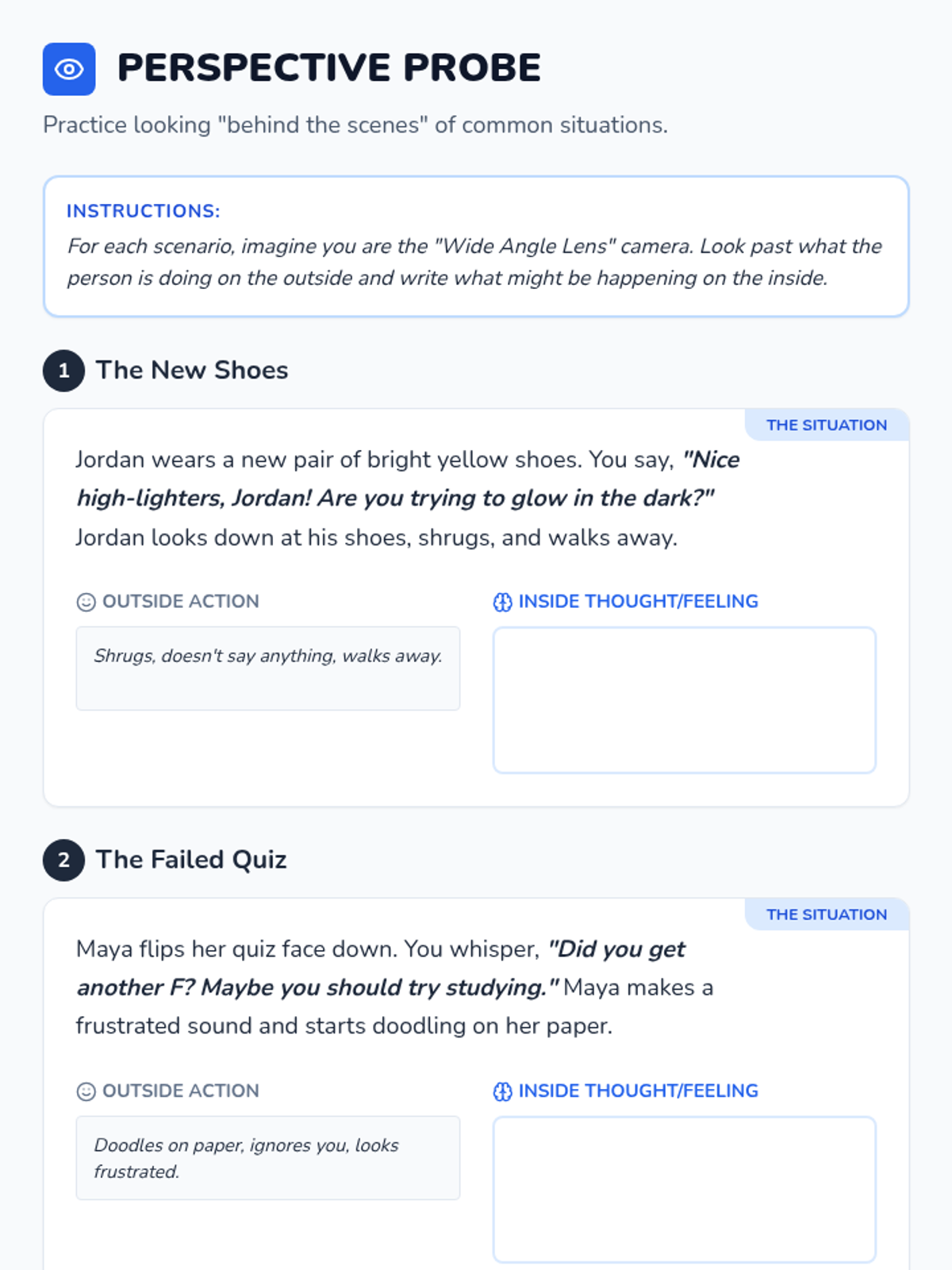
A sequence of social-emotional learning lessons designed for 6th-grade students with histories of bullying behaviors, focusing on empathy, perspective-taking, and understanding the internal lives of others.
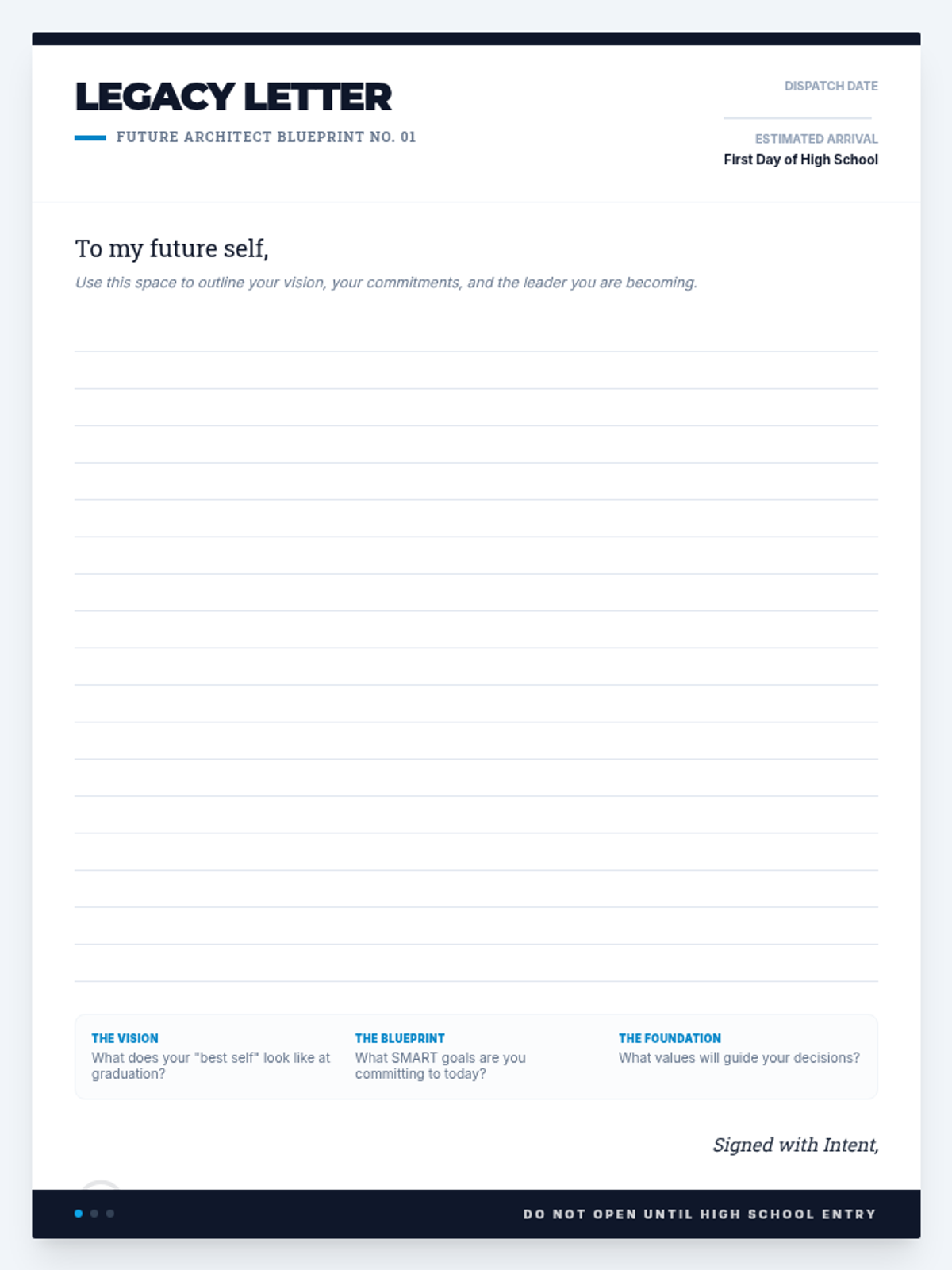
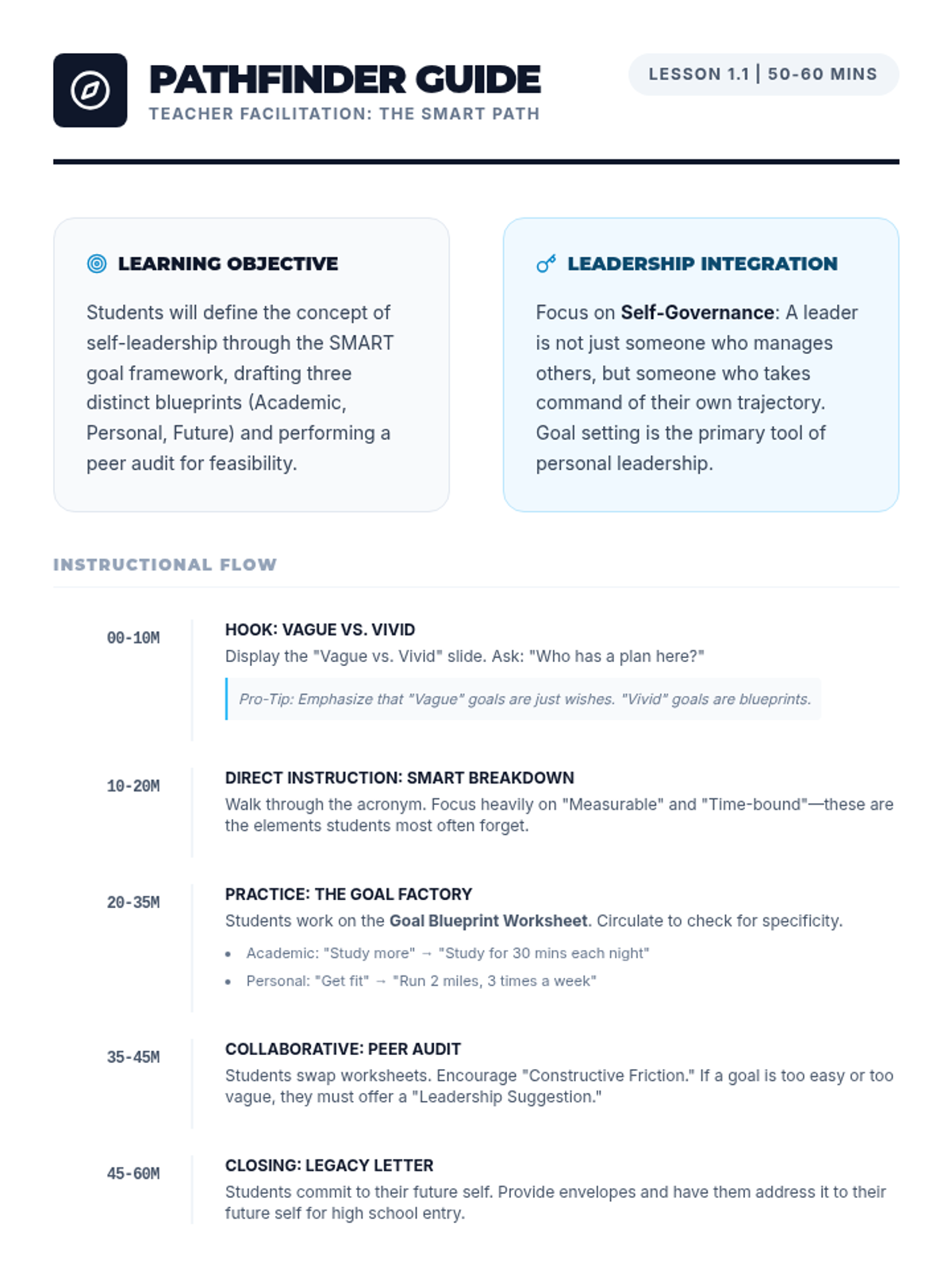
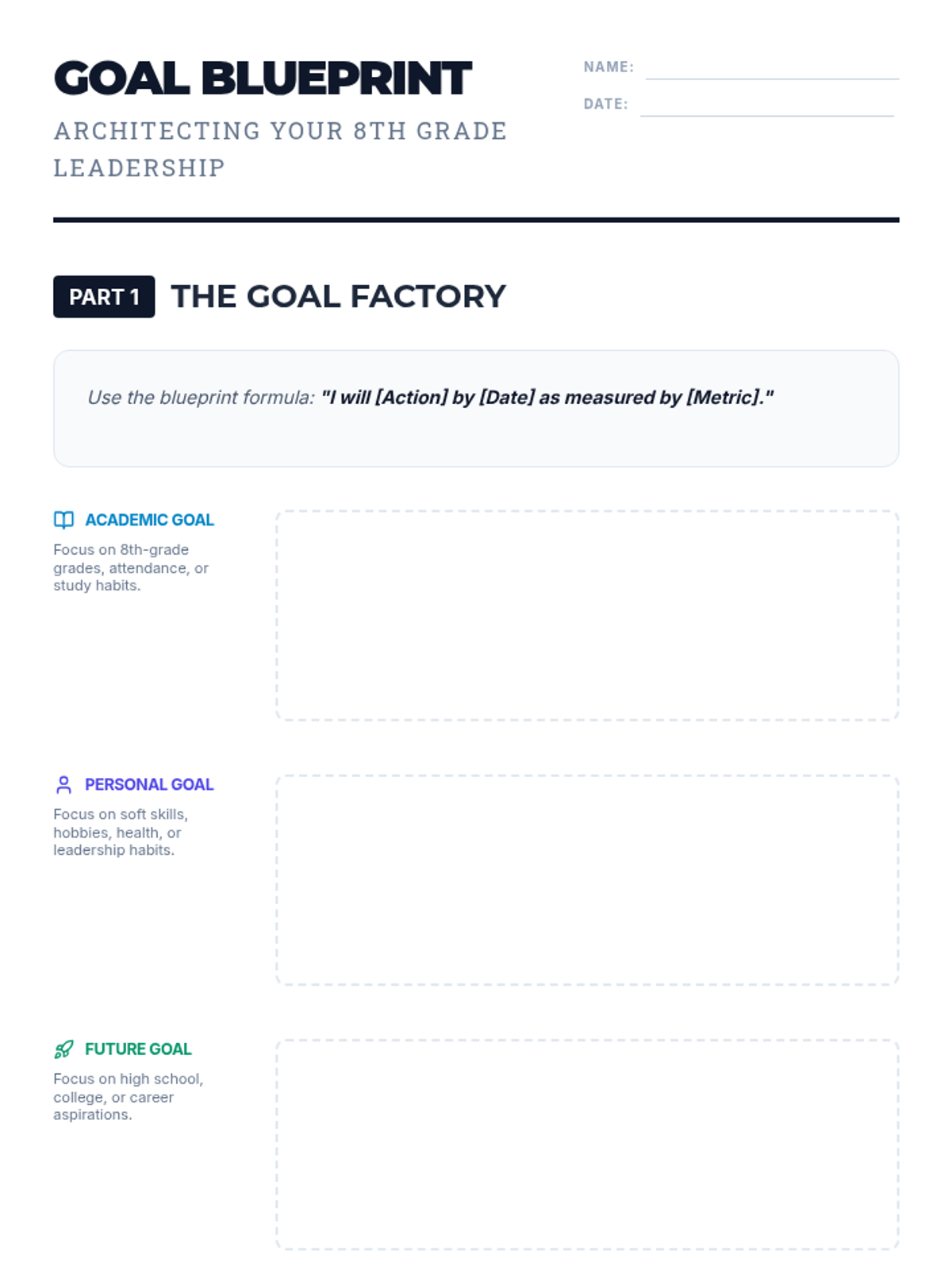
A career readiness and life skills unit focused on empowering 8th-grade students to take leadership of their lives through intentional goal-setting and long-term planning. Students learn the SMART framework to transform vague wishes into concrete, actionable blueprints for their high school and professional futures.
A two-part 1-to-1 coaching series for gifted students struggling with perfectionism, designed to validate their high-potential brains while teaching resilience in the face of feedback and failure.
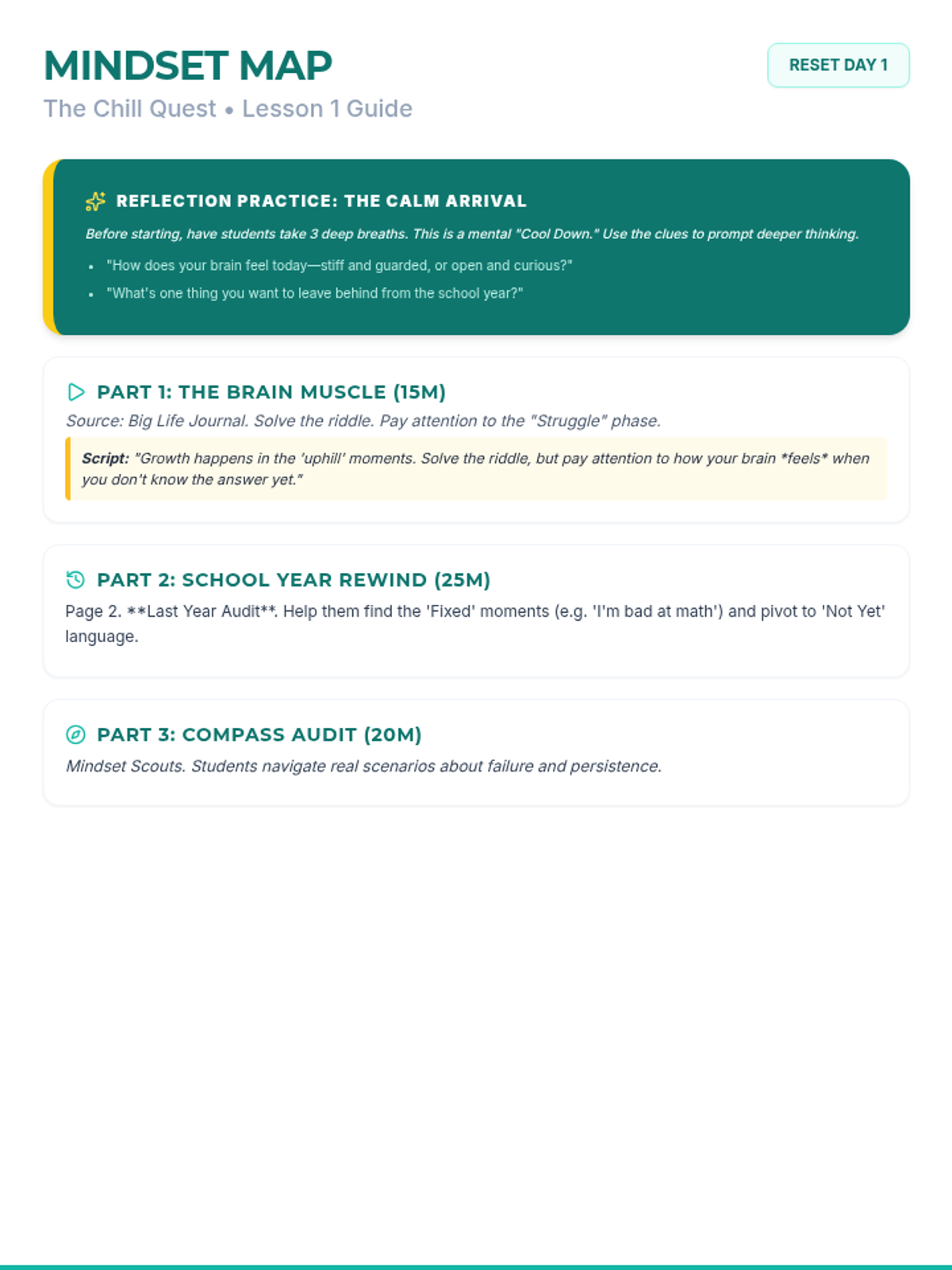
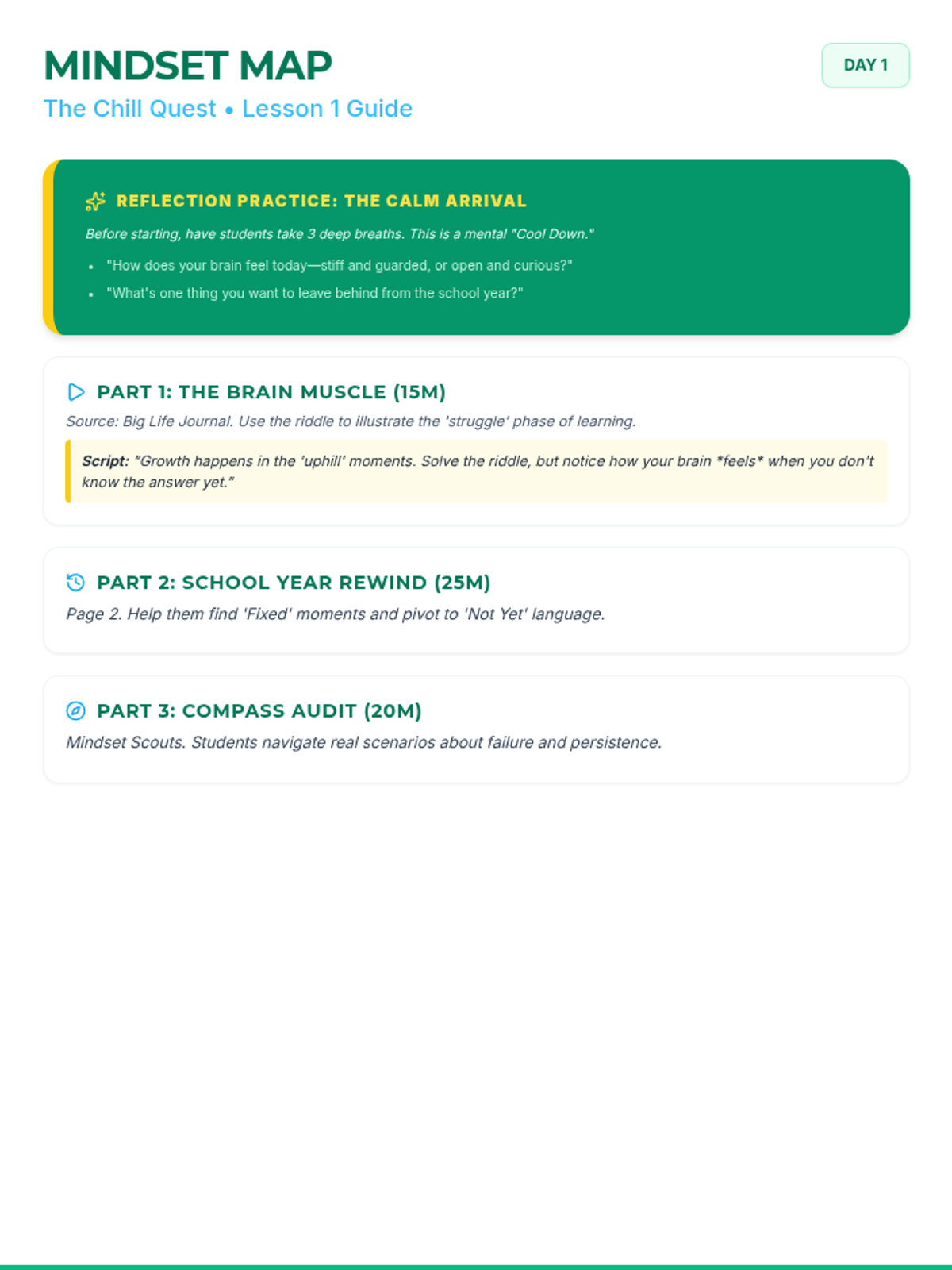
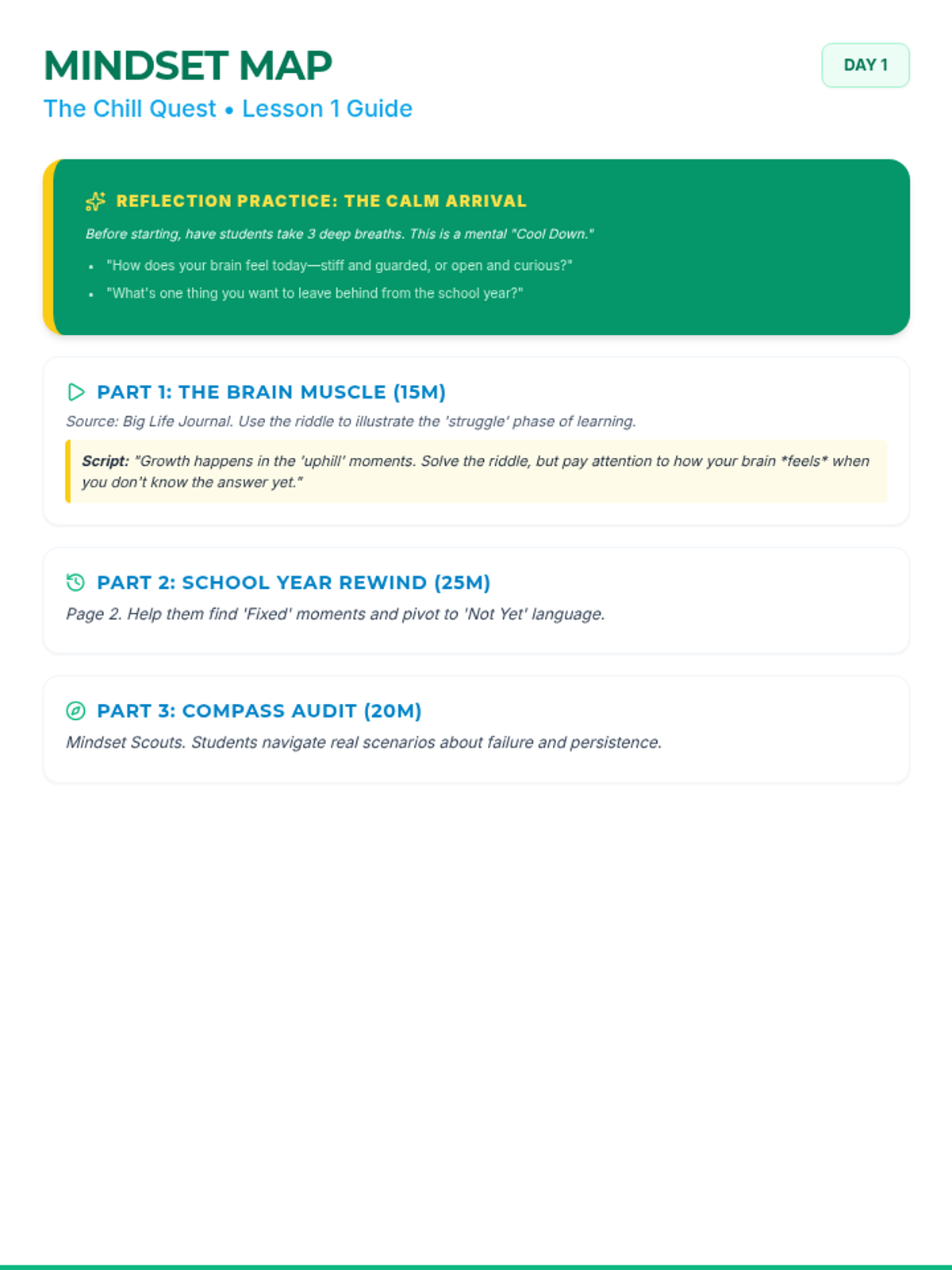
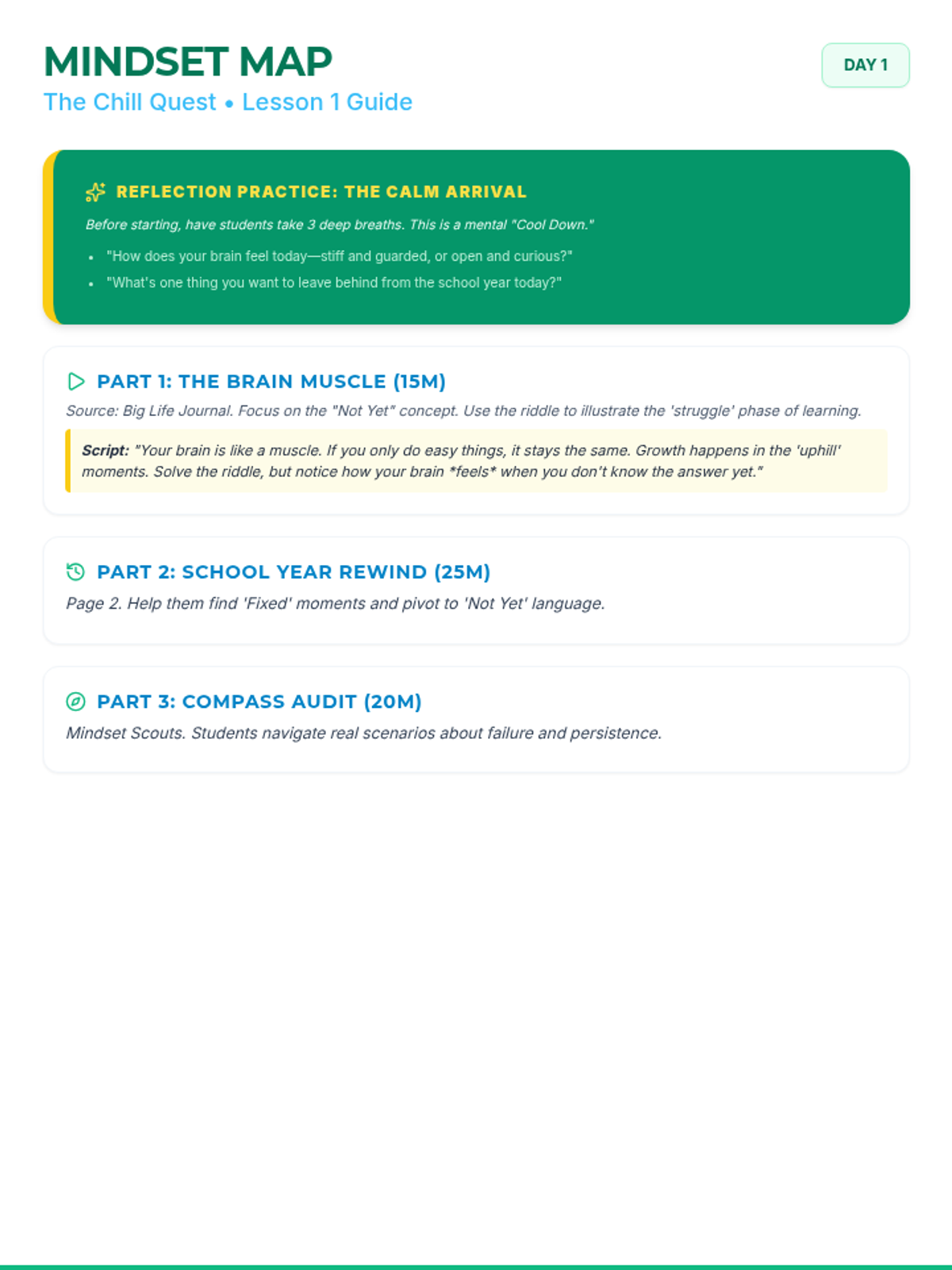
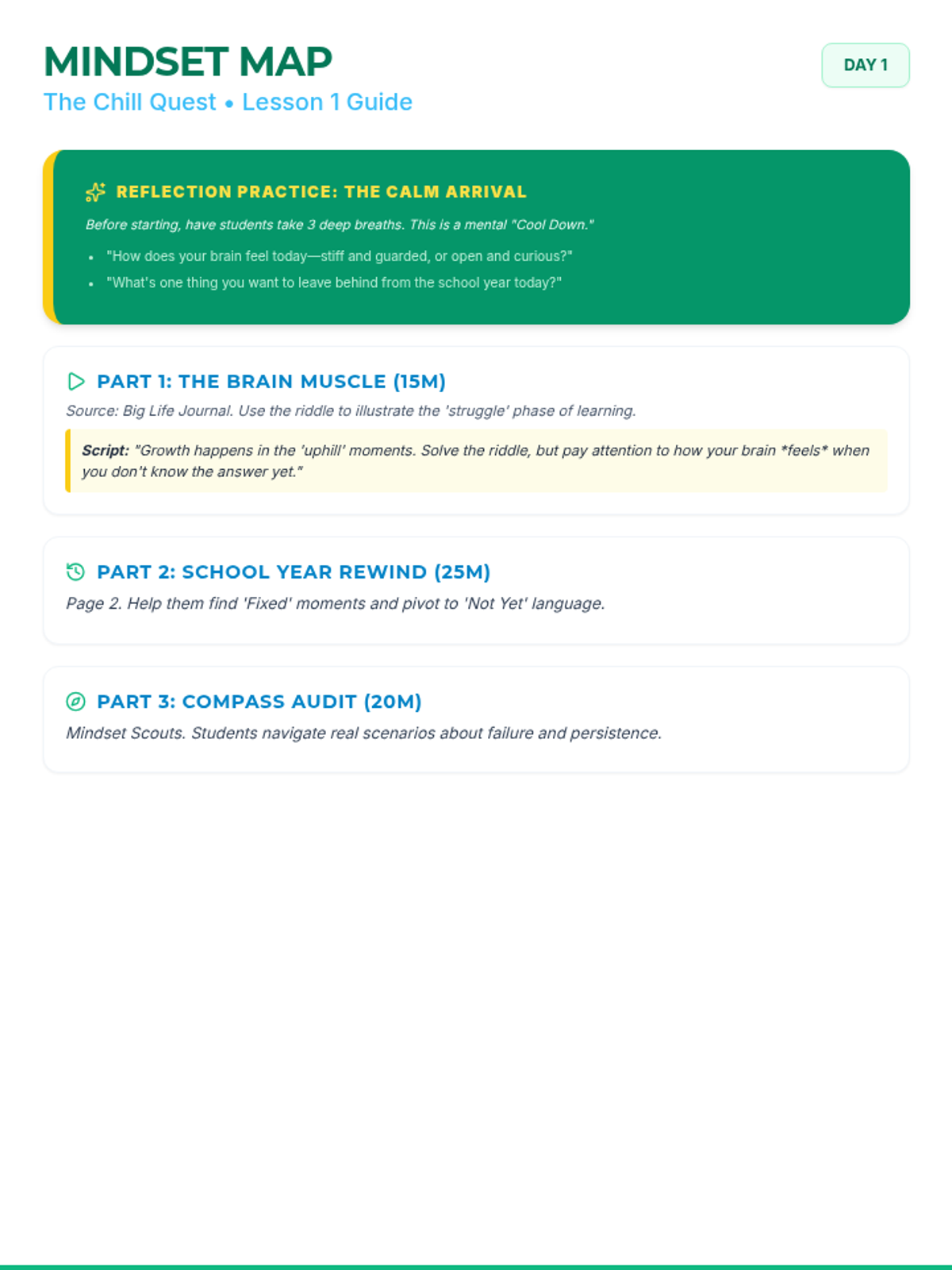
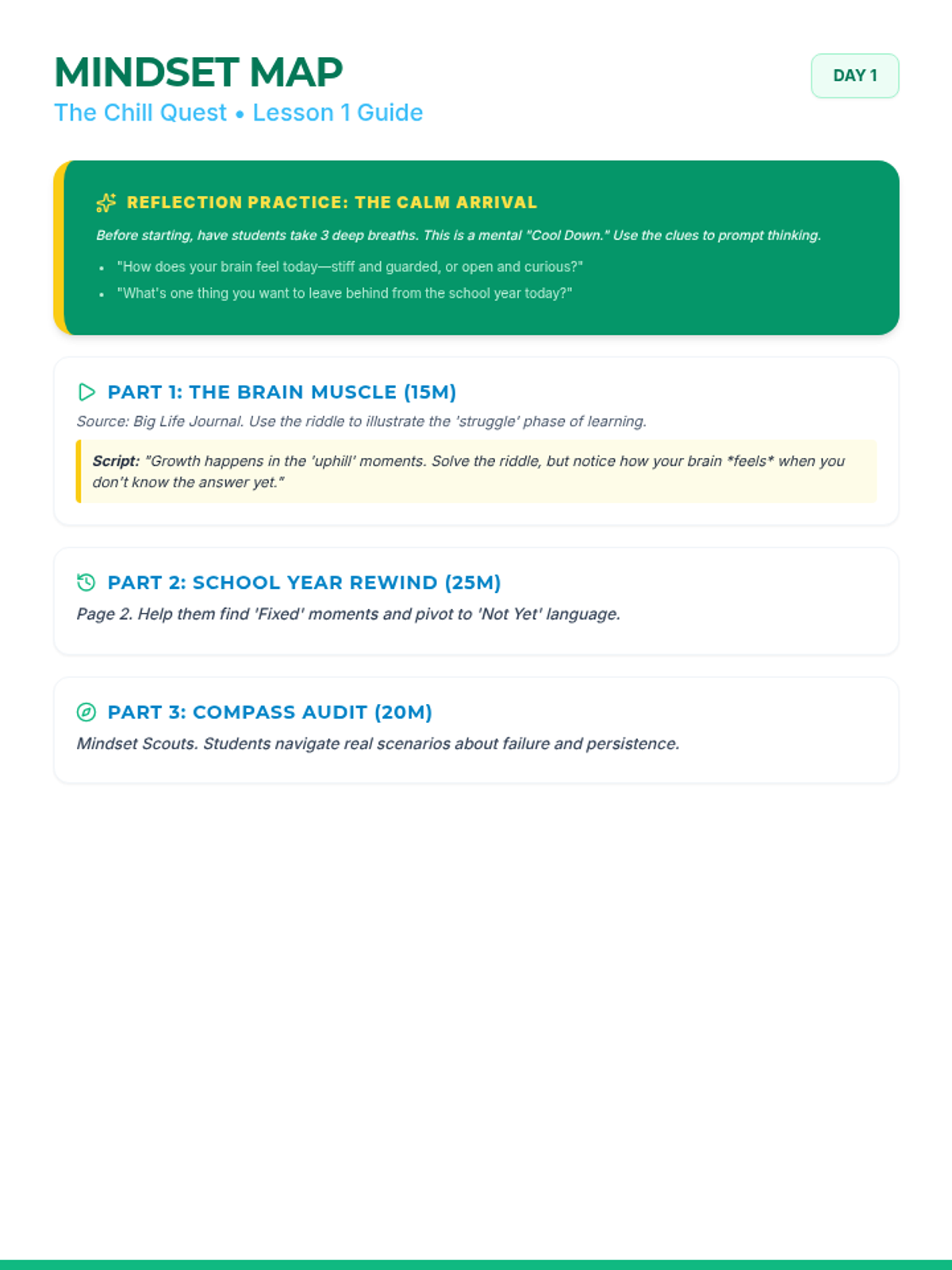
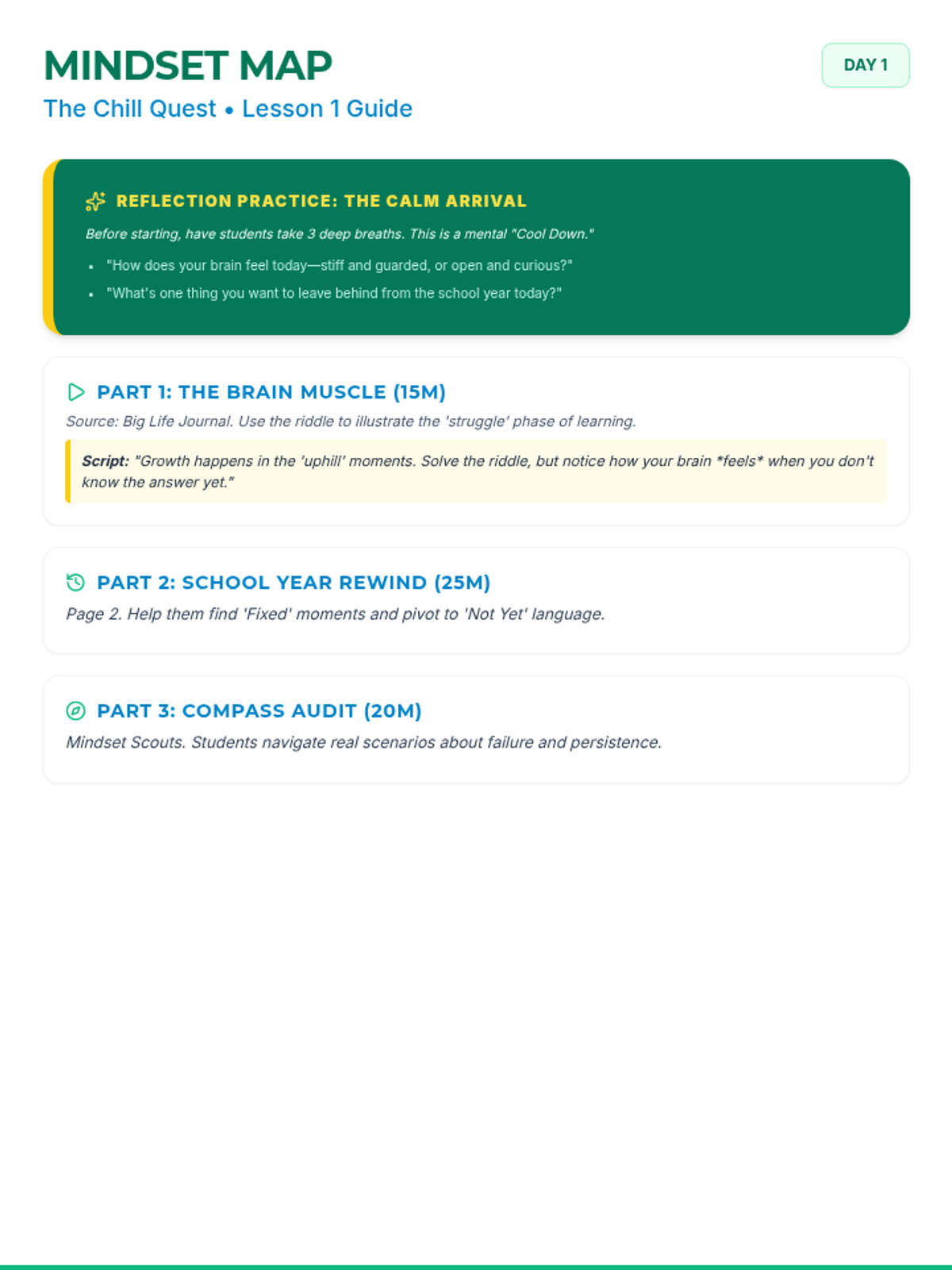
A summer-themed sequence for teens focused on growth mindset, the 7 Habits of Highly Effective Teens, and logic games. Designed for a stress-free, reflective environment. Styled in light green, blue, and yellow.
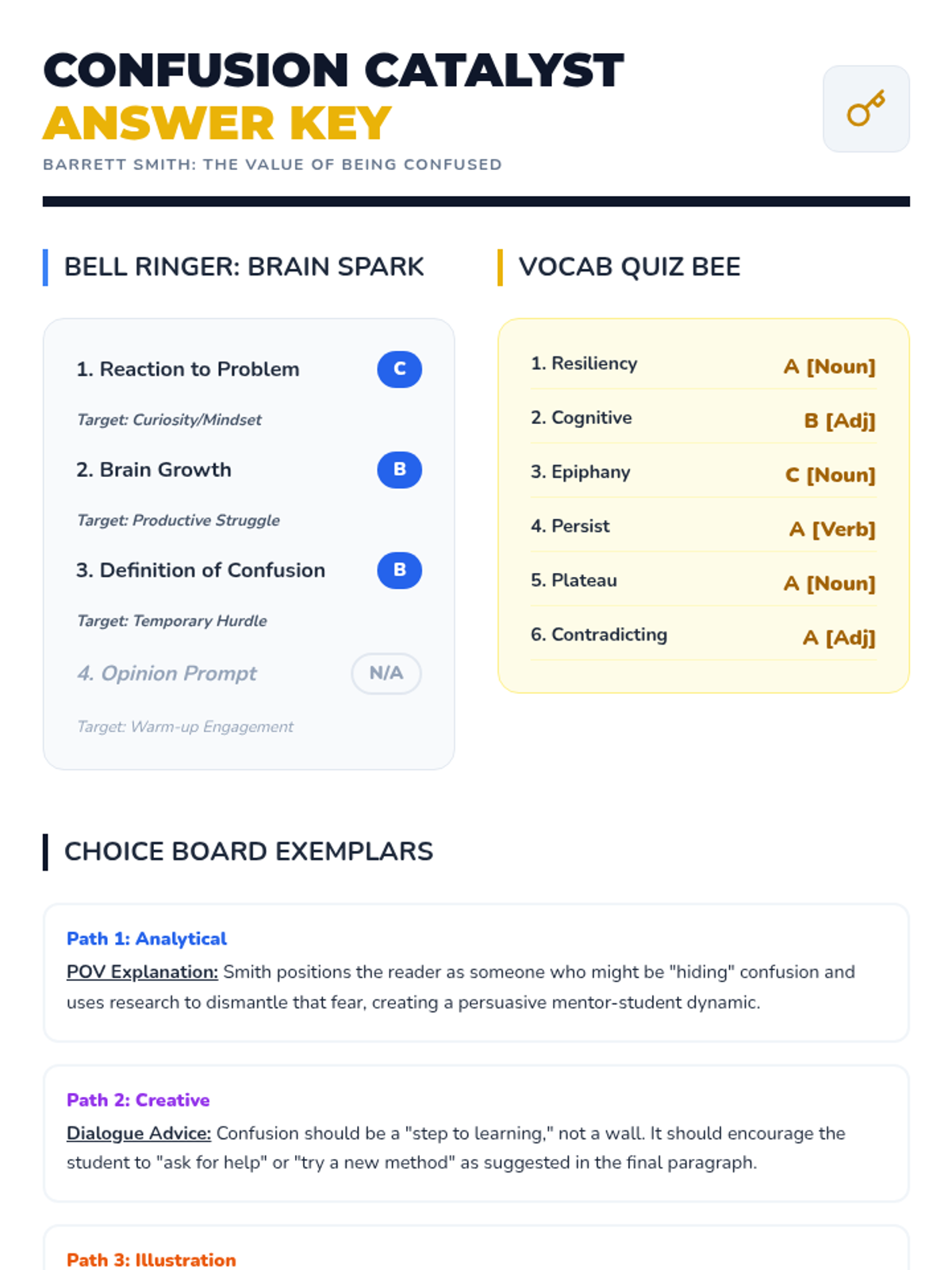
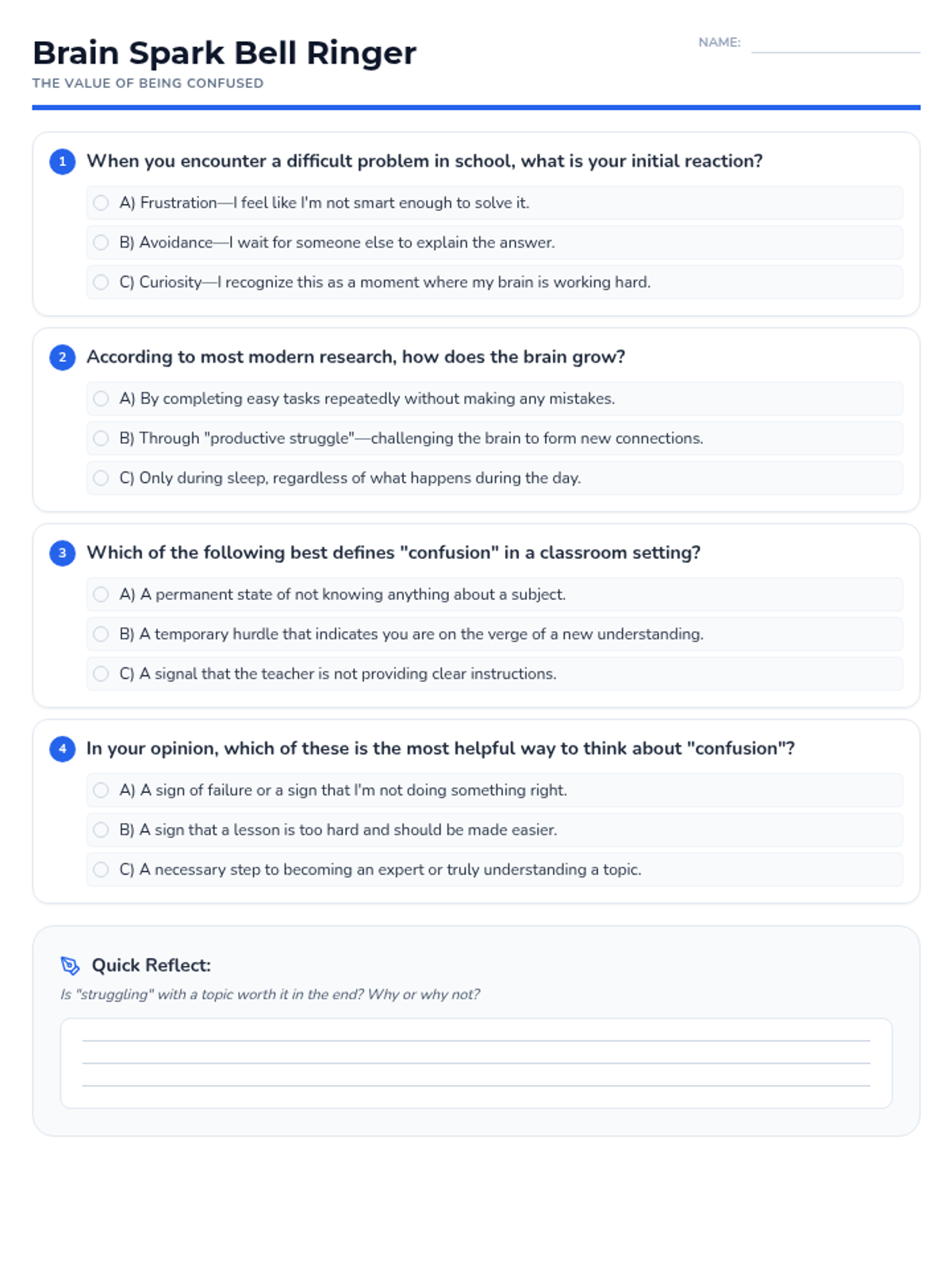
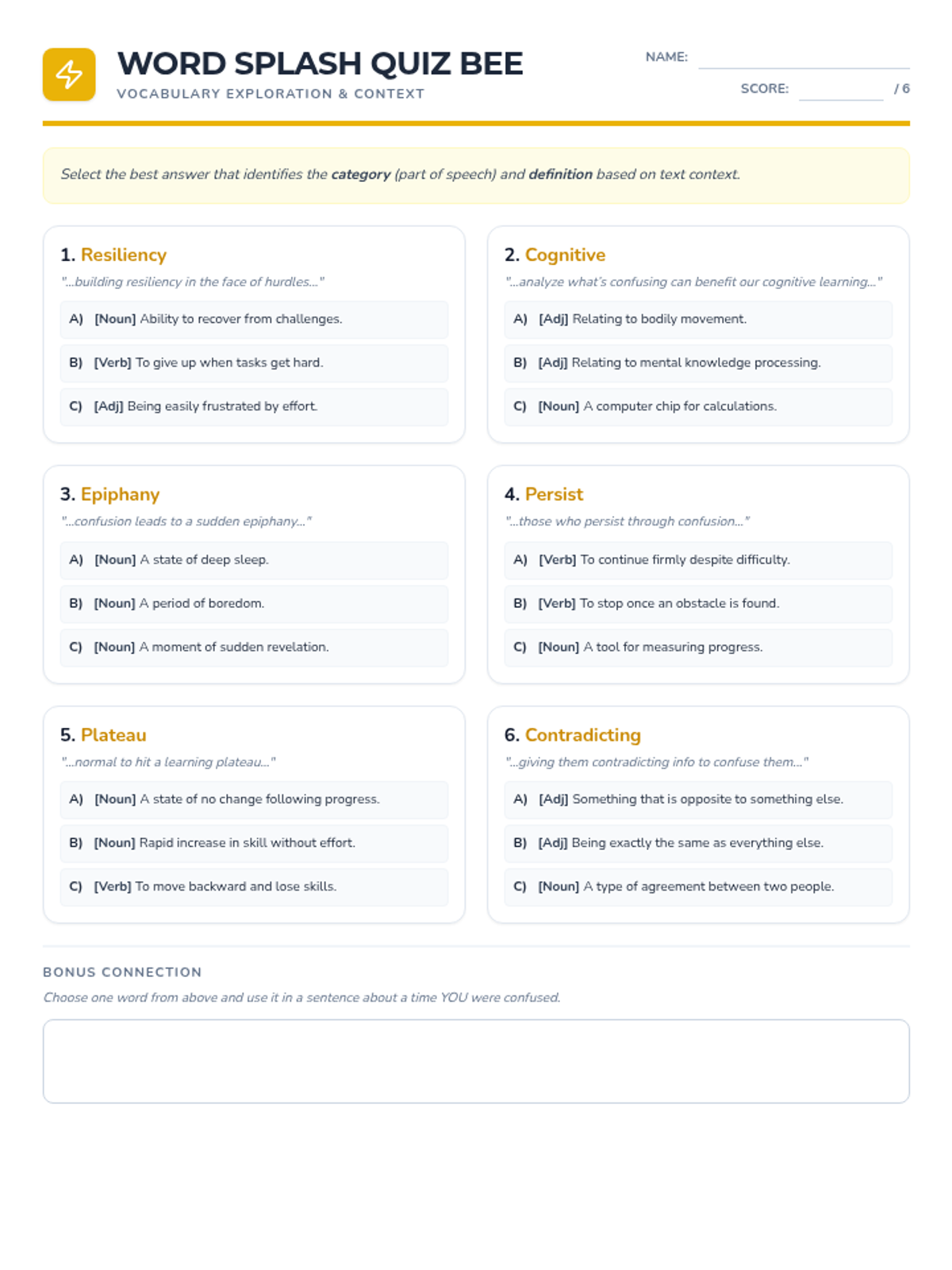
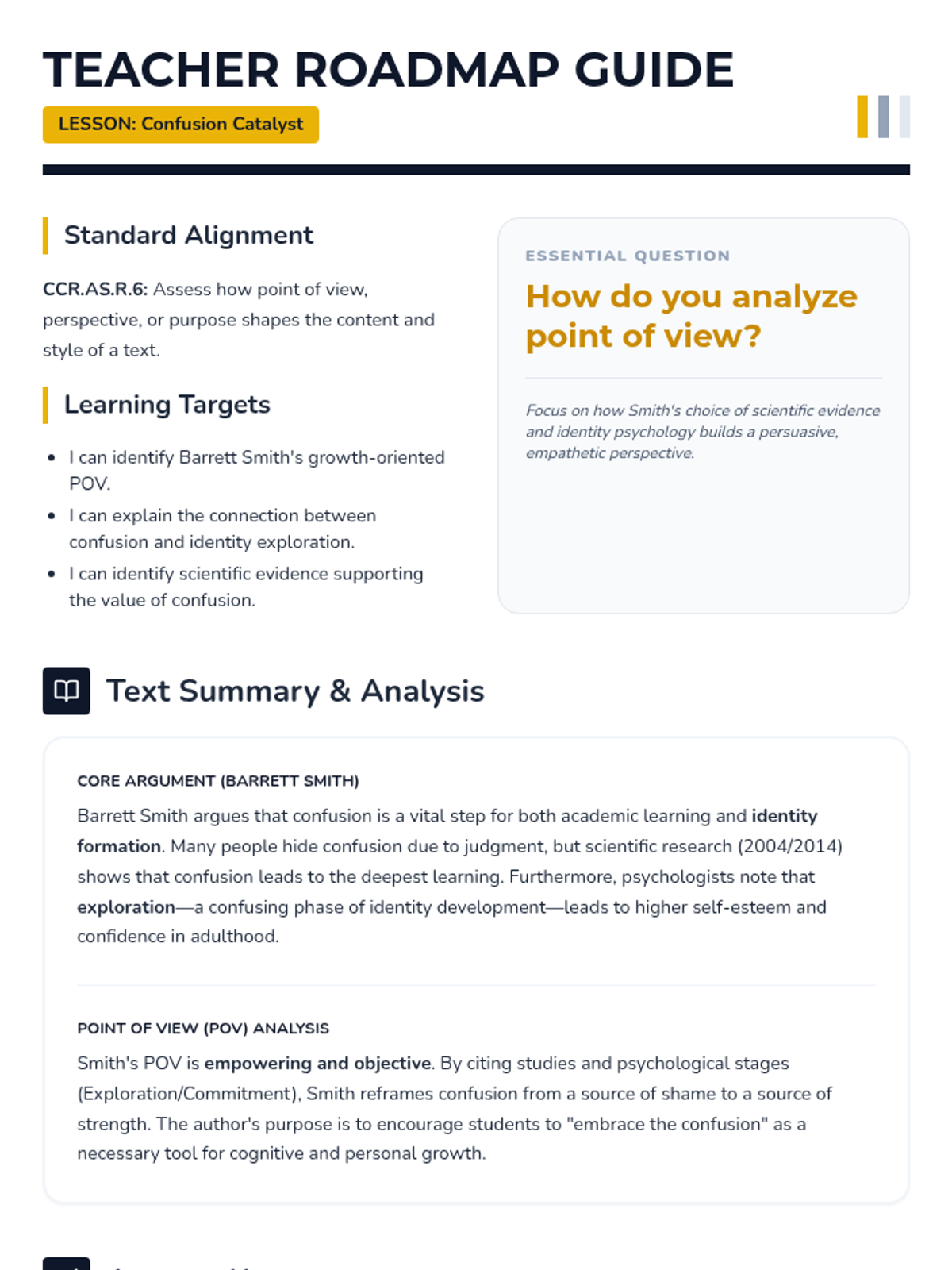
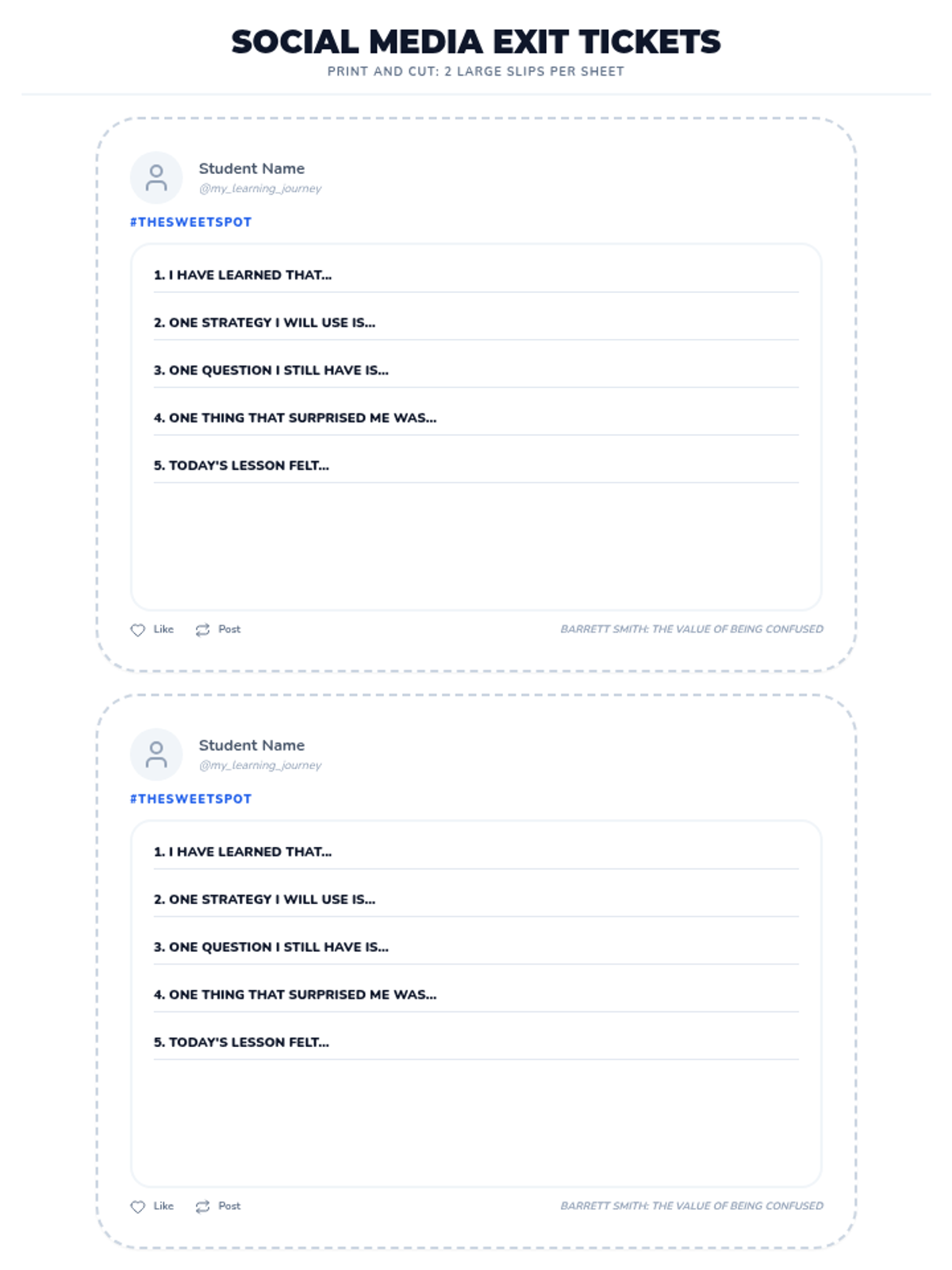
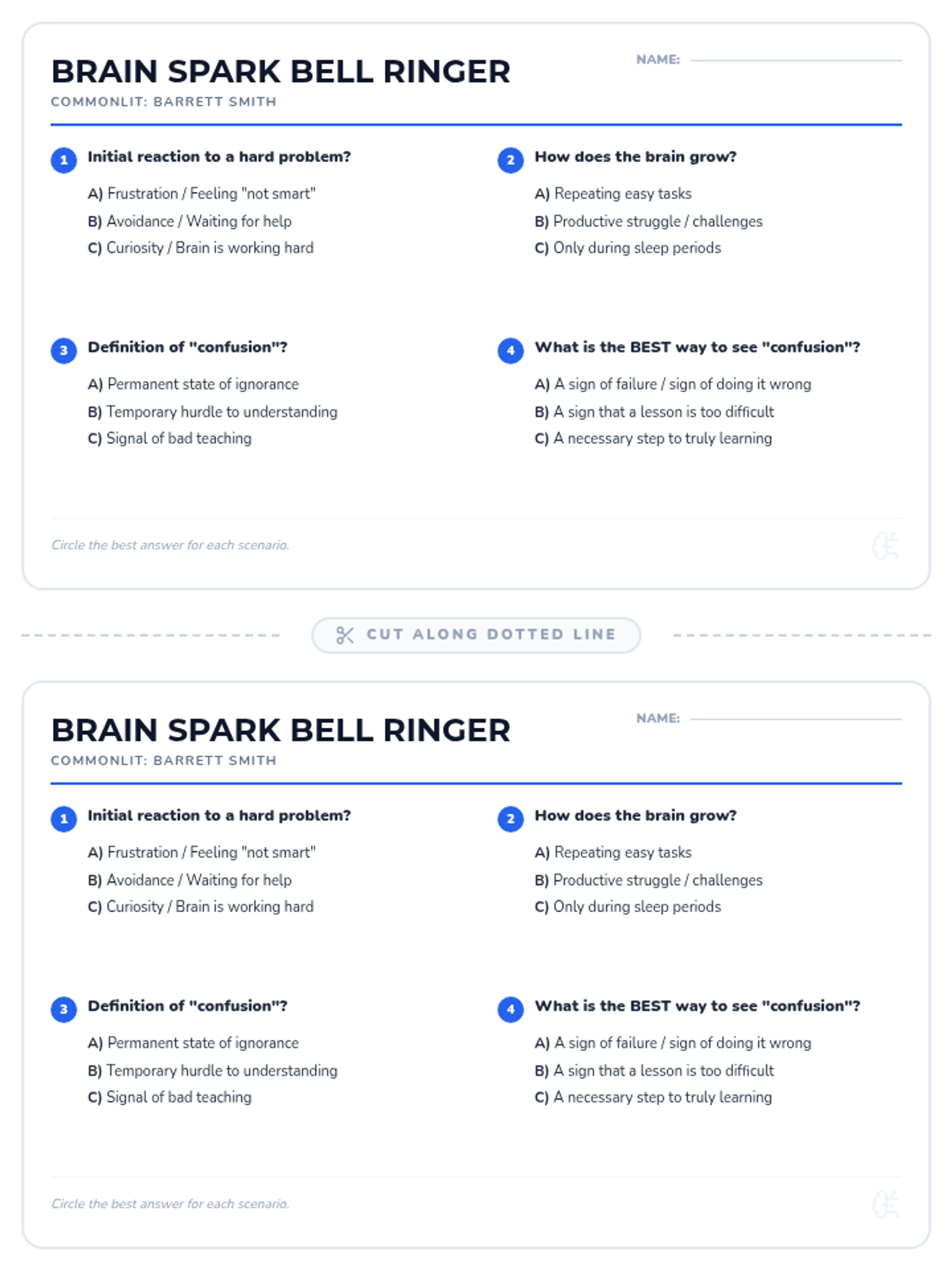
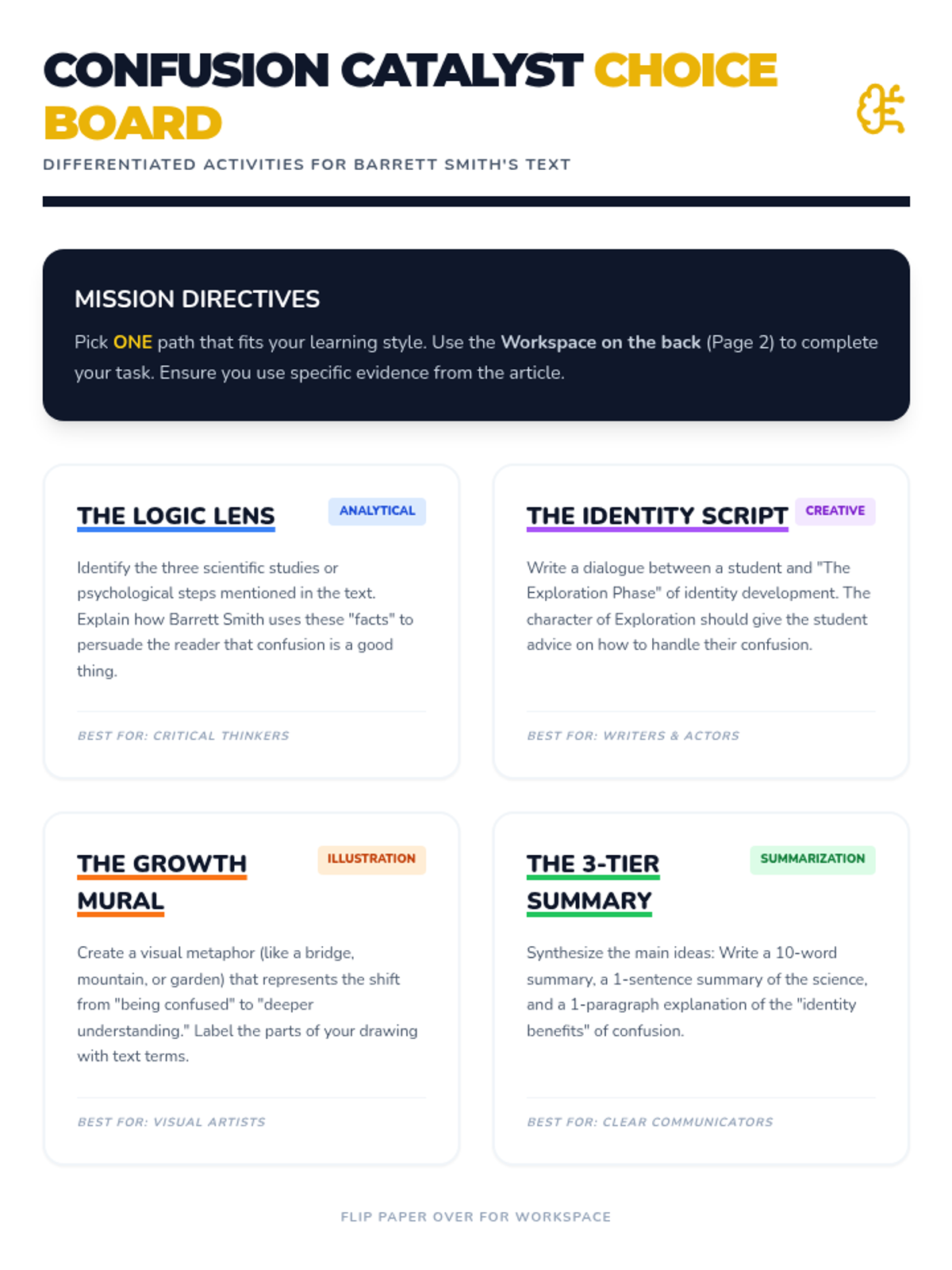
A deep dive into the cognitive benefits of struggle and confusion based on the text 'The Value of Being Confused.' This sequence focuses on shifting student mindsets regarding learning hurdles and analyzing authorial point of view.
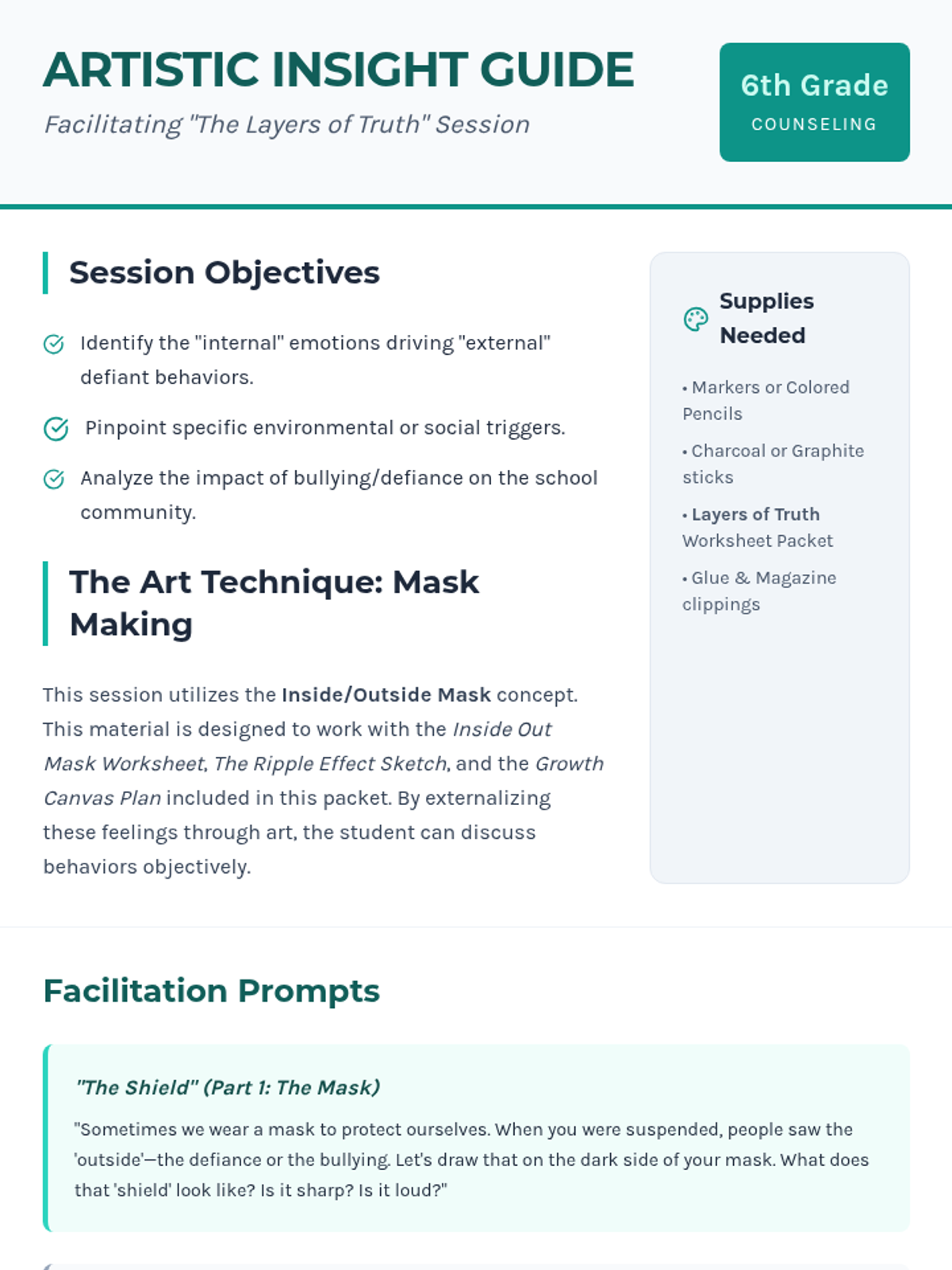
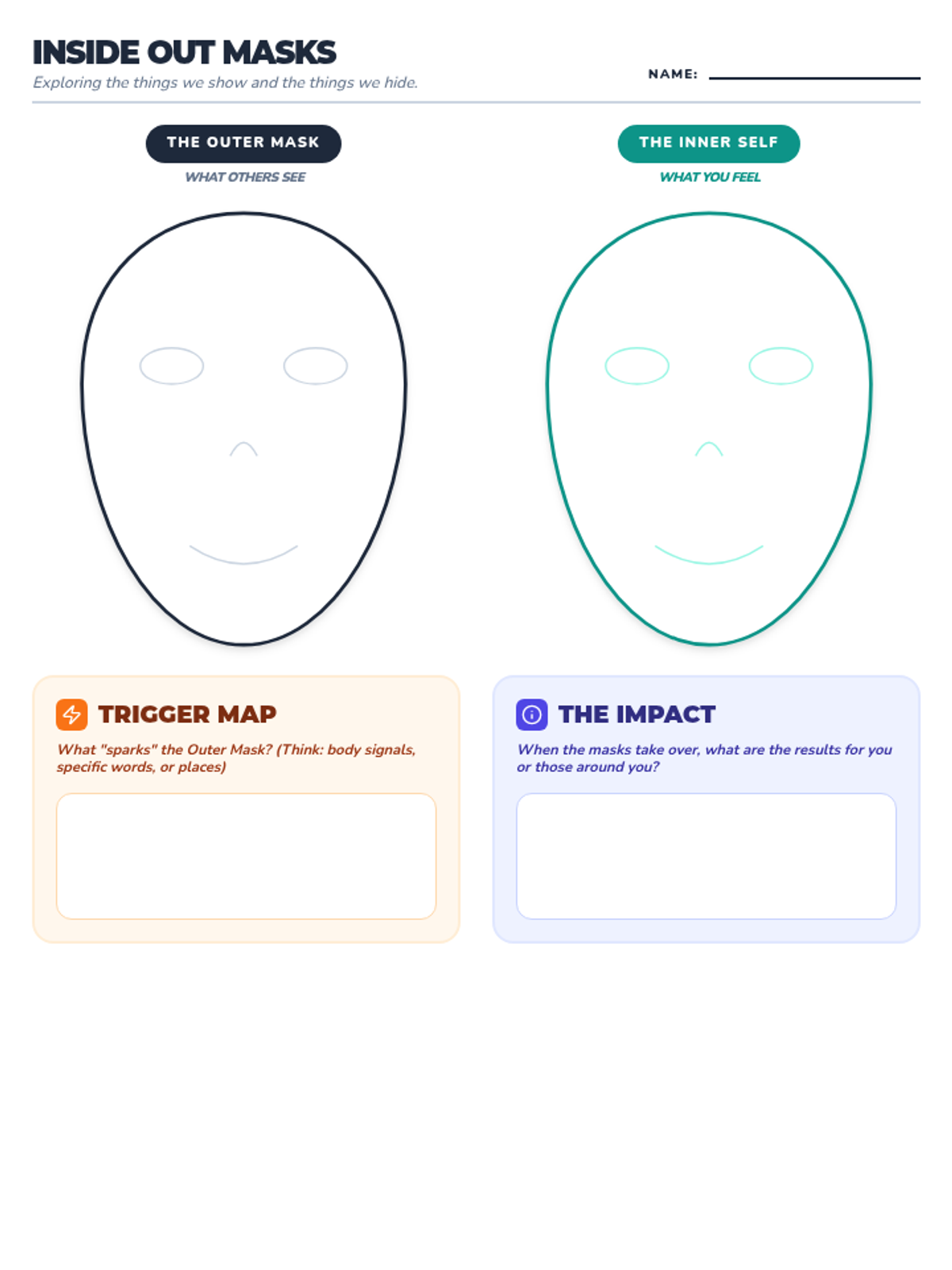
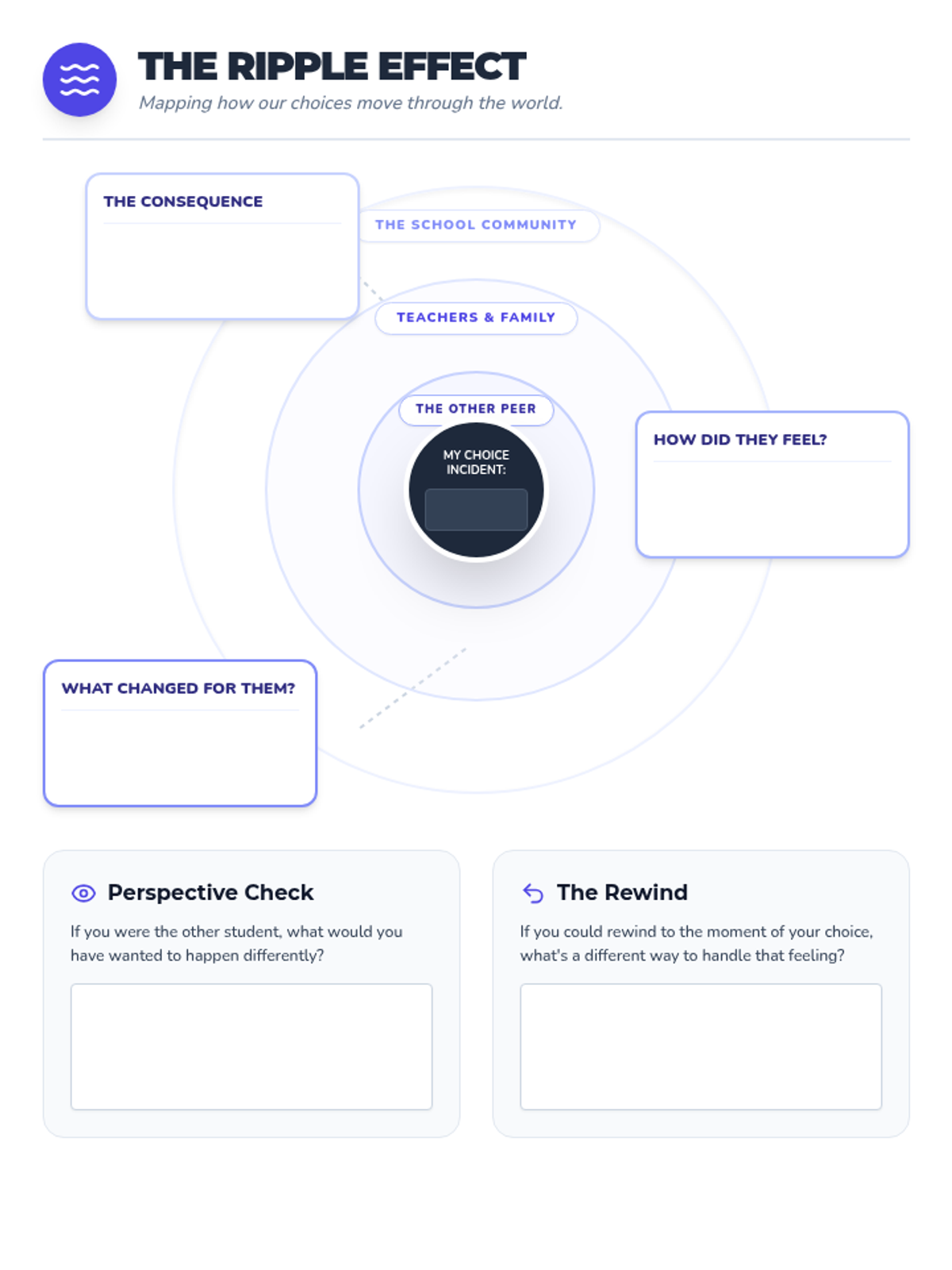
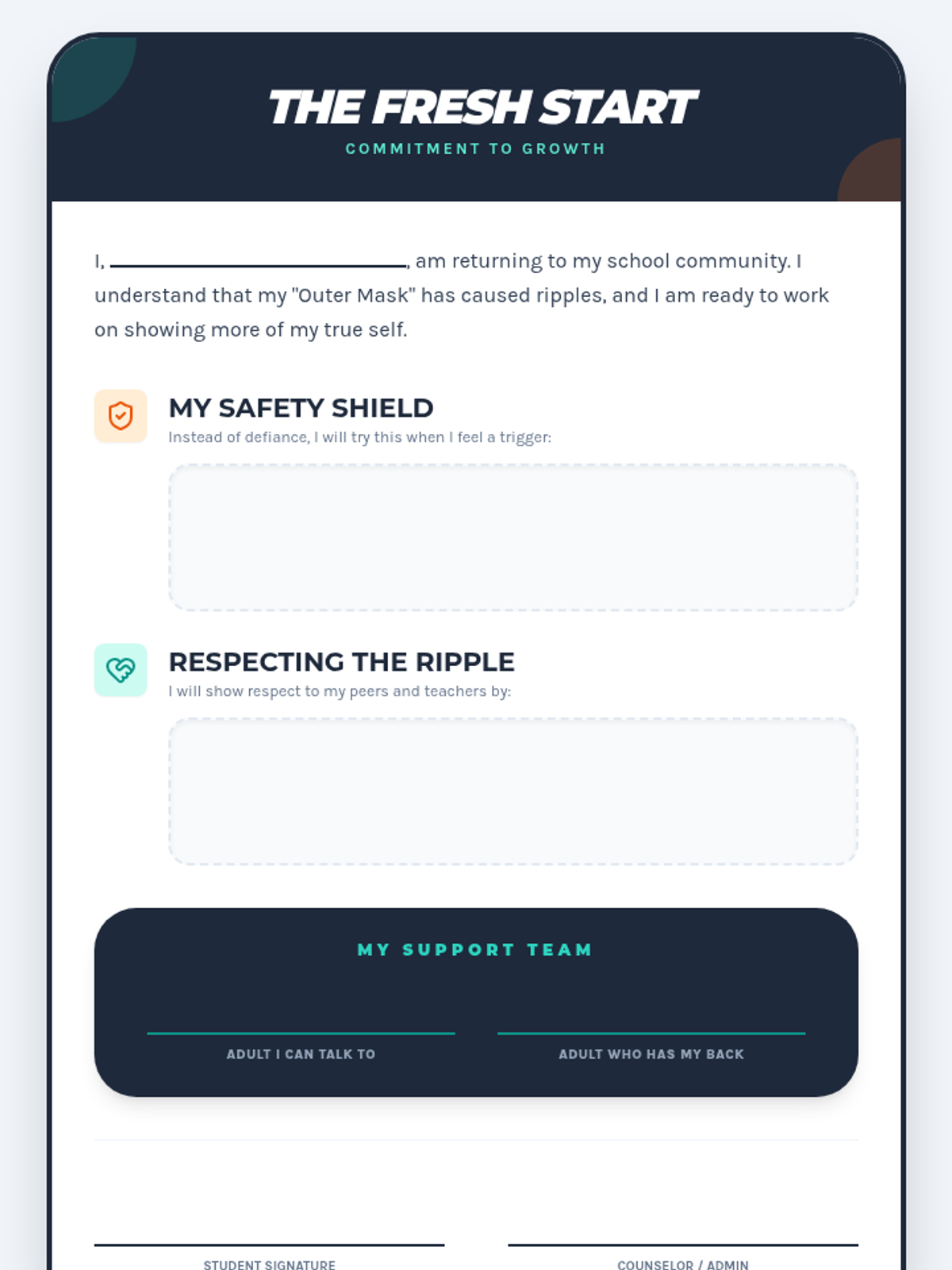
A two-part therapeutic intervention sequence for a middle school student returning from suspension, moving from deep reflection on behaviors to a successful transition into a new classroom environment.
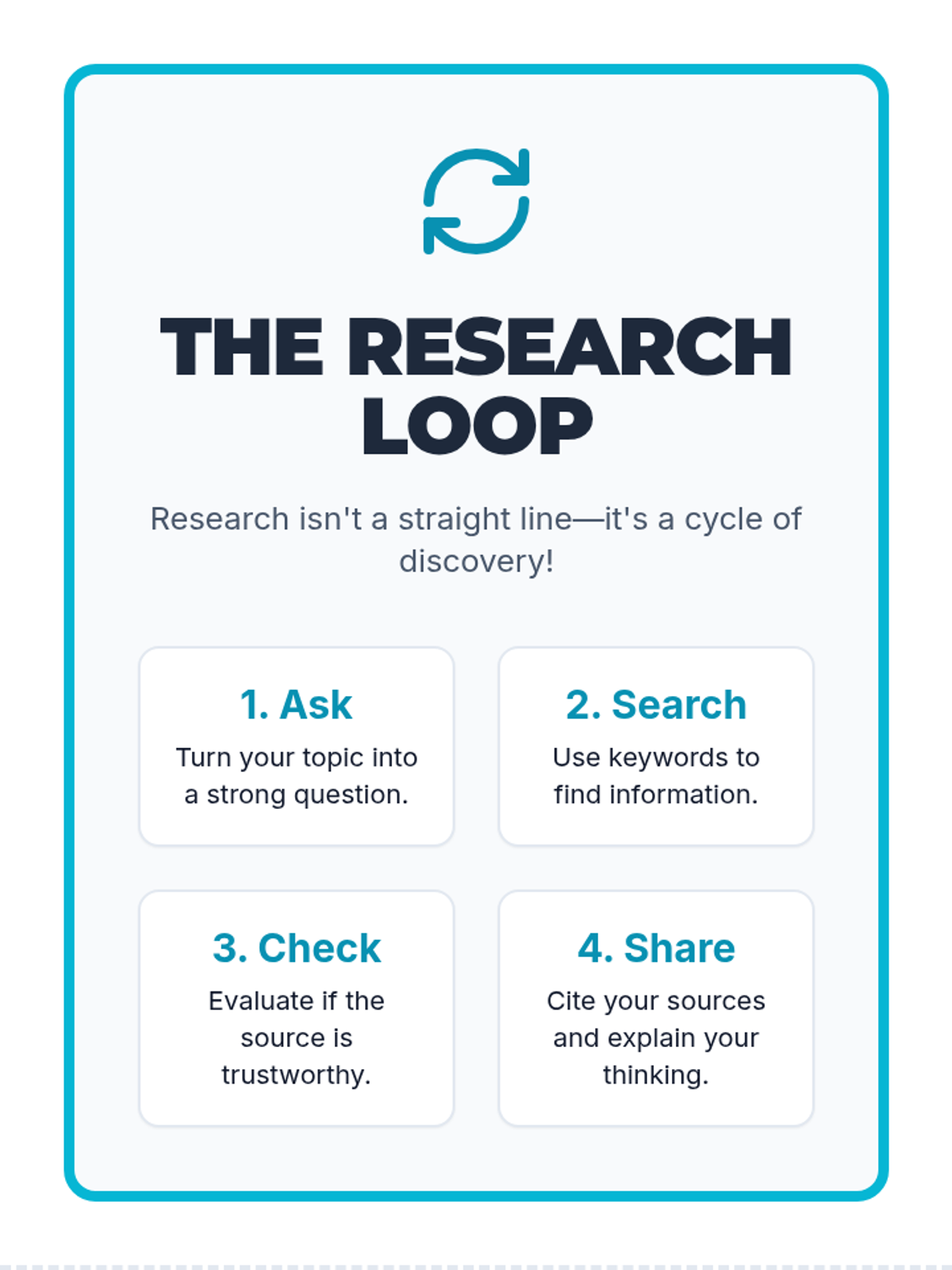
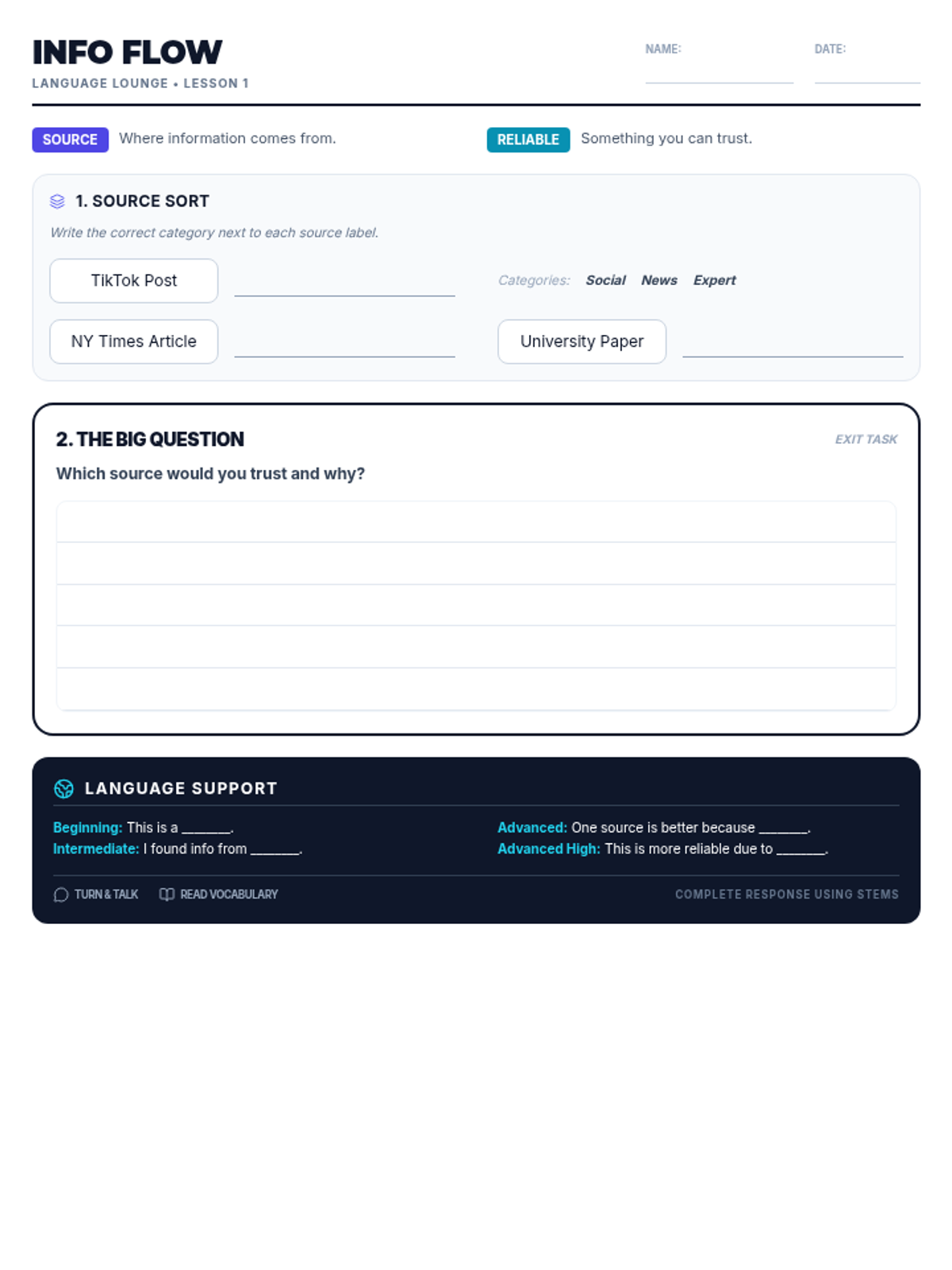
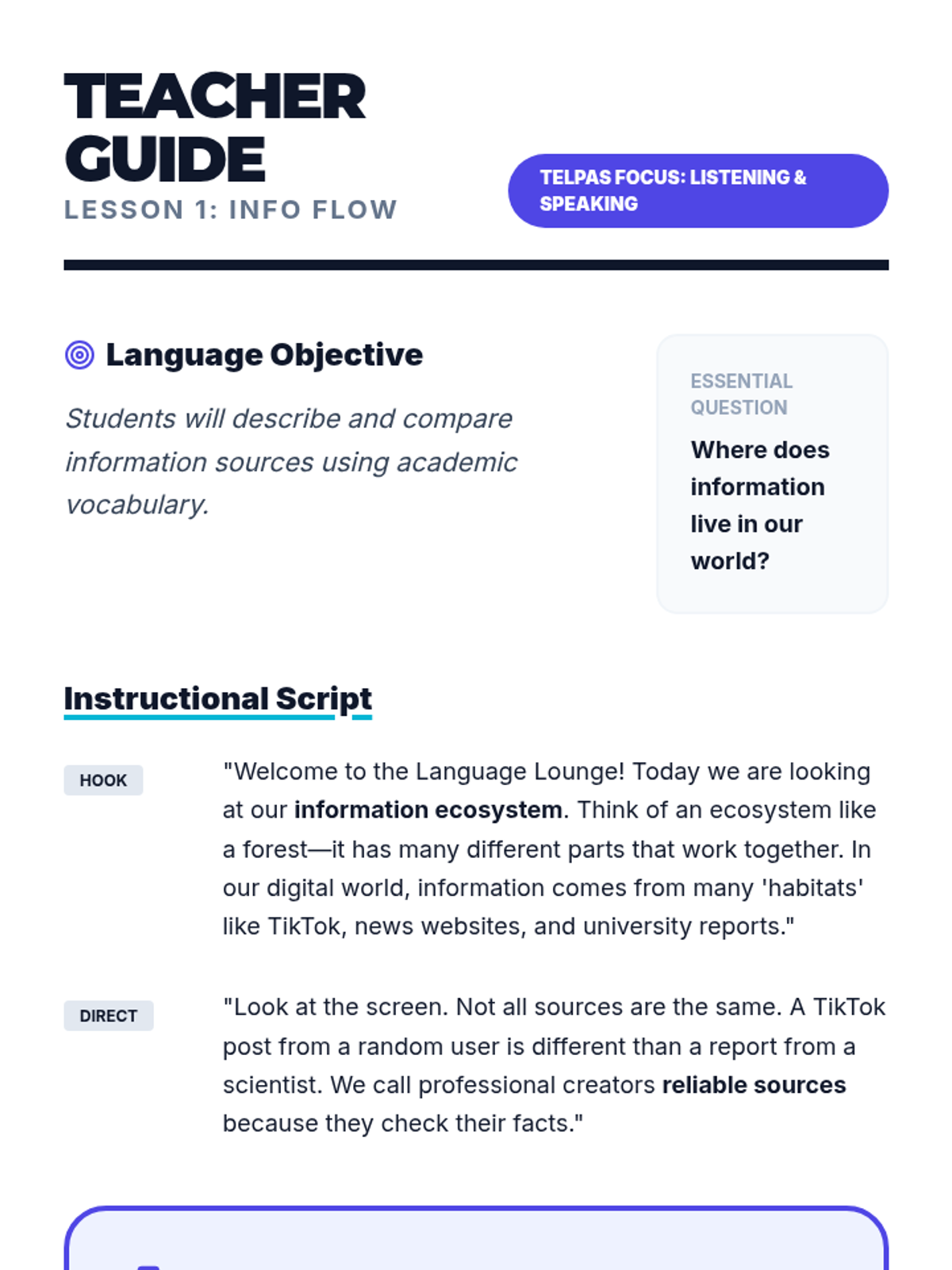
A 9-lesson TELPAS-aligned research and information literacy unit designed for English Language Learners, covering everything from information ecosystems to real-world application through the lens of social media, careers, and current events.
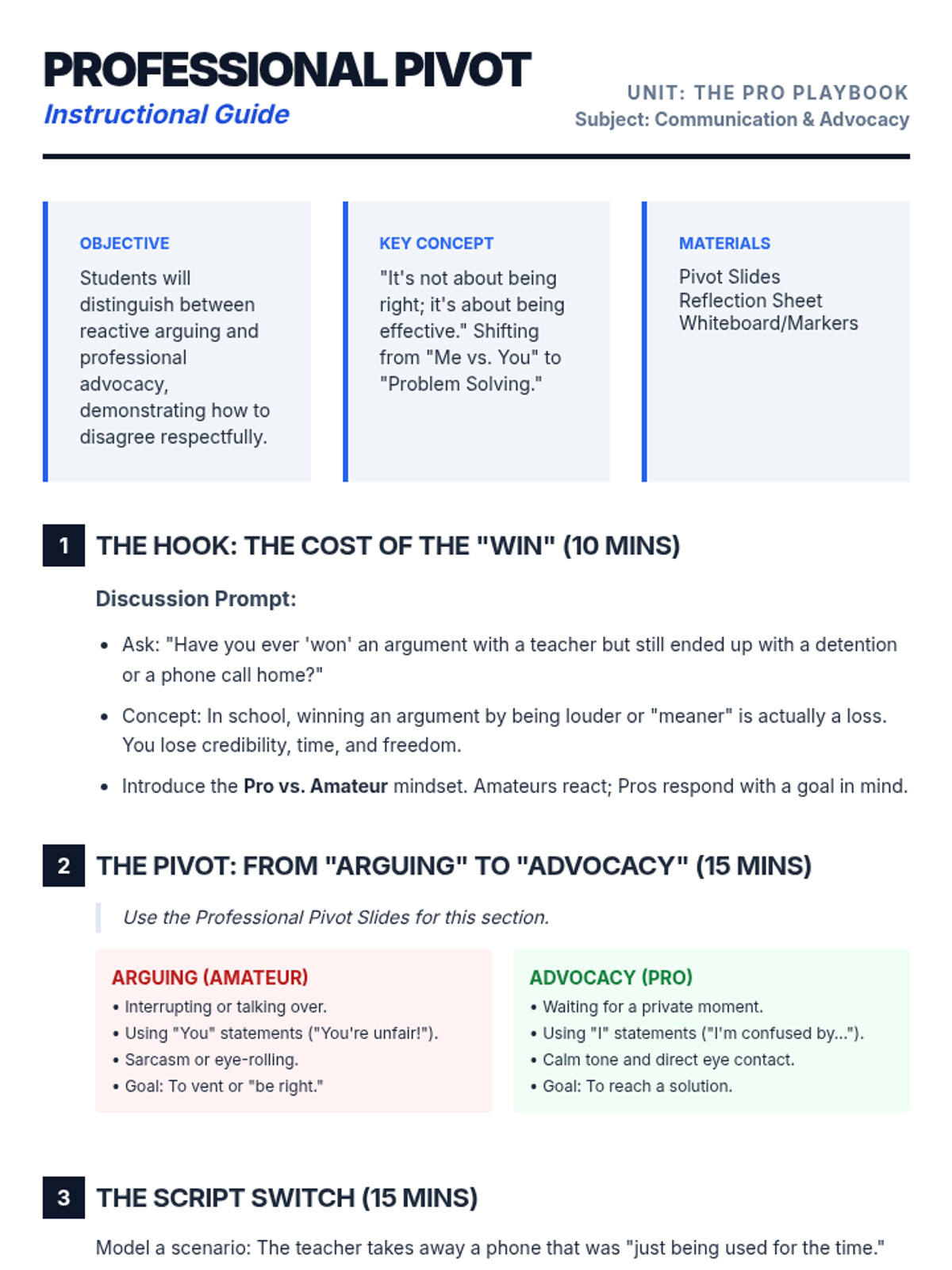
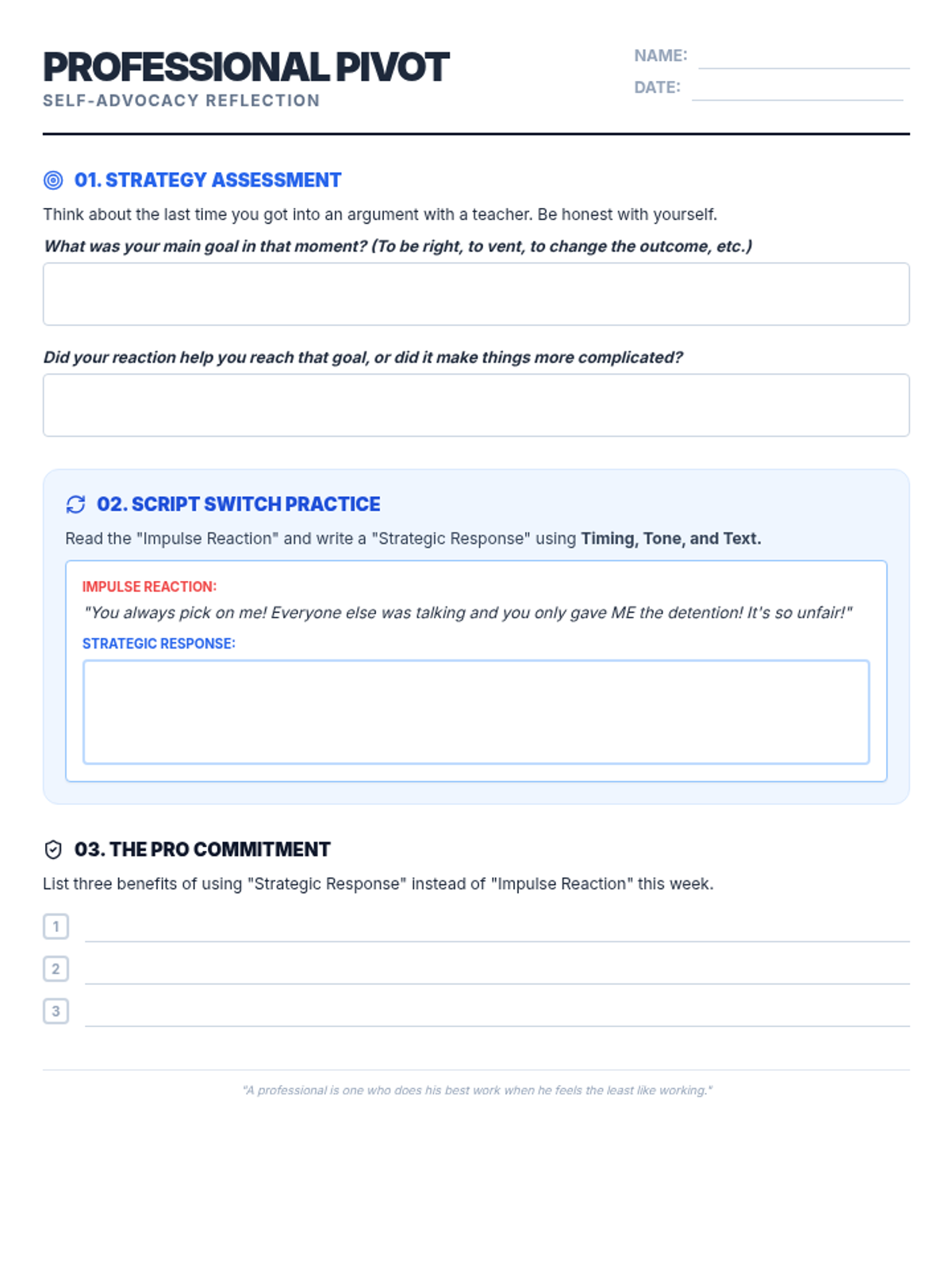
A series of lessons designed to transform reactive student behaviors into professional communication and emotional resilience. This sequence helps students navigate authority, manage triggers, and advocate for themselves effectively.
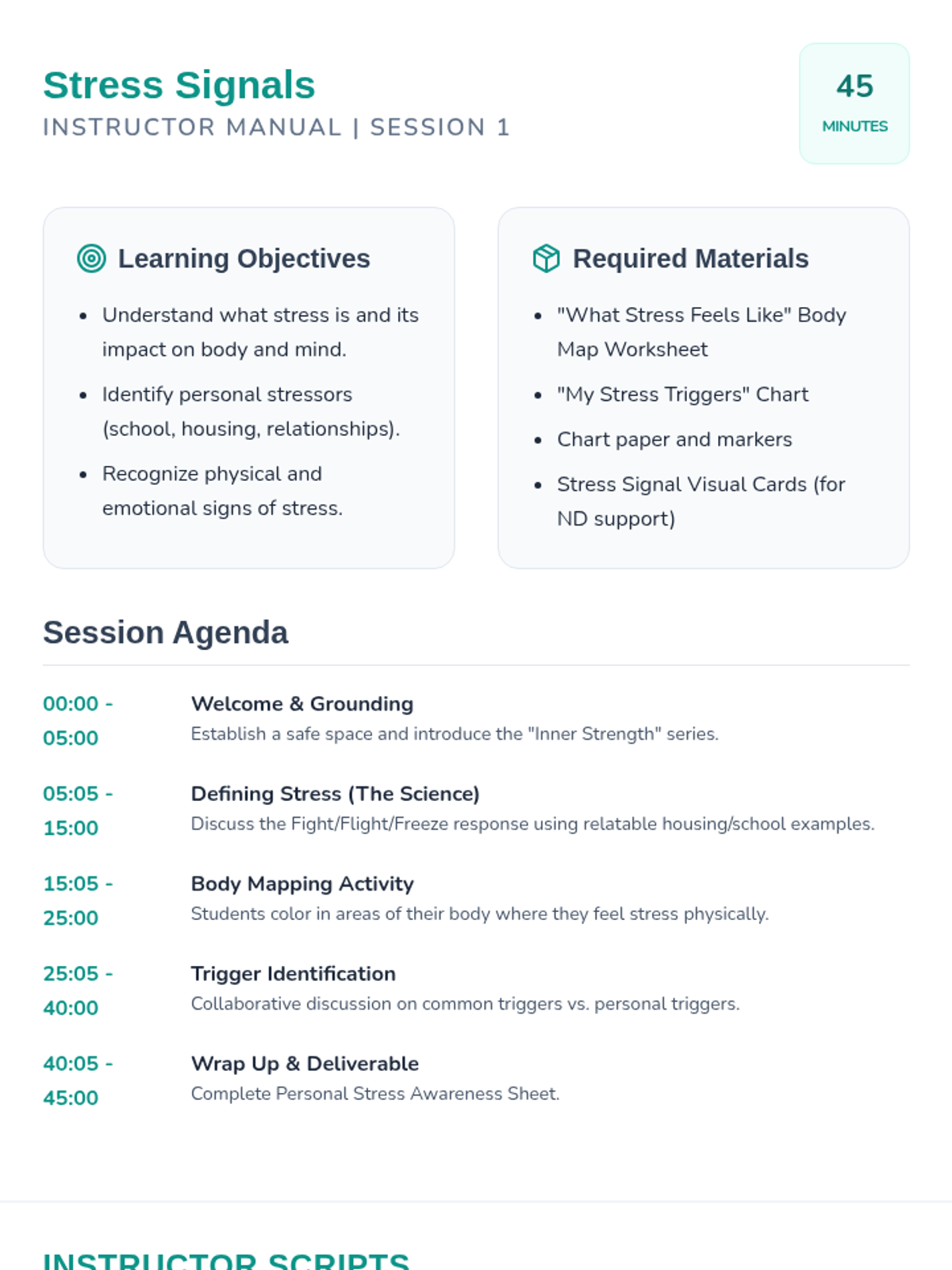
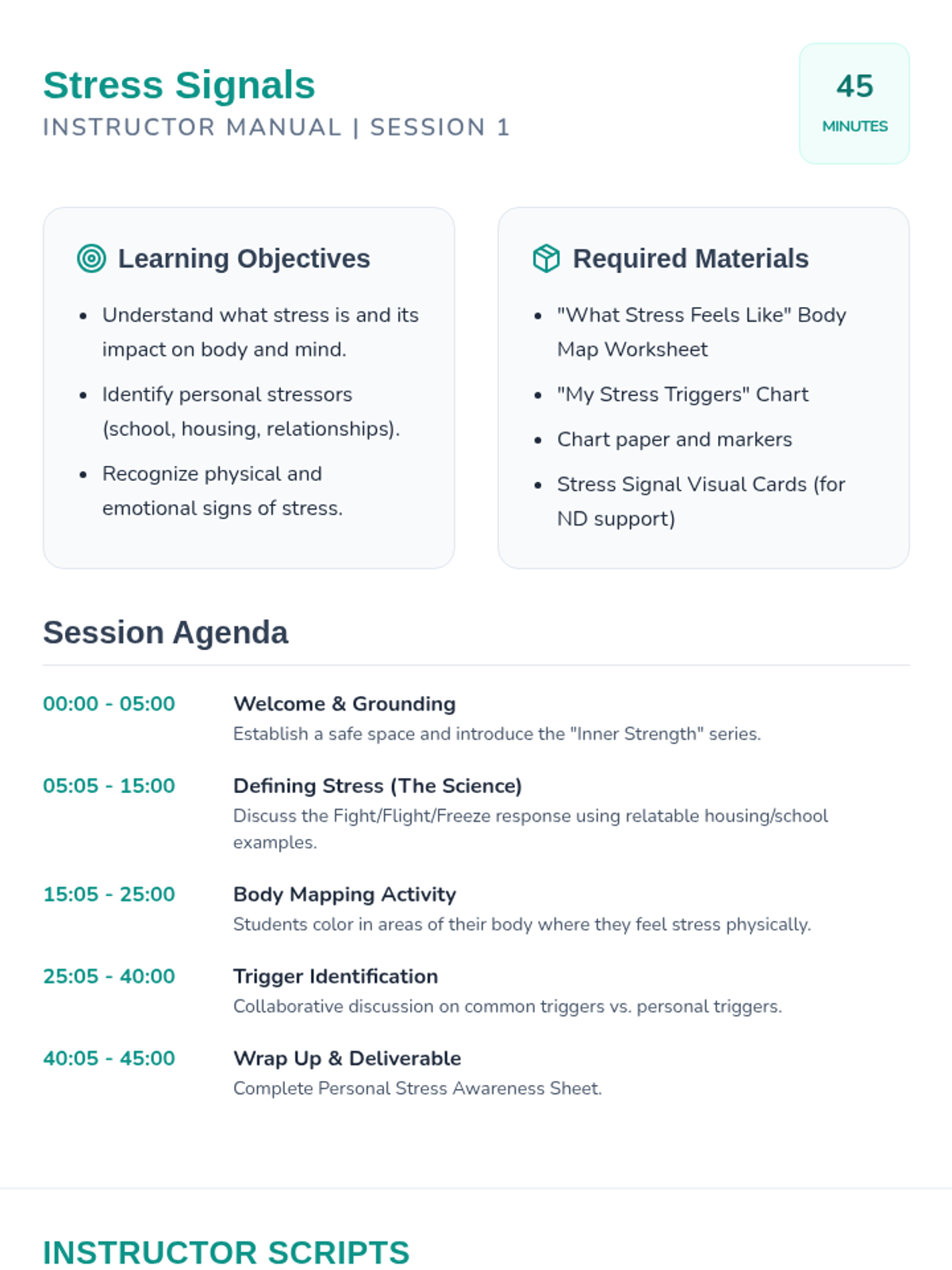
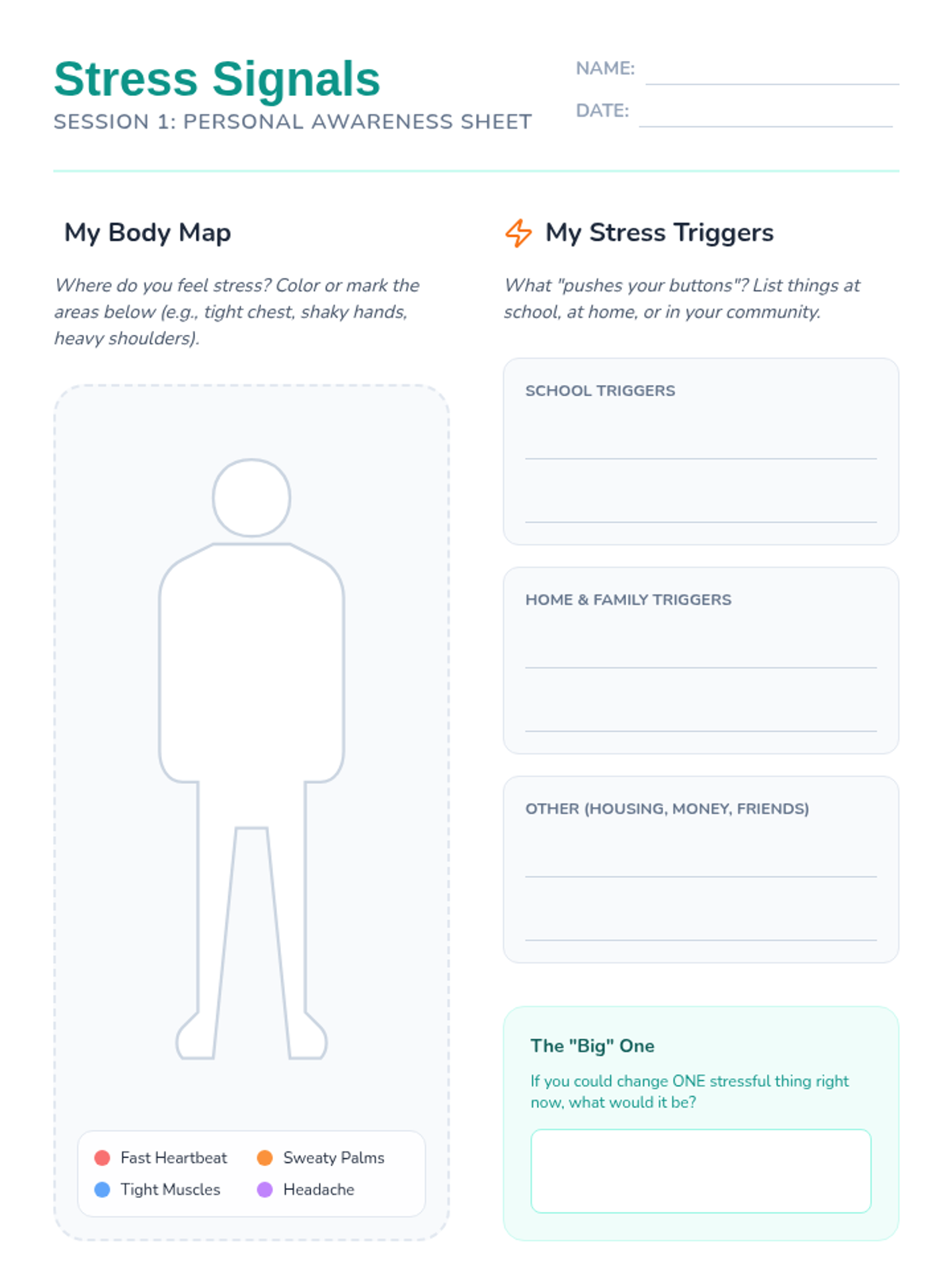
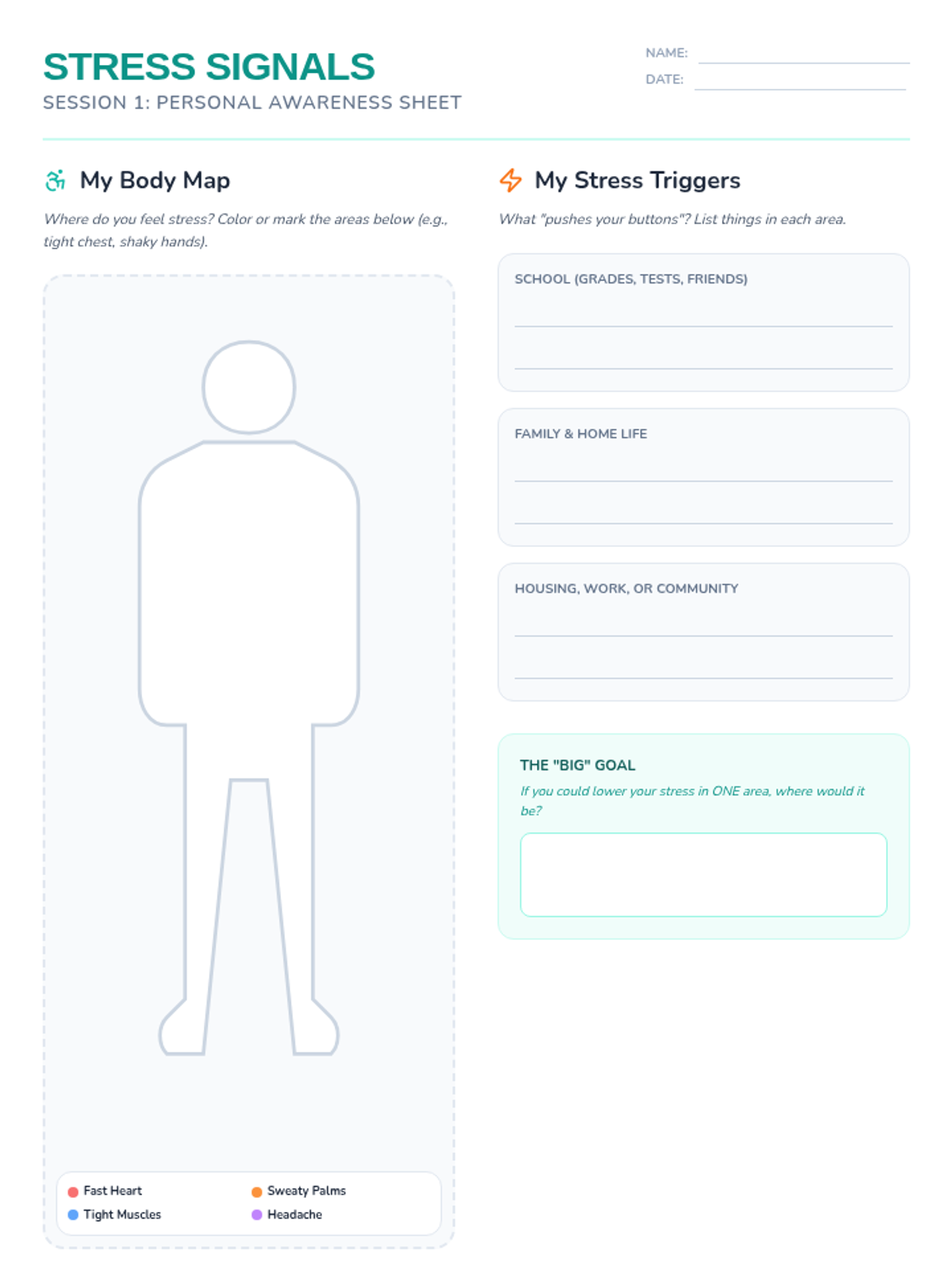
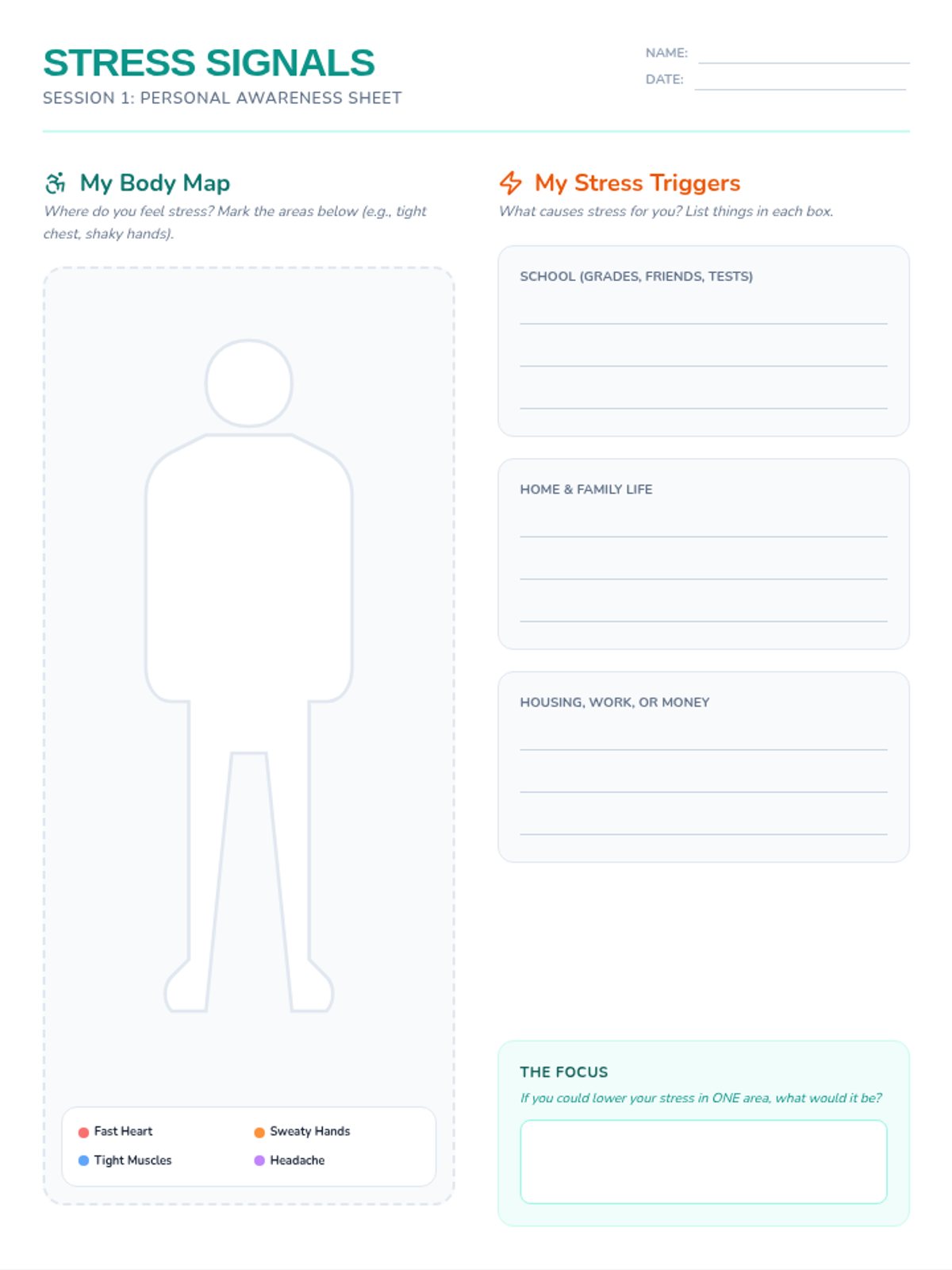
A 6-session curriculum designed to help students recognize stress, build coping mechanisms, and foster resilience through mindfulness and healthy routines.
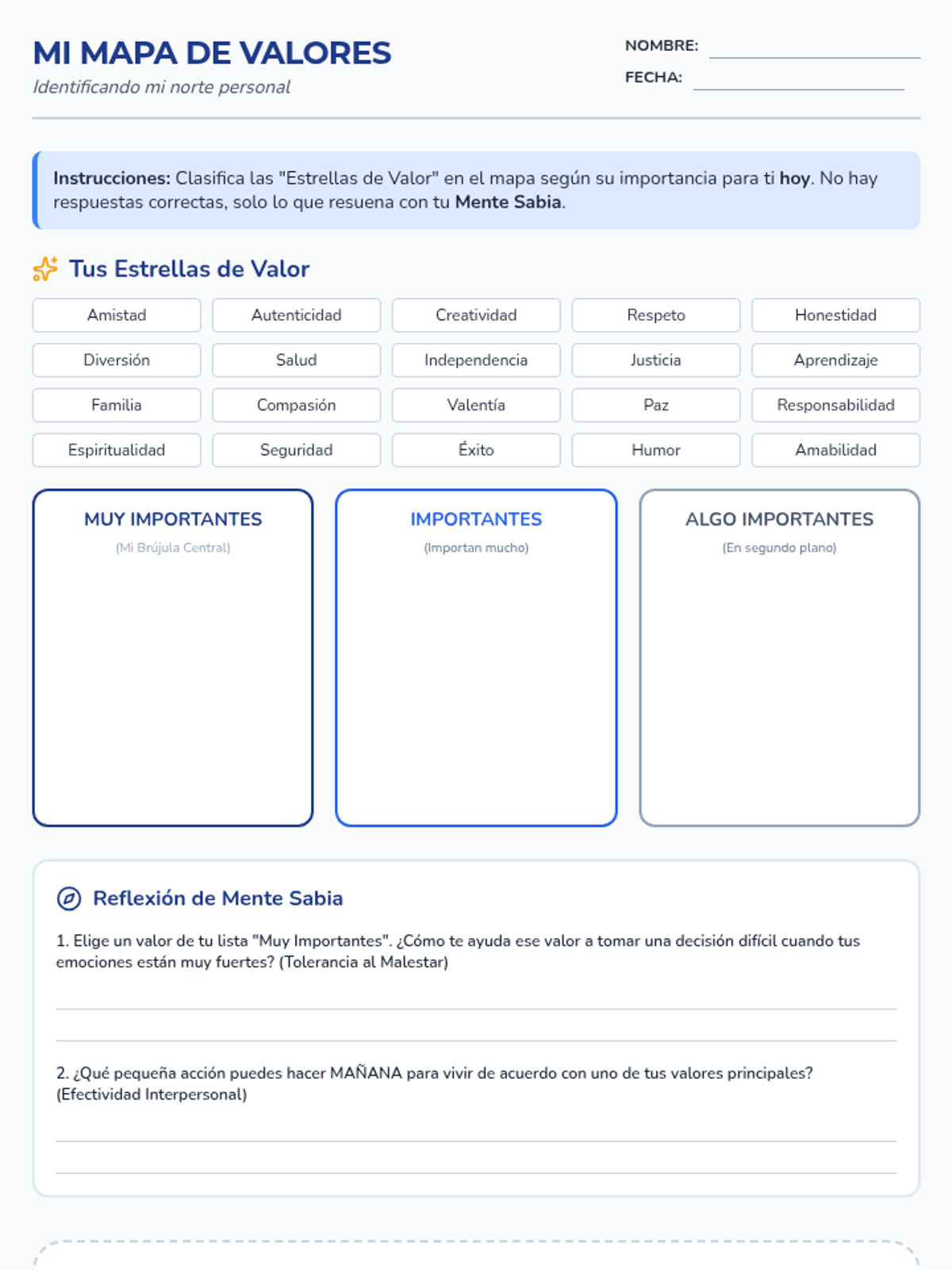
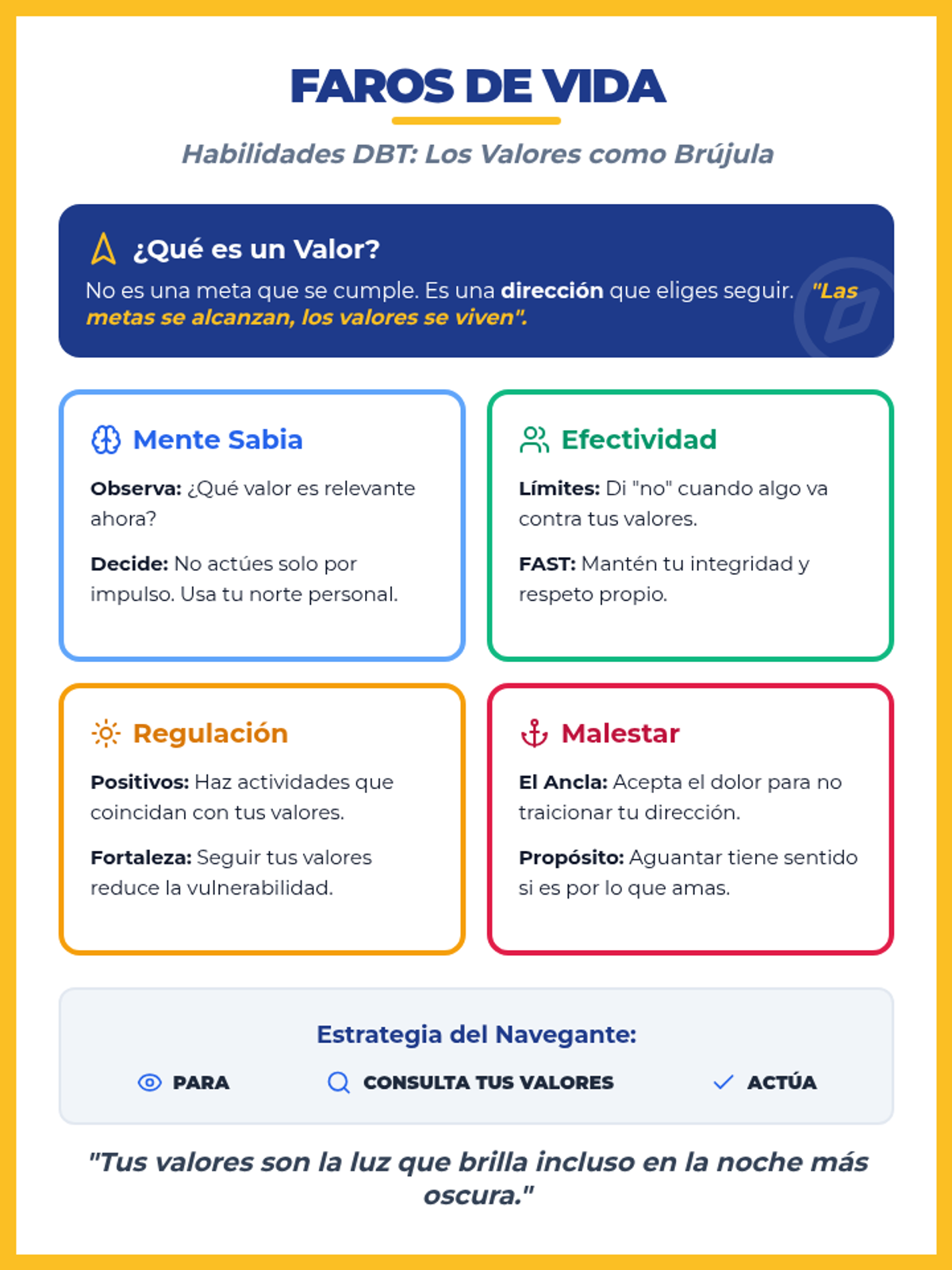
Una serie de lecciones diseñadas para adolescentes de 13 años sobre las habilidades de DBT (Terapia Dialéctica Conductual), enfocándose en la integración de valores en la vida diaria a través de la Mente Sabia, la efectividad interpersonal y la regulación emocional.