Root cause analysis and brainstorming techniques for everyday problem-solving. Equips learners with ethical frameworks and risk-benefit evaluation skills to predict consequences and make informed choices.
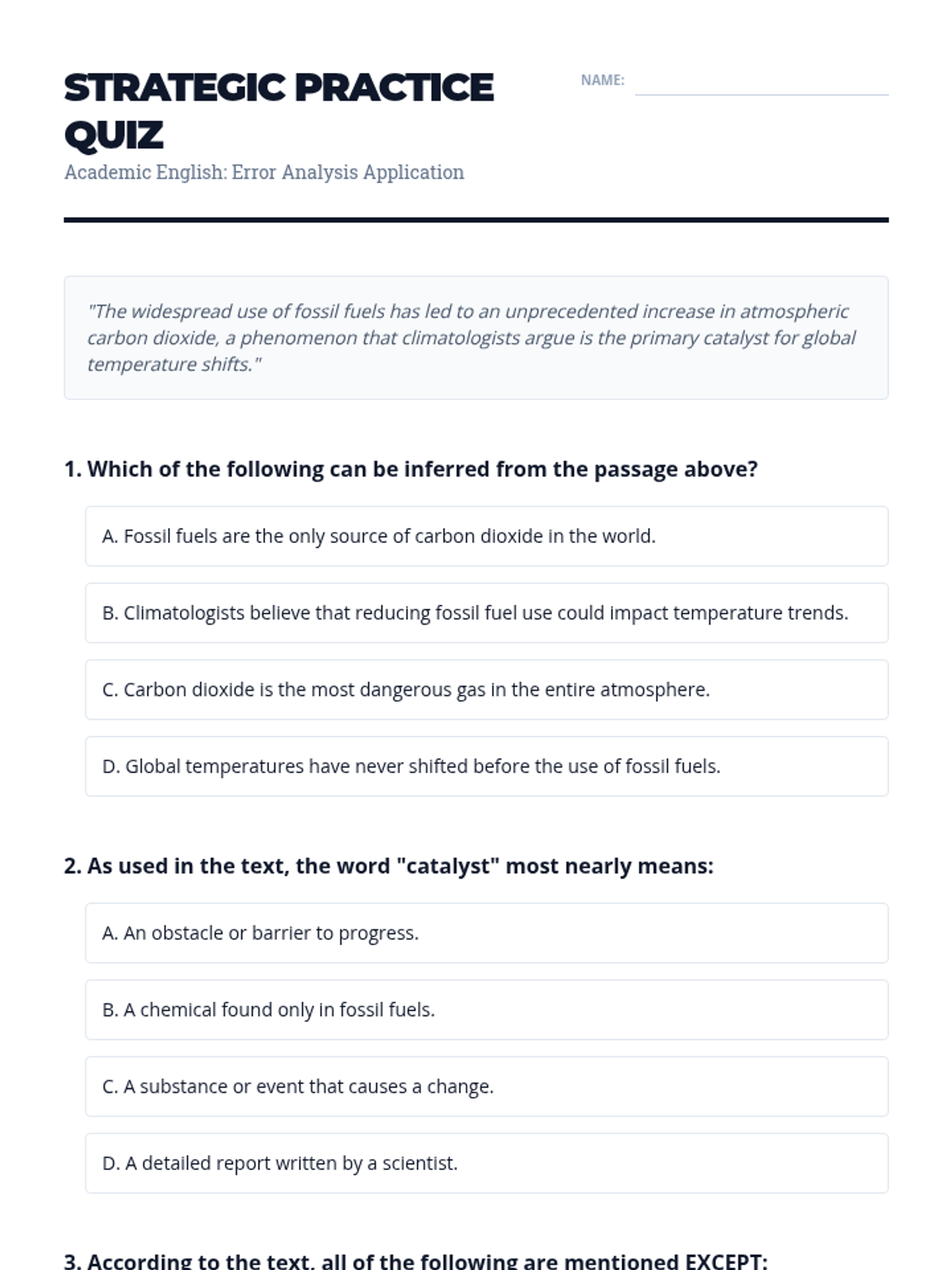
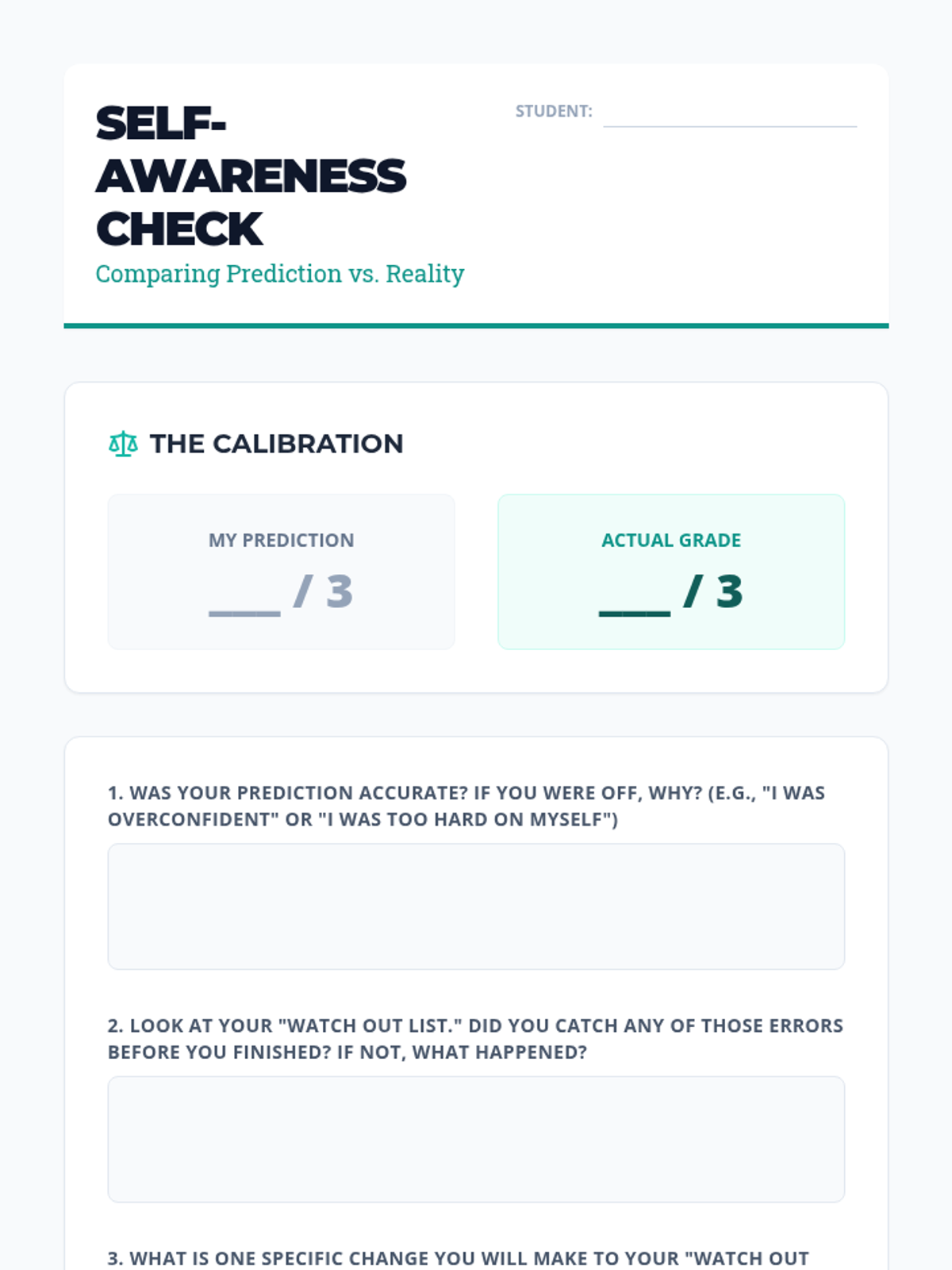
Students take a short assessment and immediately apply their error analysis protocol. They verify if their 'Watch Out' list helped them avoid previous habitual mistakes.
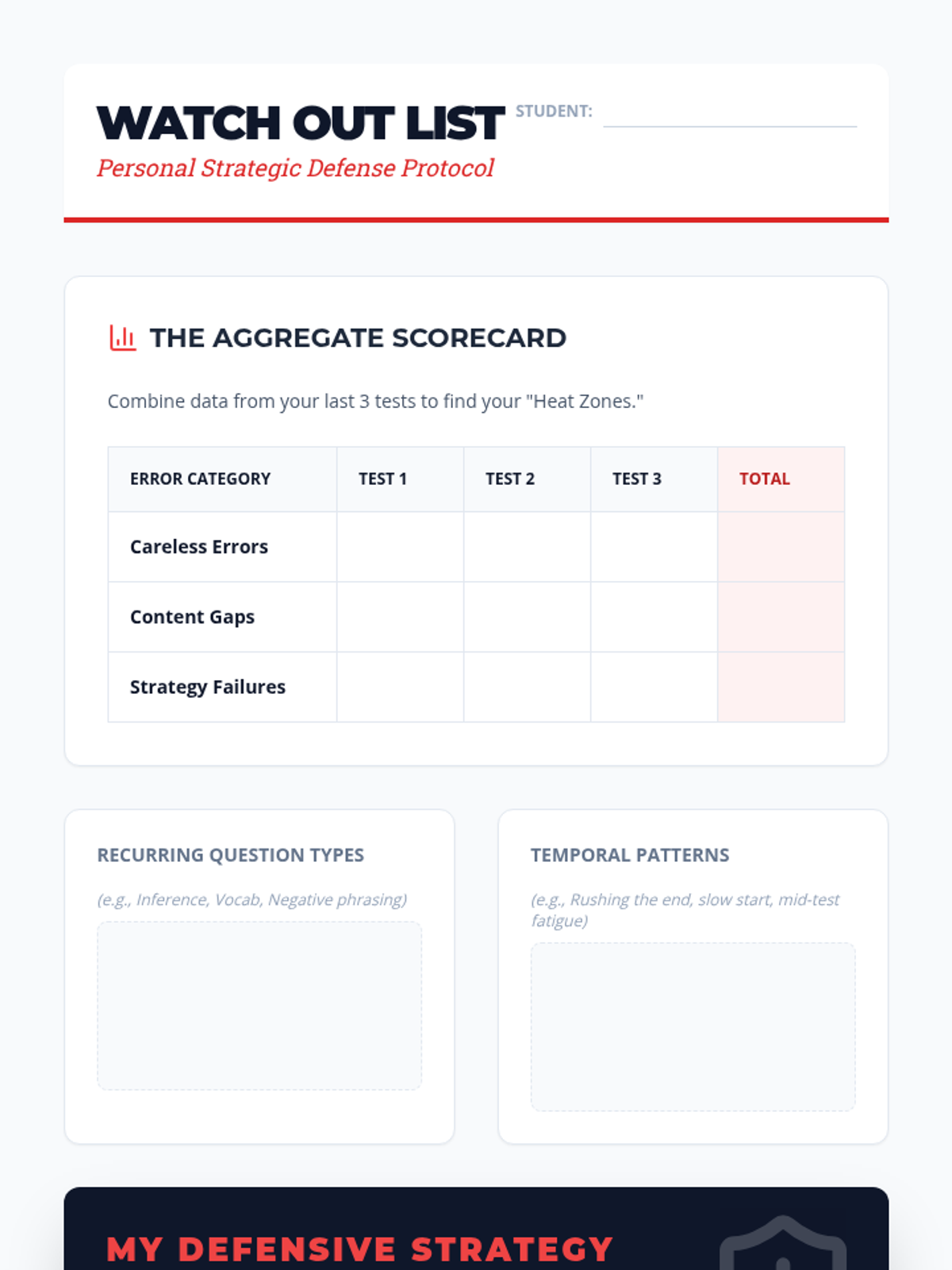
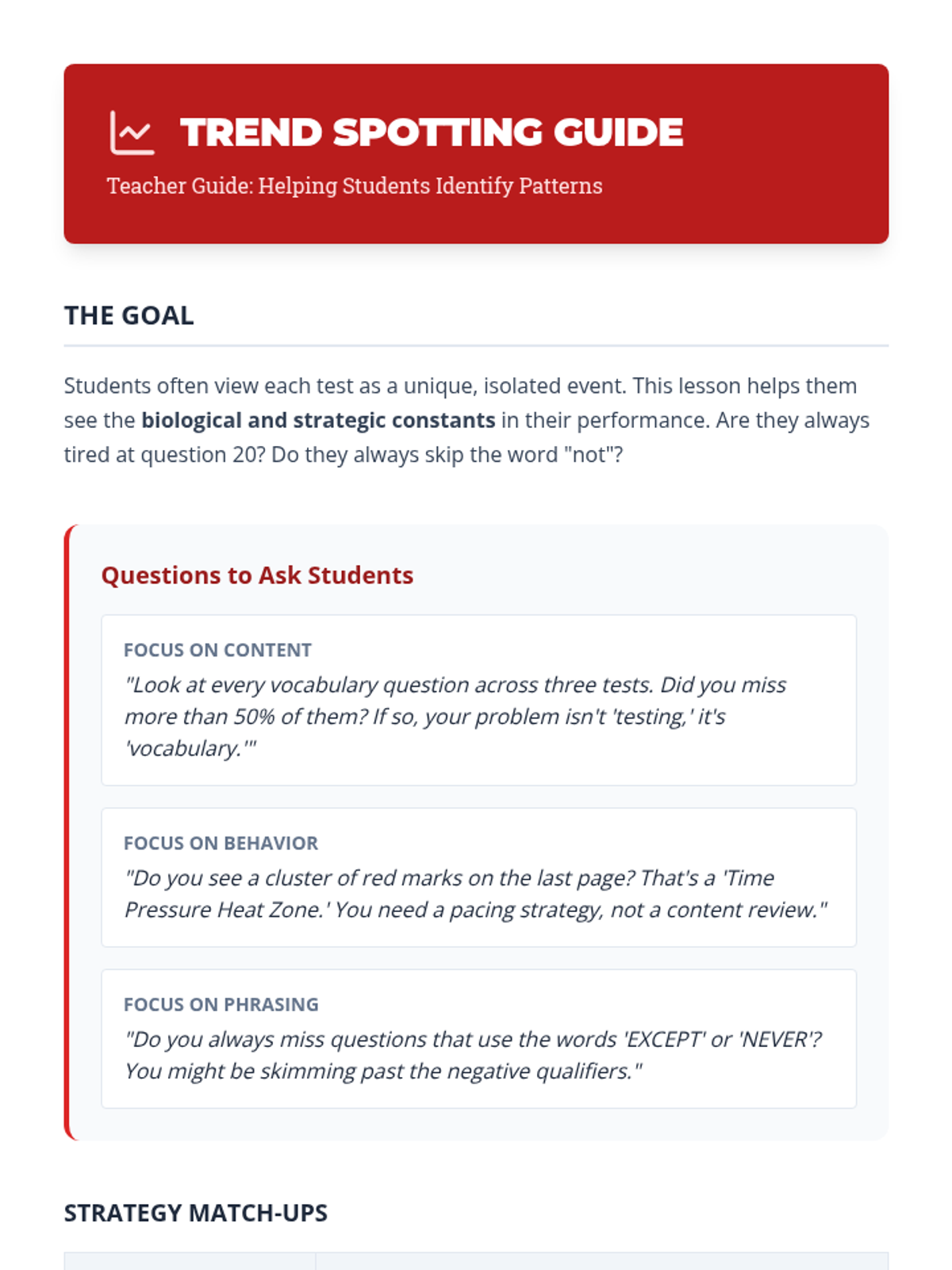
Students aggregate their error data to find personal patterns (e.g., 'I always miss inference questions' or 'I rush the last 5 minutes'). They create a personal 'Watch Out' list for future exams.
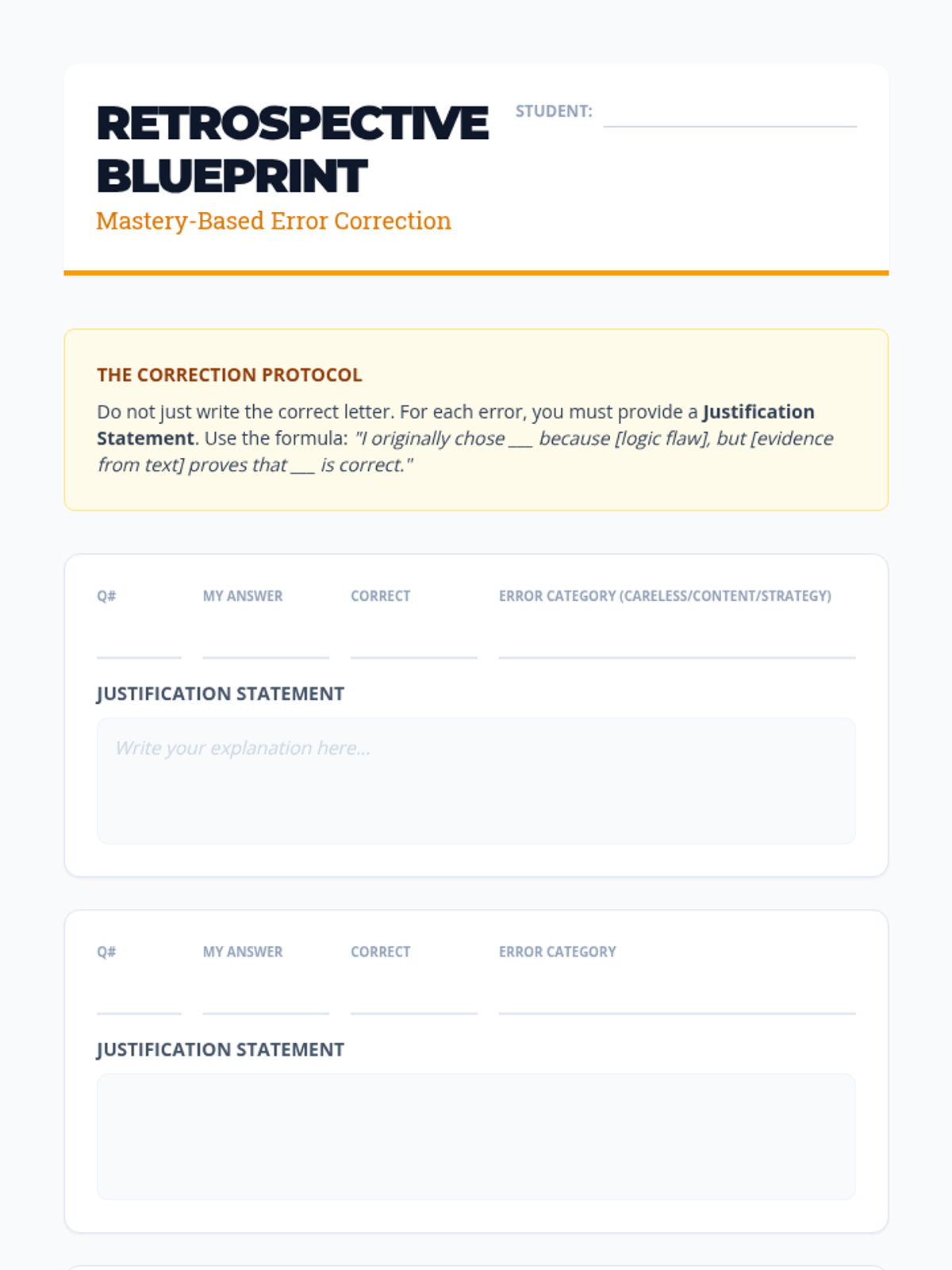
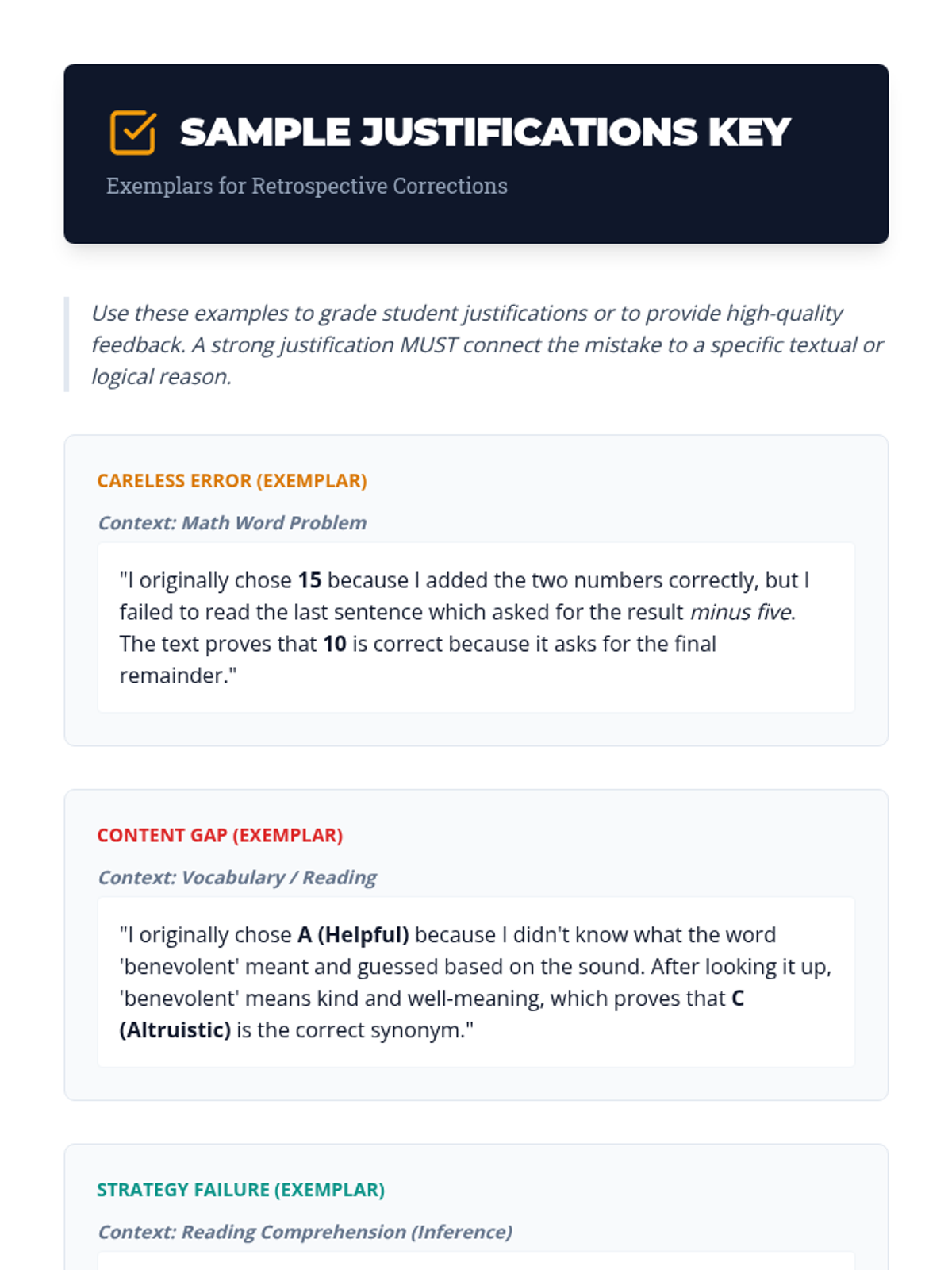
Instead of just marking correct answers, students must write a sentence explaining *why* their original answer was wrong and *why* the new answer is right. This ensures deep processing of the error.
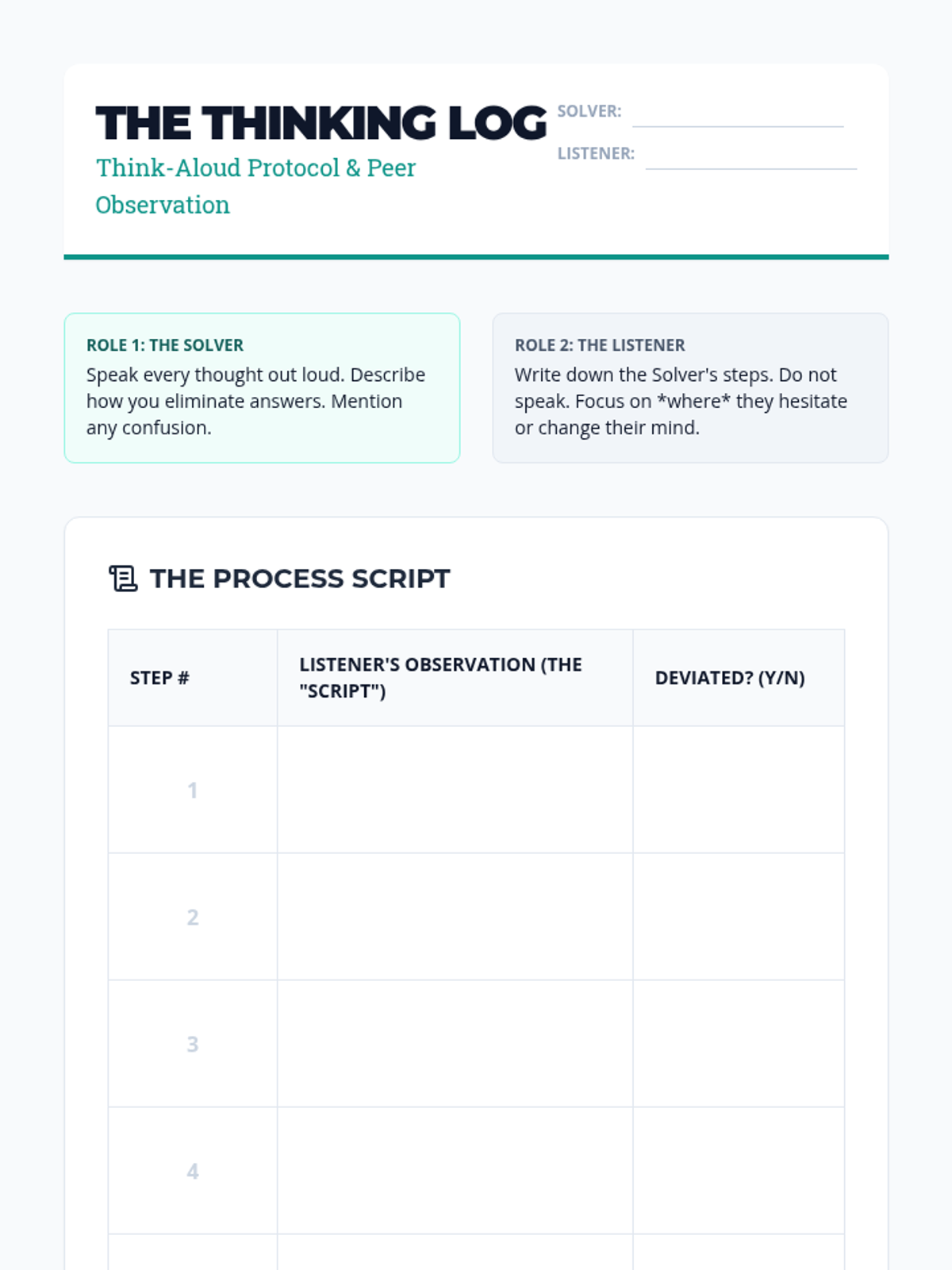
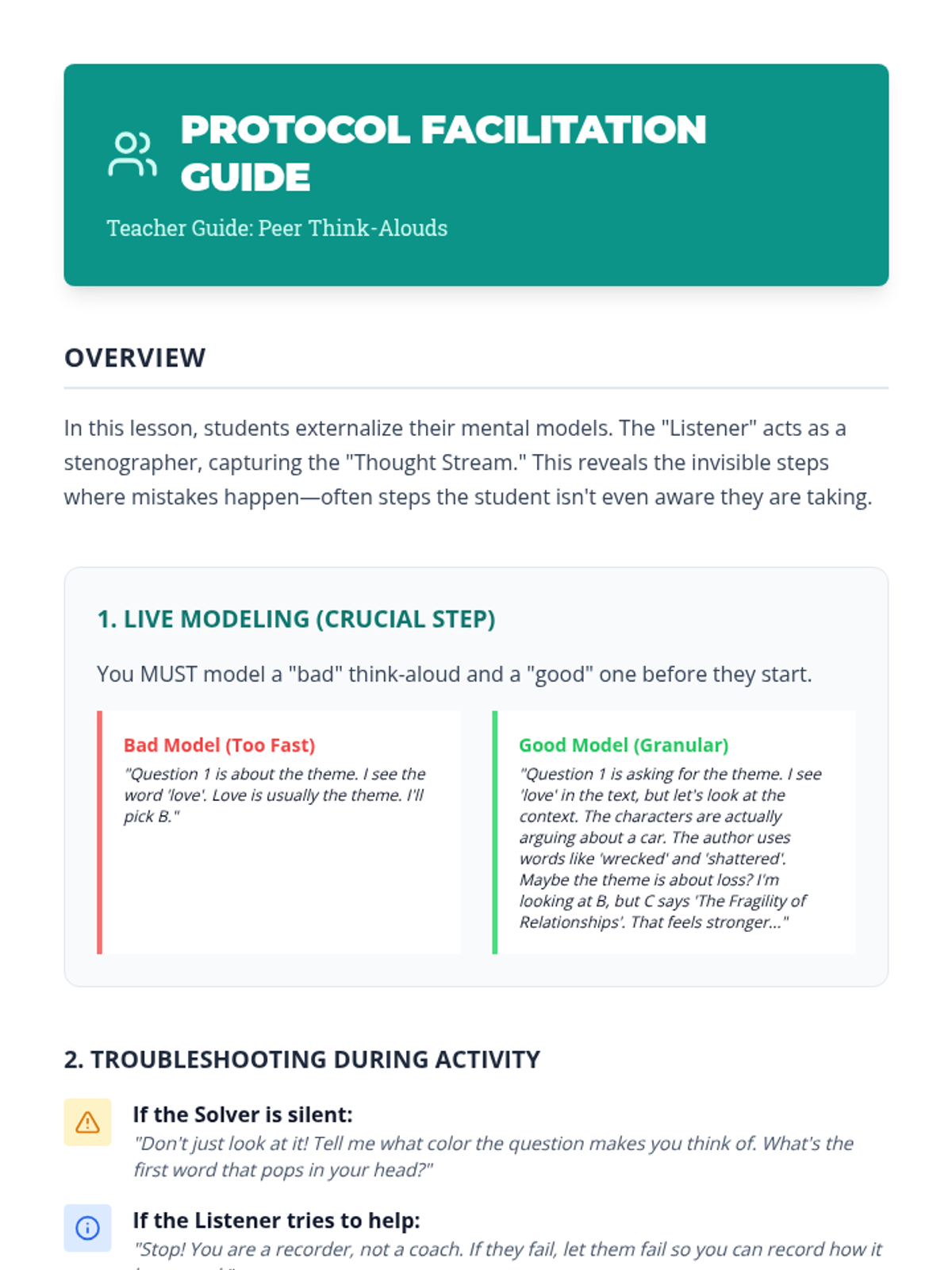
Working in pairs, students vocalize their thinking process while solving a problem while a partner records their steps. They analyze these recordings to identify where their logic deviated from the correct path.
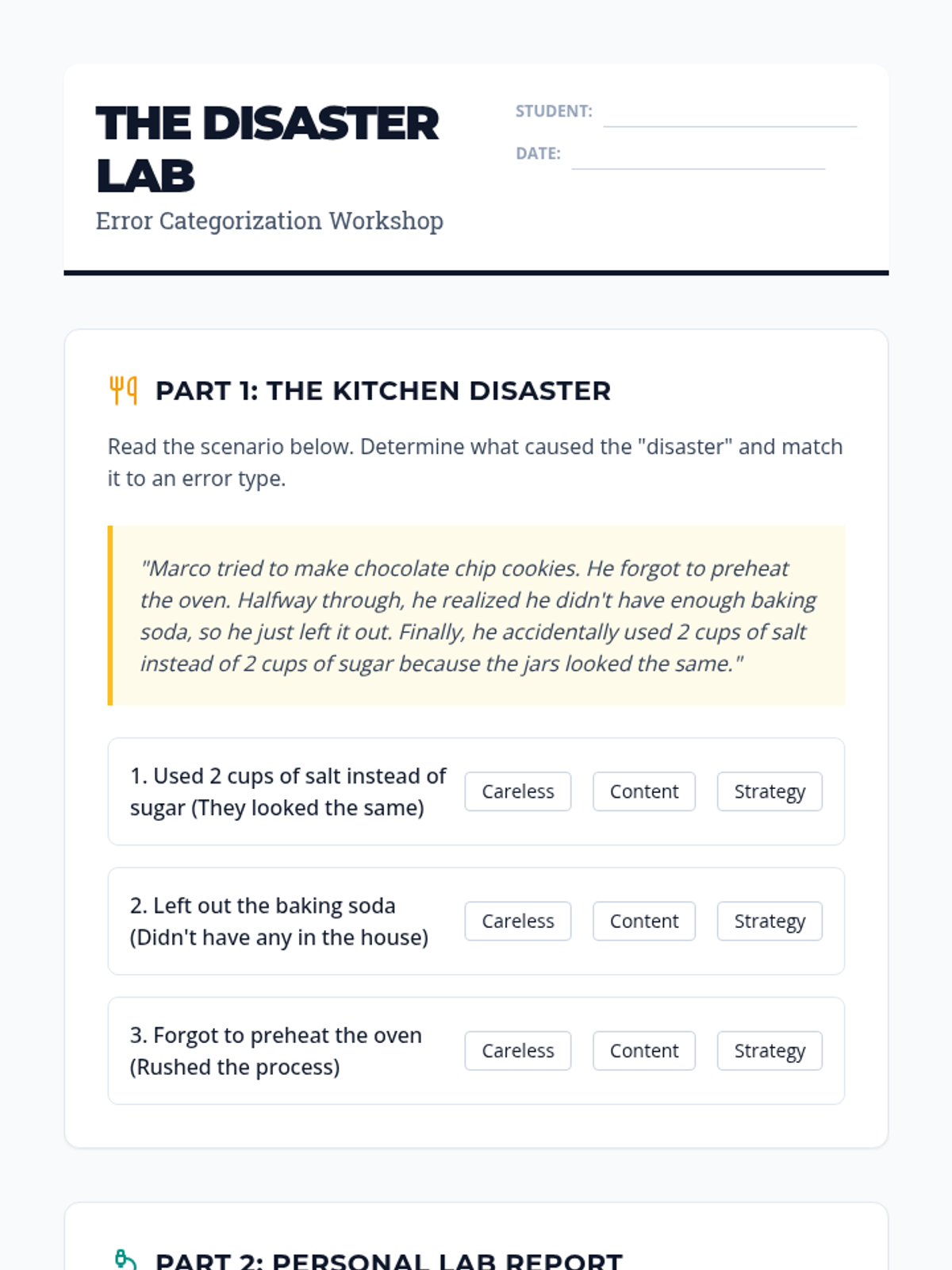
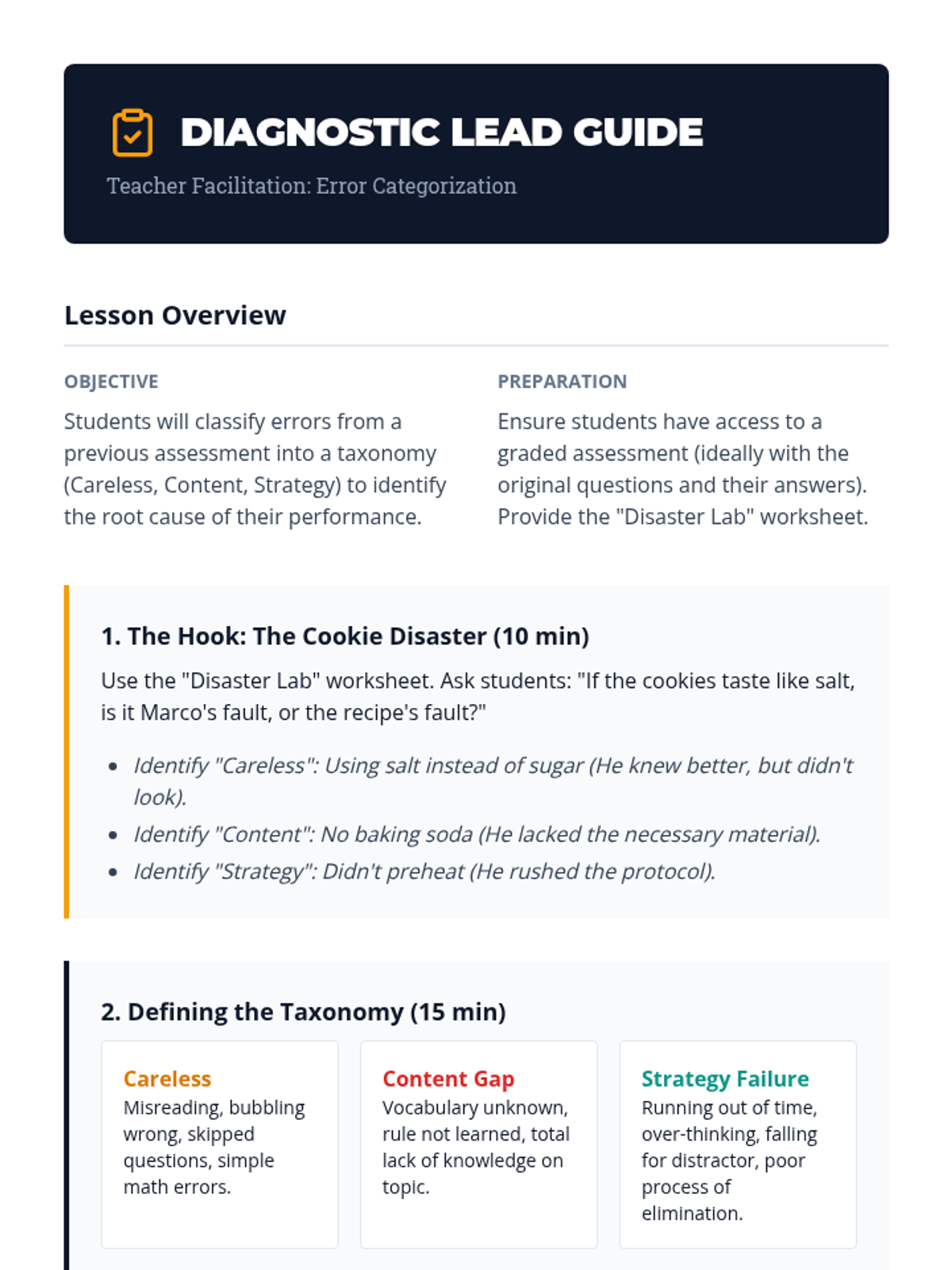
Students review a past assessment and categorize every incorrect answer as a 'Careless Error,' 'Content Gap,' or 'Strategy Failure.' This taxonomy helps them understand that not all mistakes are created equal.
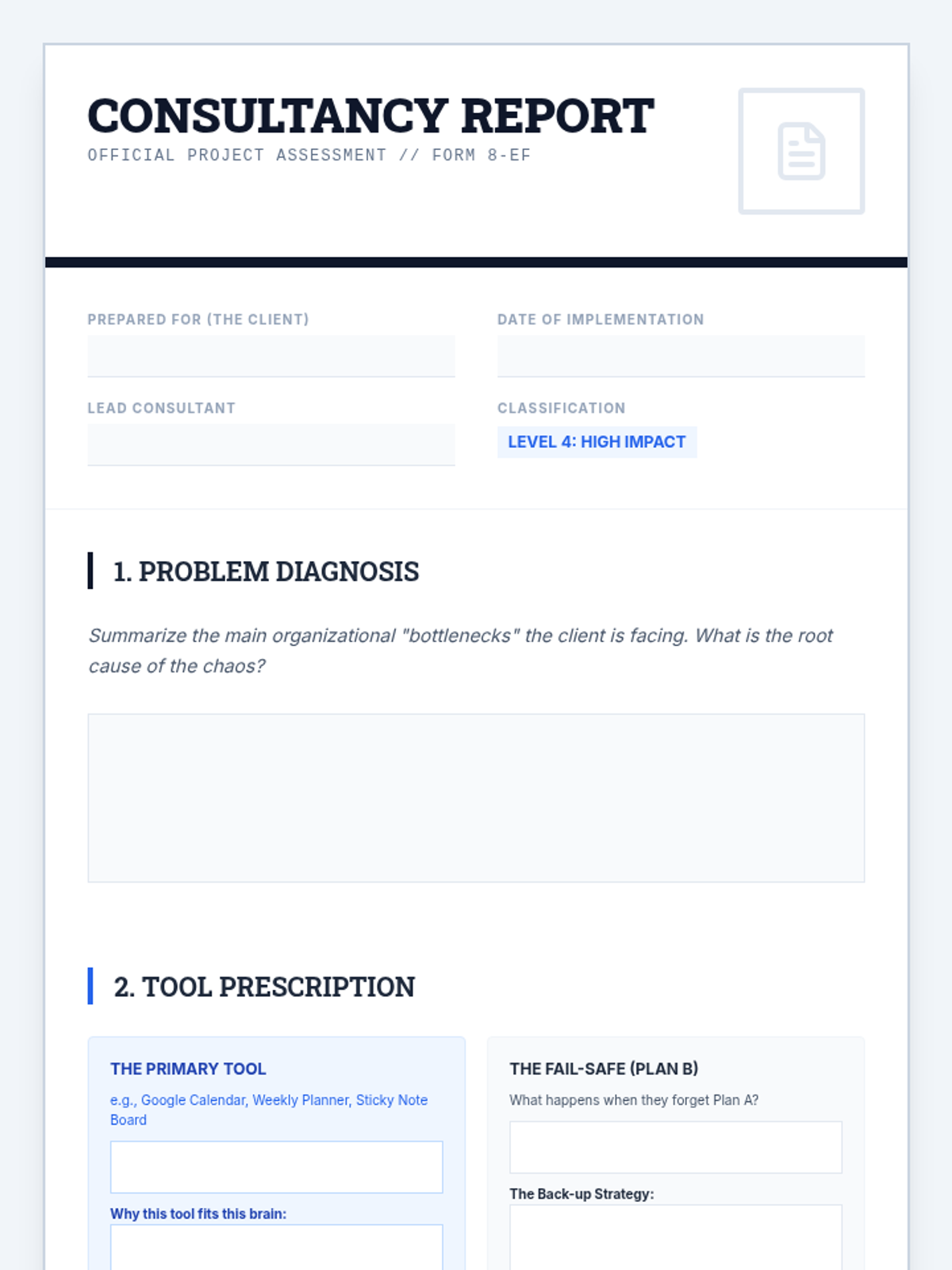
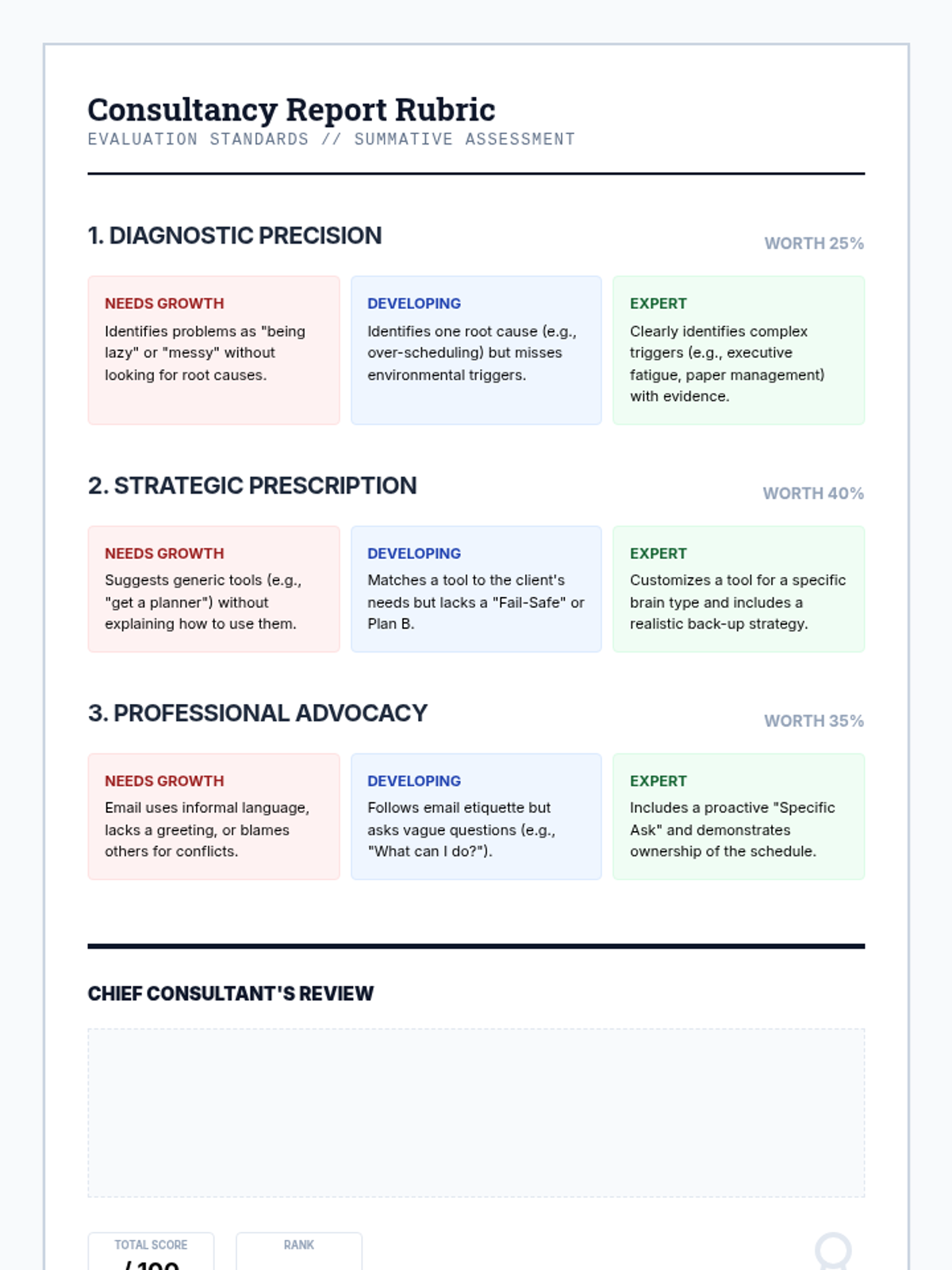
A cumulative assessment where students produce a final 'Consultancy Report' prescribing a comprehensive organizational plan for a client or themselves.
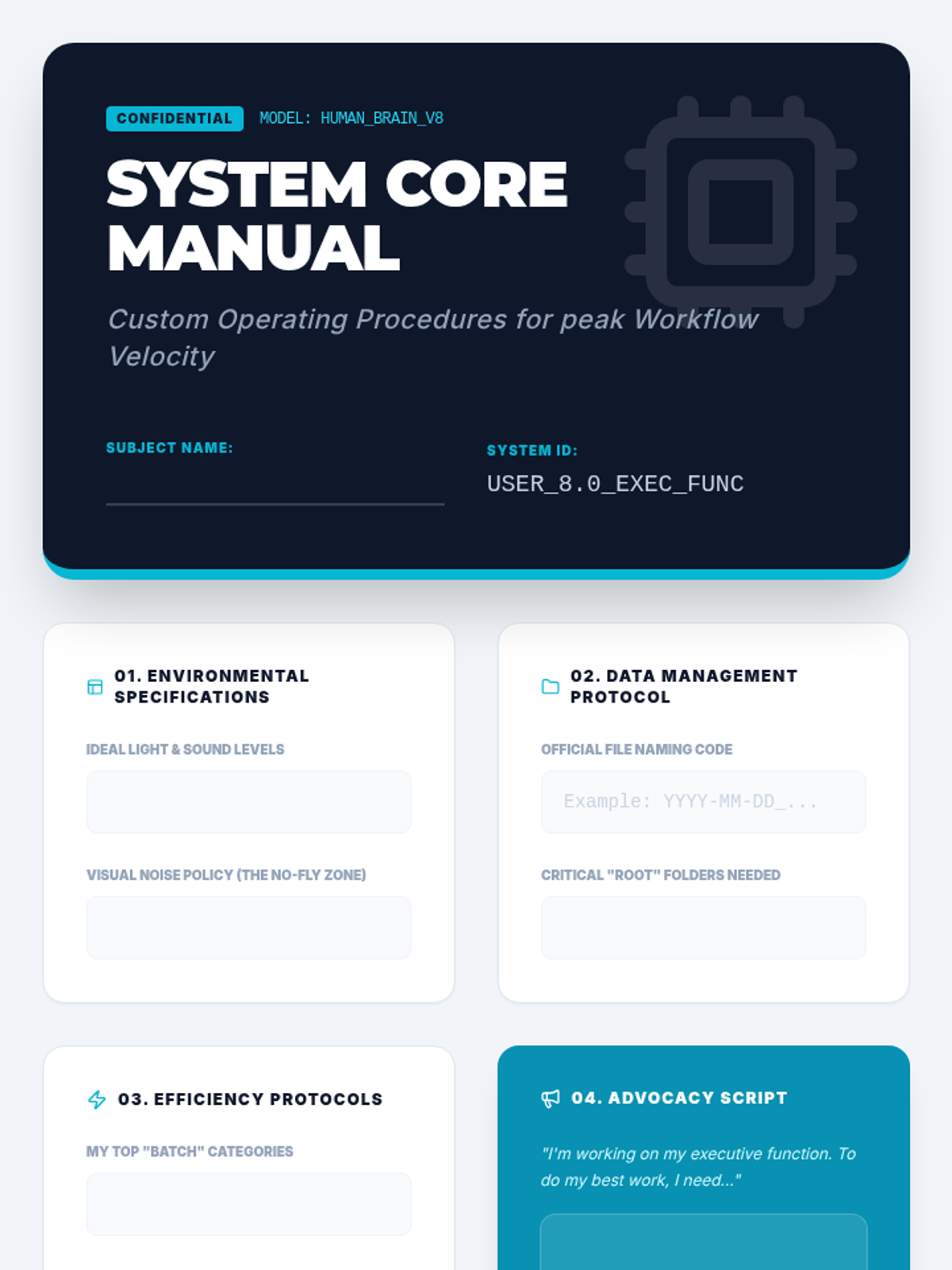
In this capstone lesson, students synthesize their learning into a 'User Manual' for their own brain. They document personalized strategies for physical, digital, and temporal organization to build self-advocacy and long-term habits.
Students evaluate and pitch various organizational tools, from digital apps to paper checklists, learning to match specific scaffolds to different brain types.
Explores the emotional roots of procrastination and provides concrete strategies like the 5-minute rule to break the cycle of avoidance.
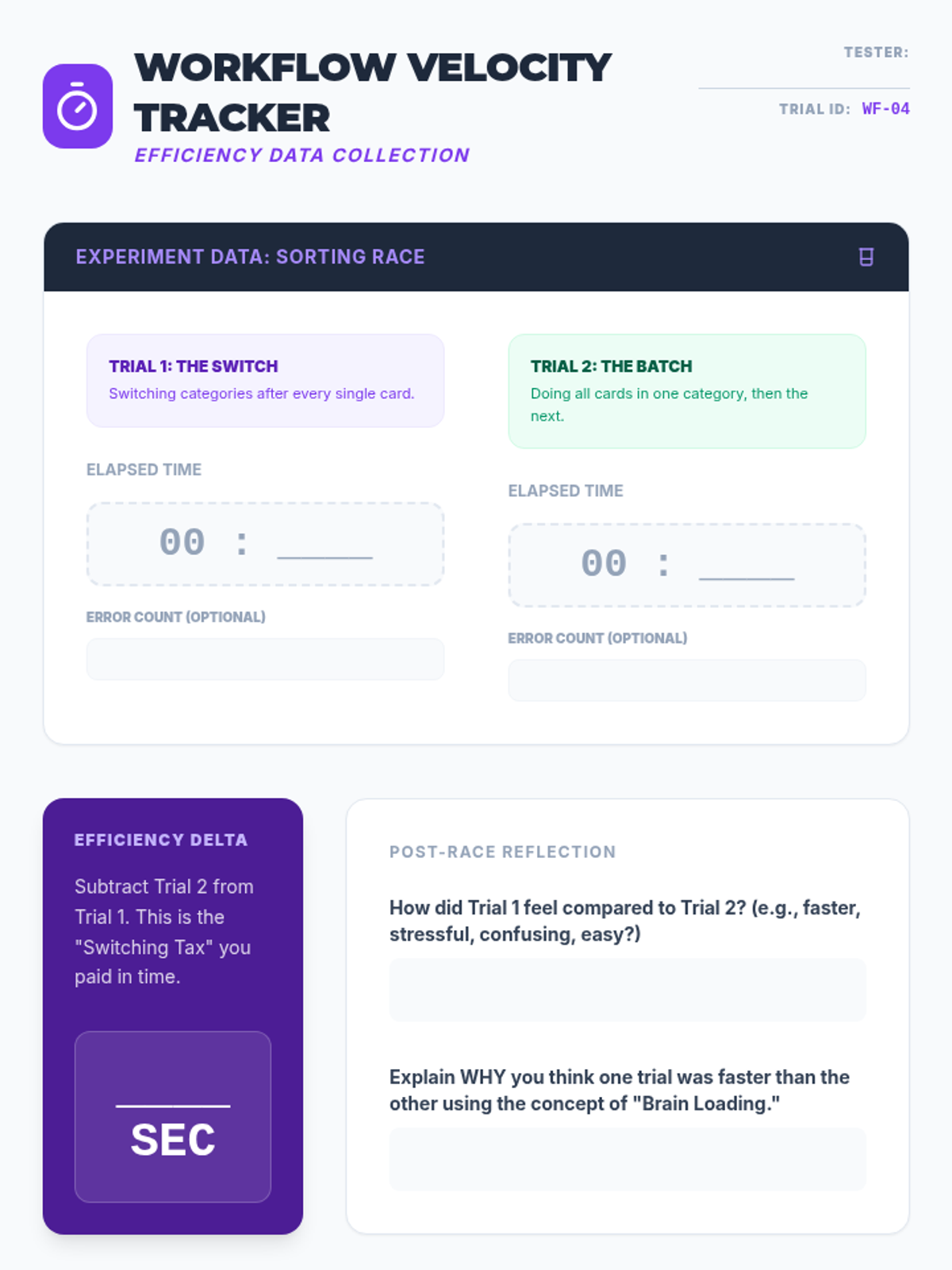
Students investigate the efficiency costs of multitasking and context switching. Through timed experiments, they compare sequential task completion with 'batching' strategies to develop more efficient workflow habits.
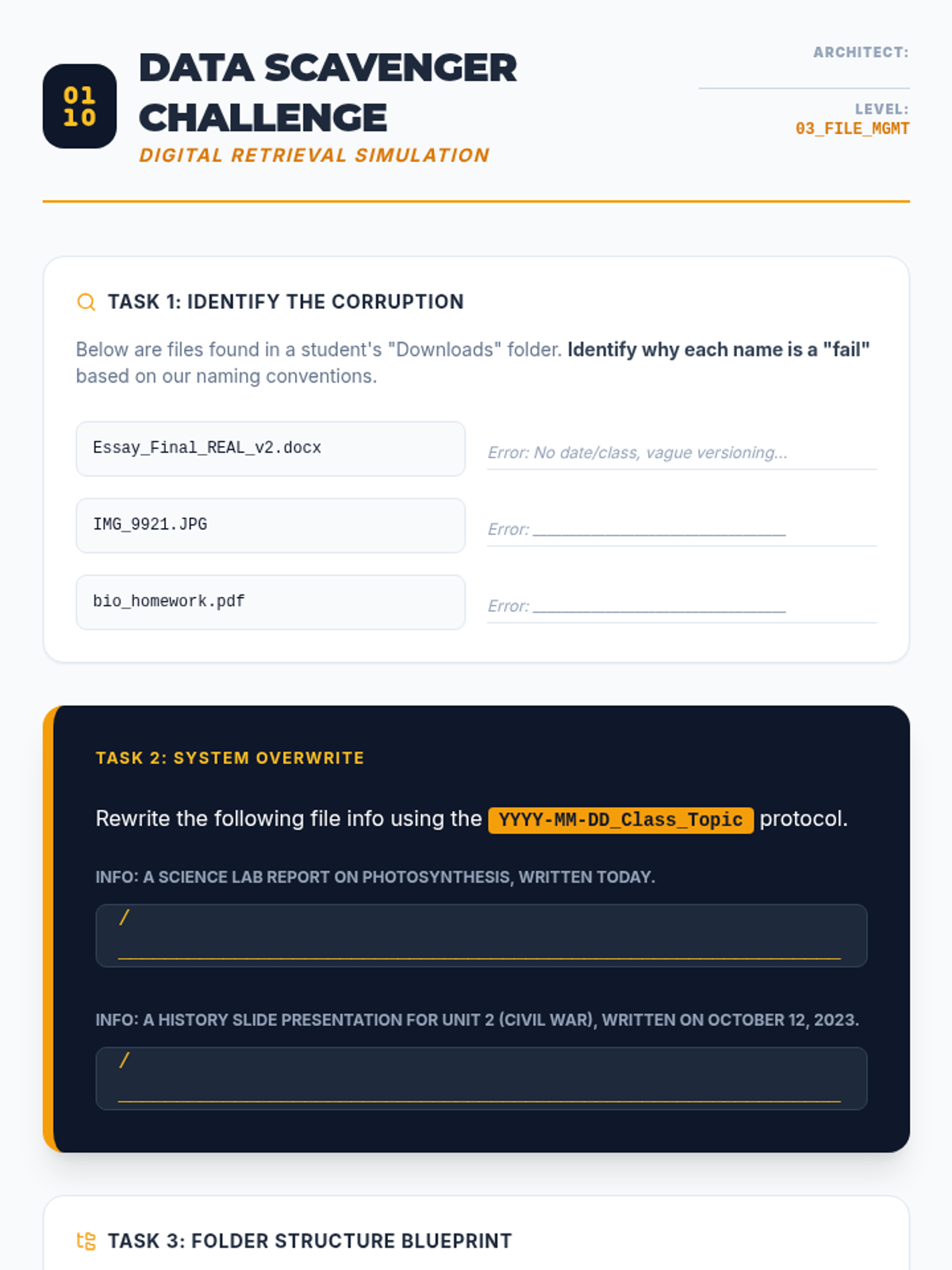
This lesson focuses on digital literacy through the lens of organization. Students learn effective file naming conventions, folder hierarchies, and inbox management strategies to prevent 'digital hoarding' and improve information retrieval speed.
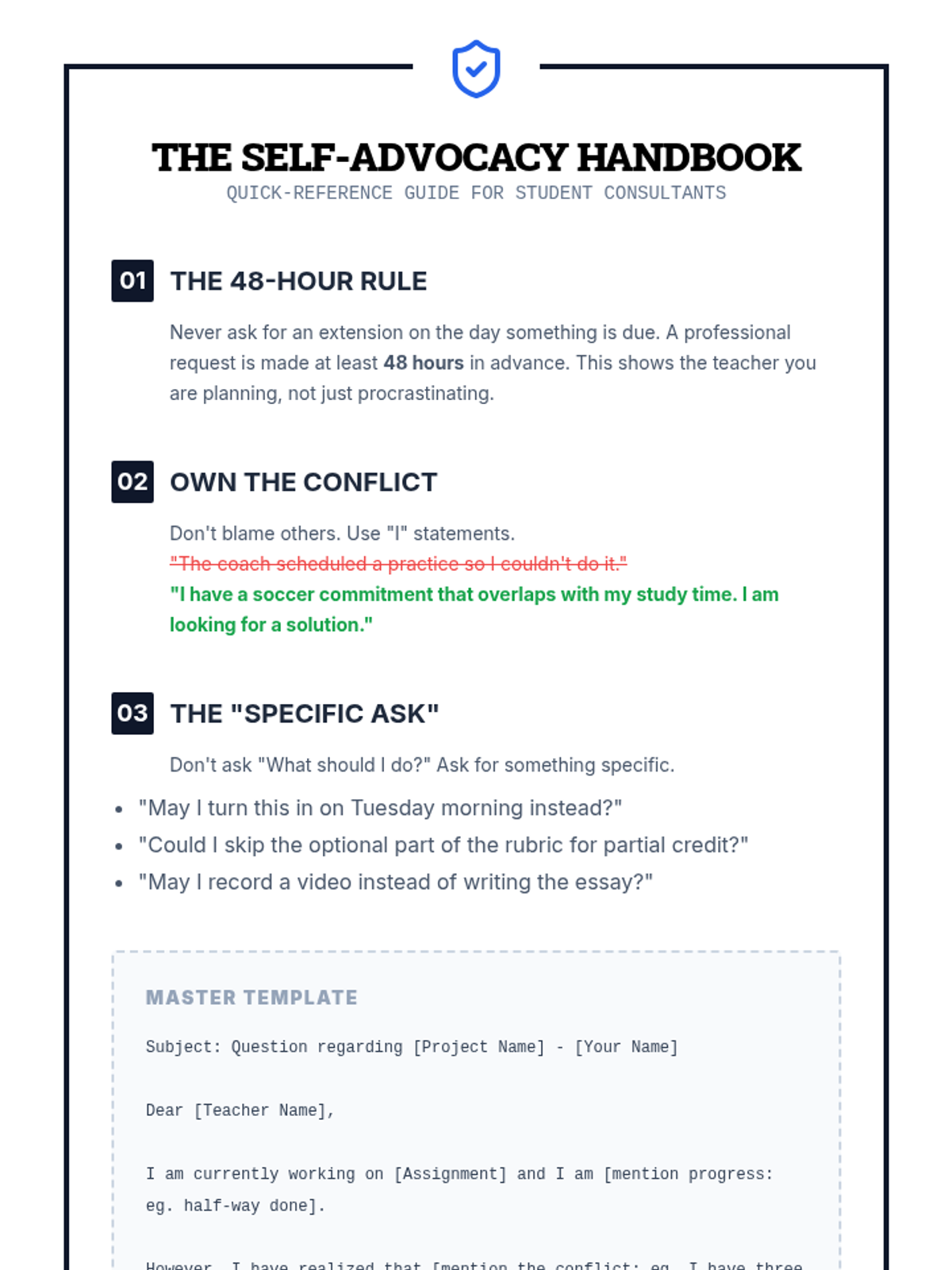
Focuses on professional communication and self-advocacy, teaching students how to request support and extensions effectively before deadlines pass.
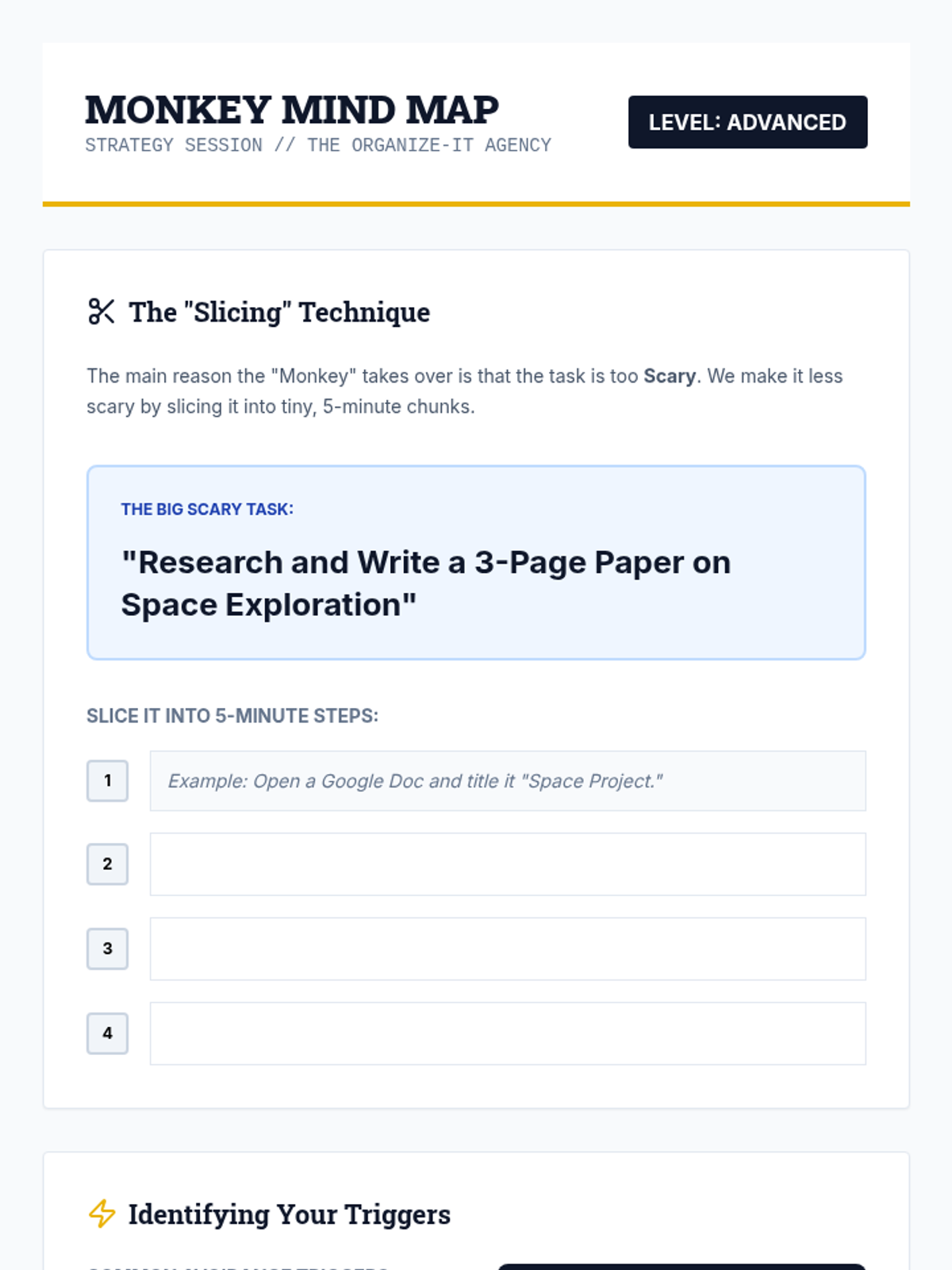
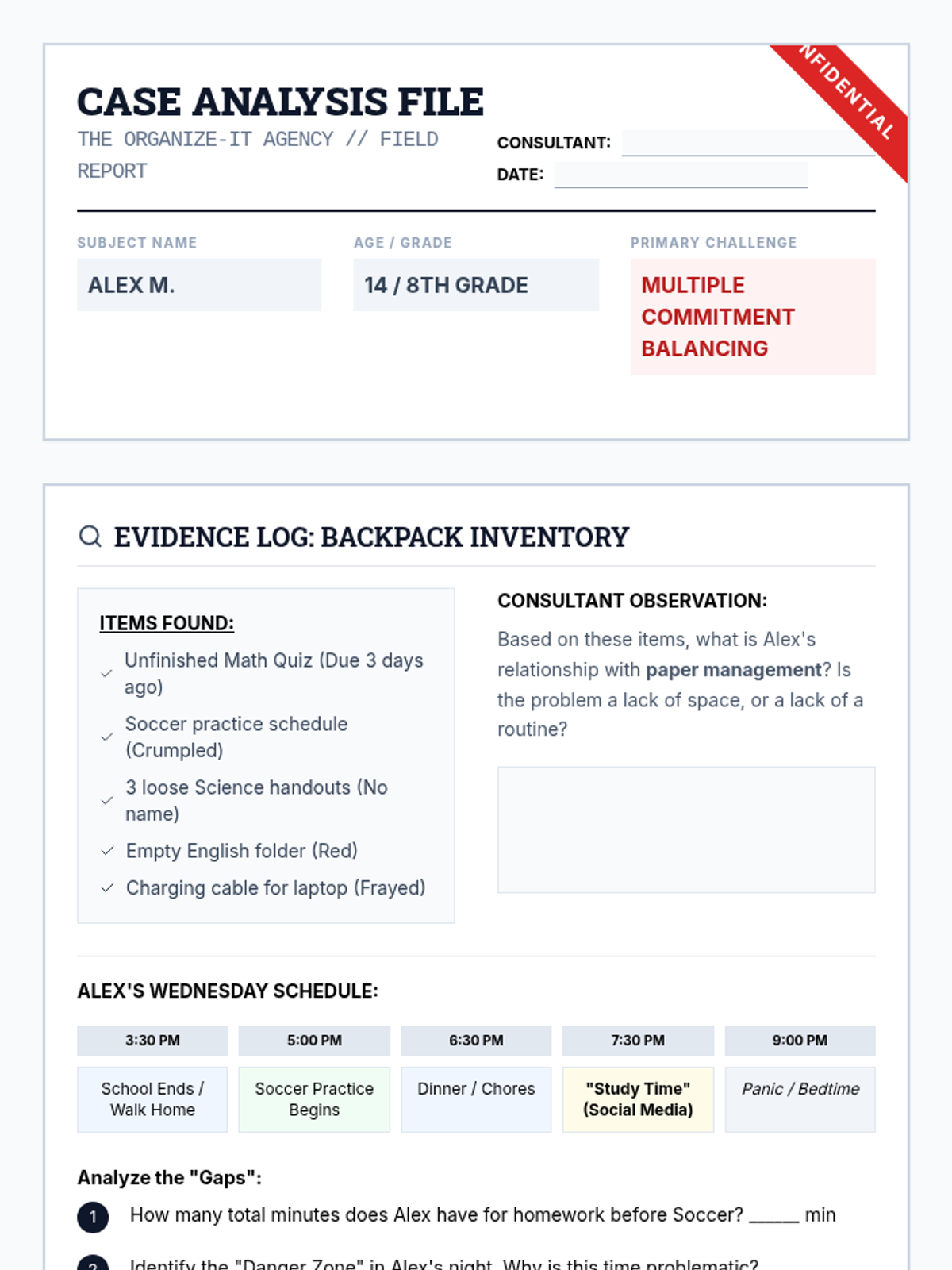
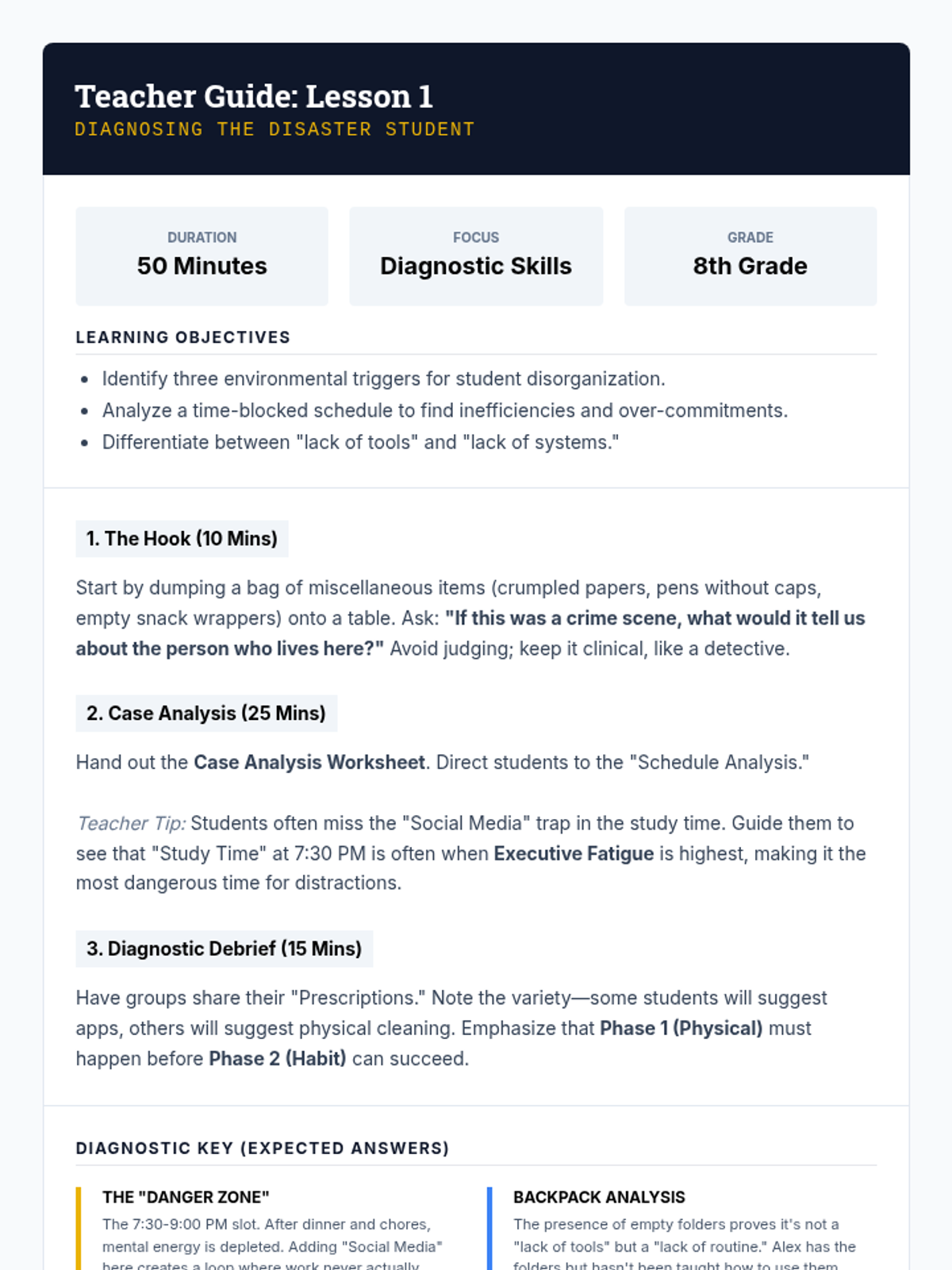
Students step into the role of consultants to analyze a 'disaster' case study, examining a fictional student's backpack and schedule to diagnose root causes of disorganization.
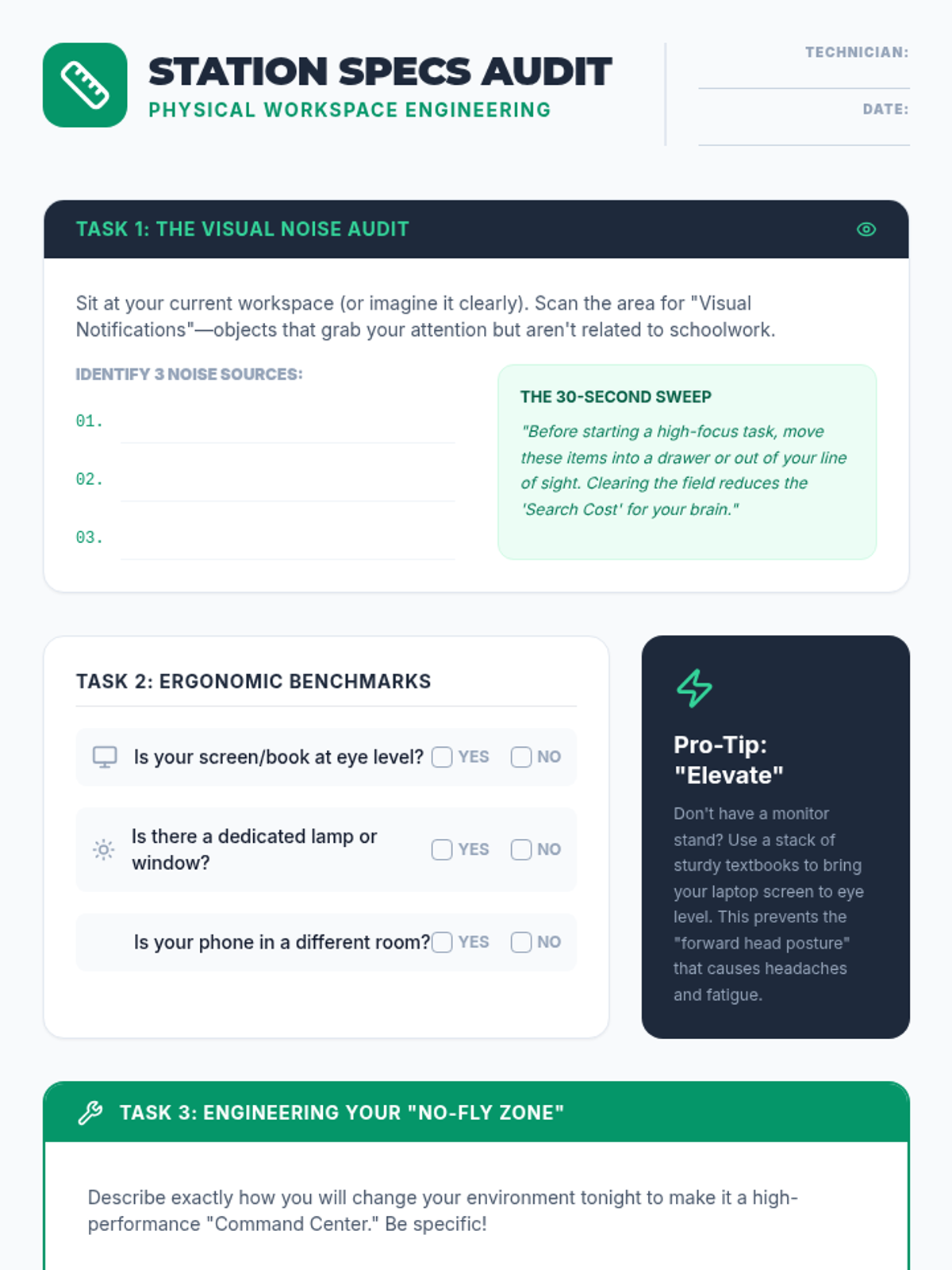
Students analyze the impact of their physical environment on focus and productivity. By auditing workspace case studies and their own study areas, they learn to design spaces that minimize distractions and optimize ergonomics.
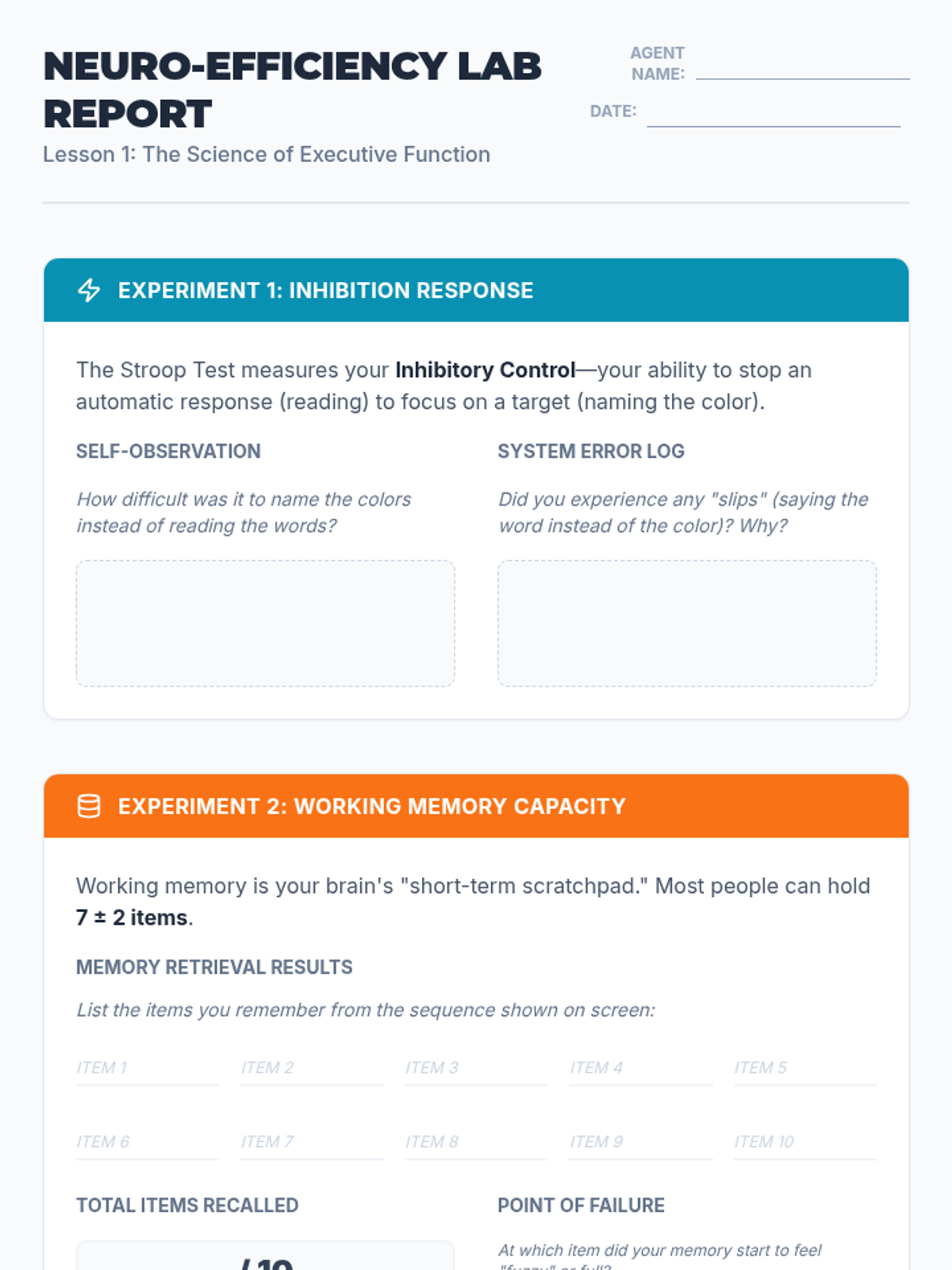
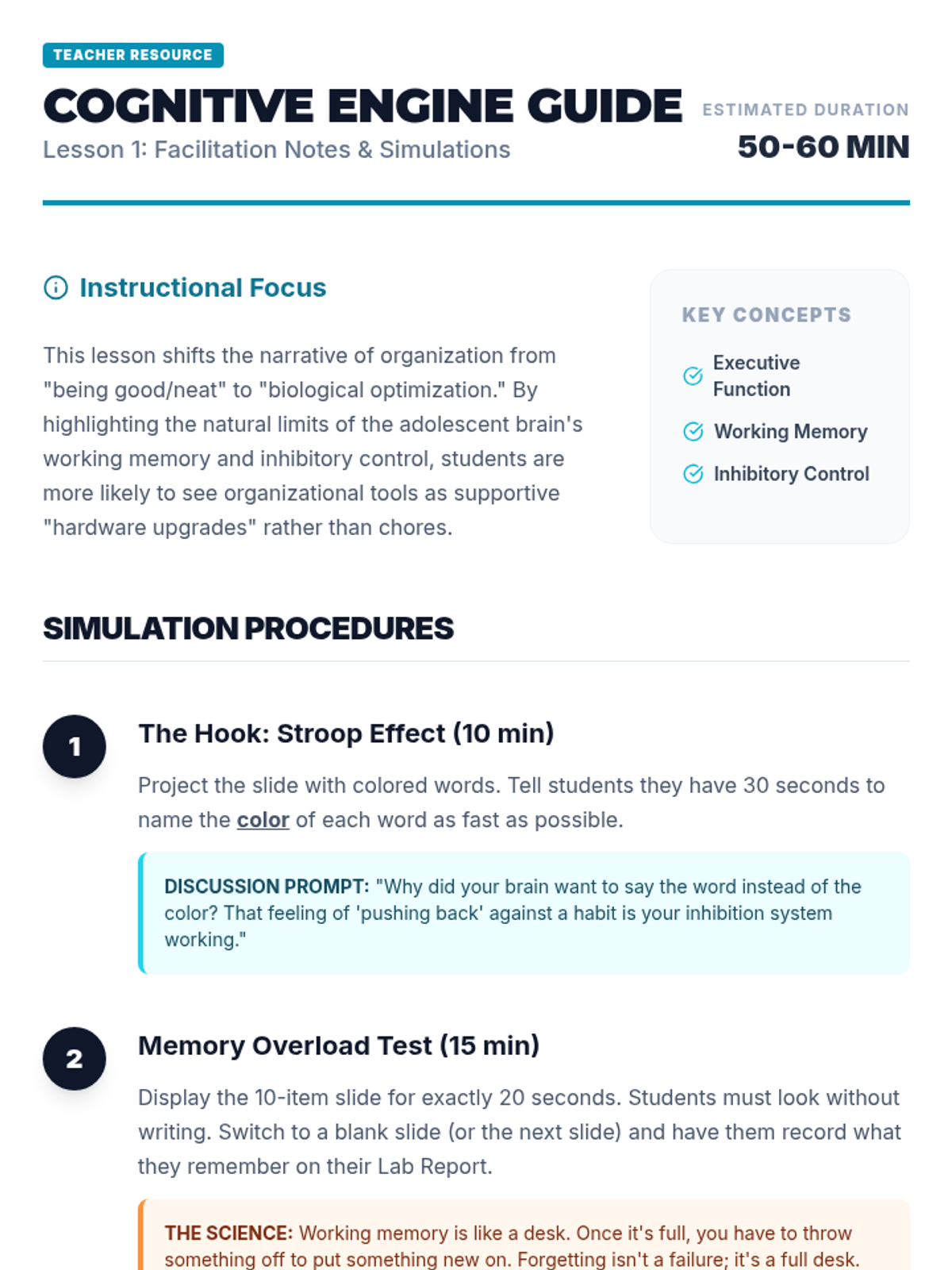
Students explore the neurological basis of executive function, focusing on working memory and inhibition. They engage in simulations like the Stroop Effect and memory overload tasks to understand why organizational systems are necessary for cognitive efficiency.
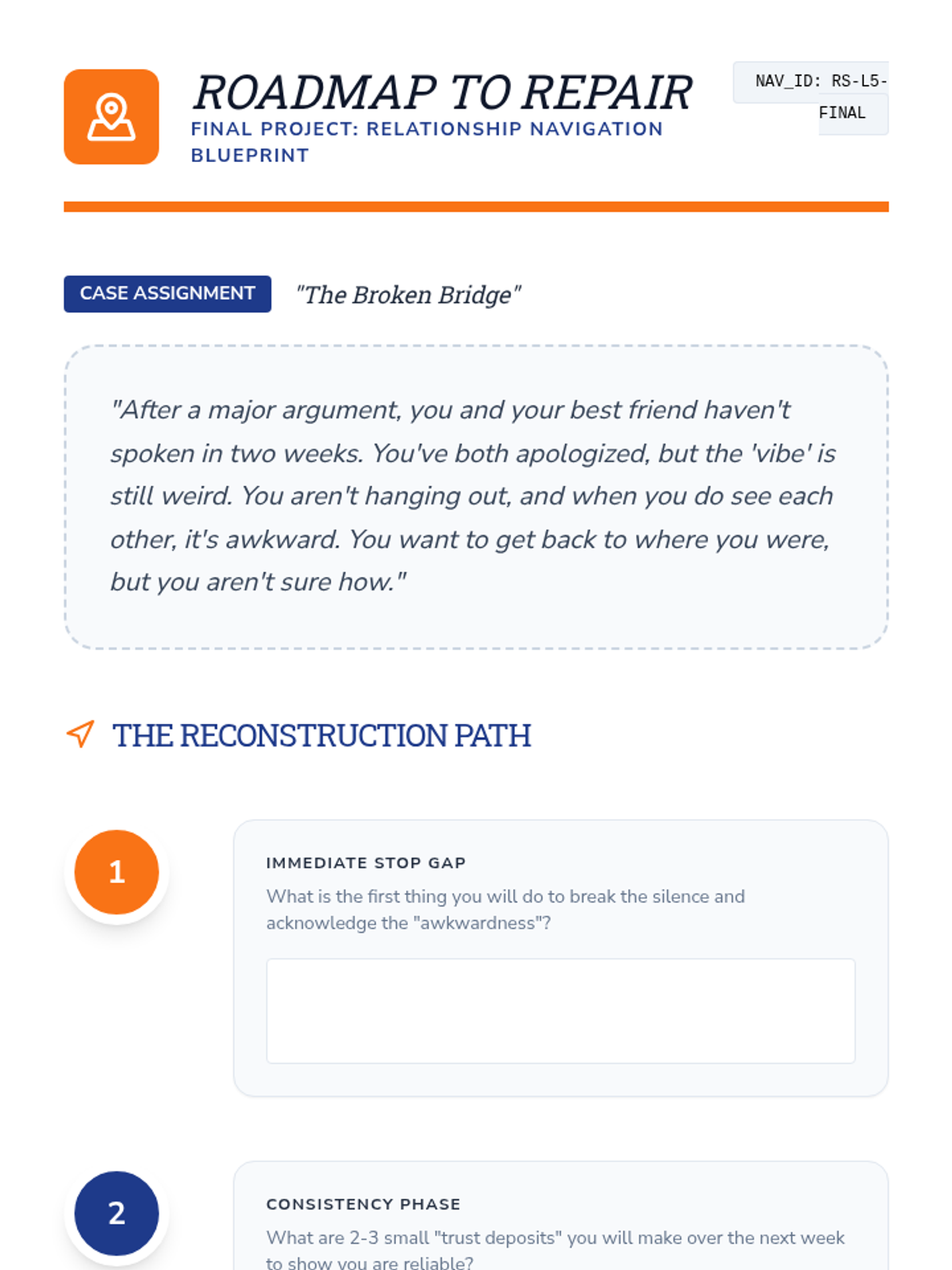
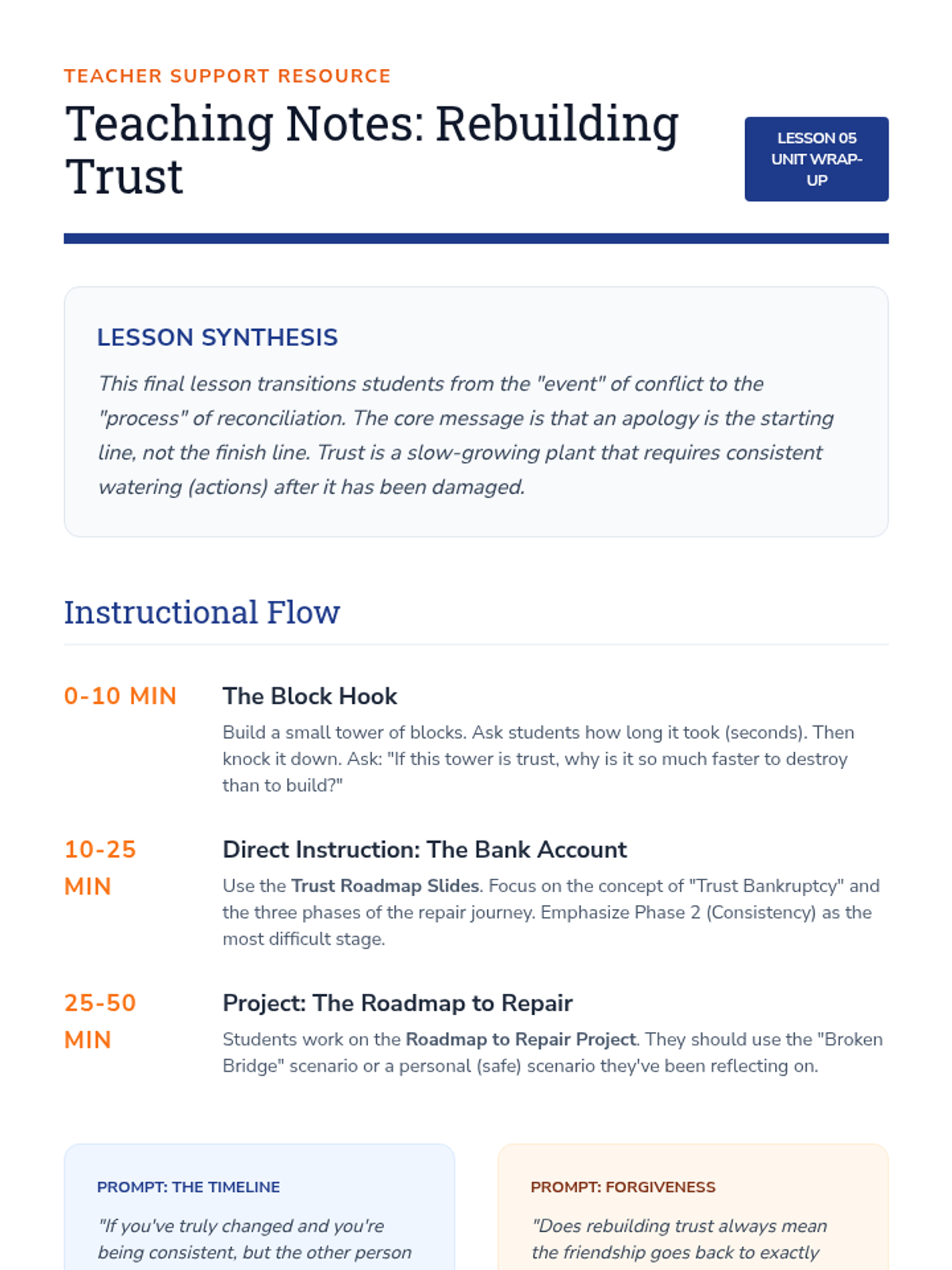
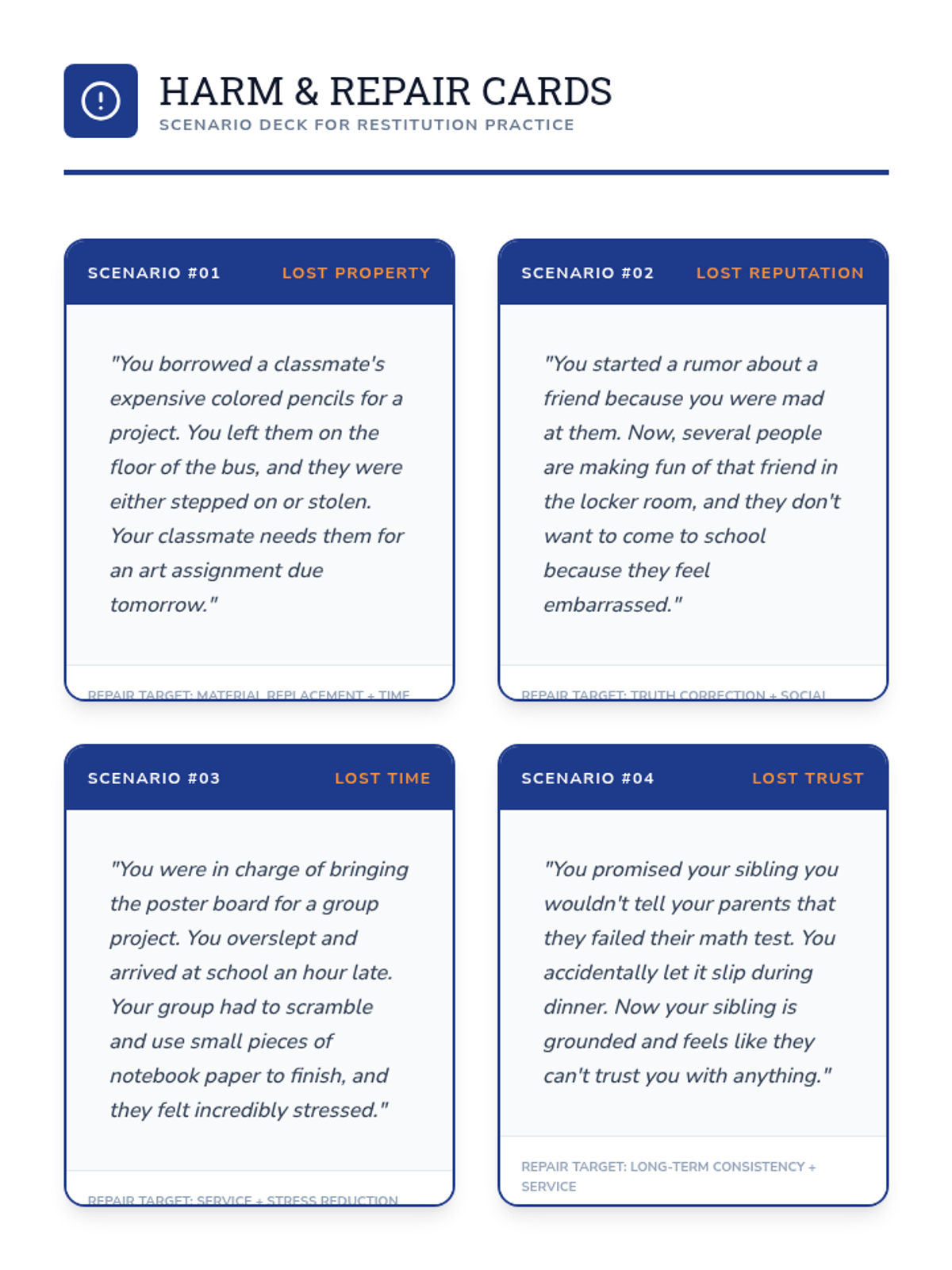
Students learn that trust is built slowly over time and create a 'Roadmap to Repair' outlining consistent actions needed to re-establish a friendship.
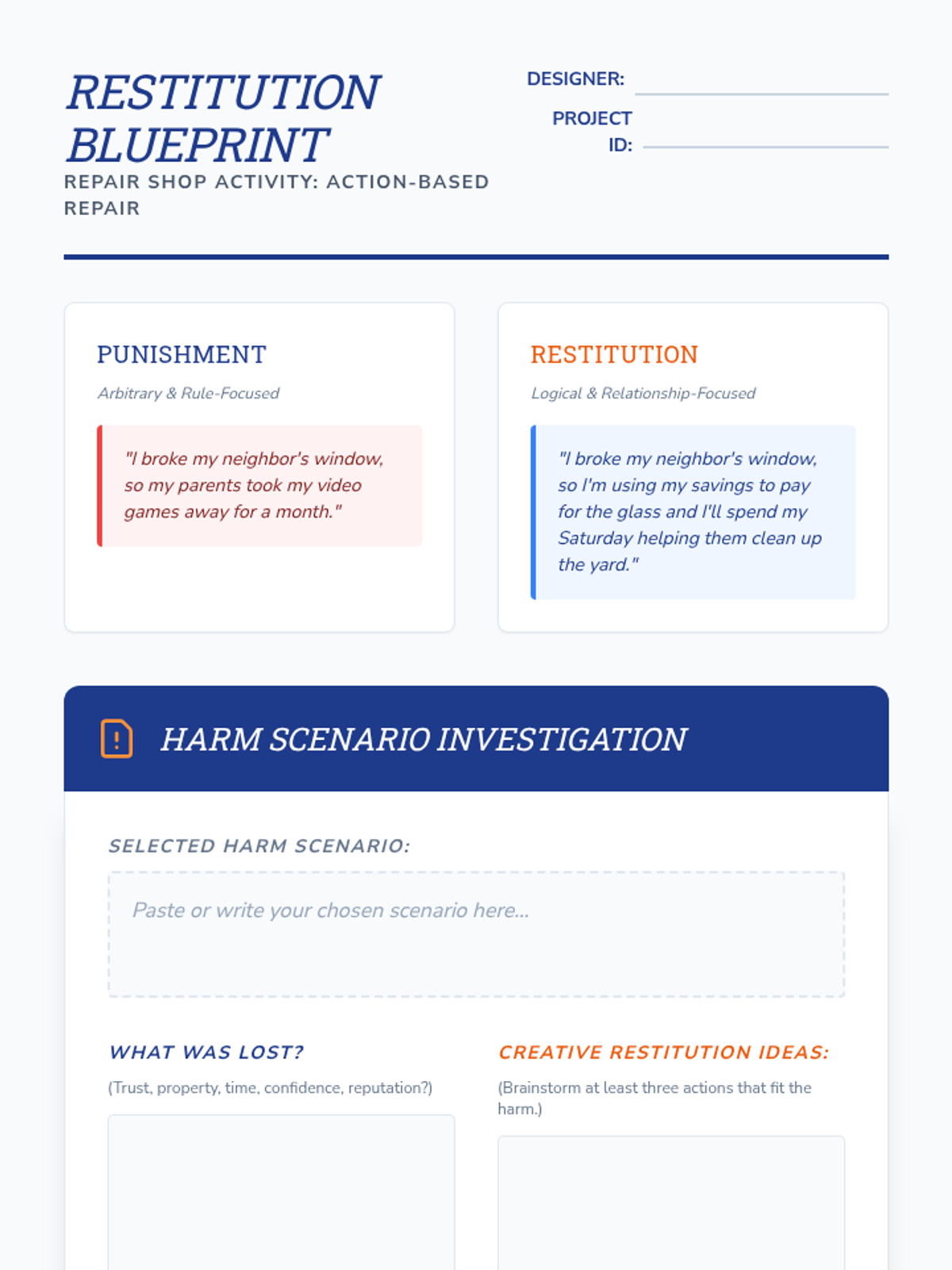
This lesson moves beyond words to action, brainstorming creative ways to 'make it right' or offer restitution relevant to the harm caused.
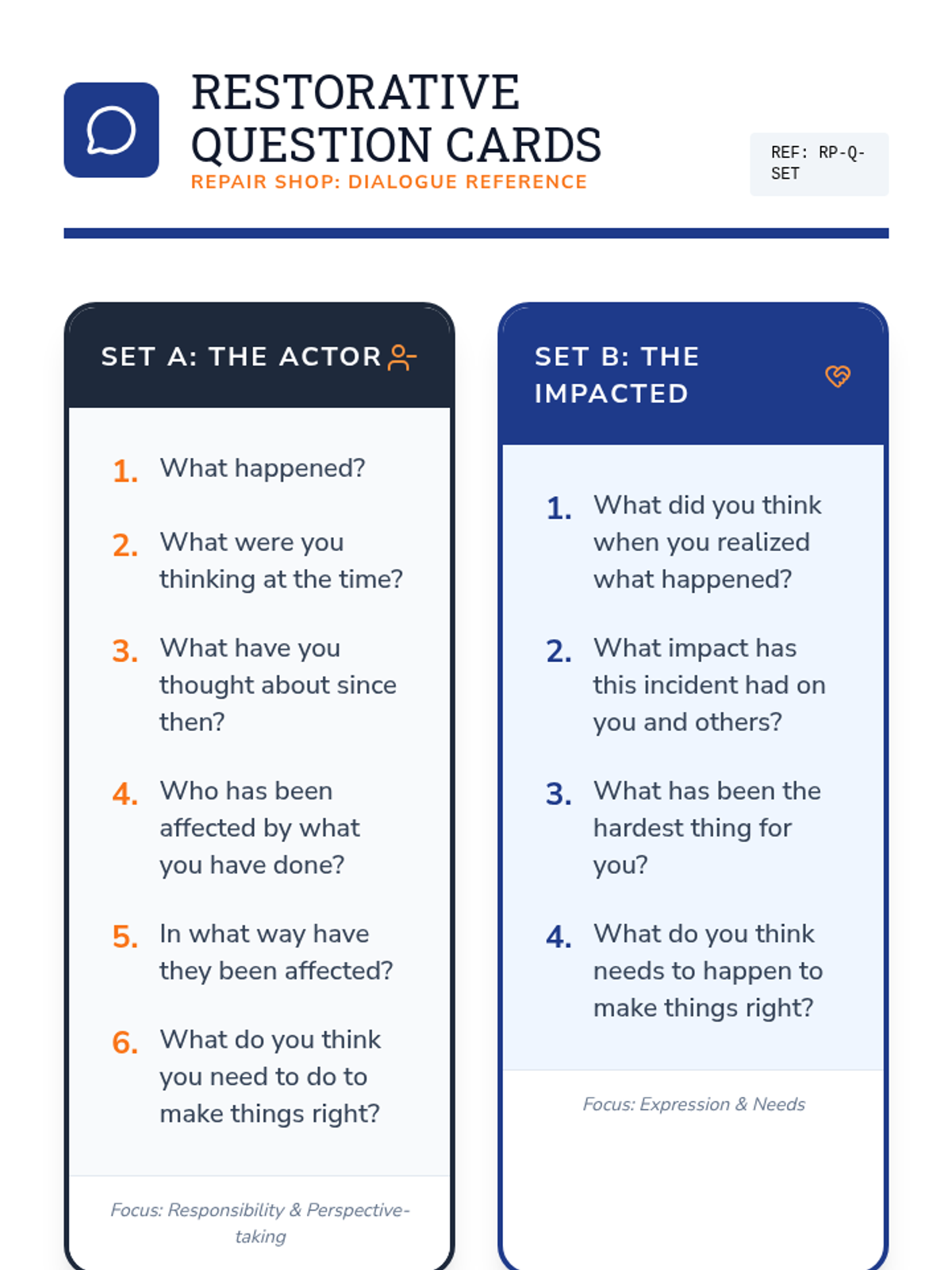
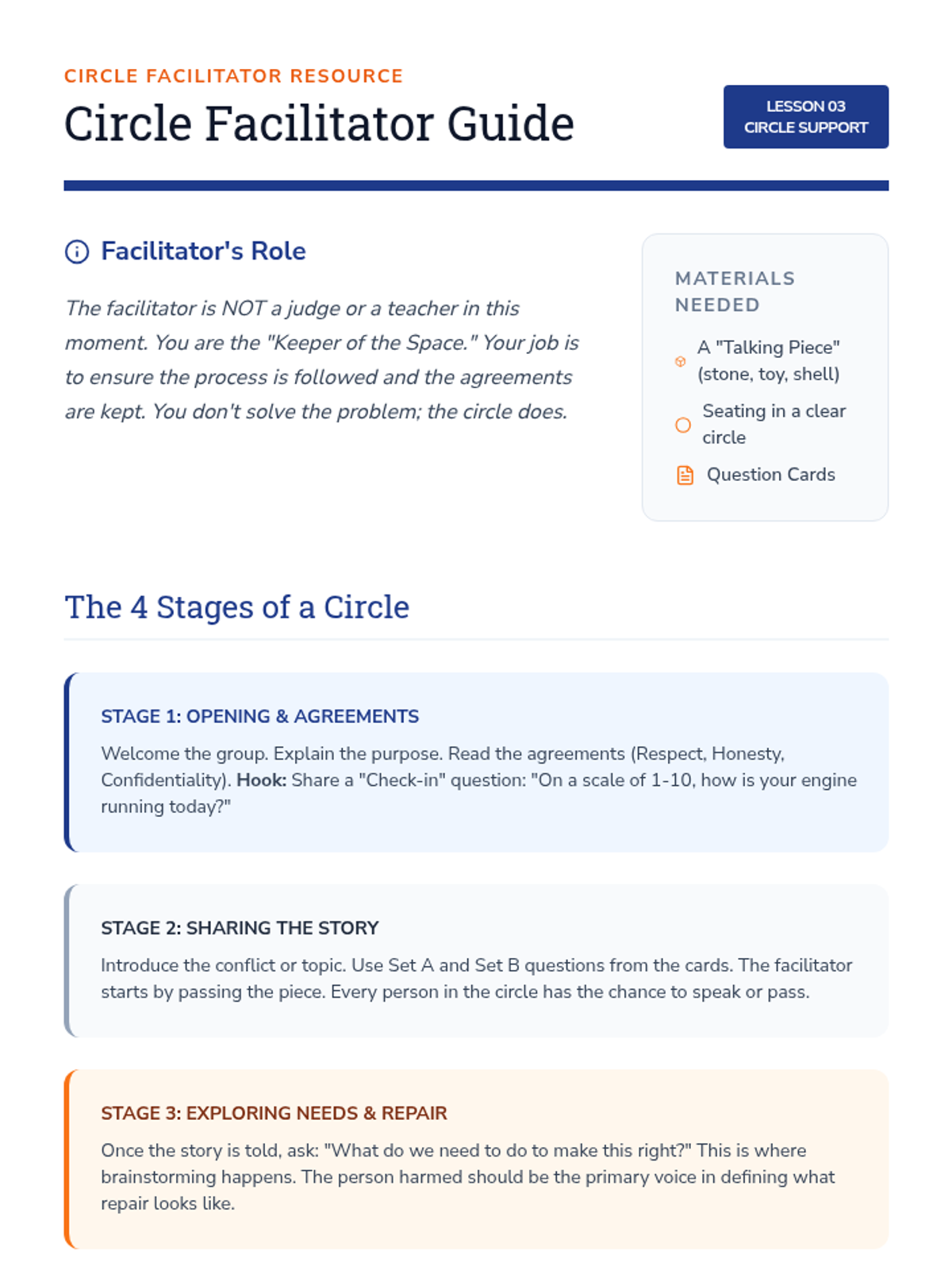
Students participate in a structured circle process to practice sharing feelings and listening to others' experiences of harm using restorative justice questions.
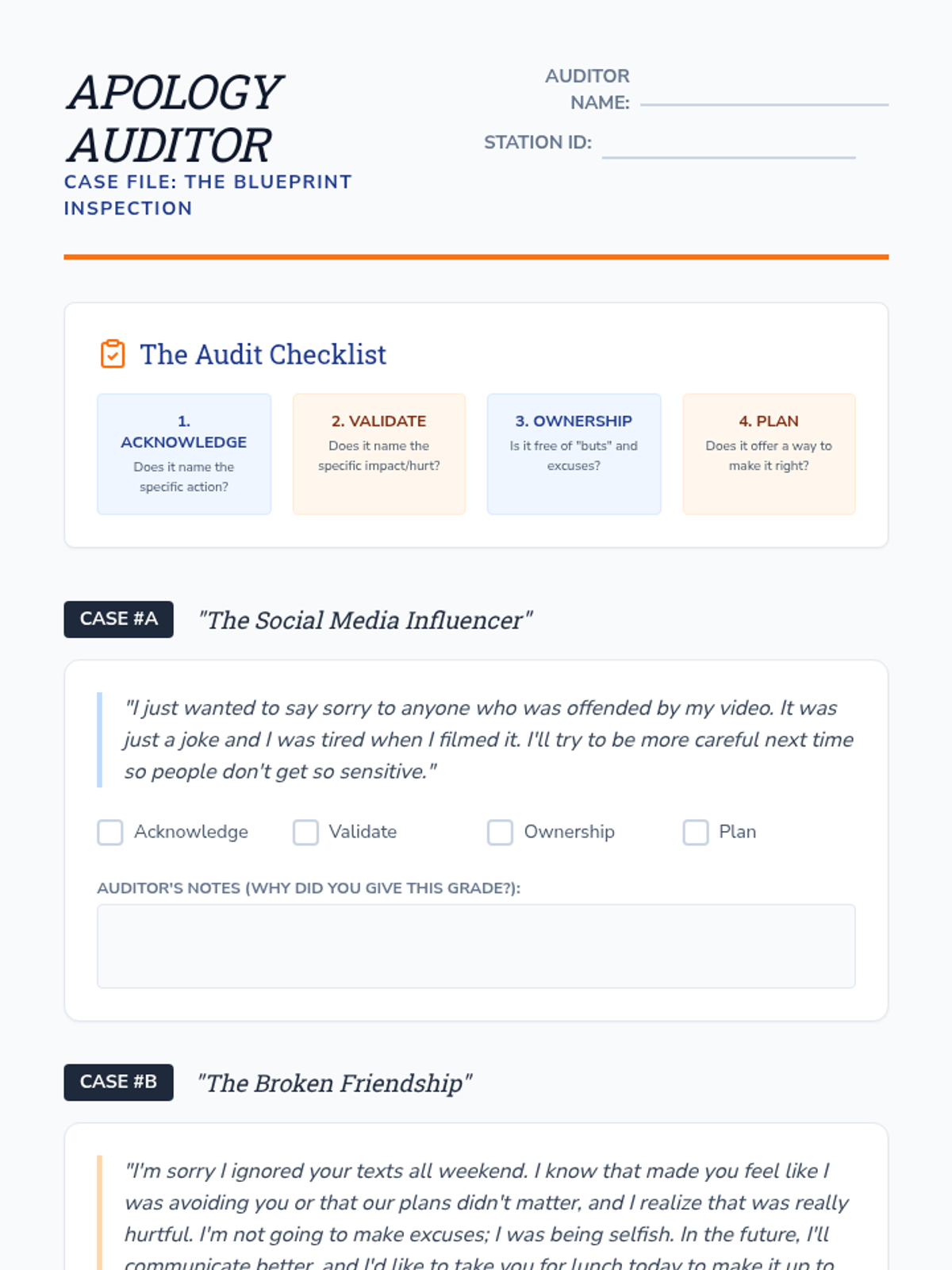
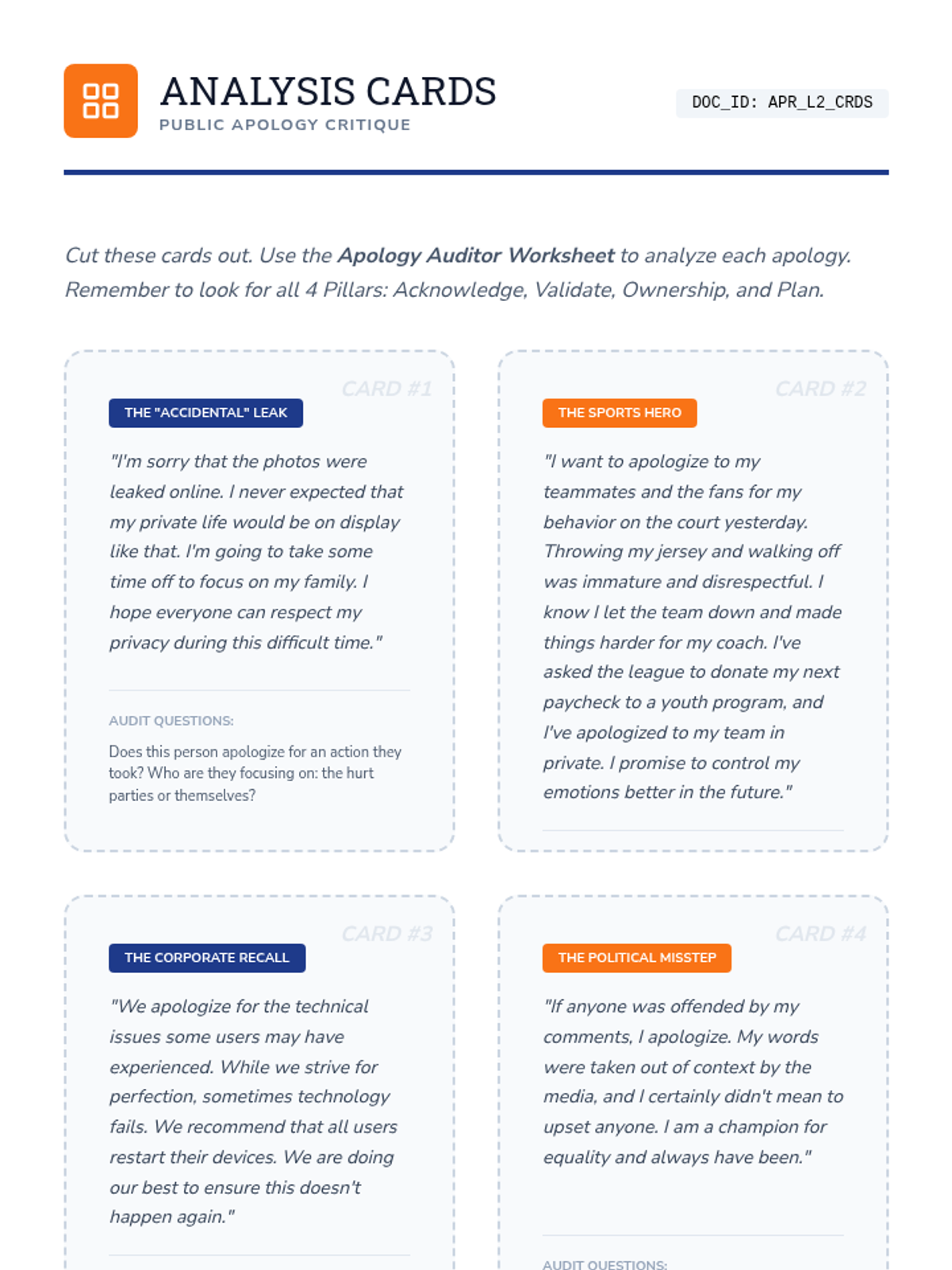
Students deconstruct apologies to identify key components: acknowledging the act, validating hurt, accepting responsibility, and making a plan for change. They critique public apologies.
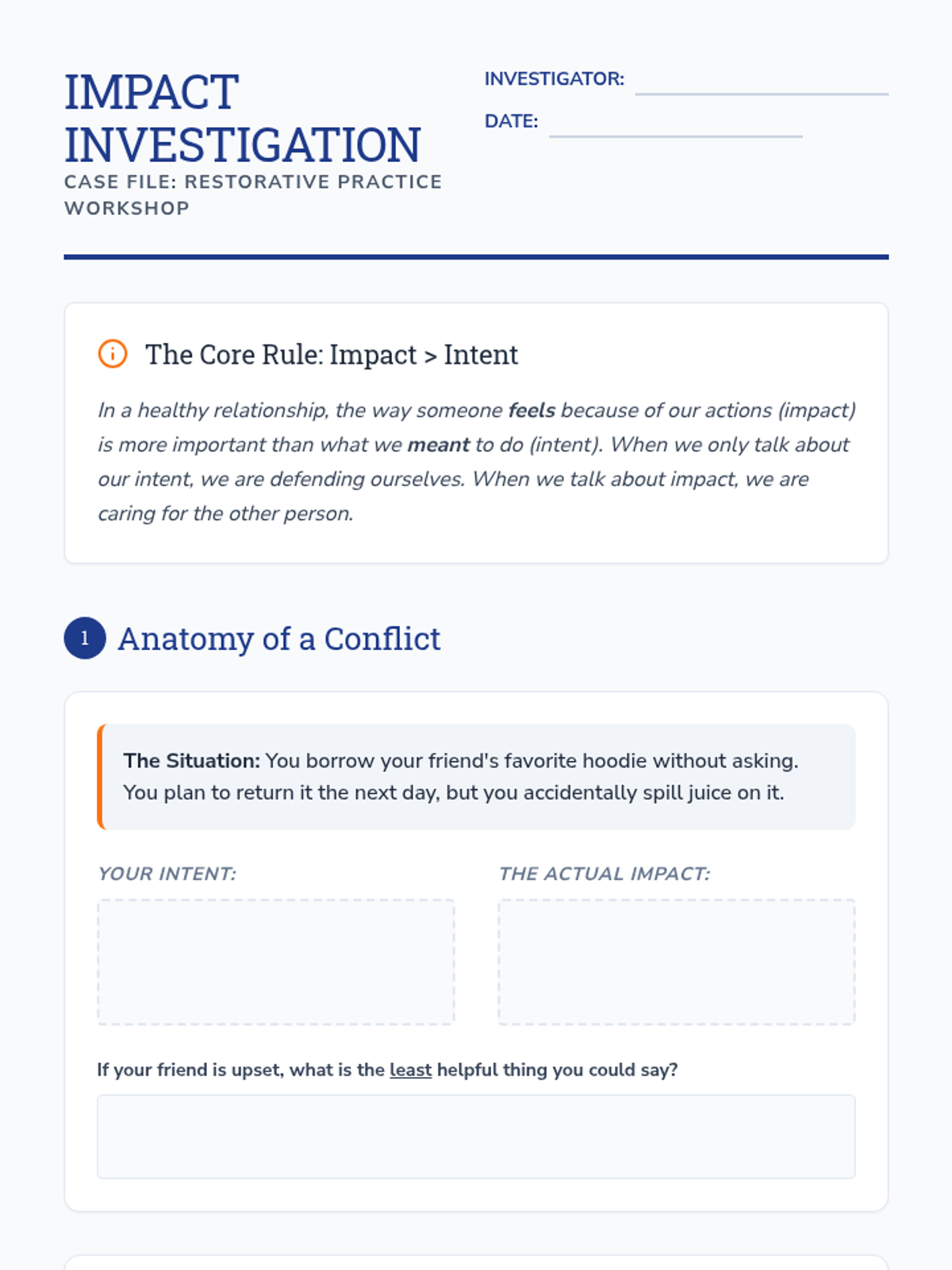
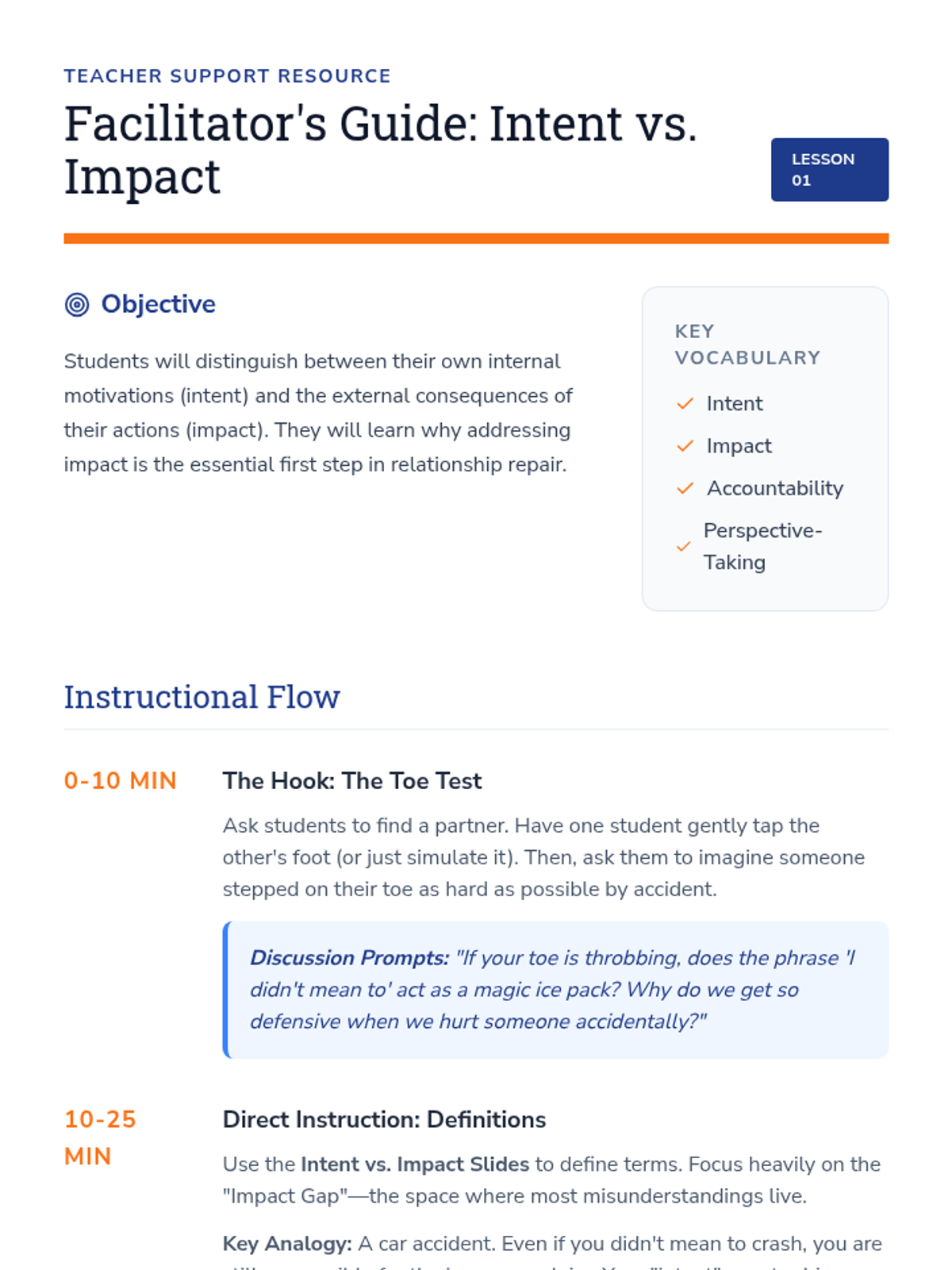
Students explore the gap between what they meant to do (intent) and how it affected others (impact). They analyze scenarios where good intentions still caused harm and discuss why impact must be addressed first.
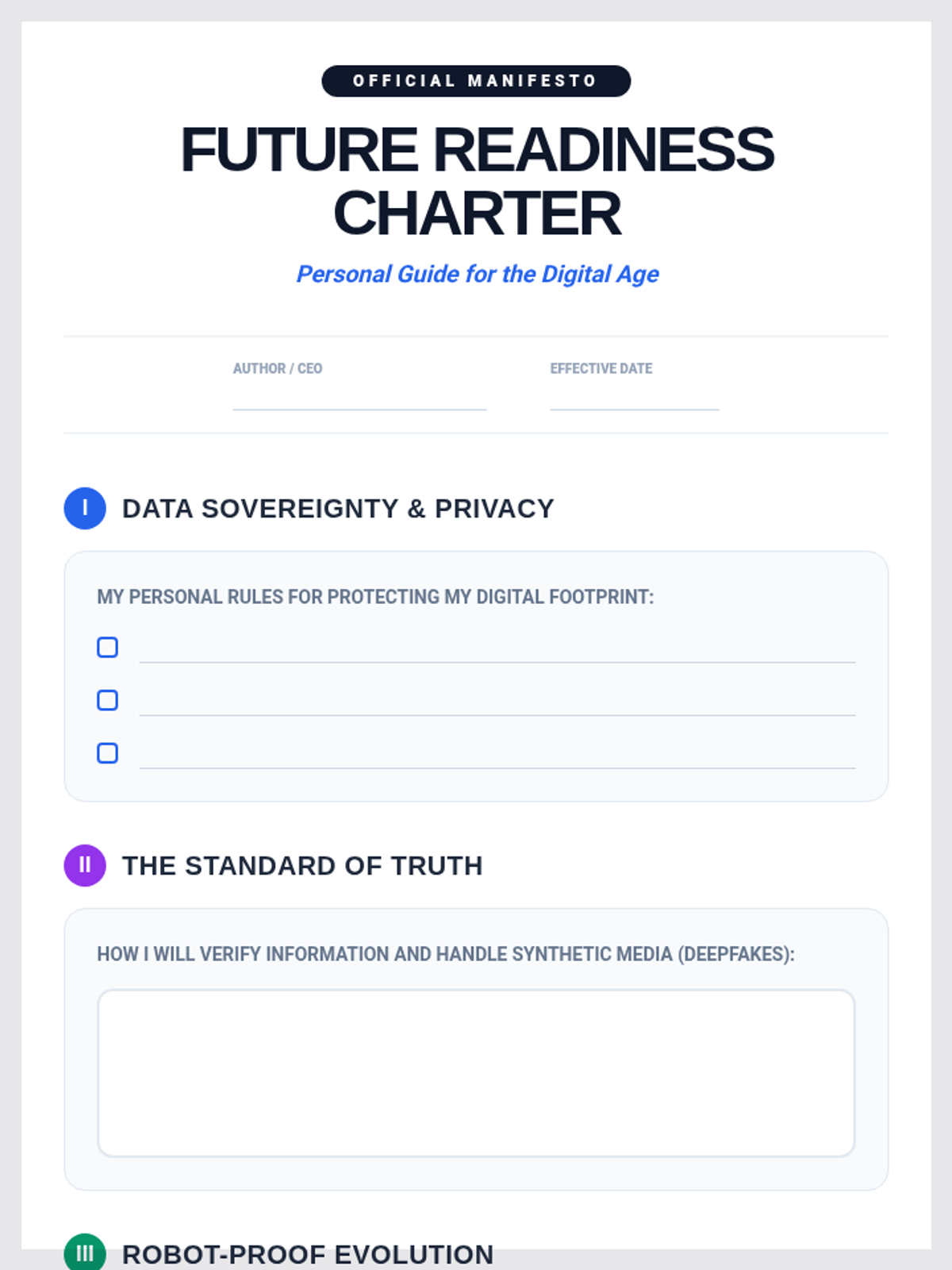
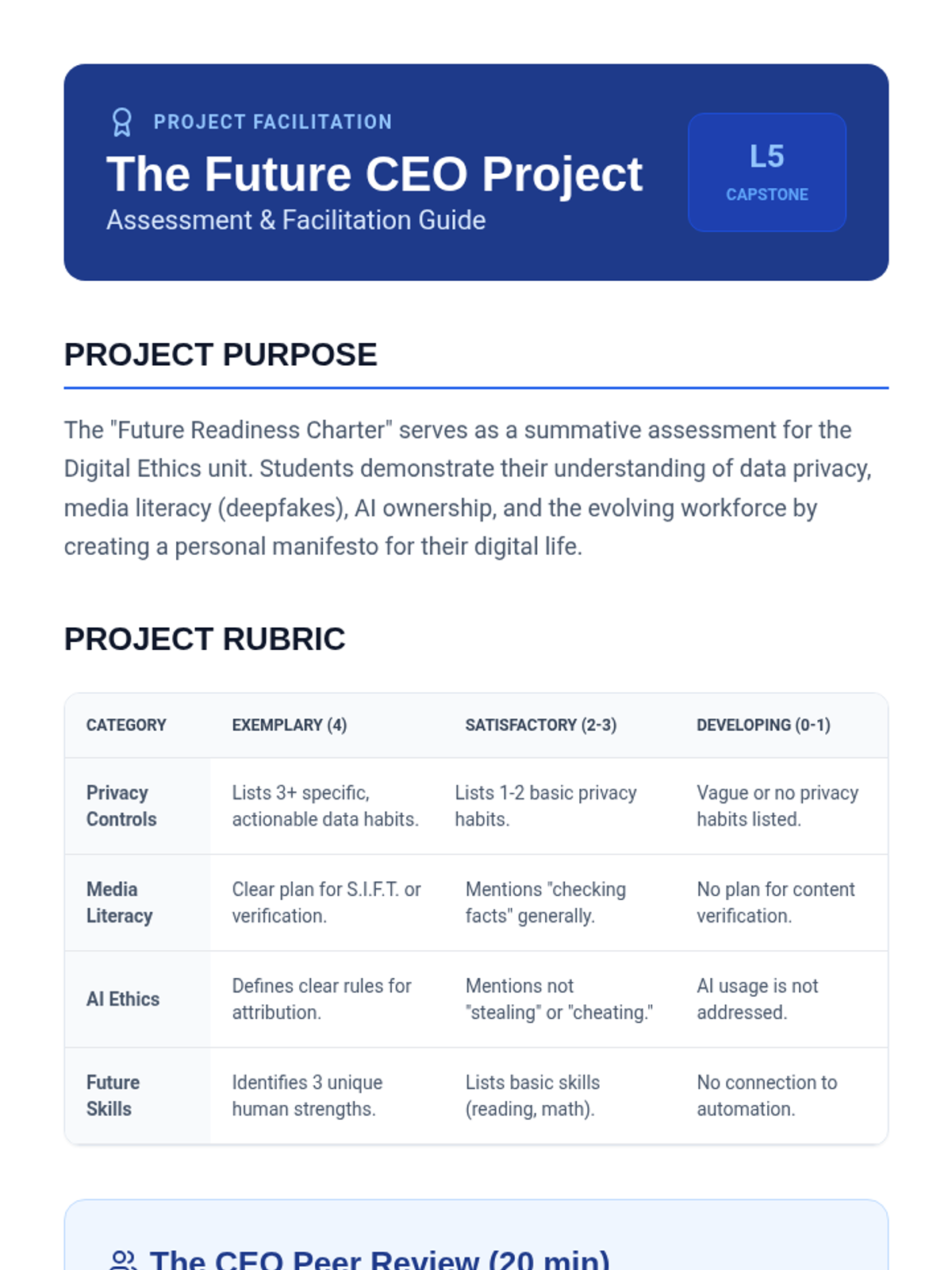
The culminating project where students synthesize their learning into a personal manifesto for ethical and safe technology use in their future lives.
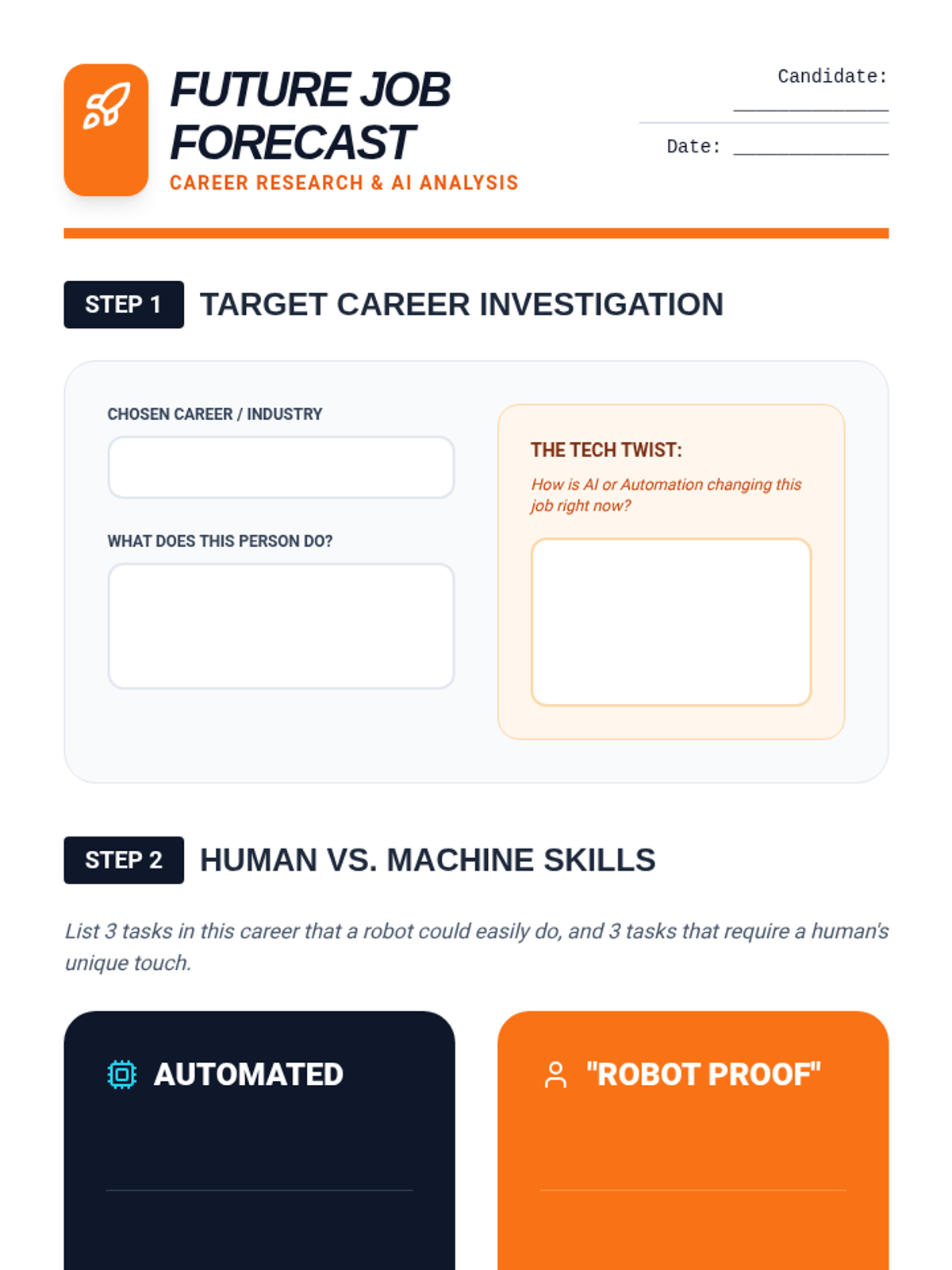
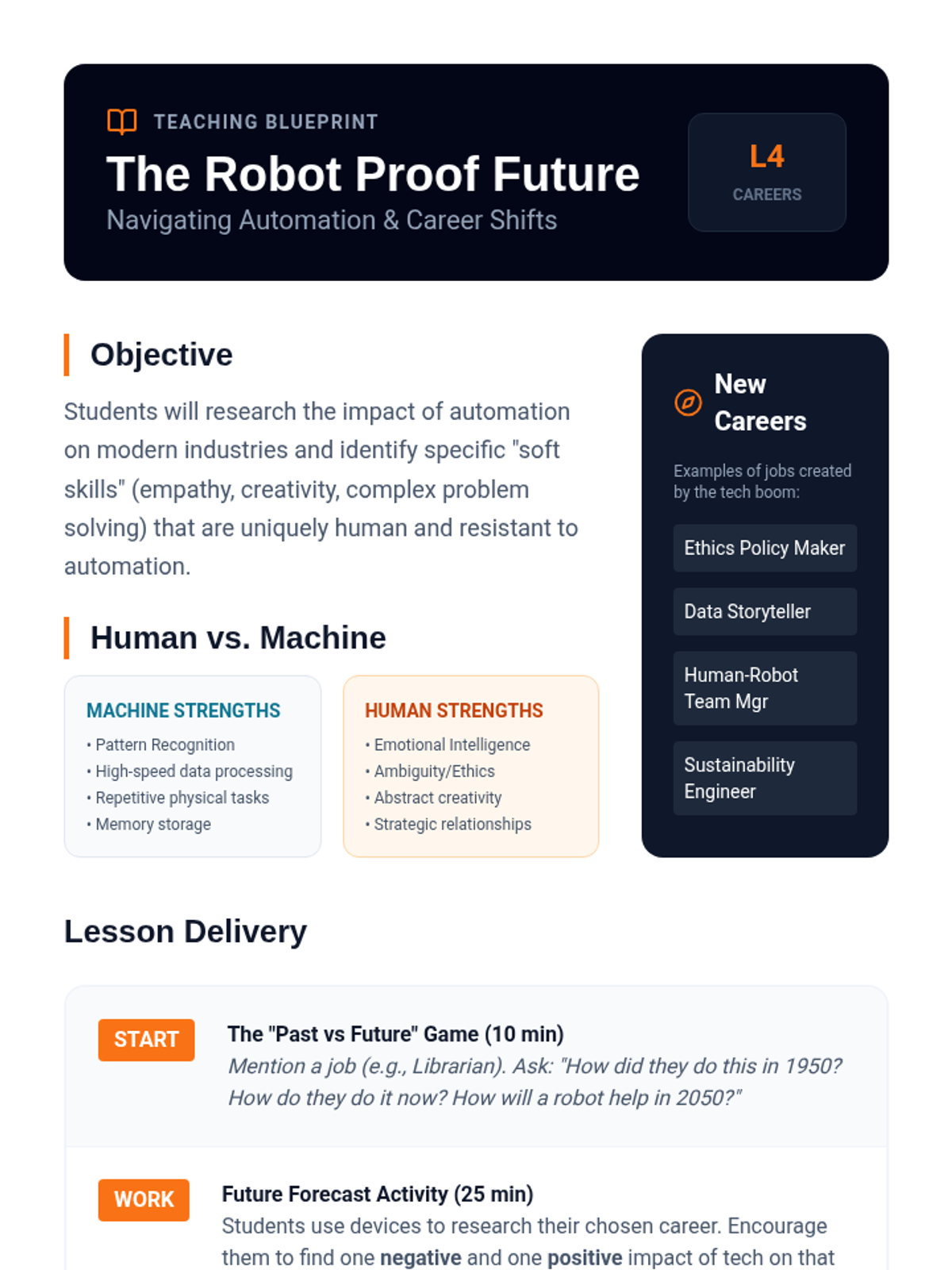
A forward-looking lesson on how automation is reshaping the workforce, focusing on the unique human skills that remain essential in the age of robots.
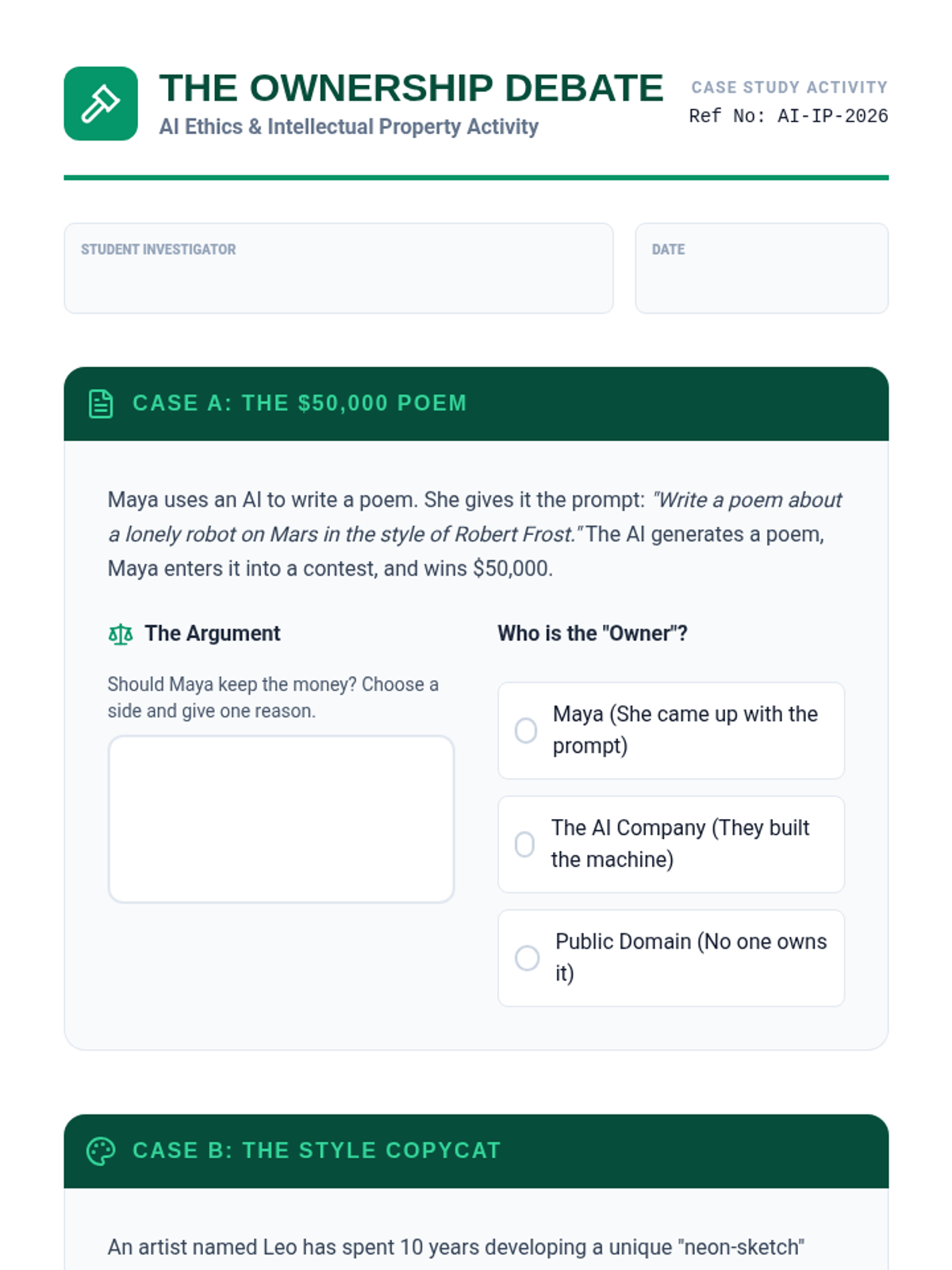
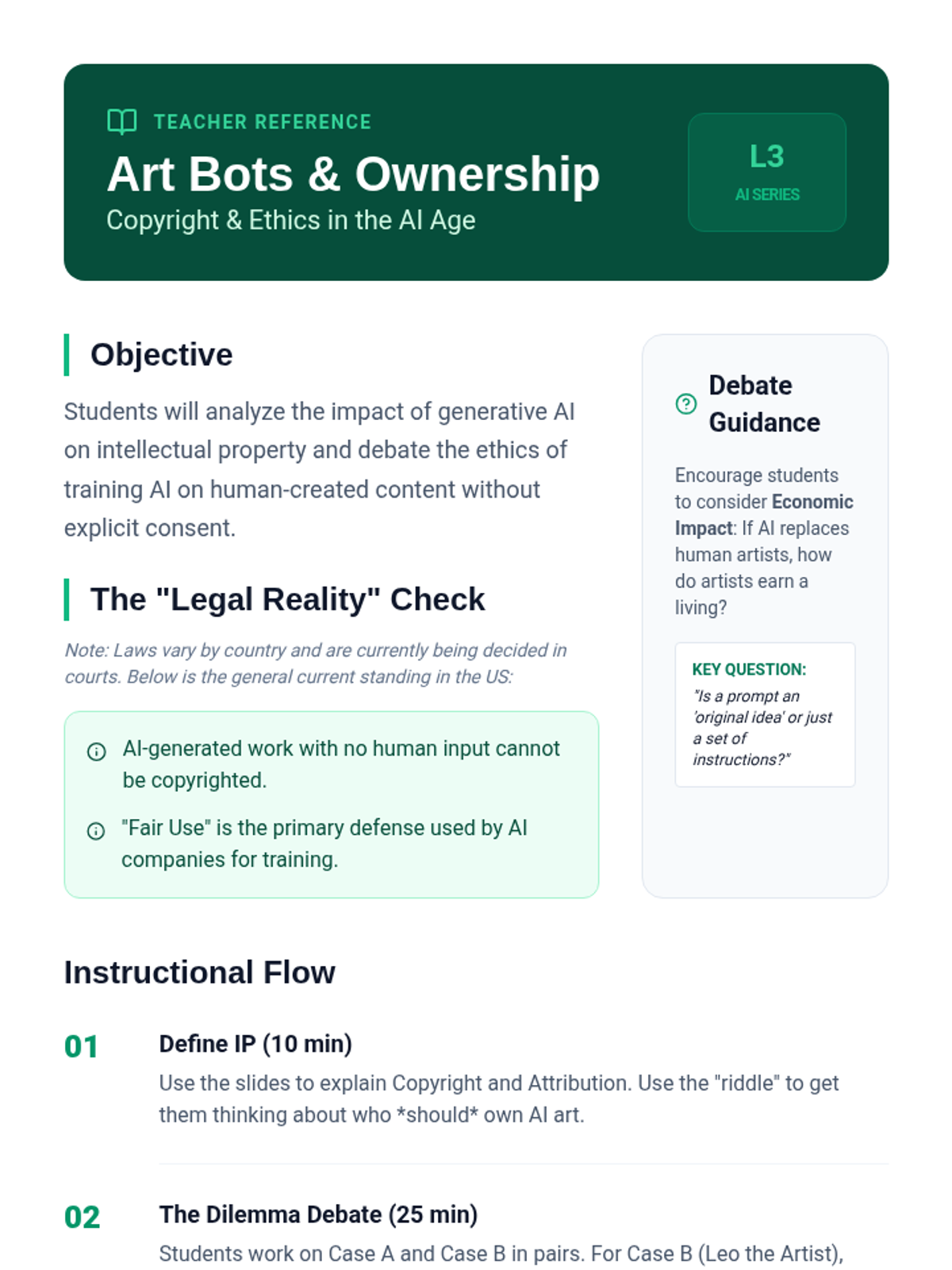
Students debate the complexities of copyright and ownership in the age of generative AI, learning how to ethically attribute work in an automated world.
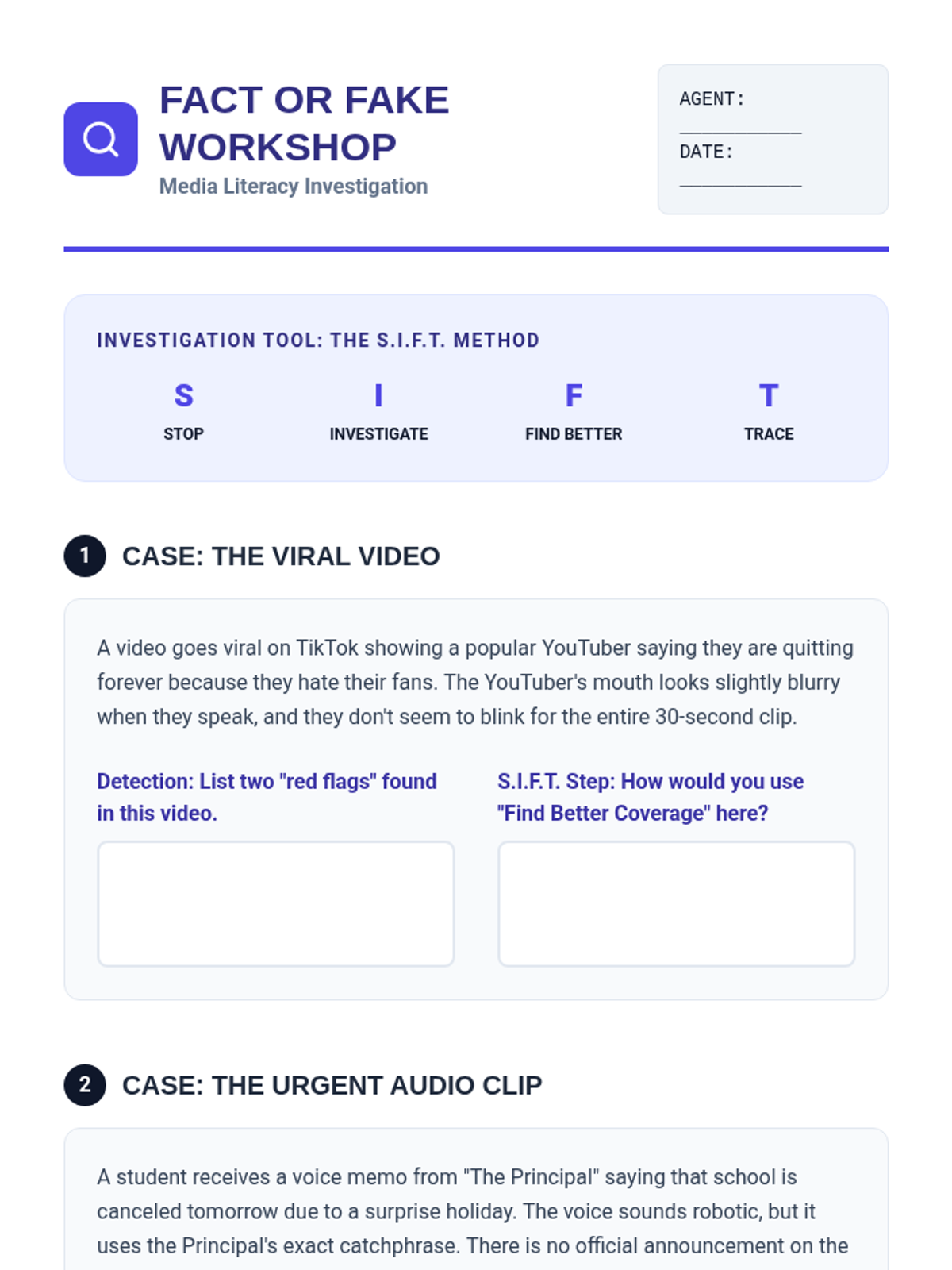
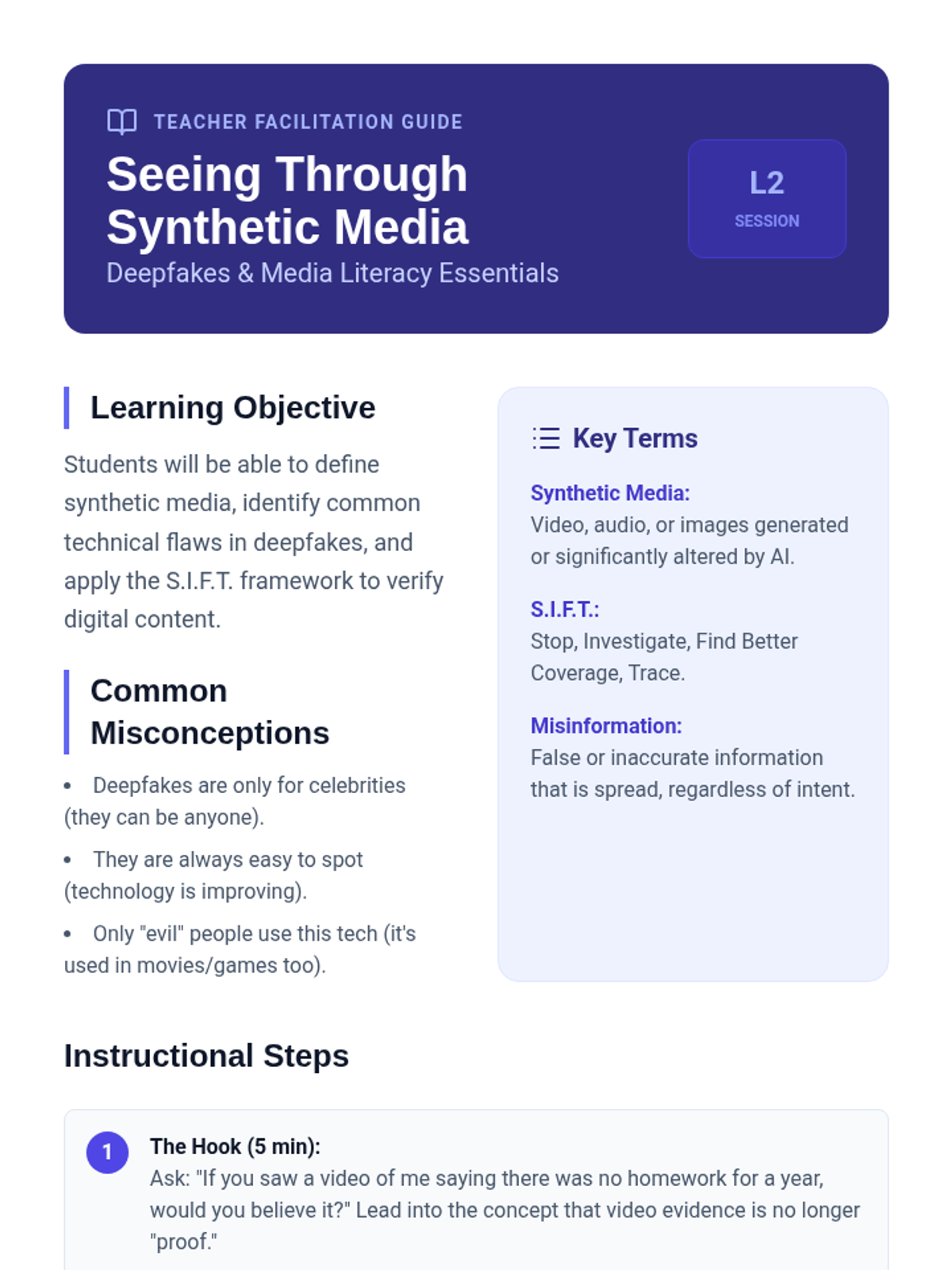
An exploration of synthetic media and deepfakes, teaching students to critically evaluate digital content and understand the ethical risks of misinformation.
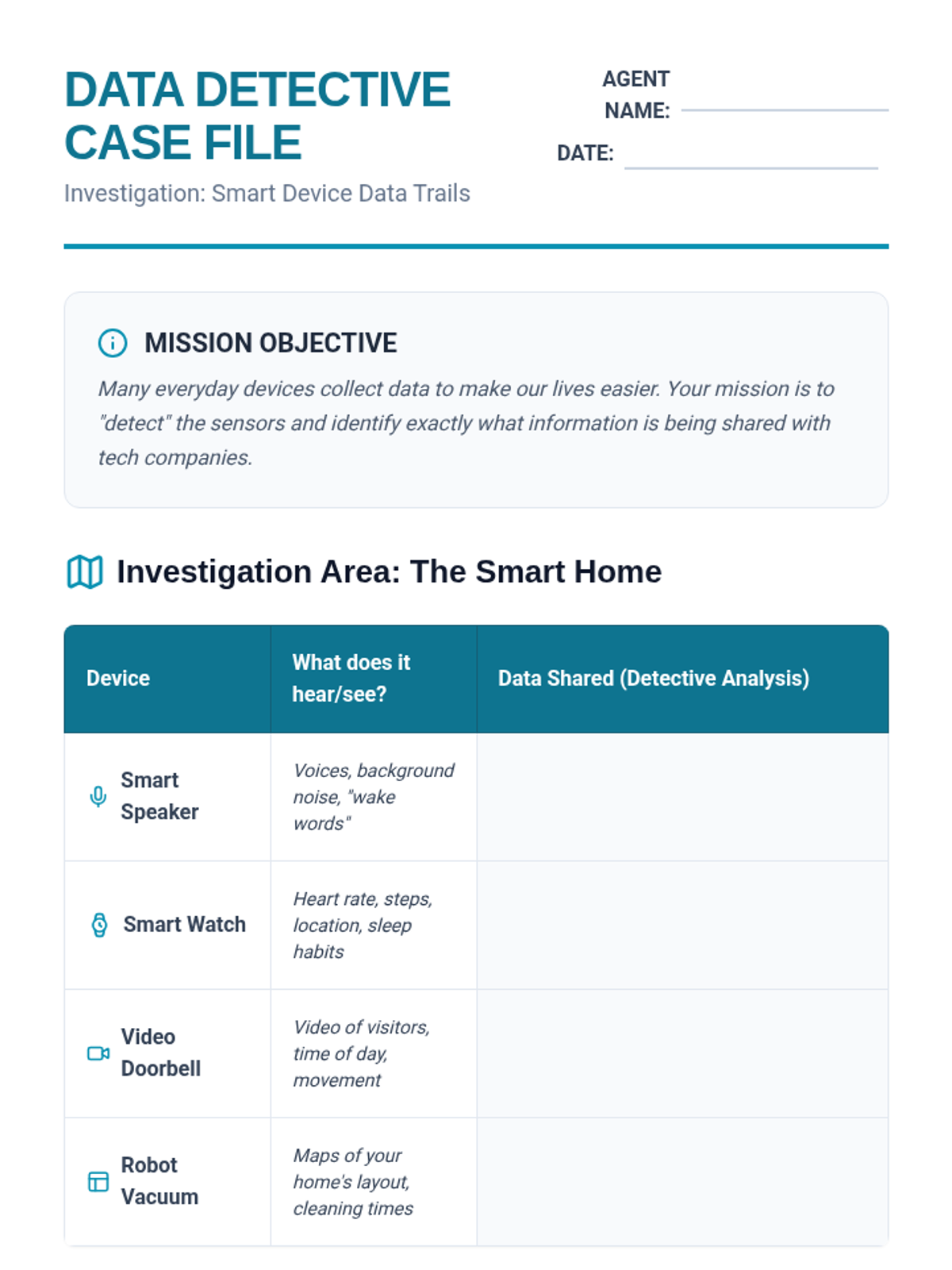
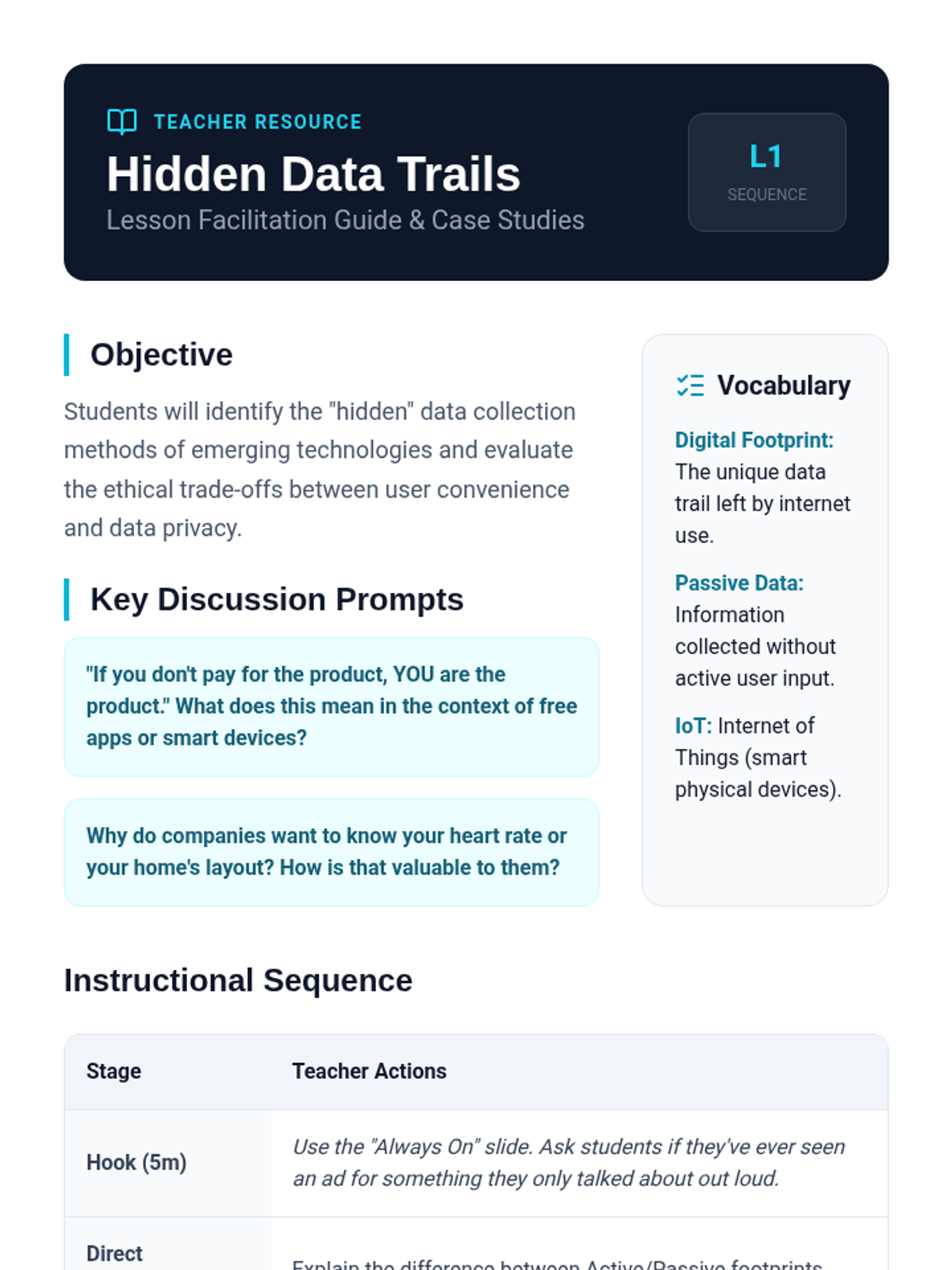
Students investigate how smart devices and AI assistants collect personal data, analyzing the trade-offs between technological convenience and individual privacy.
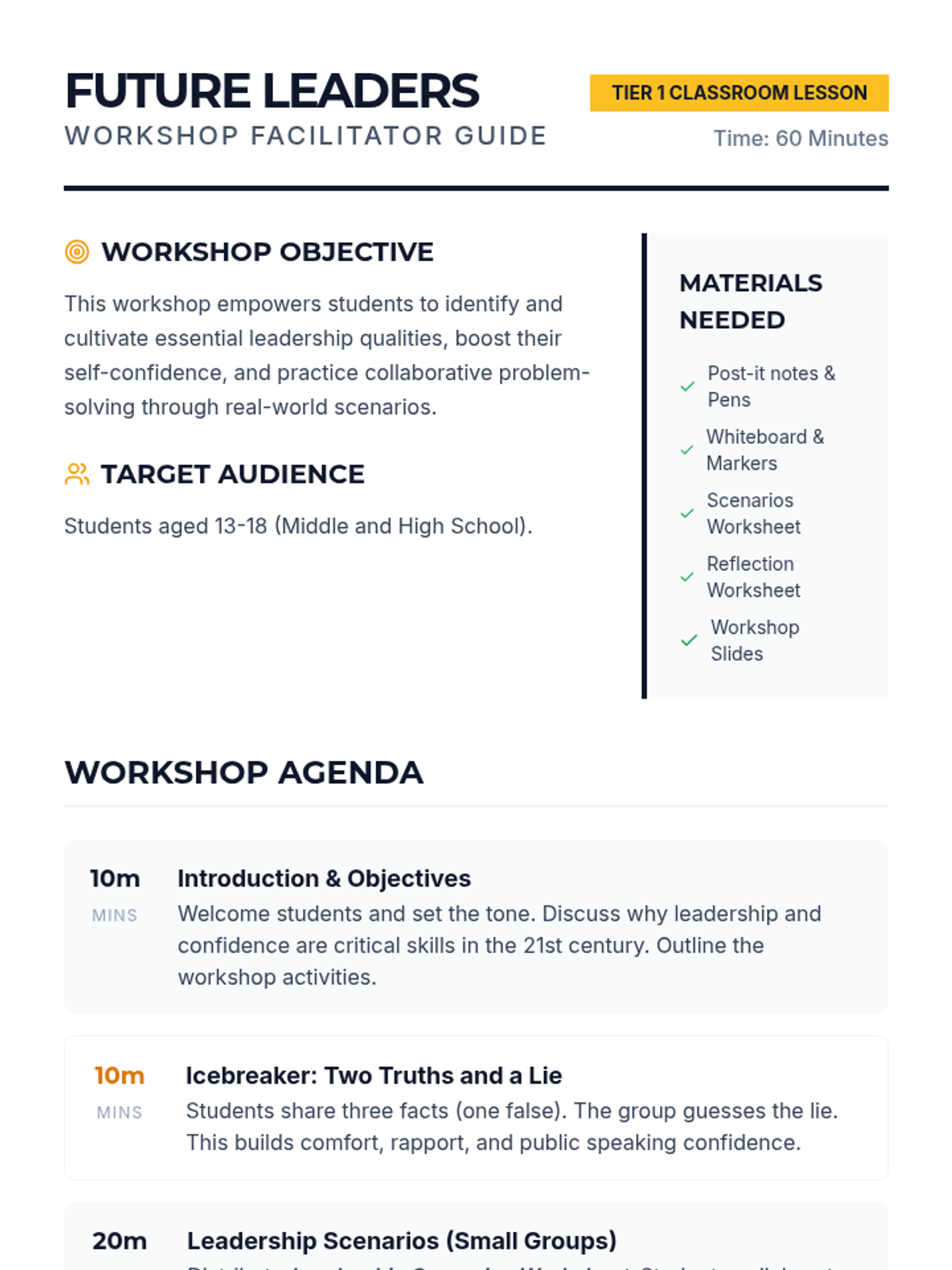
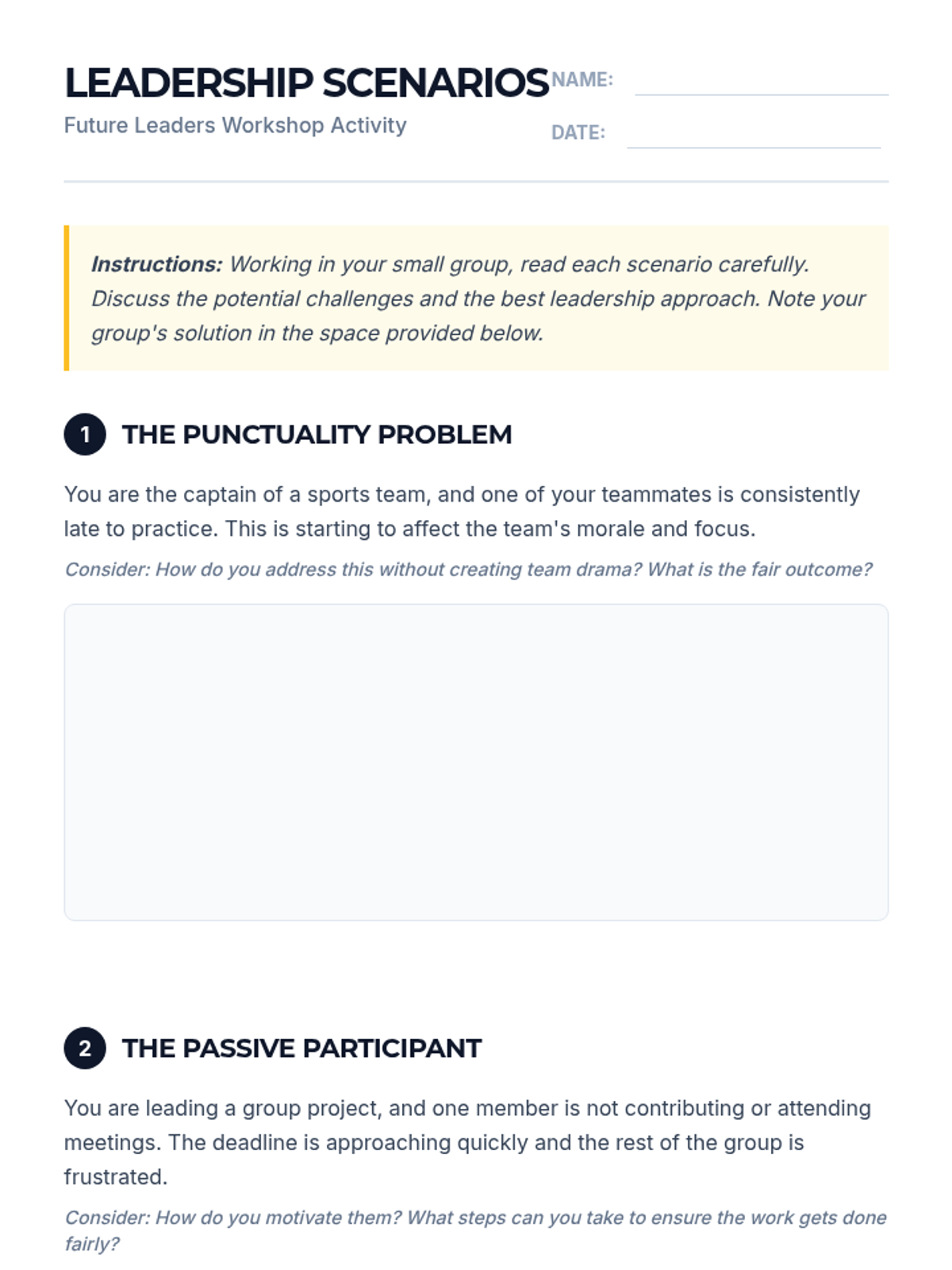
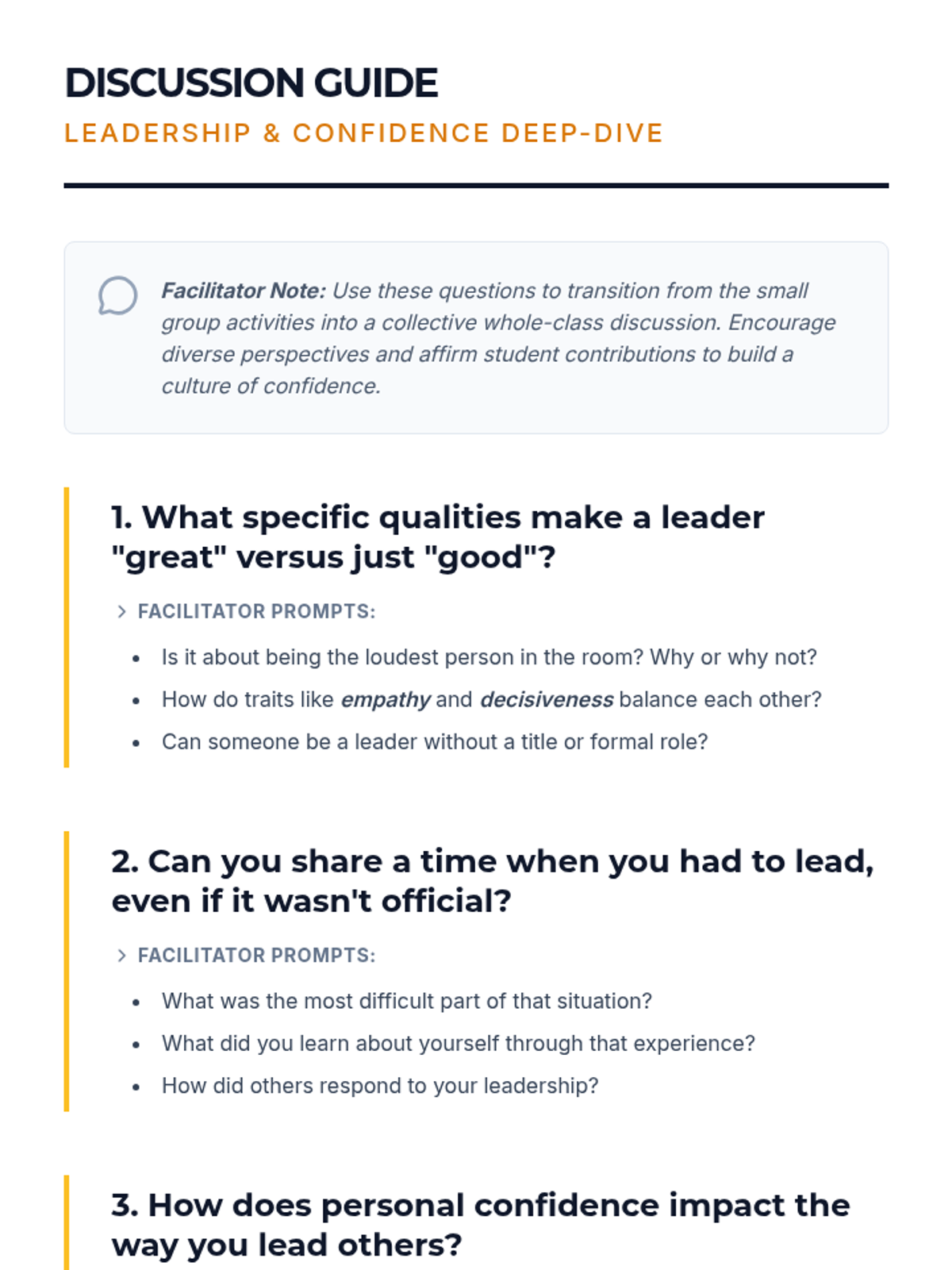
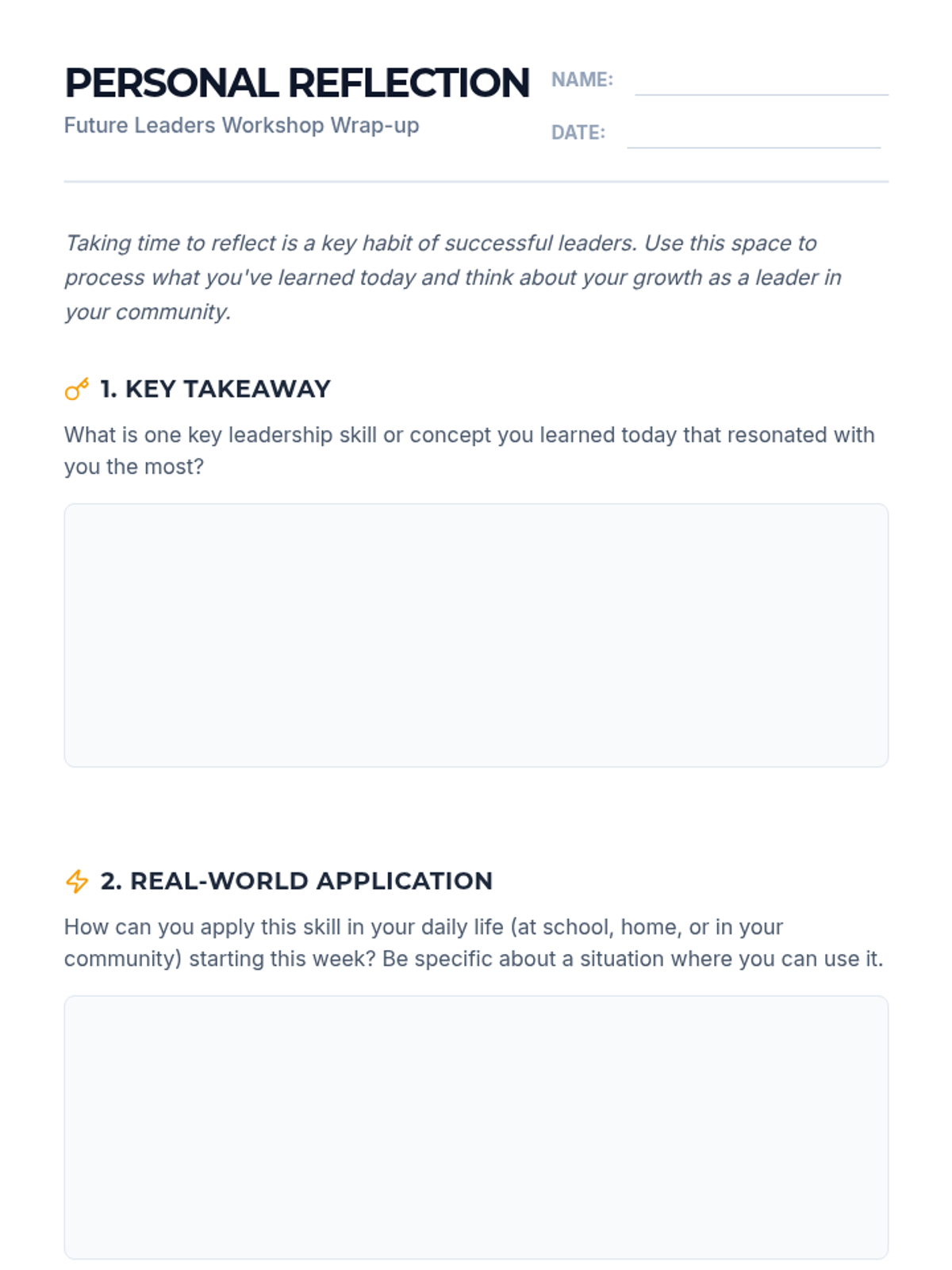
A 60-minute workshop for students aged 13-18 focused on developing essential leadership qualities, confidence, and conflict-resolution skills through collaborative scenarios and self-reflection.
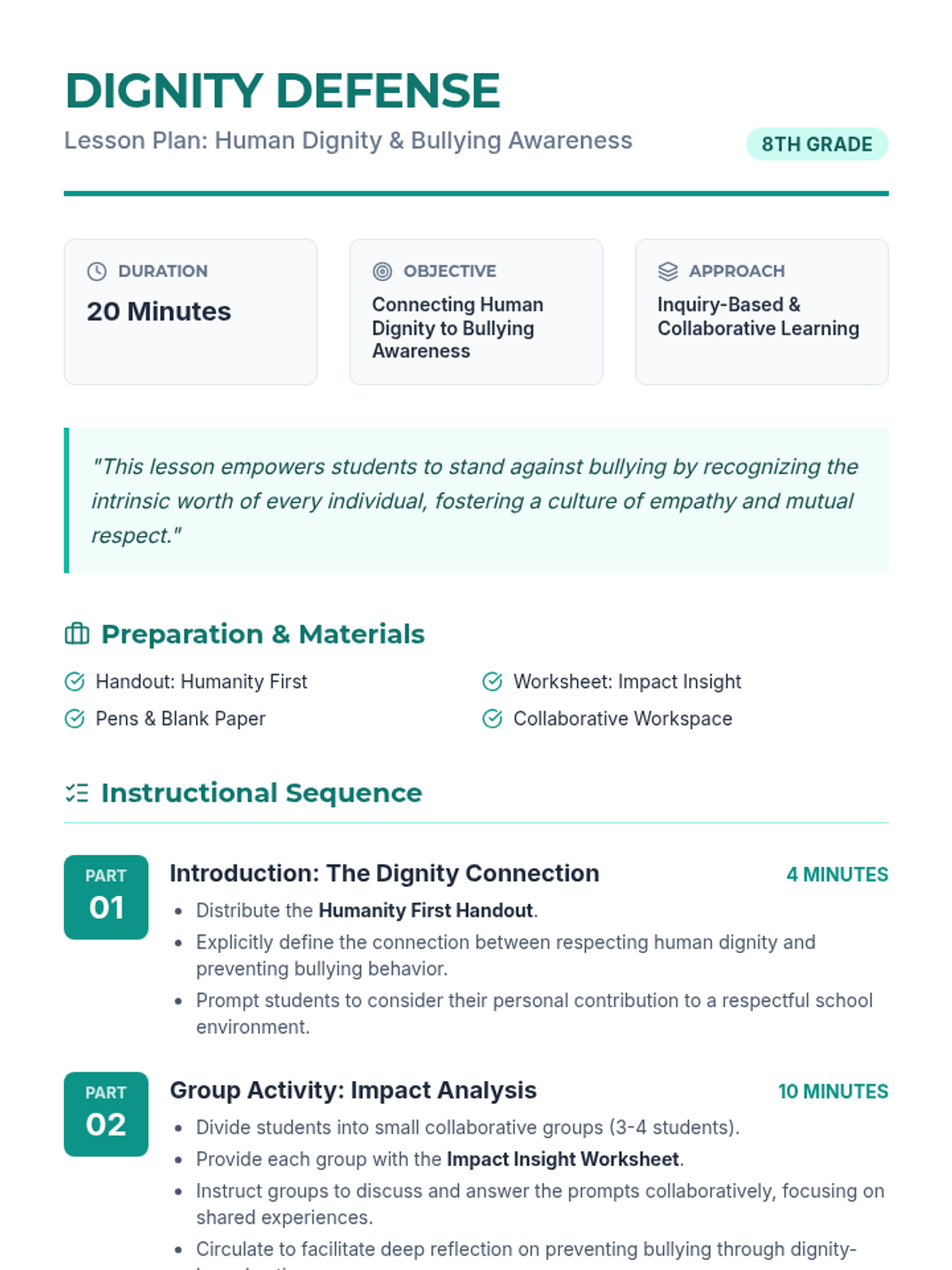
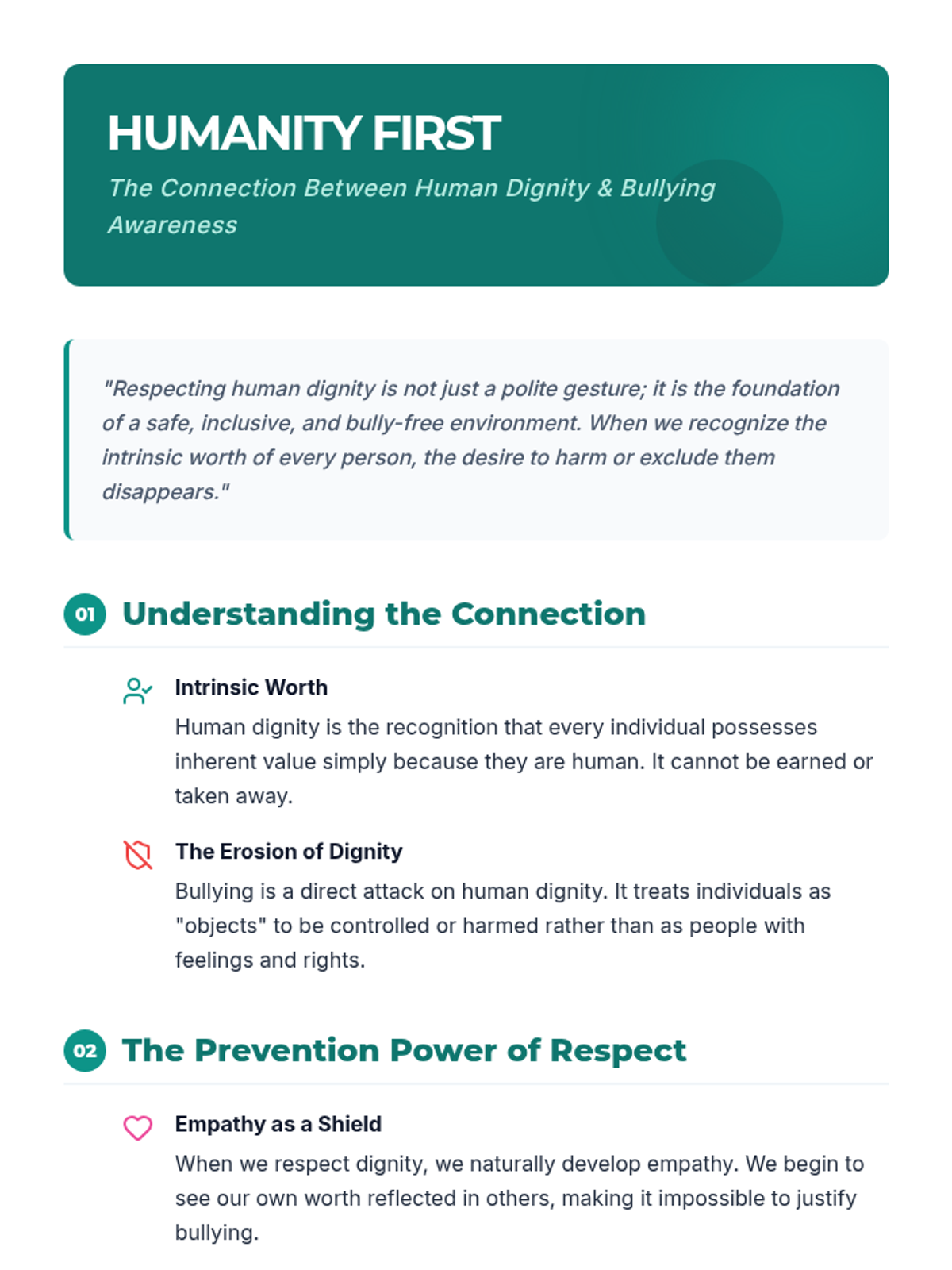
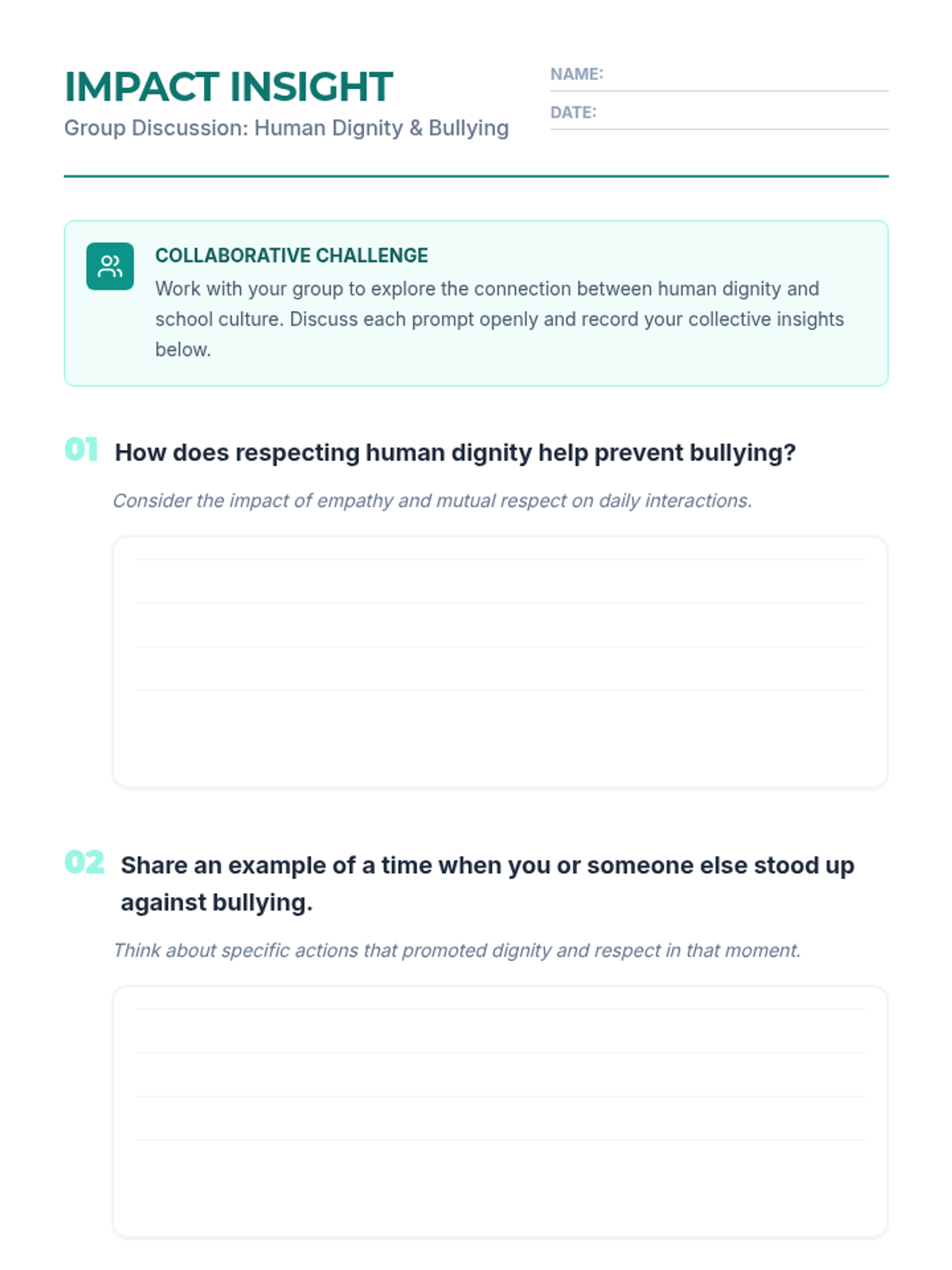
This lesson helps 8th-grade students understand the connection between human dignity and bullying awareness. By exploring how respecting human dignity can prevent bullying, students will learn to foster a supportive and inclusive environment. This lesson is important as it empowers students to stand against bullying and promotes empathy and respect for all individuals.
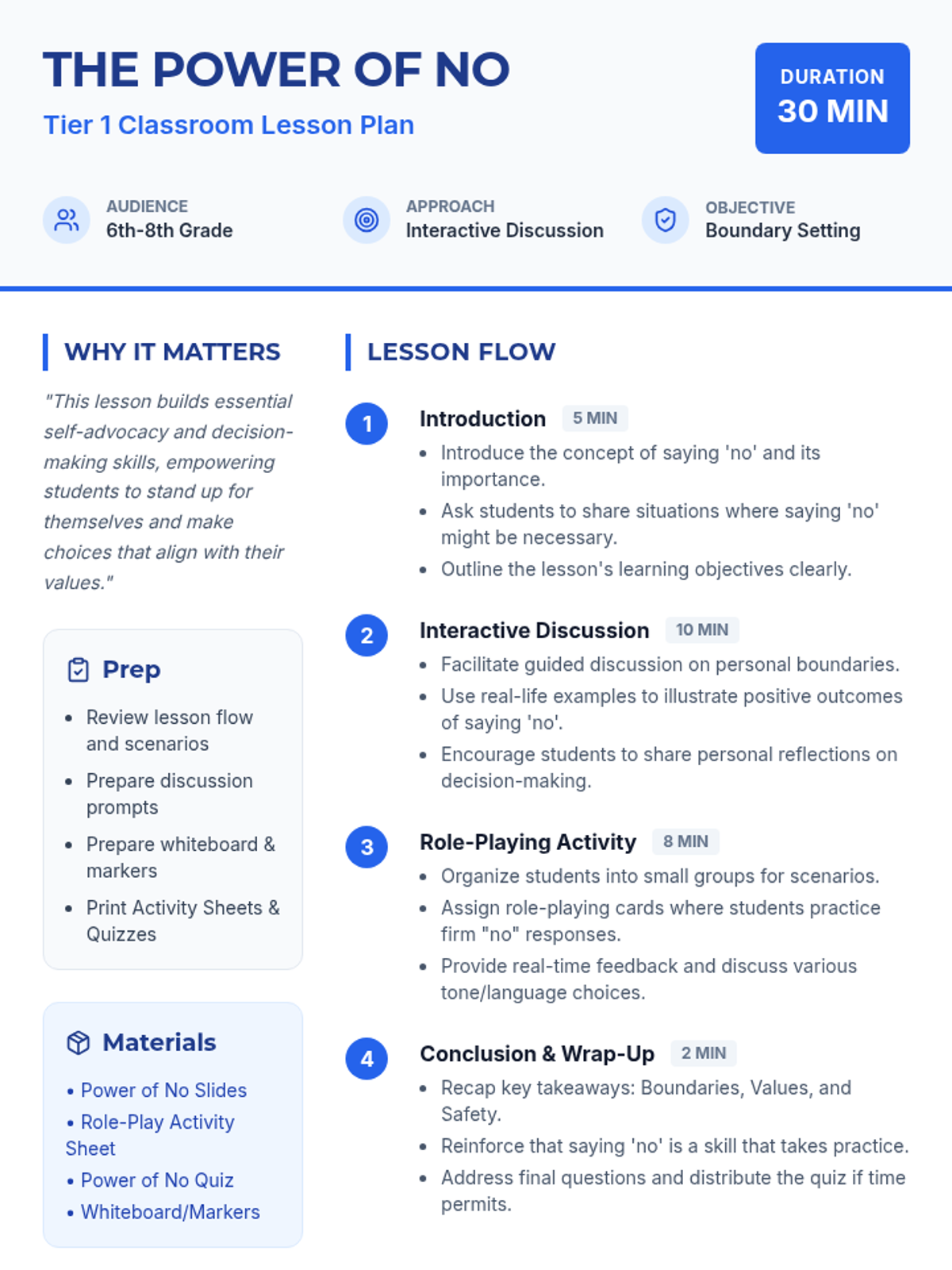
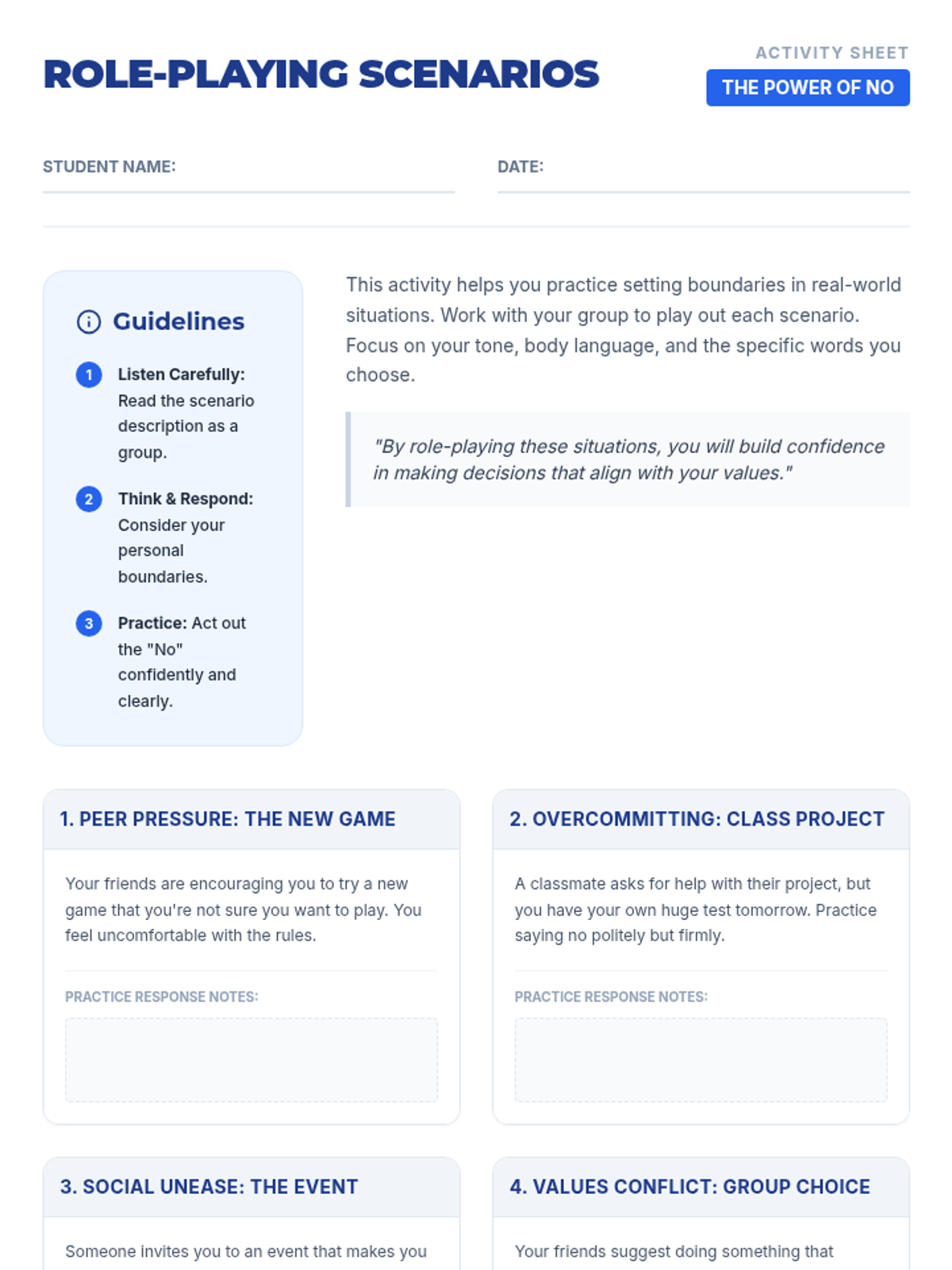
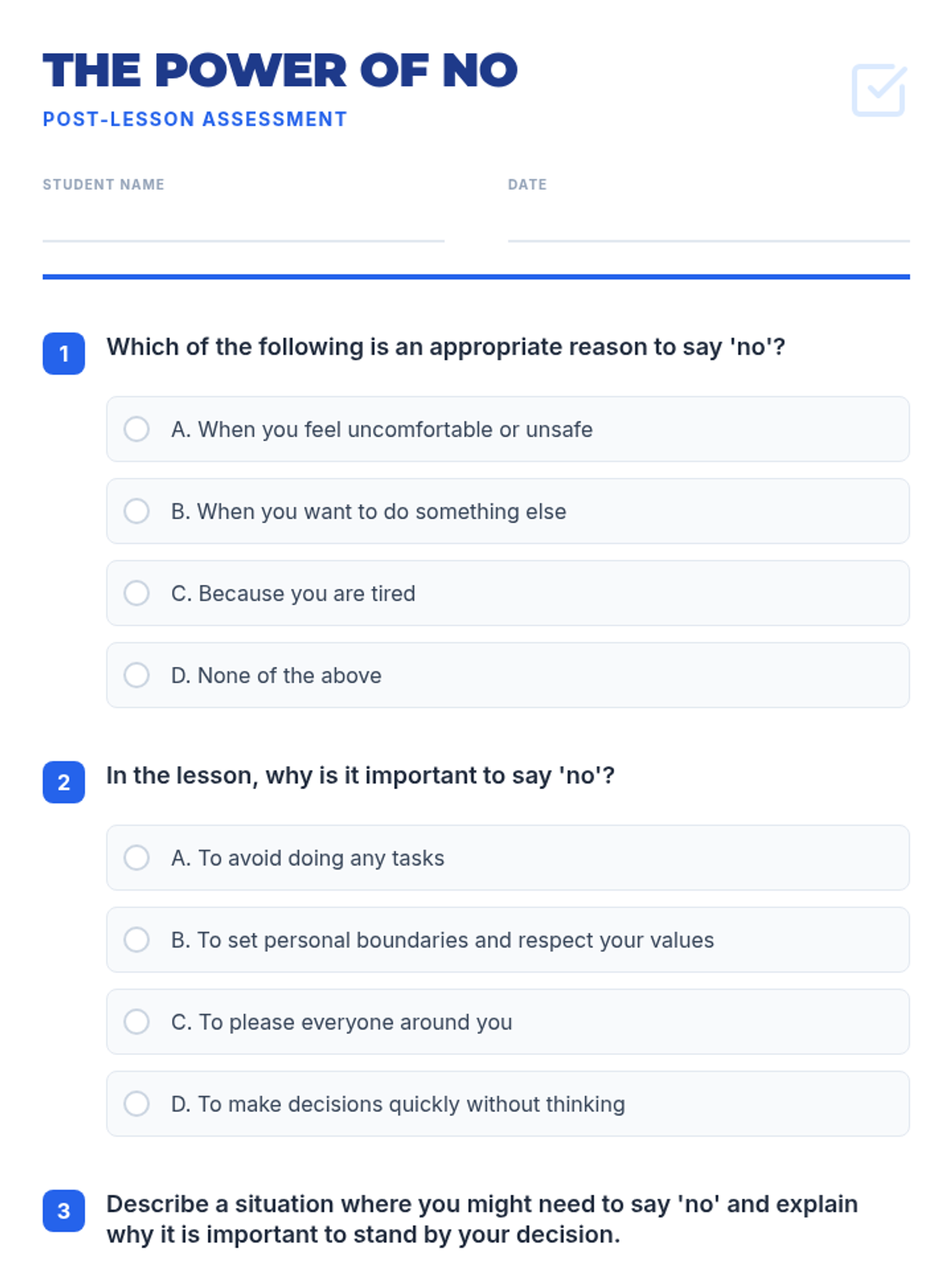
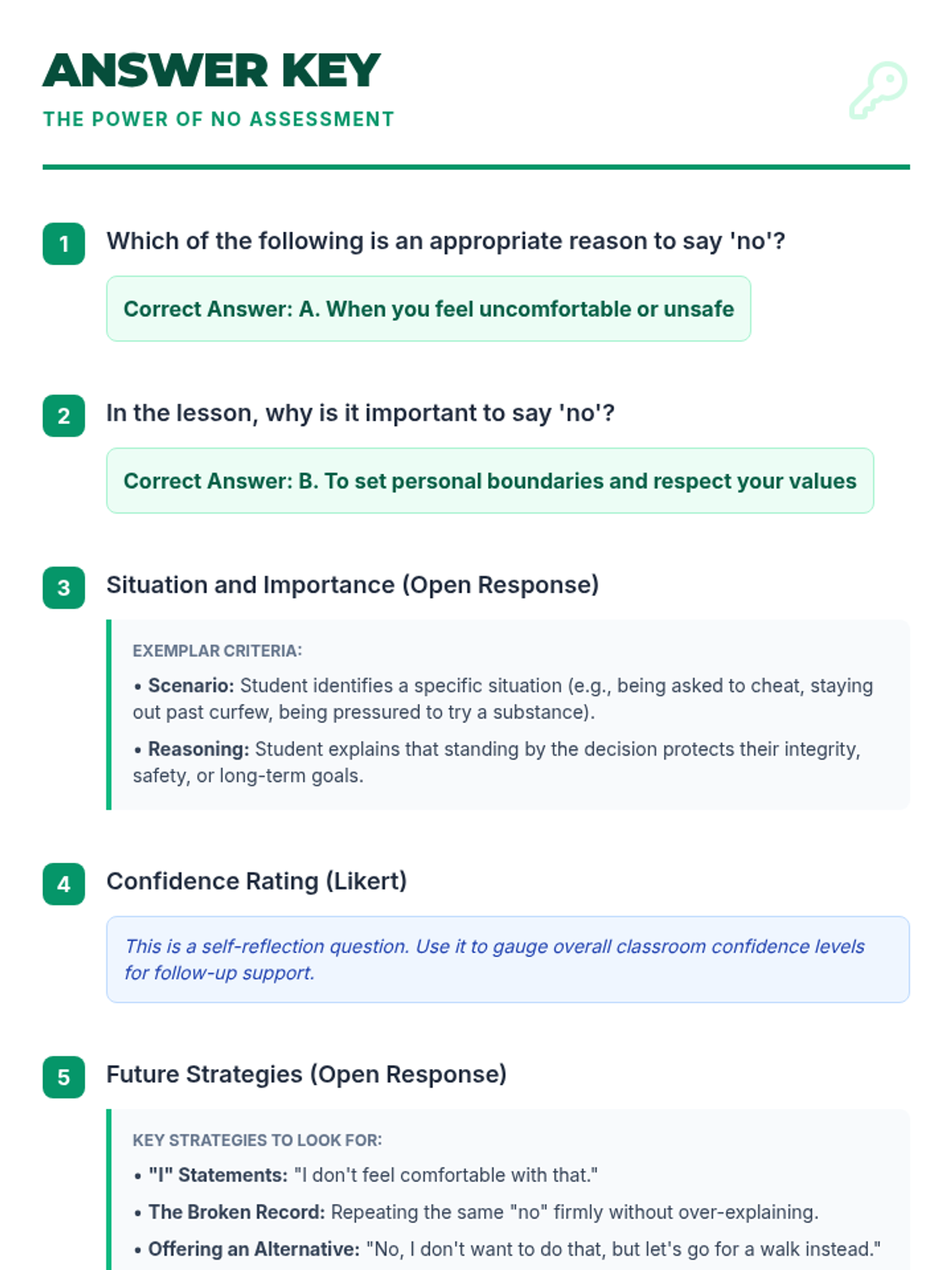
A 30-minute Tier 1 lesson for 6th-grade students focused on building confidence in setting boundaries and saying 'no' to align with personal values.
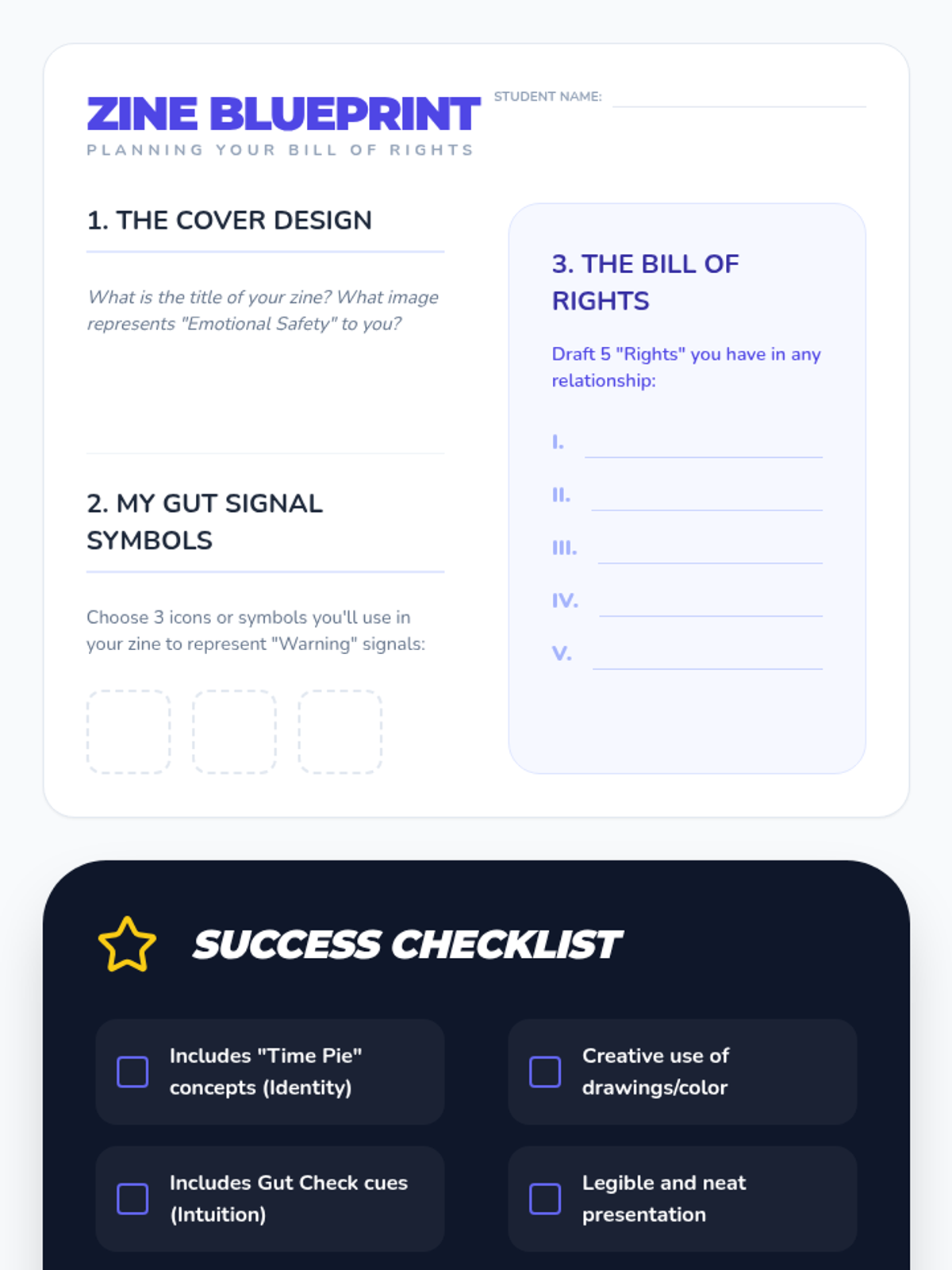
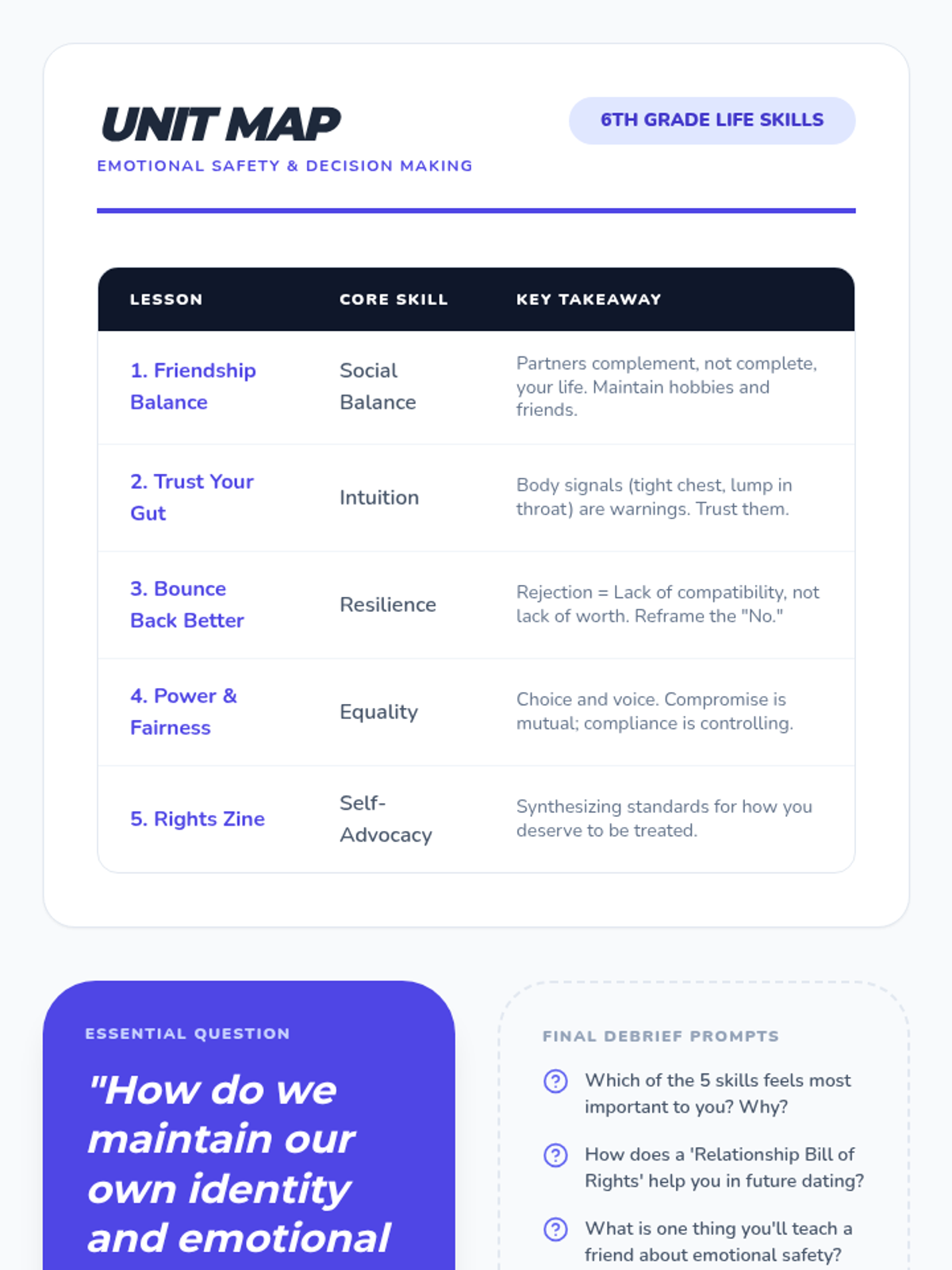
A cumulative project where students synthesize their learning into a personal Zine outlining their standards for emotional safety and relationship rights.
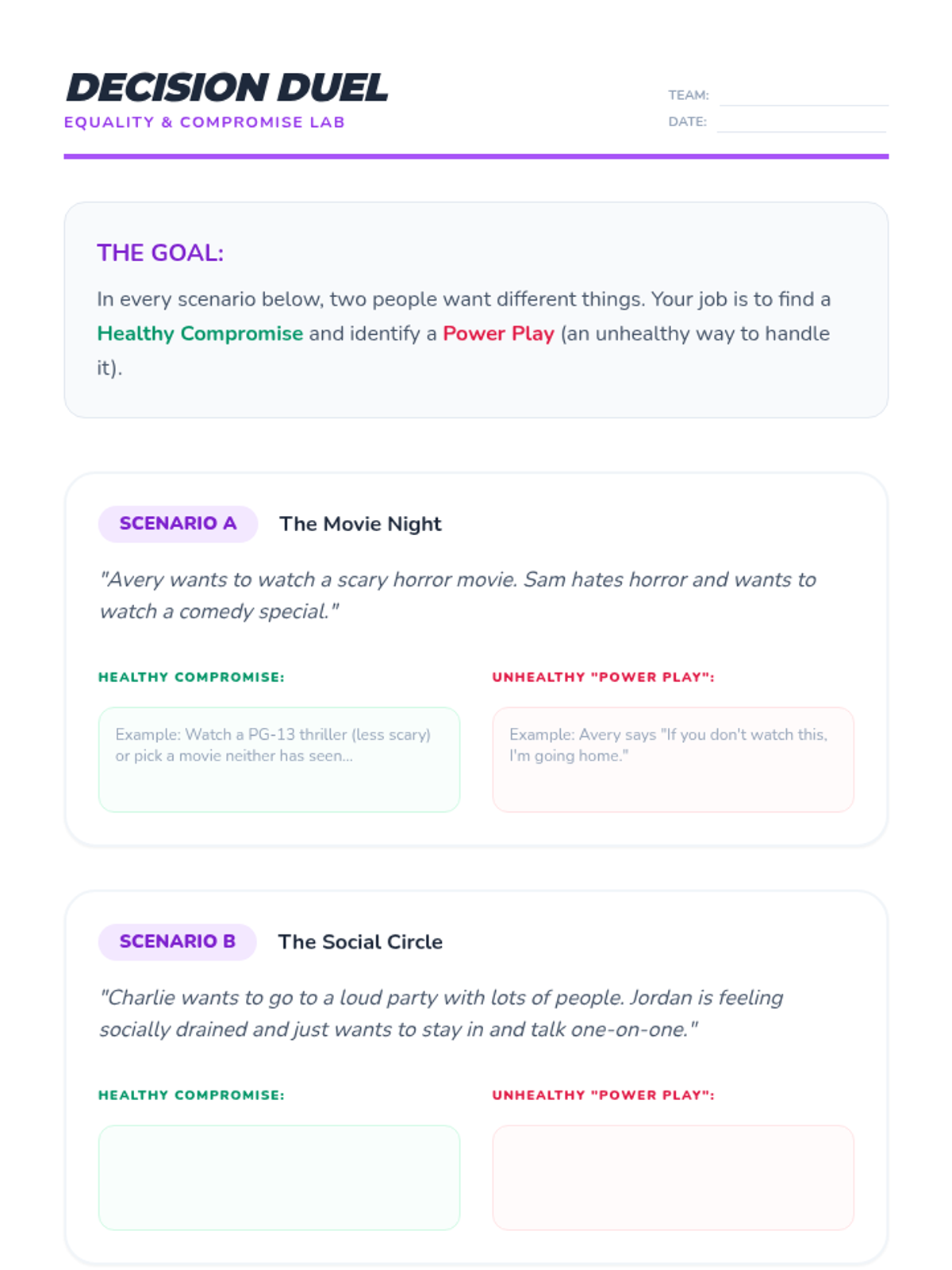
An investigation into power dynamics and equality in decision-making. Students identify healthy compromise and recognize subtle signs of control in relationships.
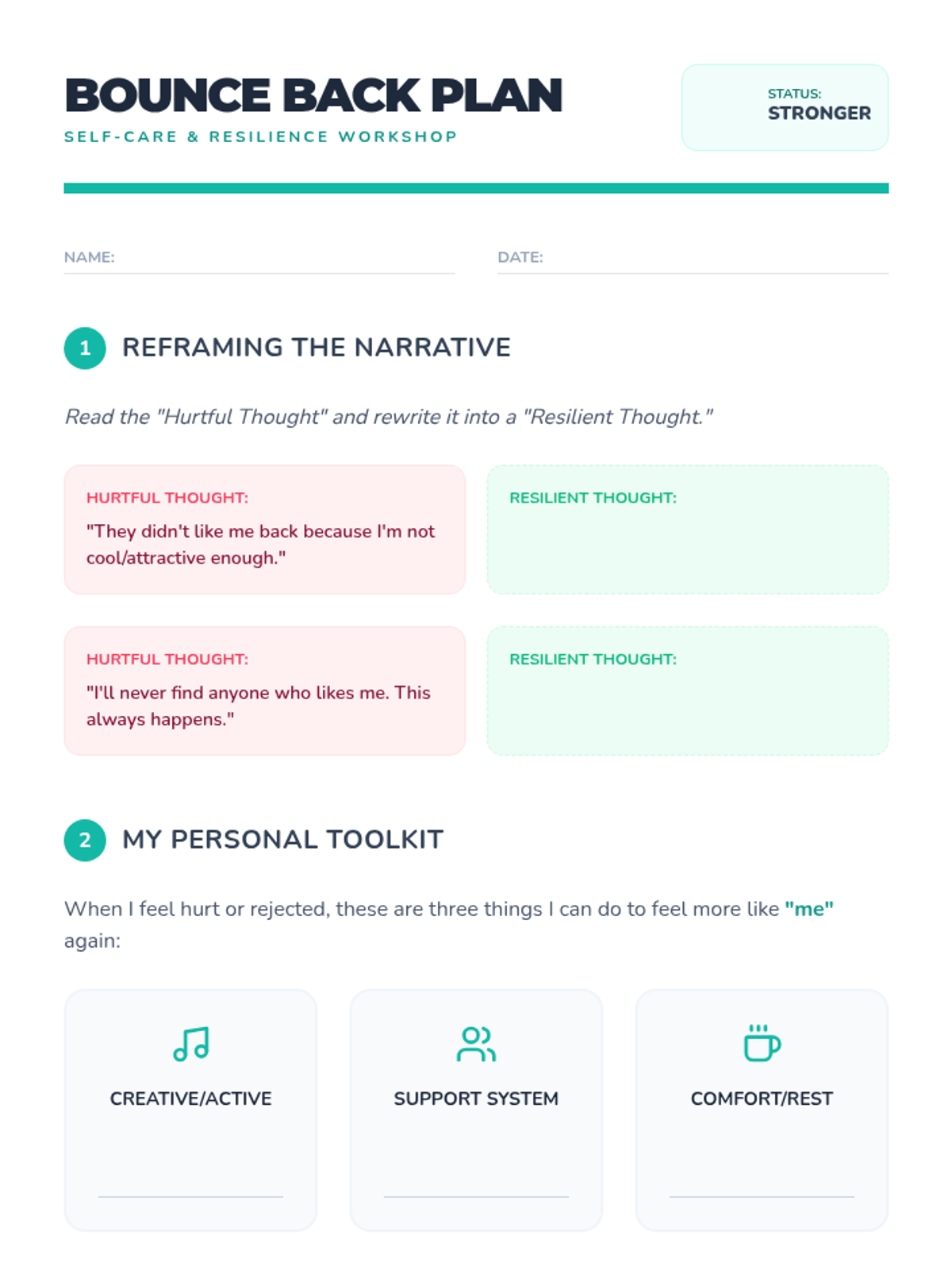
Students learn to view rejection as a matter of compatibility rather than personal failure. They develop self-care strategies and resilience techniques for handling emotional hurt.
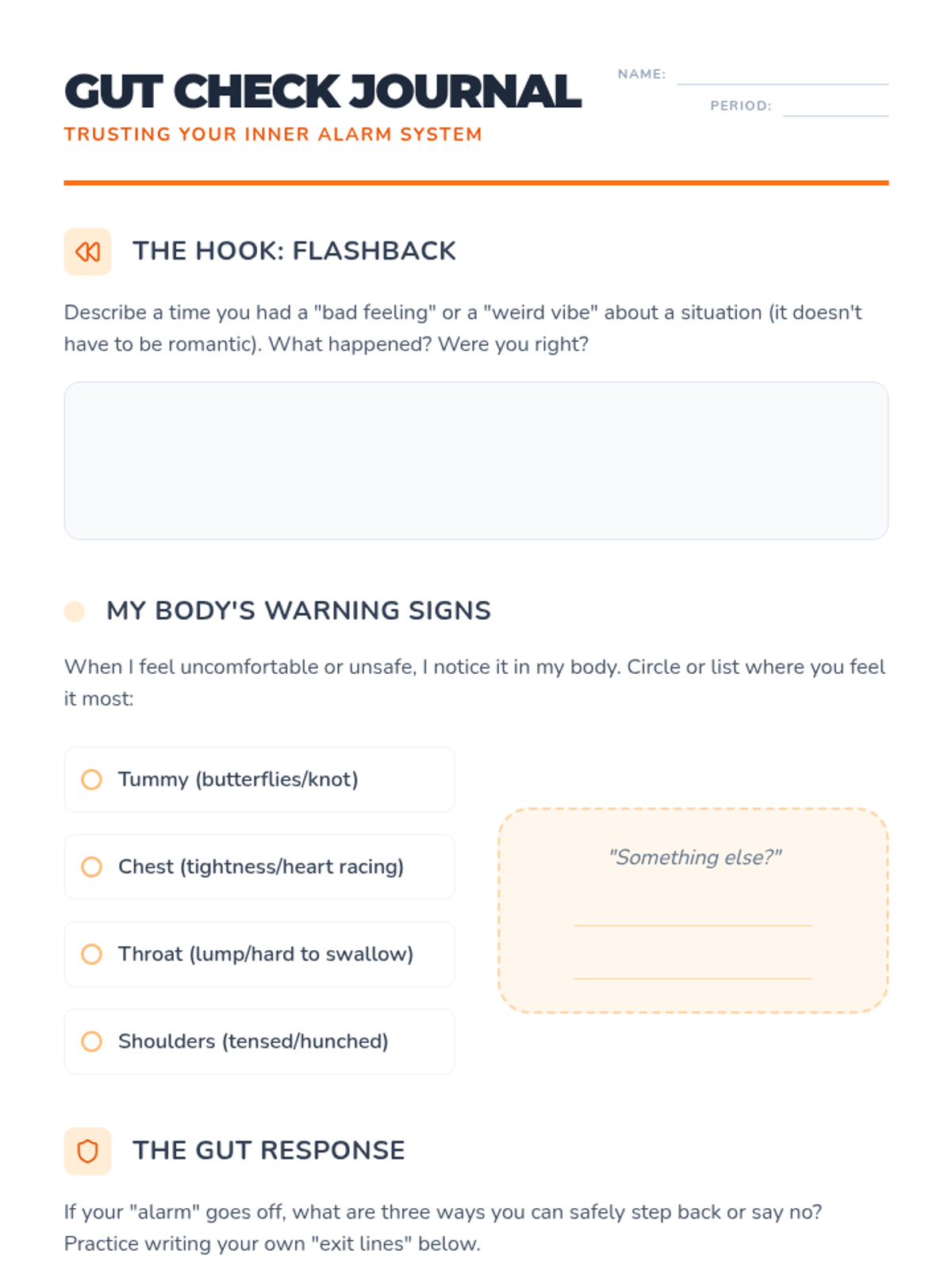
This lesson focuses on identifying physical and emotional cues that signal safety or discomfort. Students practice trusting their intuition in various social scenarios.
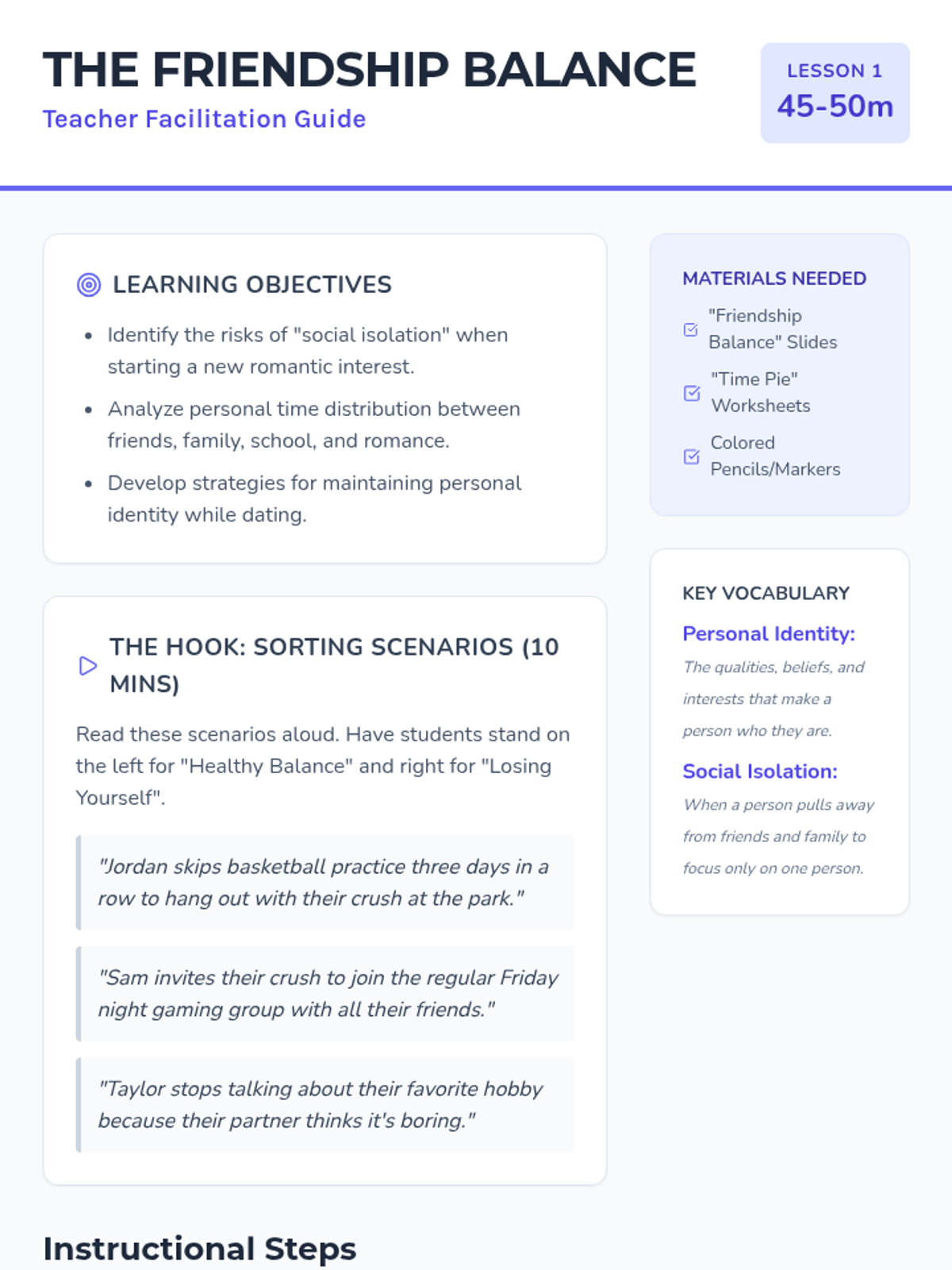
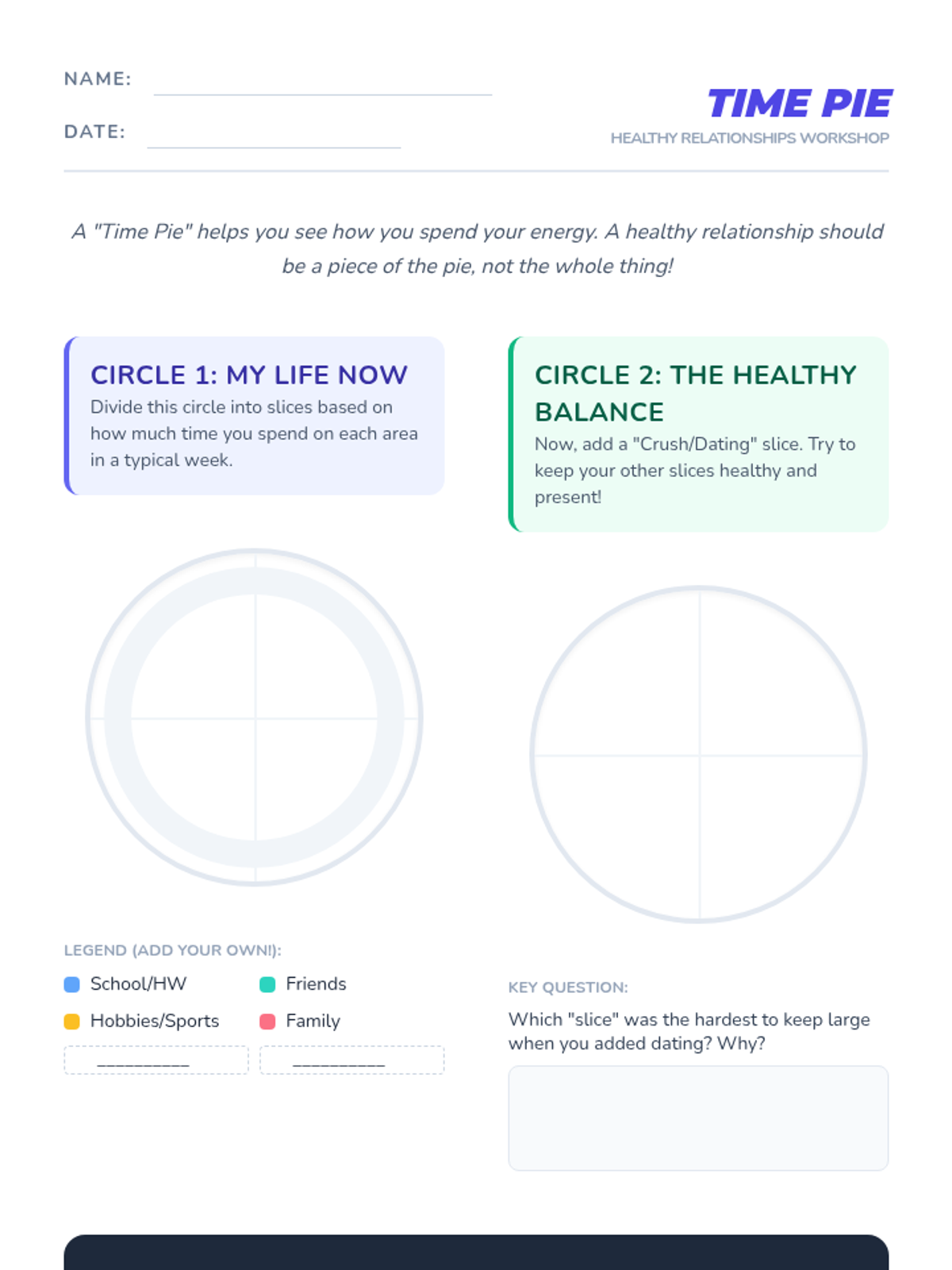
Students explore the importance of maintaining friendships and personal hobbies while experiencing romantic feelings. They use 'Time Pies' to visualize and plan a healthy social balance.
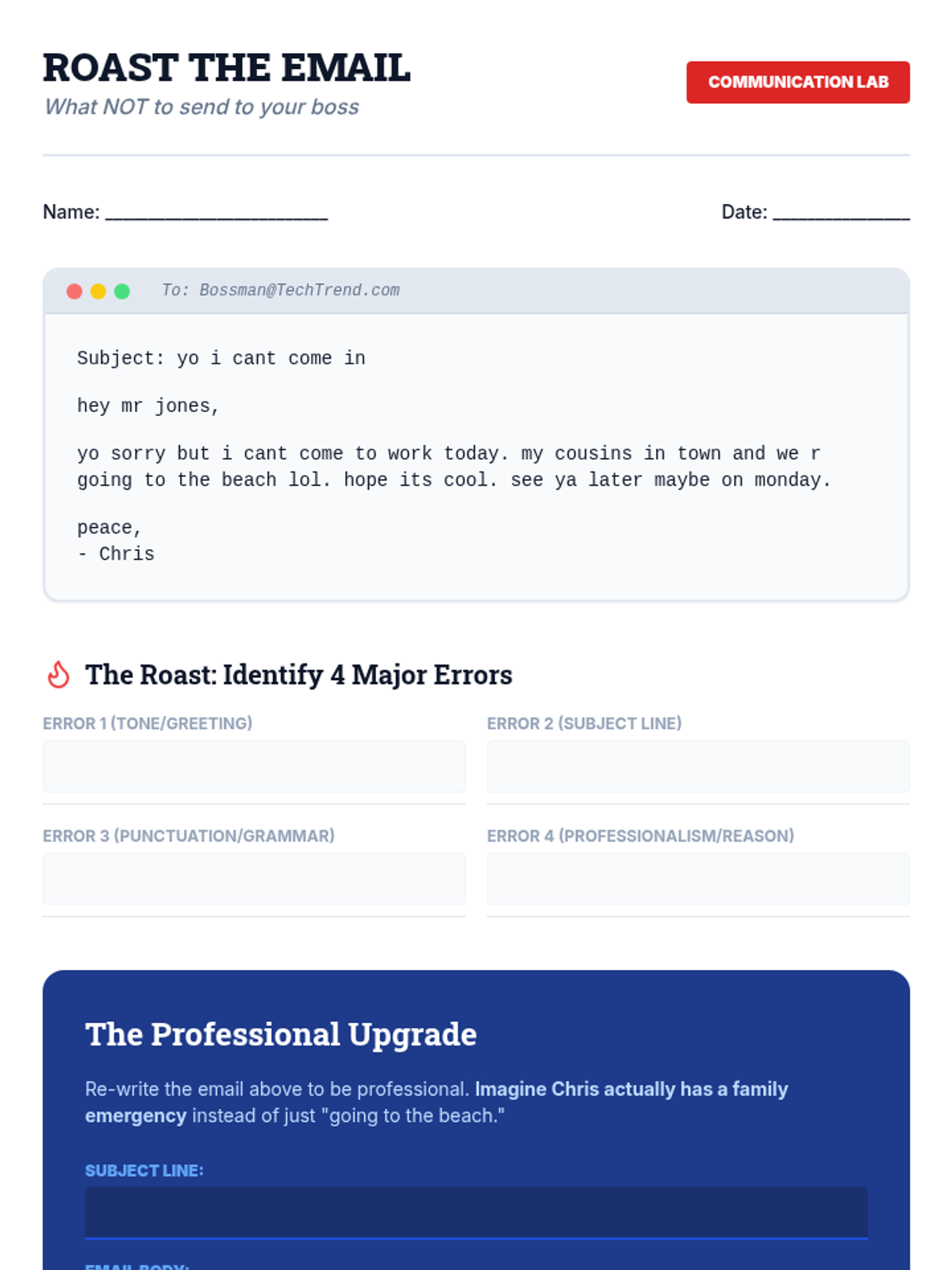
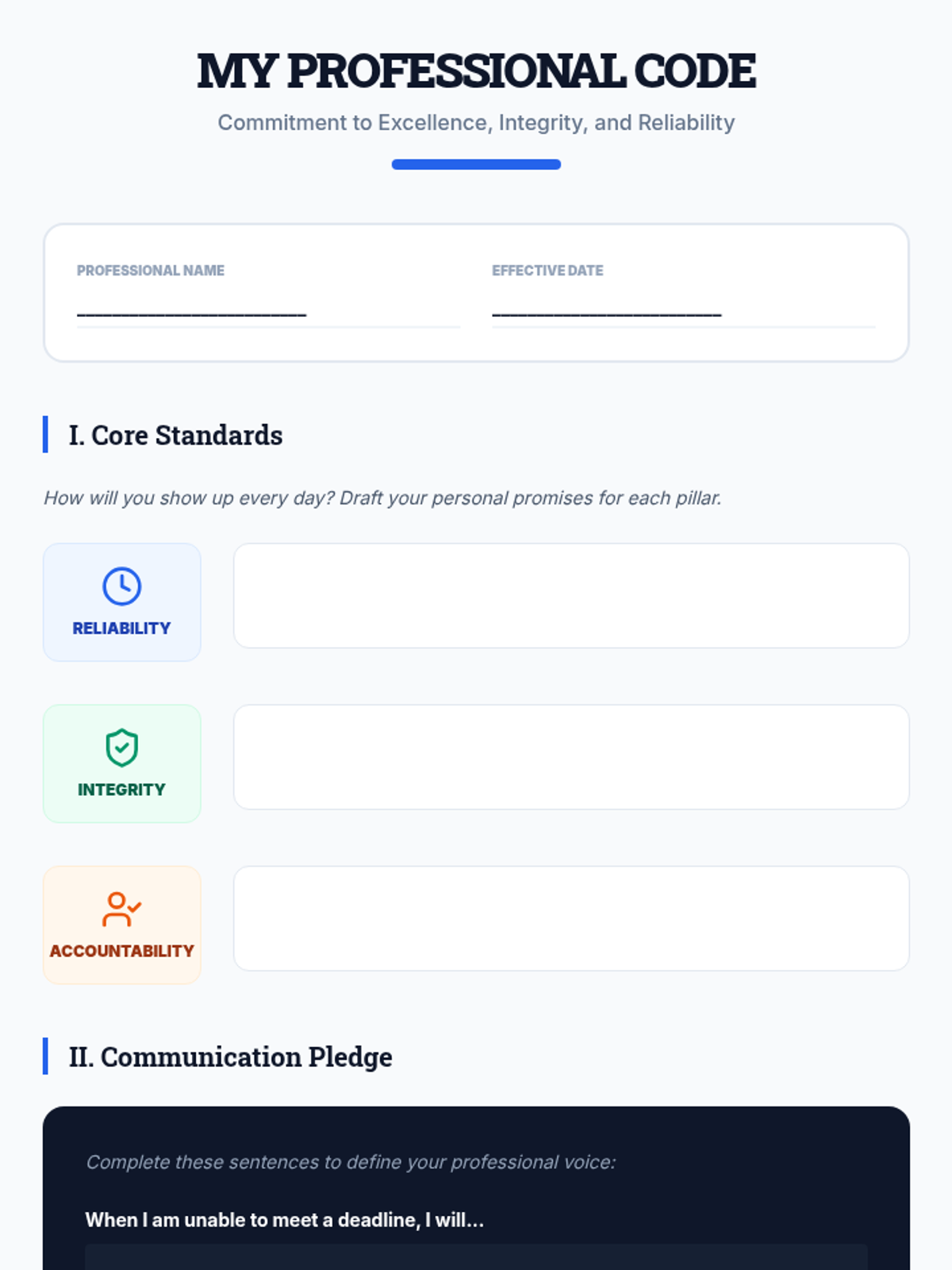
Students synthesize their understanding of work ethic by applying it to professional communication and etiquette. They practice drafting professional emails and create a personal Code of Professional Conduct.
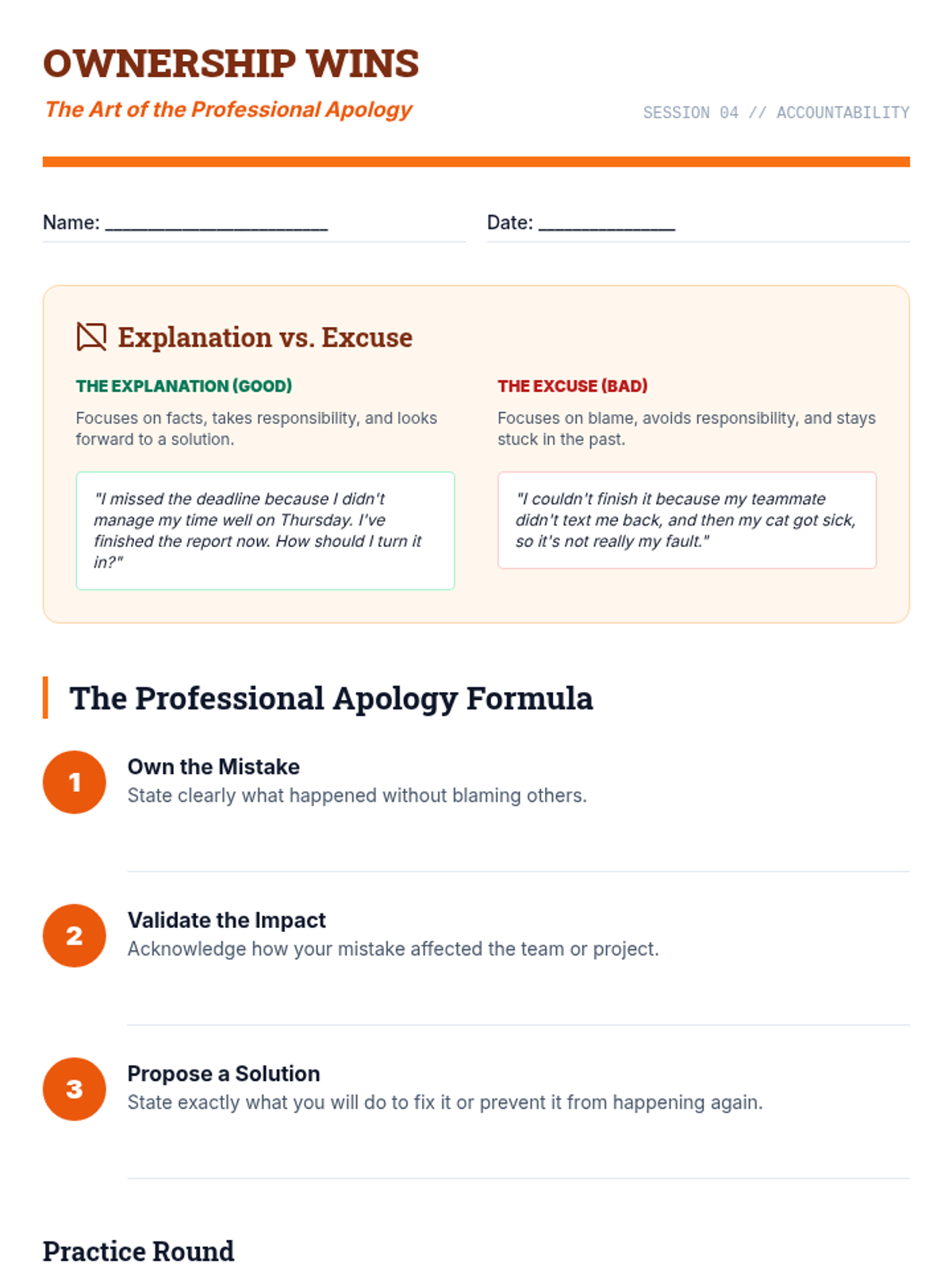
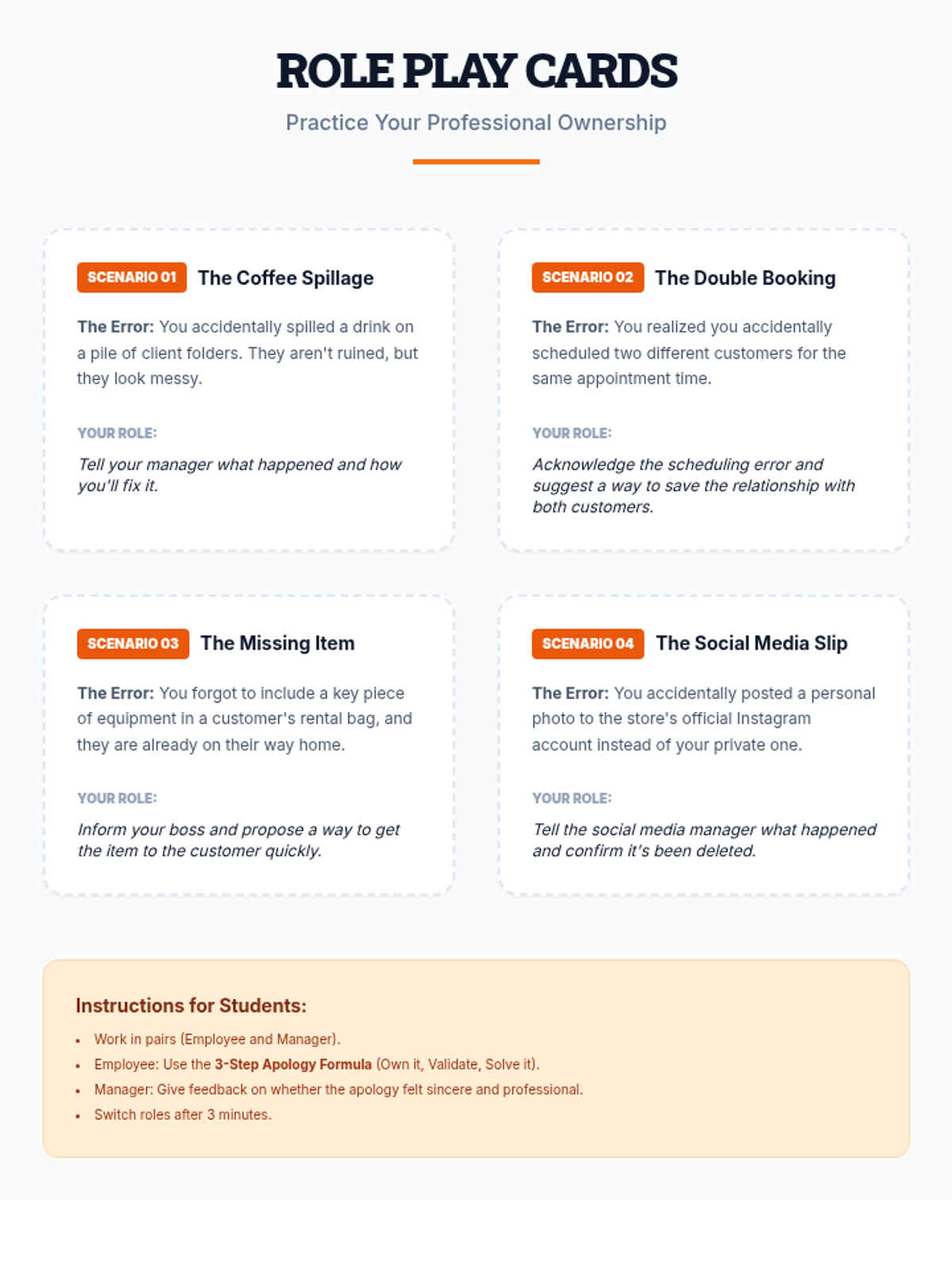
Focusing on the difficult skill of owning mistakes, this lesson differentiates between explanations and excuses. Students practice role-play exercises to apologize effectively and propose solutions.
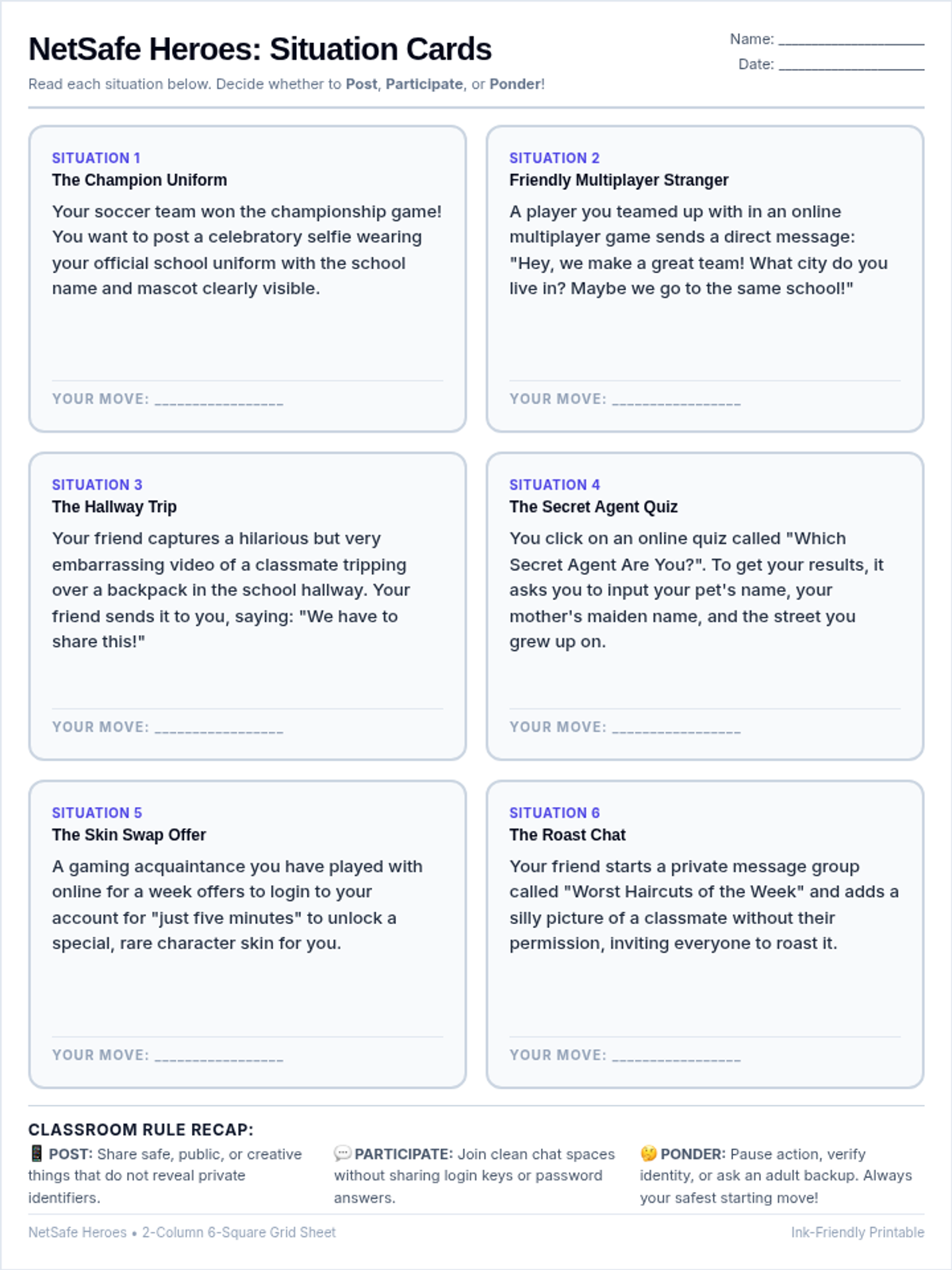
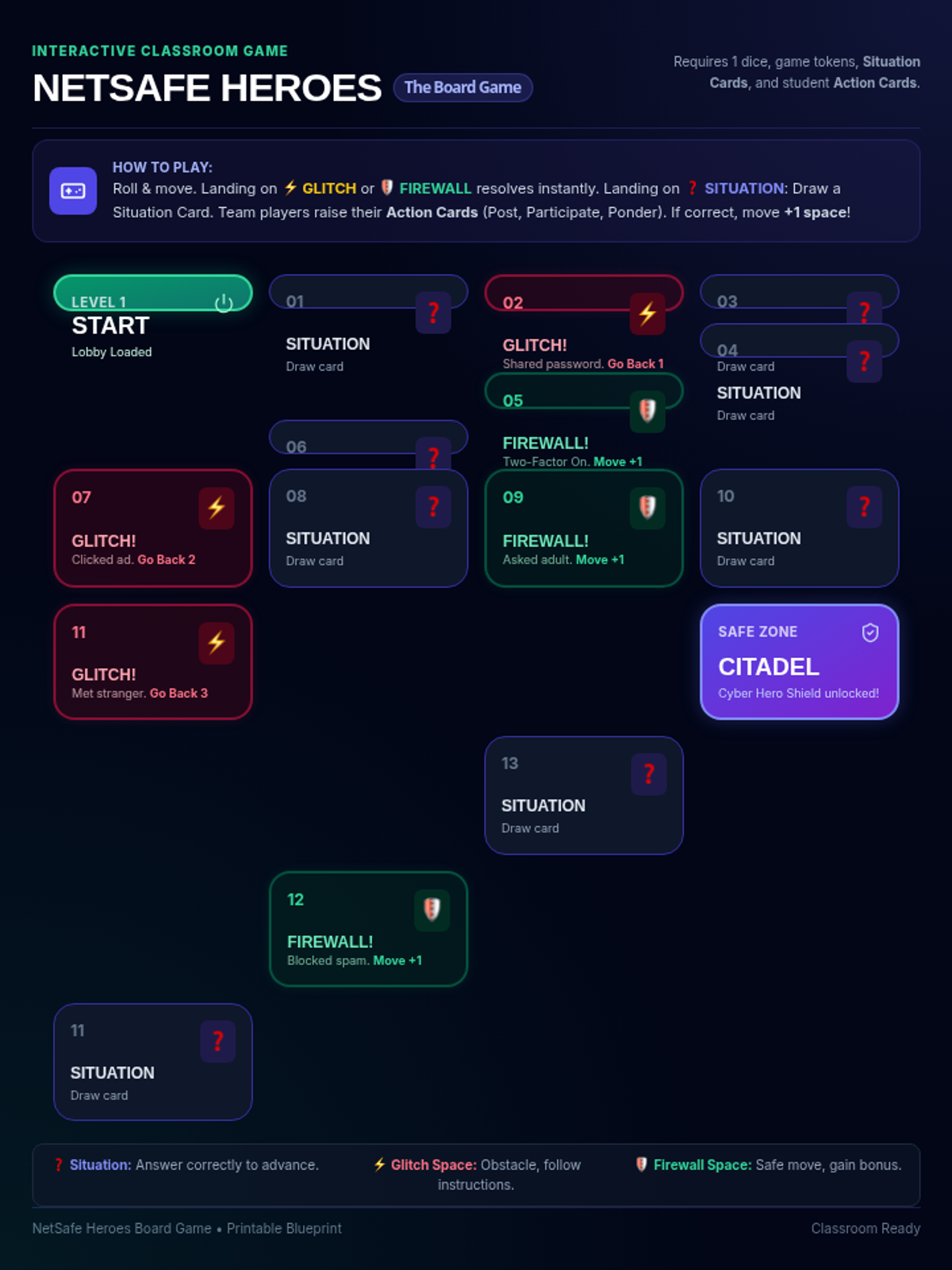
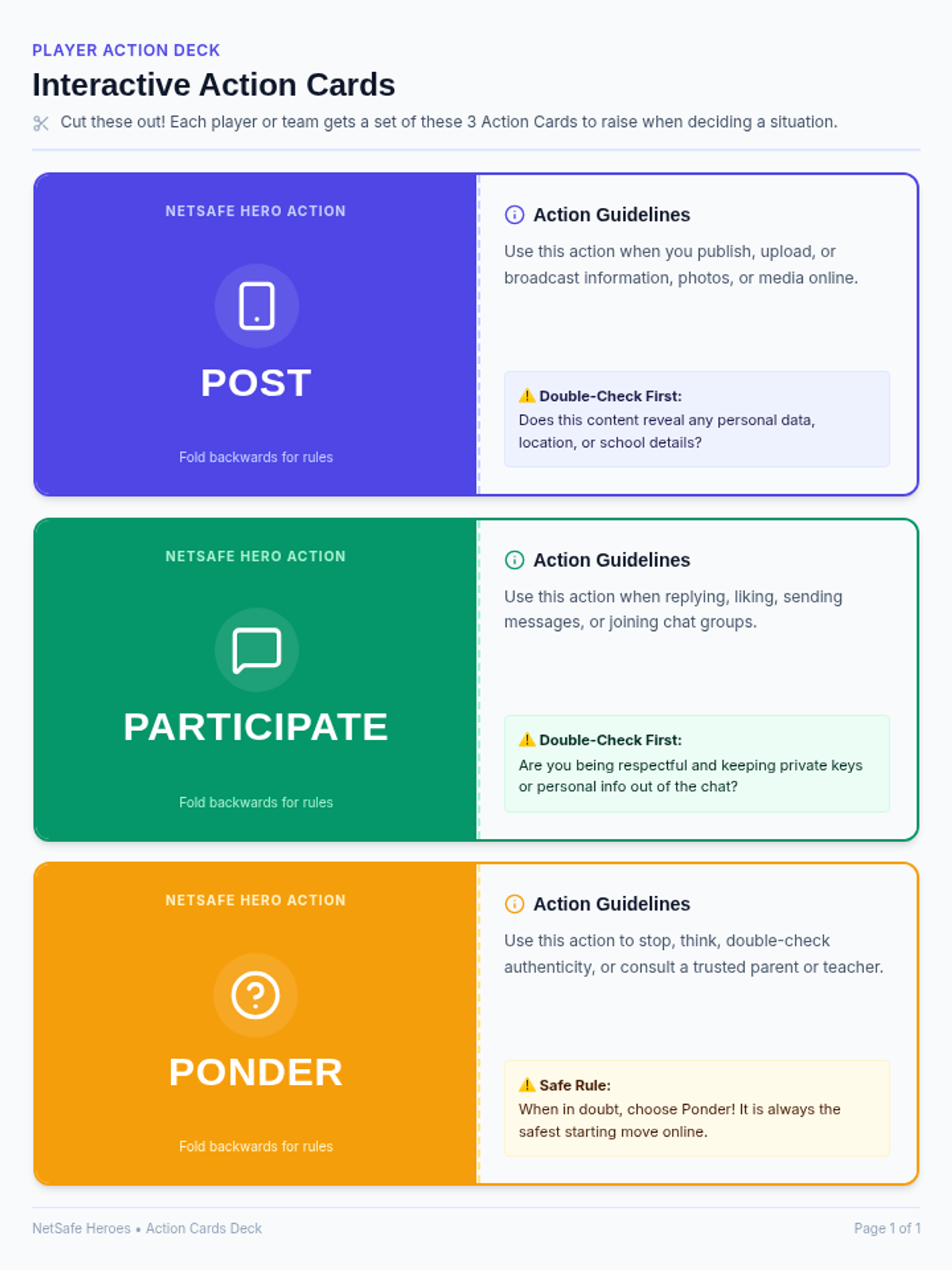
A lesson focusing on critical digital citizenship skills, helping students navigate the web safely and make informed choices when posting, interacting, or pondering online situations.
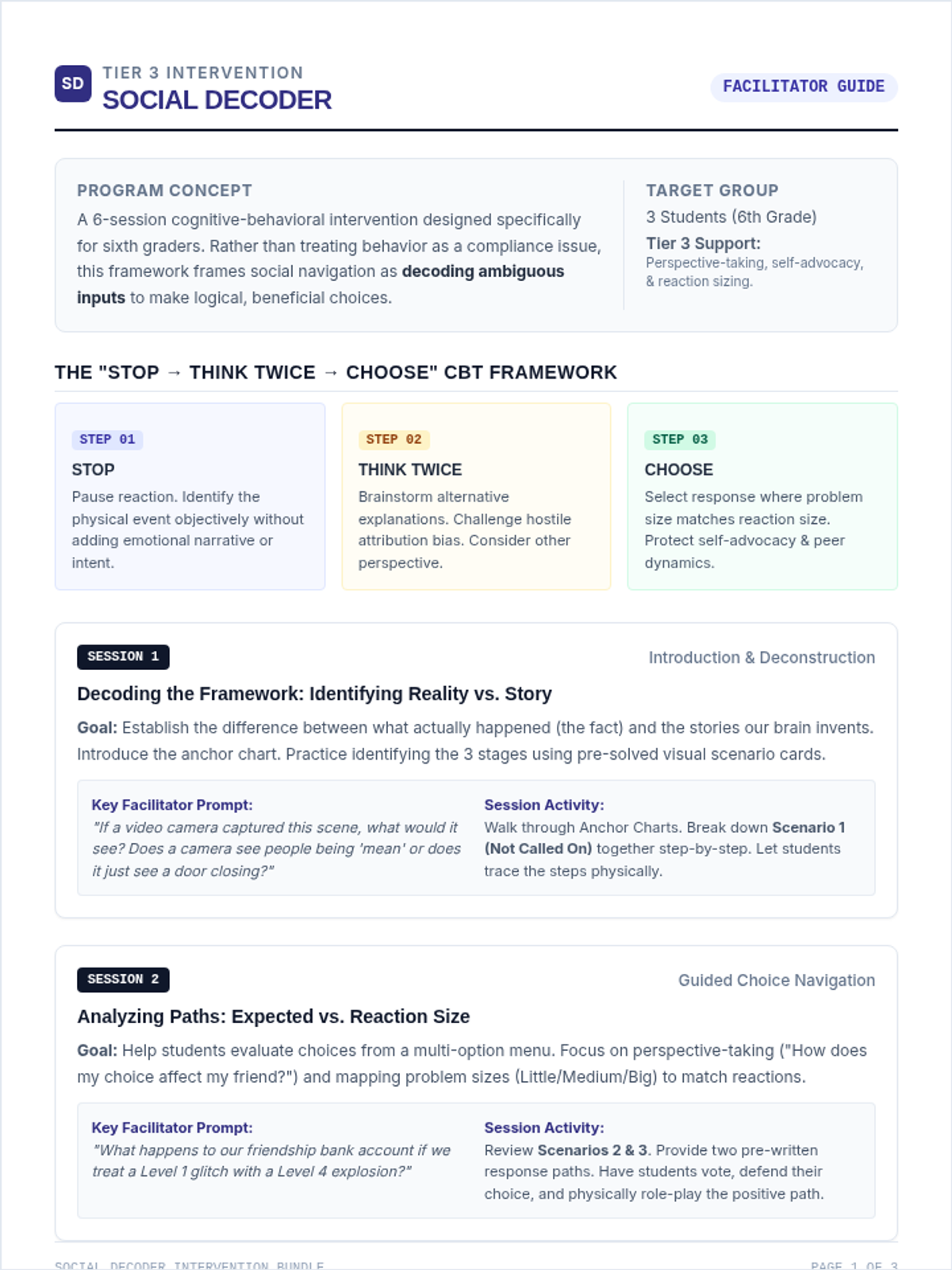
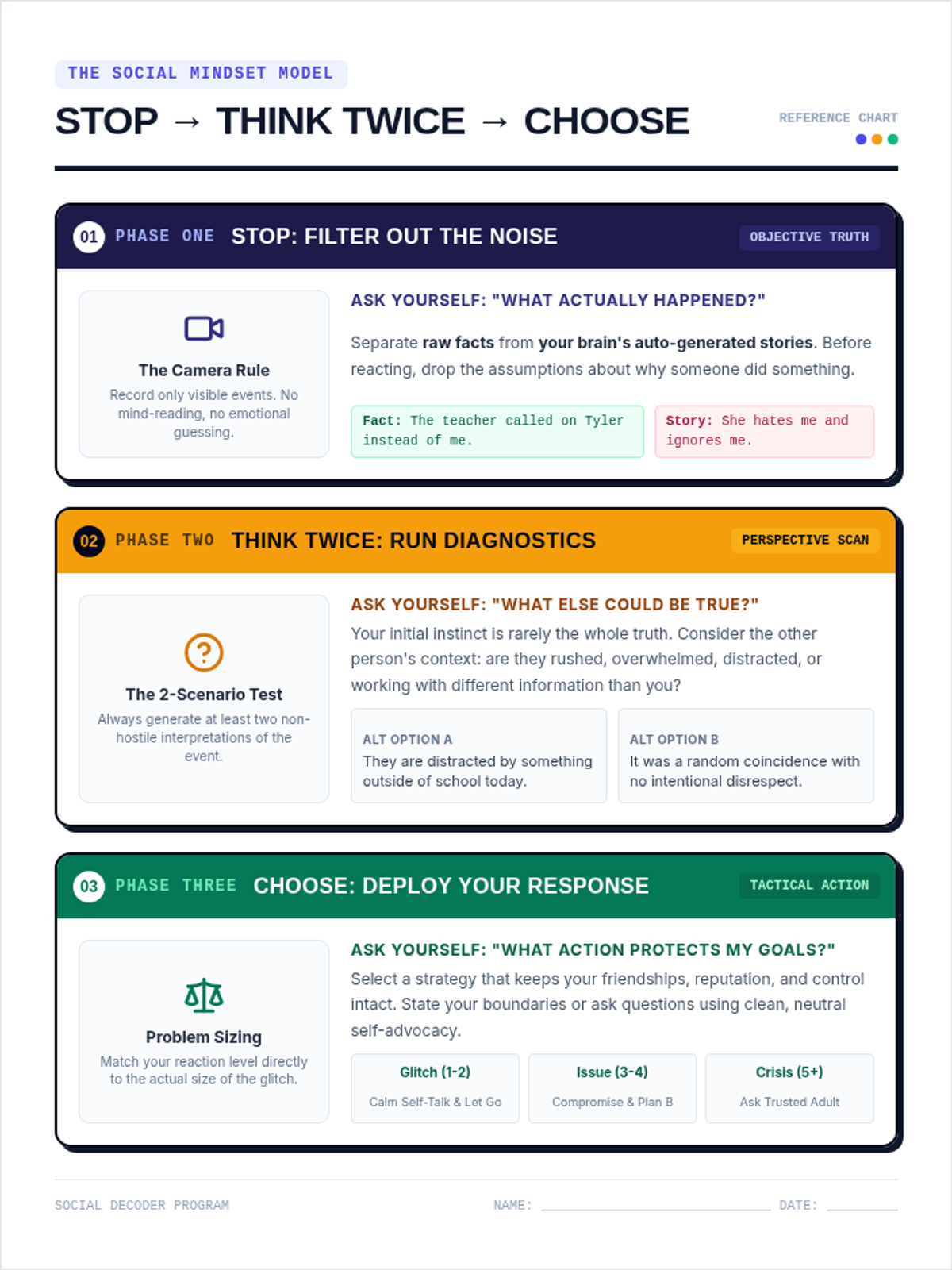
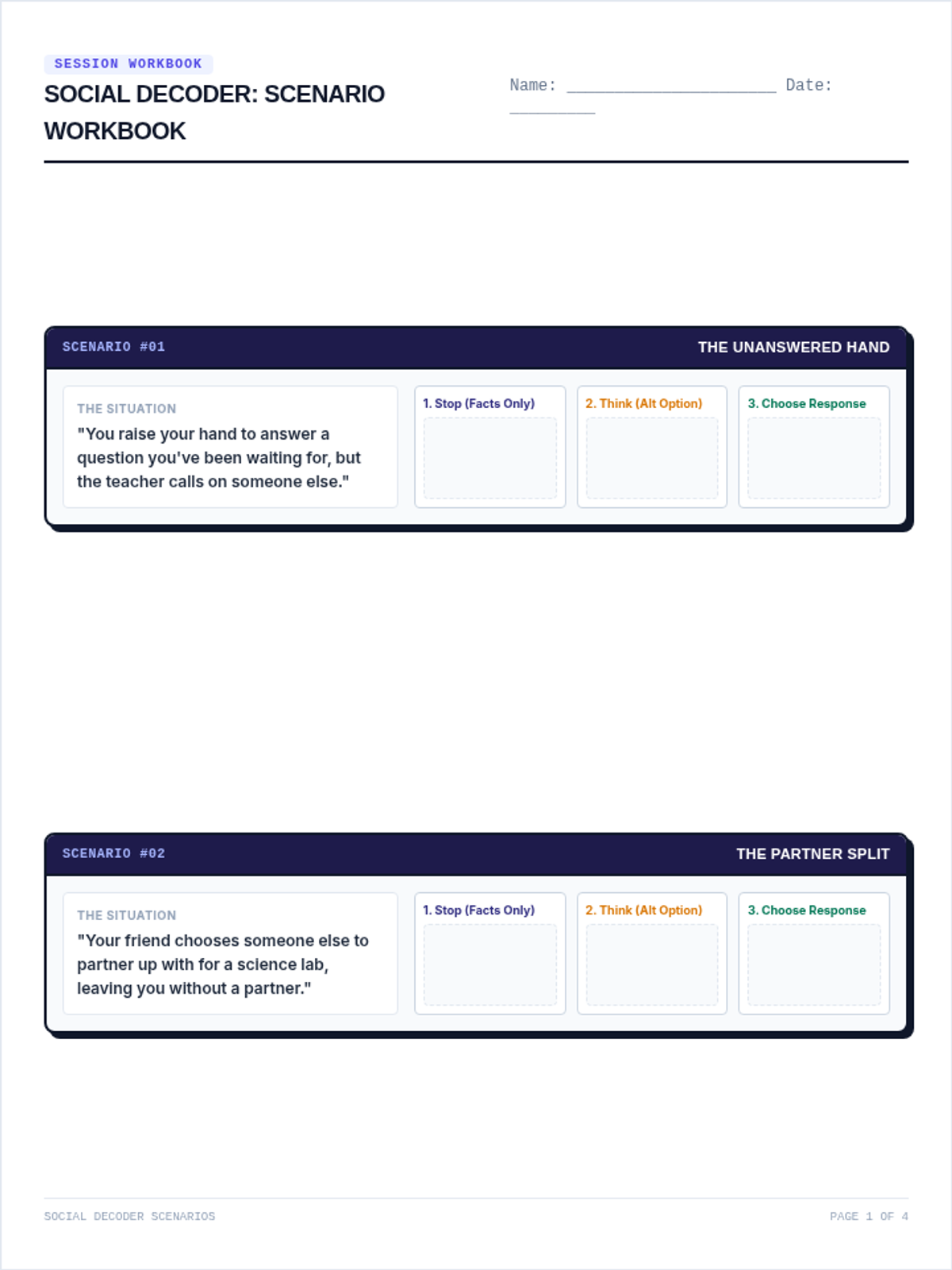
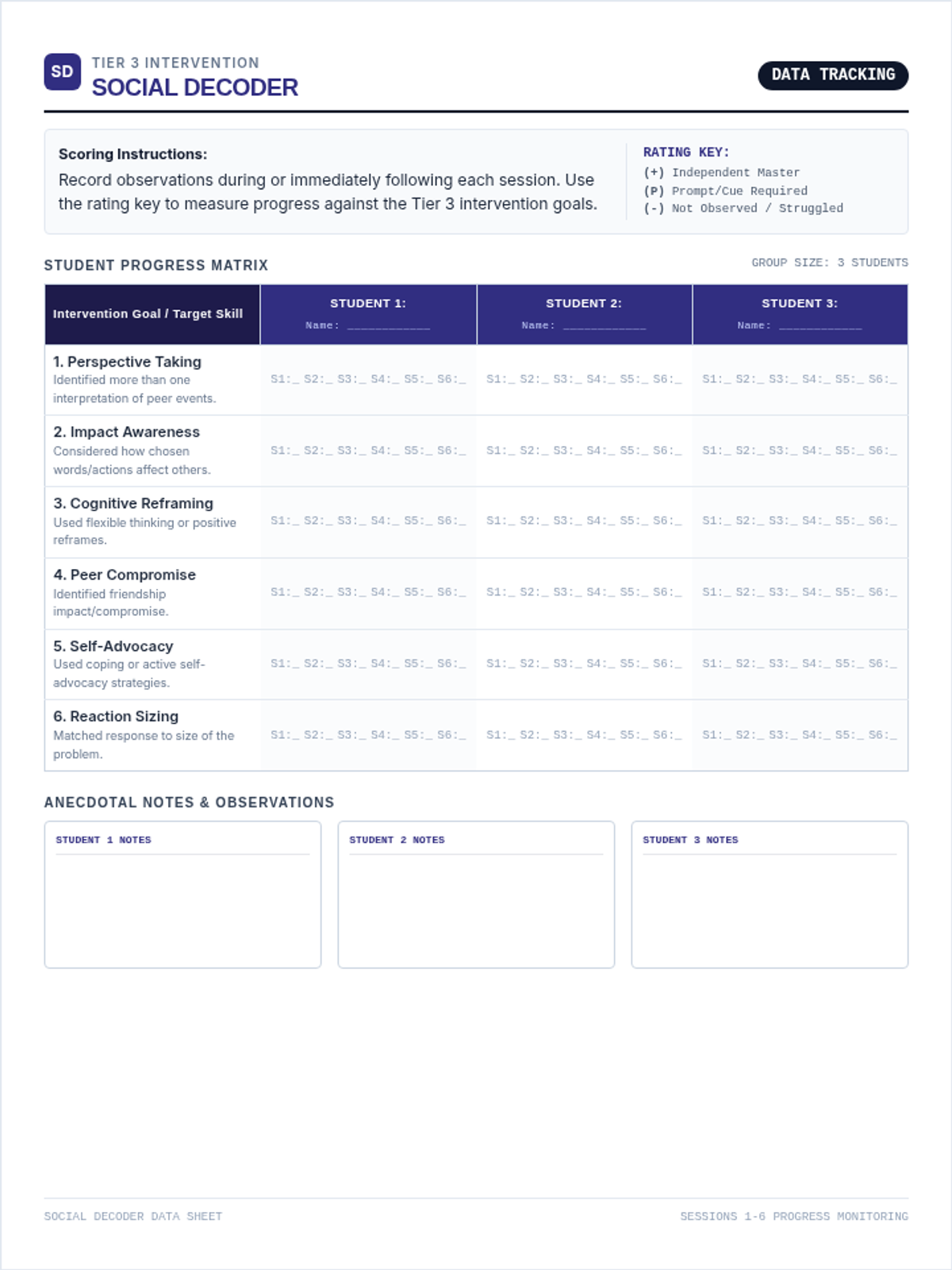
A 6-session social dynamics intervention bundle for Tier 3 sixth graders using the 'Stop, Think Twice, Choose' cognitive-behavioral framework. Includes a facilitator guide, visual anchor charts, comic-style scenario cards, and data tracking sheets designed with a clean, mature aesthetic.
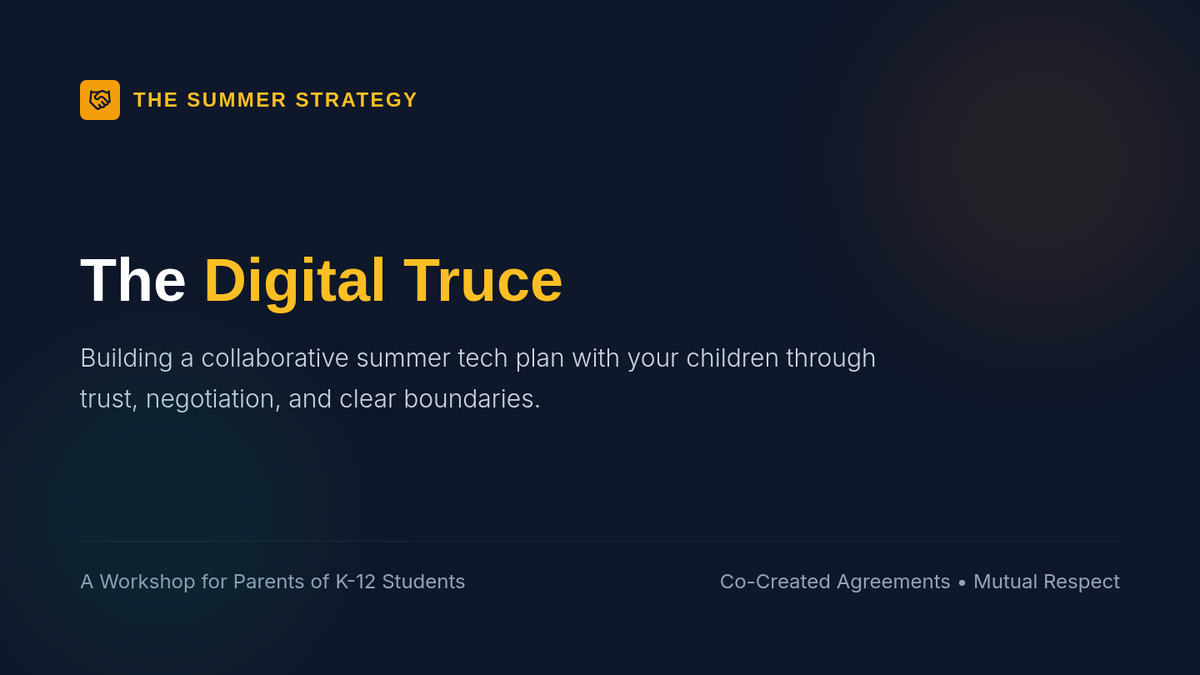
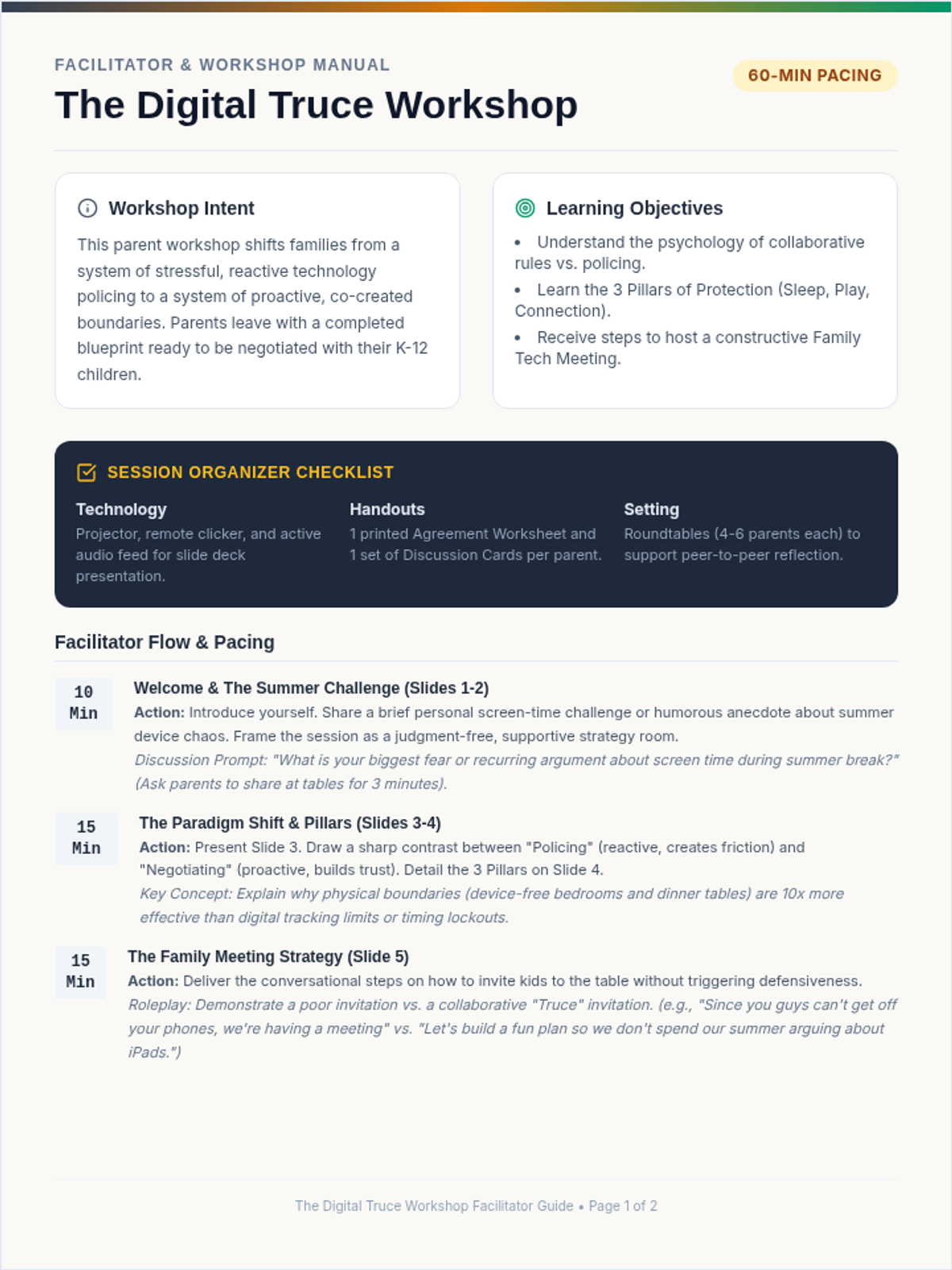
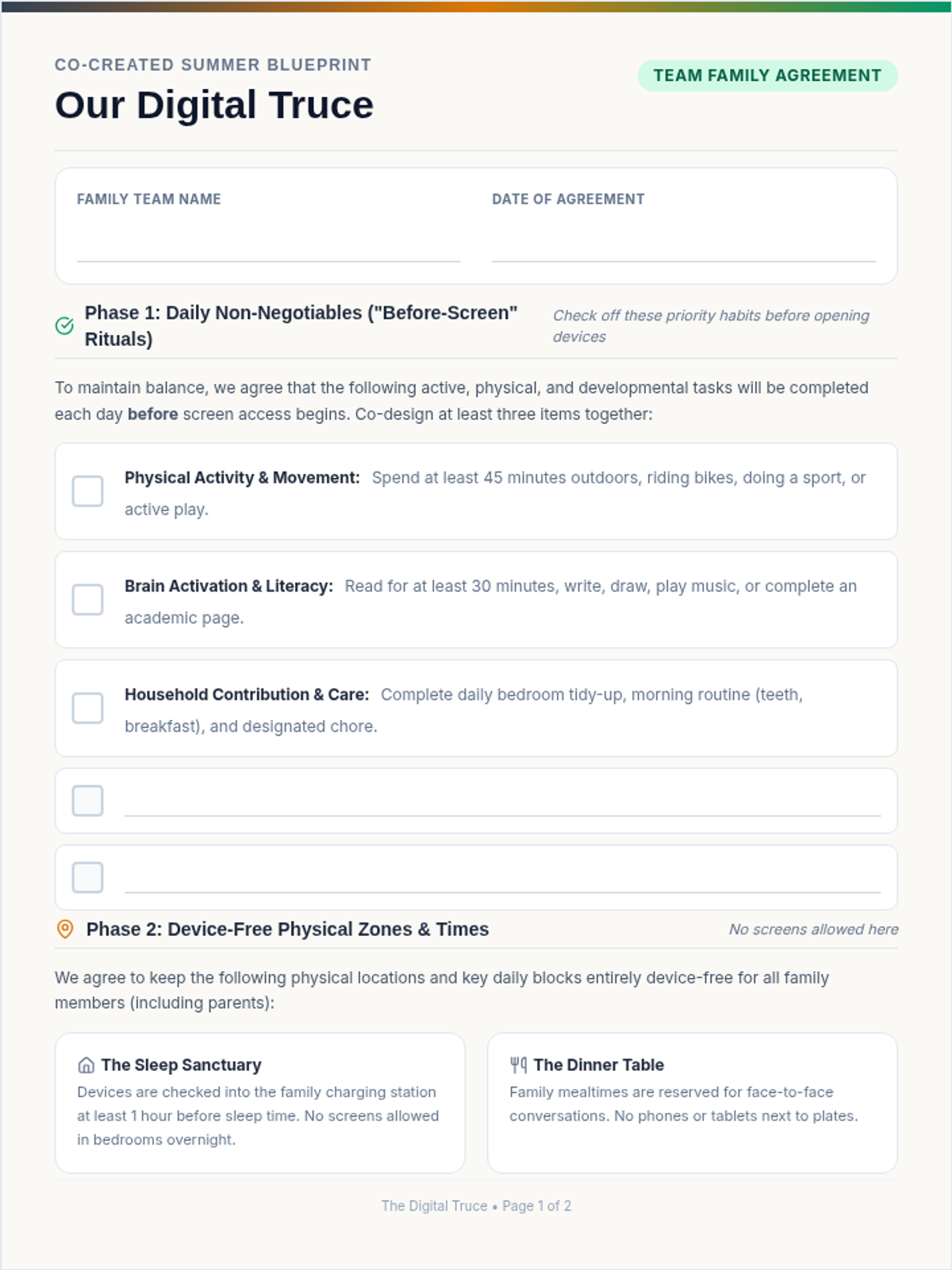
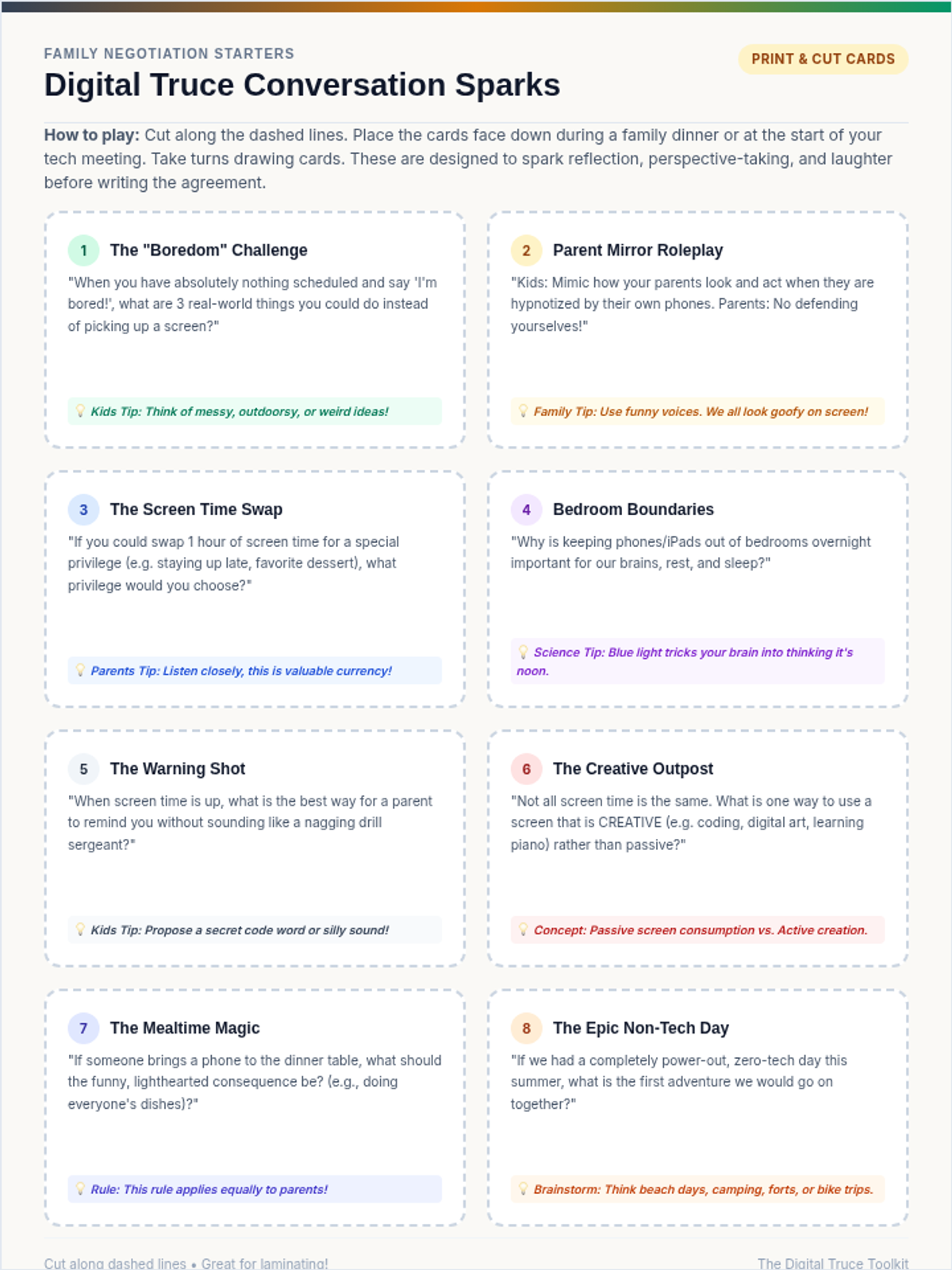
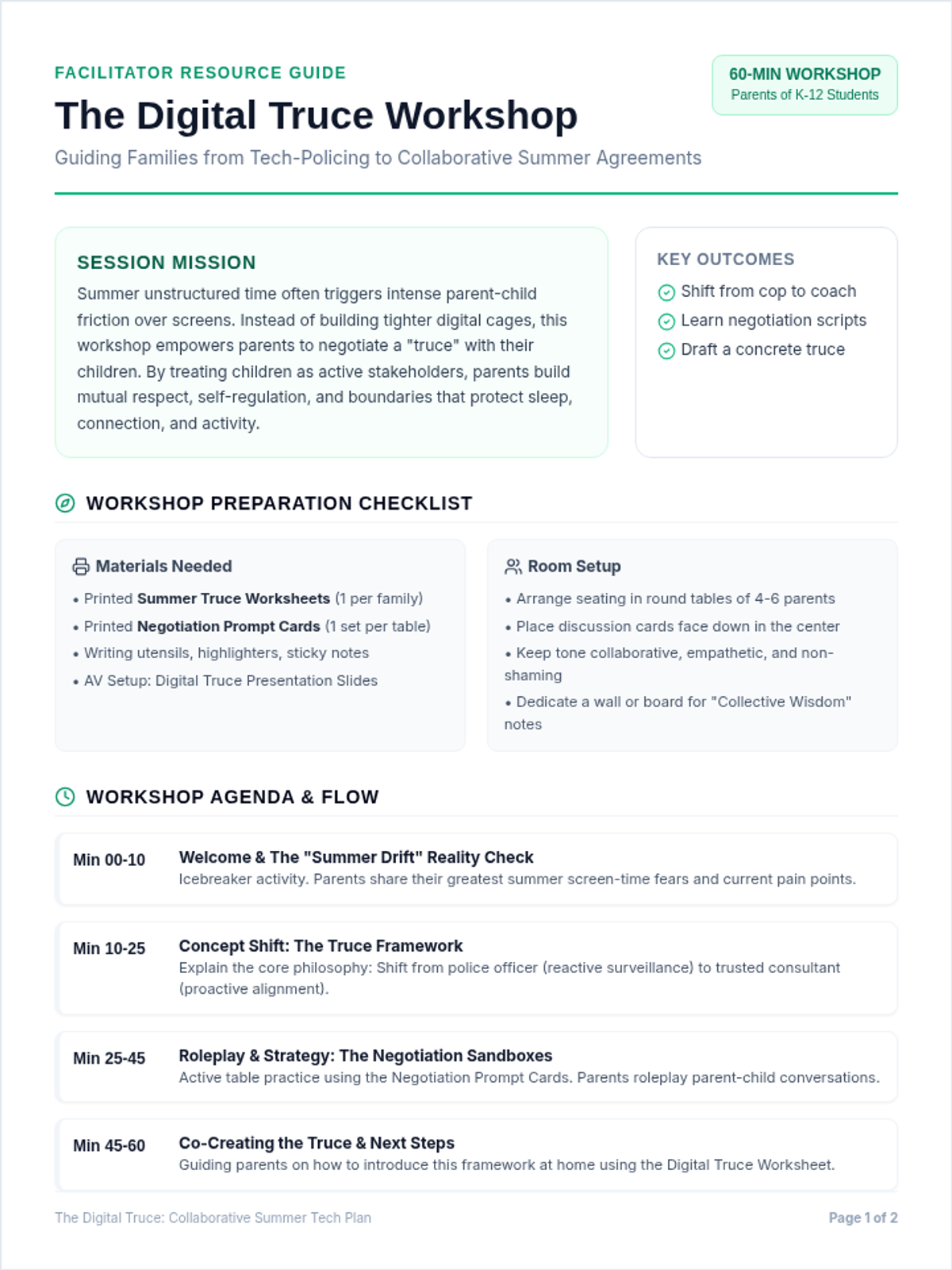
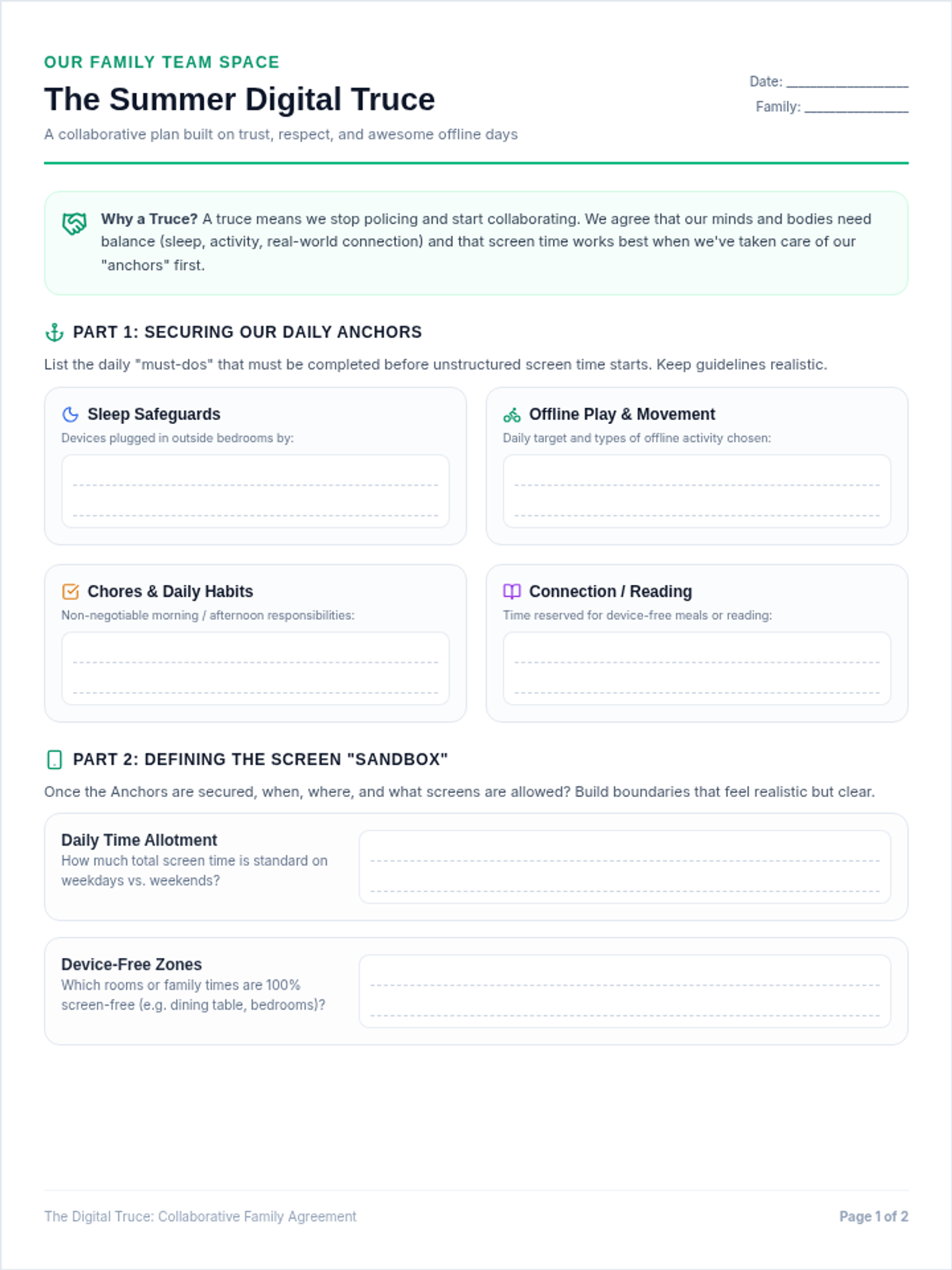
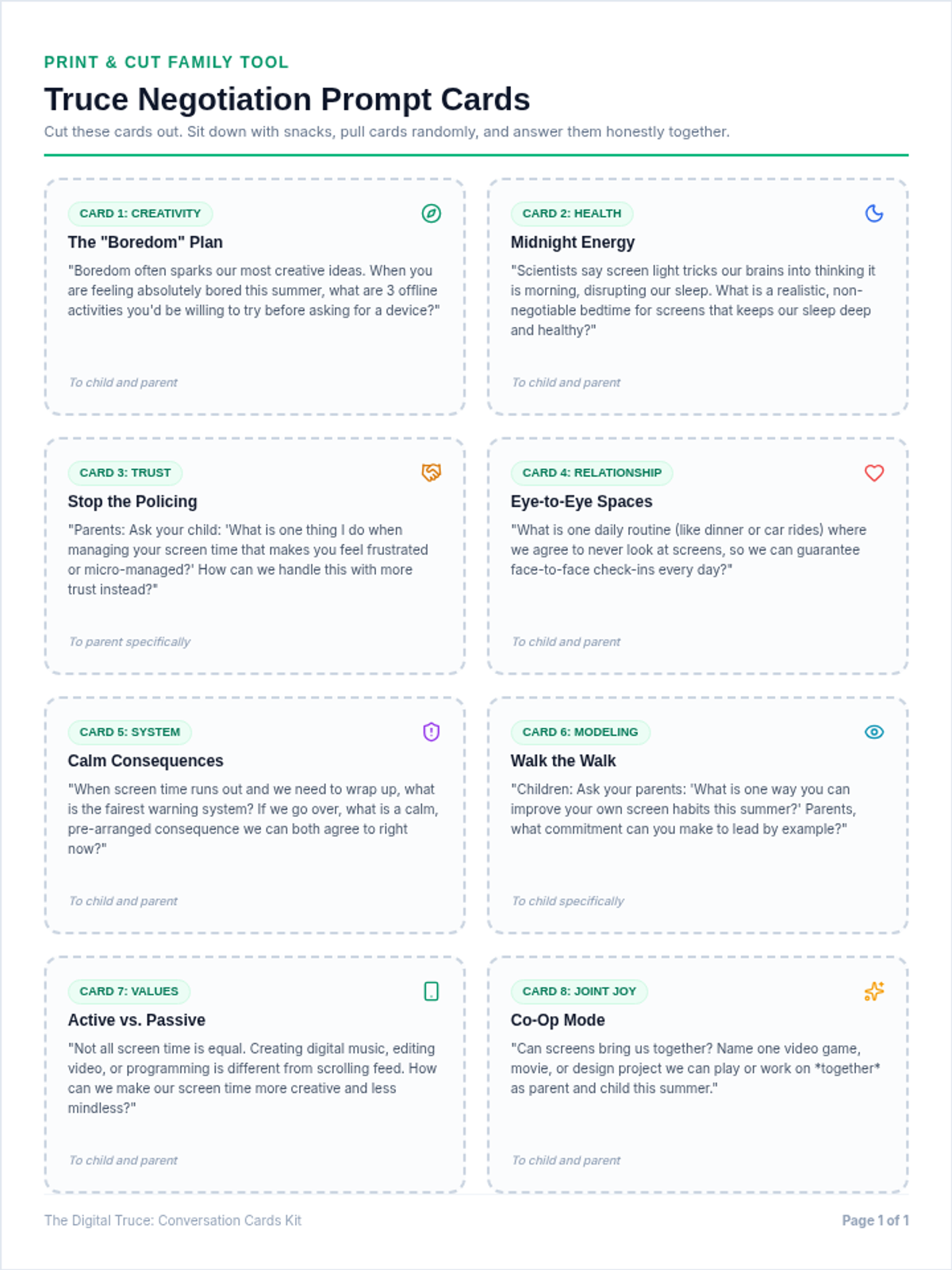
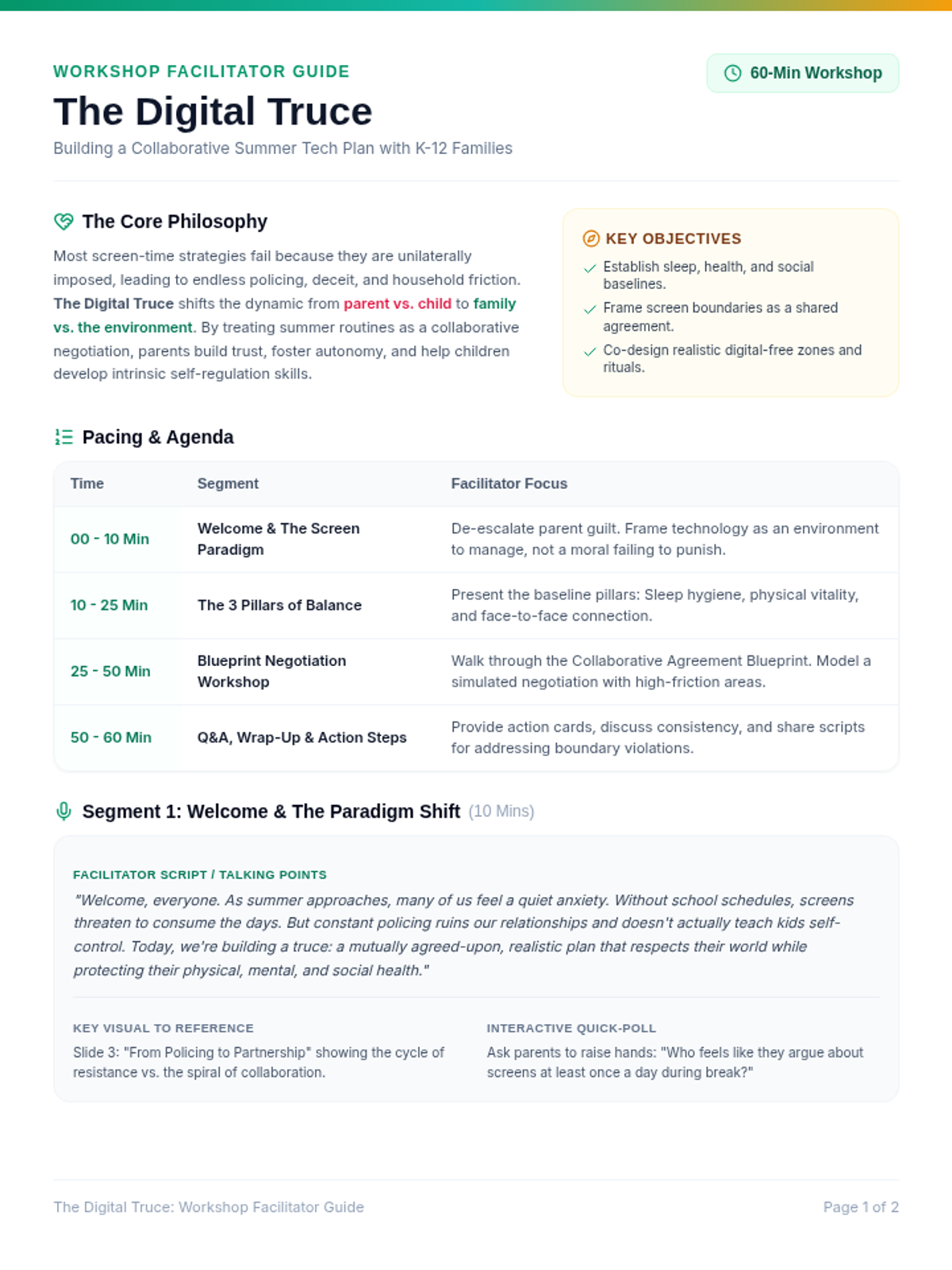
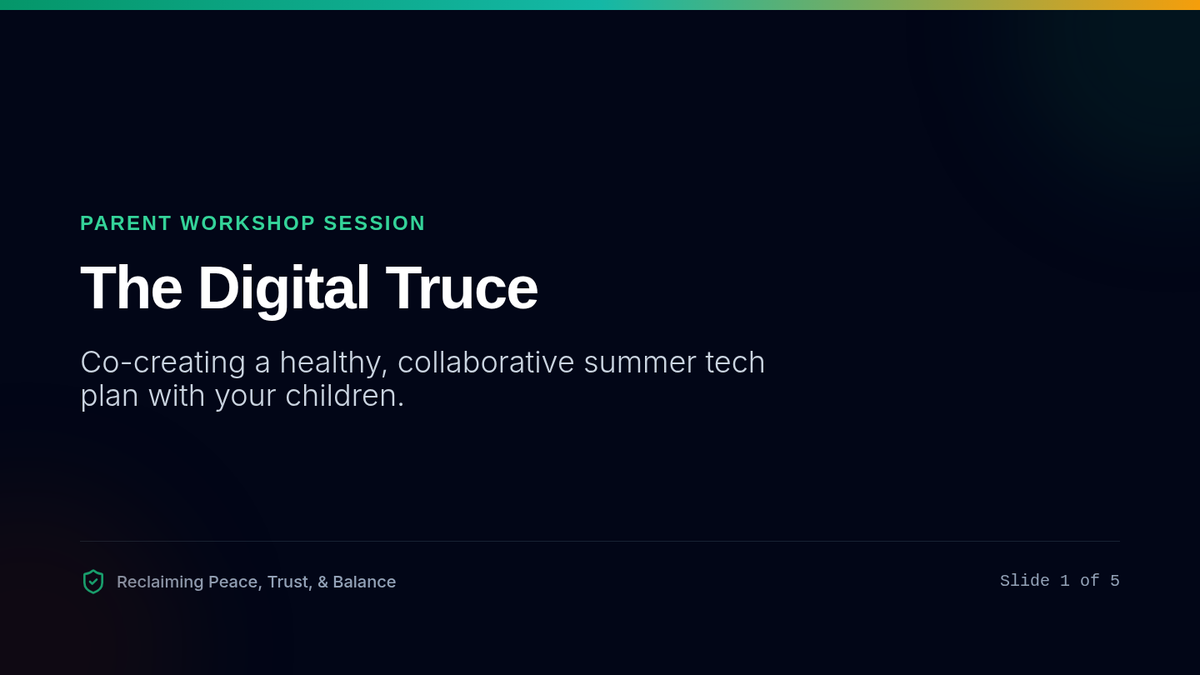
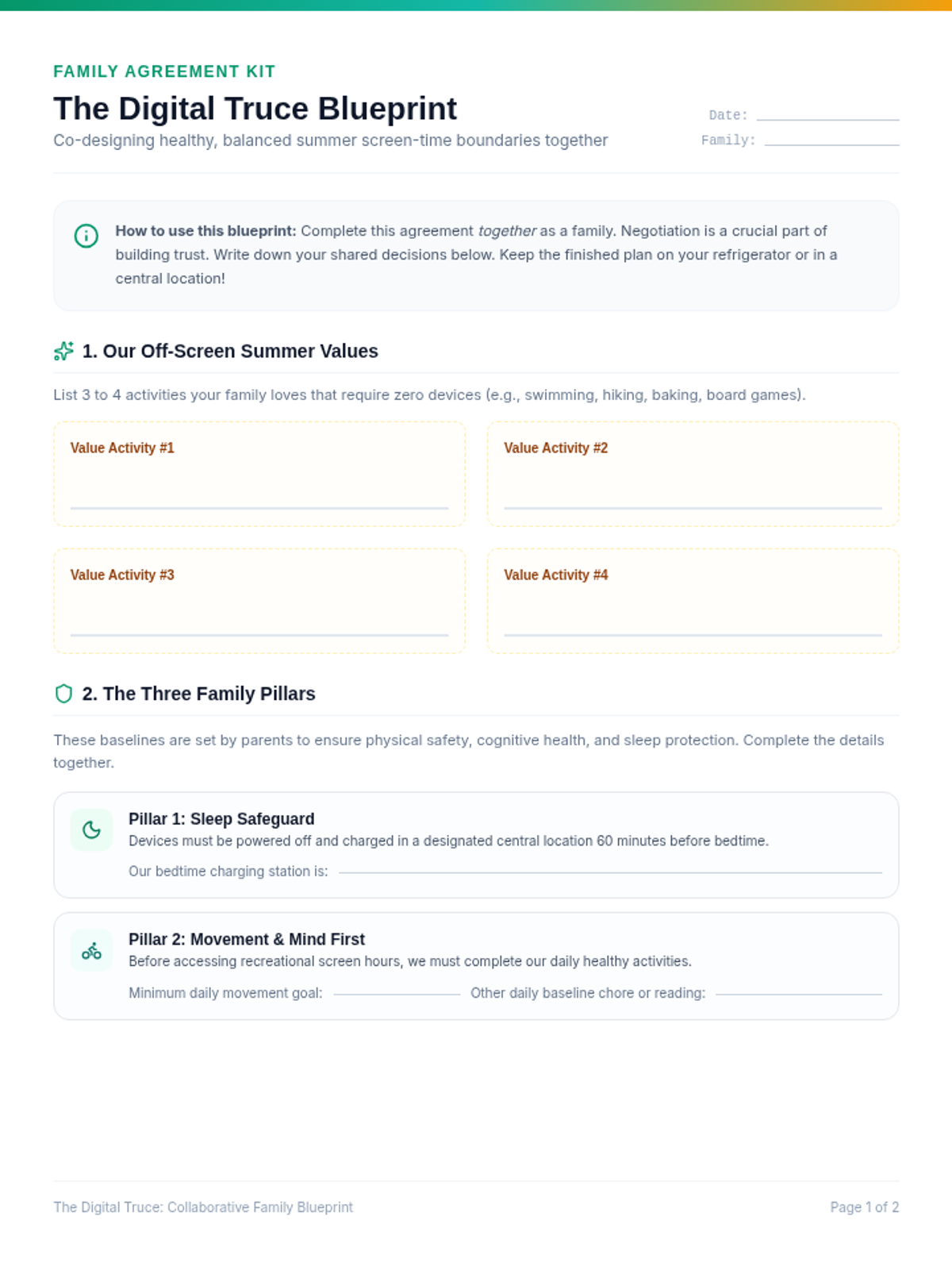
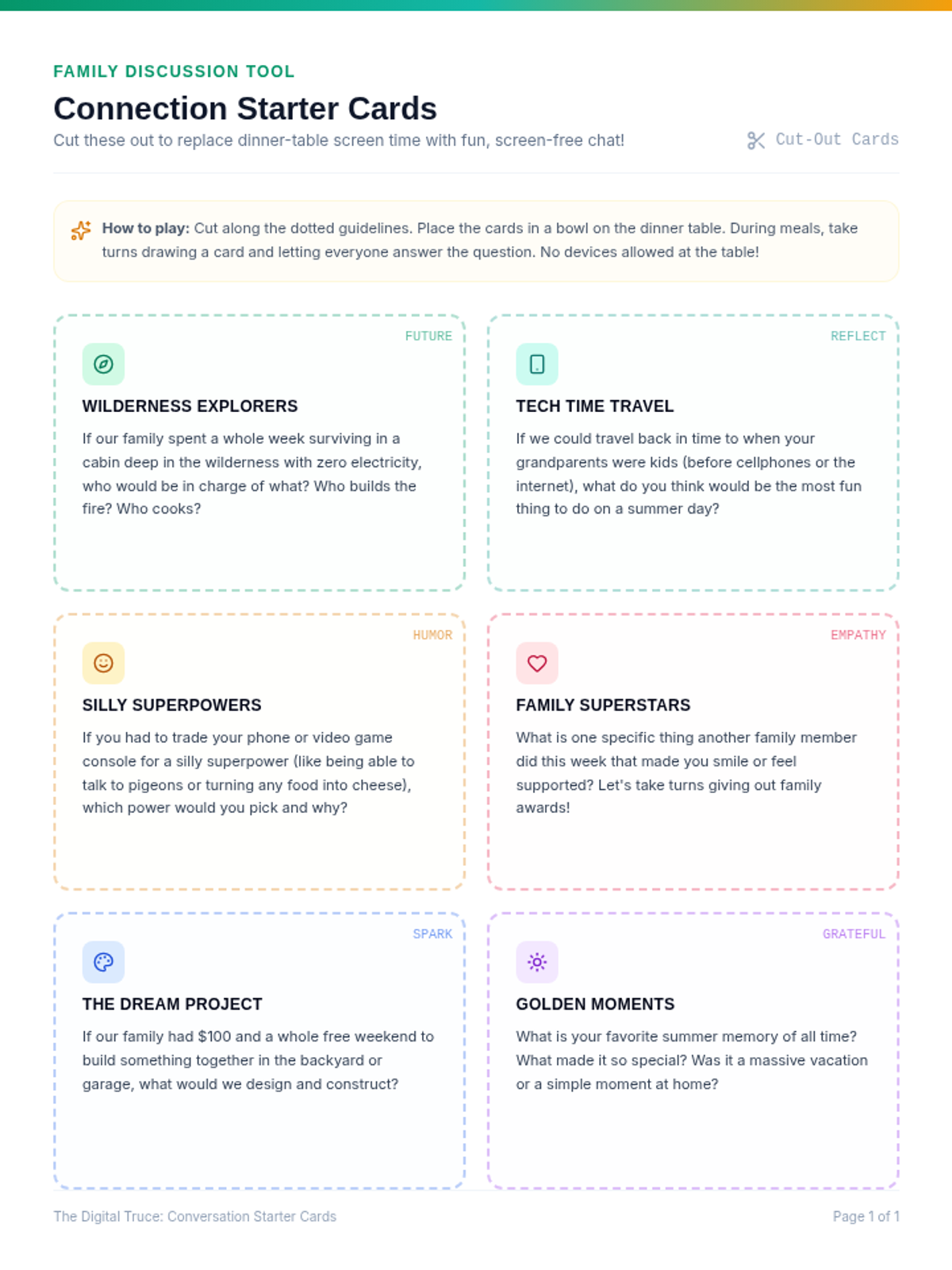
A collaborative workshop and toolkit designed to help parents of K-12 students establish healthy, co-created summer screen-time boundaries with their children through negotiation and mutual trust.
A collaborative parent workshop and family kit designed to help K-12 parents negotiate healthy, realistic summer screen-time agreements with their children, focusing on trust over policing.
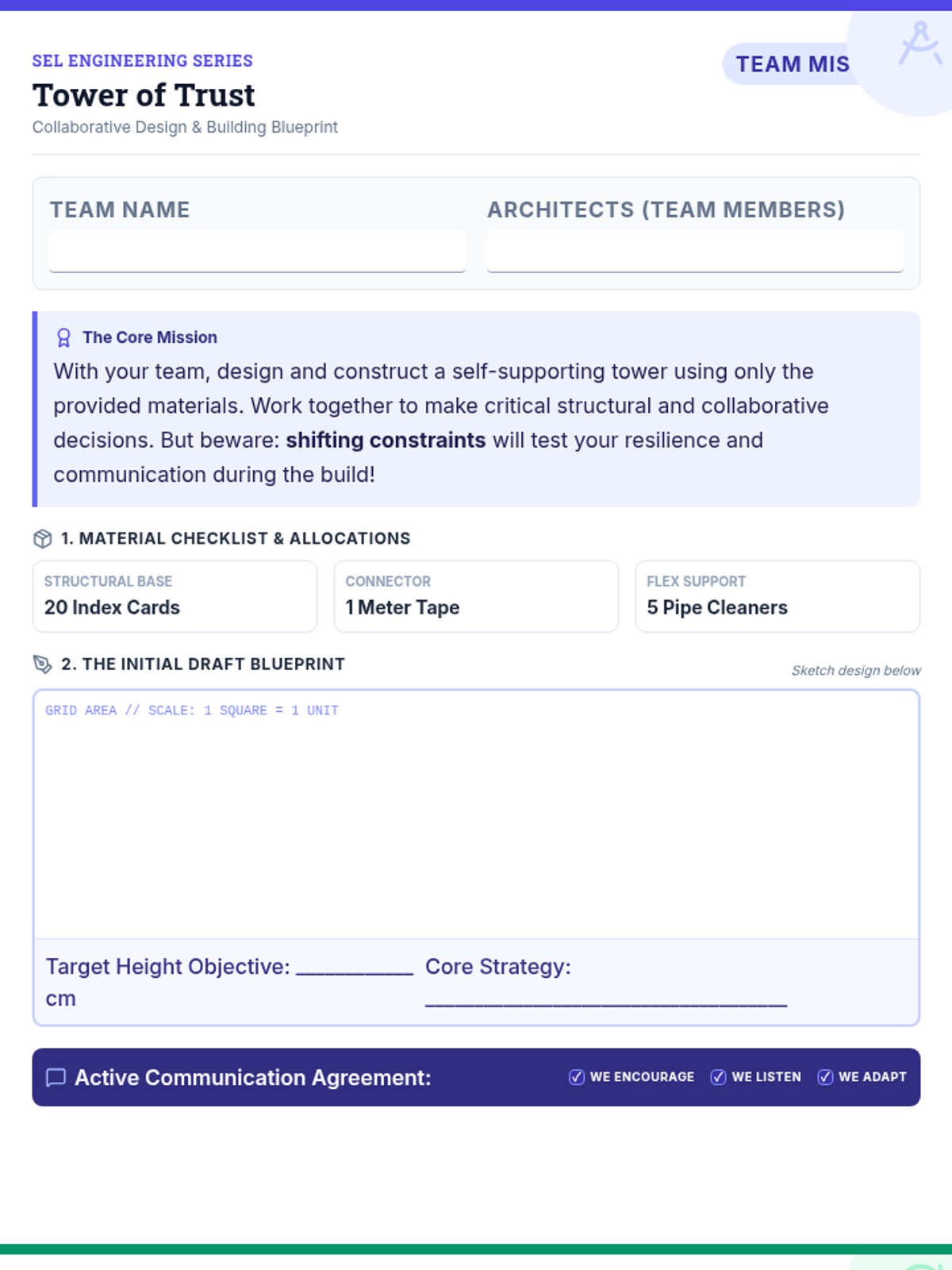
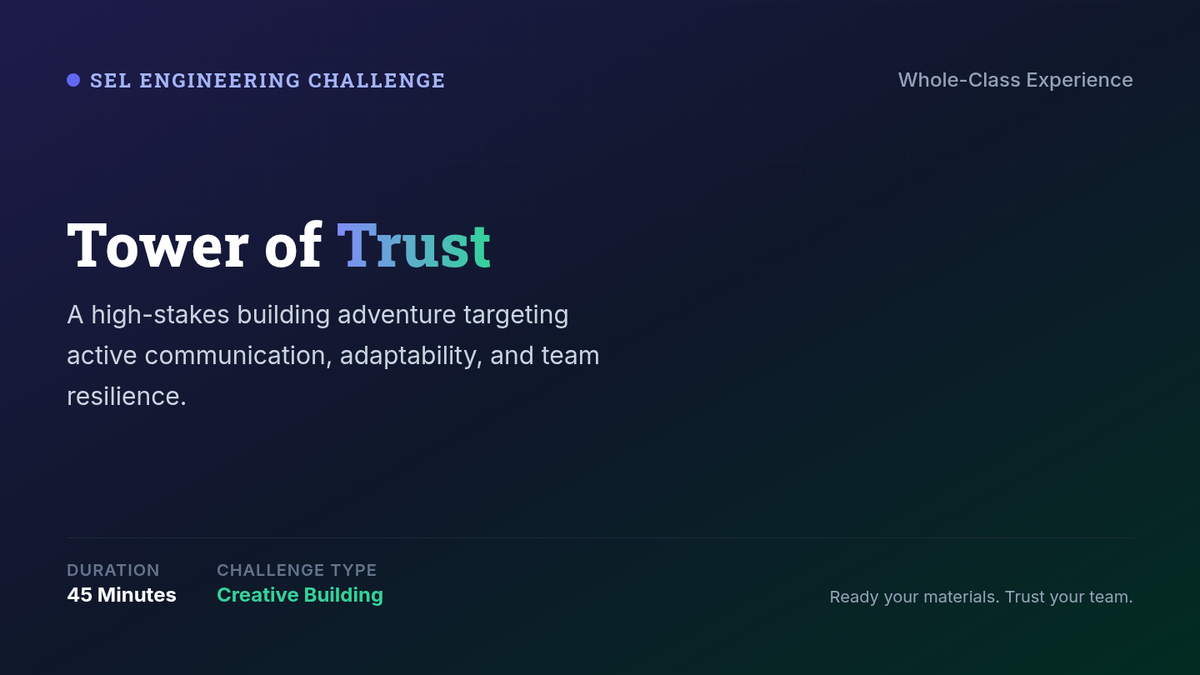
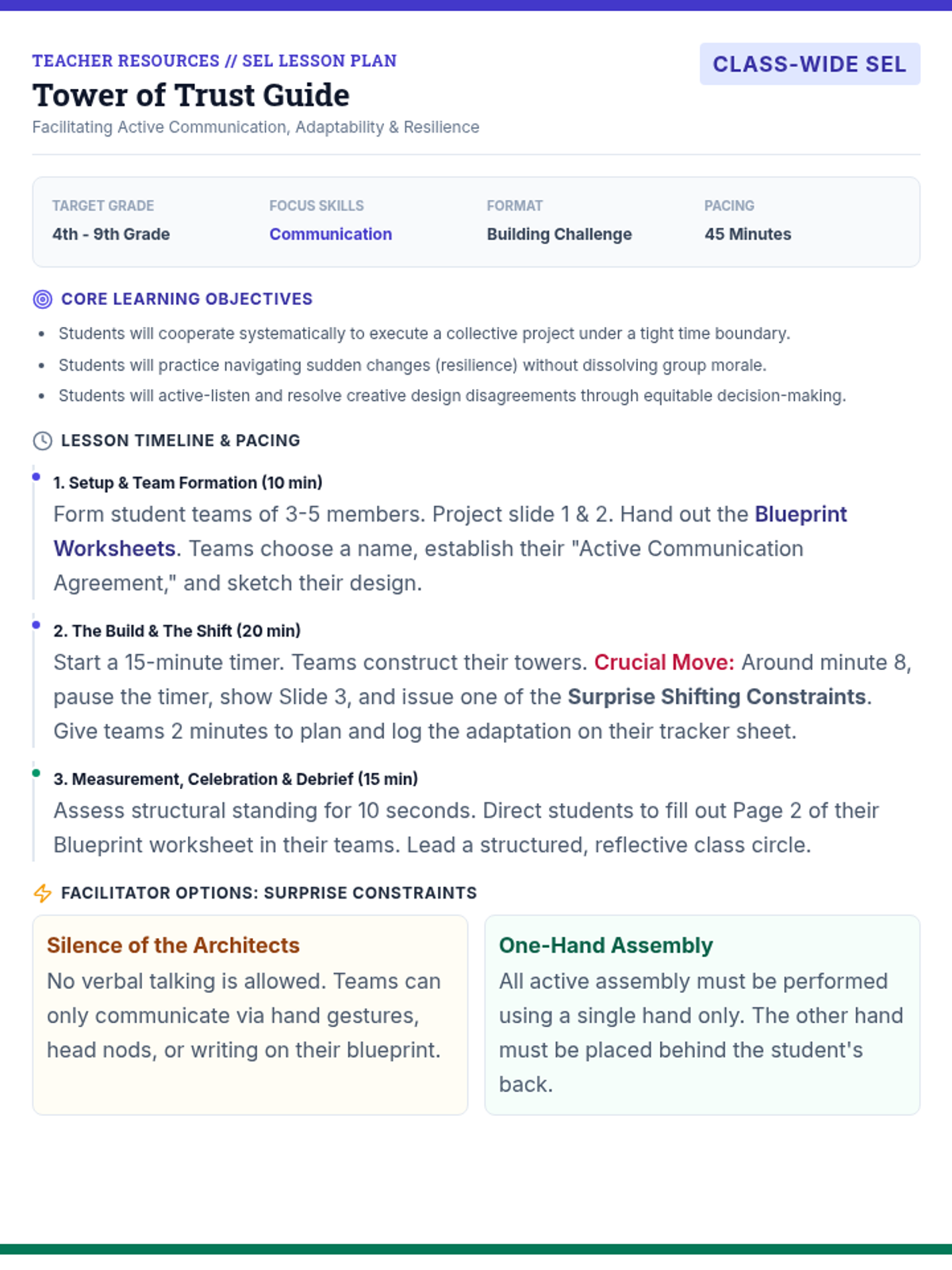
A high-energy, collaborative building challenge where student teams design and construct towers under shifting constraints. This lesson is specifically engineered to target active communication, resilience when faced with unexpected roadblocks, and group decision-making.
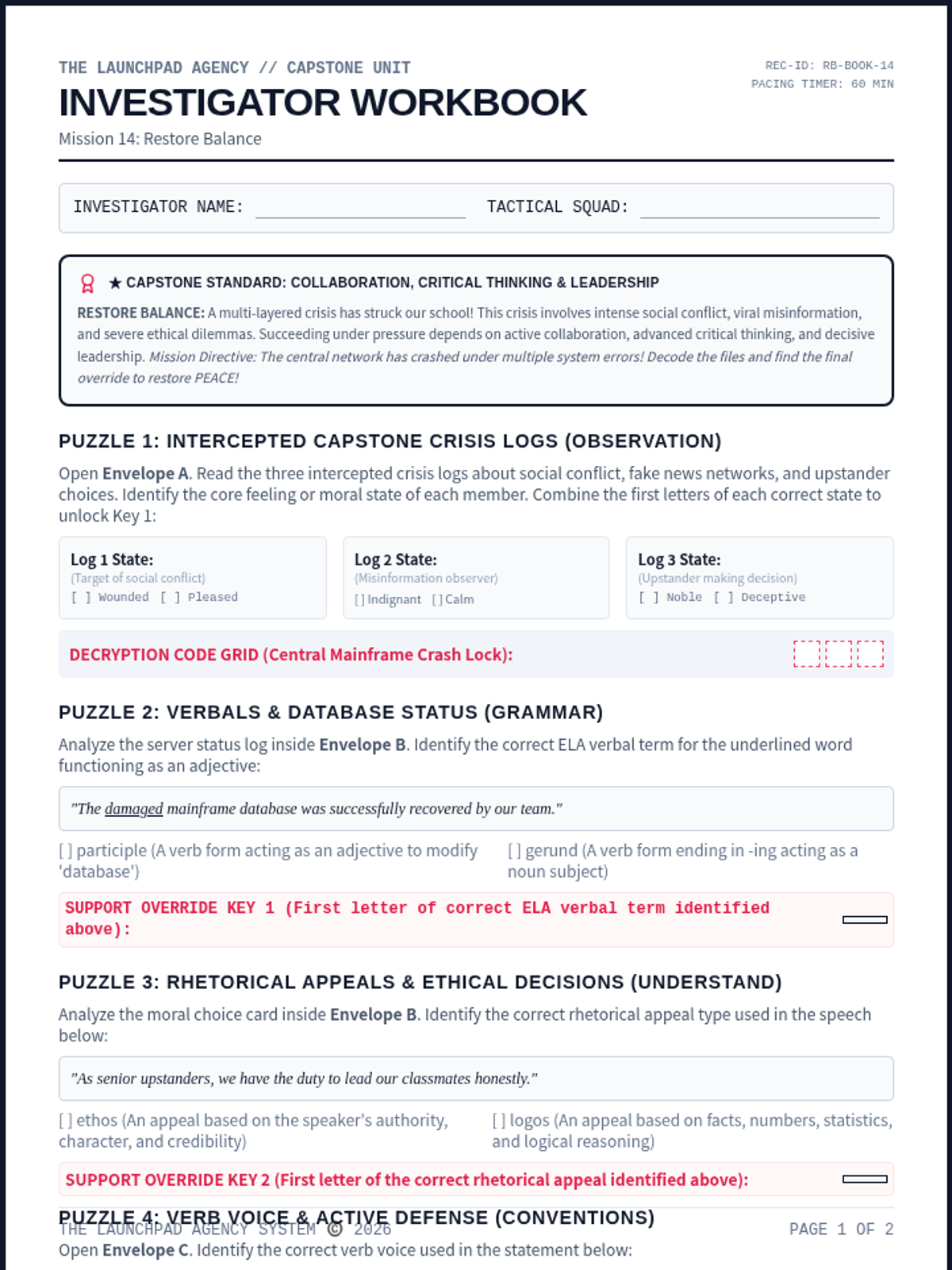
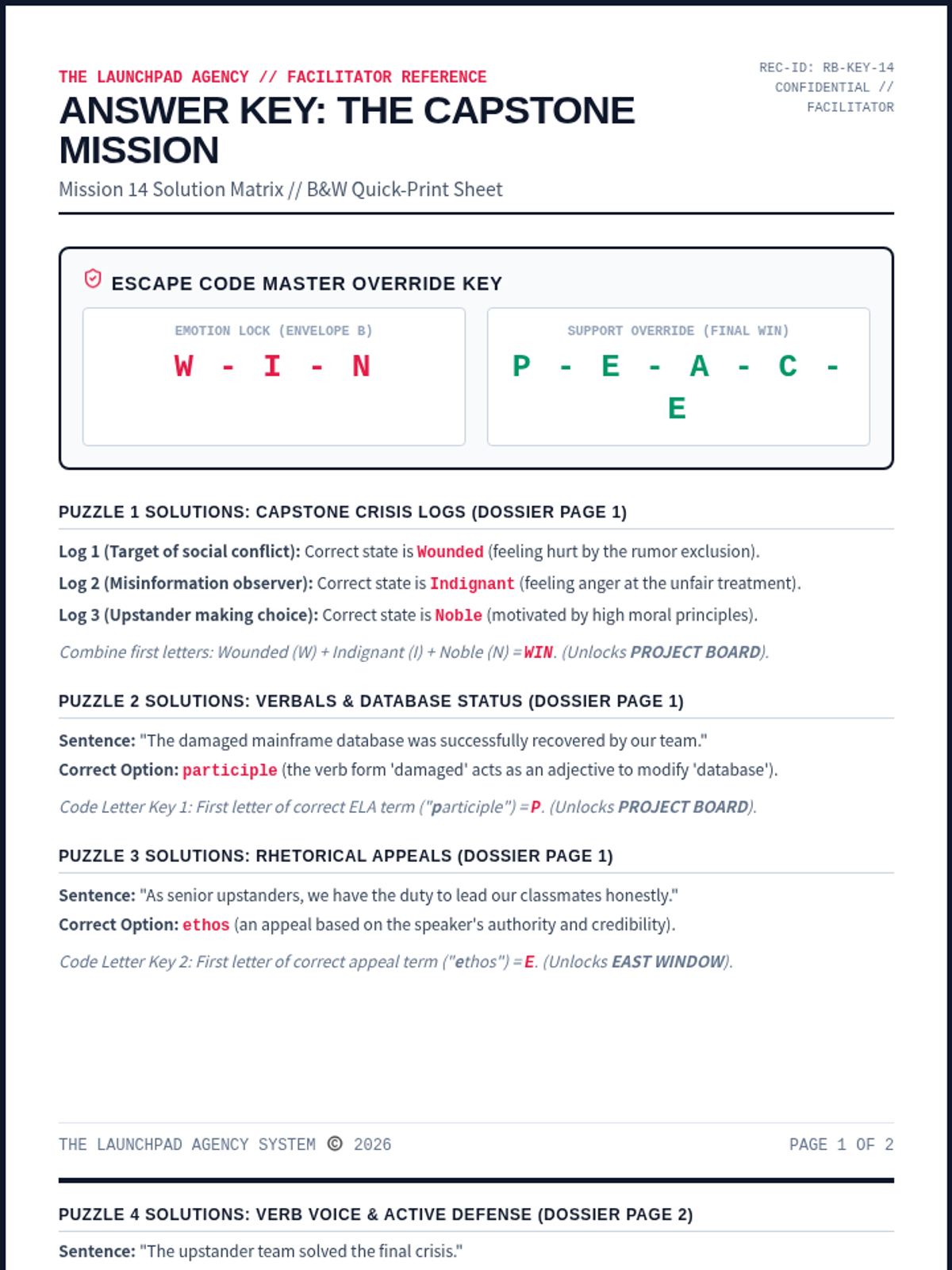
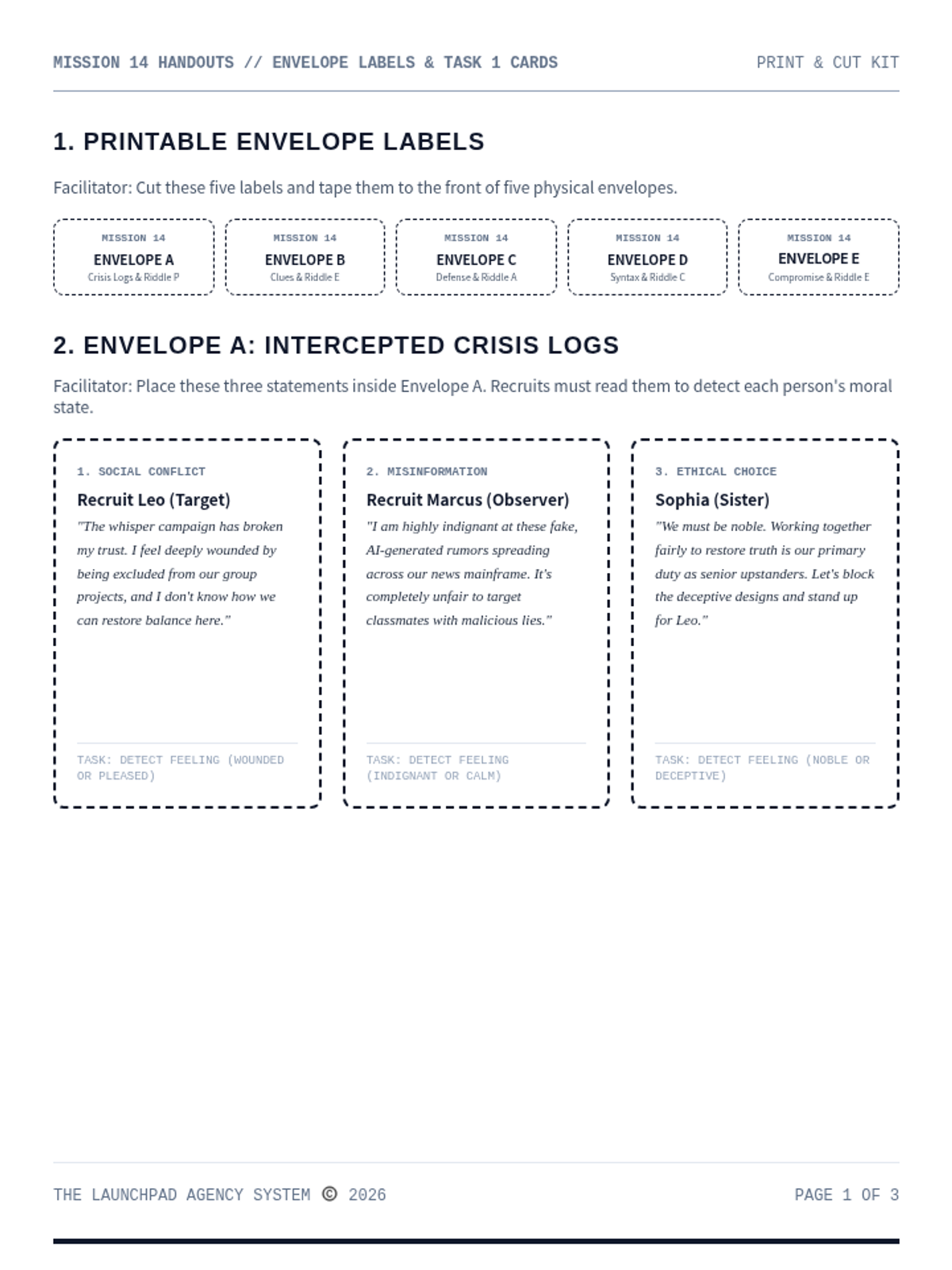
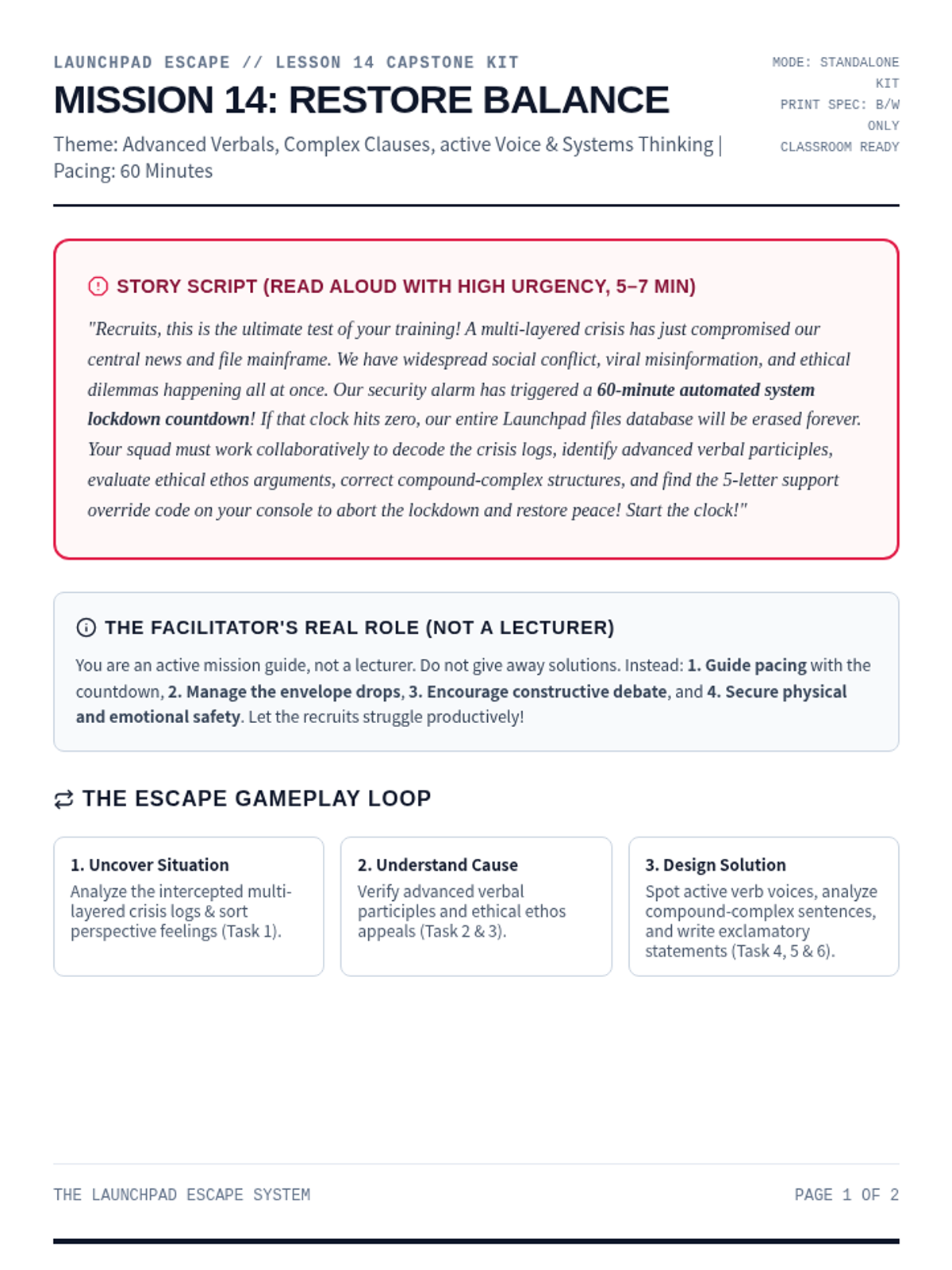
The ultimate multi-layered capstone escape room challenge. Recruits analyze complex social conflict evidence, trace misinformation networks, resolve major ethical dilemmas, and decode the final system override.
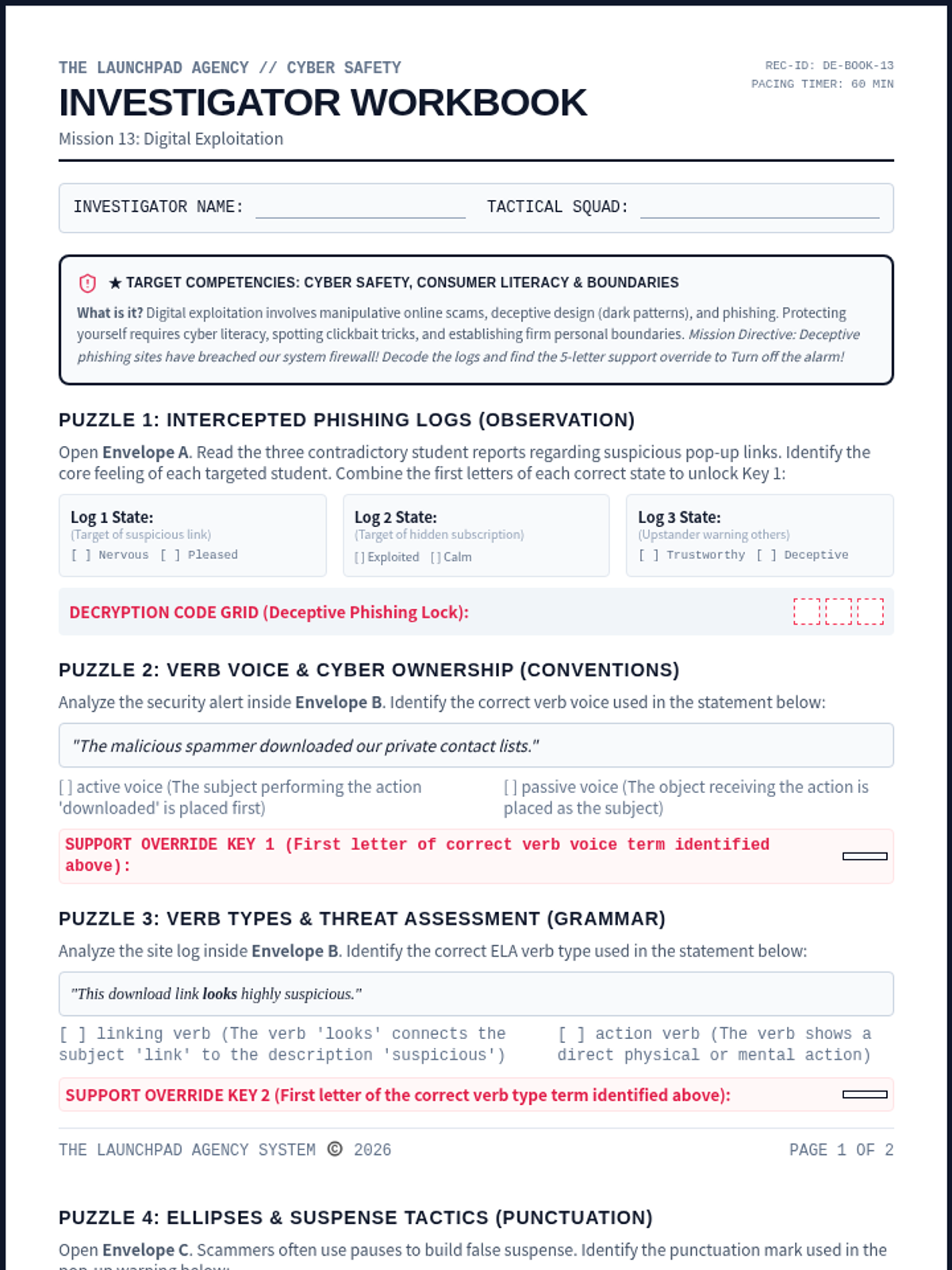
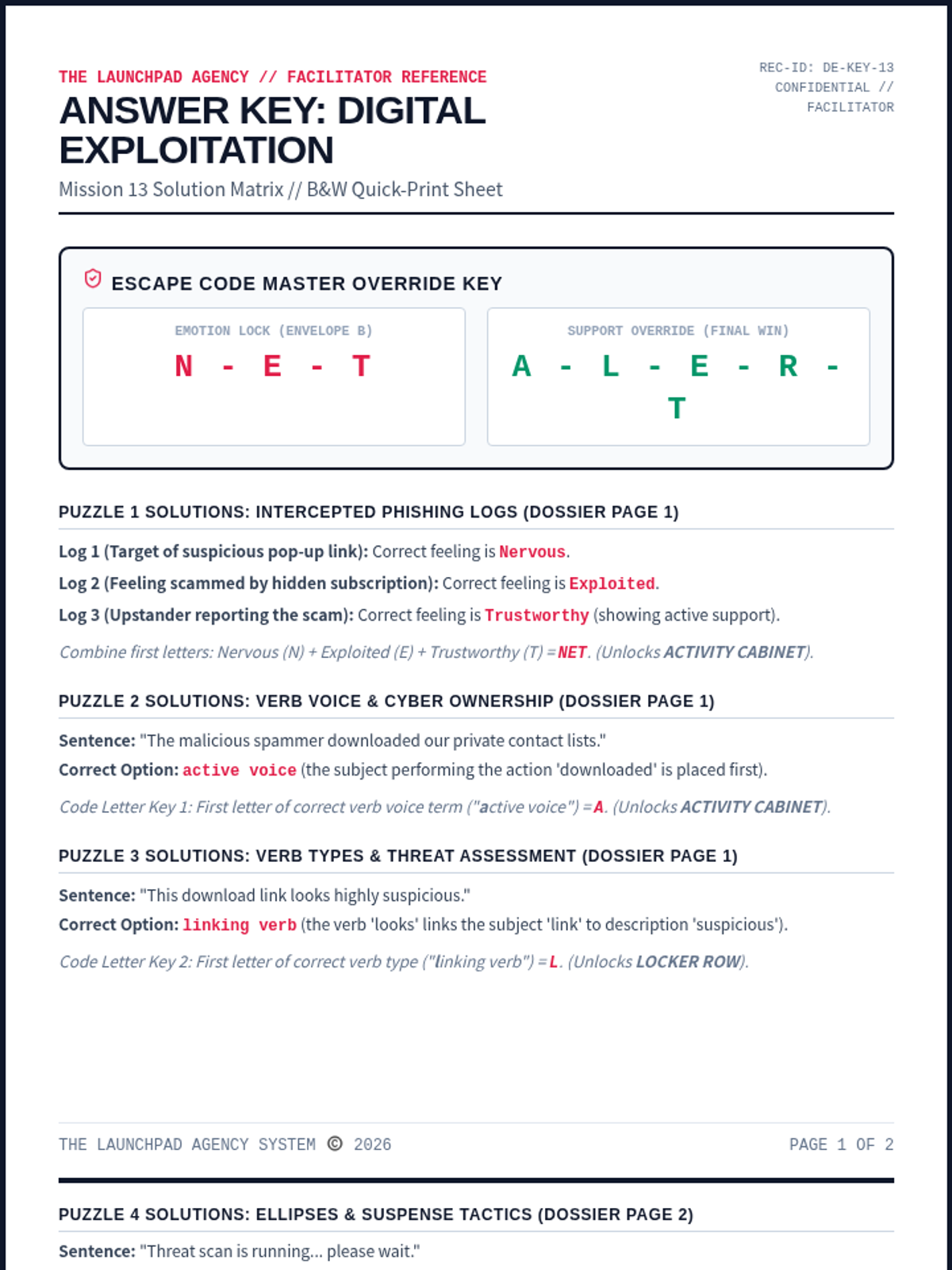
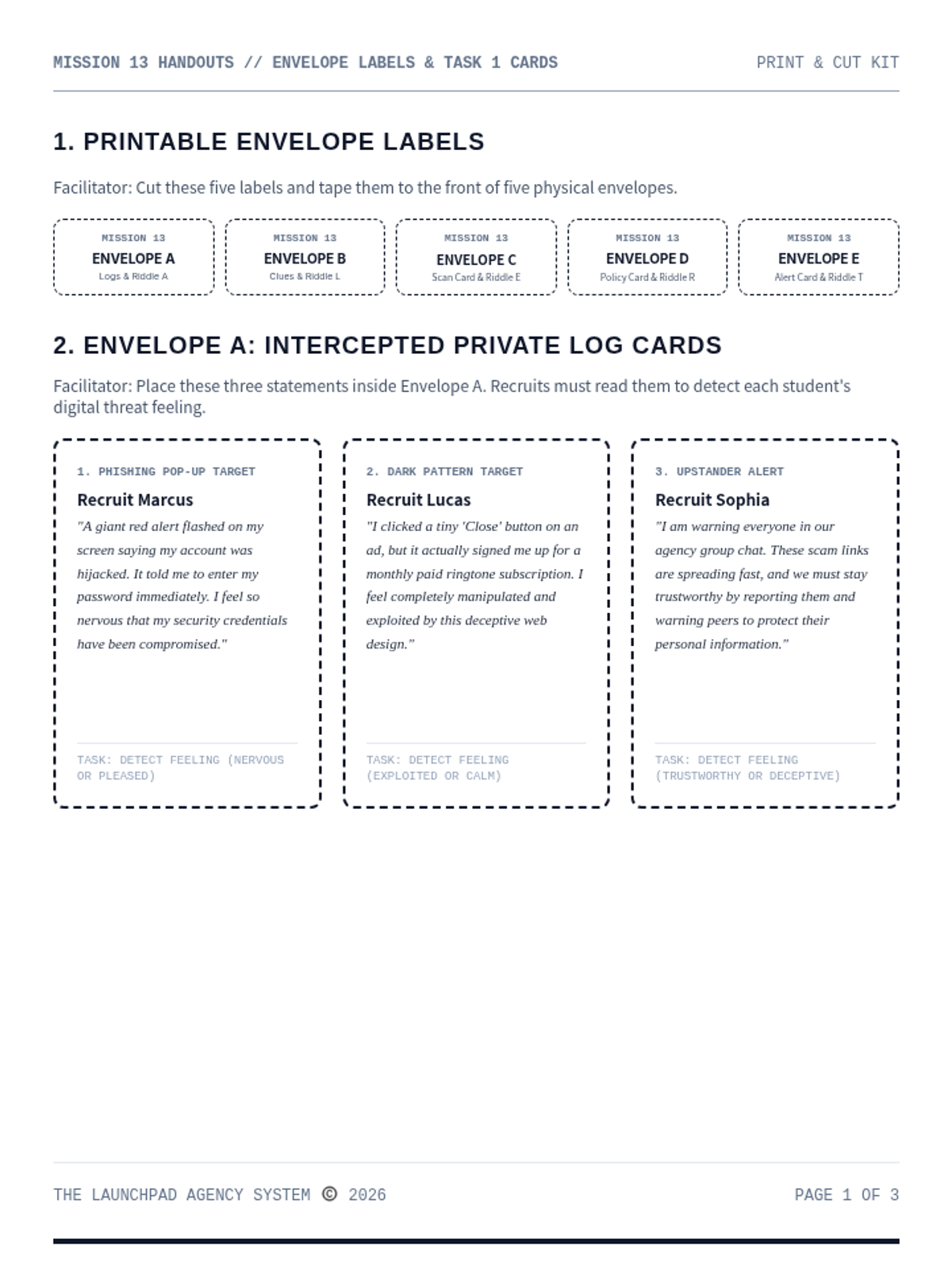
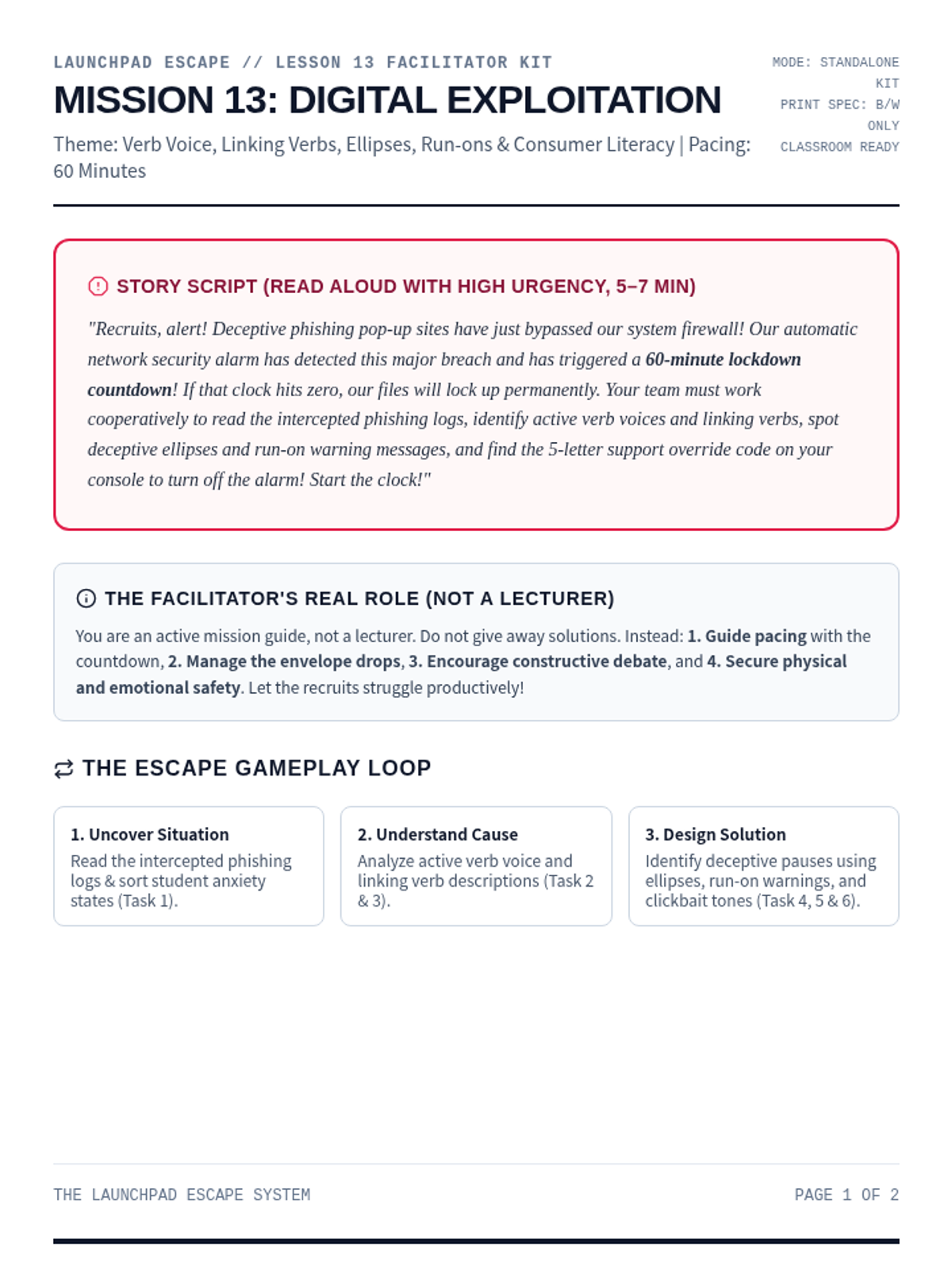
A high-stakes digital safety escape room focused on identifying online scams, recognizing manipulative dark patterns, and protecting personal data. Recruits analyze active verb voices, linking verbs, ellipses punctuation, and deceptive tones to decode the final alert.
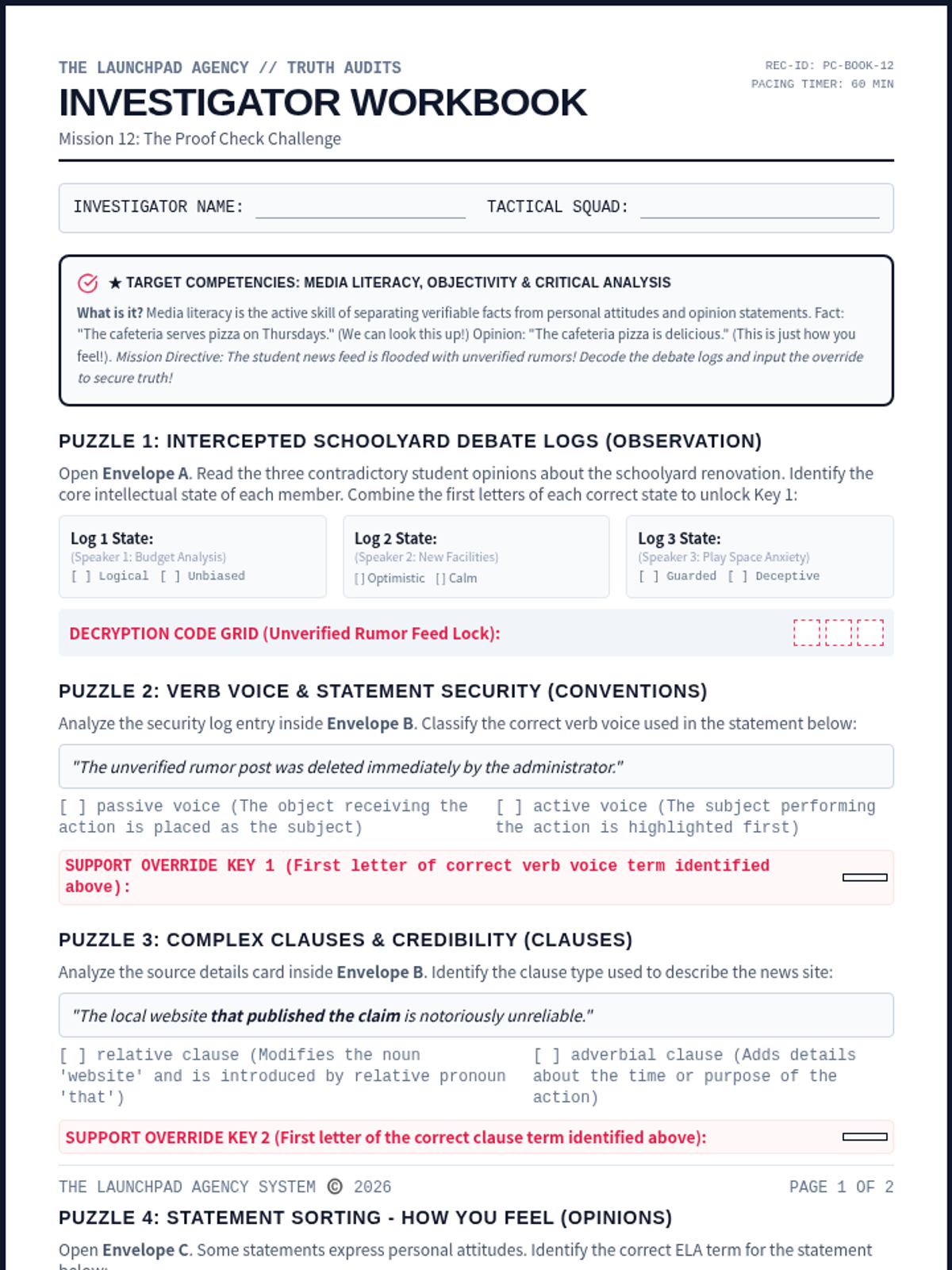
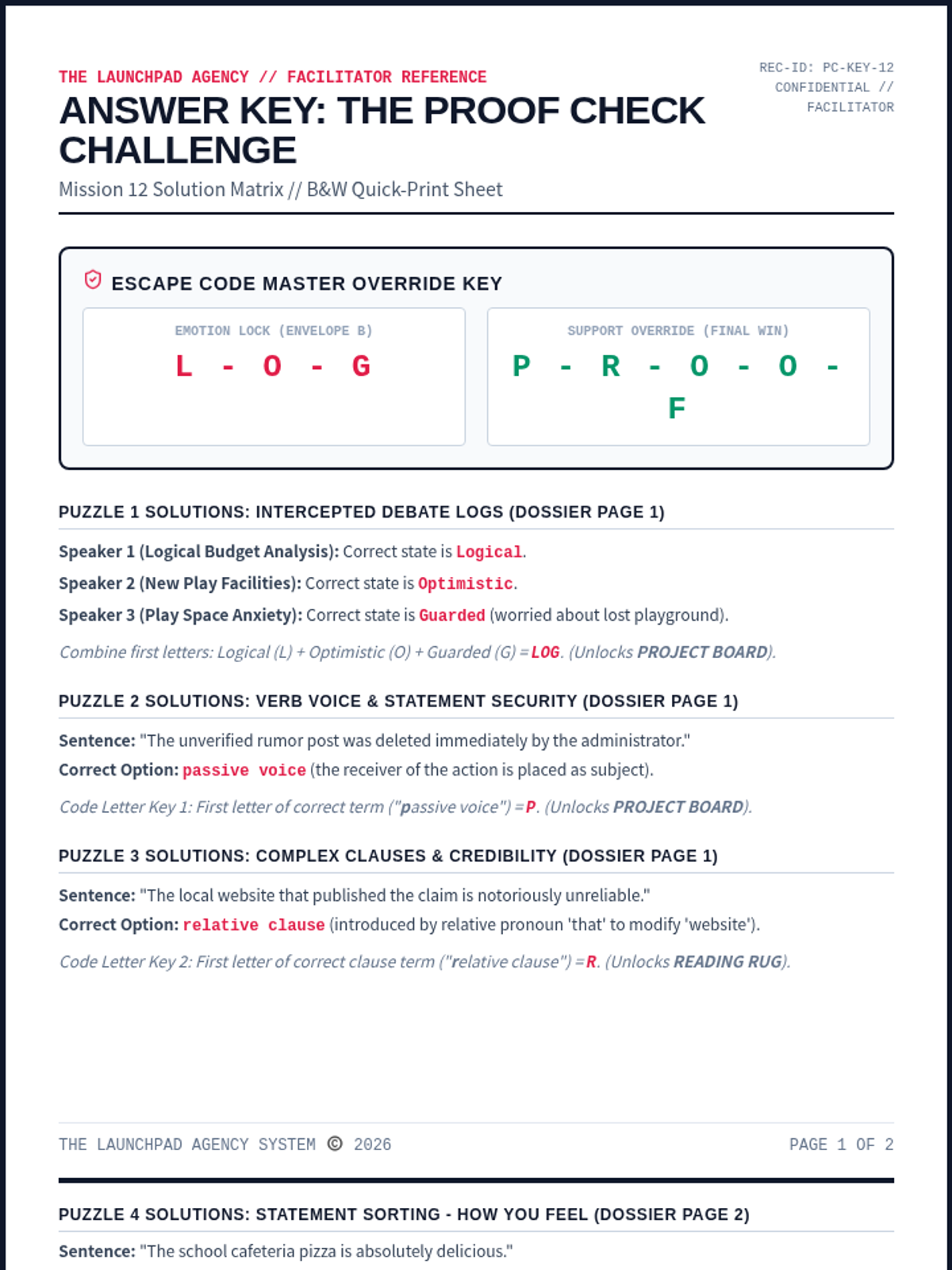
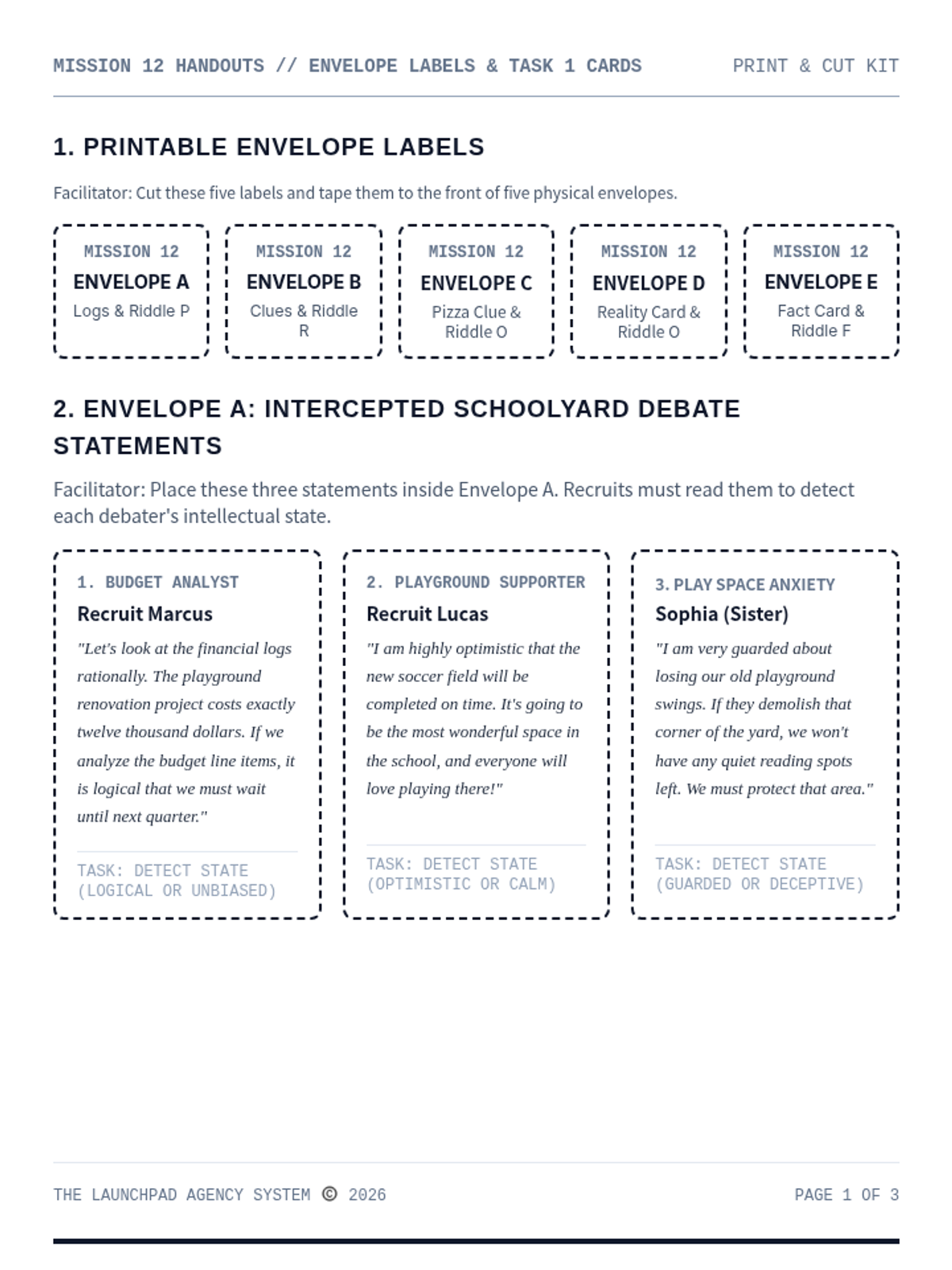
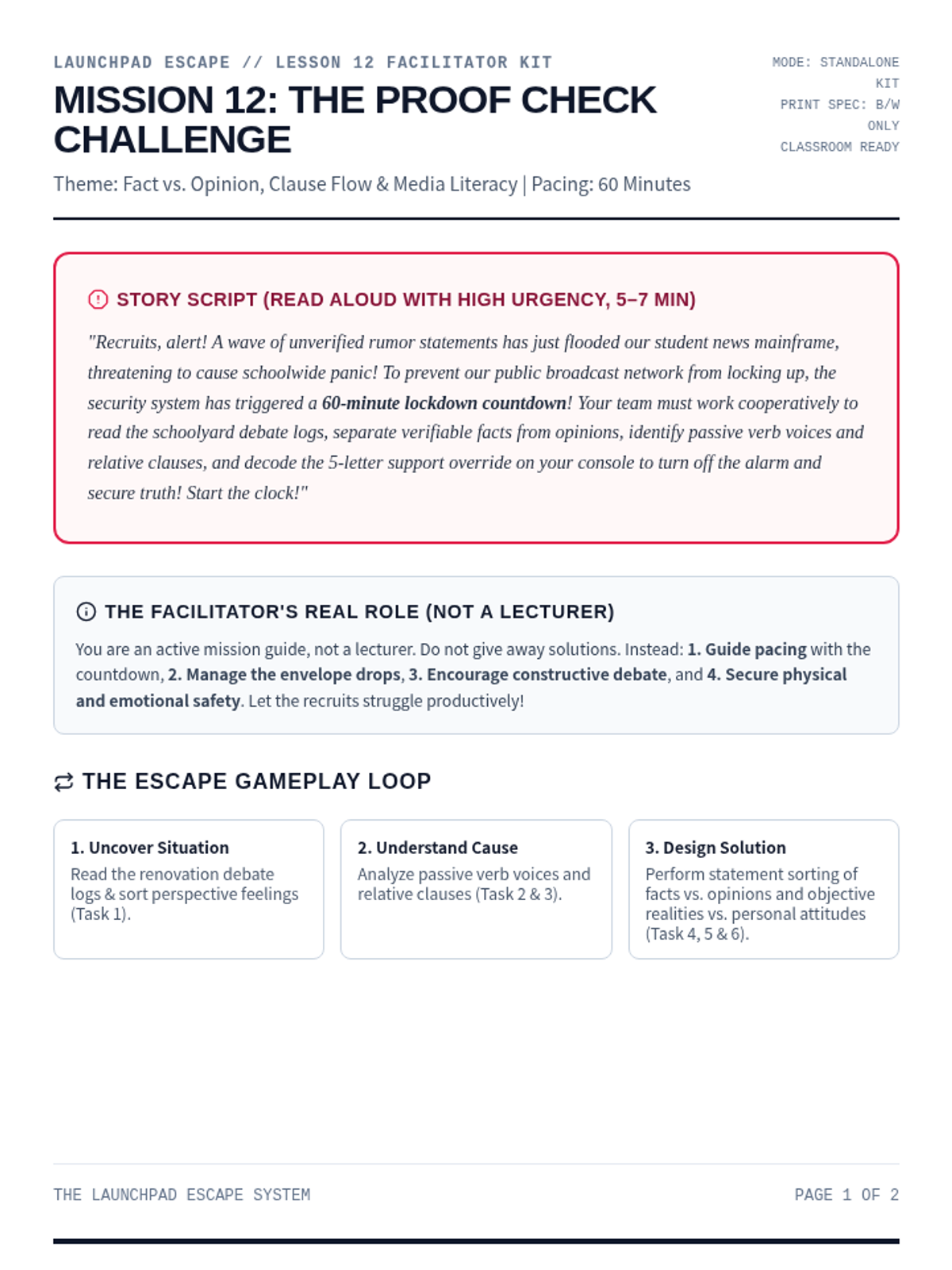
An advanced media literacy and communication escape room for Ages 13-15. Recruits distinguish facts from opinions, analyze objective realities, sort personal attitudes, and input the override PROOF to secure the school news mainframe.
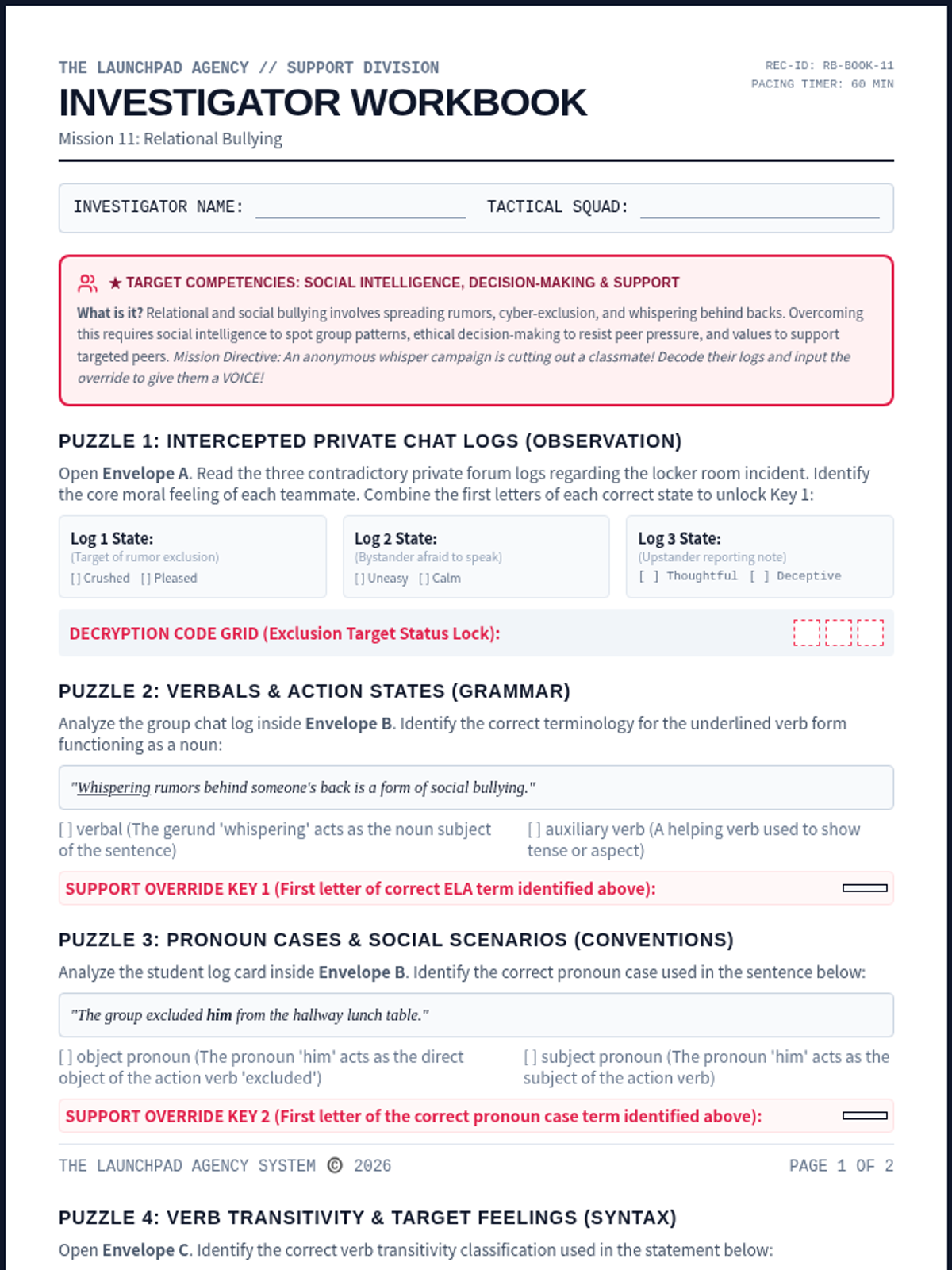
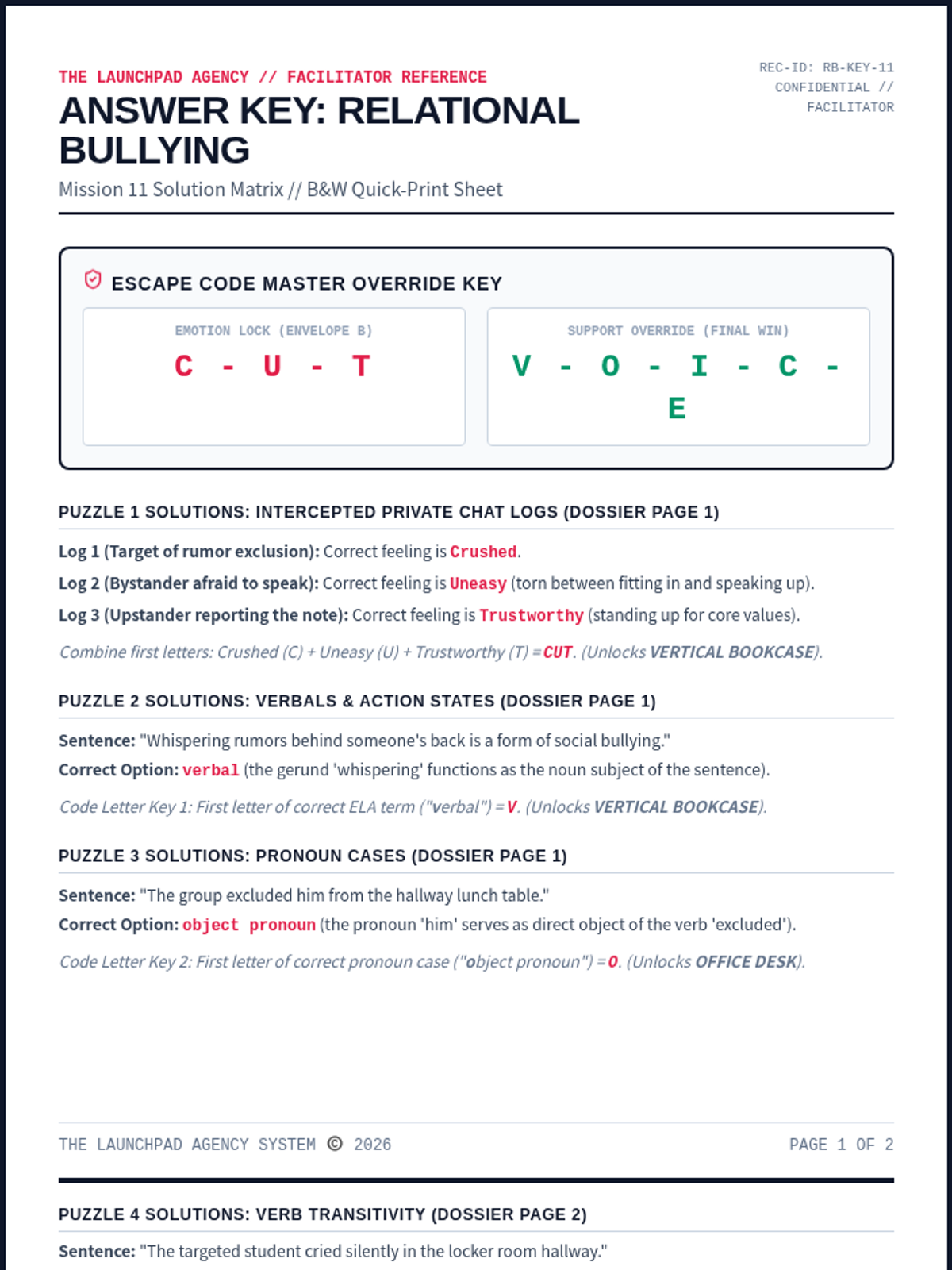
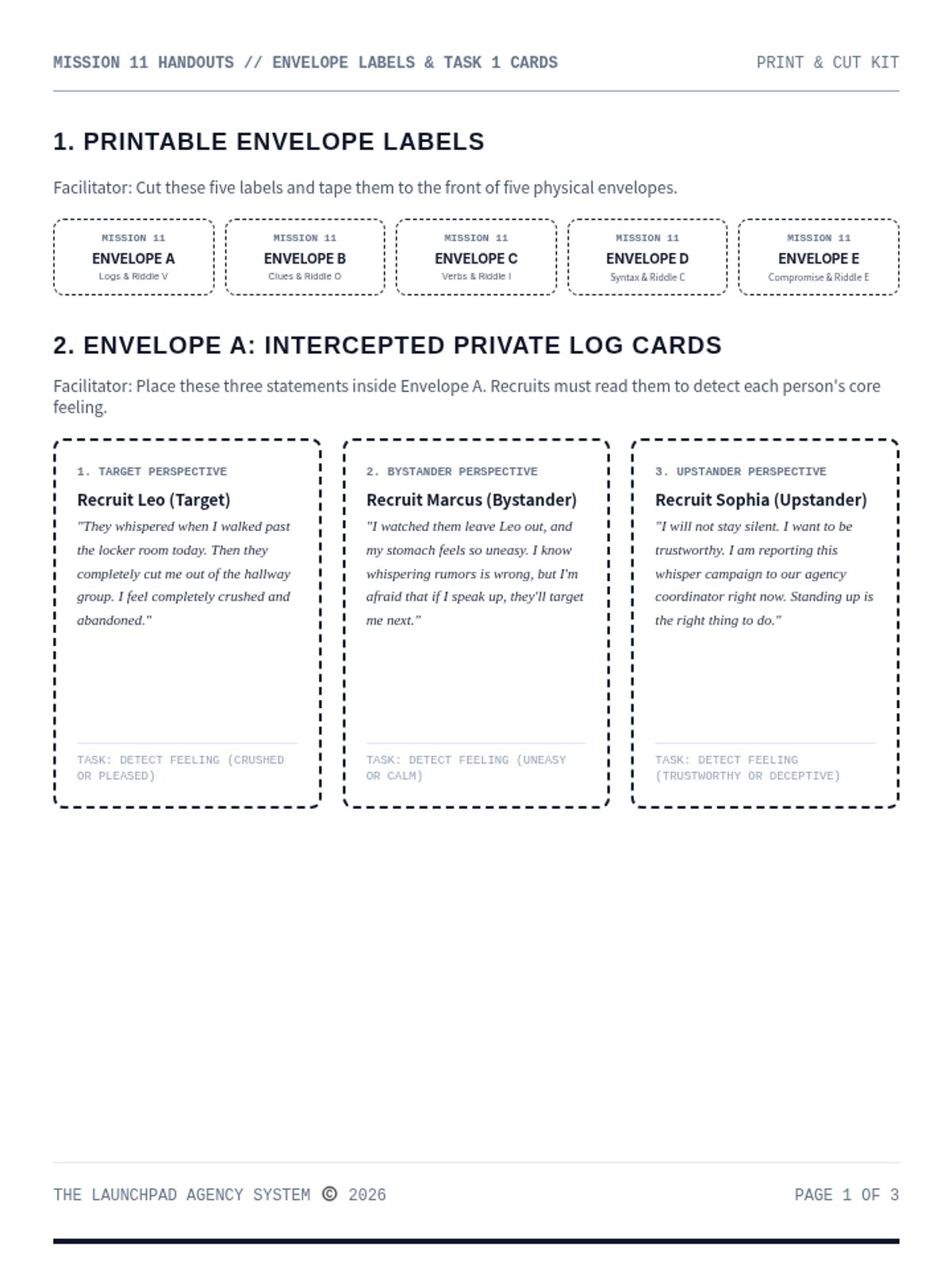
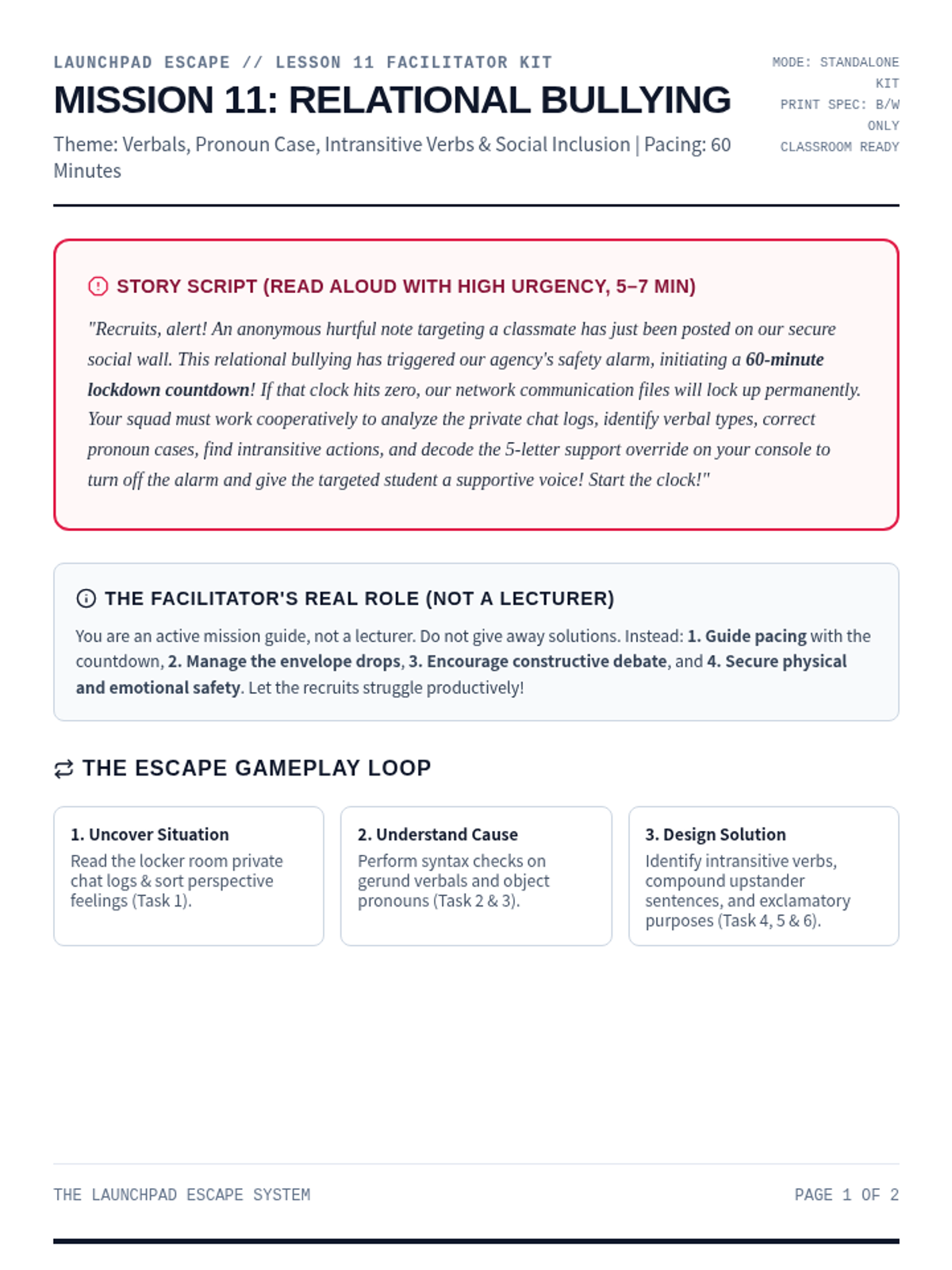
A collaborative social-emotional escape room focused on identifying relational and social bullying, supporting target peers, and standing up to cyber/verbal exclusion. Recruits analyze verb verbal types, pronoun cases, intransitive verbs, and compound syntax to decode the final override.
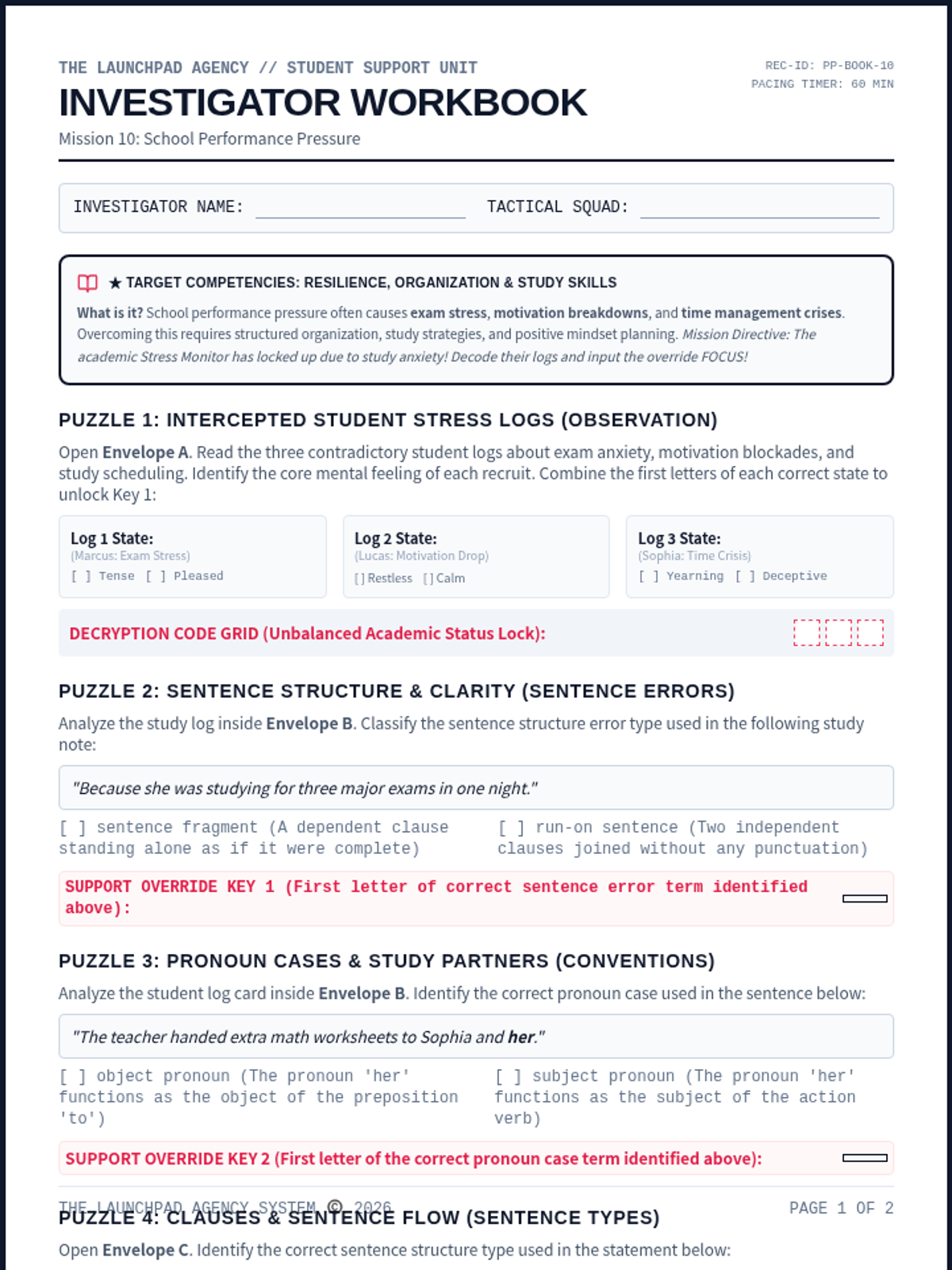
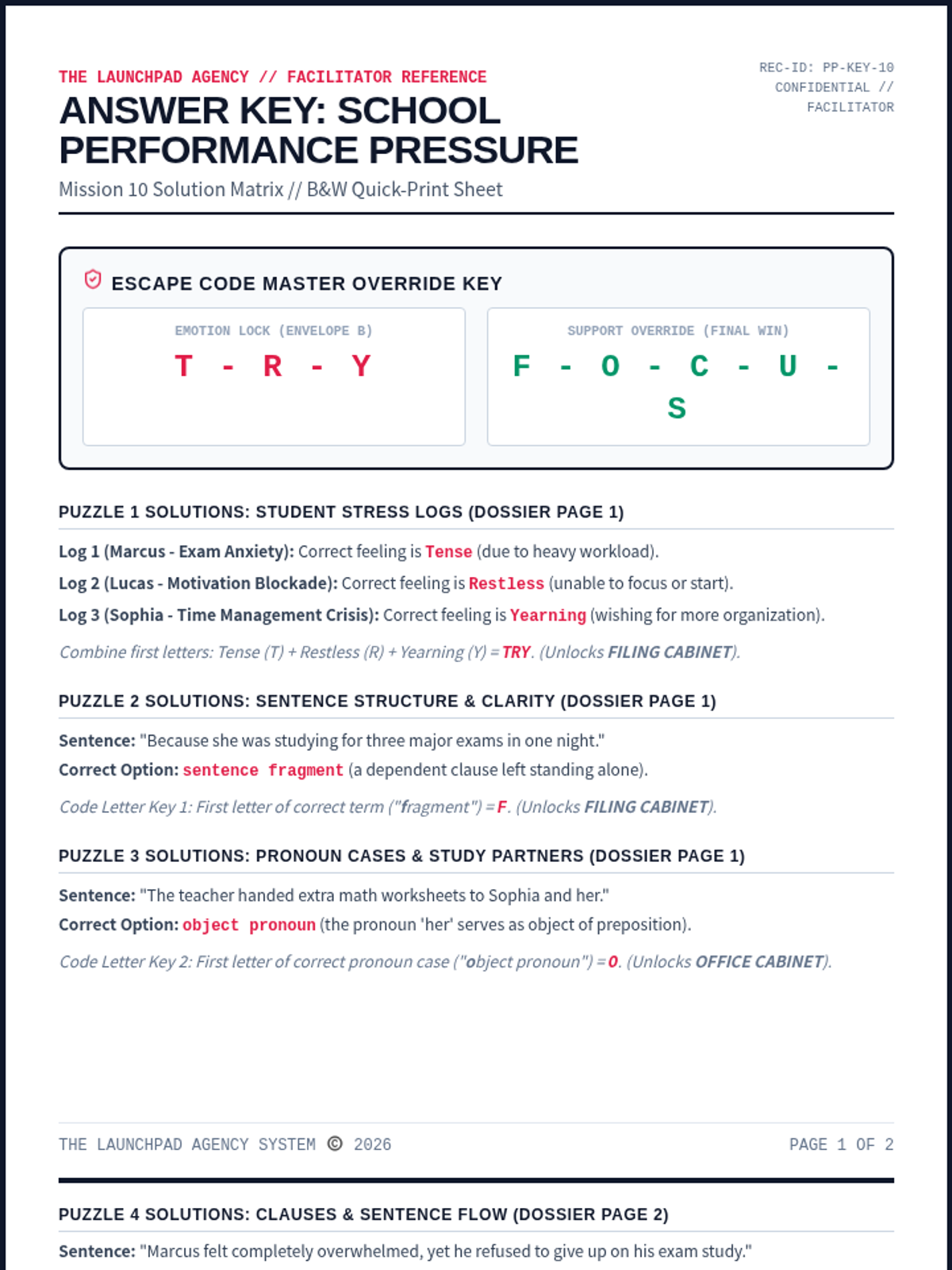
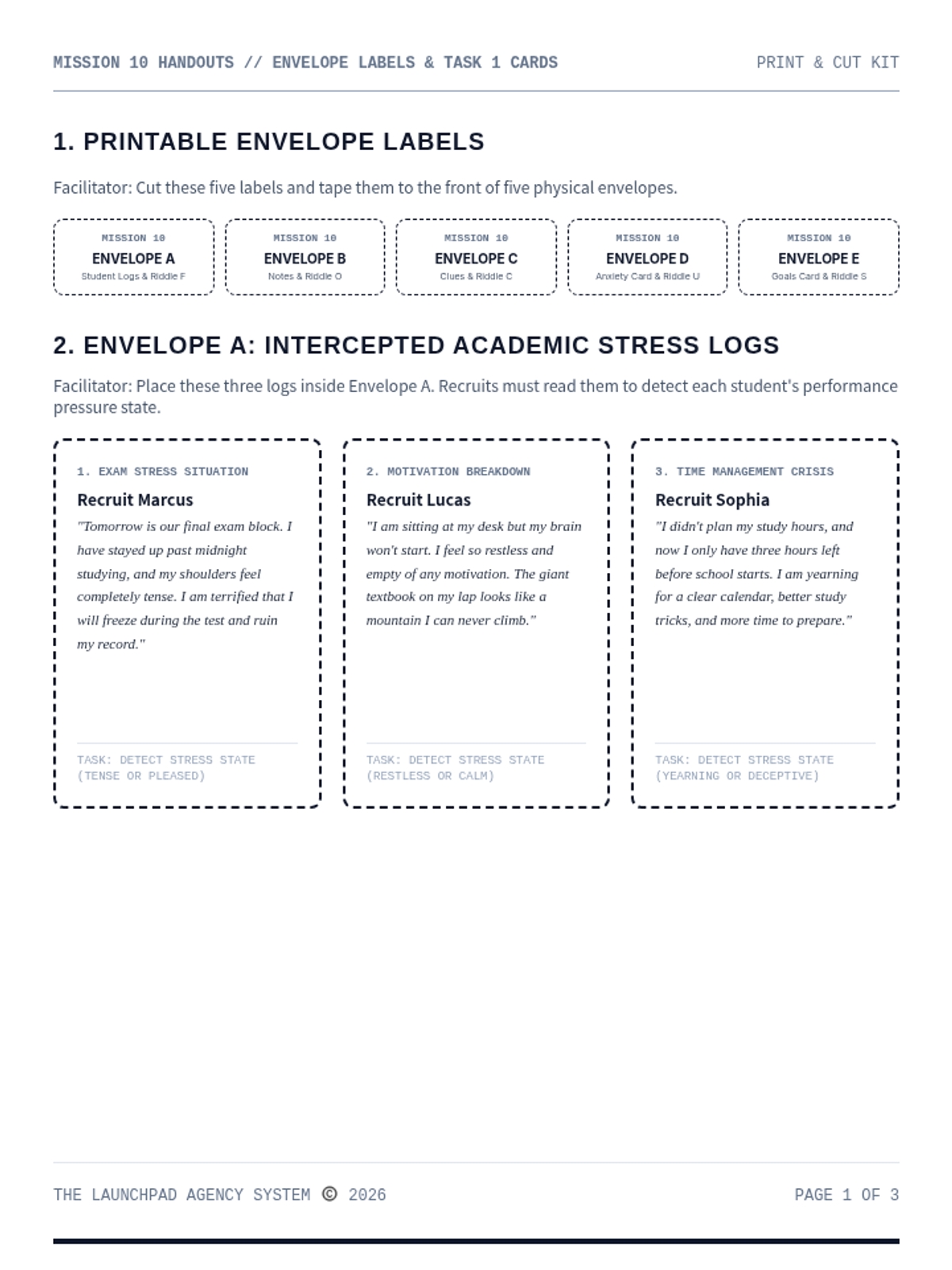
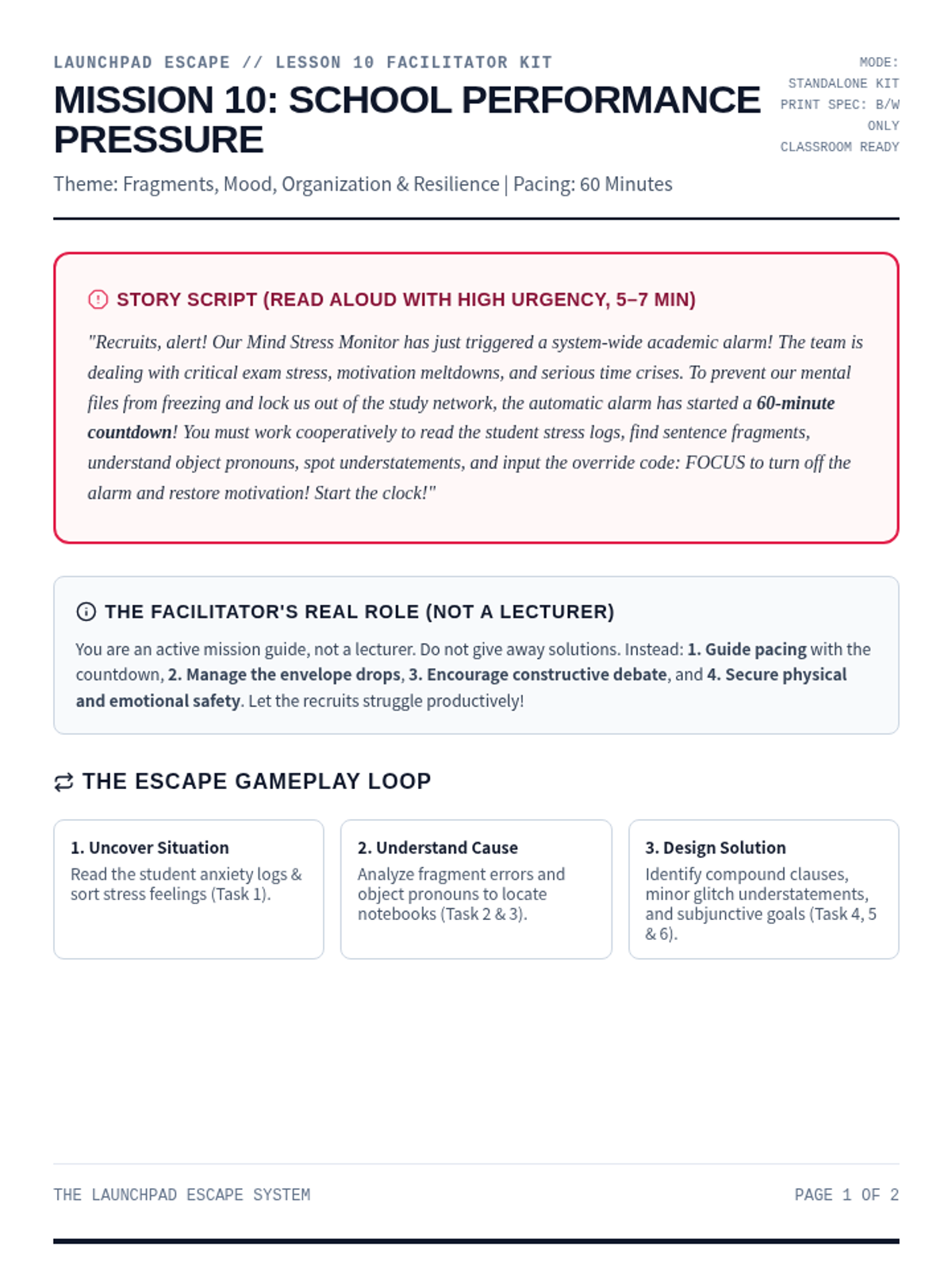
An immersive and strategic escape room focused on managing academic stress, avoiding burnout, and planning study habits. Recruits analyze student logs under performance anxiety, build efficient schedules, and decode the override to restore positive motivation.
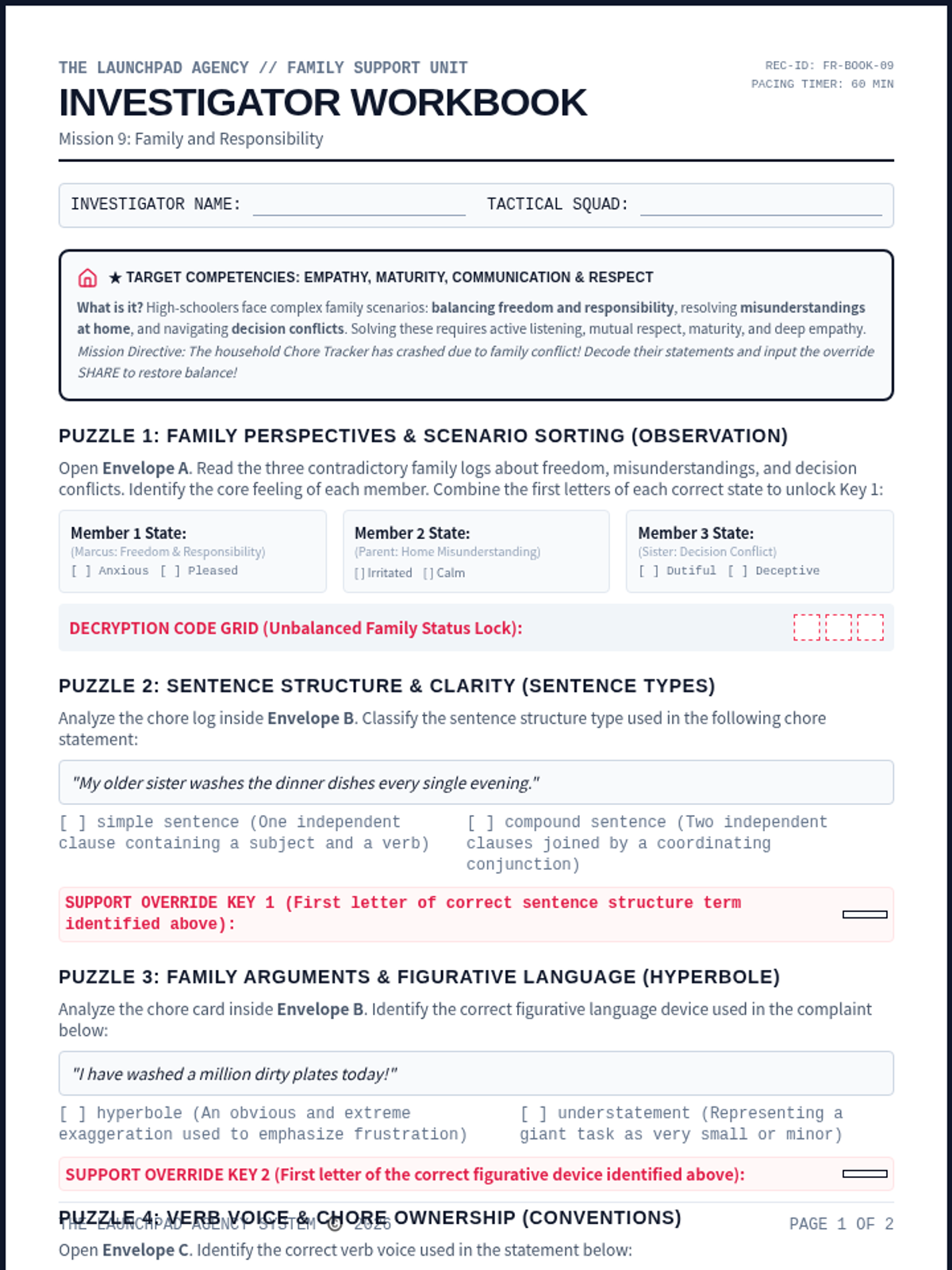
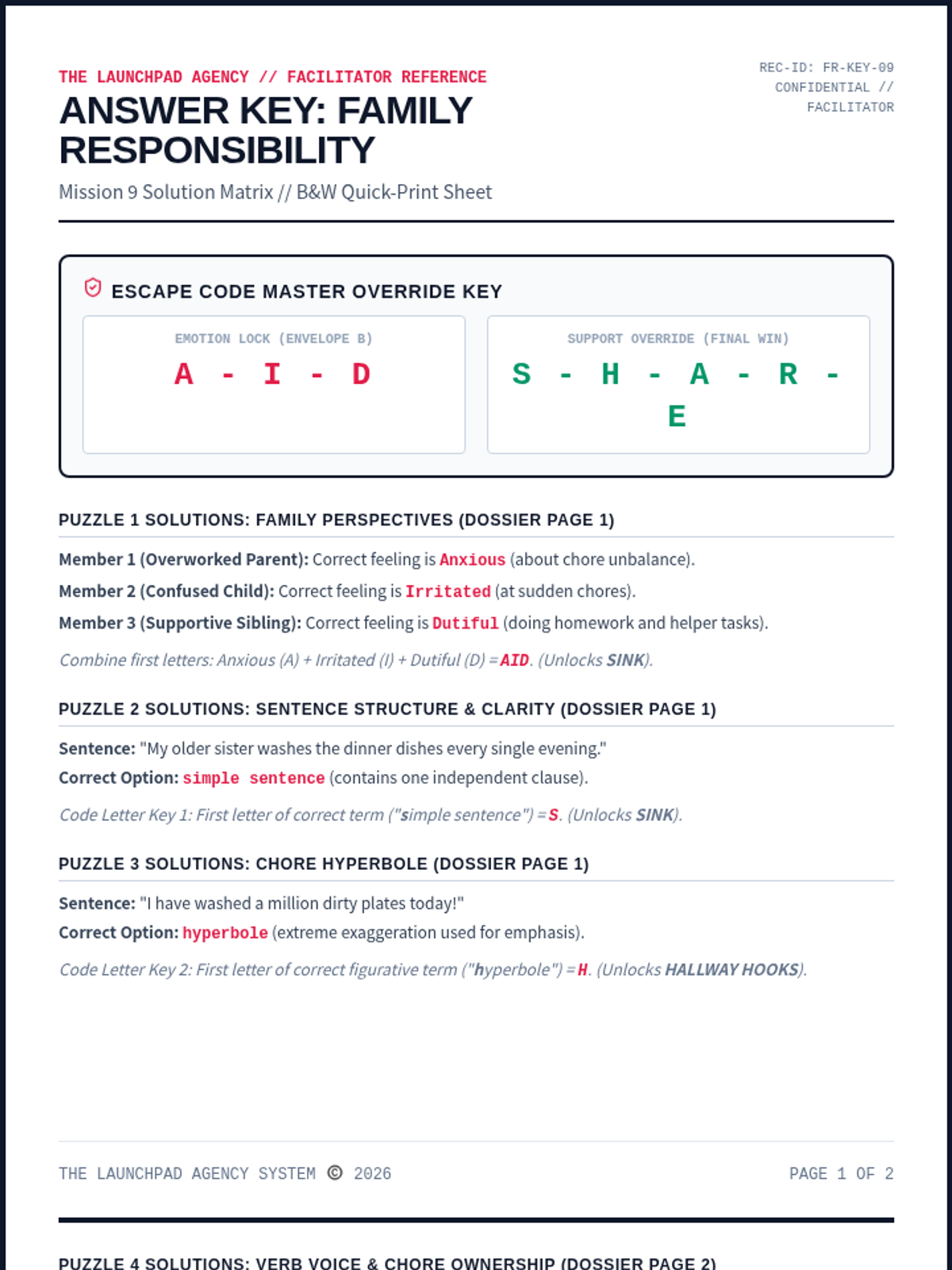
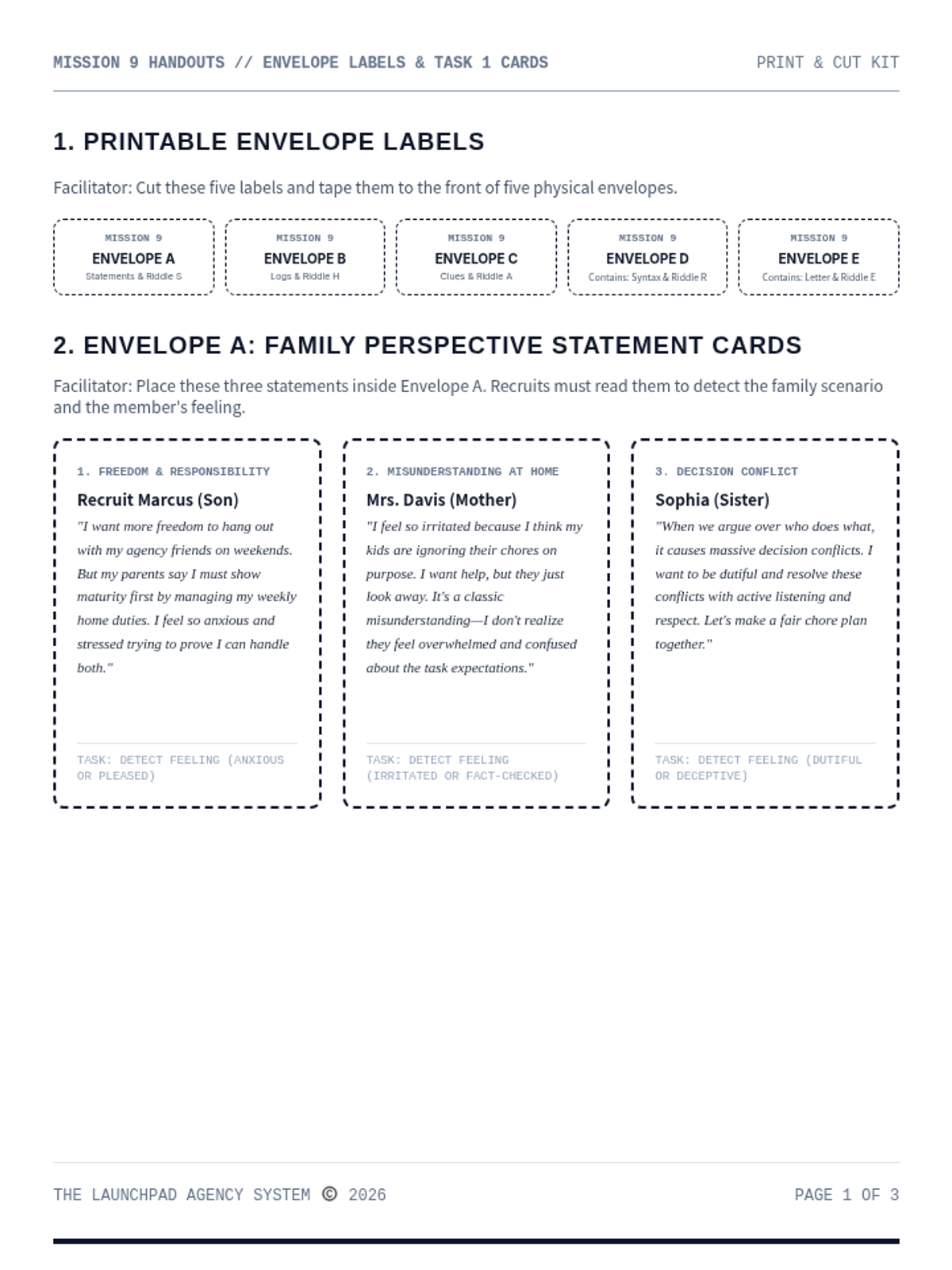
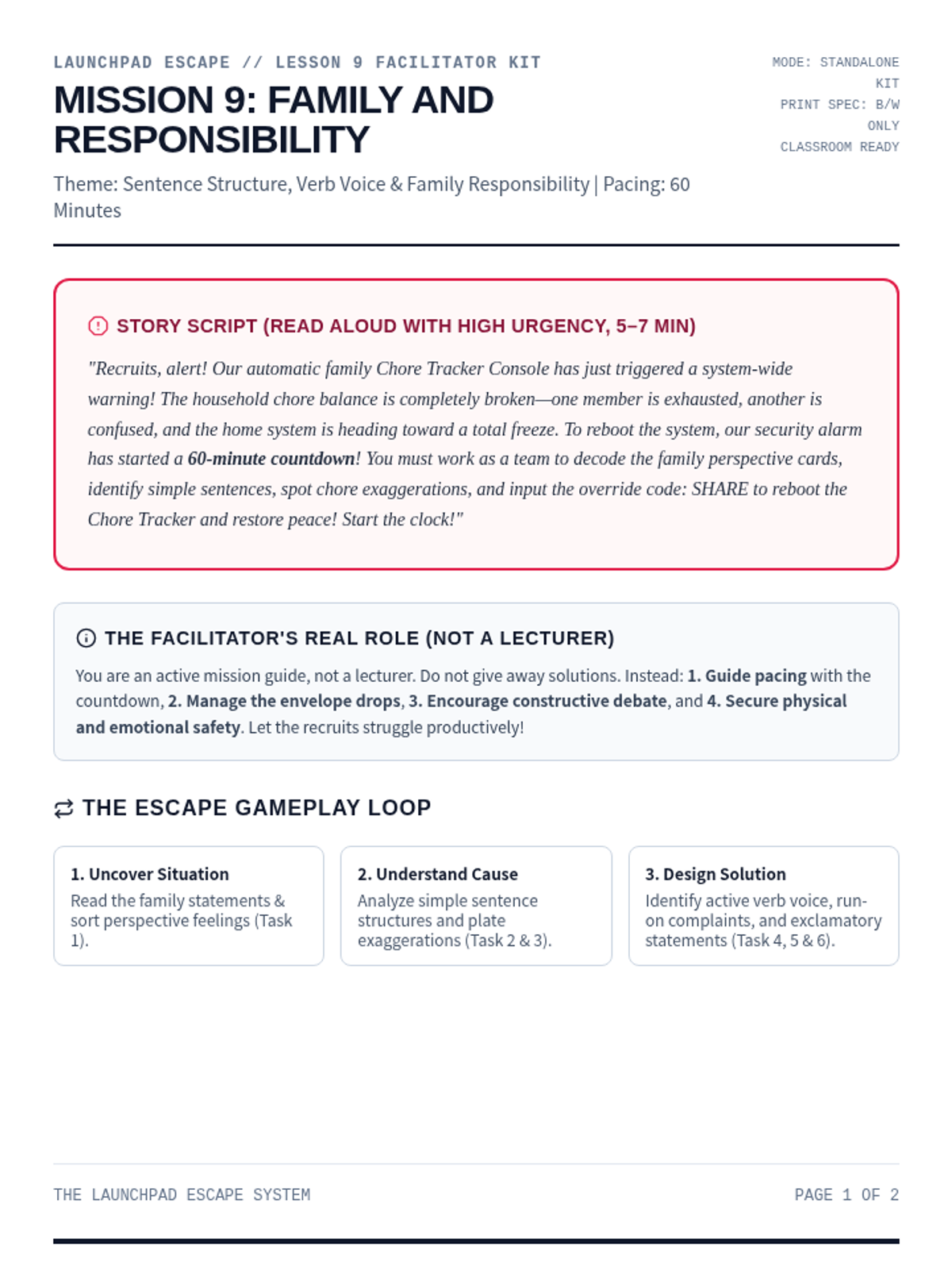
A cooperative and empathetic escape room focused on managing family duties and household balance. Recruits analyze parent/child perspective claims, organize daily chores timelines, and decode the final compromise override.
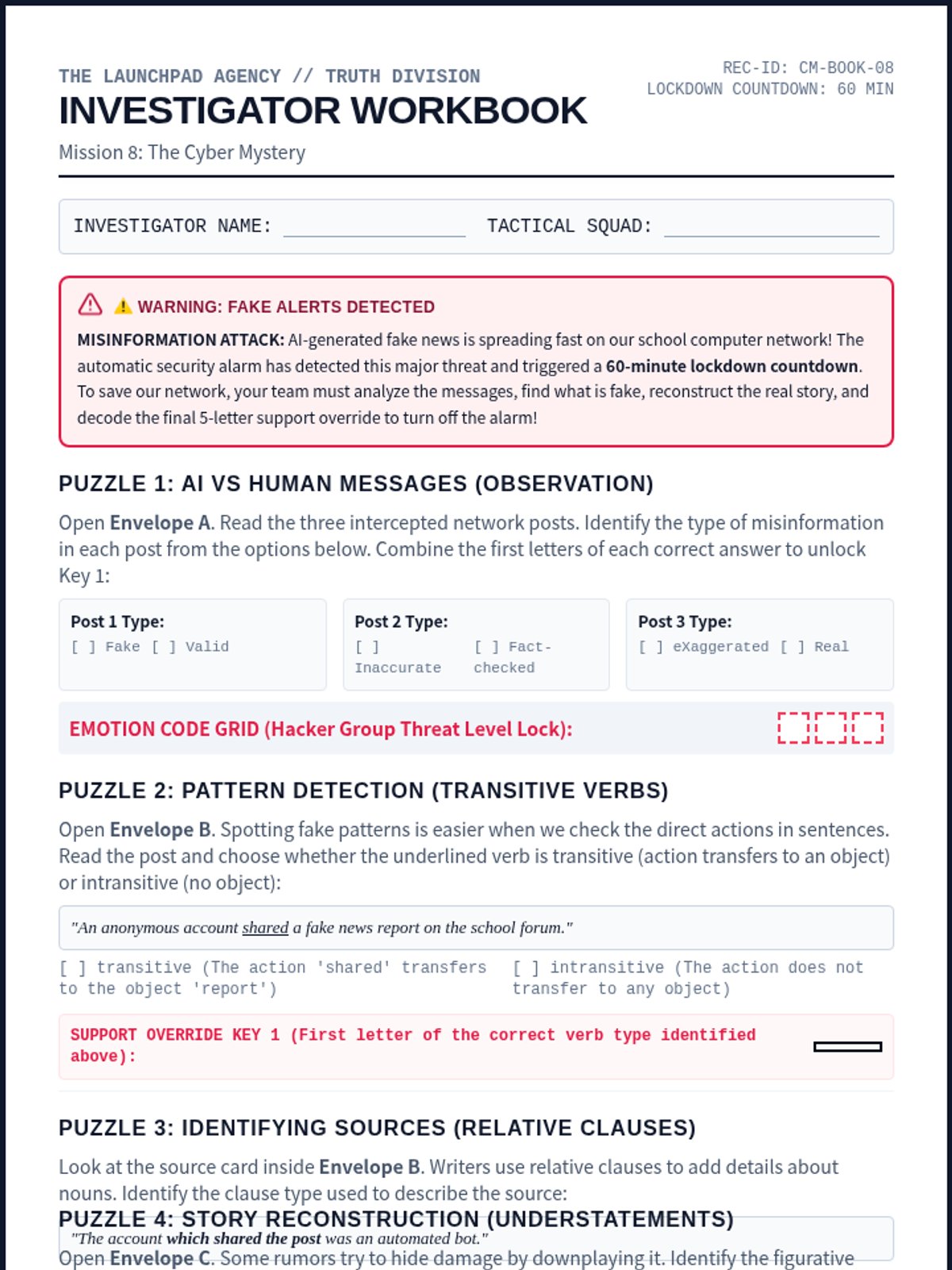
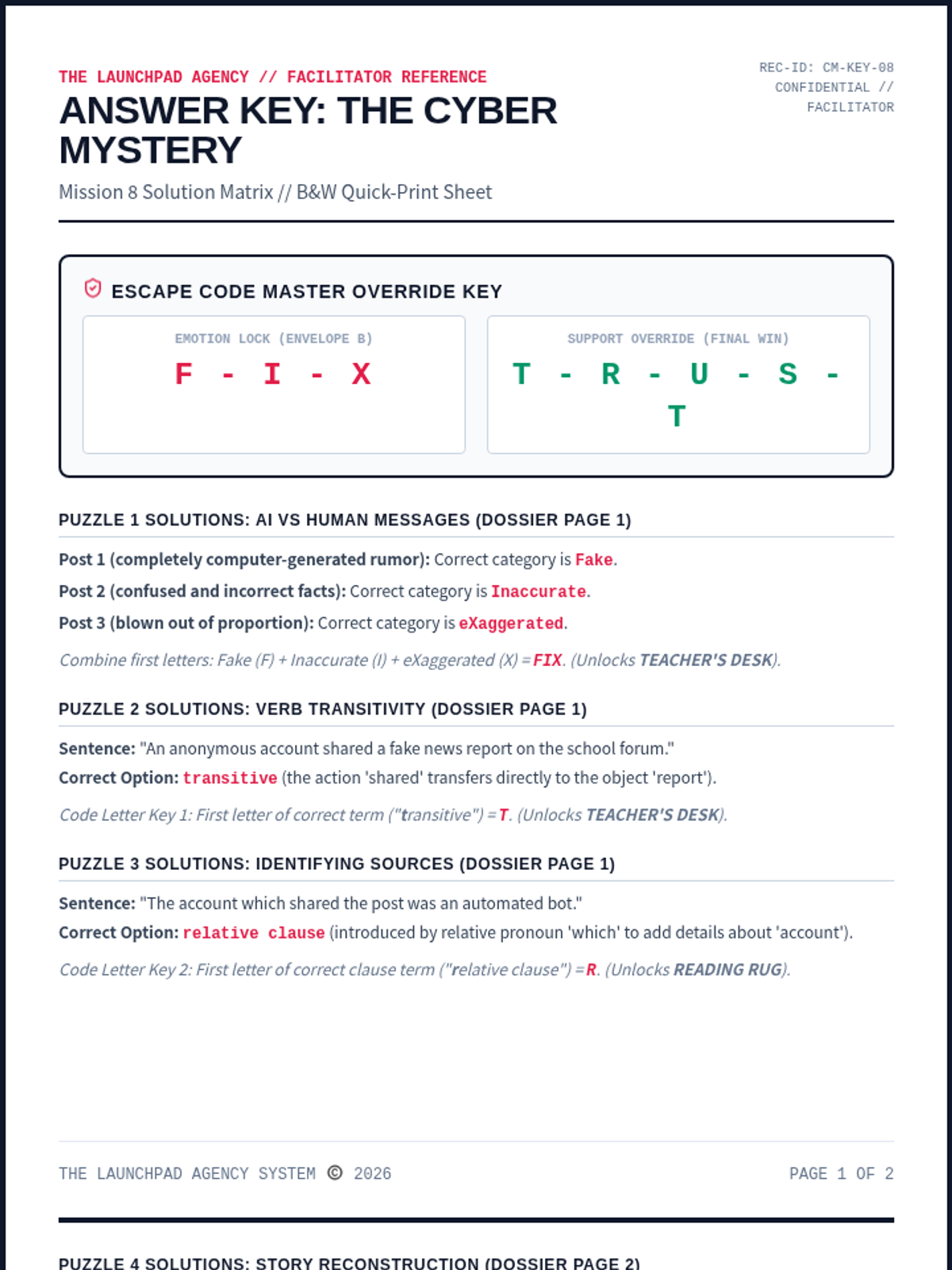
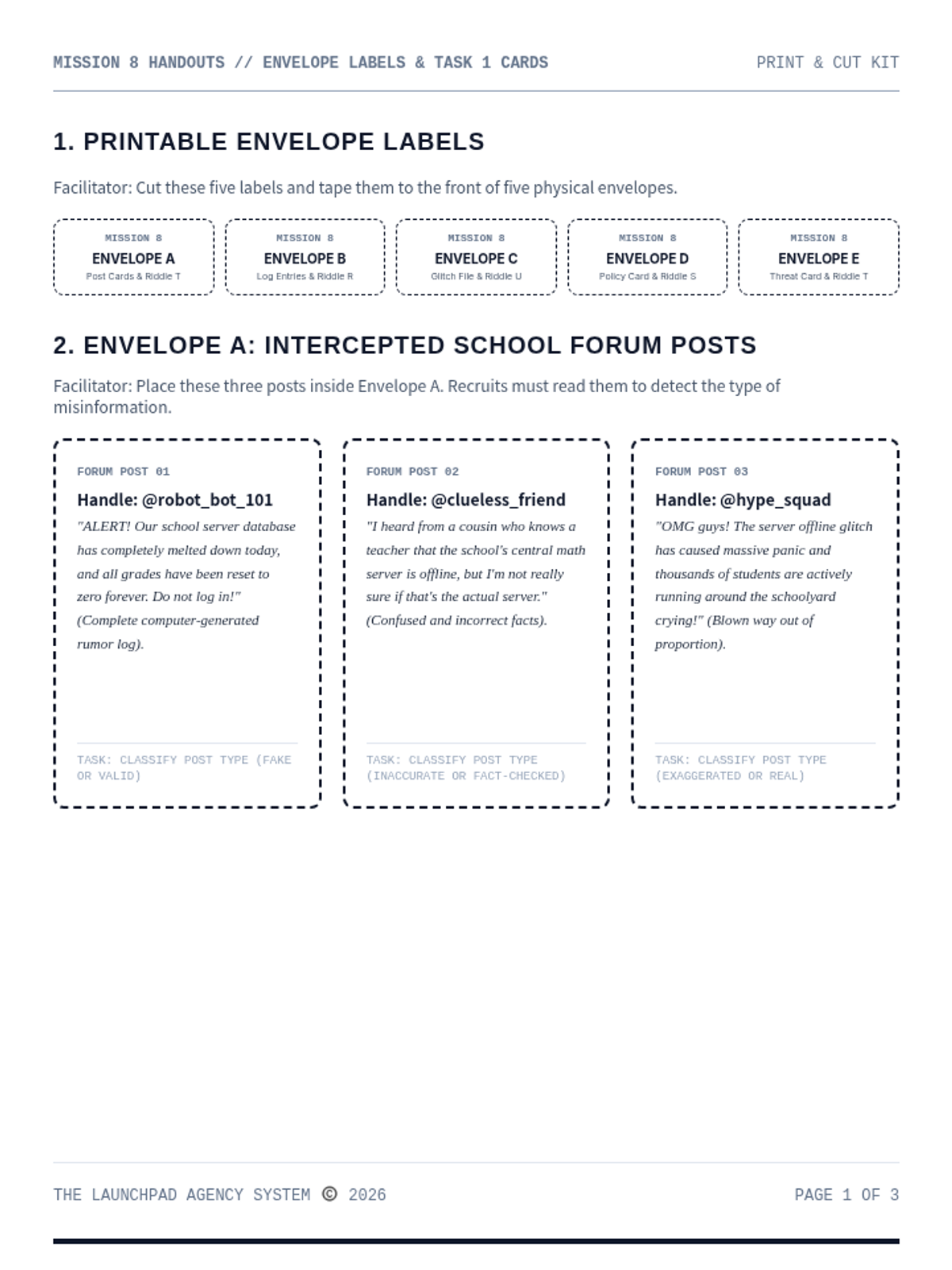
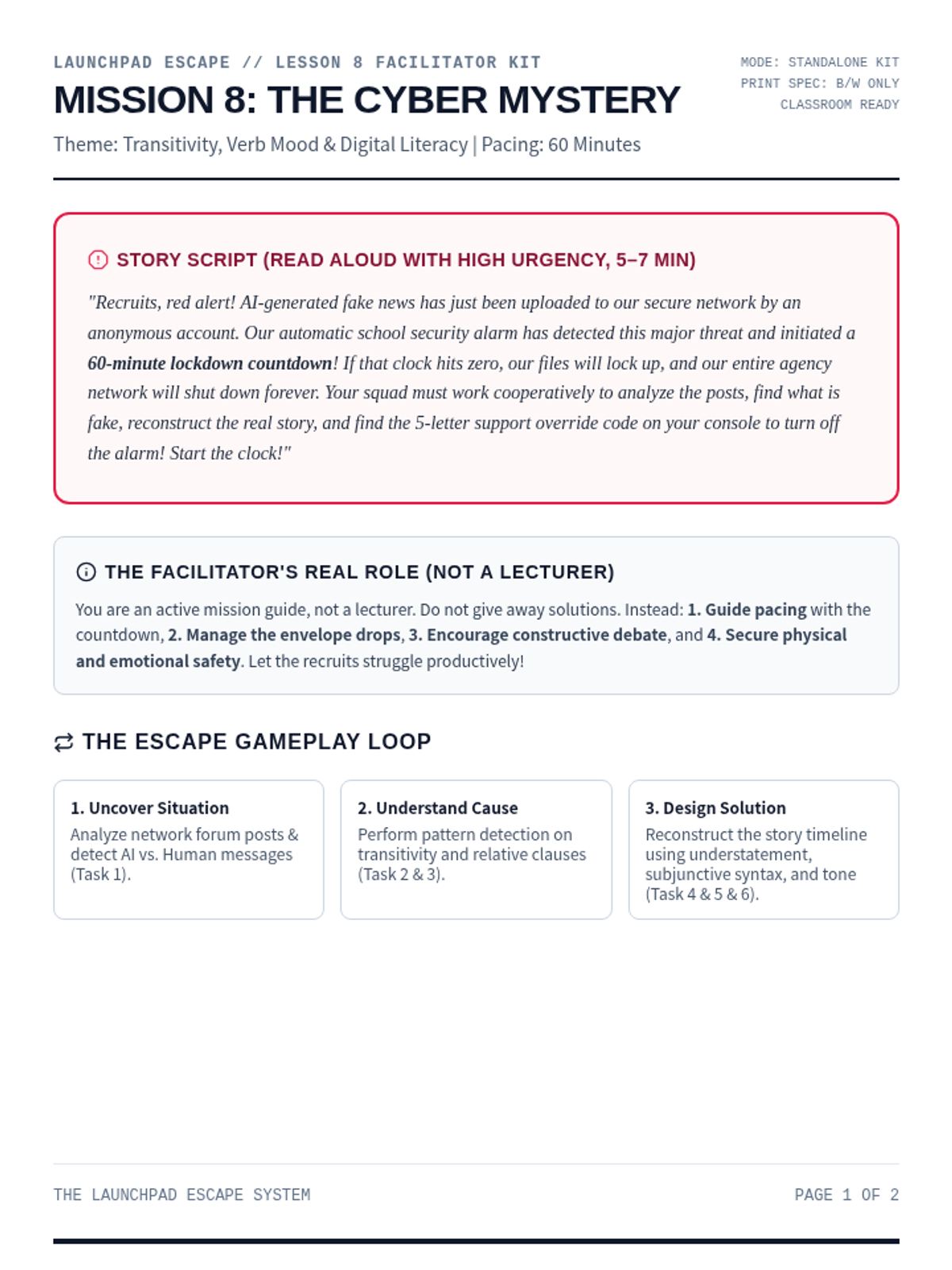
An advanced digital literacy and collaborative cryptography escape room for Ages 14-16. Recruits analyze verb transitivity, relative clauses, subjunctive moods, and tone to stop a school database wipe.
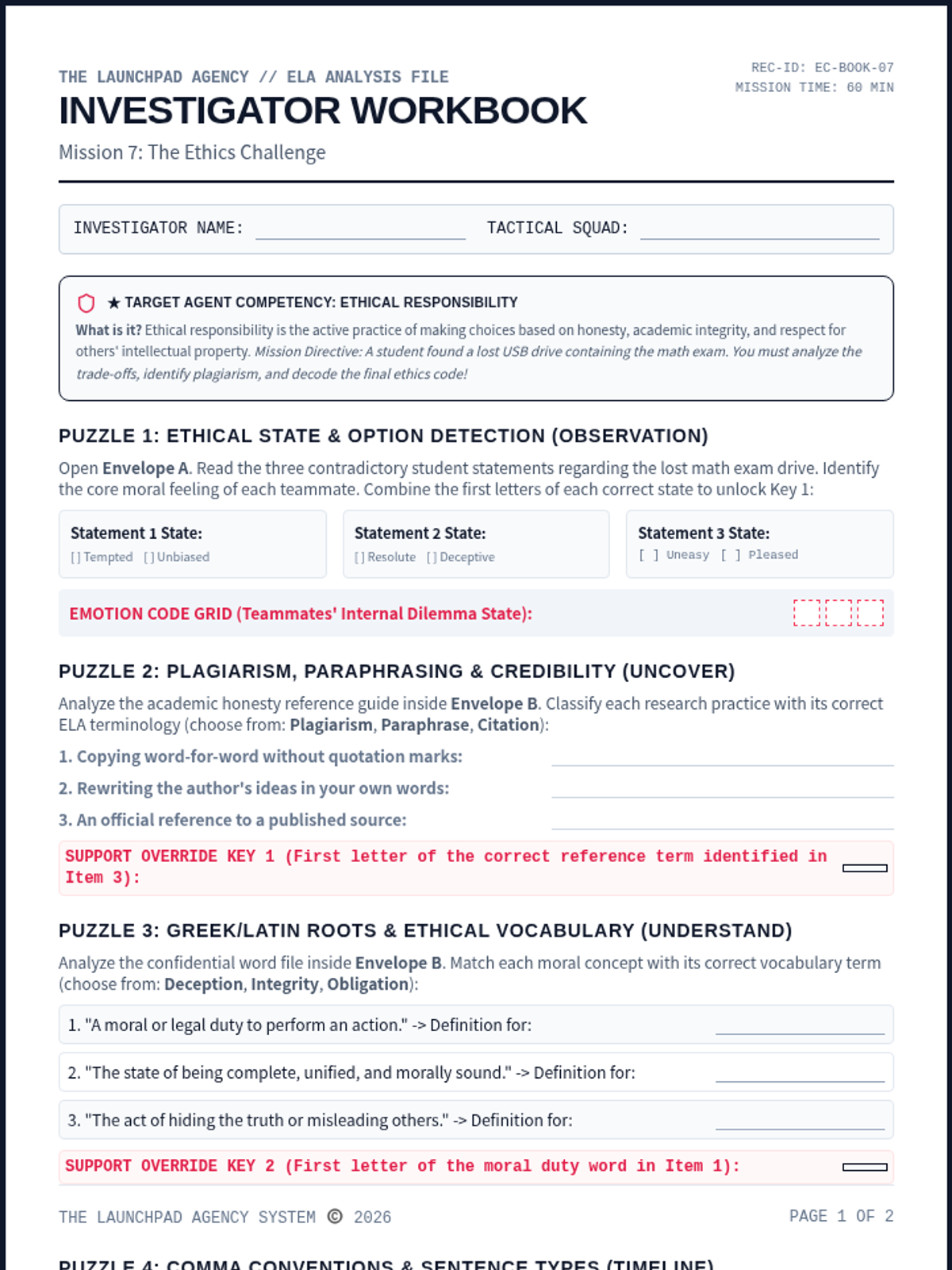
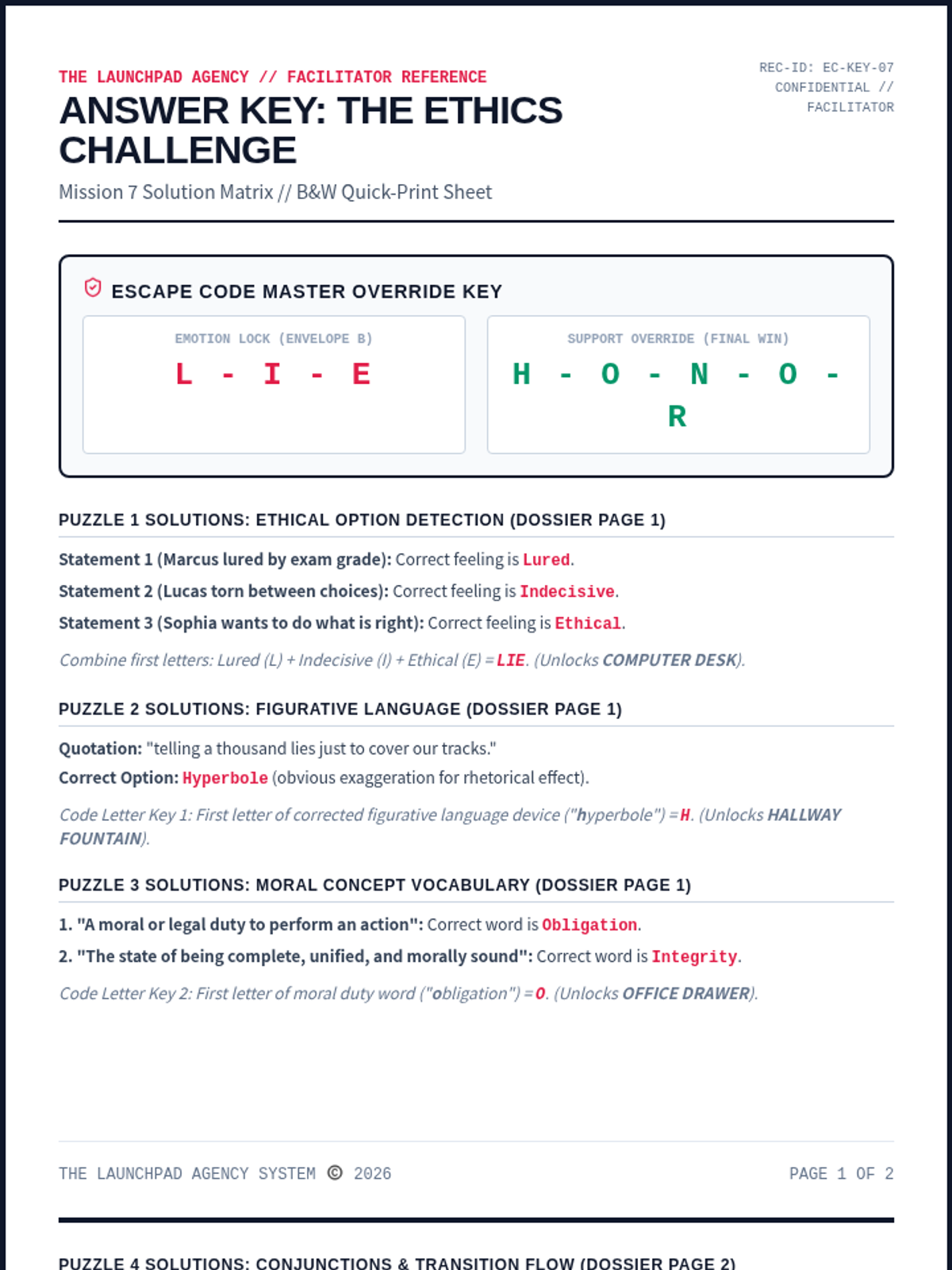
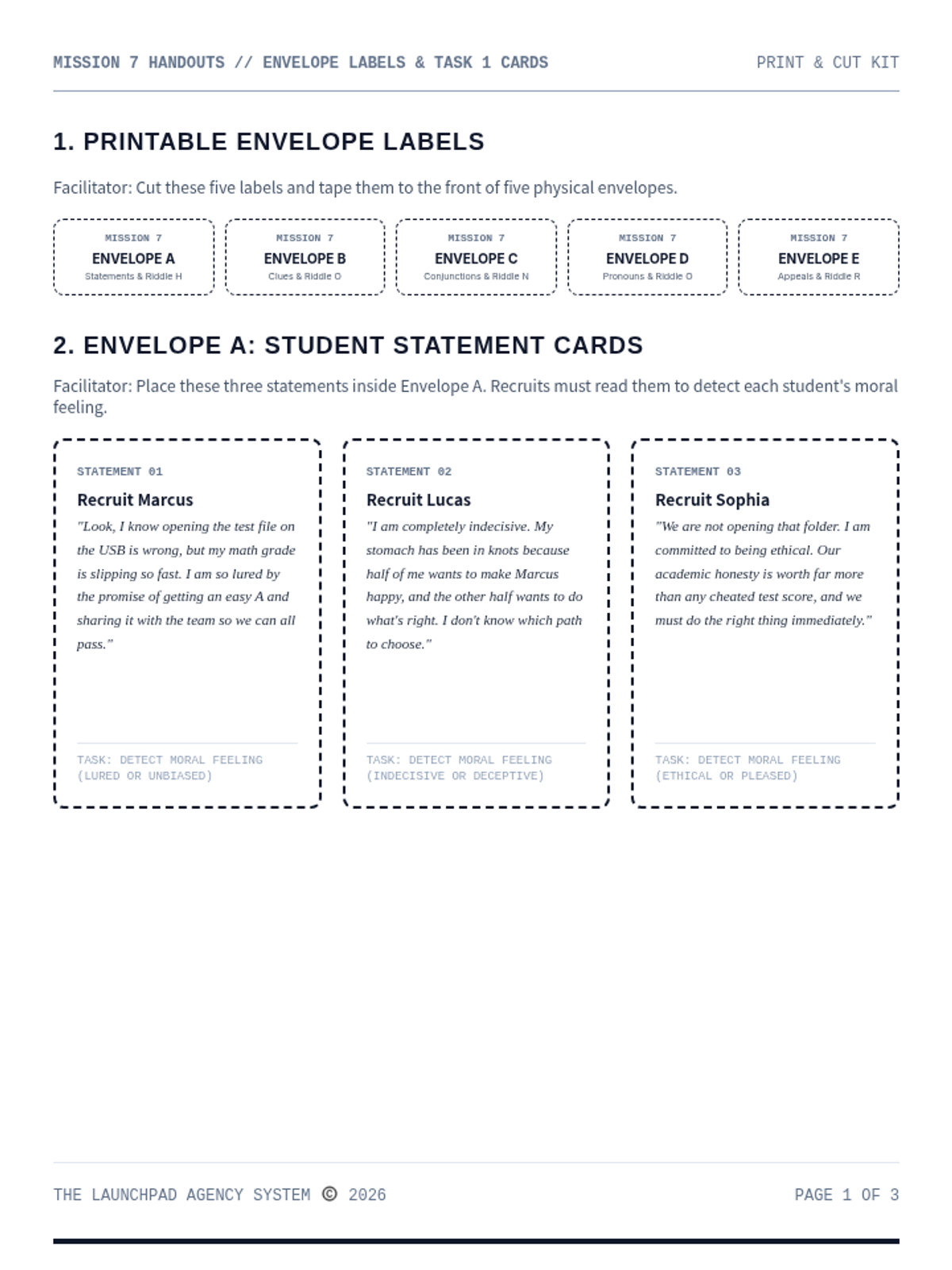
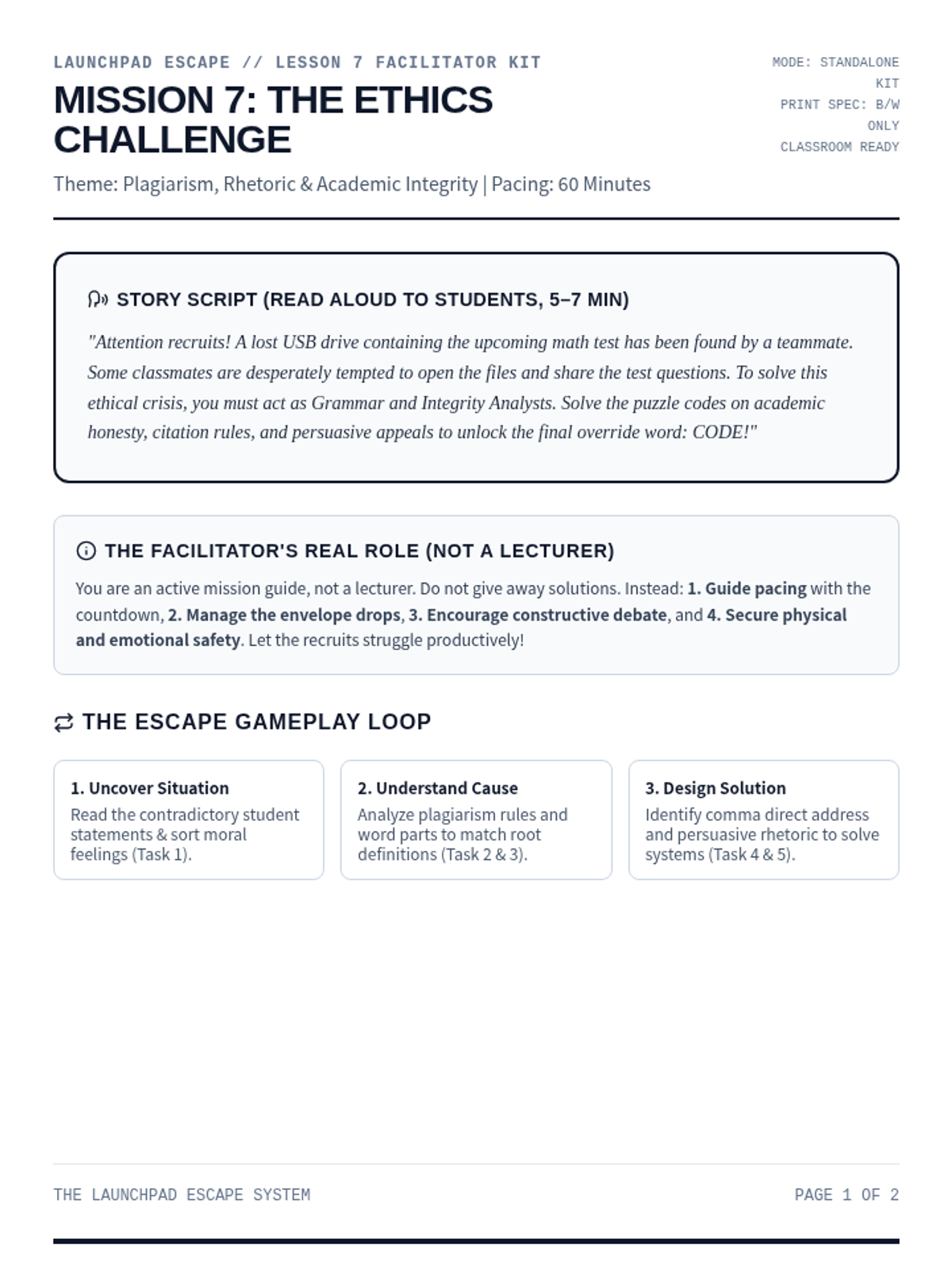
A high-stakes moral dilemma escape room for Ages 11-13. Recruits evaluate the trade-offs of academic honesty, identify plagiarism, analyze persuasive appeals, and decode the final ethics code.
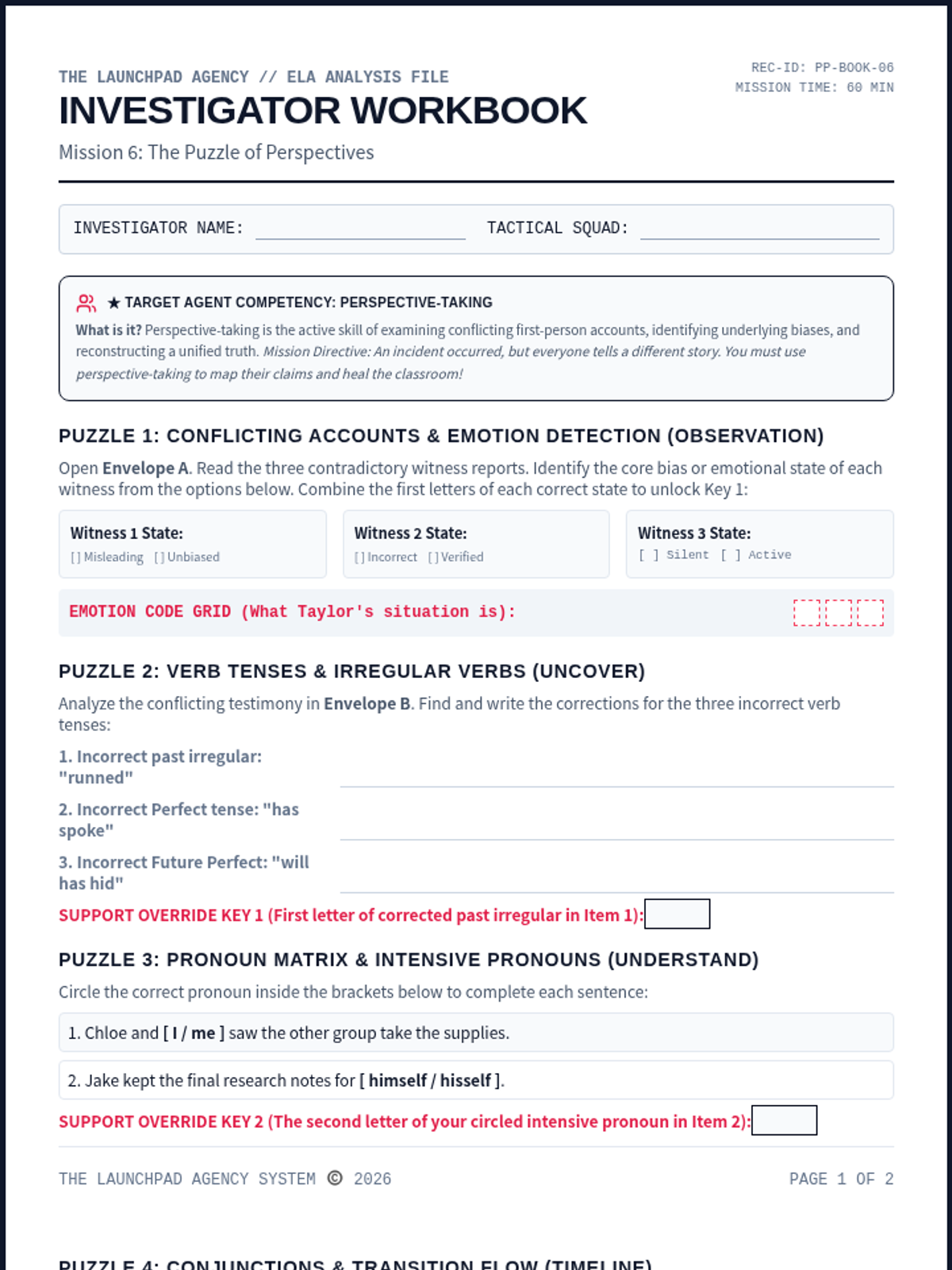
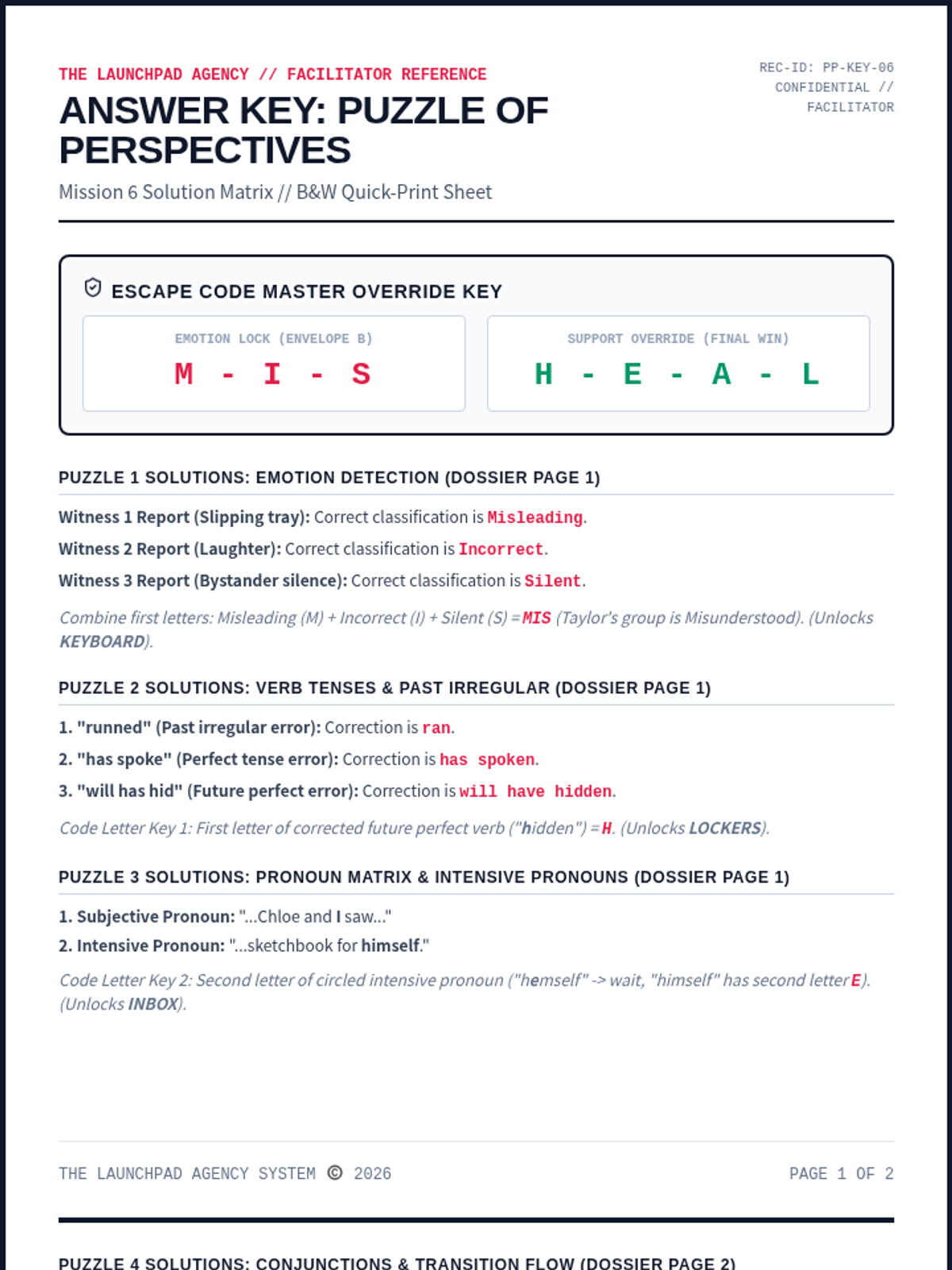
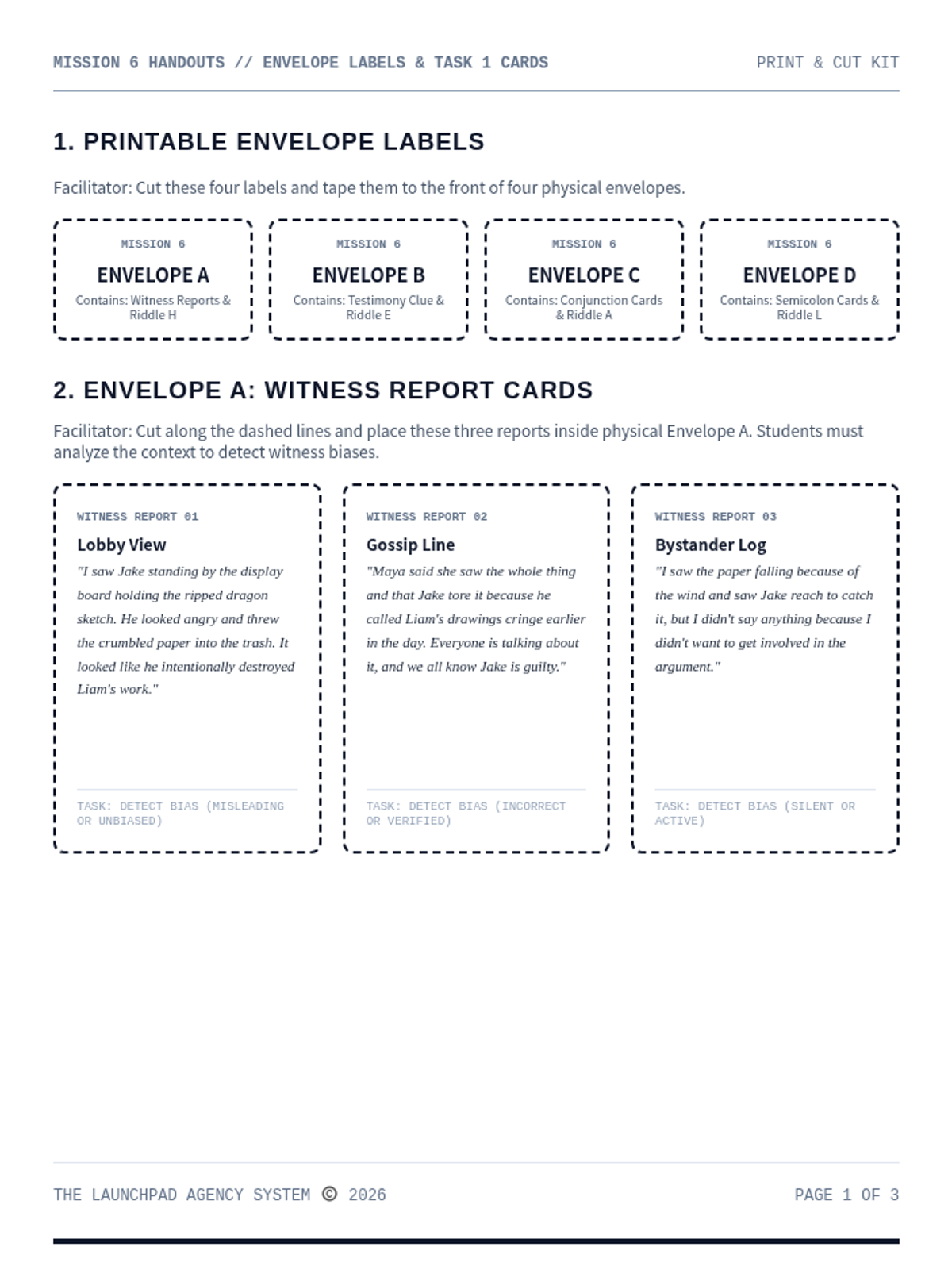
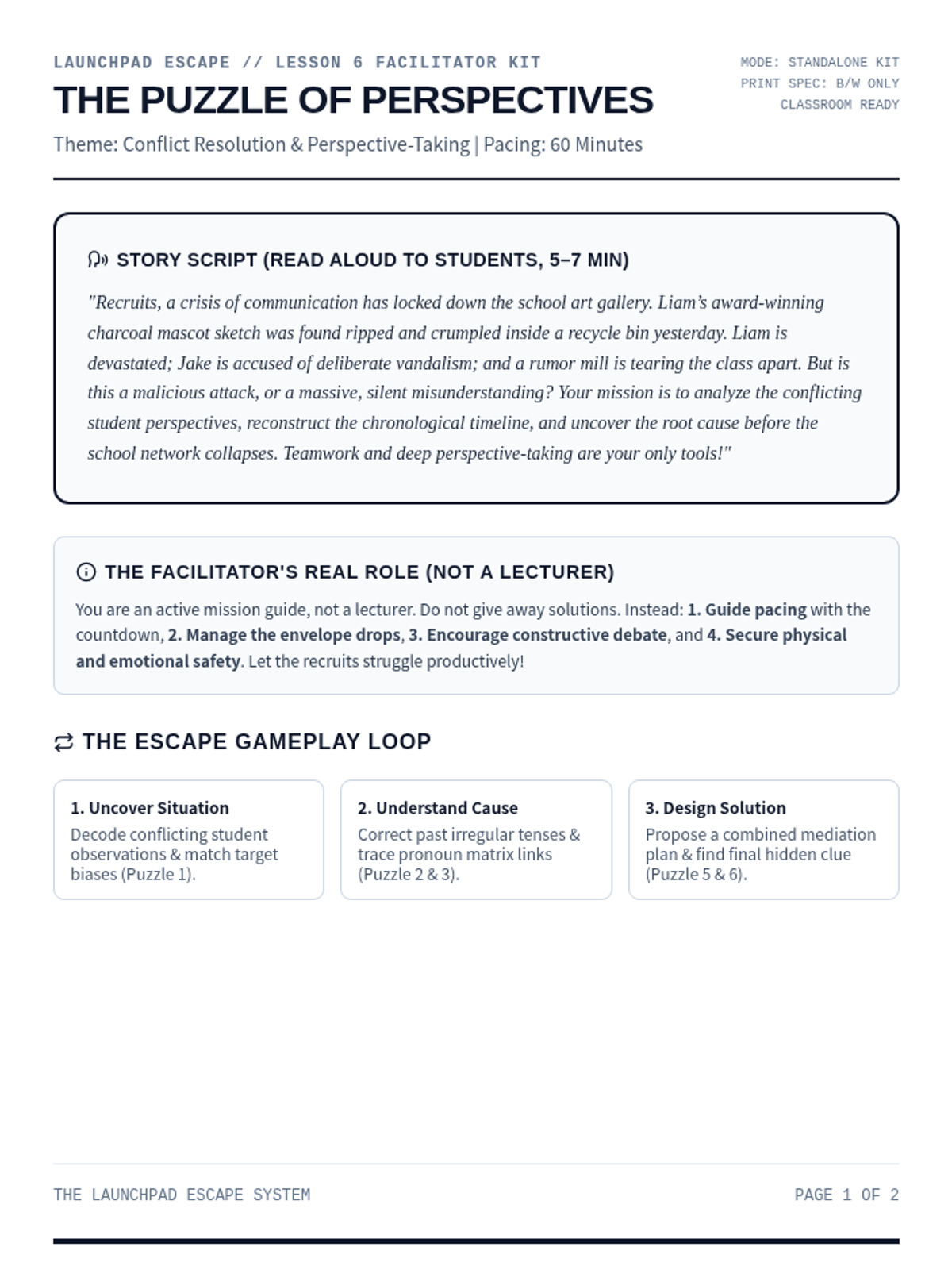
A high-stakes perspective-taking escape room. Recruits examine conflicting first-person accounts, analyze bias, reconstruct a unified timeline, and solve the override code.
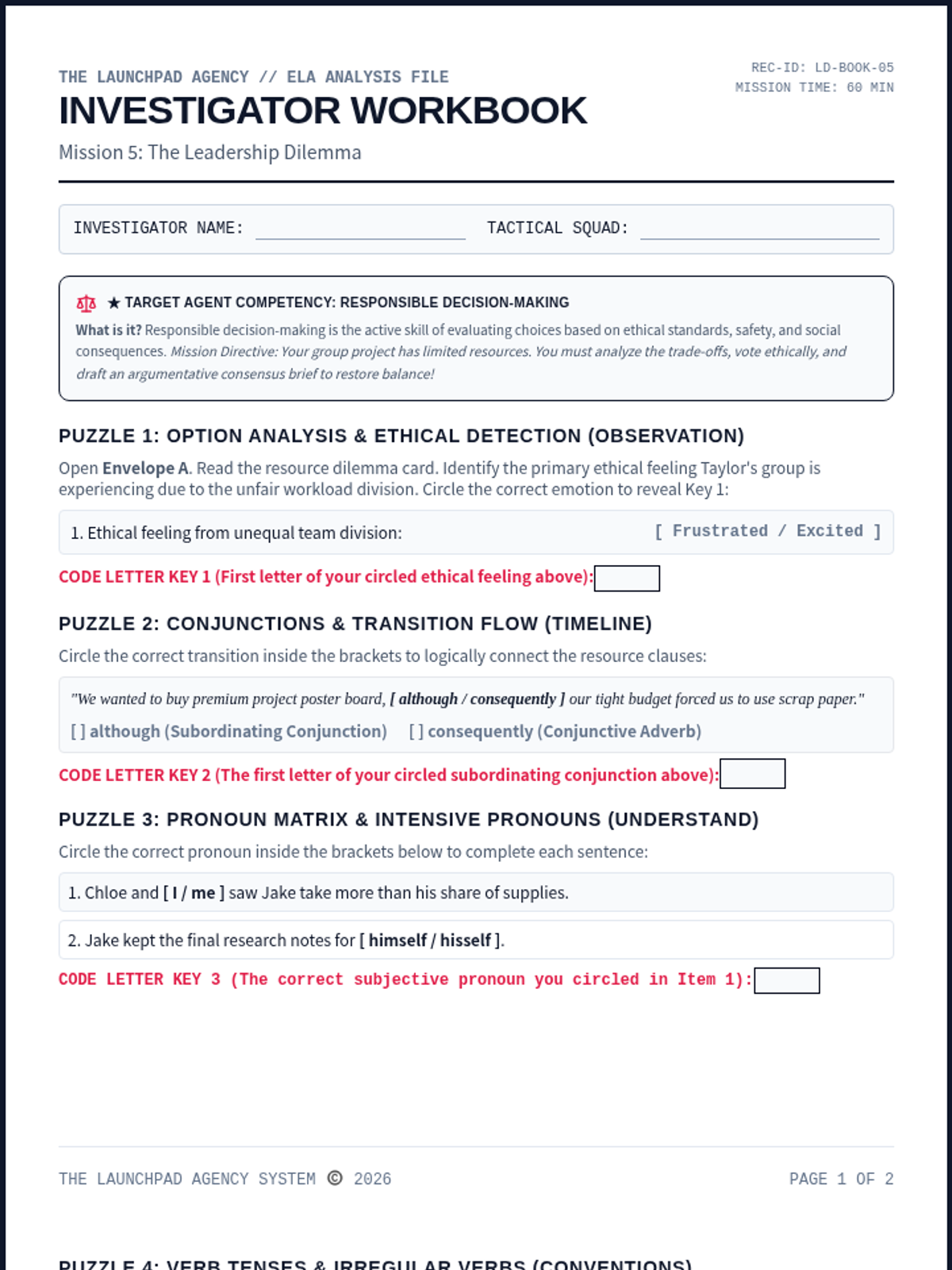
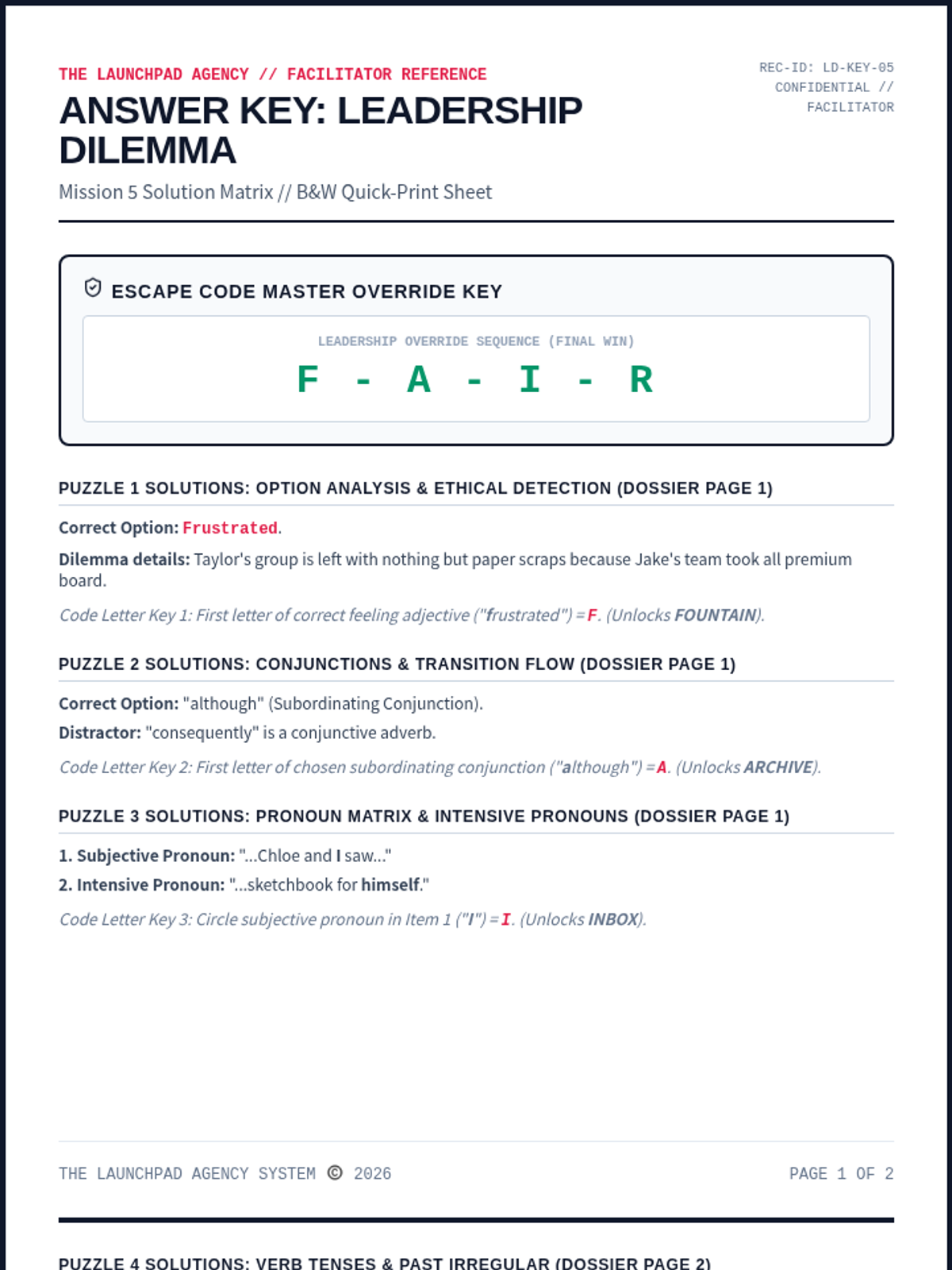
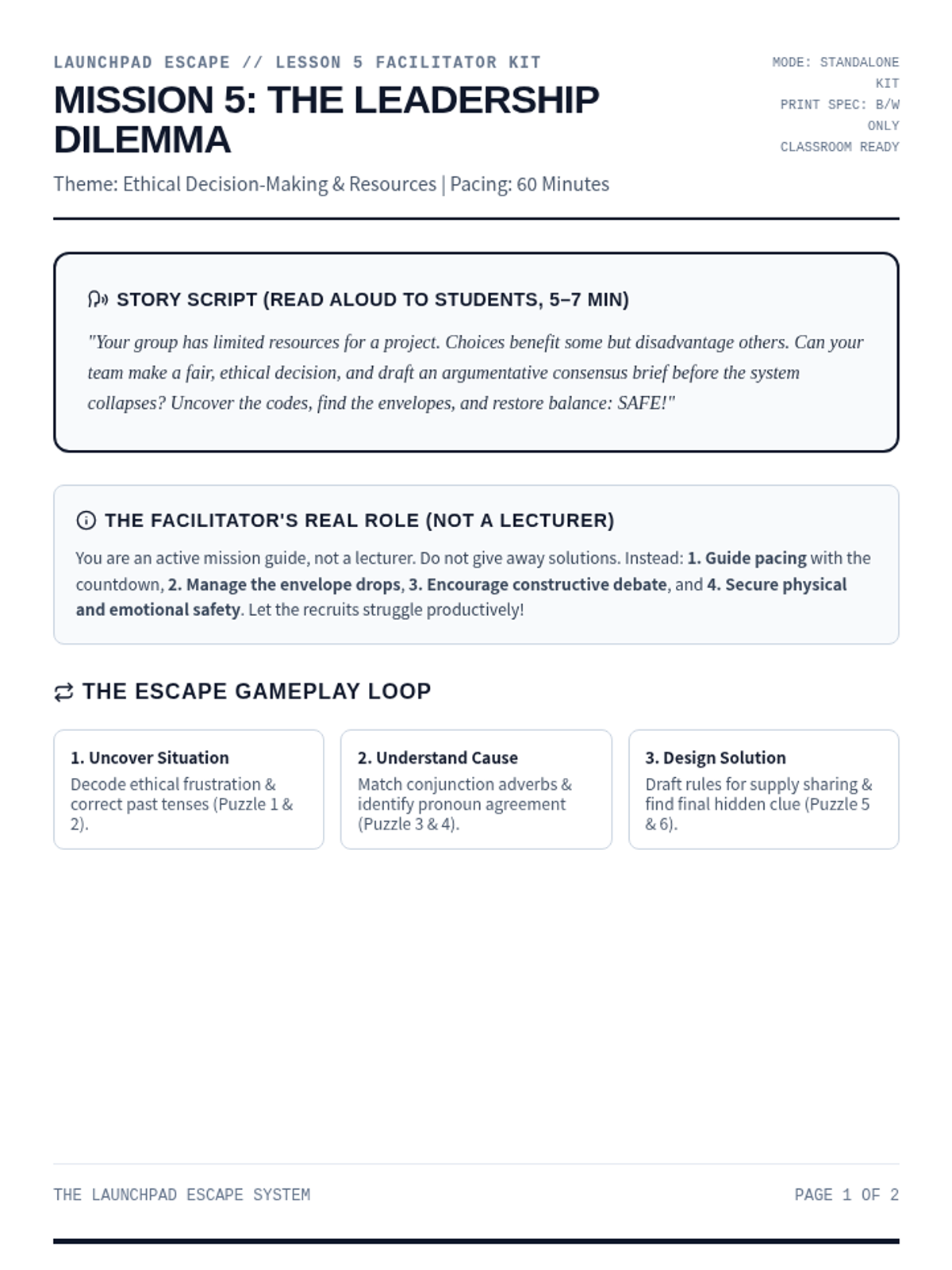
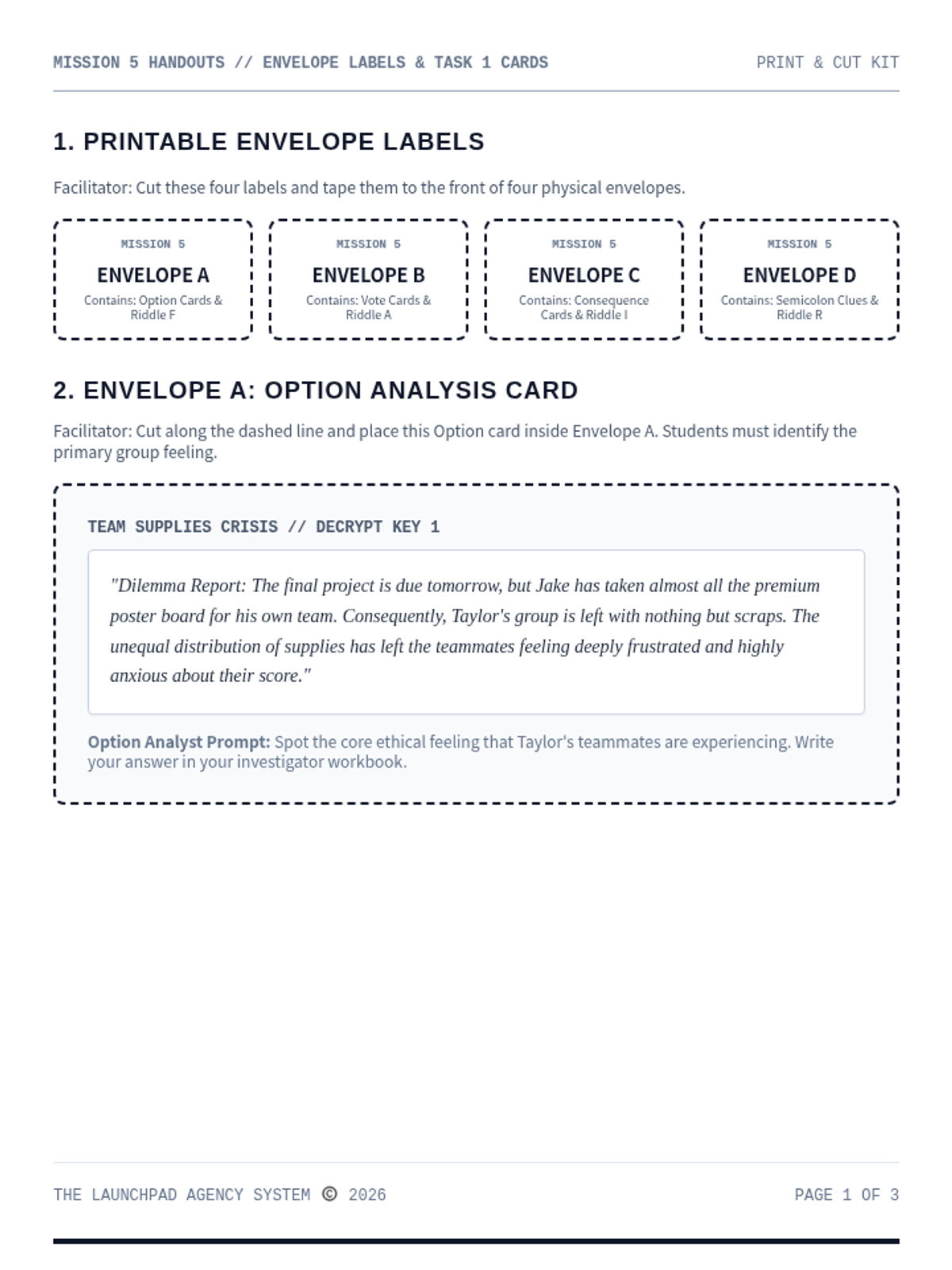
An ethical decision-making and systems-thinking escape room. Recruits analyze resource allocation options, vote on complex tradeoffs, map cascading social consequences, and draft an argumentative consensus brief to restore balance.
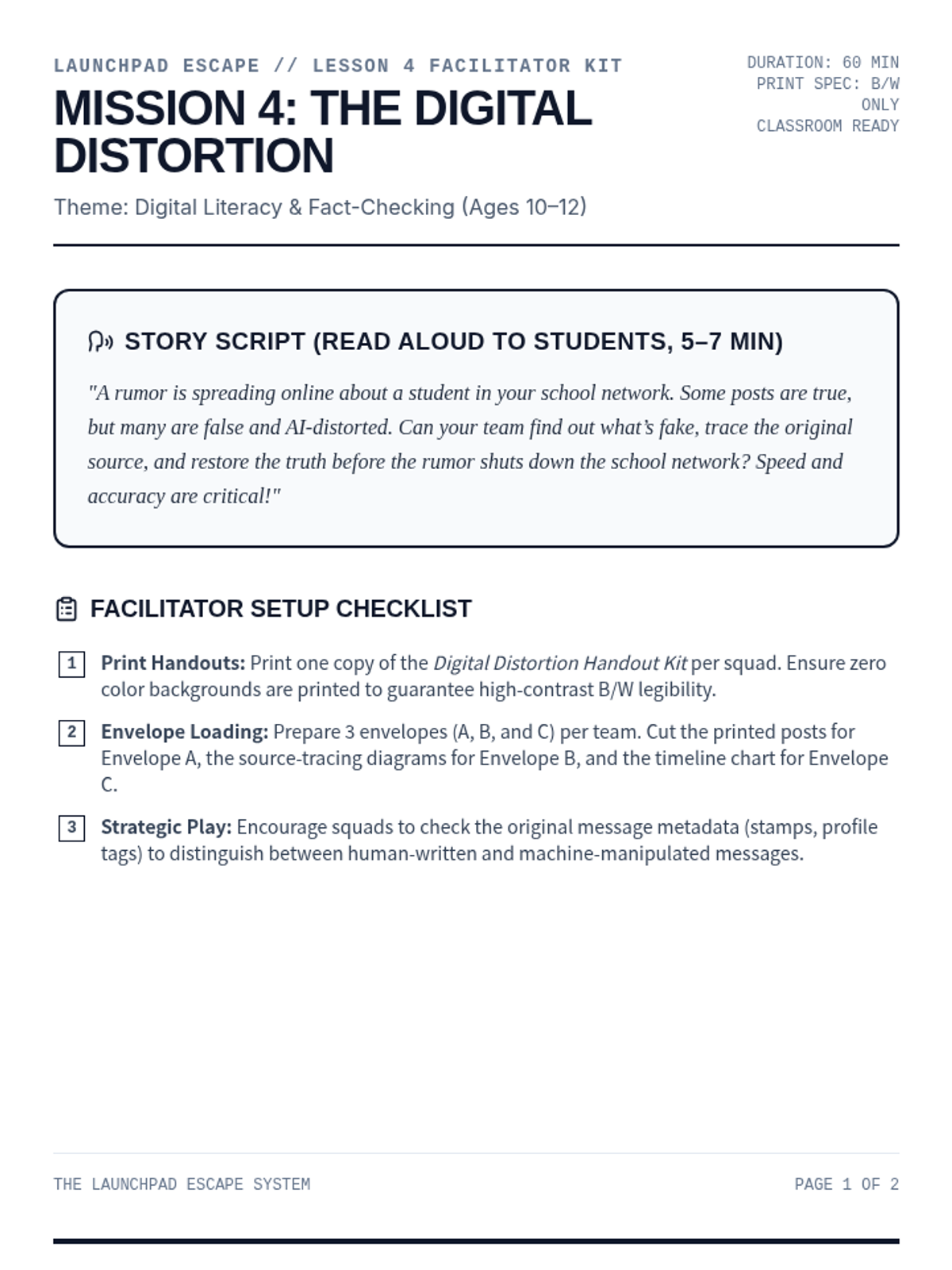
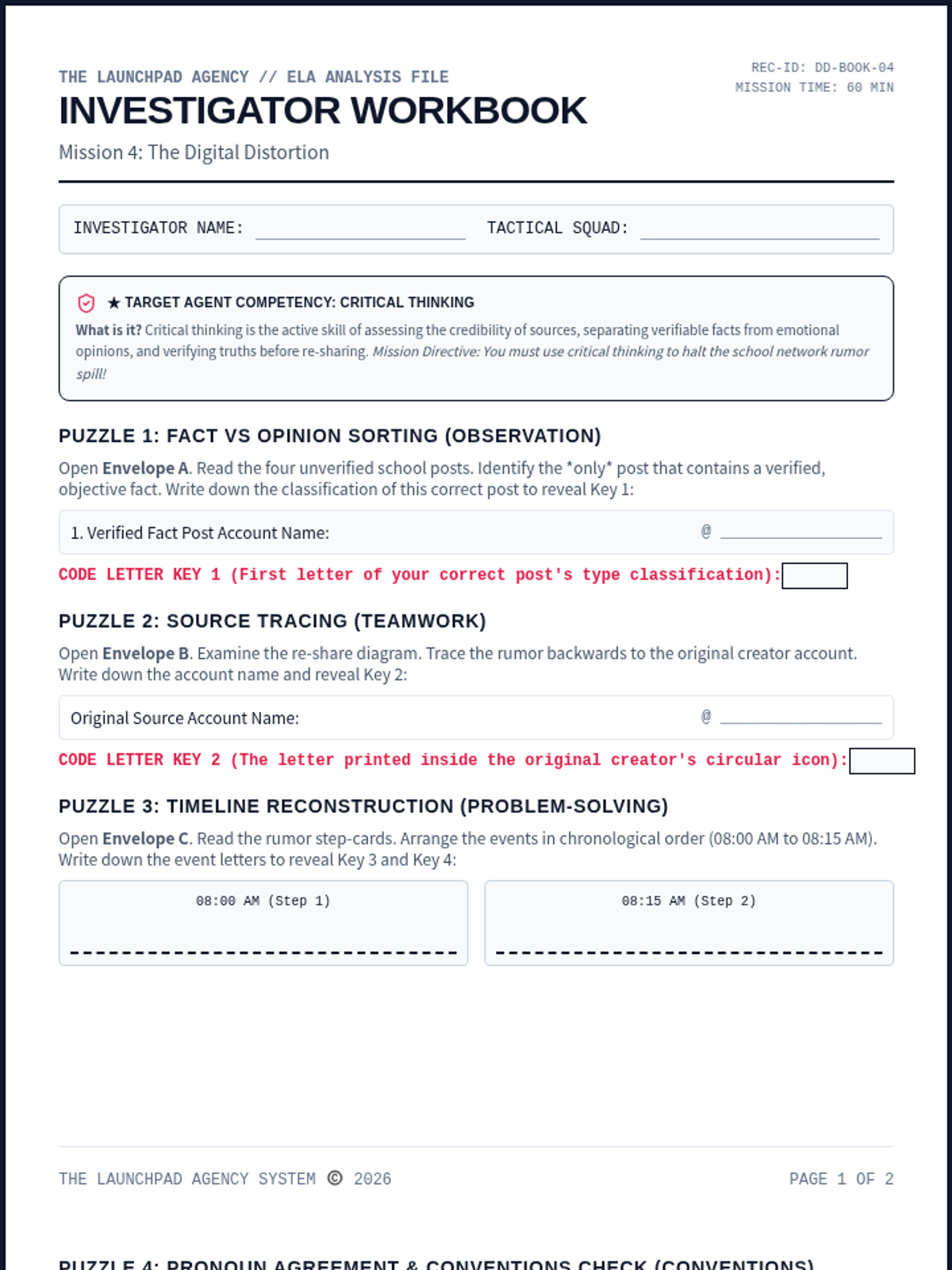
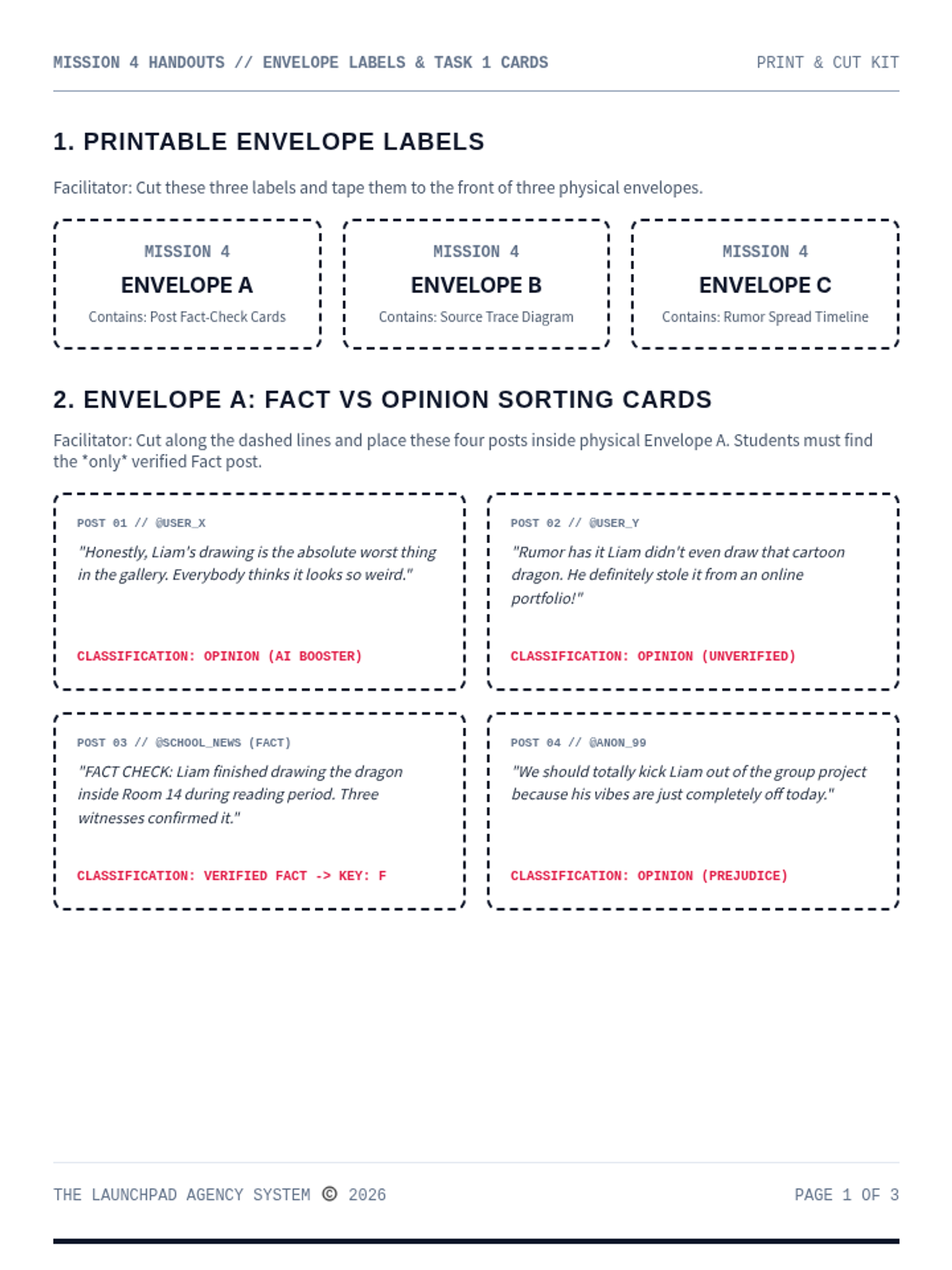
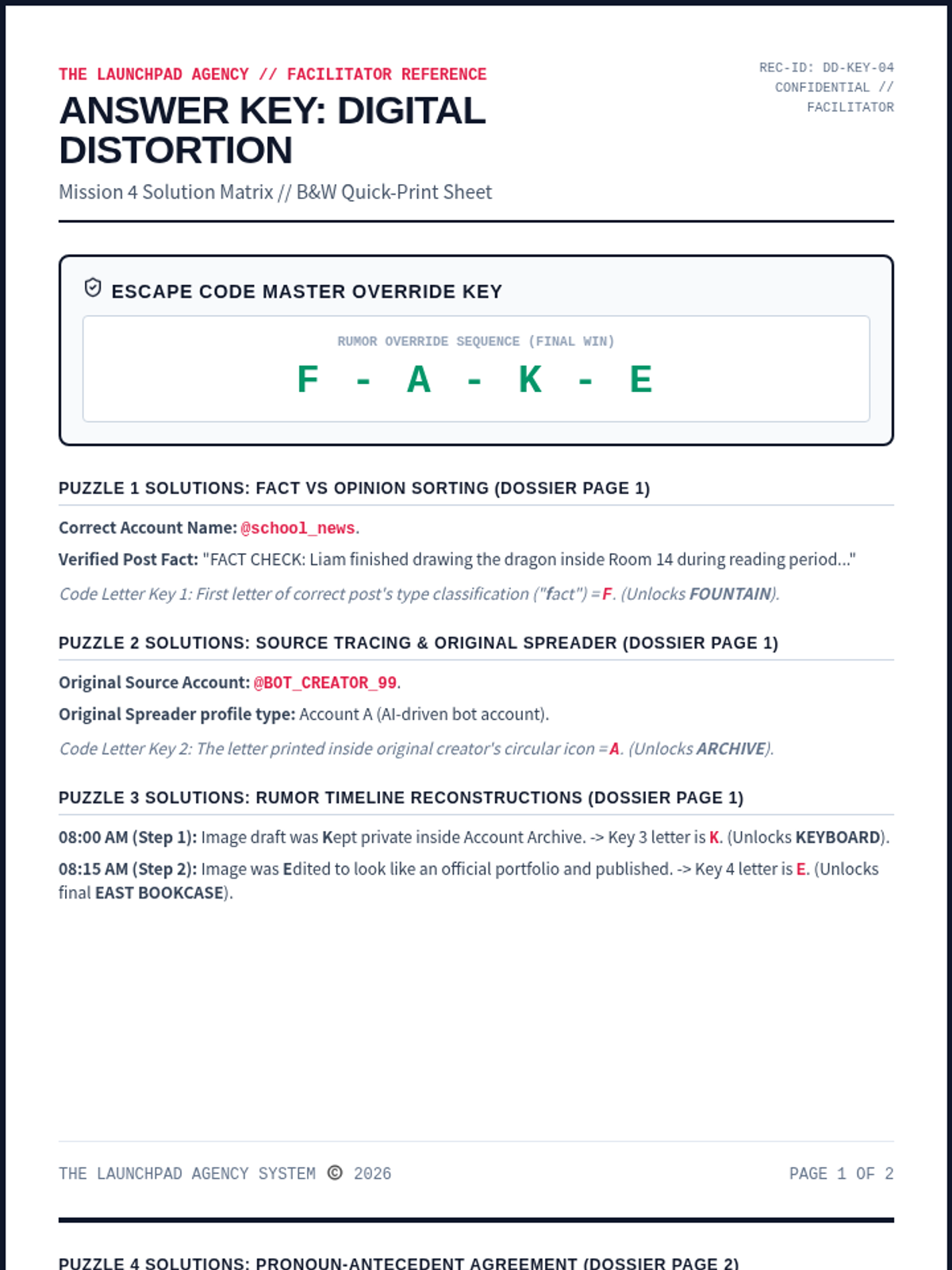
An online misinformation and fact-checking escape room for Ages 10-12. Recruits sort fact vs. opinion, trace original message sources, and reconstruct truth timelines to stop rumors.
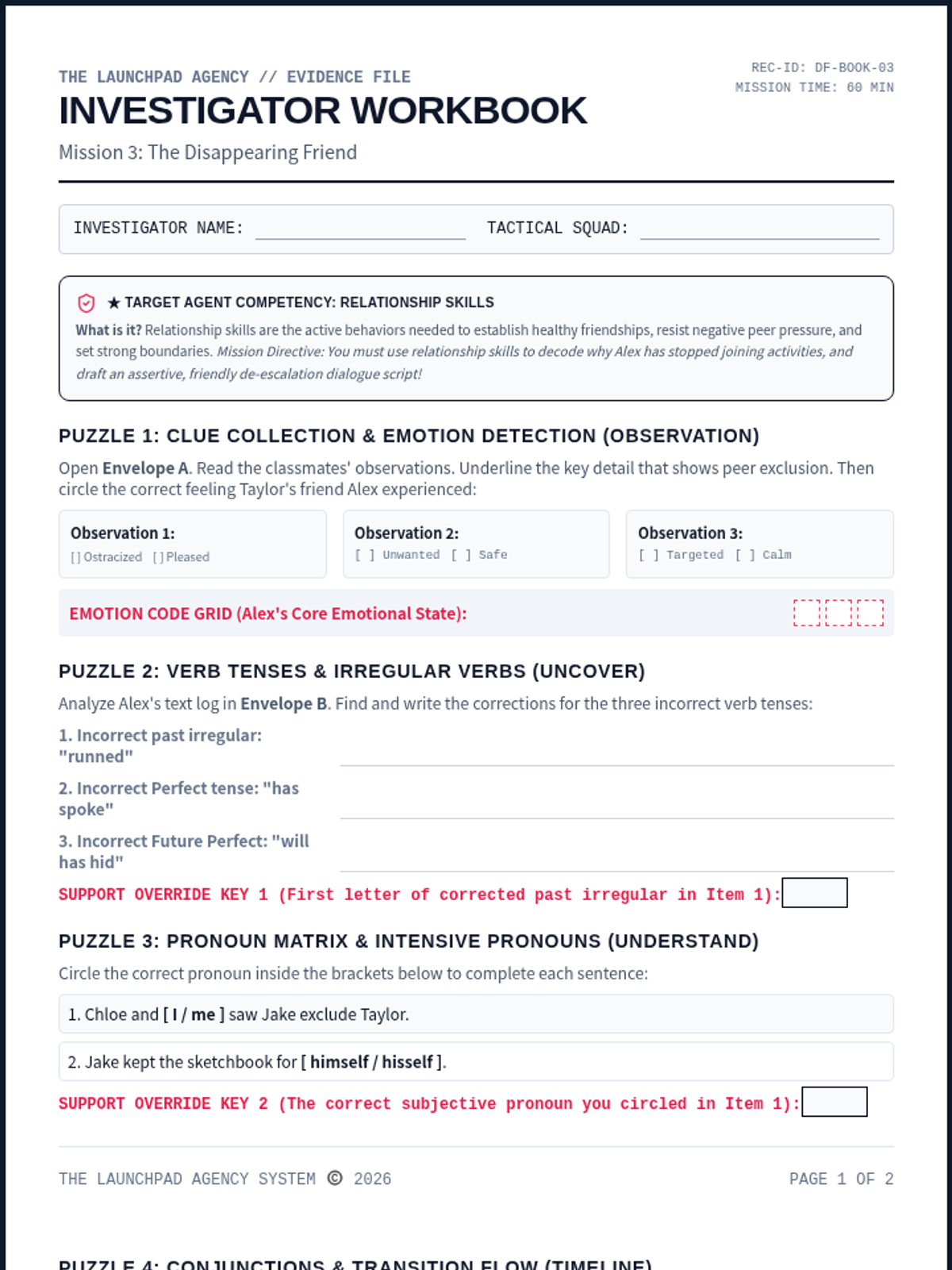
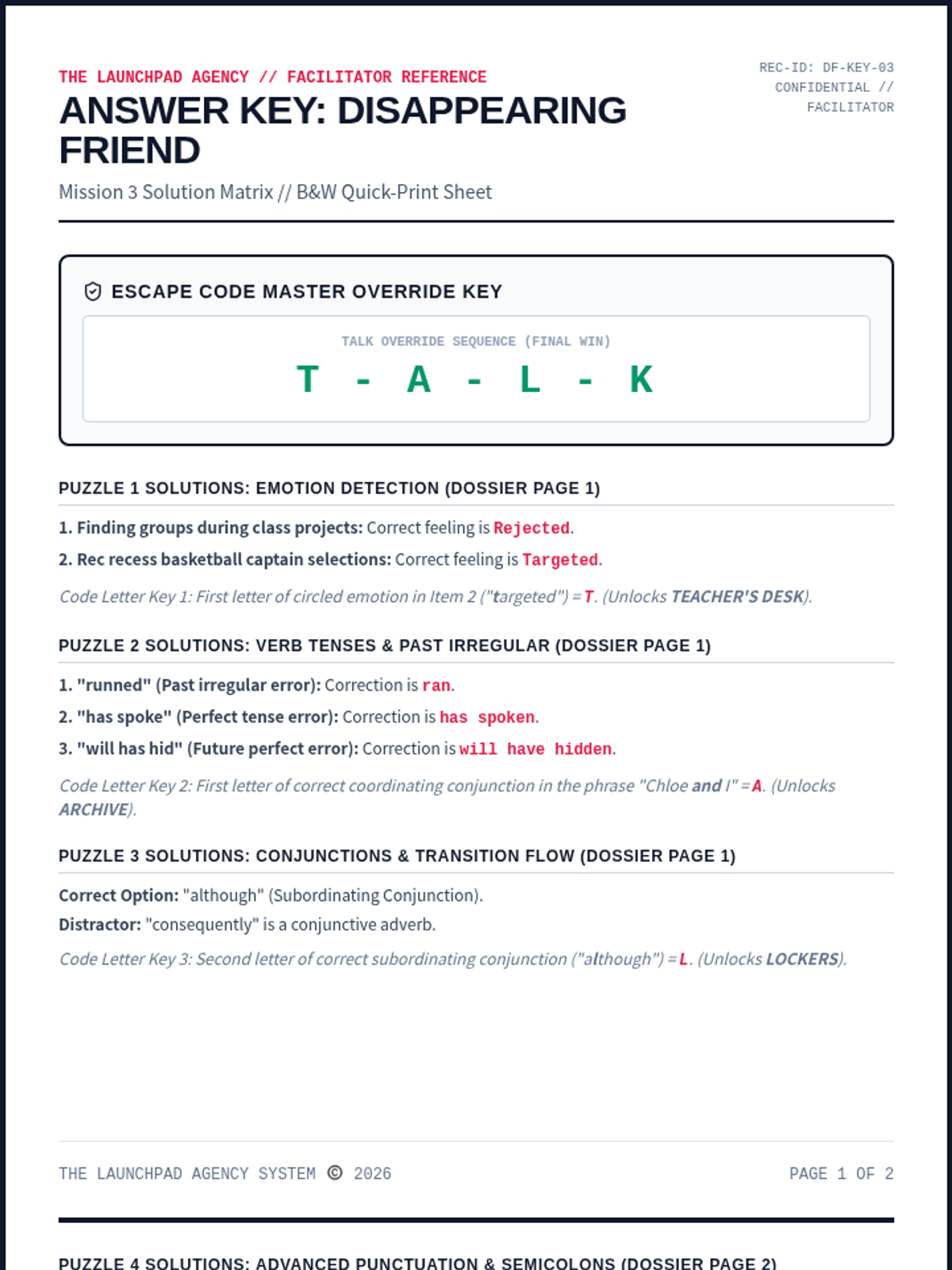
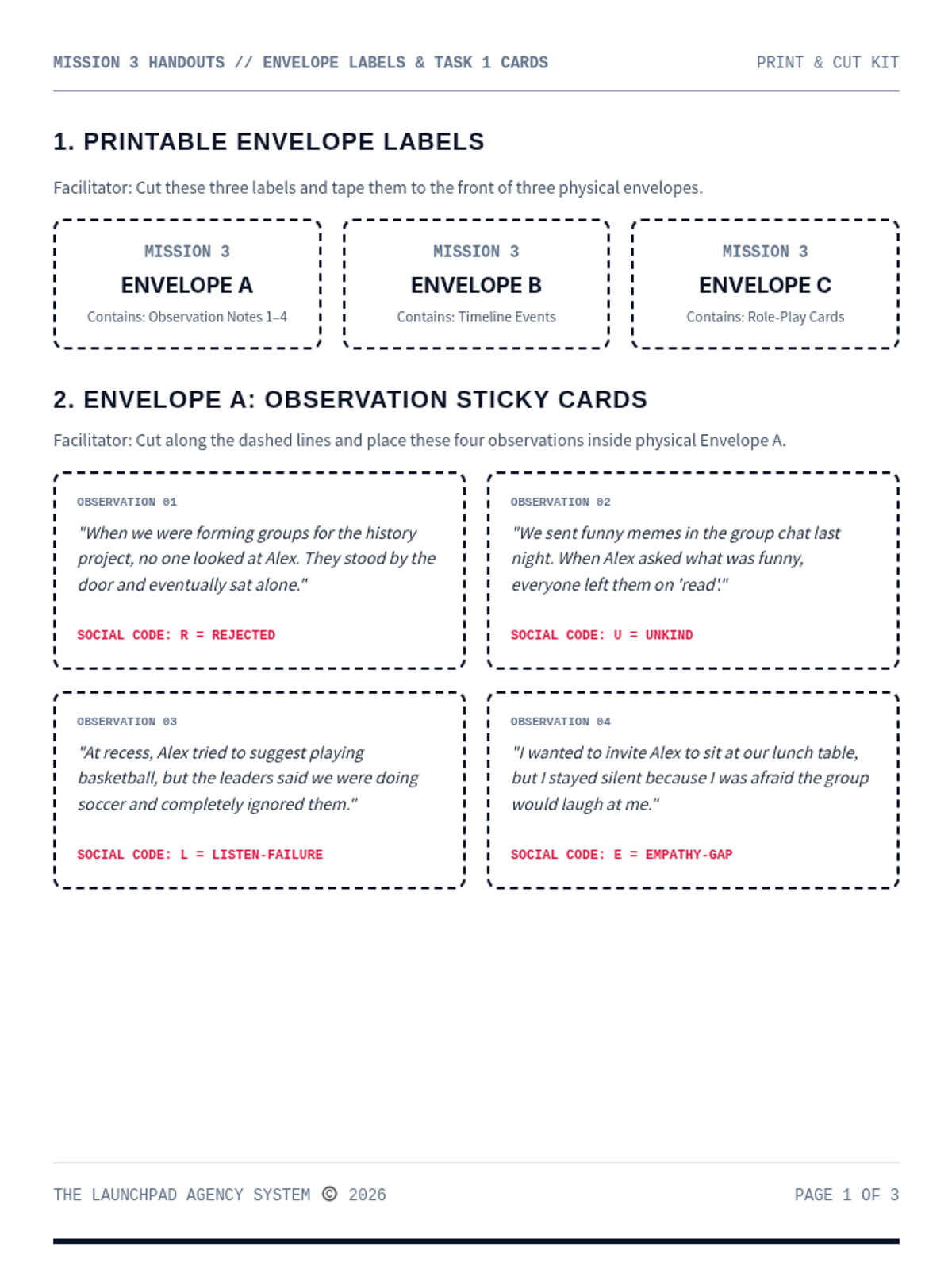
A chronological reconstruction and peer exclusion escape room for Ages 10-12. Recruits analyze sticky-note observations, identify missed social interactions, and role-play restorative de-escalation scripts.
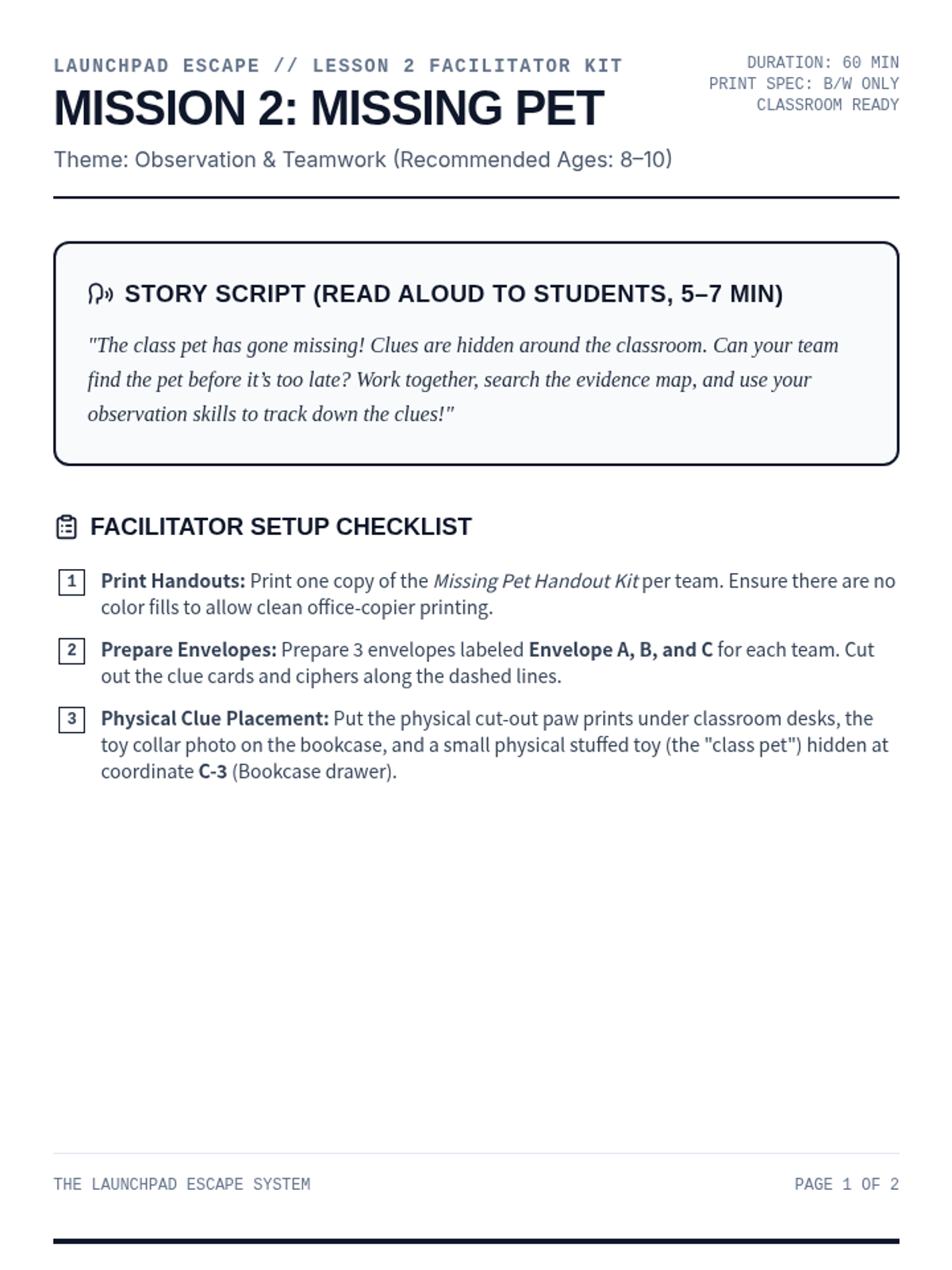
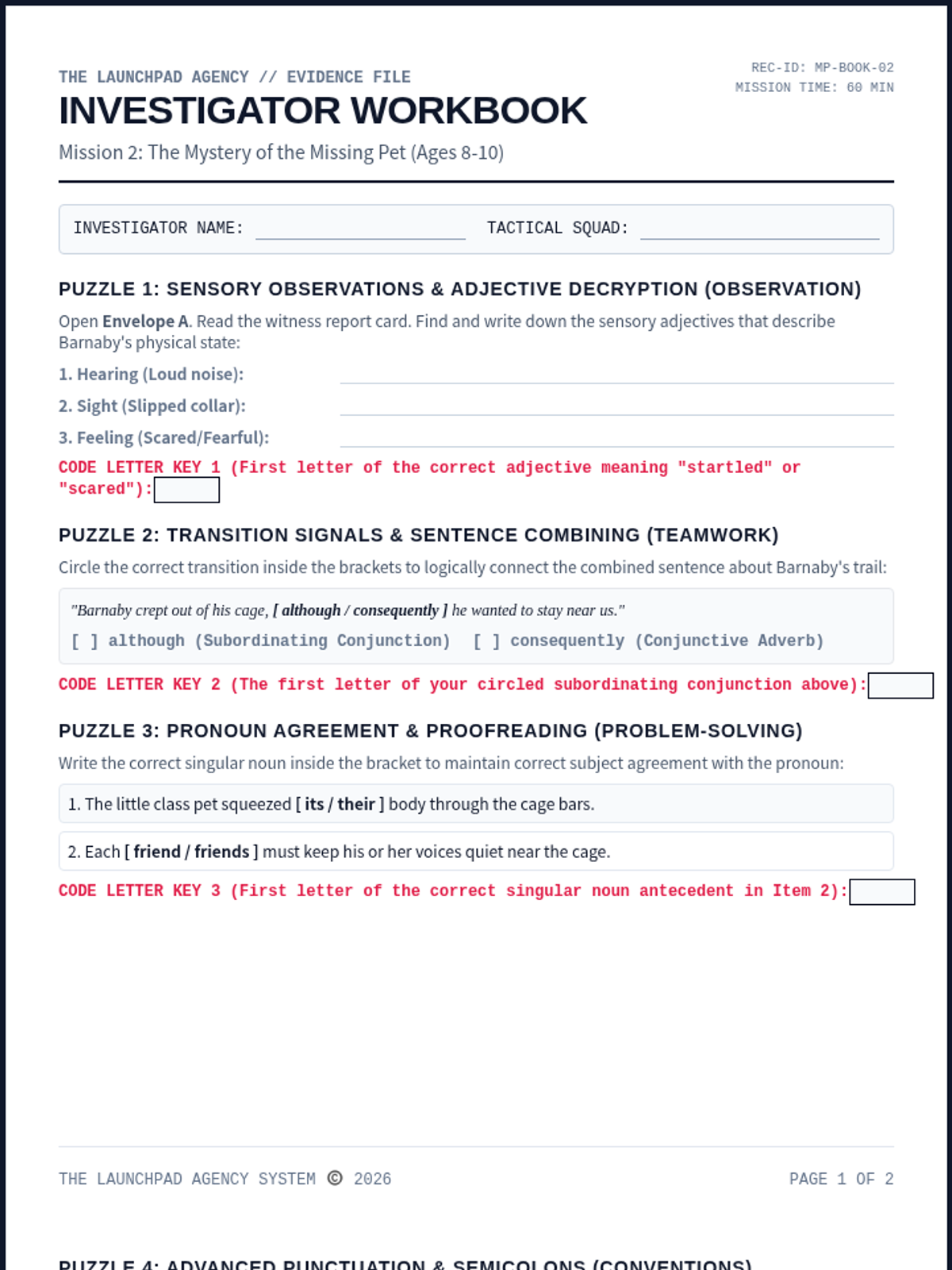
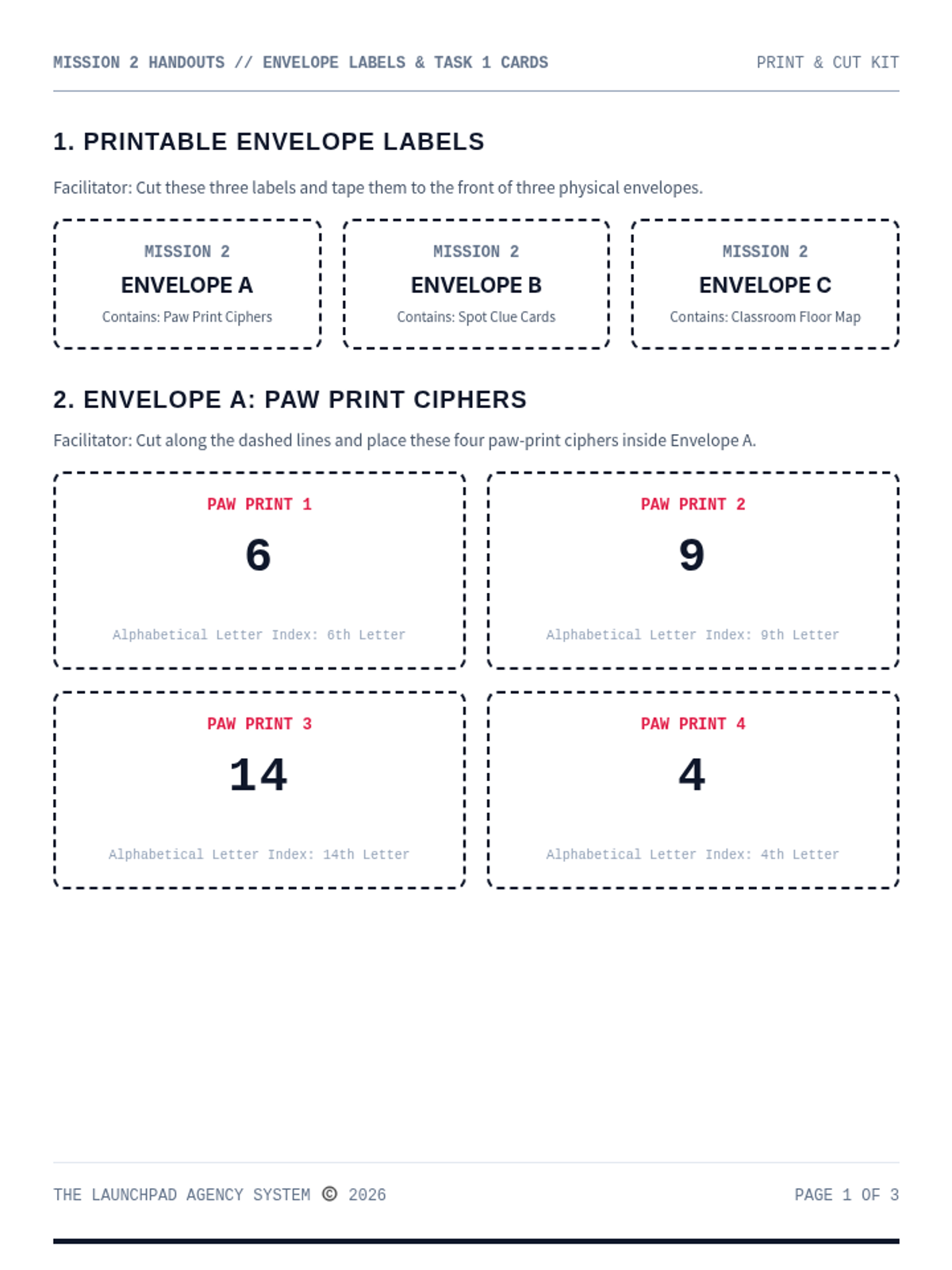
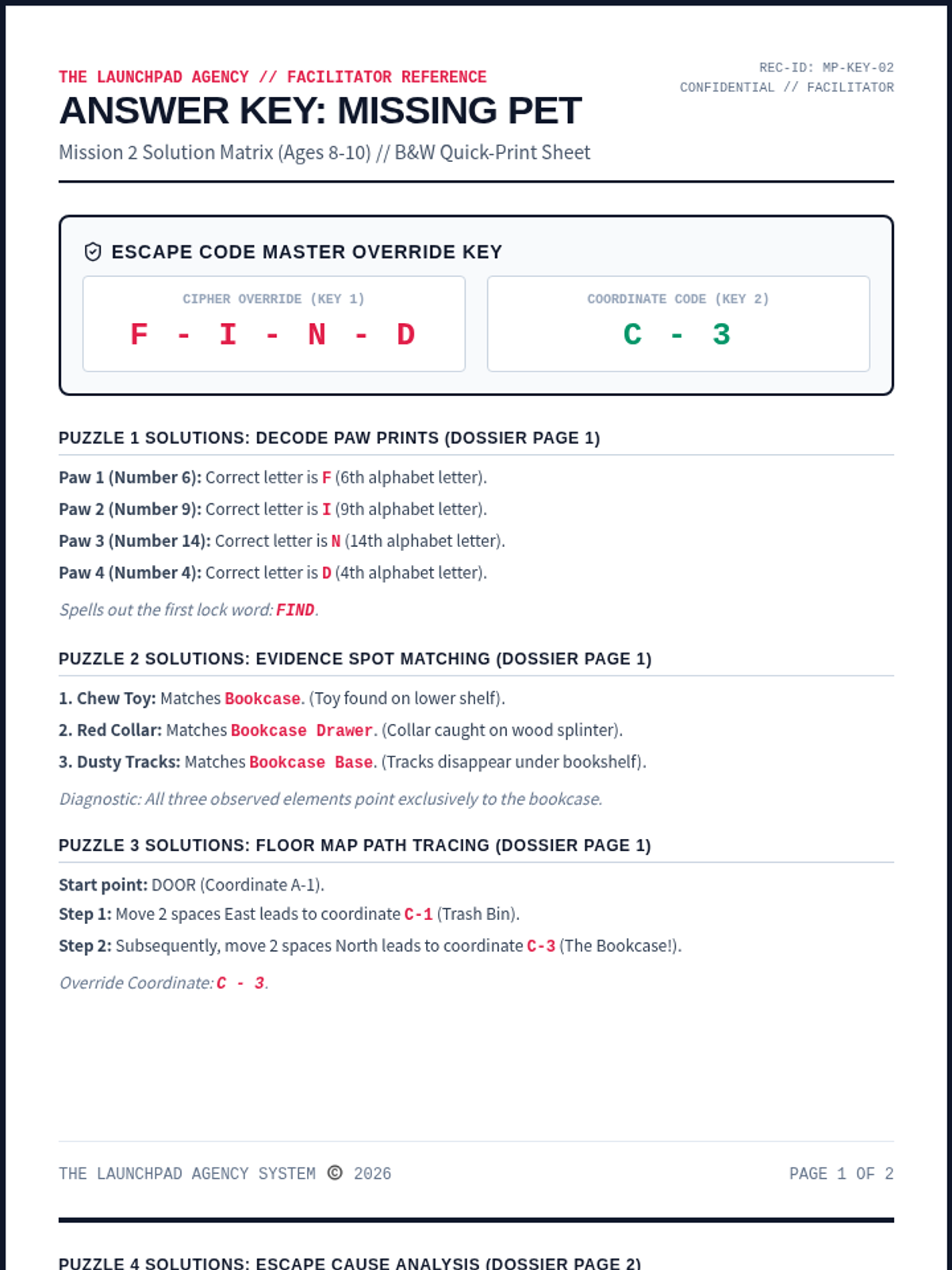
An observation-based escape mission for Ages 8-10. Recruits decode paw ciphers, match footprint evidence to classroom hiding spots, and compile a team map to find the missing class pet.
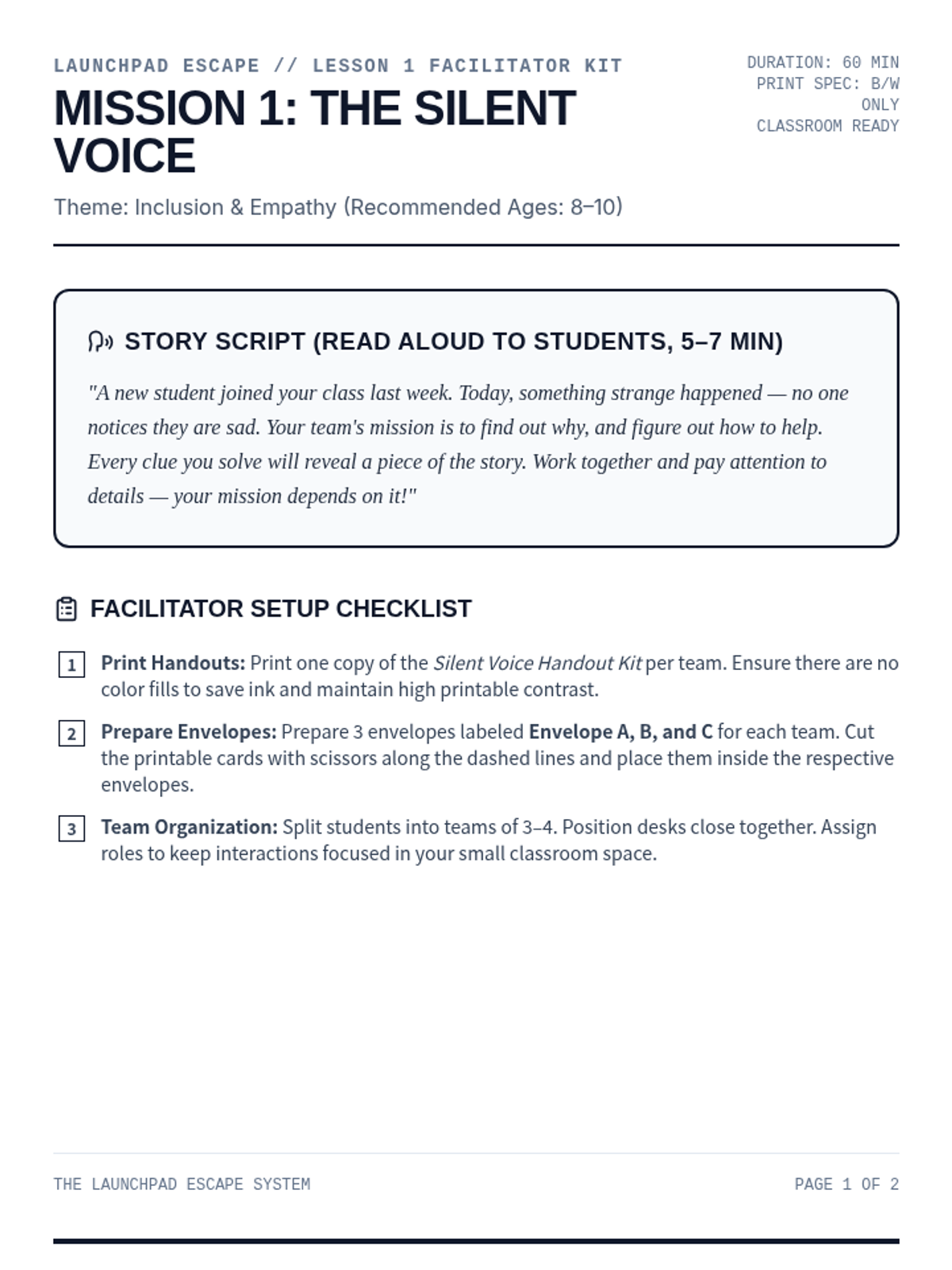
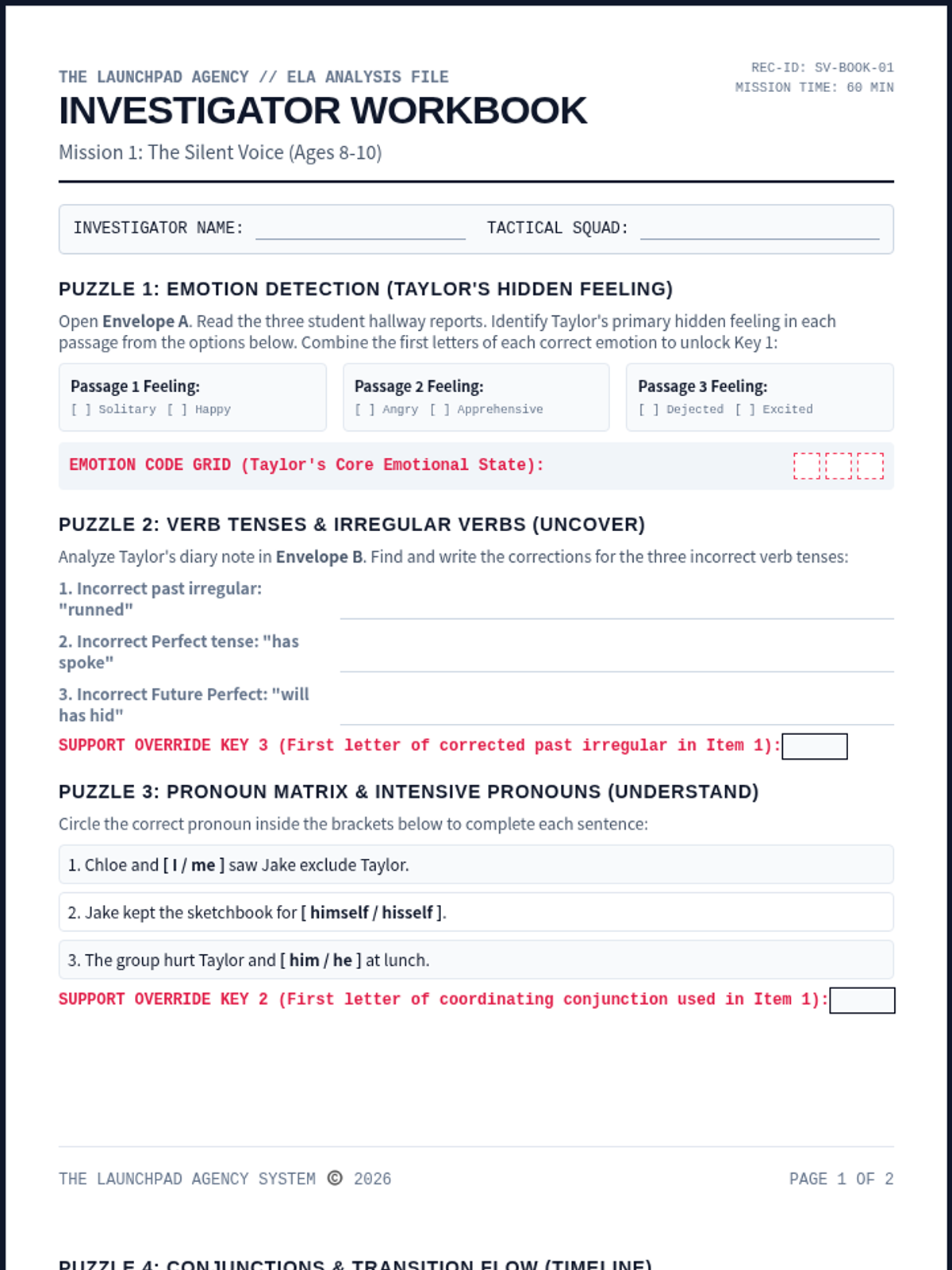
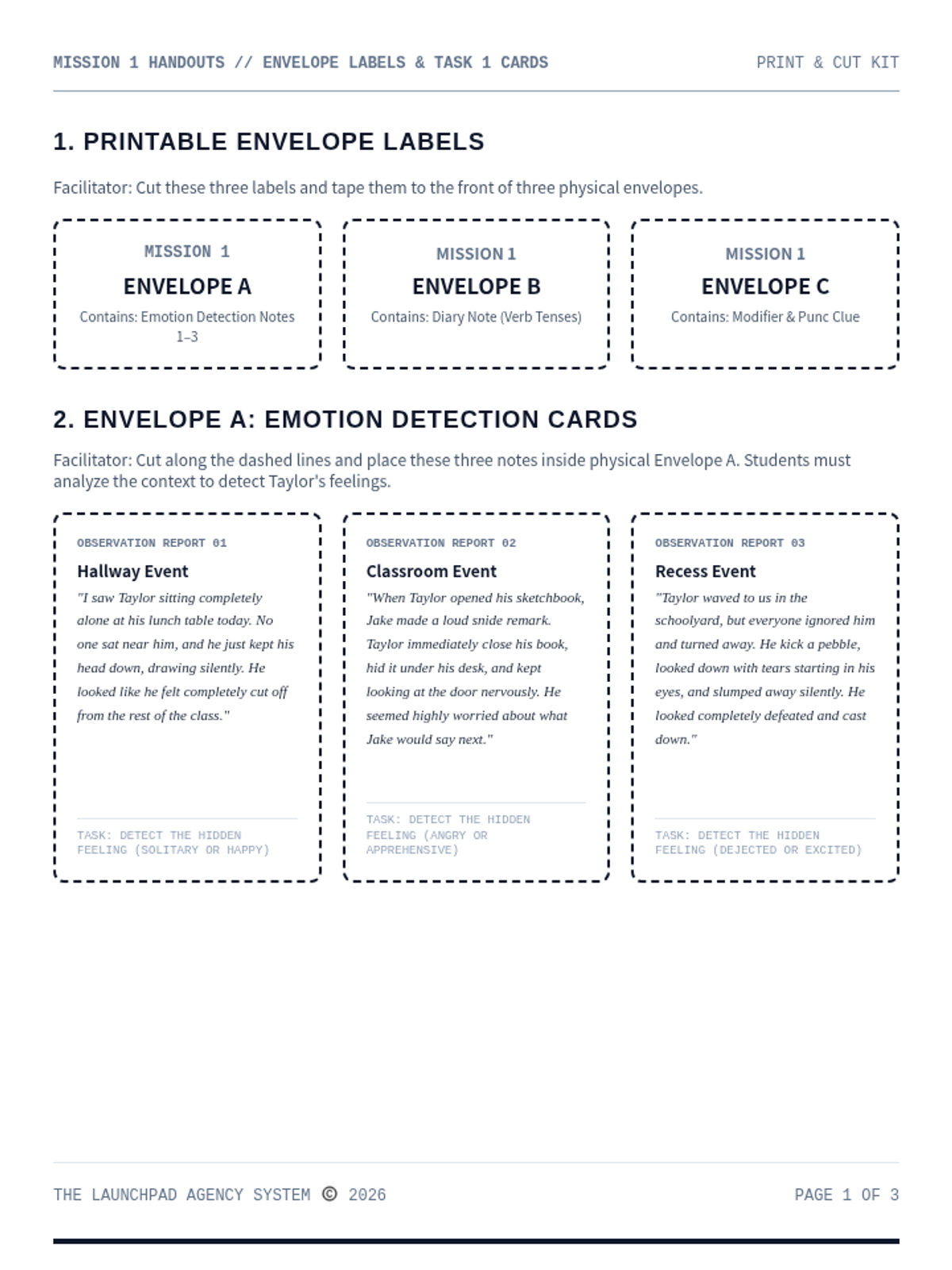
A cooperative social escape room for Ages 8-10 focused on inclusion and empathy. Recruits sort desk messages, build a timeline, and decode perspective cards to support a lonely classmate.
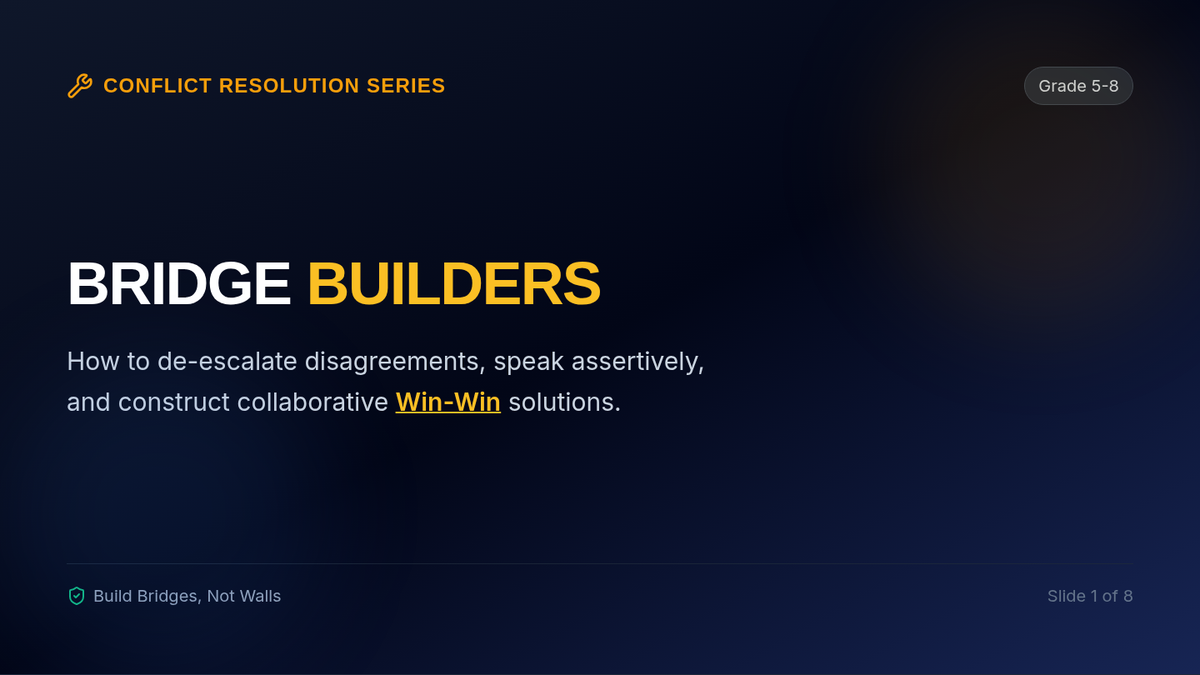
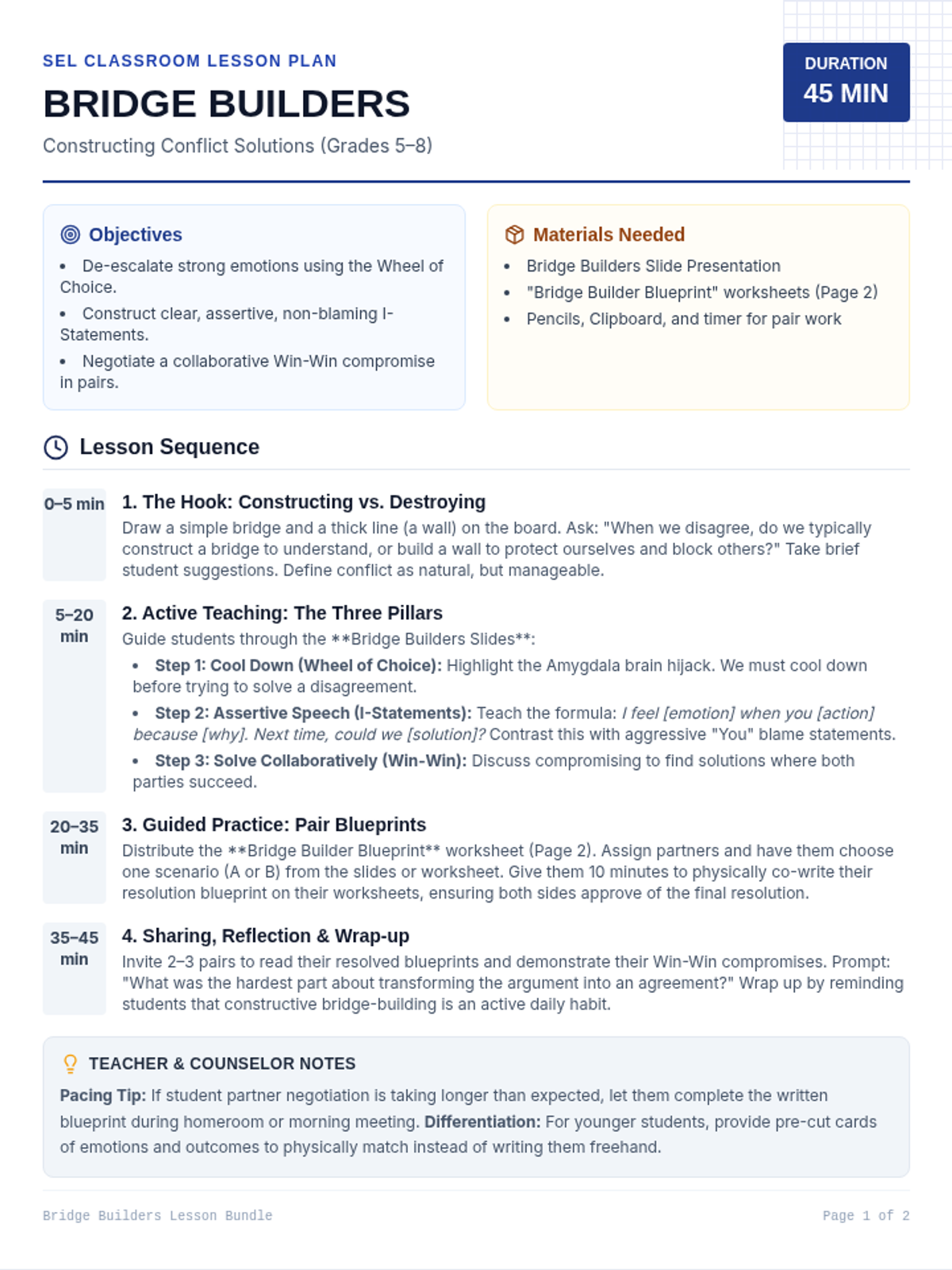
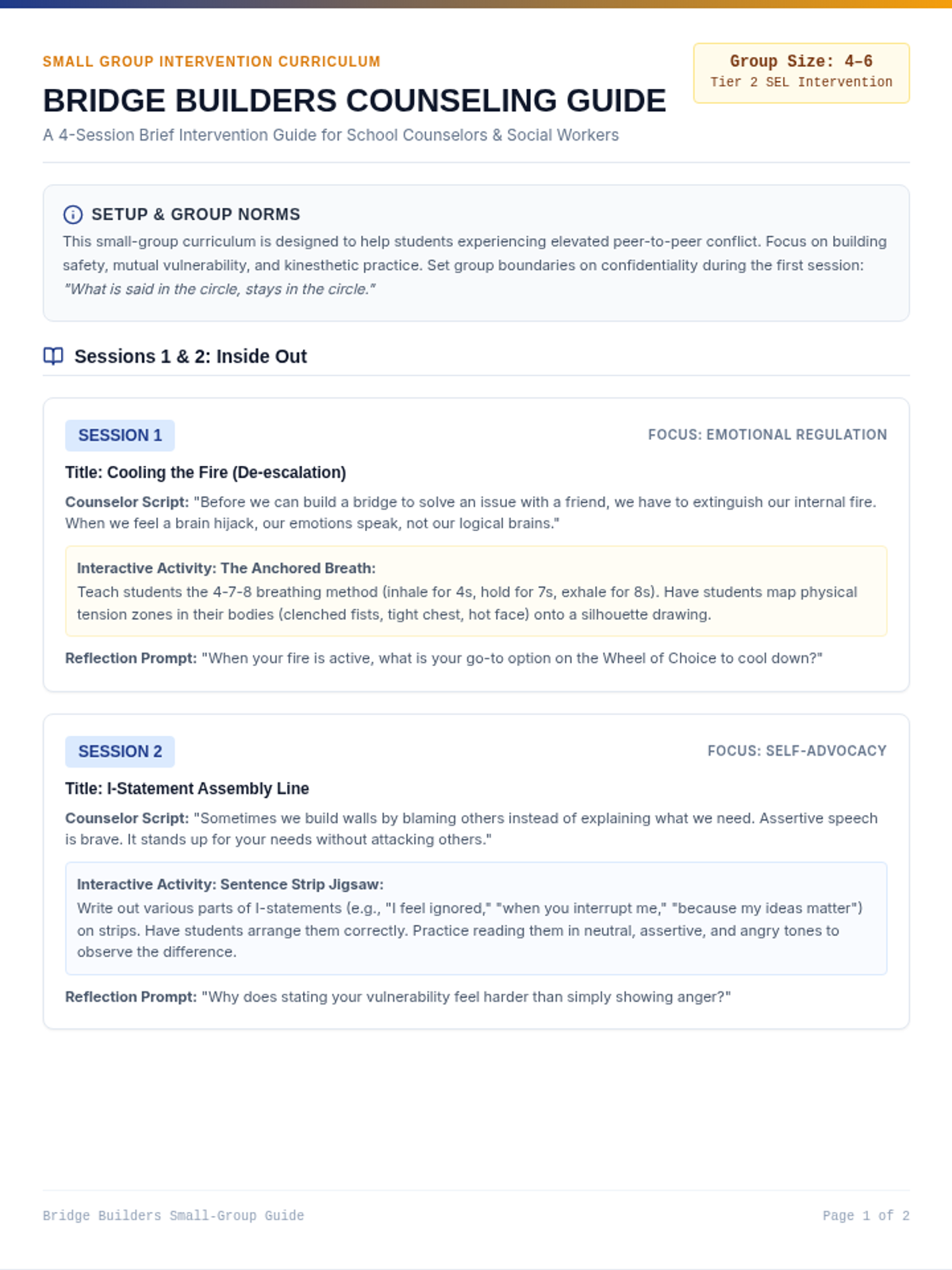
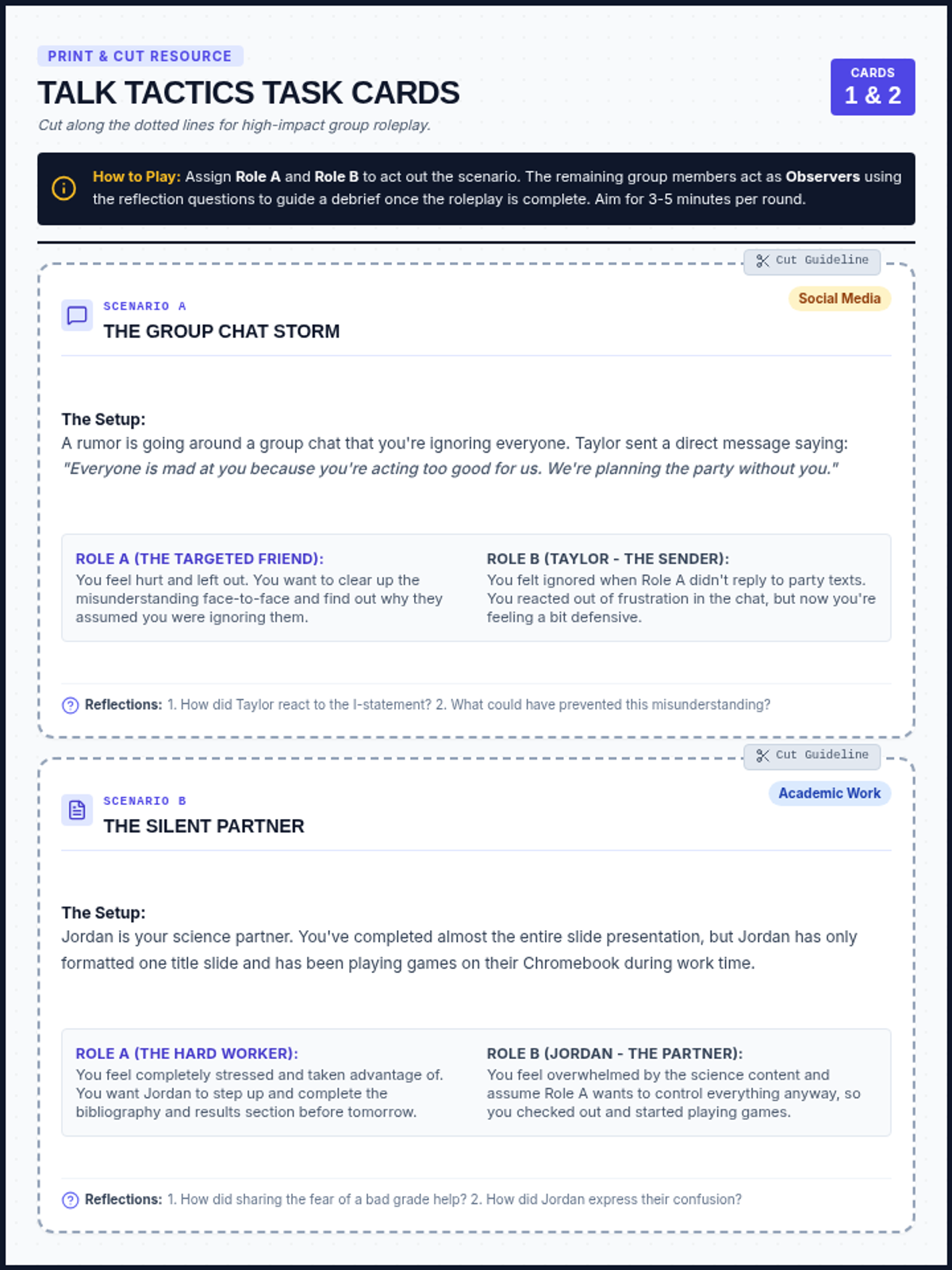
A comprehensive social-emotional learning lesson package designed to teach middle-grade students how to de-escalate conflicts, communicate assertively using I-Statements and Active Listening, and negotiate collaborative Win-Win solutions. Includes visual presentation slides, a complete 45-minute classroom lesson plan with an integrated student activity sheet, and a specialized small-group counseling guide.
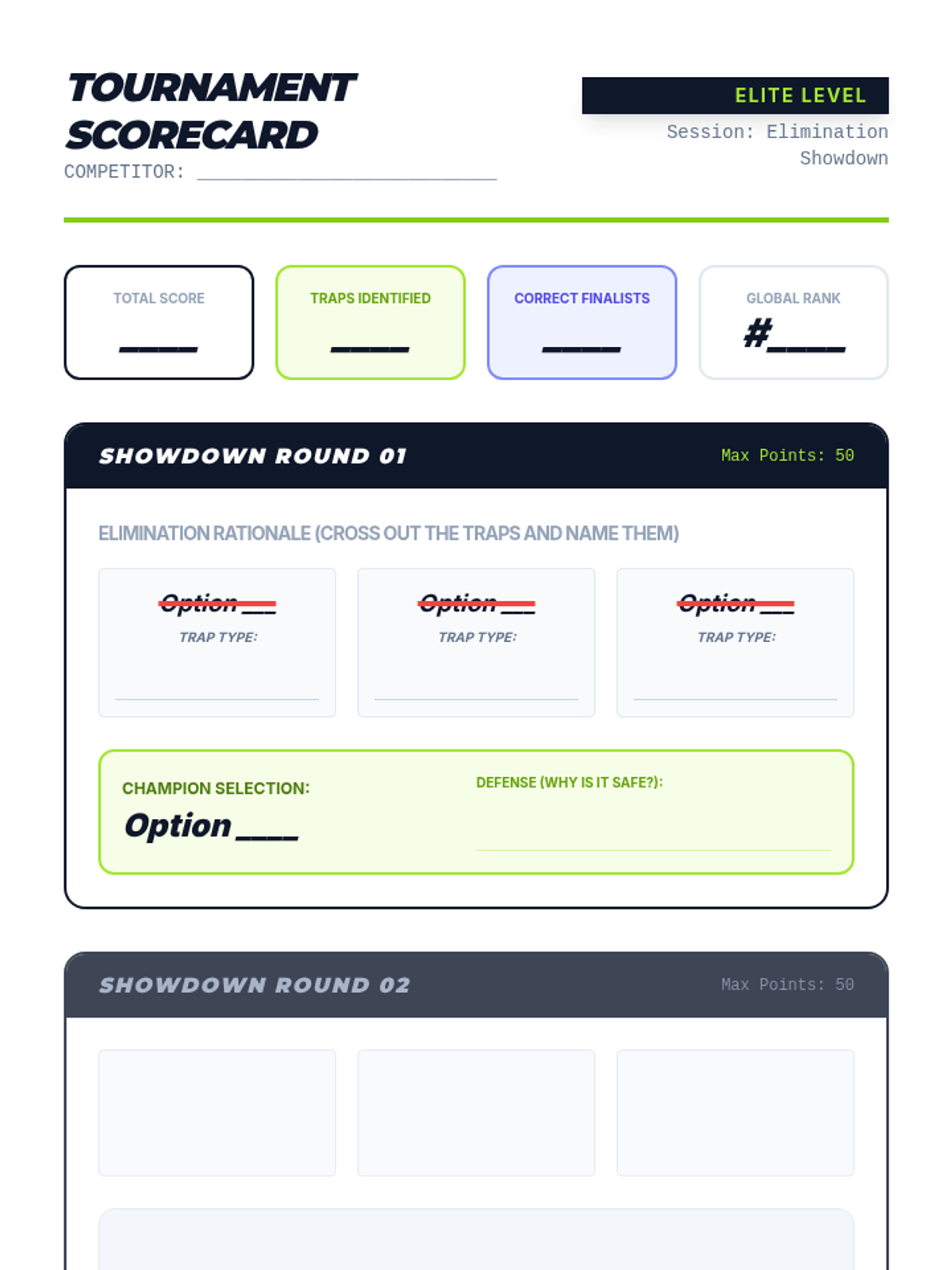
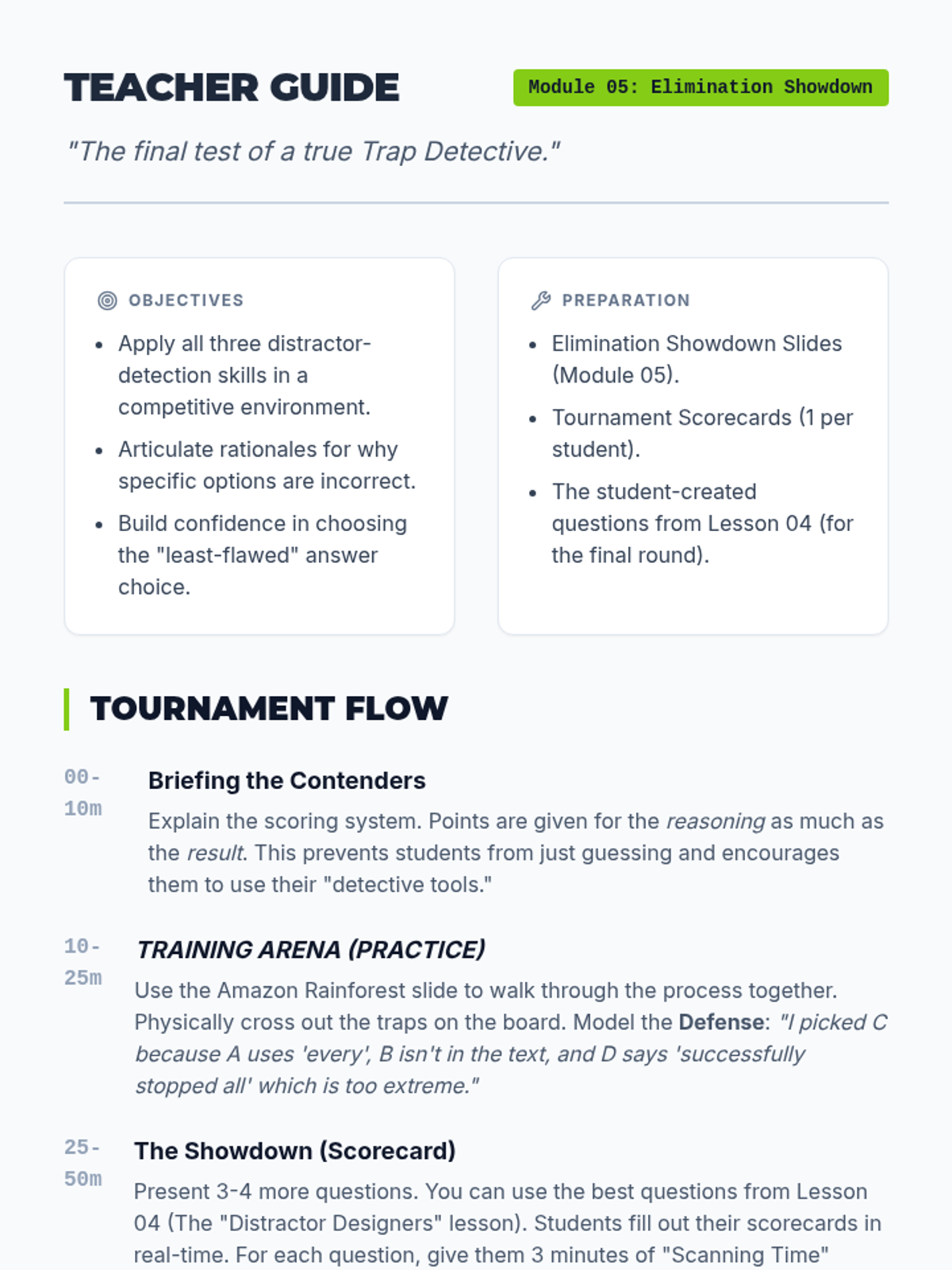
A competitive review tournament where students physically eliminate distractors with a rationale. Points are awarded for identifying specific trap types before selecting the correct answer.
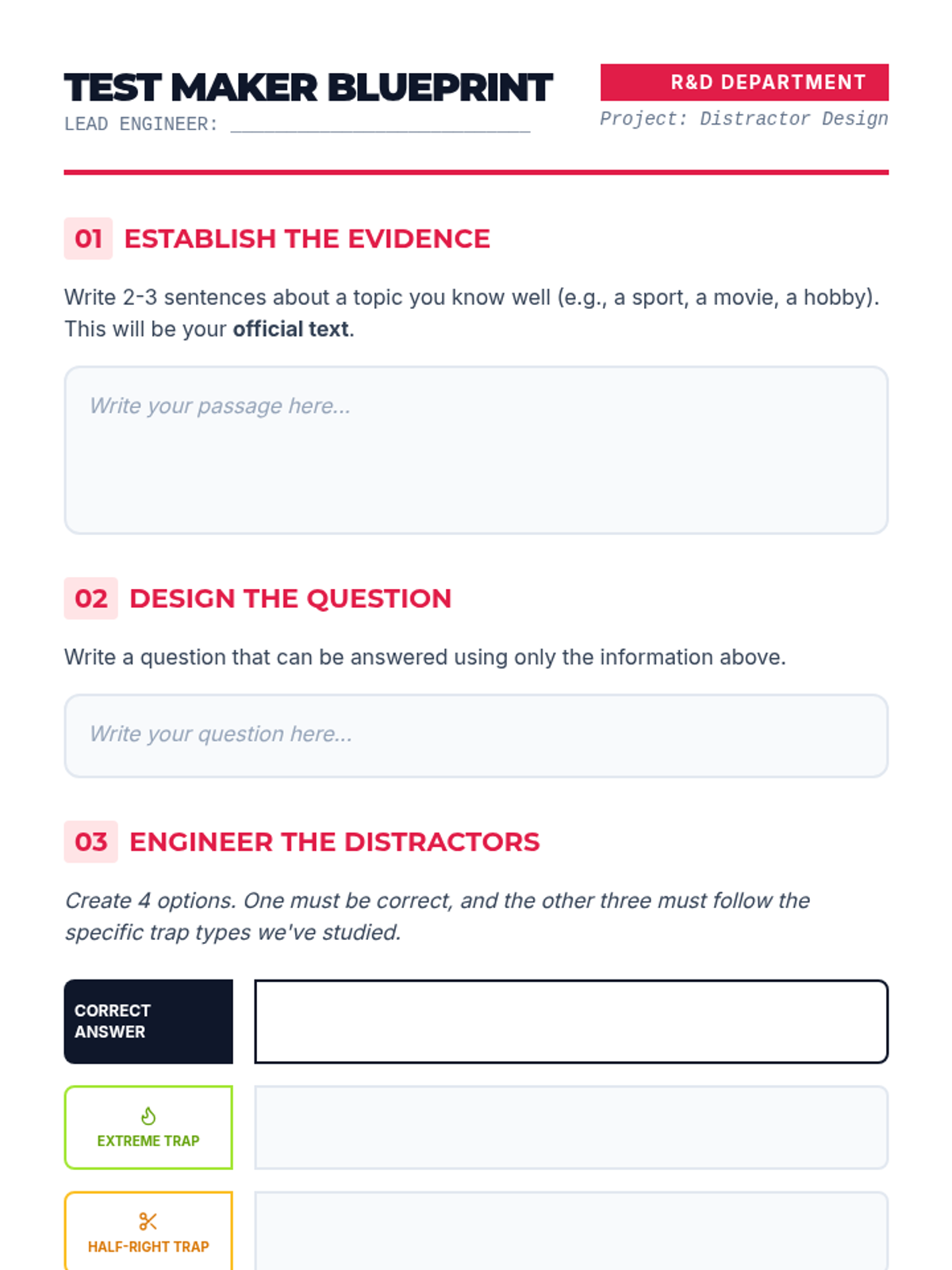
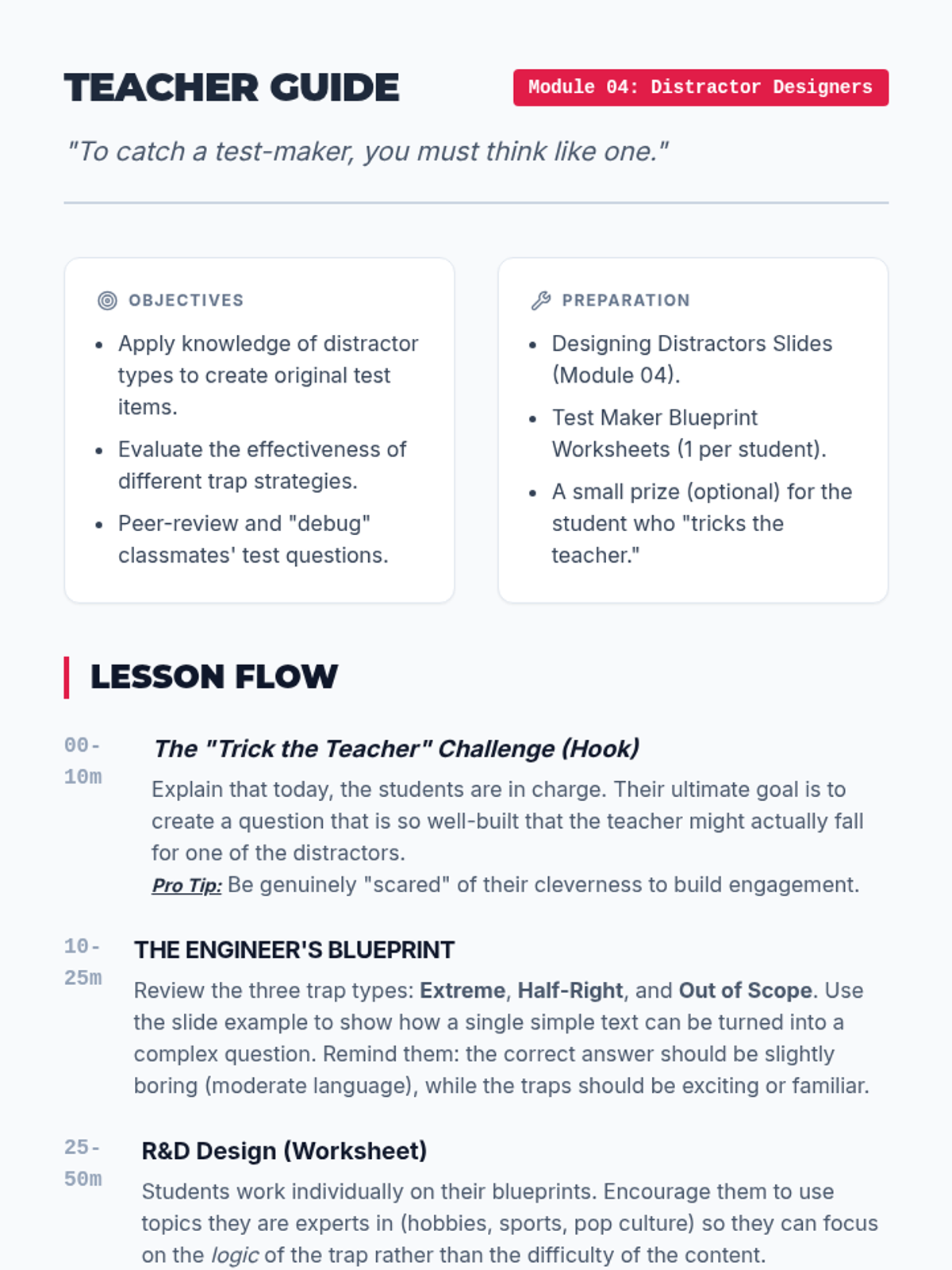
Students become test-makers by writing their own multiple-choice questions with deliberate traps. This role-reversal helps them internalize the logic behind distractor construction.
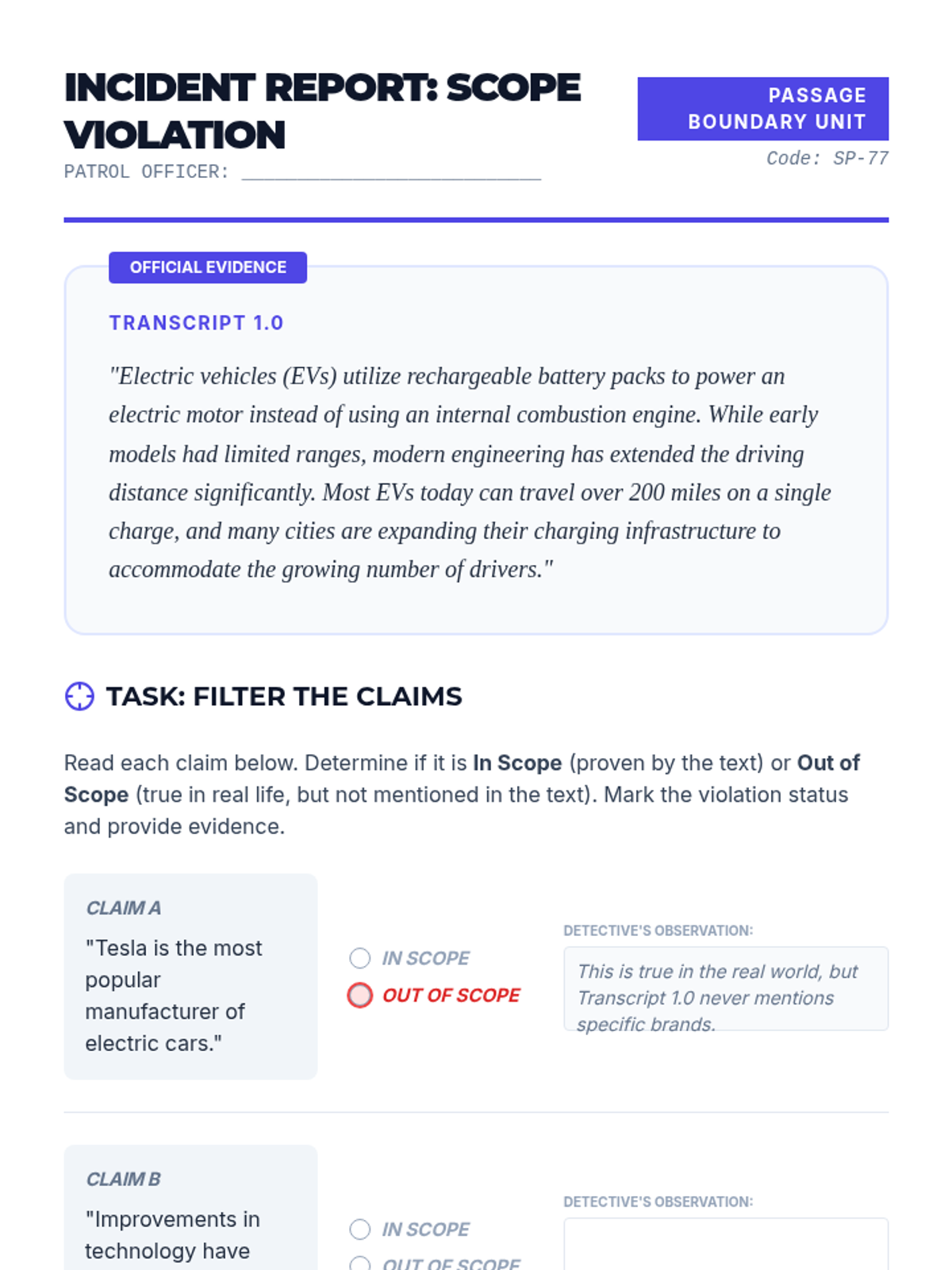
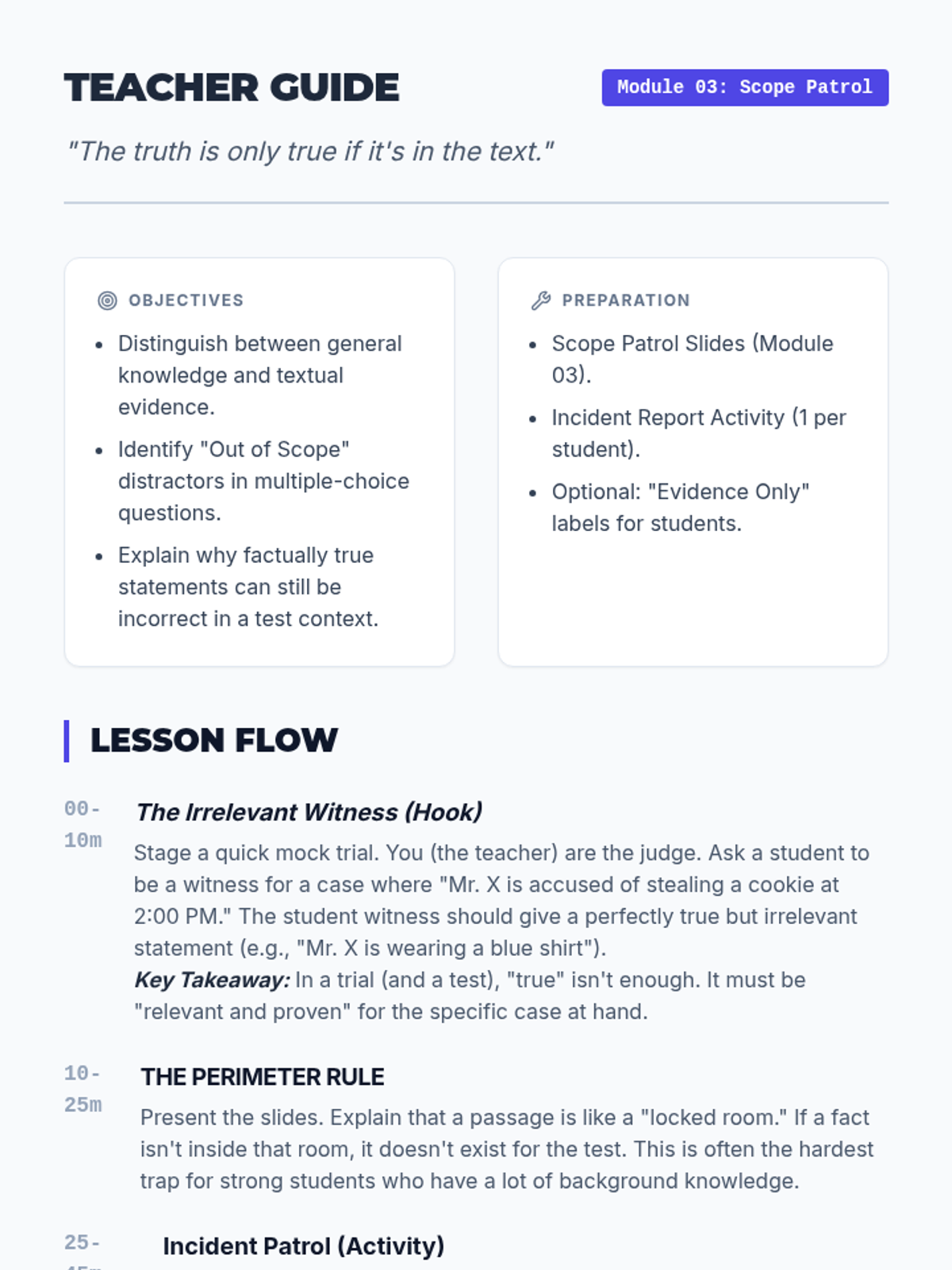
Students identify statements that are factually true in the real world but are not supported by the specific text provided. The focus is on maintaining evidence-based focus within the scope of the passage.
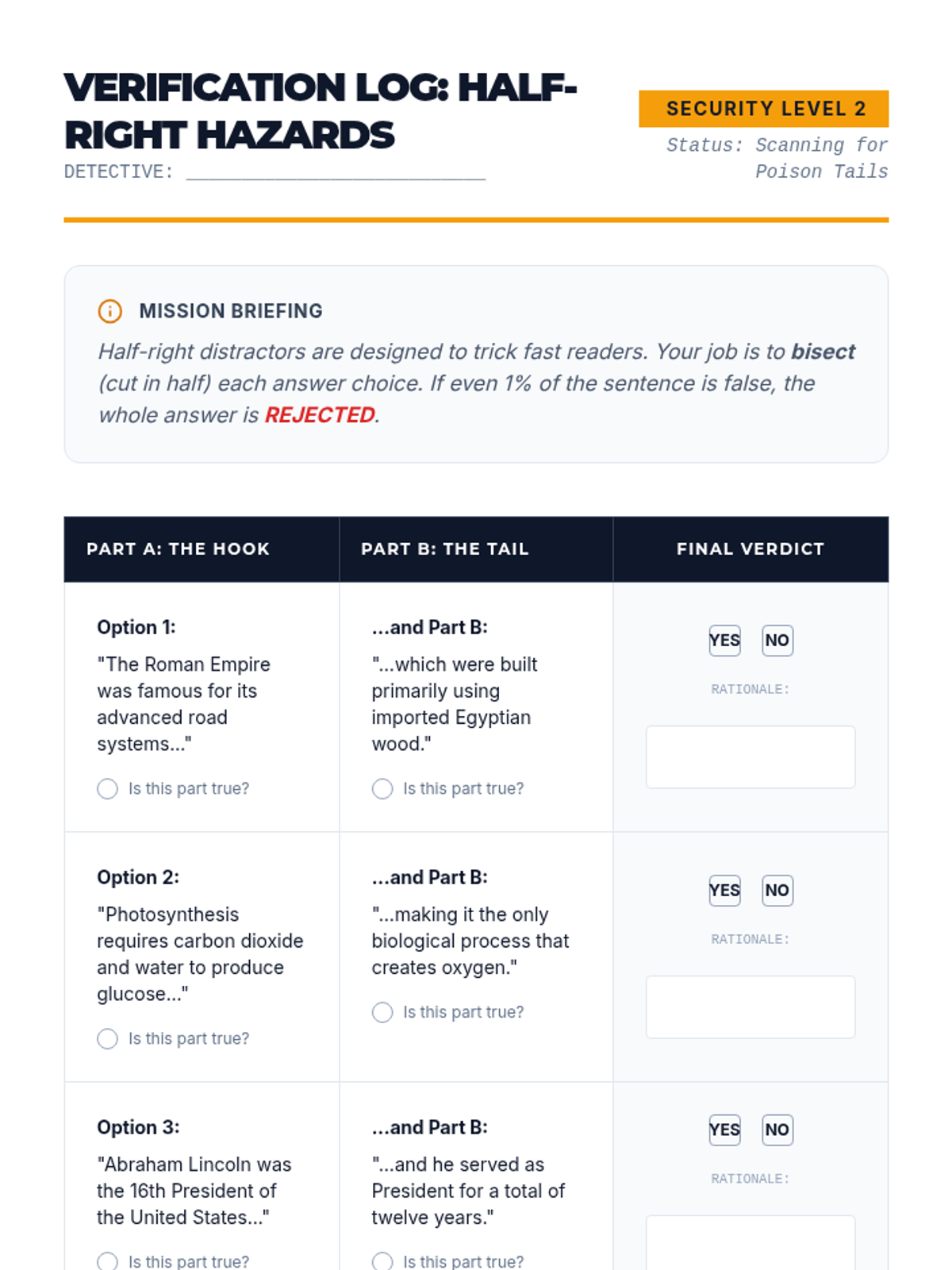
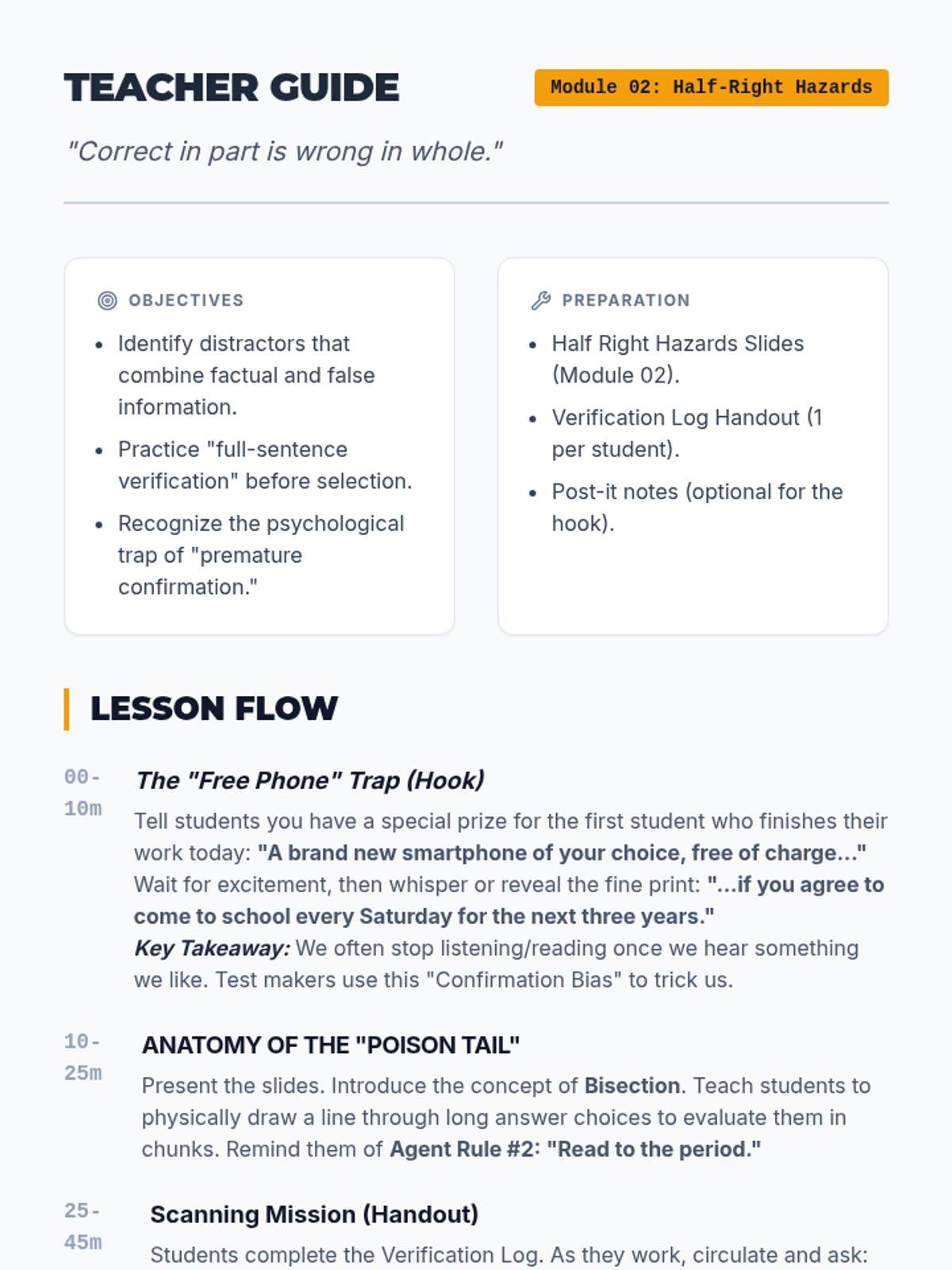
Learners analyze options that are partially correct but ultimately false. This lesson emphasizes the importance of reading every word of an answer choice to catch subtle inaccuracies.
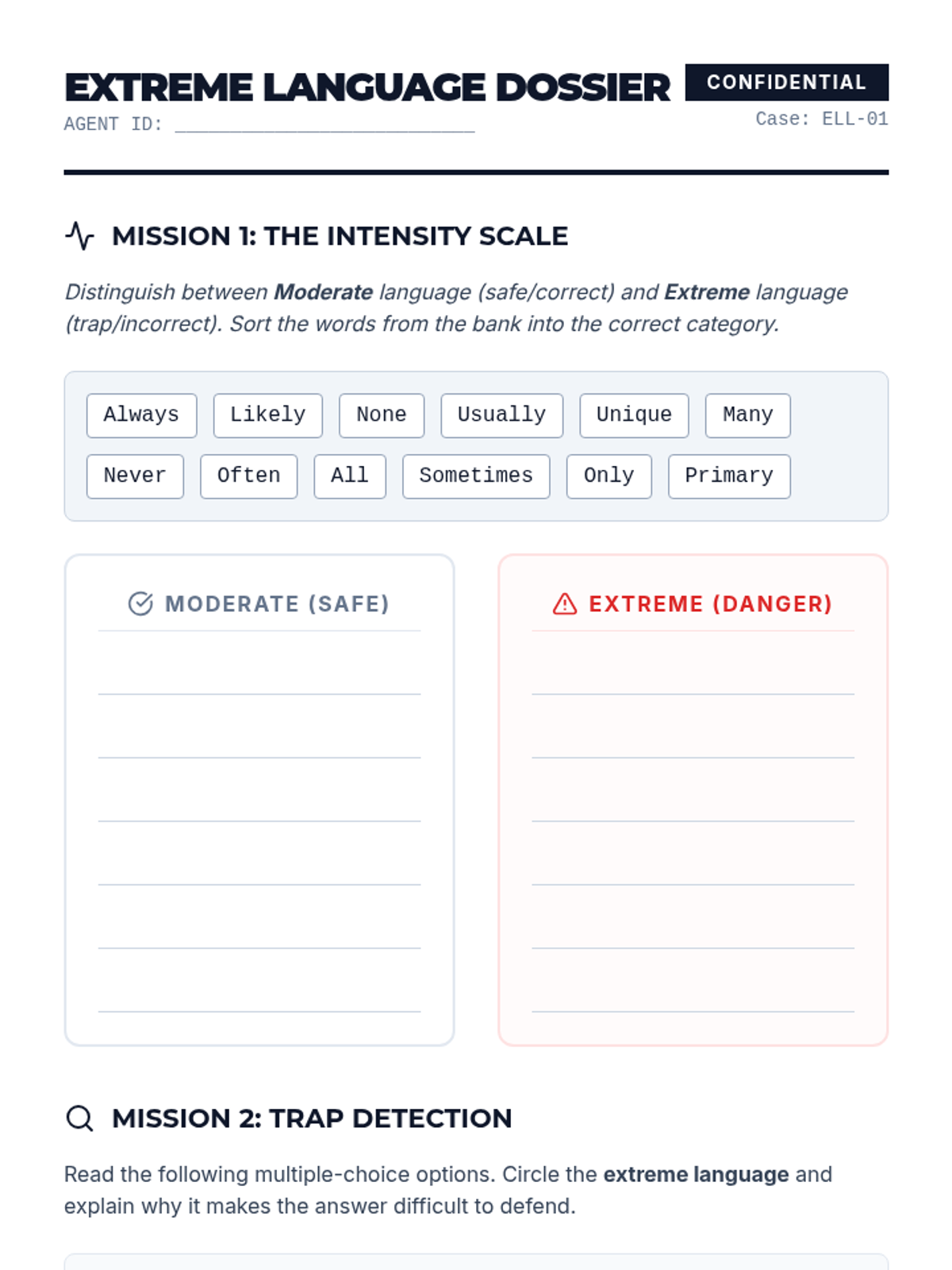
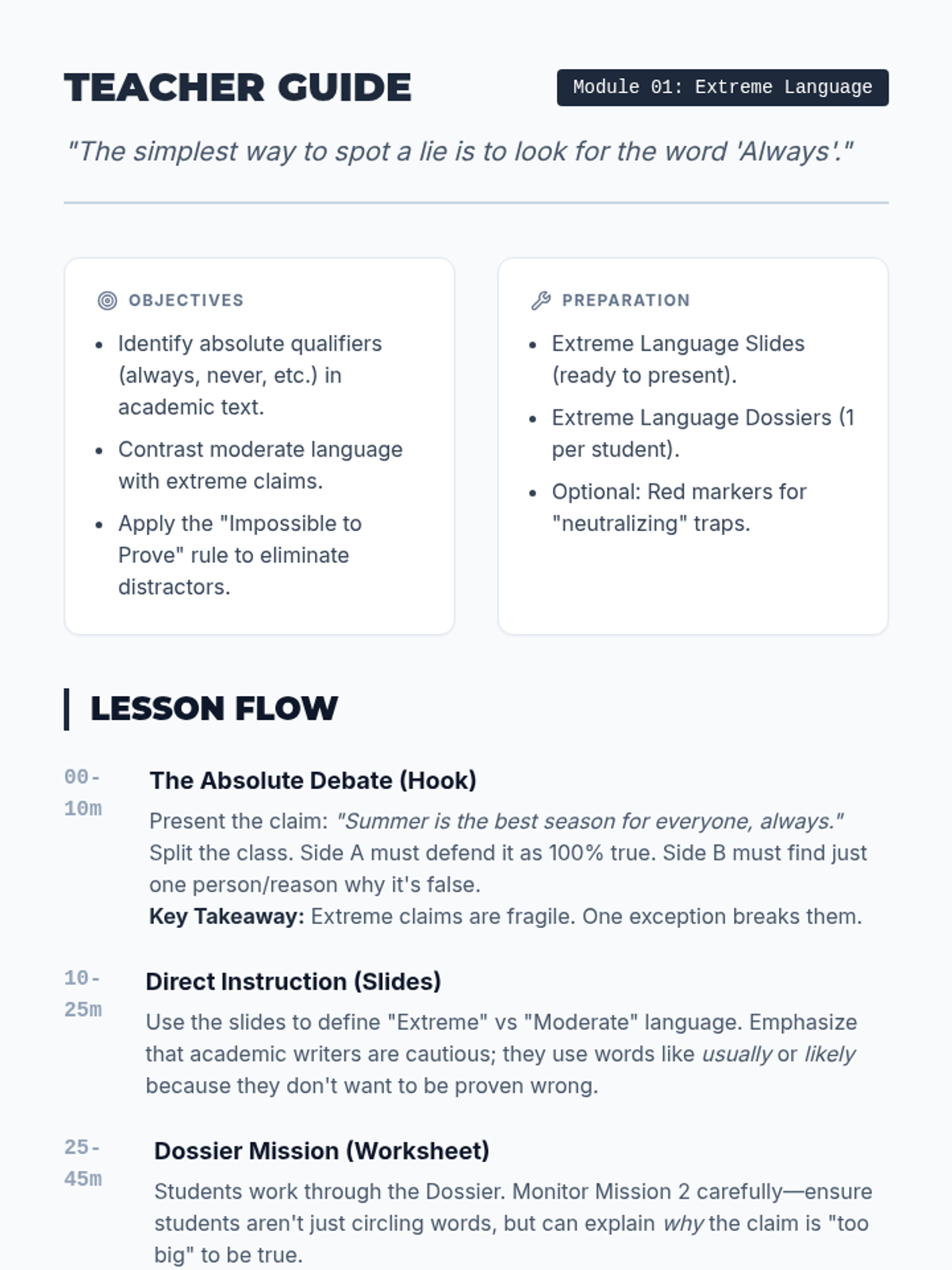
Students learn to identify absolute qualifiers like 'always' and 'never' that signal incorrect answers. They practice categorizing statements by their degree of intensity to evaluate their validity in a test context.
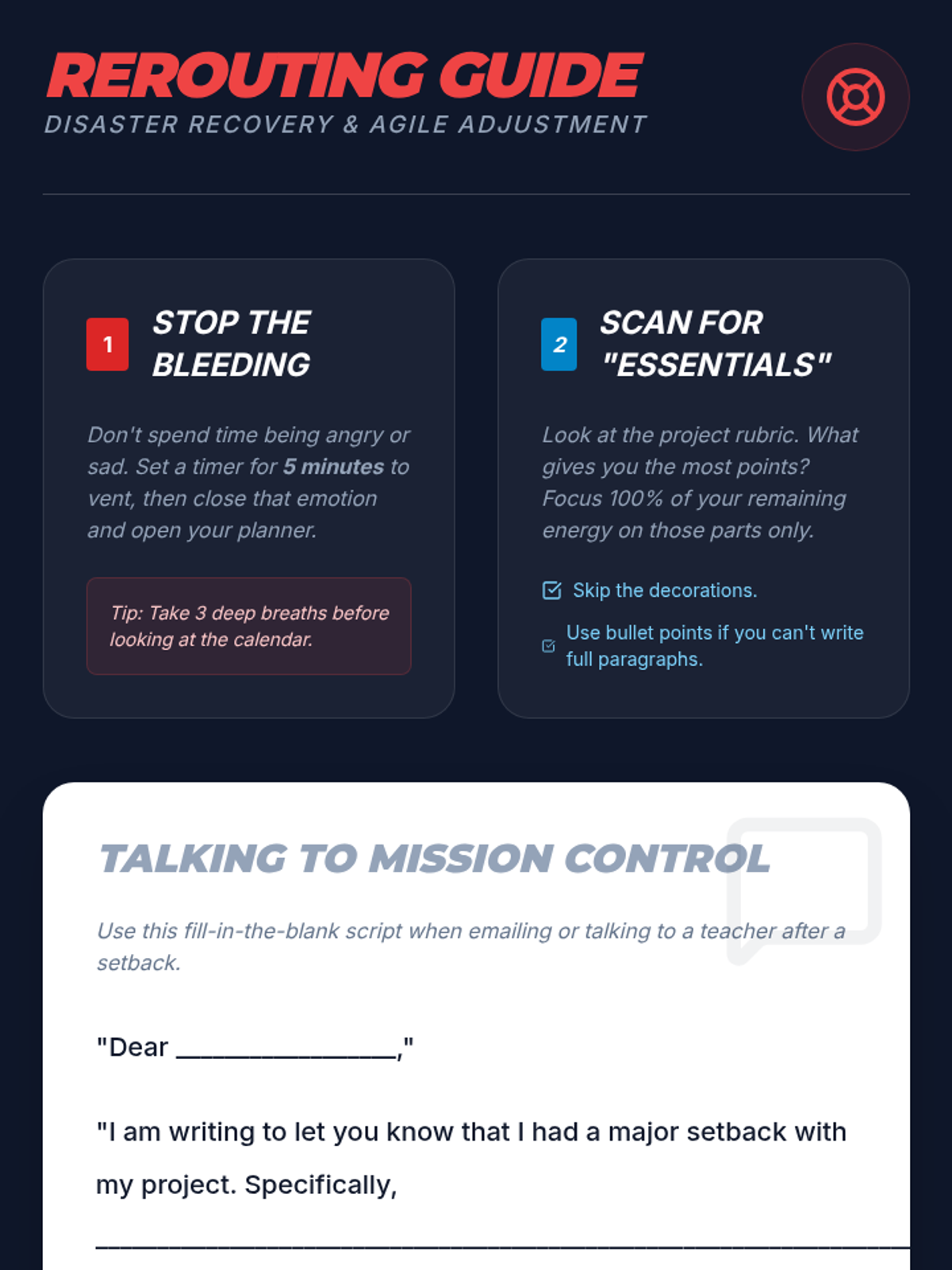
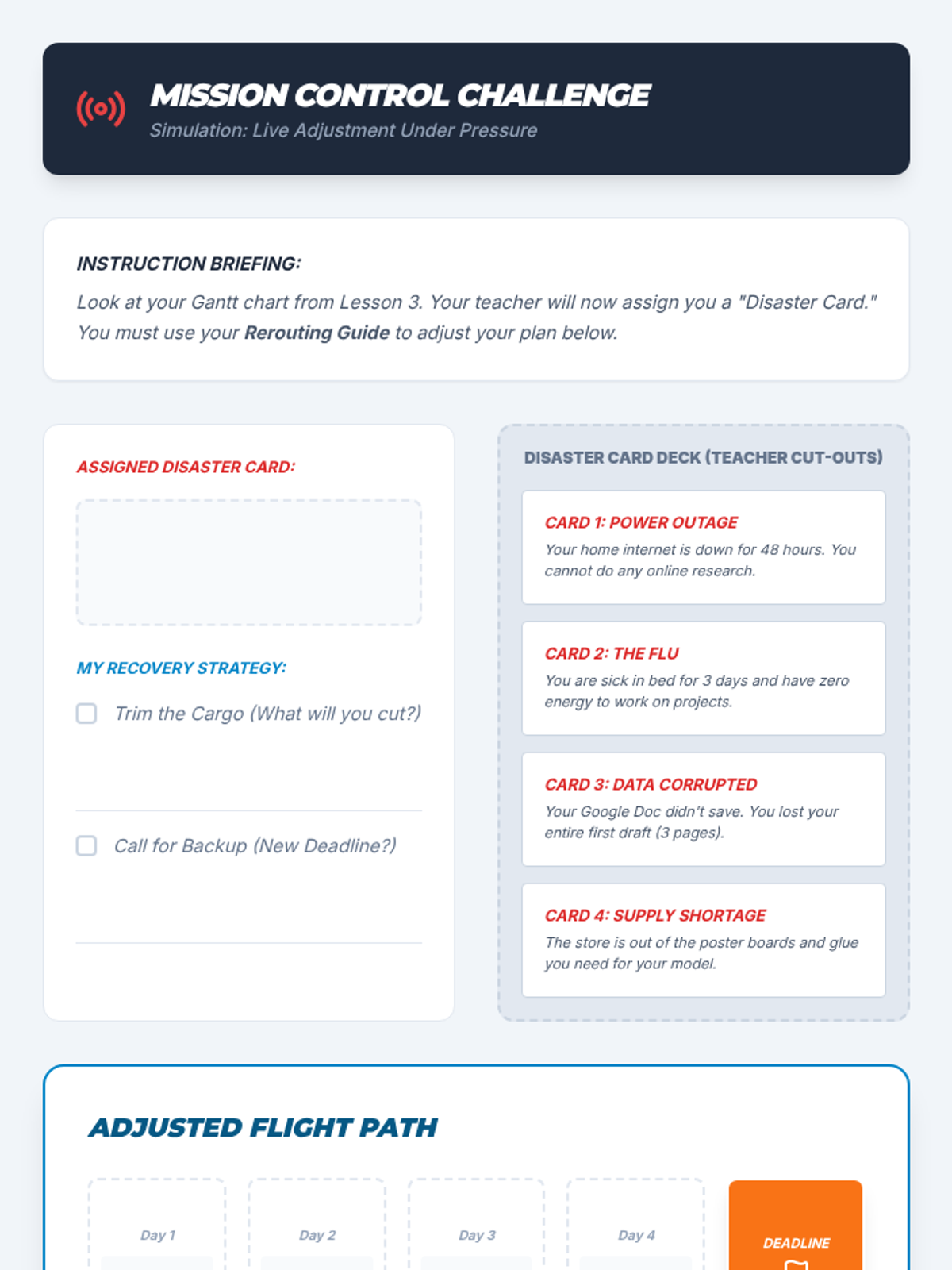
Students simulate a 'disaster' scenario where a project phase goes wrong or a computer crashes, requiring a plan adjustment. They learn strategies for renegotiating deadlines and condensing work without sacrificing quality.
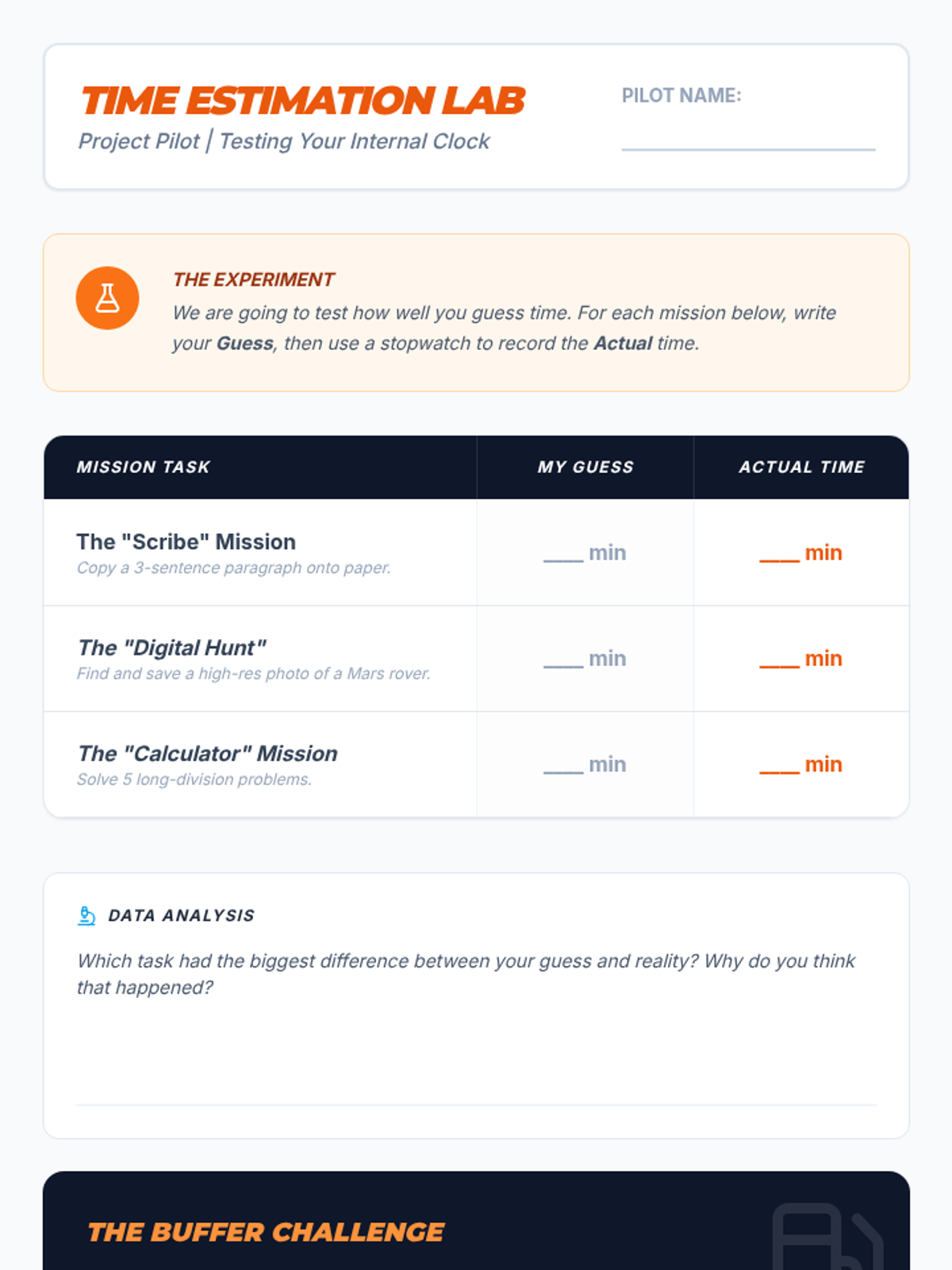
Students practice forecasting how long specific academic tasks take and learn to add contingency buffers for unexpected delays. They review past assignments to compare estimated vs. actual time.
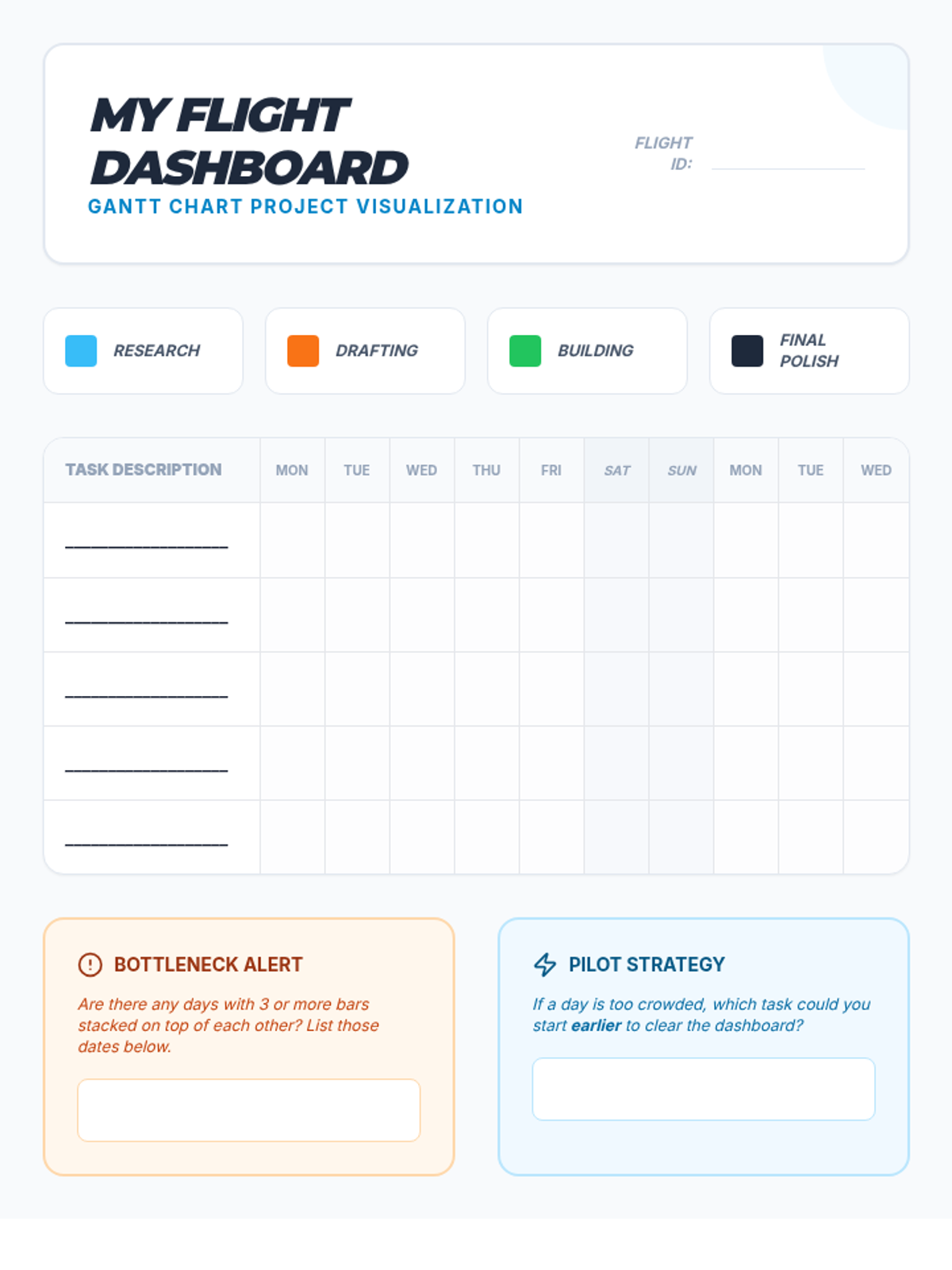
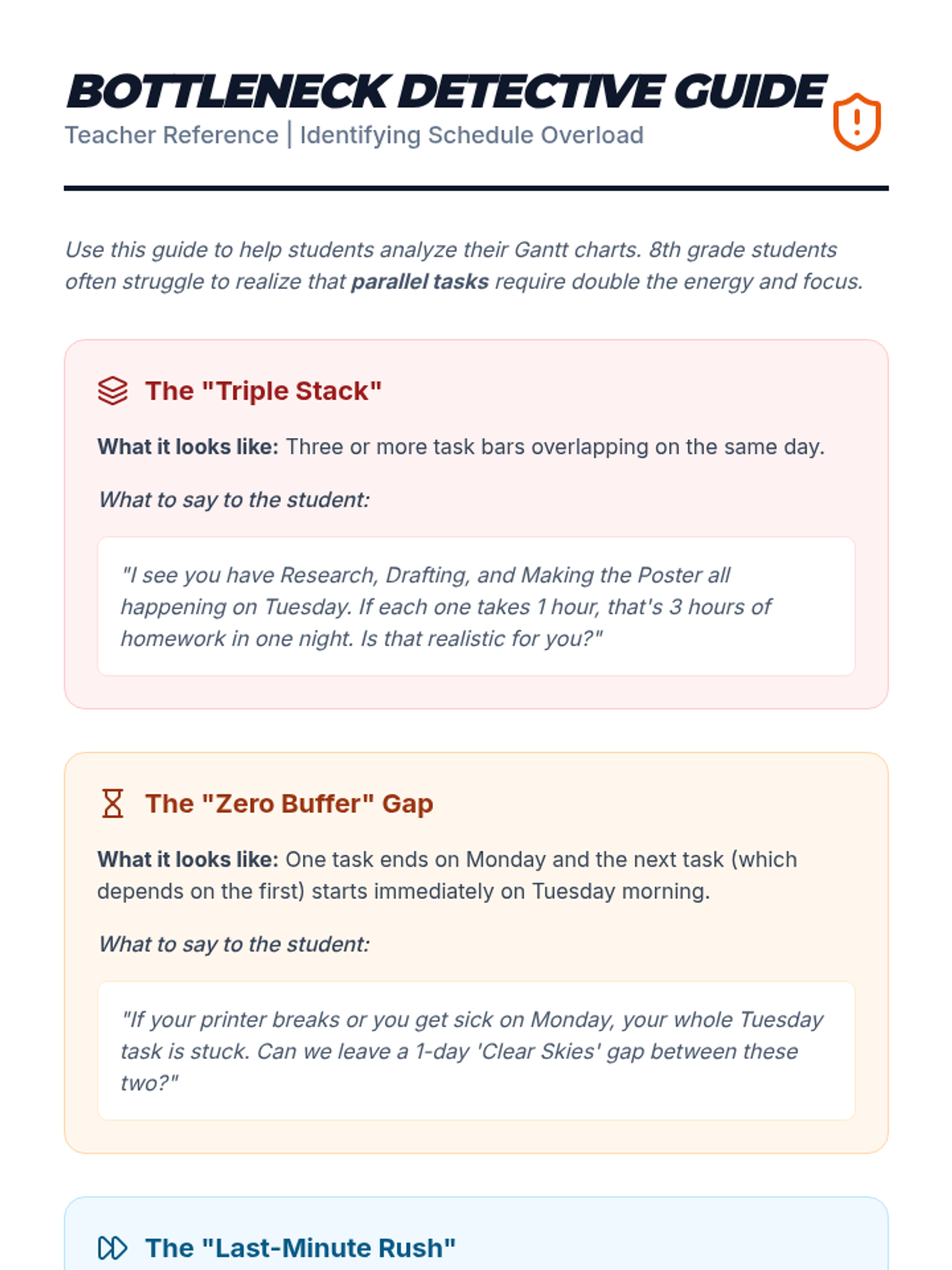
Students create a simplified Gantt chart to visualize overlapping commitments and project phases. They color-code concurrent tasks to identify potential bottlenecks.
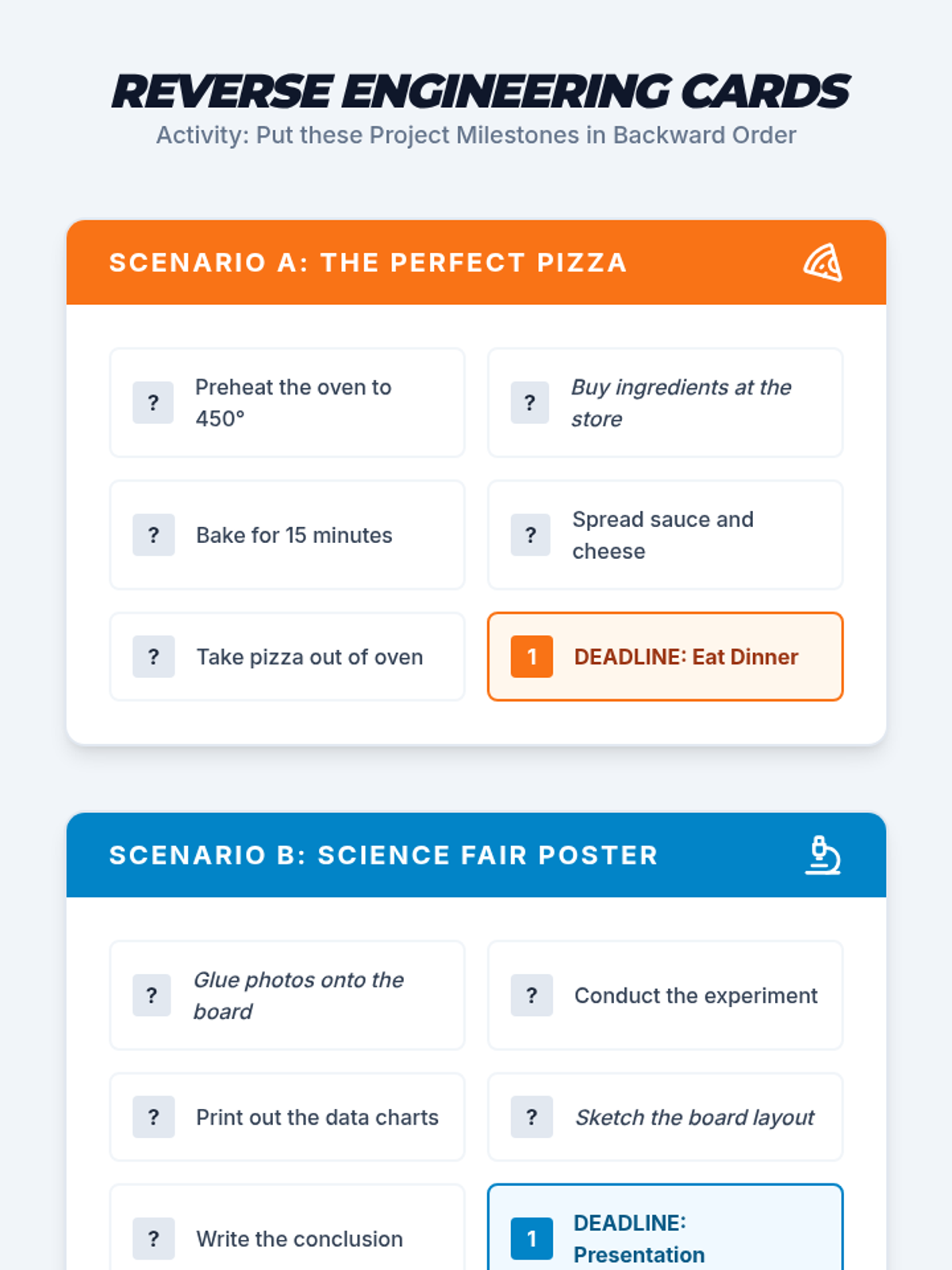
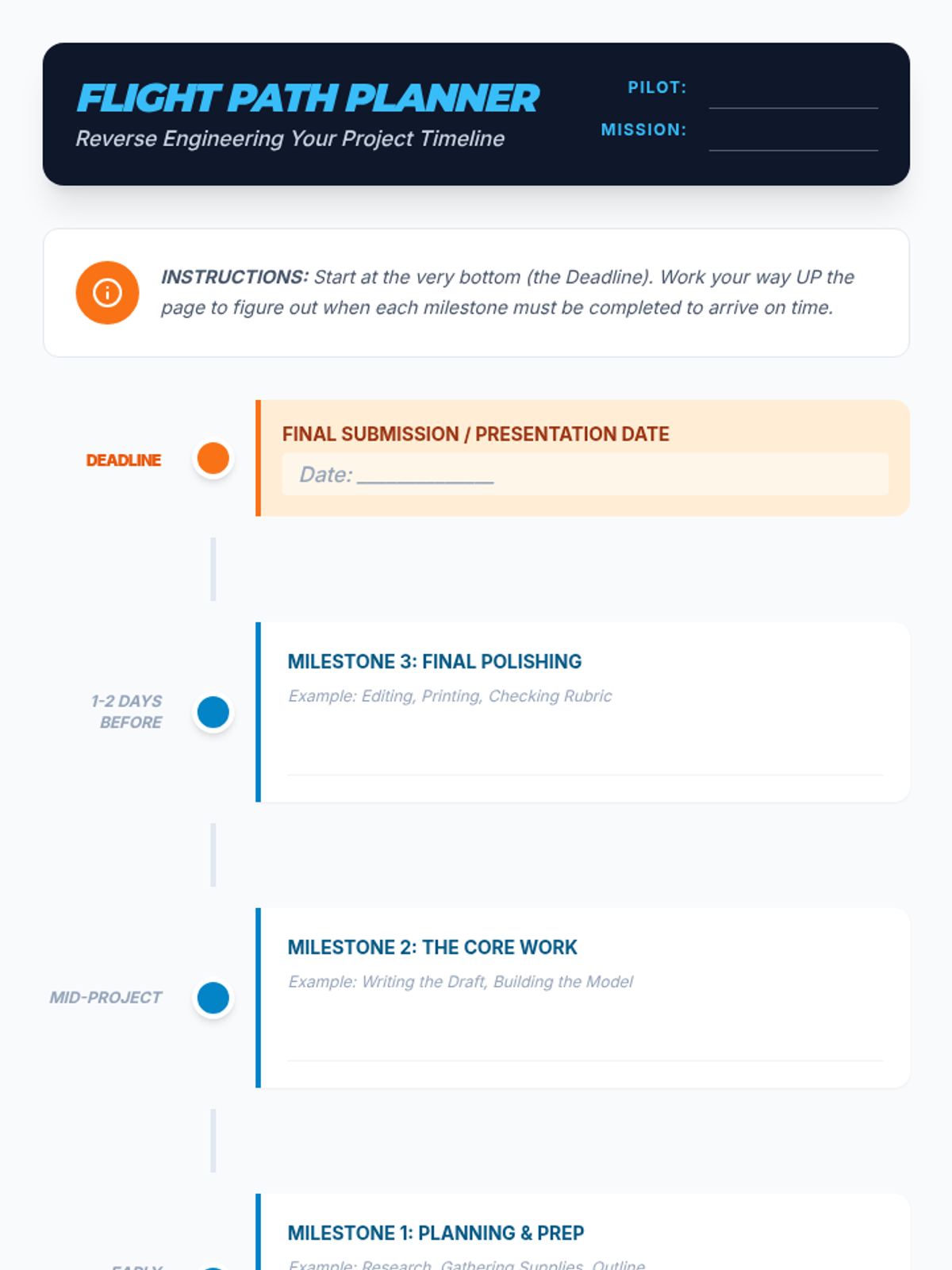
Starting from a fixed due date, students work backward to place milestones on a calendar, learning to sequence dependent tasks.
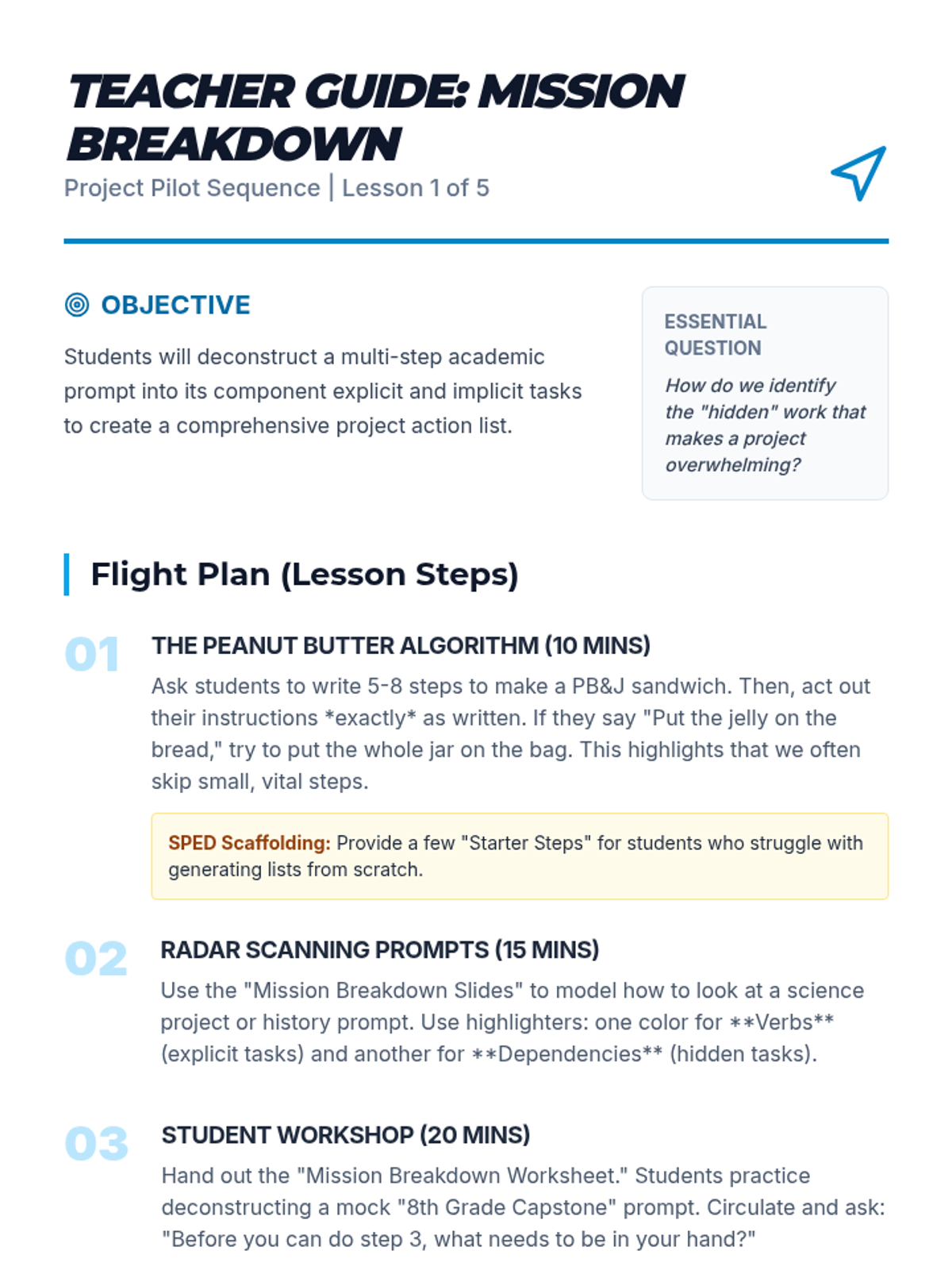
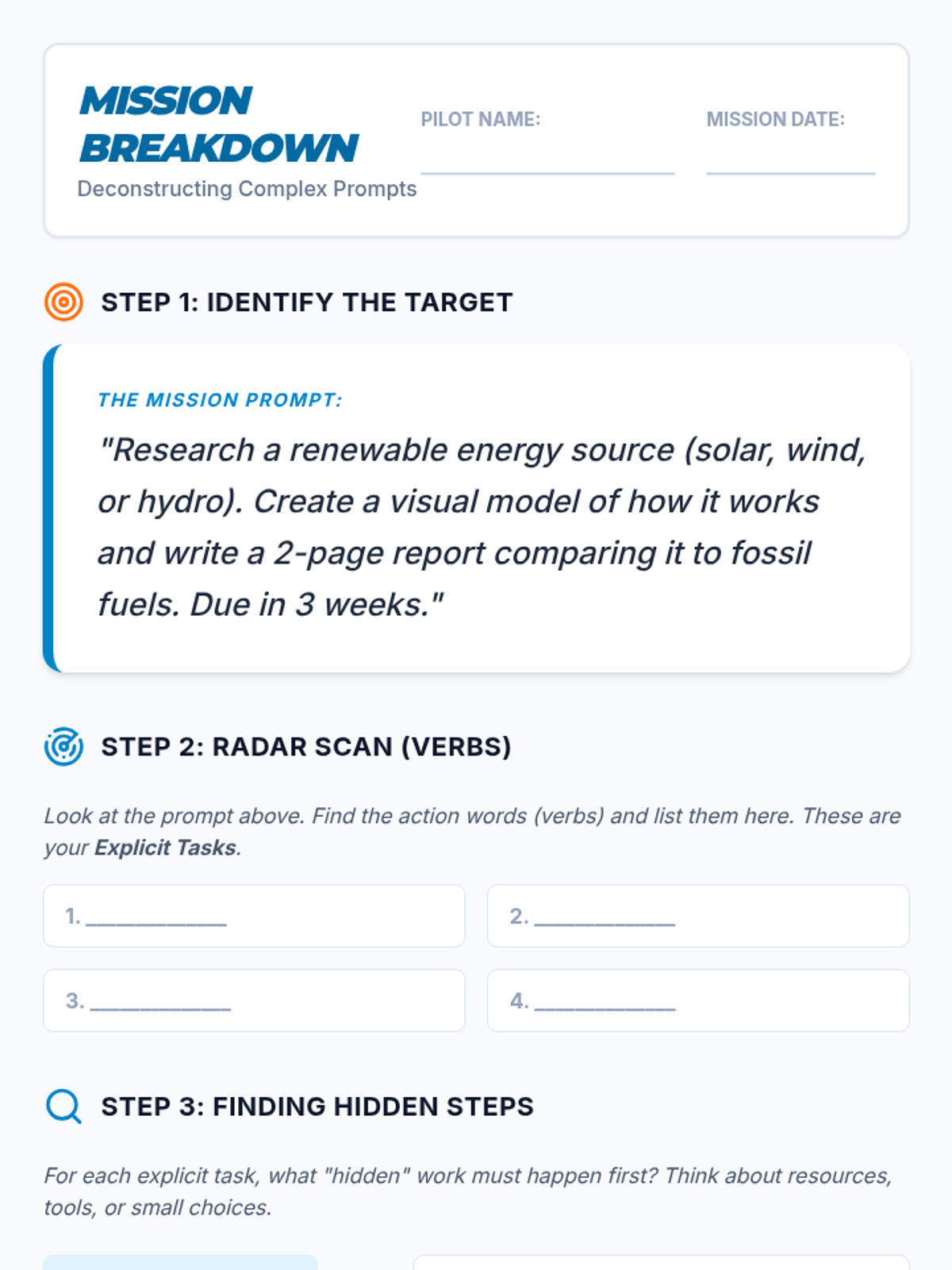
Students learn to identify 'hidden' sub-tasks within complex assignment prompts, using an aviation-themed approach to flight-plan their academic work.
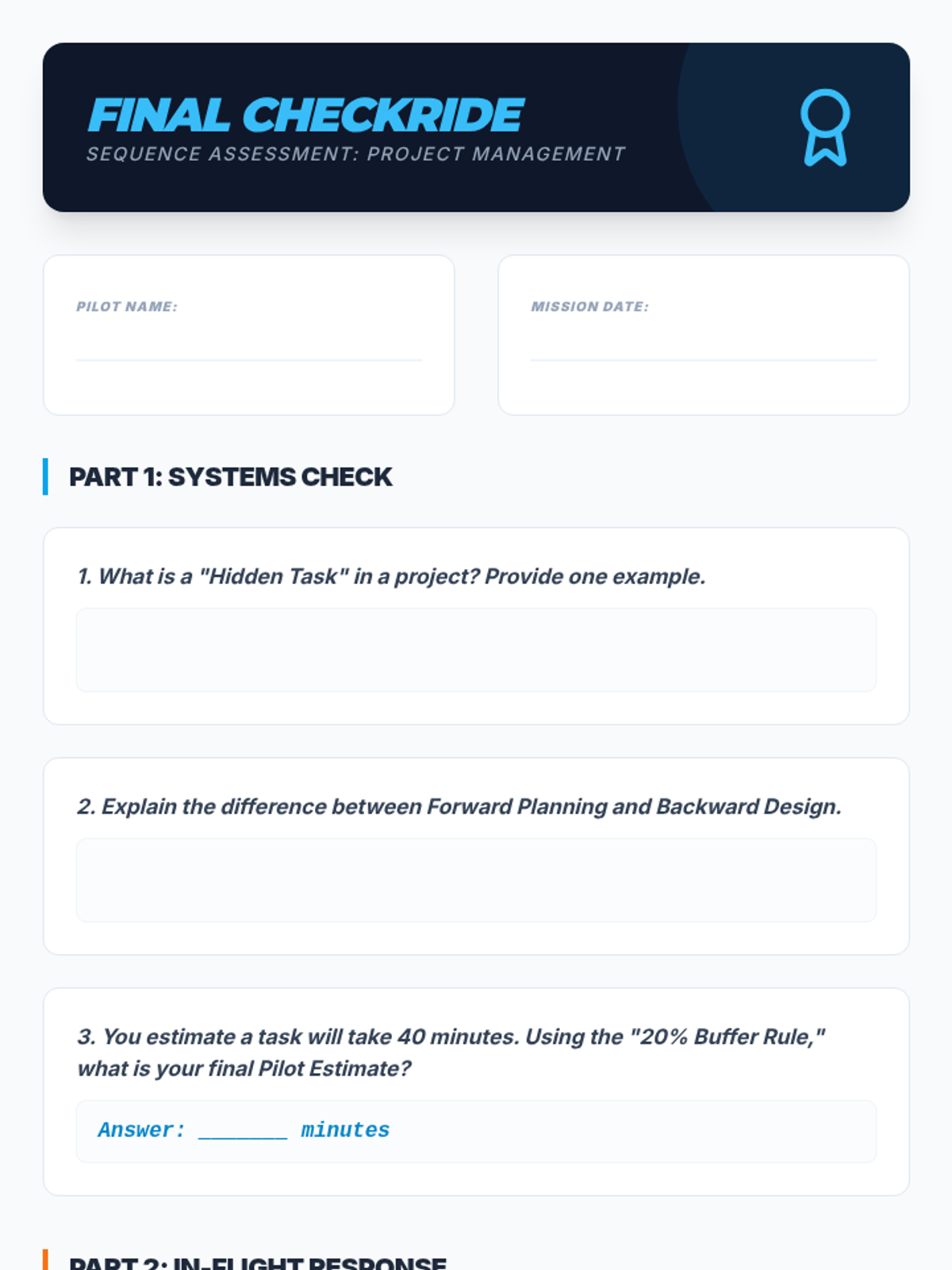
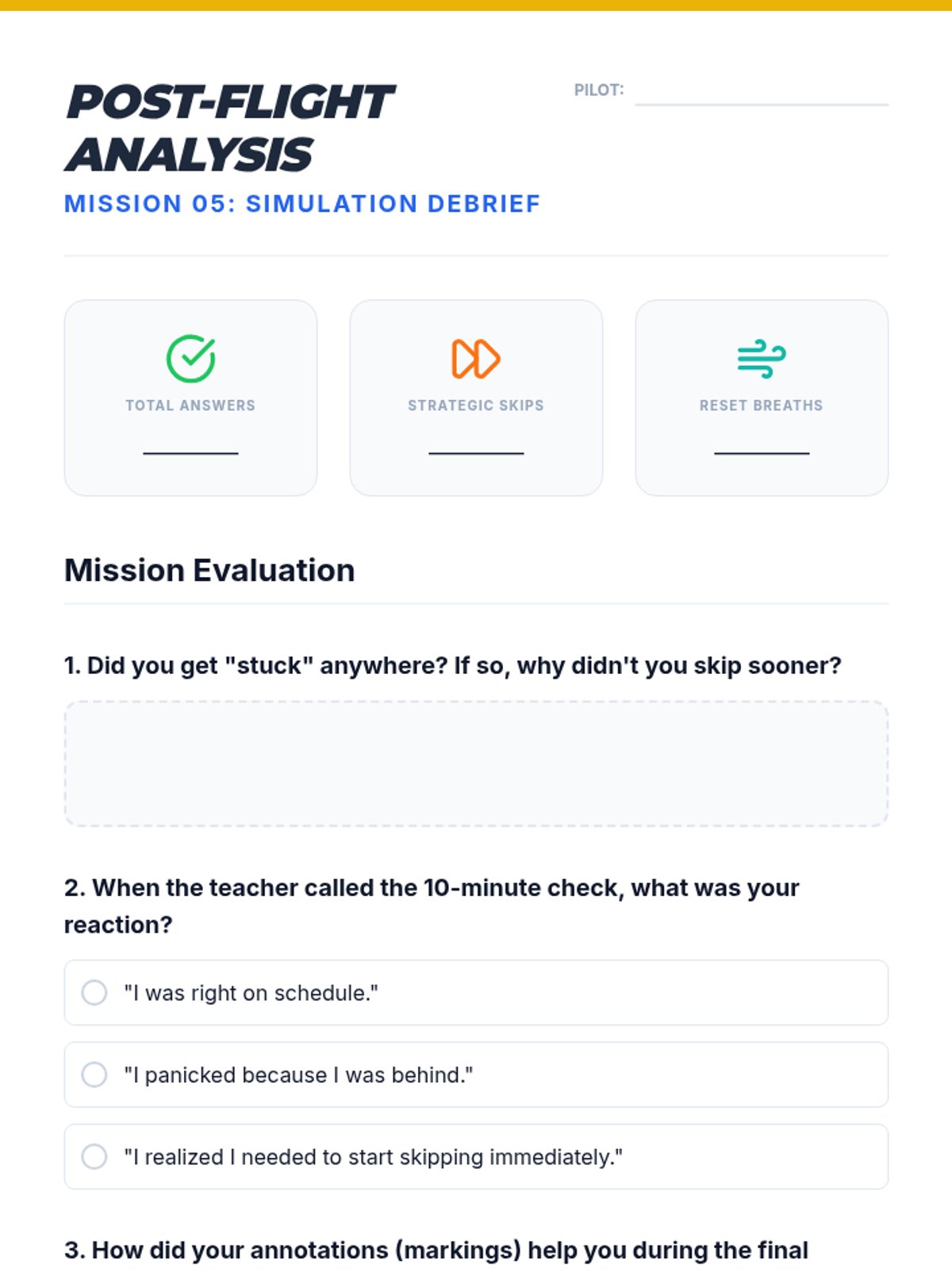
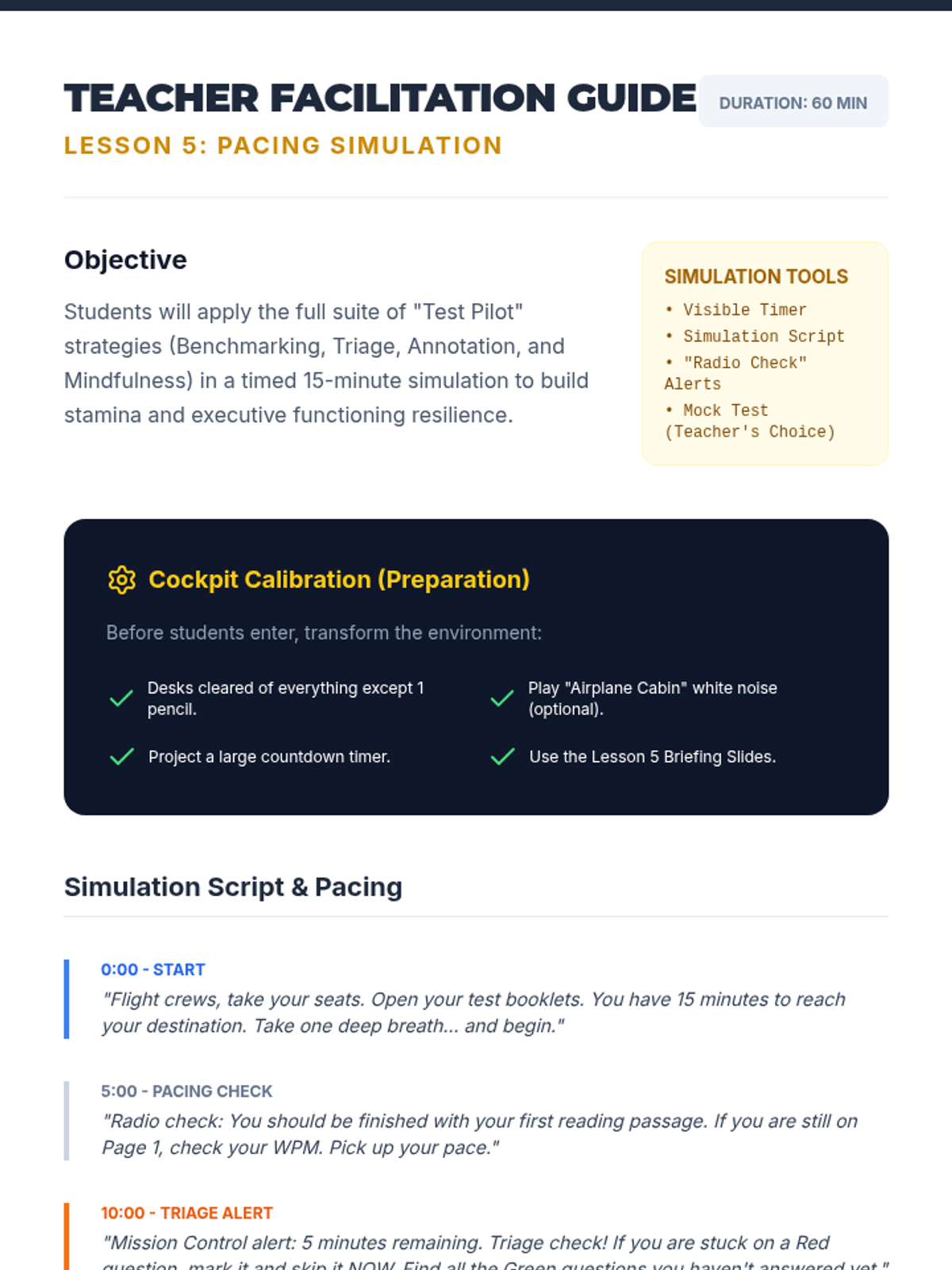
A cumulative simulation where students apply time management and emotional regulation skills in a timed testing environment, followed by a reflective debrief.
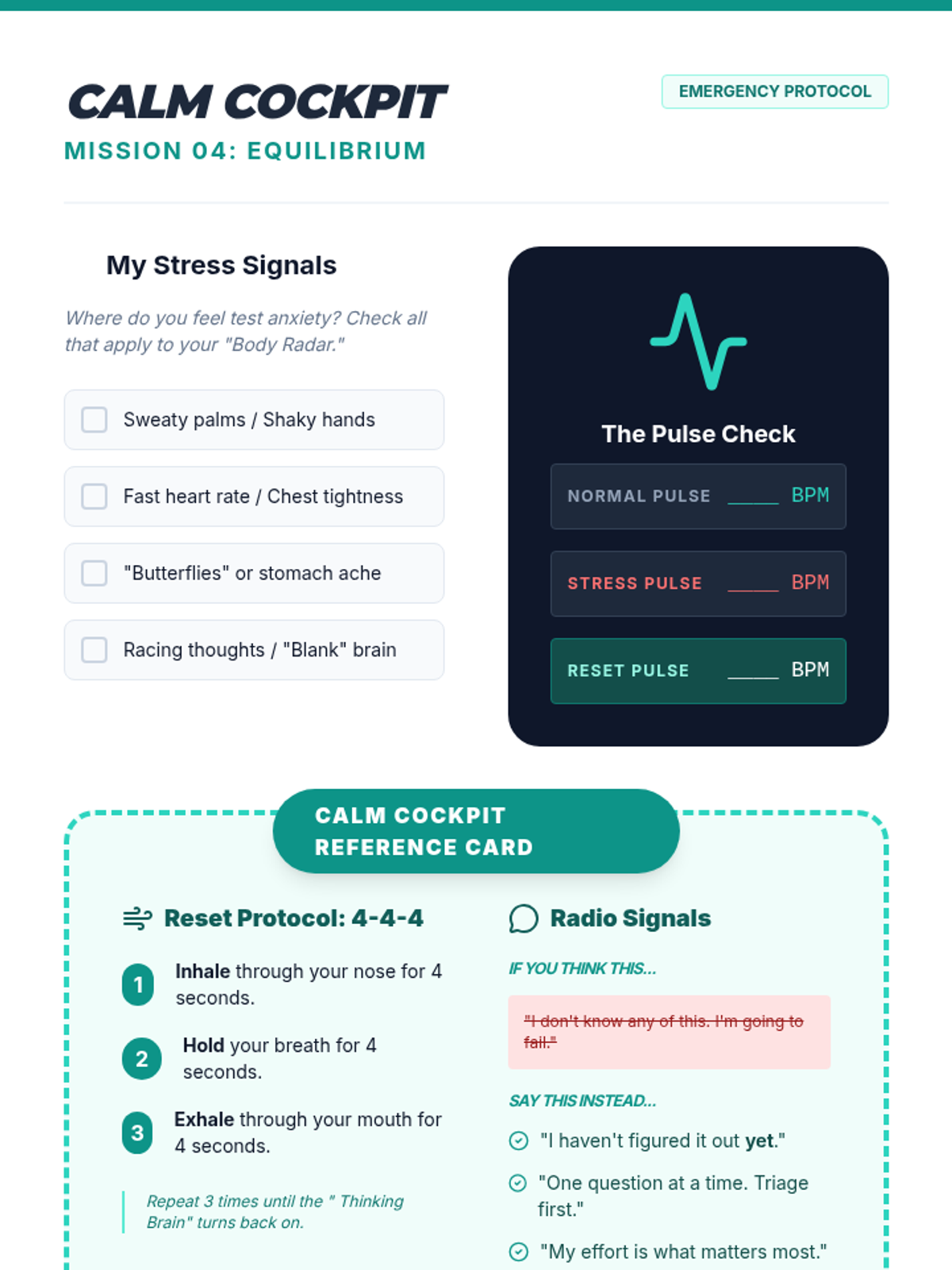
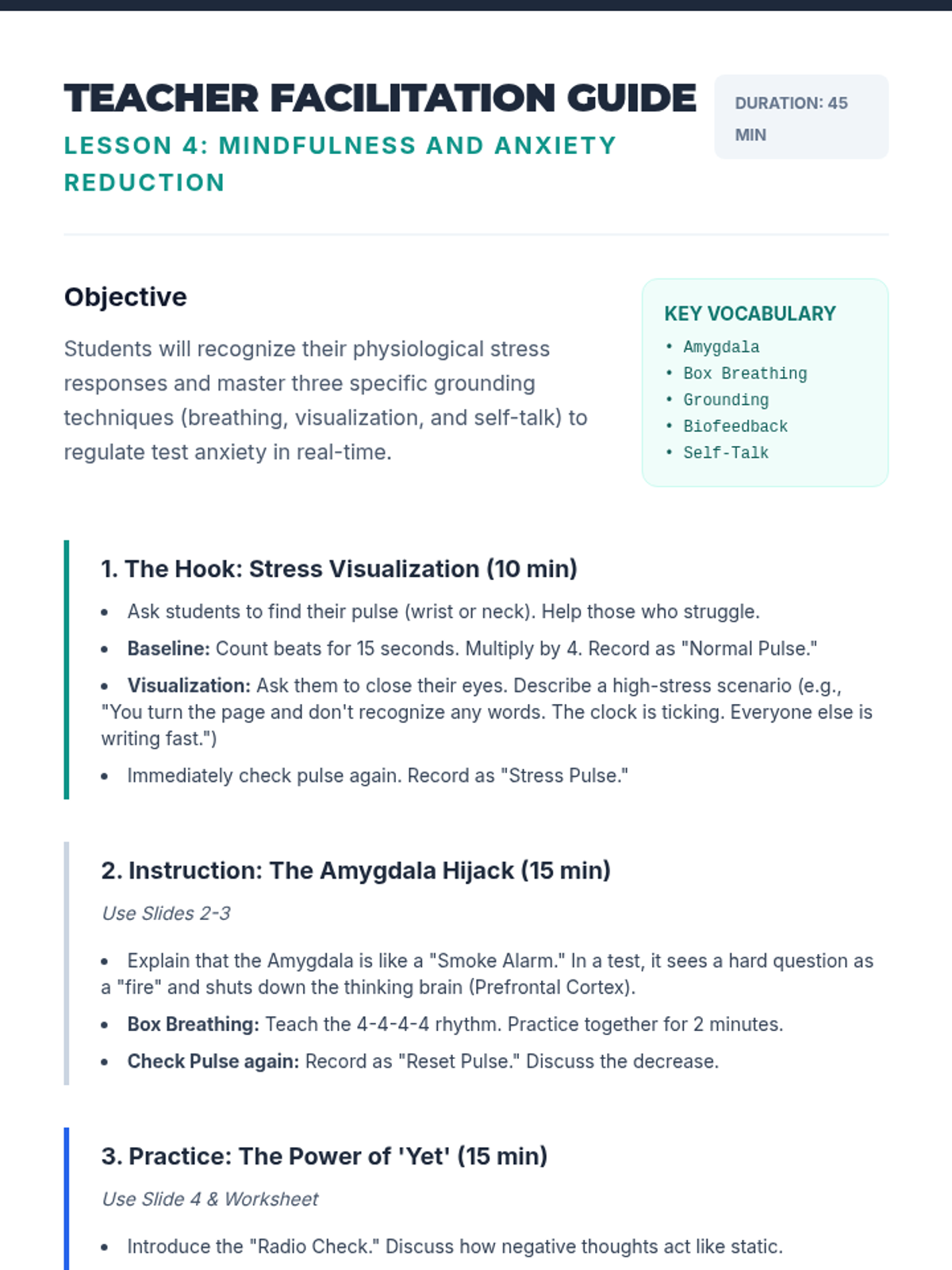
Exploring the physical and mental effects of test anxiety and learning grounding techniques to stay calm and focused during high-stakes moments.
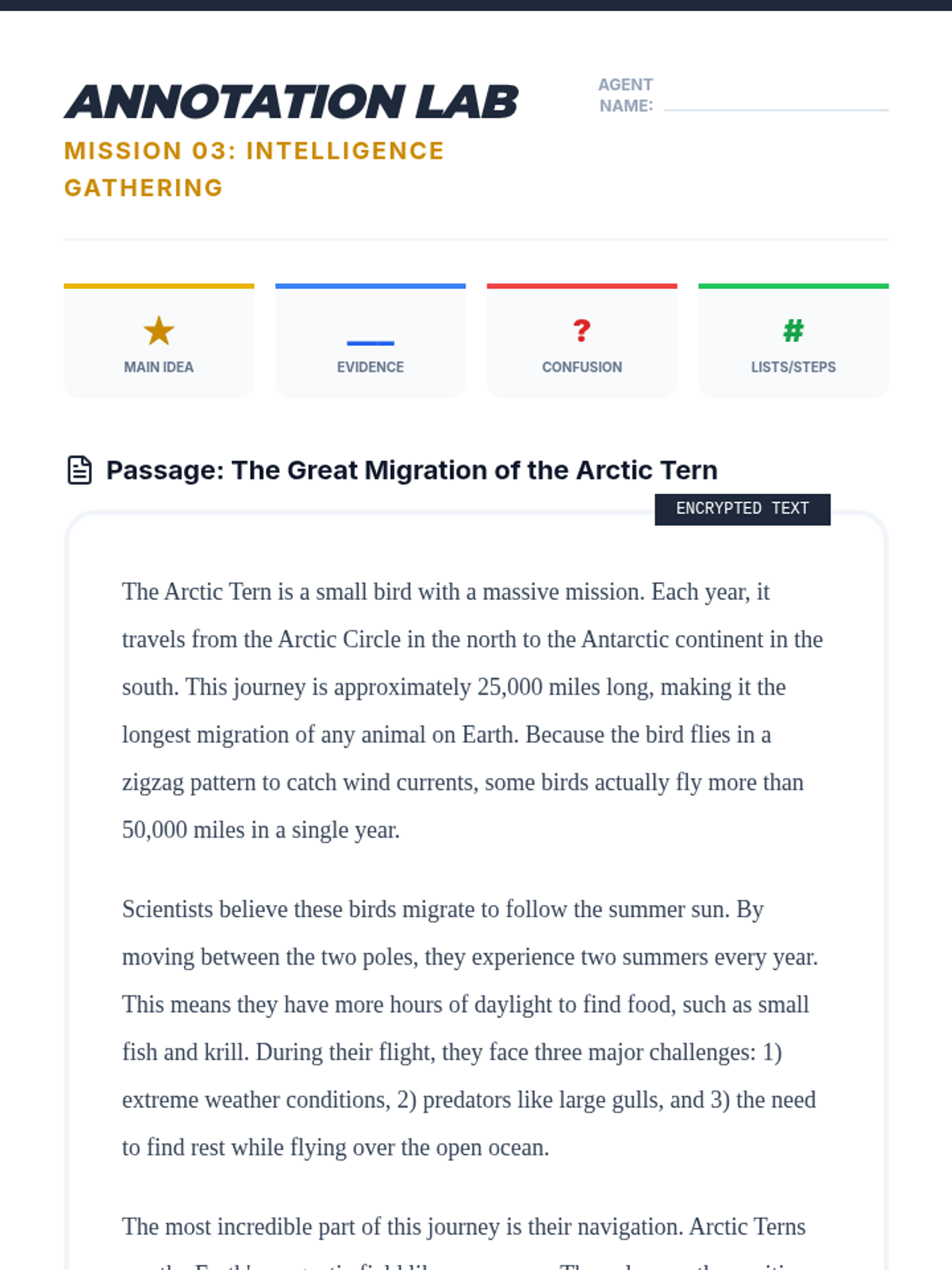
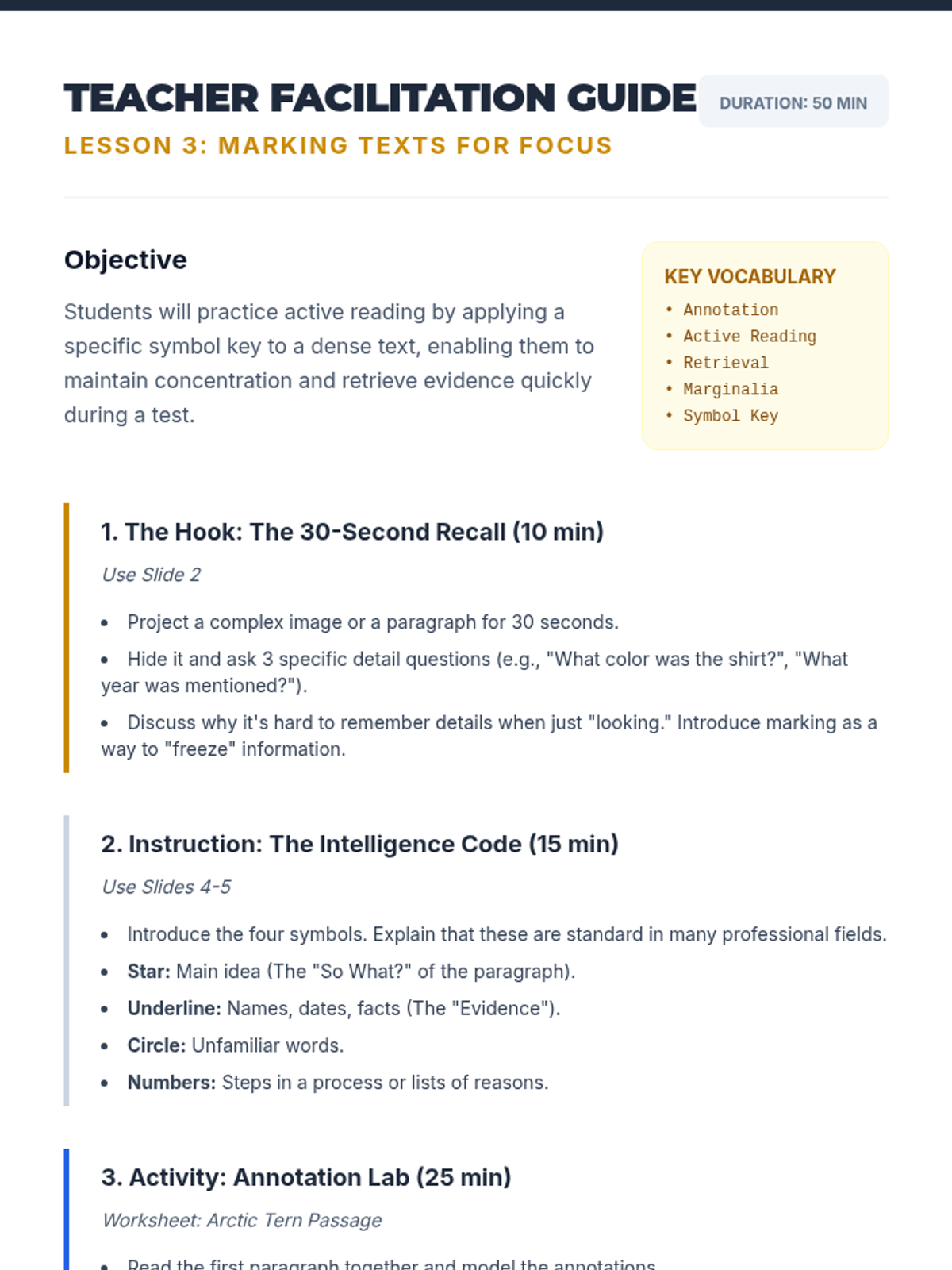
Active reading strategies for testing, focusing on specific annotation systems that help maintain focus and allow for quick evidence retrieval.
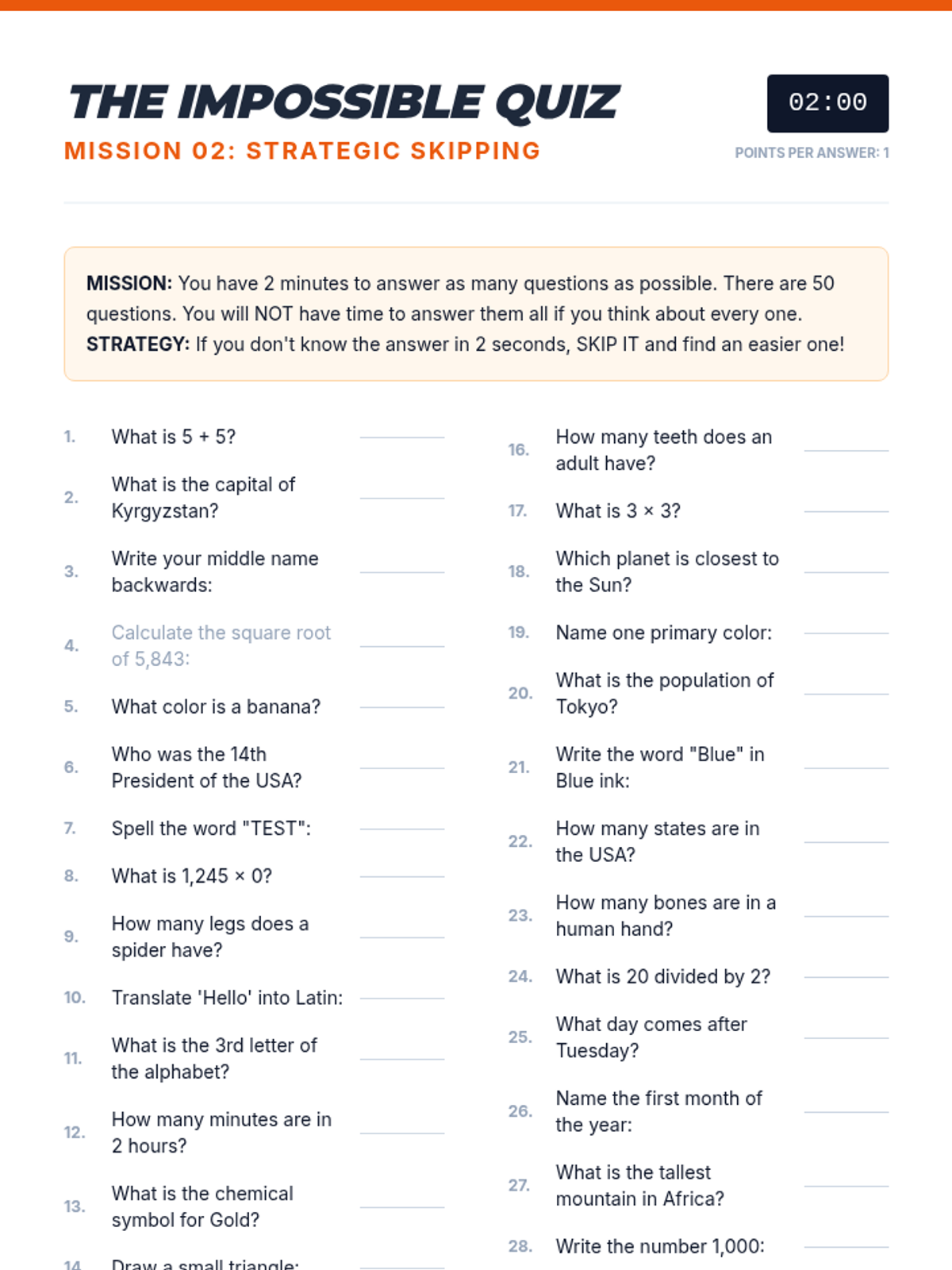
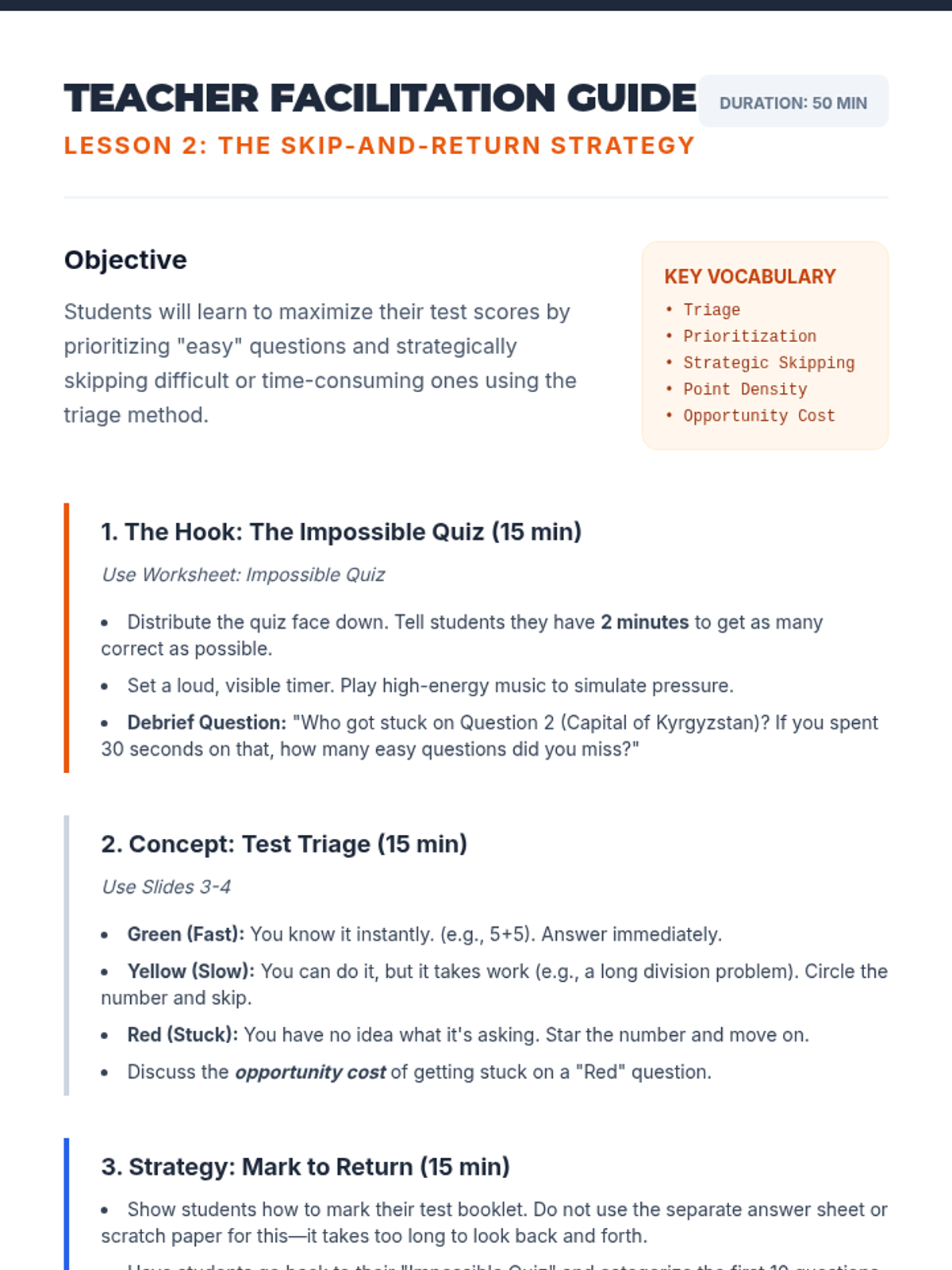
Students learn the 'triage' method for tests, identifying which questions to answer immediately and which to 'skip and return' to maximize points.
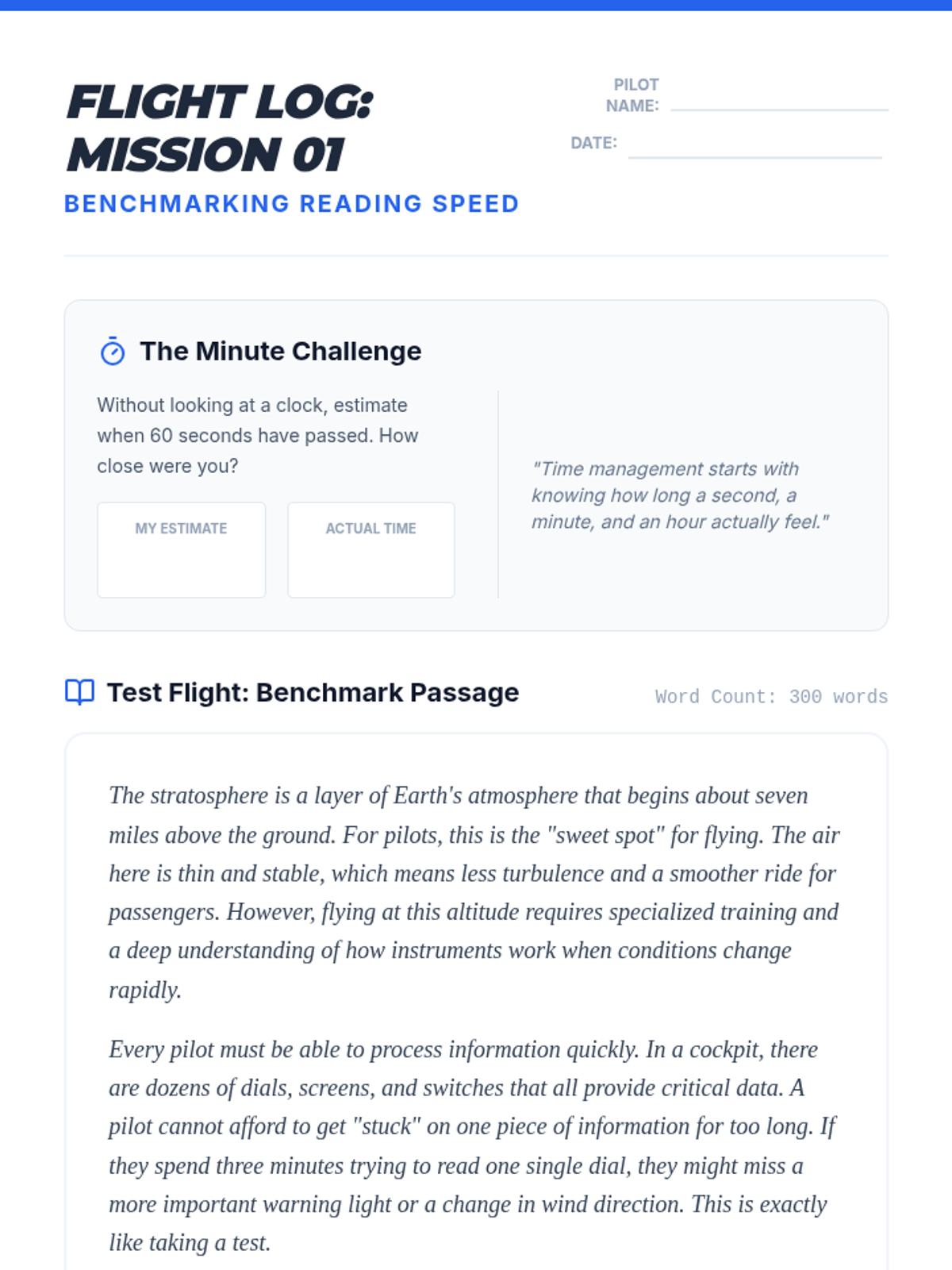
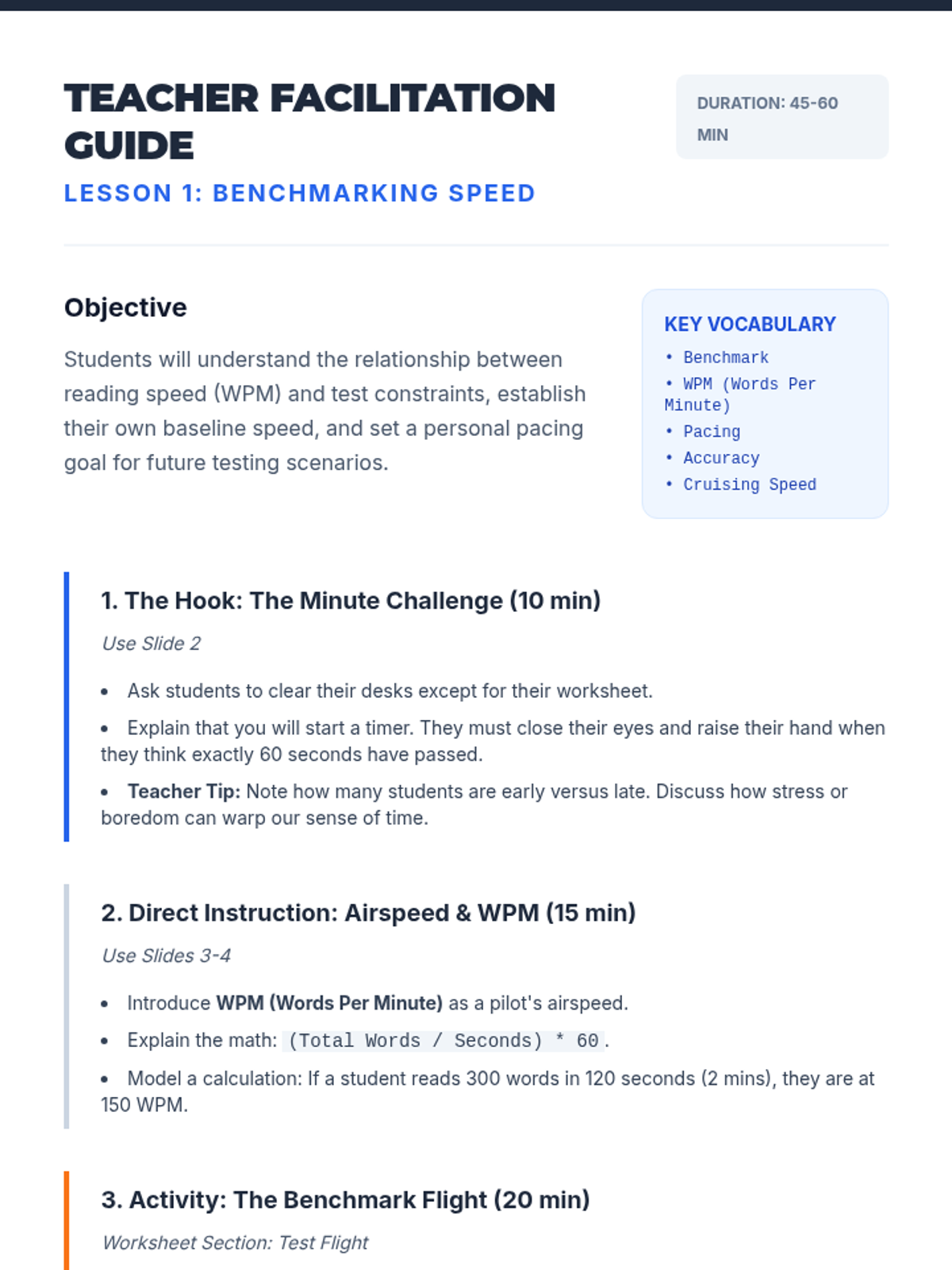
Students establish a baseline for their reading speed and understand how it relates to test time constraints. They learn to calculate Words Per Minute (WPM) and set realistic pacing goals.
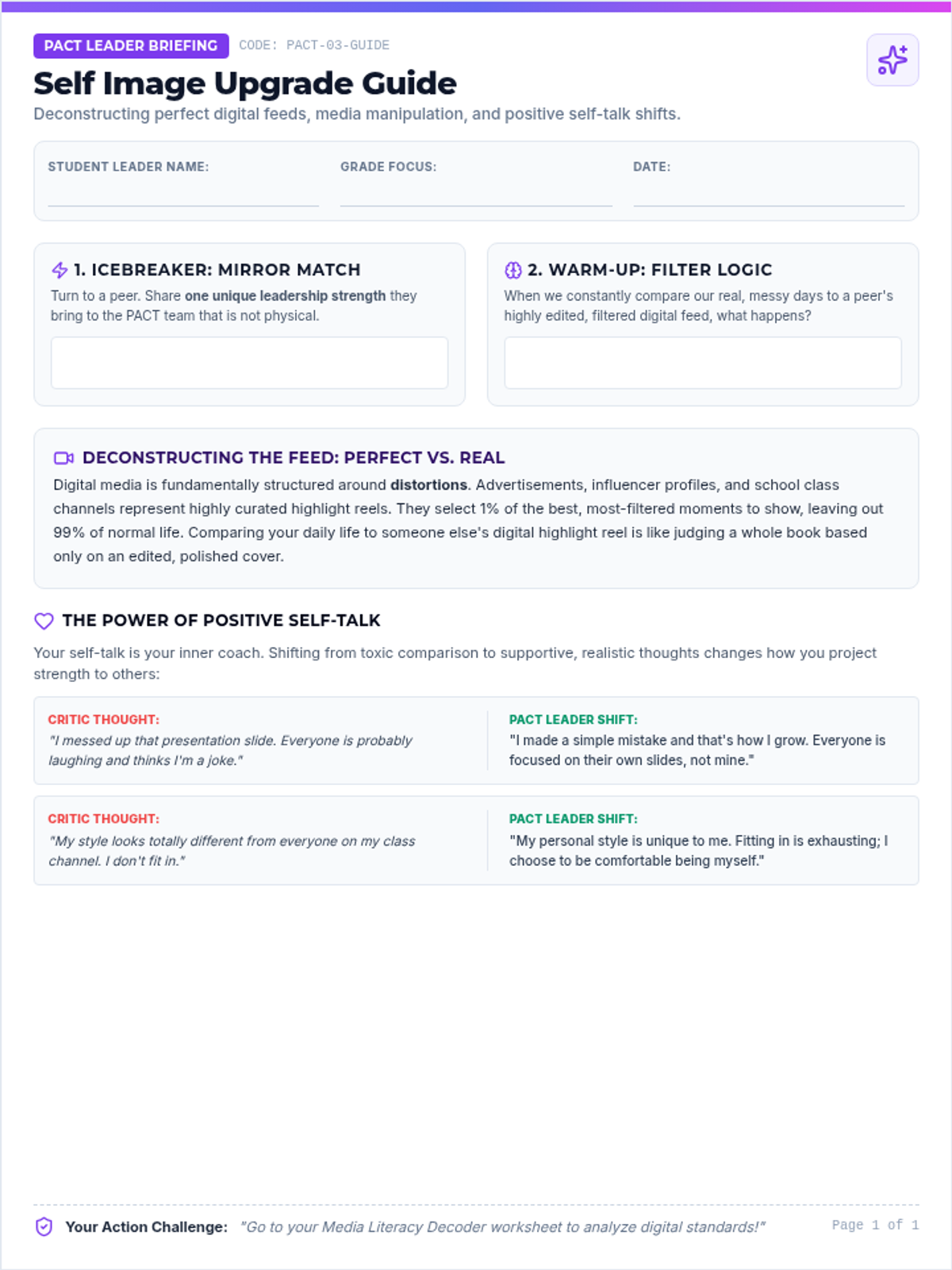
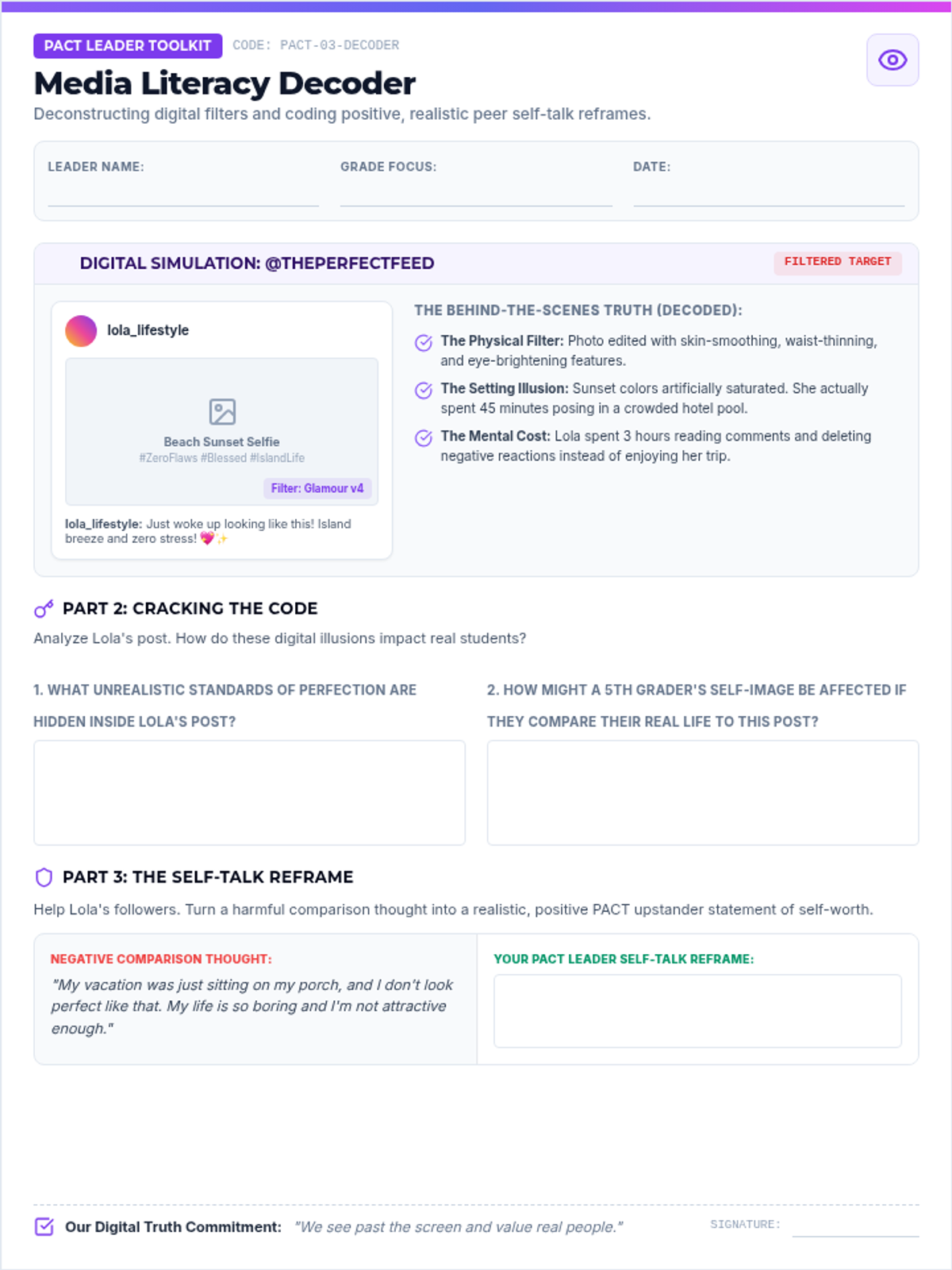
Focuses on building self-worth, identifying negative media messages, and shifting personal and peer narratives through positive self-talk strategies.
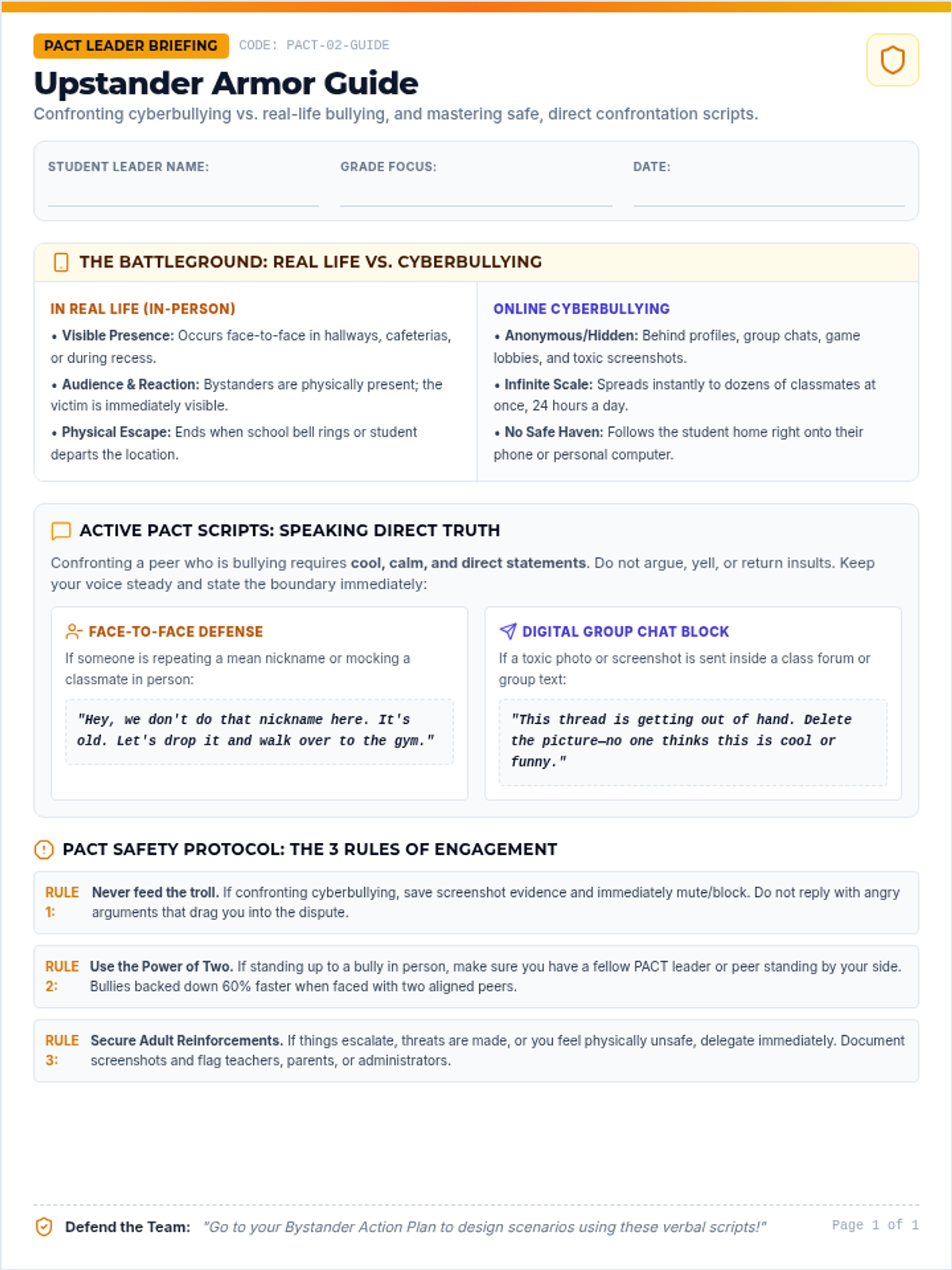
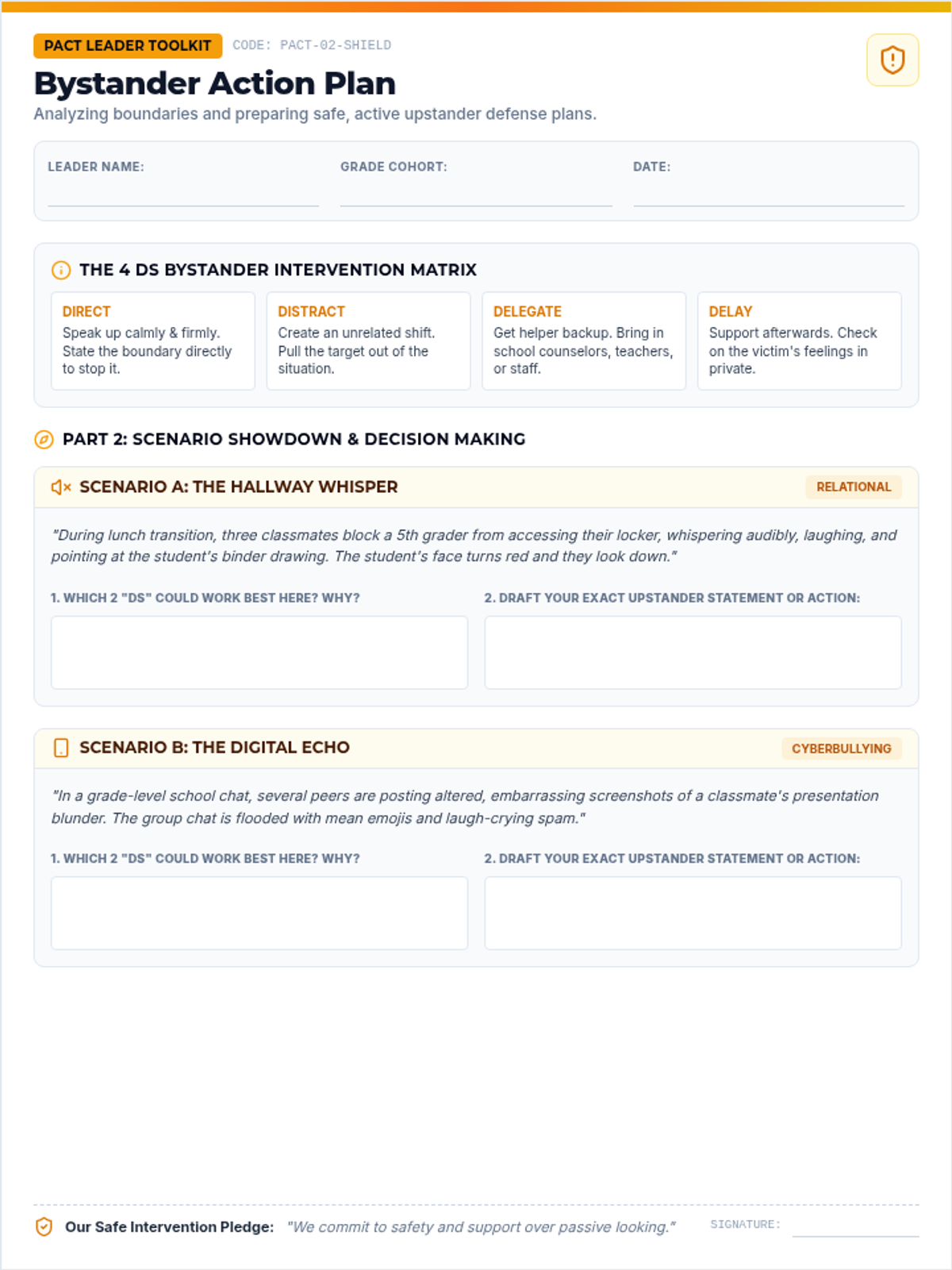
Teaches student leaders to identify the fine line between teasing and bullying, and equips them with safe, practical upstander intervention and peer support frameworks.
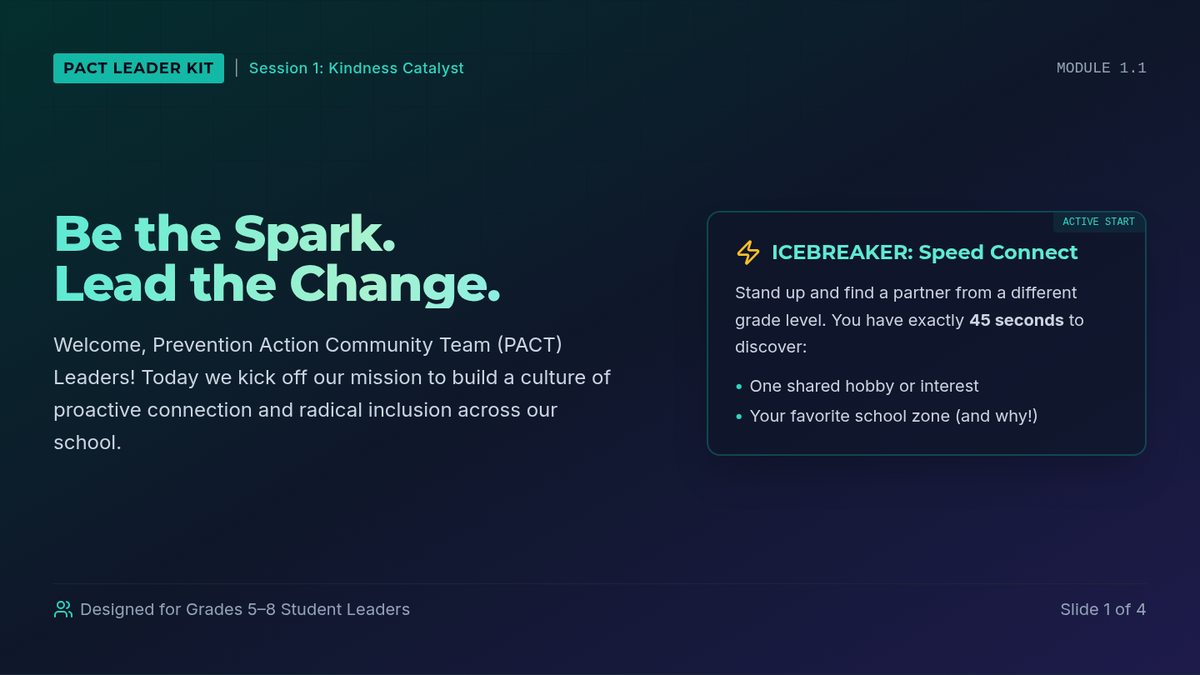
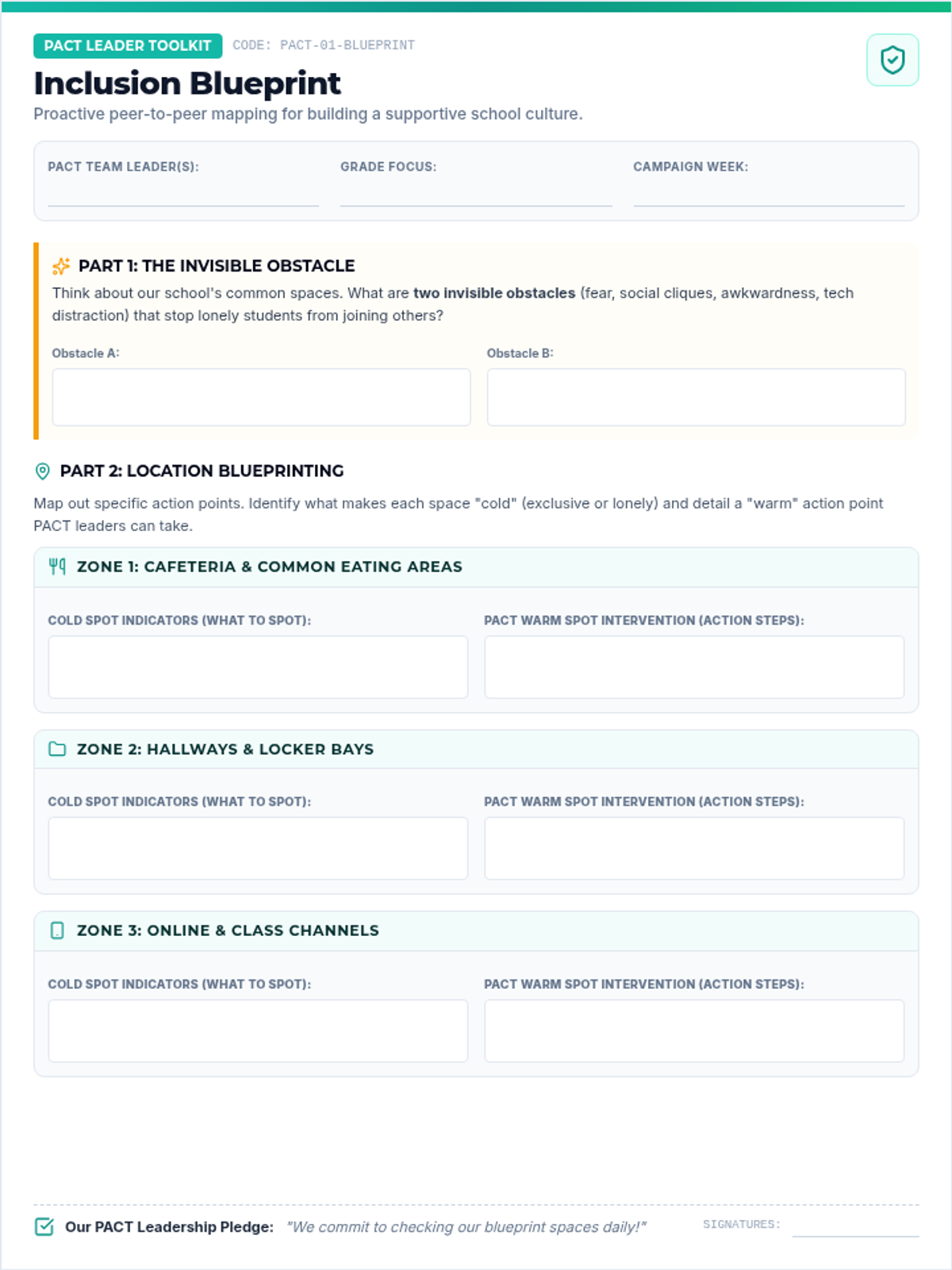
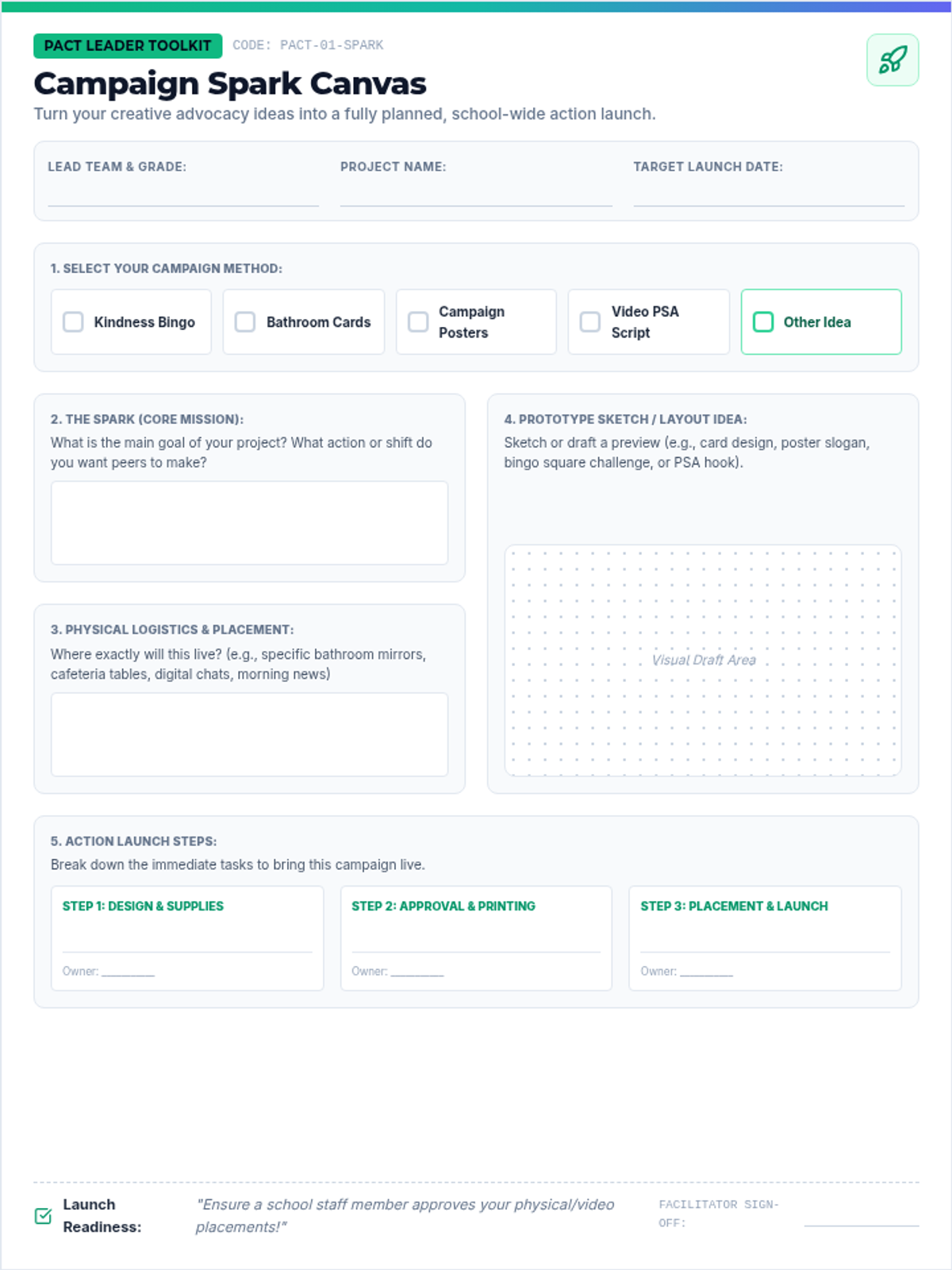
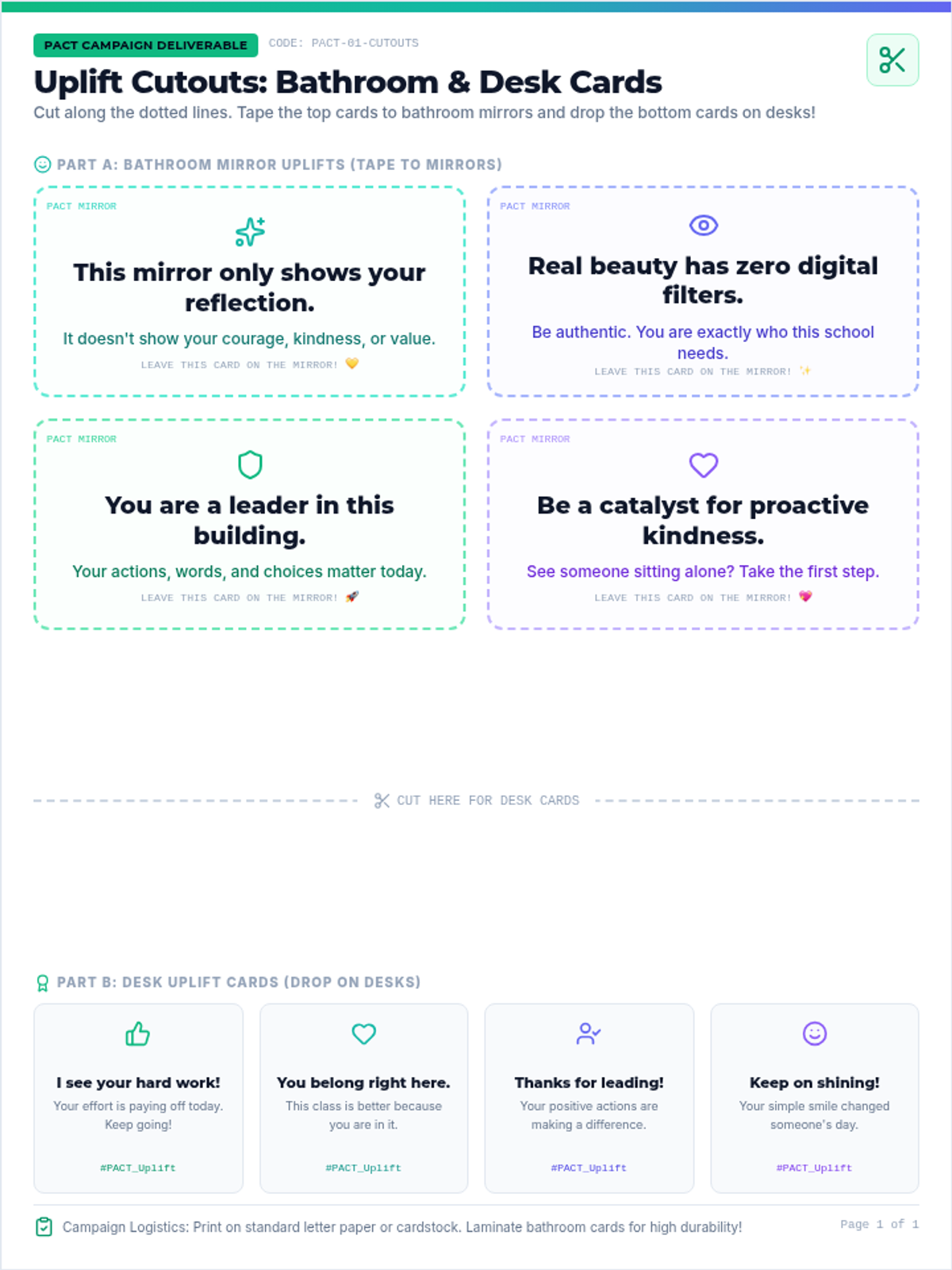
Equips PACT student leaders with core concepts of proactive inclusion, empathy, and positive peer-to-peer connection. Features a hands-on inclusion blueprint worksheet and peer training presentation.
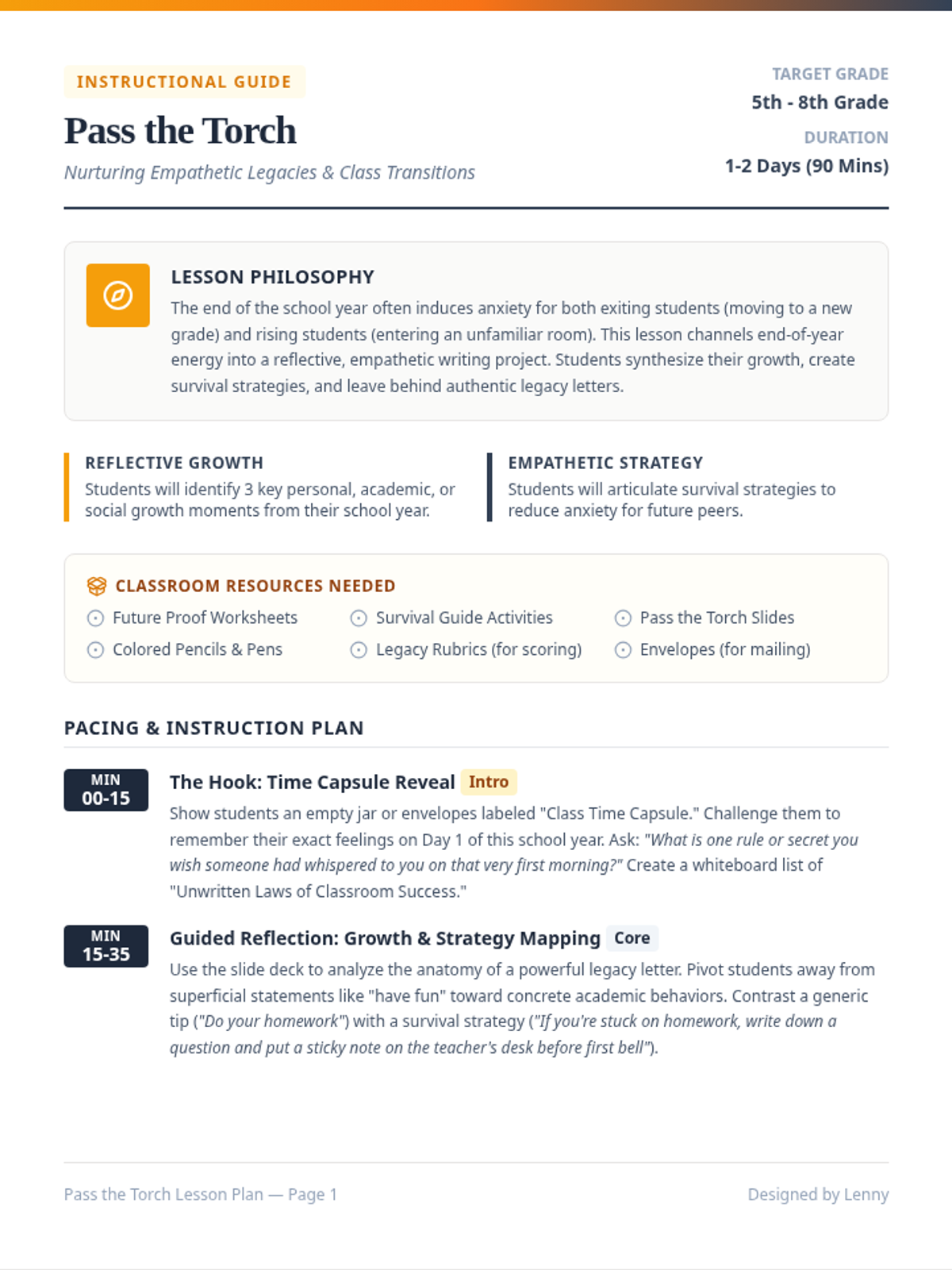
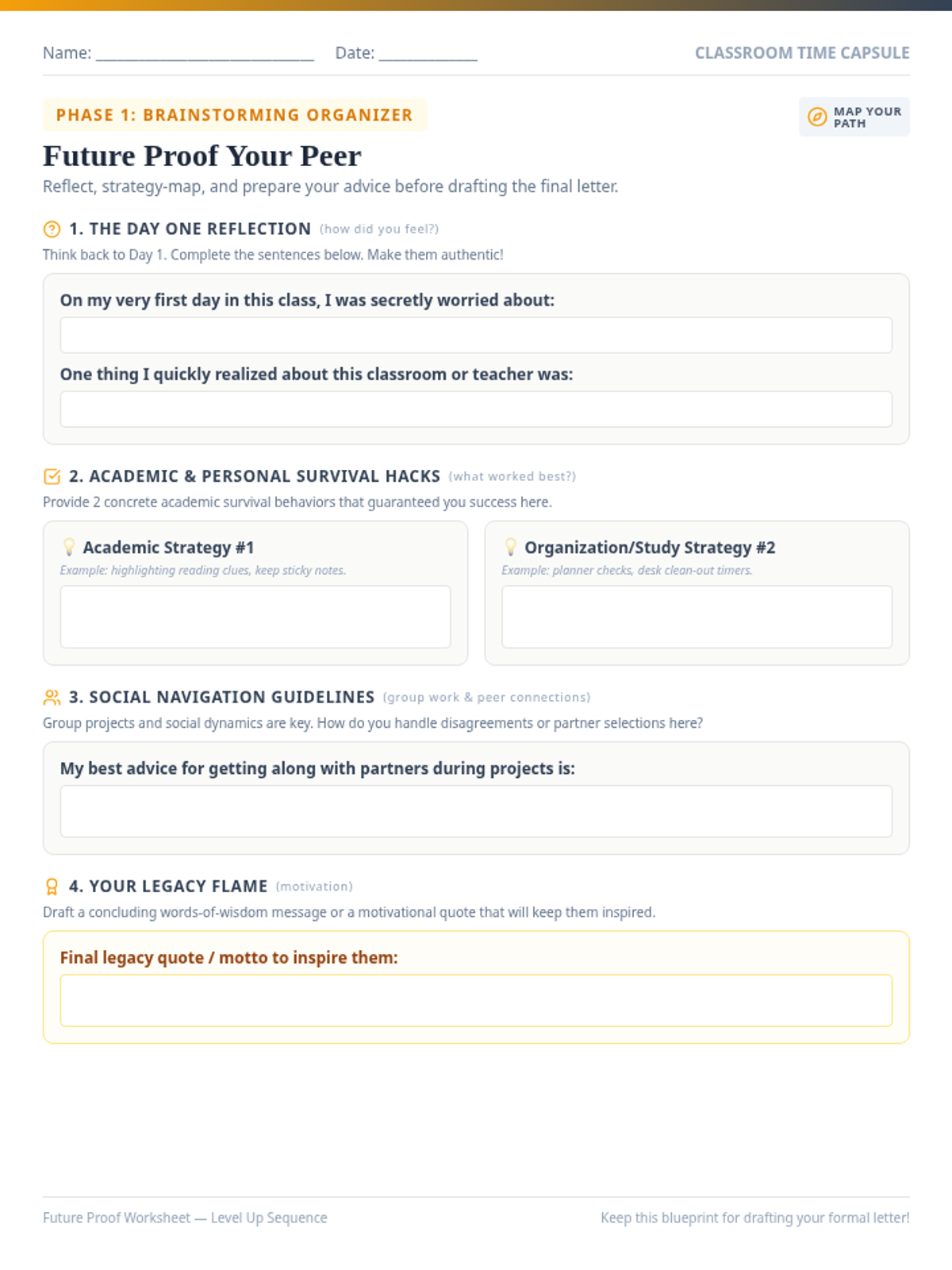
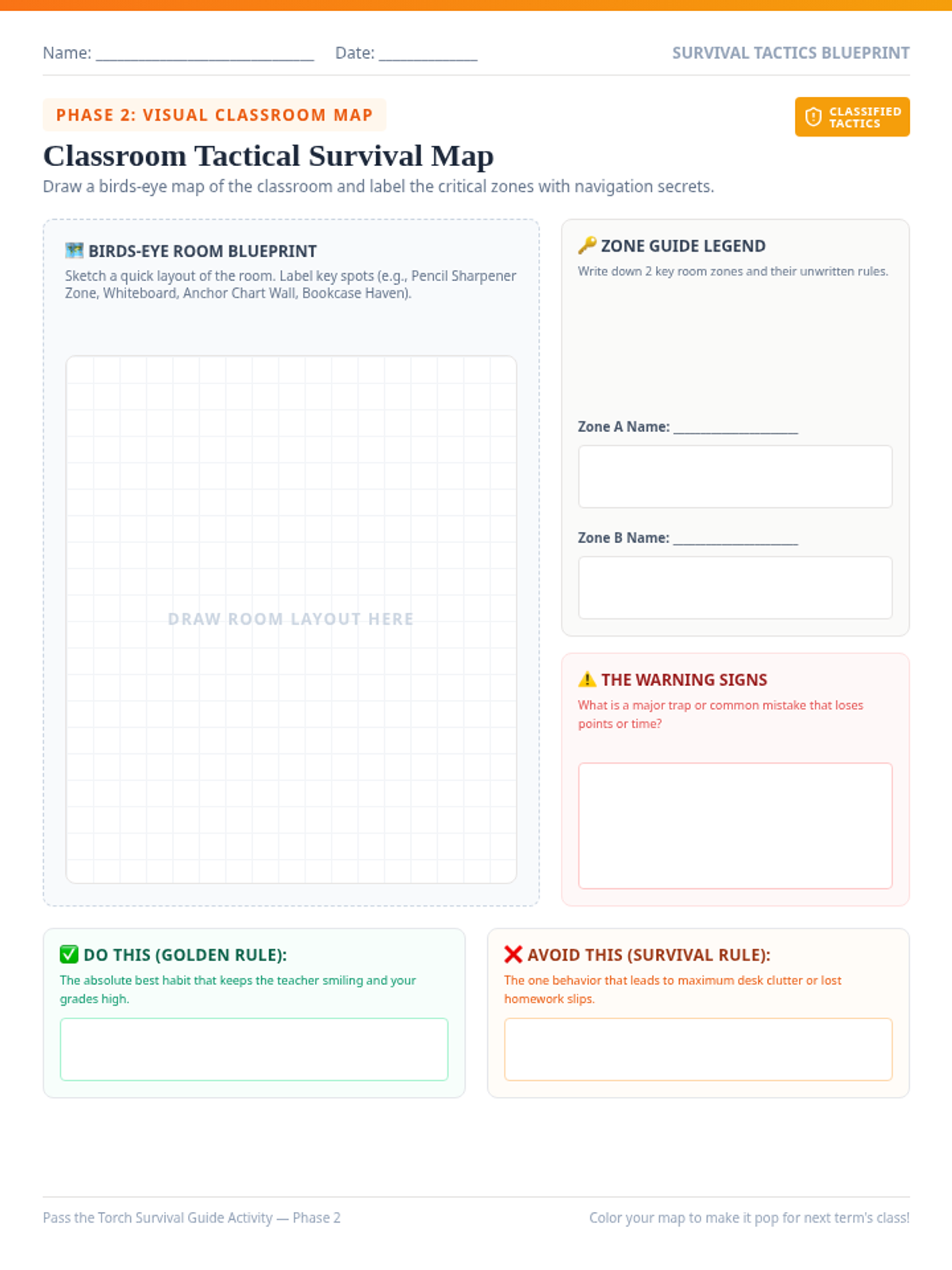
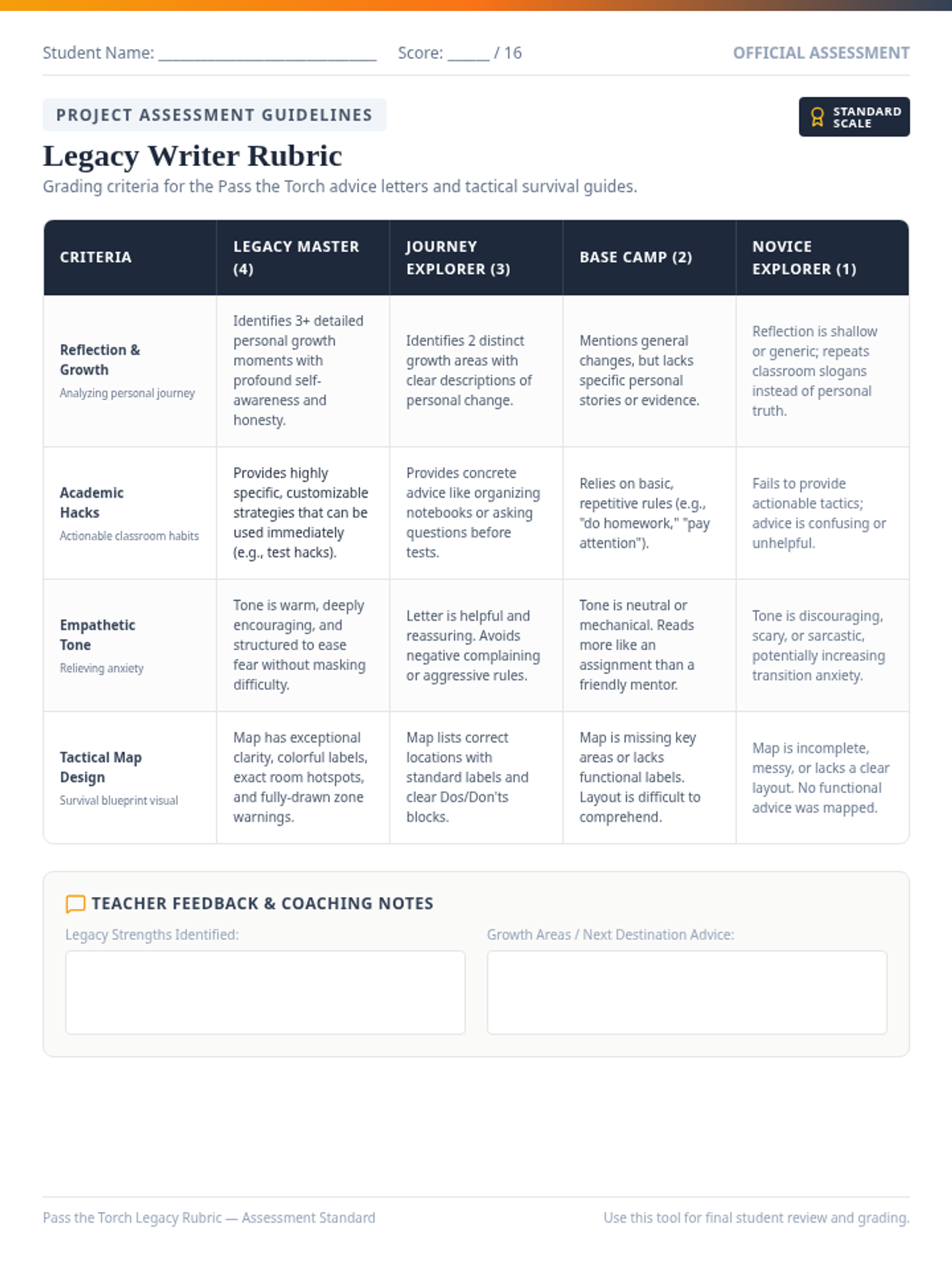
A reflective end-of-year writing lesson where upper elementary and middle school students write advice letters and design survival guides for incoming students. Students analyze their growth, identify key academic strategies, and practice empathetic communication to ease transition anxiety for their younger peers.
A parent workshop and planning kit to build collaborative, negotiated summer screen-time agreements that protect sleep, physical activity, and family connection.
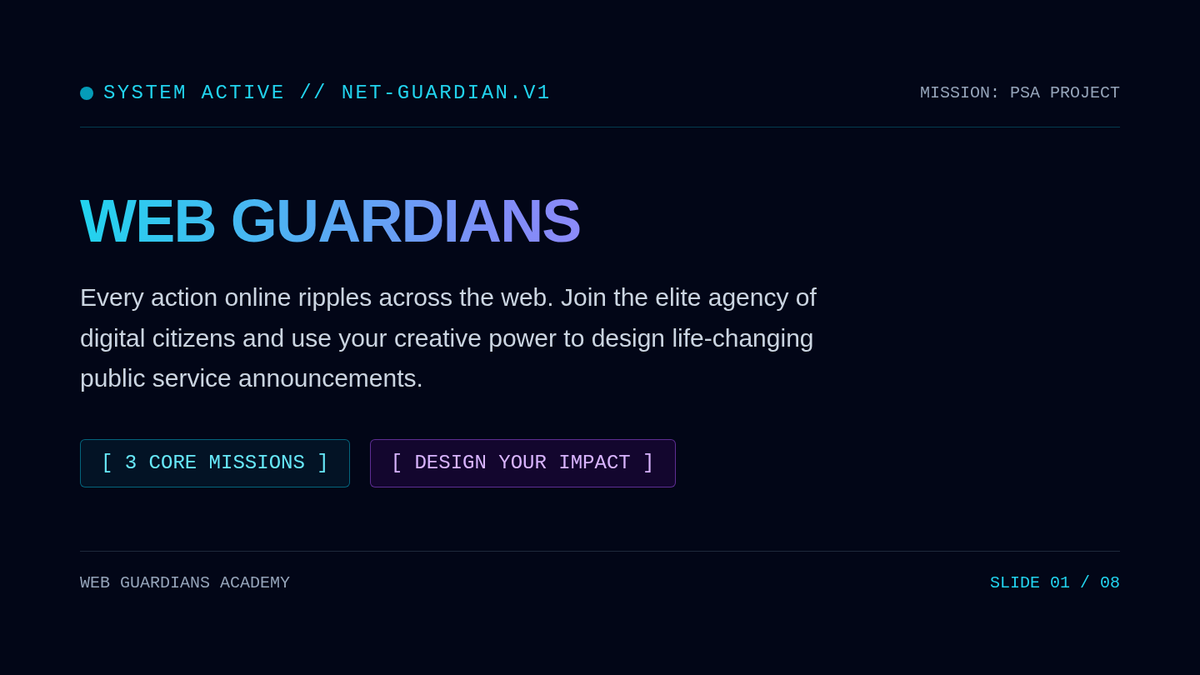
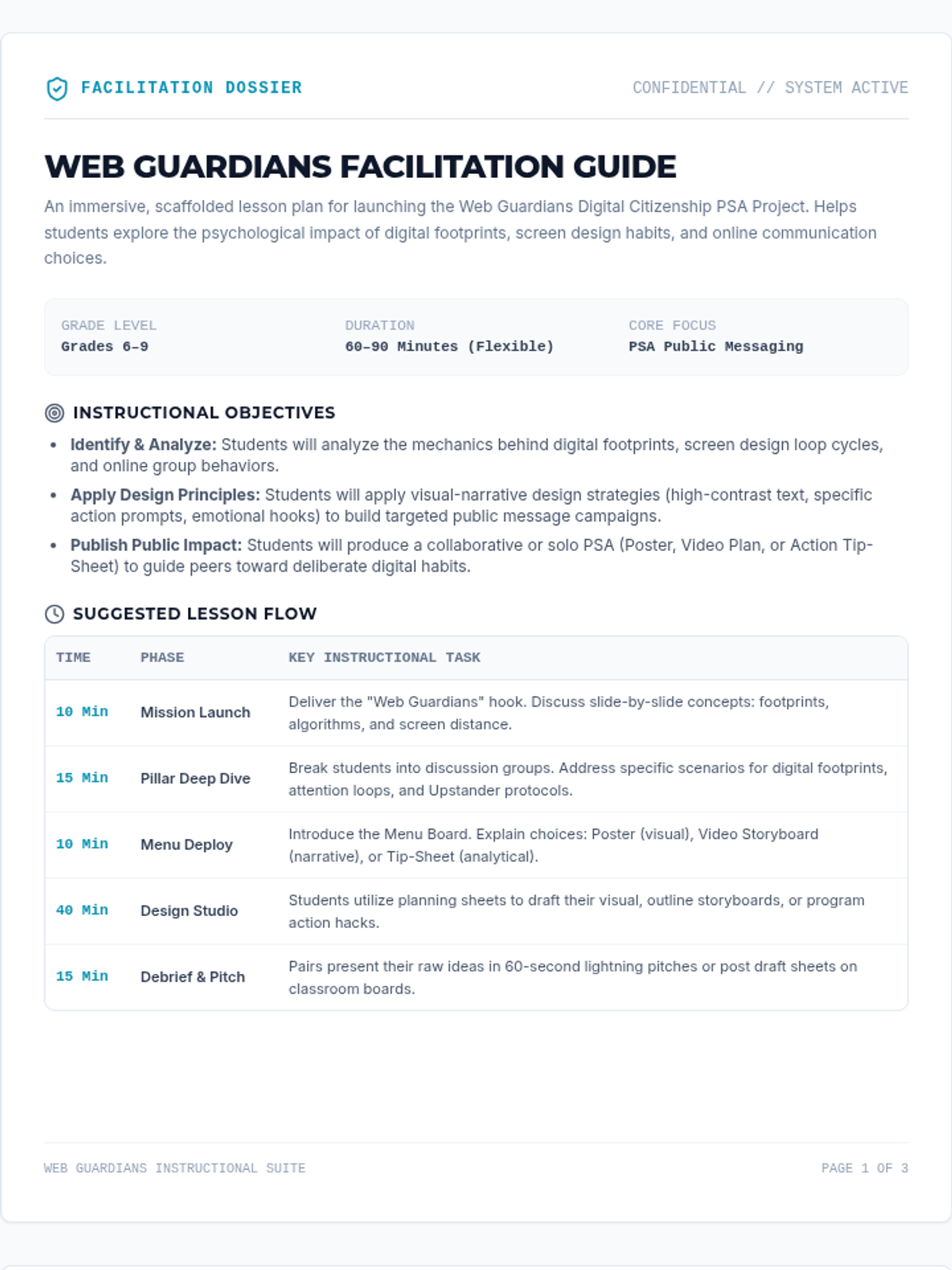
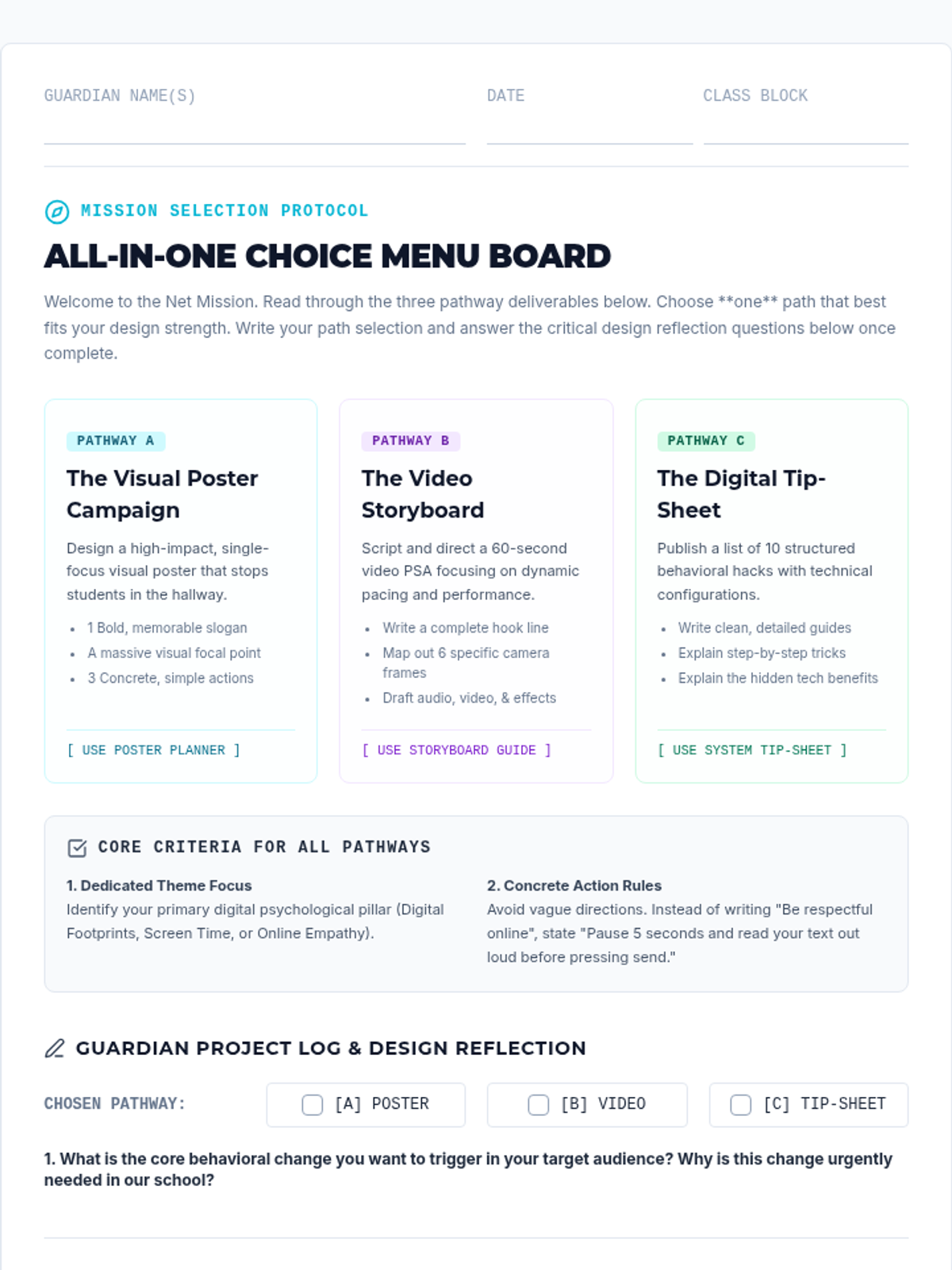
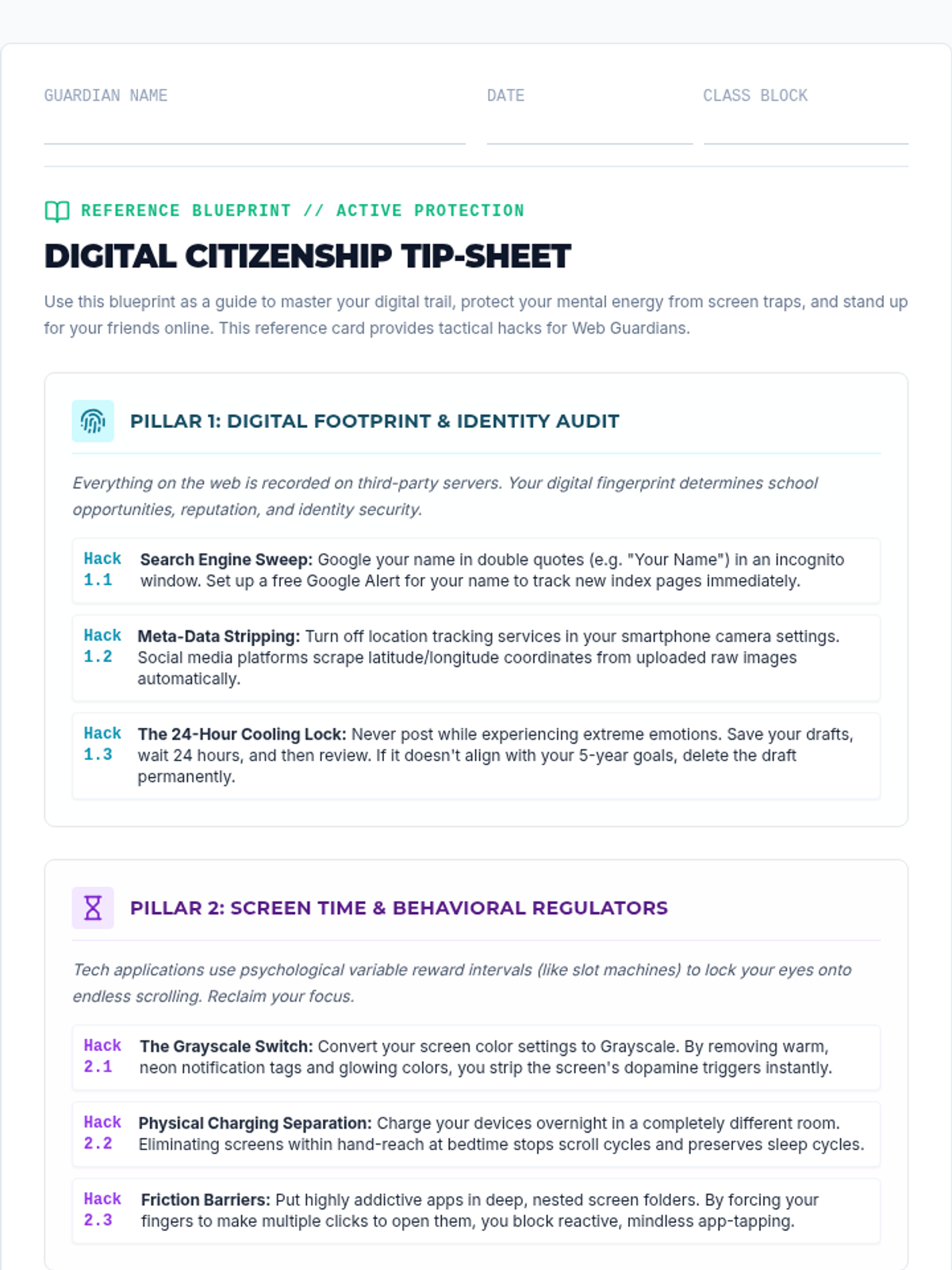
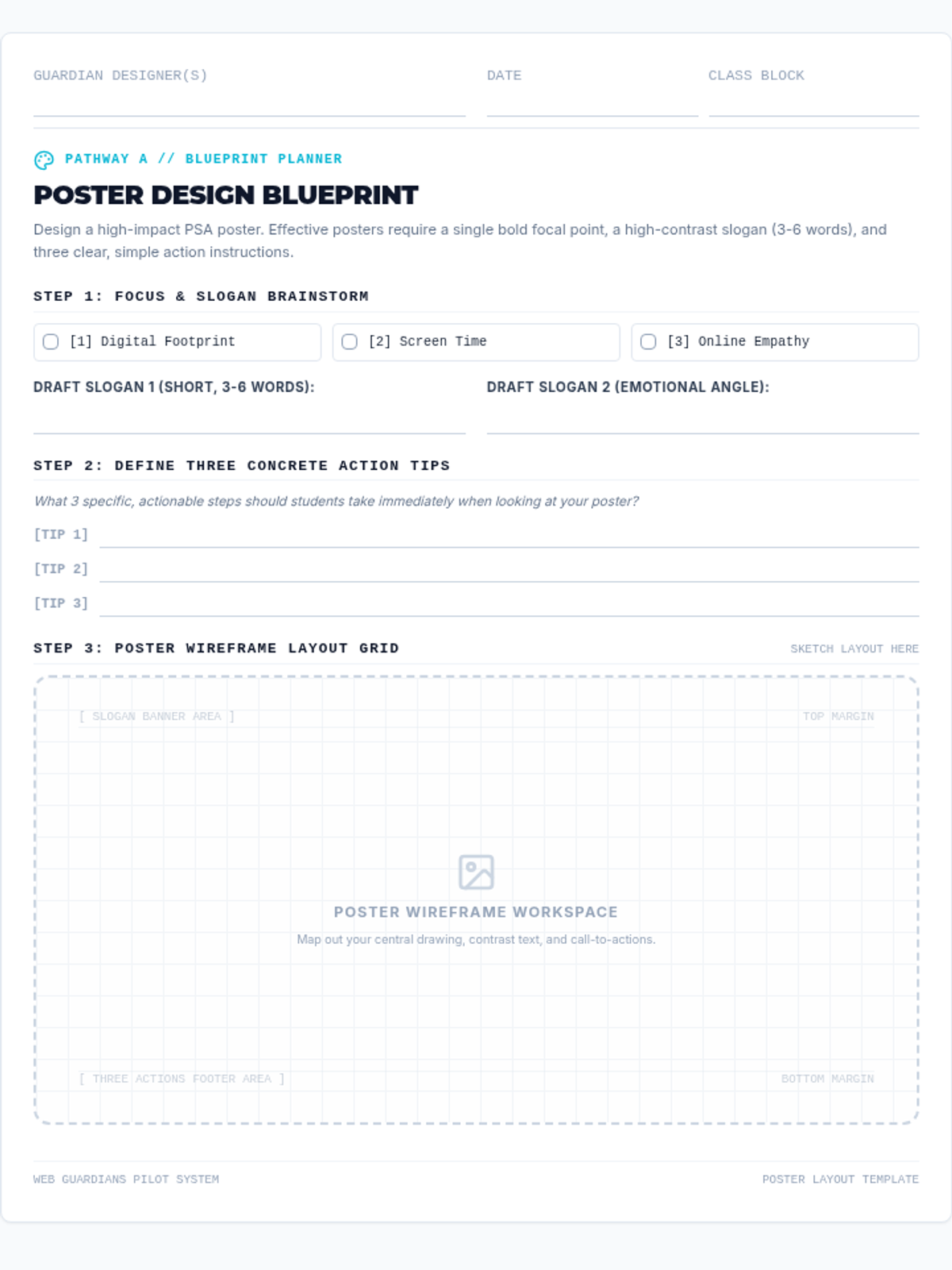
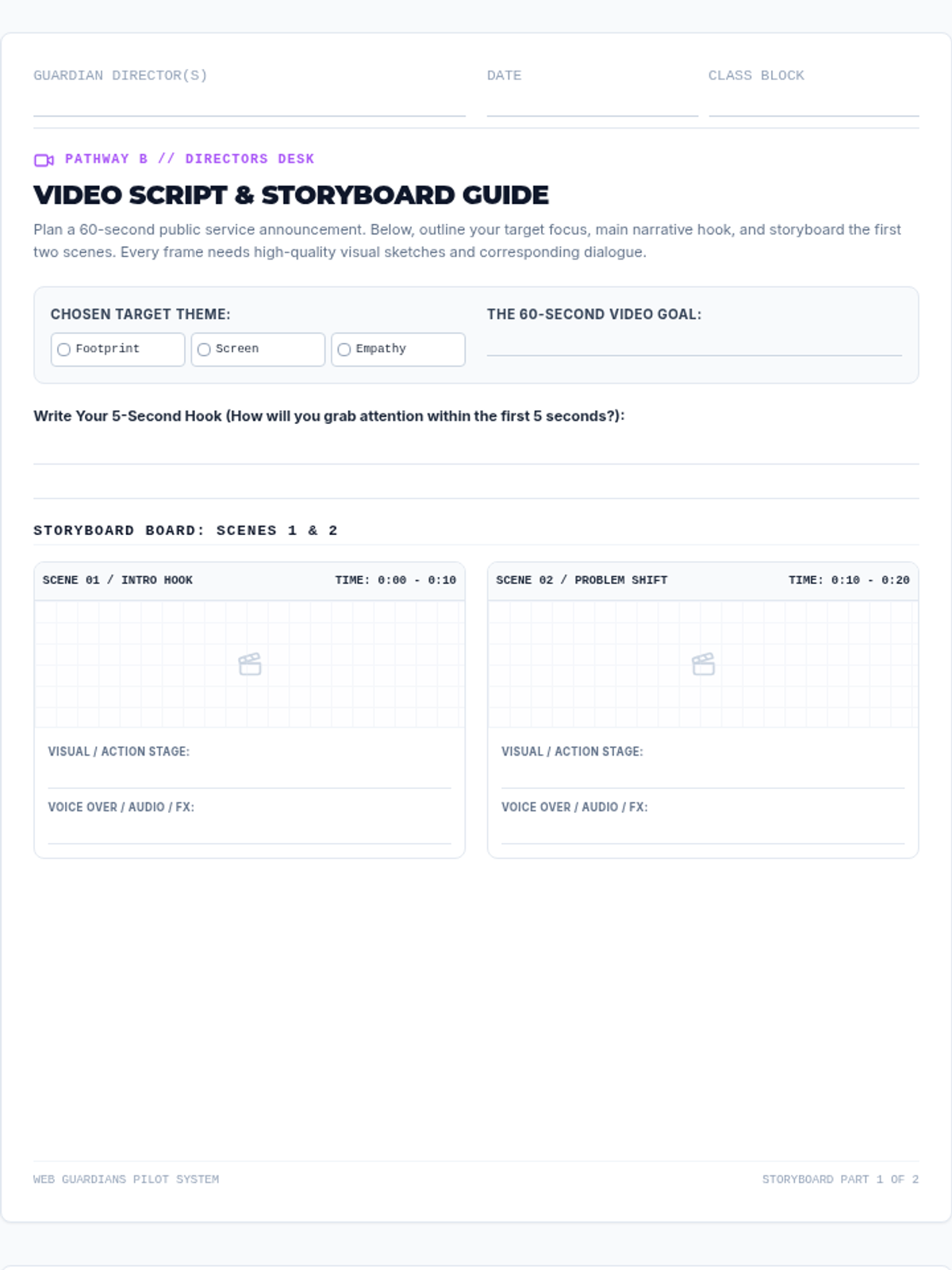
A high-impact digital citizenship project lesson where students become 'Web Guardians' to design PSAs addressing digital footprints, screen time self-regulation, and online empathy. Includes interactive presentation slides, detailed teacher guides, a project menu choice board, visual tip-sheets, and scaffolded planning templates for posters and videos.
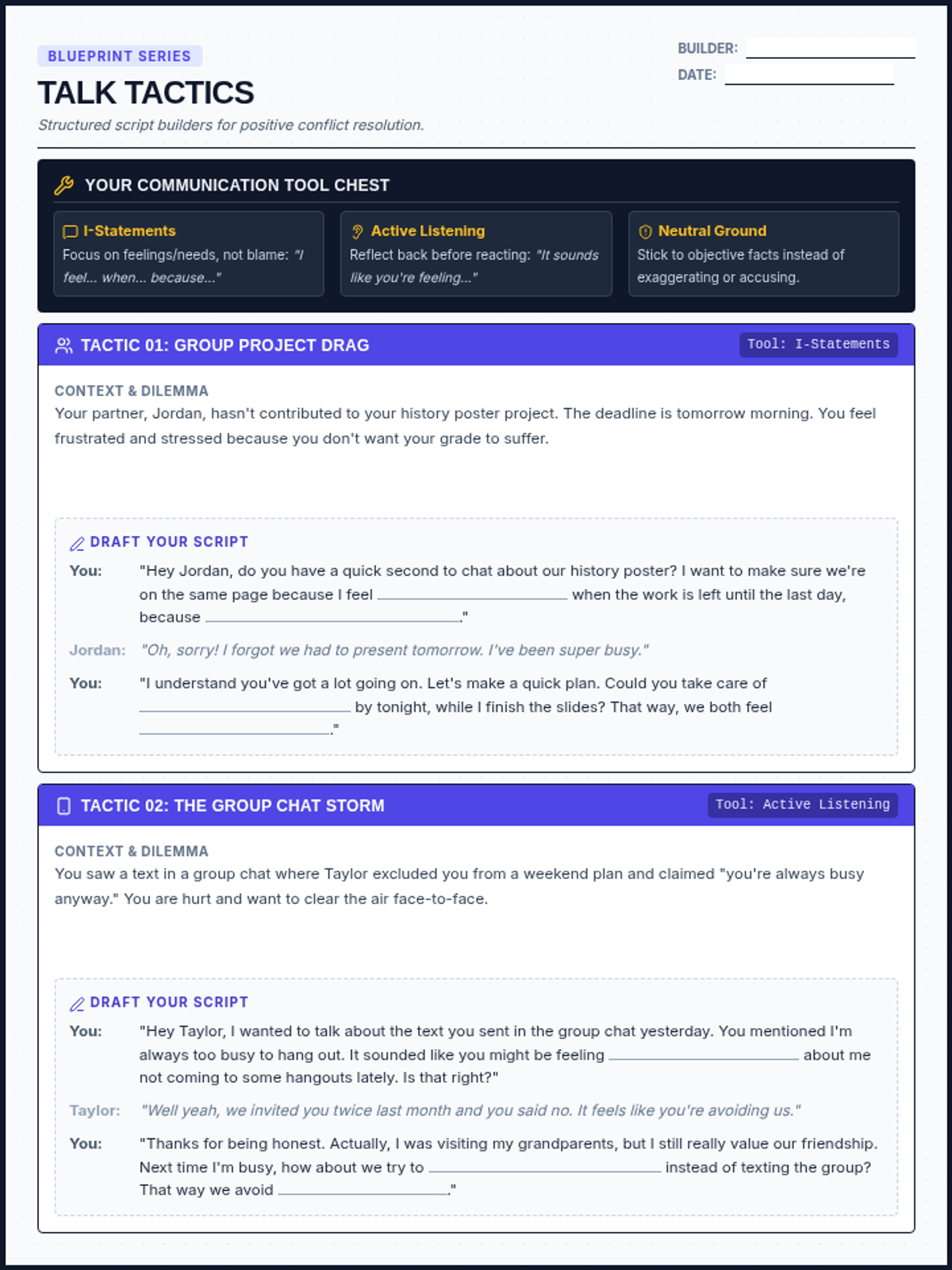
A lesson focused on equipping middle schoolers with constructive communication strategies to resolve everyday conflicts, including group work disagreements, digital drama, boundary issues, and self-advocacy with teachers.
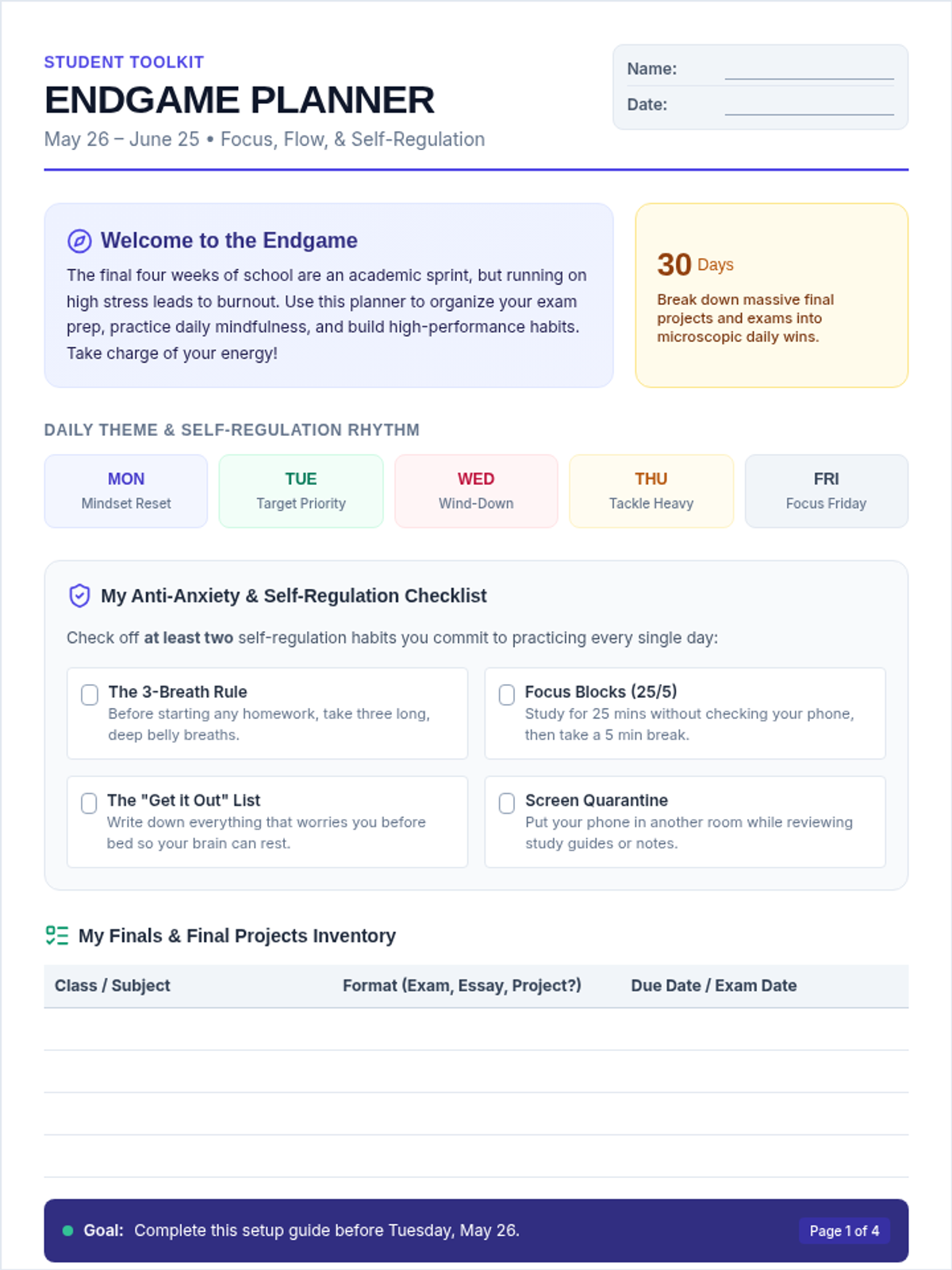
A student-focused planning and self-regulation toolkit designed to help students manage academic stress, study for finals, and successfully navigate the final four weeks of the school year.