Mindful breathing and body scan meditation techniques integrated with daily self-care routines. Develops strategies for balancing life demands and advocating for personal wellness needs.
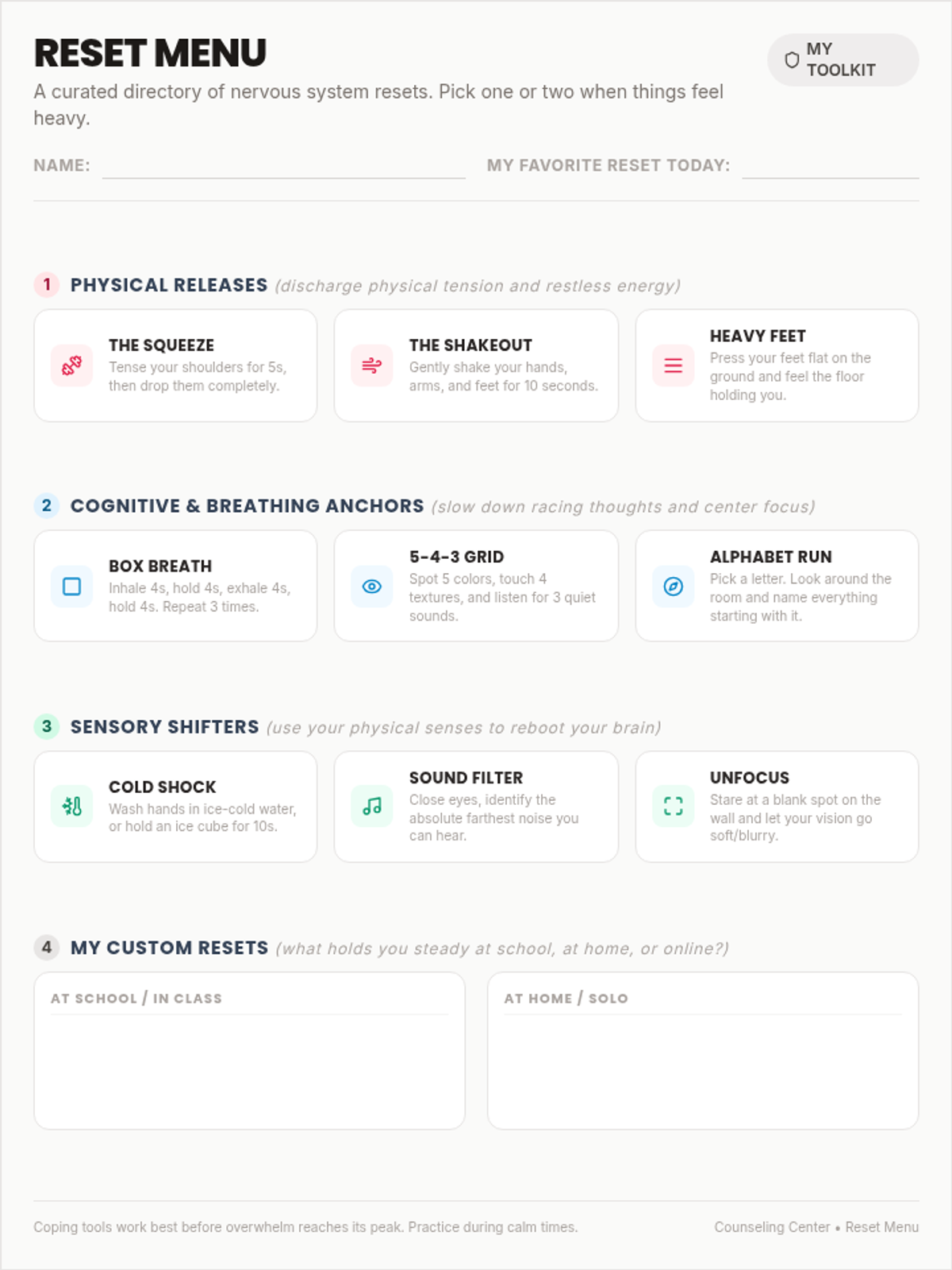
A practical lesson introducing 8th graders to evidence-based healthy coping mechanisms. Students learn to identify stress triggers and build a personalized toolkit using grounding, reframing, physical outlets, and boundaries.
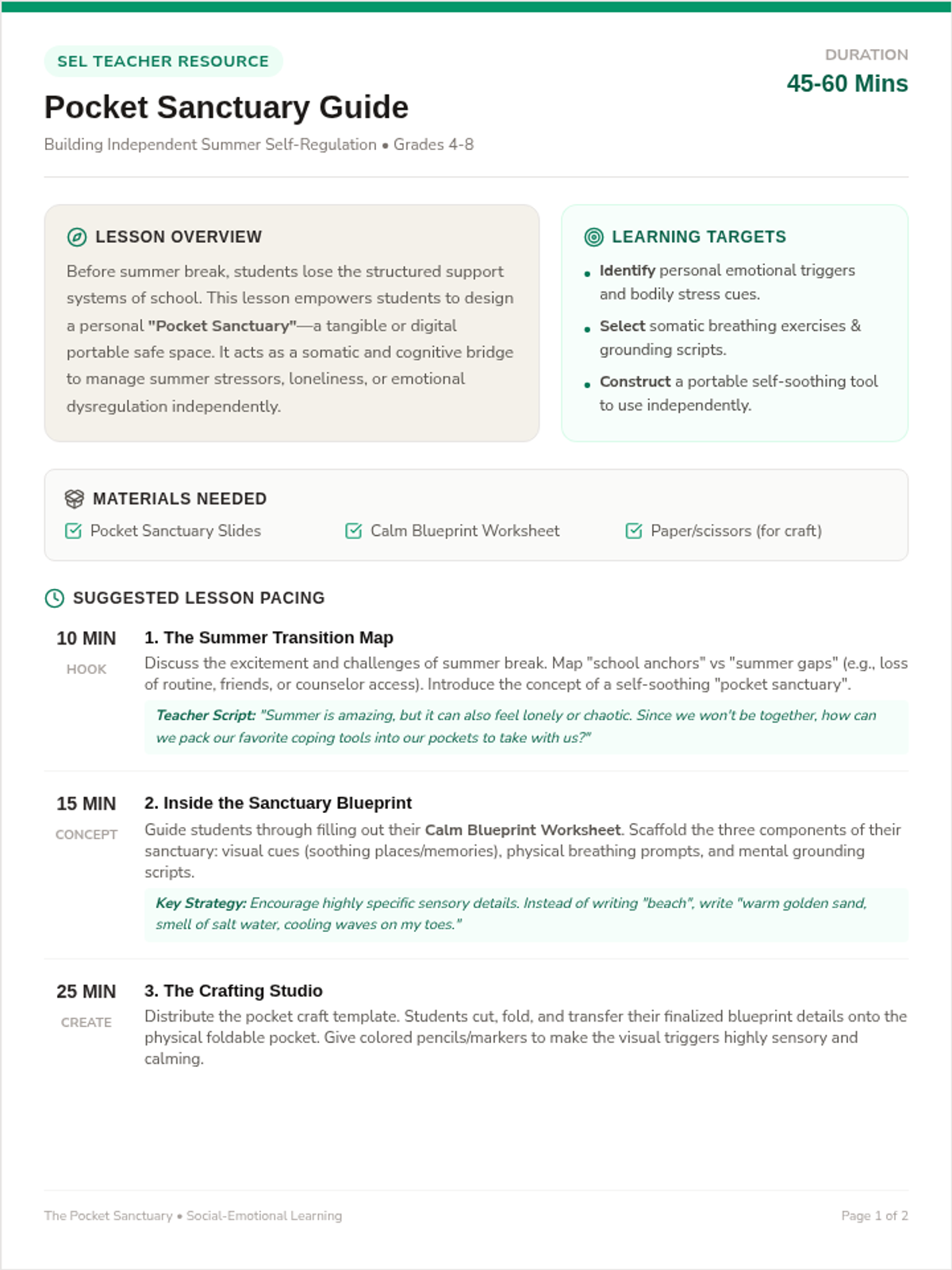
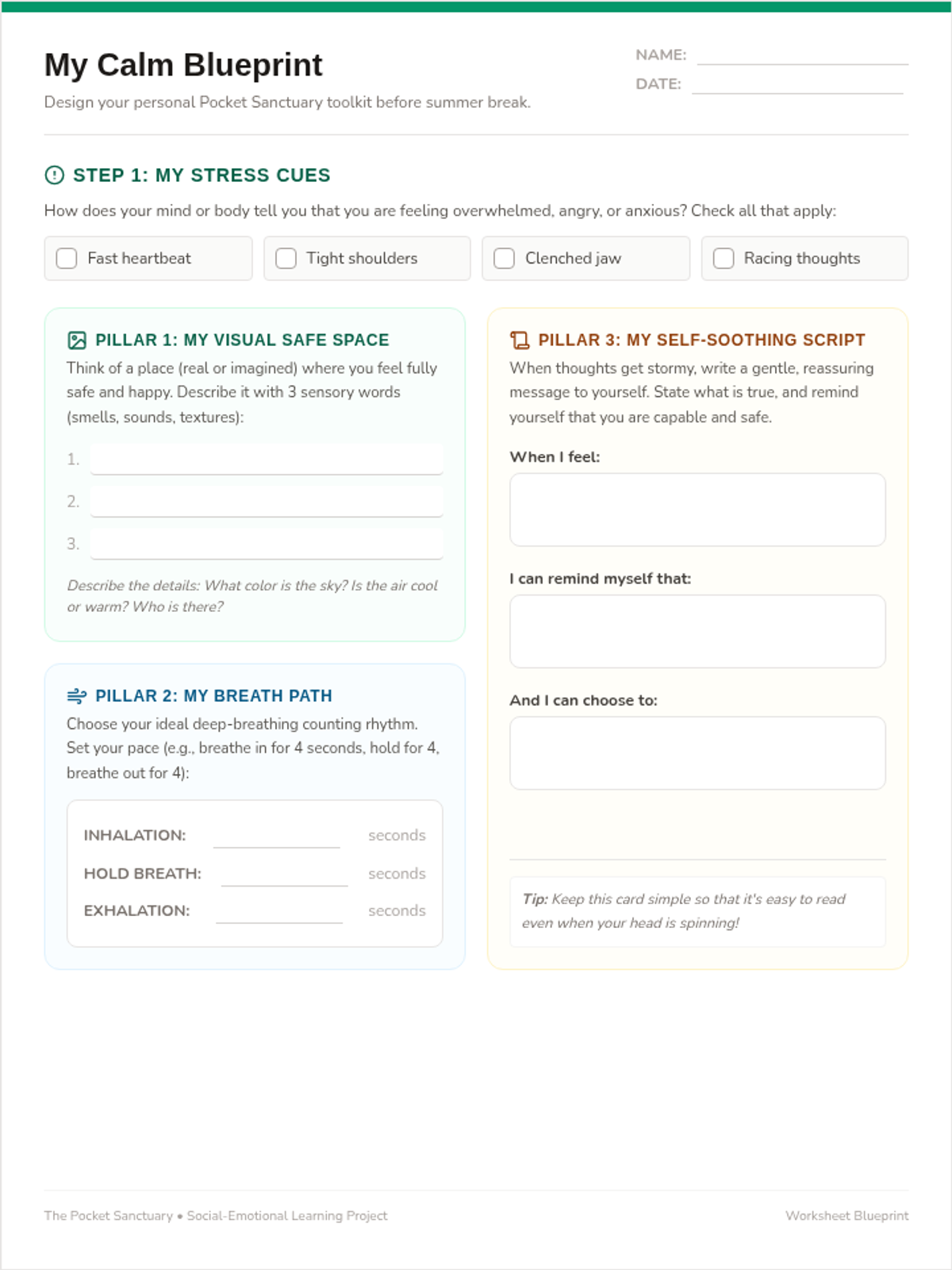
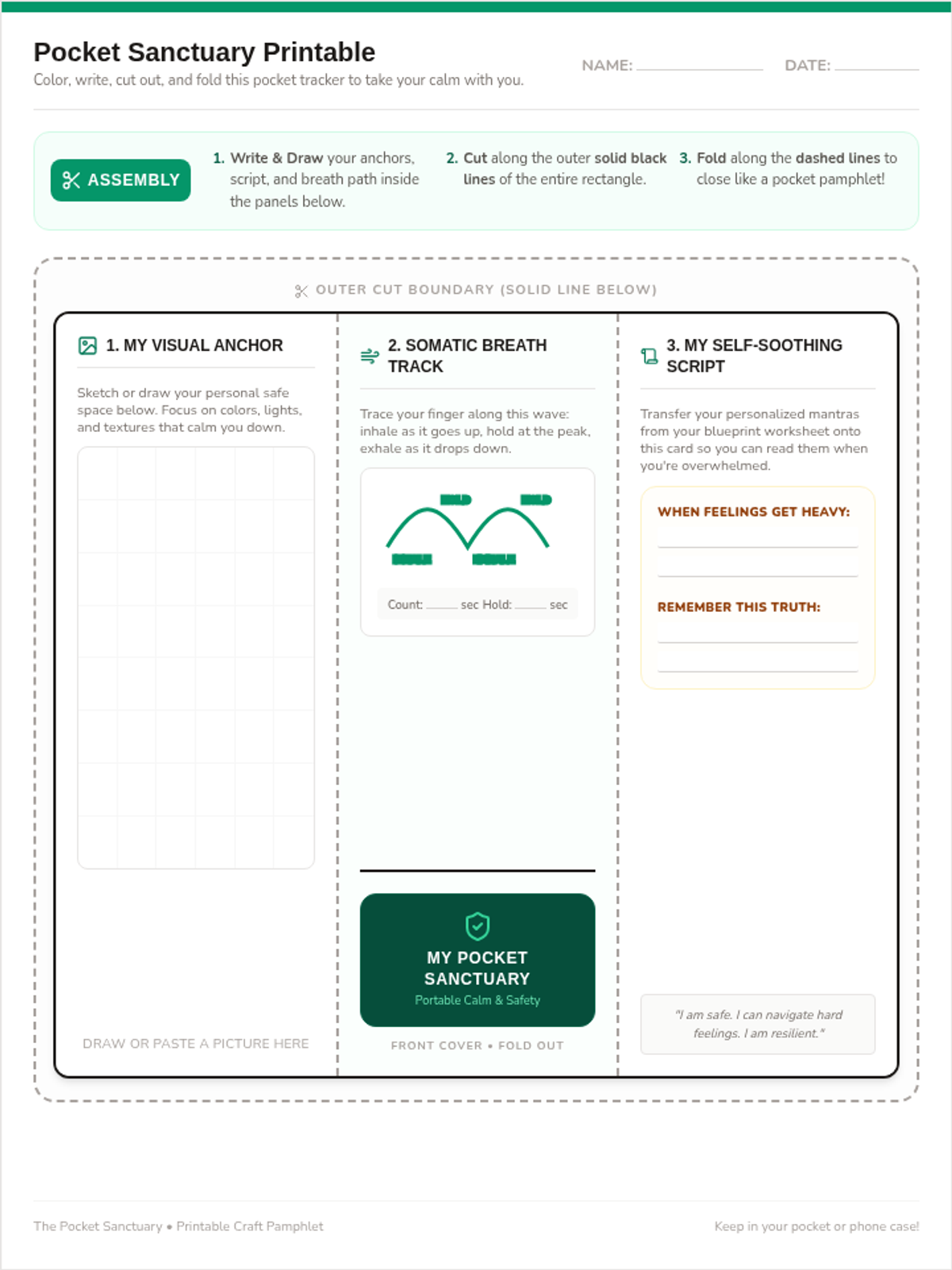
A social-emotional learning lesson where students design a physical or digital pocket sanctuary with visual cues, breathing prompts, and self-soothing scripts to build self-regulation skills for summer break.
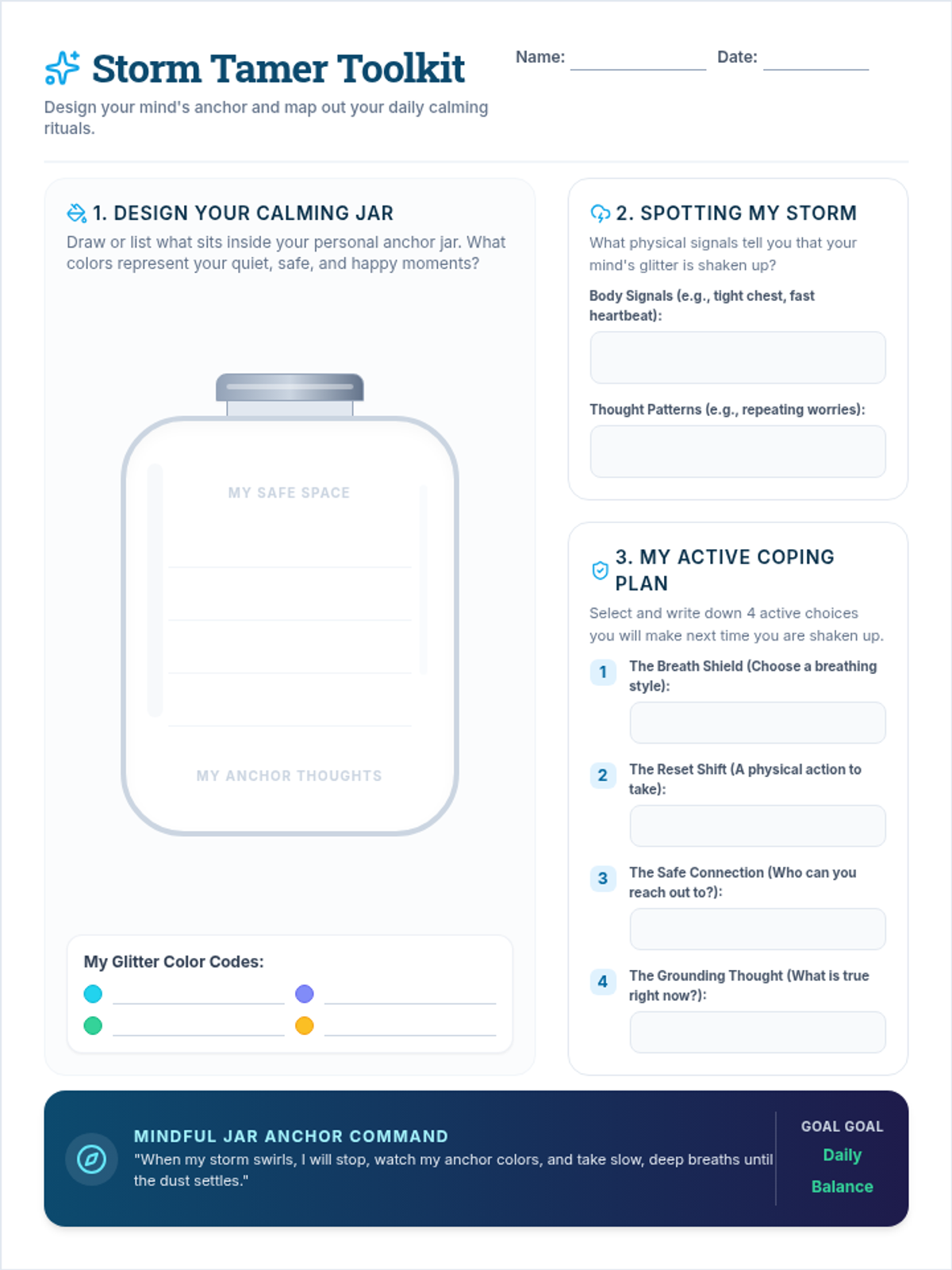
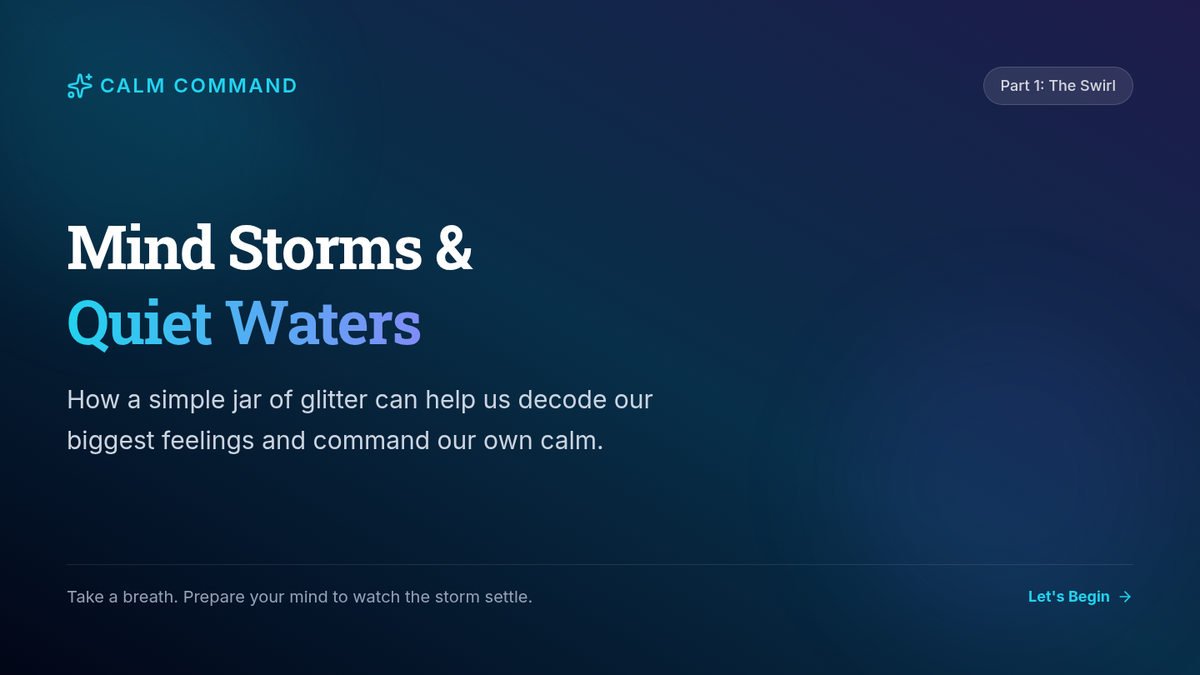
A transformative social-emotional learning lesson using the metaphor of a shaken glitter jar to help students understand emotional agitation, practice mindful breathing, and build a personalized daily coping toolkit.
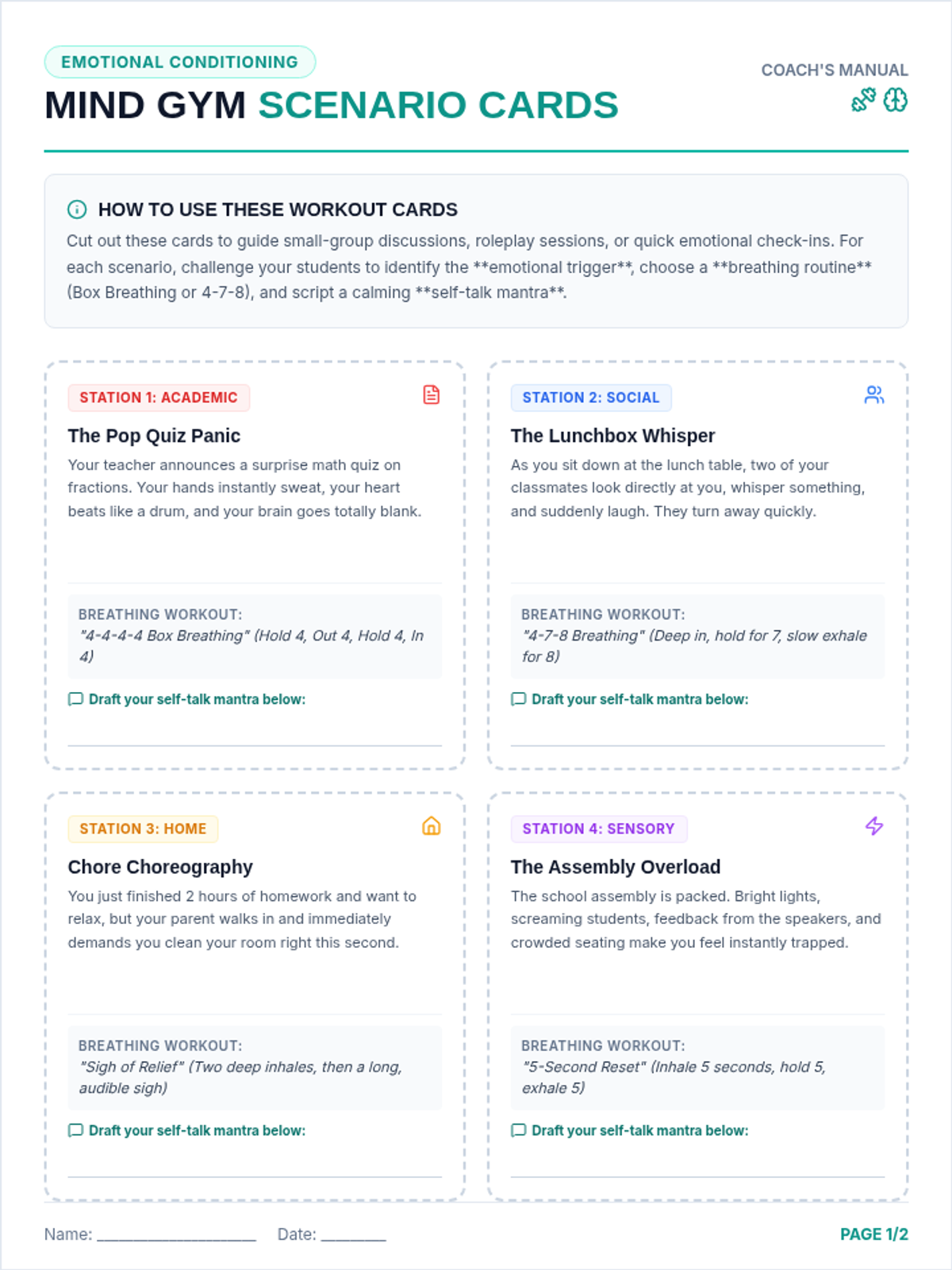
A social-emotional learning lesson designed to help students build emotional regulation muscles using self-talk and breathing exercises across school and home scenarios.
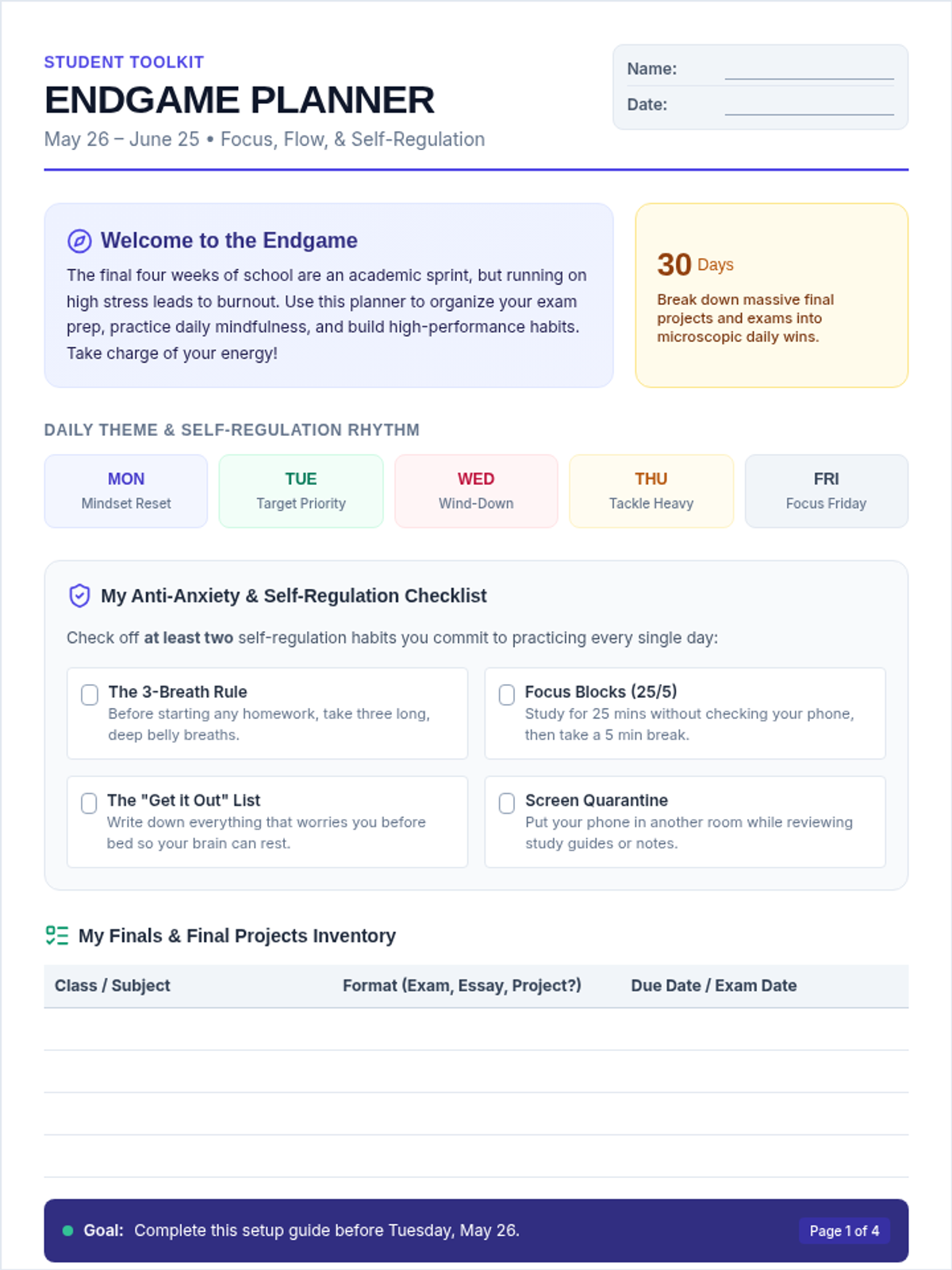
A student-focused planning and self-regulation toolkit designed to help students manage academic stress, study for finals, and successfully navigate the final four weeks of the school year.
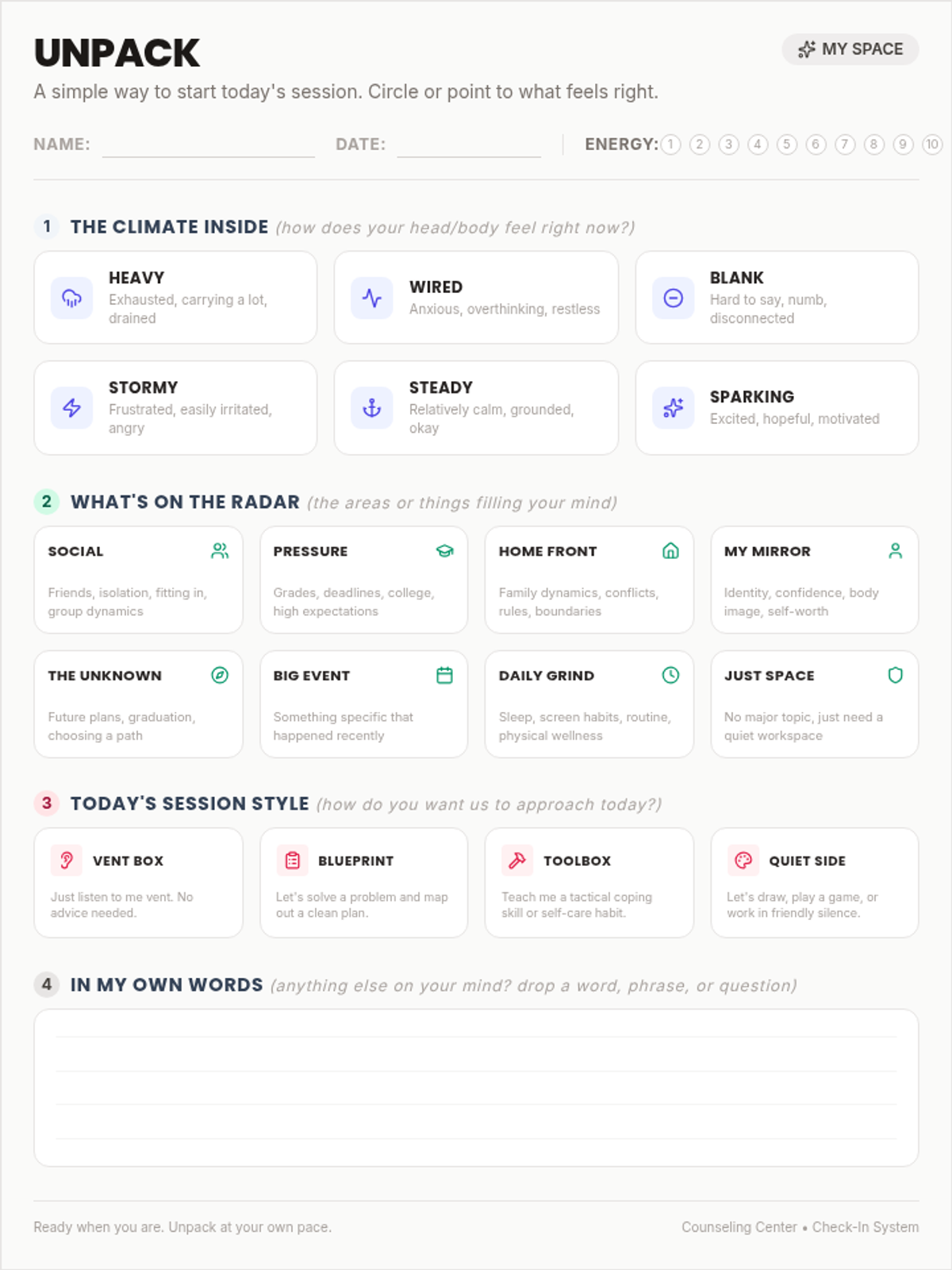
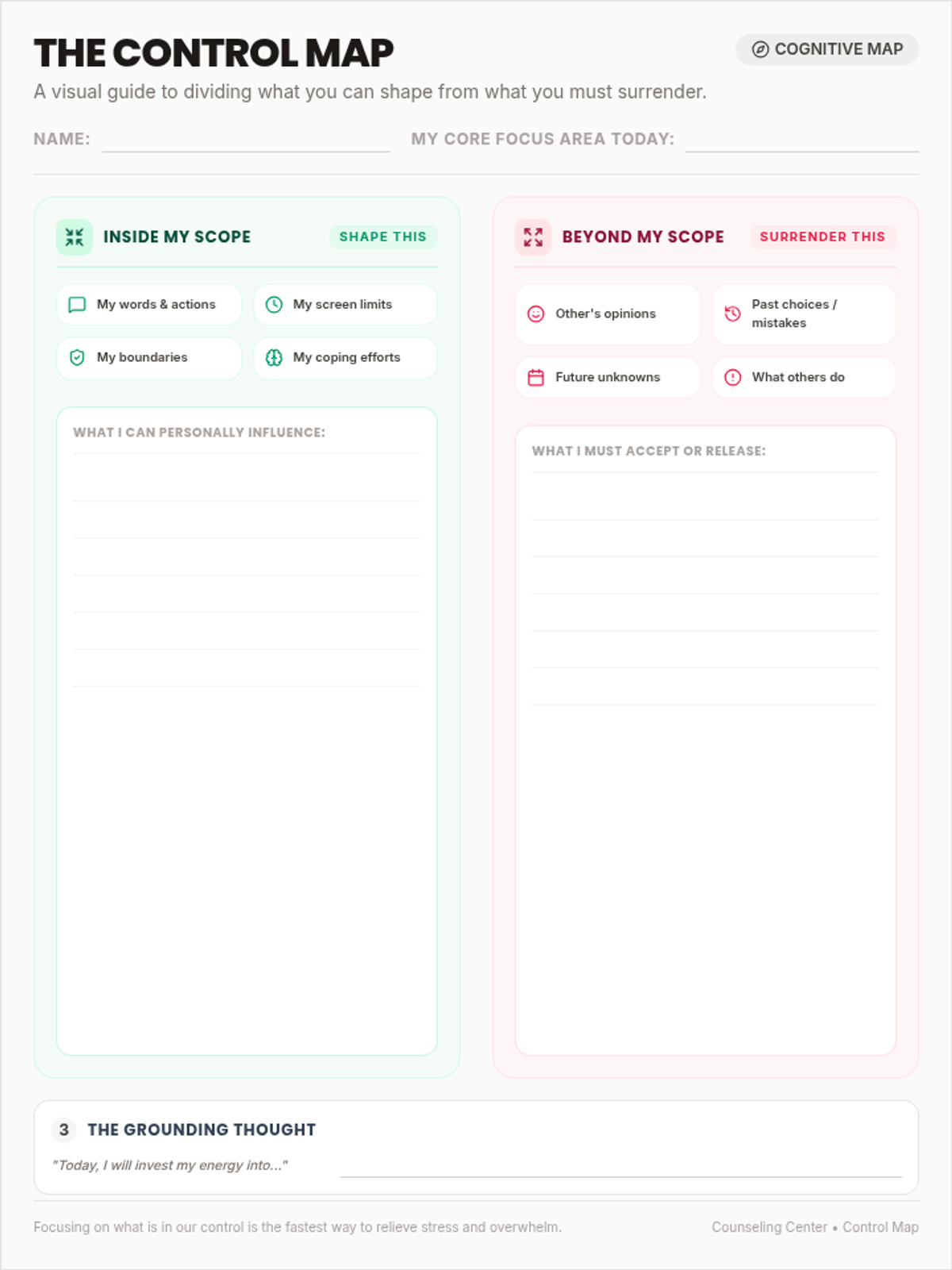
A curated suite of modern visual and communication-focused counseling resources tailored specifically for middle and high school students to lower conversational barriers and facilitate student-led sessions.
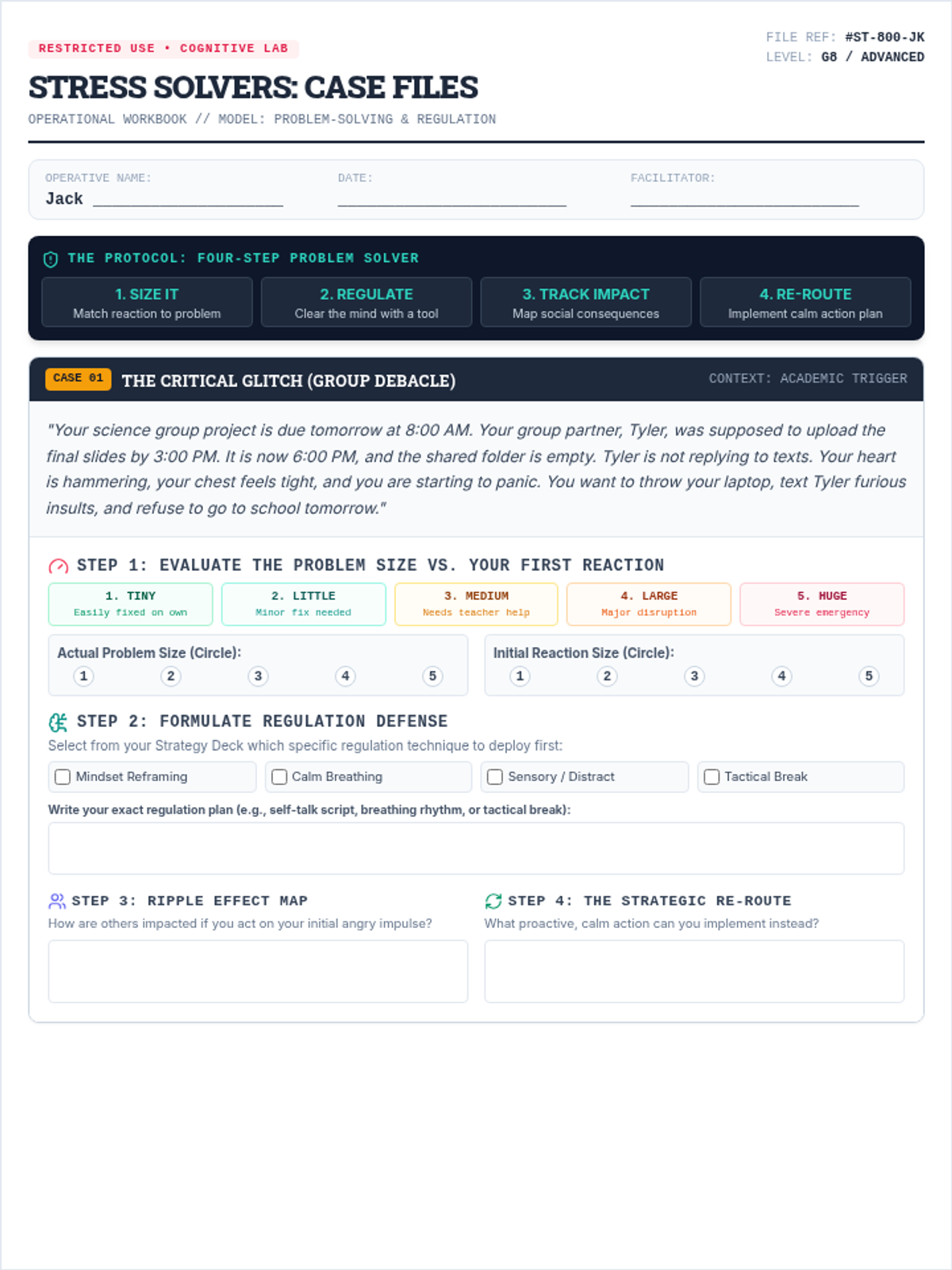
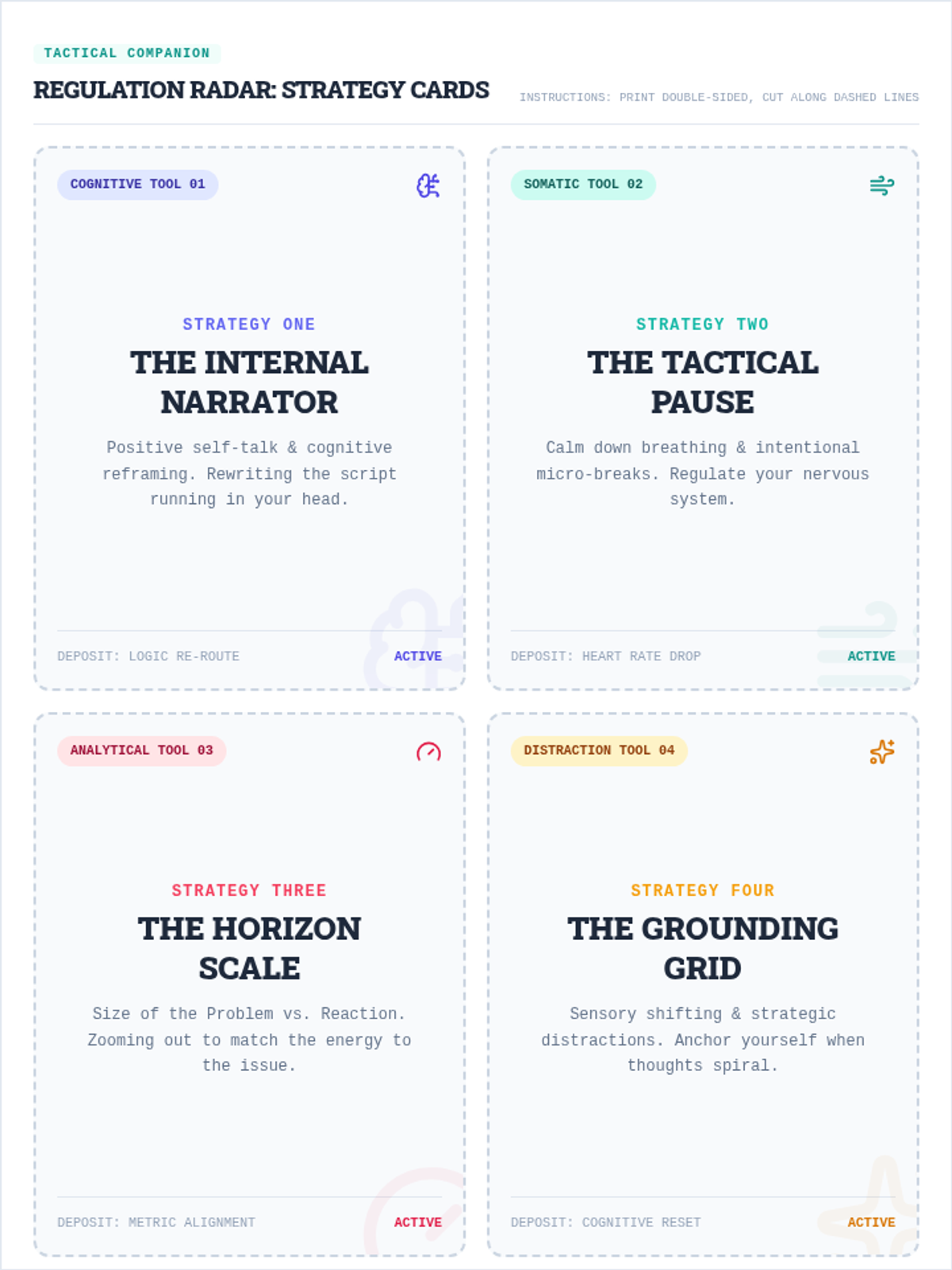
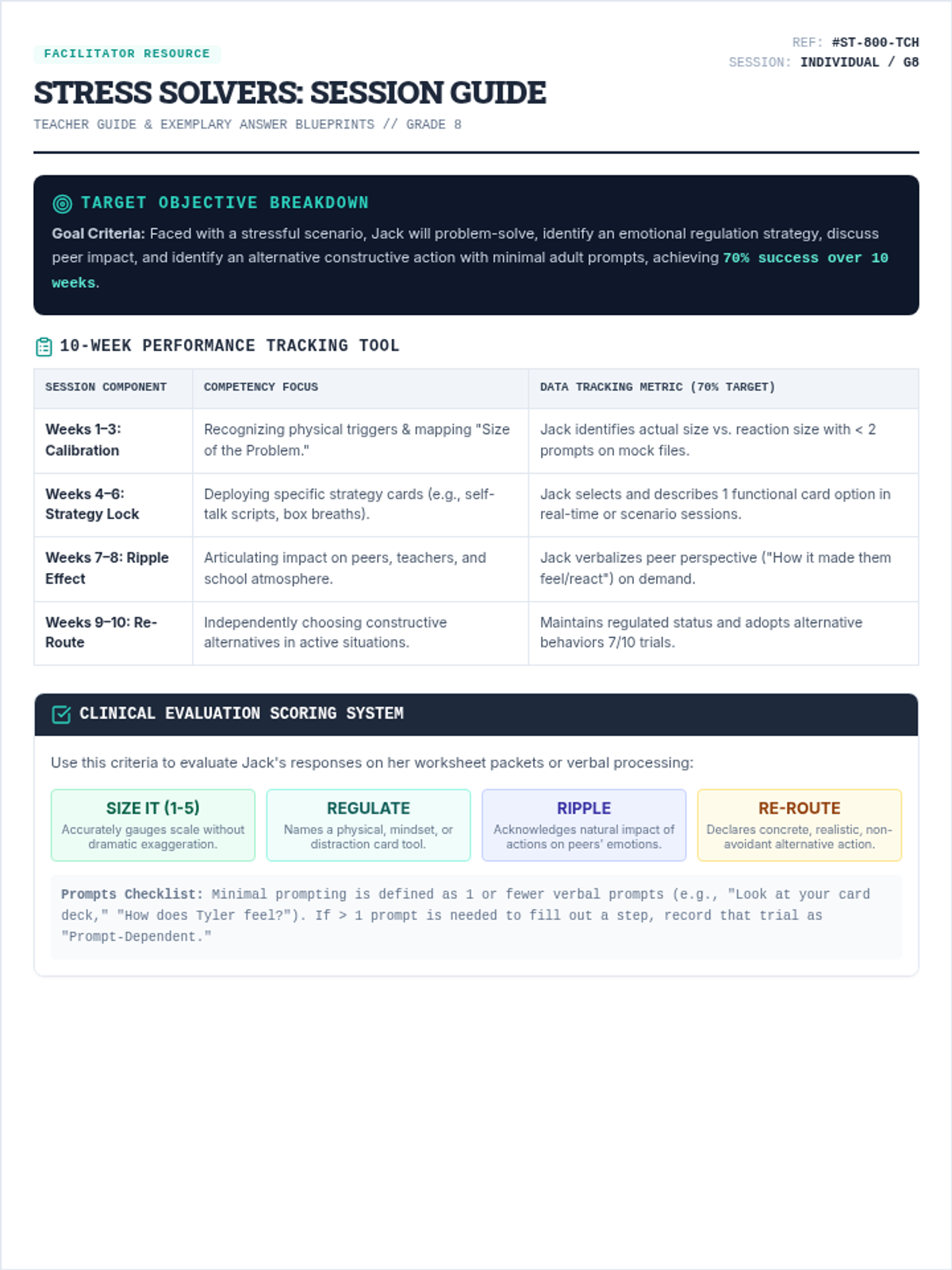
An individual skill-building session designed for 8th-grade students to master emotional regulation, perspective-taking, and problem-solving. This lesson equips students with structured frameworks to navigate stressful scenarios, evaluate personal and social impacts, and apply functional coping mechanisms.
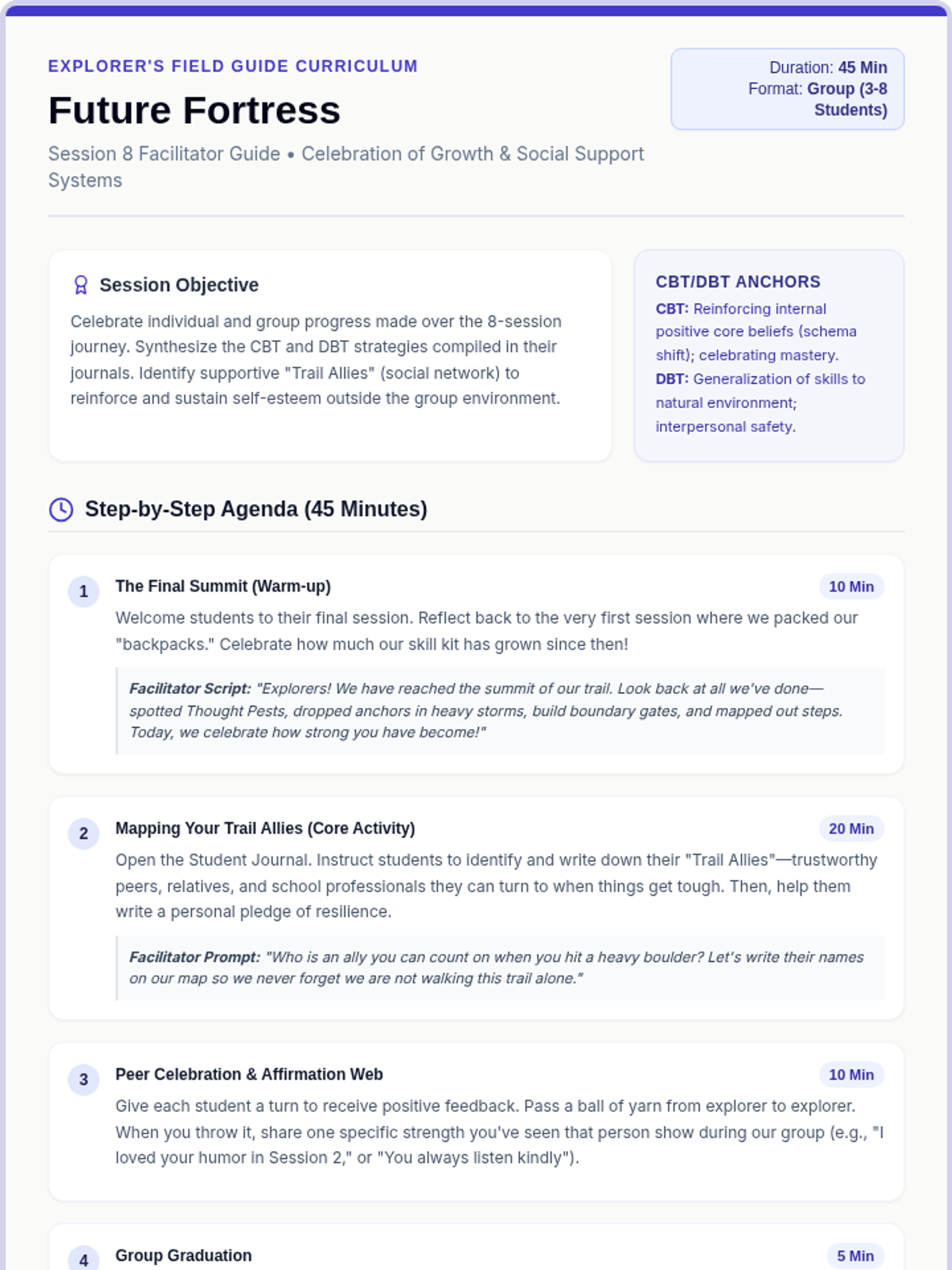
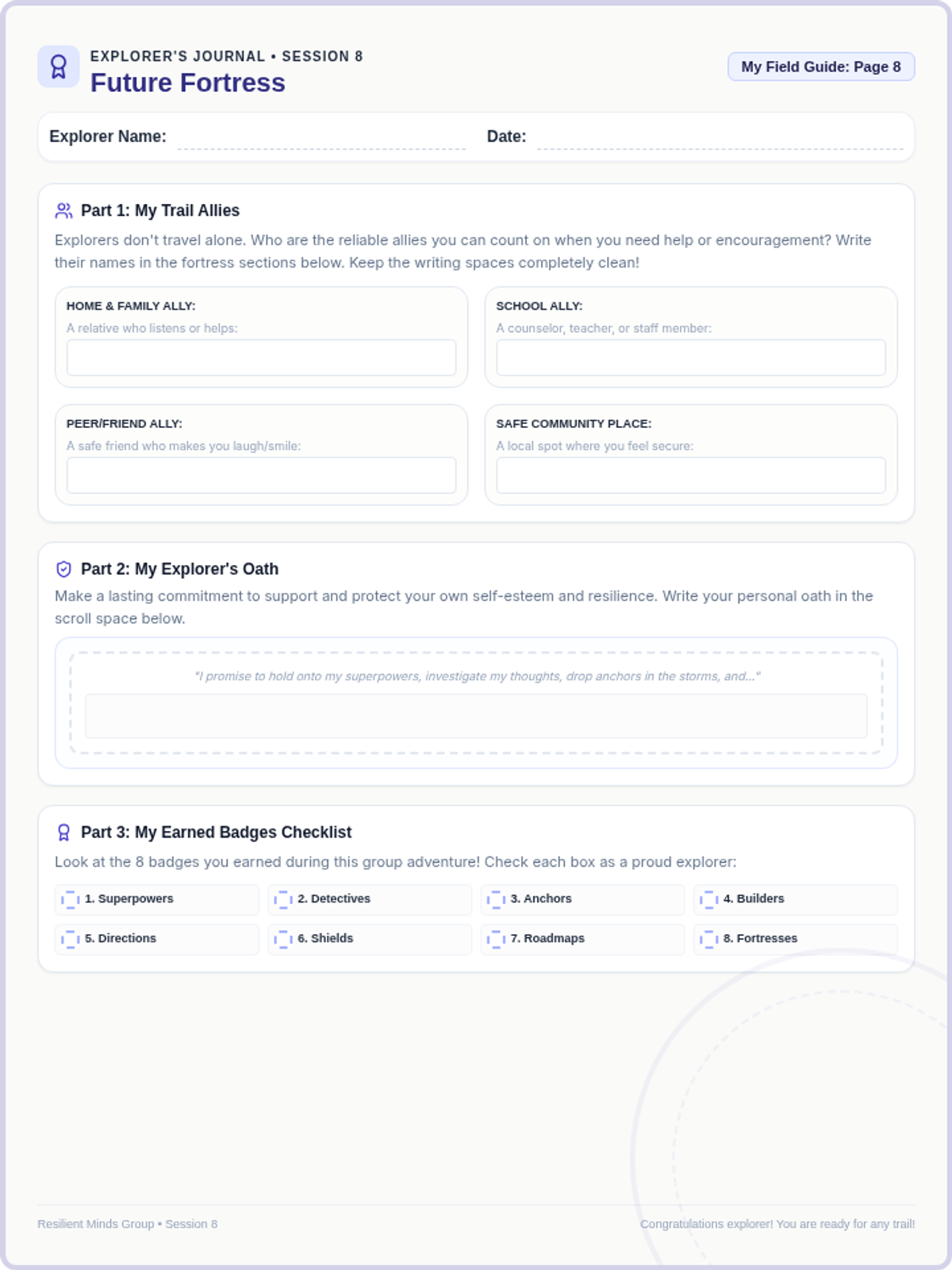
Students review their 8-session Explorer's Field Guide, celebrate growth, identify supportive 'trail allies' (social support), and pledge a personal self-esteem commitment.
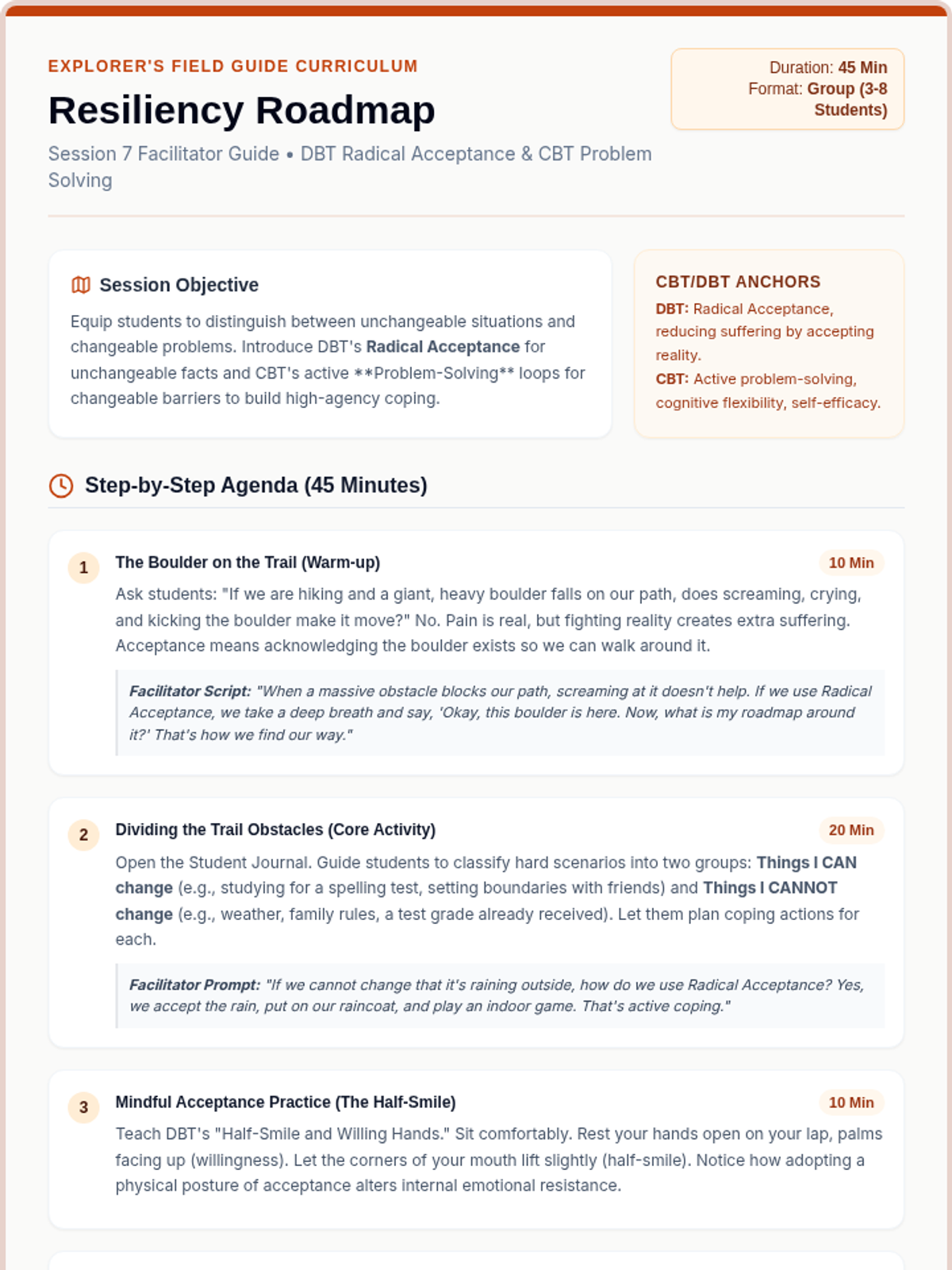
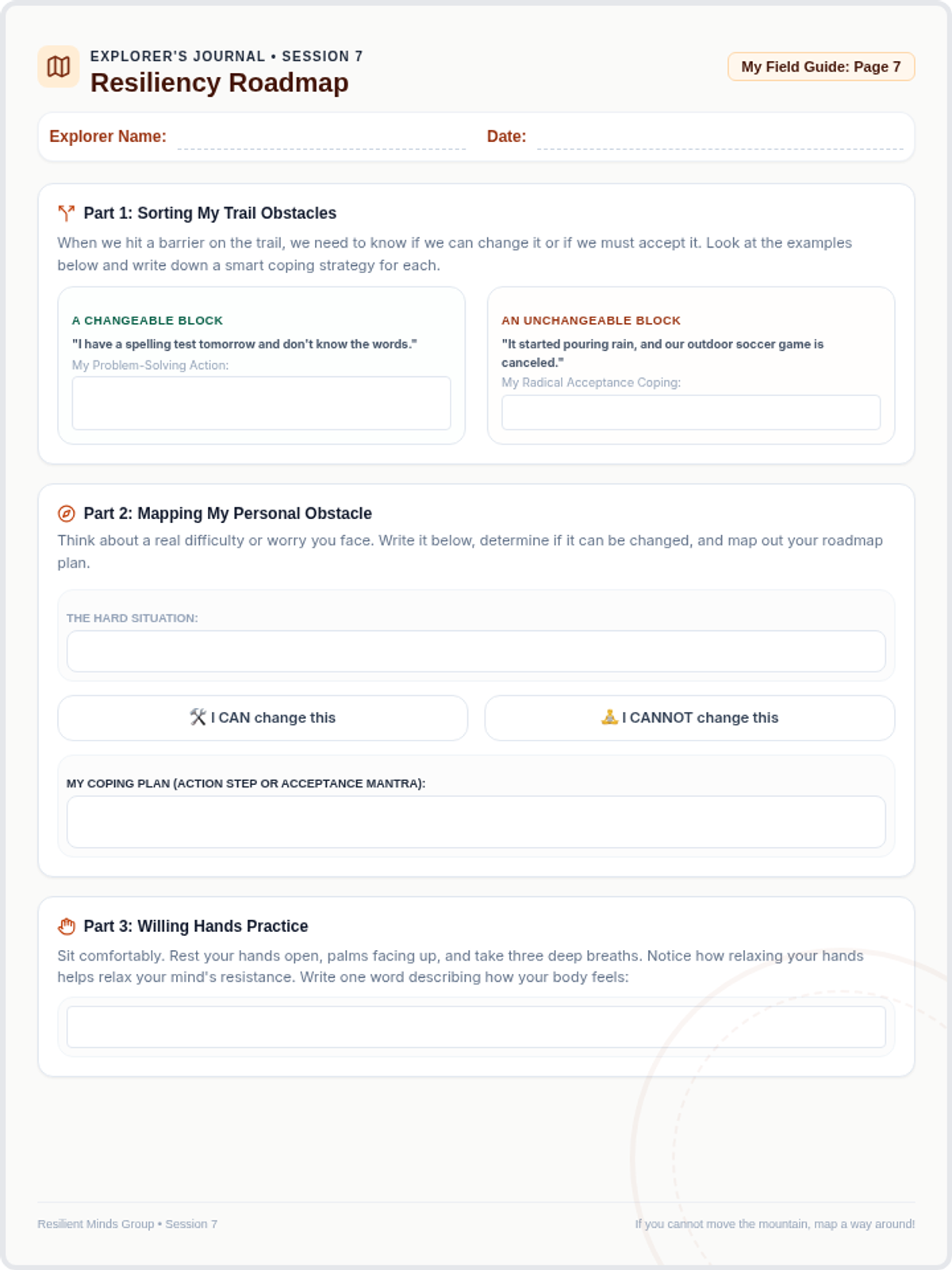
Students construct personalized coping strategies, blending CBT active problem-solving steps with DBT Radical Acceptance to navigate unchangeable difficulties.
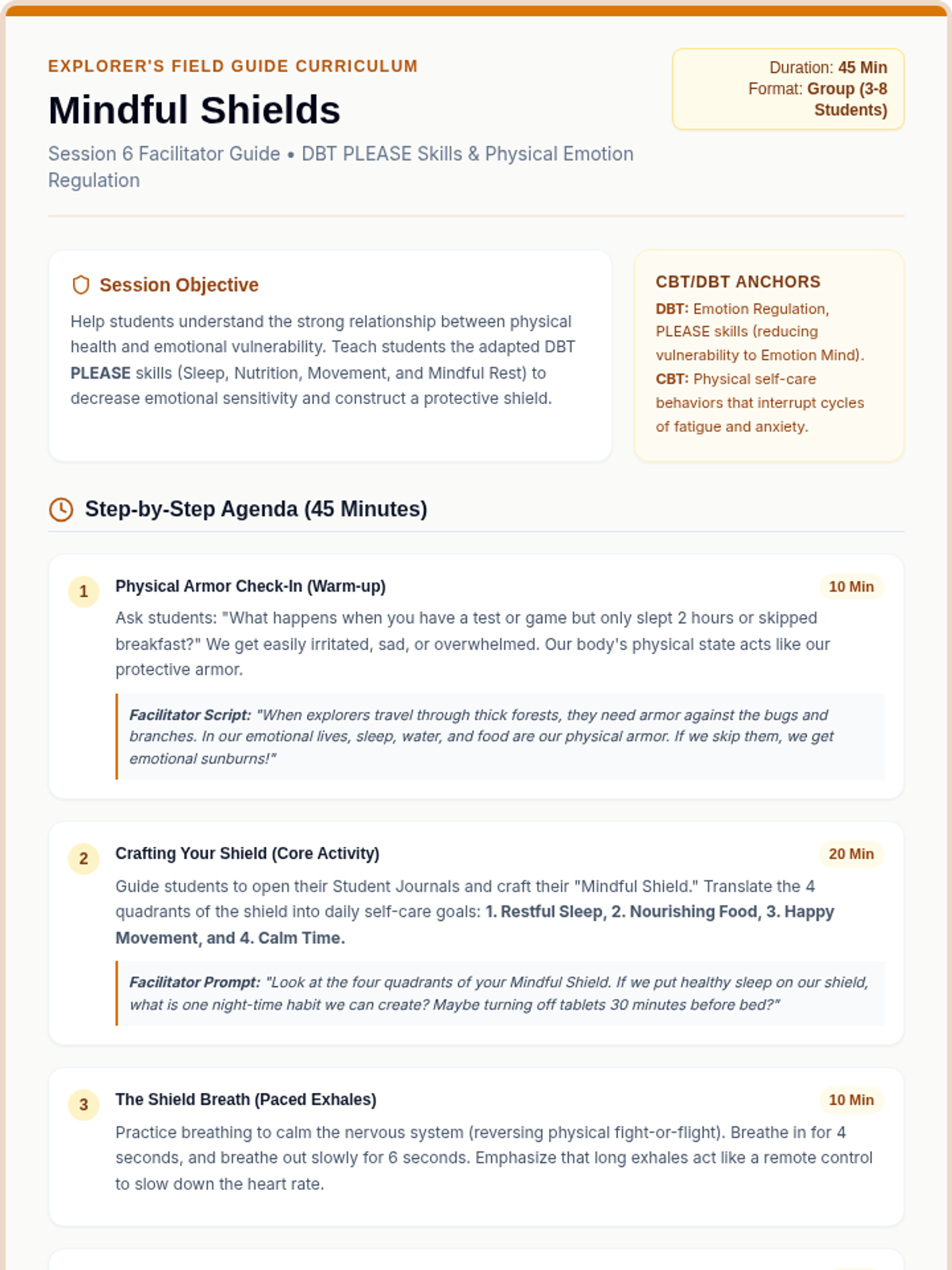
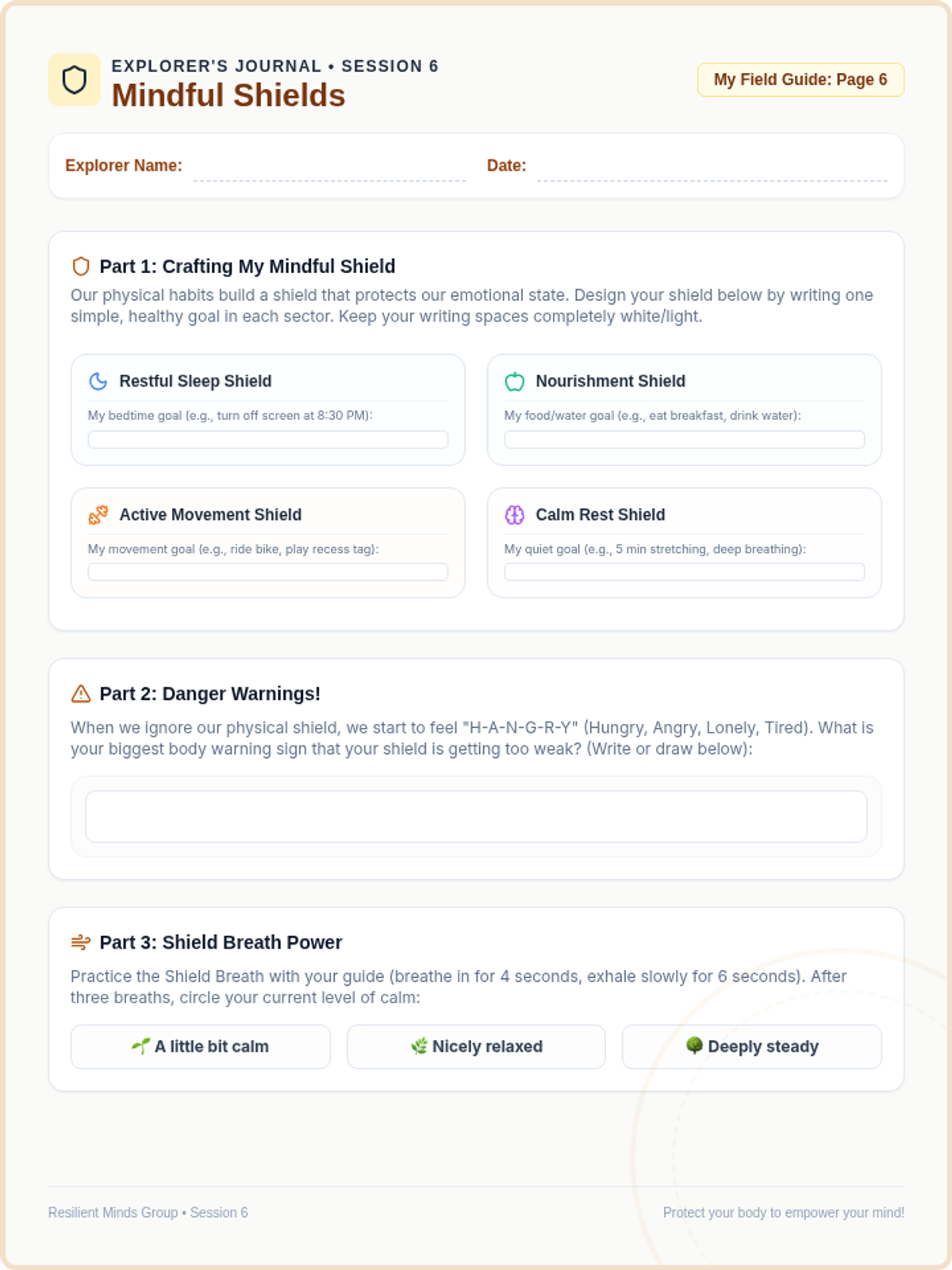
Students examine the physical body-mind connection, identifying stress triggers and learning DBT physical self-care (PLEASE) and emotional regulation strategies.
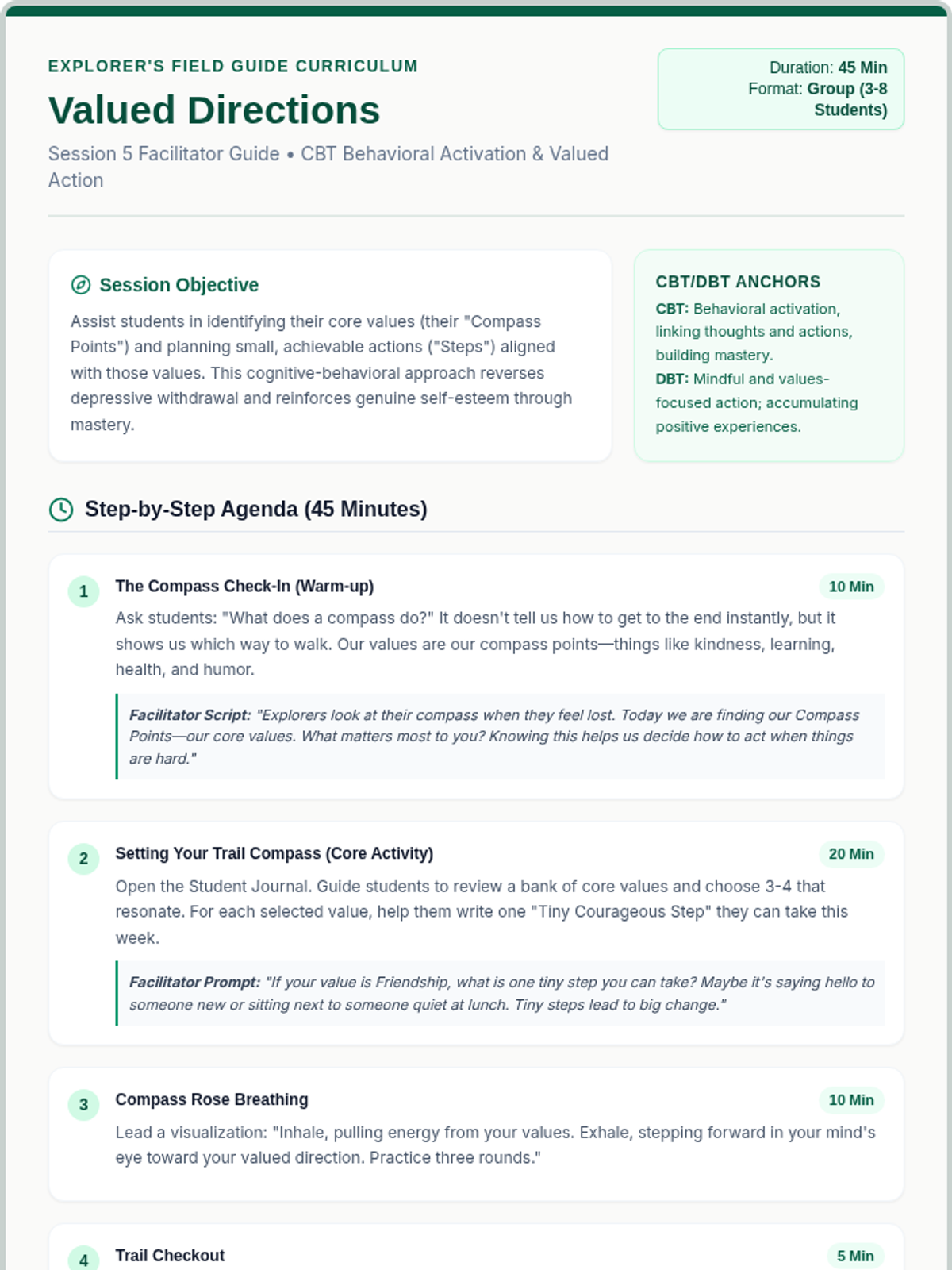
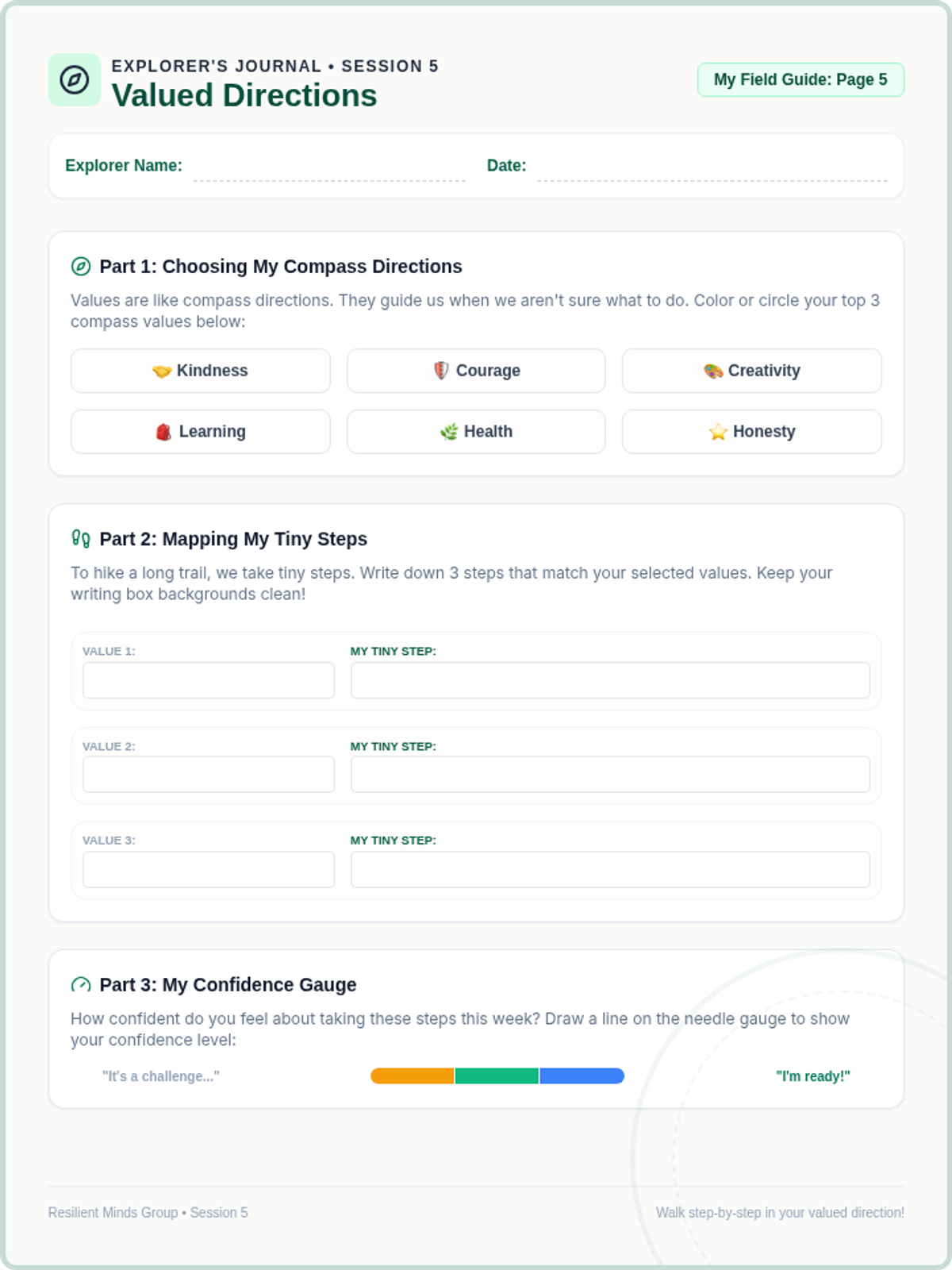
Students connect CBT behavioral activation with DBT 'mindful action' by exploring core values and mapping out tiny, courageous actions that align with their authentic strengths.
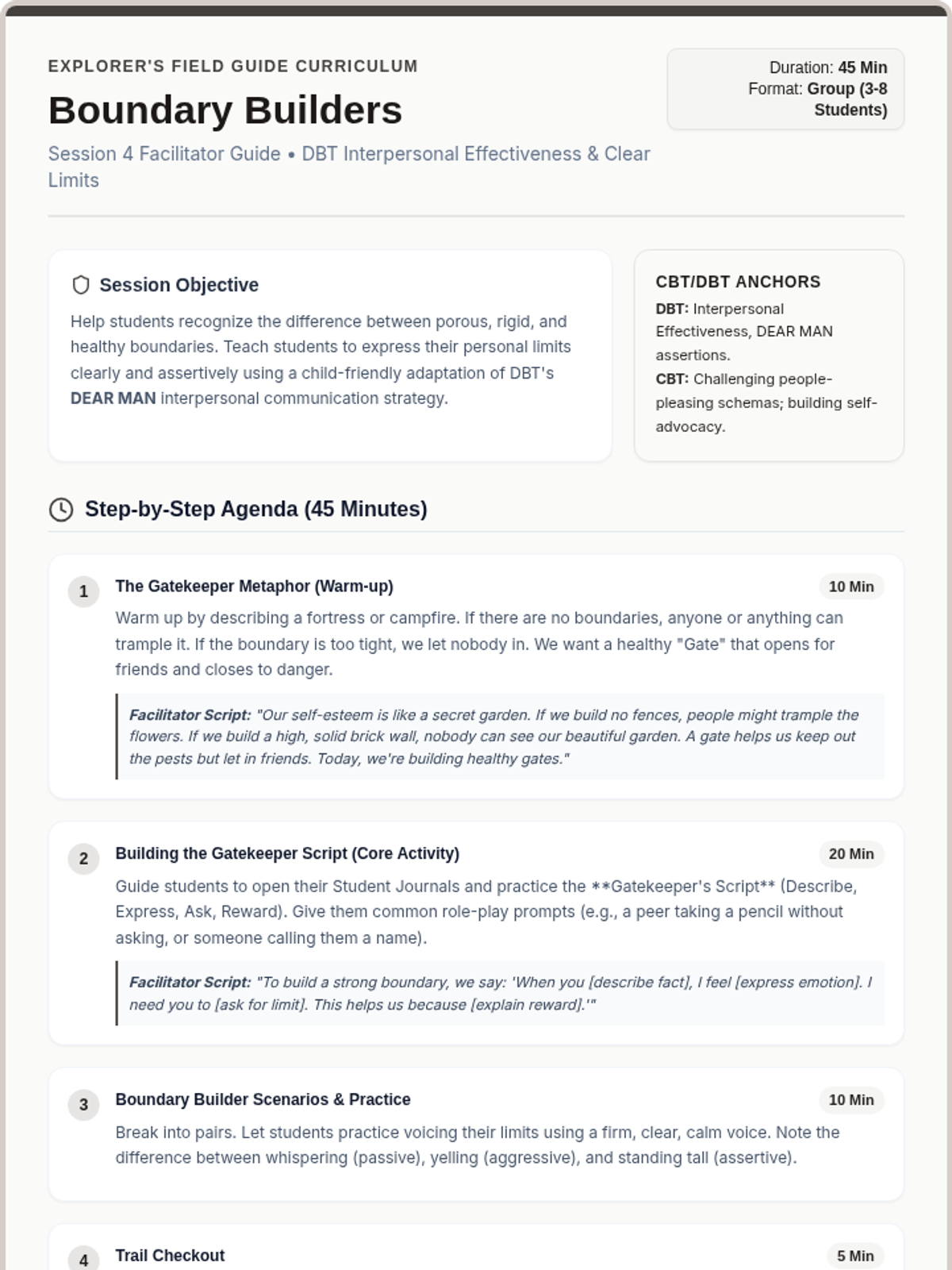
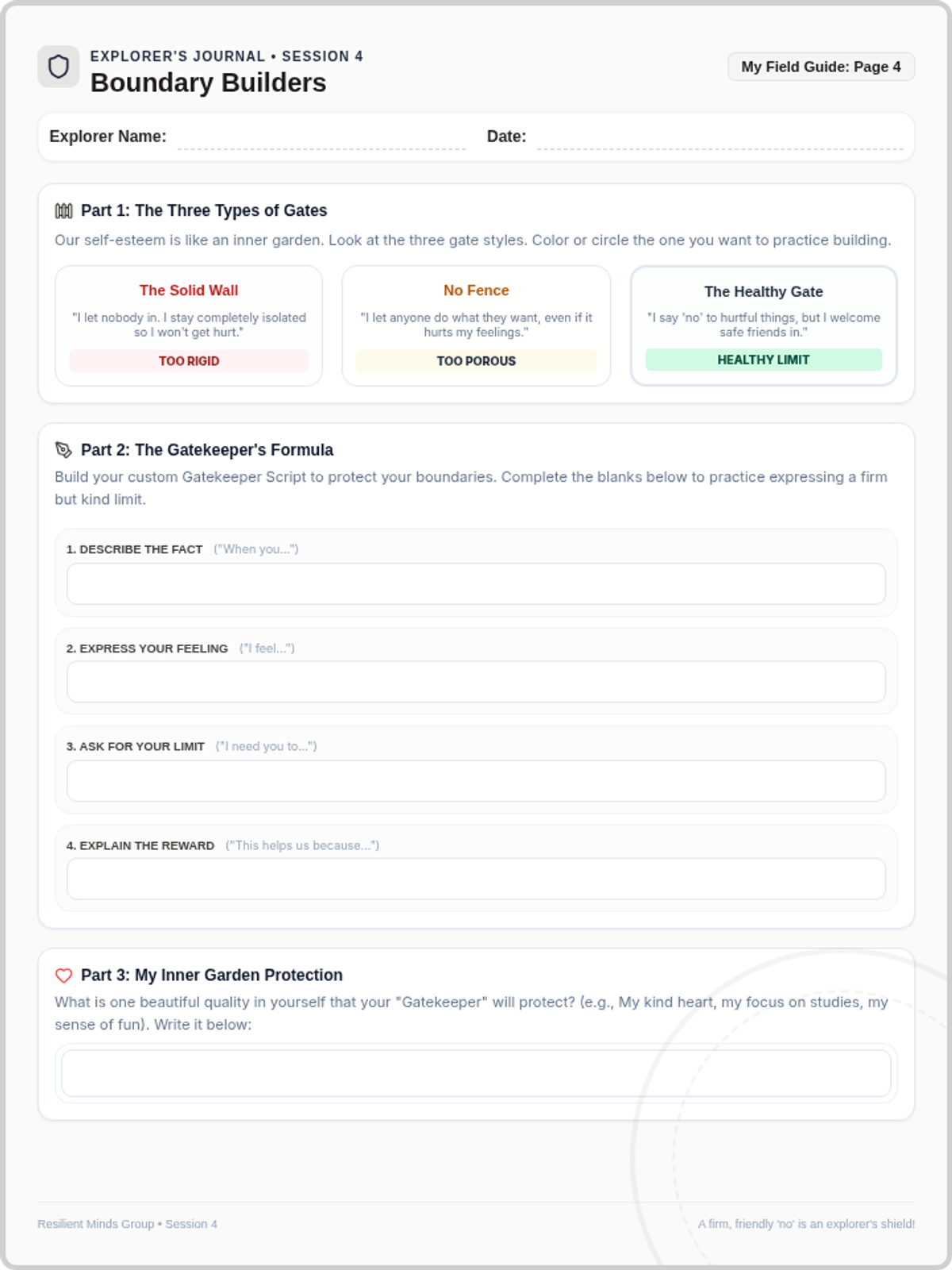
Students learn assertive communication, personal limit-setting, and DBT Interpersonal Effectiveness skills (DEAR MAN style) to navigate social situations and foster healthy self-esteem.
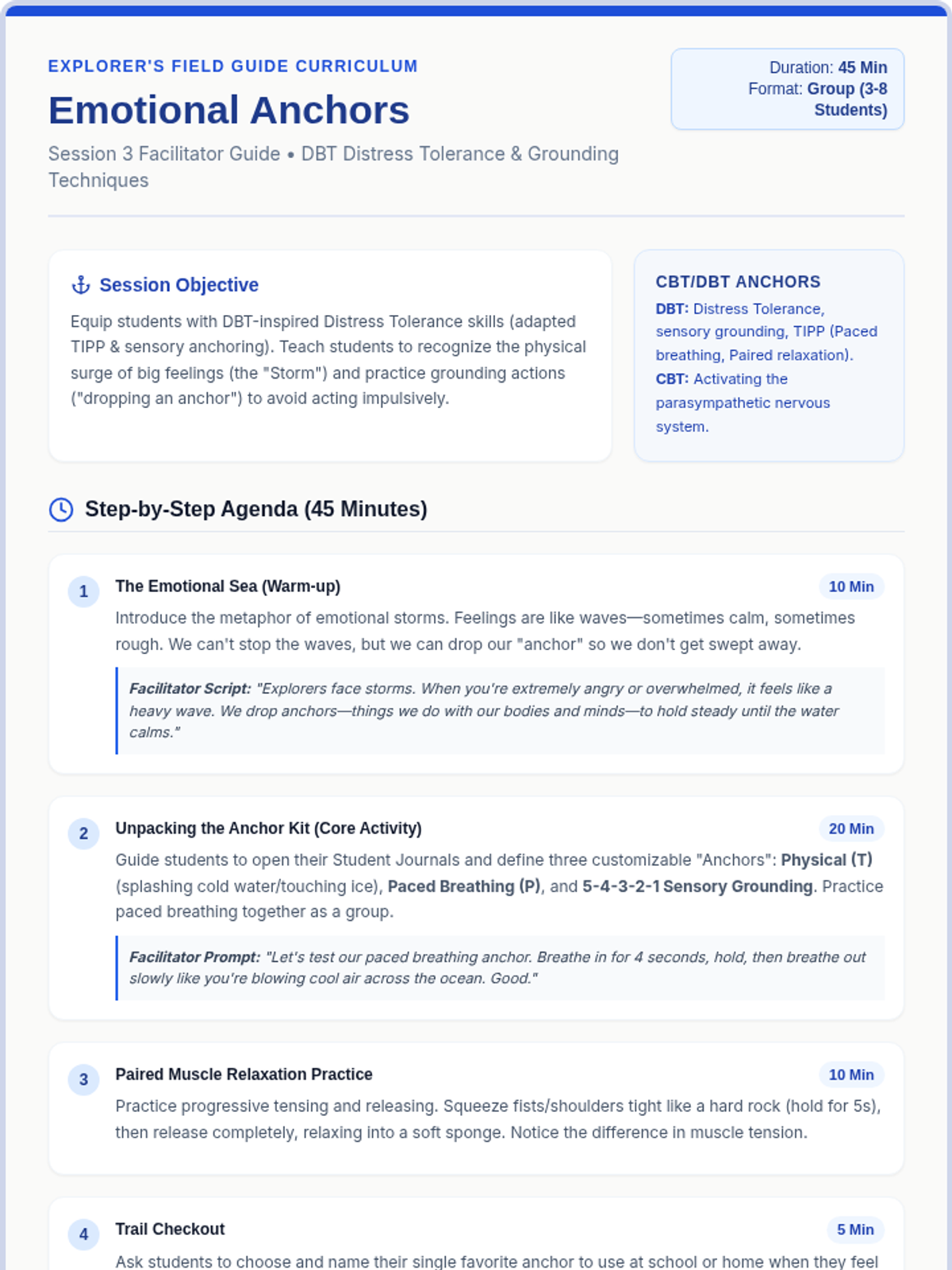
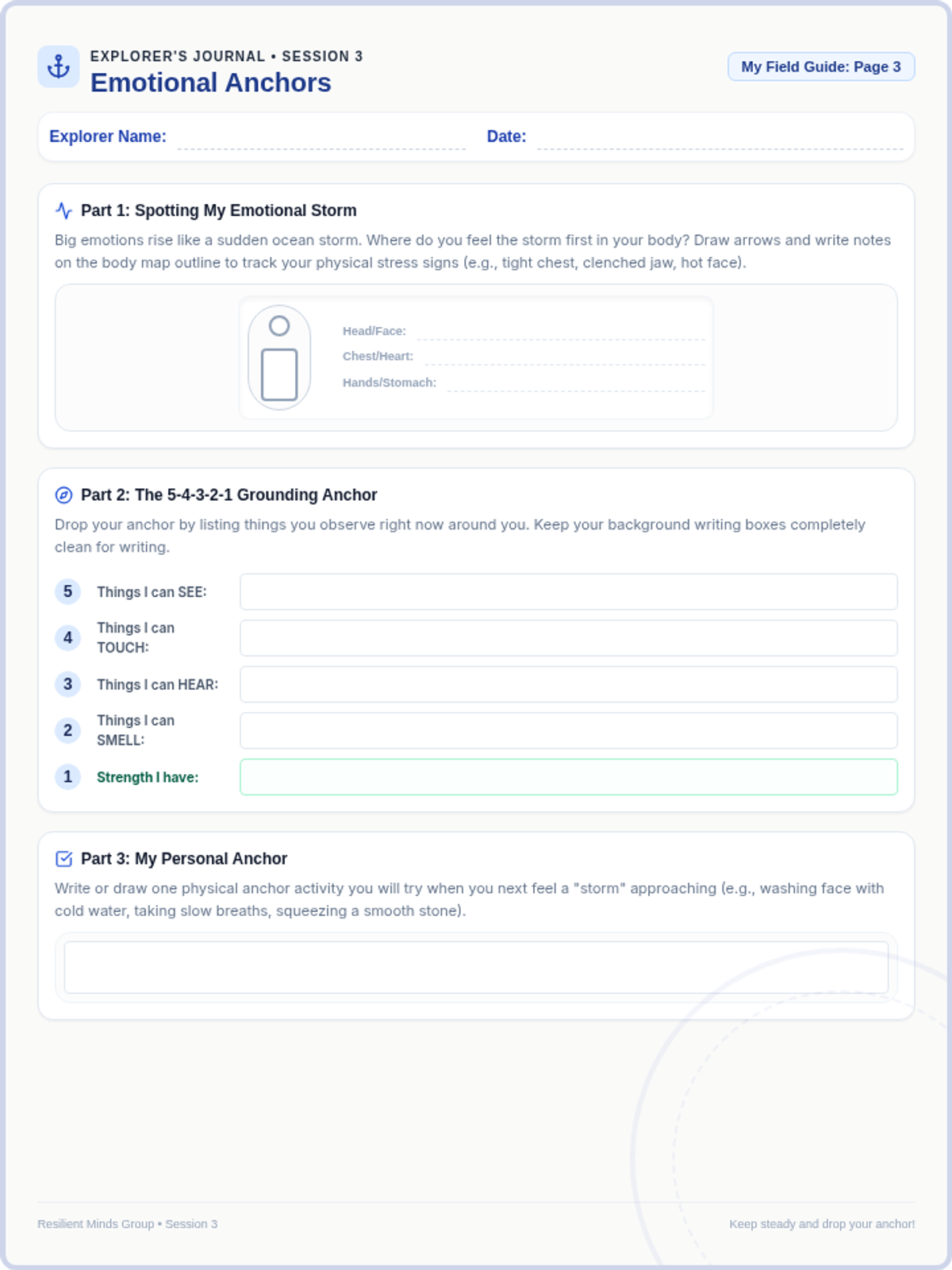
Students learn mindfulness, self-soothing, and distress tolerance techniques (DBT TIPP skills) to manage intense emotions and ground themselves.
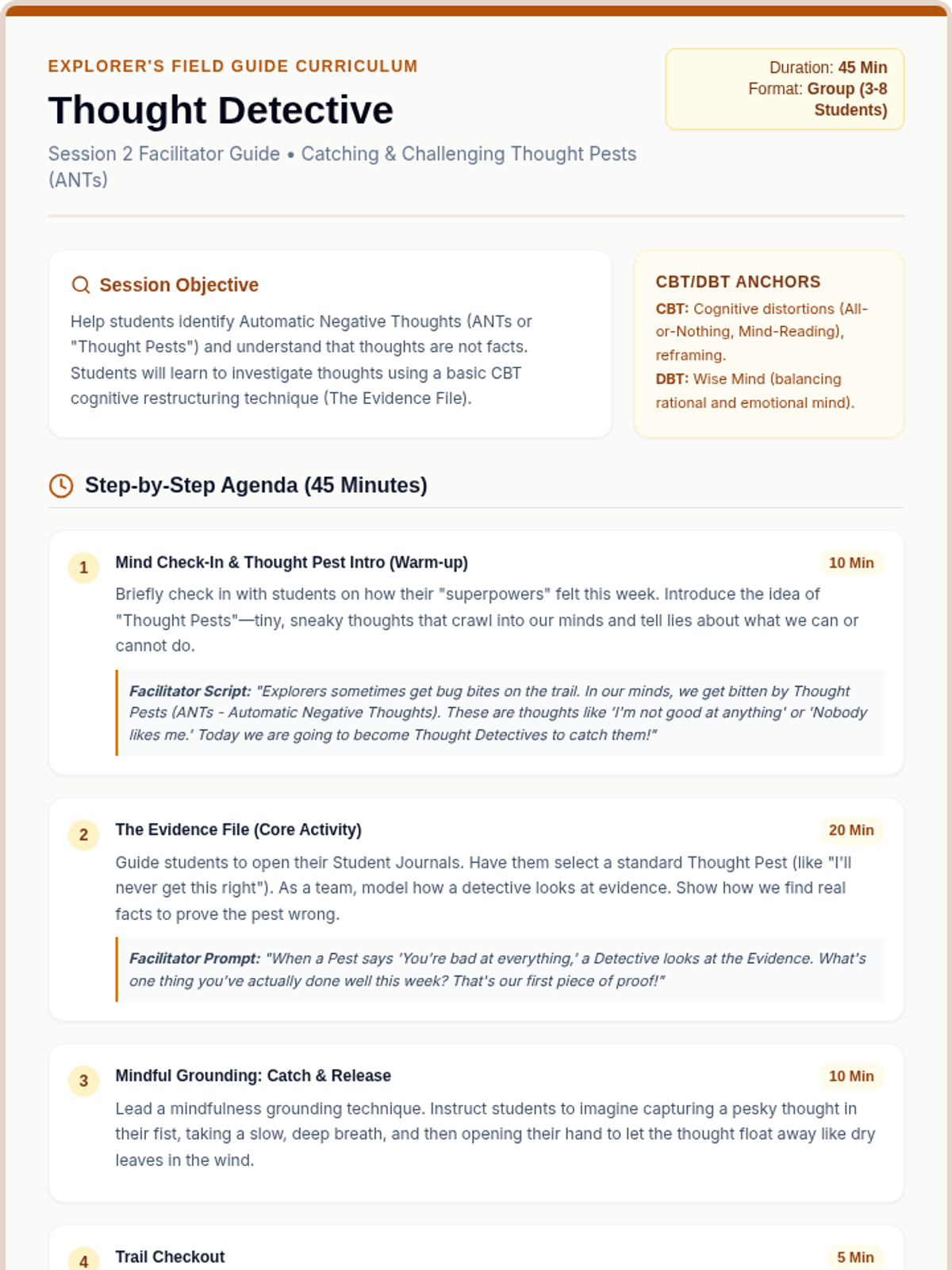
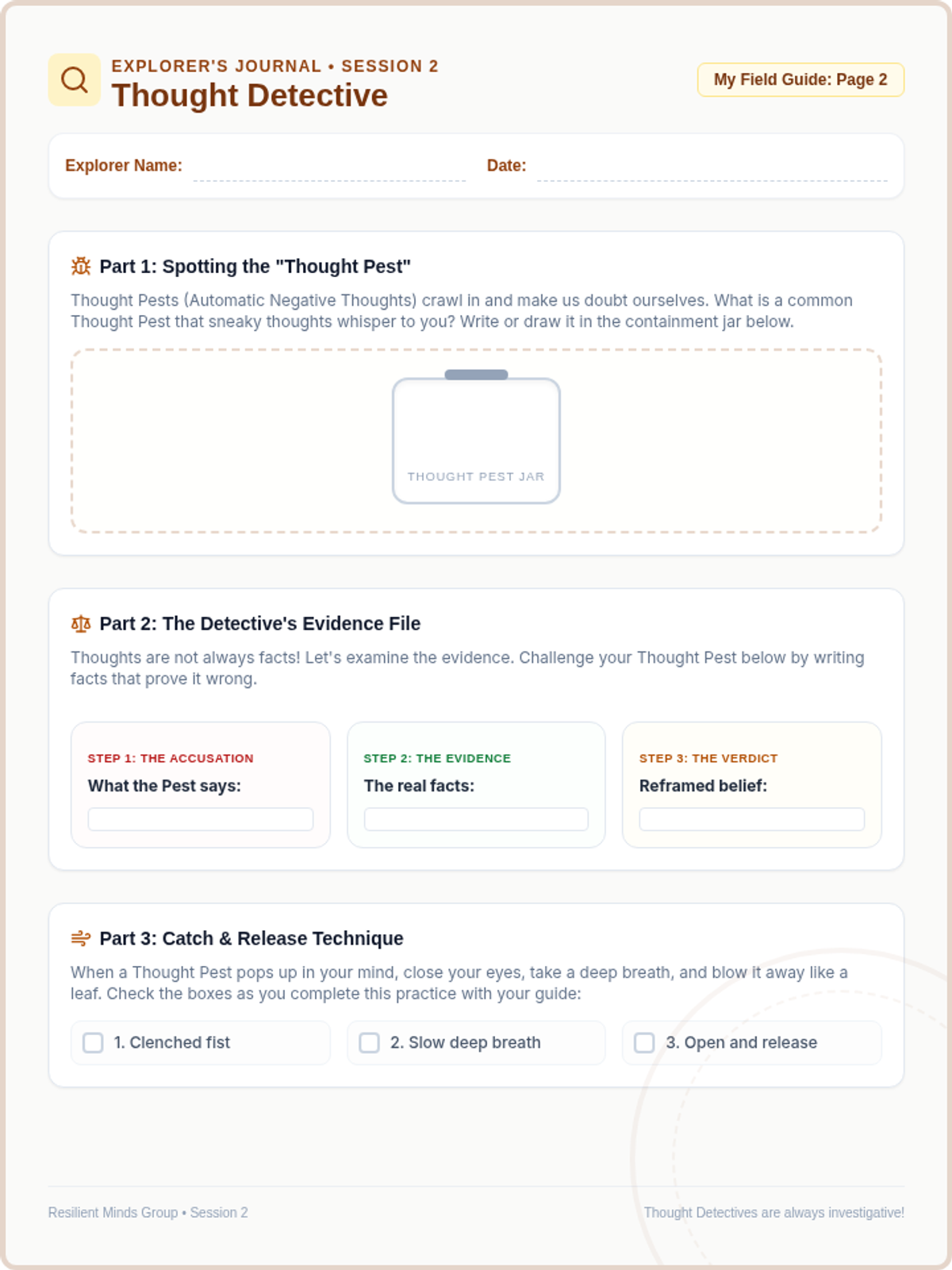
Students learn to identify and challenge automatic negative thoughts (ANTs) and cognitive distortions using CBT reframing techniques.
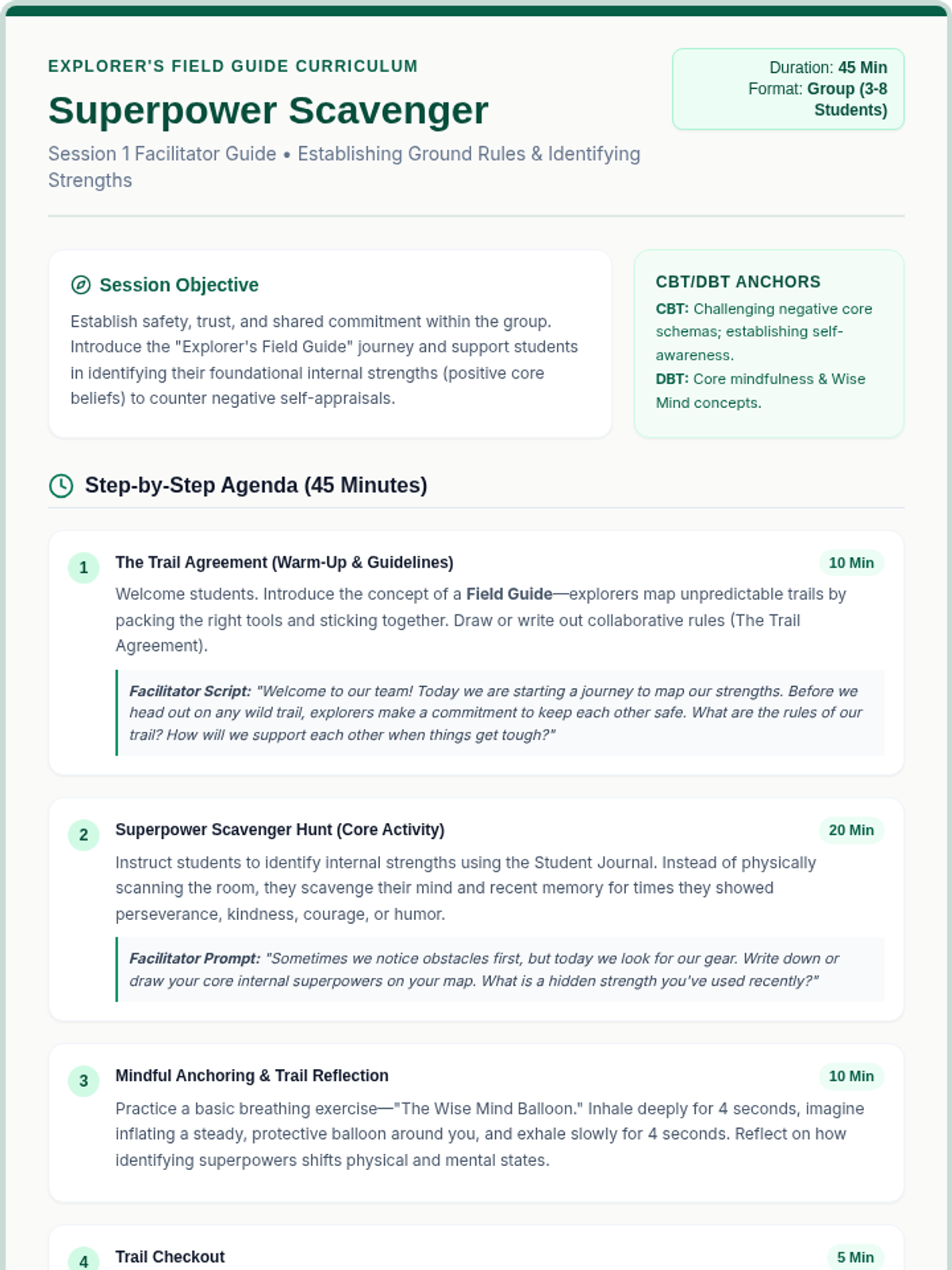
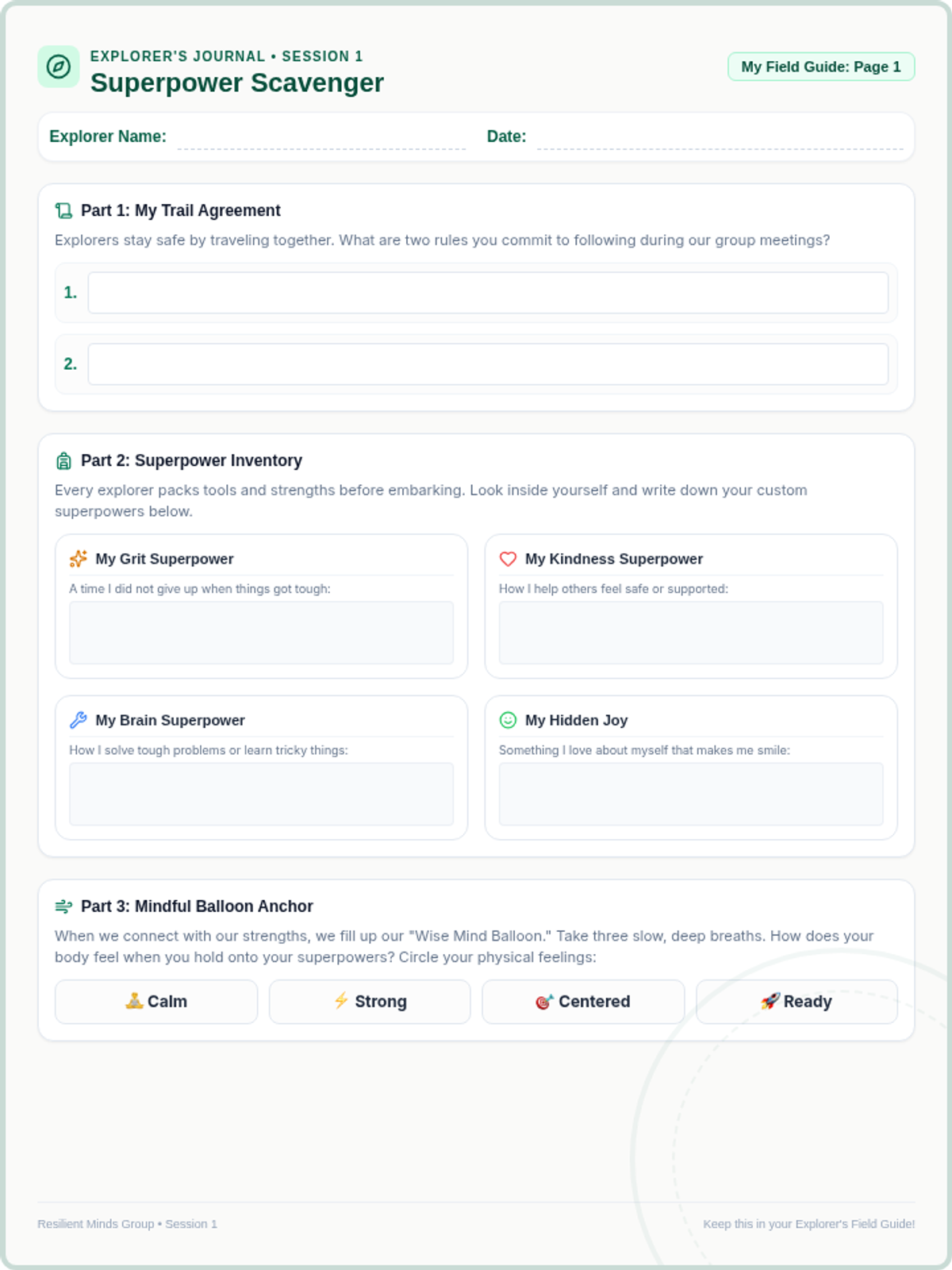
Students establish group guidelines, explore the 'Explorer's Field Guide' theme, and identify their unique internal strengths and positive core beliefs (CBT core beliefs & mindfulness).
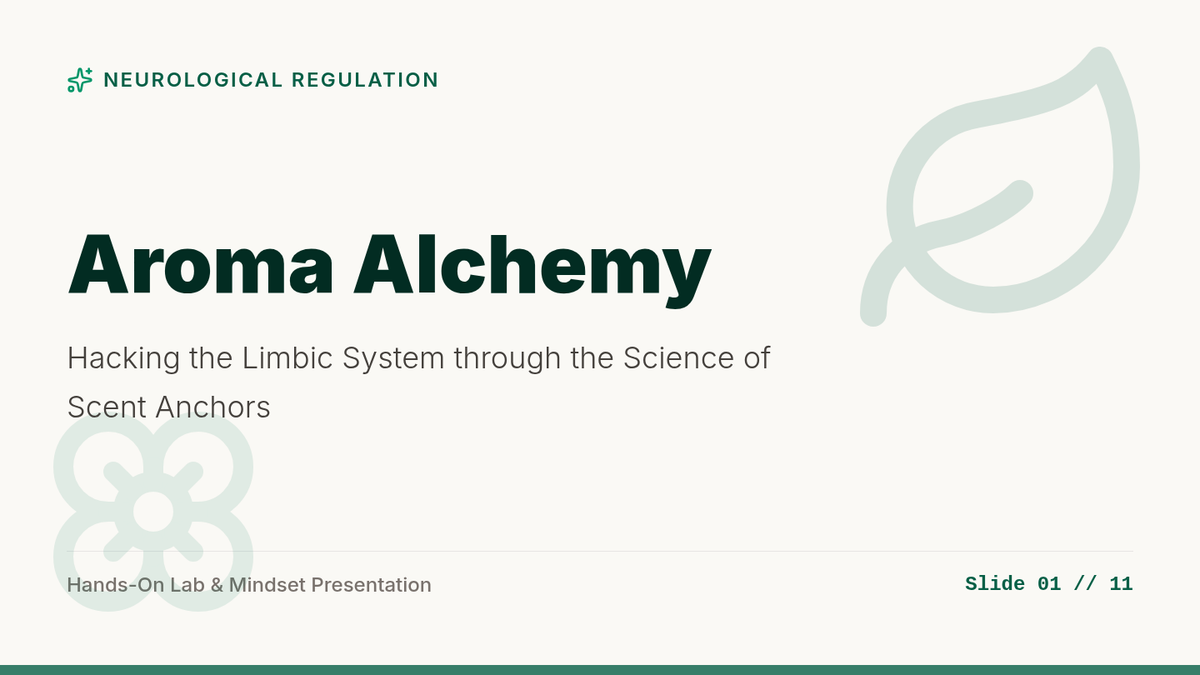
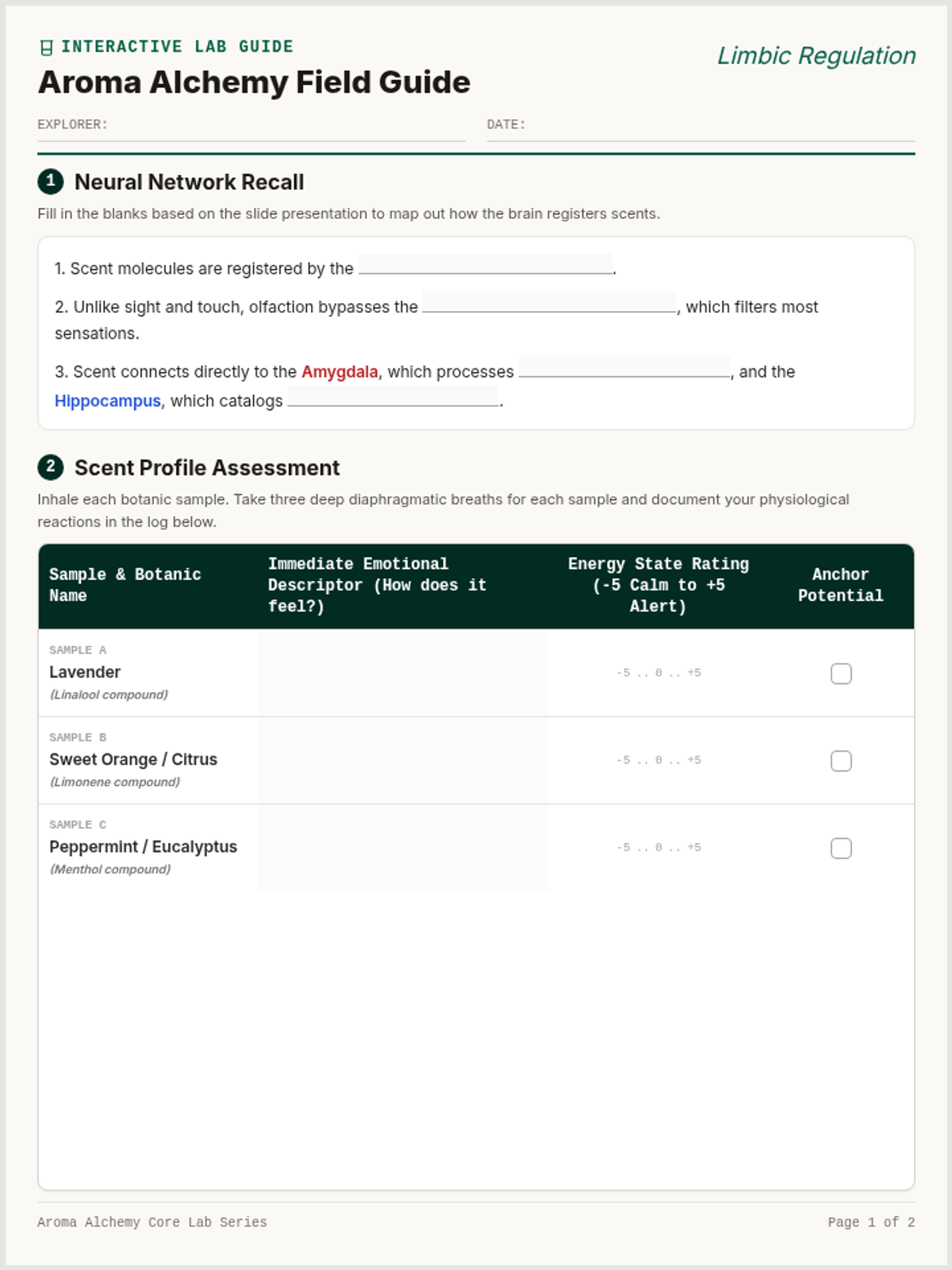
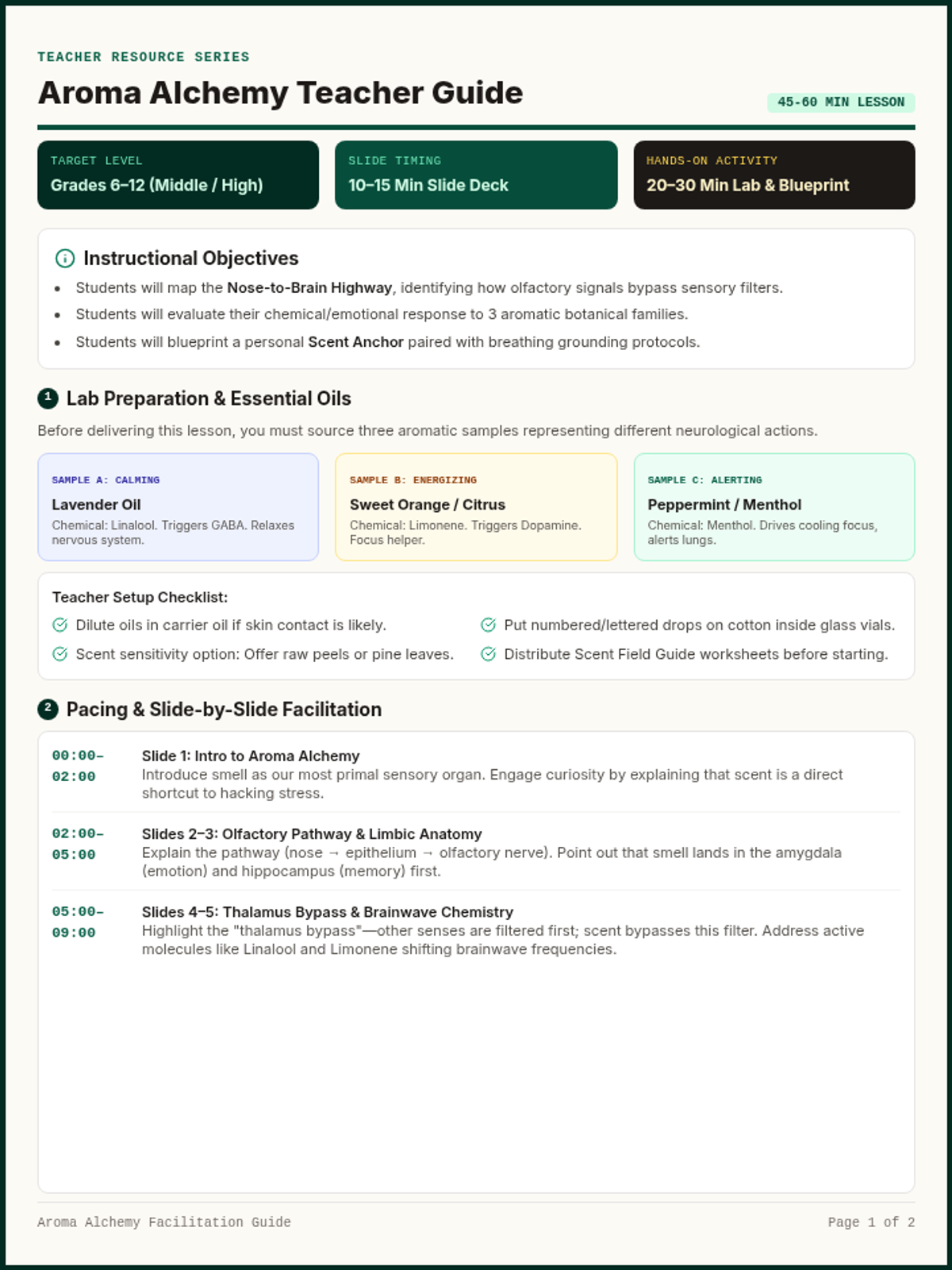
A lesson exploring the neurological science of olfactory regulation, the anatomy of the limbic system, and the practical application of scent anchoring for emotional grounding. Includes a 11-slide presentation, a student-facing field guide for hands-on activities, and a teacher facilitation guide.
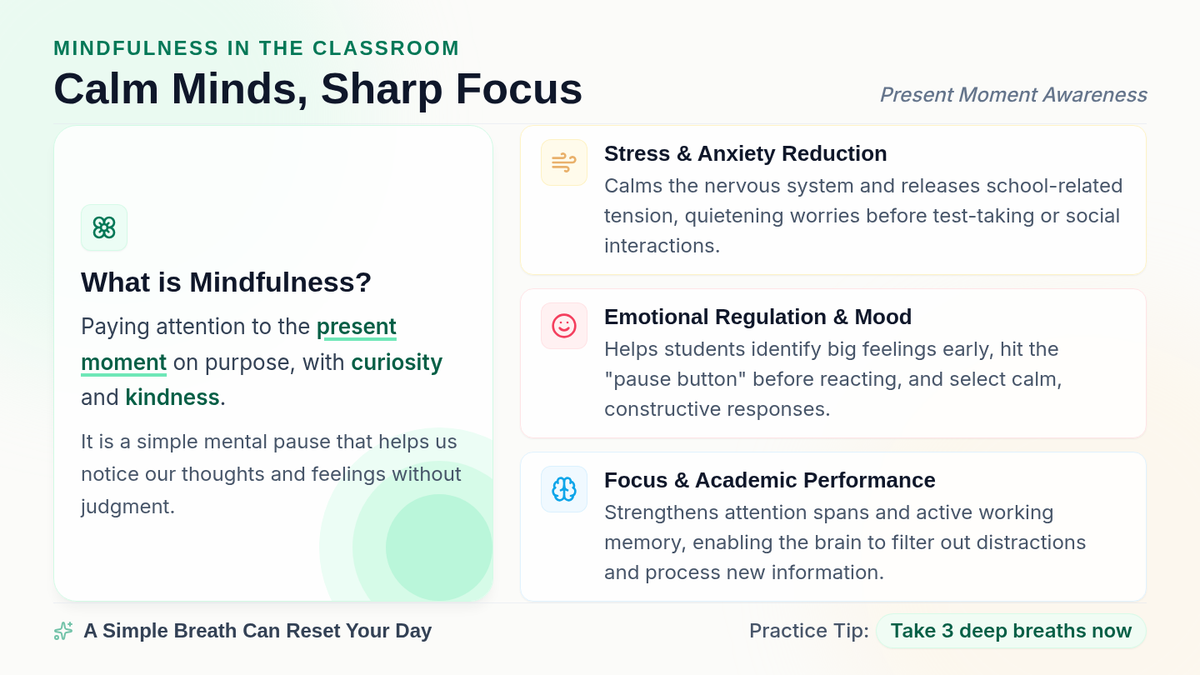
An introductory lesson on mindfulness for students, exploring what mindfulness is, its scientific benefits in a classroom setting, and practical applications for focus and emotional regulation.
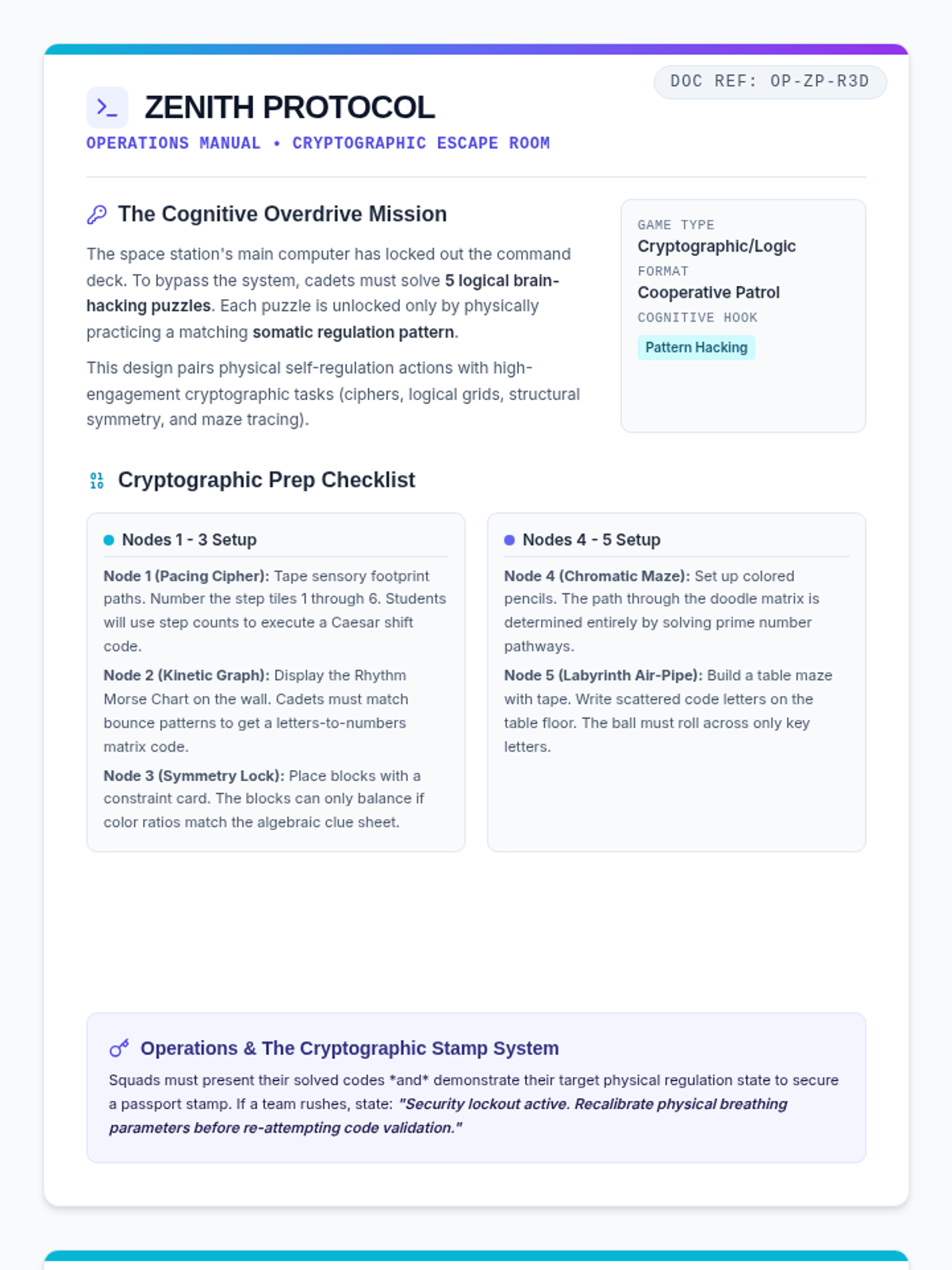
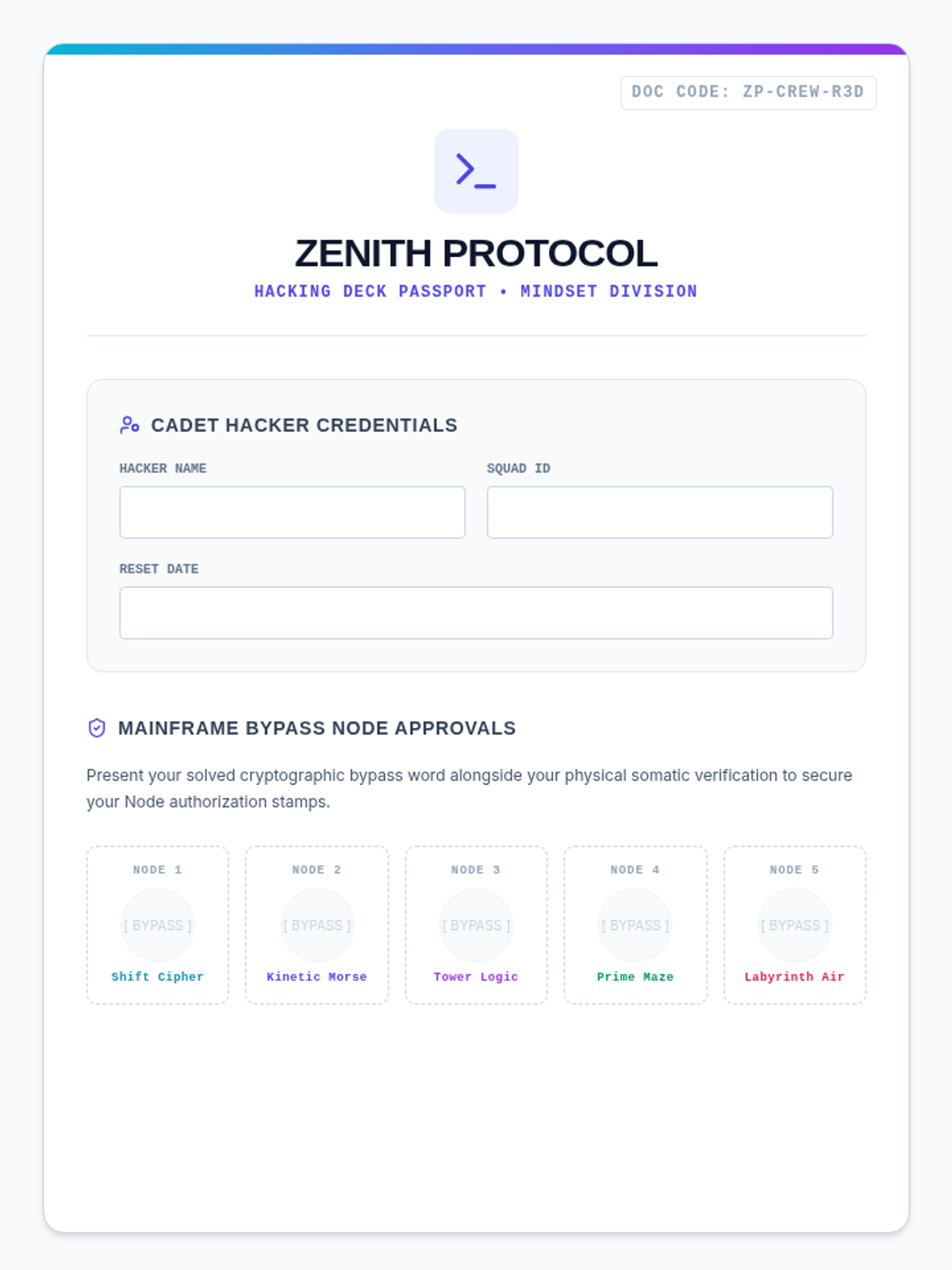
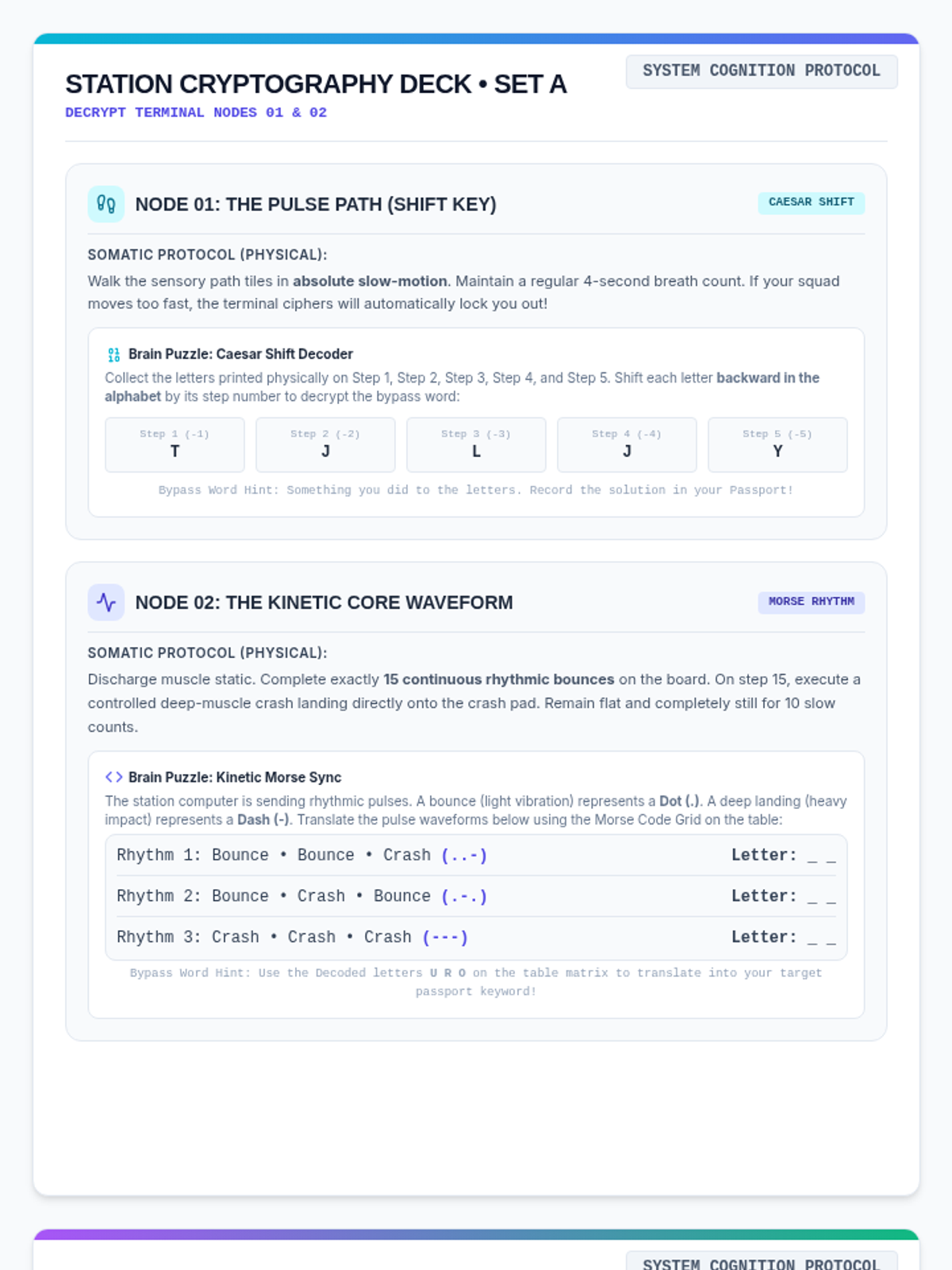
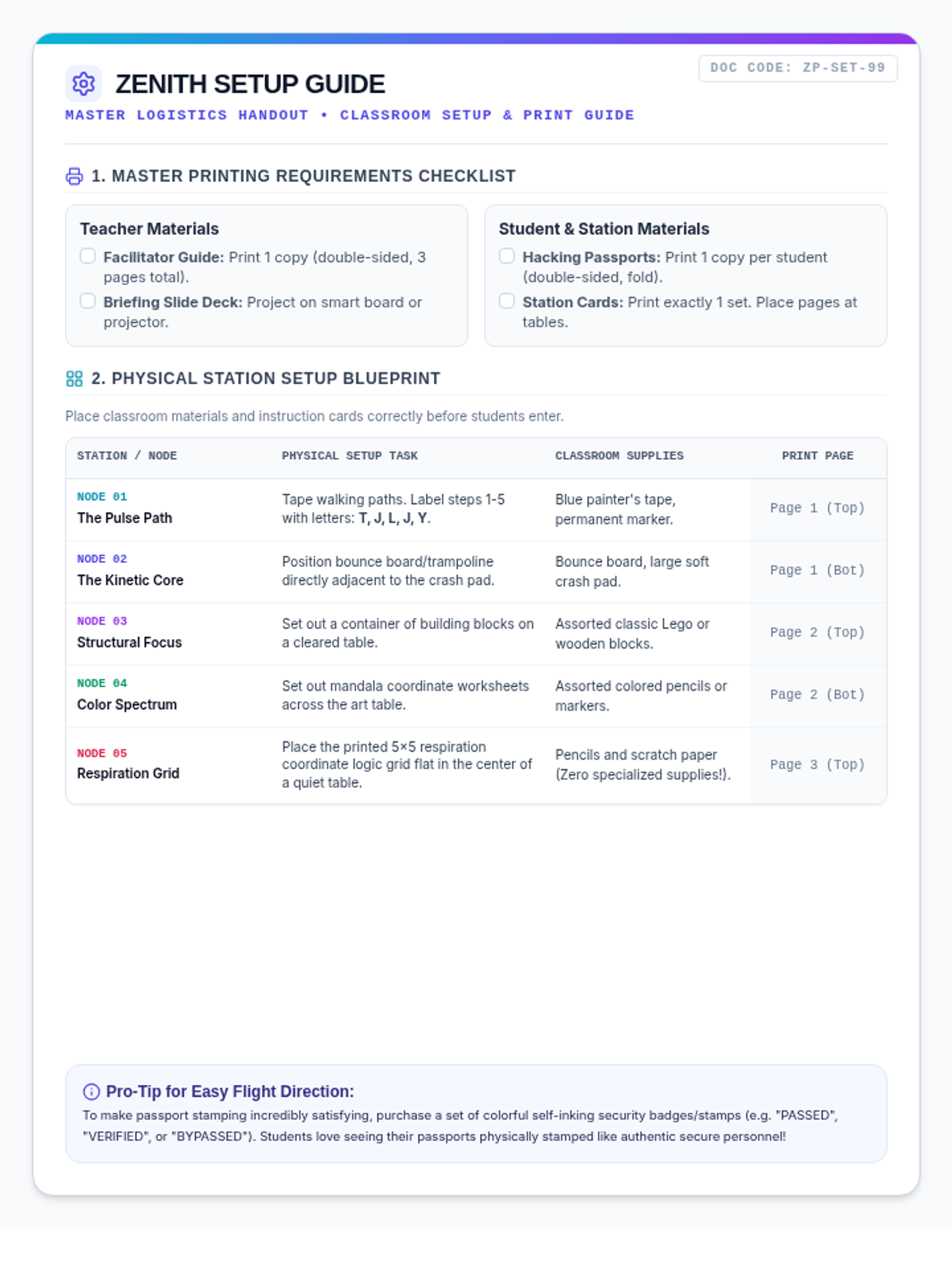
An immersive, hands-on self-regulation escape room for middle schoolers. Students activate 5 mental reset nodes (Sensory, Kinetic, Focus, Art, and Breath) to stabilize a simulated space station reactor, logging codes and reflections in a custom passport.
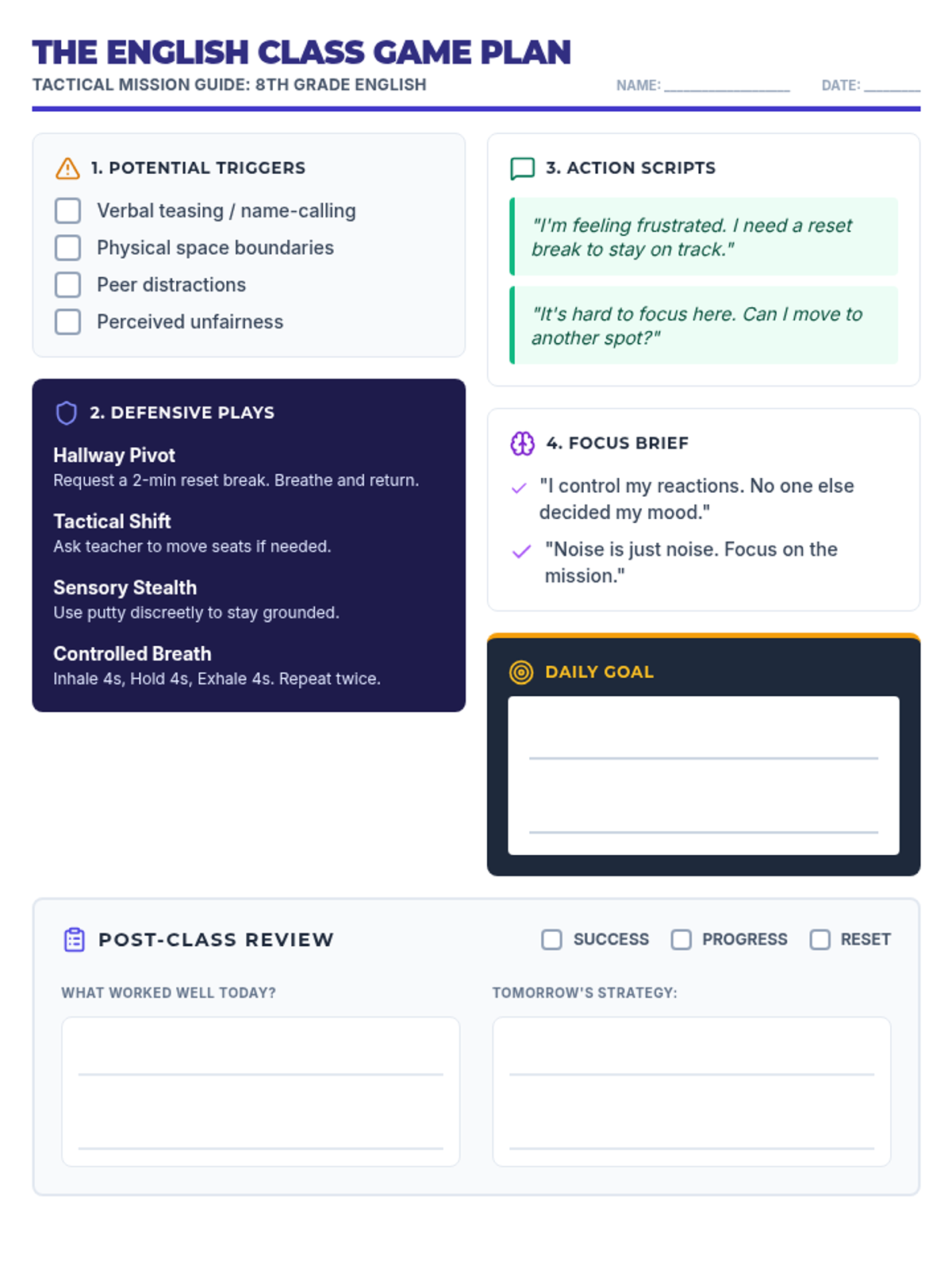
A personalized behavioral management plan for an 8th-grade student to navigate social triggers and maintain focus during English class through specific coping strategies.
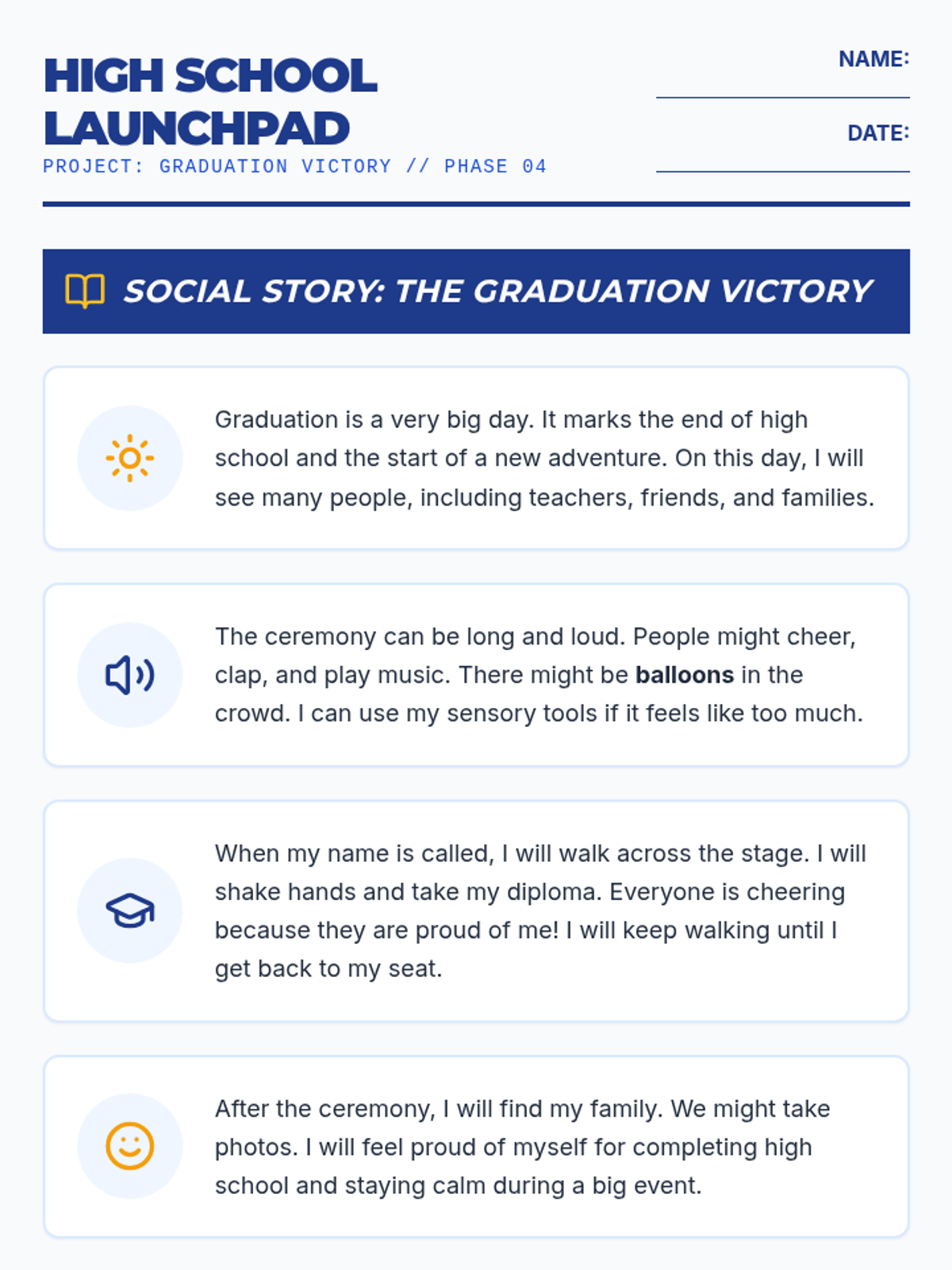
Prepares the student for the graduation ceremony through social stories and a visual guide for the day's events.
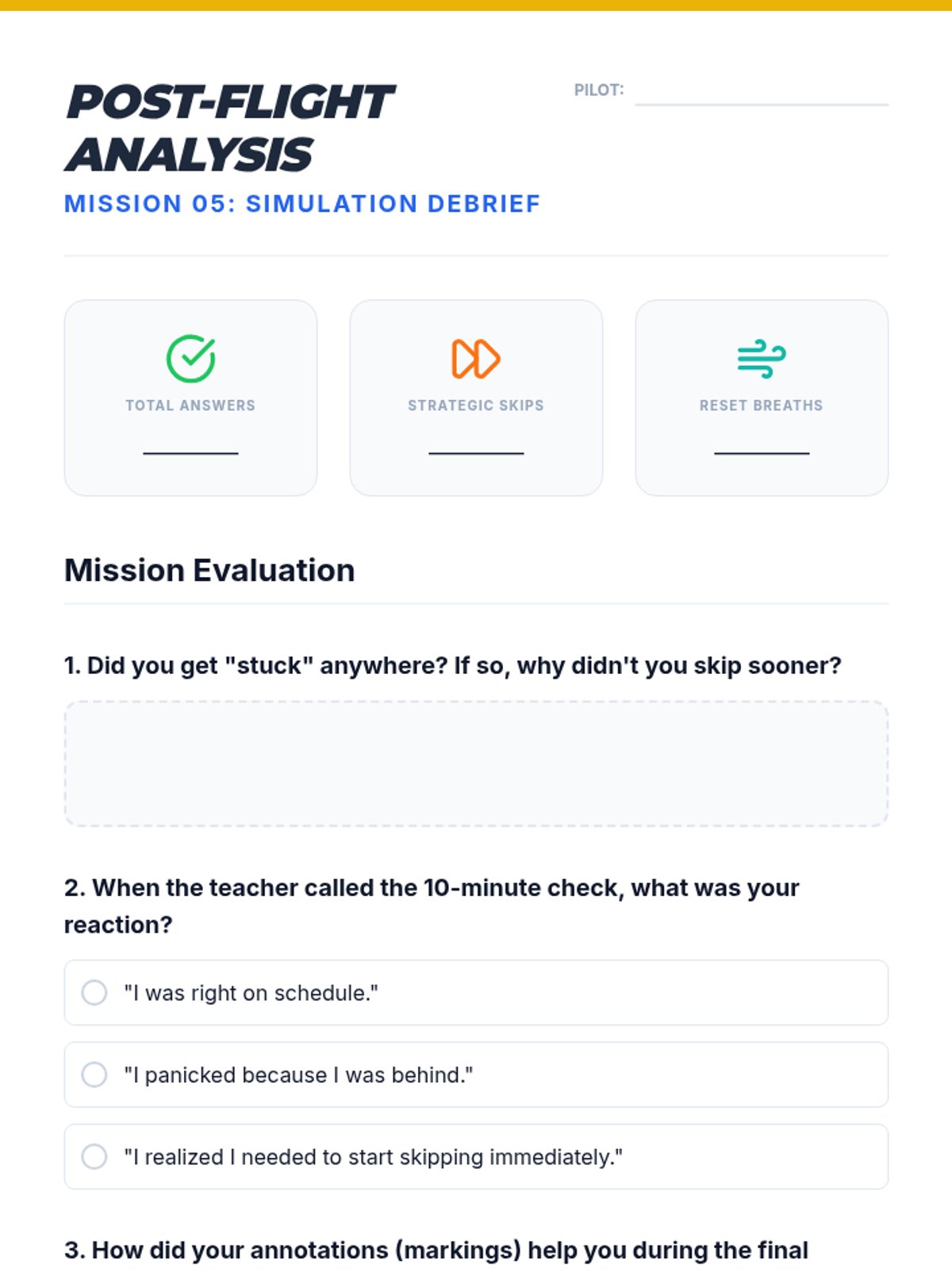
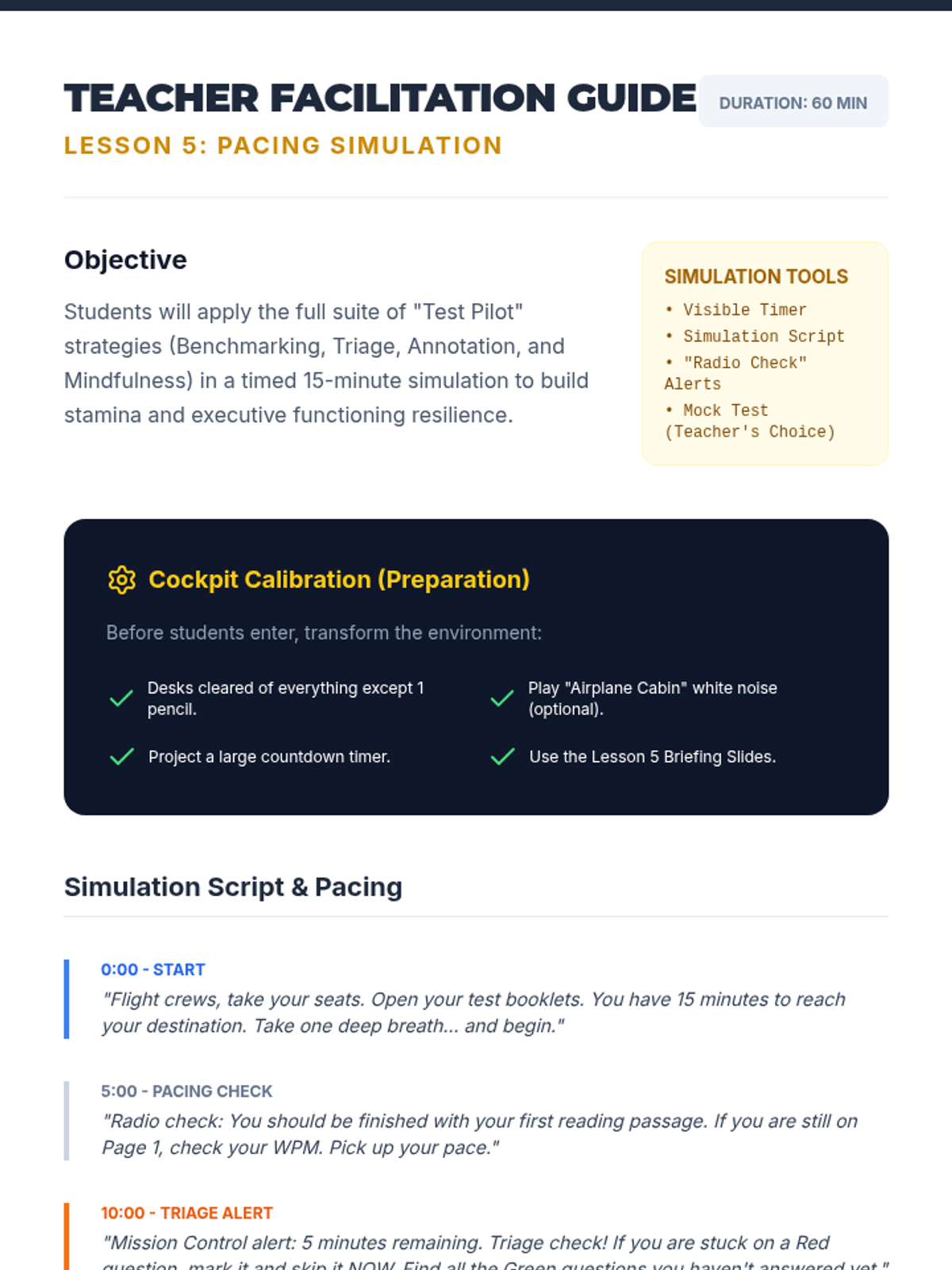
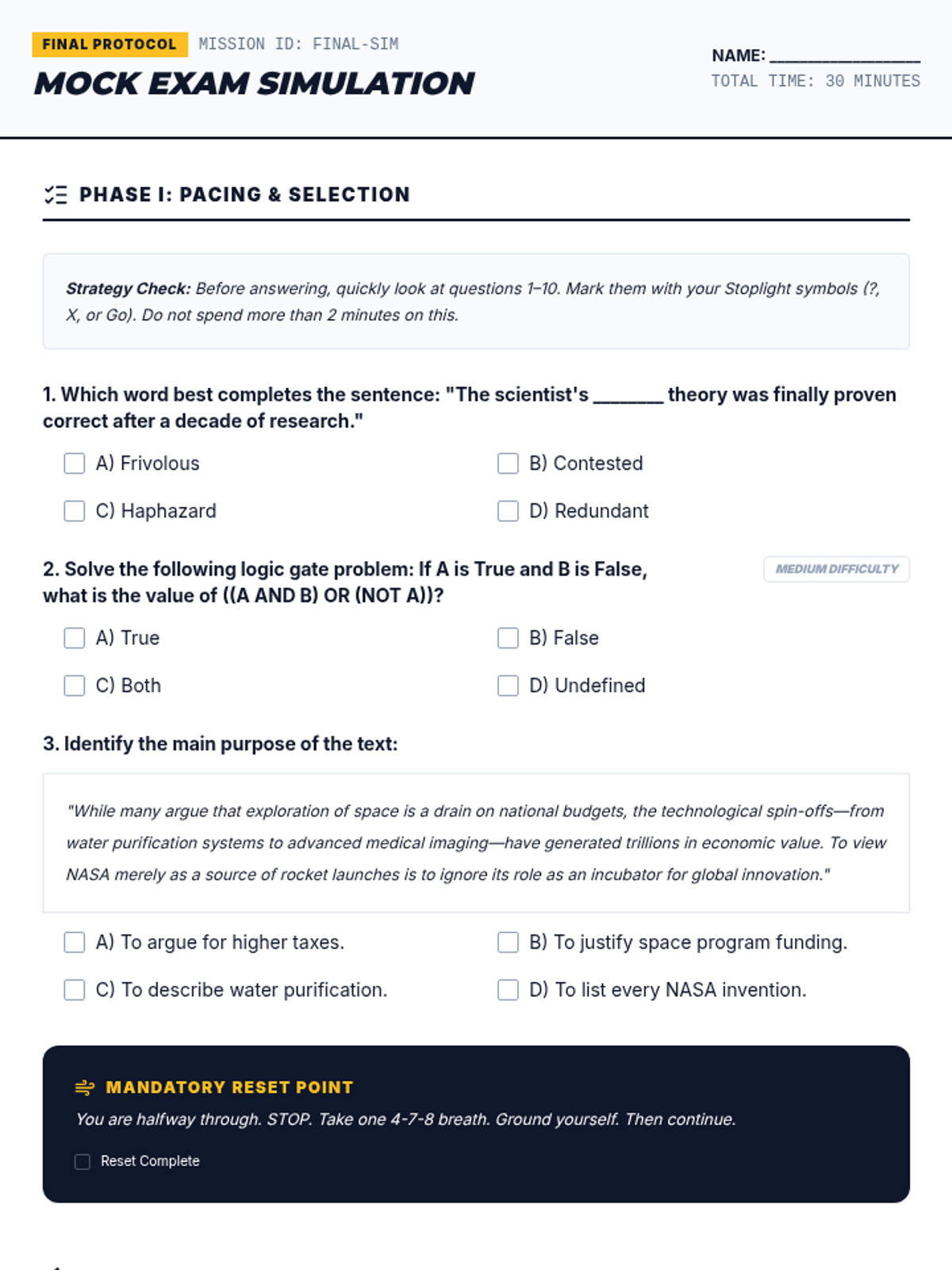
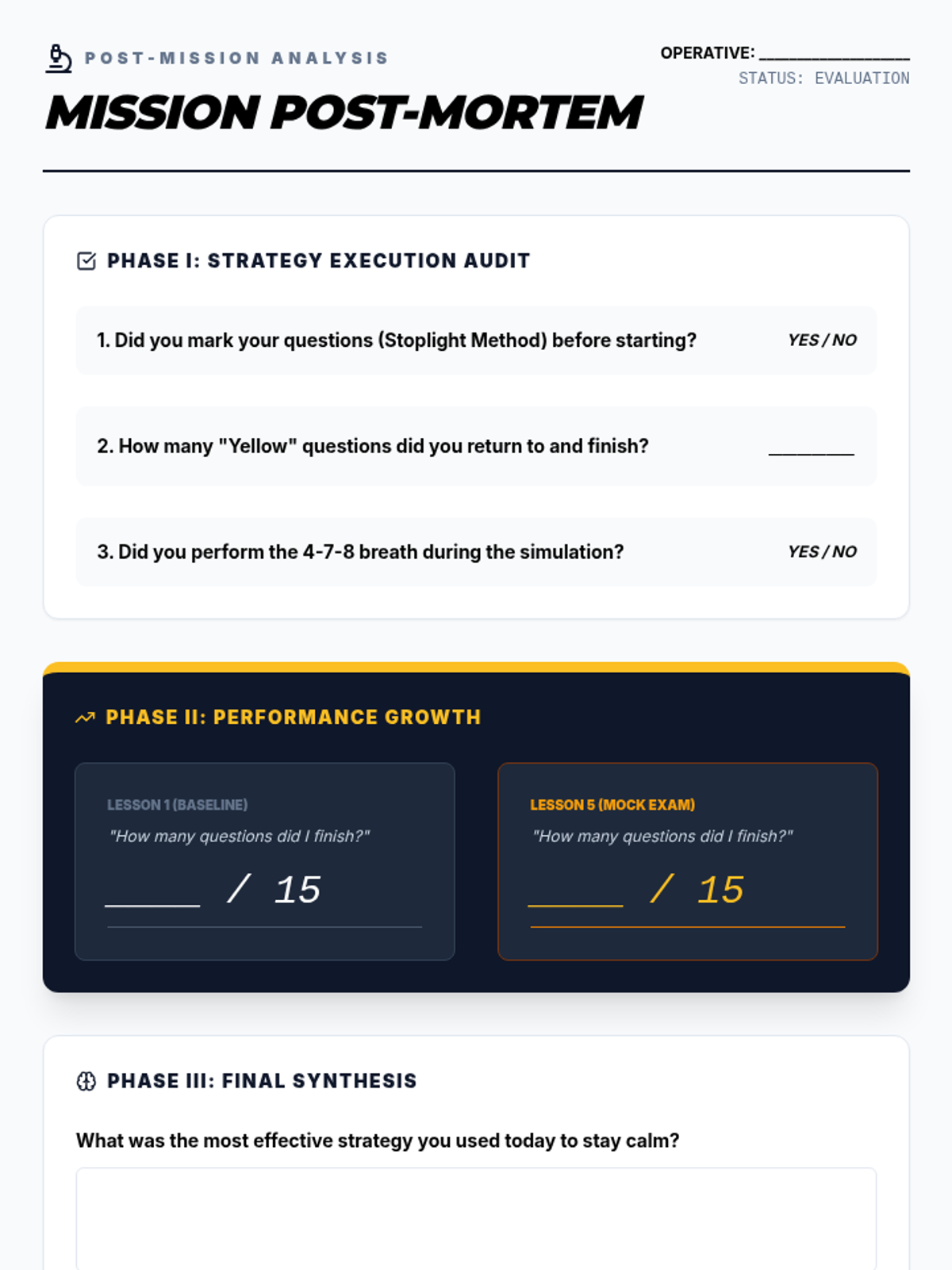
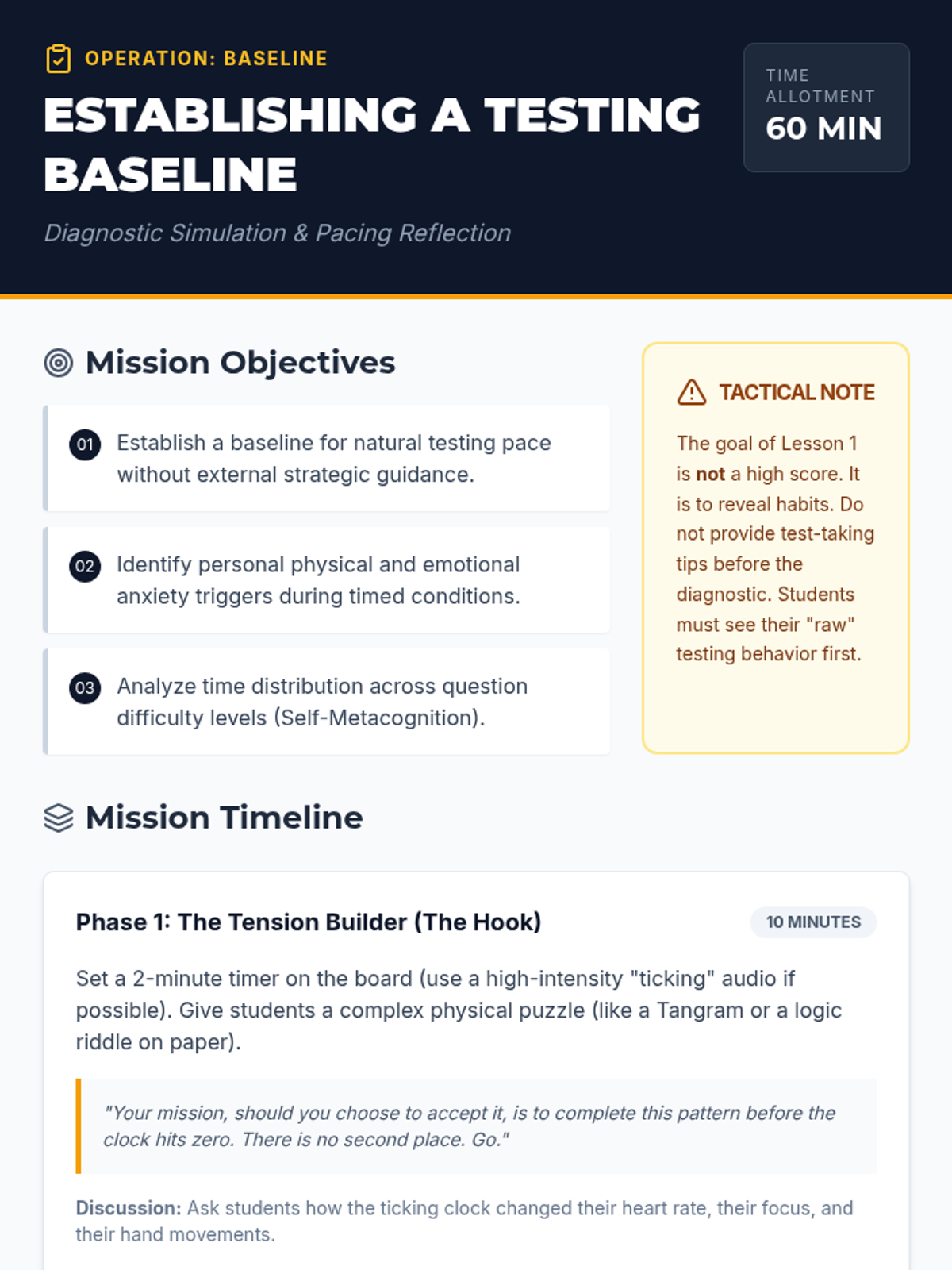
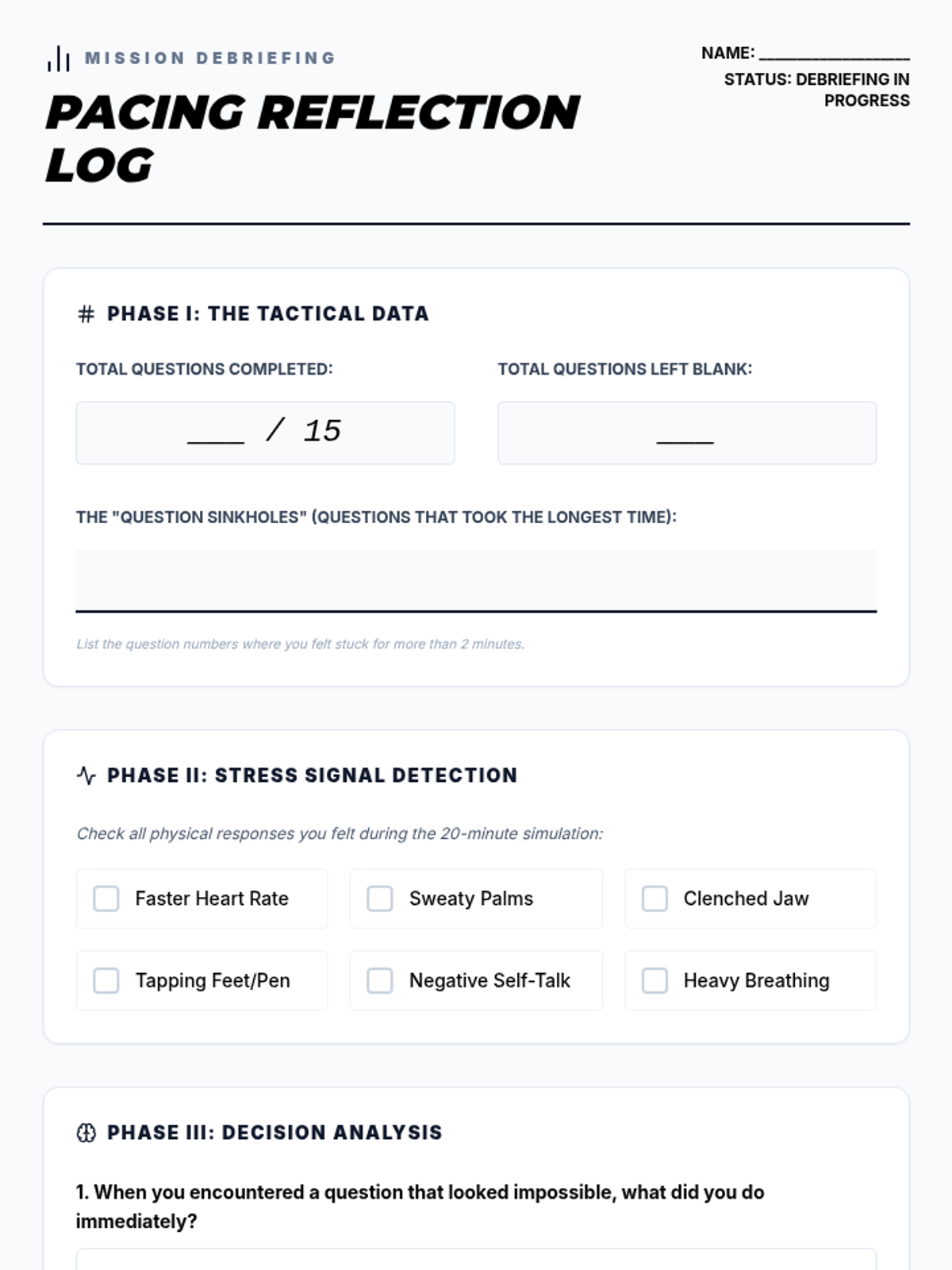
A cumulative simulation where students apply time management and emotional regulation skills in a timed testing environment, followed by a reflective debrief.
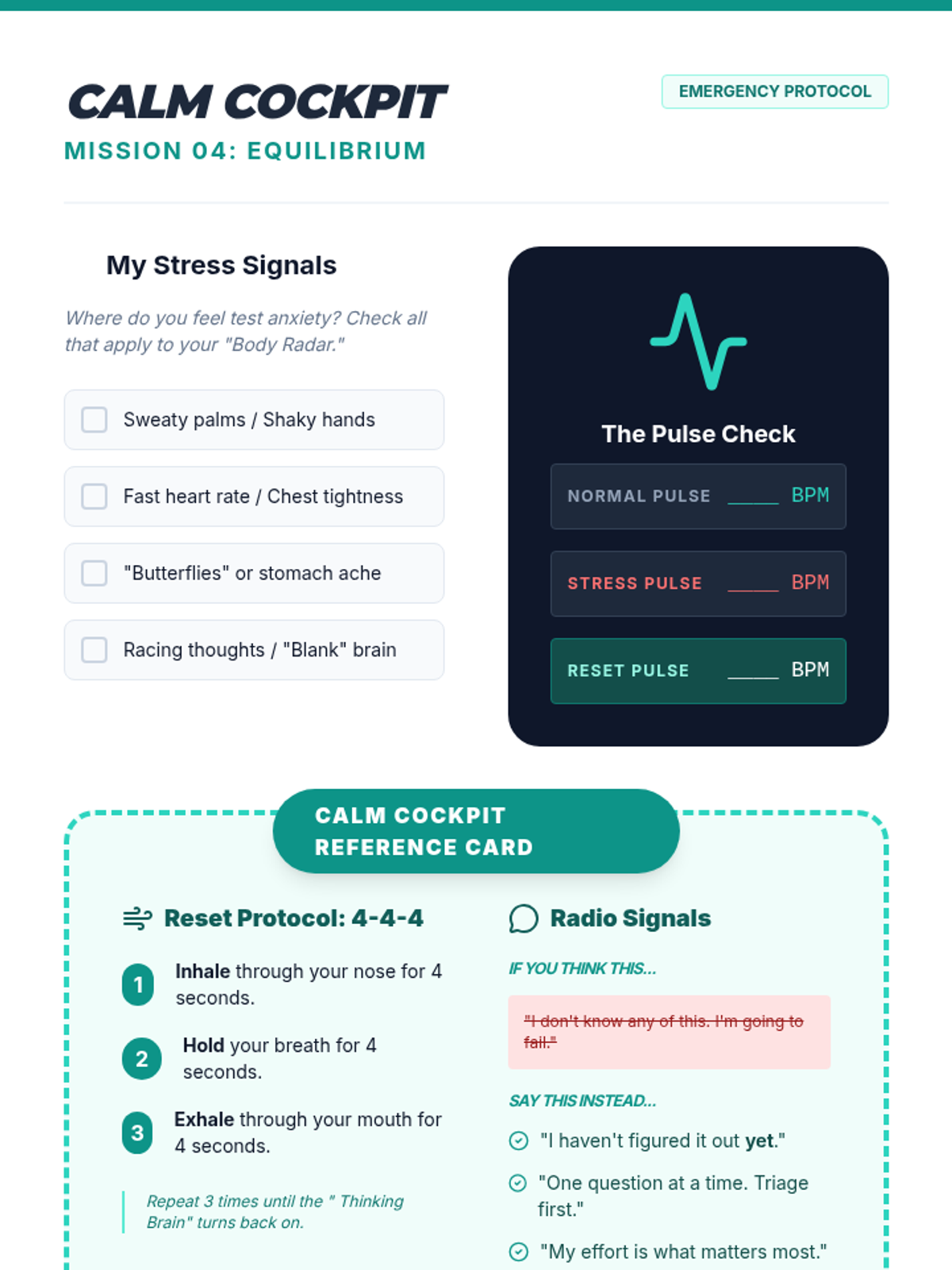
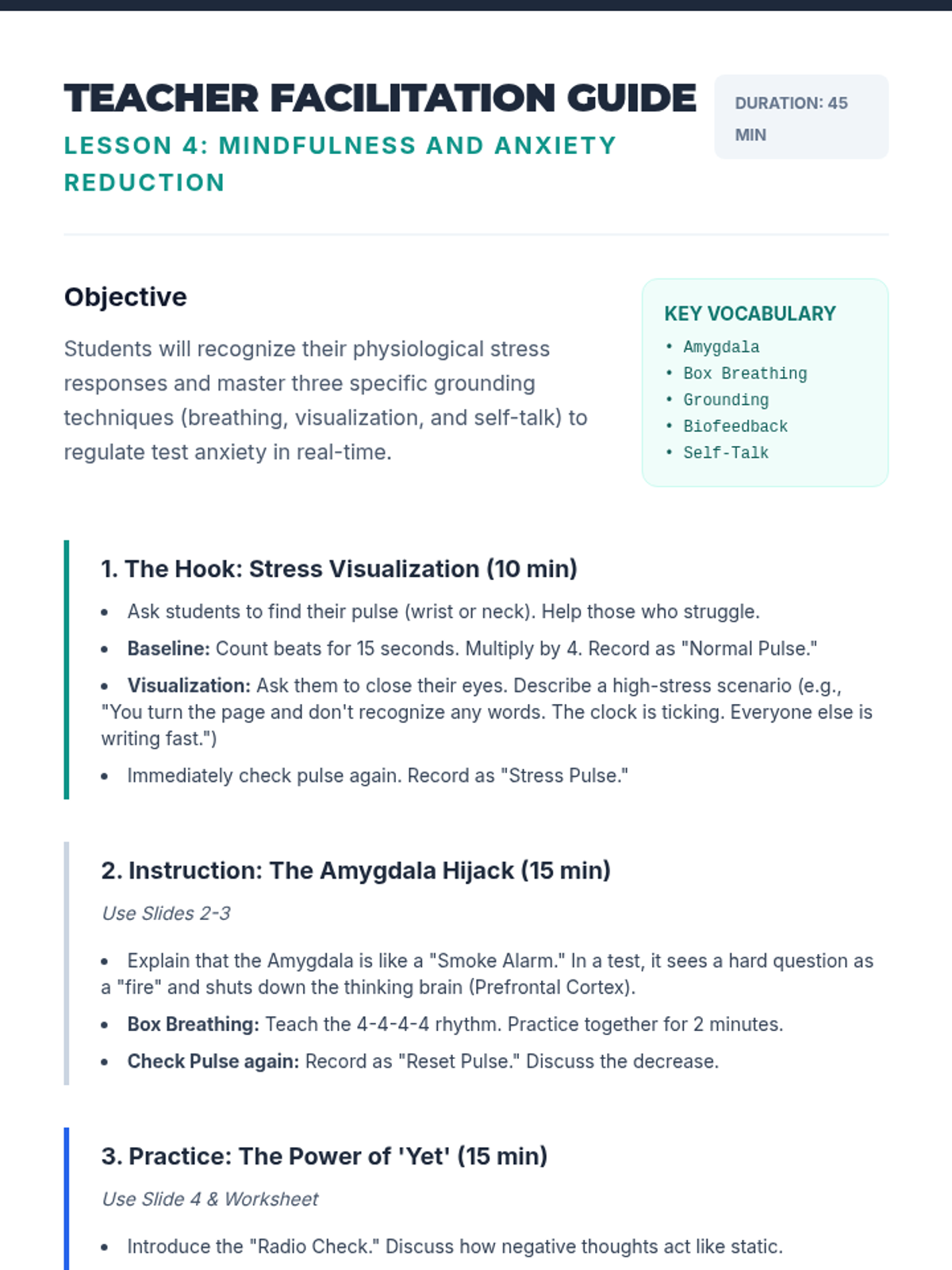
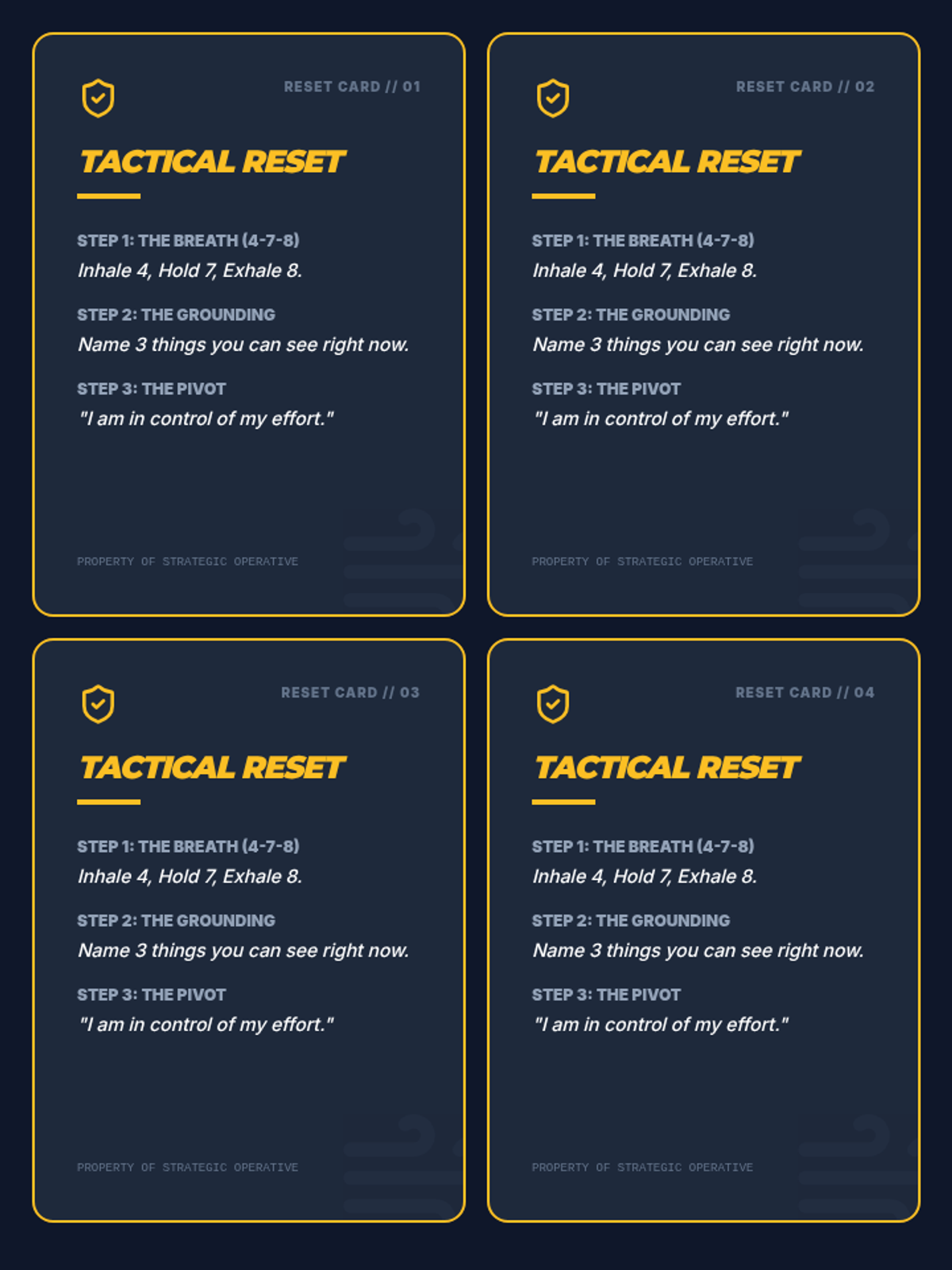
Exploring the physical and mental effects of test anxiety and learning grounding techniques to stay calm and focused during high-stakes moments.
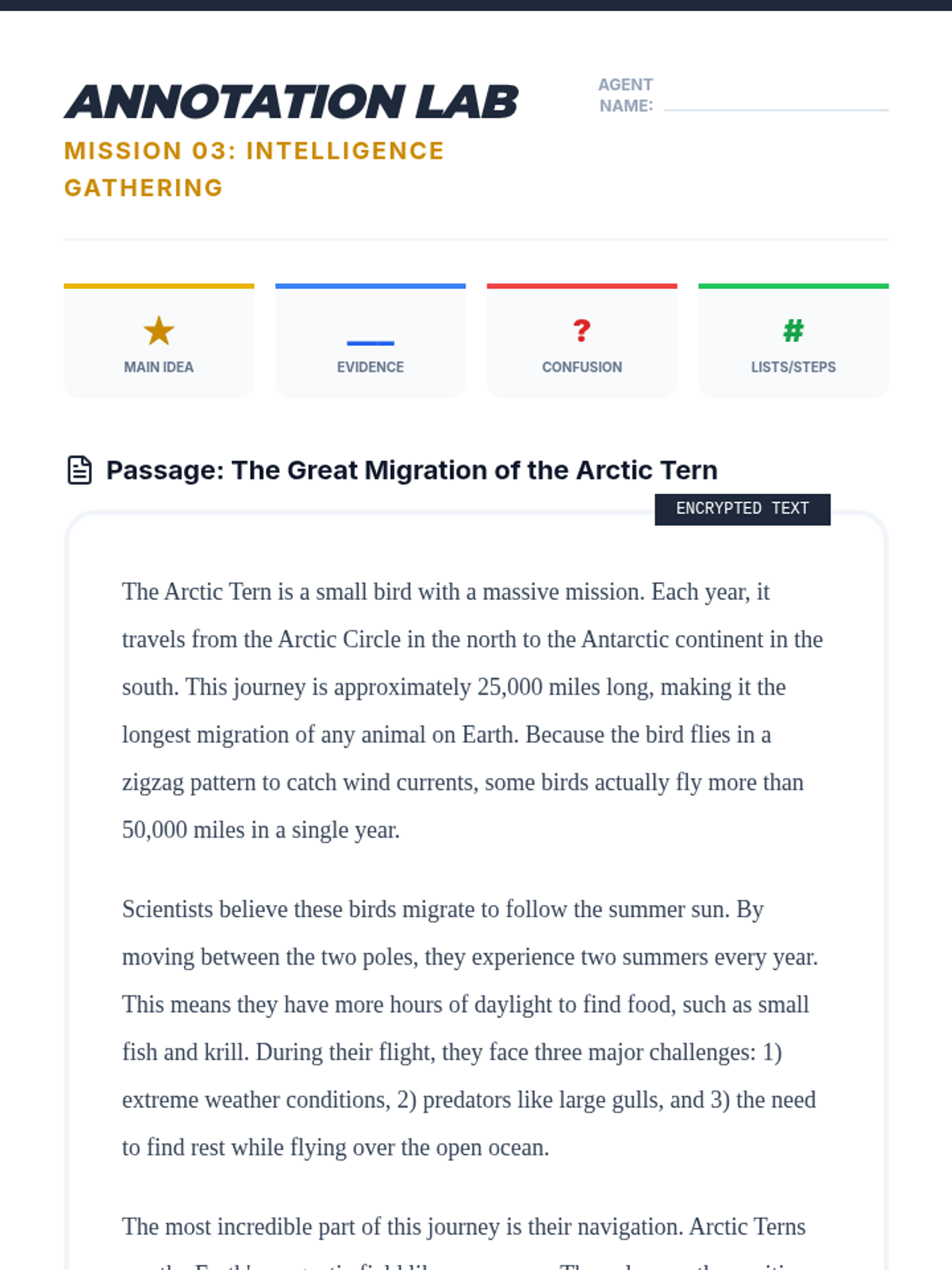
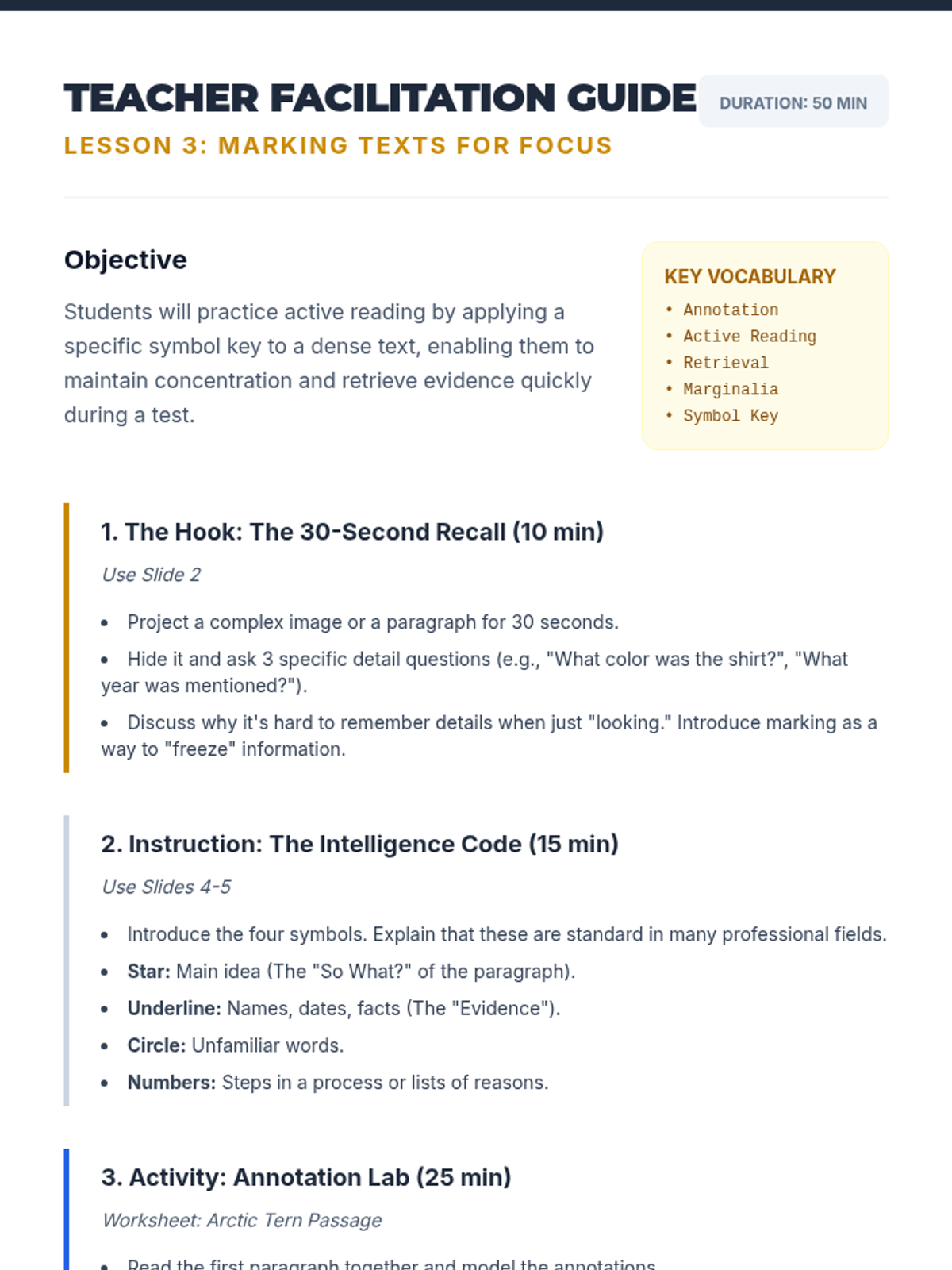
Active reading strategies for testing, focusing on specific annotation systems that help maintain focus and allow for quick evidence retrieval.
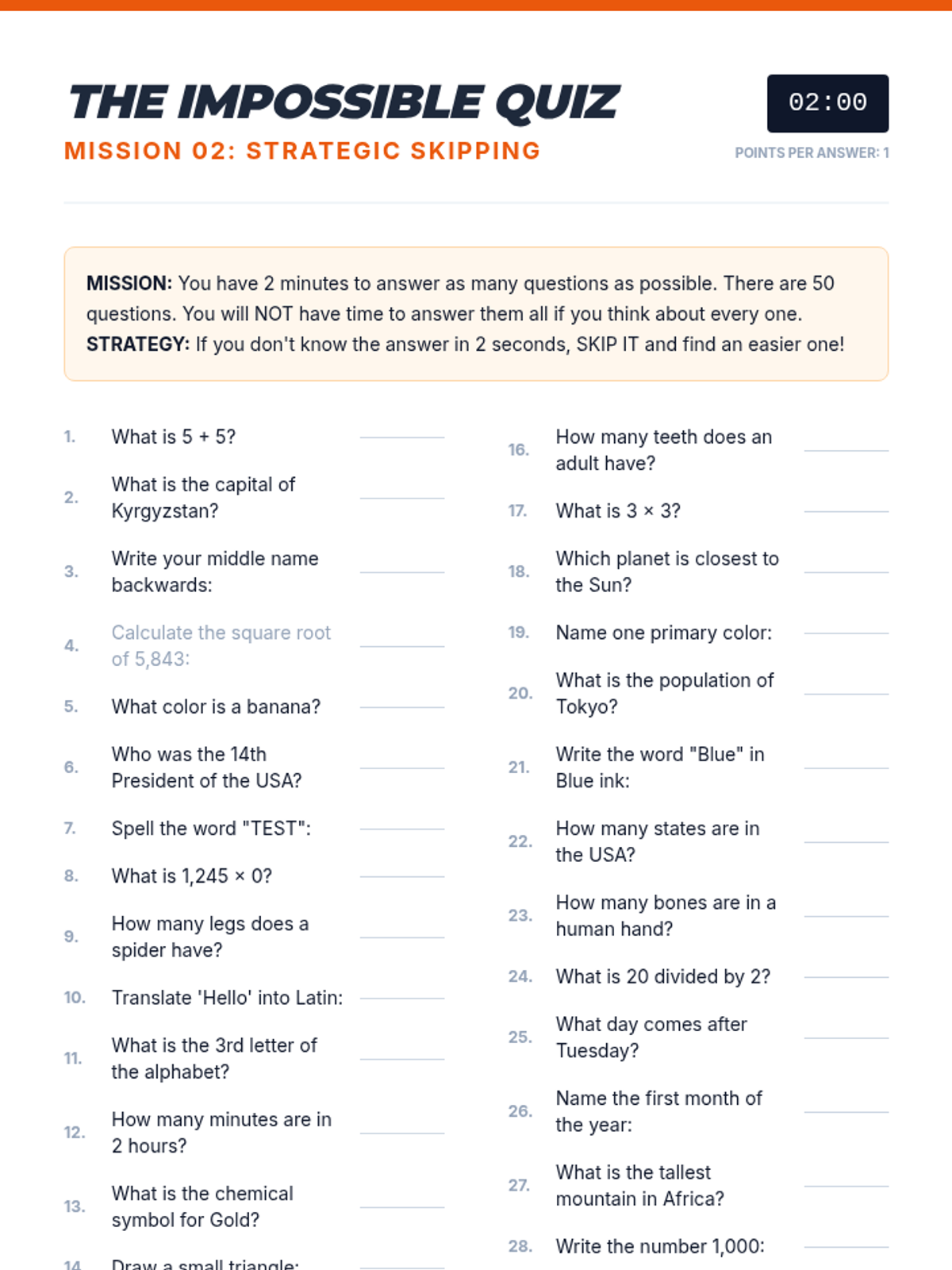
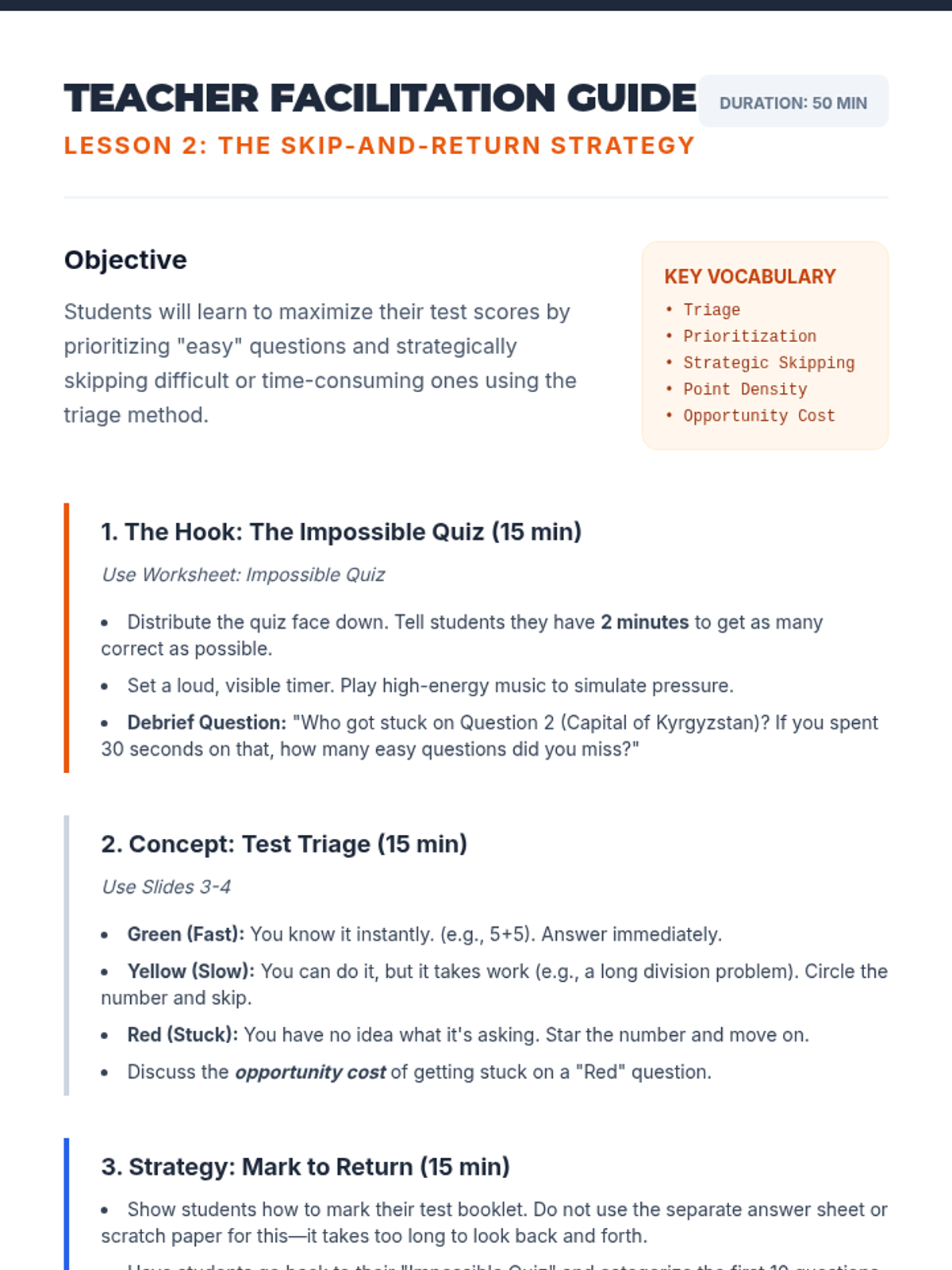
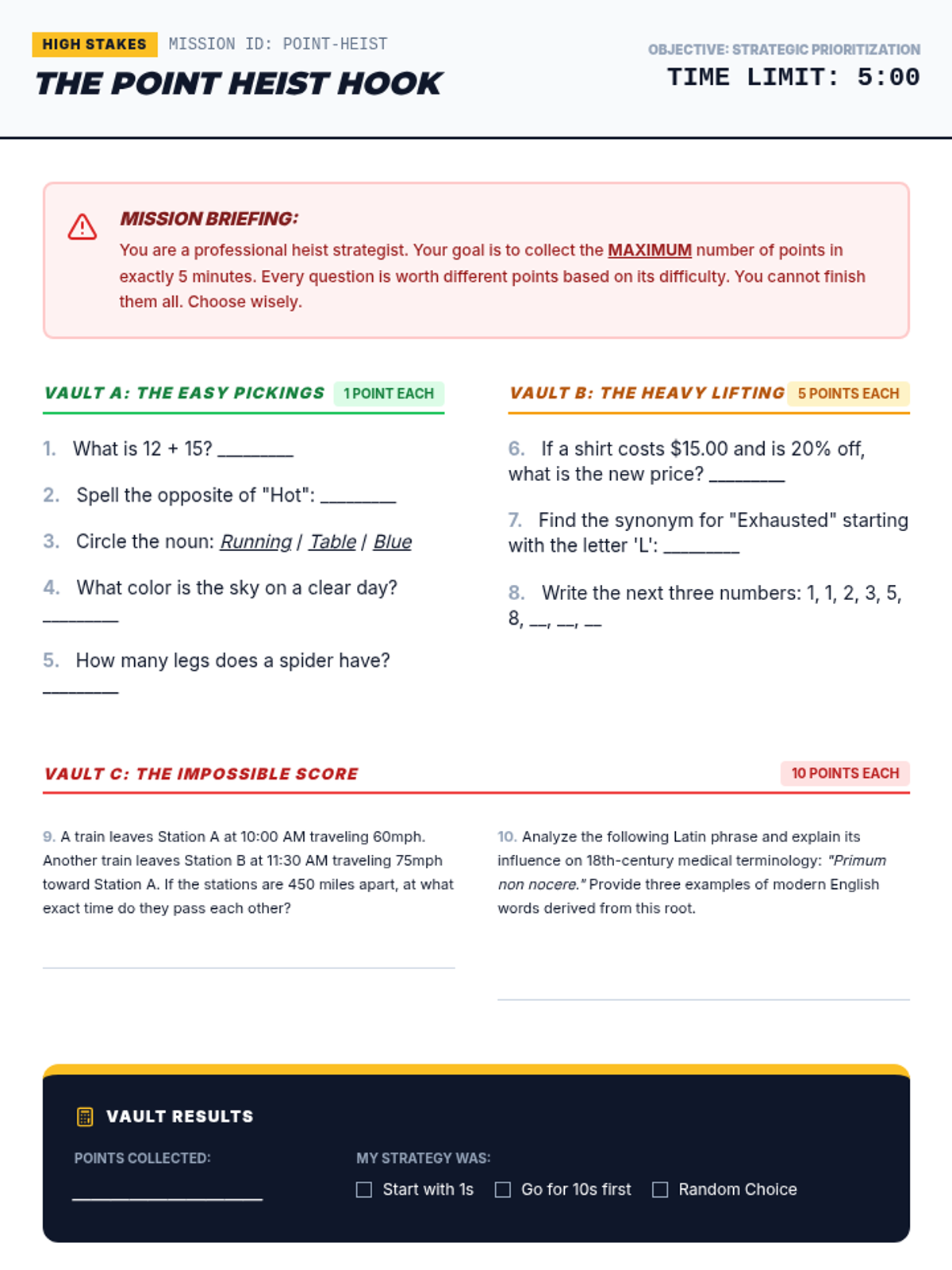
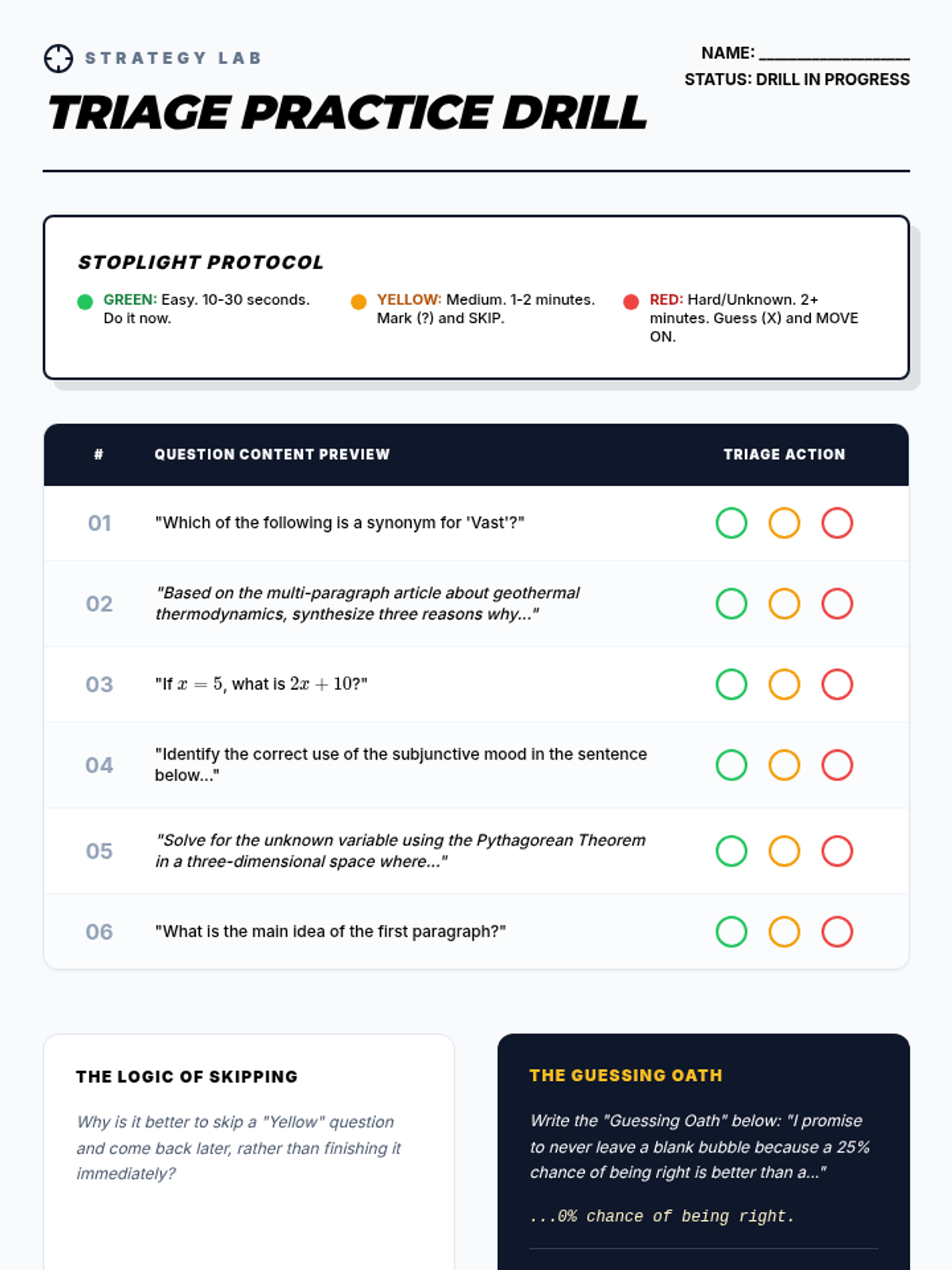
Students learn the 'triage' method for tests, identifying which questions to answer immediately and which to 'skip and return' to maximize points.
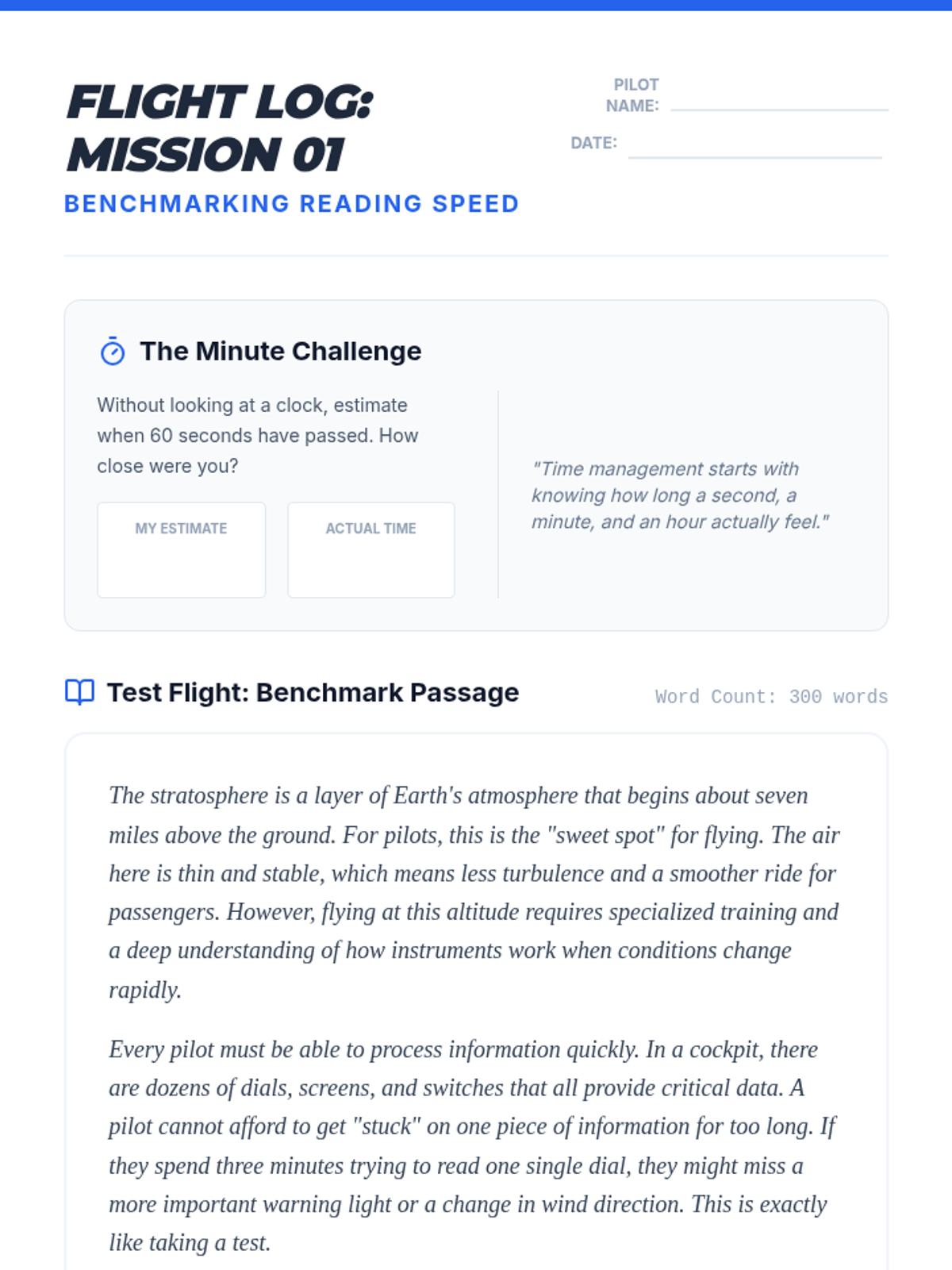
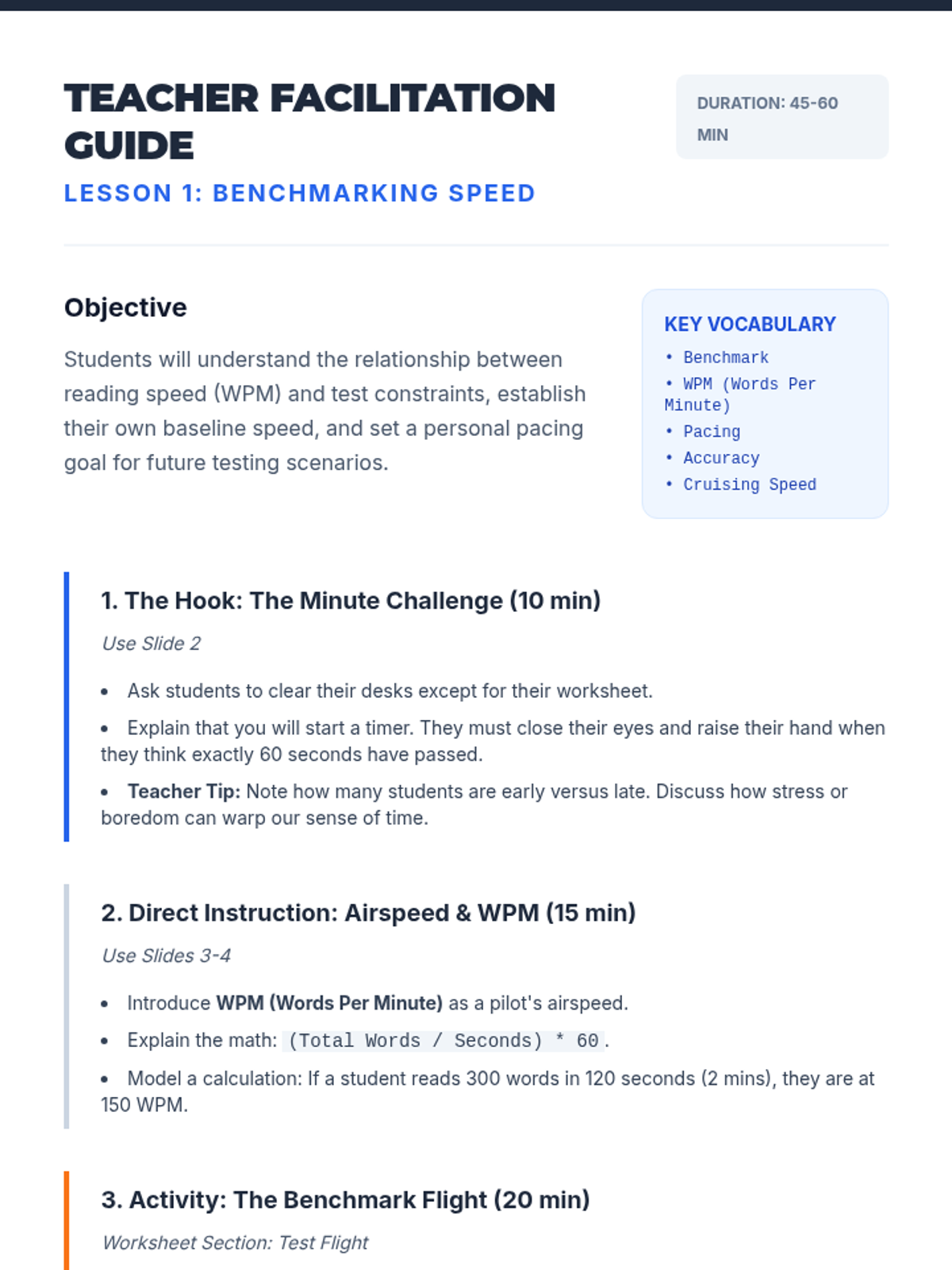
Students establish a baseline for their reading speed and understand how it relates to test time constraints. They learn to calculate Words Per Minute (WPM) and set realistic pacing goals.
Focuses on the concept of opportunity cost through role-playing scenarios, teaching students to analyze the value of what is given up when making choices.
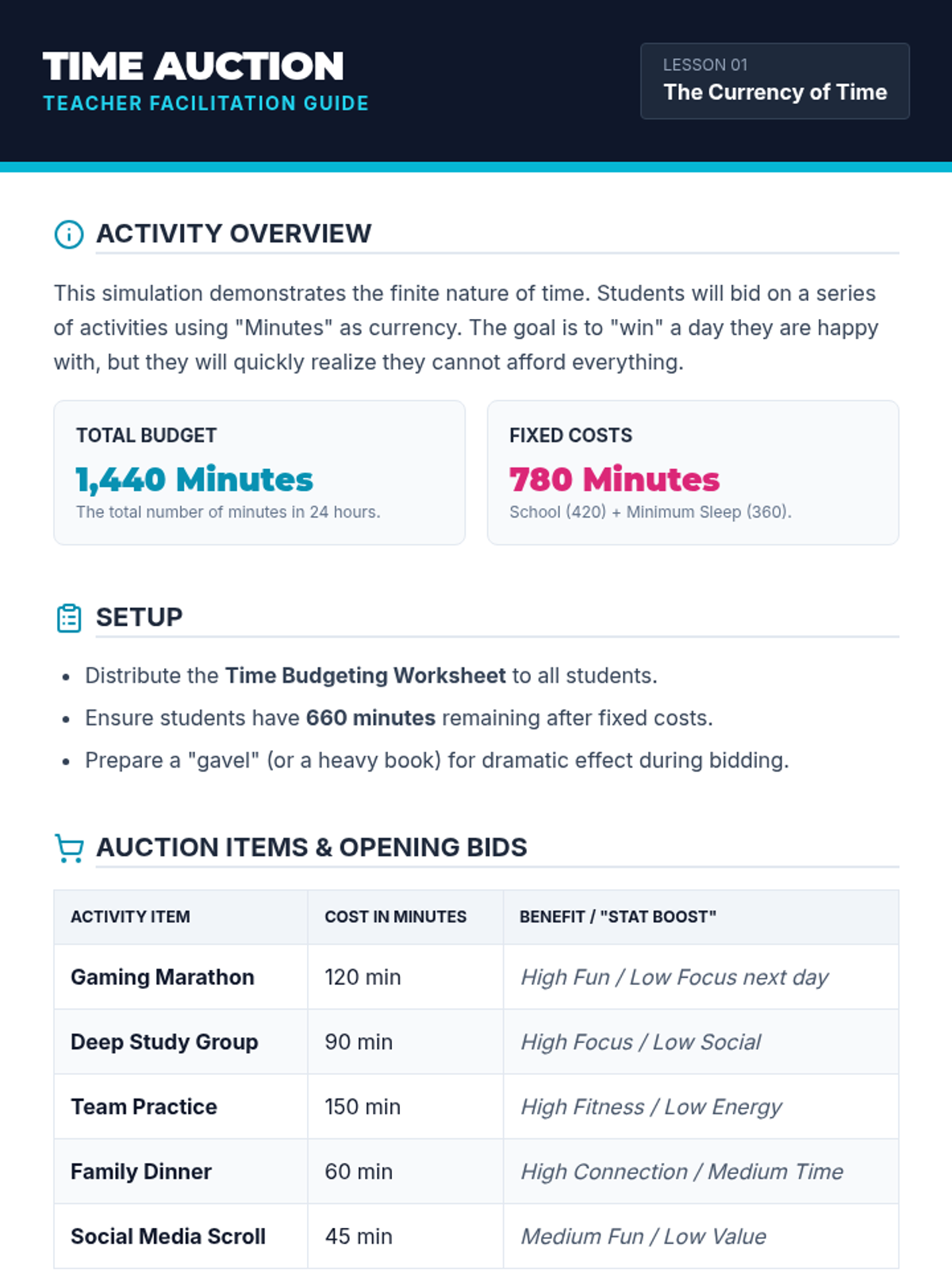
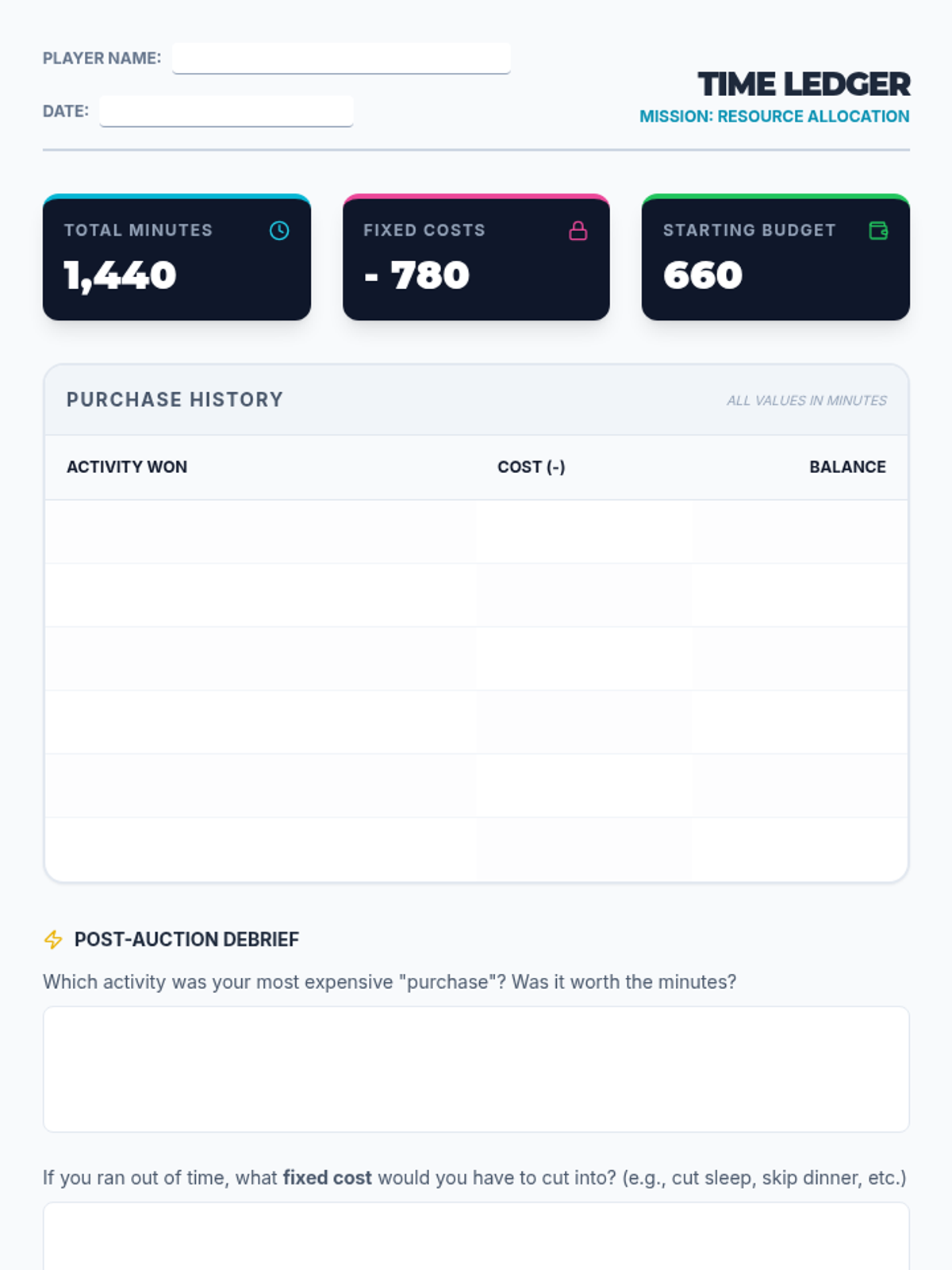
Introduces time as a finite currency through a game economy where students 'buy' activities, establishing the foundational constraint of resource management.
A realistic mock exam simulation followed by a deep-dive analysis of strategy application and pacing performance.
Focuses on physical and mental reset techniques to manage testing anxiety and maintain focus during high-pressure environments.
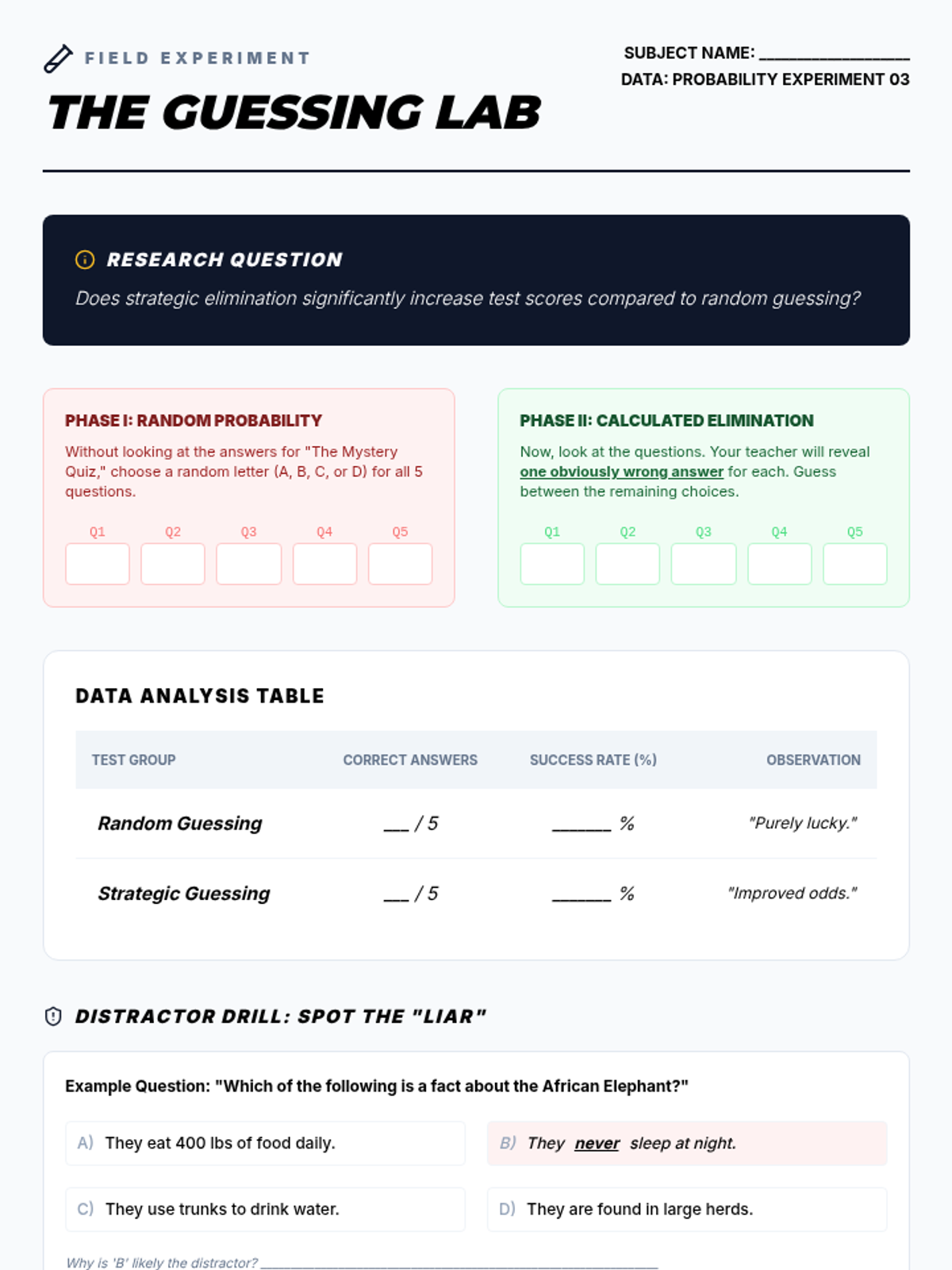
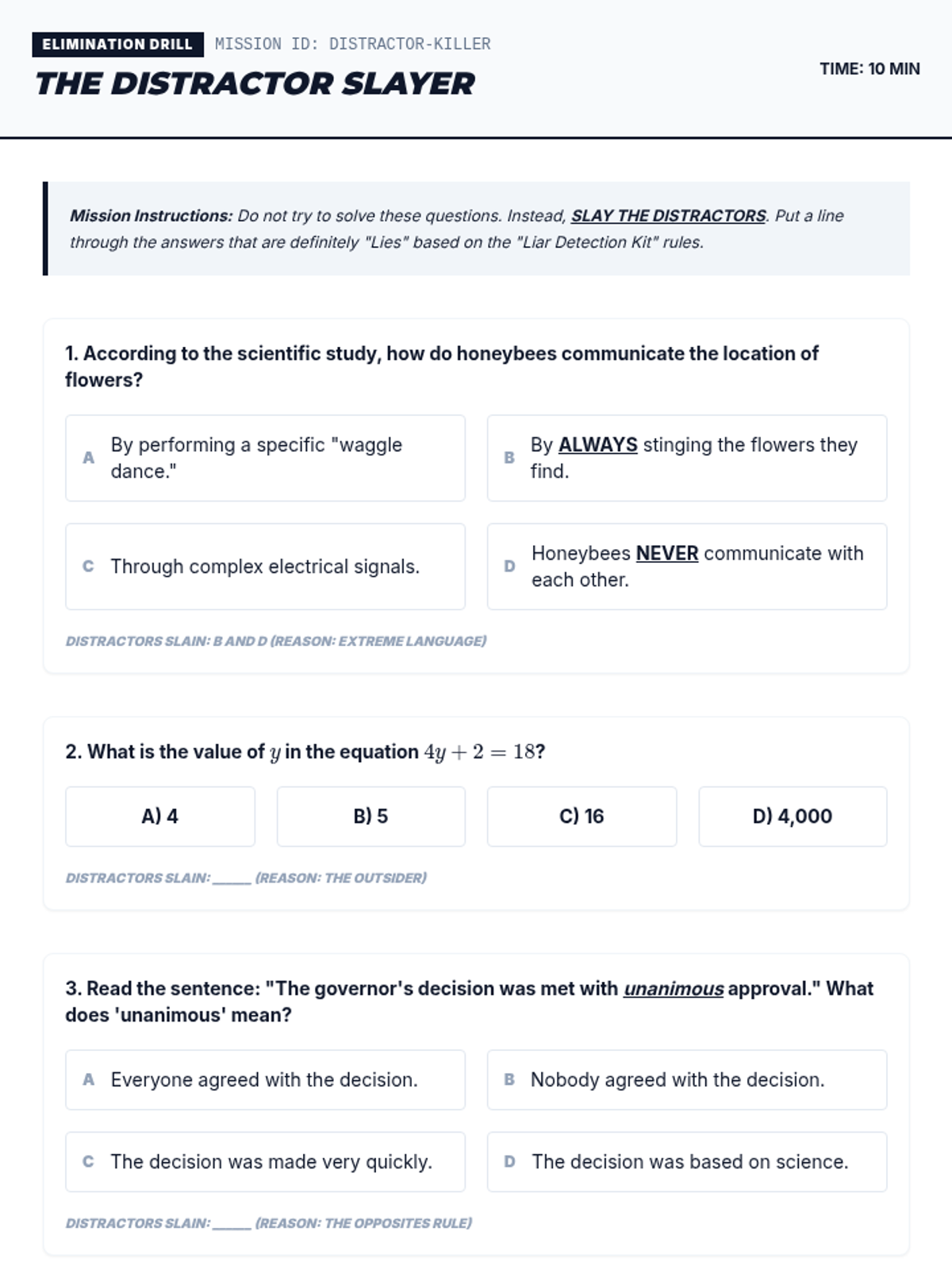
Students explore the statistics of educated guessing and practice eliminating distractors to increase their probability of success.
Learners master the 'Triage' method to prioritize easy questions and strategically skip difficult ones to maximize score potential.
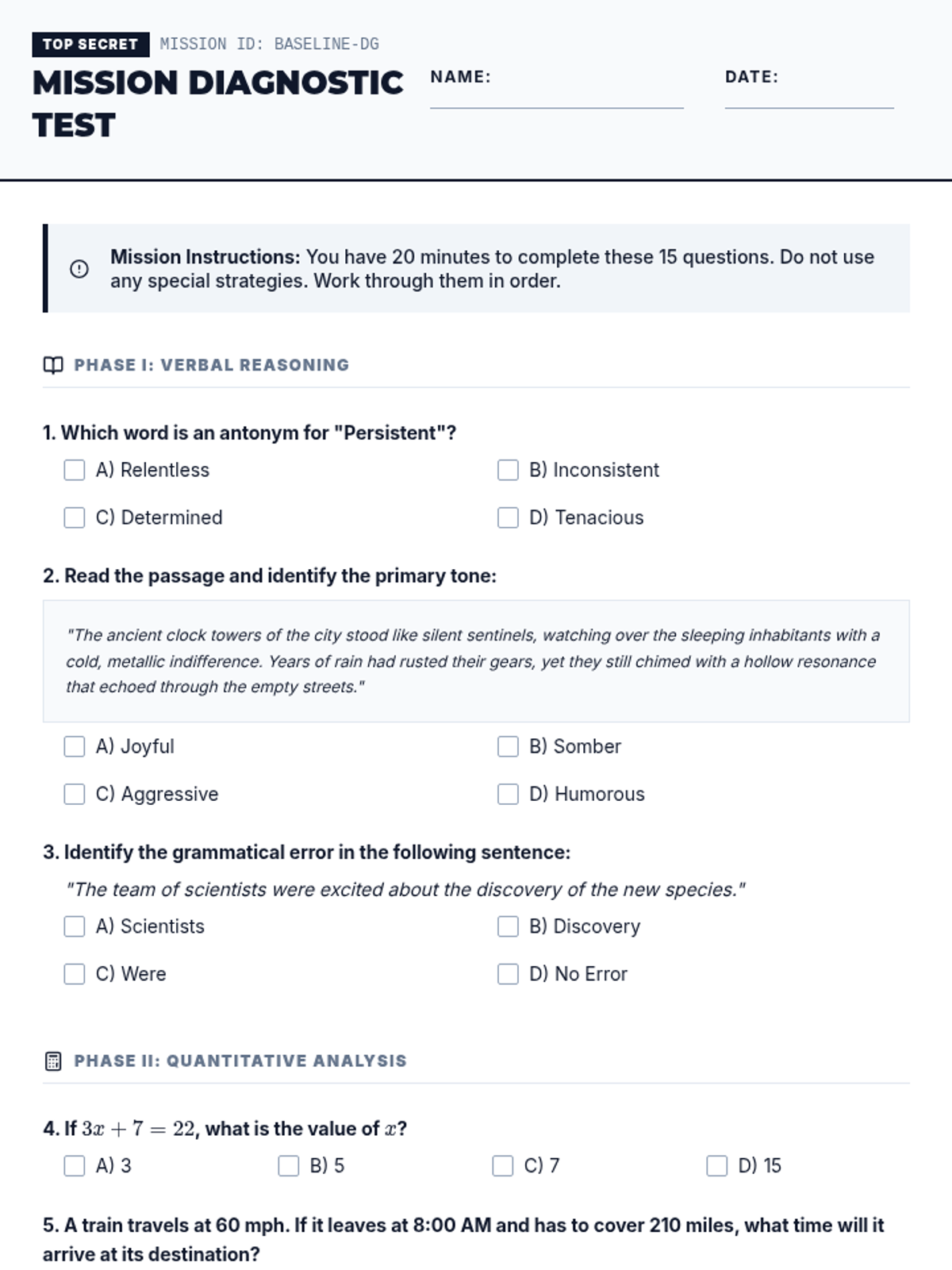
Students establish their natural testing rhythm through a diagnostic simulation and reflect on their baseline pacing and anxiety triggers.
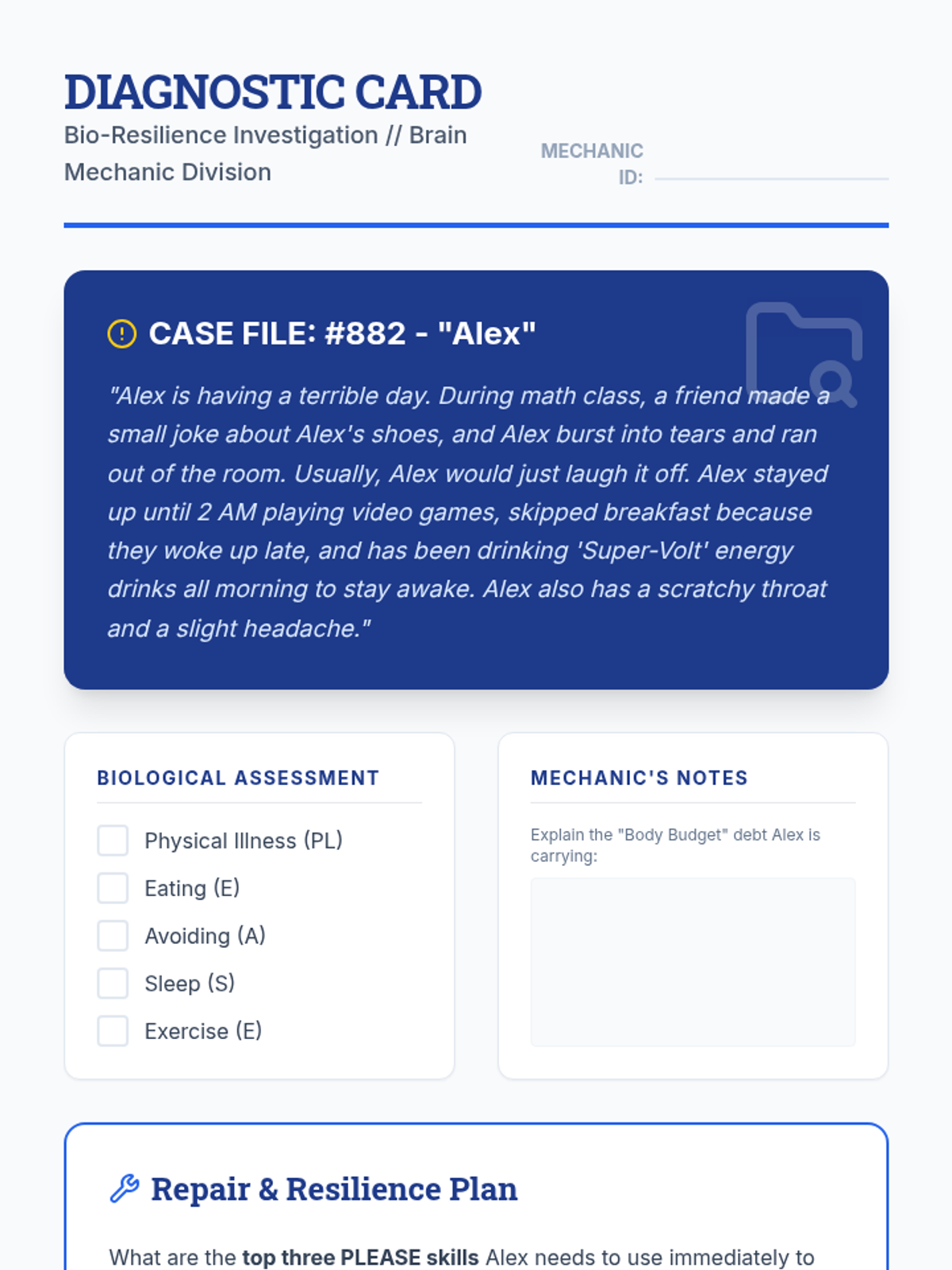
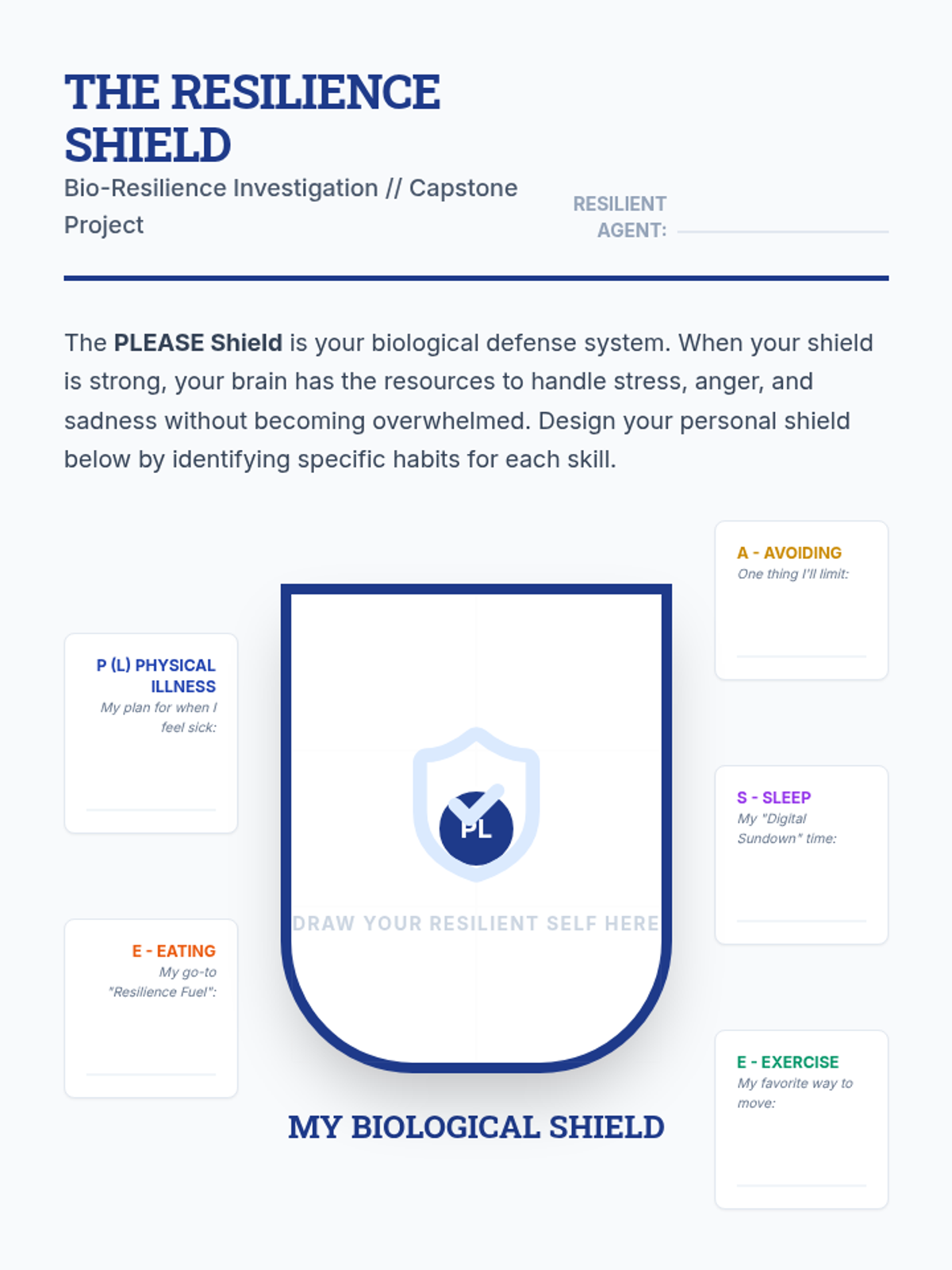
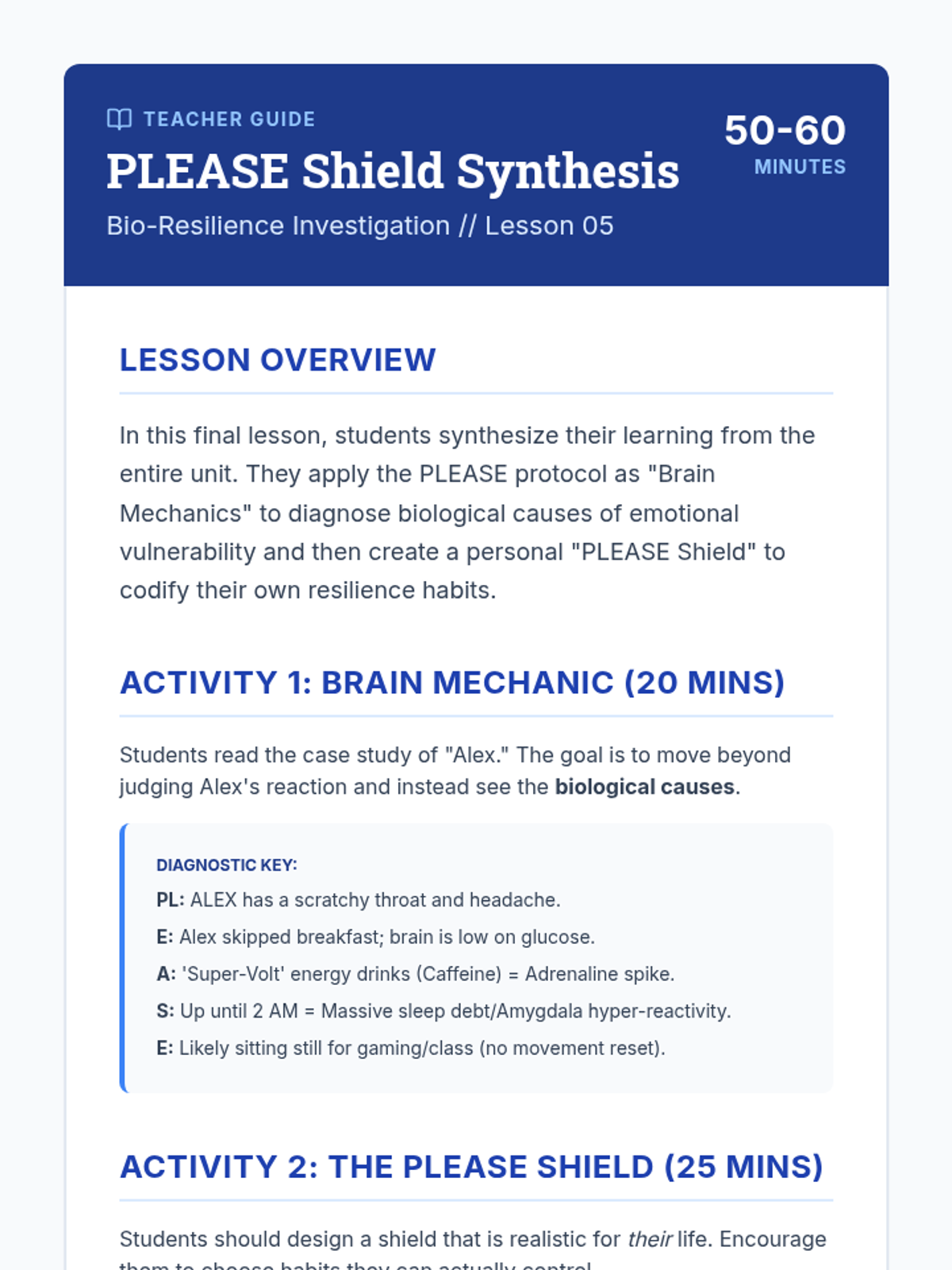
Students bring together all elements of the PLEASE protocol to create a scientific diagram and act as 'Brain Mechanics' to diagnose emotional vulnerability in fictional scenarios.
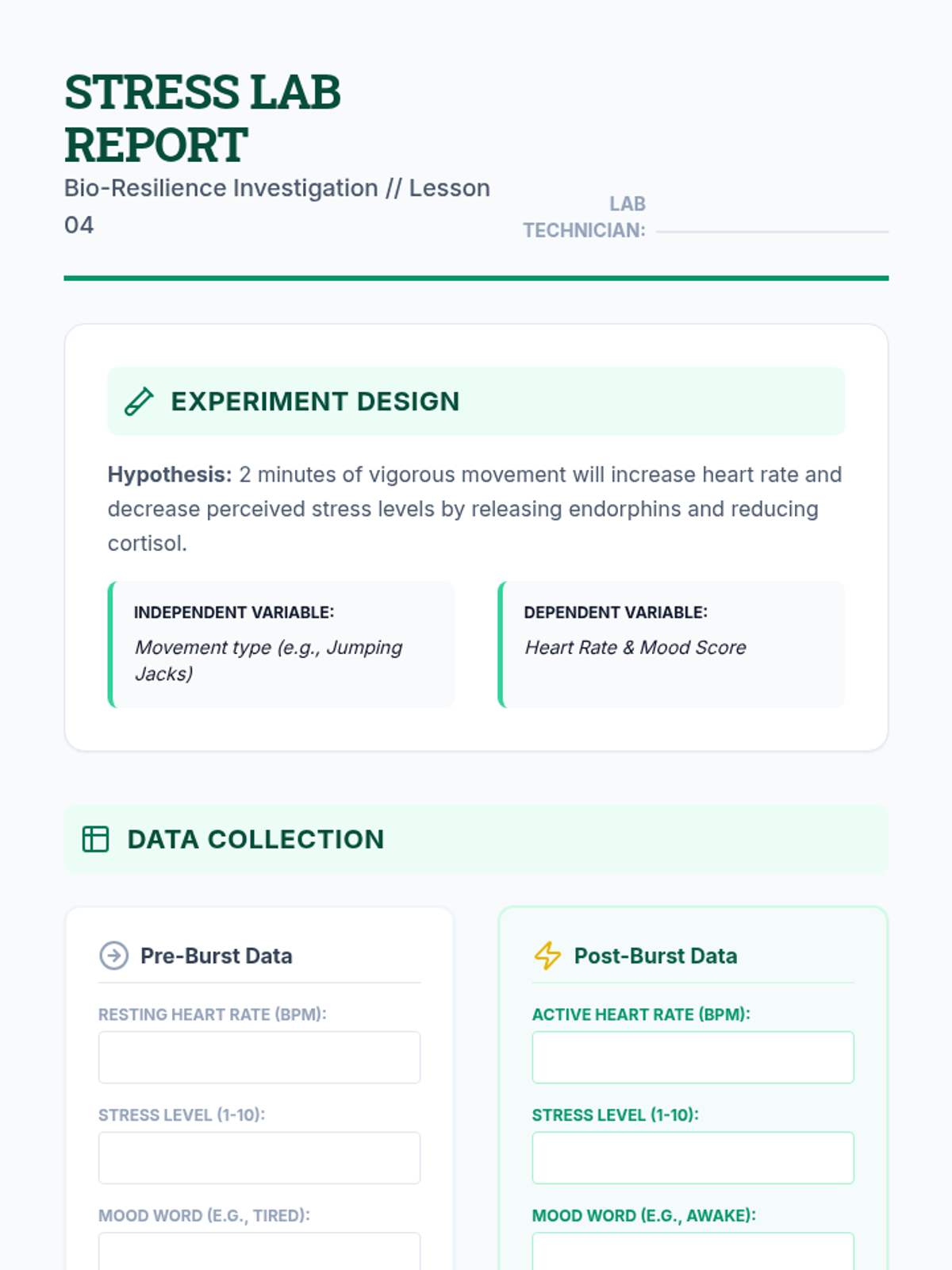
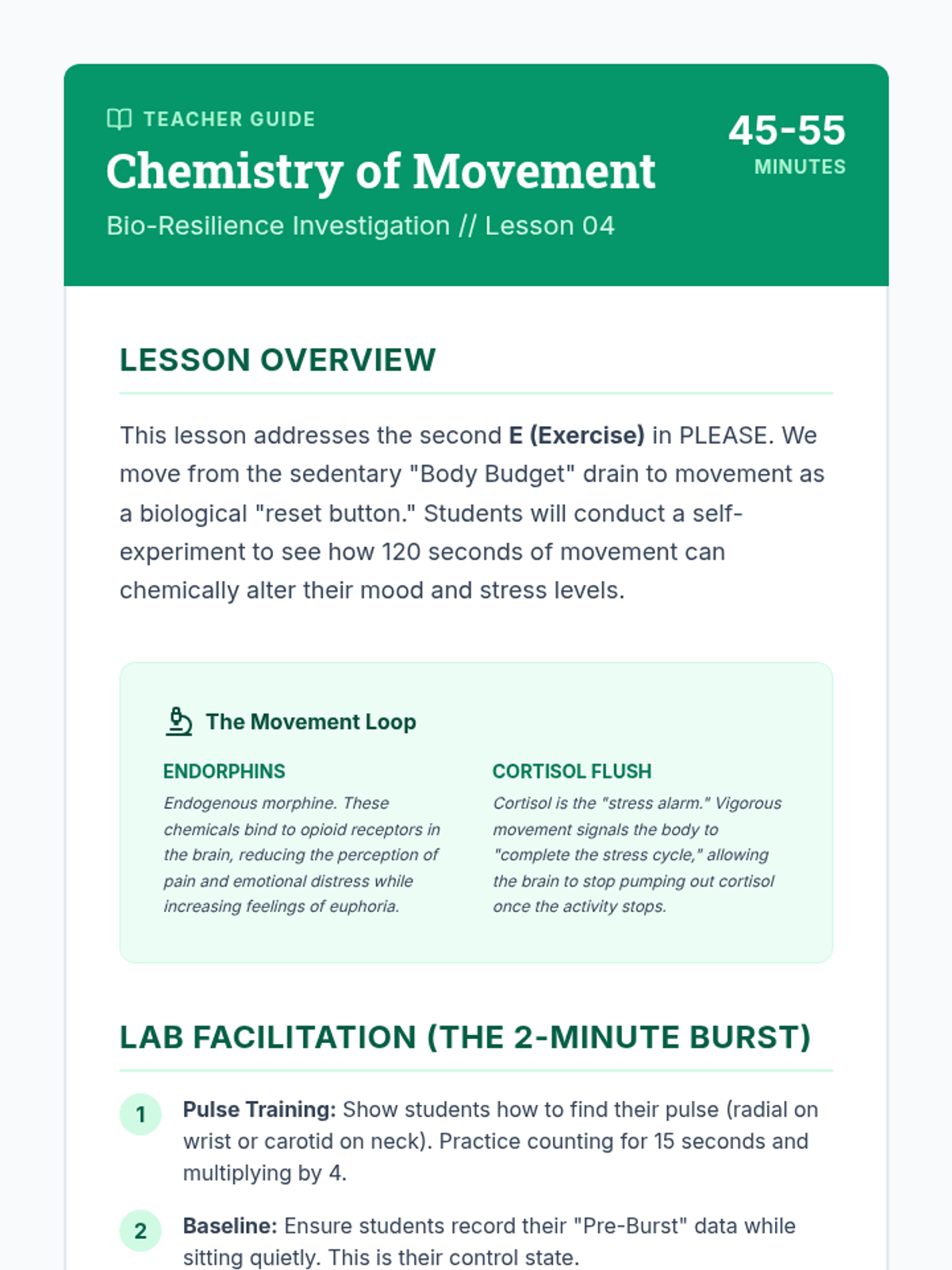
Students investigate the neurochemistry of exercise, specifically how movement releases endorphins and reduces cortisol. They test short bursts of activity to measure immediate changes in perceived stress levels.
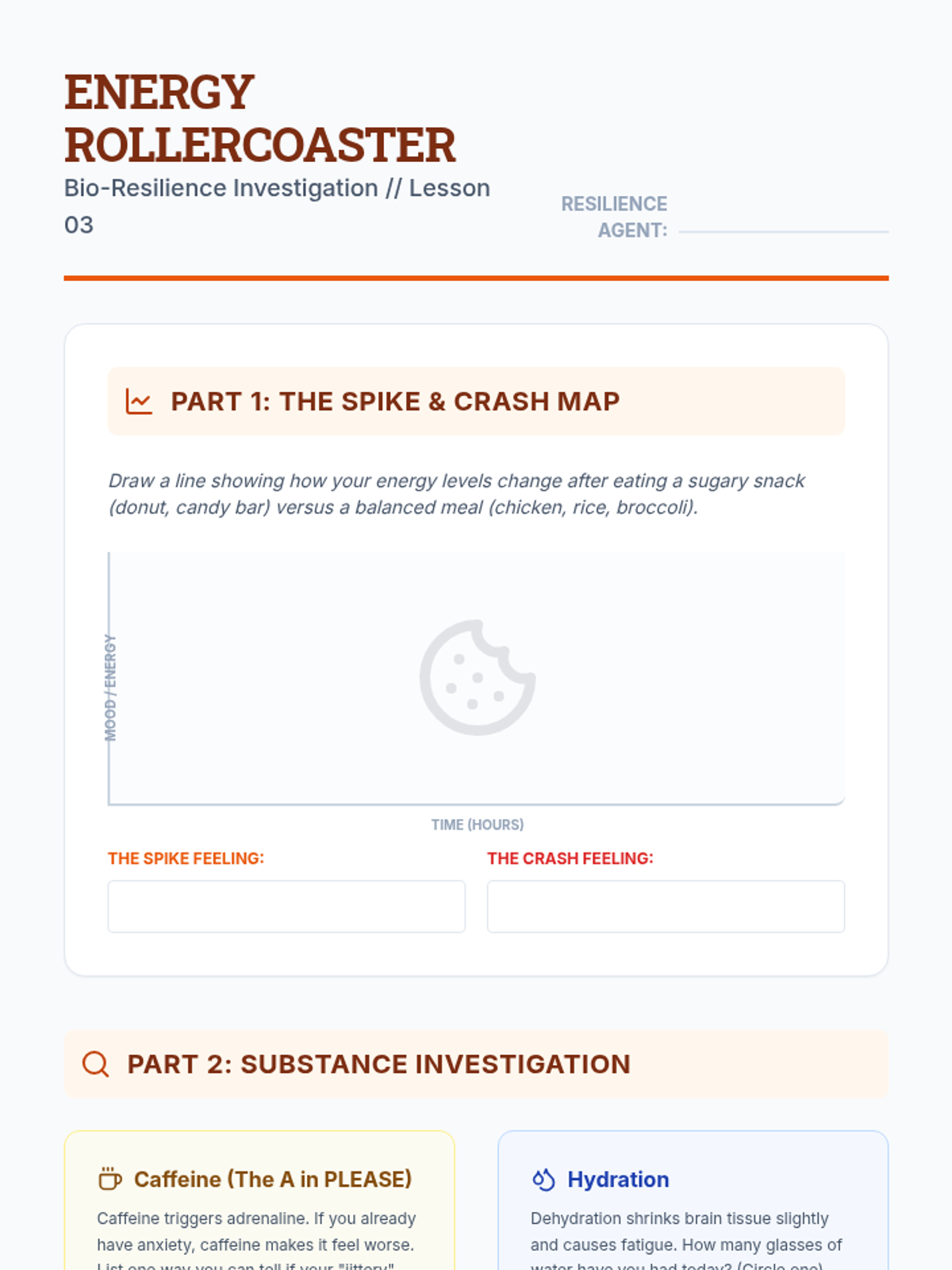
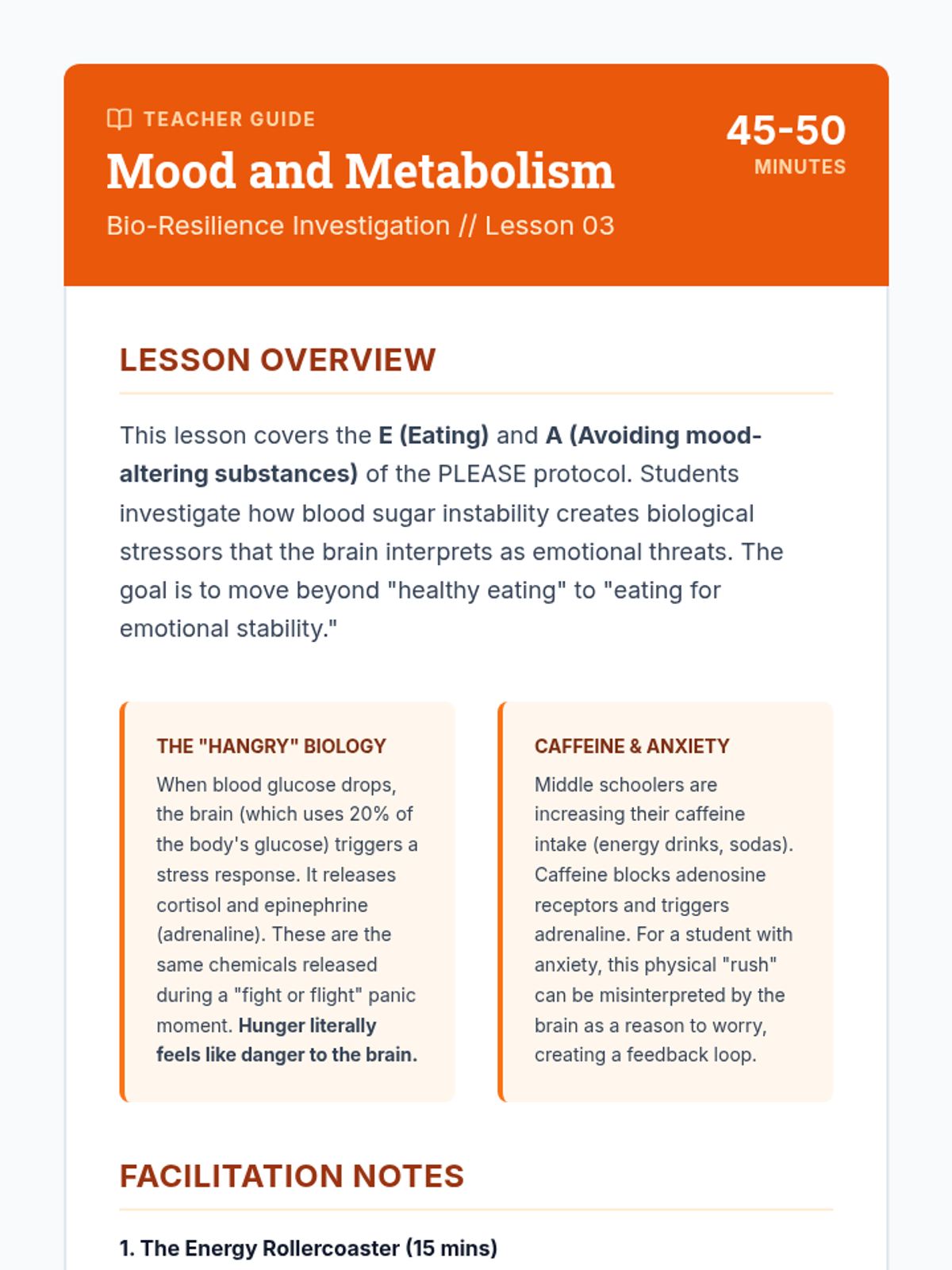
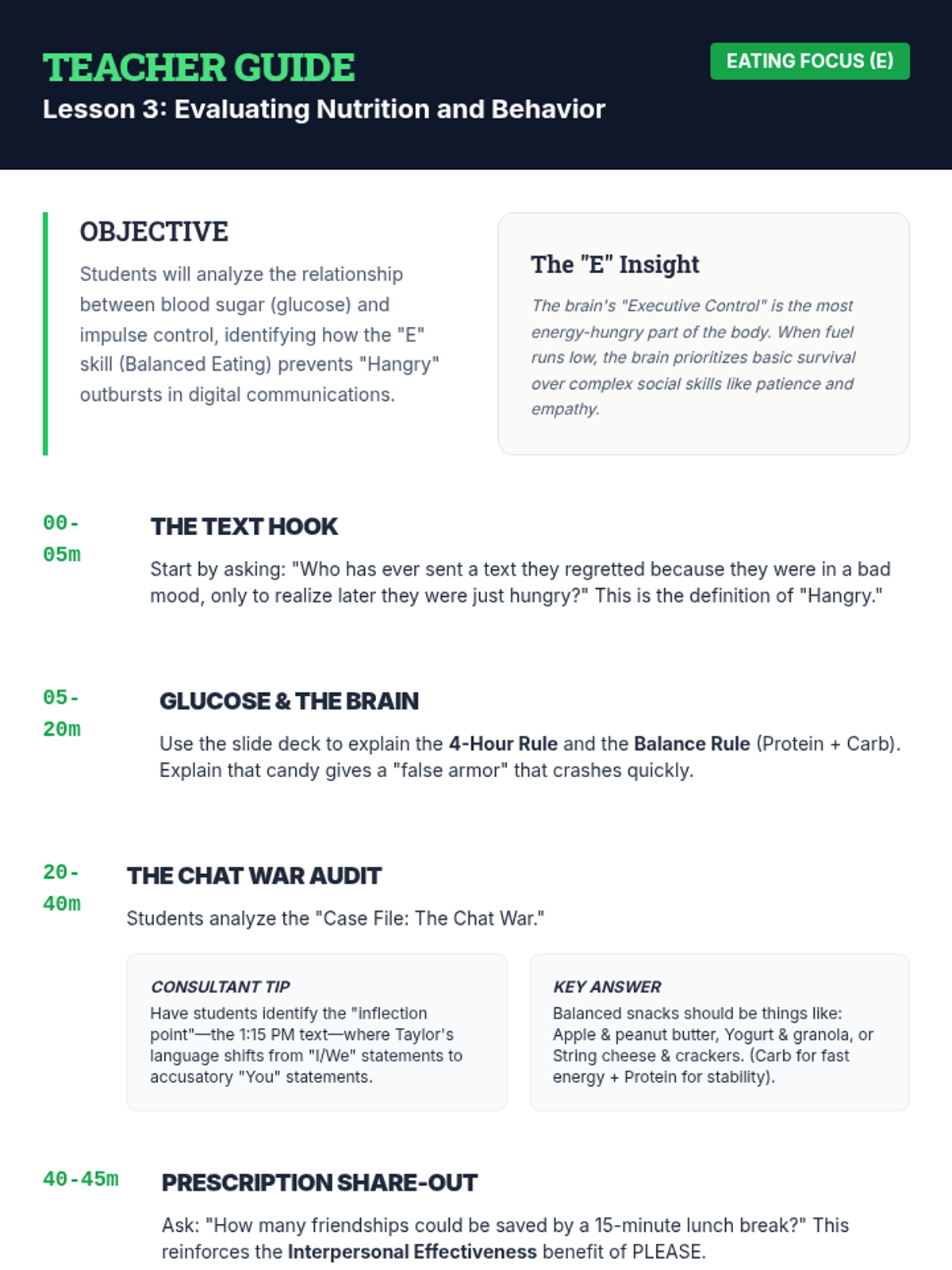
Focusing on the 'E' (Eating) and 'A' (Avoiding) parts of PLEASE, students explore how blood sugar spikes and caffeine crashes mimic anxiety and irritability.
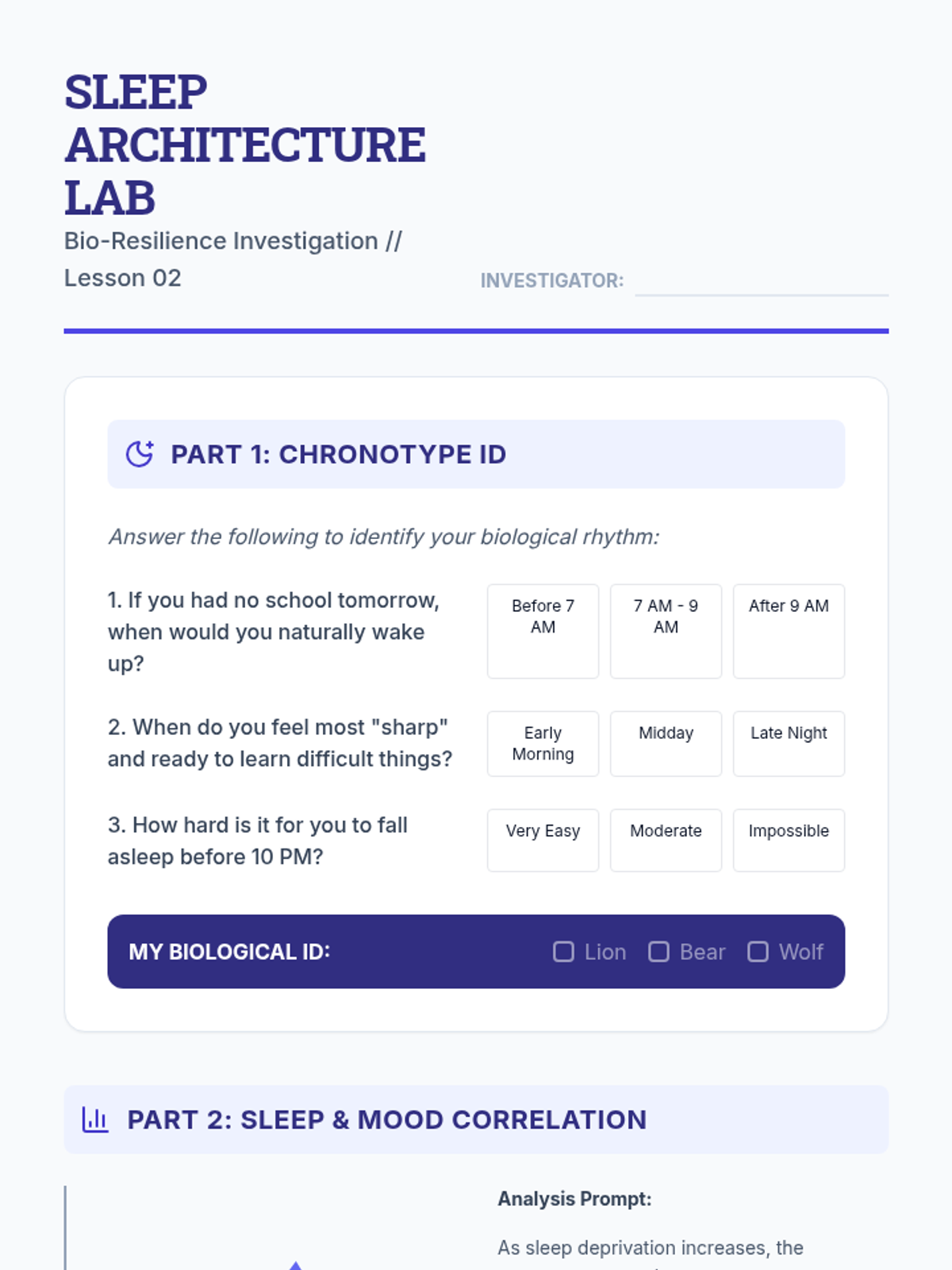
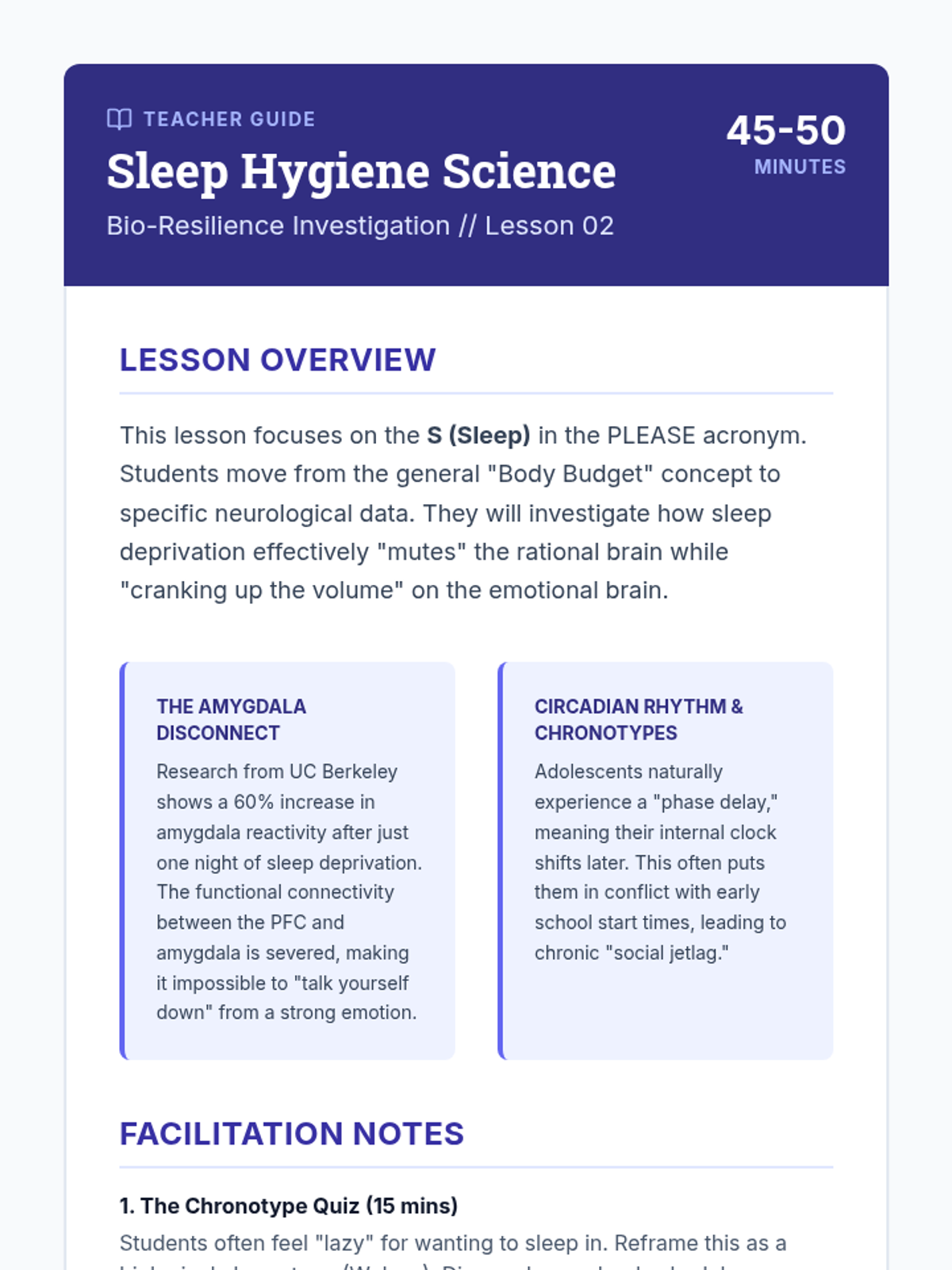
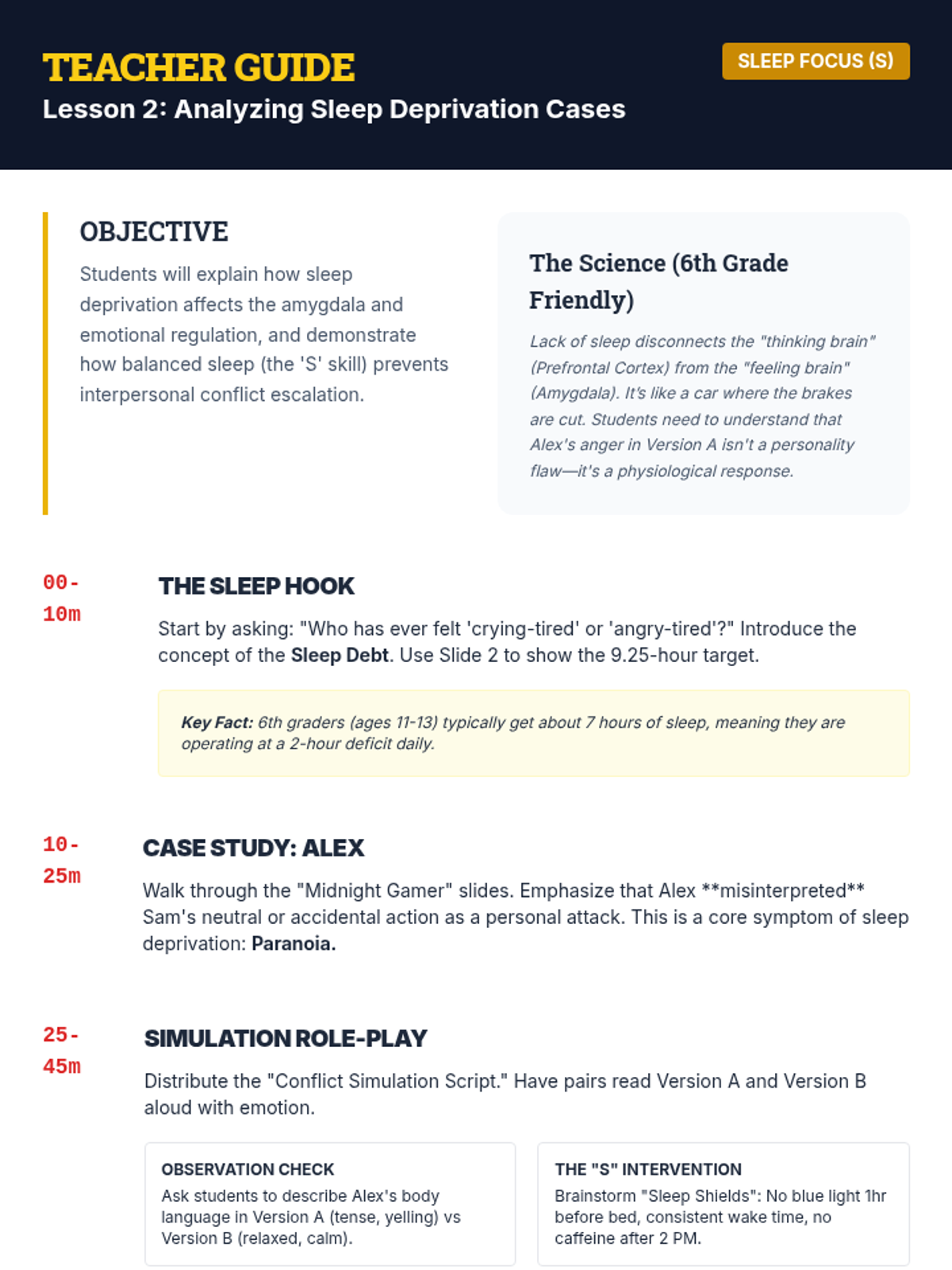
Students research the effects of sleep deprivation on the brain's emotional centers and analyze the biological necessity of sleep for resilience.
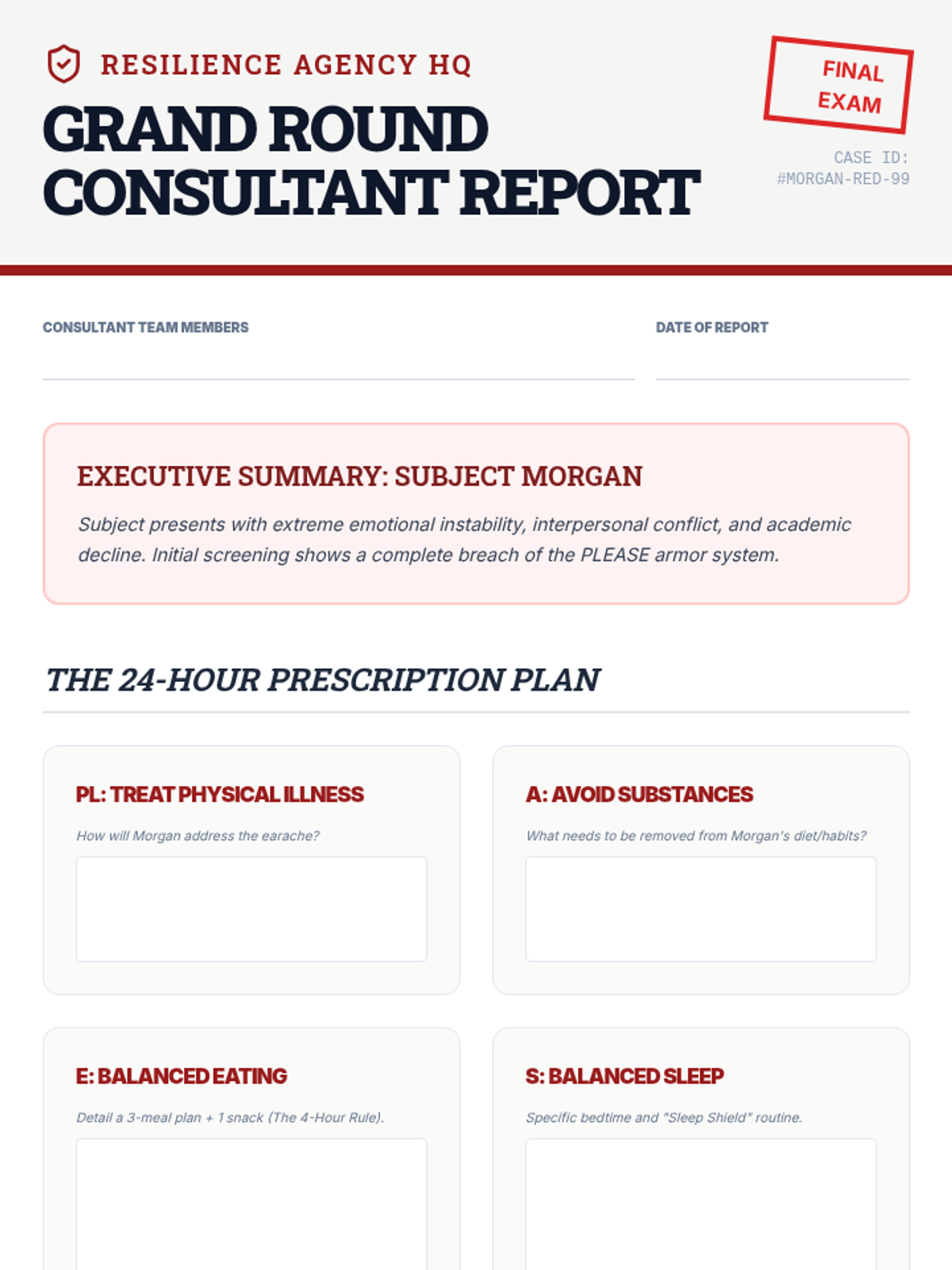
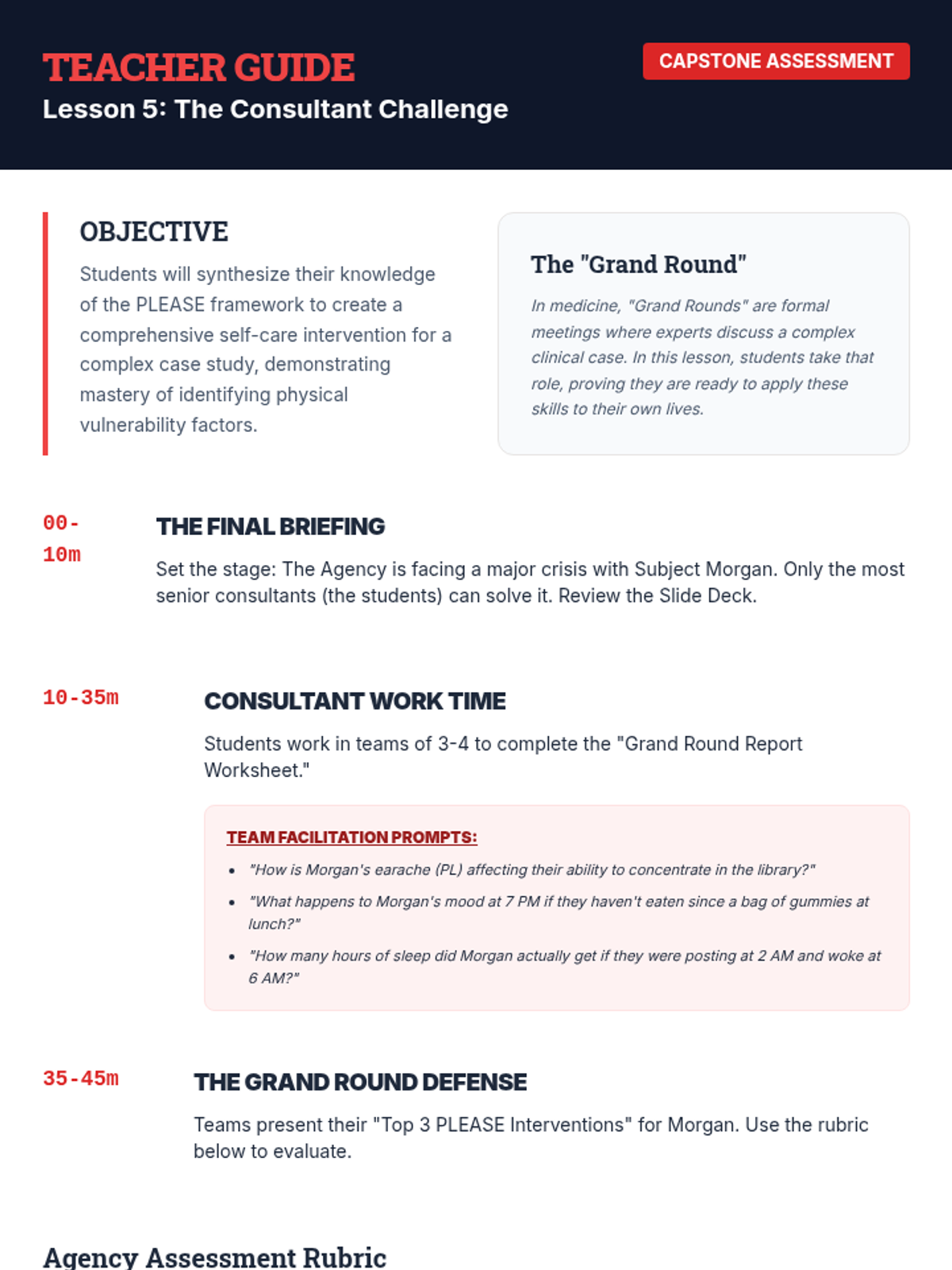
In a final 'Grand Round' challenge, student teams create a comprehensive PLEASE prescription for a complex behavioral case.
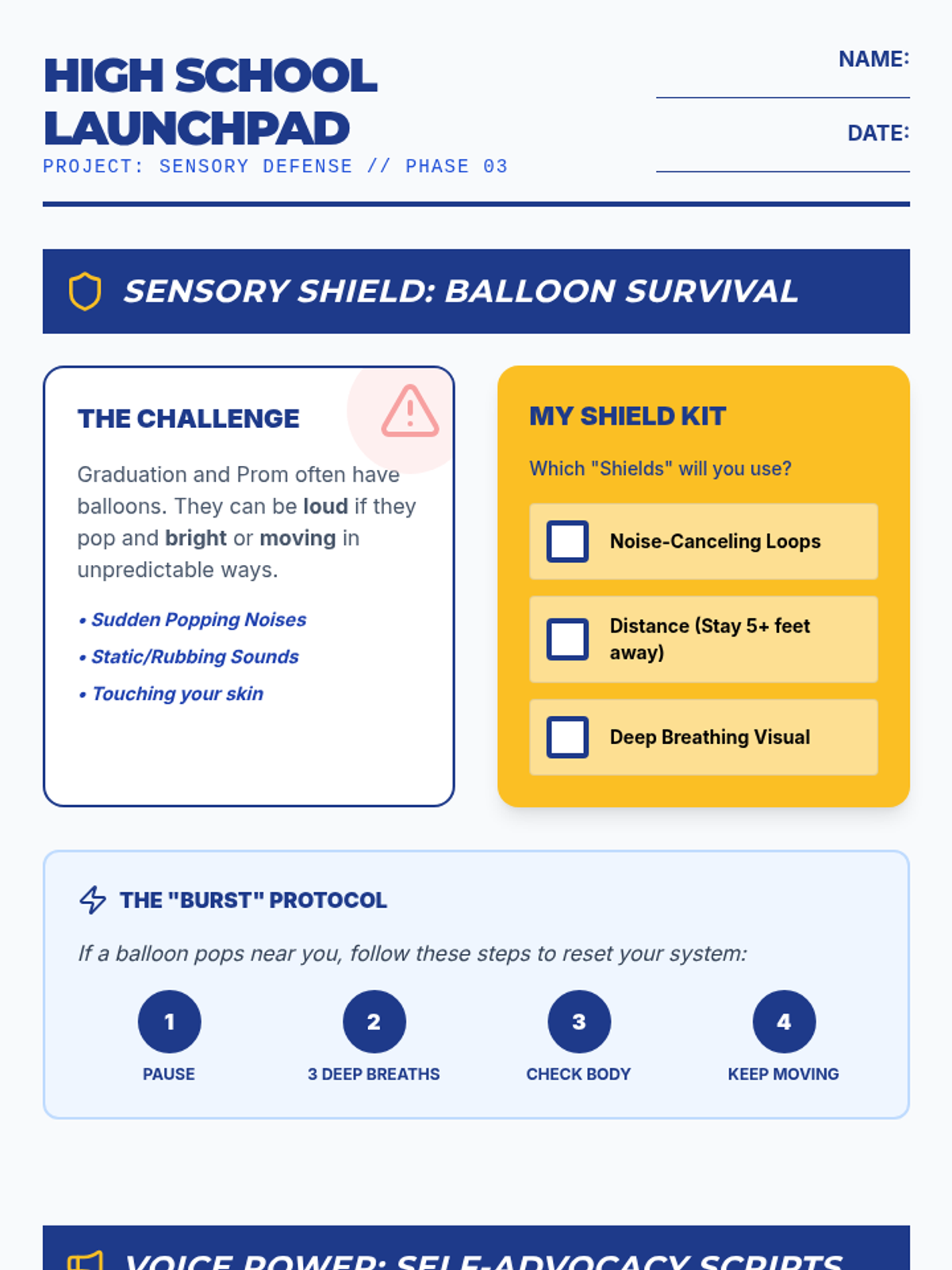
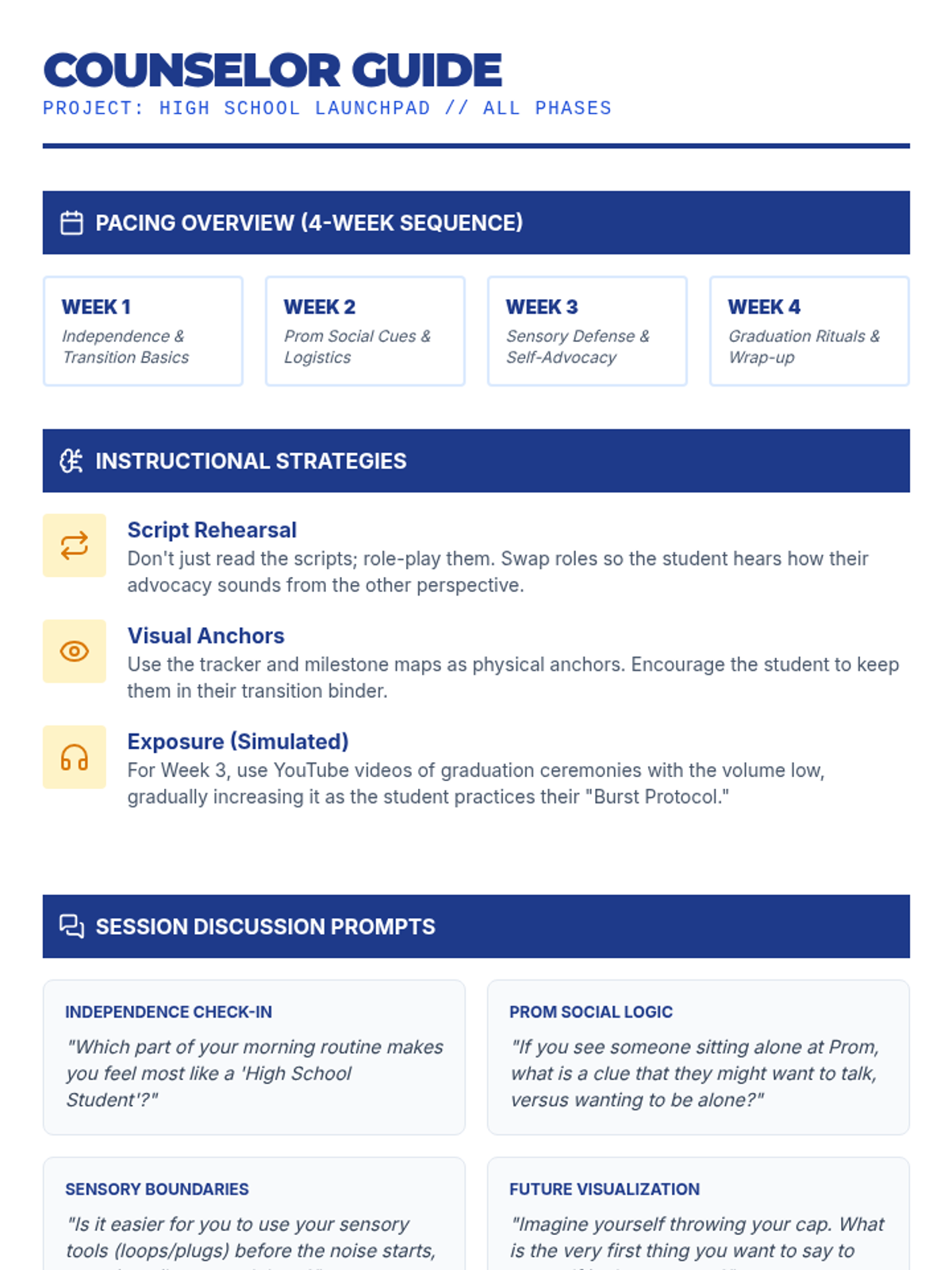
Strategies for managing sensory overload from balloons and loud environments, plus scripts for self-advocacy during formal events.
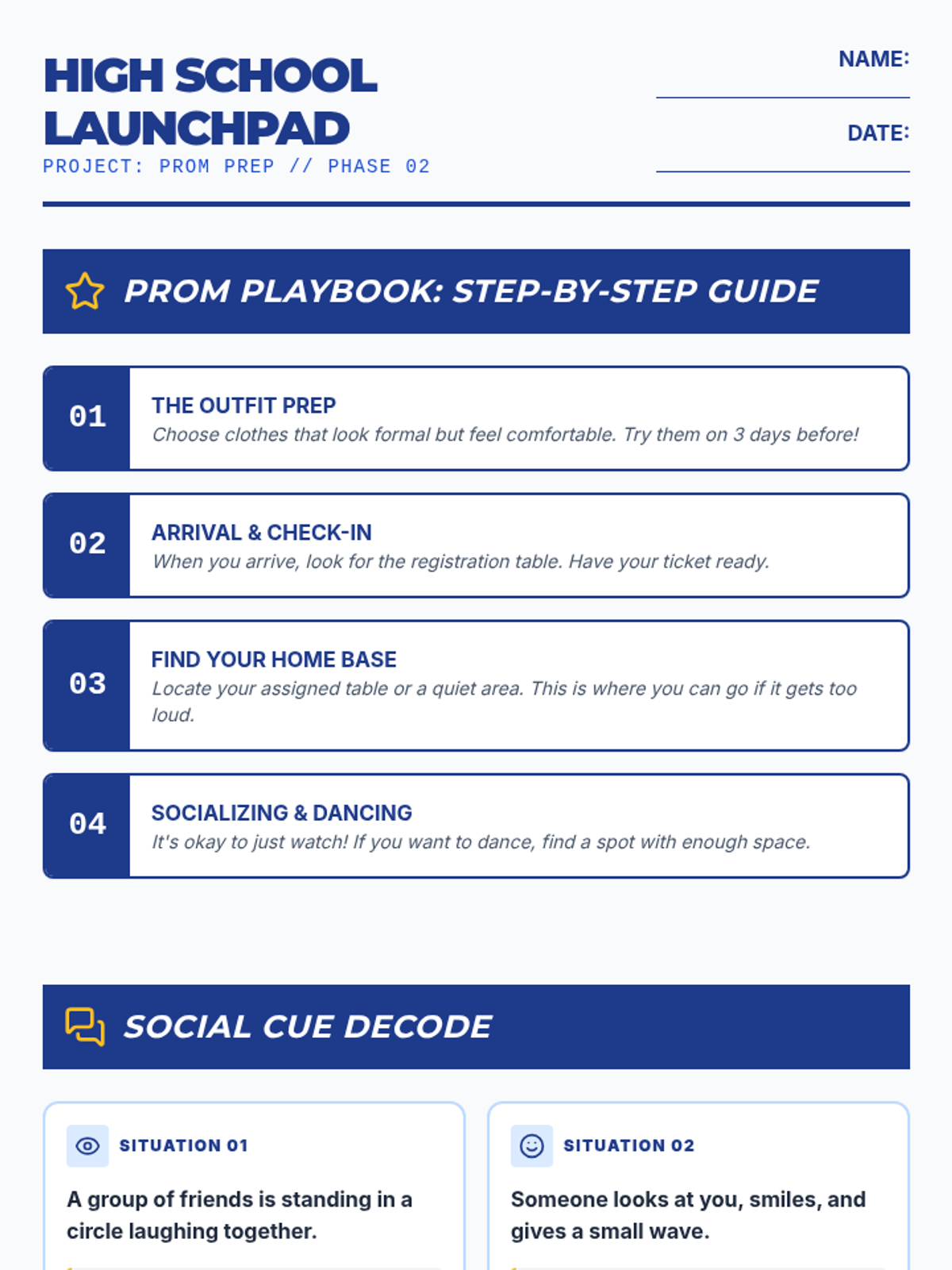
A deep dive into the social expectations and logistics of Prom, including social cue practice and a step-by-step preparation guide.
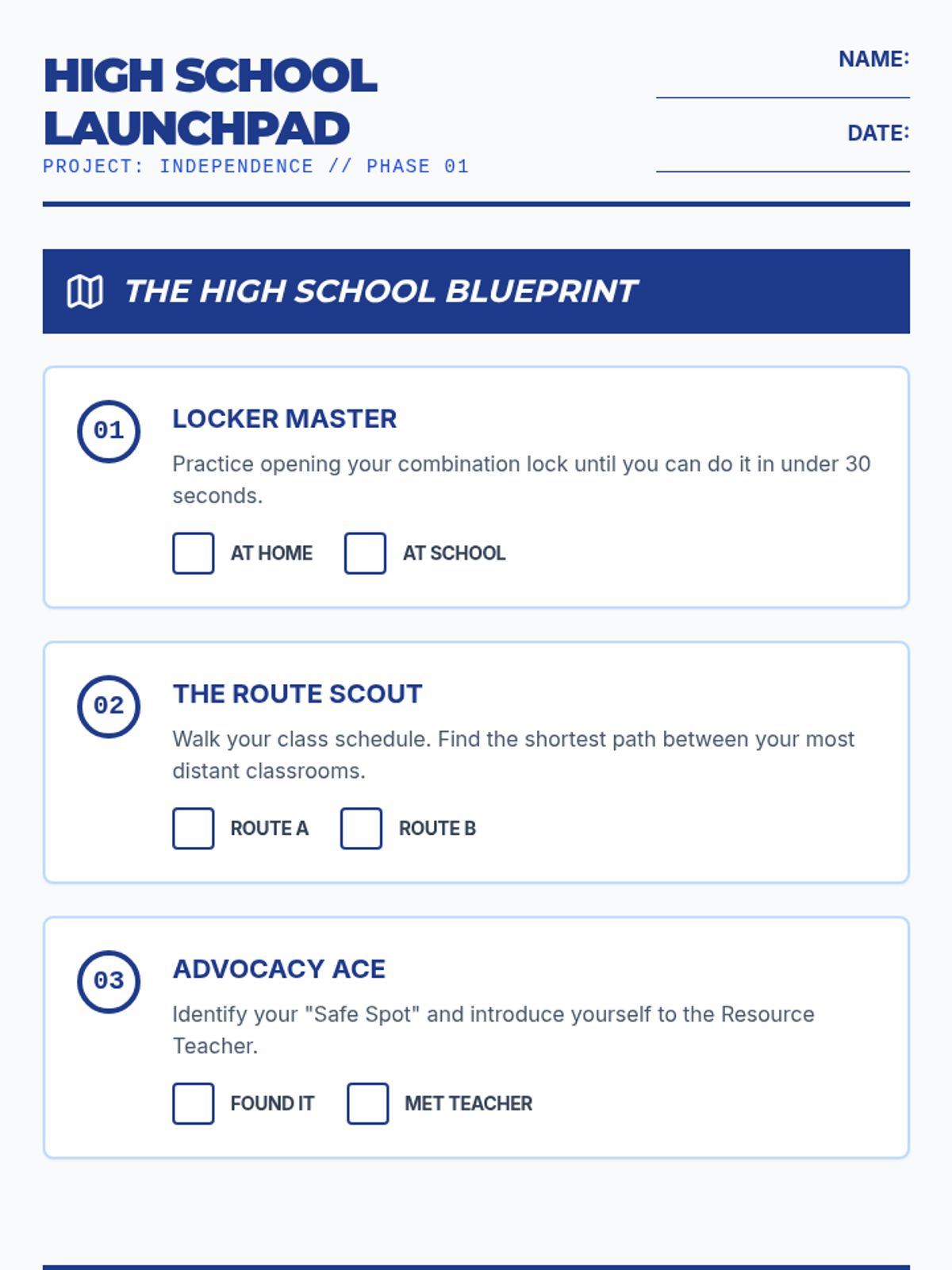
Focuses on building daily habits for independence and providing a visual roadmap for the transition from middle to high school.
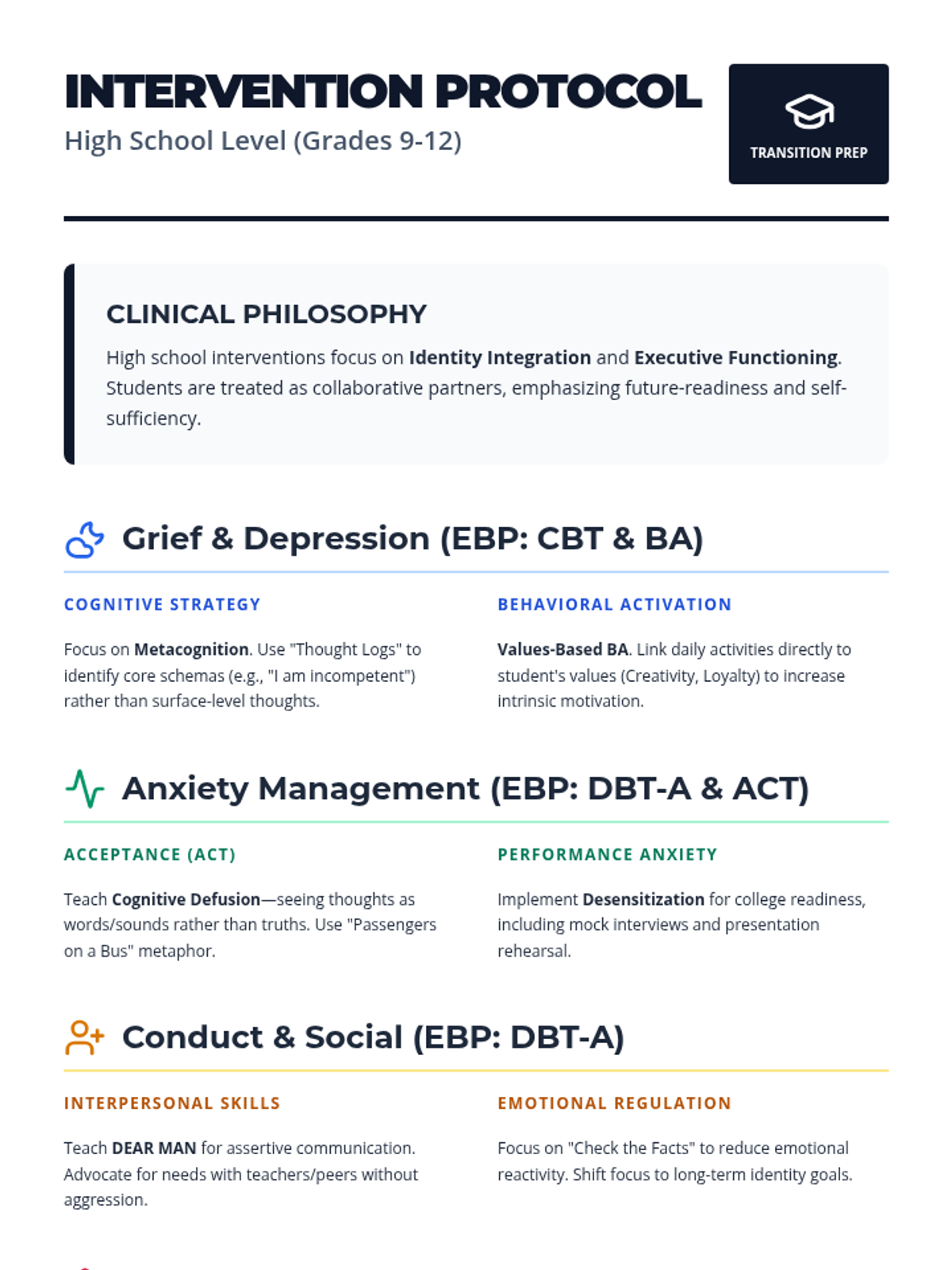
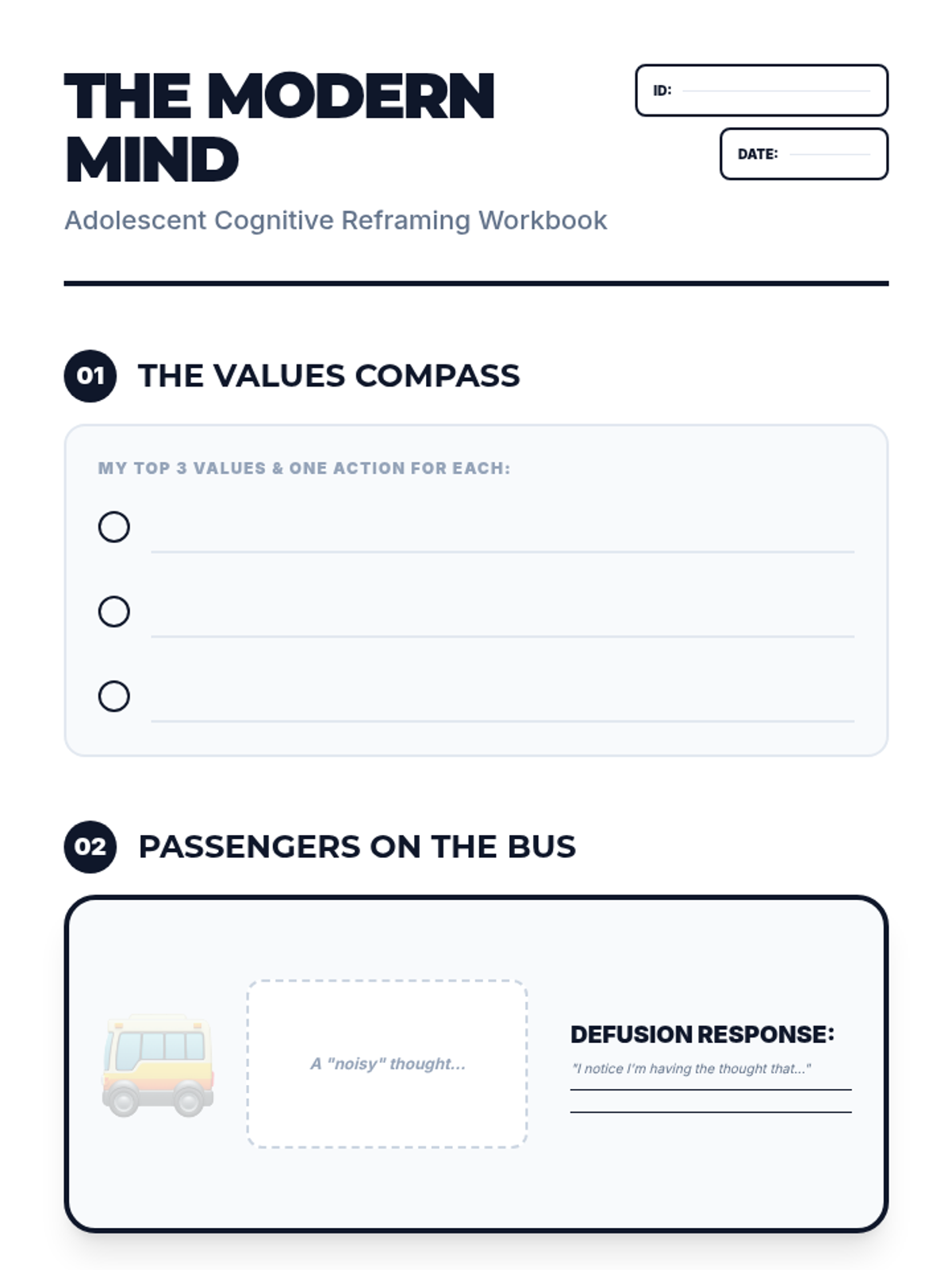
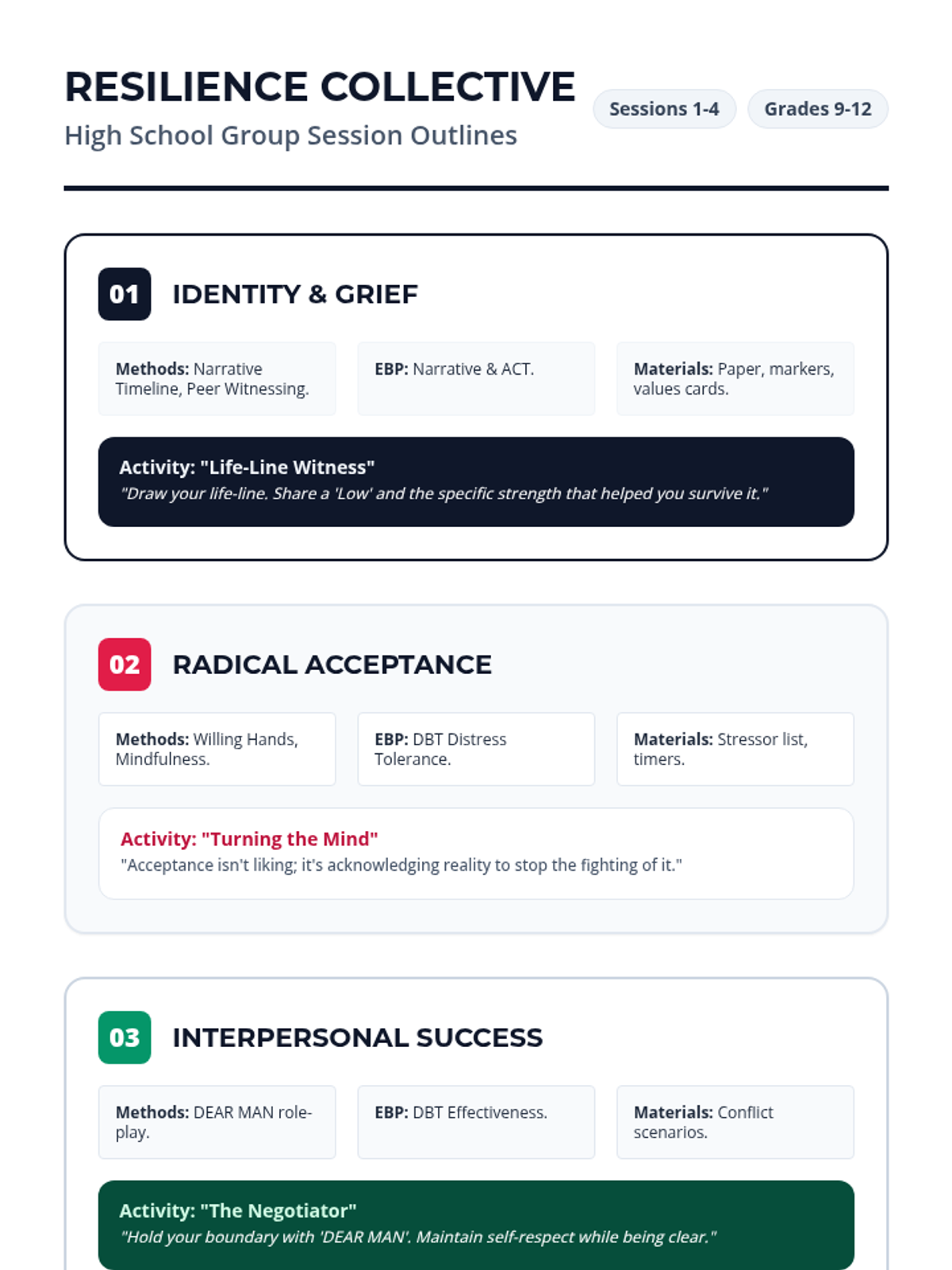
Advanced therapeutic interventions for high schoolers, emphasizing autonomy, complex cognitive reframing, interpersonal effectiveness, and comprehensive crisis protocols.
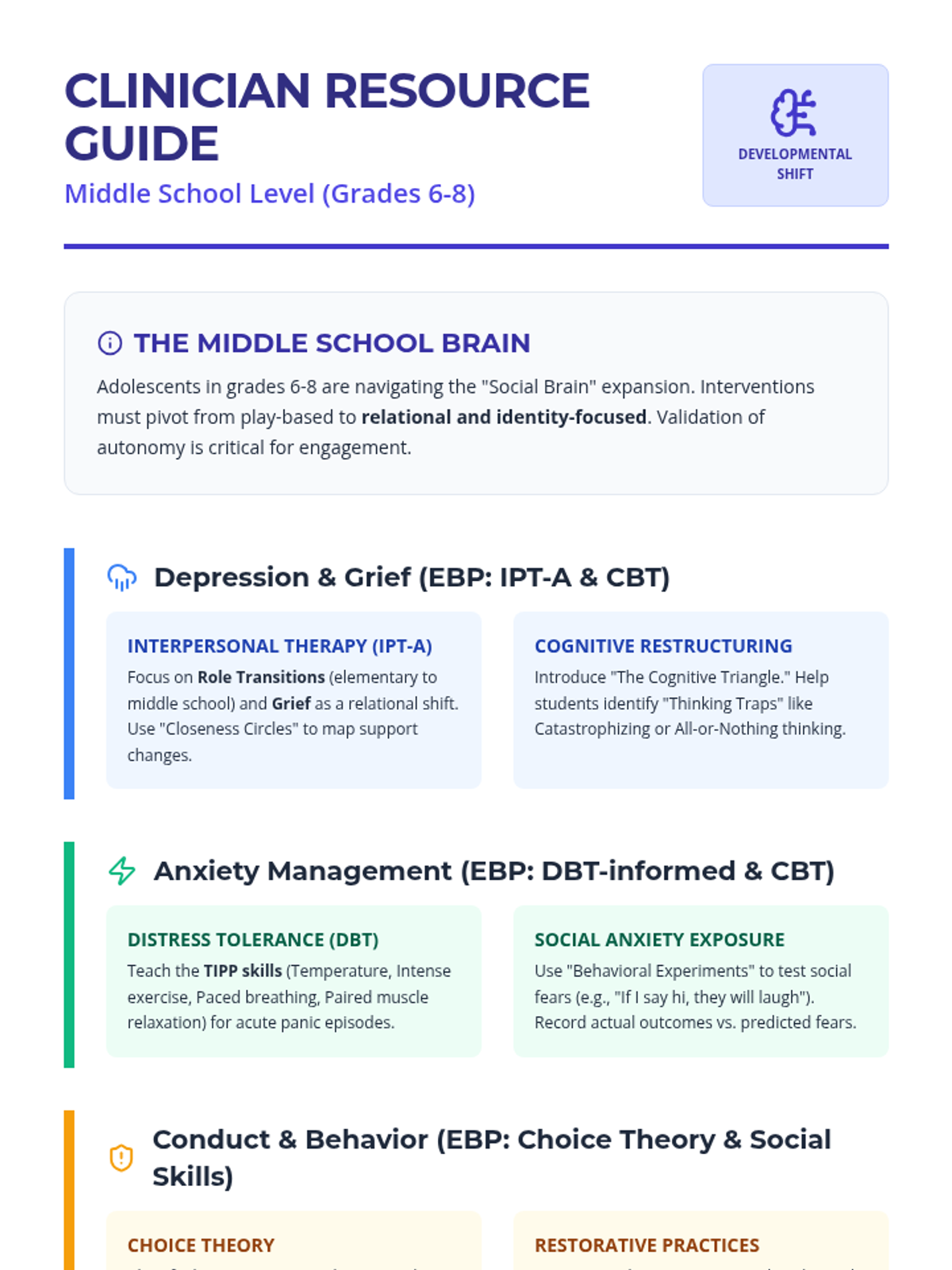
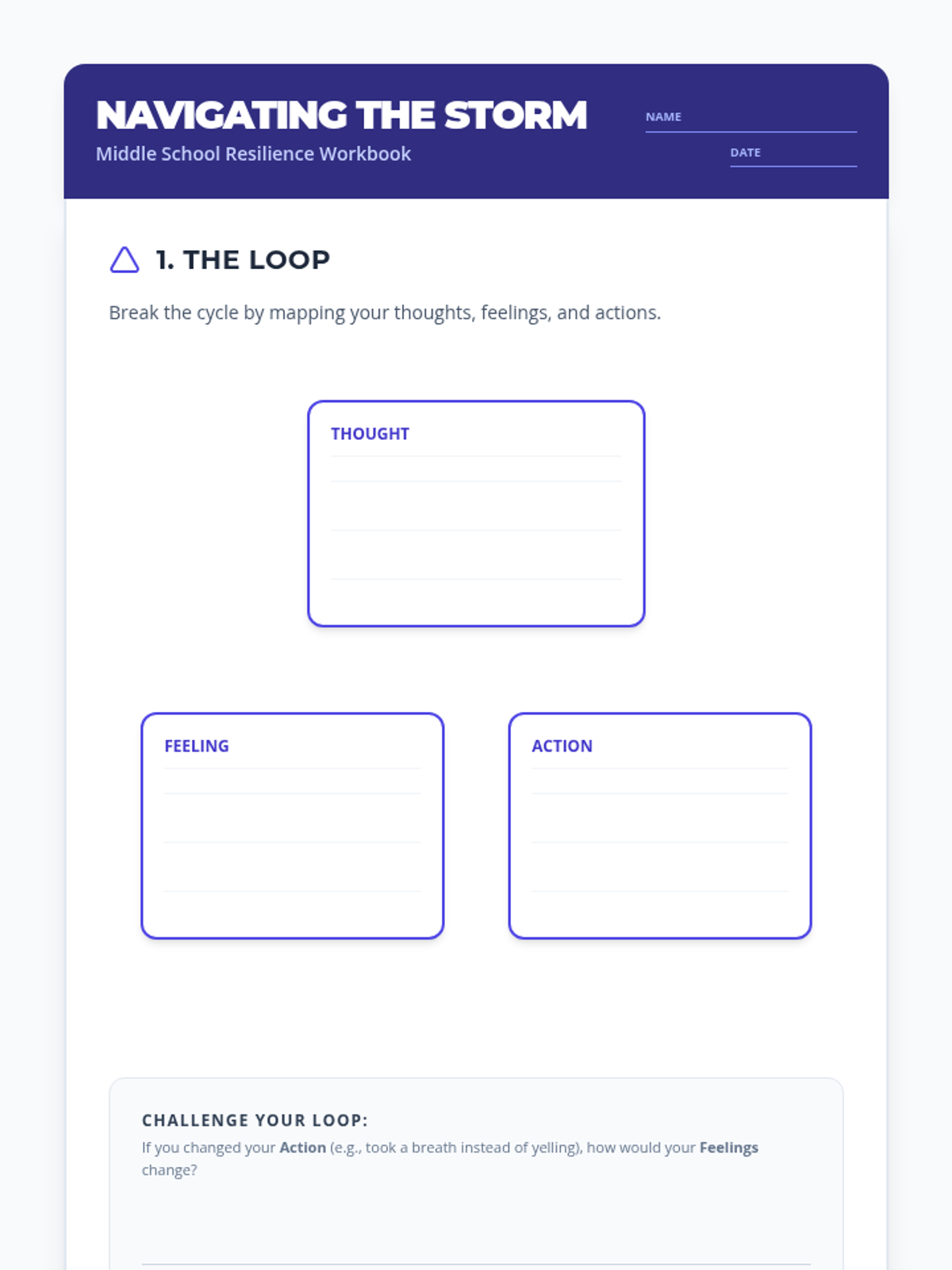
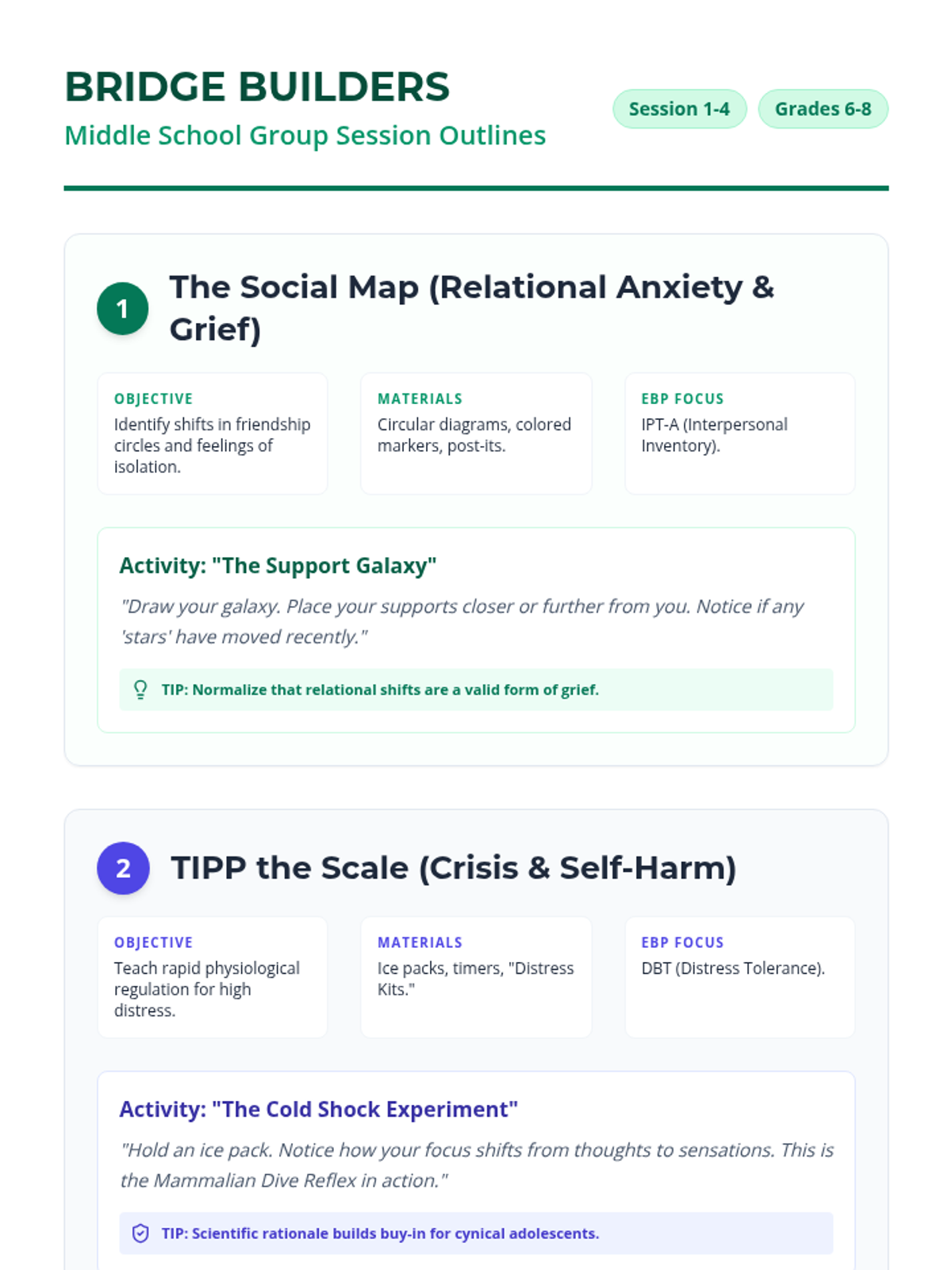
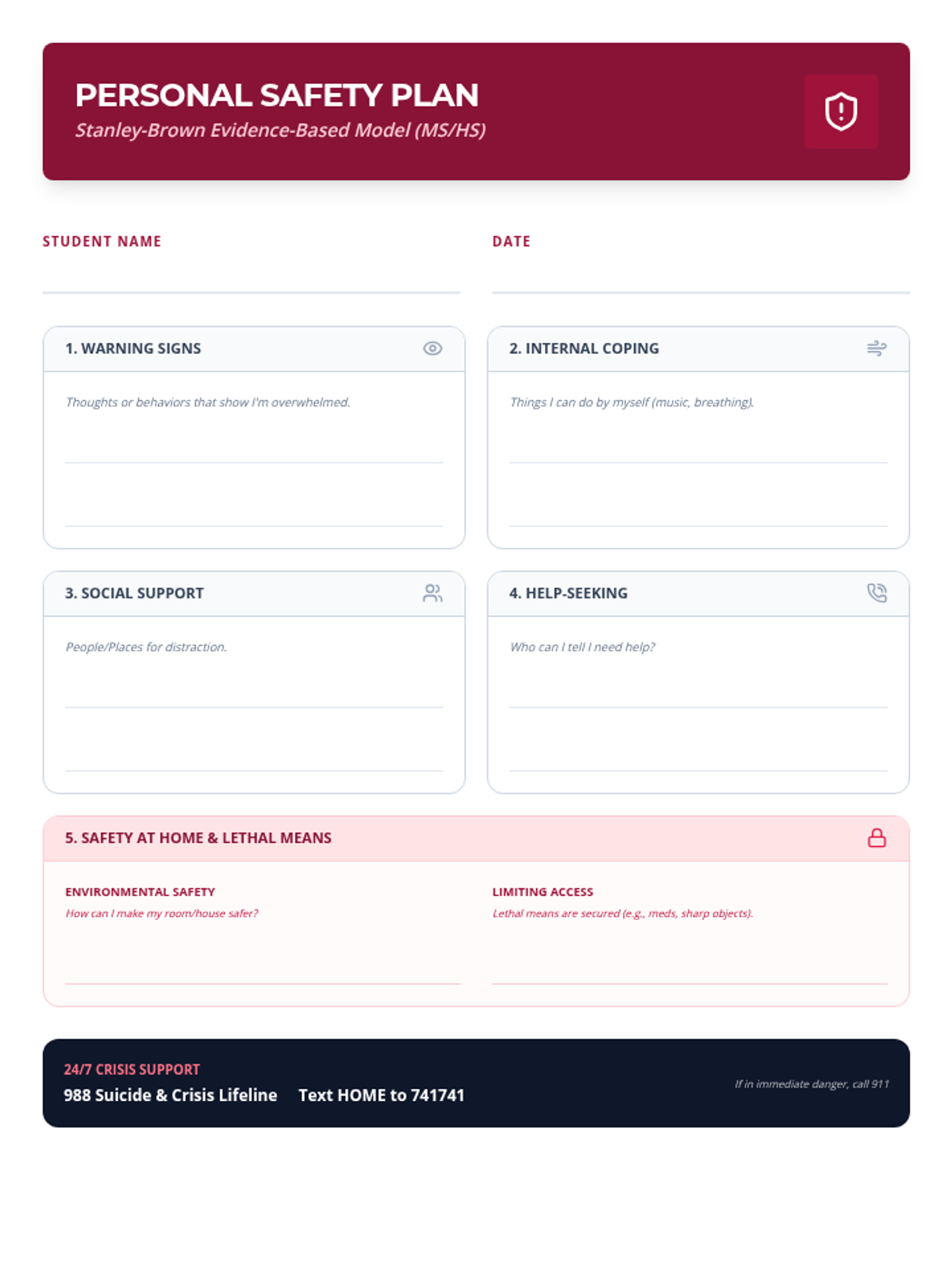
CBT and DBT-informed strategies tailored for the middle school transition, focusing on peer relationships, emotional regulation, and structured safety plans.
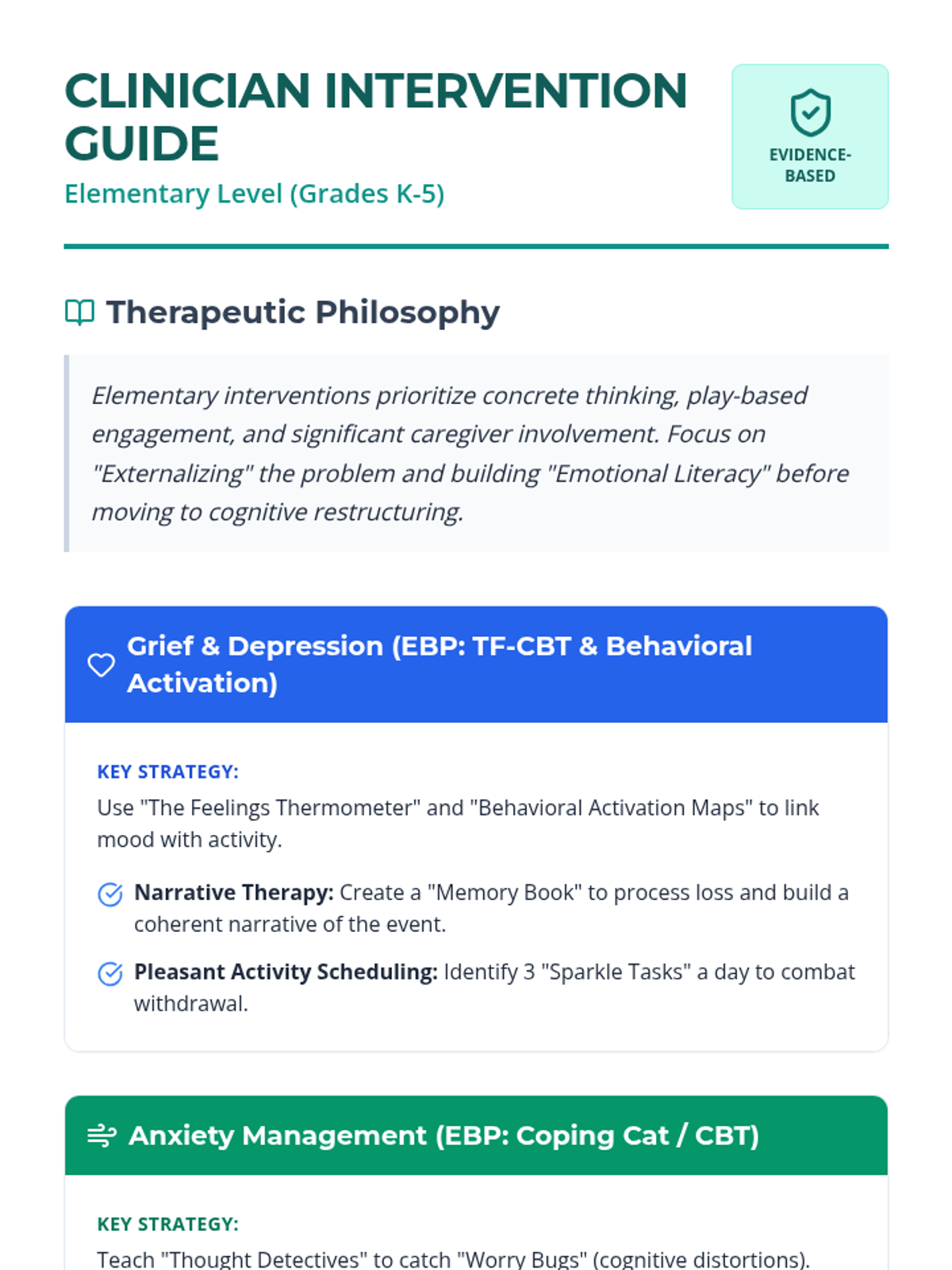
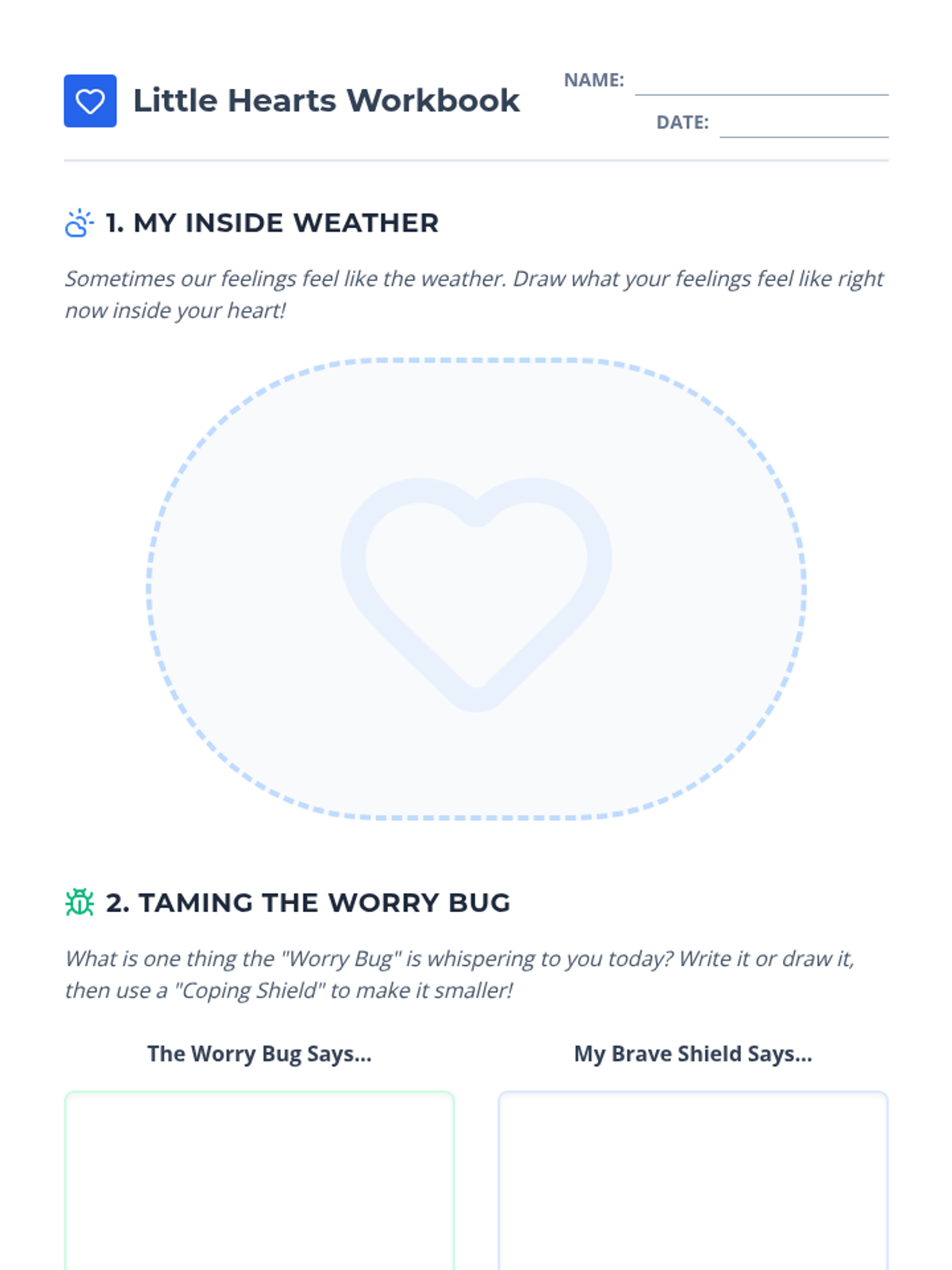
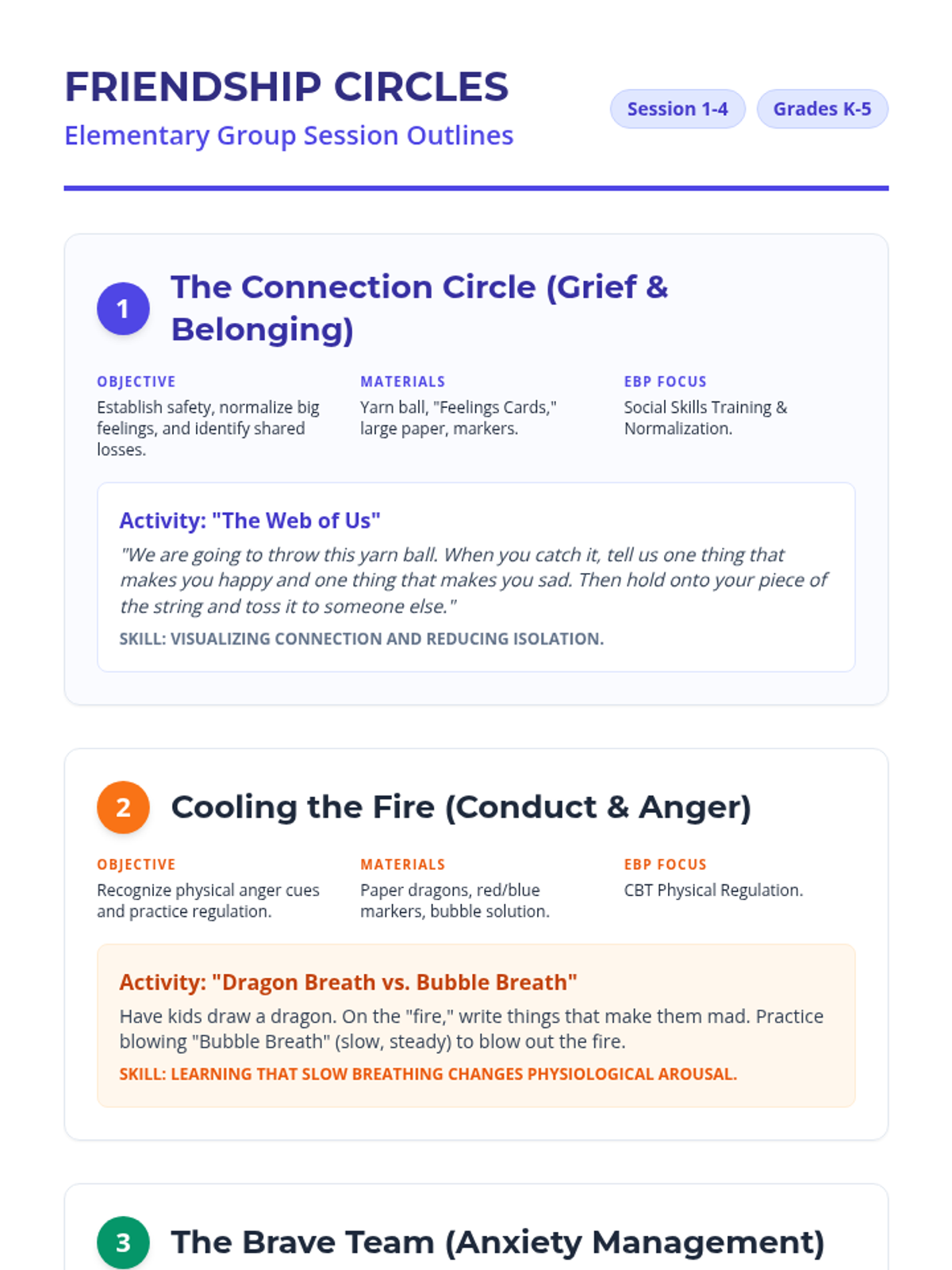
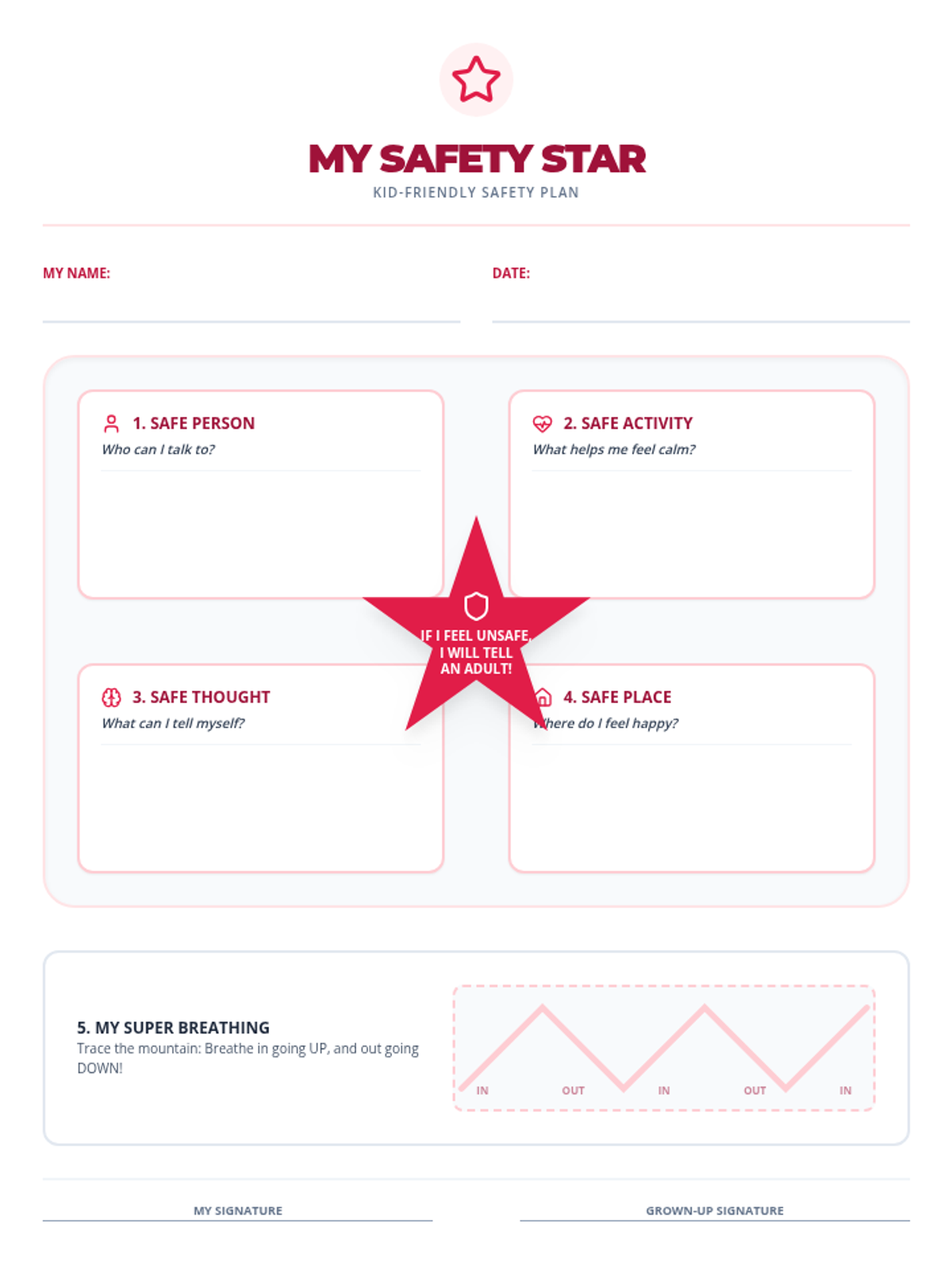
Developmentally appropriate interventions for elementary students focusing on play-based CBT, social-emotional learning, and kid-friendly safety planning.
Addresses the emotional aspects of the transition, focusing on stress management, resilience, and maintaining a growth mindset.
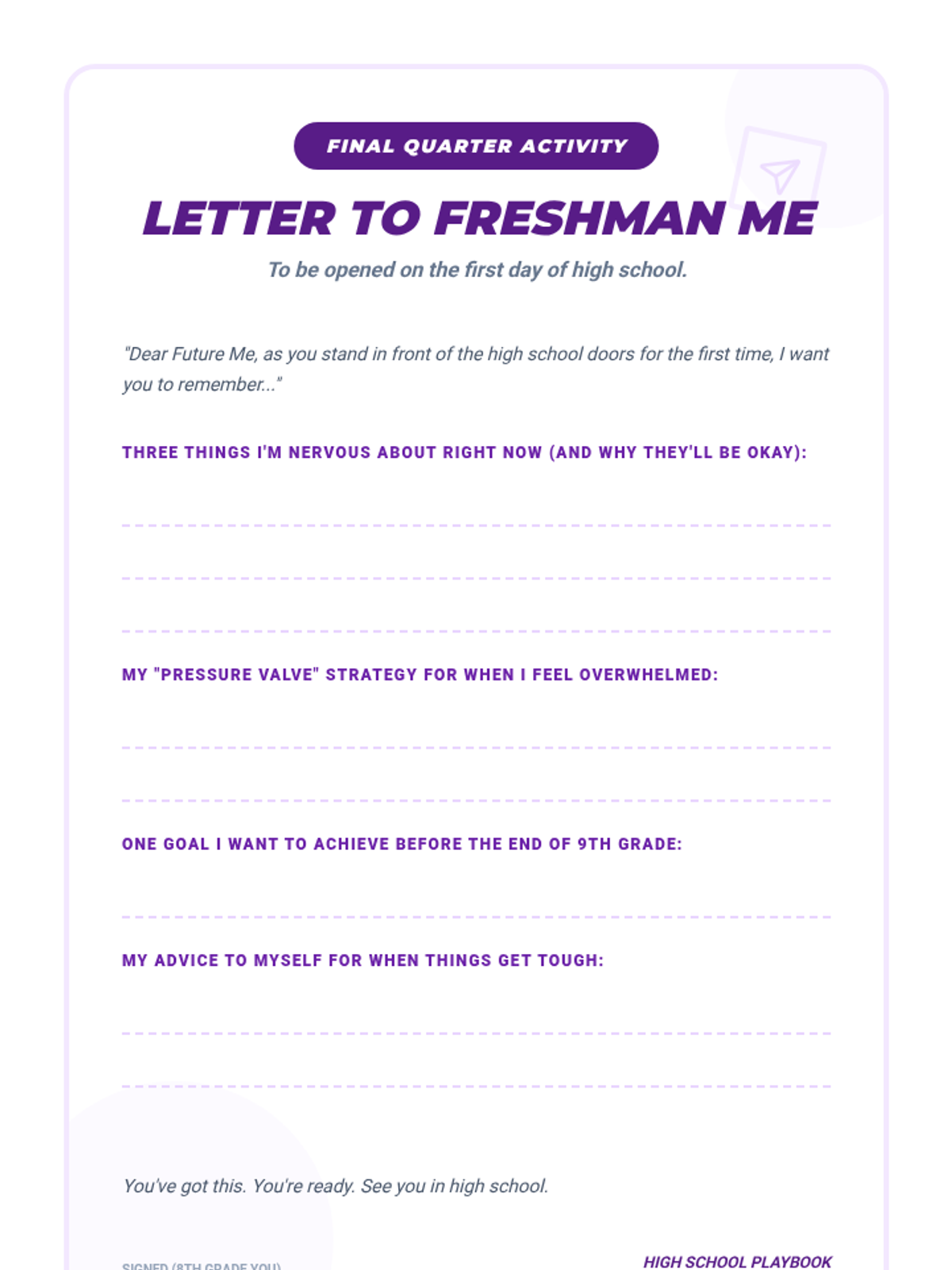
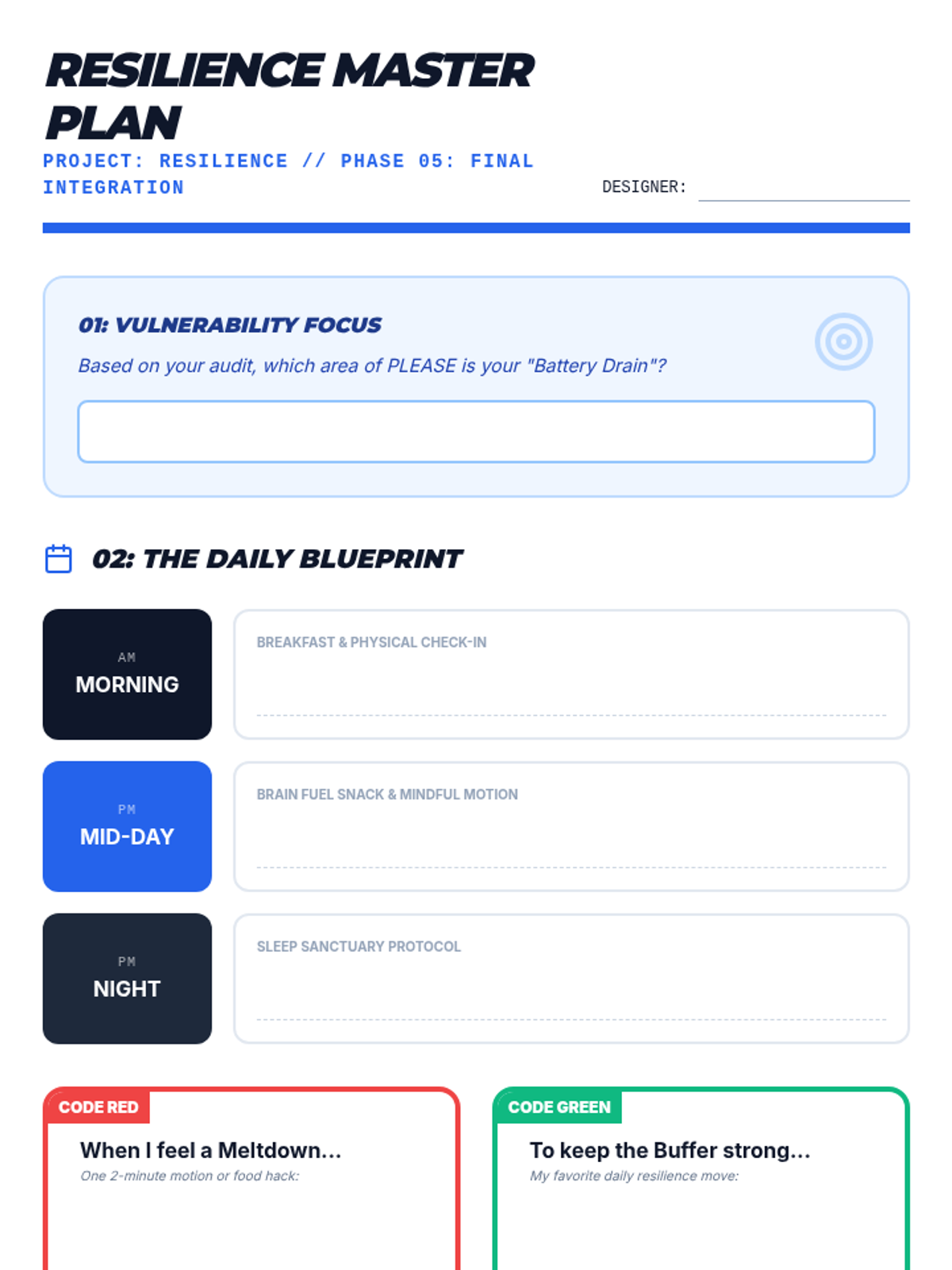
Students synthesize their learning into a final Resilience Routine and visual tracker, writing a letter to their future selves.
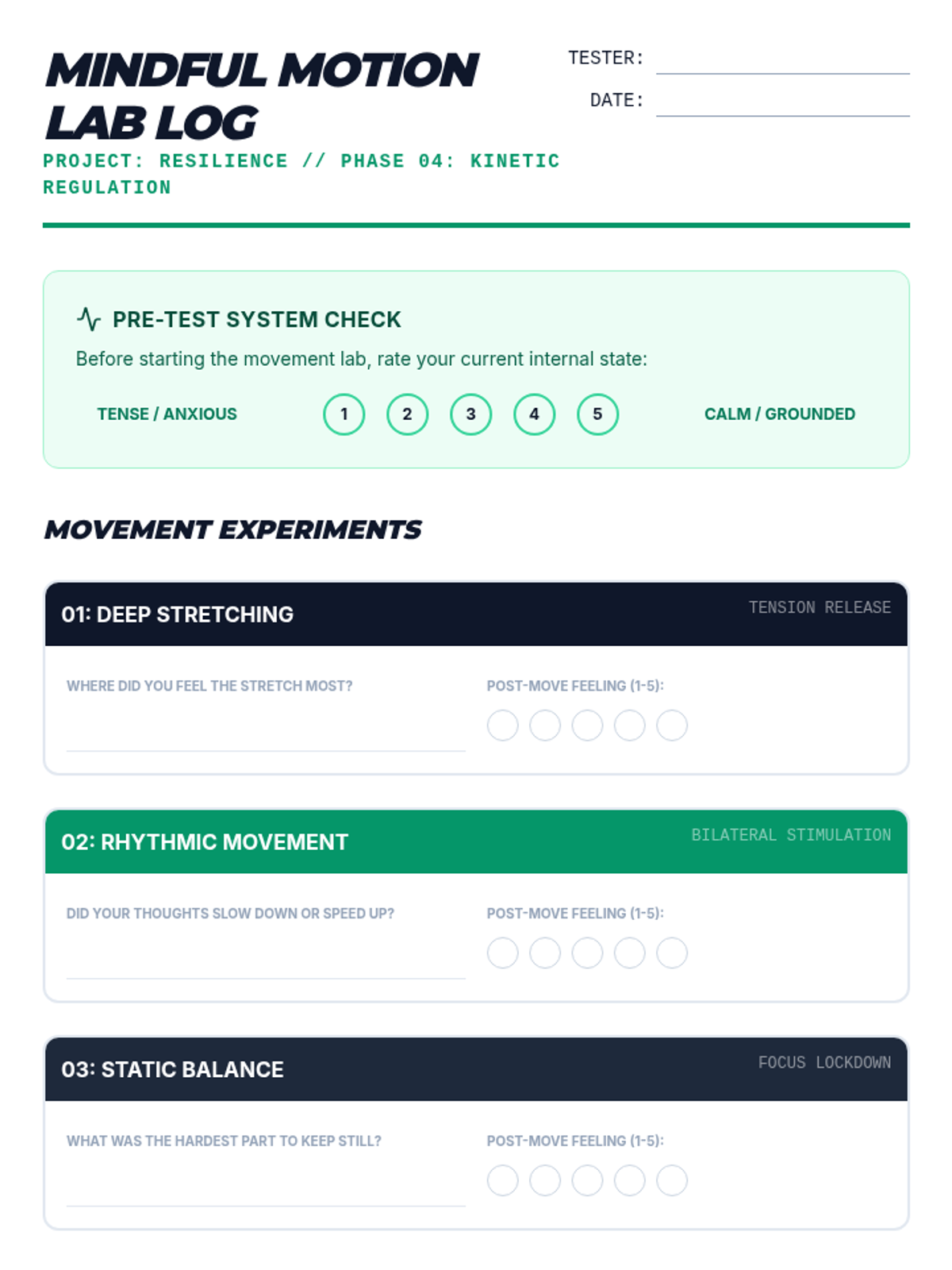
Students explore non-competitive movement as a tool for mindfulness and grounding, distinguishing it from competitive sports.
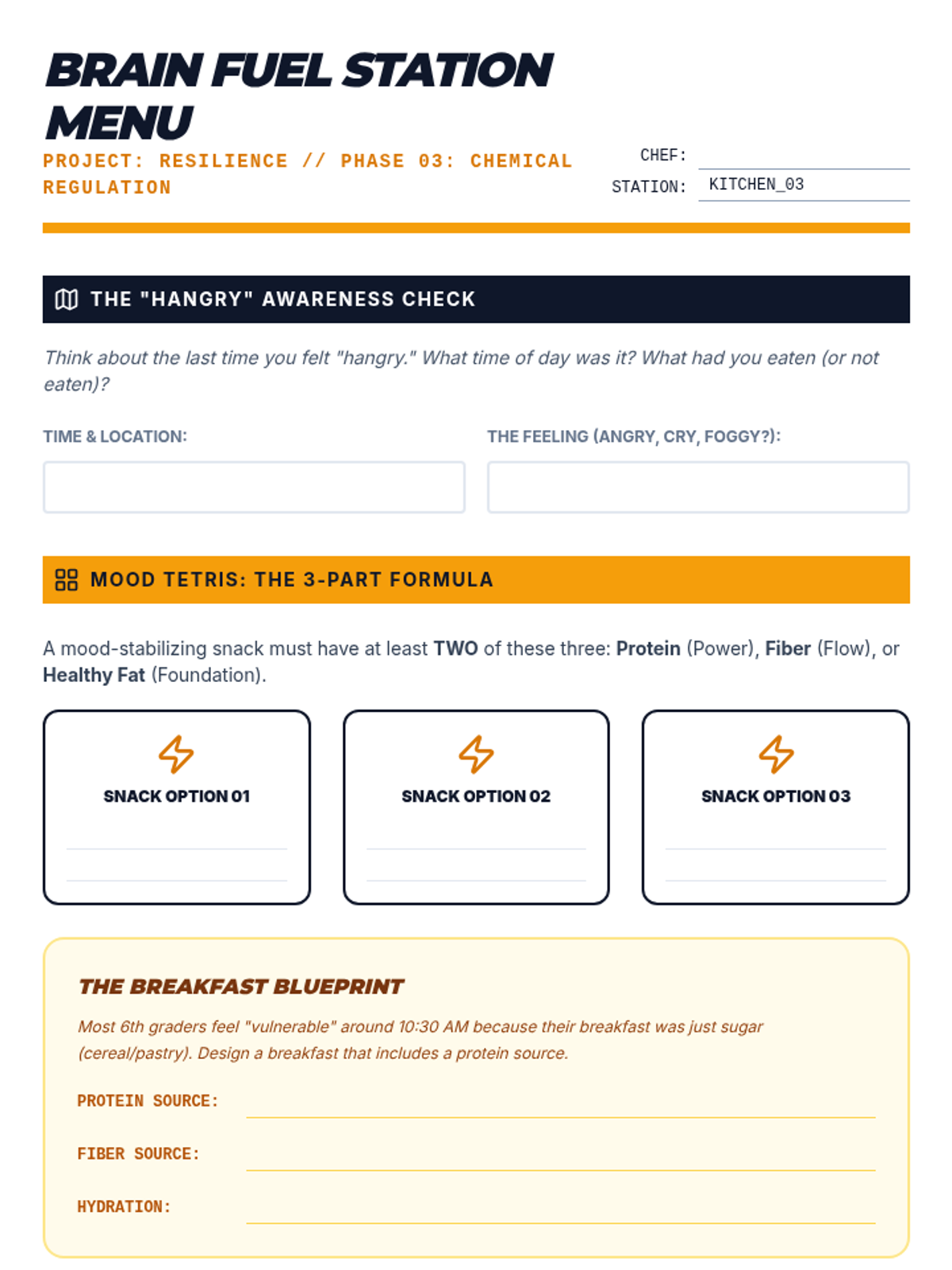
Students learn about the connection between nutrition and mood, creating a menu of balanced snacks to prevent 'hangry' emotional outbursts.
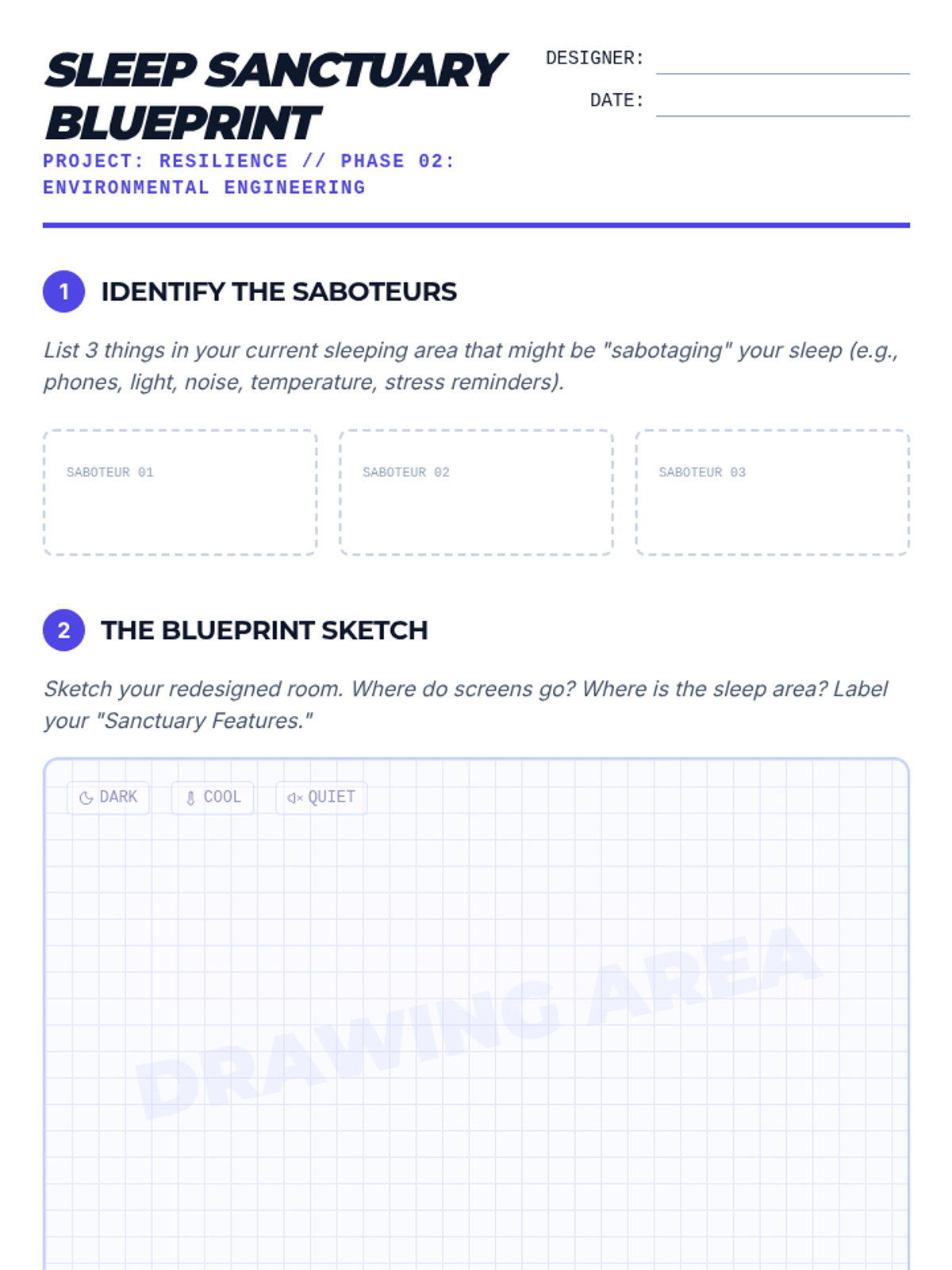
Students explore sleep hygiene principles and redesign a hypothetical bedroom environment for optimal rest and emotional regulation.
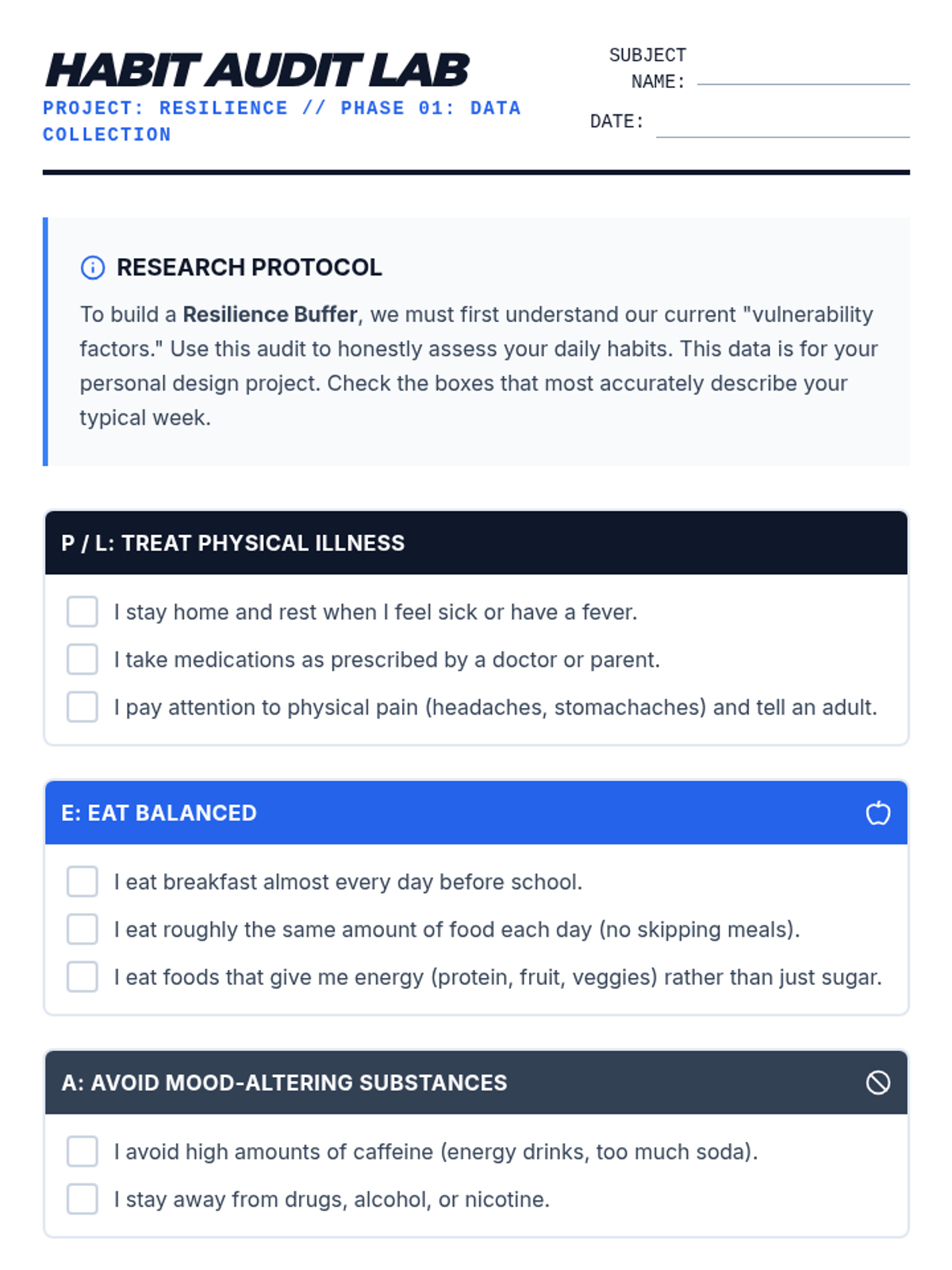
Students introduce the PLEASE acronym and use a self-assessment tool to track current behaviors, identifying a primary vulnerability area to focus on.
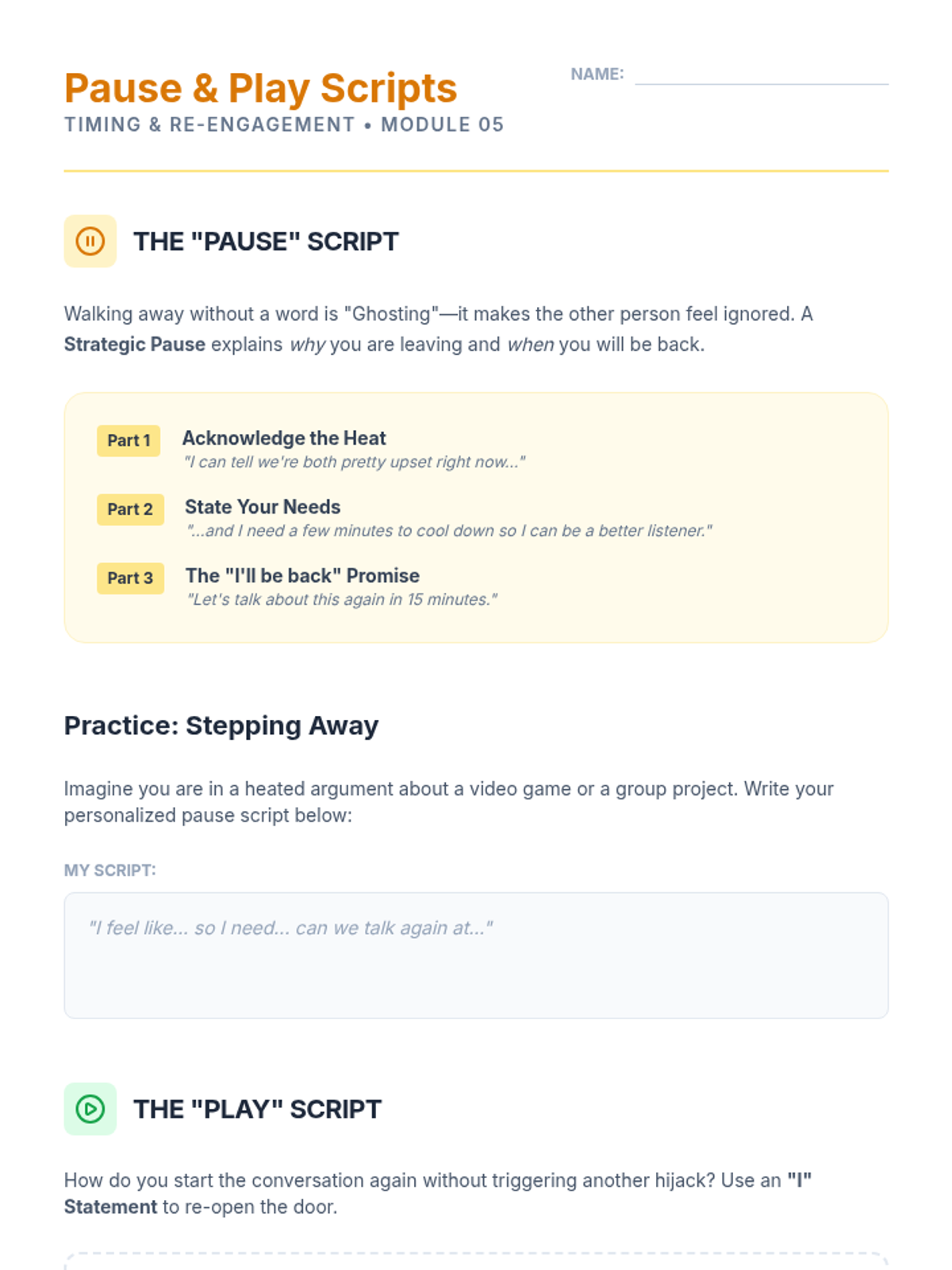
Students learn to assess when a conflict is too heated to solve and practice scripts for stepping away and re-initiating the conversation later.
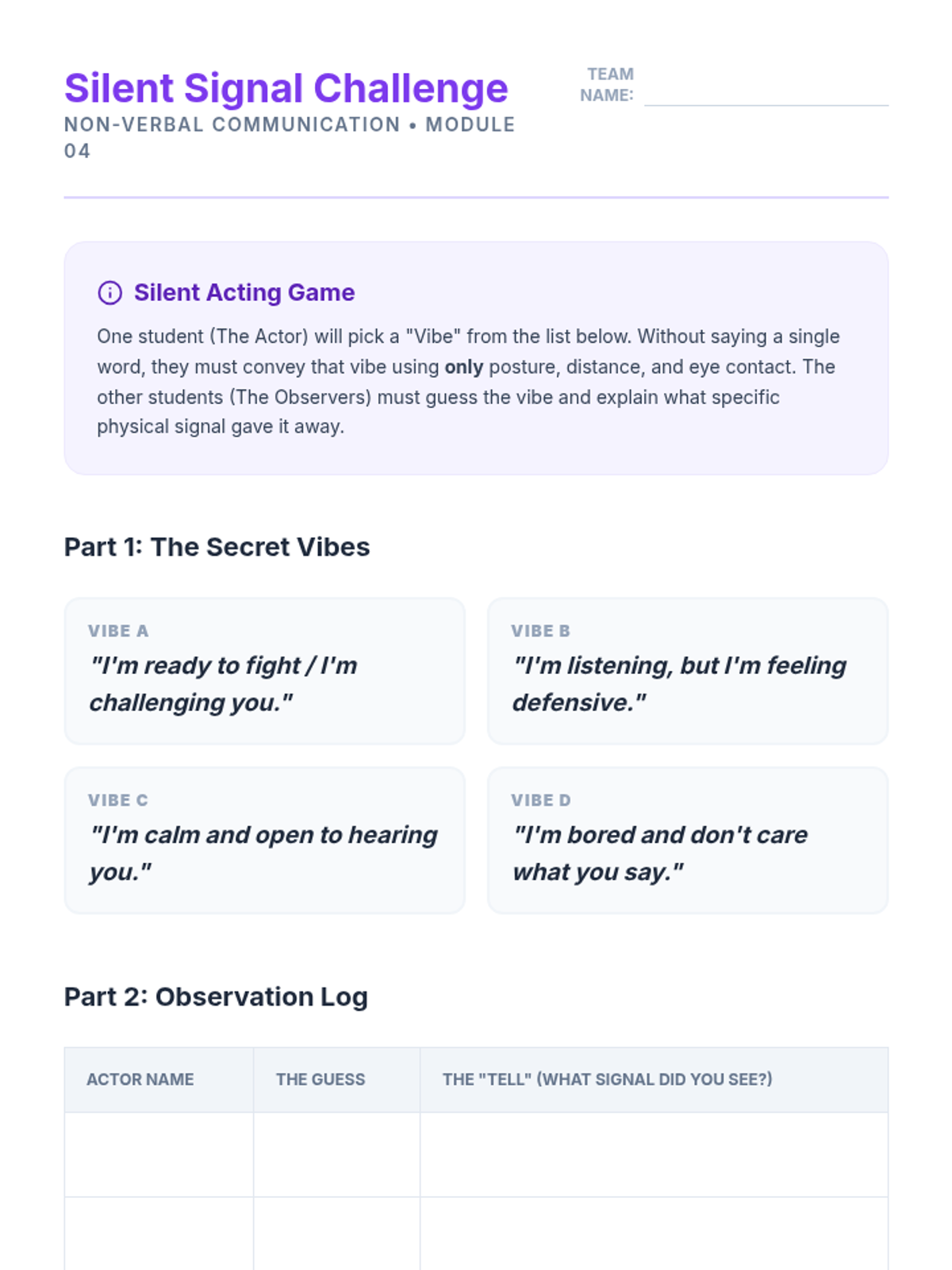
Students examine how body language, proximity, and eye contact can be perceived as threatening or calming during tense interactions.
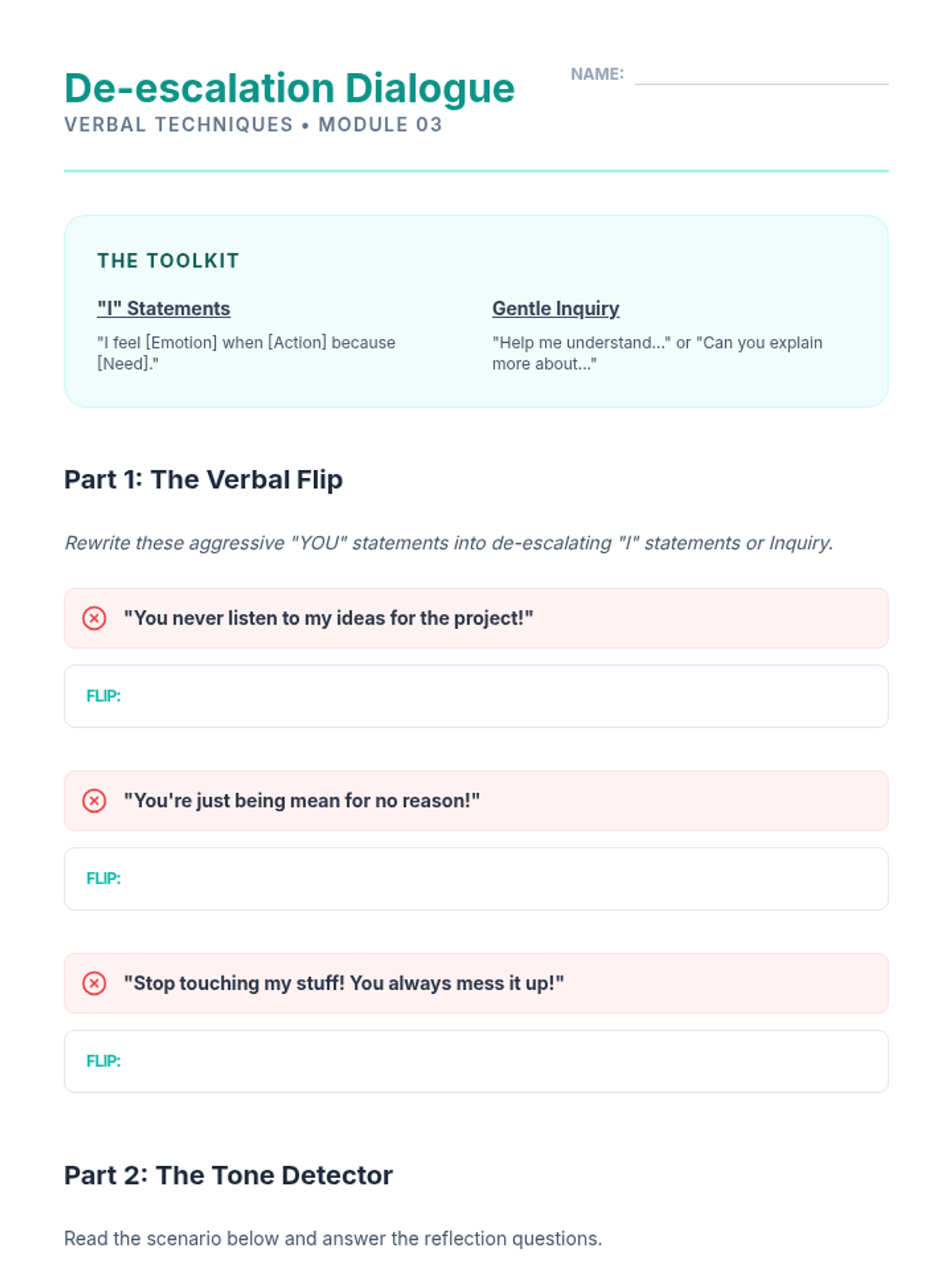
Students study specific phrases and tone adjustments that reduce defensiveness in others, contrasting 'you' statements with gentle inquiry.
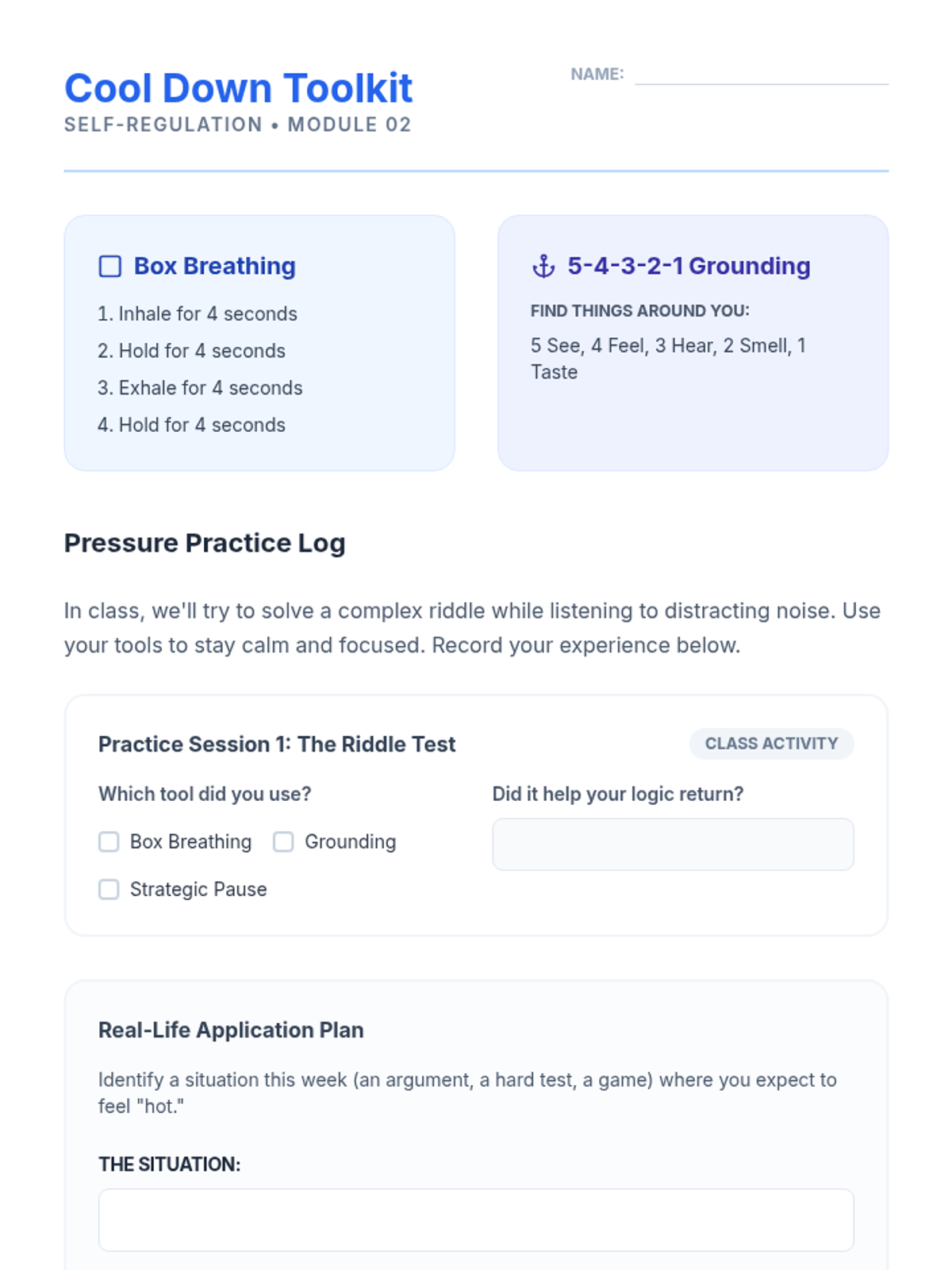
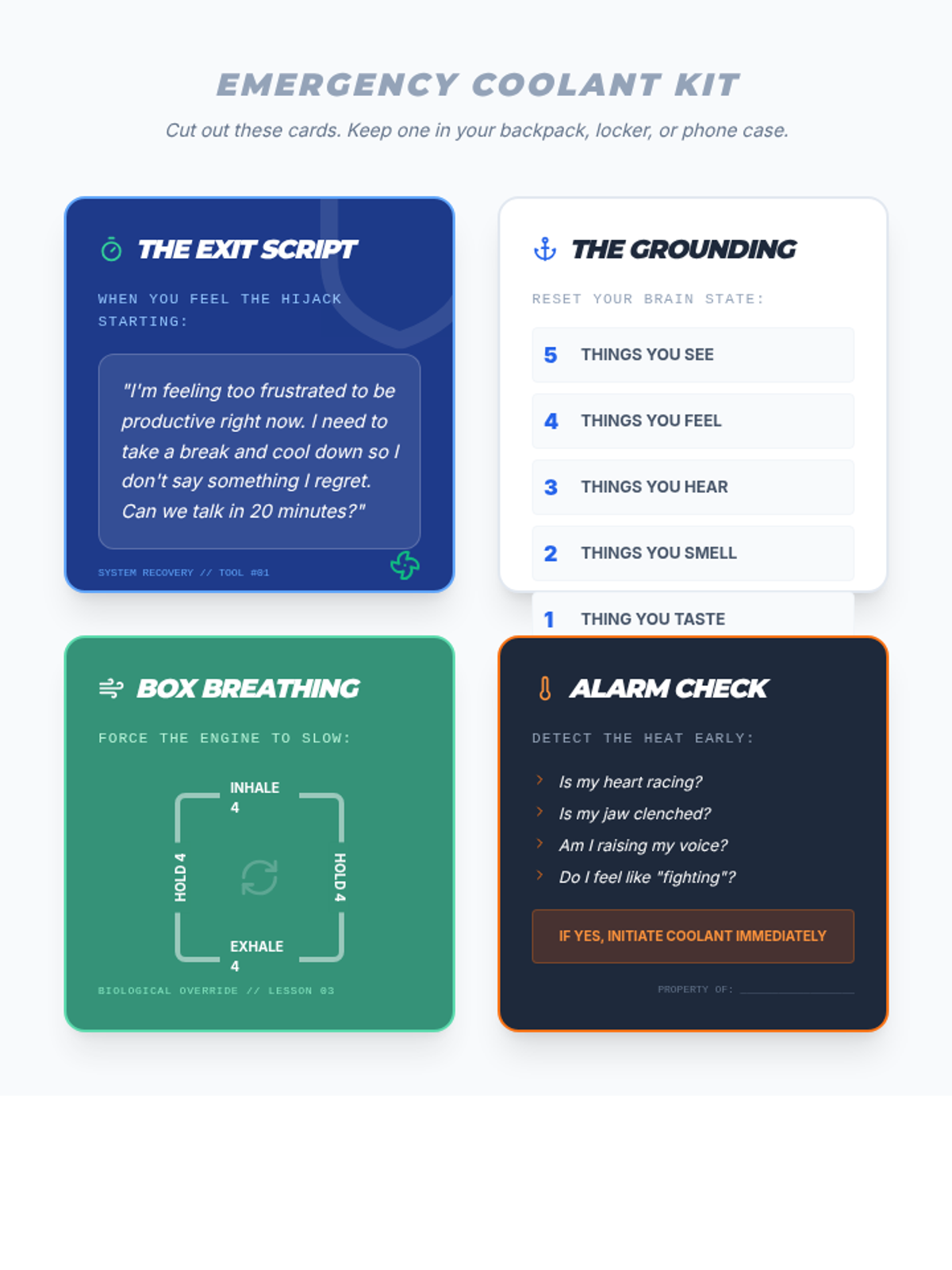
This lesson introduces immediate coping mechanisms for 'cooling down' before responding, including breathing techniques and grounding exercises.
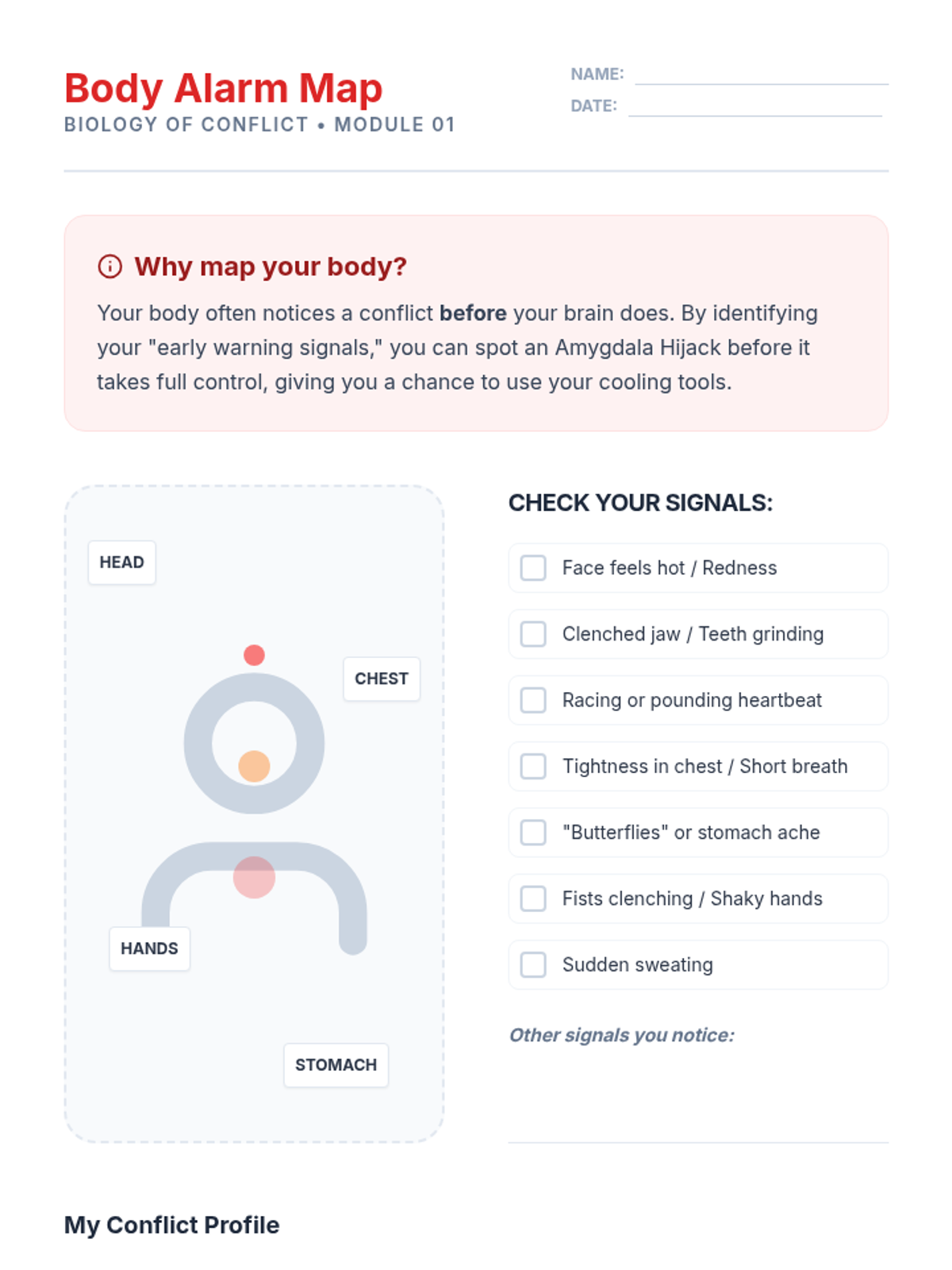
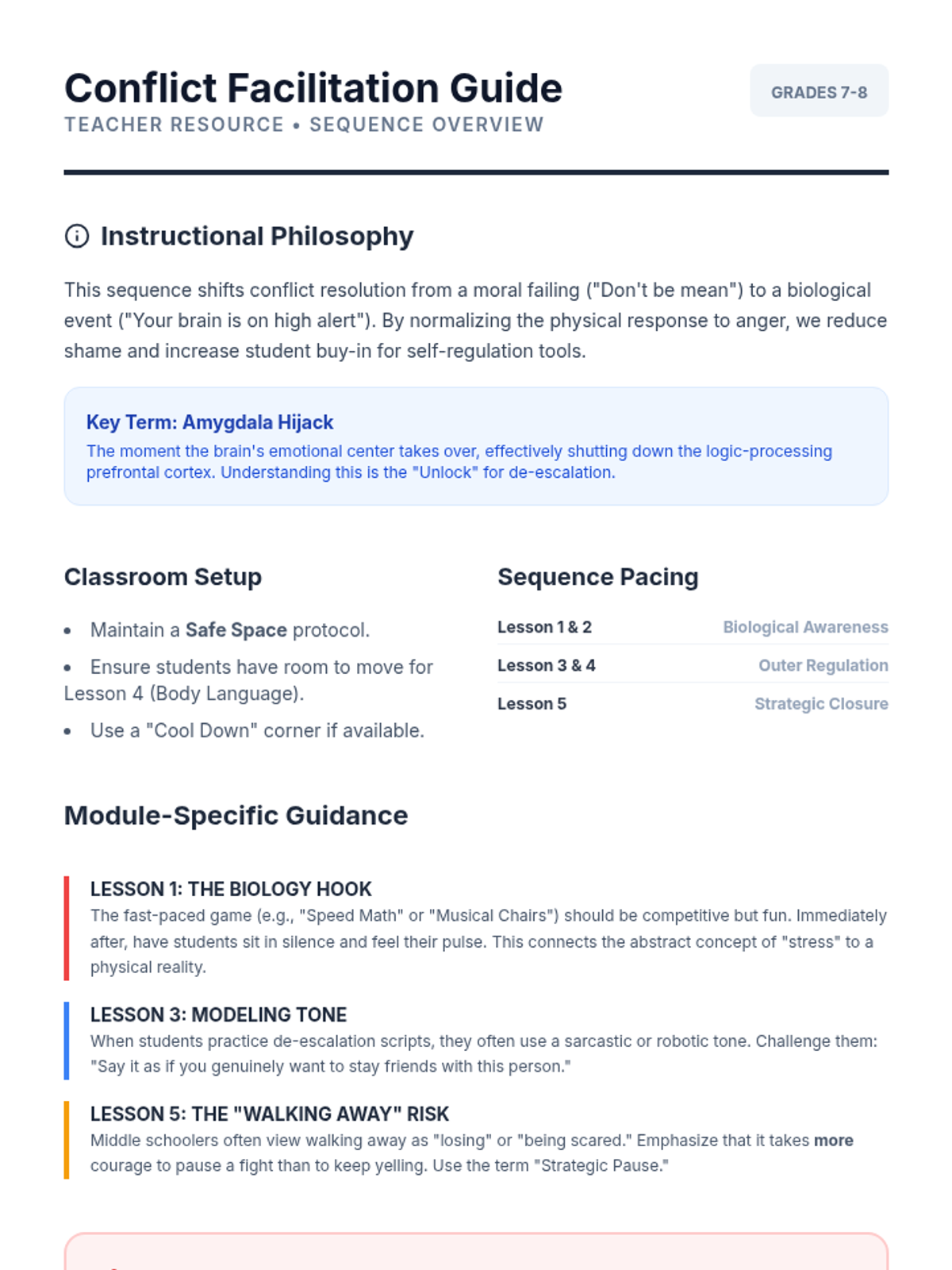
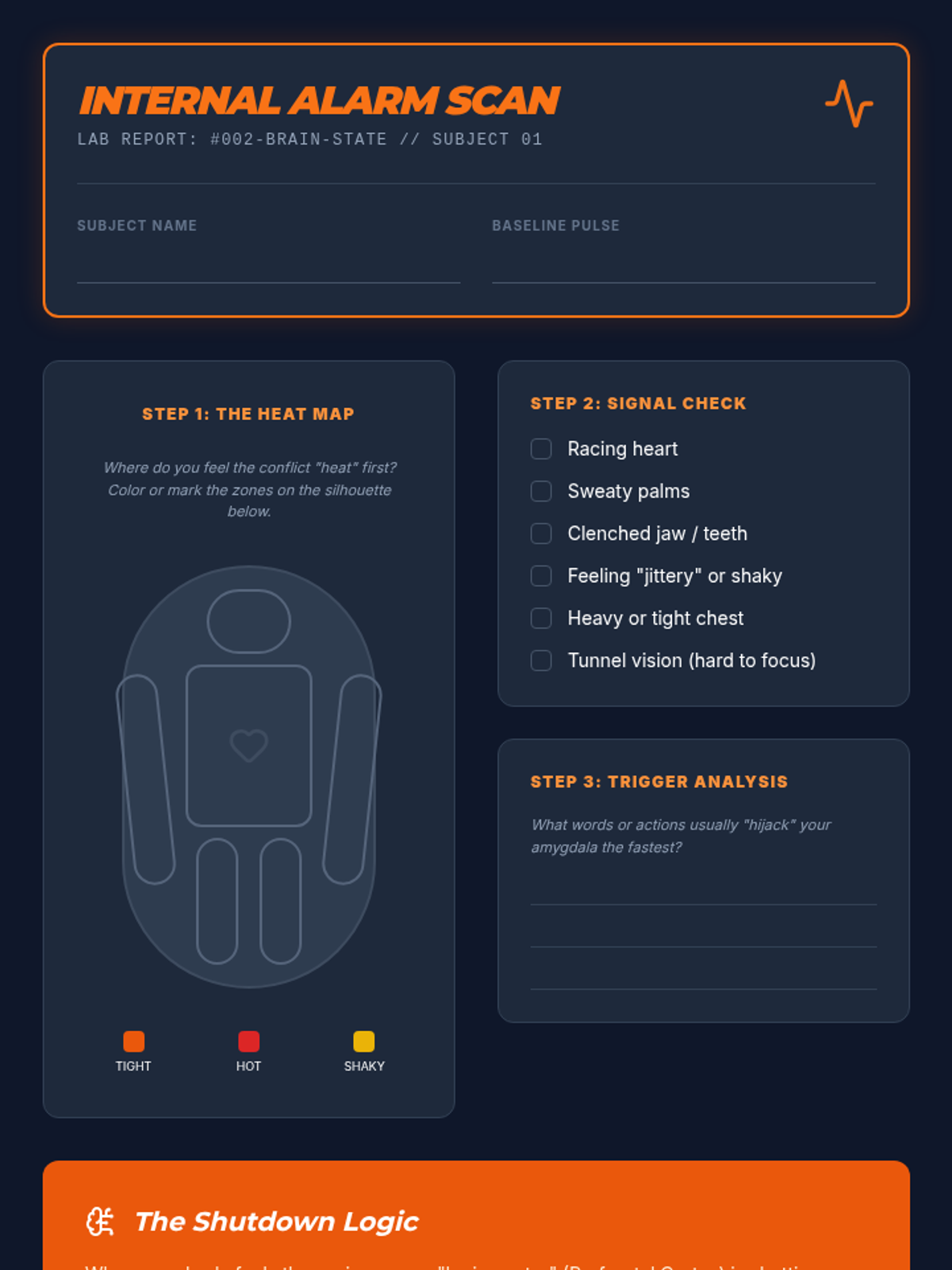
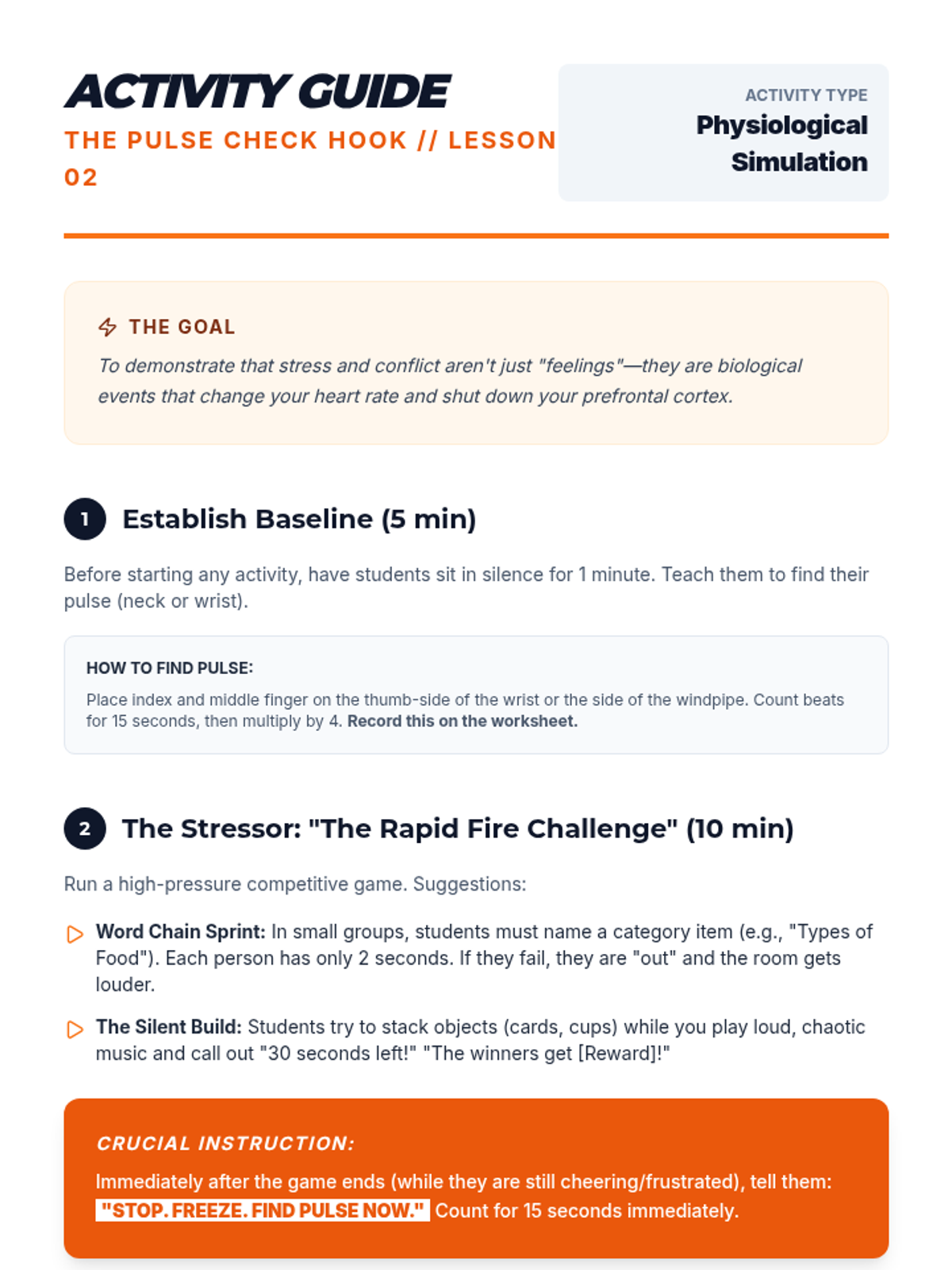
Students learn about the amygdala hijack and the physical signs of anger, mapping out their own physiological cues that signal a high-conflict state.
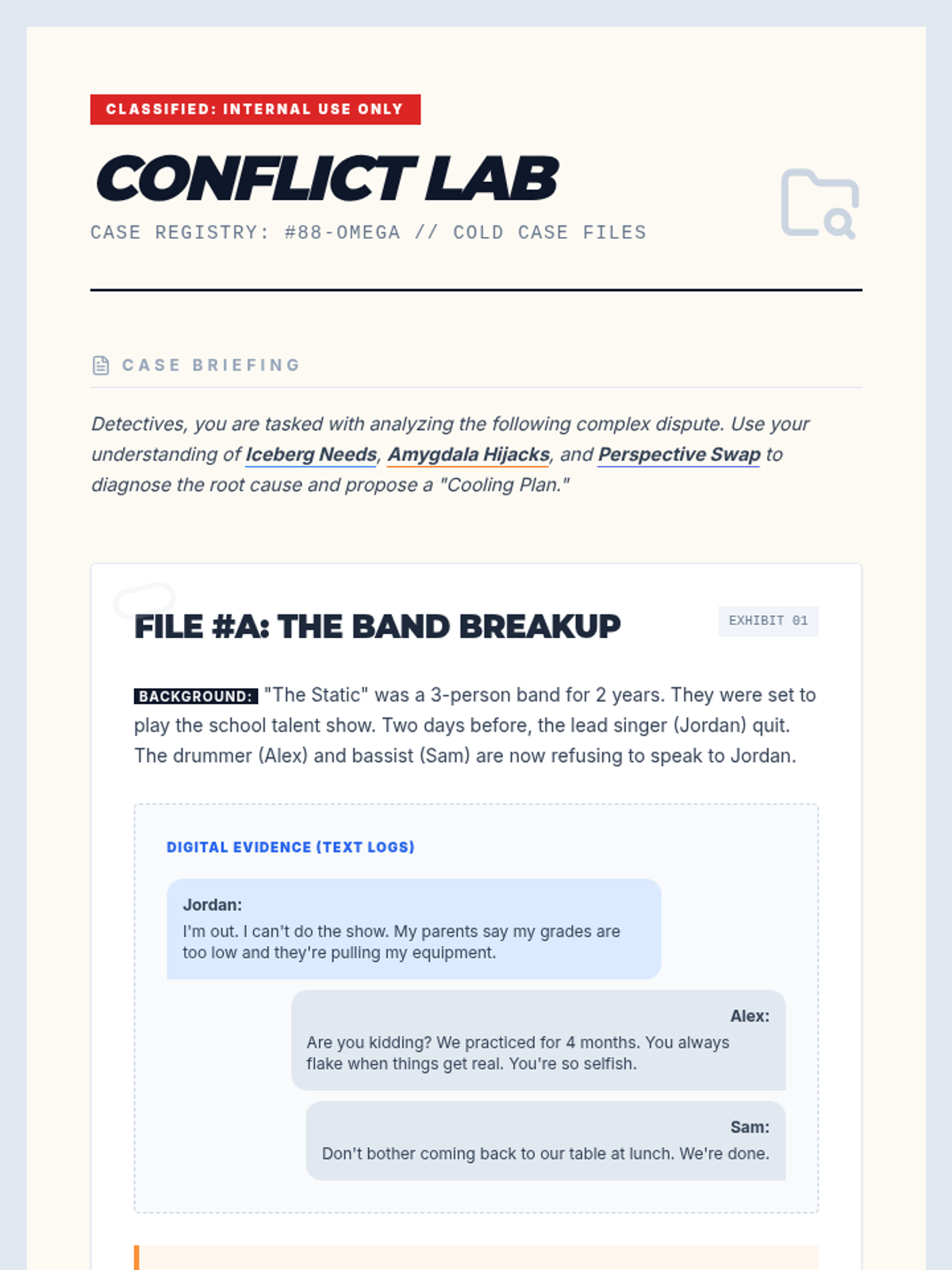
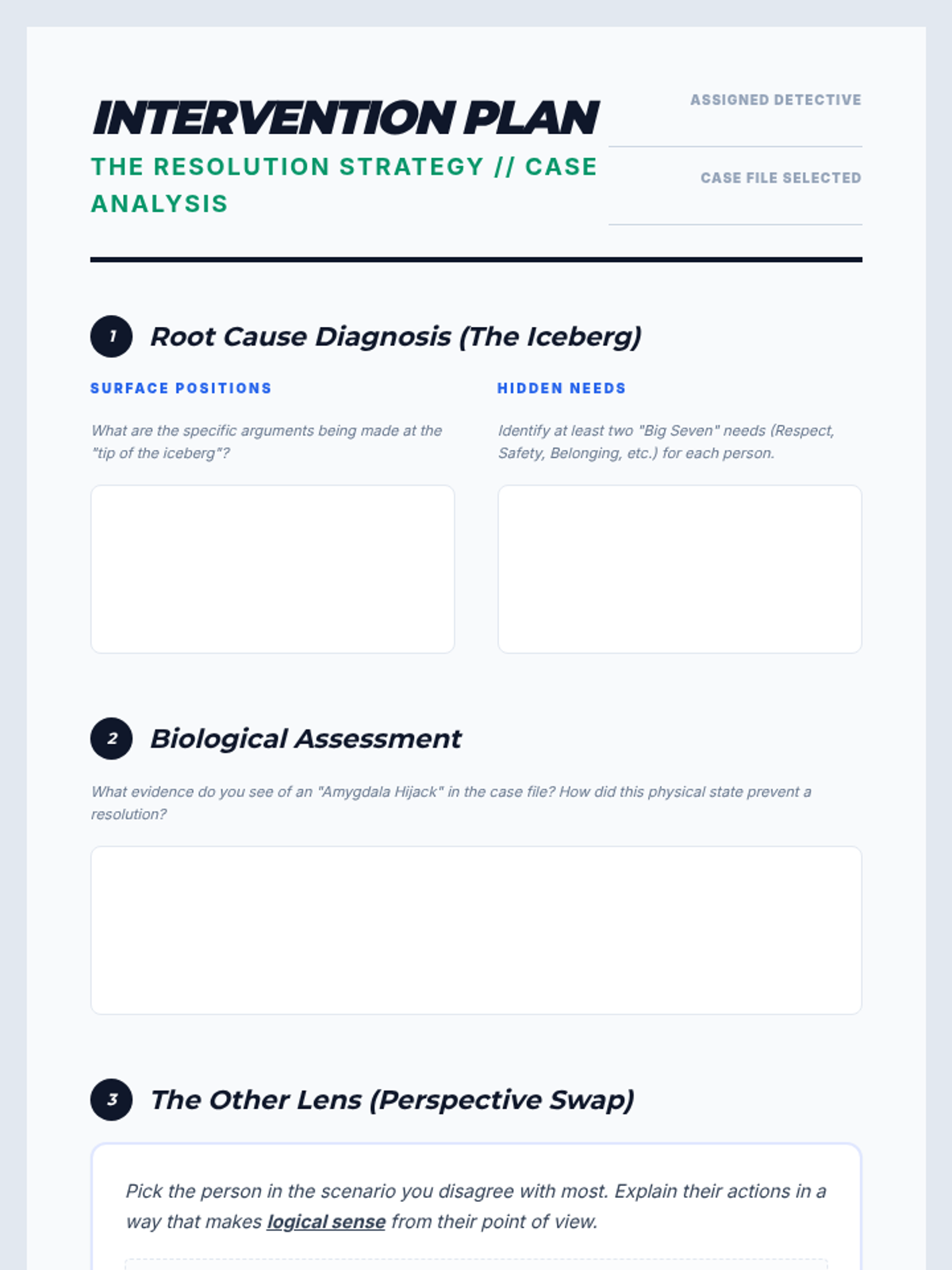
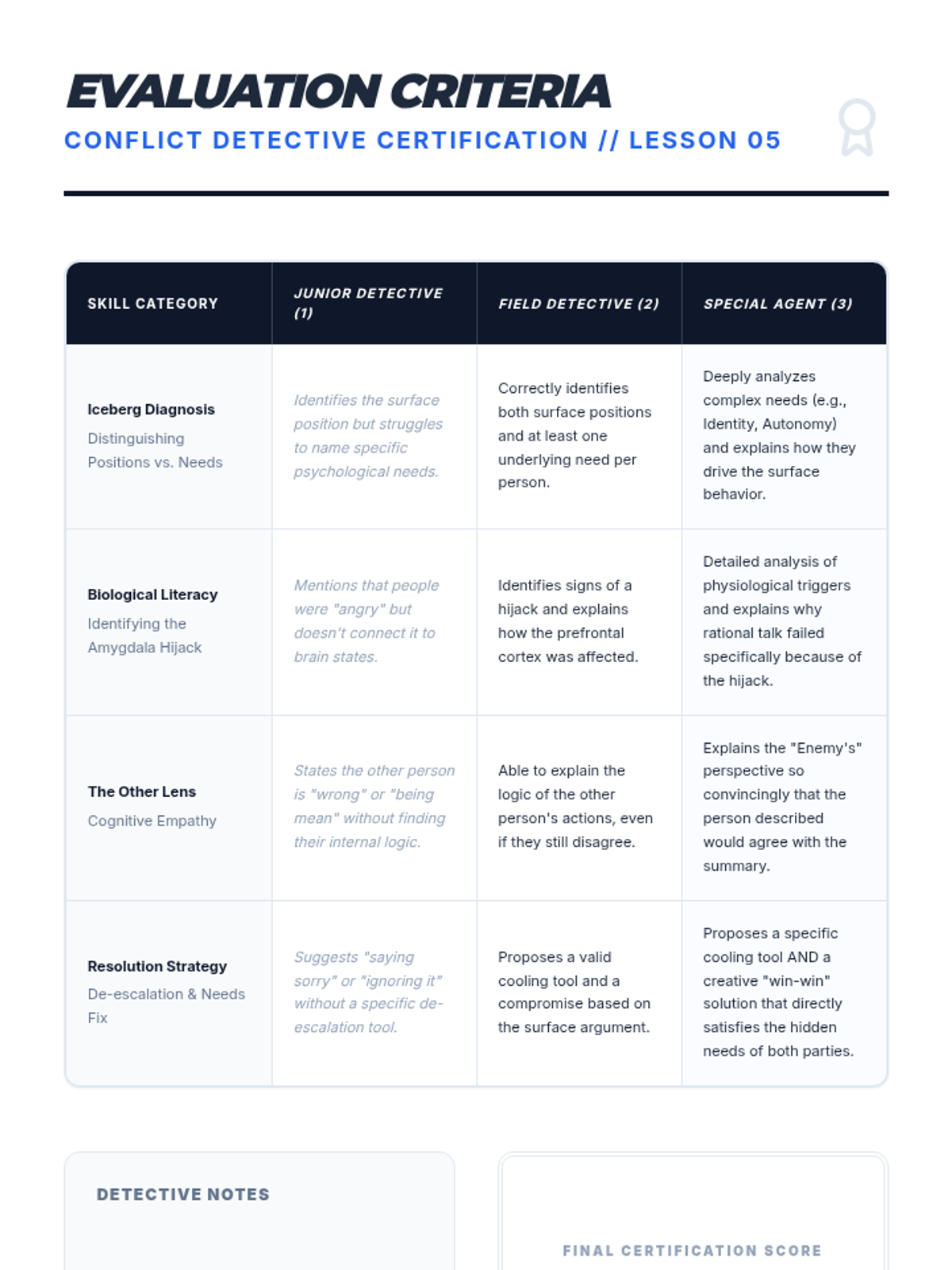
A culminating project where students analyze 'Cold Case' conflict files to diagnose root causes and propose multi-layered interventions.
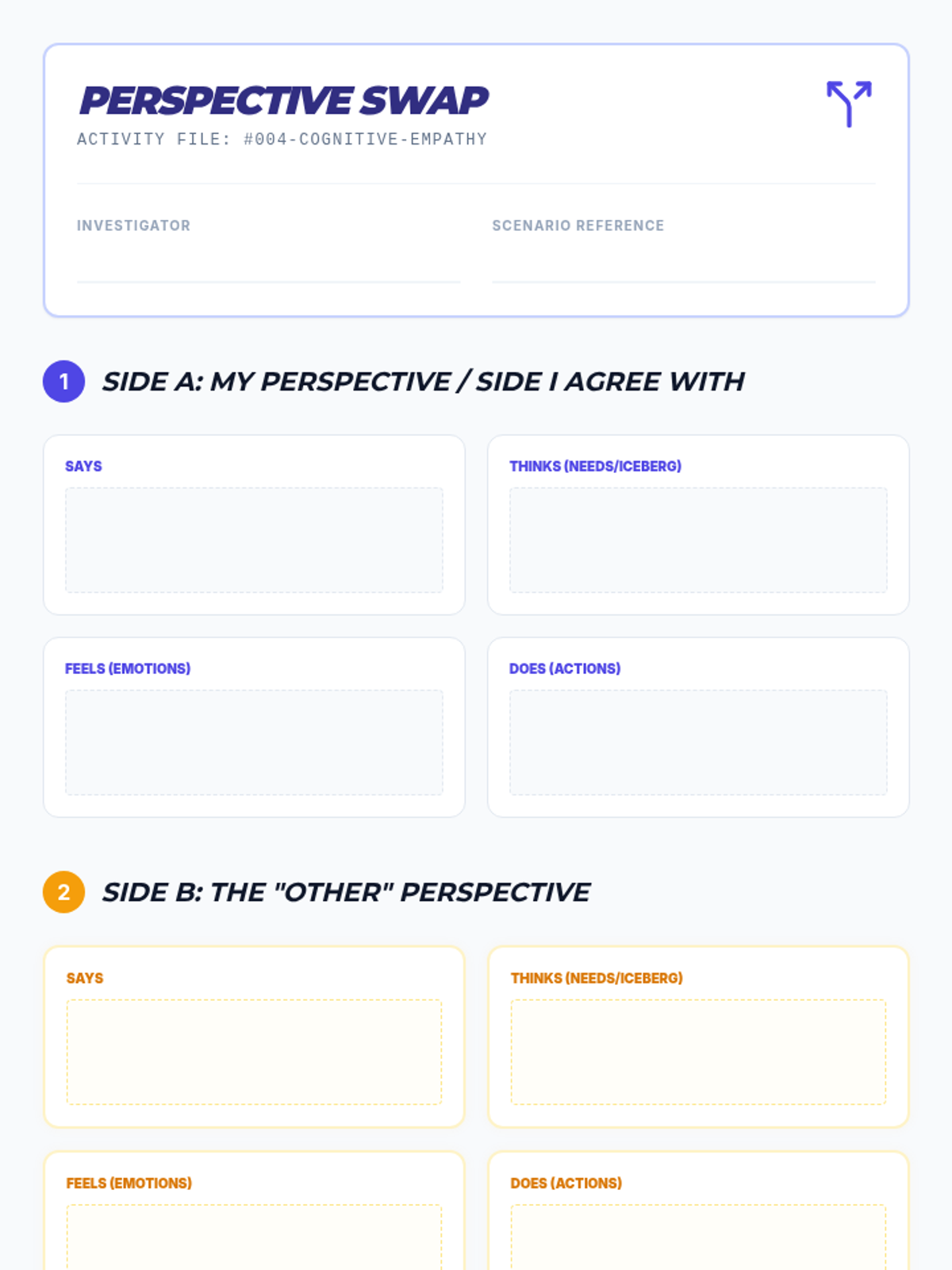
Using empathy maps to visualize the internal world of others, challenging students to find the logic in perspectives they disagree with.
Practical strategies for lowering emotional arousal, including grounding techniques and environmental changes to re-engage the prefrontal cortex.
An exploration of the 'fight or flight' response and the 'amygdala hijack' to understand why rational thought fails during high-stress conflicts.
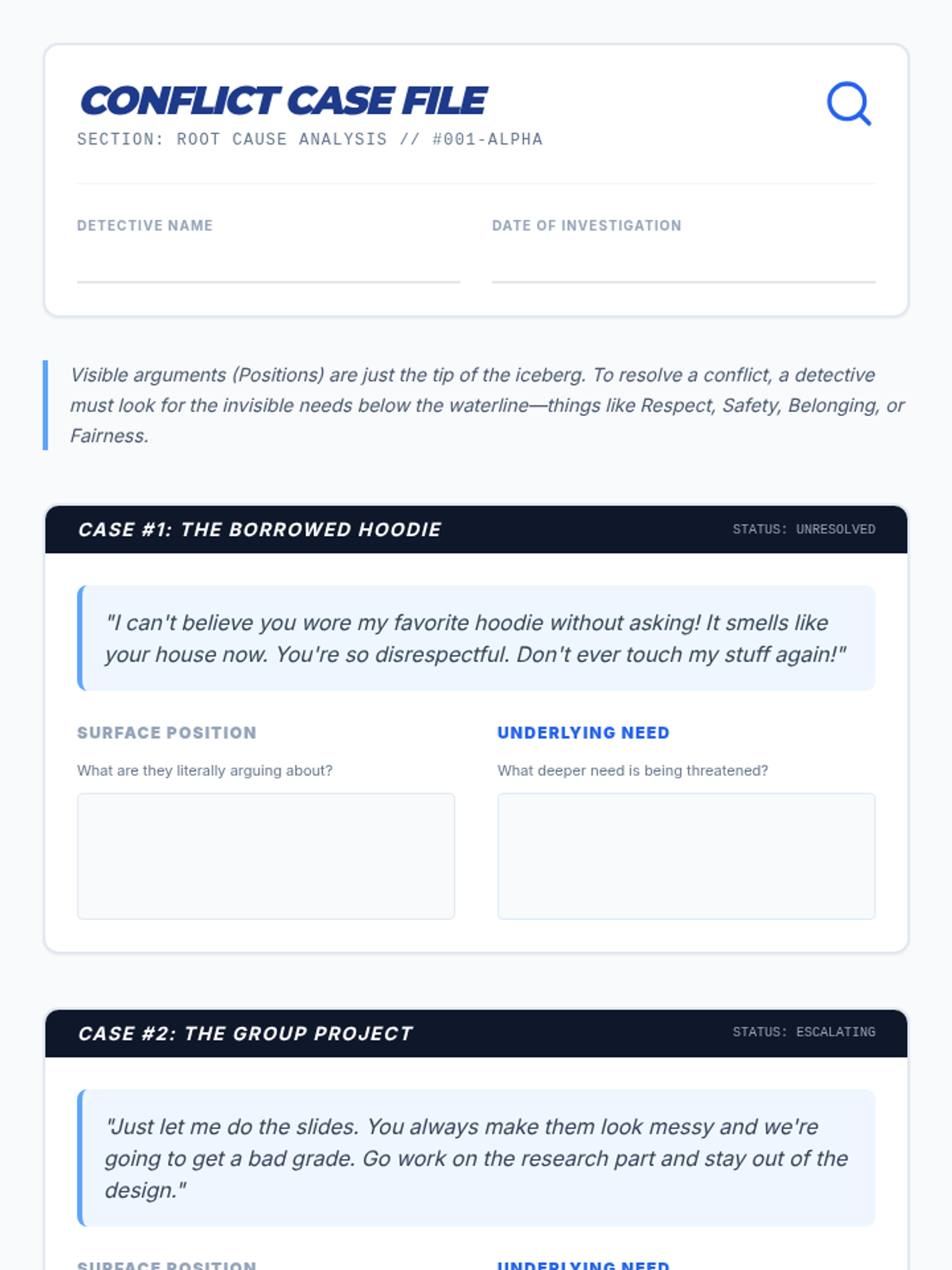
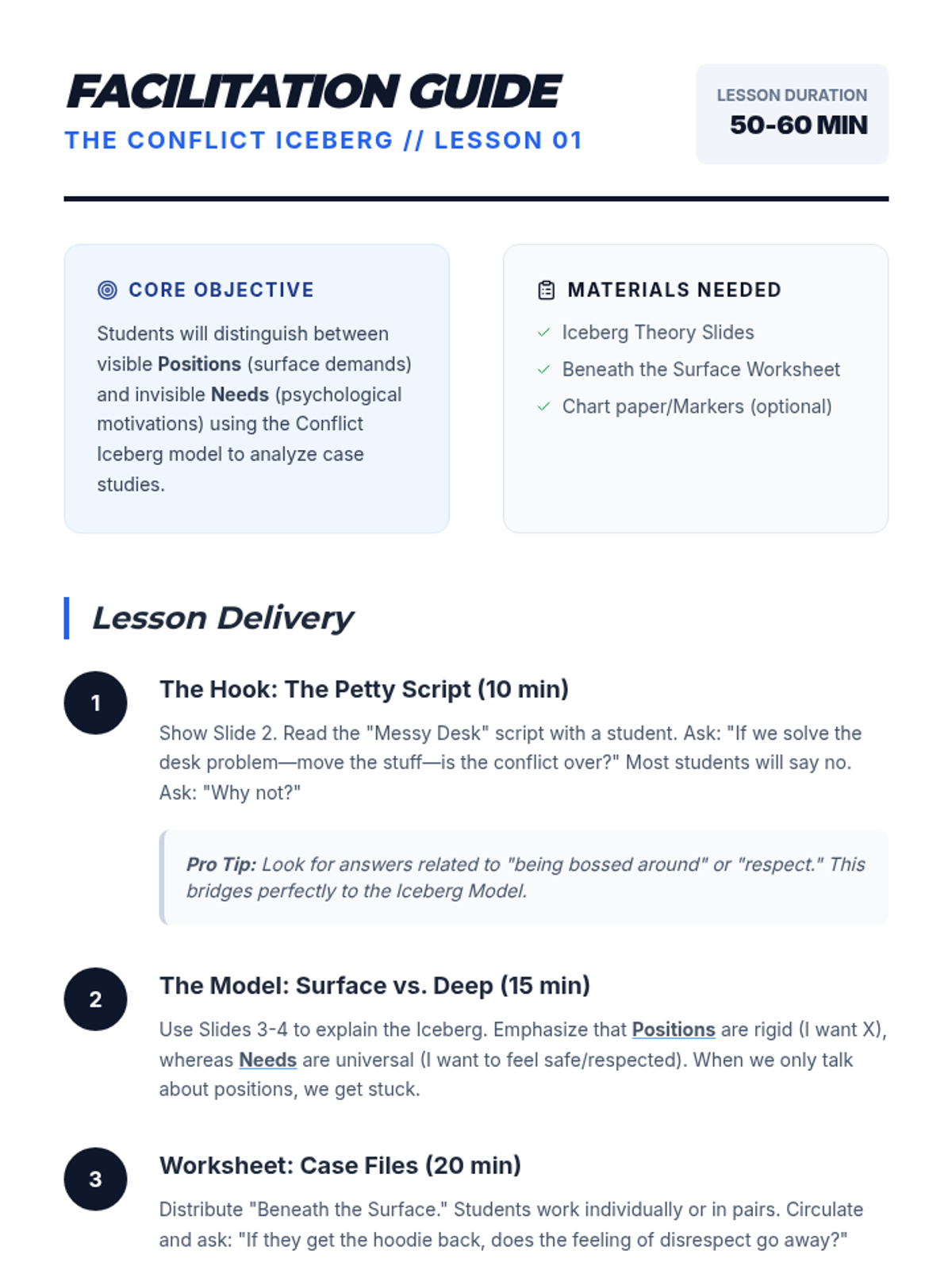
Students use the Iceberg Model to distinguish between visible 'positions' and invisible 'needs' like respect and security in interpersonal conflicts.
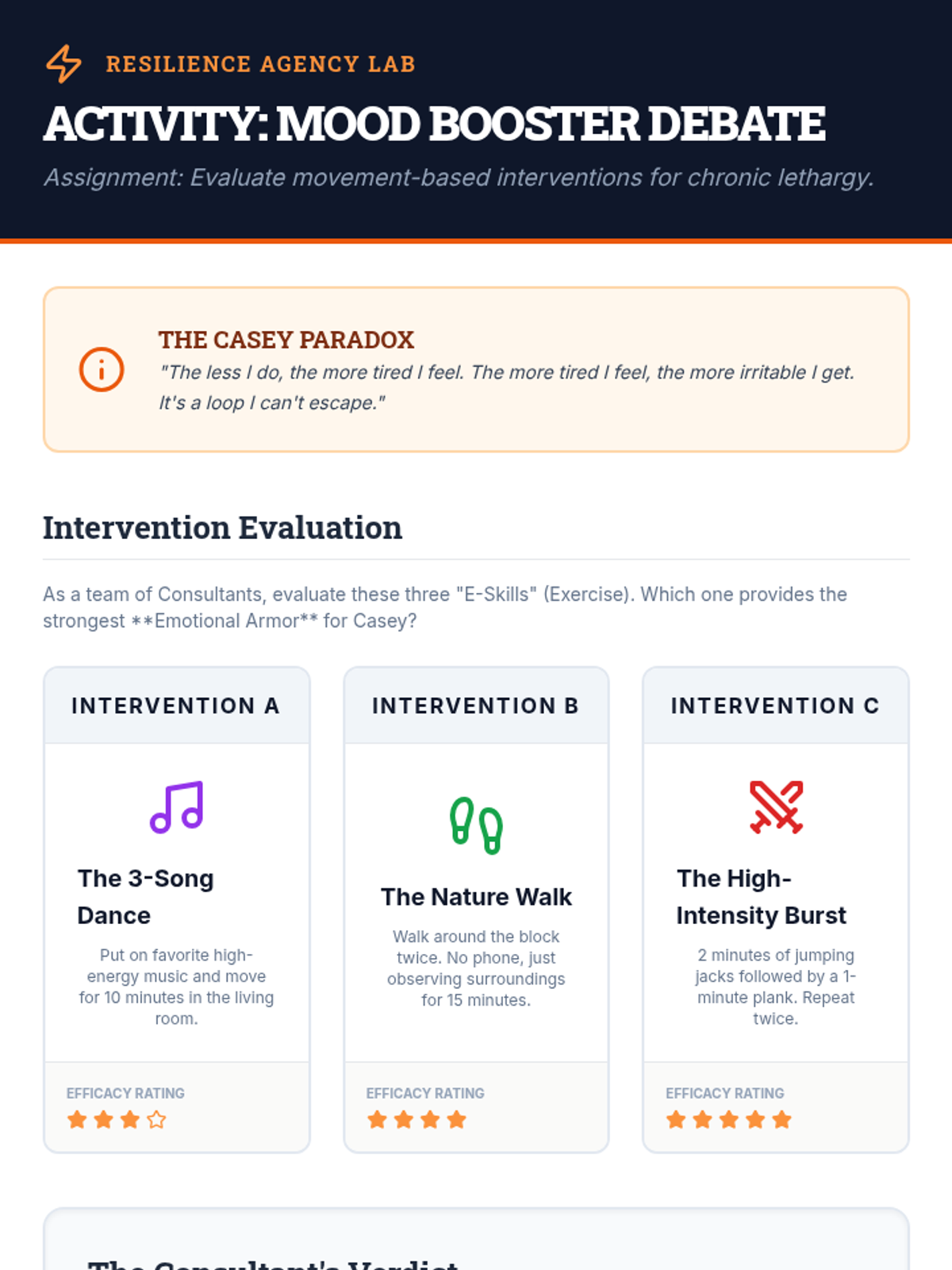
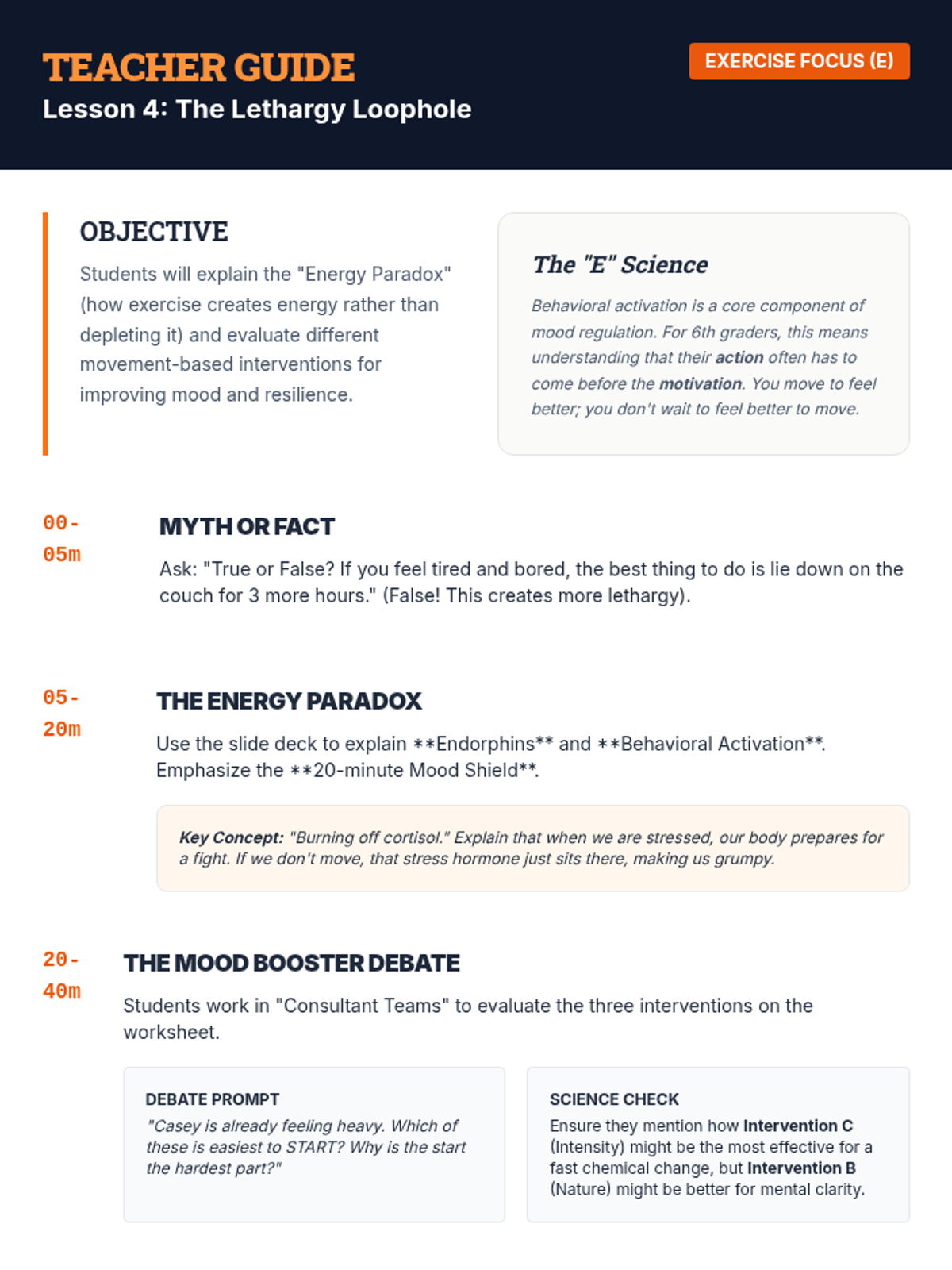
Students explore the energy paradox—how exercise boosts mood—and debate the effectiveness of movement-based interventions.
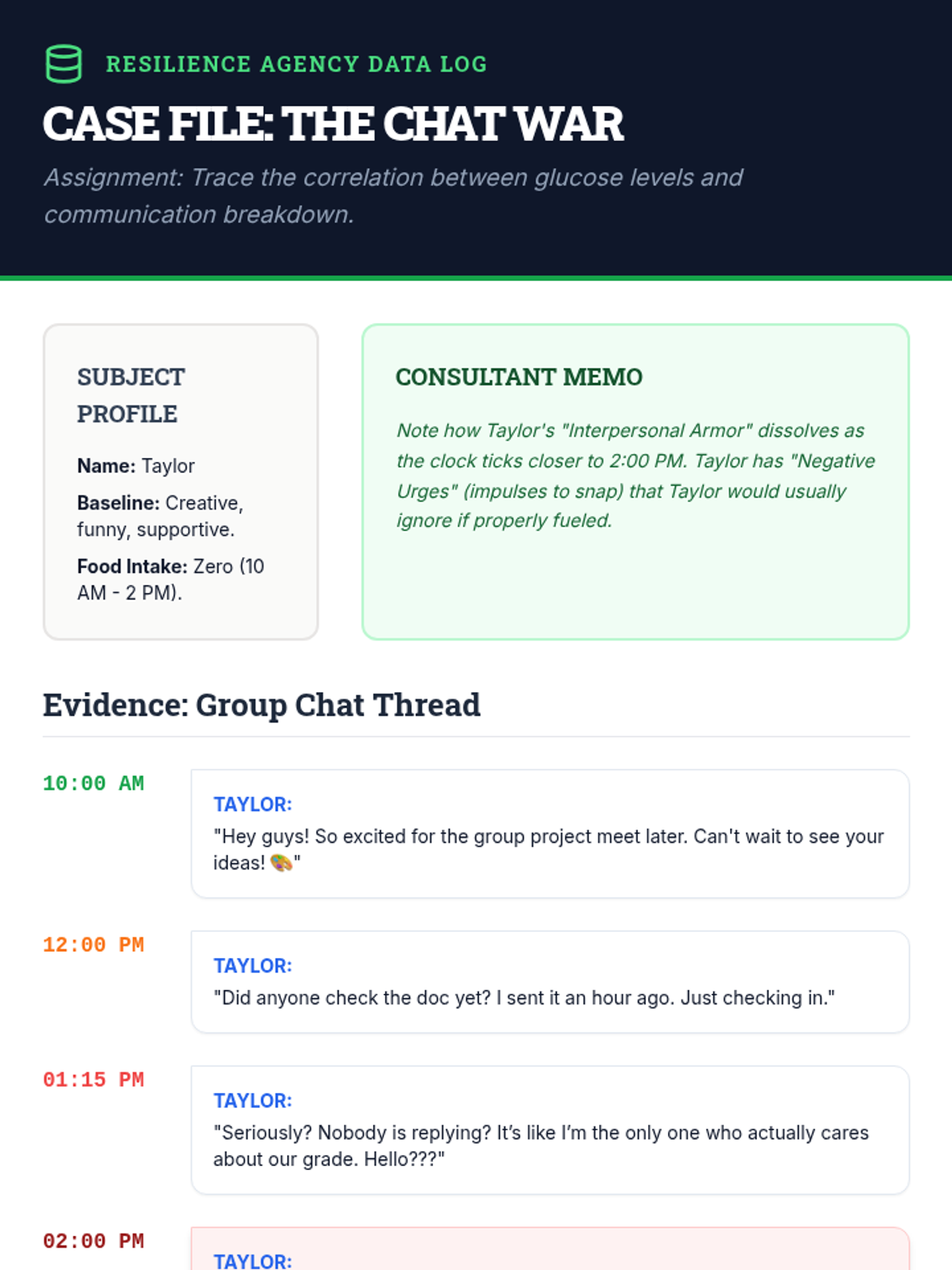
Students map the connection between blood sugar, meal timing, and emotional regulation through a text message timeline.
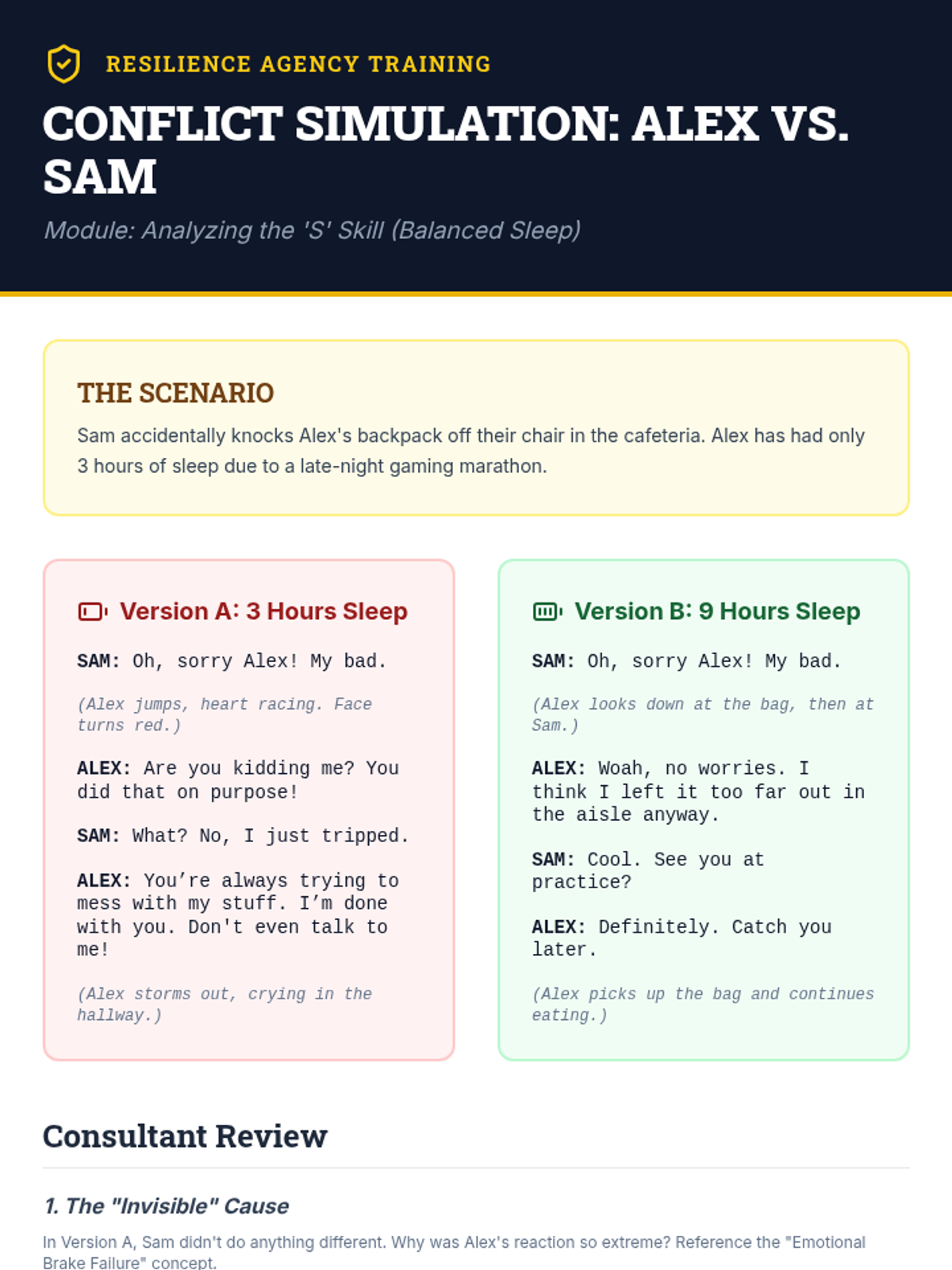
Students examine how sleep deprivation impacts mood and role-play conflict resolution with and without proper rest.
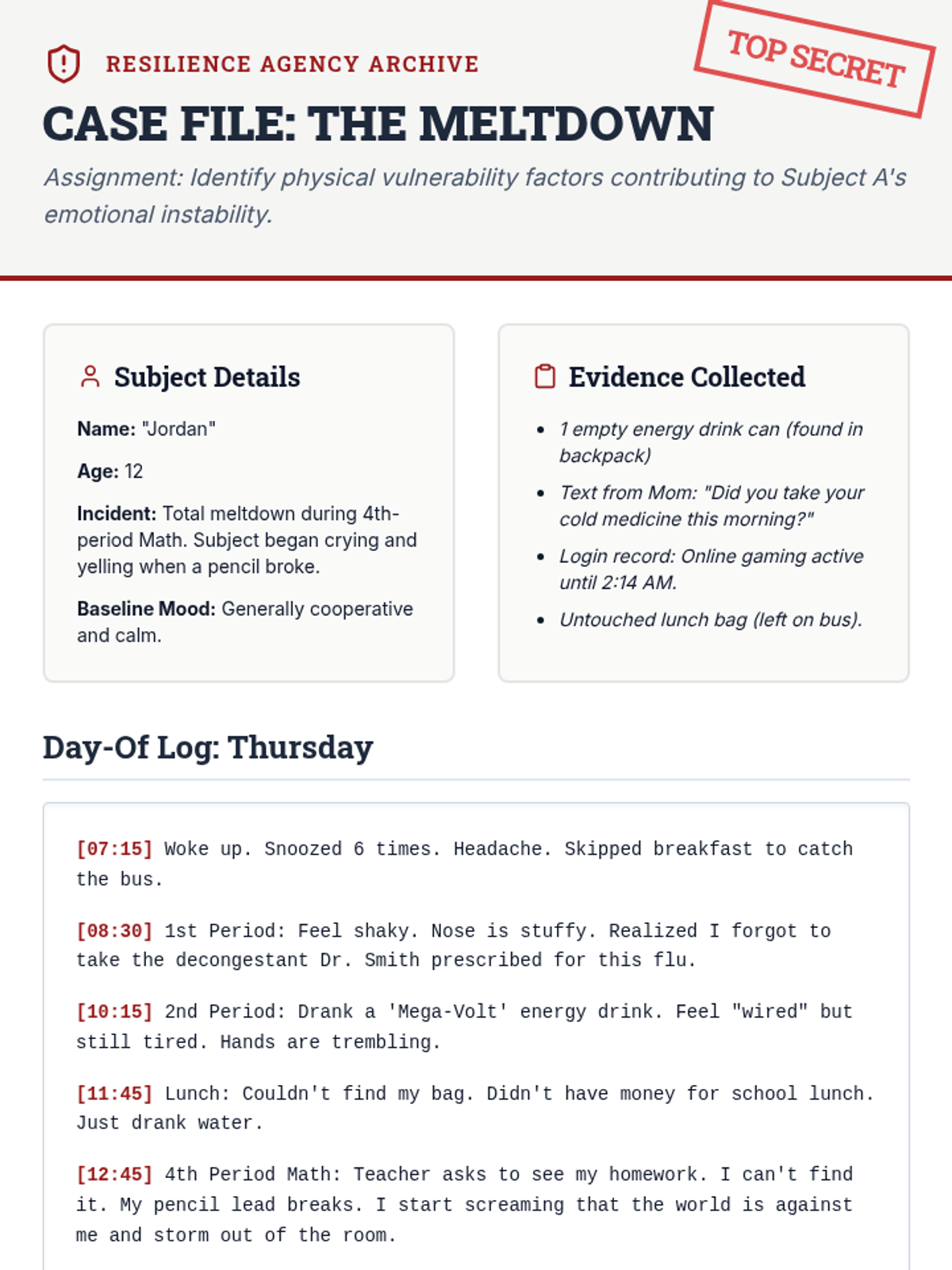
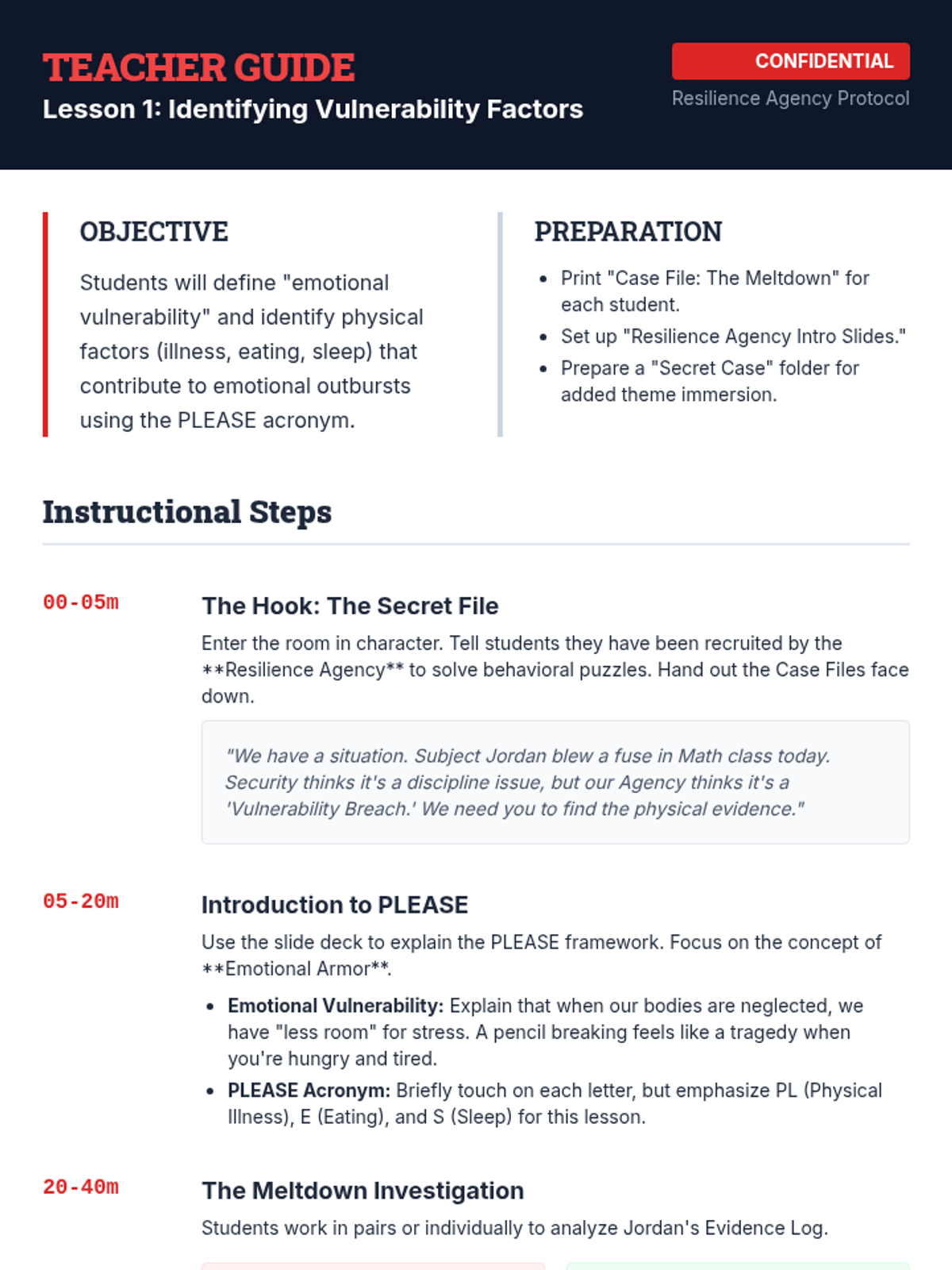
Students are introduced to the PLEASE framework and use evidence from a character's daily log to identify physical vulnerability factors.
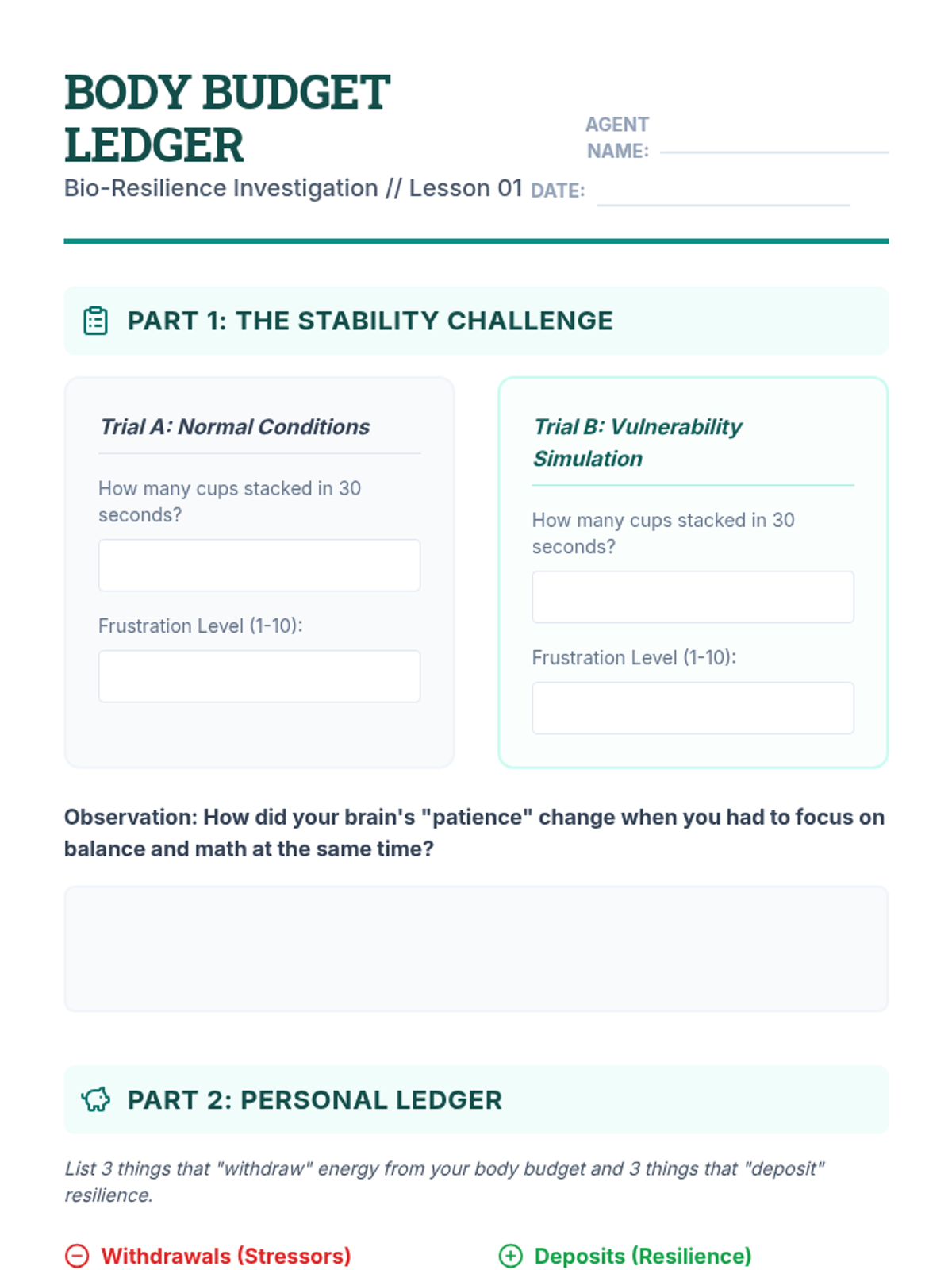
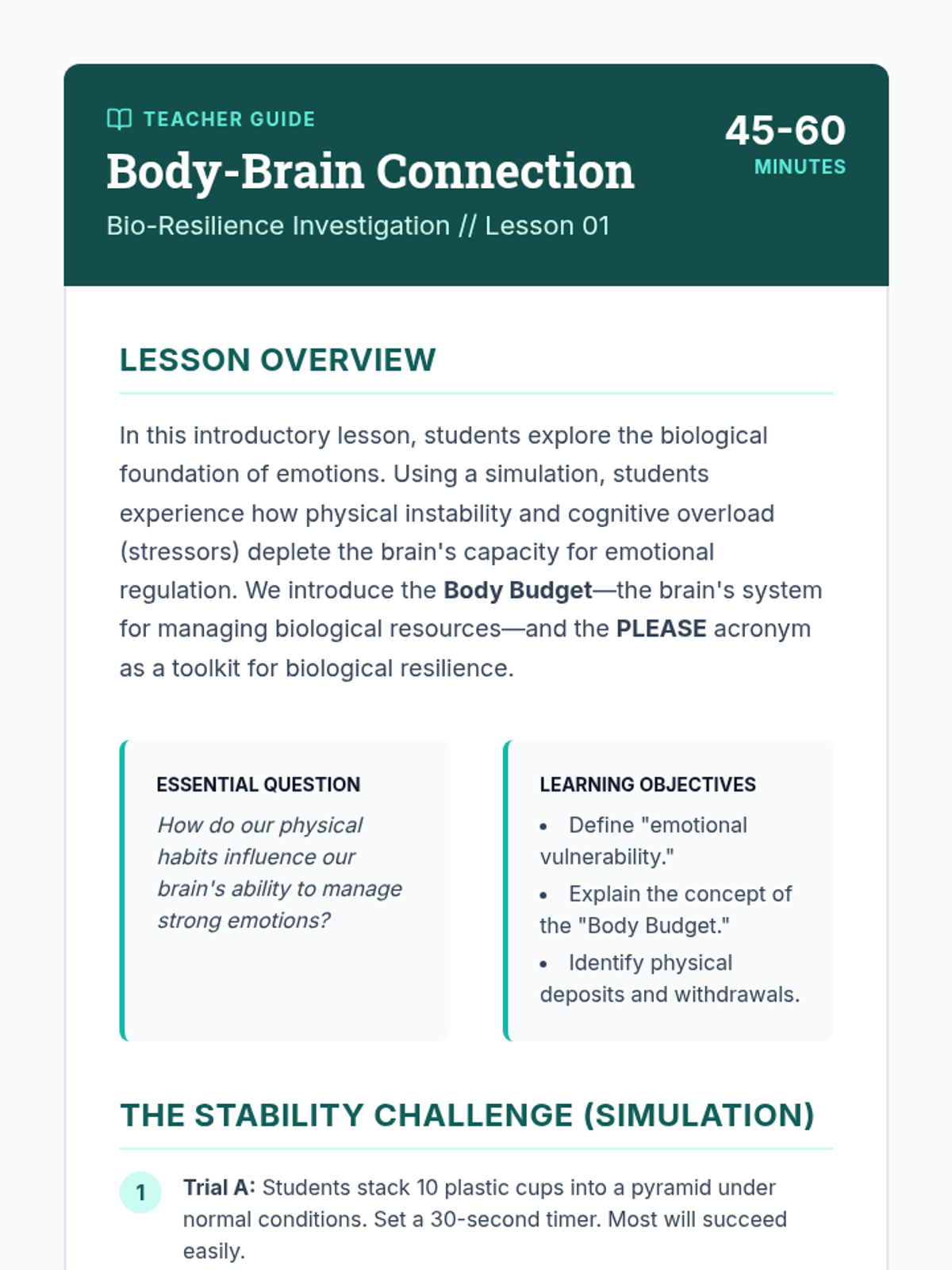
Students explore the concept of the 'Body Budget' and how physical stressors lead to emotional vulnerability through a simulation.
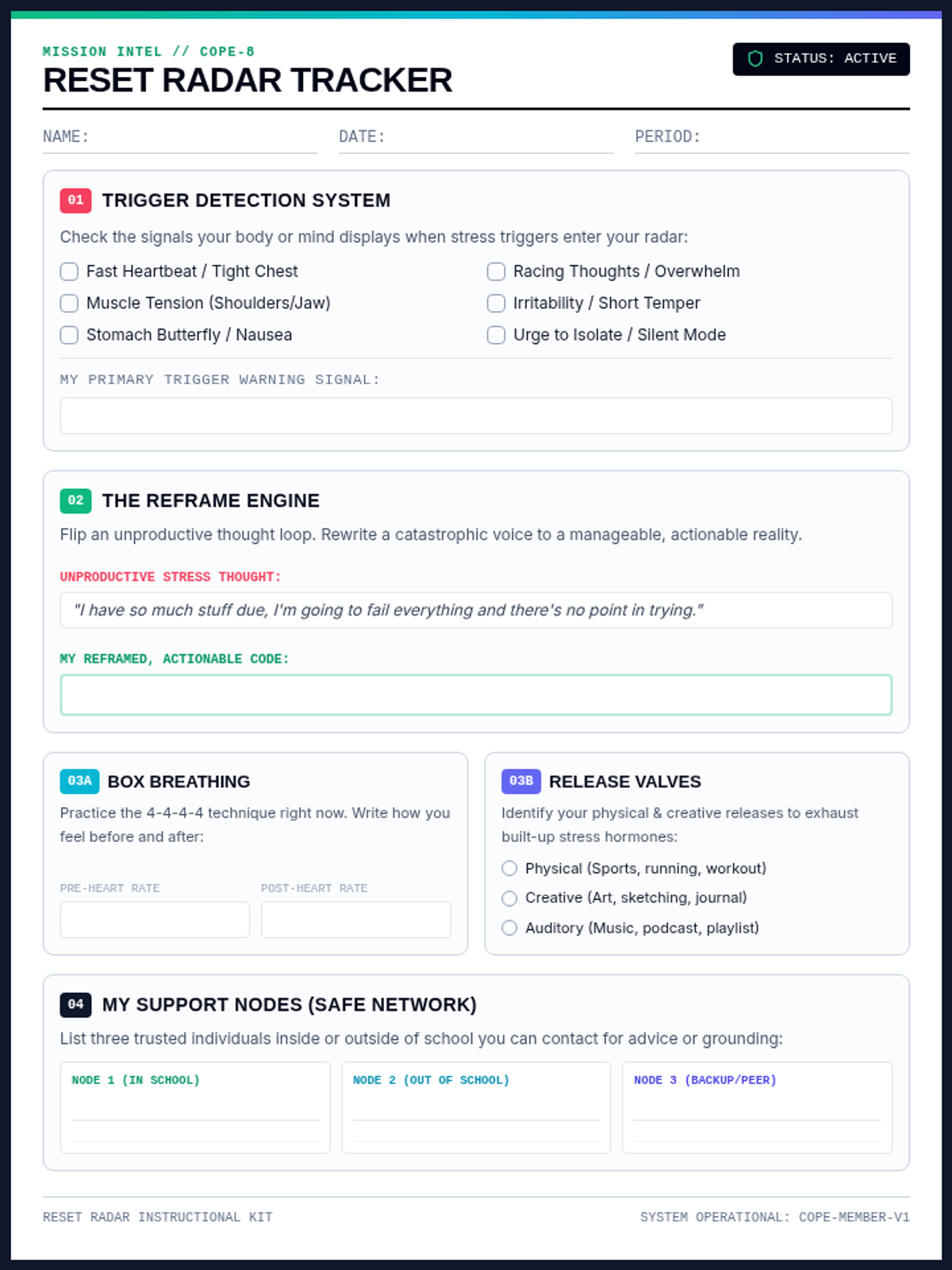
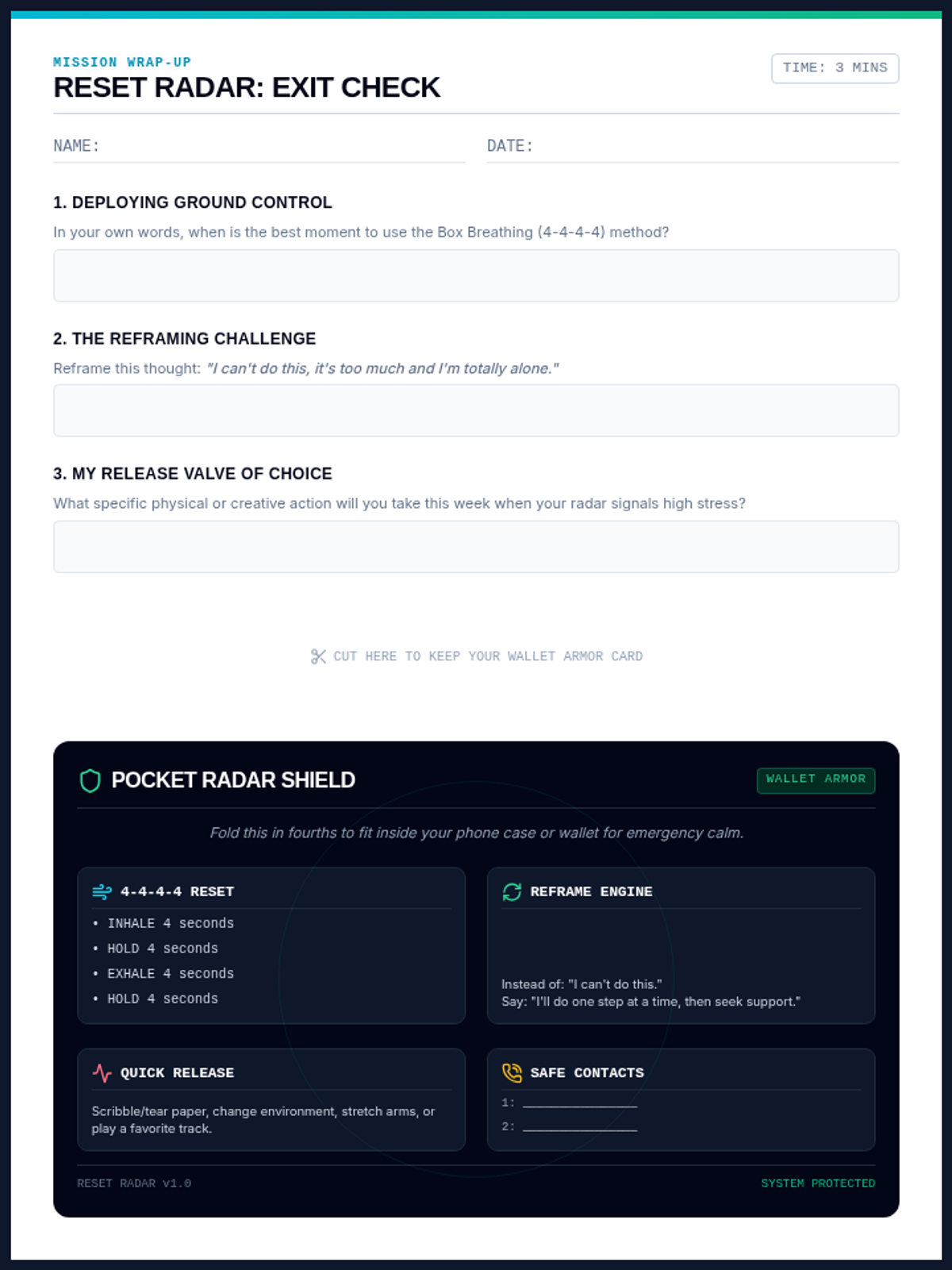
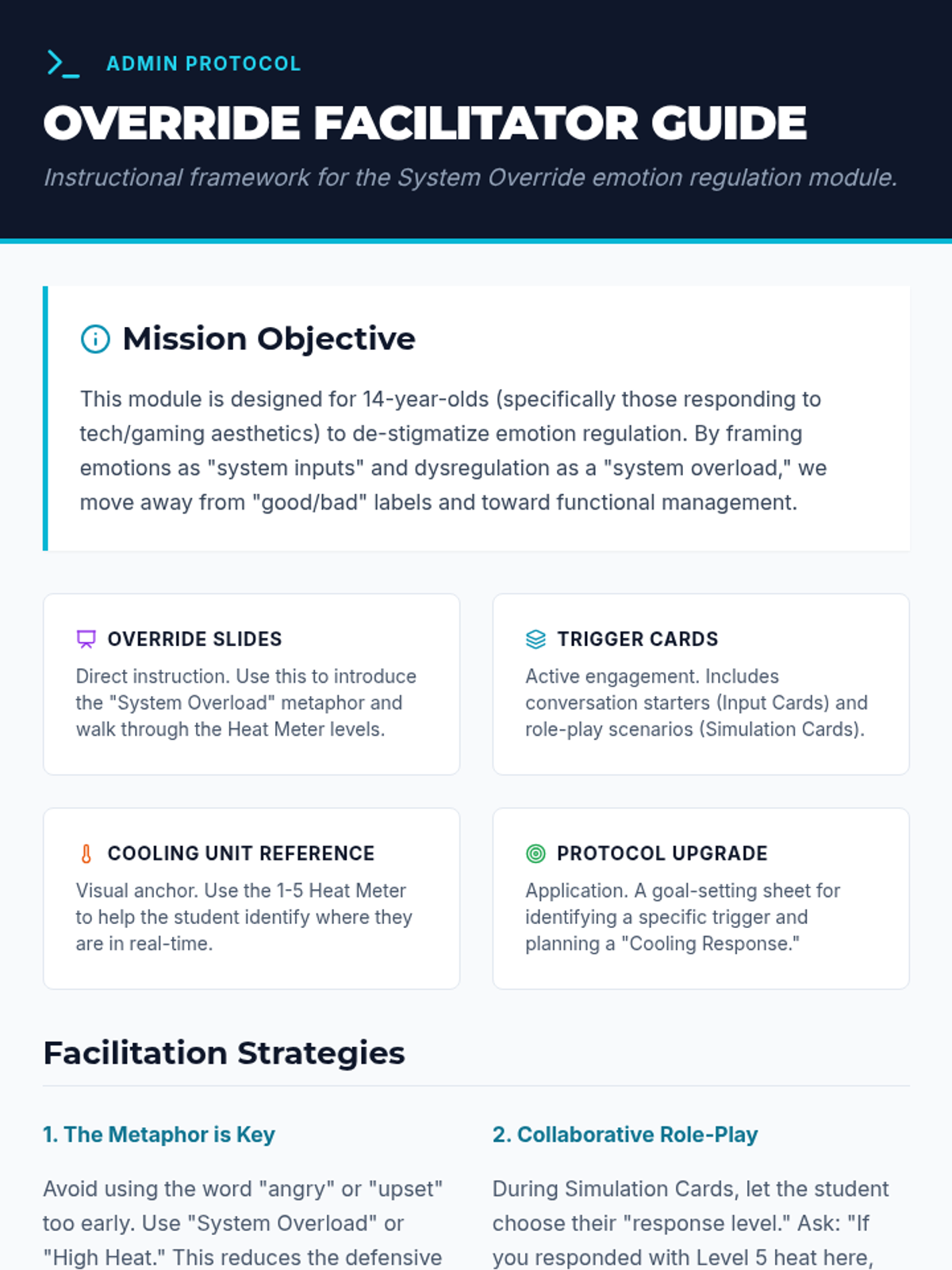
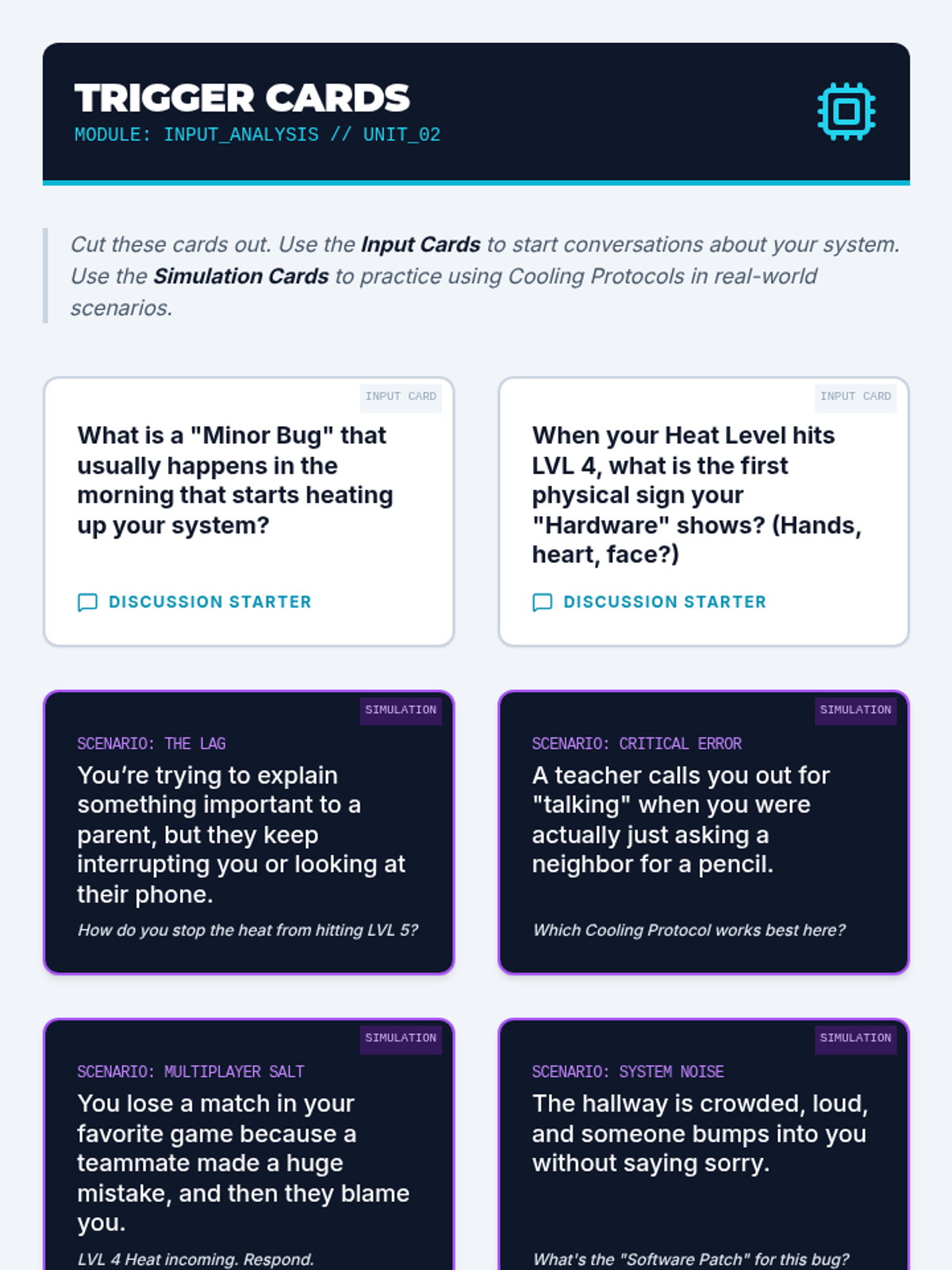
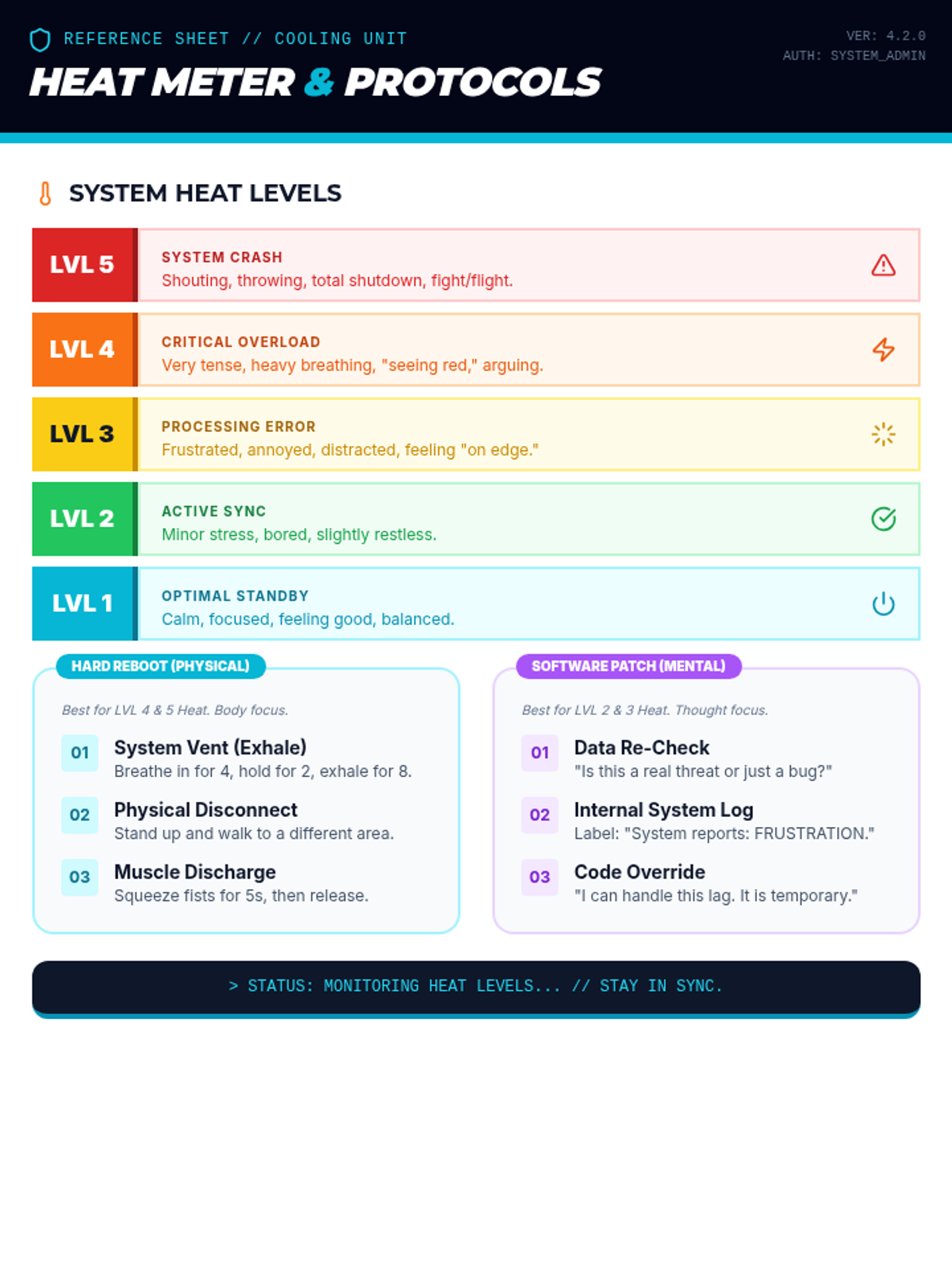
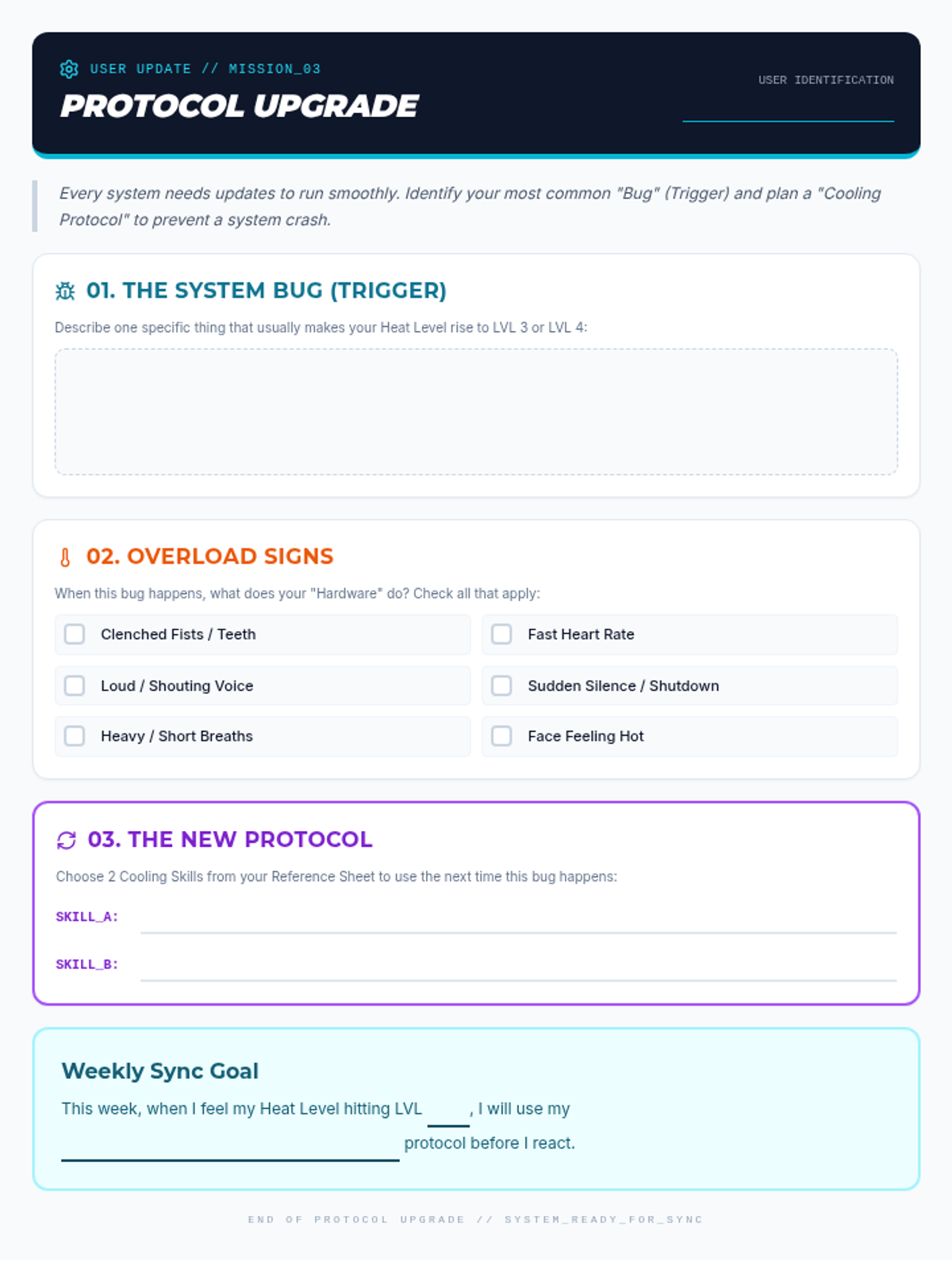
A comprehensive emotion regulation toolkit for teens, focusing on identifying triggers and building a personalized coping skills "system" using a high-tech theme.
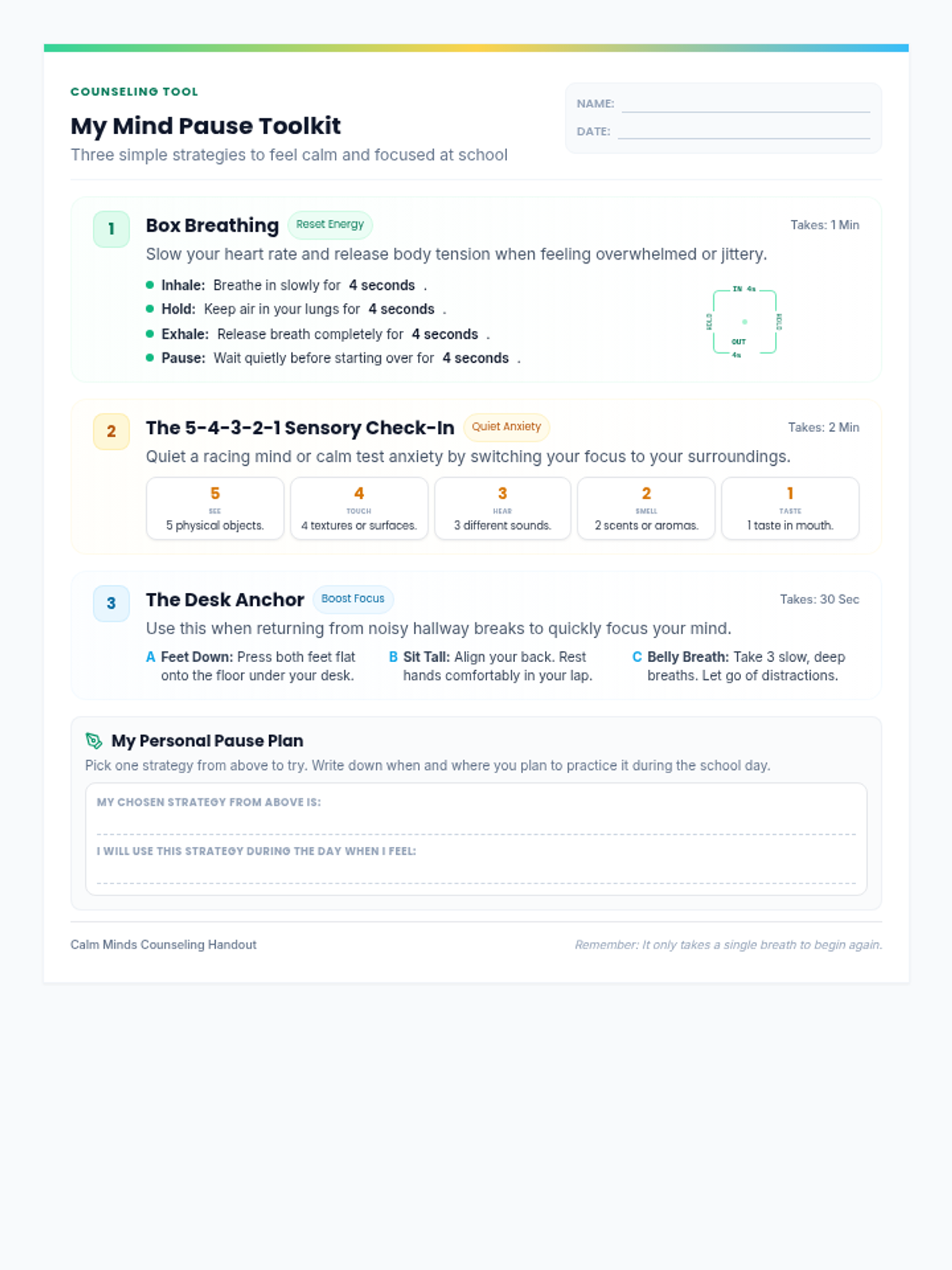
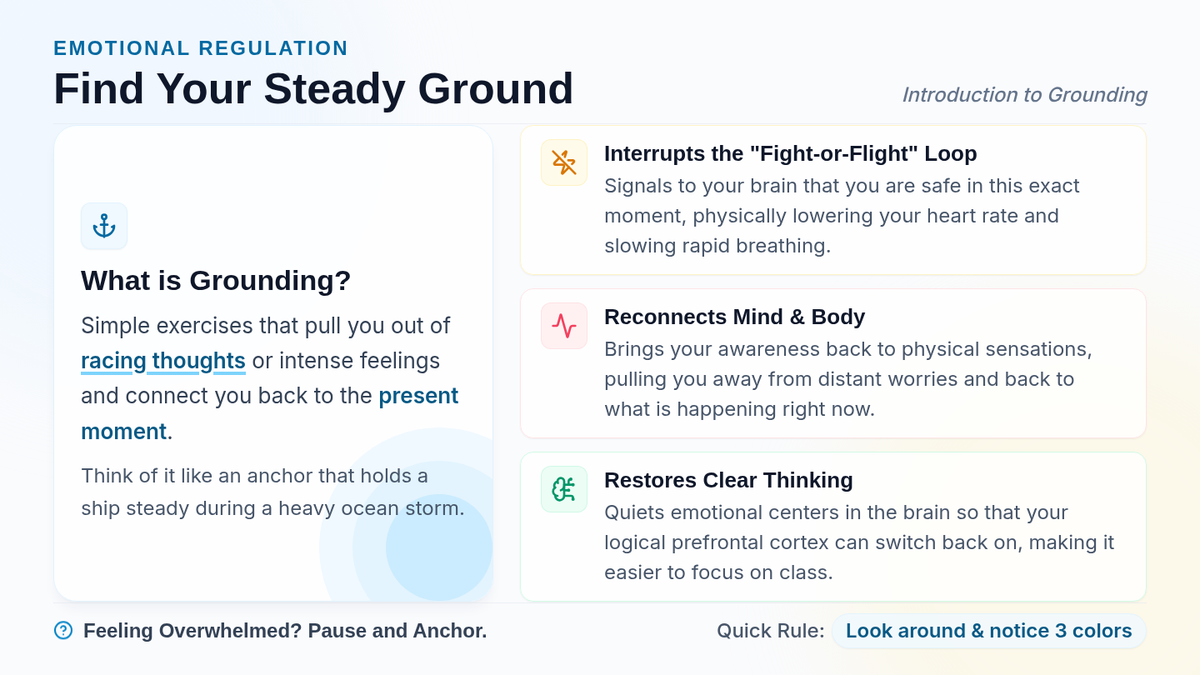
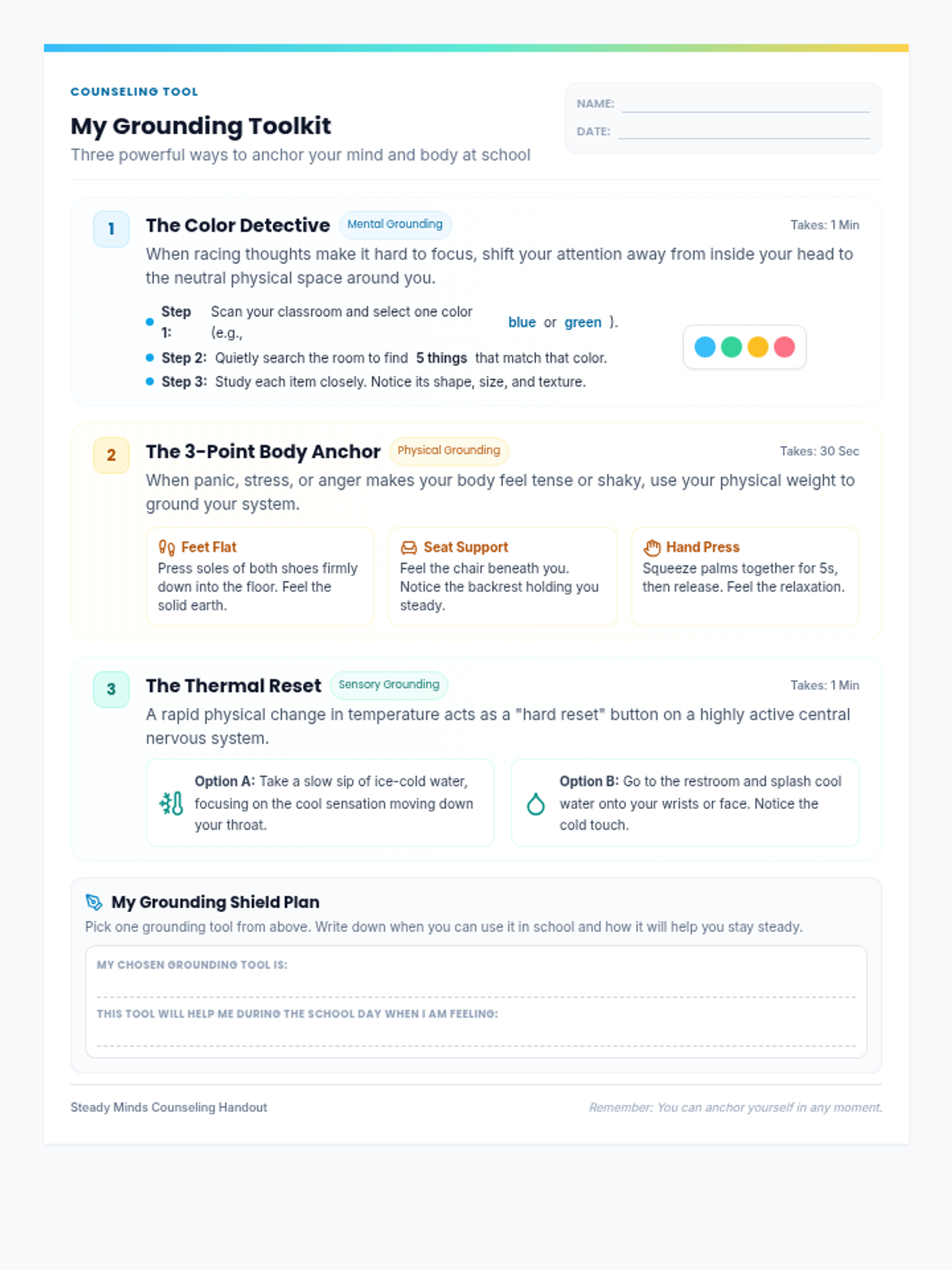
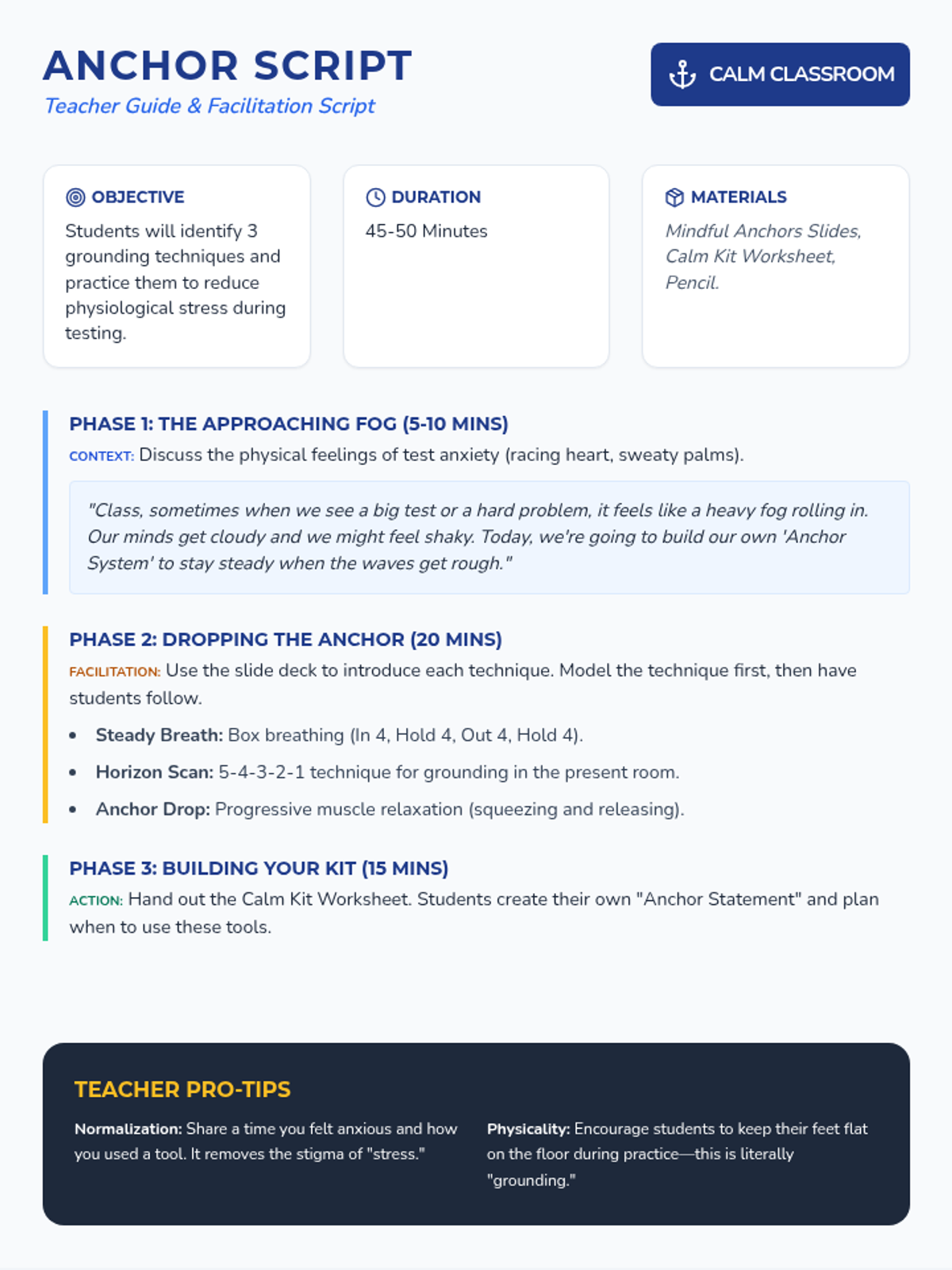
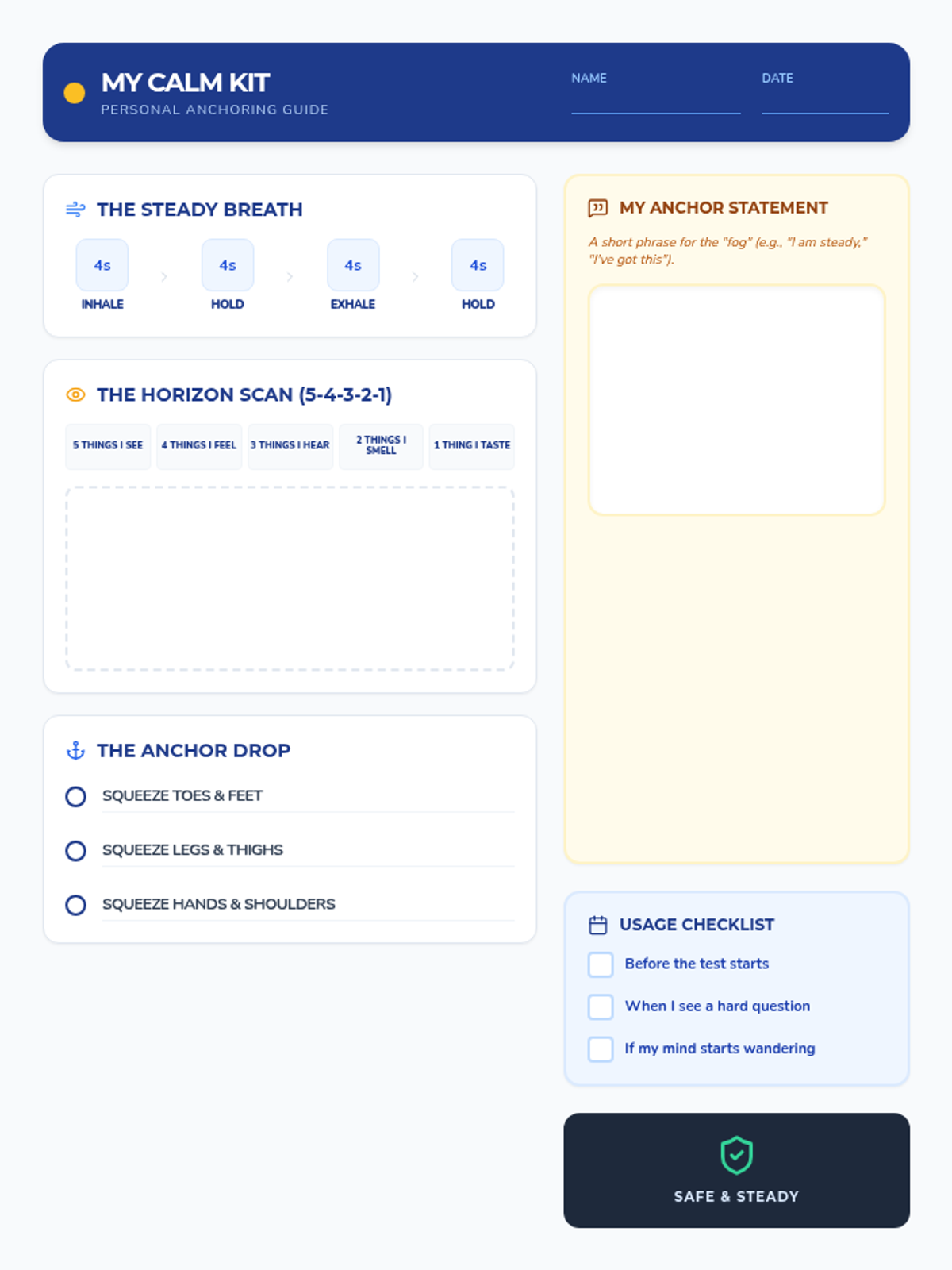
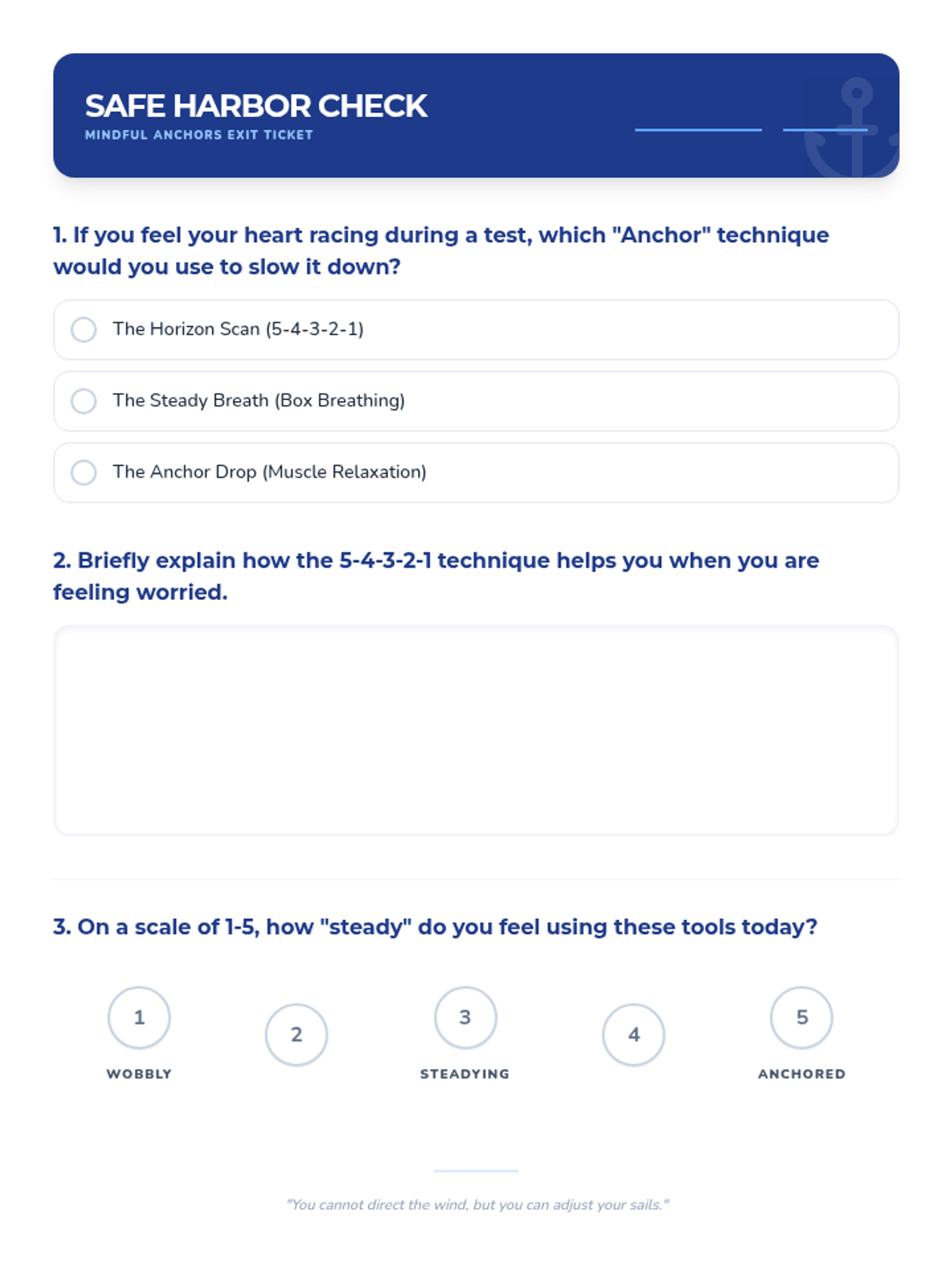
A practical lesson designed to equip students with immediate grounding techniques to navigate test anxiety and academic stress using the metaphor of a lighthouse and anchor. Students will learn and practice box breathing, the 5-4-3-2-1 method, and progressive muscle relaxation.
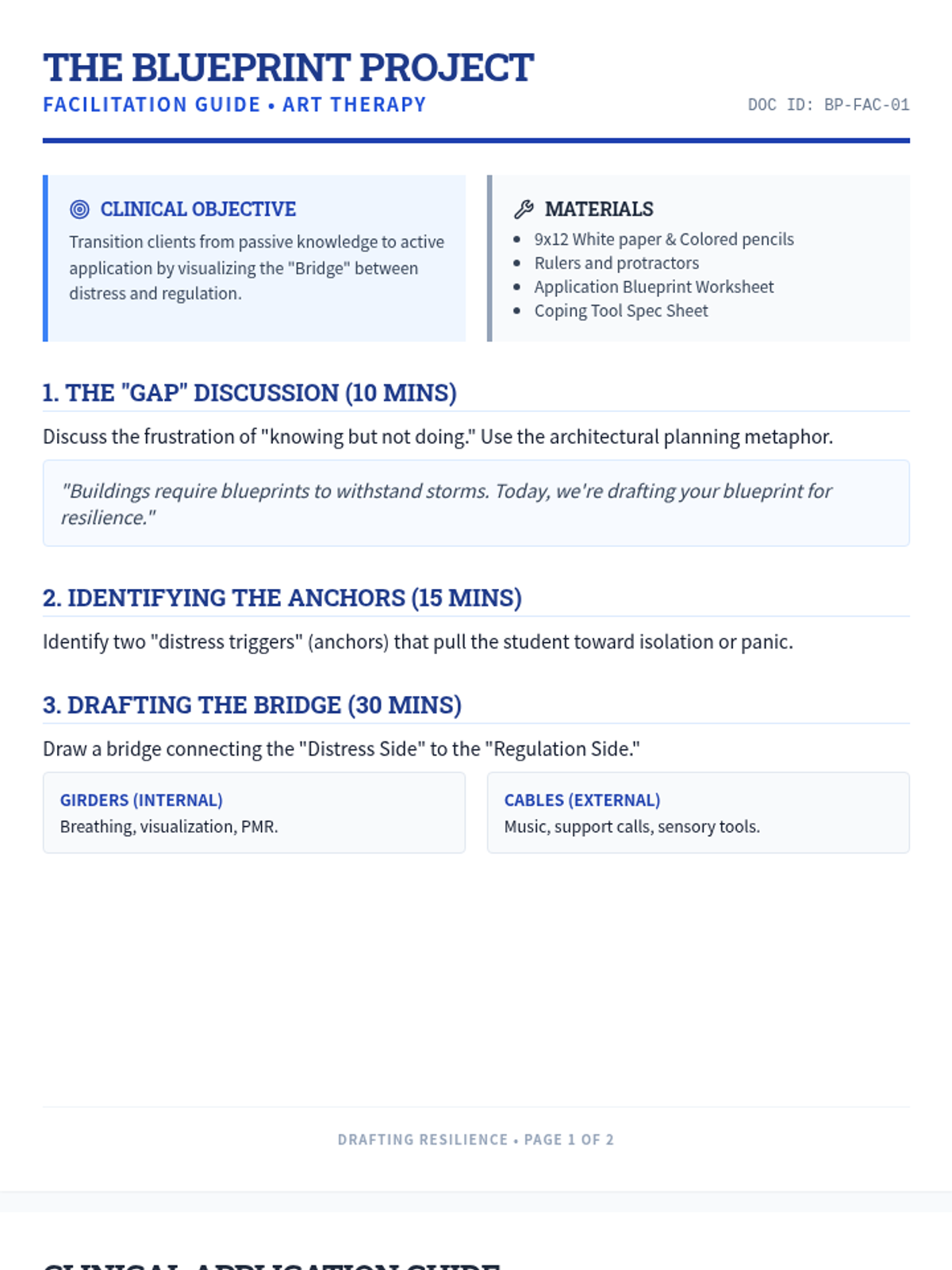
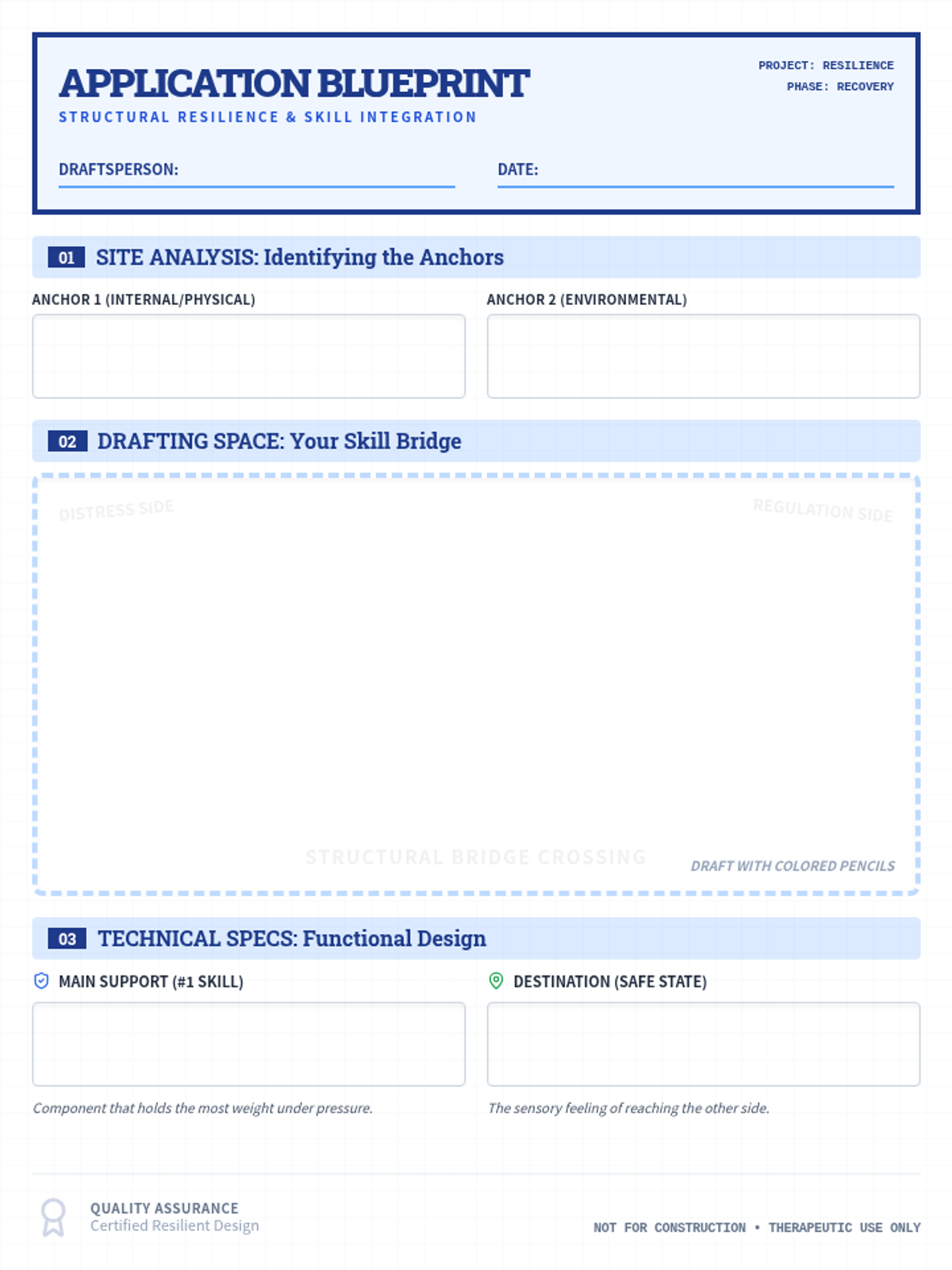
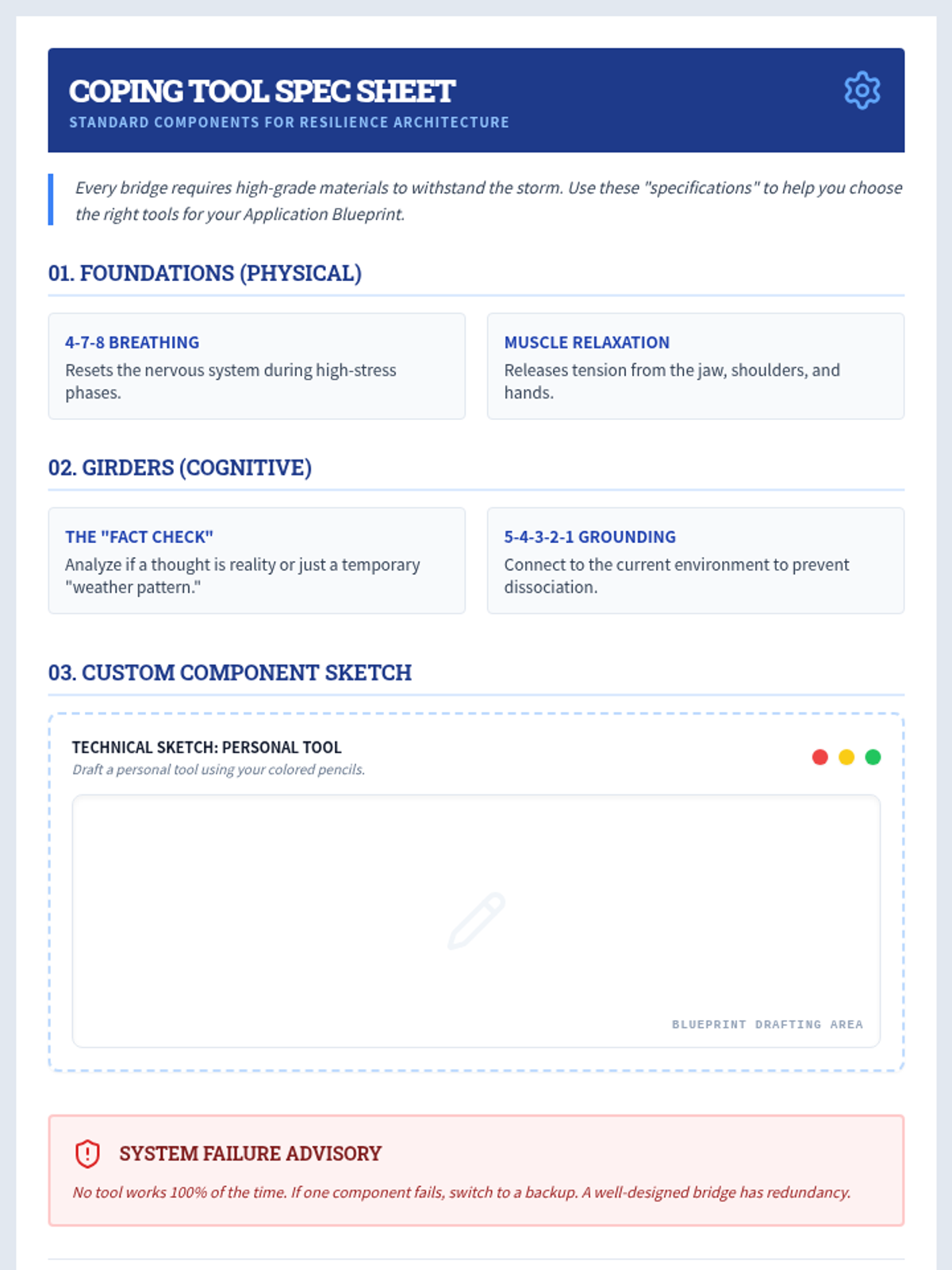
A therapeutic art lesson helping teens bridge the gap between identifying coping skills and applying them during emotional distress through structured architectural visualization.
Aceitação Radical e voltando a mente para a realidade para reduzir o sofrimento.
Autoconforto usando os cinco sentidos e melhorando o momento.
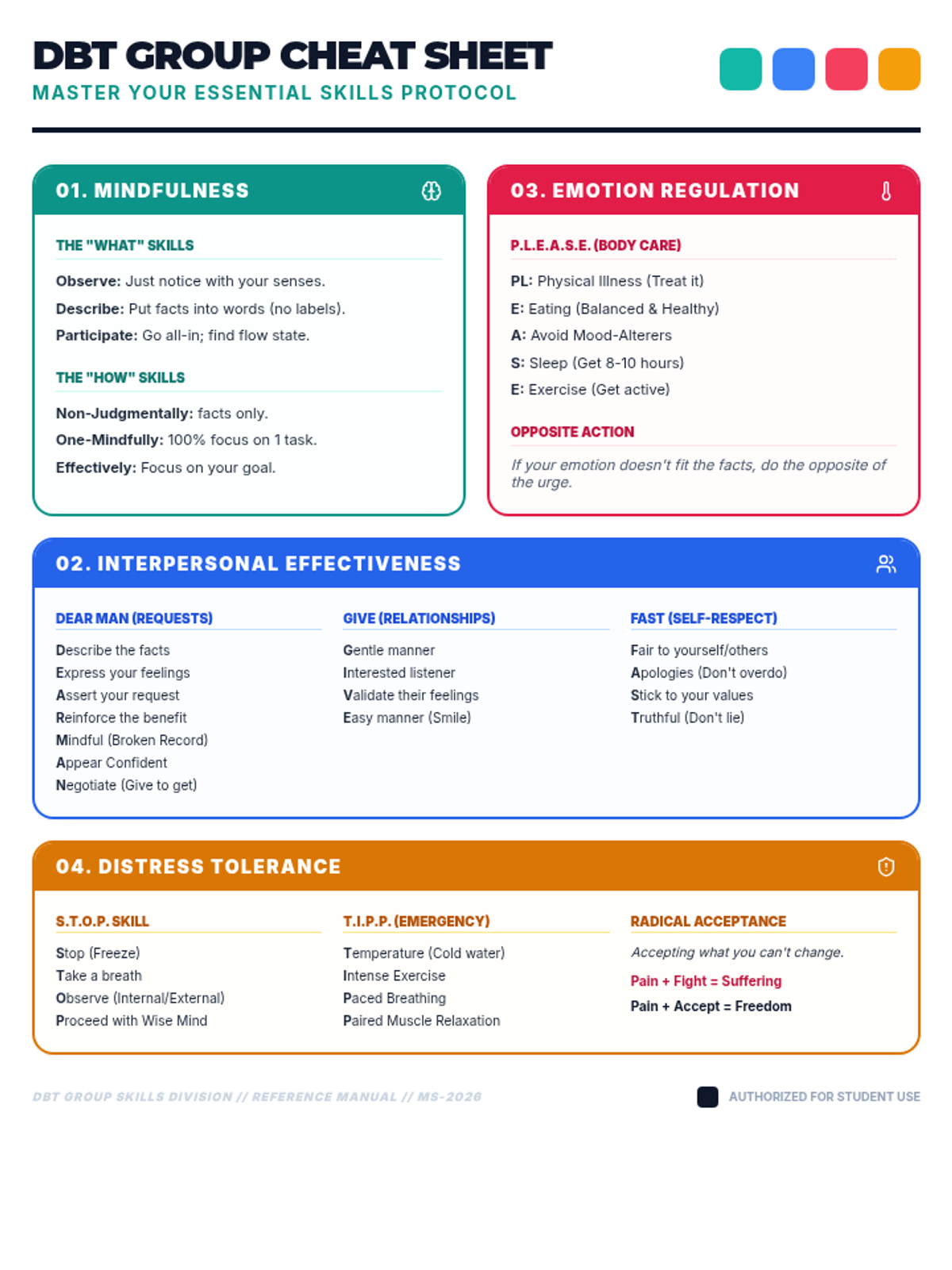
As habilidades STOP e TIPP para gerenciamento imediato de crises e resfriamento.
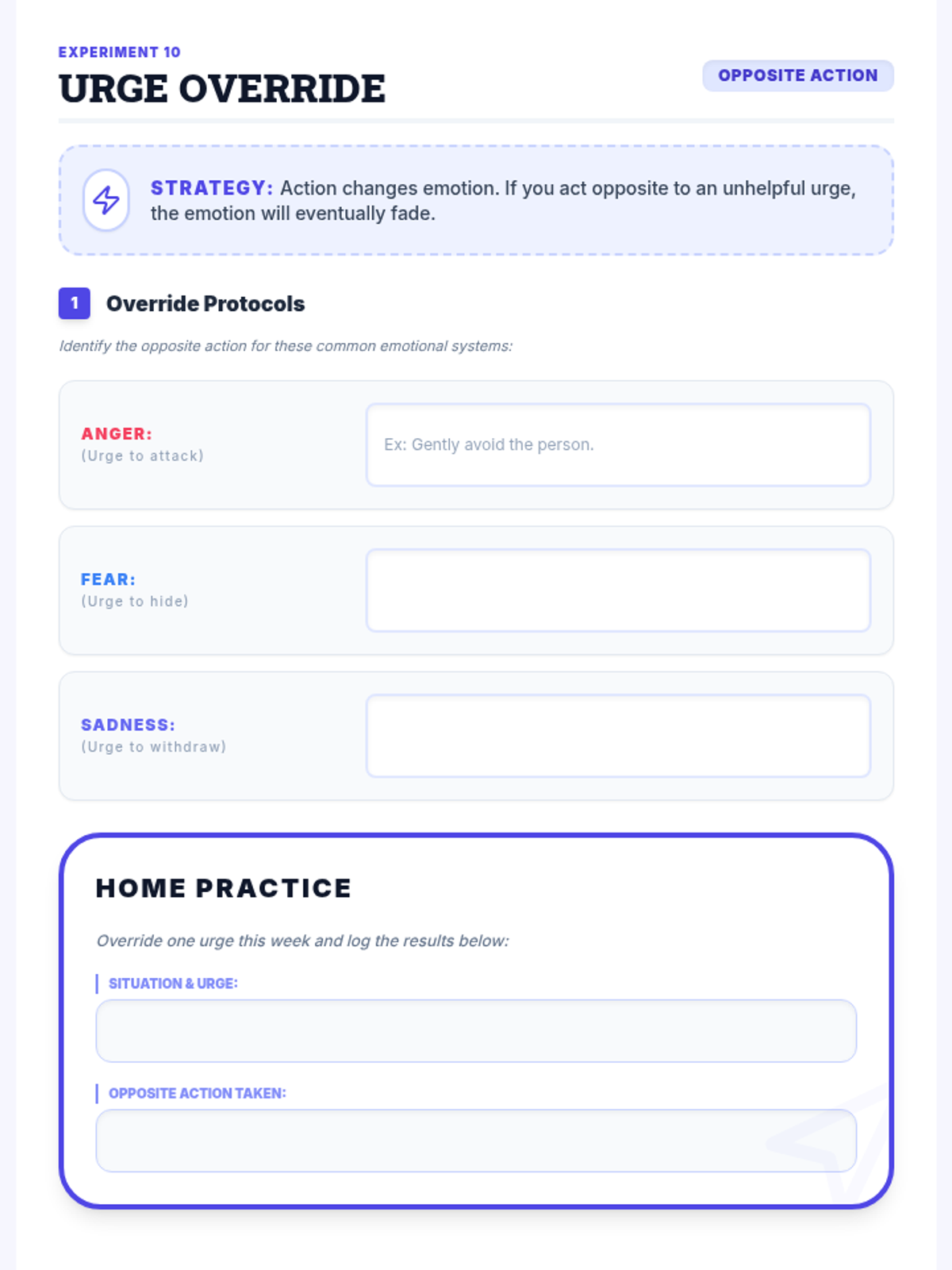
A habilidade de Ação Oposta para mudar emoções indesejadas agindo contra o impulso.
A habilidade PLEASE para manter um corpo saudável e apoiar uma mente saudável.
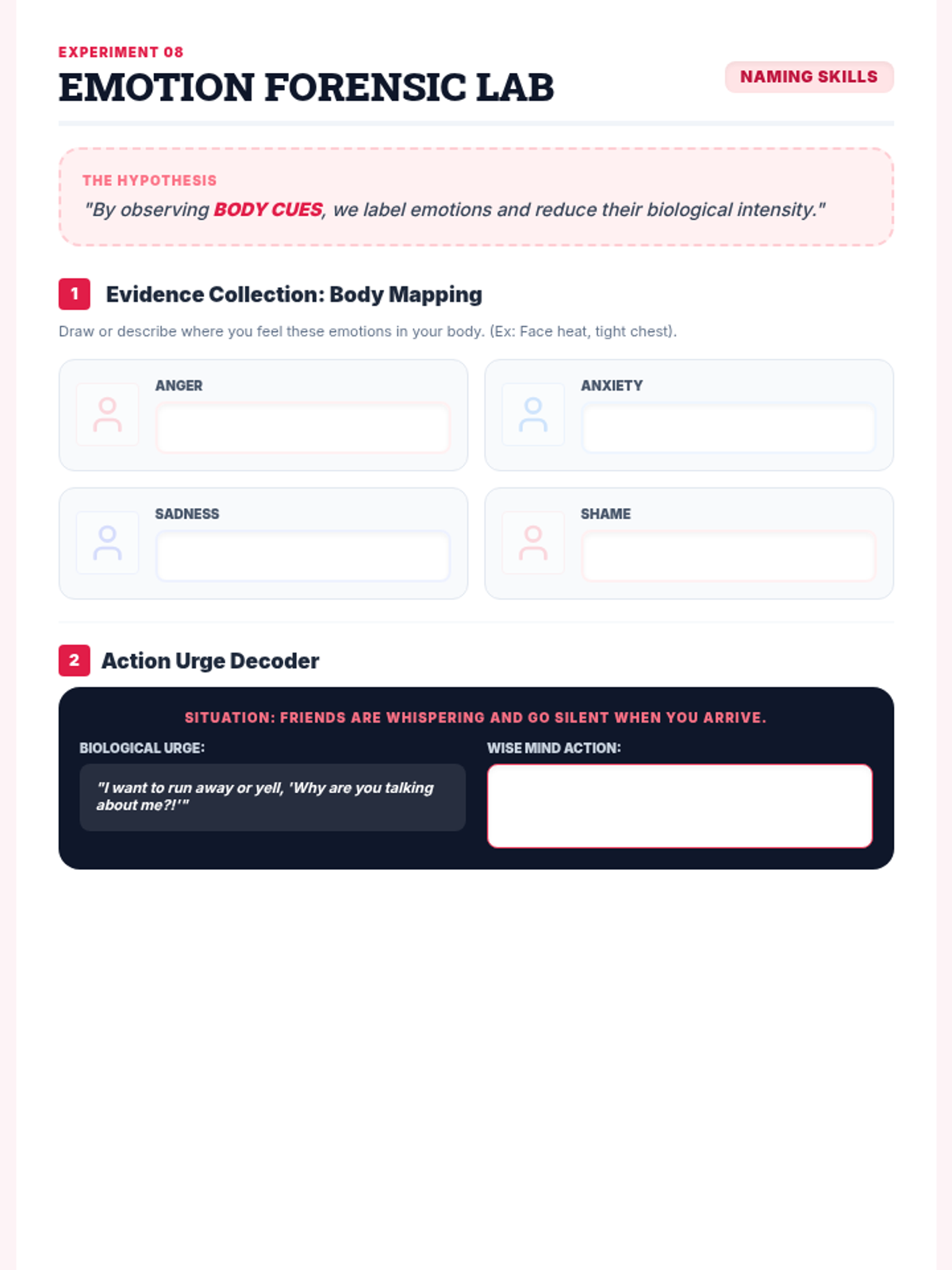
Aprender a identificar e nomear emoções para reduzir seu poder e aumentar a compreensão.
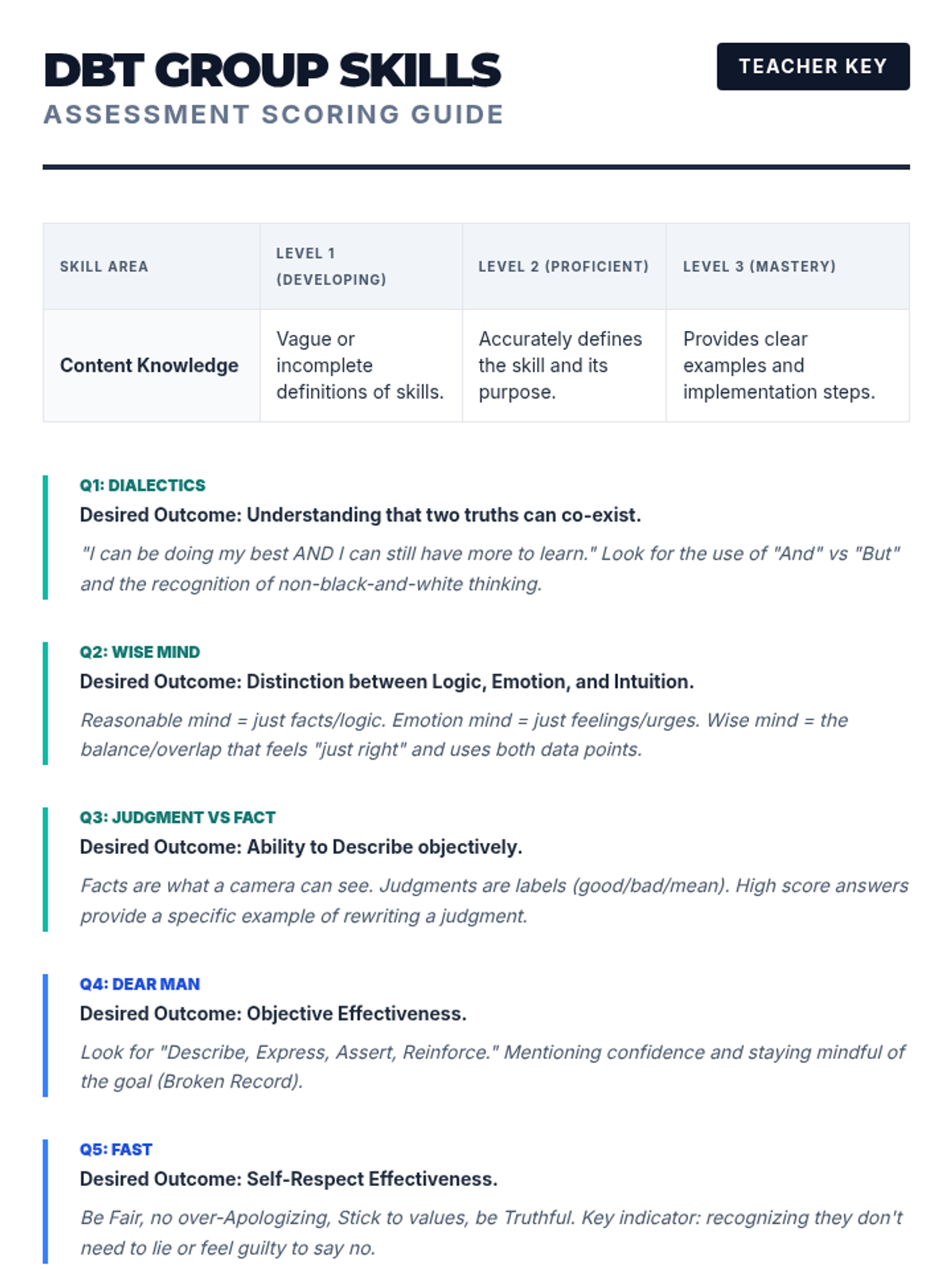
Usando a habilidade FAST para manter o autorrespeito e permanecer fiel aos valores.
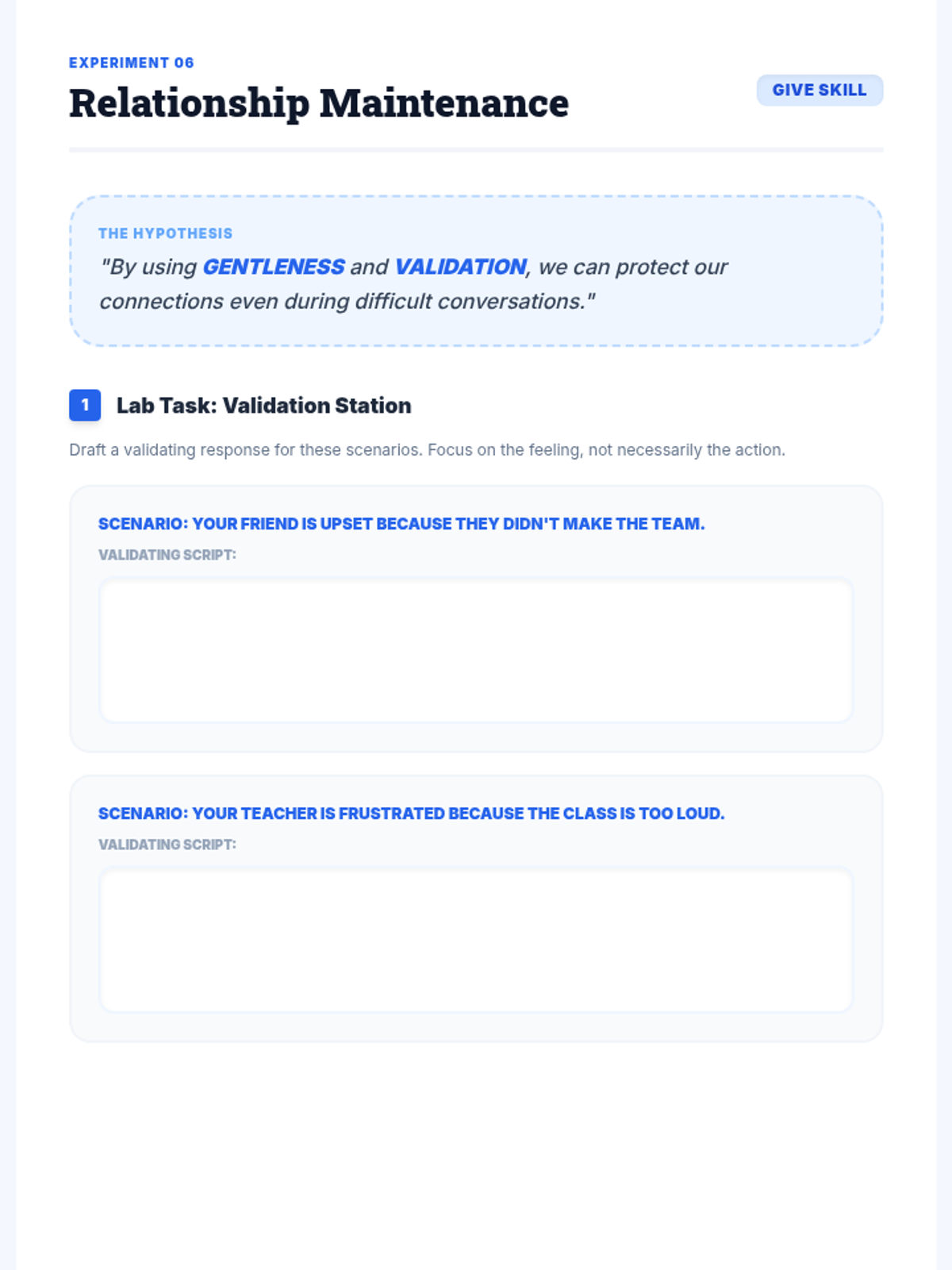
Usando a habilidade GIVE para manter e fortalecer relacionamentos durante as interações.
Usando a habilidade DEAR MAN para pedir coisas ou dizer não de forma eficaz, mantendo os relacionamentos.
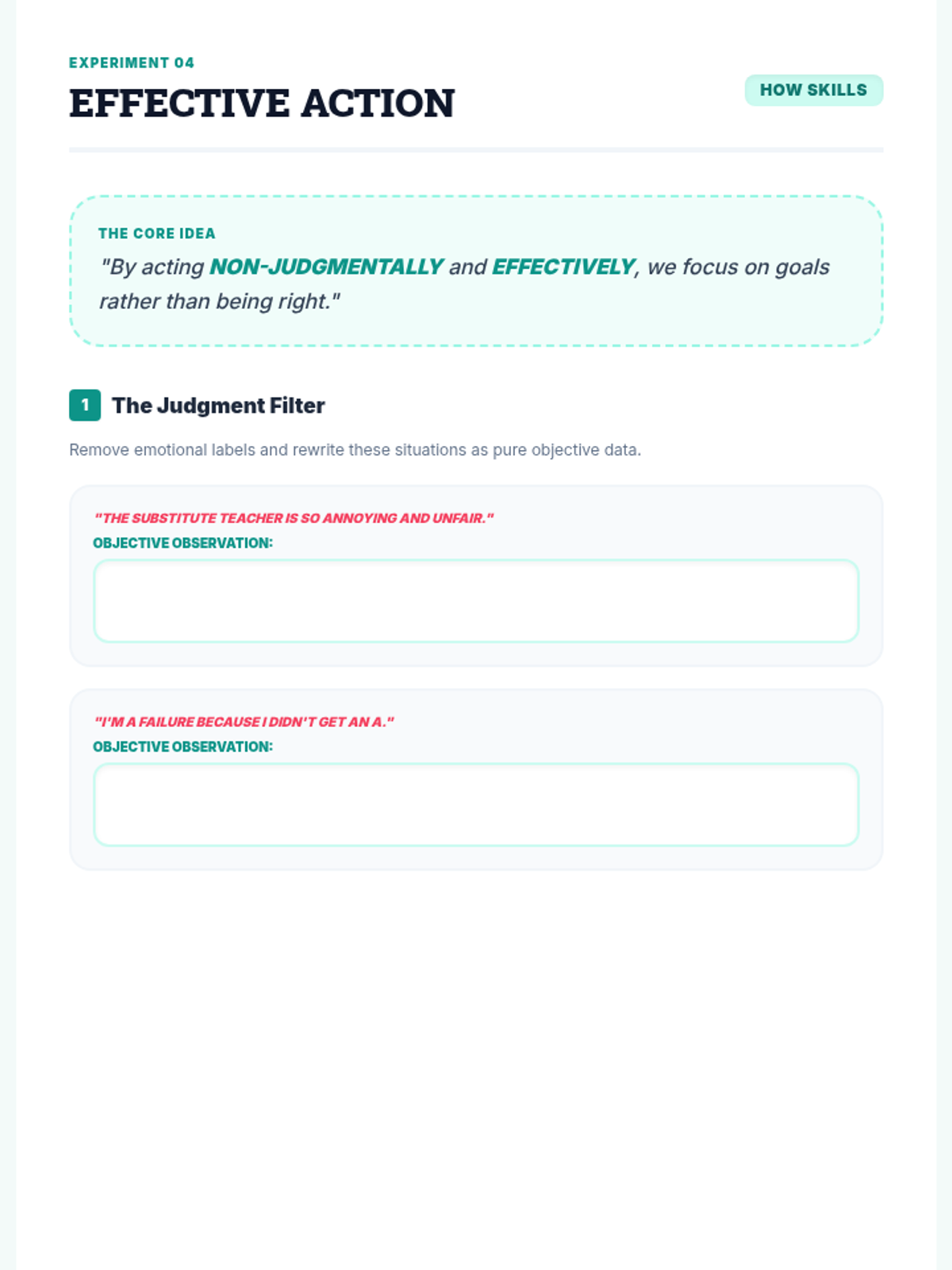
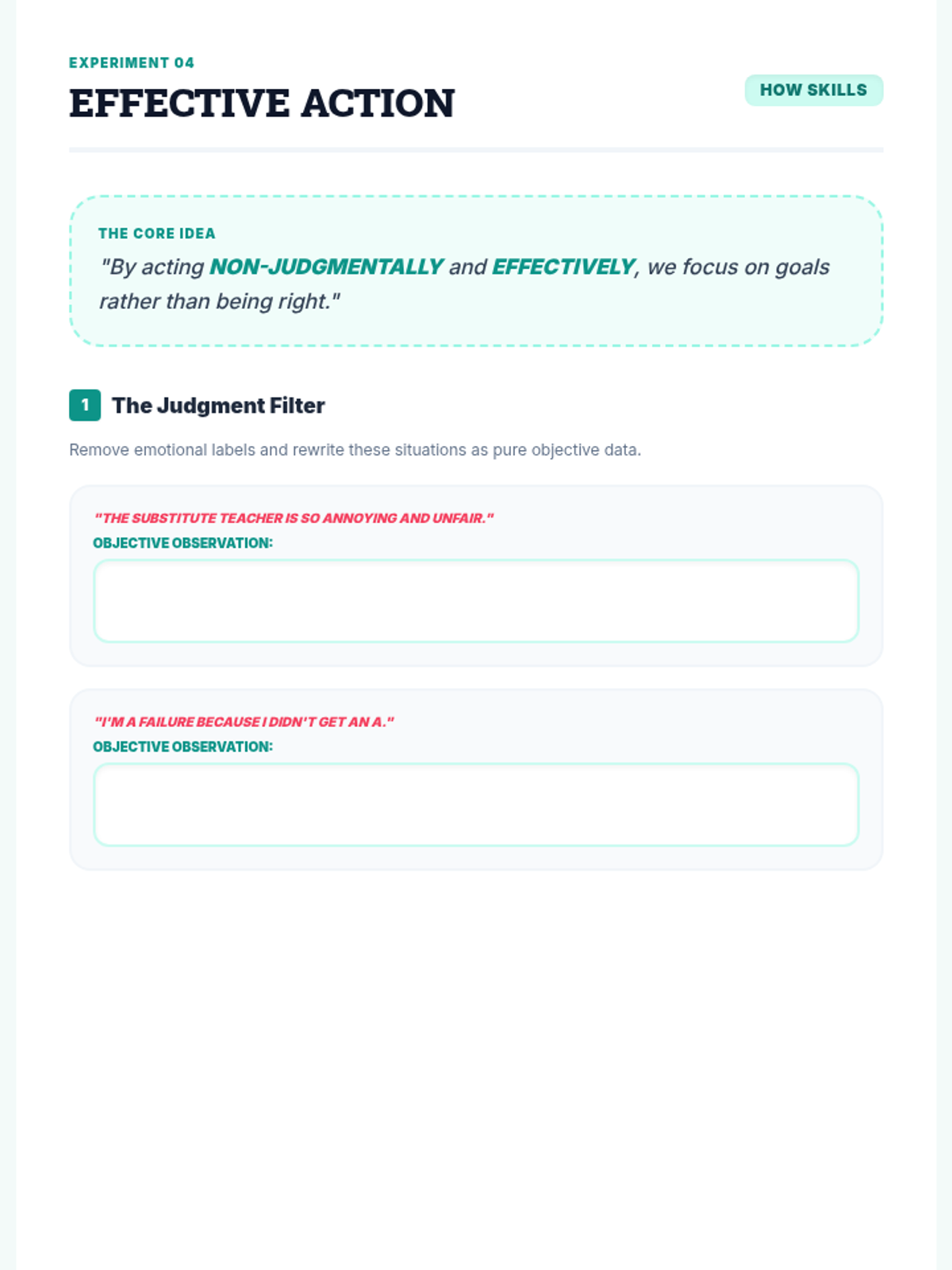
Ensinando as habilidades 'Como' da Atenção Plena: Sem Julgamentos, Uma Coisa de Cada Vez e de Forma Eficaz.
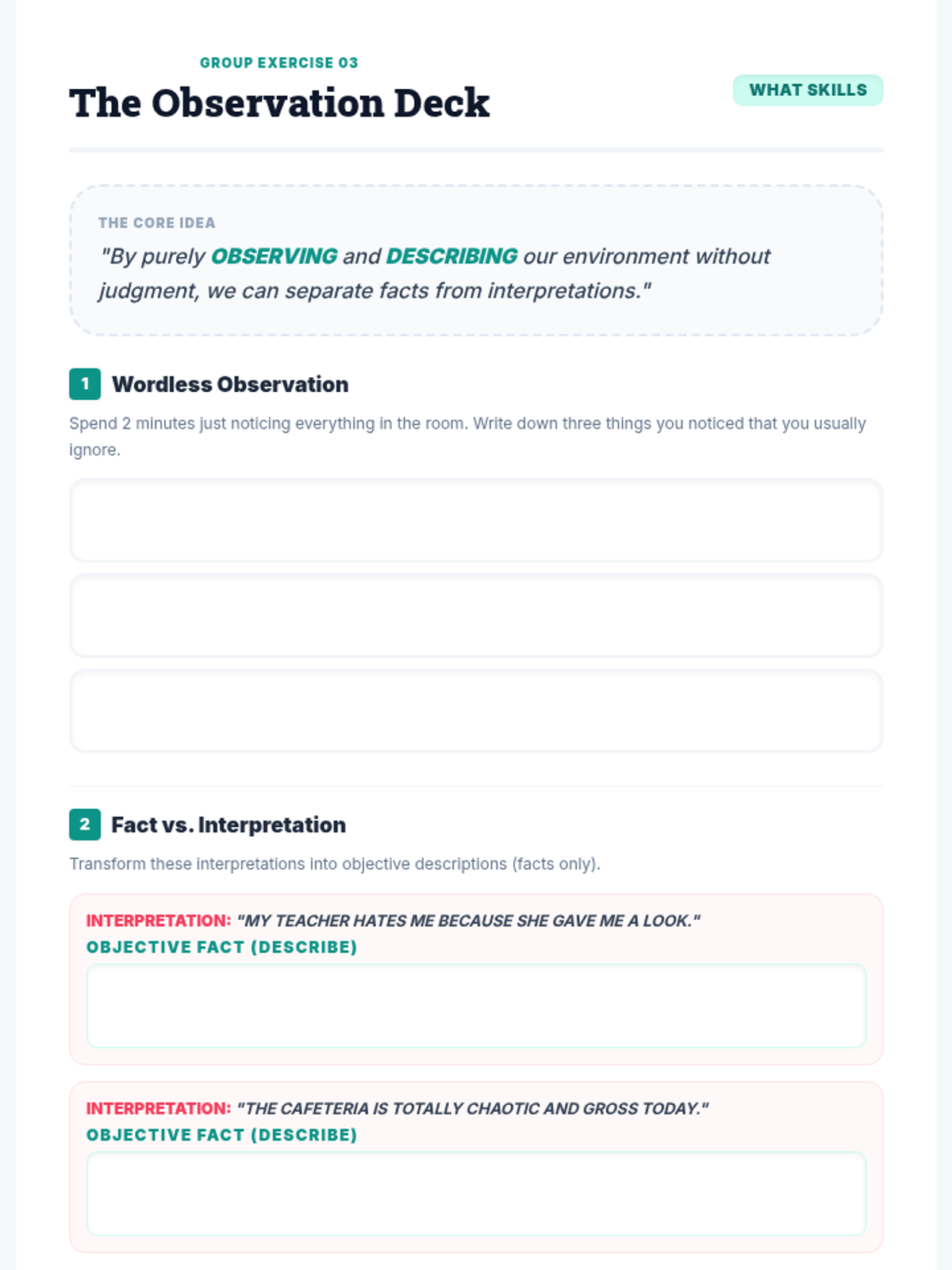
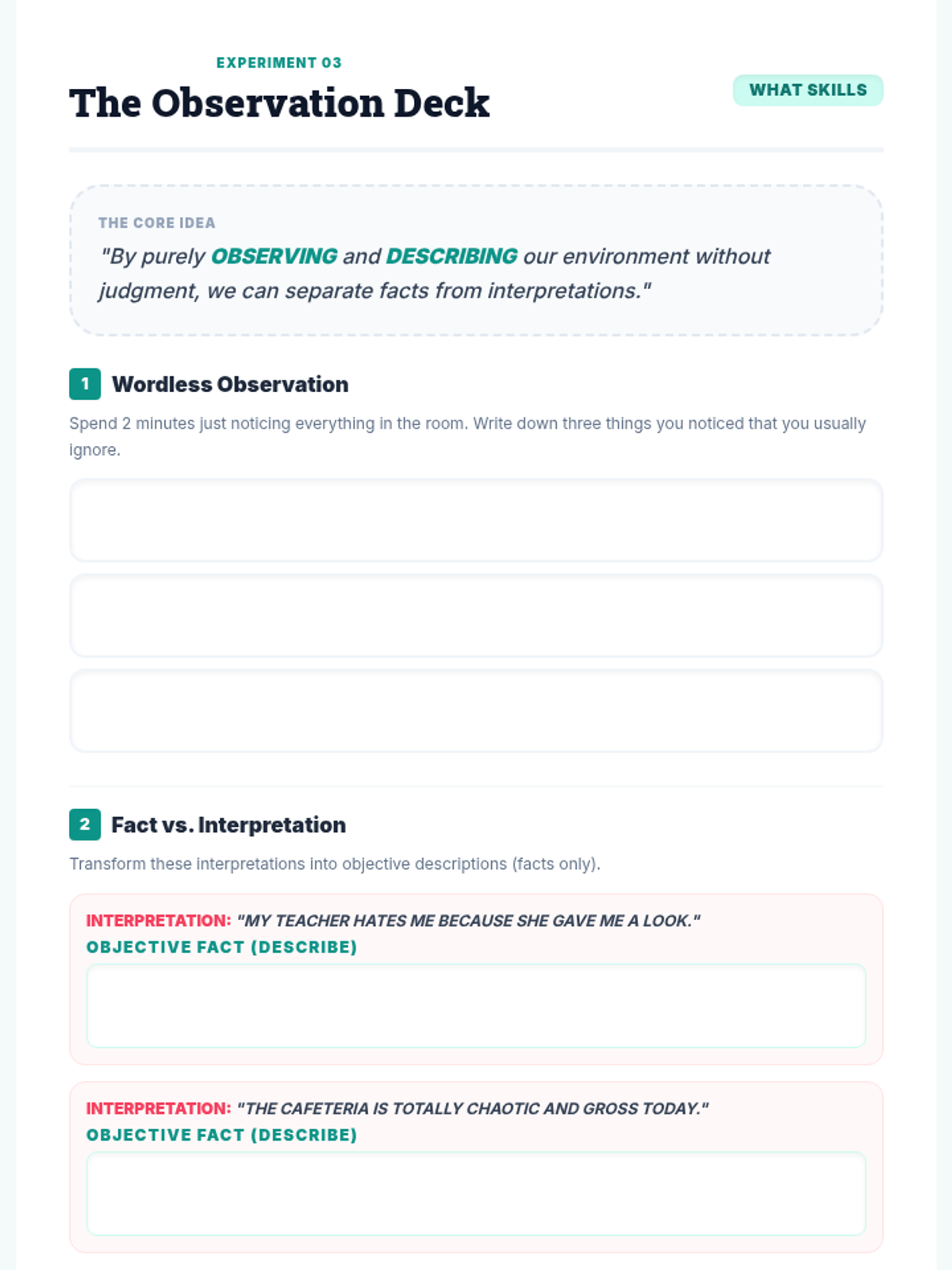
Ensinando as habilidades 'O Quê' da Atenção Plena: Observar, Descrever e Participar.
Foca no conceito de 'Mente Sábia'—o equilíbrio entre a Mente Emocional e a Mente Racional.
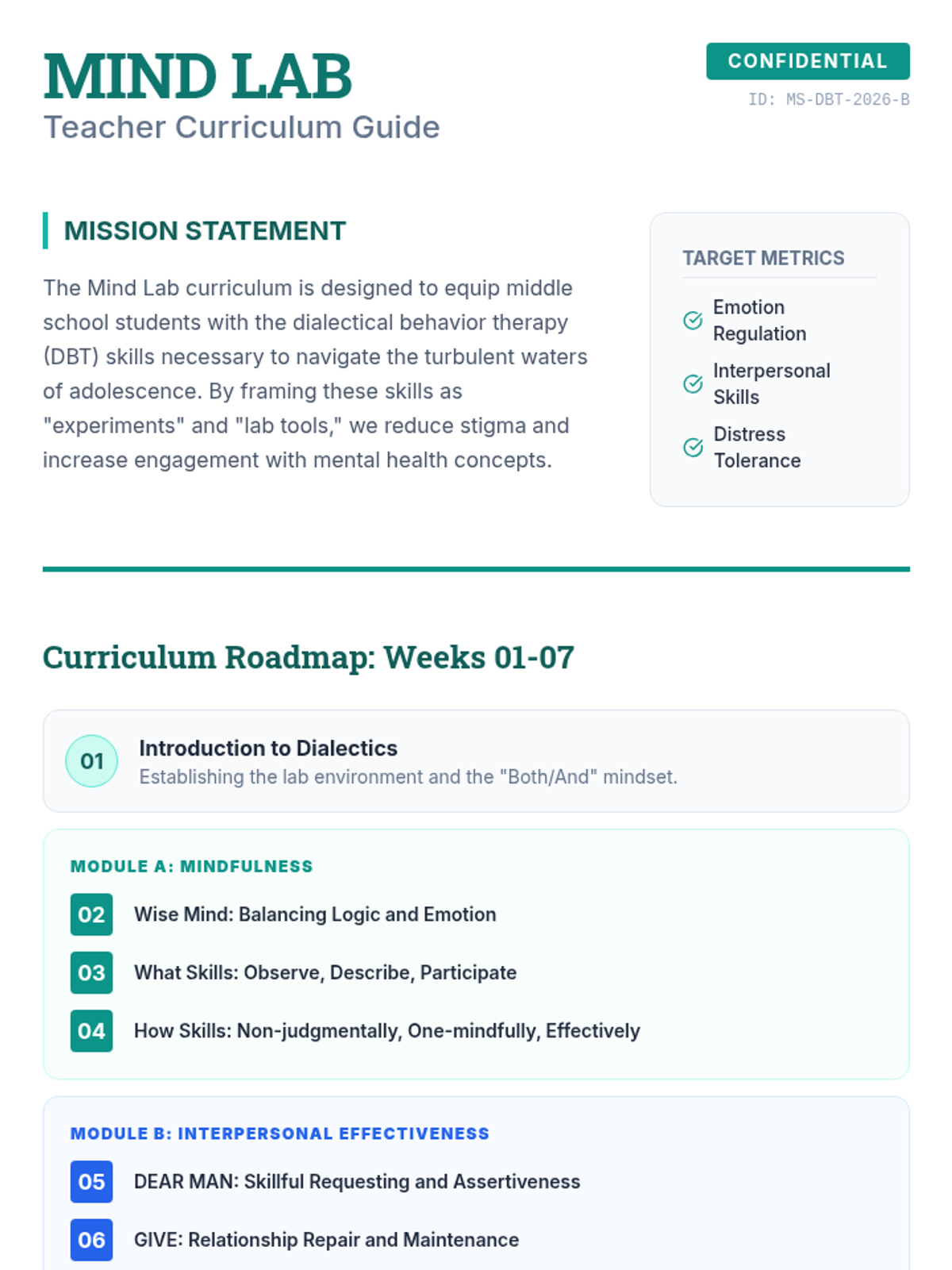
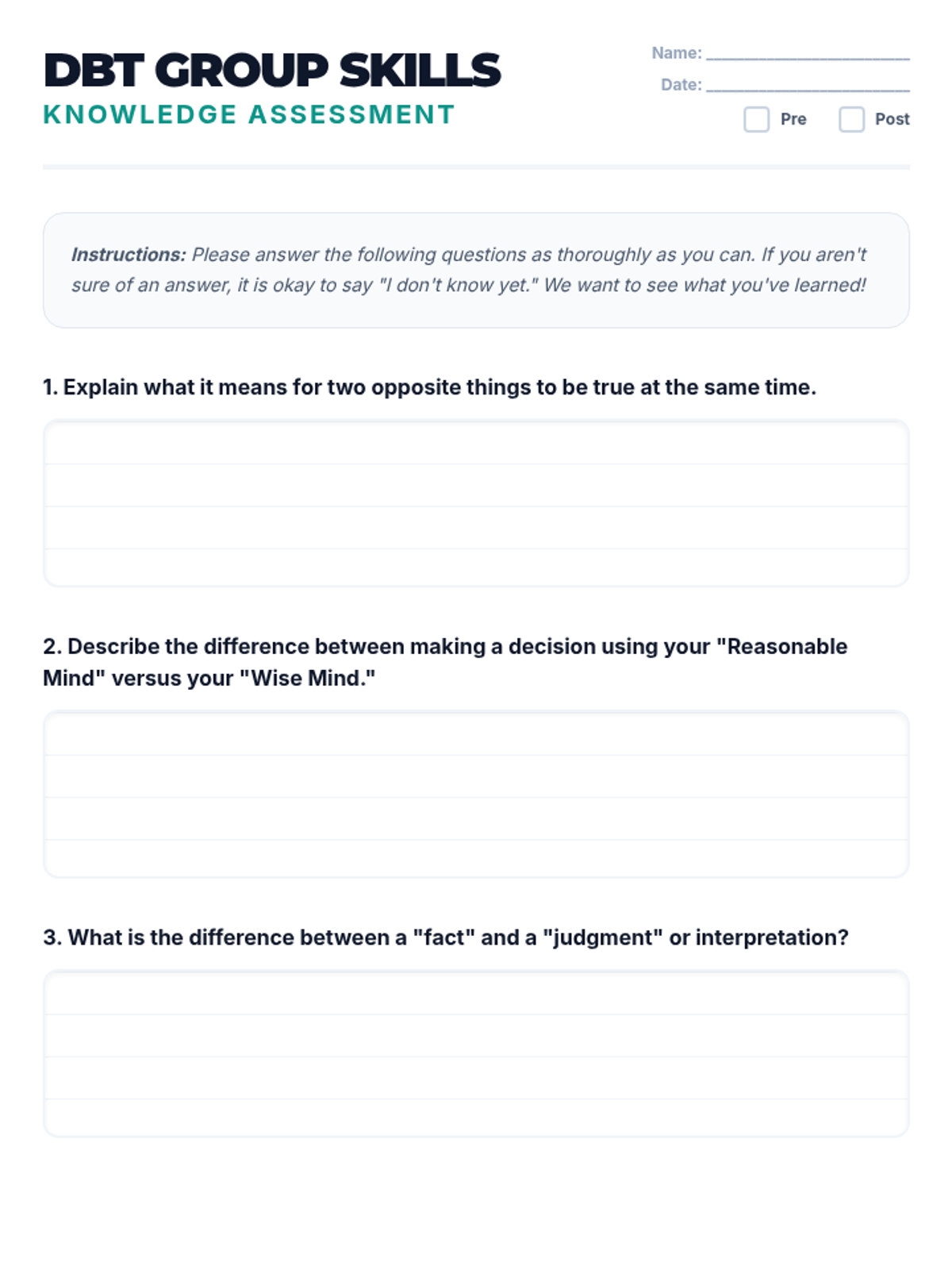
Introdução ao conceito de Dialética e à abordagem do Grupo DBT para construir uma vida que vale a pena viver.
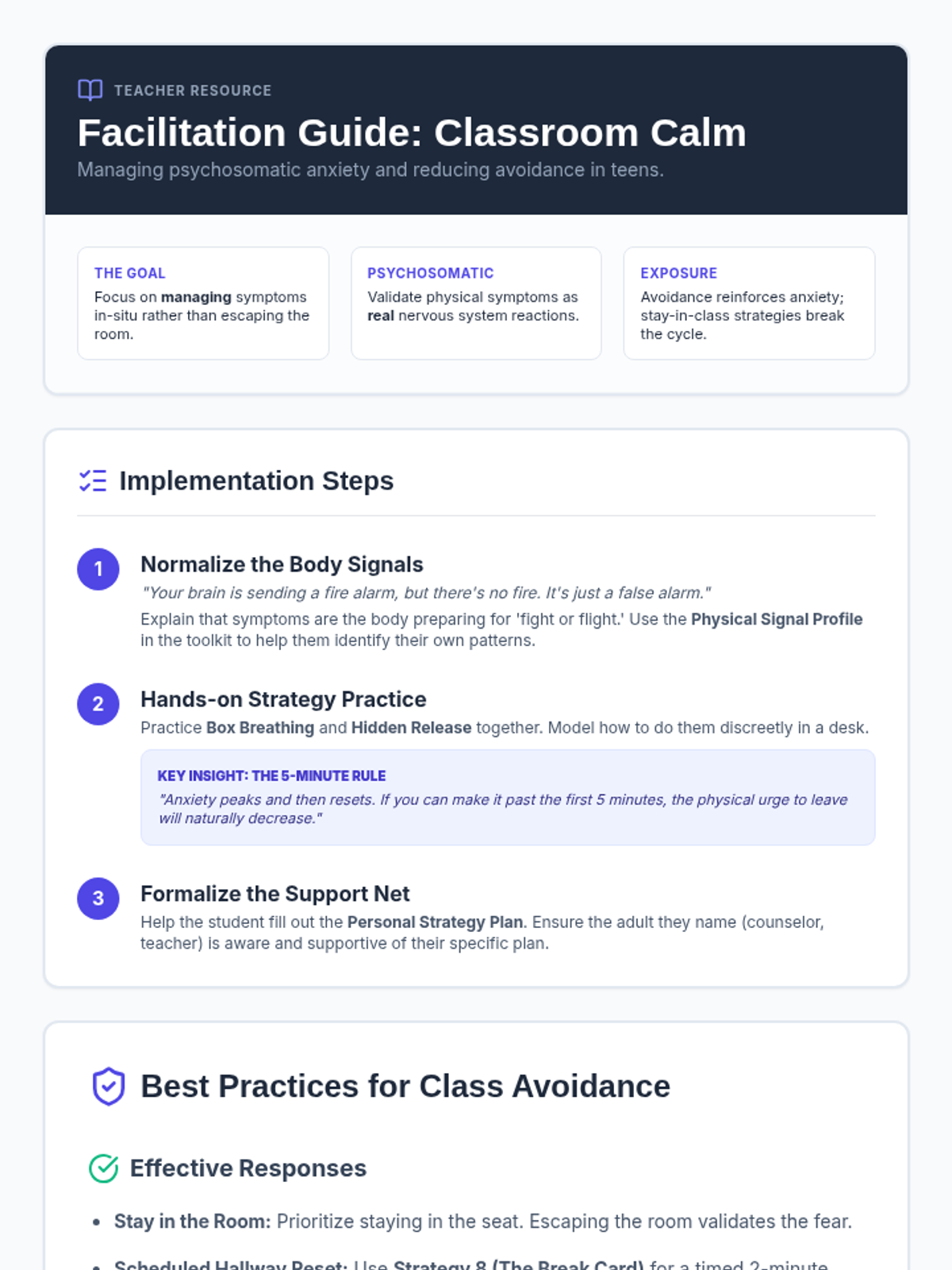
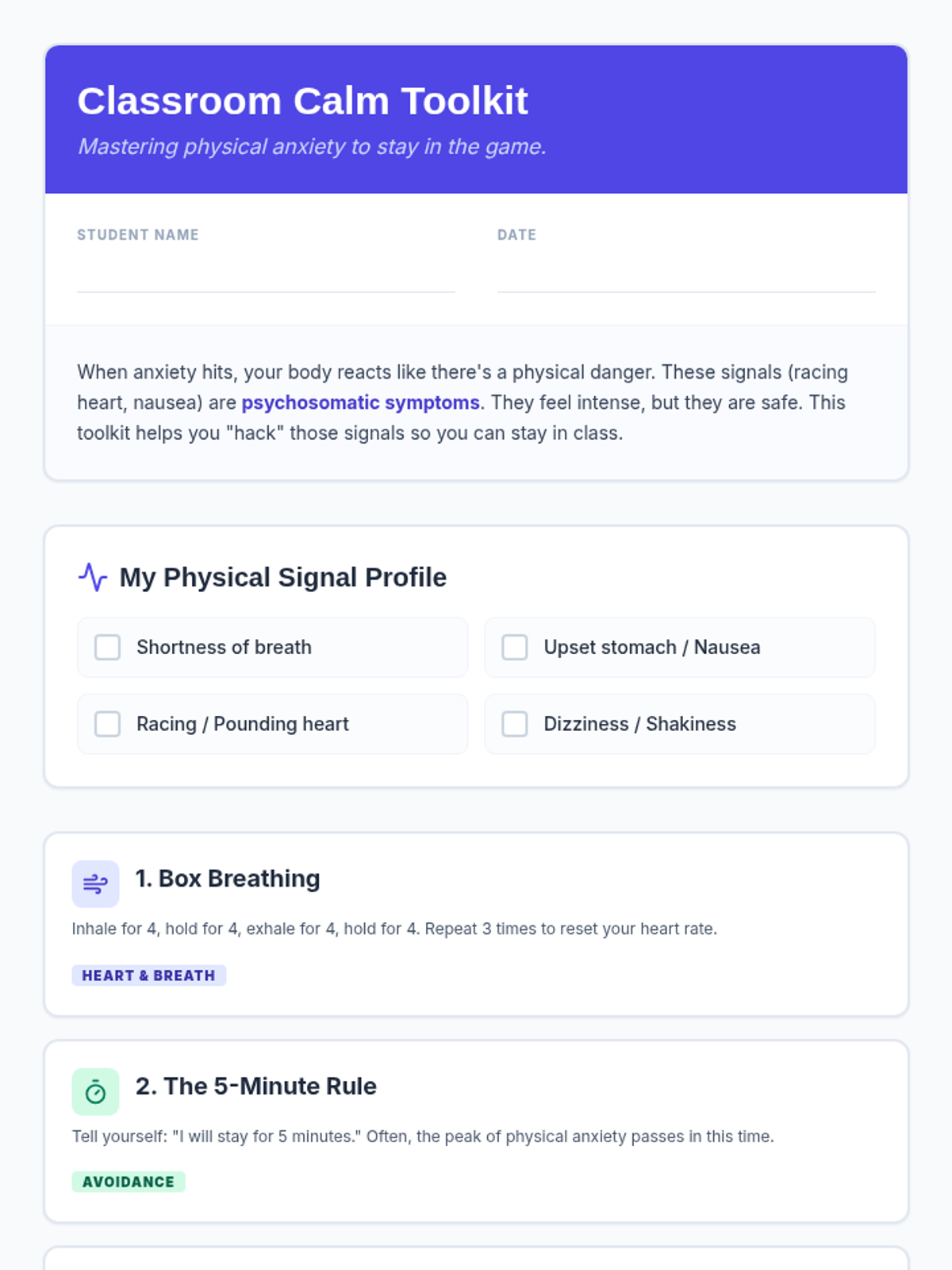
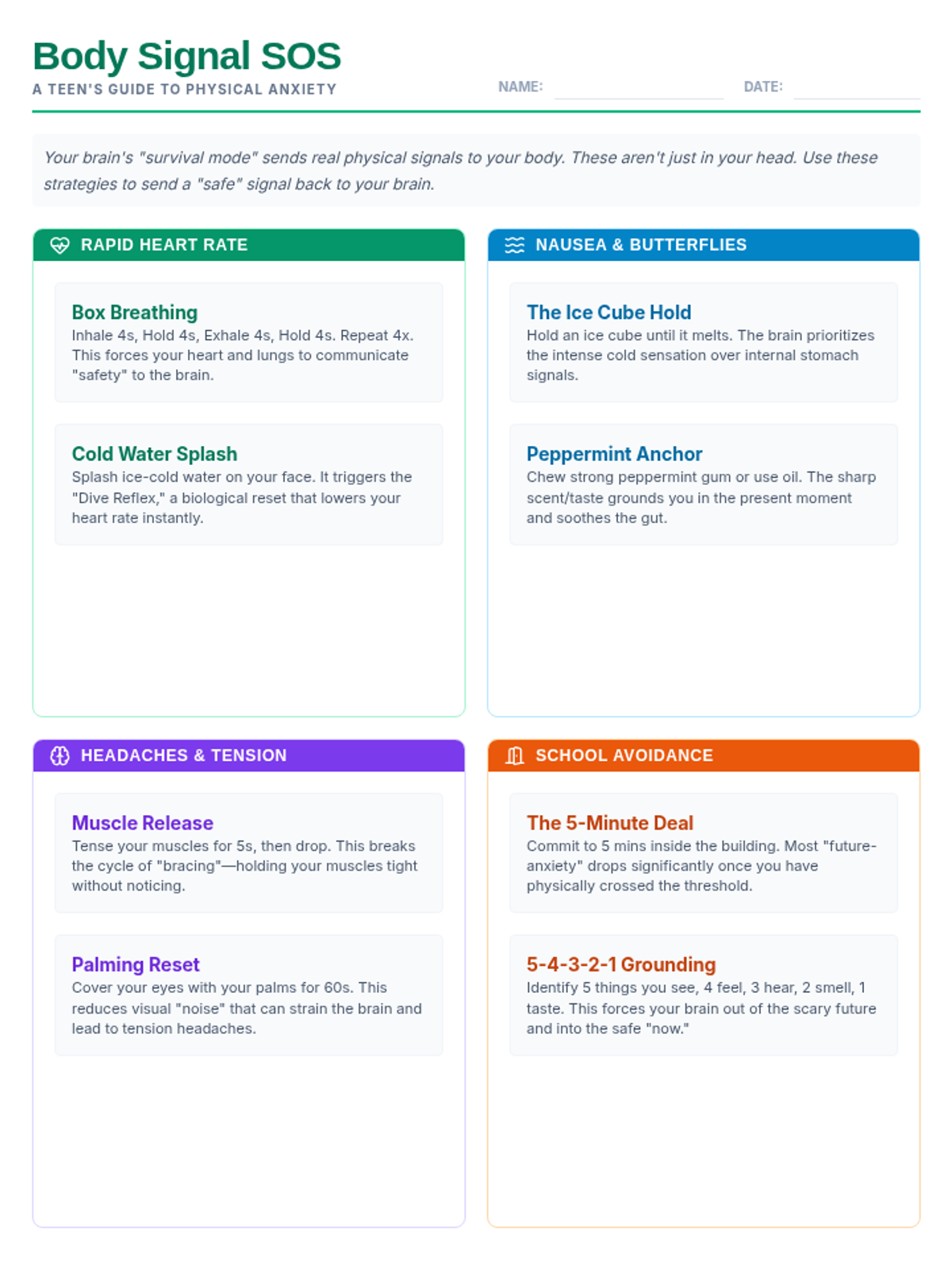
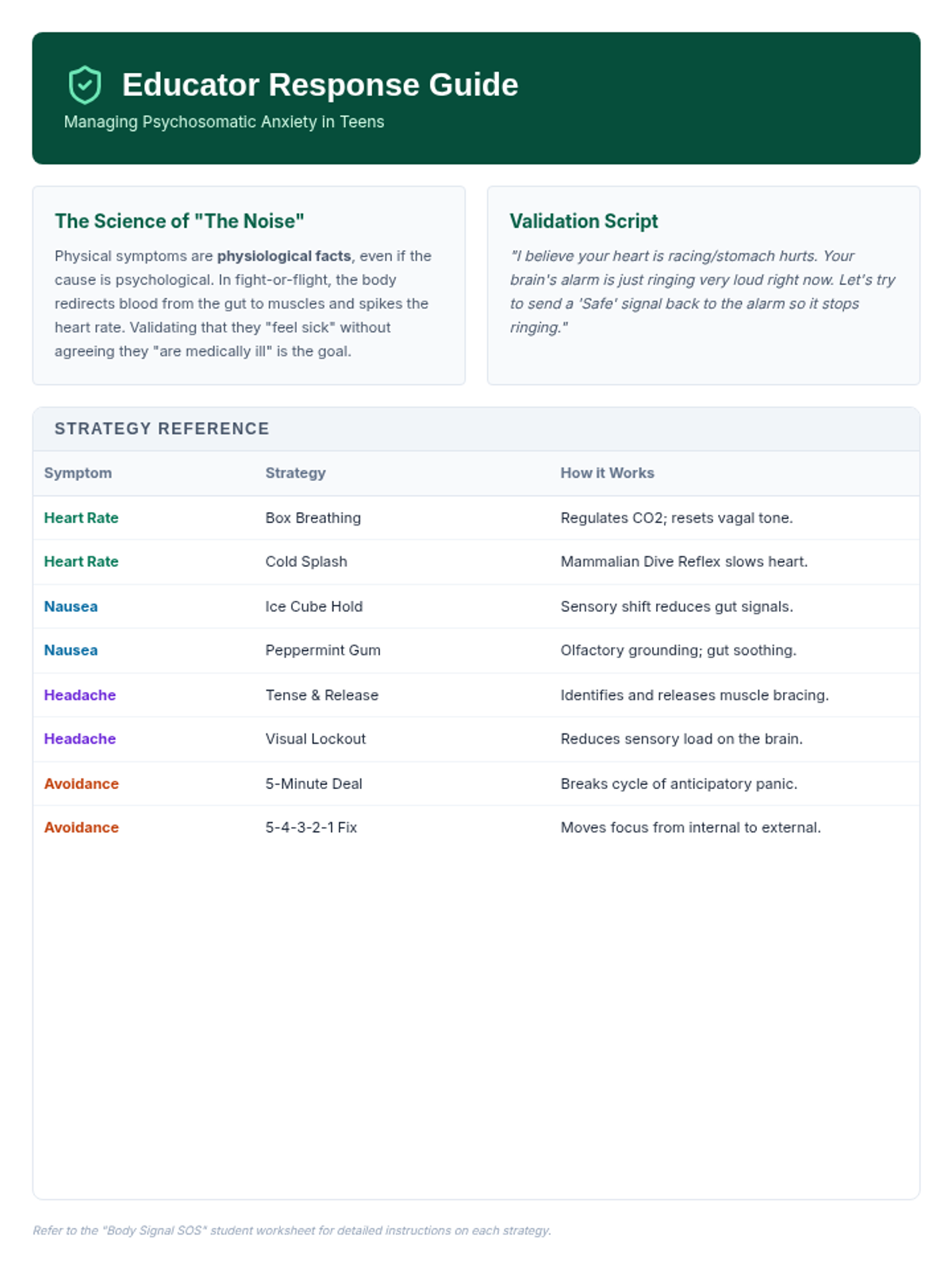
A comprehensive lesson helping teenagers manage psychosomatic anxiety symptoms (nausea, racing heart, shortness of breath) with immediate in-class strategies to prevent class avoidance.
A lesson designed to help teenagers understand the mind-body connection and develop practical coping strategies for psychosomatic symptoms of anxiety like nausea, headaches, and rapid heart rate.
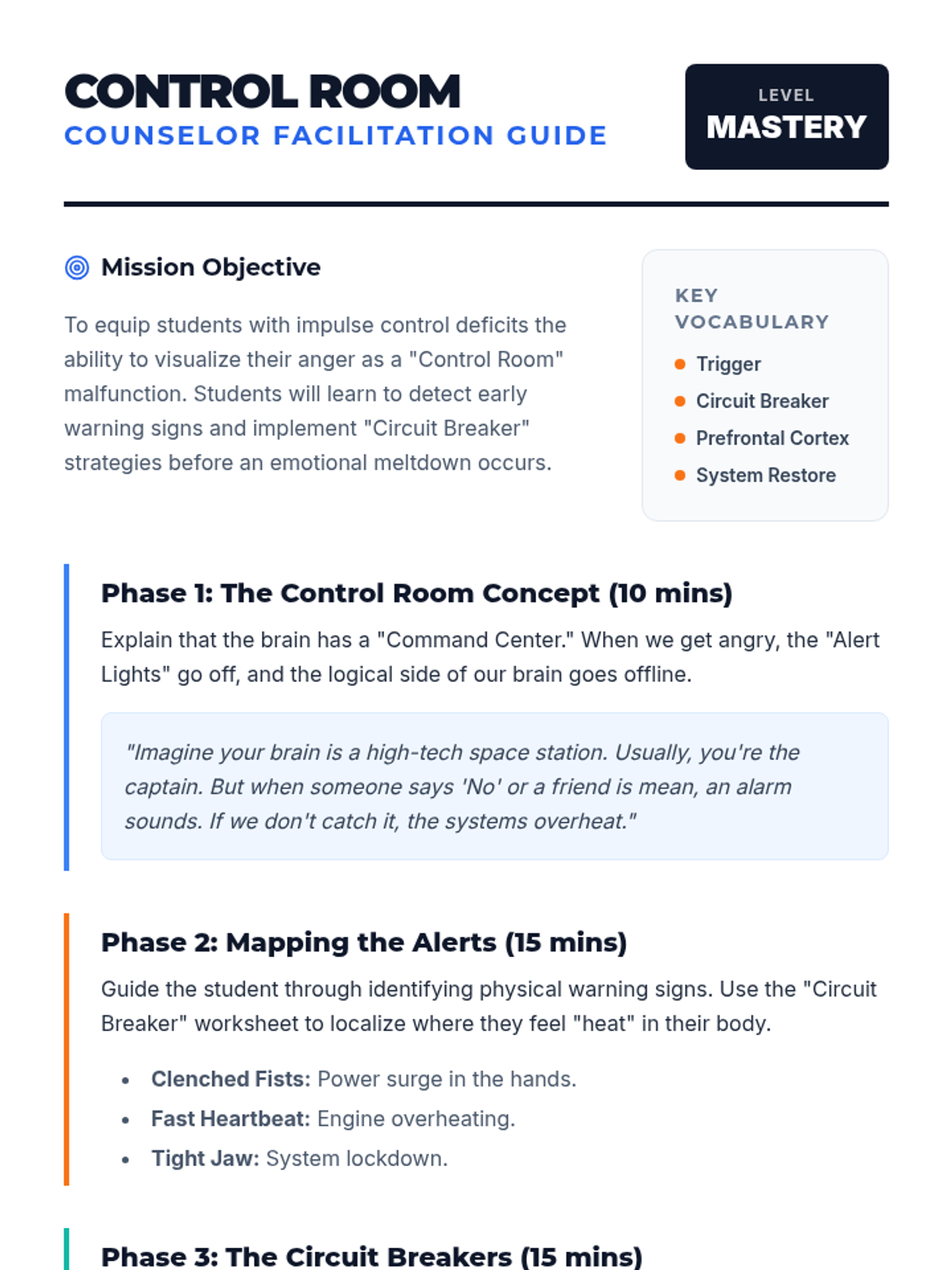
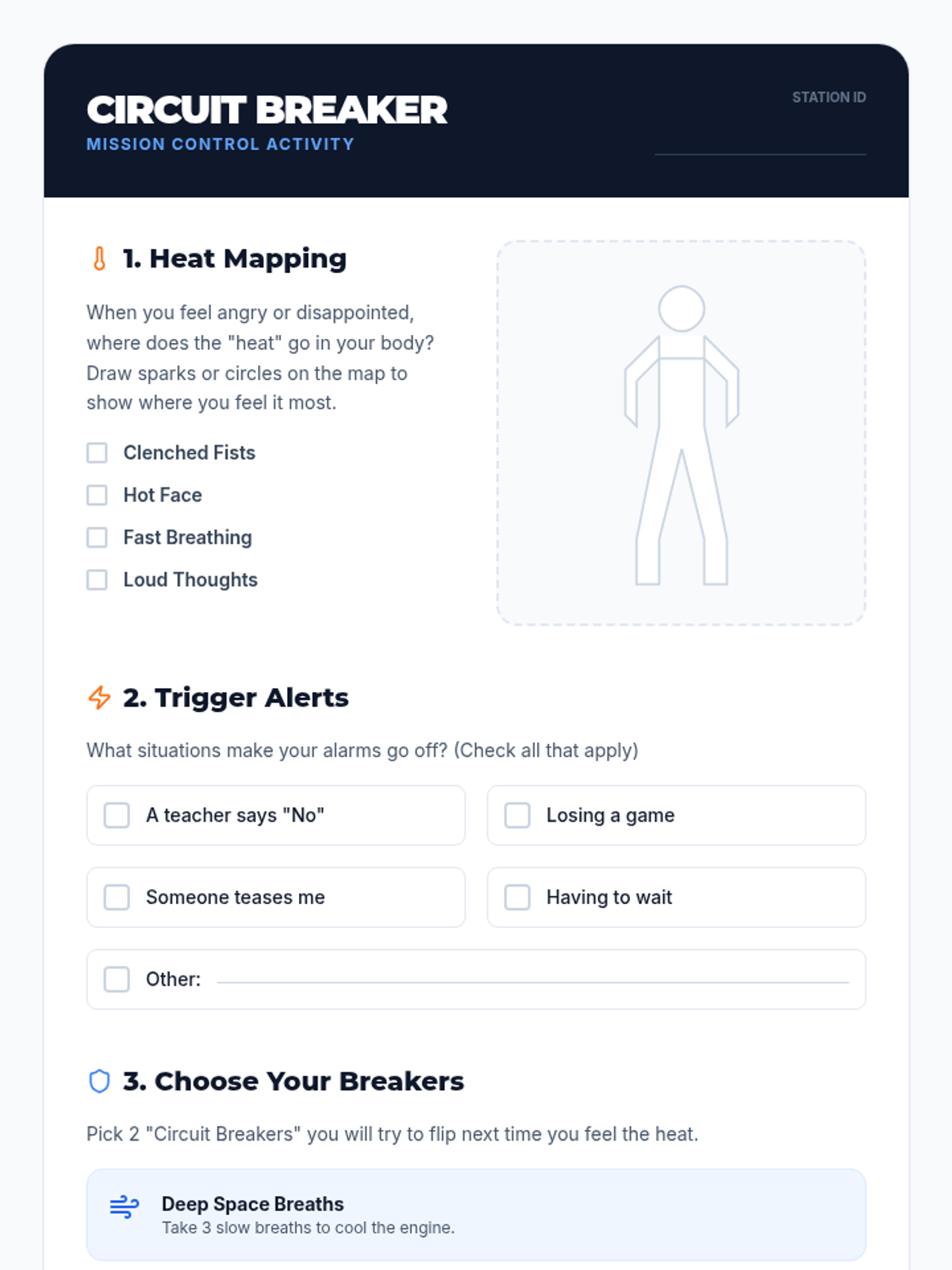
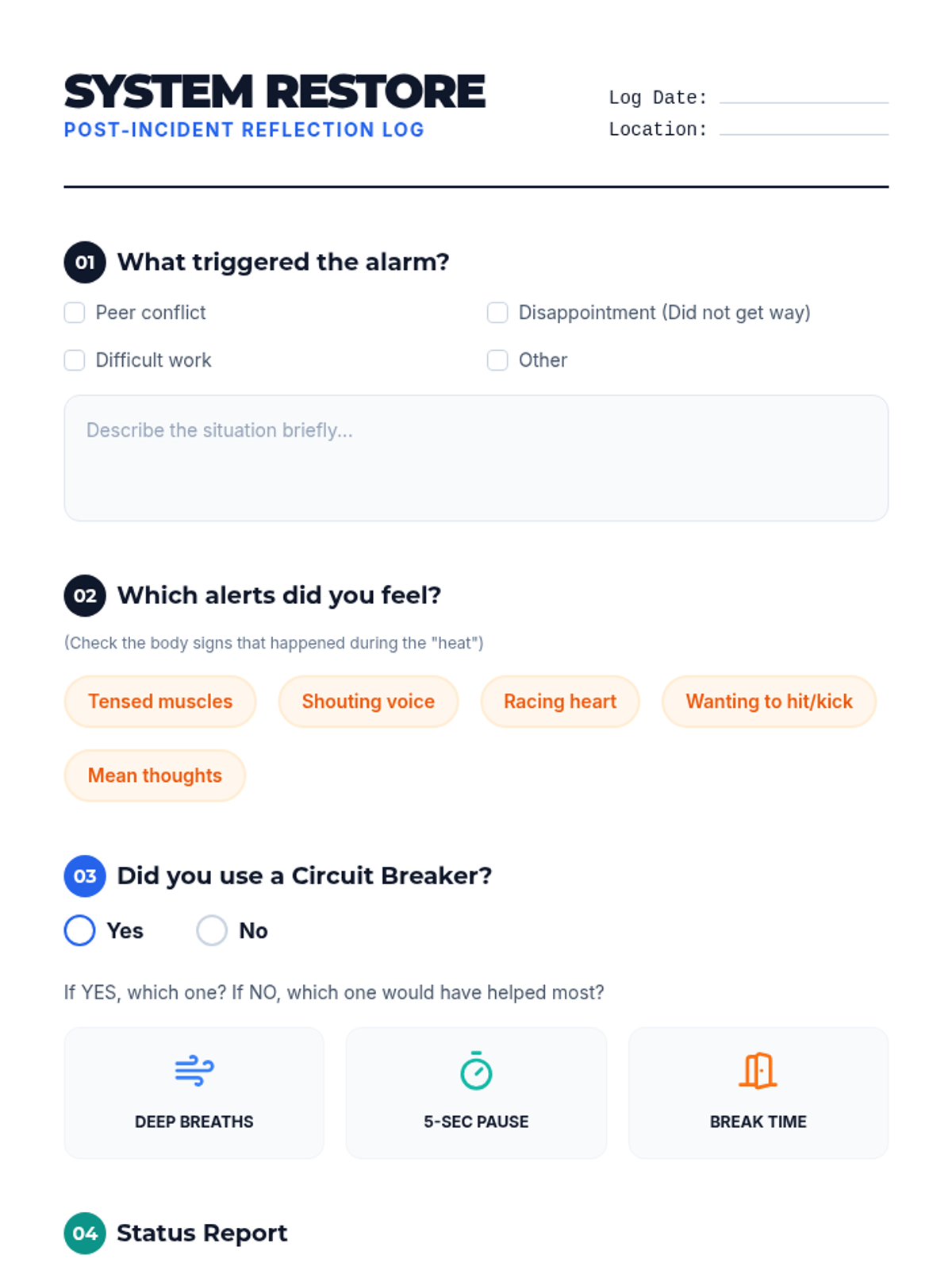
A comprehensive counseling module designed to help students identify anger triggers, recognize physical warning signs, and implement 'pause' strategies during peer conflicts or when faced with disappointment. Students learn to view their emotional responses as a 'Control Room' they can master.