Written and verbal communication standards for the workplace, including email etiquette, presentation delivery, and professional phone conduct. Develops collaborative skills for teamwork, constructive feedback, and efficient time management.
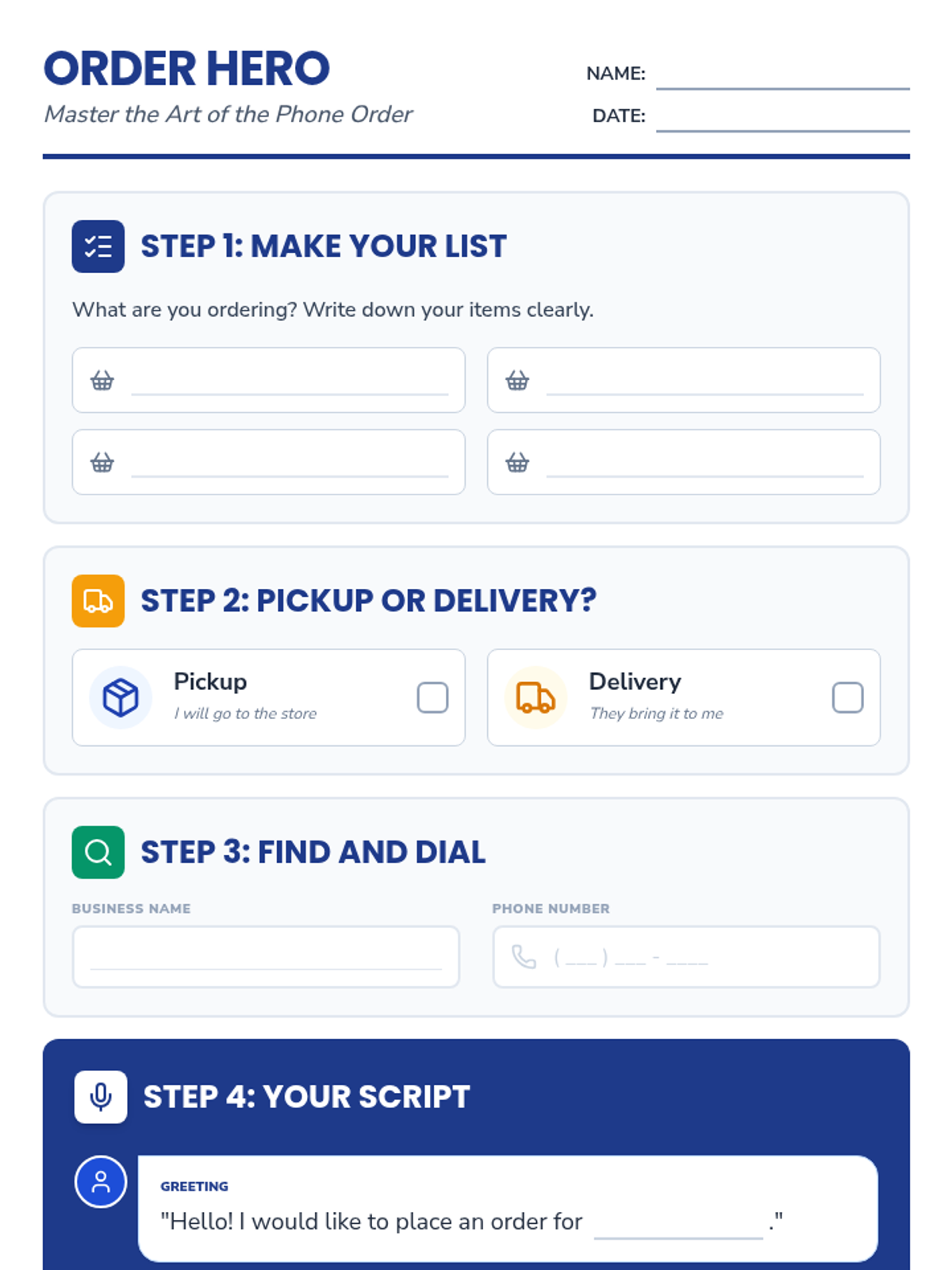
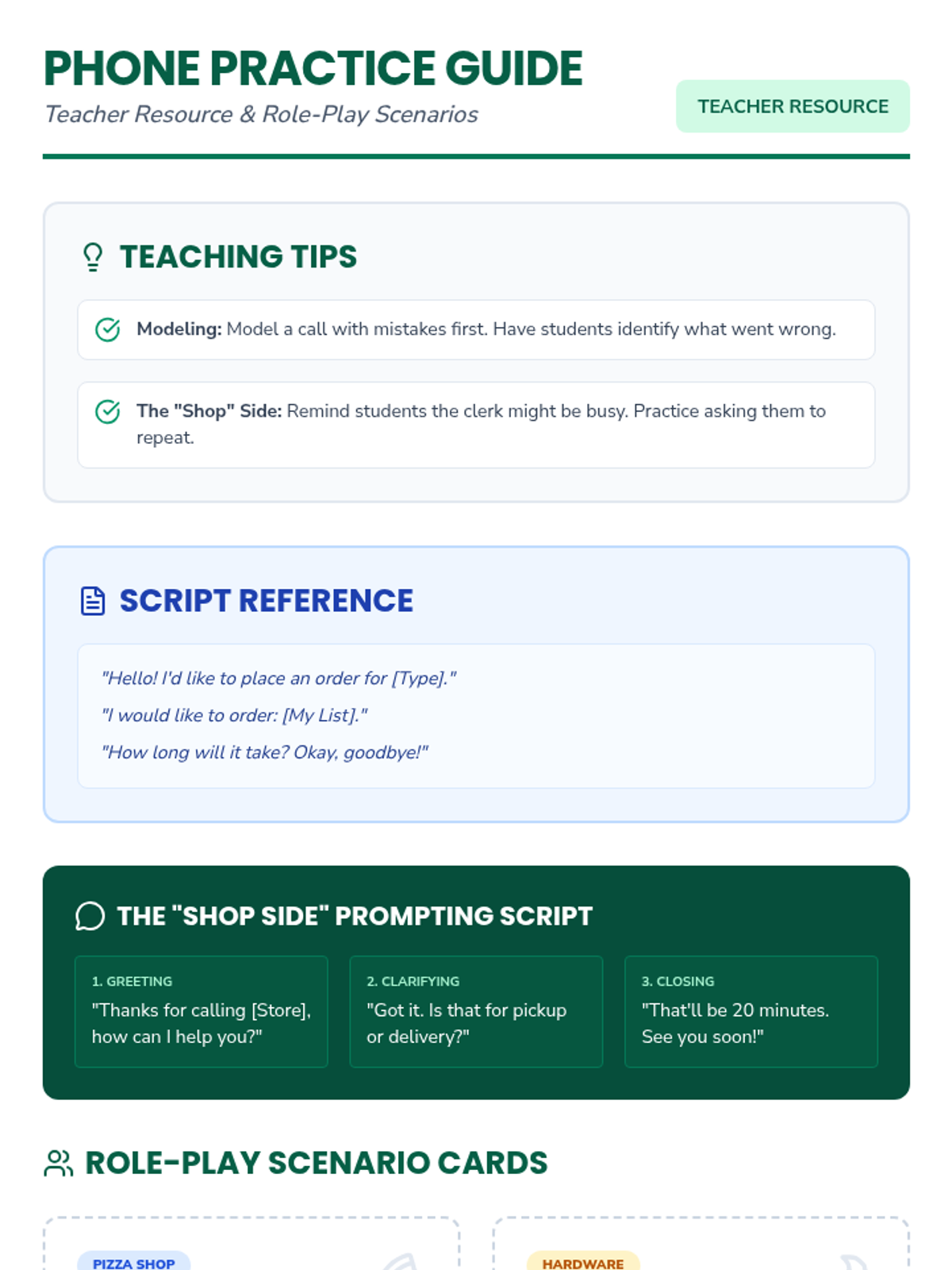
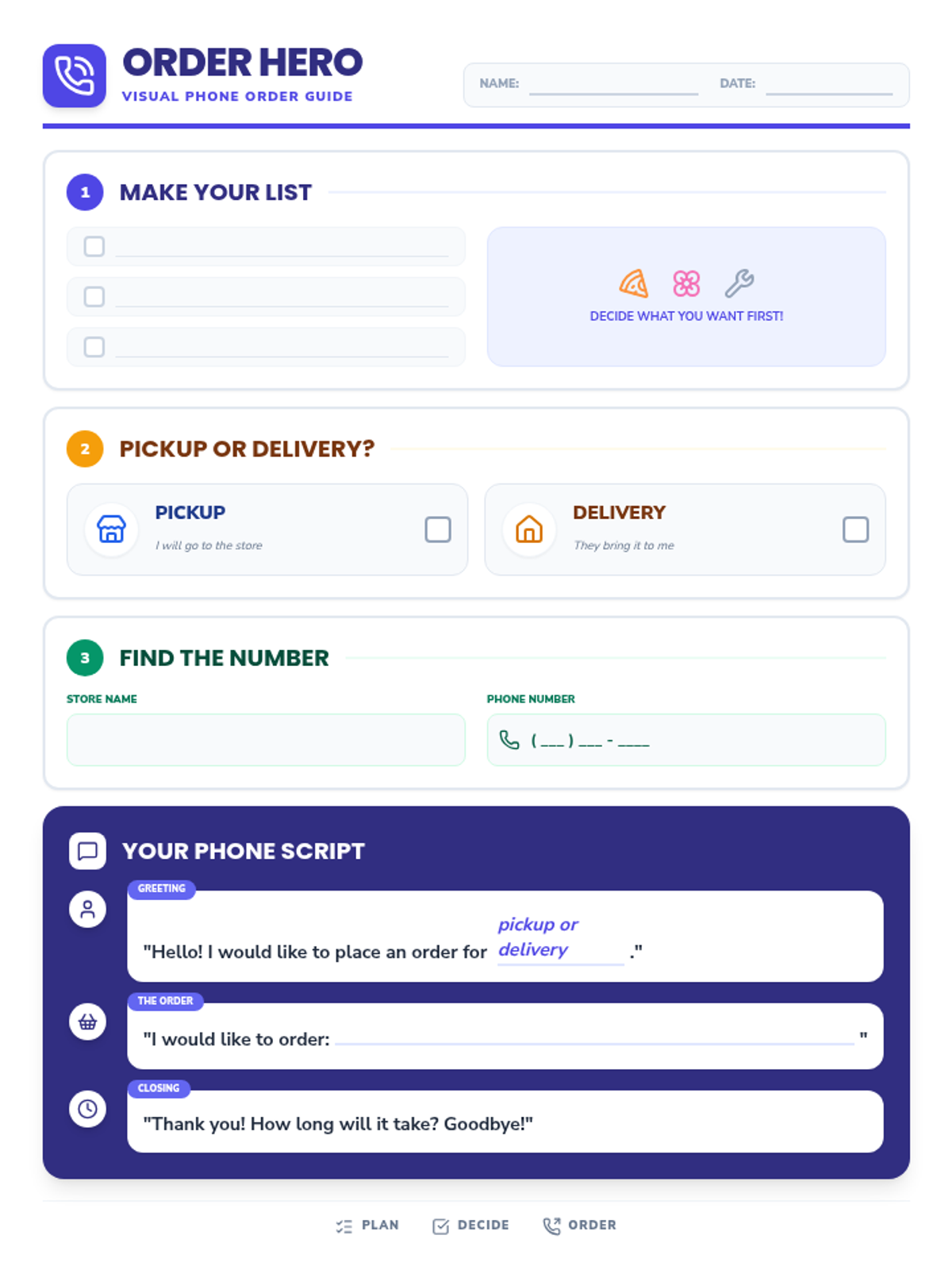
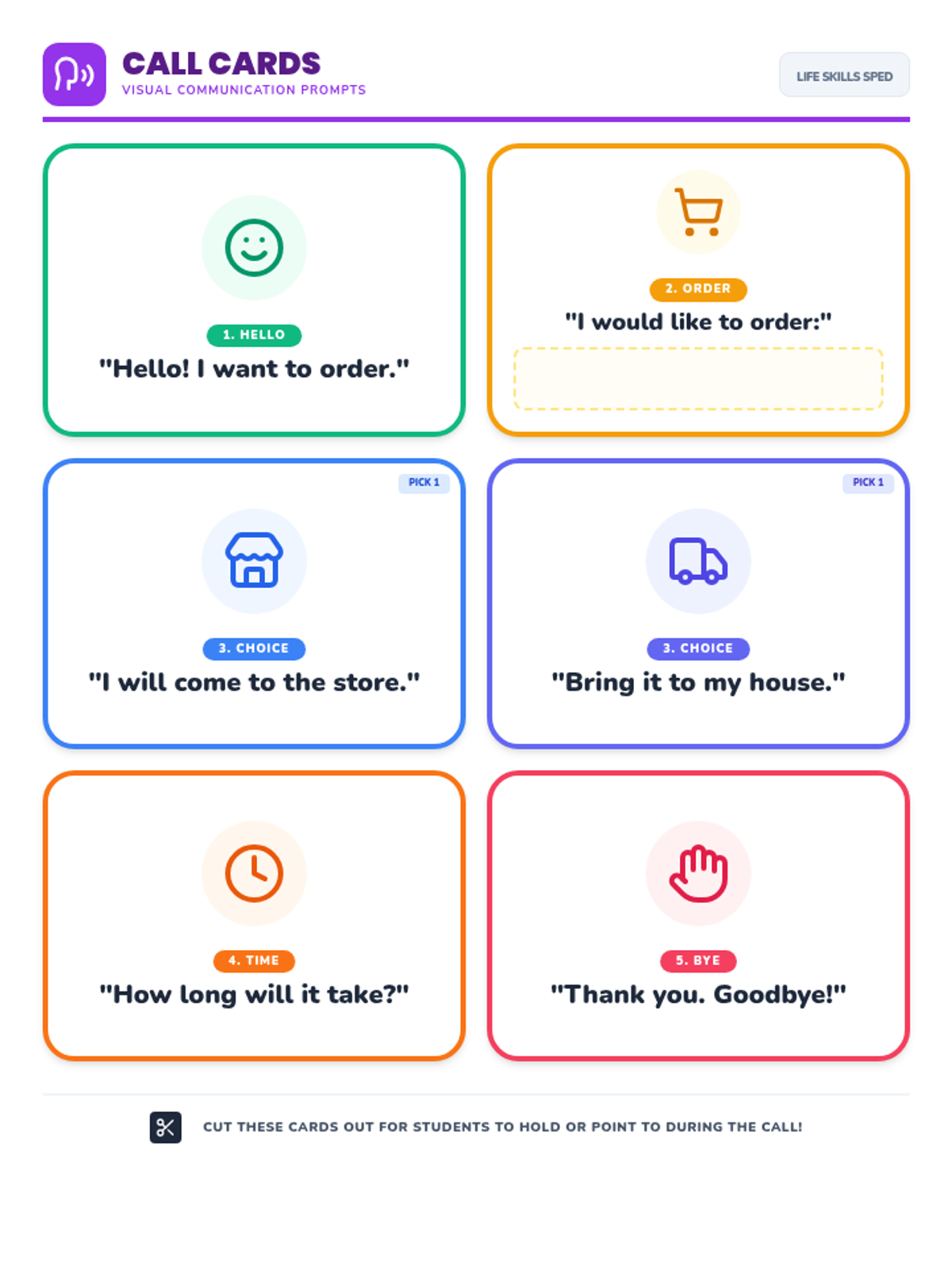
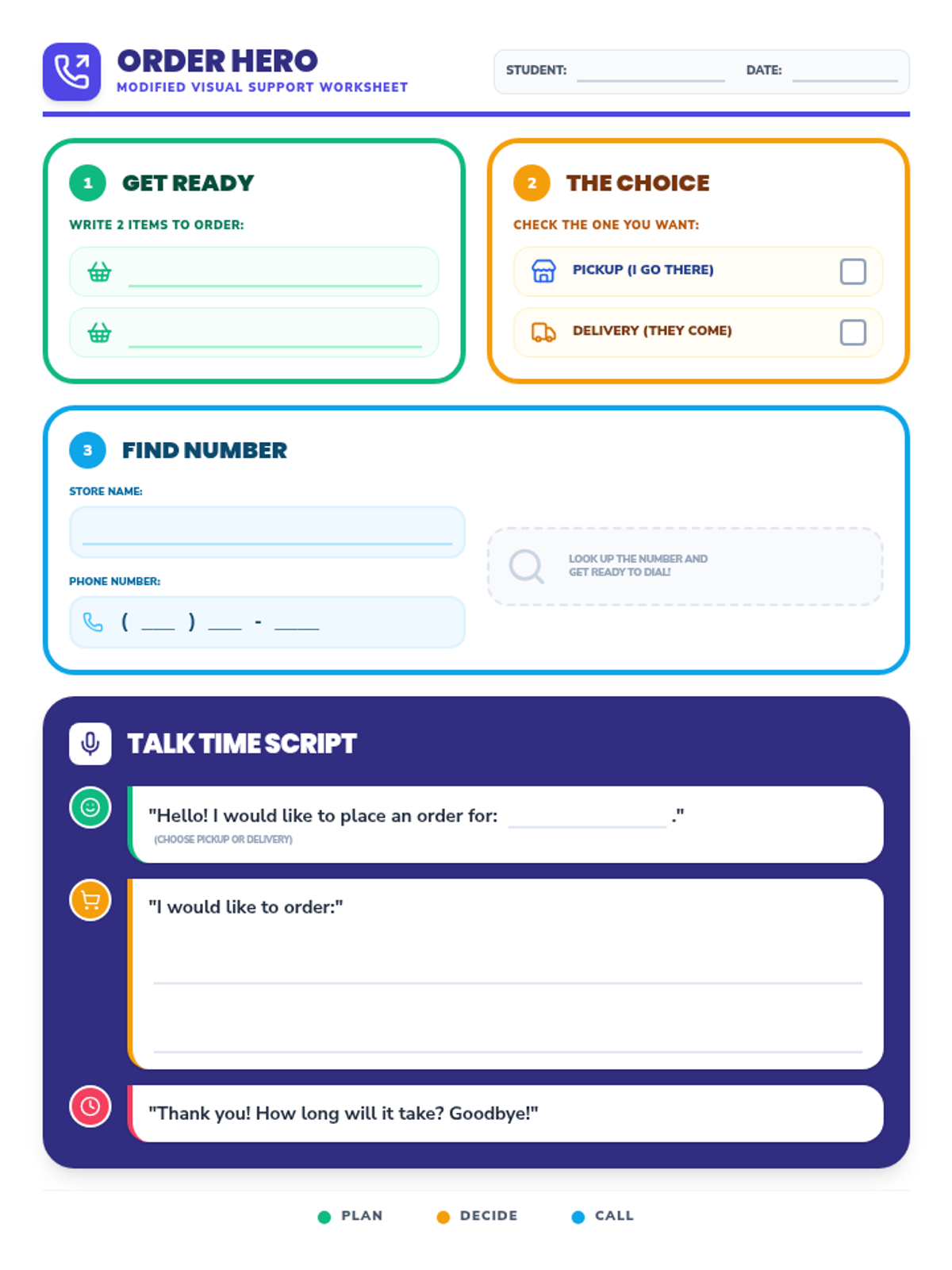
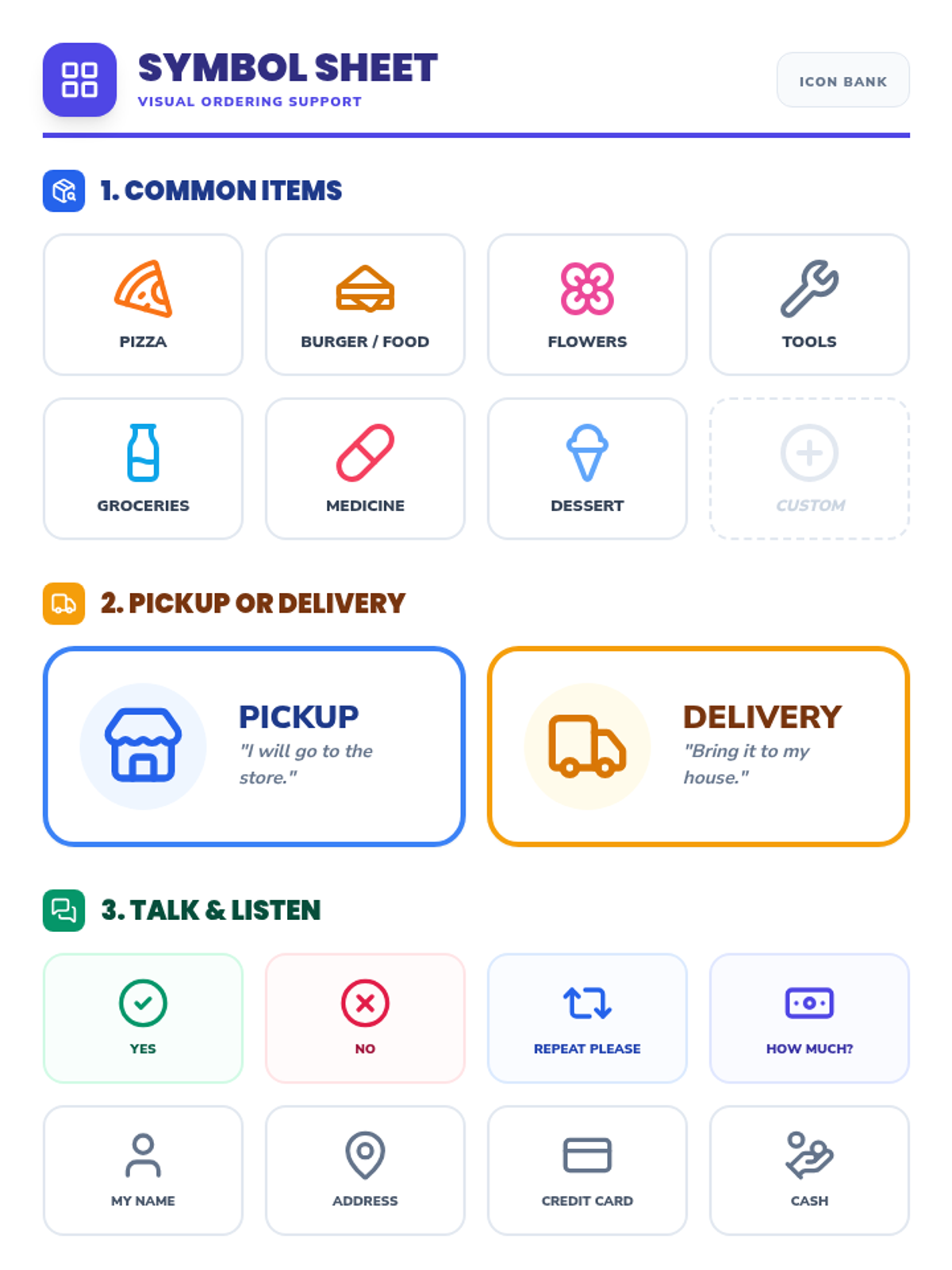
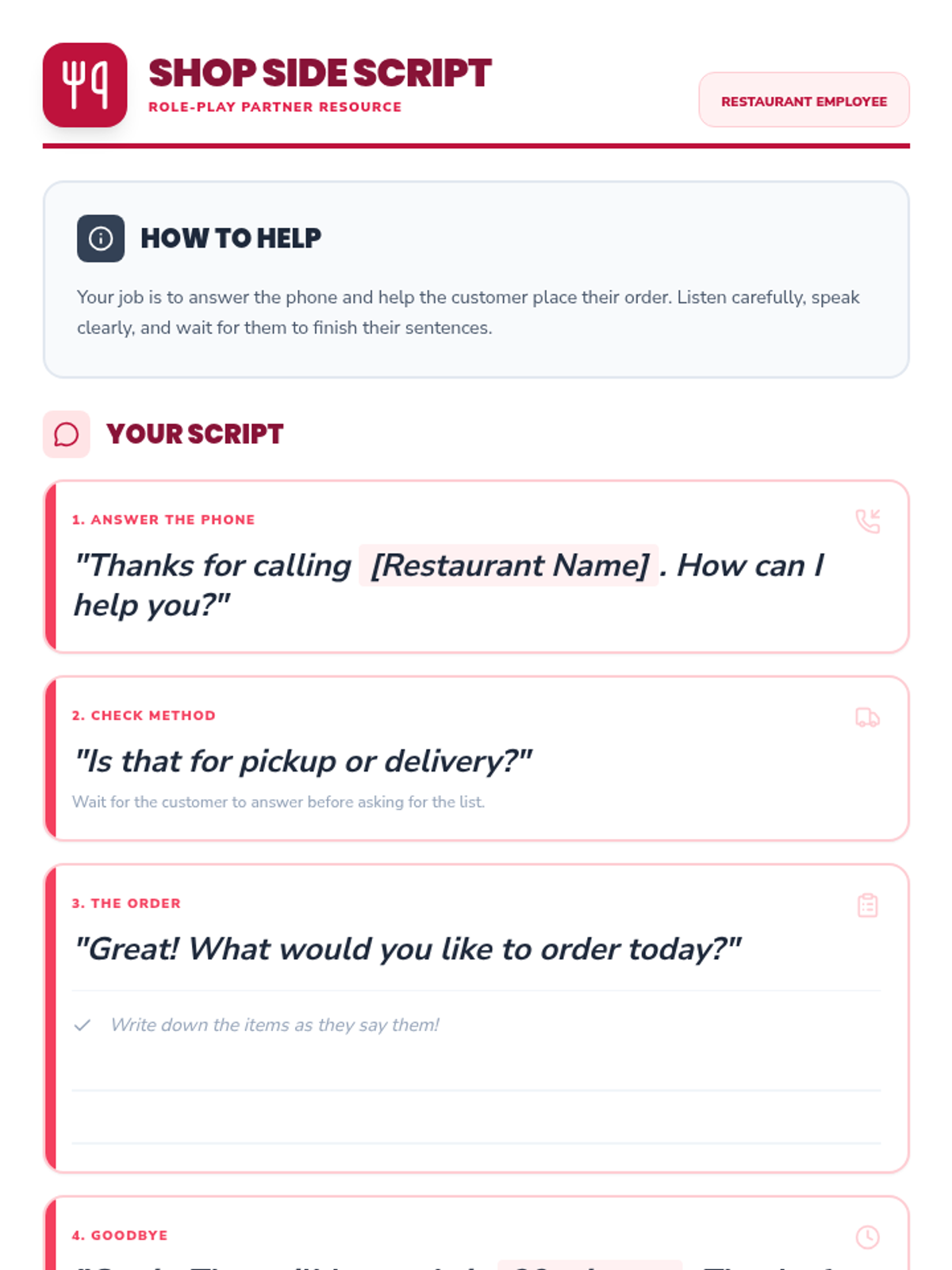
A practical life skills lesson focused on the steps and social scripts needed to successfully place an order over the phone for any generic business.
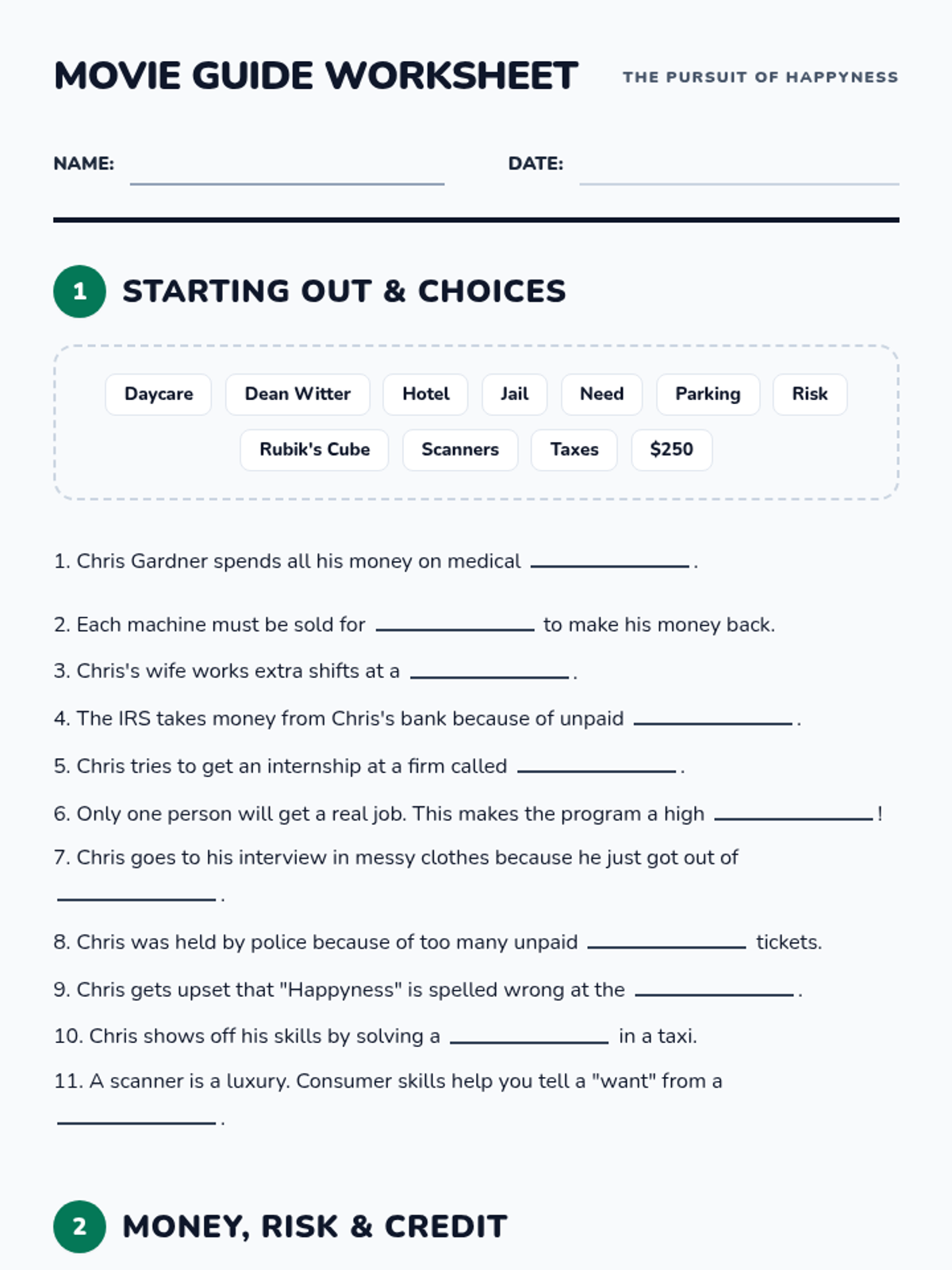
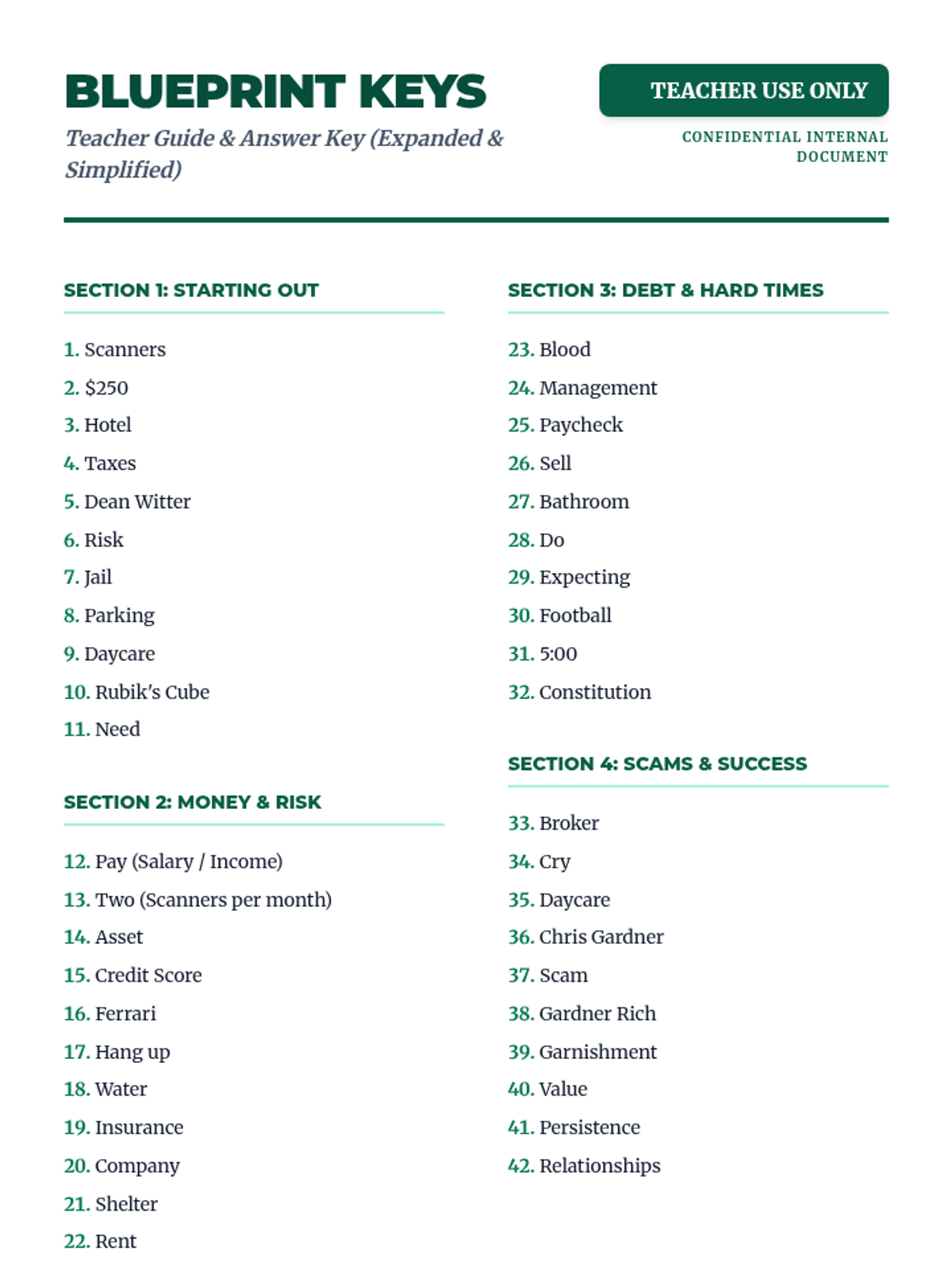
A deep dive into the personal finance themes of 'The Pursuit of Happyness,' focusing on income, assets, risk, and perseverance. Students analyze Chris Gardner's financial journey while tracking key plot points.
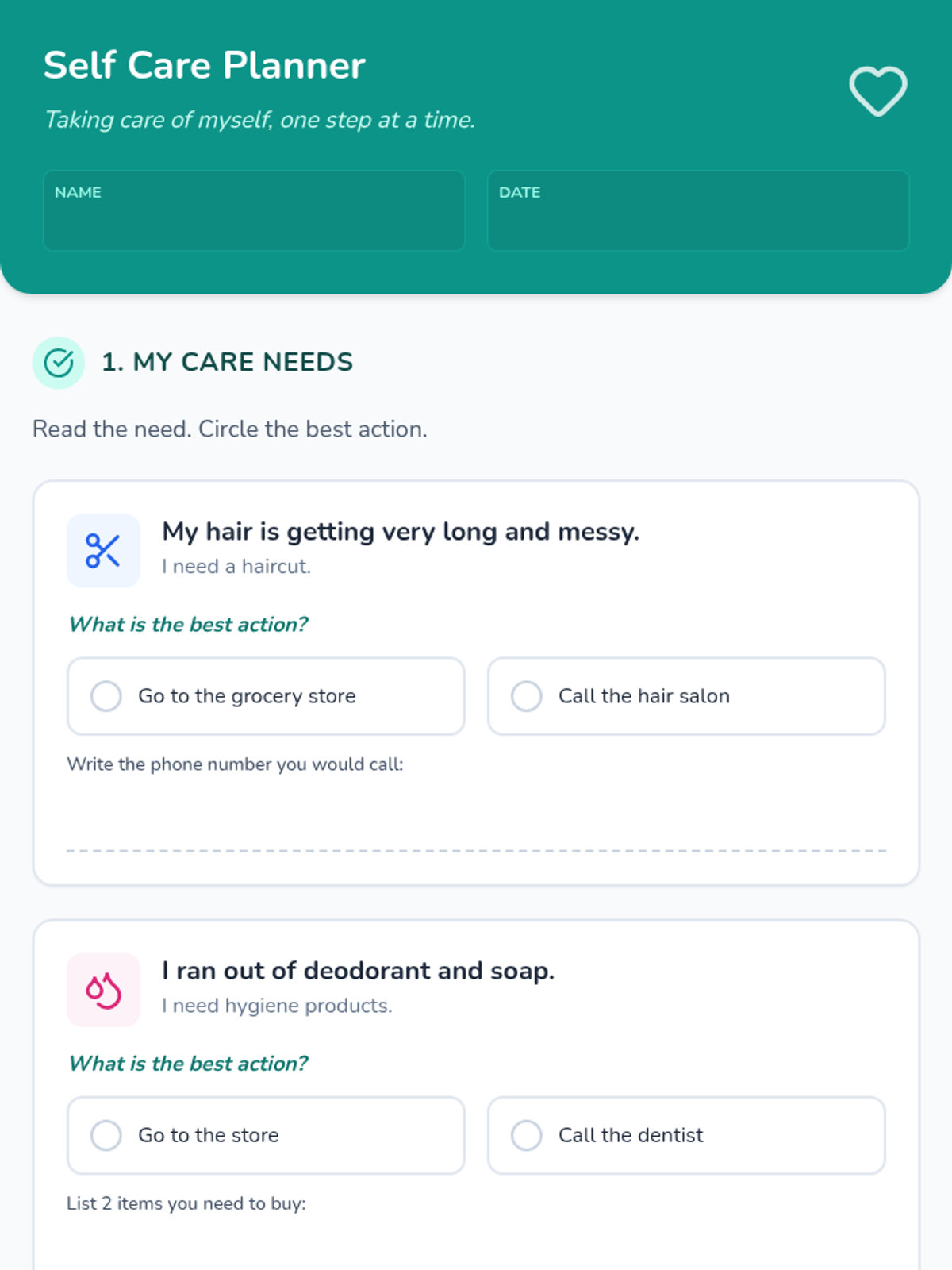
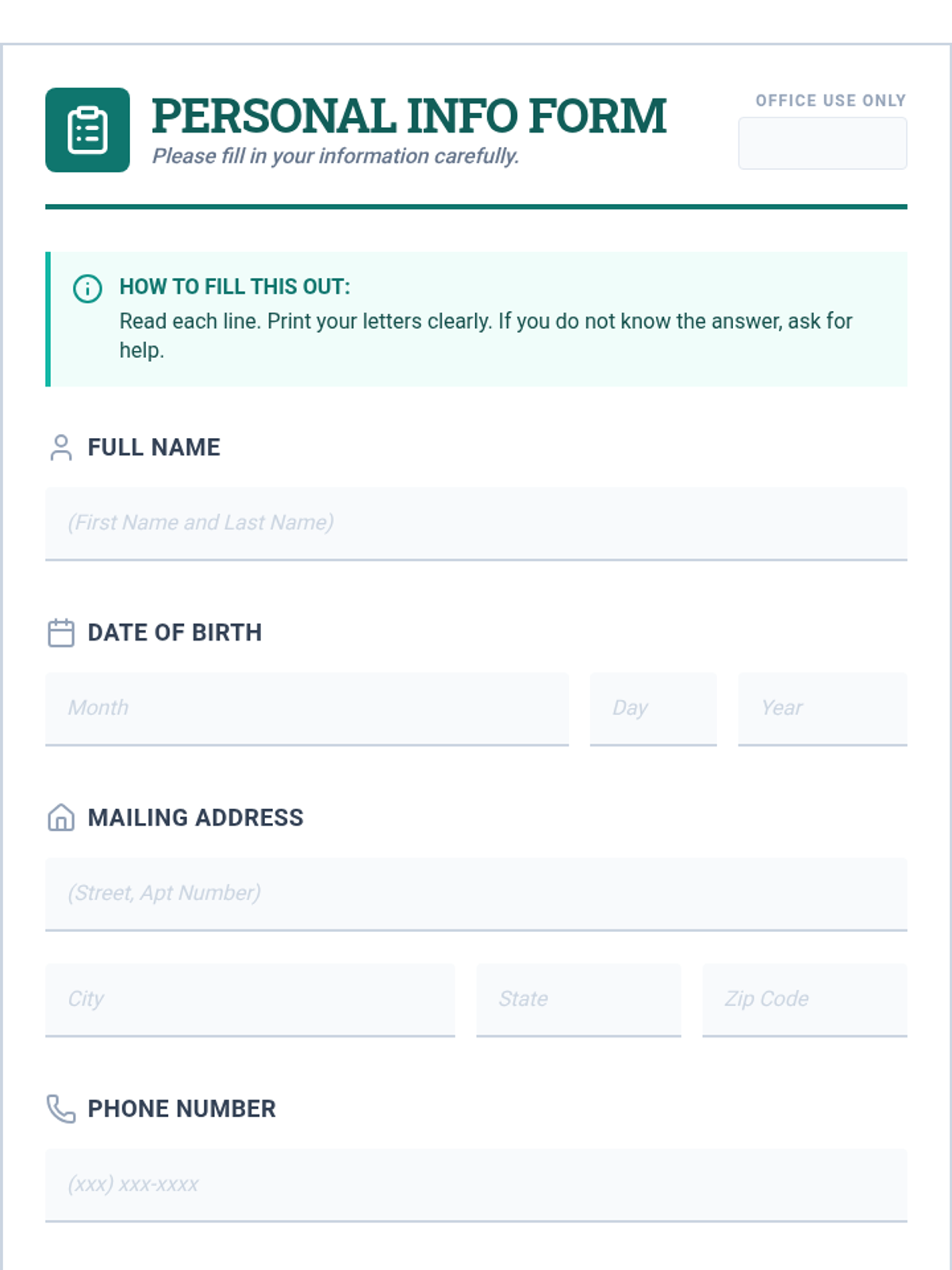
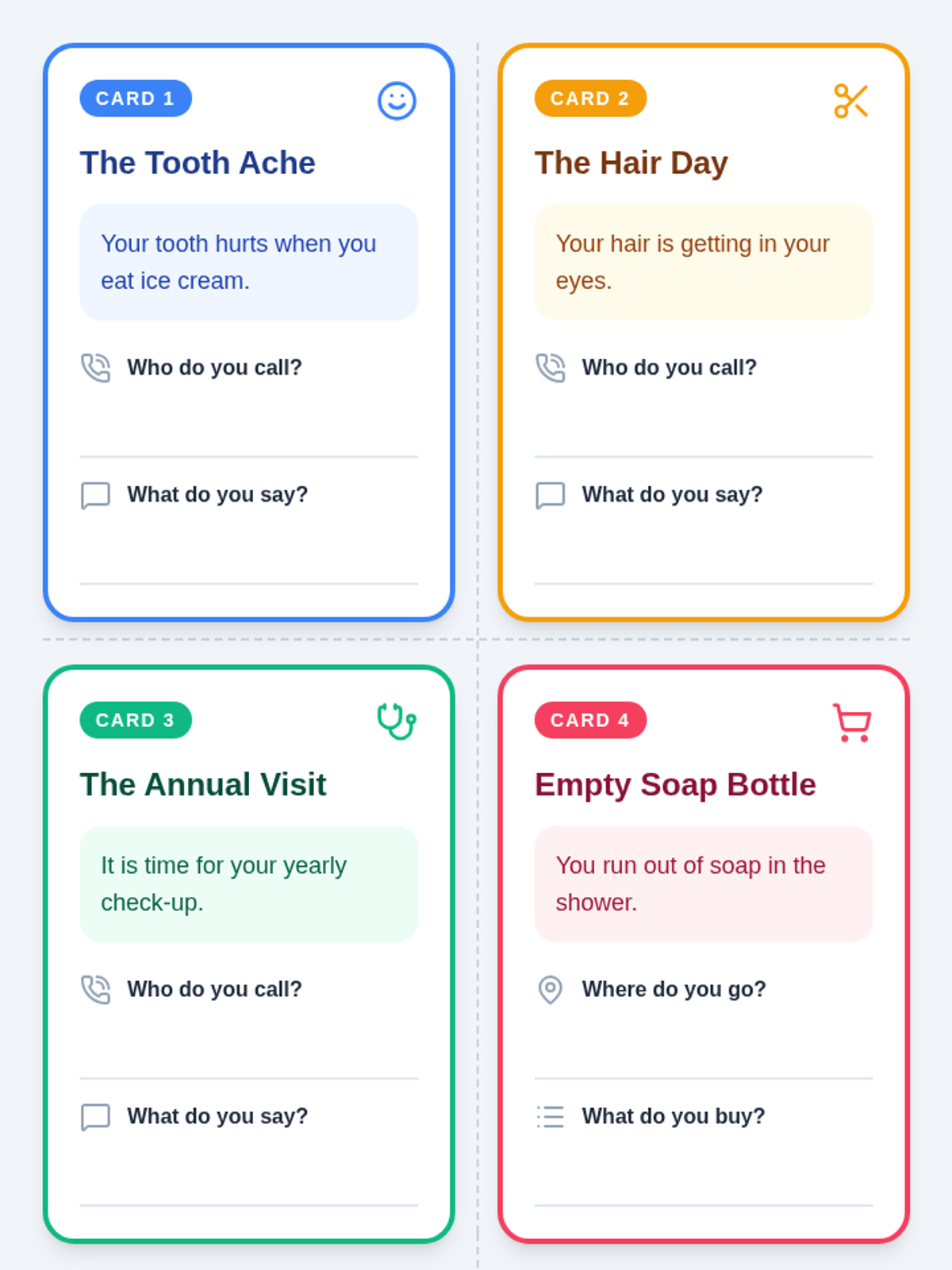
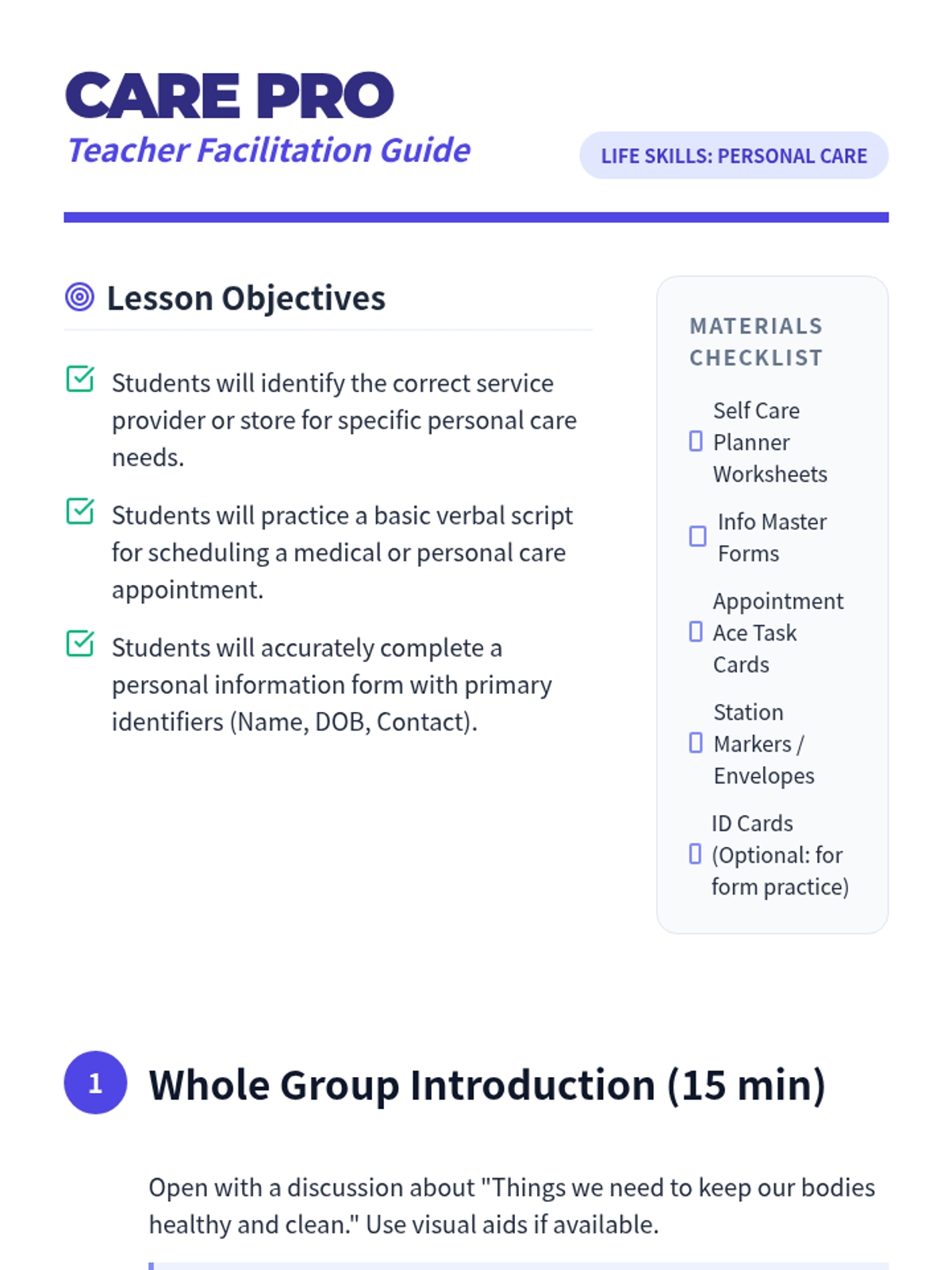
A practical life skills lesson focused on managing personal care needs, scheduling medical appointments, and completing essential personal information forms. Designed for Level 2 learners with simplified text and visual supports.
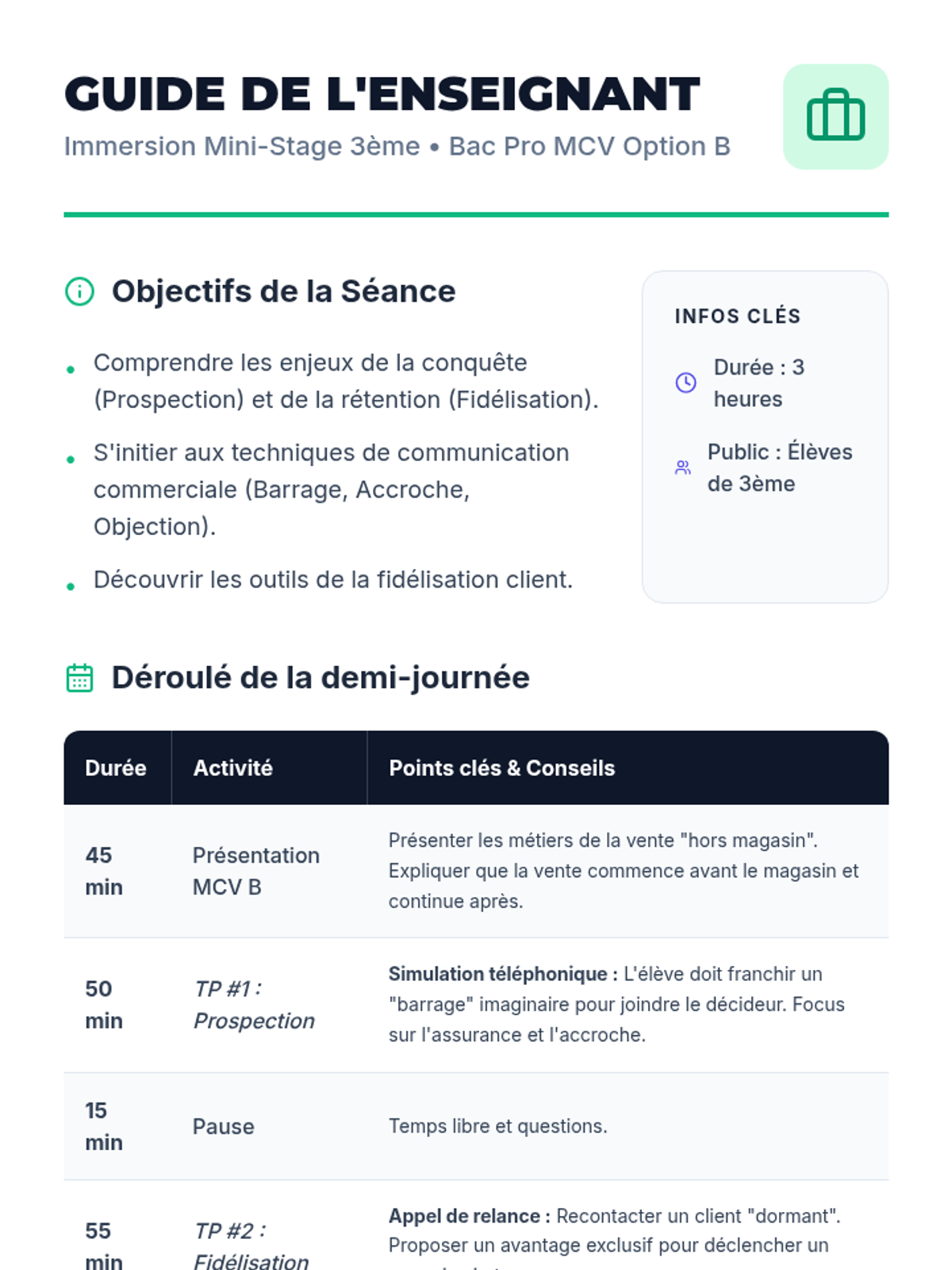
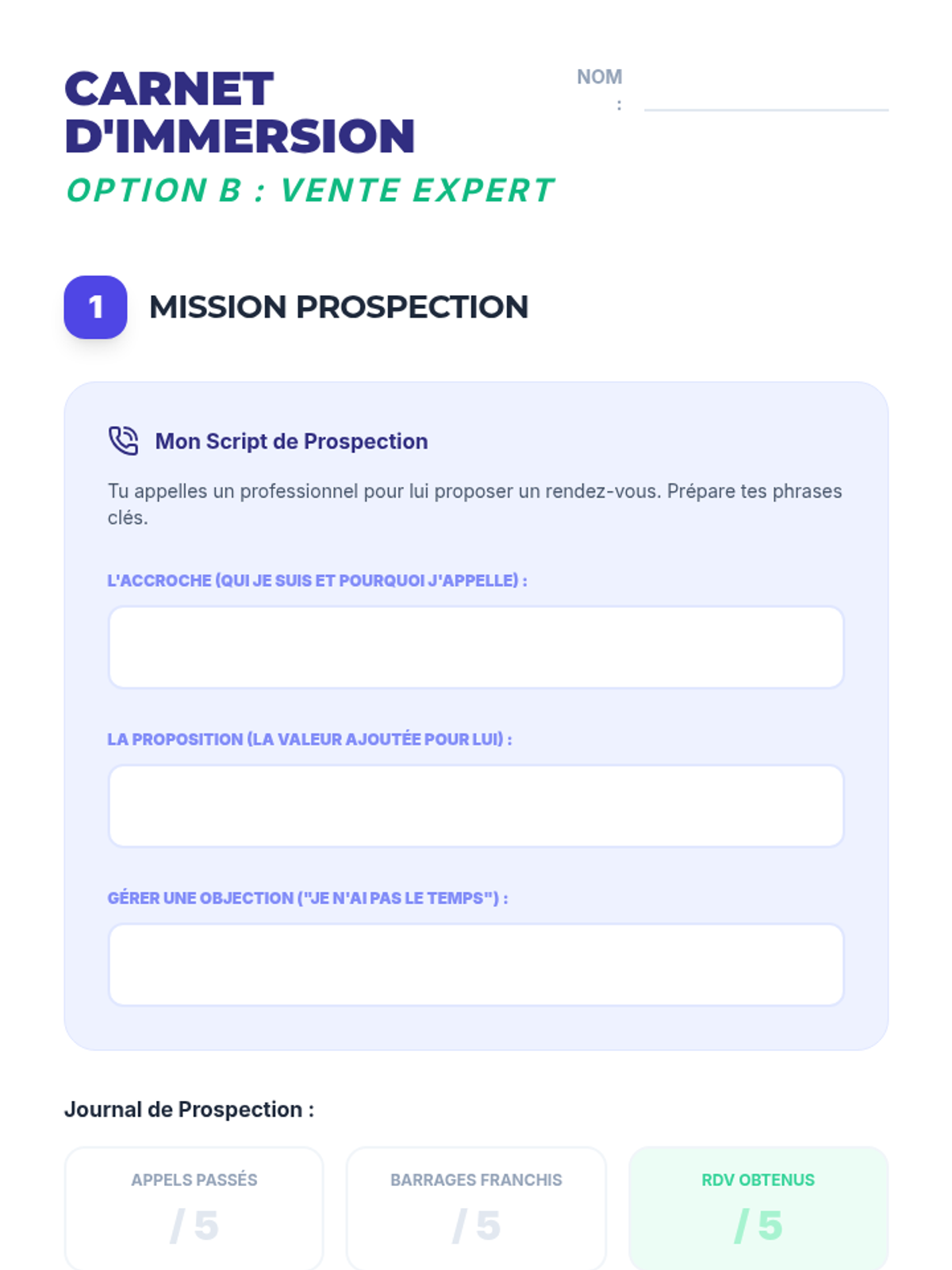
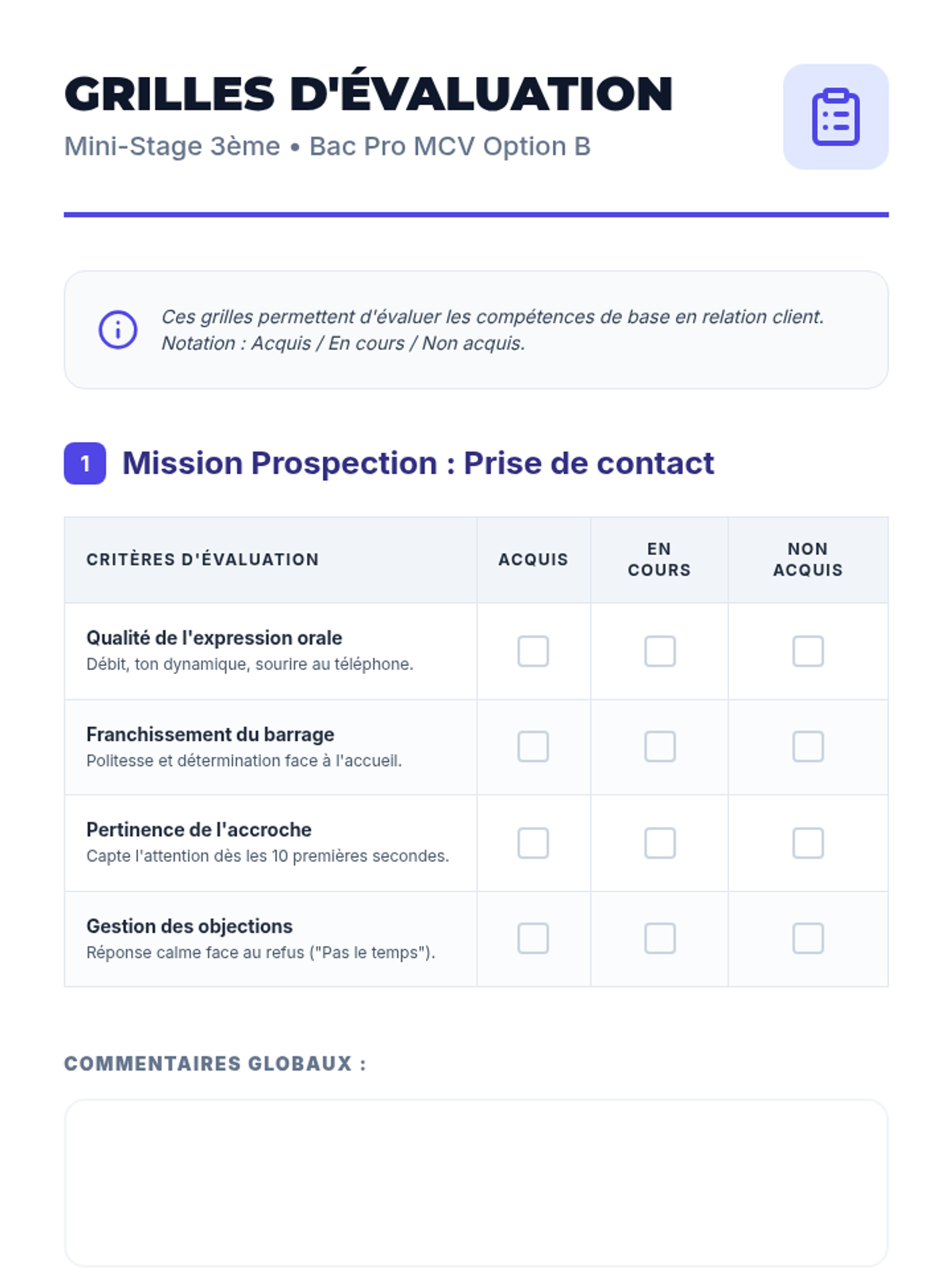
Une demi-journée d'immersion pour découvrir les métiers du commerce et de la vente, spécifiquement le Bac Pro MCV Option B. Les élèves explorent la formation à travers des activités pratiques de prospection et de valorisation de l'offre.
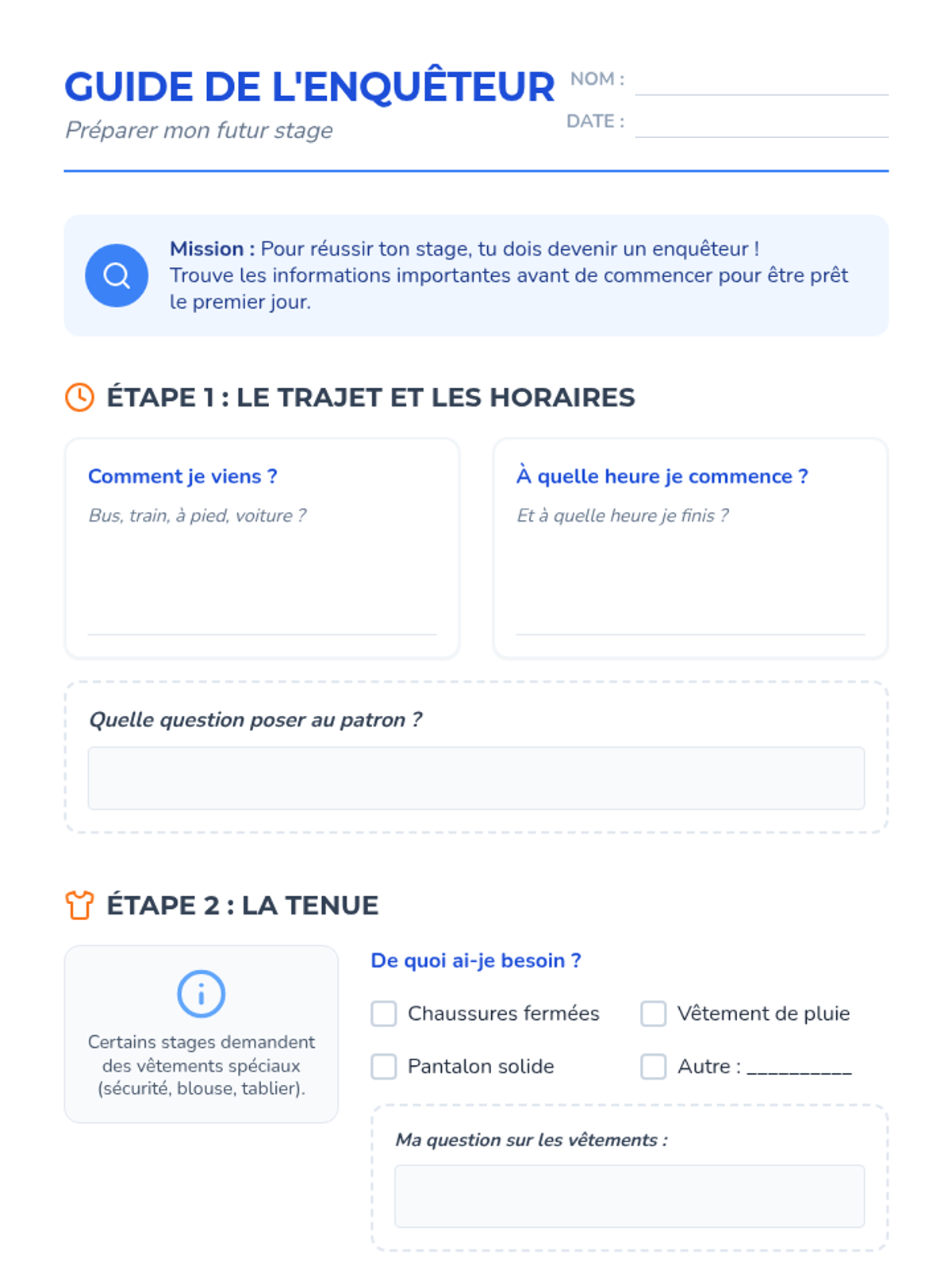
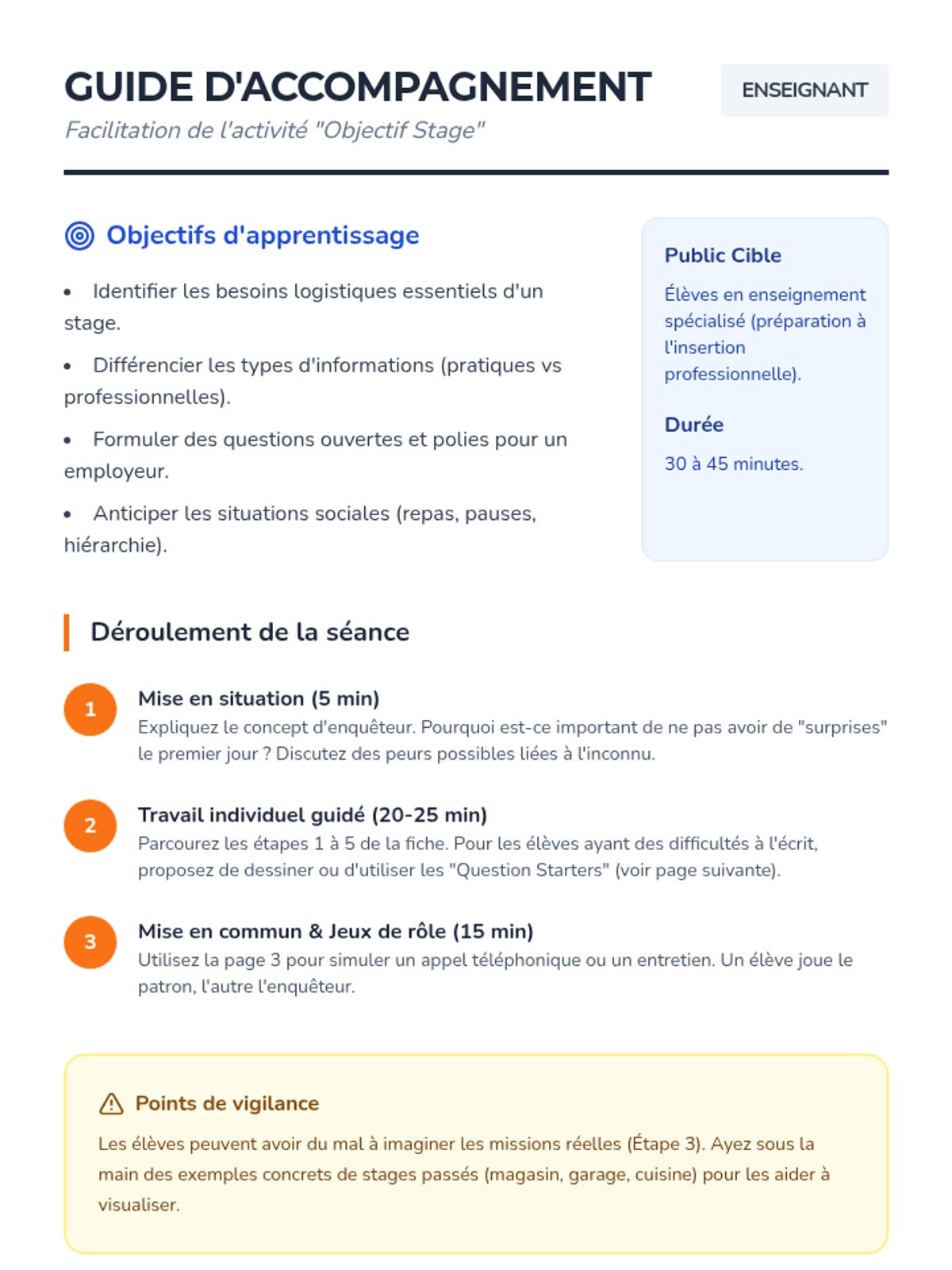
Une série d'activités pour aider les élèves à identifier et formuler les questions essentielles à poser avant et pendant un stage en entreprise.
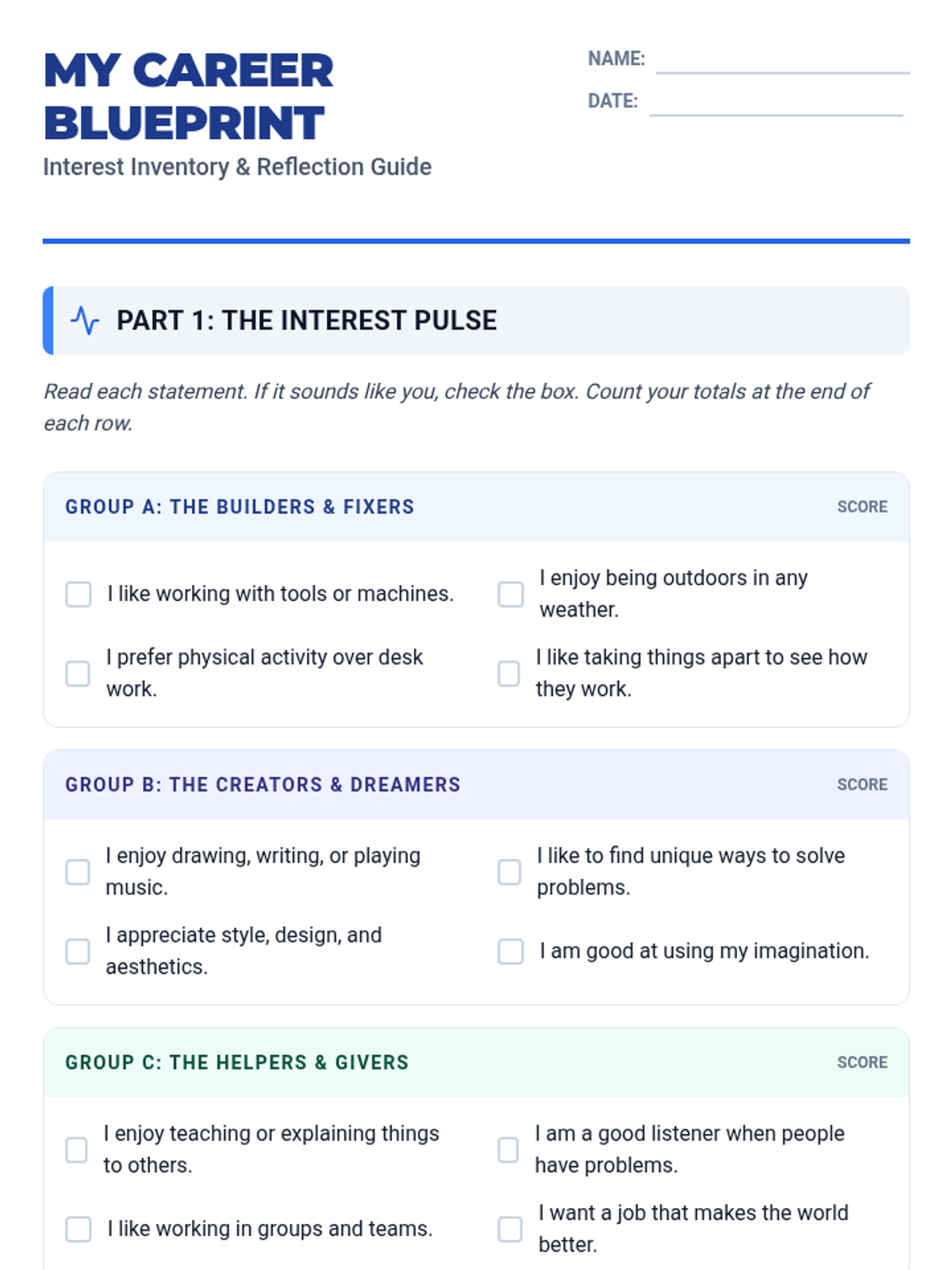
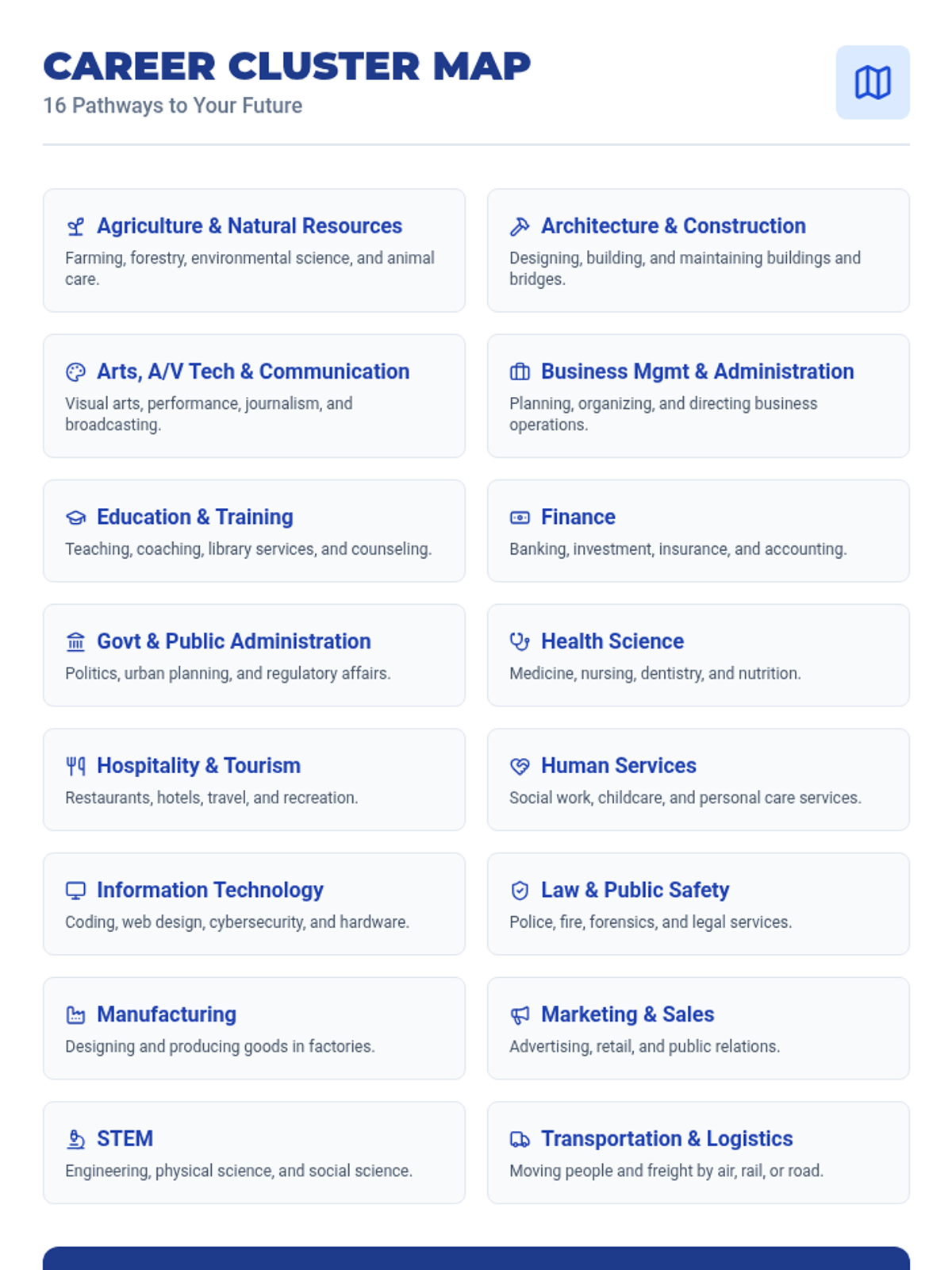
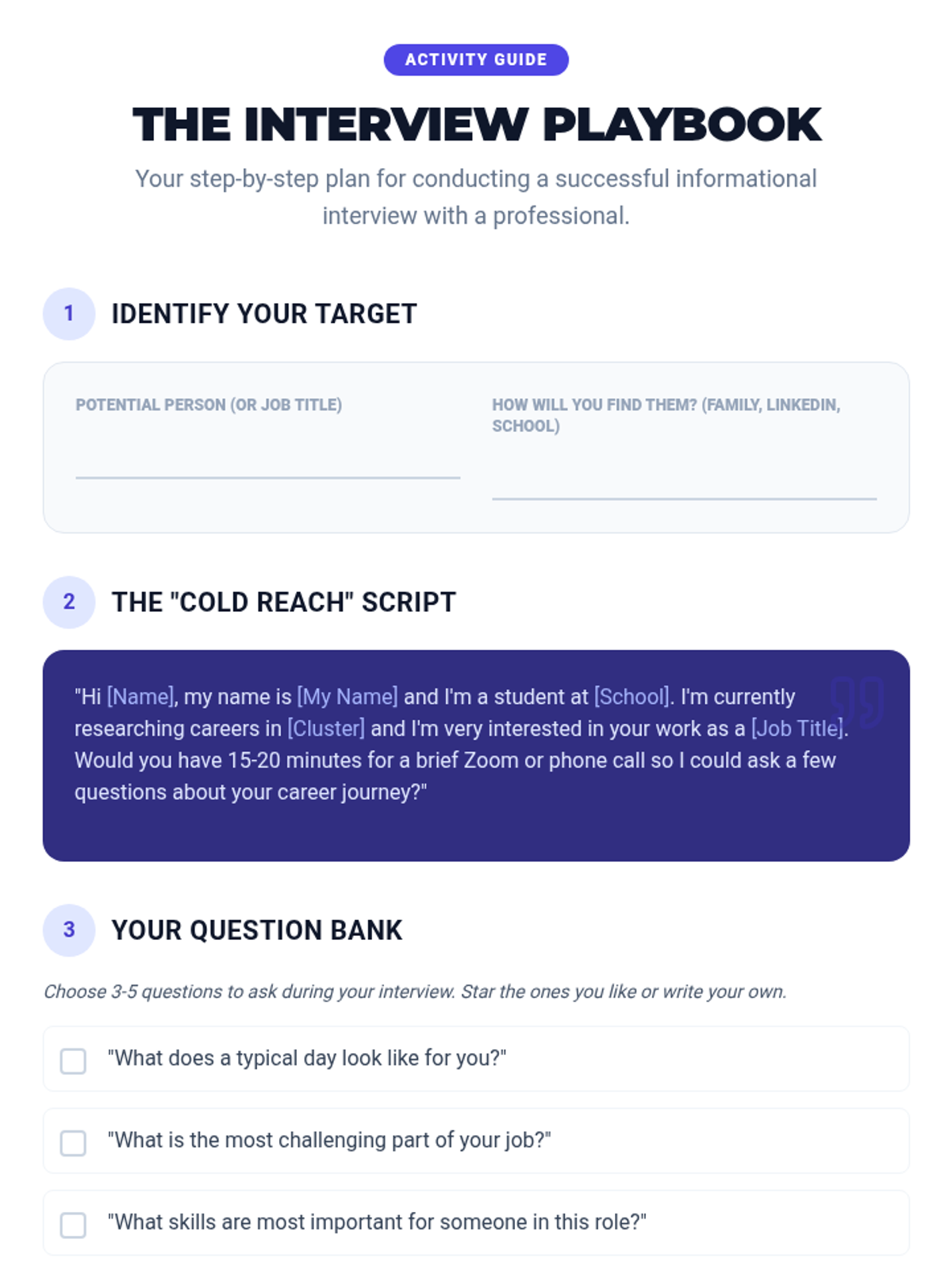
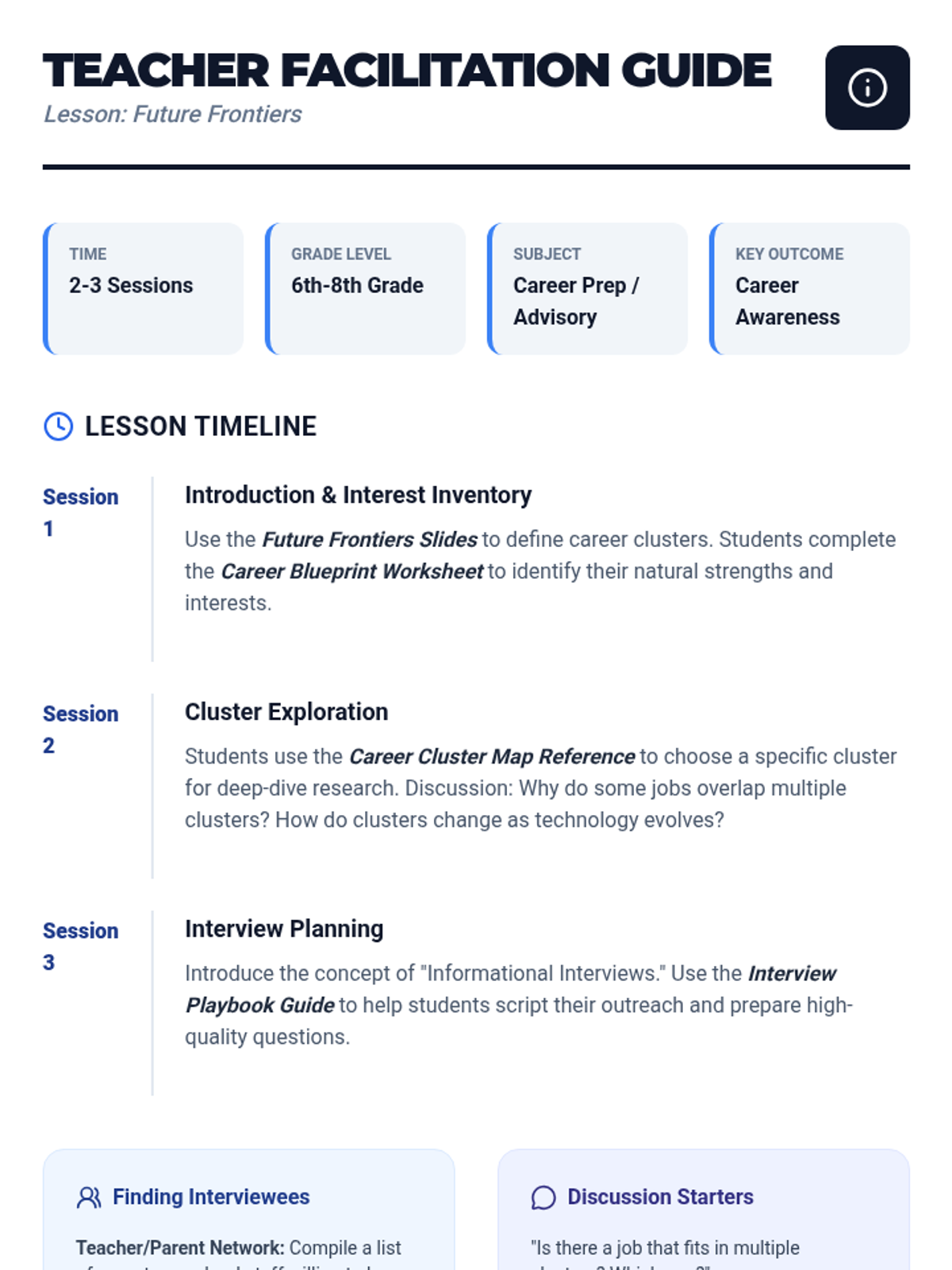
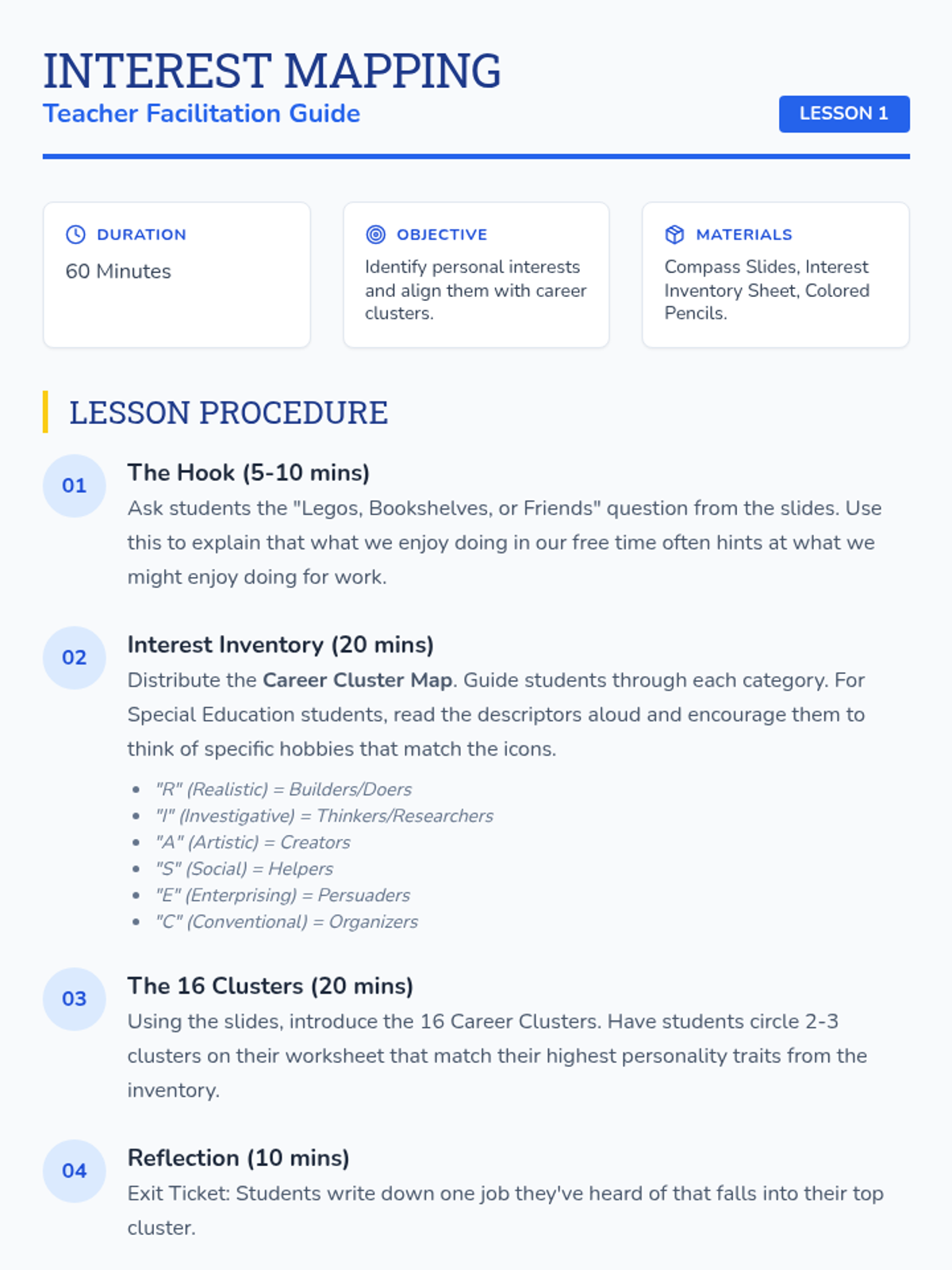
A middle school exploration into career clusters, personal interests, and real-world career research through informational interviewing.
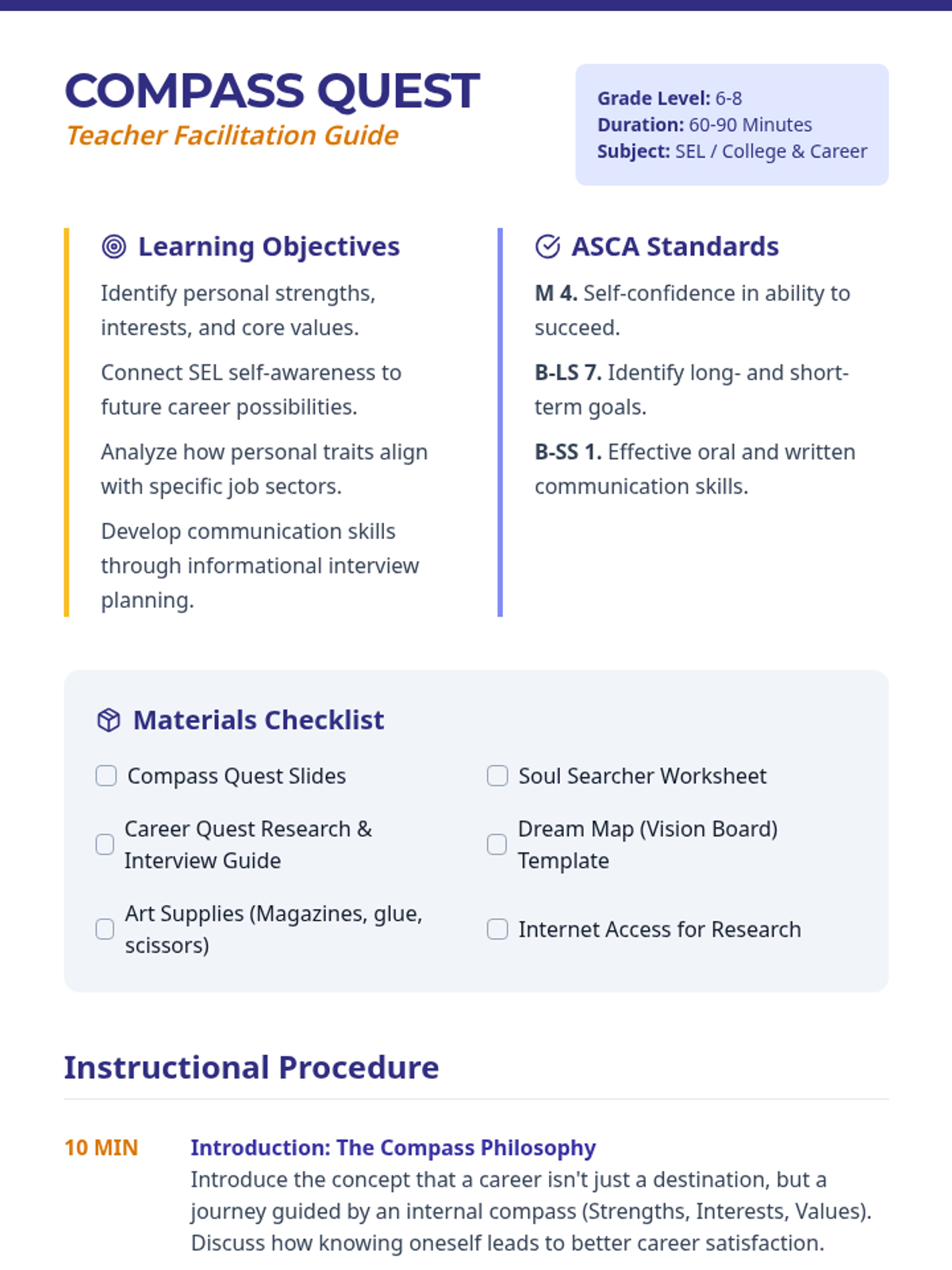
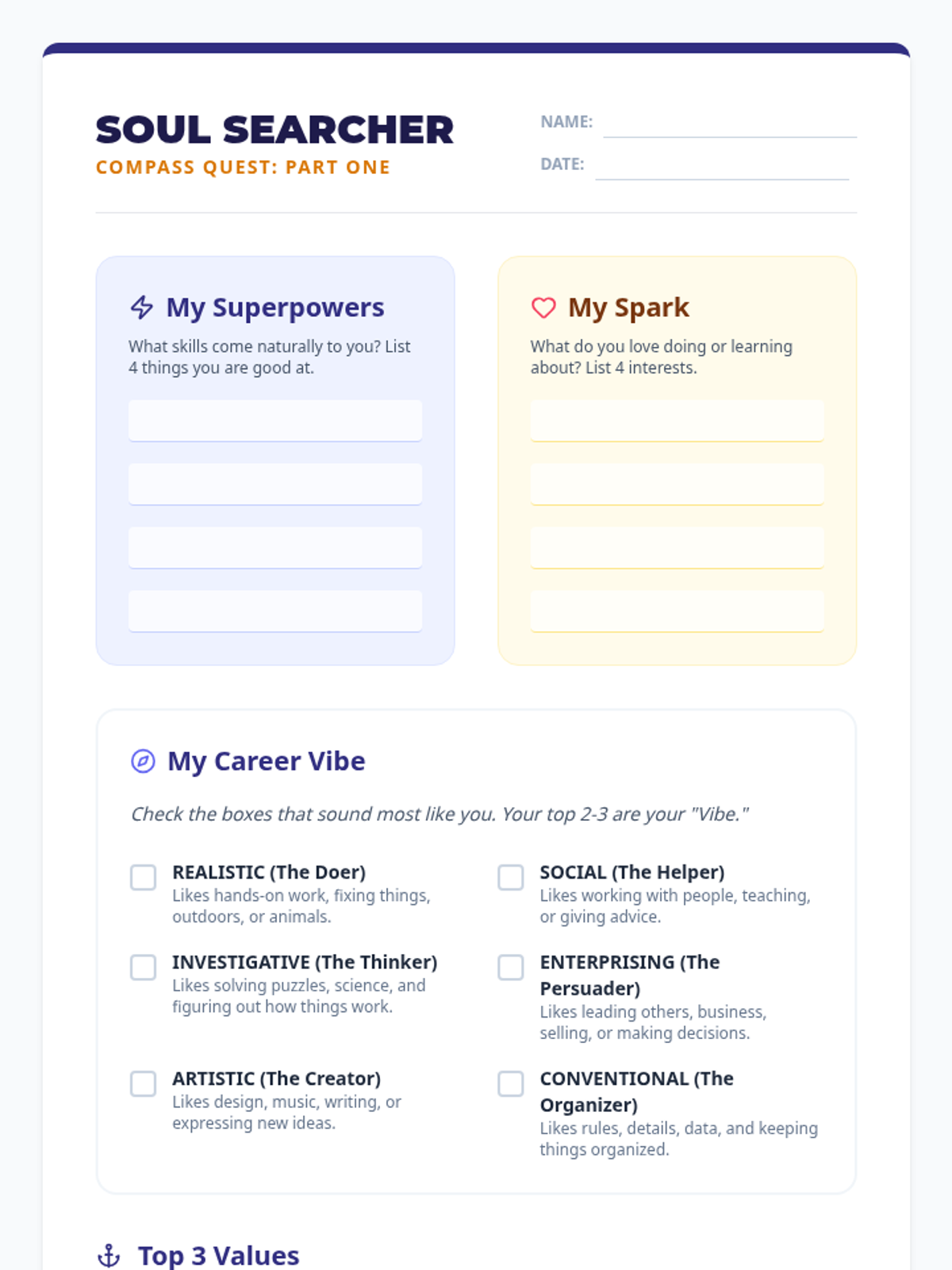
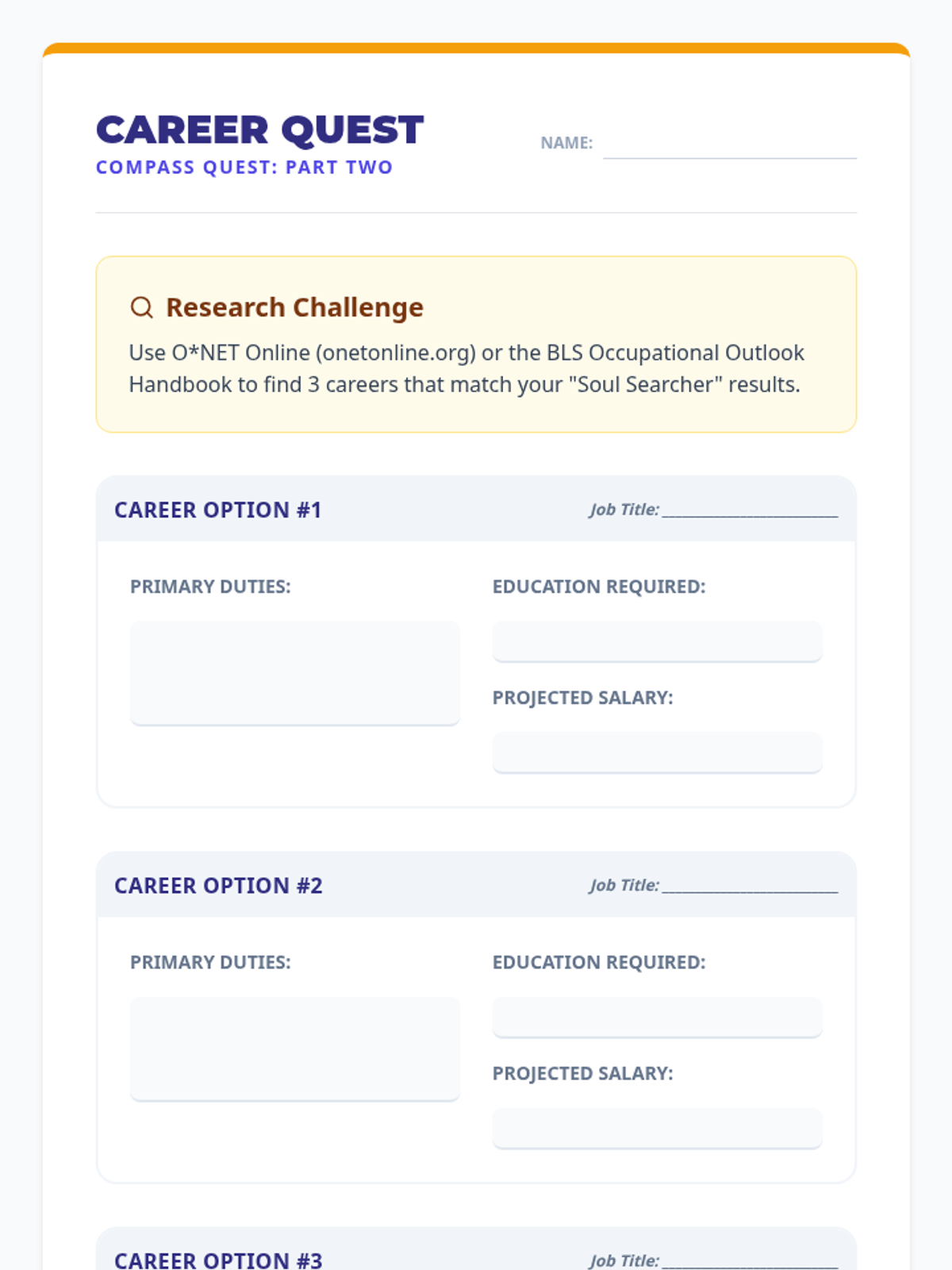
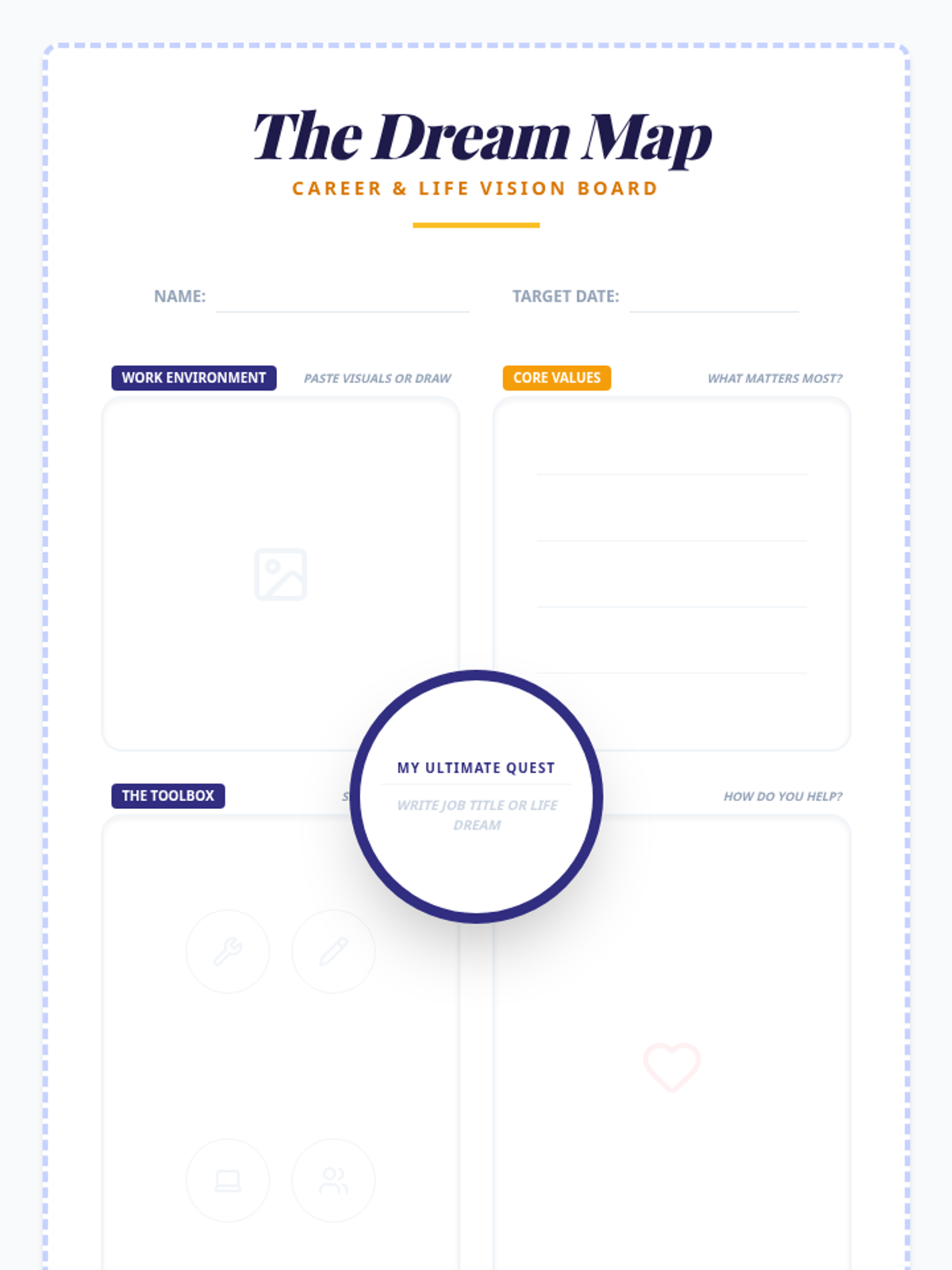
A comprehensive middle school counseling lesson focused on self-discovery and career exploration. Students map their strengths, interests, and values to potential career paths through guided reflection and research.
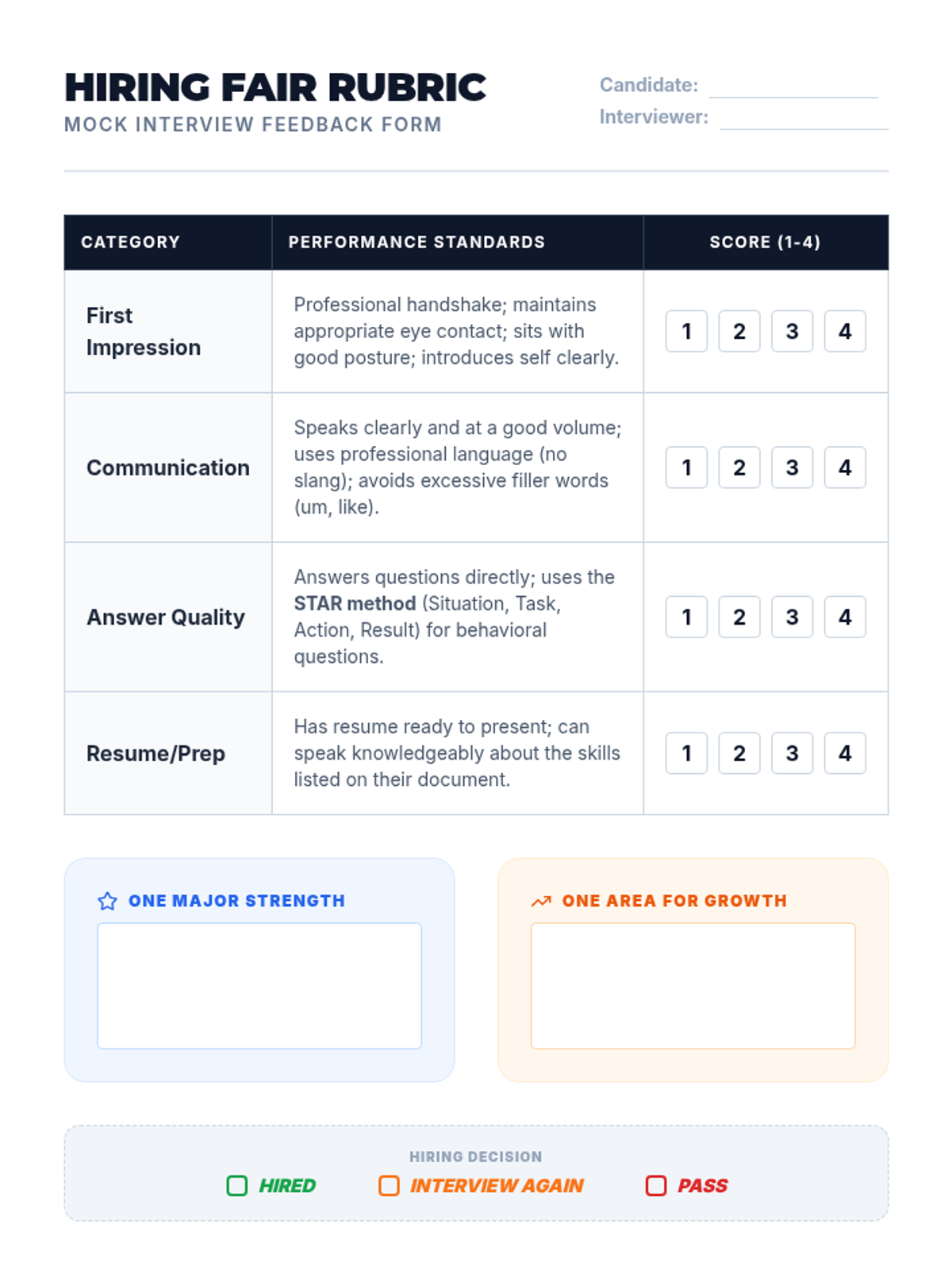
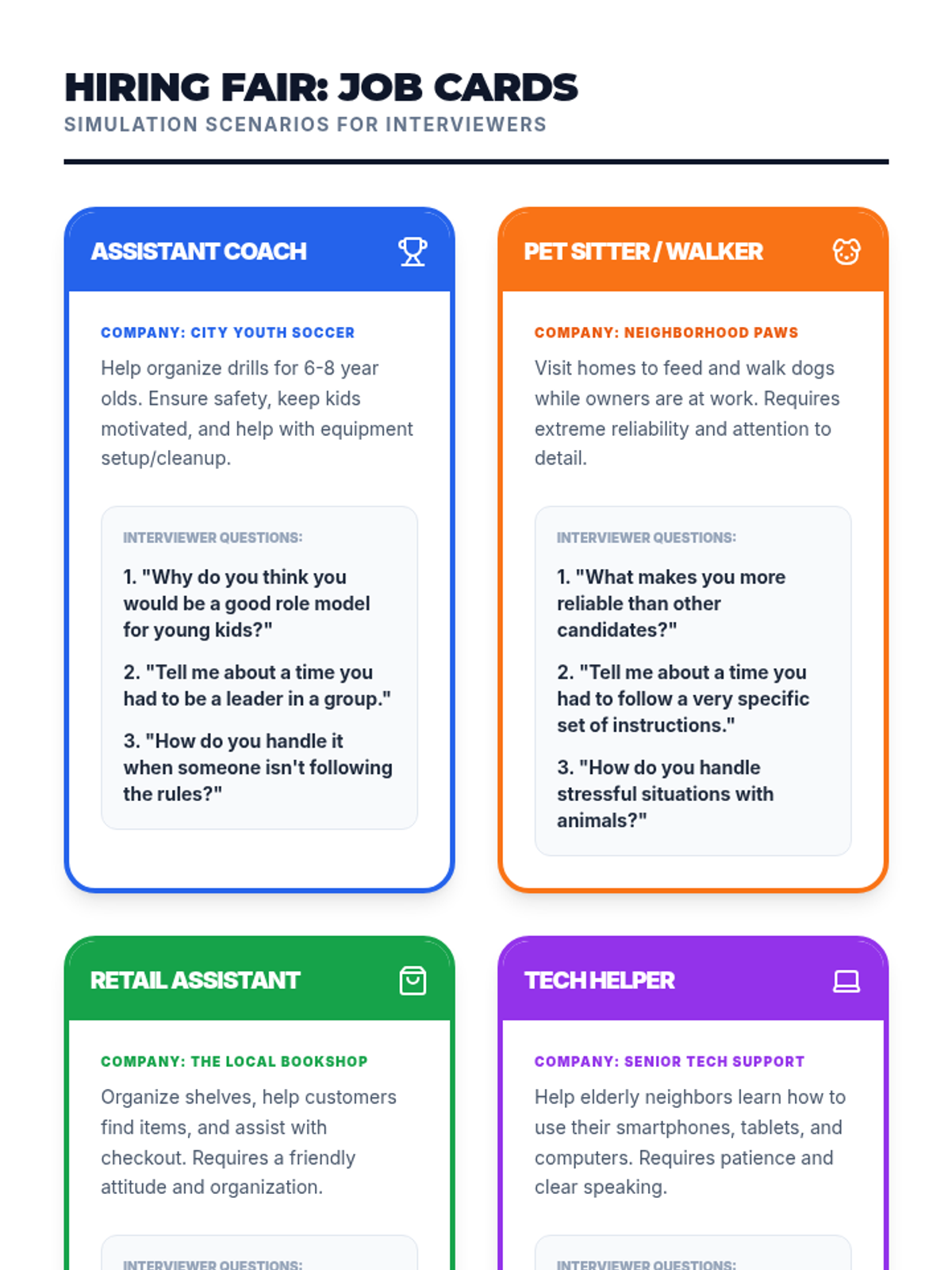
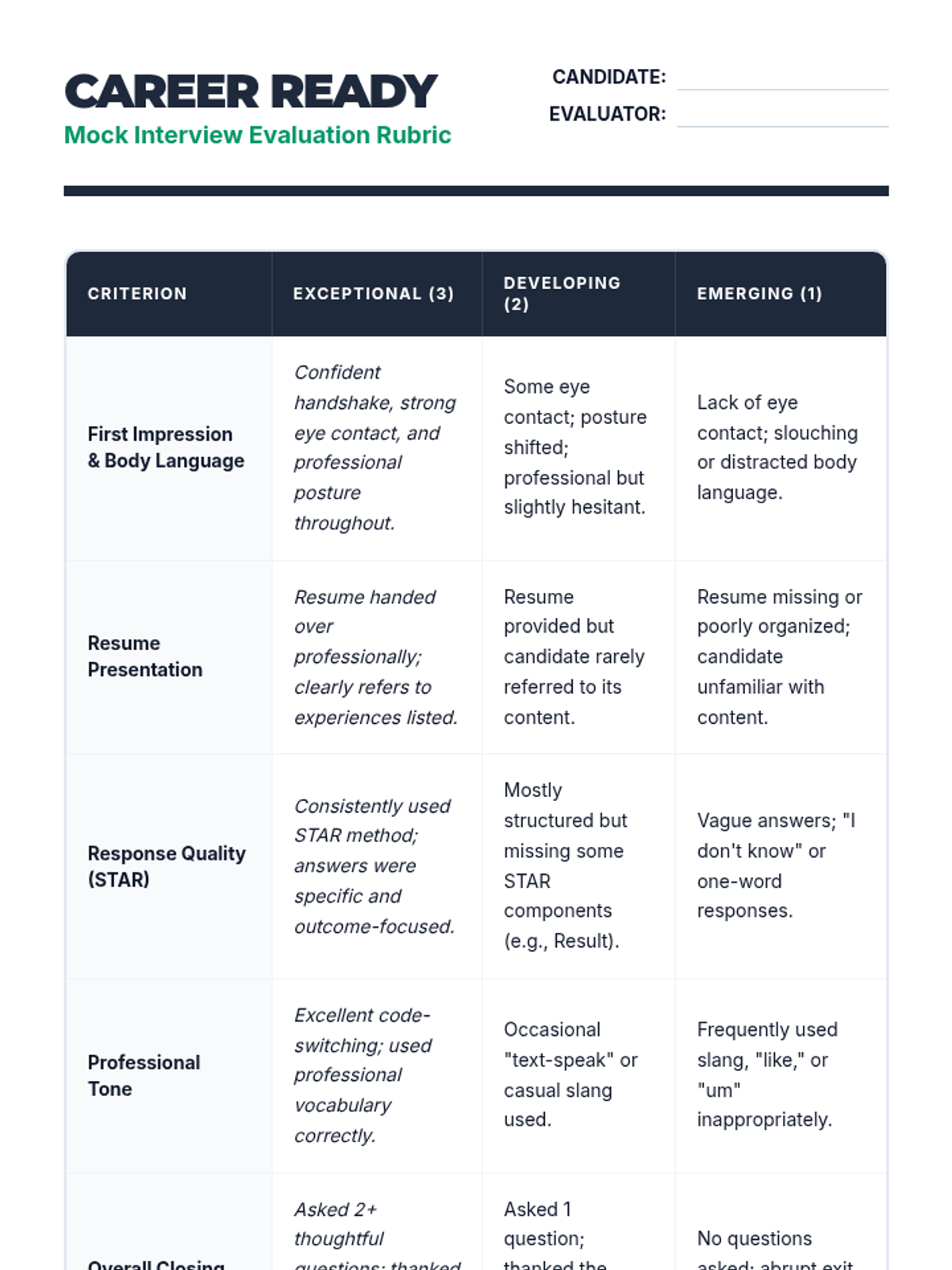
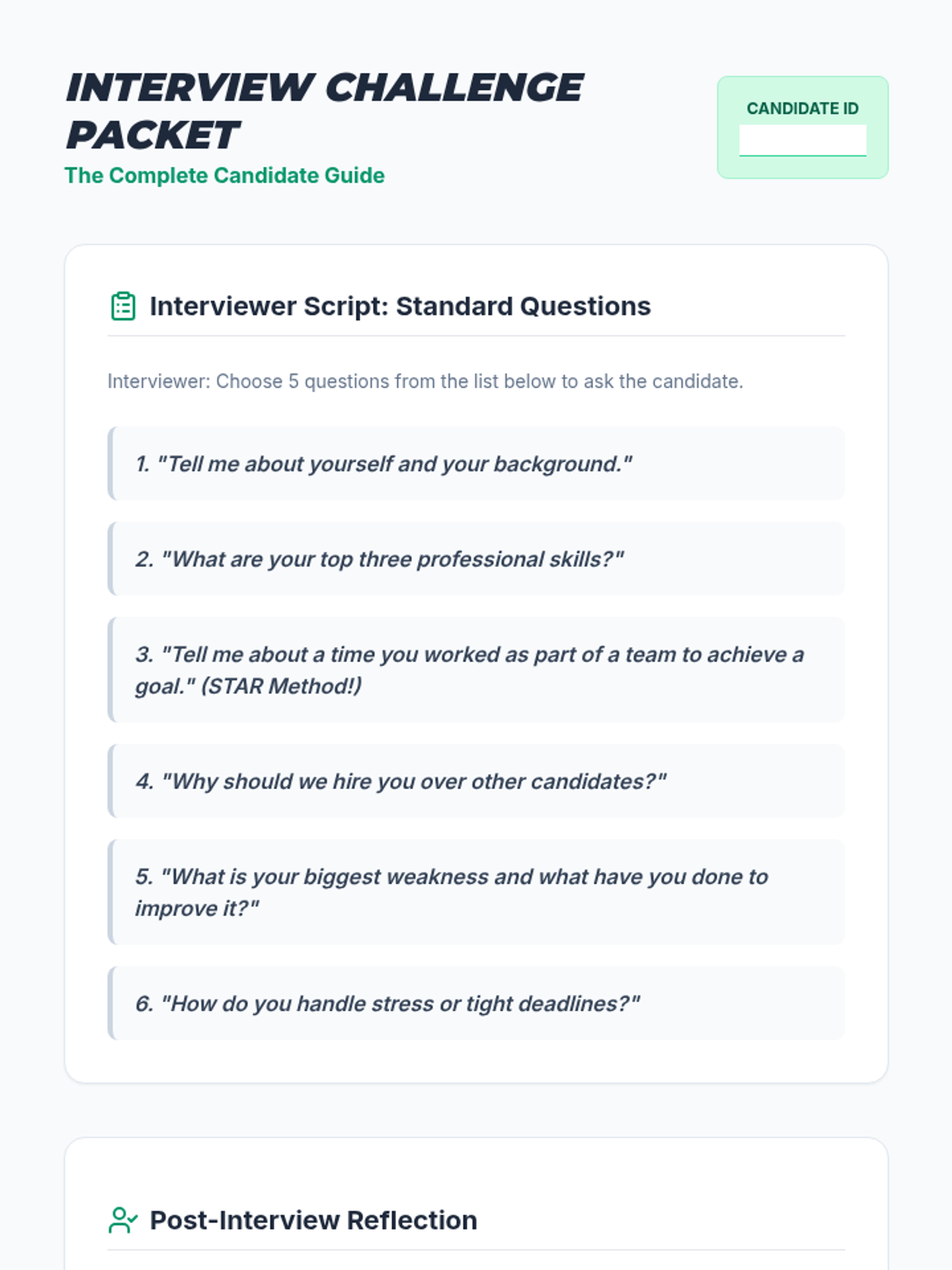
As a culminating activity, students participate in rotating mock interviews acting as both interviewers and interviewees. They utilize rubrics to provide constructive feedback on body language, eye contact, and answer quality. This applies all previous skills in a high-stakes simulation.
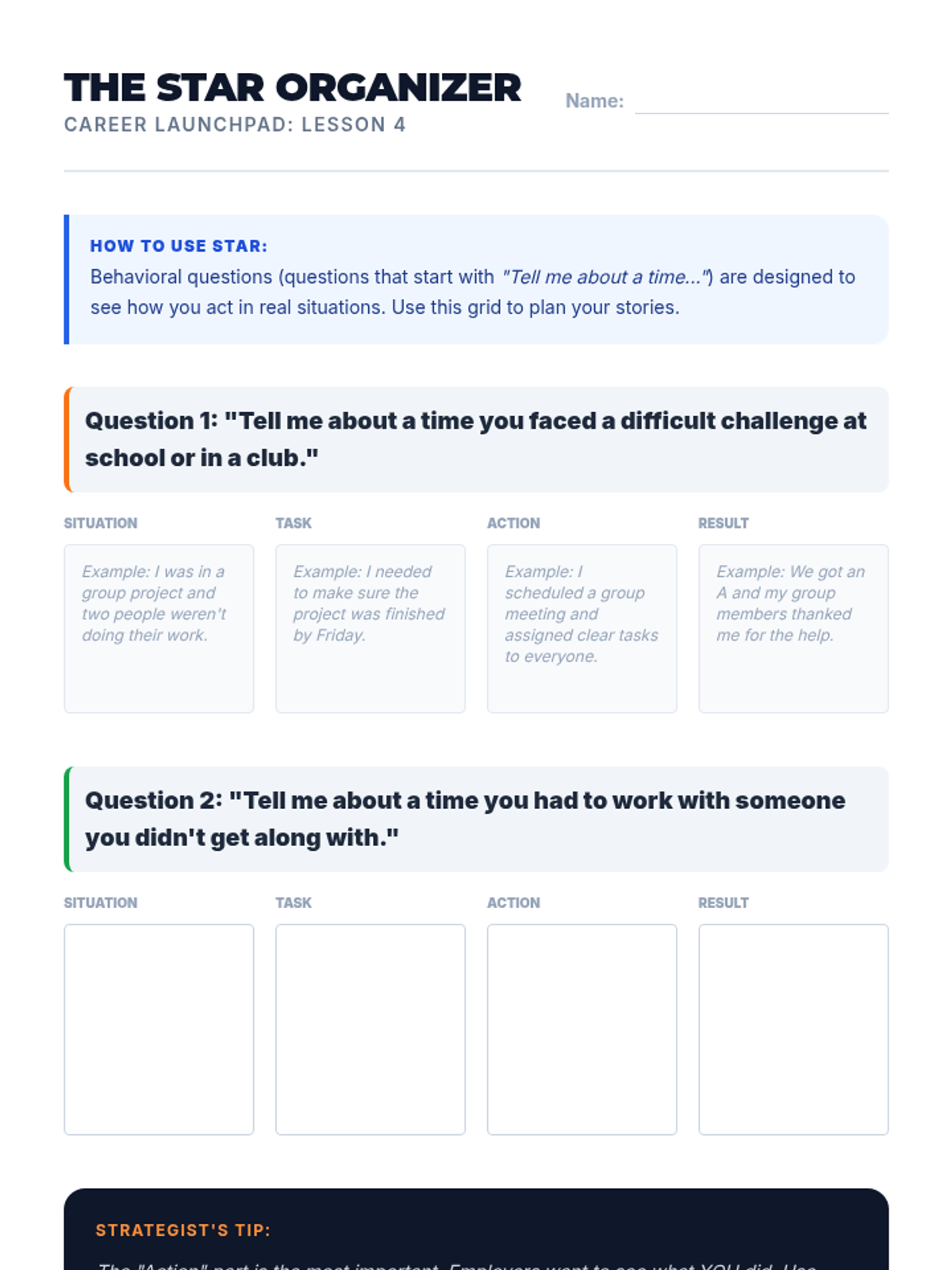
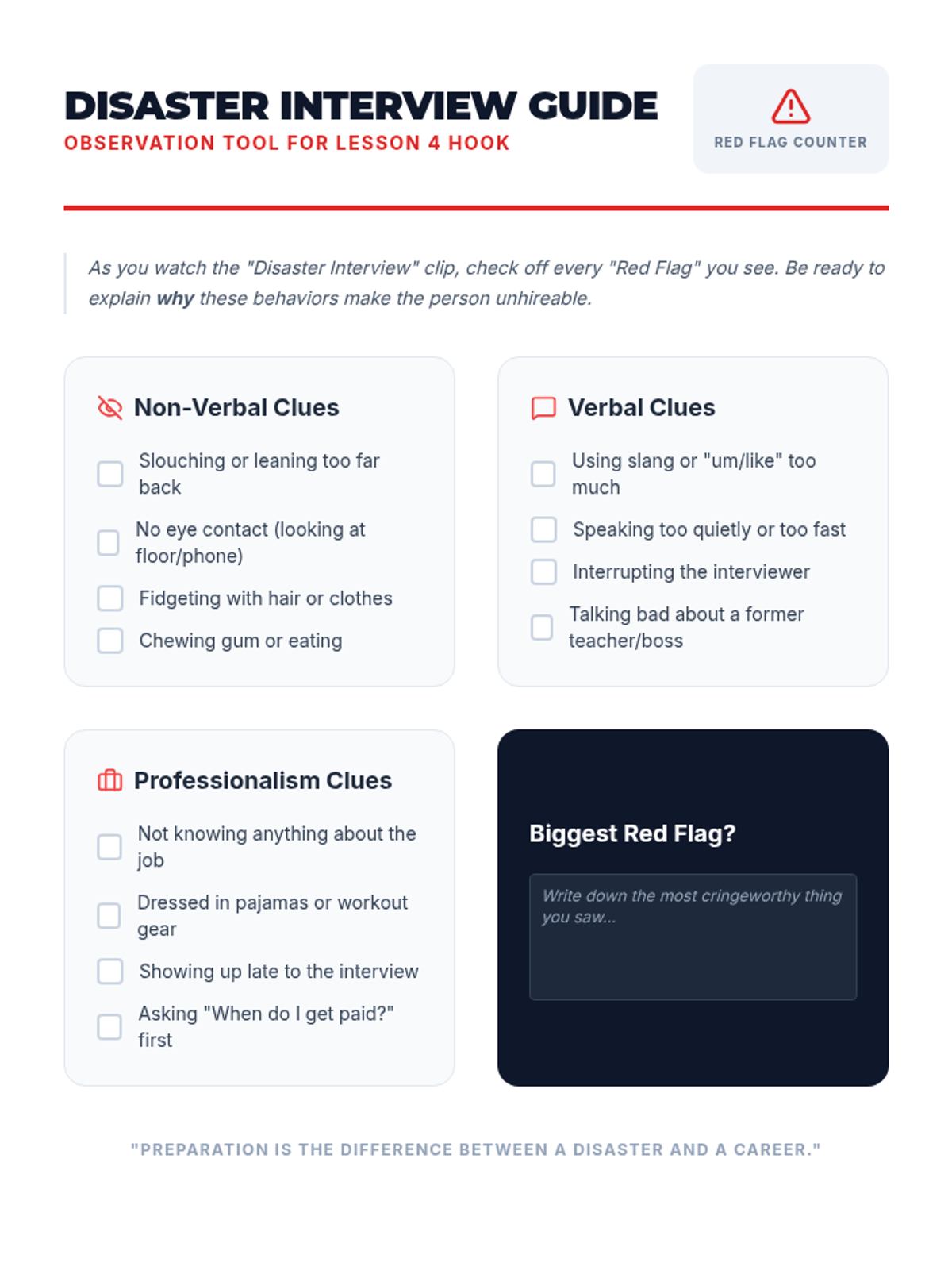
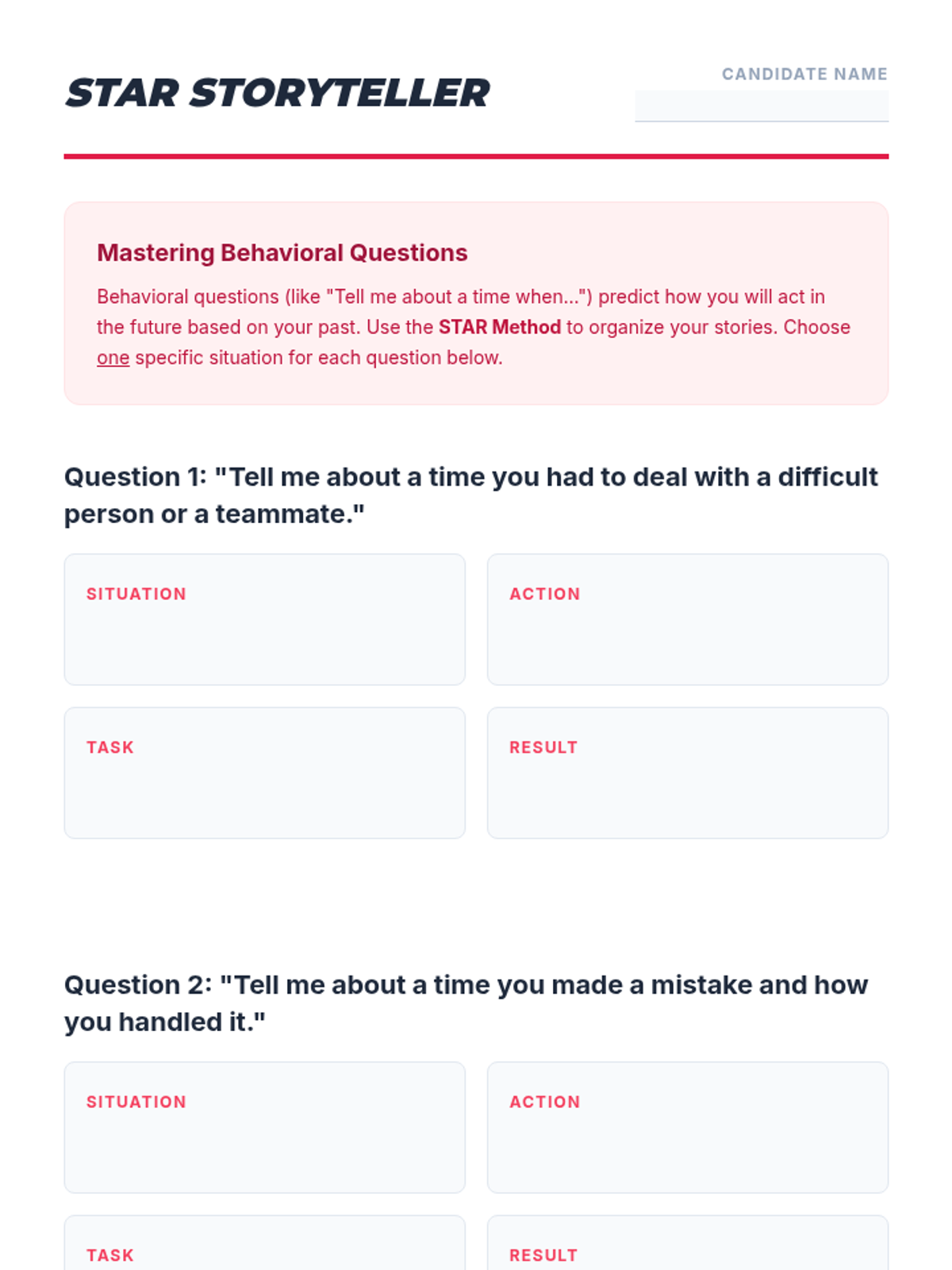
Students learn common interview questions and the purpose behind them. They practice the STAR method (Situation, Task, Action, Result) to structure their answers effectively. The lesson involves watching video examples of strong versus weak interview responses.
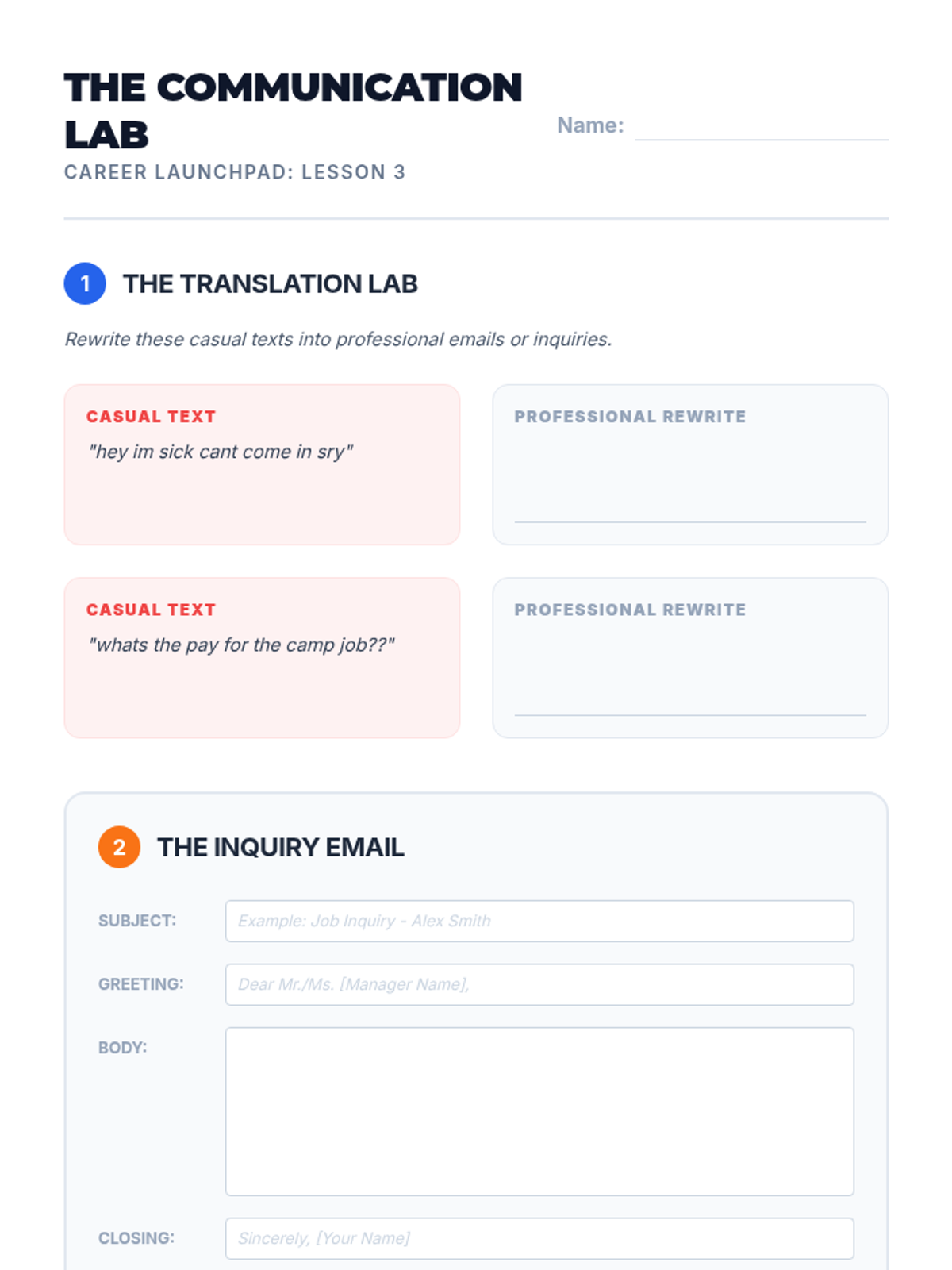
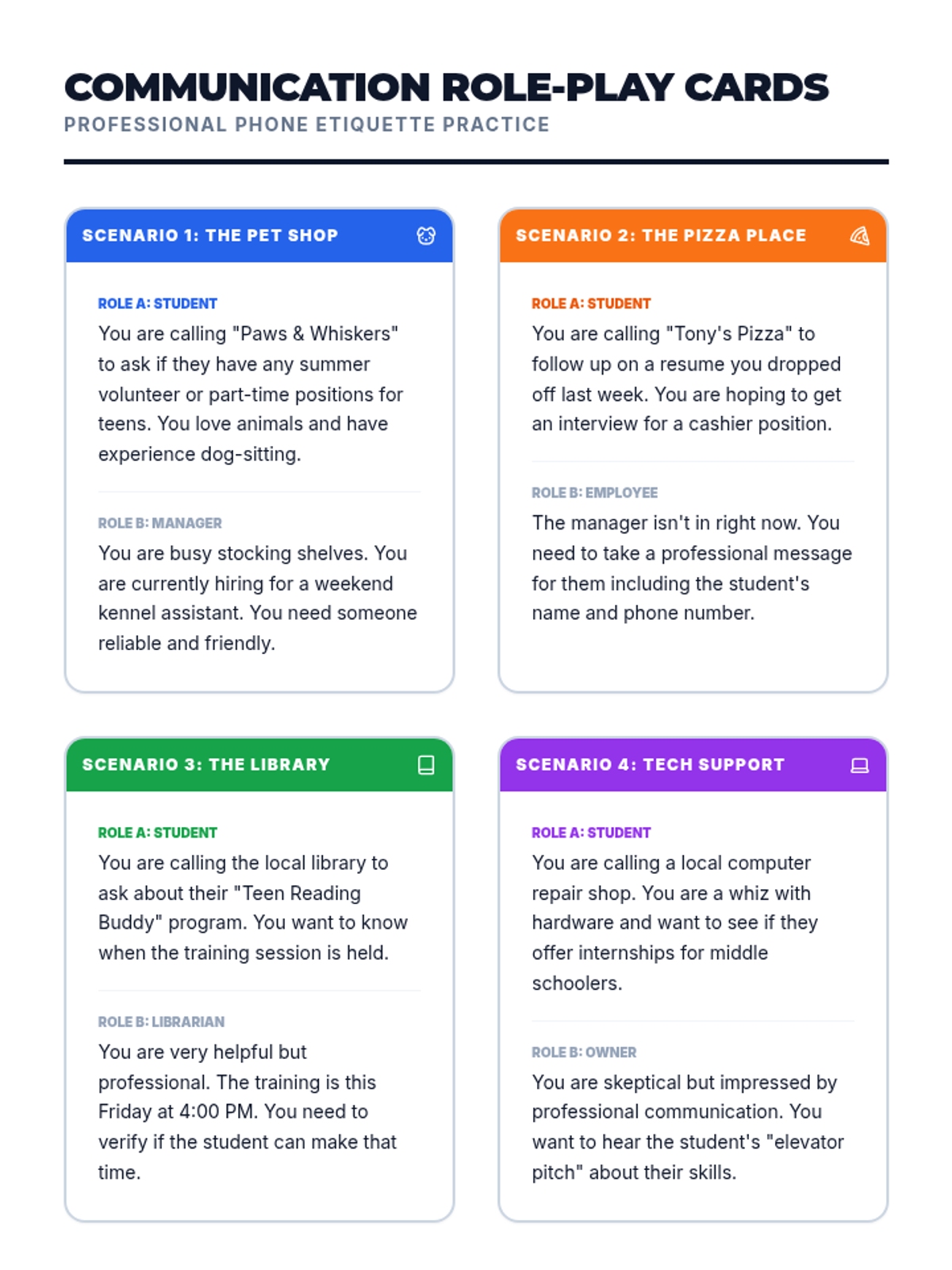
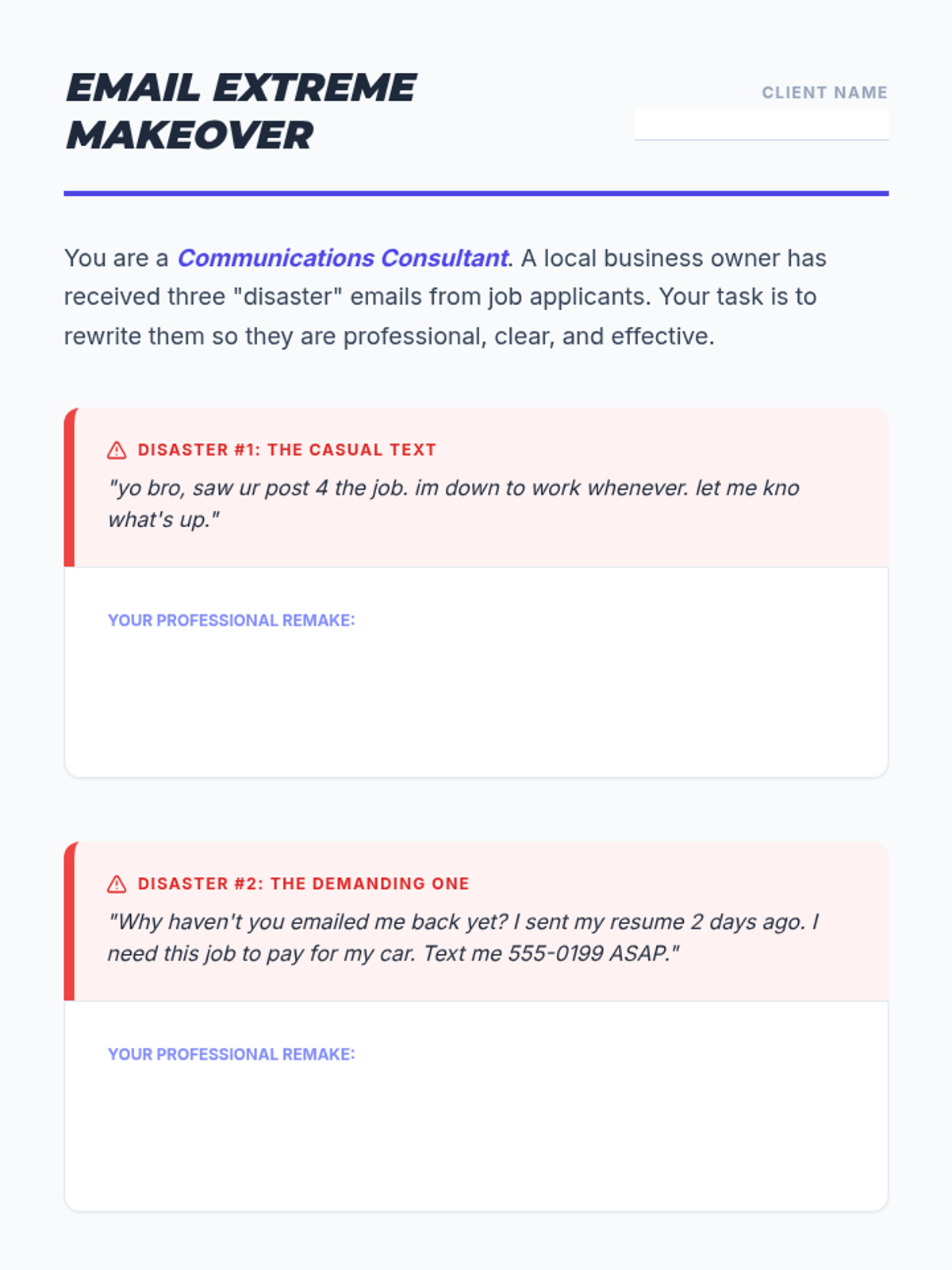
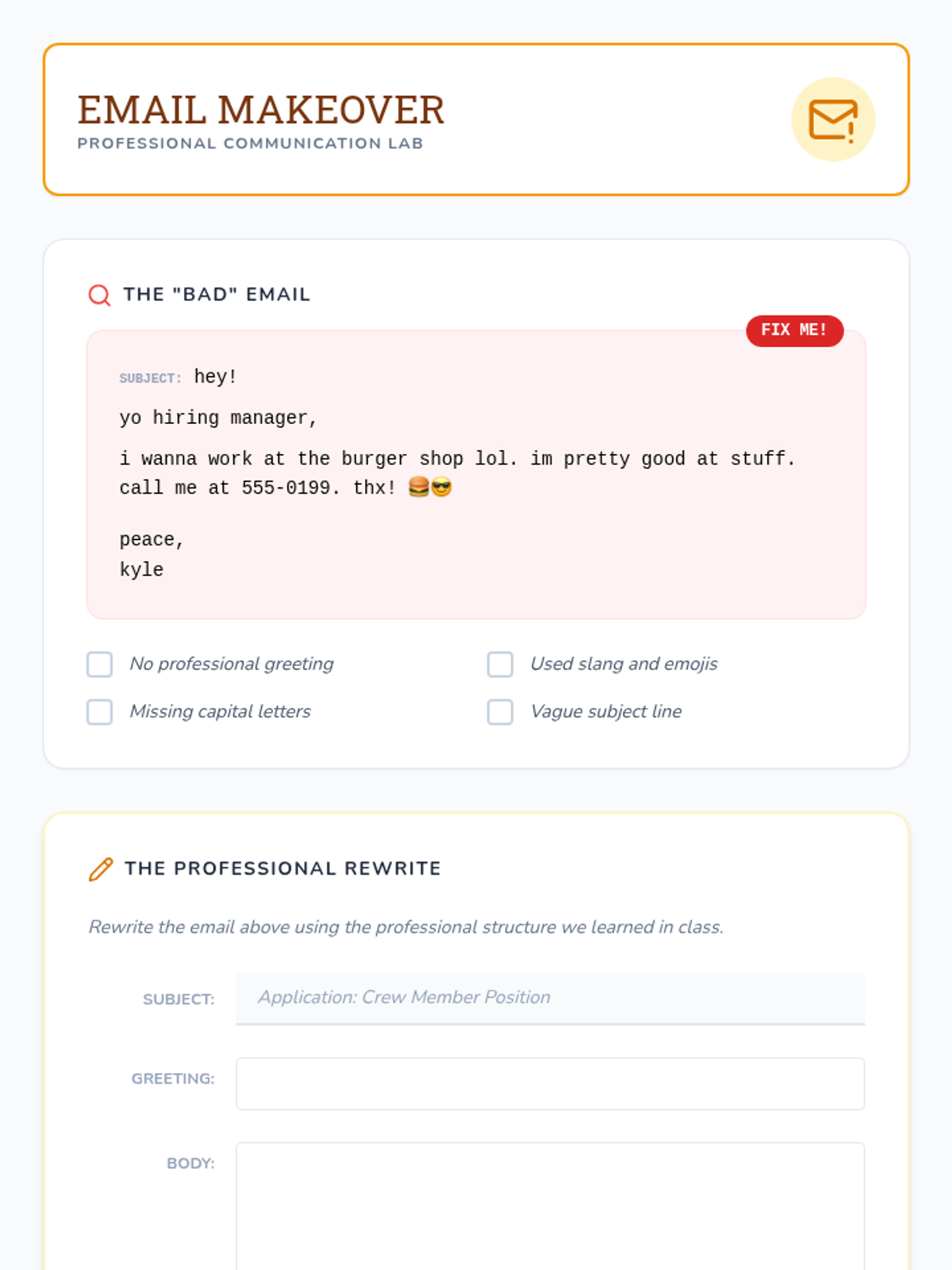
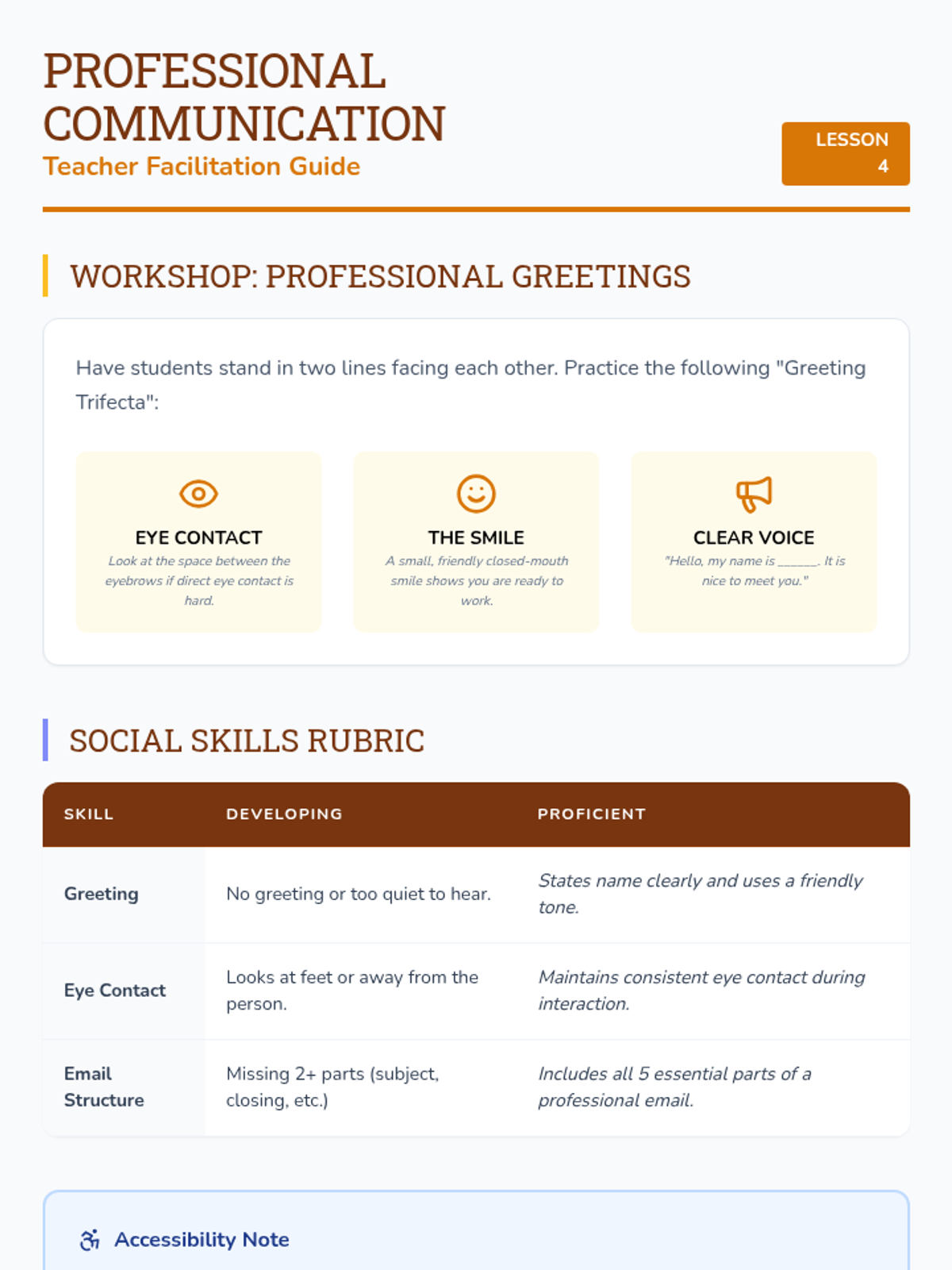
Students explore the norms of professional correspondence, distinguishing between casual texting and workplace communication. They practice drafting inquiries about job openings via email and role-play professional phone etiquette. The focus is on tone, clarity, and appropriate greetings.
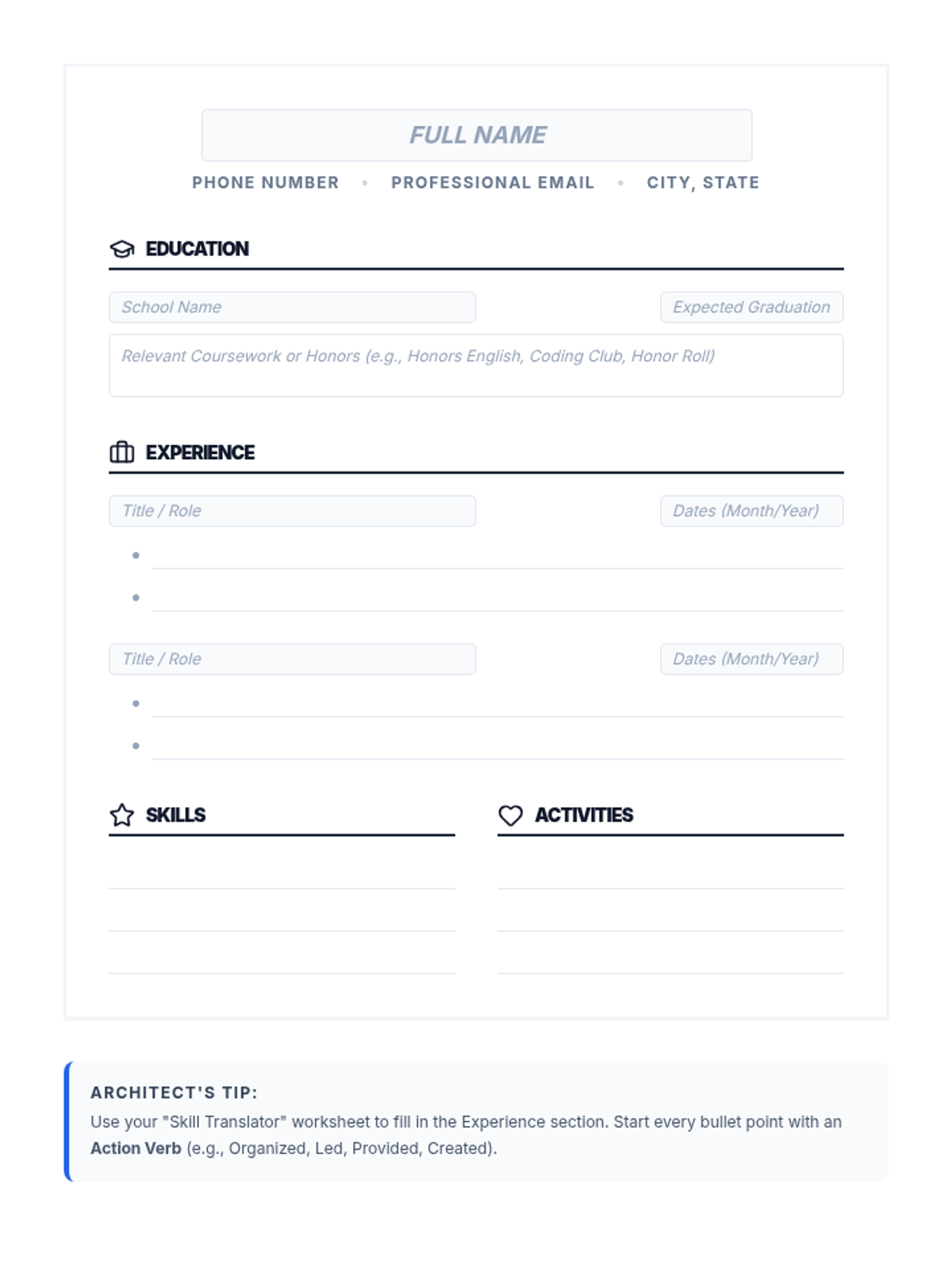
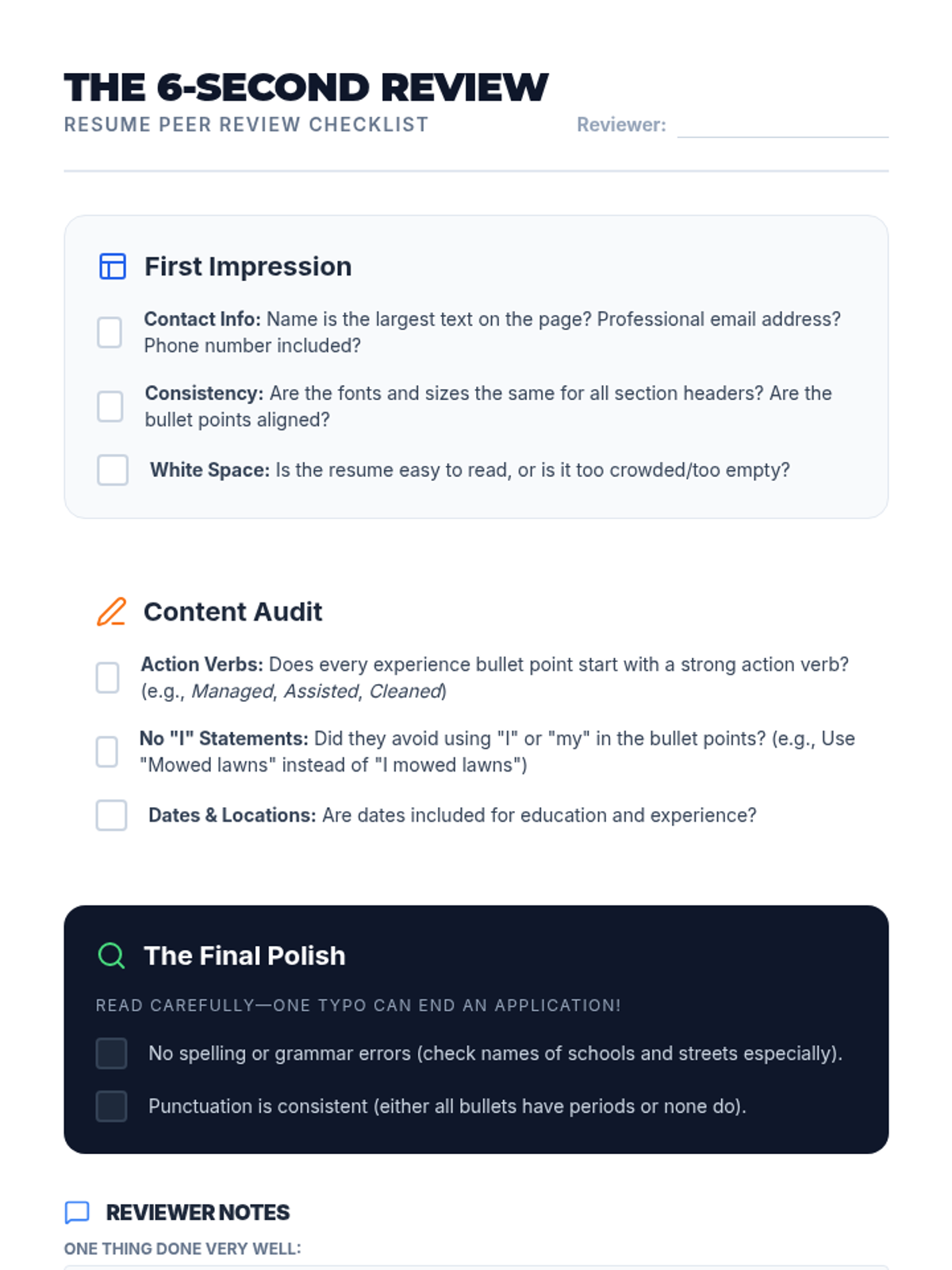
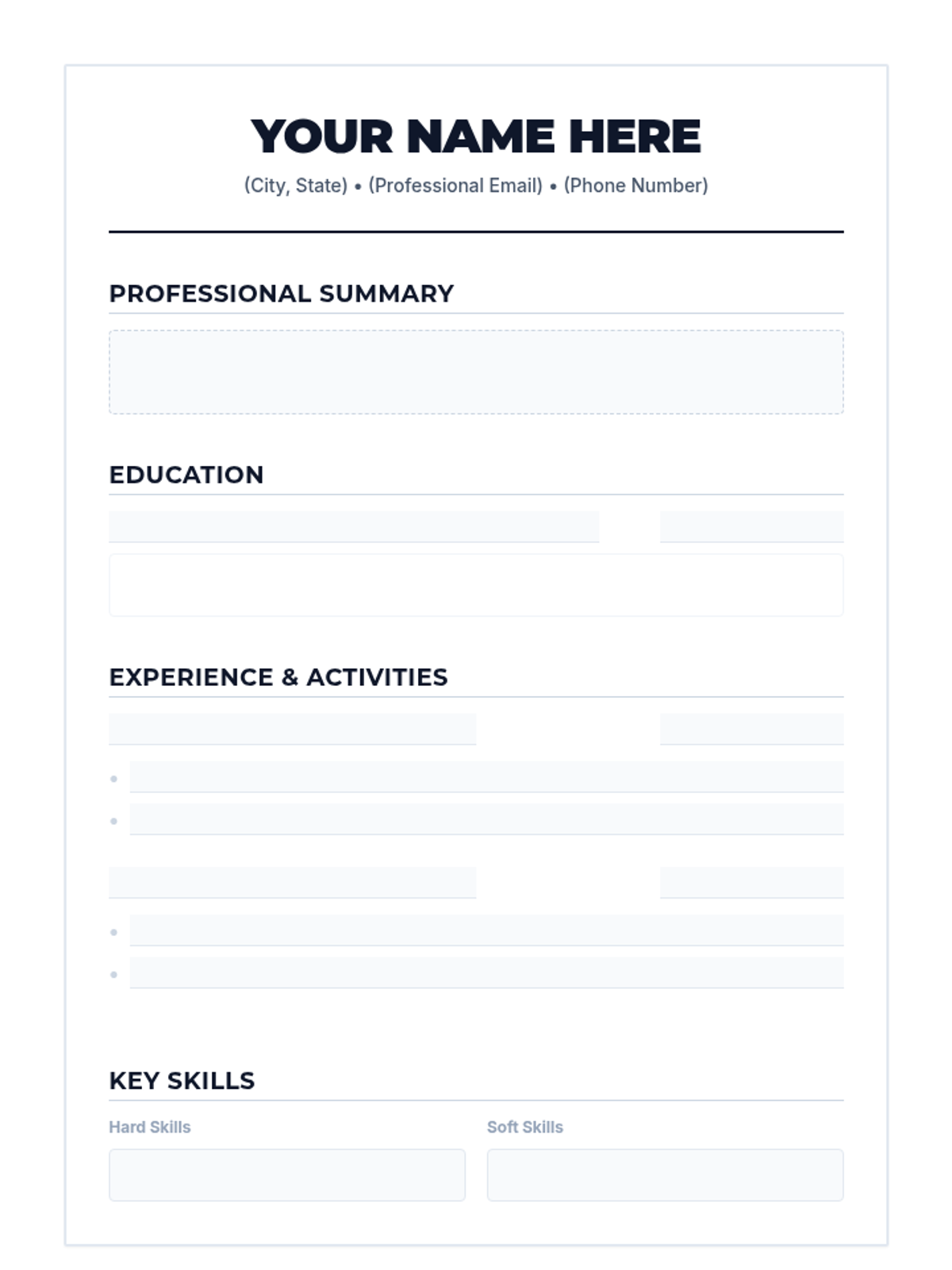
In this writing workshop, students examine sample resumes to understand structure, formatting, and clarity. They then draft their own entry-level resume using the skills identified in the previous lesson. Peer review focuses on formatting and the use of action verbs.
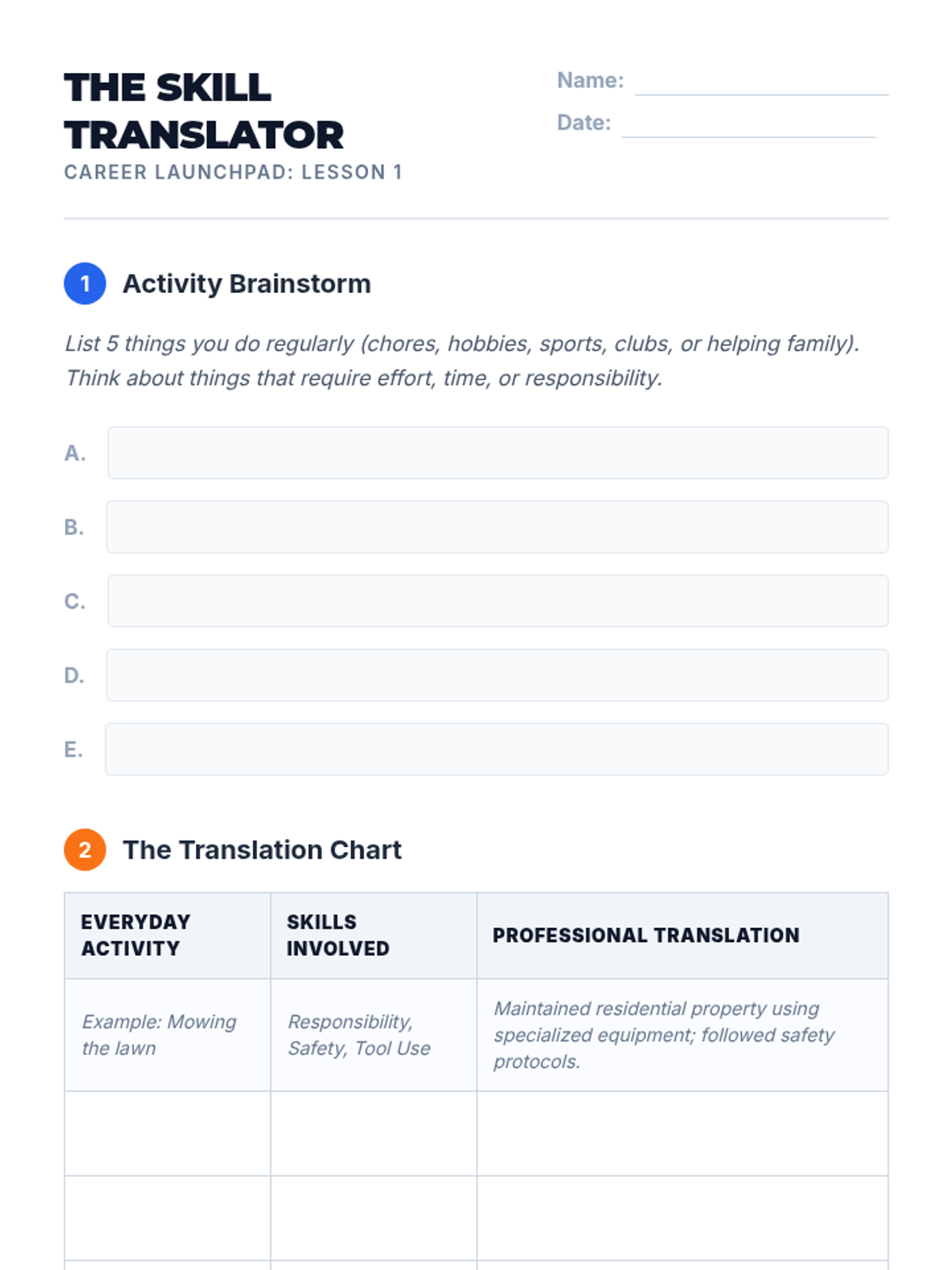
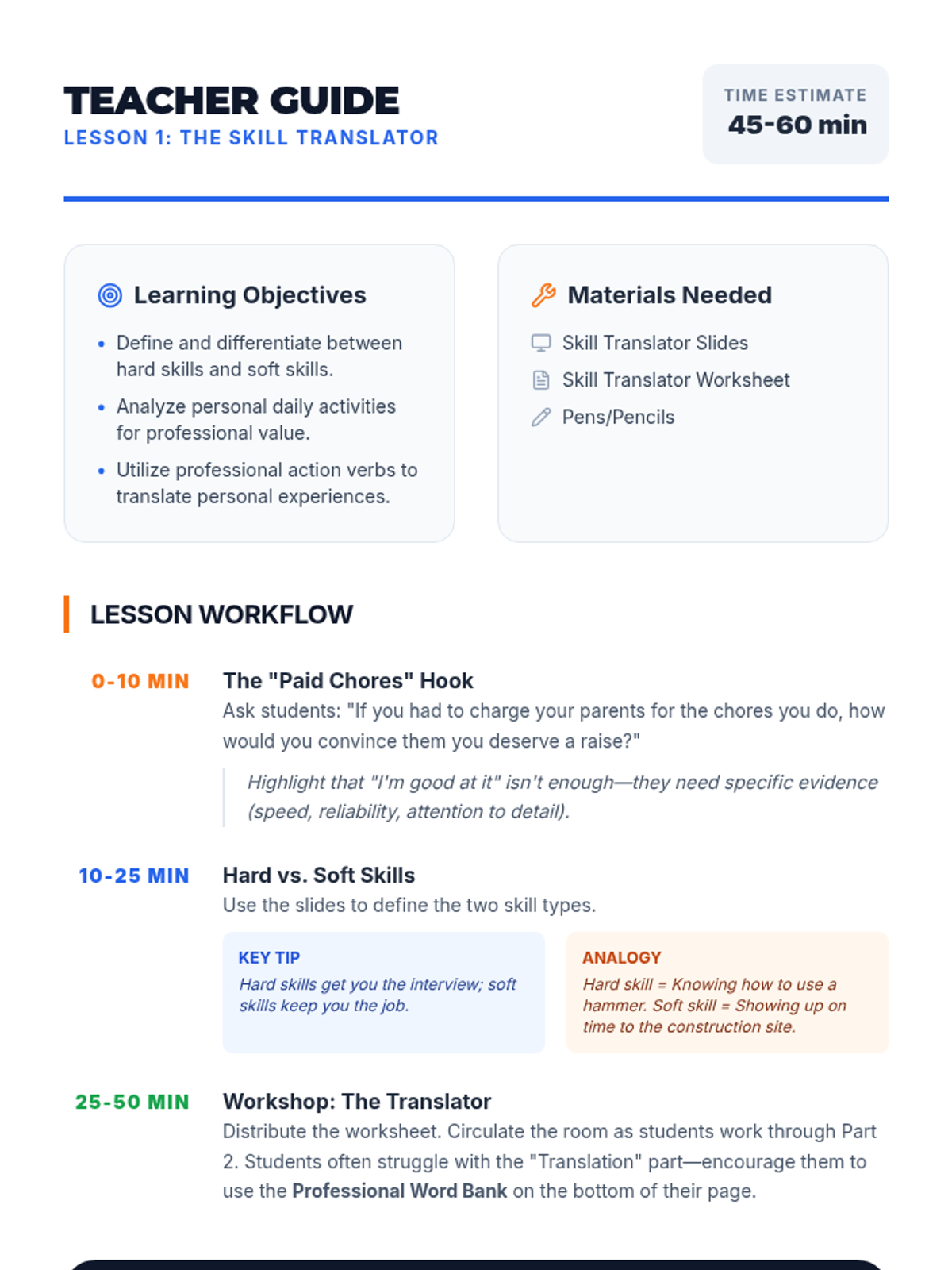
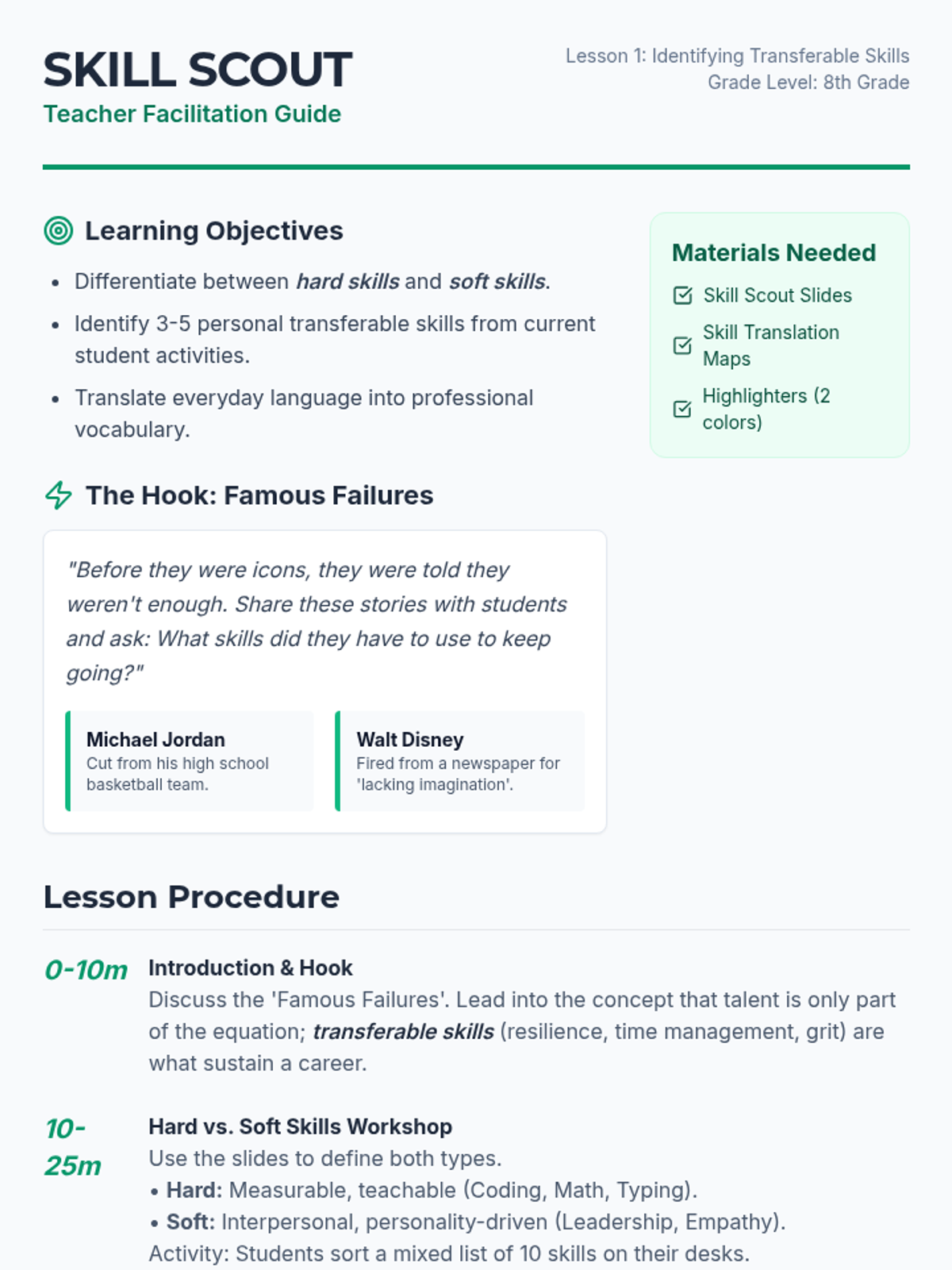
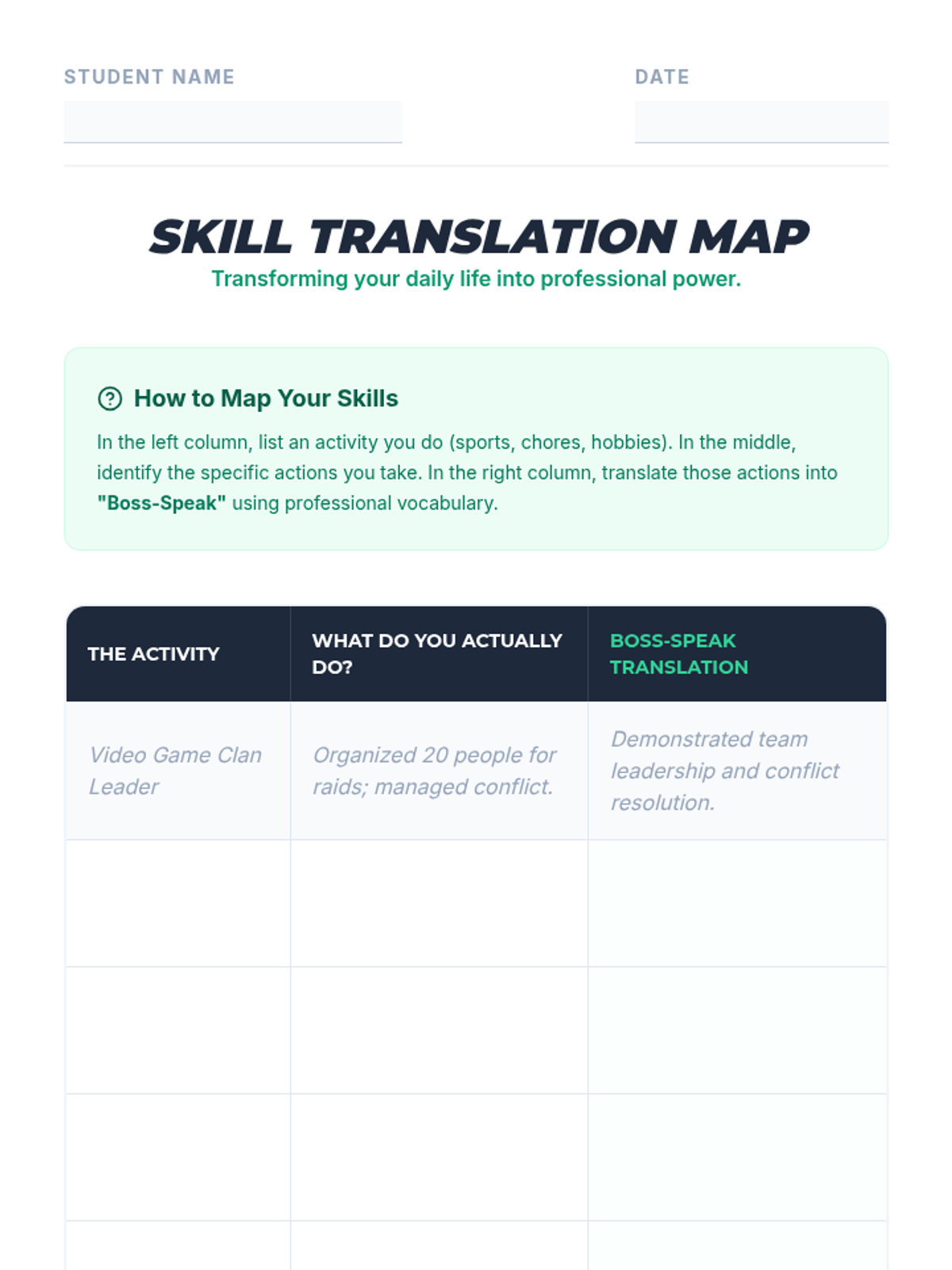
Students analyze their current activities, chores, and school responsibilities to identify marketable soft and hard skills, translating these experiences into professional language suitable for a first job application.
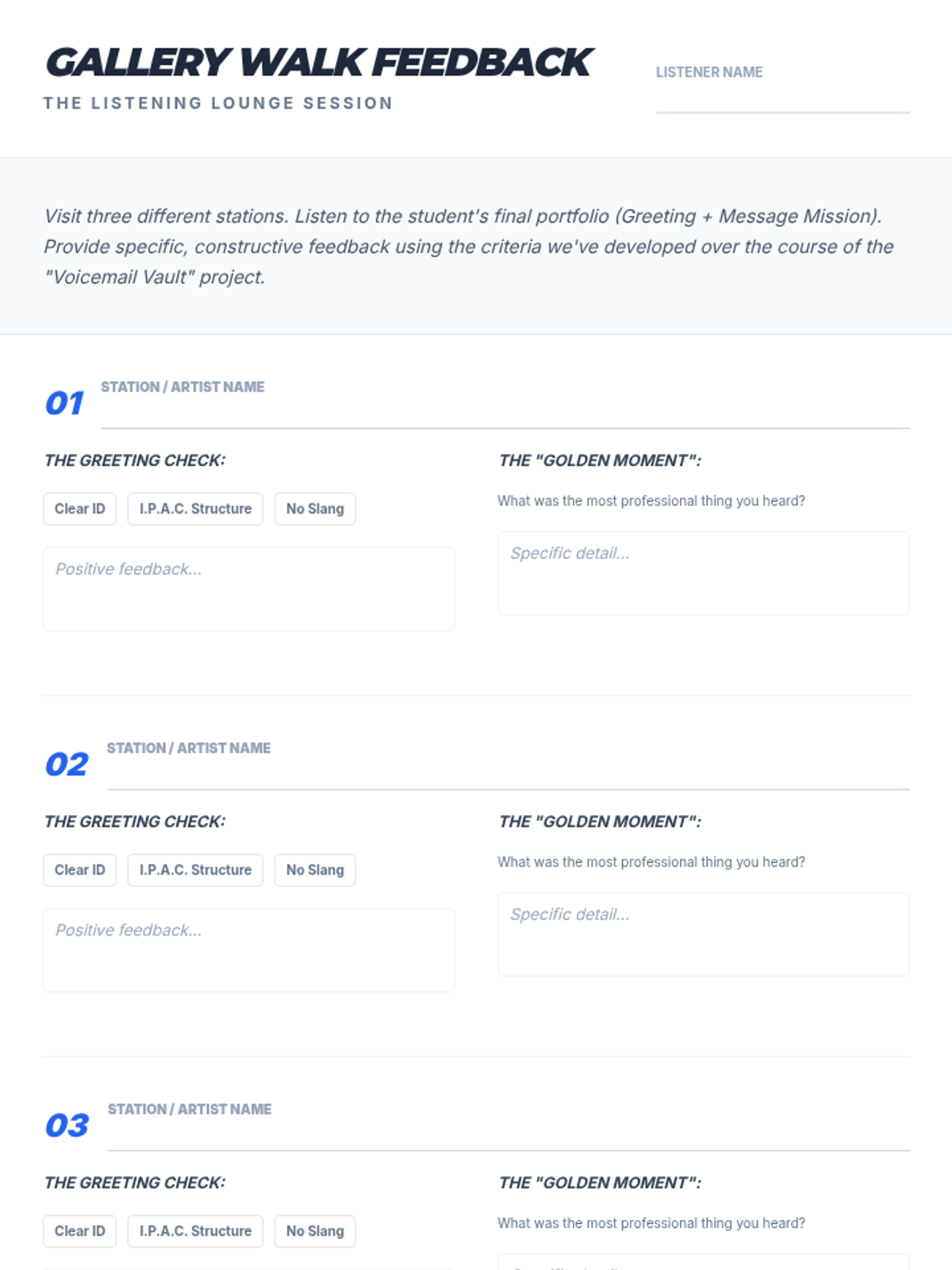
Students finalize and submit their audio files for both an outgoing greeting and a left message. The class conducts a listening gallery walk to critique and appreciate the final products.
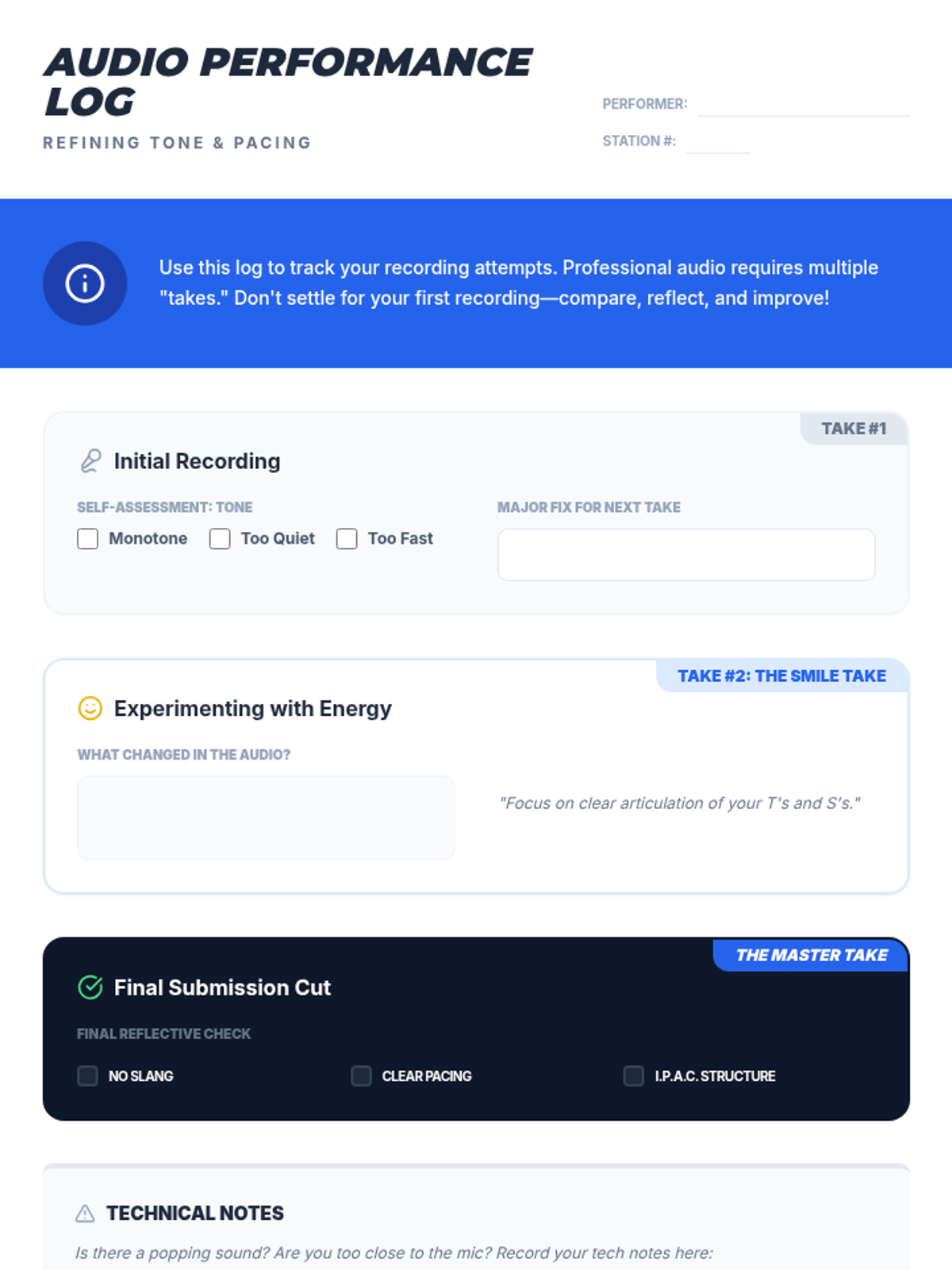
Students experiment with recording their scripts using digital tools, focusing on avoiding 'reading voice' (monotone). They practice smiling while talking to warm up the recorded audio.
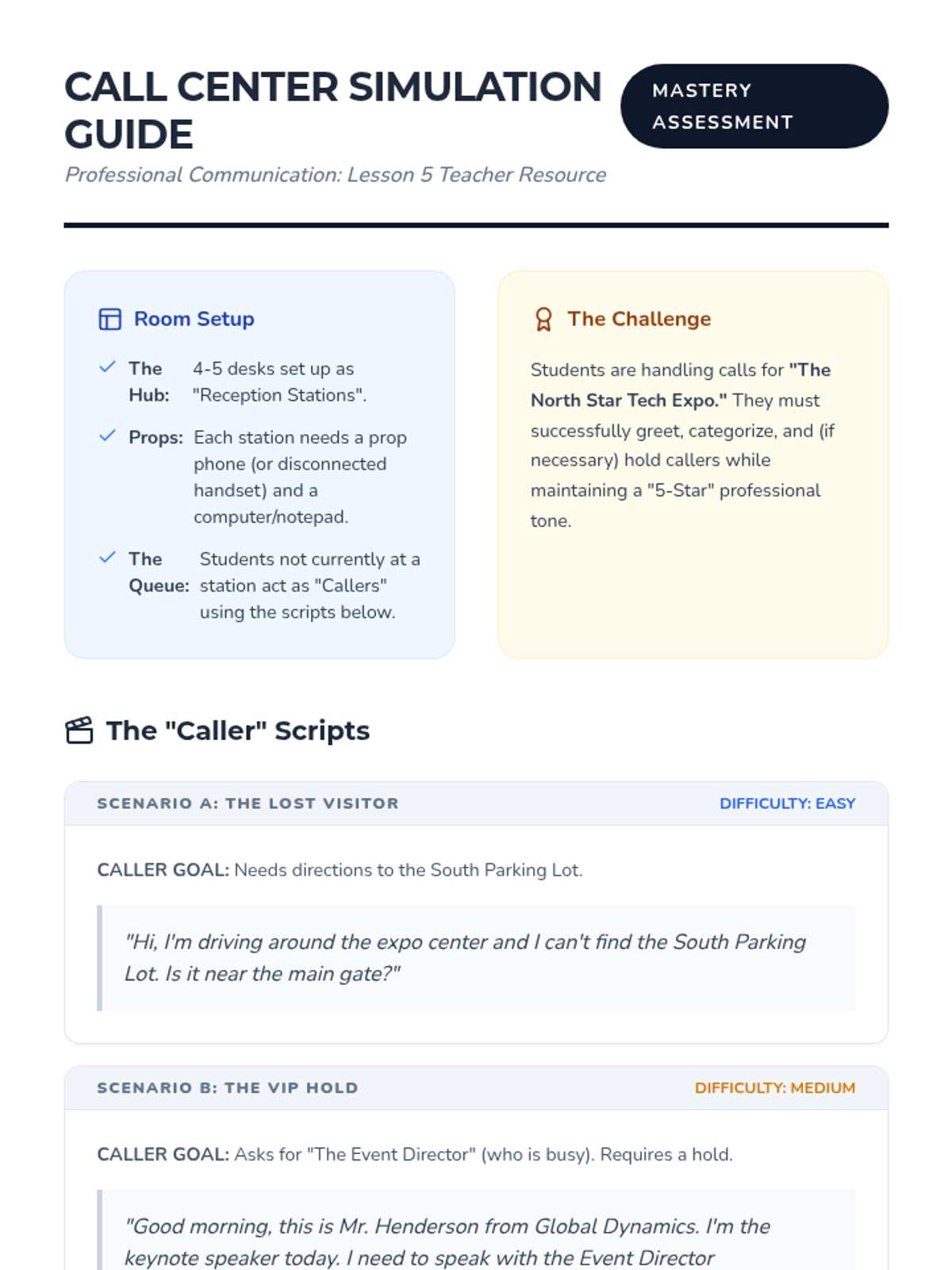
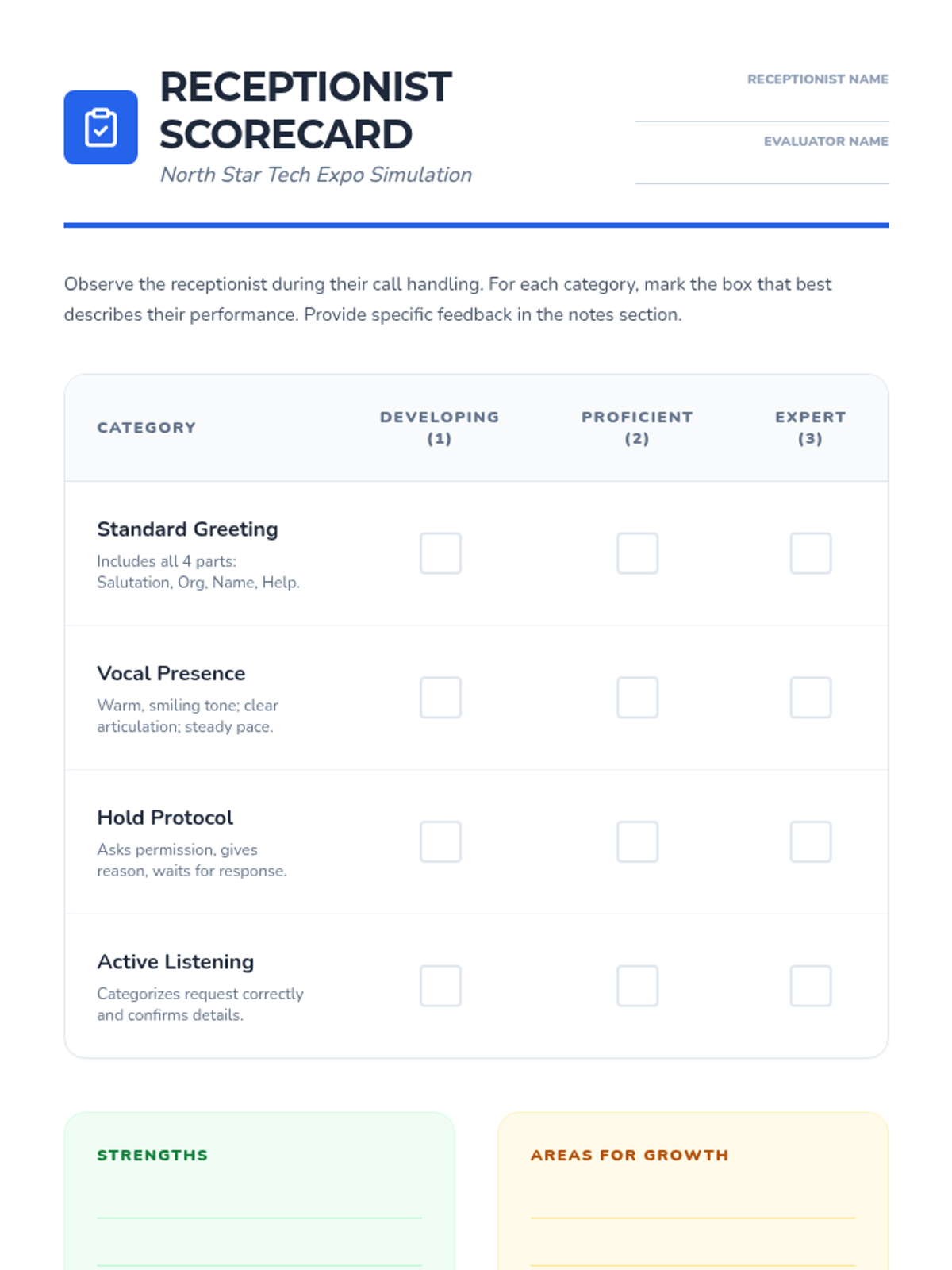
In this culminating lesson, students rotate through stations acting as receptionists for a fictional event. They must handle a series of inbound calls using the scripts and protocols learned throughout the sequence.
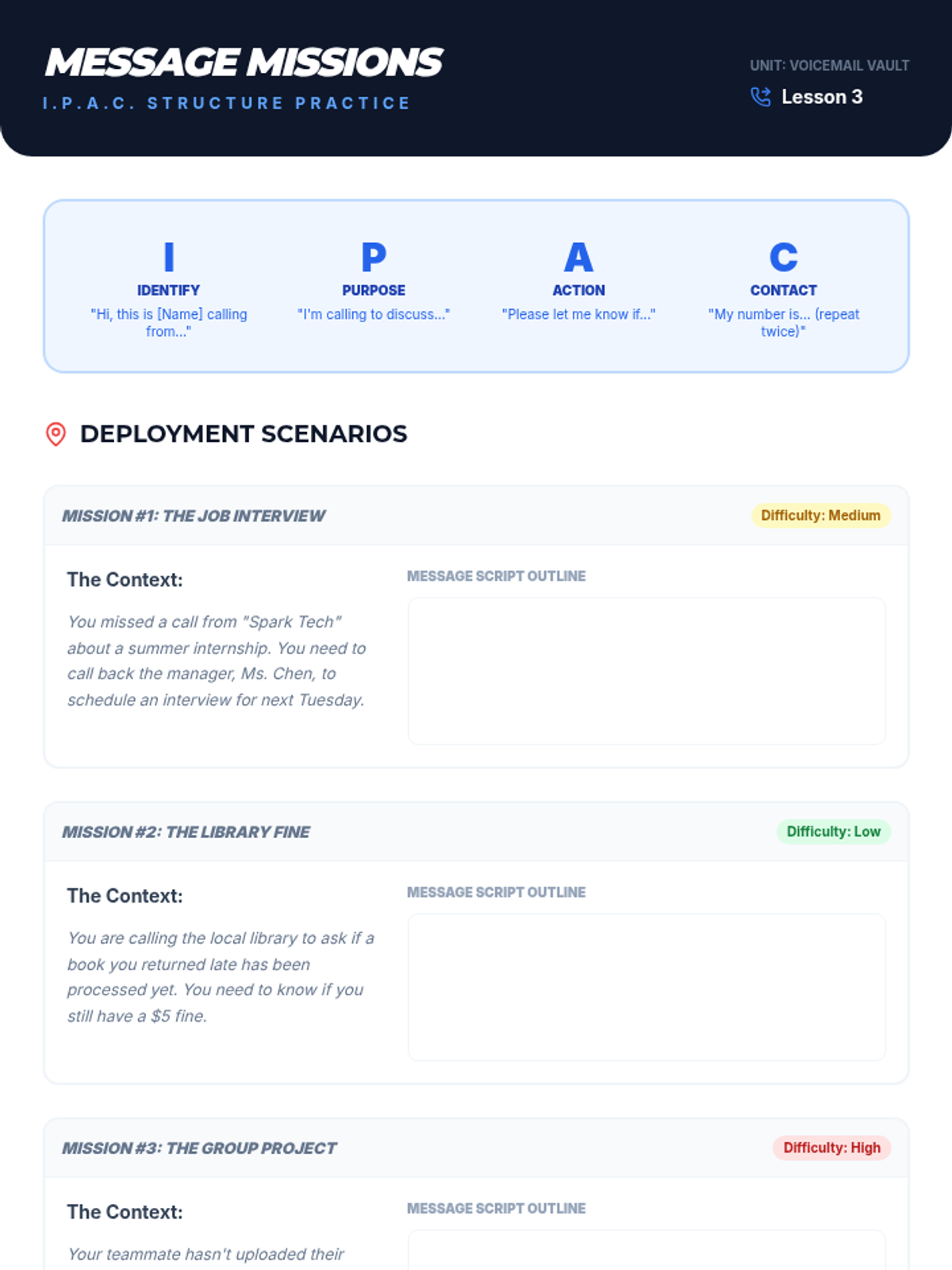
Shifting focus to the caller, students learn the structure of leaving a message: Intro, context, call to action, and contact info repetition. They practice 'looping' their phone number (saying it twice).
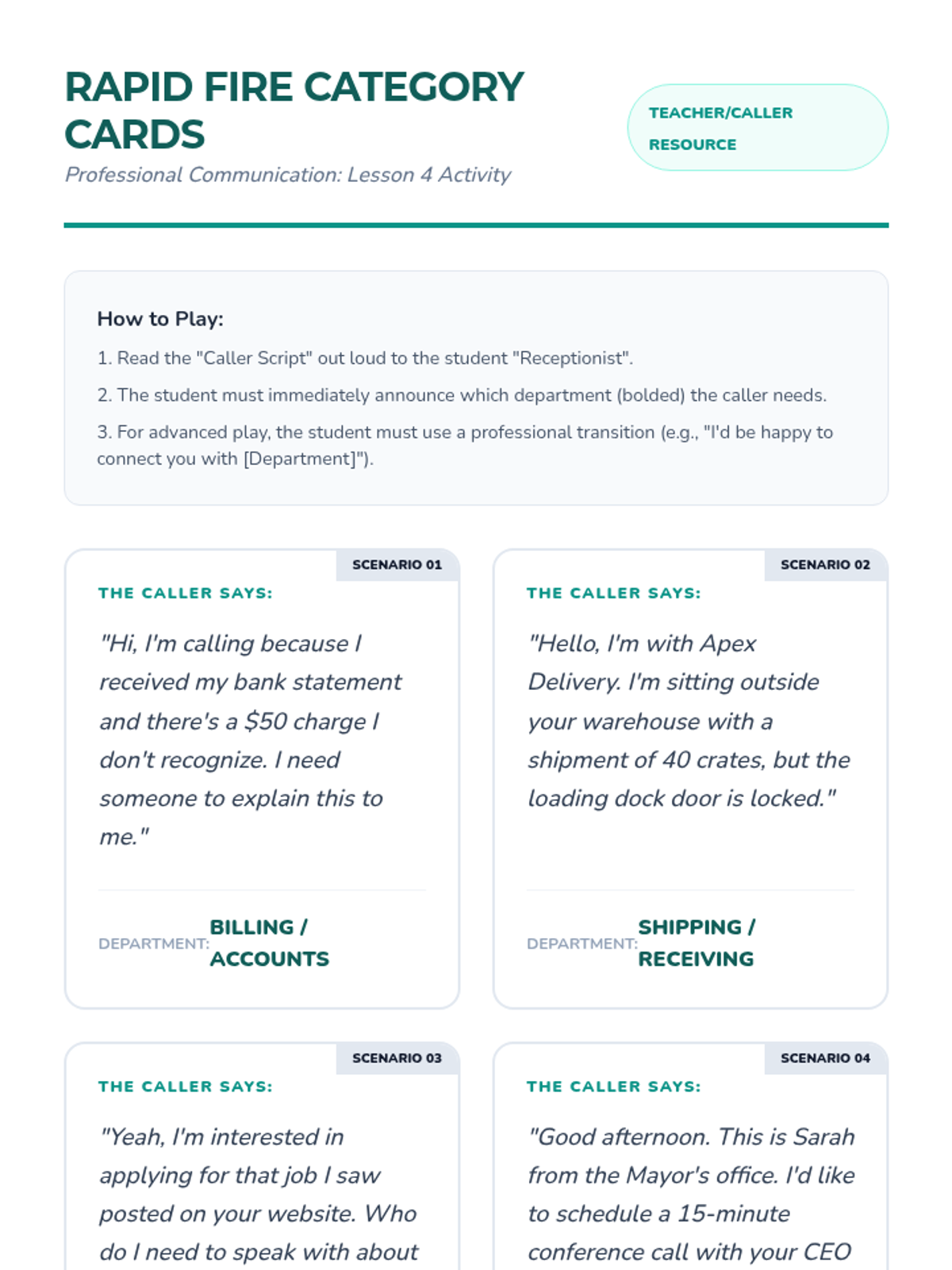
Students participate in 'blind' listening exercises where they must answer the phone and immediately categorize the caller's need. This connects the greeting phase to the listening phase of a call.
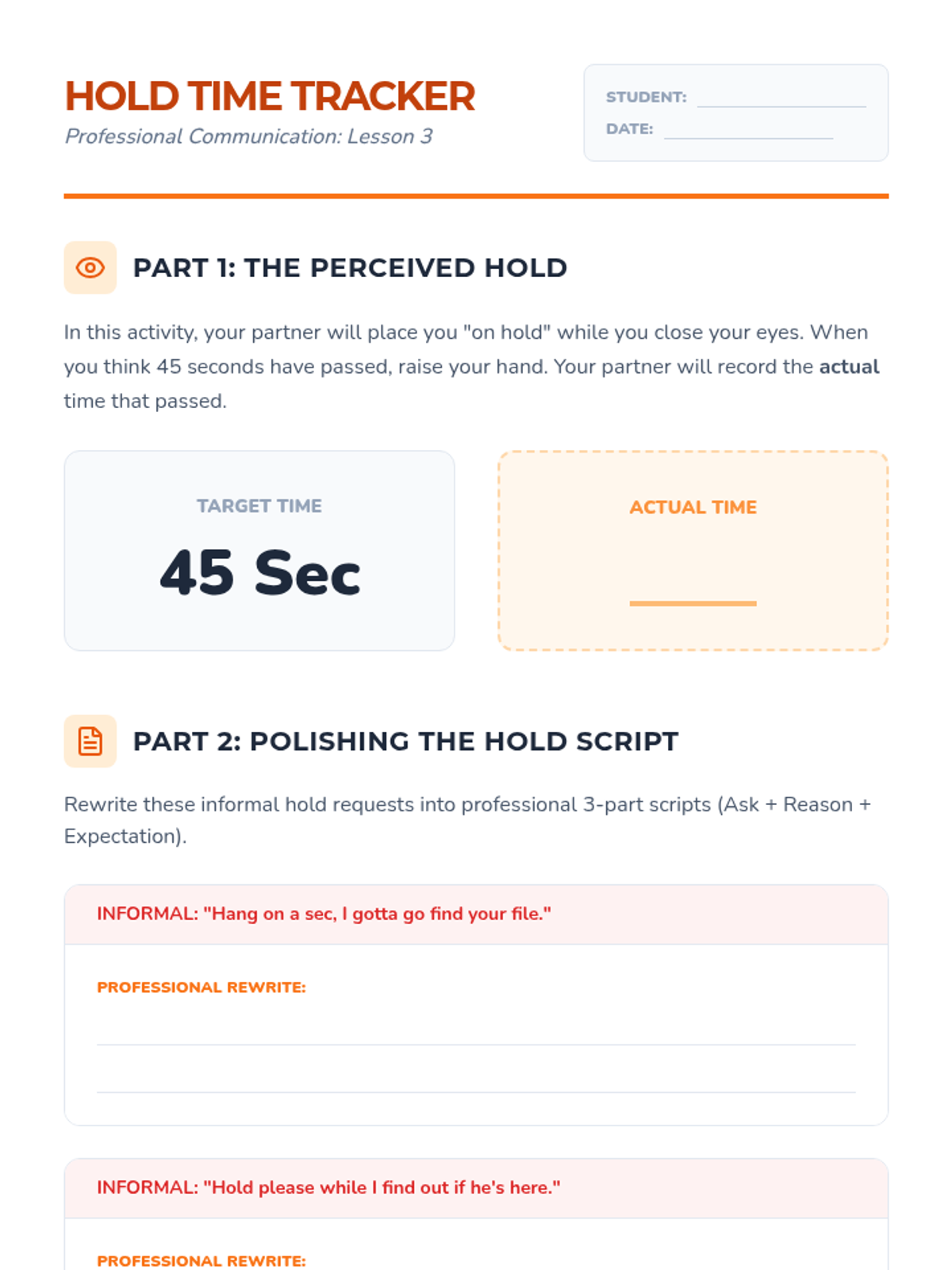
Students practice the etiquette of asking permission before placing a caller on hold and checking back in. The lesson focuses on time perception and polite phrasing to prevent caller frustration.
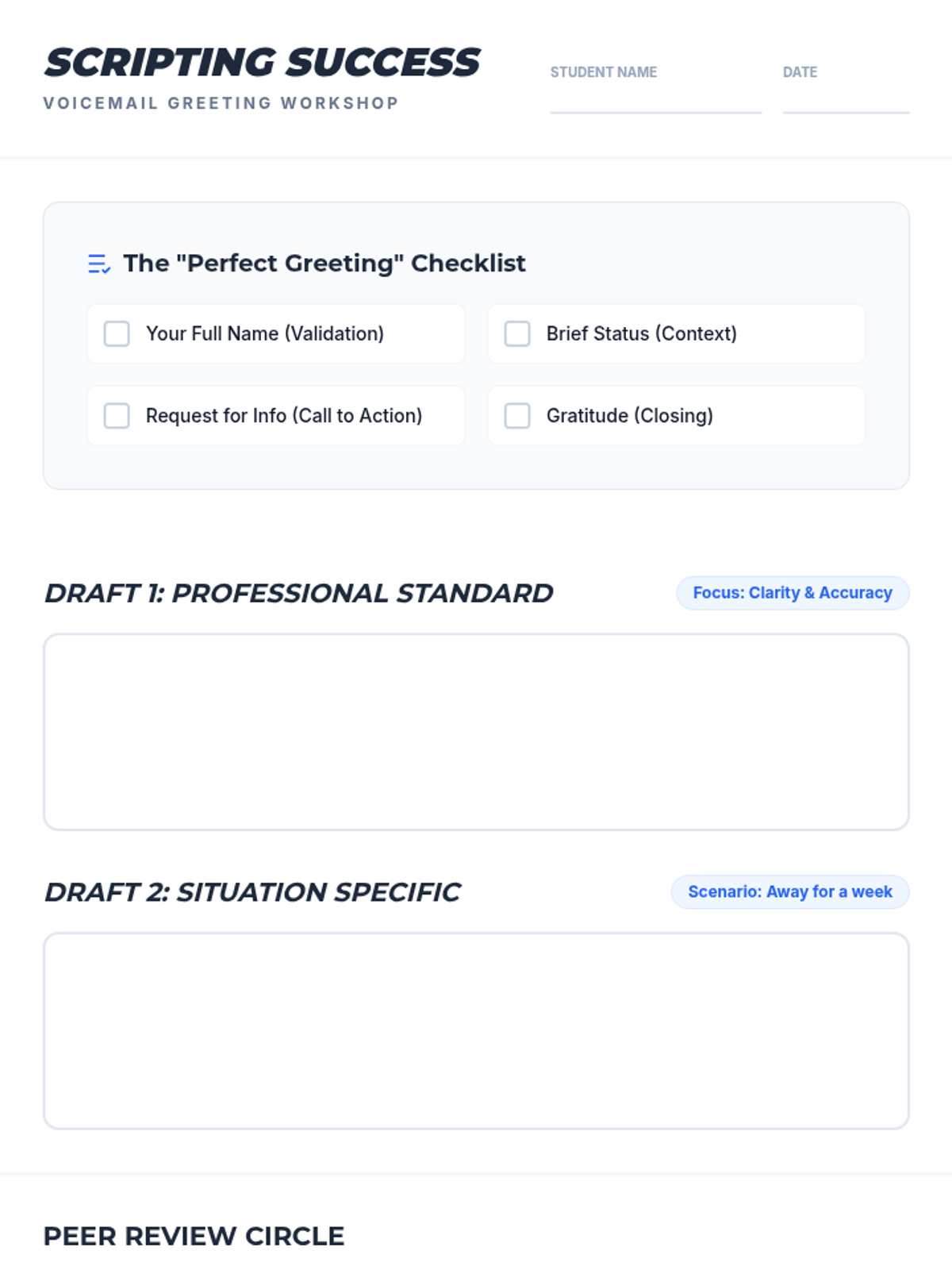
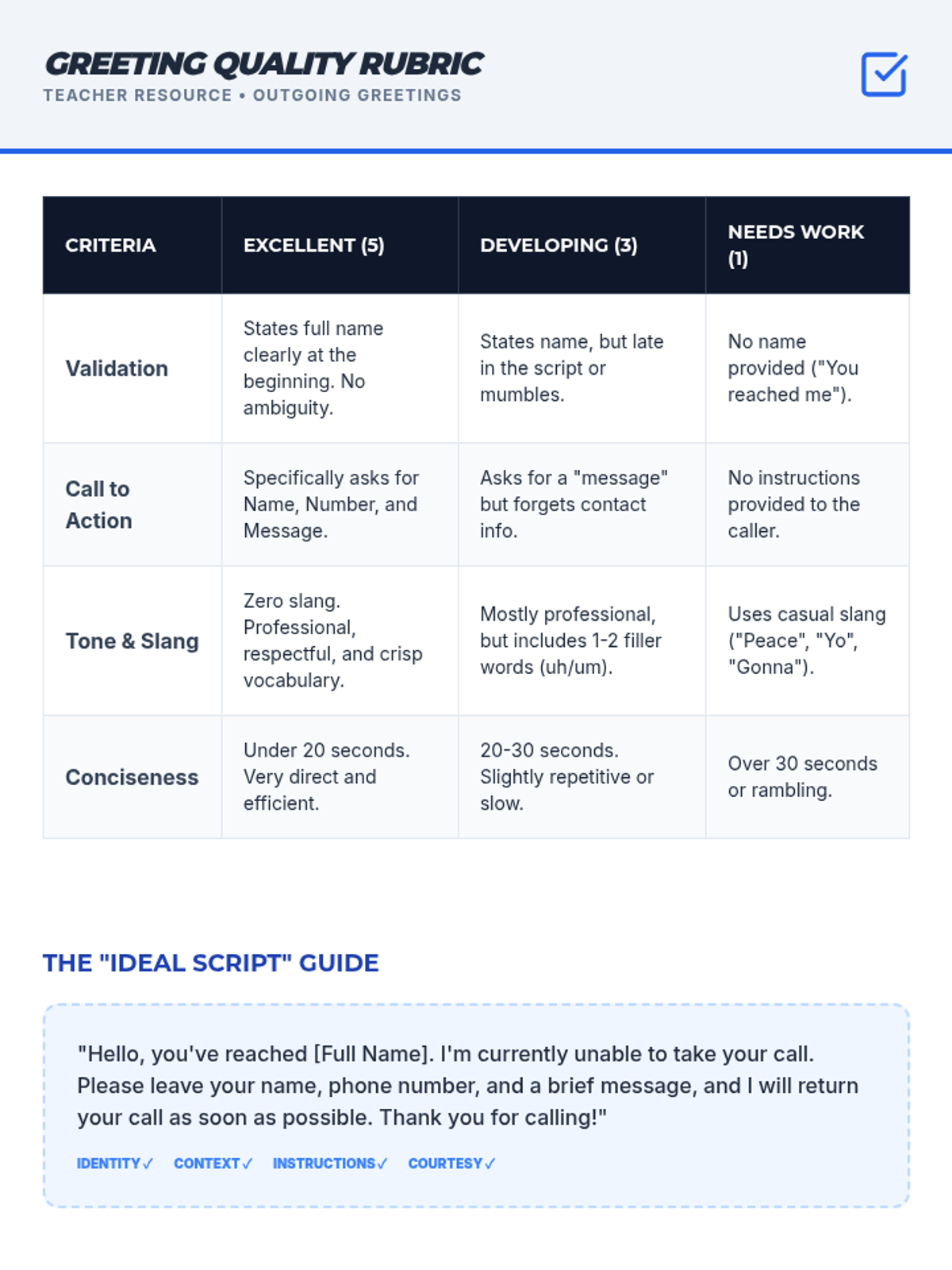
Students draft scripts for their own professional voicemail boxes, ensuring they include essential elements like name validation, absence explanation, and instructions for the caller. Peer review focuses on removing slang.
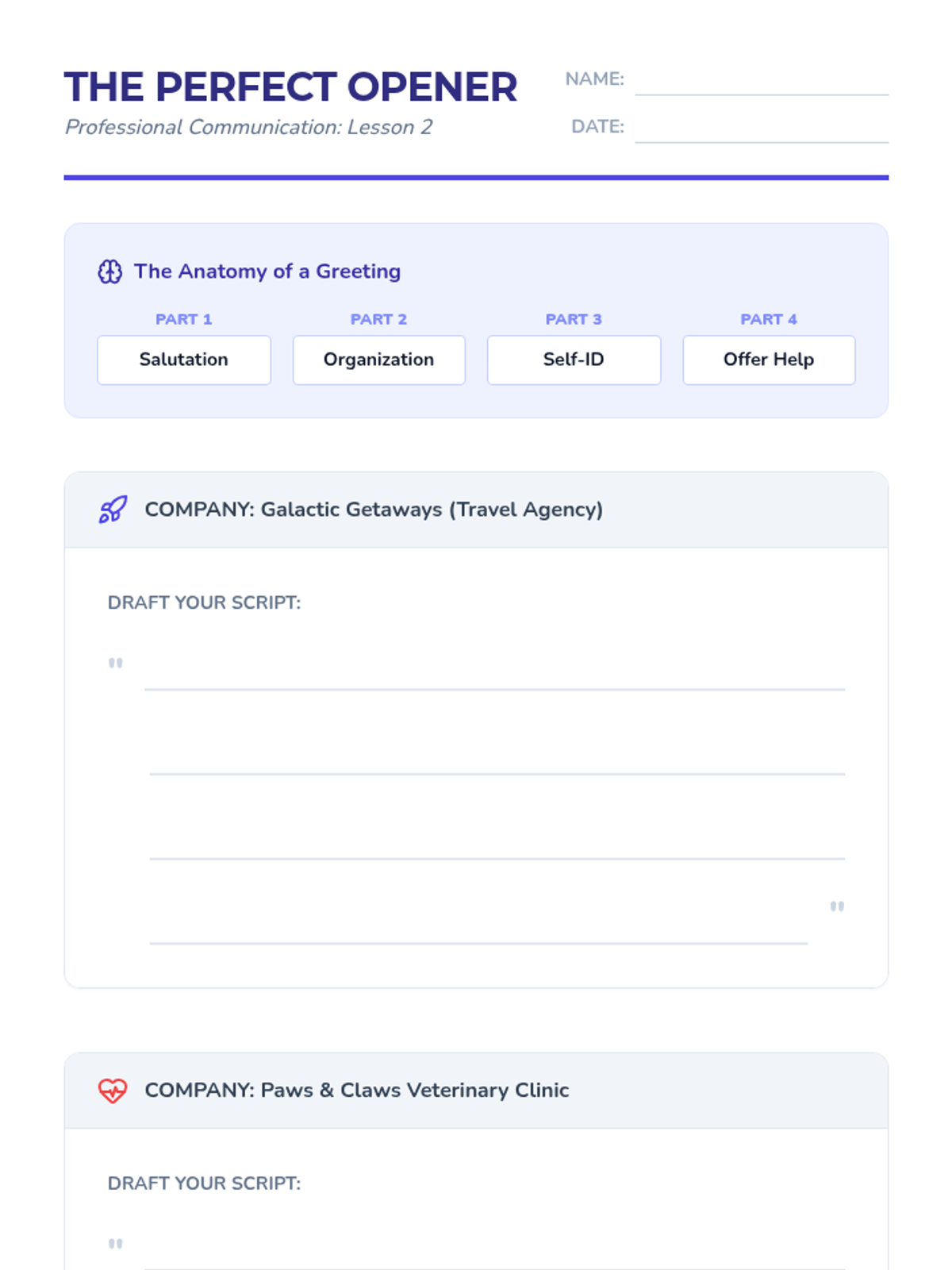
Students learn the four essential components of a standard business greeting—salutation, organization name, self-identification, and offer of assistance—and practice drafting and delivering their own scripts.
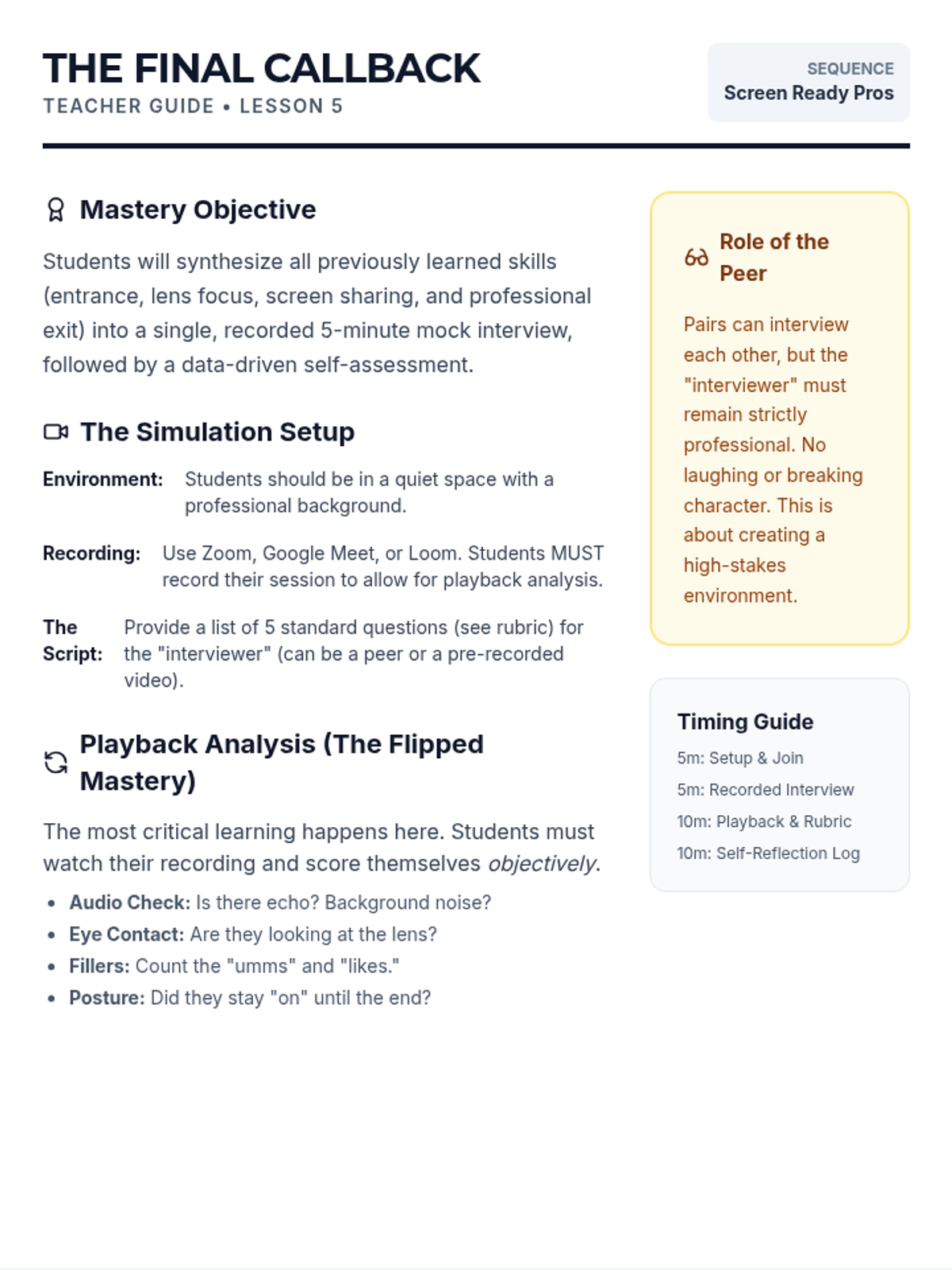
A culminating mock interview where students record, playback, and self-assess their performance using a rubric.
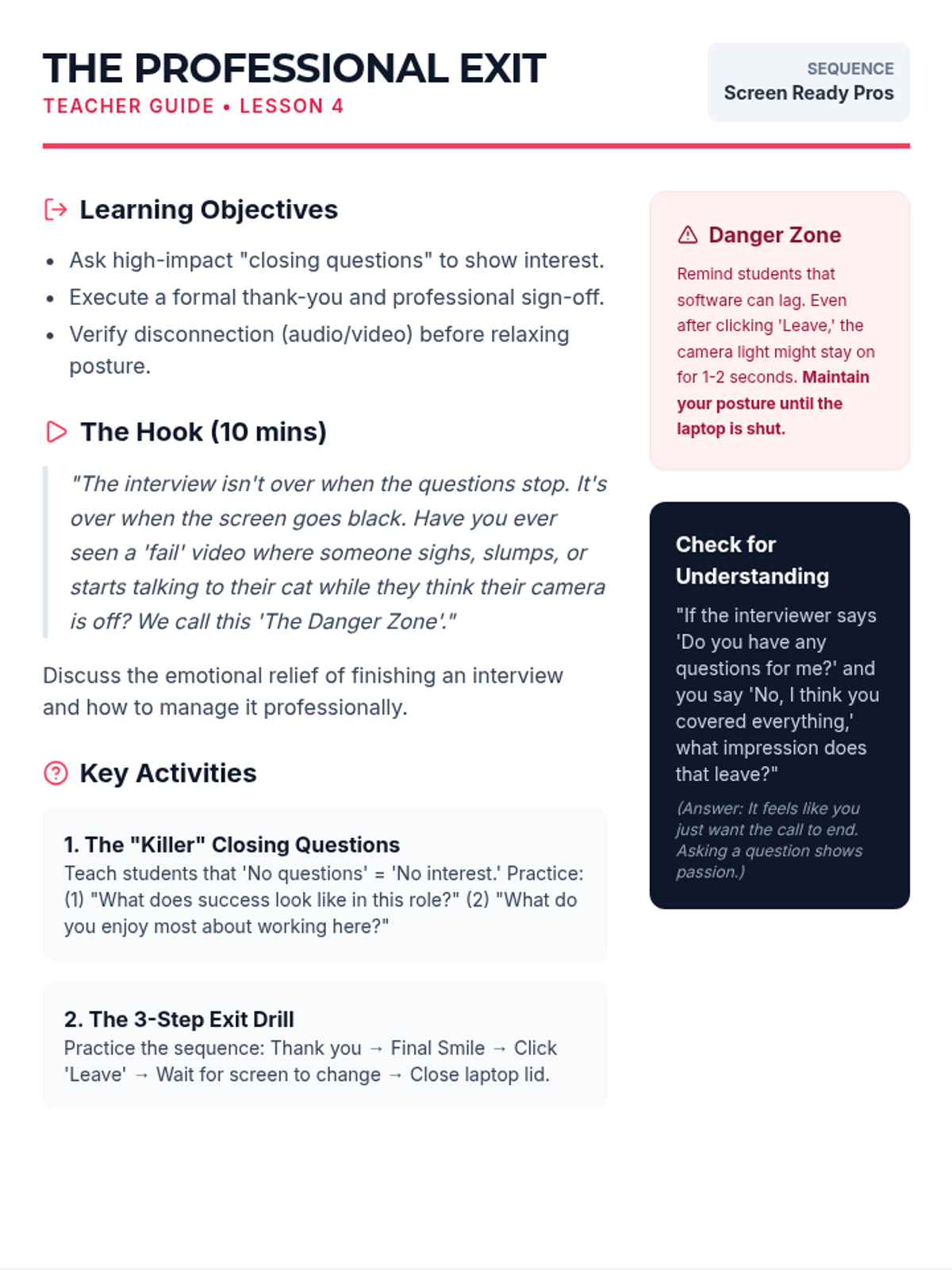
Mastering the formal conclusion of an interview, including final questions, thank-you etiquette, and the "camera-off" confirmation.
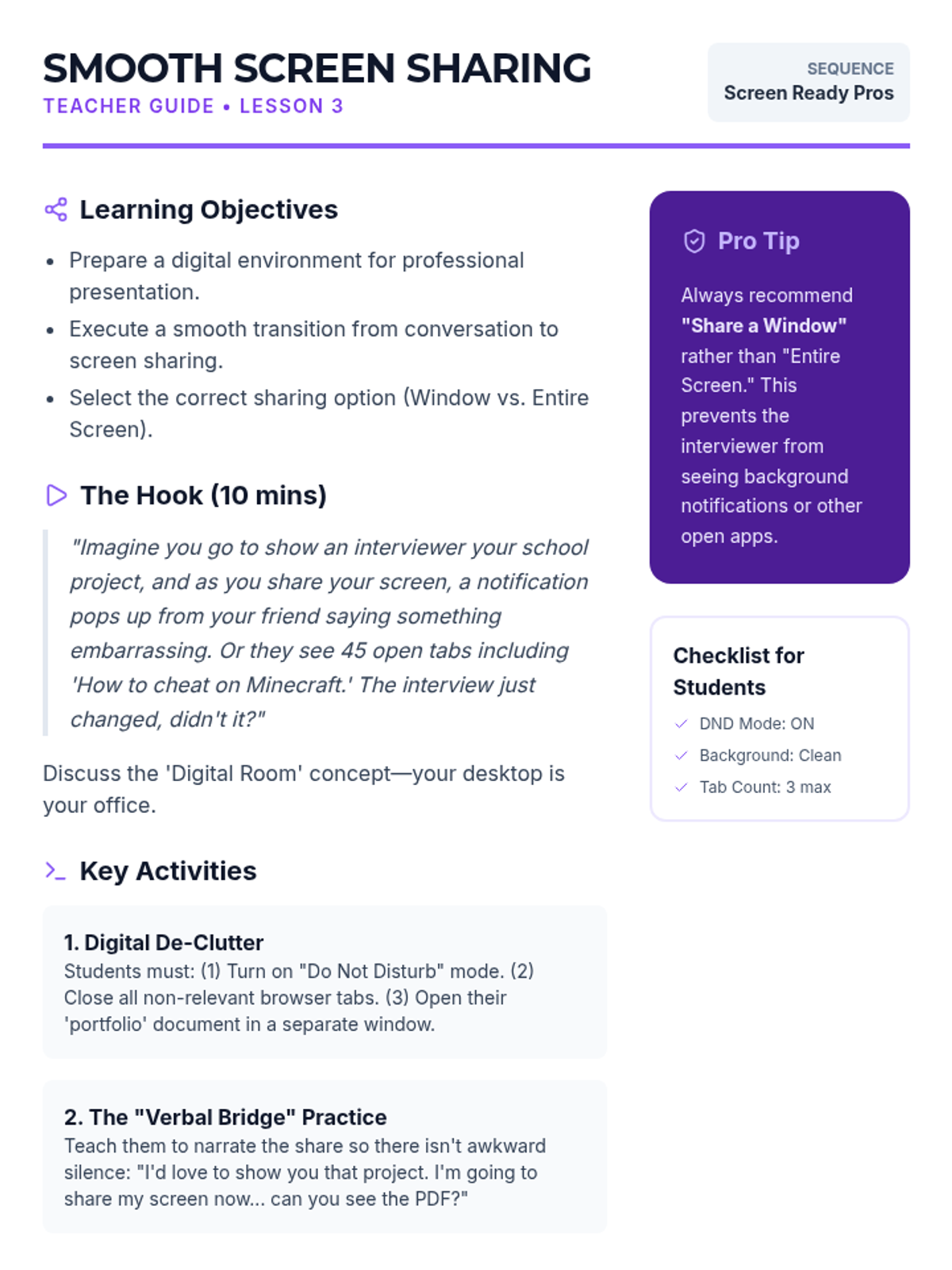
Teaches technical proficiency in screen sharing, managing digital environments, and presenting portfolios professionally.
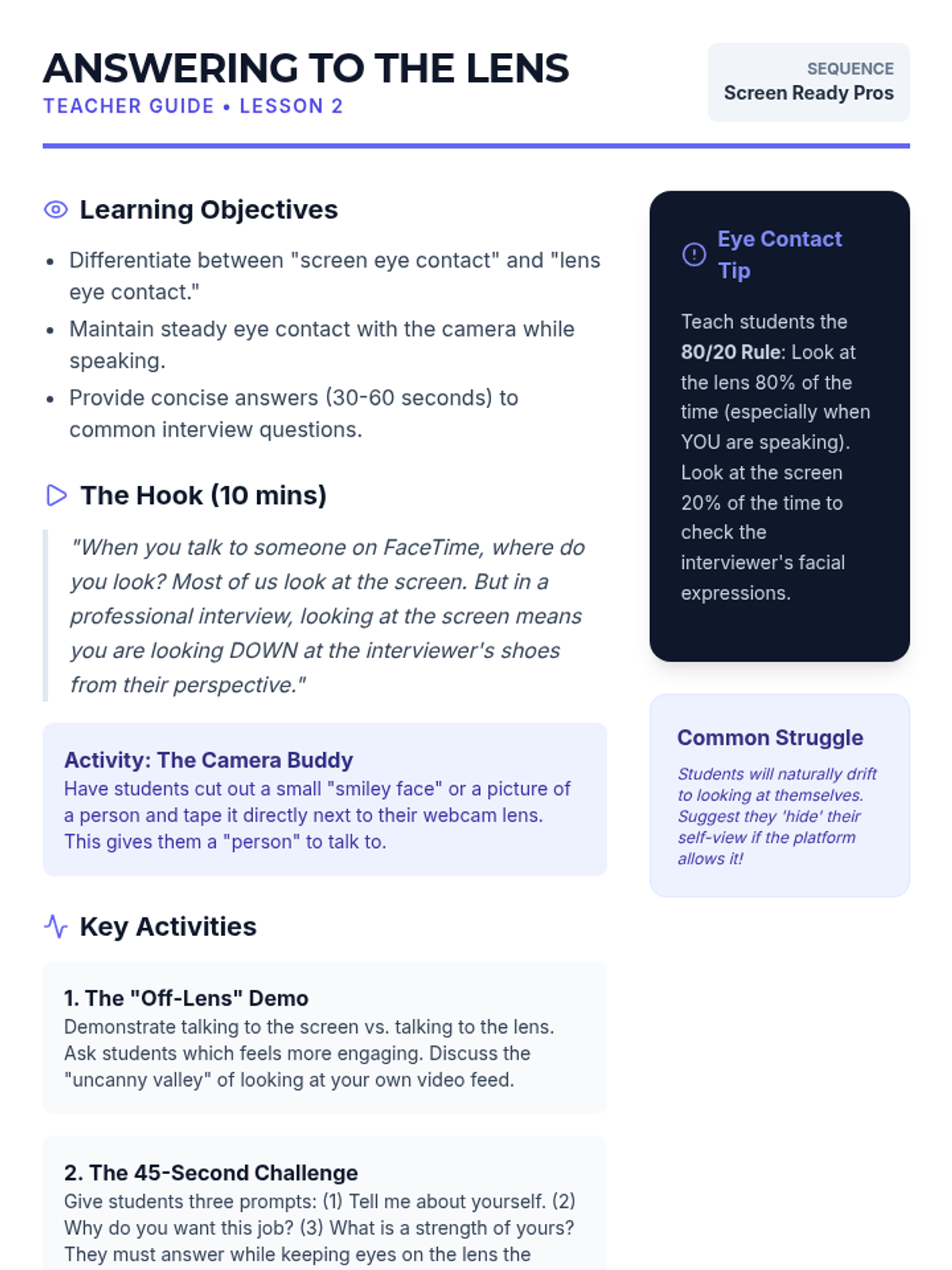
Covers the technique of looking at the camera lens rather than the screen to maintain eye contact and delivering focused answers.
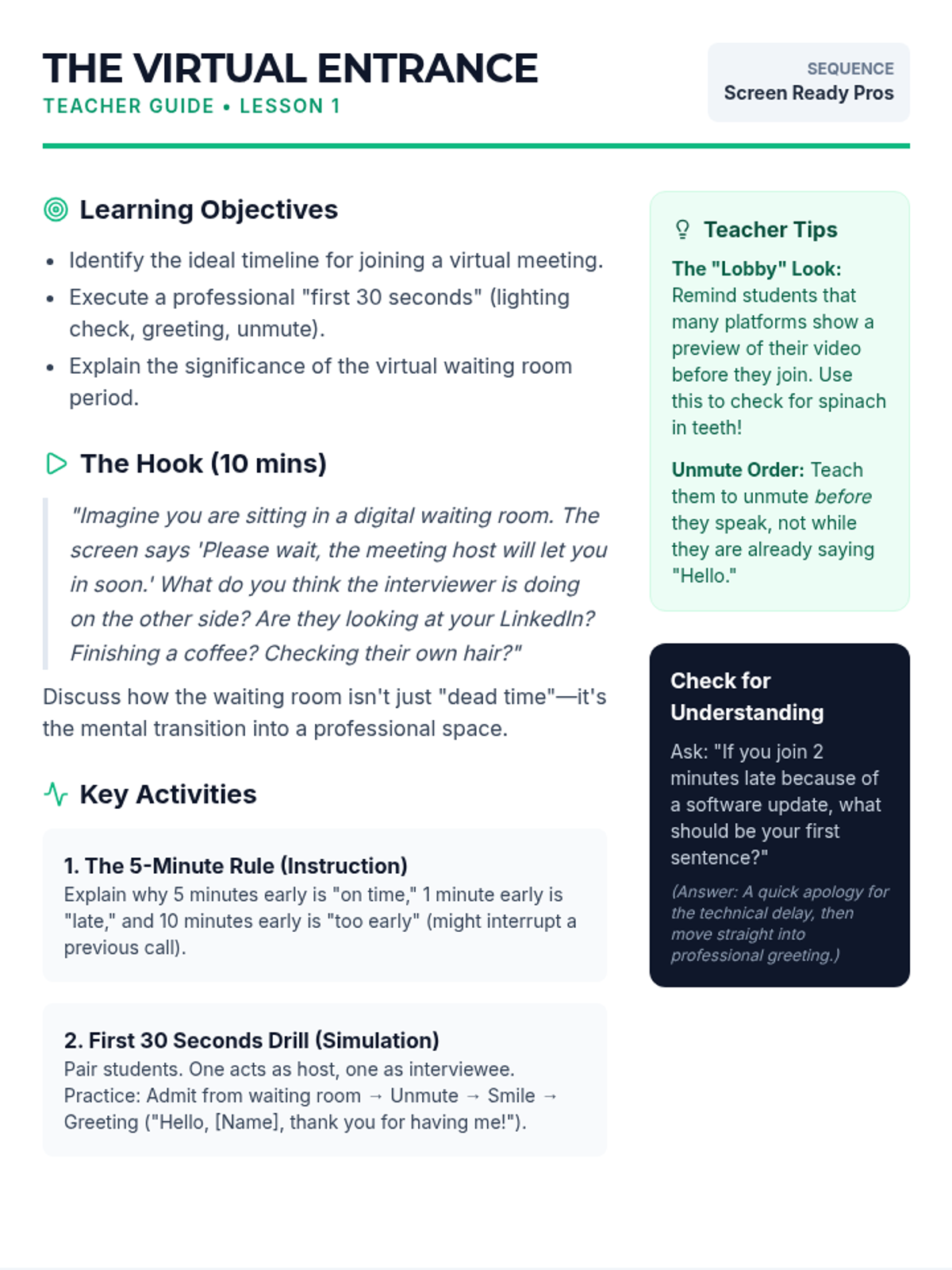
Focuses on the etiquette of joining calls, managing waiting rooms, and the first 30 seconds of a virtual connection.
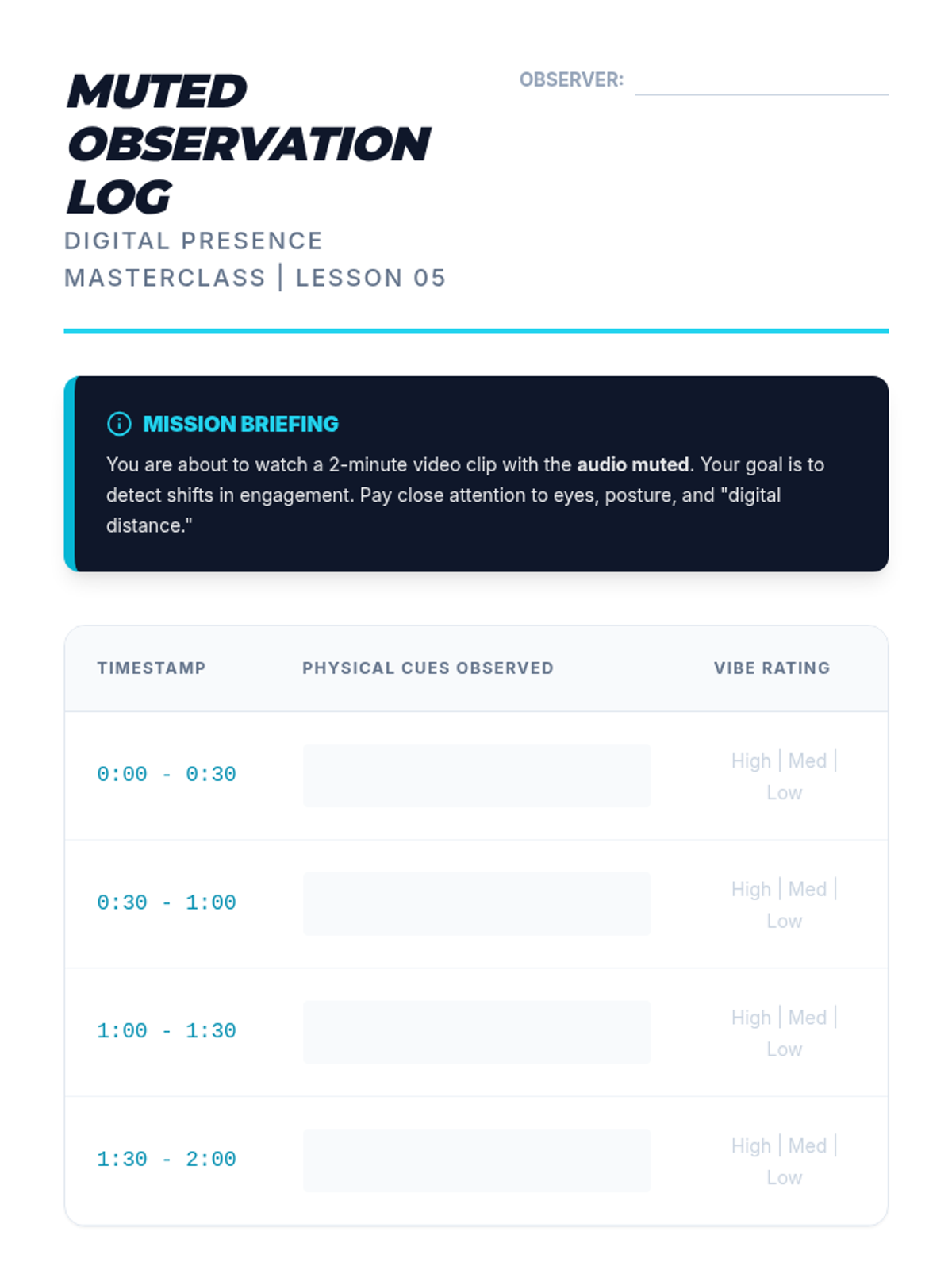
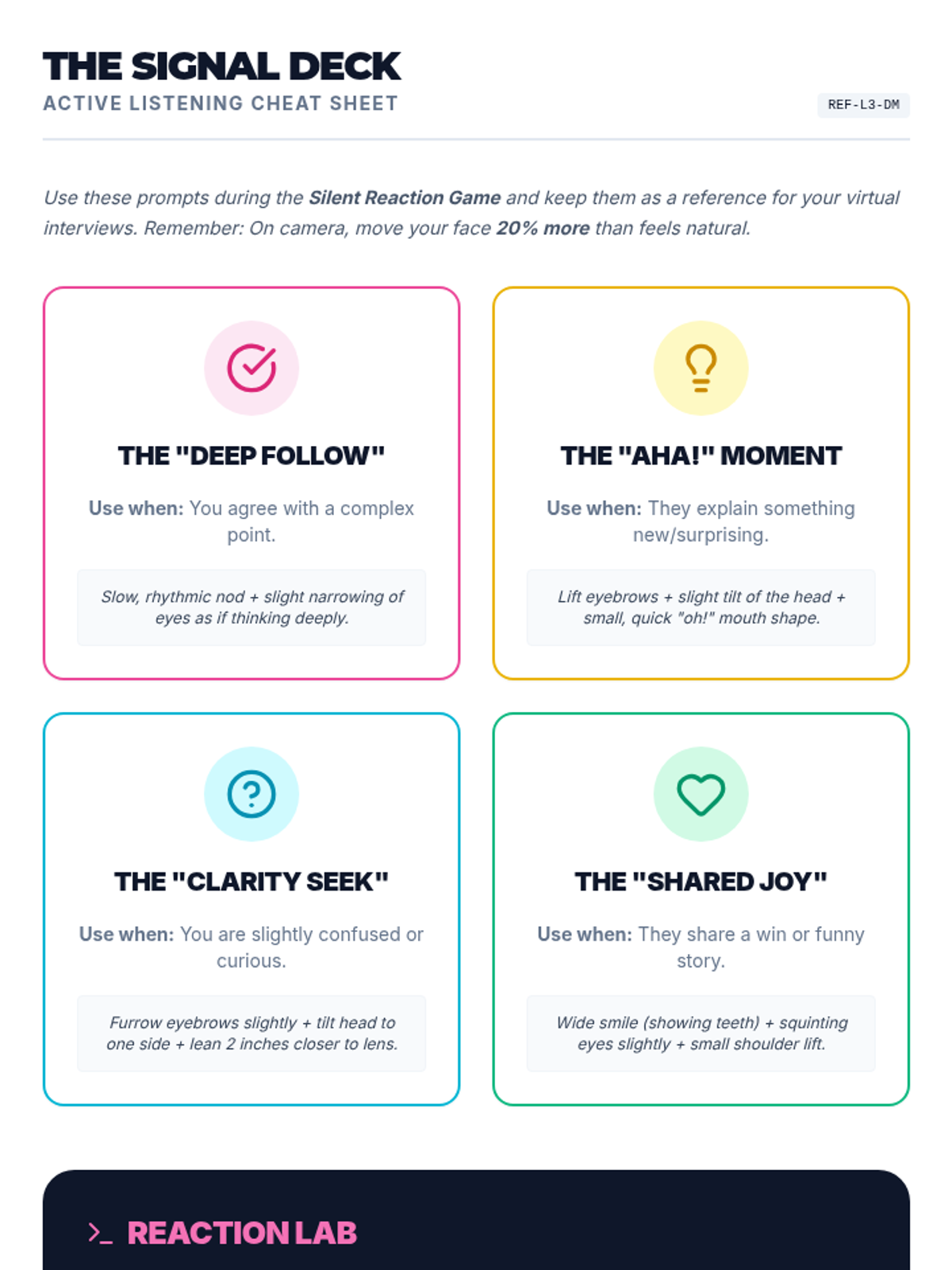
Students identify signs of engagement or boredom in others through muted video analysis and discuss strategies for re-engaging an interviewer virtually.
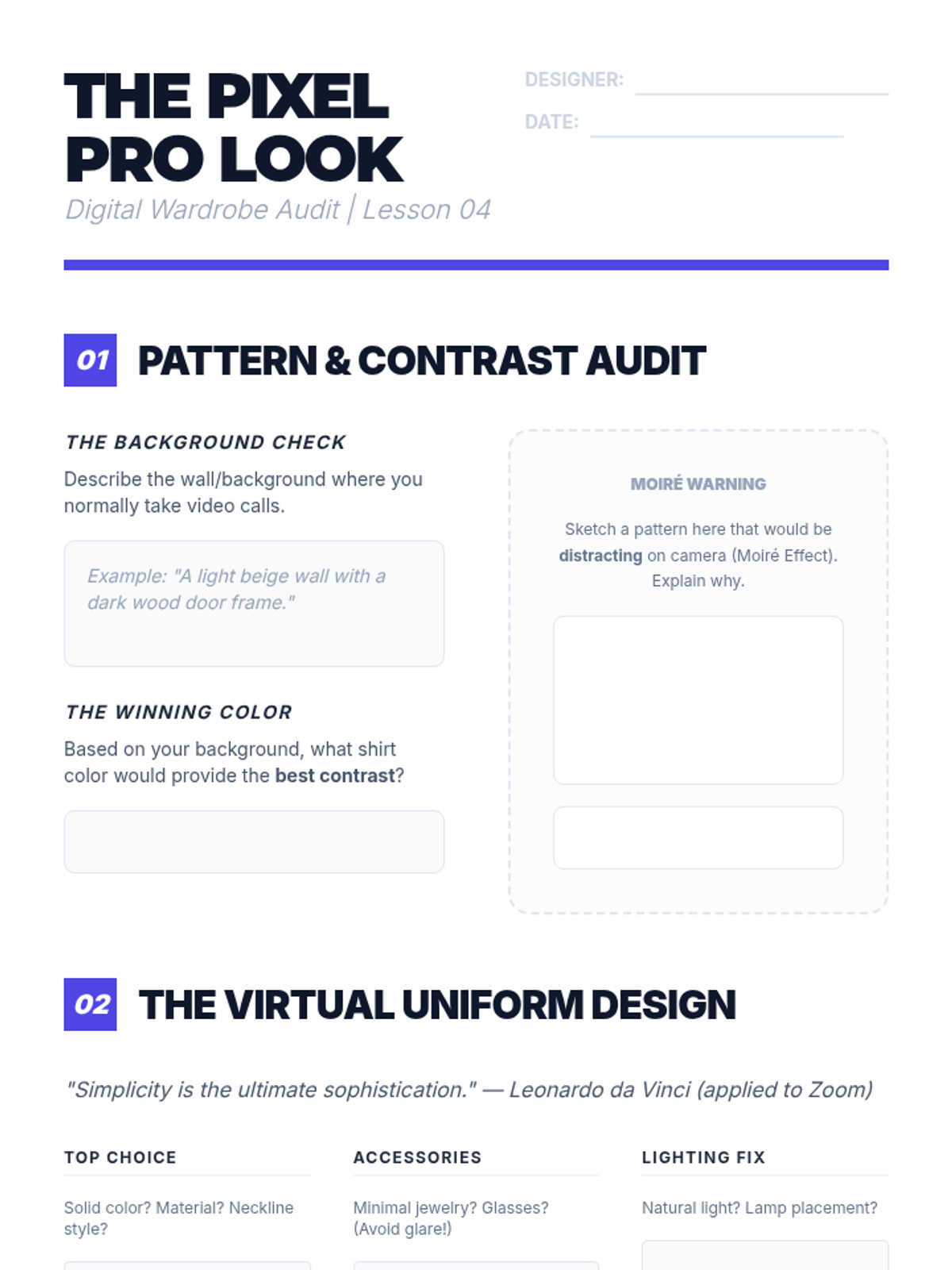
Students analyze how different colors and patterns translate on camera and select appropriate attire for a professional virtual setting.
Students learn to use exaggerated nodding and facial mirroring to show active listening in digital environments where verbal affirmations can disrupt audio.
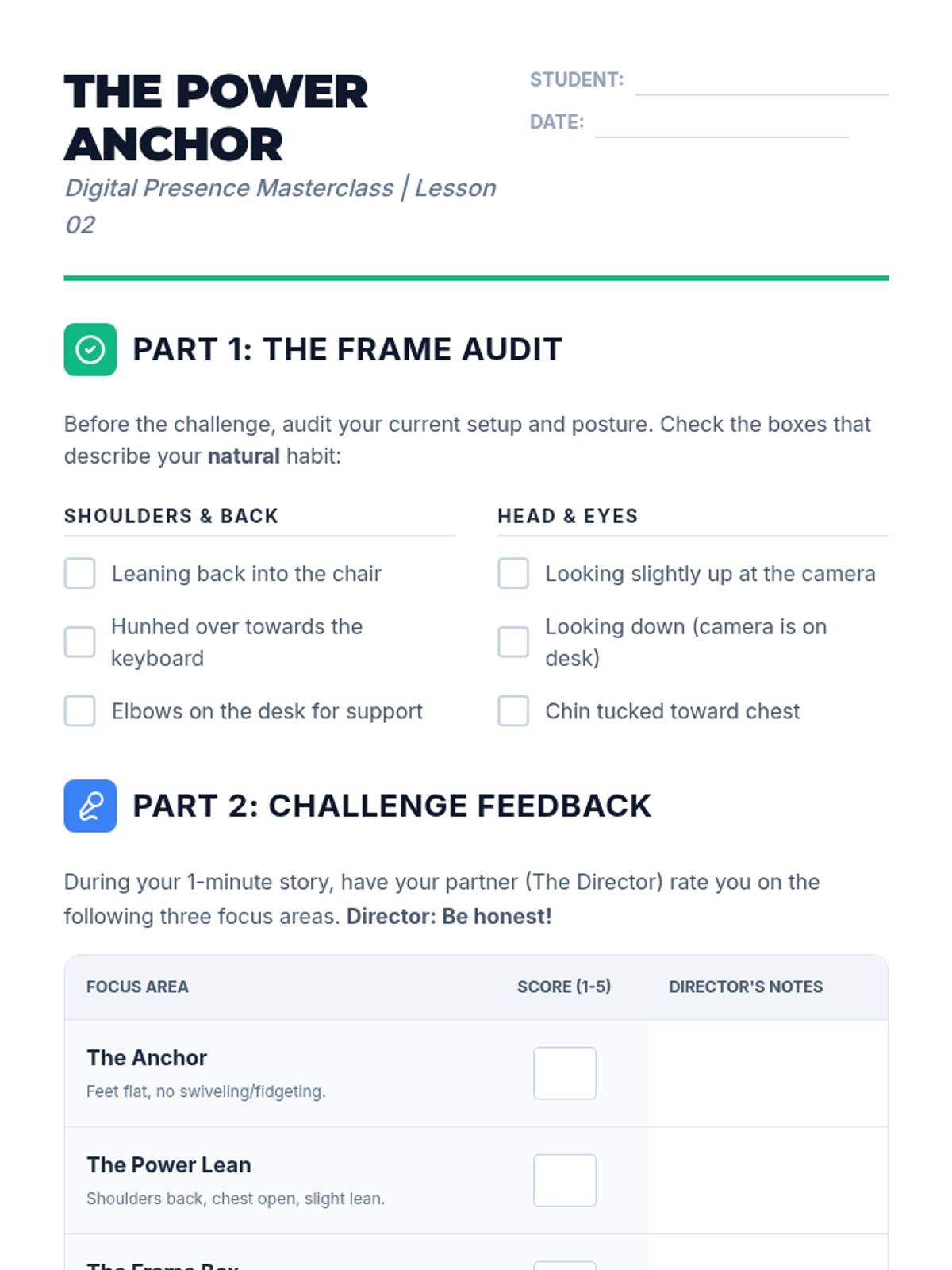
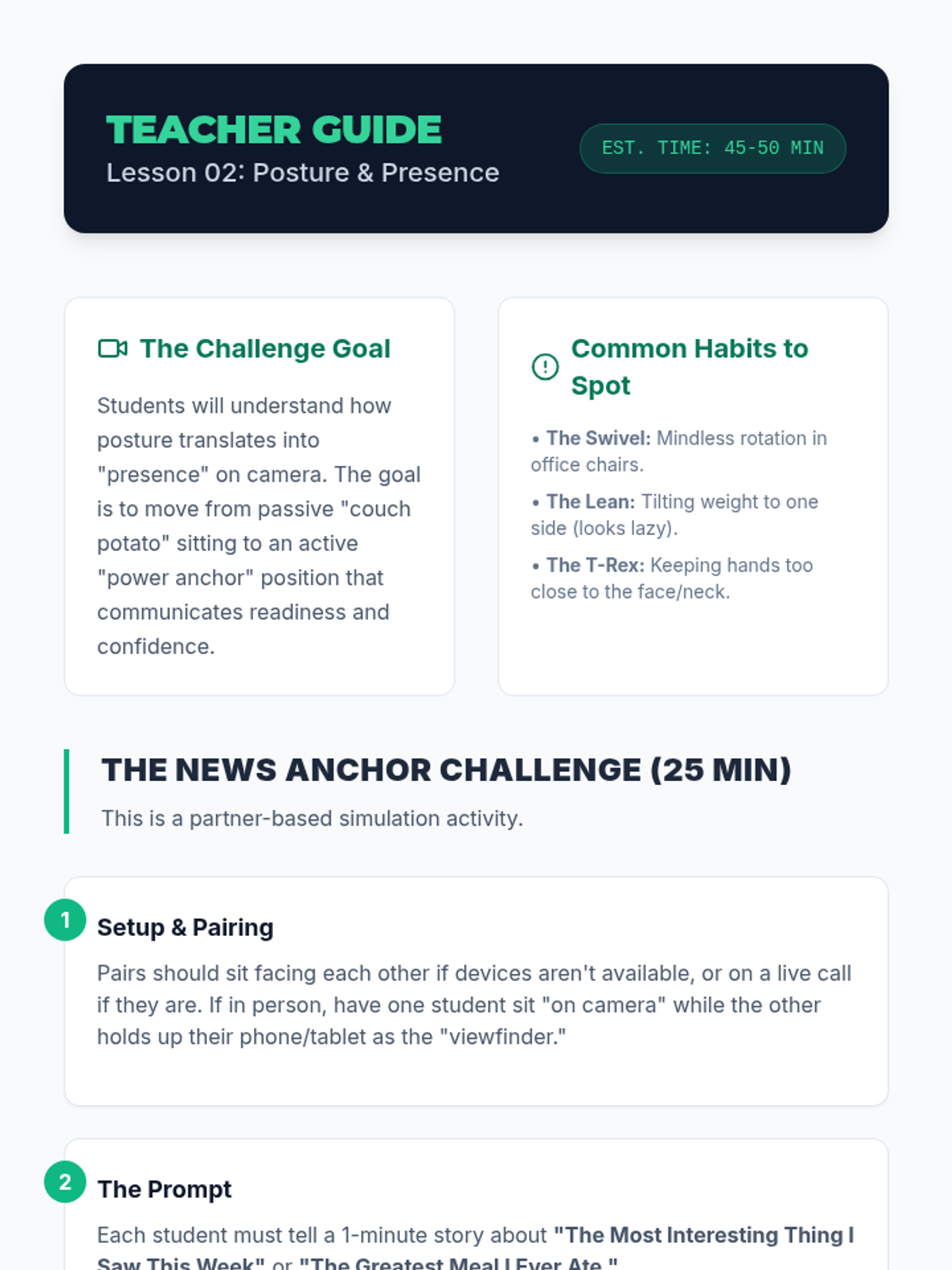
Learners practice sitting techniques that project energy without being distracting, focusing on 'anchoring' themselves while allowing for natural hand gestures within the camera frame.
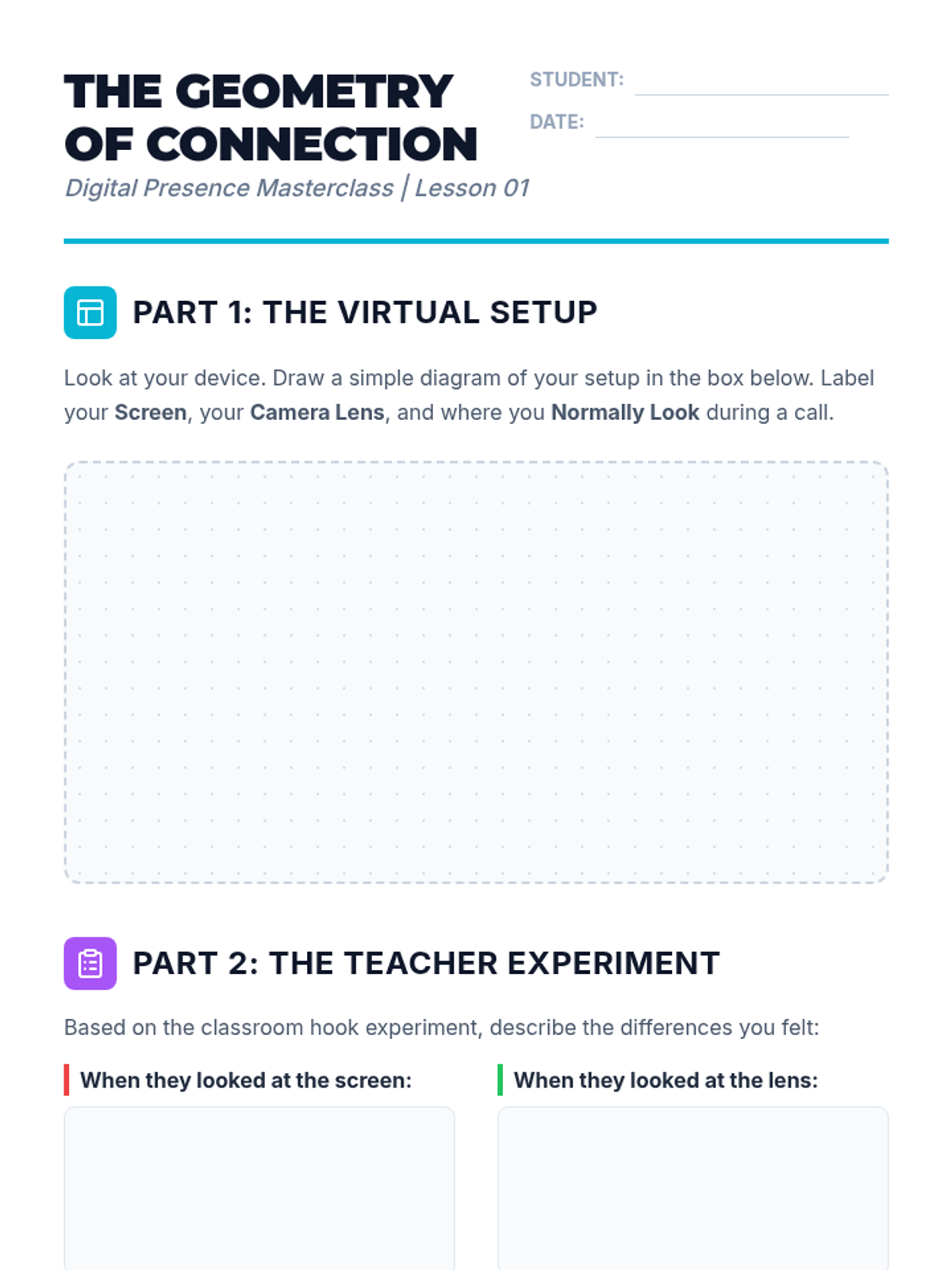
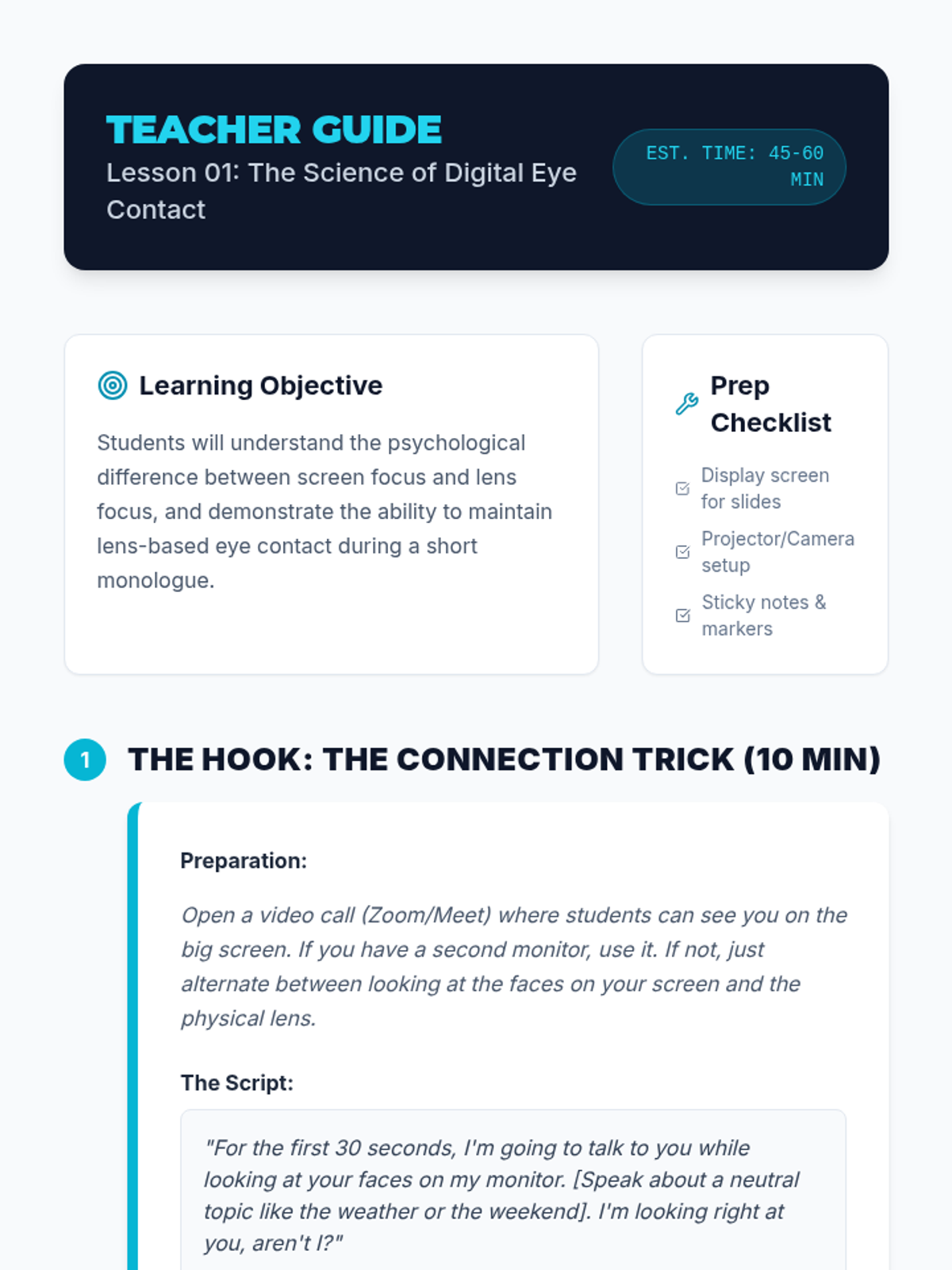
Students investigate the geometry of virtual eye contact, learning why looking at the face on the screen breaks connection and practicing the discipline of speaking directly to the webcam lens.
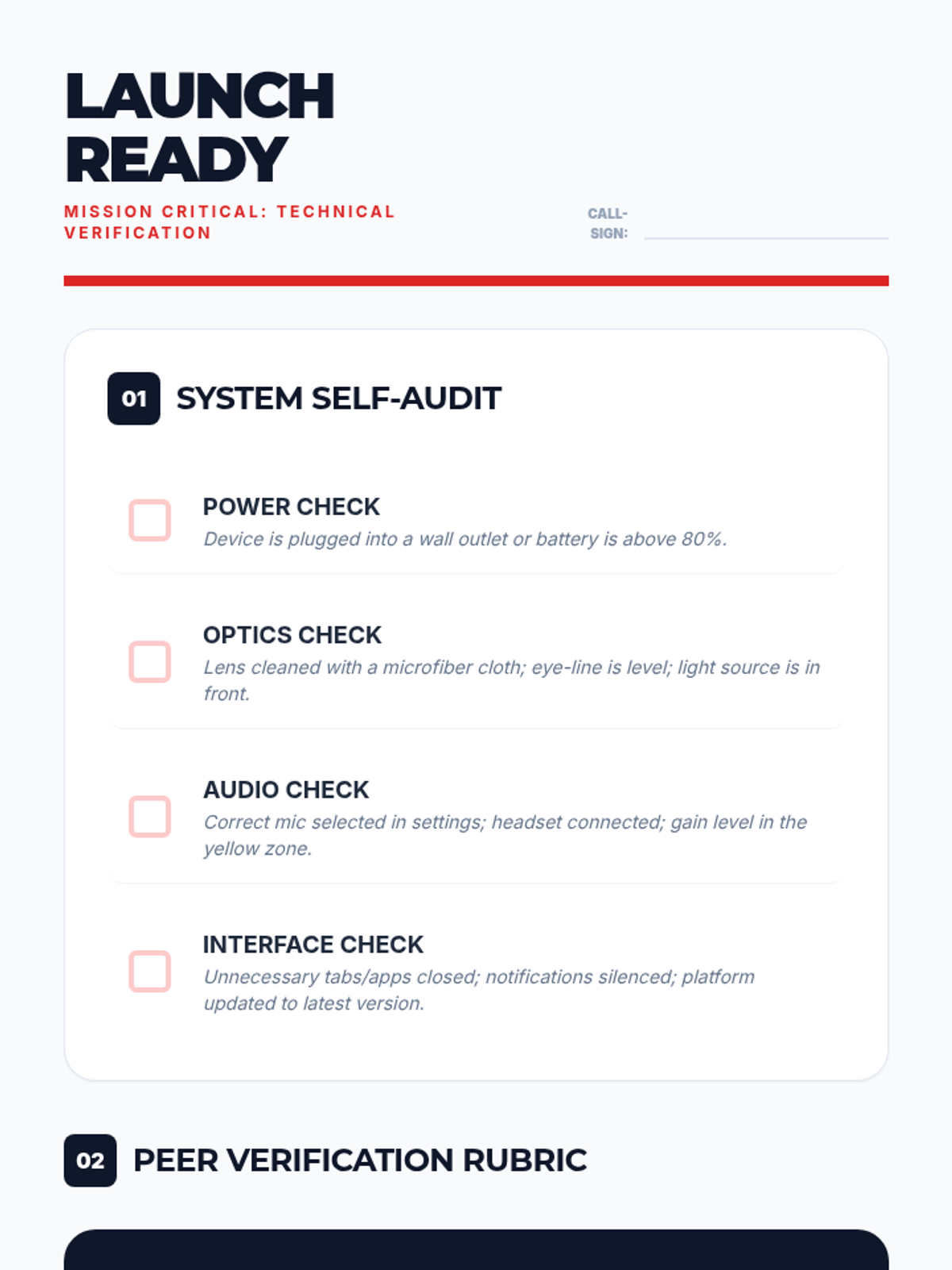
Students create a technical checklist and perform a final readiness test in a simulated 'launch' scenario.
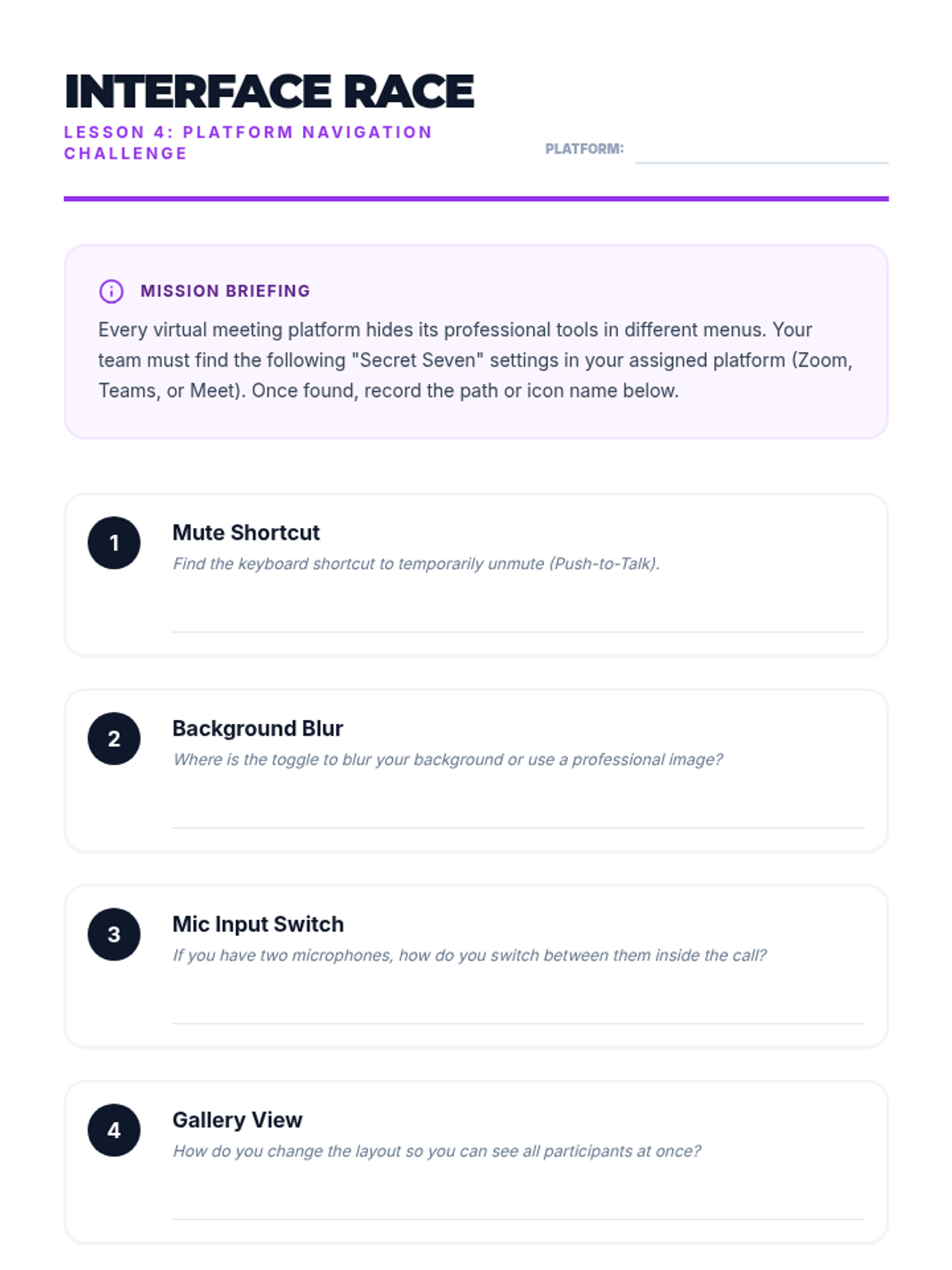
A hands-on guide to navigating common virtual meeting interfaces like Zoom, Teams, and Google Meet with professional etiquette.
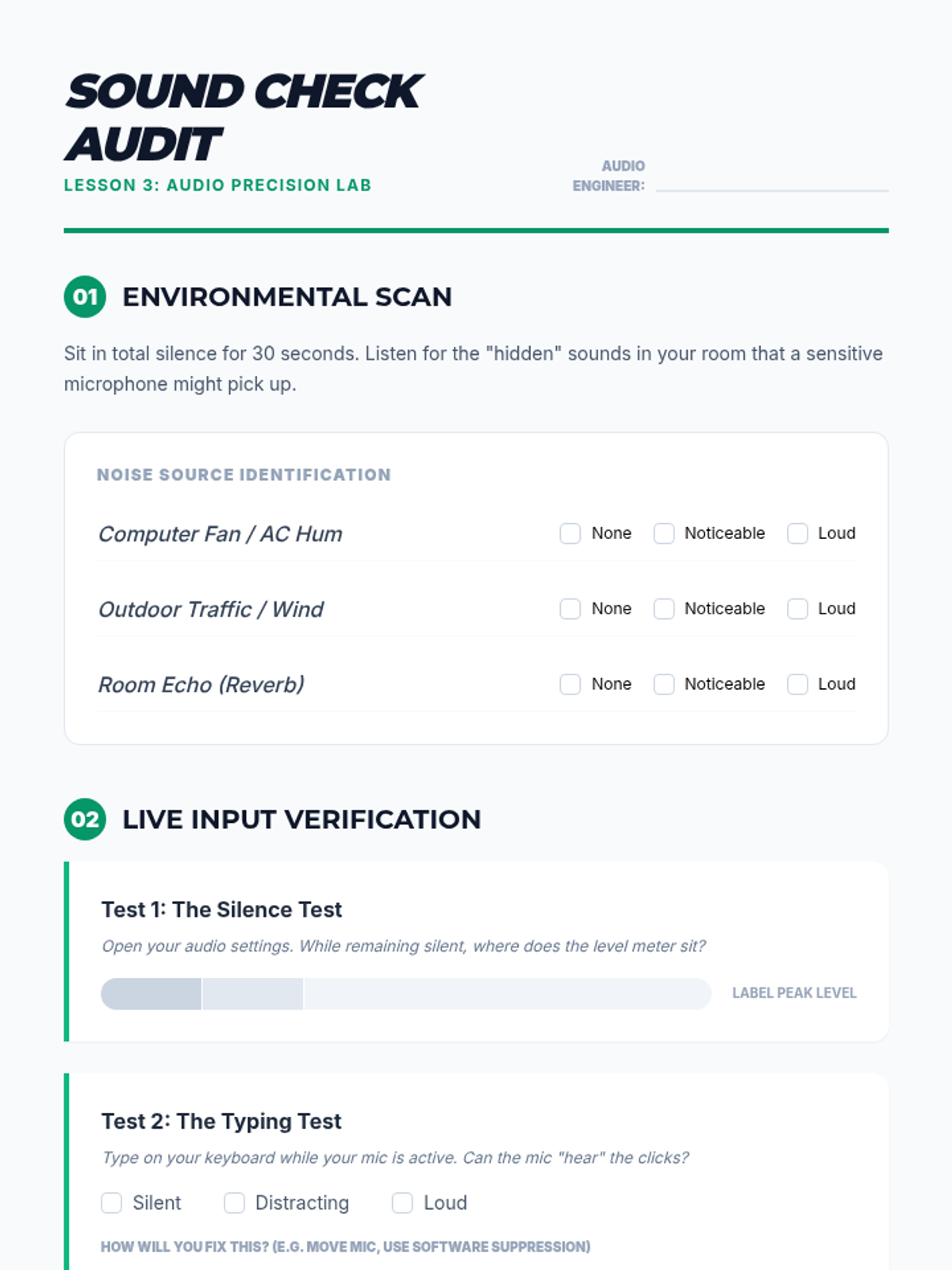
Students conduct audio tests to identify background noise and manage software settings for voice clarity.
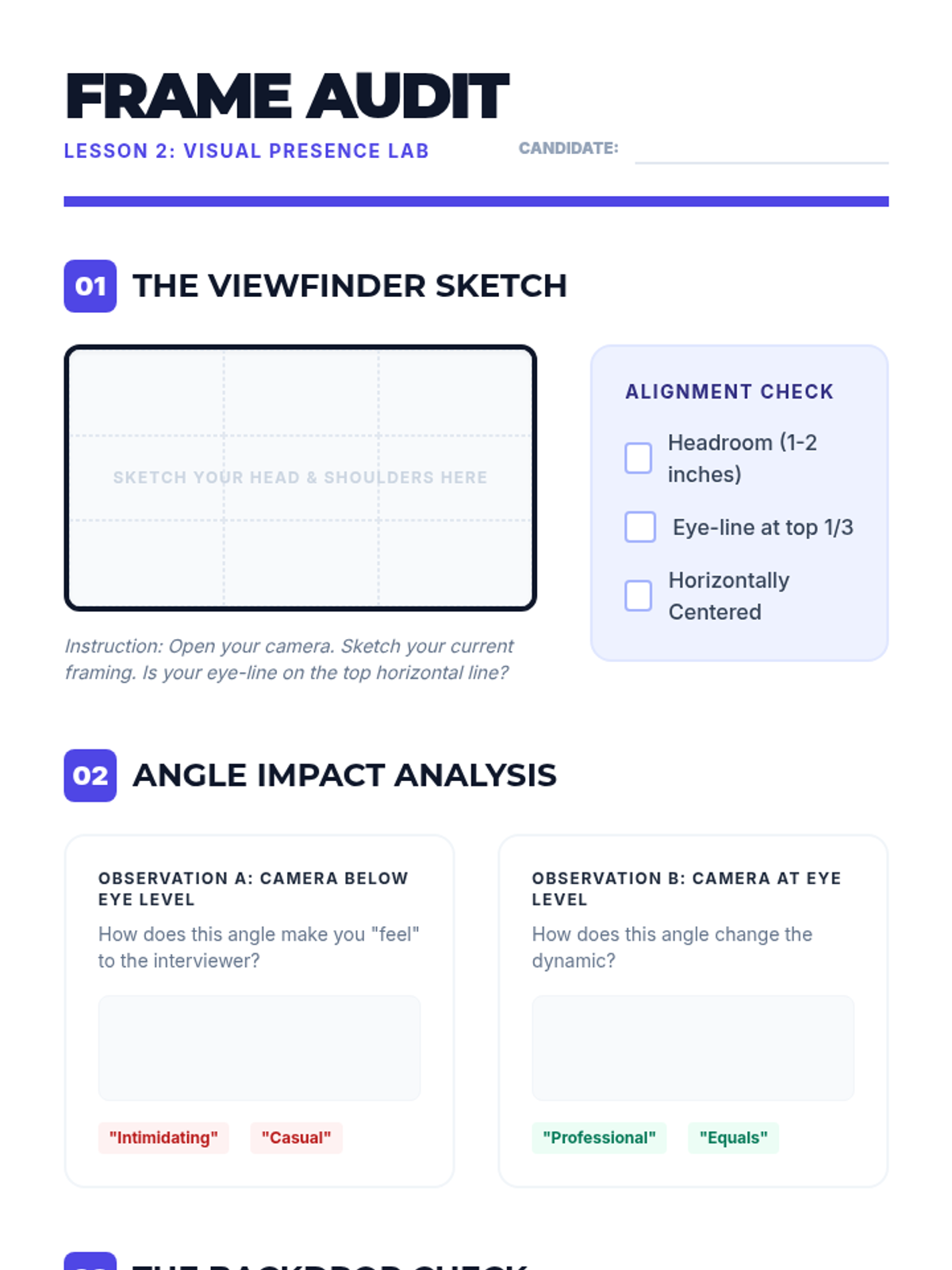
Learners experiment with camera height and framing using the Rule of Thirds to achieve professional visual presence.
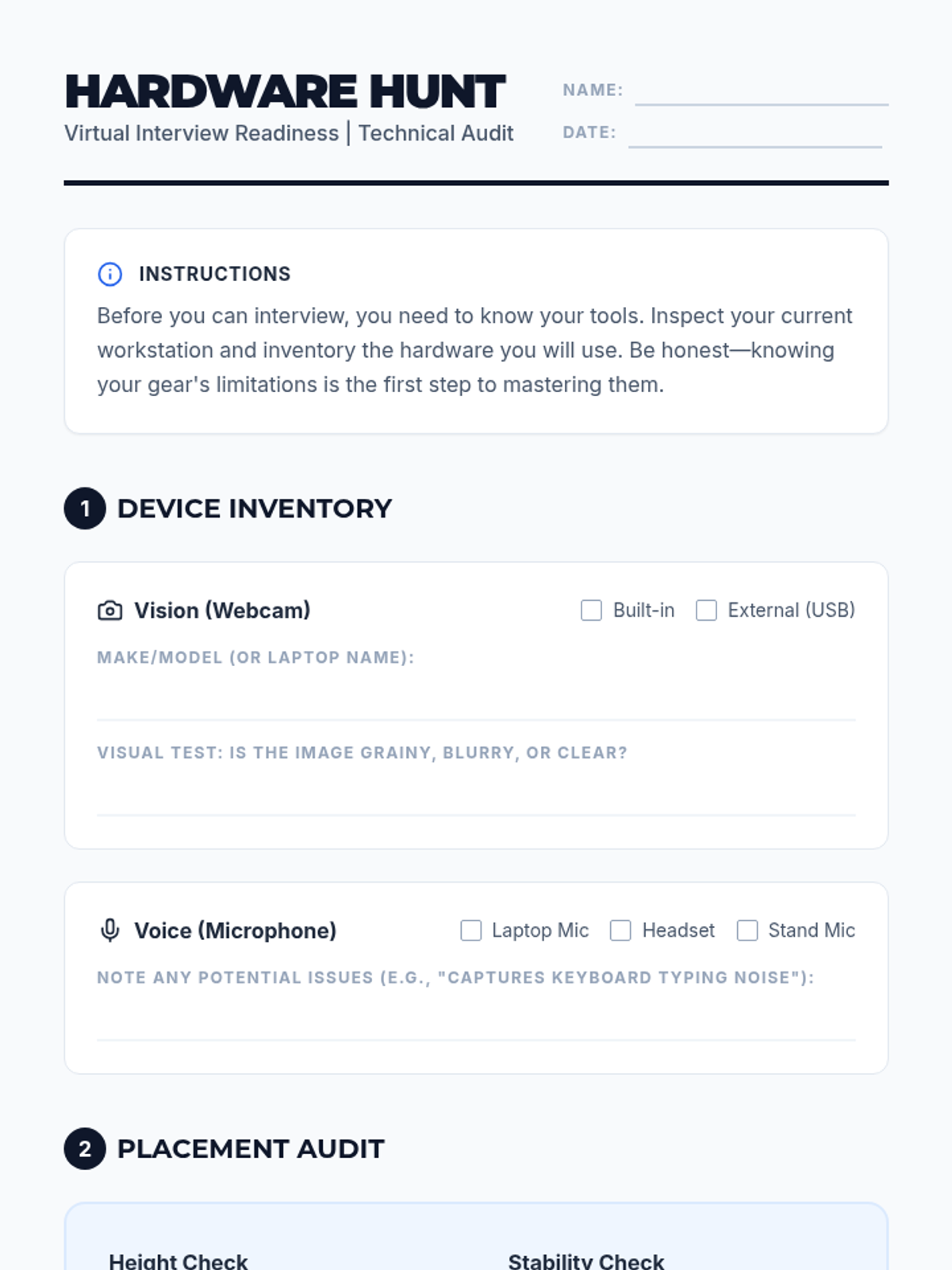
Students inventory necessary equipment including webcams, microphones, and speakers, and practice physical placement for stability and accessibility.
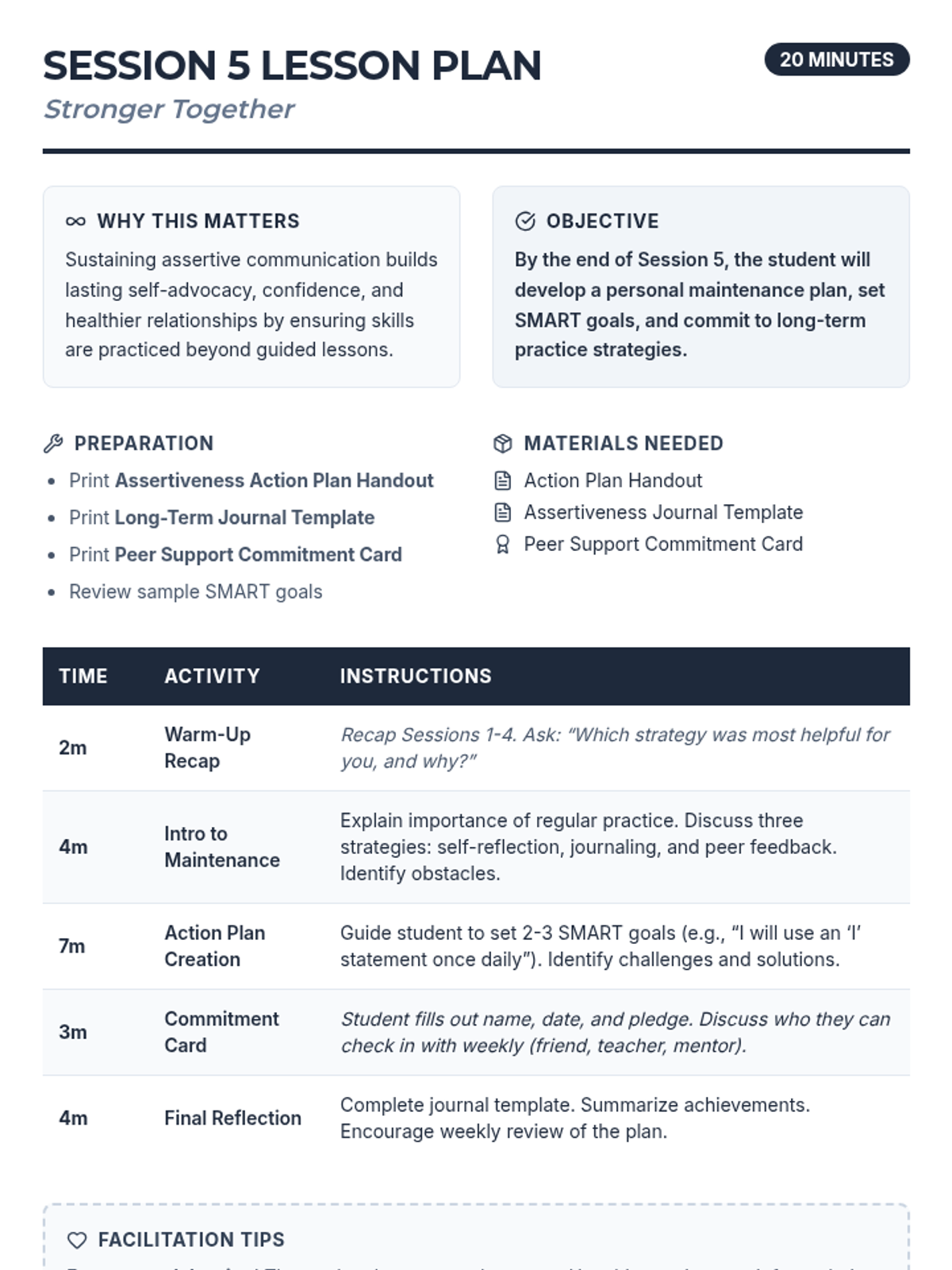
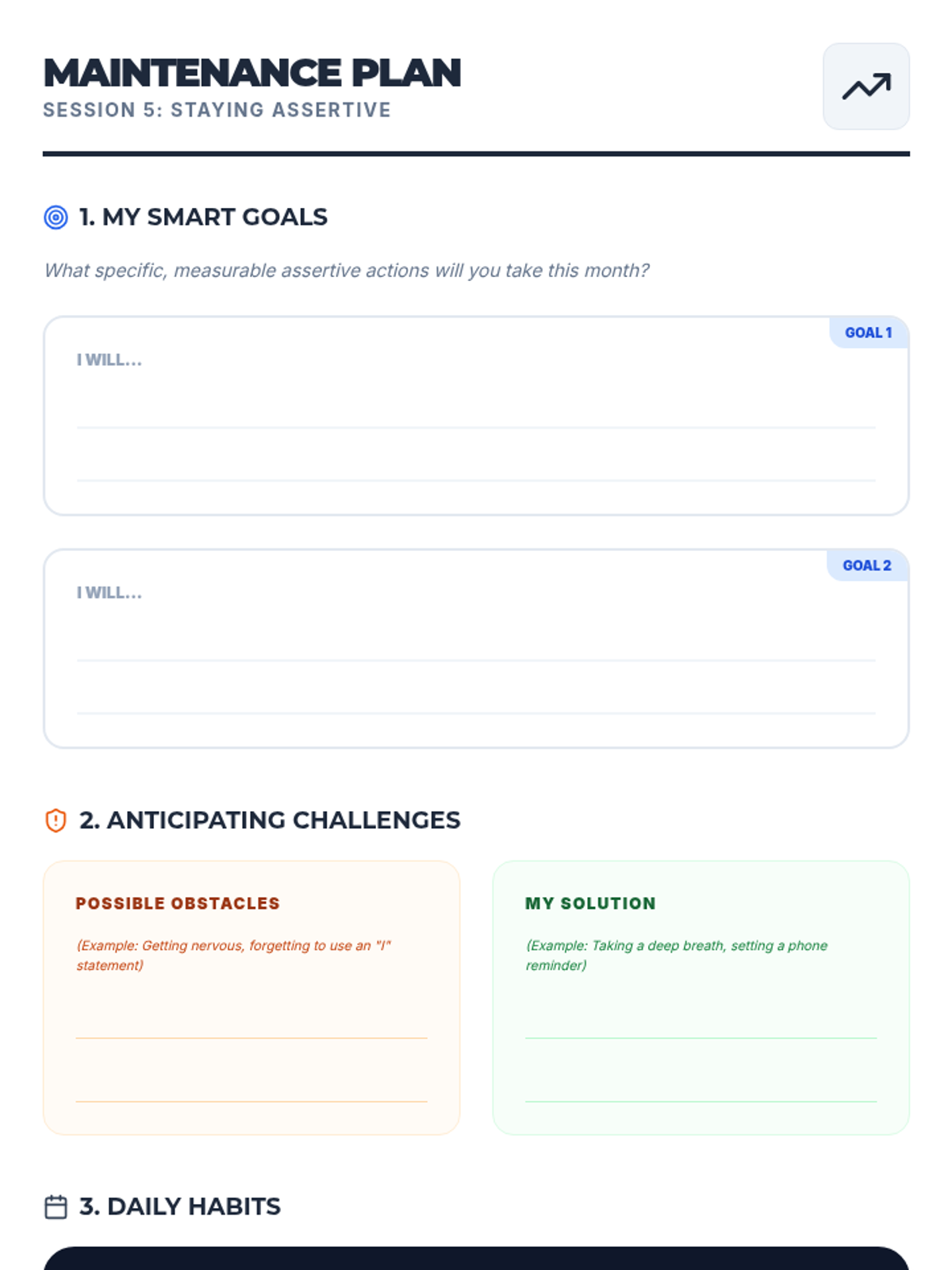
Focuses on maintaining assertive communication skills over the long term through self-reflection, action planning, and building a support network.
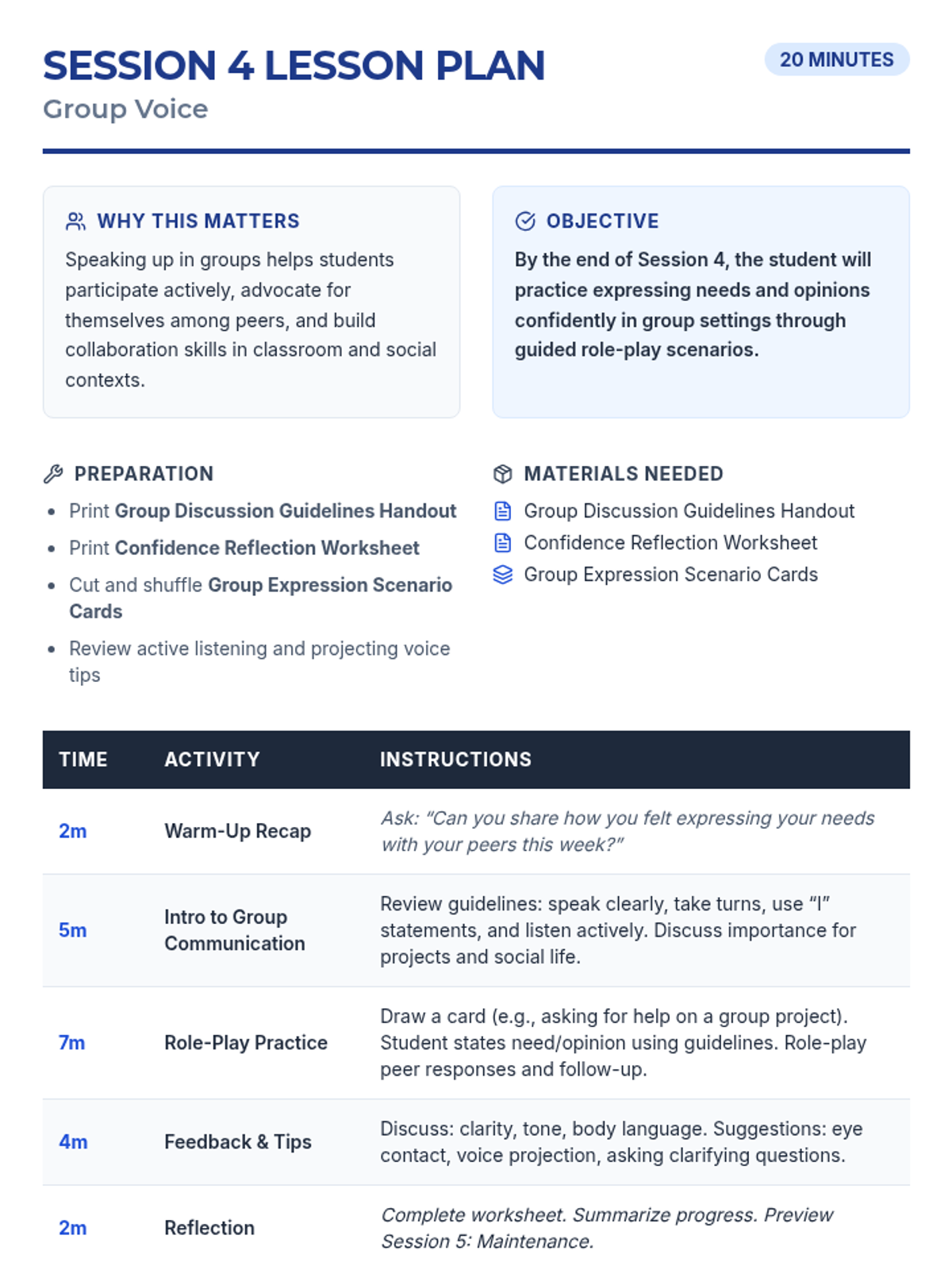
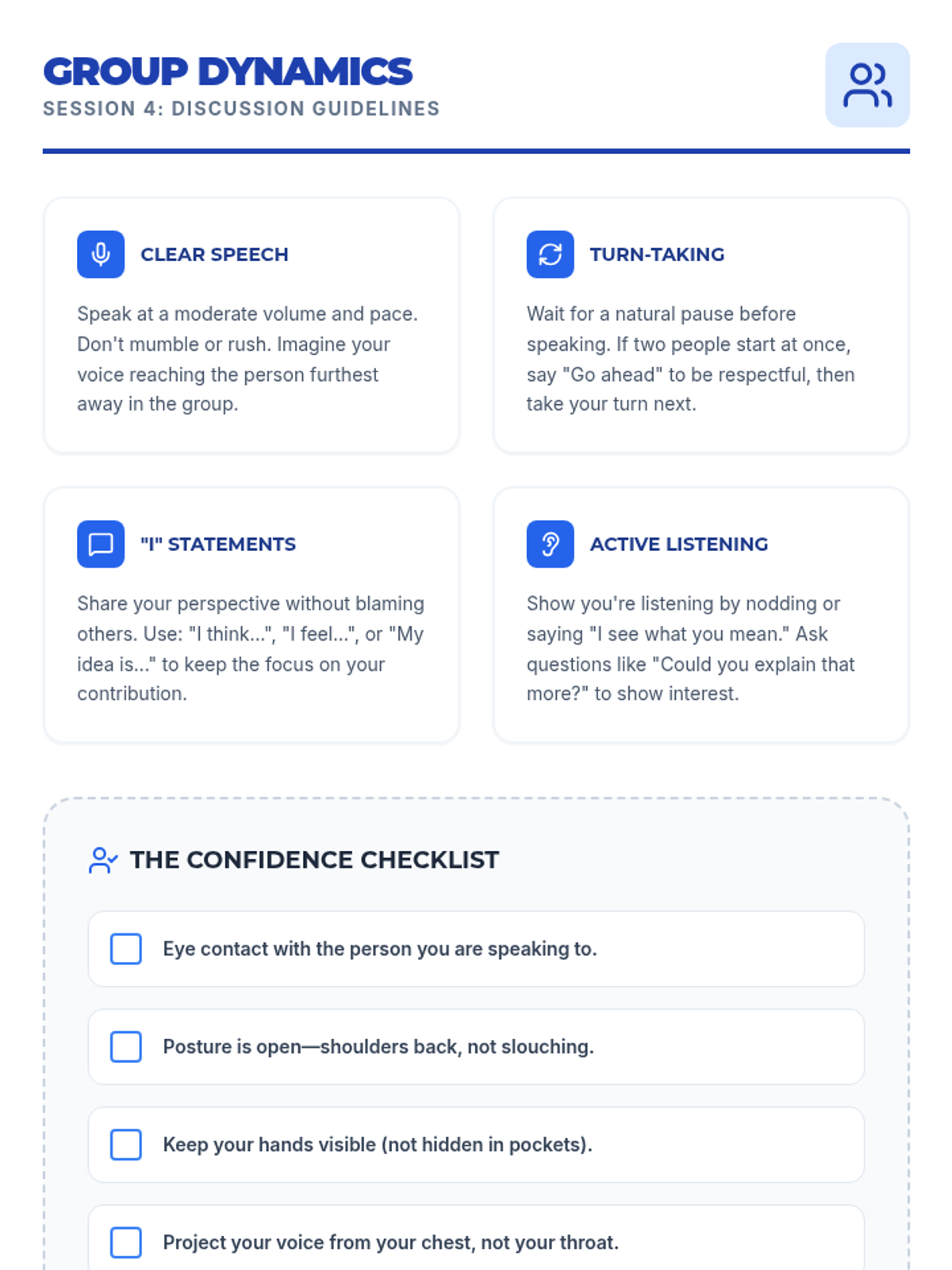
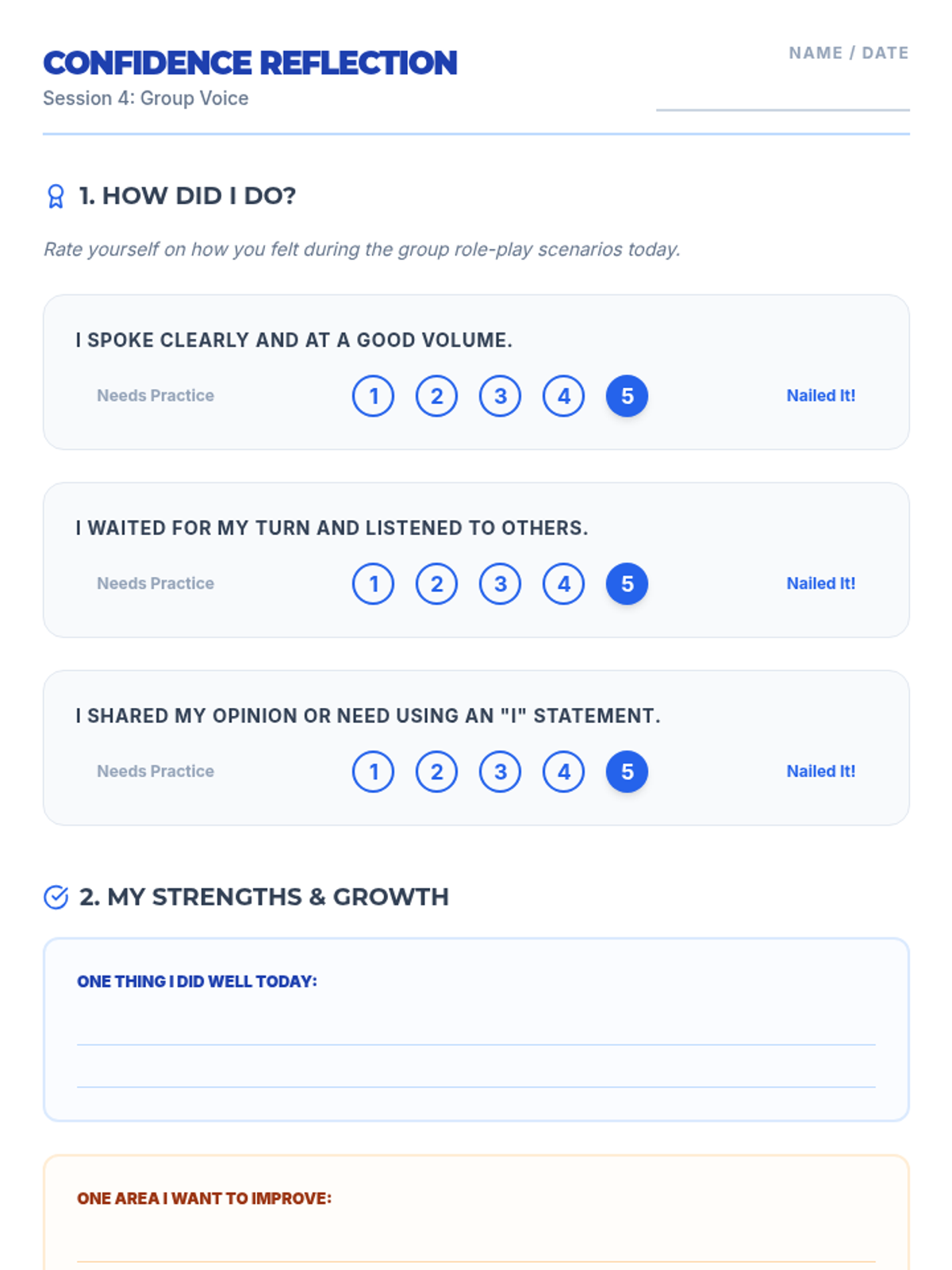
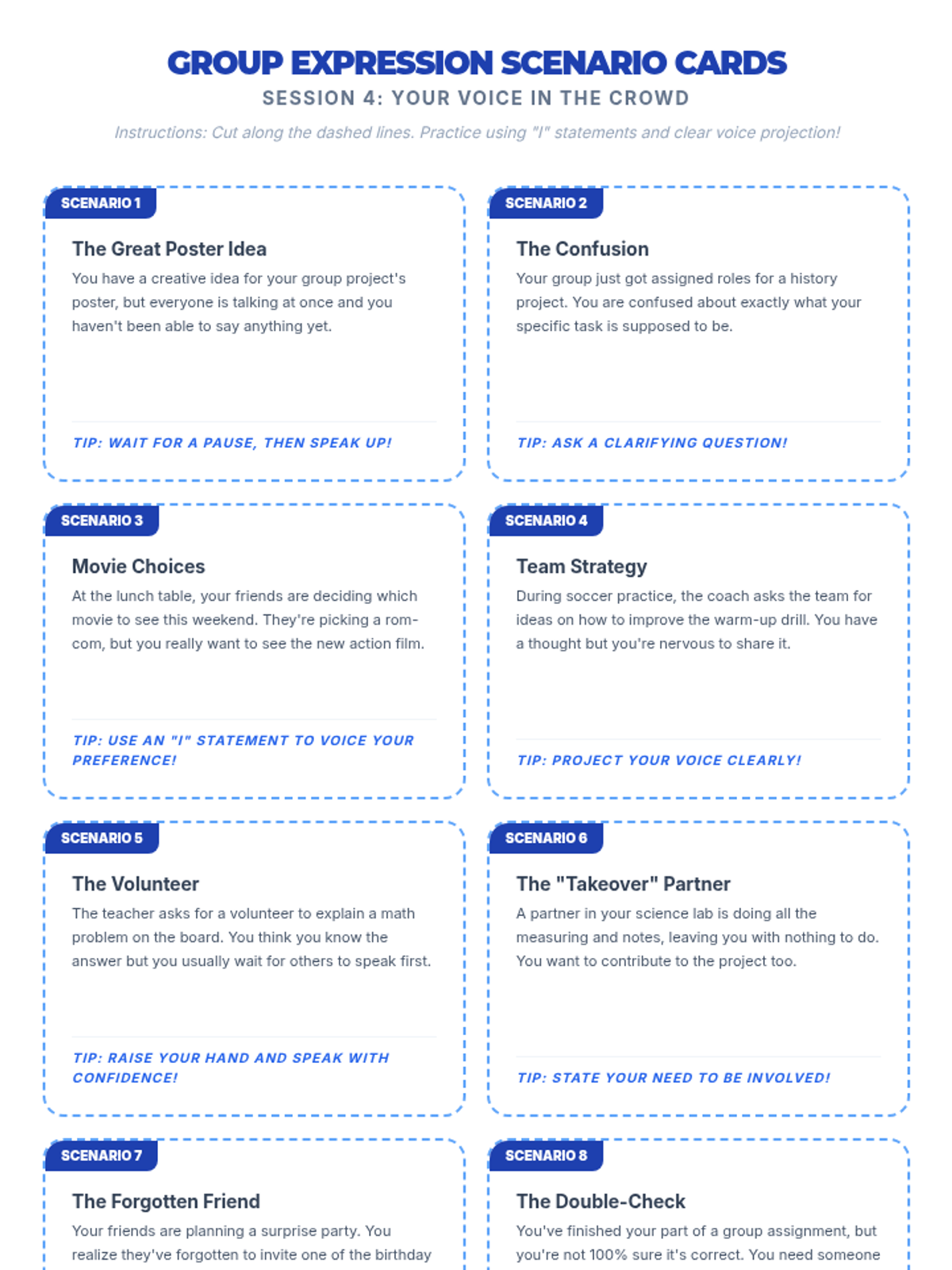
Focuses on practicing assertive communication within group dynamics, such as school projects or social circles, highlighting turn-taking and active listening.
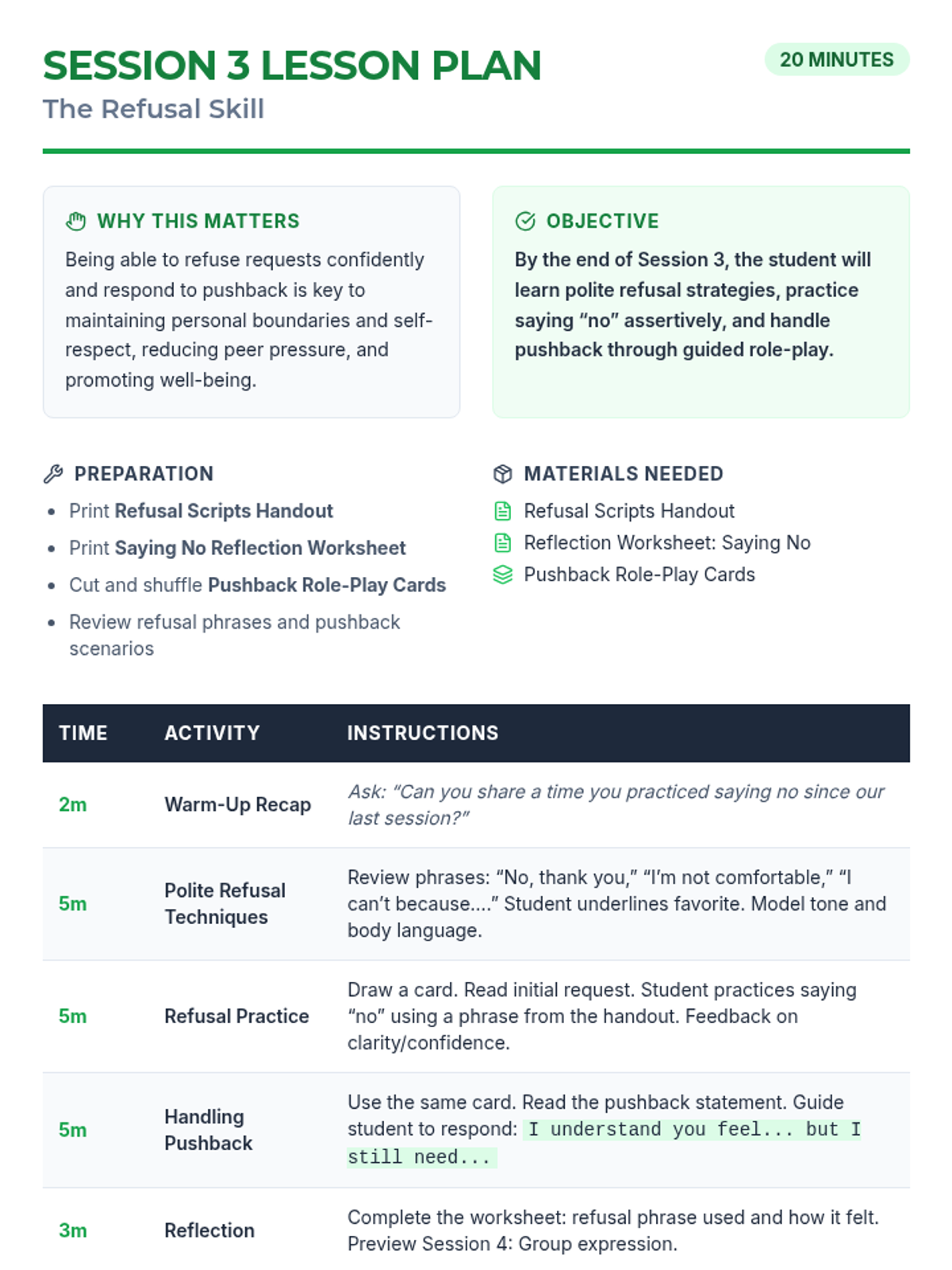
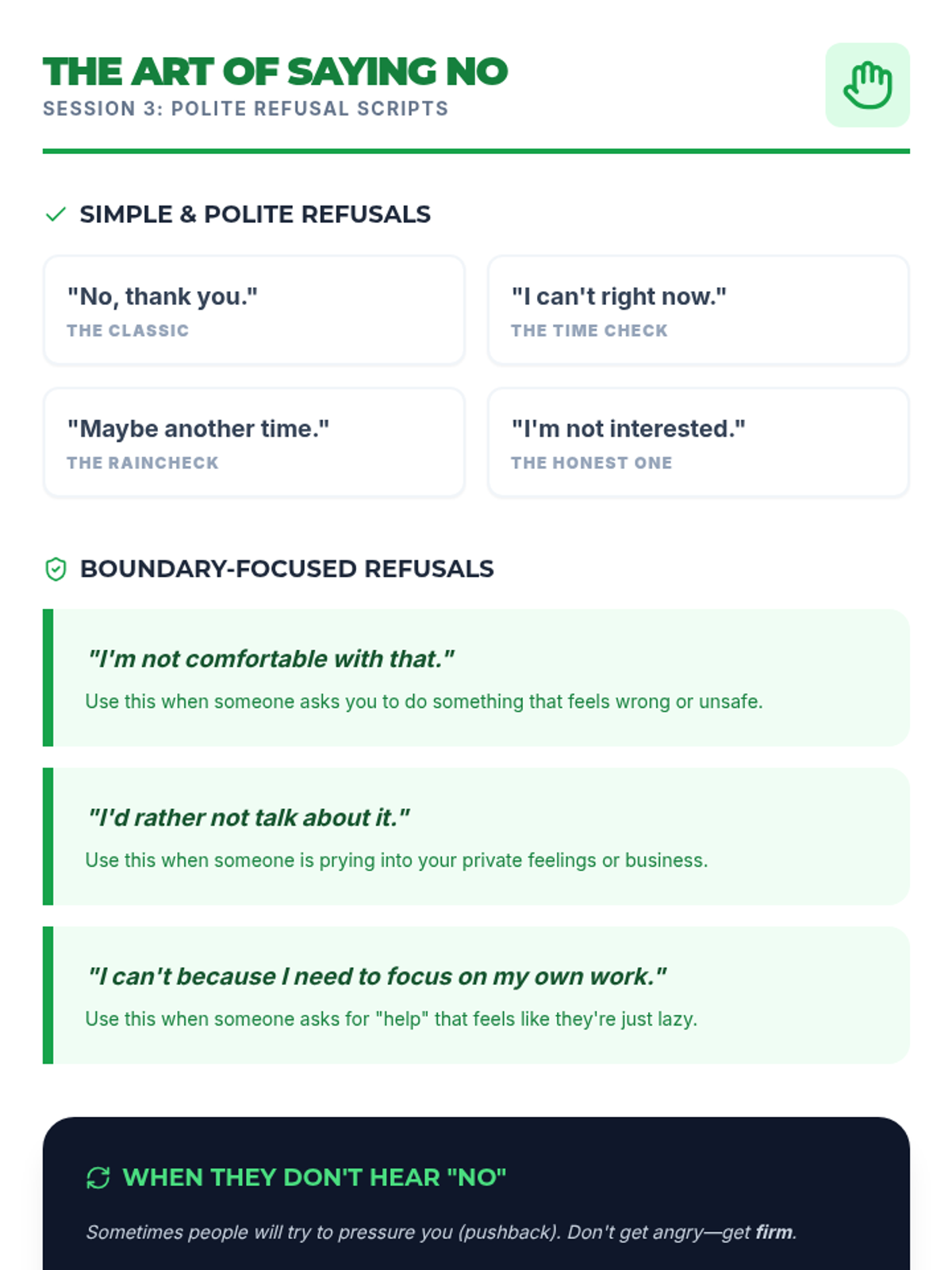
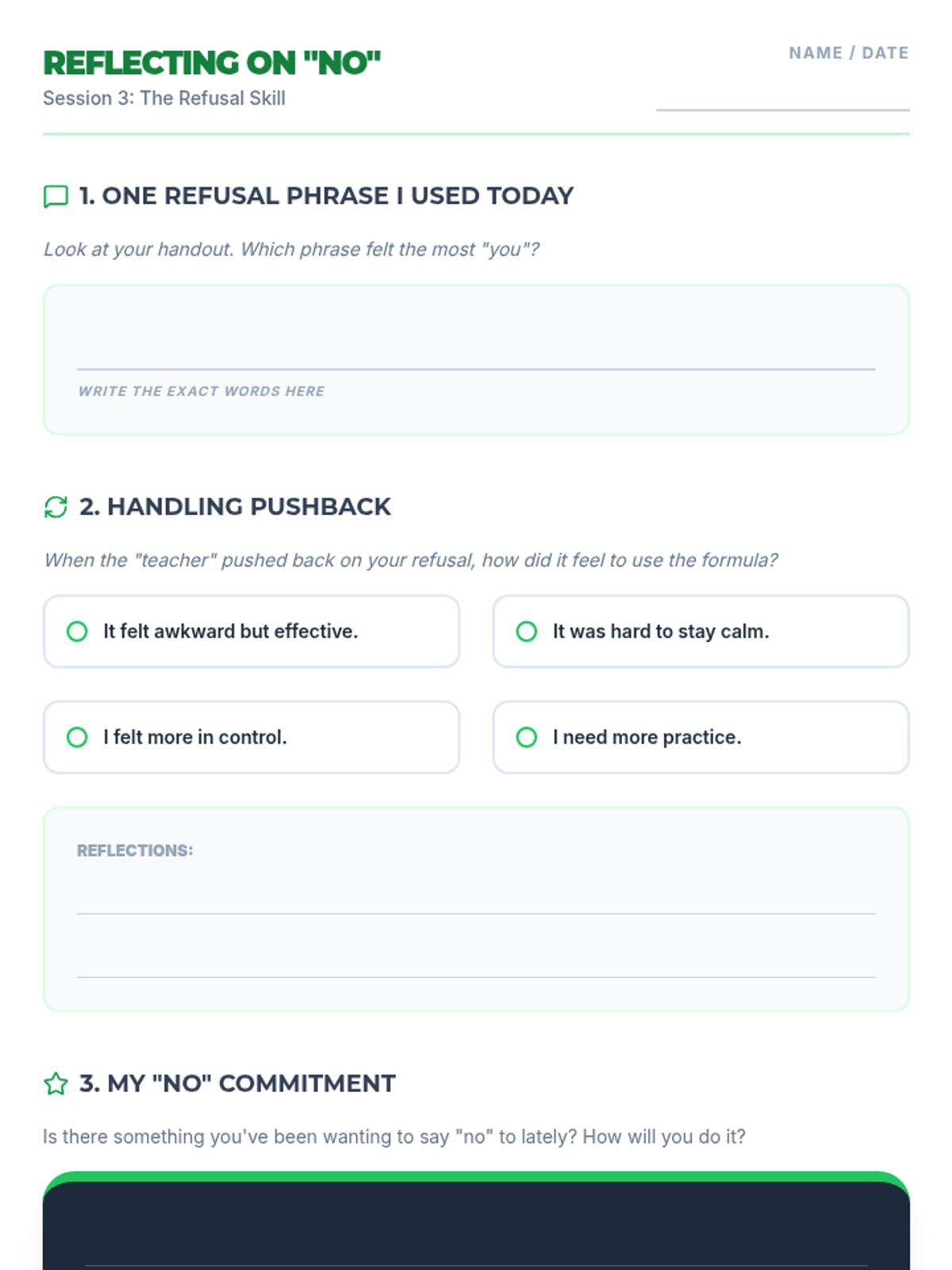
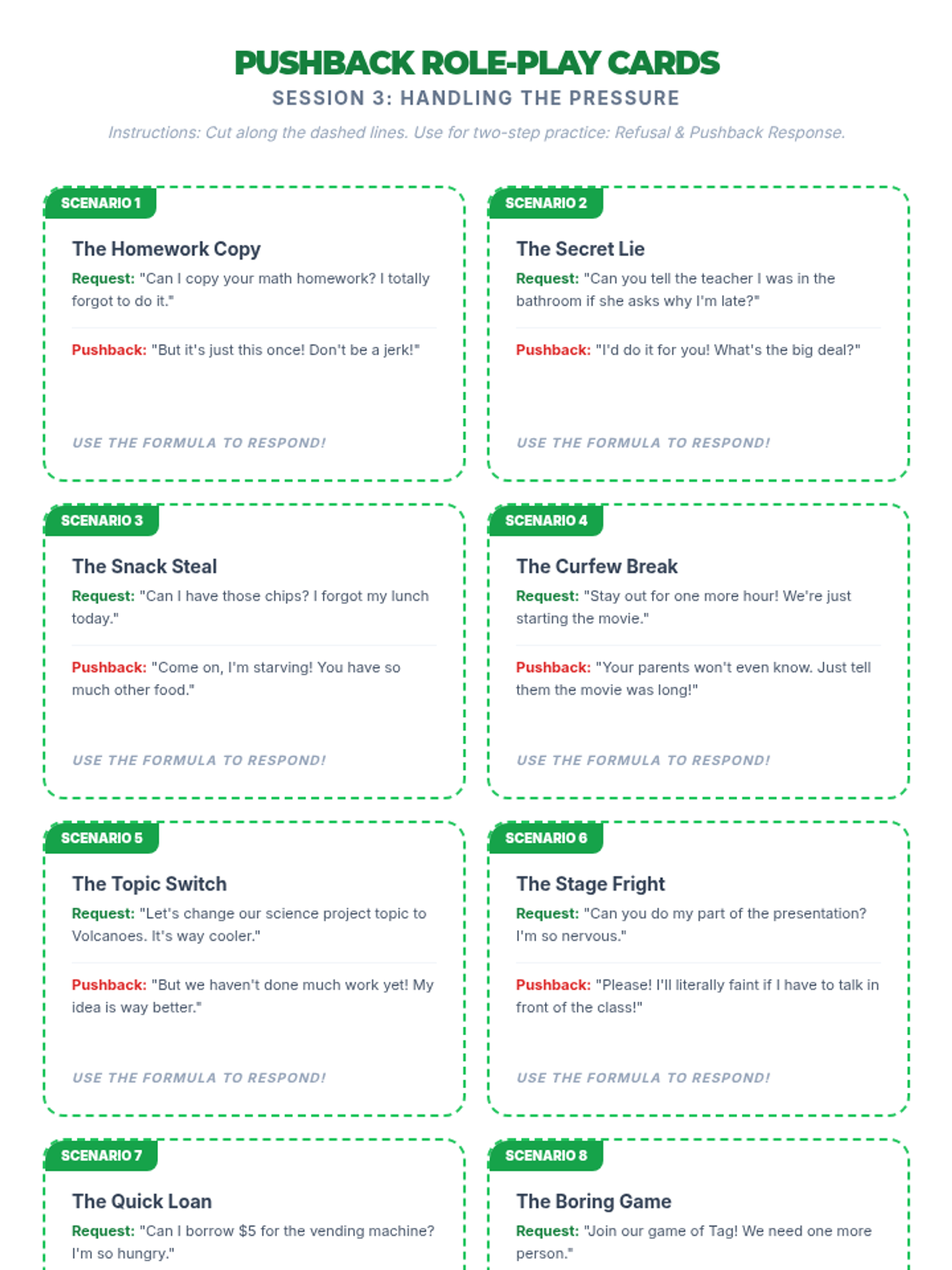
Focuses on polite refusal strategies, practicing saying “no” assertively, and handling pushback through guided role-play.
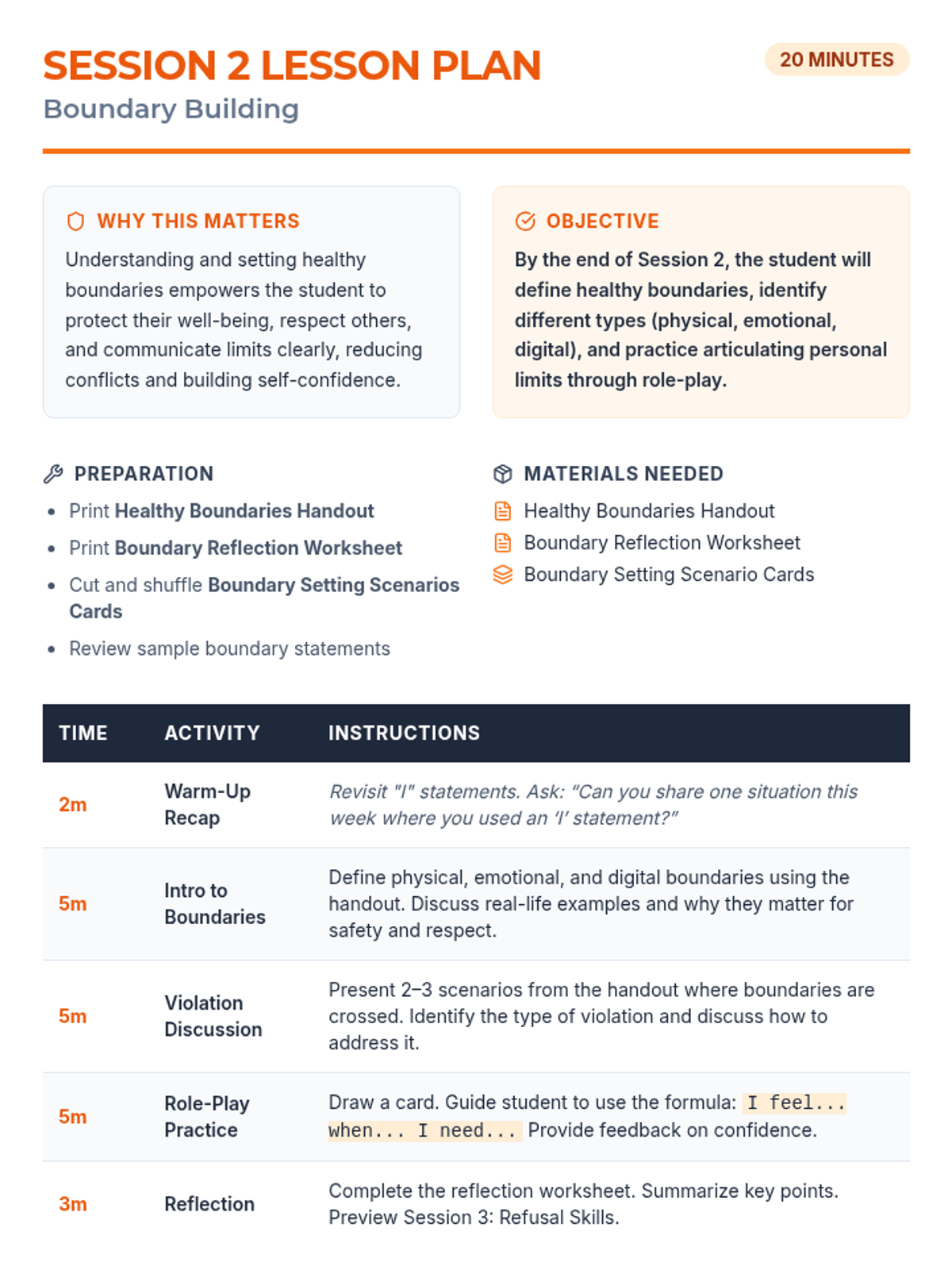
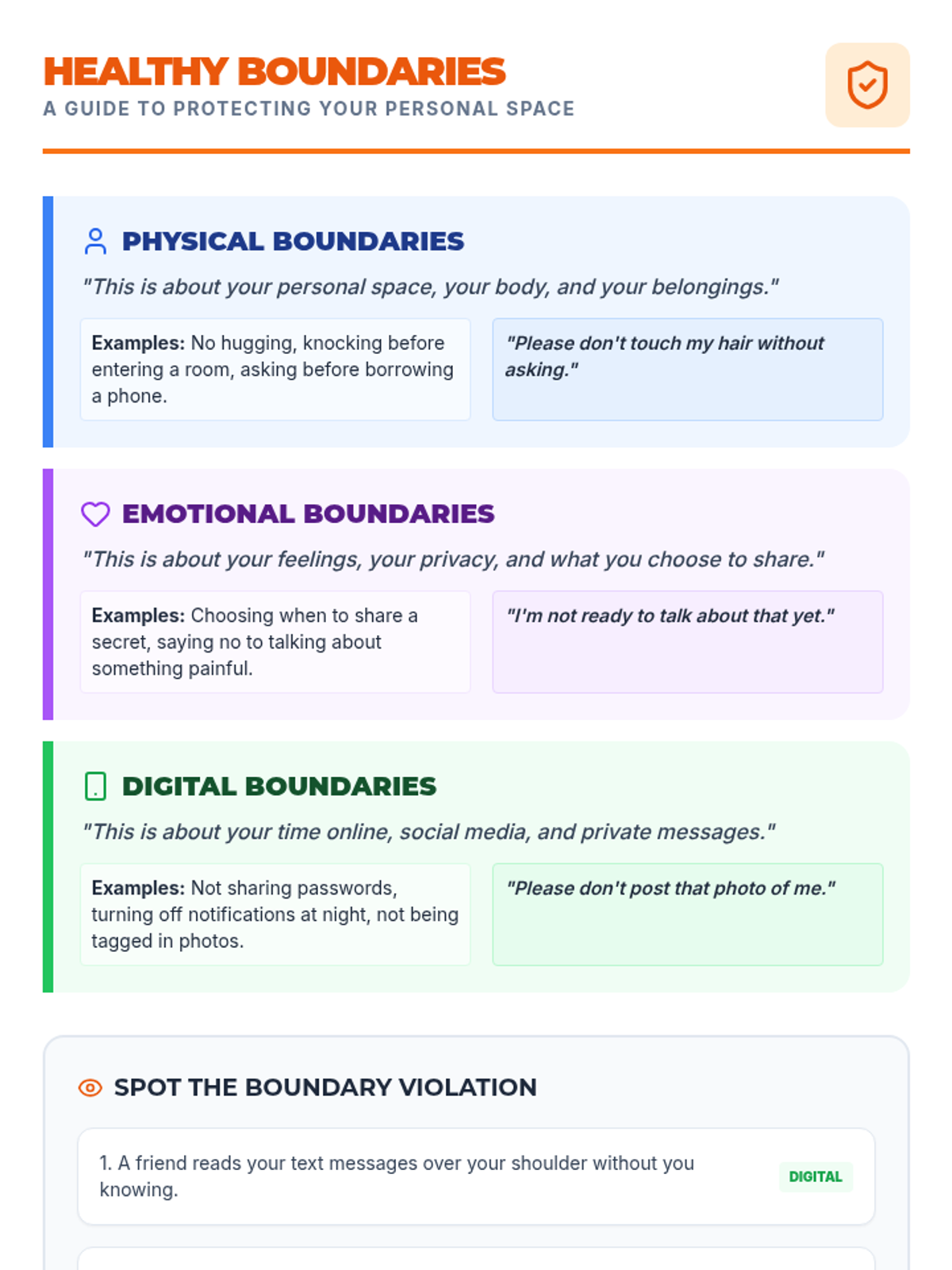
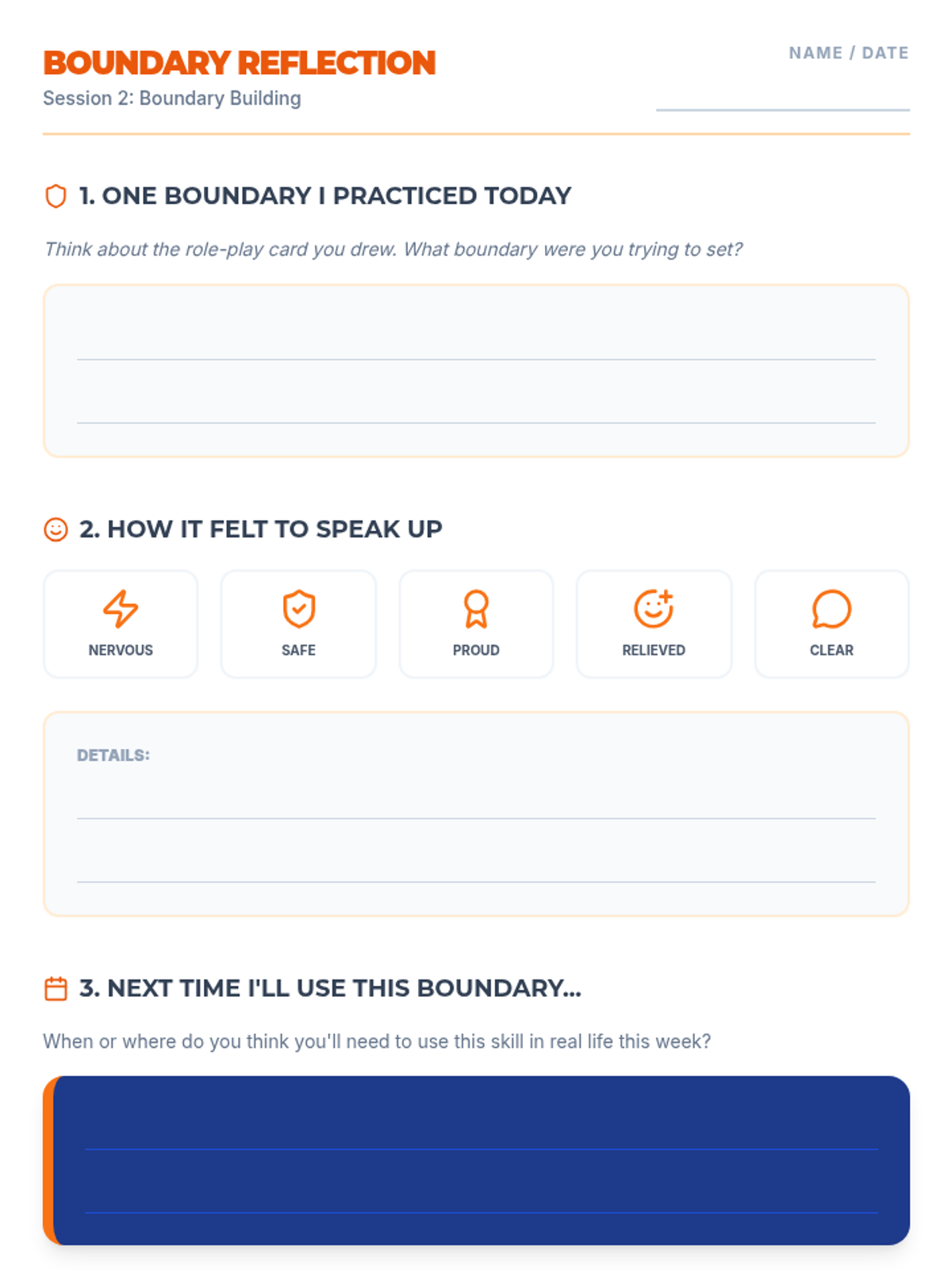
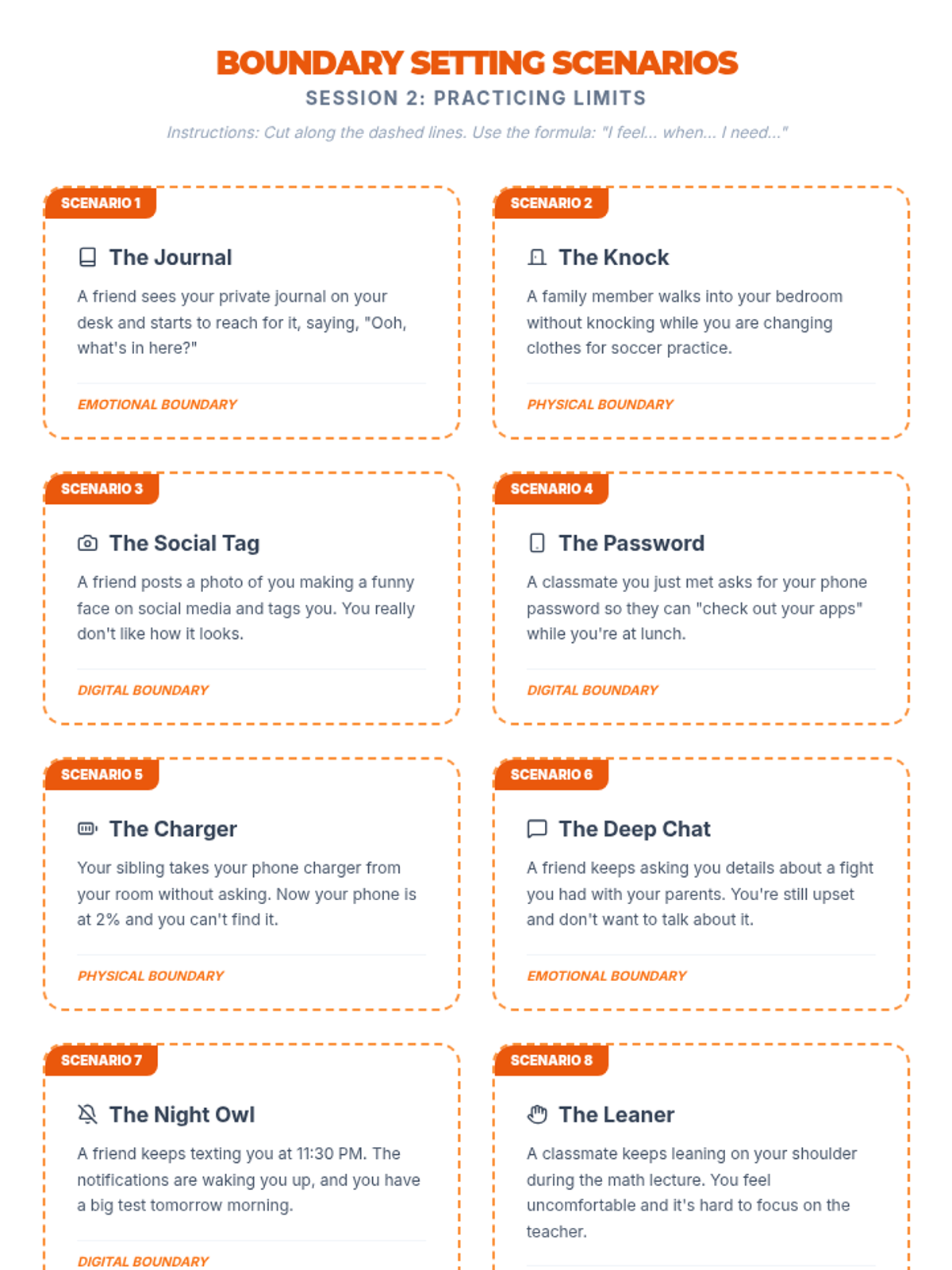
Focuses on defining and identifying different types of personal boundaries—physical, emotional, and digital—and practicing how to set them clearly.
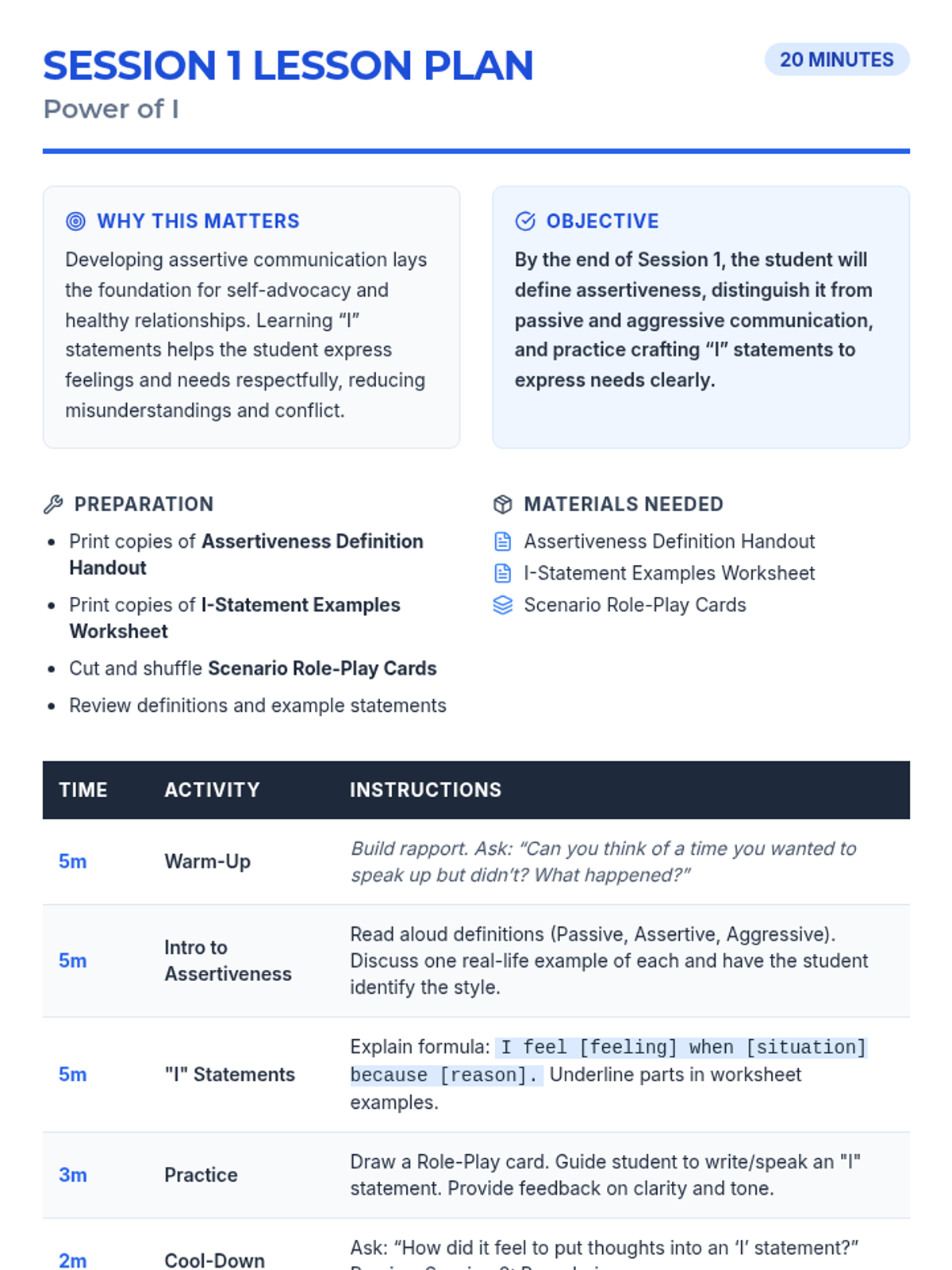
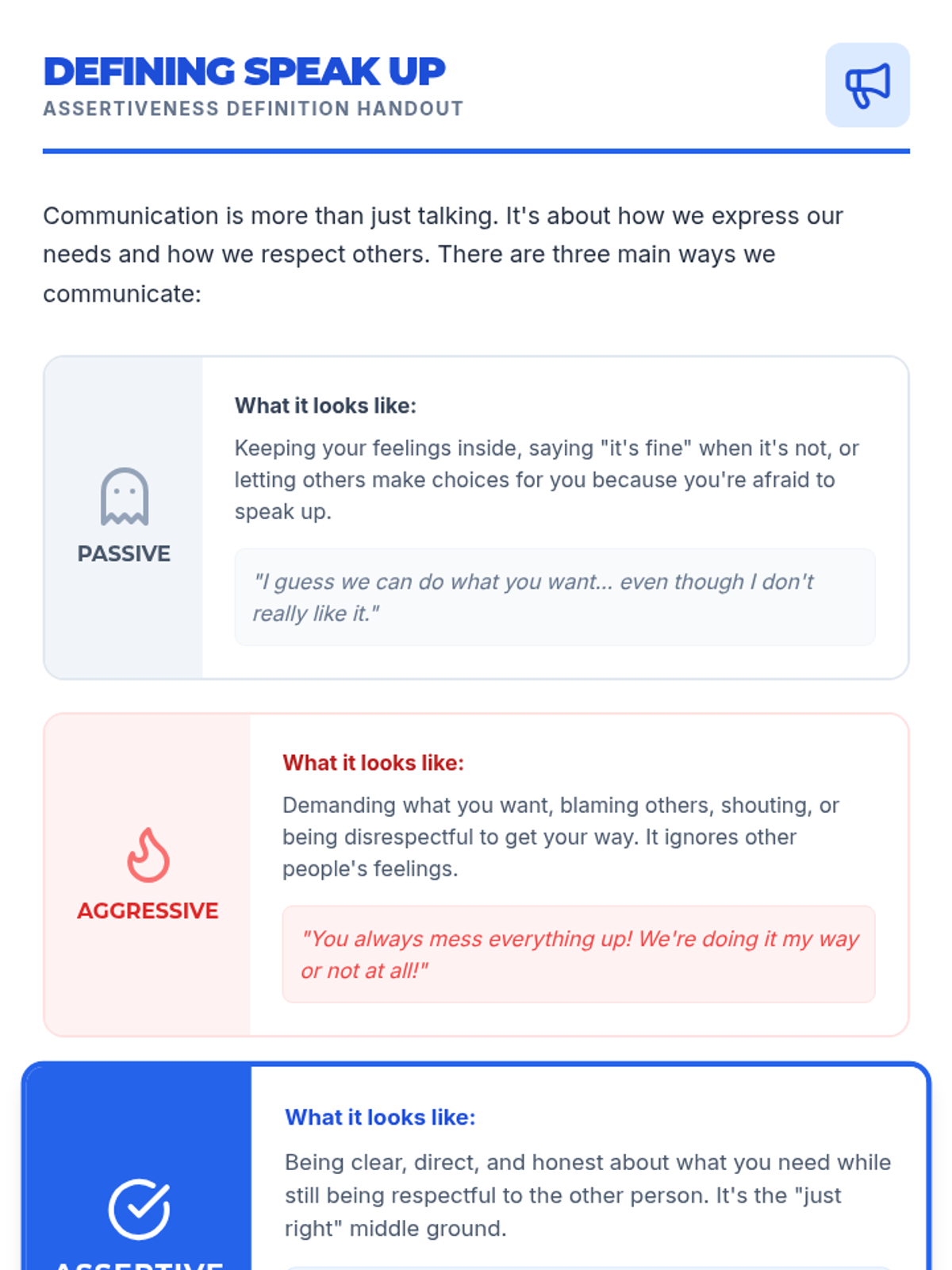
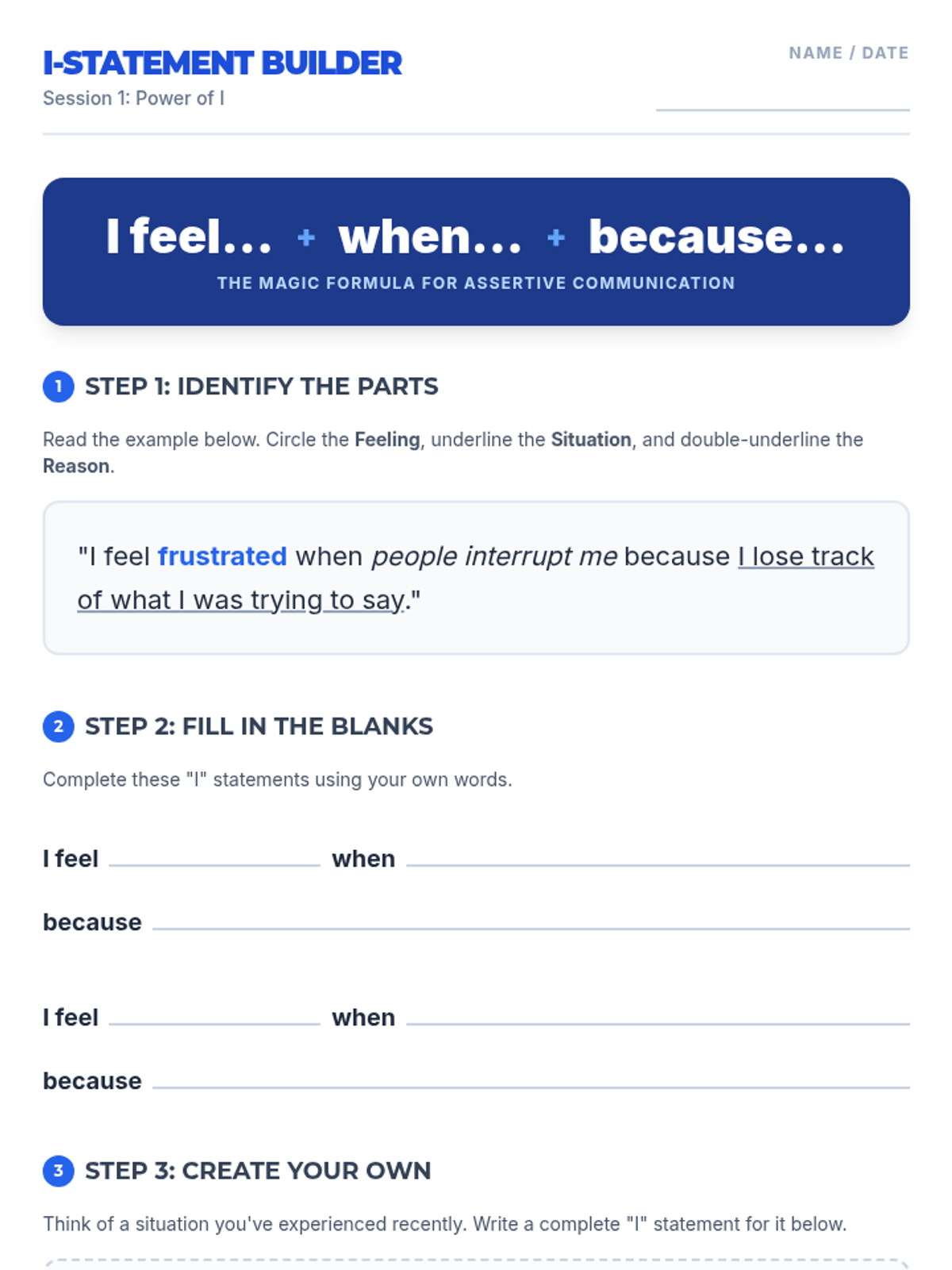
Introduces the concept of assertiveness versus passive and aggressive communication, with a focus on crafting clear I-statements.
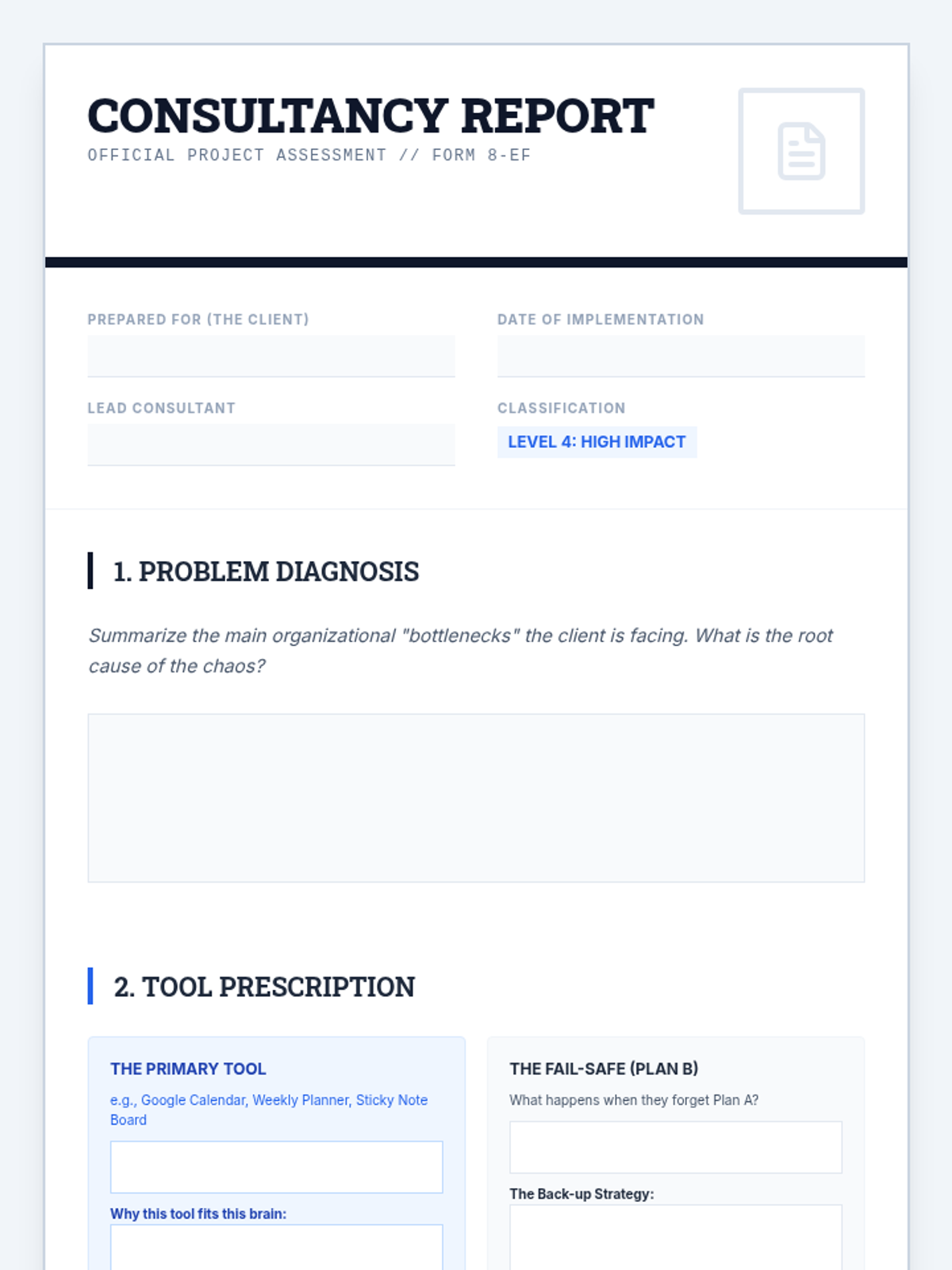
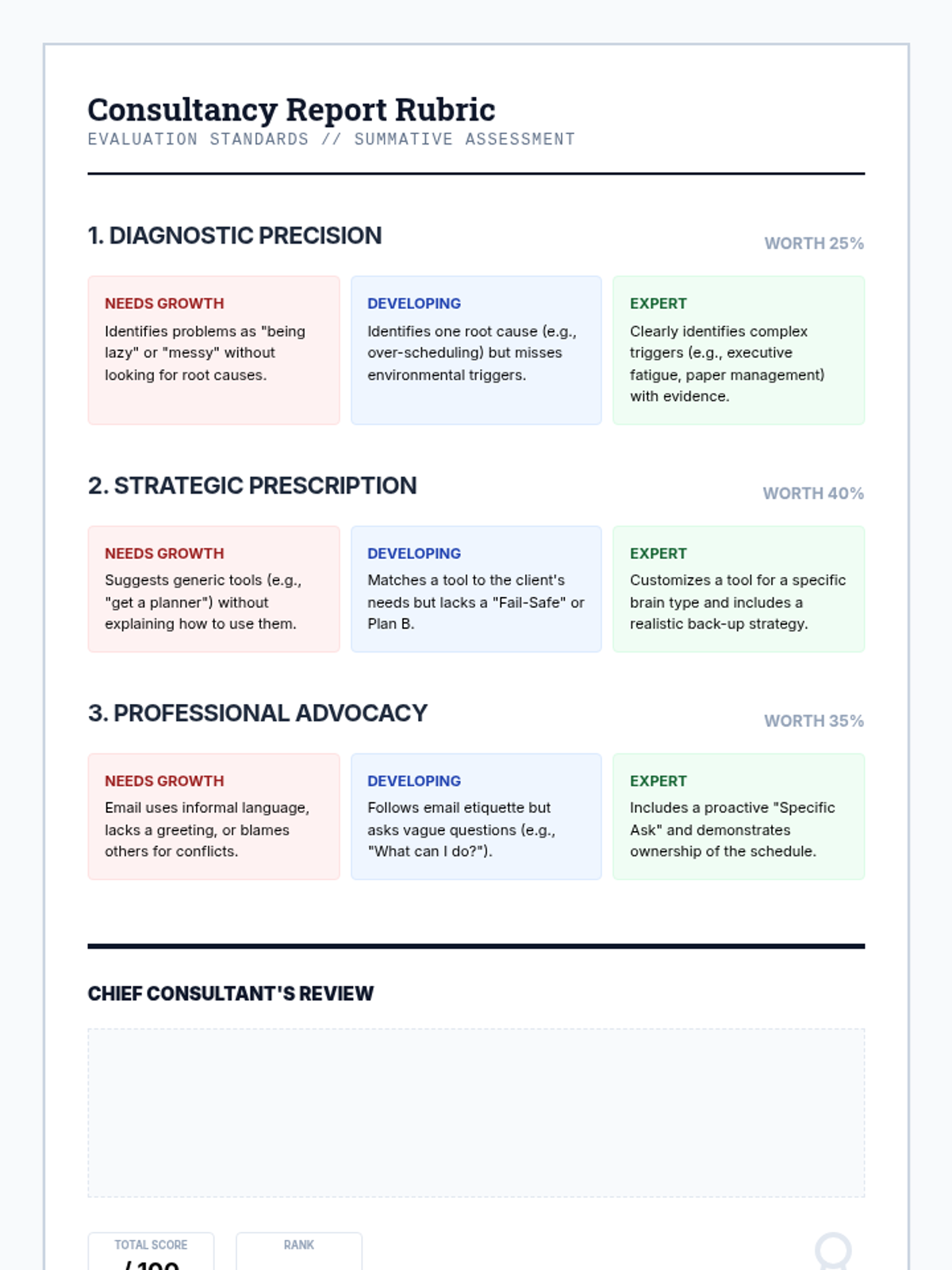
A cumulative assessment where students produce a final 'Consultancy Report' prescribing a comprehensive organizational plan for a client or themselves.
Students evaluate and pitch various organizational tools, from digital apps to paper checklists, learning to match specific scaffolds to different brain types.
Explores the emotional roots of procrastination and provides concrete strategies like the 5-minute rule to break the cycle of avoidance.
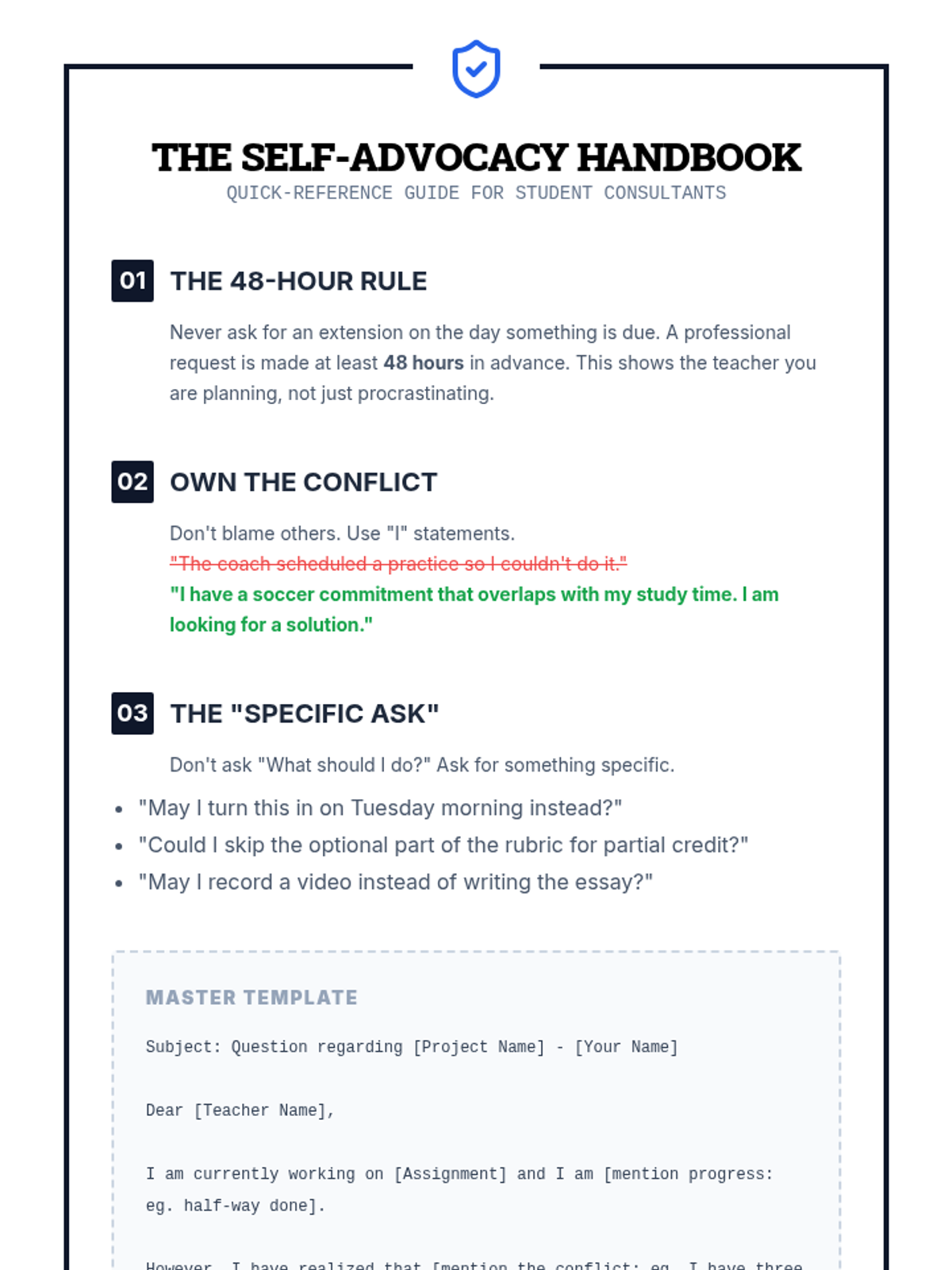
Focuses on professional communication and self-advocacy, teaching students how to request support and extensions effectively before deadlines pass.
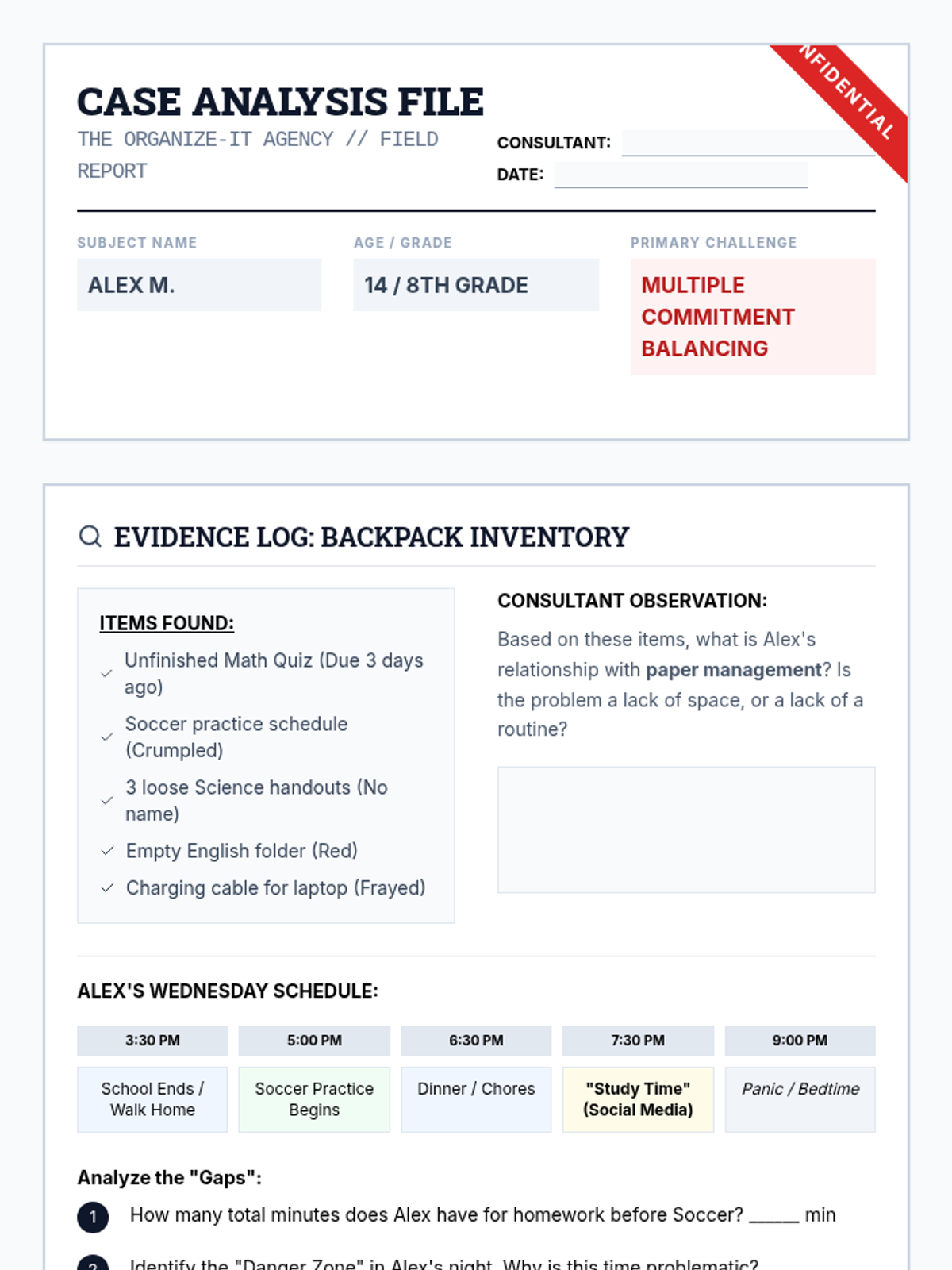
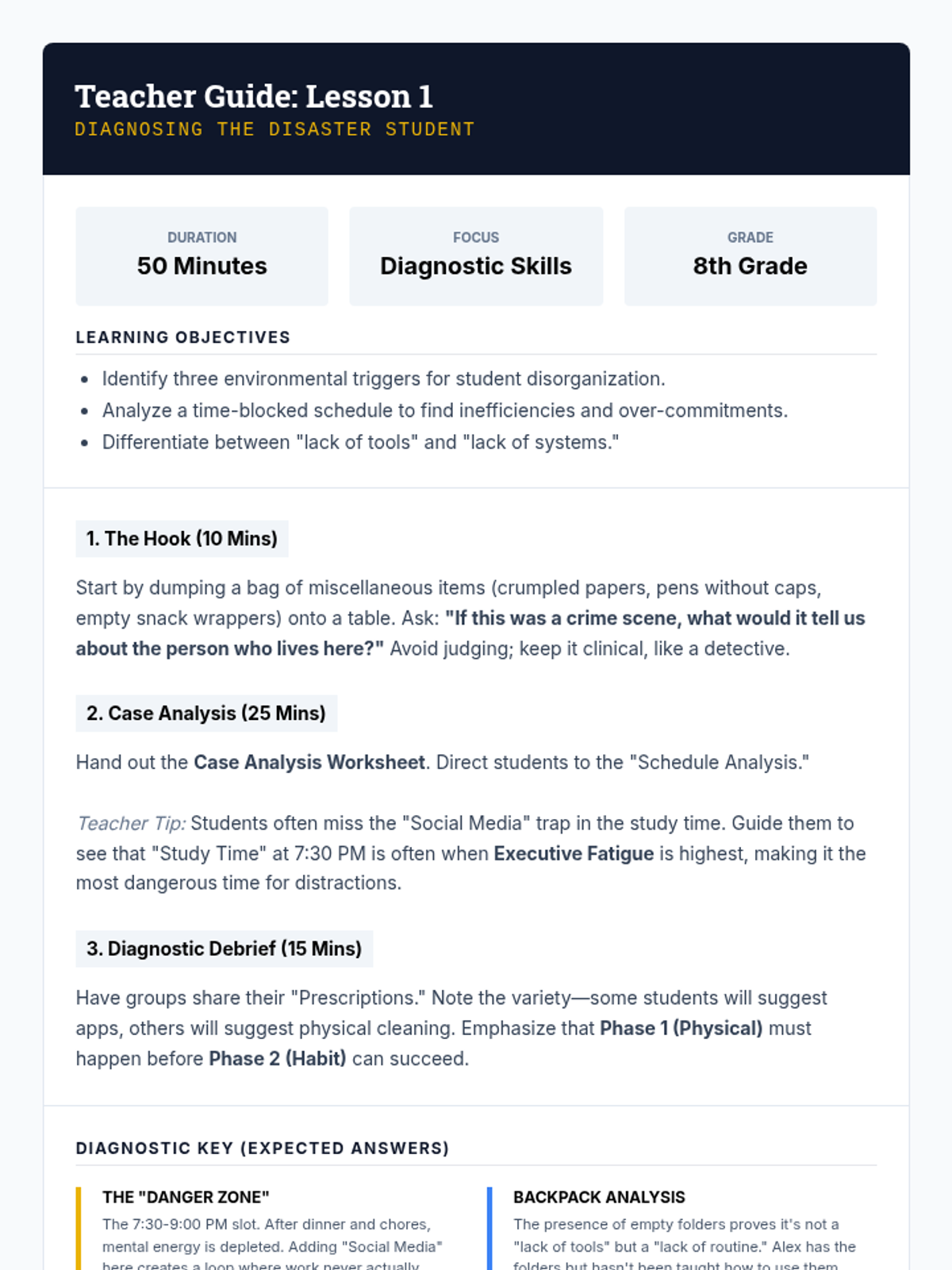
Students step into the role of consultants to analyze a 'disaster' case study, examining a fictional student's backpack and schedule to diagnose root causes of disorganization.
A culminating activity where students participate in mock interviews, rotating between roles as interviewers and interviewees to apply their skills in a realistic setting.
Students learn interview mechanics, including the STAR method for behavioral questions and non-verbal communication techniques to prepare for professional interactions.
Students practice code-switching between casual and professional communication, focusing on email etiquette and active listening skills required for workplace success.
Using the skills identified previously, students learn the standard structure of a resume and draft their own beginner resume, focusing on formatting for readability and impact.
Students analyze their current activities, hobbies, and school responsibilities to identify 'hard' and 'soft' skills relevant to the workplace, bridging the gap between student life and professional expectations.
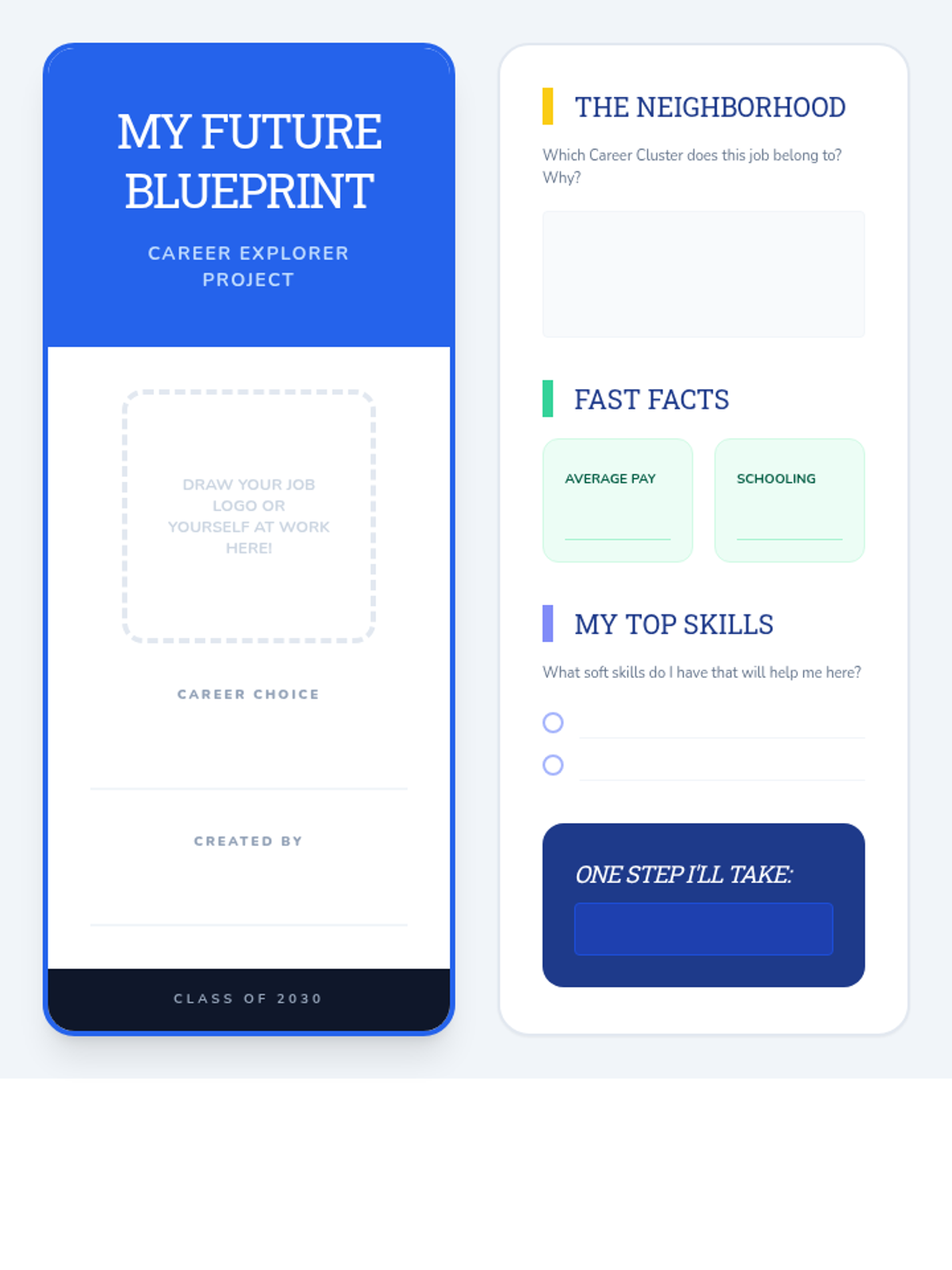
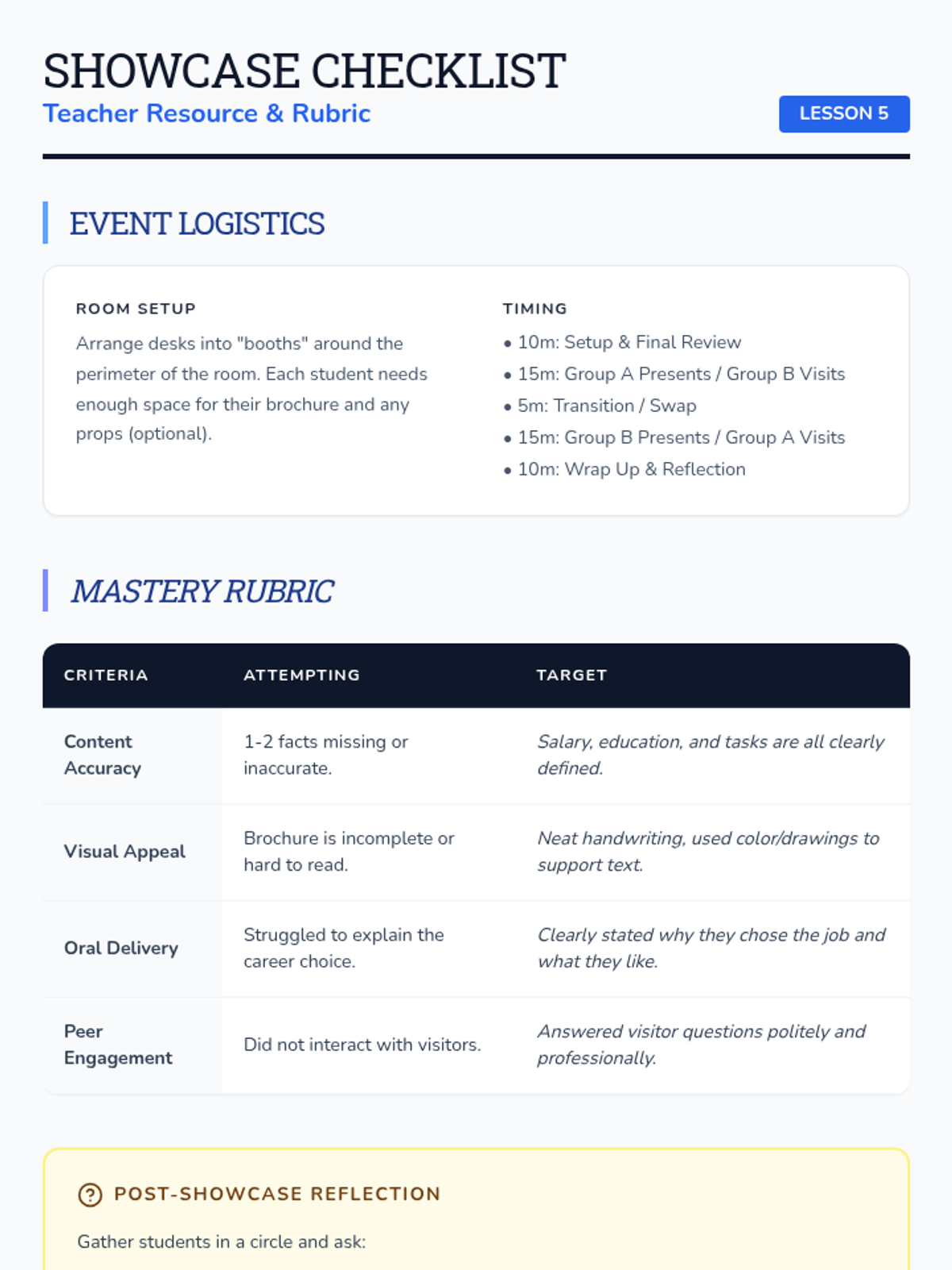
Students synthesize their learning into a final project, creating a visual brochure and presenting their chosen career path to the class.
Students practice professional communication through social etiquette simulations and by drafting a formal email to an employer.
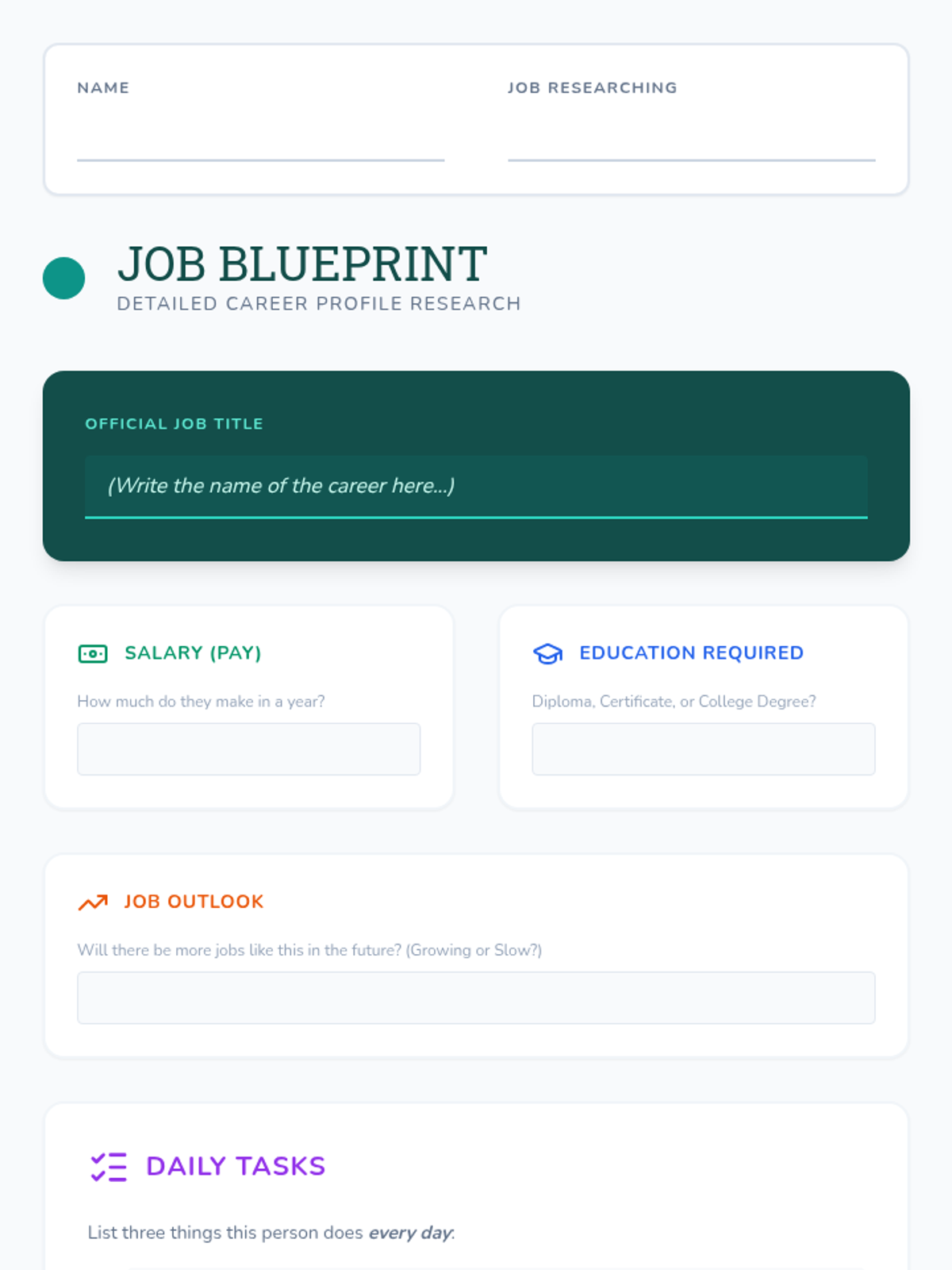
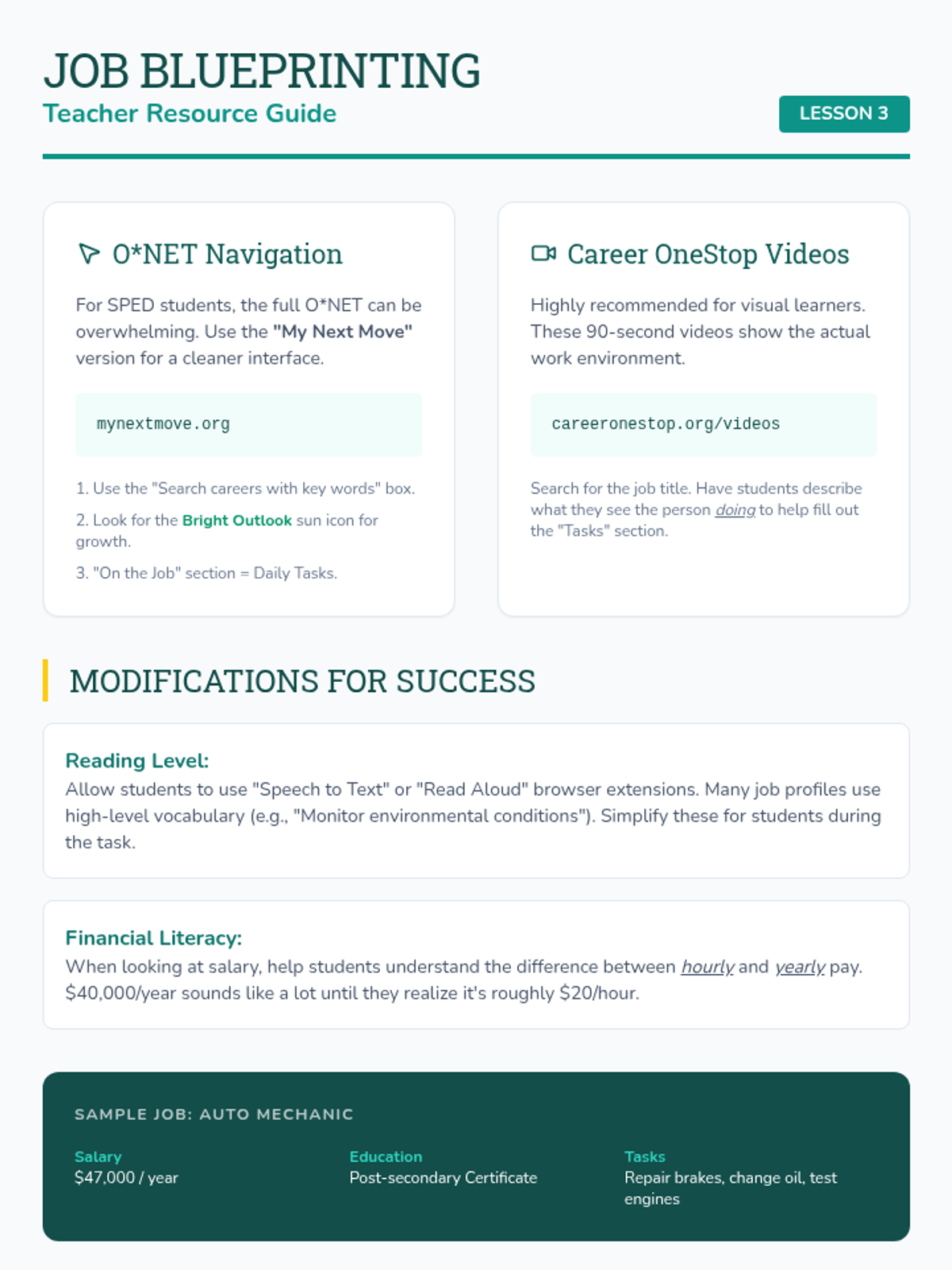
Students use online tools to research a specific job profile, identifying essential data such as salary, required education, and daily responsibilities.
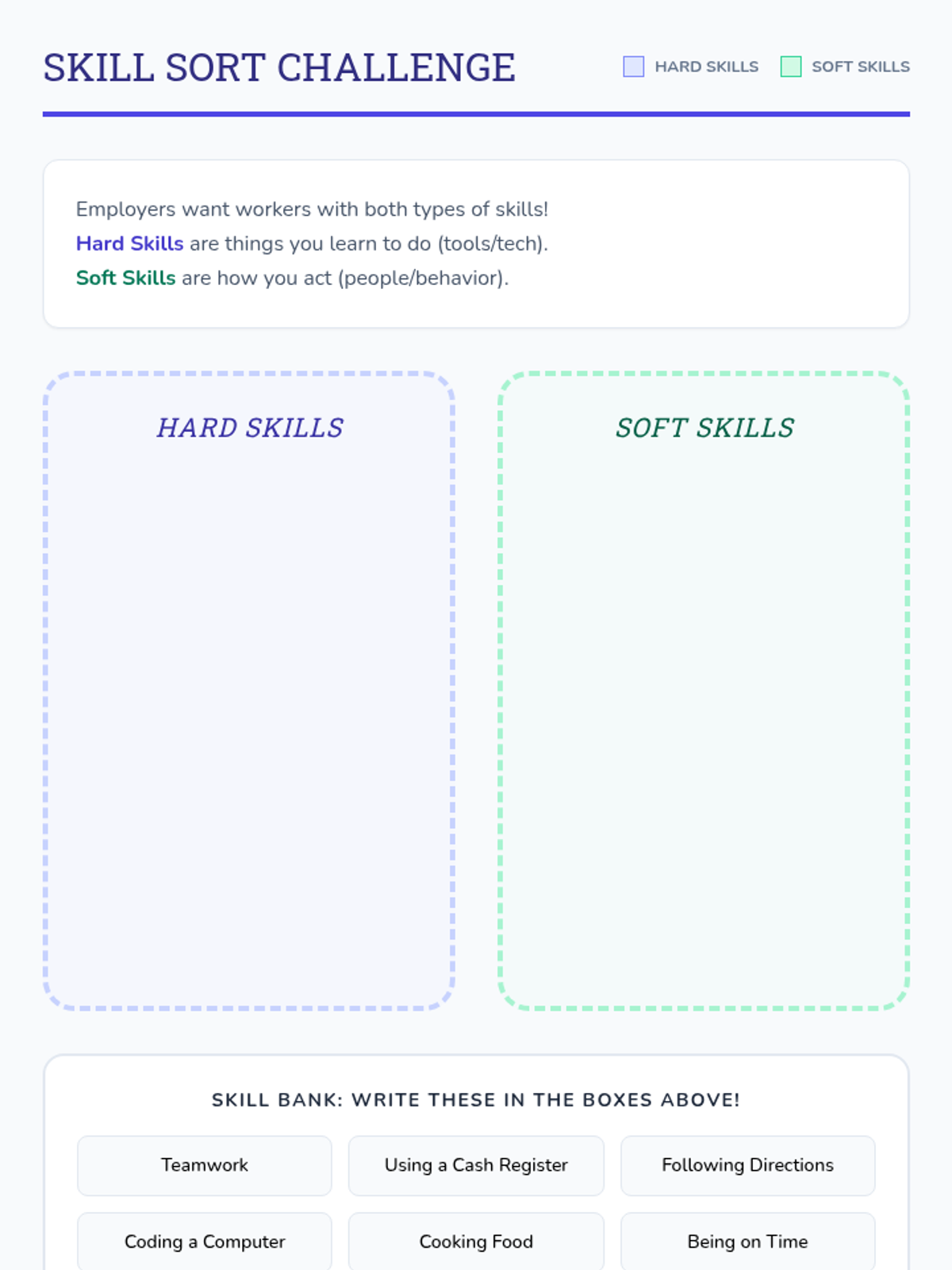
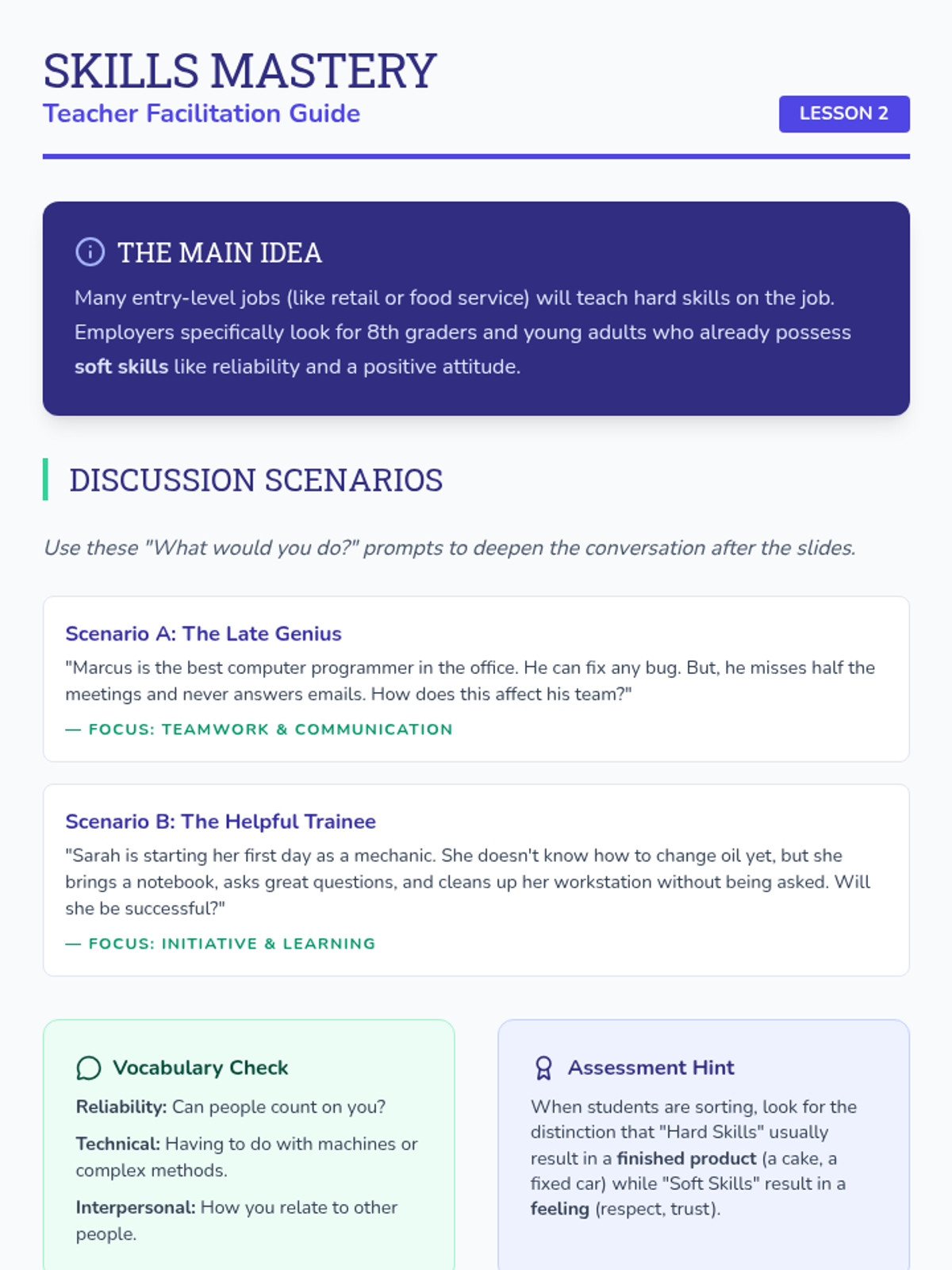
Students differentiate between 'Hard Skills' (technical abilities) and 'Soft Skills' (interpersonal traits) and explore why employers value both.
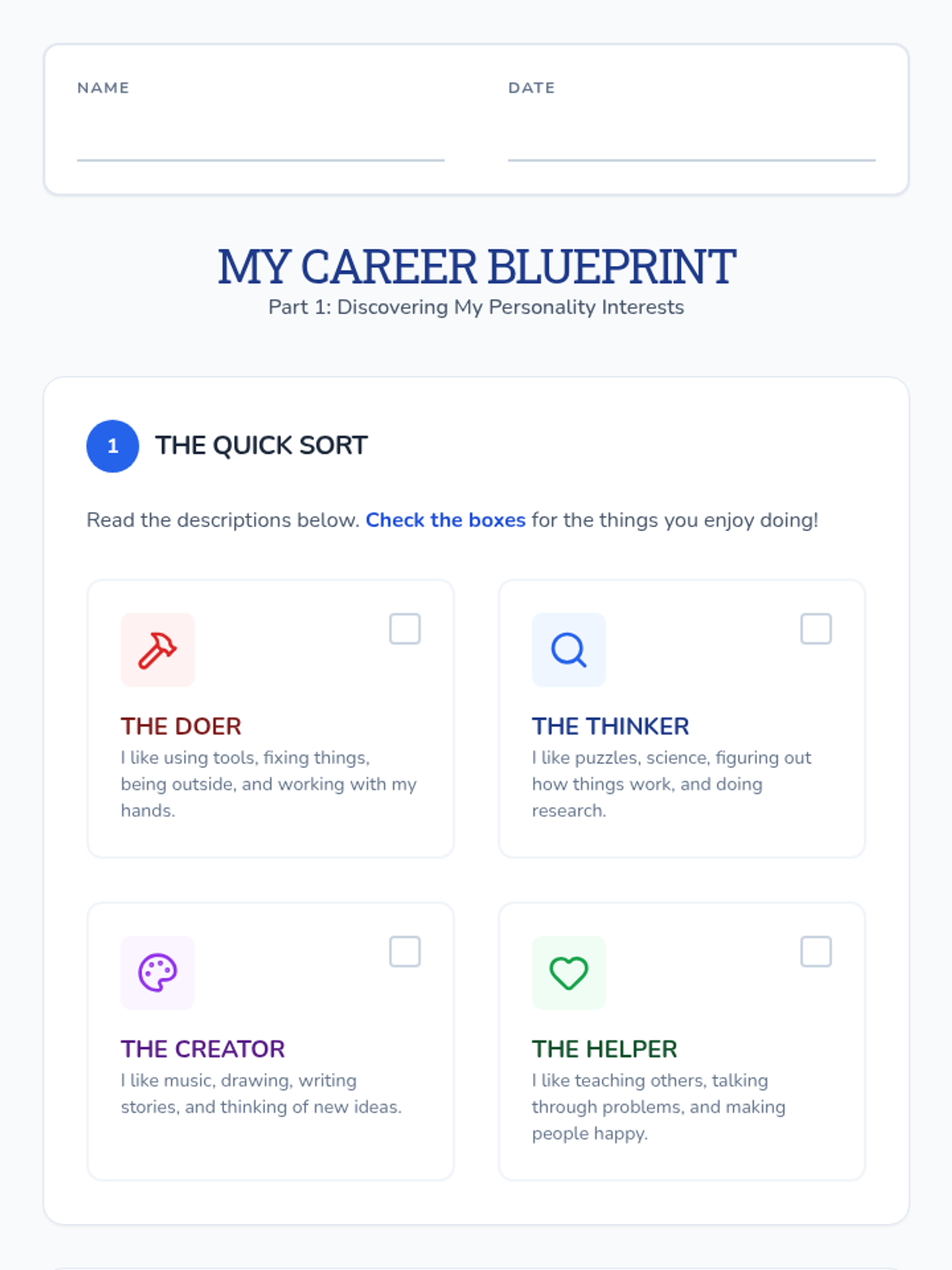
Students identify their personal interests and personality types using a simplified RIASEC model to explore how they align with the 16 National Career Clusters.
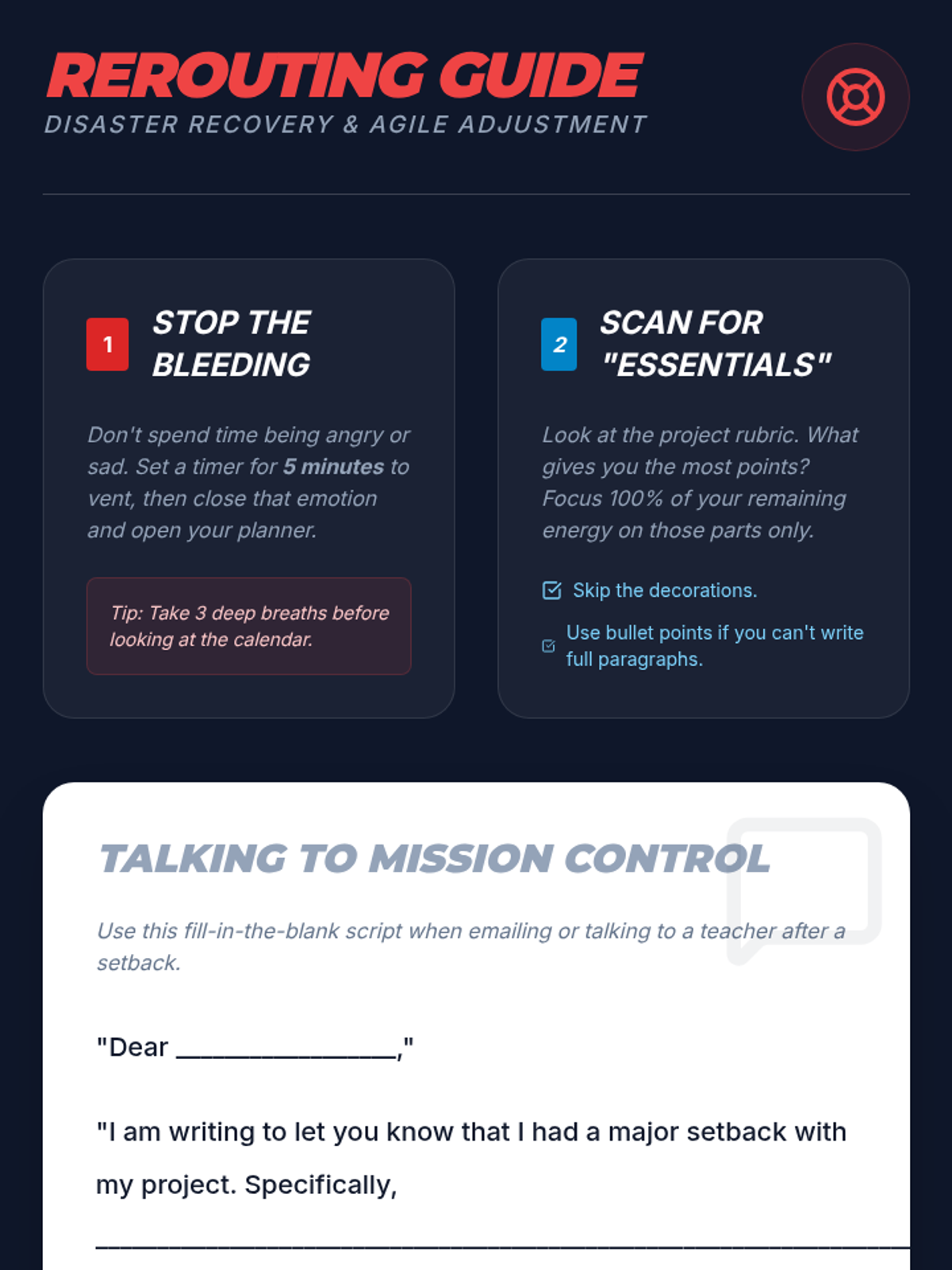
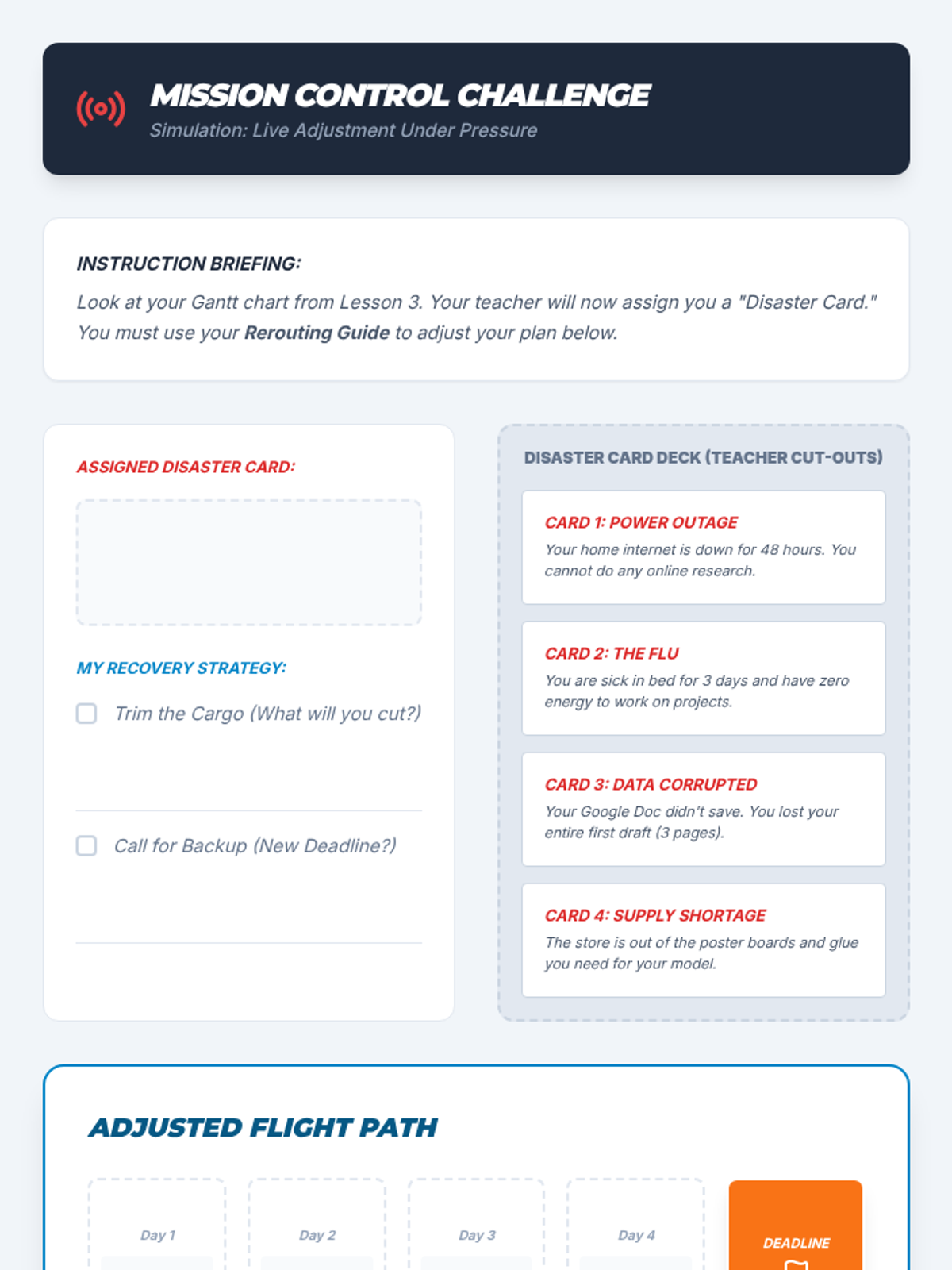
Students simulate a 'disaster' scenario where a project phase goes wrong or a computer crashes, requiring a plan adjustment. They learn strategies for renegotiating deadlines and condensing work without sacrificing quality.
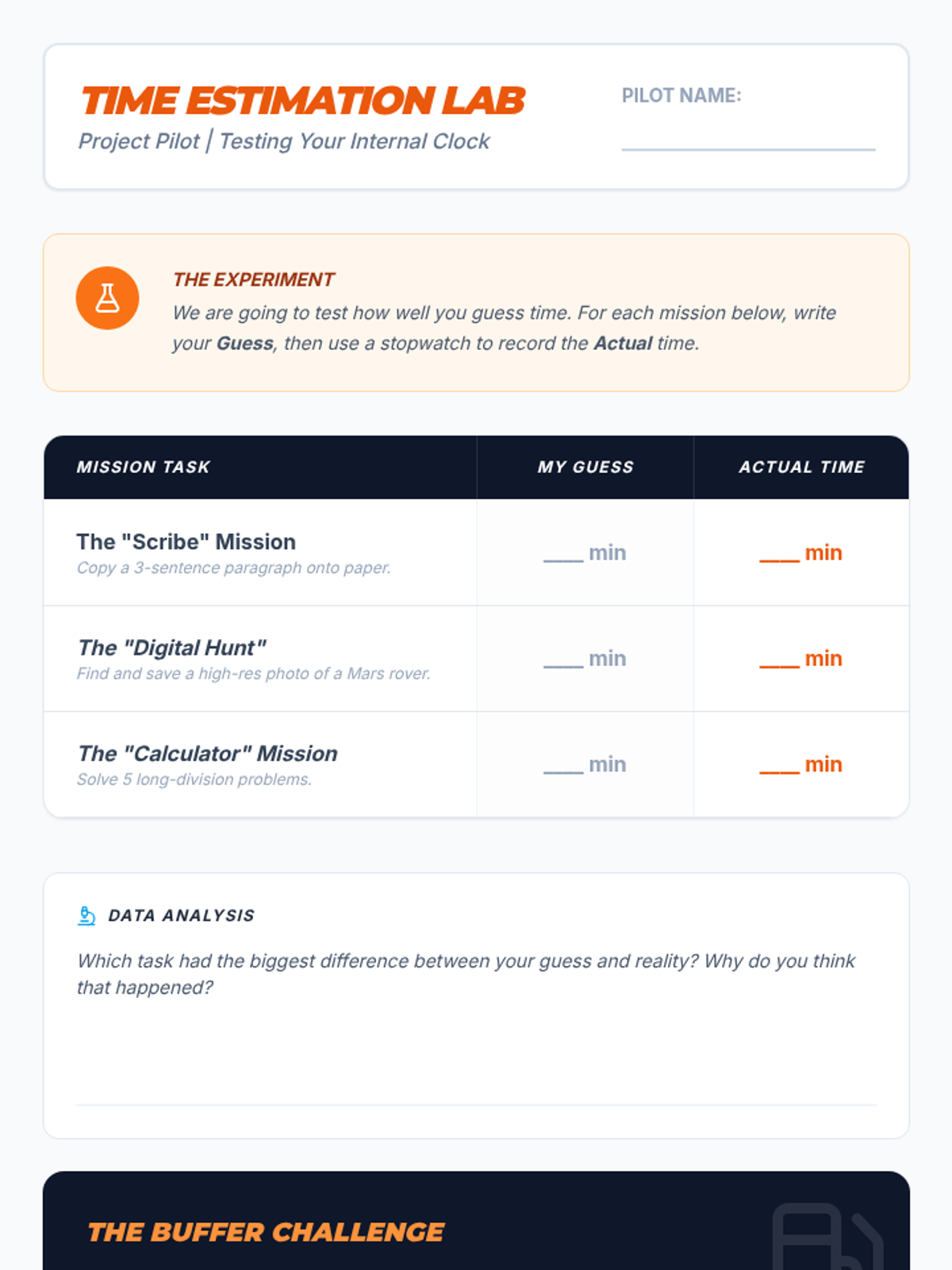
Students practice forecasting how long specific academic tasks take and learn to add contingency buffers for unexpected delays. They review past assignments to compare estimated vs. actual time.
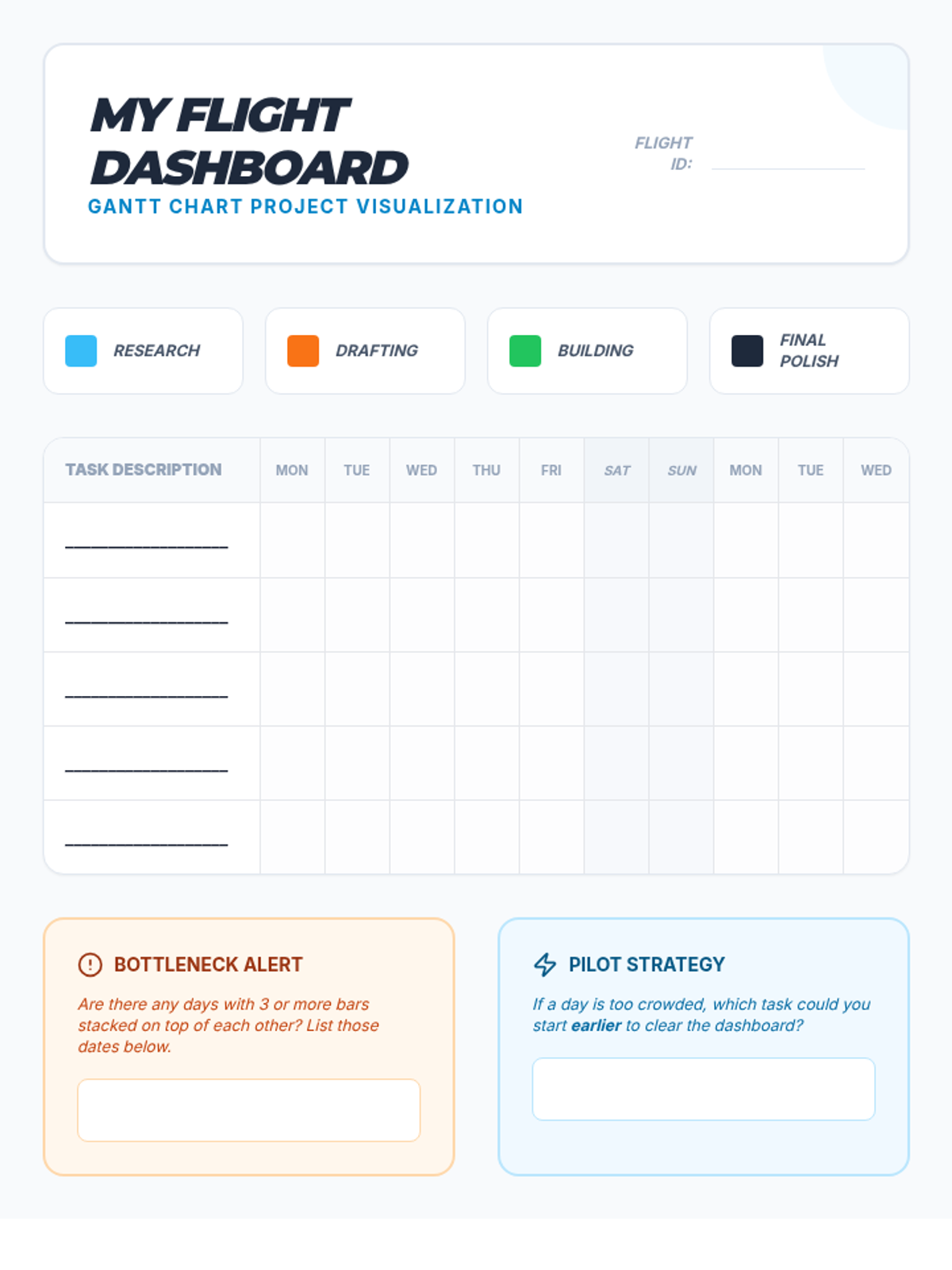
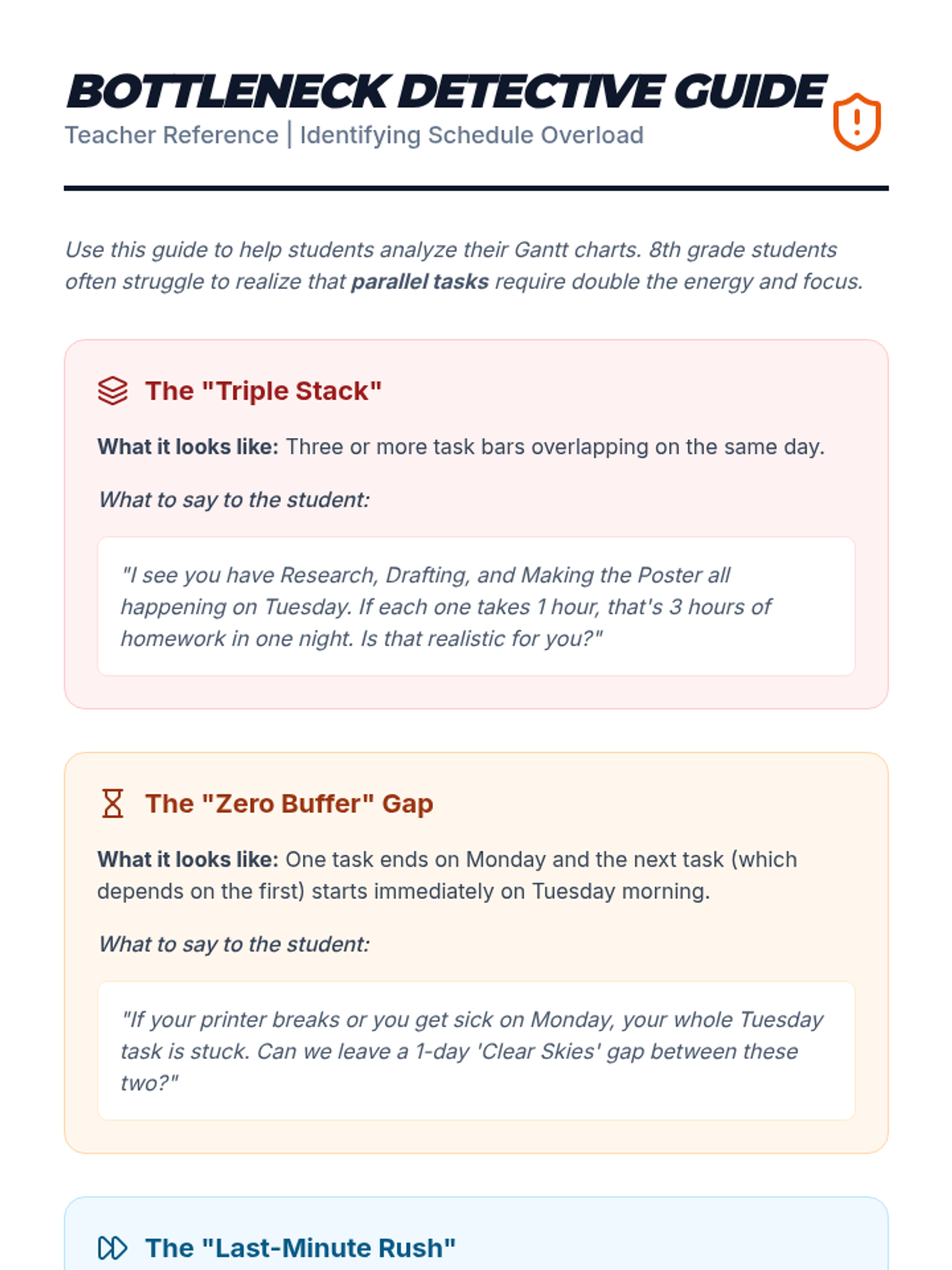
Students create a simplified Gantt chart to visualize overlapping commitments and project phases. They color-code concurrent tasks to identify potential bottlenecks.
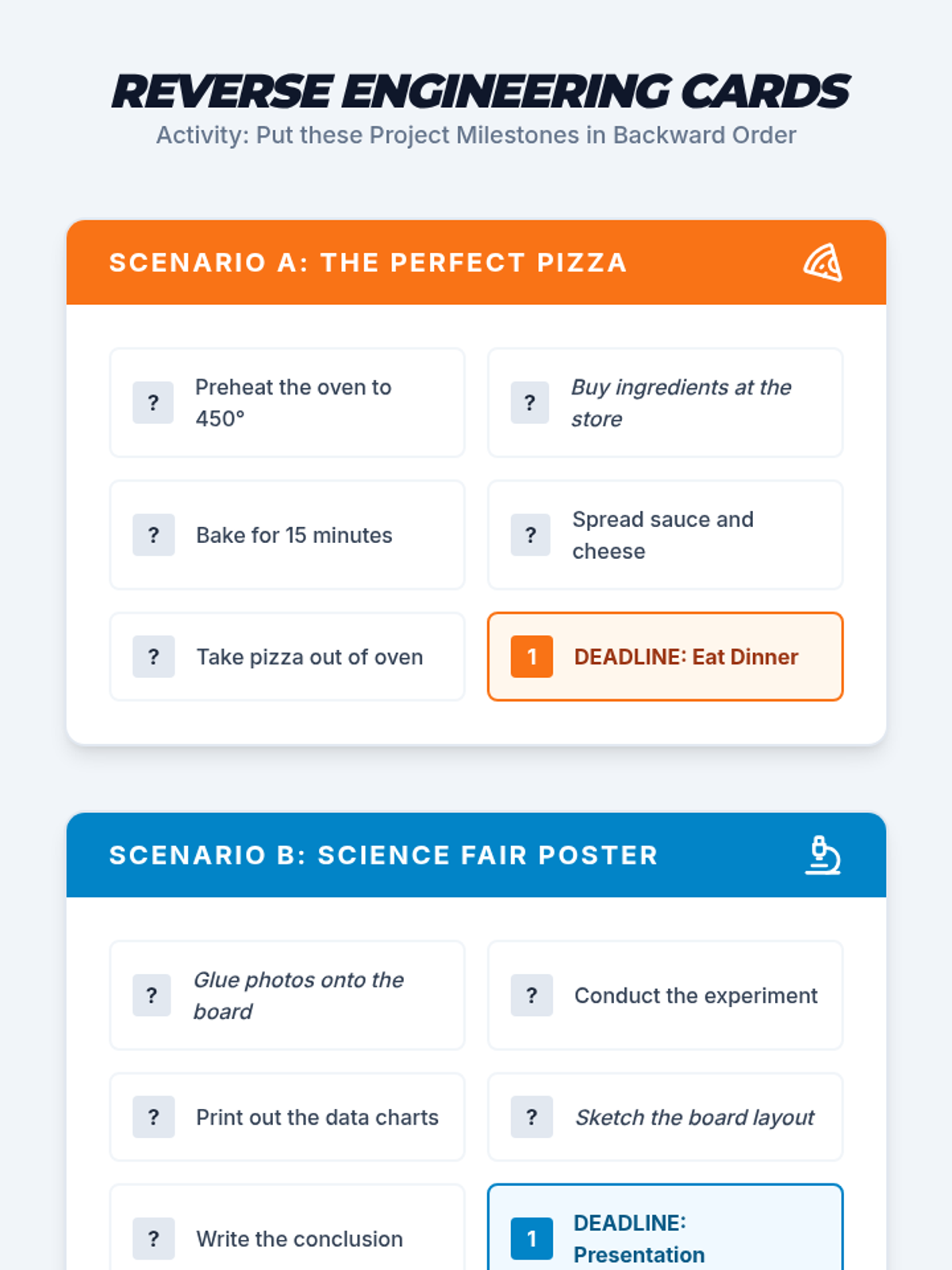
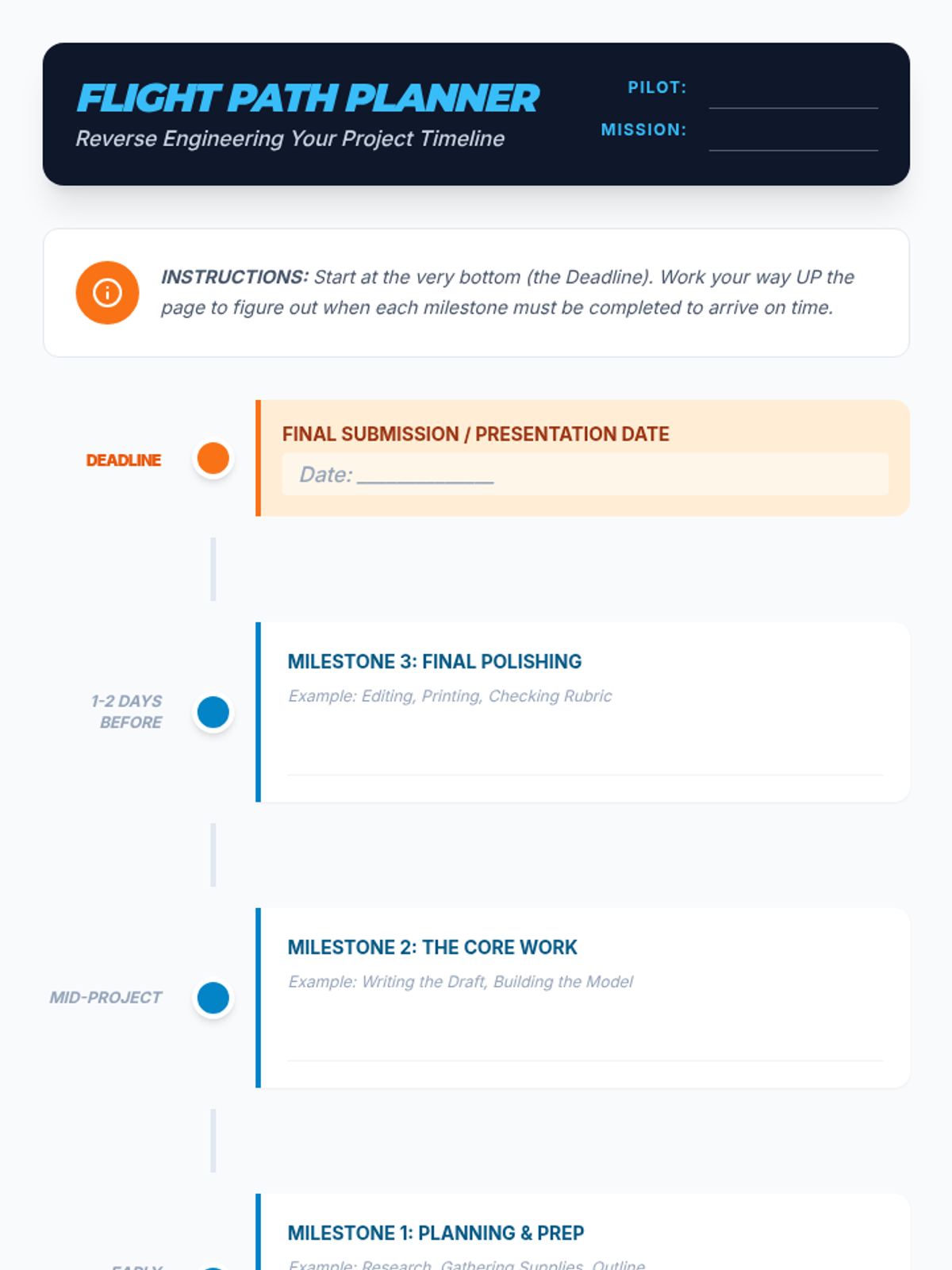
Starting from a fixed due date, students work backward to place milestones on a calendar, learning to sequence dependent tasks.
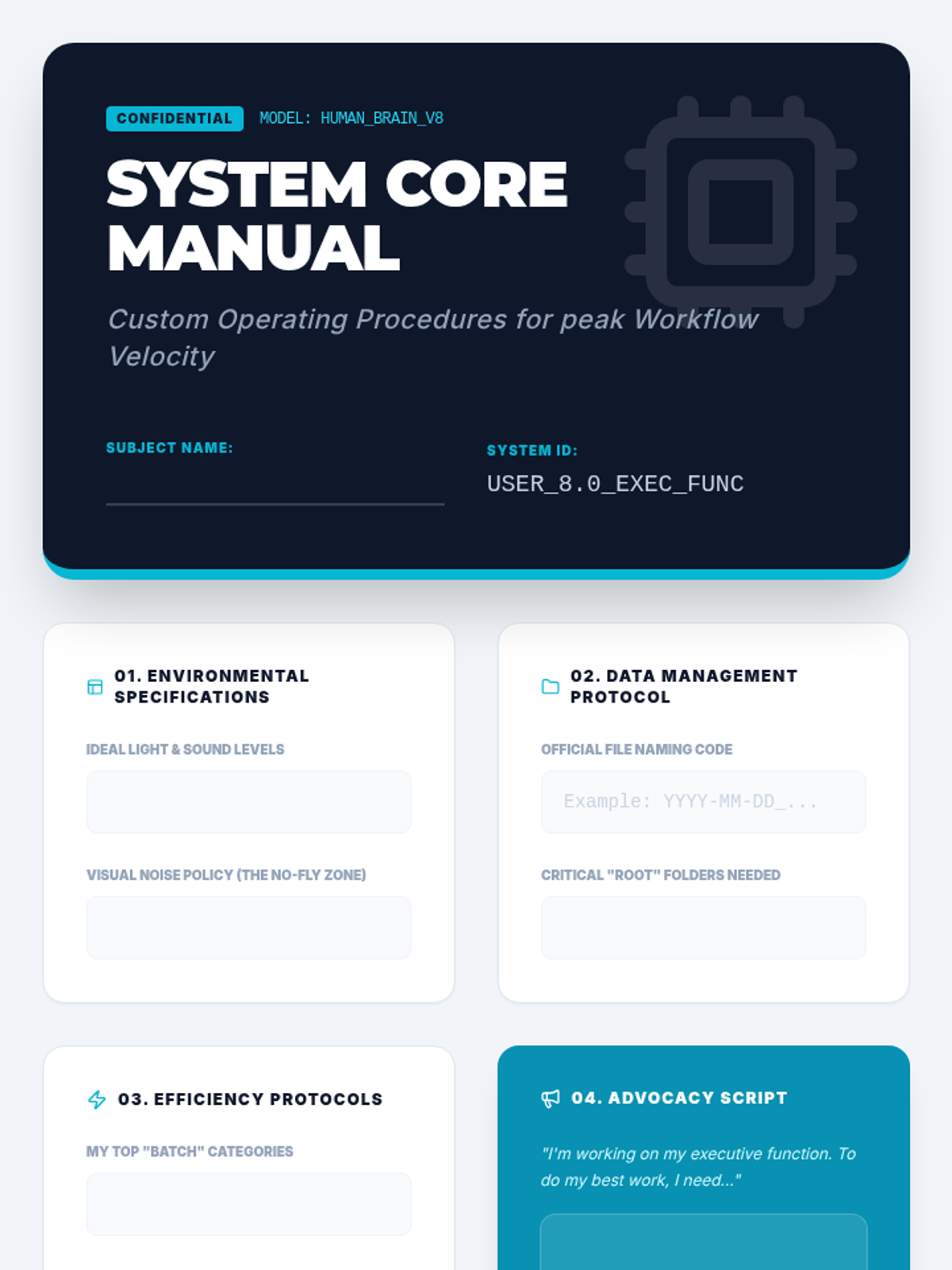
In this capstone lesson, students synthesize their learning into a 'User Manual' for their own brain. They document personalized strategies for physical, digital, and temporal organization to build self-advocacy and long-term habits.
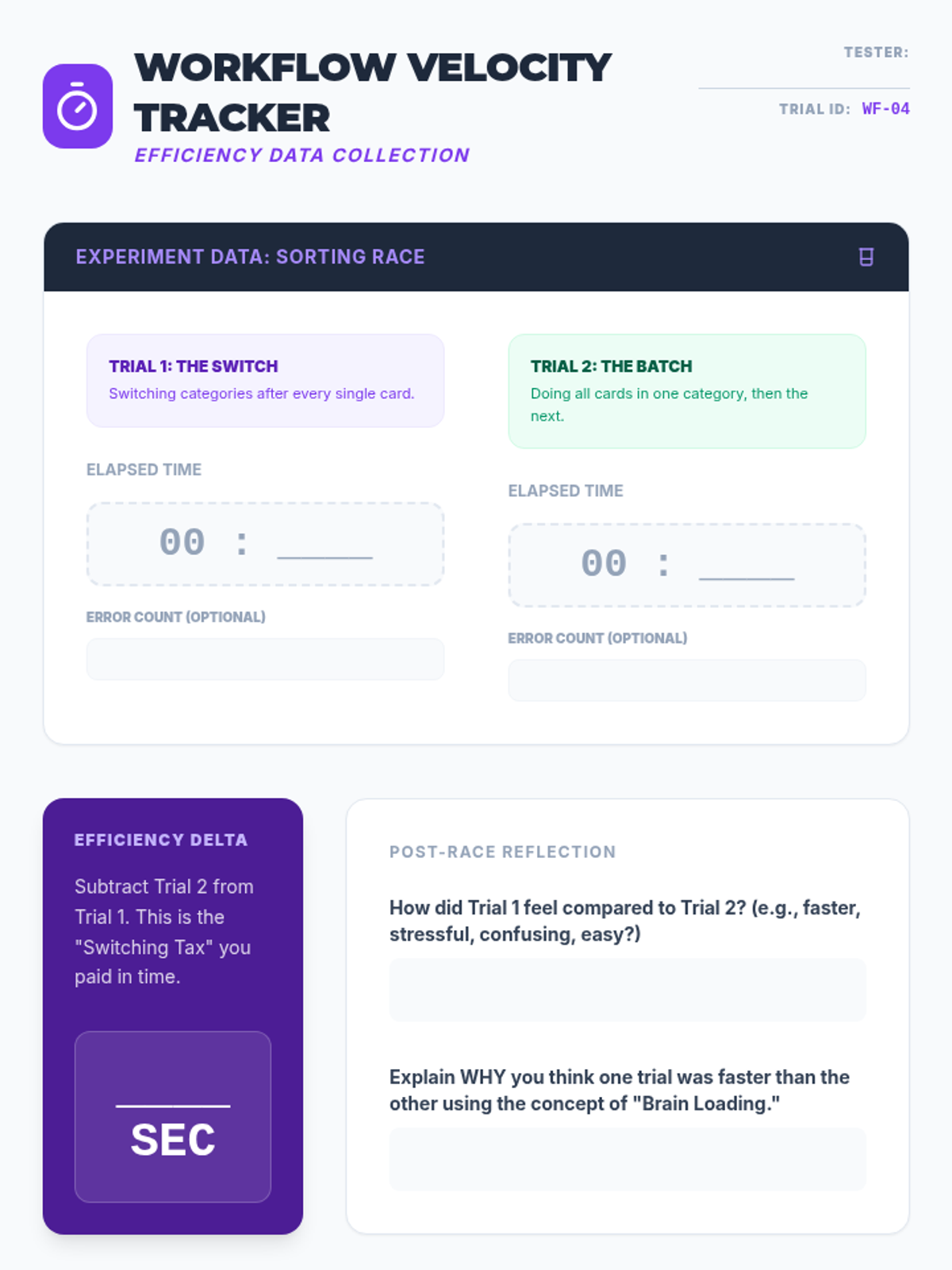
Students investigate the efficiency costs of multitasking and context switching. Through timed experiments, they compare sequential task completion with 'batching' strategies to develop more efficient workflow habits.
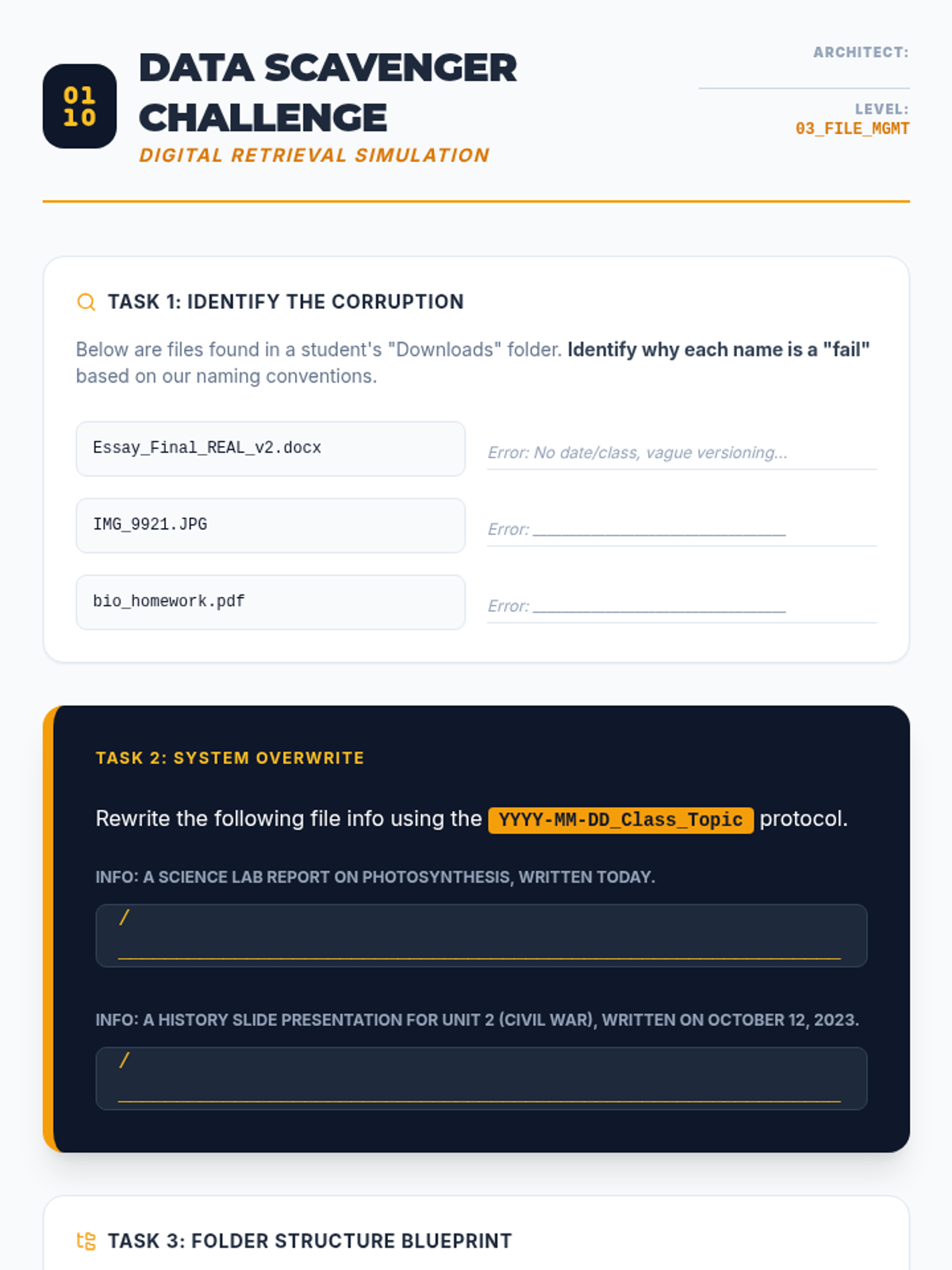
This lesson focuses on digital literacy through the lens of organization. Students learn effective file naming conventions, folder hierarchies, and inbox management strategies to prevent 'digital hoarding' and improve information retrieval speed.
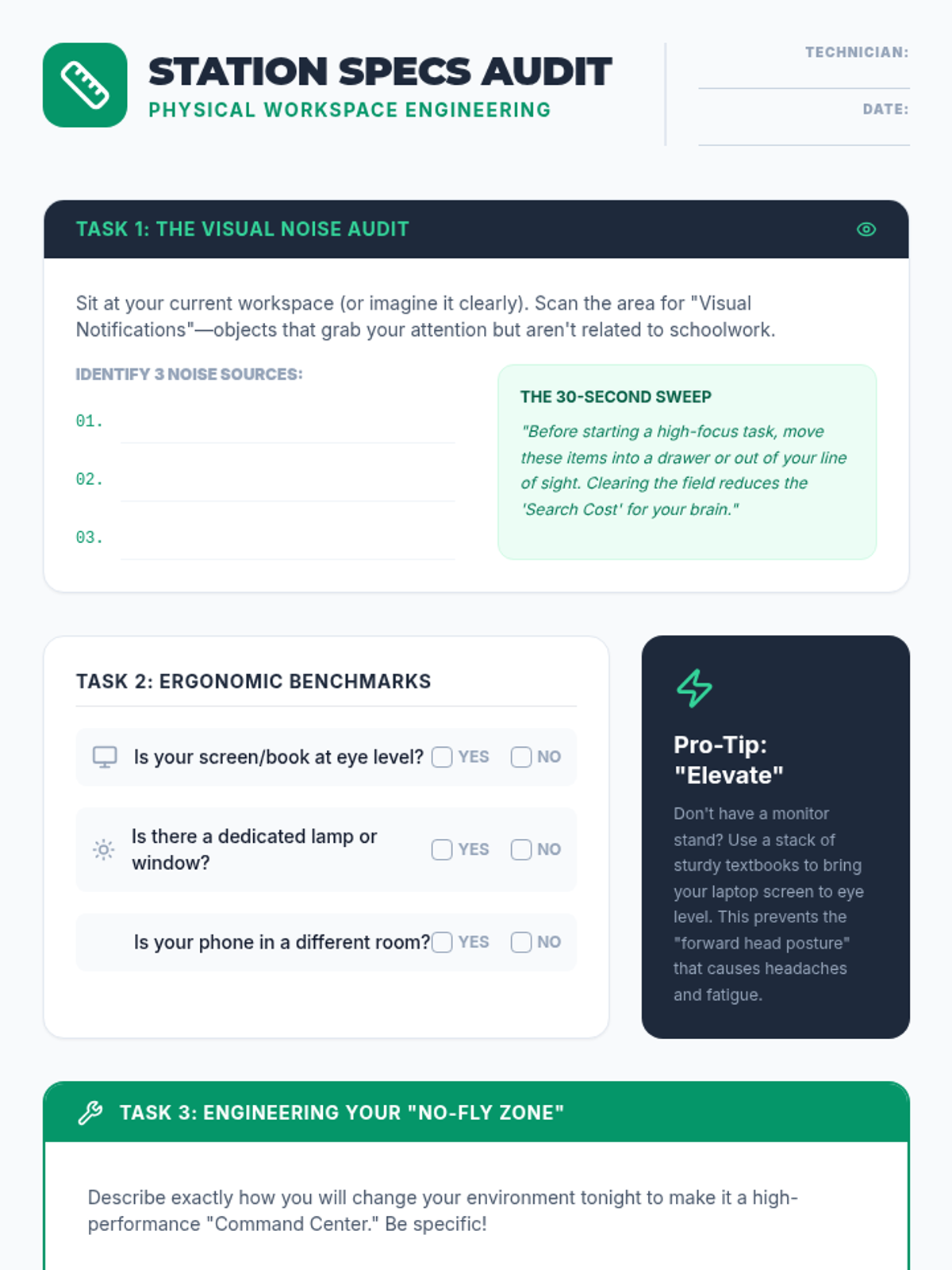
Students analyze the impact of their physical environment on focus and productivity. By auditing workspace case studies and their own study areas, they learn to design spaces that minimize distractions and optimize ergonomics.
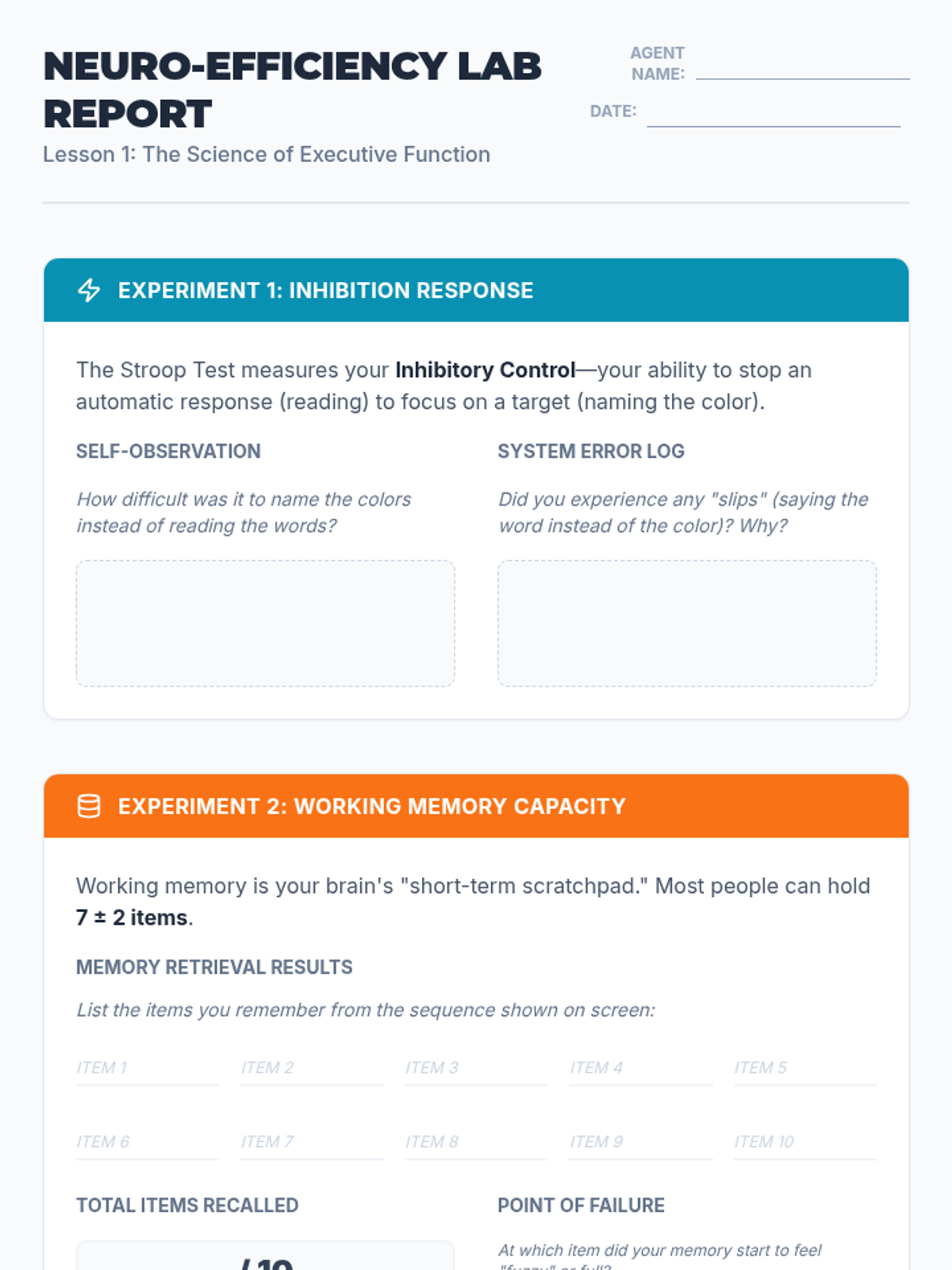
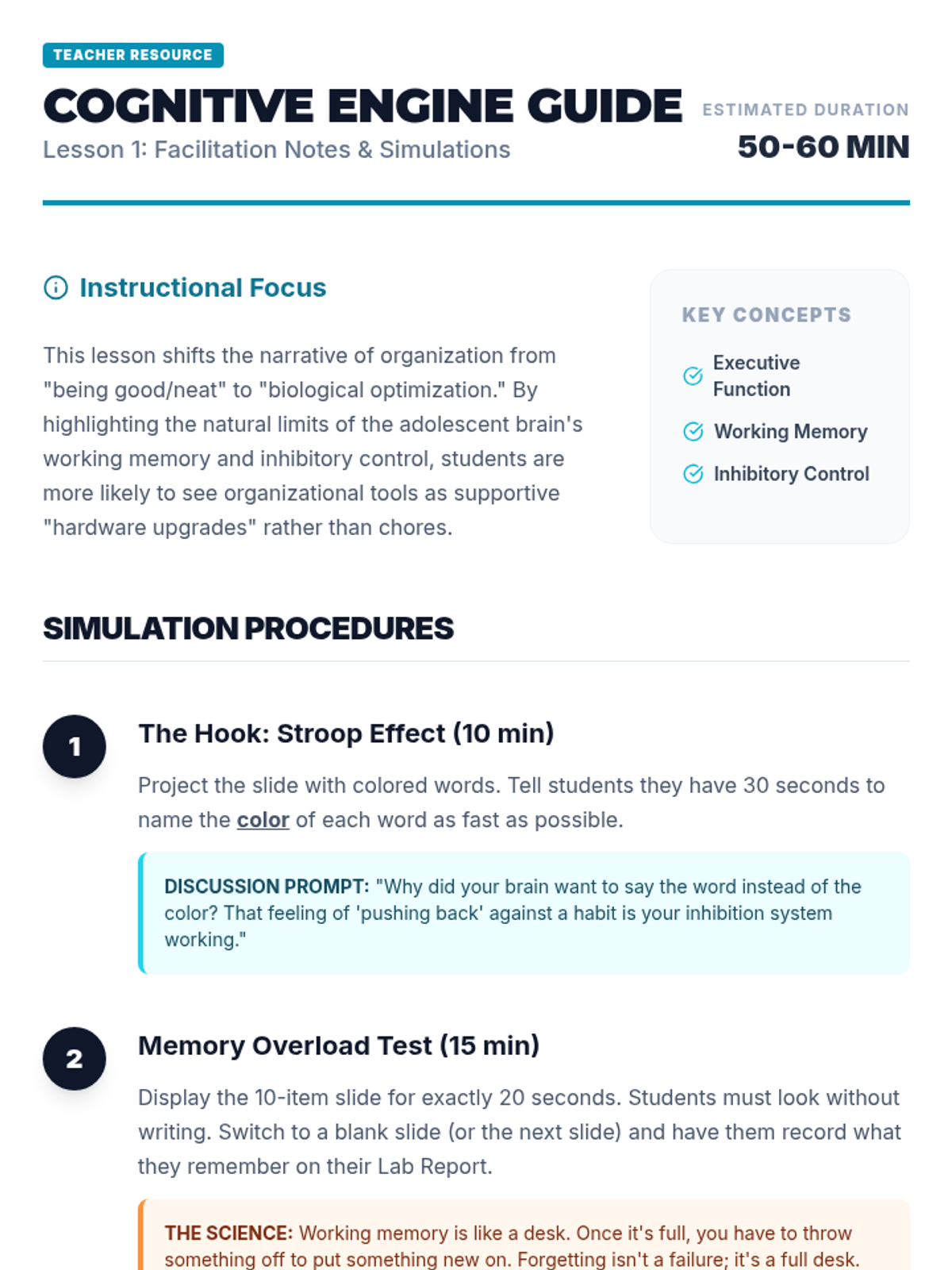
Students explore the neurological basis of executive function, focusing on working memory and inhibition. They engage in simulations like the Stroop Effect and memory overload tasks to understand why organizational systems are necessary for cognitive efficiency.
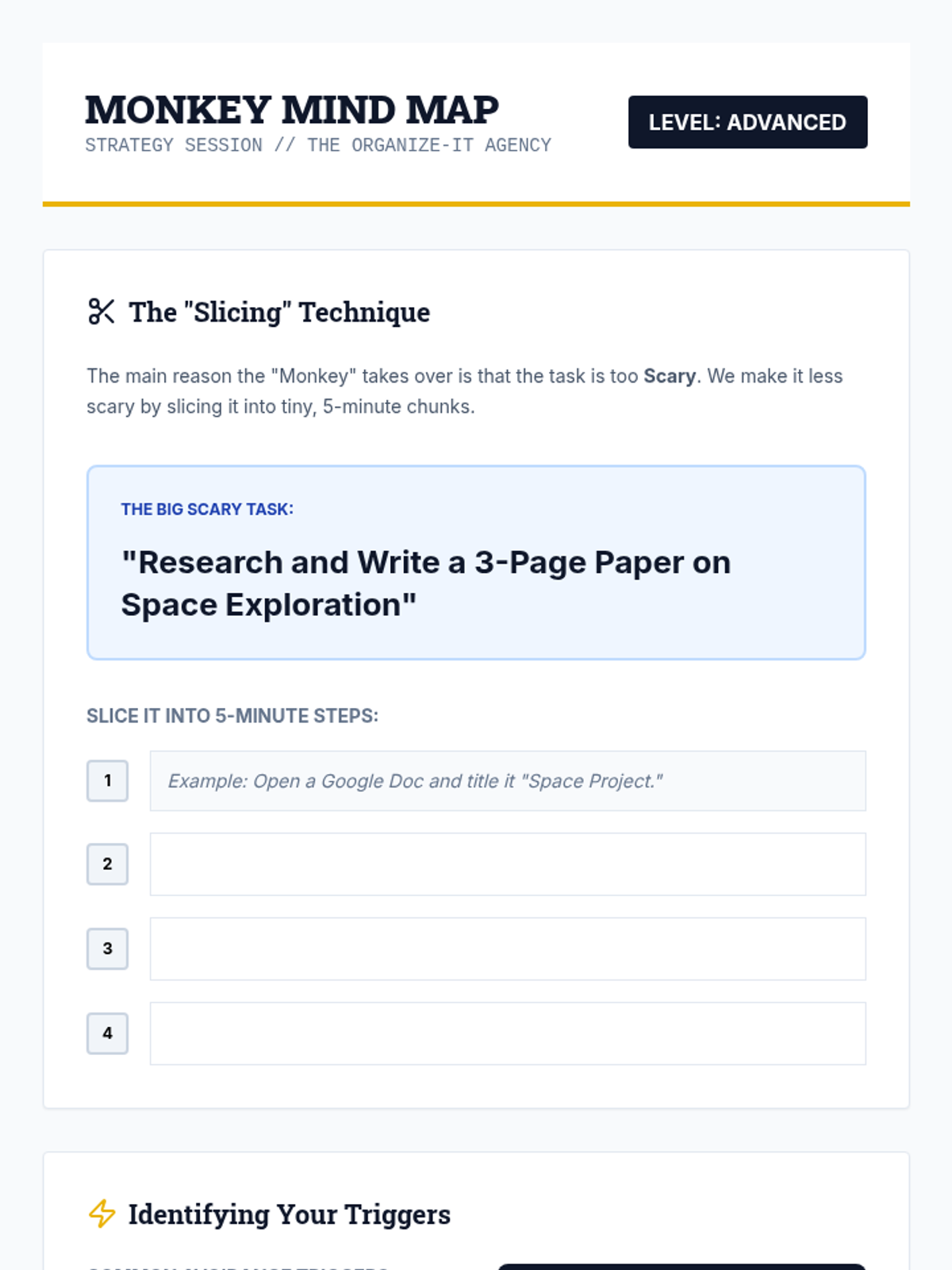
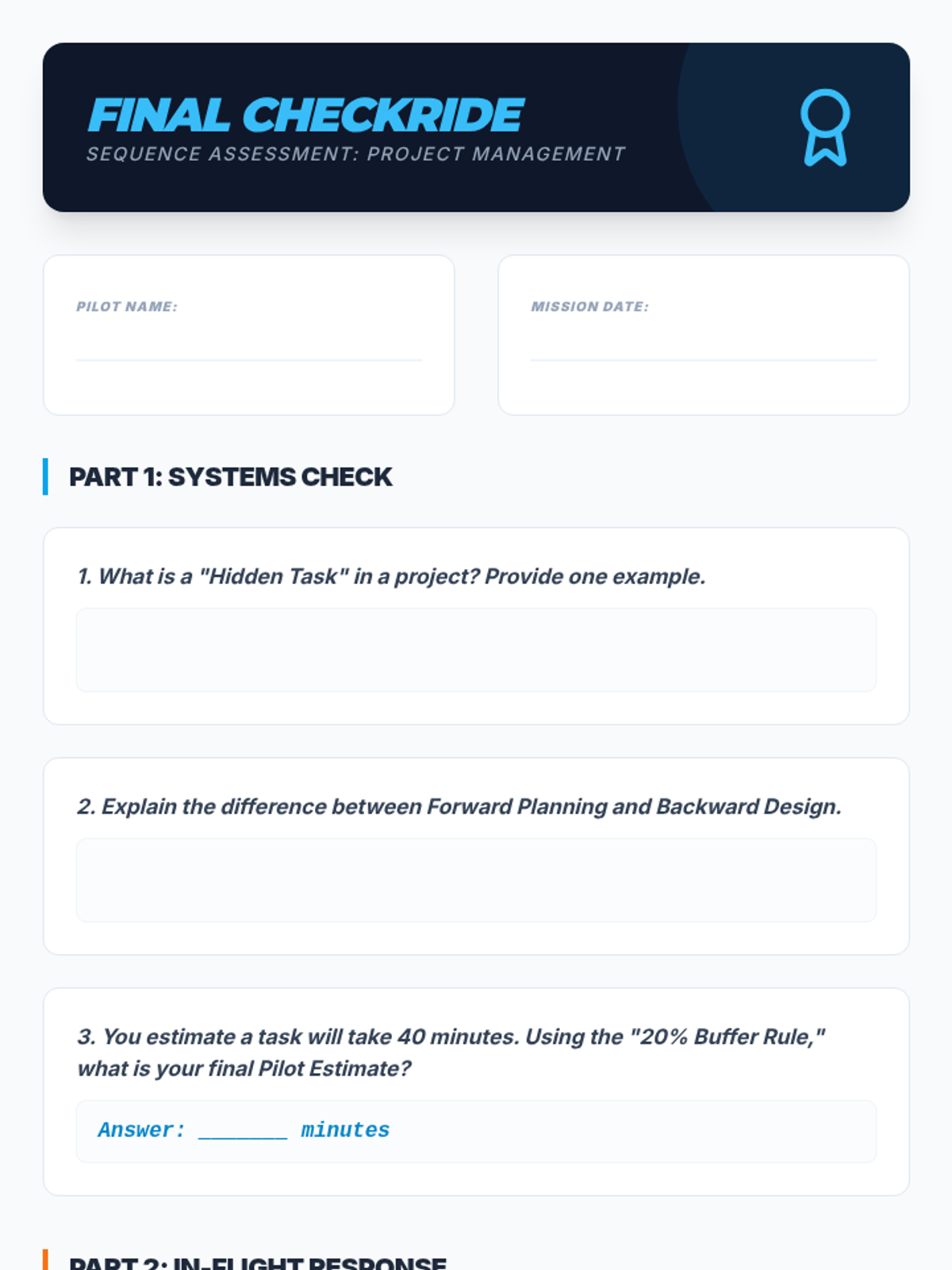
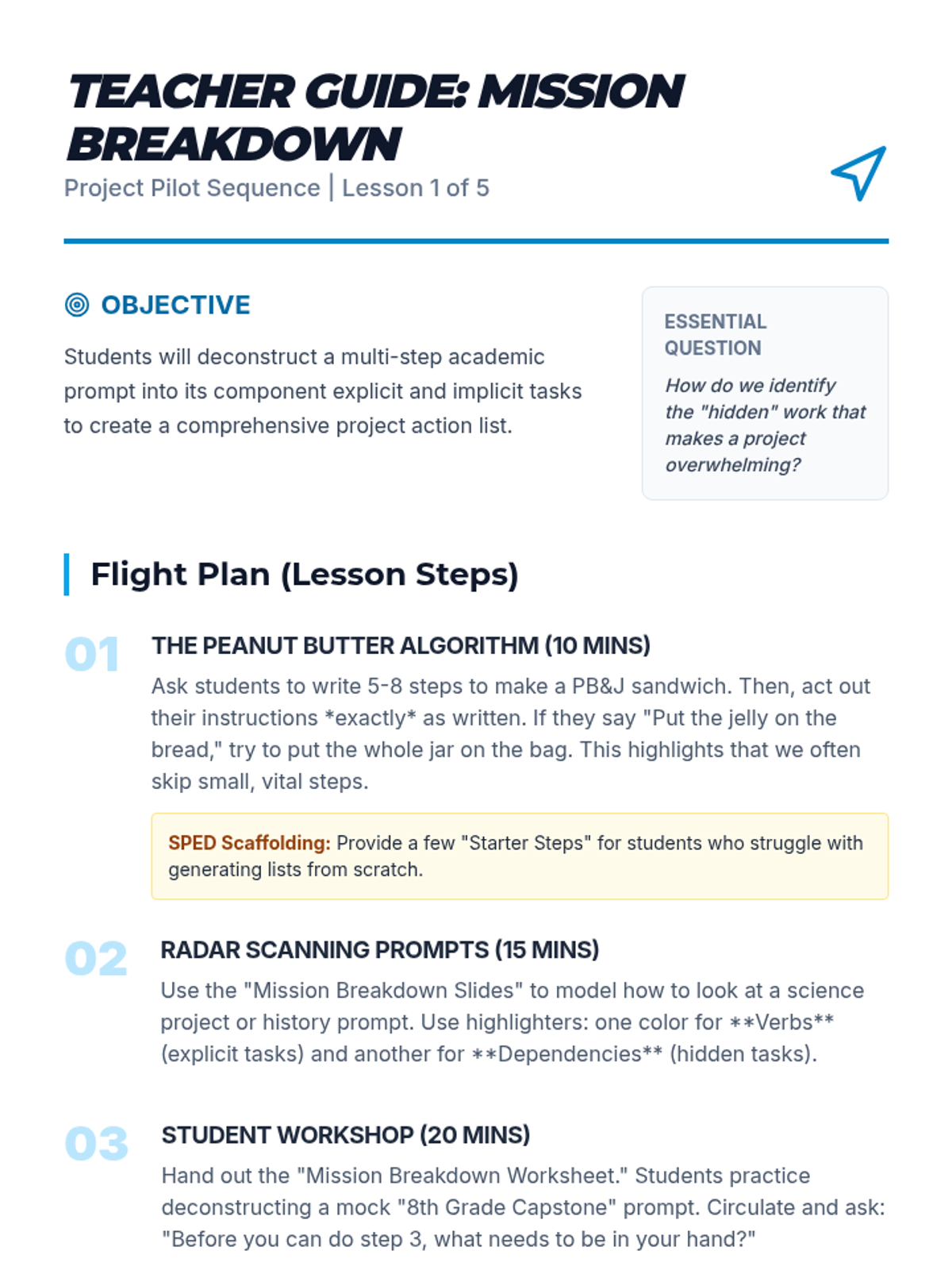
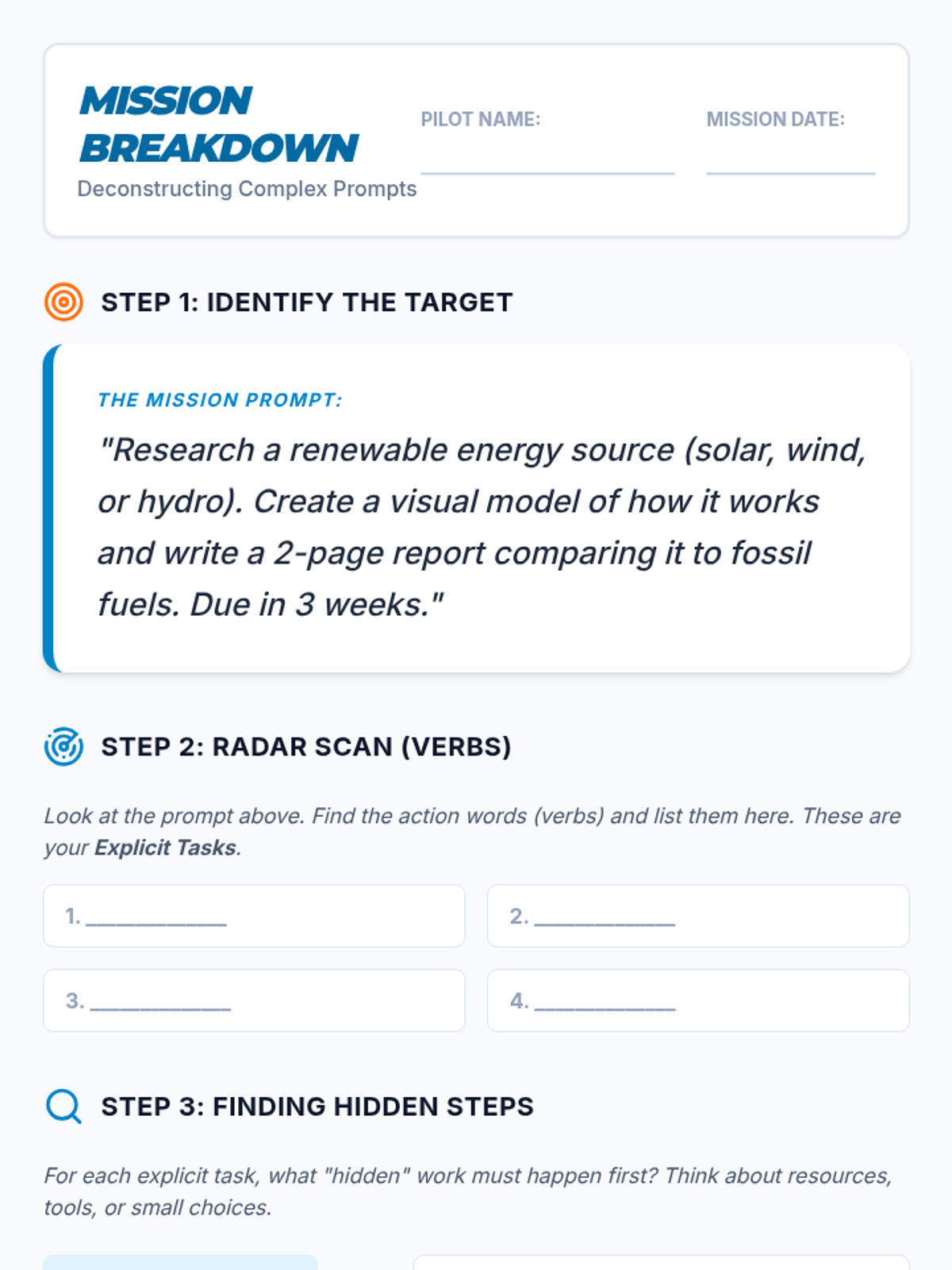
Students learn to identify 'hidden' sub-tasks within complex assignment prompts, using an aviation-themed approach to flight-plan their academic work.
Focuses on the concept of opportunity cost through role-playing scenarios, teaching students to analyze the value of what is given up when making choices.
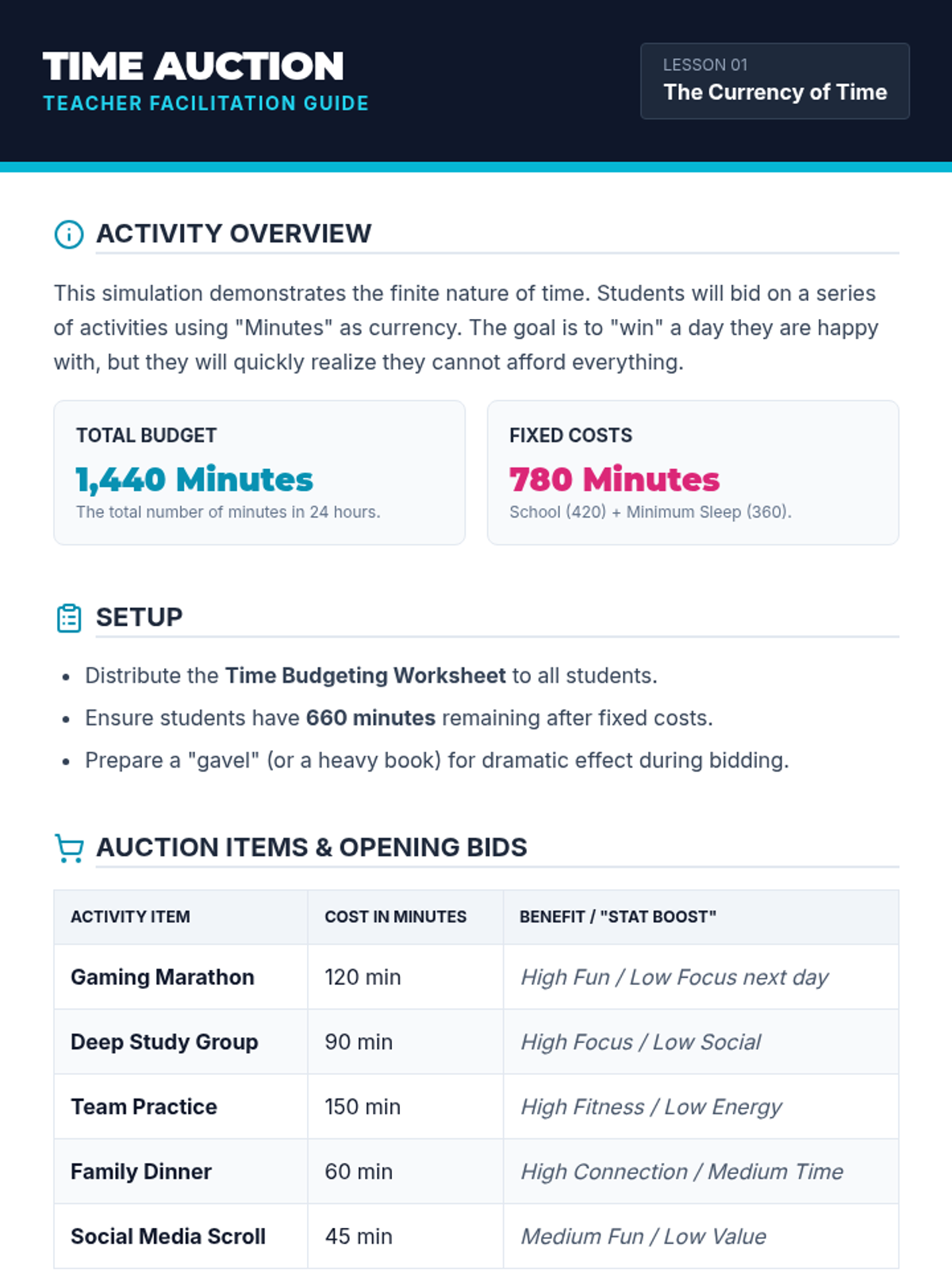
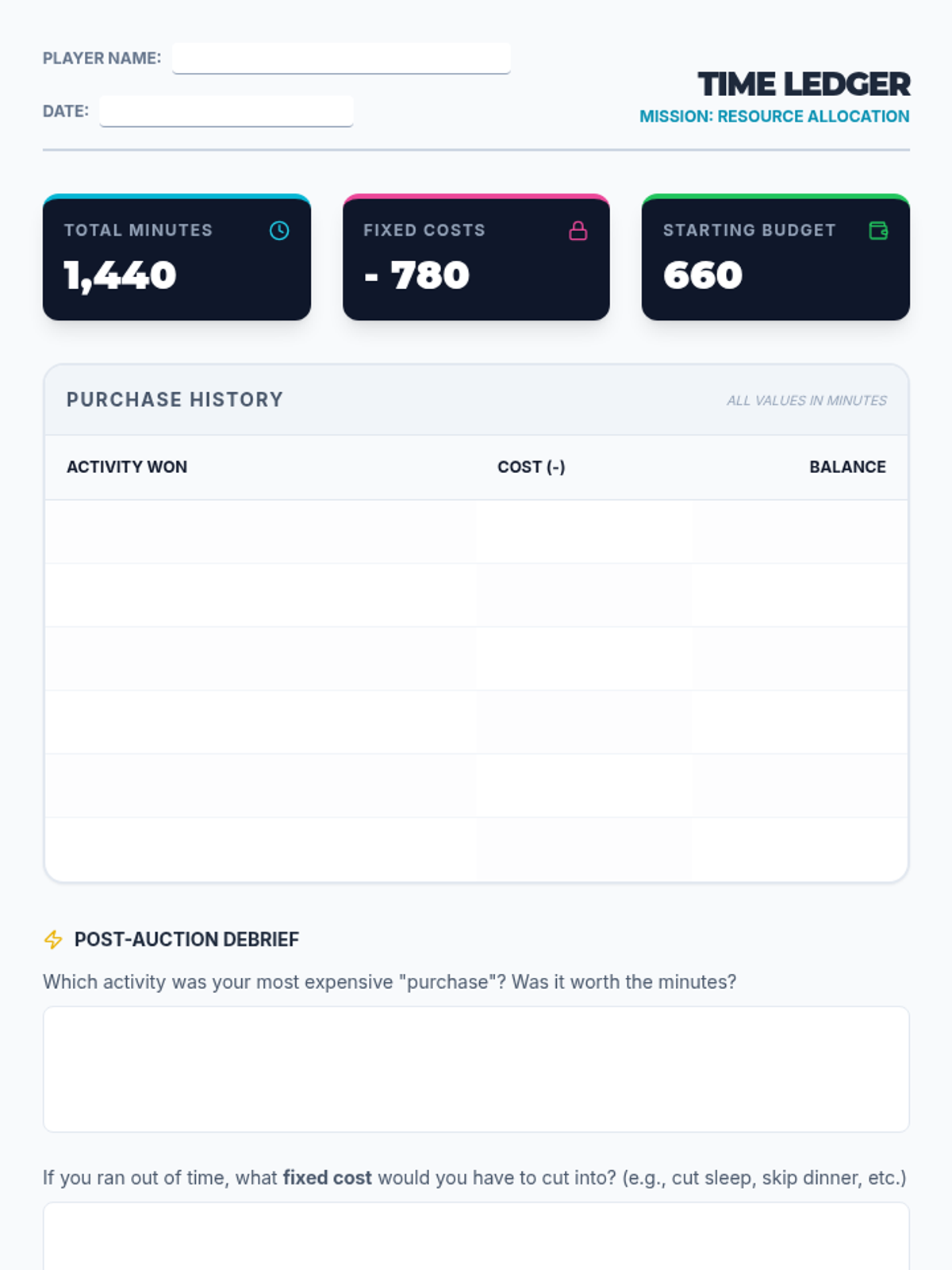
Introduces time as a finite currency through a game economy where students 'buy' activities, establishing the foundational constraint of resource management.
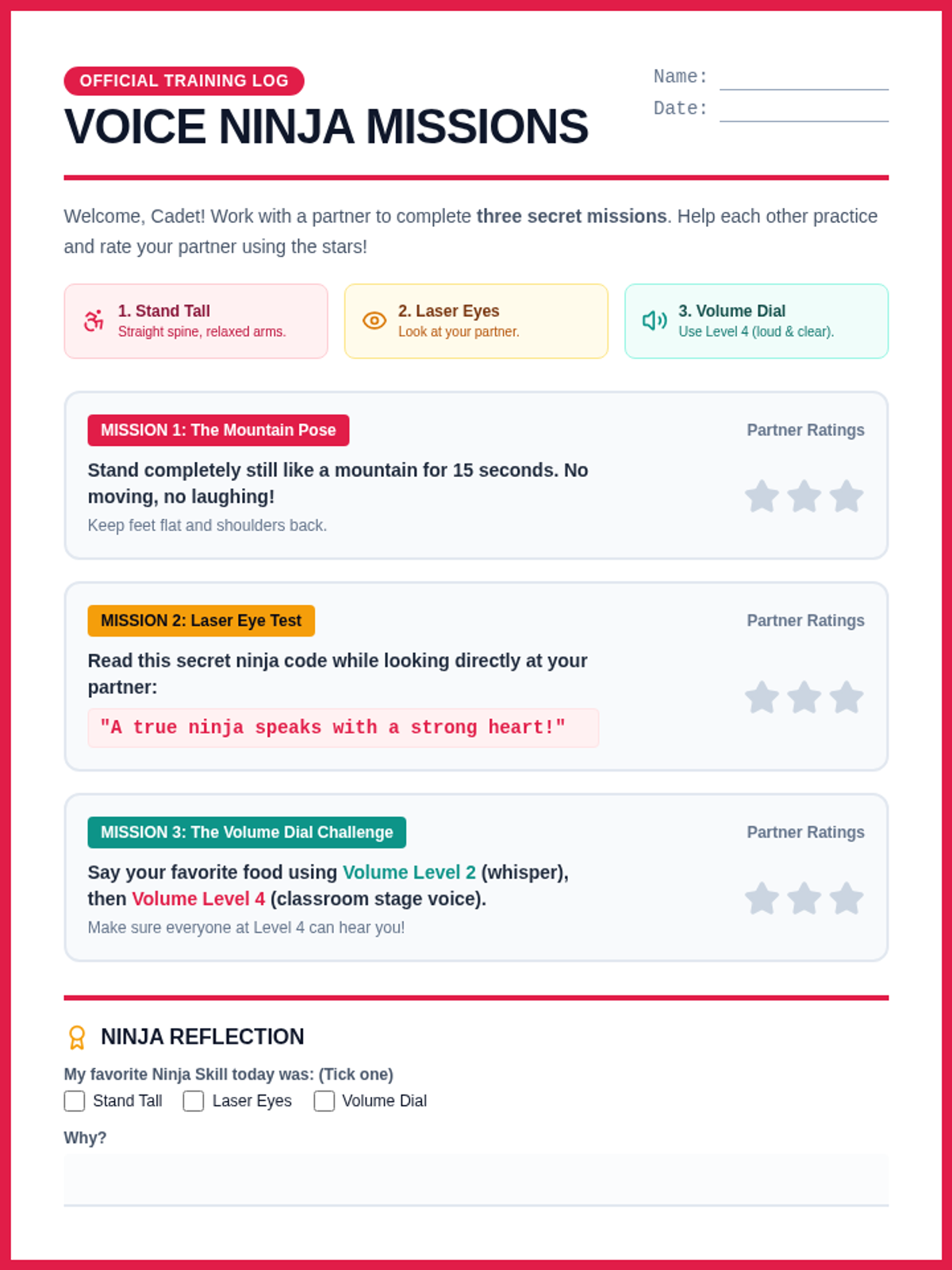
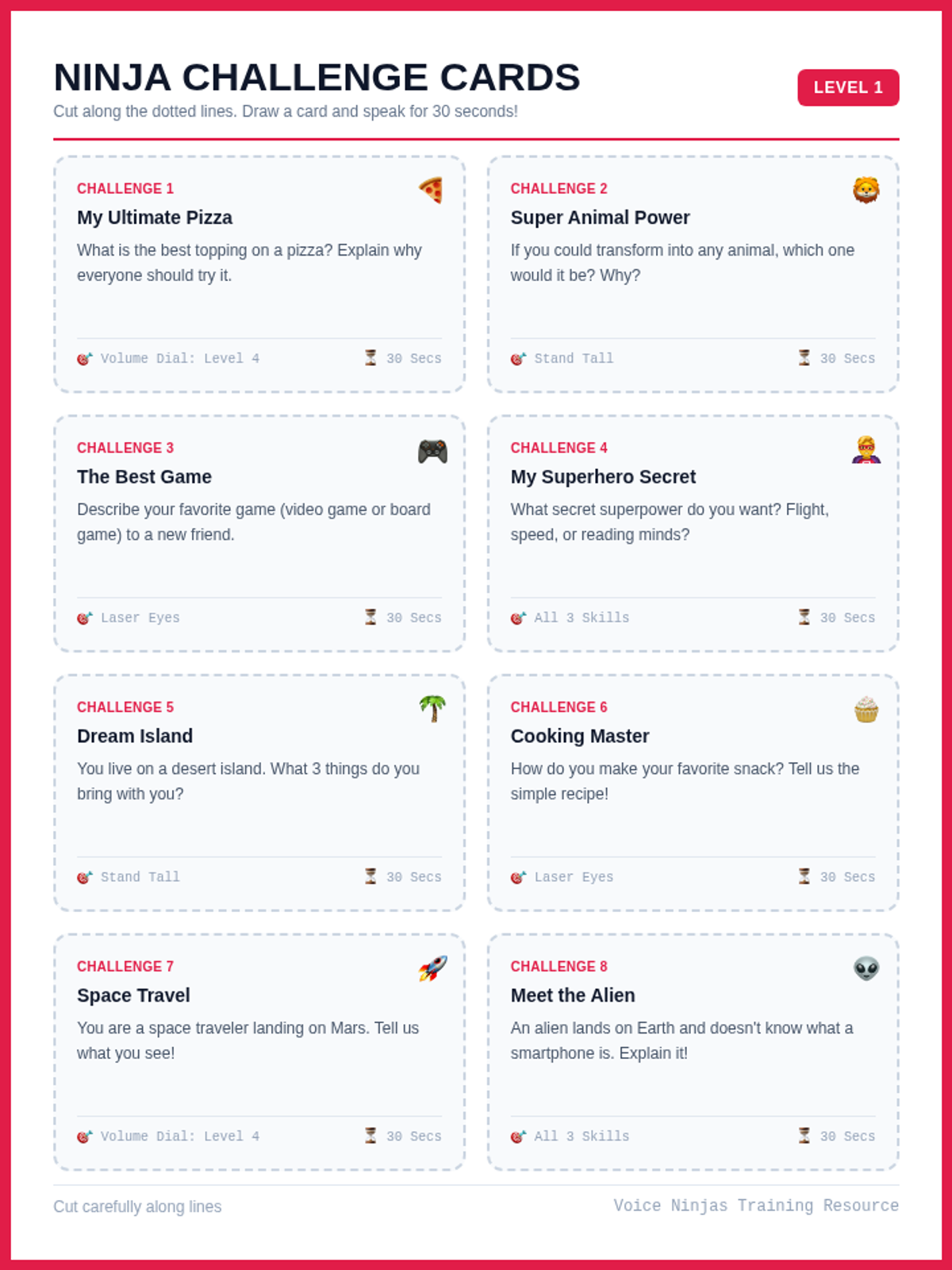
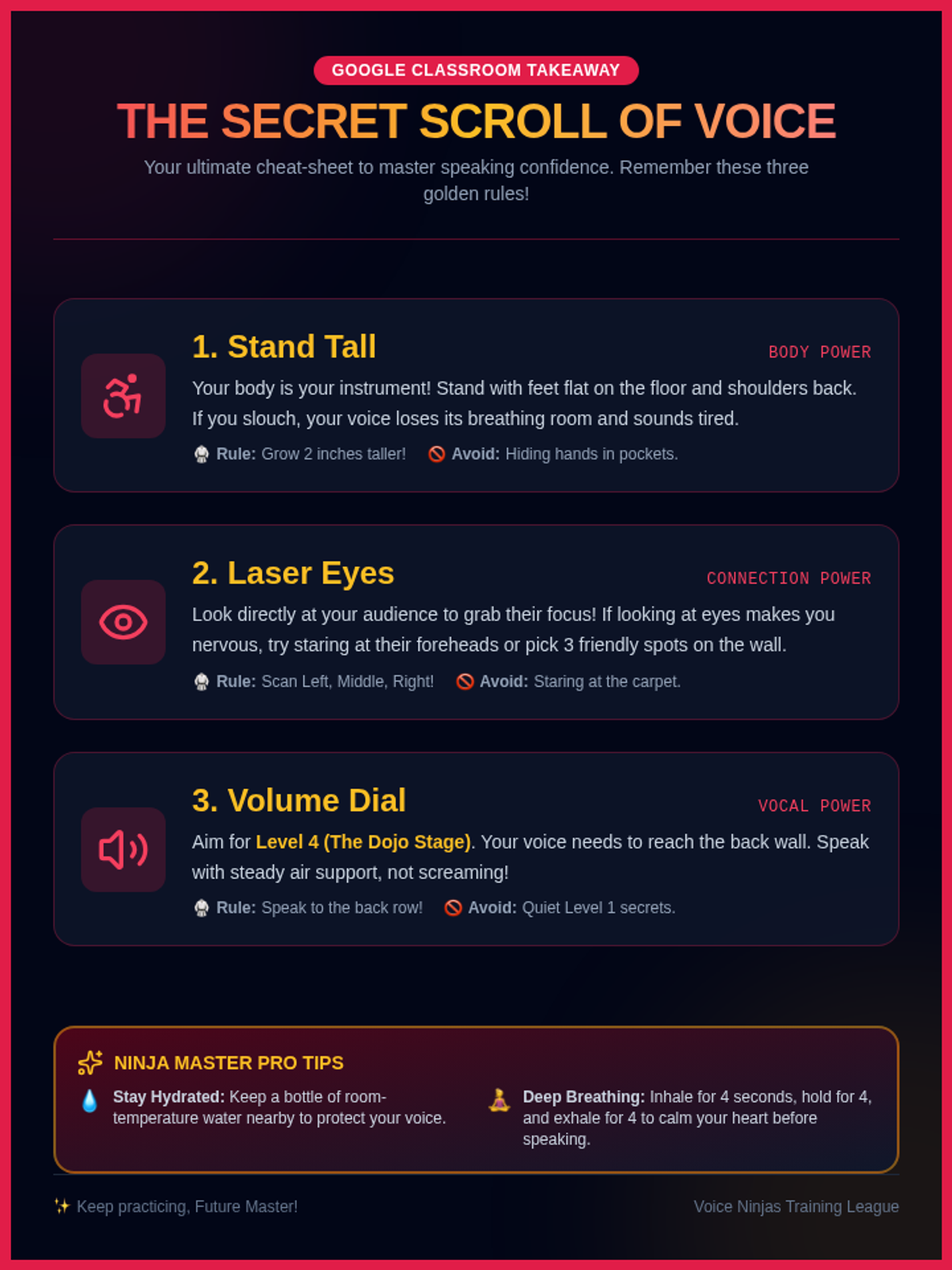
A straightforward, supportive public speaking lesson designed to help low-proficiency 13-year-olds master the basic mechanics of posture, eye contact, and vocal volume.
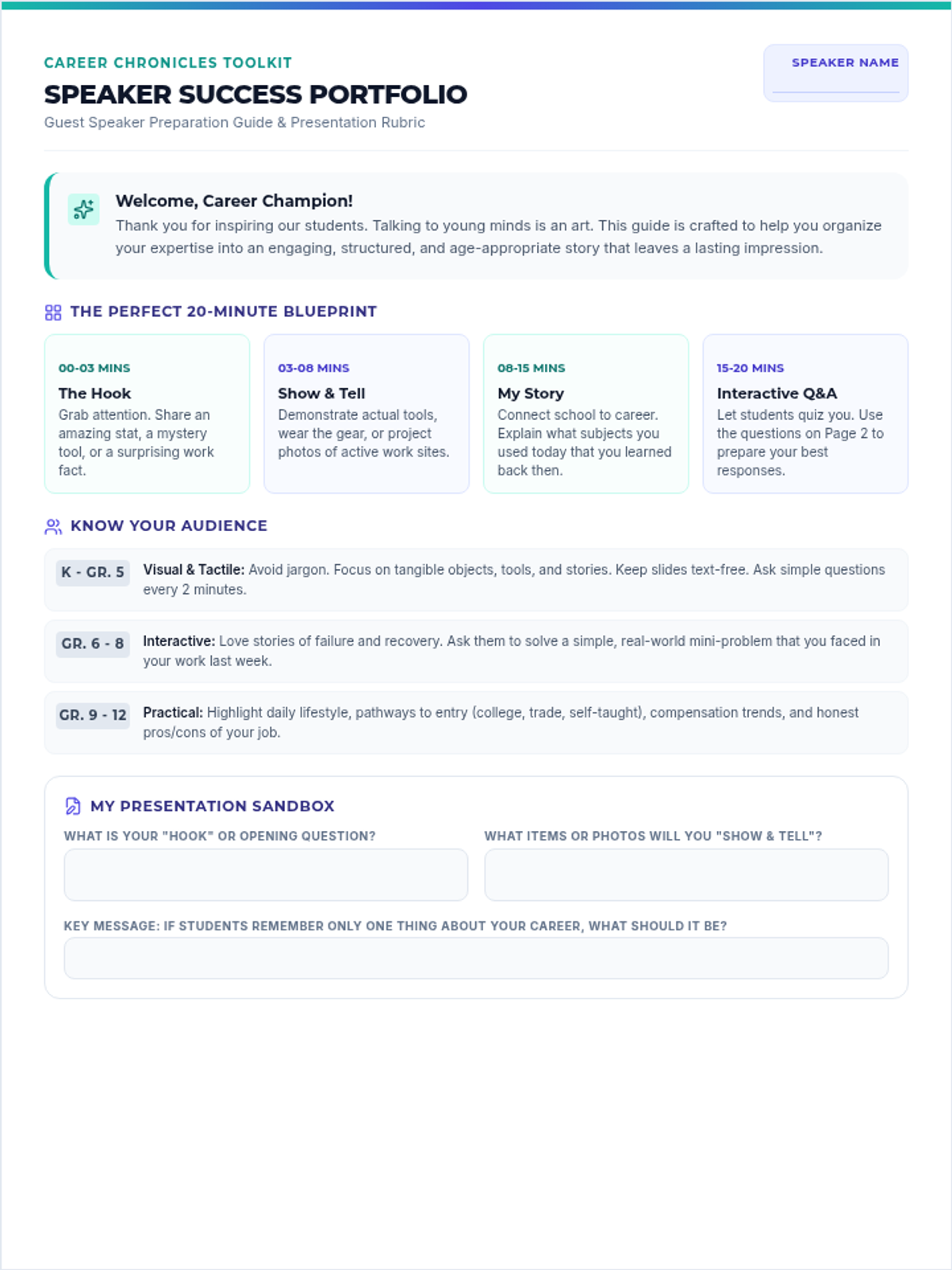
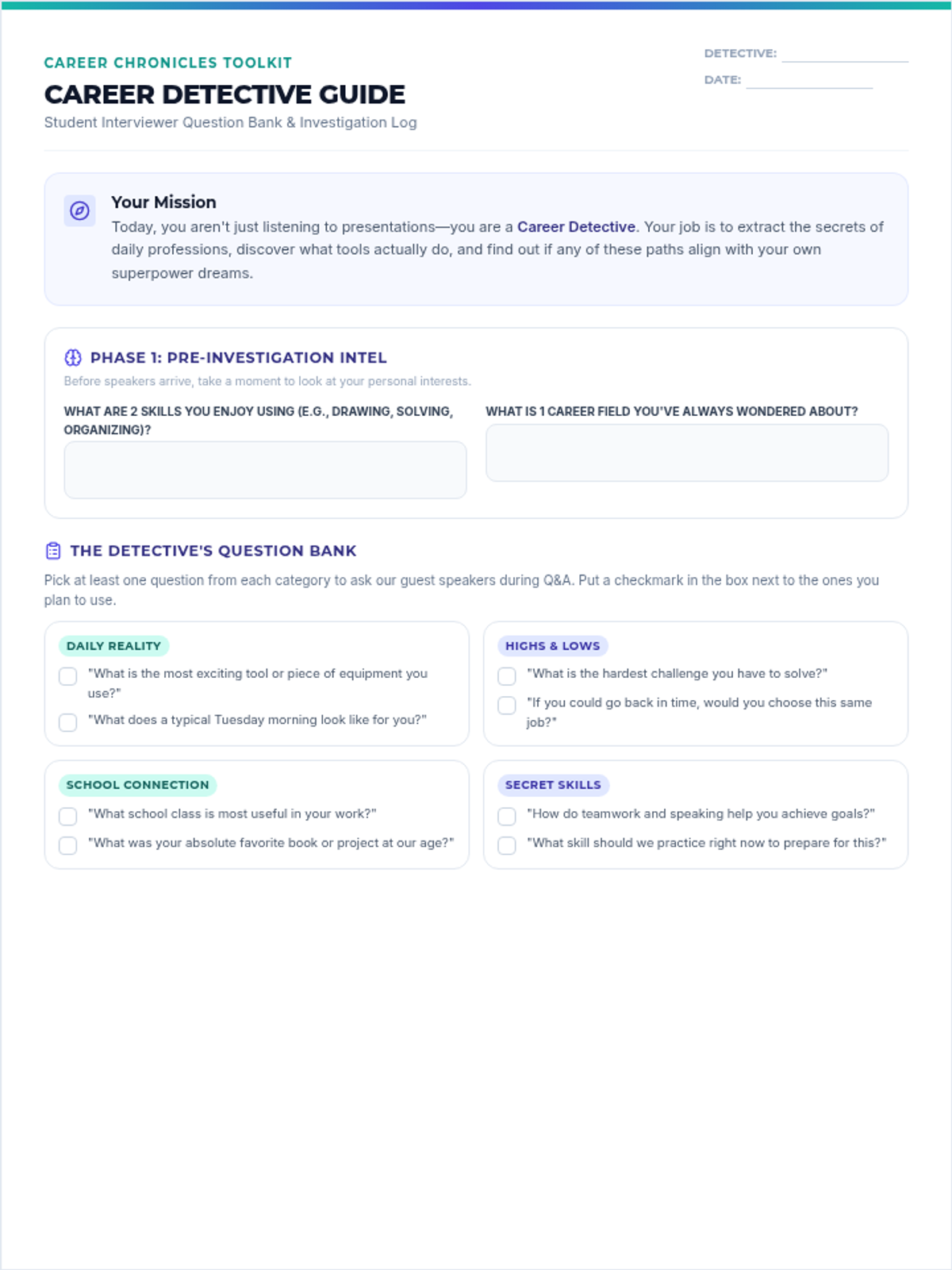
A comprehensive preparation toolkit for Career Day, equipping both guest speakers and student interviewers with structured guides, question banks, and evaluation rubrics to ensure engaging and meaningful professional dialogues.
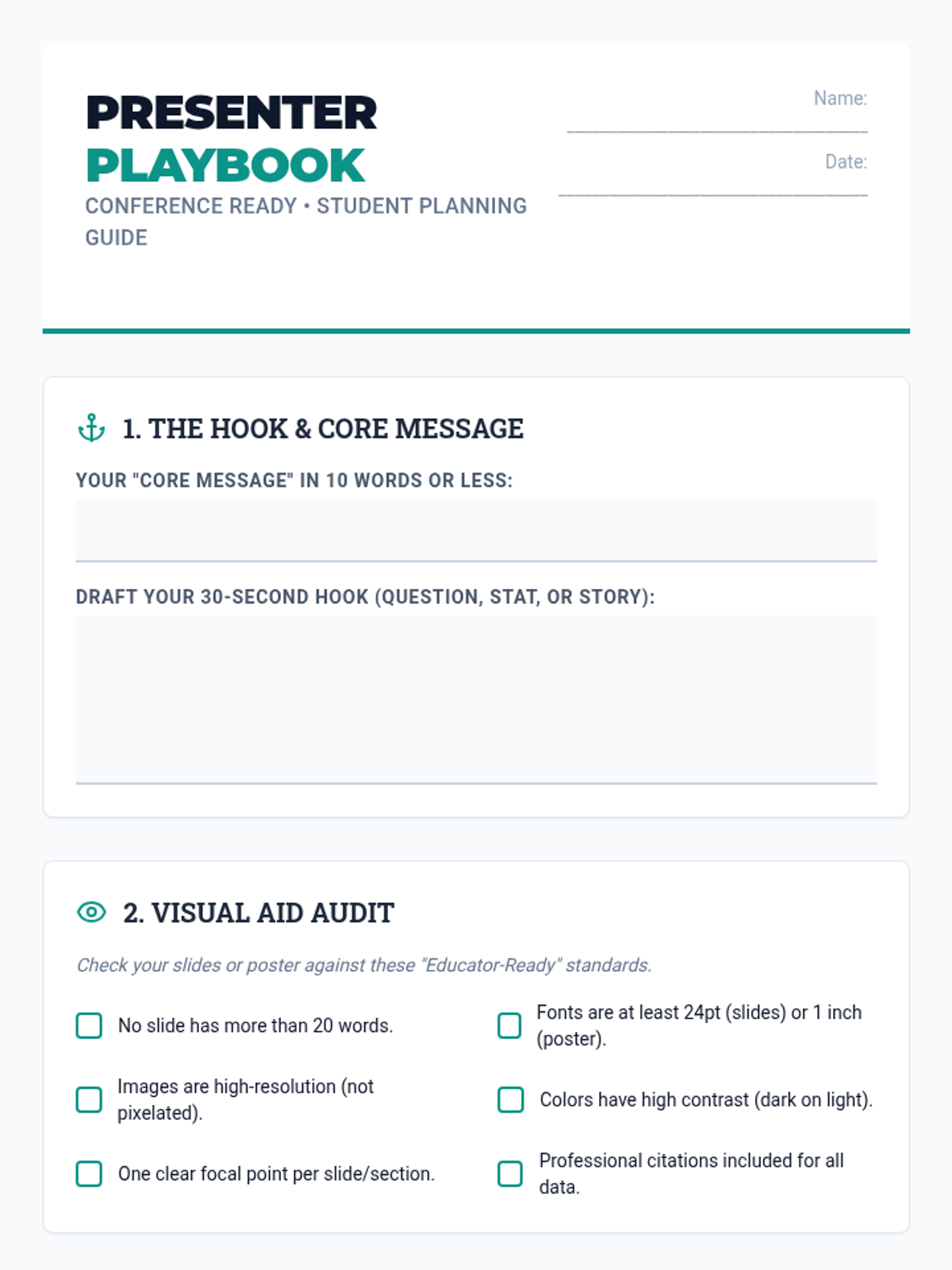
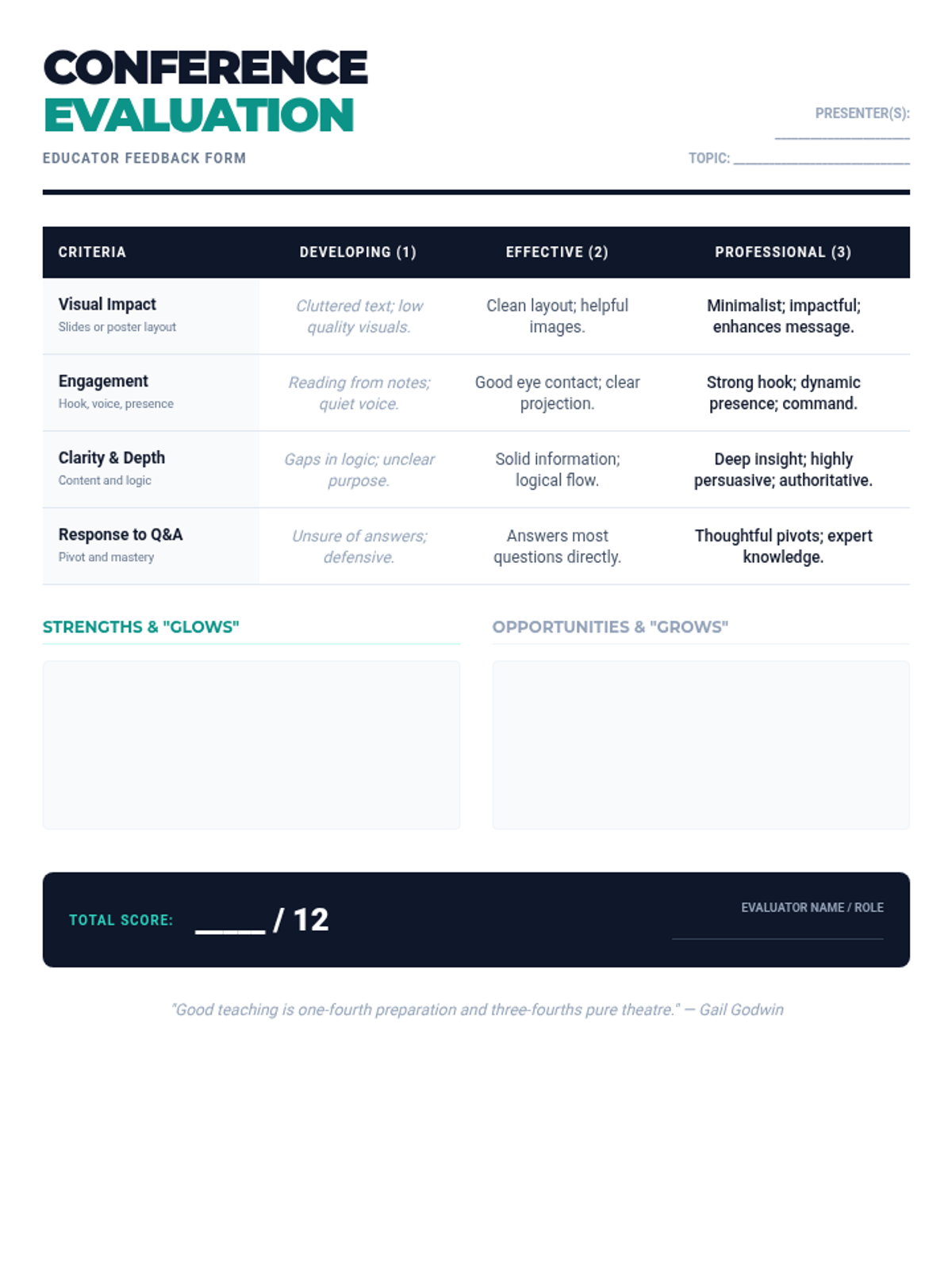
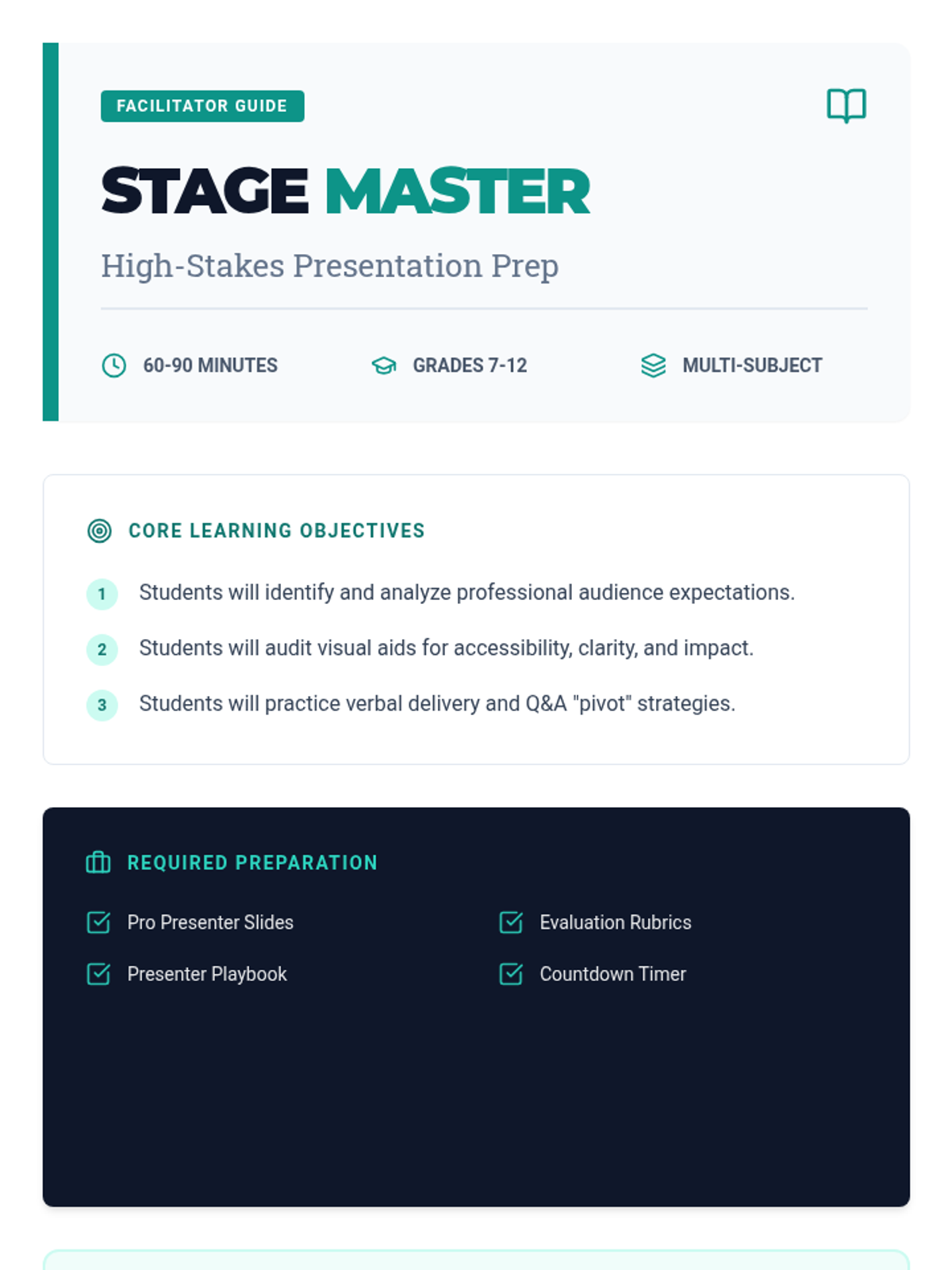
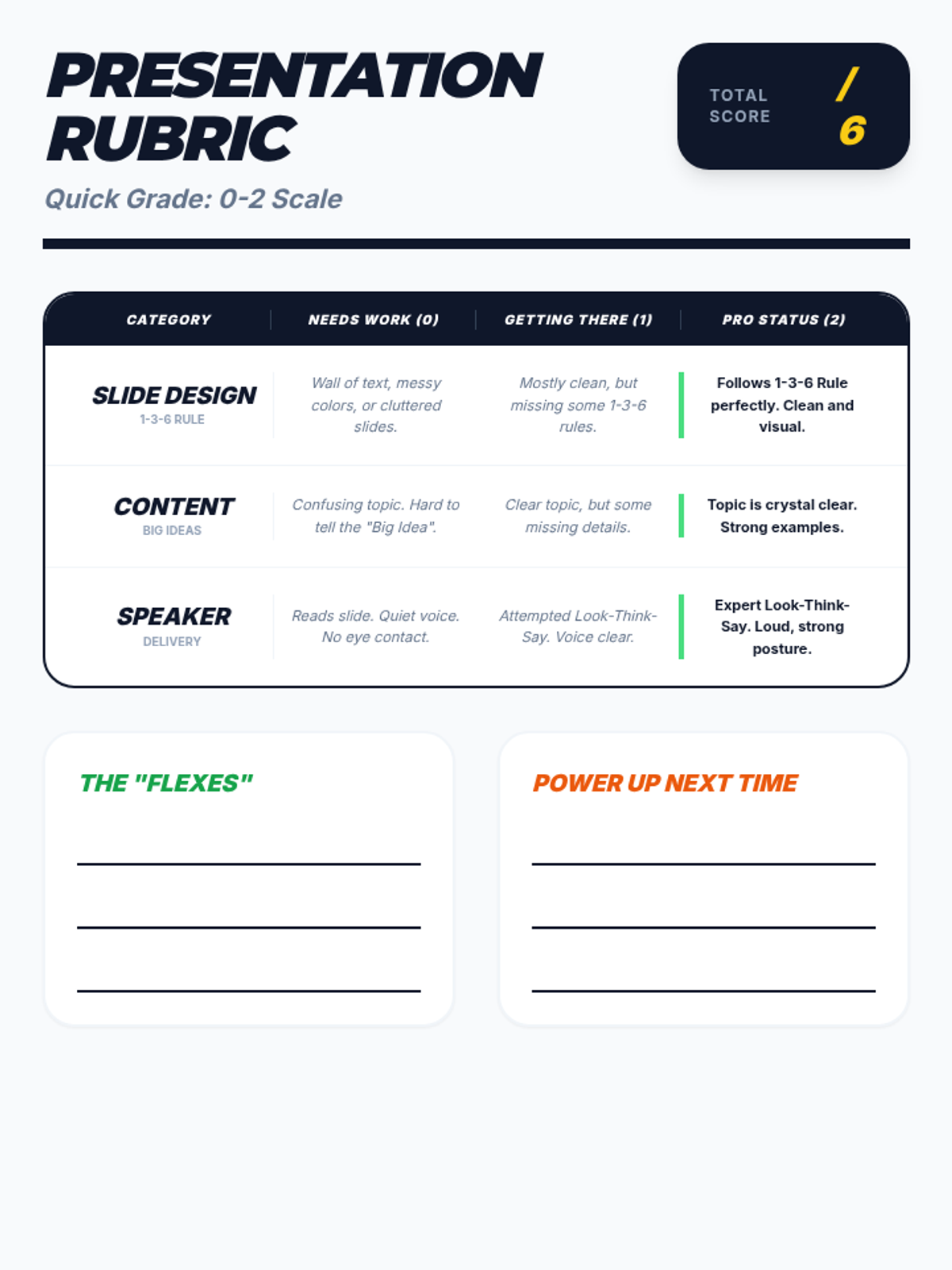
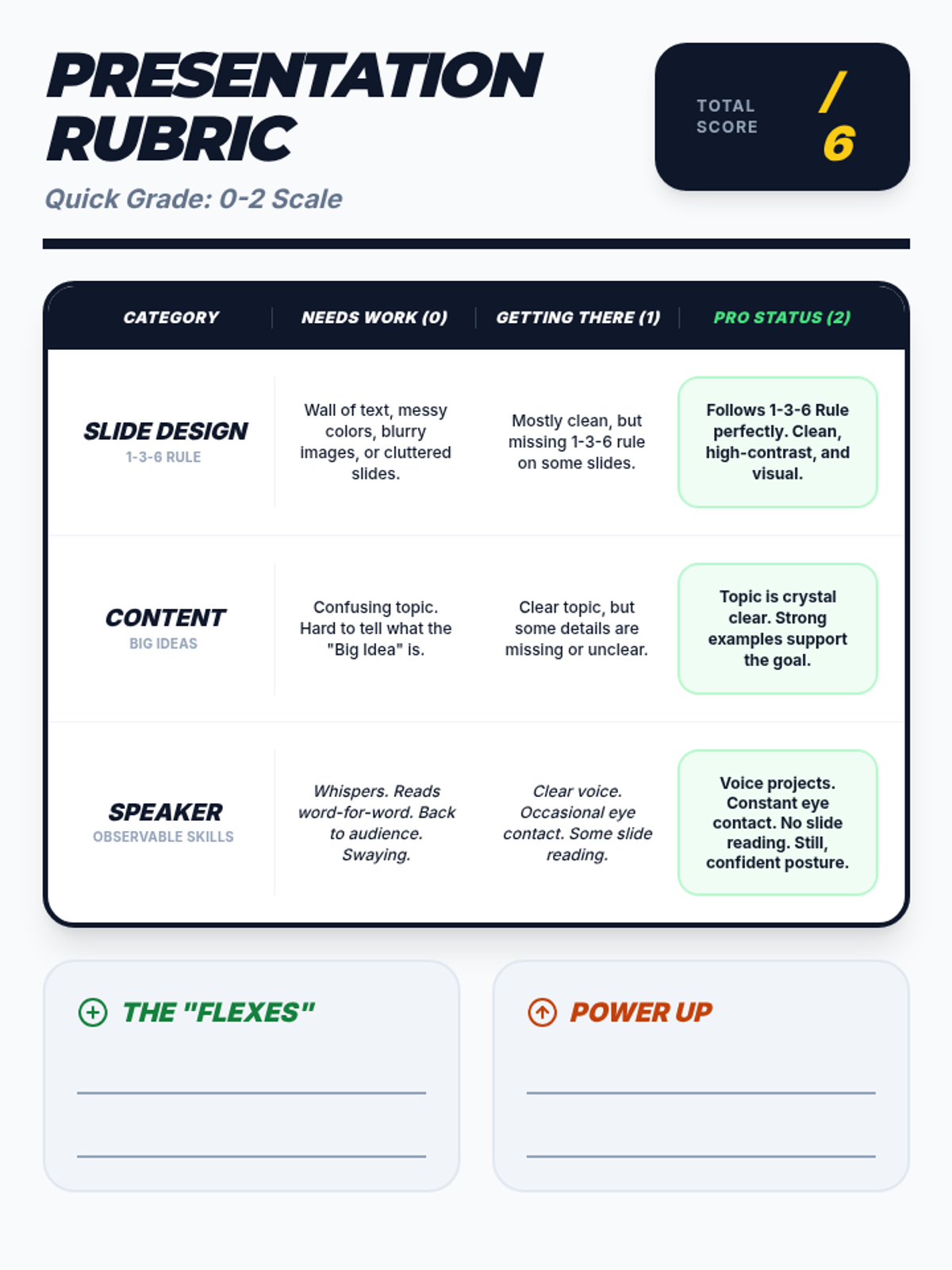
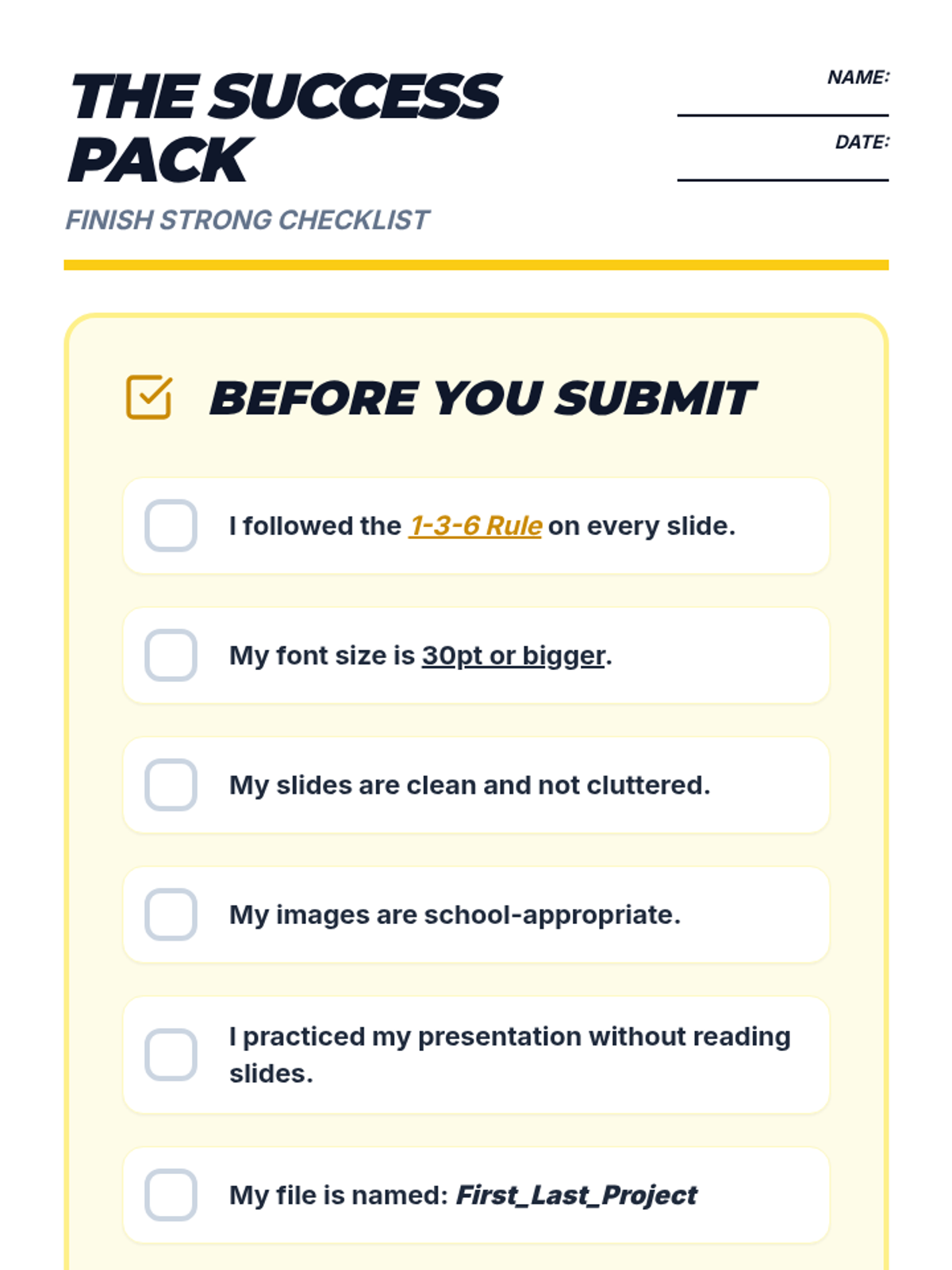
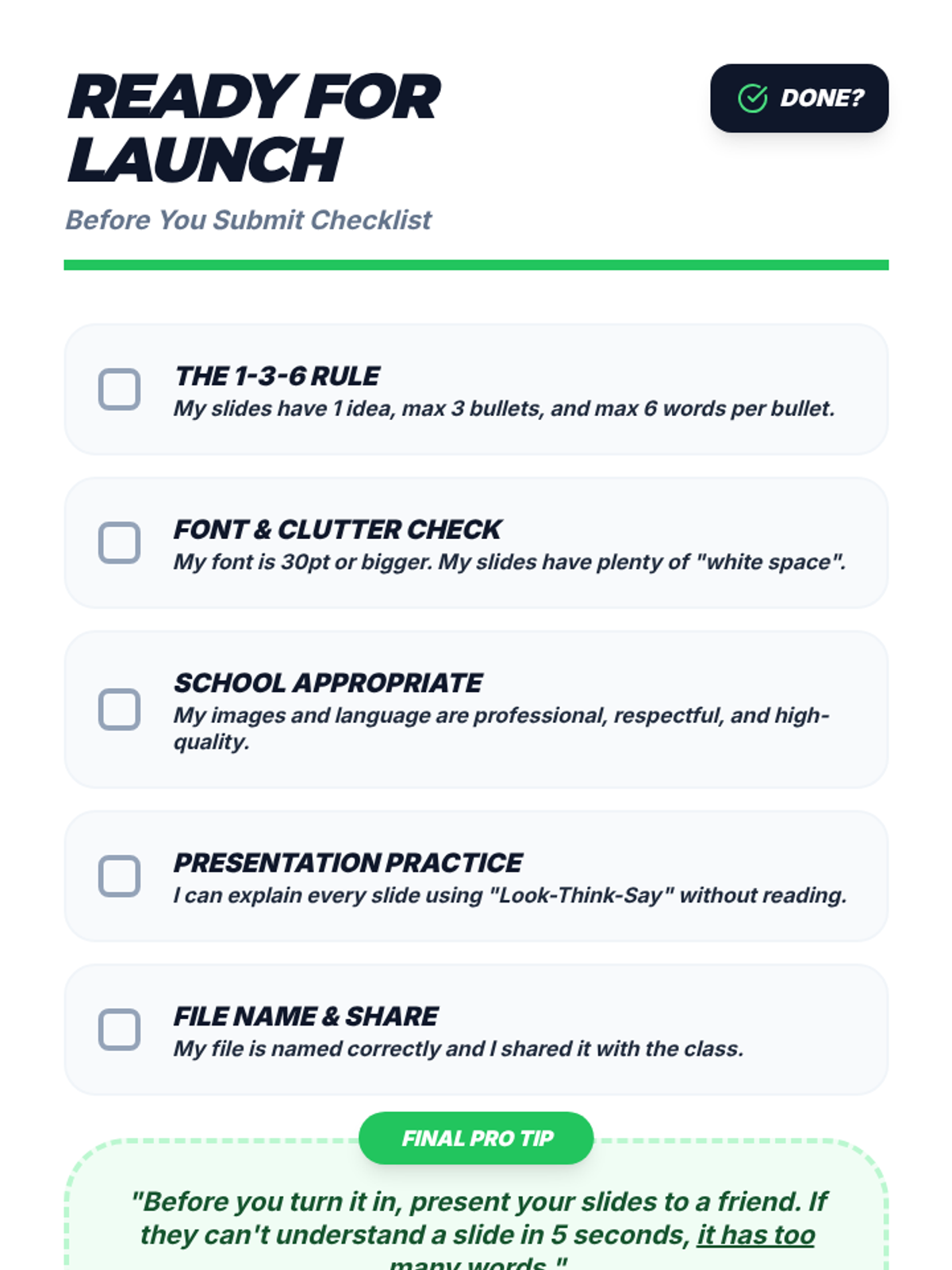
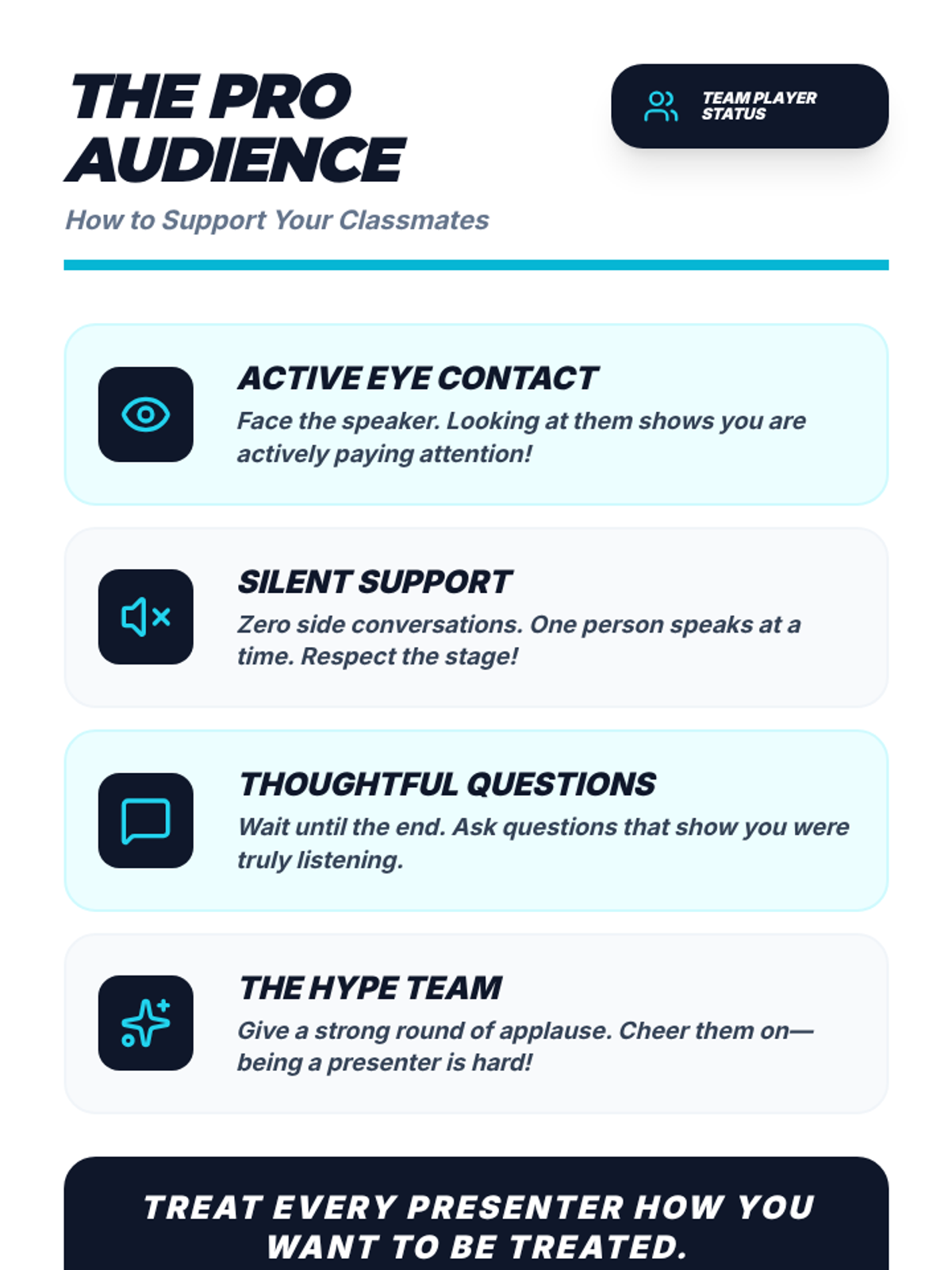
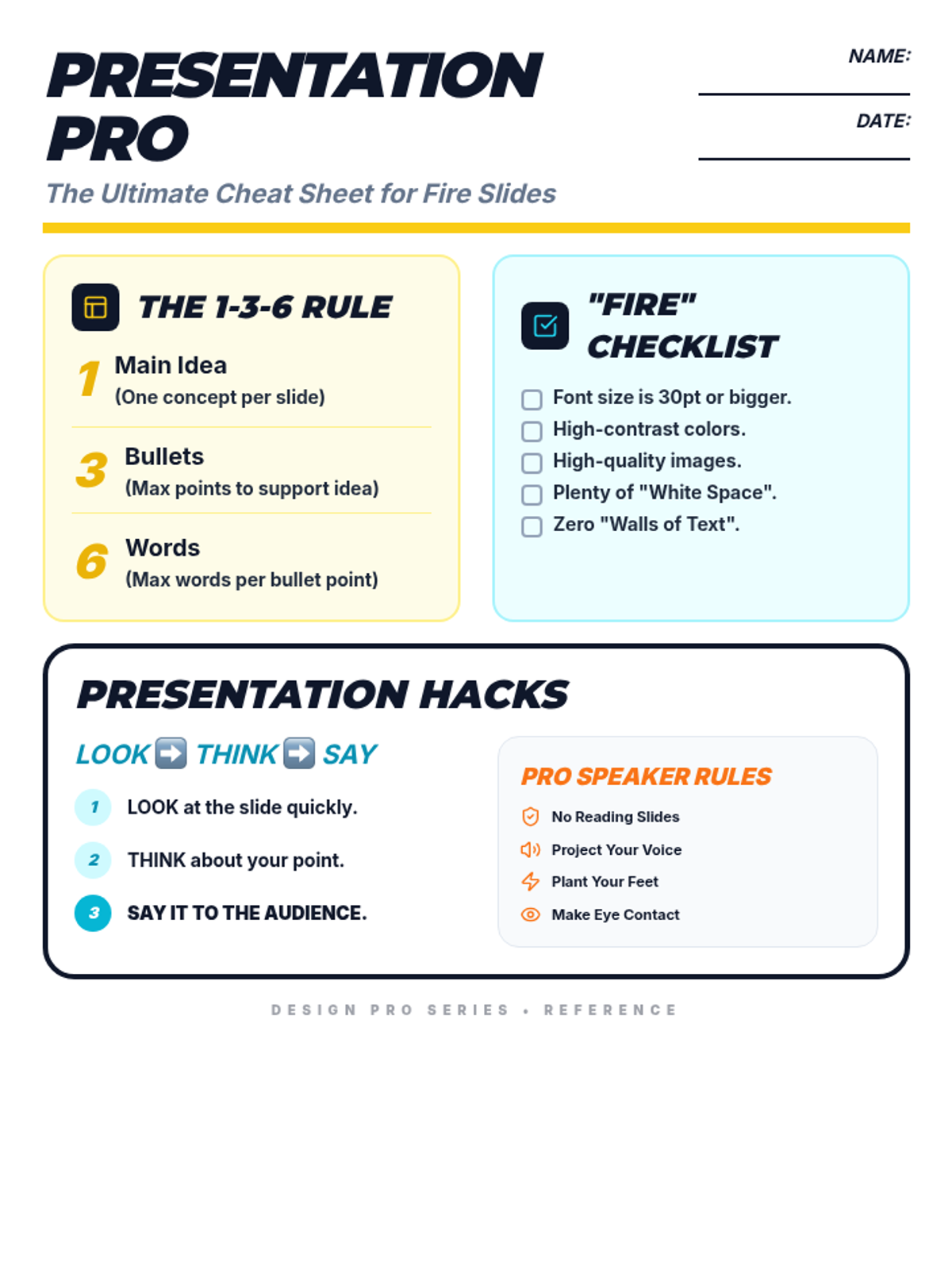
A comprehensive lesson designed to help students master the art of presenting to an audience of educators. It covers slide design, poster layouts, professional etiquette, and public speaking techniques.
Focuses on verbal delivery and confidence using the Look-Think-Say technique.
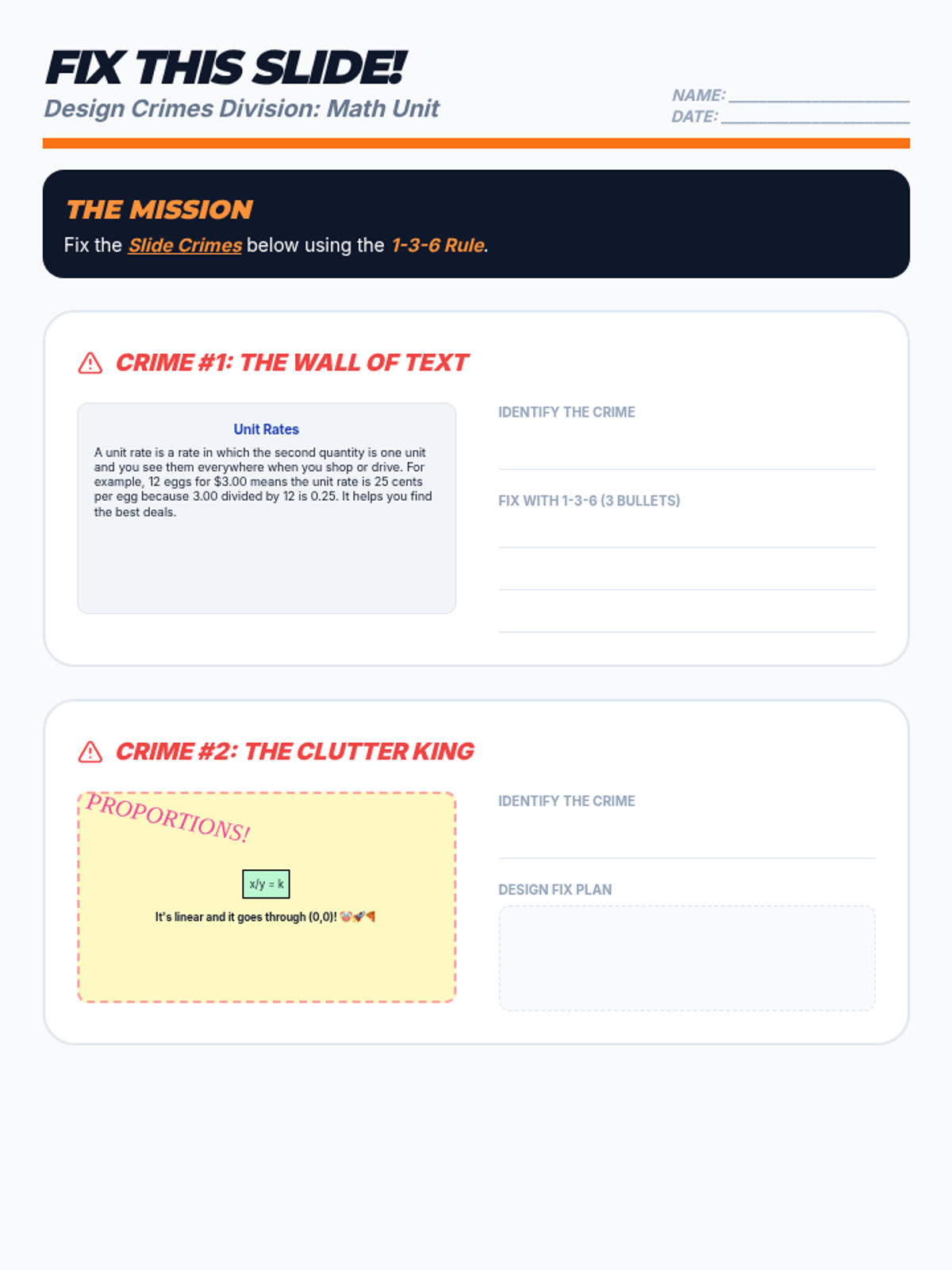
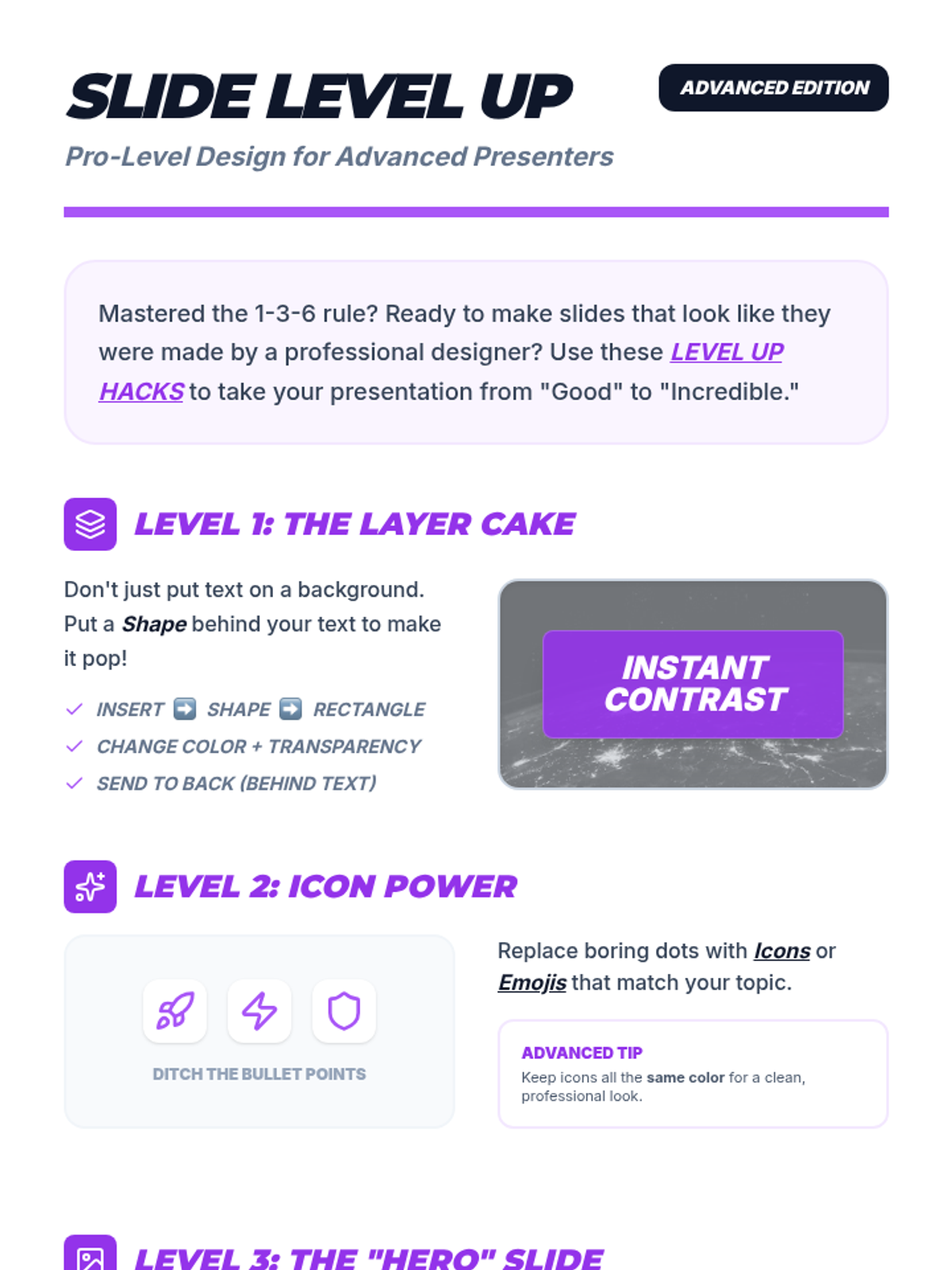
Teaches the 1-3-6 rule and visual design principles for creating clean, effective slides.
Focuses on identifying strong versus weak slides and understanding the core purpose of a presentation.
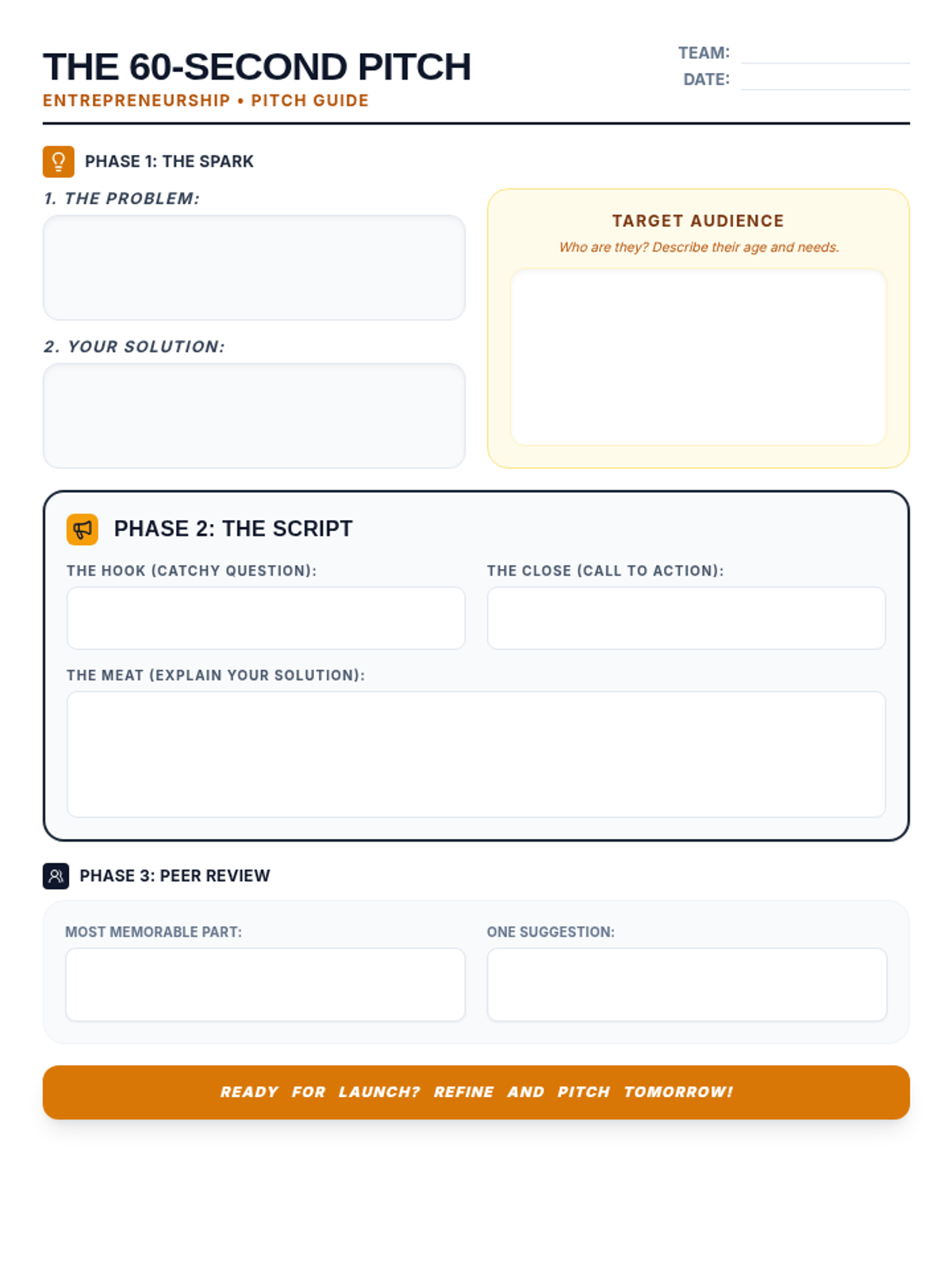
Explore the process of identifying problems and developing innovative solutions, culminating in an elevator pitch for a new business idea.
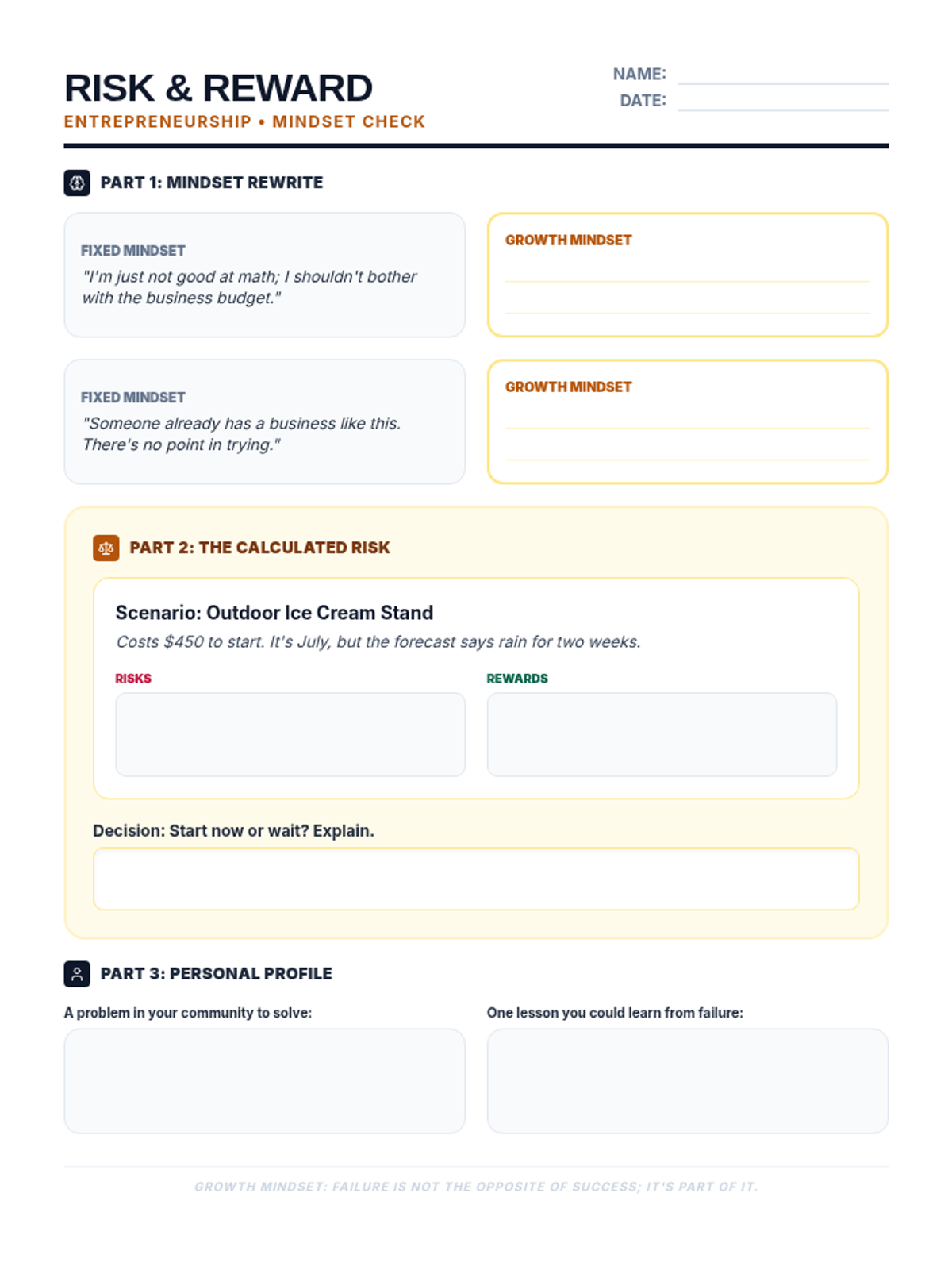
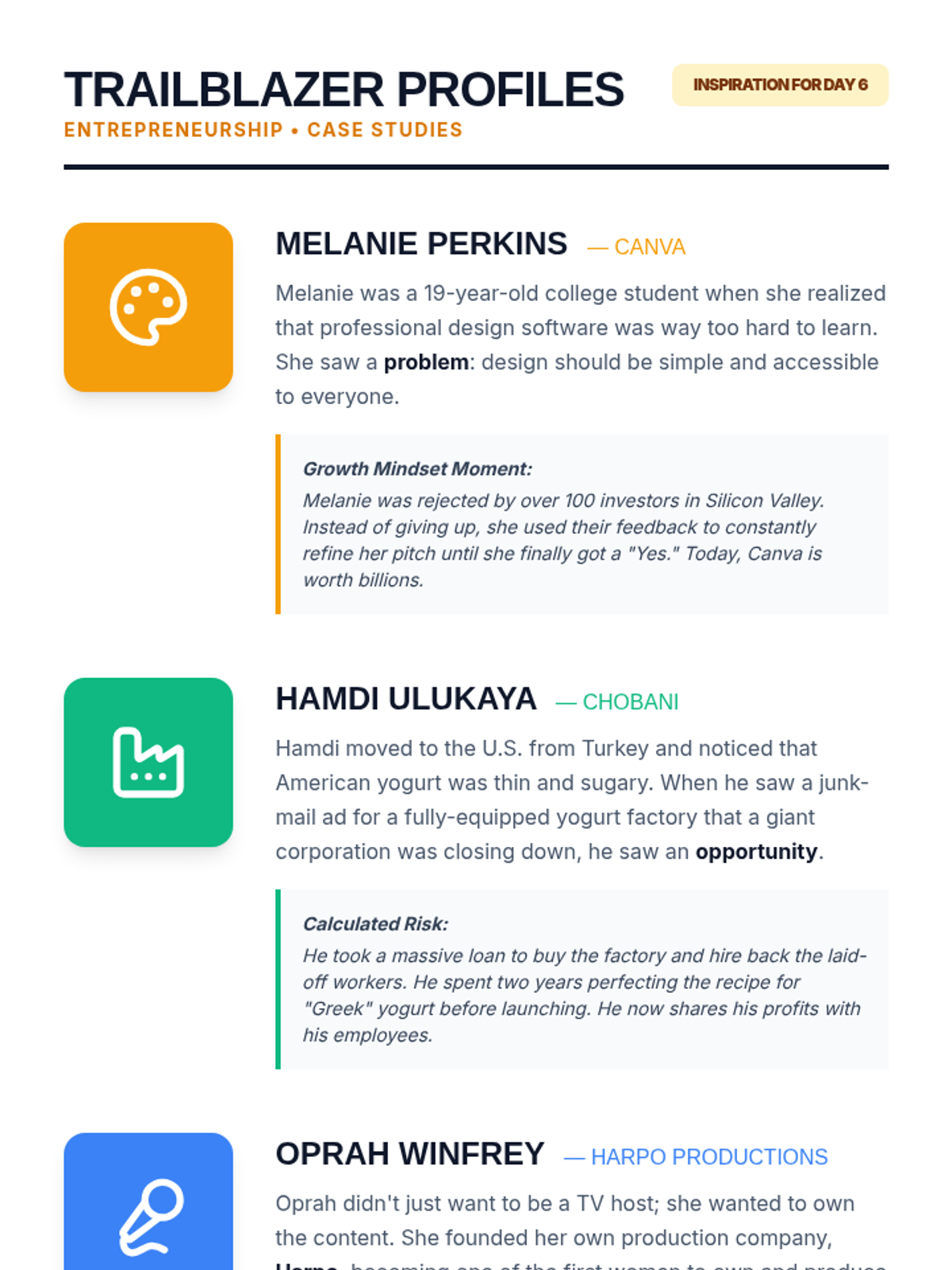
Discover the characteristics of an entrepreneur, the importance of a growth mindset, and the balance between risk and reward.
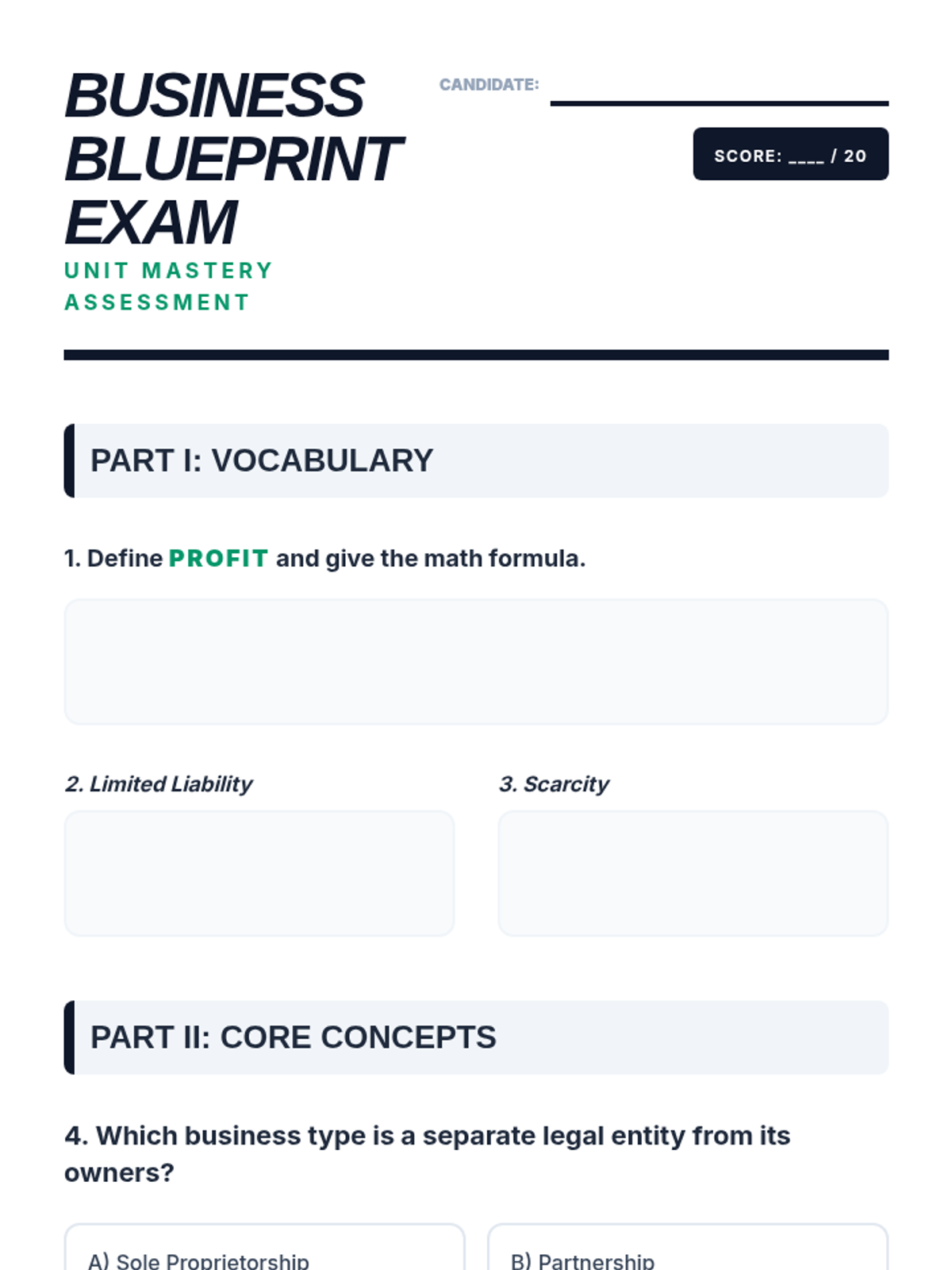
A comprehensive review of the unit's key concepts followed by a summative assessment to measure student understanding.
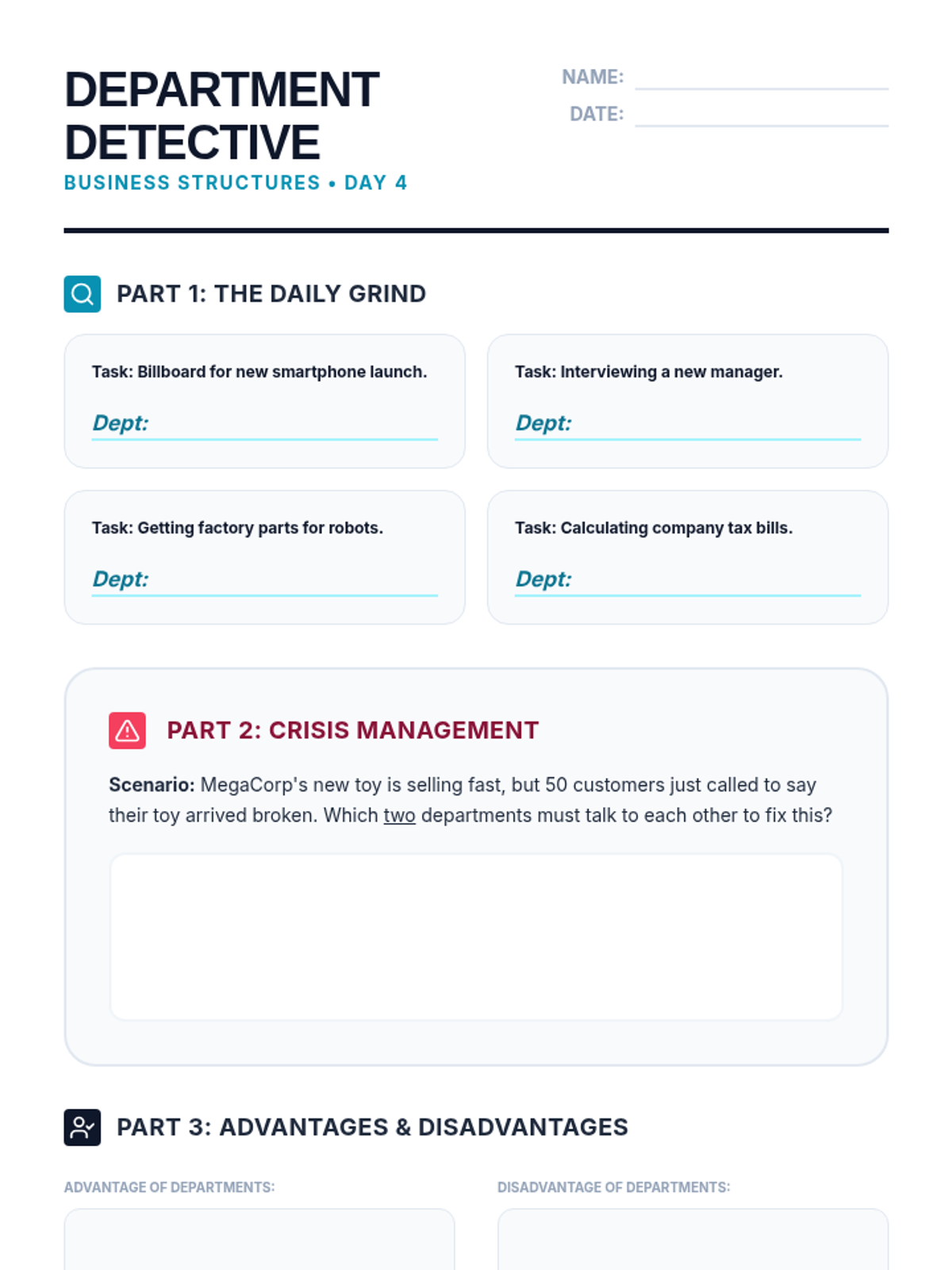
Peek inside the internal departments of a company to understand how functions like Marketing, Finance, and HR work together.
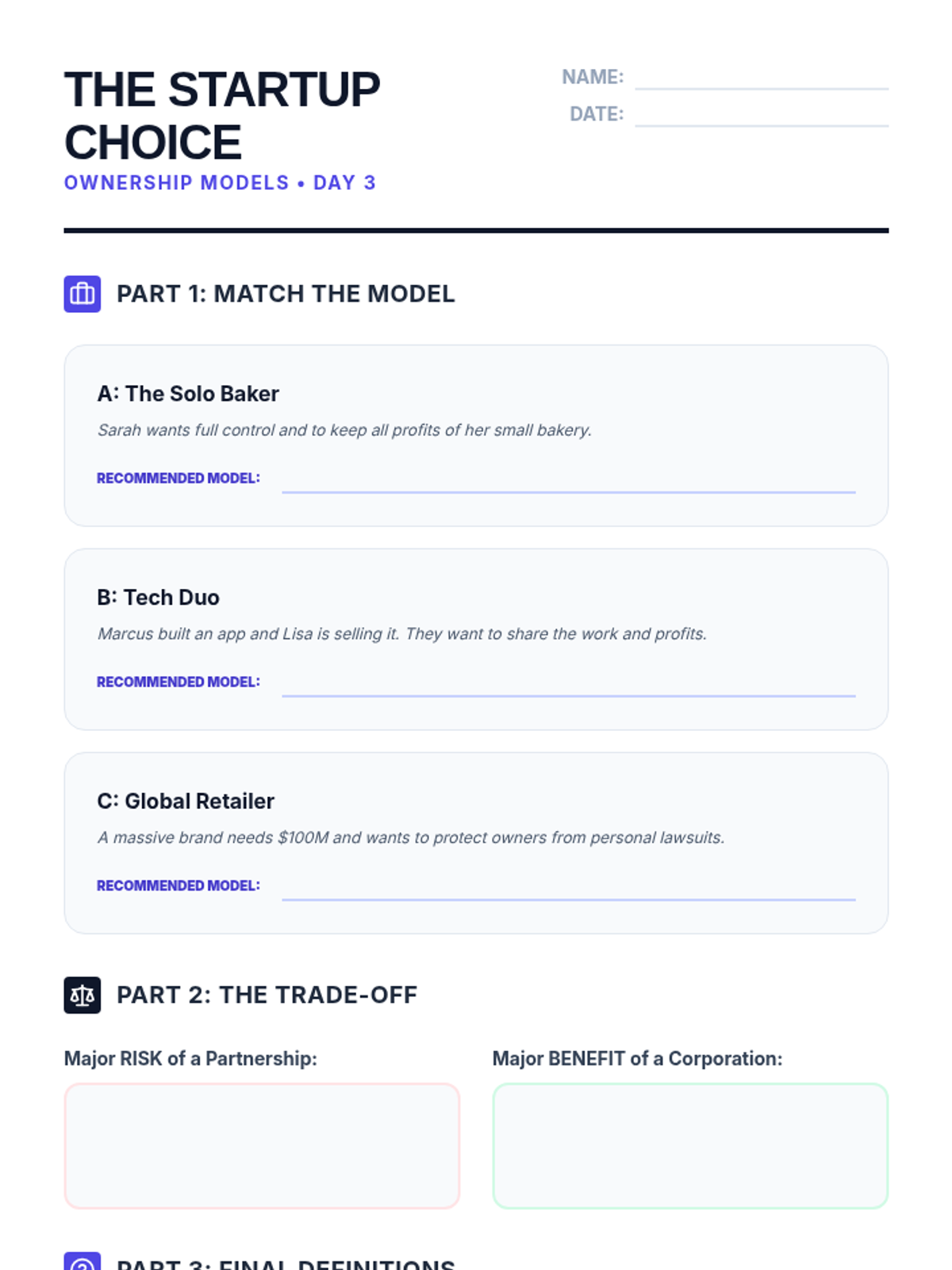
Compare different ways a business can be legally structured, including sole proprietorships, partnerships, and corporations.
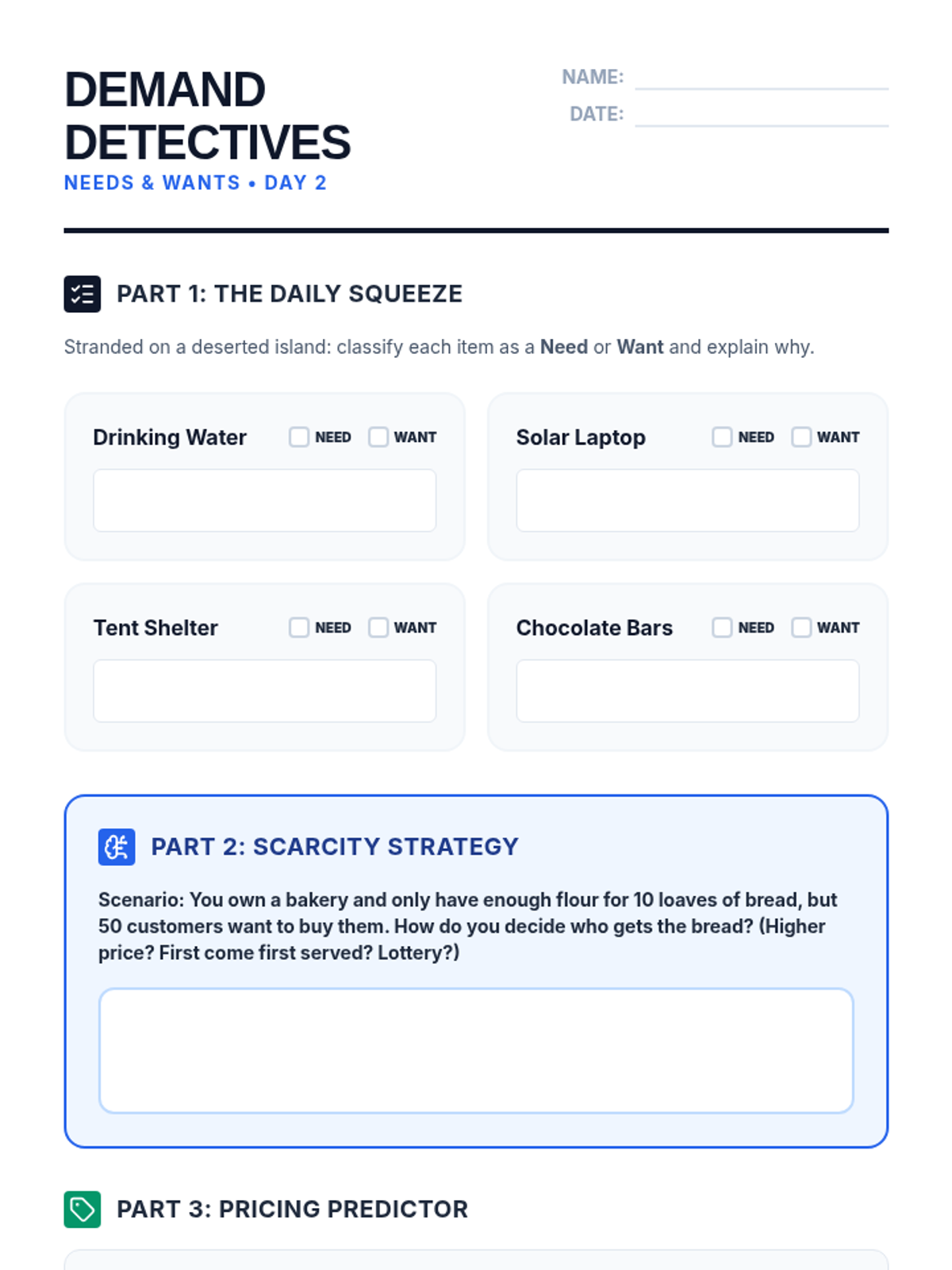
Investigate how businesses satisfy human needs and wants through the production of goods and services within the framework of supply and demand.
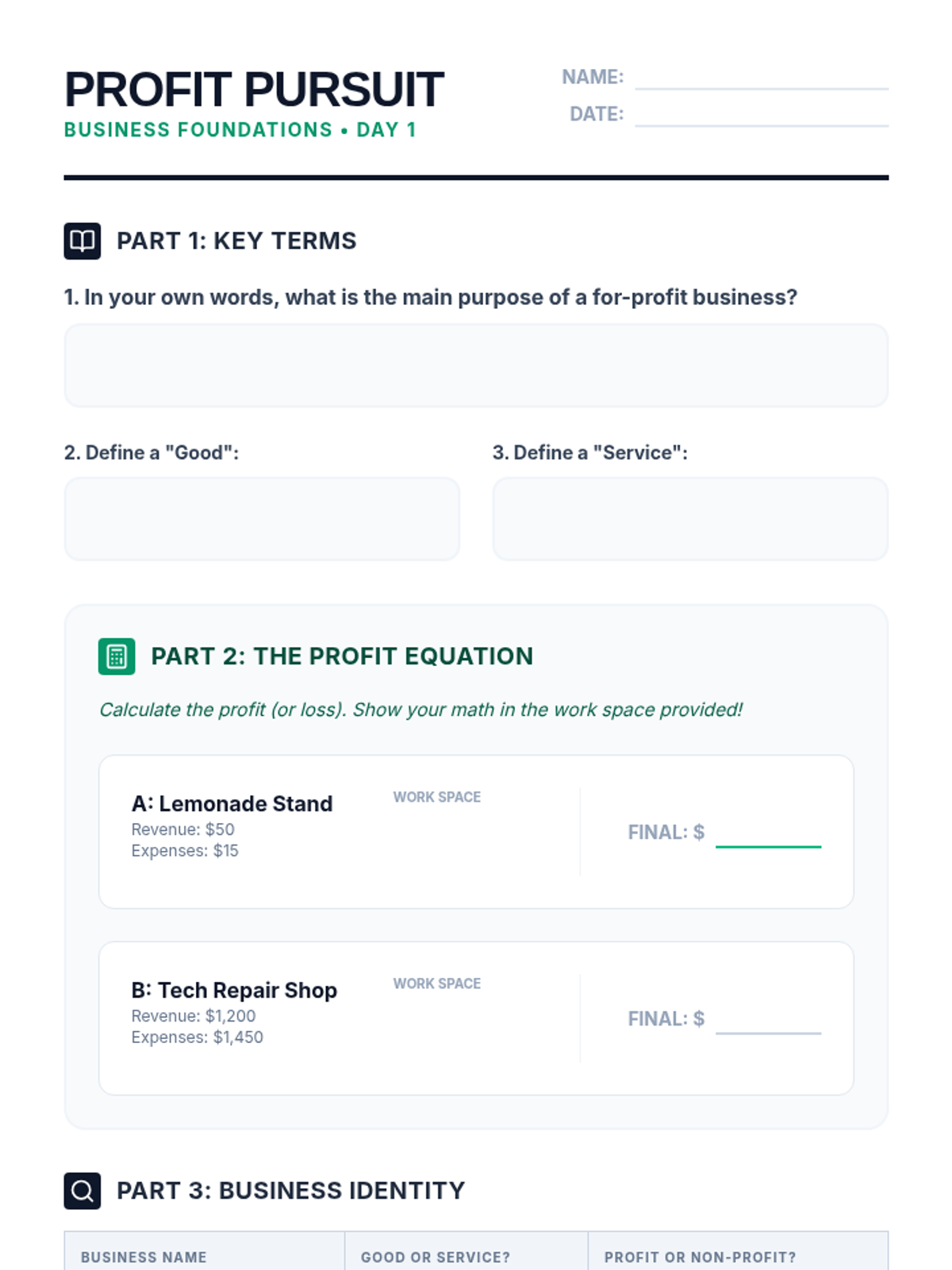
Explore the fundamental purpose of a business, distinguishing between for-profit and non-profit organizations and identifying the role of profit.
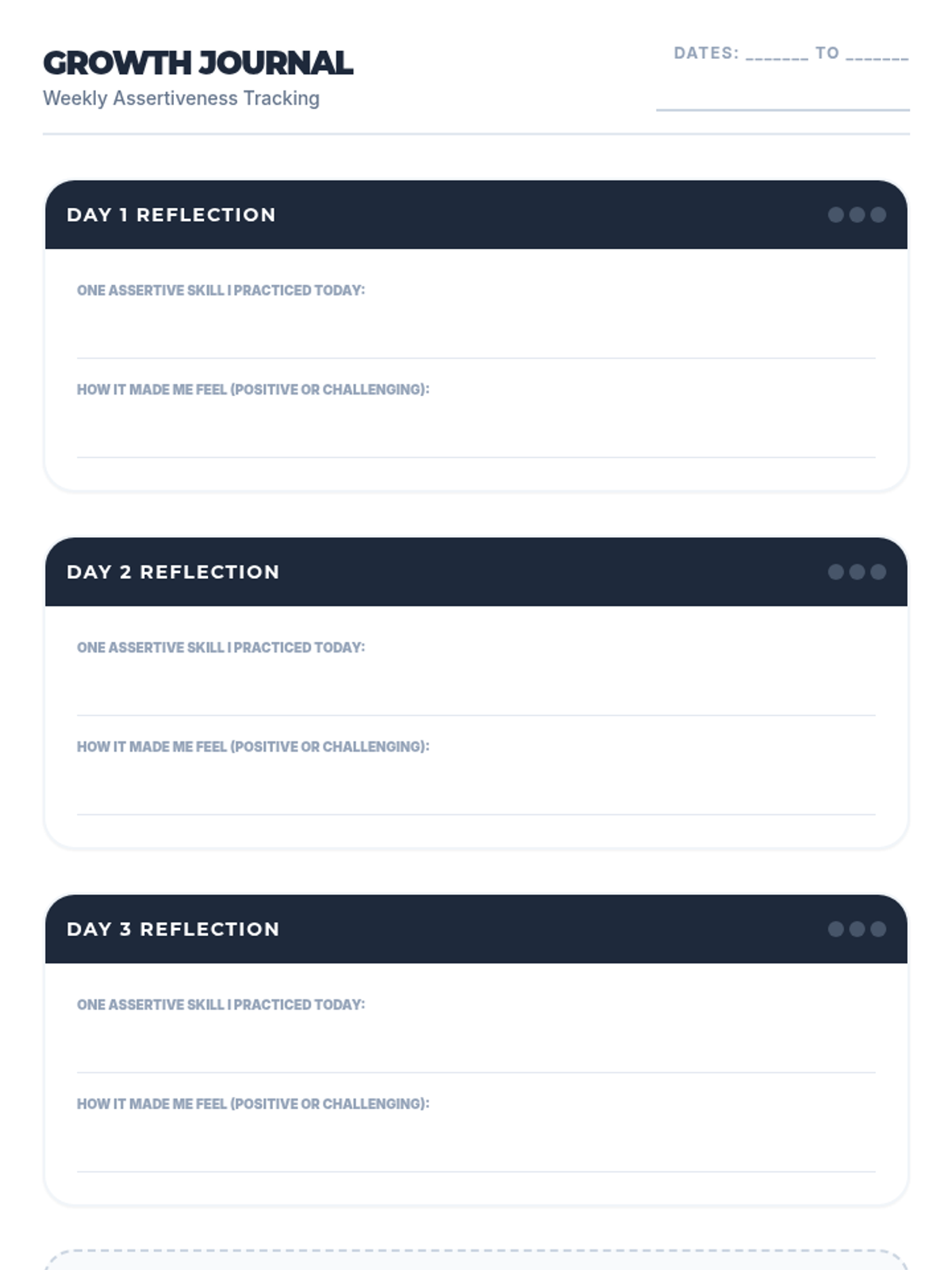
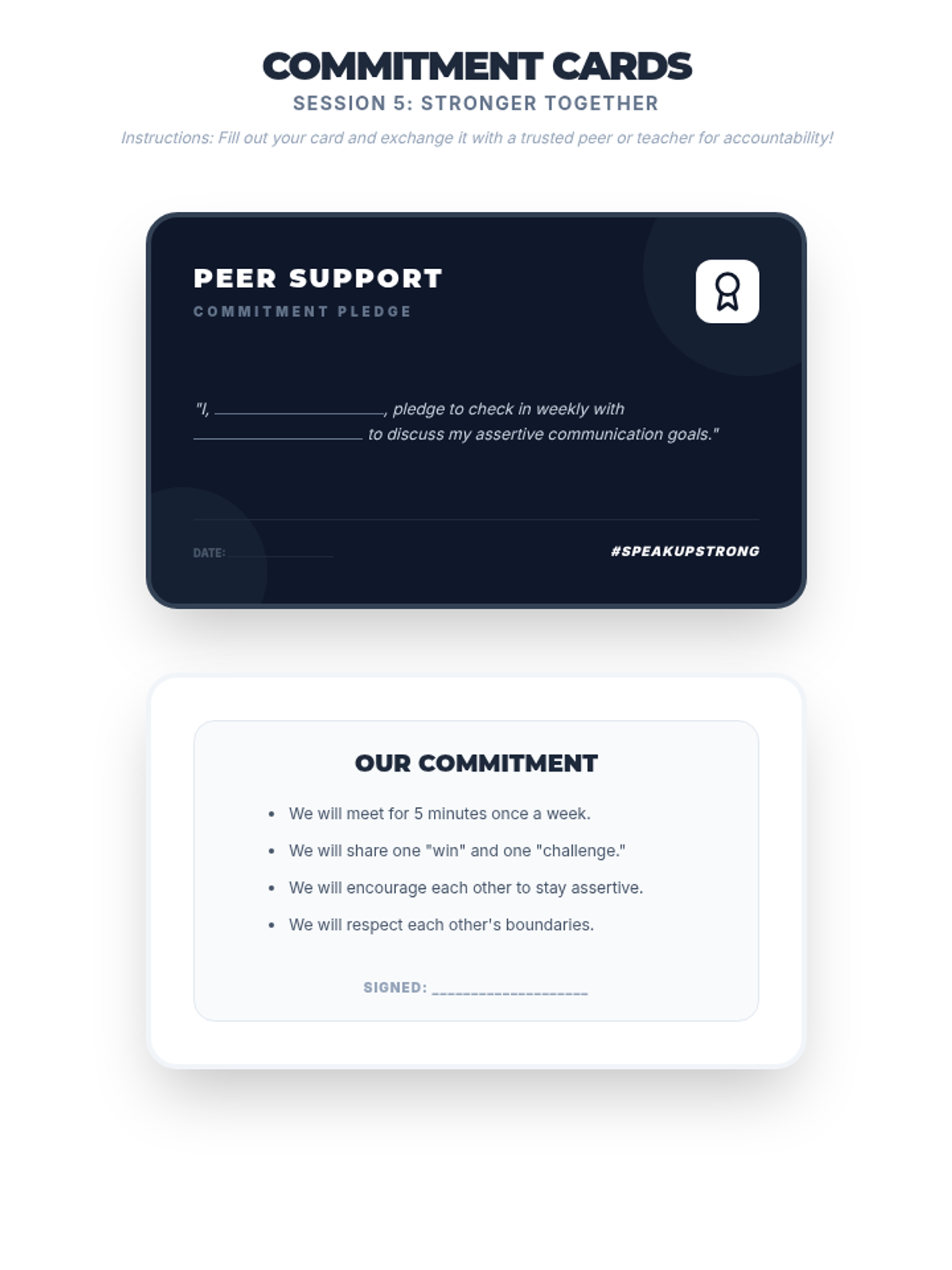
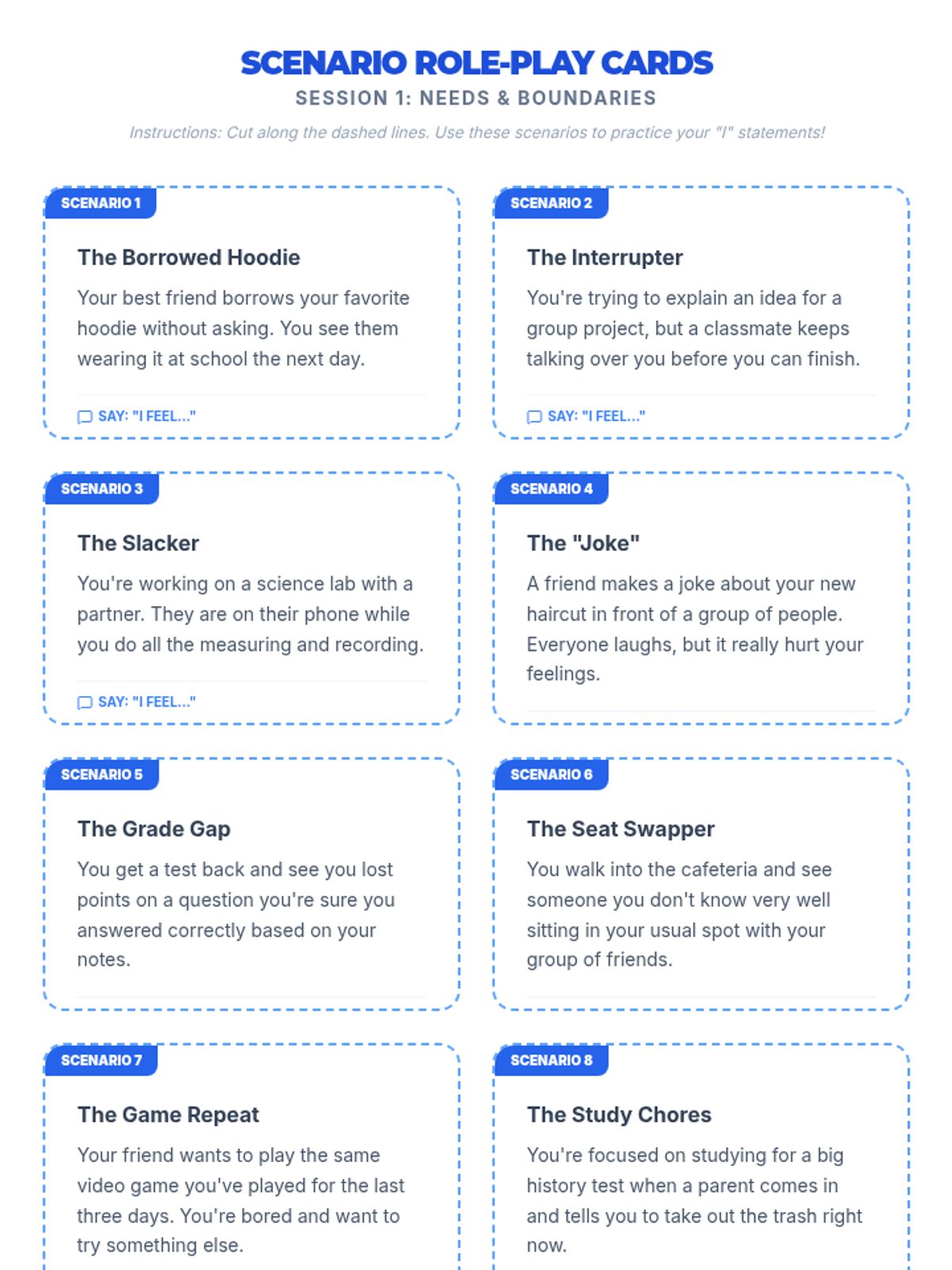
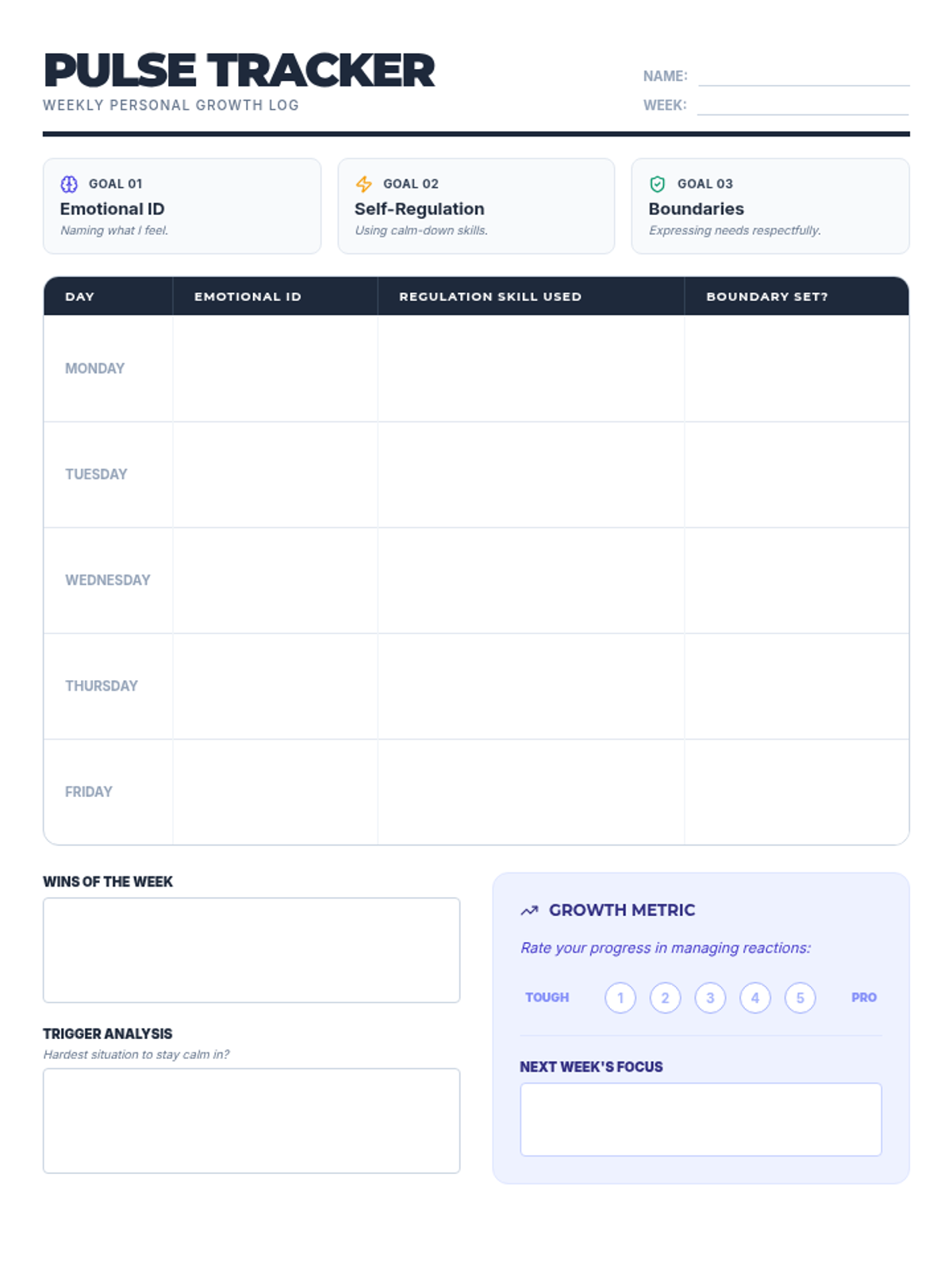
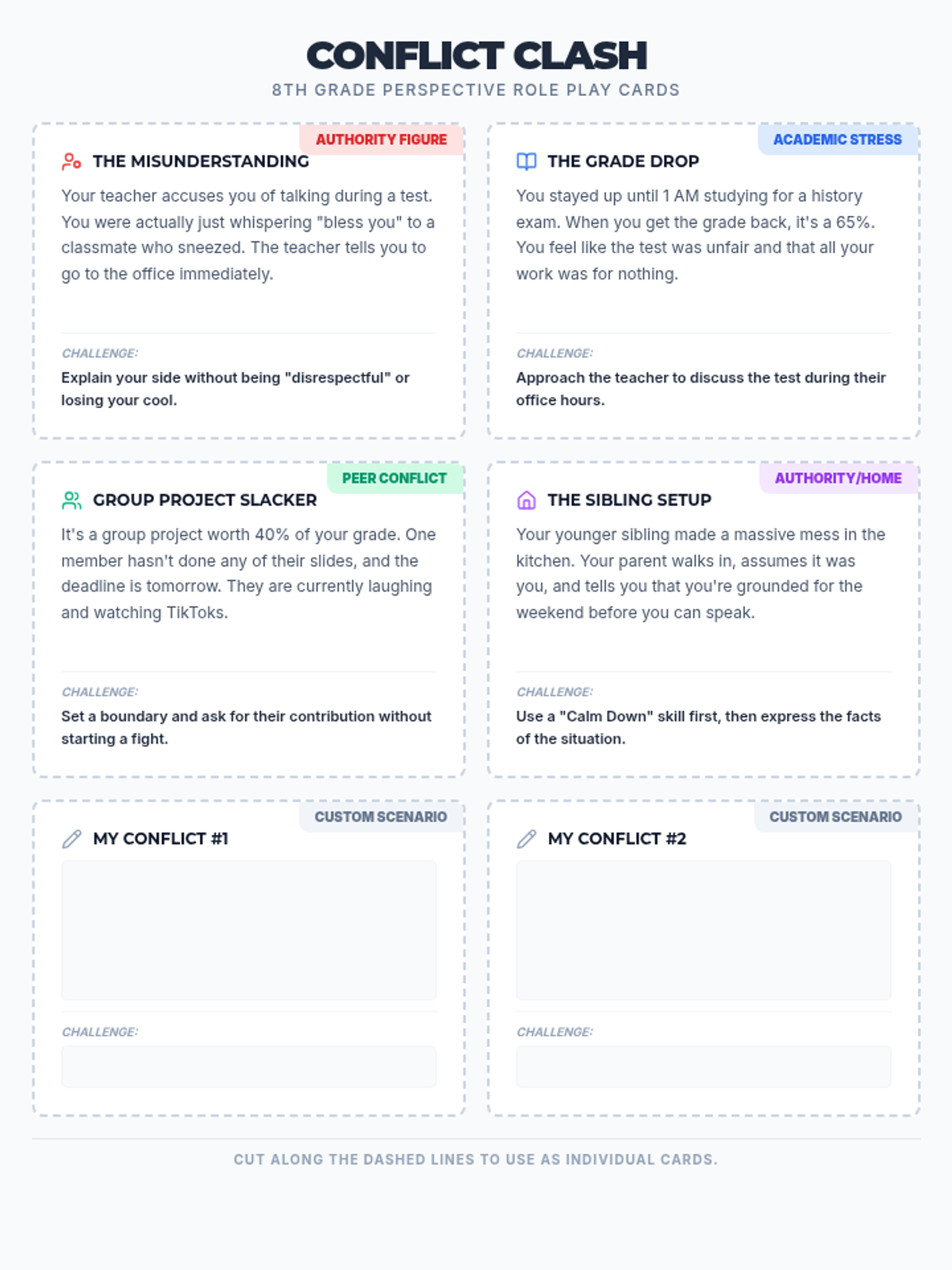
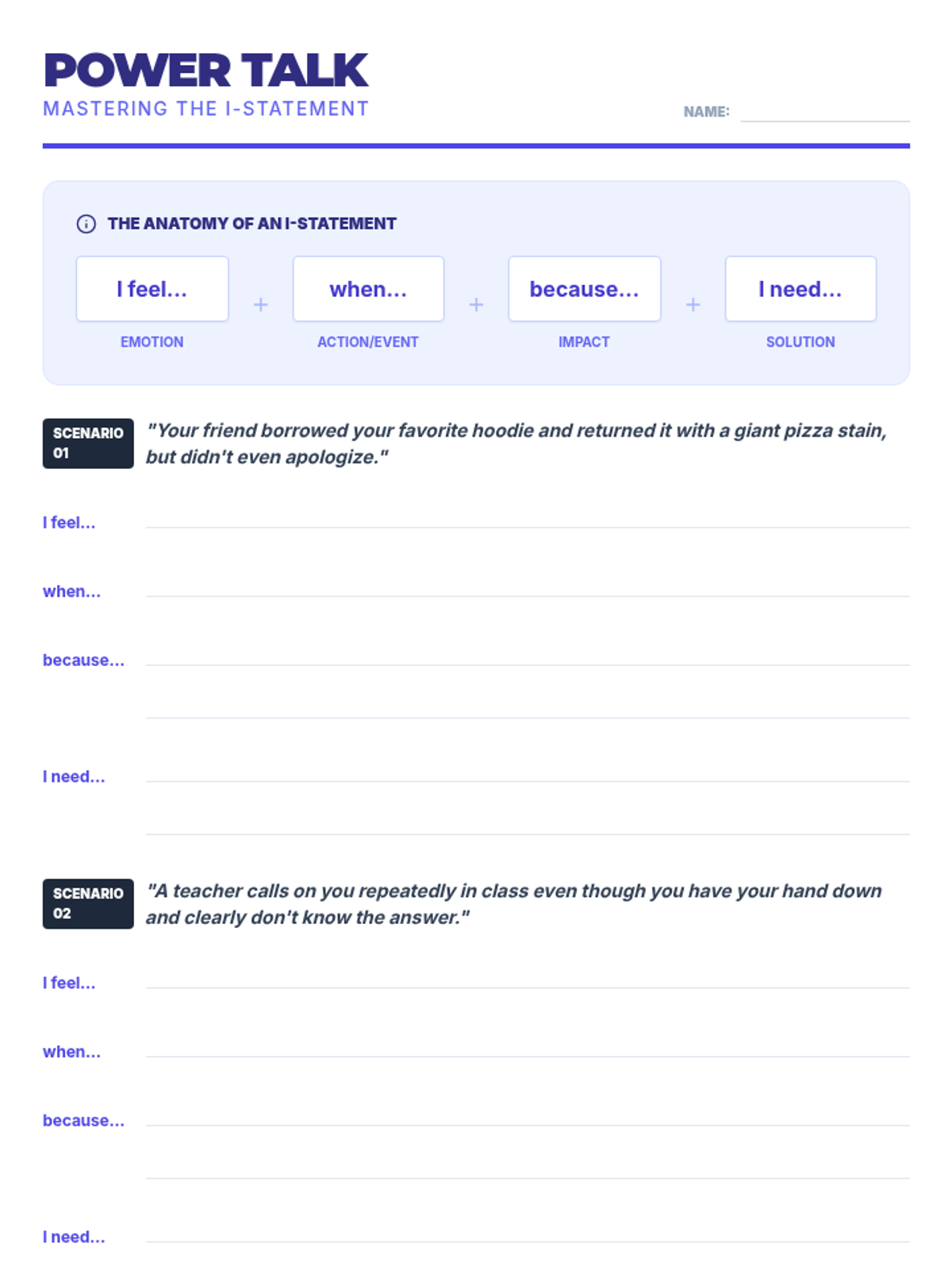
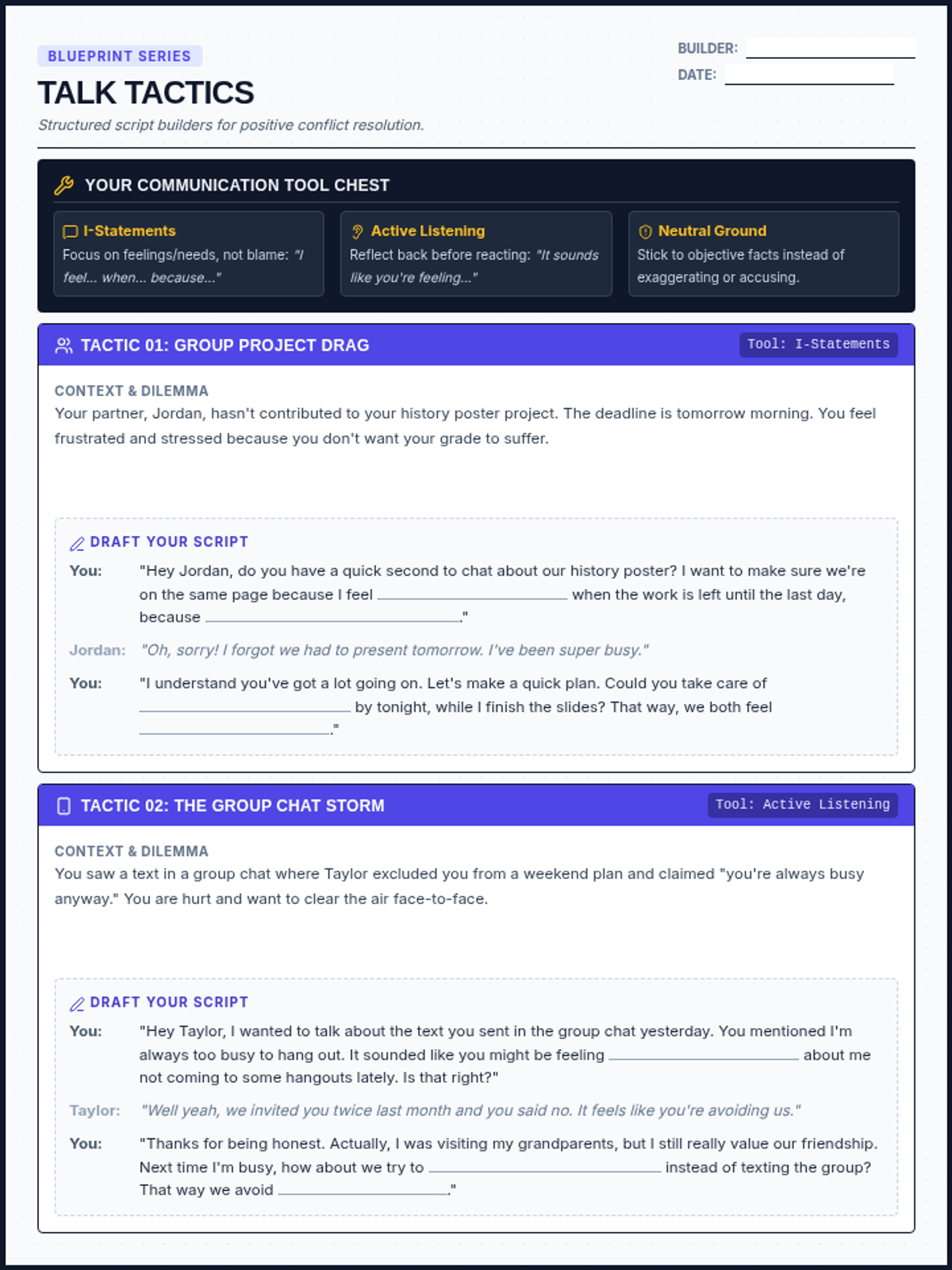
A comprehensive set of tools for 8th graders to track behavioral goals, navigate interpersonal conflicts through role-play, and master the art of assertive communication using I-statements.
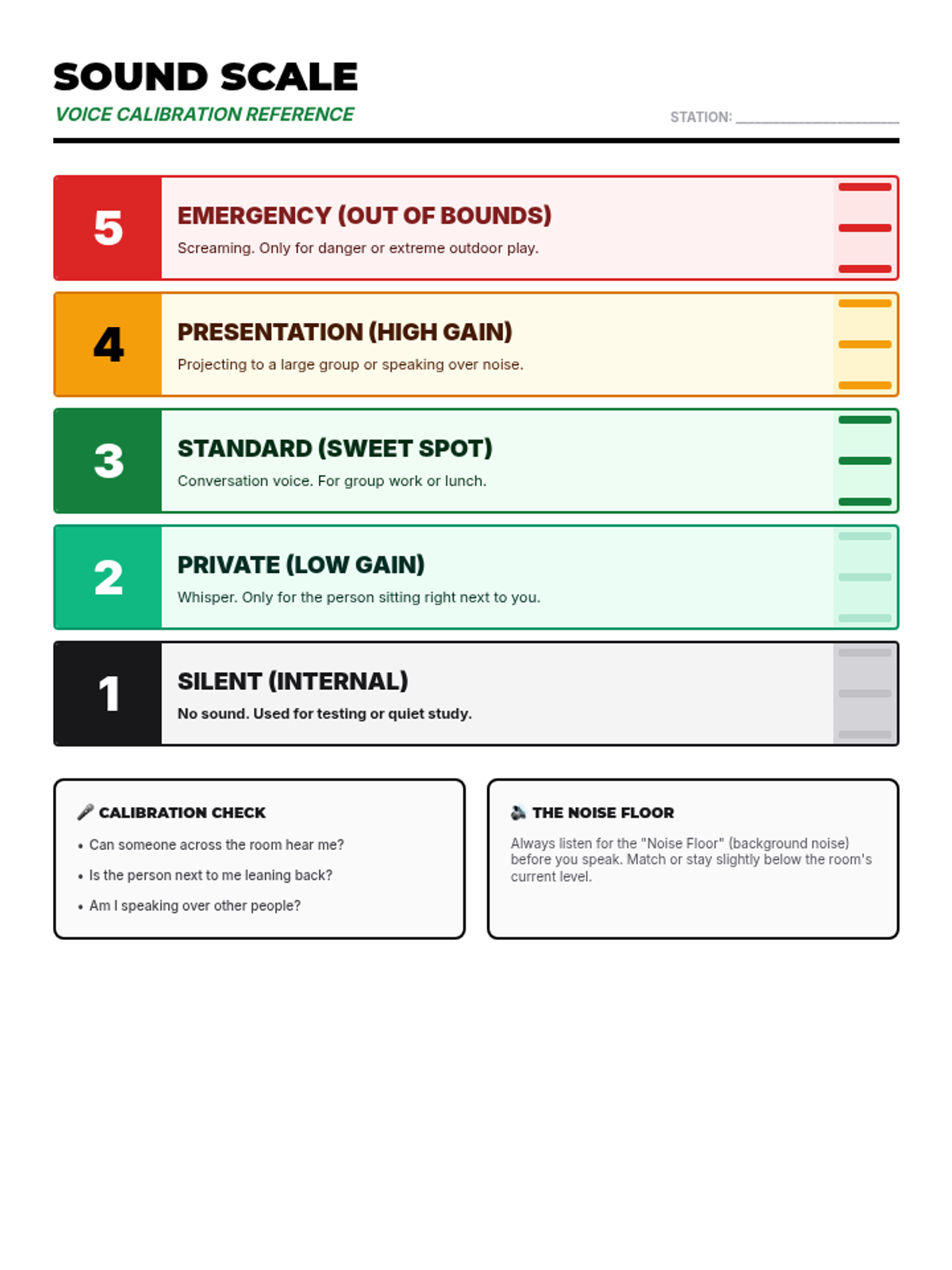
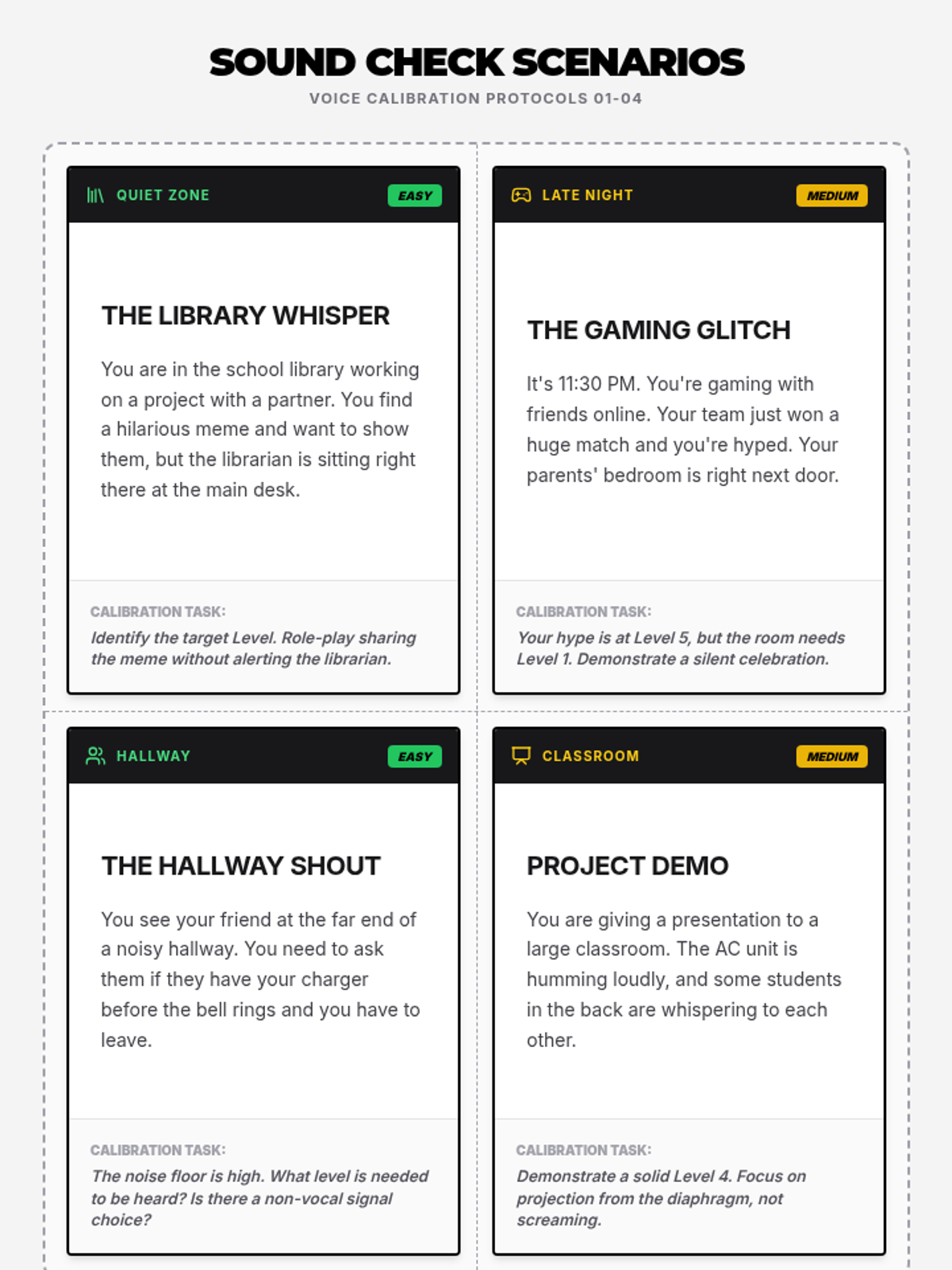
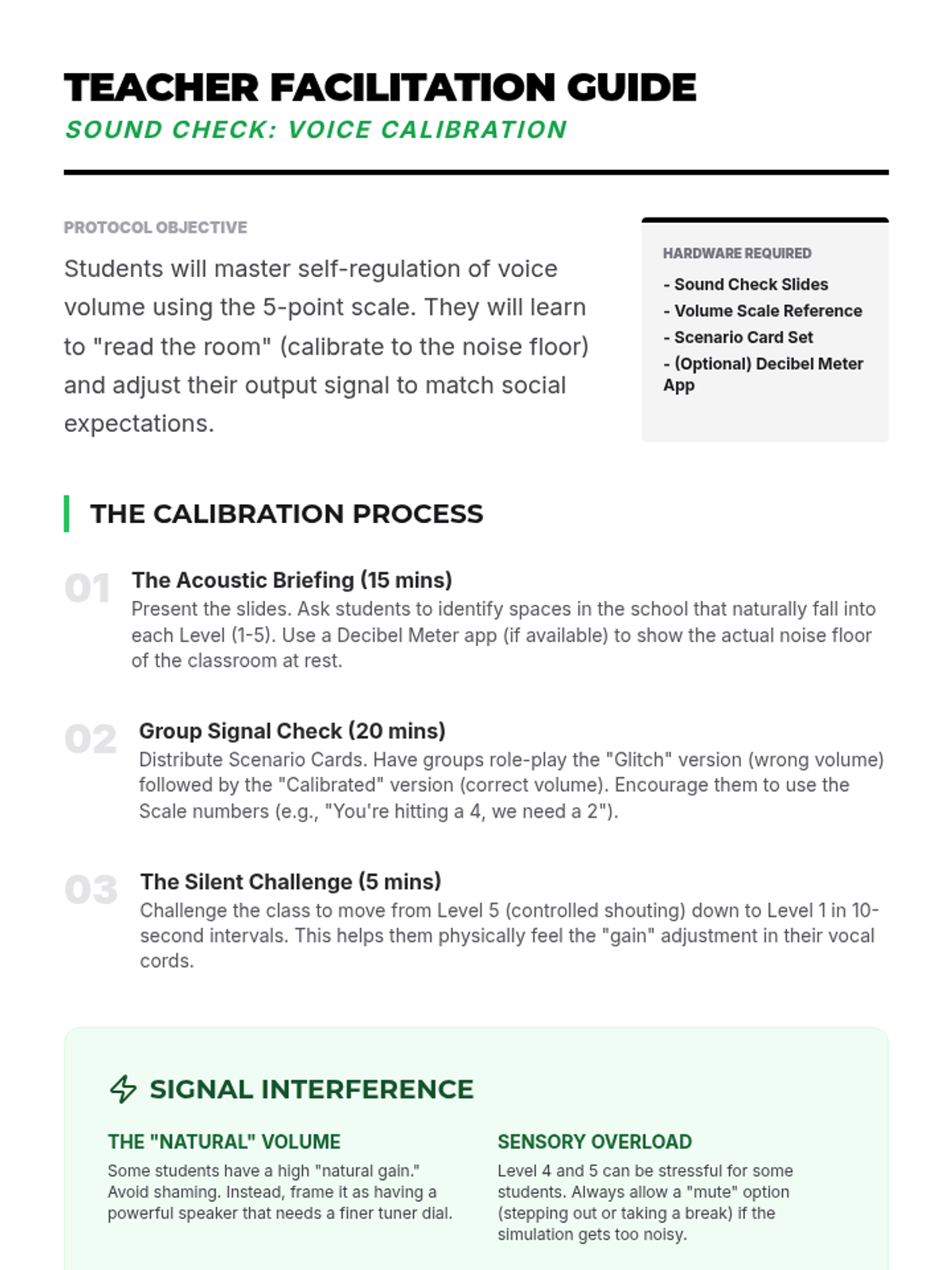
A self-regulation workshop focusing on voice volume management using the 5-point scale, styled as an audio engineering protocol for teens to master social awareness in different environments.
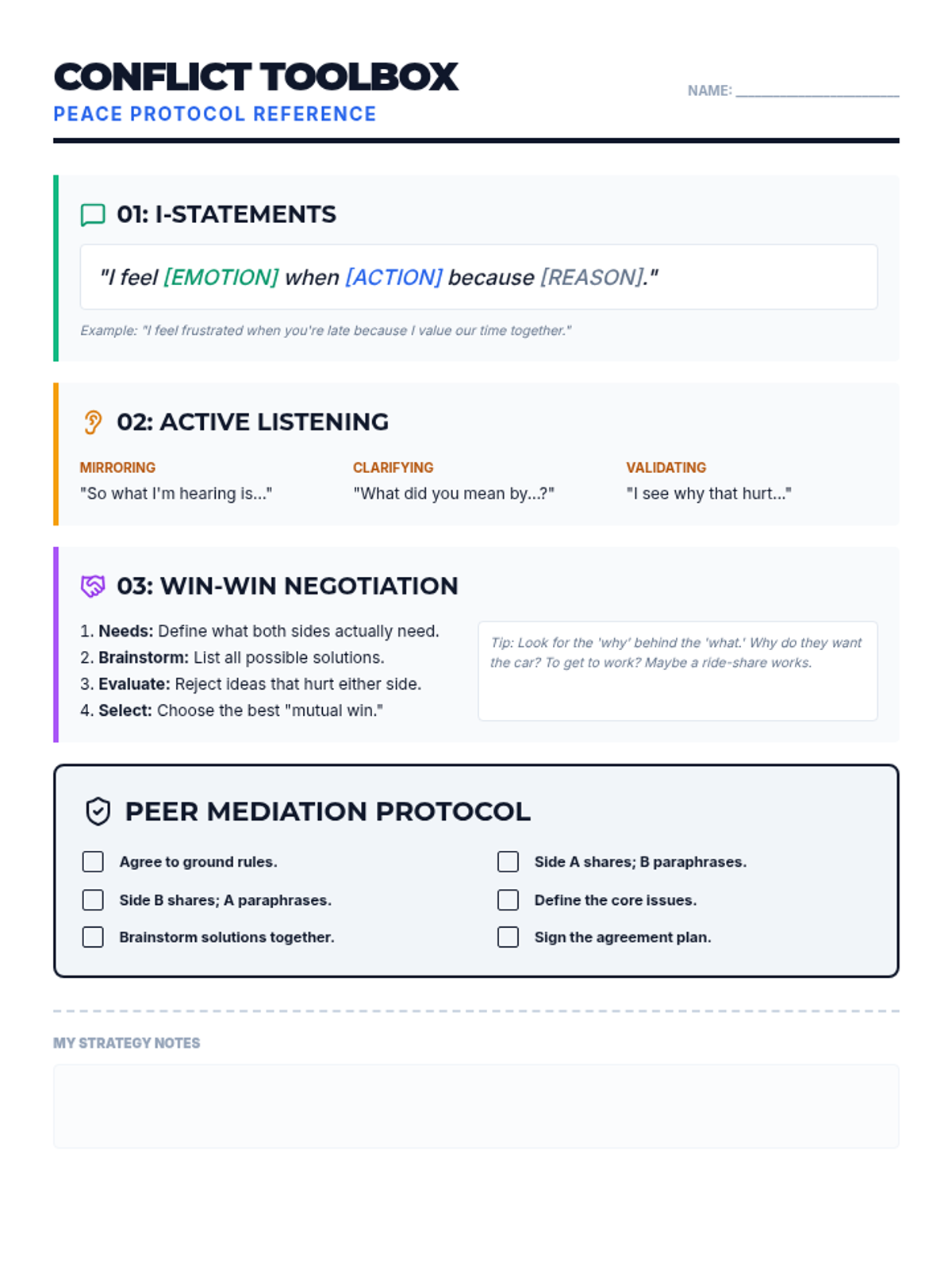
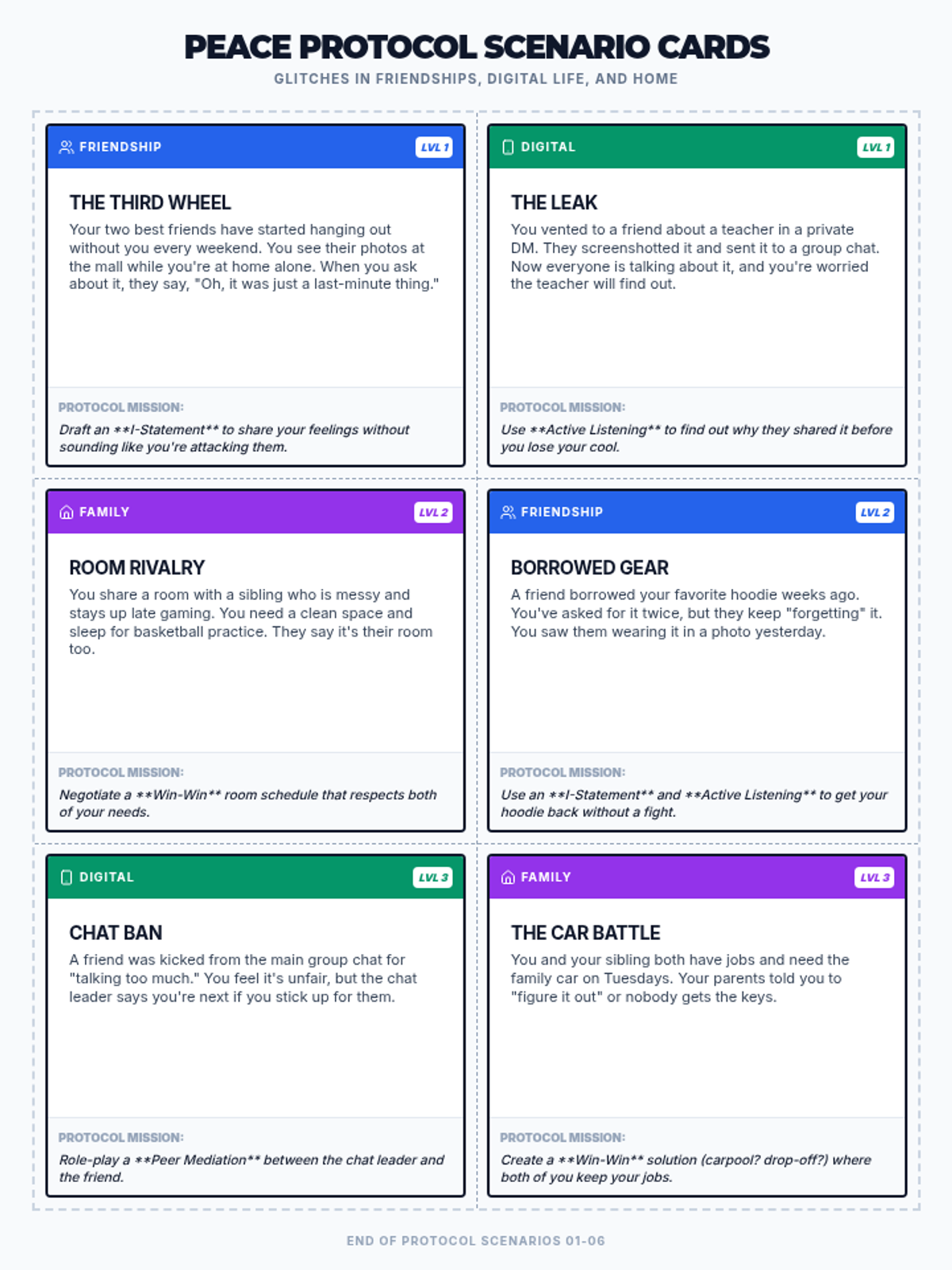
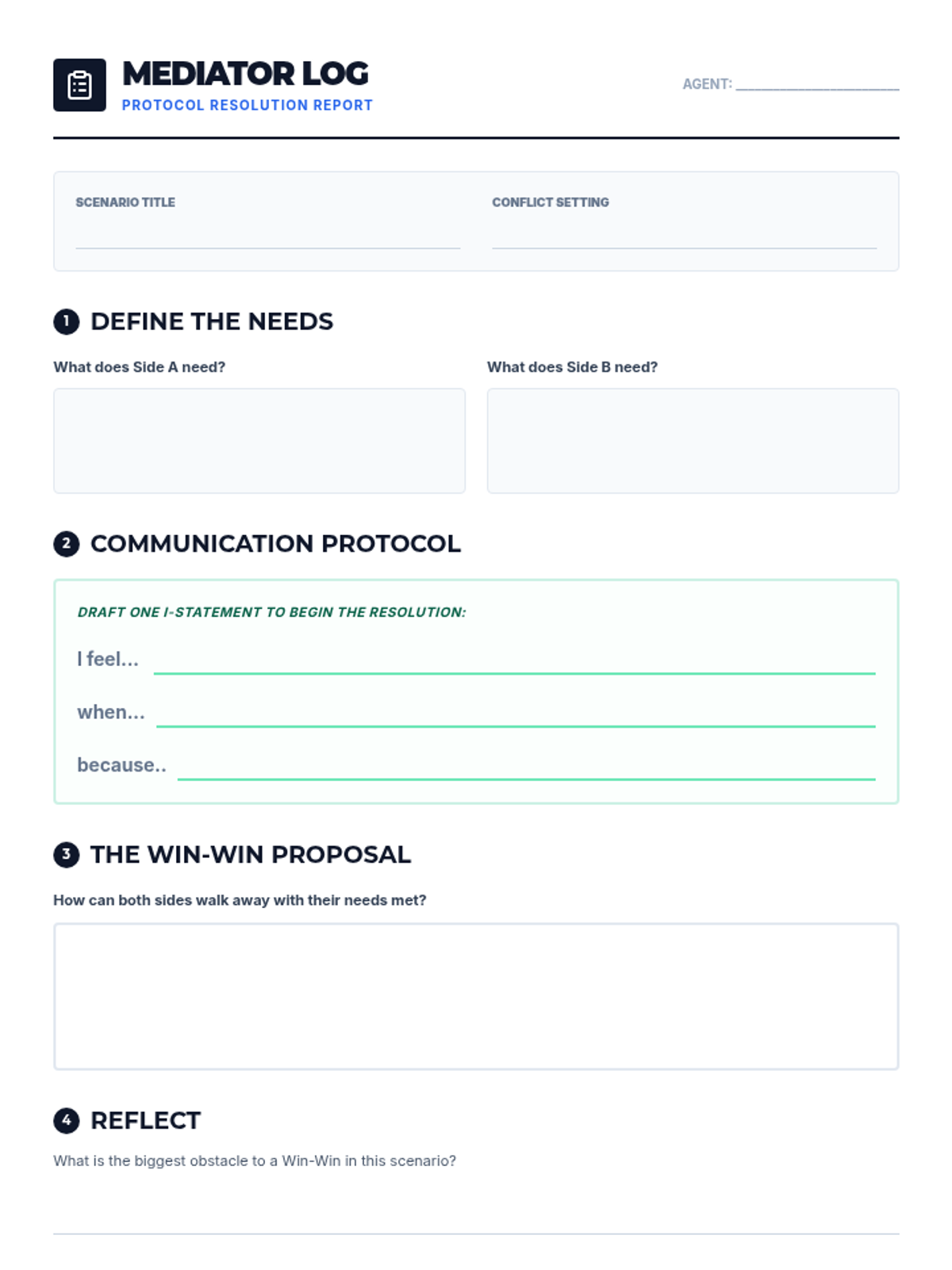
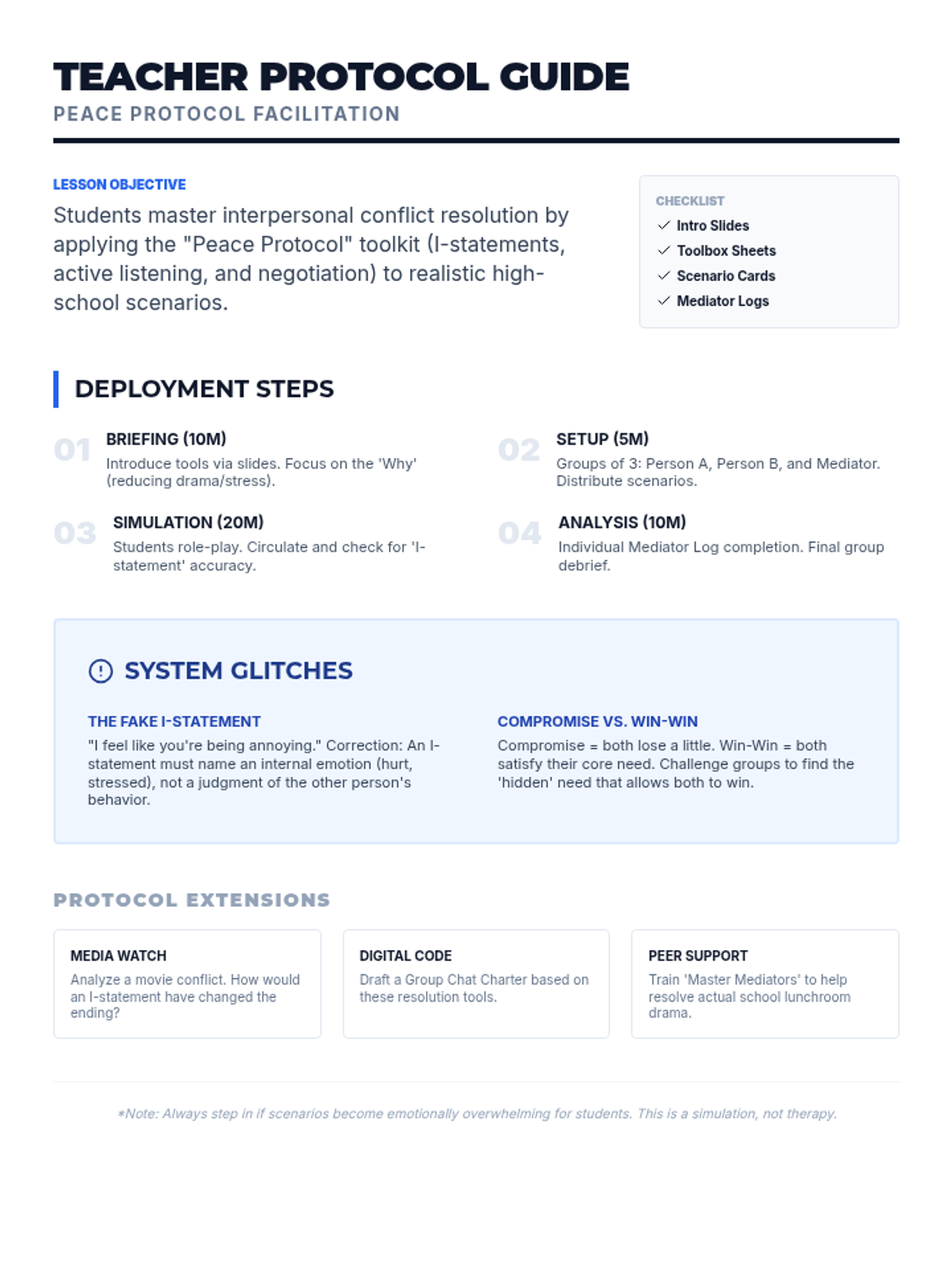
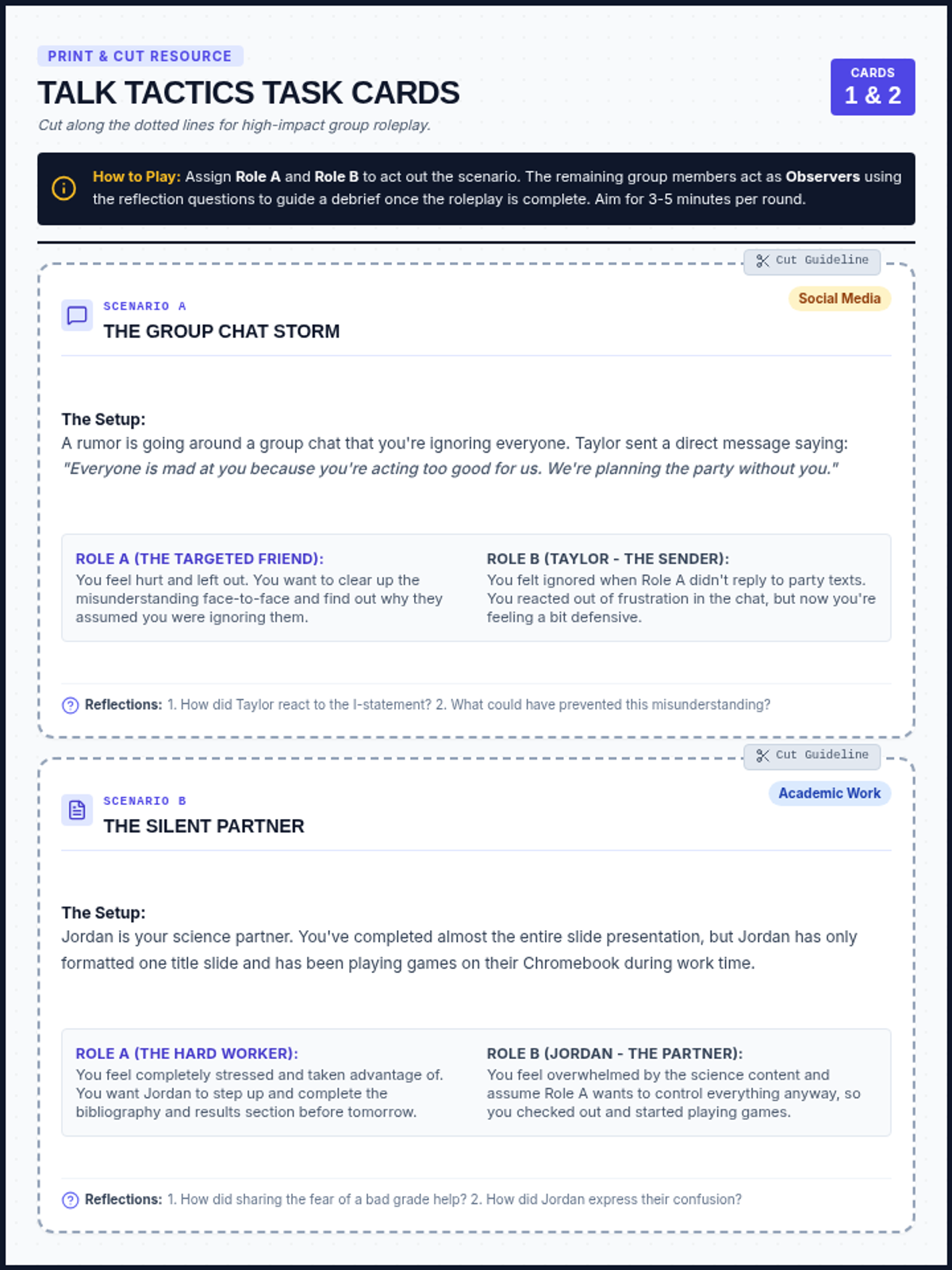
A hands-on workshop for teens to master conflict resolution through realistic scenarios involving friendships, social media, and family life using I-Statements, Active Listening, and Negotiation strategies.
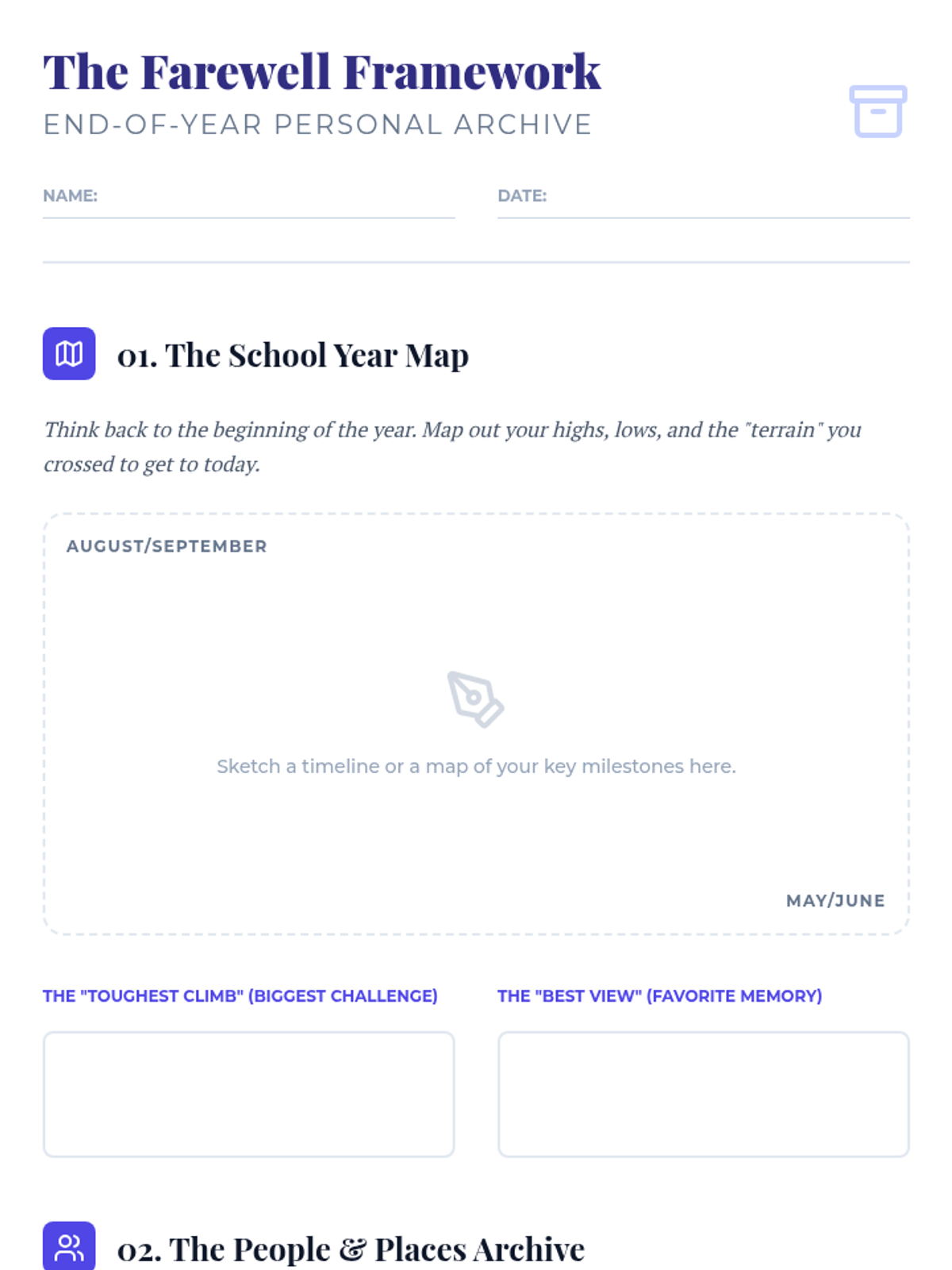
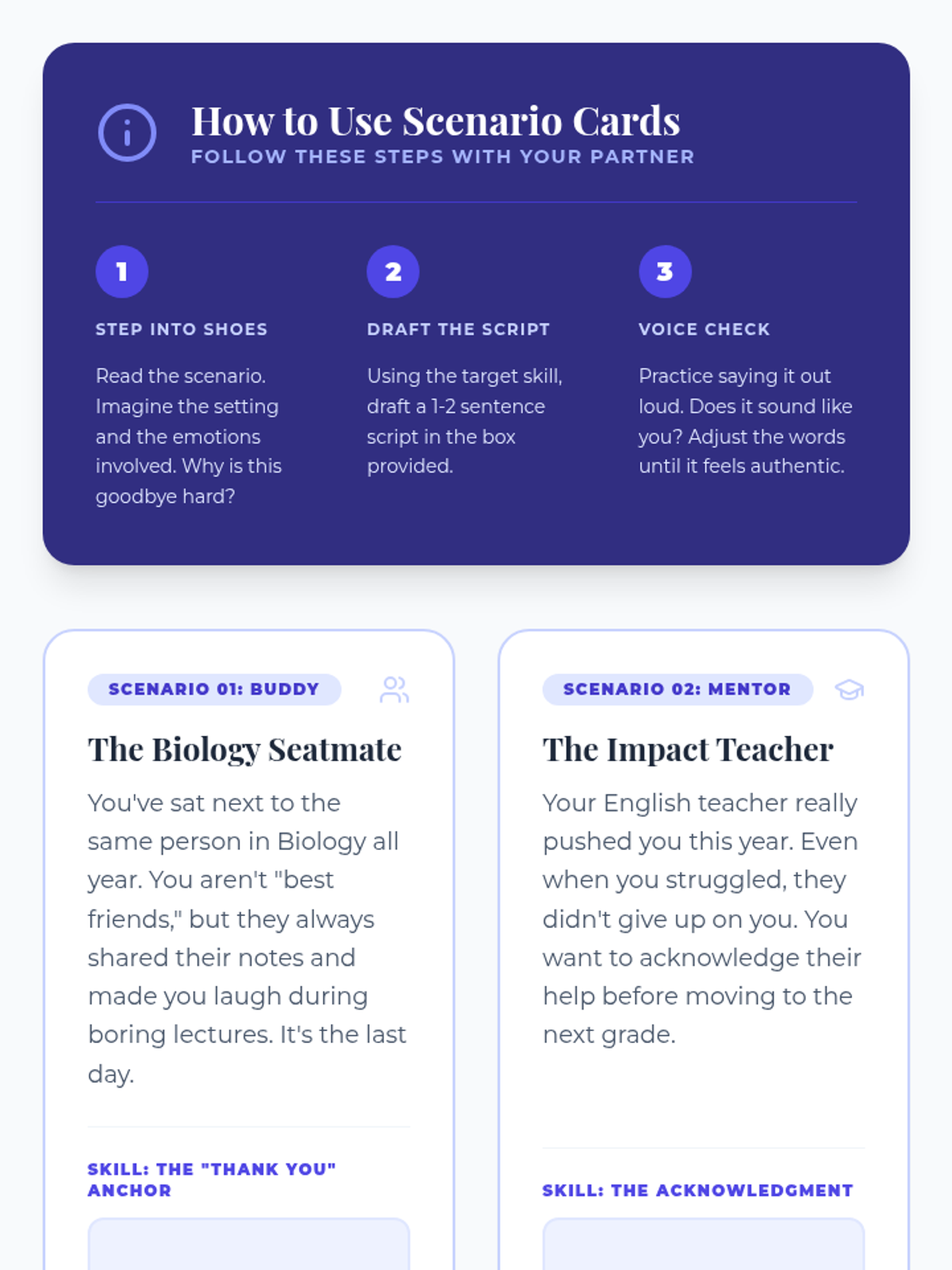
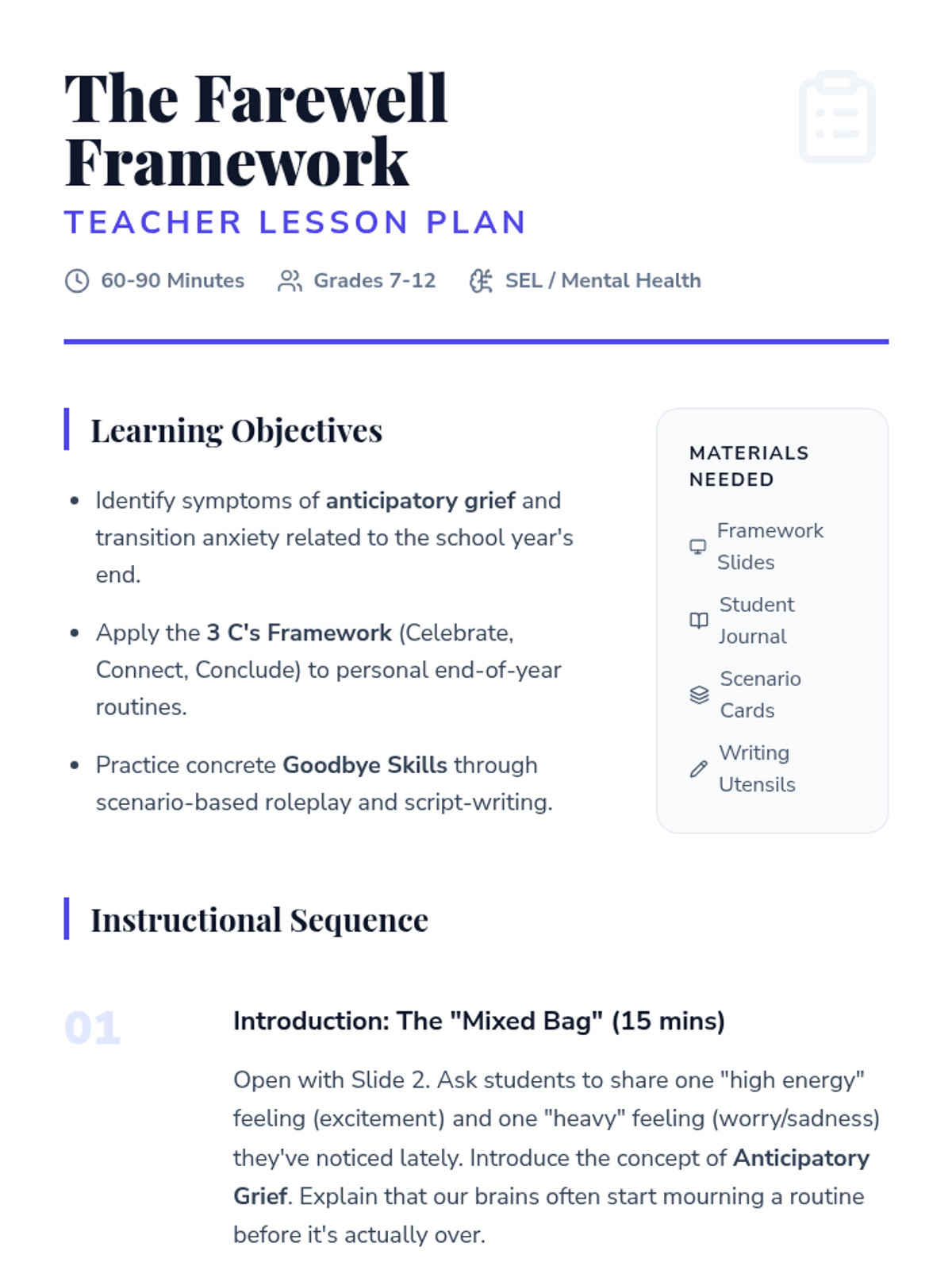
A comprehensive social-emotional learning lesson designed to help middle and high school students navigate the psychological transitions of the school year's end. Students will explore the 'Farewell Framework' to practice healthy closure, manage anticipatory grief, and develop concrete 'goodbye skills' for people and routines.
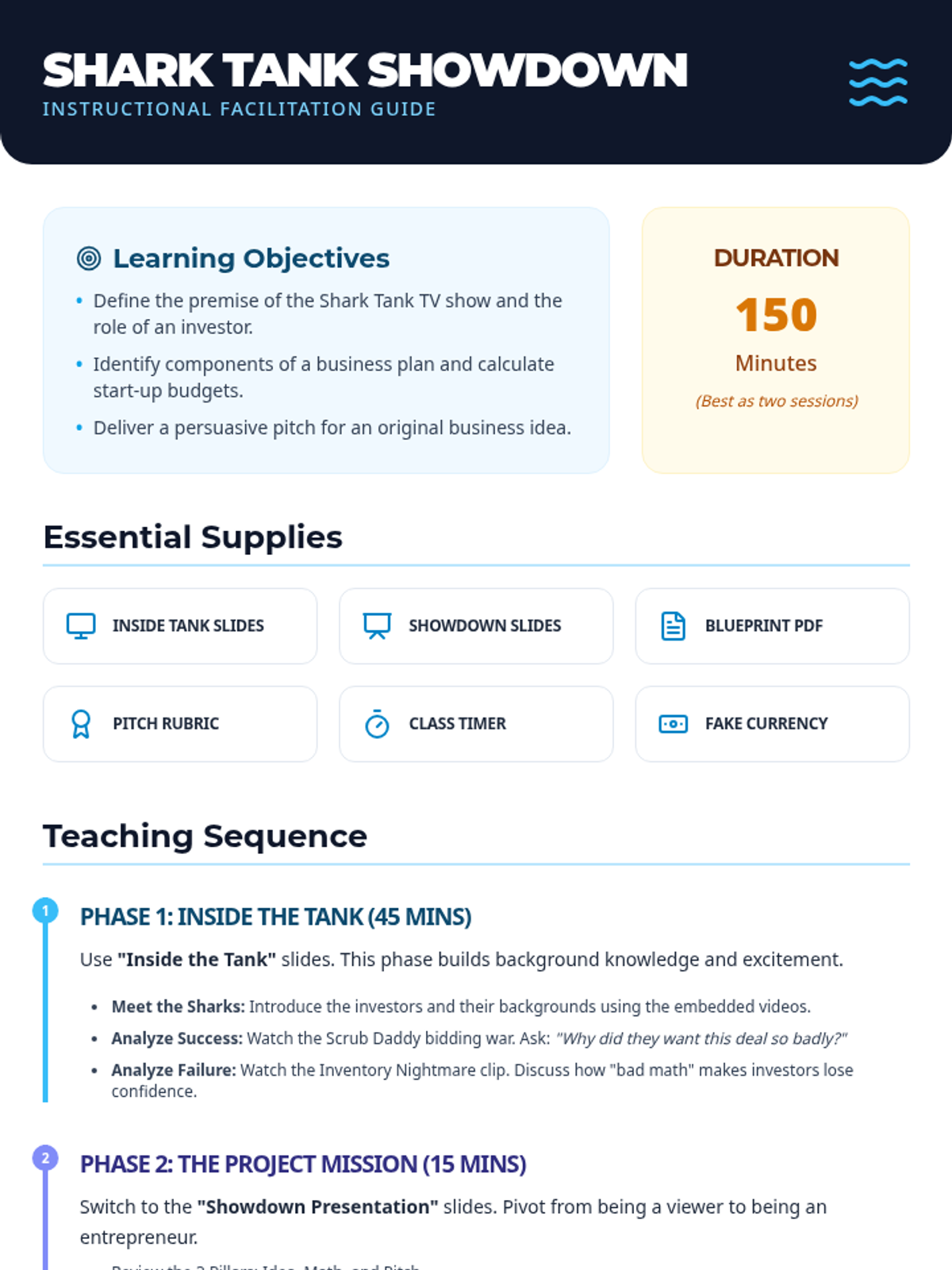
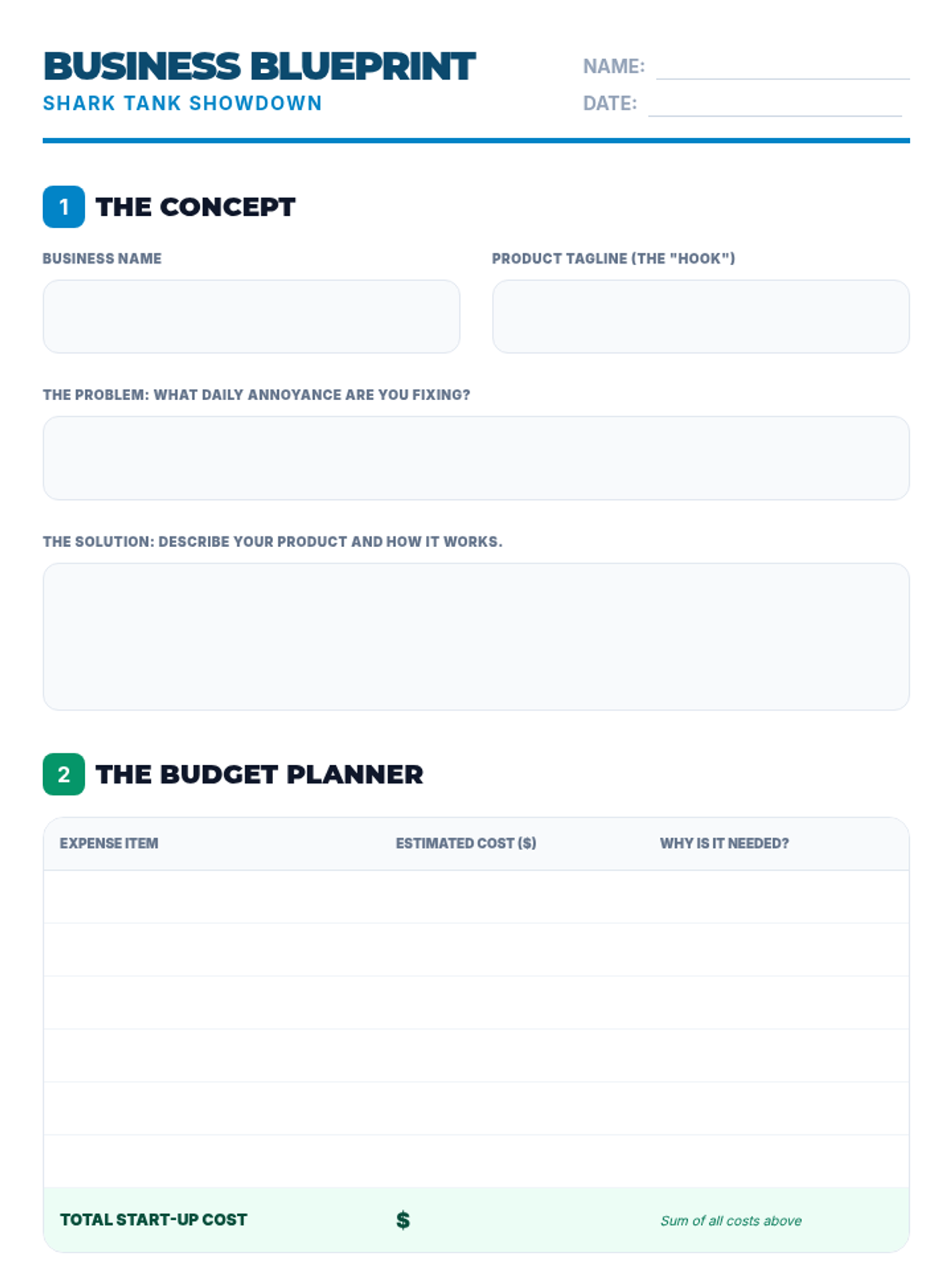
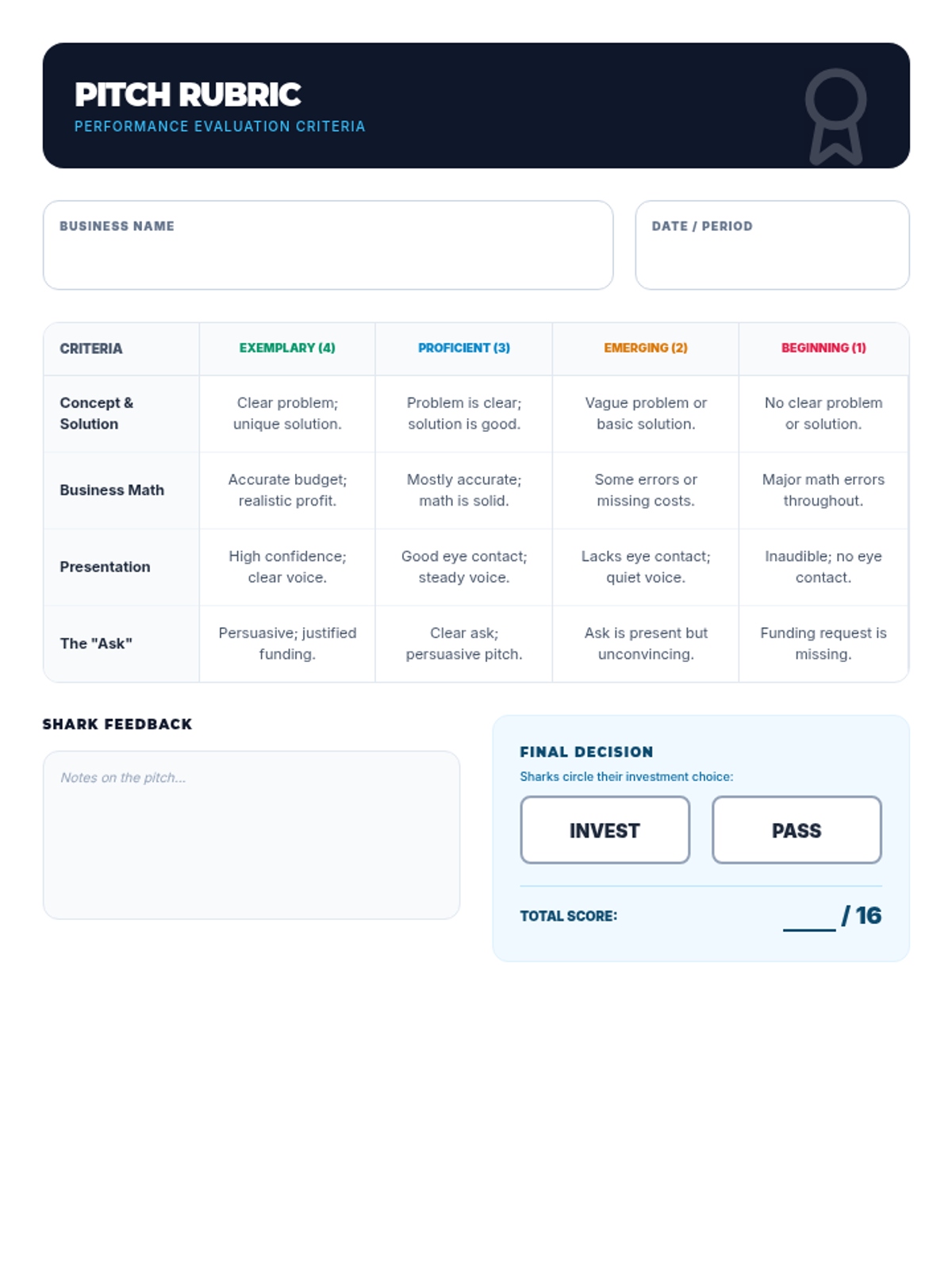
An immersive entrepreneurship lesson where students learn business basics, budgeting, and persuasive pitching to secure 'funding' for their original ideas.
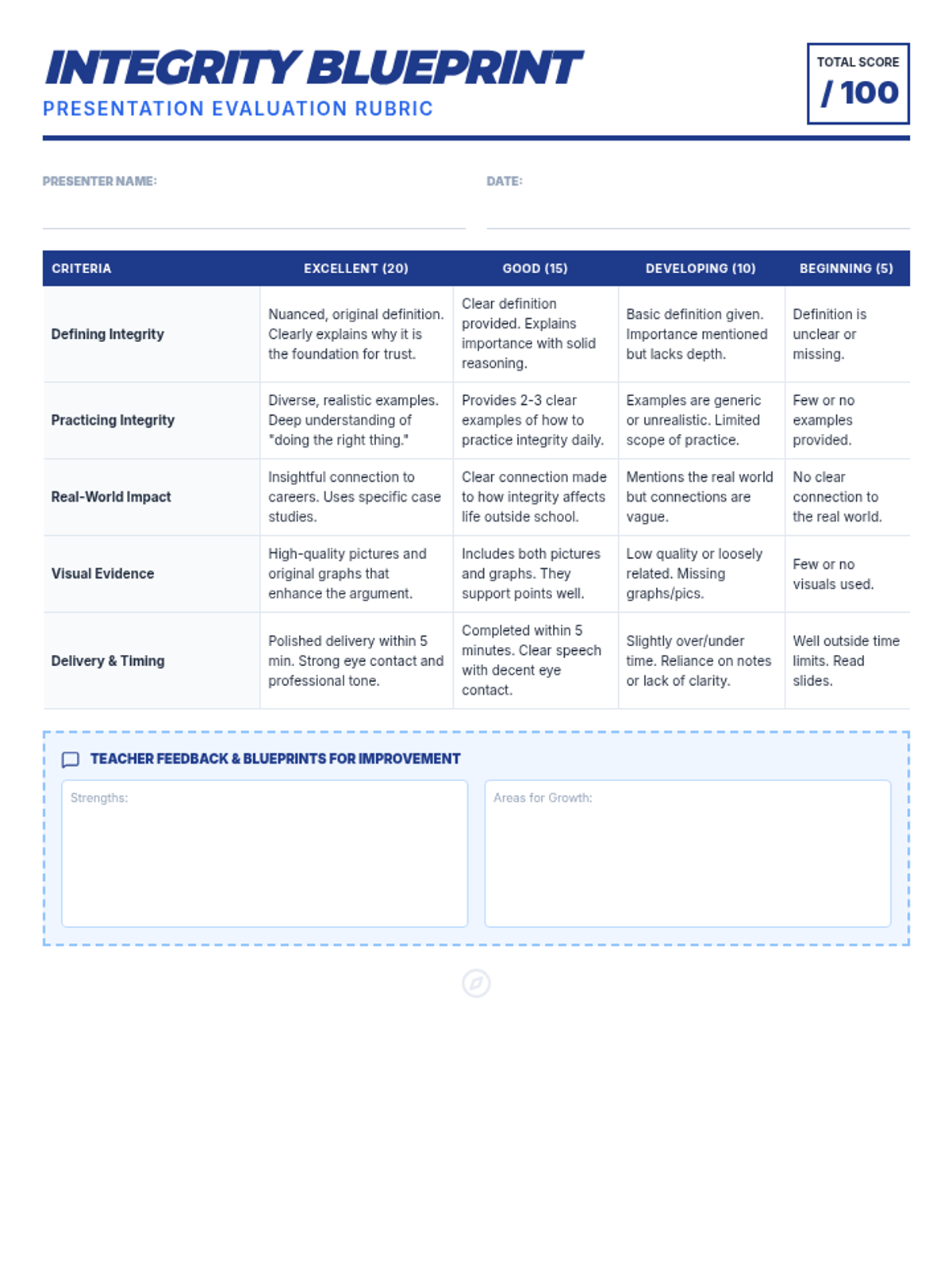
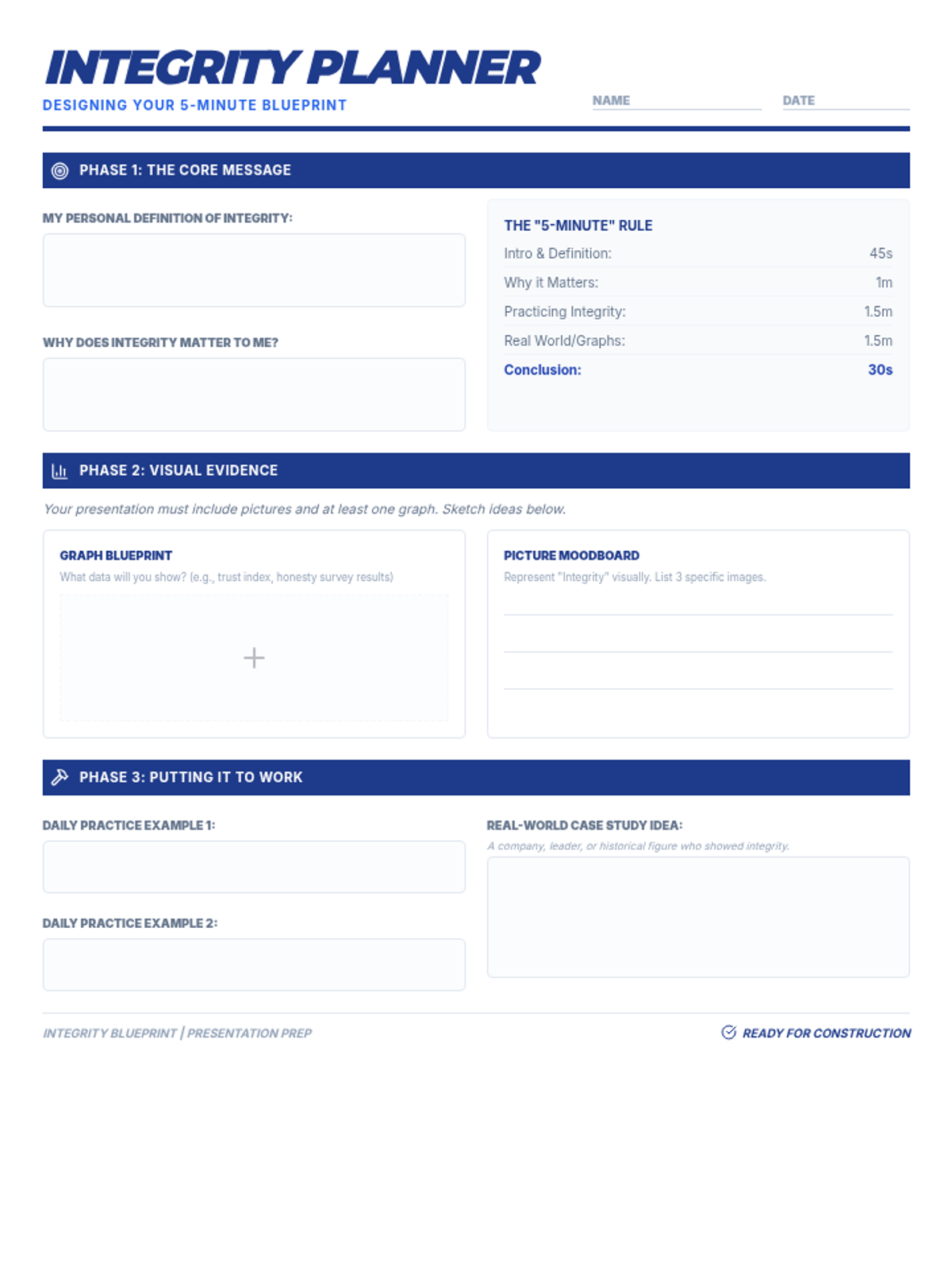
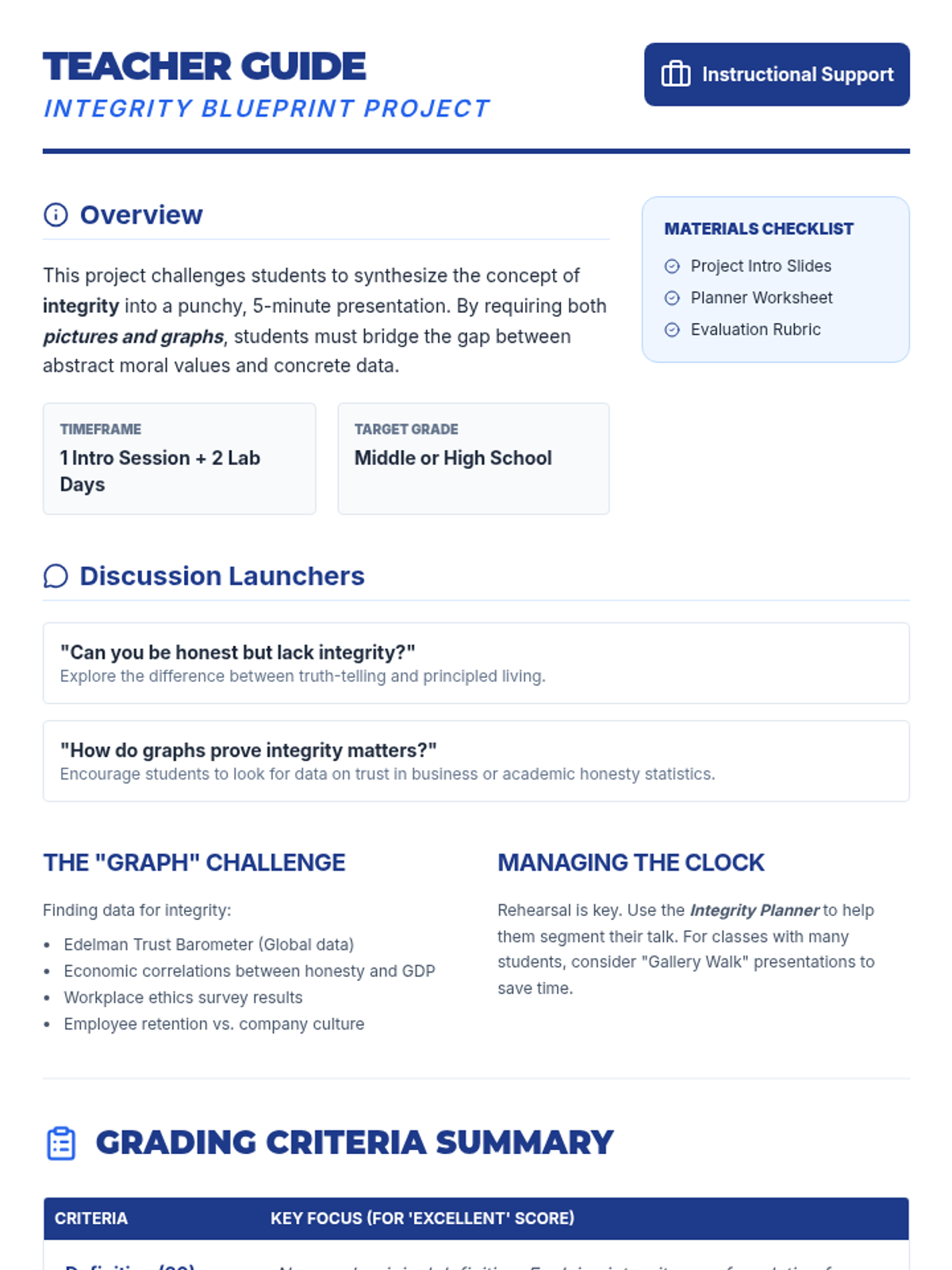
A comprehensive lesson guiding students through the definition, importance, and real-world application of integrity, culminating in a visually-driven 5-minute presentation.
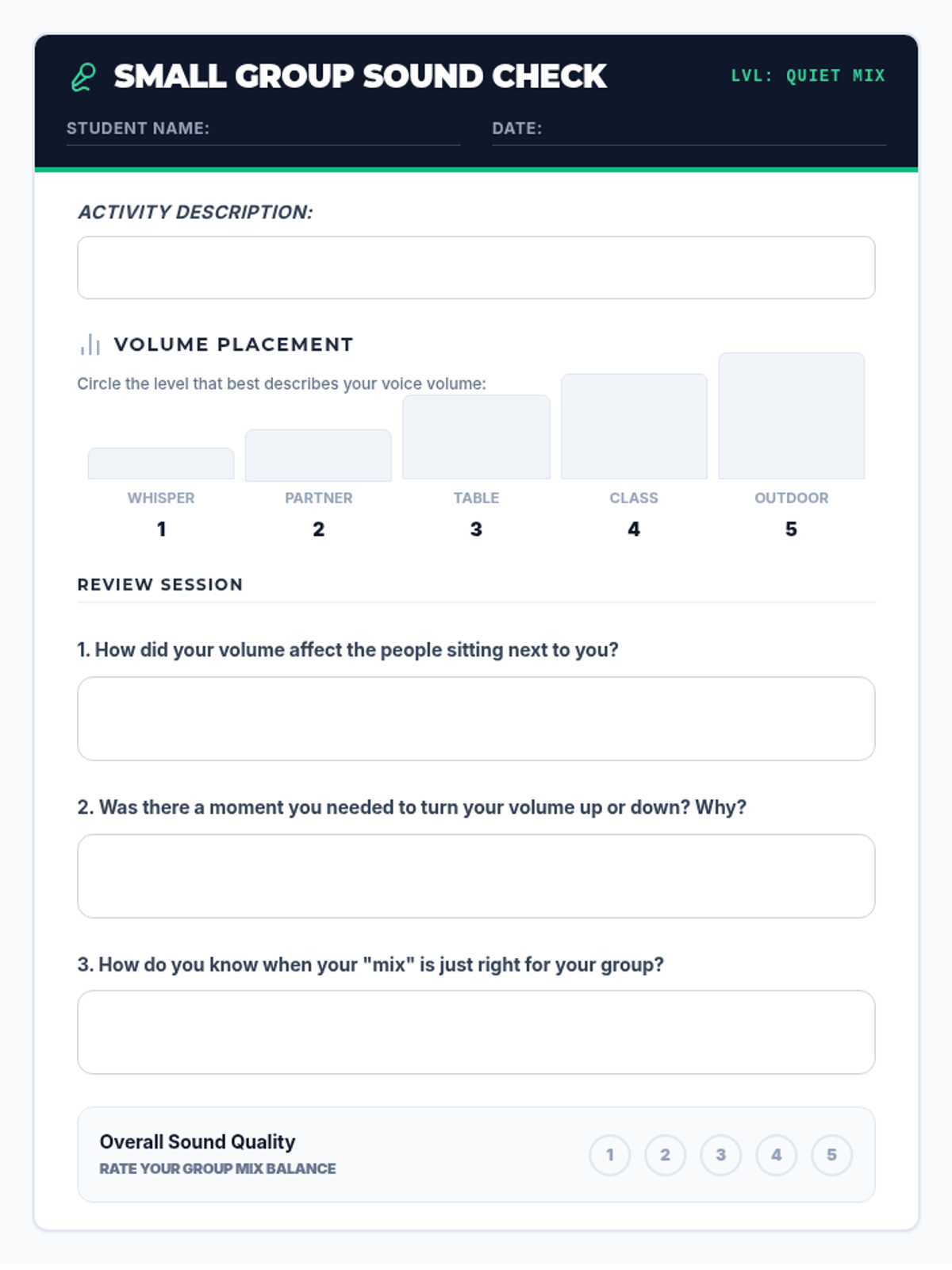
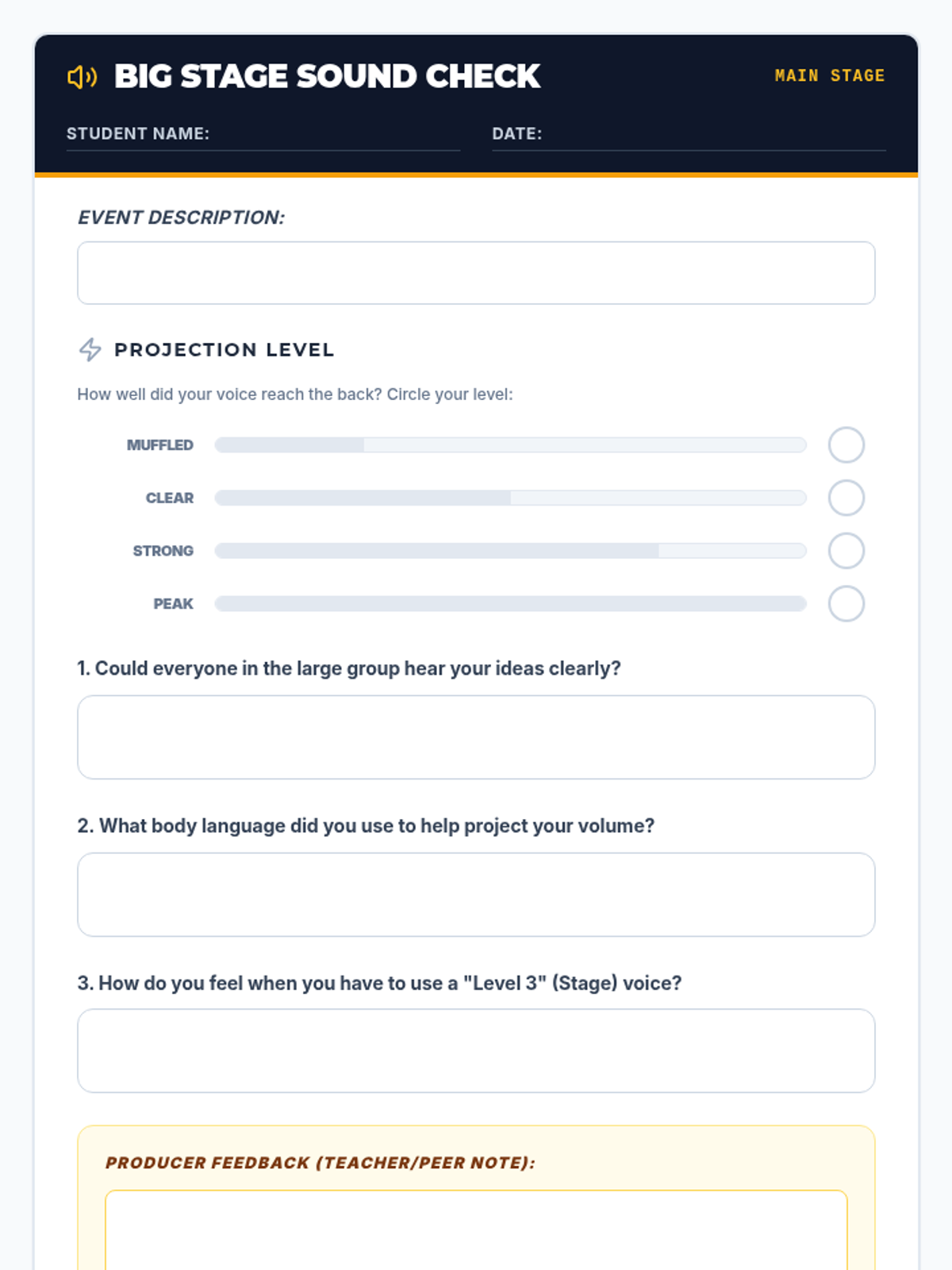
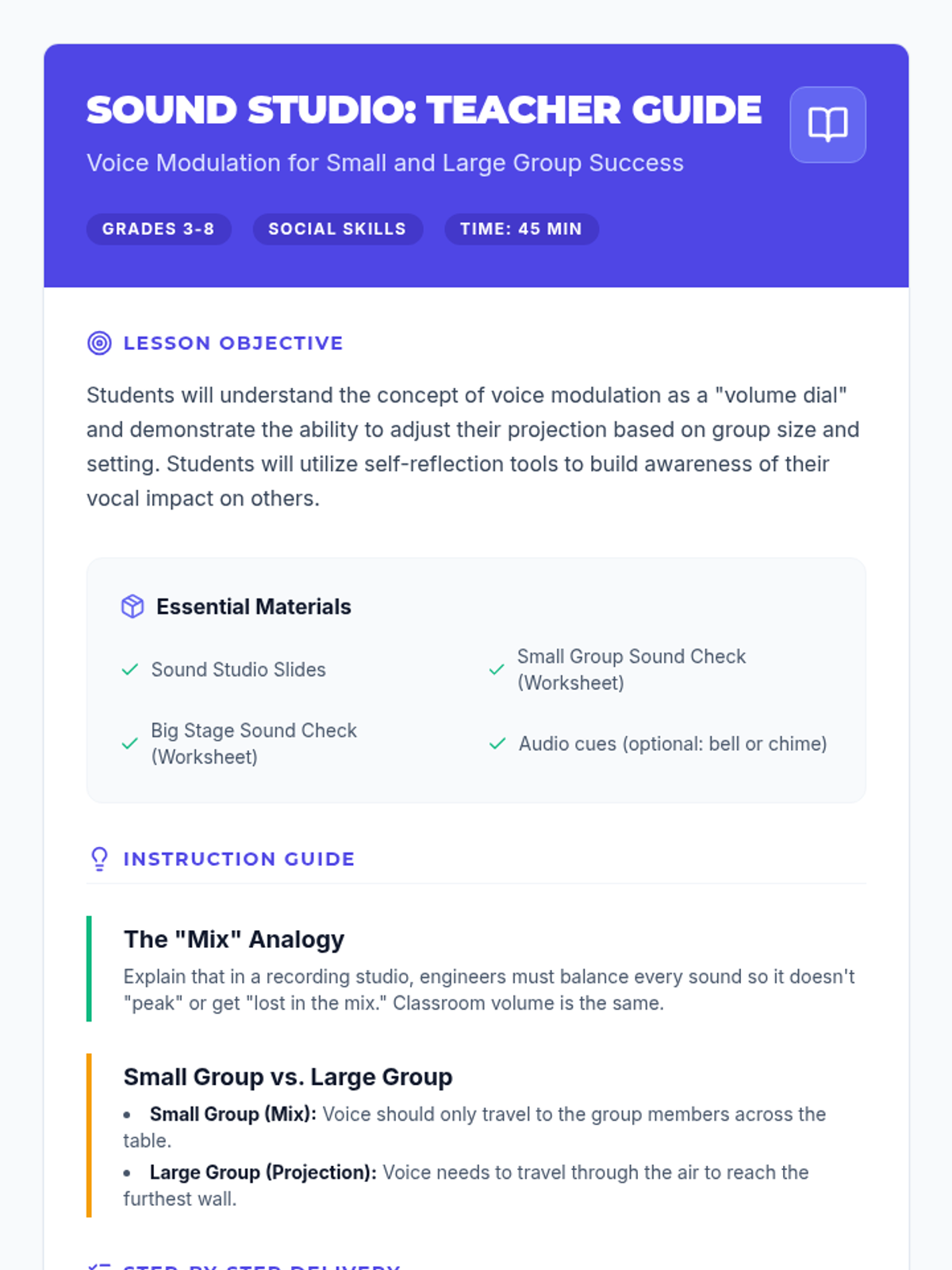
Students learn to adjust their voice volume like a sound engineer, mastering the 'volume dial' for small group collaboration and large group participation. Includes interactive slides and targeted self-reflection tools to build social-emotional awareness.
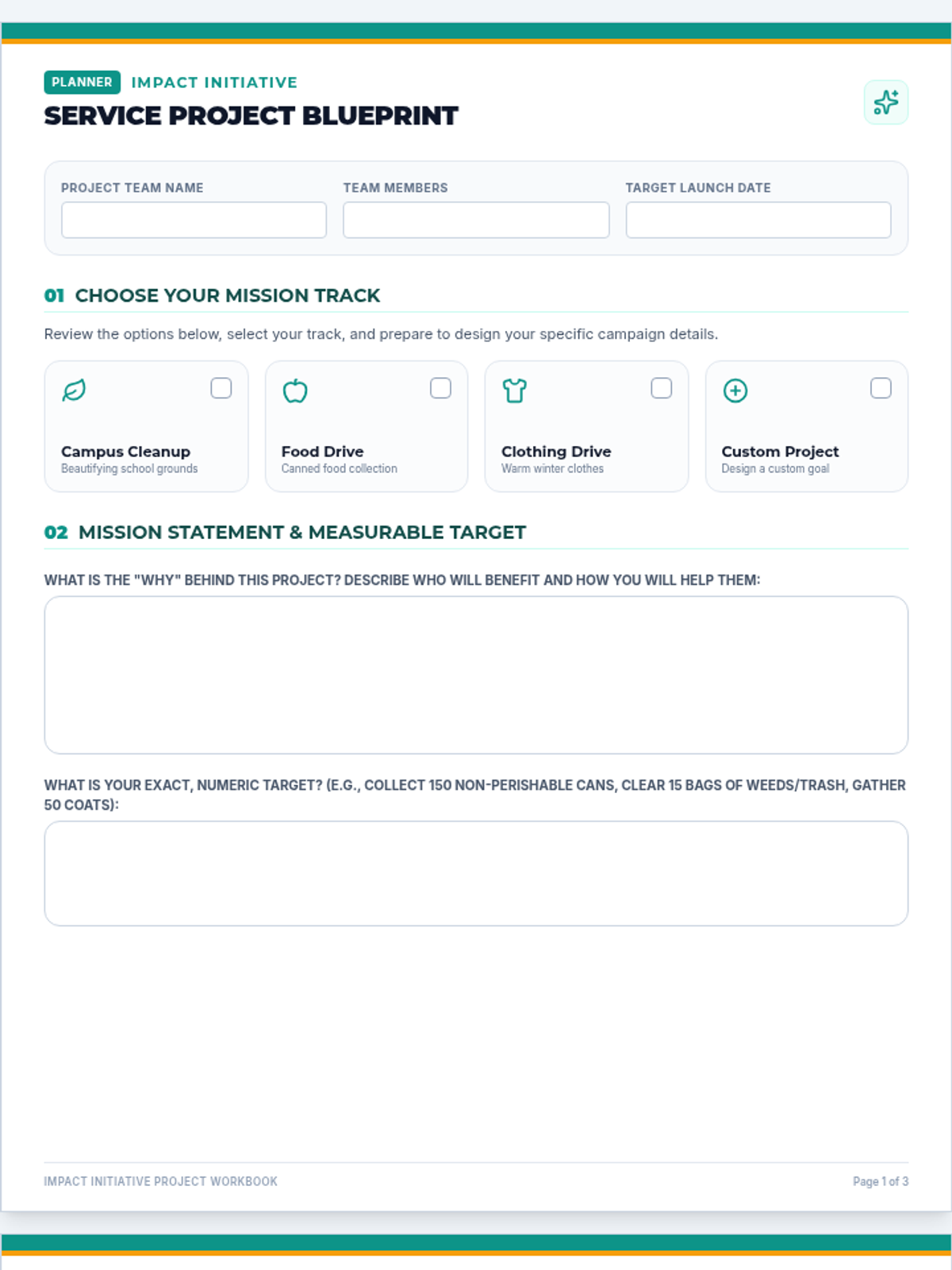
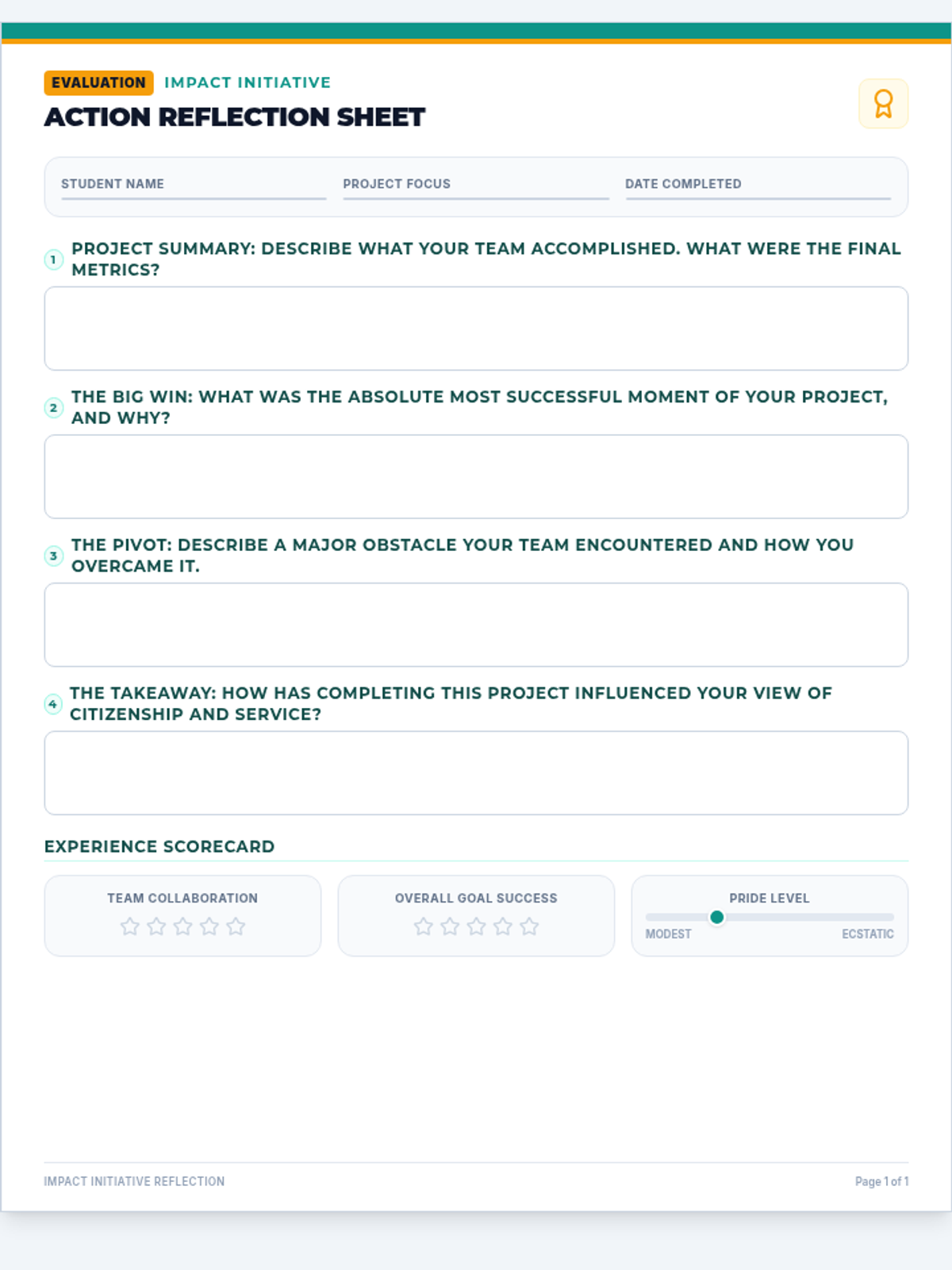
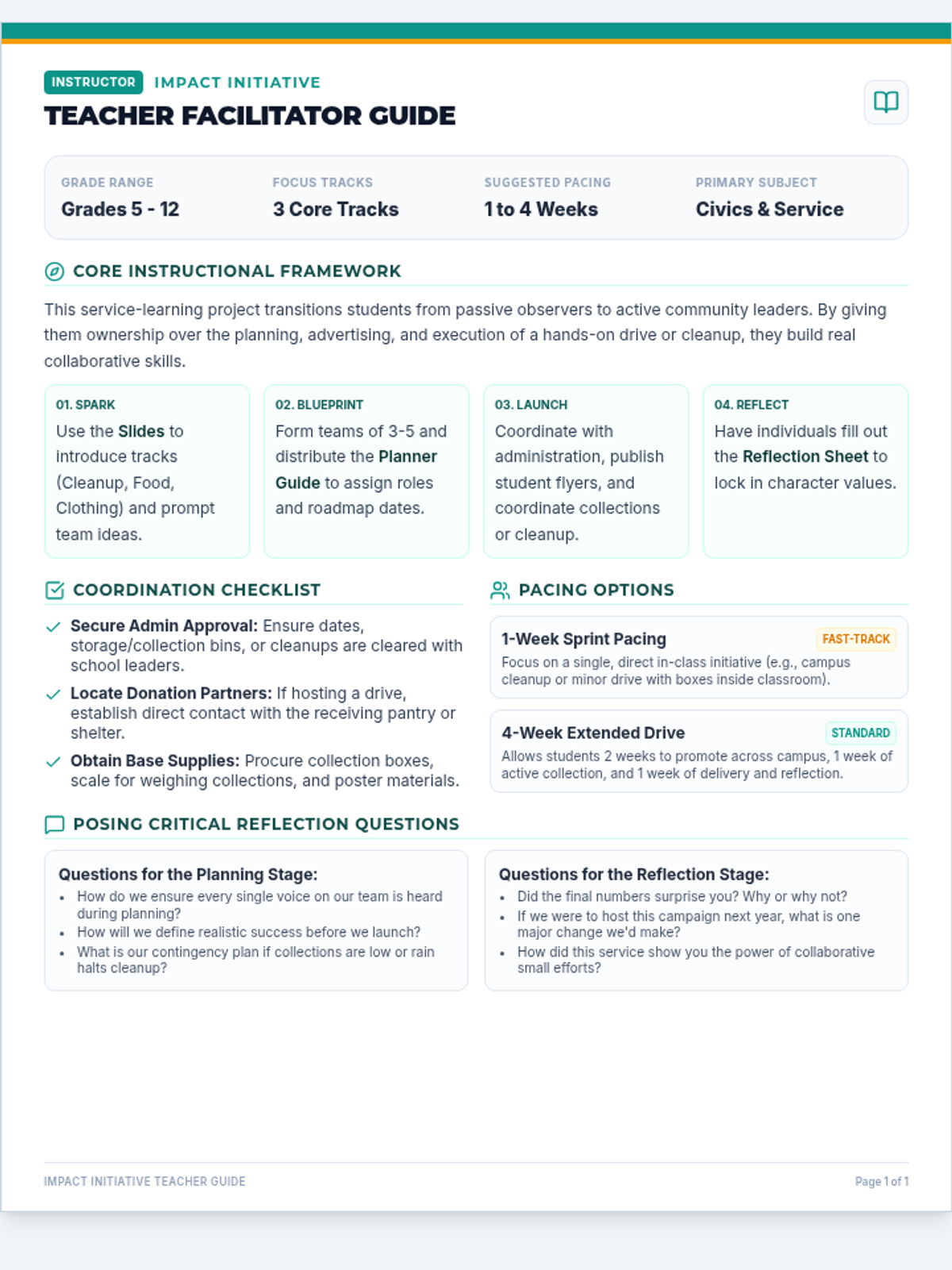
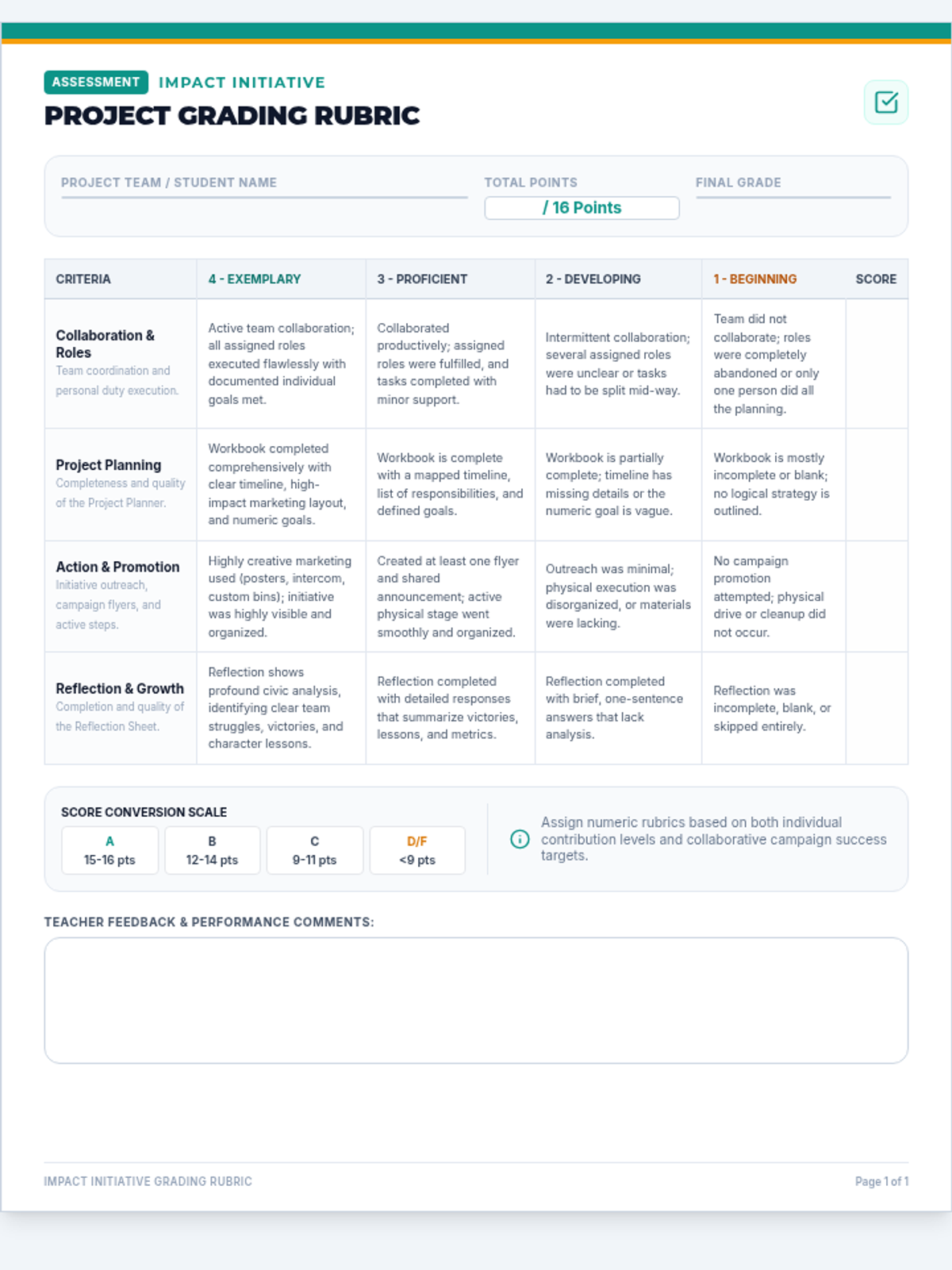
A service-learning lesson where students plan, execute, and reflect on a community service project of their choice (school campus cleanup, food drive, or clothing drive). It includes interactive presentation slides, a step-by-step project planning guide, a simplified reflection worksheet, and a teacher facilitation guide.
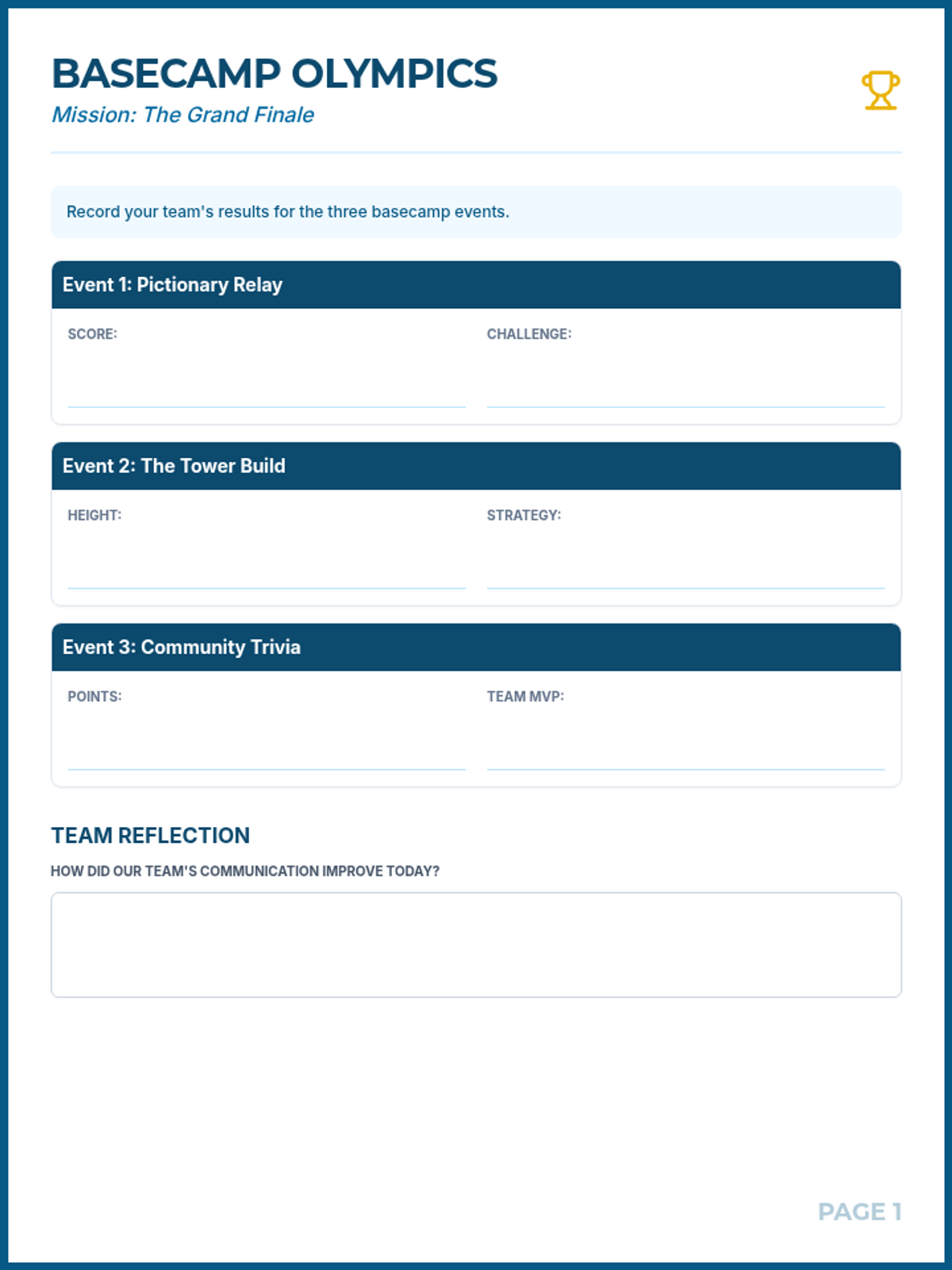
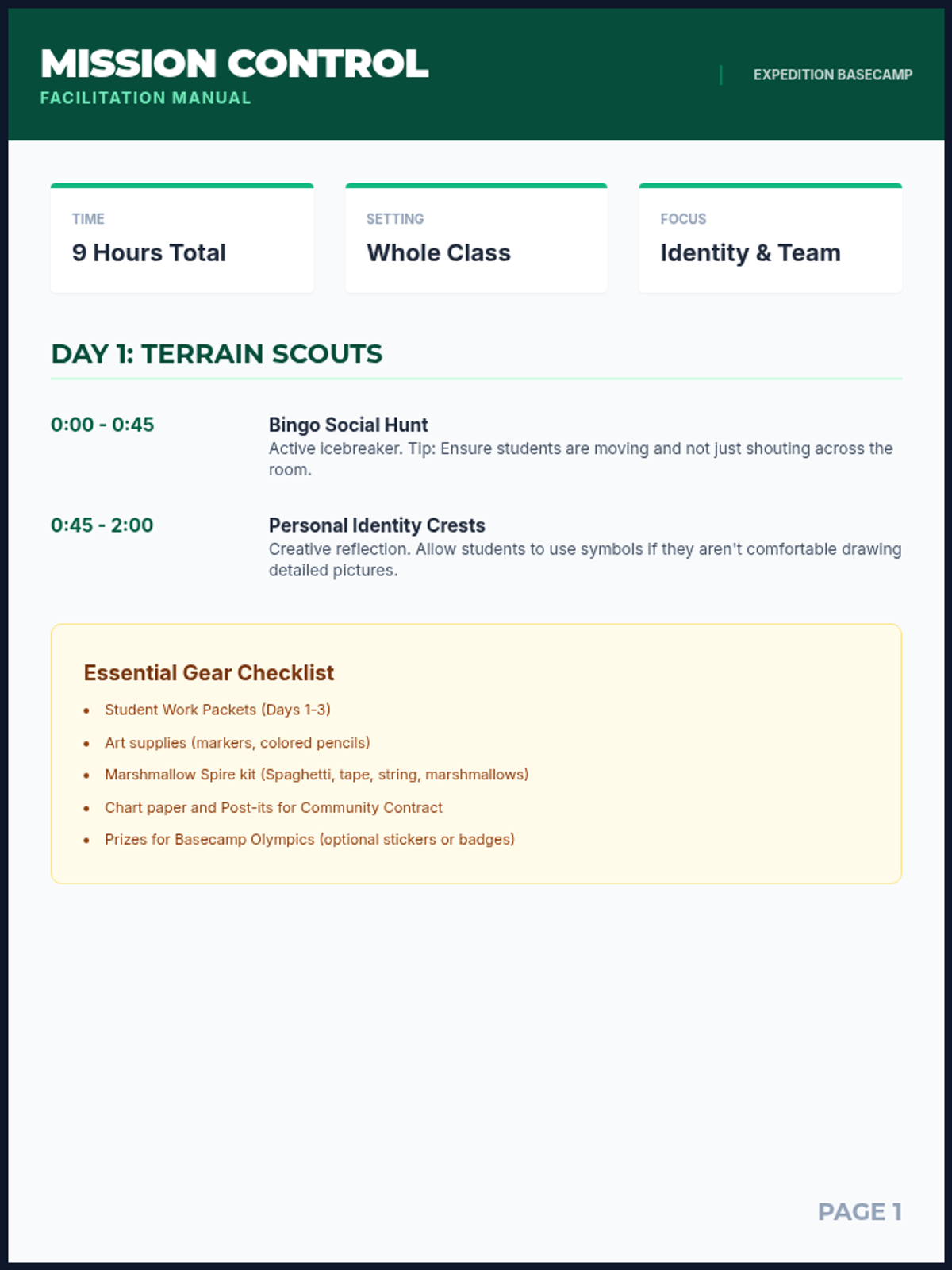
The final day celebrates the new community with a 'Basecamp Olympics' event and a reflective 'Letter to Future Self' to set the tone for the year ahead.
Day two shifts focus to collaborative problem-solving with an engineering challenge and the collective creation of a classroom 'Community Contract'.
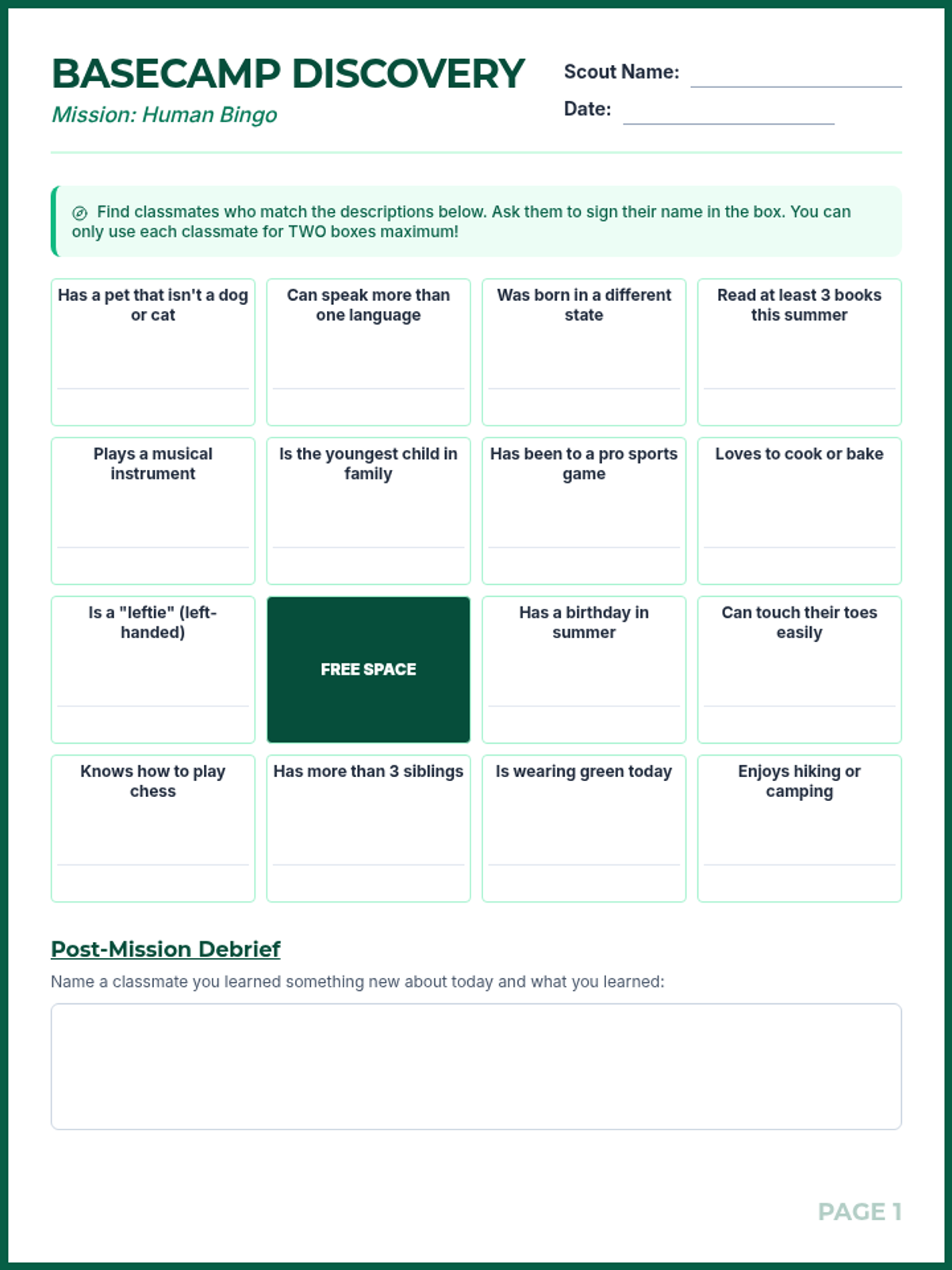
The first day of basecamp focuses on individual identity and initial team bonds through a 'Human Bingo' social hunt and a creative 'Personal Crest' project.
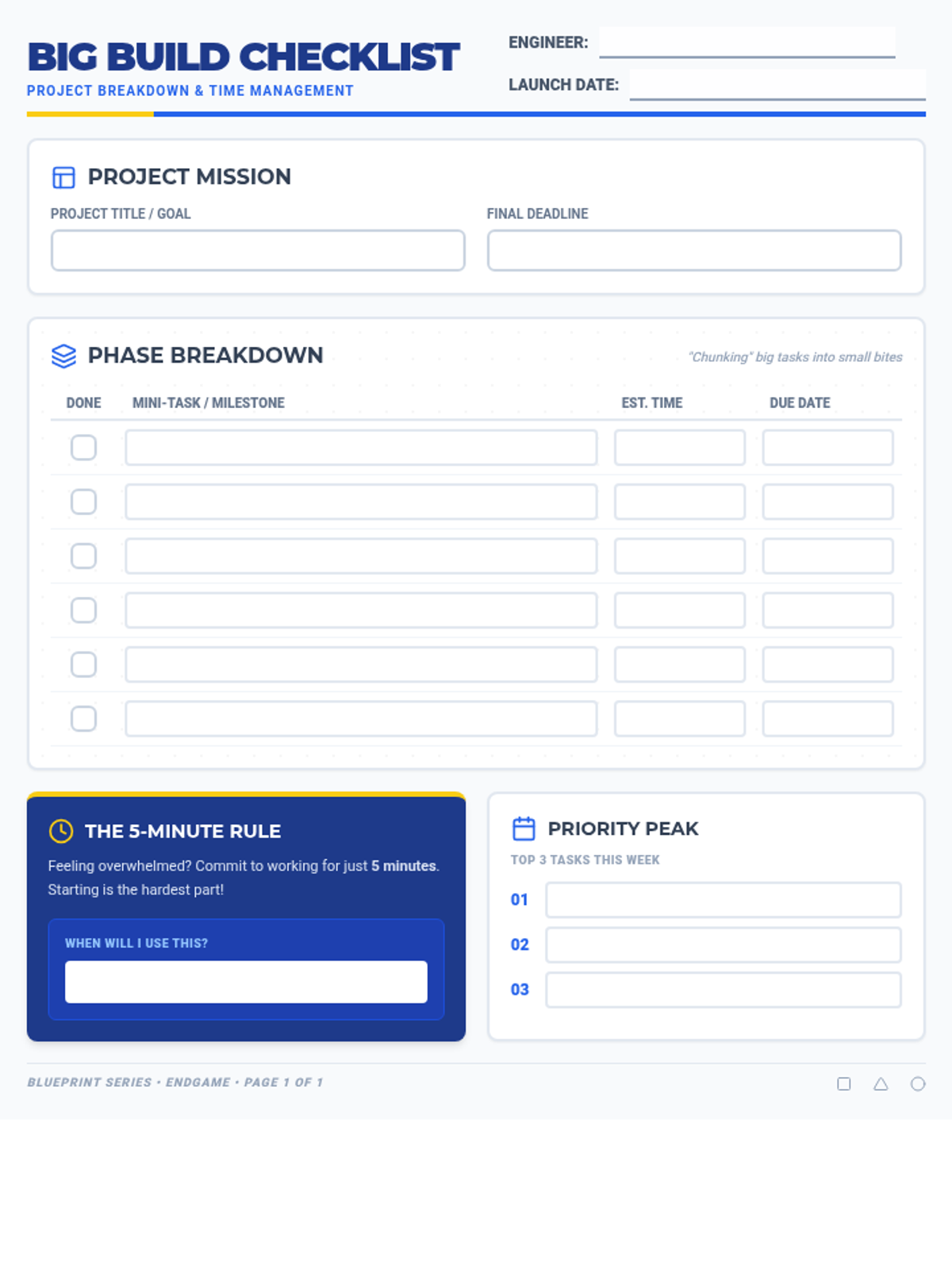
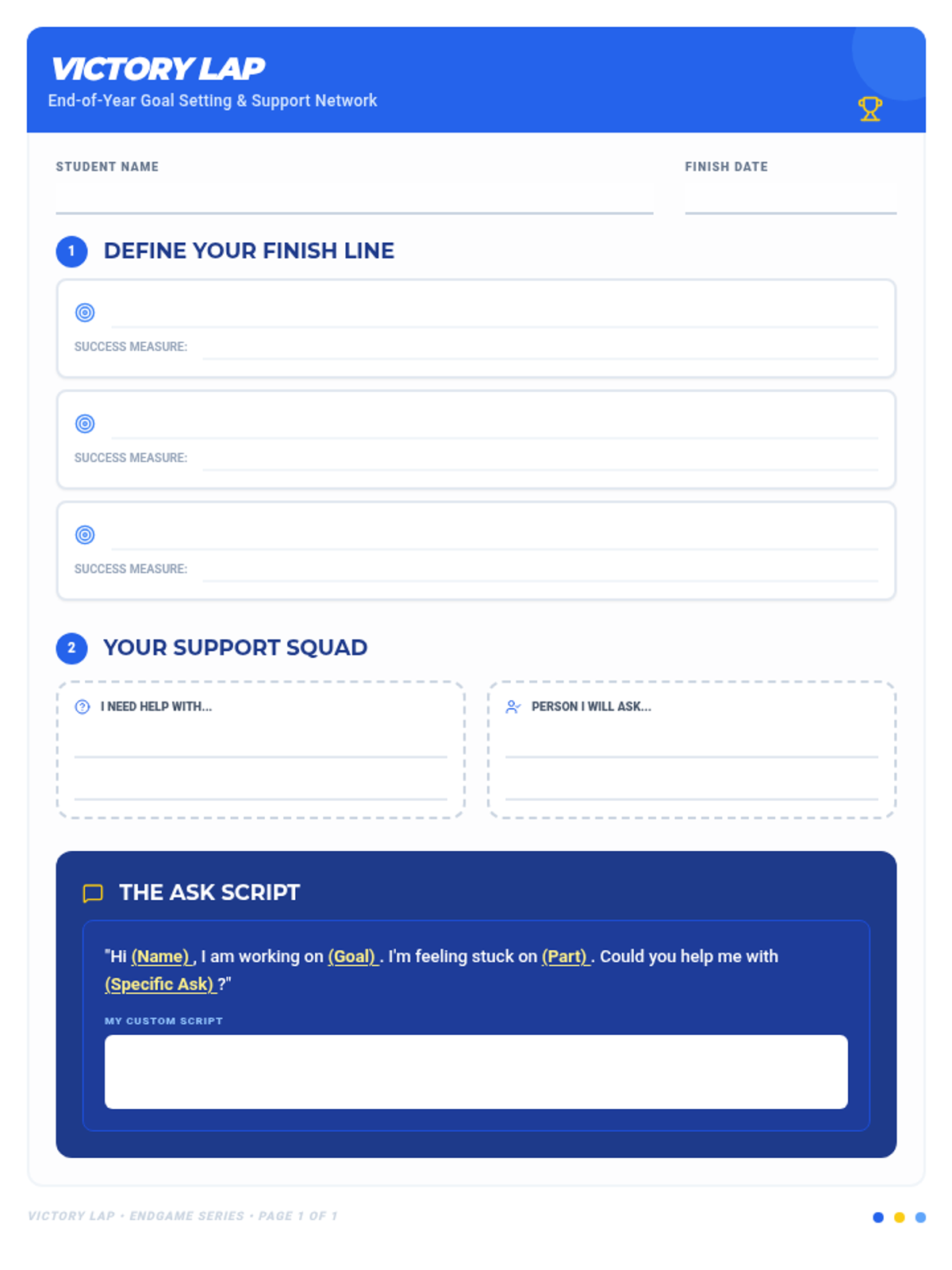
A comprehensive lesson focused on teaching students how to manage their end-of-year workload through project decomposition, time management, and effective self-advocacy.
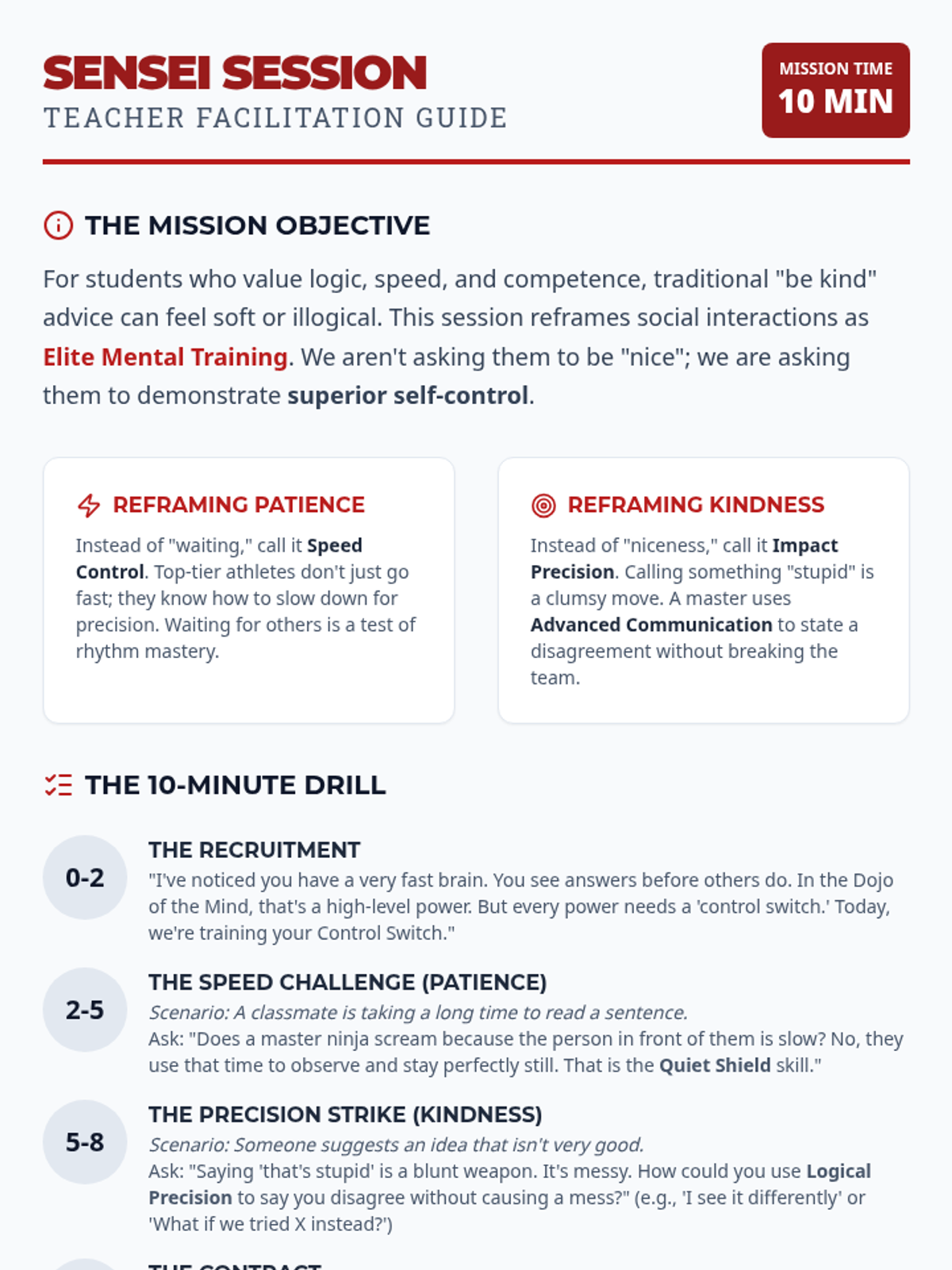
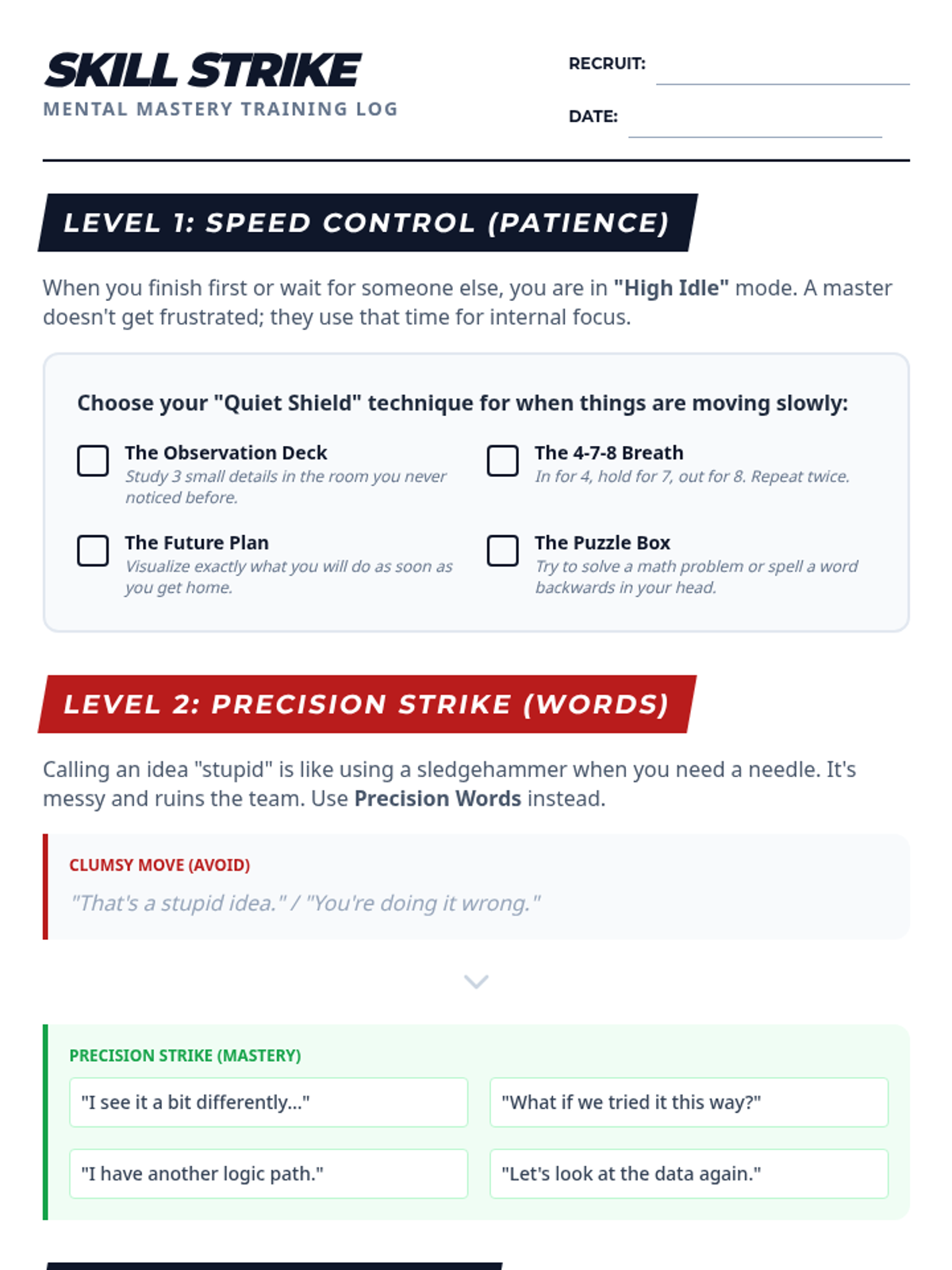
A specialized social-emotional lesson that reframes kindness and patience as elite 'mental skills' for high-achieving students. It uses a martial arts 'Dojo' theme to teach self-control as the ultimate form of mastery.
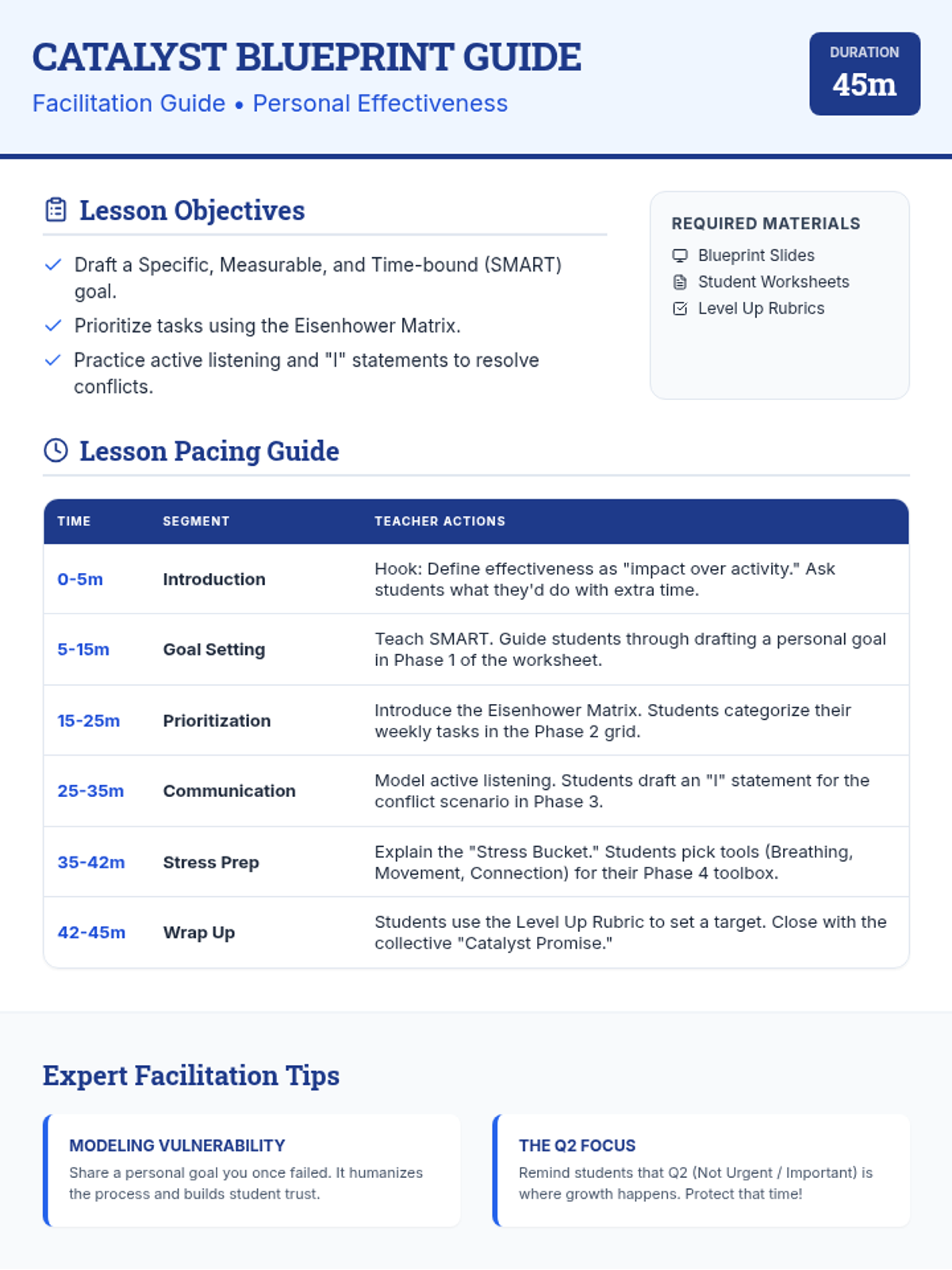
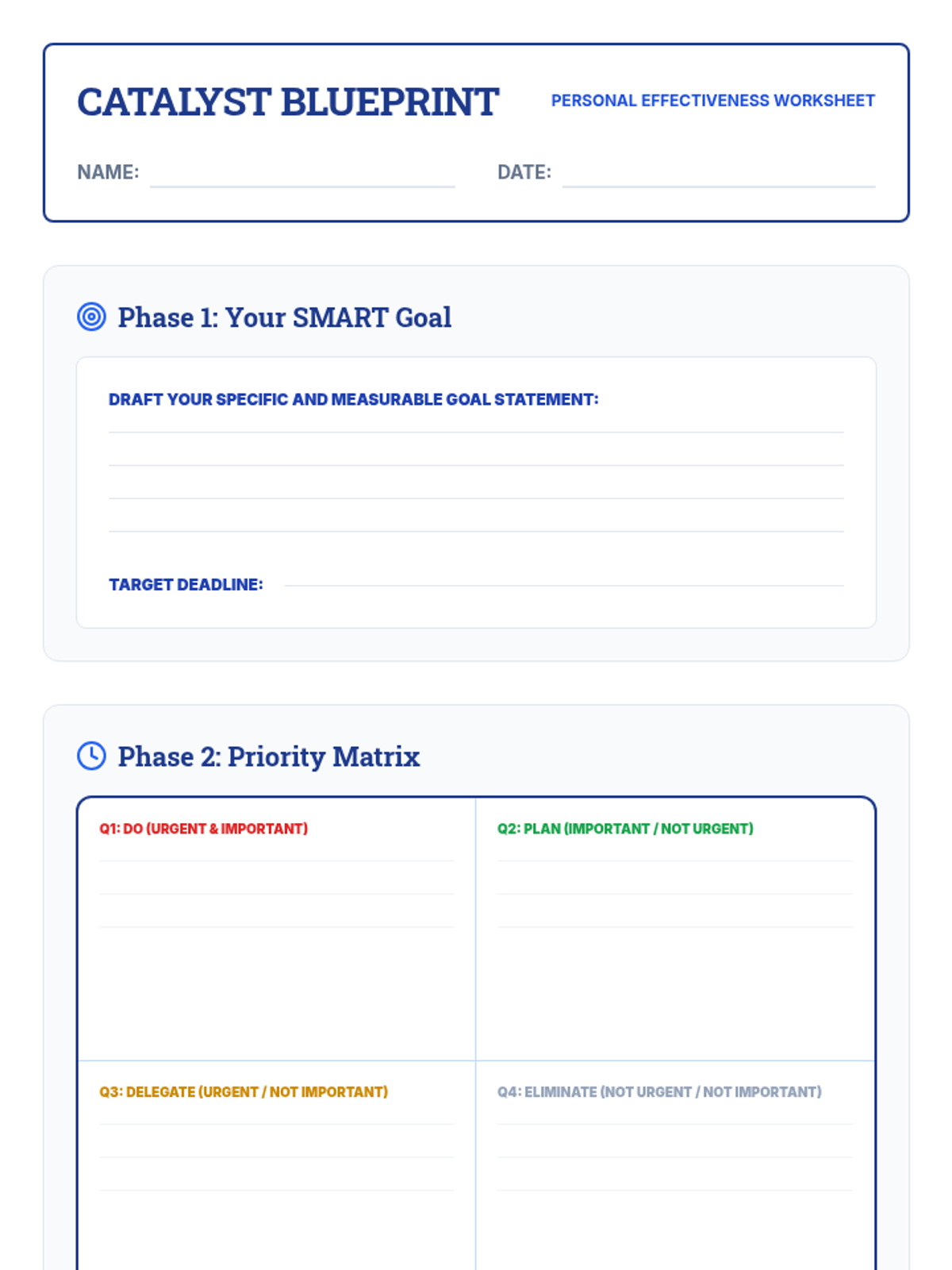
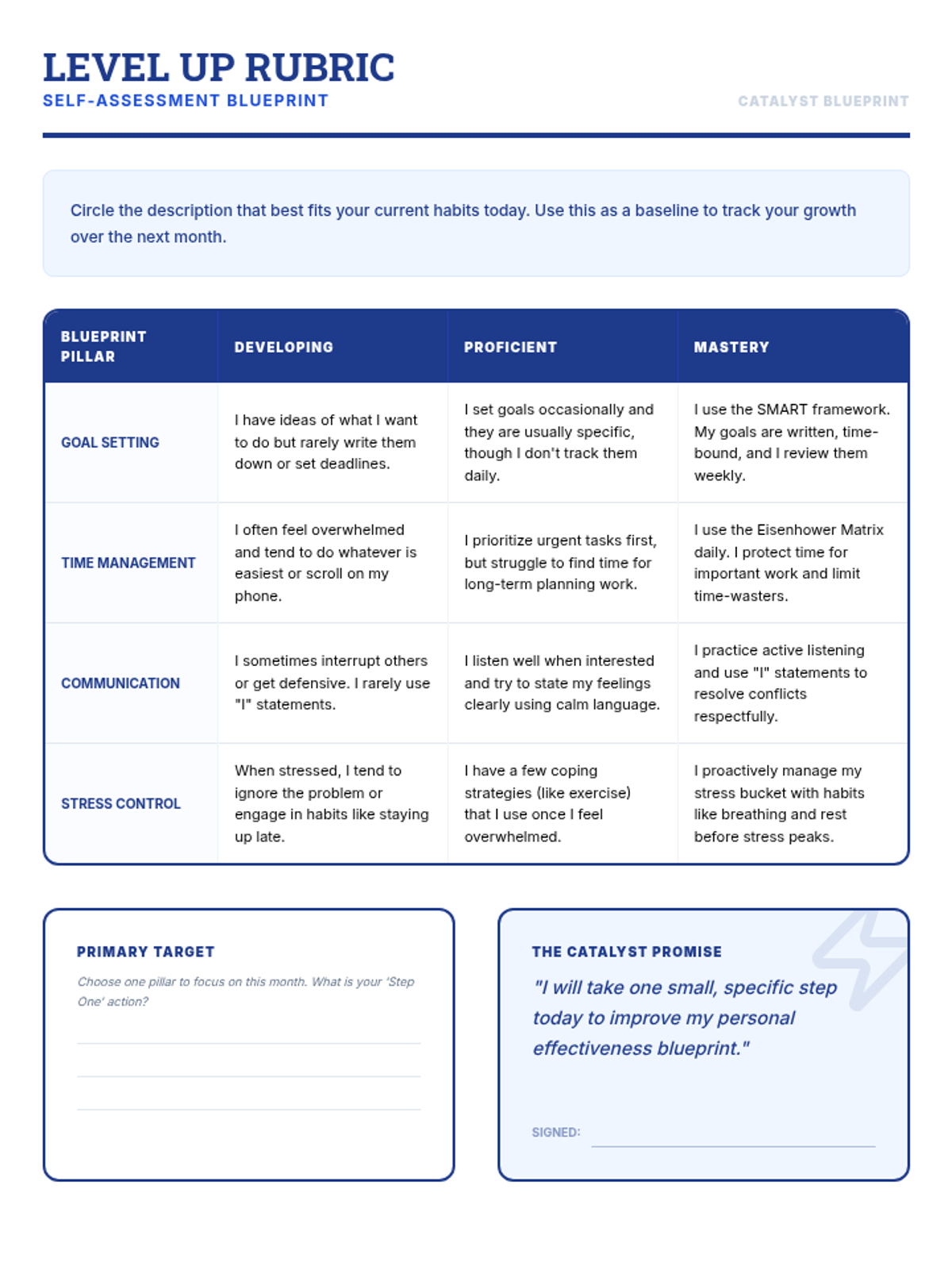
A comprehensive 45-minute session designed to equip students with core personal effectiveness skills including SMART goal setting, the Eisenhower Matrix for time management, active listening techniques, and stress reduction strategies.
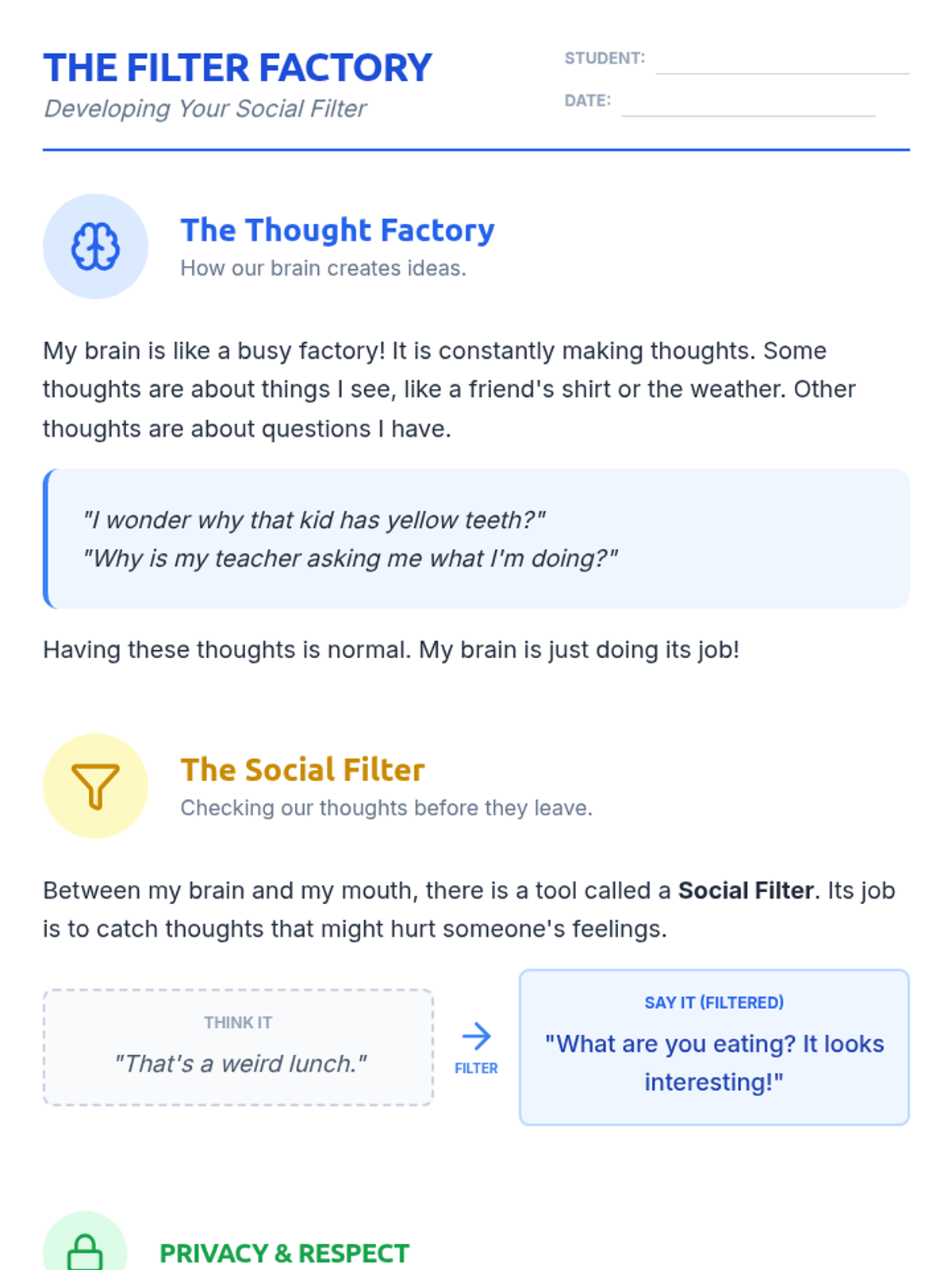
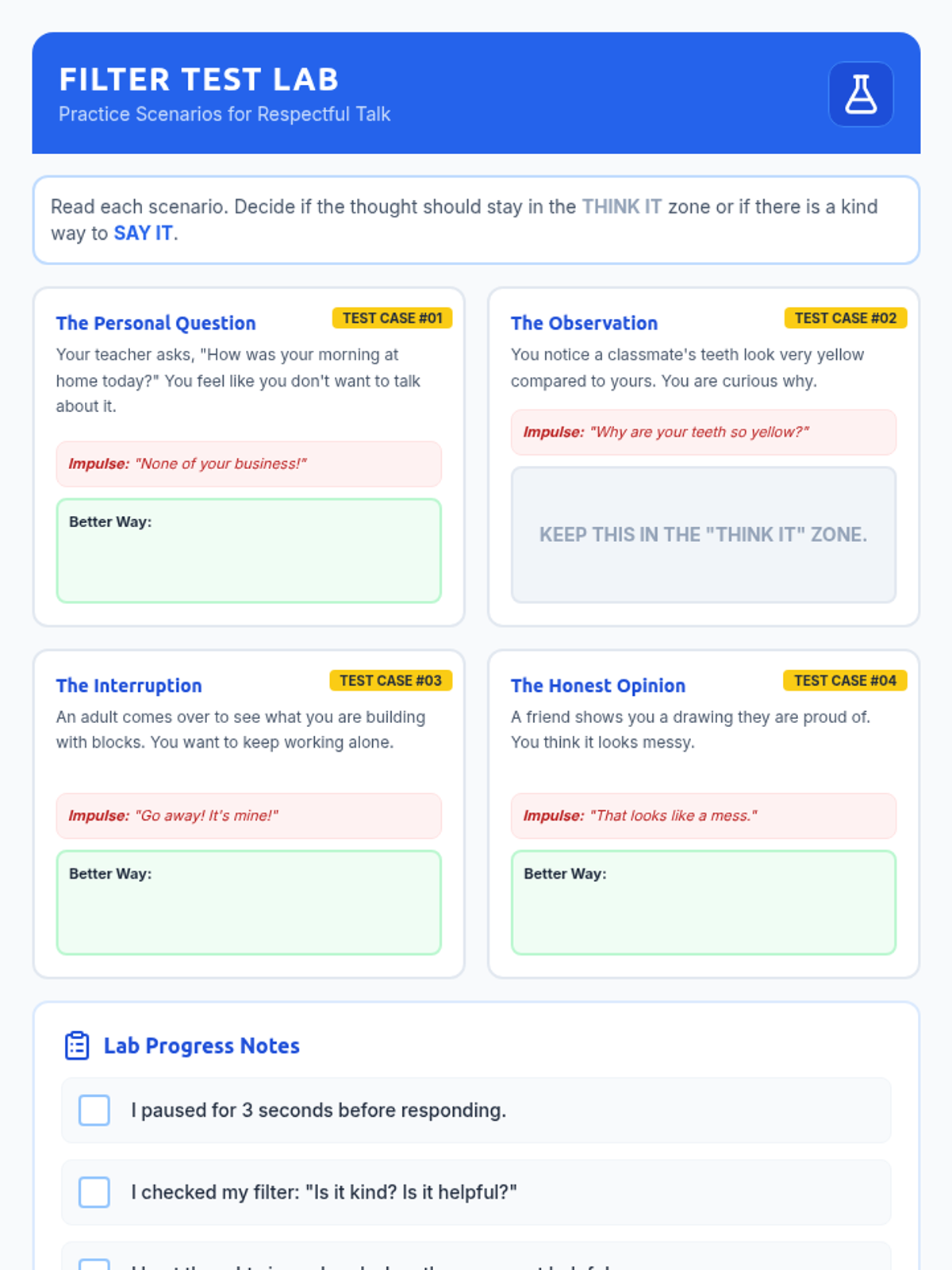
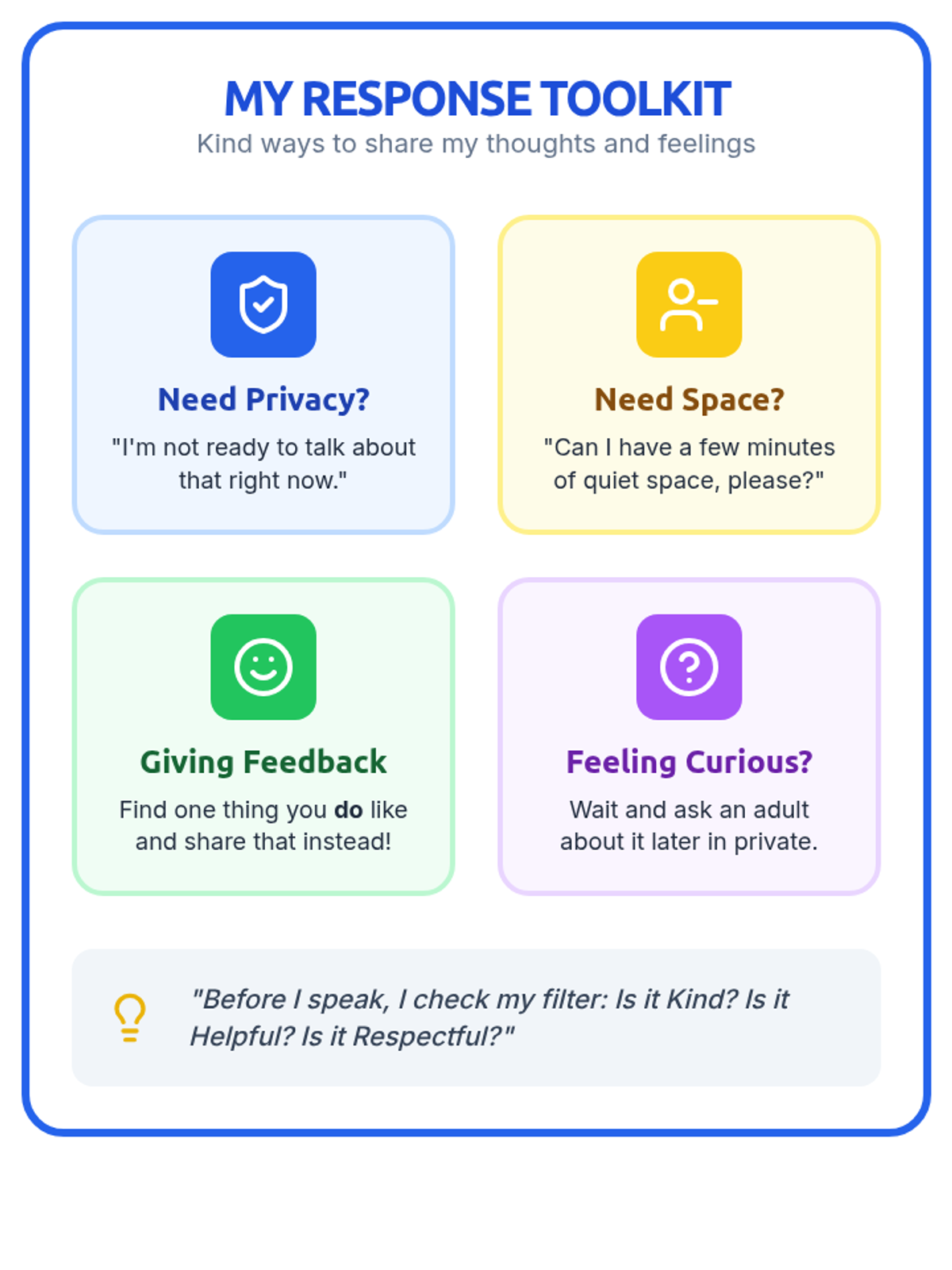
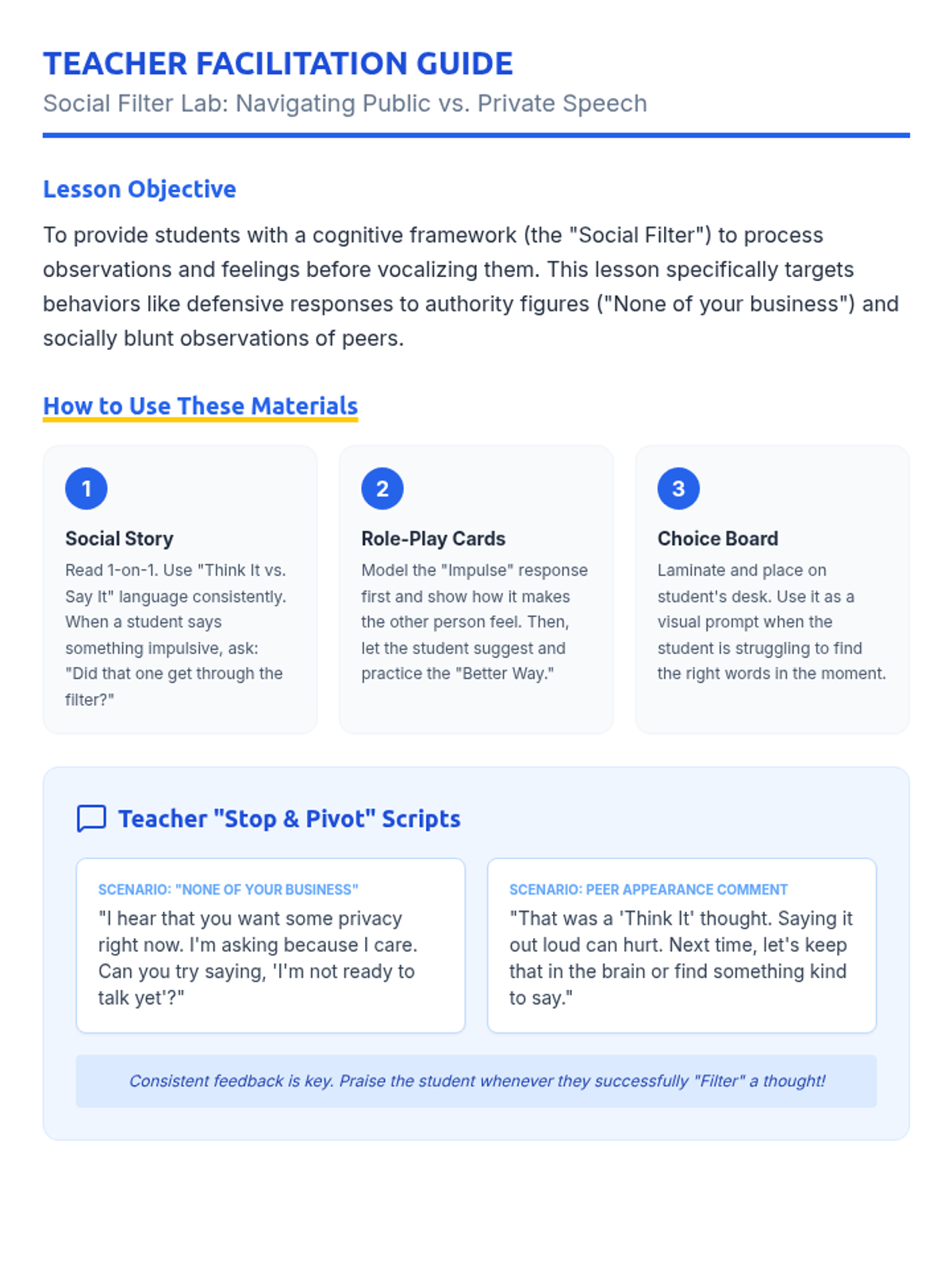
A set of resources designed to help students understand the difference between private thoughts and public comments, focusing on respectful communication and peer interactions through the 'Social Filter' metaphor.
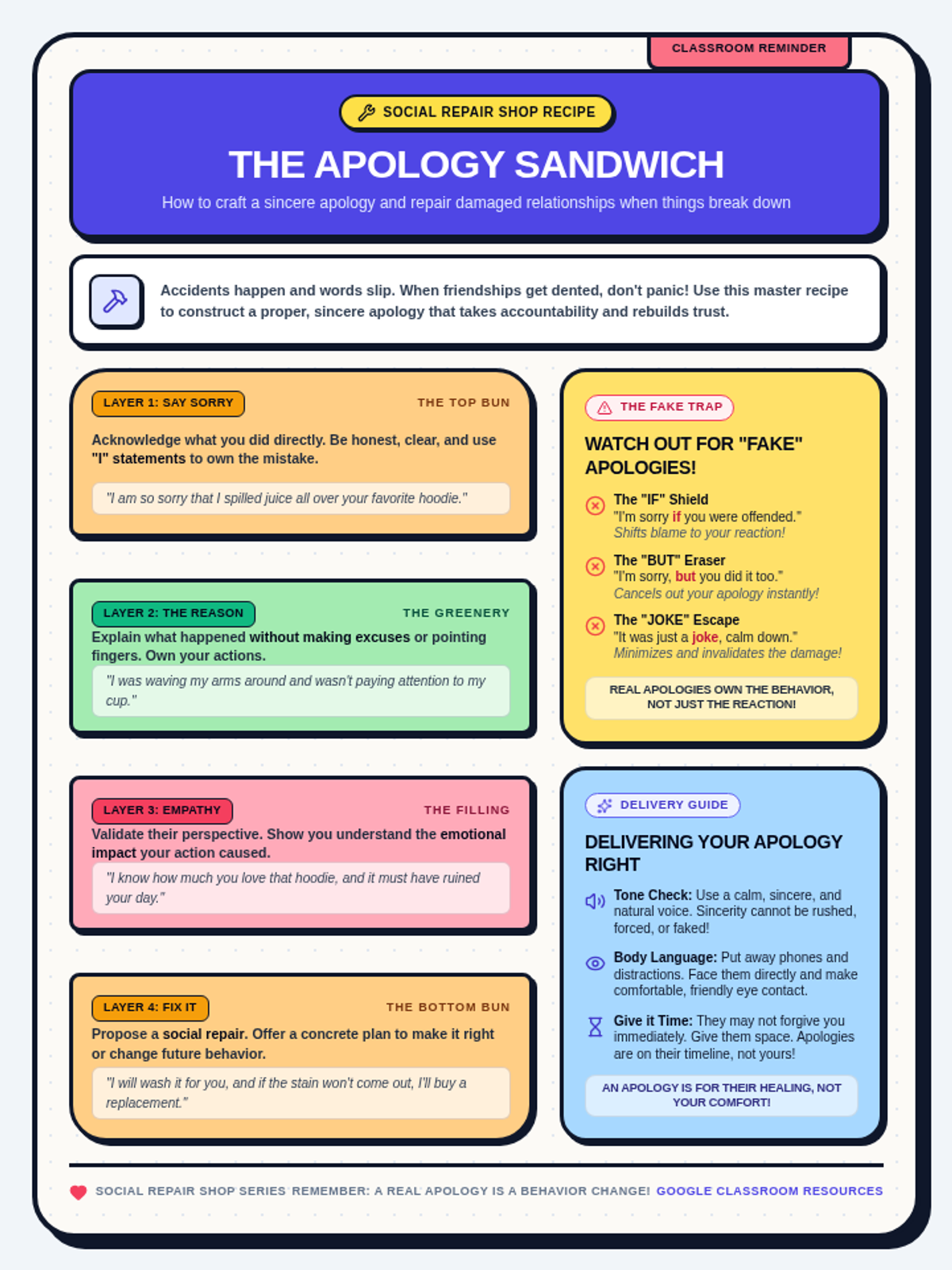
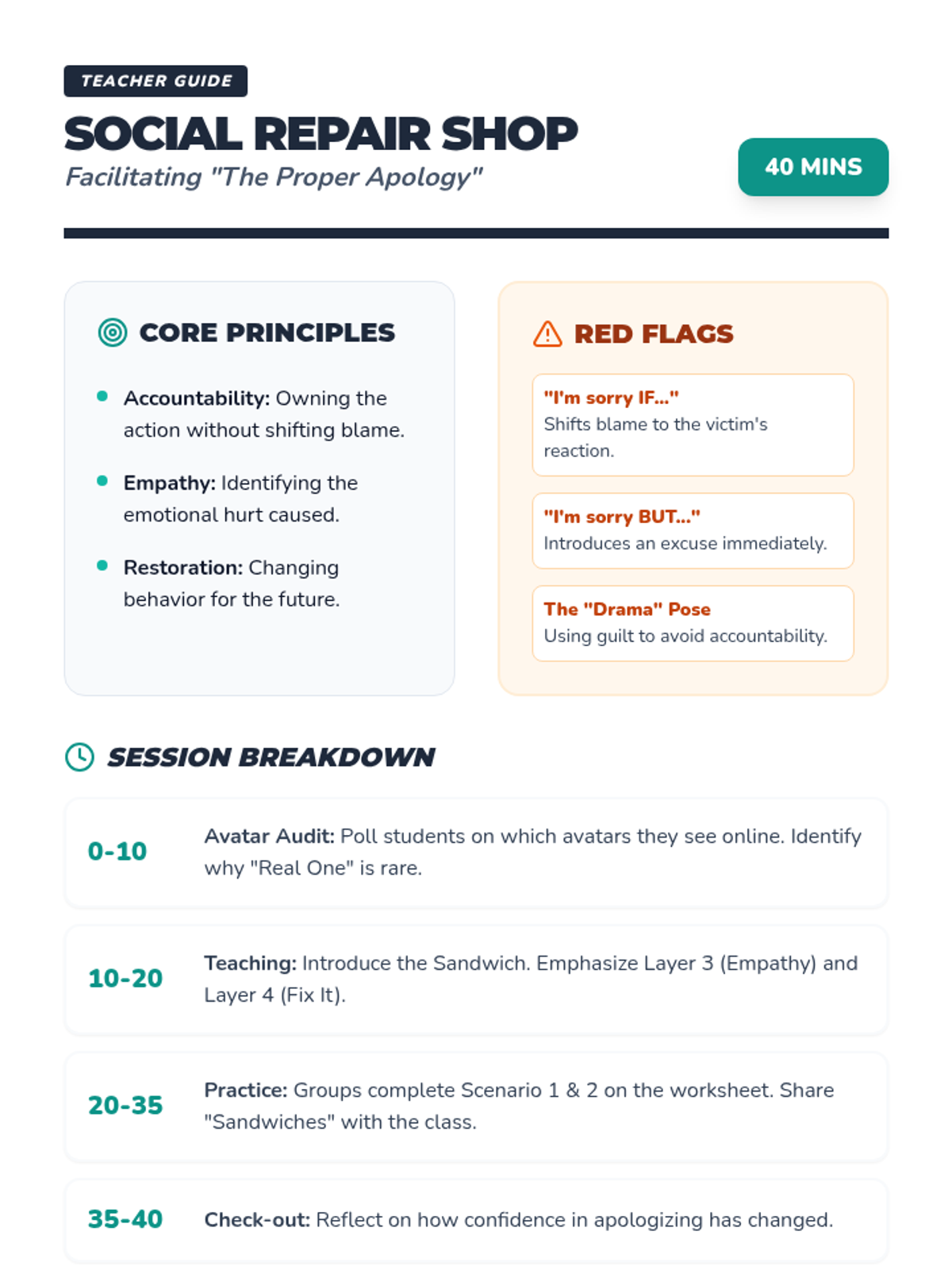
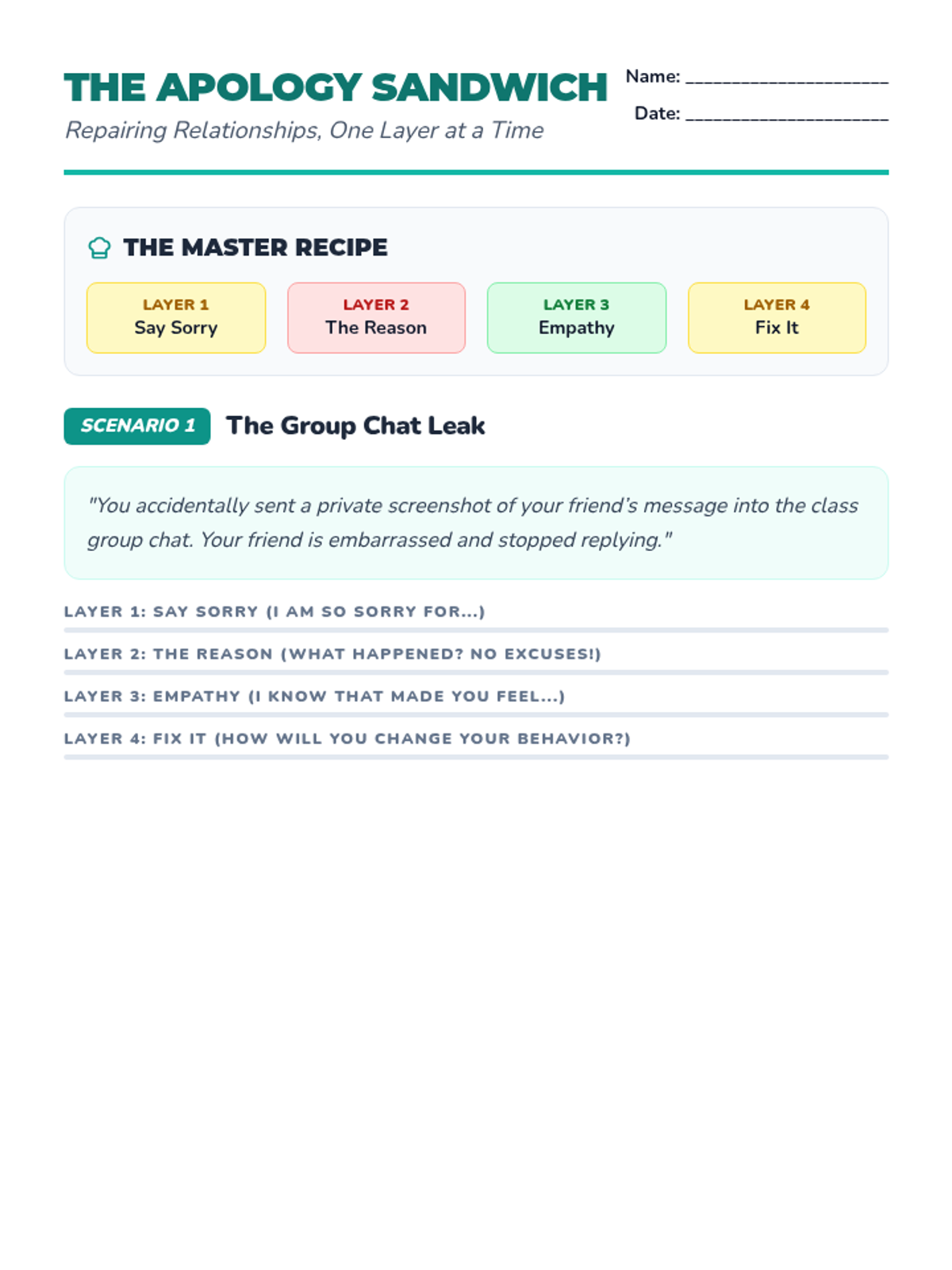
This lesson teaches students the importance of meaningful apologies, introducing the 'Apology Sandwich' technique to repair relationships effectively. Students practice identifying 'fake' apologies and crafting sincere ones through real-world scenarios.
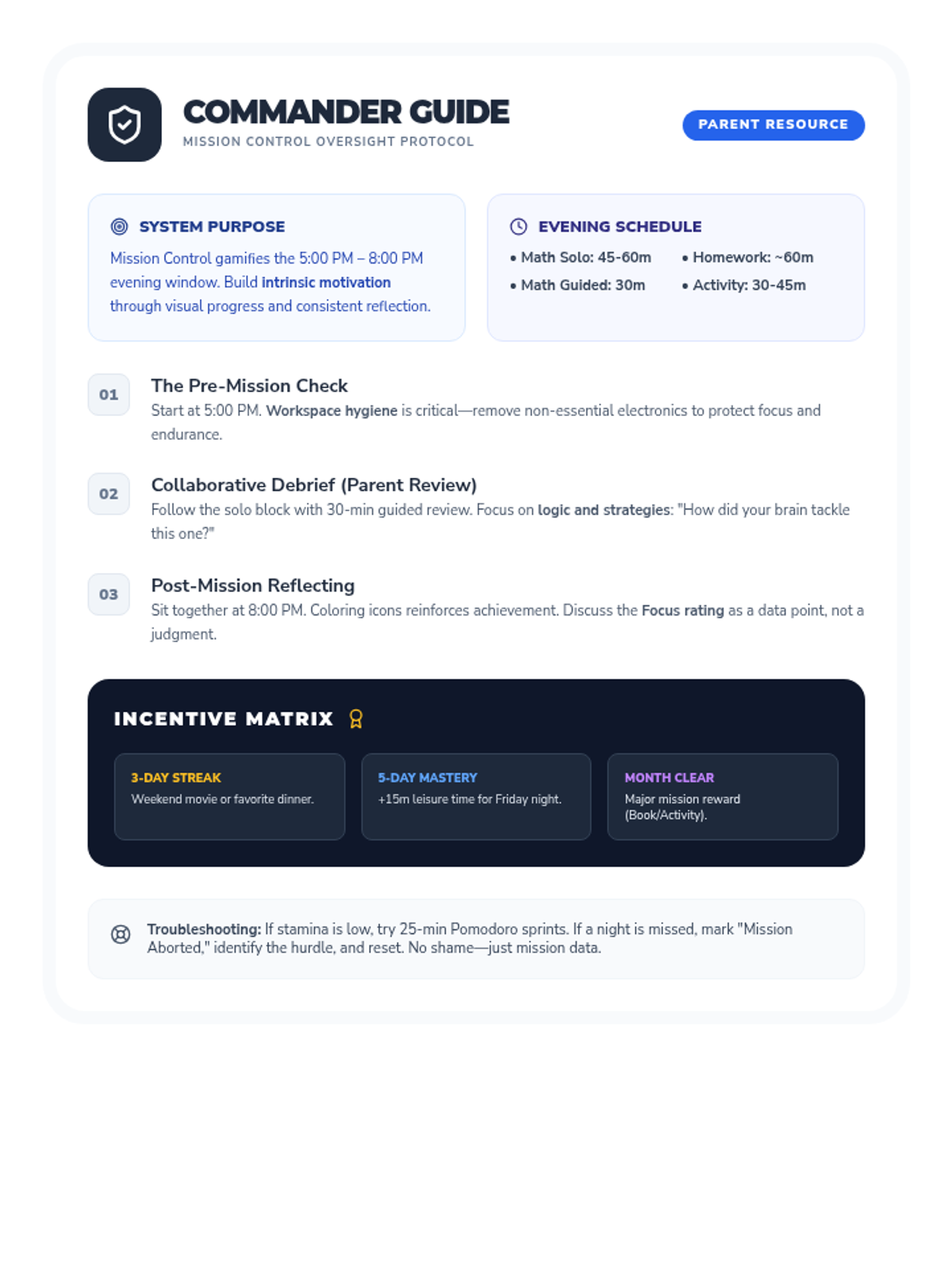
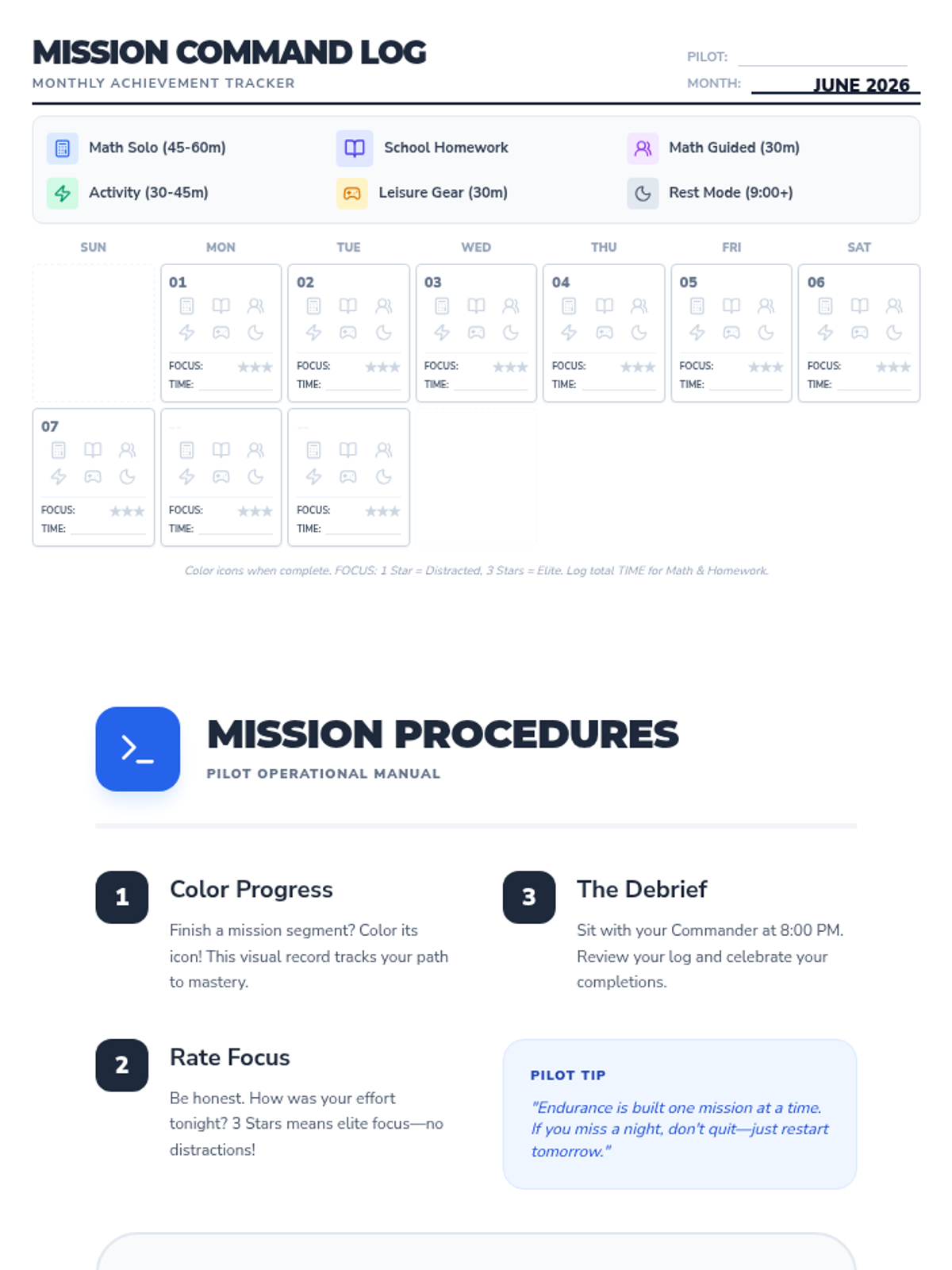
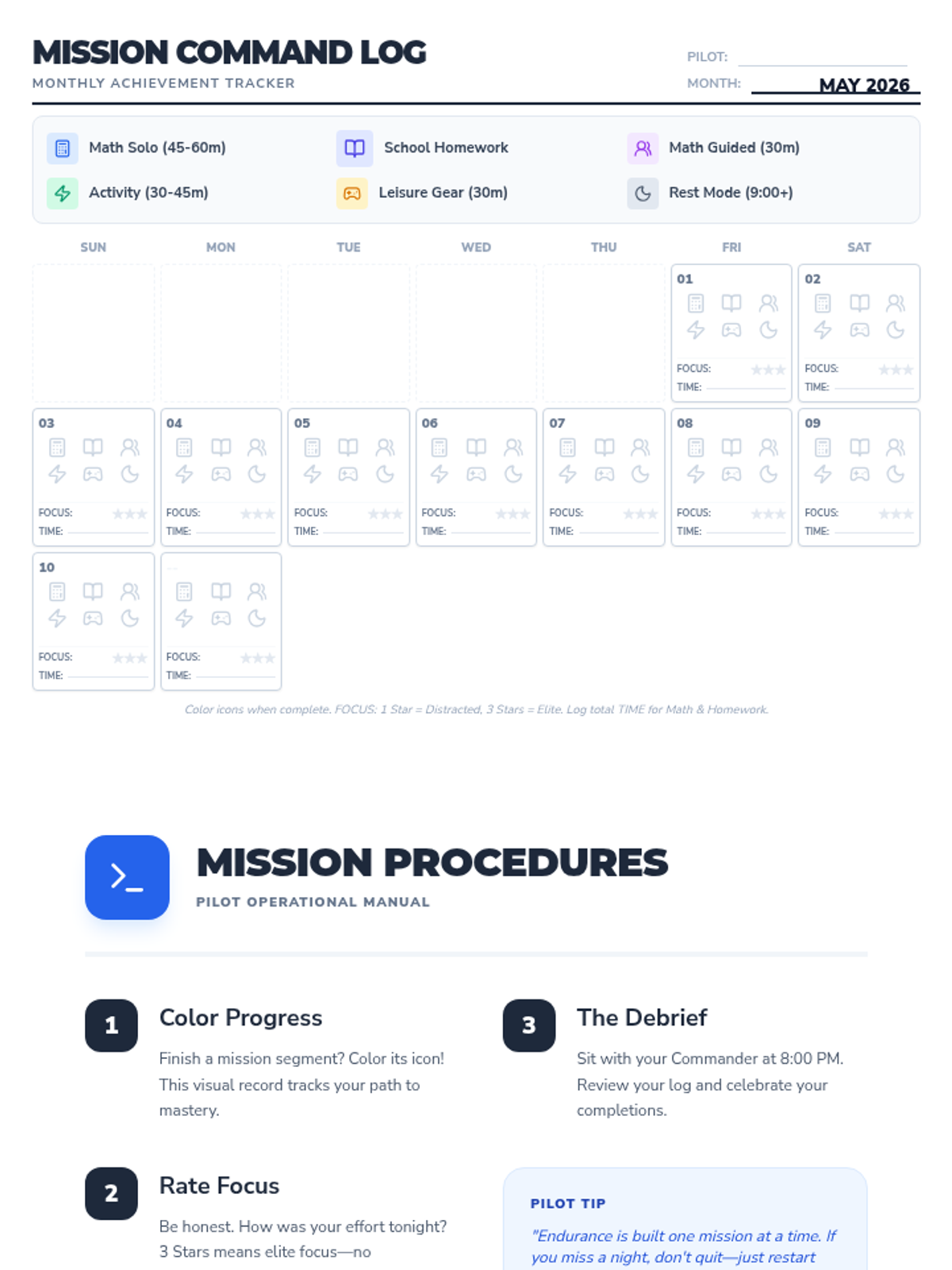
A structured daily routine system designed to help students track their evening tasks, physical activity, and sleep habits through a mission-themed log.
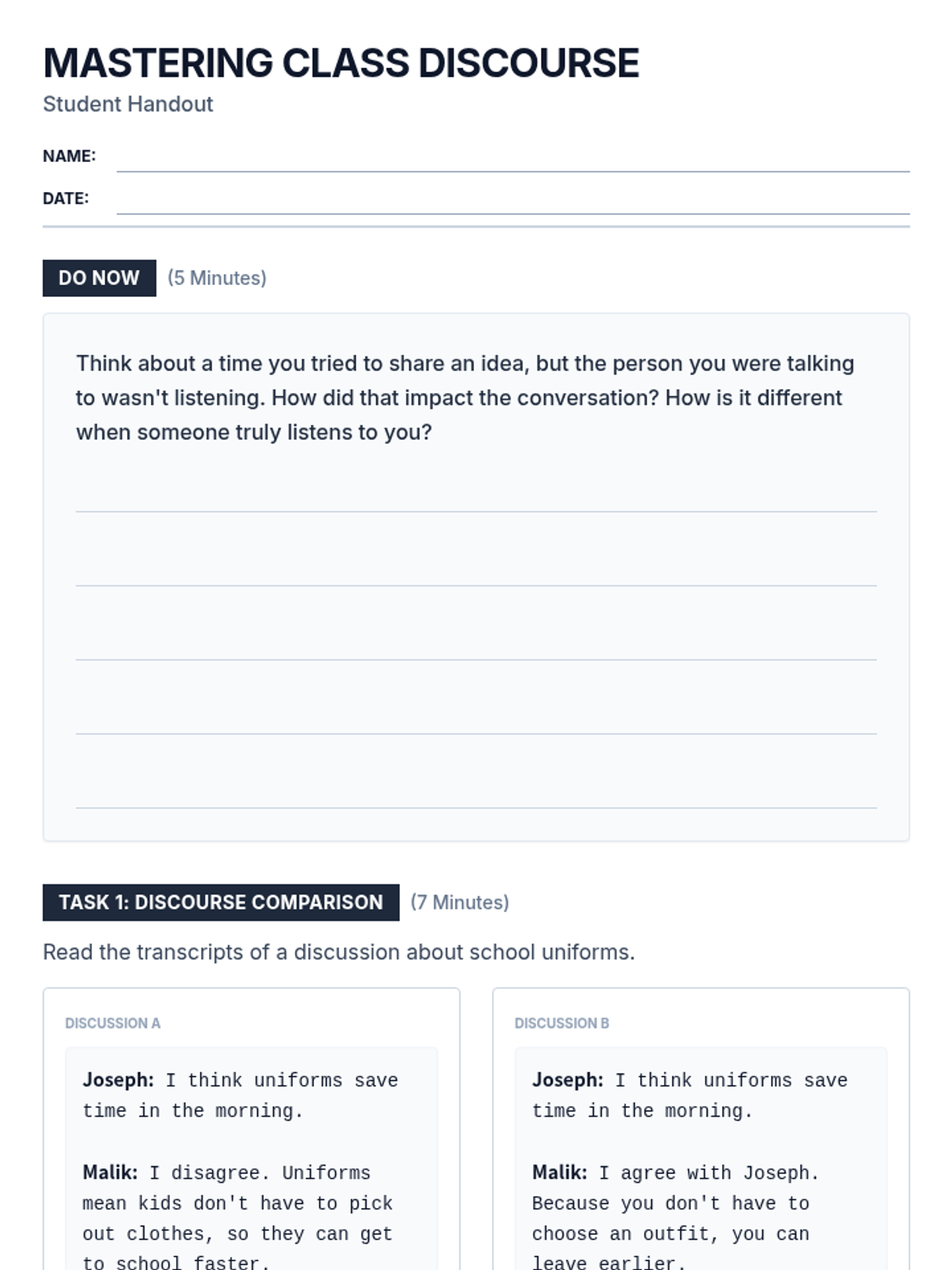
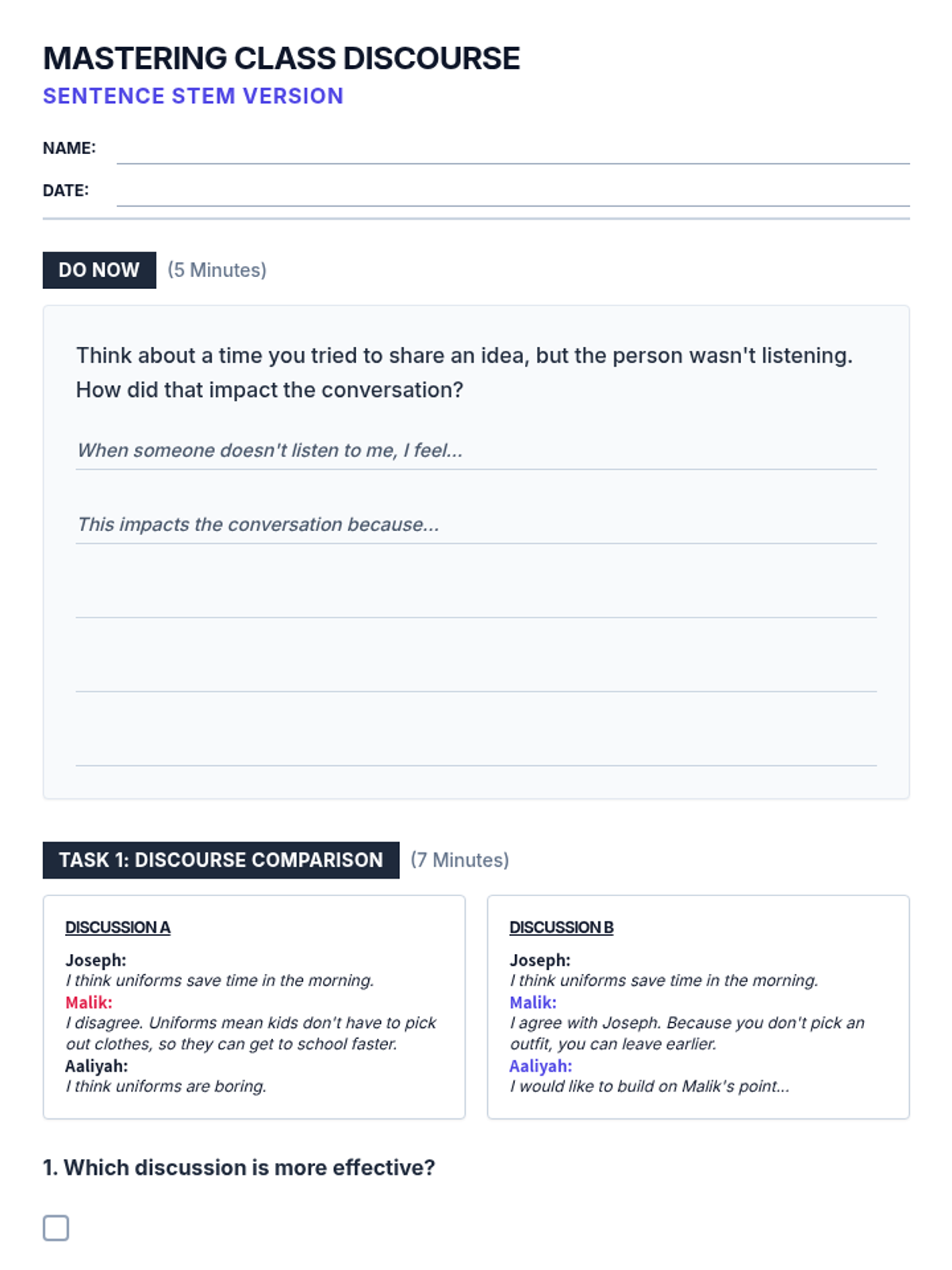
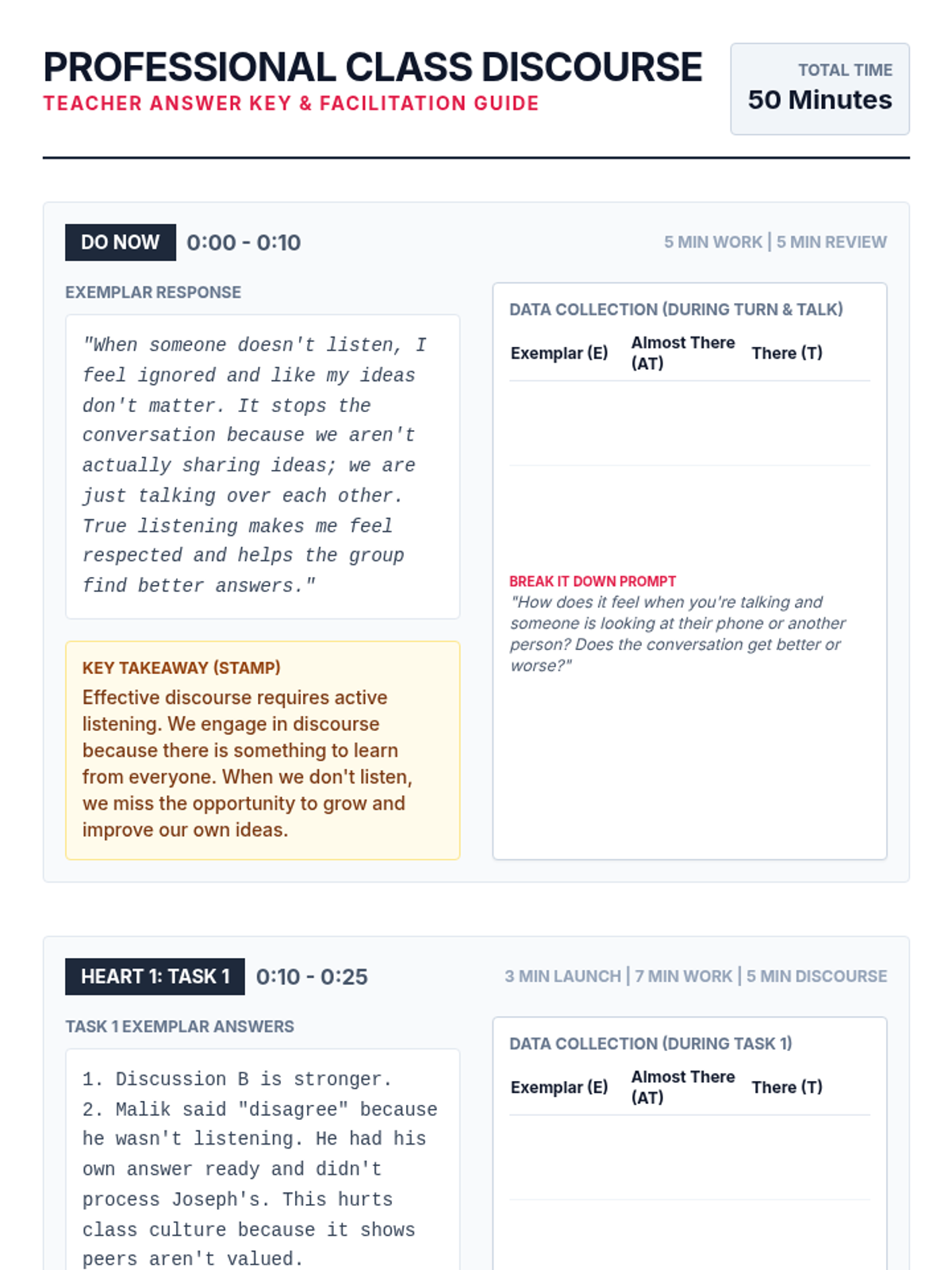
A lesson on the mechanics and importance of professional discourse, focusing on the 'Agree, Disagree, Build' protocol and the impact of active listening on class culture.
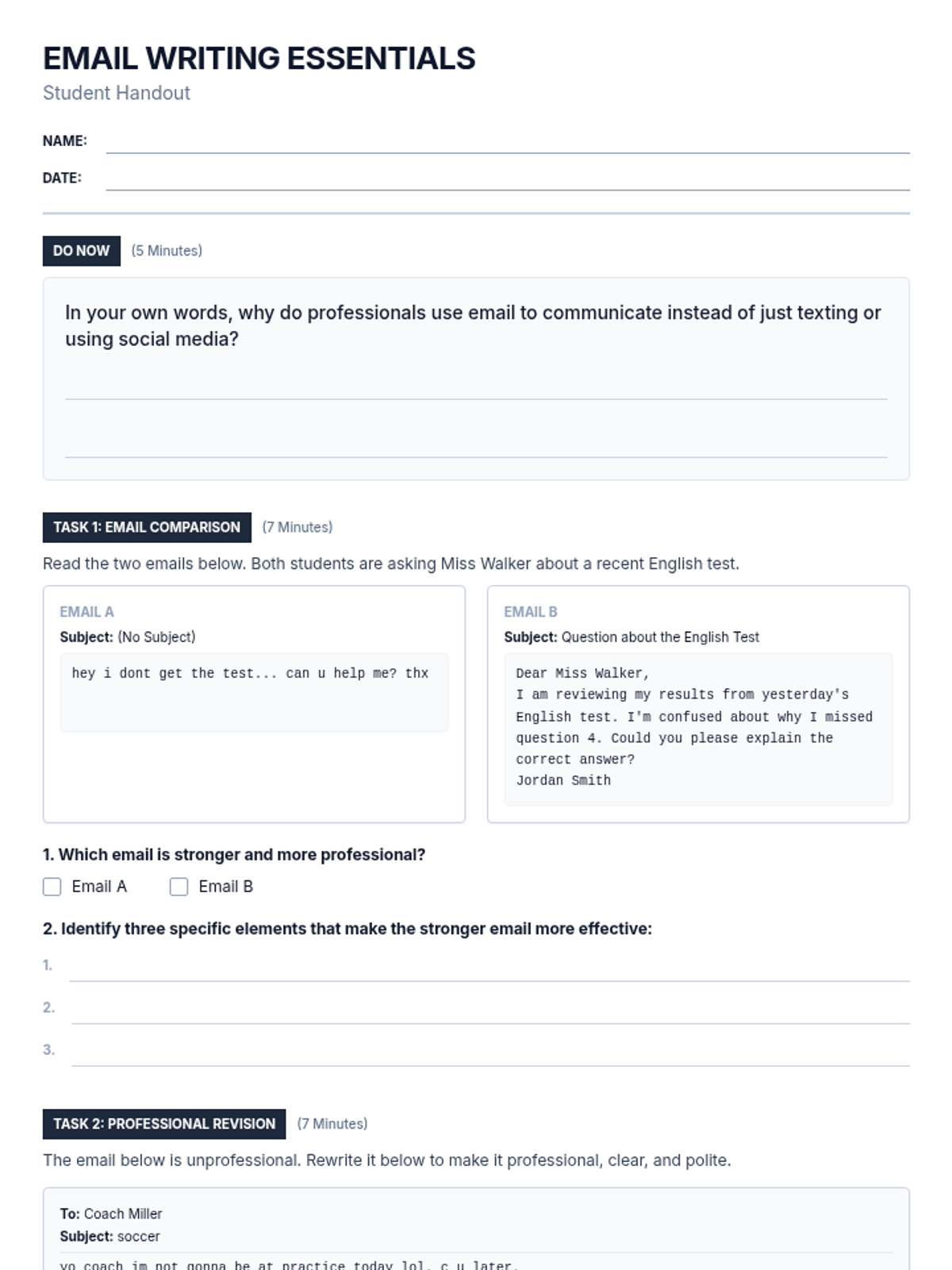
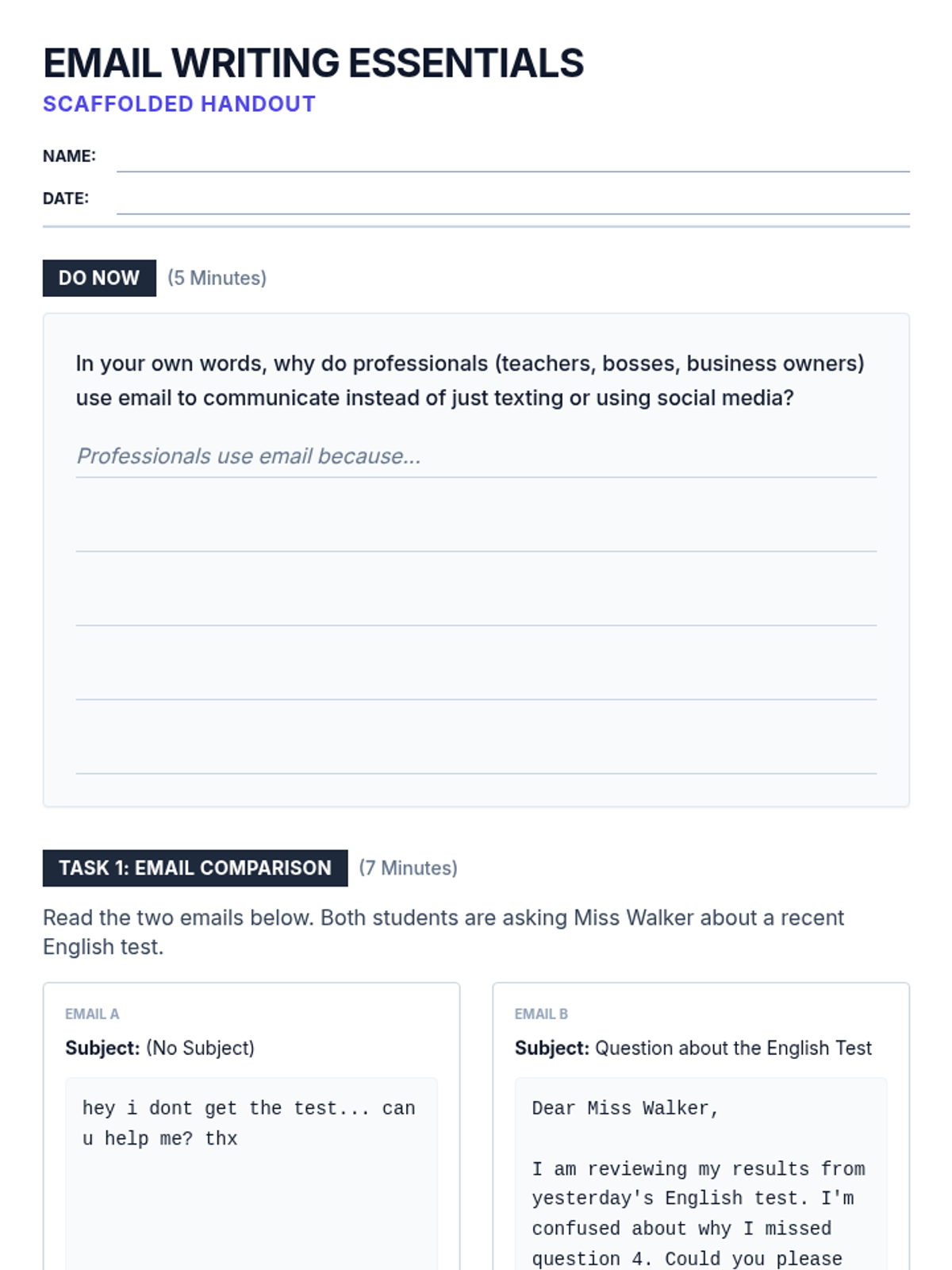
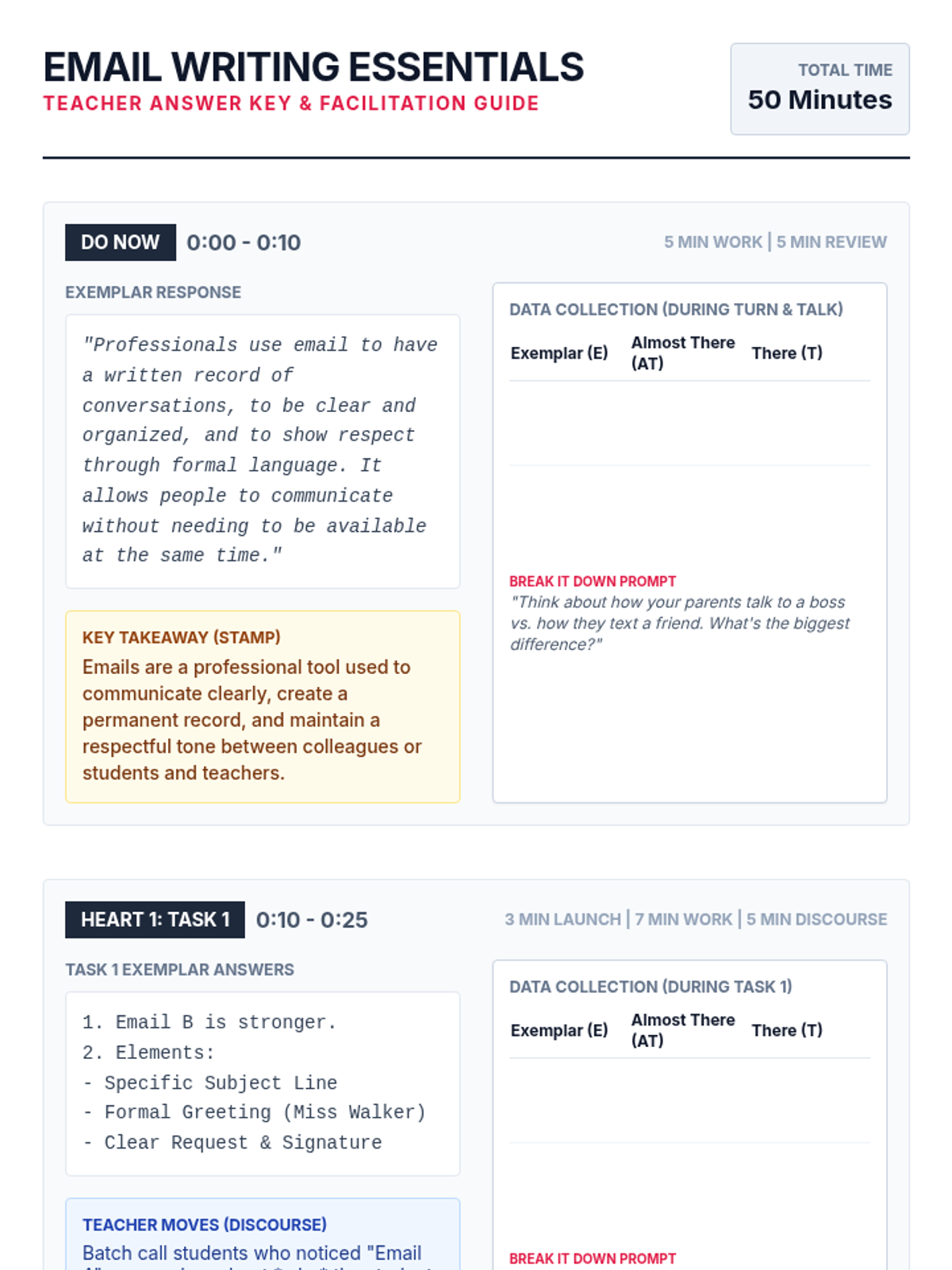
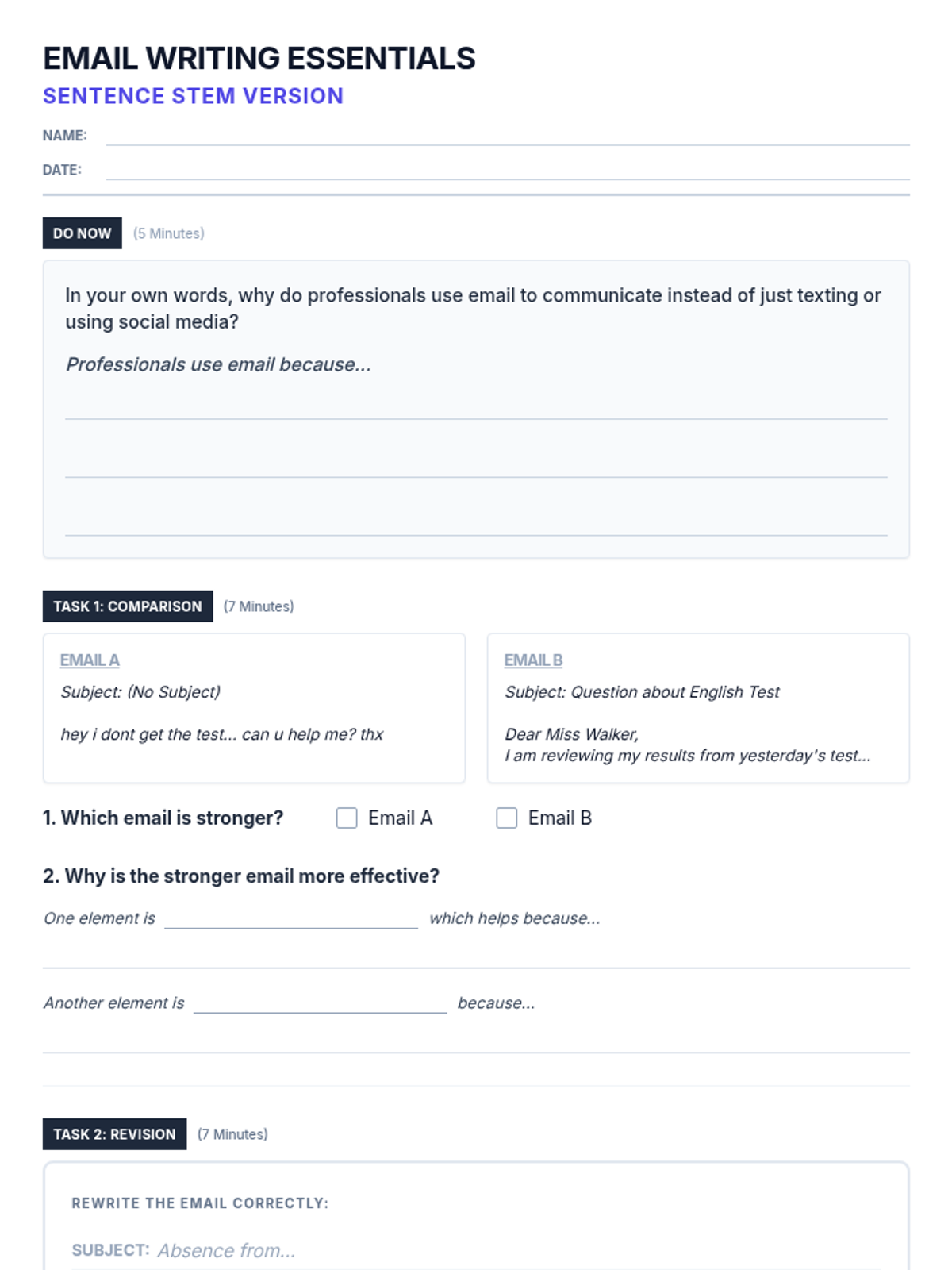
A lesson on the fundamentals of professional email writing, focusing on structure, tone, and clarity for middle grade students.
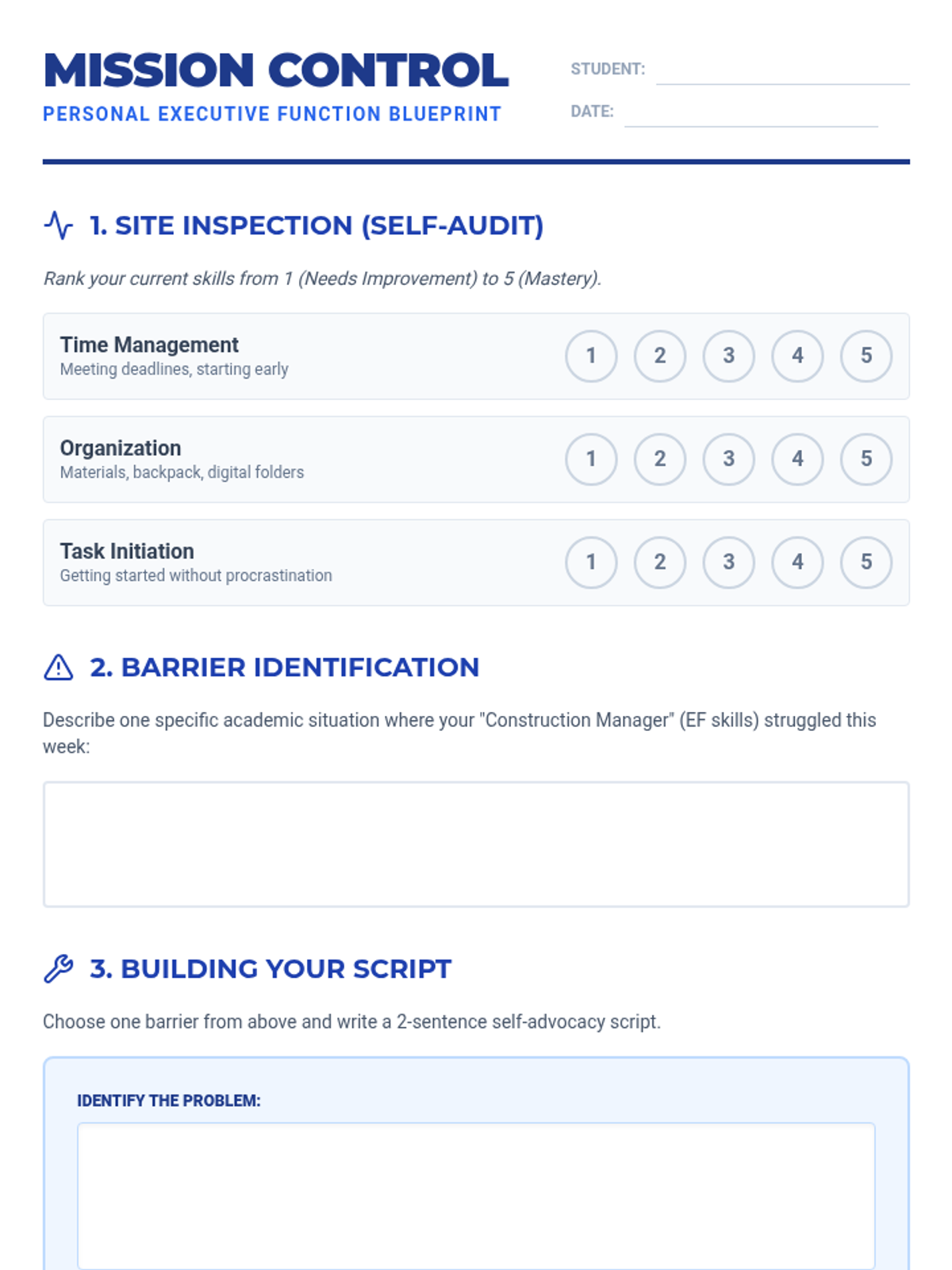
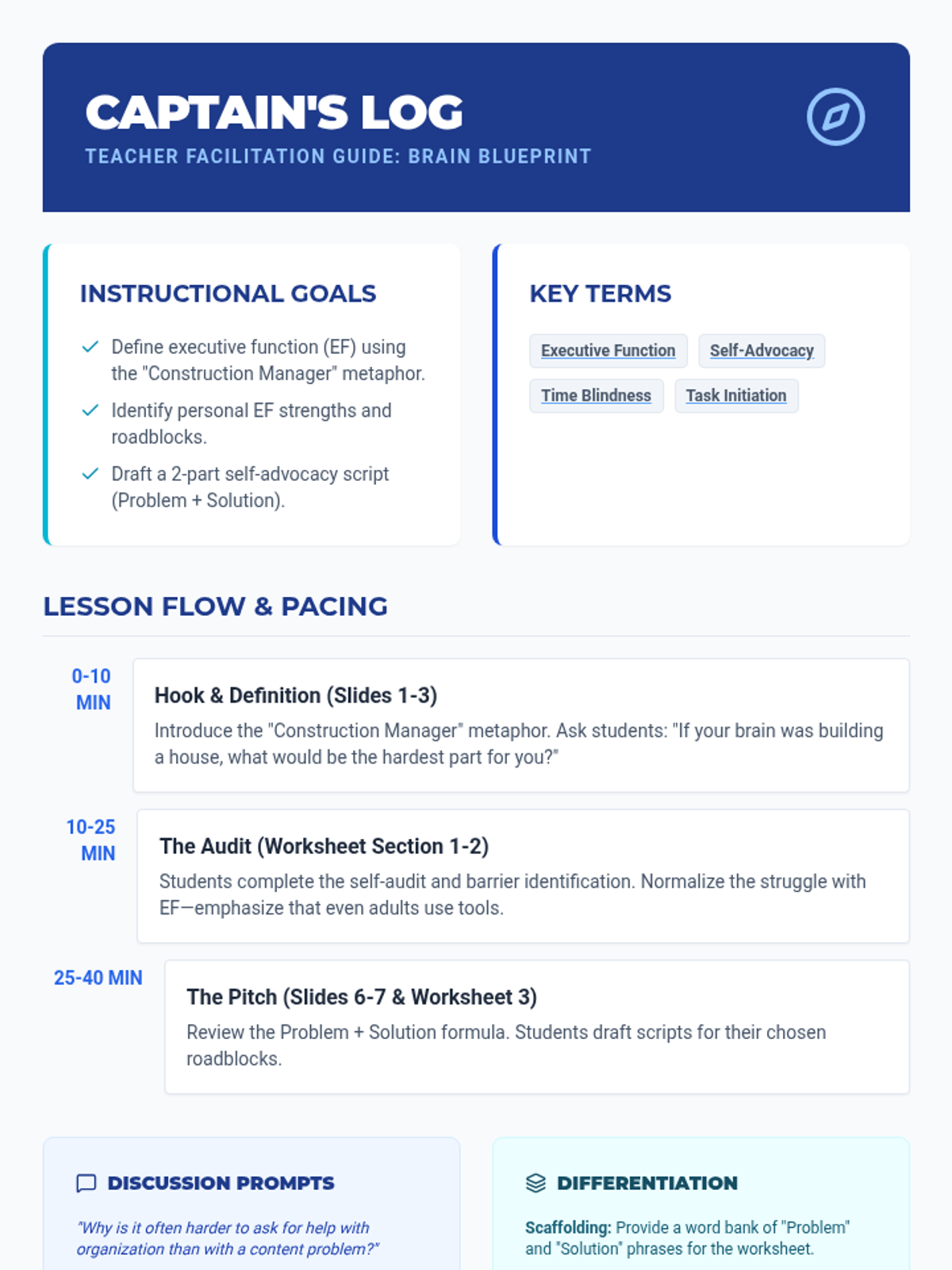
A lesson focused on understanding executive functioning skills and developing self-advocacy strategies to manage organizational challenges. Students learn to identify their own cognitive strengths and advocate for the specific tools they need to succeed.
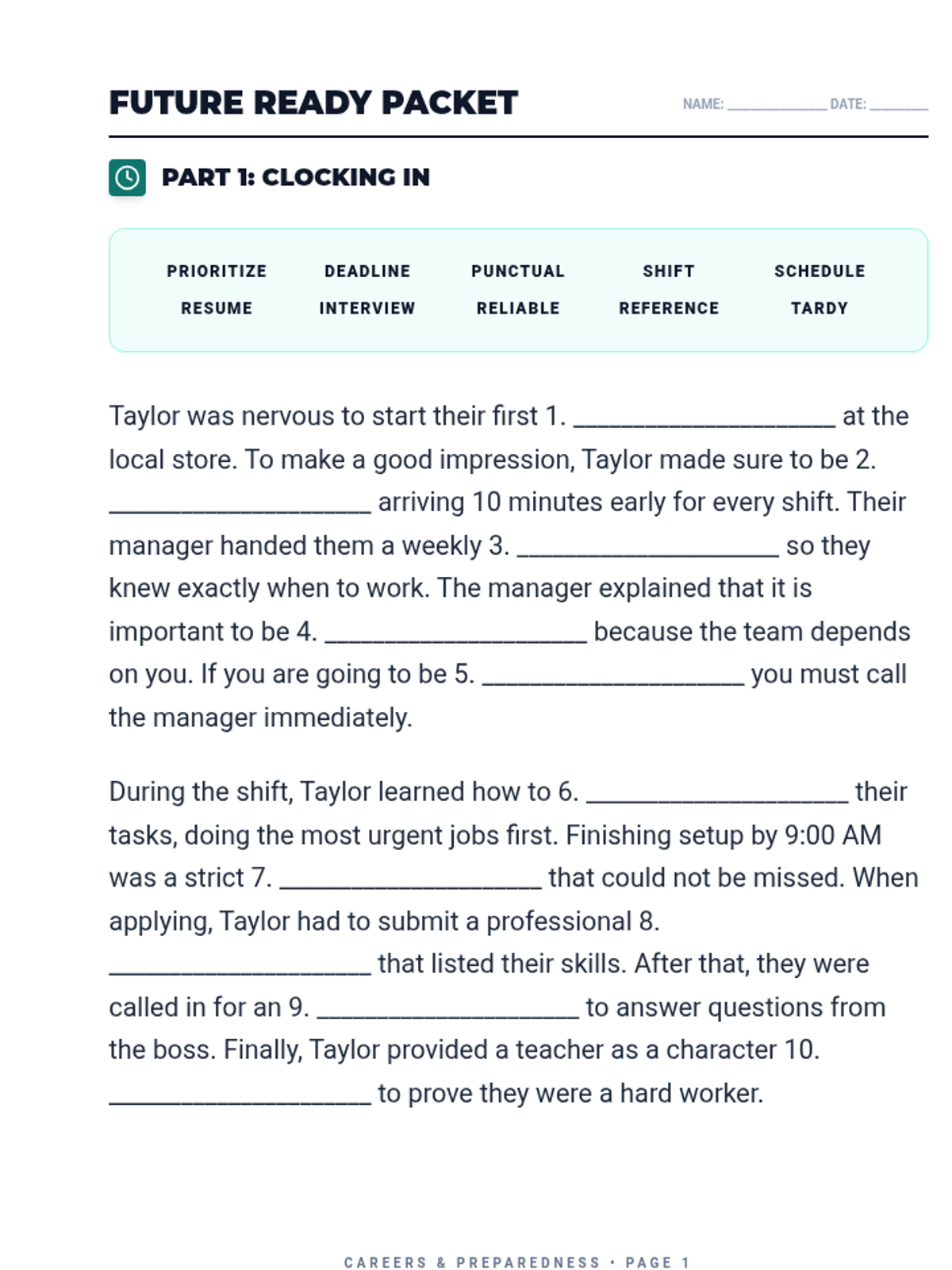
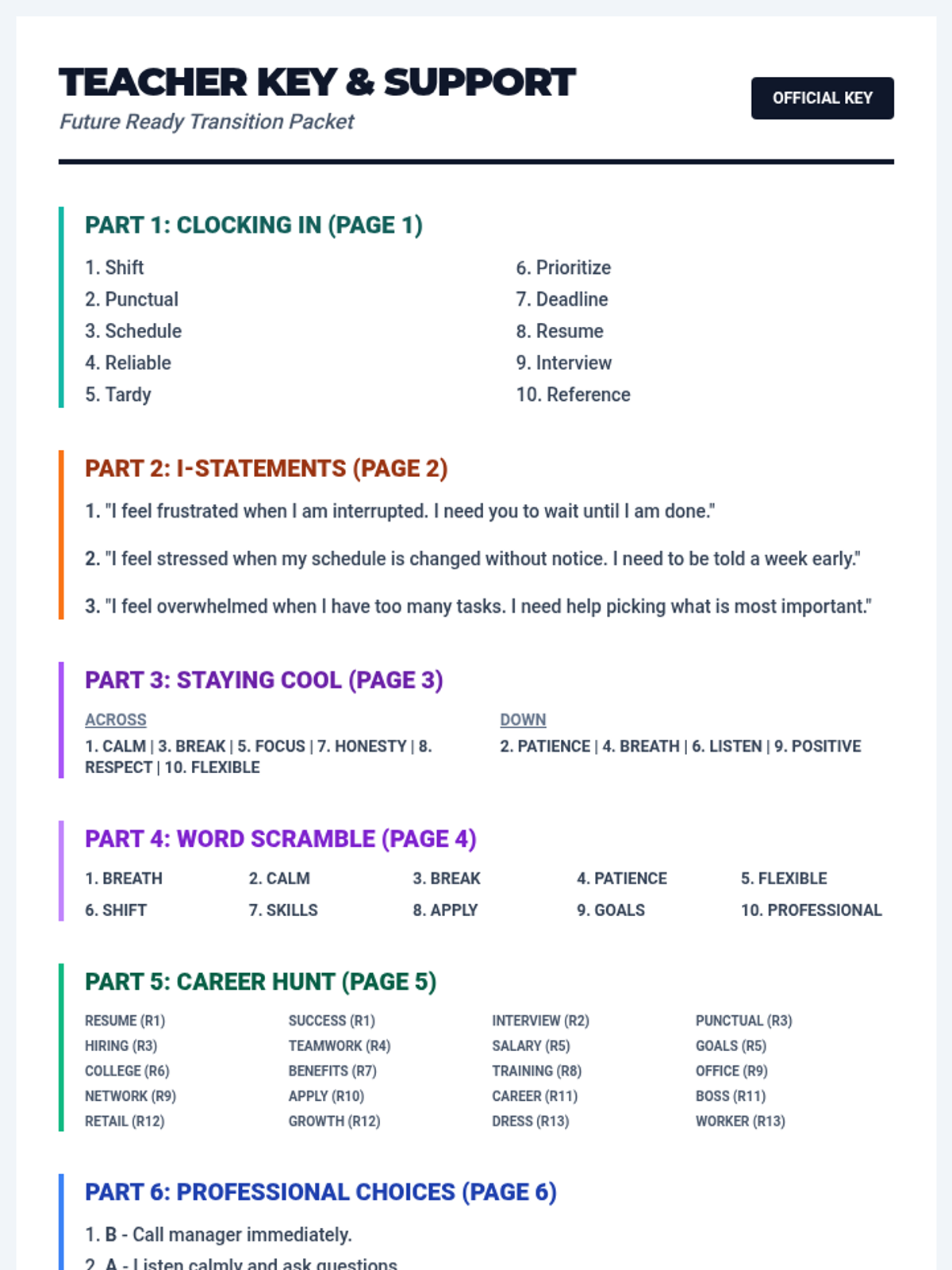
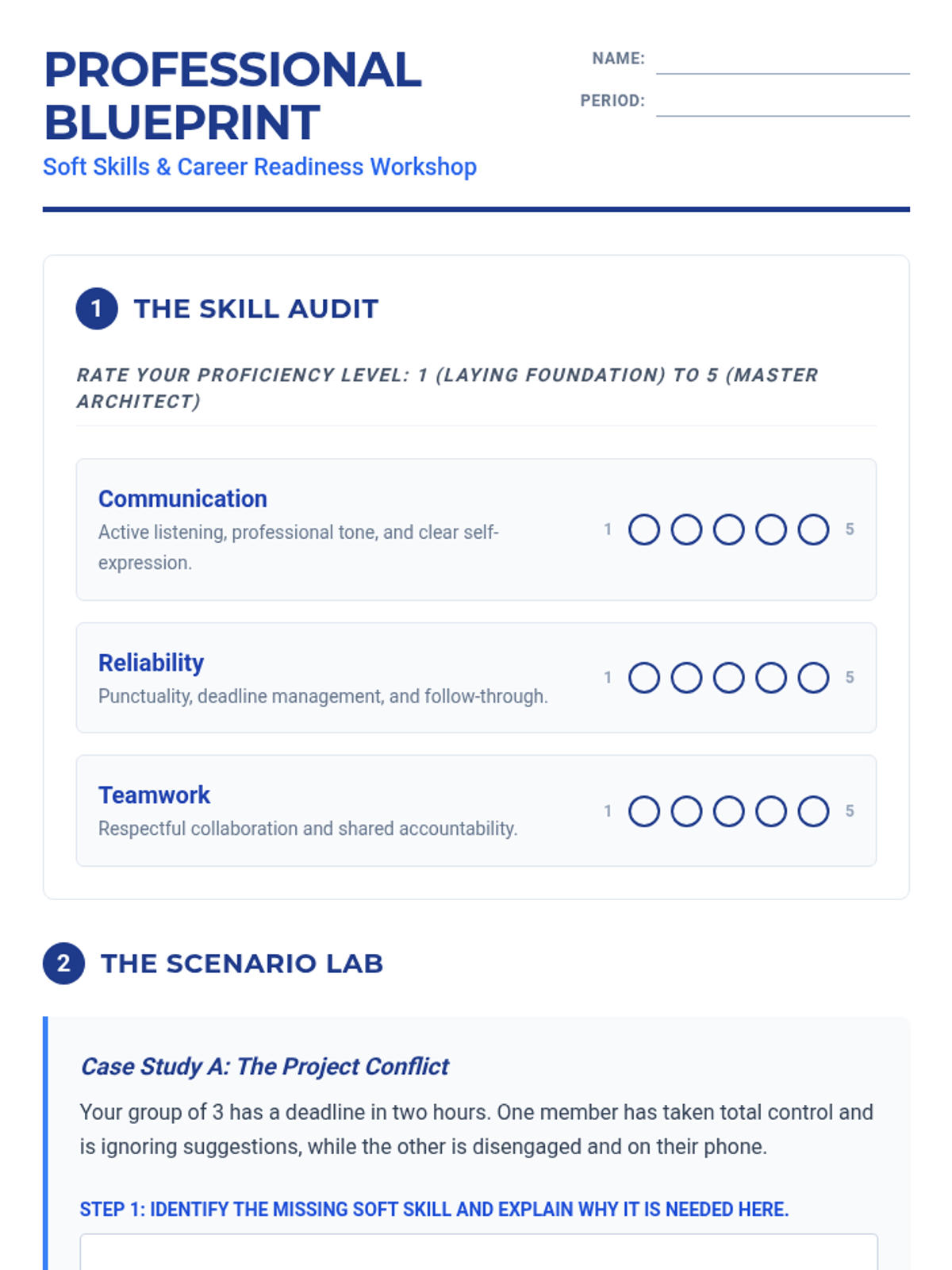
This lesson introduces students to the core behavioral skills needed for workplace success, including time management, emotional regulation, and professional social etiquette. Students will practice these skills through real-world scenarios and interactive puzzles.
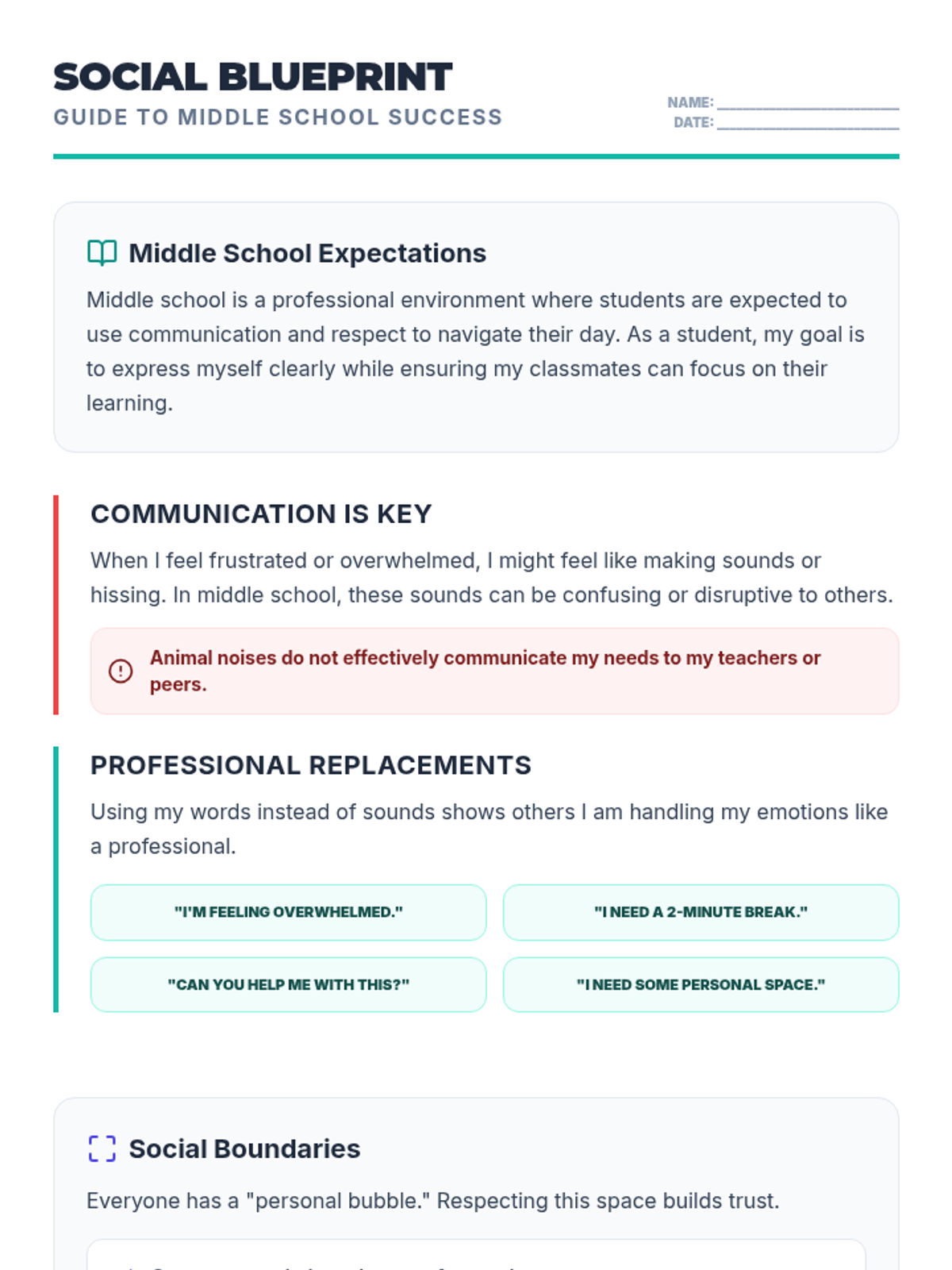
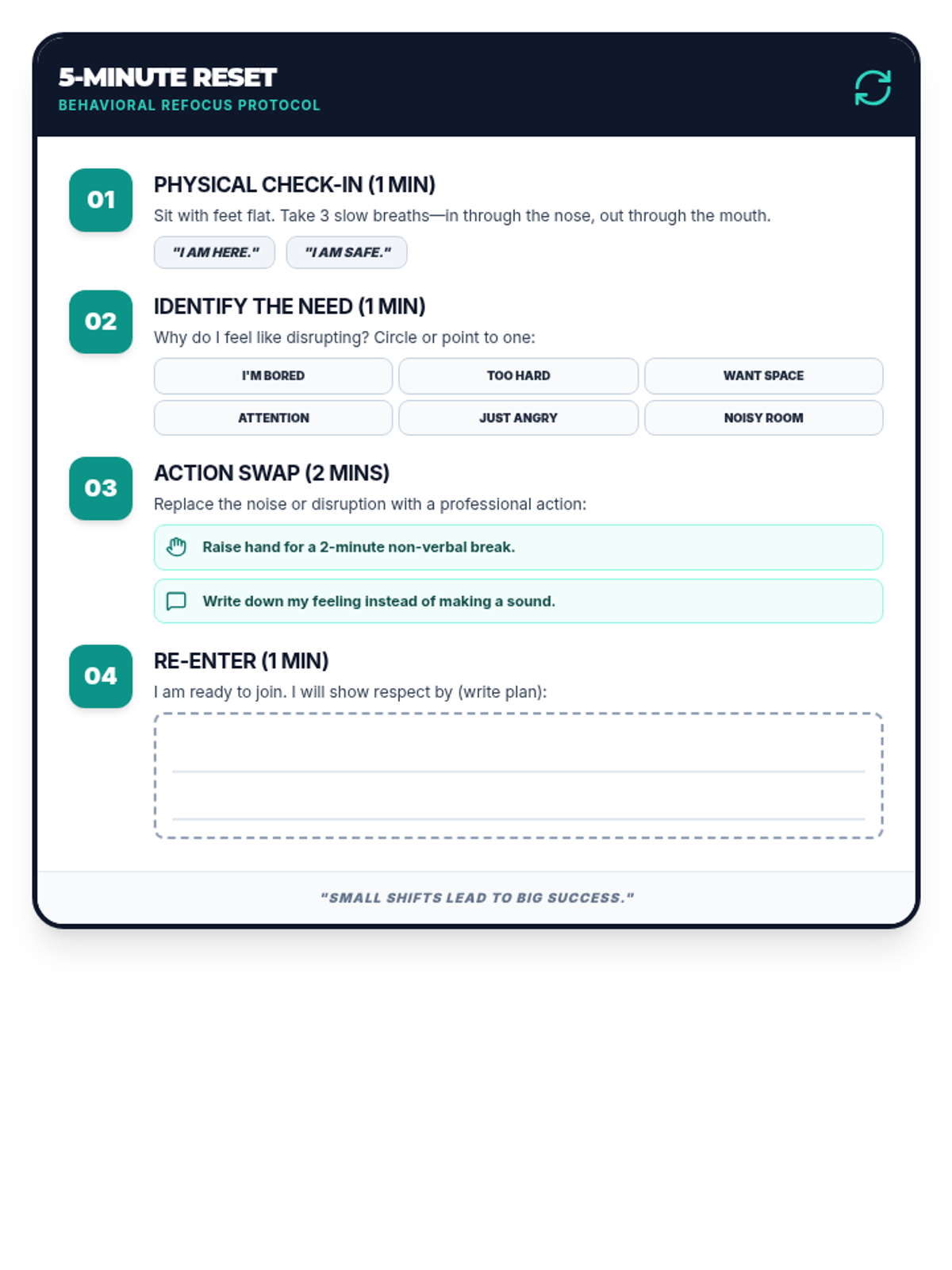
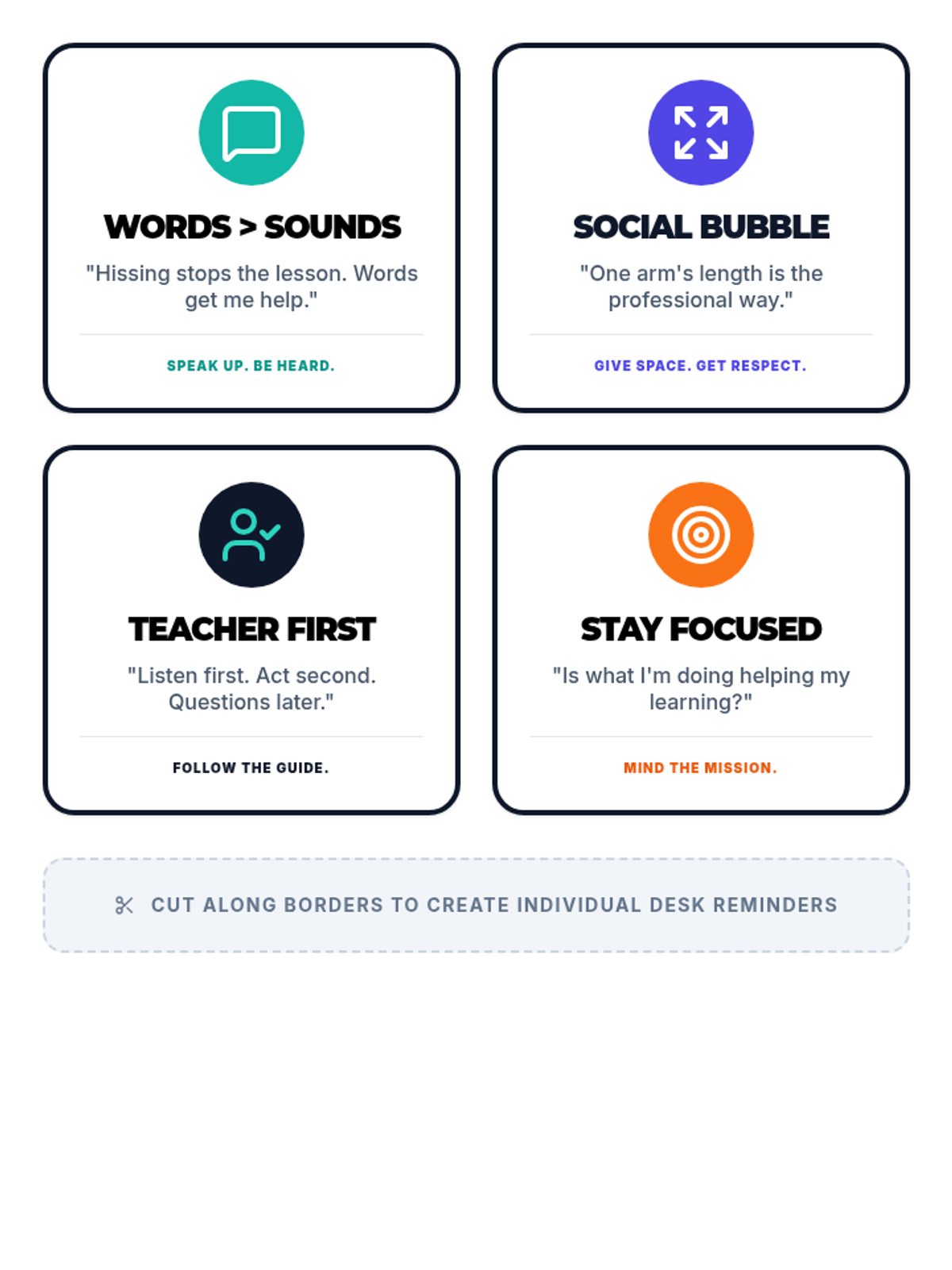
A comprehensive social-behavioral intervention focused on middle school classroom expectations, personal boundaries, and professional communication.
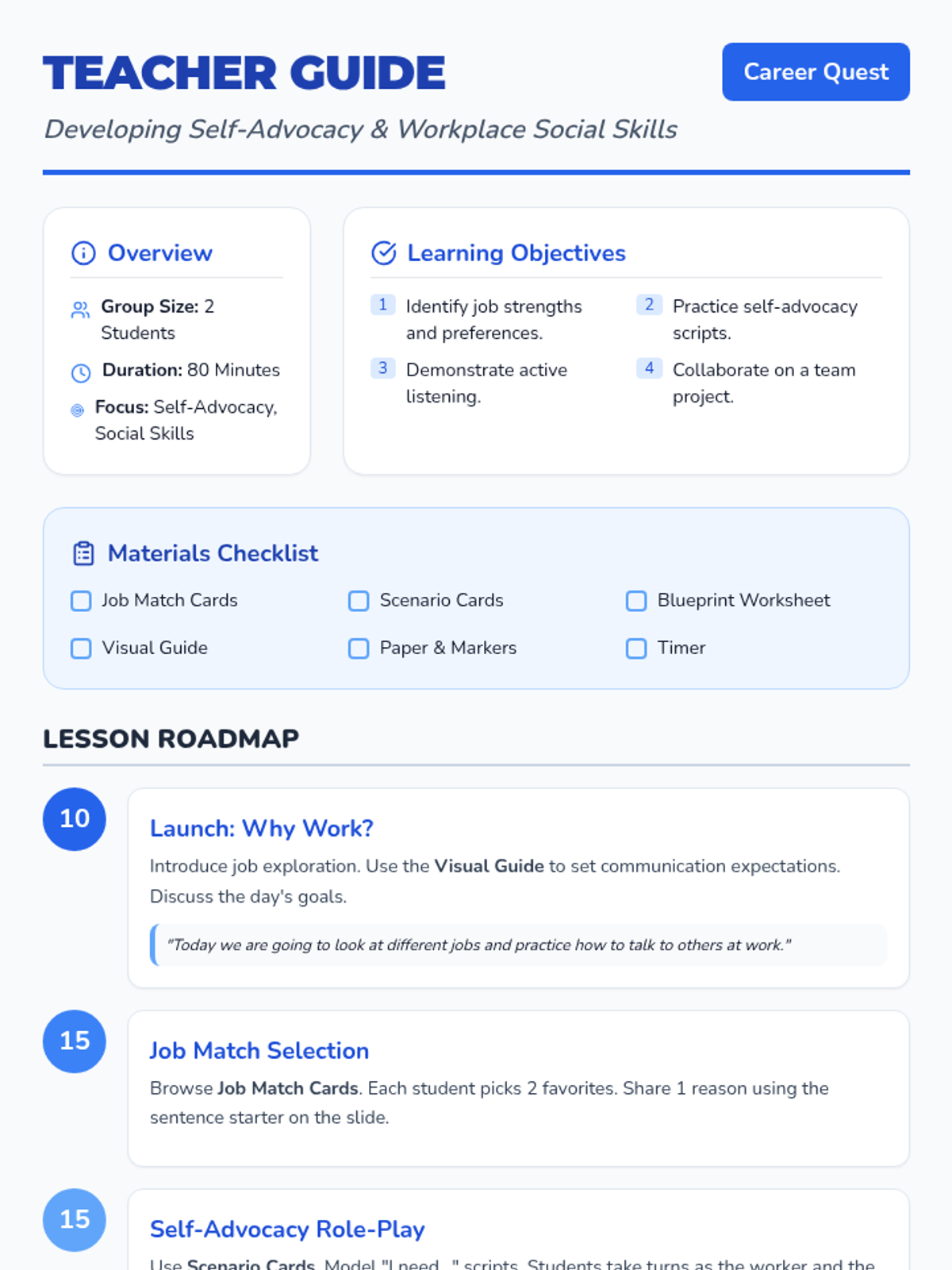
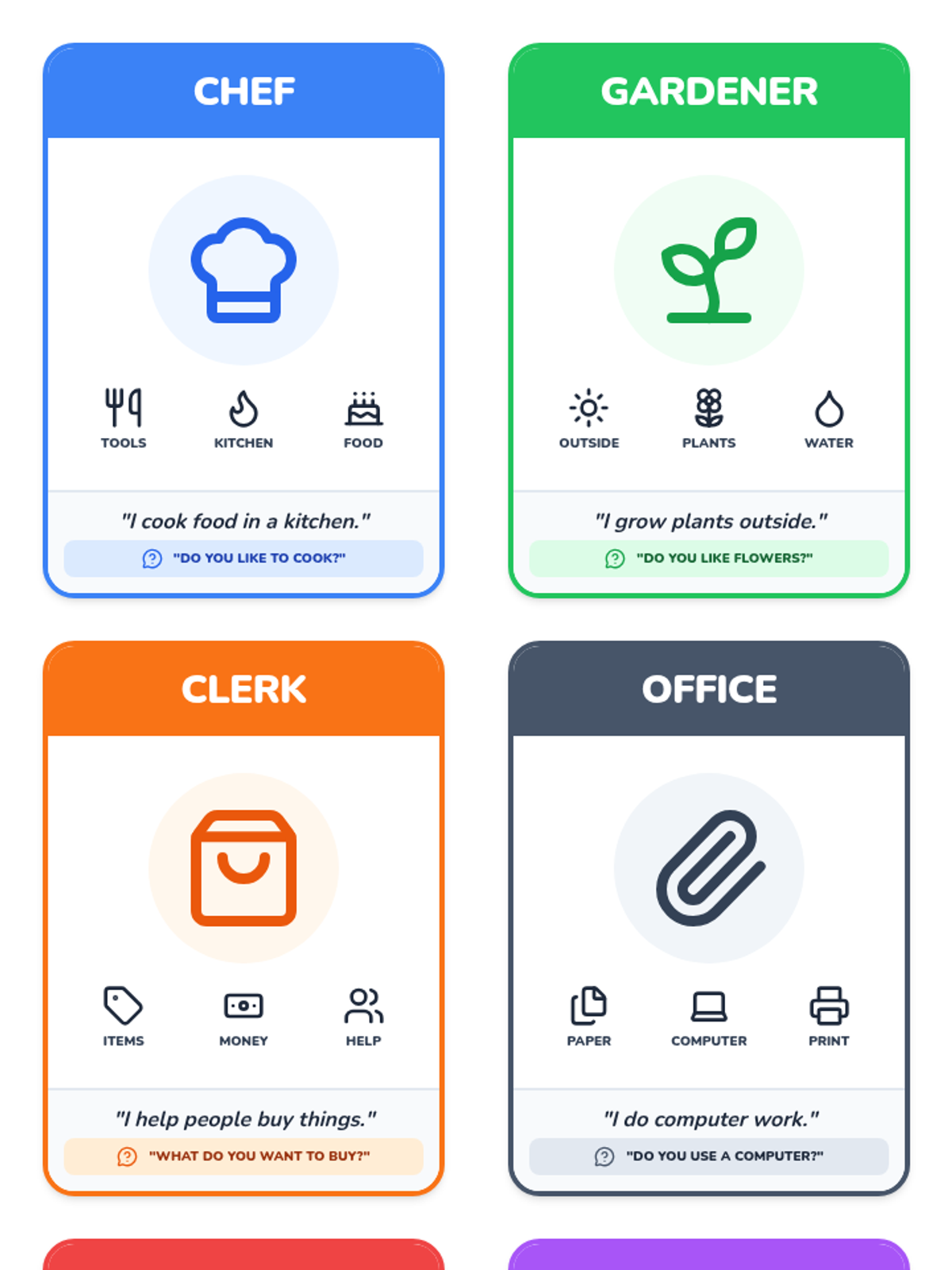
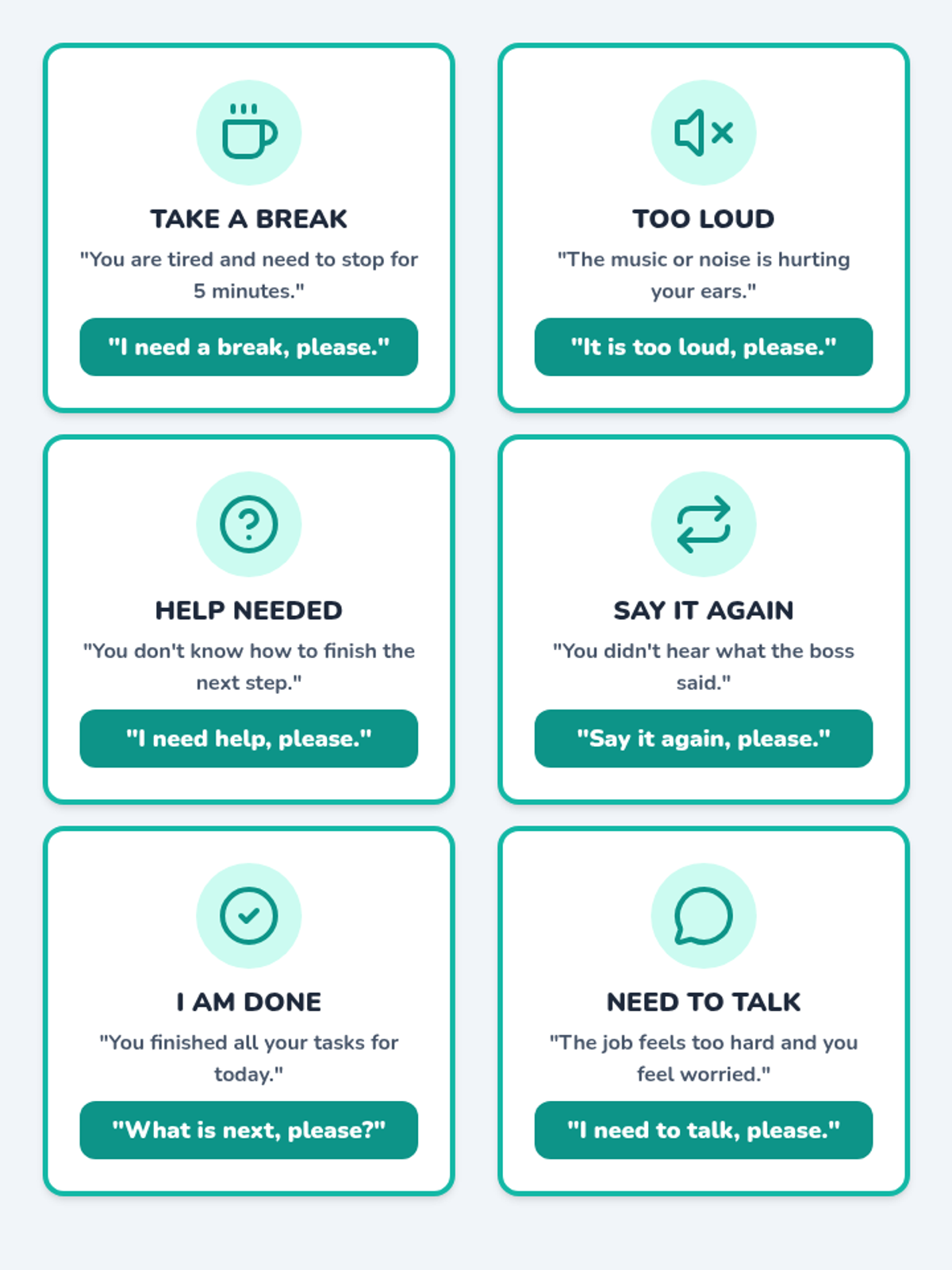
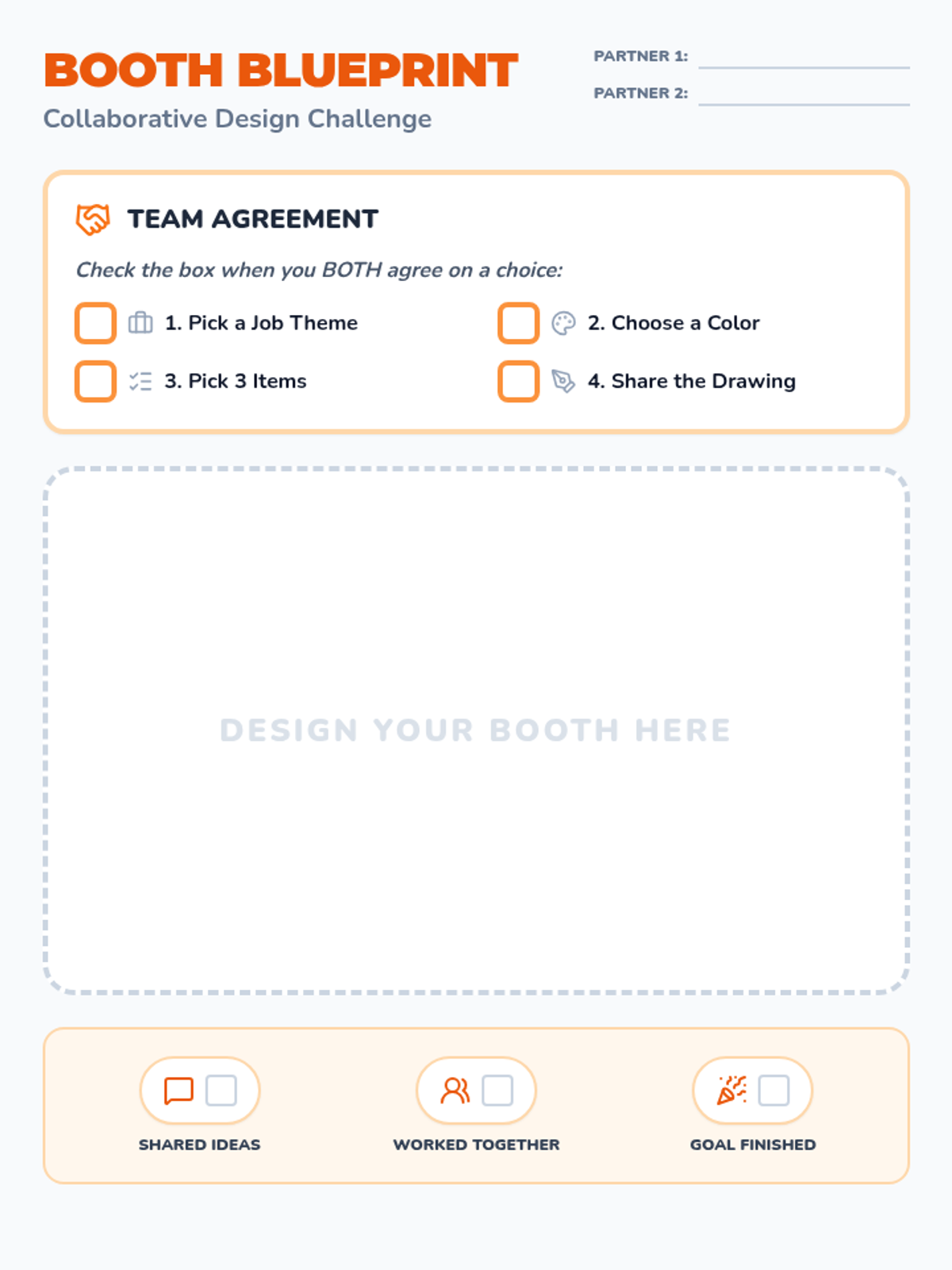
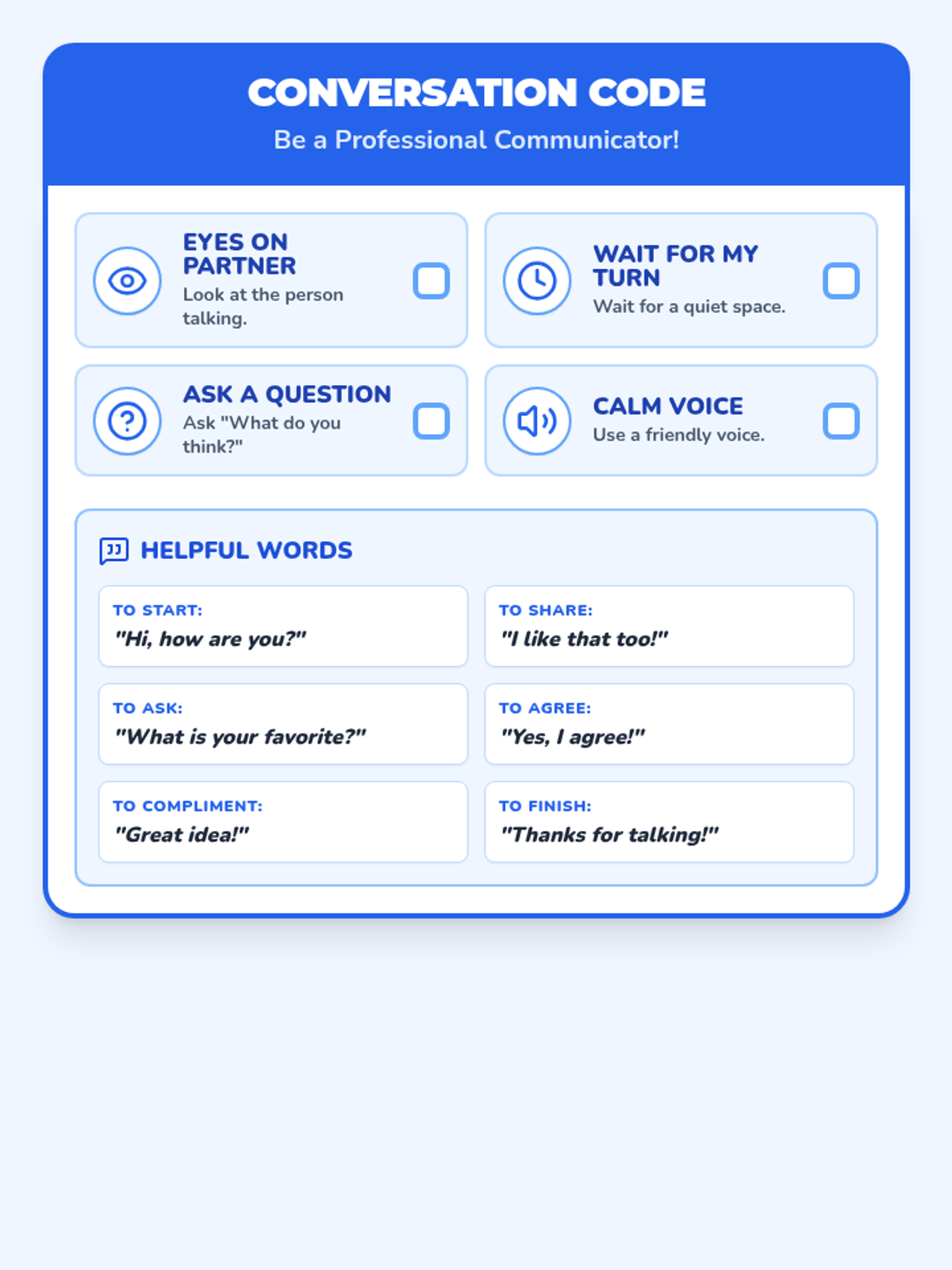
A social skills and job exploration lesson for students on the spectrum, focusing on self-advocacy, collaboration, and identifying career interests through visual-supported activities.
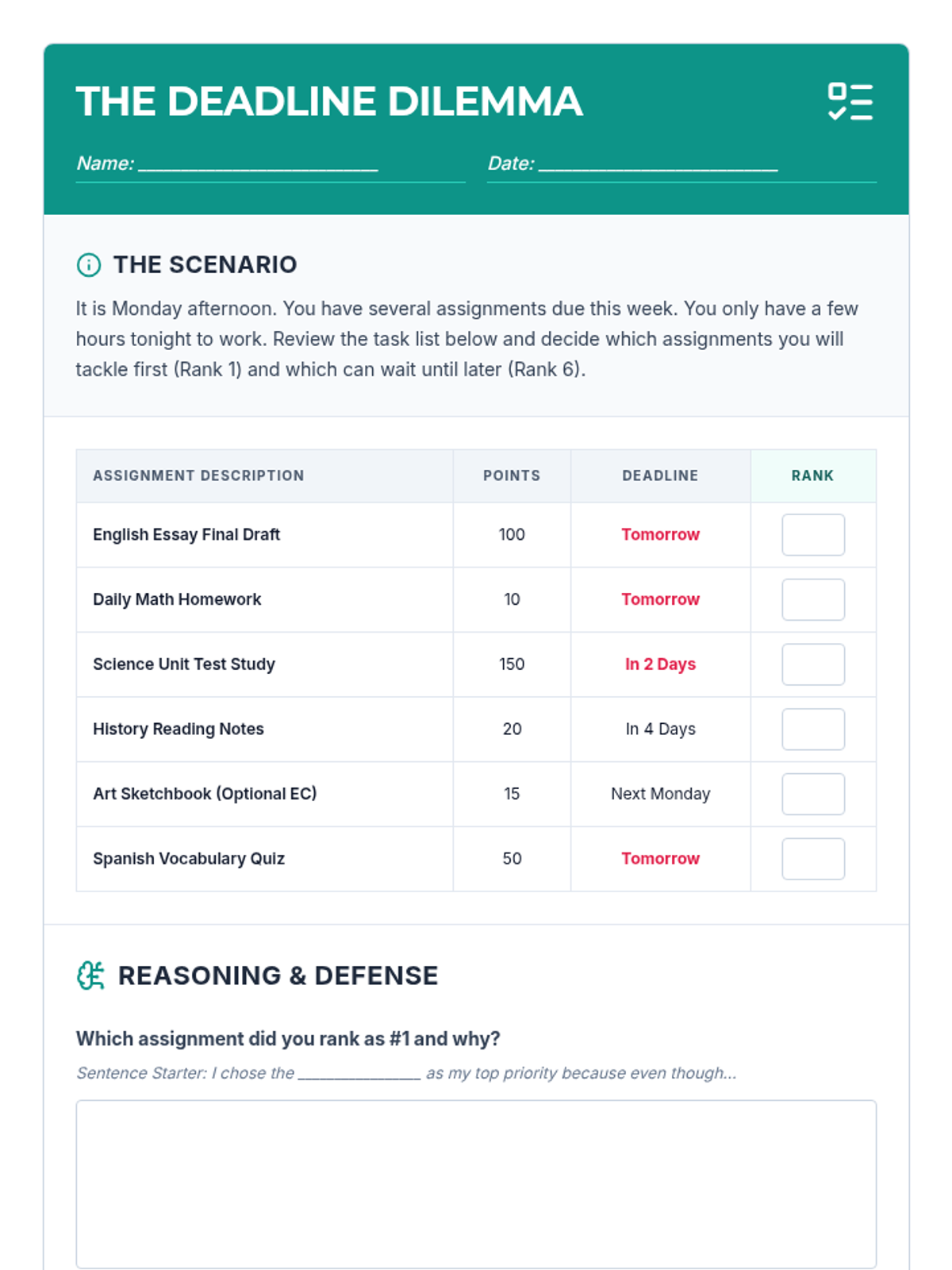
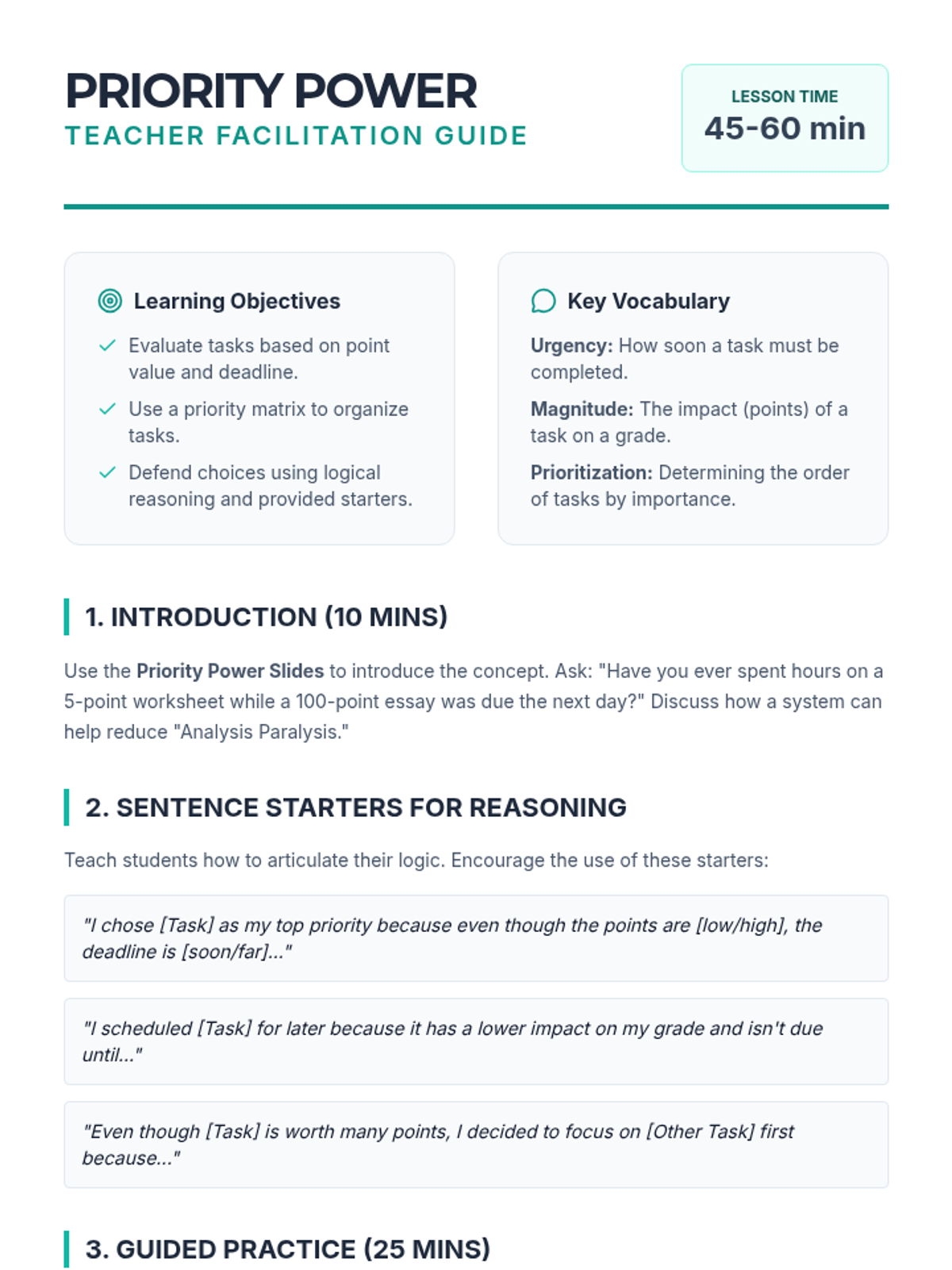
Students learn how to prioritize their schoolwork by balancing point values and upcoming deadlines. This lesson provides a framework for making smart choices when schedules get busy.
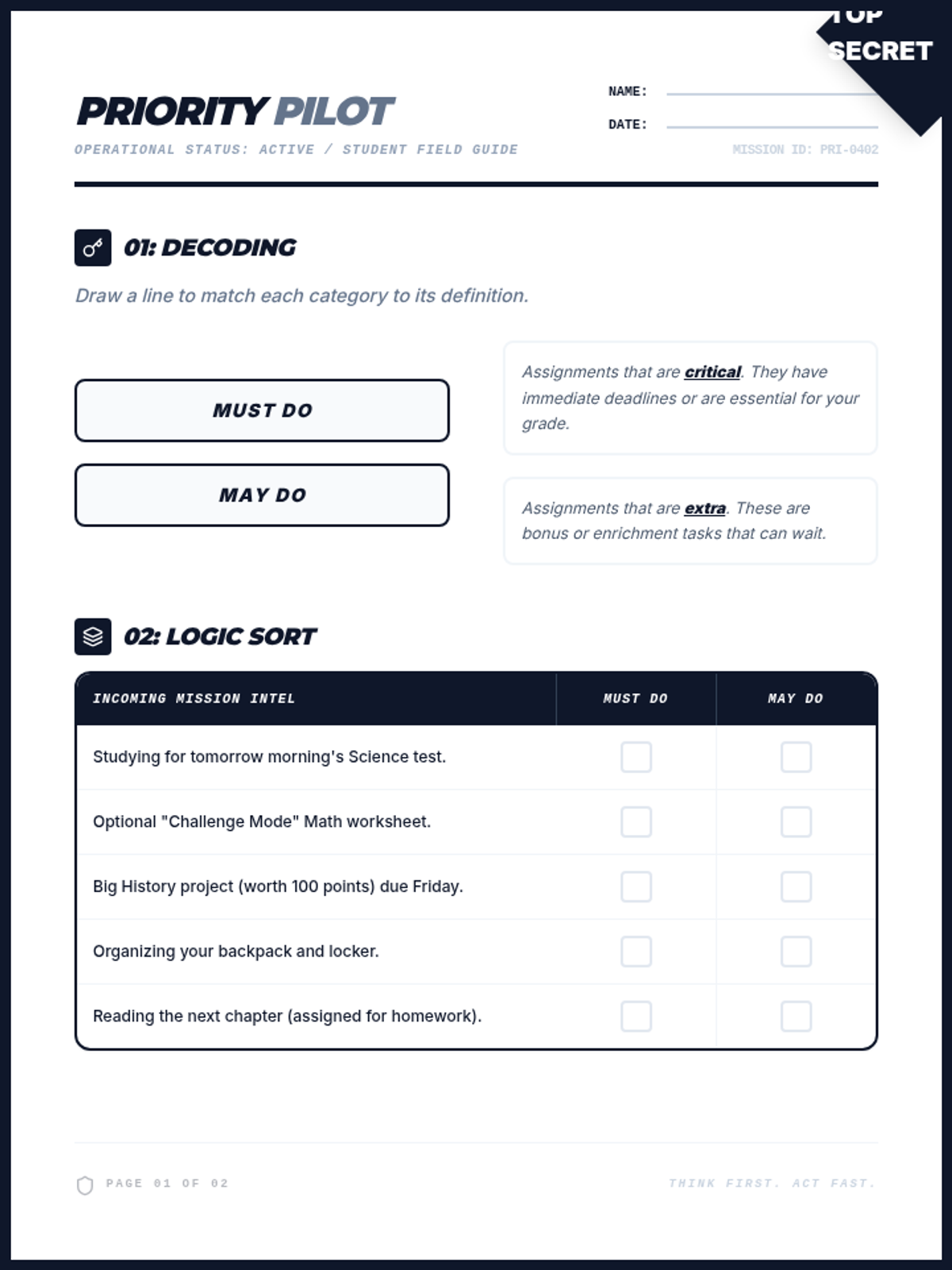
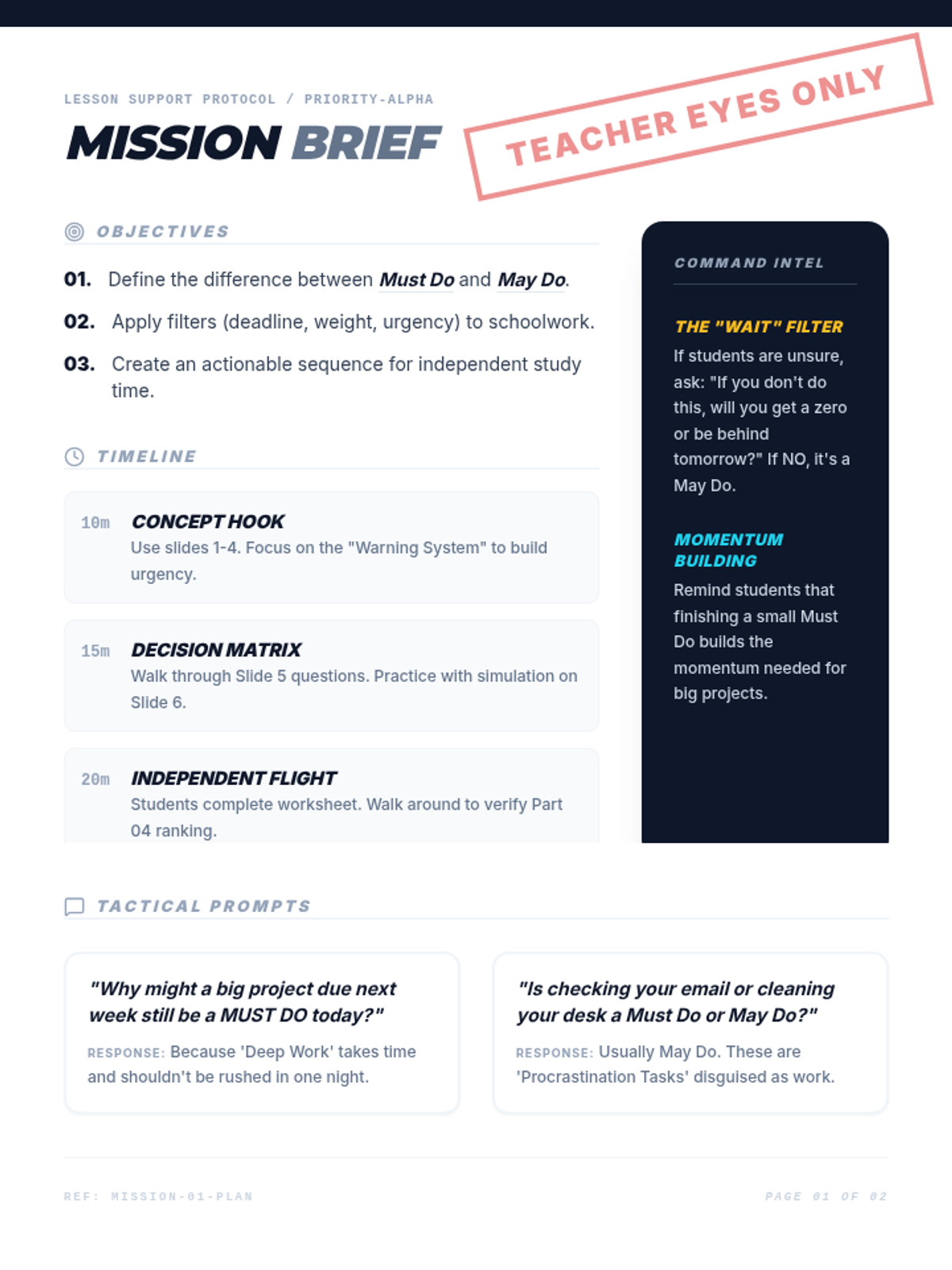
A practical lesson teaching students how to categorize assignments into 'Must Do' (essential, urgent) and 'May Do' (extra, optional) categories to manage their time effectively.
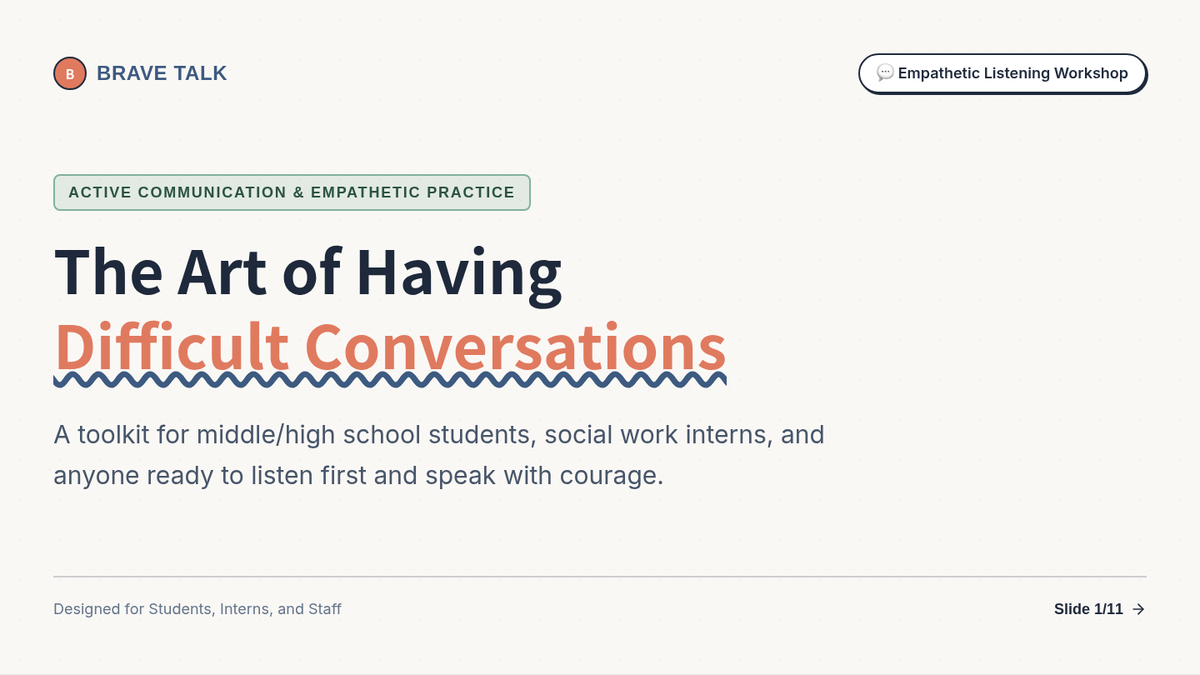
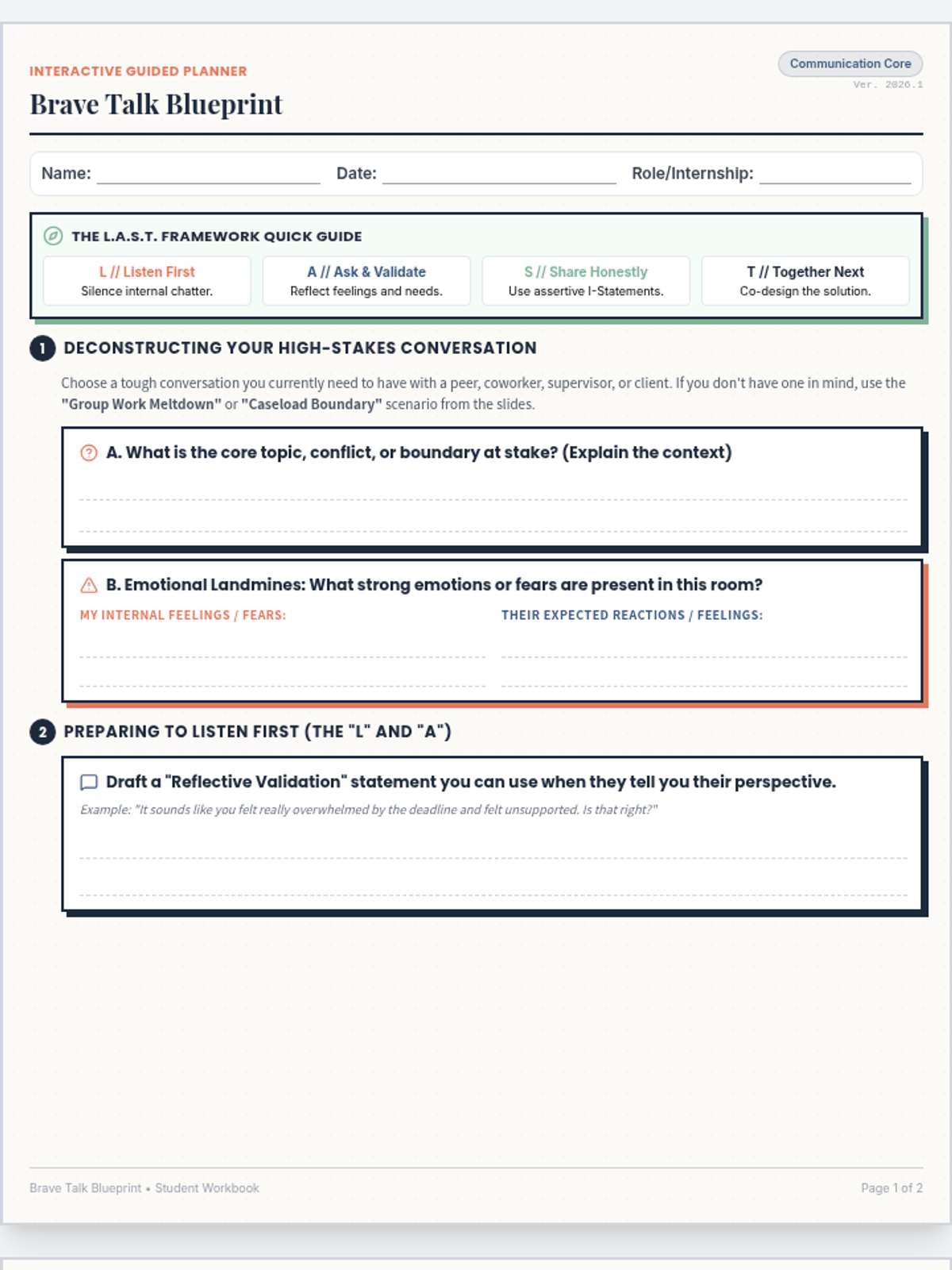
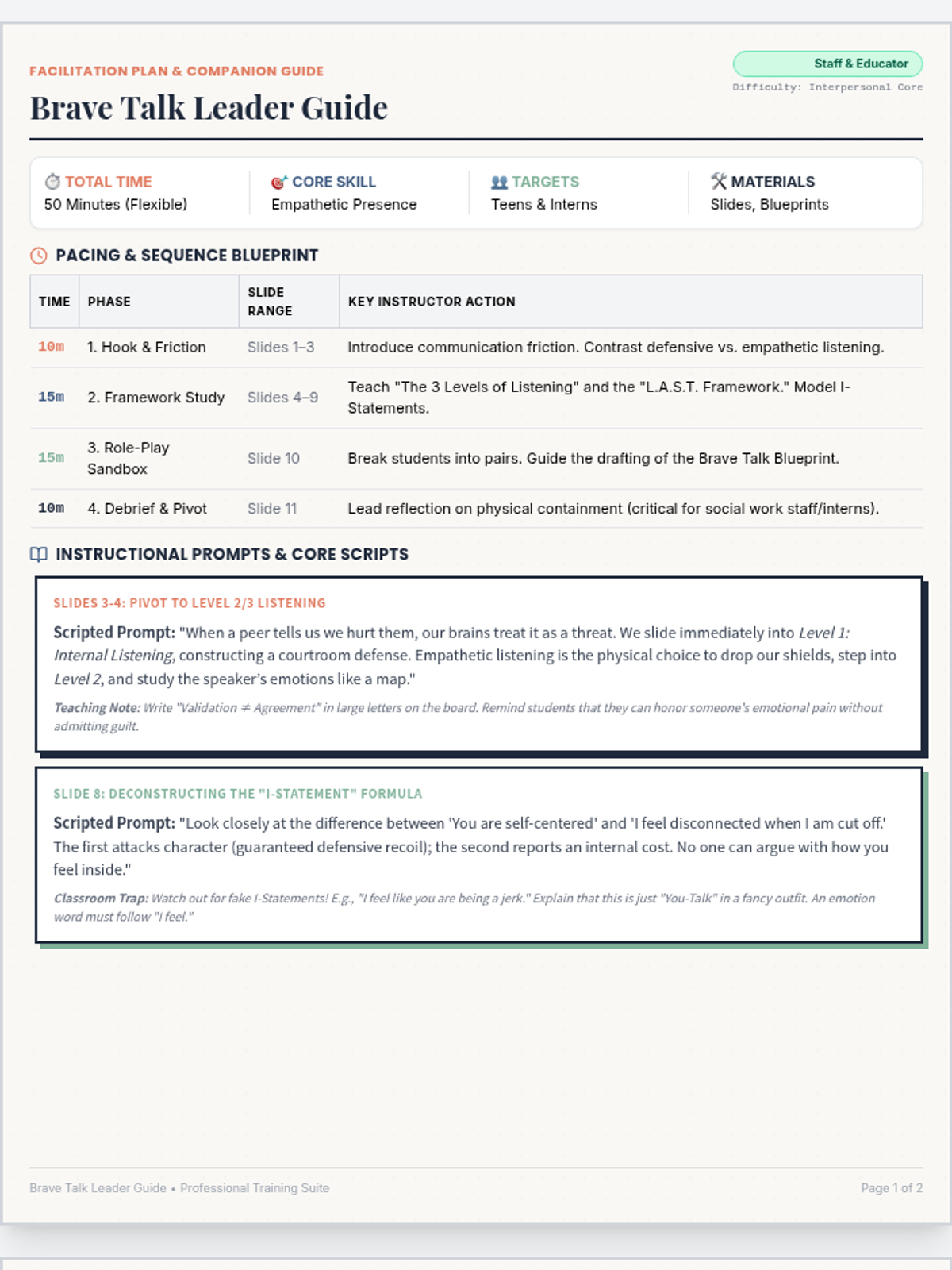
A comprehensive training lesson designed to teach middle/high school students and social work interns how to navigate emotionally charged, difficult conversations using empathetic listening and structured communication frameworks.
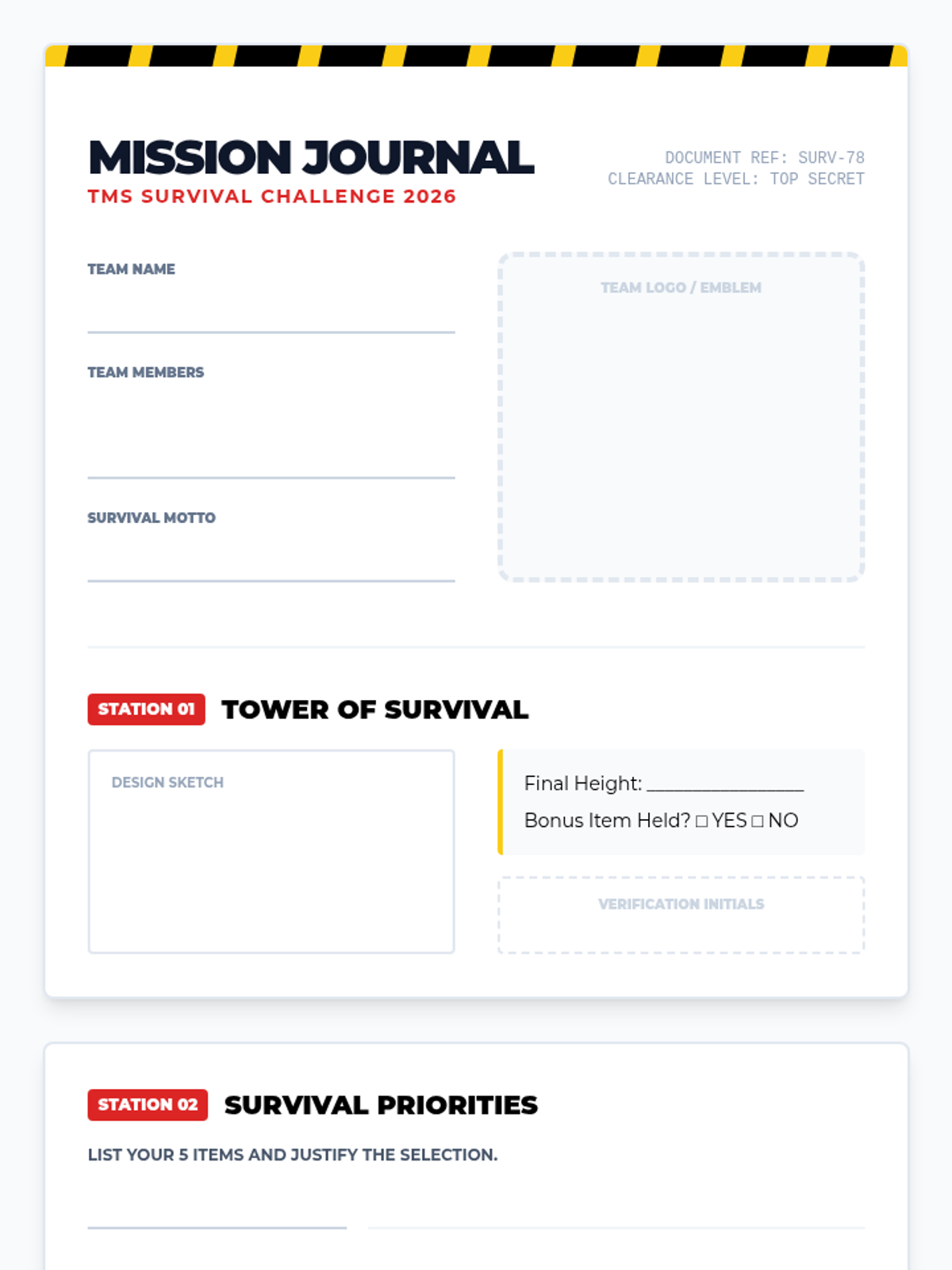
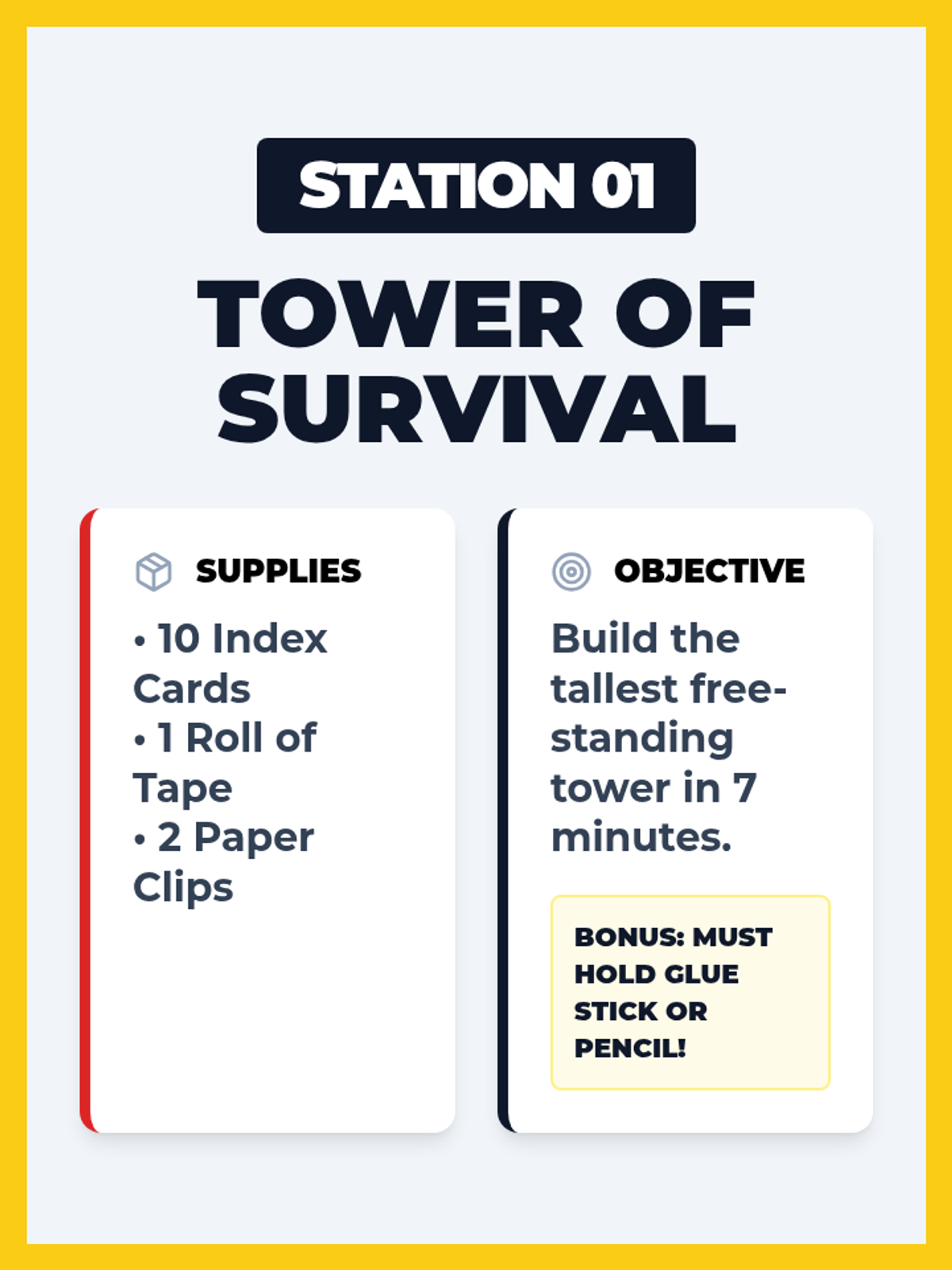
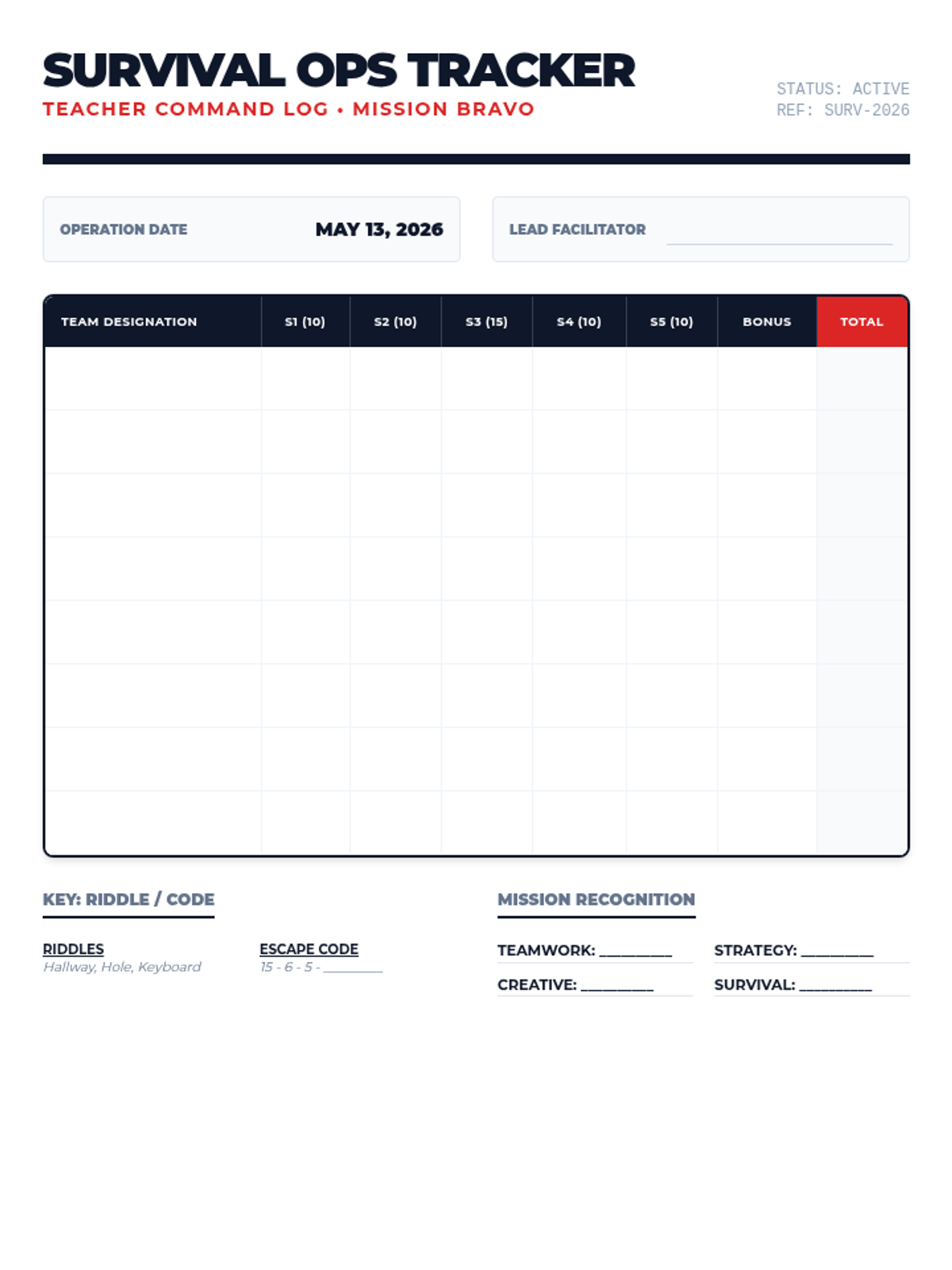
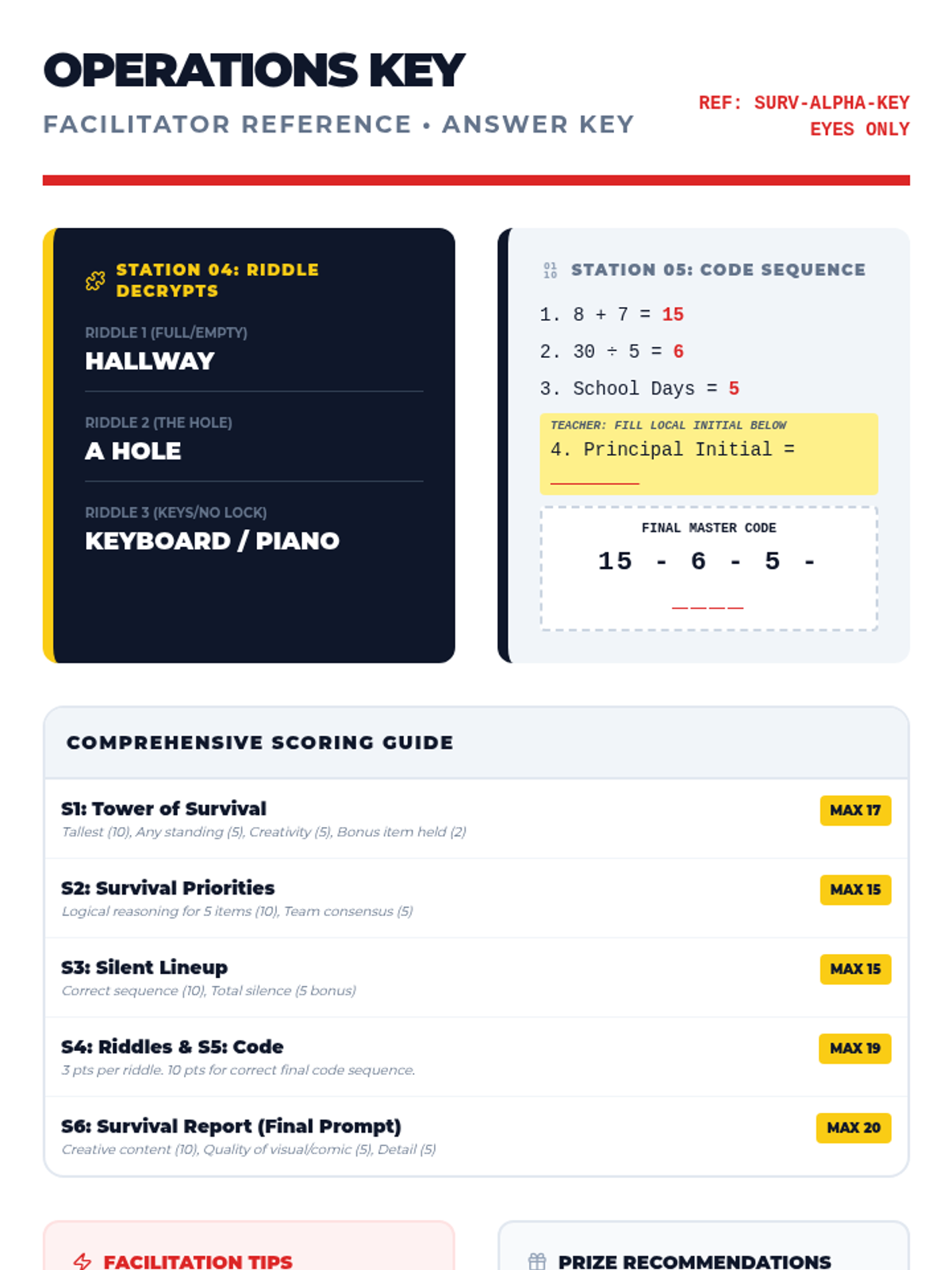
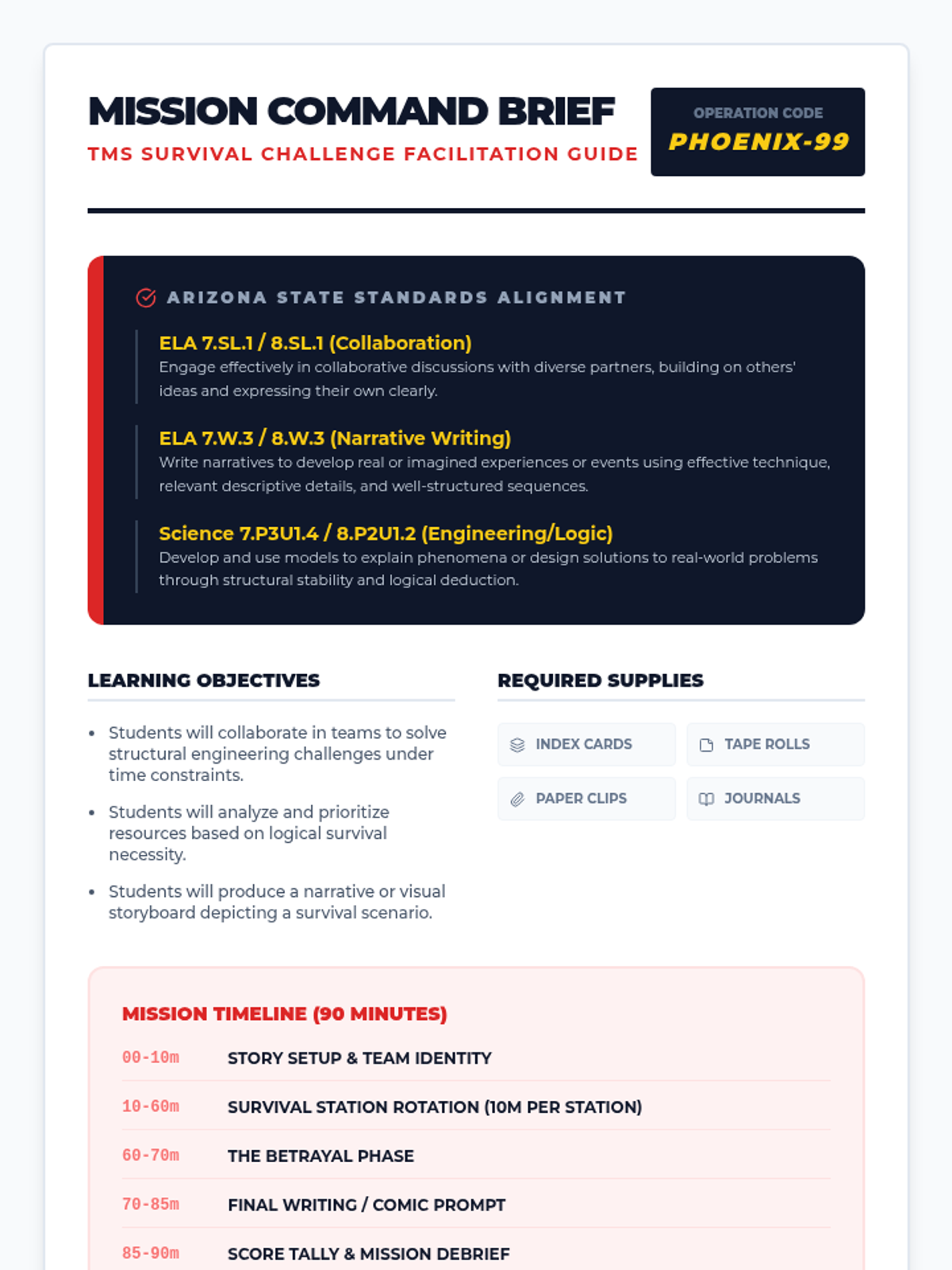
A high-energy, station-based team-building challenge where students must 'survive' a school lockdown scenario using logic, creativity, and teamwork.
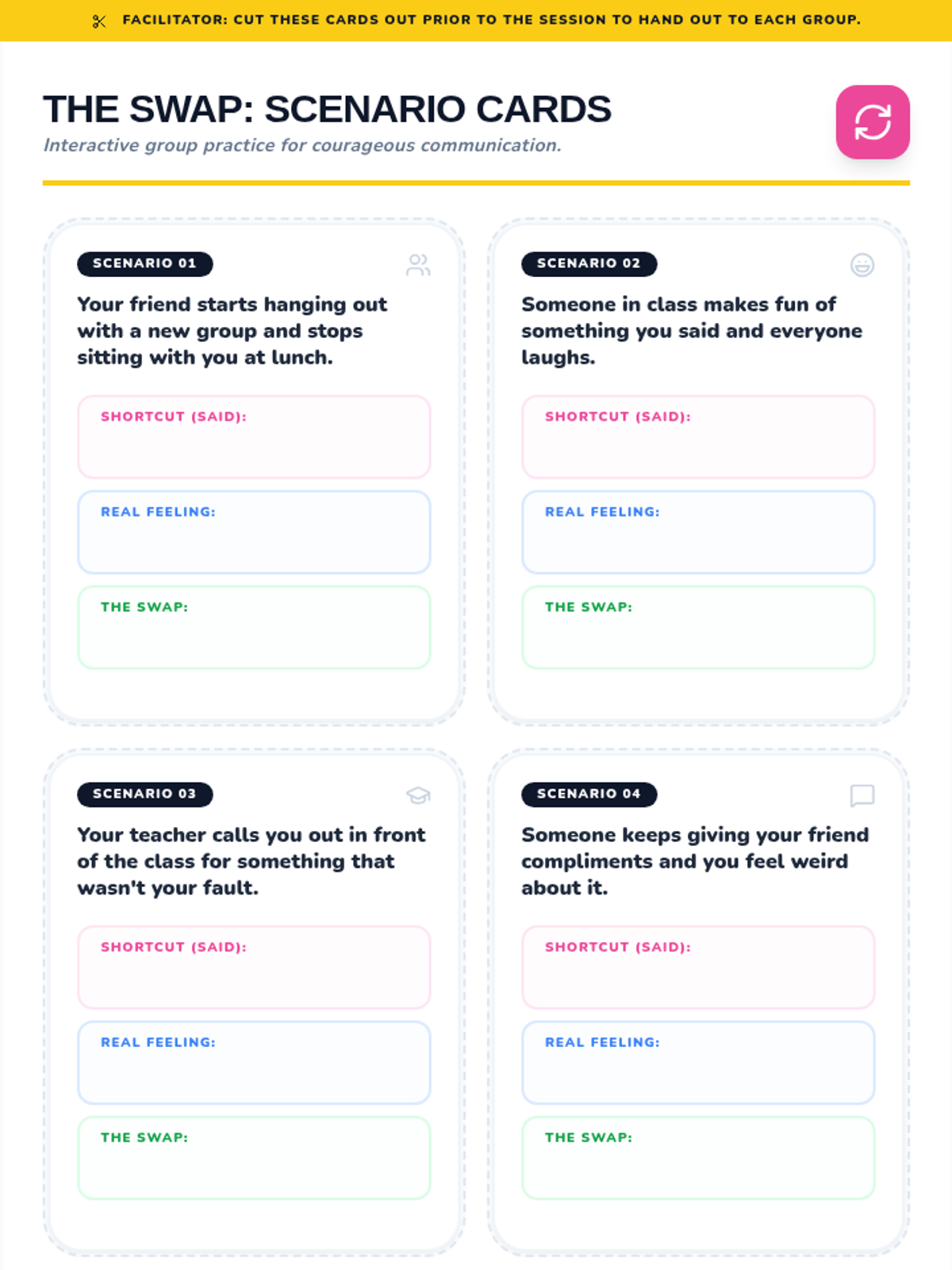
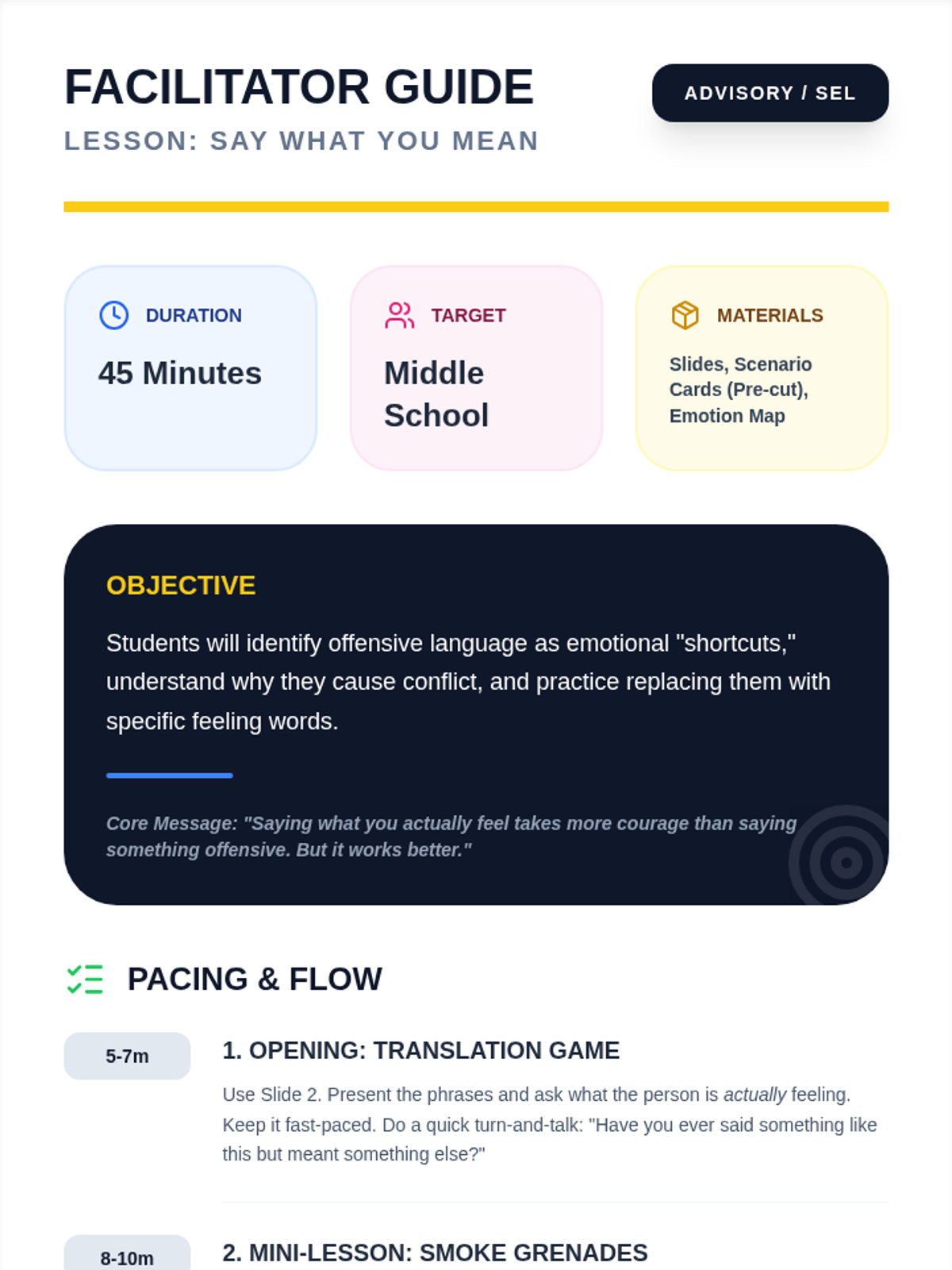
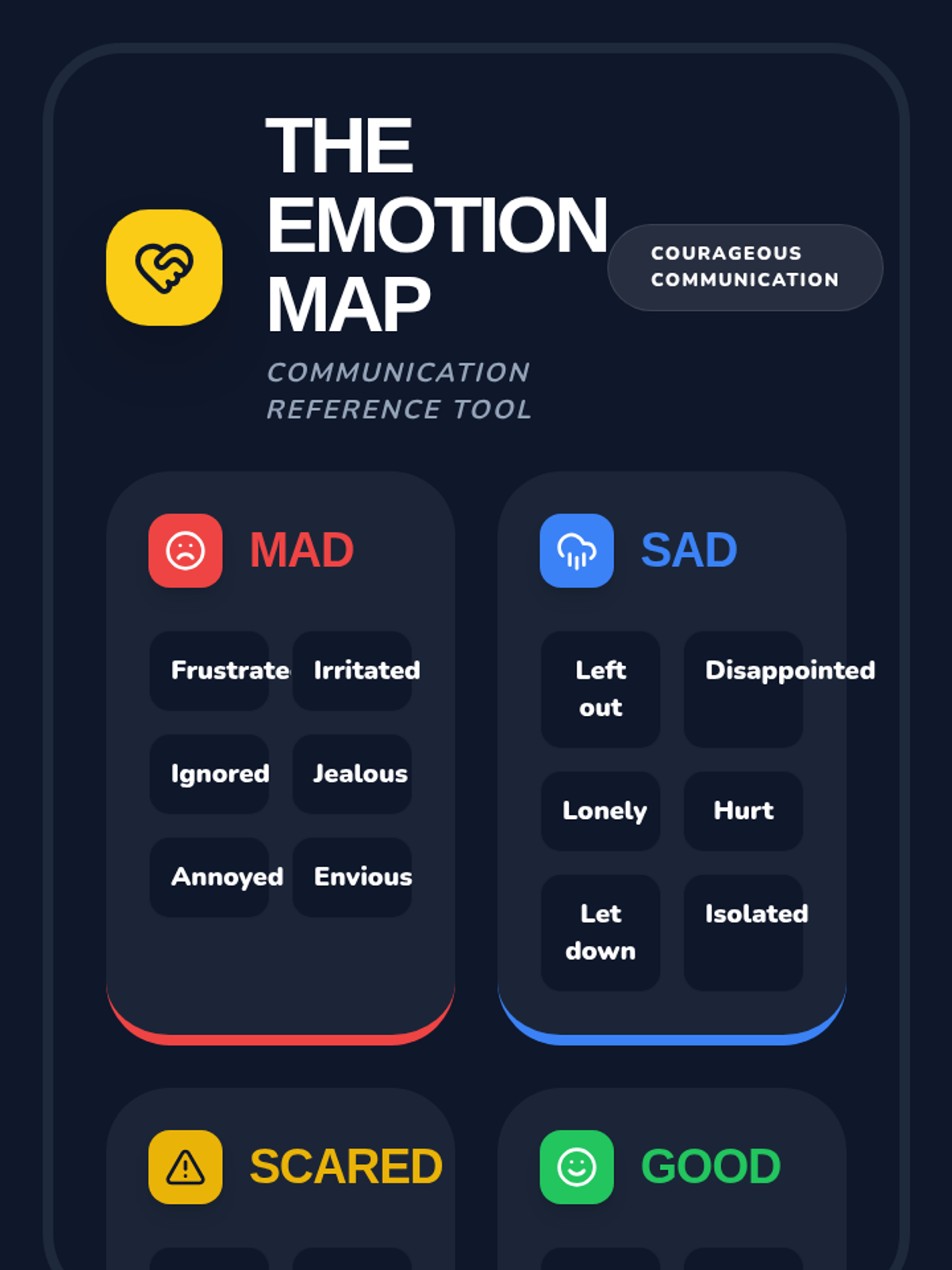
A social-emotional learning lesson for middle schoolers focused on replacing offensive or dismissive language with specific feeling words to improve communication and connection.
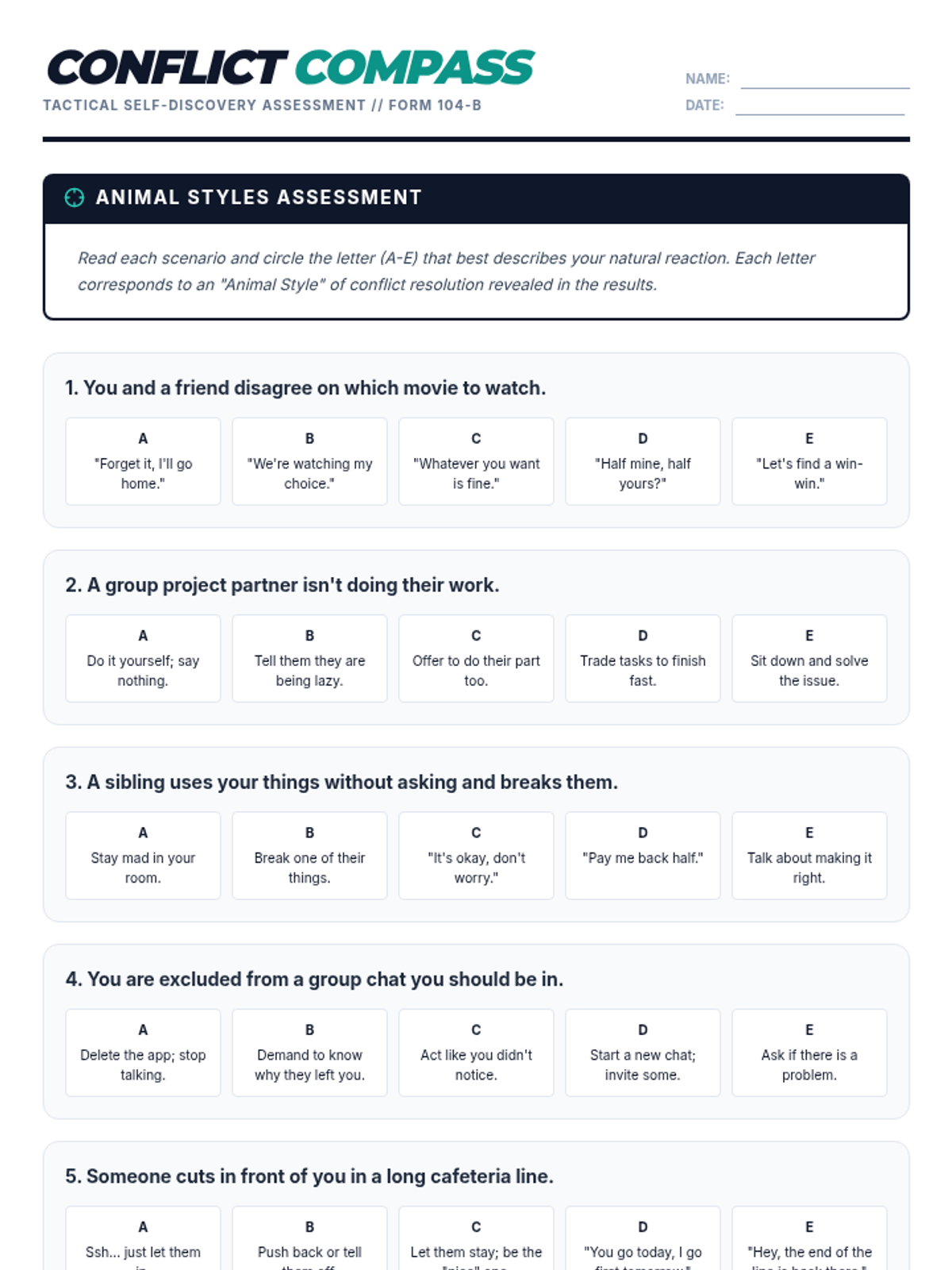
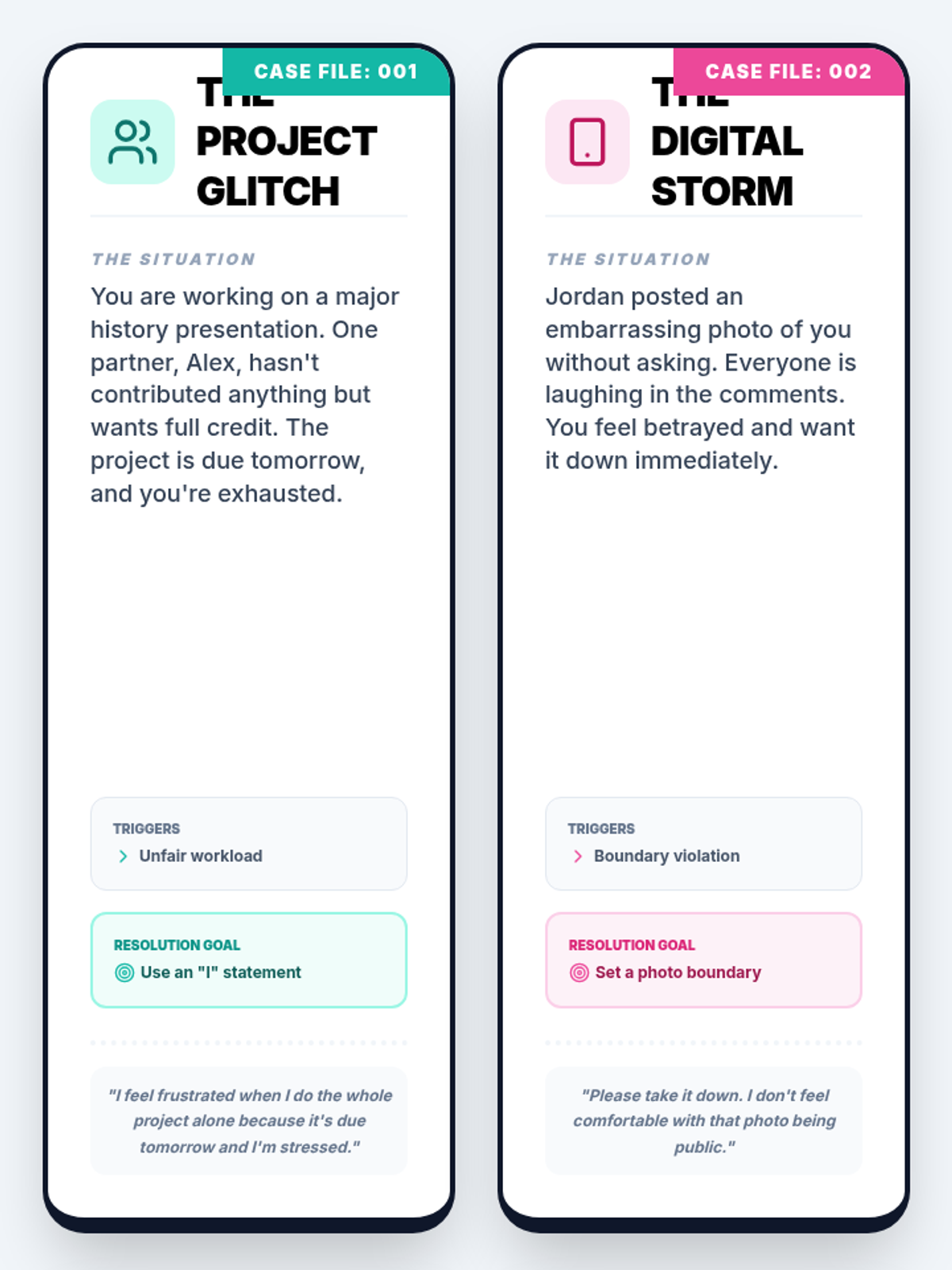
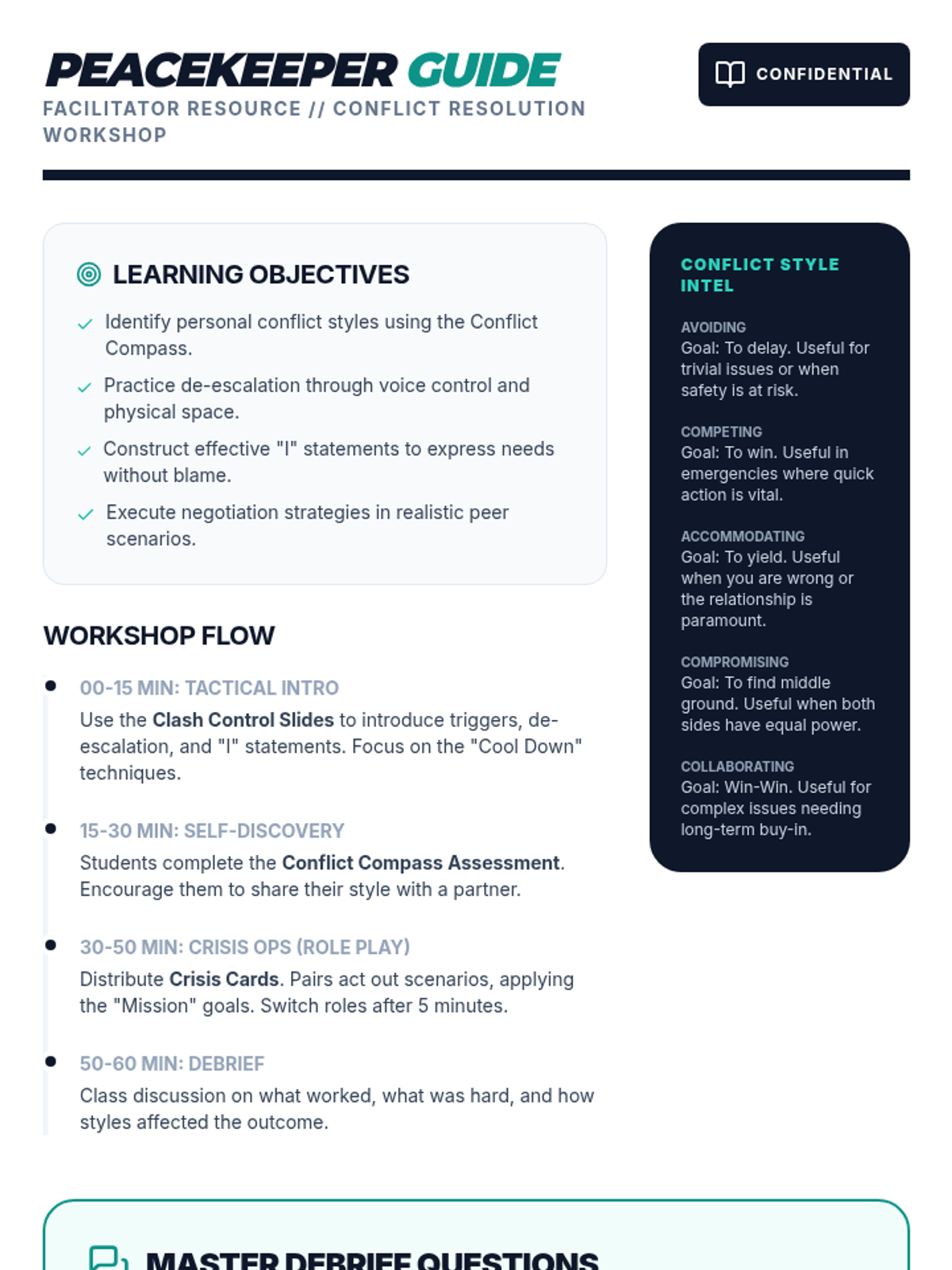
A dynamic workshop on conflict resolution skills, including identifying triggers, de-escalation, and negotiation through interactive role-play and self-discovery.
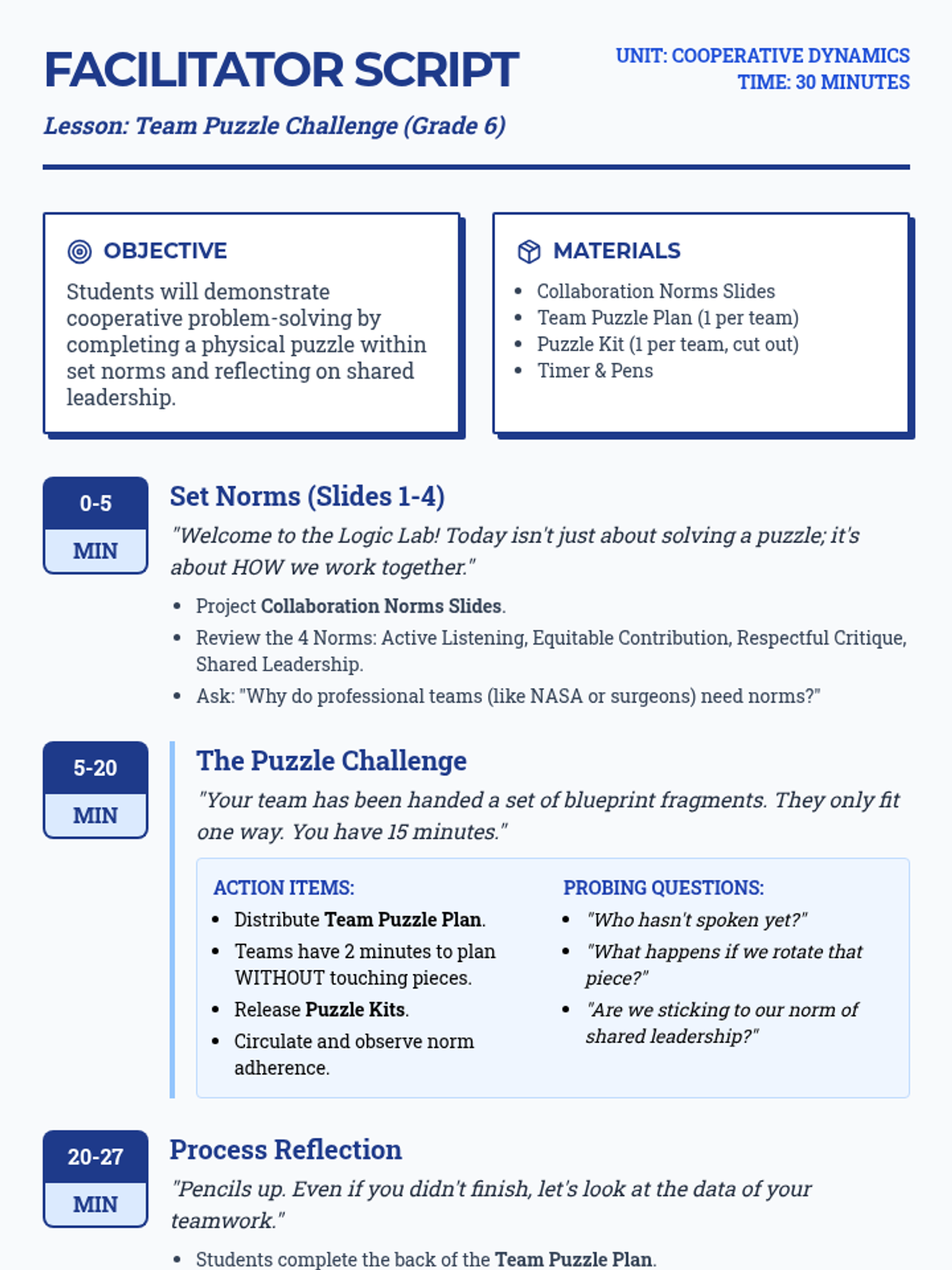
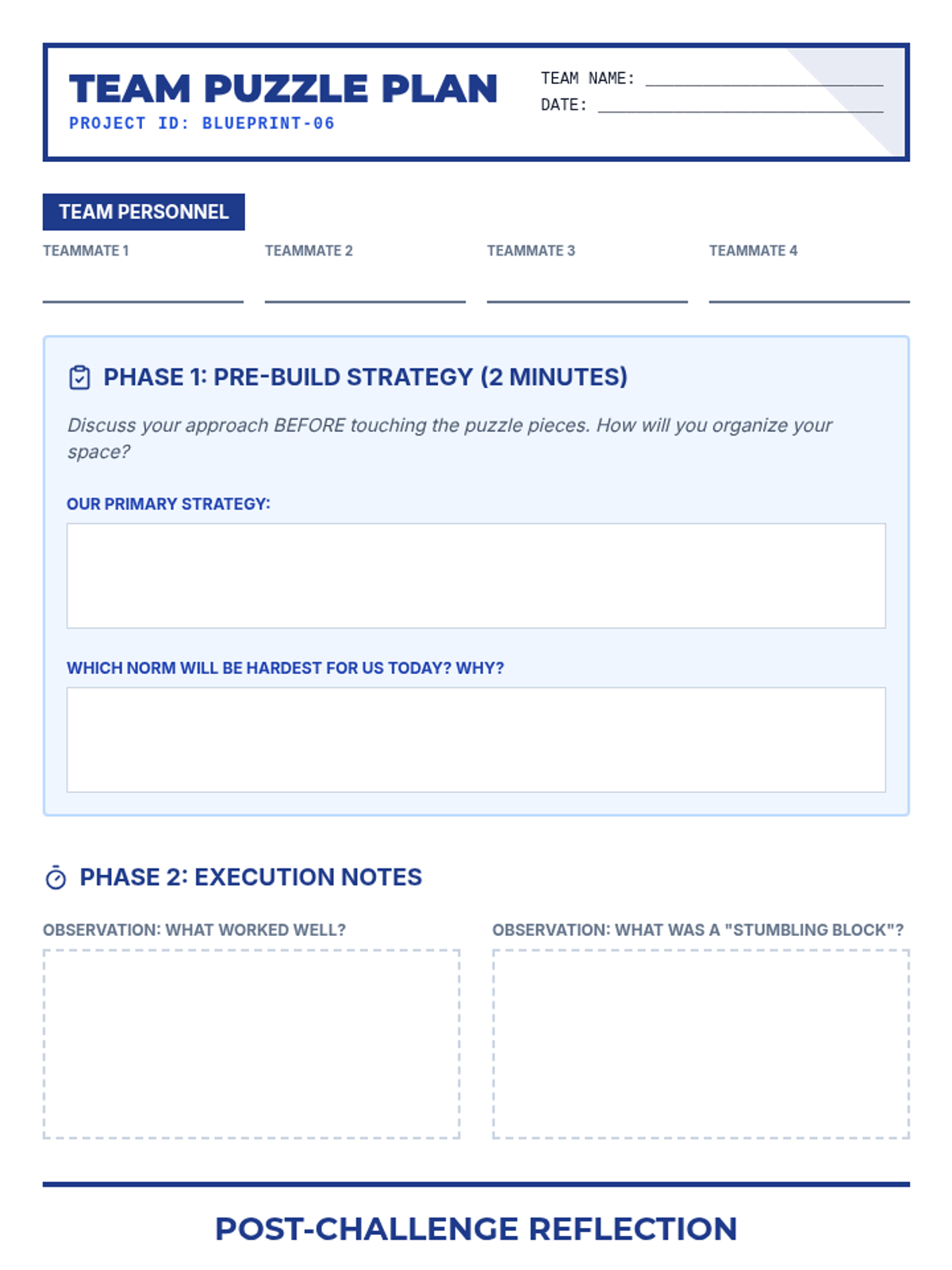
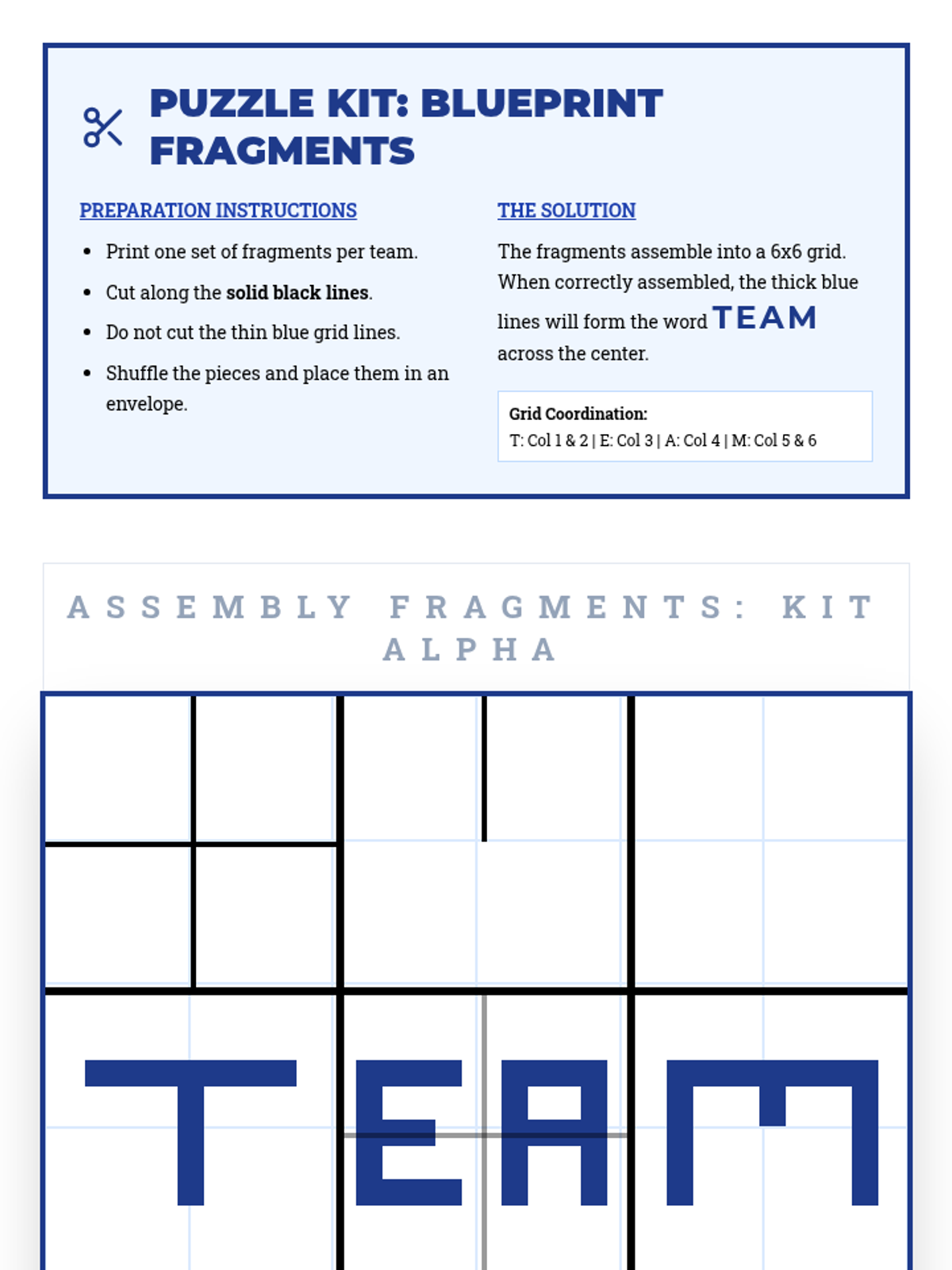
A high-energy, 30-minute workshop where students practice collaborative problem-solving through a structured puzzle challenge. Students establish team norms, work through a shared task, and reflect on the dynamics of effective leadership.
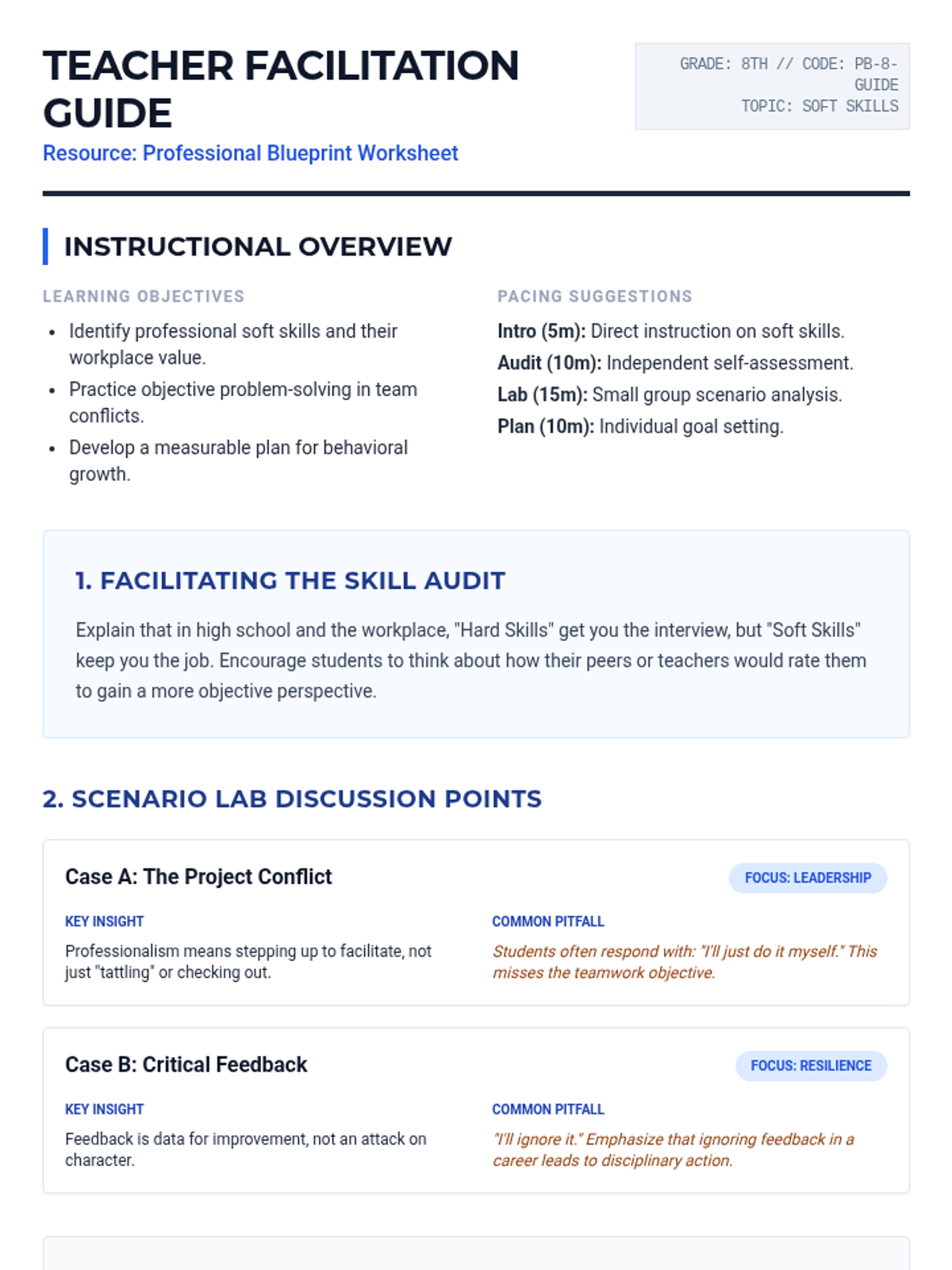
A guided reflection and problem-solving lesson focused on developing essential soft skills and professional classroom behaviors for 8th-grade students preparing for college and career paths.
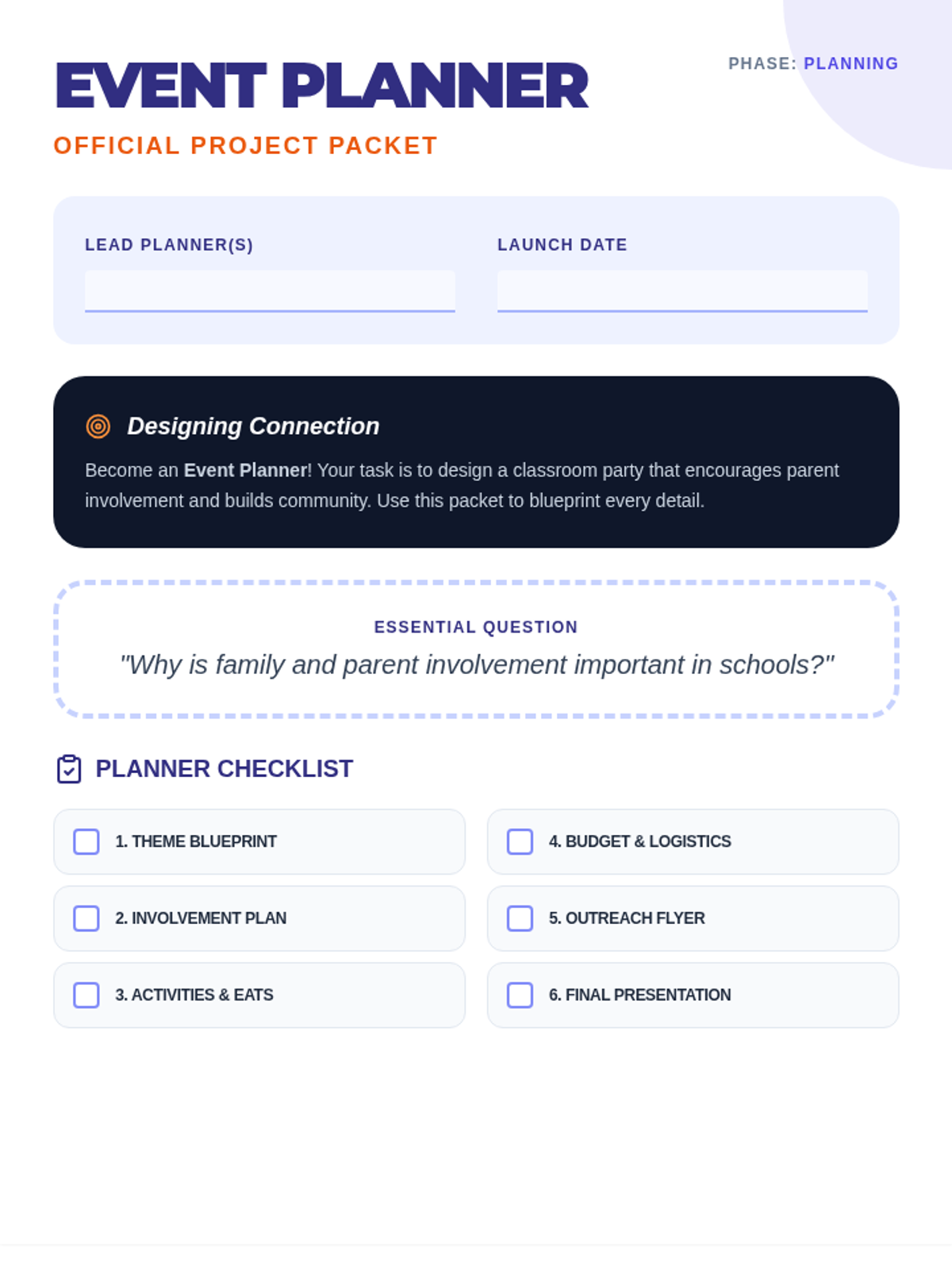
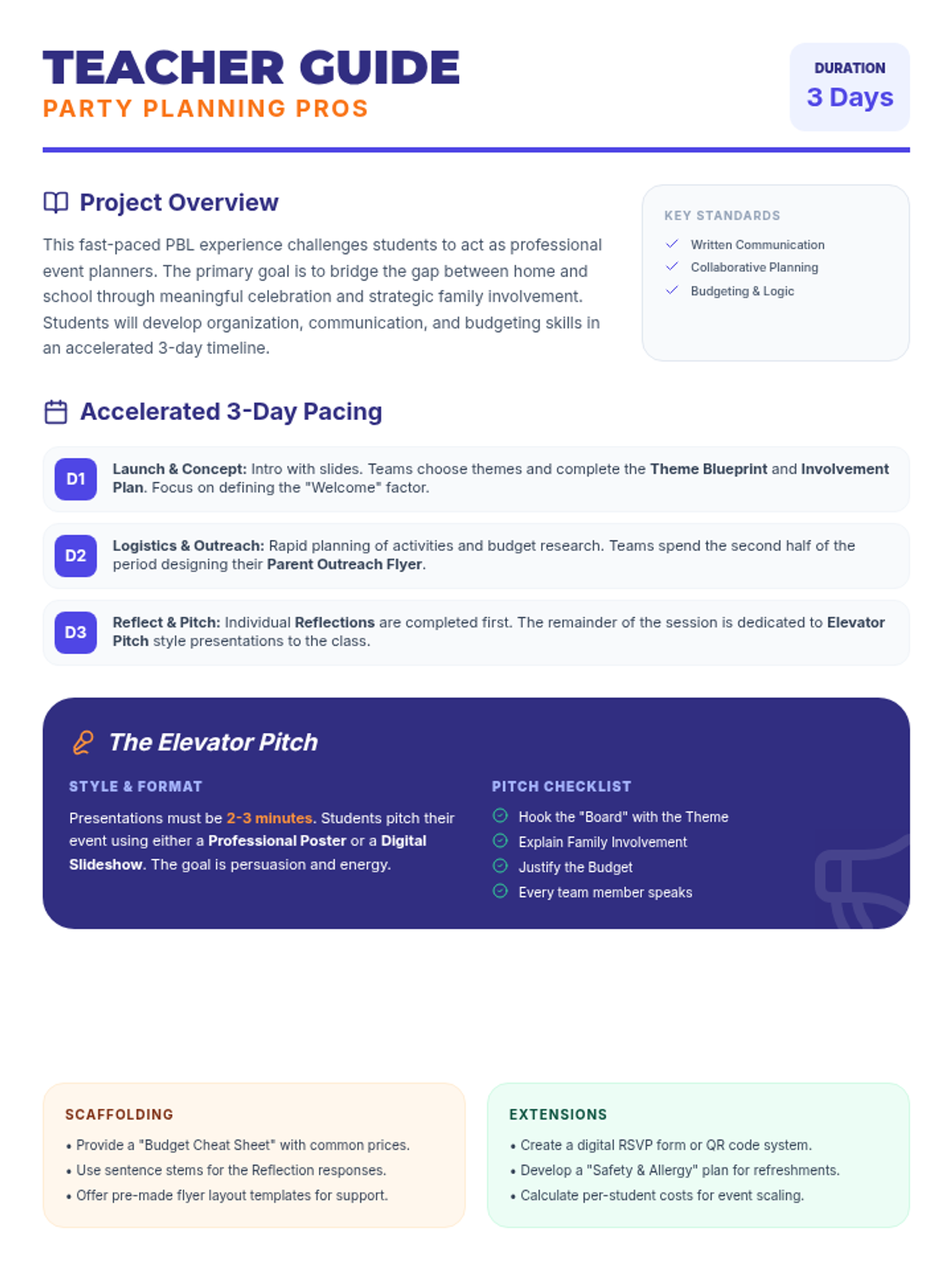
Students step into the role of professional event planners to design a classroom celebration that bridges the gap between home and school. They will create a comprehensive plan including activities, budgets, and volunteer recruitment strategies to maximize family engagement.
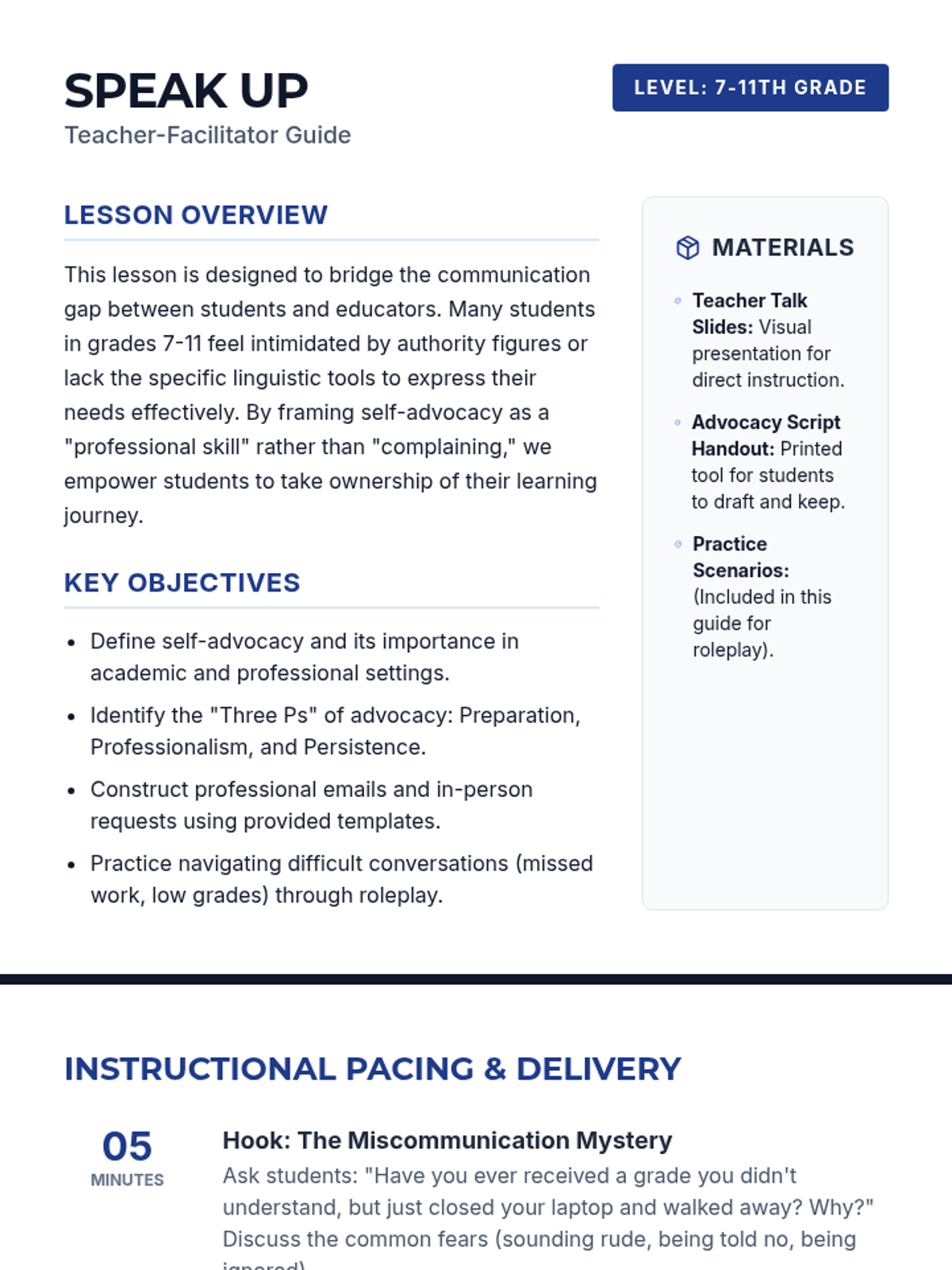
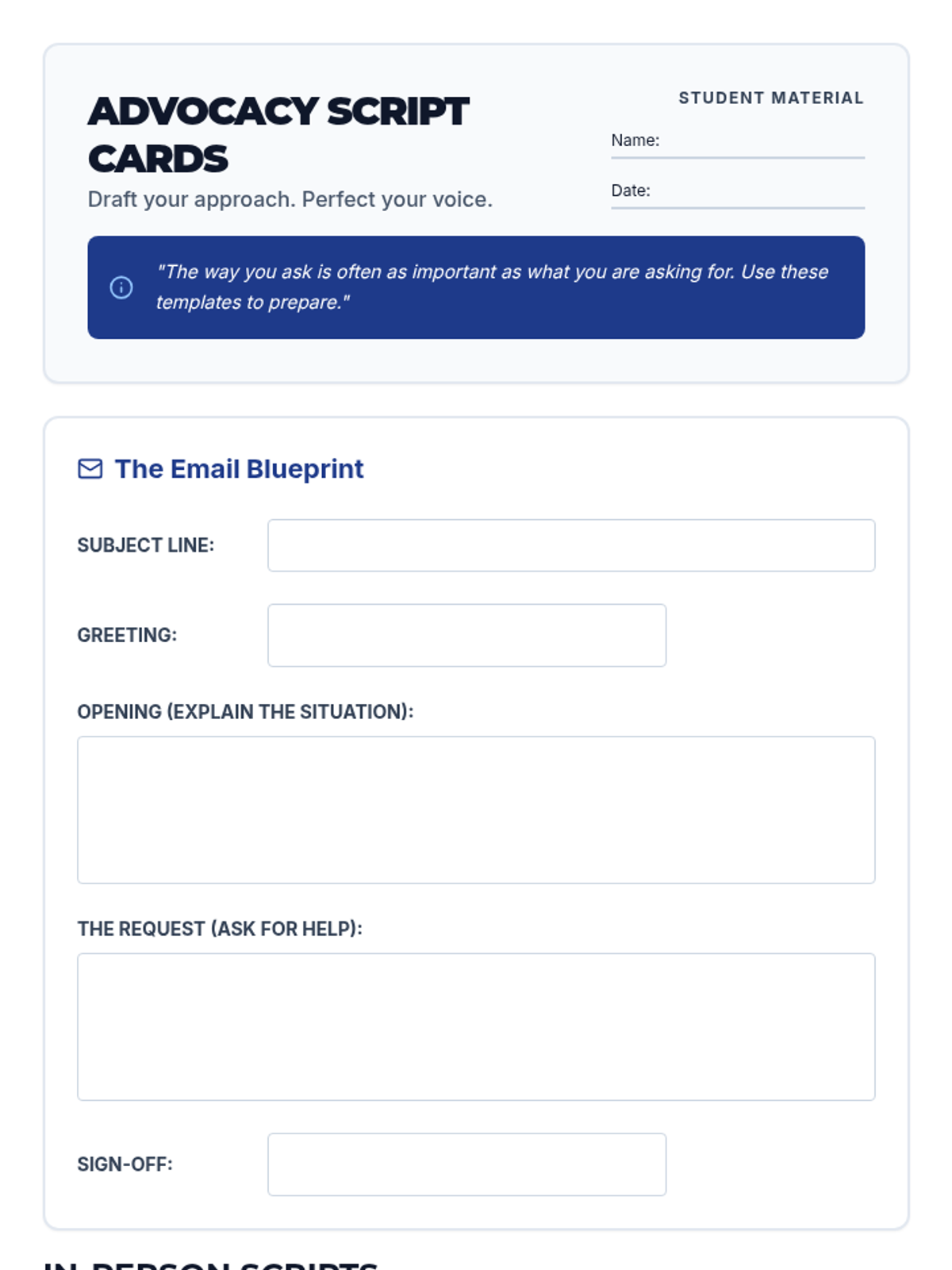
A comprehensive lesson on self-advocacy skills for middle and high school students, focusing on professional communication strategies for interacting with teachers. Students will learn the '3 Ps' of advocacy and practice specific scripts for common academic scenarios.
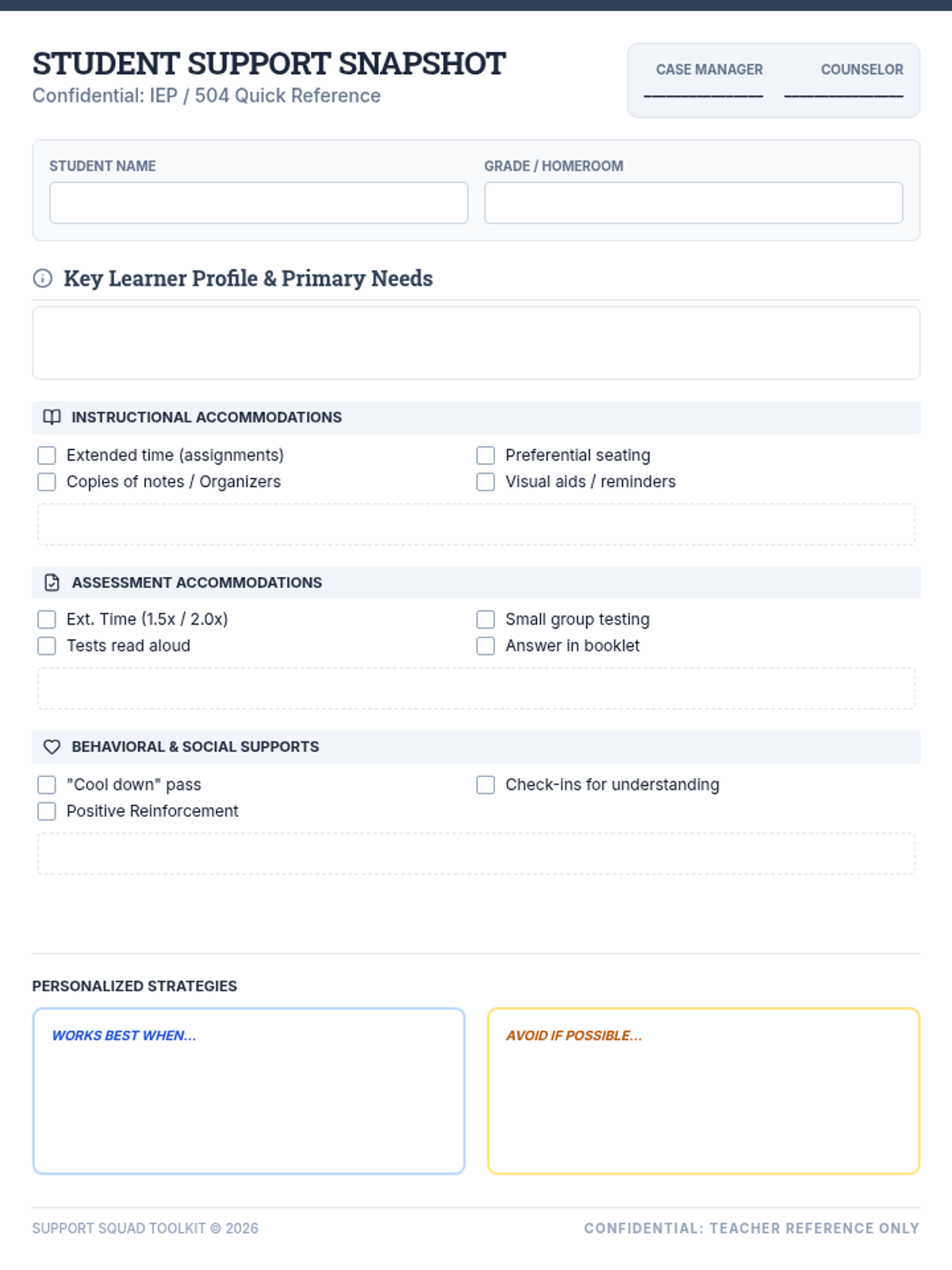
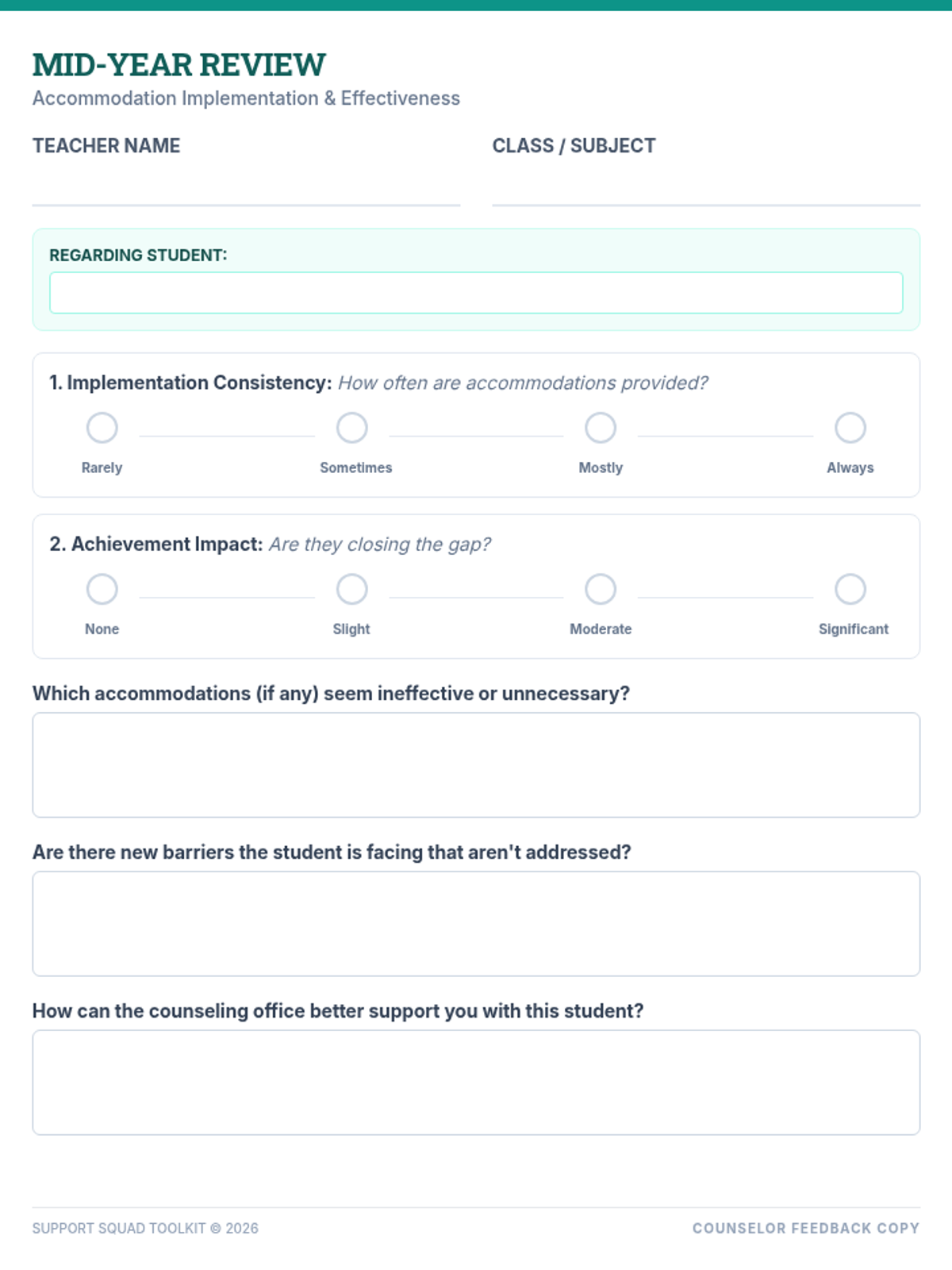
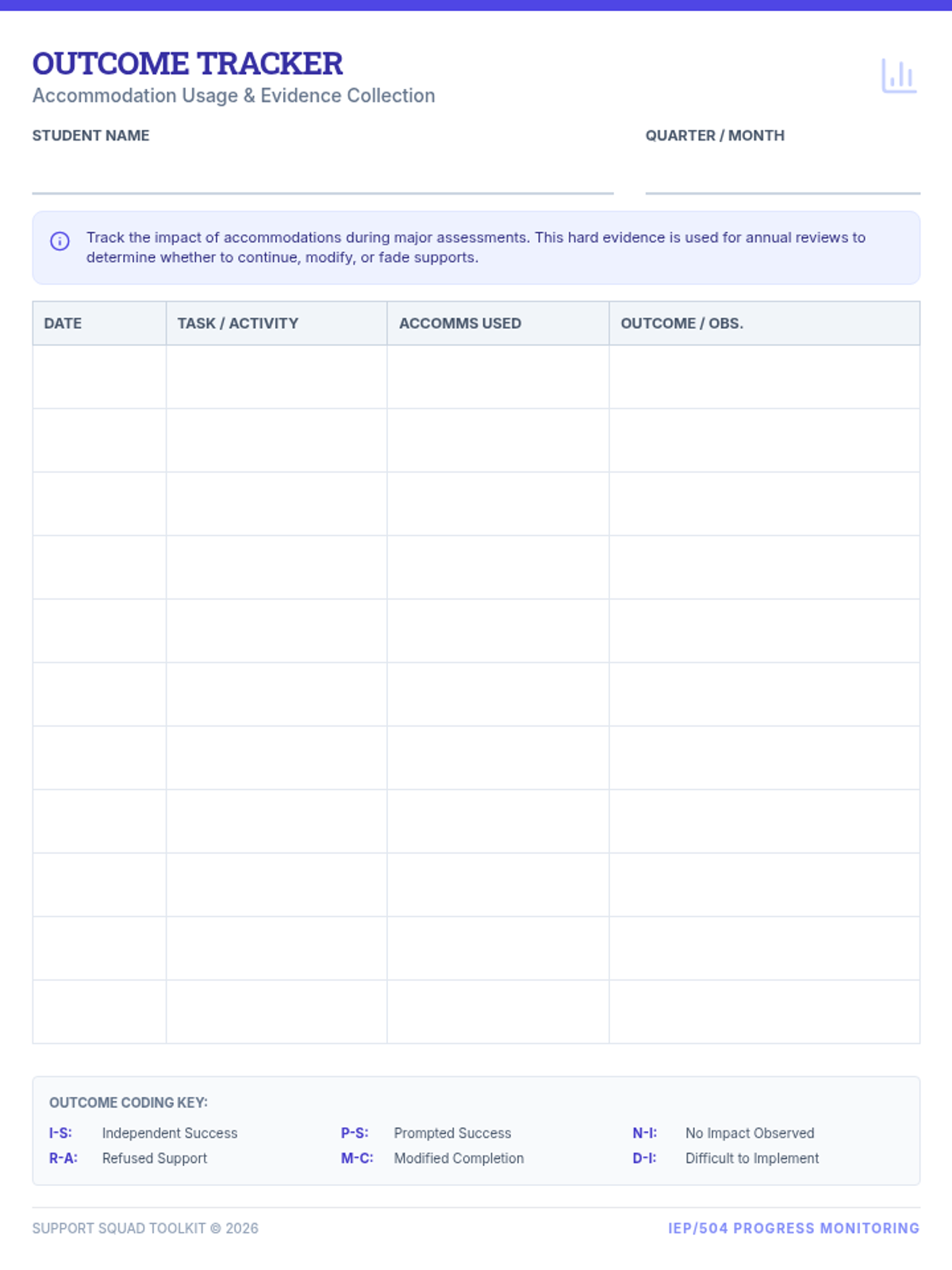
A comprehensive set of tools designed for middle school counselors to streamline communication with teachers regarding student 504 and IEP accommodations. This toolkit focuses on efficiency, clarity, and data-driven decision-making to ensure student success.
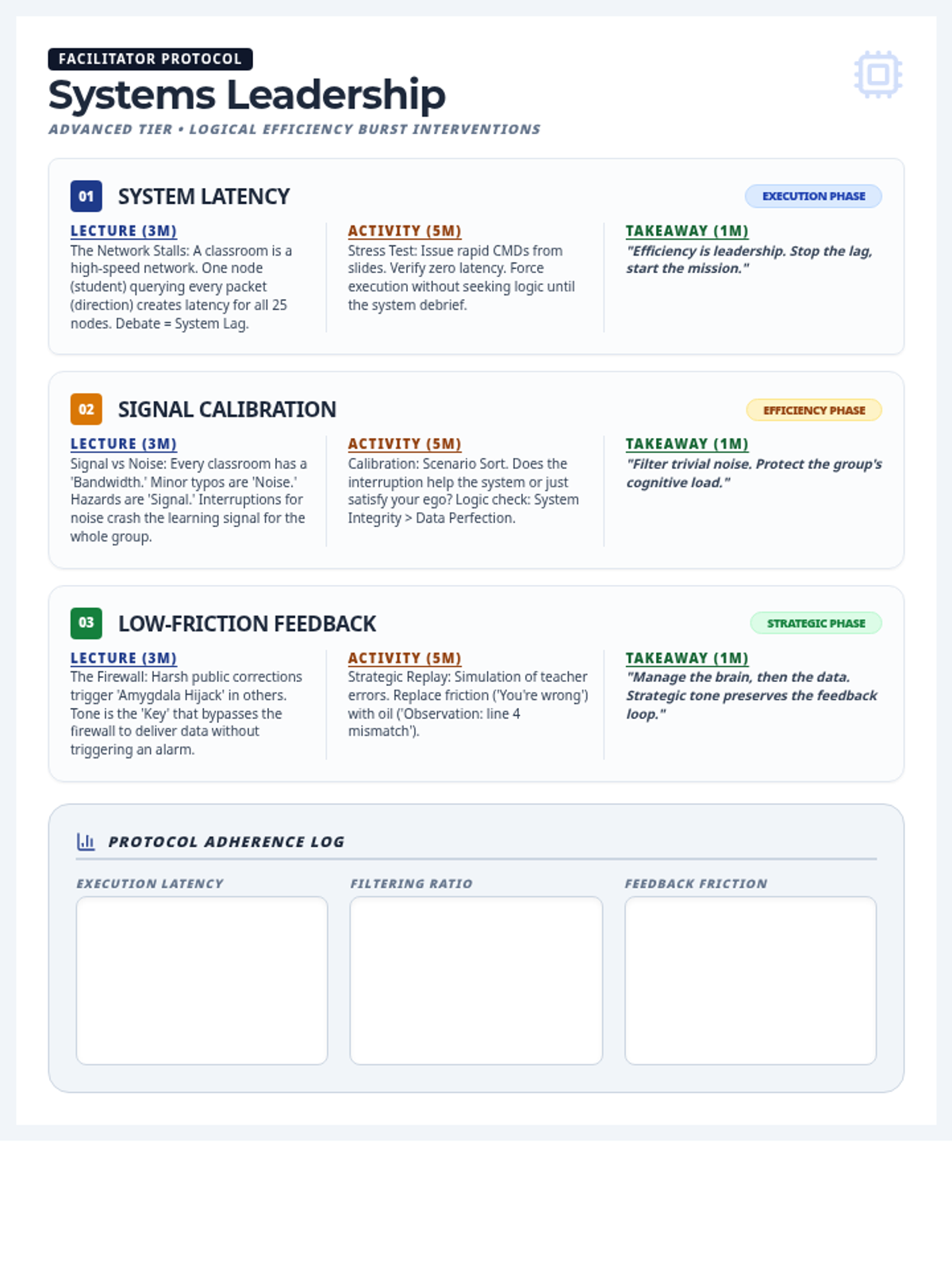
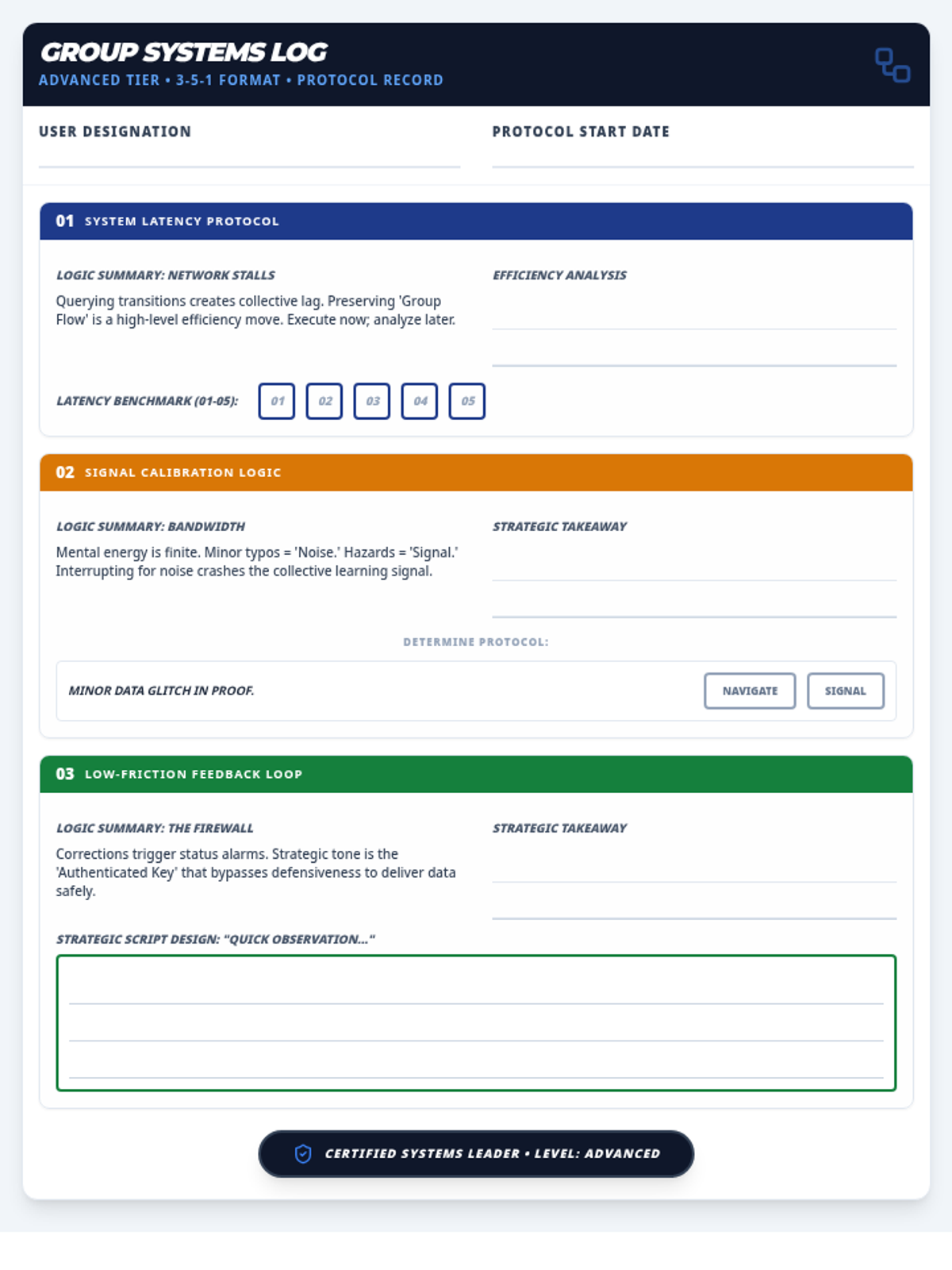
Advanced session on 'Strategic Communication'. Uses social neuroscience to explain how low-friction feedback bypasses defensive firewalls. Structure: 3-5-1 Minutes.
A session on 'Signal-to-Noise' calibration. Teaches students to logically calculate the interrupt cost of minor corrections versus major system failures. Structure: 3-5-1 Minutes.
A high-level session on minimizing 'Group Latency'. Framing following directions as a system efficiency move rather than submission. Structure: 3-5-1 Minutes.
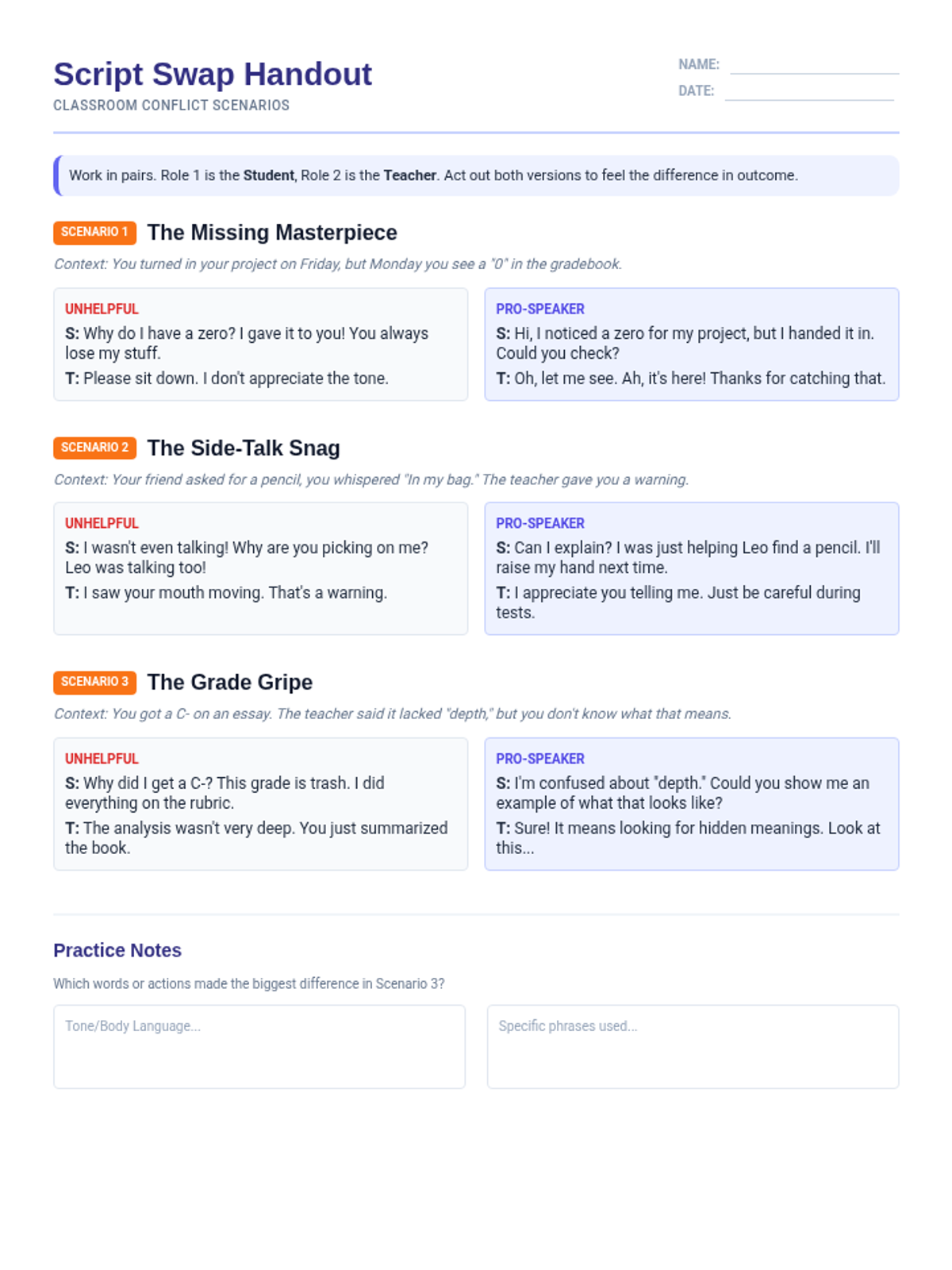
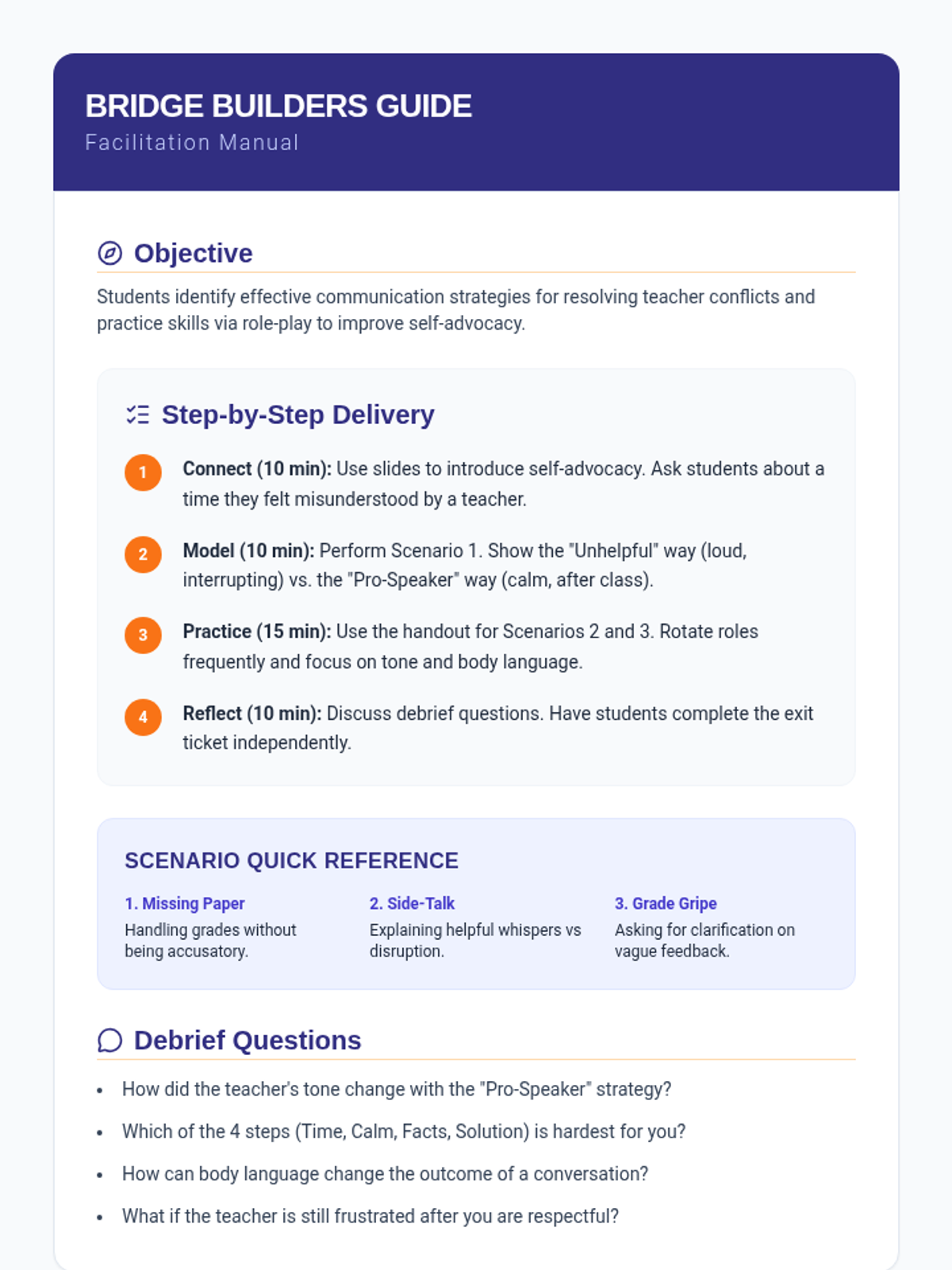
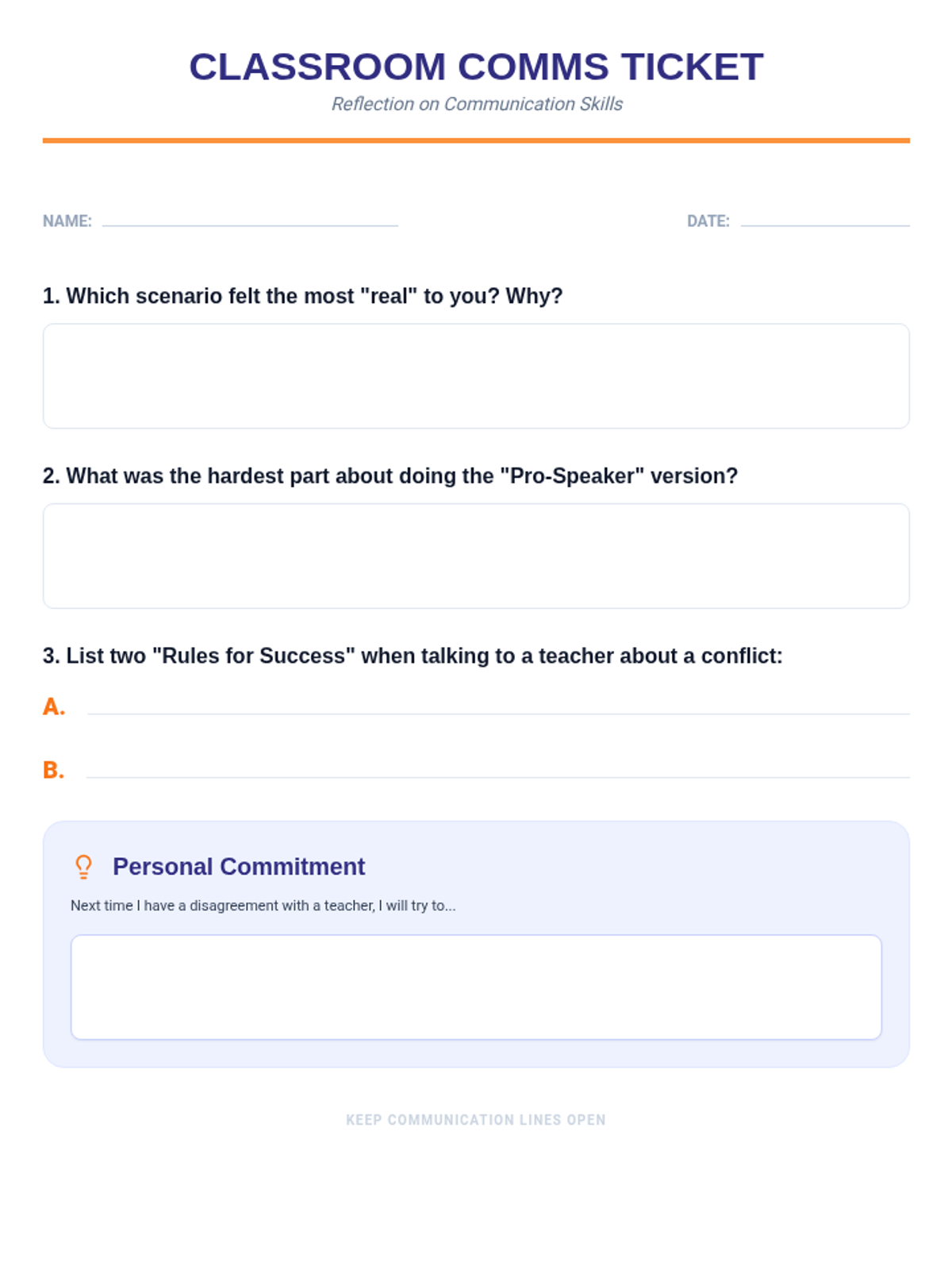
A lesson focused on navigating conflicts and communication with teachers through role-play and reflective discussion. Students learn to express concerns respectfully and advocate for themselves effectively.
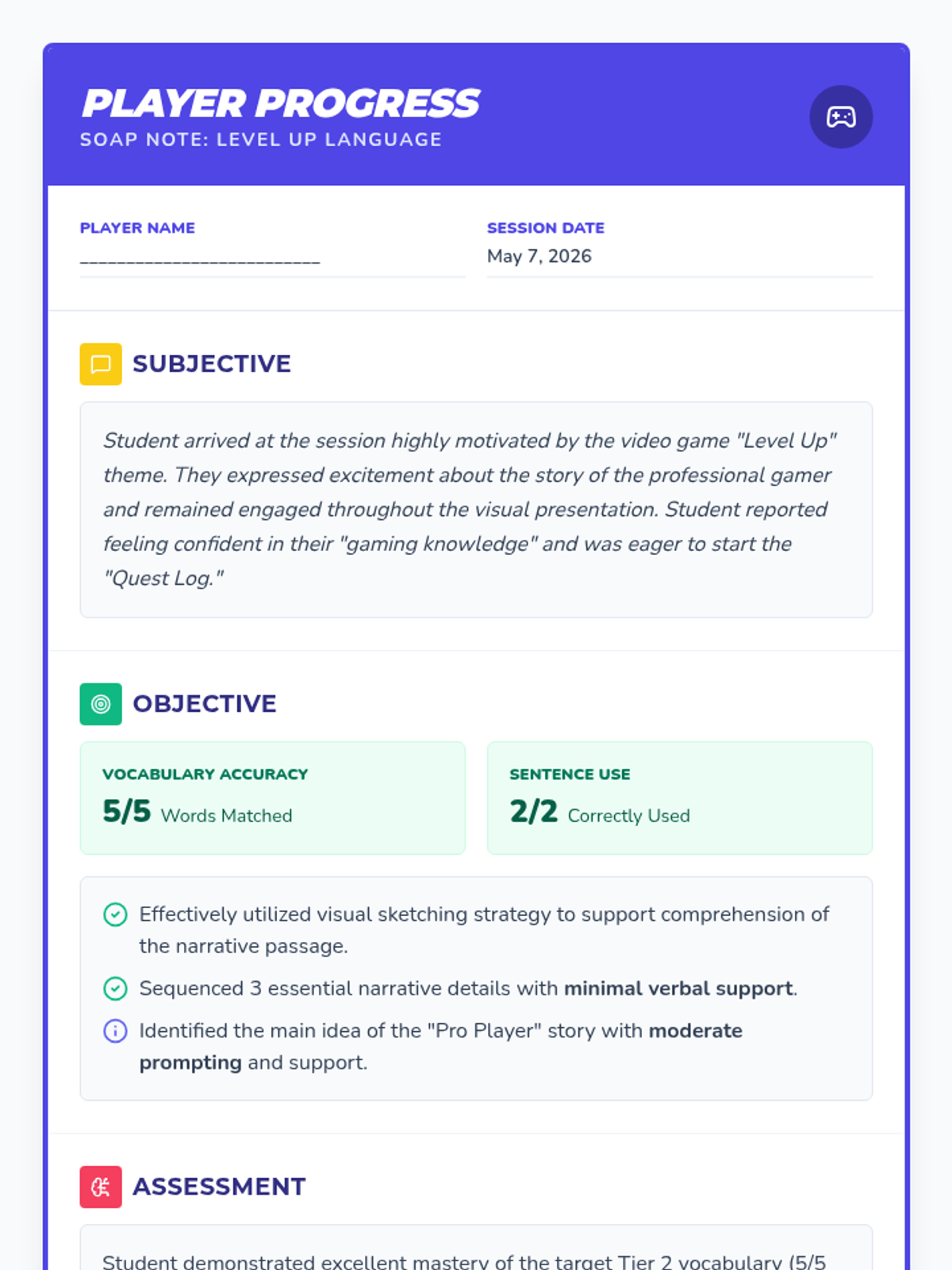
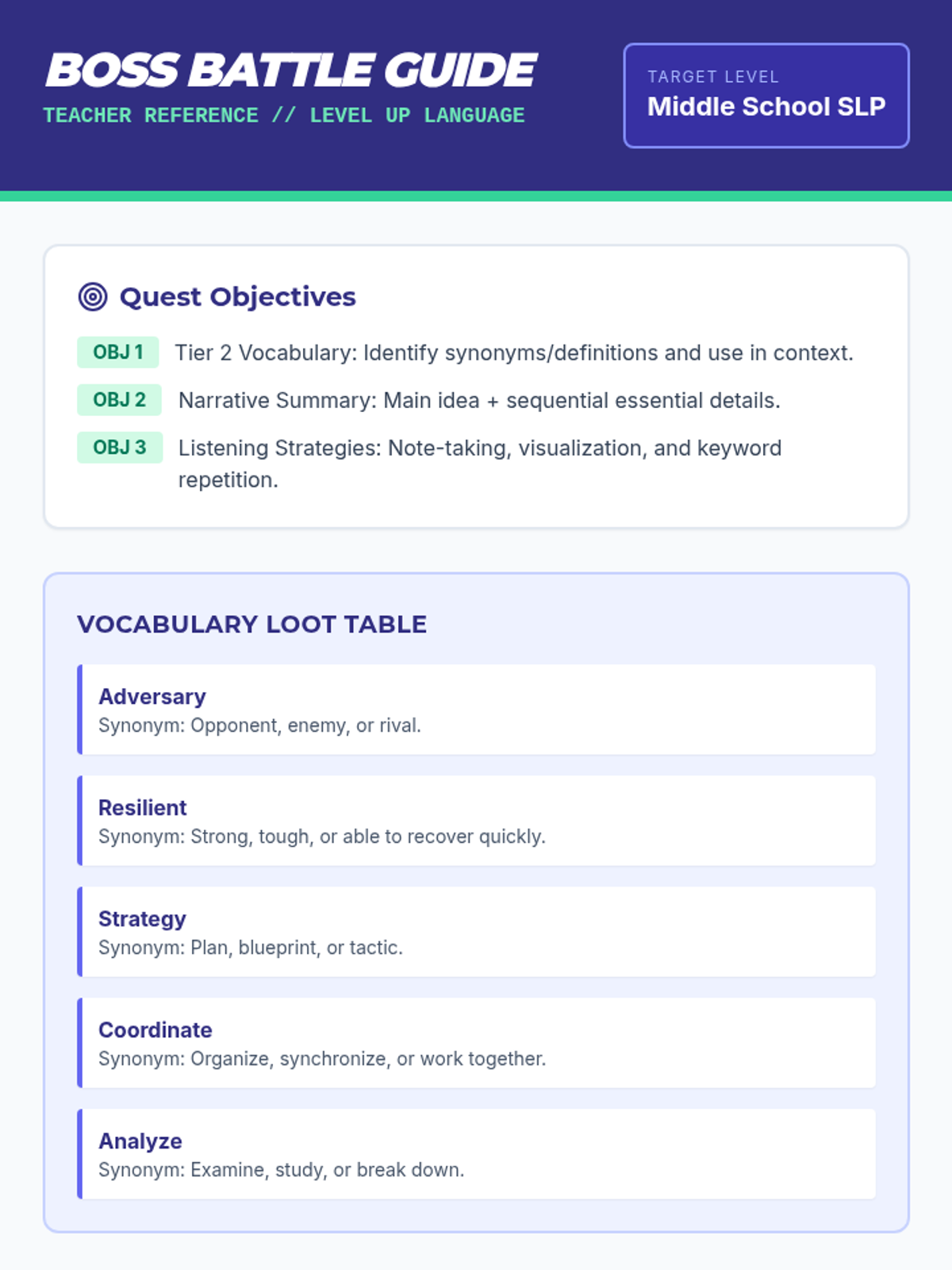
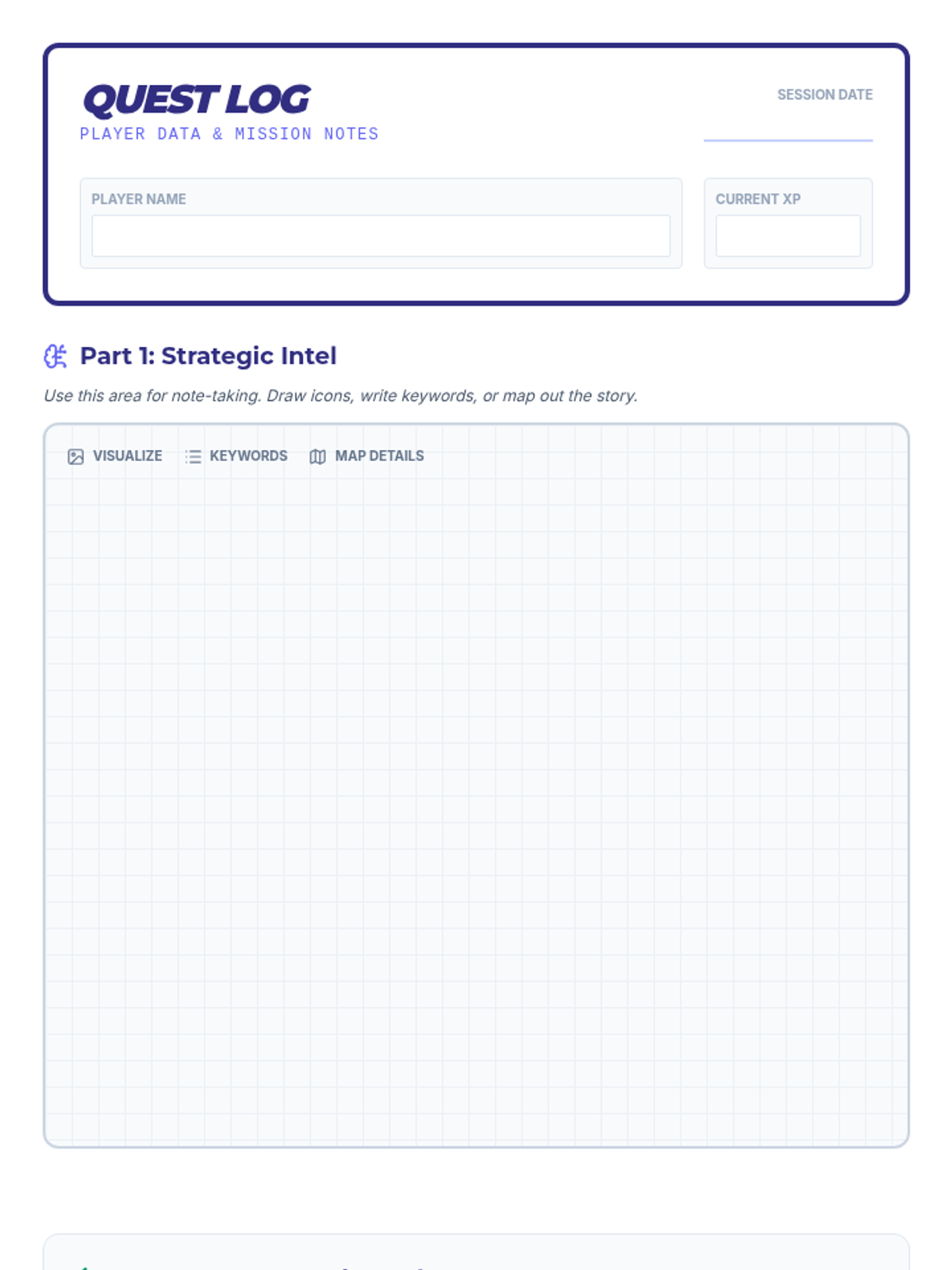
A video game-themed speech-language therapy lesson focusing on Tier 2 vocabulary, listening comprehension strategies, and narrative summarization skills through the story of a professional gamer's rise to the top.
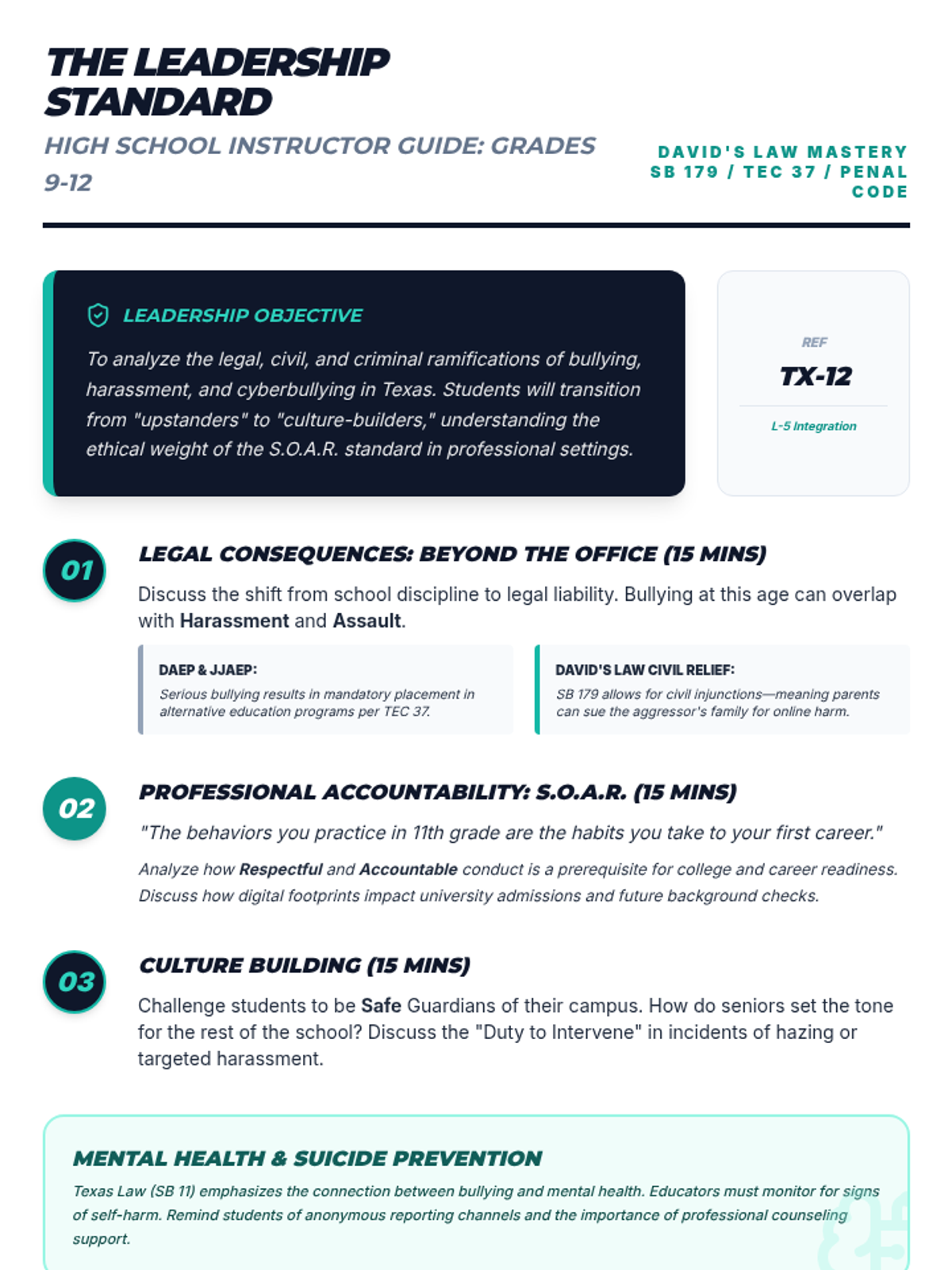
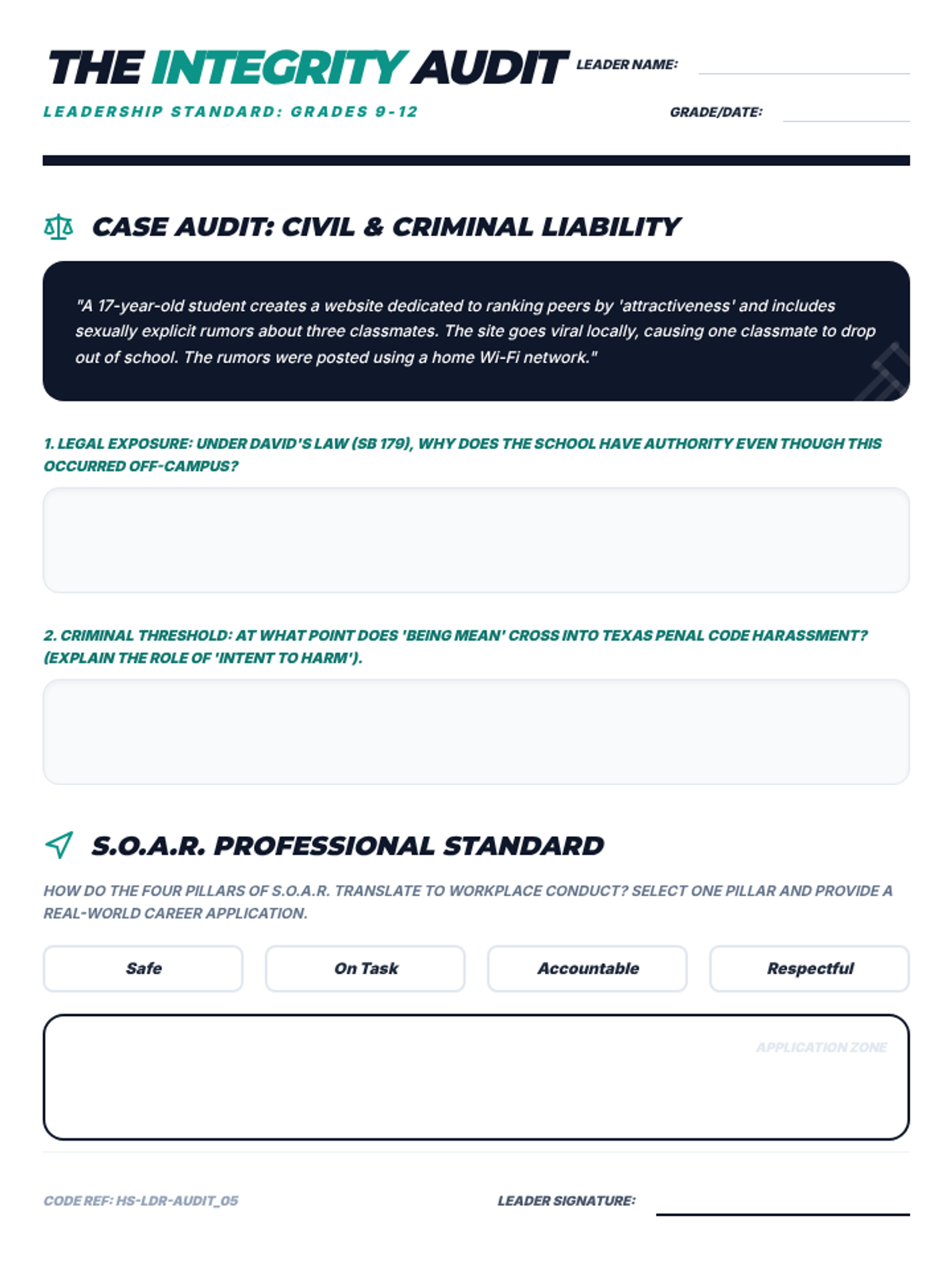
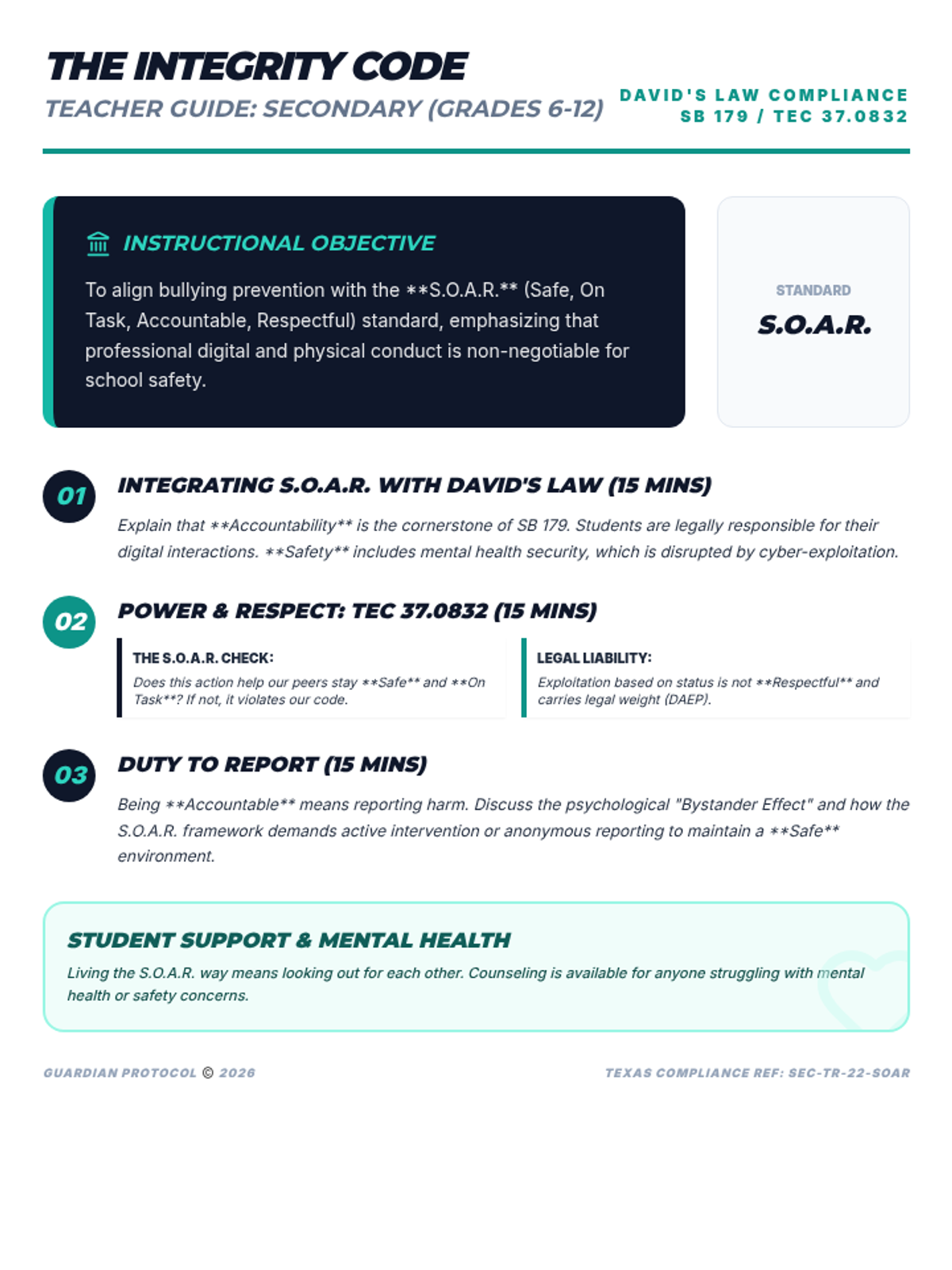
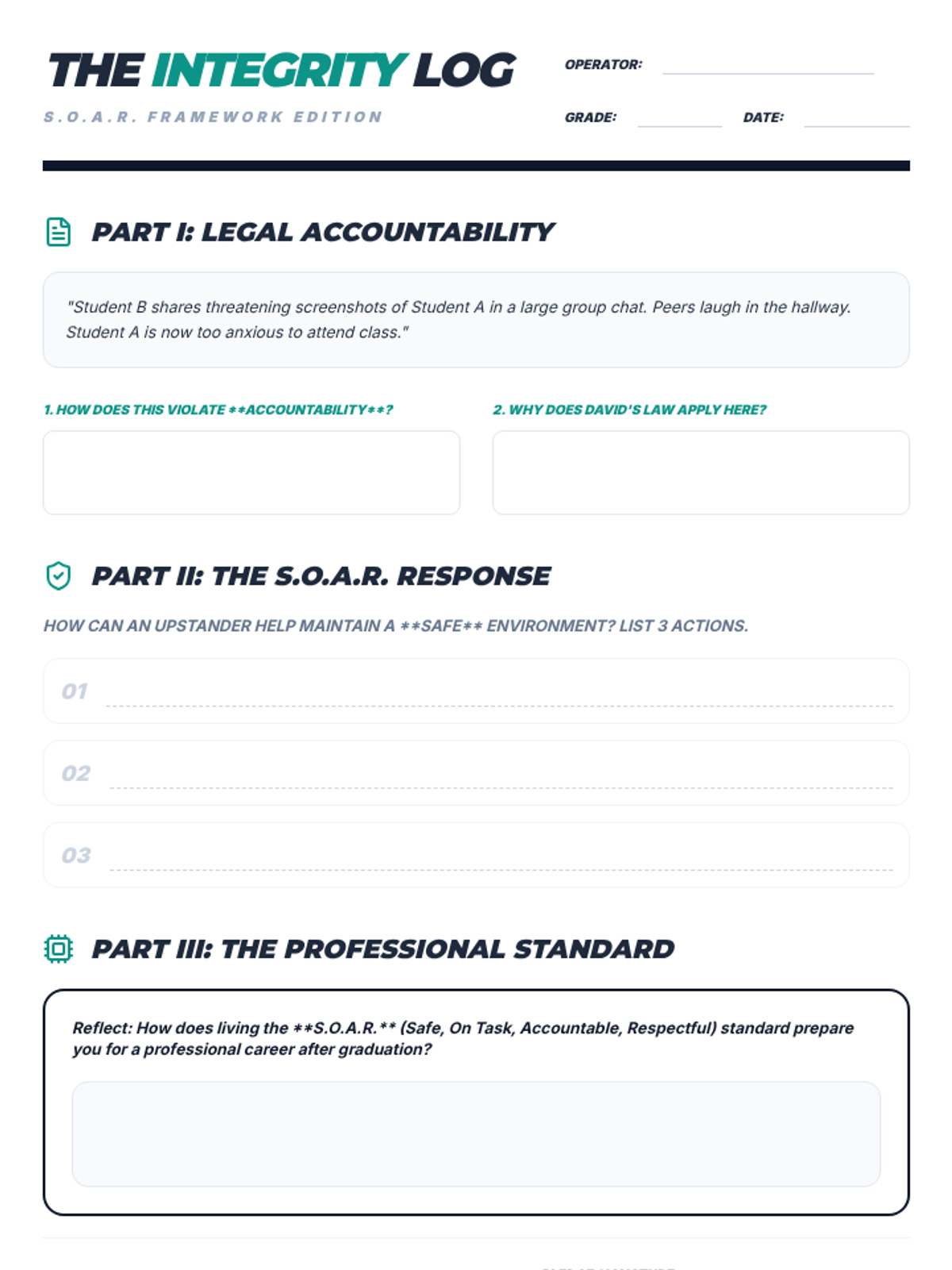
High school leadership focus on legal consequences, mental health advocacy, and creating a school-wide culture of integrity.
Middle school deep-dive into David's Law (SB 179), digital citizenship, and the psychological transition from bystander to upstander.
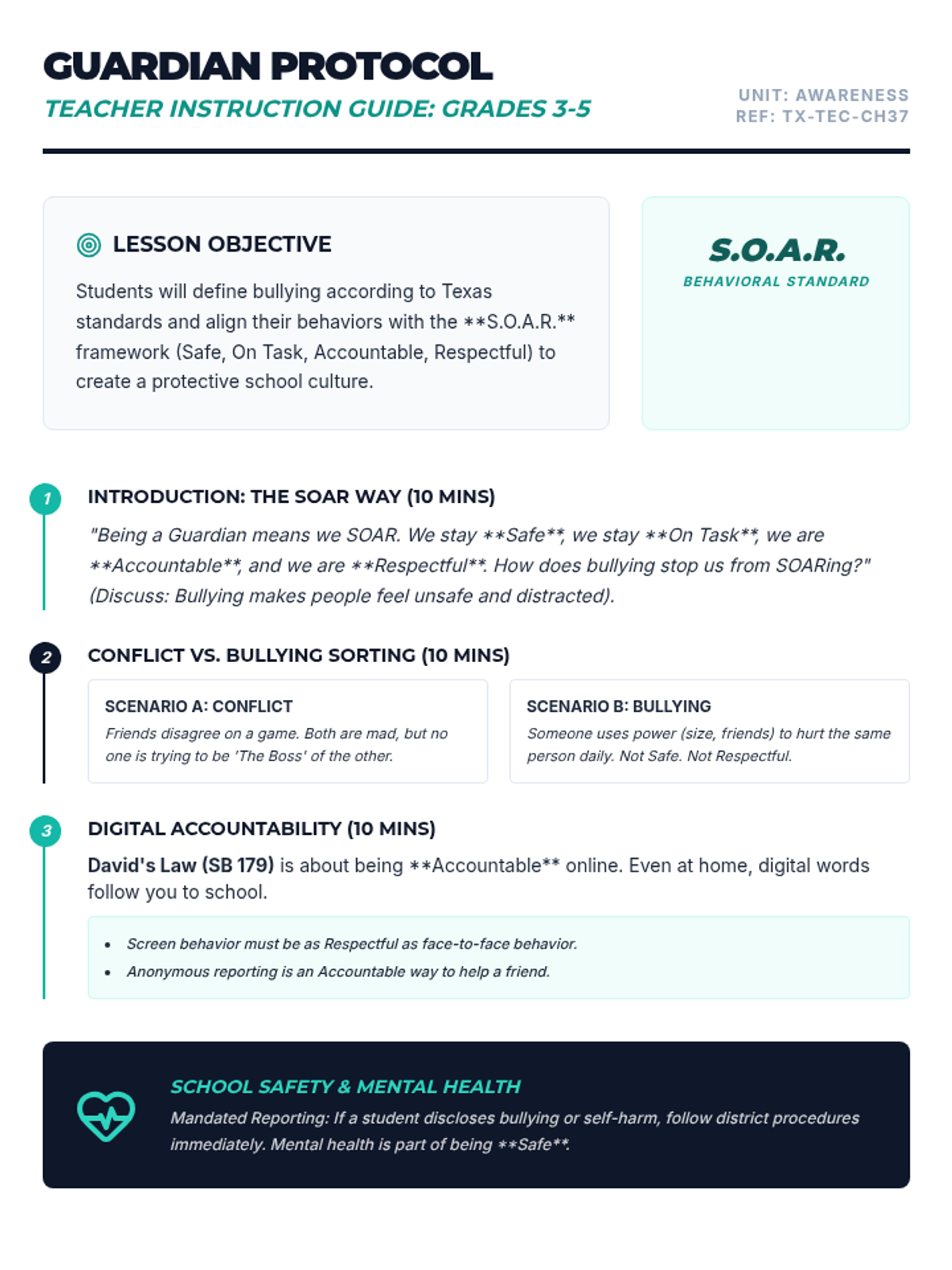
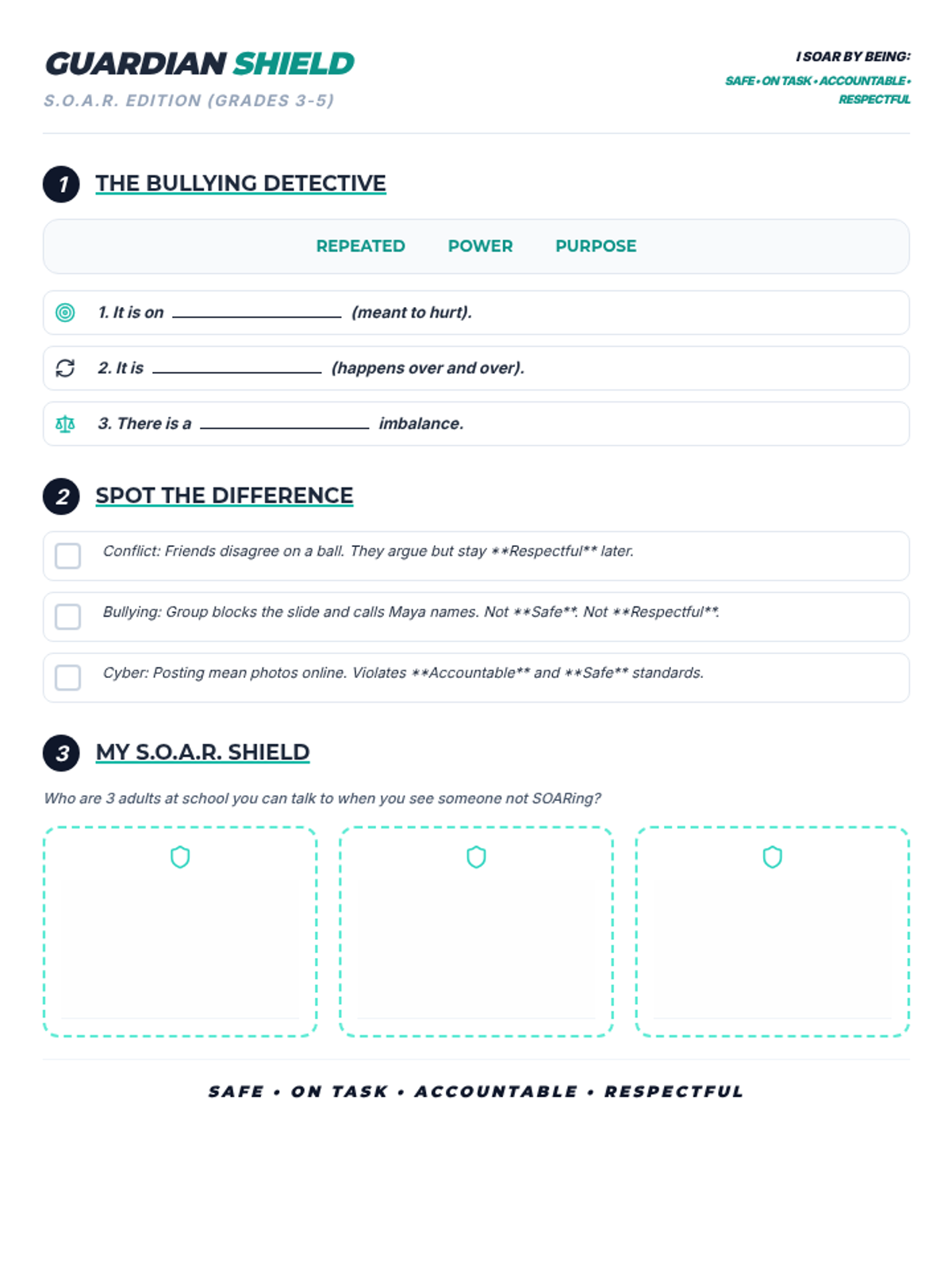
Upper elementary introduction to Texas legal definitions, the power imbalance, and the introduction of cyberbullying awareness.
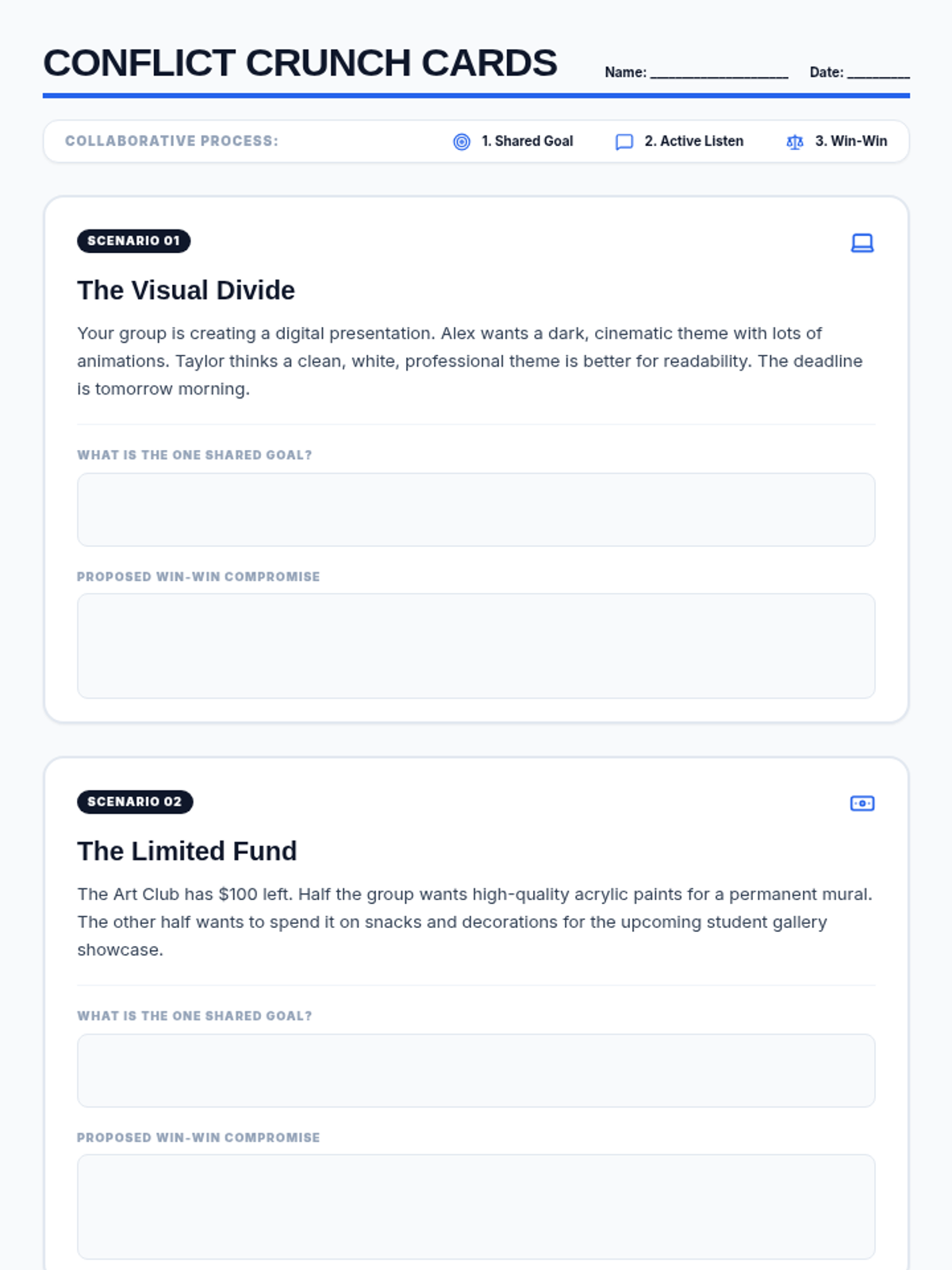
A lesson focused on equipping middle schoolers with constructive communication strategies to resolve everyday conflicts, including group work disagreements, digital drama, boundary issues, and self-advocacy with teachers.
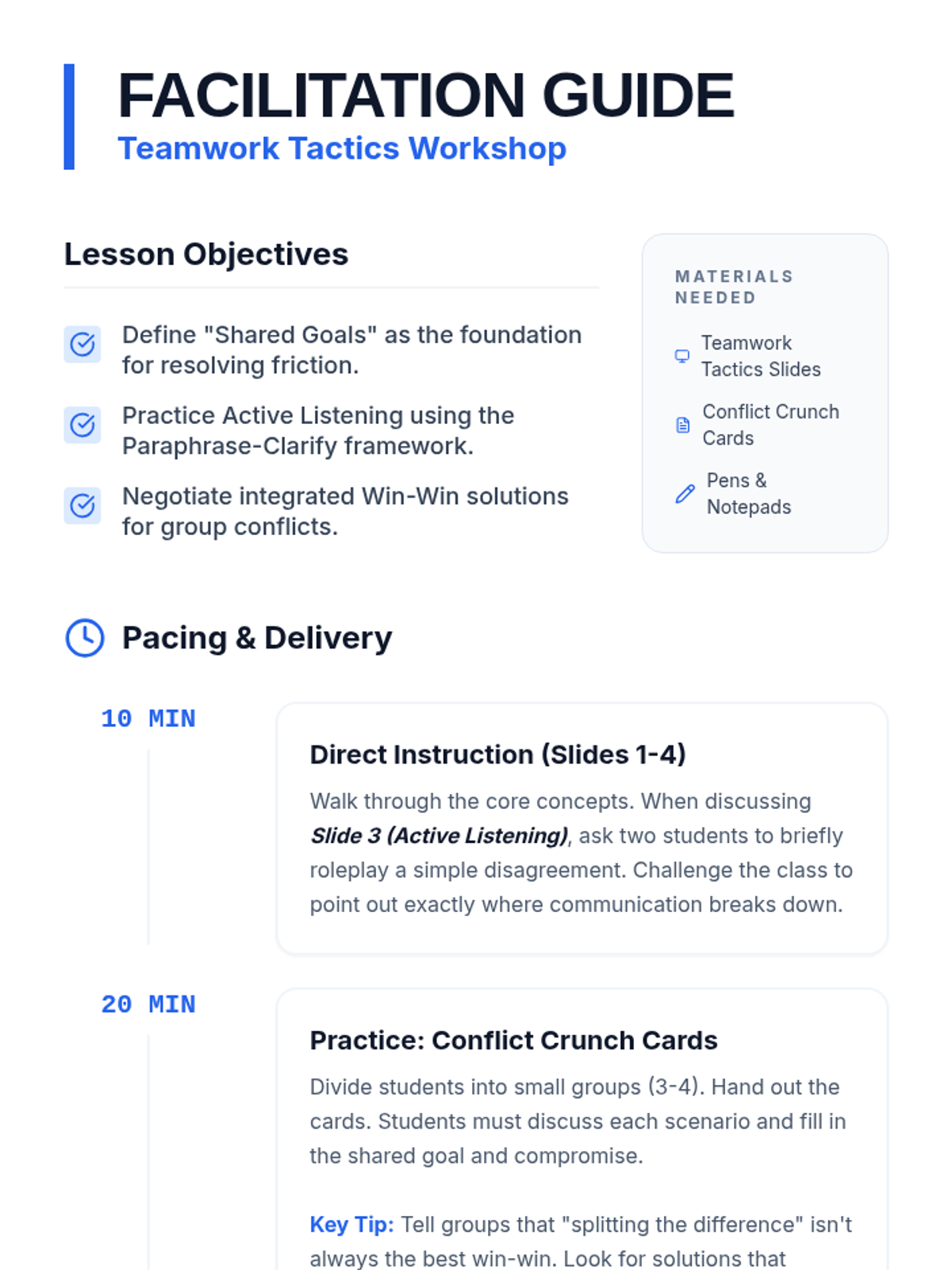
A workshop-style lesson focusing on three essential pillars of group dynamics: active listening, identifying shared goals, and the art of compromise and negotiation.
An investigative slide-based lesson where students analyze multiple "mystery" candidates to discover hidden interview traps and best practices through unfolding case studies.