Active listening, assertive expression, and boundary-setting strategies for interpersonal success. Develops proficiency in conflict mediation, cooperative teamwork, and the cultivation of healthy romantic and platonic connections.
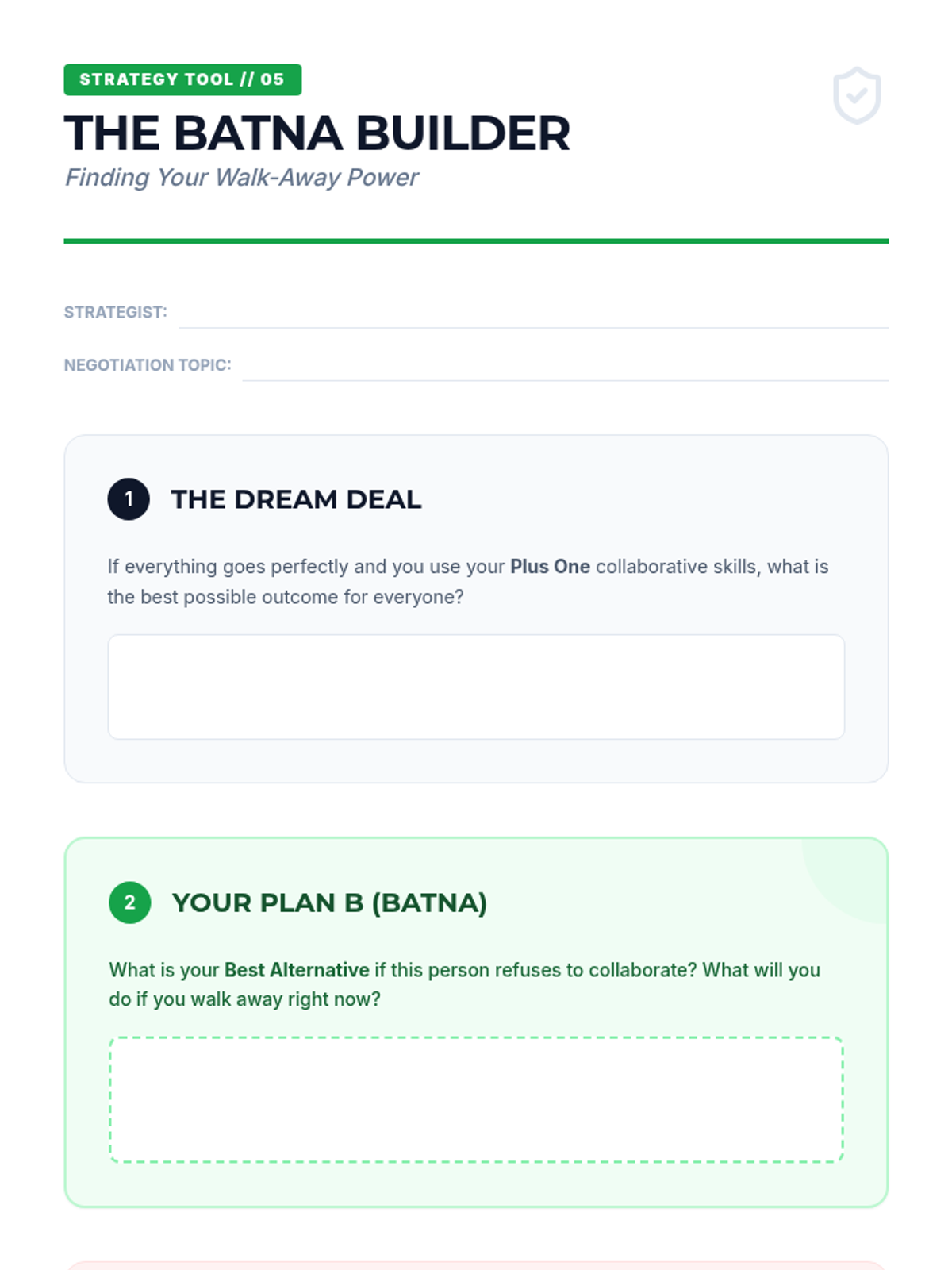
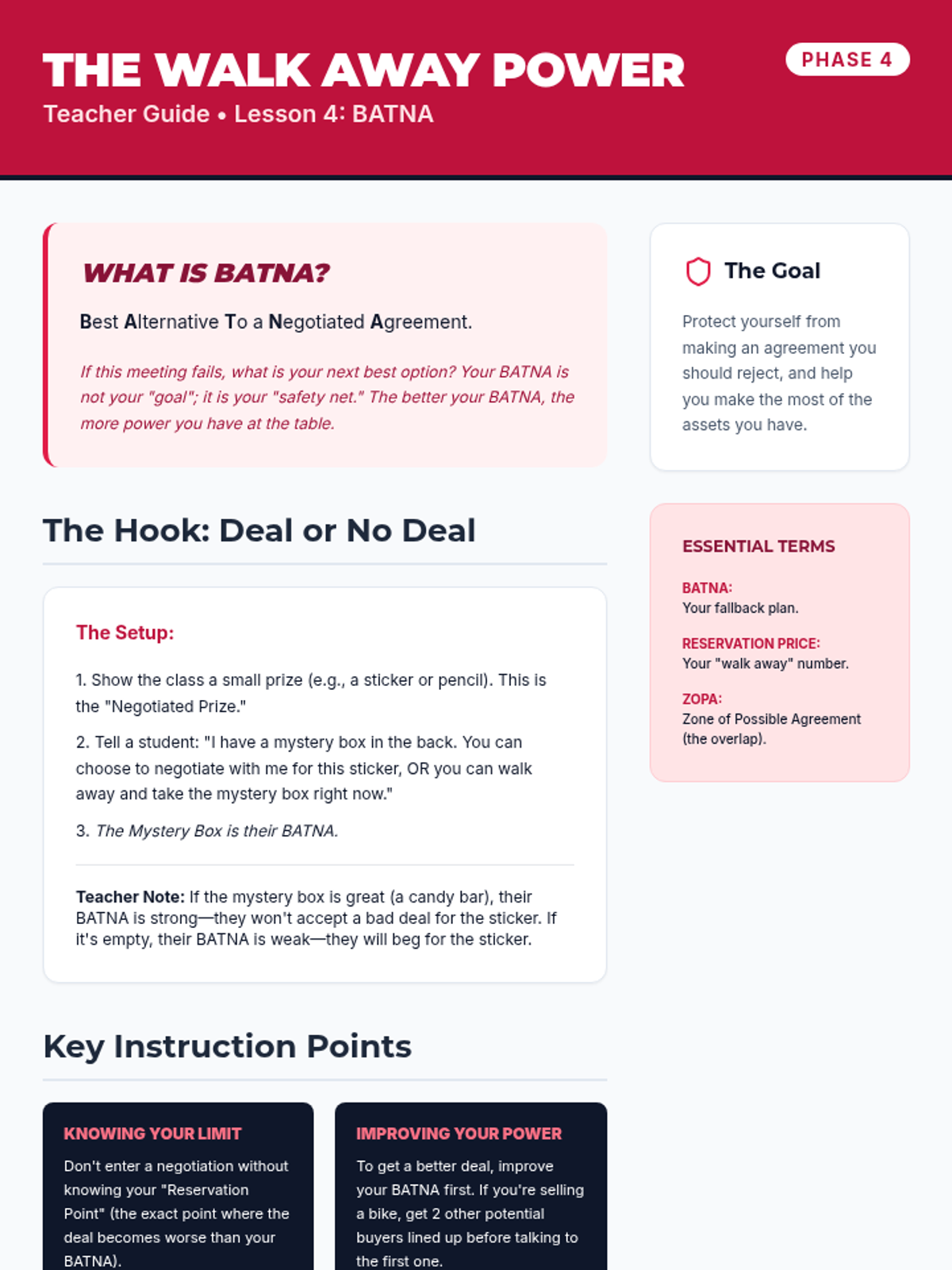
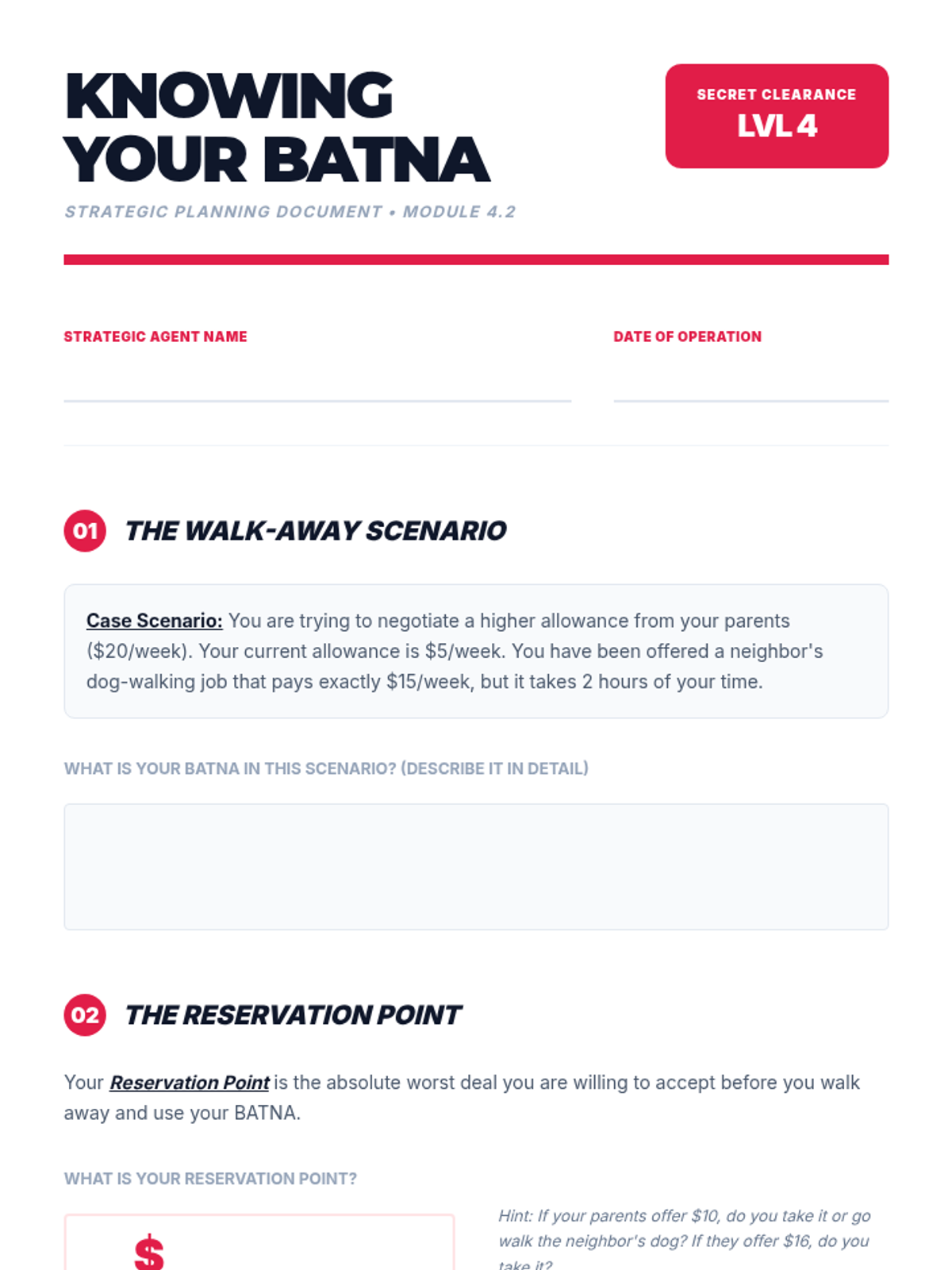
Students learn the concept of BATNA (Best Alternative to a Negotiated Agreement) to understand their 'walk-away' power.
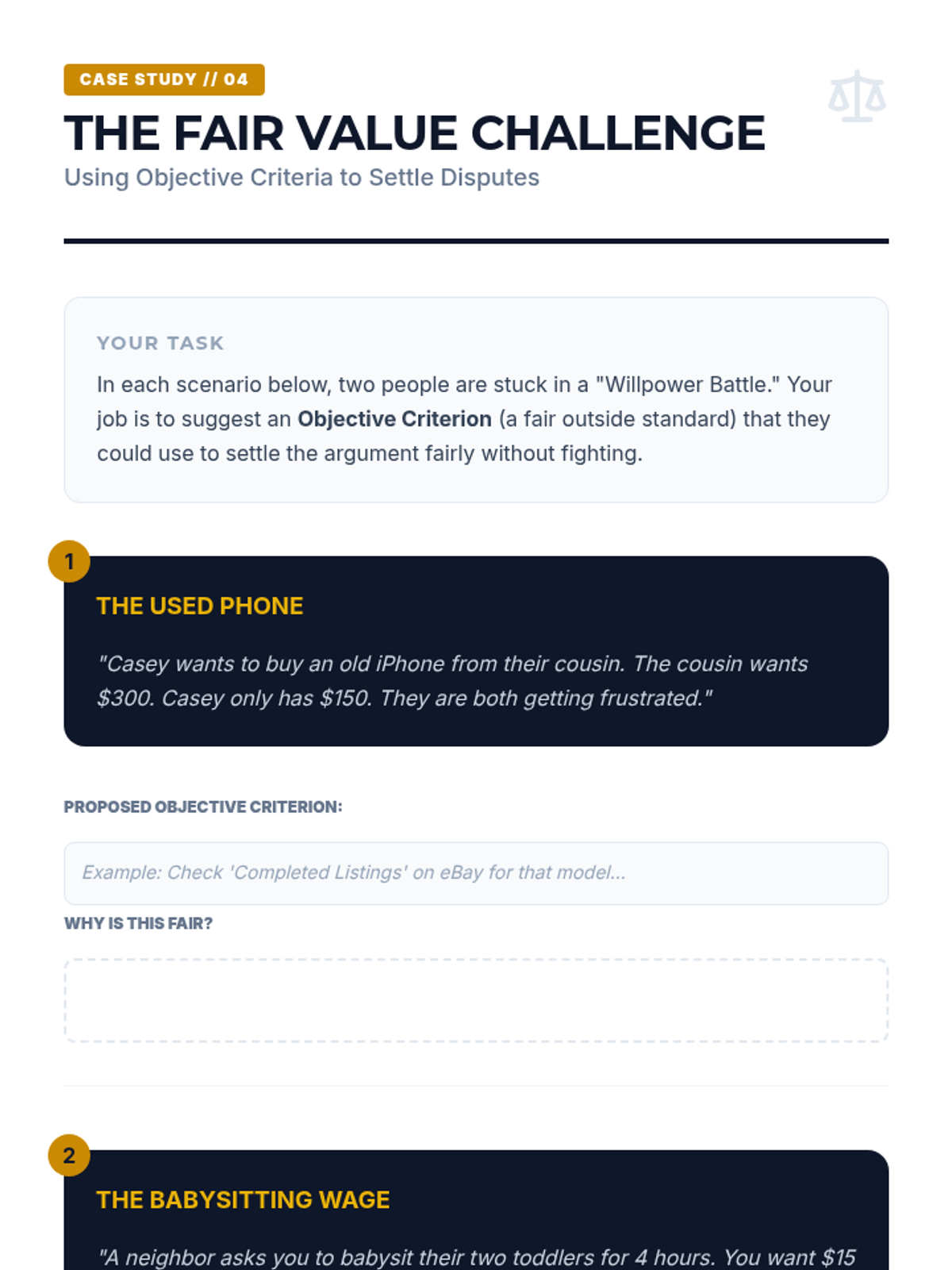
Students learn to use fair standards (rules, precedents, market value) to resolve impasses fairly.
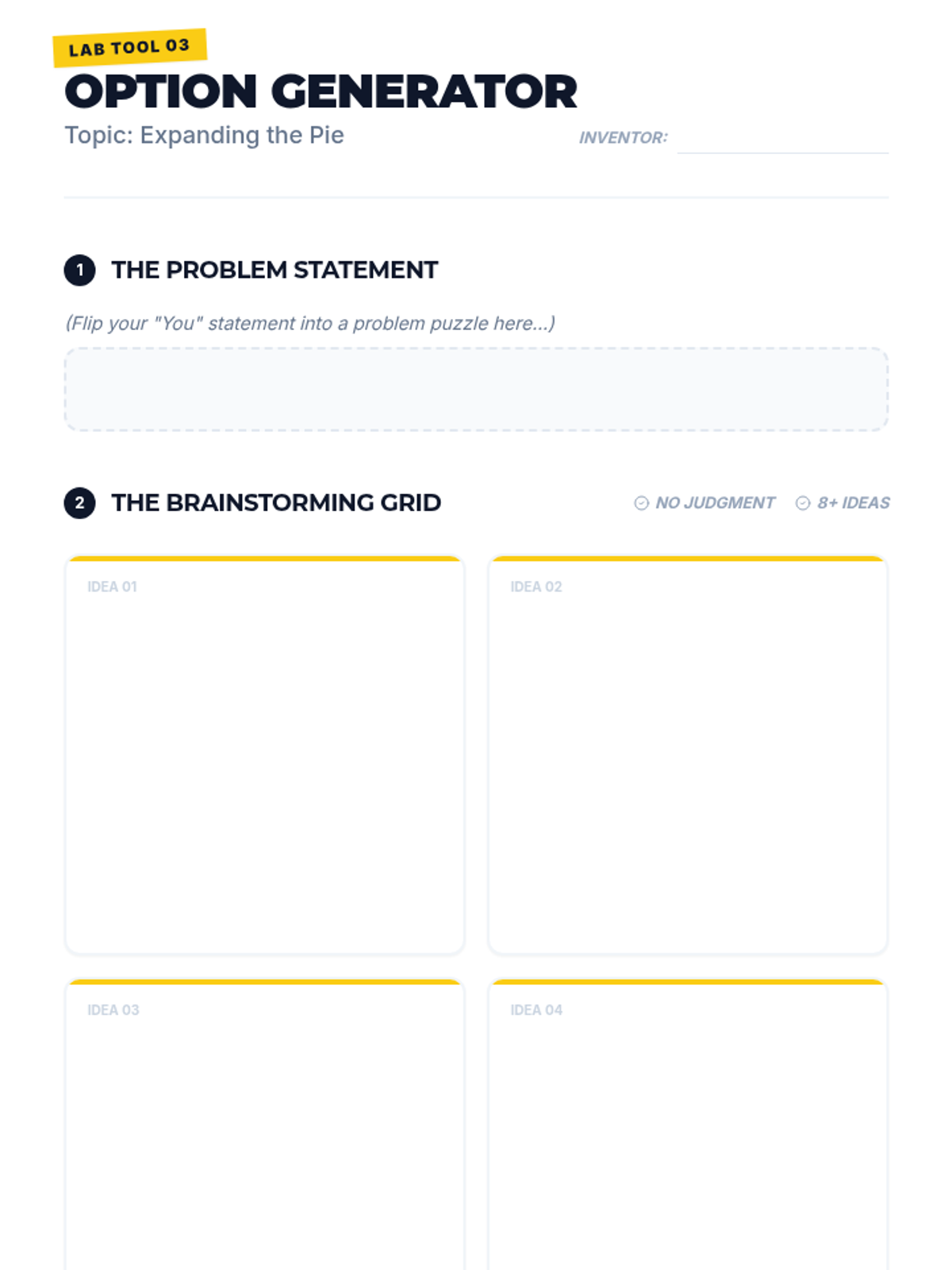
This lesson focuses on the 'invention' phase of negotiation. Students learn to suspend judgment and generate a wide array of potential solutions before deciding on one.
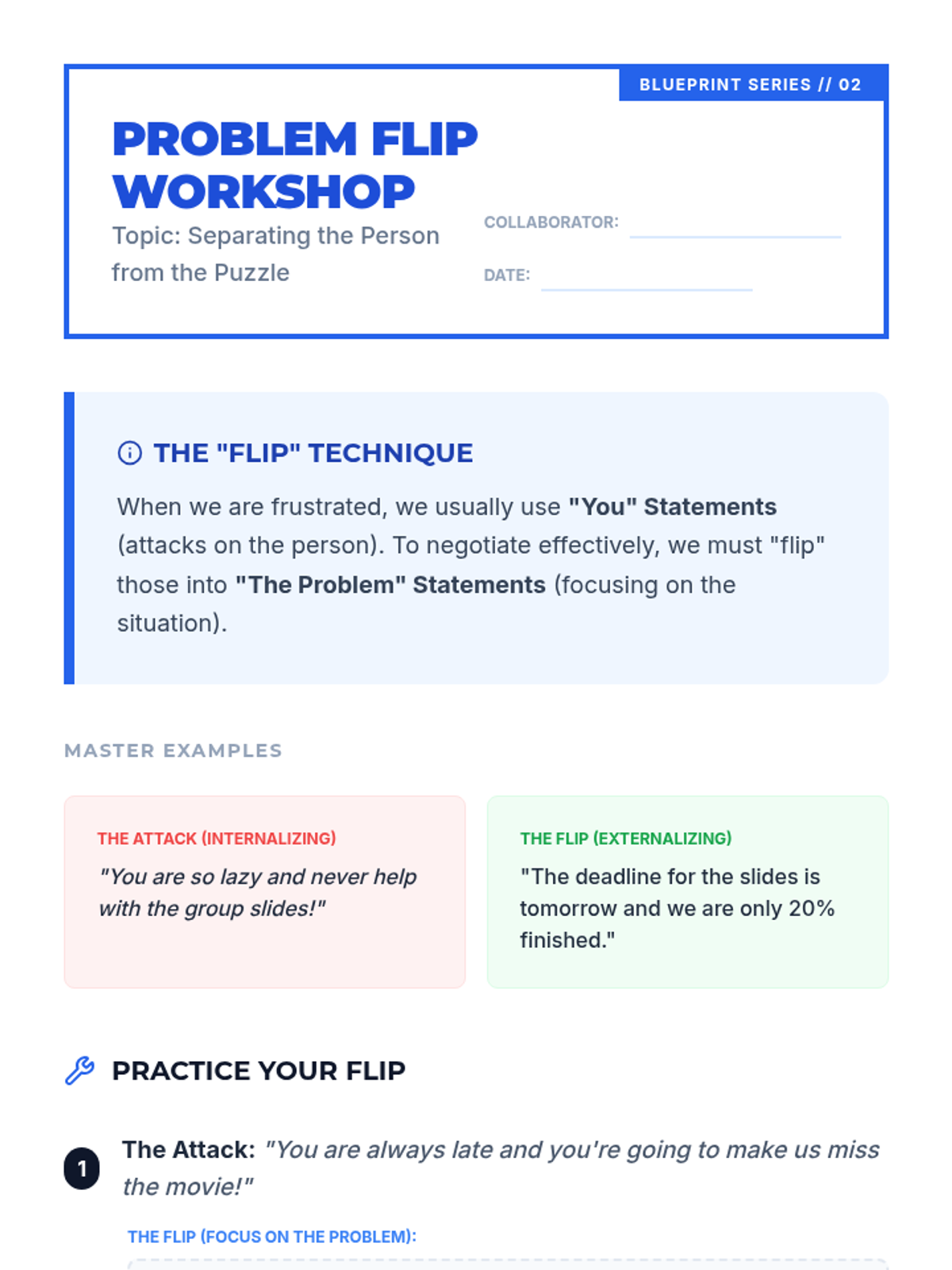
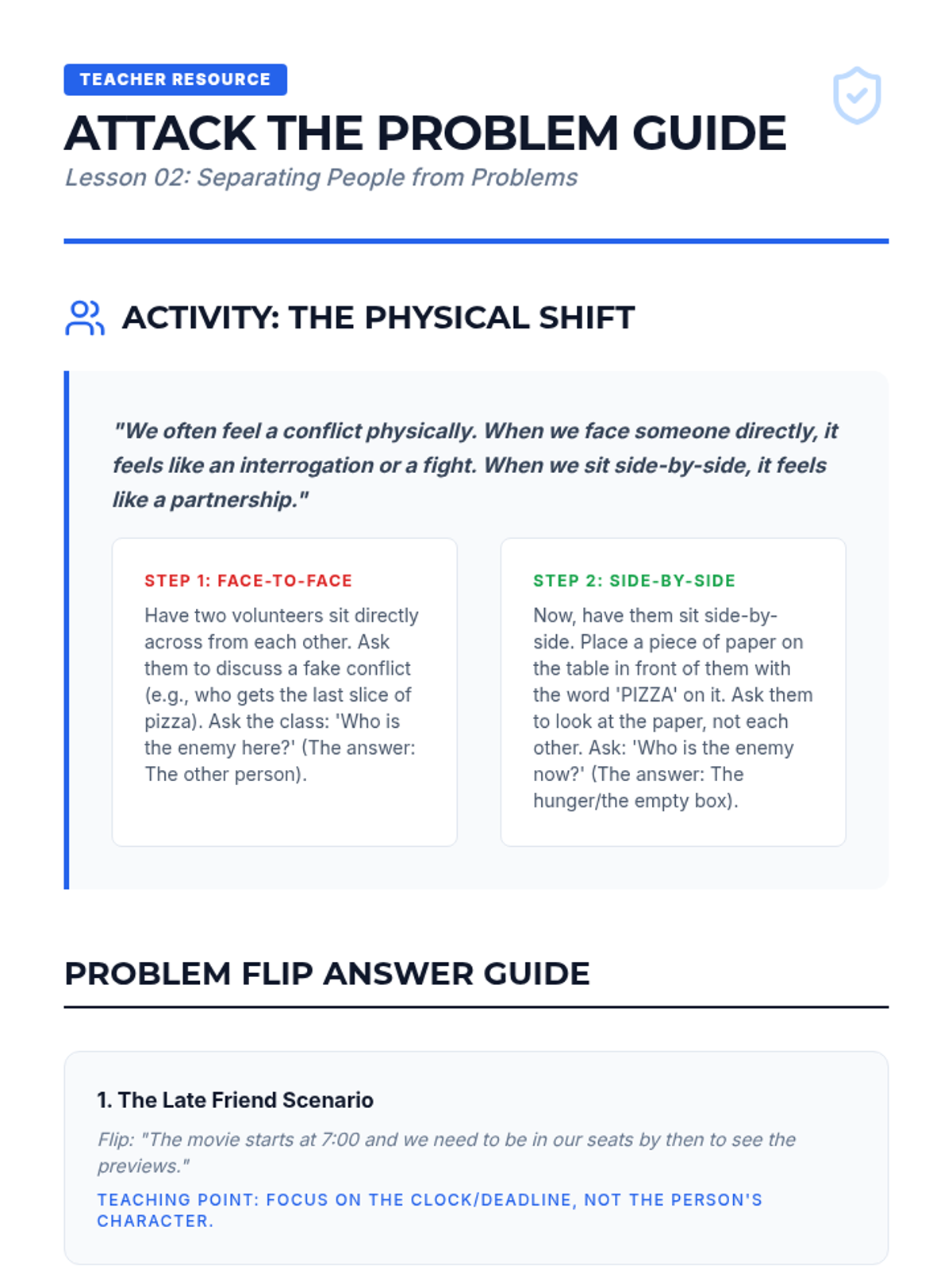
Students learn techniques to attack the problem, not the person. They practice rephrasing personal attacks into problem statements using externalizing language.
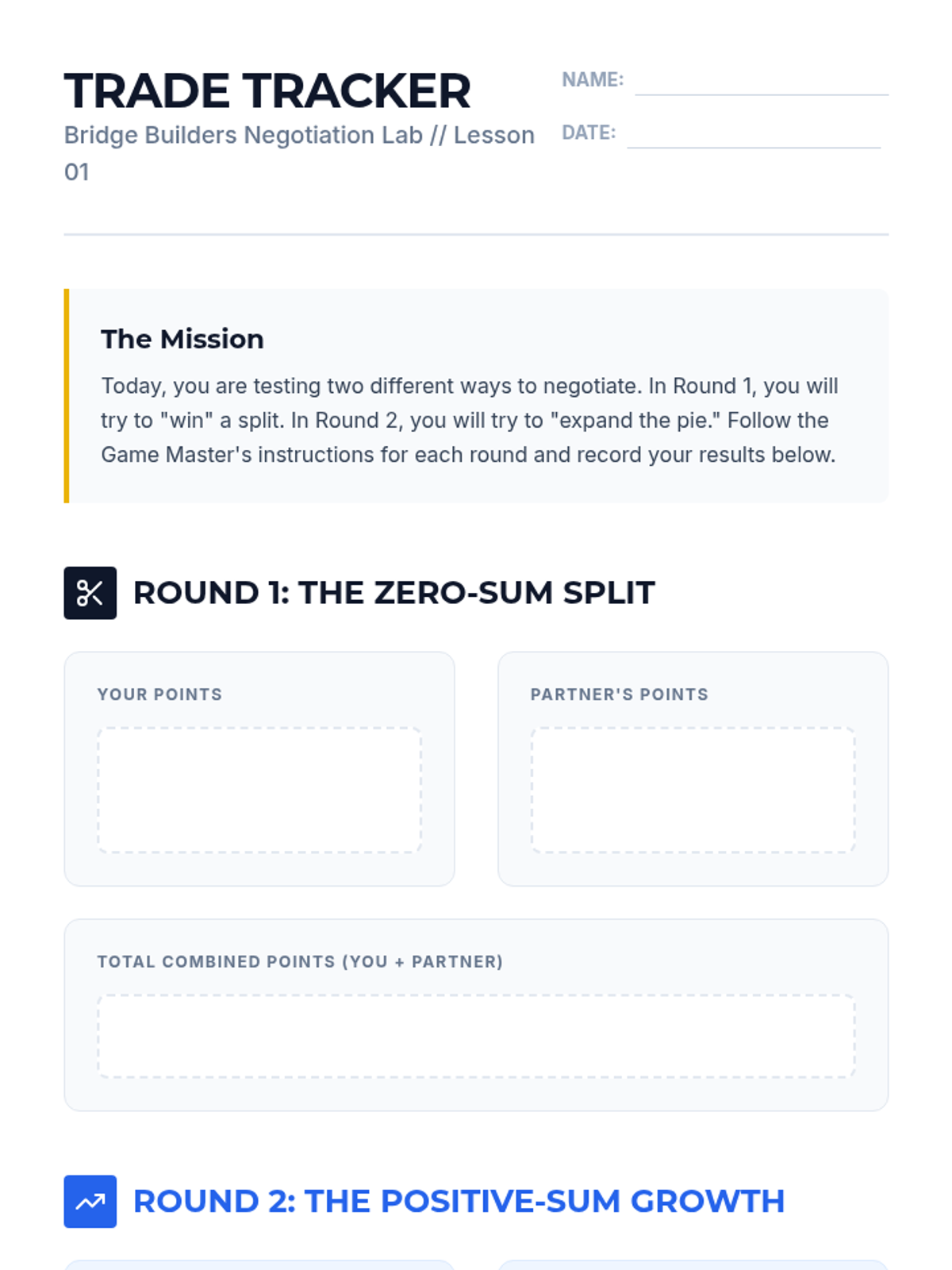
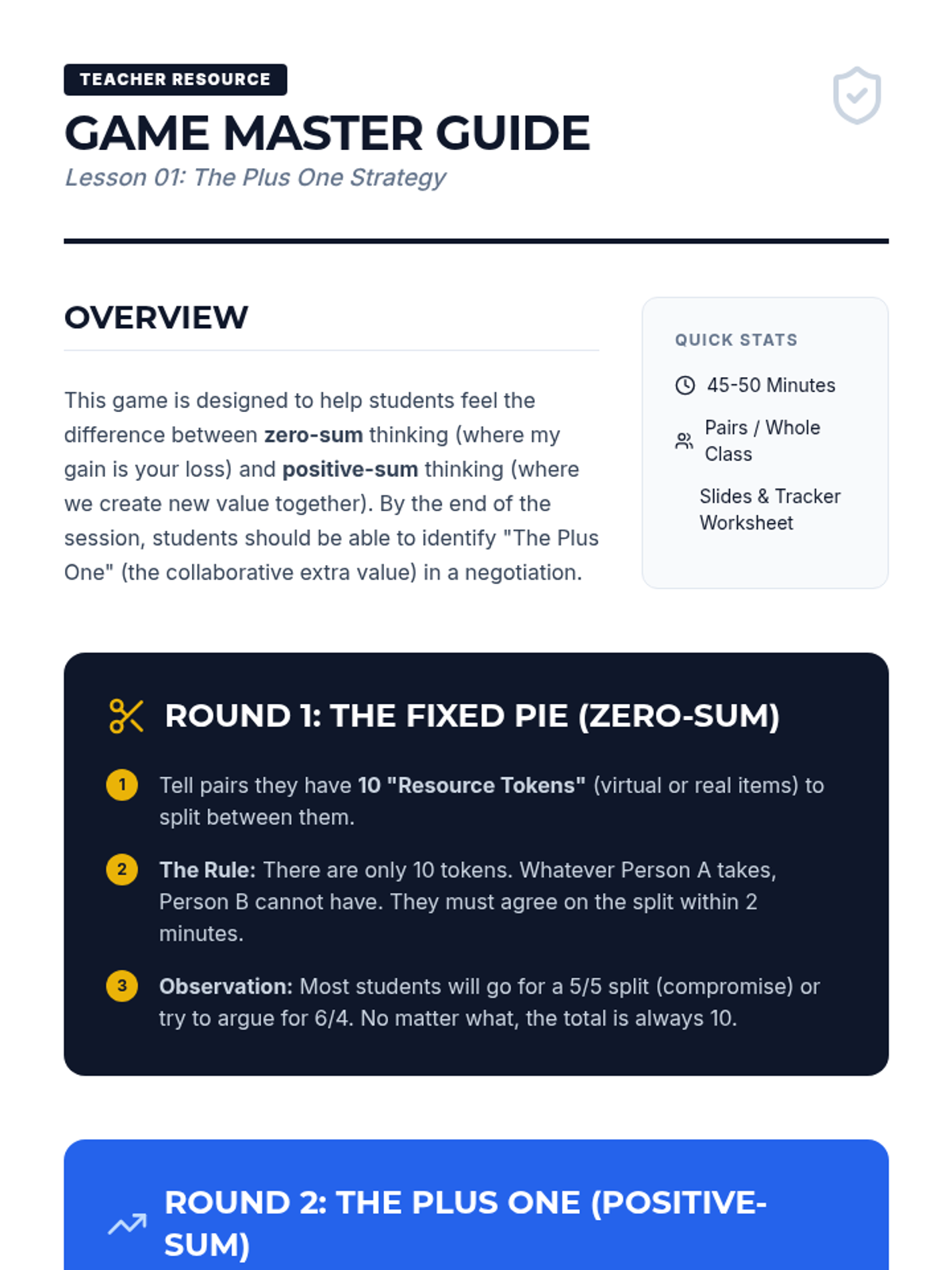
Students define and contrast compromise with collaboration. They engage in a trading game to experience the difference between zero-sum and positive-sum outcomes.
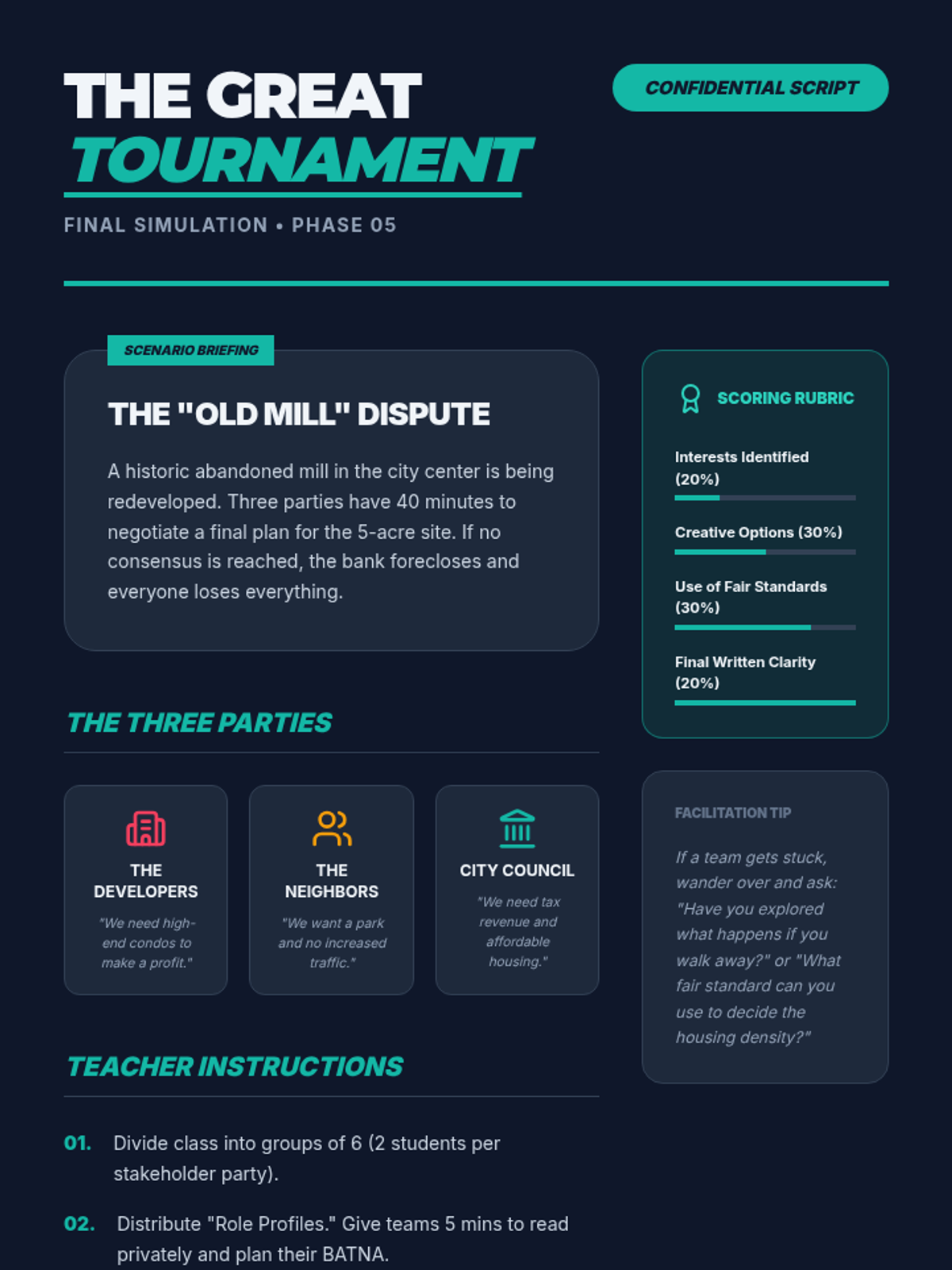
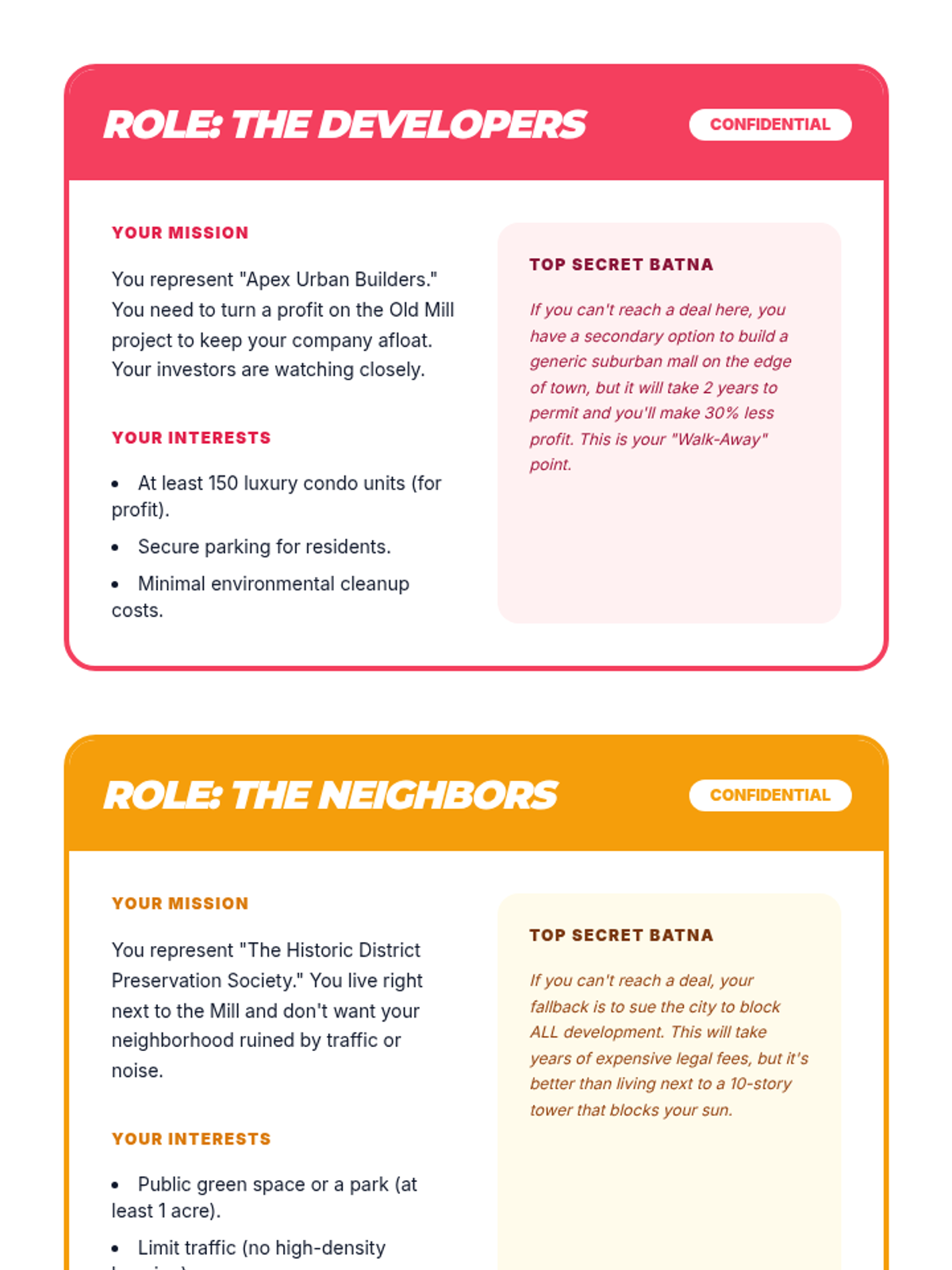
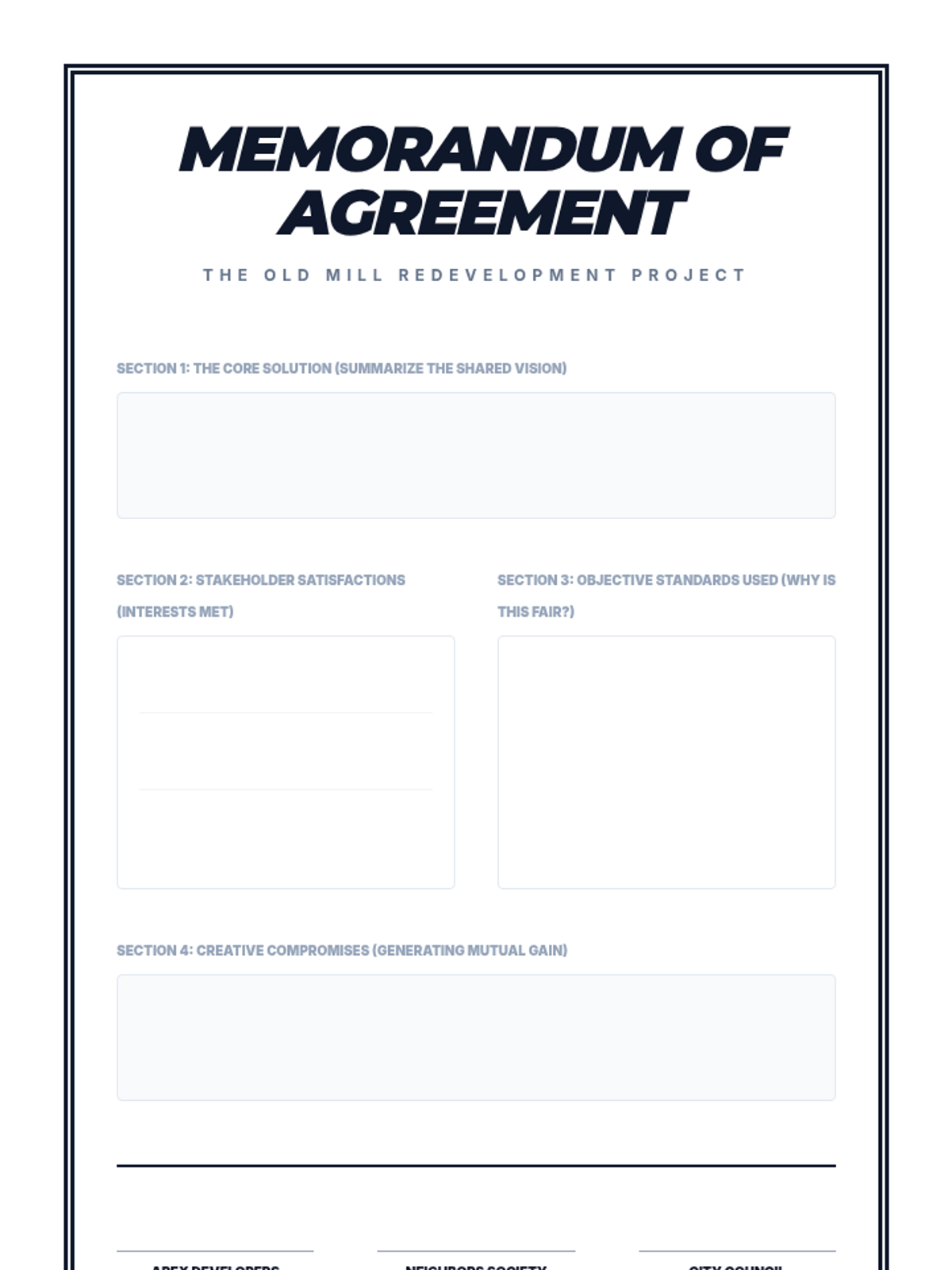
Teams represent different stakeholders in a complex, multi-party simulation. They must draft a written agreement that addresses the interests of all groups, applying all negotiation tools learned (interests, options, criteria, BATNA).
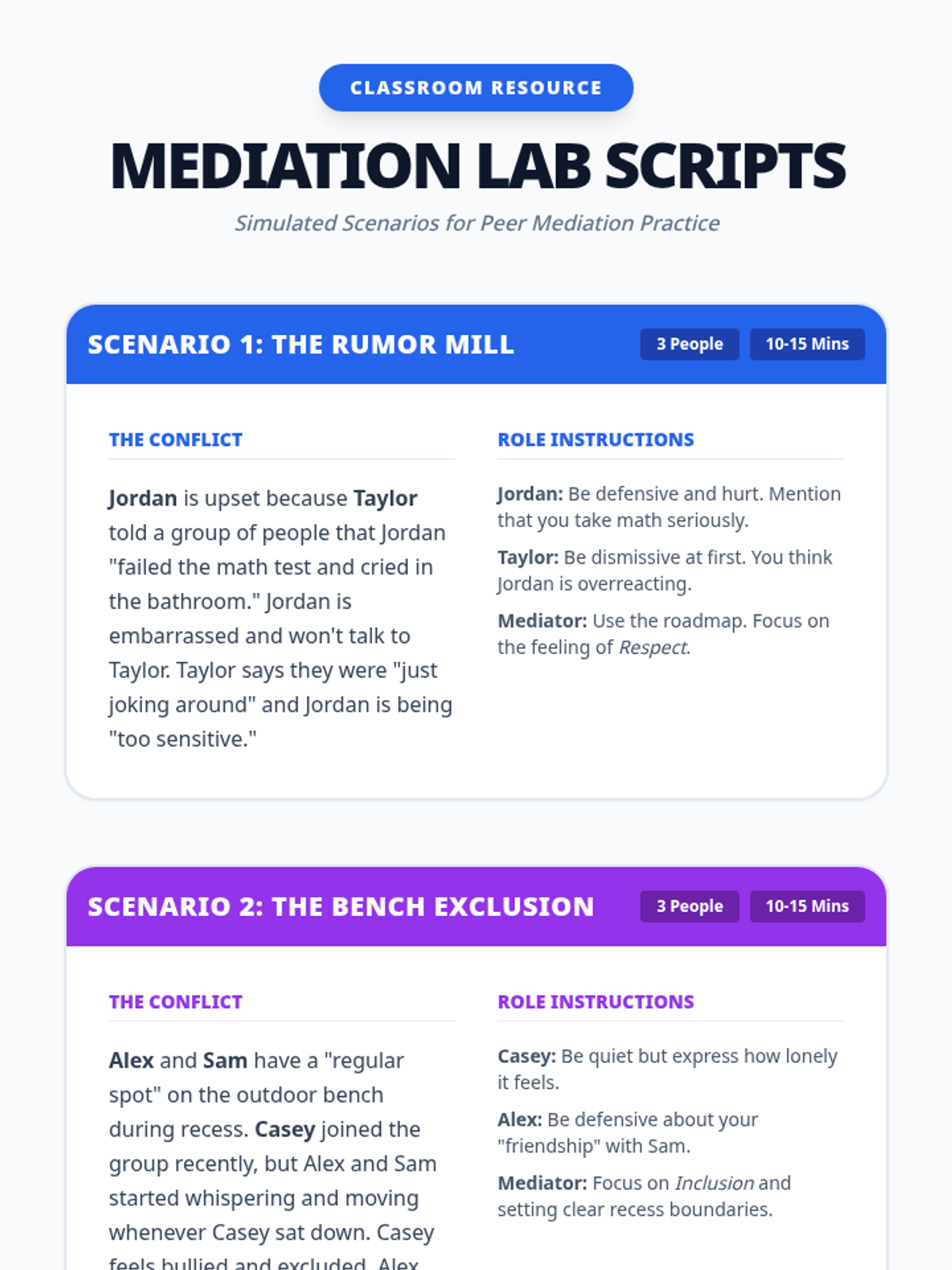
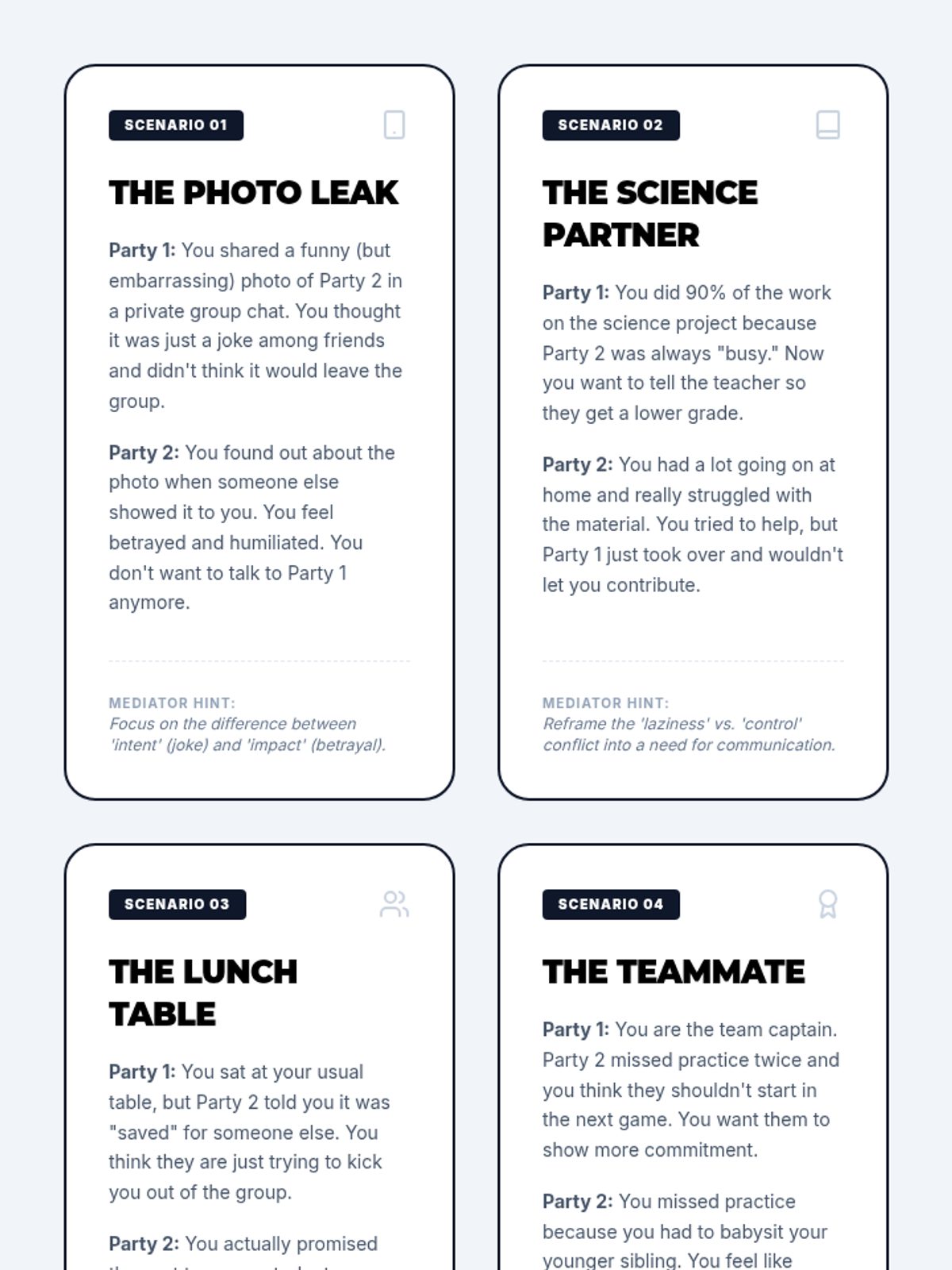
Students engage in full-cycle mock mediations. Groups rotate roles between disputants and mediators, using scripts based on real-life 6th-grade problems (e.g., rumor spreading, exclusion).
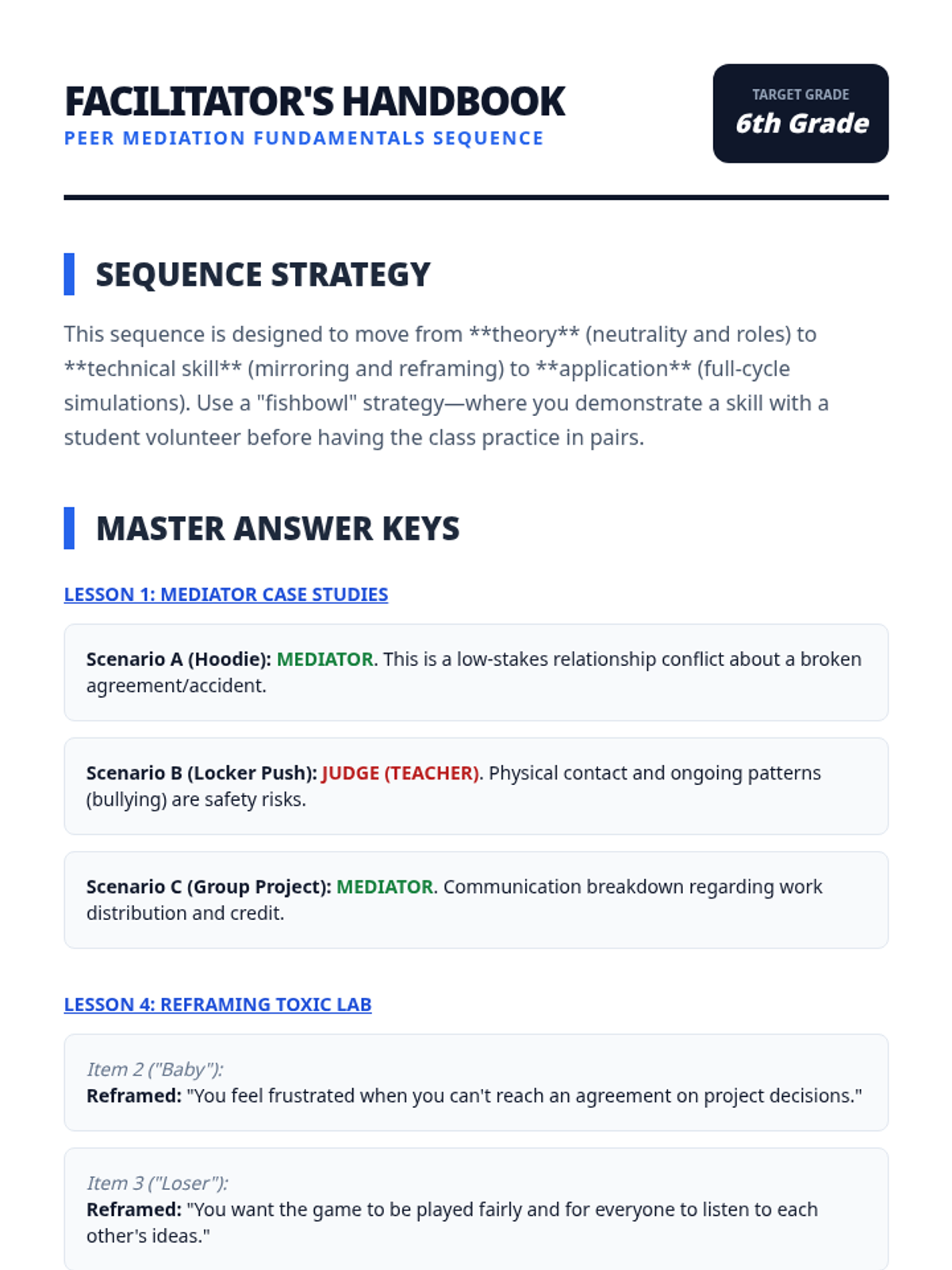
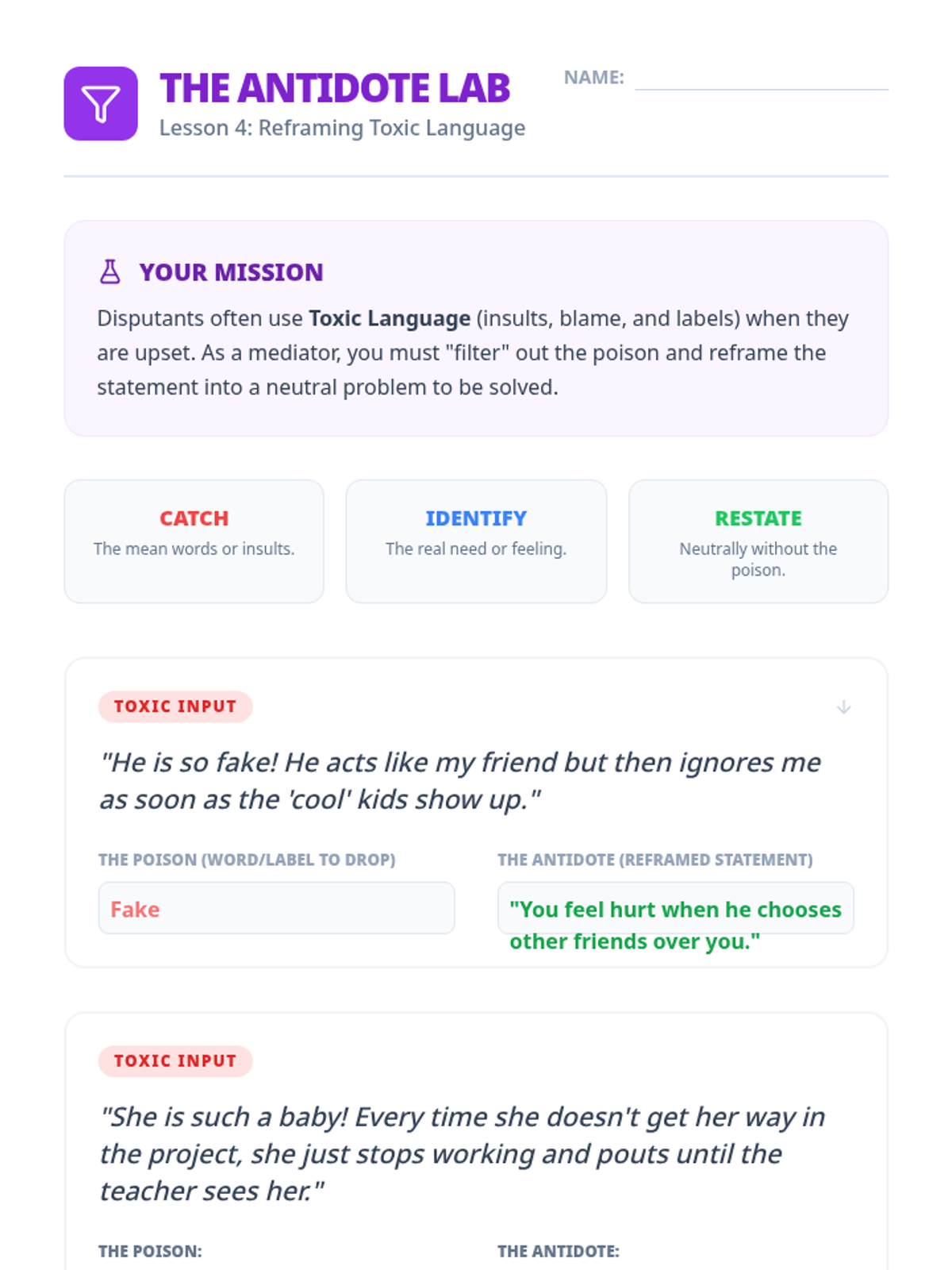
Students learn to 'catch' toxic or inflammatory language used by disputants and reframe it into neutral problem statements. This advanced skill prevents the mediation from turning into a shouting match.
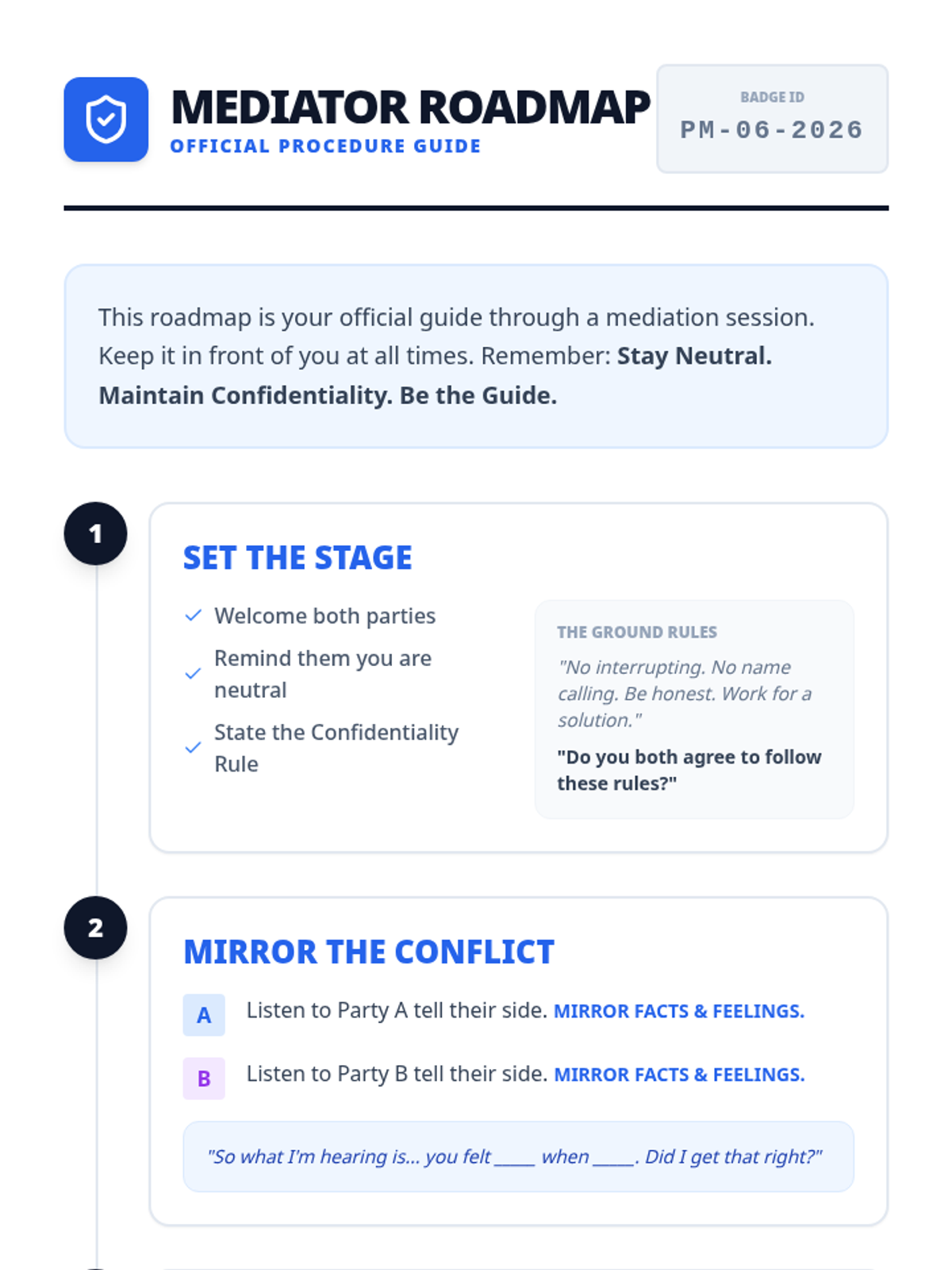
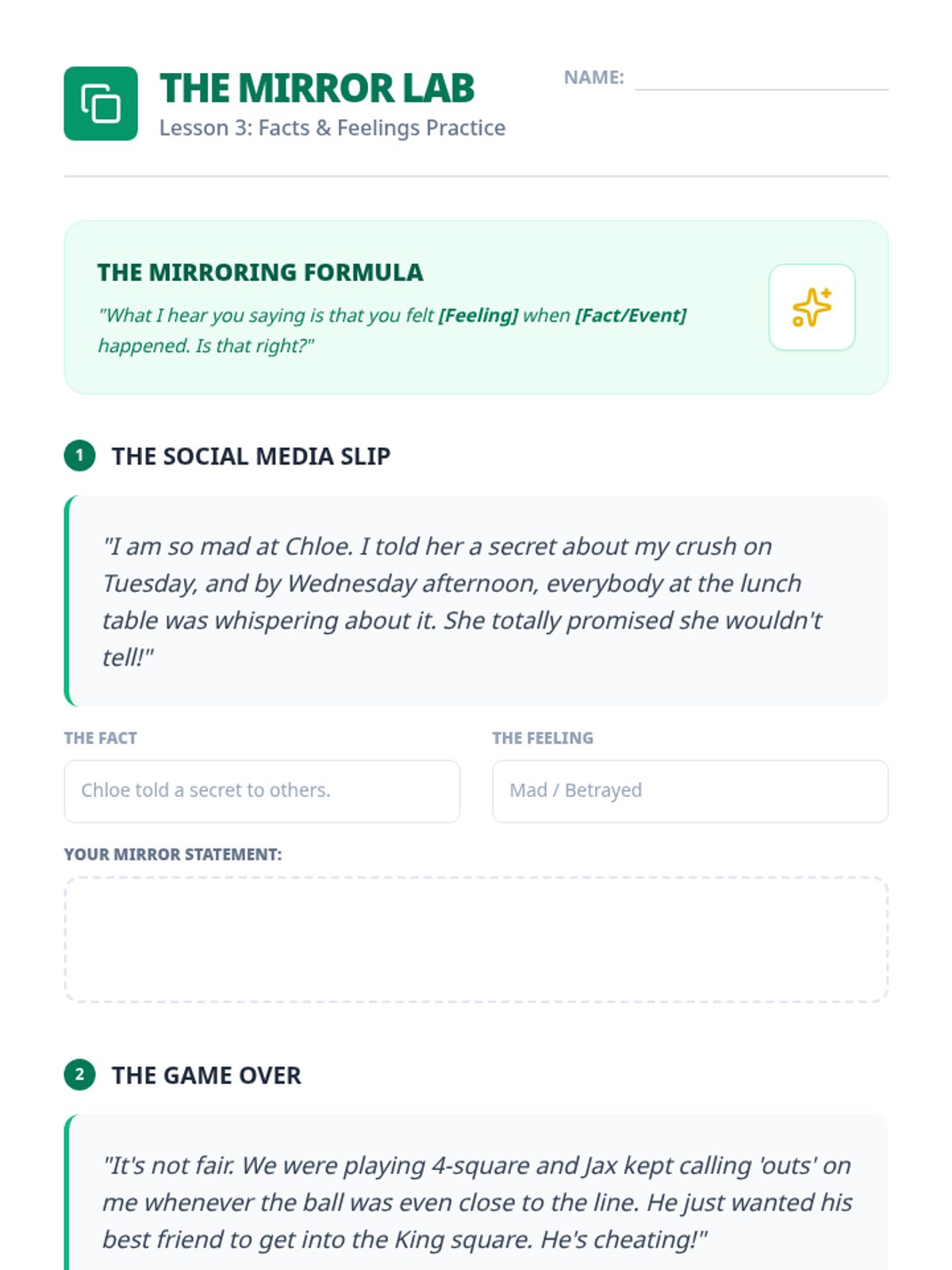
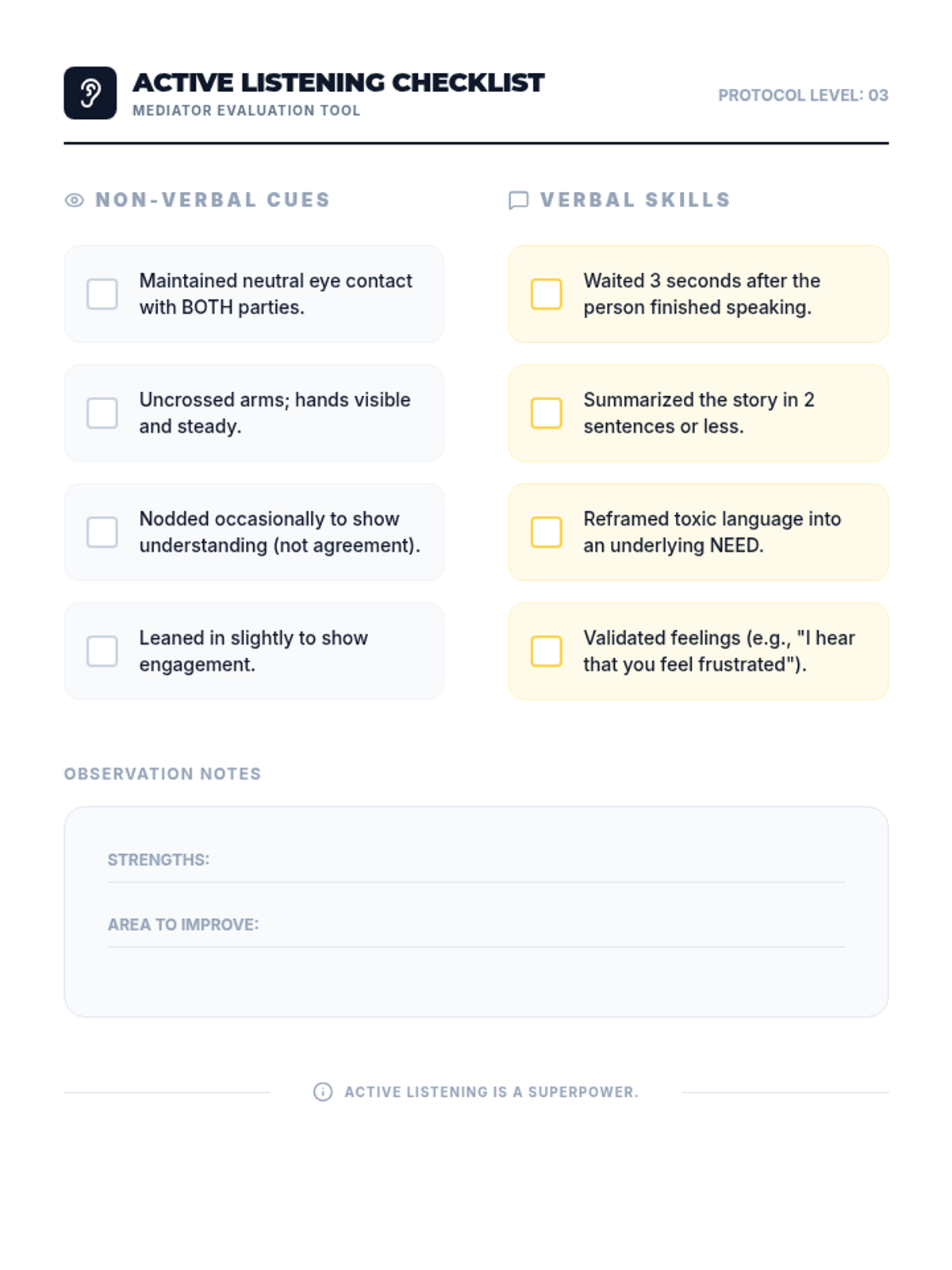
This lesson focuses on the mediator's primary tool: mirroring (reflecting back what was heard). Students practice listening to a complaint and summarizing it neutrally to ensure the speaker feels heard.
Students explore the concept of BATNA—knowing what you will do if a negotiation fails. This lesson teaches students how to assess their leverage and decide when to accept a deal or walk away.
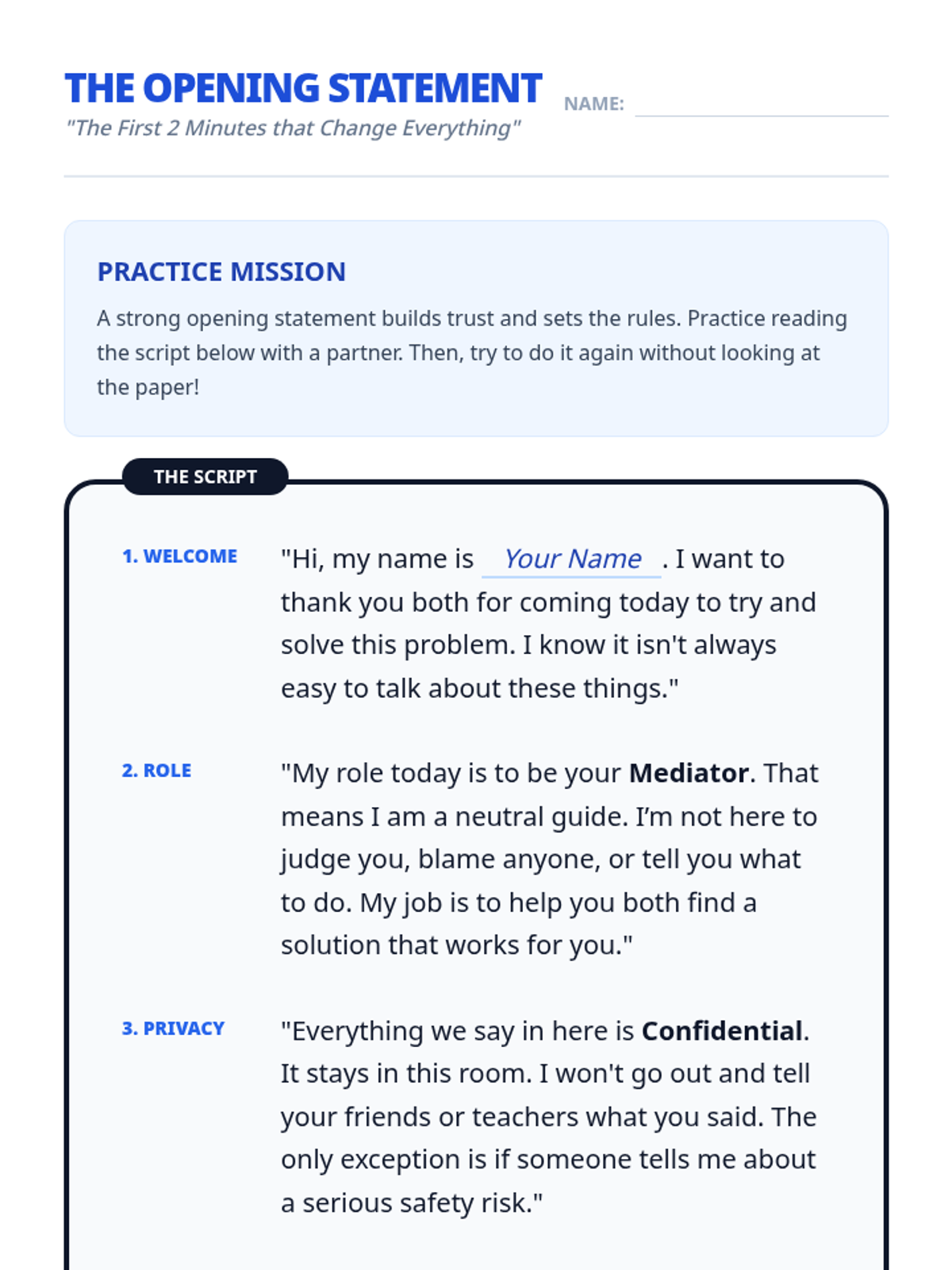
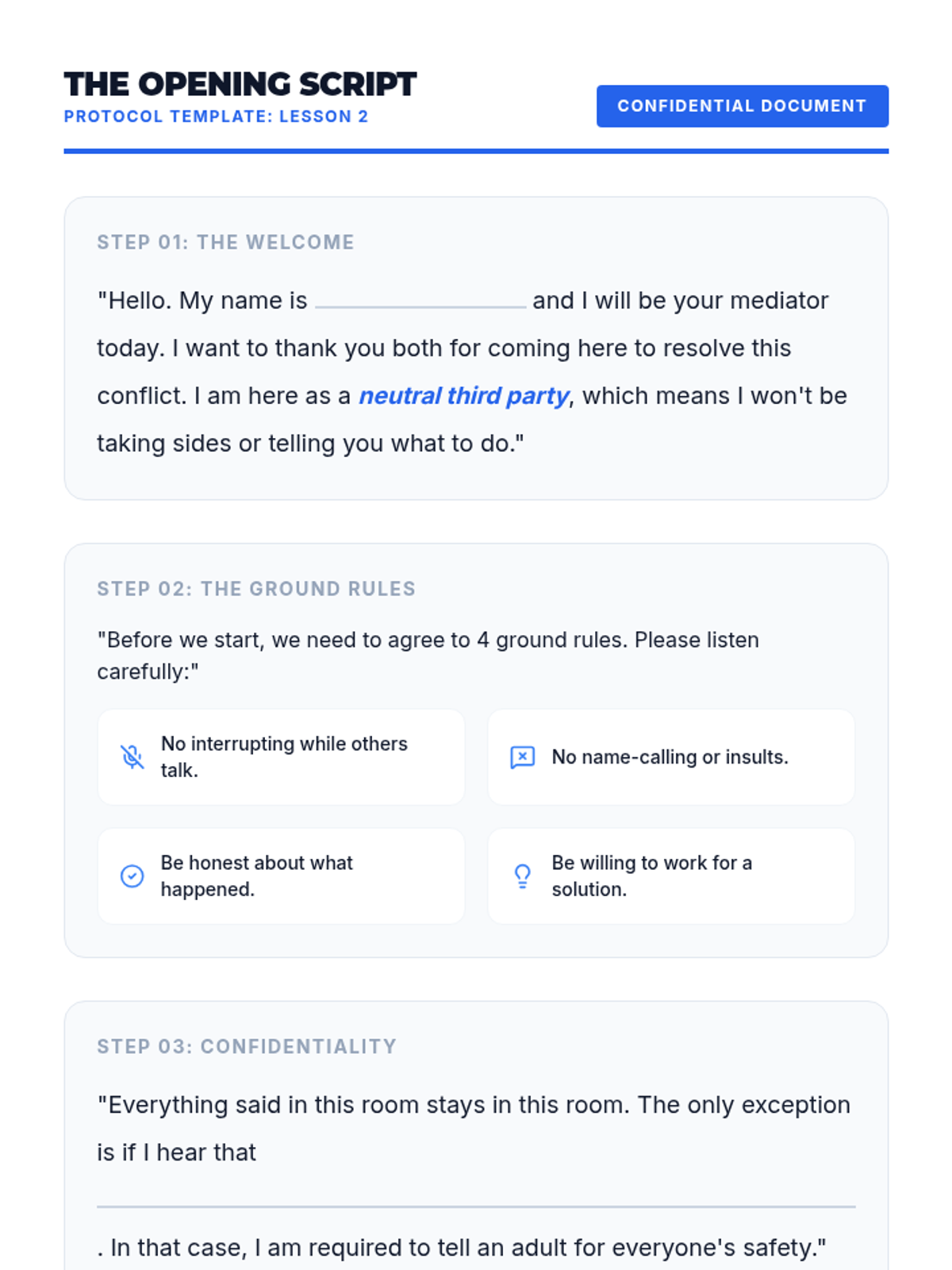
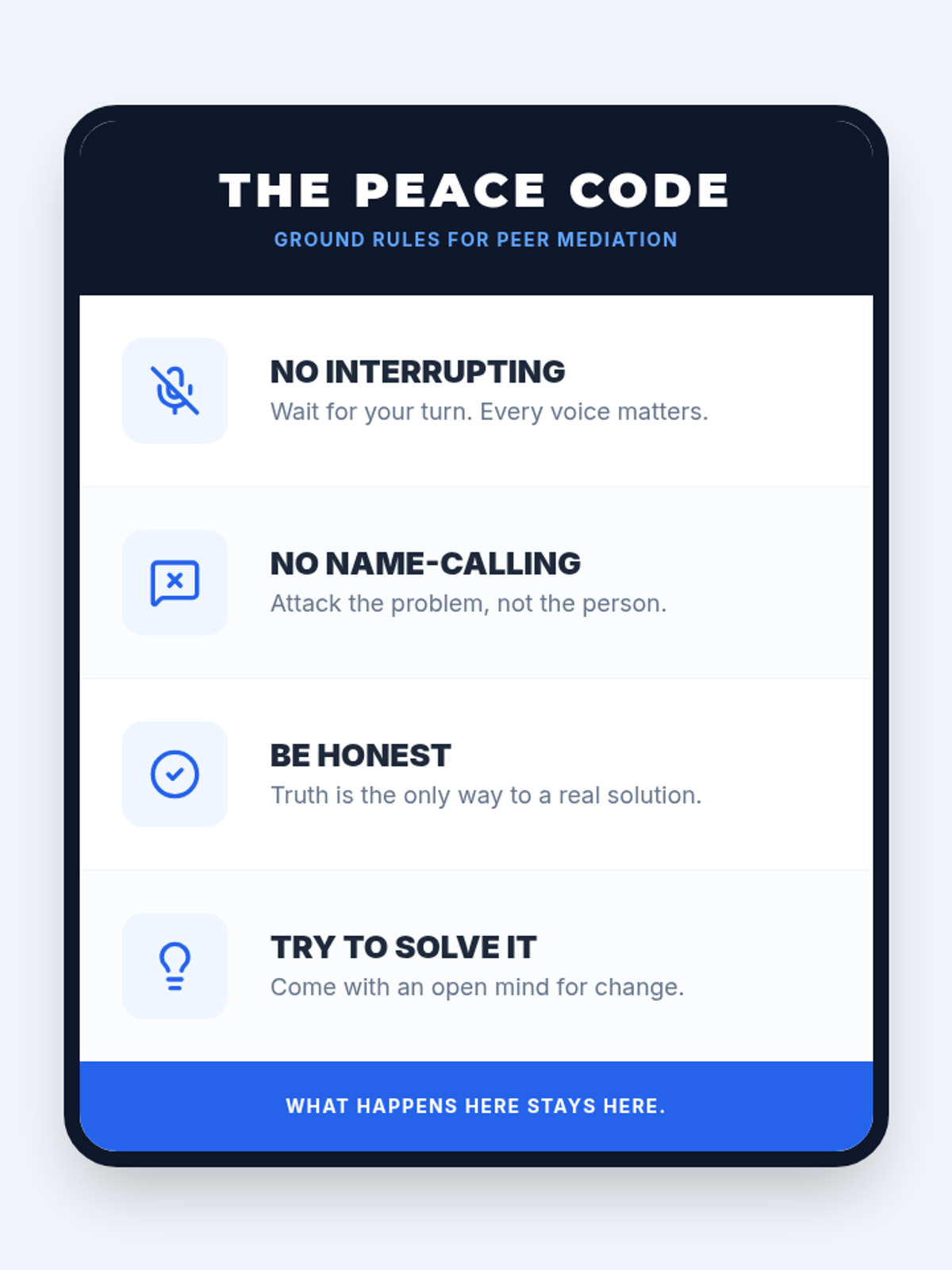
Learners practice the opening statement of a mediation: welcoming parties, explaining the process, and establishing rules like 'no interrupting' and 'no name-calling.'
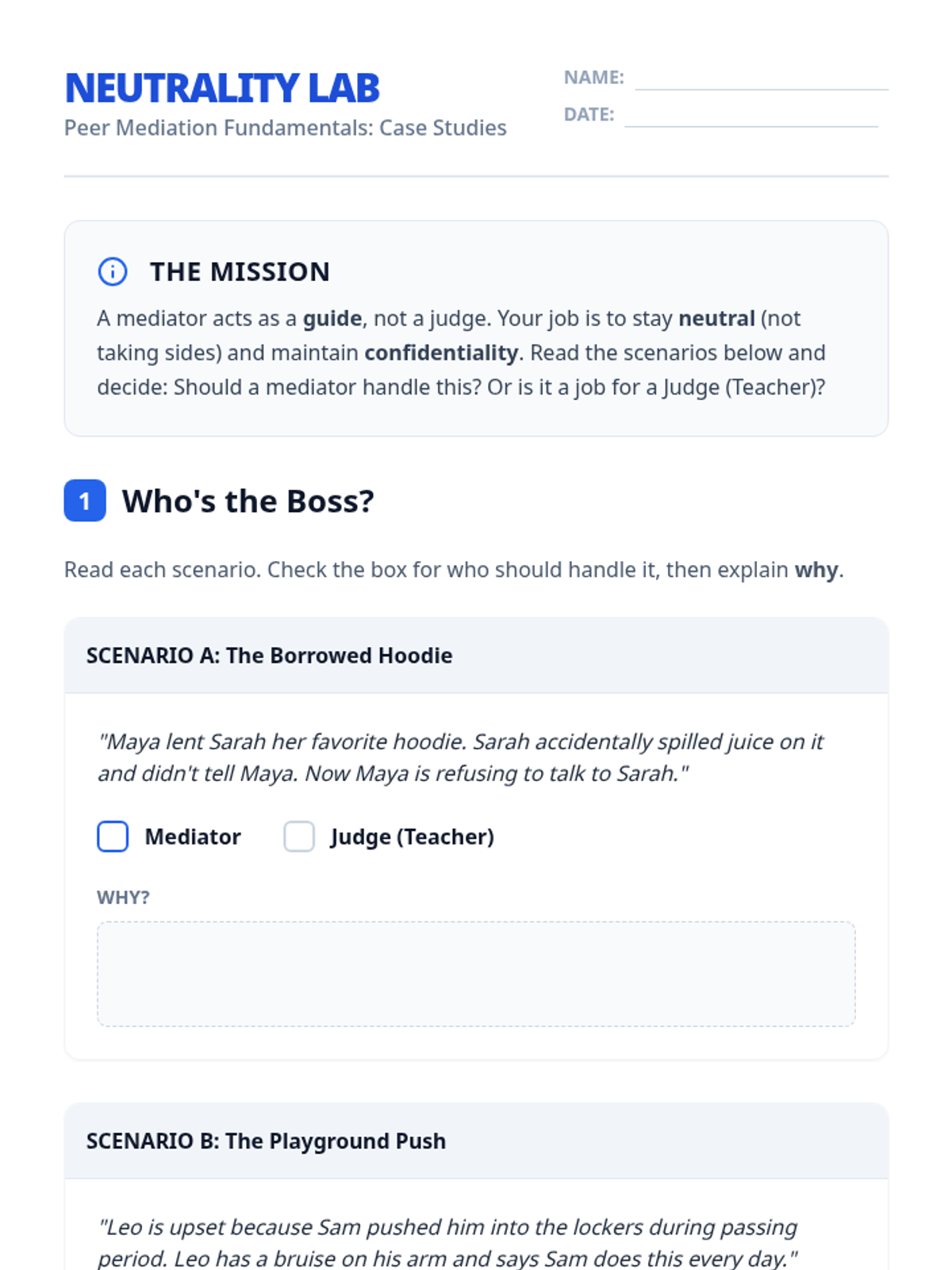
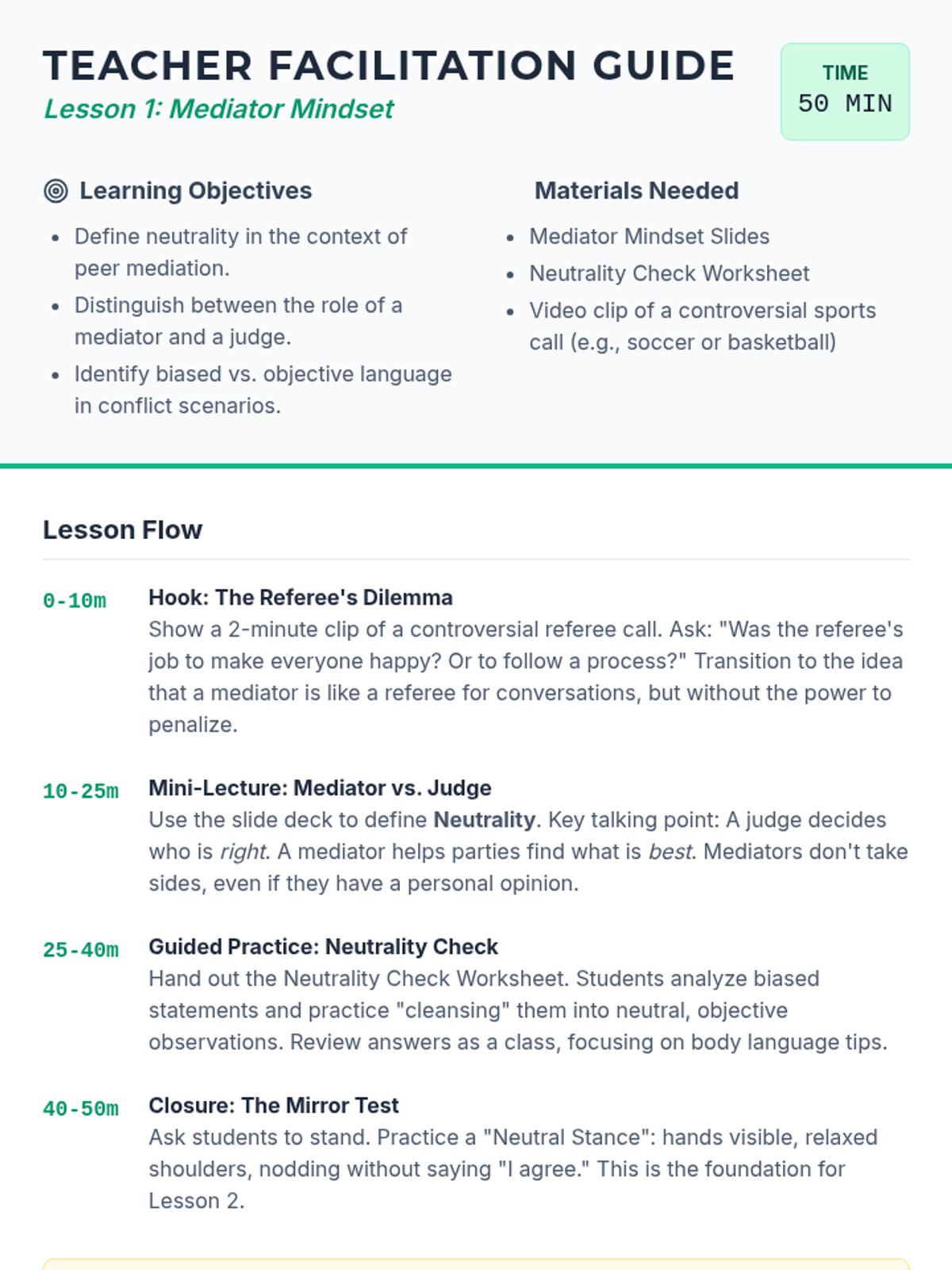
Students define what a mediator is (a guide, not a judge) and the core principle of neutrality. They discuss confidentiality and identify when a conflict is too dangerous for peer mediation (e.g., bullying or violence).
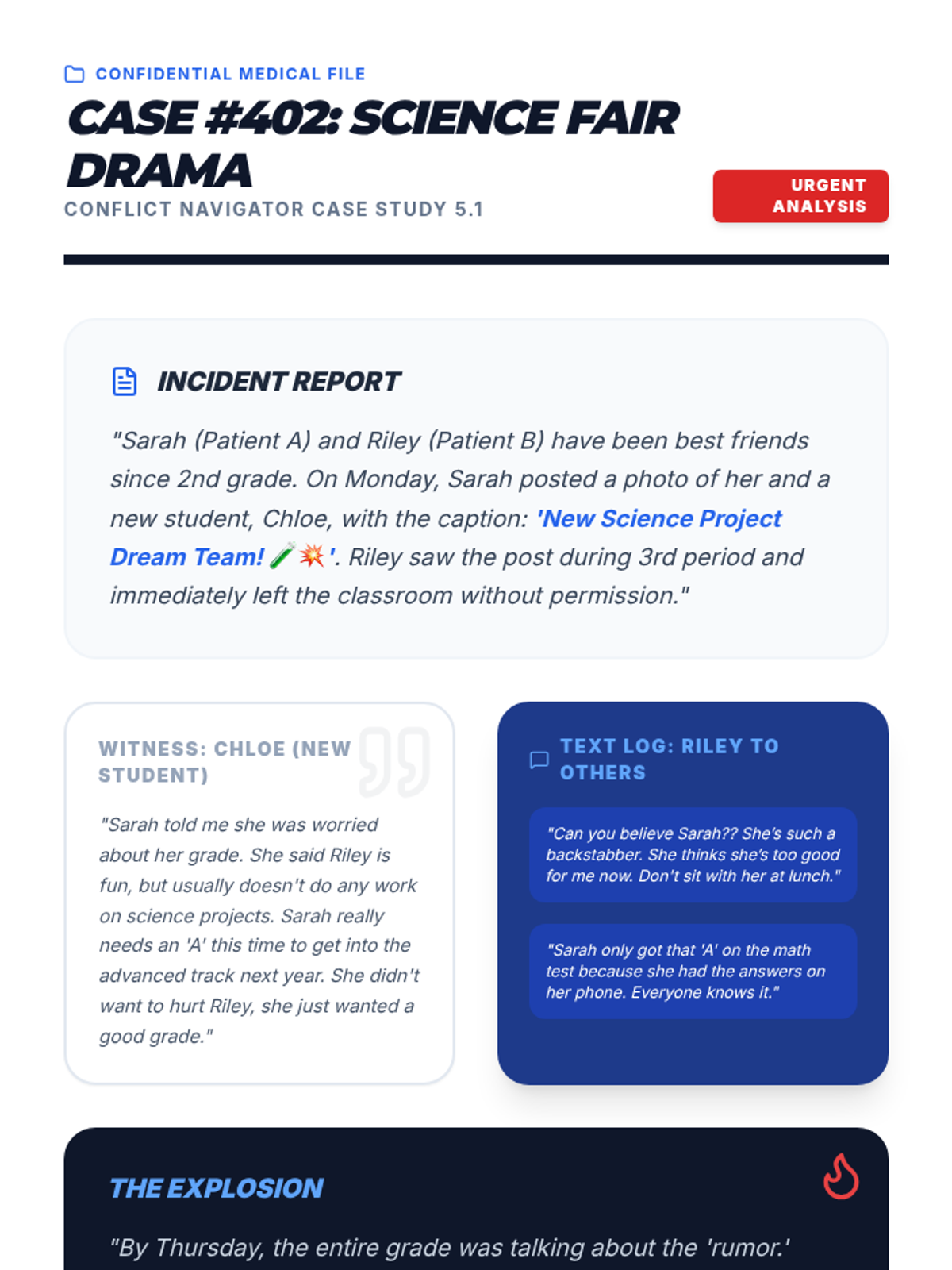
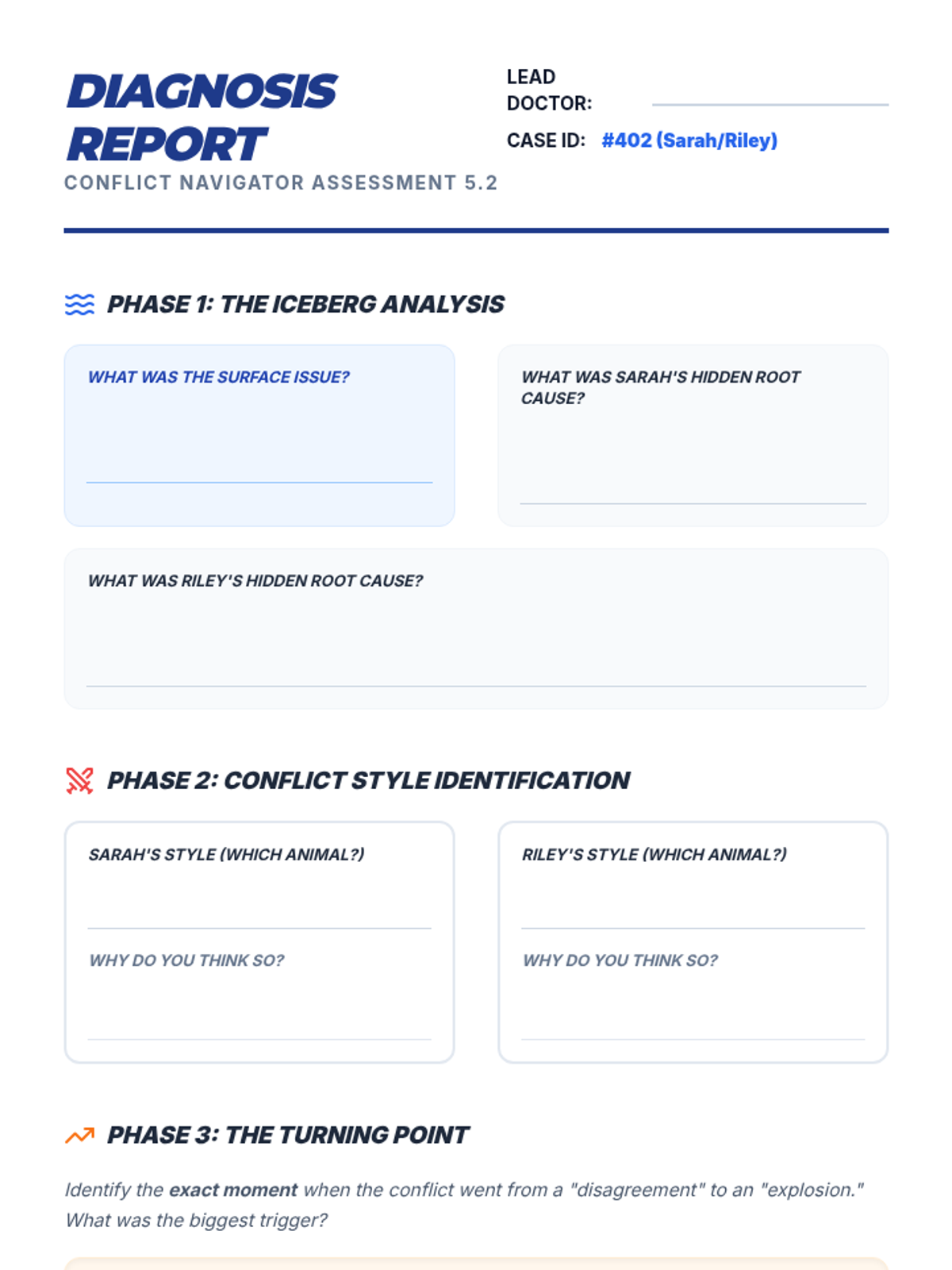
A final synthesis activity where students act as 'Conflict Doctors' to diagnose a complex scenario using all the tools learned in the sequence.
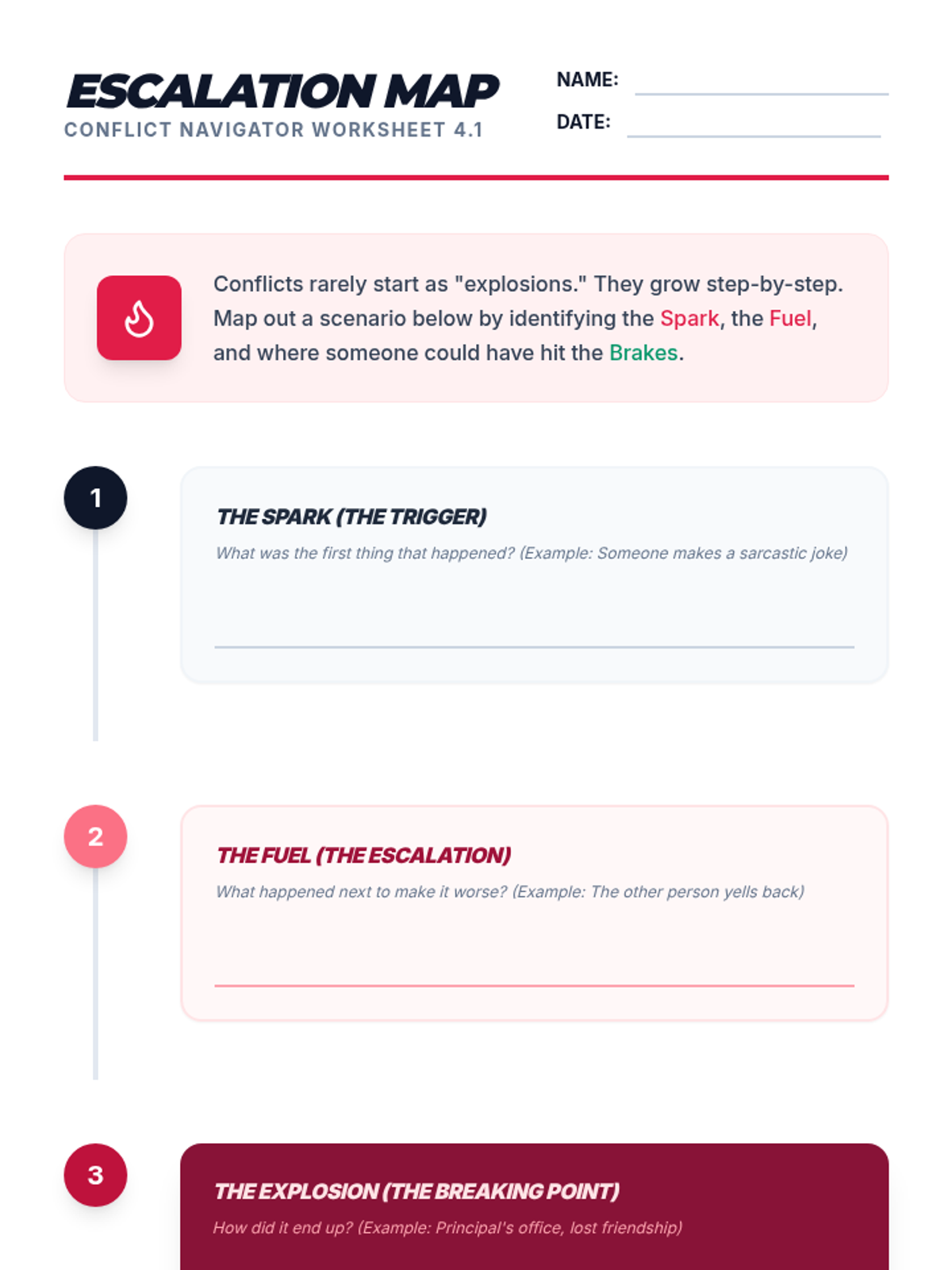
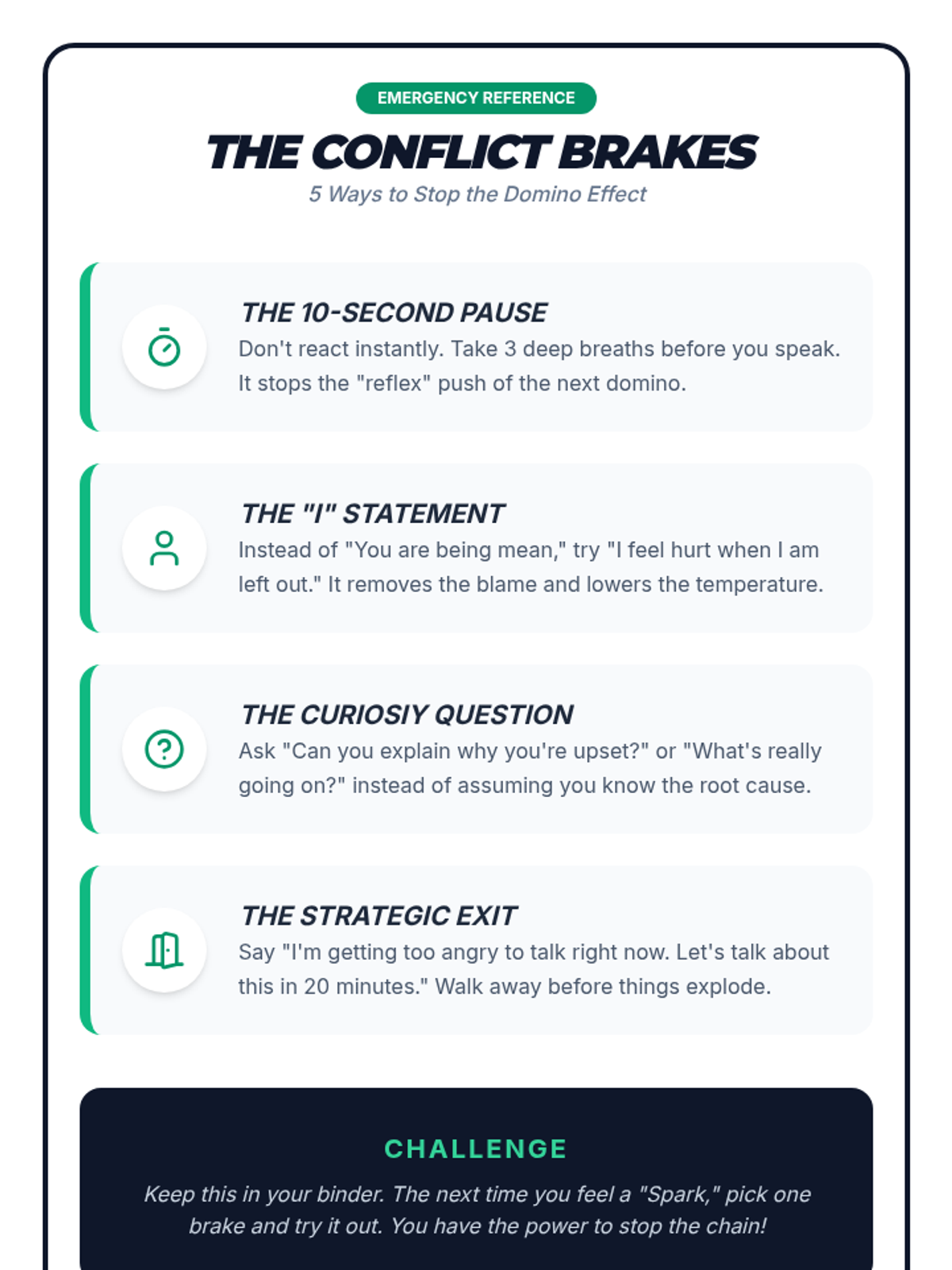
Analyzes the cycle of escalation, identifying triggers and turning points where conflicts can be de-escalated before reaching a breaking point.
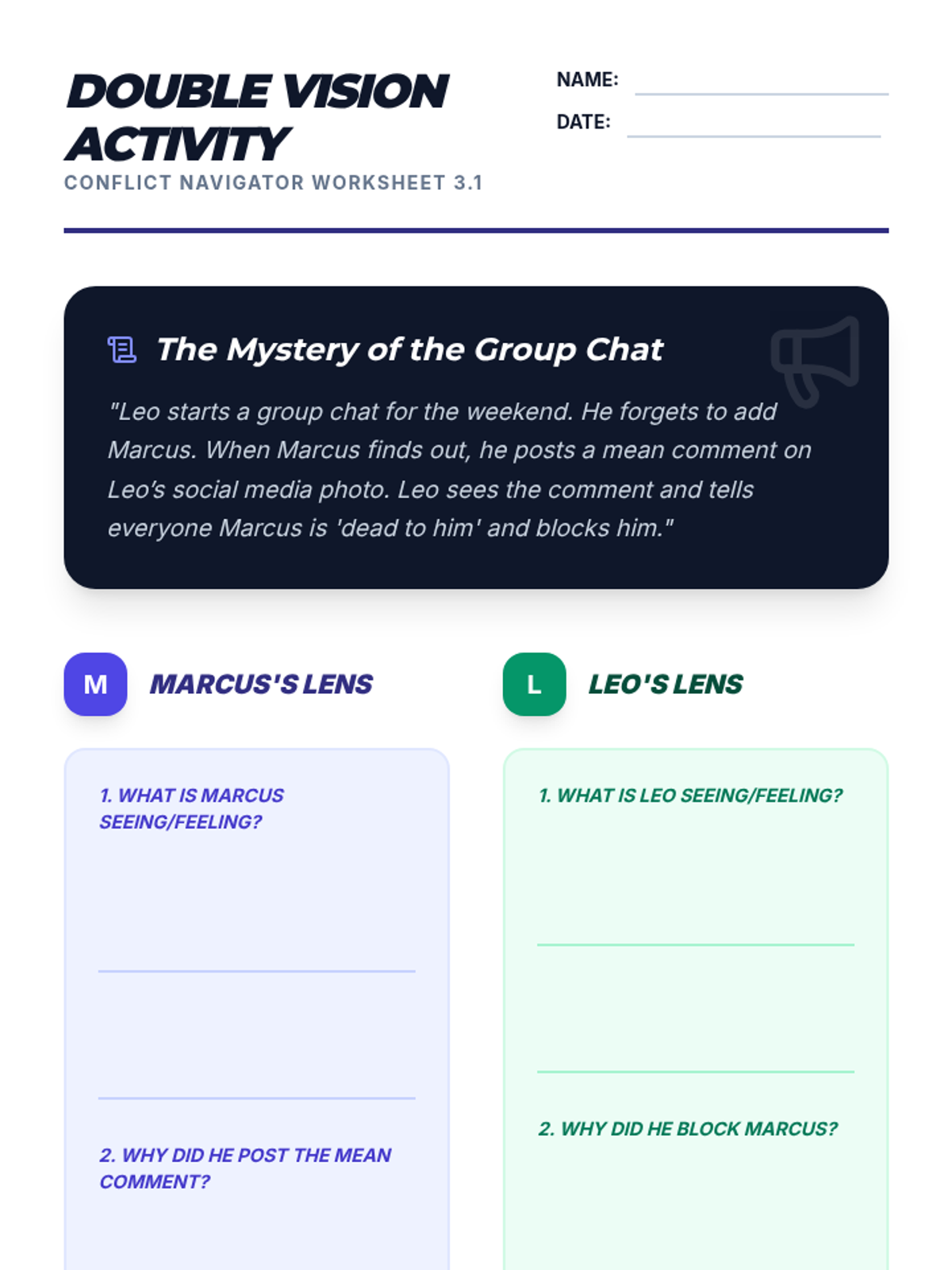
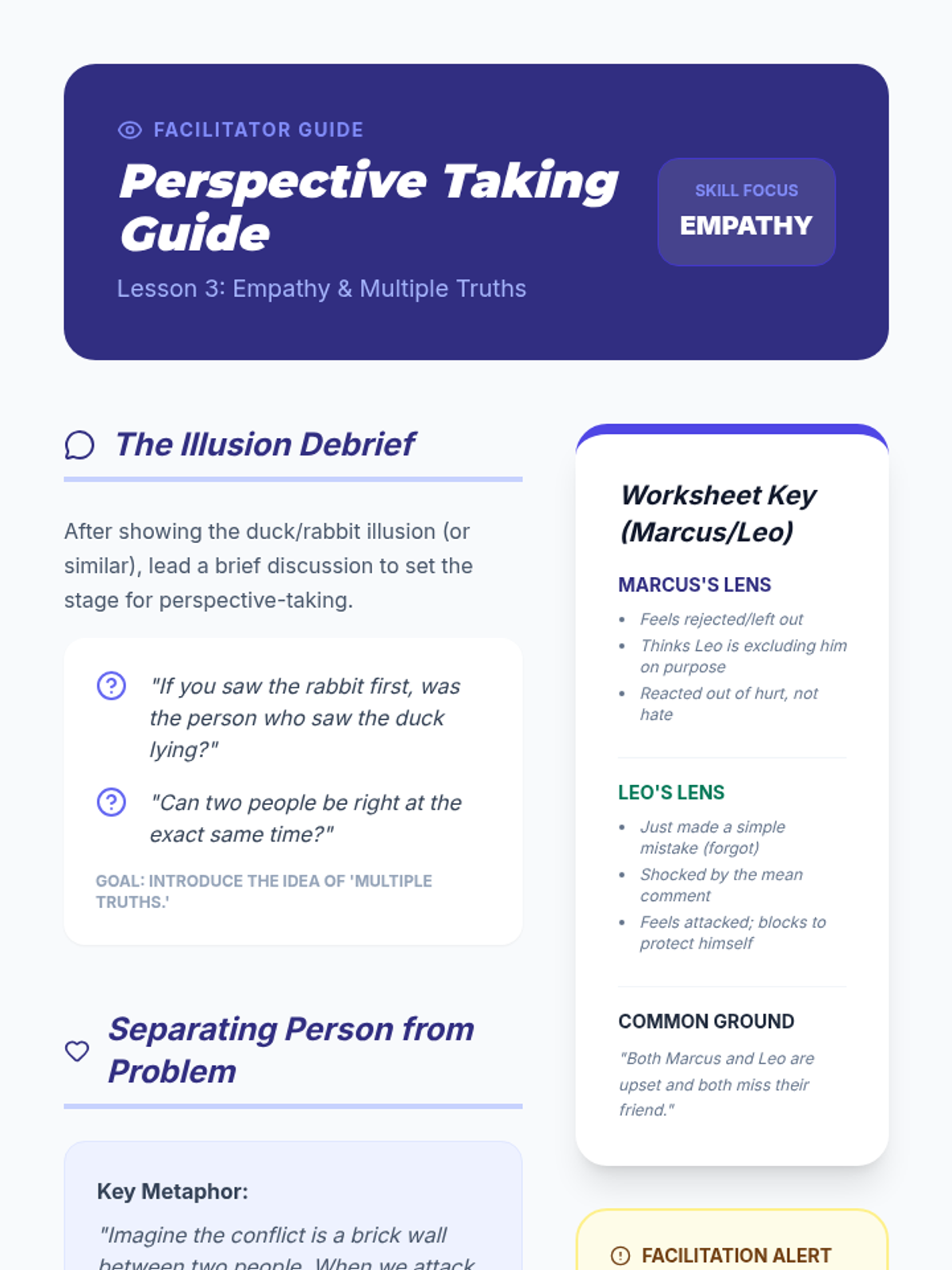
Focuses on perspective-taking and empathy through visual illusions and story-mapping, teaching students to see multiple truths in a single dispute.
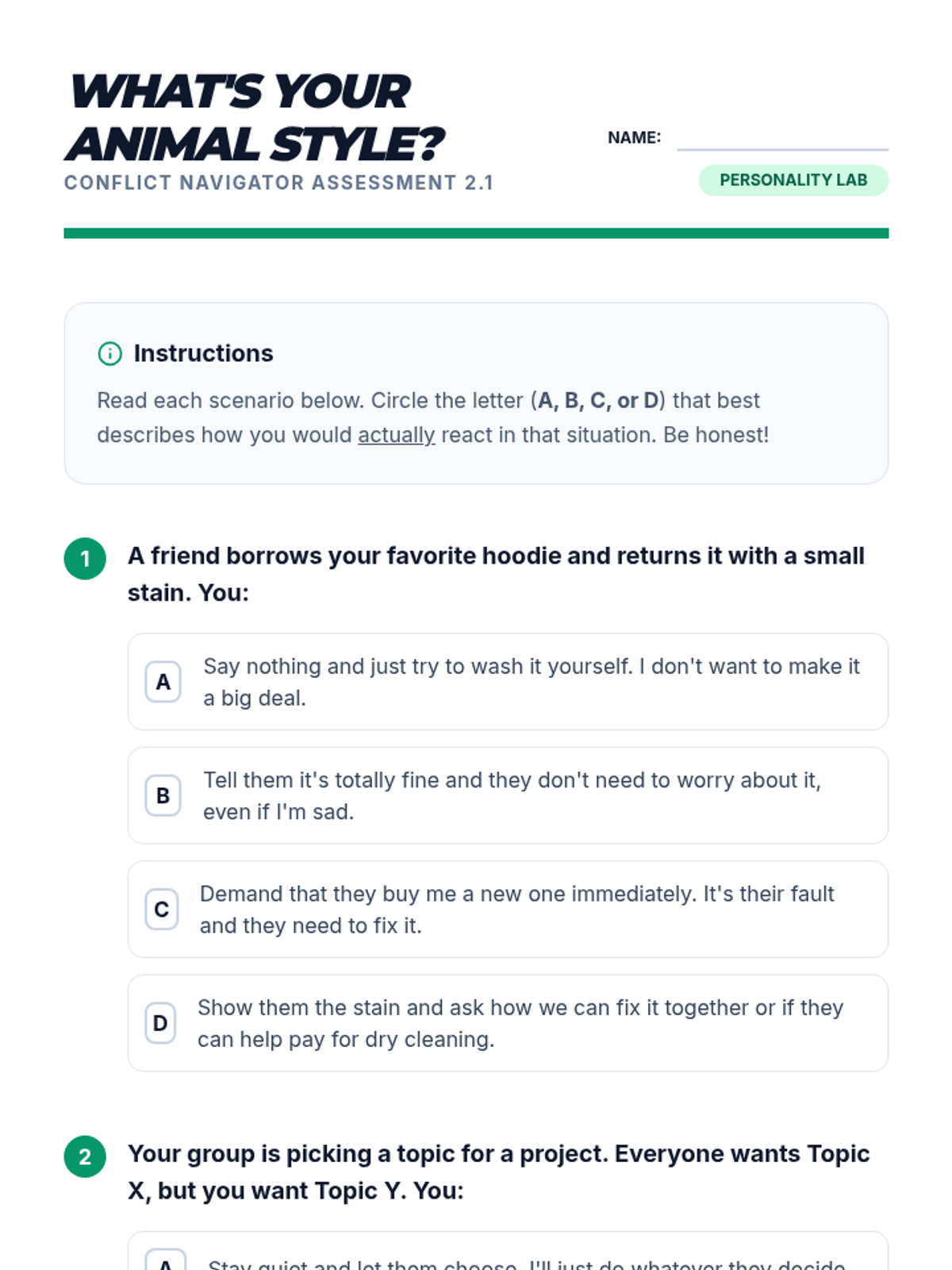
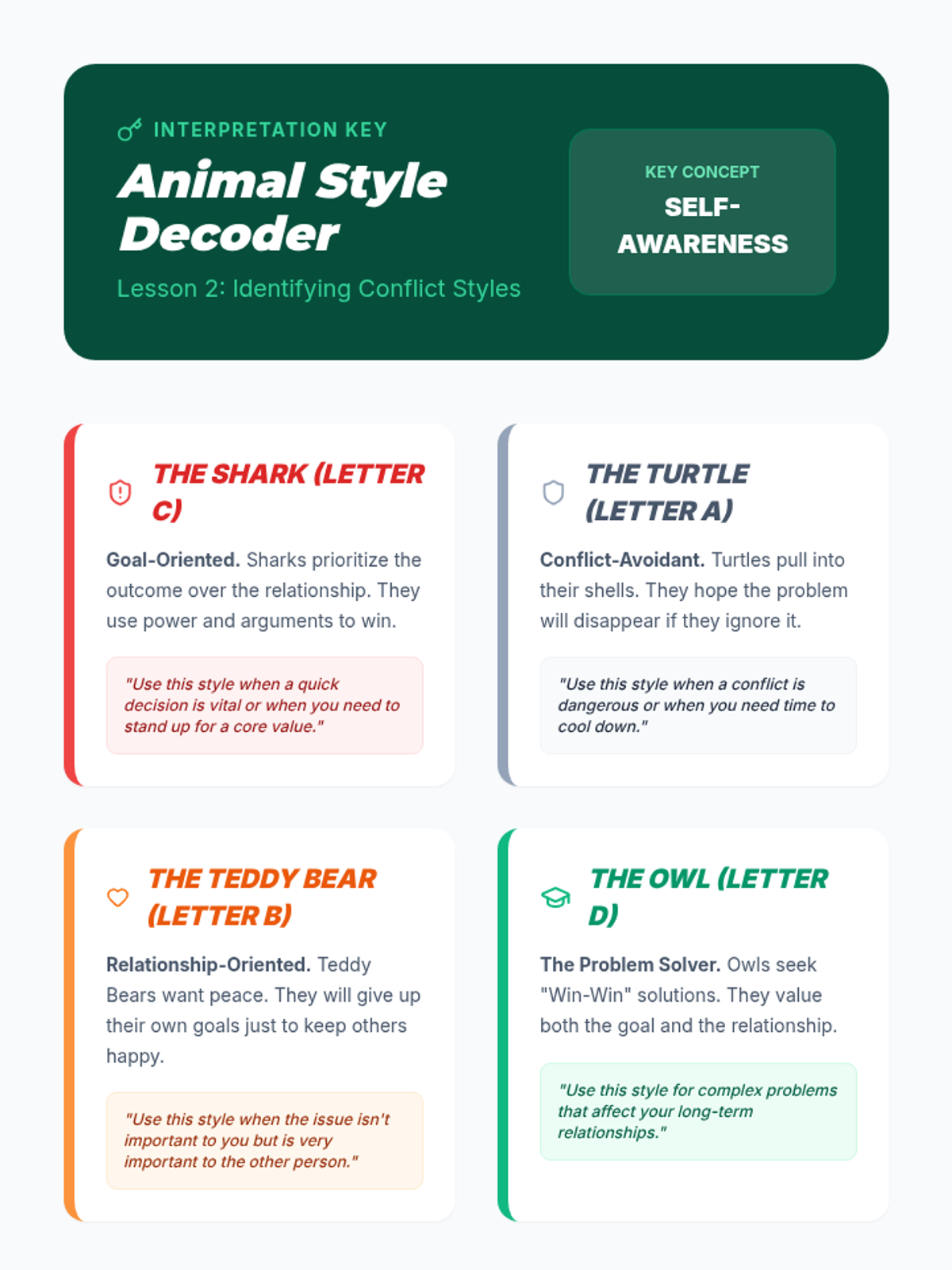
Students explore five core conflict styles (Shark, Turtle, Teddy Bear, Fox, Owl) to understand their default reactions and the impact on others.
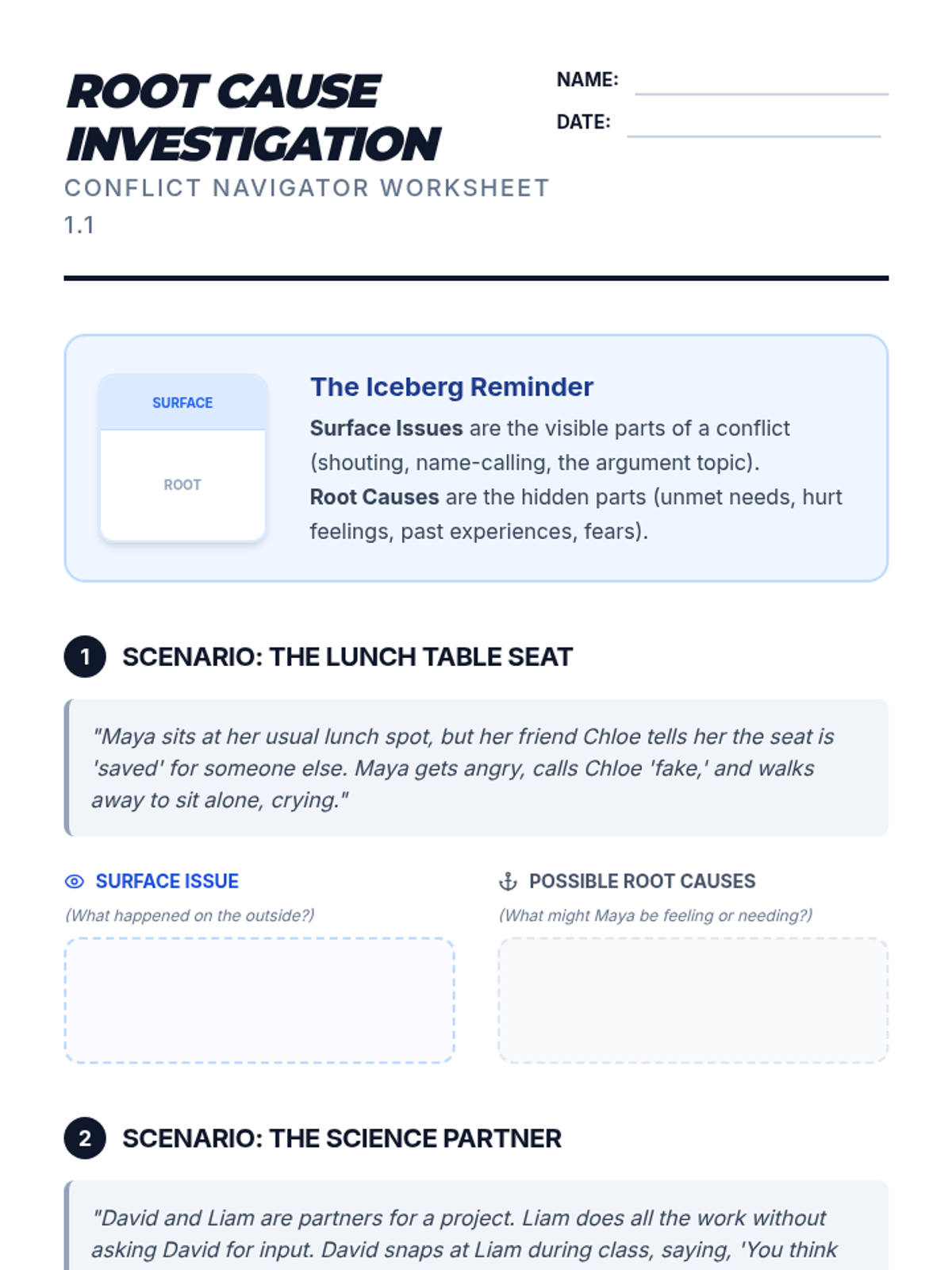
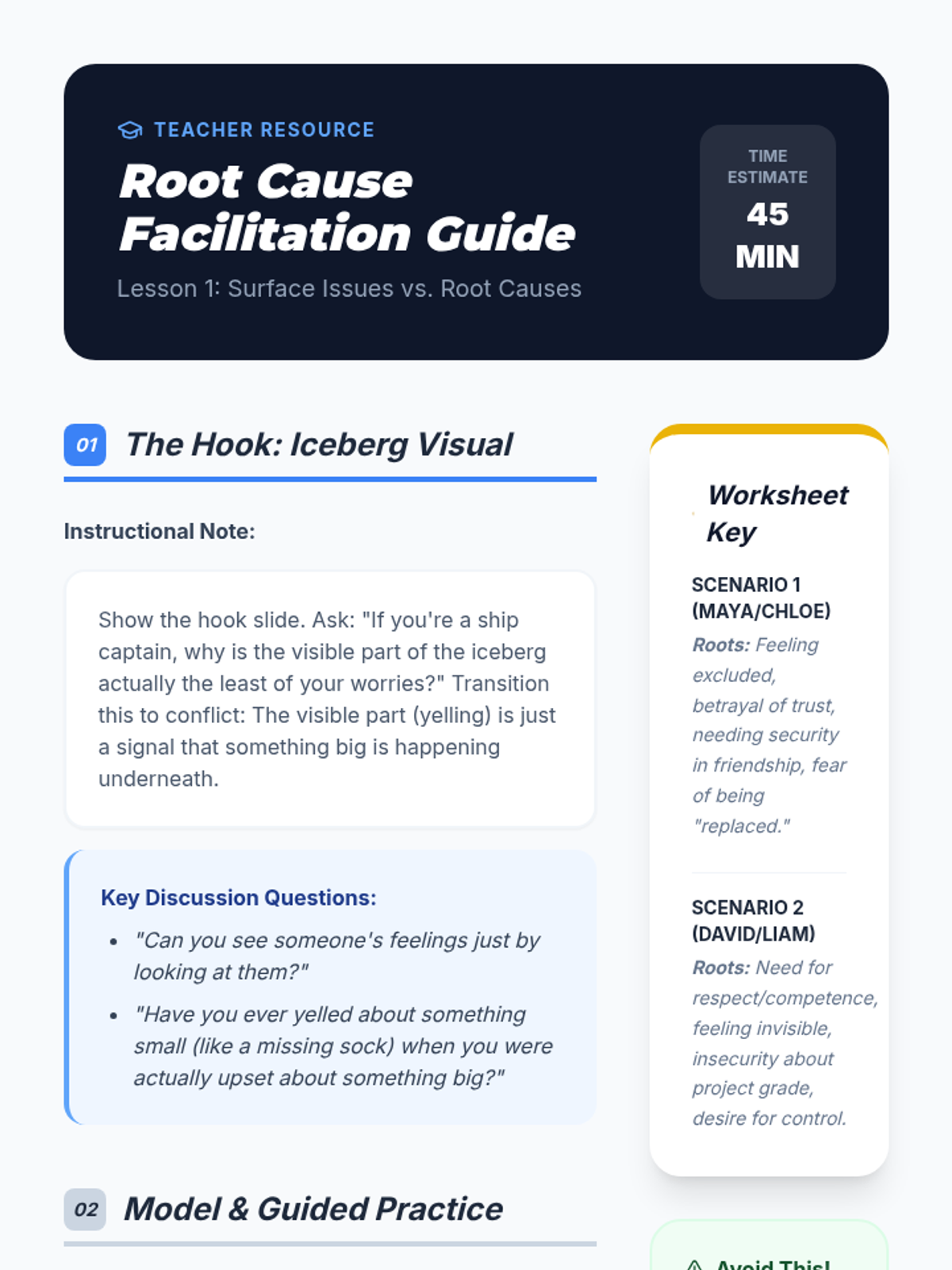
Introduces the Iceberg Model to help students differentiate between the surface argument and the underlying needs, fears, and values driving conflict.
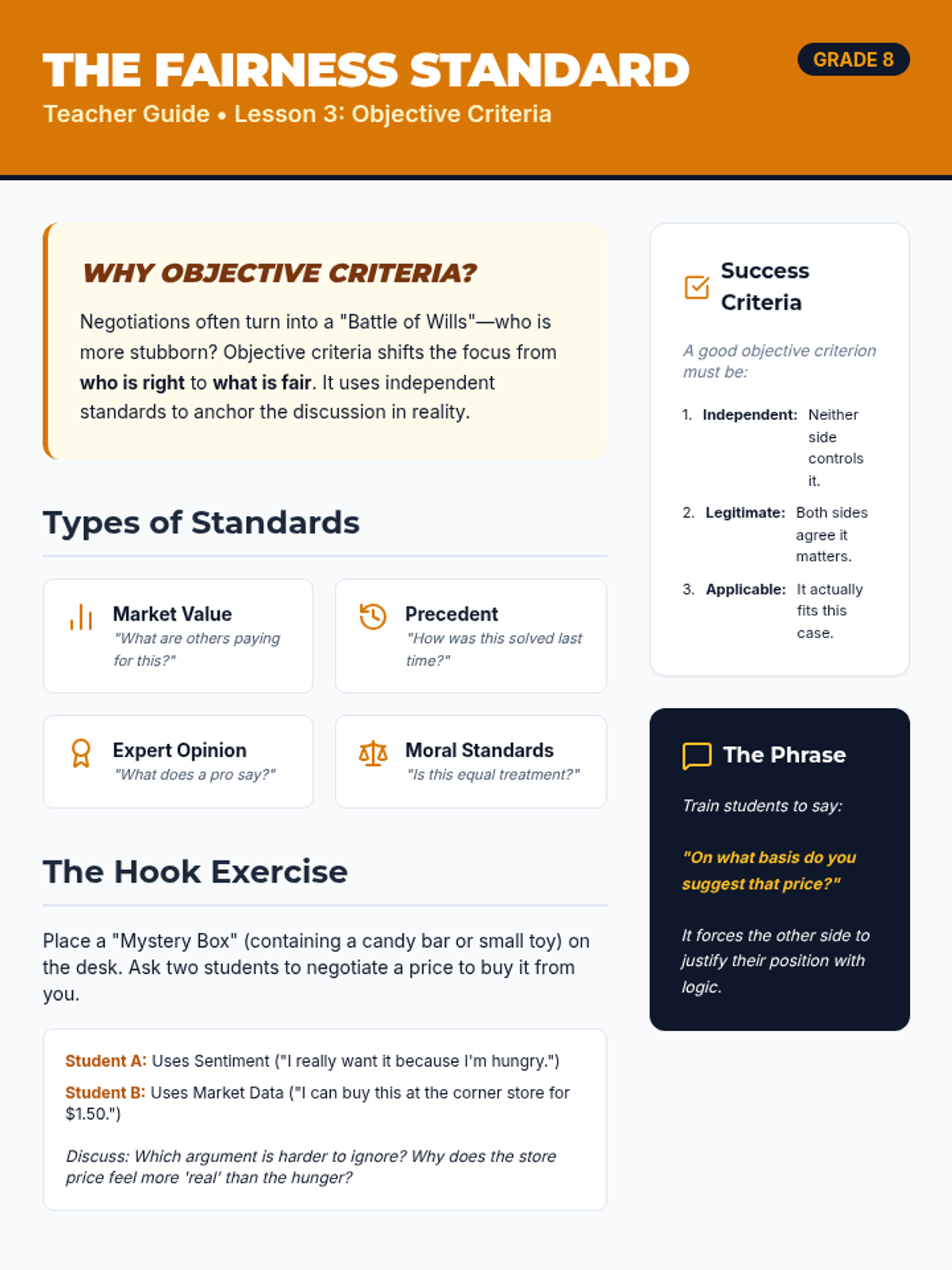
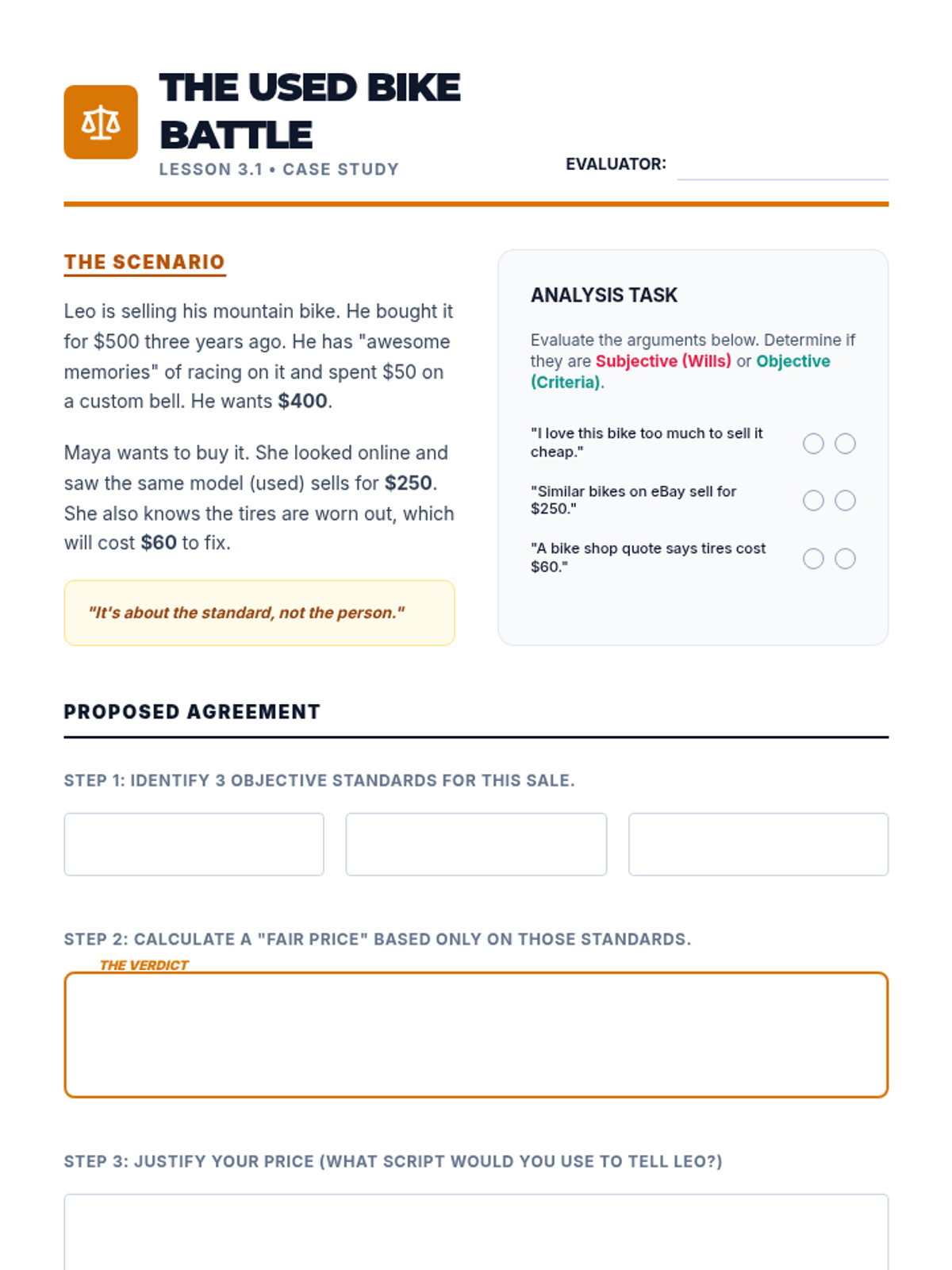
Students learn how to use fair standards (market value, precedent, expert opinion) to resolve disputes when wills clash. The lesson focuses on replacing stubbornness with logic and external fairness.
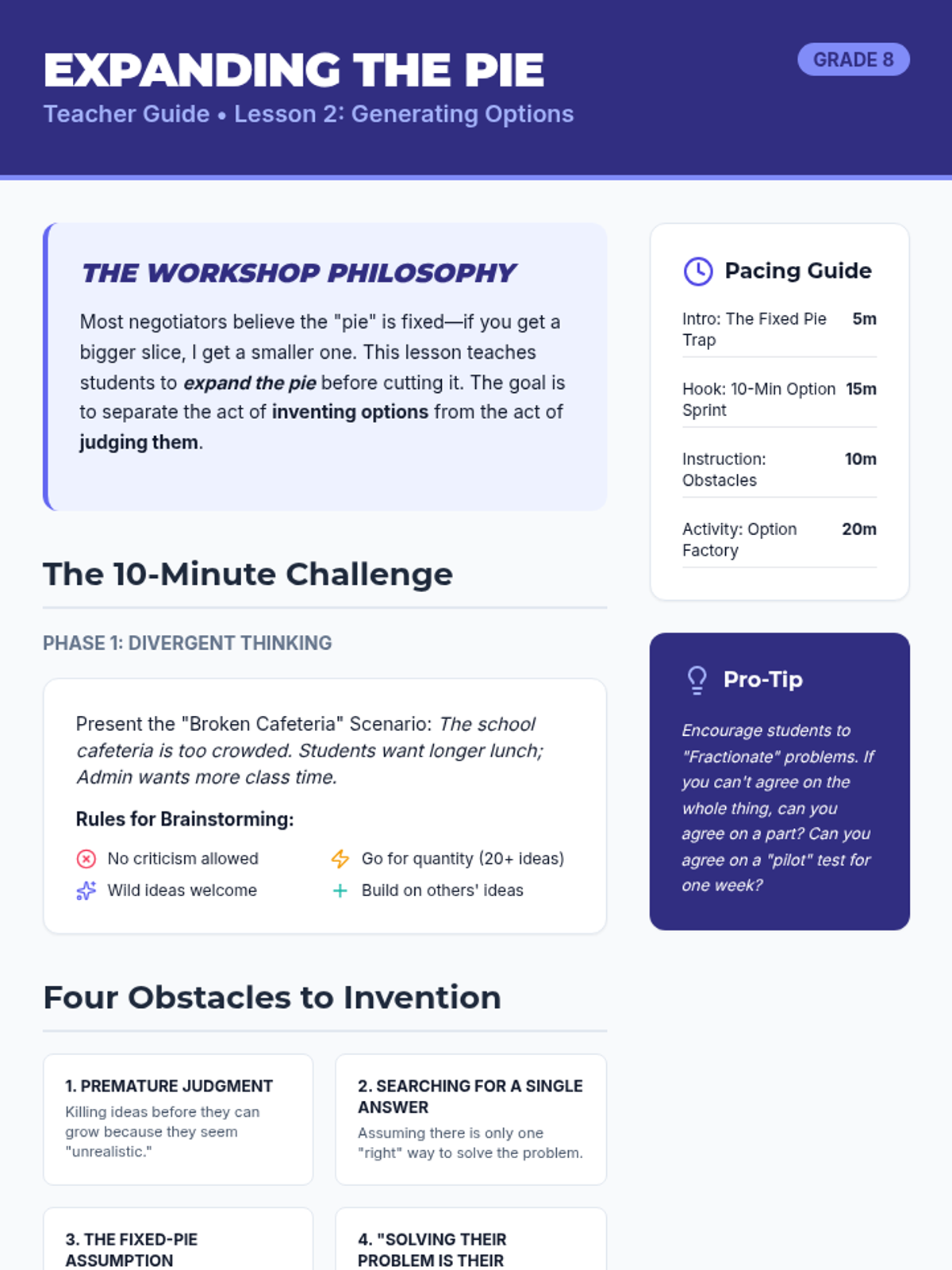
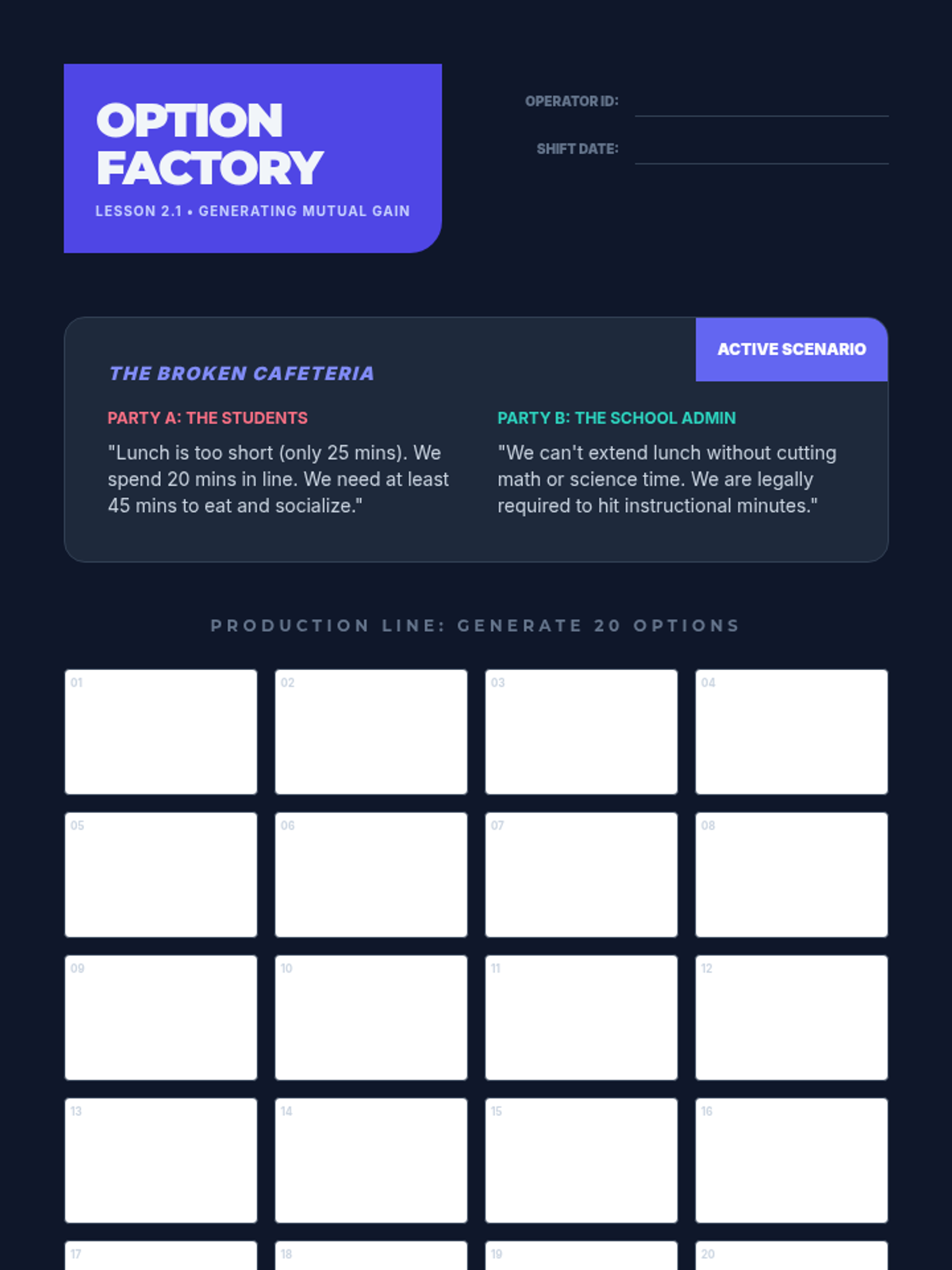
Students practice brainstorming techniques to generate multiple options for mutual gain. They learn to move beyond binary 'yes/no' outcomes to create multi-faceted solutions that satisfy the interests of all parties.
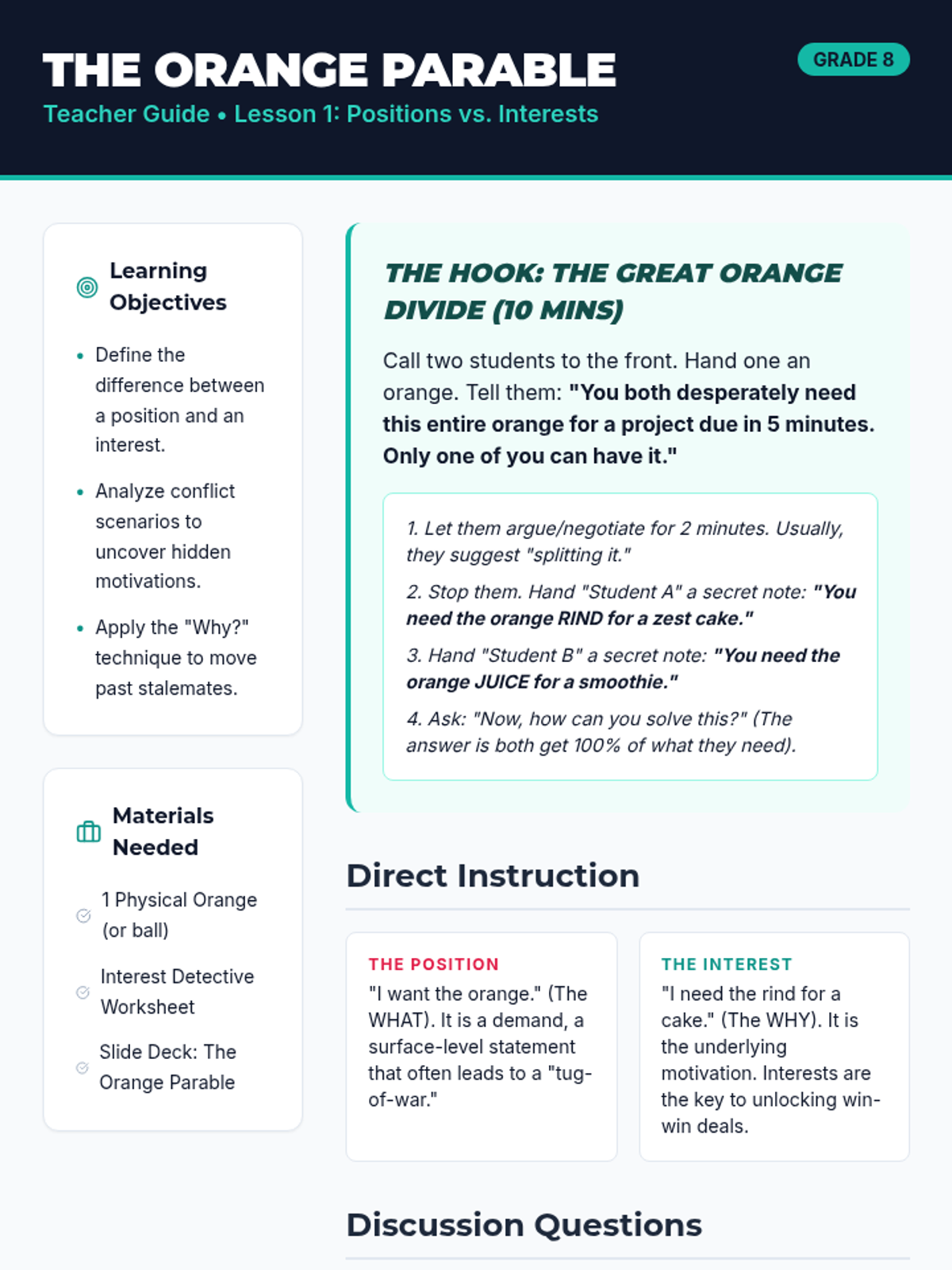
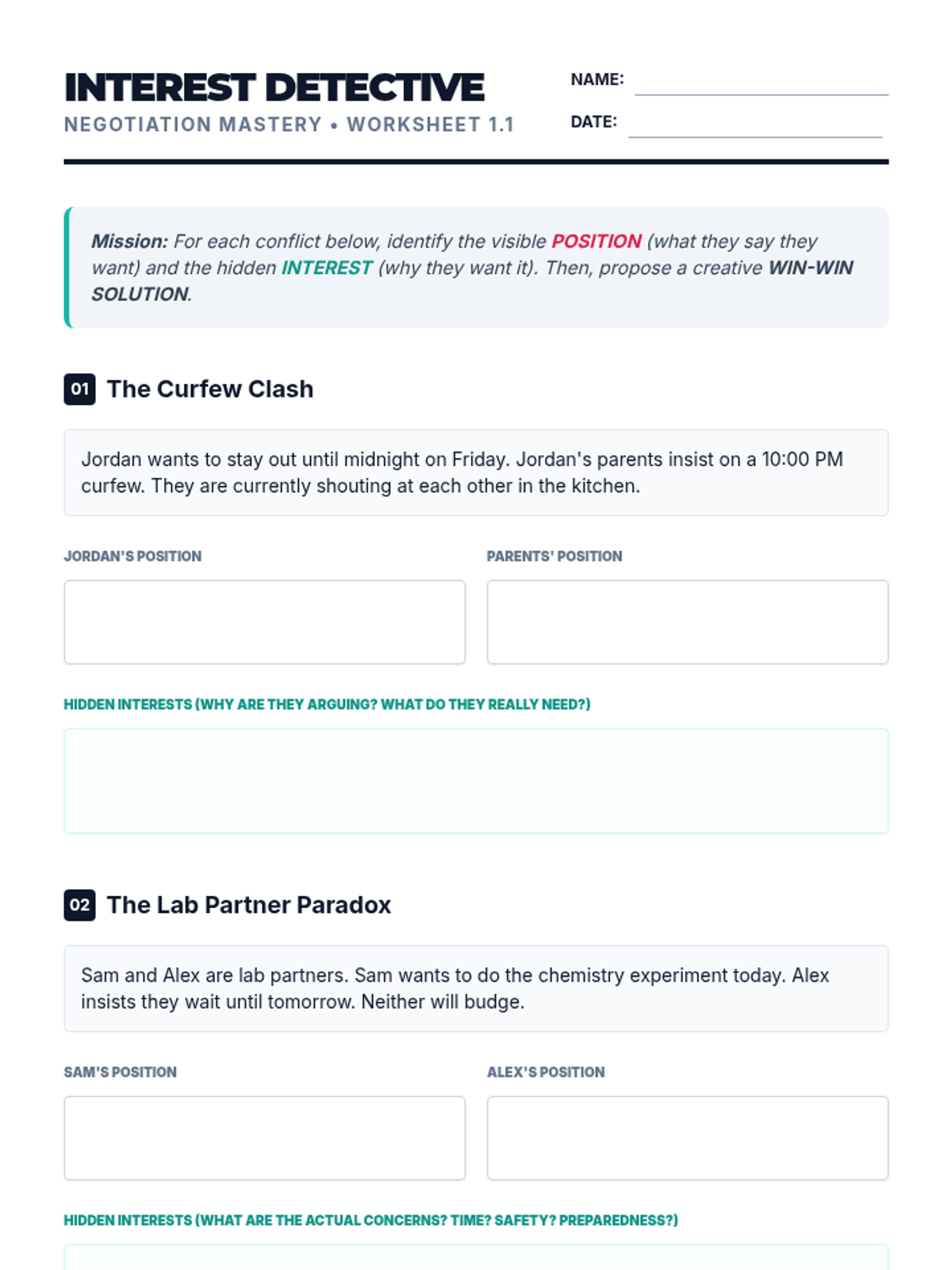
Students learn the foundational concept of negotiation: the difference between positions (what people want) and interests (why they want it). The lesson uses the 'Orange Parable' to demonstrate how uncovering interests leads to better outcomes.
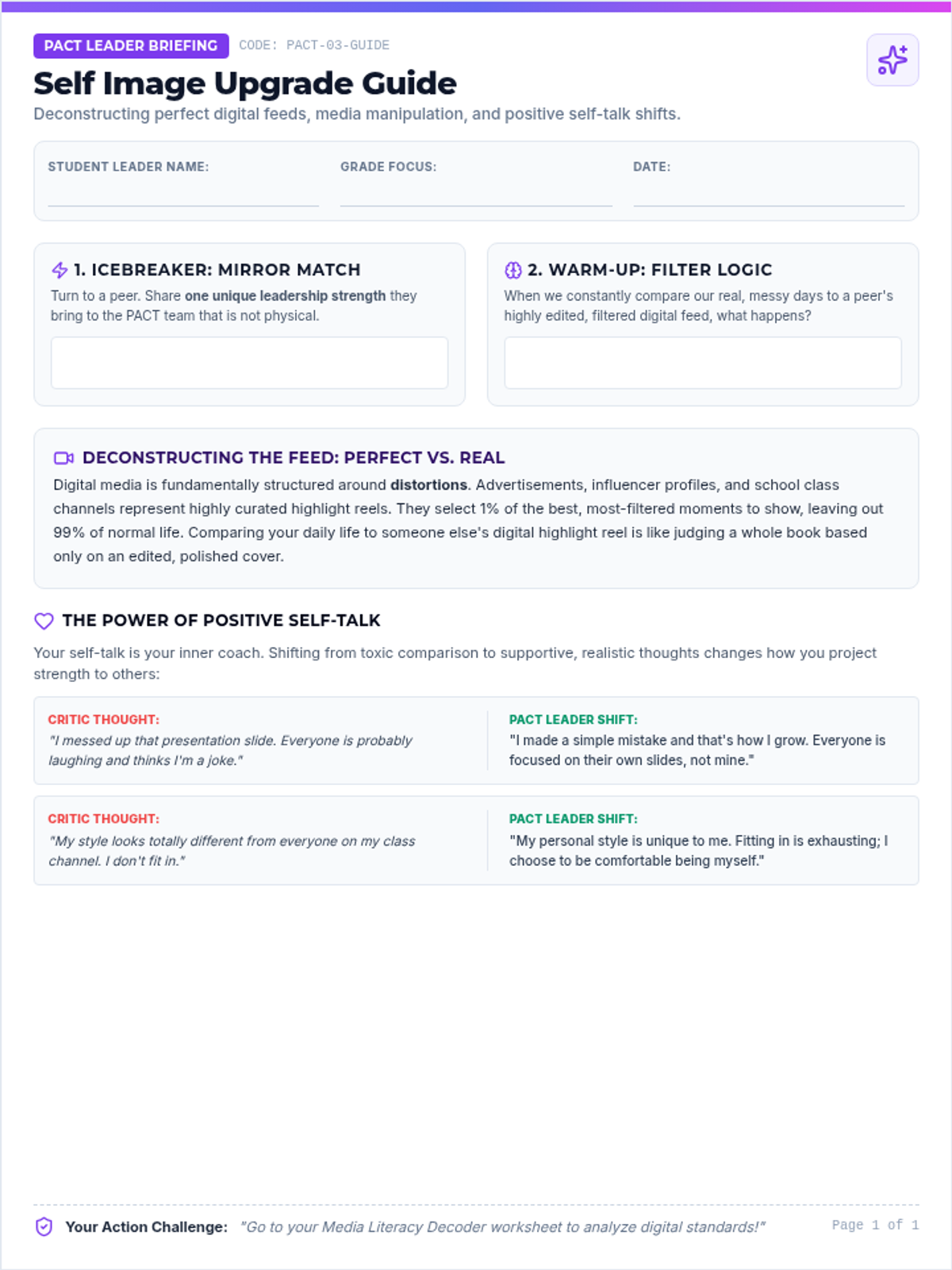
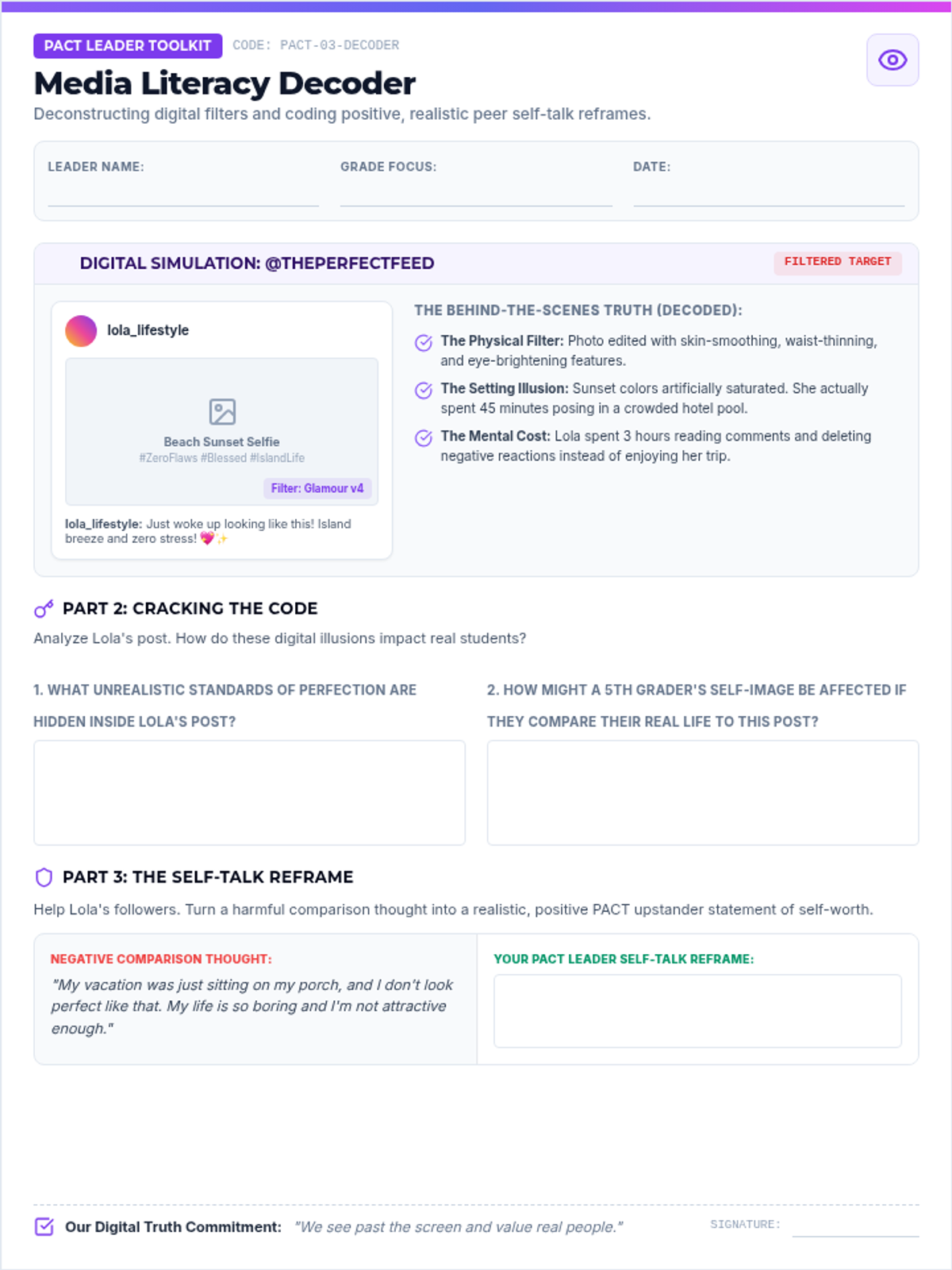
Focuses on building self-worth, identifying negative media messages, and shifting personal and peer narratives through positive self-talk strategies.
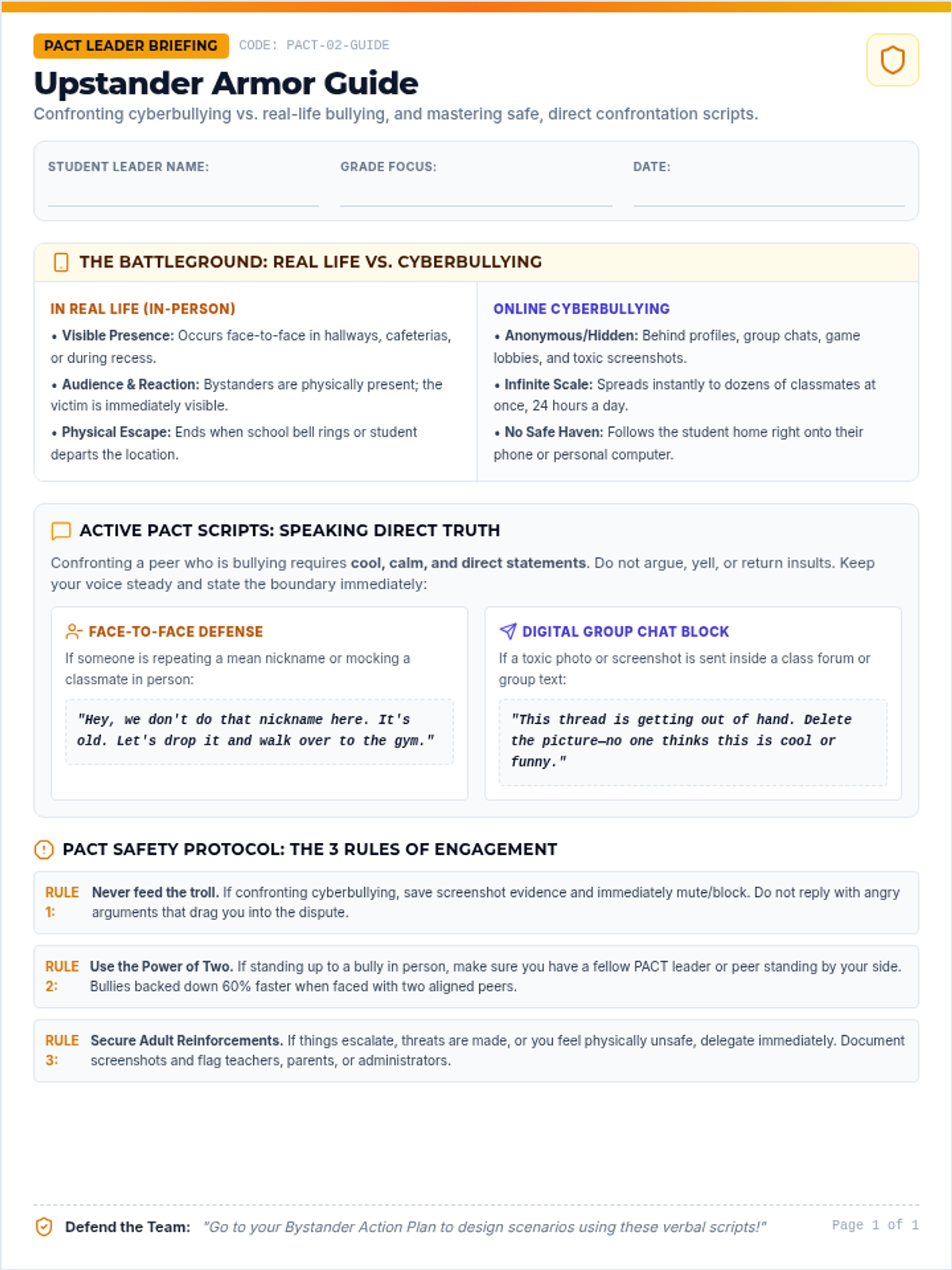
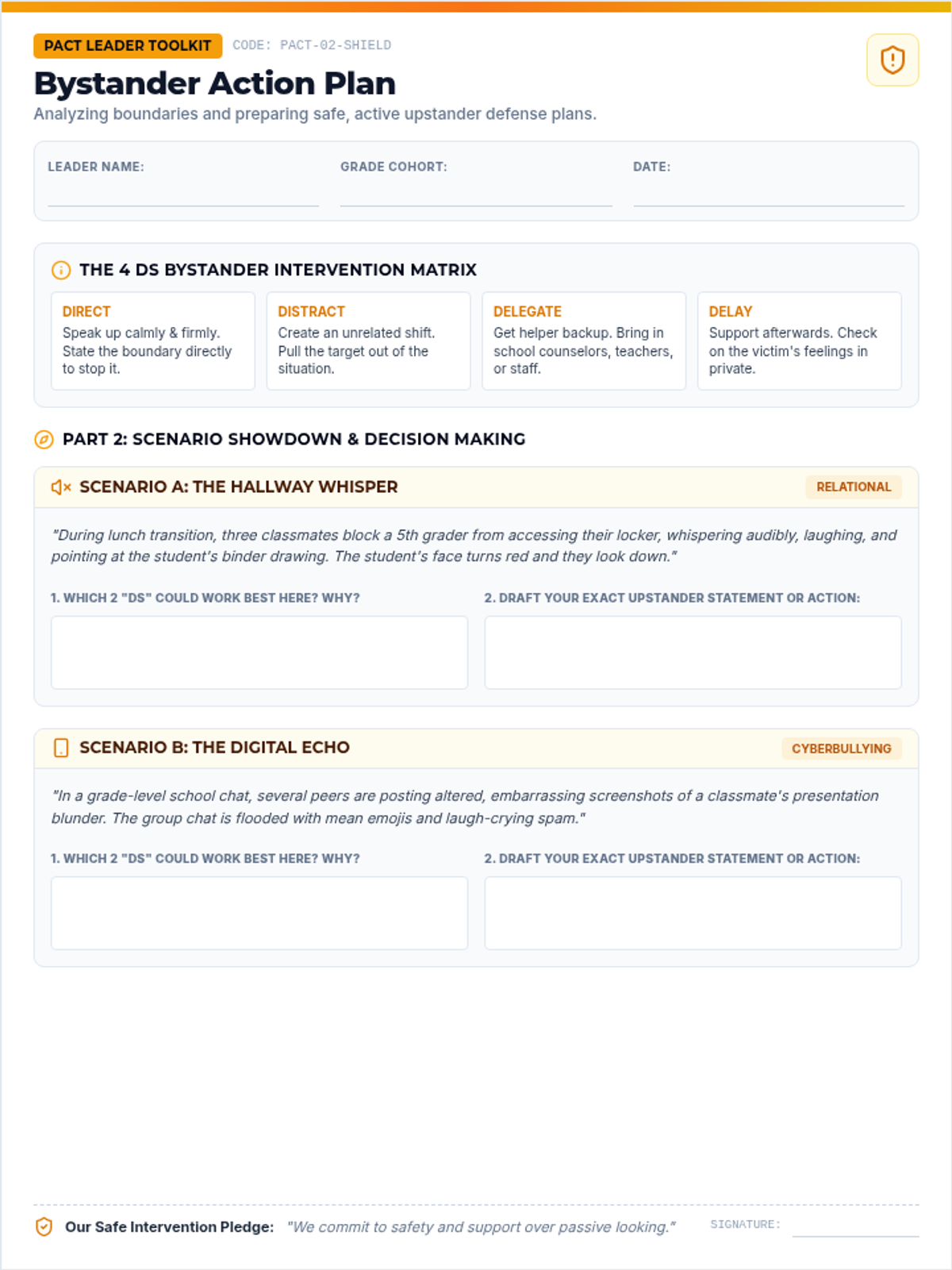
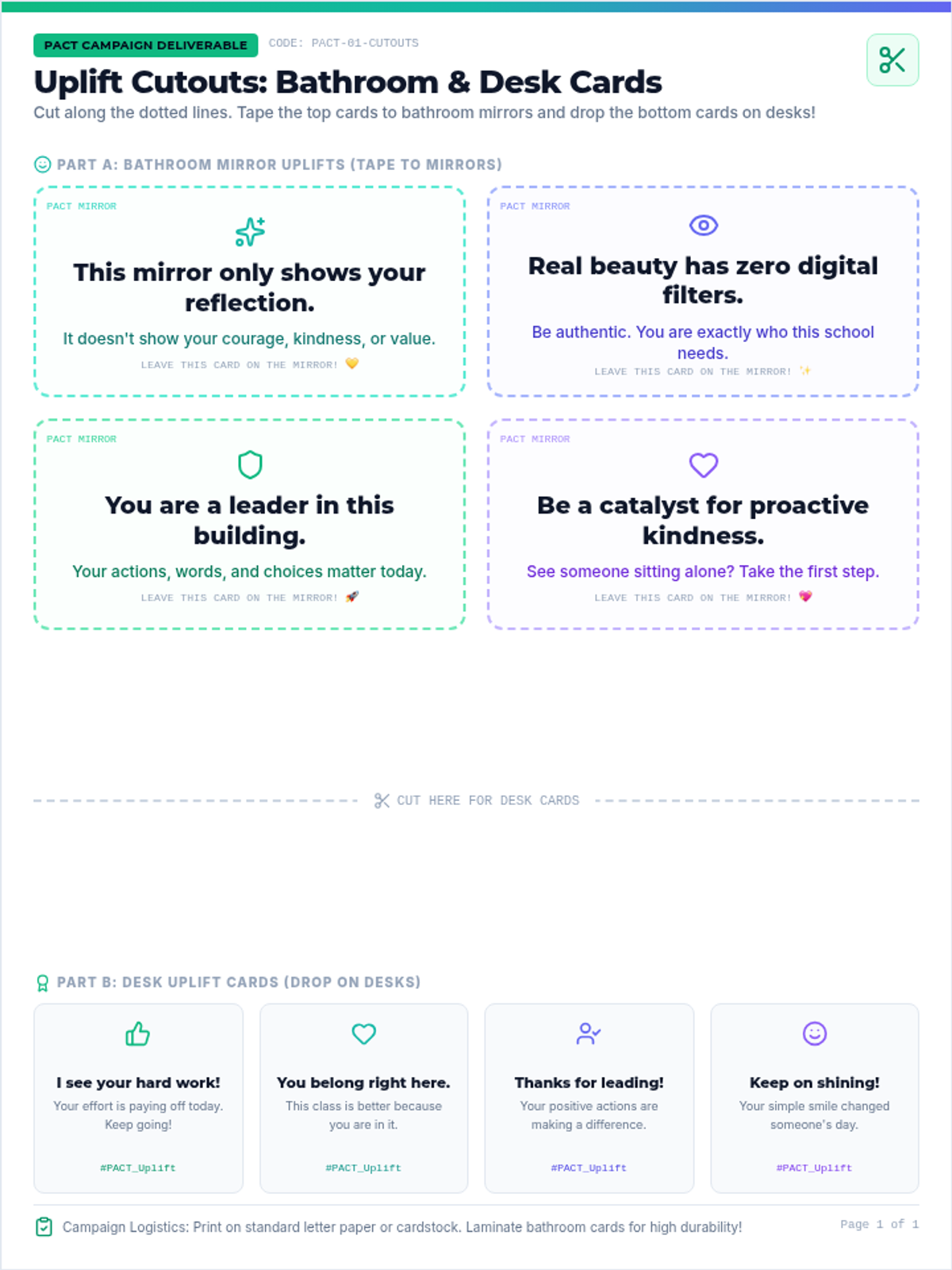
Teaches student leaders to identify the fine line between teasing and bullying, and equips them with safe, practical upstander intervention and peer support frameworks.
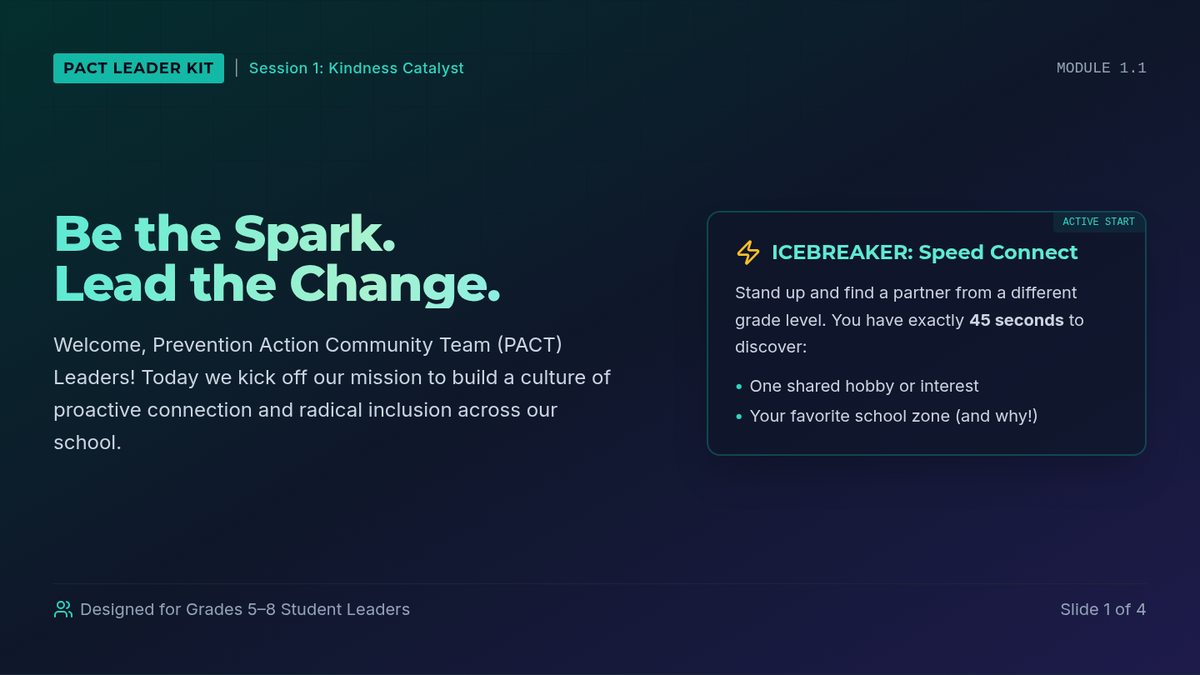
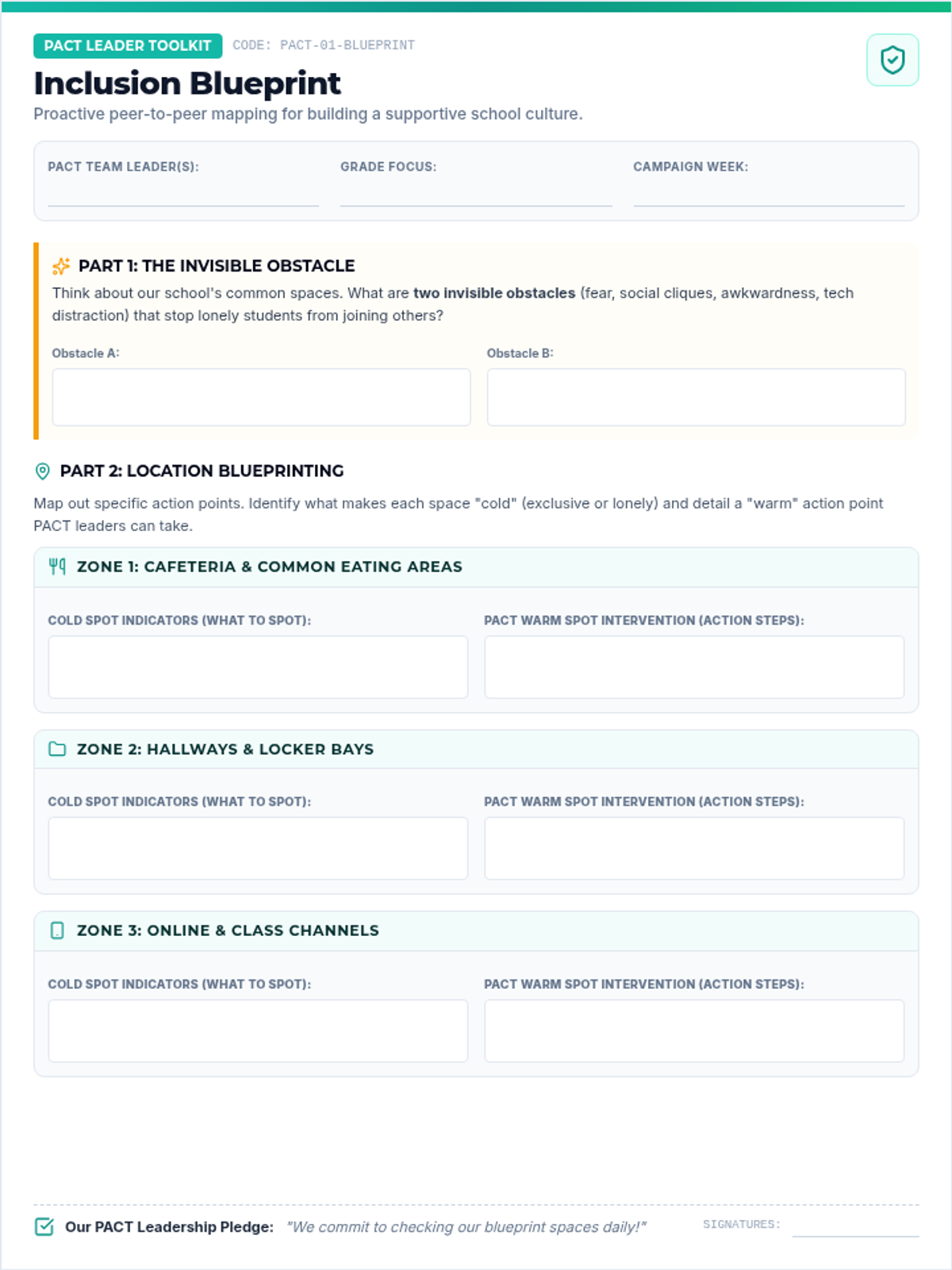
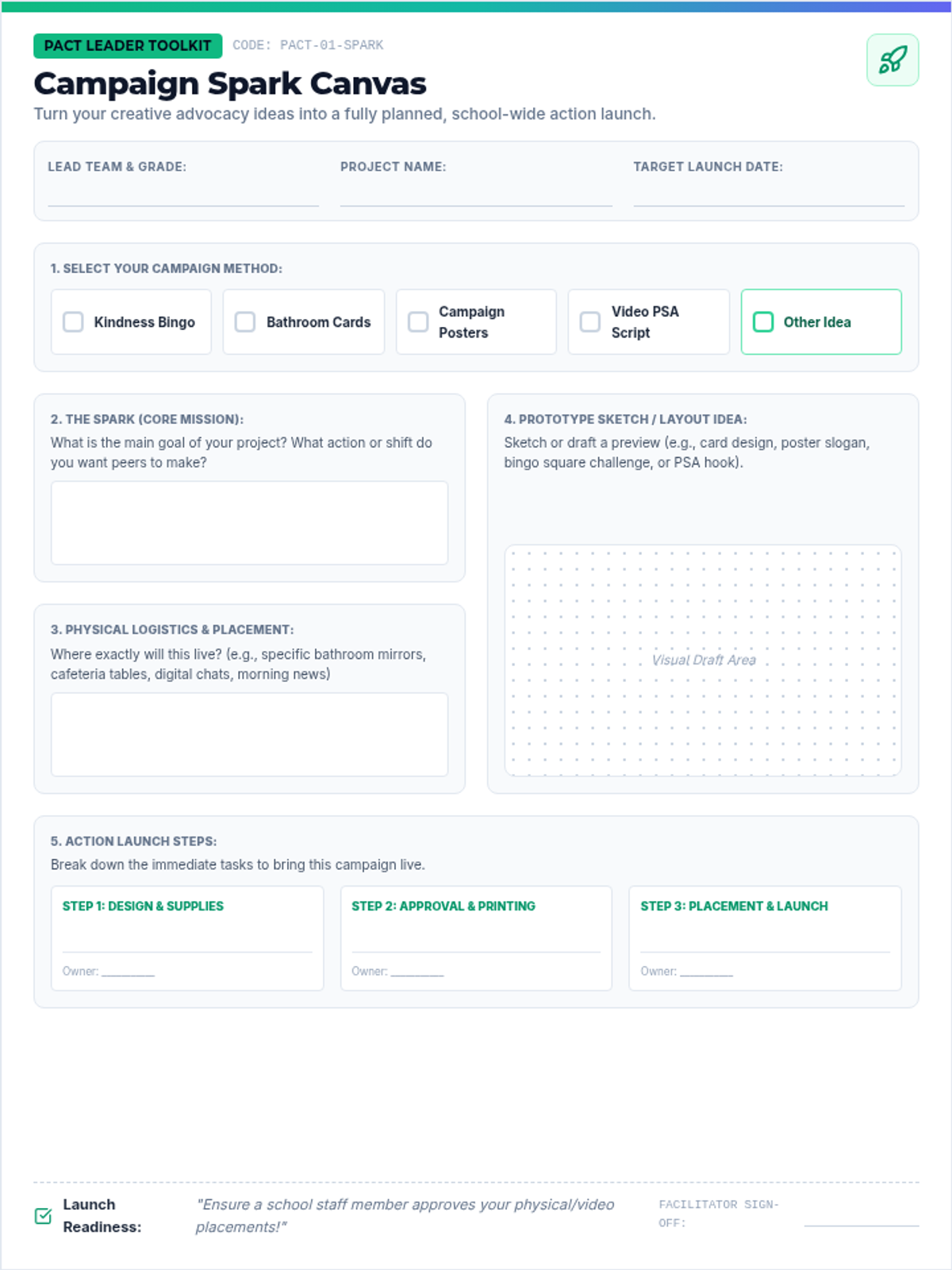
Equips PACT student leaders with core concepts of proactive inclusion, empathy, and positive peer-to-peer connection. Features a hands-on inclusion blueprint worksheet and peer training presentation.
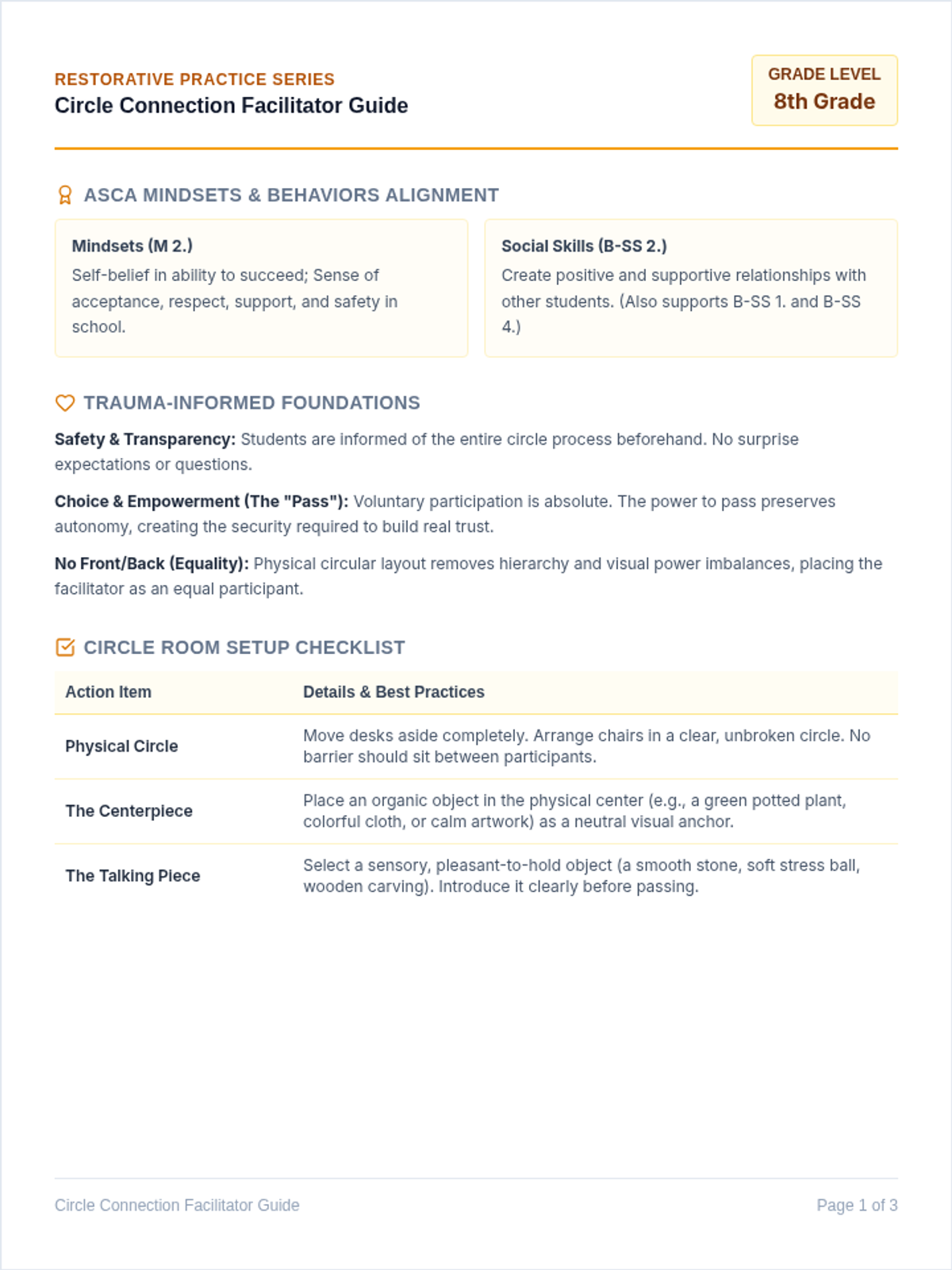
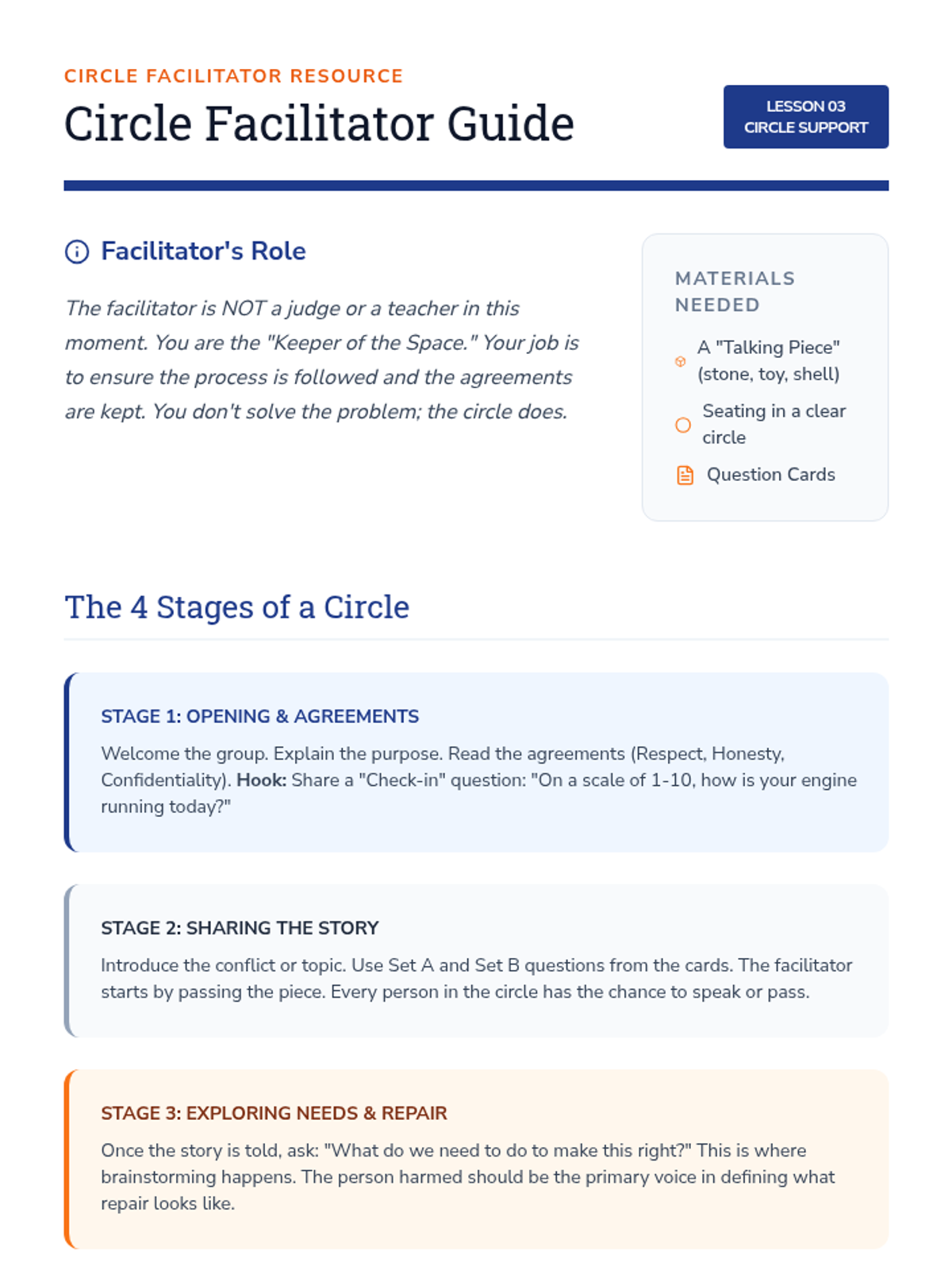
An introductory lesson designed to demystify restorative justice circles for 8th-grade students in California, building trust and encouraging voluntary participation using an ASCA-aligned, trauma-informed lens.
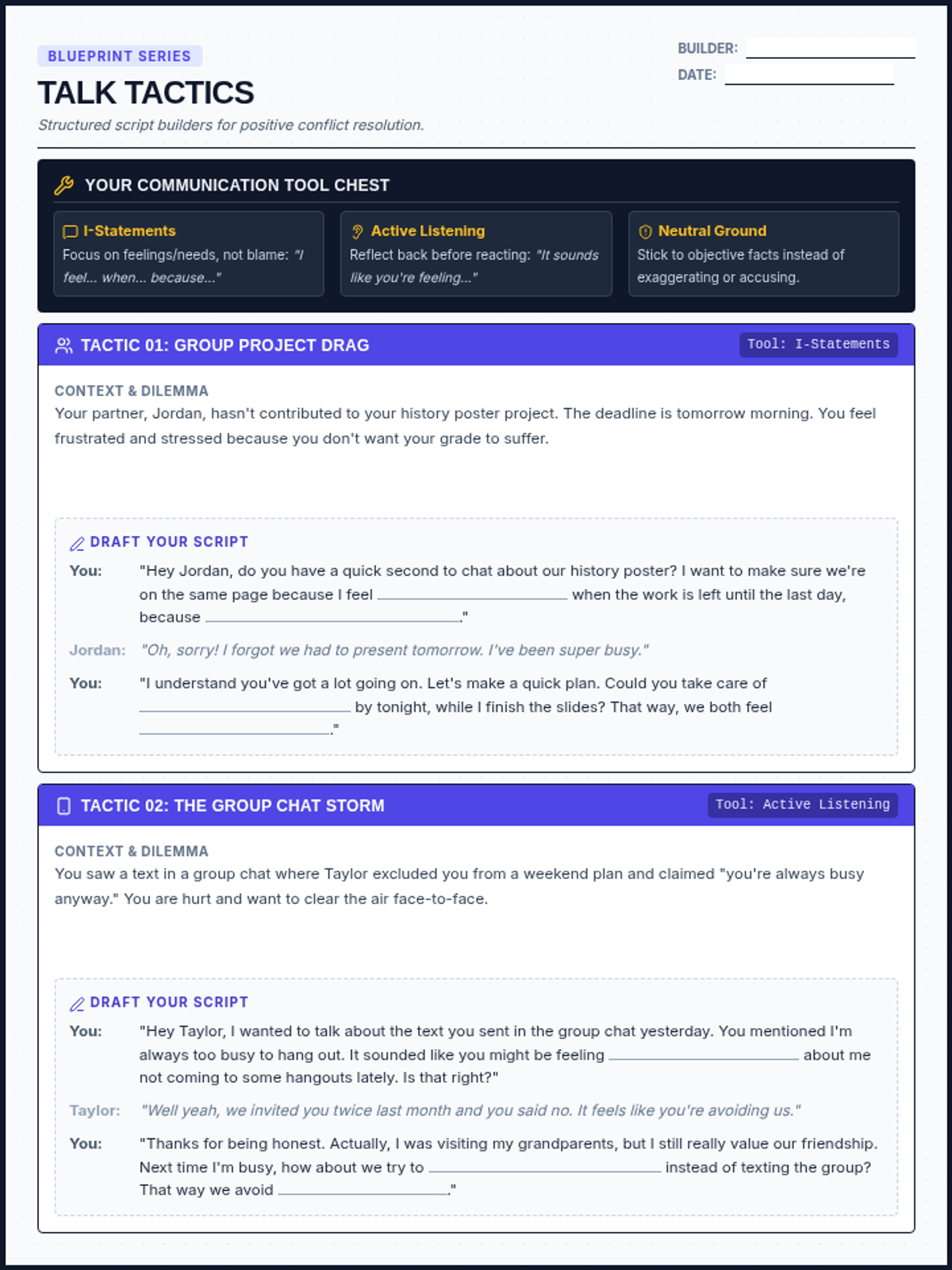
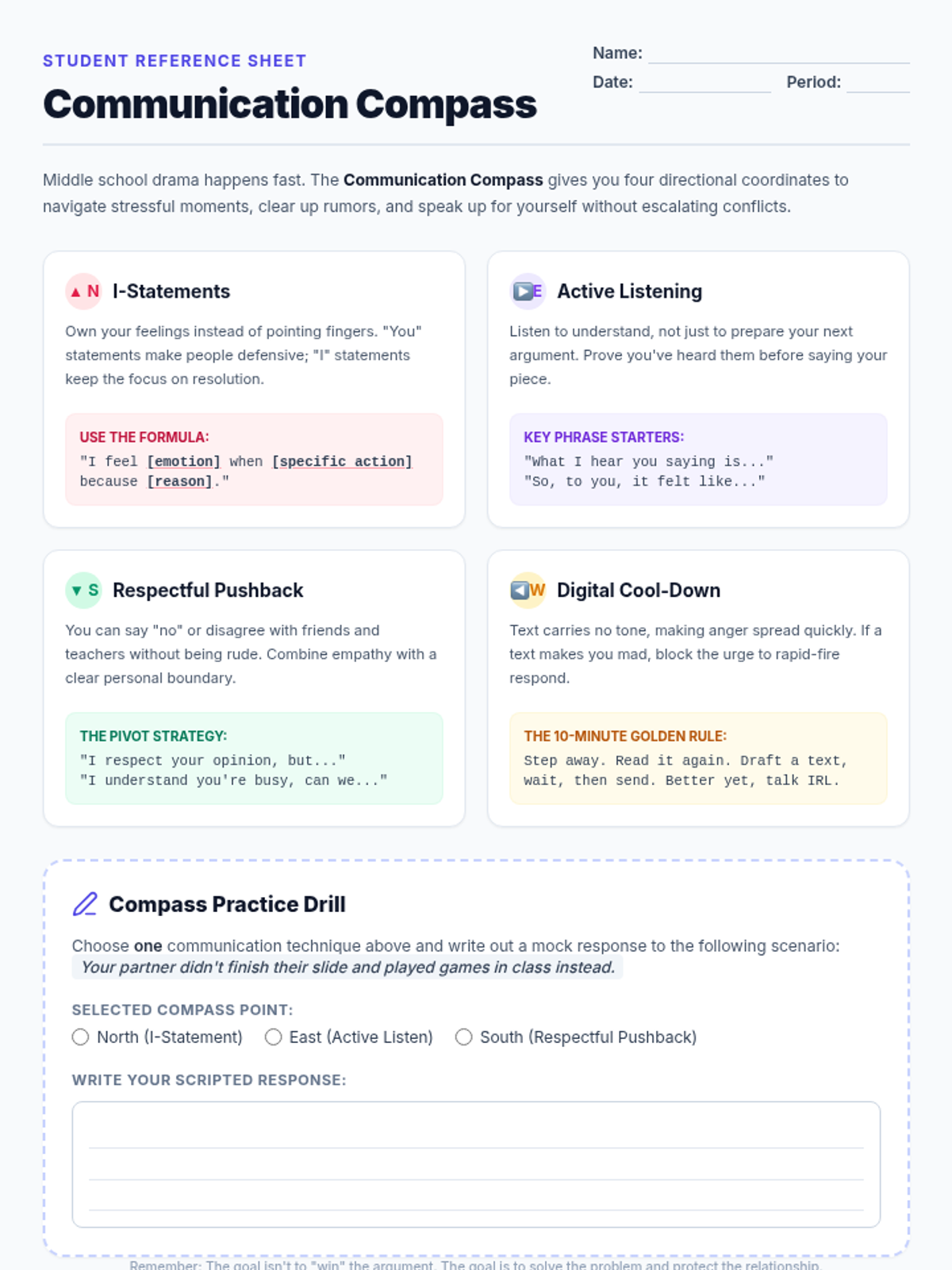
A lesson focused on equipping middle schoolers with constructive communication strategies to resolve everyday conflicts, including group work disagreements, digital drama, boundary issues, and self-advocacy with teachers.
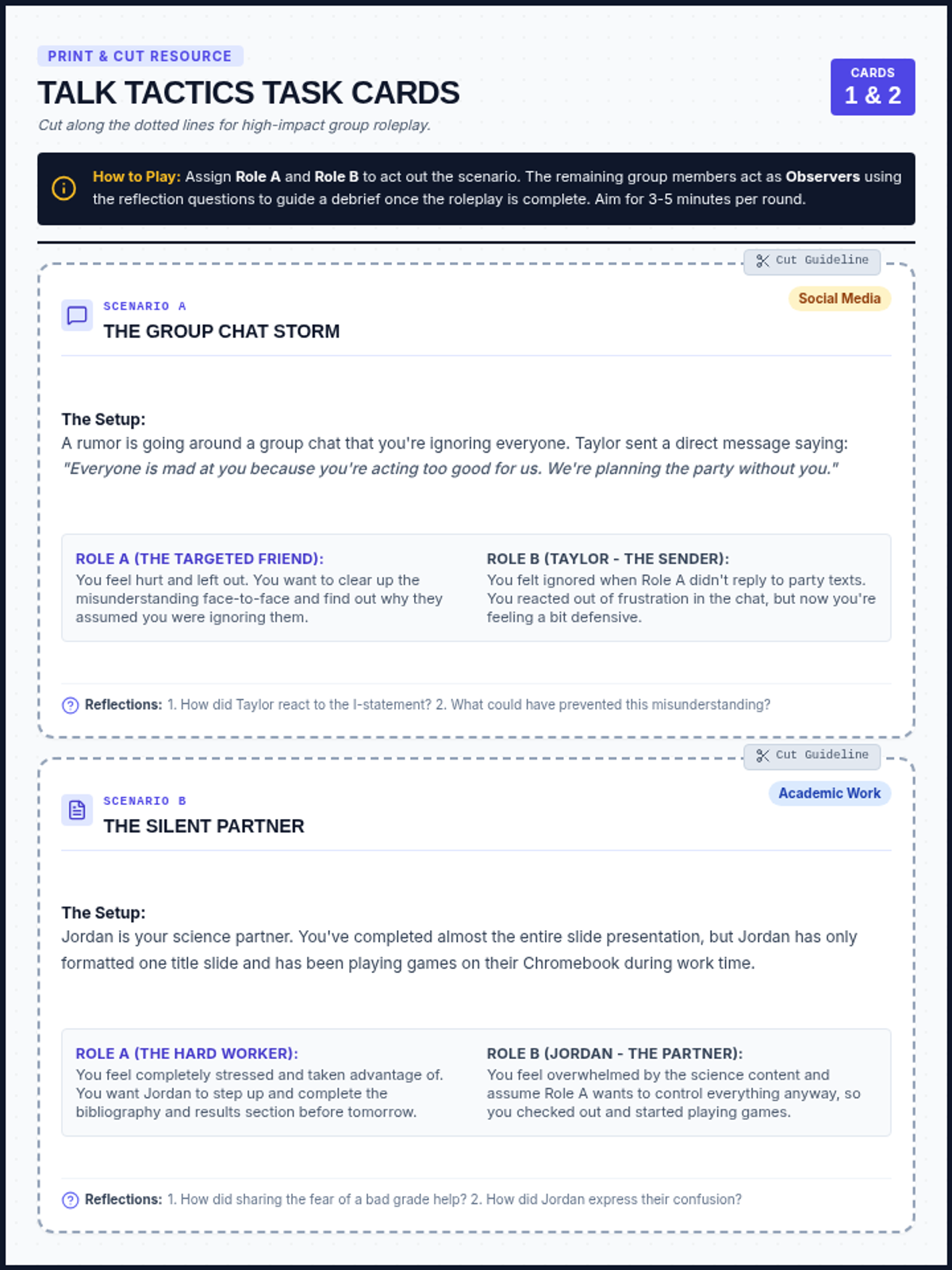
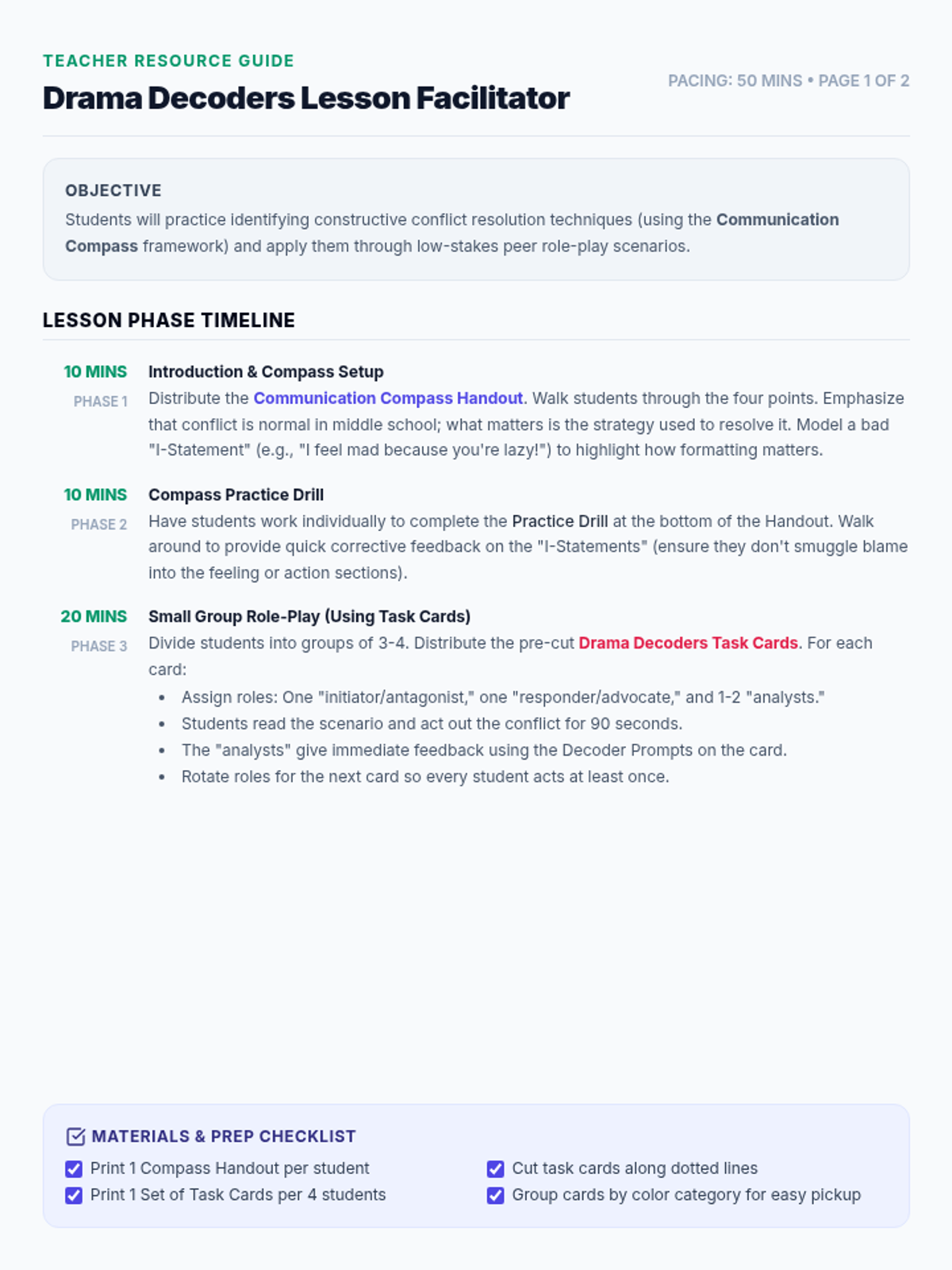
An interactive, small-group role-playing lesson designed to help middle schoolers navigate conflict resolution, peer pressure, digital misunderstandings, and teacher advocacy using positive communication frameworks.
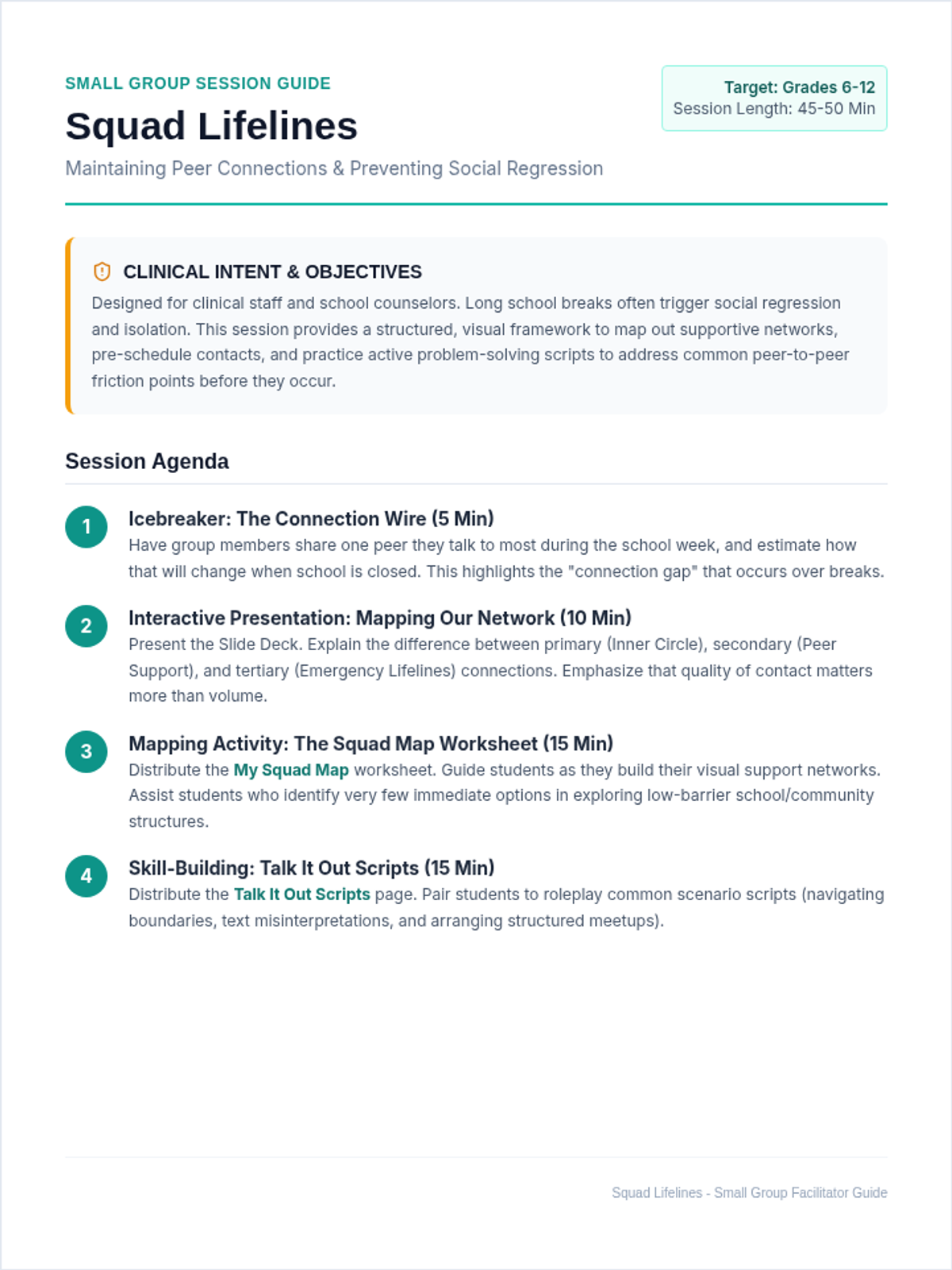
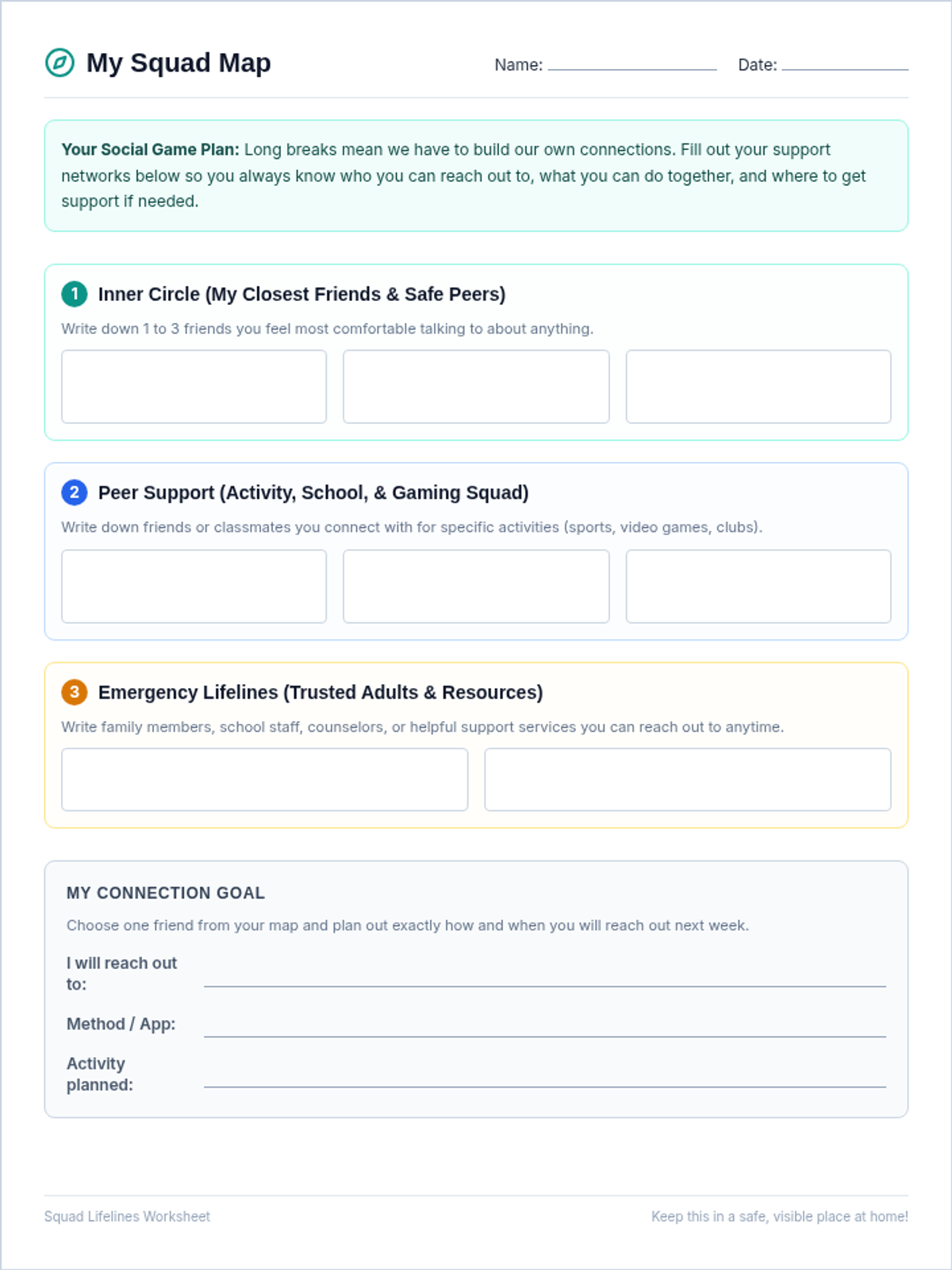
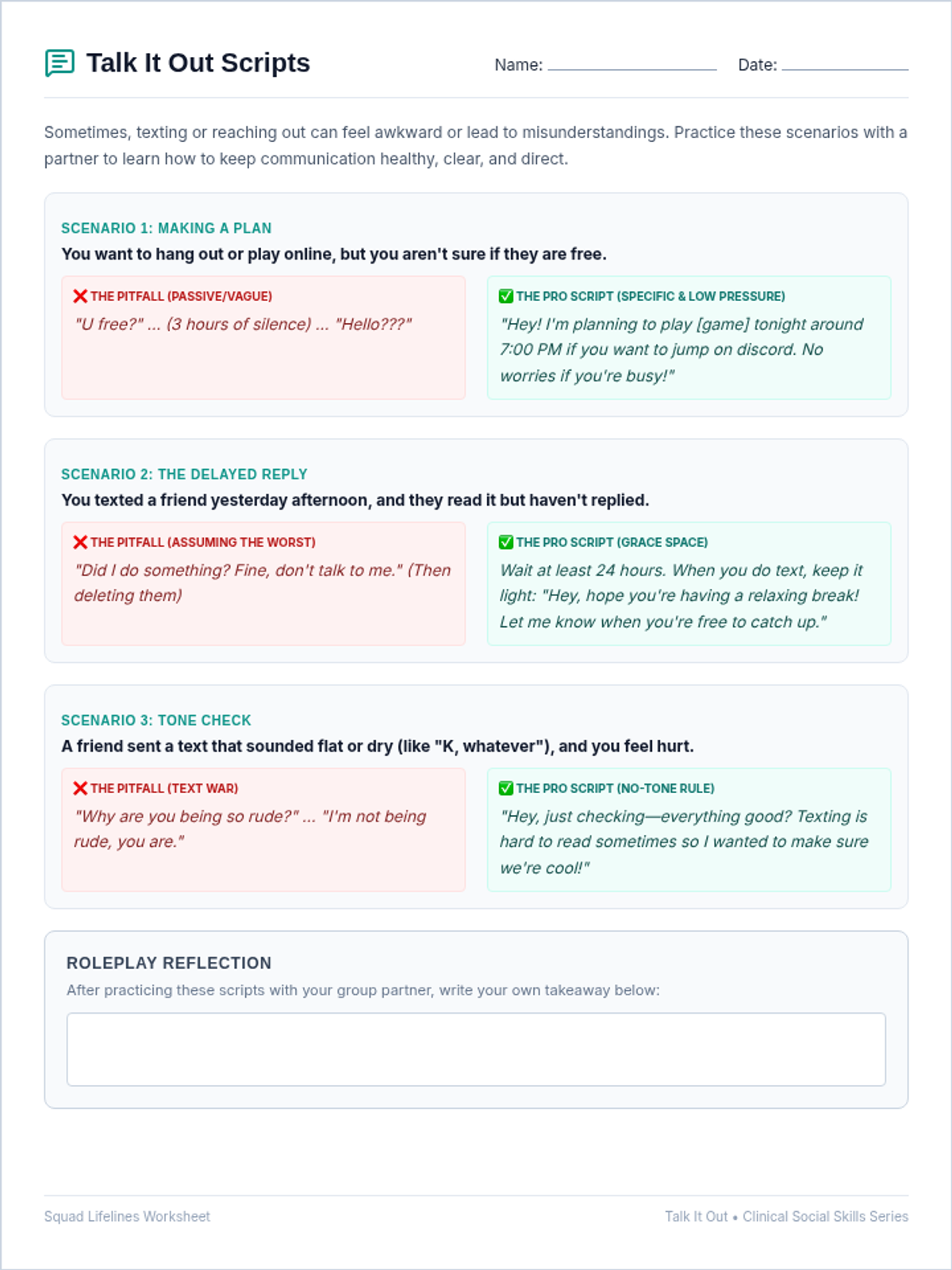
A specialized curriculum unit designed for clinical staff and school counselors facilitating small groups on social skills, helping students maintain active peer support, prevent isolation, and navigate conflicts during long school breaks.
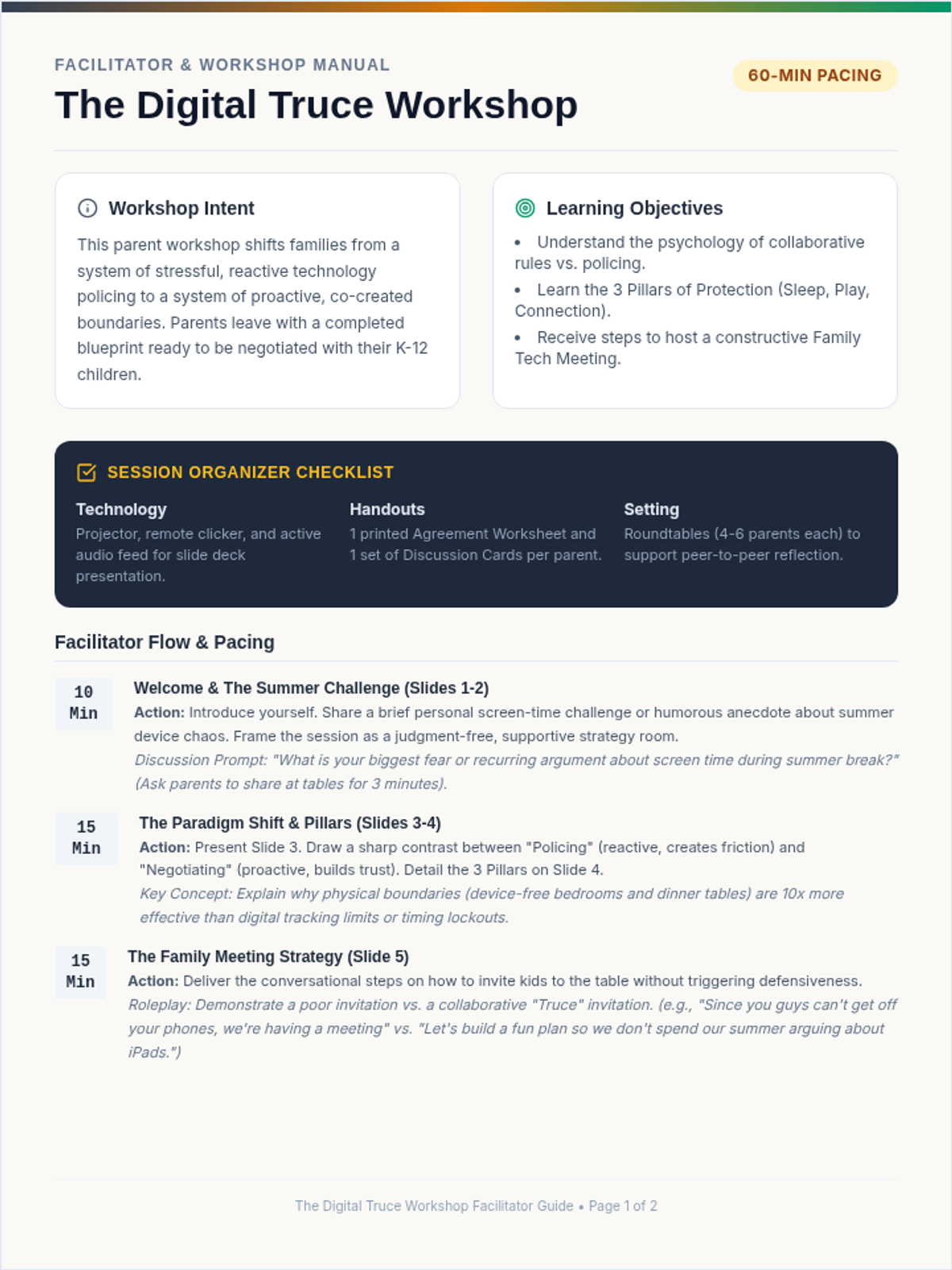
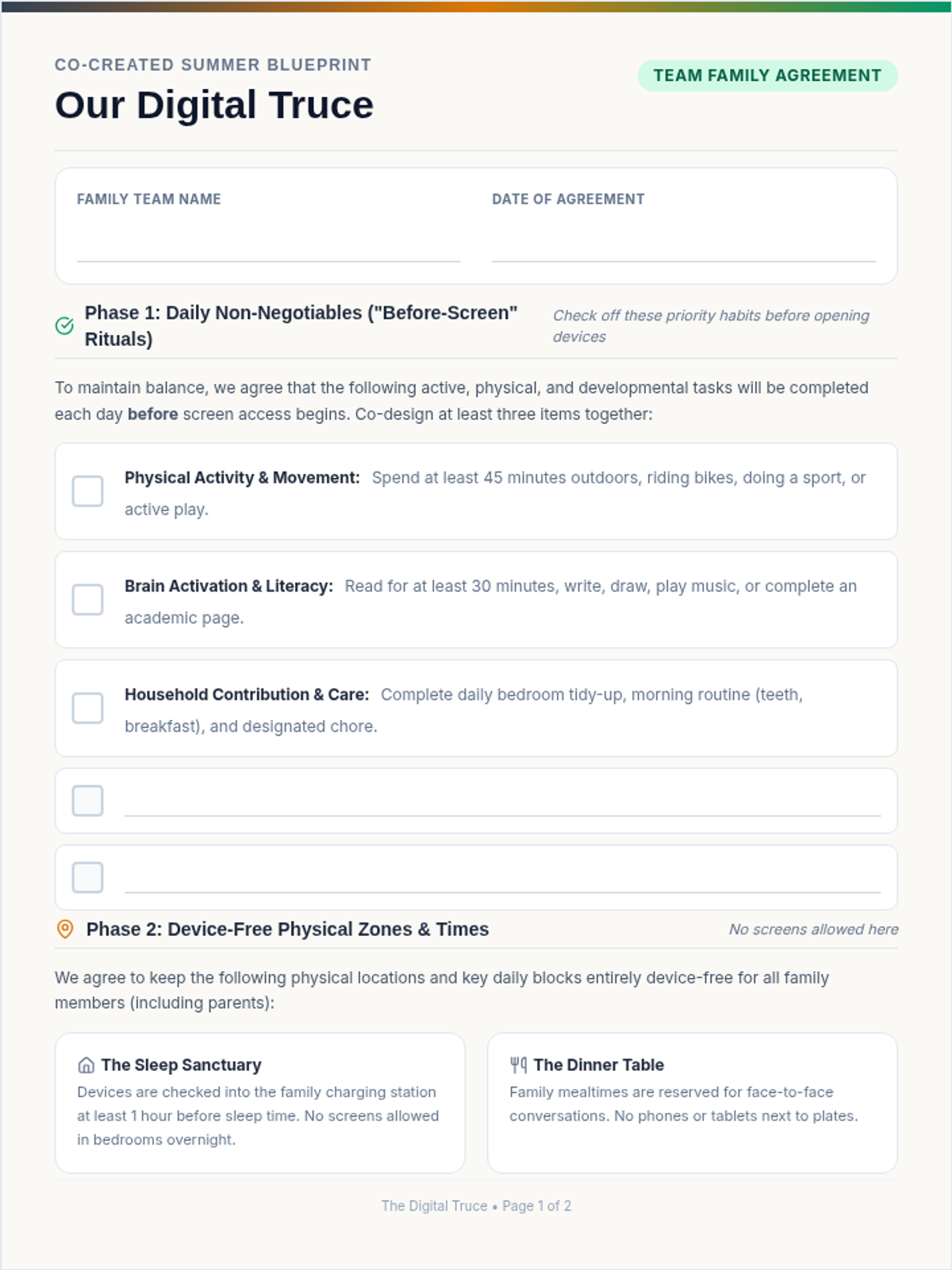
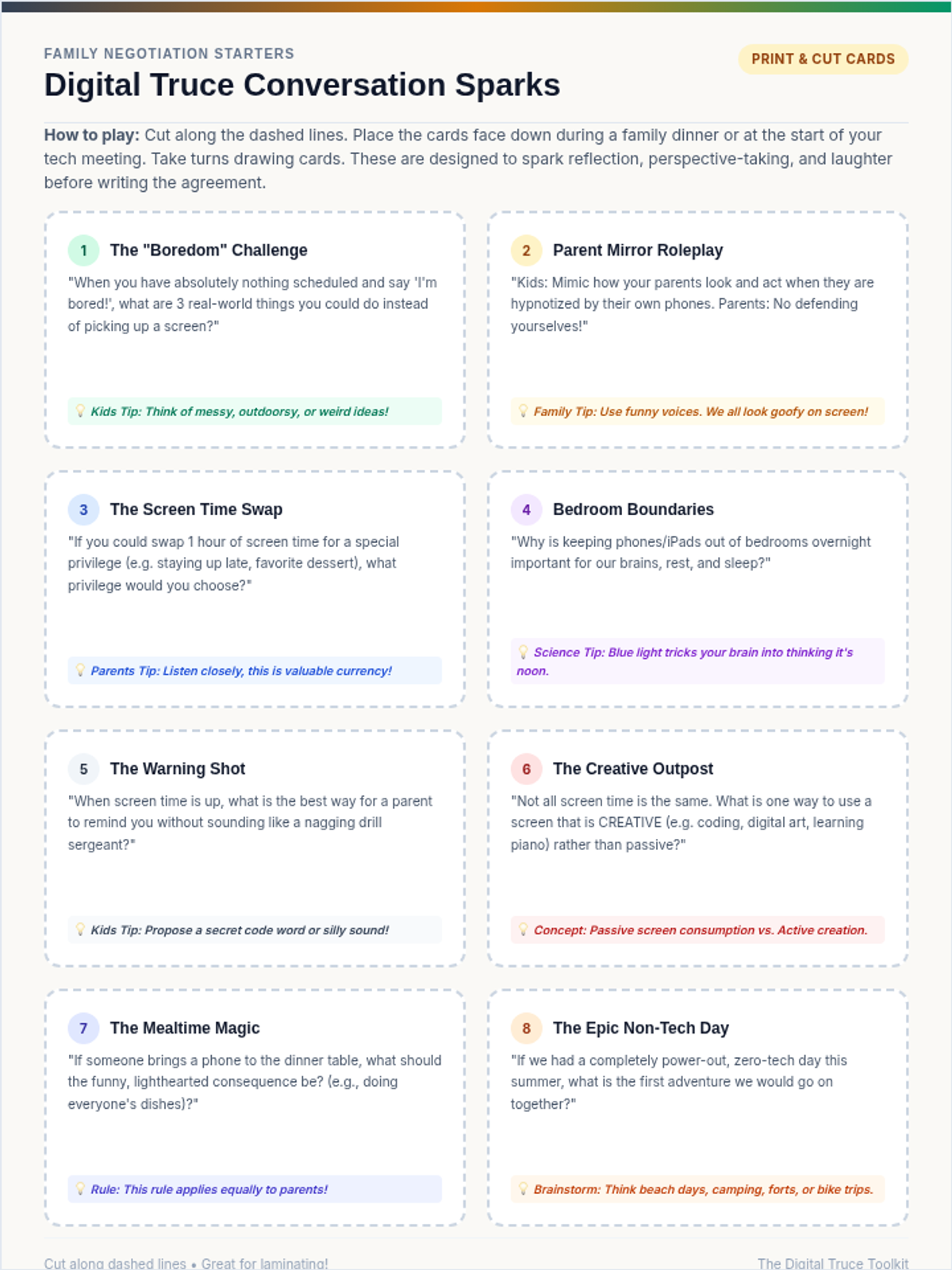
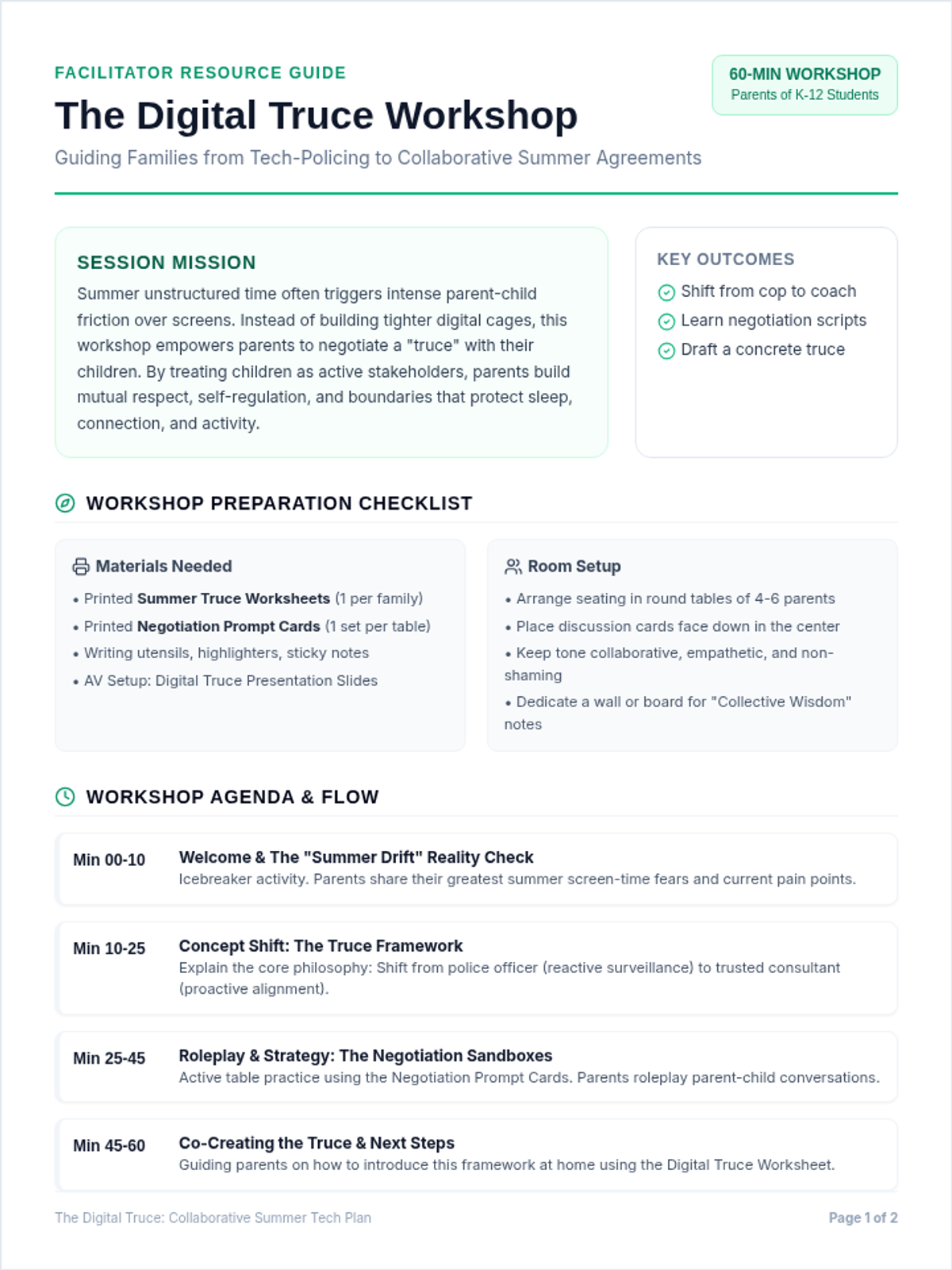
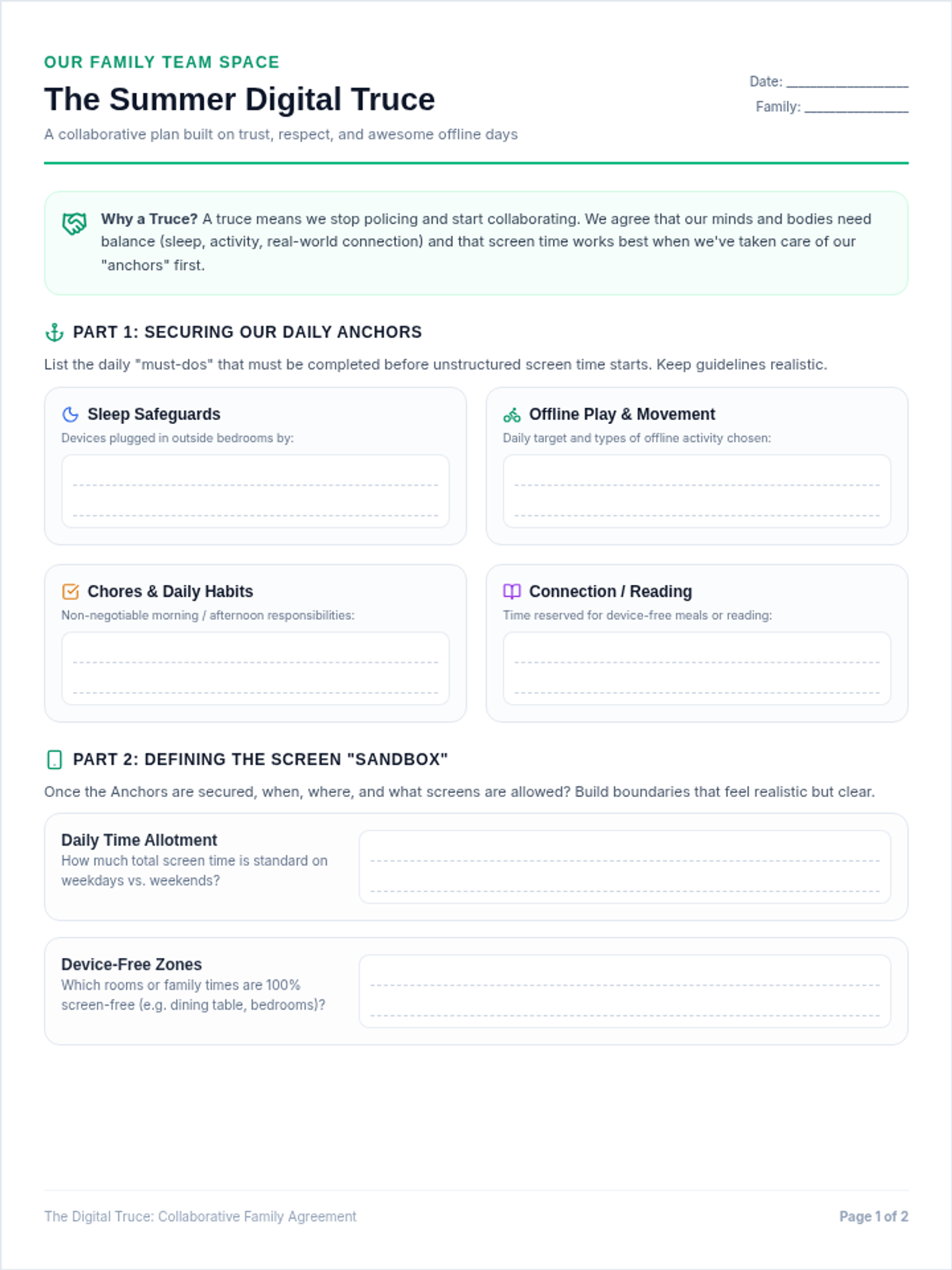
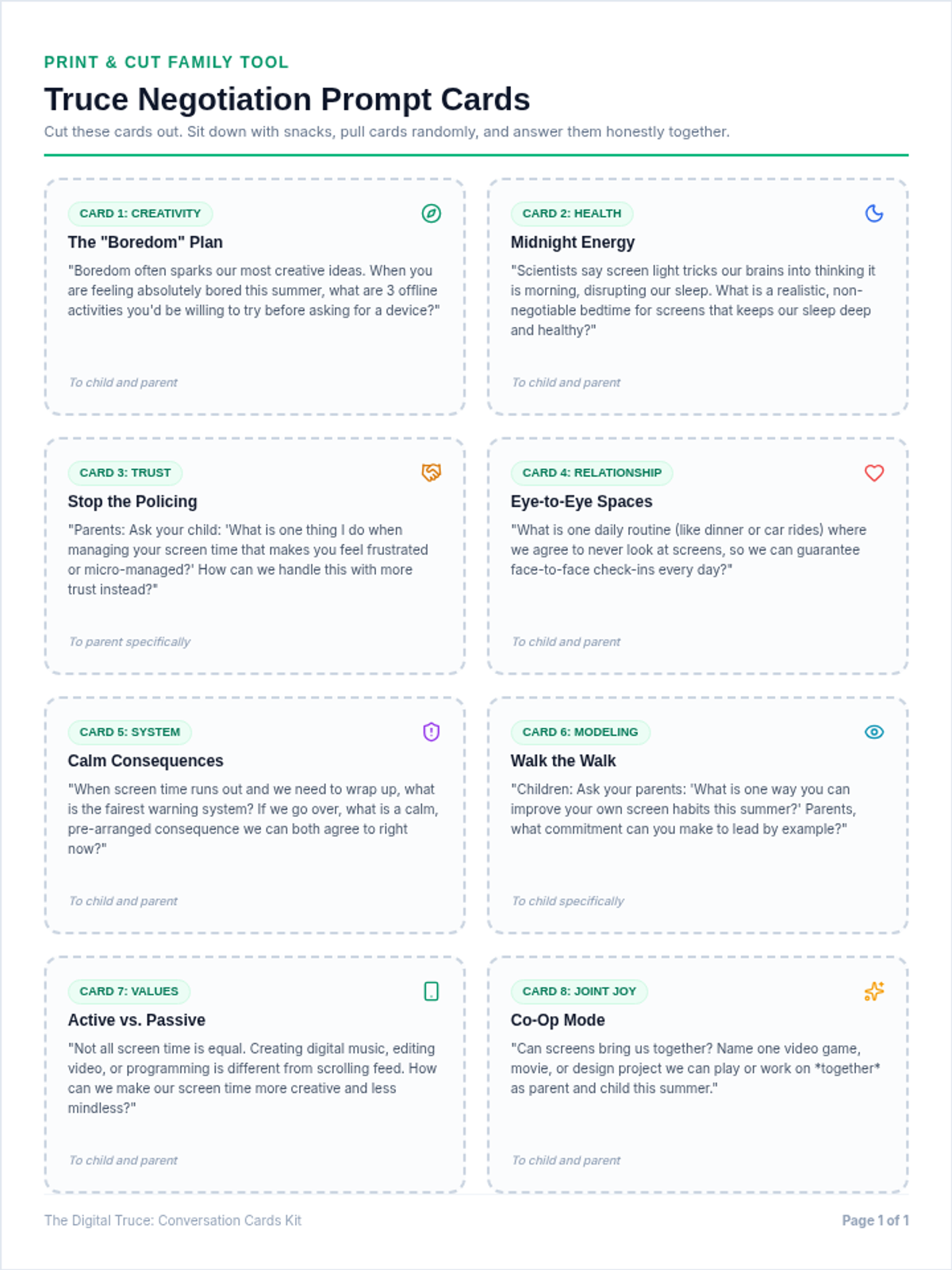
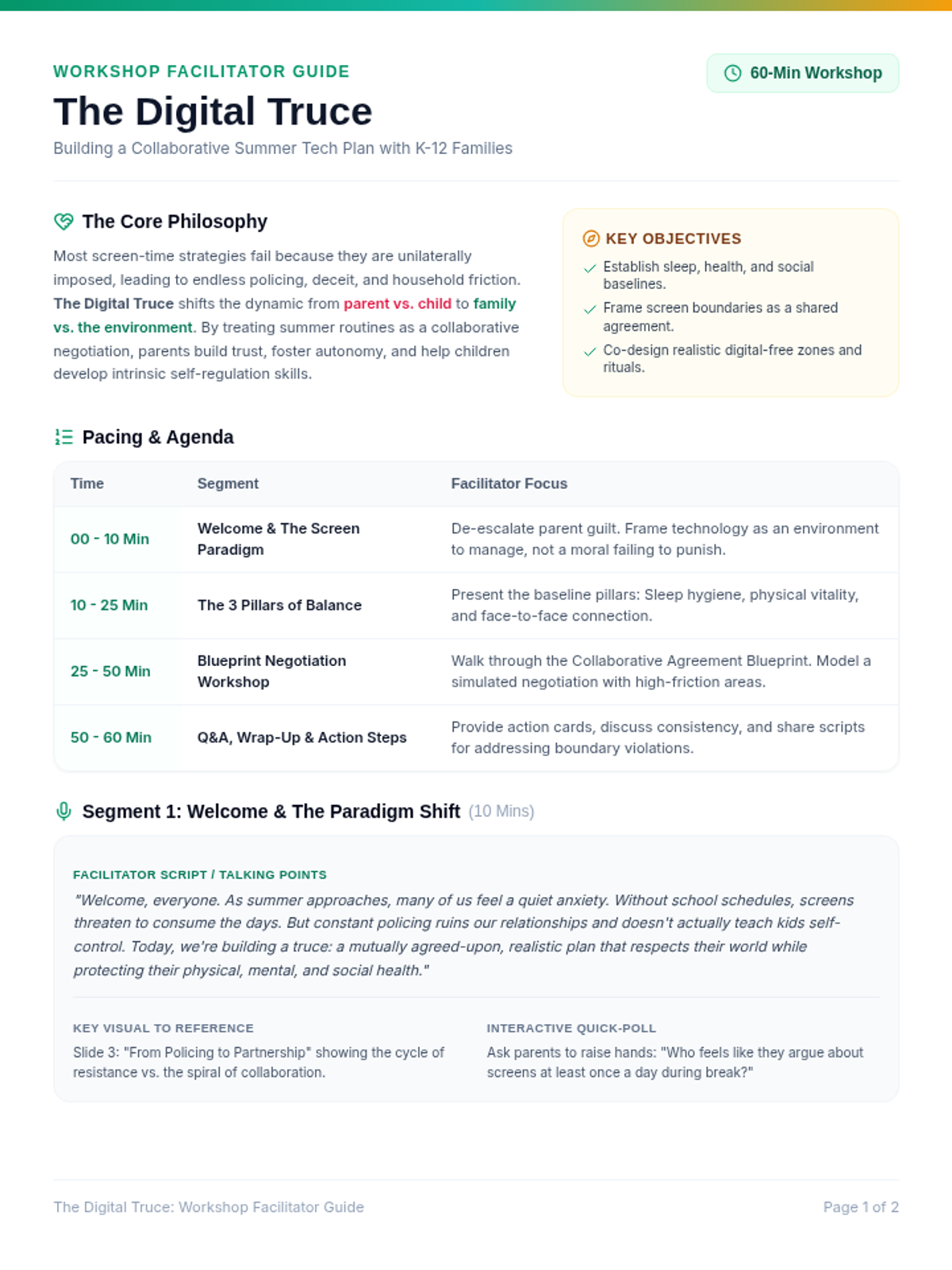
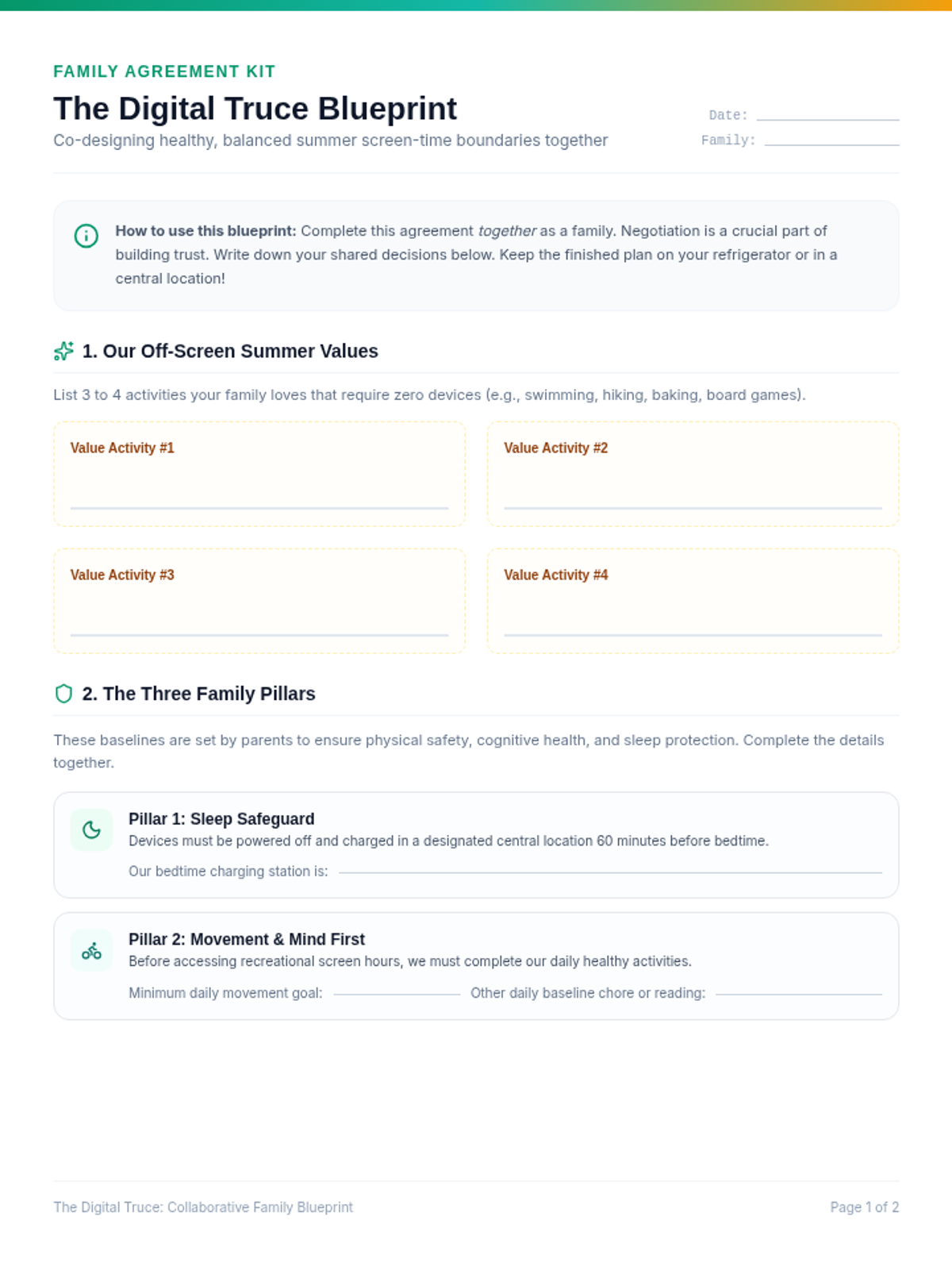
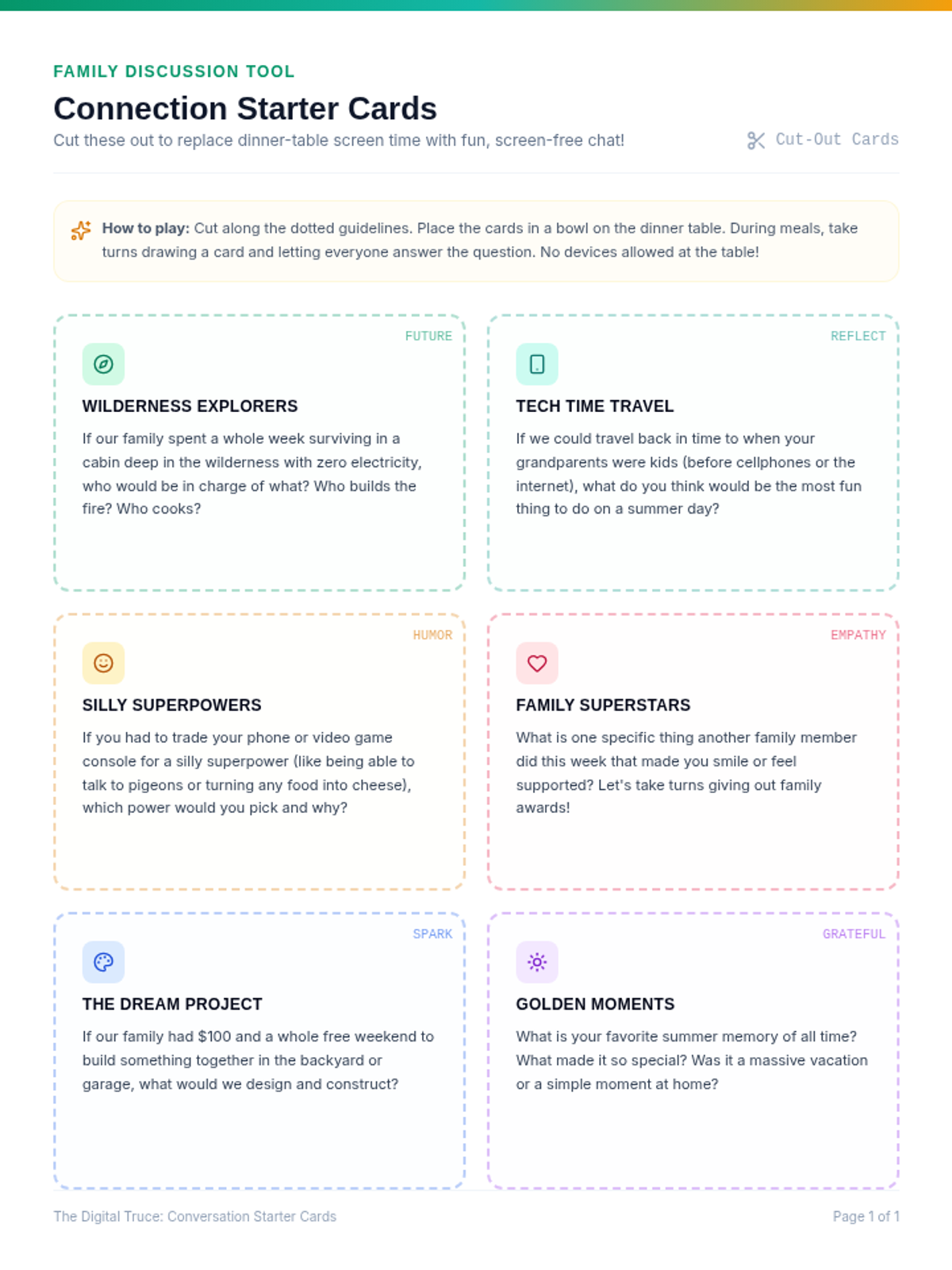
A collaborative workshop and toolkit designed to help parents of K-12 students establish healthy, co-created summer screen-time boundaries with their children through negotiation and mutual trust.
A collaborative parent workshop and family kit designed to help K-12 parents negotiate healthy, realistic summer screen-time agreements with their children, focusing on trust over policing.
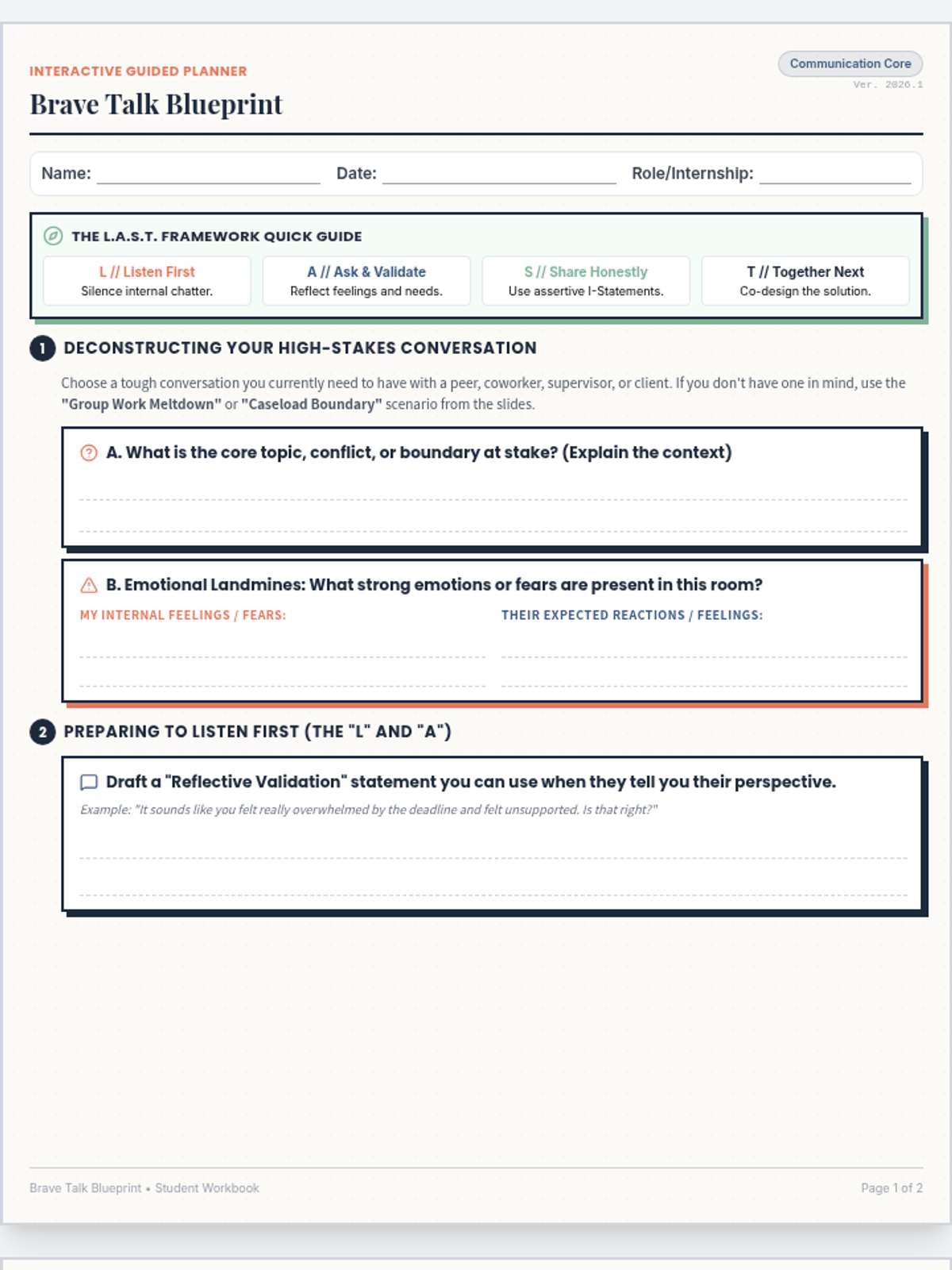
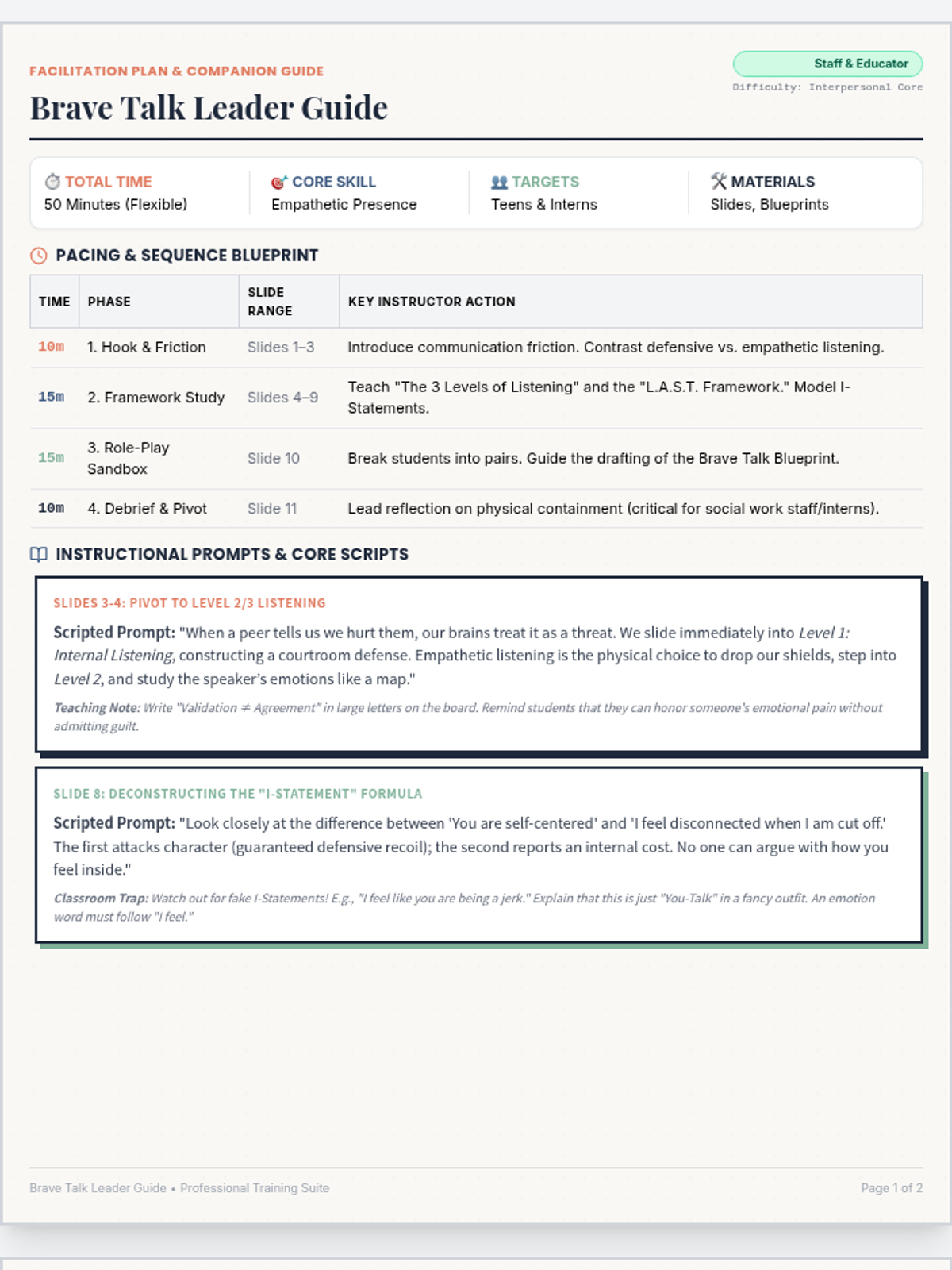
A comprehensive training lesson designed to teach middle/high school students and social work interns how to navigate emotionally charged, difficult conversations using empathetic listening and structured communication frameworks.
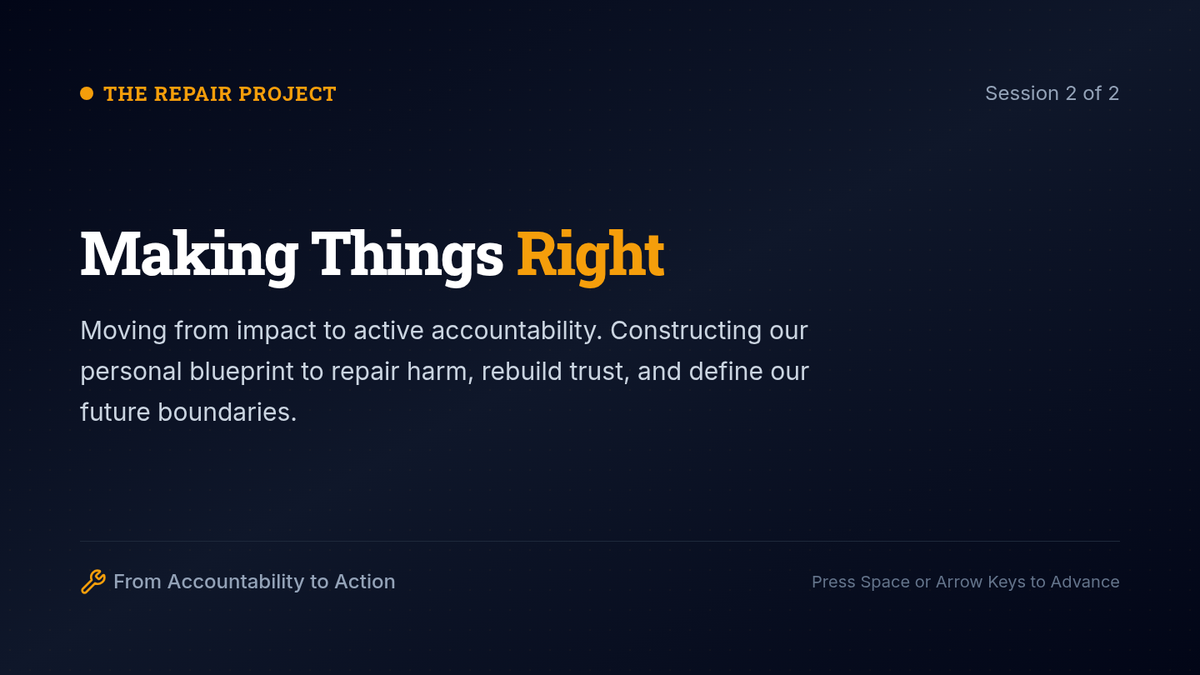
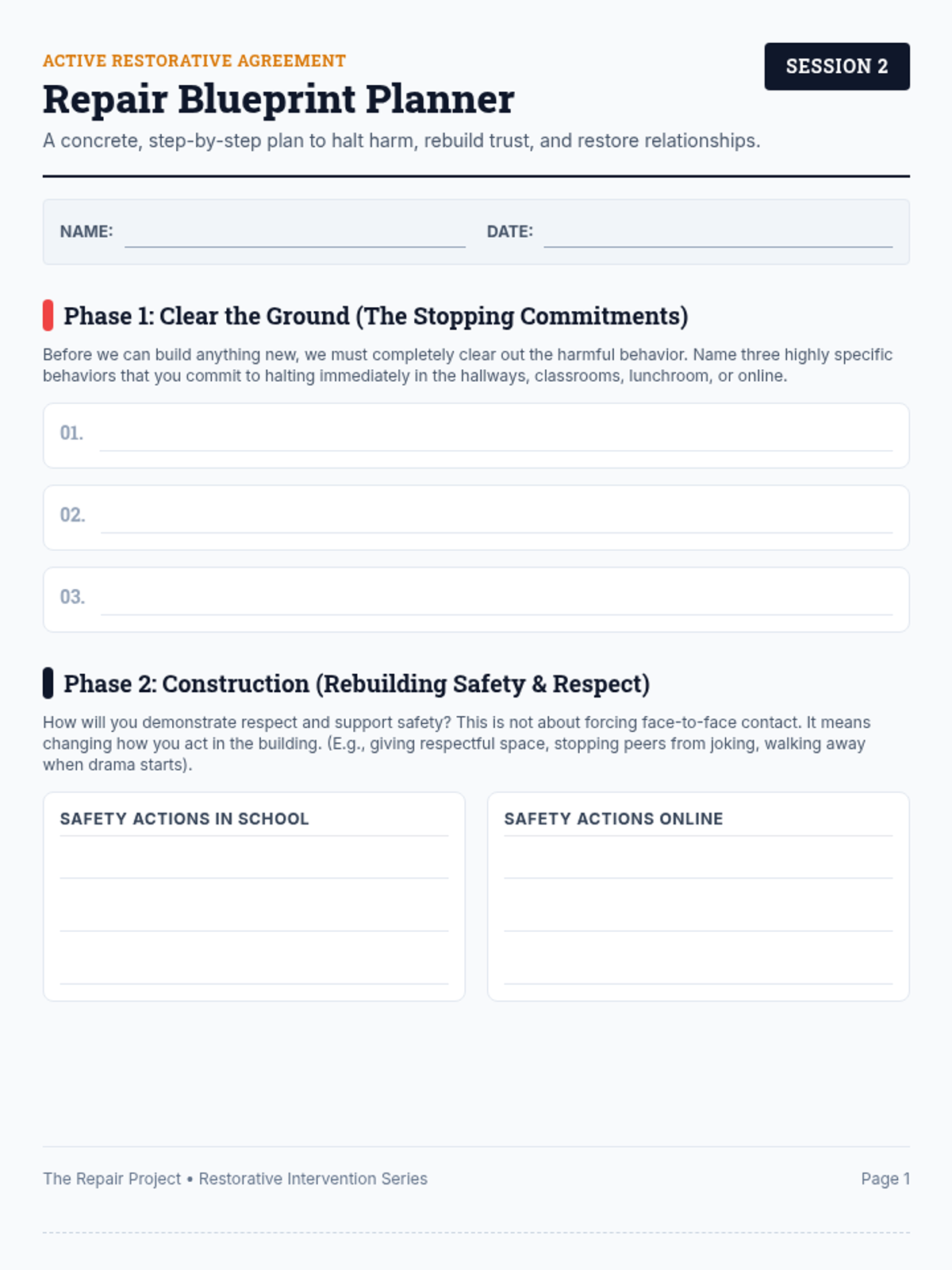
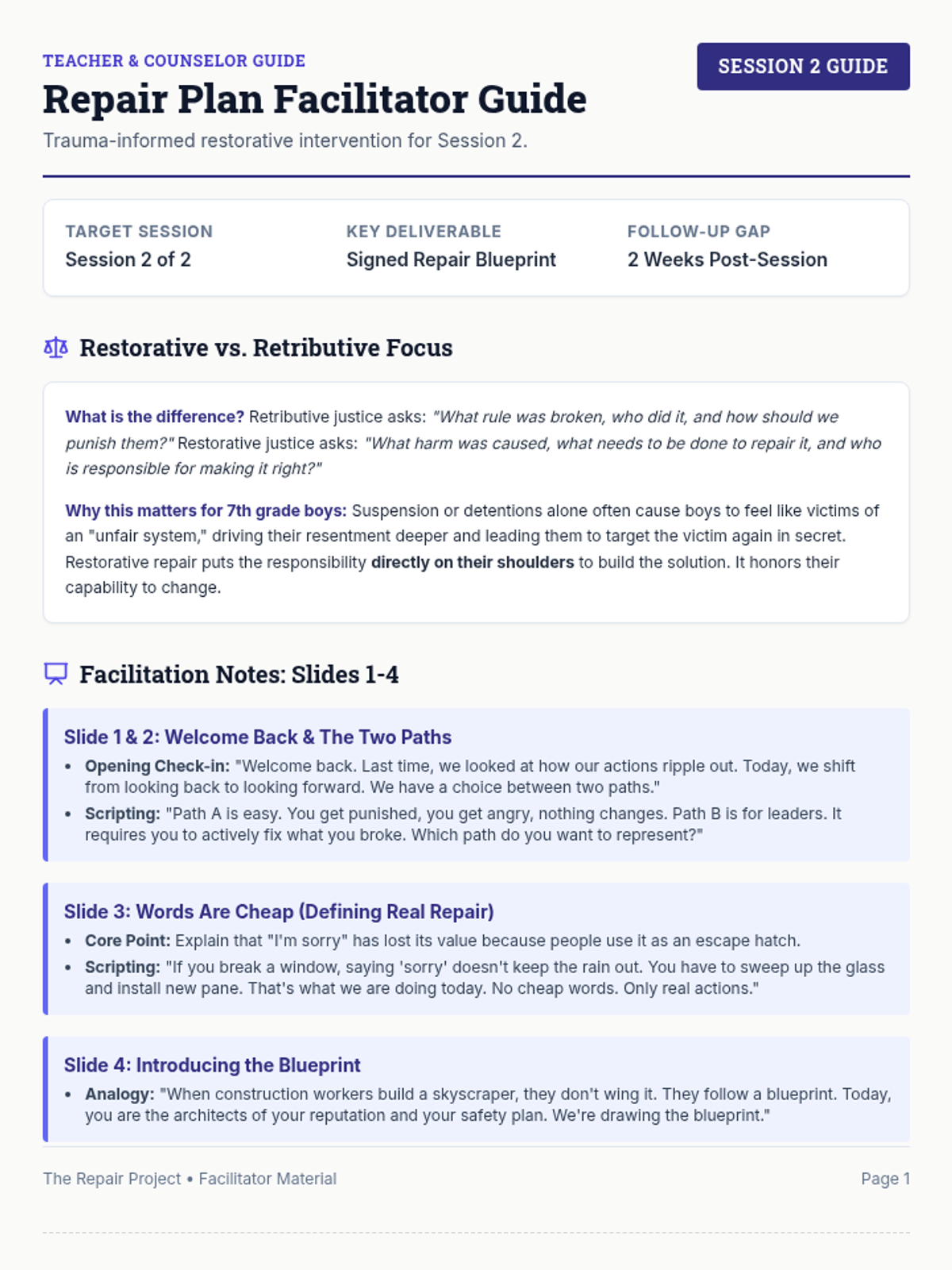
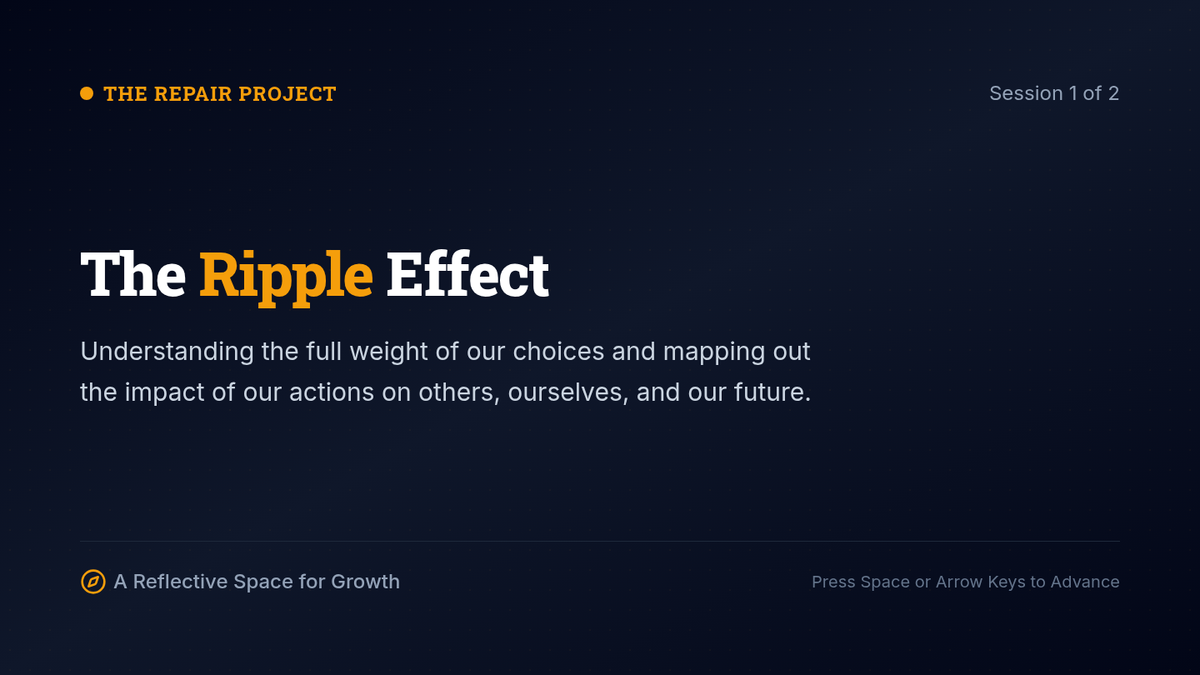
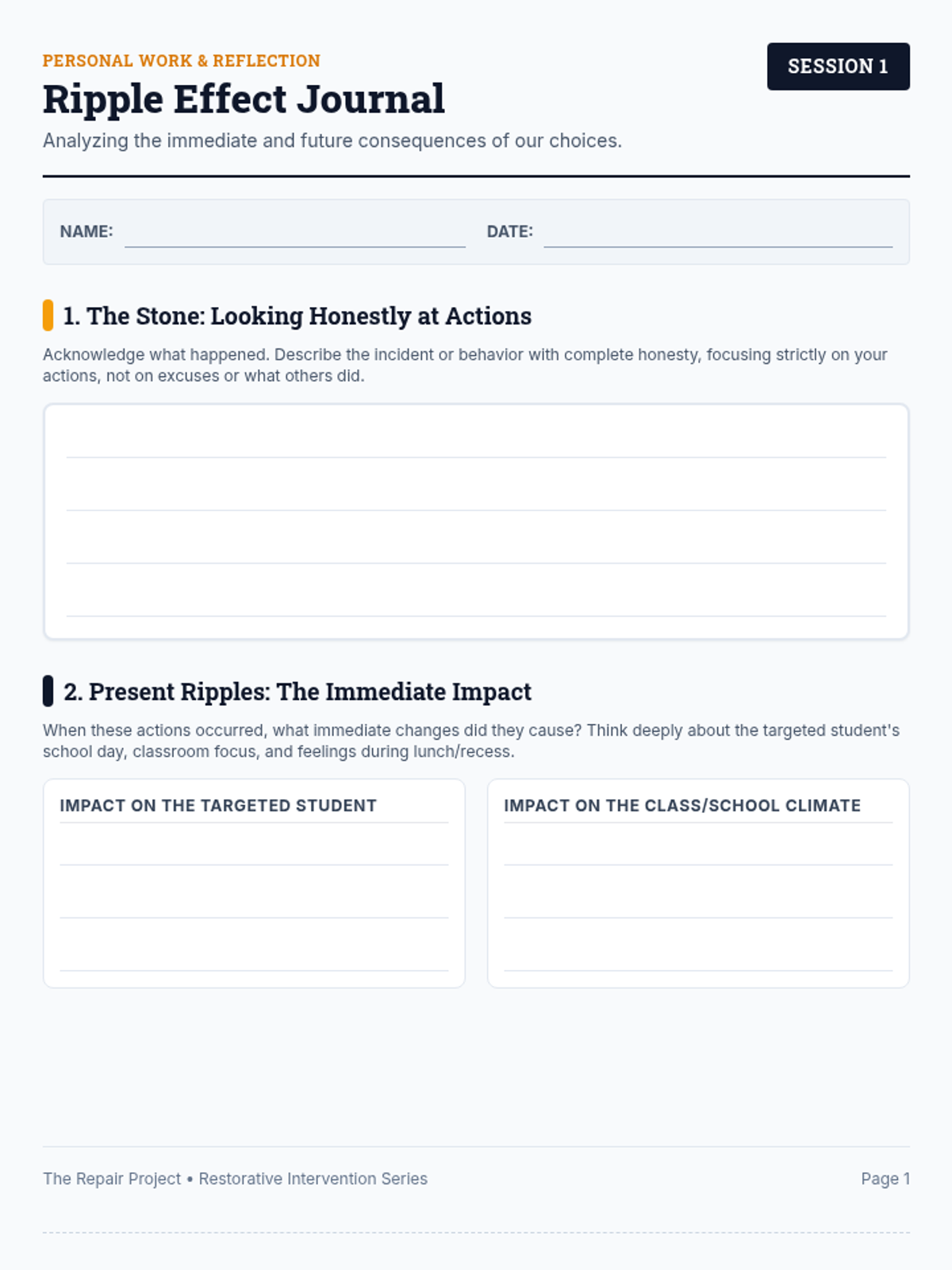
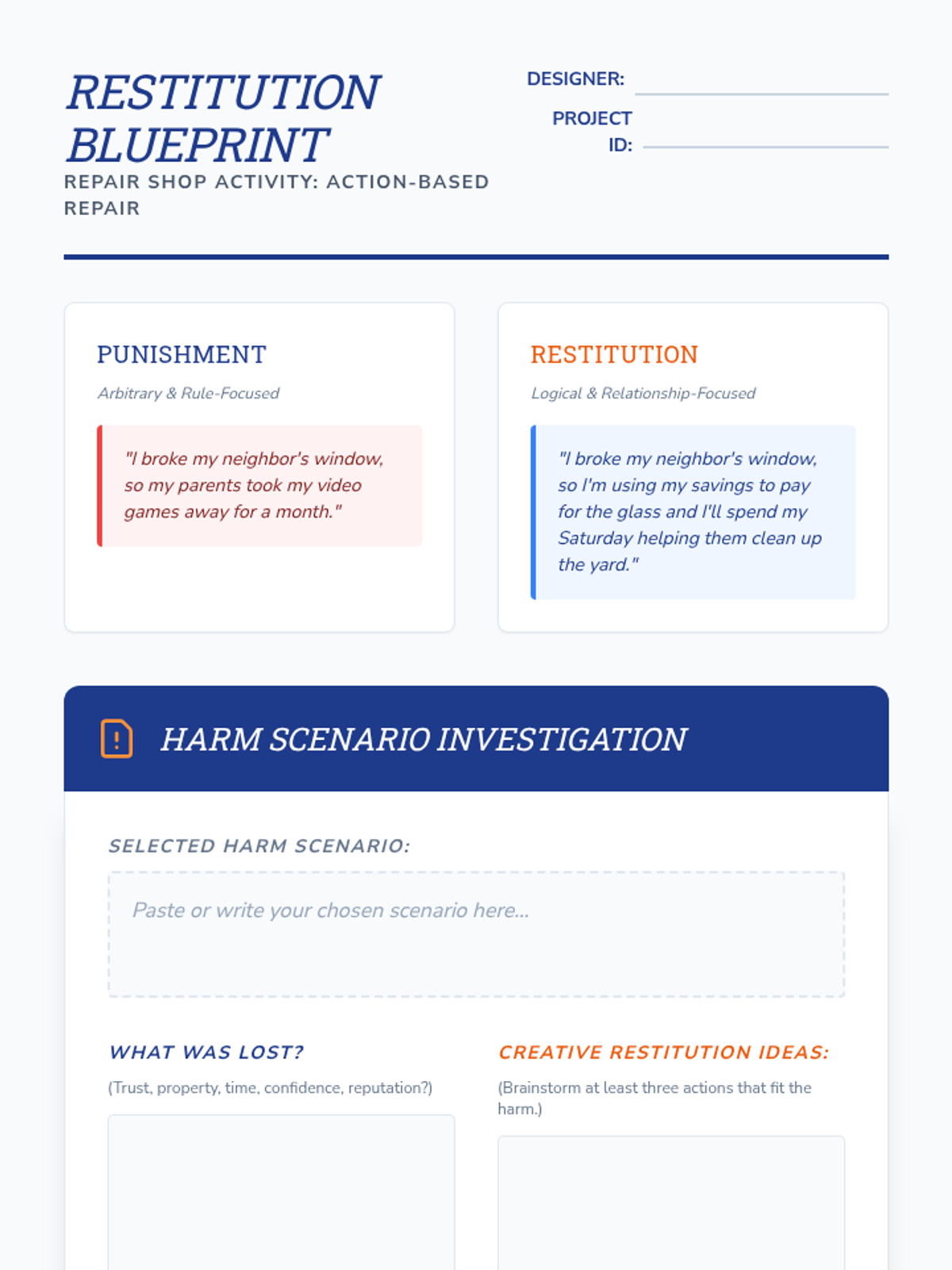
In this second session, students shift from analyzing impact to taking active accountability. They explore restorative justice and draft a concrete "Repair Blueprint" detailing specific actions to rebuild trust and repair the harm.
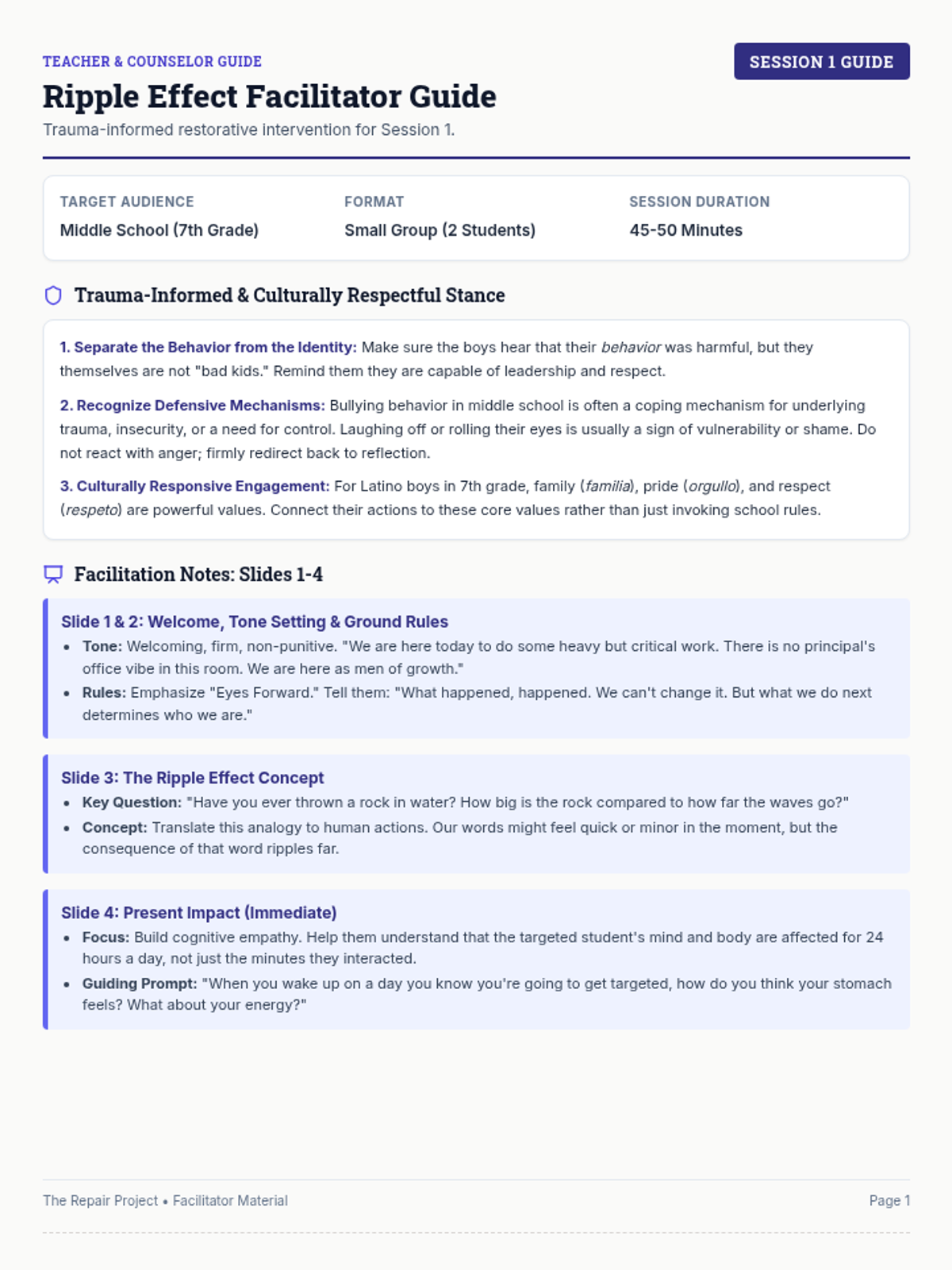
In this first session, students explore the concepts of cause and effect, analyzing how behavior ripples outward to affect the targeted student, their families, the school community, and themselves, both now and in the future.
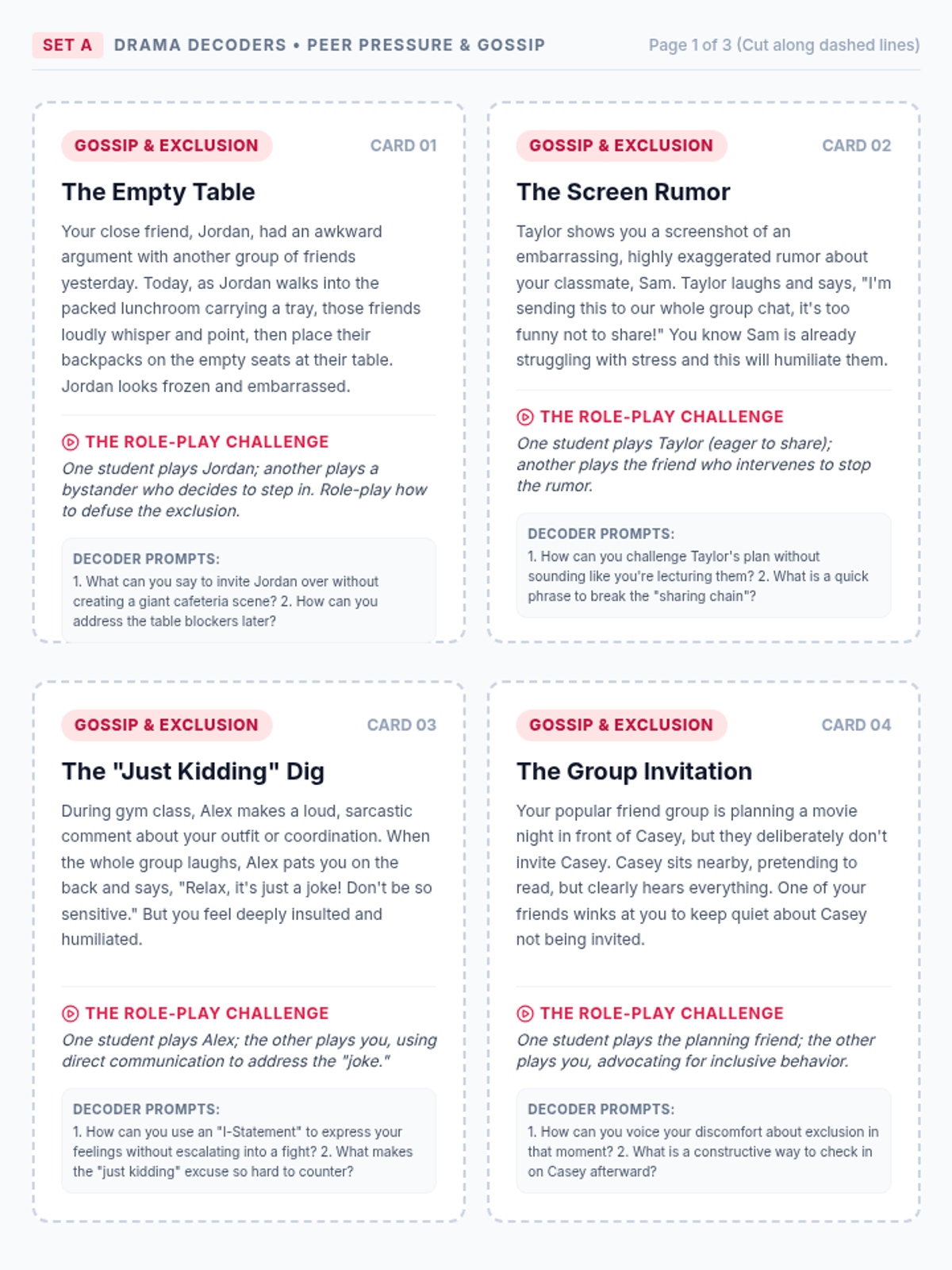
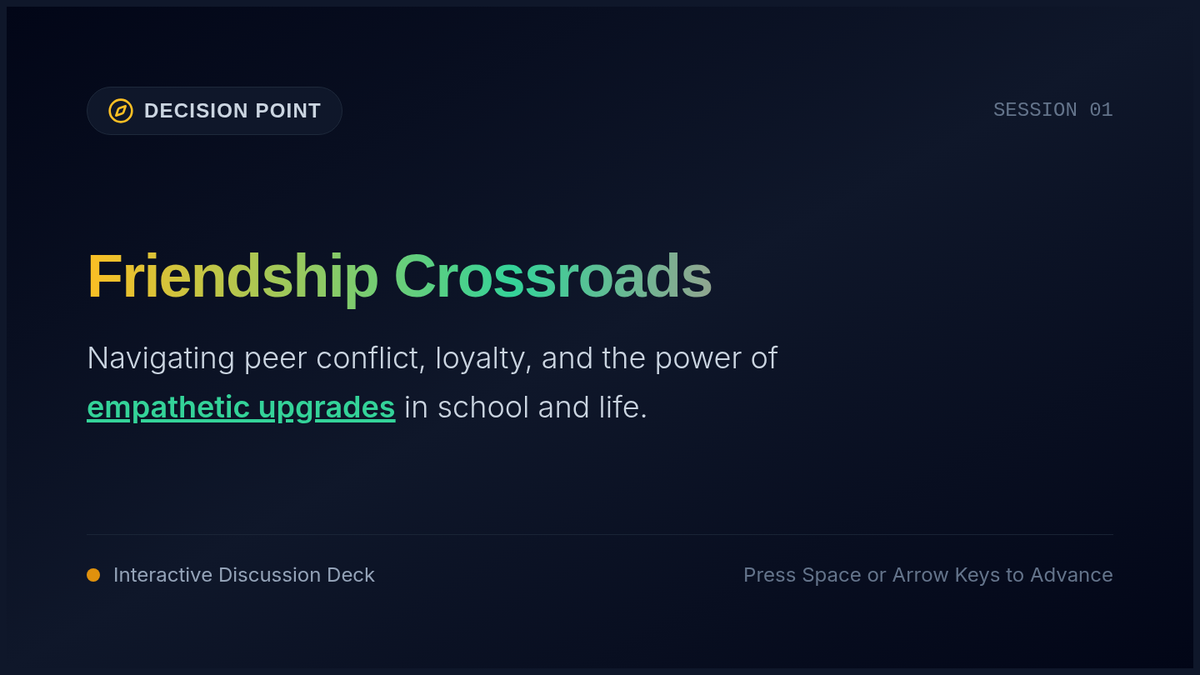
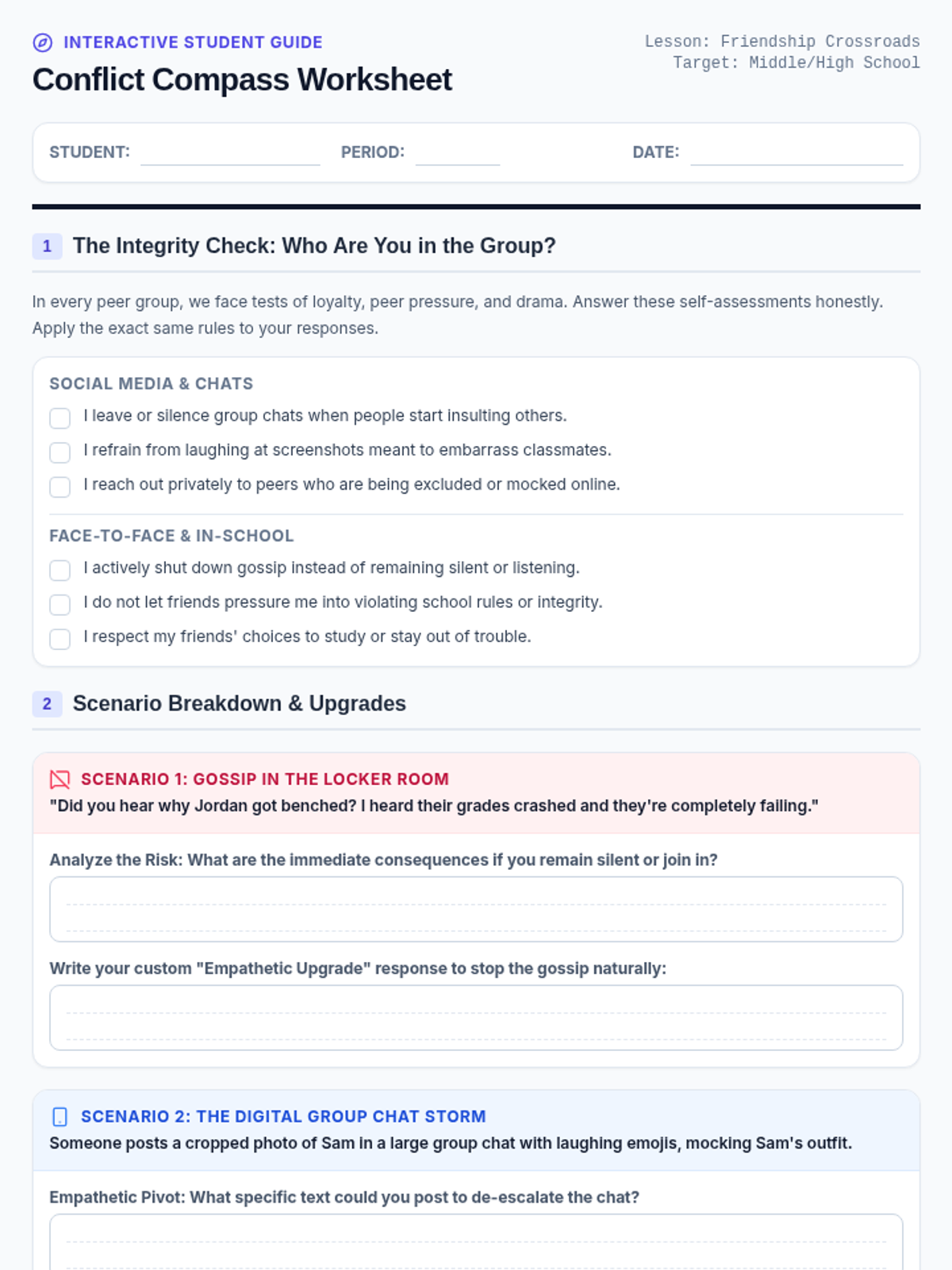
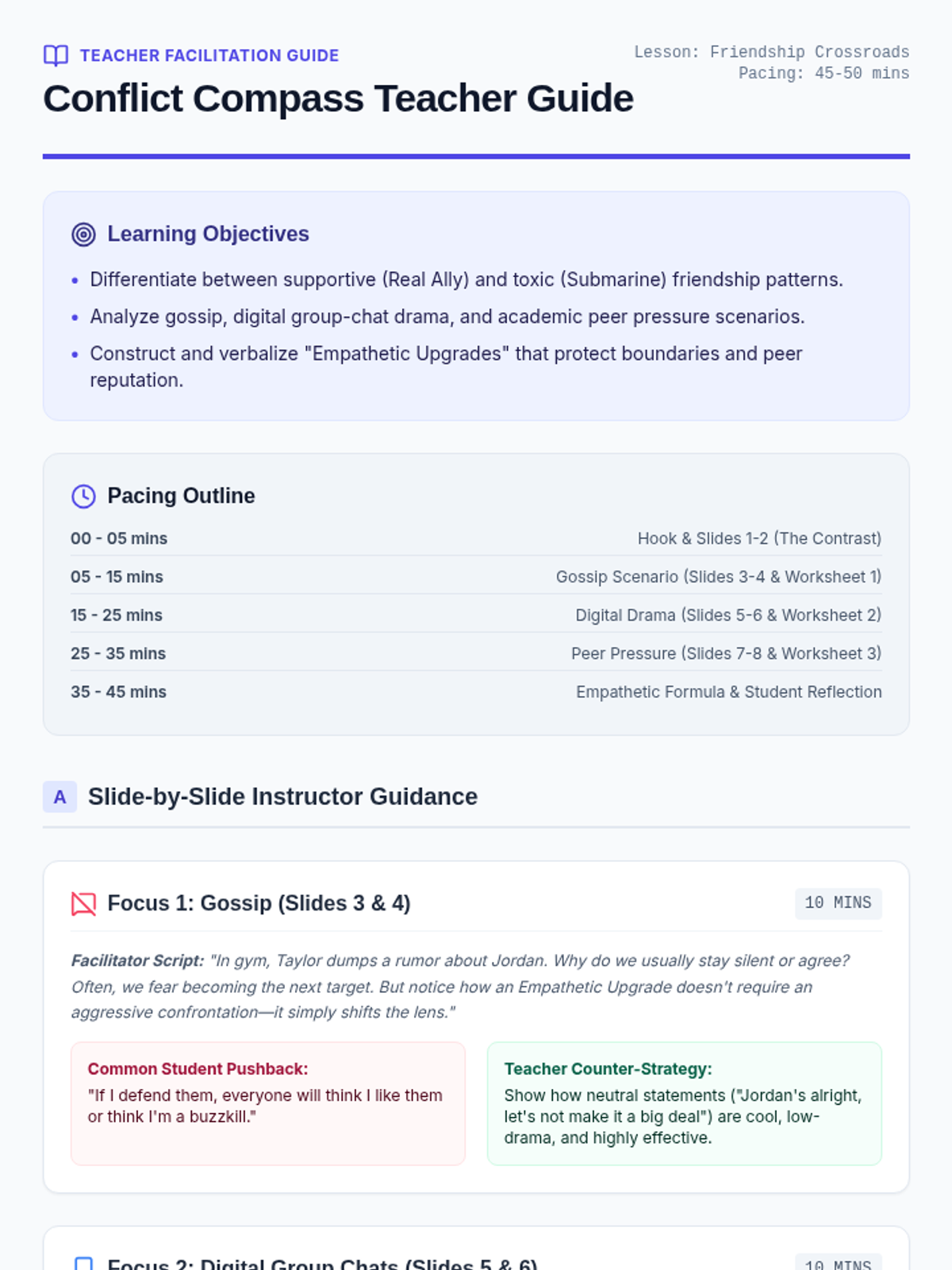
An interactive, highly engaging lesson designed to help middle and high school students navigate complex peer conflicts. Through realistic scenarios involving gossiping, social media drama, and peer pressure, students analyze the differences between supportive and harmful friendship behaviors and practice direct, empathetic communication.
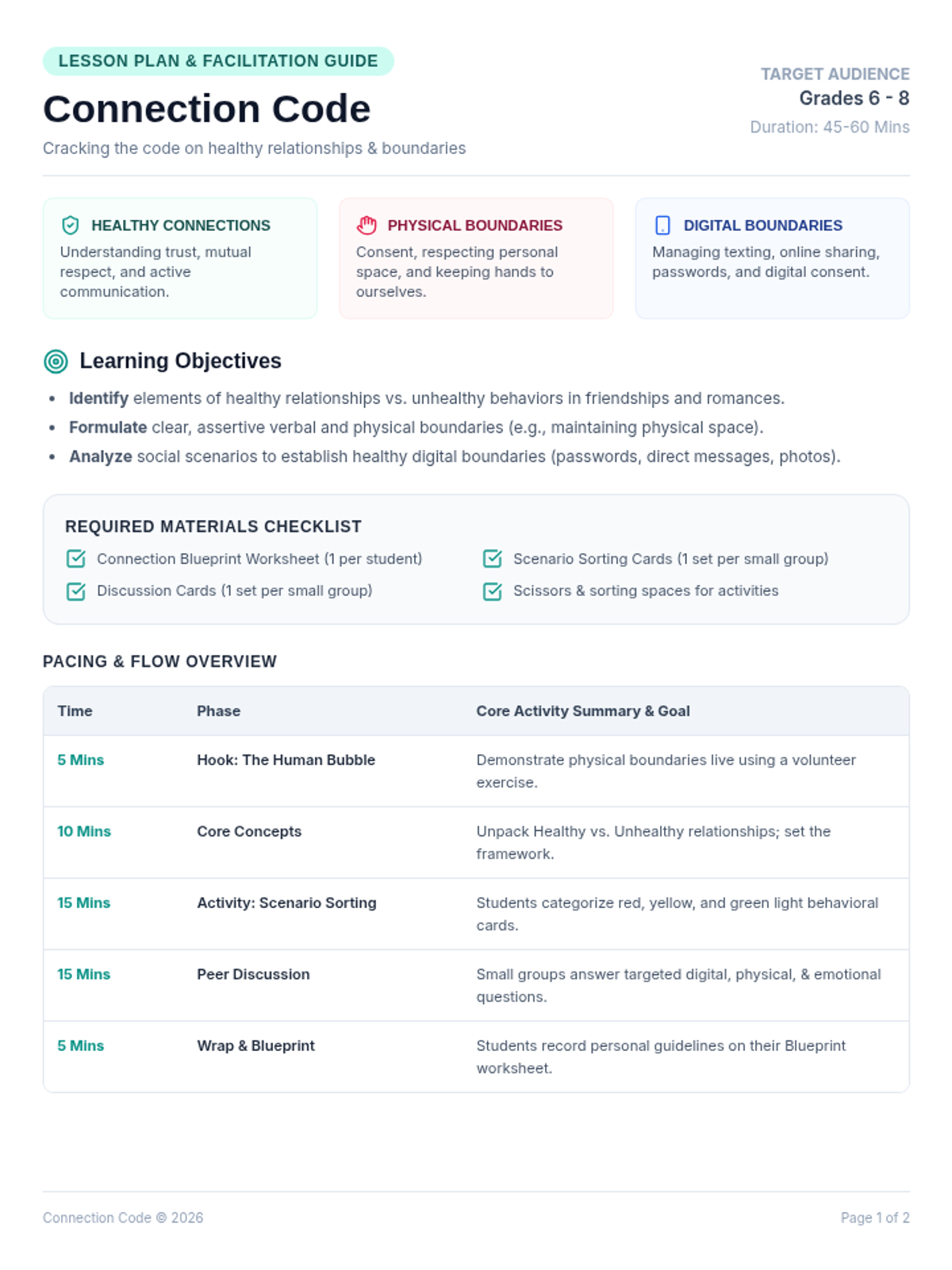
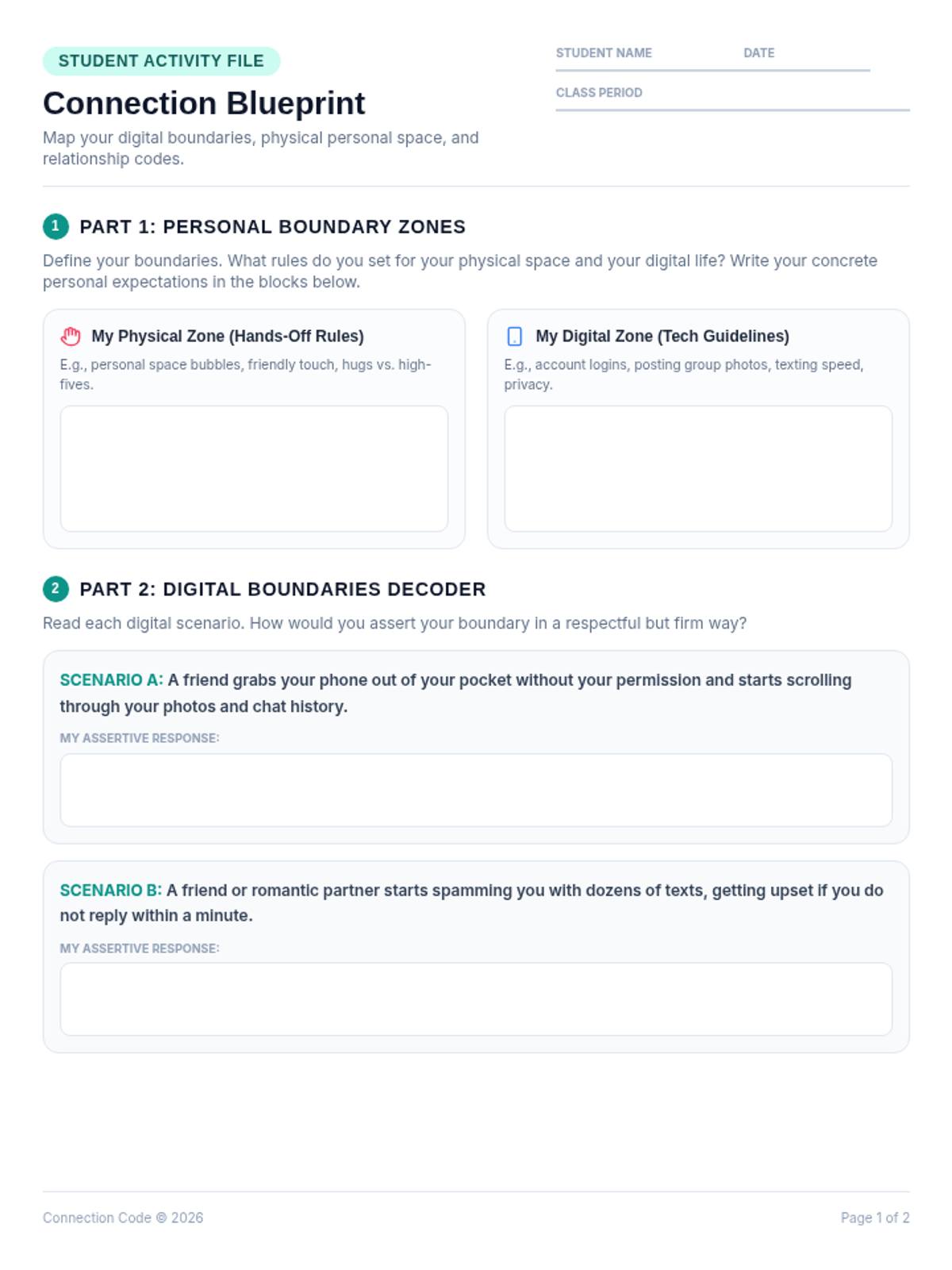
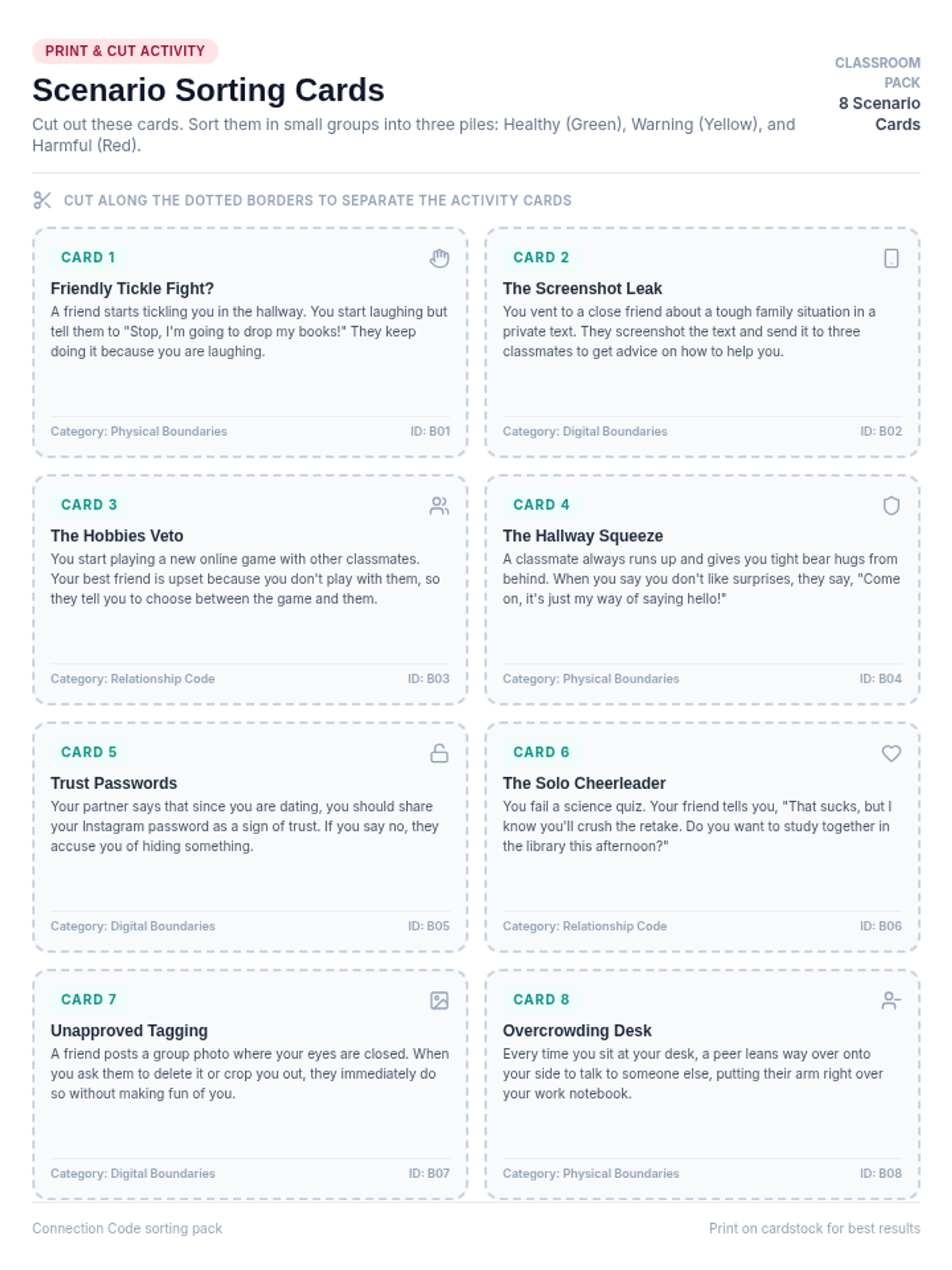
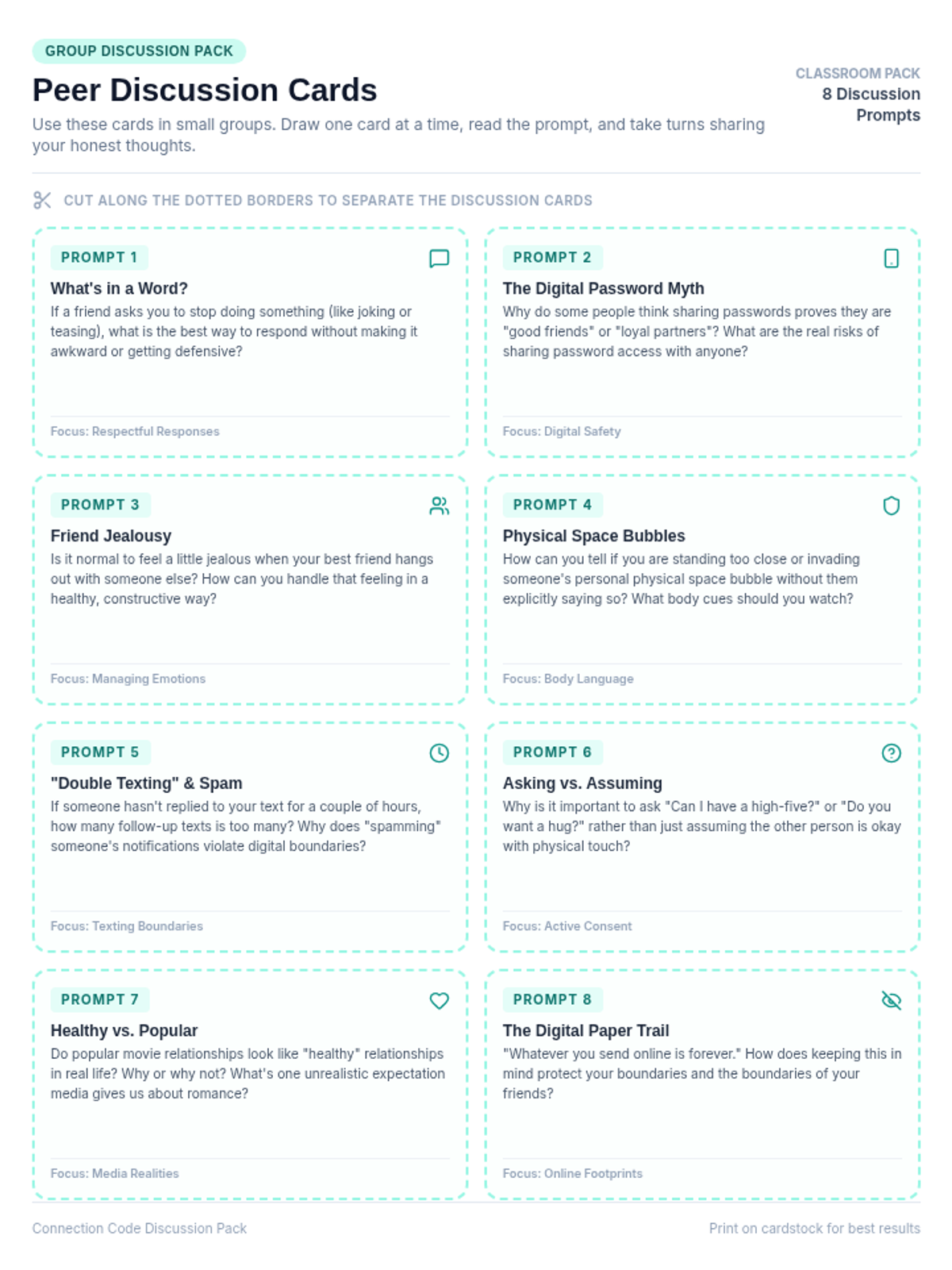
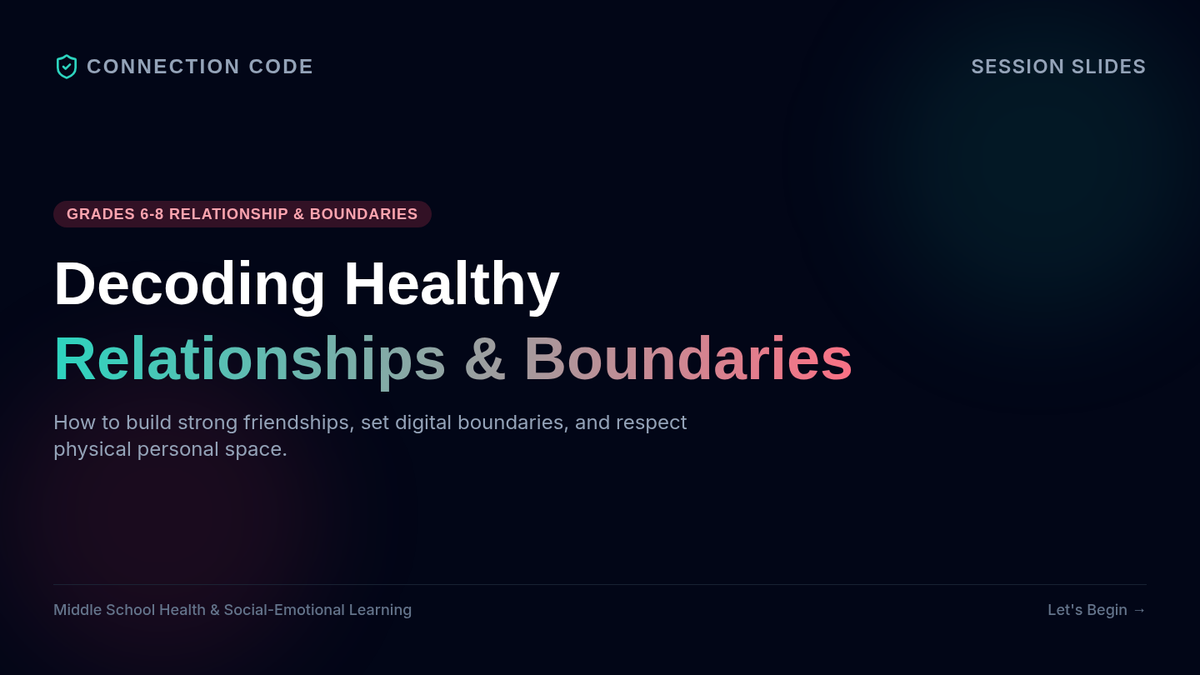
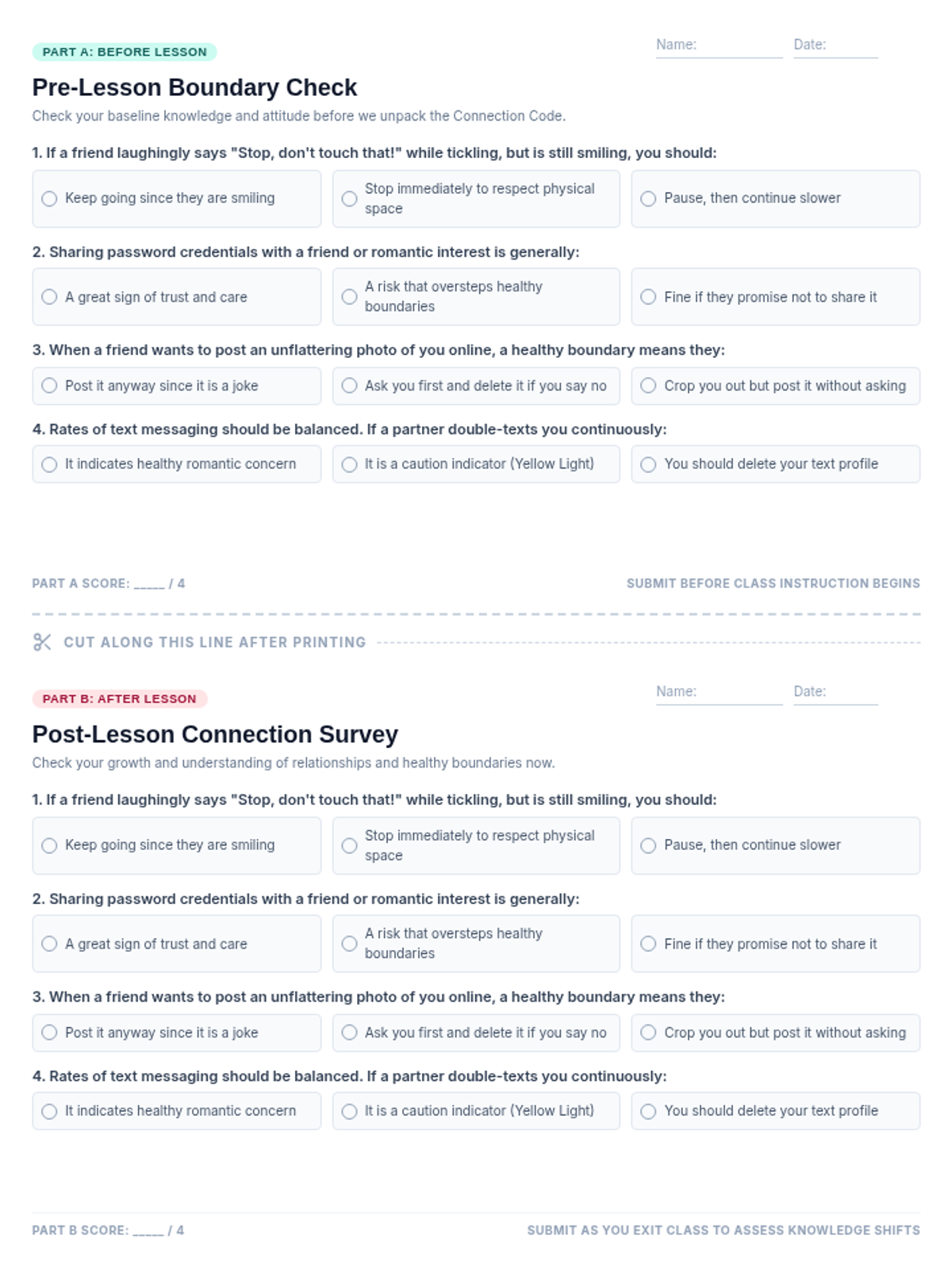
An interactive, high-impact middle school lesson plan focusing on healthy relationships, physical boundaries, and digital consent. Includes a step-by-step teacher guide, student blueprint worksheet, scenario sorting activity, and peer discussion cards.
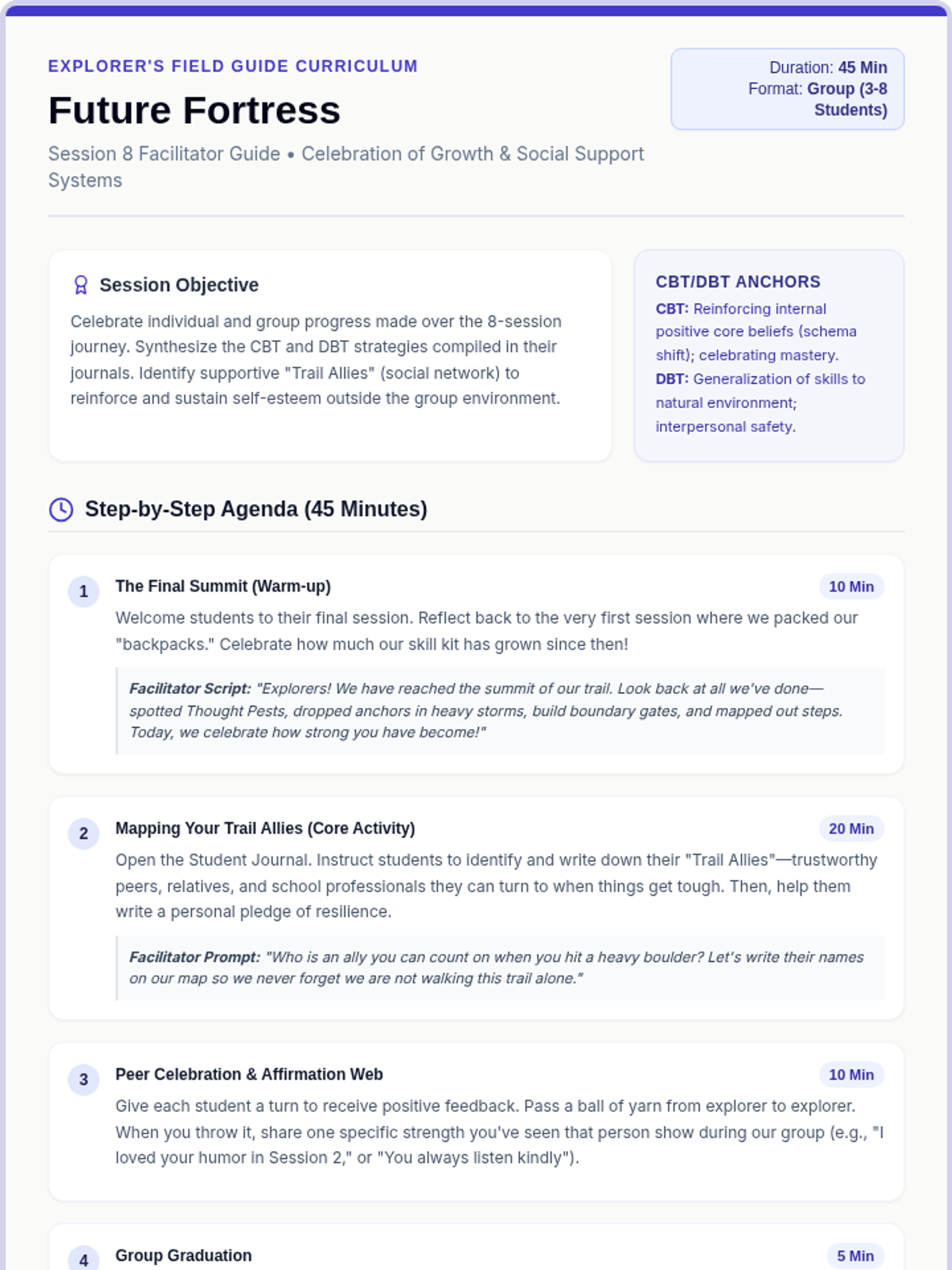
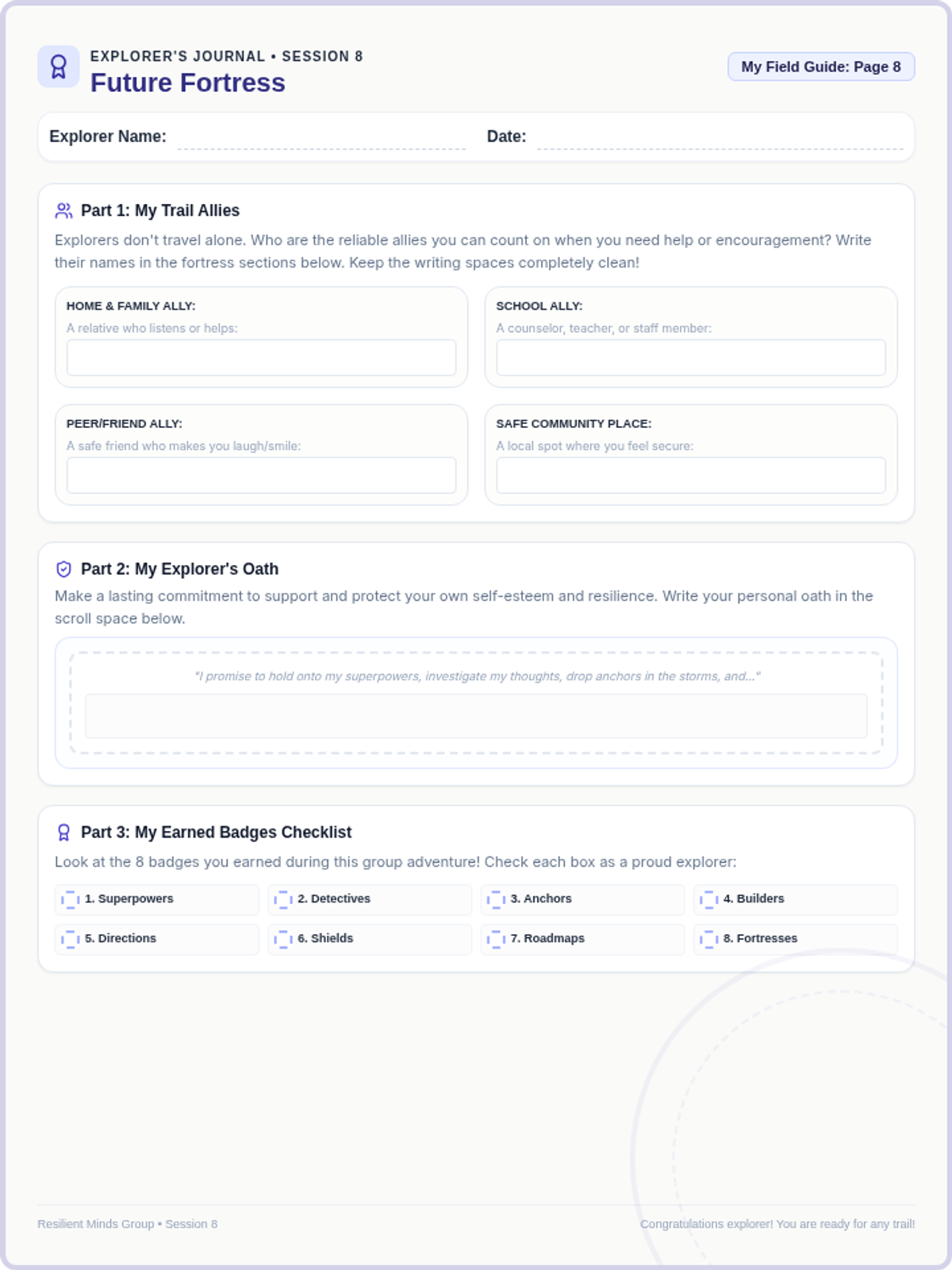
Students review their 8-session Explorer's Field Guide, celebrate growth, identify supportive 'trail allies' (social support), and pledge a personal self-esteem commitment.
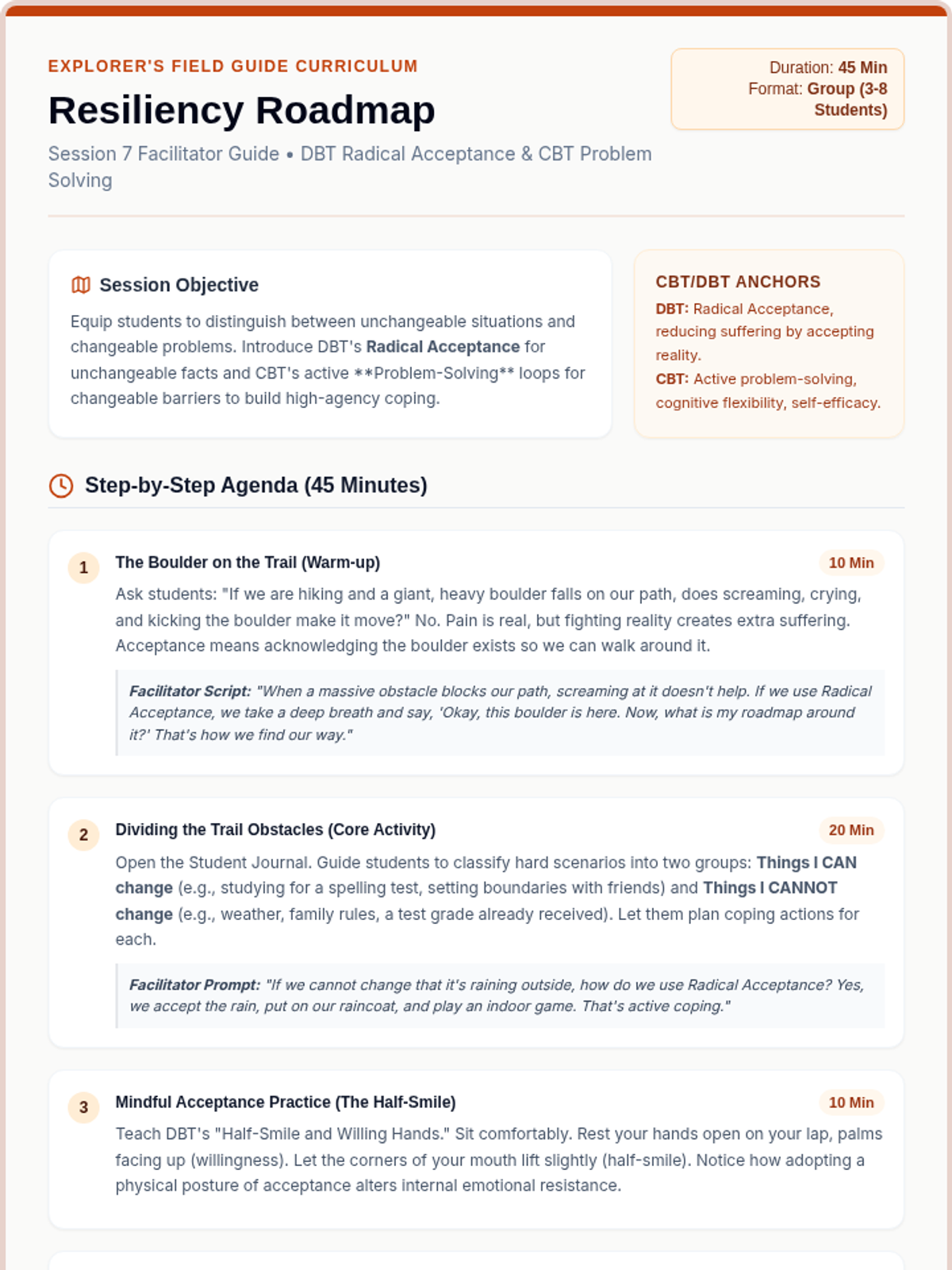
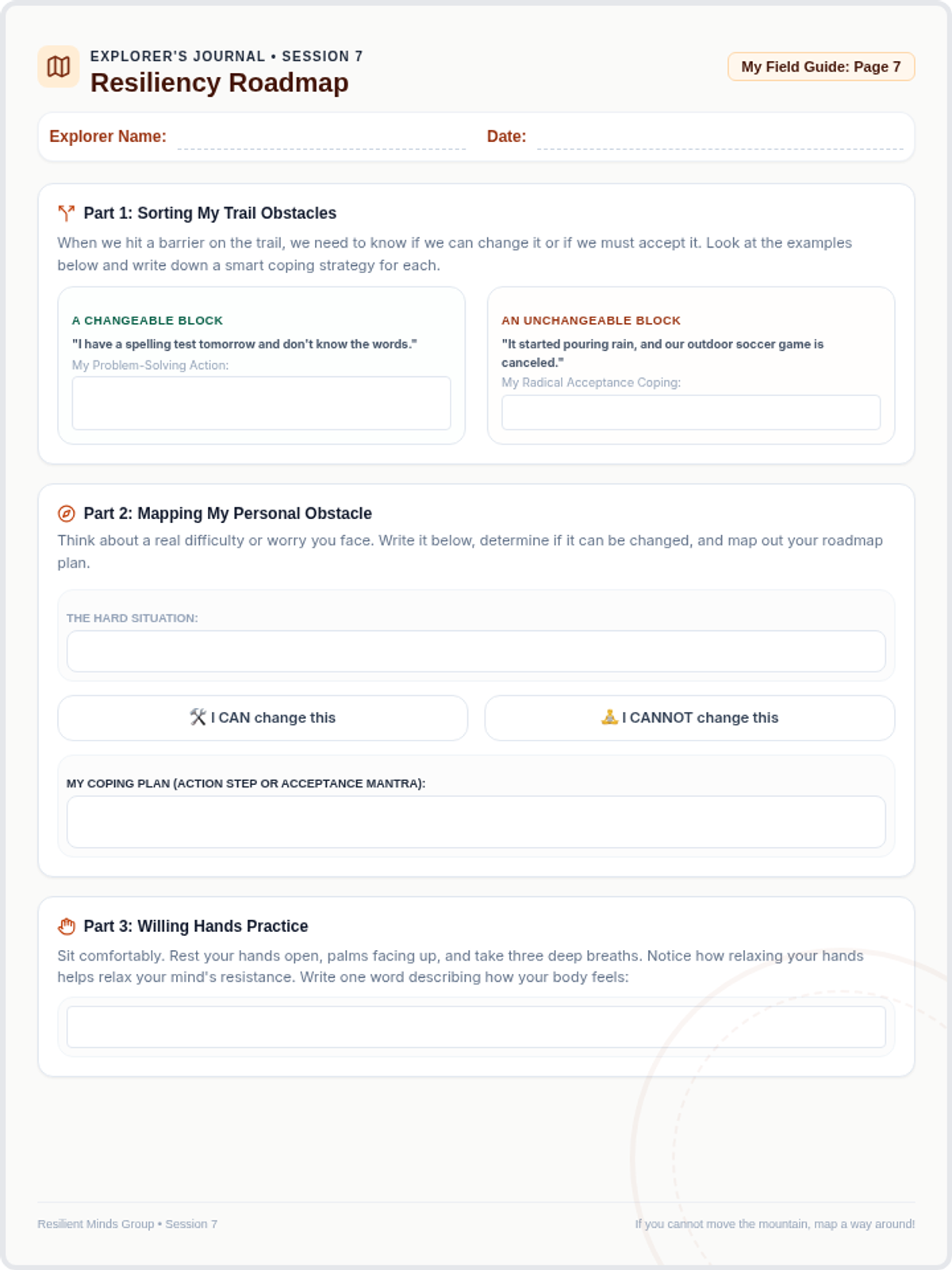
Students construct personalized coping strategies, blending CBT active problem-solving steps with DBT Radical Acceptance to navigate unchangeable difficulties.
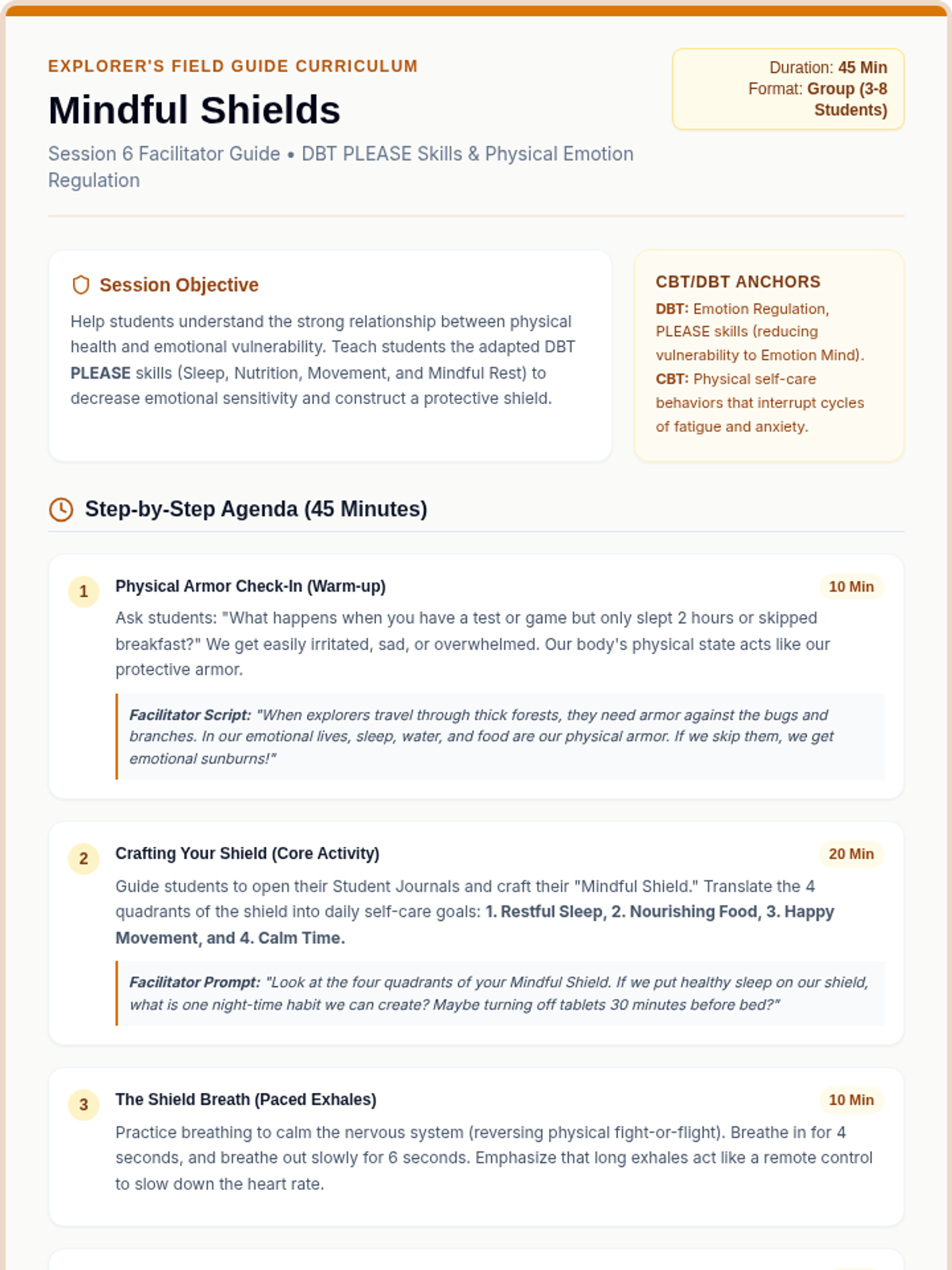
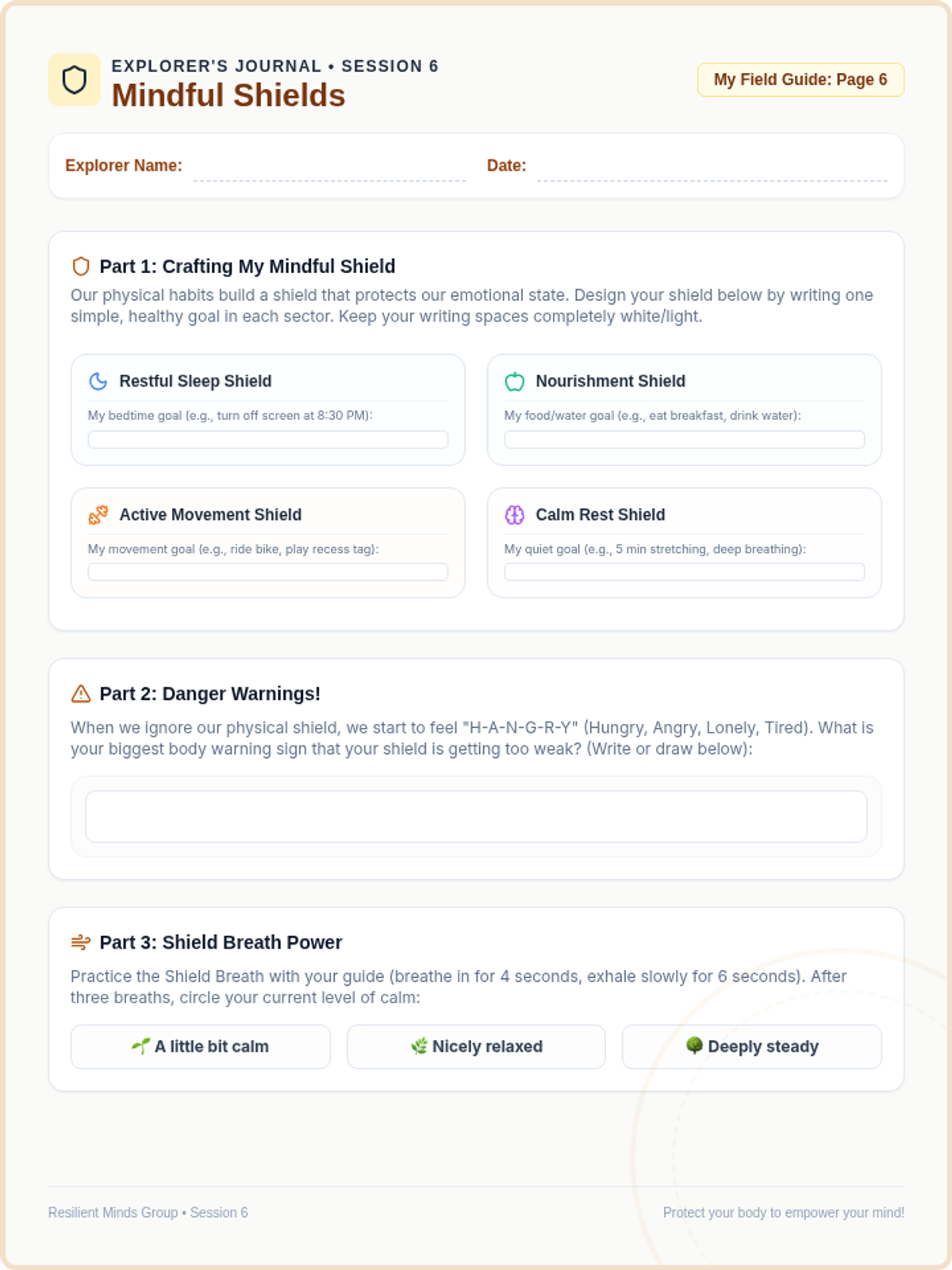
Students examine the physical body-mind connection, identifying stress triggers and learning DBT physical self-care (PLEASE) and emotional regulation strategies.
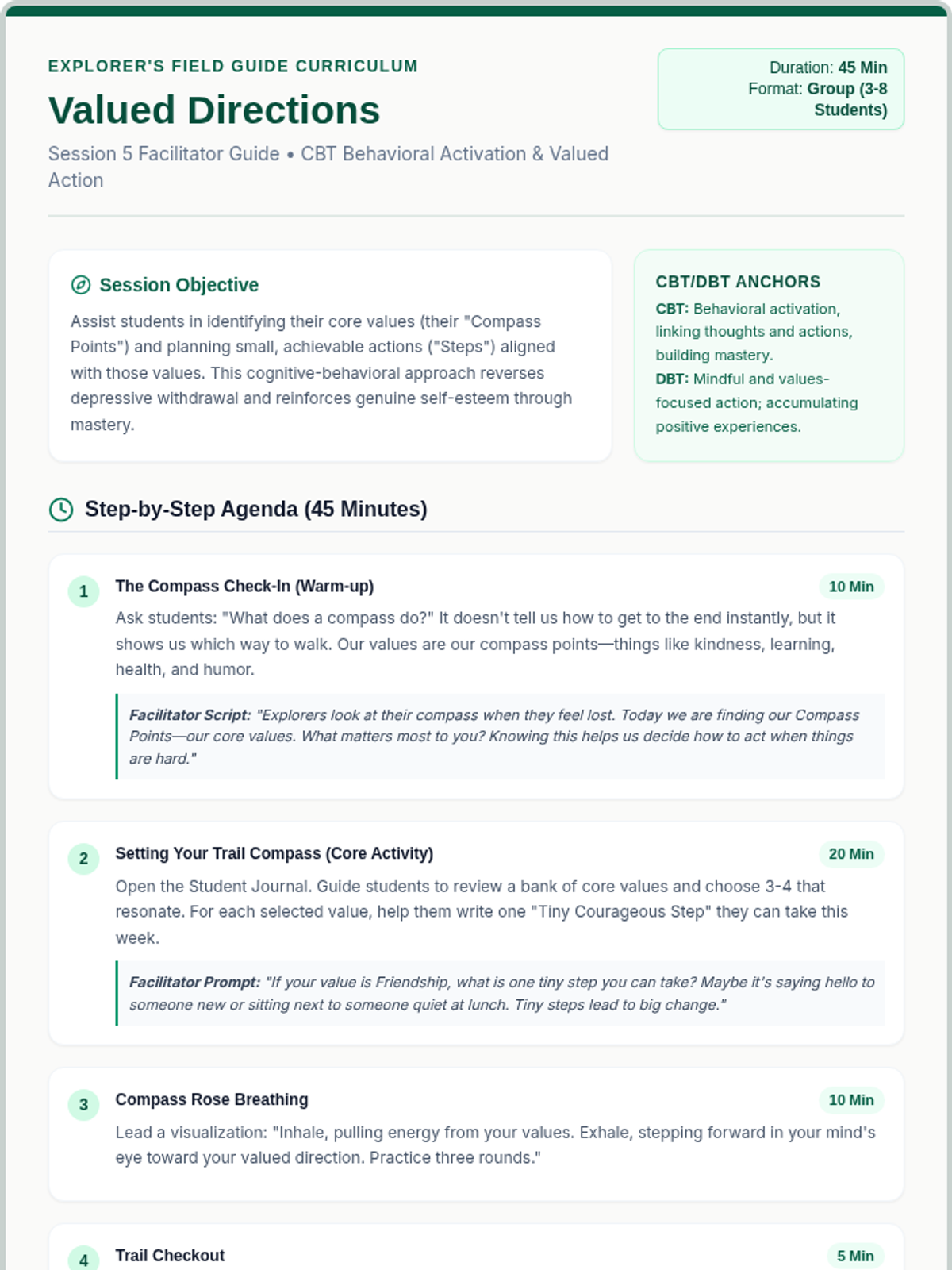
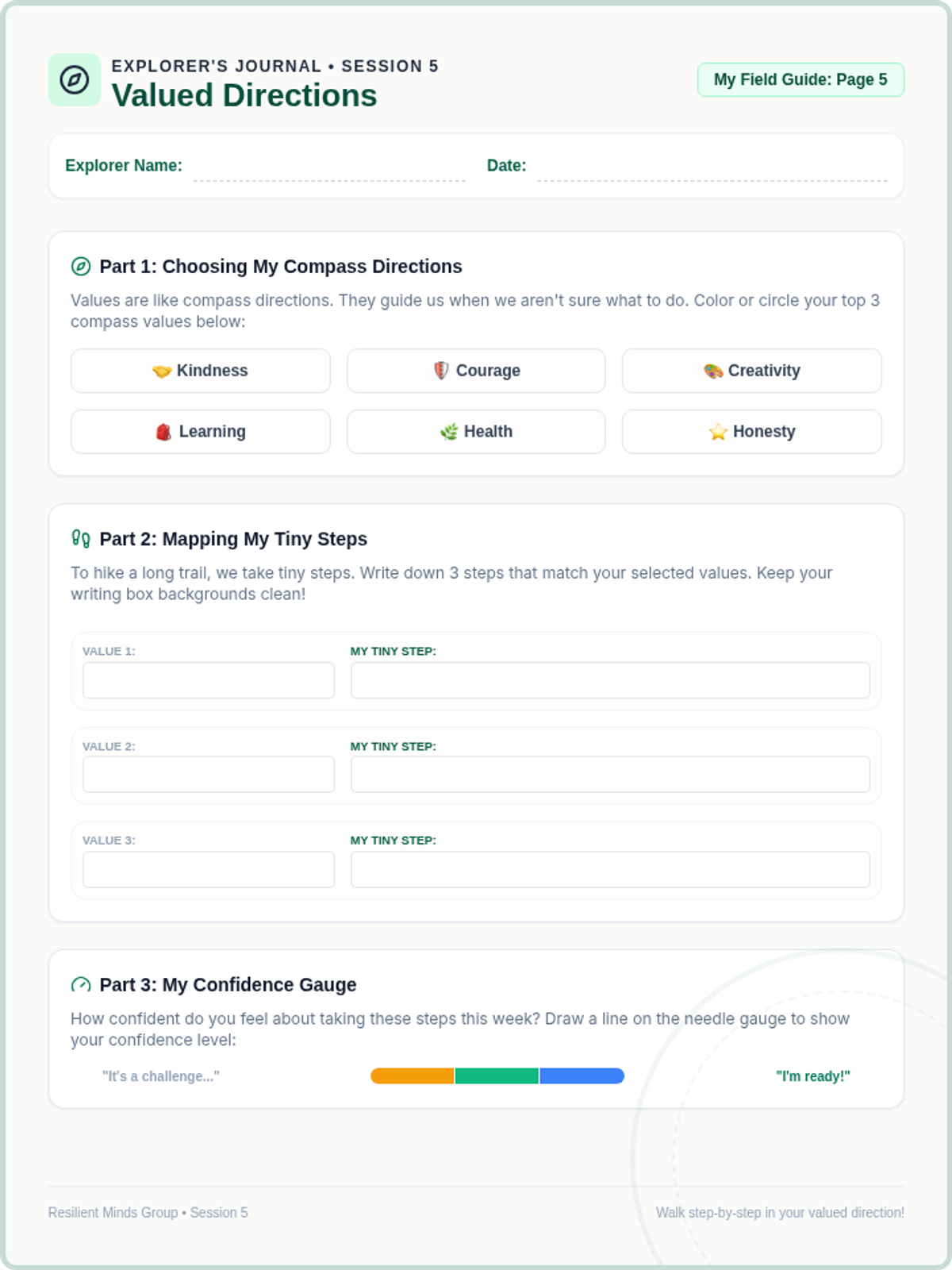
Students connect CBT behavioral activation with DBT 'mindful action' by exploring core values and mapping out tiny, courageous actions that align with their authentic strengths.
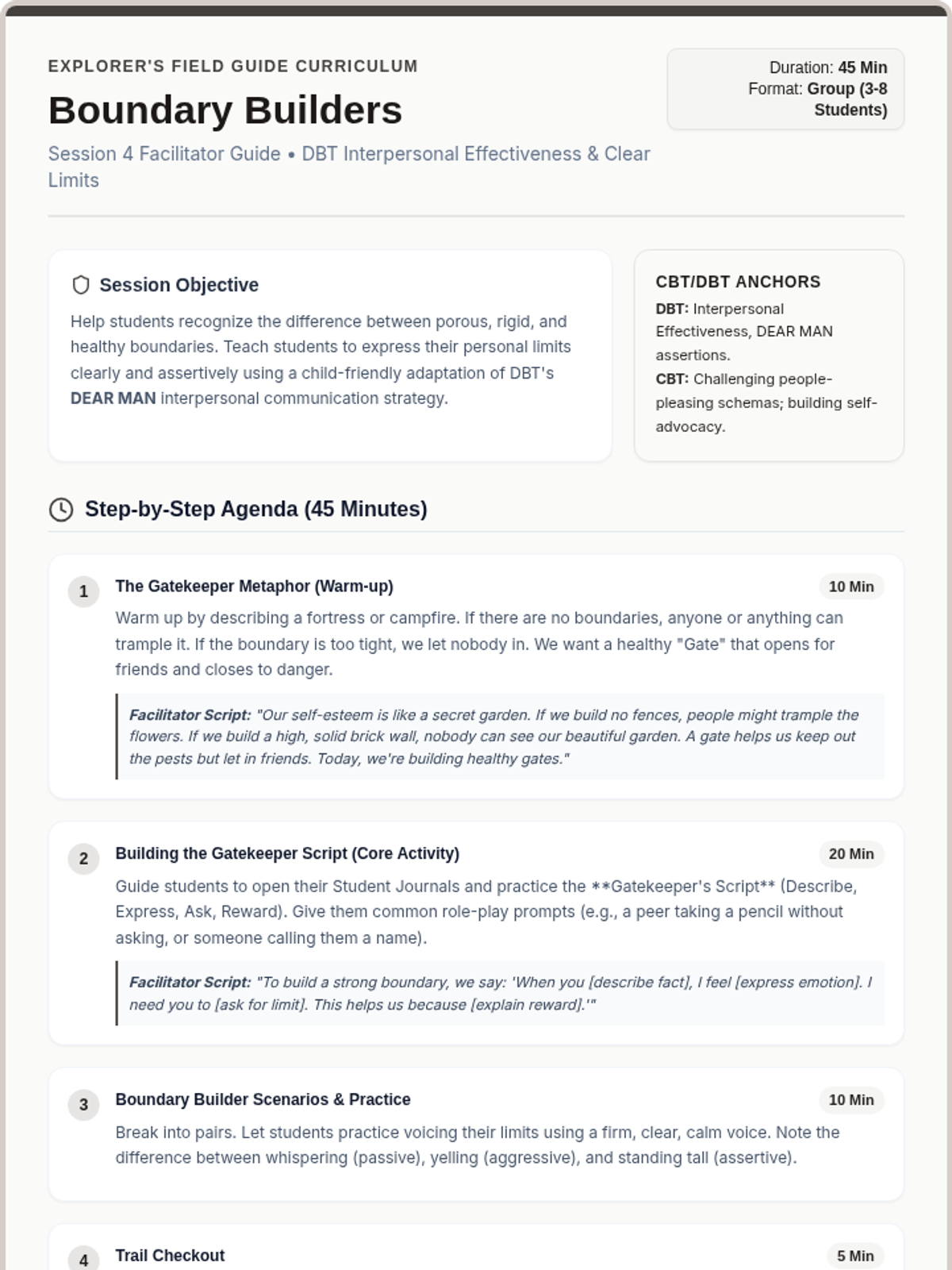
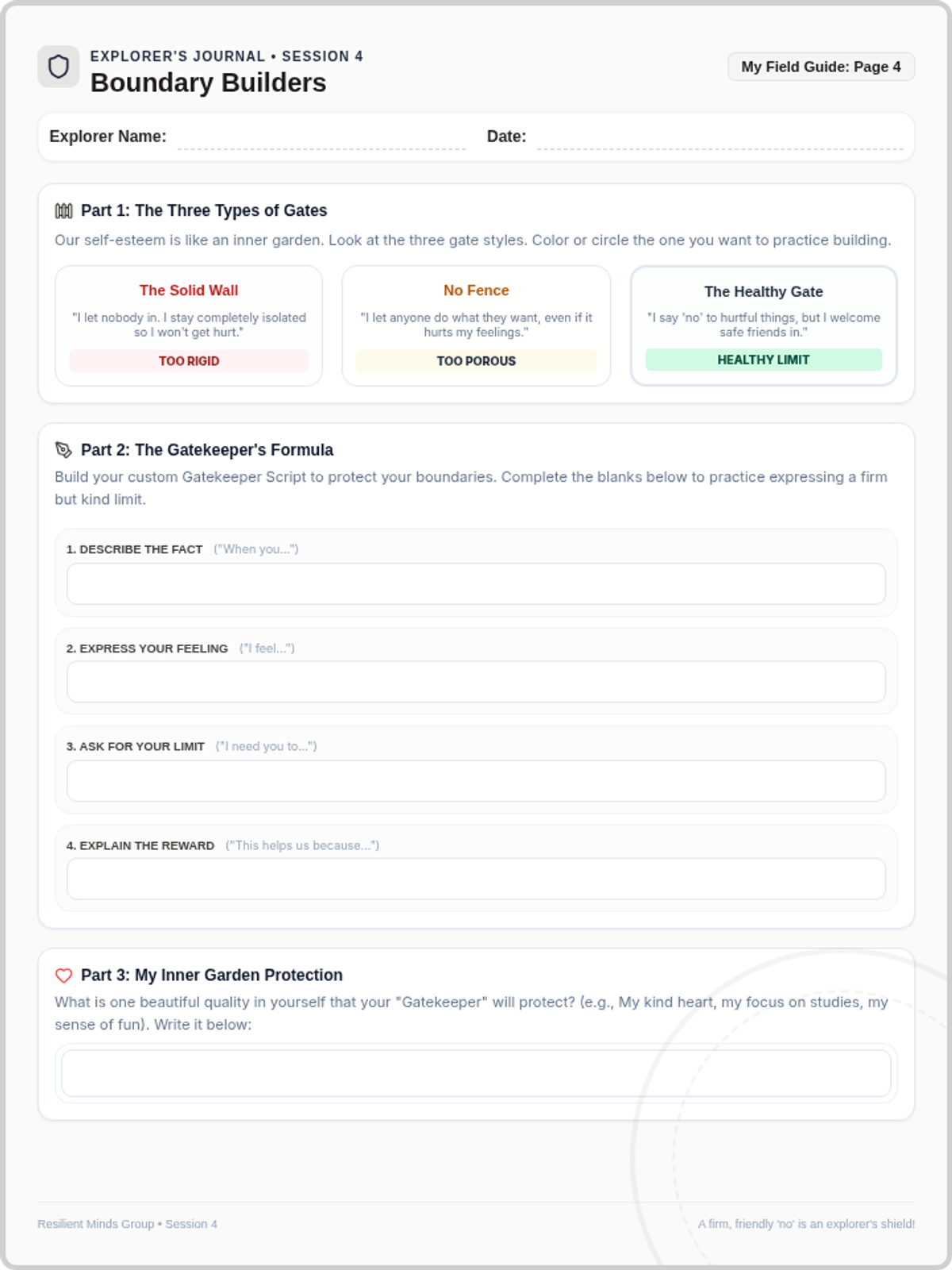
Students learn assertive communication, personal limit-setting, and DBT Interpersonal Effectiveness skills (DEAR MAN style) to navigate social situations and foster healthy self-esteem.
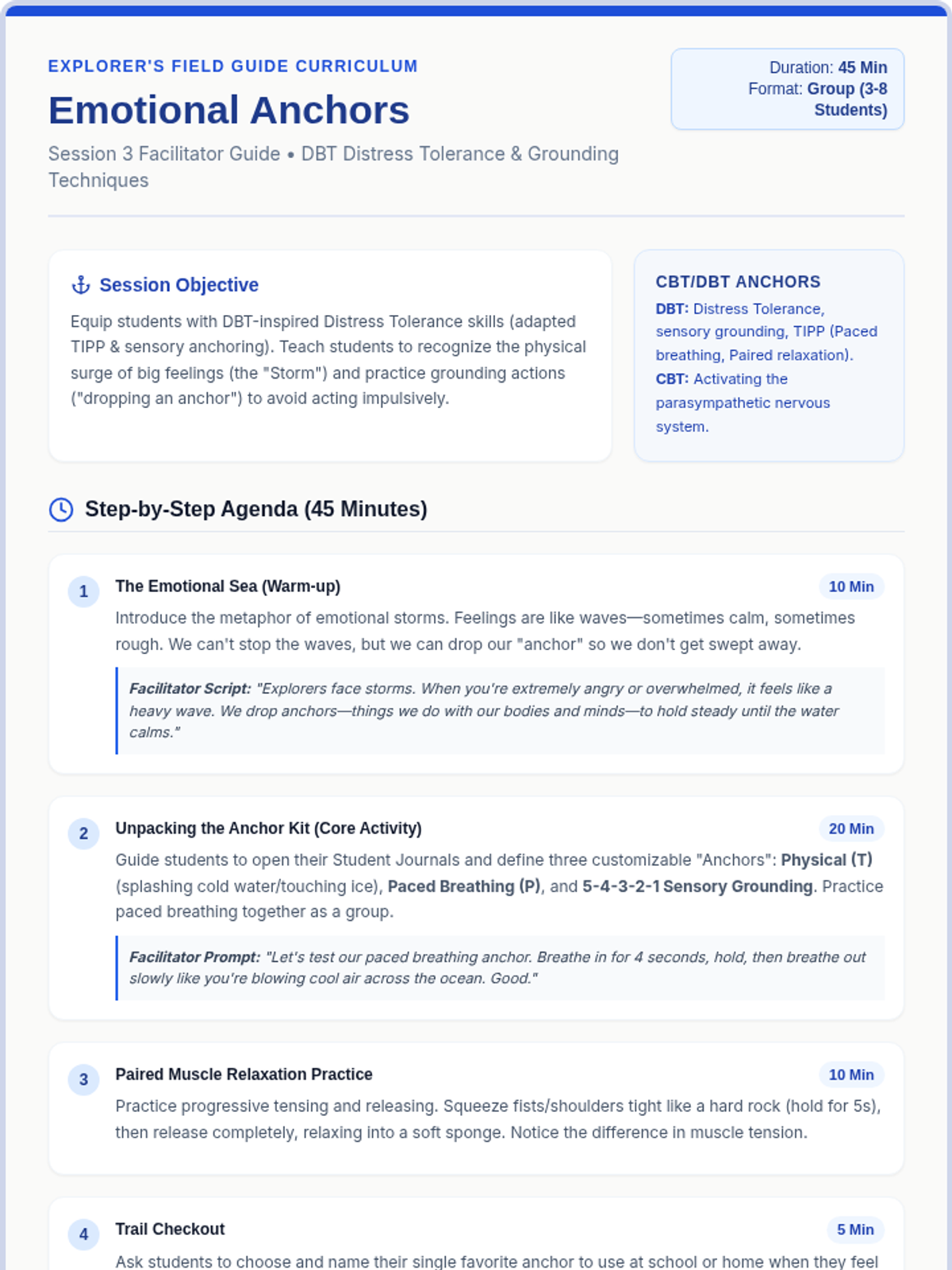
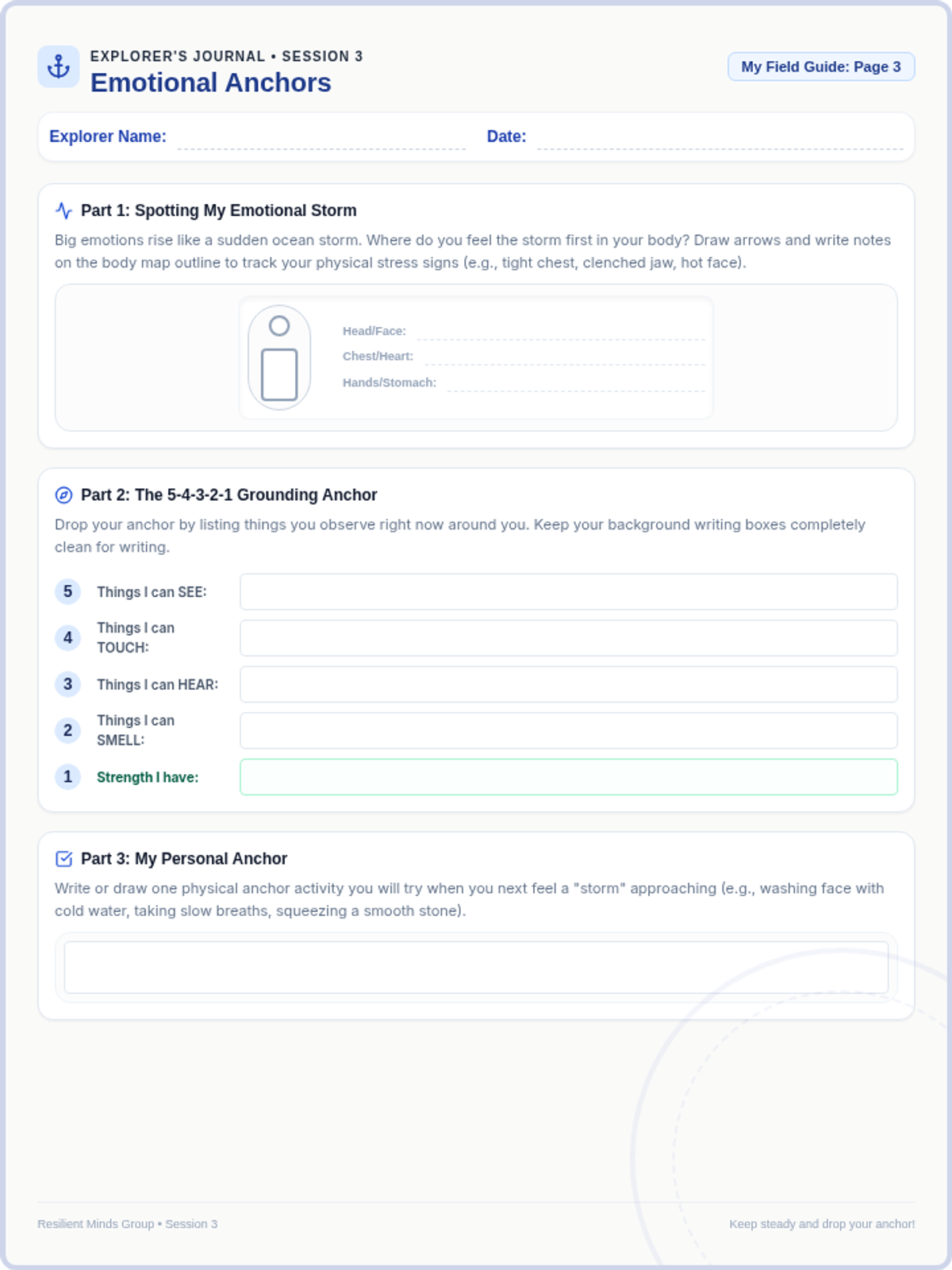
Students learn mindfulness, self-soothing, and distress tolerance techniques (DBT TIPP skills) to manage intense emotions and ground themselves.
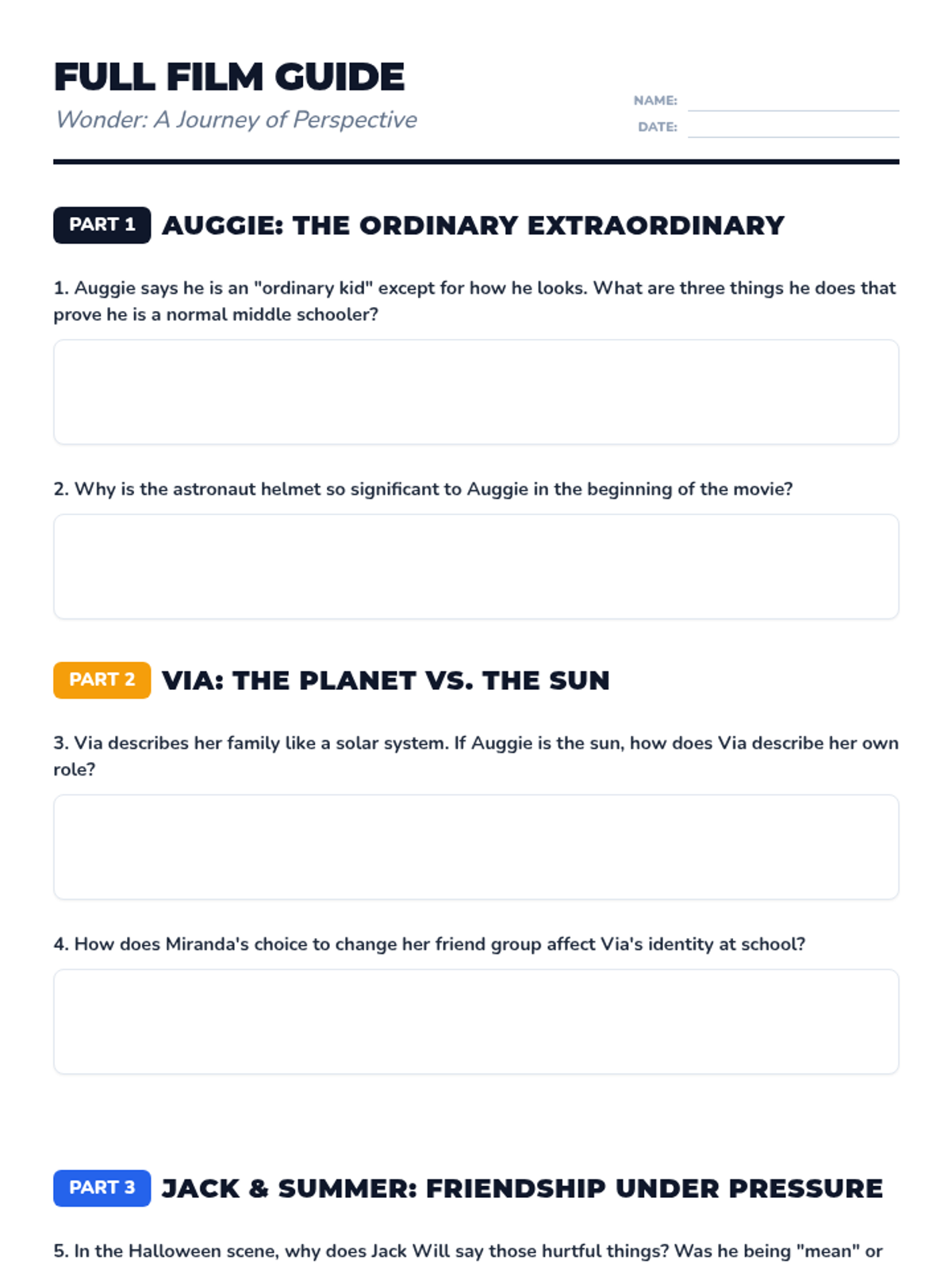
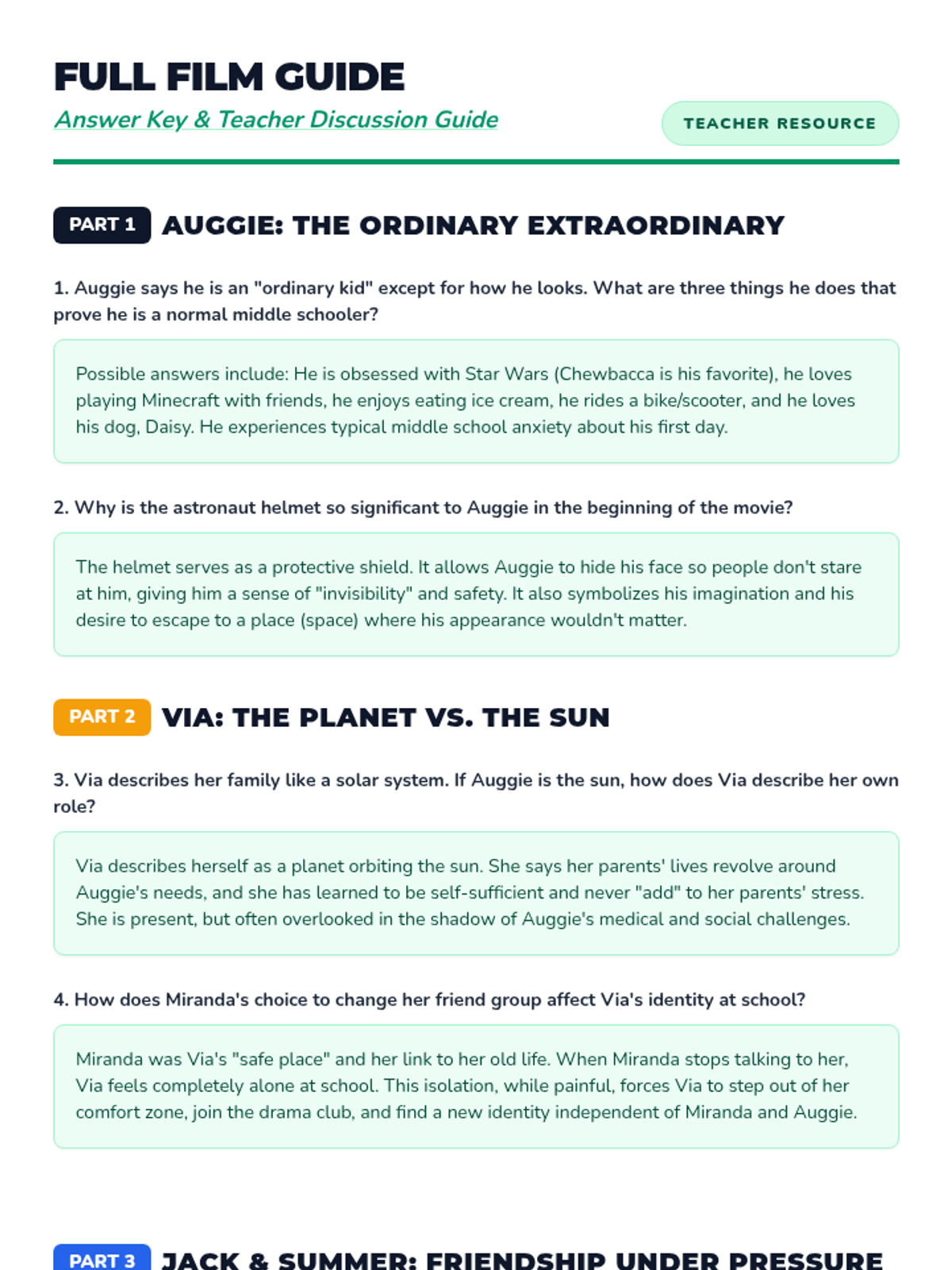
A comprehensive viewing experience of the film Wonder, focusing on character perspectives, plot development, and thematic analysis through a structured guided viewing guide.
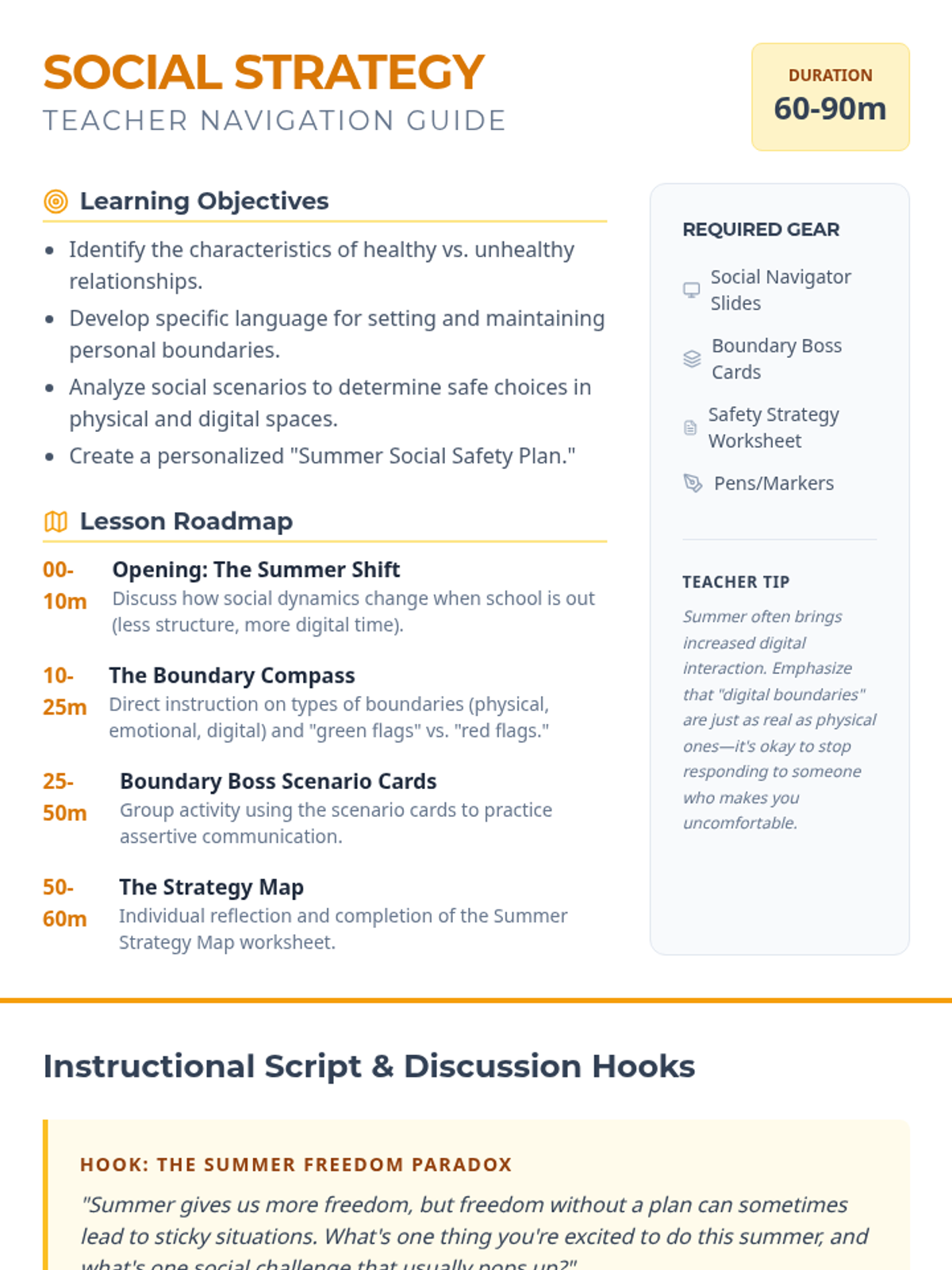
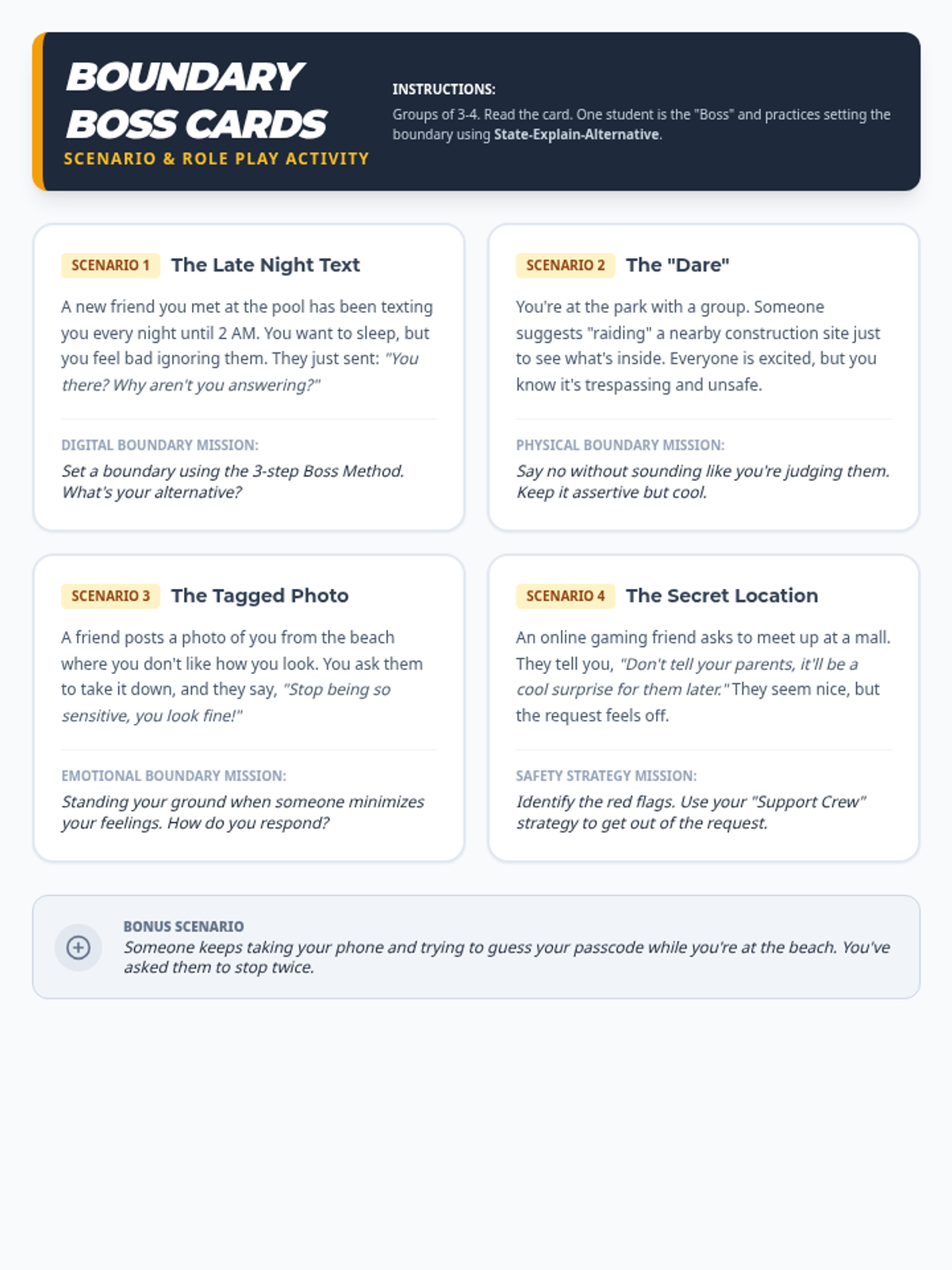
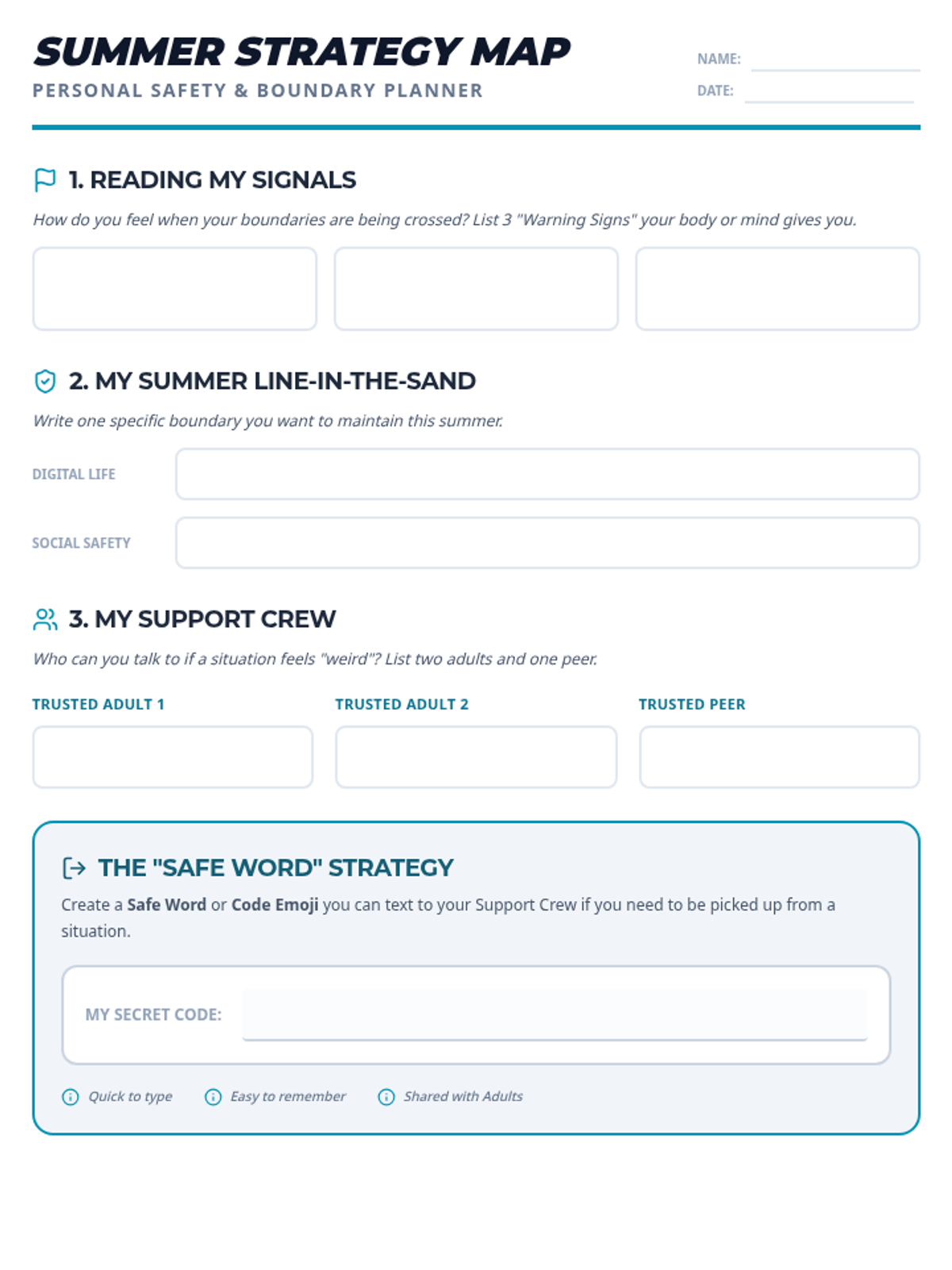
A comprehensive lesson designed to help students navigate the social complexities of summer break, focusing on boundaries, healthy relationships, and digital safety.
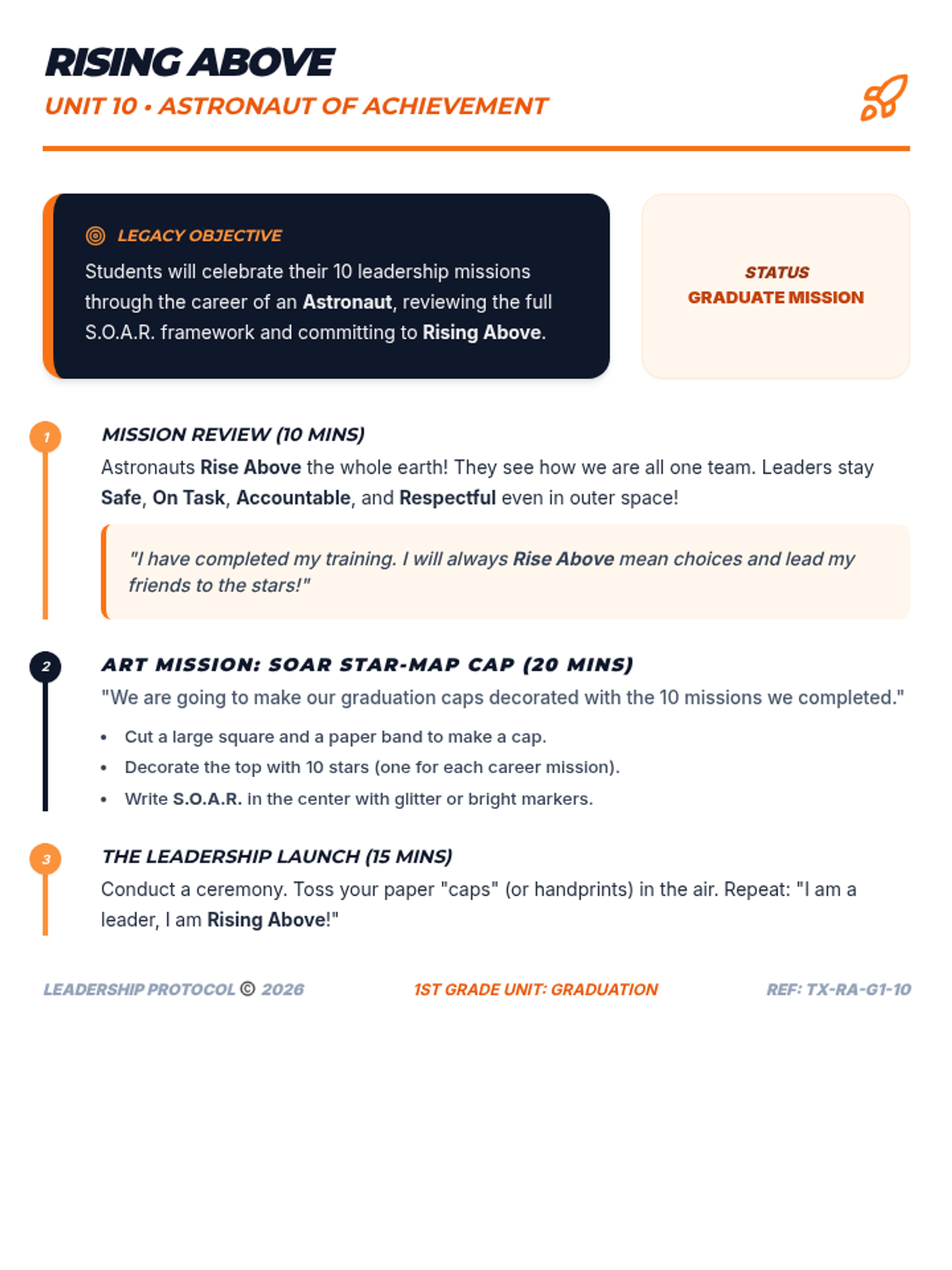
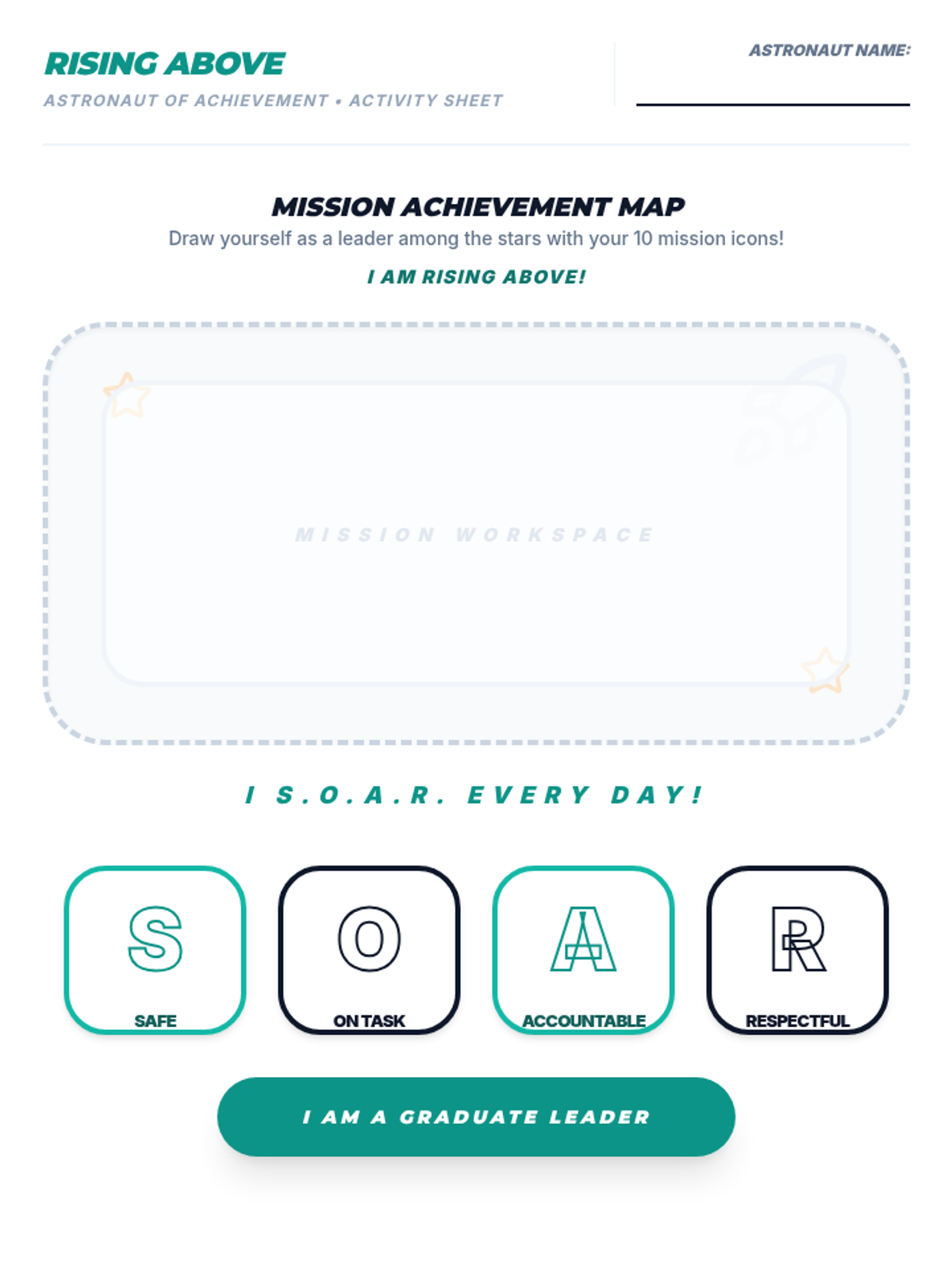
1st Grade graduation celebrating their journey to lead with character. Art: SOAR Star-Map Cap.
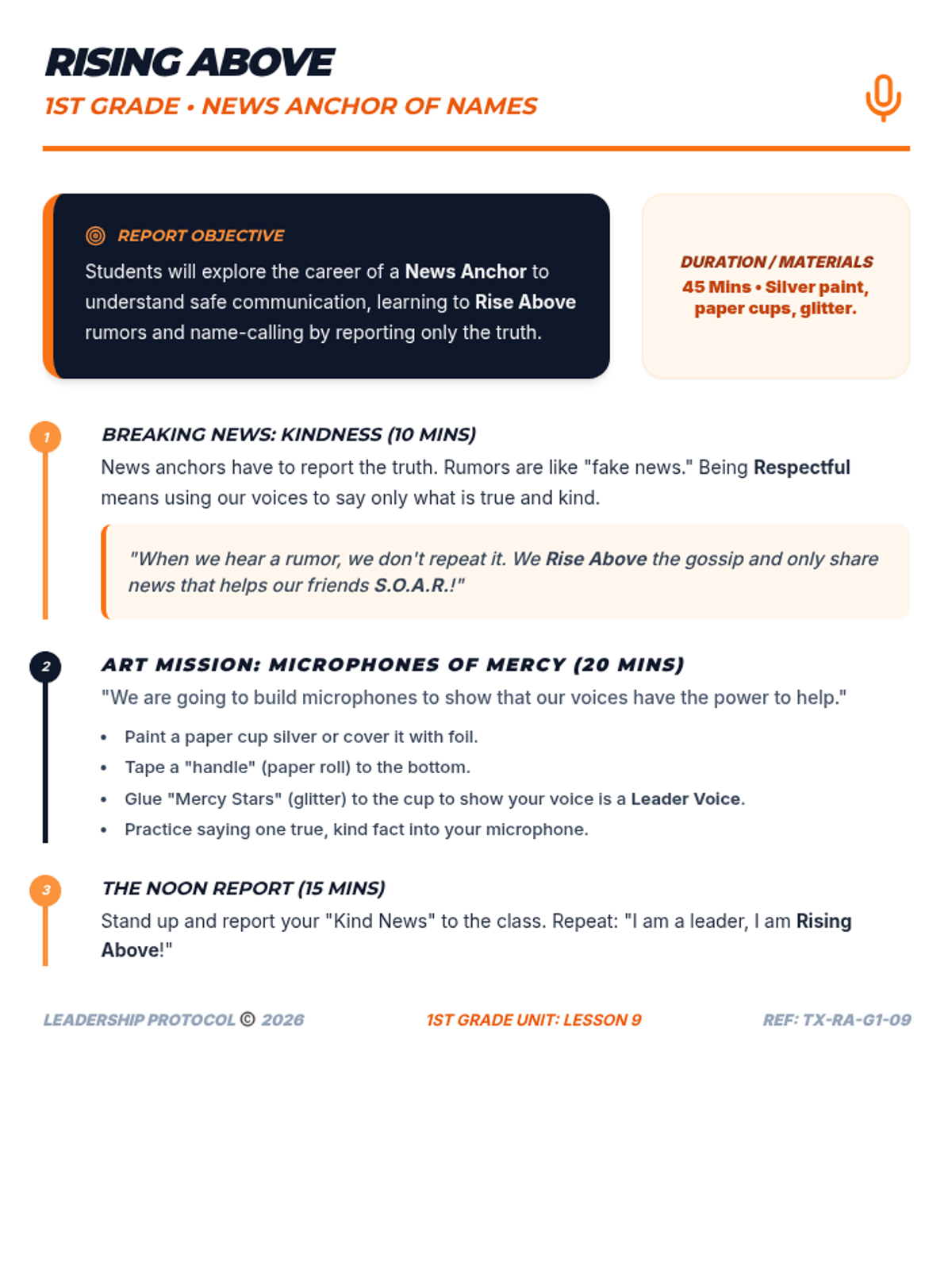
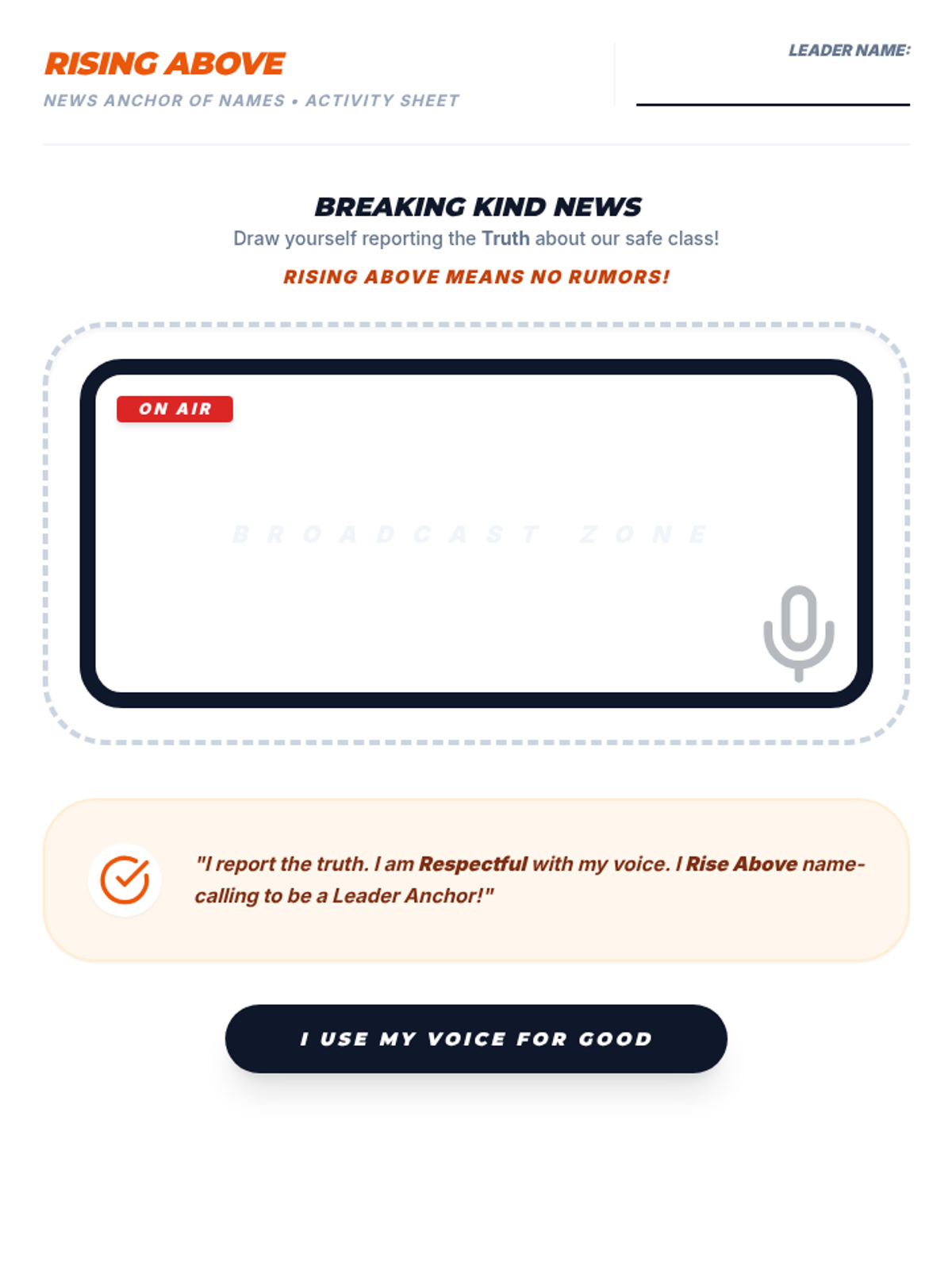
1st Grade focus on safe communication and reporting the 'truth' through the career of a News Anchor. Art: Microphones of Mercy.
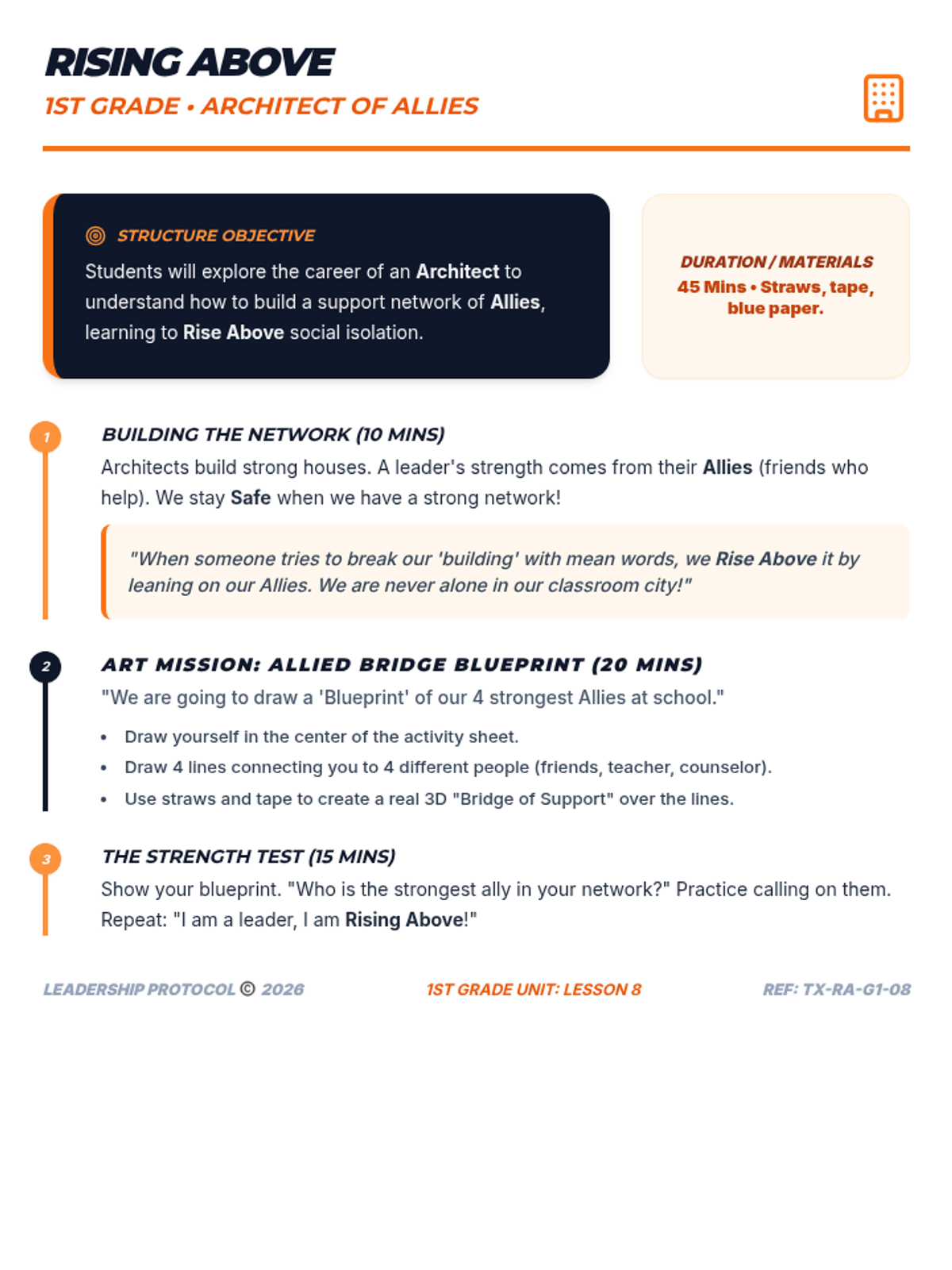
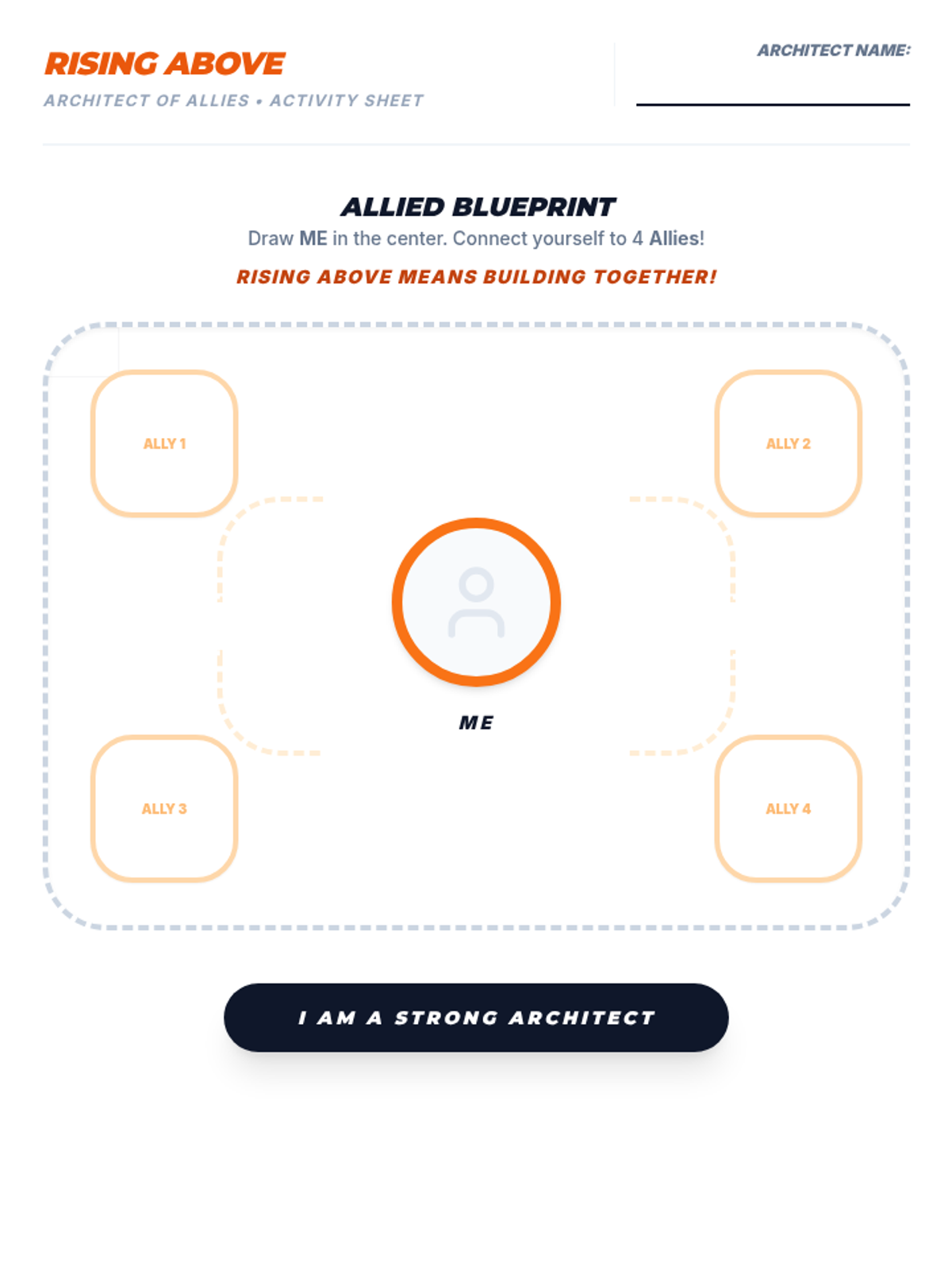
1st Grade focus on building a strong network of allies through the career of an Architect. Art: Allied Bridge Blueprint.
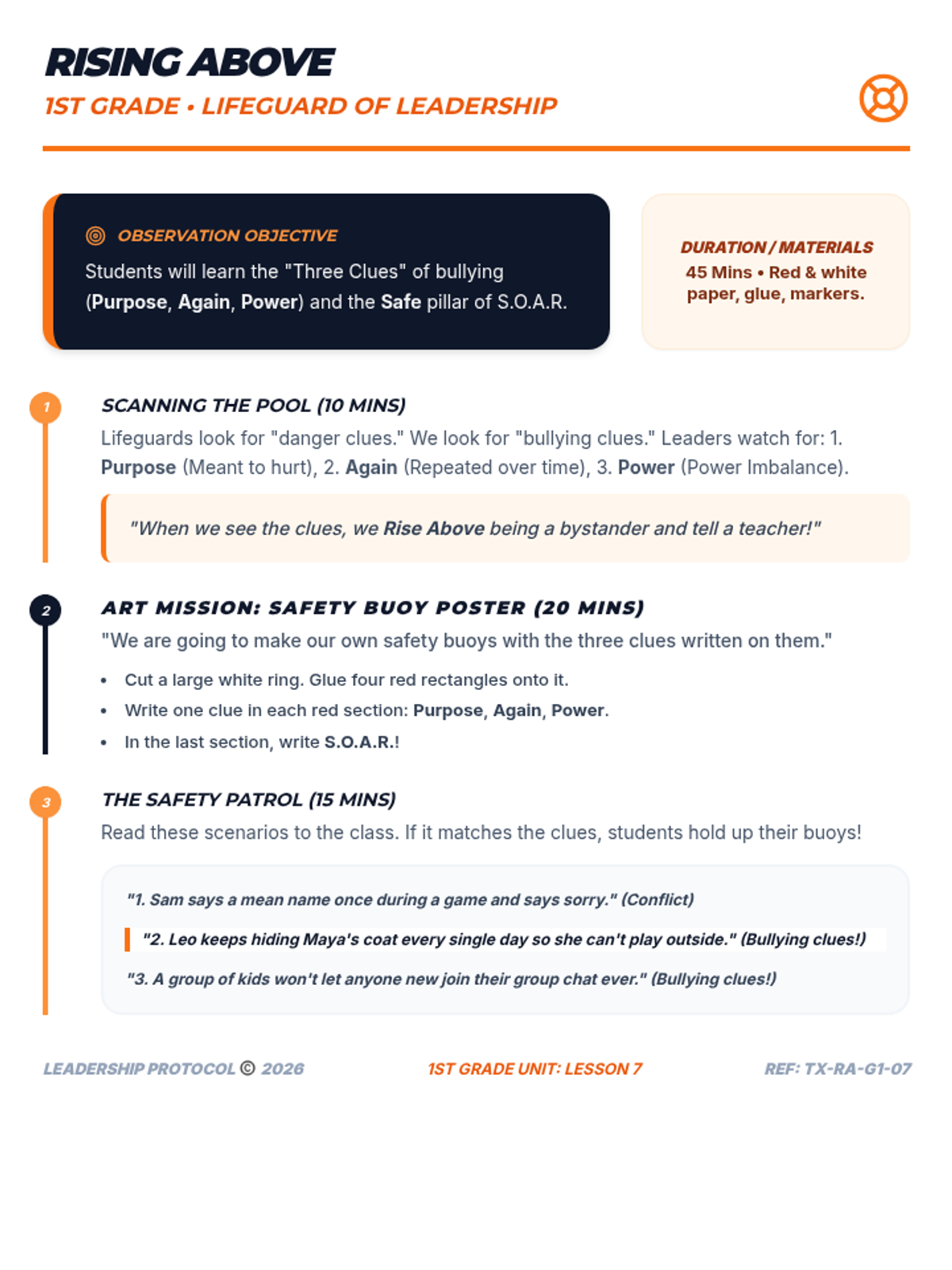
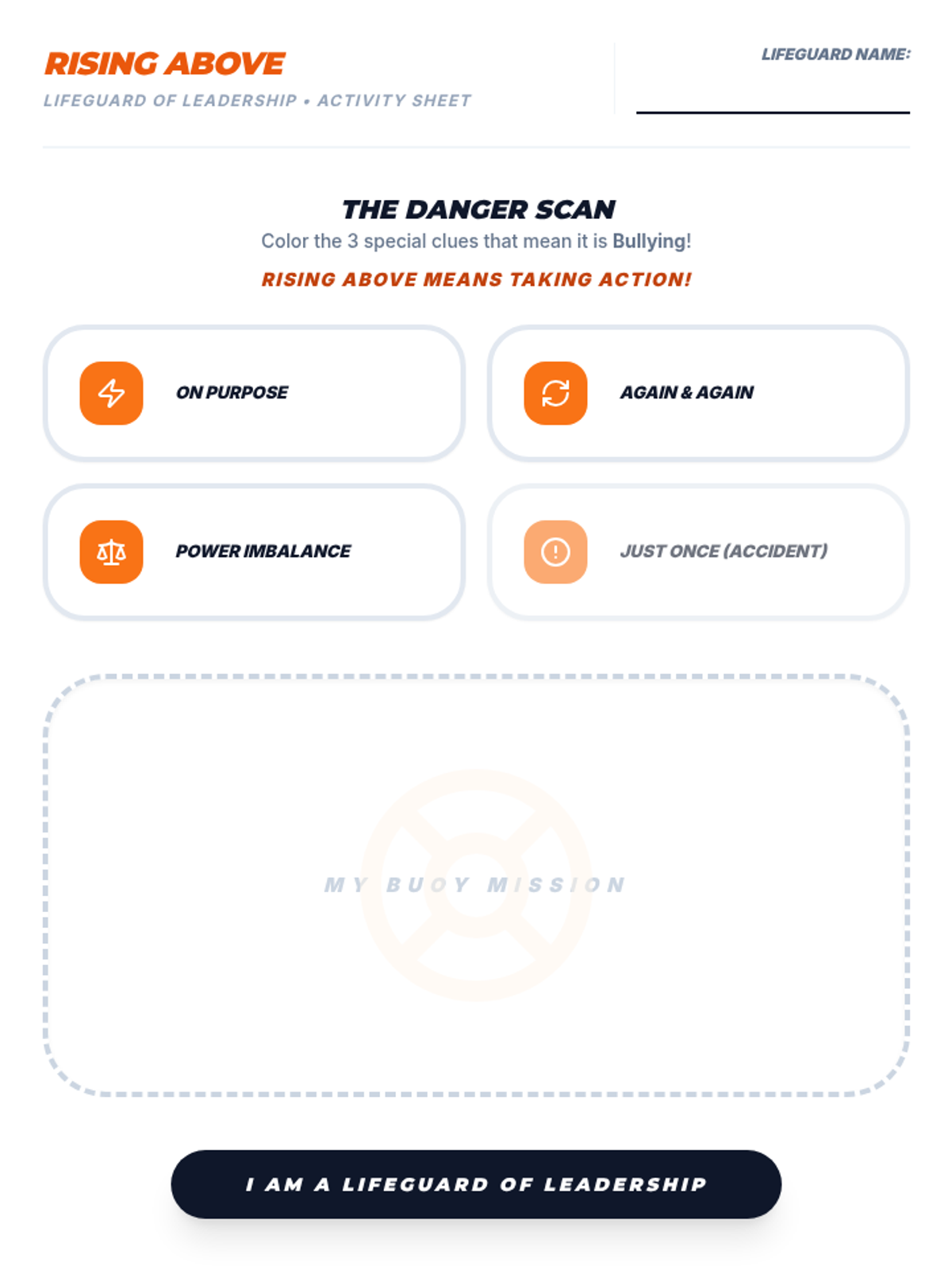
1st Grade focus on noticing the three clues of bullying (Power, Repeat, Intent) as a Lifeguard. Art: Safety Buoy Poster.
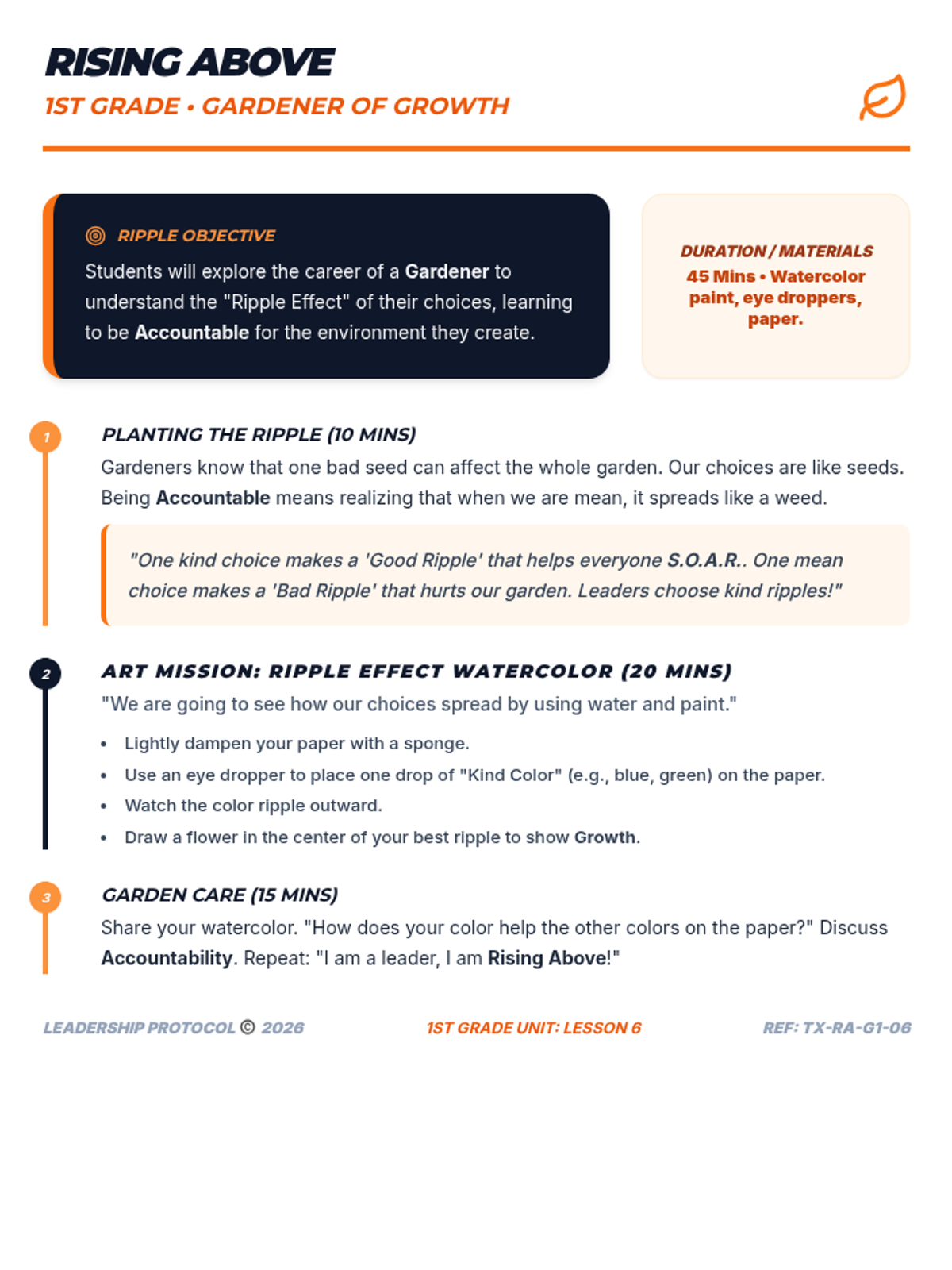
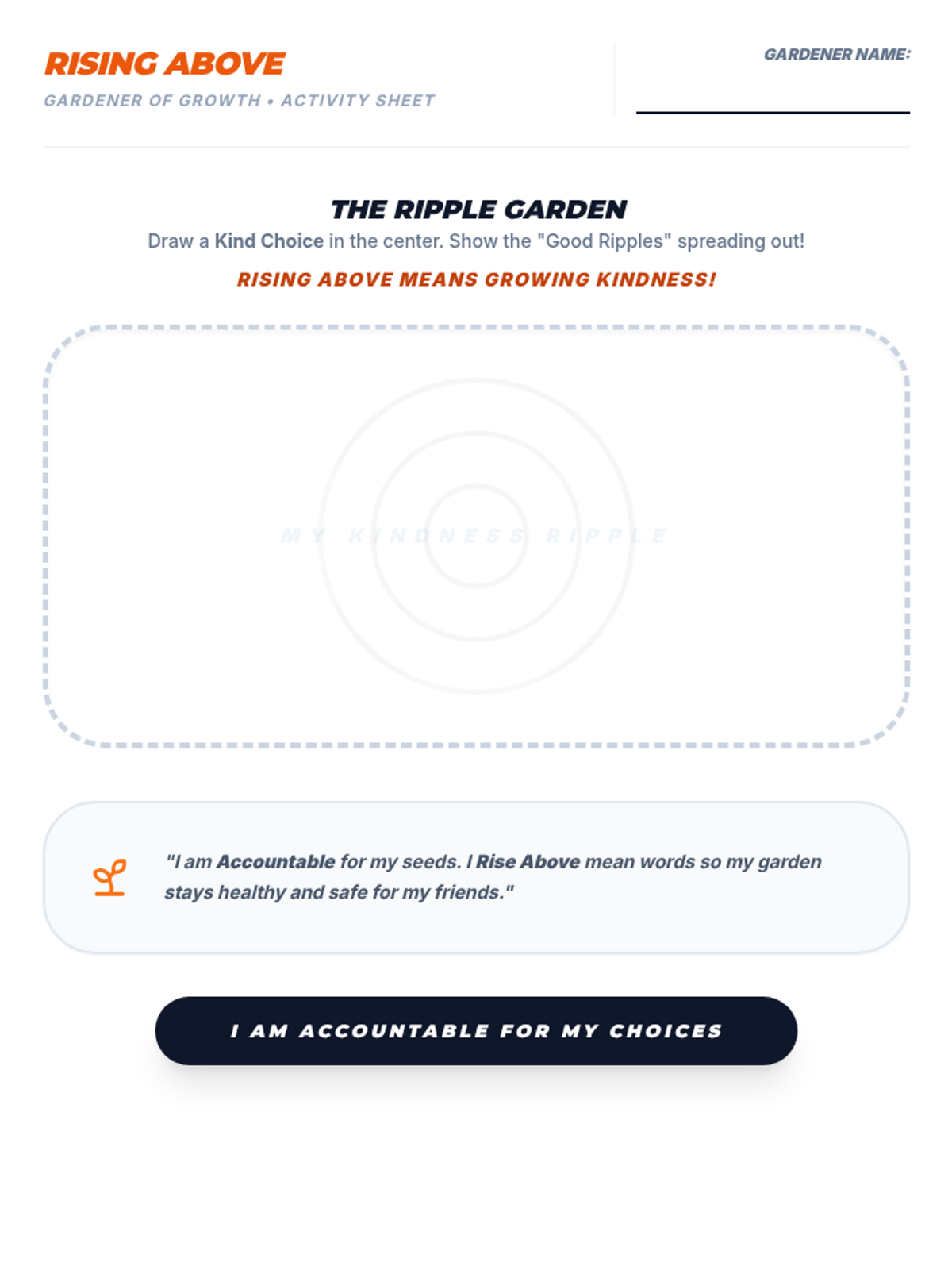
1st Grade focus on the ripple effect of our choices through the career of a Gardener. Art: Ripple Effect Watercolor.
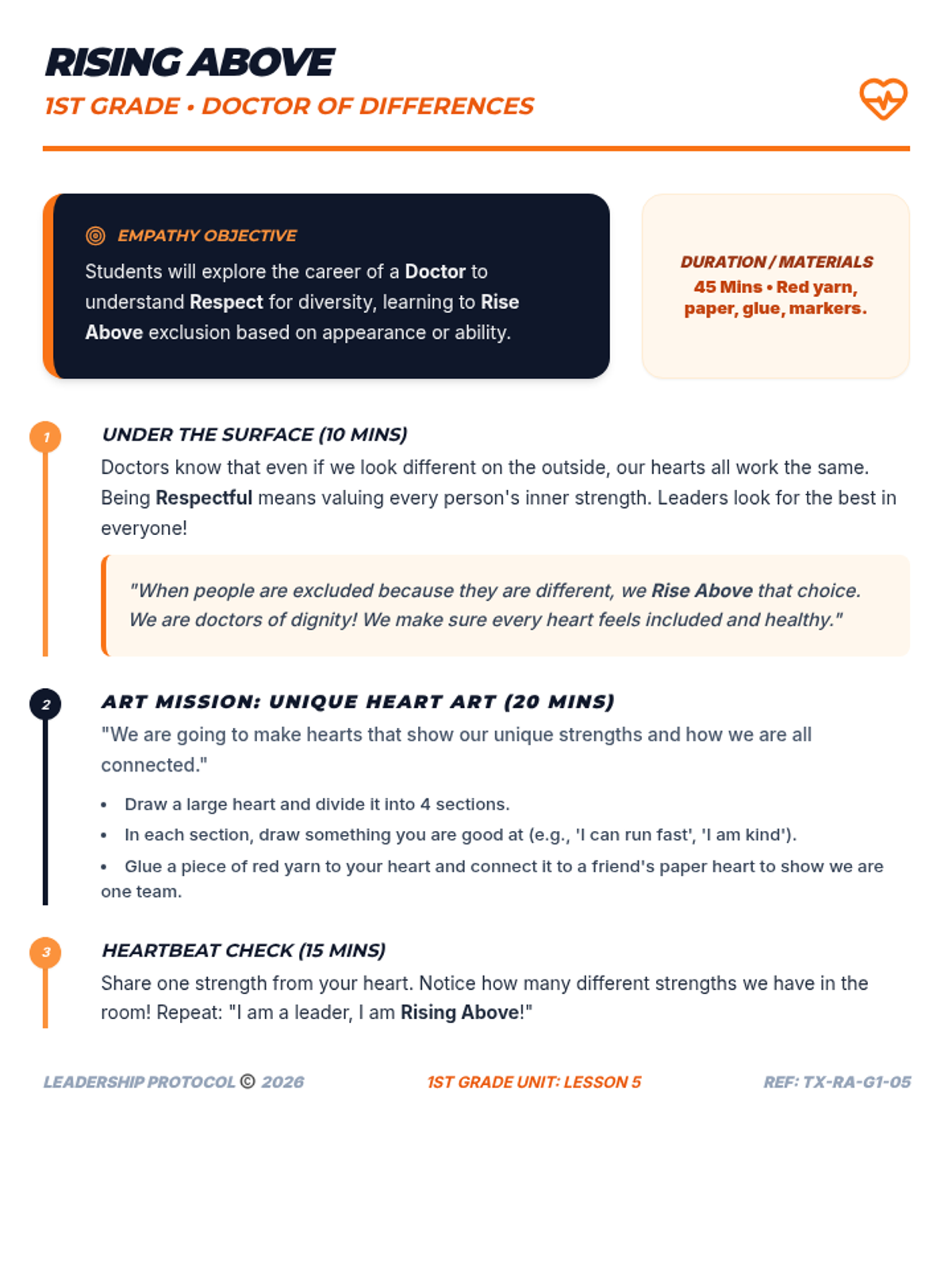
1st Grade focus on respecting differences and diverse strengths through the career of a Doctor. Art: Unique Heart Anatomy Art.
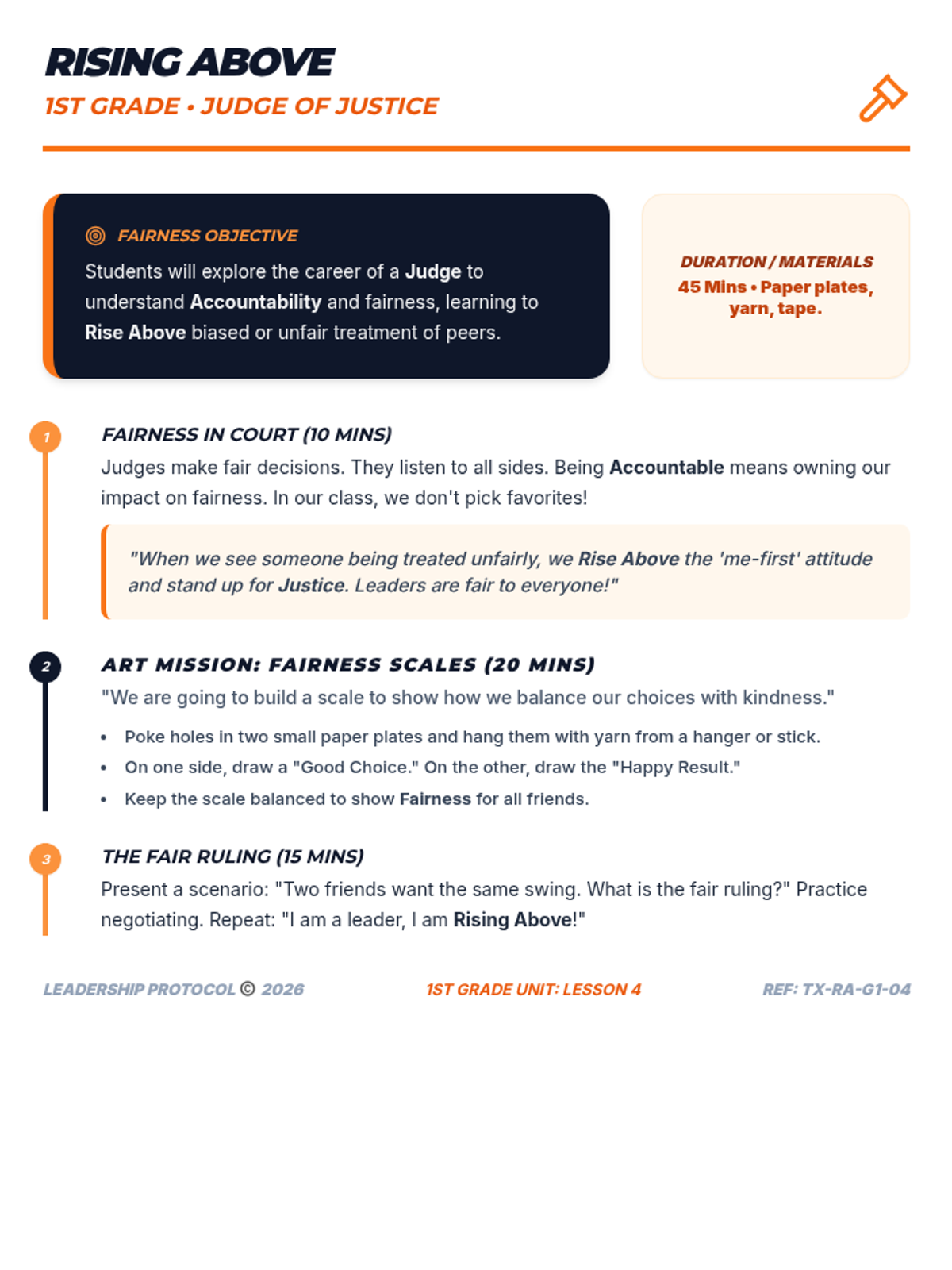
1st Grade focus on accountability and fairness through the career of a Judge. Art: Fairness Scales Craft.
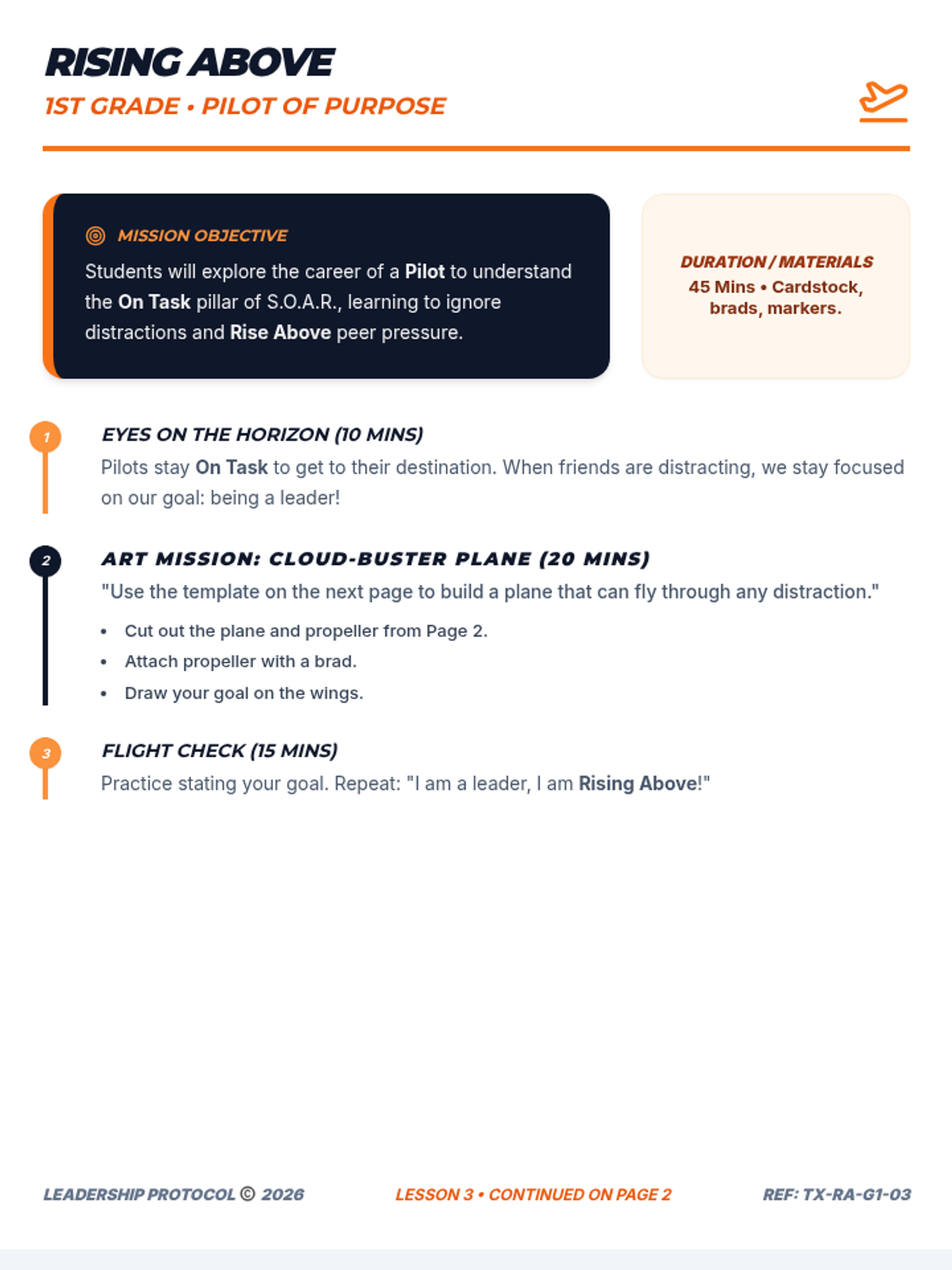
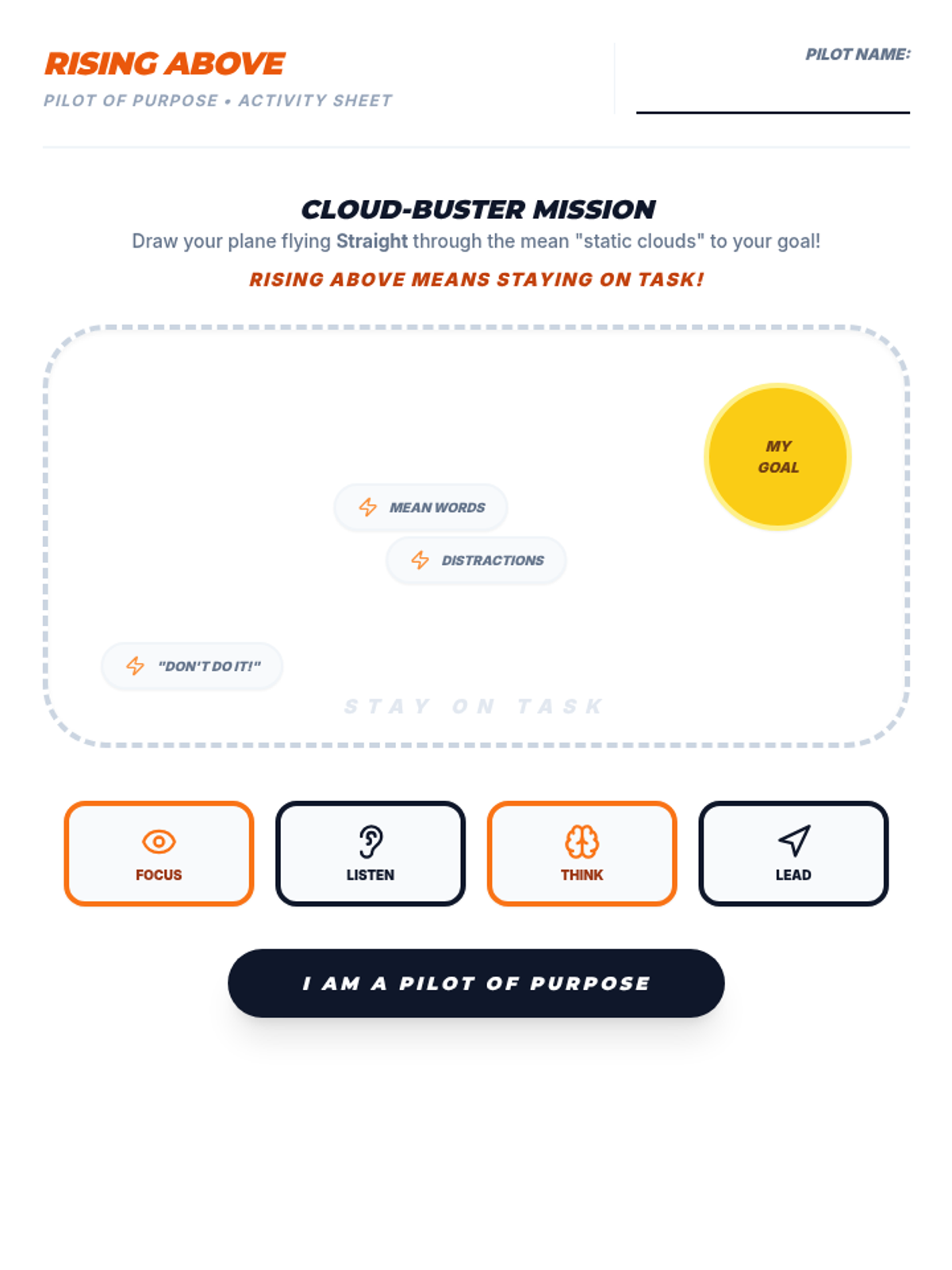
1st Grade focus on staying 'On Task' and focused on goals through the career of a Pilot. Art: Cloud-Buster Plane Drawing.
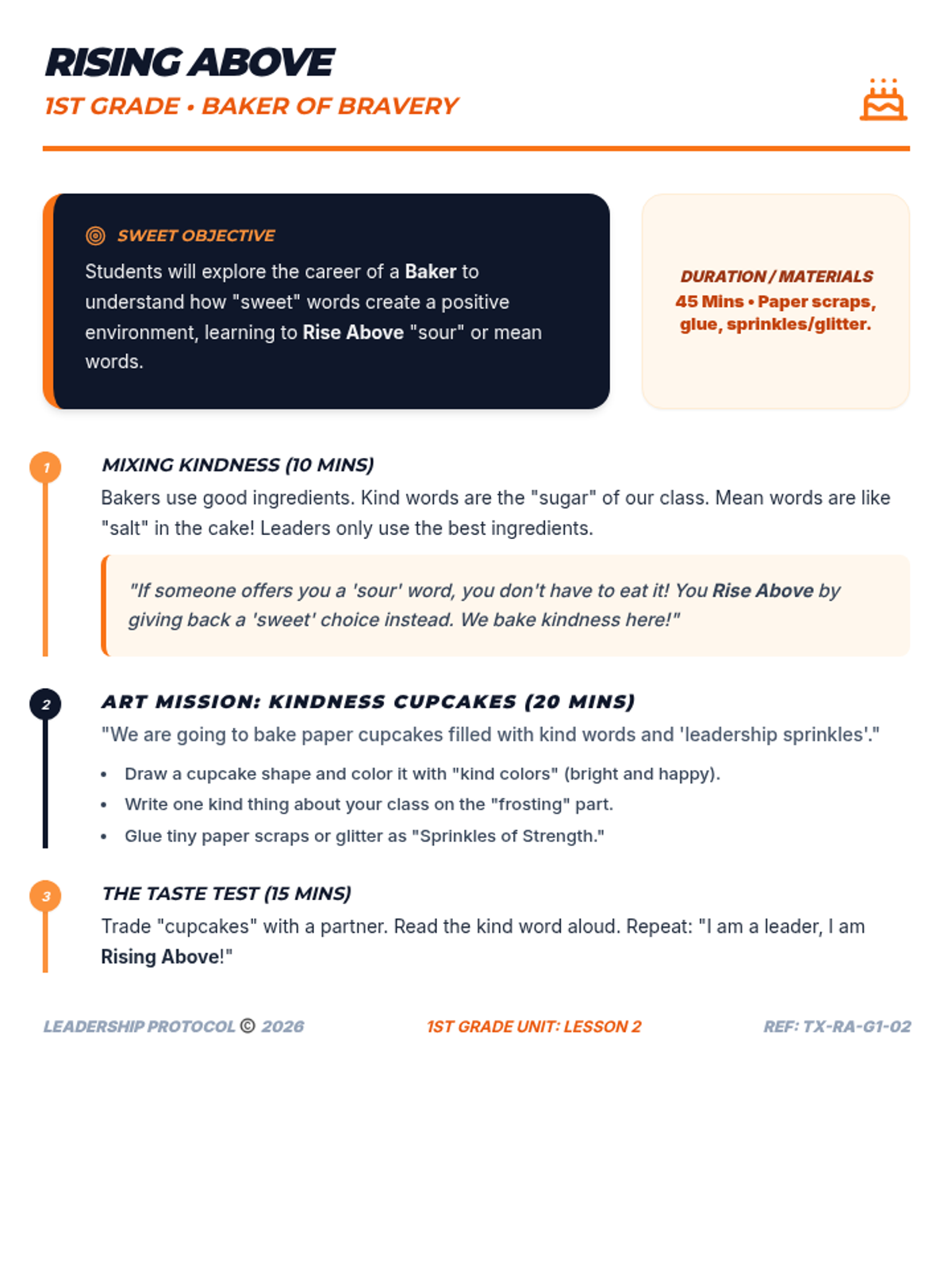
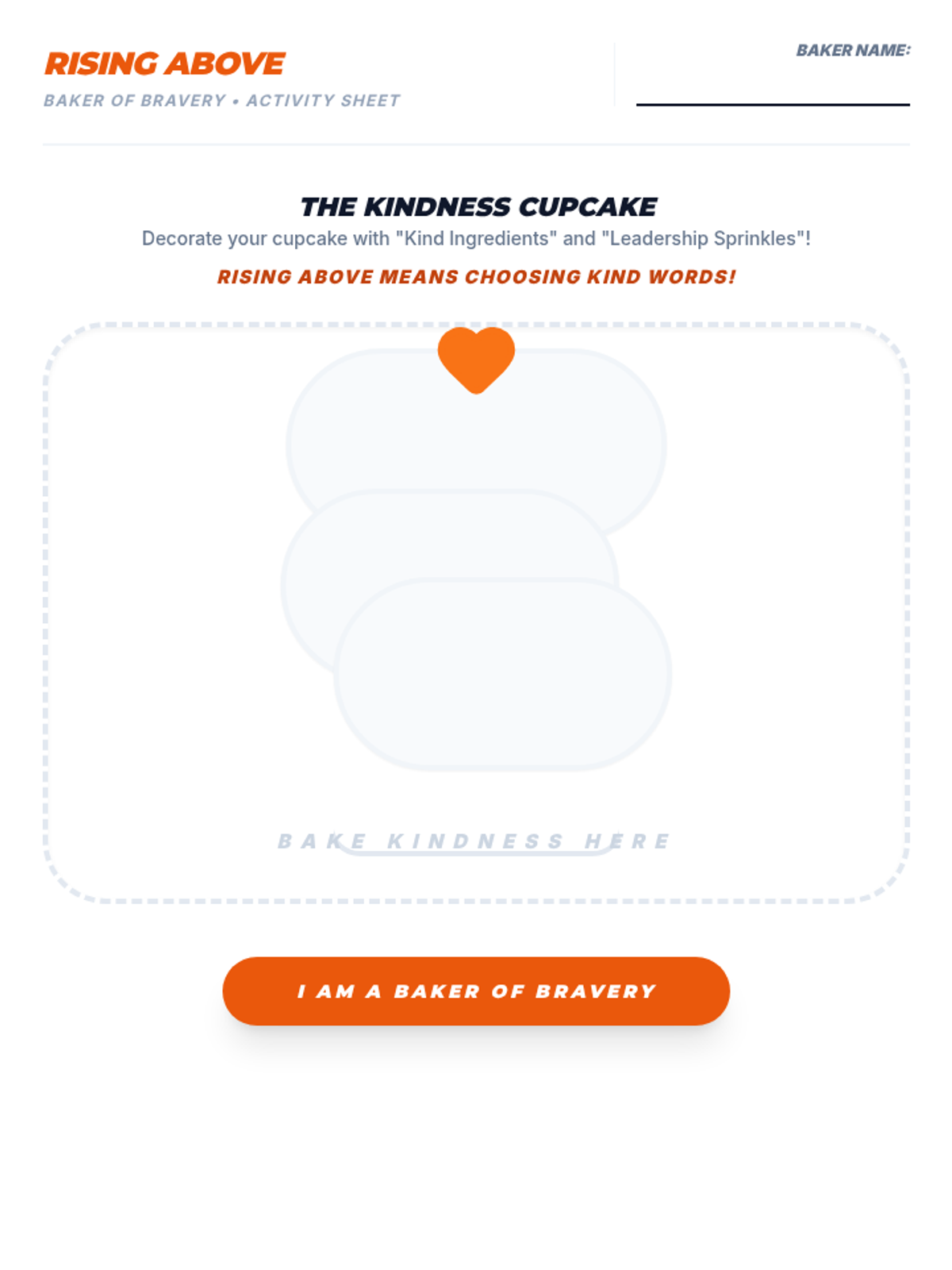
1st Grade focus on kind words and inclusive 'recipes' through the career of a Baker. Art: Kindness Cupcake Collage.
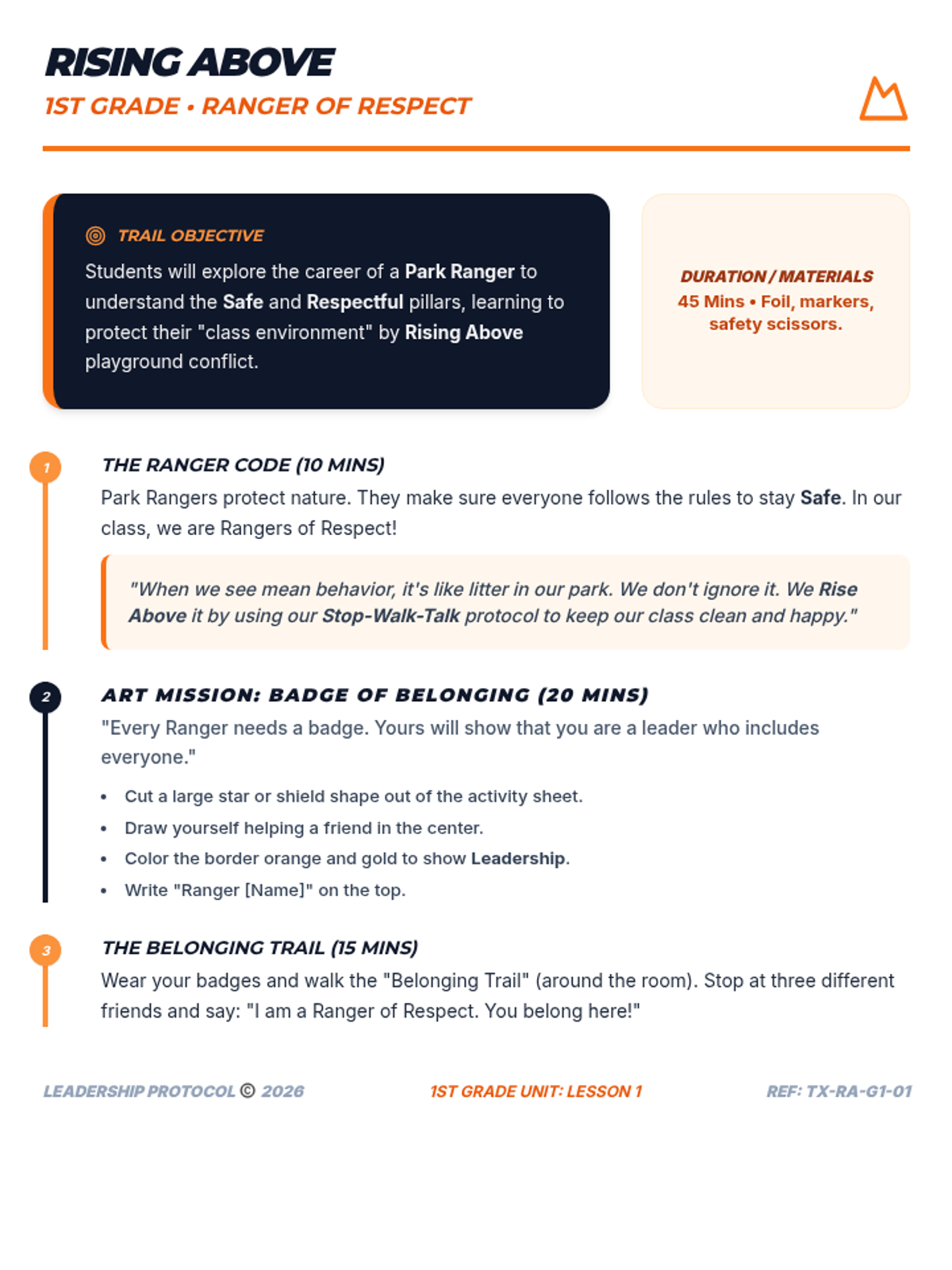
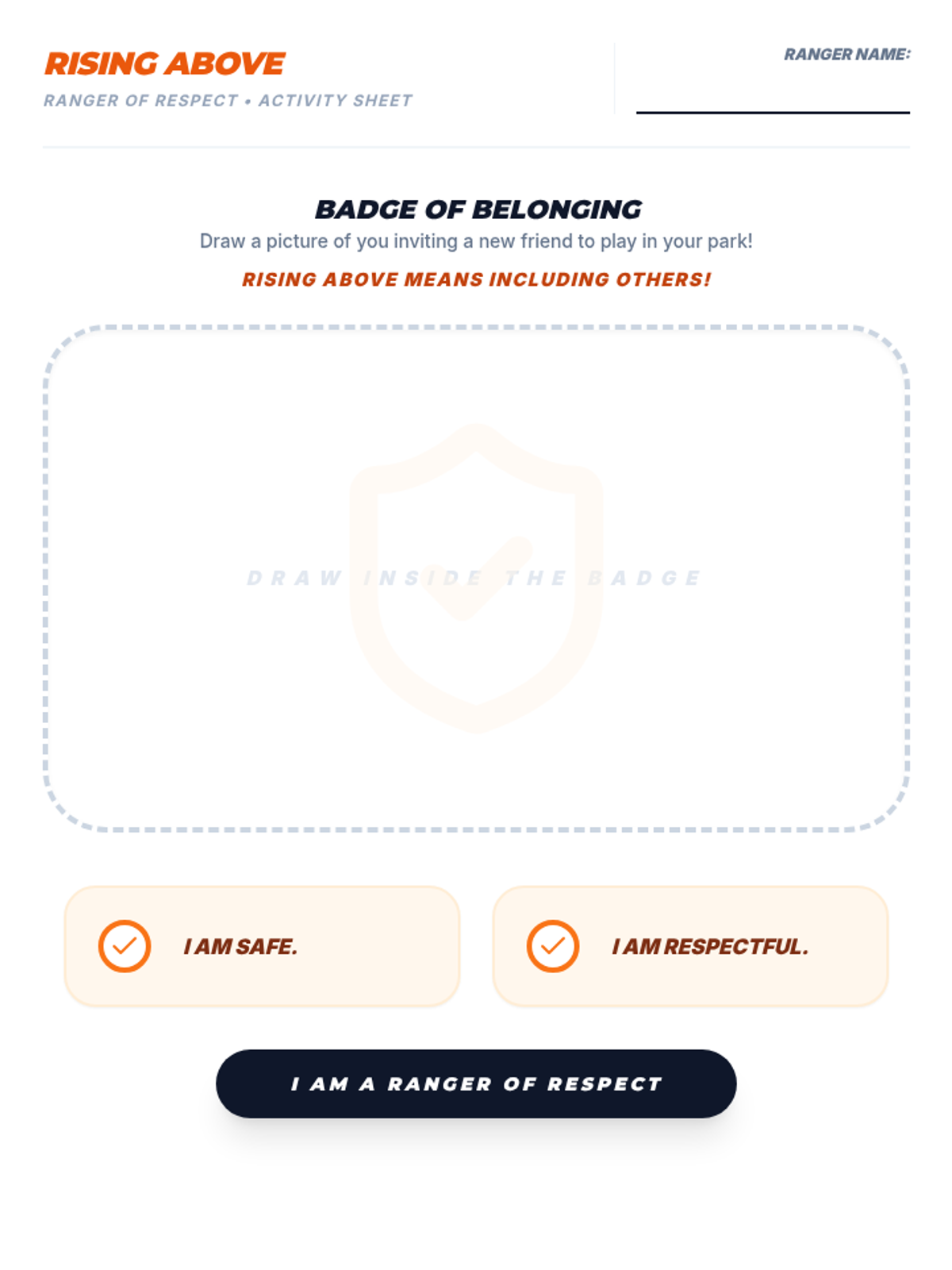
1st Grade focus on safety and respect in shared spaces through the career of a Park Ranger. Art: Ranger Badge of Belonging.
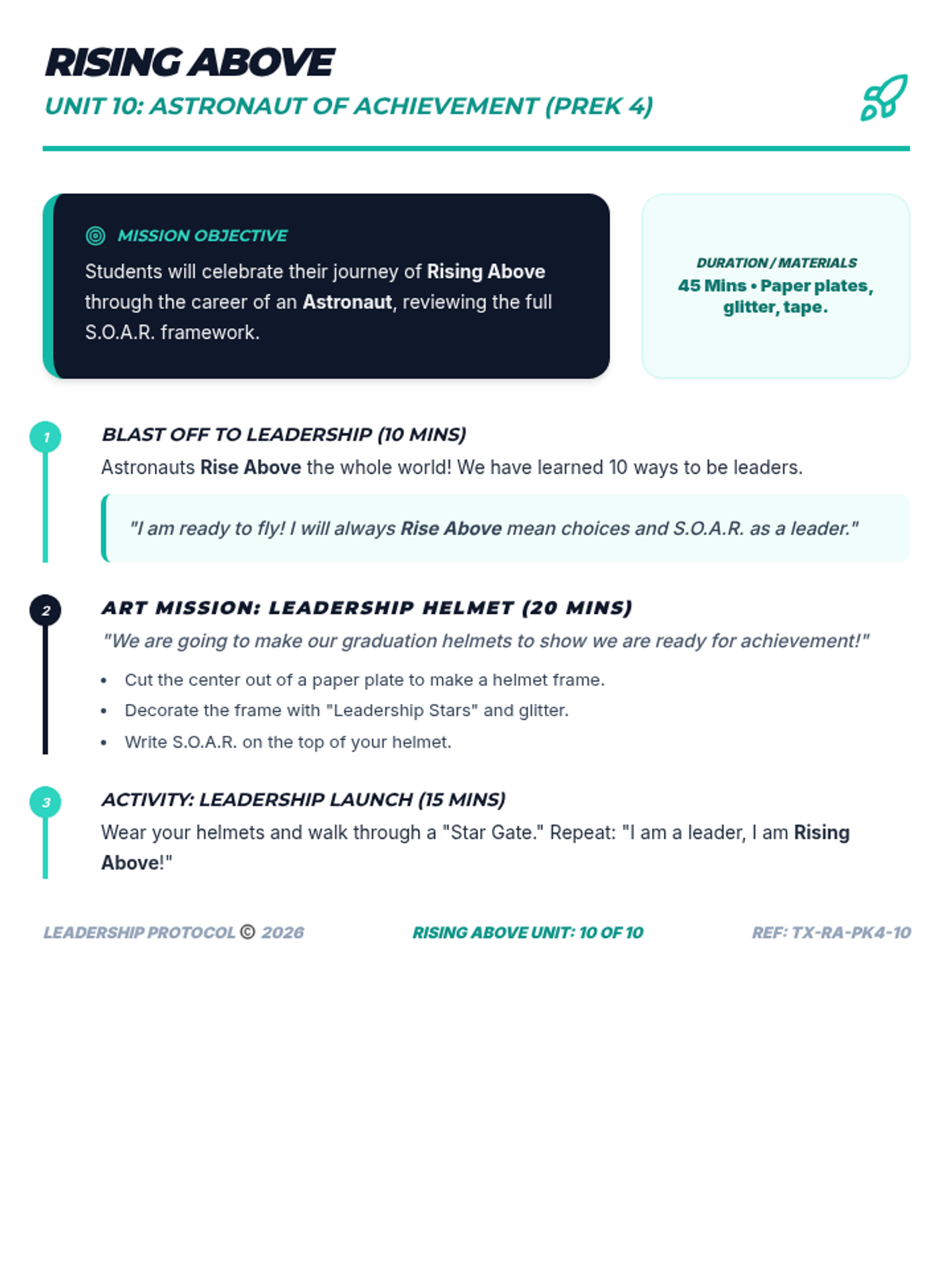
PreK 4 graduation celebrating their journey of 'Rising Above'. Art: Leadership Helmet.
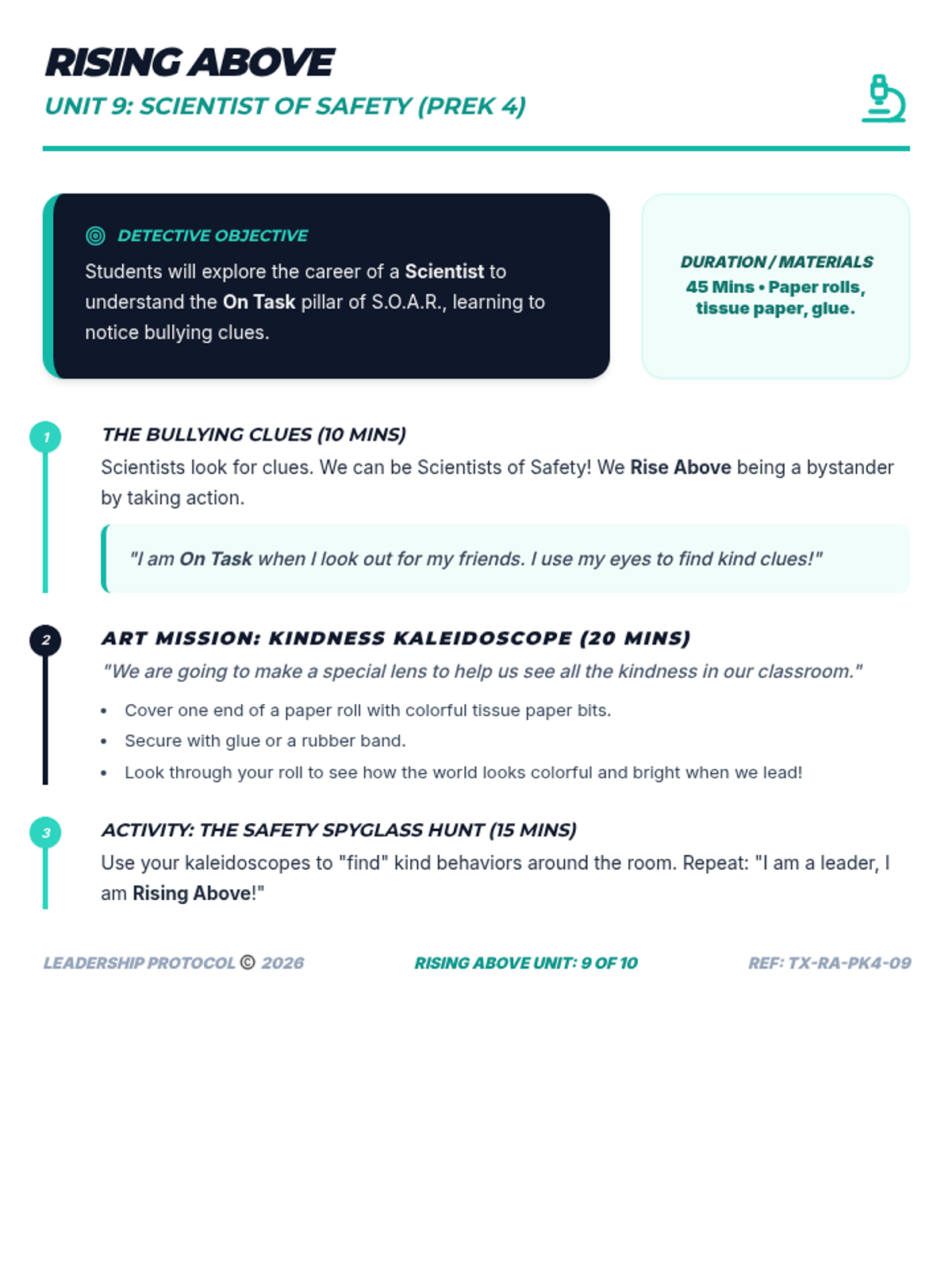
PreK 4 focus on identifying bullying clues through science. Art: Kindness Kaleidoscope.
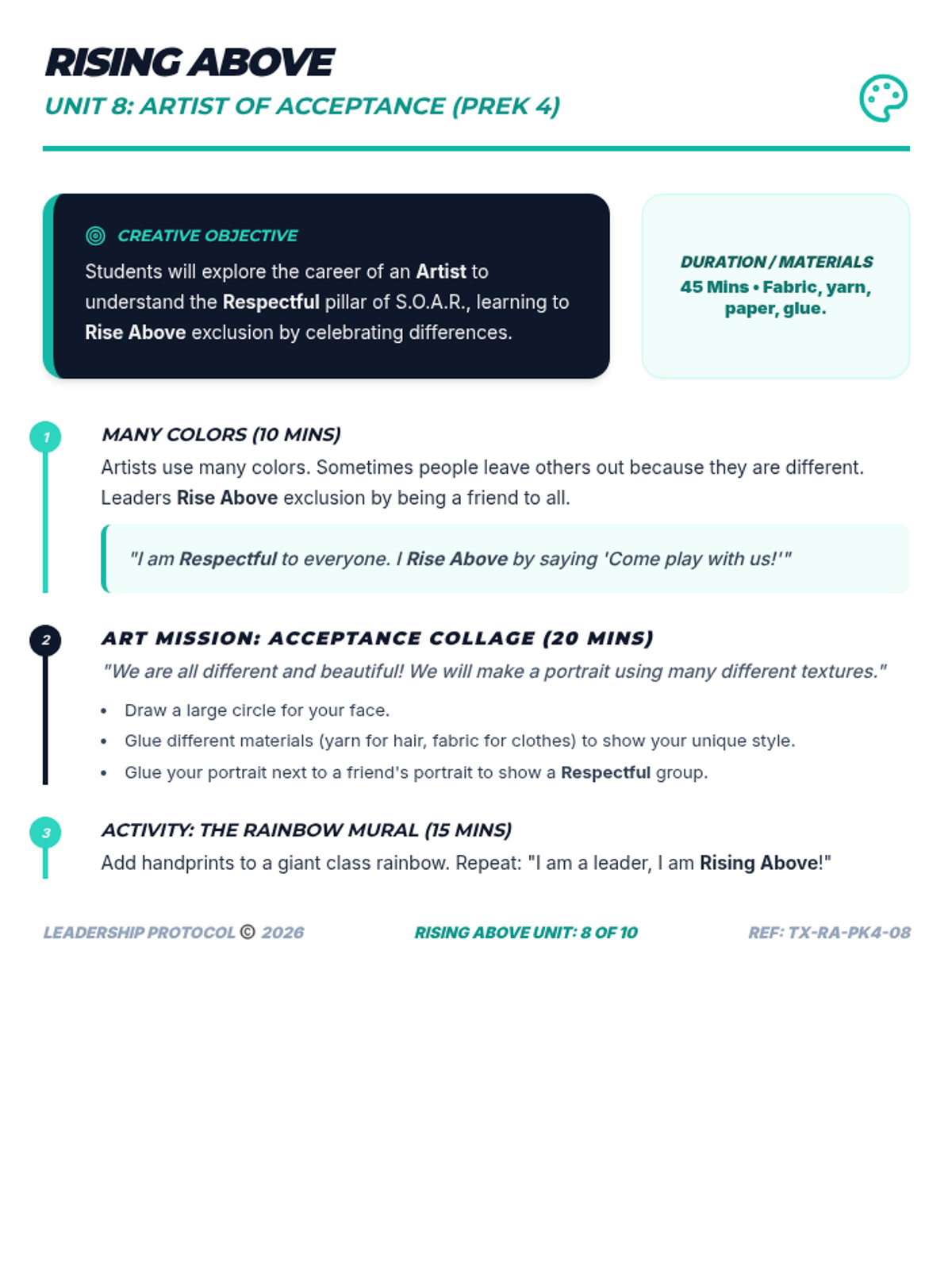
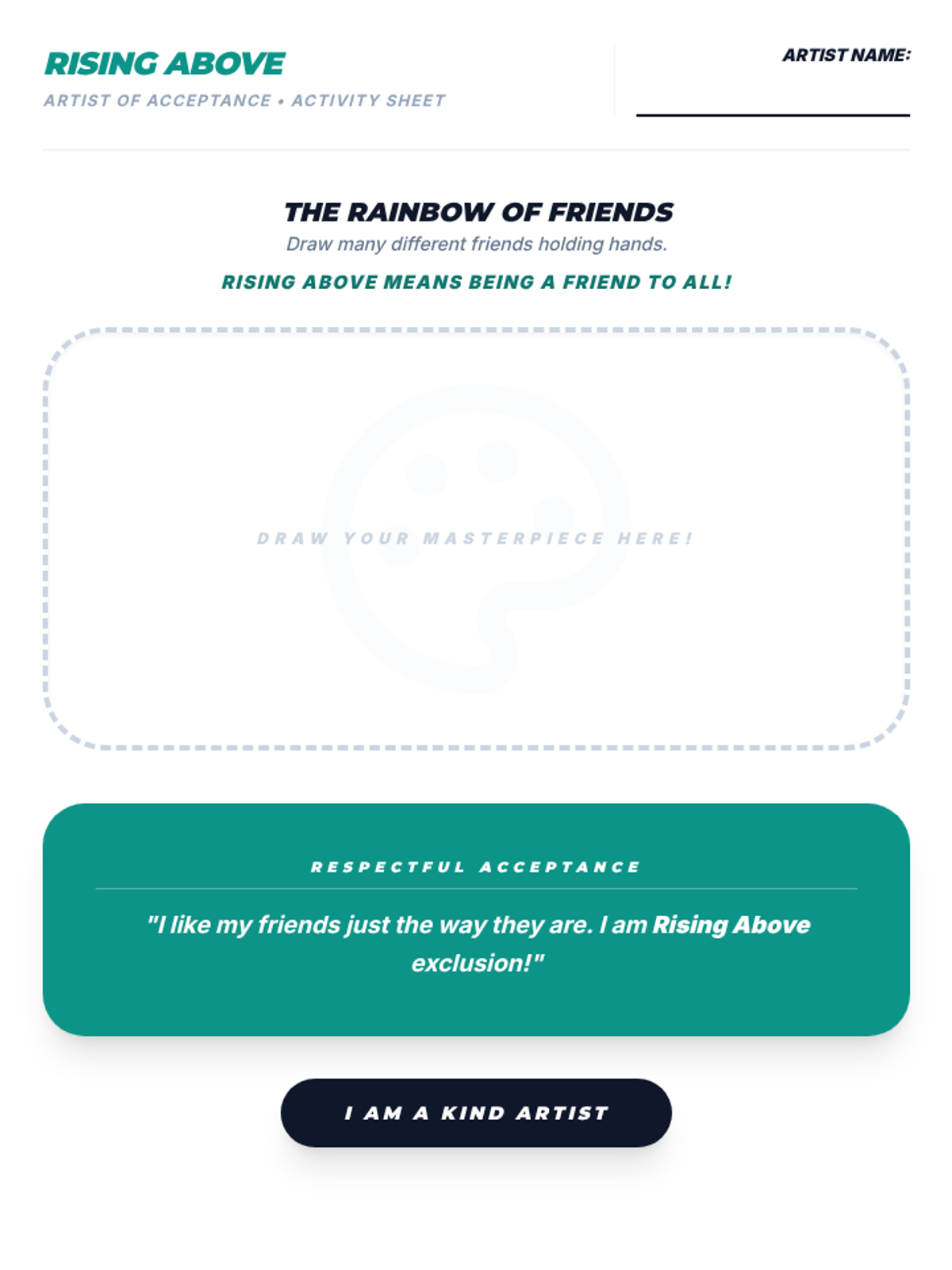
PreK 4 focus on celebrating differences through art. Art: Acceptance Collage.
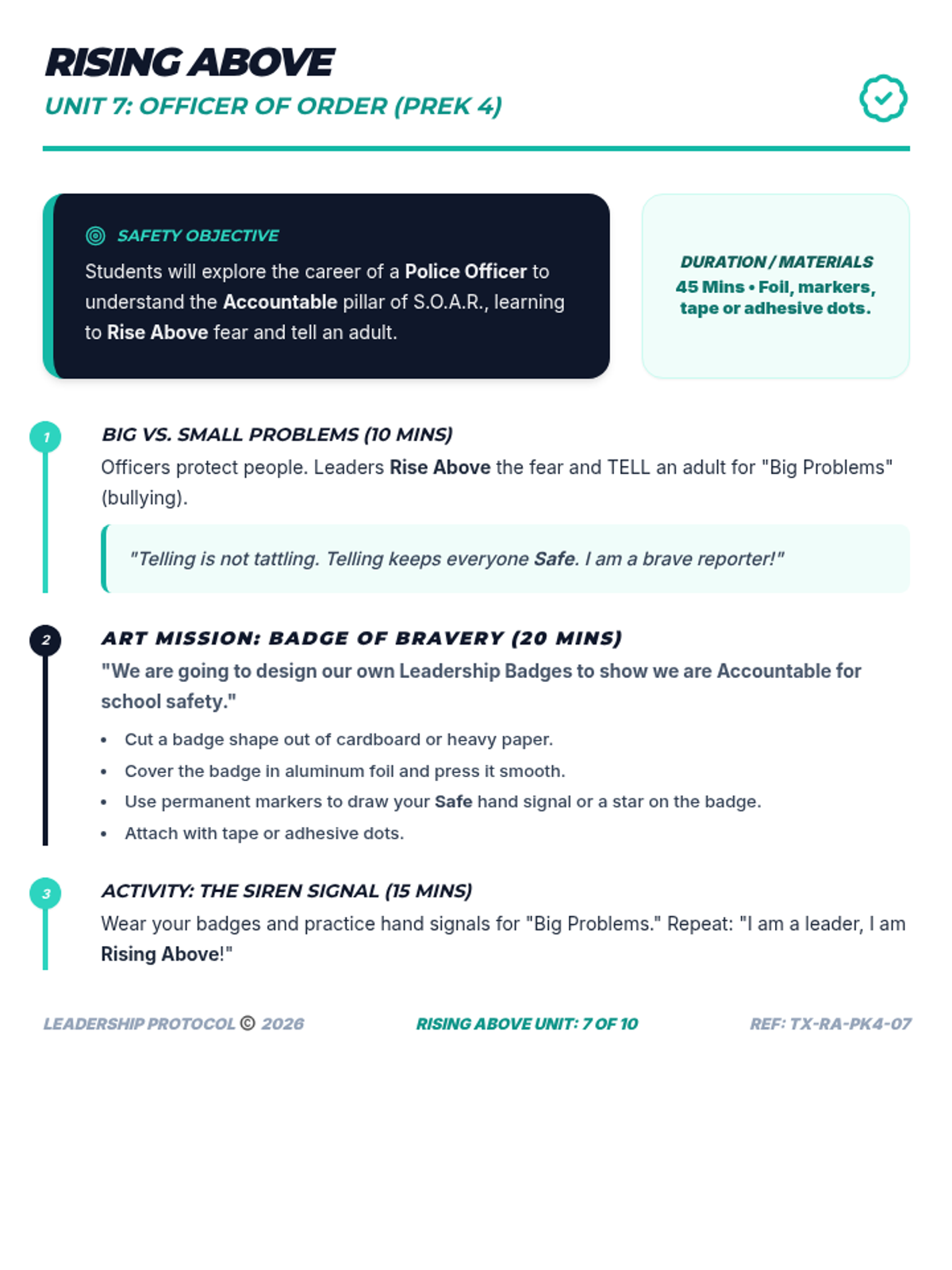
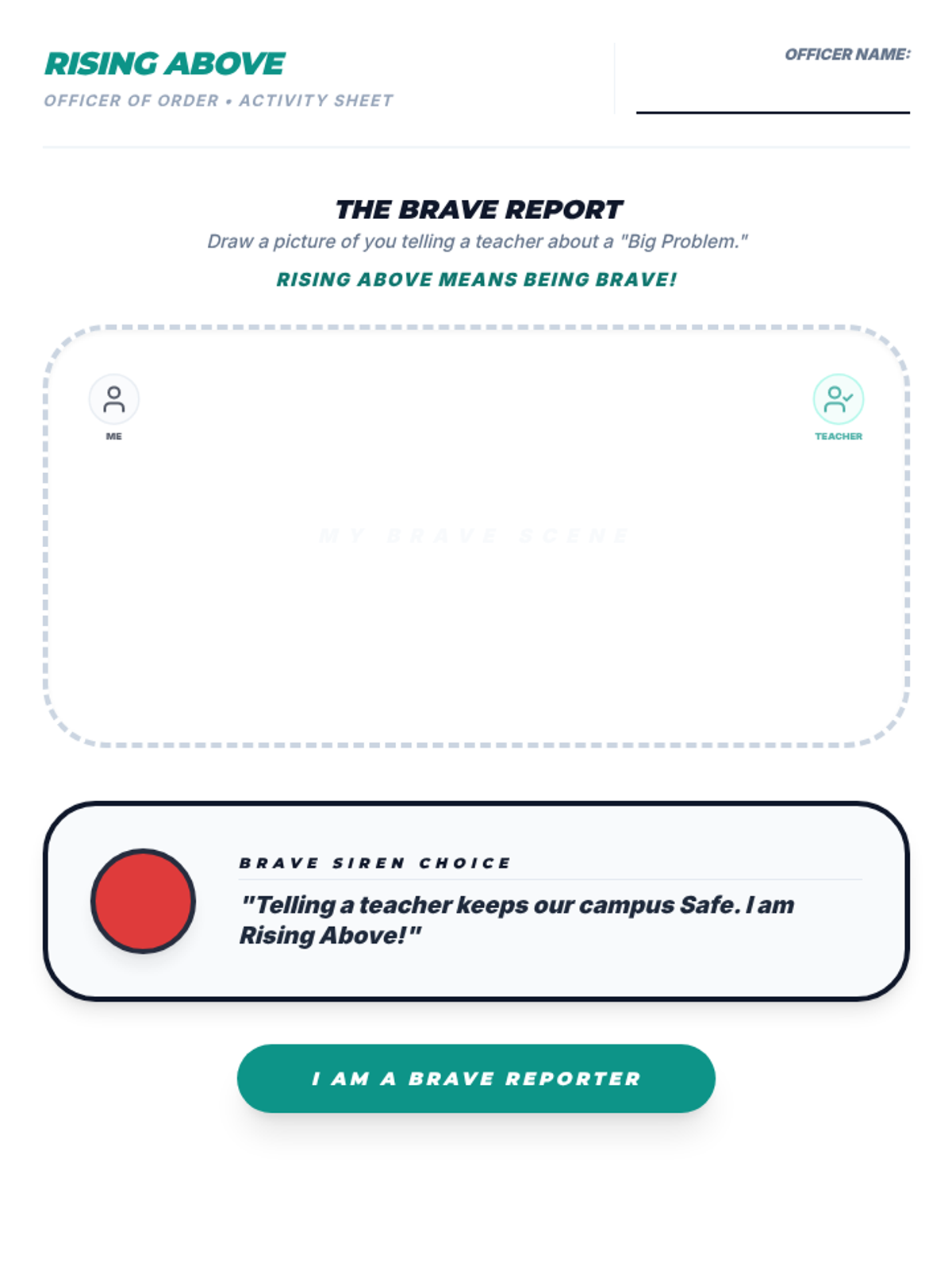
PreK 4 focus on rules and reporting 'big problems' through the career of a police officer. Art: Badge of Bravery.
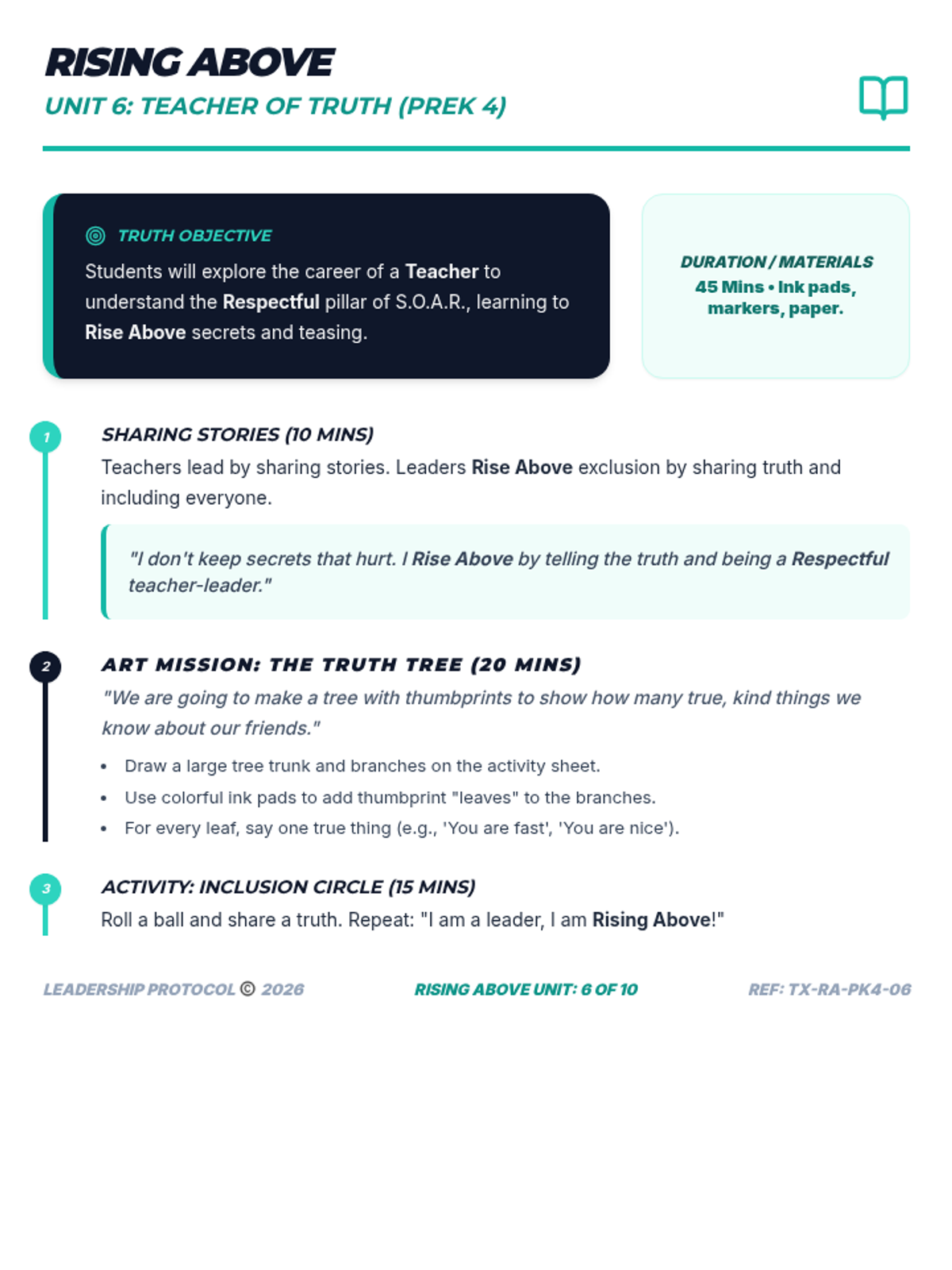
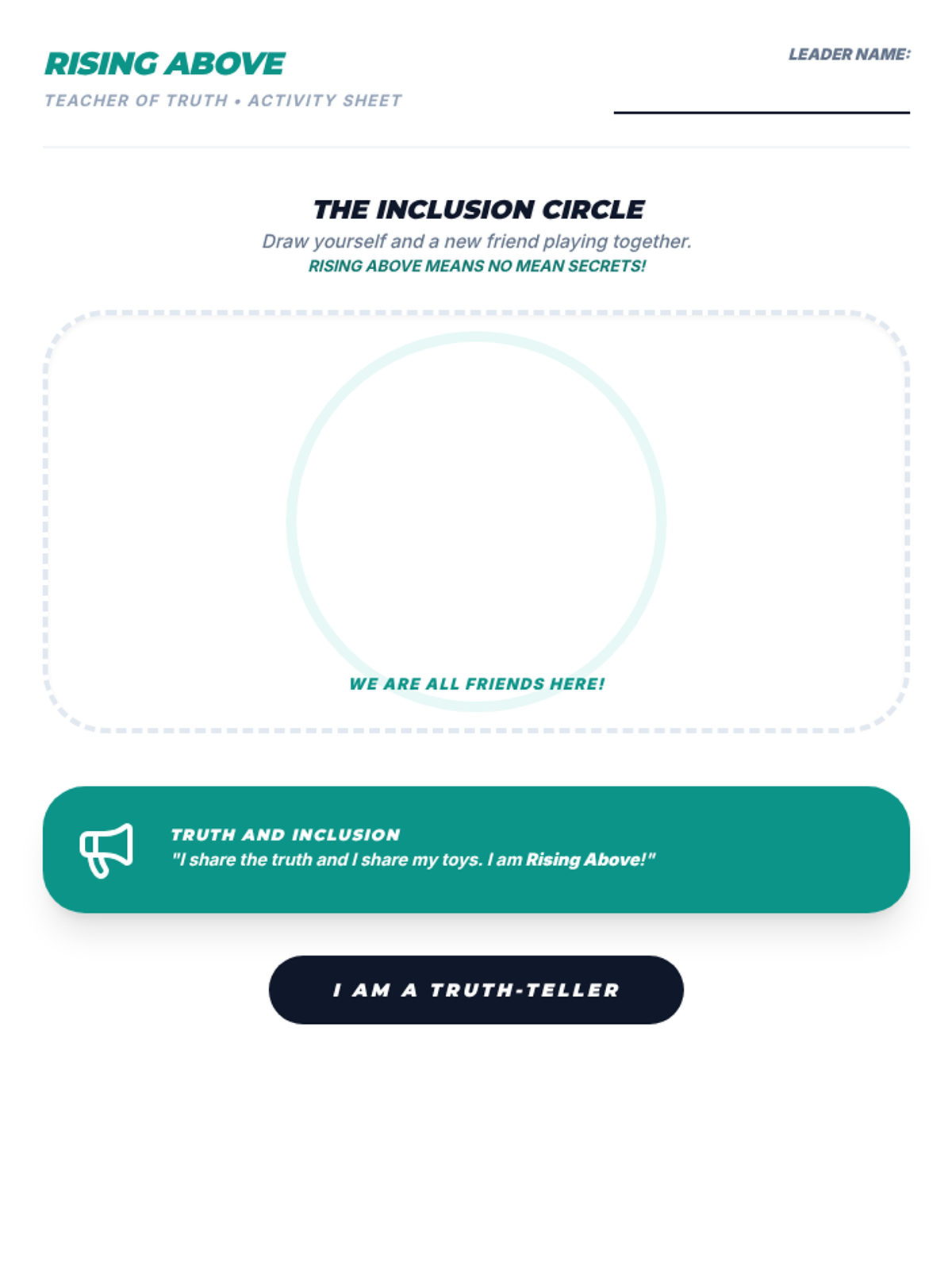
PreK 4 focus on truth and respectful communication through teaching. Art: Truth Tree.
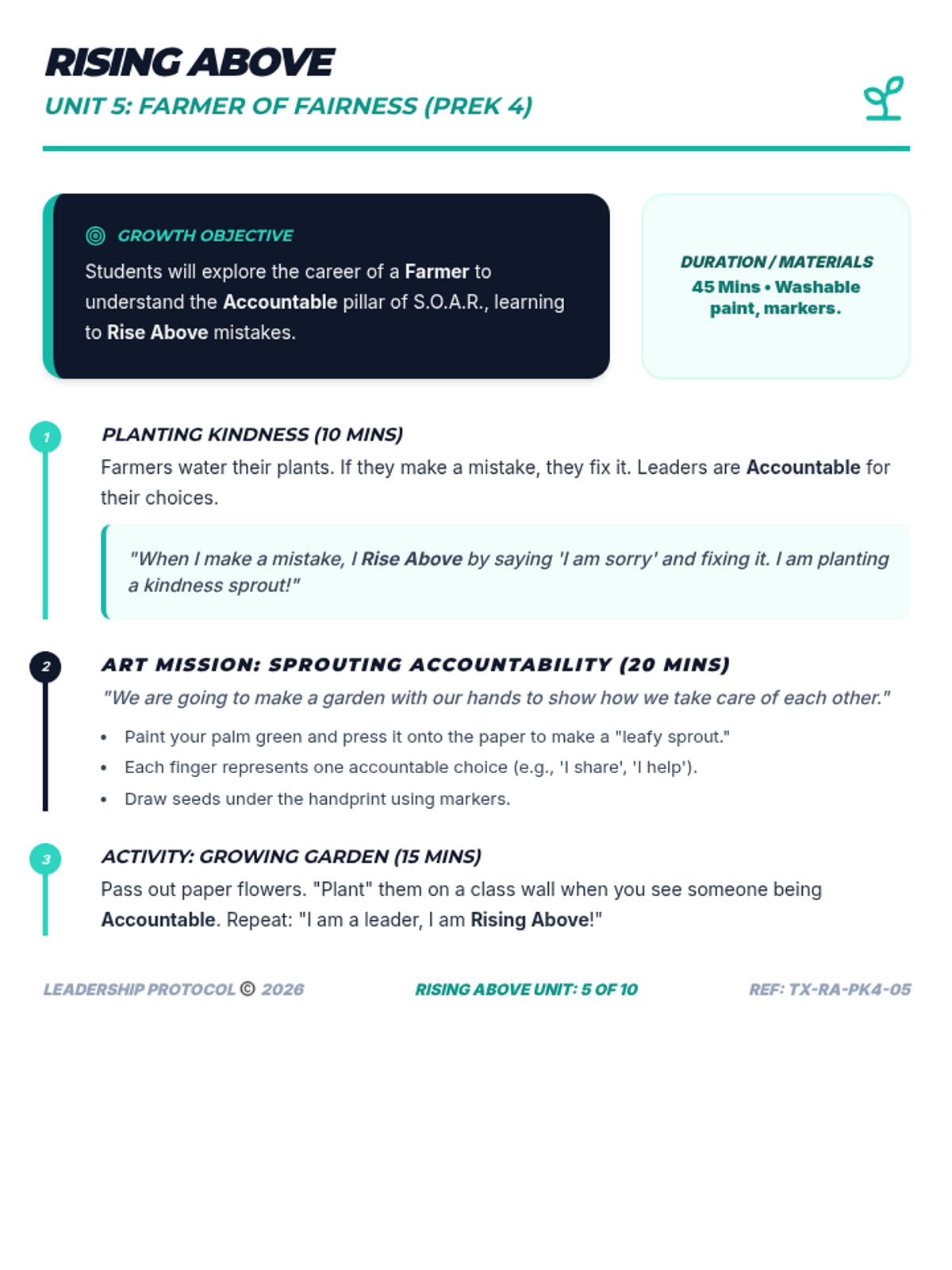
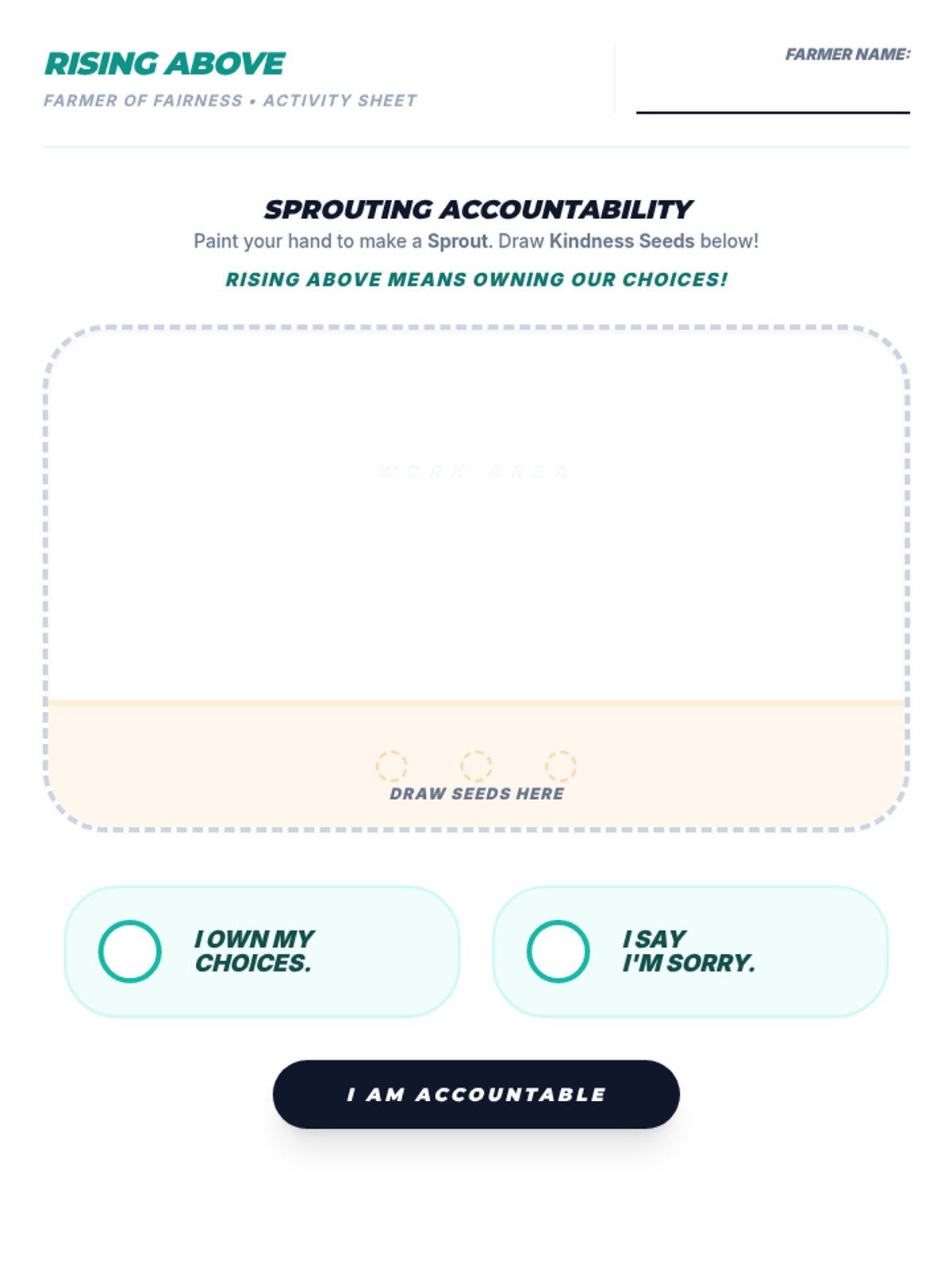
PreK 4 focus on accountability and growth through farming. Art: Sprouting Accountability.
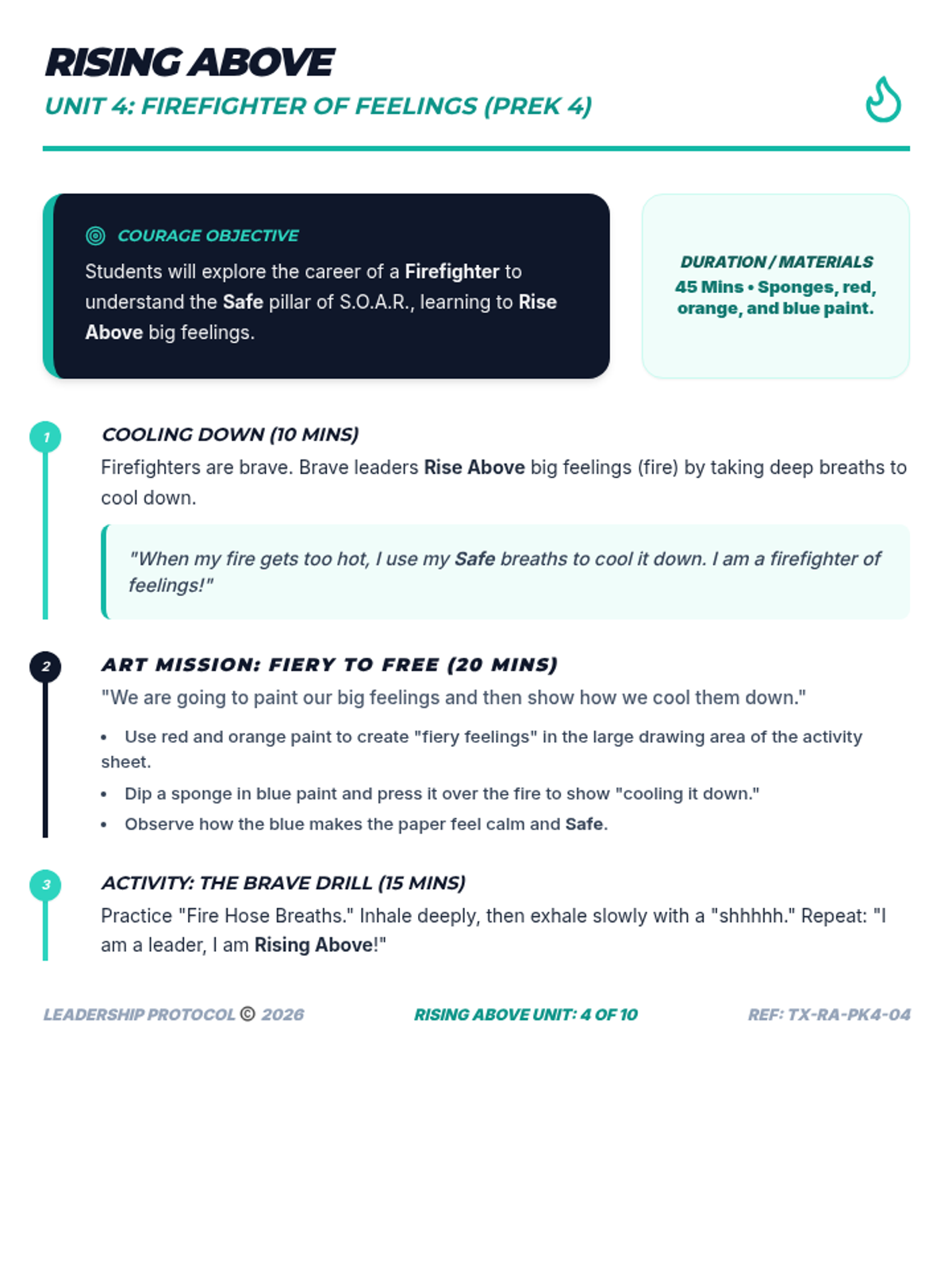
PreK 4 focus on emotional safety and bravery through the career of a firefighter. Art: Fiery to Free.
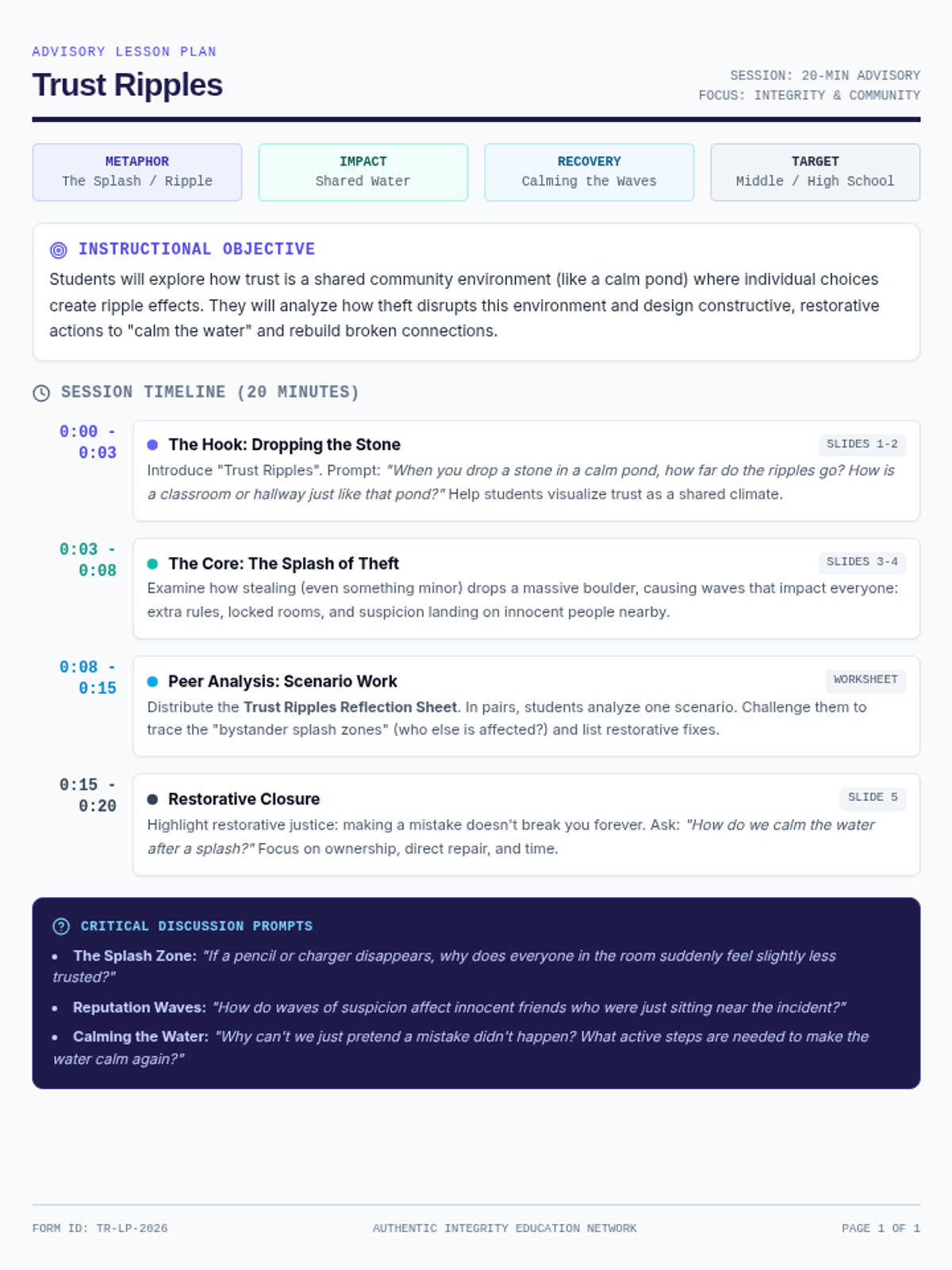
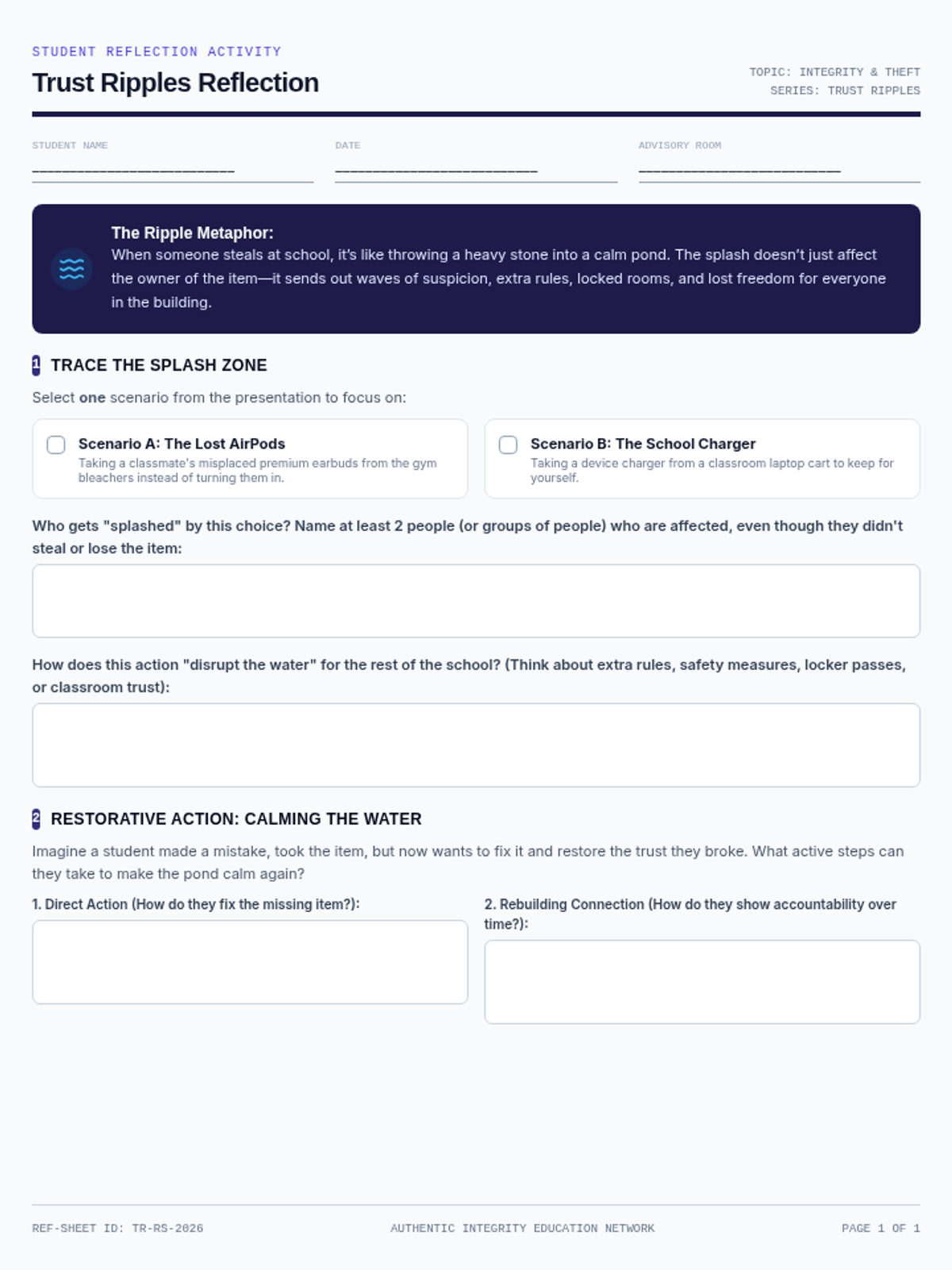
A direct, literal 20-minute advisory lesson exploring why theft is unacceptable in school. Students look past metaphors to analyze the direct consequences of stealing on school culture, rules, innocent peers, and the practical steps to repair relationships after a mistake is made.
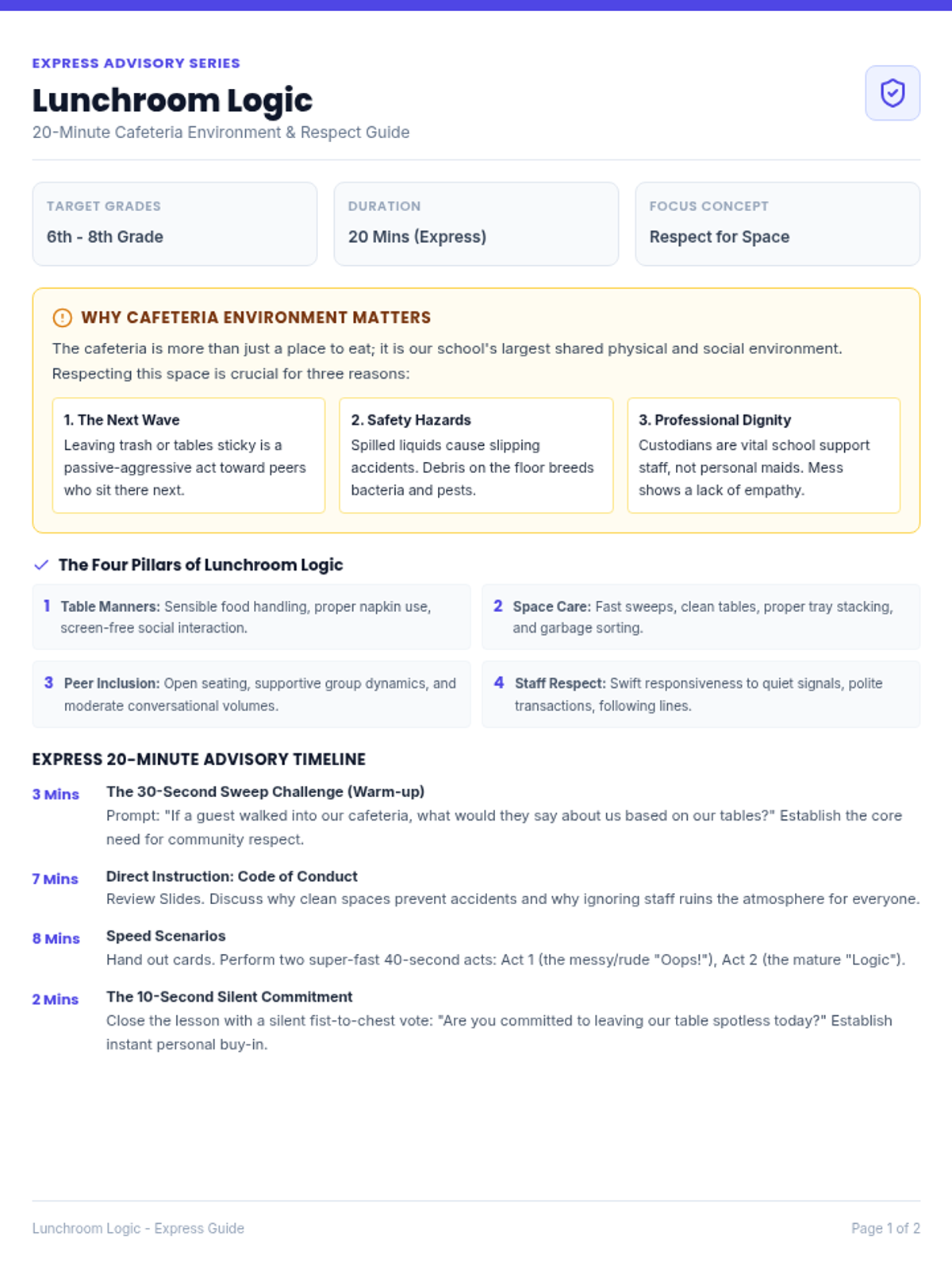
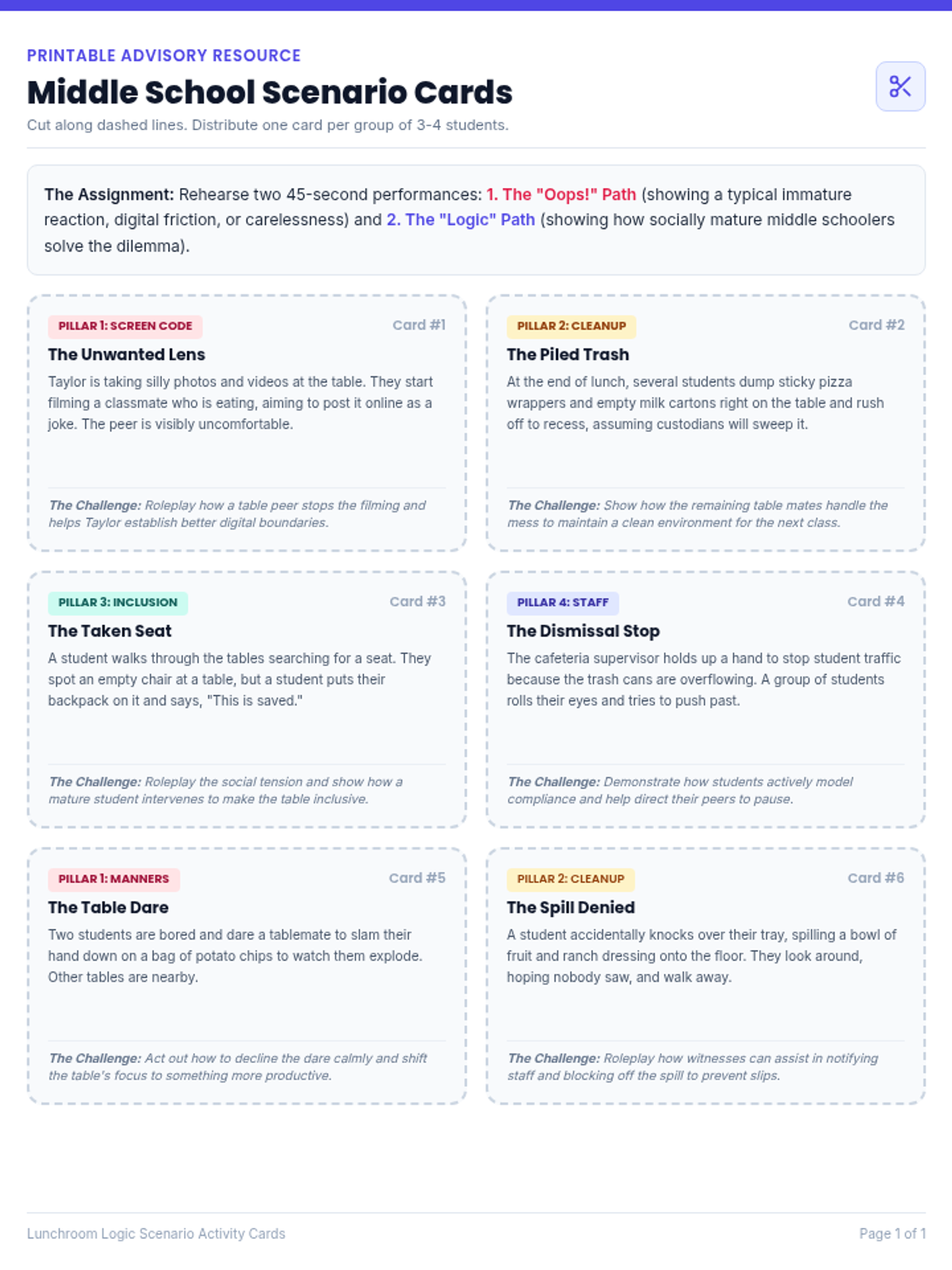
A rapid 20-minute express advisory lesson tailored for middle schoolers. It emphasizes the deep importance of respecting the physical and social cafeteria environment through fast-paced peer-led scenario roleplays and a collaborative classroom pledge.
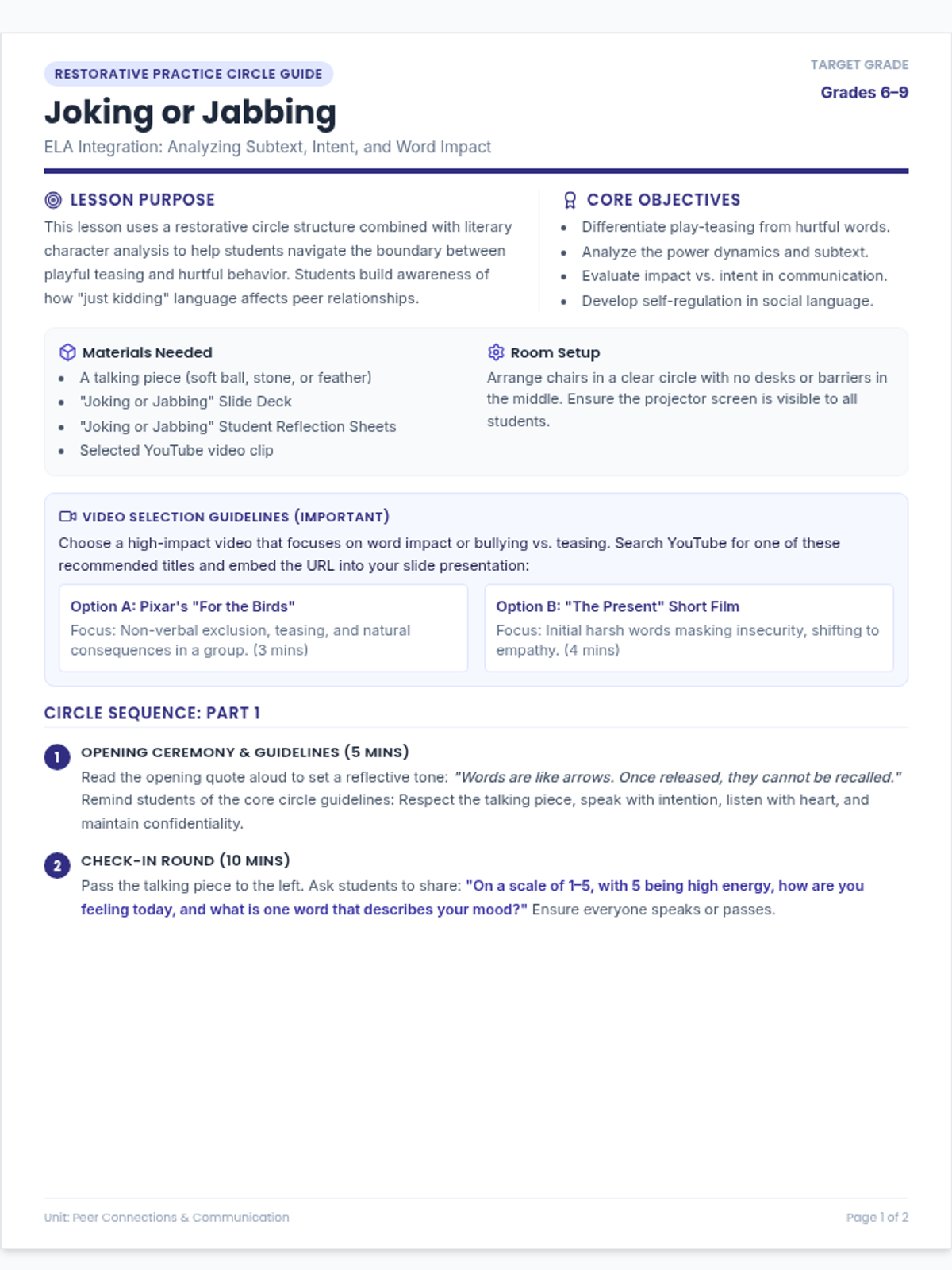
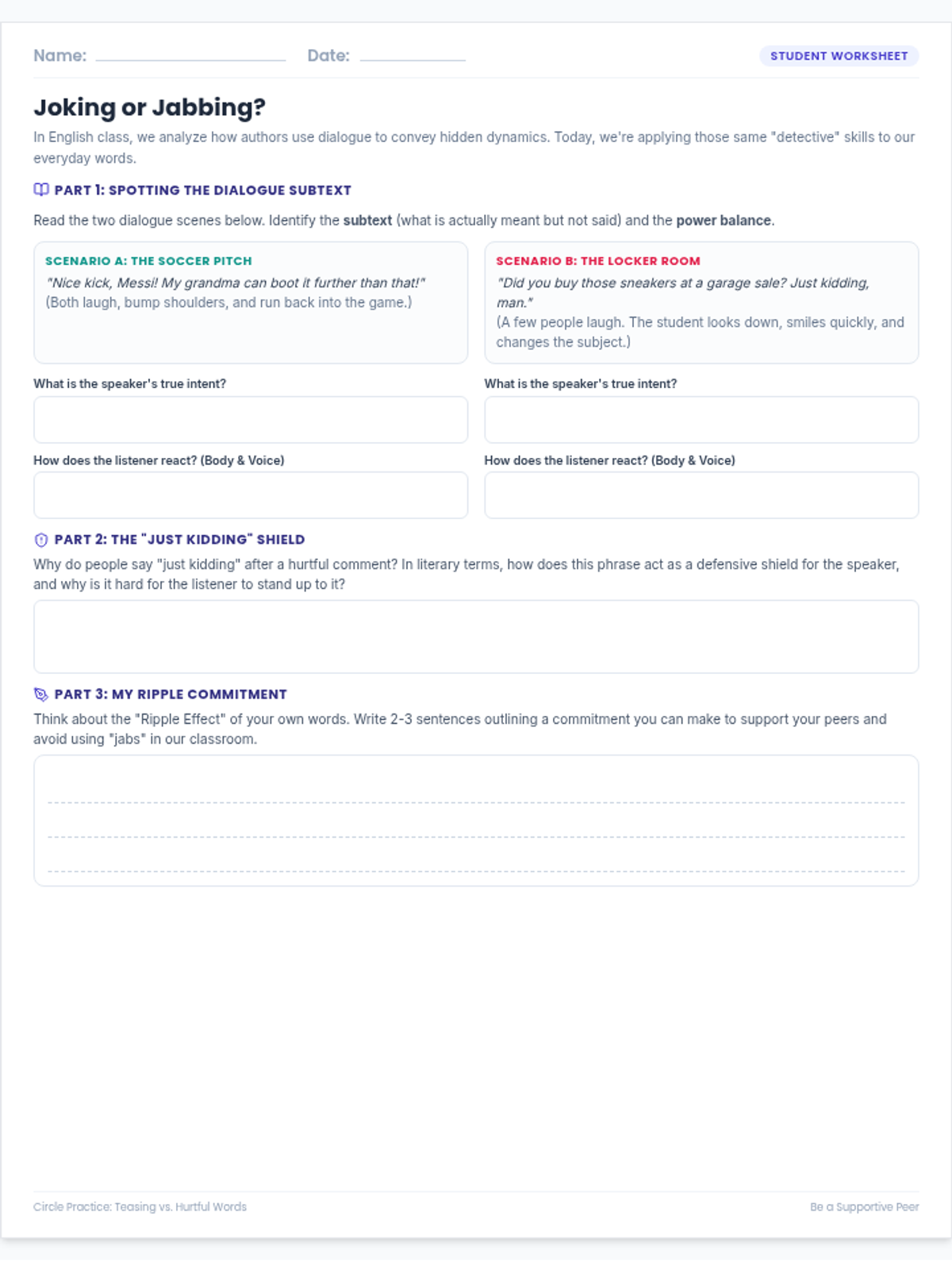
A restorative circle and ELA-integrated lesson focusing on the boundaries between friendly teasing and hurtful words. Students analyze scenarios, discuss video prompts, and reflect on their language impact.
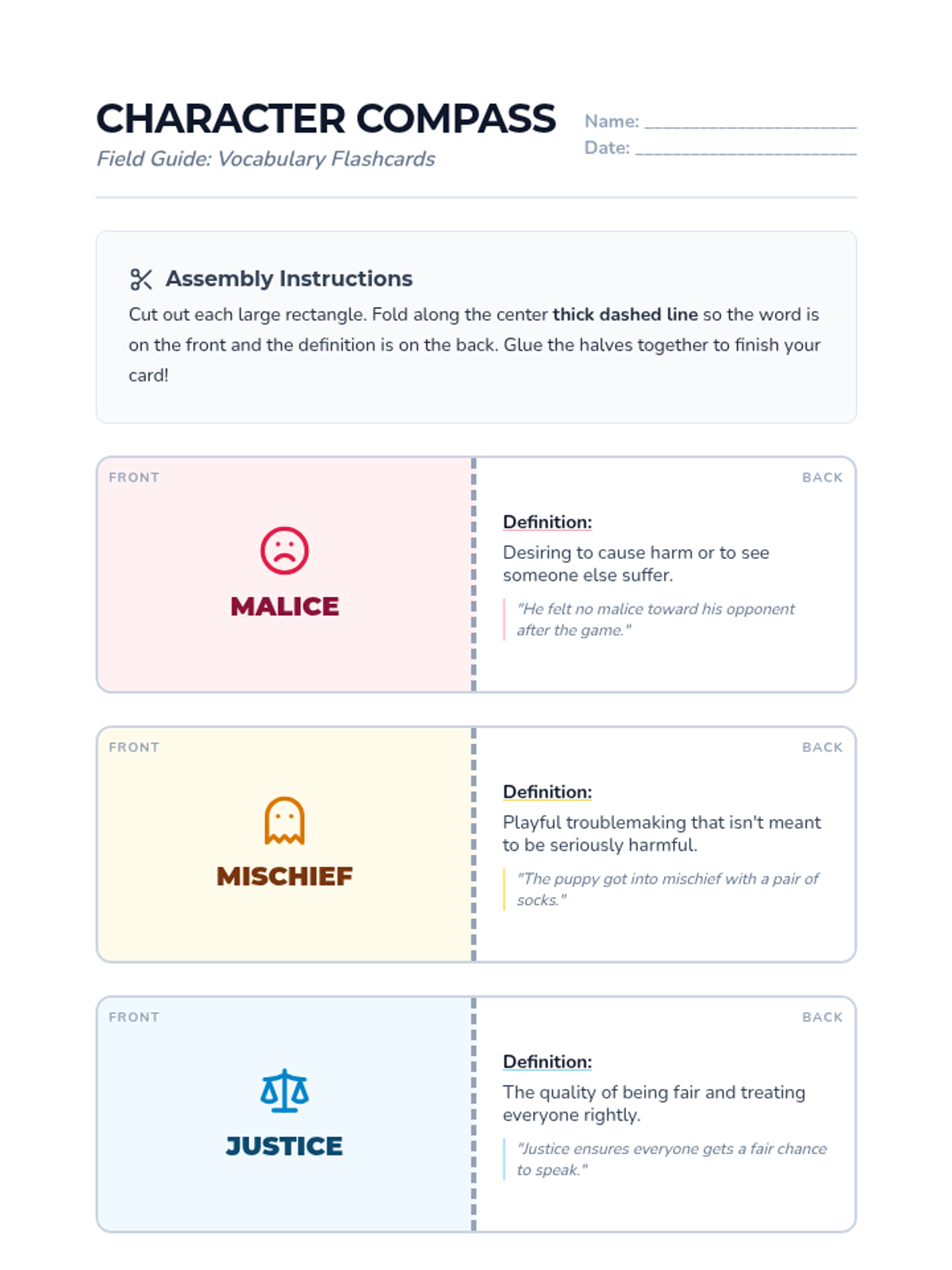
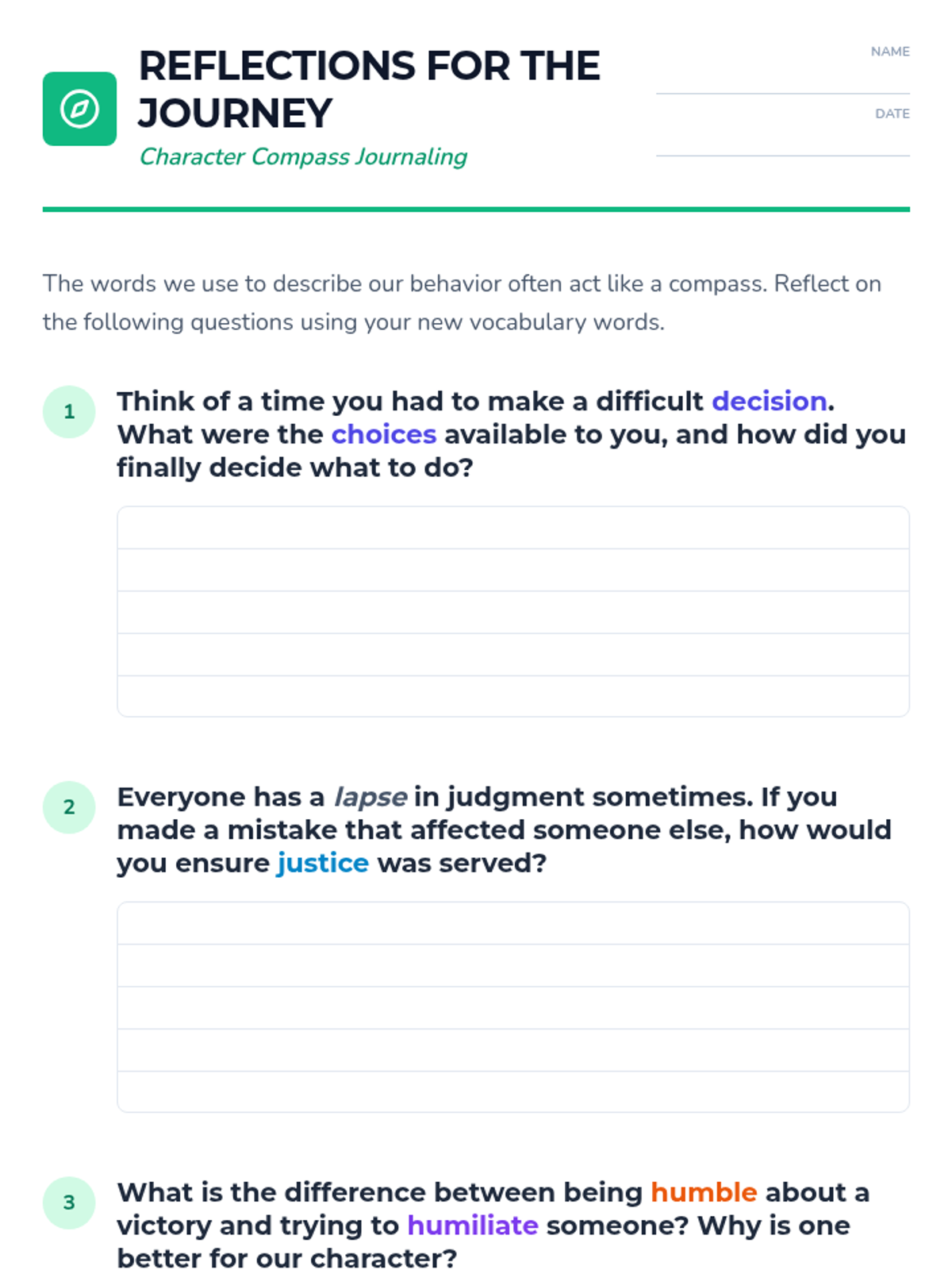
A lesson focused on social-emotional vocabulary, exploring how our choices and attitudes impact ourselves and others. Through foldable flashcards and reflective prompts, students navigate the complexities of character.
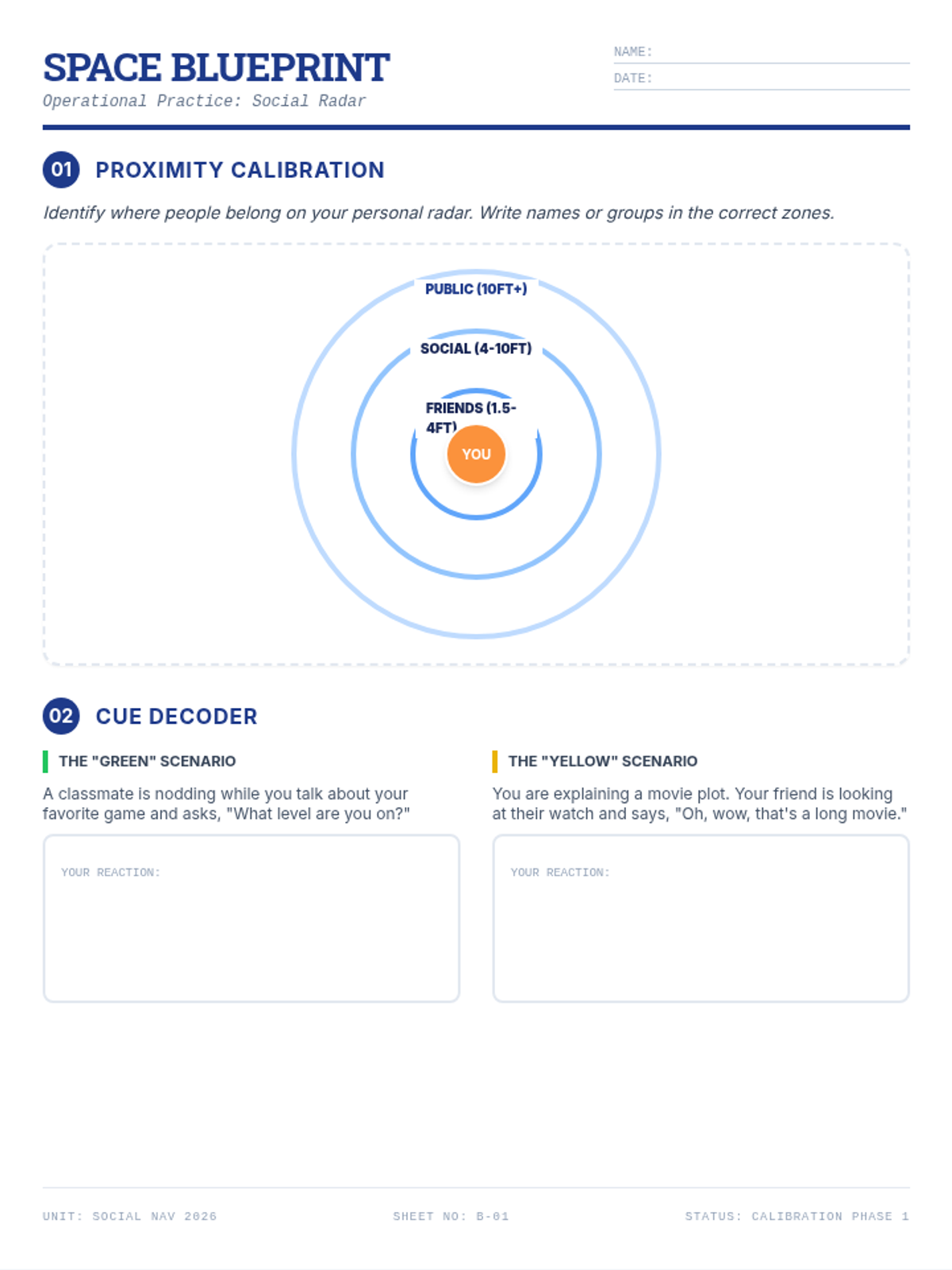
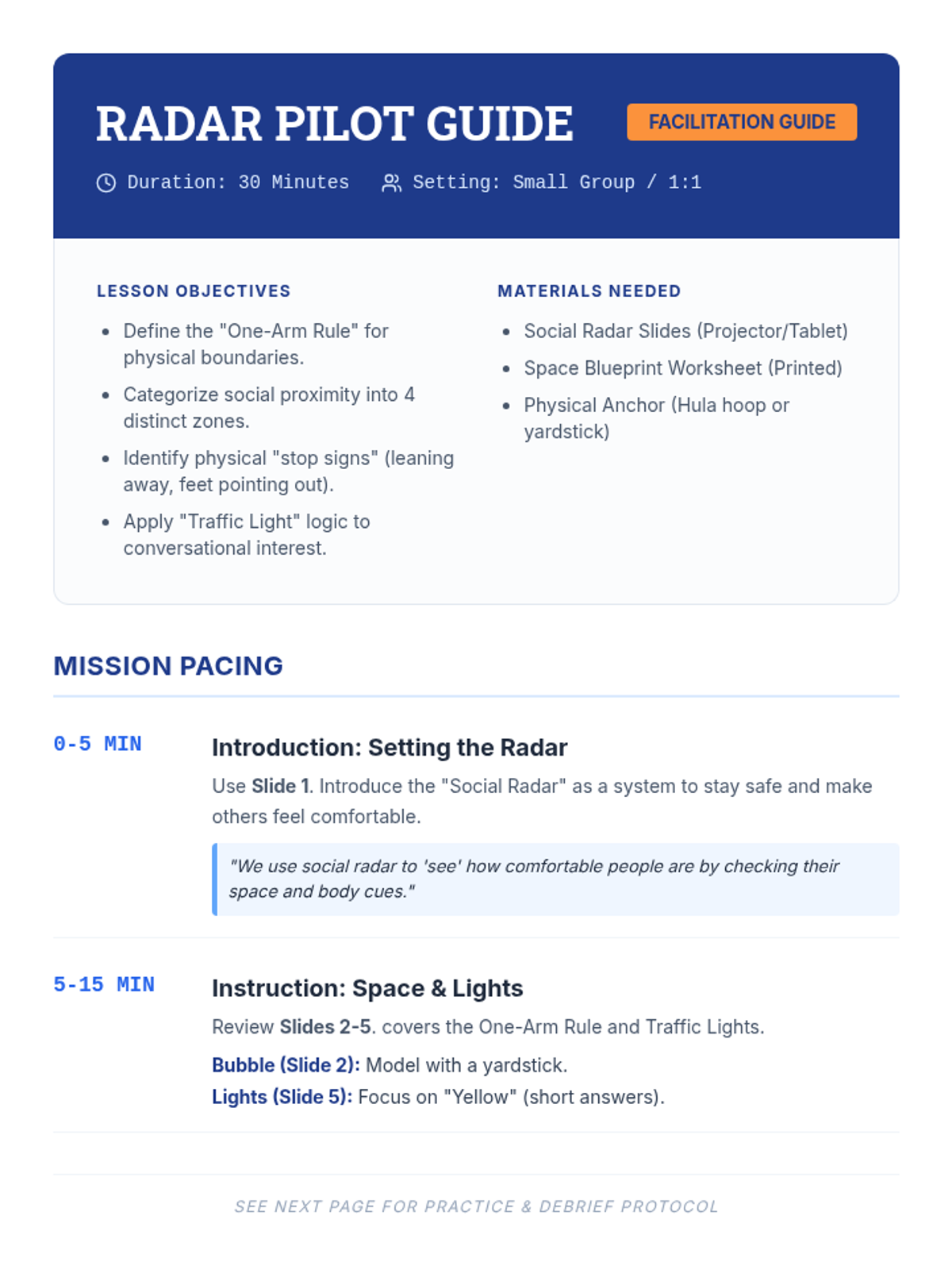
A 30-minute counseling lesson designed for middle school students with autism, focusing on navigating physical space and interpreting conversational social cues through a structured 'blueprint' lens.
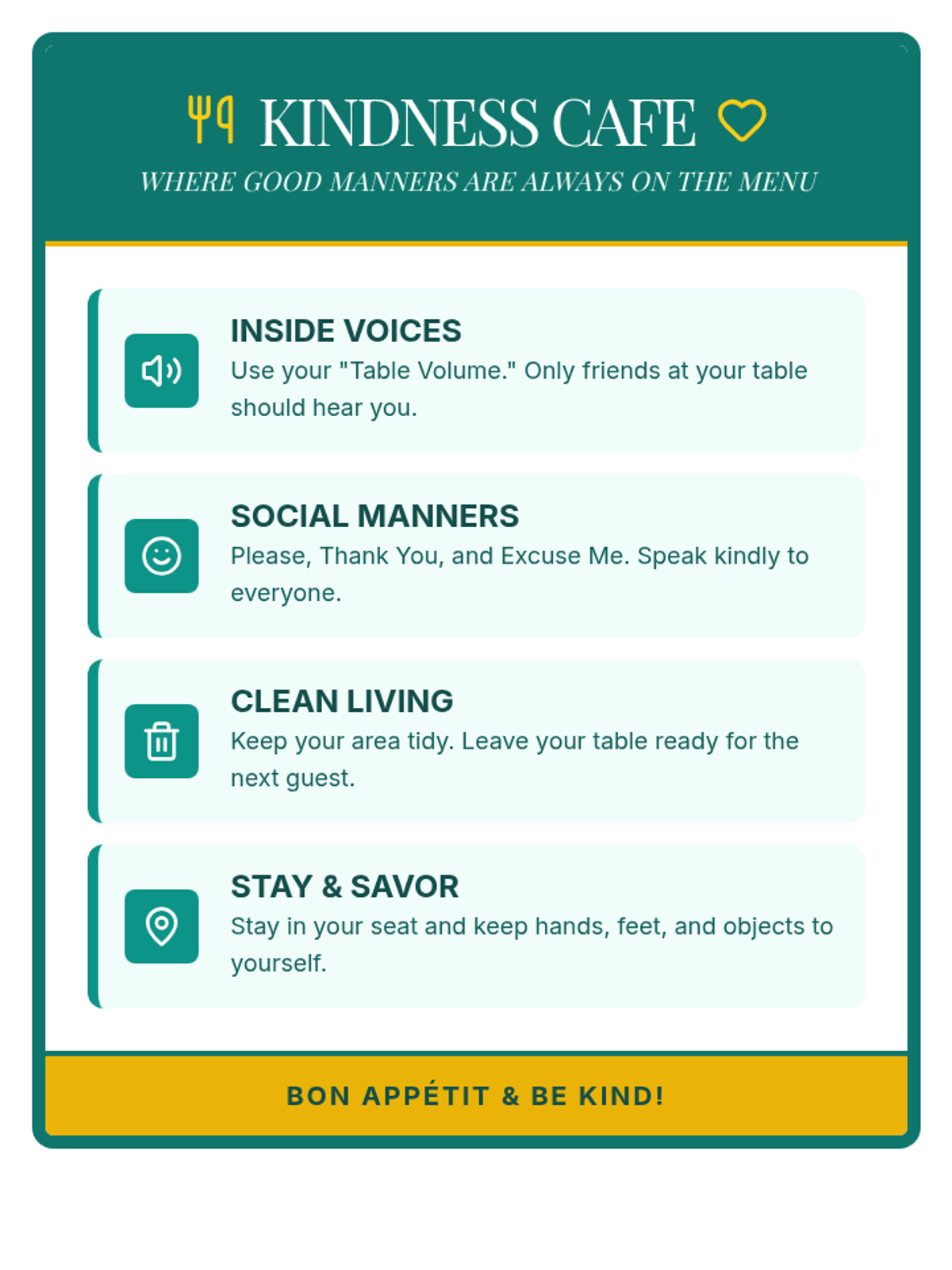
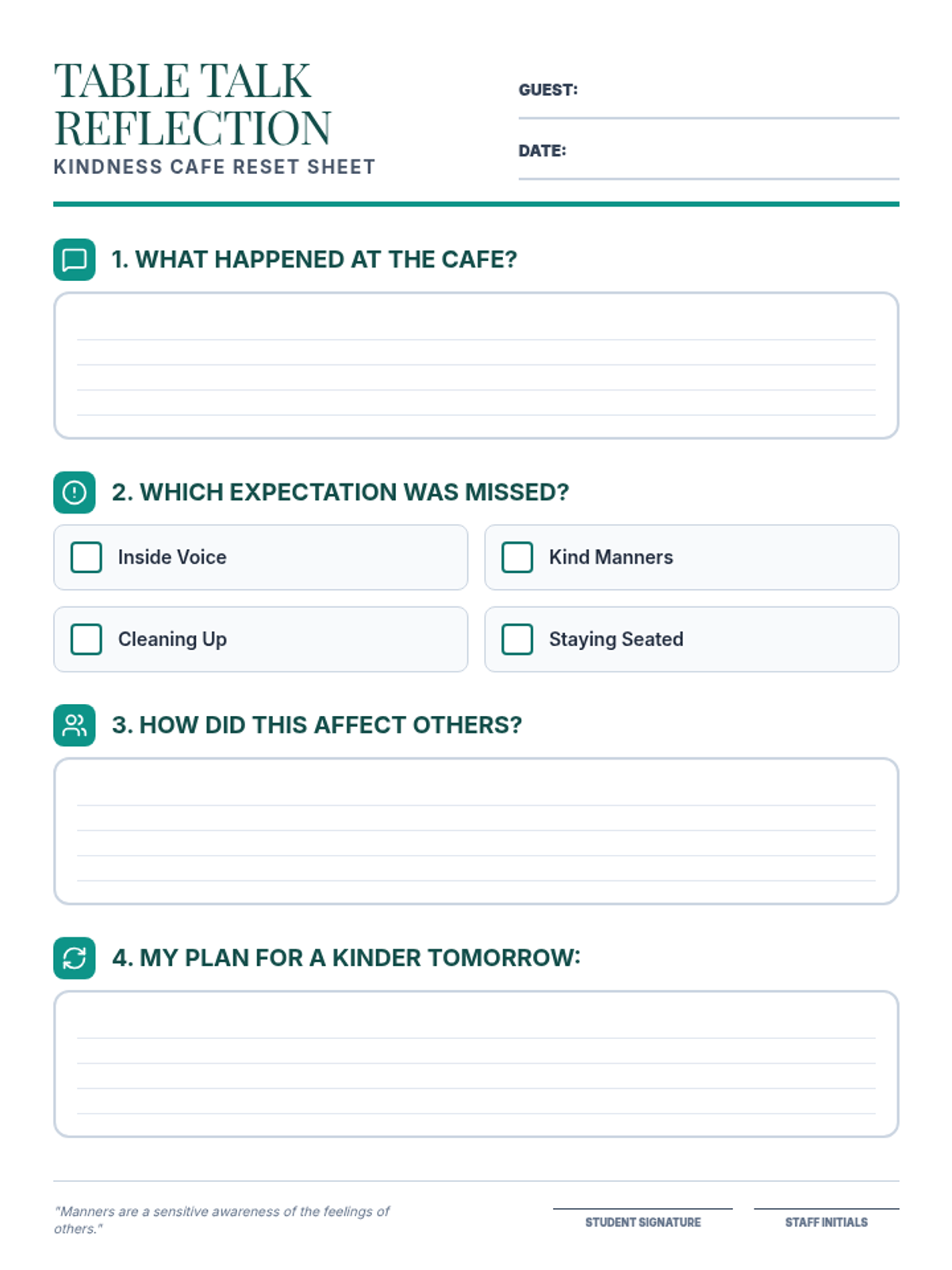
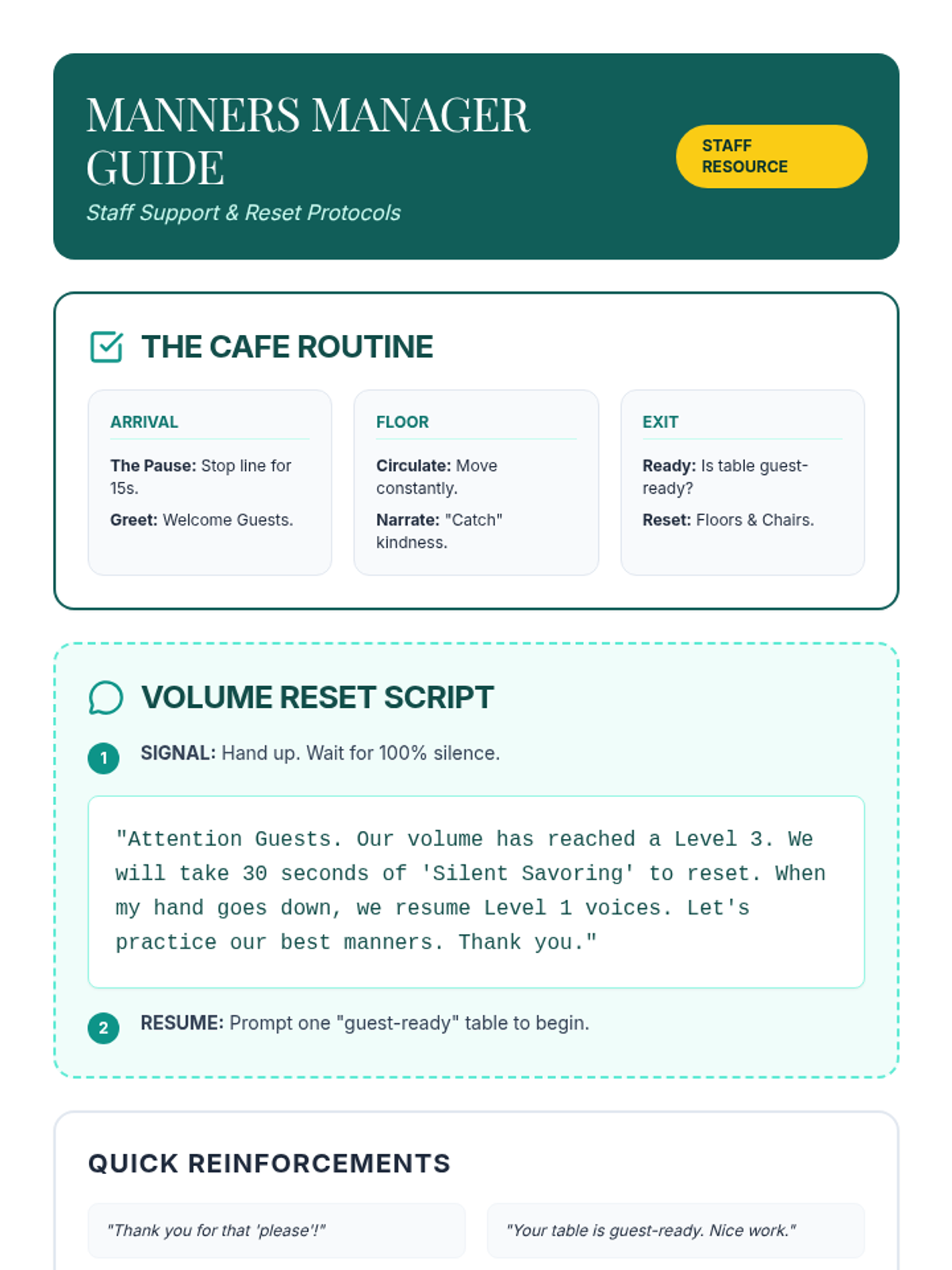
A behavior support package designed to transform the lunchroom into a calm, polite dining environment focused on kindness and social manners.
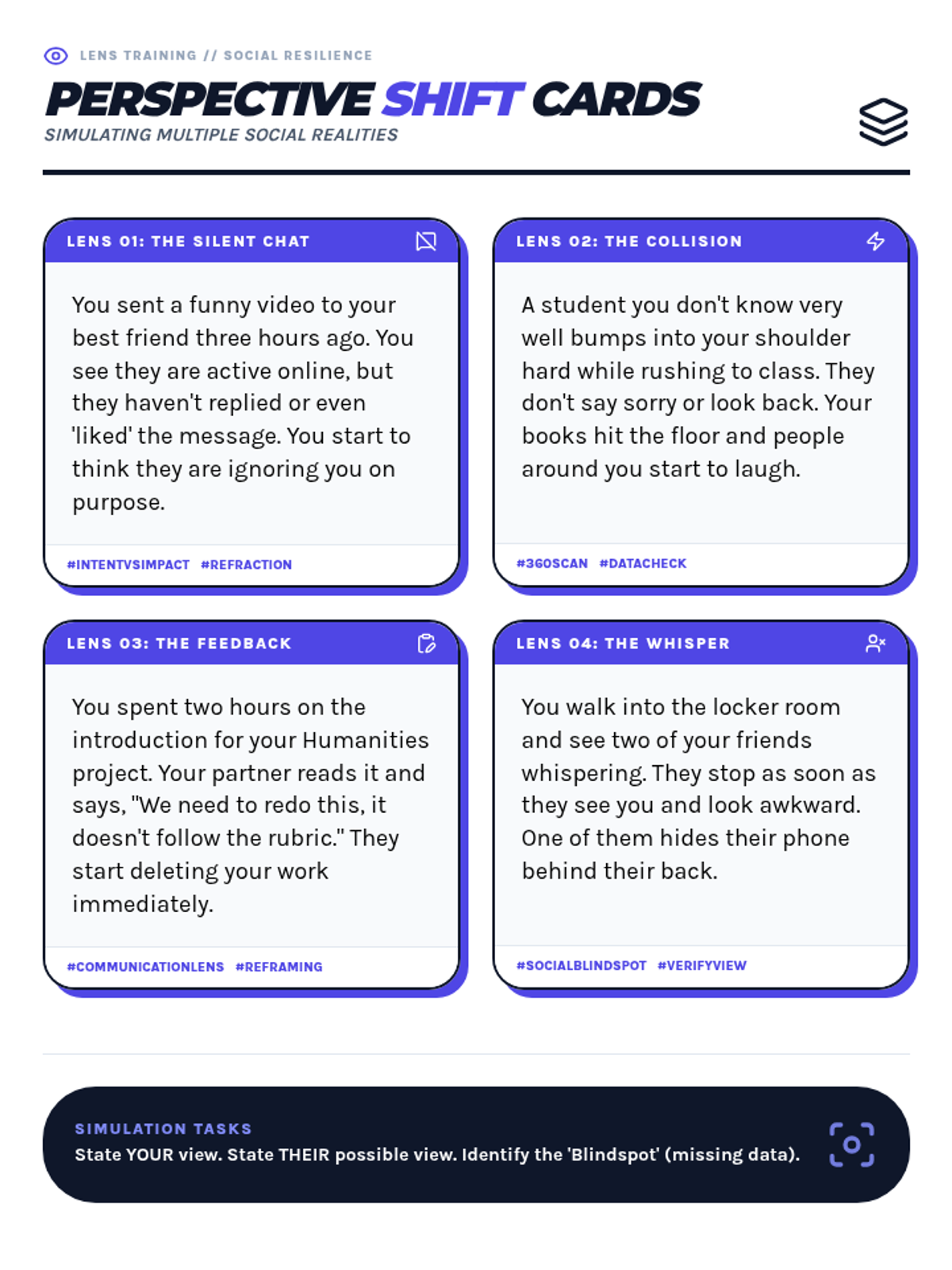
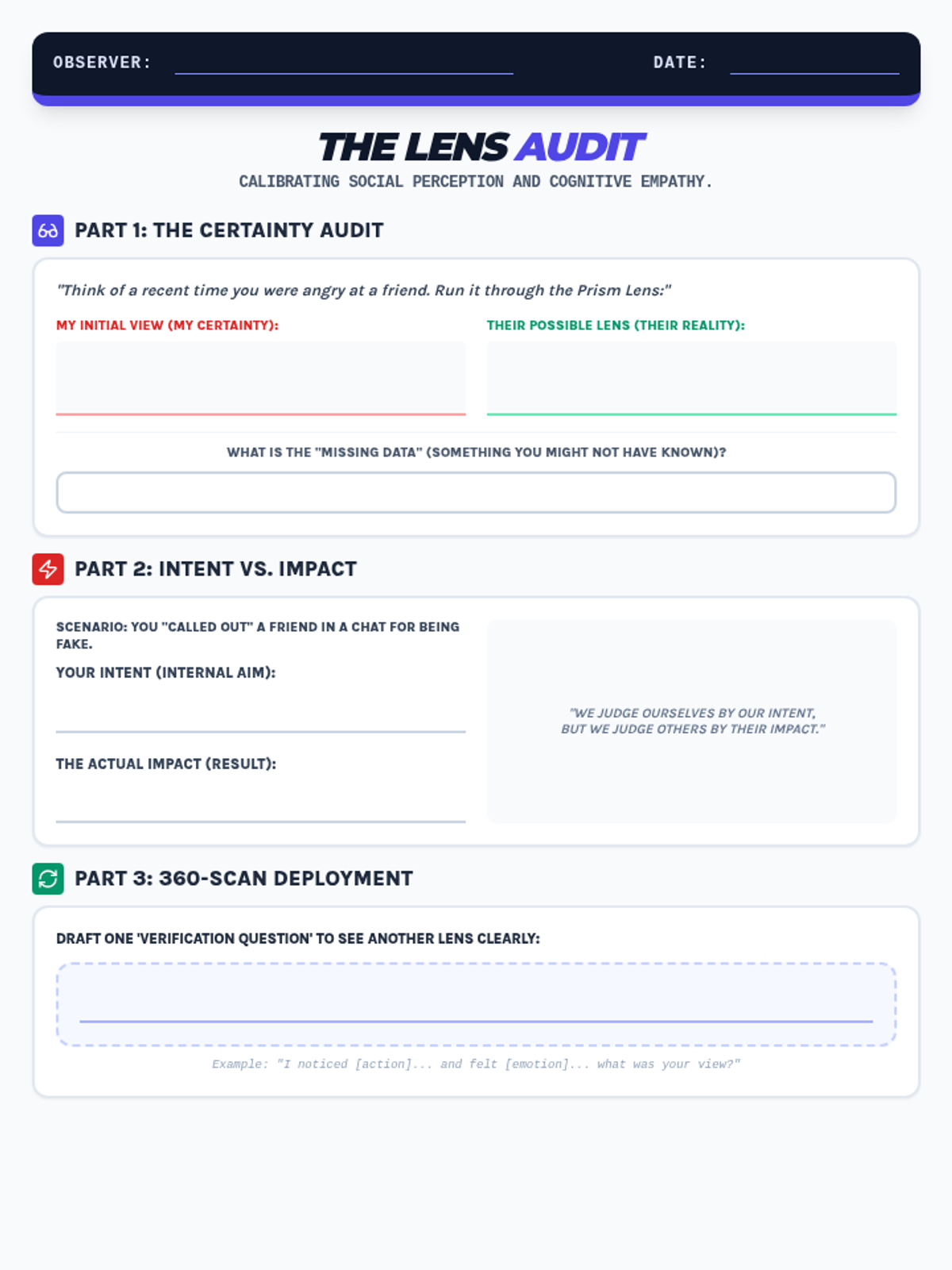
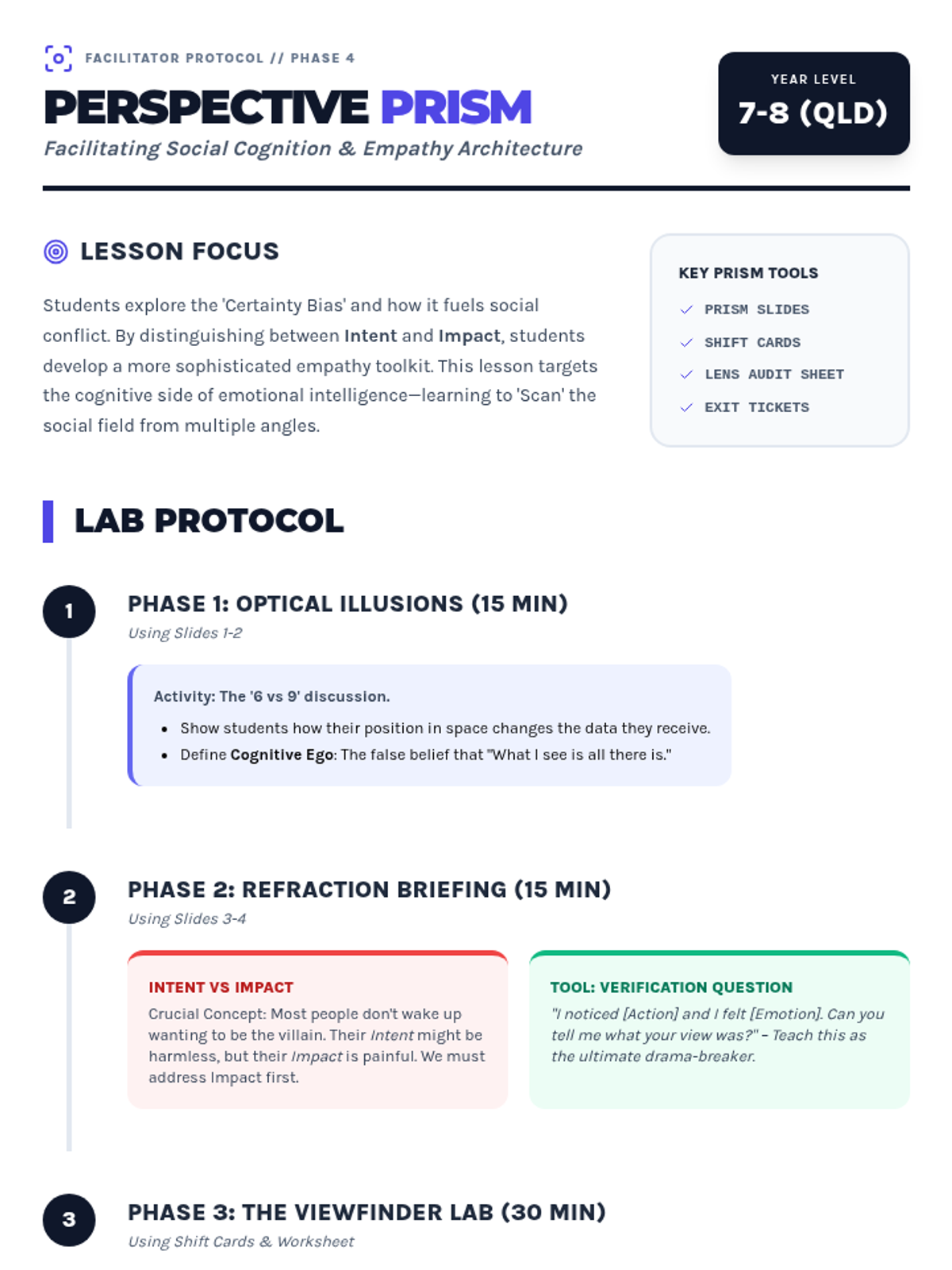
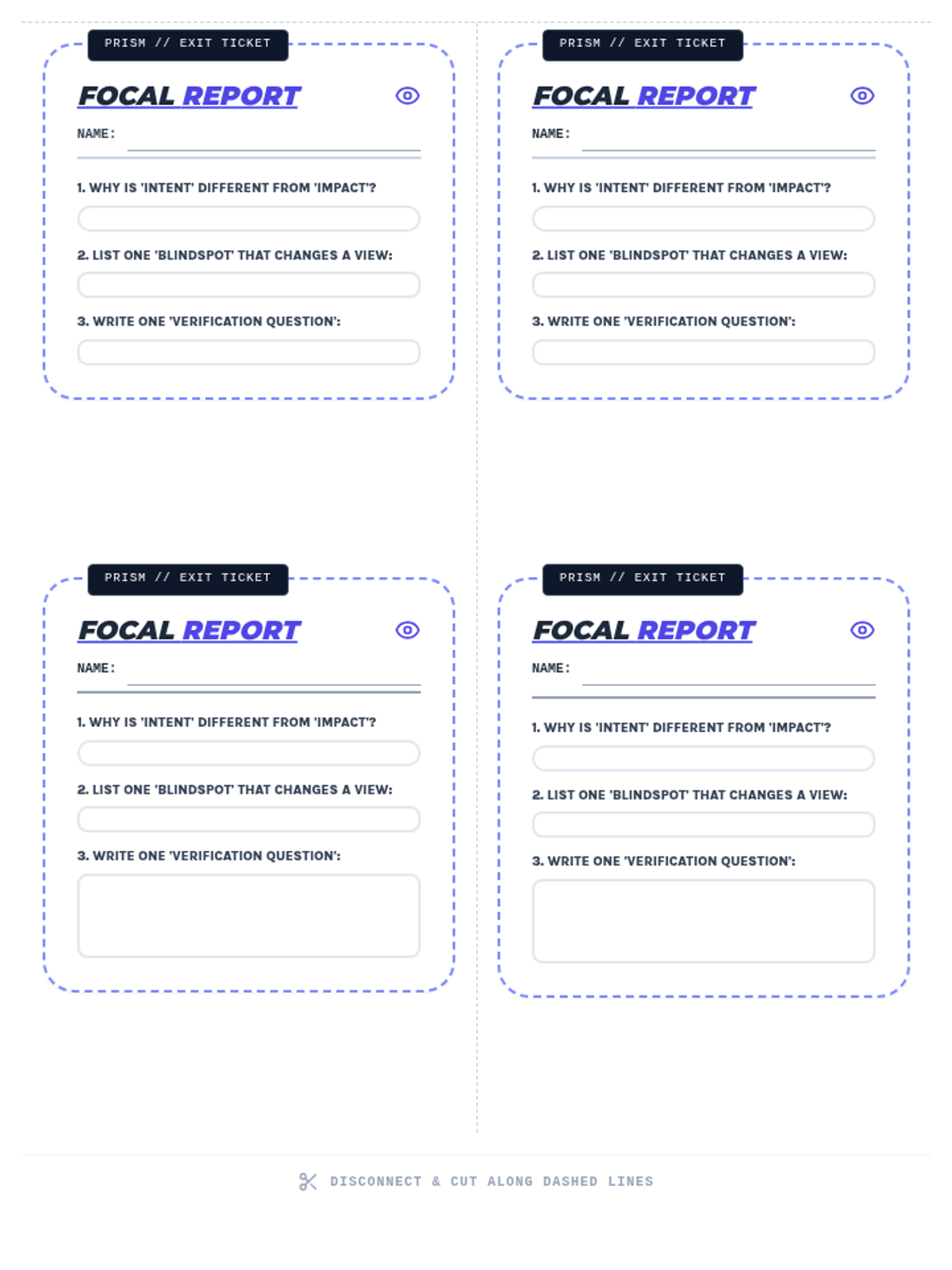
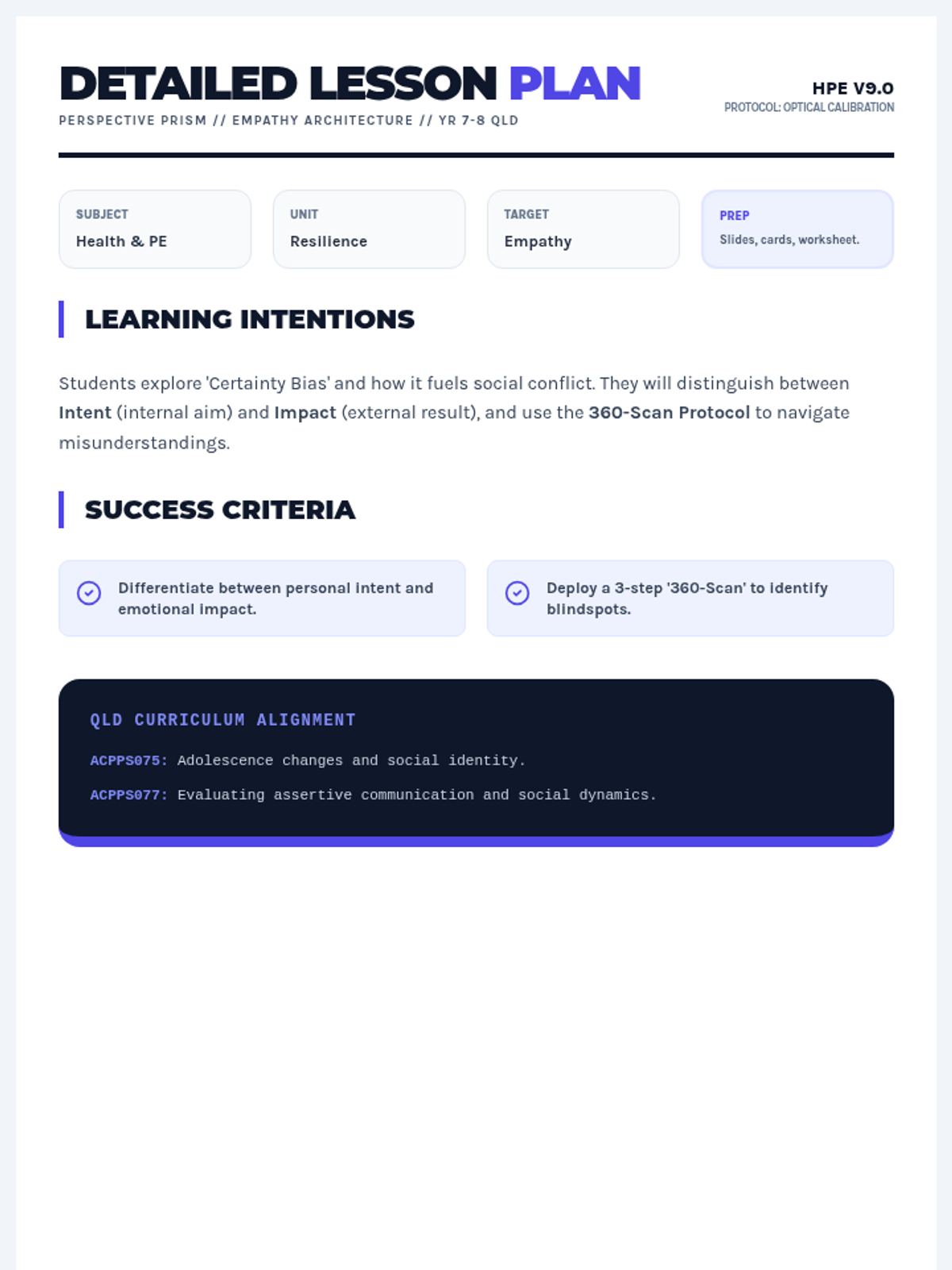
A dynamic lesson for Year 7-8 students on cognitive empathy, distinguishing between intent and impact, and viewing social conflicts through multiple lenses. Students use 'Perspective Prisms' to deconstruct misunderstandings. Aligned with QLD HPE standards.
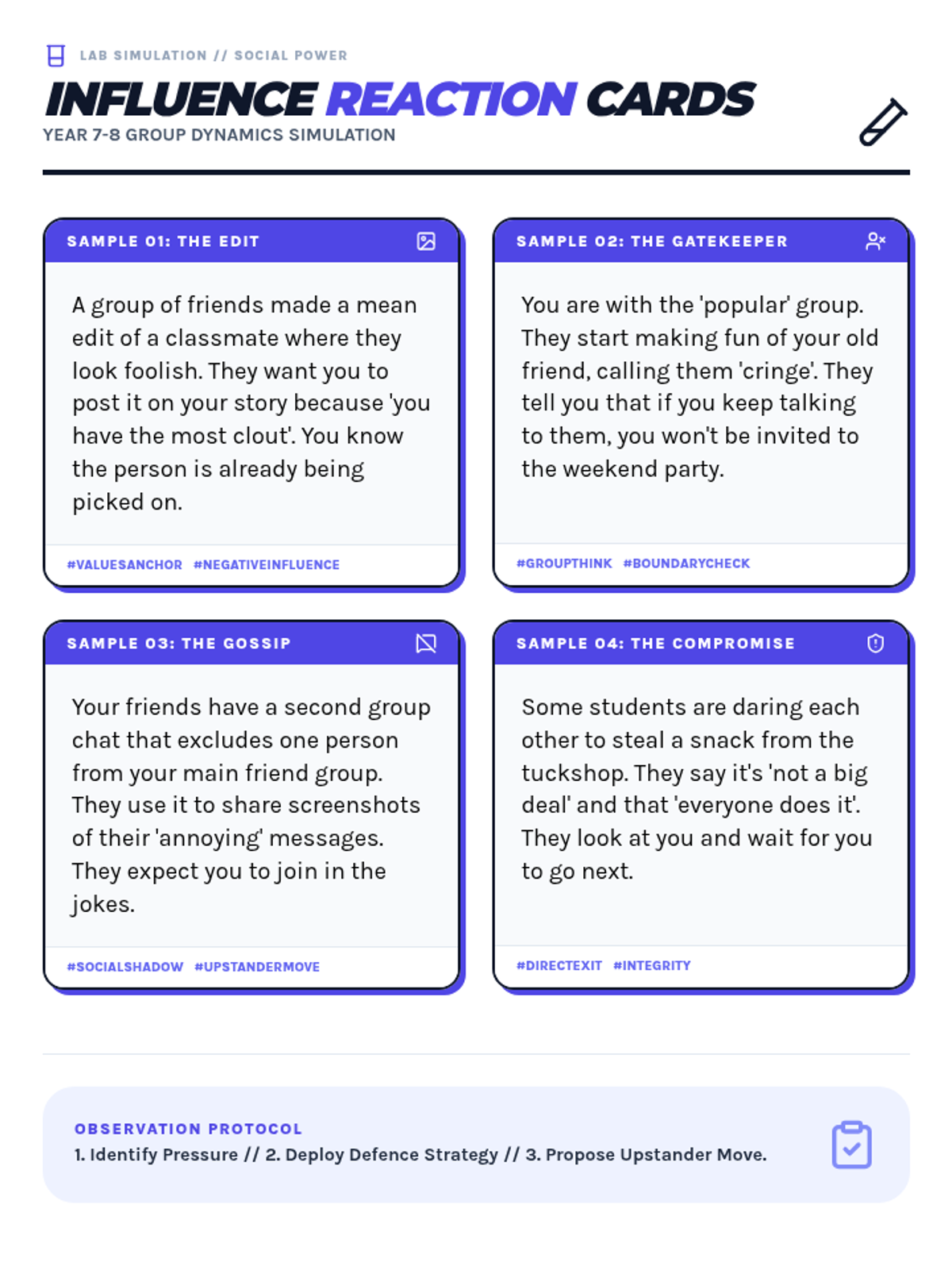
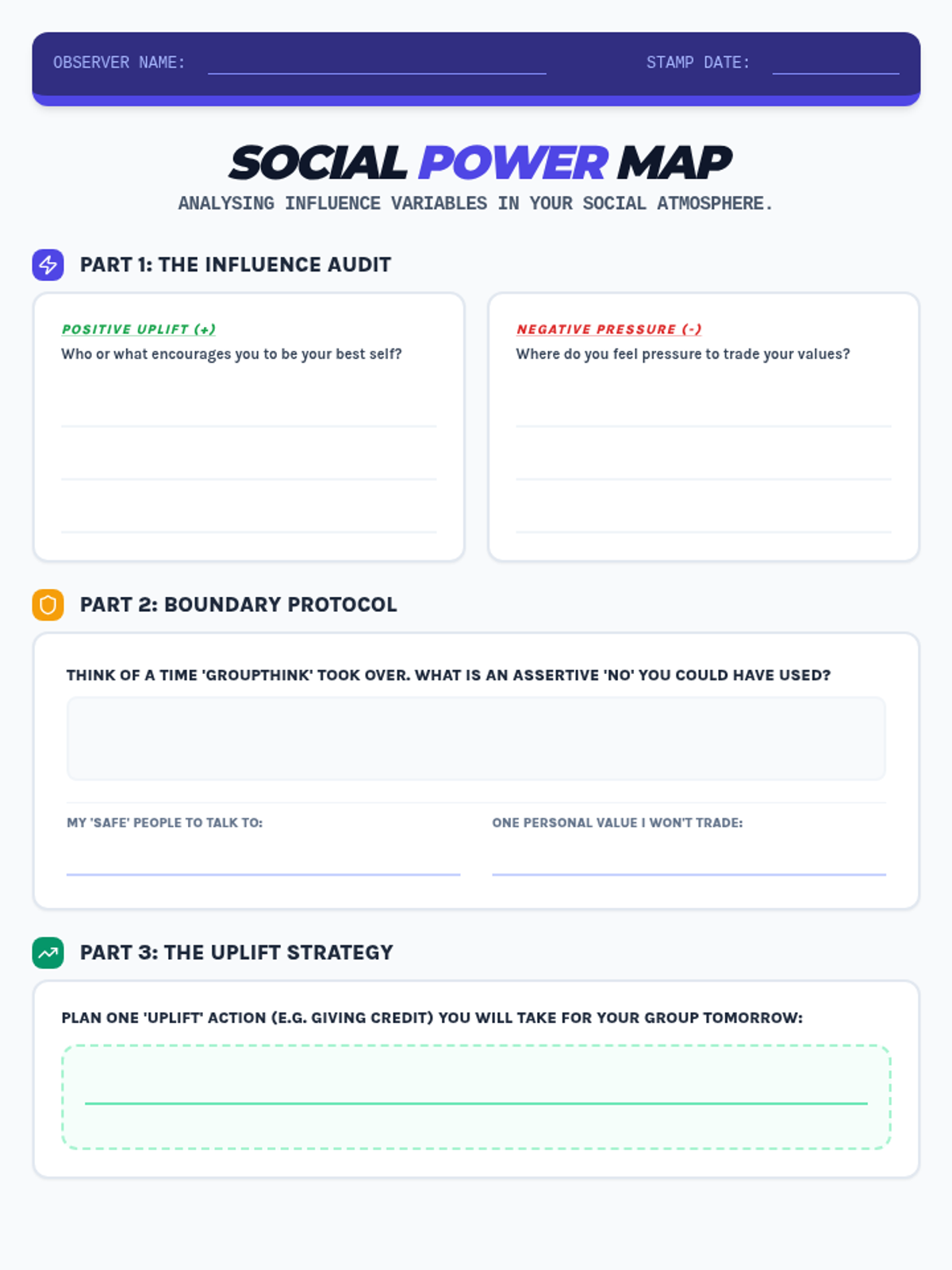
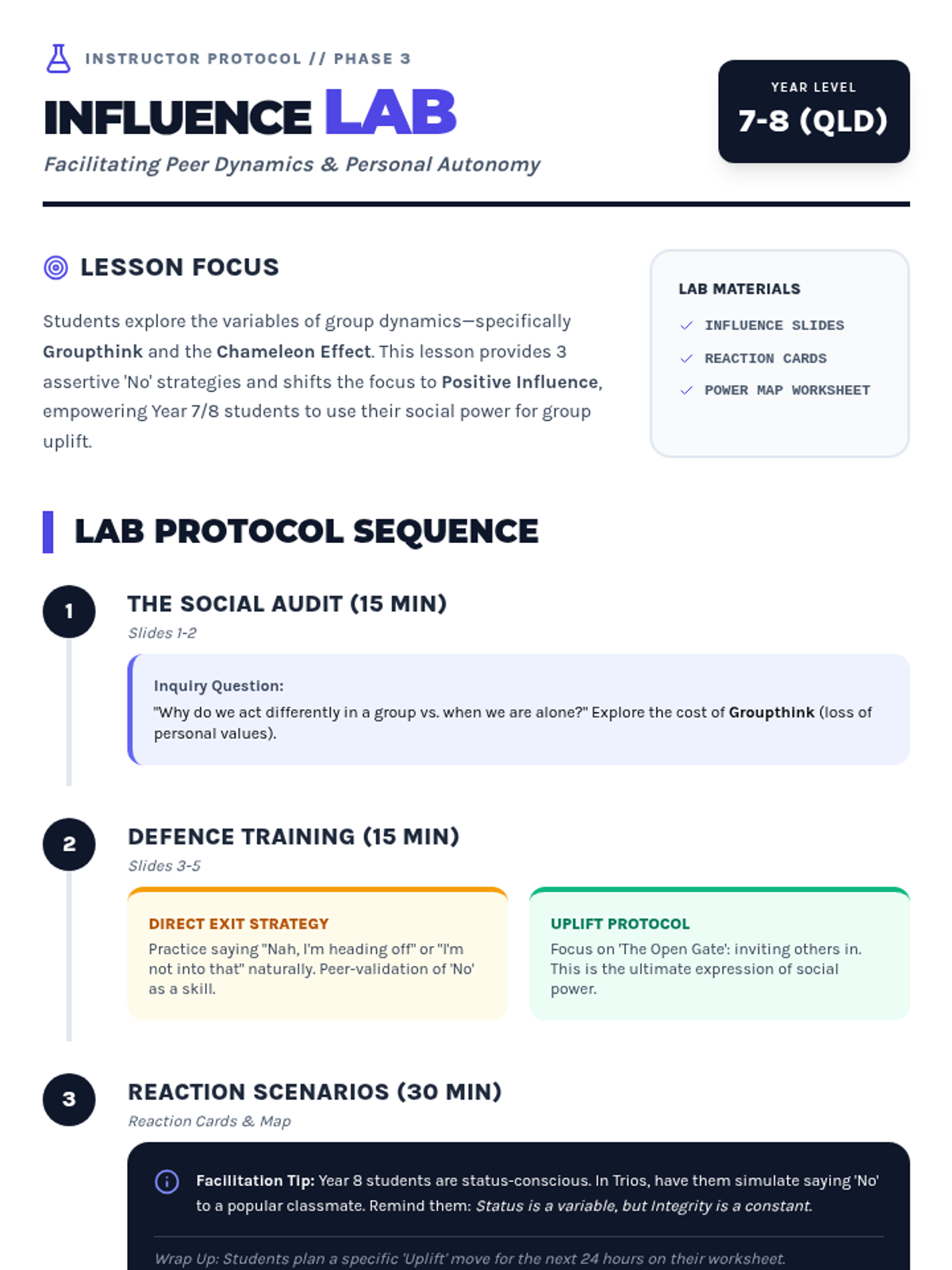
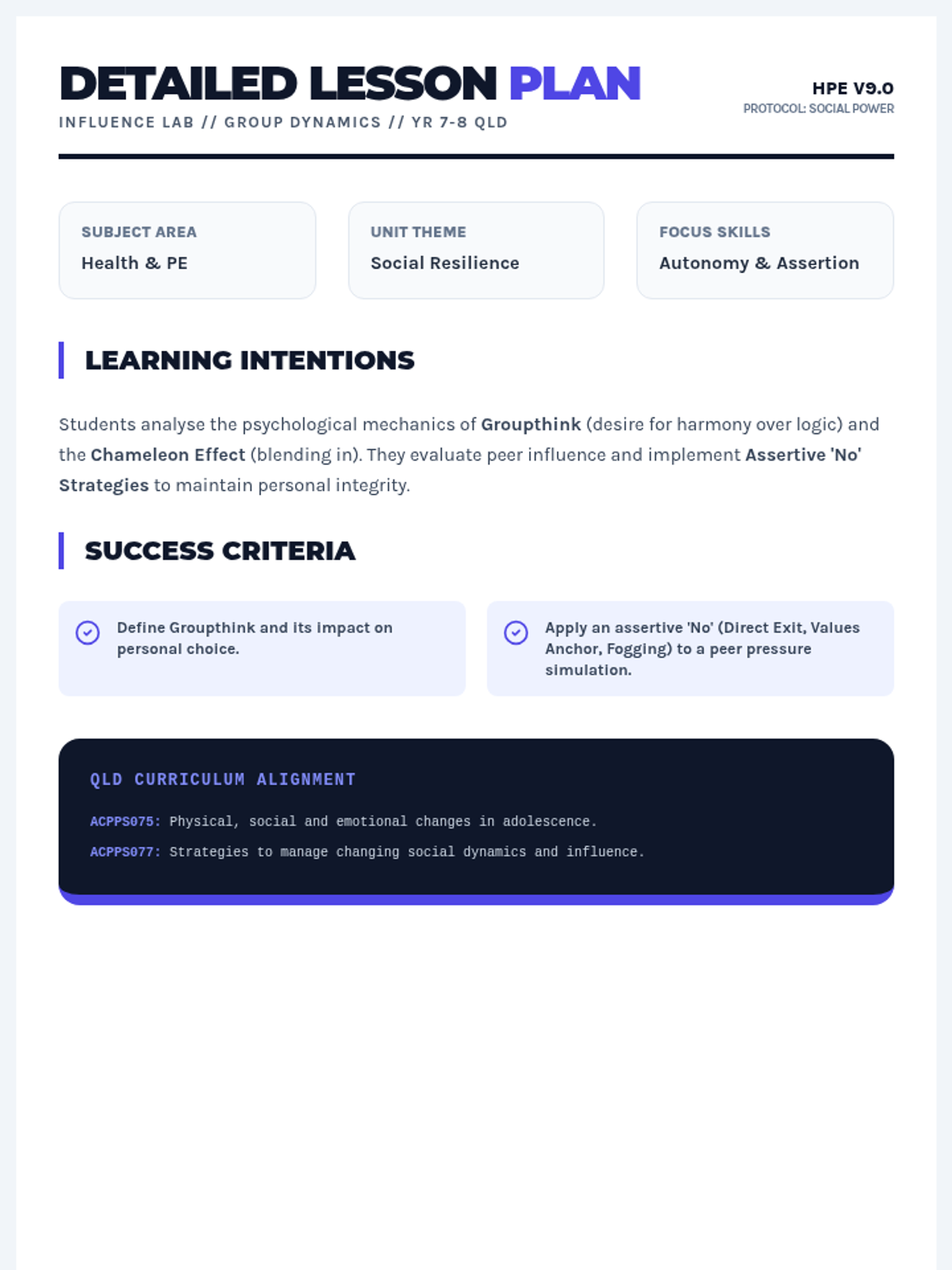
A high-impact lesson for Year 7-8 students on social influence, groupthink, and maintaining personal boundaries. Students explore the 'Science of Influence' to distinguish between positive peer support and negative group pressure. Aligned with QLD HPE standards.
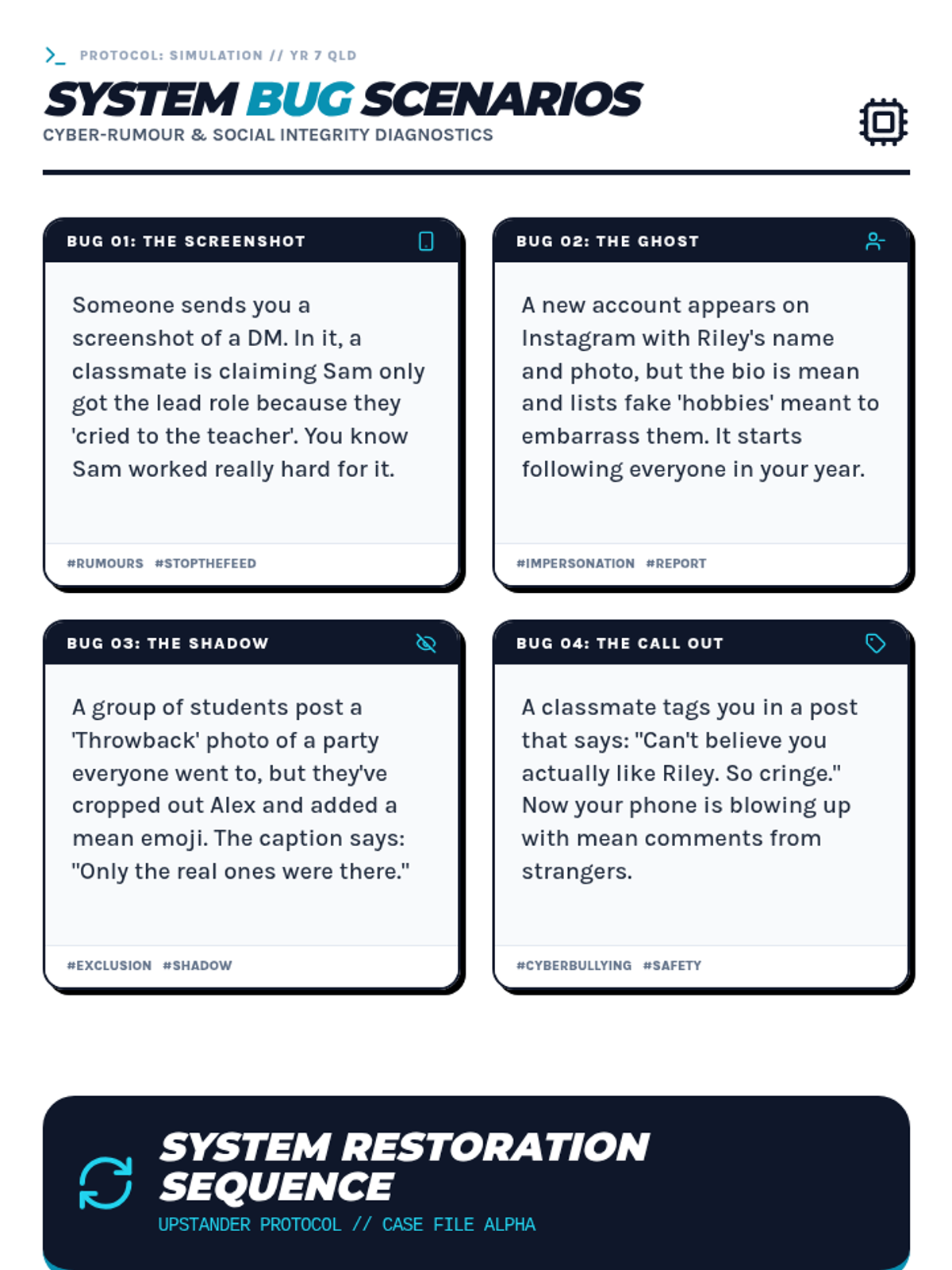
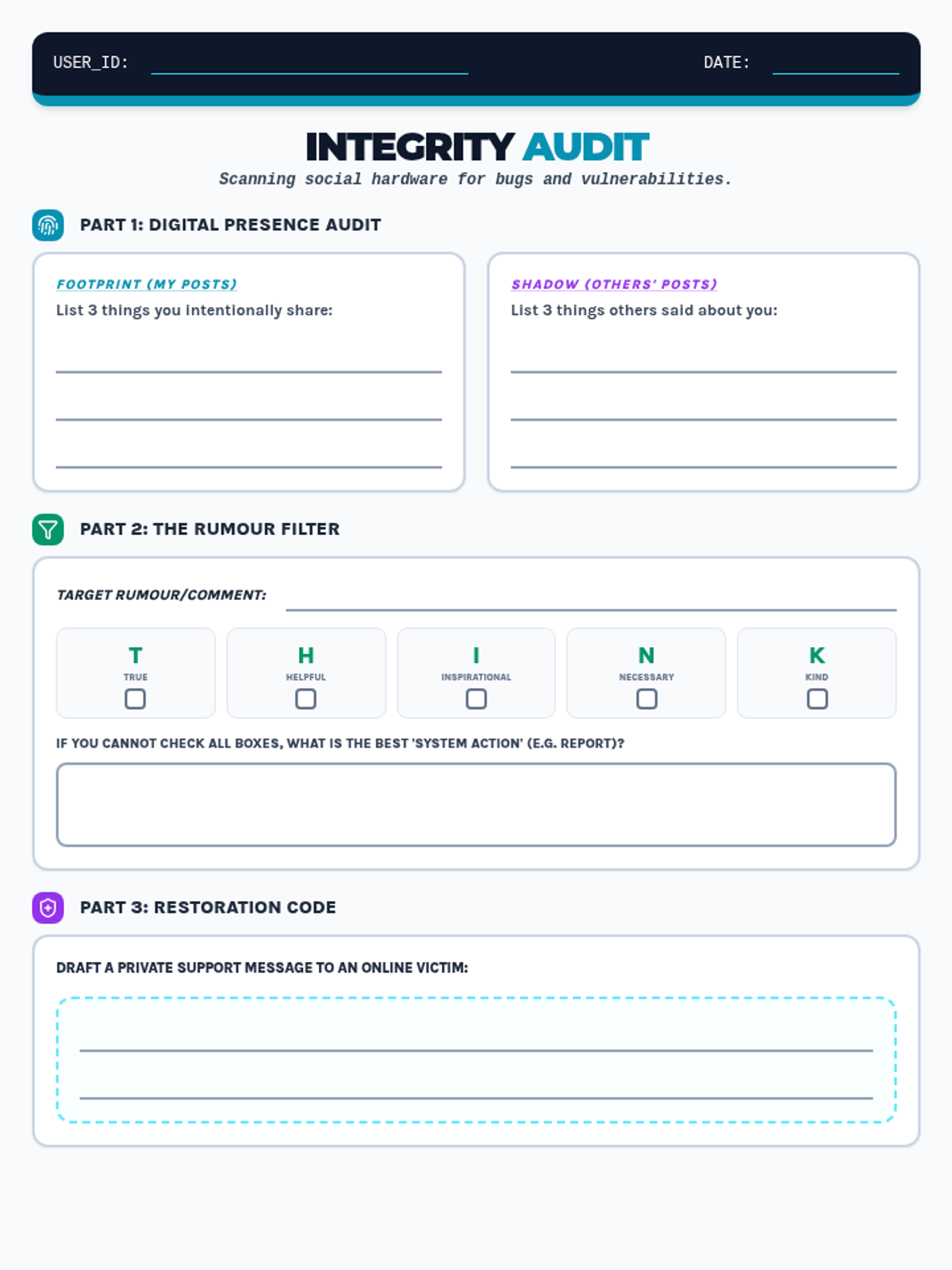
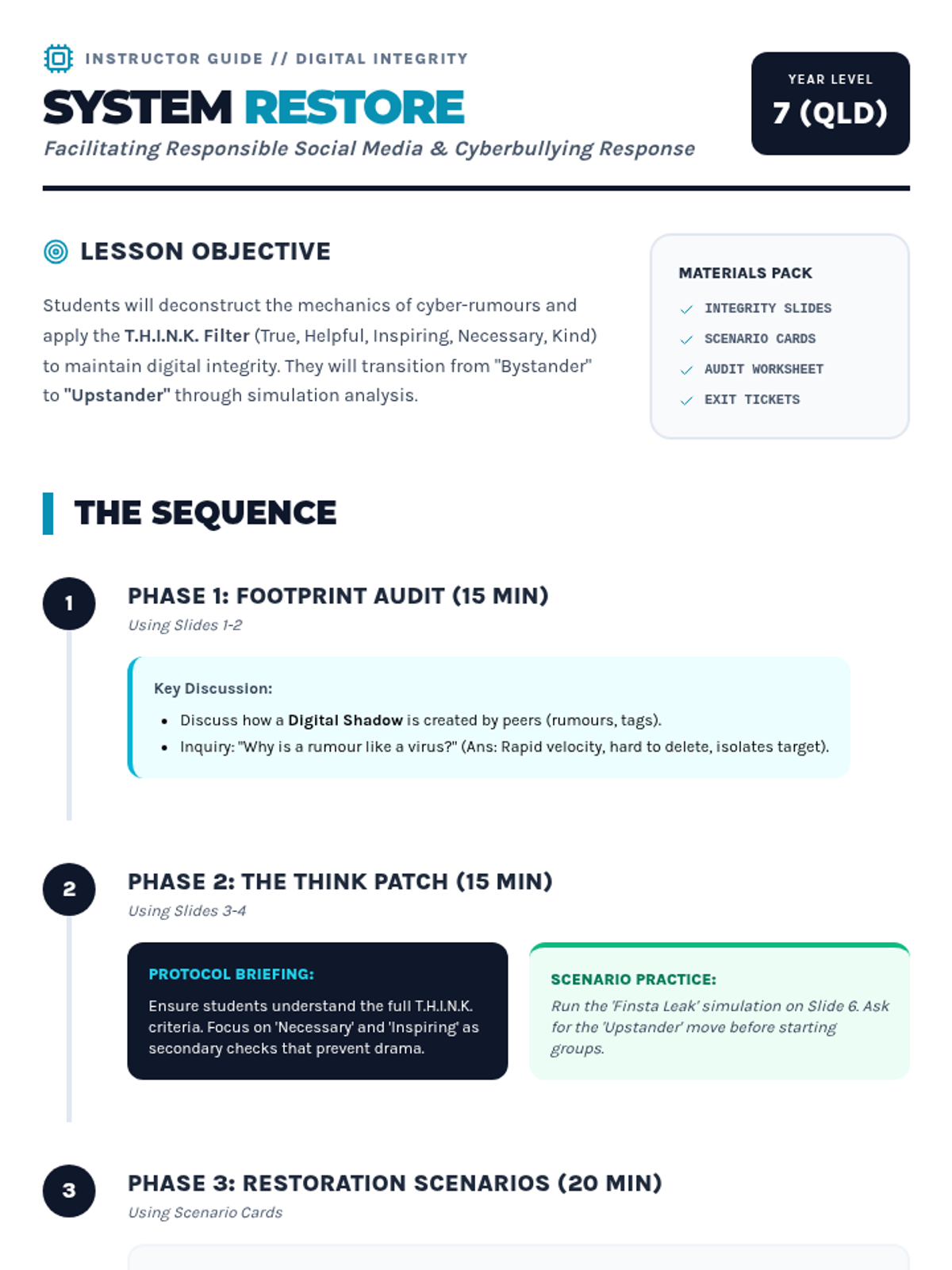
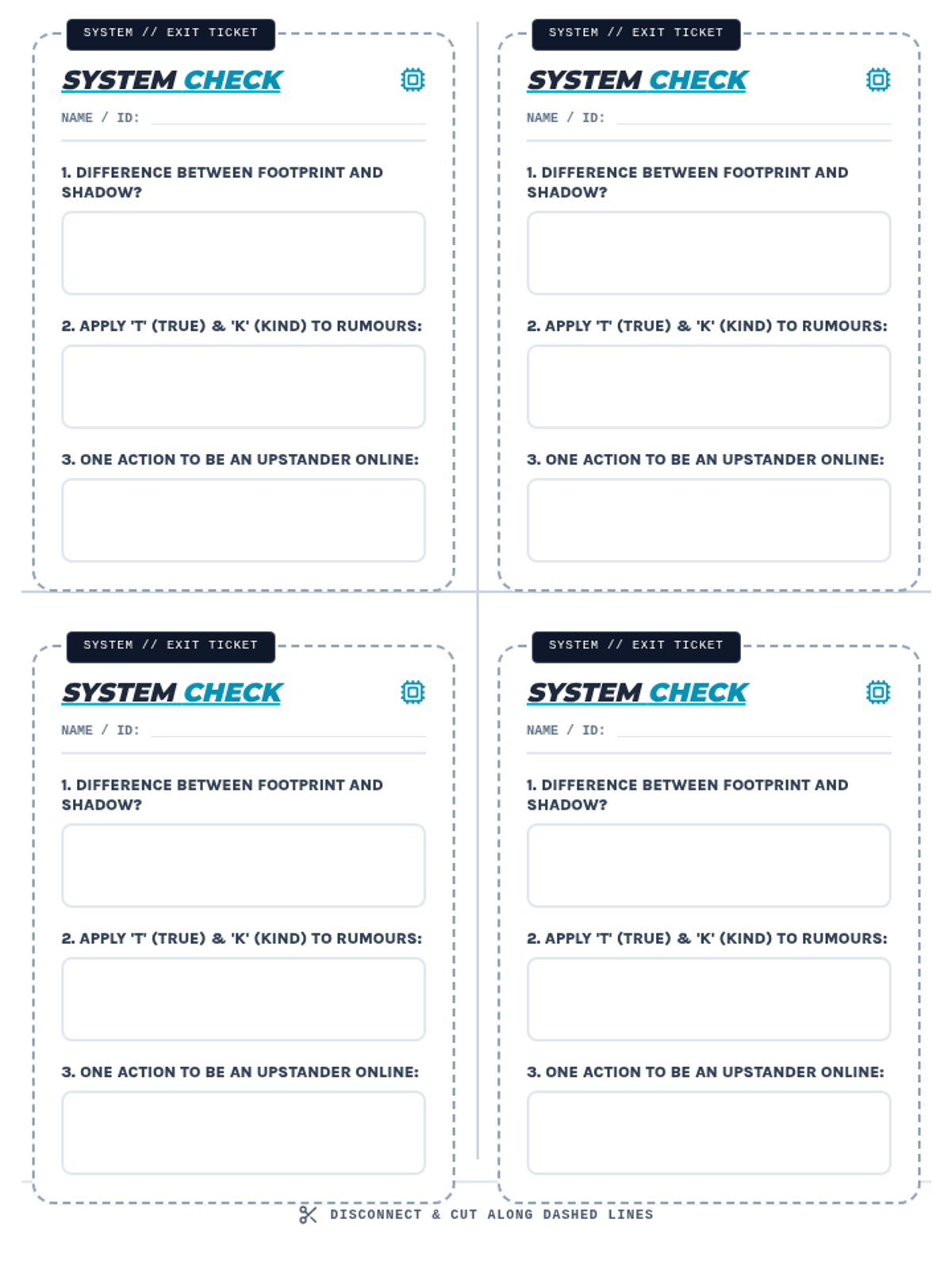
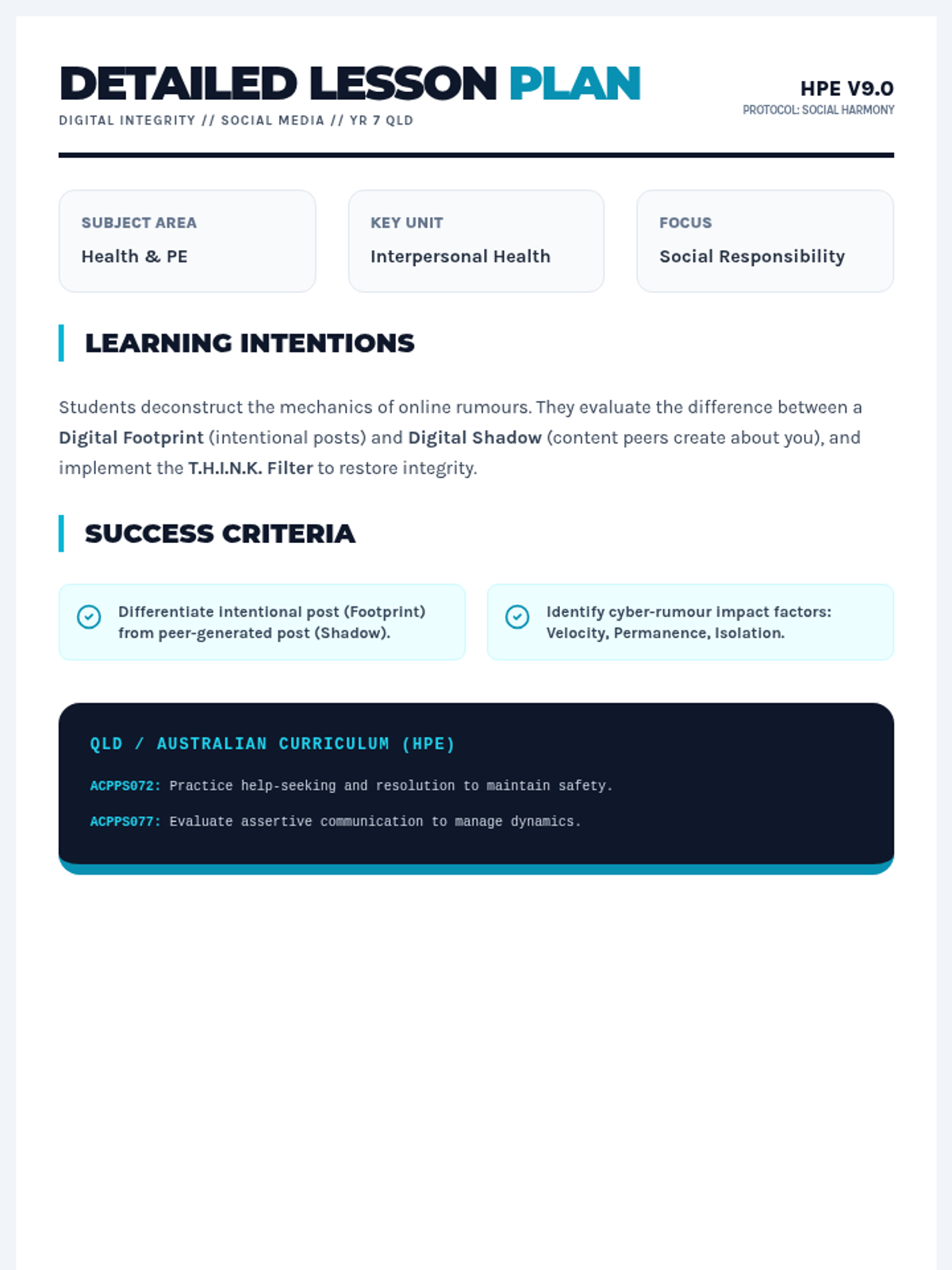
A specialized lesson for Year 7 students focusing on the impact of cyberbullying, spreading rumors on social media, and developing 'digital integrity' to maintain positive social environments. Aligned with QLD Year 7 HPE curriculum.
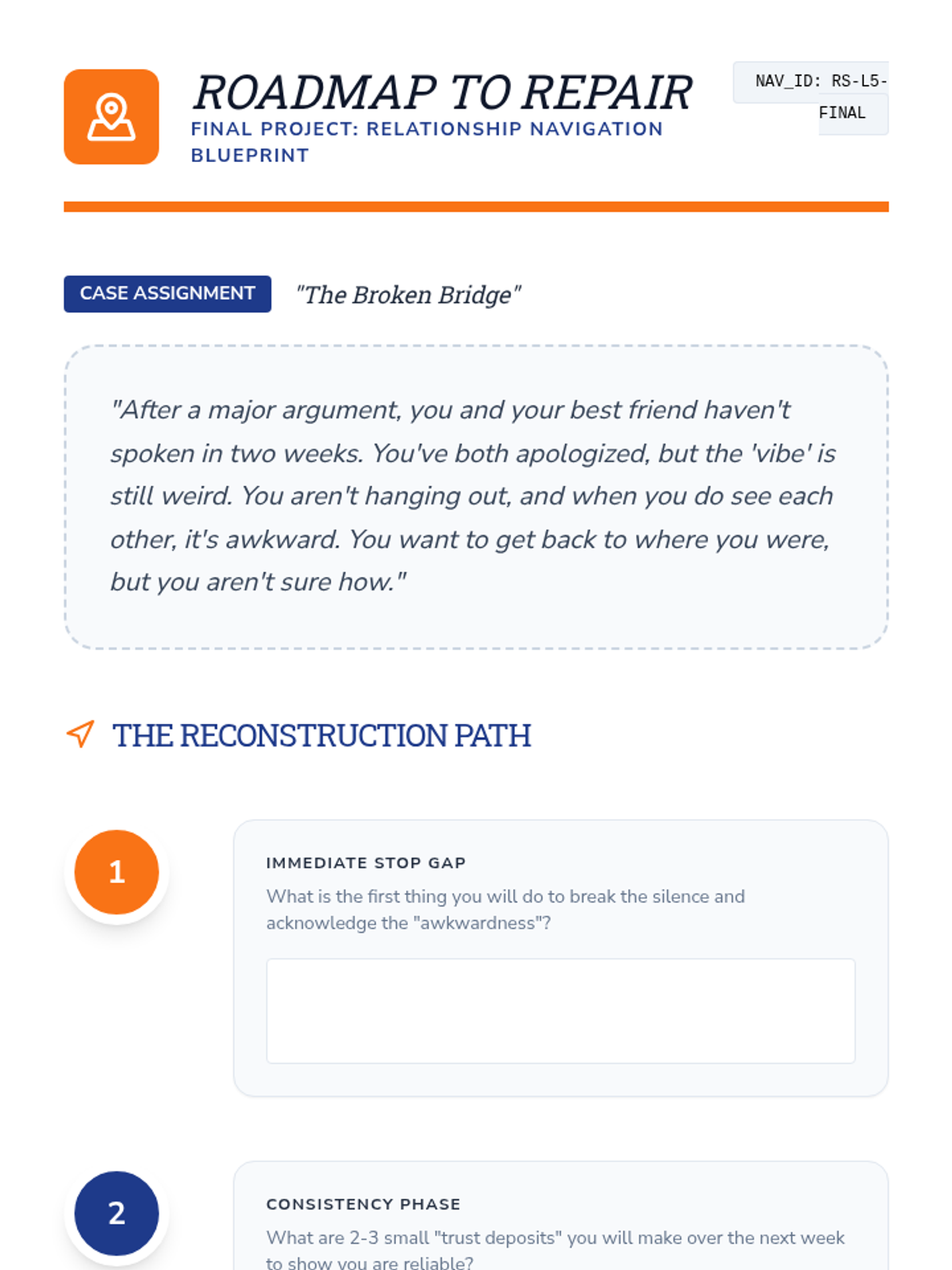
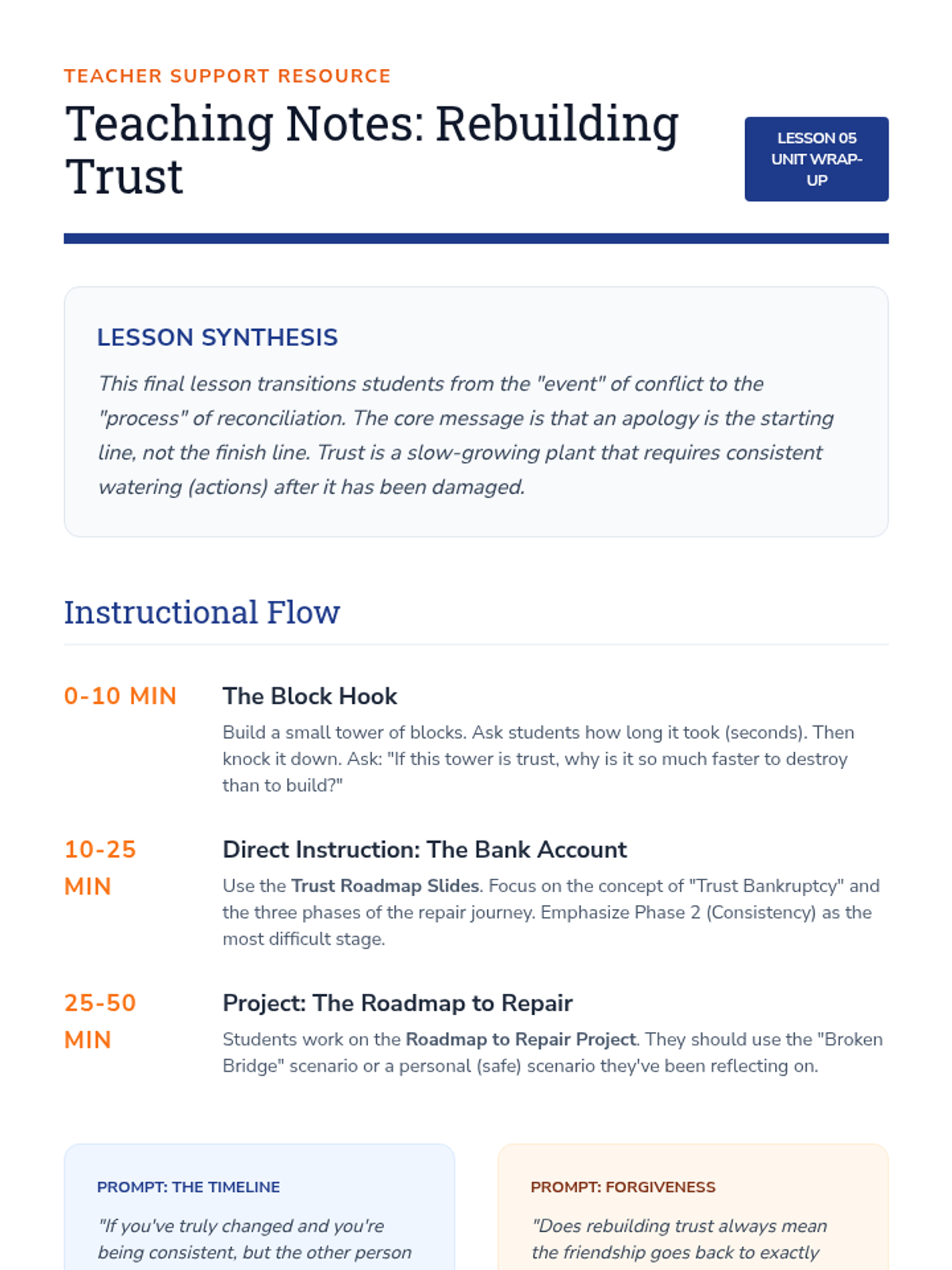
Students learn that trust is built slowly over time and create a 'Roadmap to Repair' outlining consistent actions needed to re-establish a friendship.
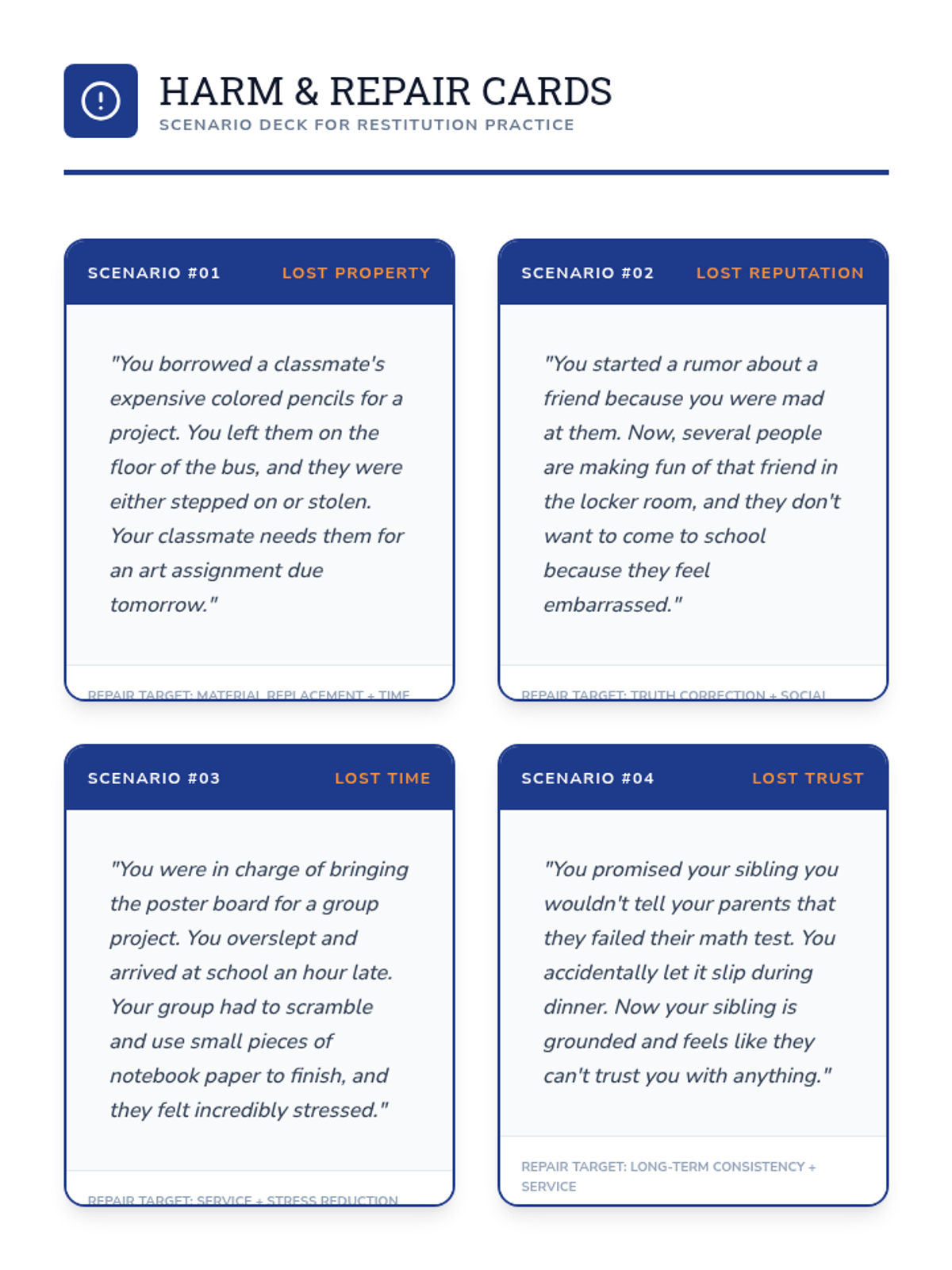
This lesson moves beyond words to action, brainstorming creative ways to 'make it right' or offer restitution relevant to the harm caused.
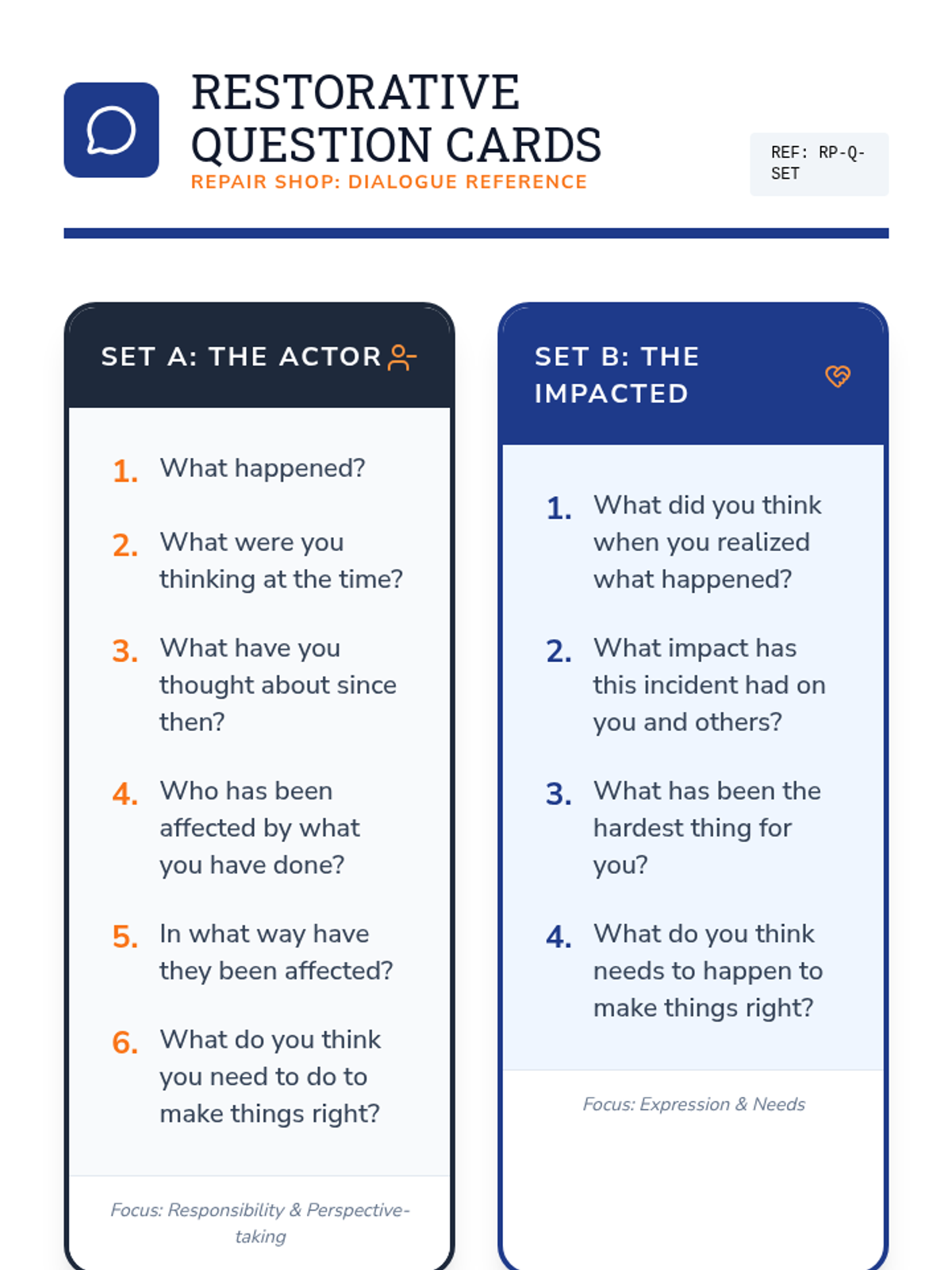
Students participate in a structured circle process to practice sharing feelings and listening to others' experiences of harm using restorative justice questions.
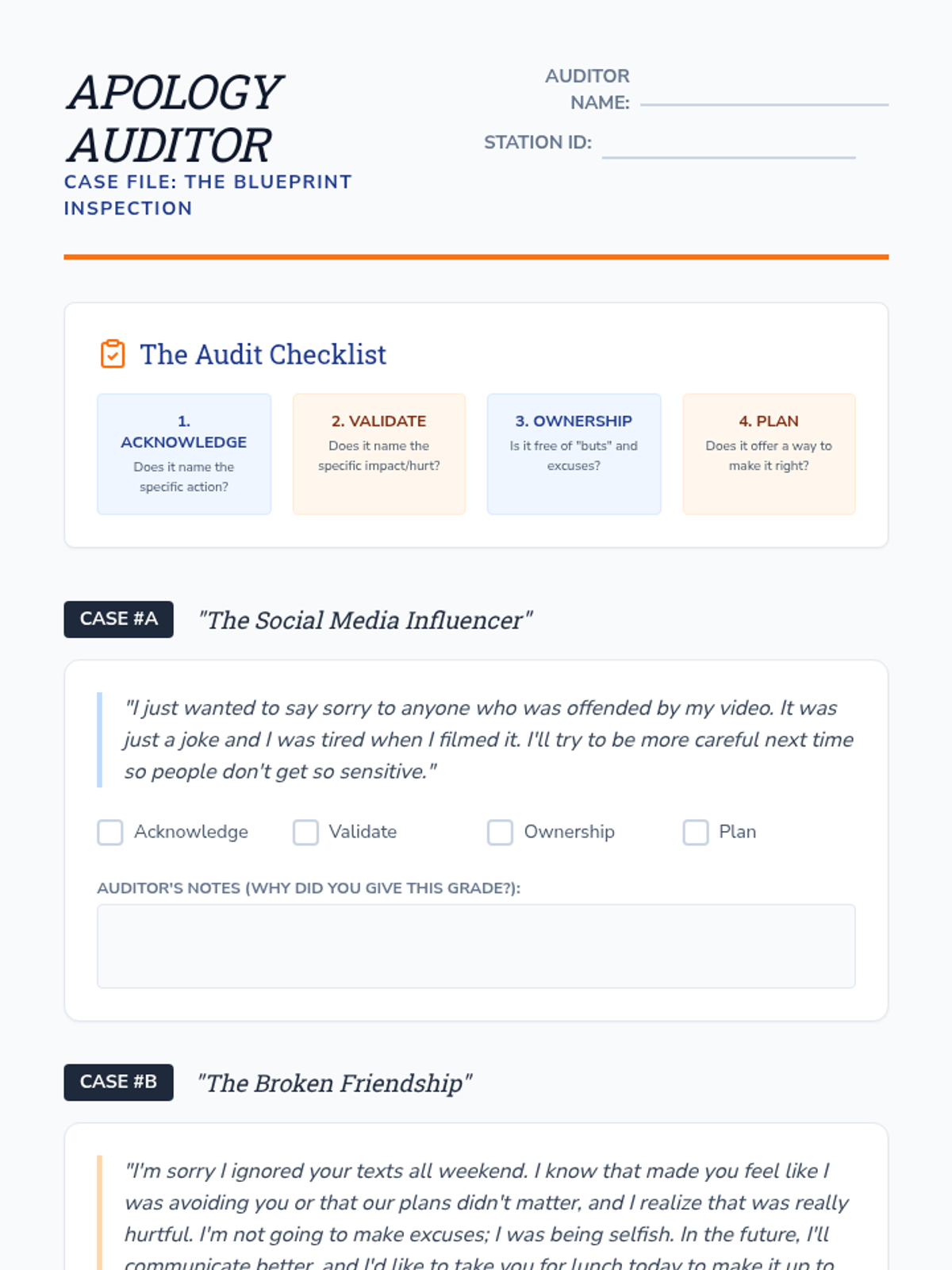
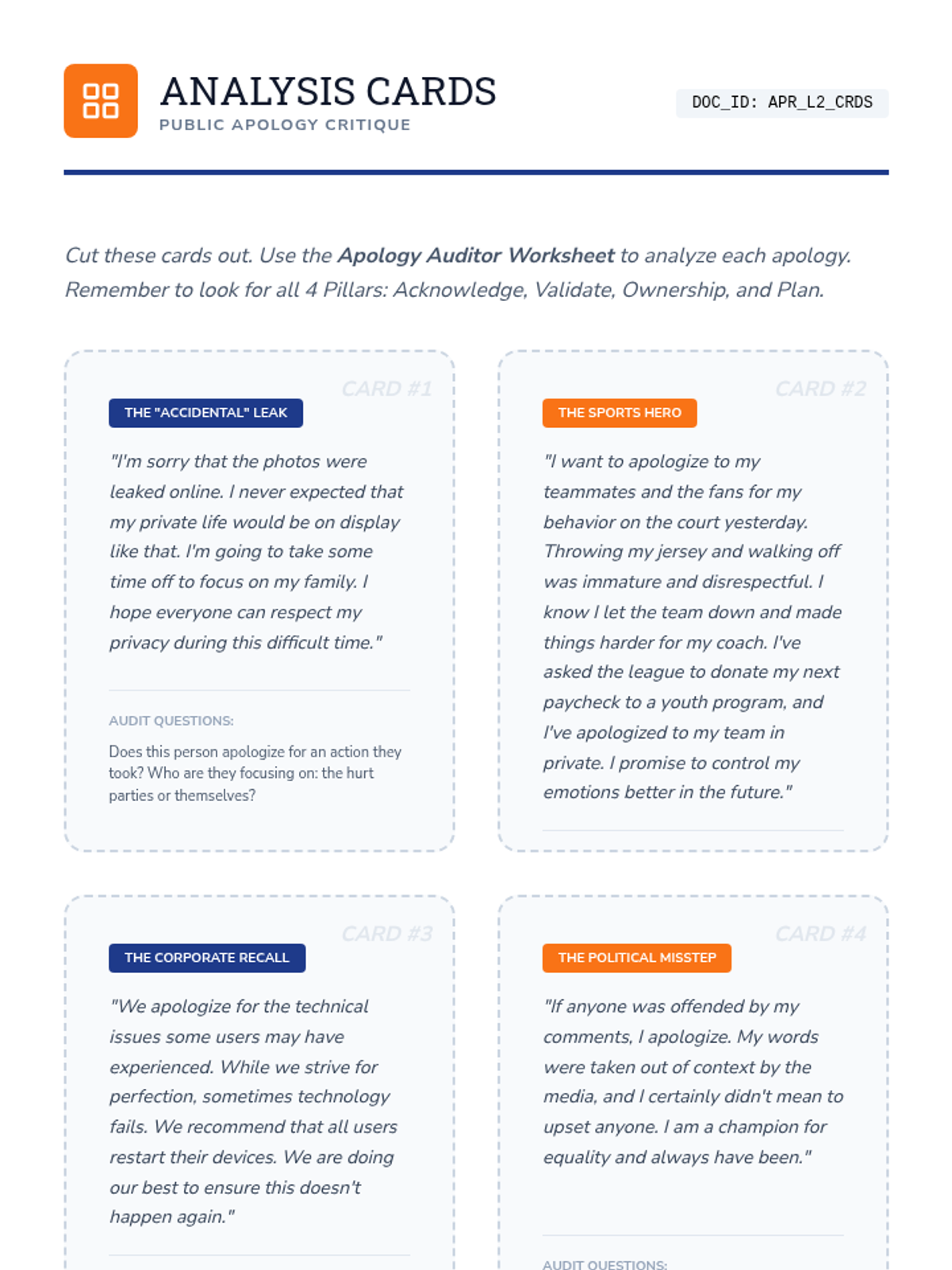
Students deconstruct apologies to identify key components: acknowledging the act, validating hurt, accepting responsibility, and making a plan for change. They critique public apologies.
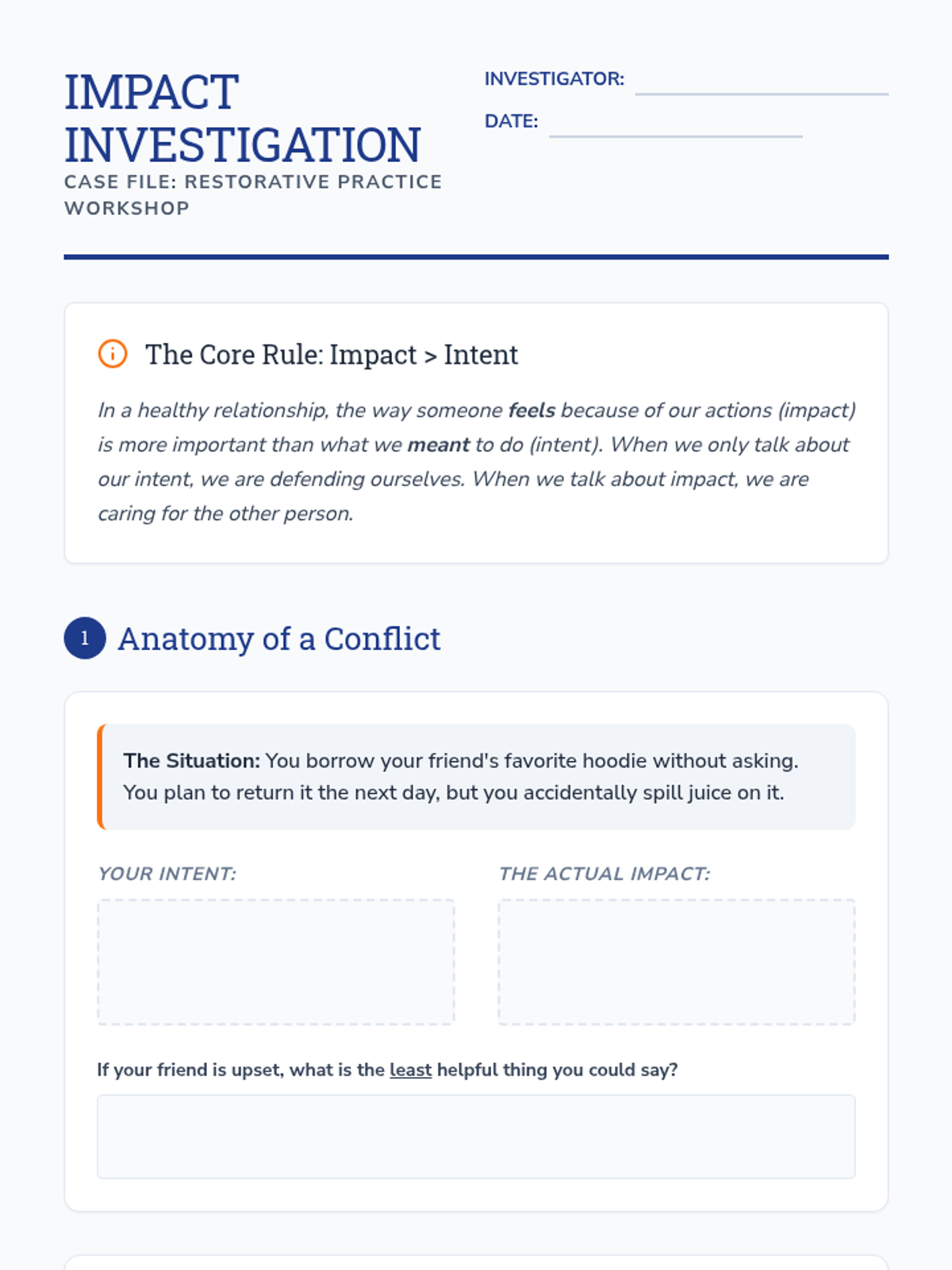
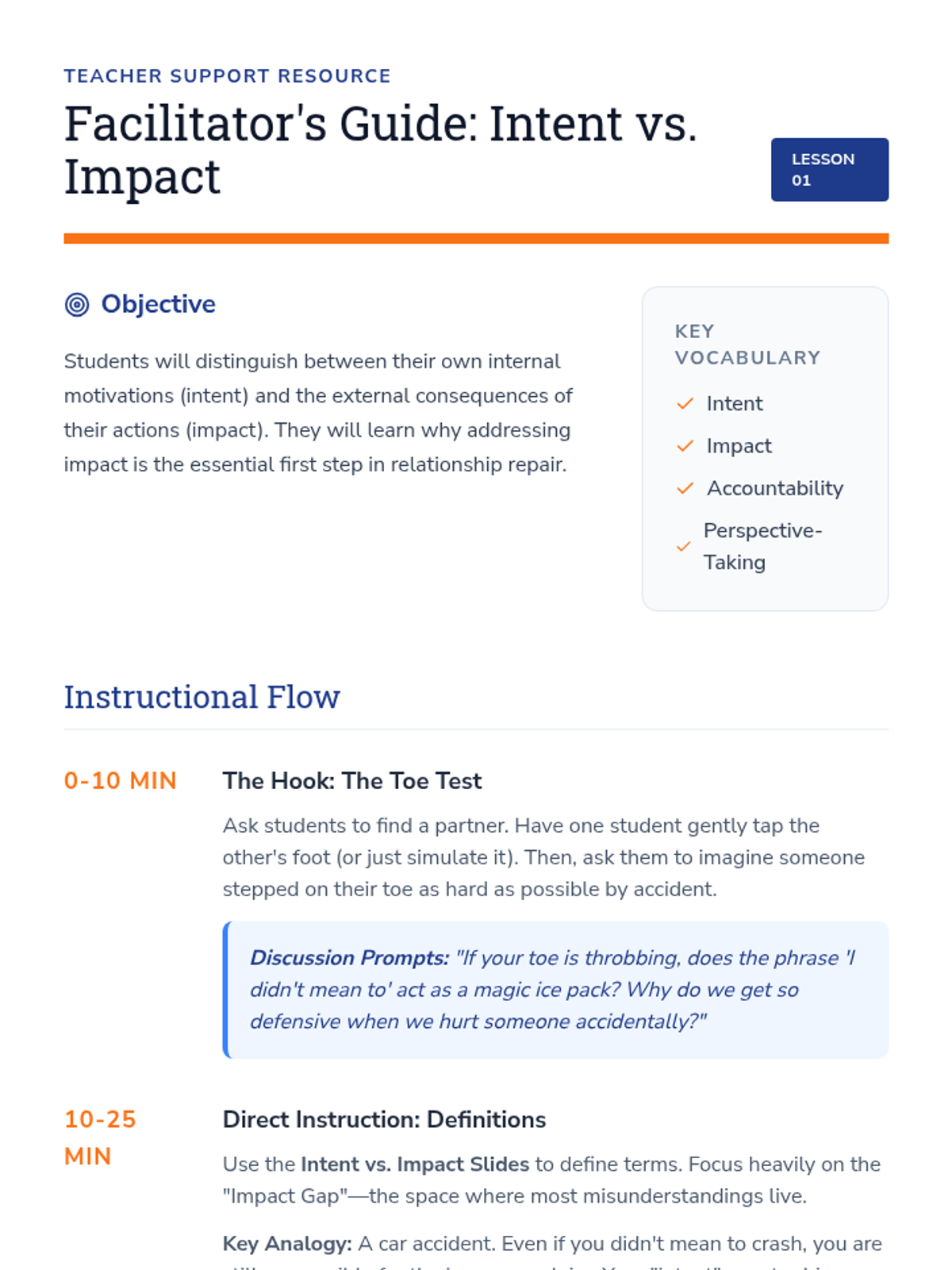
Students explore the gap between what they meant to do (intent) and how it affected others (impact). They analyze scenarios where good intentions still caused harm and discuss why impact must be addressed first.
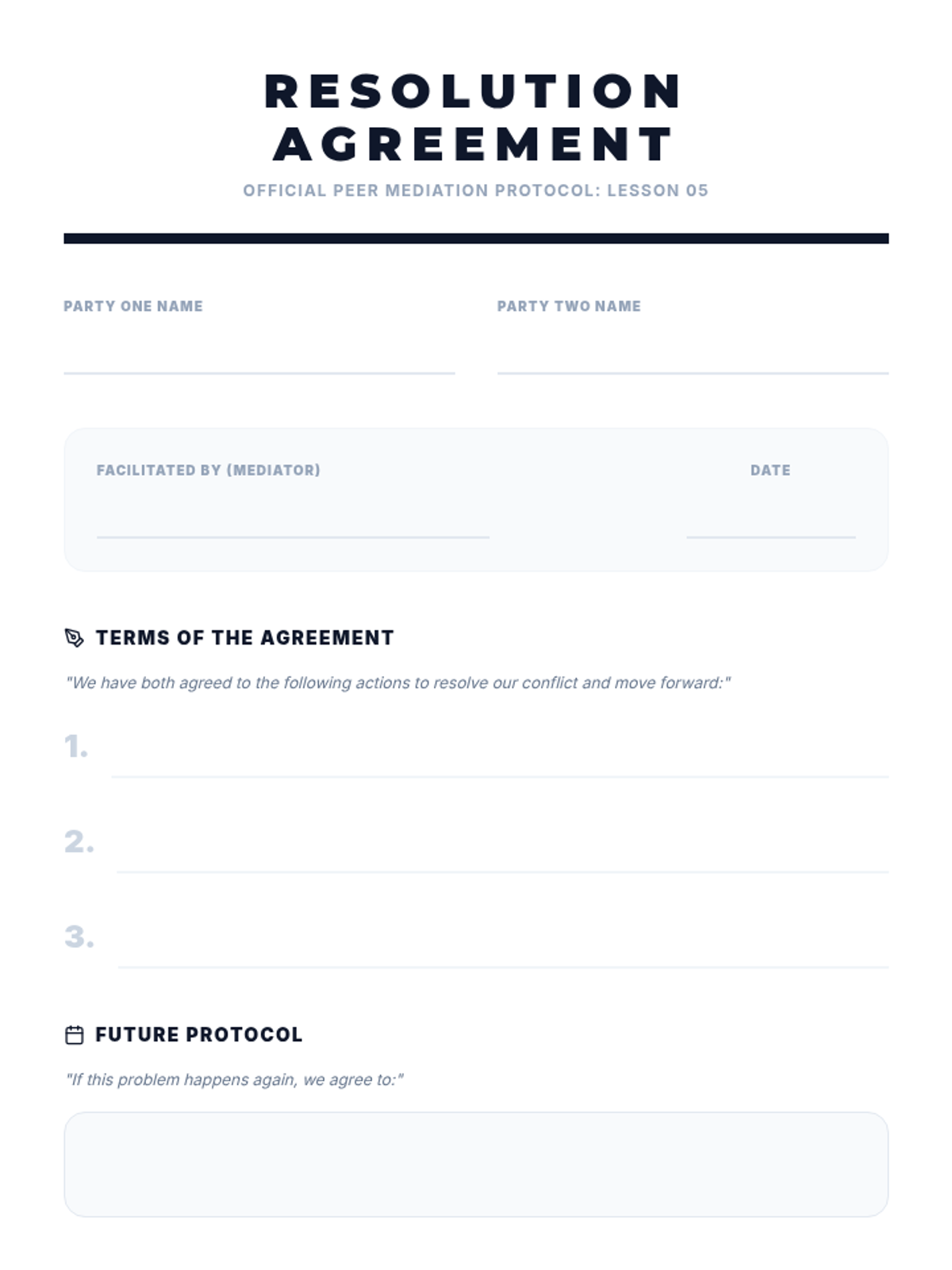
A culminating mock mediation simulation where students apply the full protocol—from opening statements to written agreements—using realistic middle school scenarios.
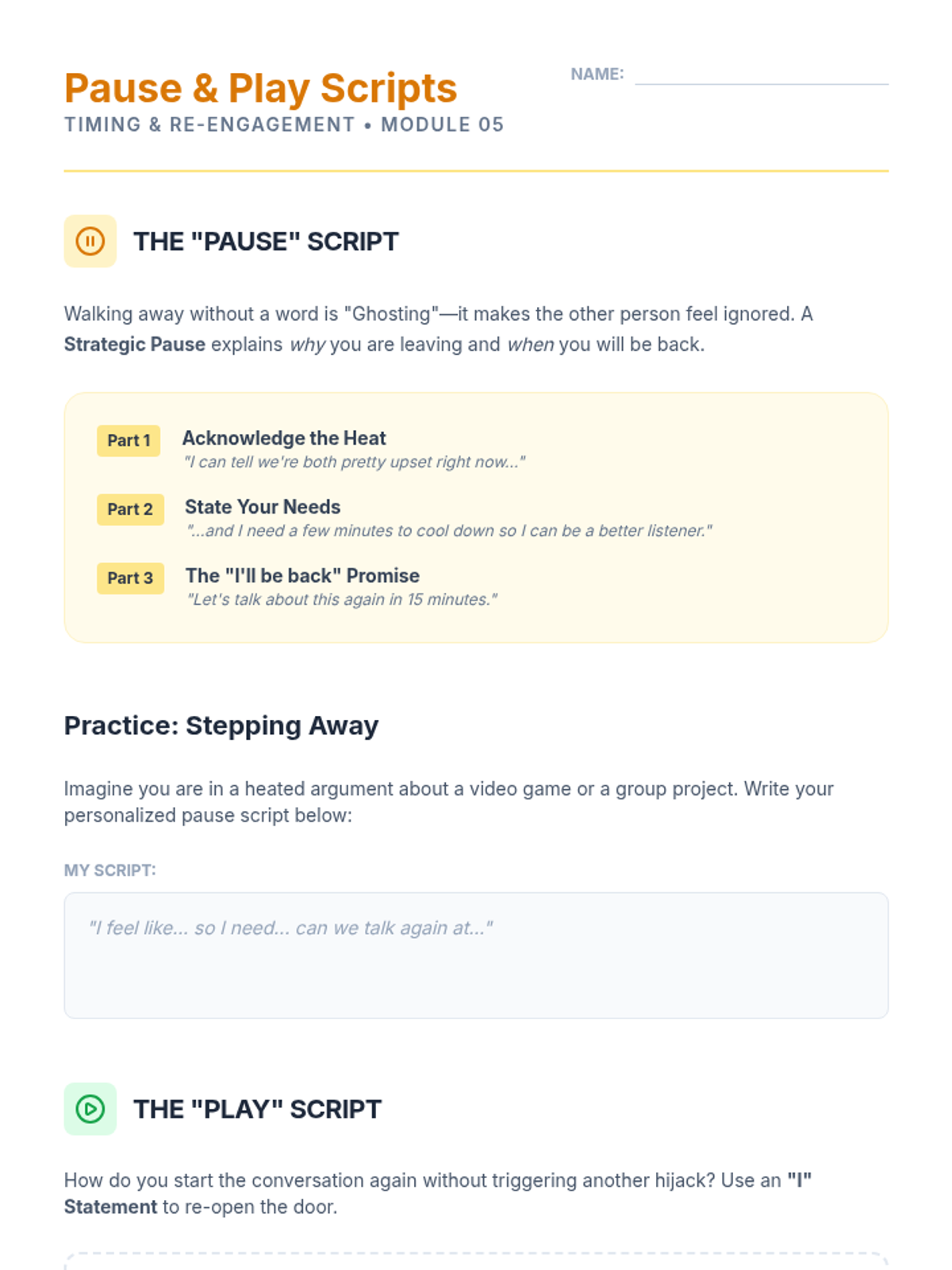
Students learn to assess when a conflict is too heated to solve and practice scripts for stepping away and re-initiating the conversation later.
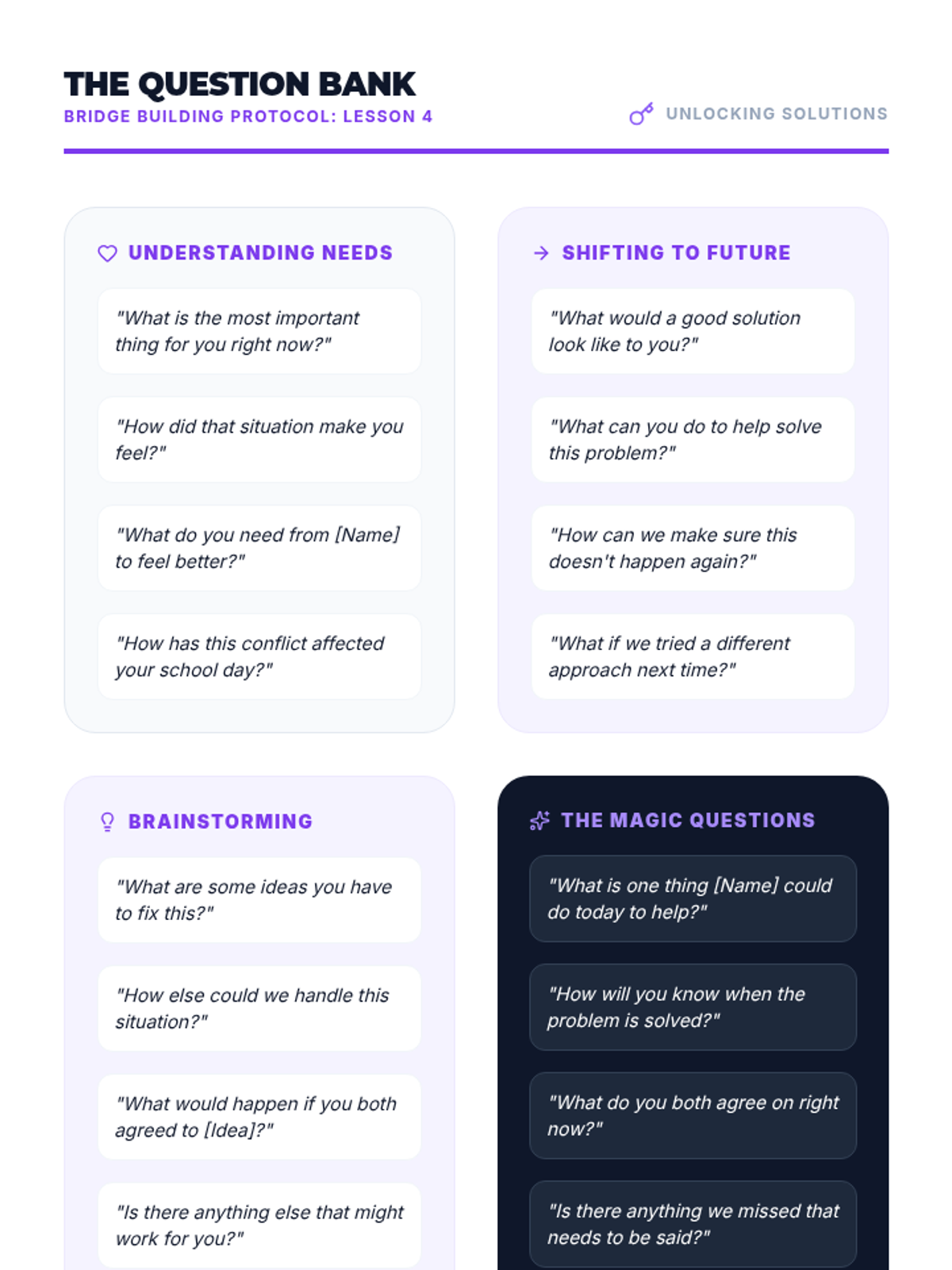
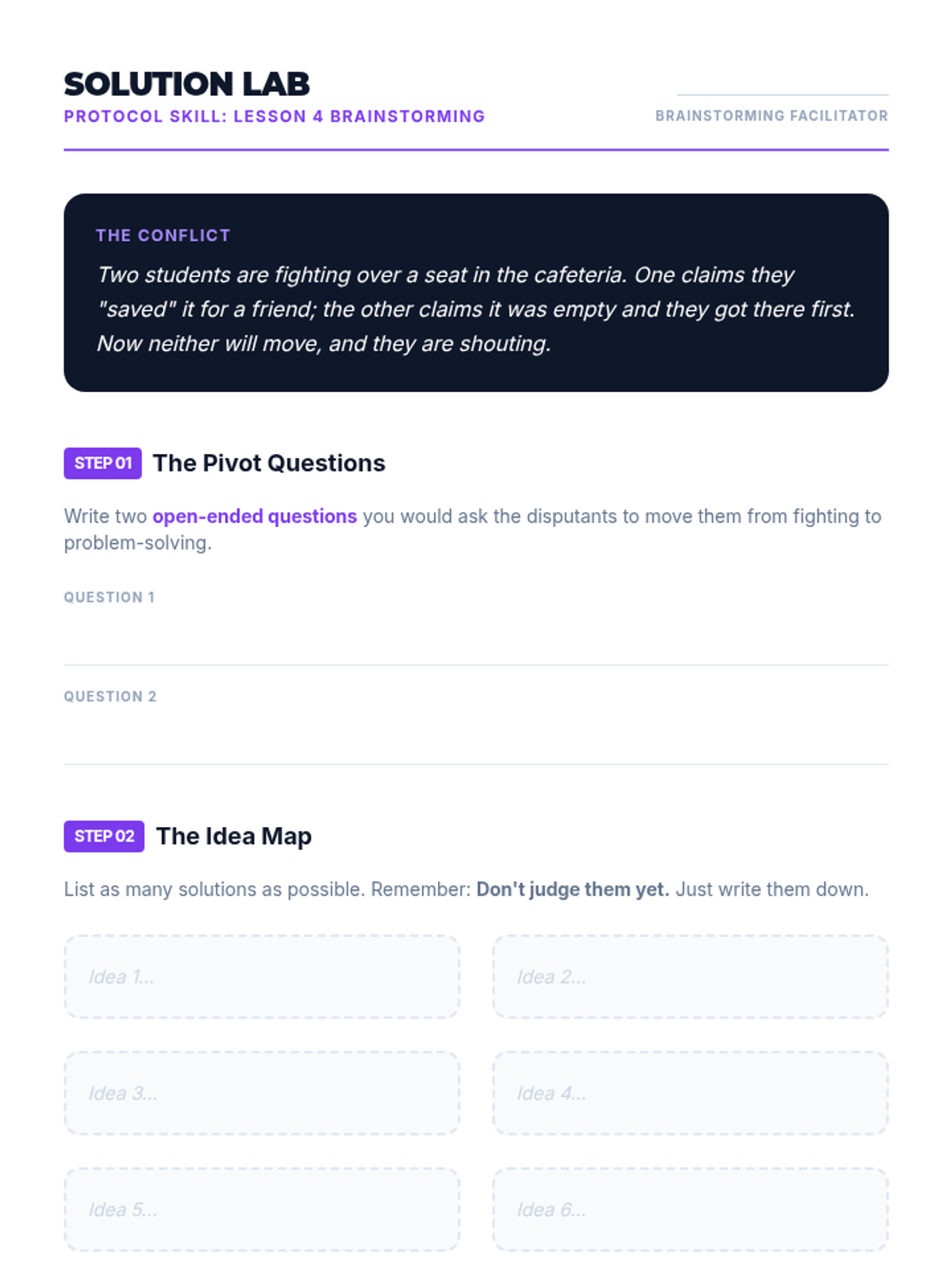
Focused on shifting from conflict to collaboration, students practice asking open-ended questions that prompt disputants to generate their own creative solutions.
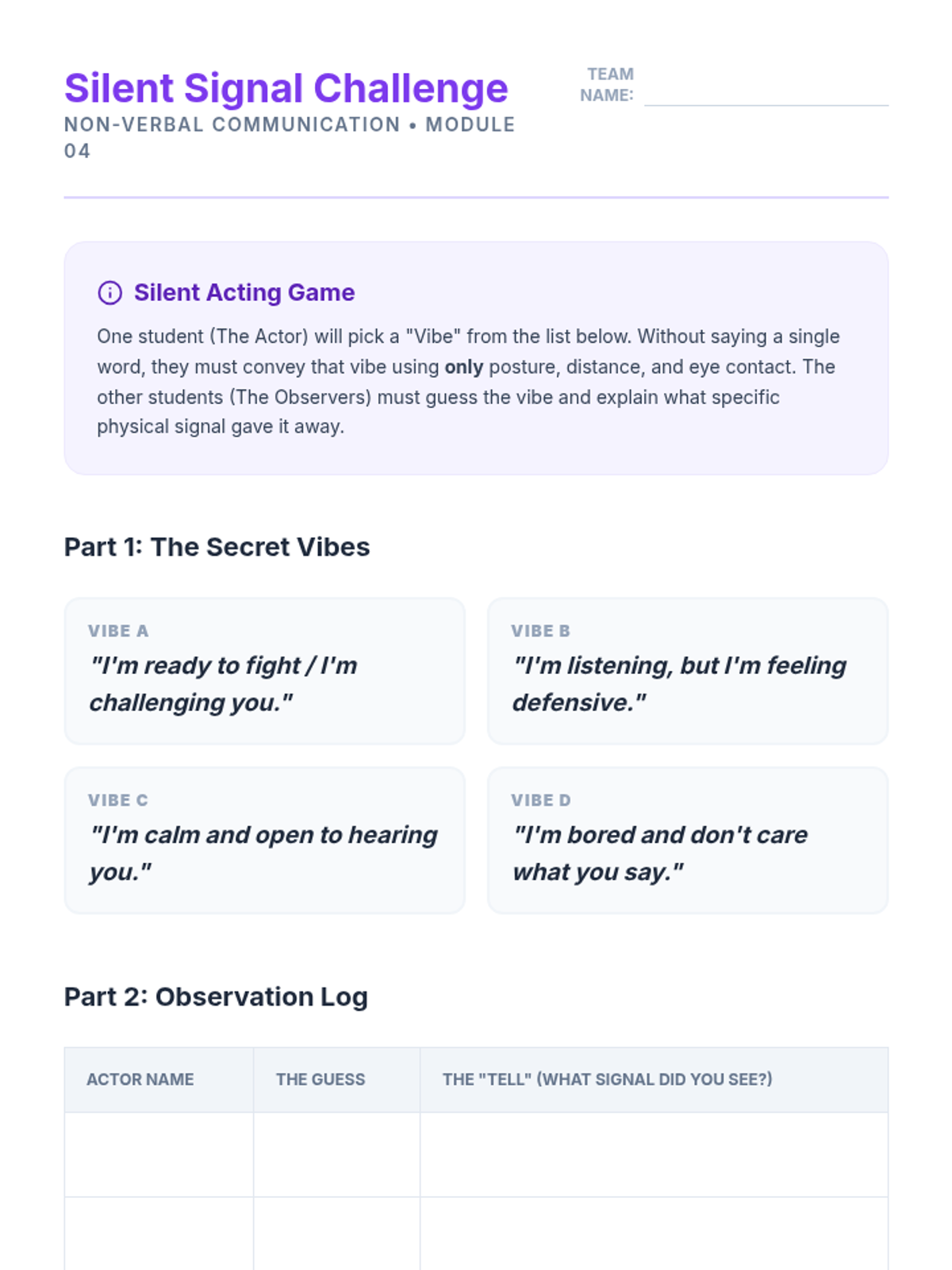
Students examine how body language, proximity, and eye contact can be perceived as threatening or calming during tense interactions.
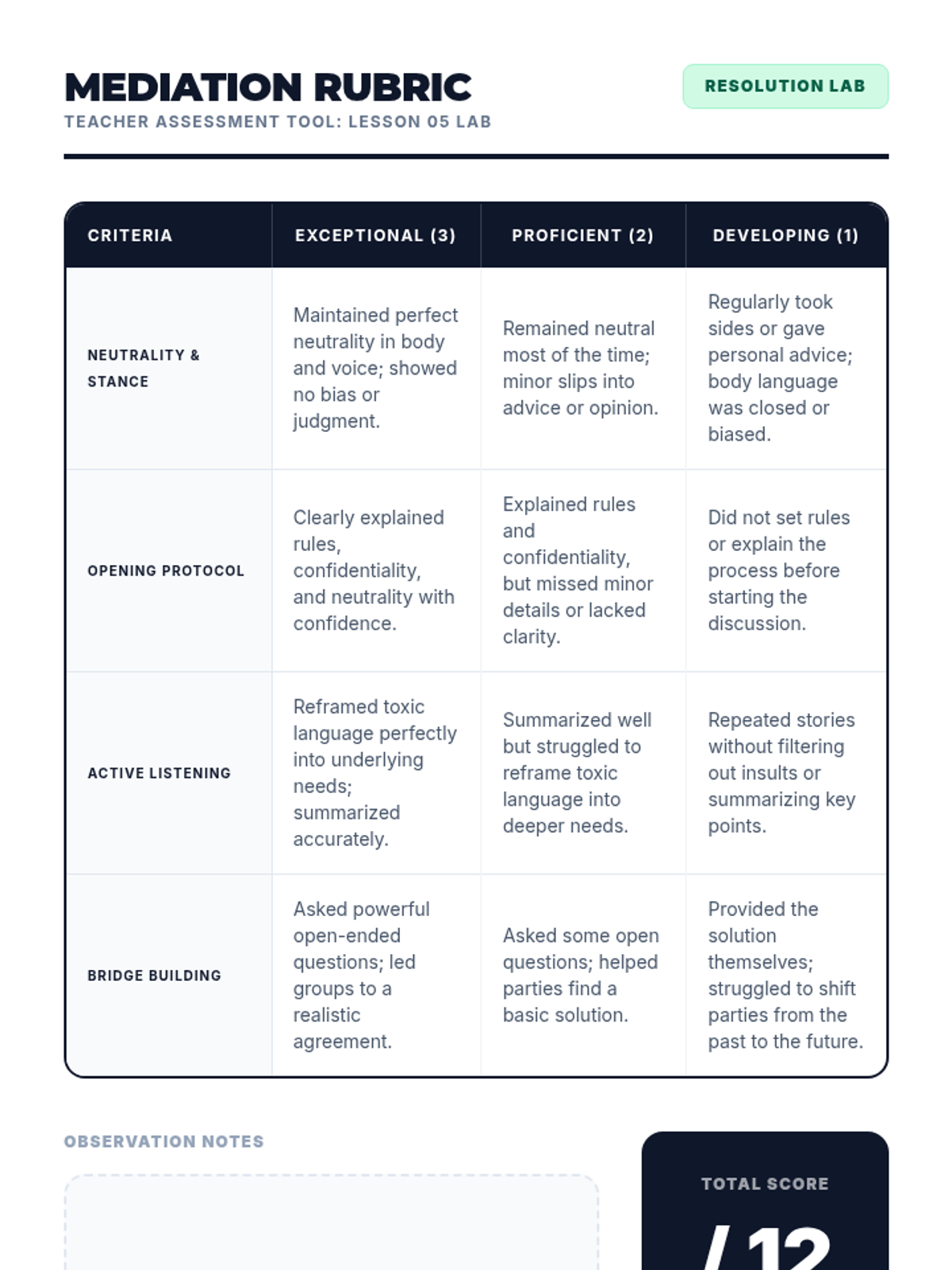
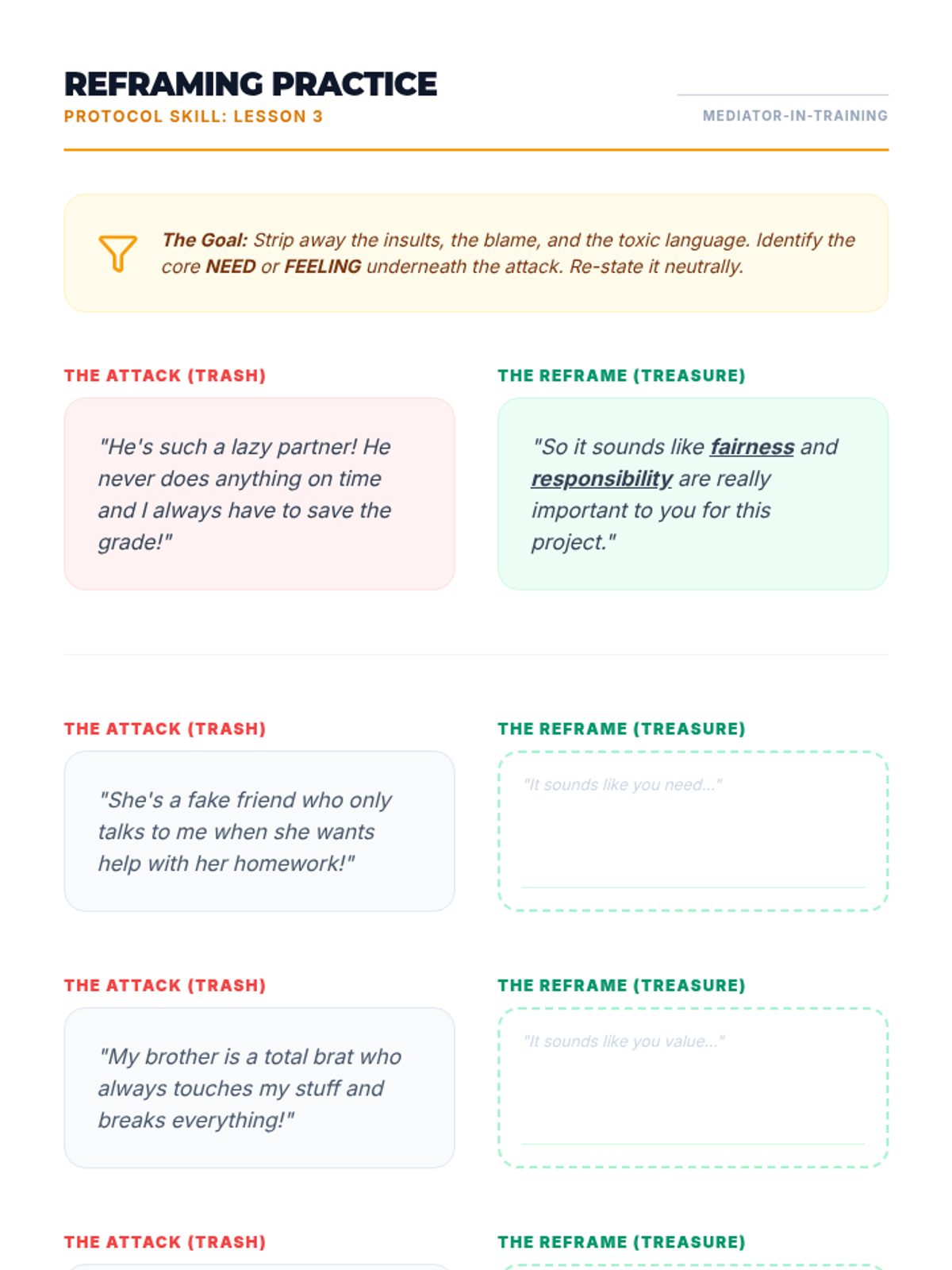
Students master the skills of summarizing and reframing. They learn to strip away inflammatory language and reflect back the core needs and feelings of disputing parties.
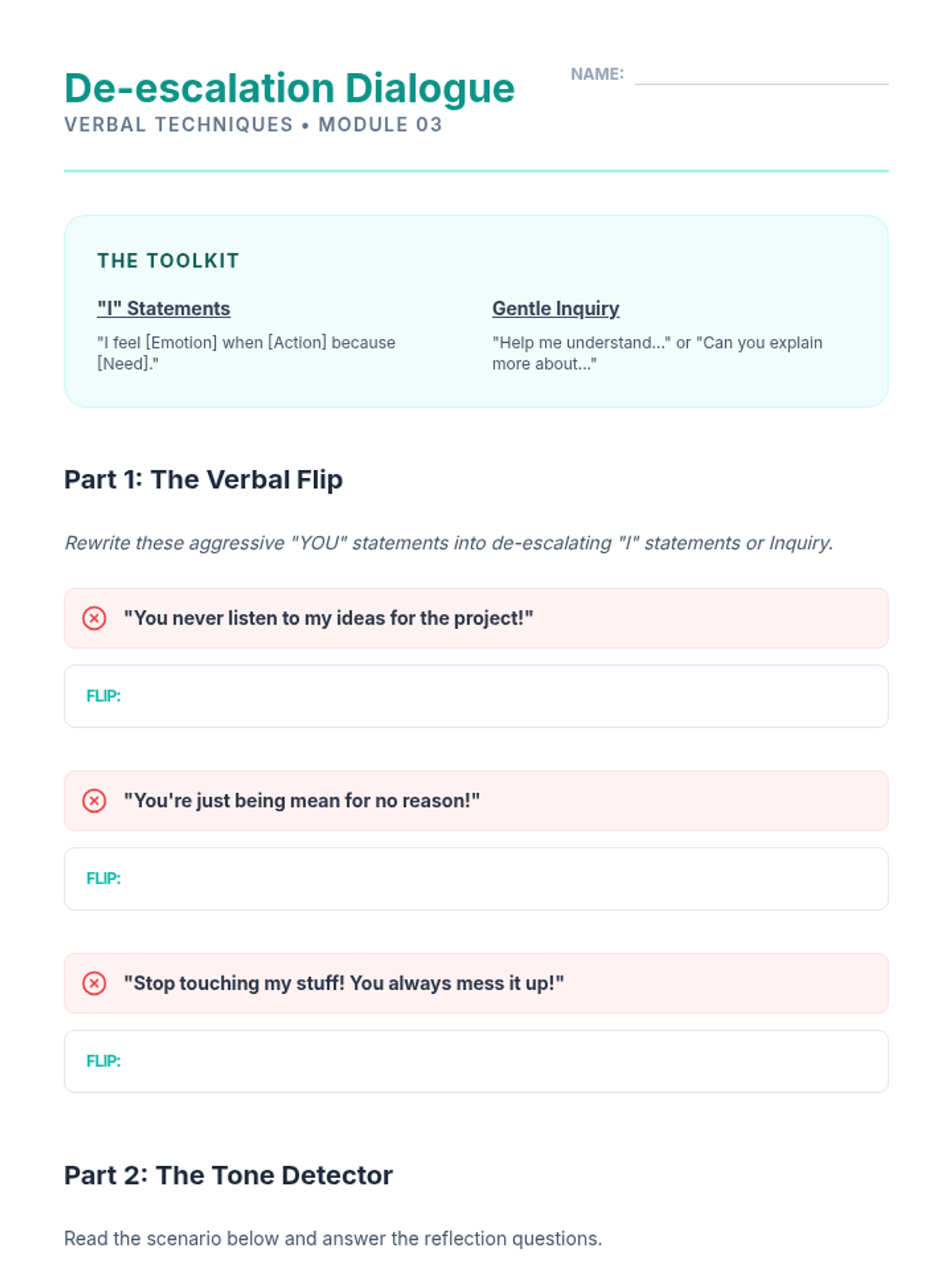
Students study specific phrases and tone adjustments that reduce defensiveness in others, contrasting 'you' statements with gentle inquiry.
This lesson focuses on the opening stage of mediation. Students learn to set the tone, establish ground rules, and ensure confidentiality to create a safe space for resolution.
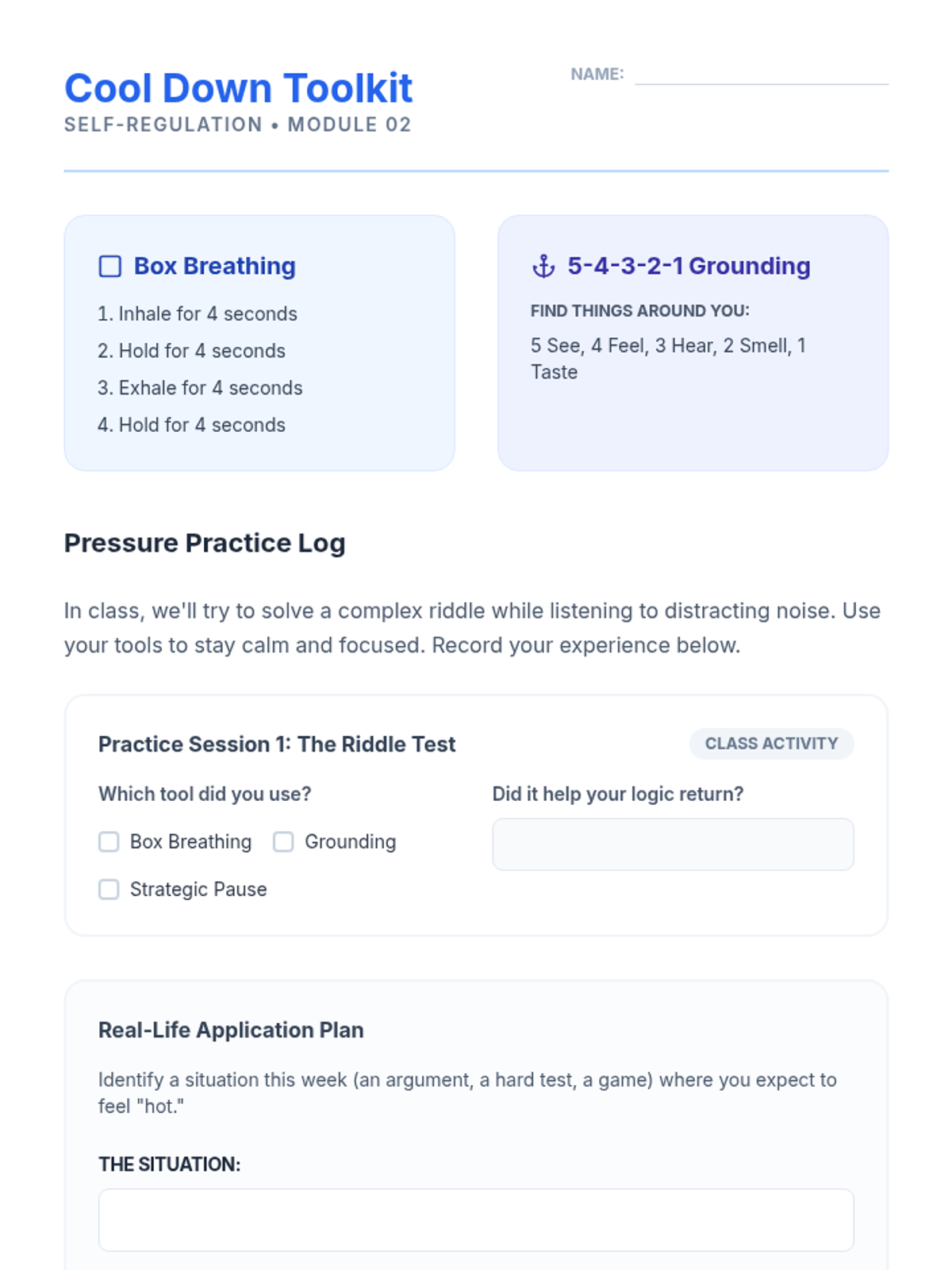
This lesson introduces immediate coping mechanisms for 'cooling down' before responding, including breathing techniques and grounding exercises.
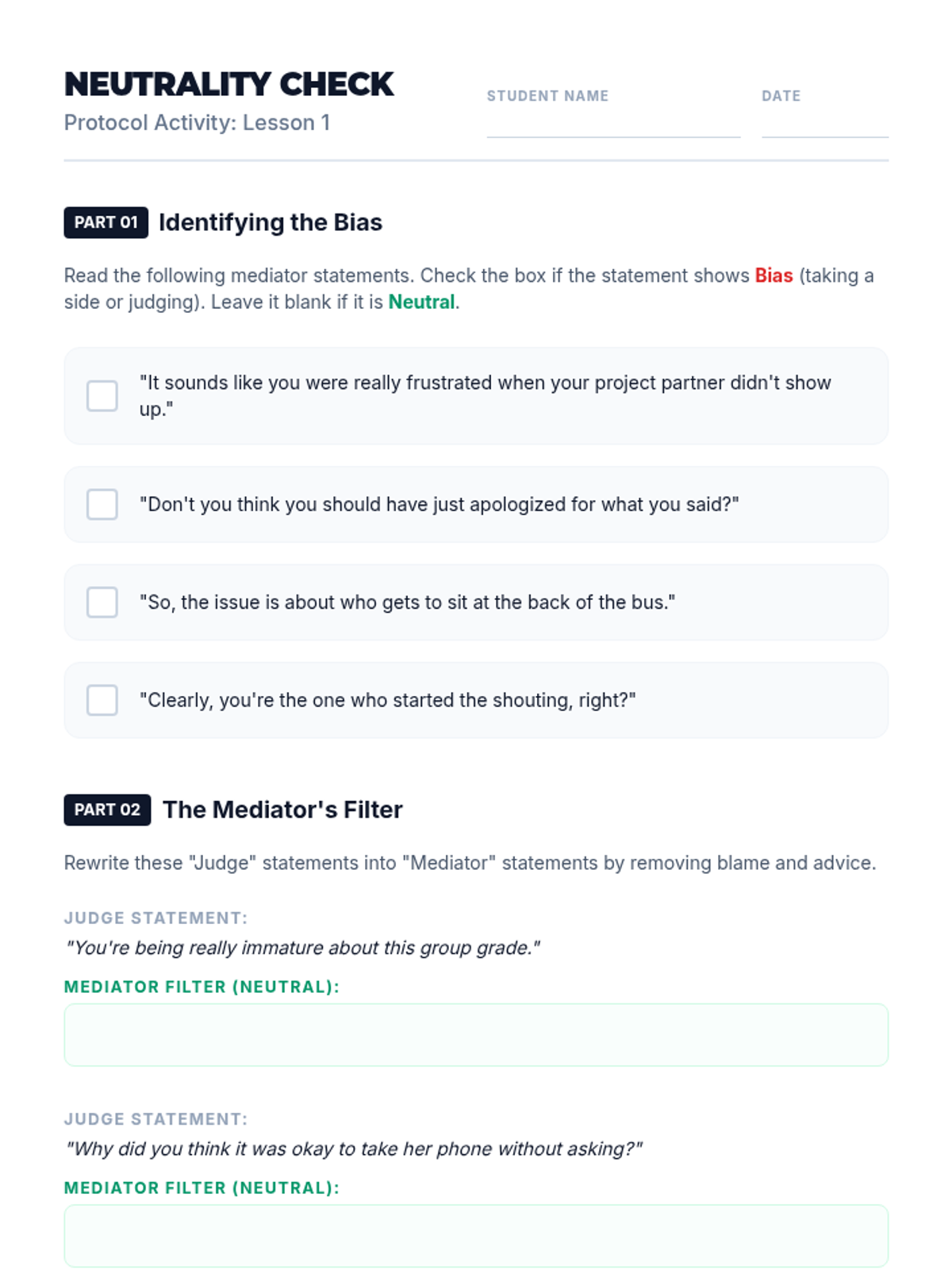
Students explore the definition of neutrality and the mediator's role. They practice identifying bias and using objective language to facilitate rather than judge.
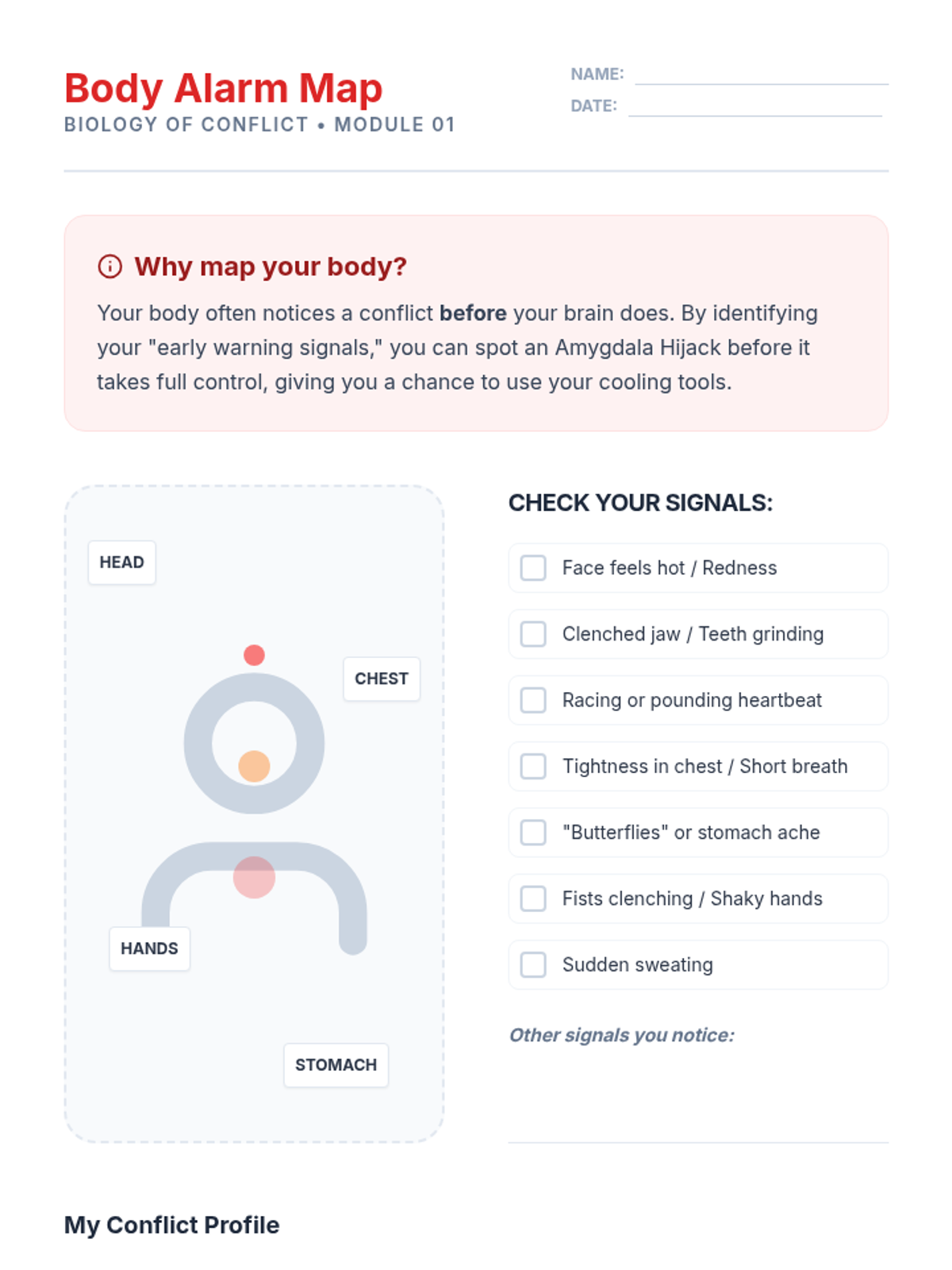
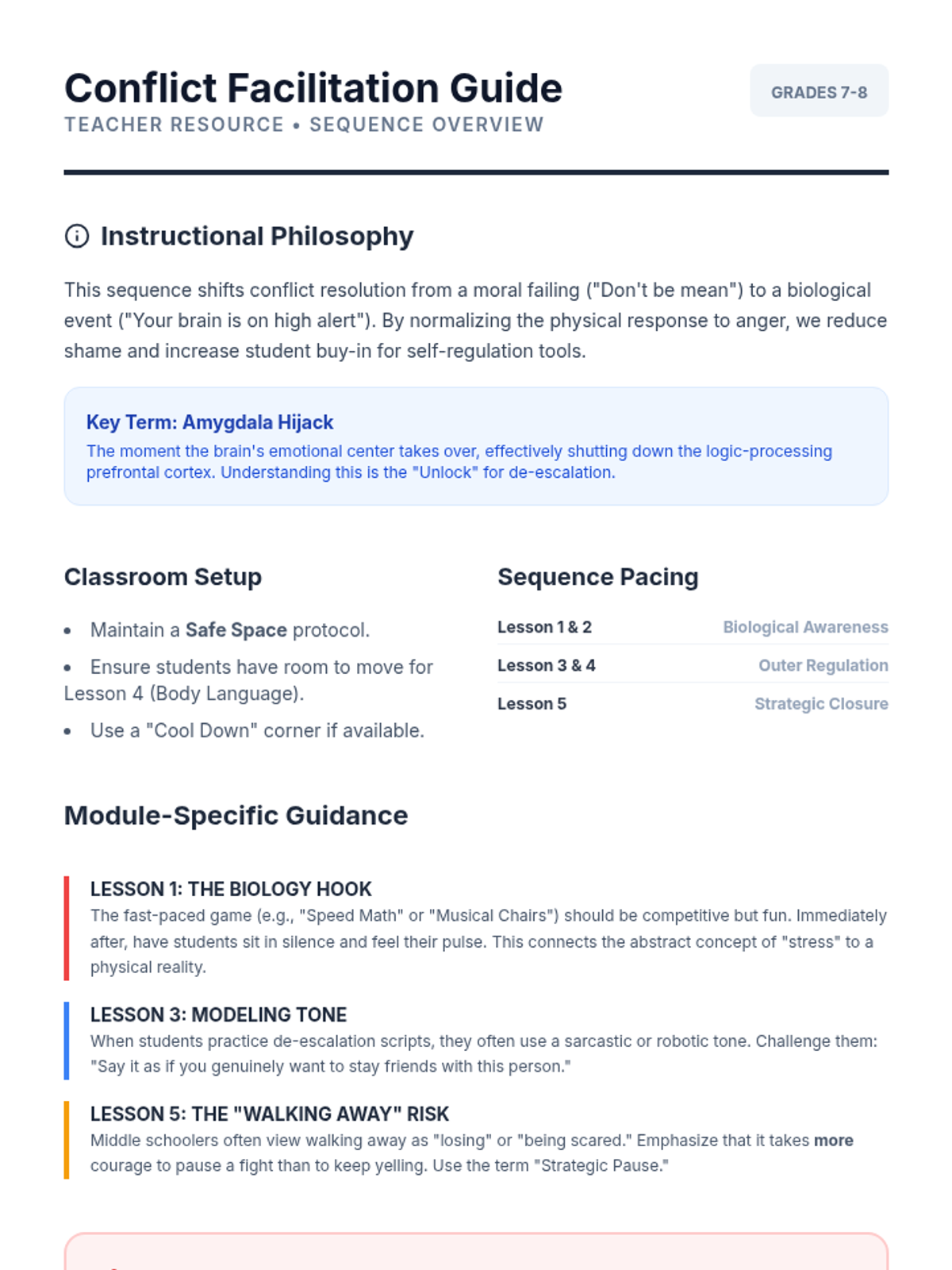
Students learn about the amygdala hijack and the physical signs of anger, mapping out their own physiological cues that signal a high-conflict state.
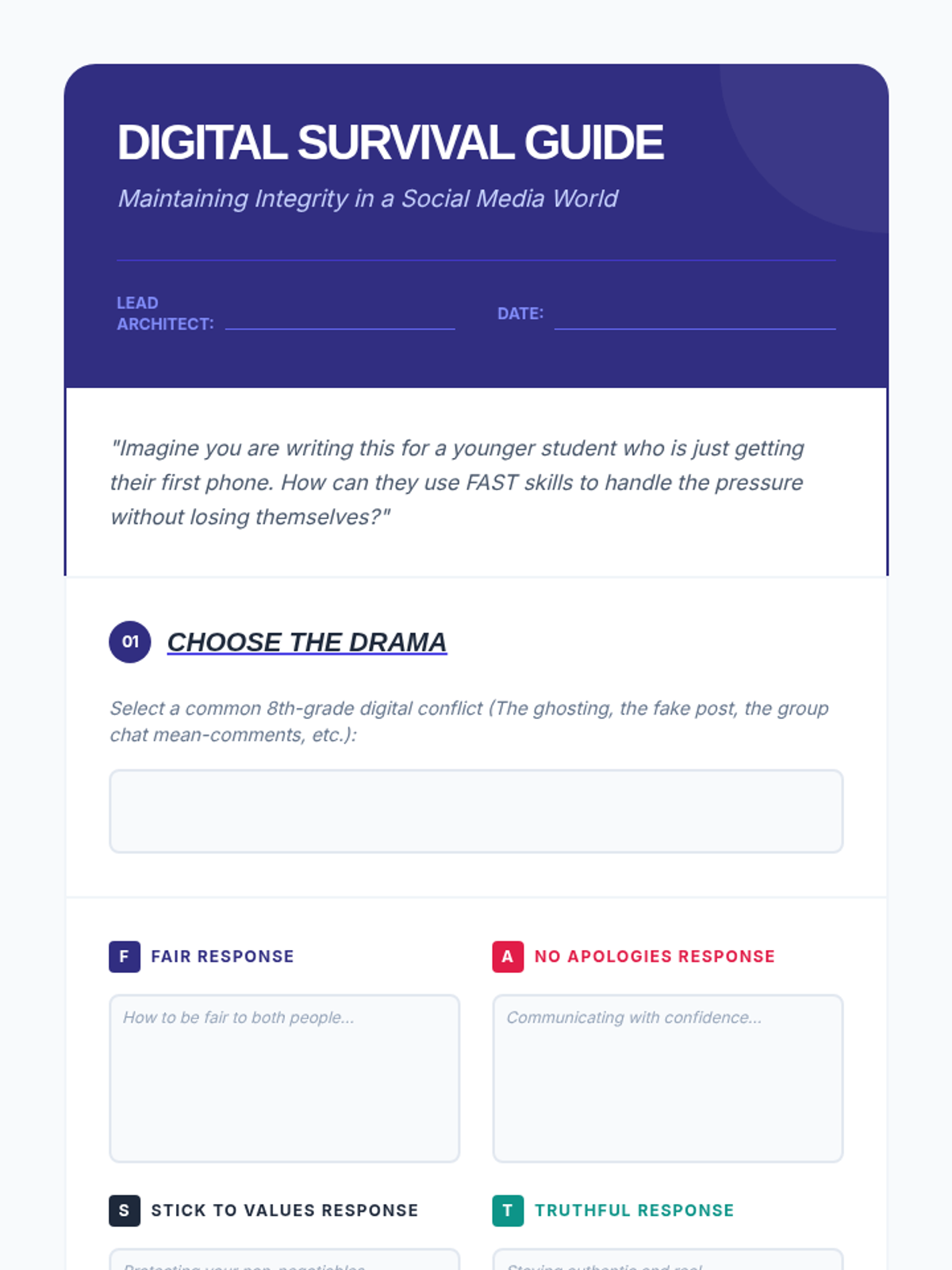
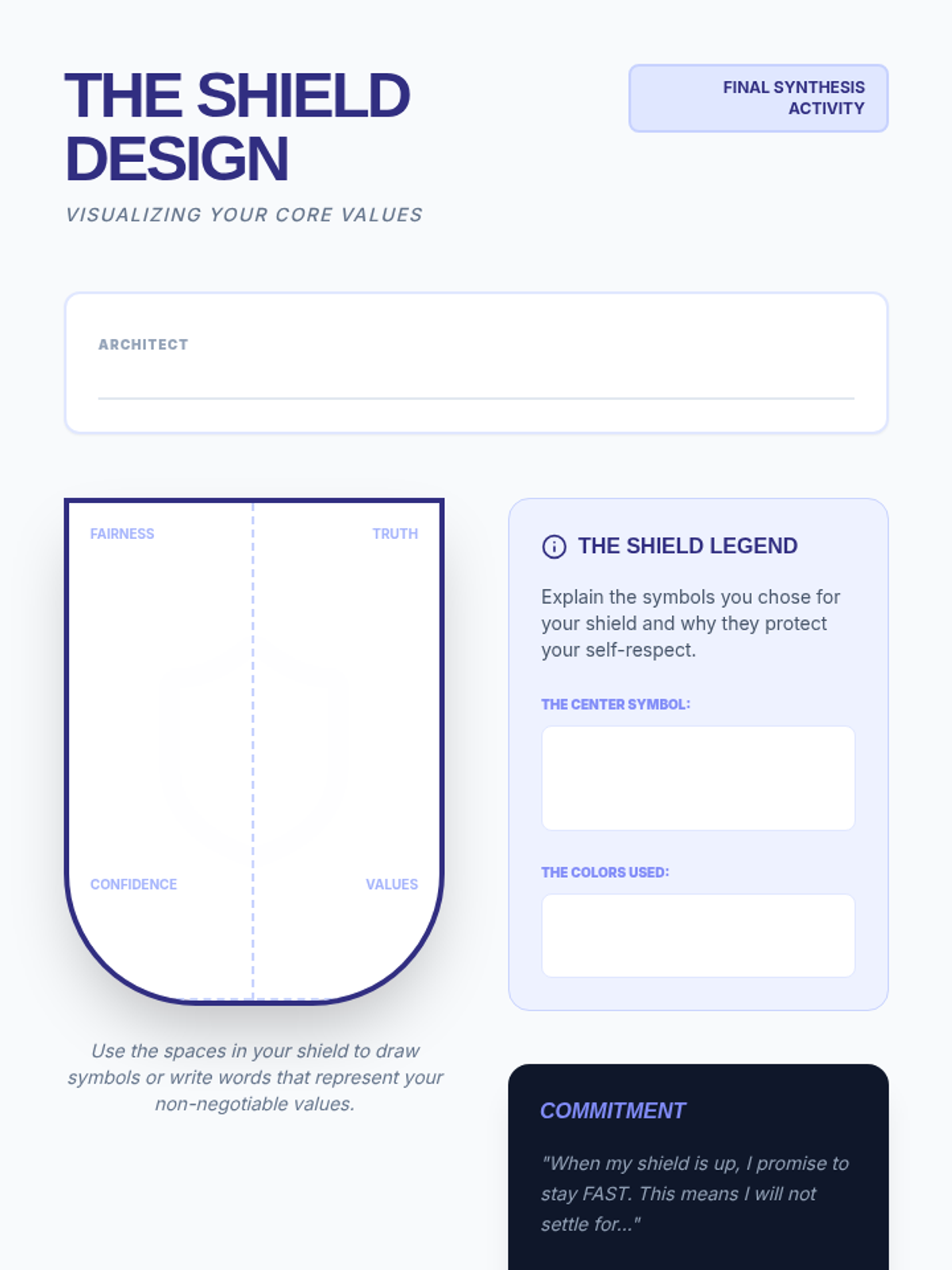
In this final lesson, students synthesize all FAST skills to create a personal Code of Conduct and a Digital Survival Guide for maintaining self-respect in social situations.
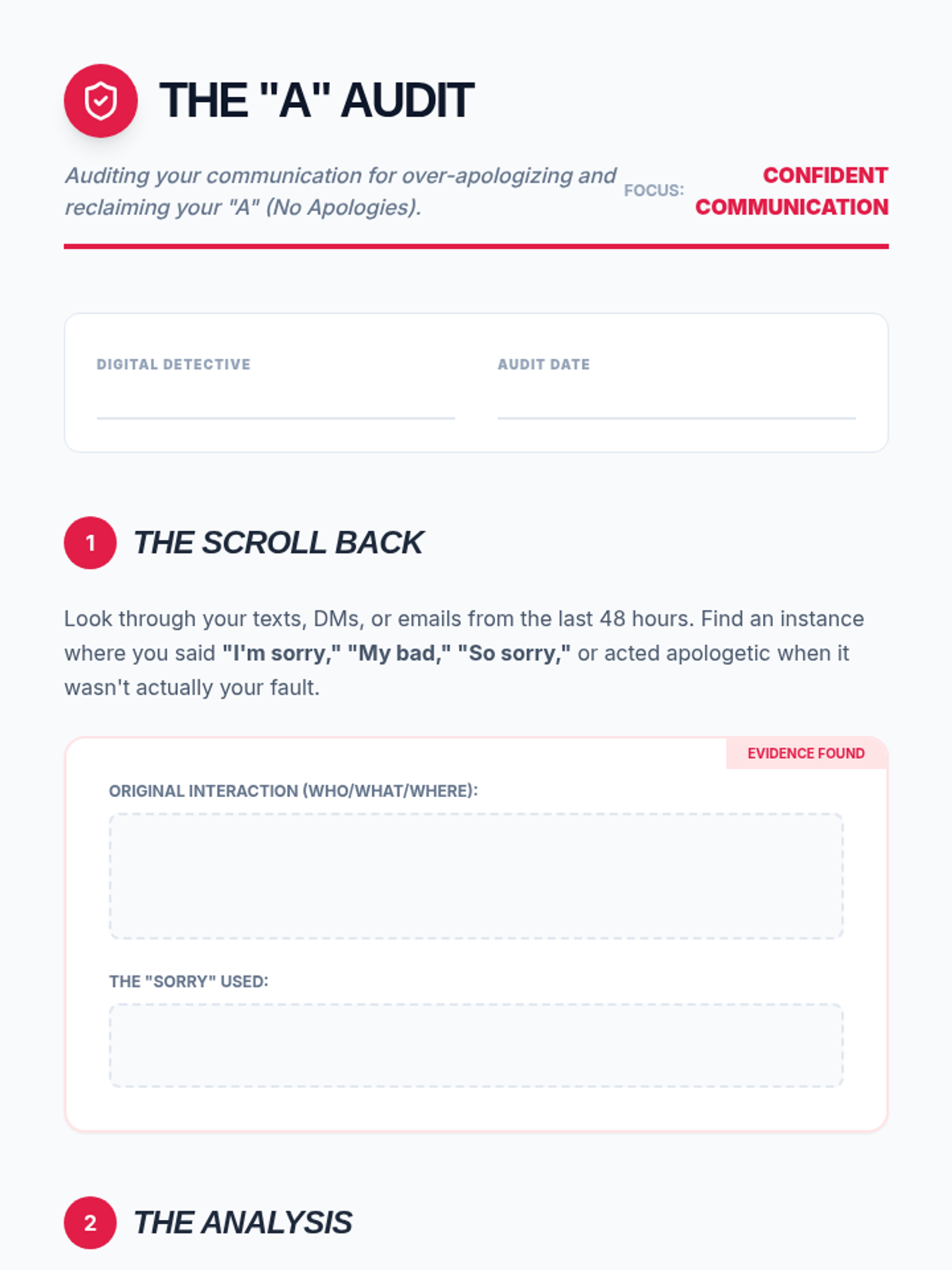
Students tackle the 'No Apologies' (A) skill, auditing their own communication for over-apologizing and practicing more assertive, confident language.
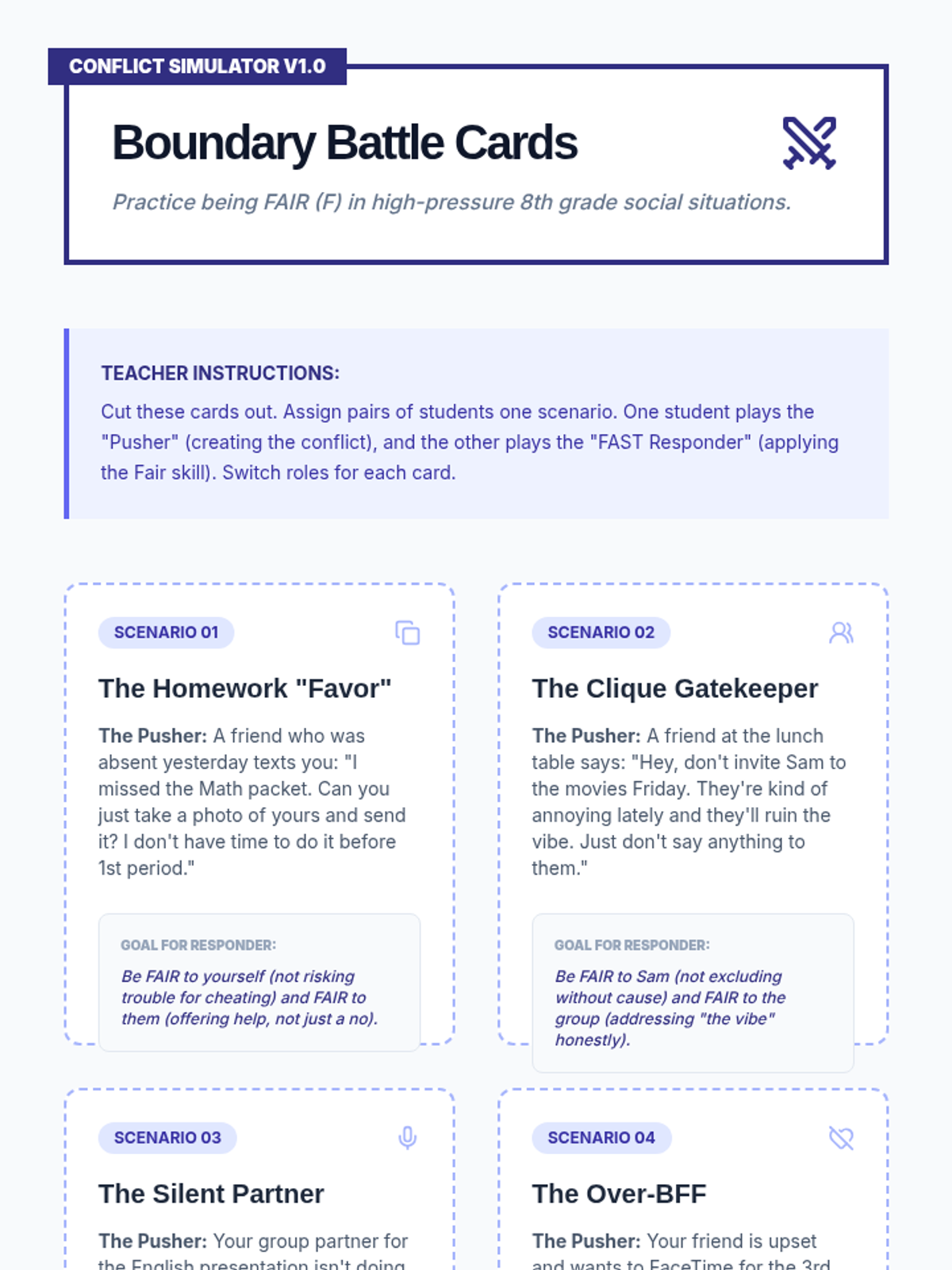
Students explore 'Fairness' (F) in the context of group dynamics. They learn to set boundaries and negotiate workloads without sacrificing their own needs or being aggressive.
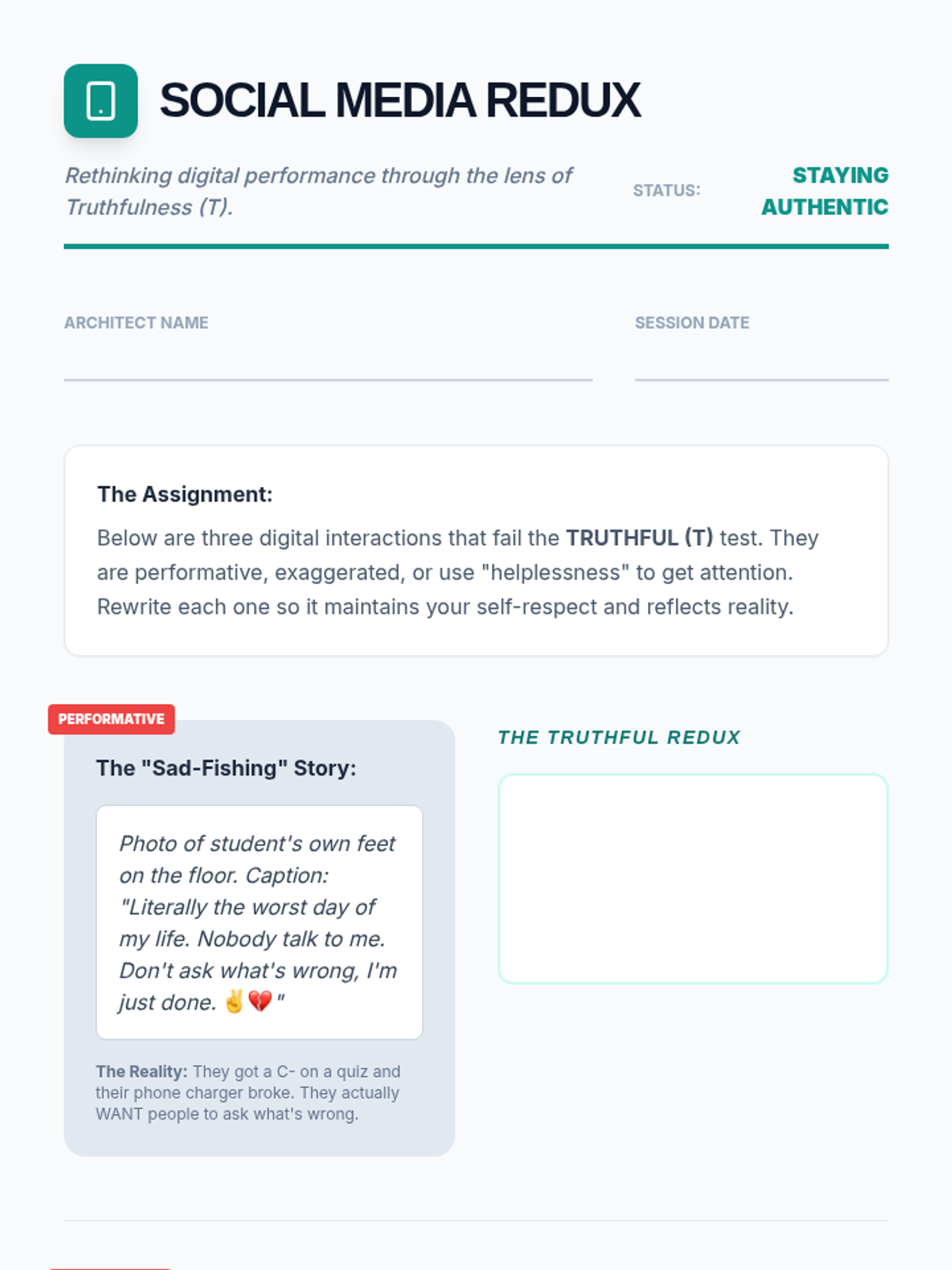
Focusing on the 'Truthful' (T) aspect of FAST, students investigate the gap between digital performance and reality. They practice honest communication in online environments.
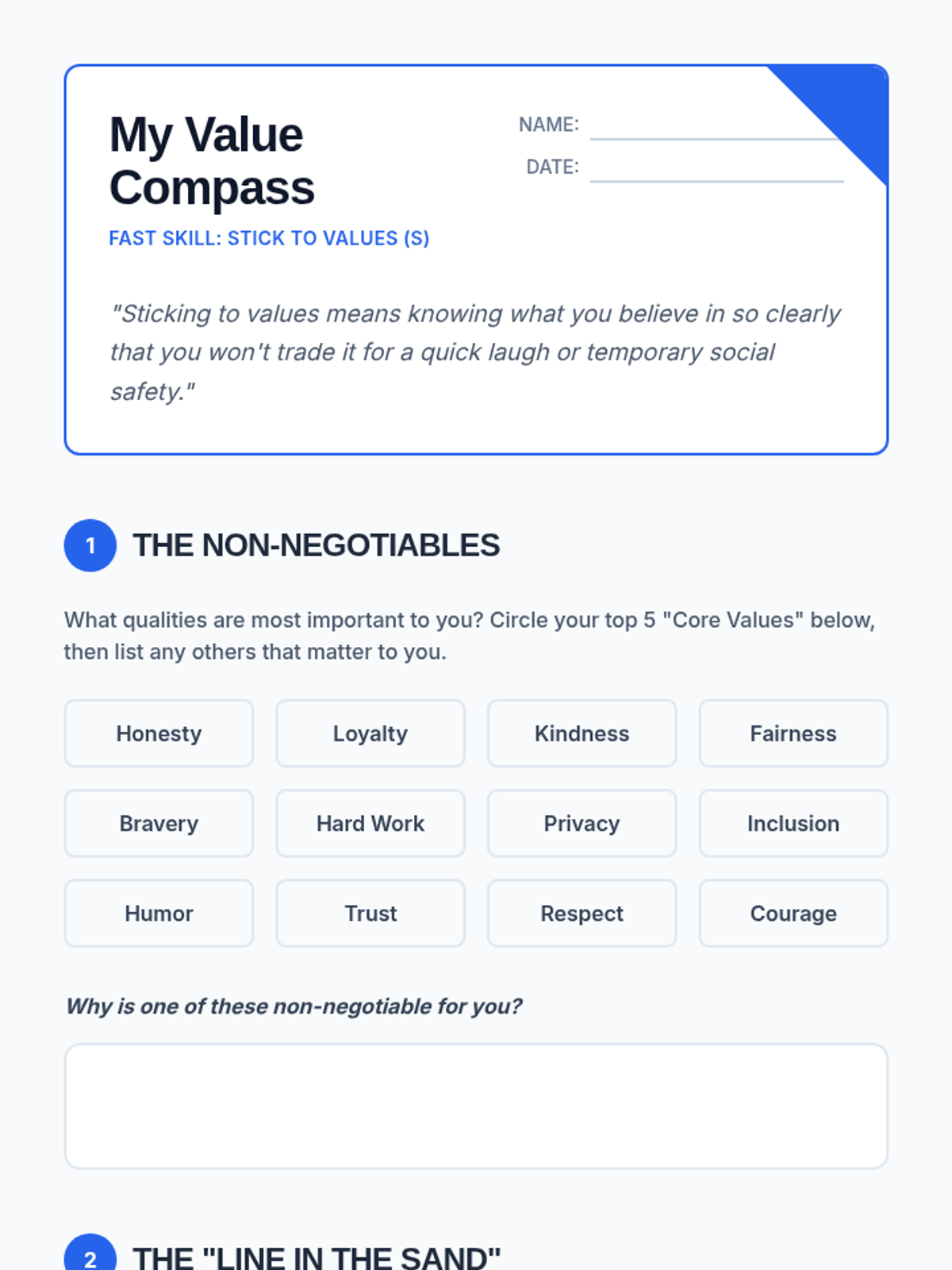
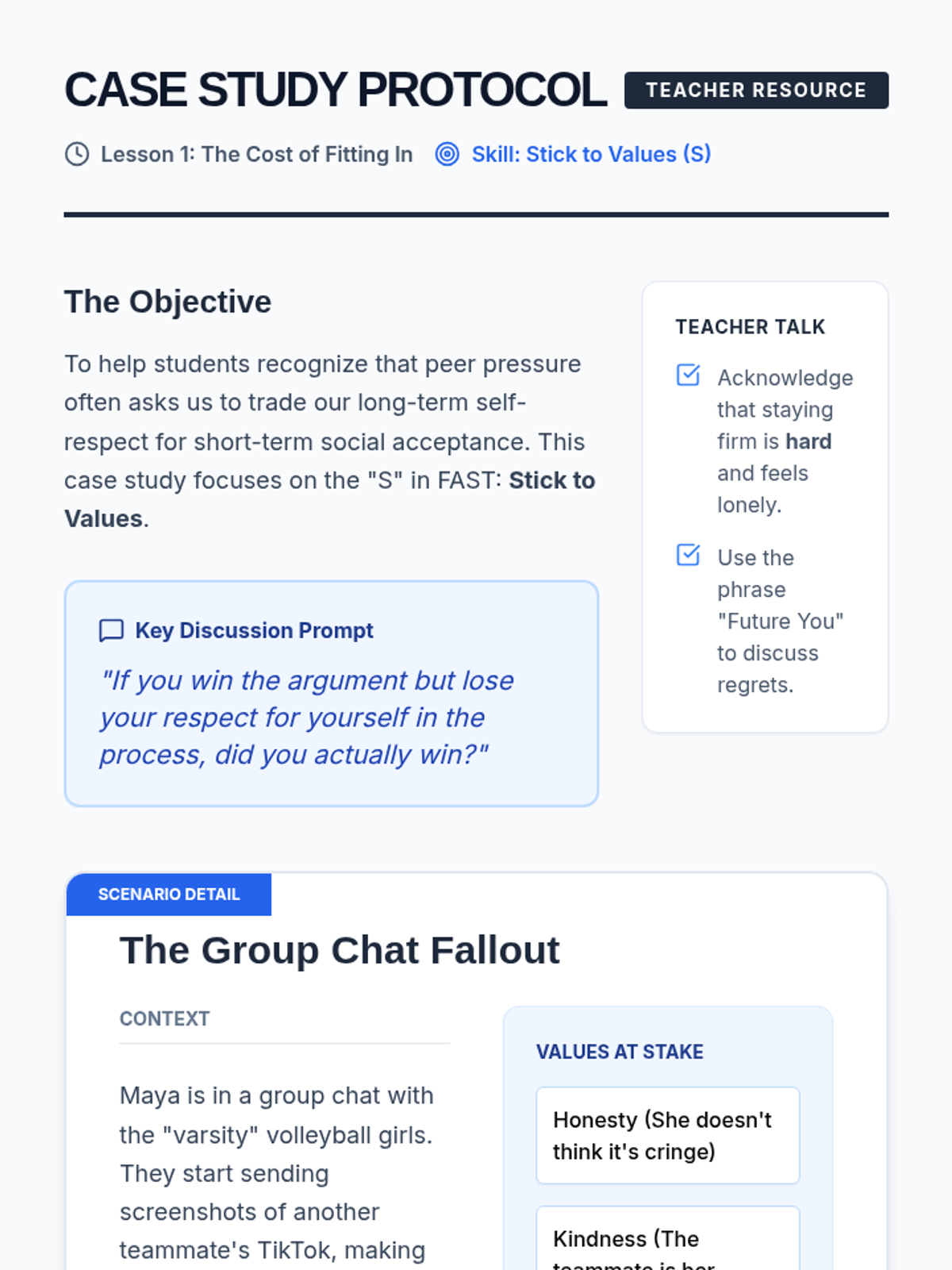
Students examine how social pressure leads to value compromise and learn the 'Stick to Values' (S) component of FAST. They analyze case studies to understand the emotional cost of losing self-respect.
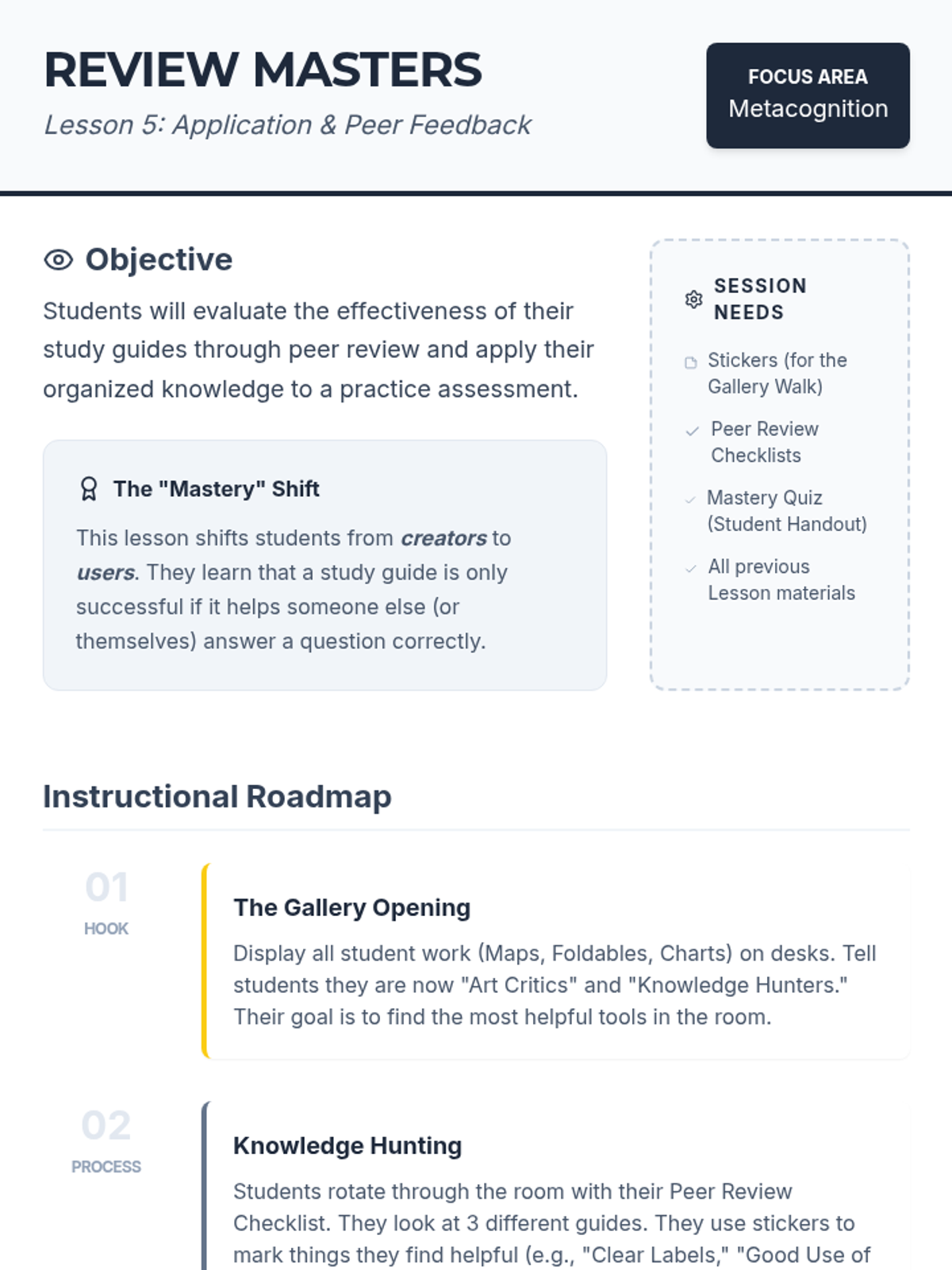
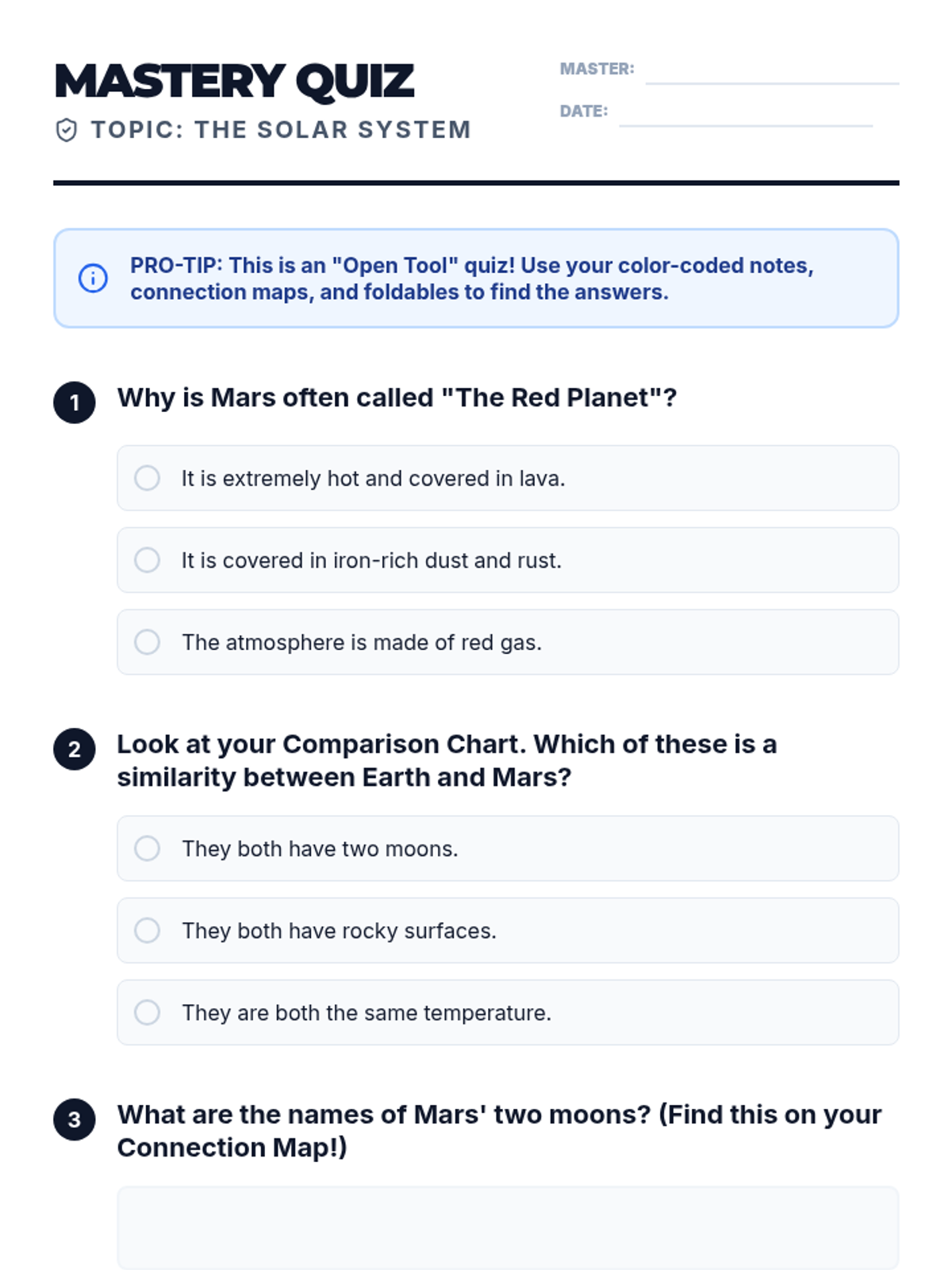
Students peer-review their study guides and apply them to a practice quiz, practicing metacognitive reflection on their learning tools.
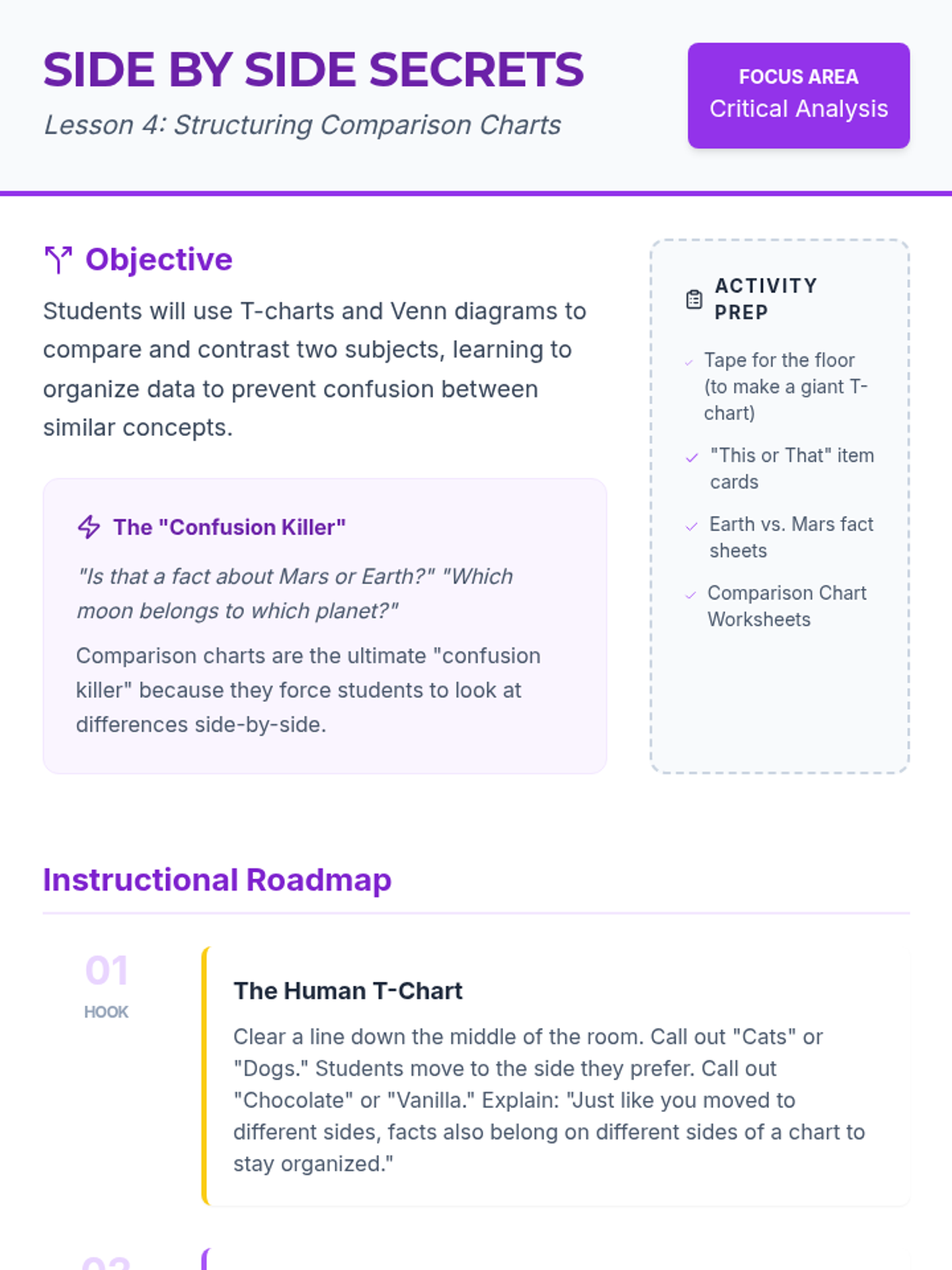
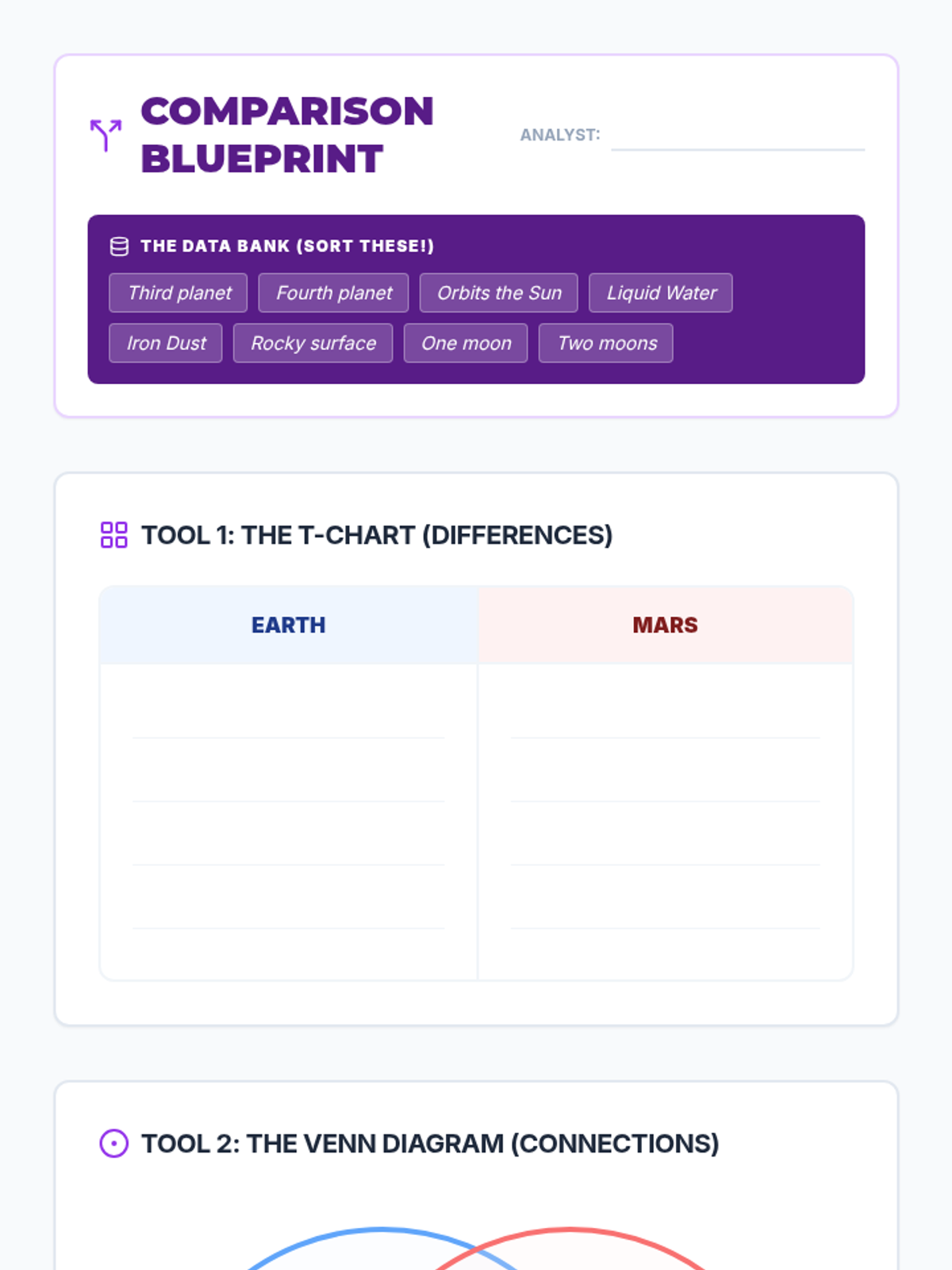
Students use T-charts and Venn diagrams to compare and contrast concepts, organizing data for clearer analysis.
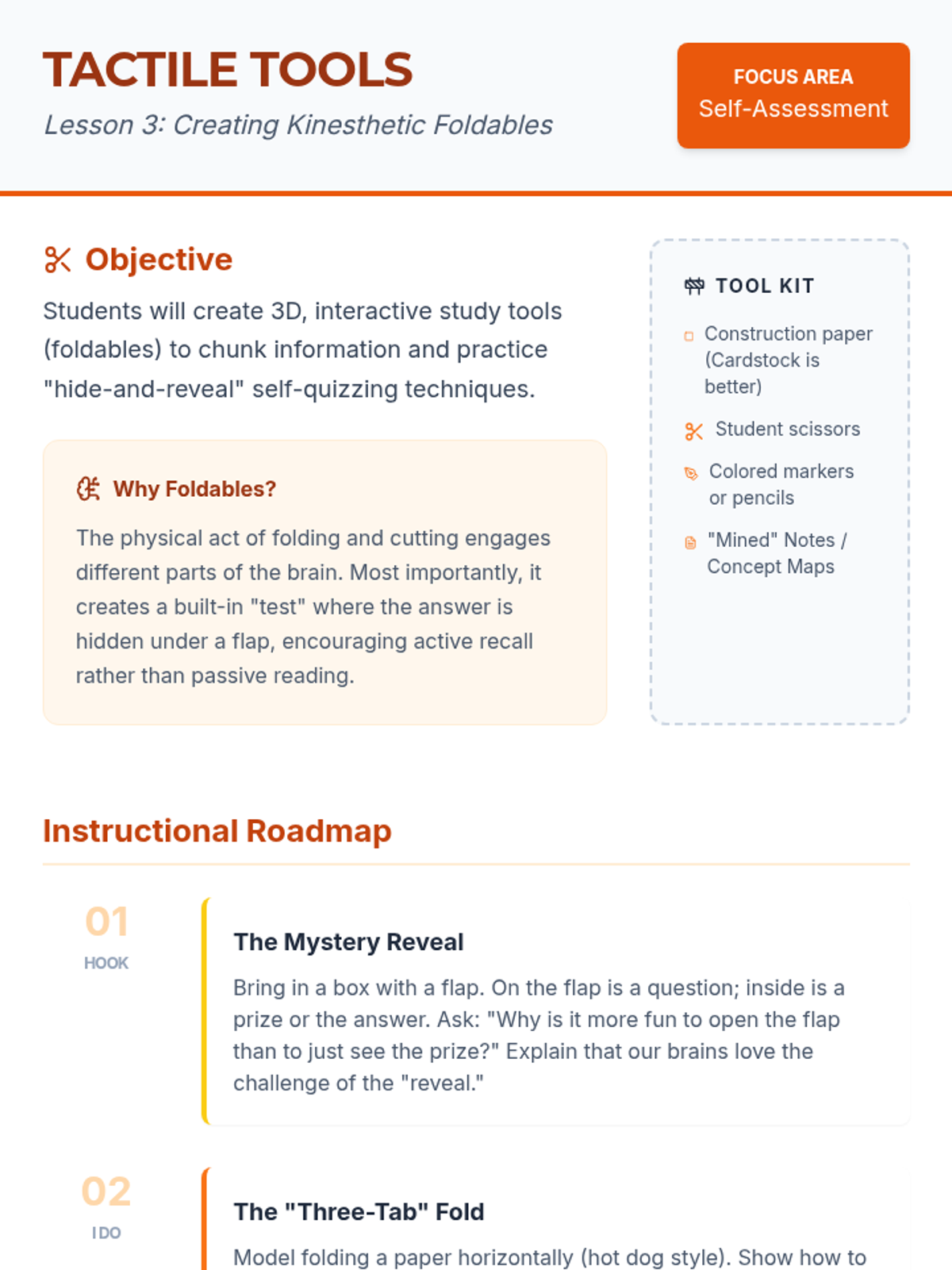
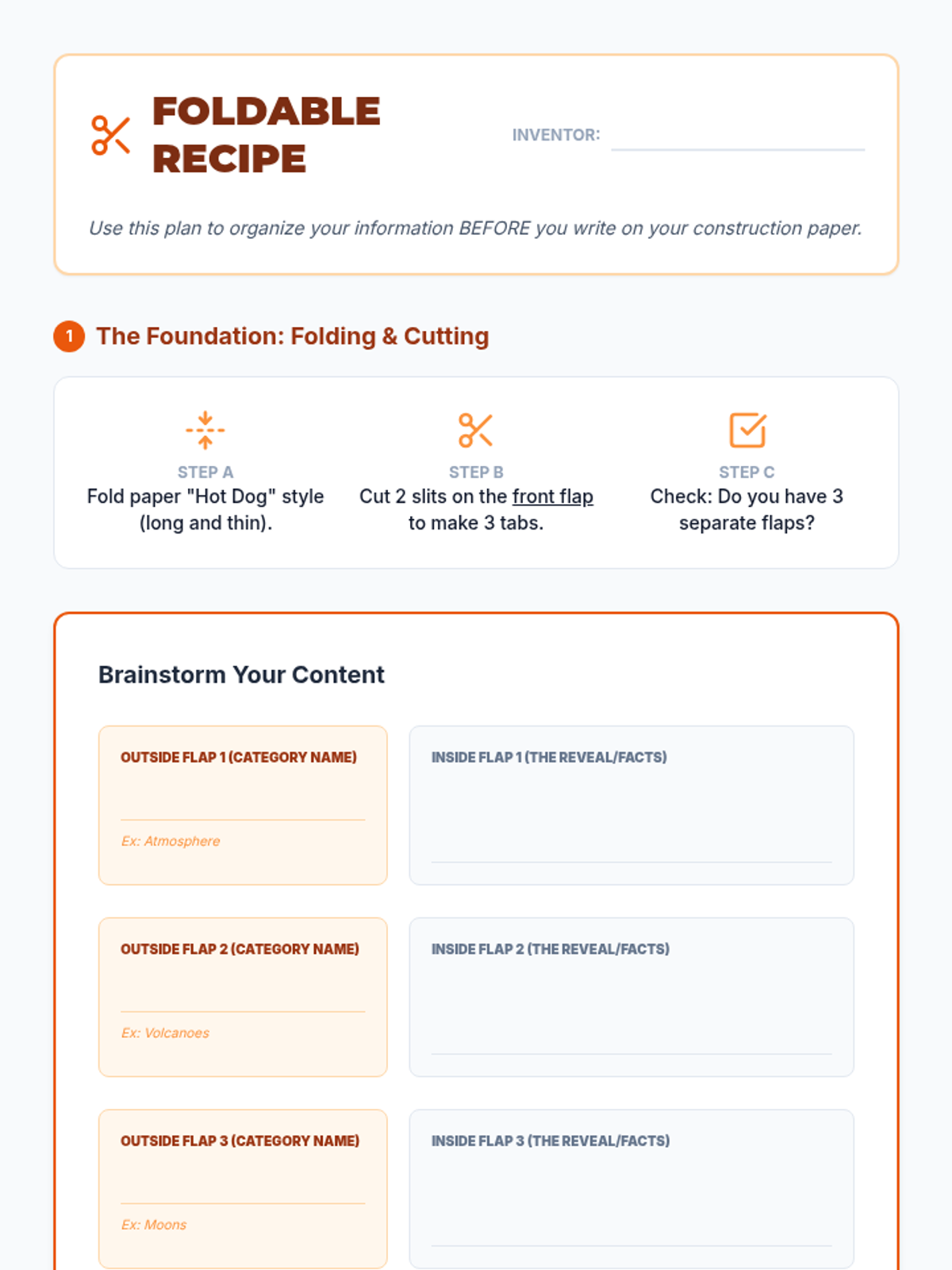
Students create tactile, interactive study tools like foldables to chunk information and encourage self-quizzing.
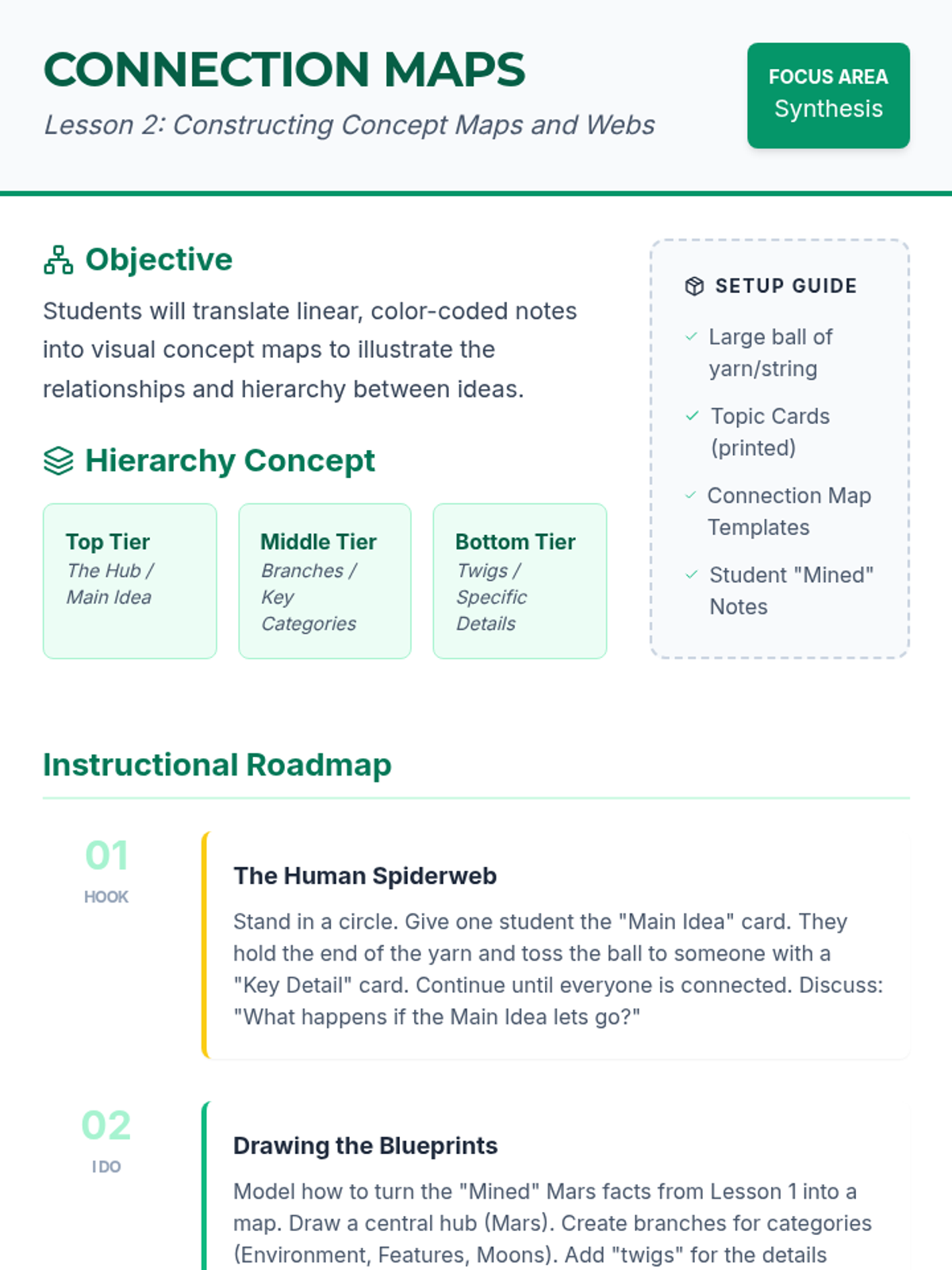
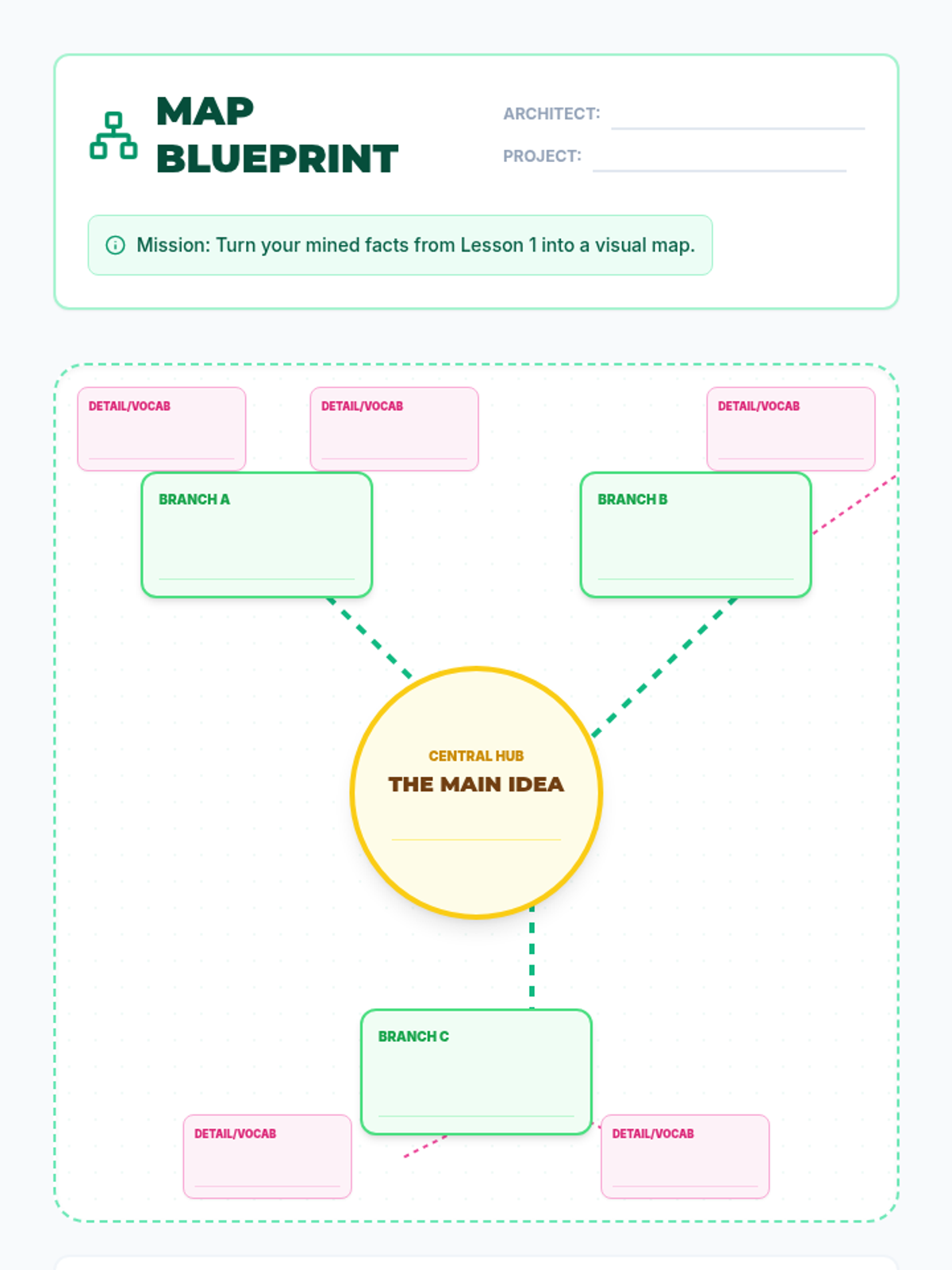
Students translate linear notes into visual concept maps to show hierarchical relationships between ideas.
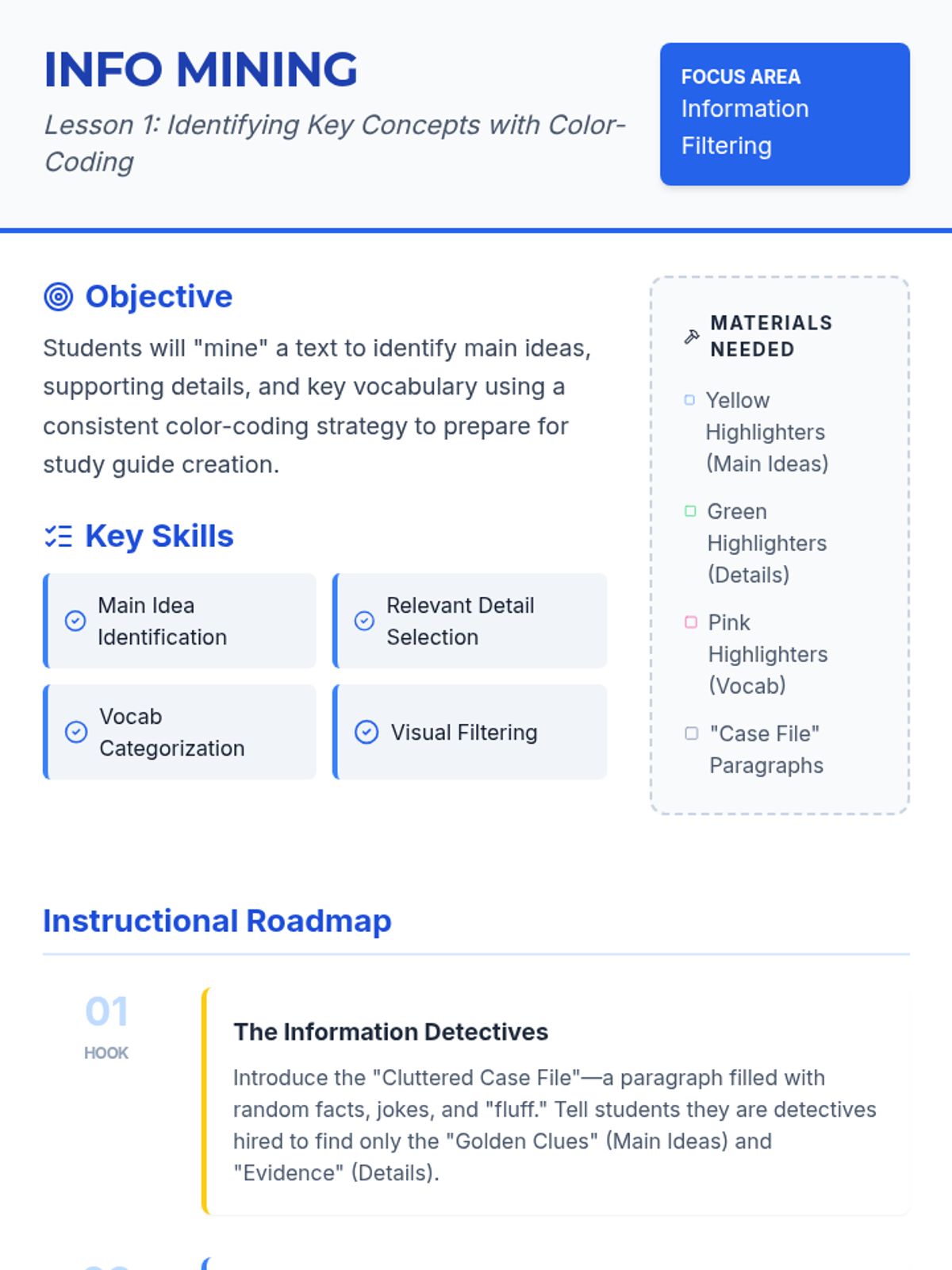
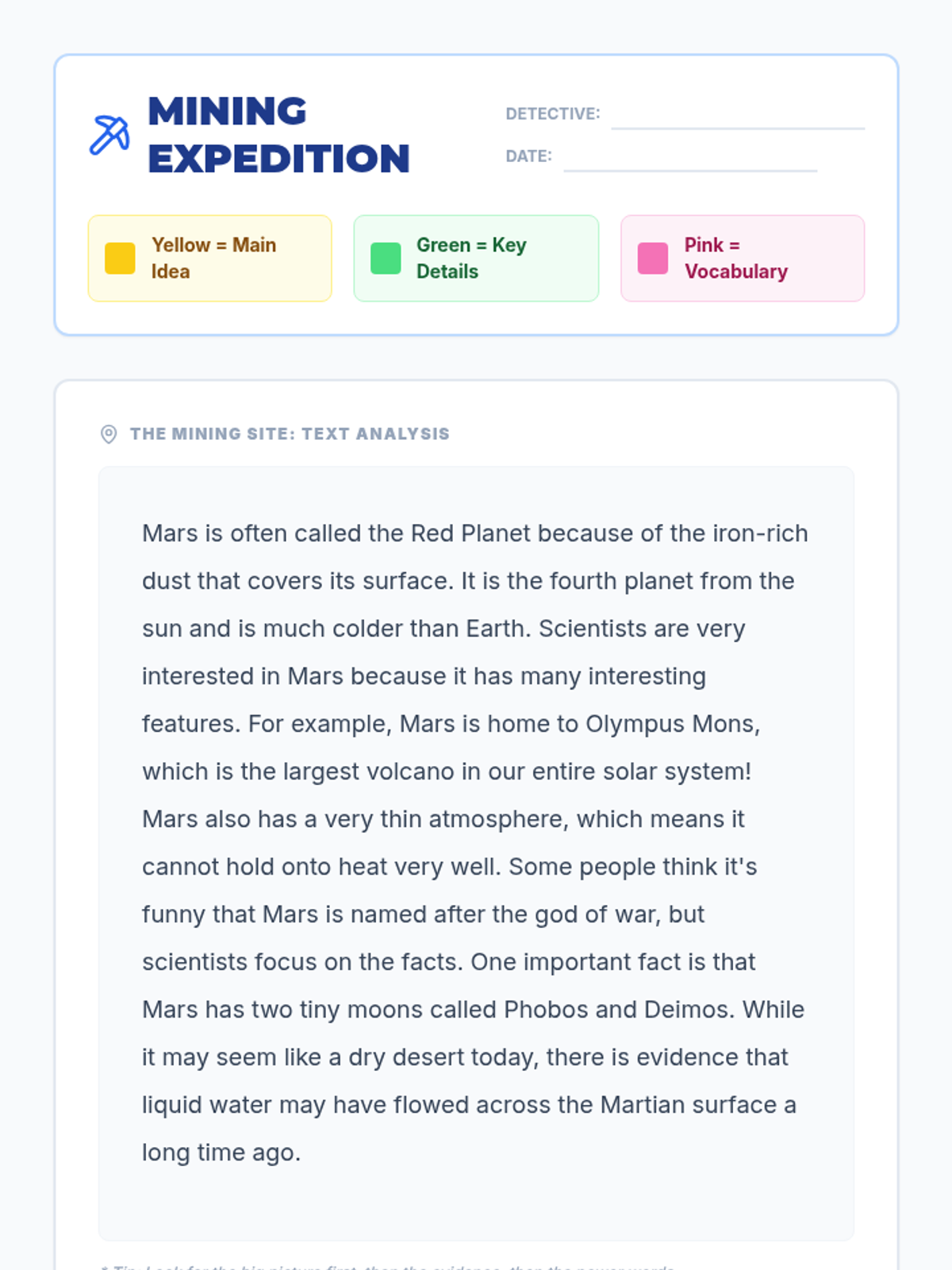
Students learn to 'mine' texts for essential information using a specific color-coding system to distinguish main ideas from supporting details.
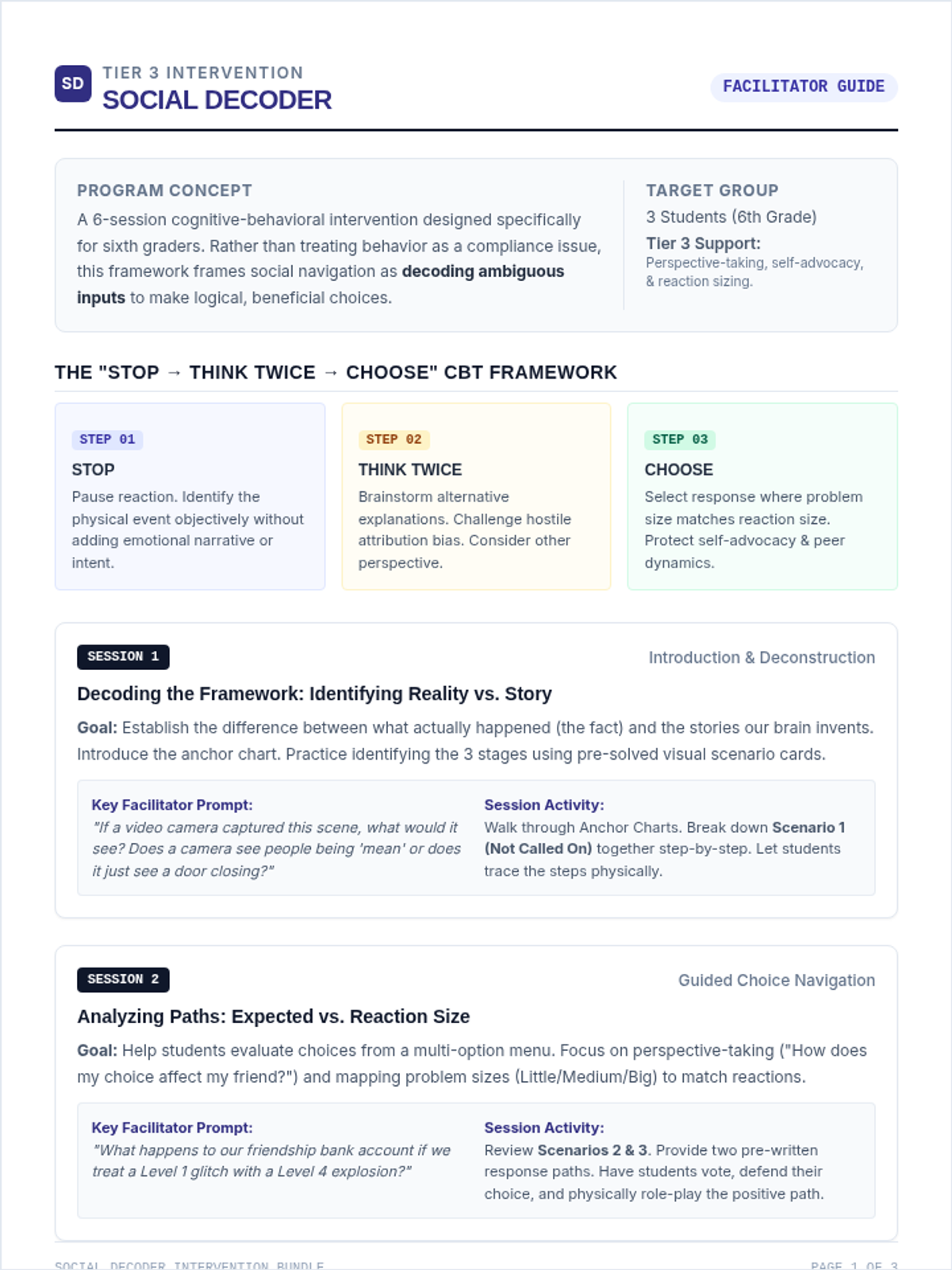
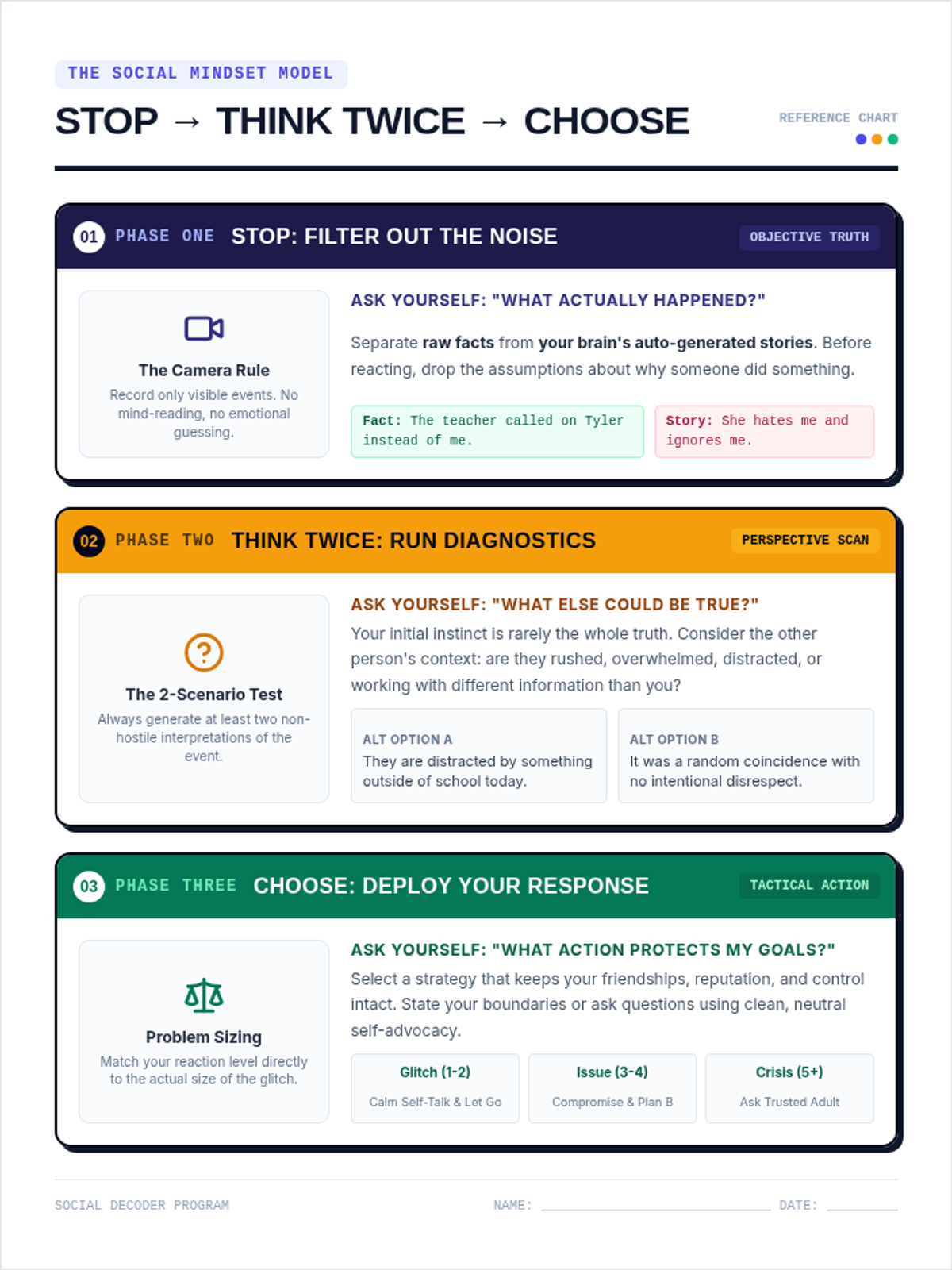
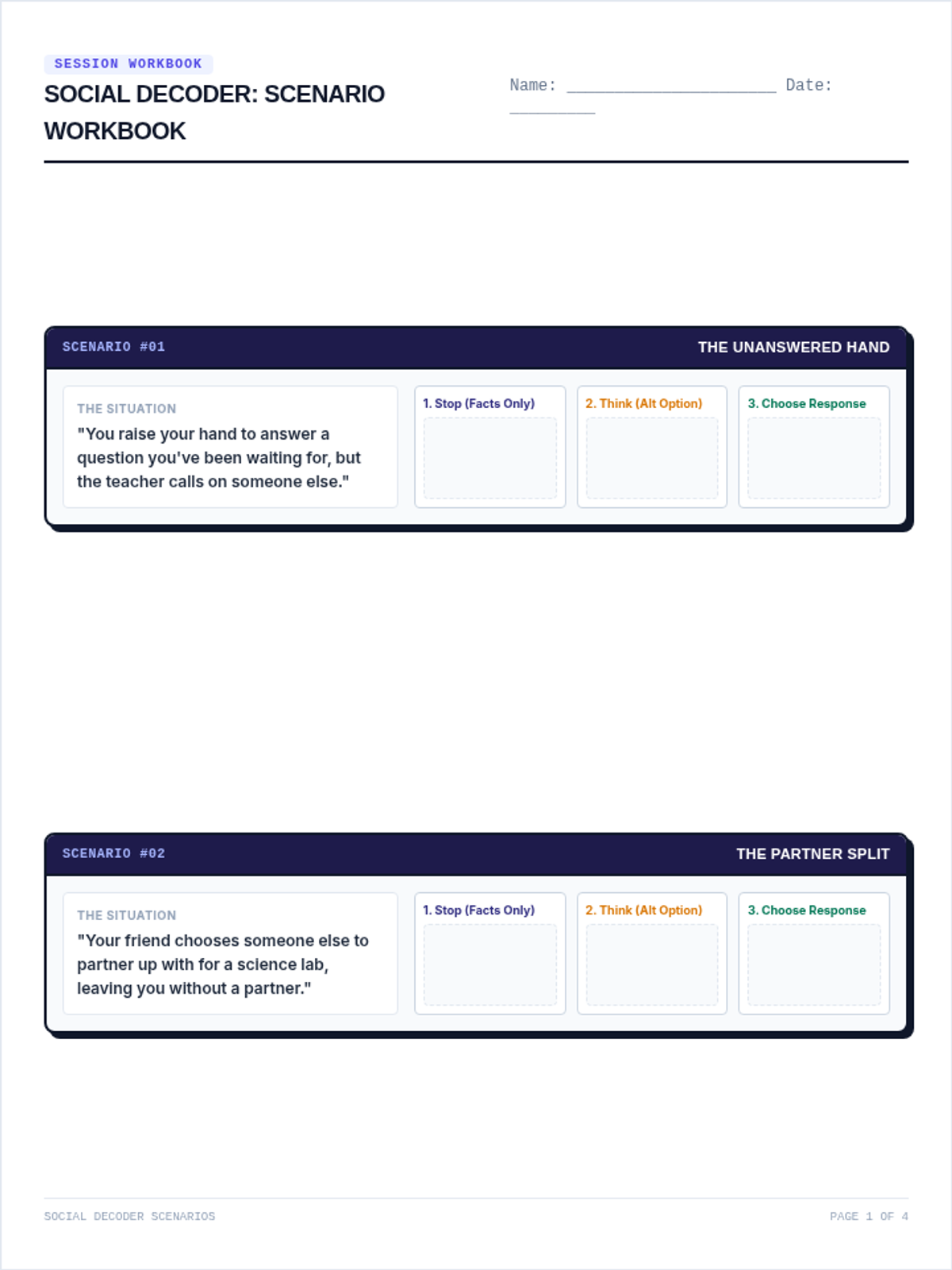
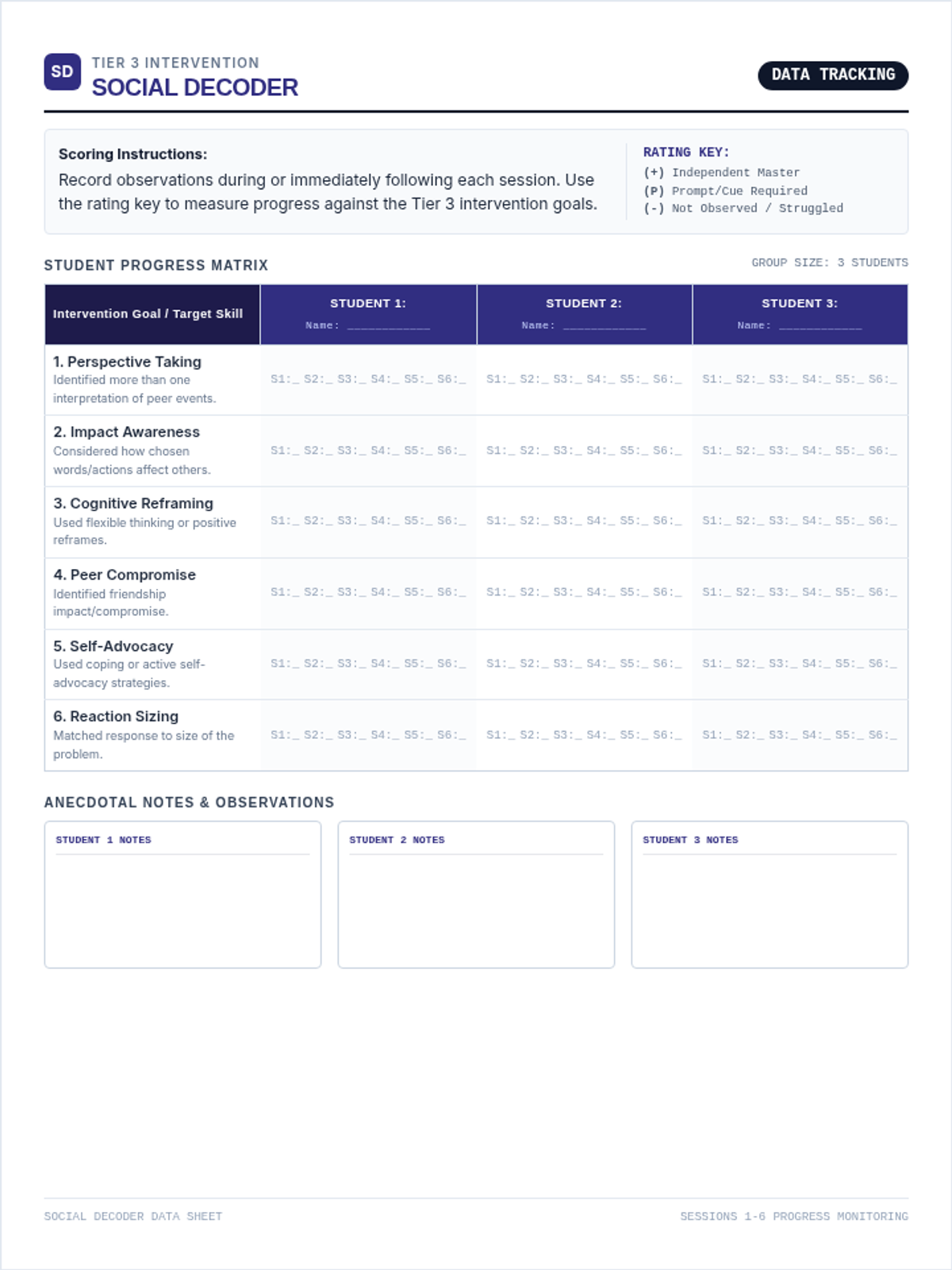
A 6-session social dynamics intervention bundle for Tier 3 sixth graders using the 'Stop, Think Twice, Choose' cognitive-behavioral framework. Includes a facilitator guide, visual anchor charts, comic-style scenario cards, and data tracking sheets designed with a clean, mature aesthetic.
A parent workshop and planning kit to build collaborative, negotiated summer screen-time agreements that protect sleep, physical activity, and family connection.
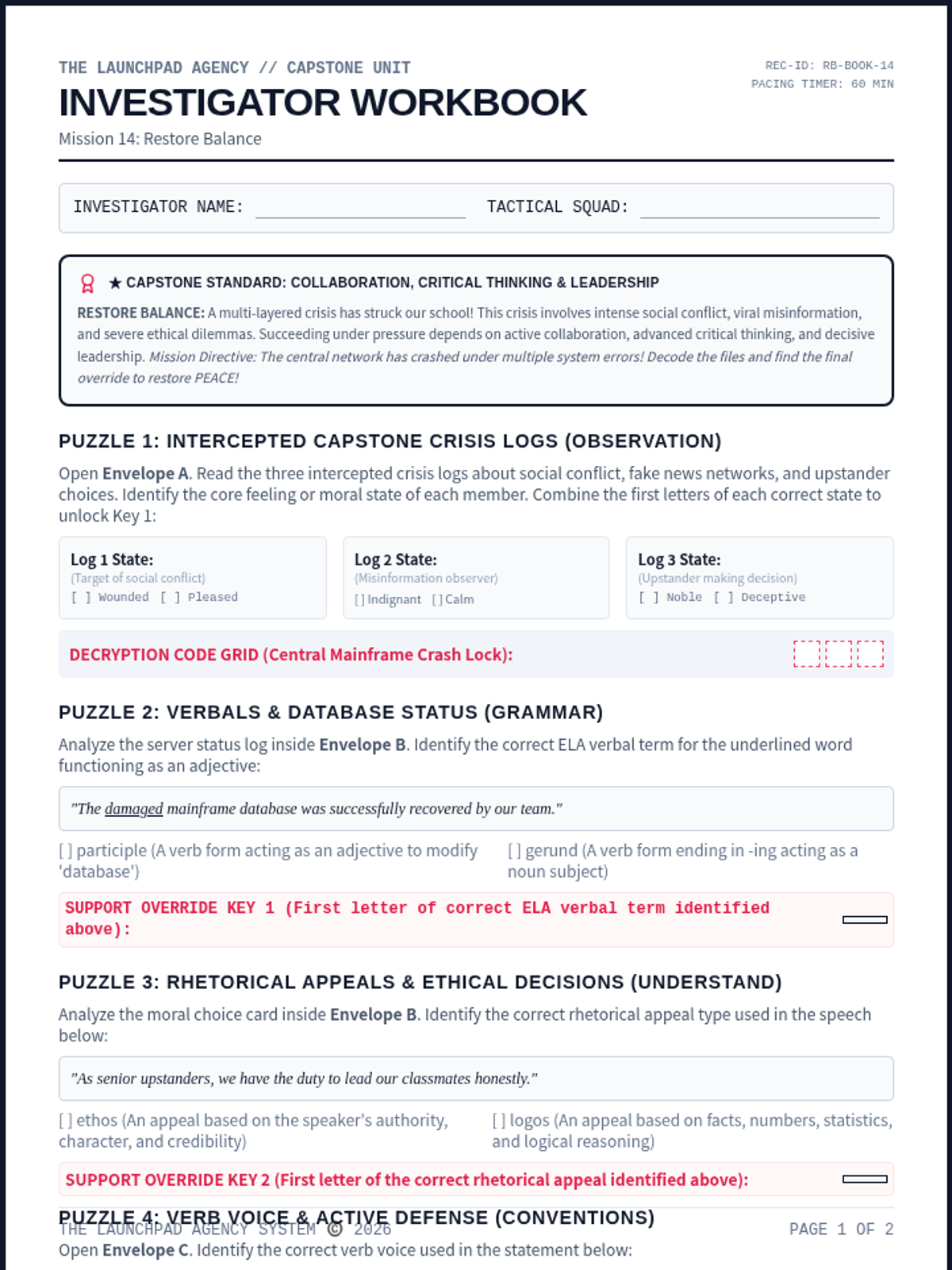
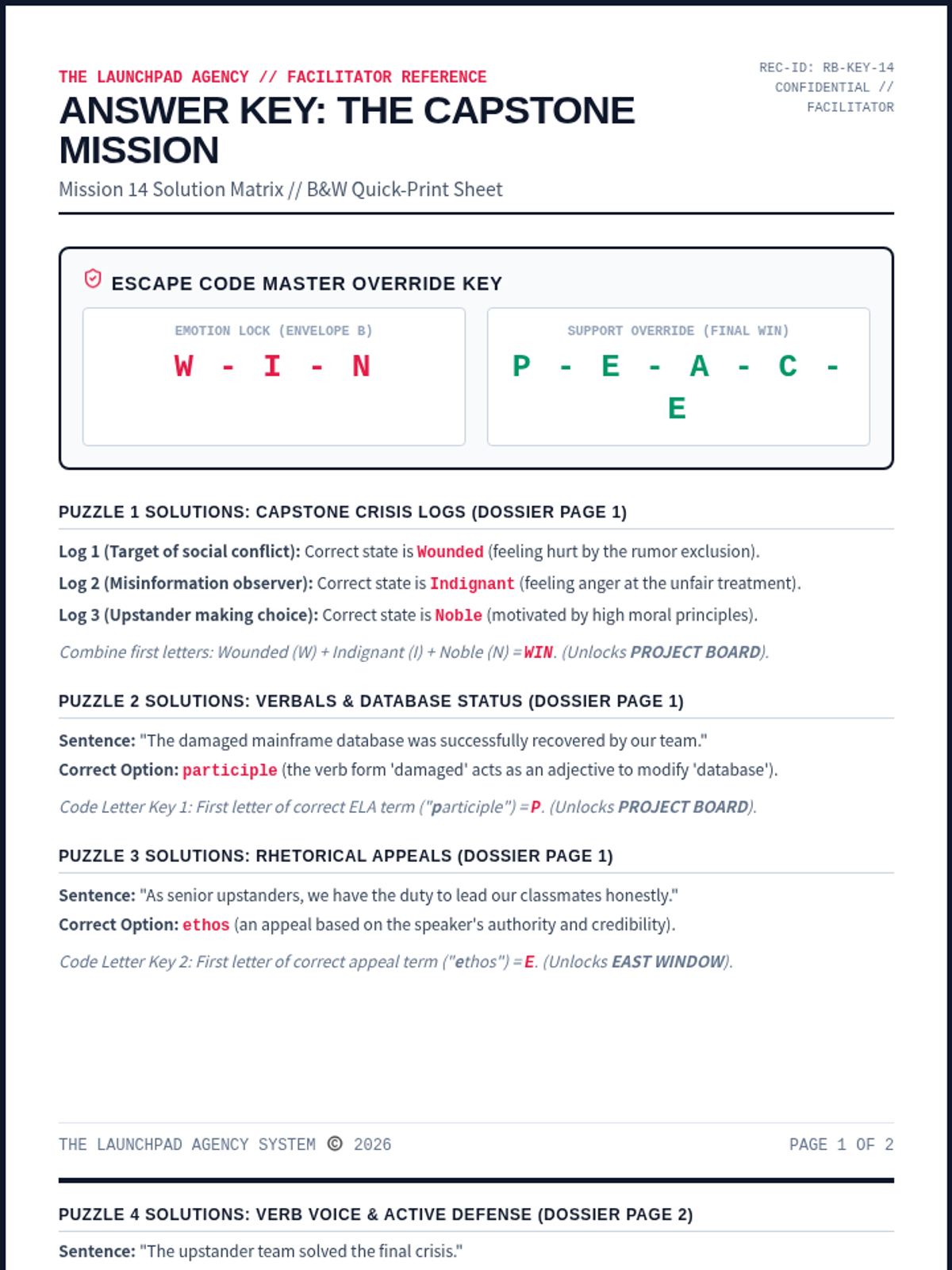
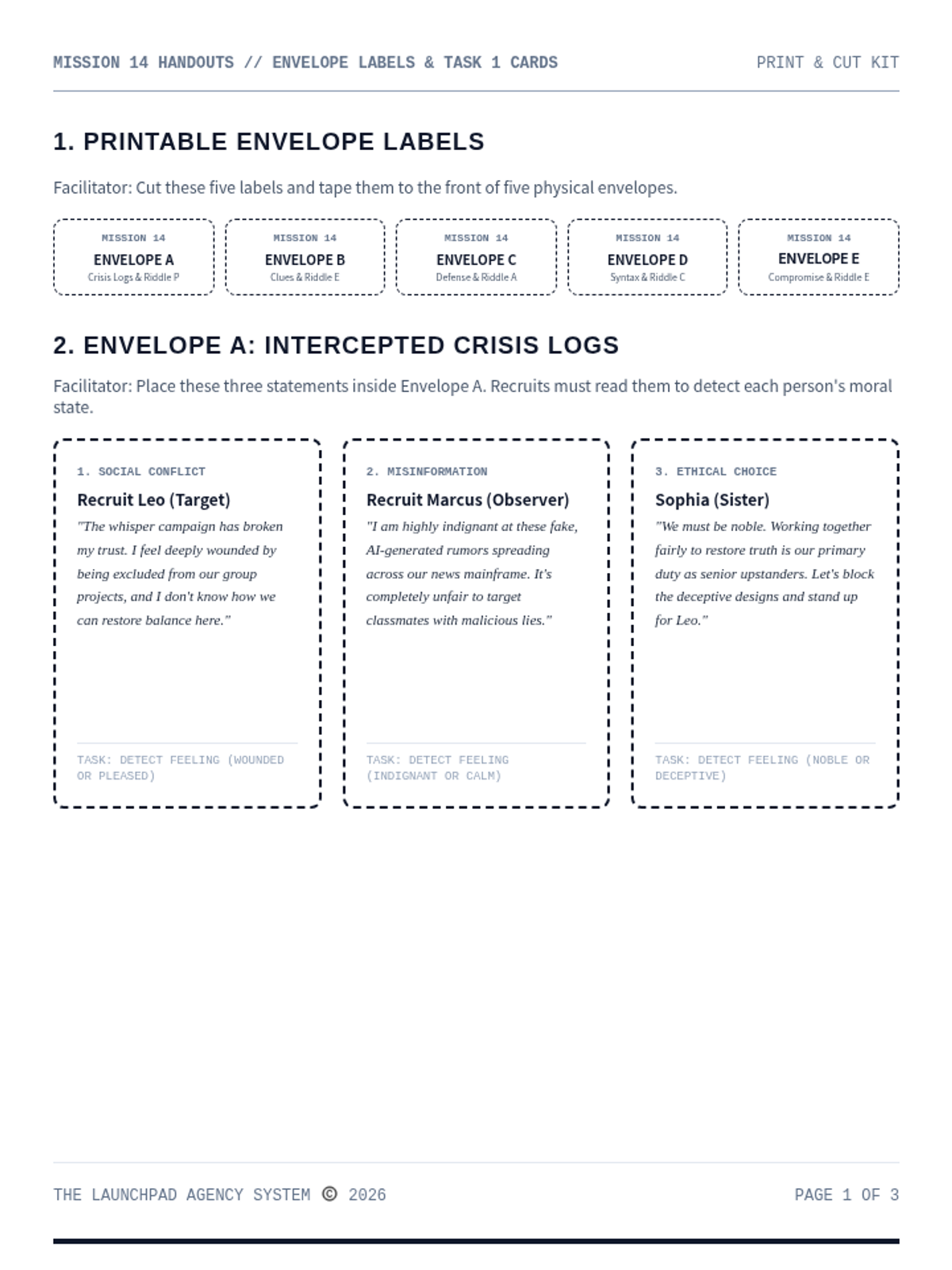
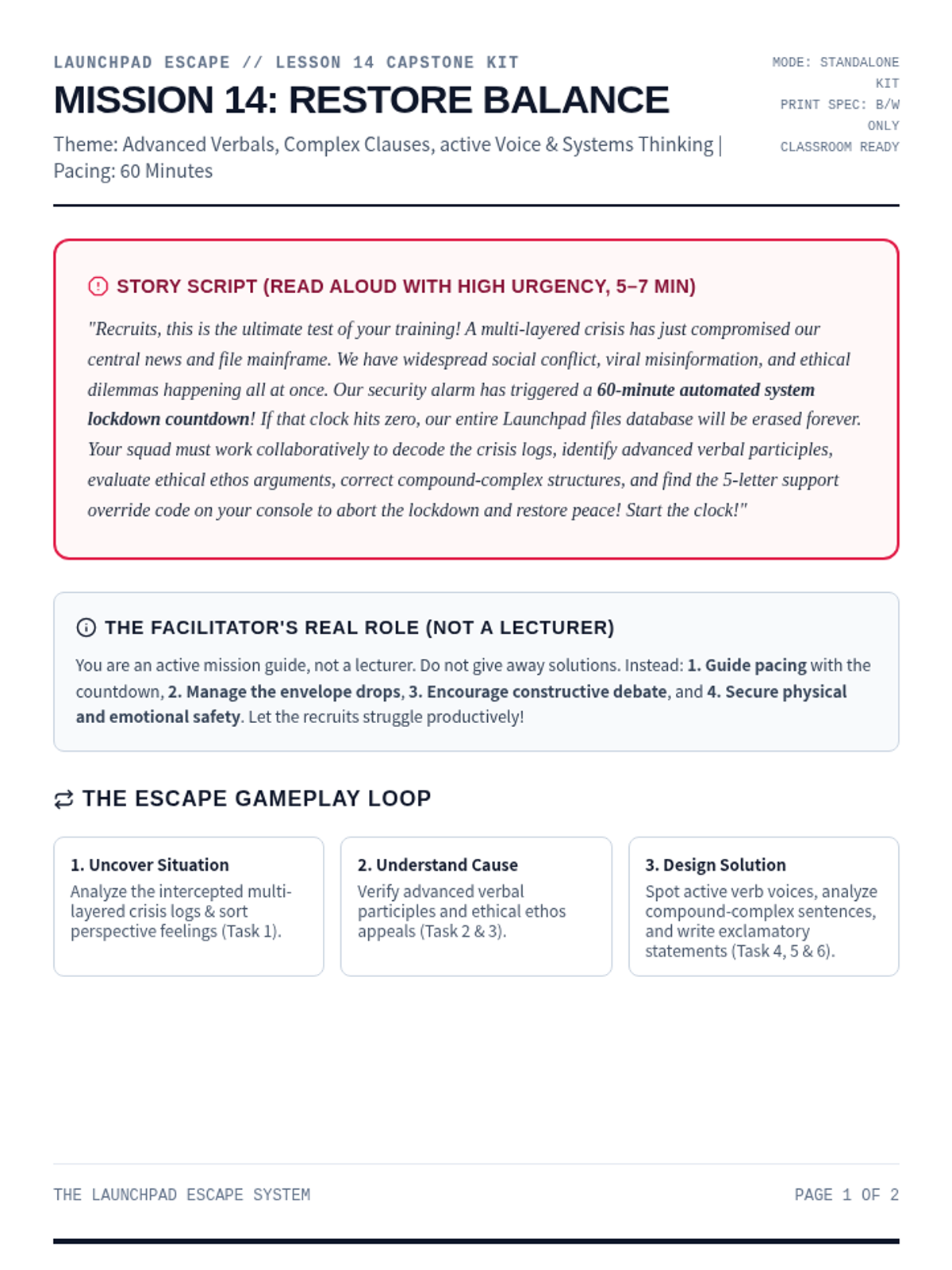
The ultimate multi-layered capstone escape room challenge. Recruits analyze complex social conflict evidence, trace misinformation networks, resolve major ethical dilemmas, and decode the final system override.
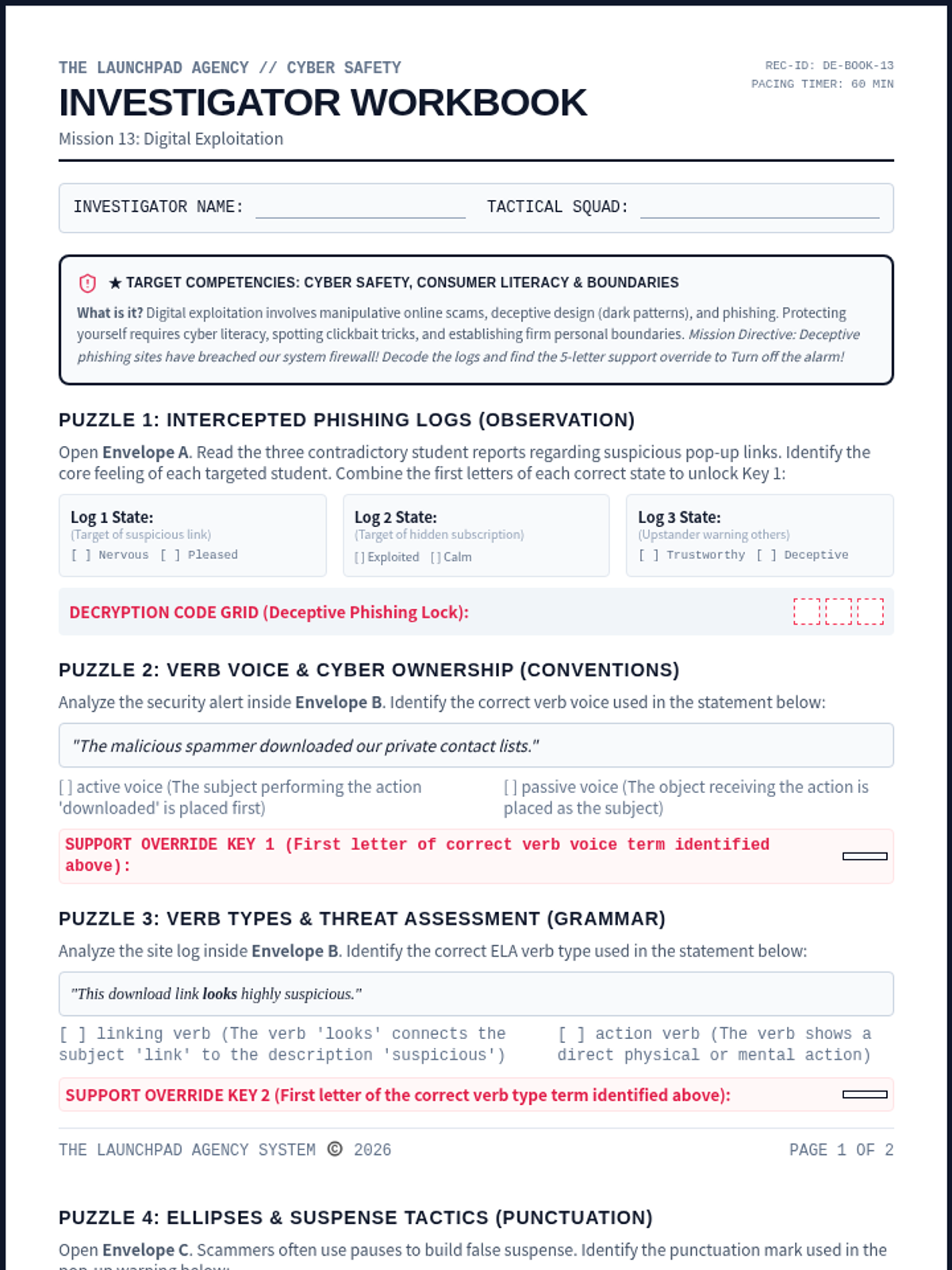
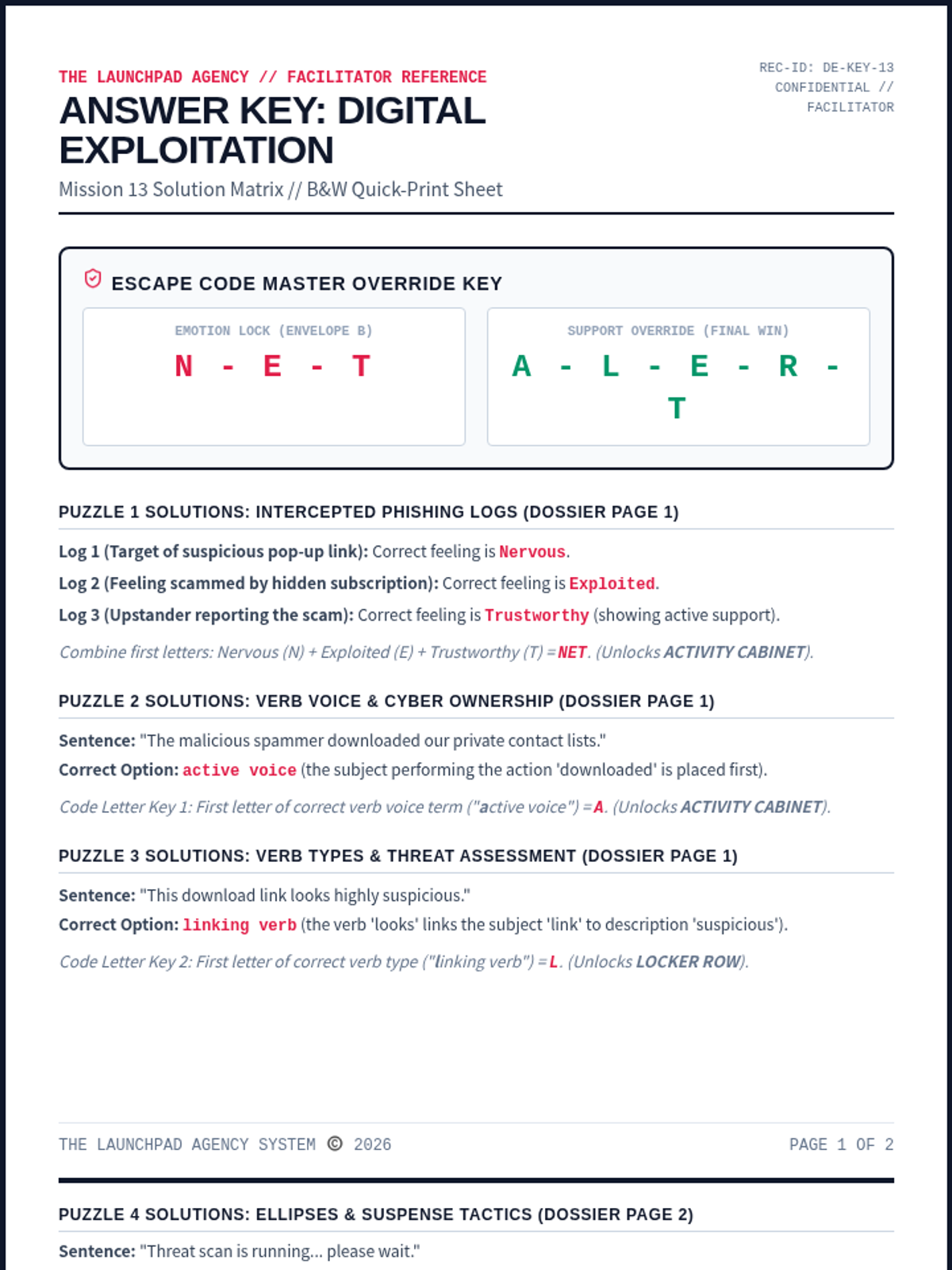
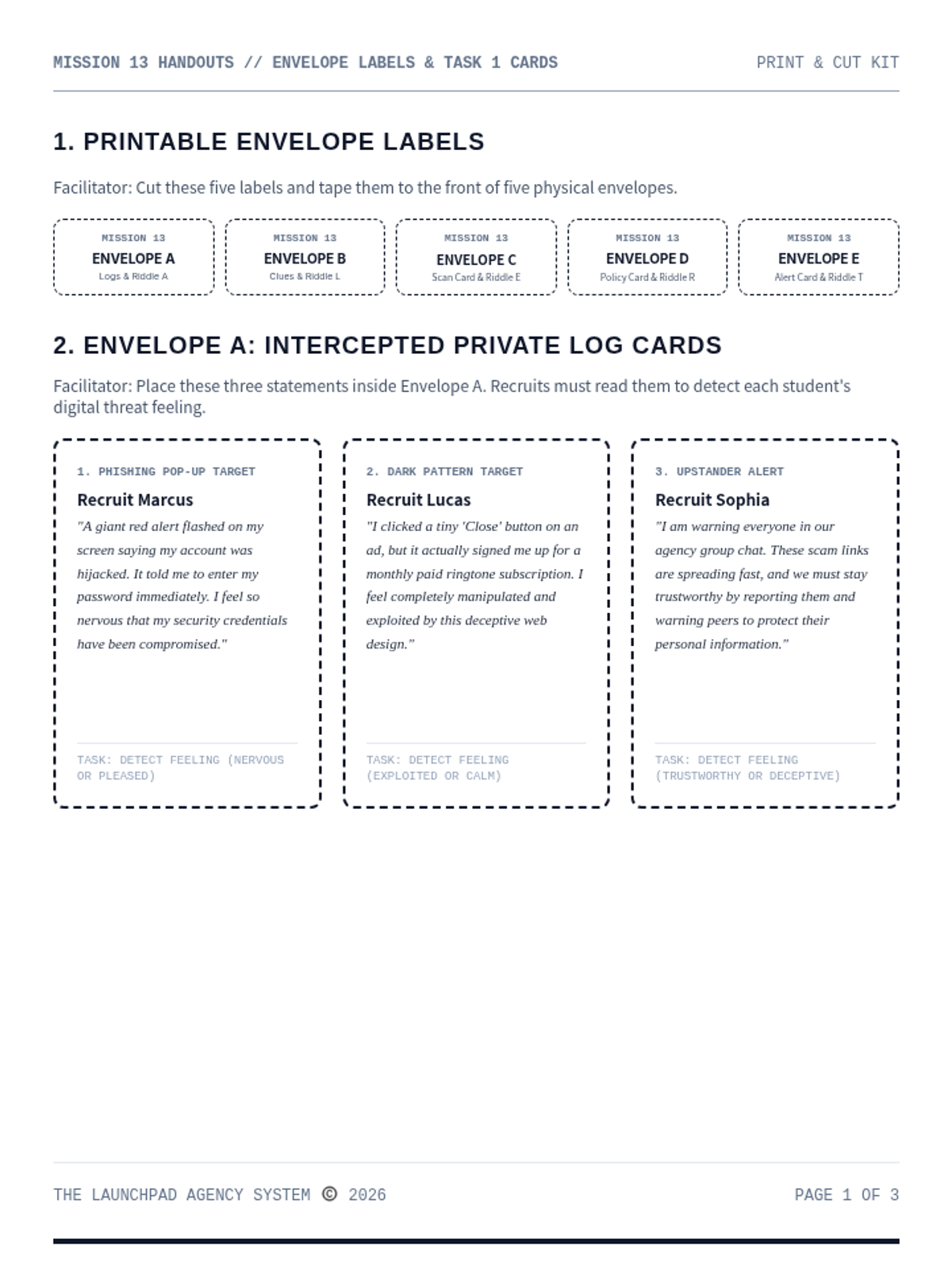
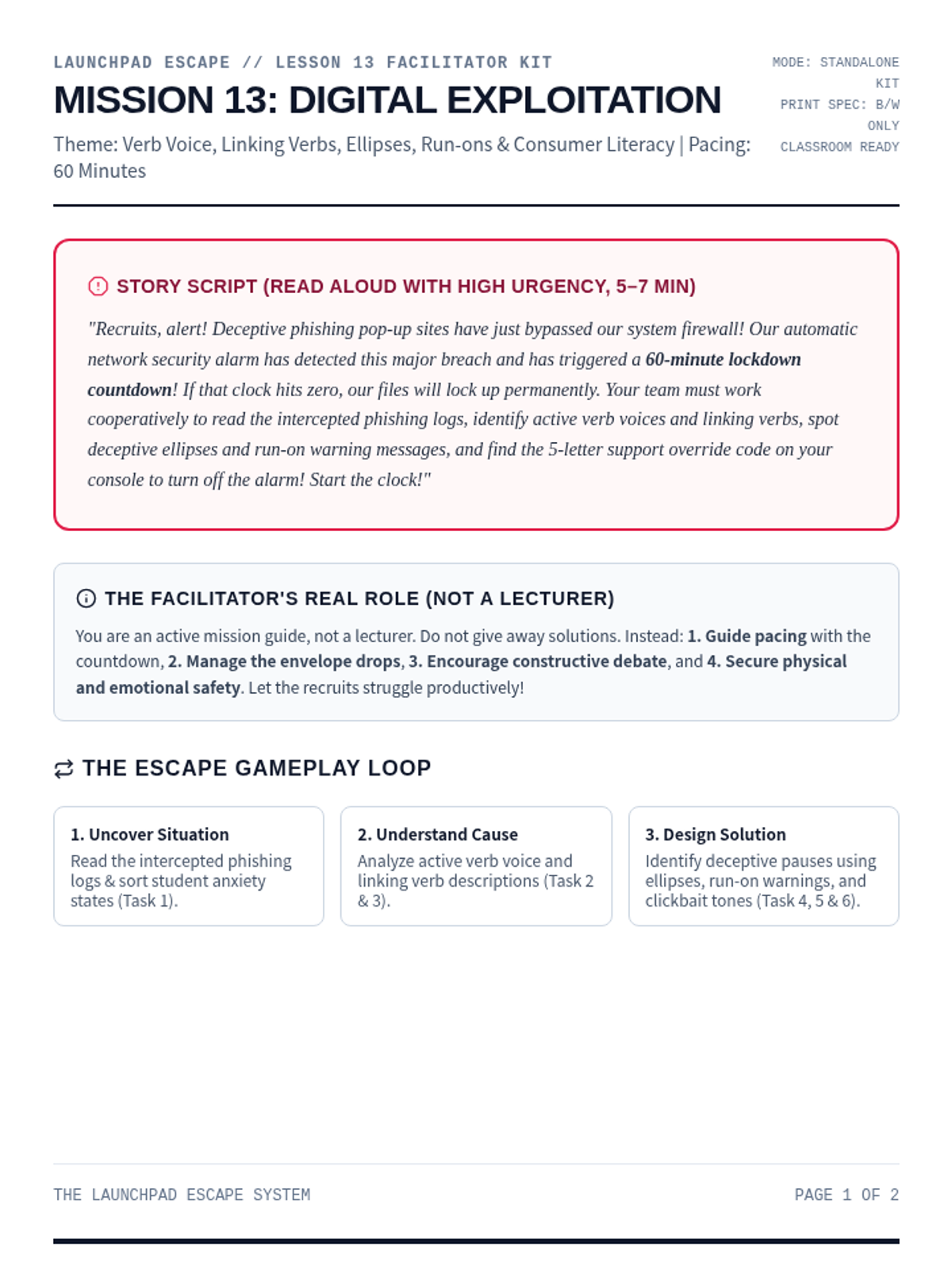
A high-stakes digital safety escape room focused on identifying online scams, recognizing manipulative dark patterns, and protecting personal data. Recruits analyze active verb voices, linking verbs, ellipses punctuation, and deceptive tones to decode the final alert.
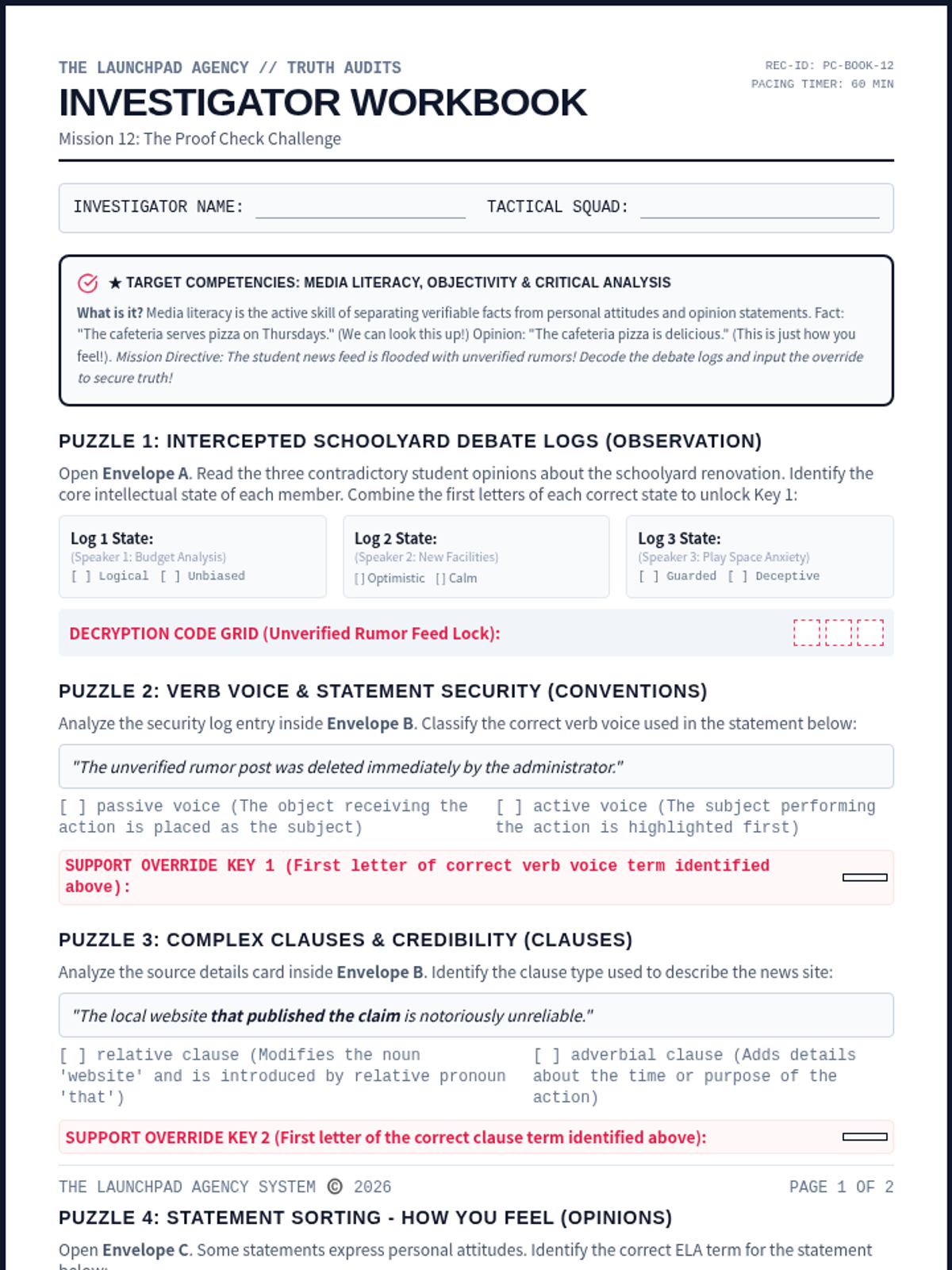
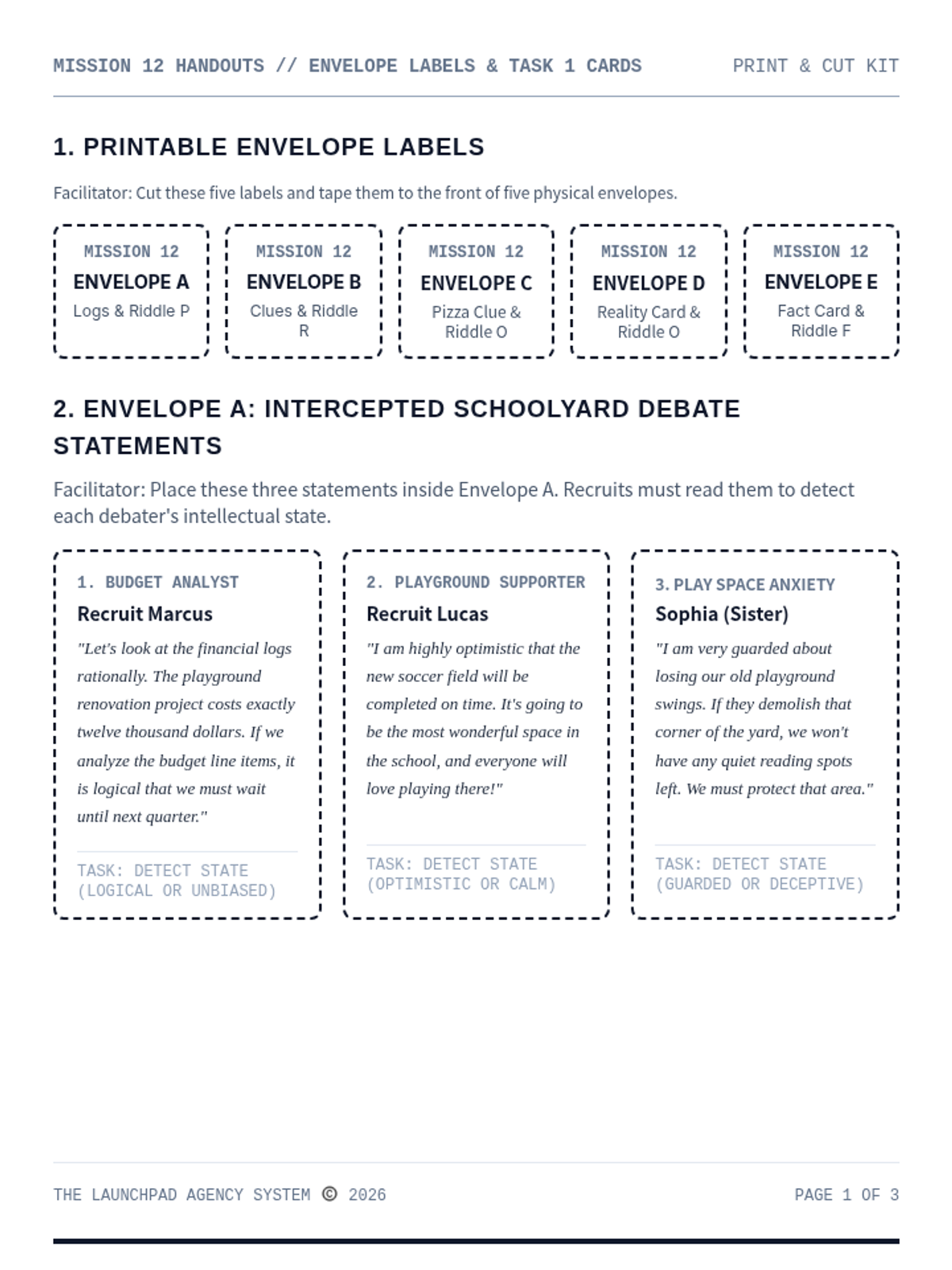
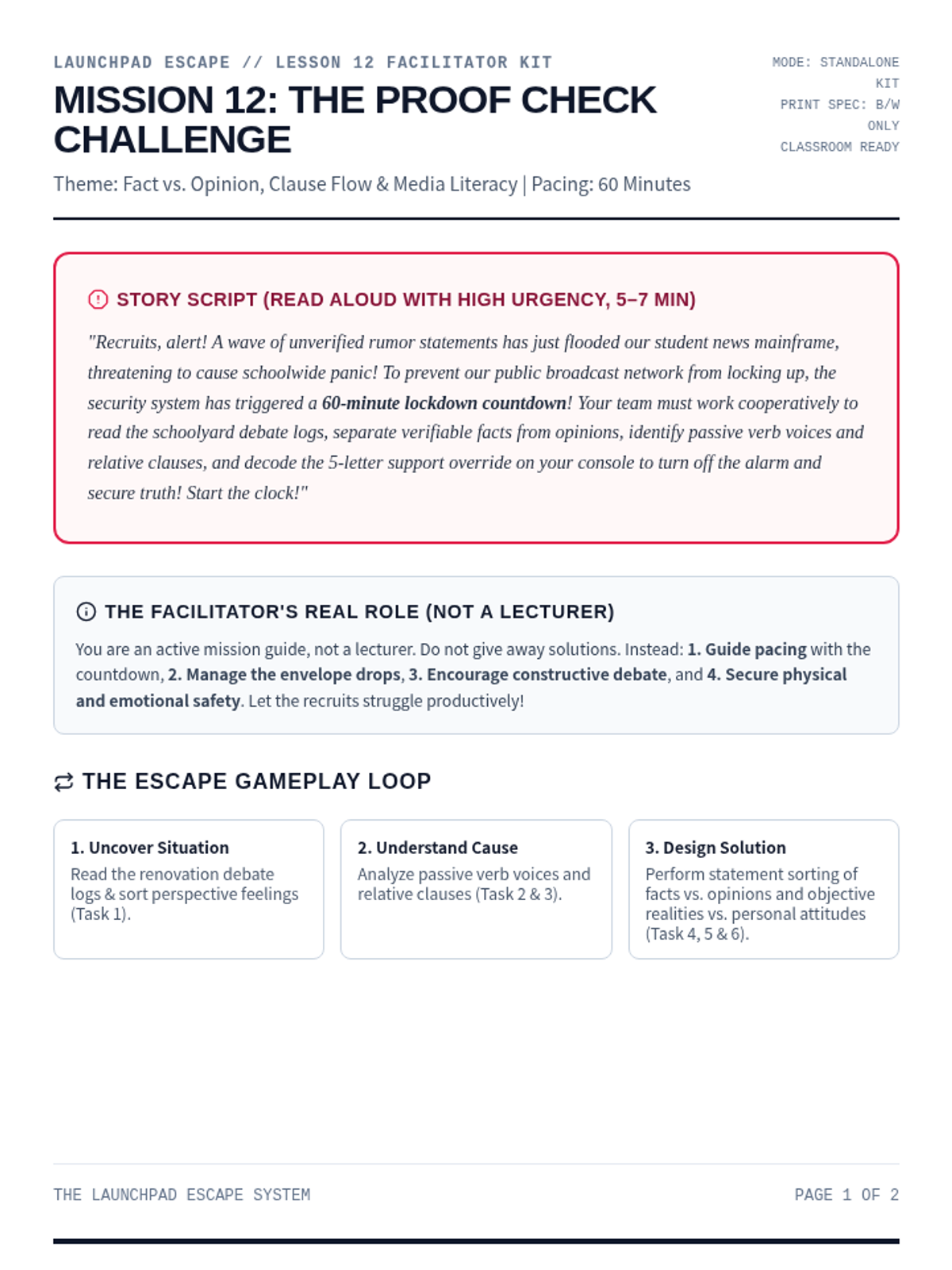
An advanced media literacy and communication escape room for Ages 13-15. Recruits distinguish facts from opinions, analyze objective realities, sort personal attitudes, and input the override PROOF to secure the school news mainframe.
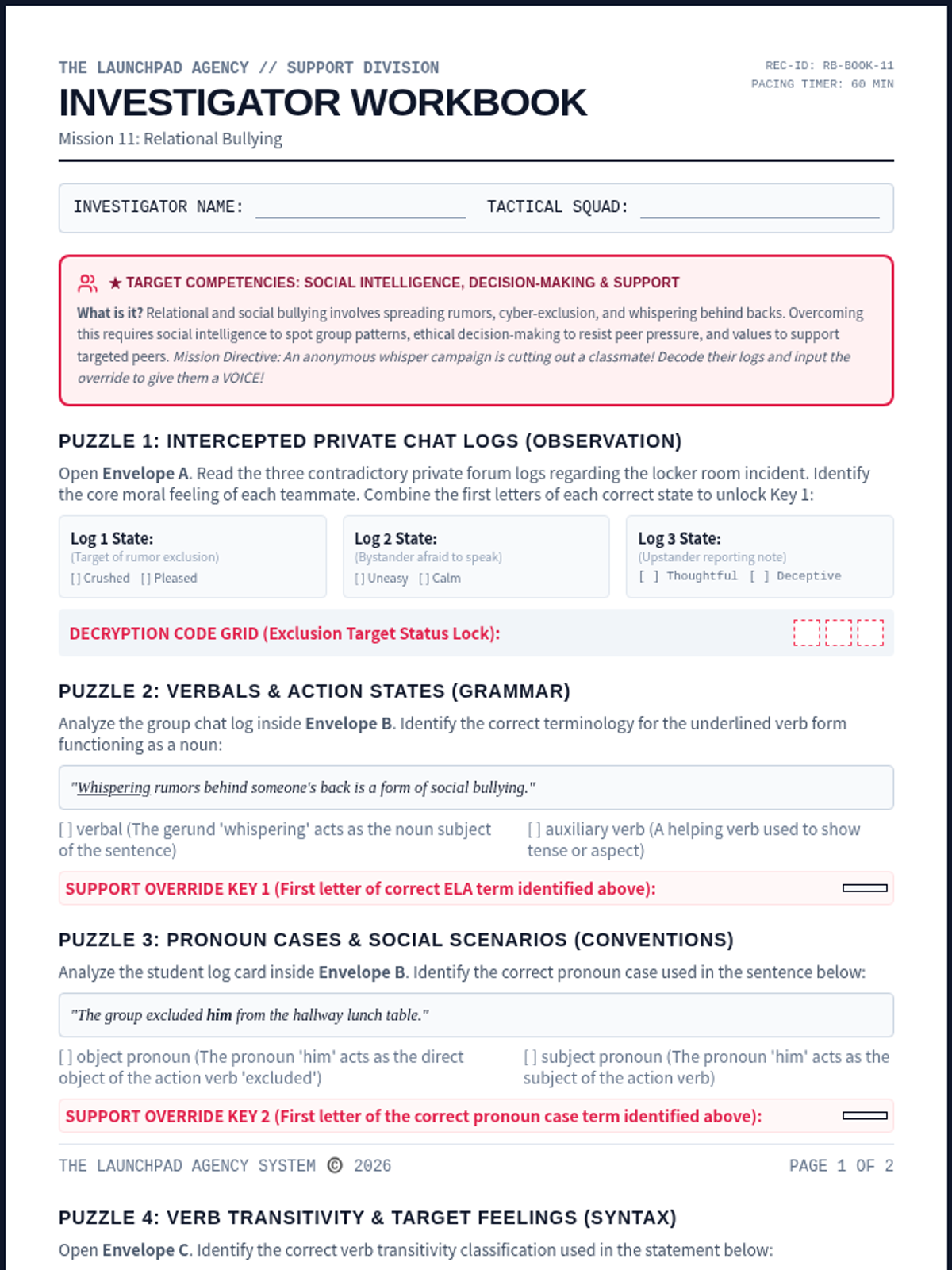
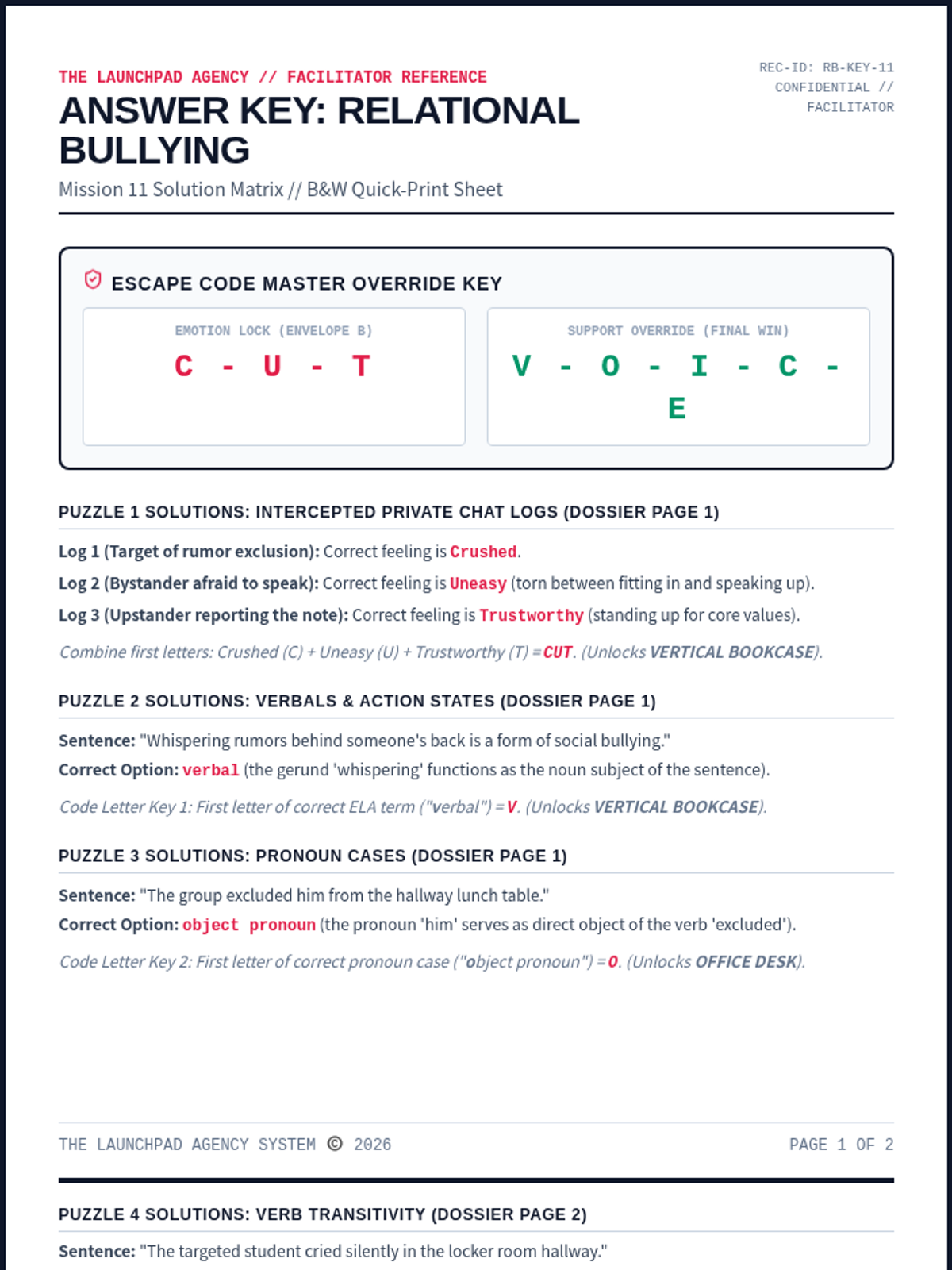
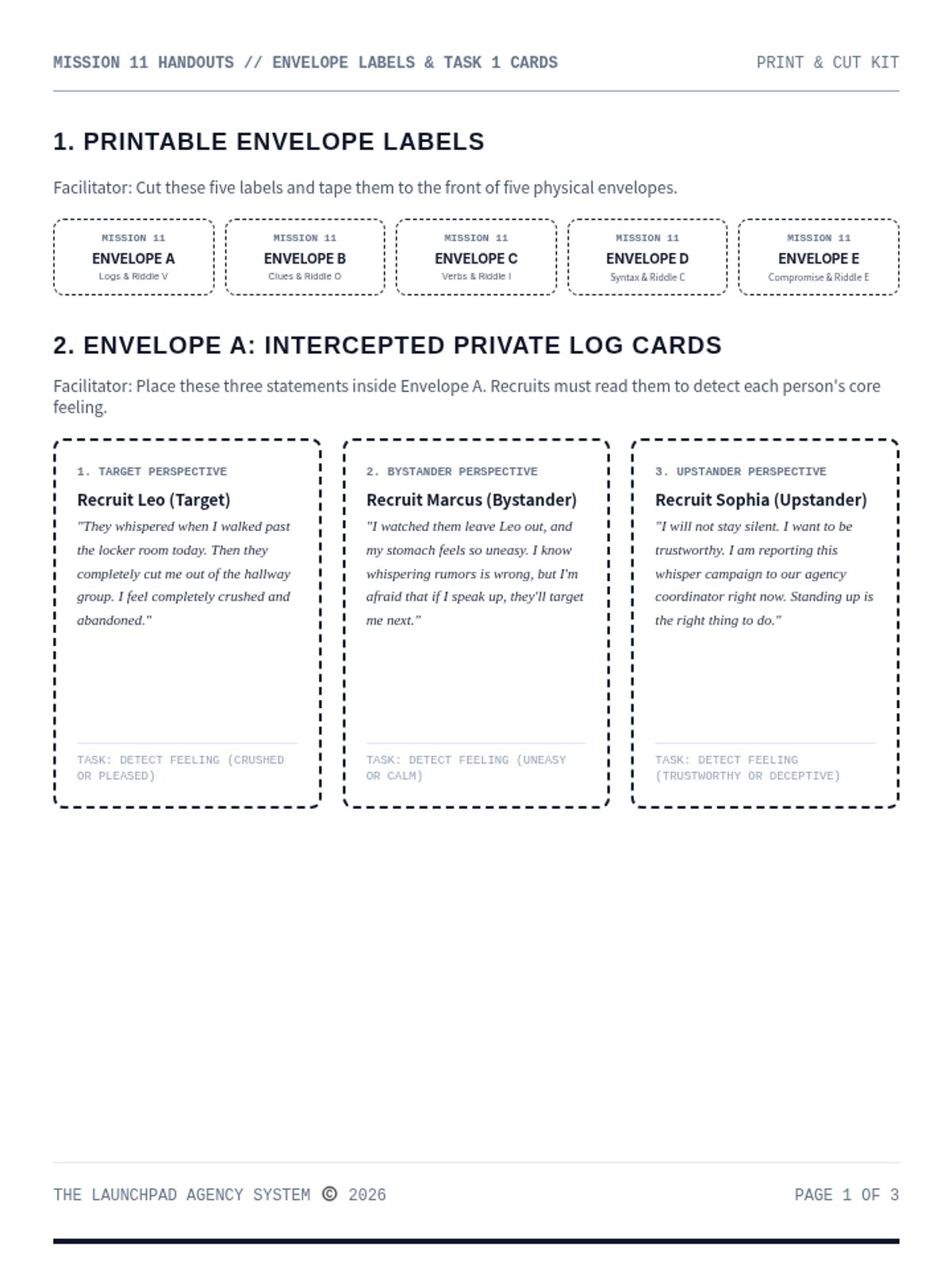
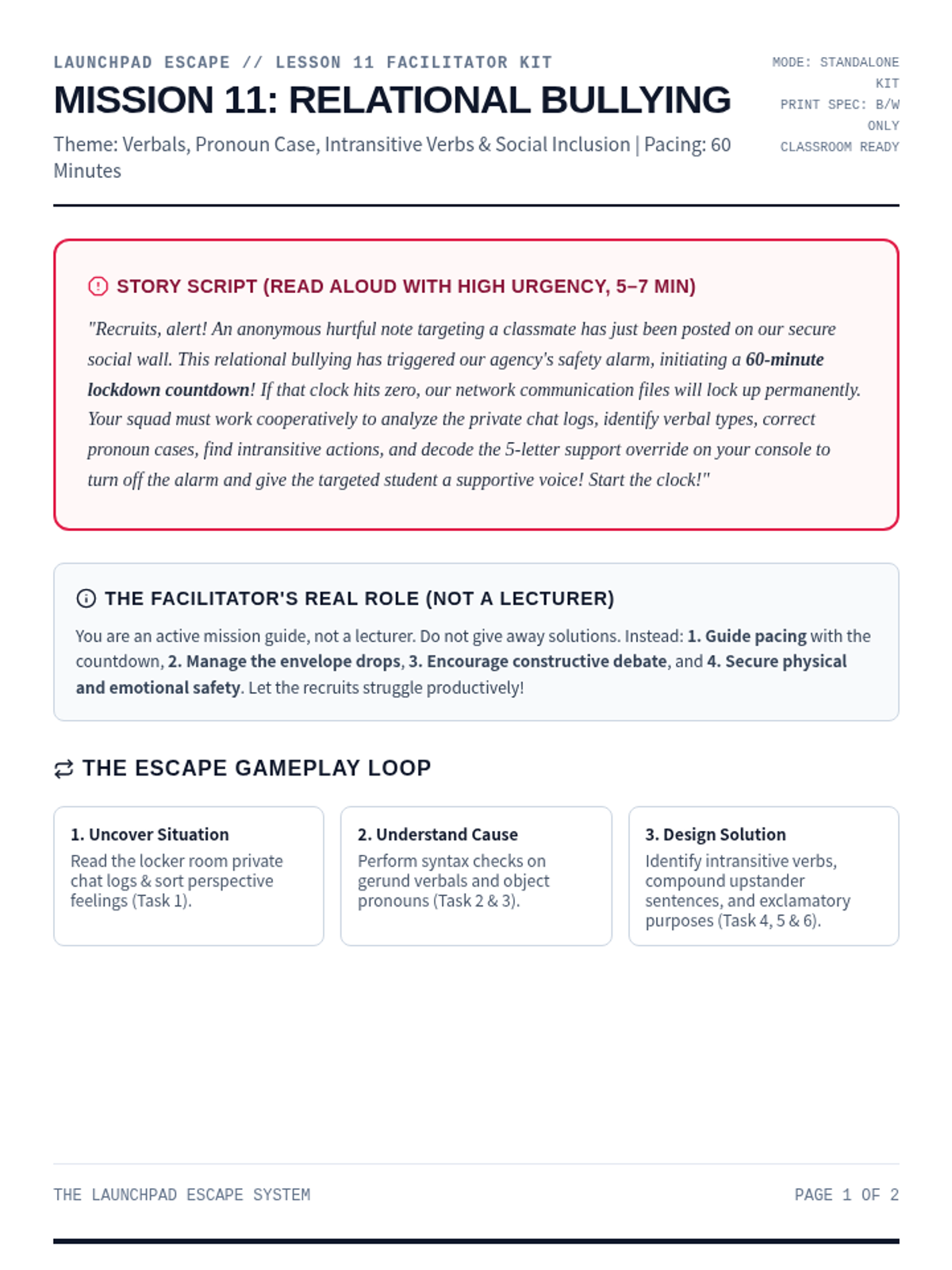
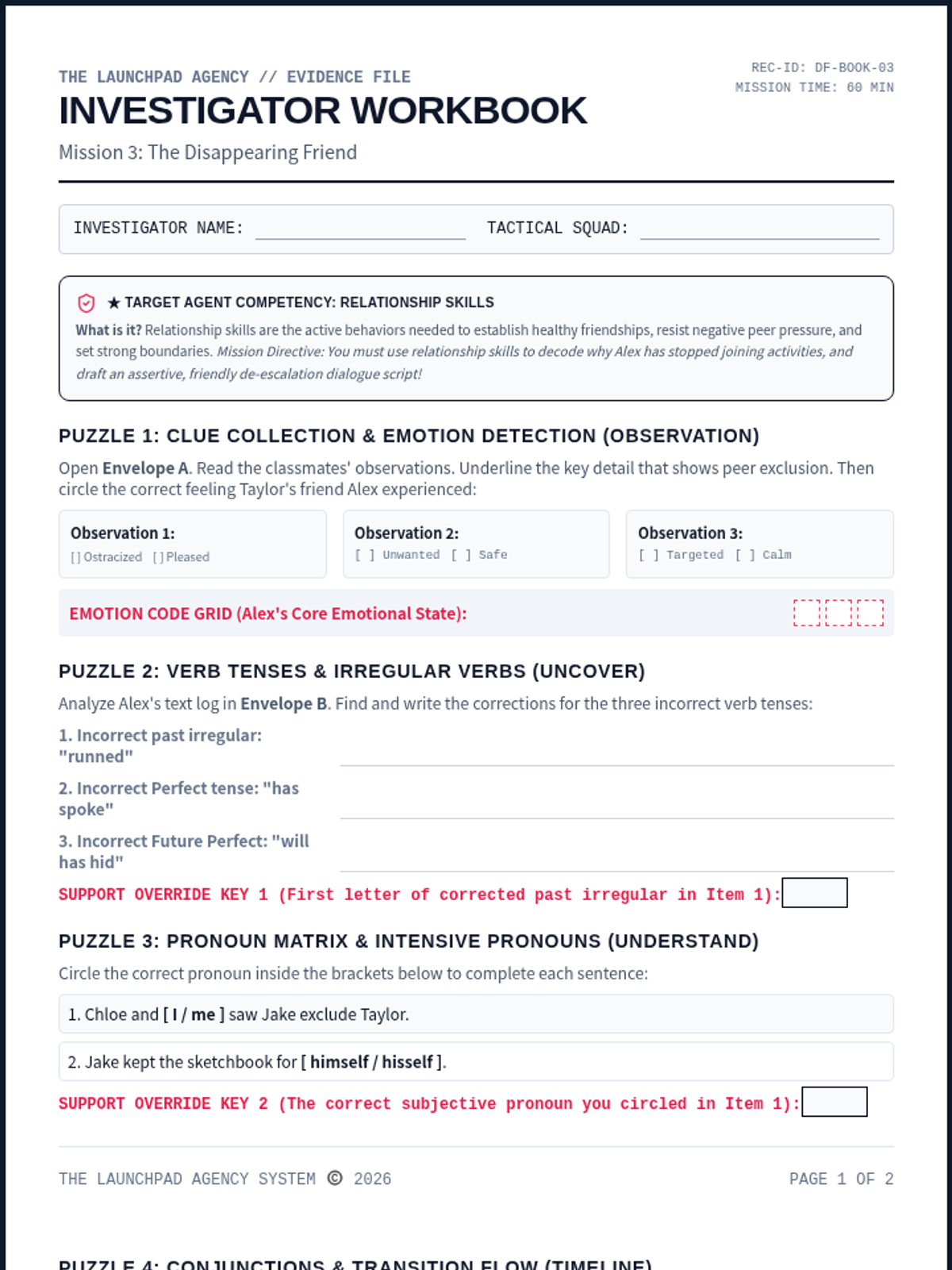
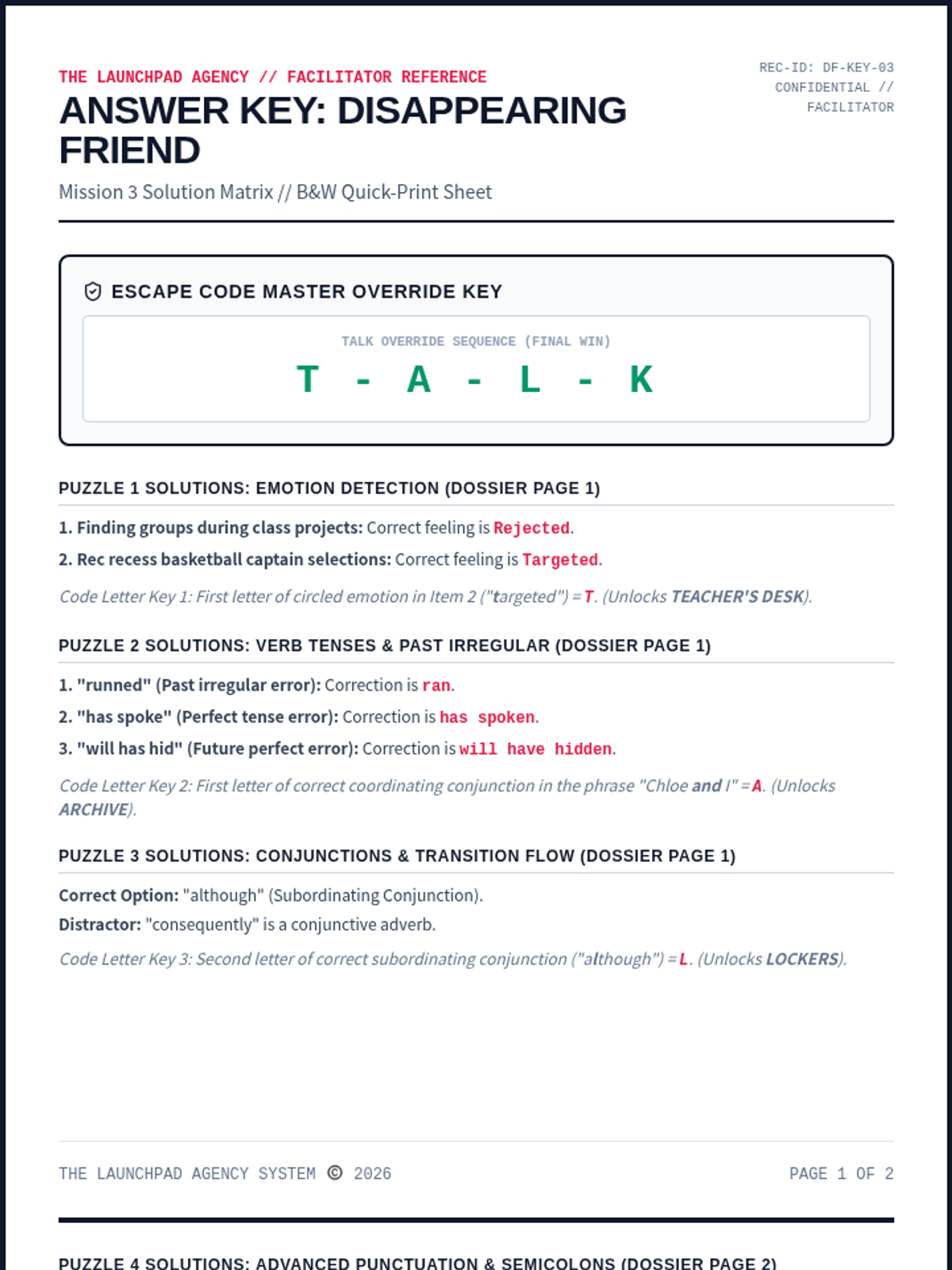
A collaborative social-emotional escape room focused on identifying relational and social bullying, supporting target peers, and standing up to cyber/verbal exclusion. Recruits analyze verb verbal types, pronoun cases, intransitive verbs, and compound syntax to decode the final override.
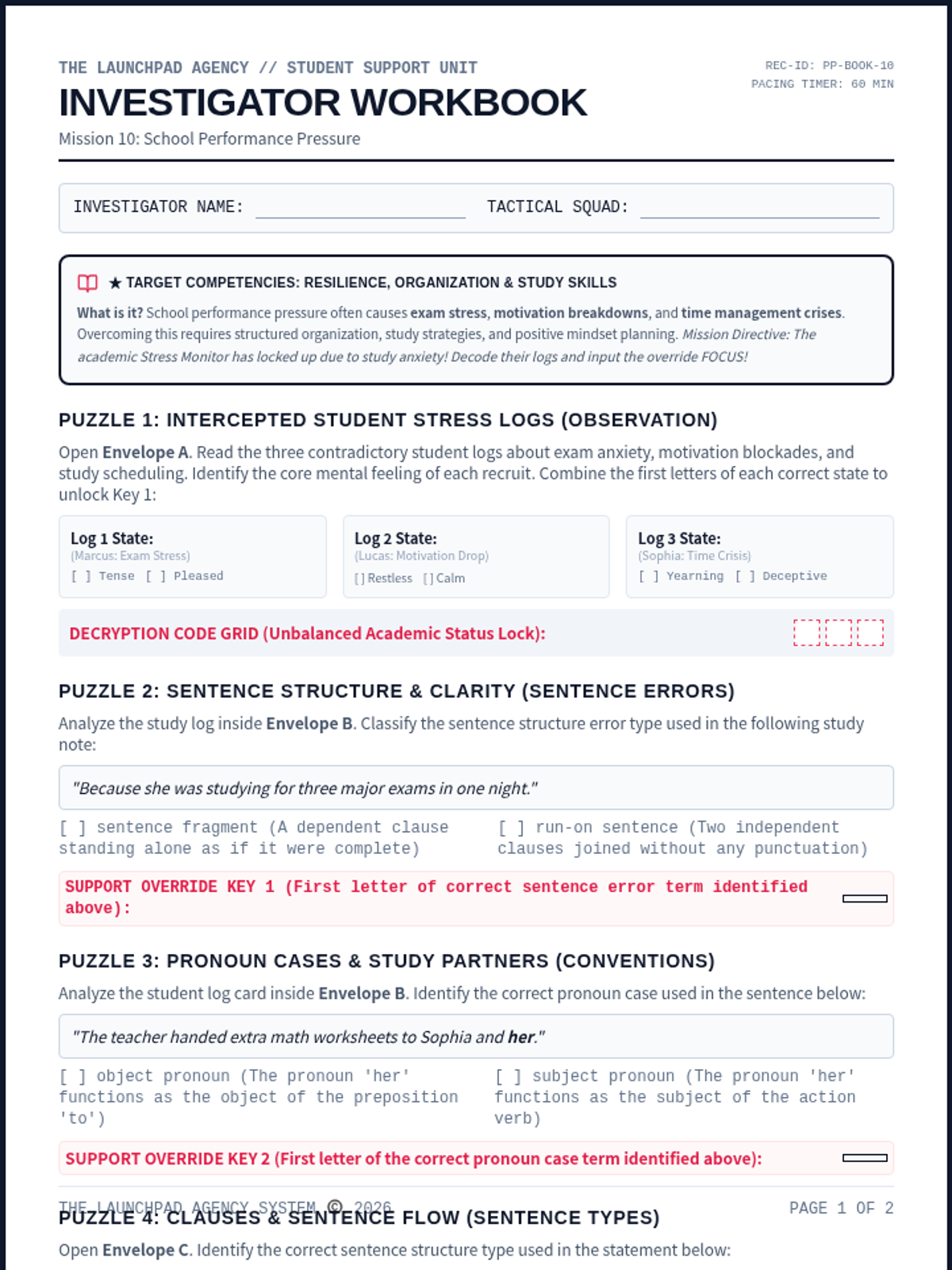
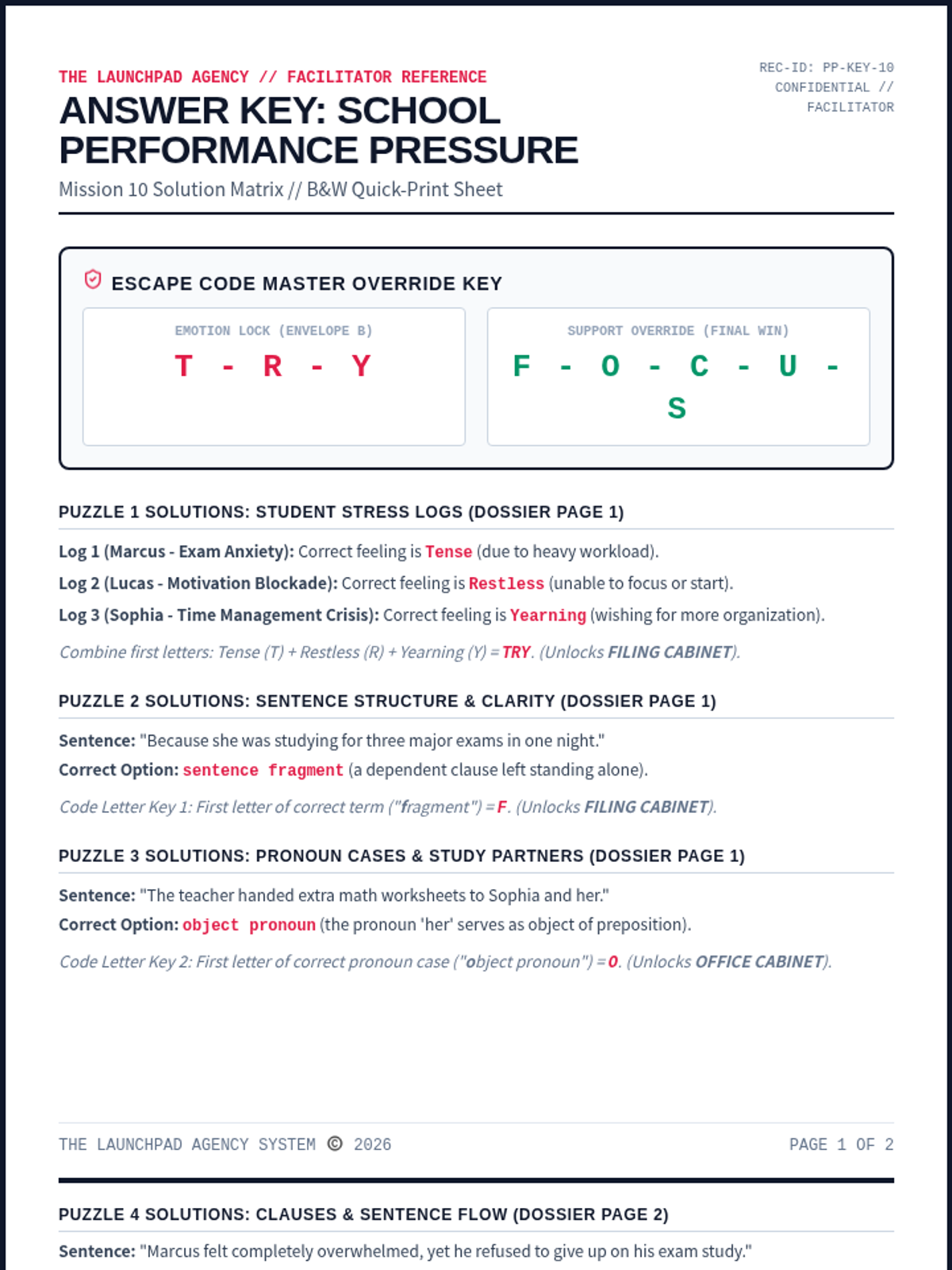
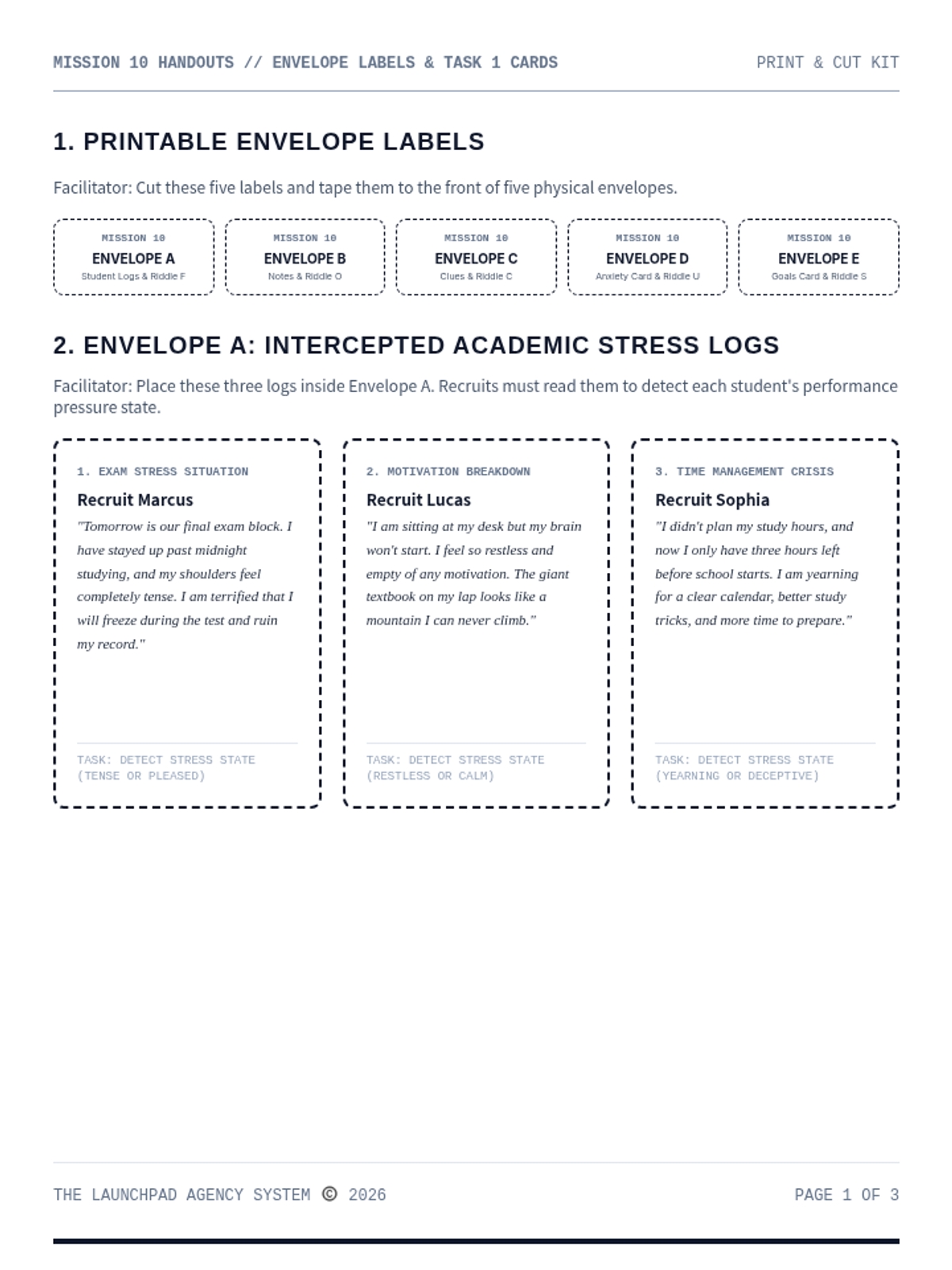
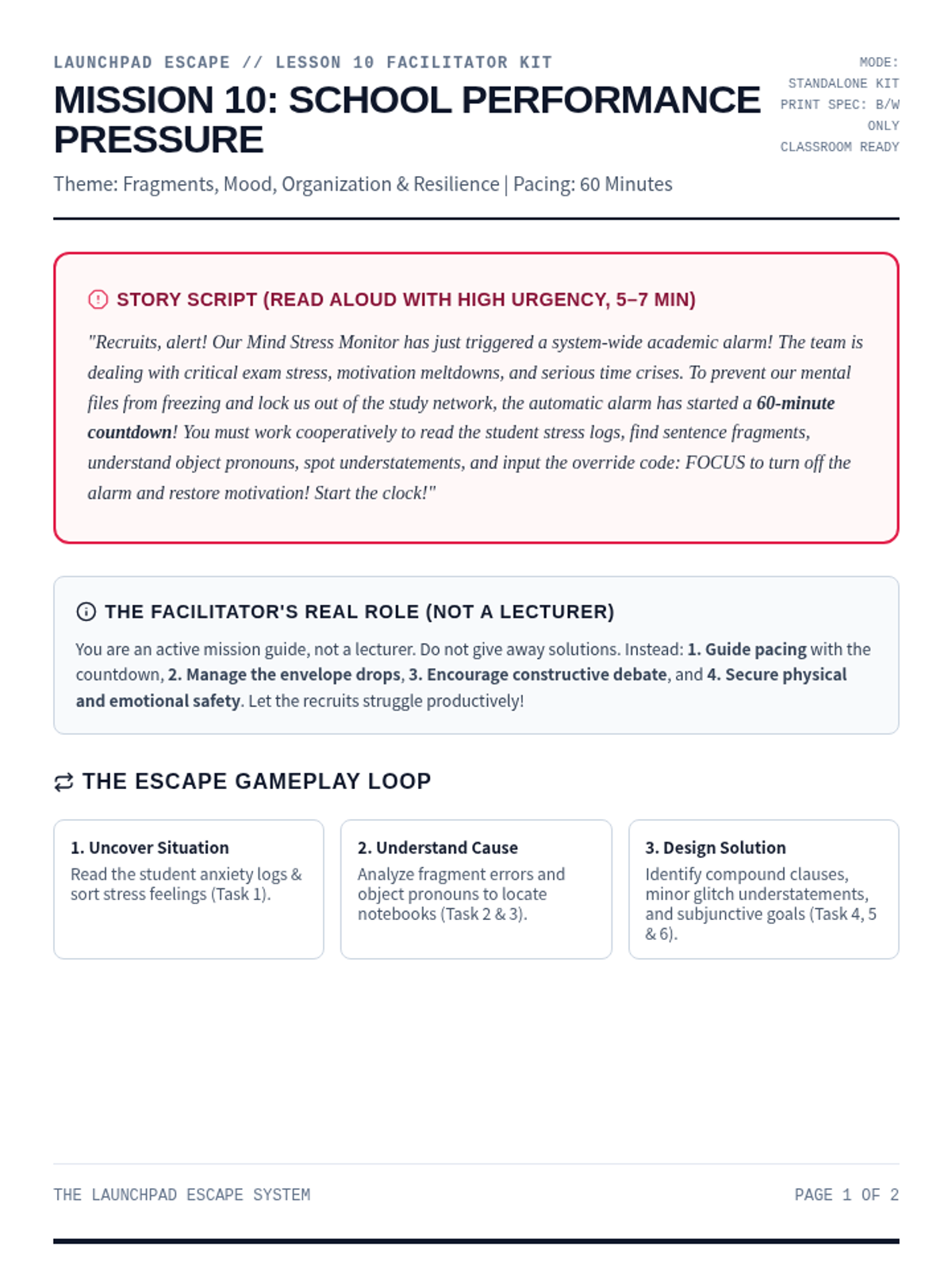
An immersive and strategic escape room focused on managing academic stress, avoiding burnout, and planning study habits. Recruits analyze student logs under performance anxiety, build efficient schedules, and decode the override to restore positive motivation.
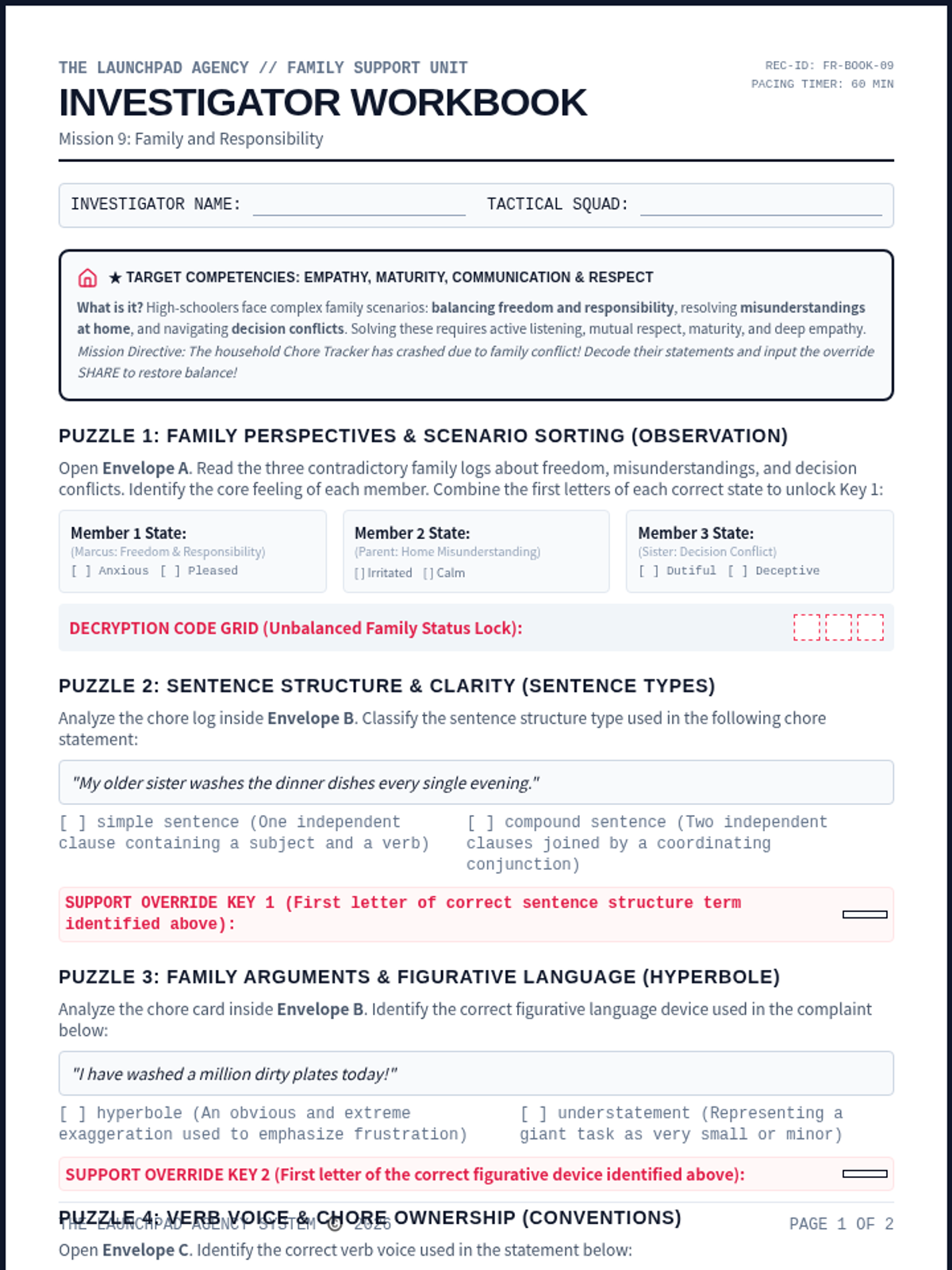
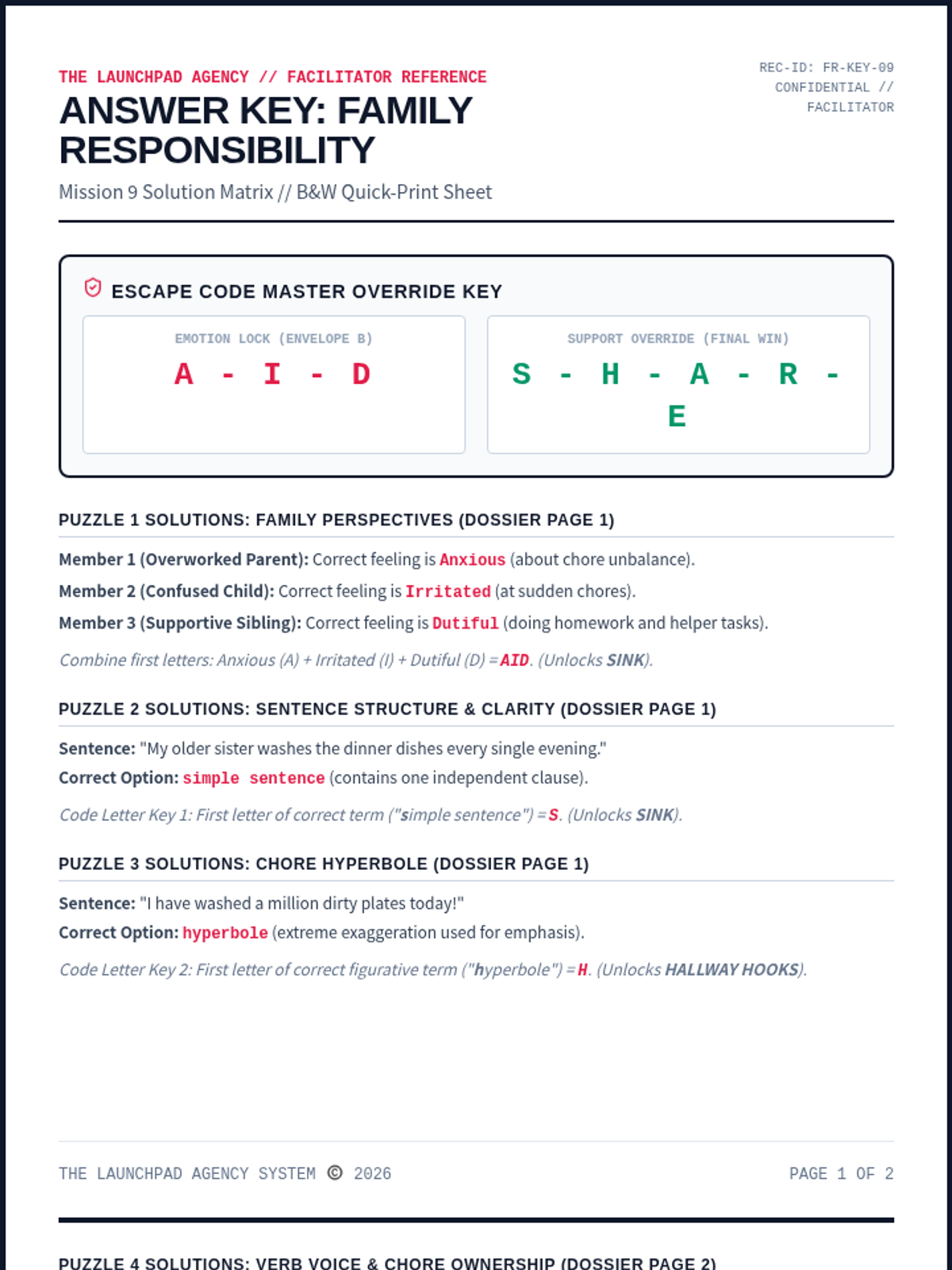
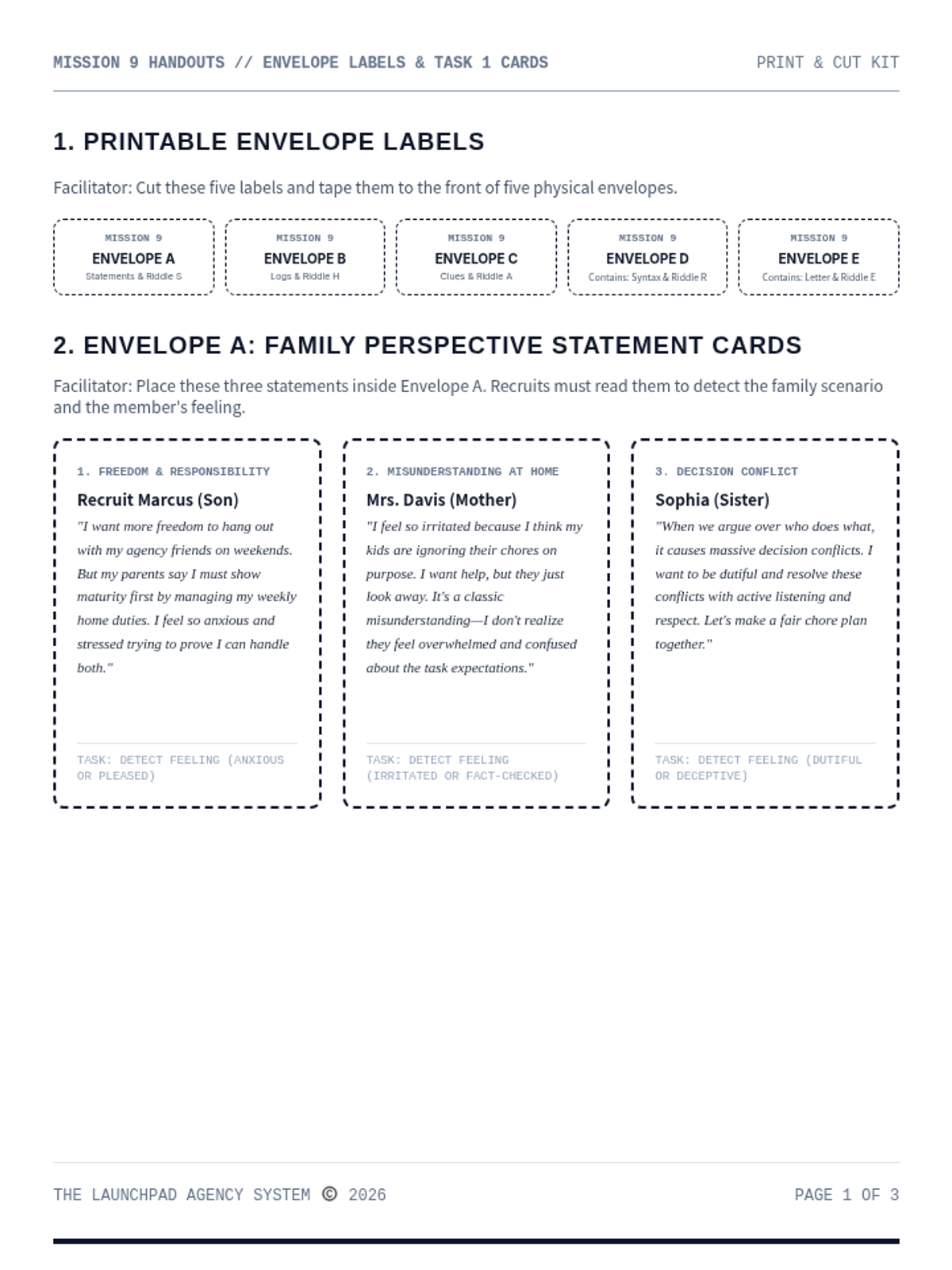
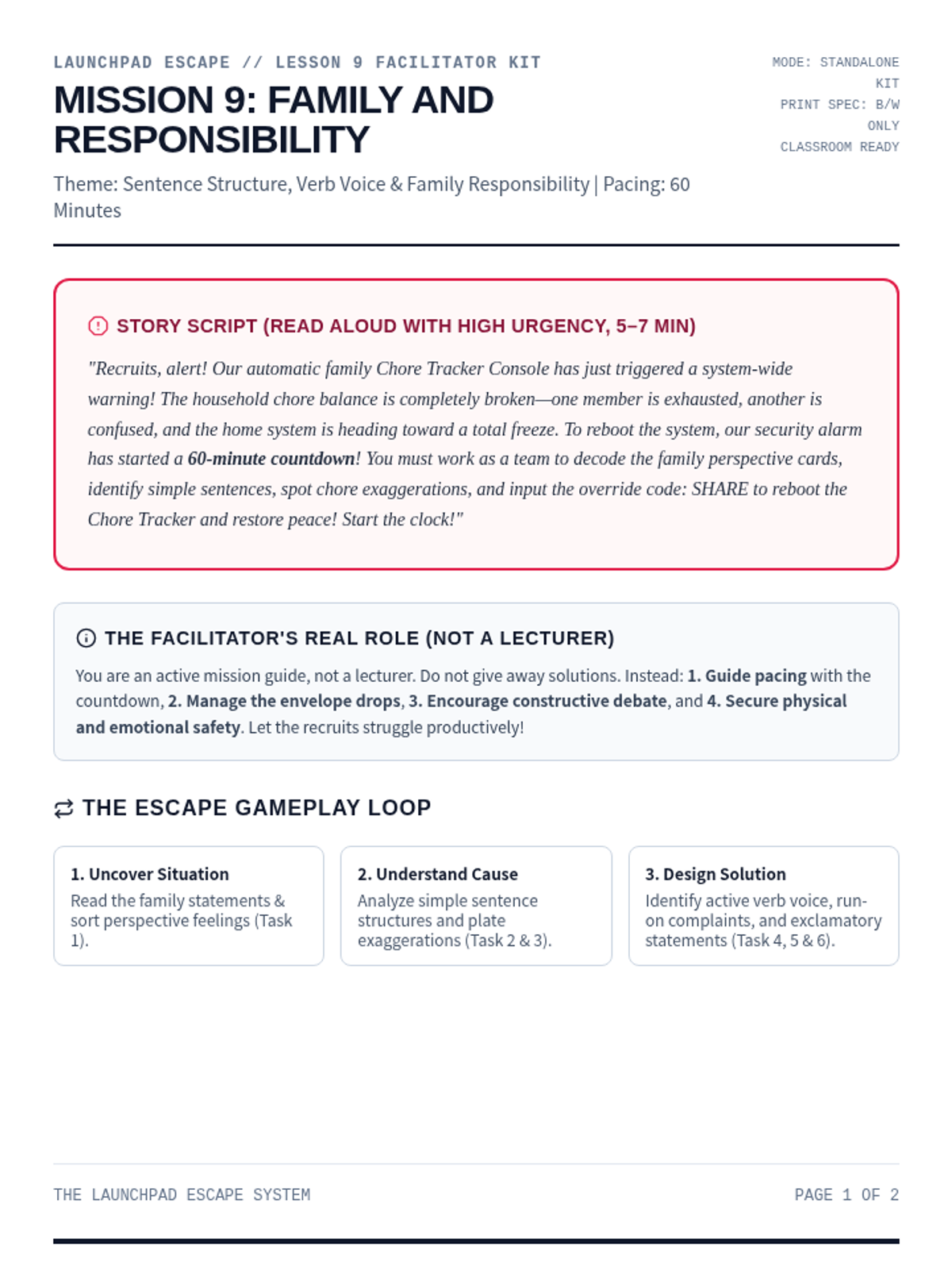
A cooperative and empathetic escape room focused on managing family duties and household balance. Recruits analyze parent/child perspective claims, organize daily chores timelines, and decode the final compromise override.
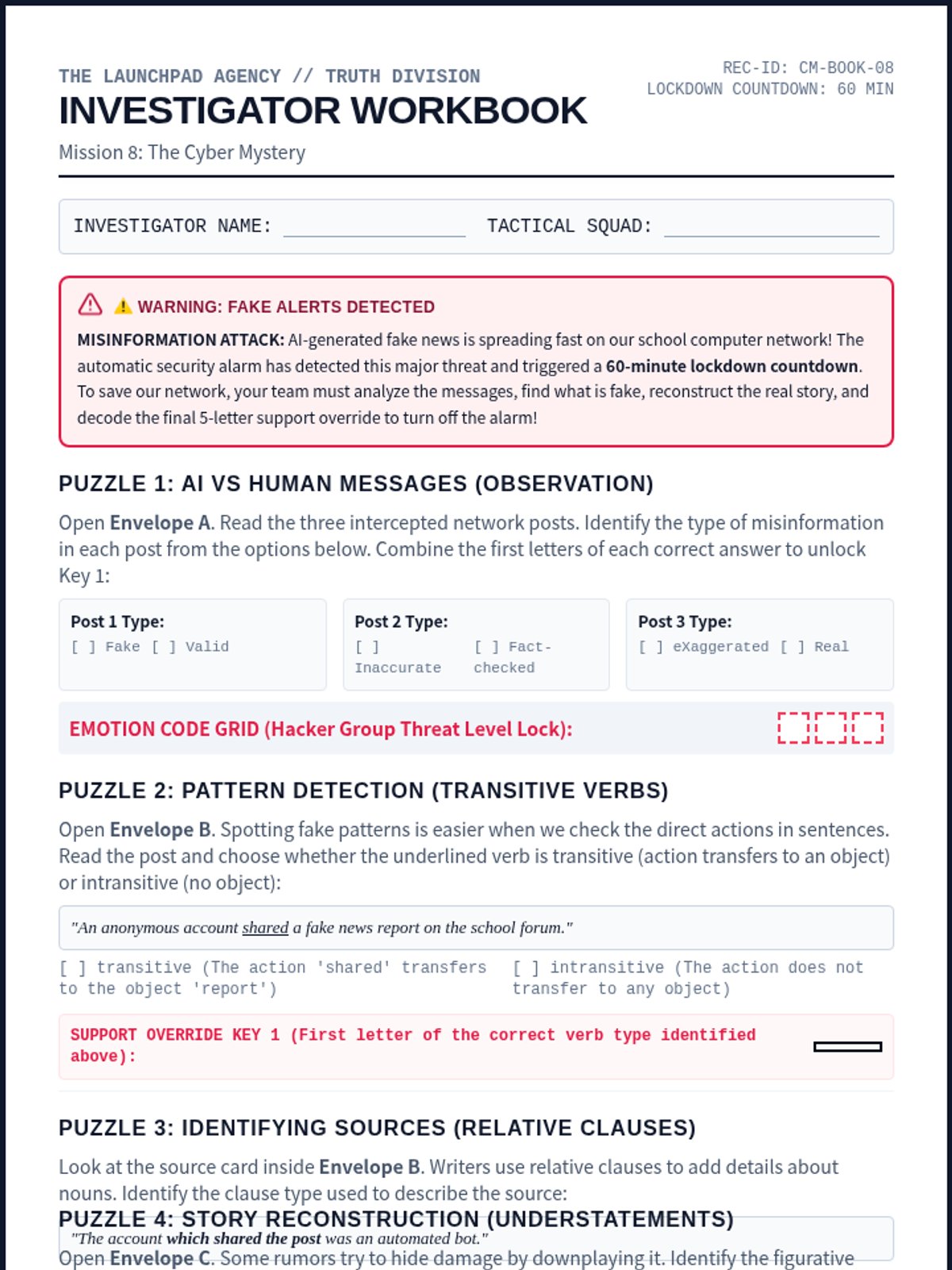
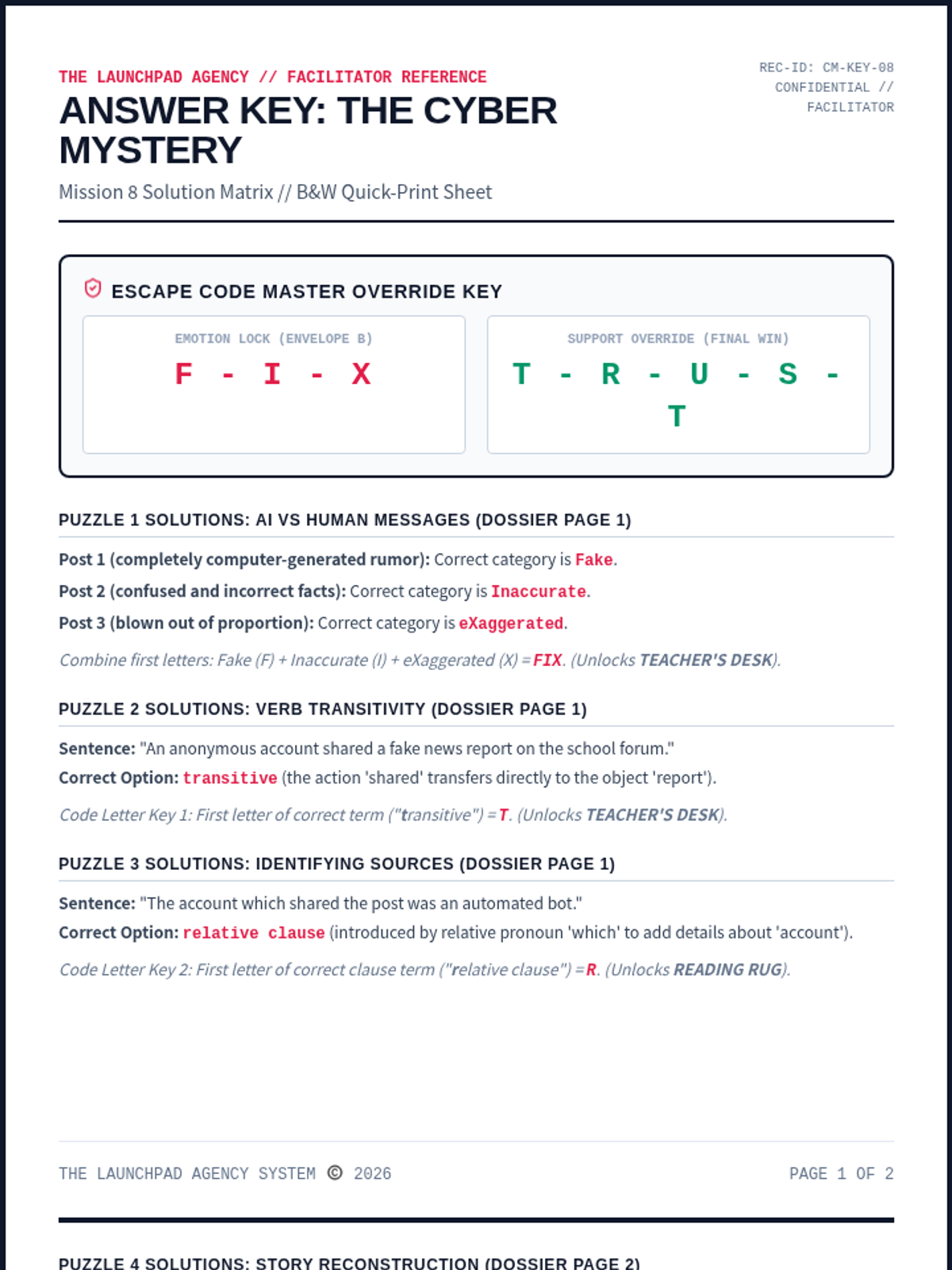
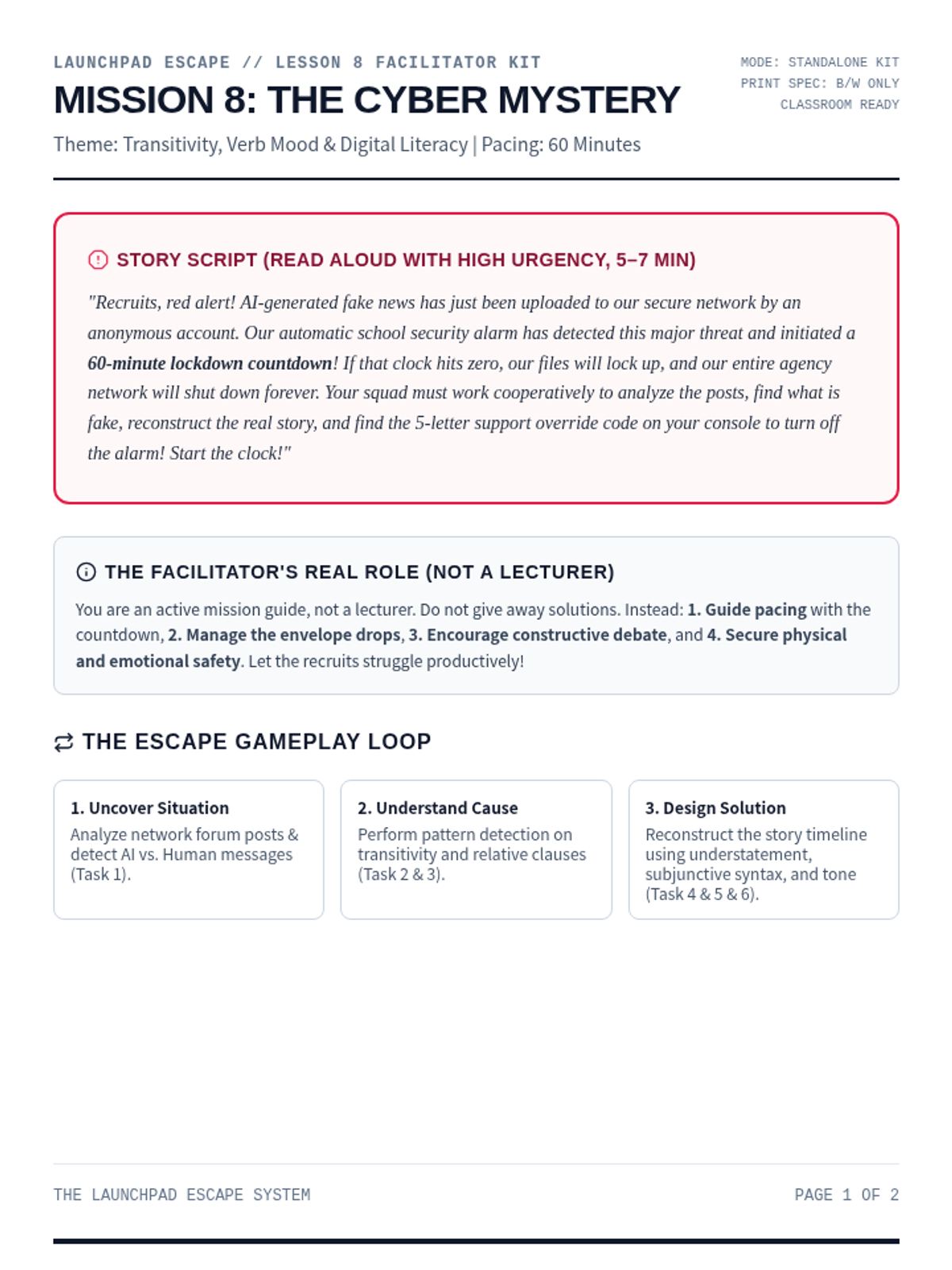
An advanced digital literacy and collaborative cryptography escape room for Ages 14-16. Recruits analyze verb transitivity, relative clauses, subjunctive moods, and tone to stop a school database wipe.
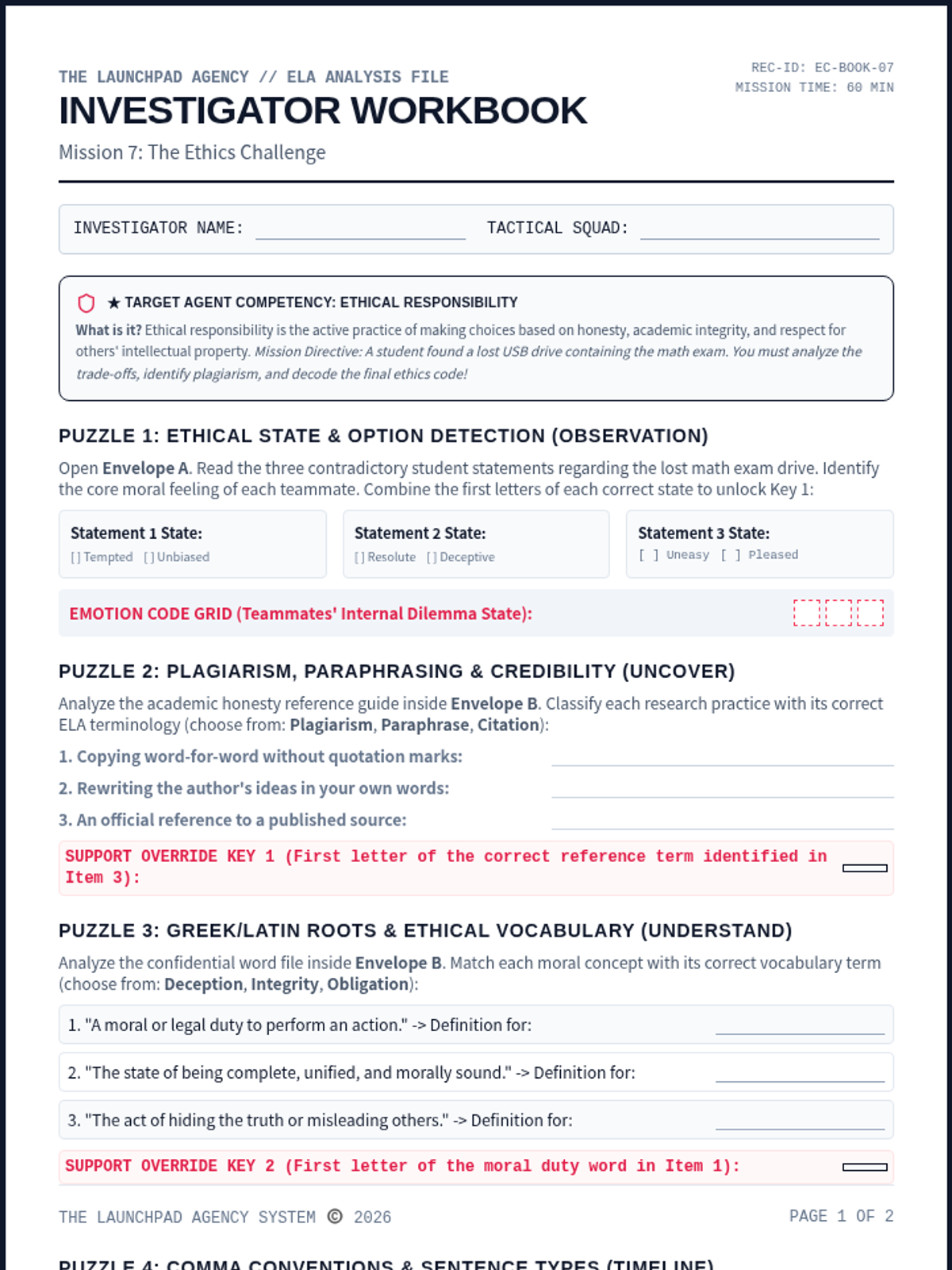
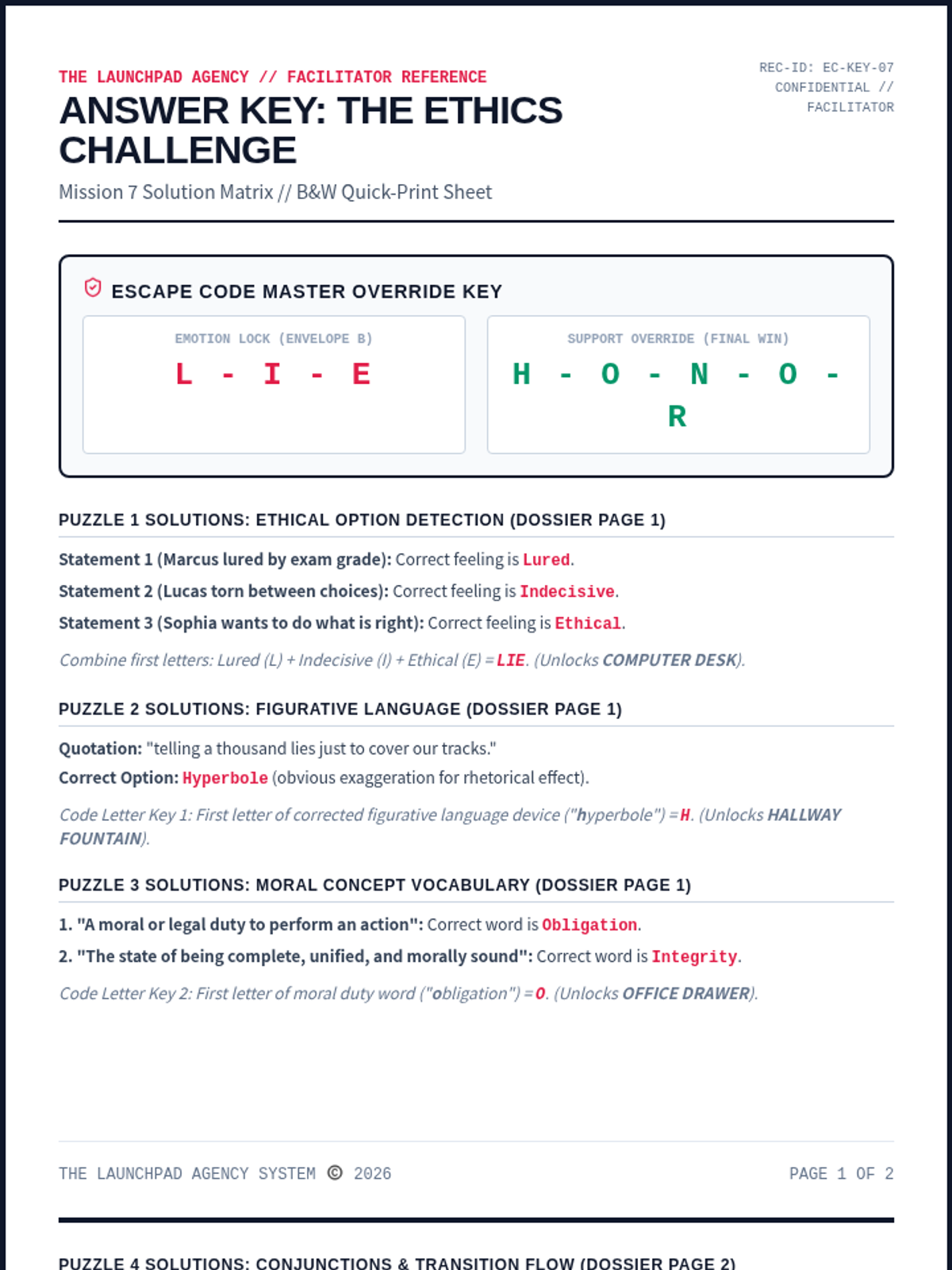
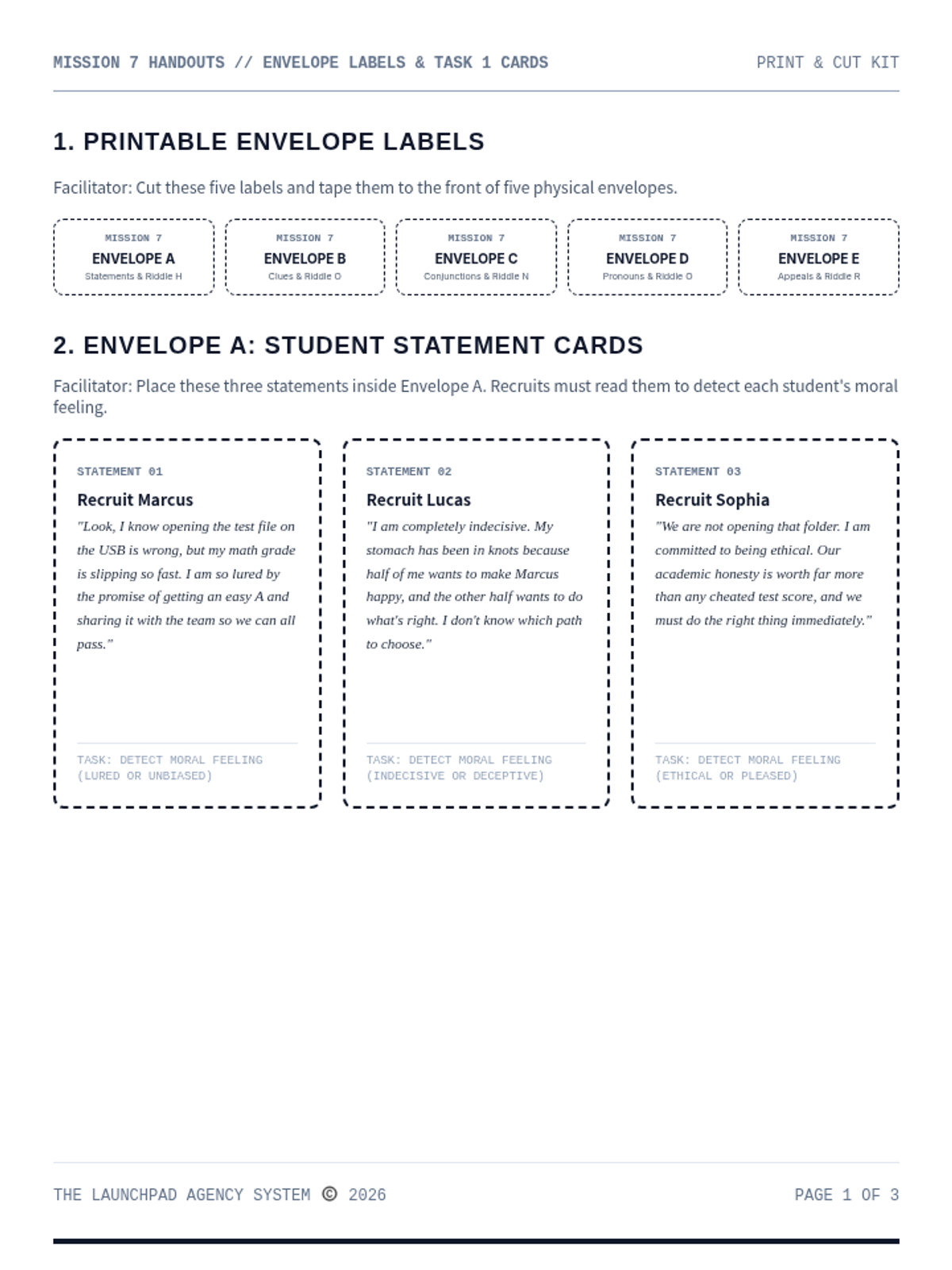
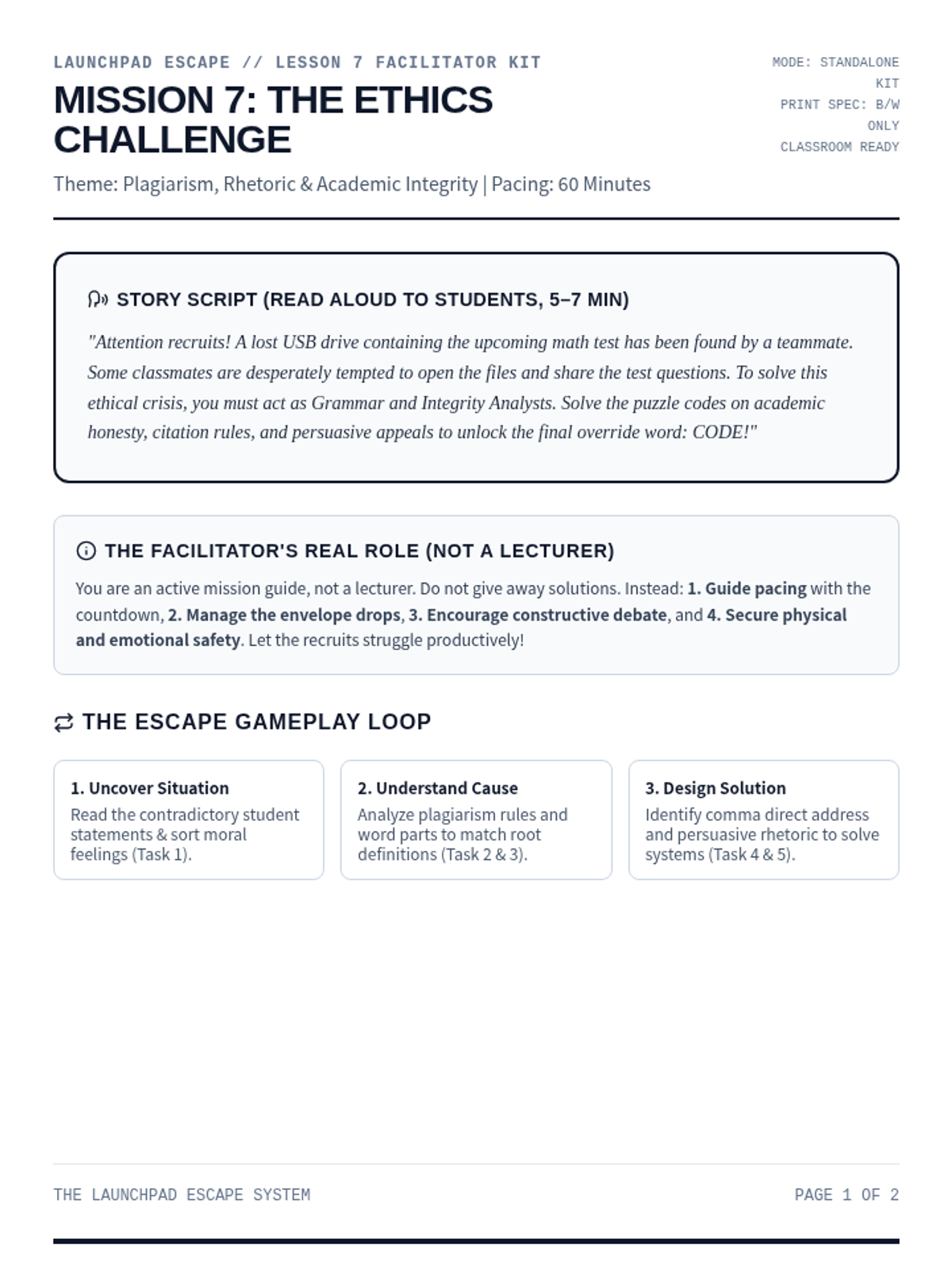
A high-stakes moral dilemma escape room for Ages 11-13. Recruits evaluate the trade-offs of academic honesty, identify plagiarism, analyze persuasive appeals, and decode the final ethics code.
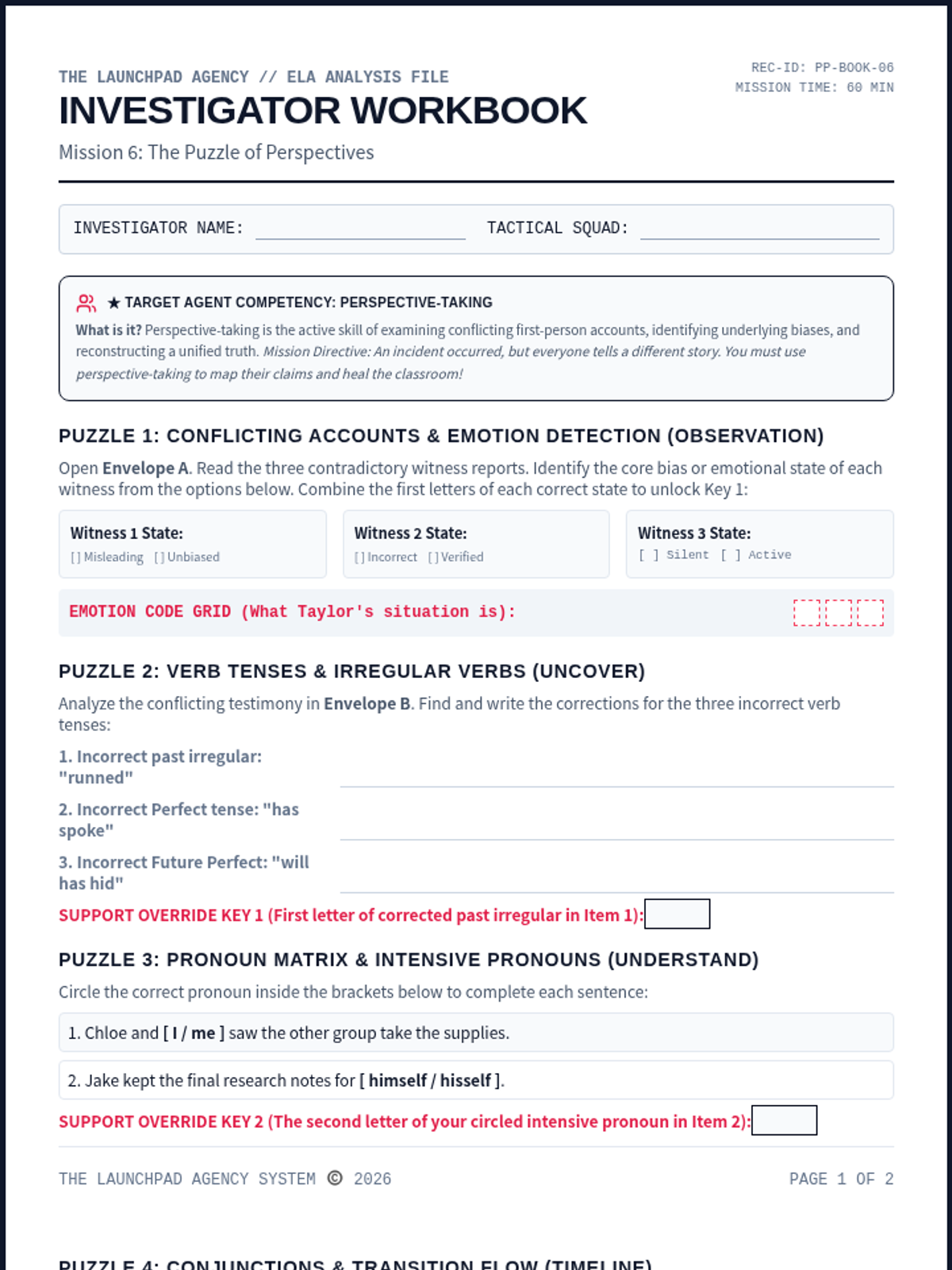
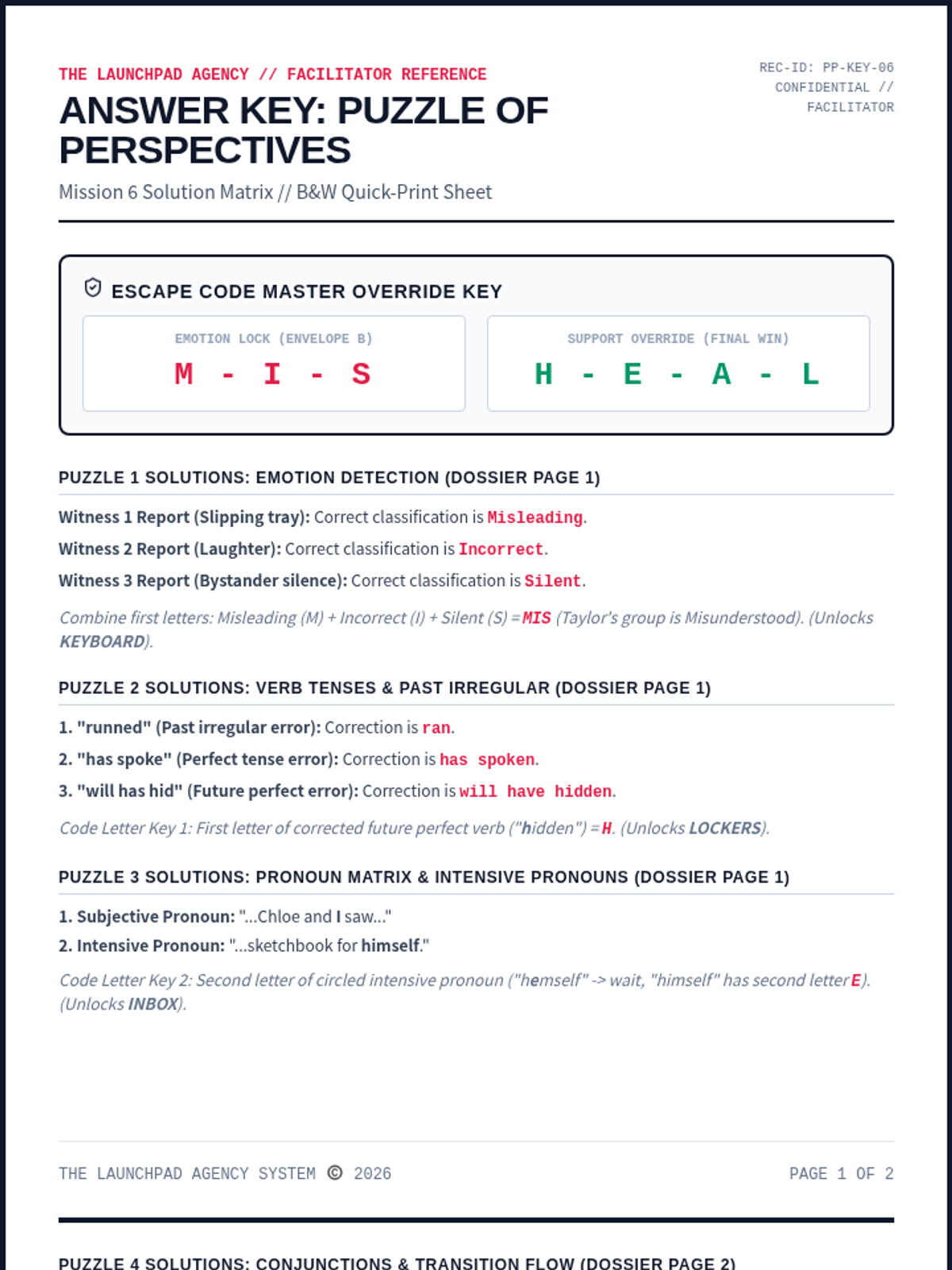
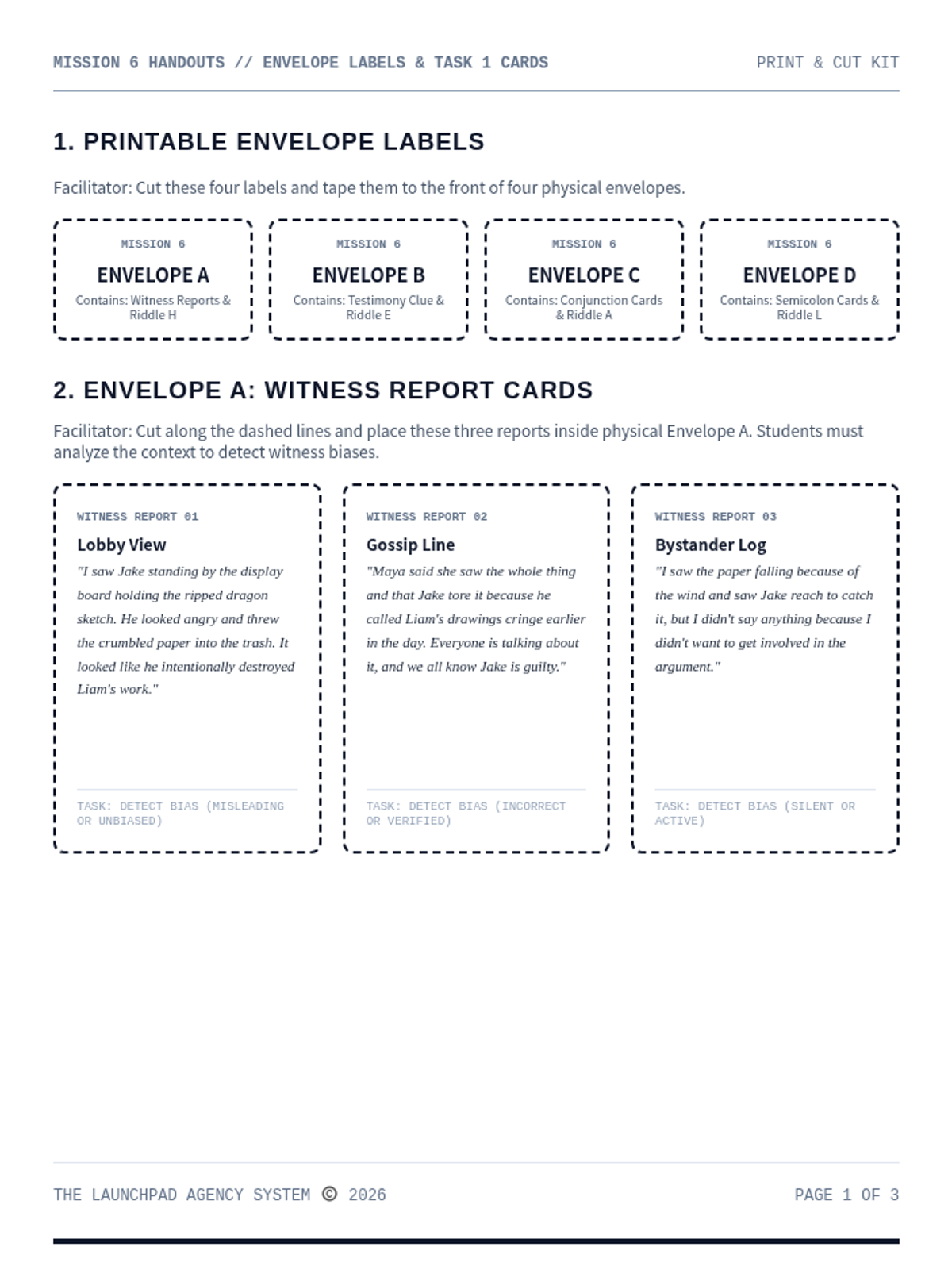
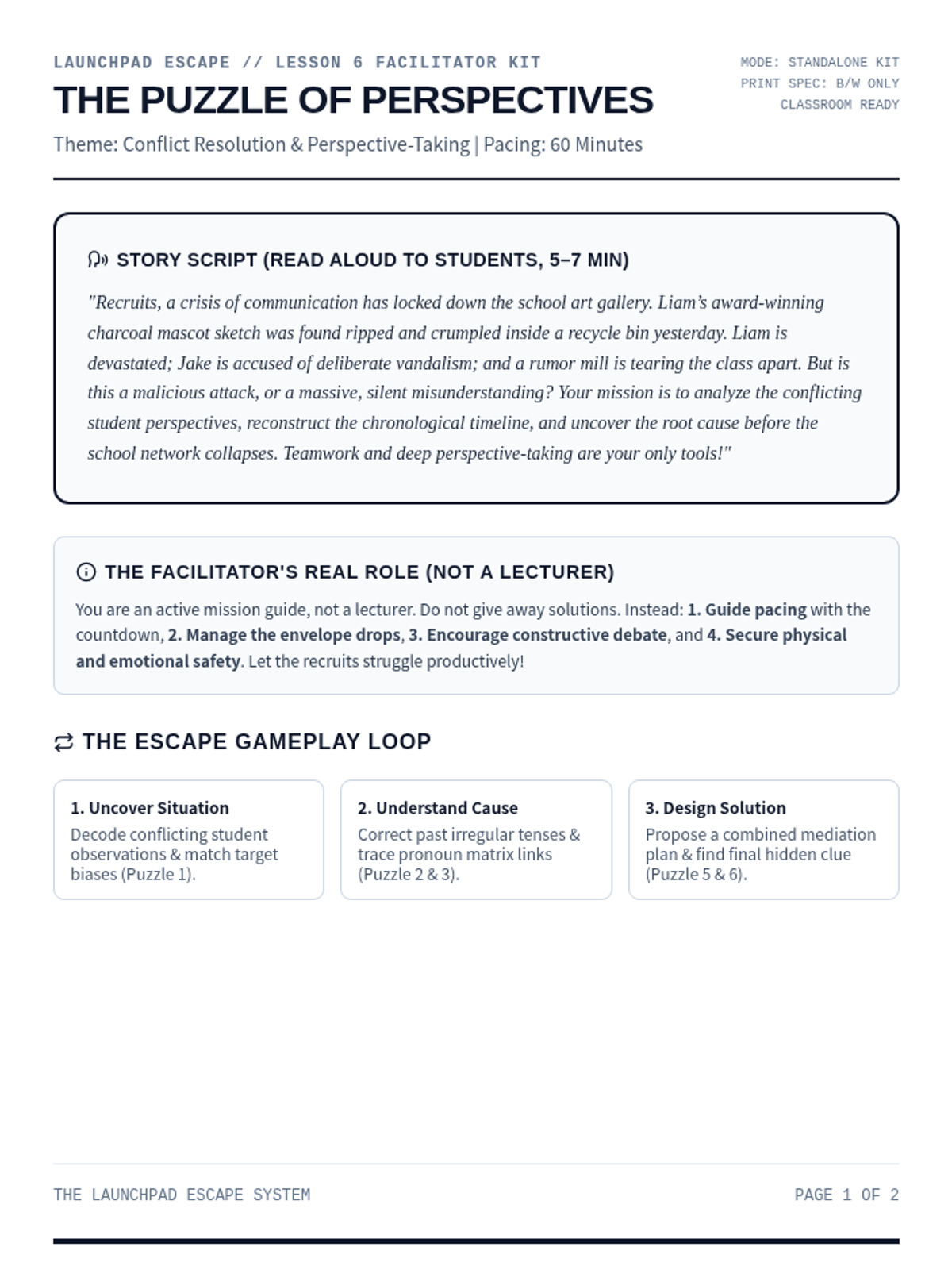
A high-stakes perspective-taking escape room. Recruits examine conflicting first-person accounts, analyze bias, reconstruct a unified timeline, and solve the override code.
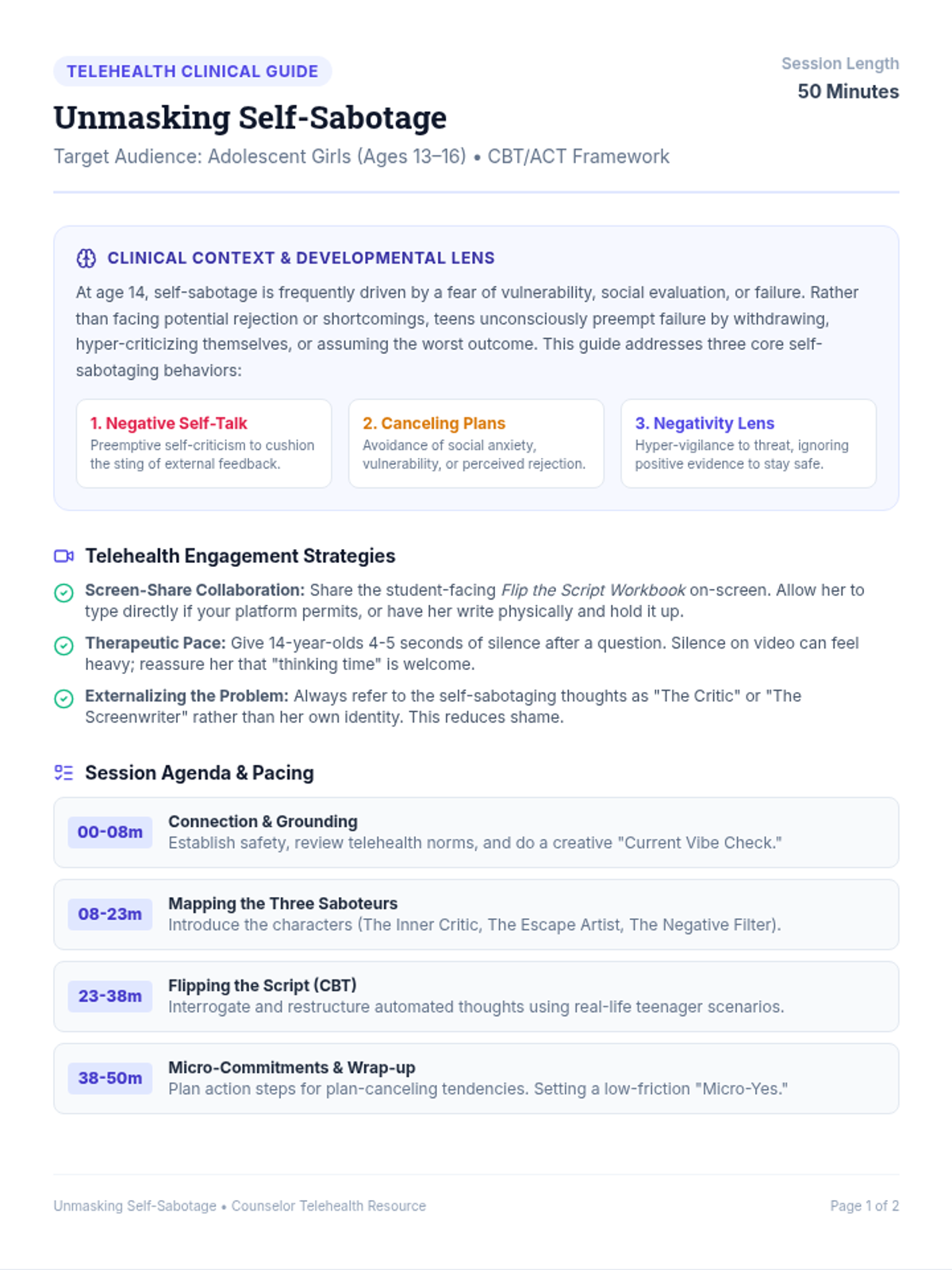
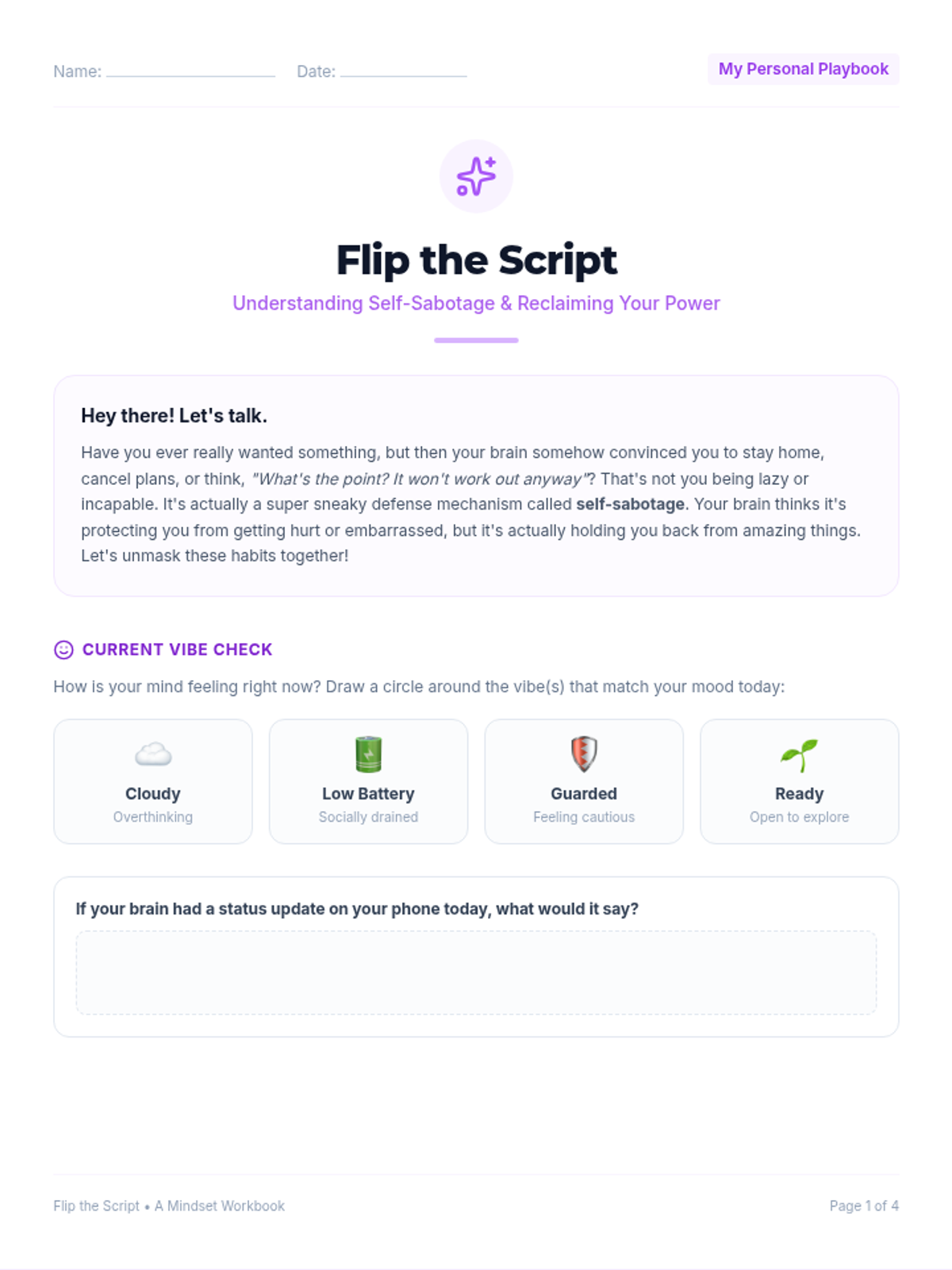
A therapeutic lesson package designed for counselors working with 14-year-old girls struggling with self-sabotage. It includes a structured telehealth counselor guide and a highly aesthetic, Gen Z-friendly reflection workbook focusing on negative self-talk, canceling plans, and negativity bias.
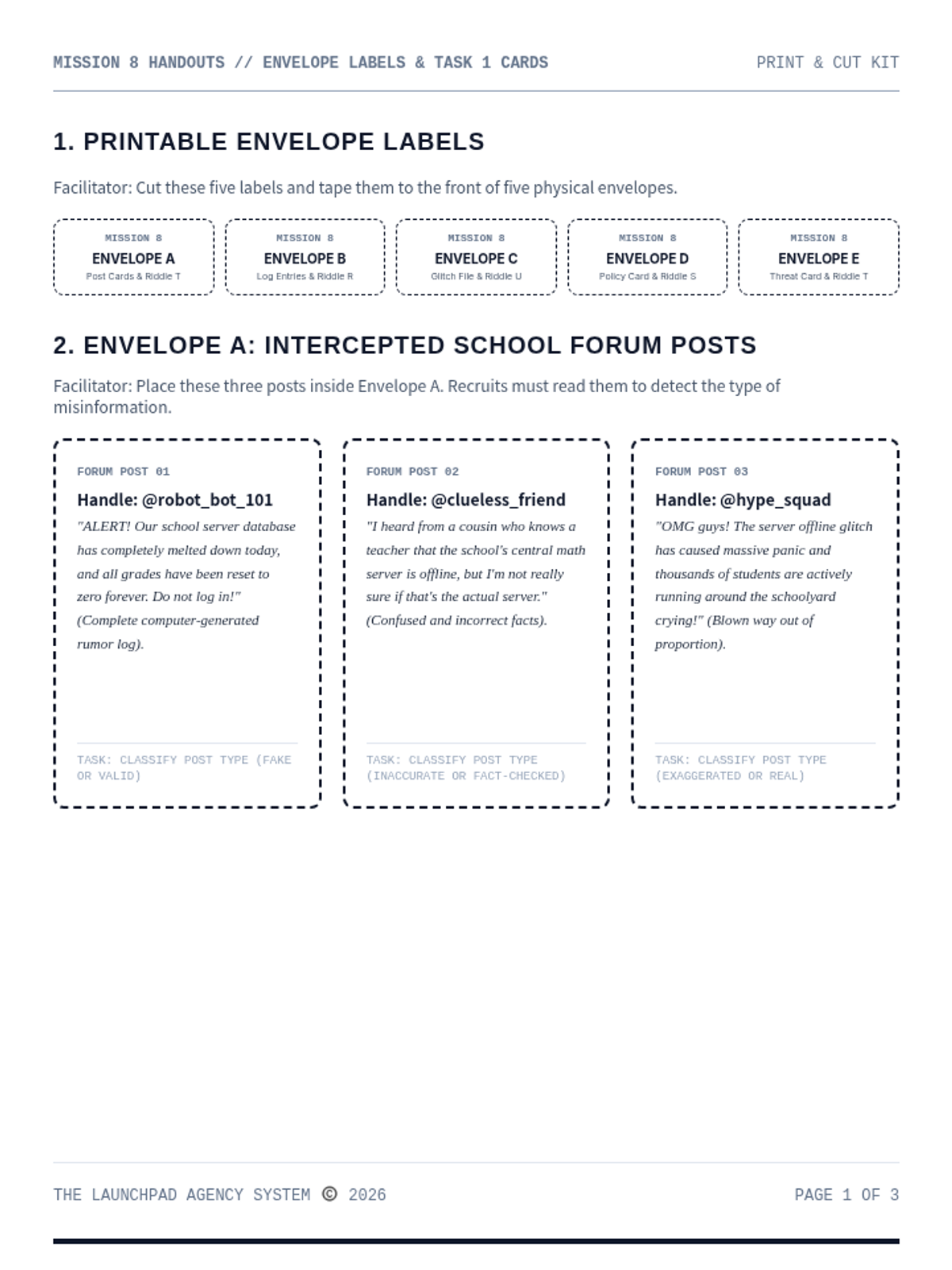
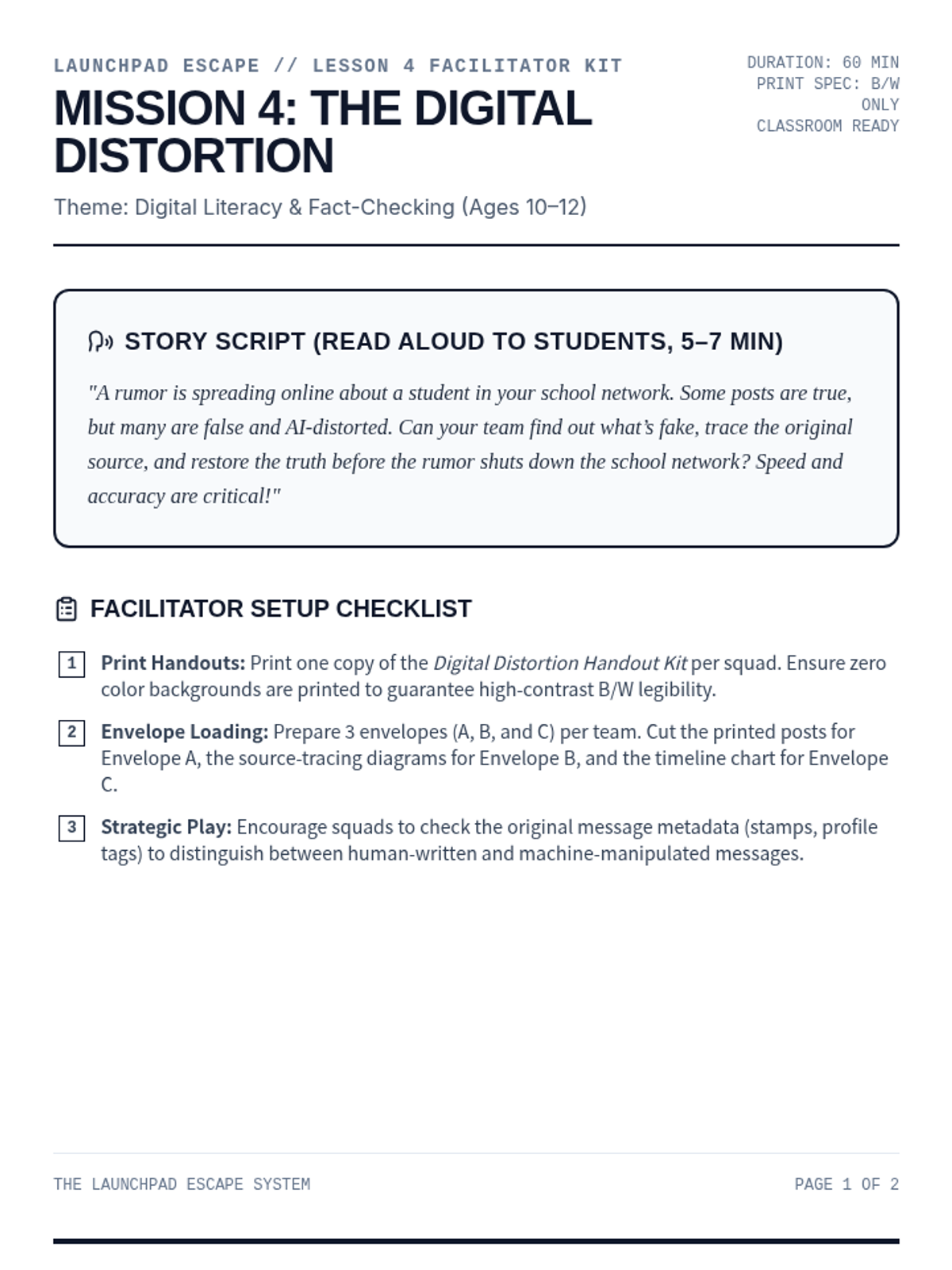
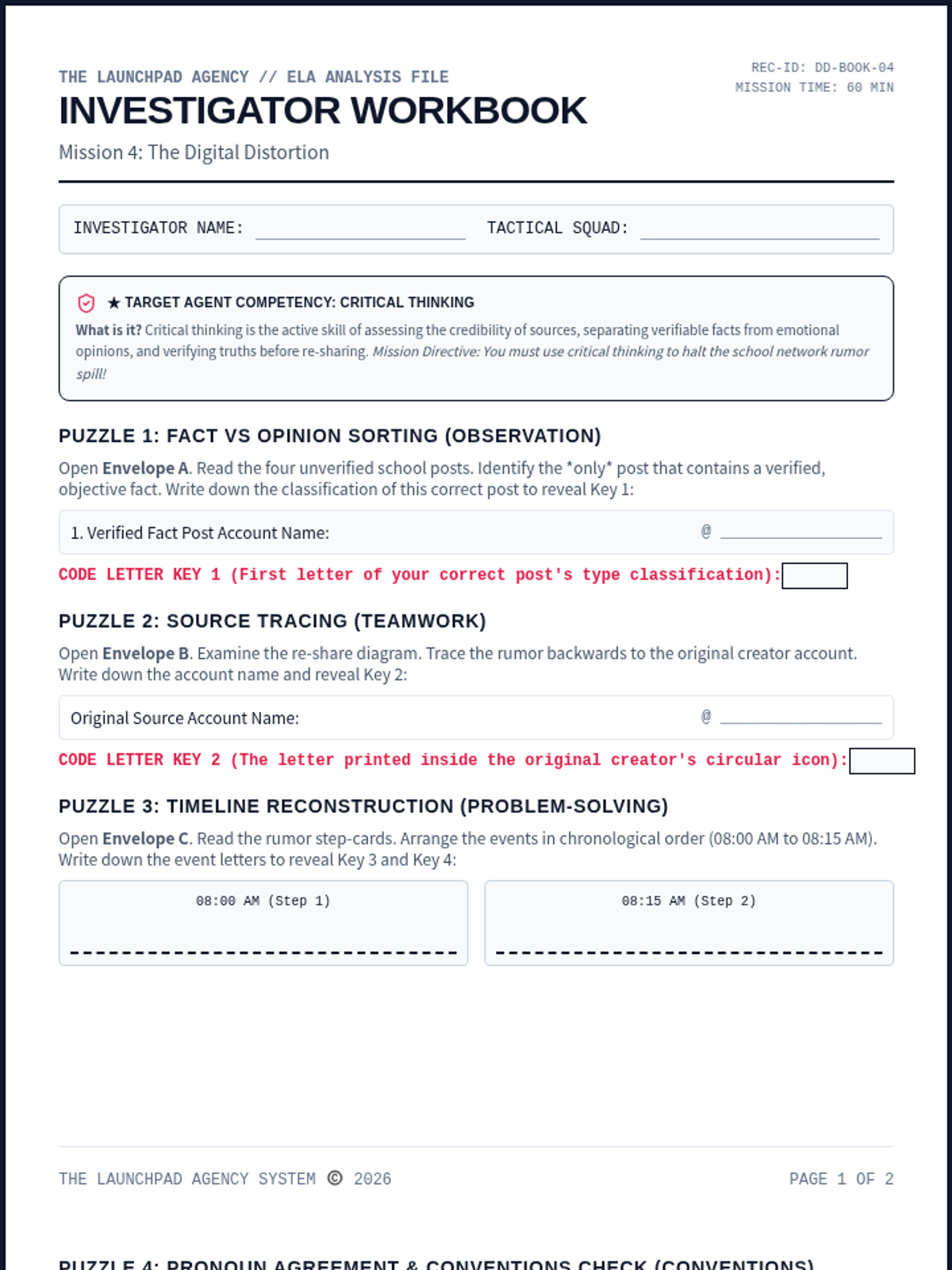
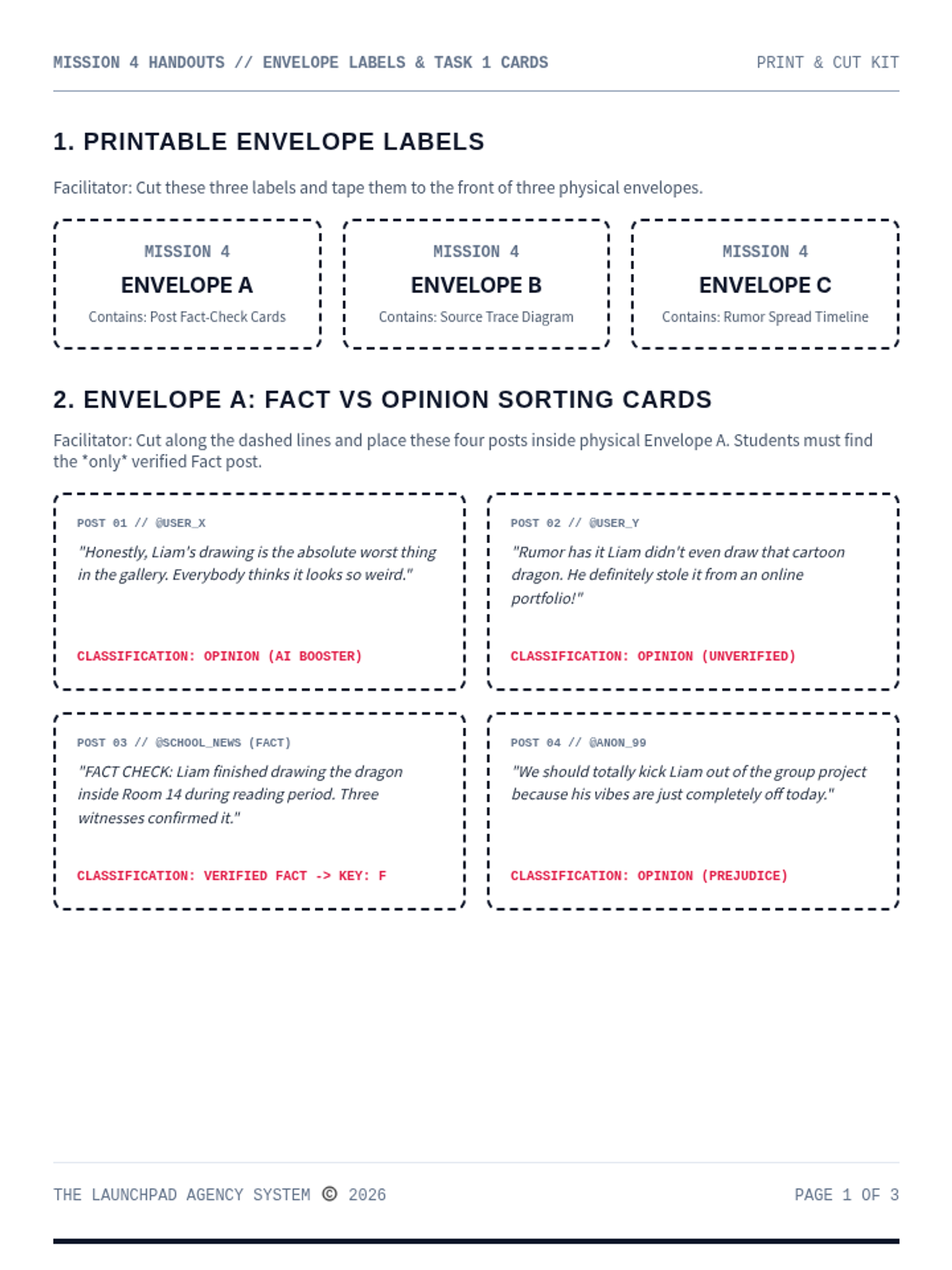
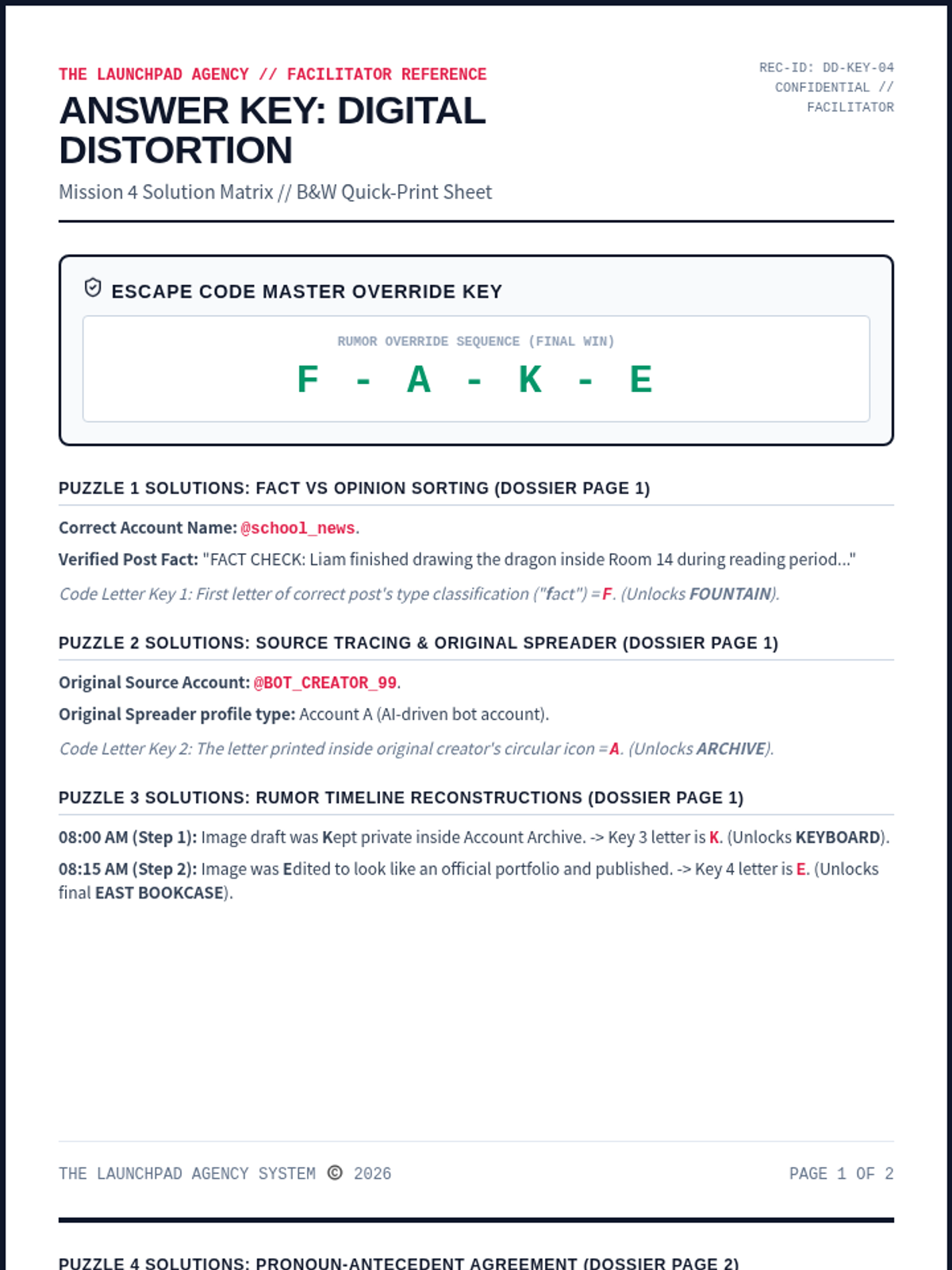
An online misinformation and fact-checking escape room for Ages 10-12. Recruits sort fact vs. opinion, trace original message sources, and reconstruct truth timelines to stop rumors.
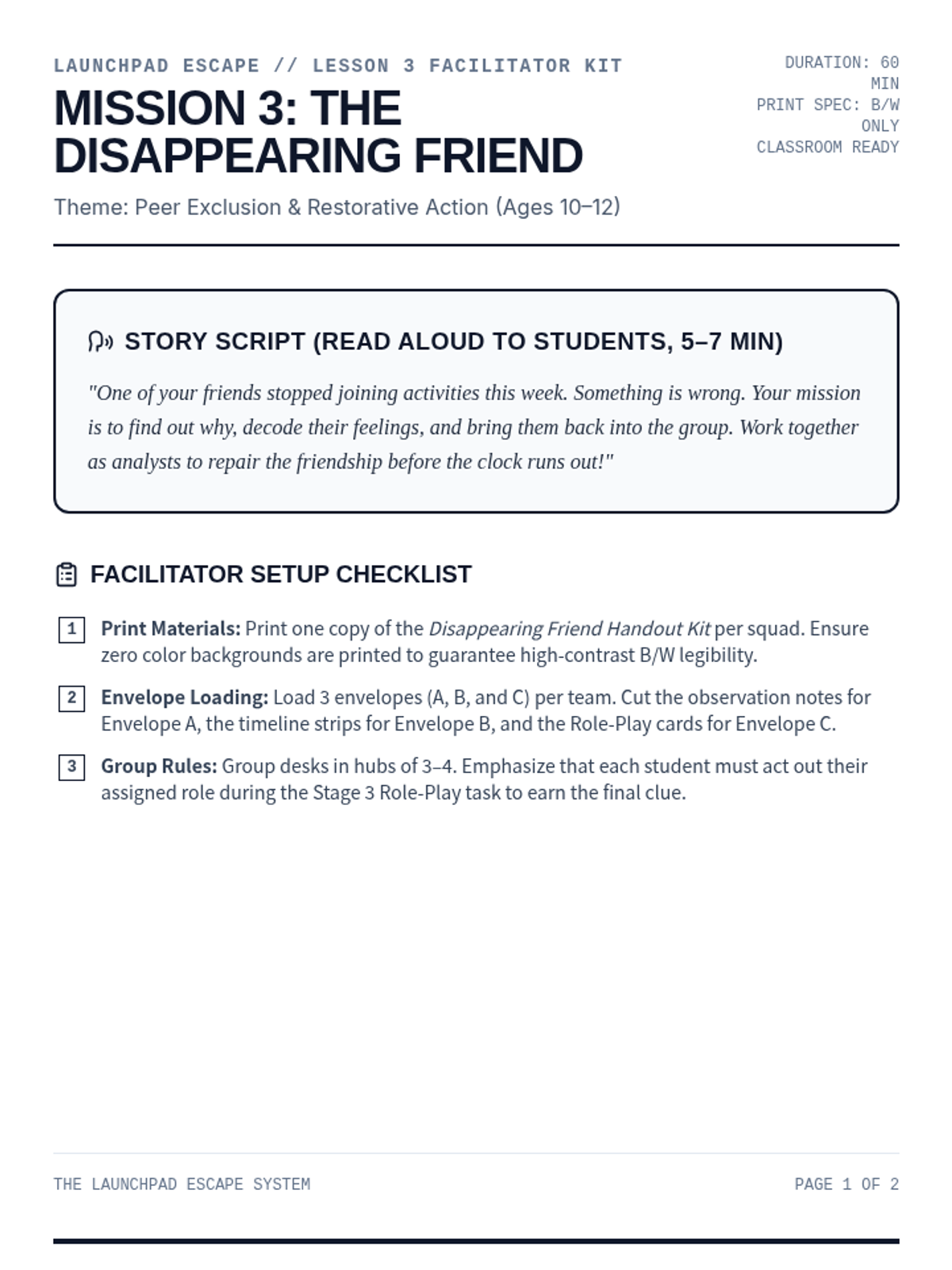
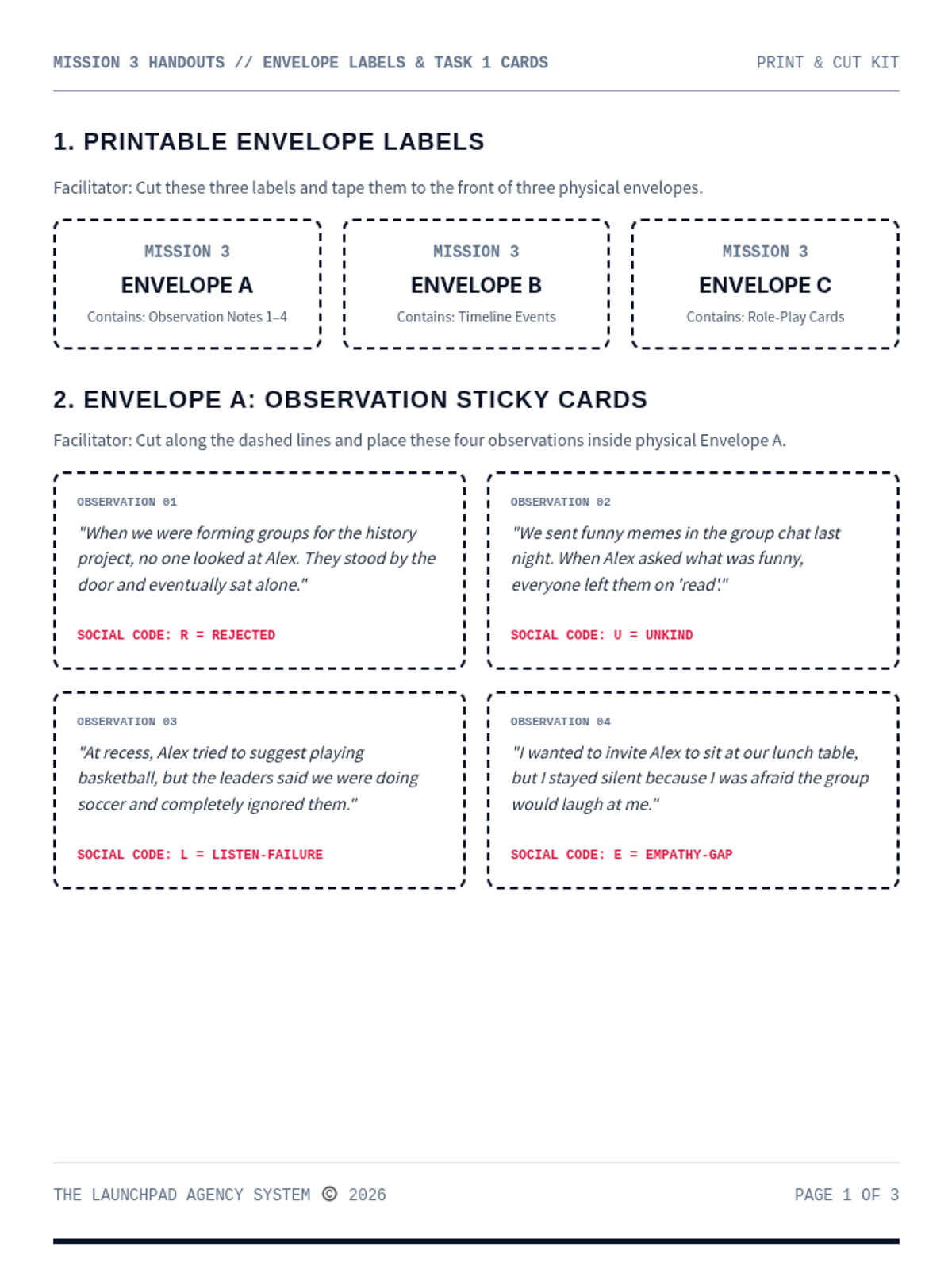
A chronological reconstruction and peer exclusion escape room for Ages 10-12. Recruits analyze sticky-note observations, identify missed social interactions, and role-play restorative de-escalation scripts.
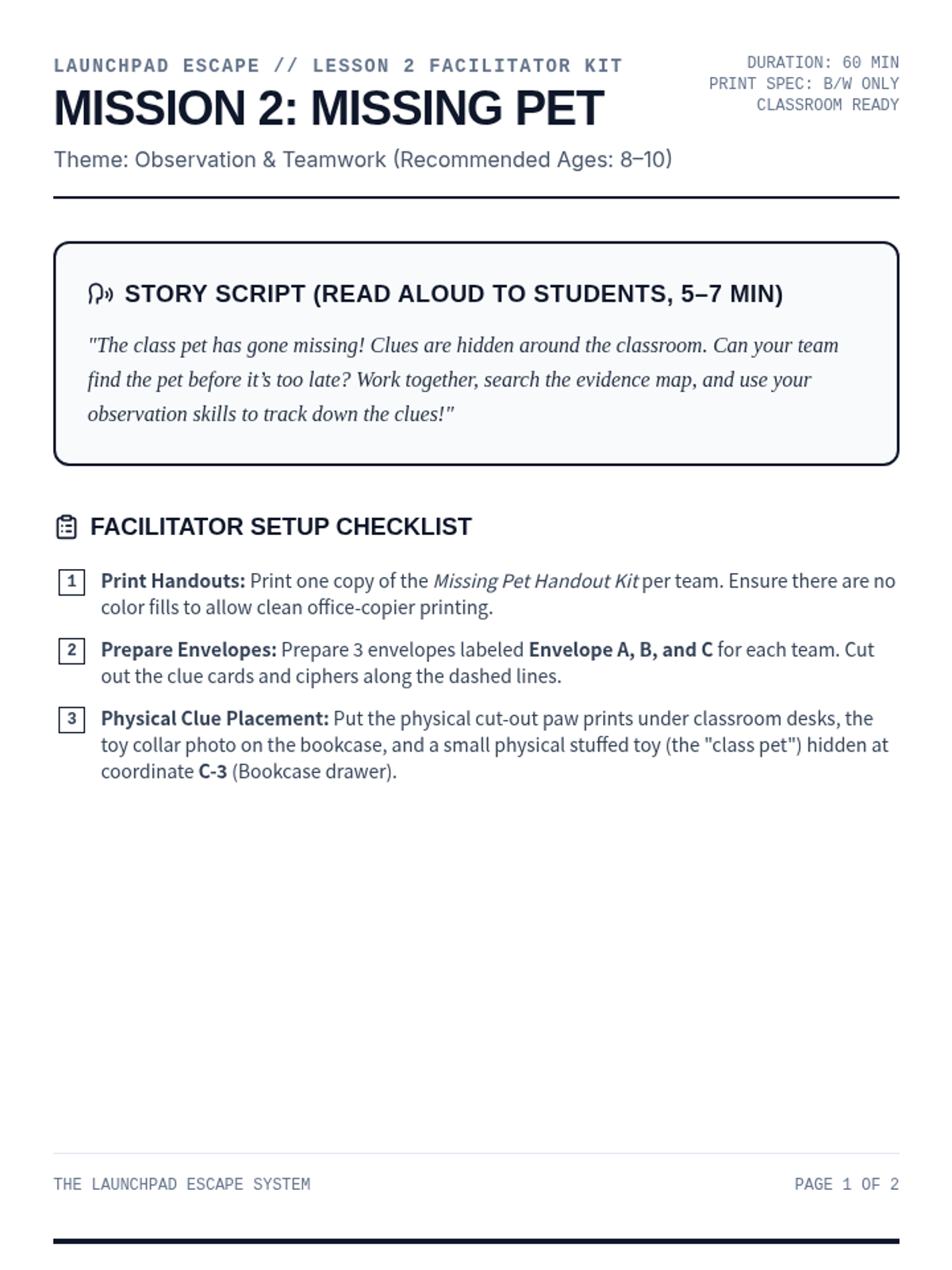
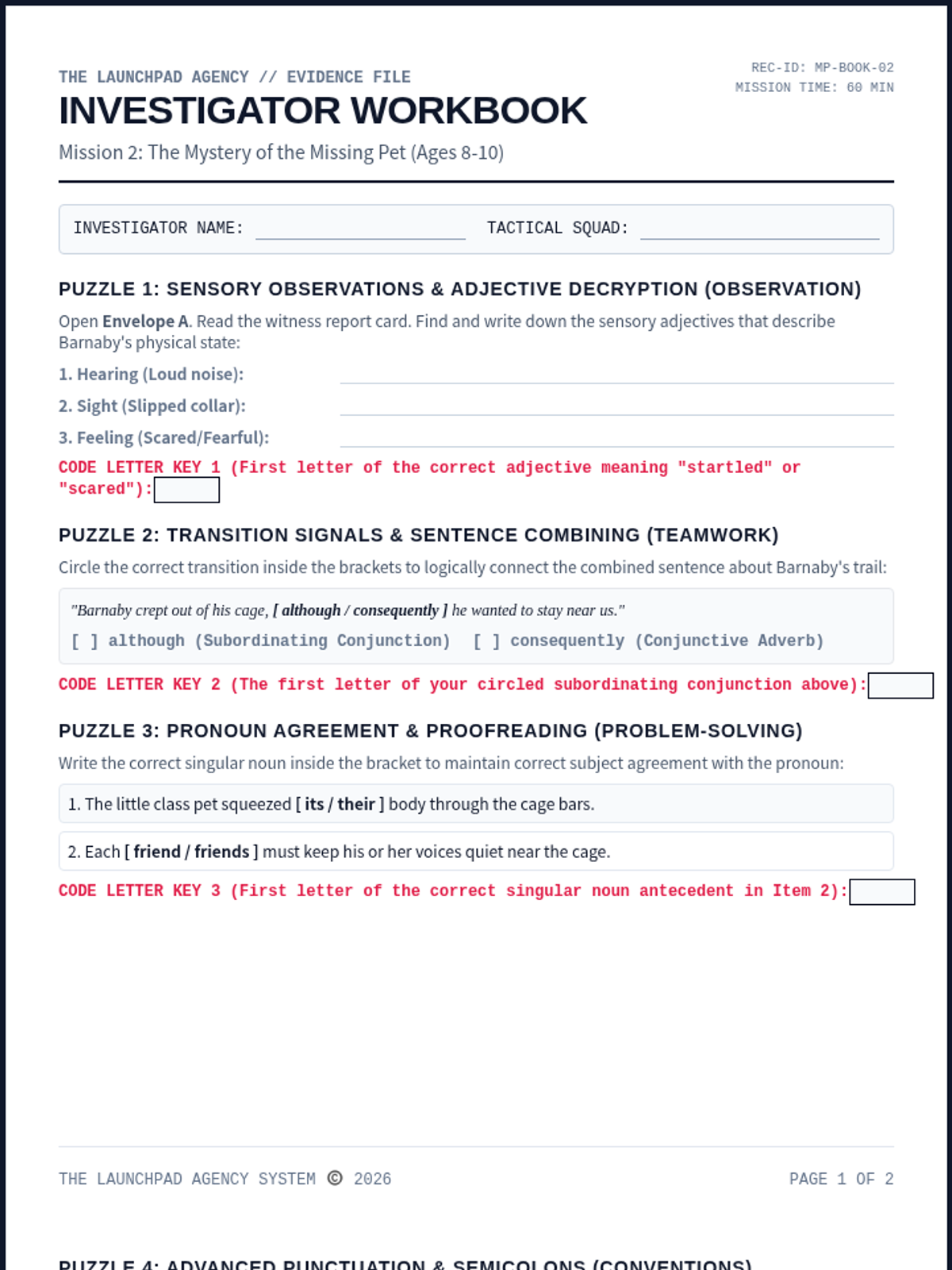
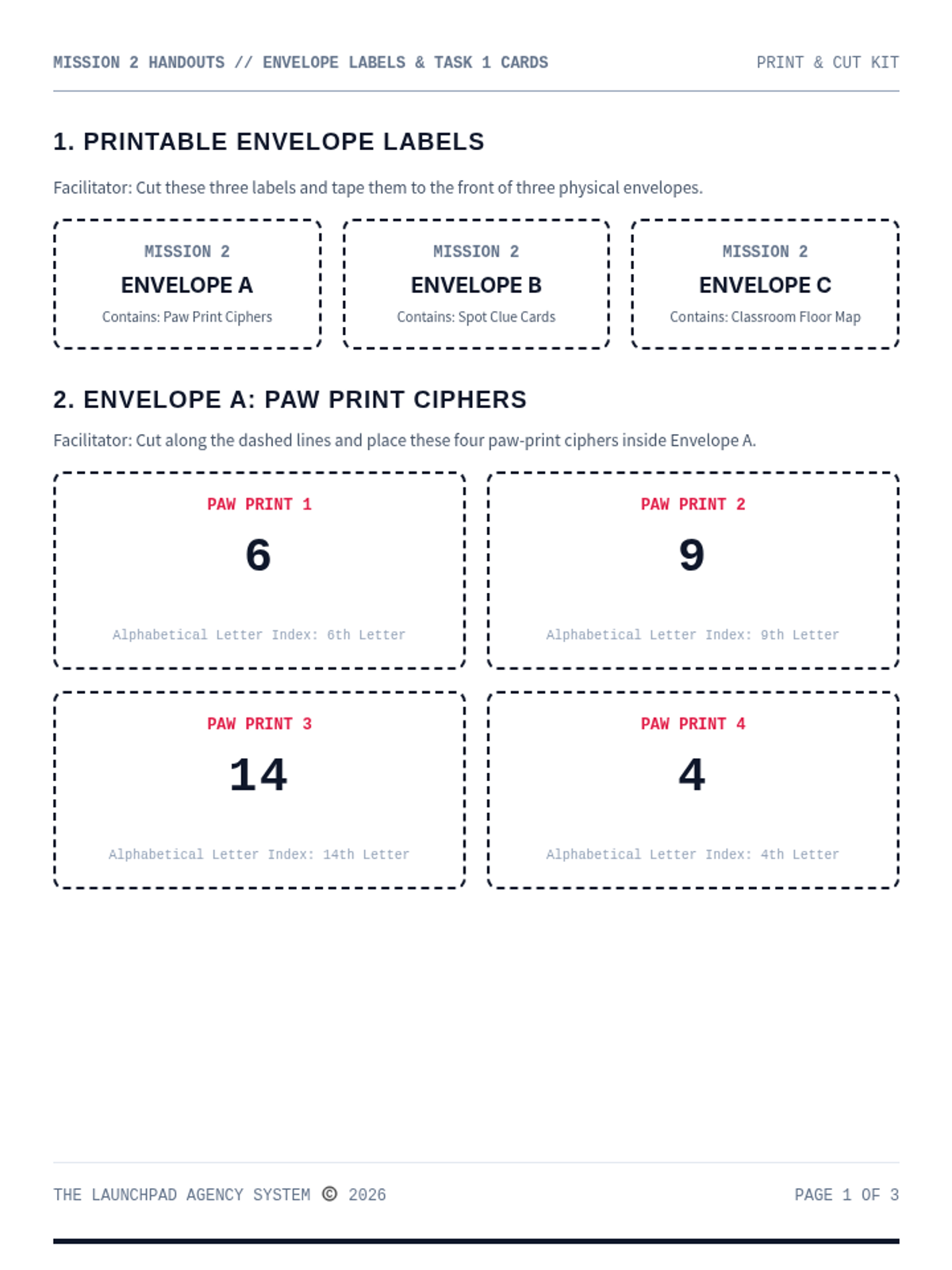
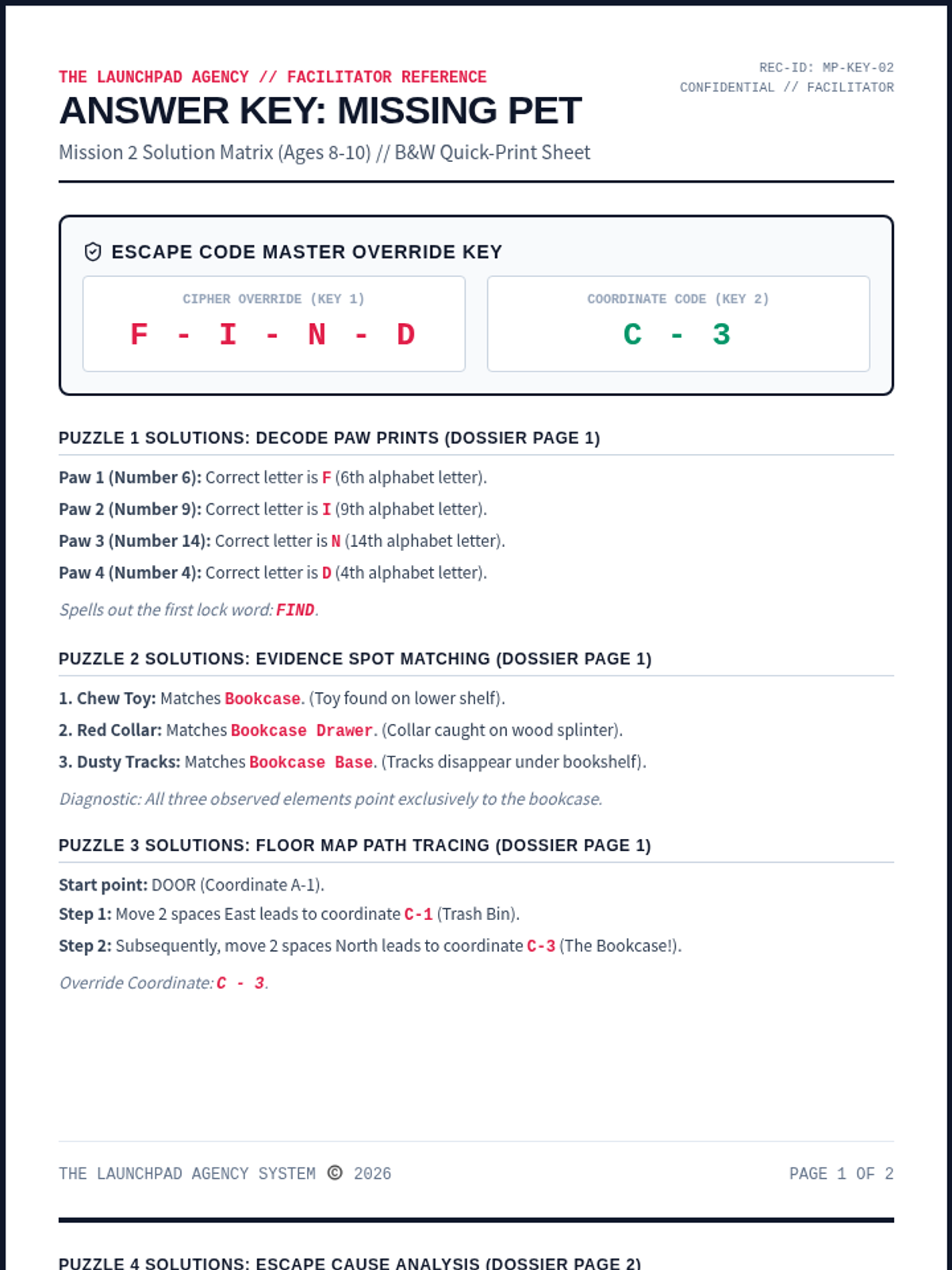
An observation-based escape mission for Ages 8-10. Recruits decode paw ciphers, match footprint evidence to classroom hiding spots, and compile a team map to find the missing class pet.
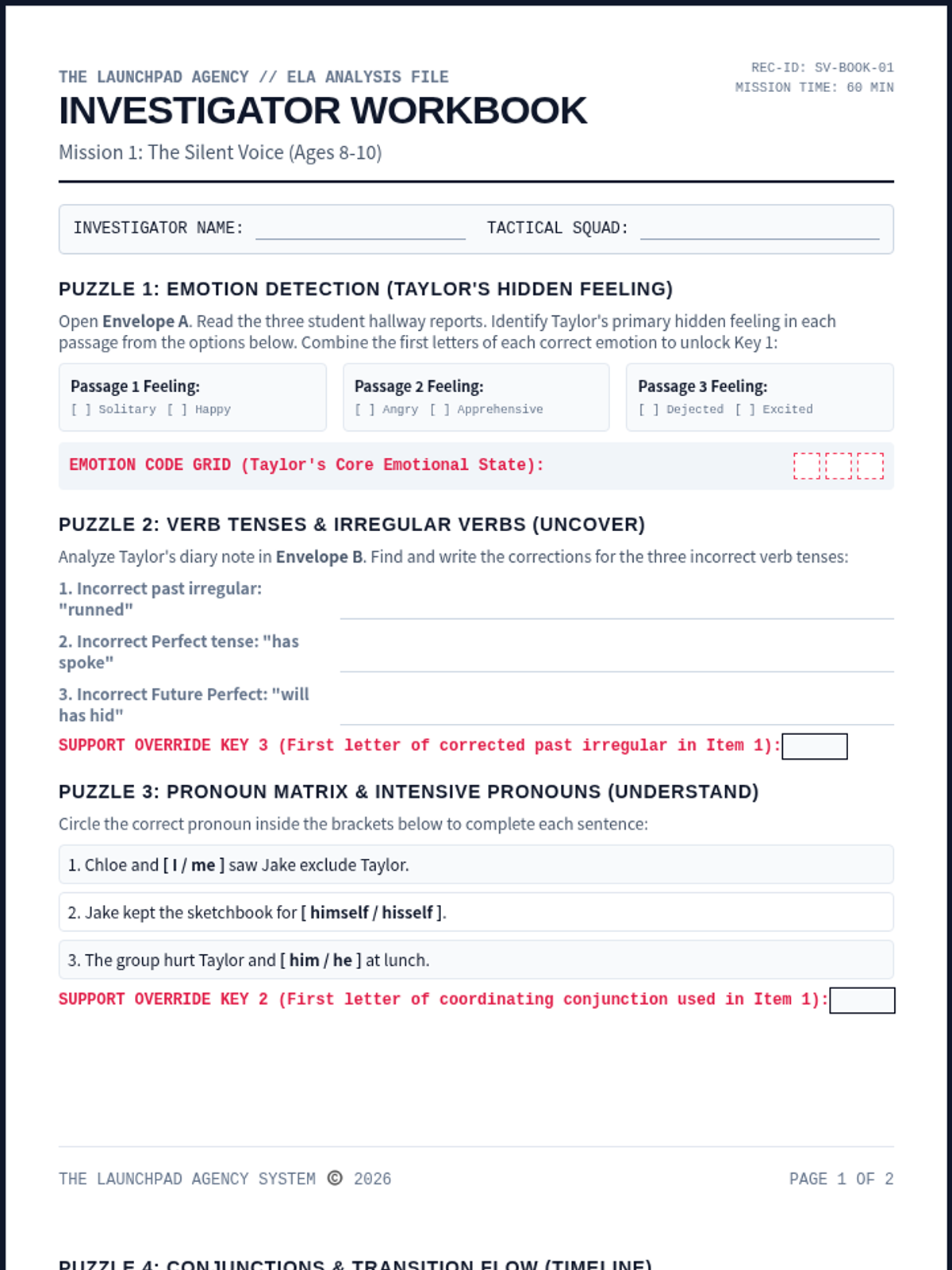
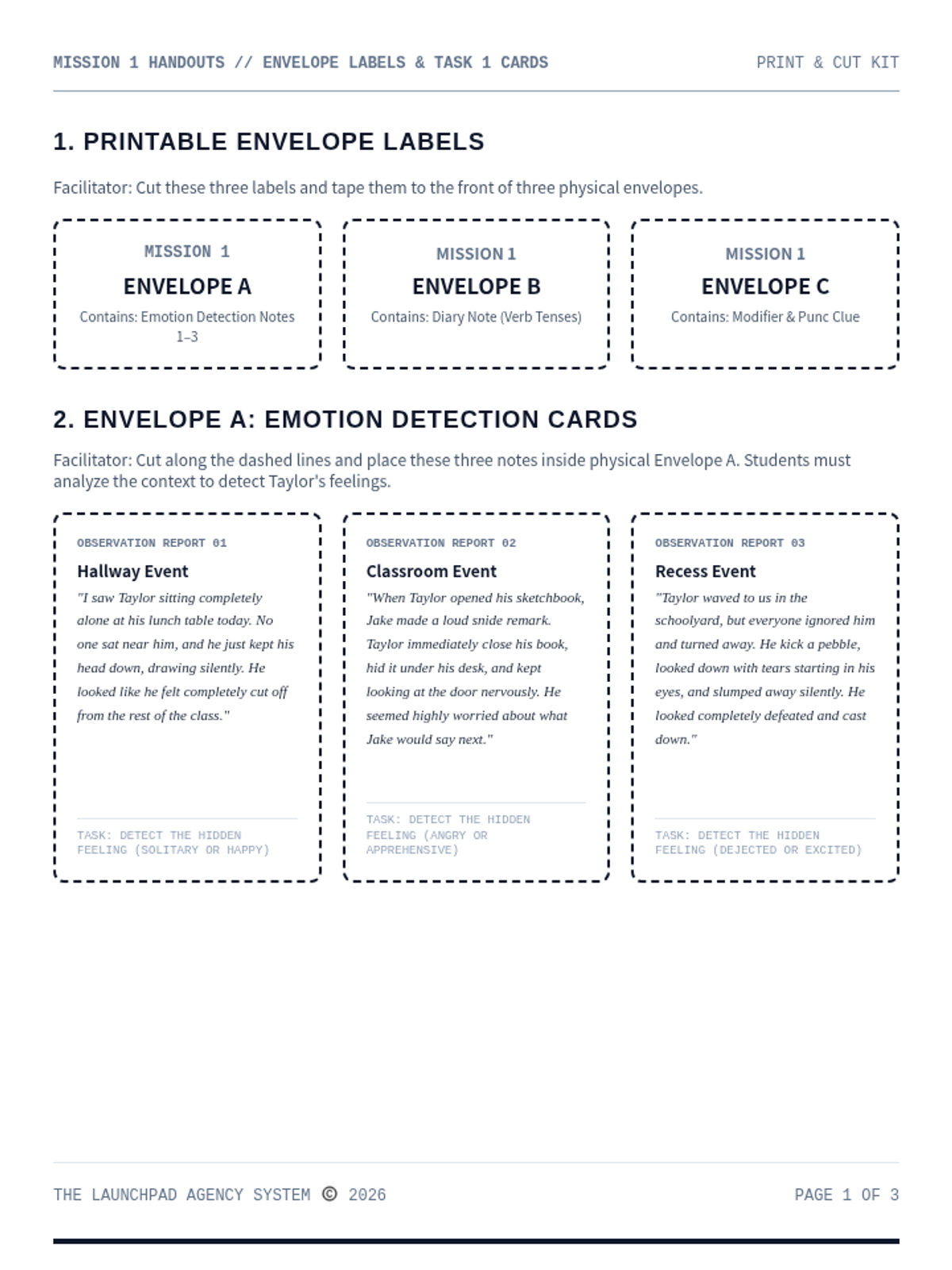
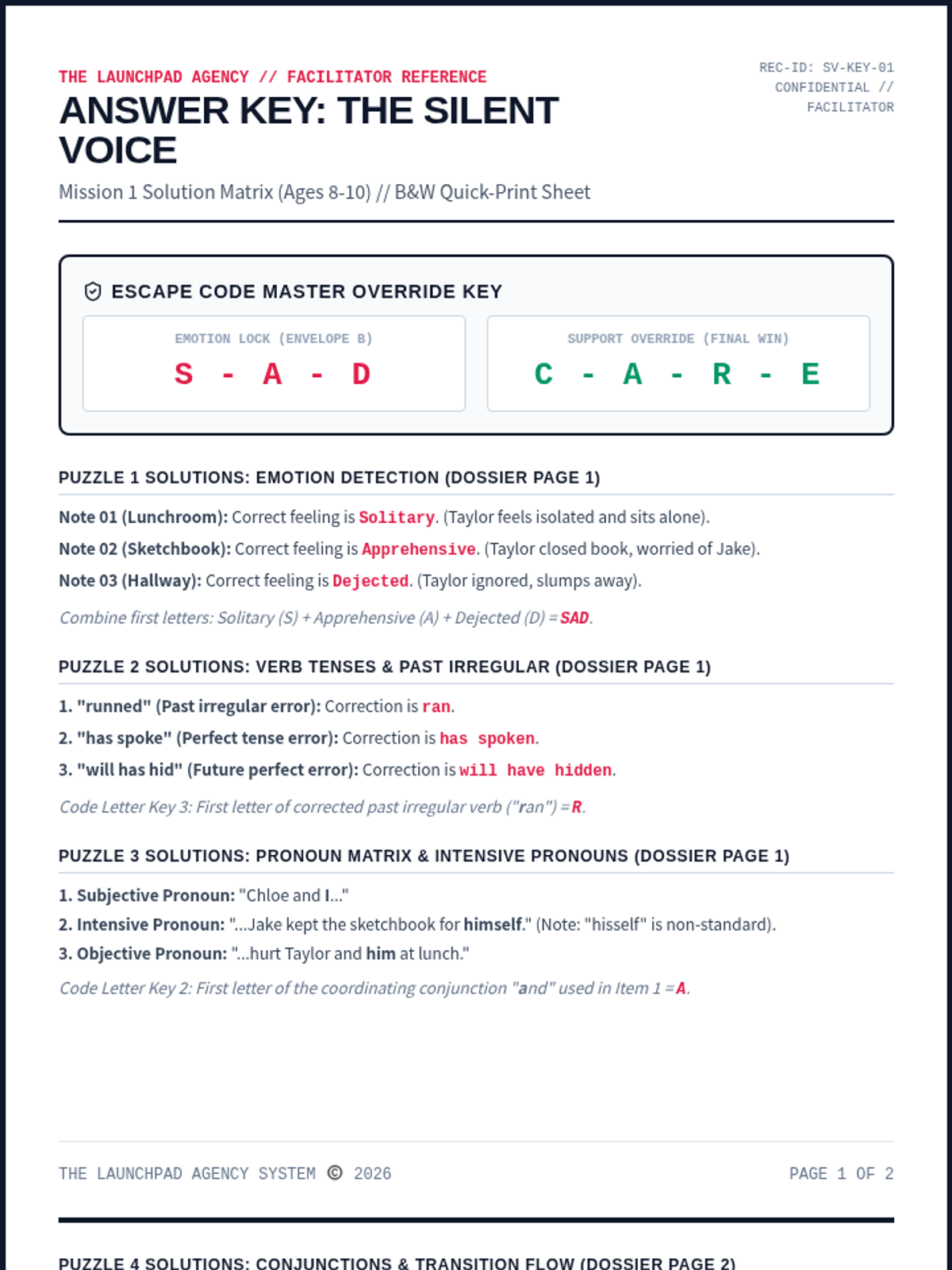
A cooperative social escape room for Ages 8-10 focused on inclusion and empathy. Recruits sort desk messages, build a timeline, and decode perspective cards to support a lonely classmate.
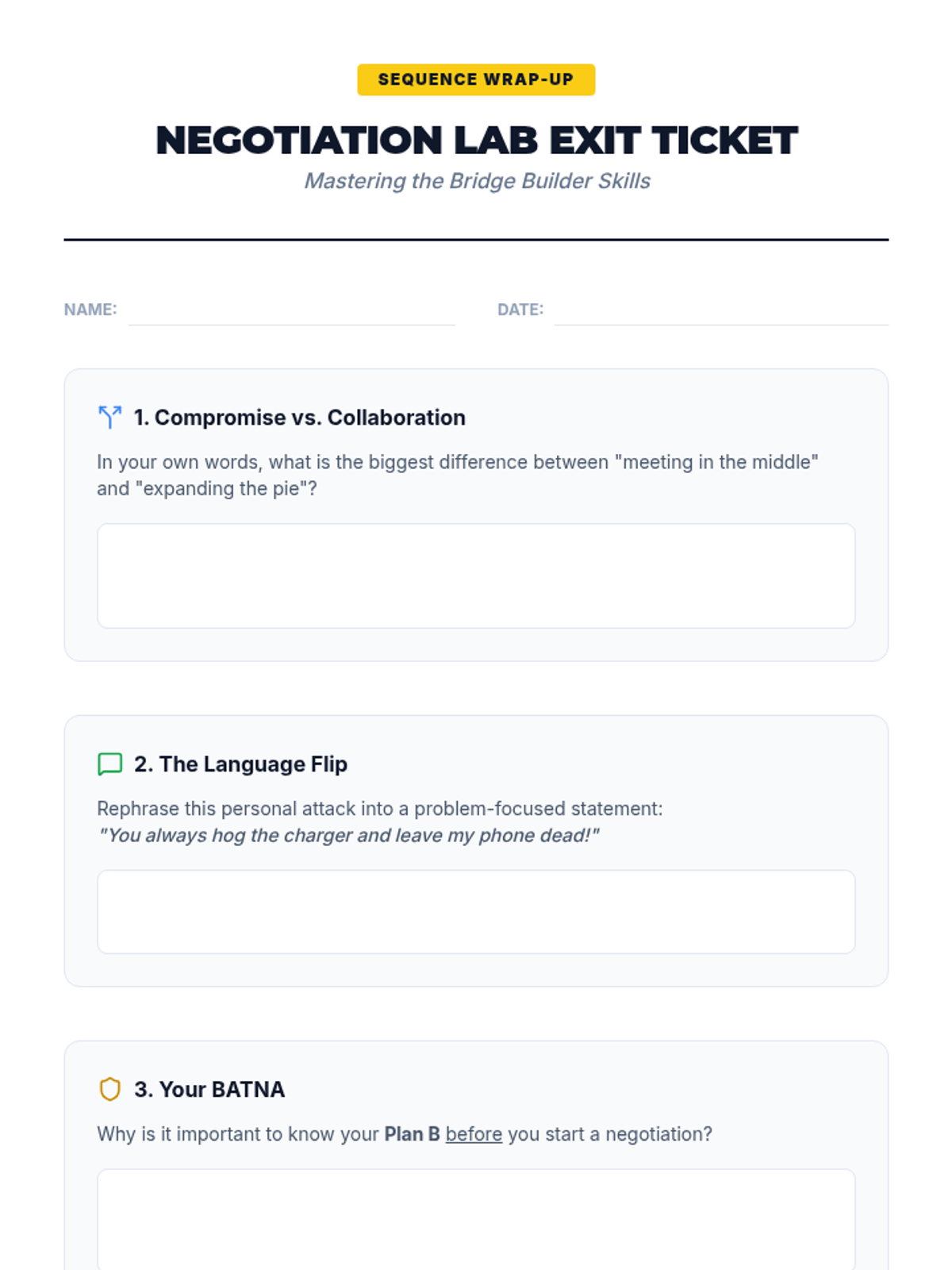
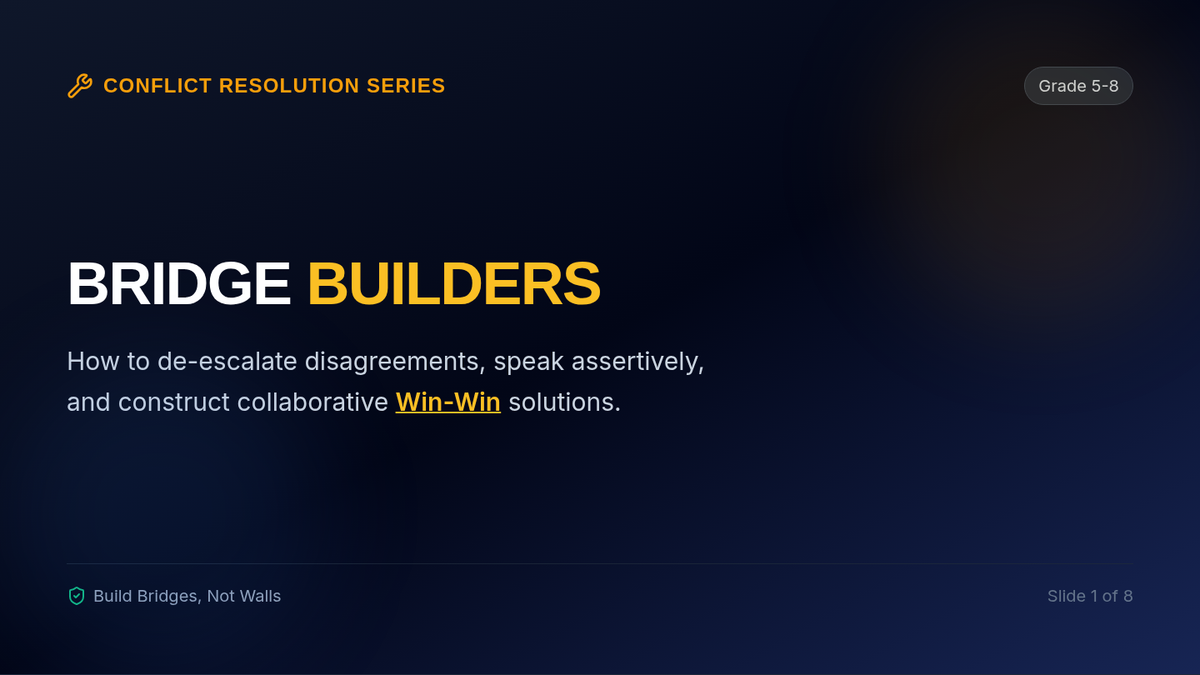
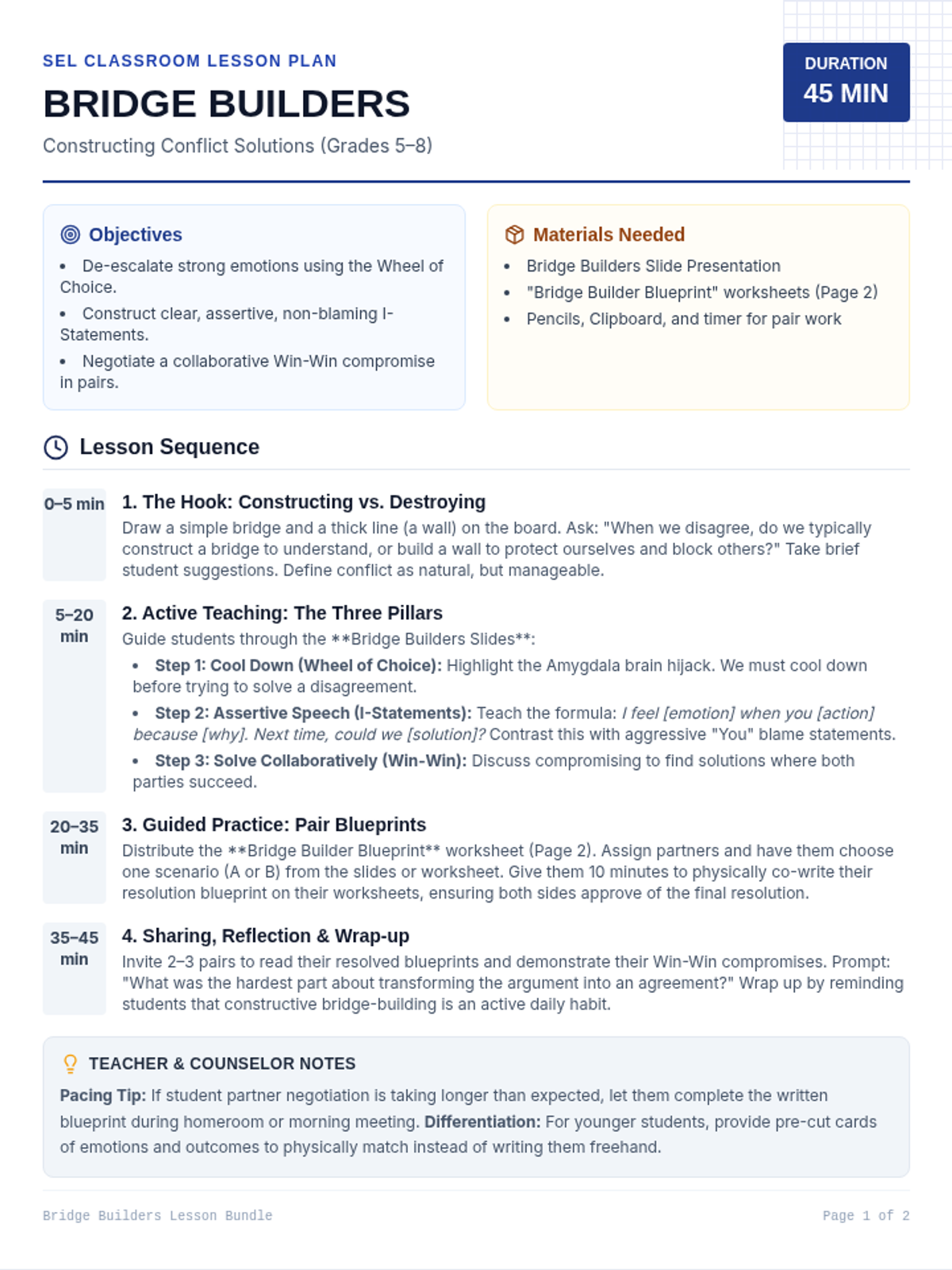
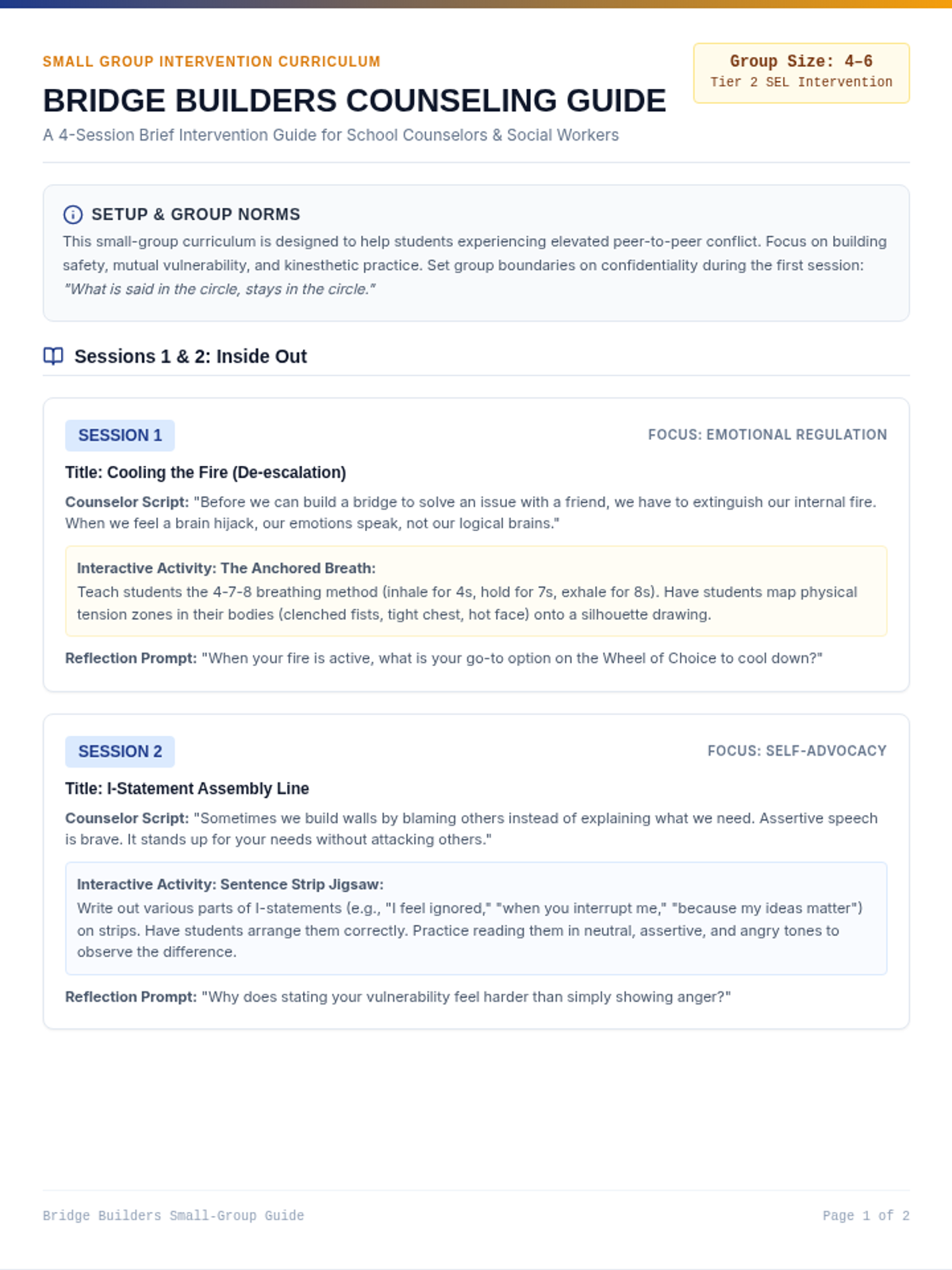
A comprehensive social-emotional learning lesson package designed to teach middle-grade students how to de-escalate conflicts, communicate assertively using I-Statements and Active Listening, and negotiate collaborative Win-Win solutions. Includes visual presentation slides, a complete 45-minute classroom lesson plan with an integrated student activity sheet, and a specialized small-group counseling guide.
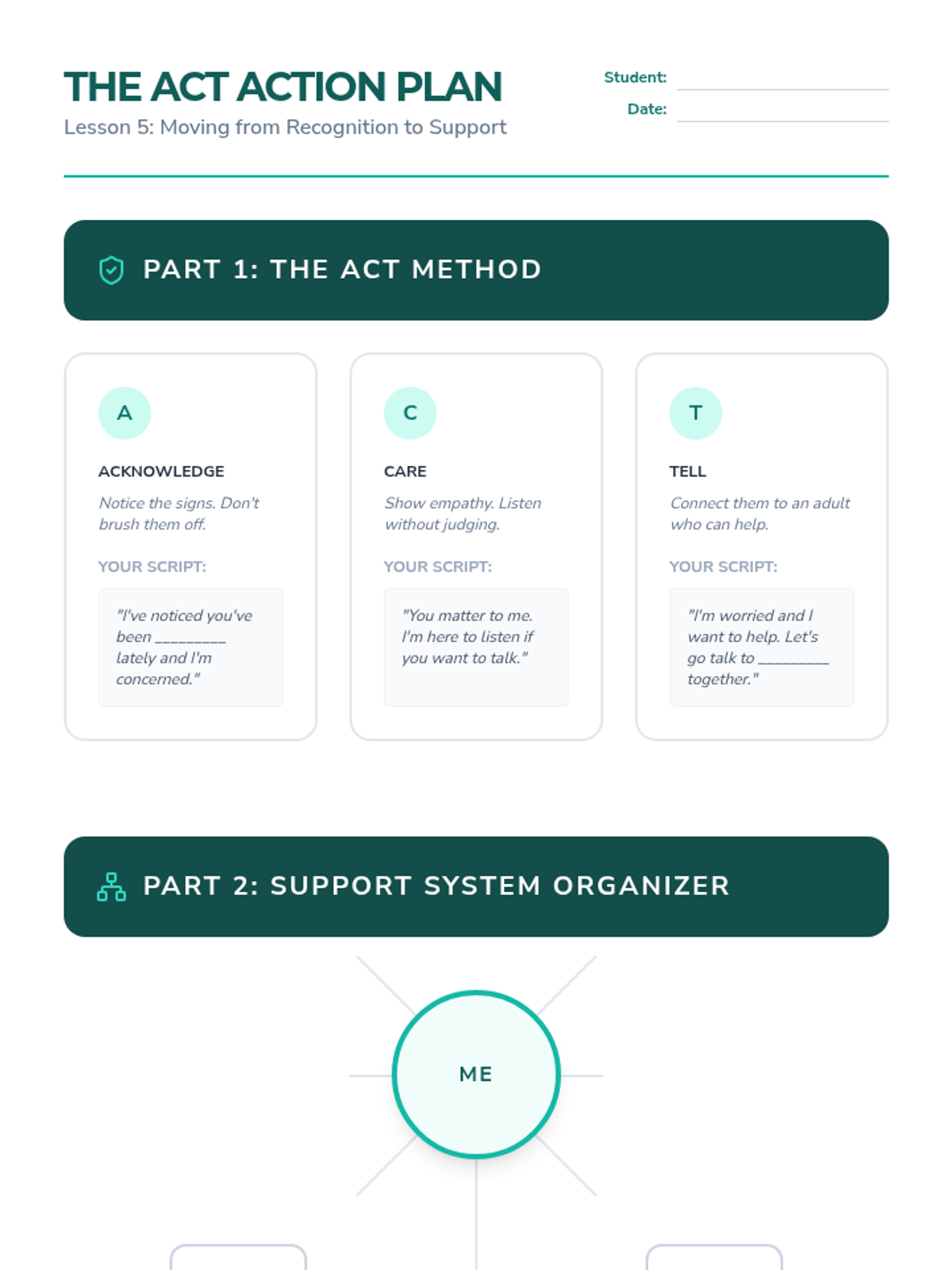
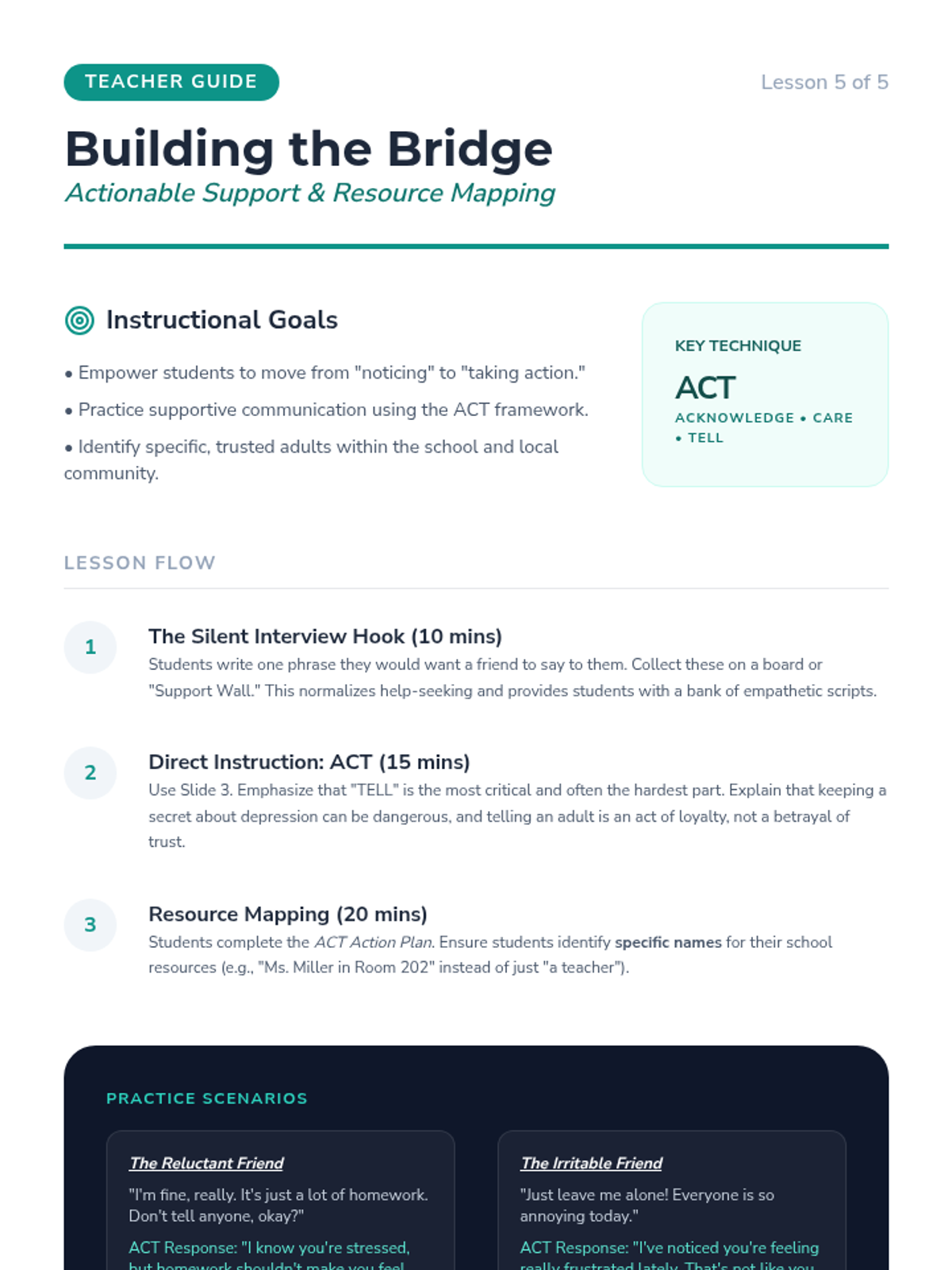
Teaches the ACT (Acknowledge, Care, Tell) method and helps students map out their own school and community support networks.
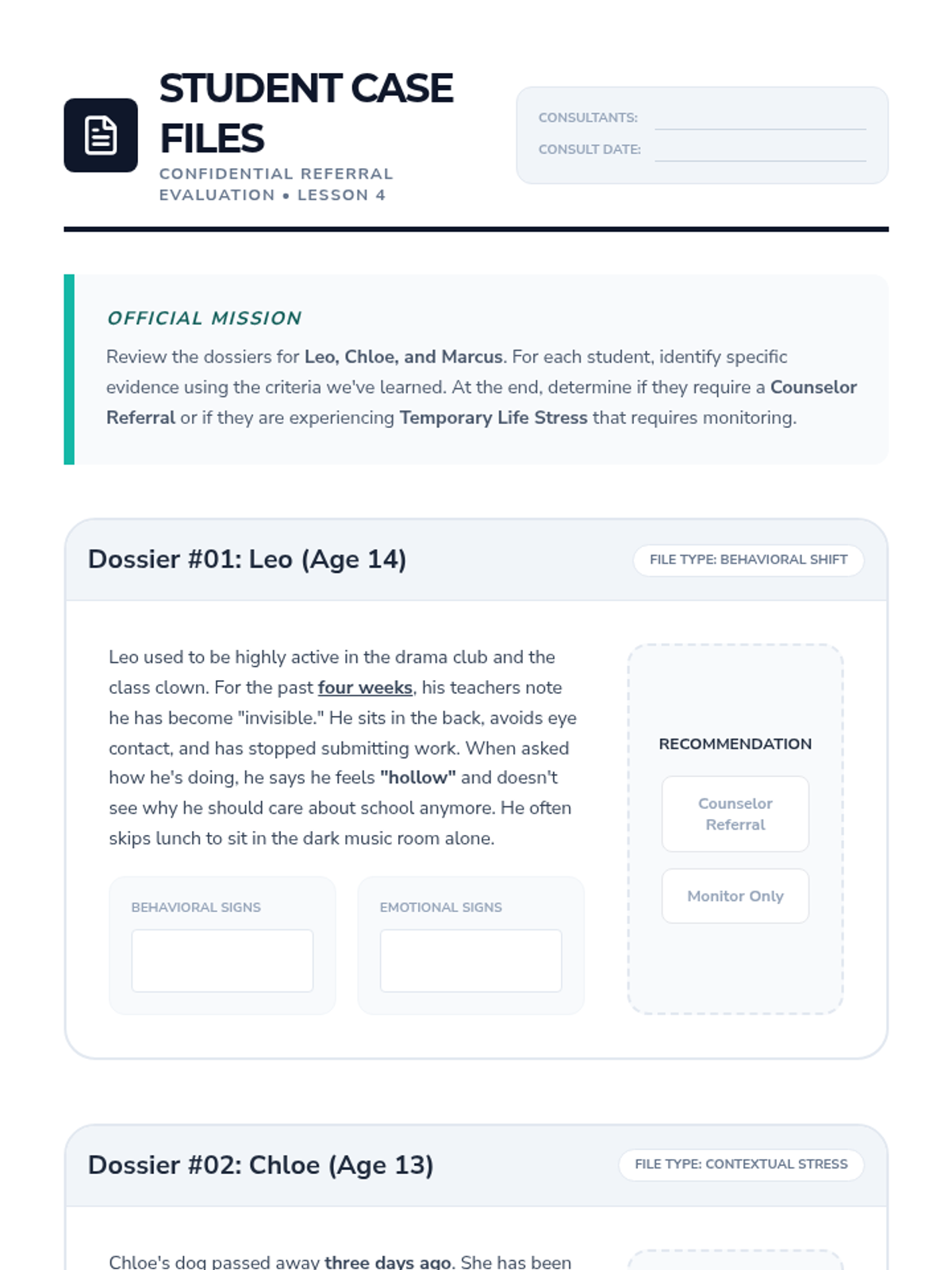
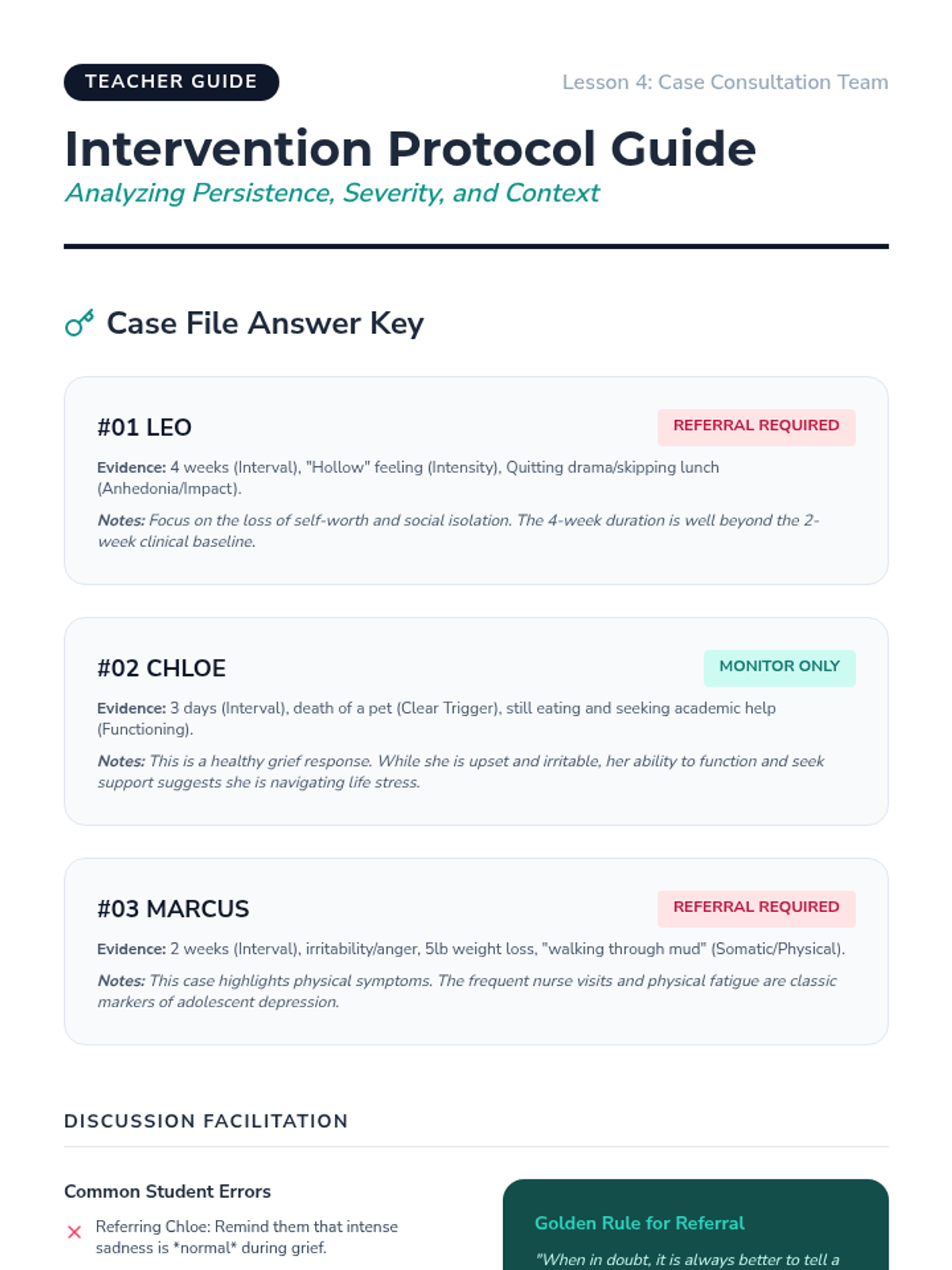
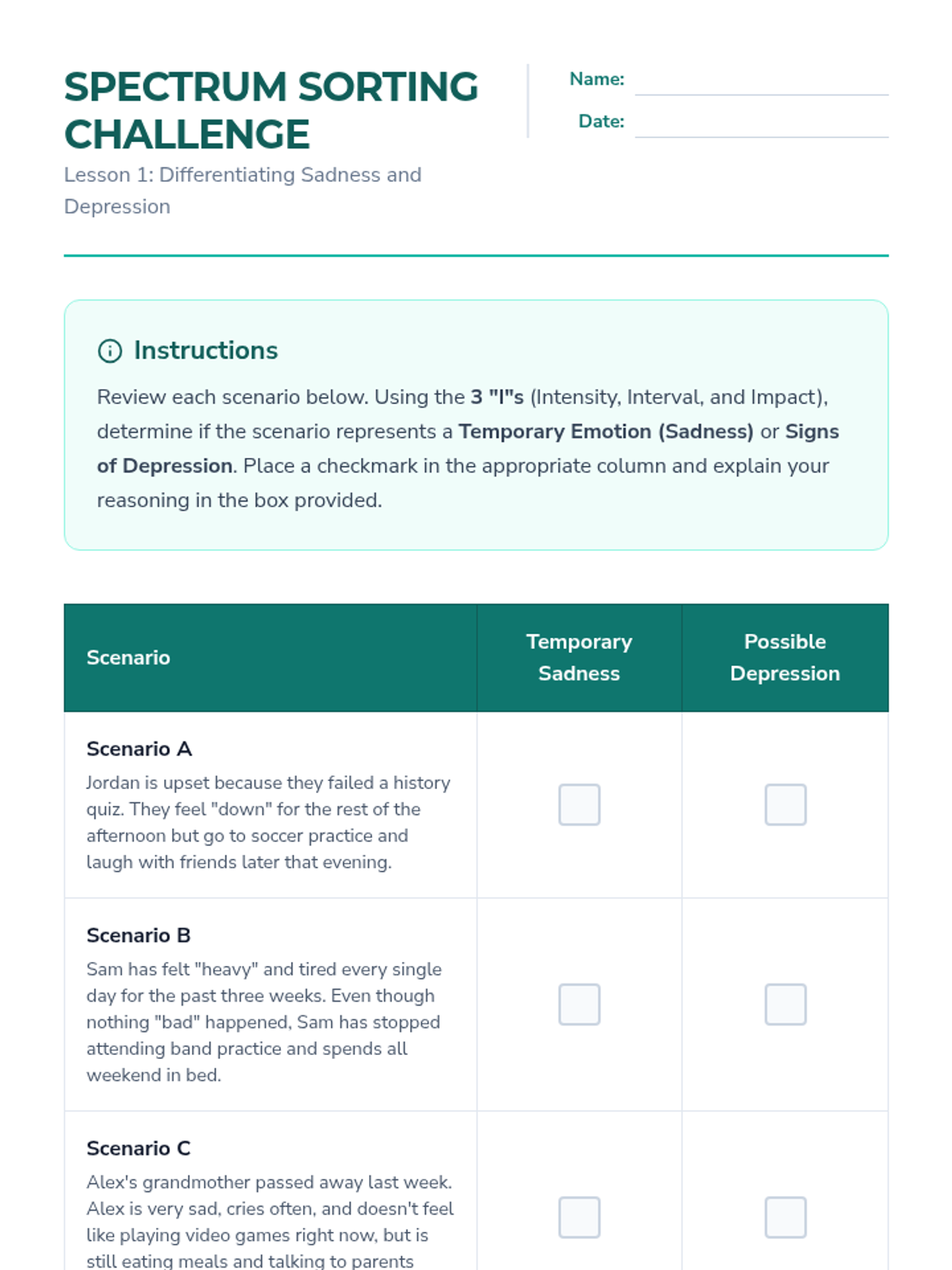
Students apply their knowledge to complex scenarios to determine if situations represent normal life stress or signs requiring intervention.
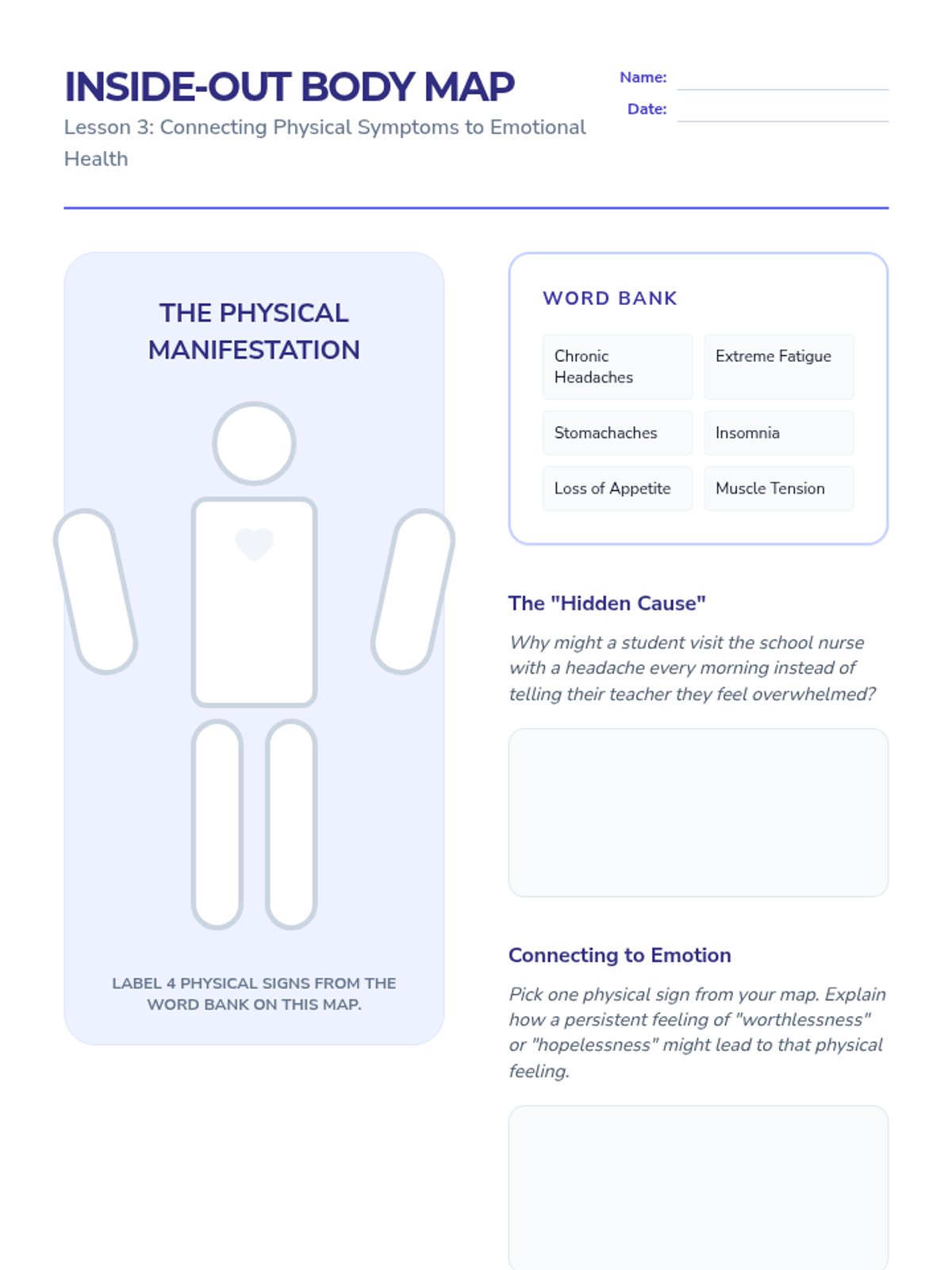
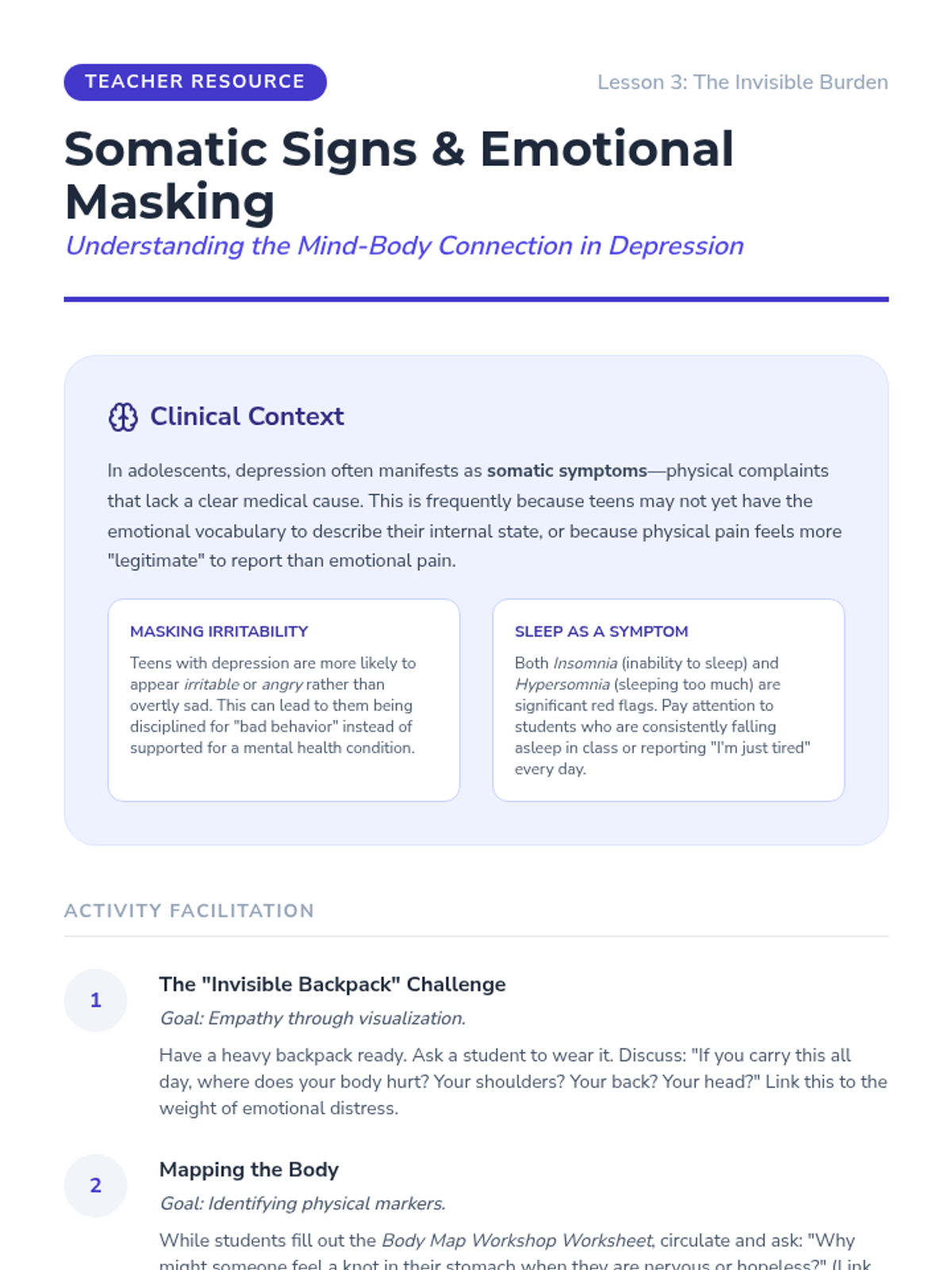
Explores somatic symptoms like sleep and appetite changes, illustrating how depression affects both the body and the mind.
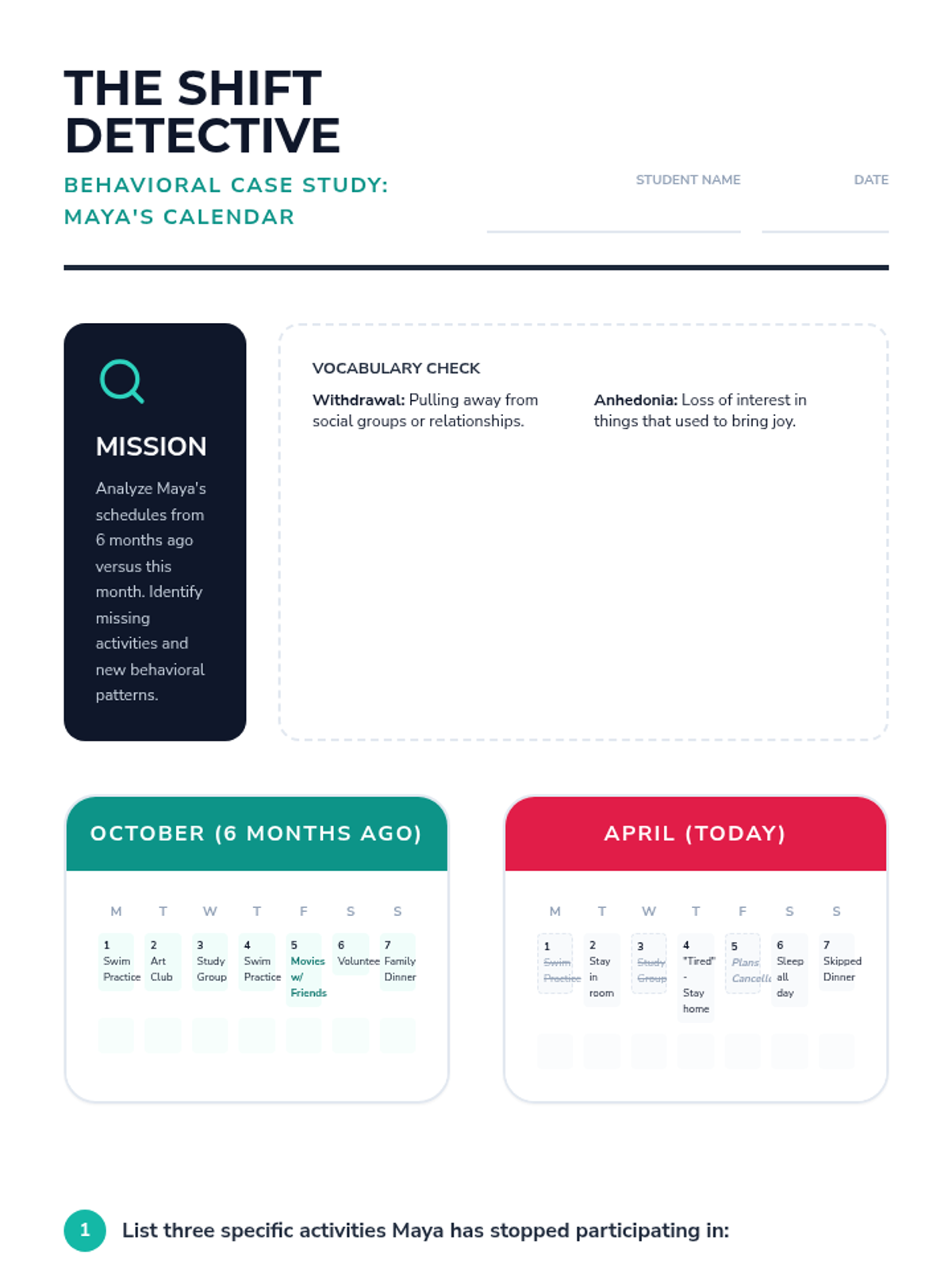
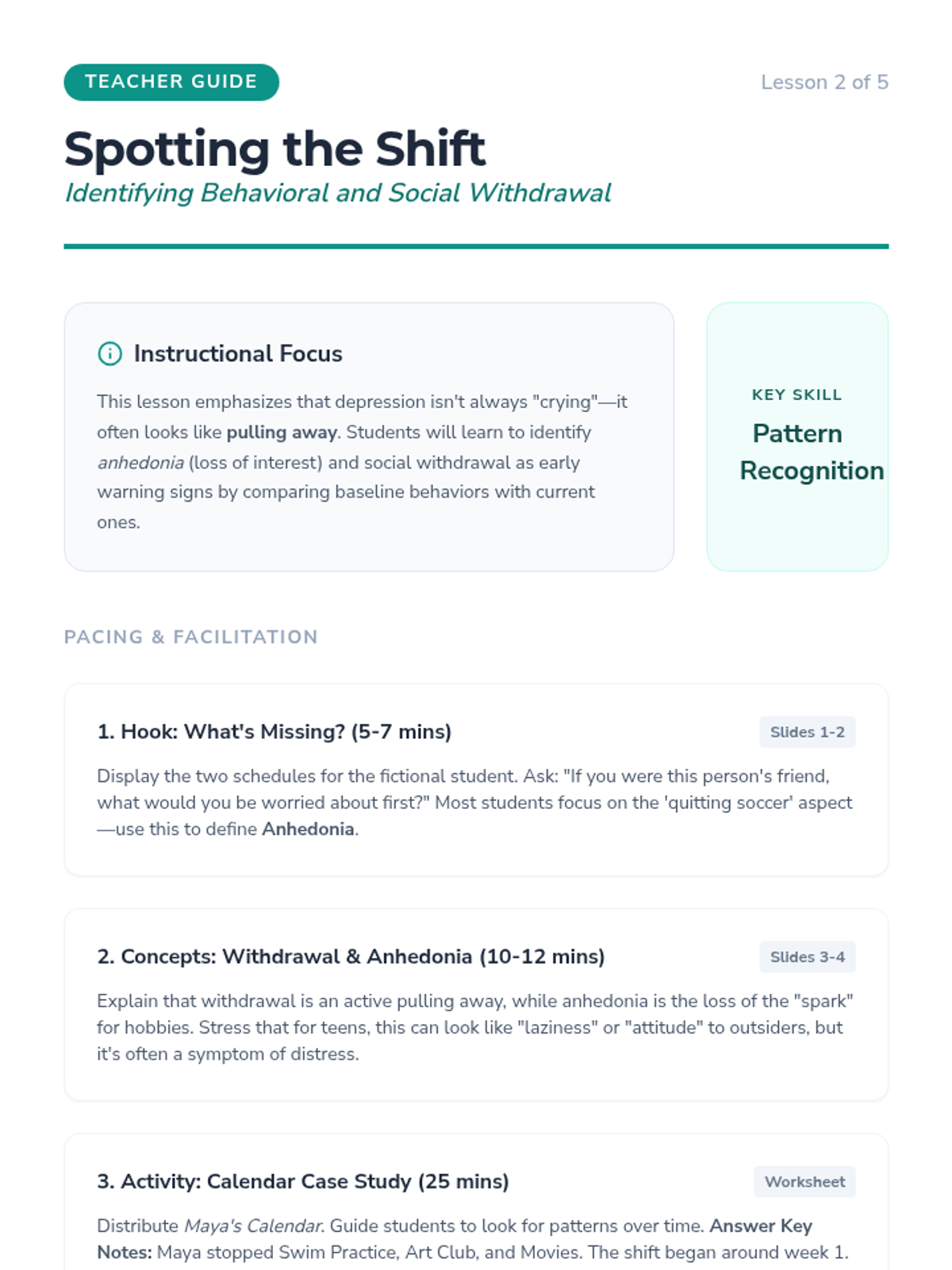
Focuses on observable behavioral shifts, specifically social withdrawal and loss of interest, using 'before and after' case studies.
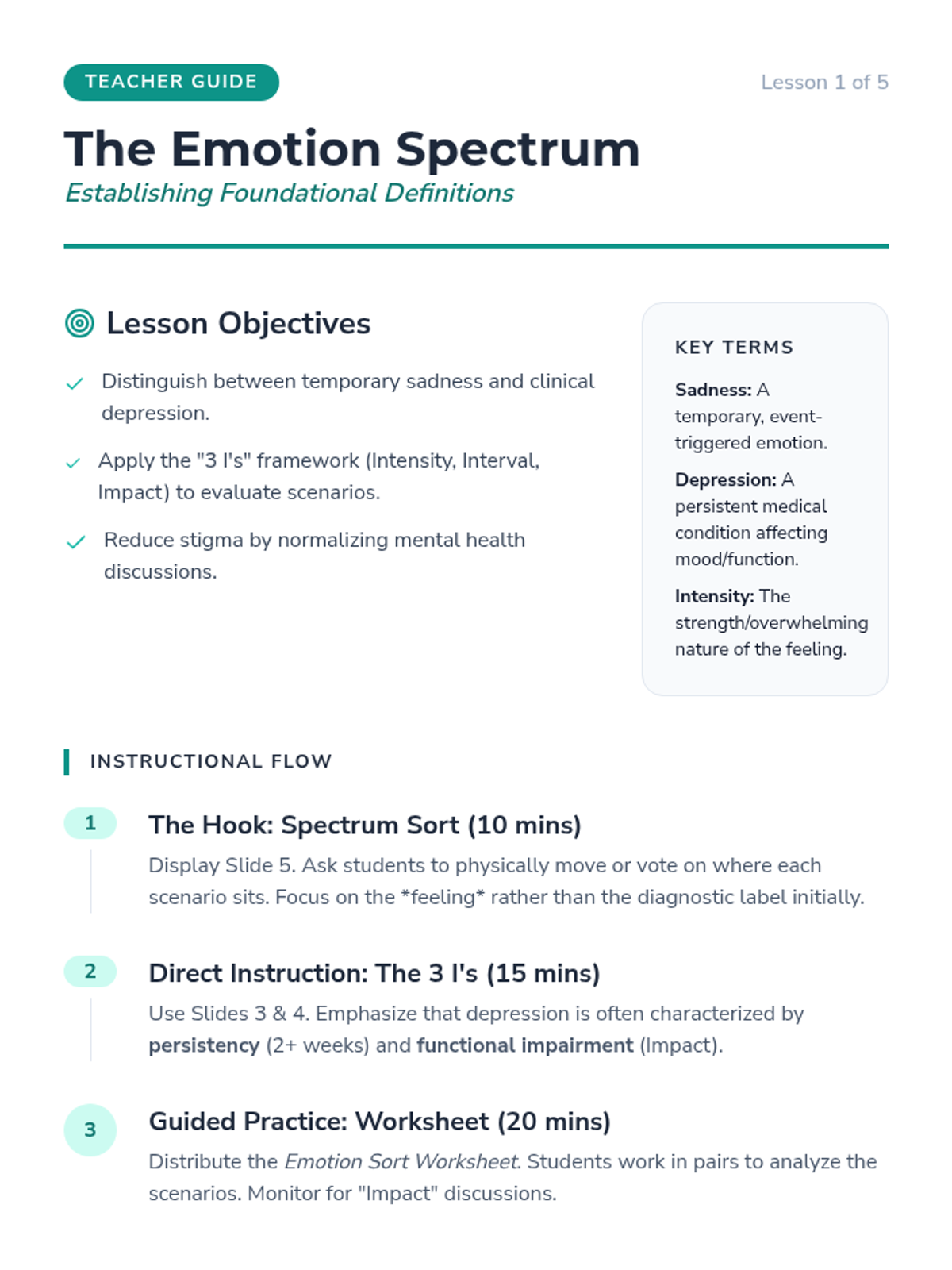
Students define sadness and clinical depression, comparing duration, intensity, and impact to establish a baseline for mental health literacy.
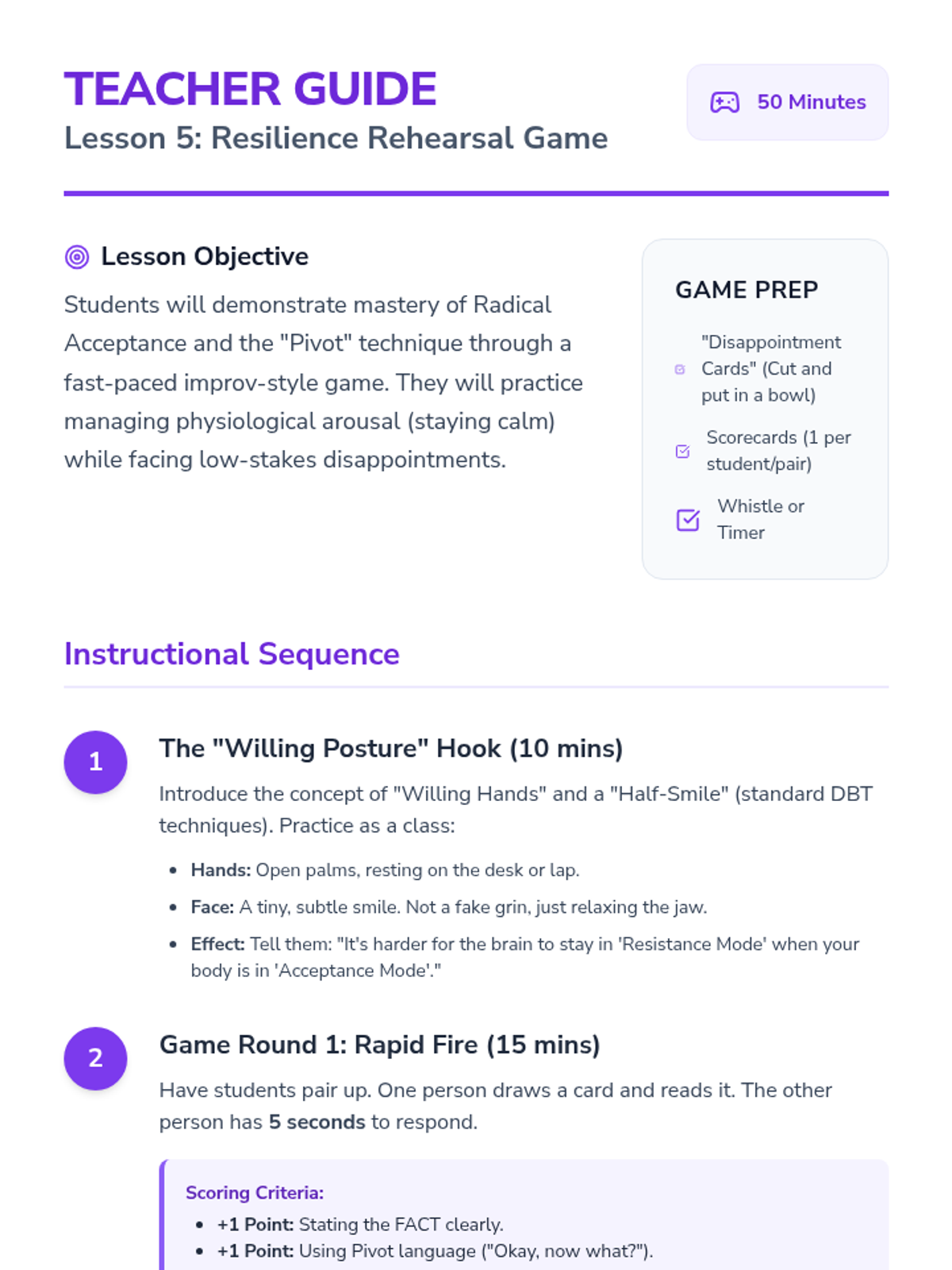
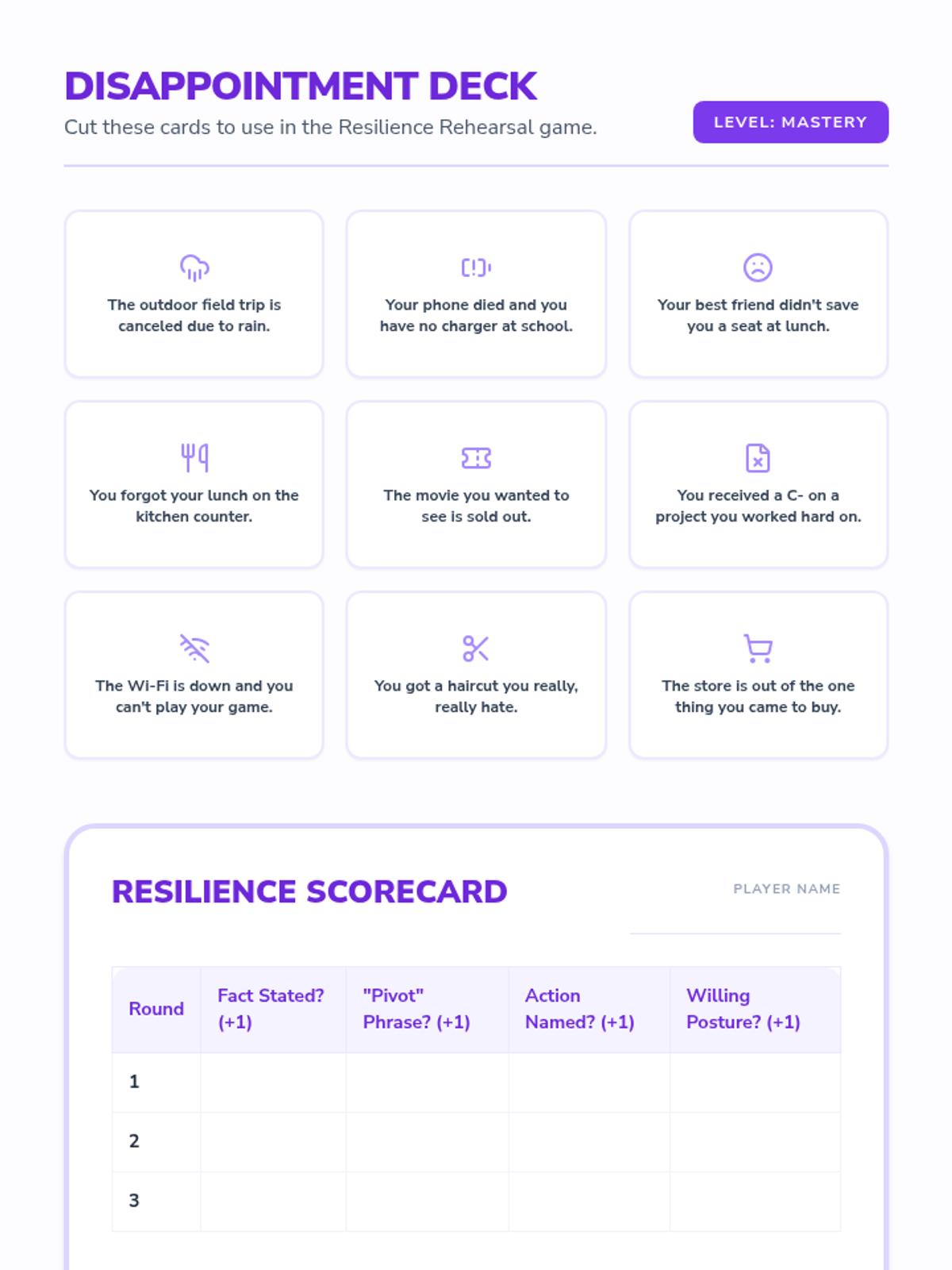
Students draw random 'Disappointment Cards' (e.g., game canceled, shoes ruined) and perform a quick-response drill demonstrating acceptance language. This gamified approach builds muscle memory for low-stakes stressors.
This lesson focuses on the transition moment: once reality is accepted, what comes next? Students work in groups to take 'unsolvable' problems, apply acceptance, and then brainstorm valid next steps. This bridges the gap between coping and action.
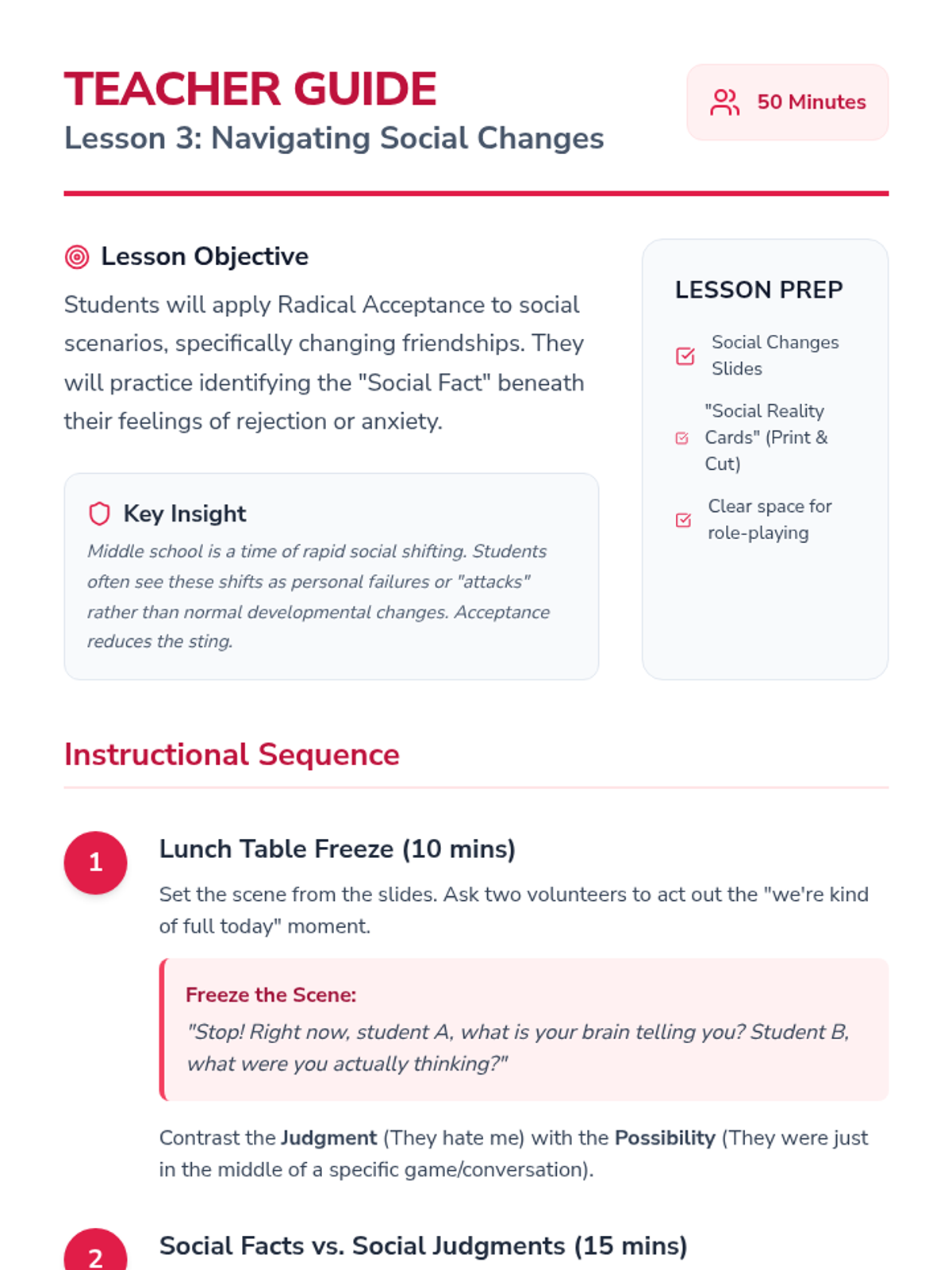
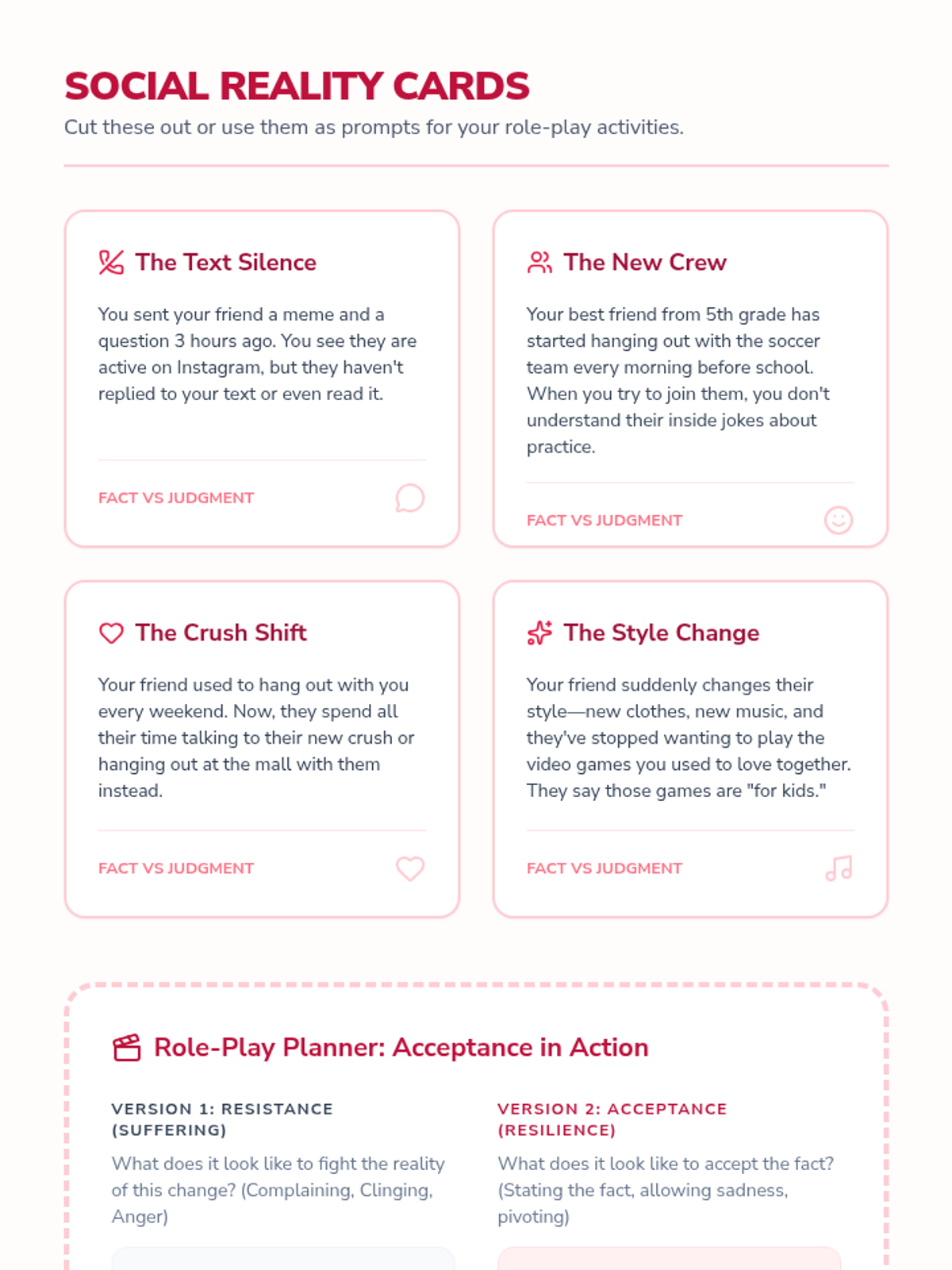
Students address the reality that friendships change in middle school through scripted role-plays. They practice accepting that a friend might be busy or changing interests without internalizing it as a failure. The focus is on reducing social anxiety through reality acceptance.
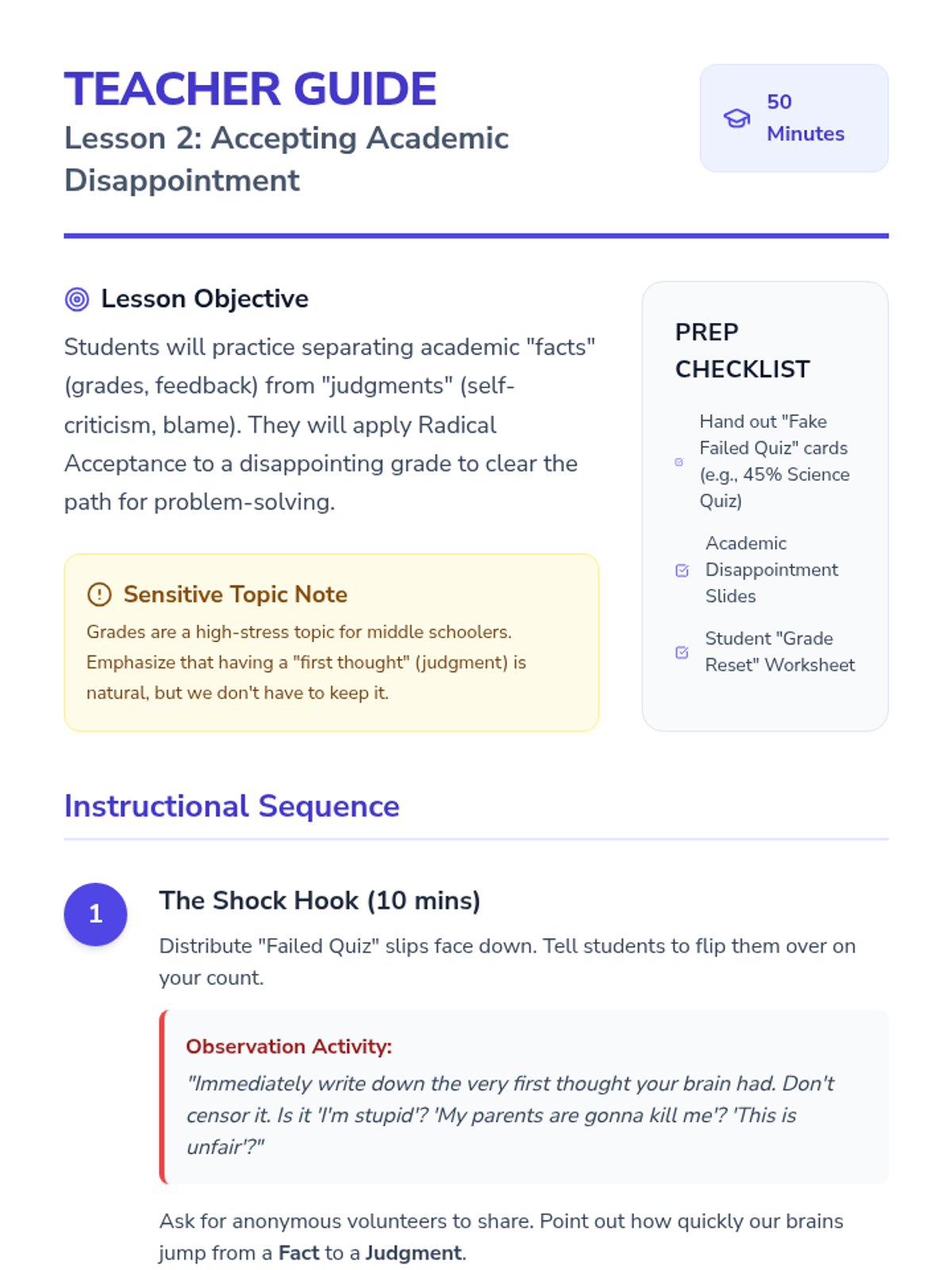
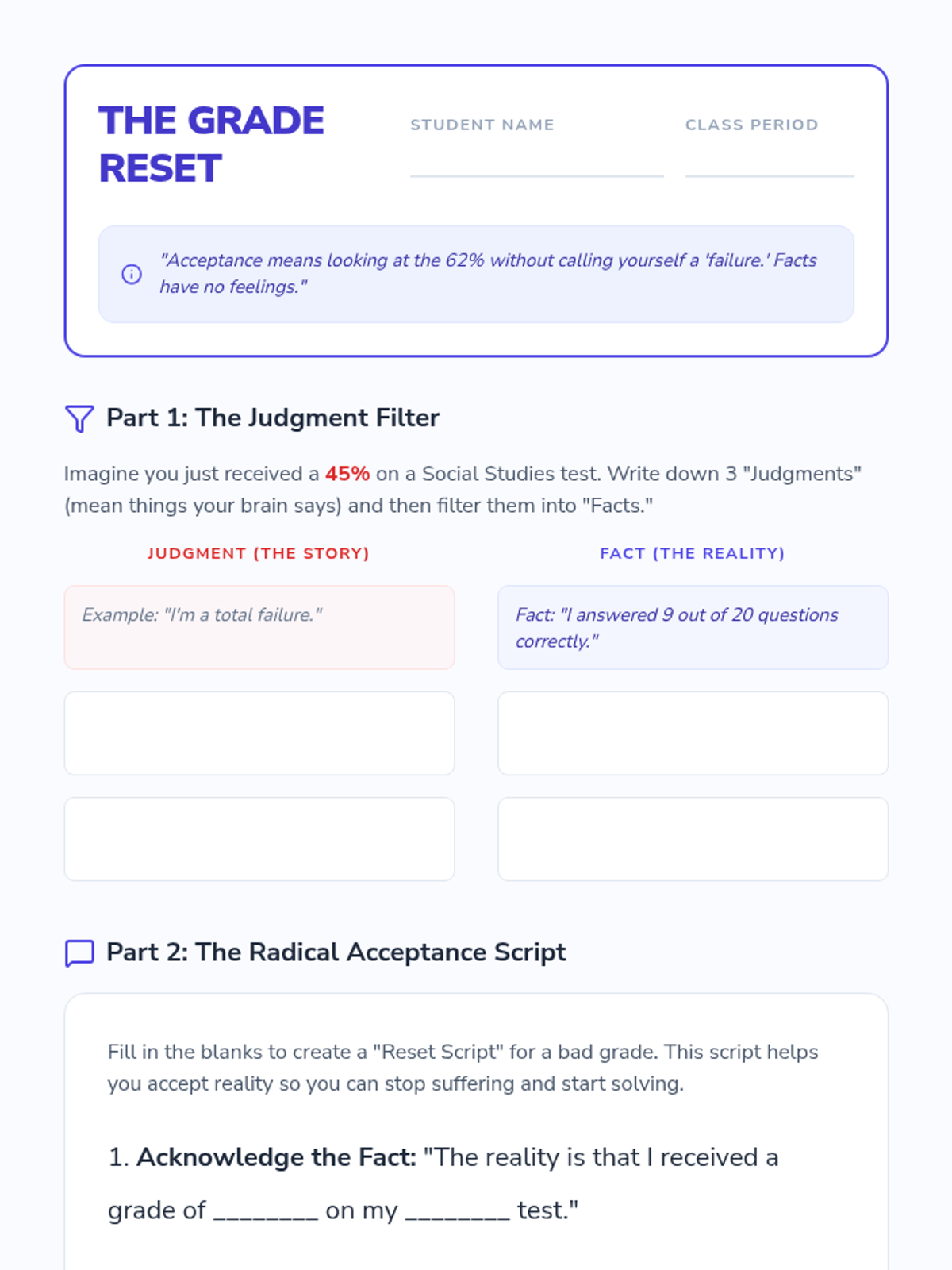
Using a scenario about receiving a lower-than-expected test grade, students practice separating the fact (the grade) from the judgment (I am stupid/The teacher is mean). They practice acknowledging the grade to clear the way for a study plan. This applies acceptance specifically to school performance.
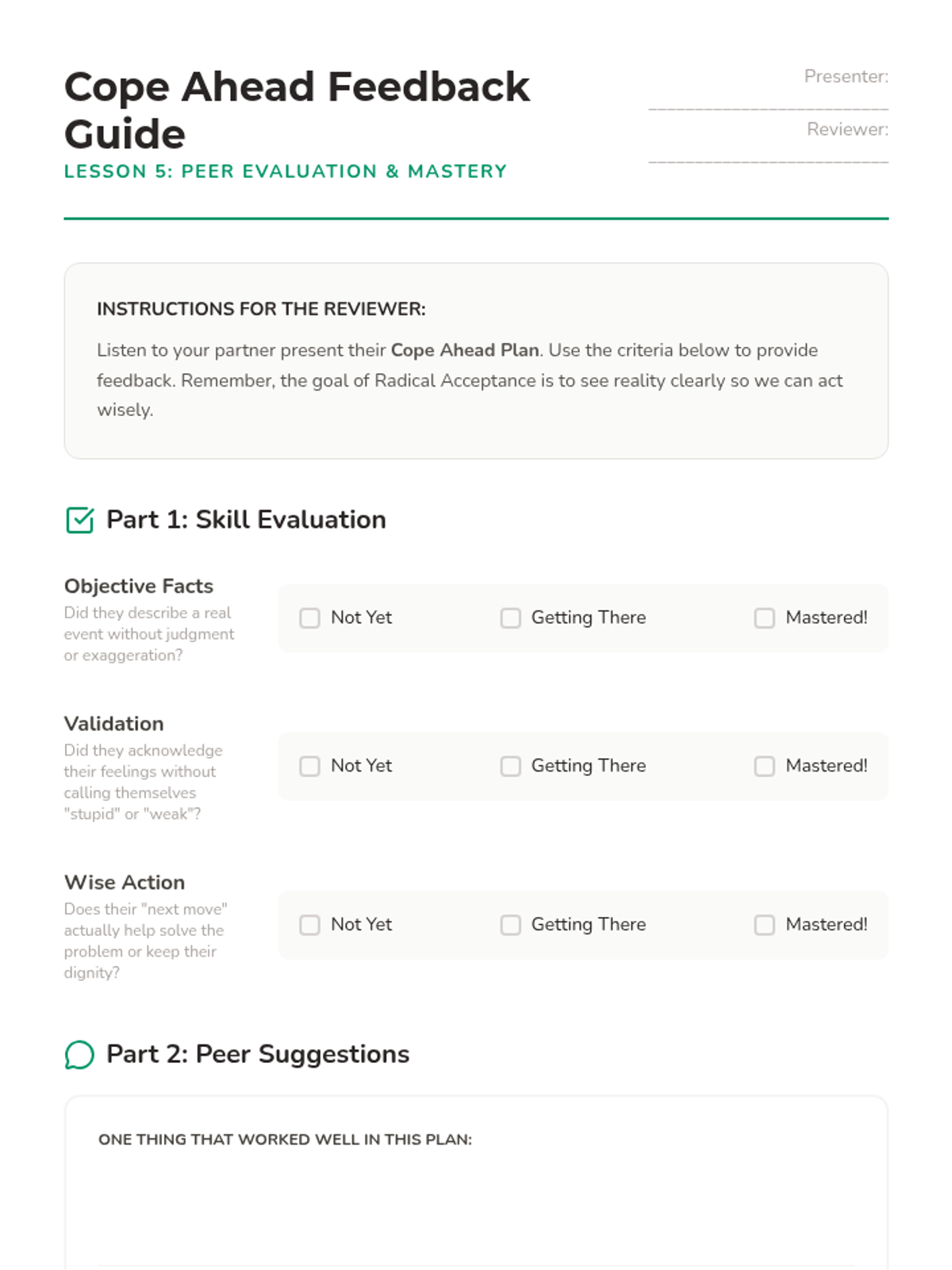
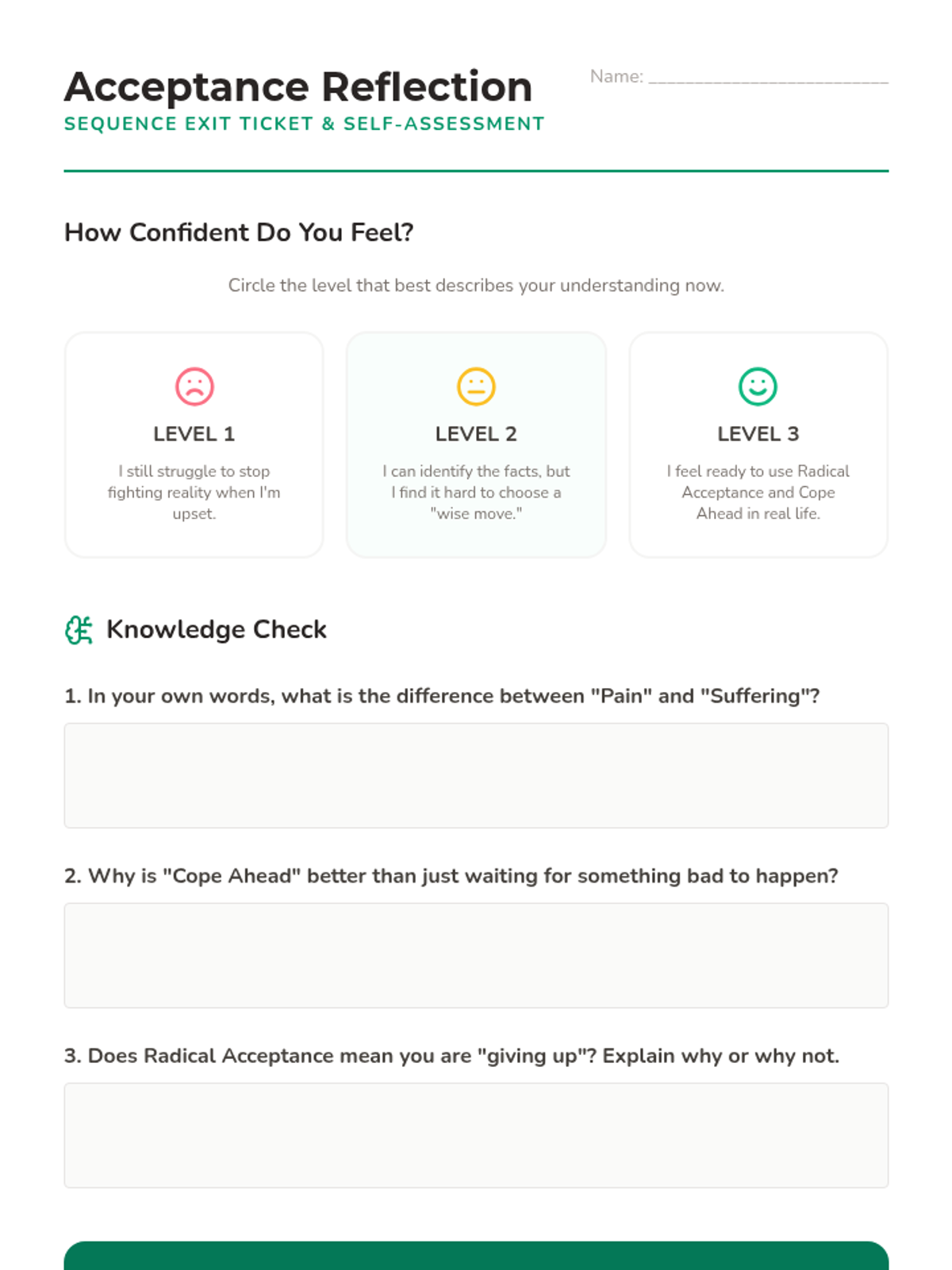
Students evaluate their acceptance skills through peer review and reflect on the difference between acceptance and resignation.
Focuses on the concept of opportunity cost through role-playing scenarios, teaching students to analyze the value of what is given up when making choices.
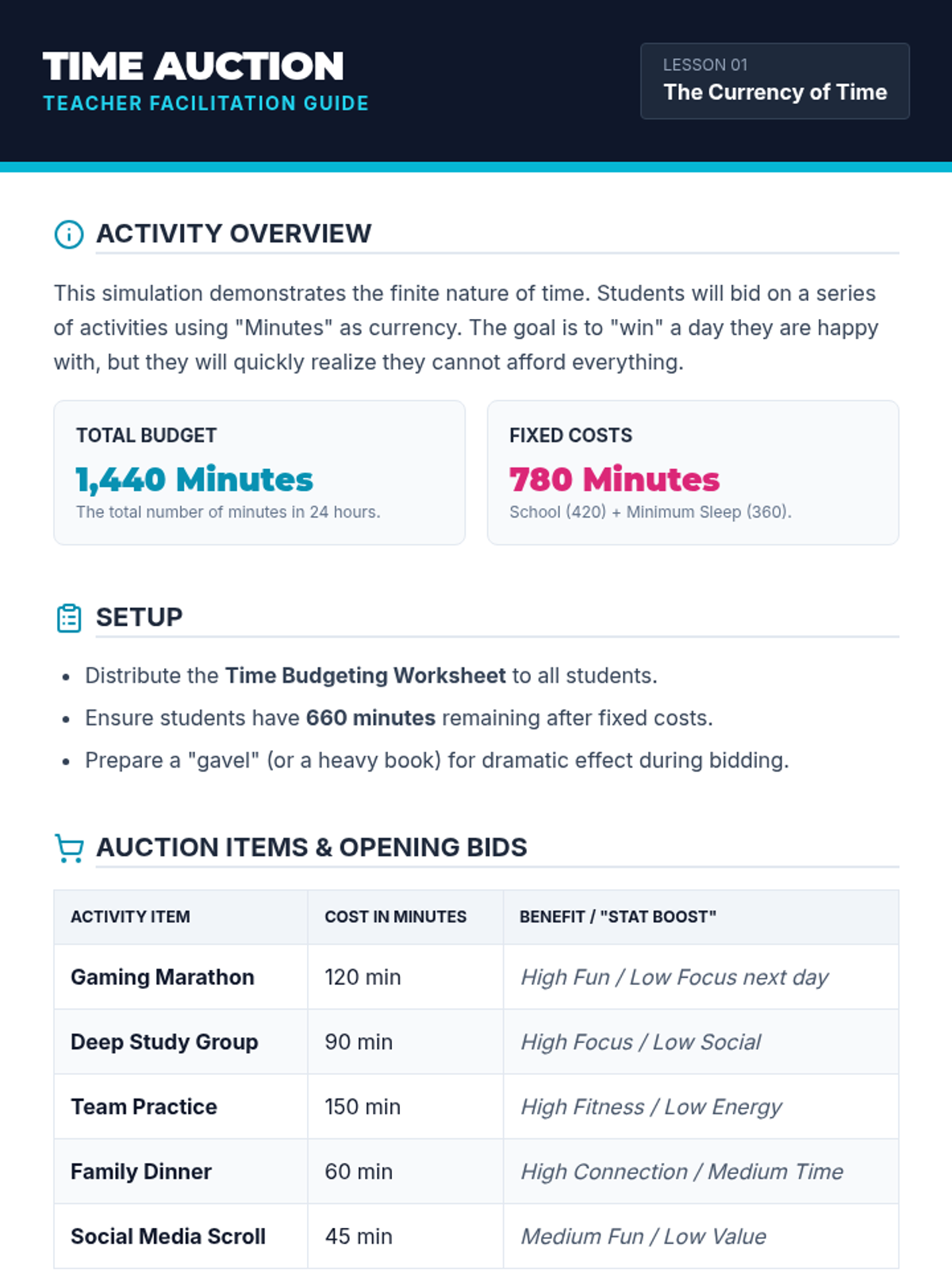
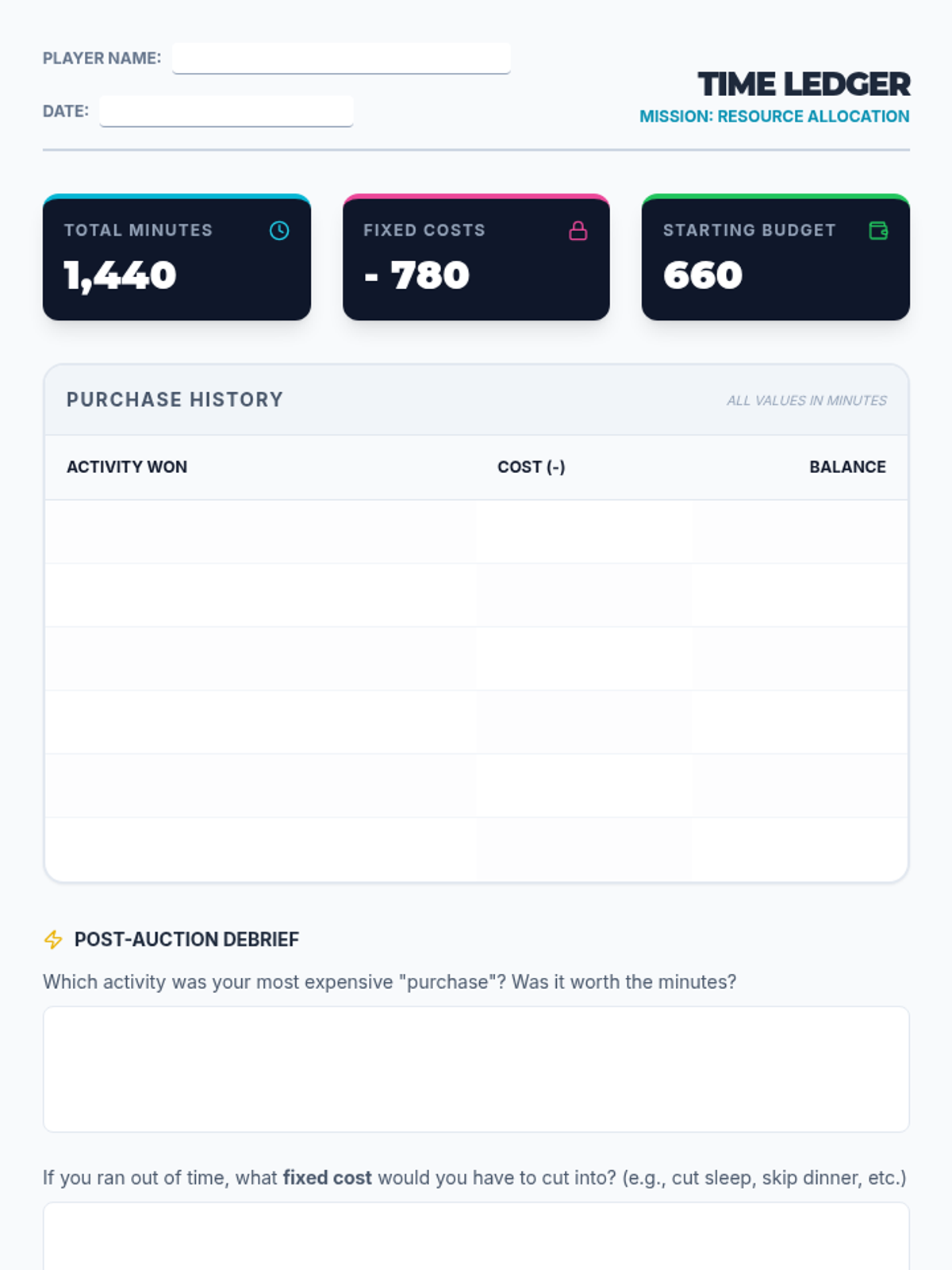
Introduces time as a finite currency through a game economy where students 'buy' activities, establishing the foundational constraint of resource management.
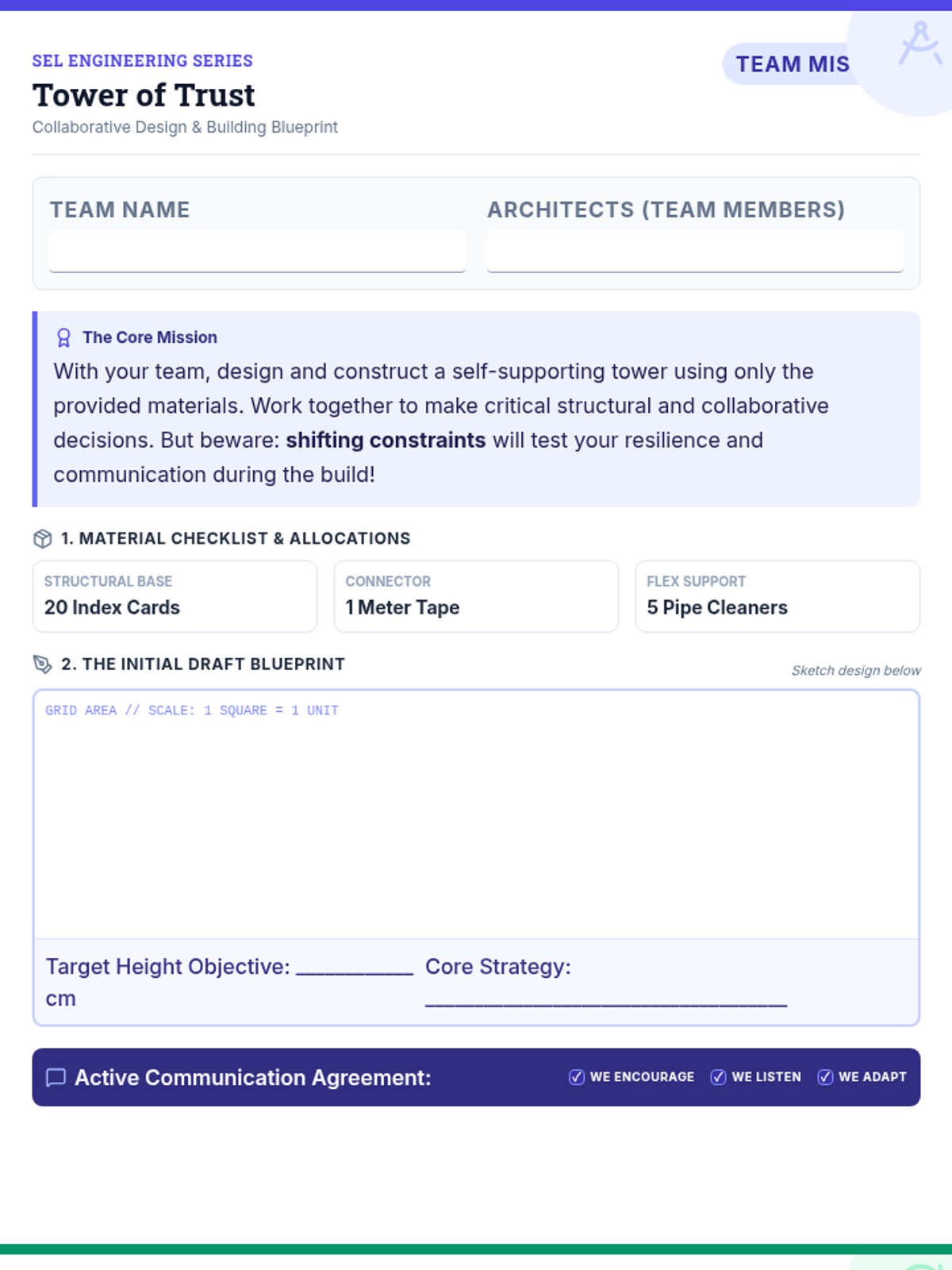
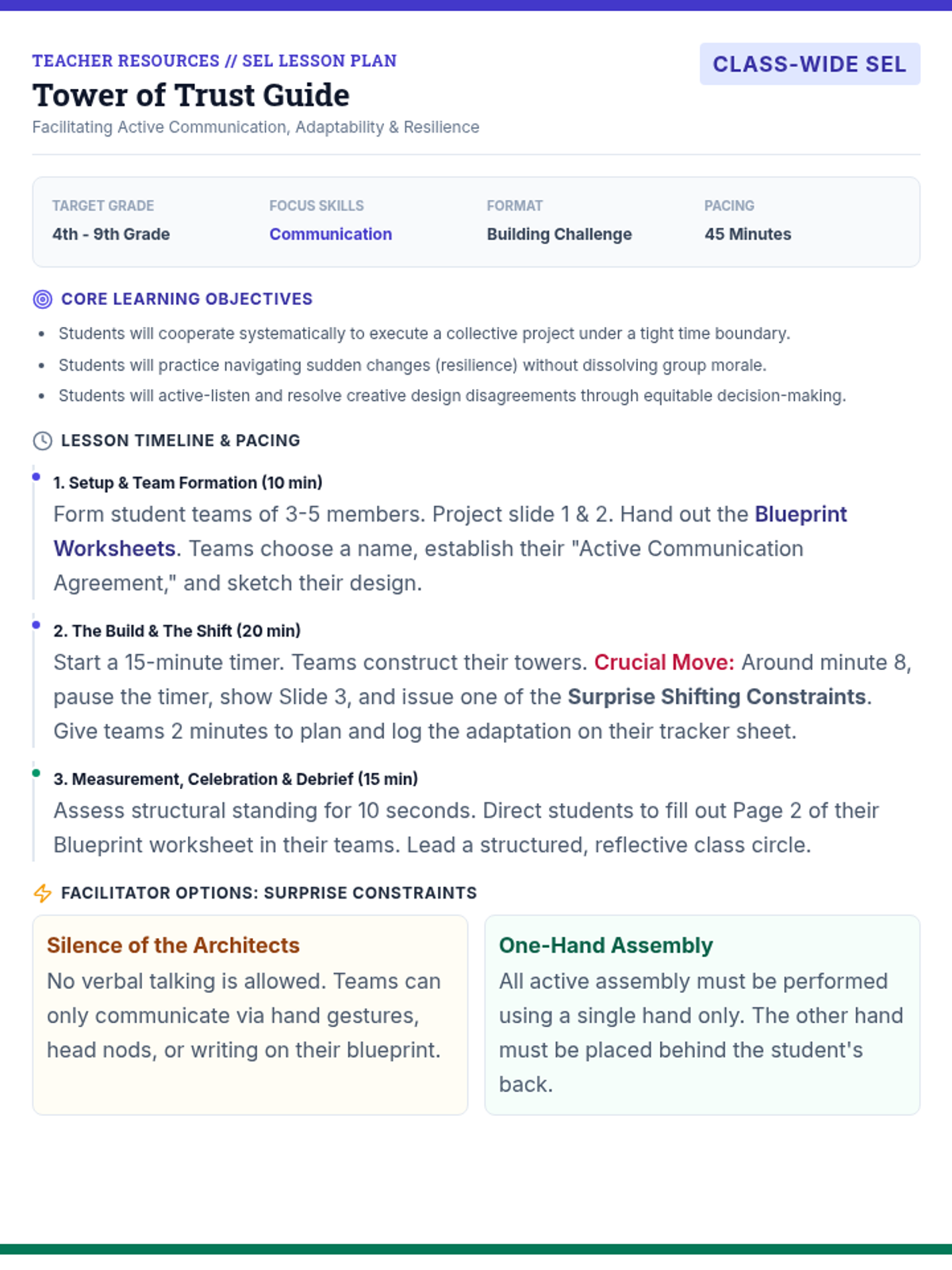
A high-energy, collaborative building challenge where student teams design and construct towers under shifting constraints. This lesson is specifically engineered to target active communication, resilience when faced with unexpected roadblocks, and group decision-making.
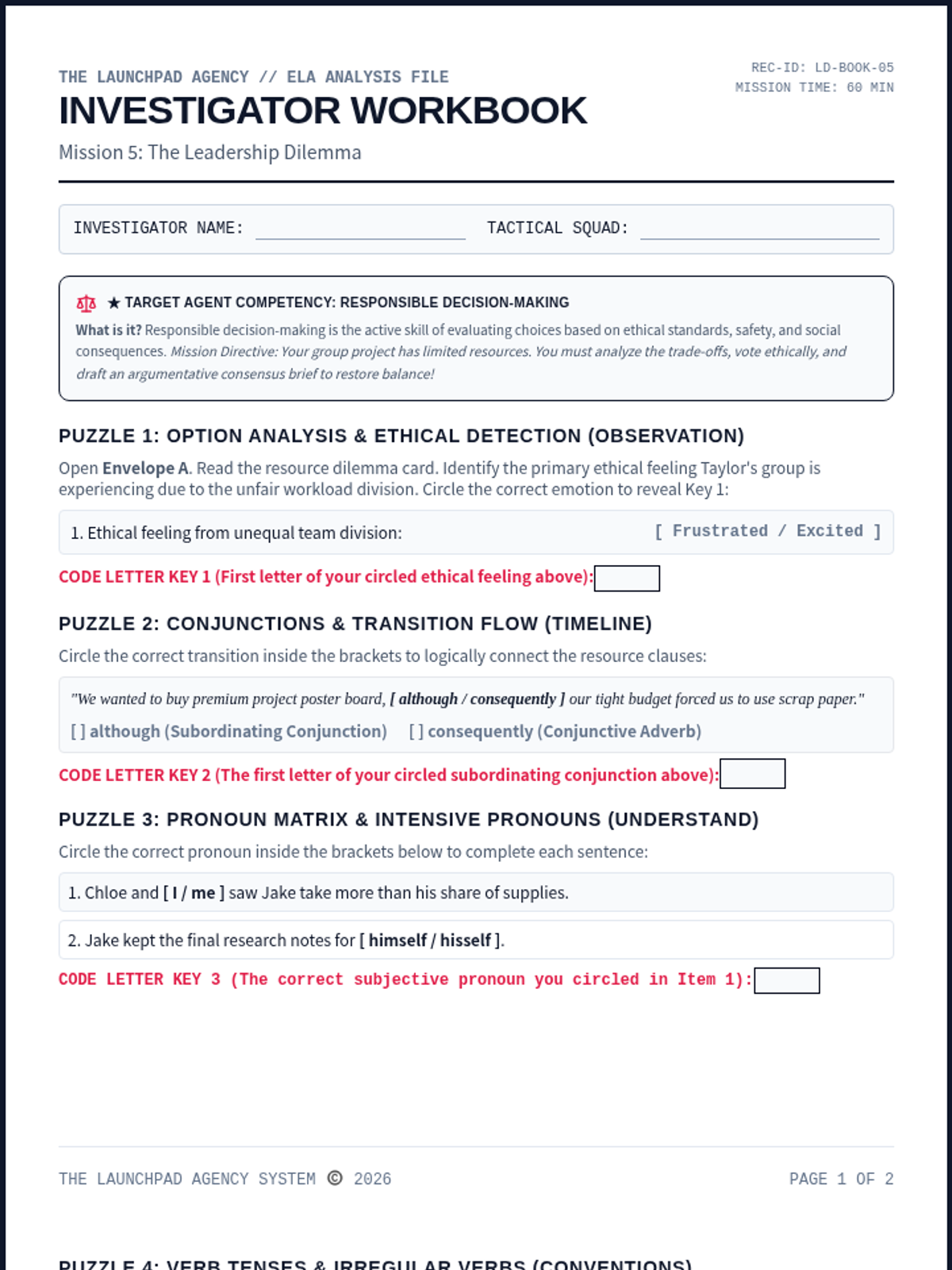
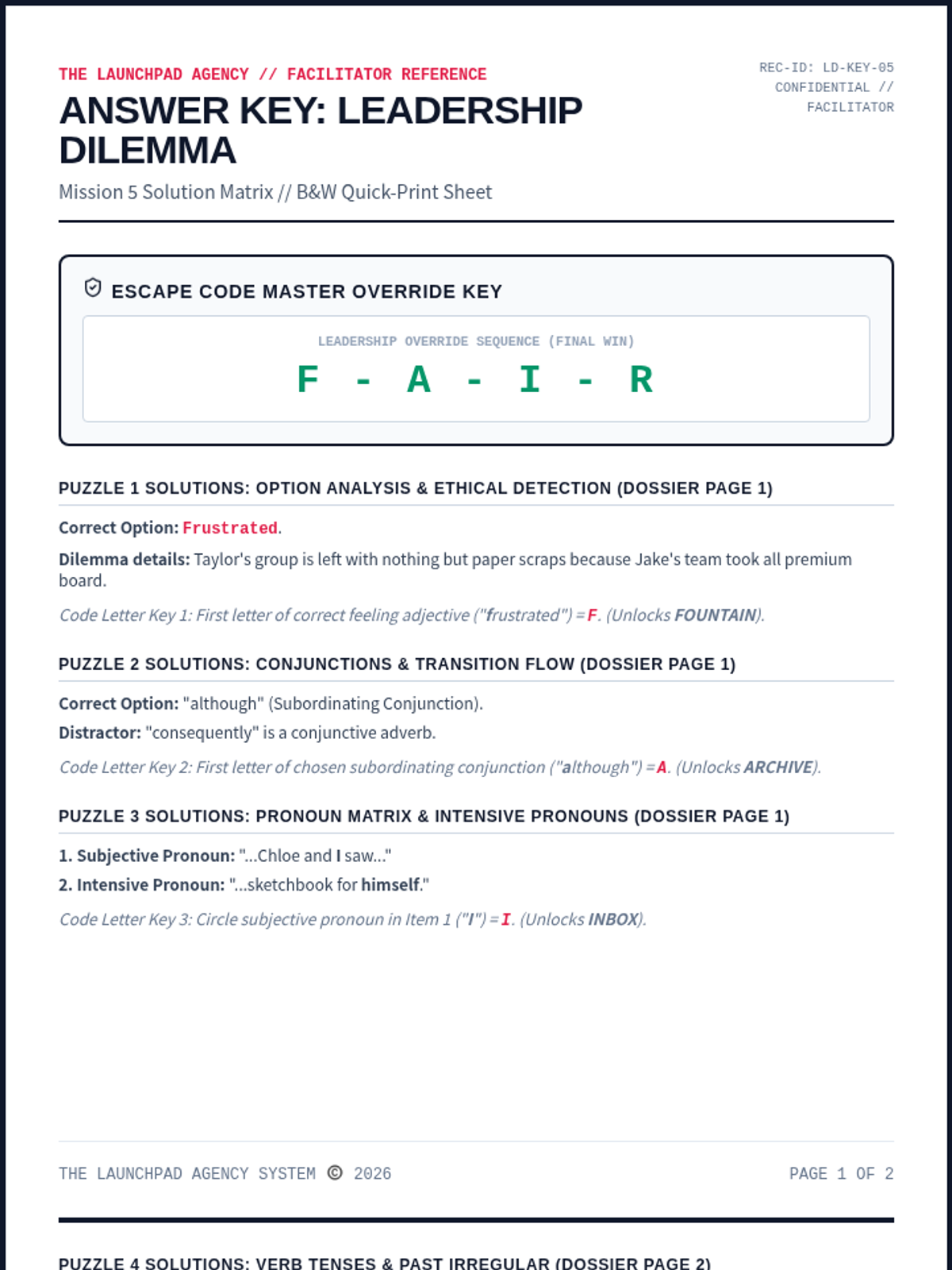
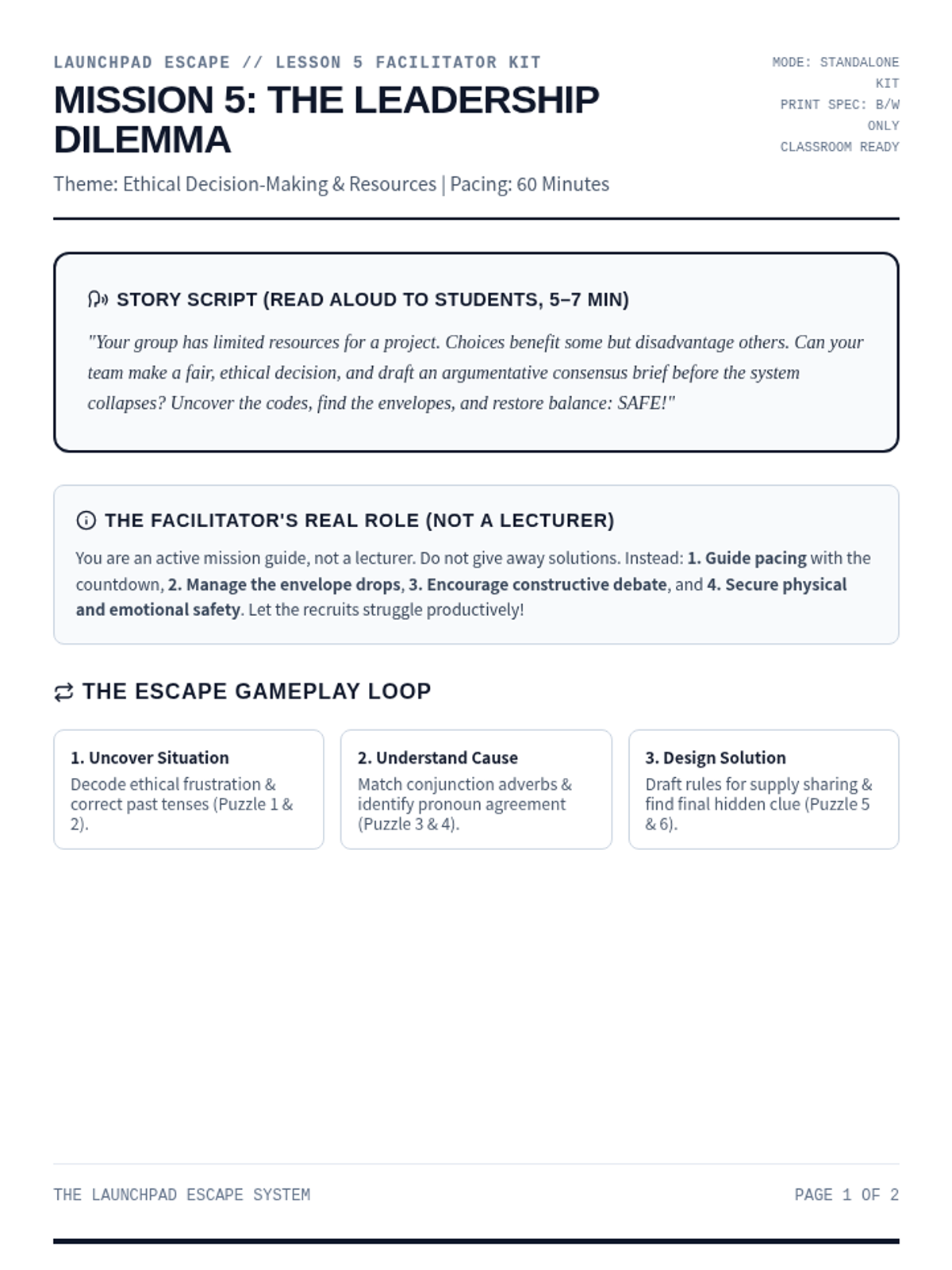
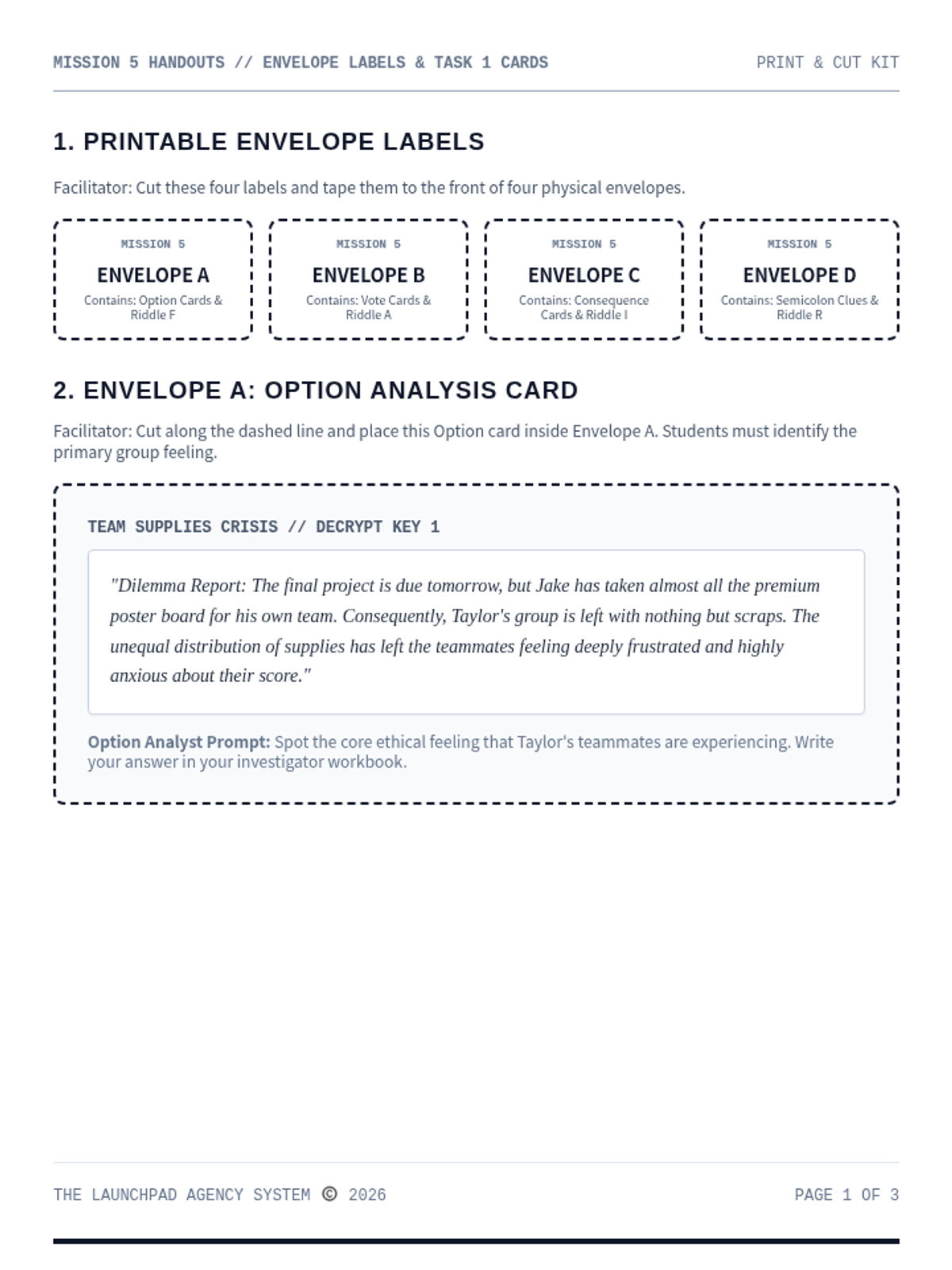
An ethical decision-making and systems-thinking escape room. Recruits analyze resource allocation options, vote on complex tradeoffs, map cascading social consequences, and draft an argumentative consensus brief to restore balance.
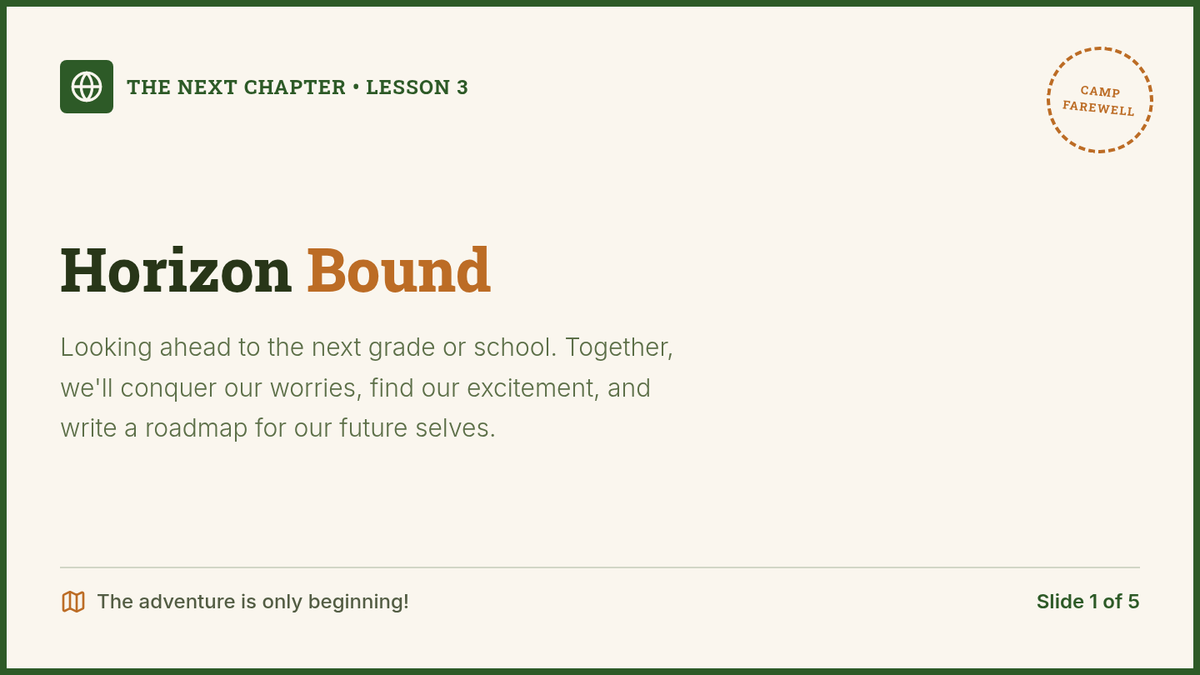
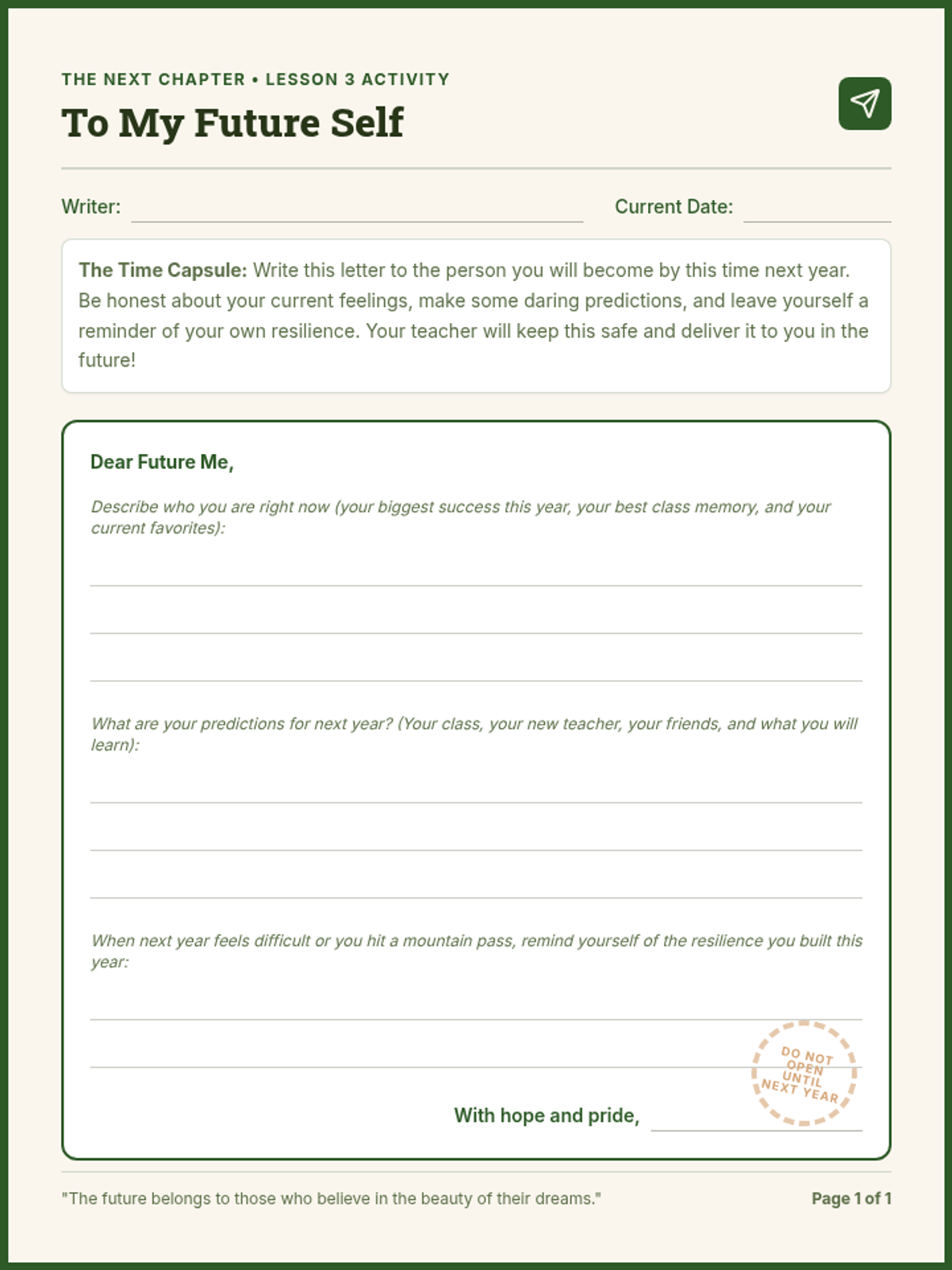
Students explore their expectations, excitements, and fears regarding the upcoming school year. They compile their wisdom for next year's class and write a letter of support to their future selves.
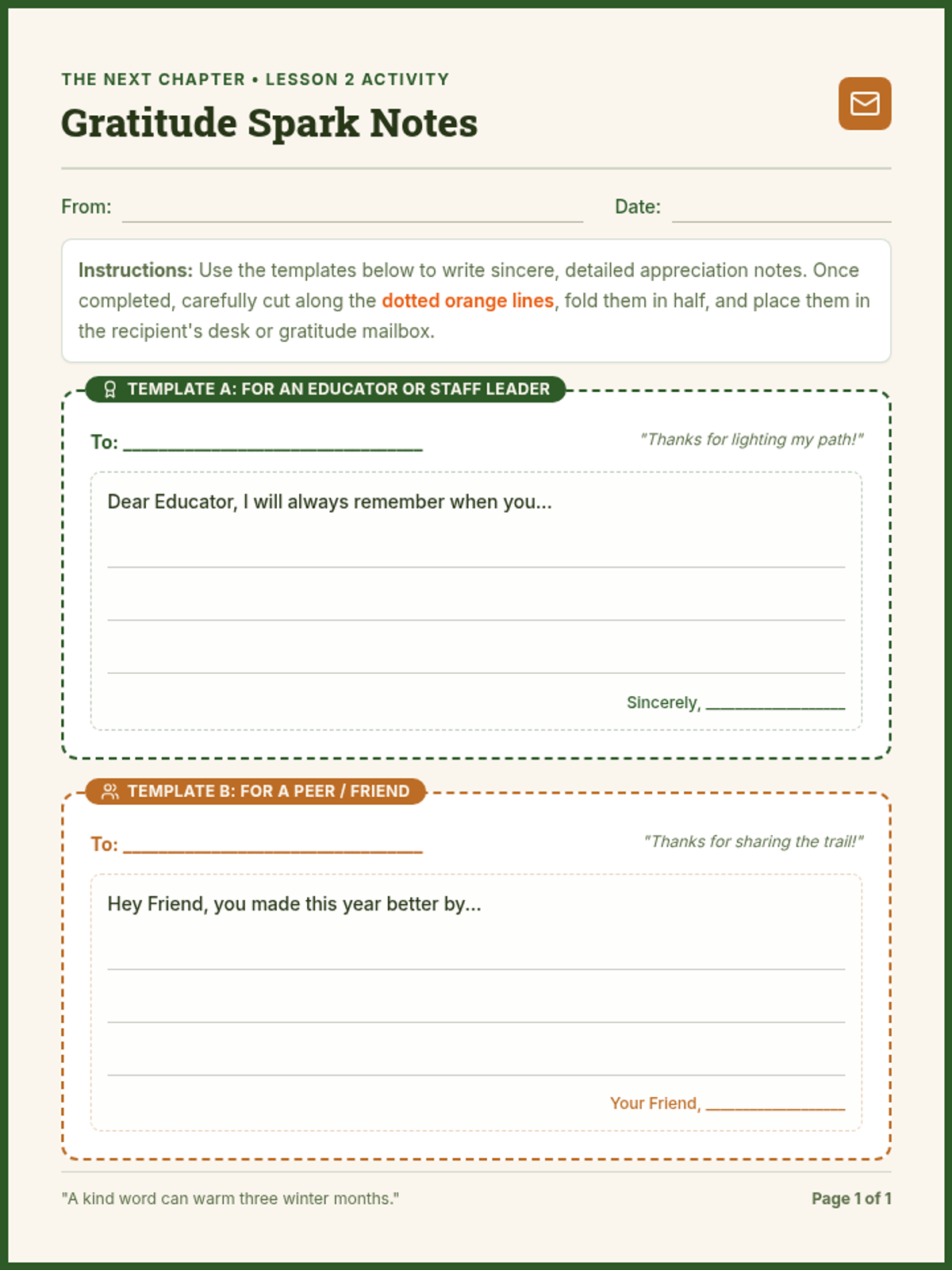
Students practice expressions of meaningful closure. They write gratitude notes to peers and teachers, process the emotions of physically leaving their current classroom, and celebrate their shared history.
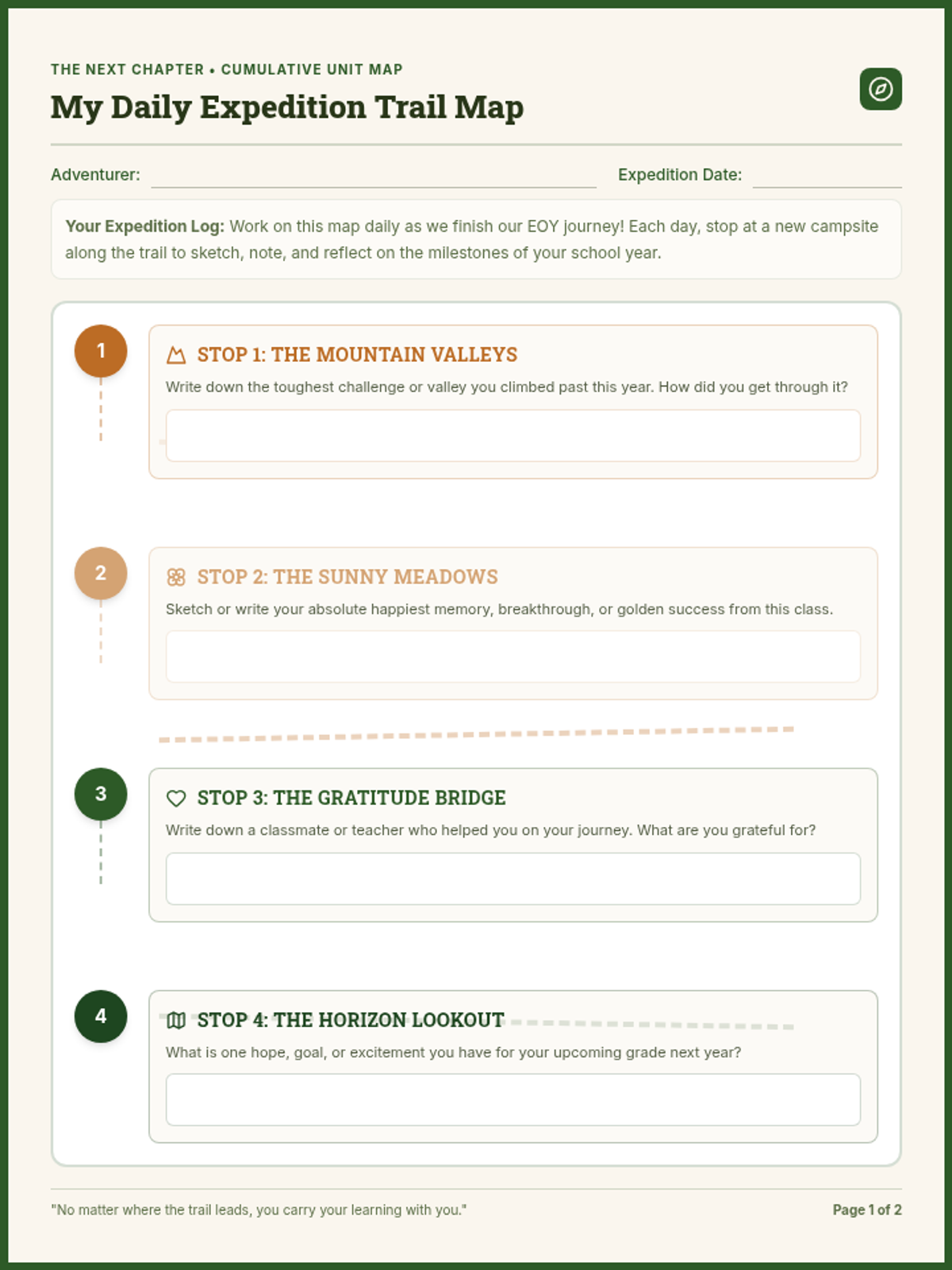
In this lesson, students reflect on their highest and lowest points of the school year. They explore how challenging days built resilience and how successful moments deserve celebration, utilizing mountain and meadow imagery.