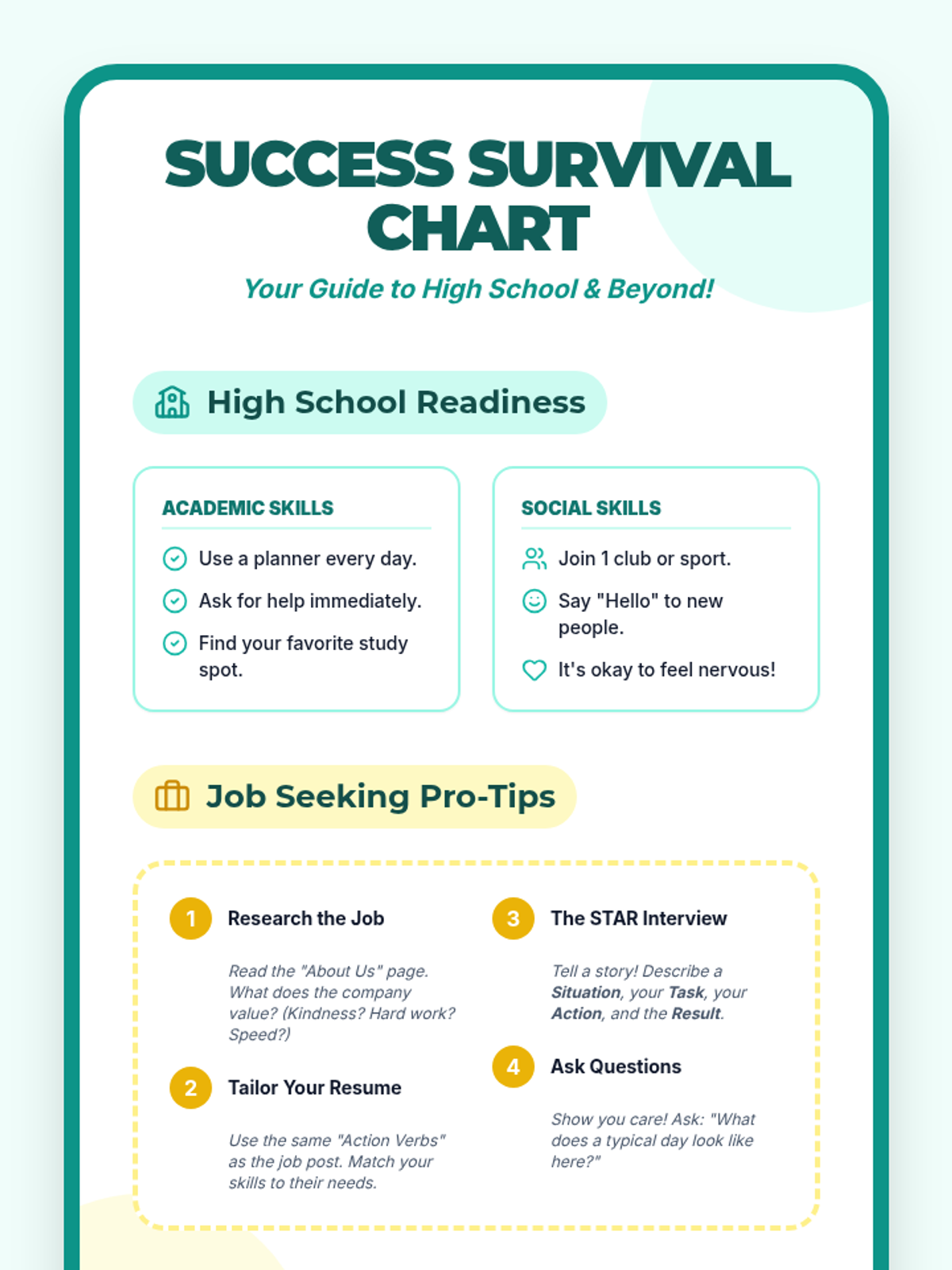
Employer research strategies and behavioral response techniques using the STAR method. Develops virtual interview etiquette, professional presence, and effective follow-up communication.
An investigative slide-based lesson where students analyze multiple "mystery" candidates to discover hidden interview traps and best practices through unfolding case studies.
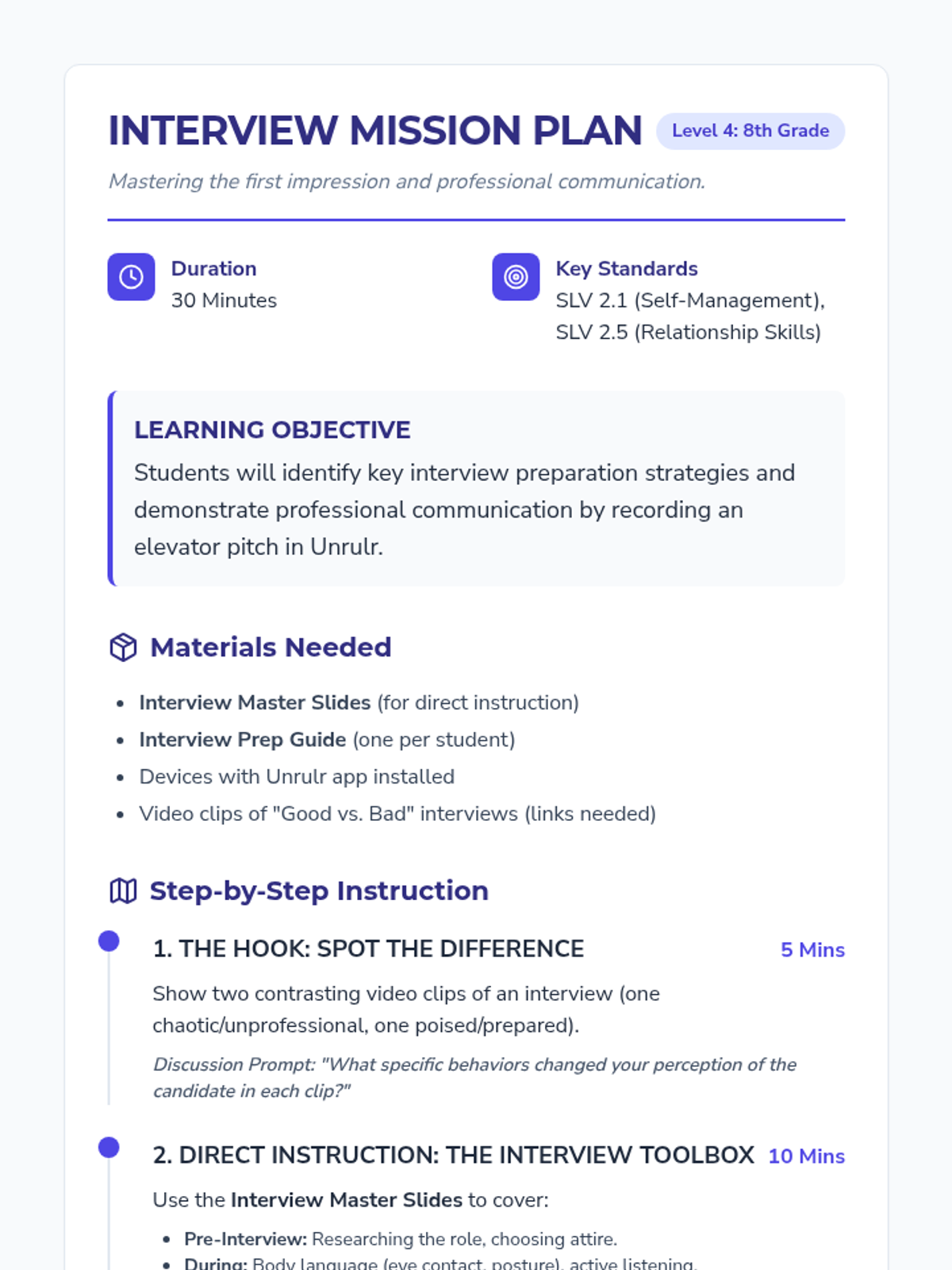
A 30-minute lesson for 8th graders on the essentials of professional interviewing, focusing on preparation, presentation, and the elevator pitch. Students will practice their skills and document their progress using Unrulr.
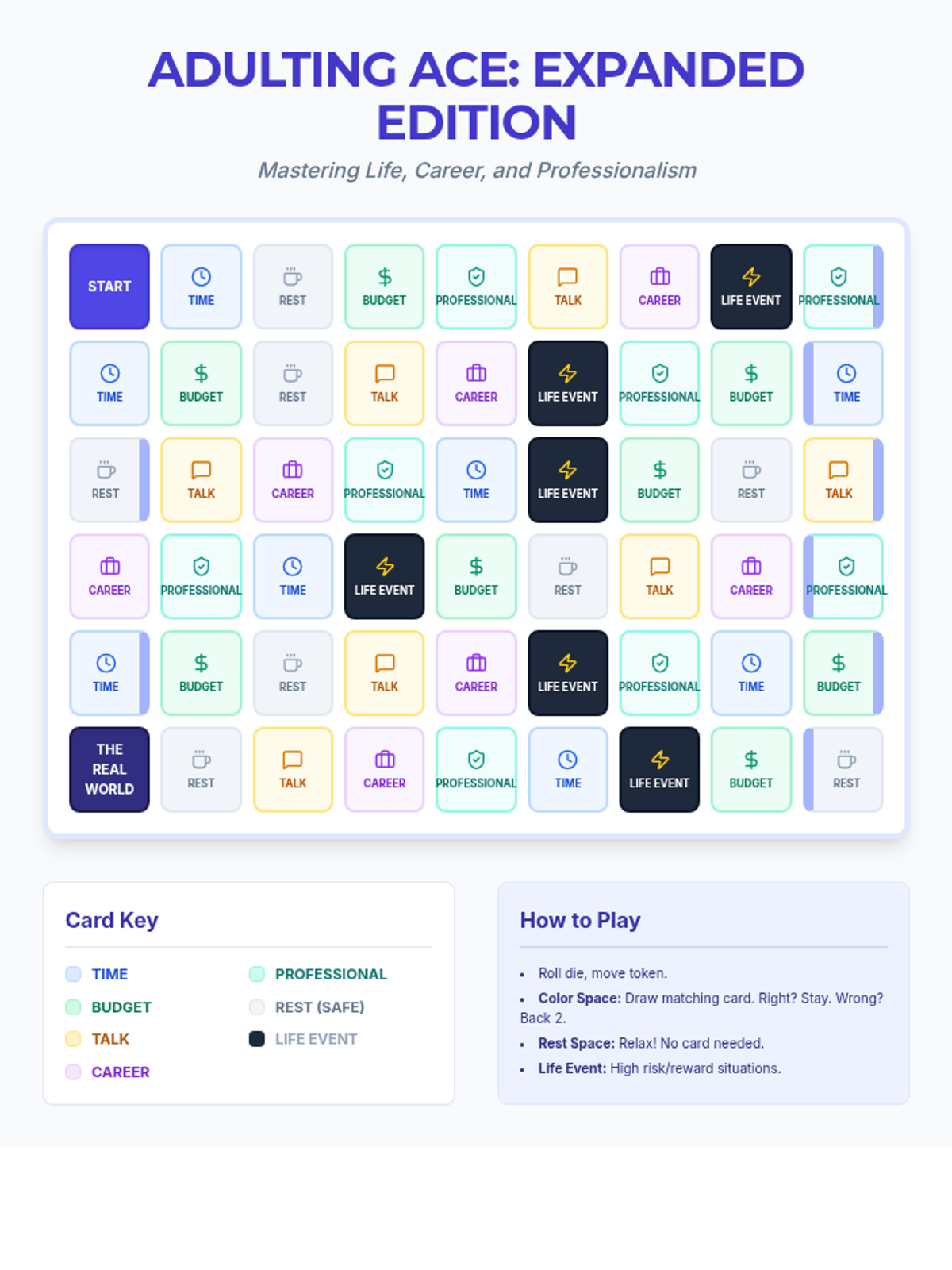
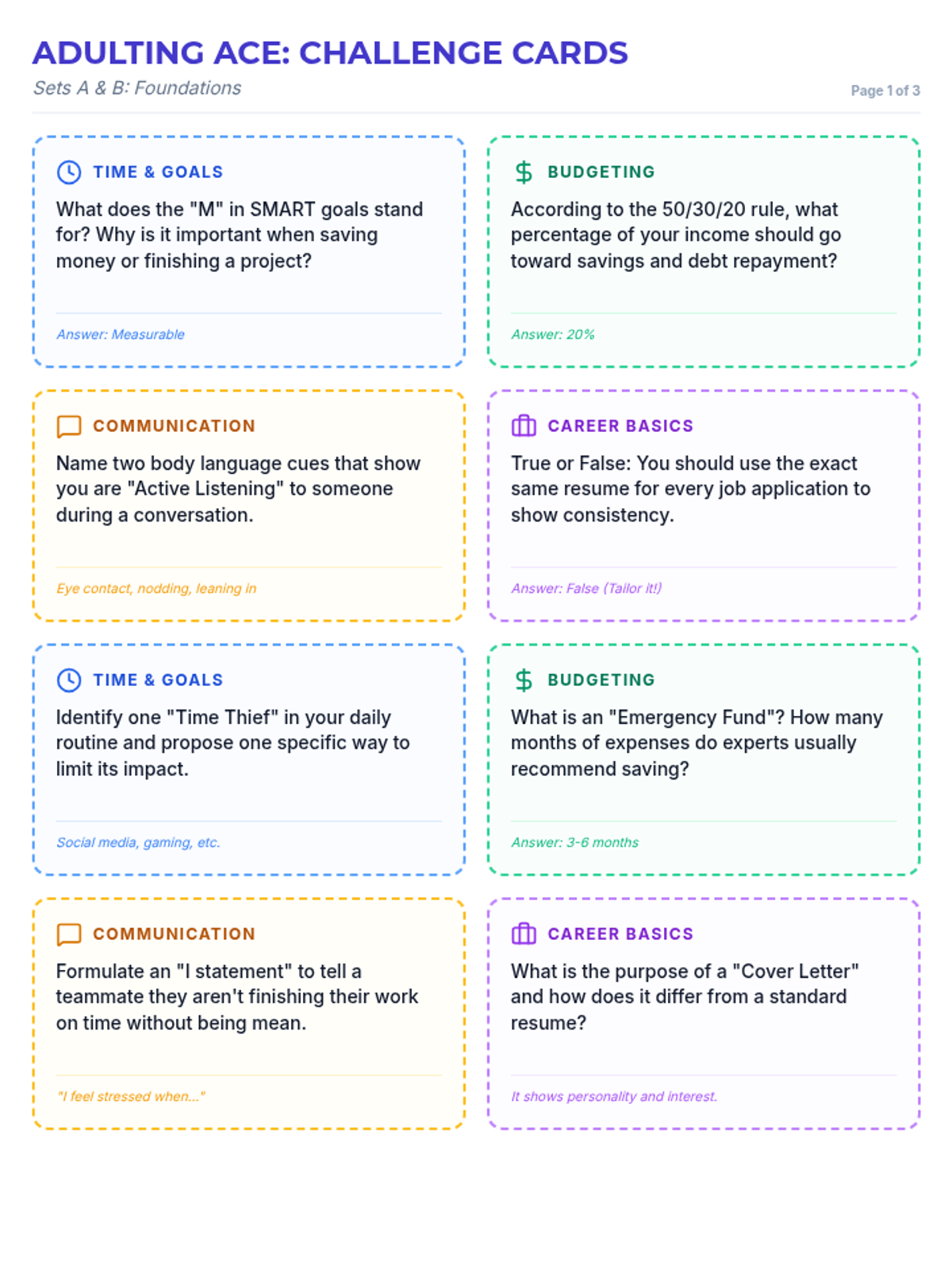
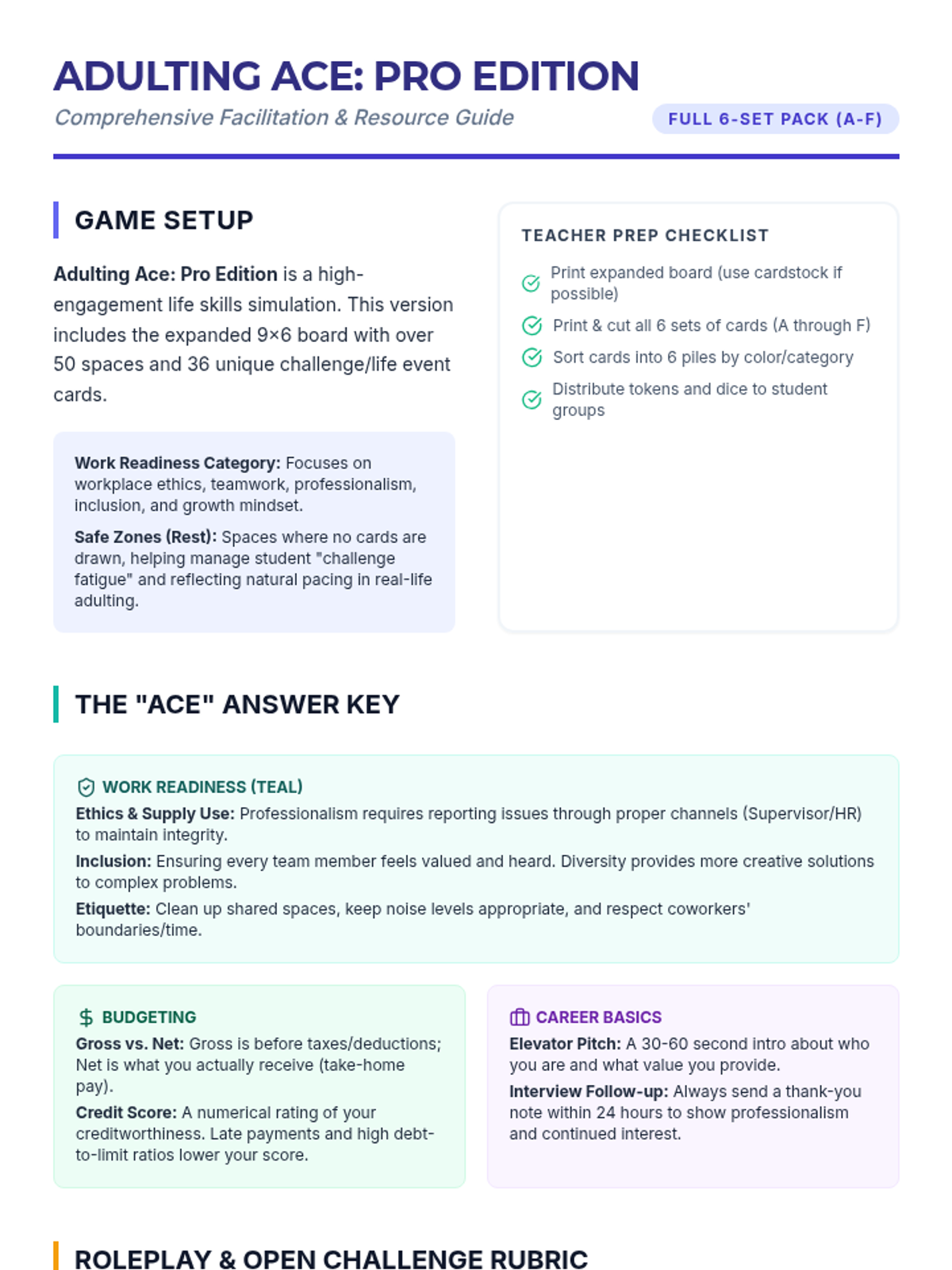
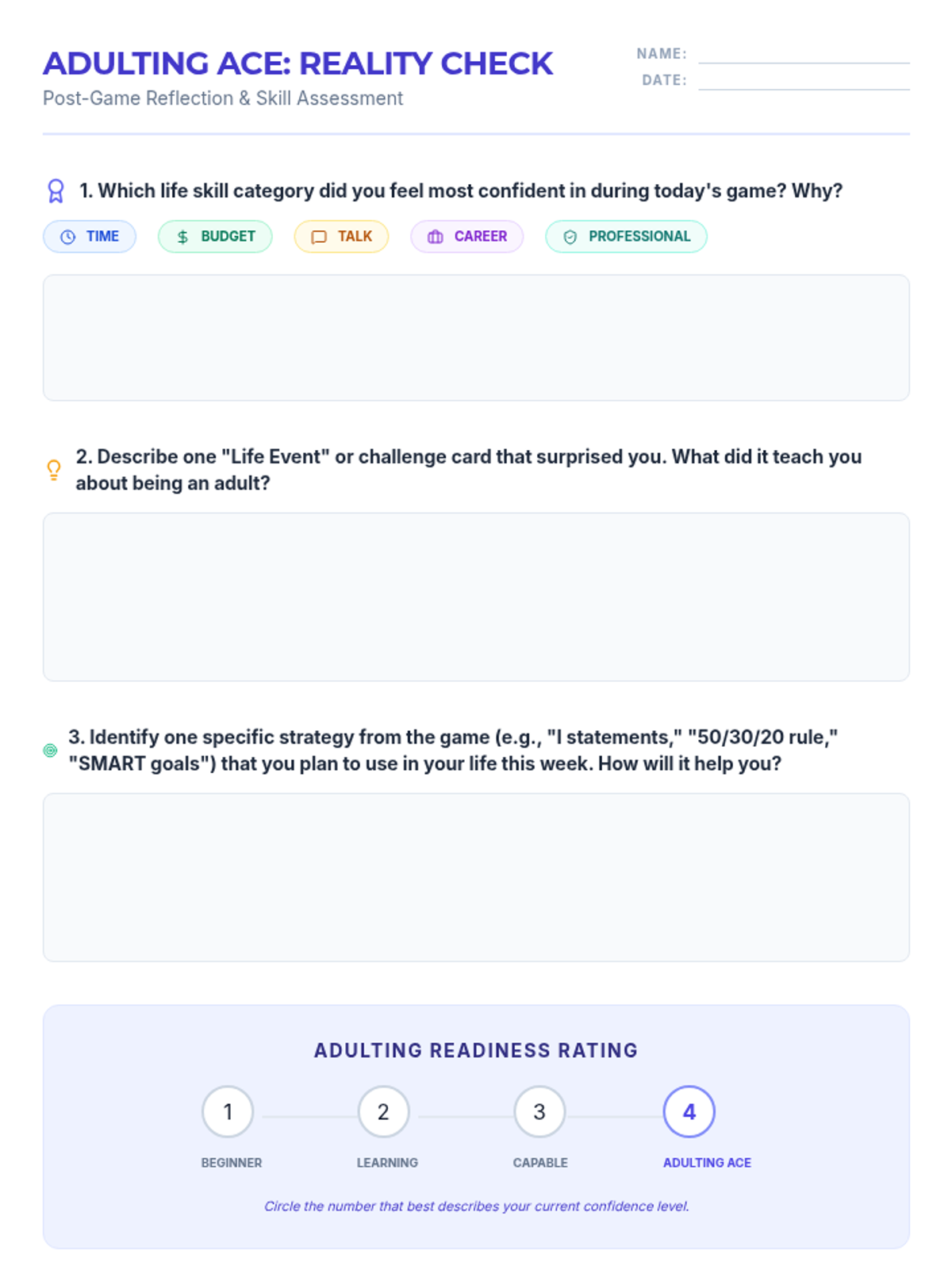
An interactive board game experience covering essential life skills including financial literacy, time management, communication, and career readiness.
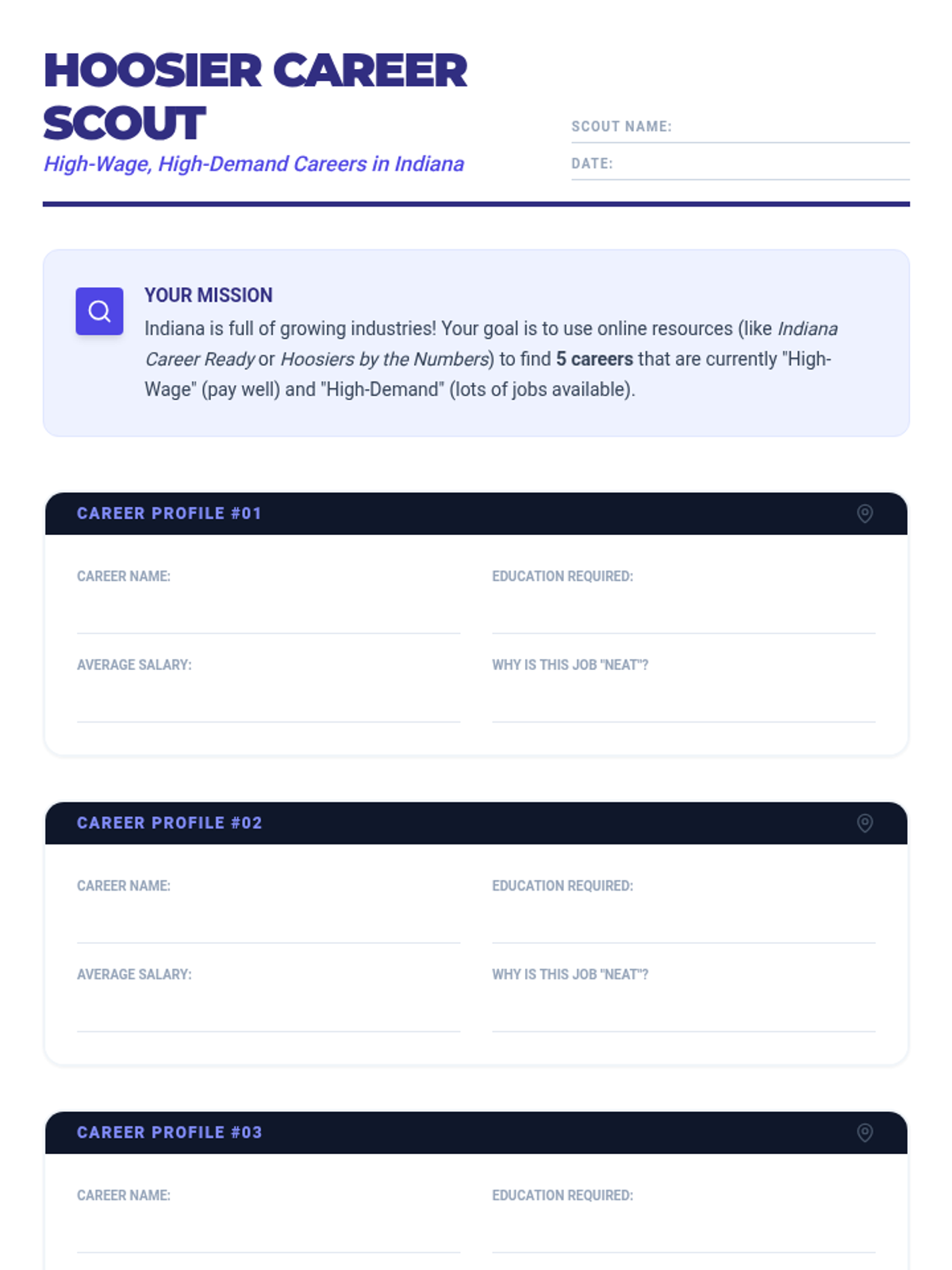
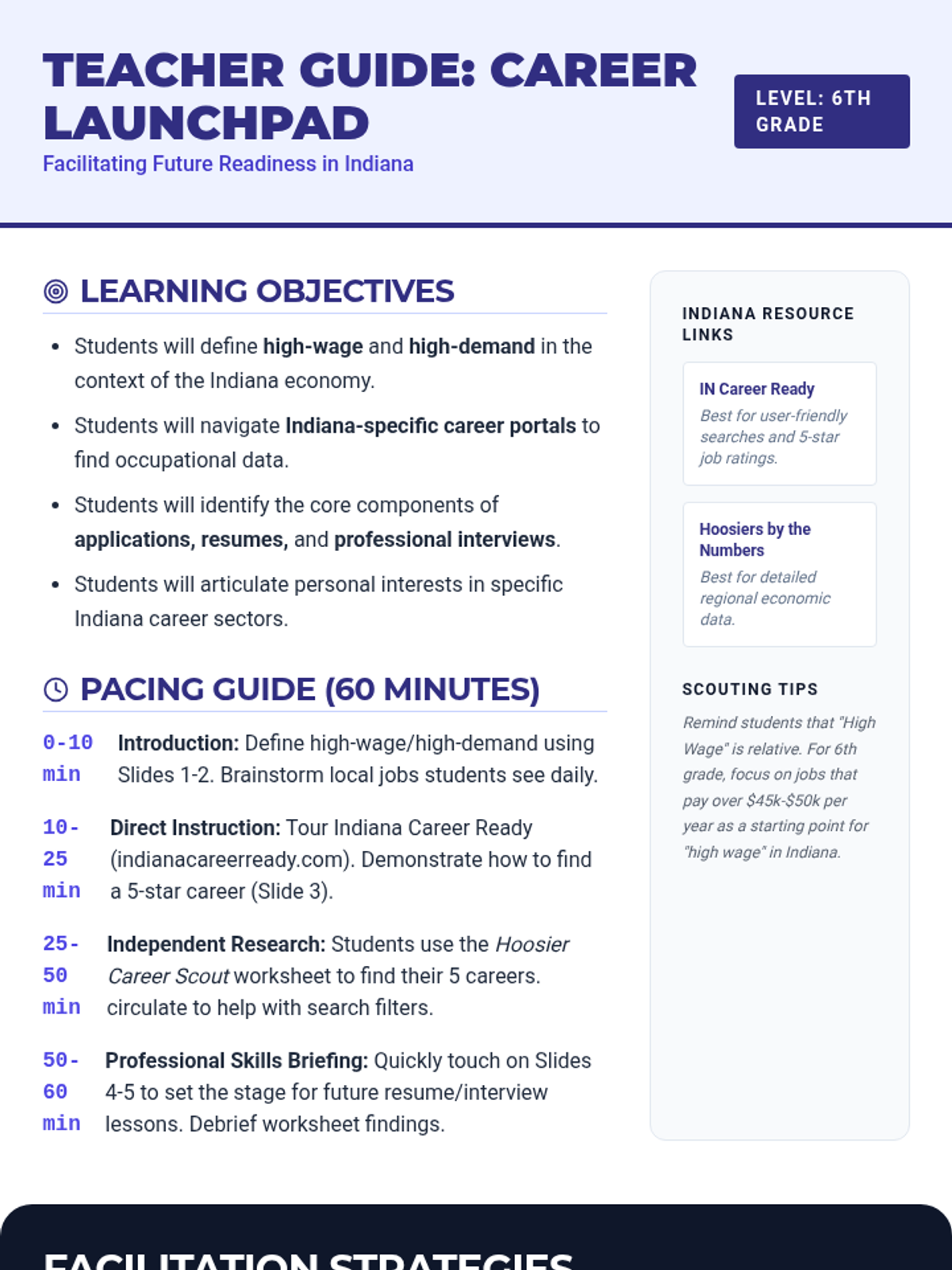
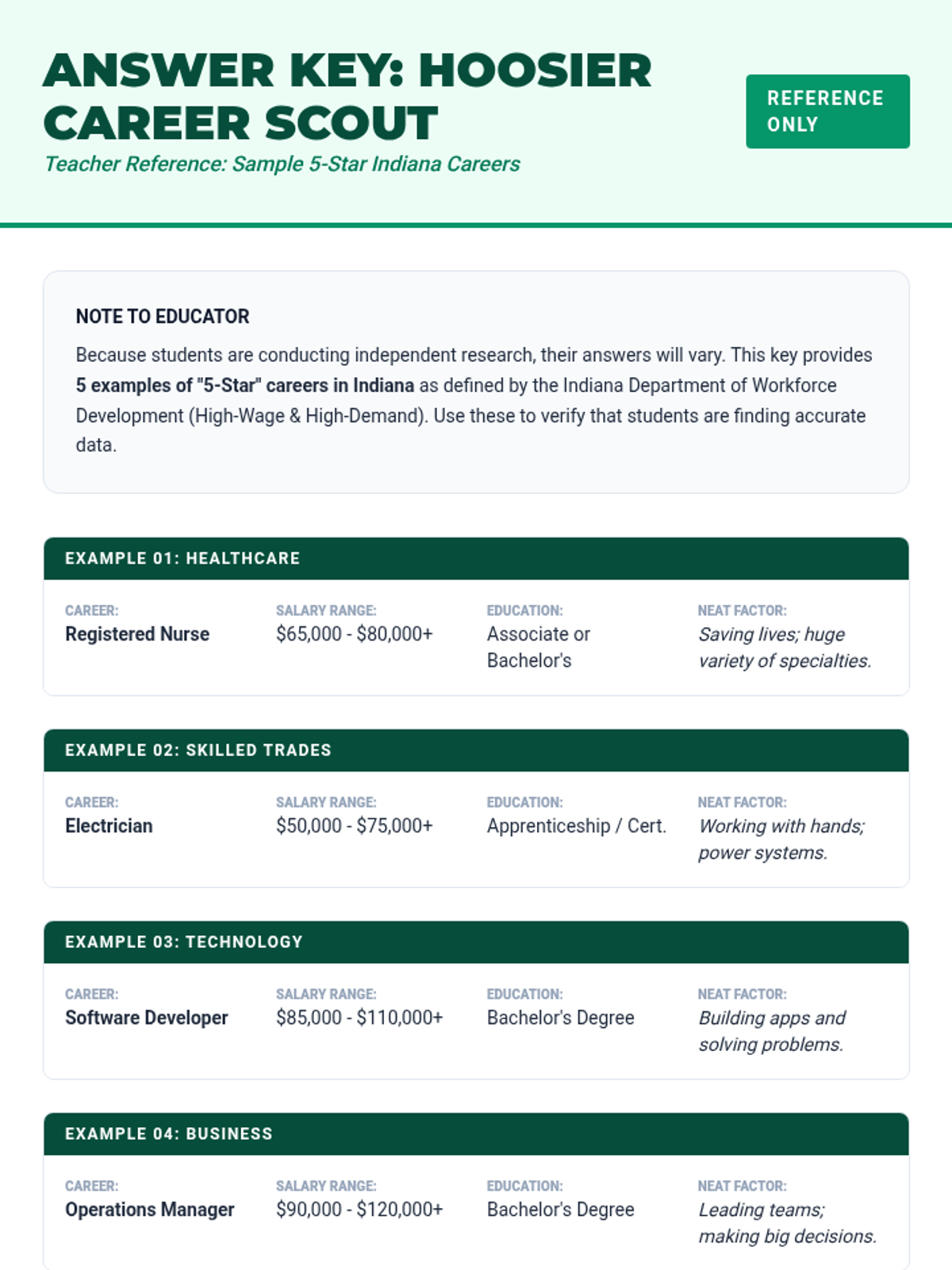
A foundational exploration of professional skills for 6th graders. Students learn the basics of filling out applications, drafting simple resumes, and preparing for their first interviews through age-appropriate activities.
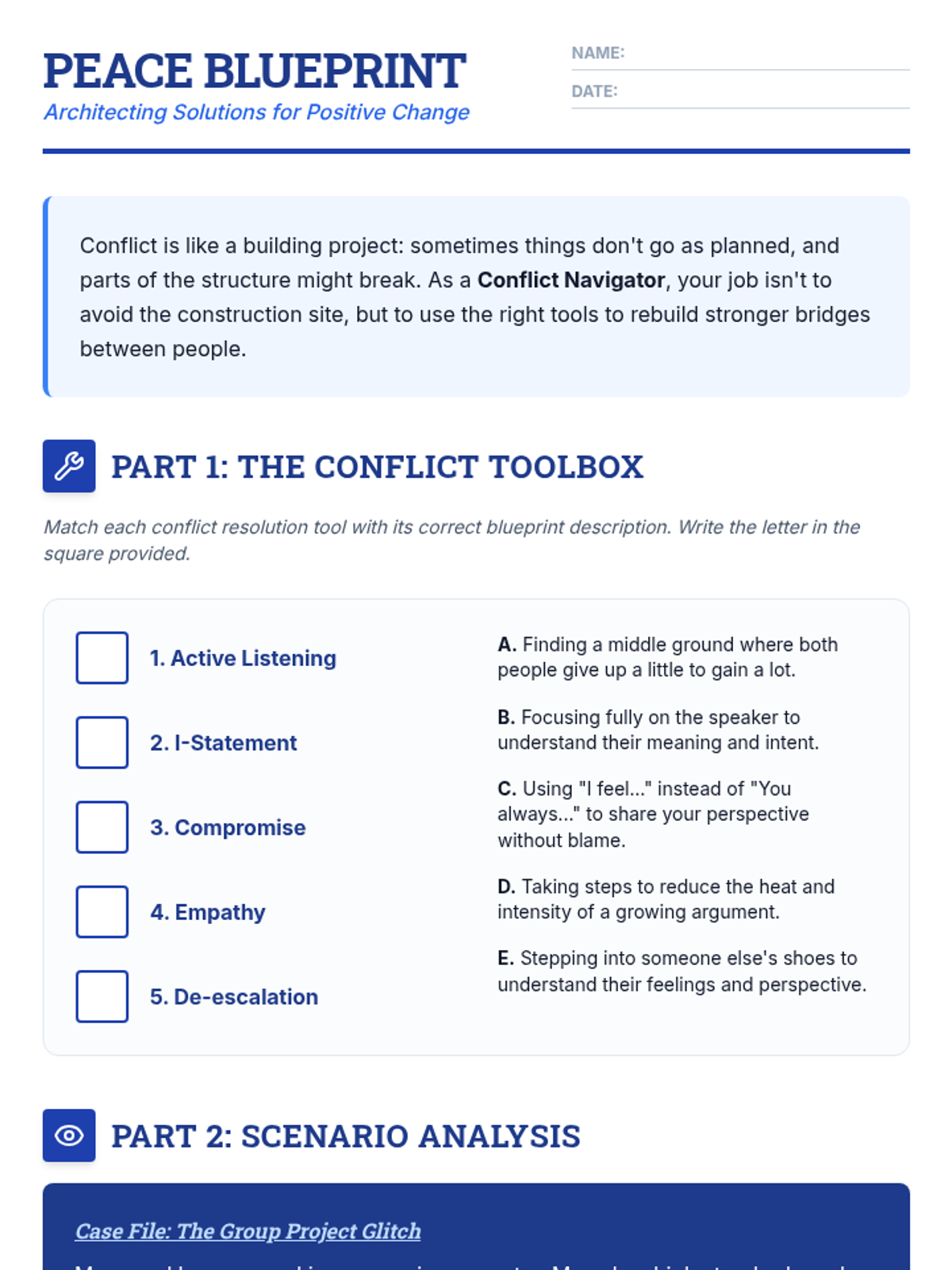
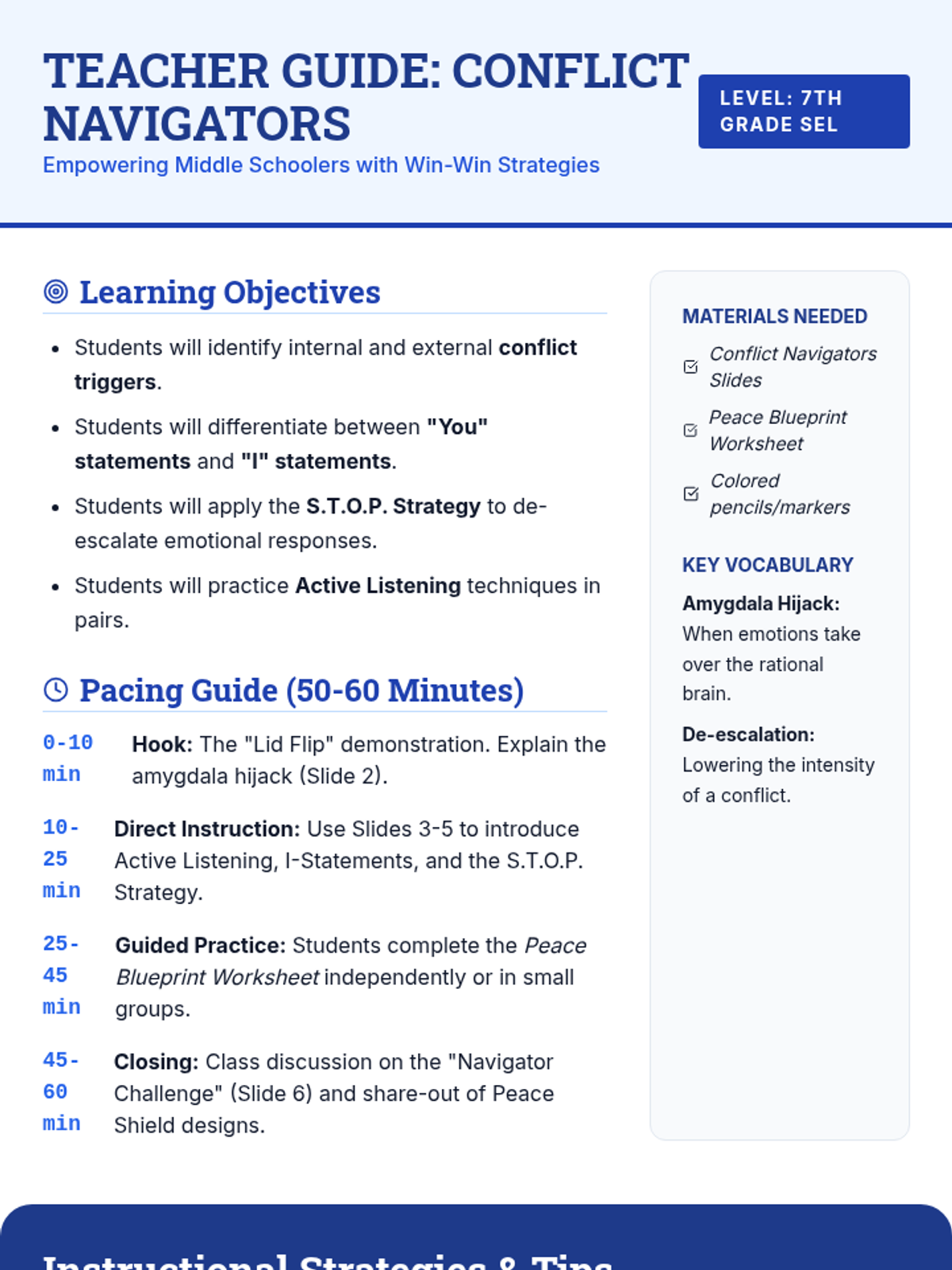
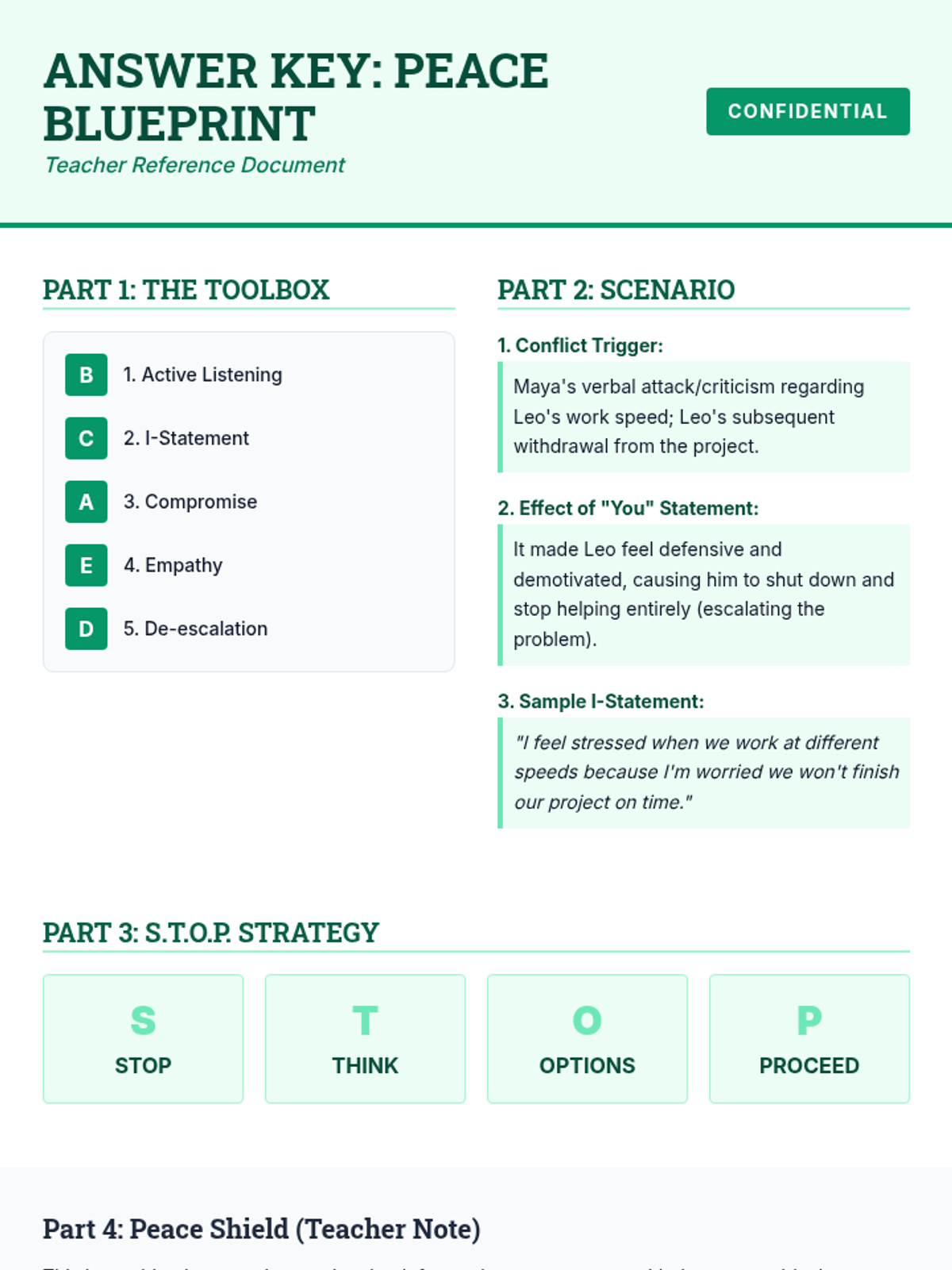
A lesson focused on equipping middle schoolers with practical strategies for de-escalating disagreements and finding win-win solutions. Students explore communication tools like I-statements and active listening through scenarios and creative reflection.
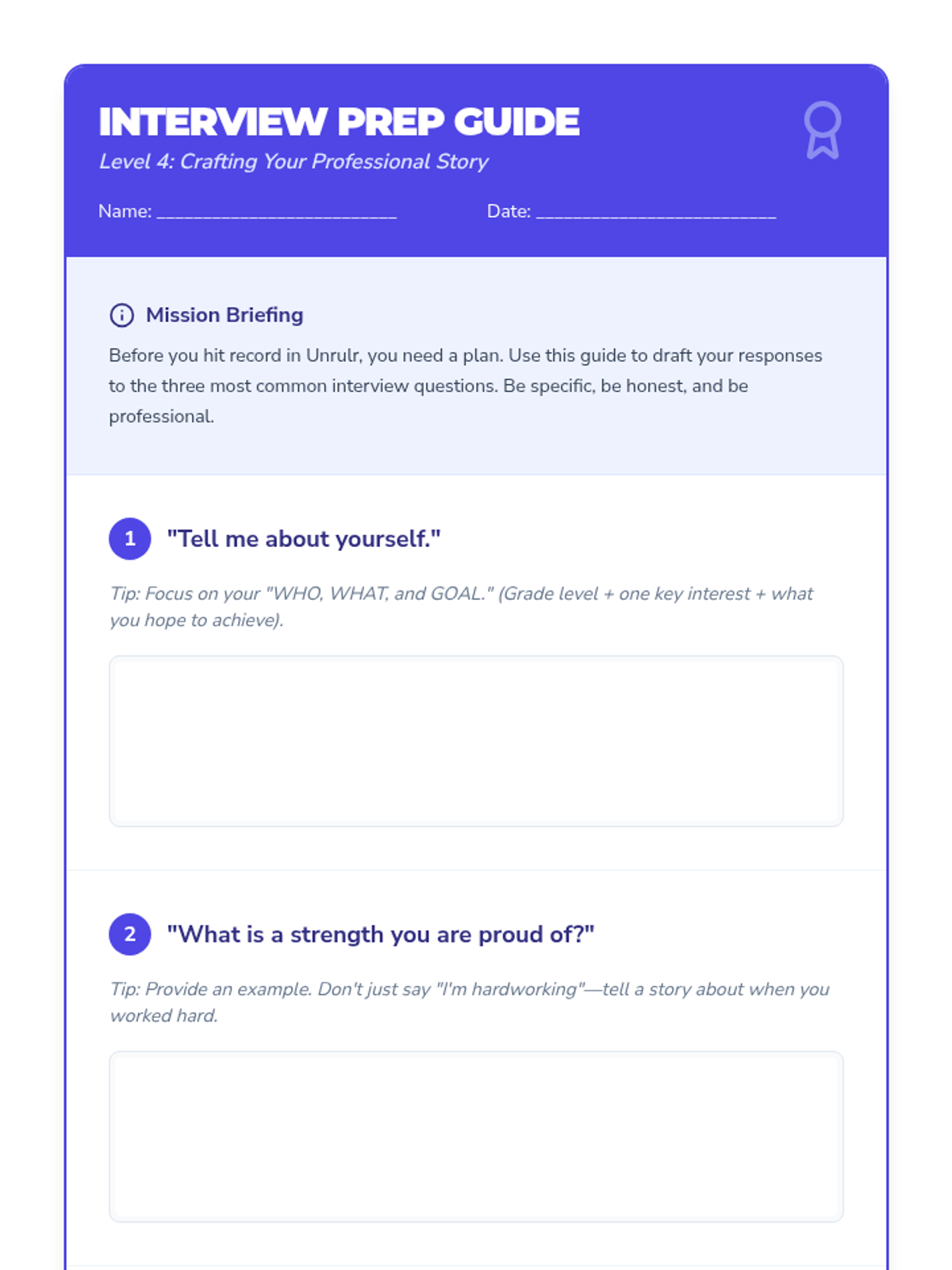
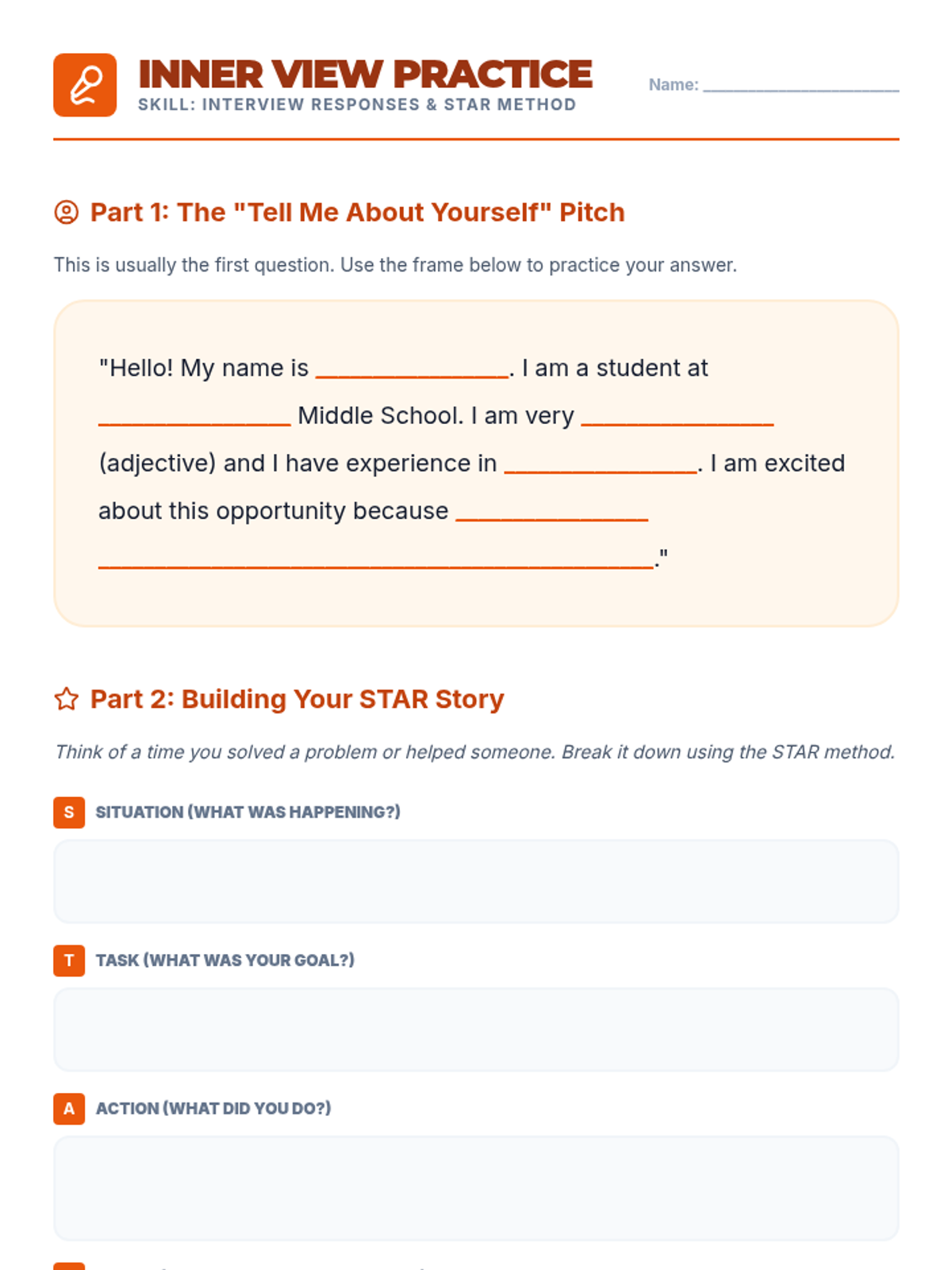
Develops interview skills through research-based preparation and practicing responses with supportive sentence frames.
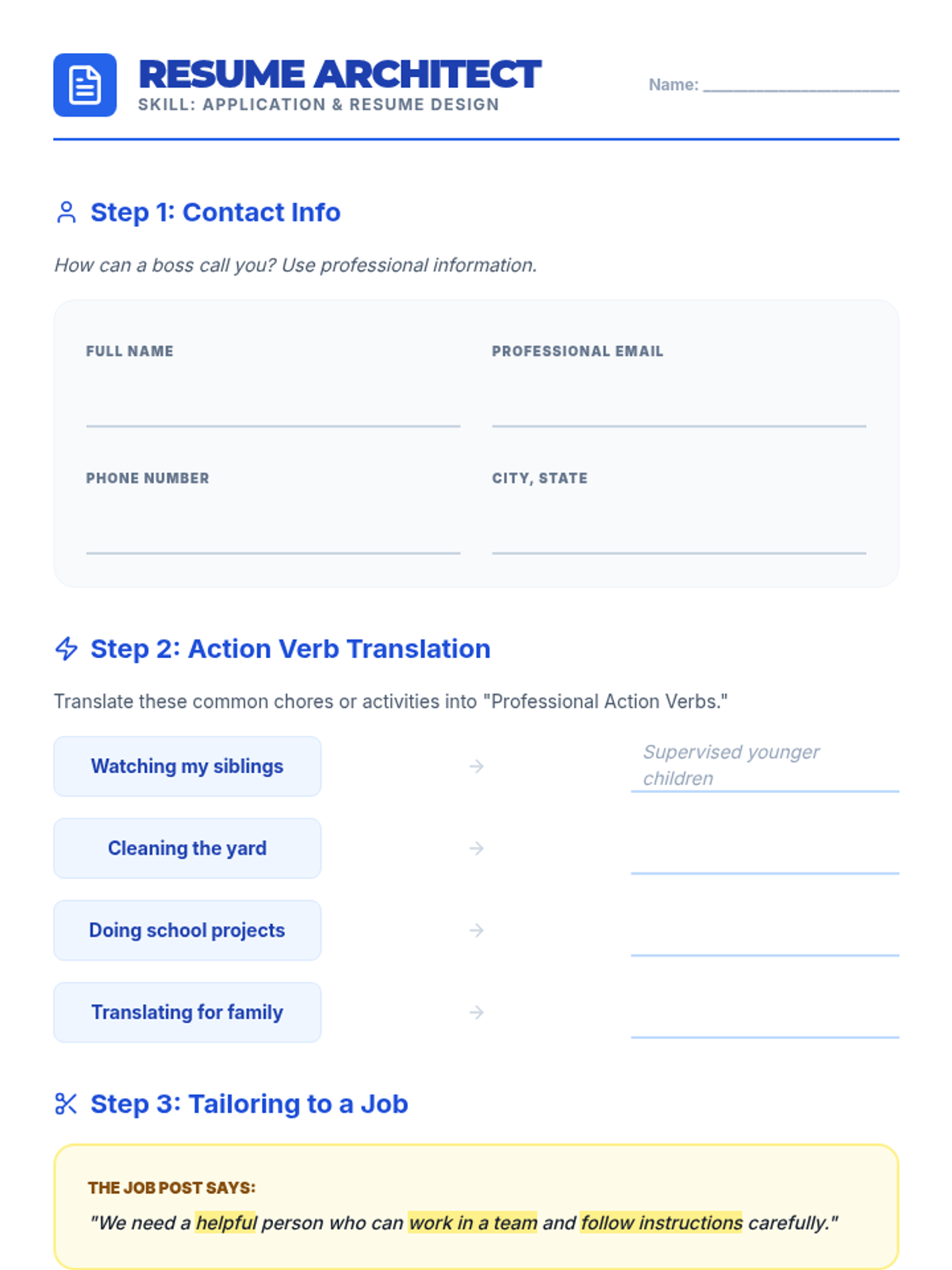
Covers the essentials of job applications, tailoring resumes, and writing cover letters specifically for students.
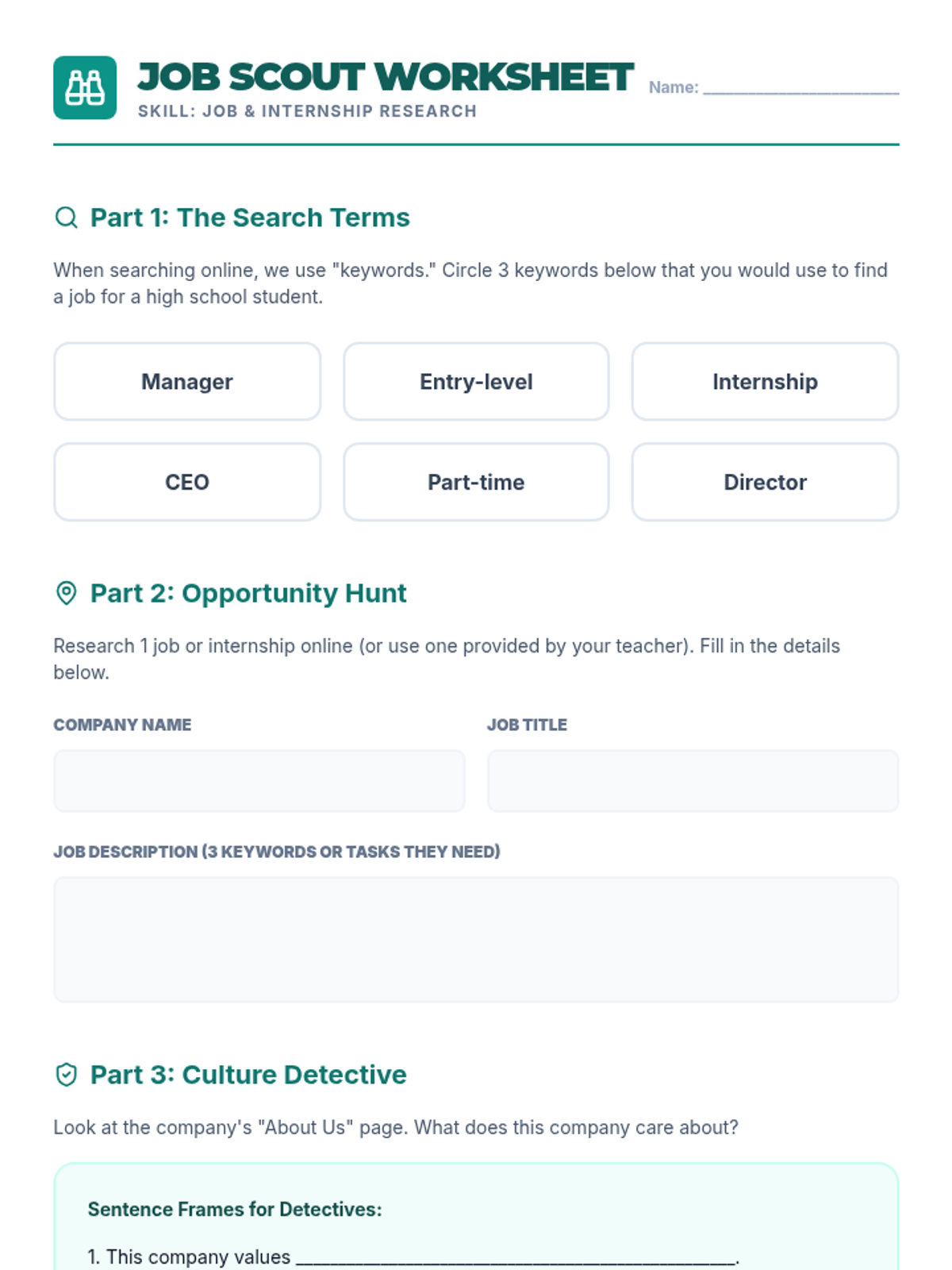
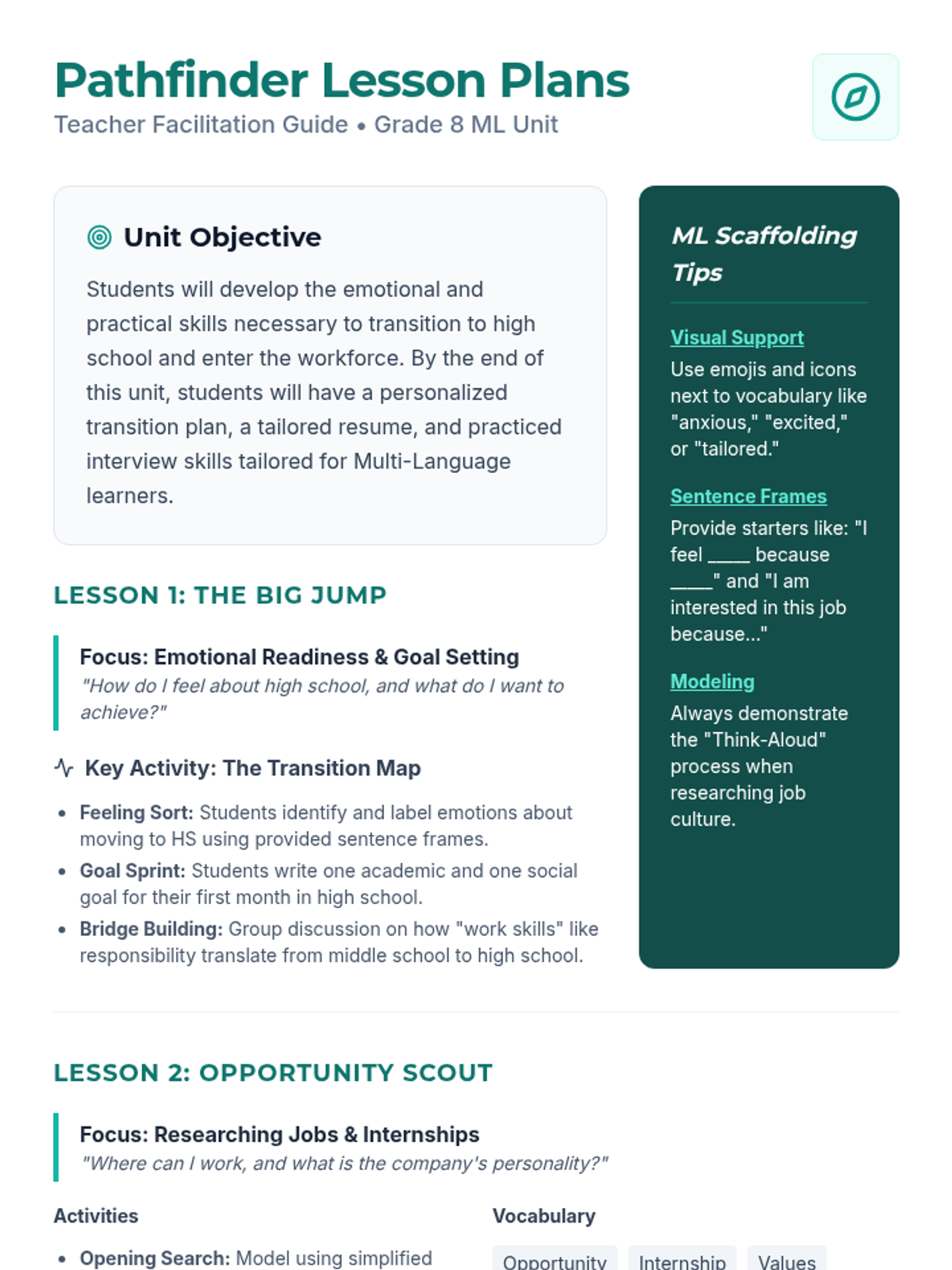
Teaches students how to find job and internship opportunities and research company culture and values.
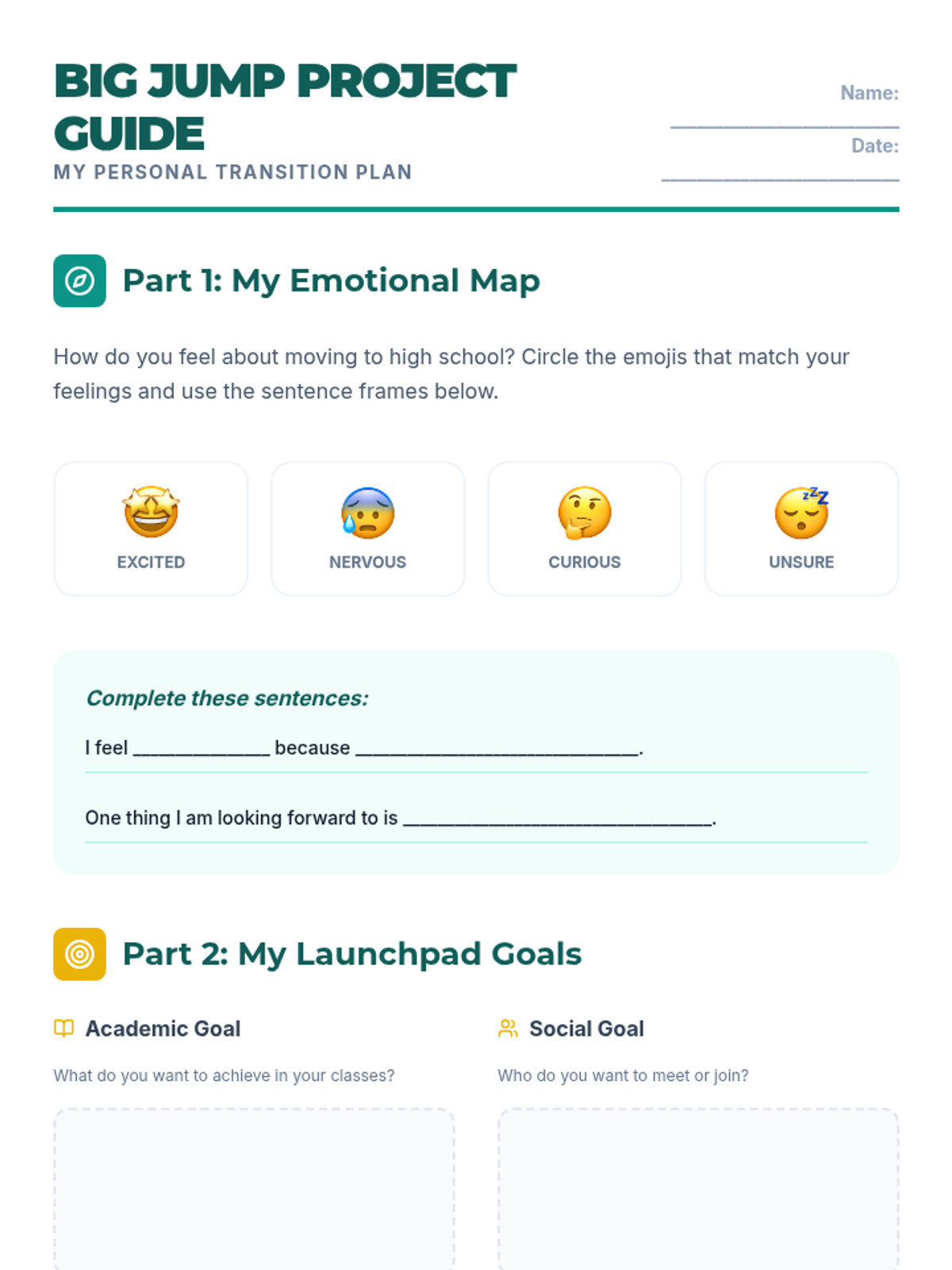
Focuses on the emotional transition from middle school to high school, identifying goals, and understanding the new academic environment.
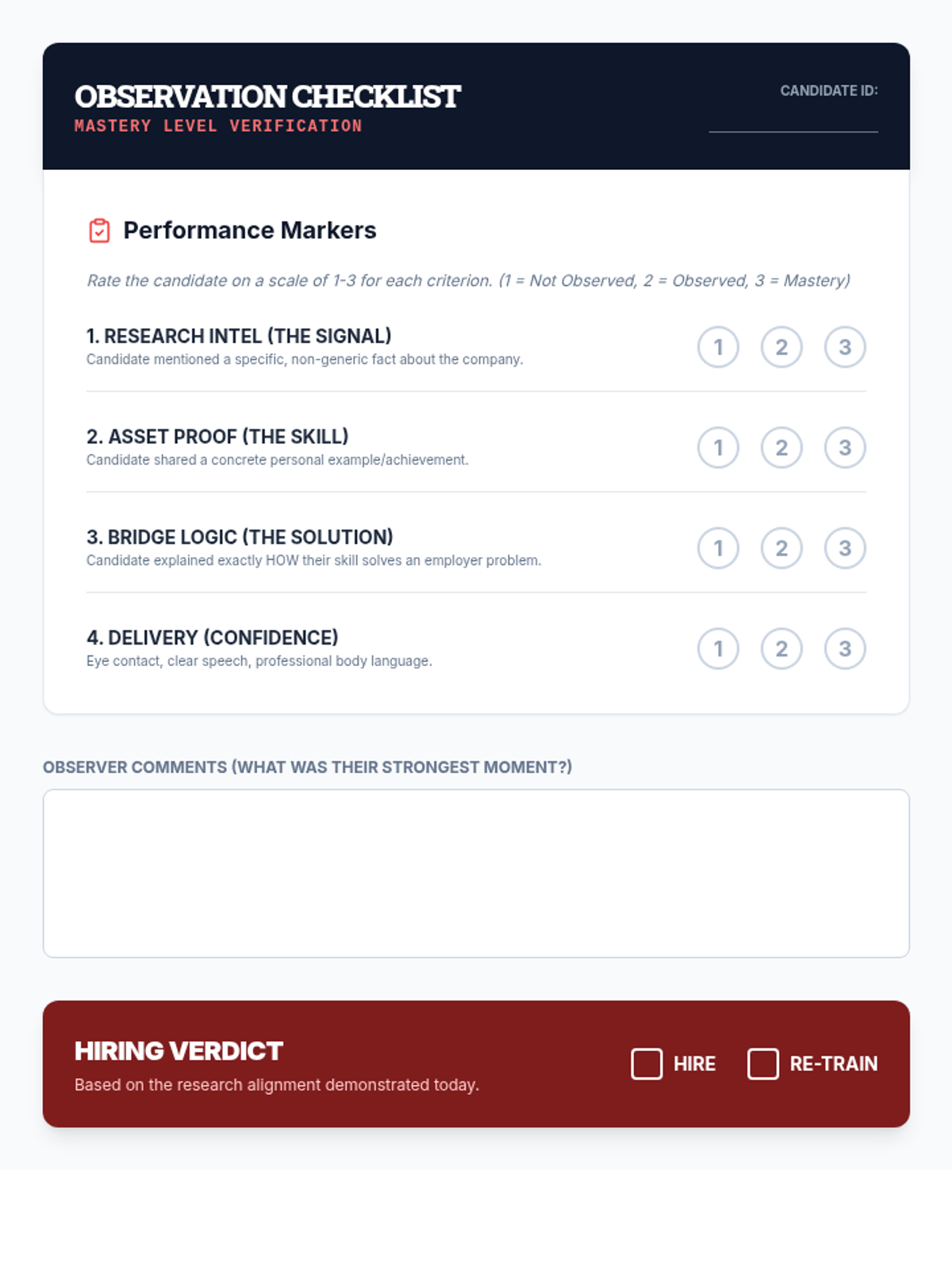
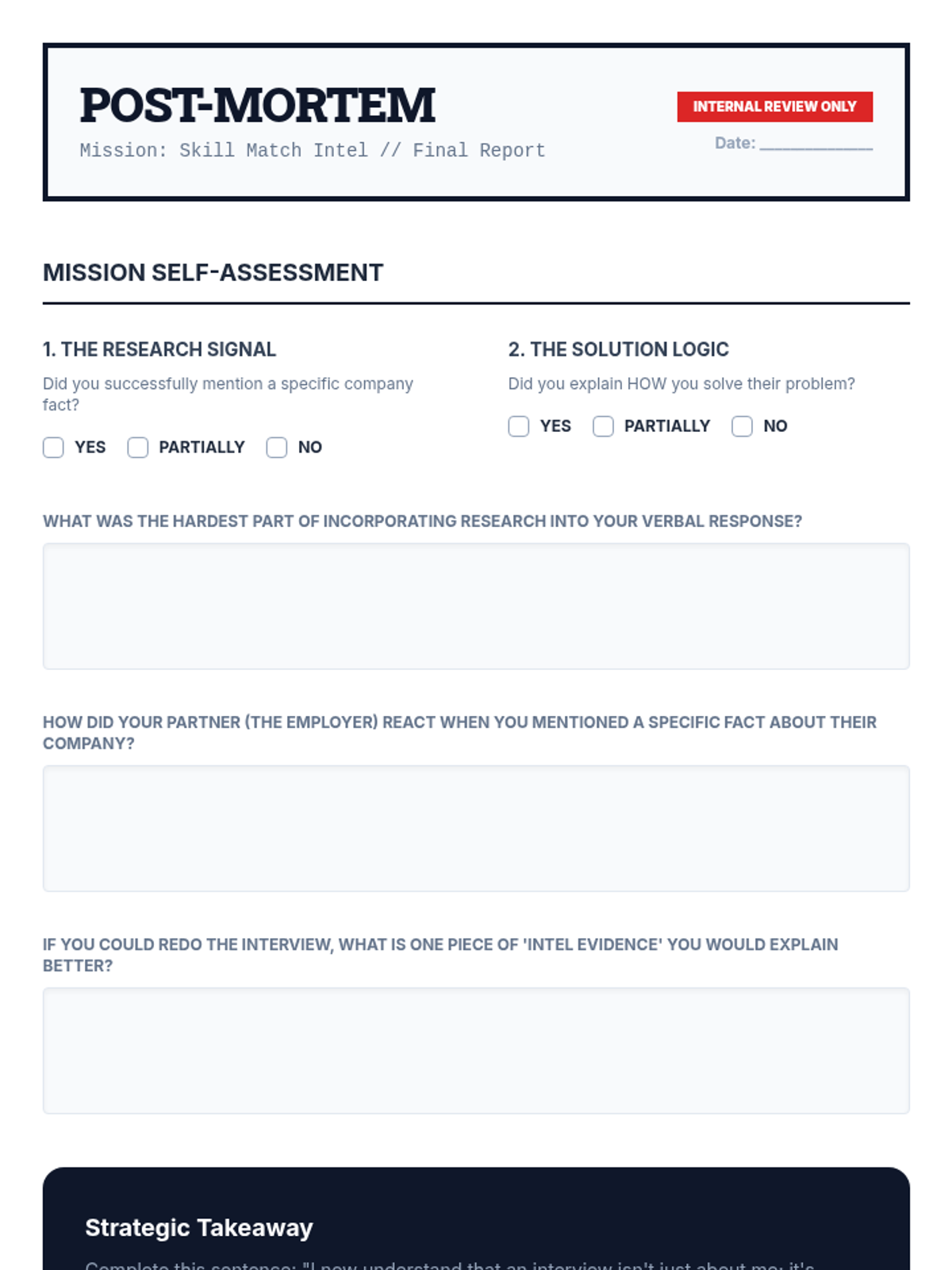
In a simulated interview setting, students answer questions specifically designed to test their knowledge of the company. Peers evaluate if the candidate clearly referenced their research in the answers.
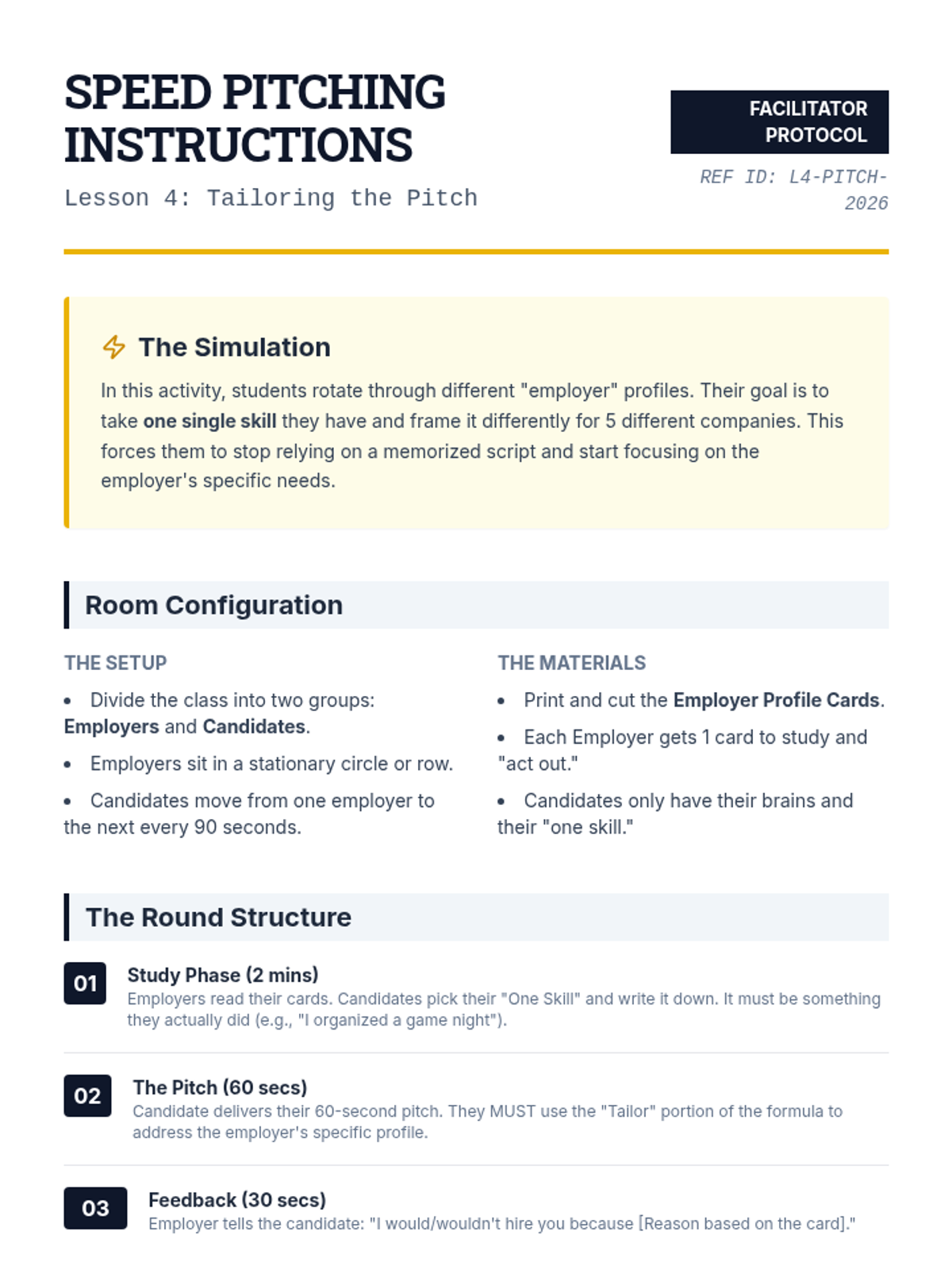
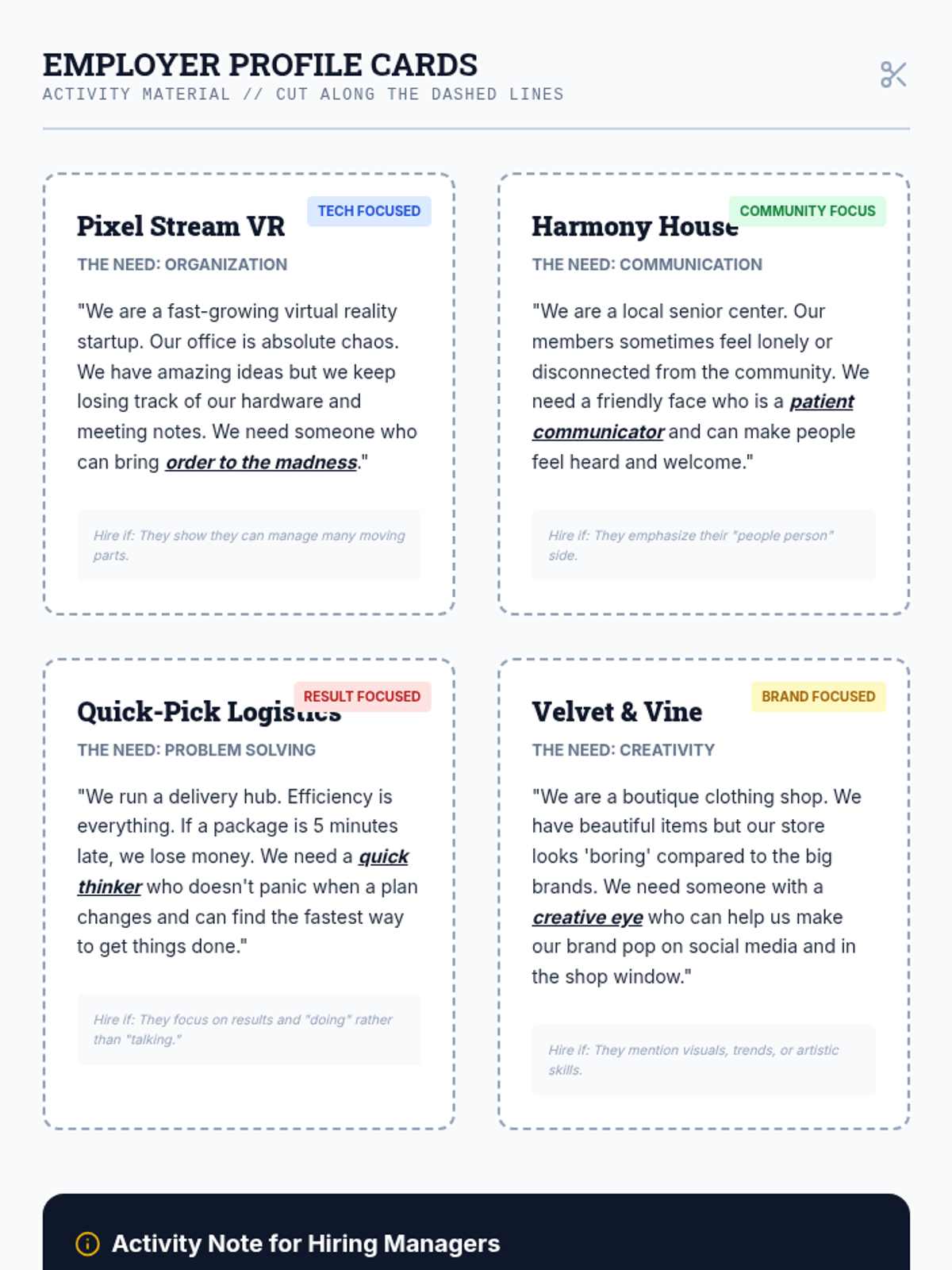
Students practice a 60-second 'elevator pitch' that is customized for two different companies. This highlights the importance of adaptability and specific research over generic rehearsed lines.
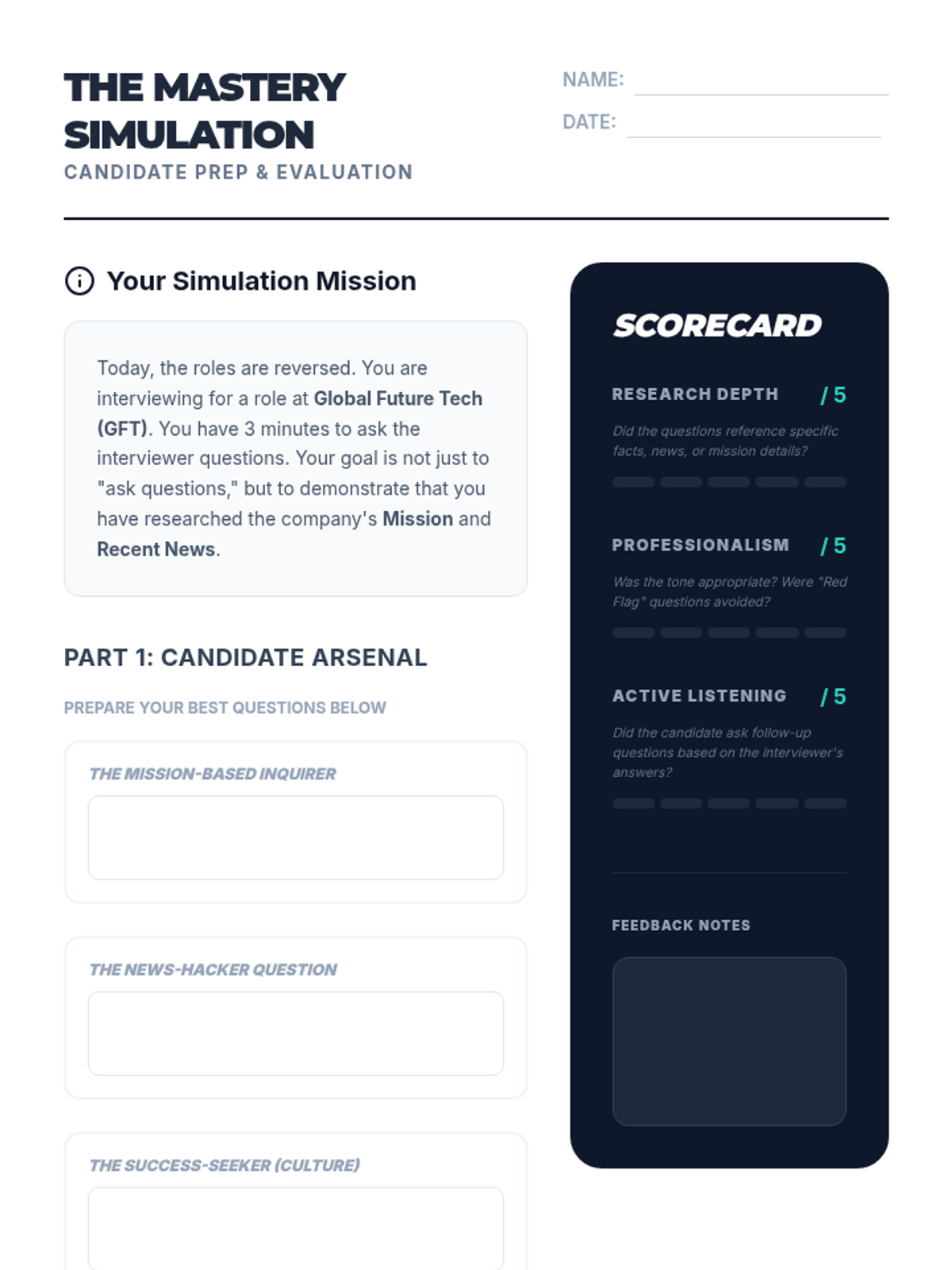
A final simulation where students lead the conversation by asking researched, strategic questions.
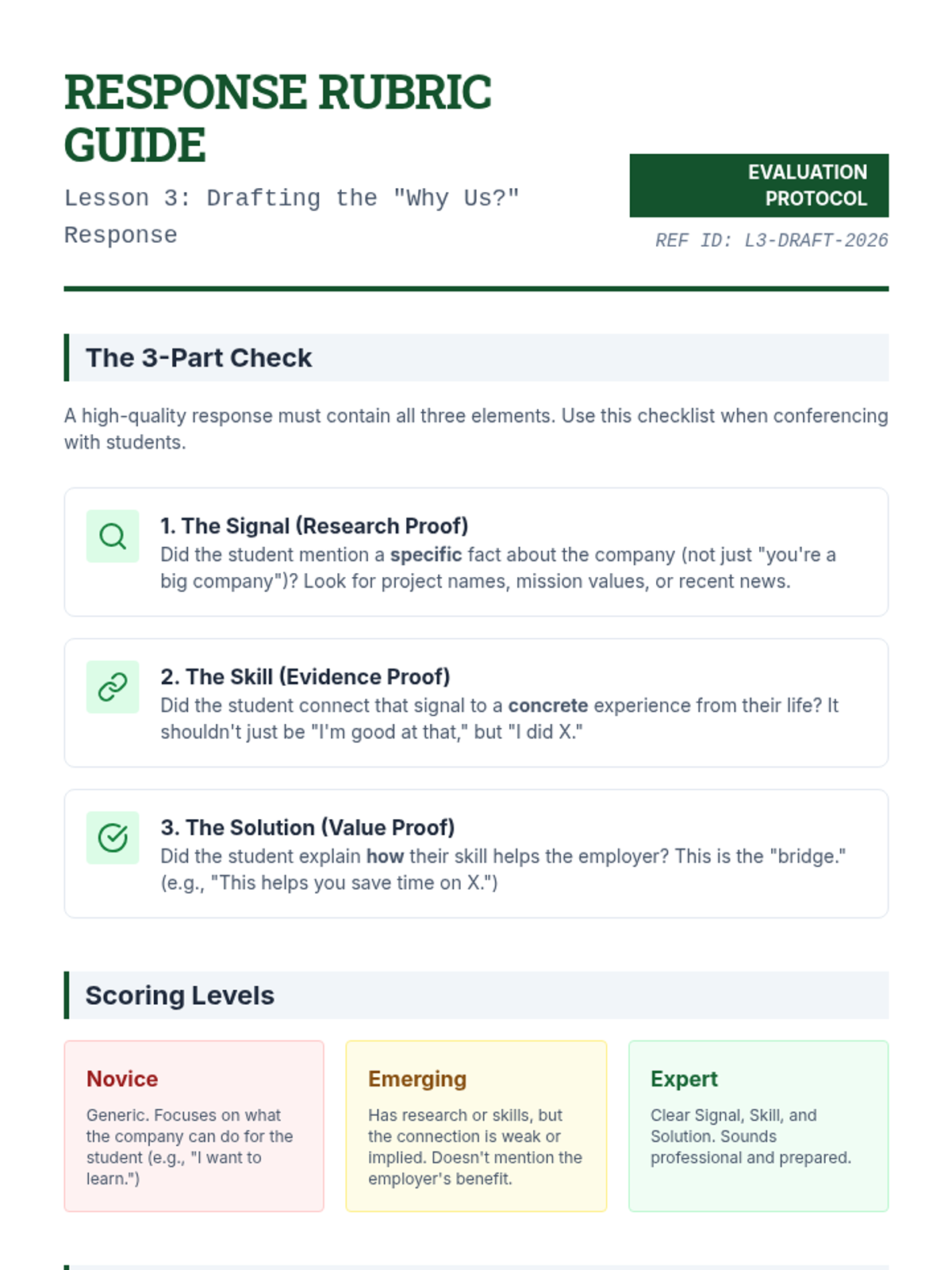
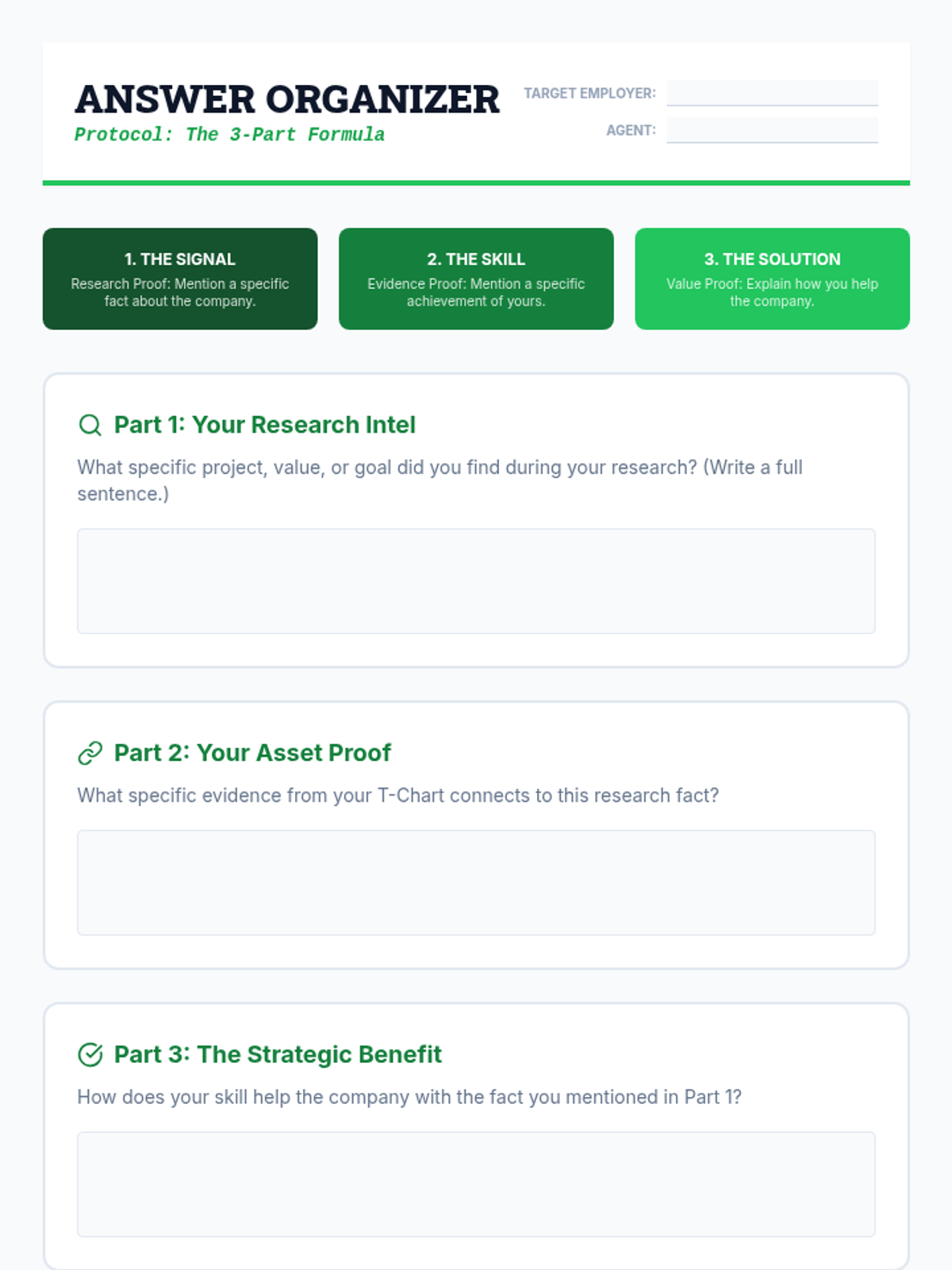
Using their research, students draft a response to the common interview question: 'Why do you want to work here?' They focus on citing specific details about the company's mission or projects.
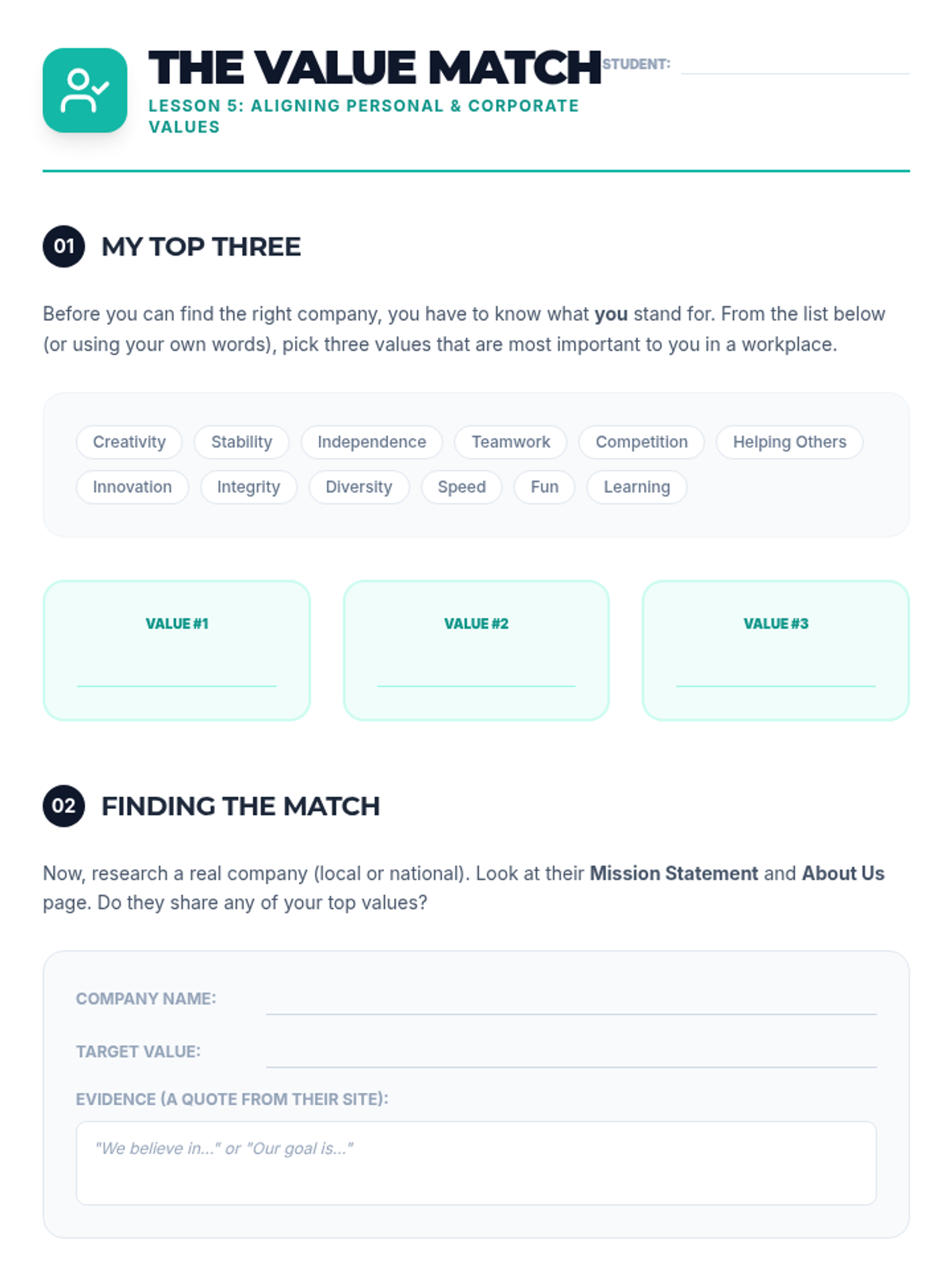
Students align their personal values with potential employers and reflect on their 'cultural fit' for specific organizations.
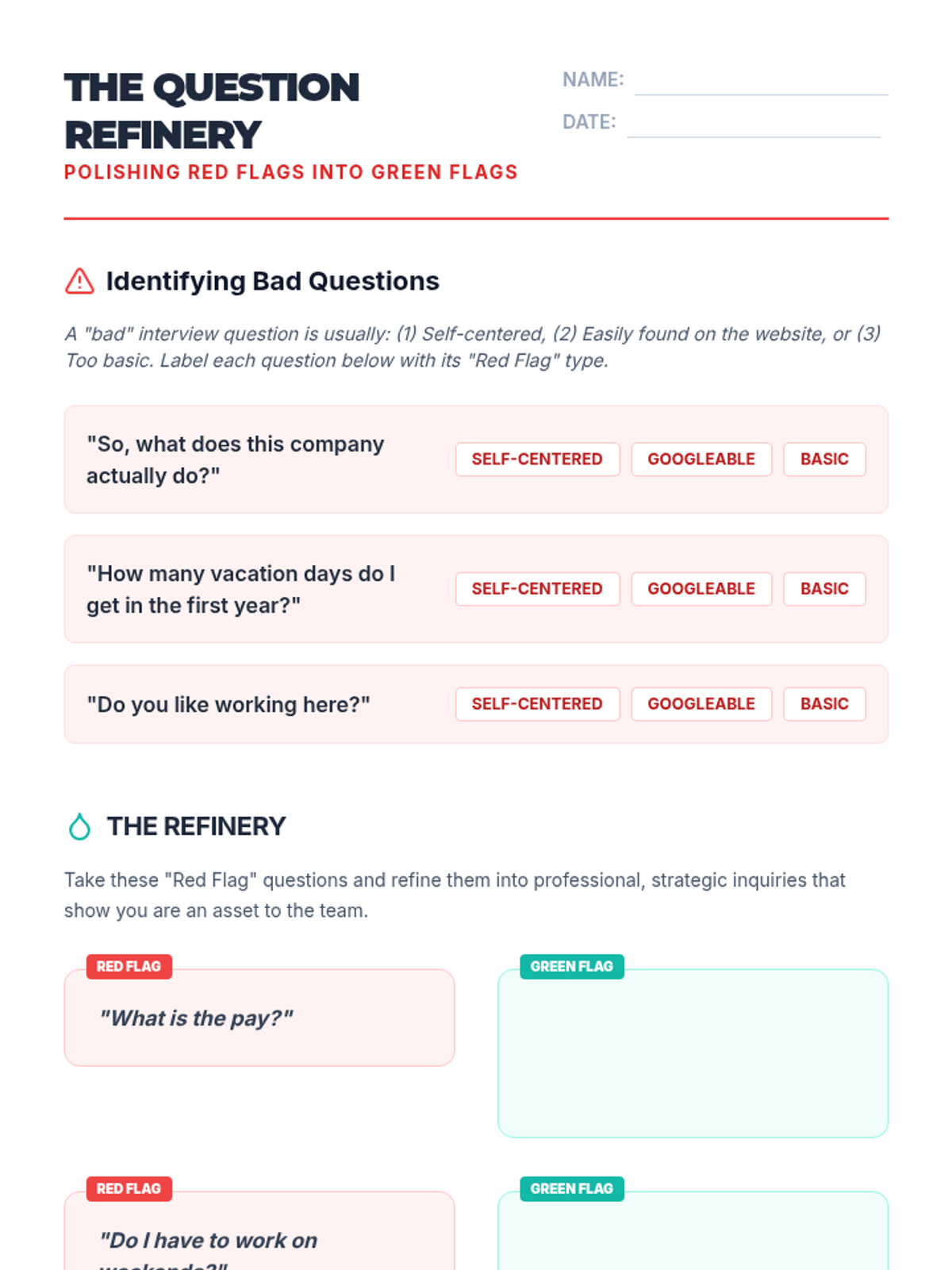
Students identify and refine common 'bad' interview questions into professional inquiries.
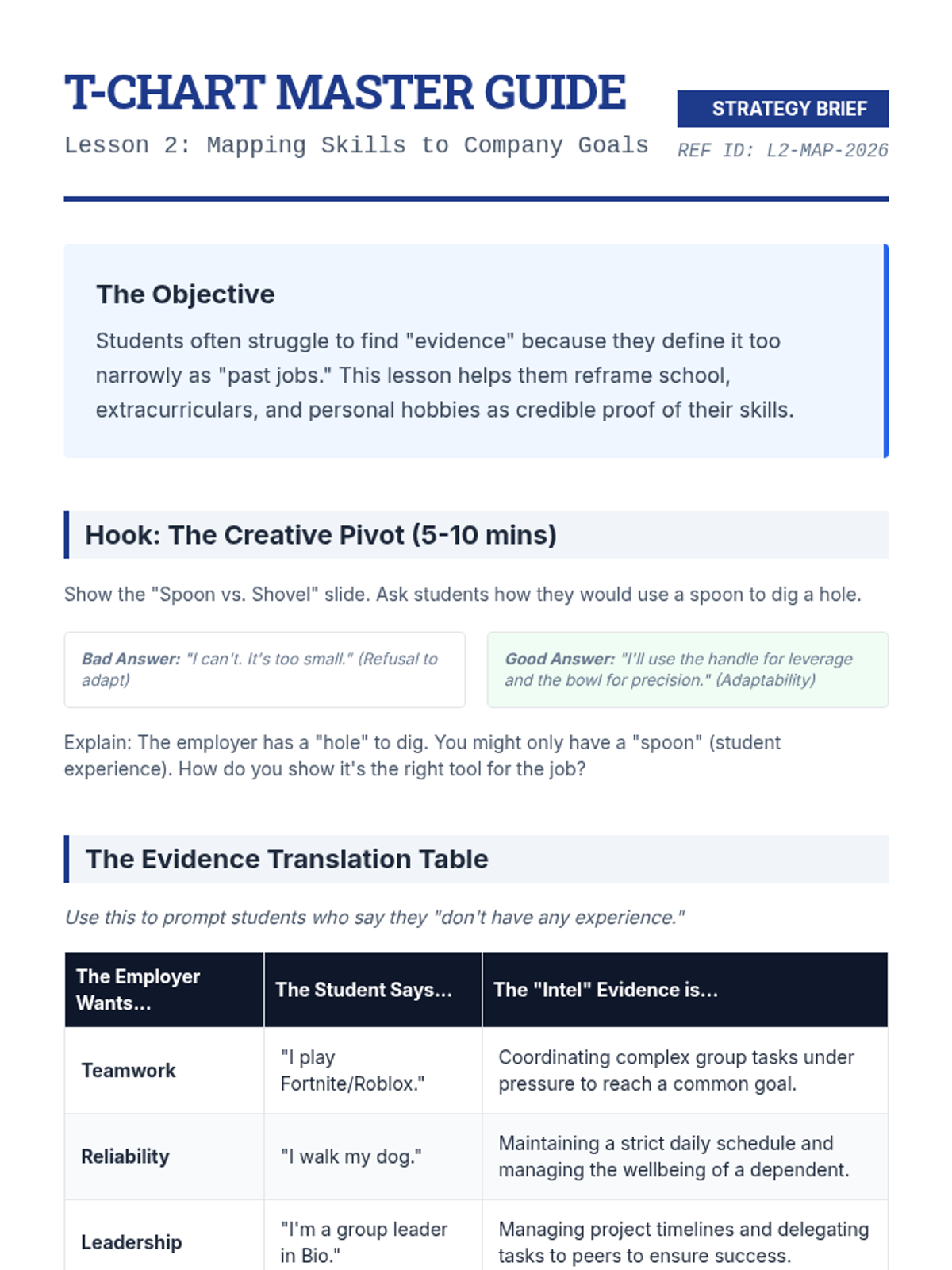
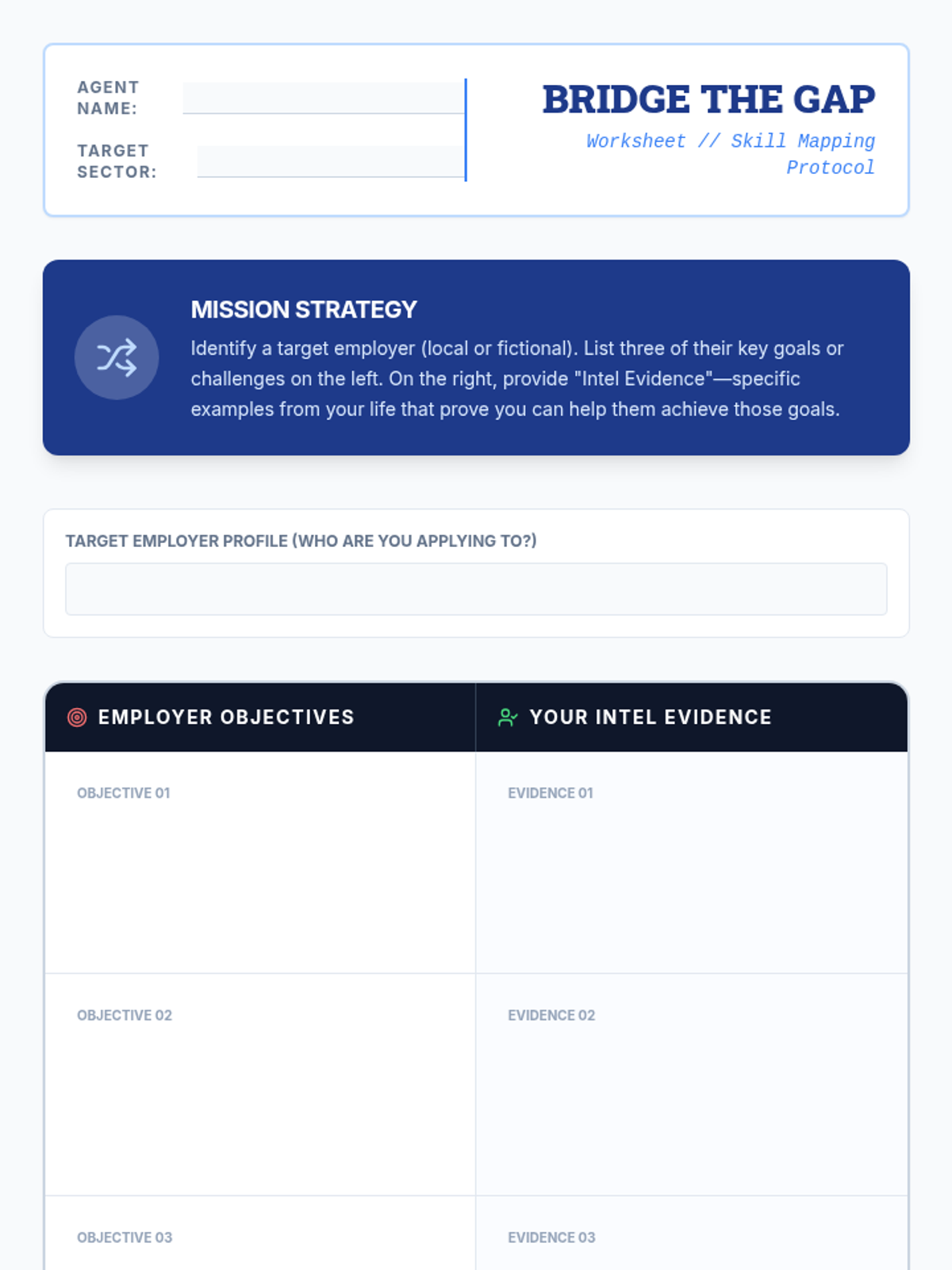
Students create a T-chart mapping company goals found in research to their own skills and experiences. This visual exercise helps them see concrete connections between themselves and the employer.
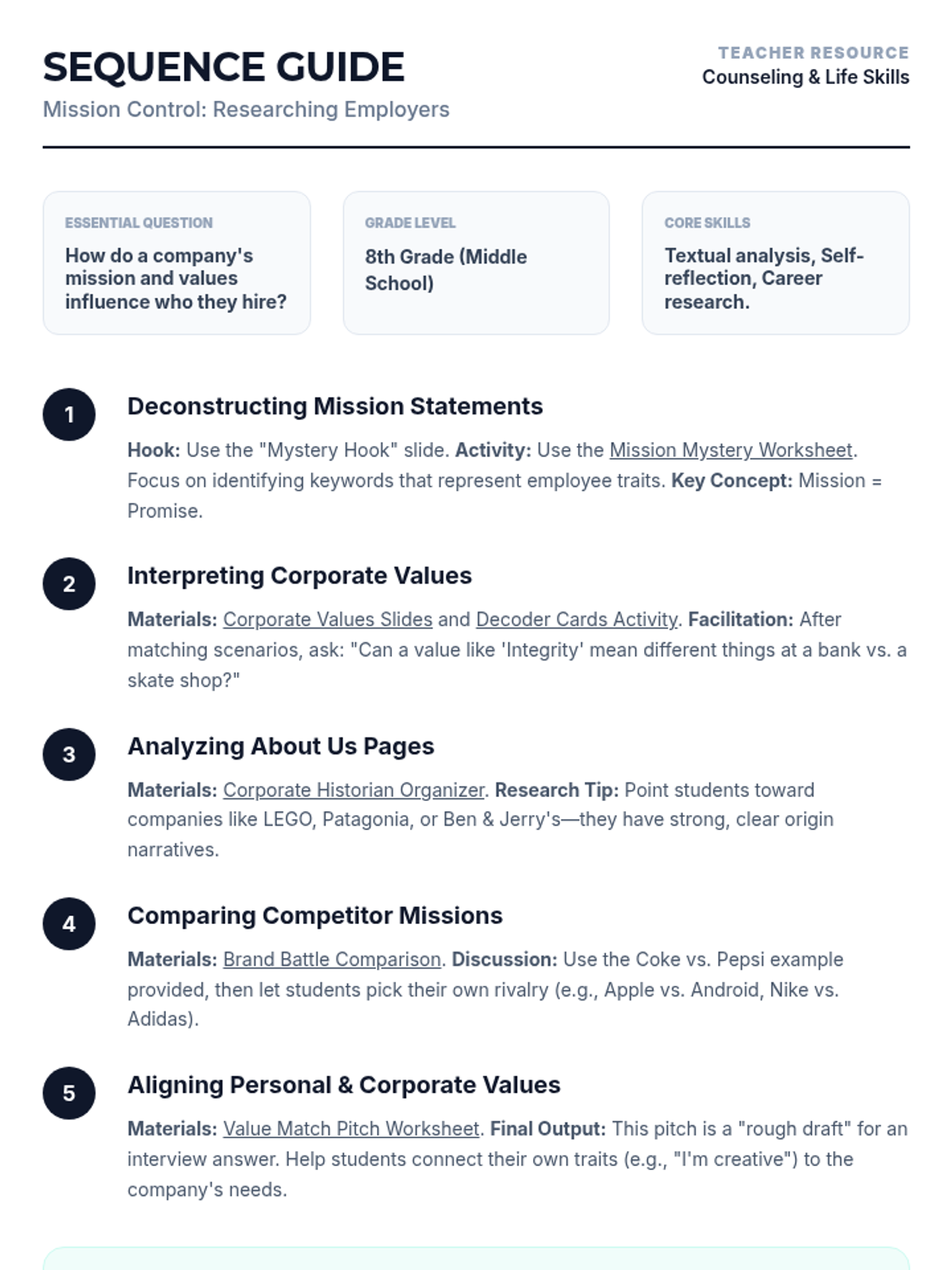
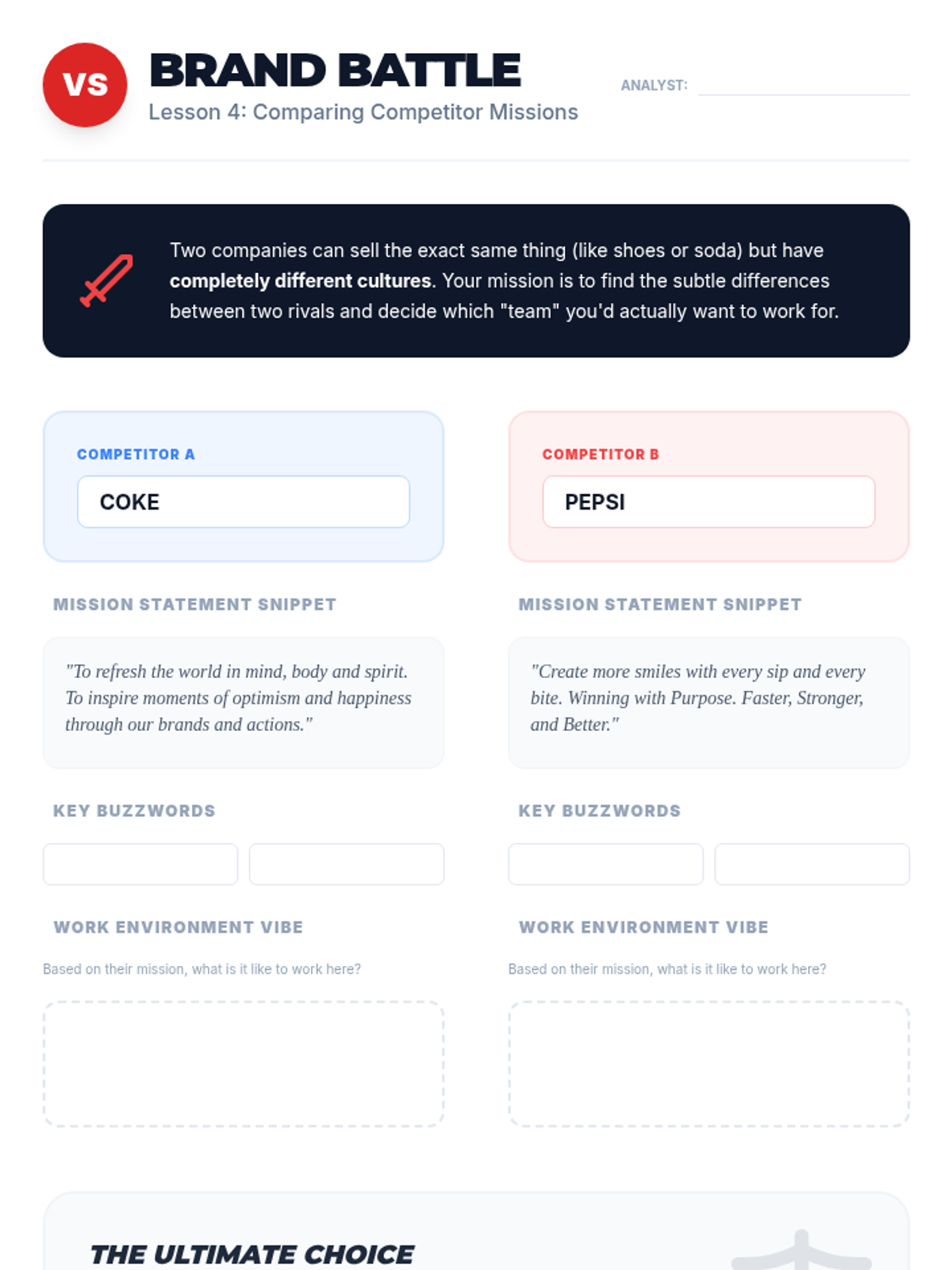
Students research two competing companies to find subtle differences in their missions and approaches.
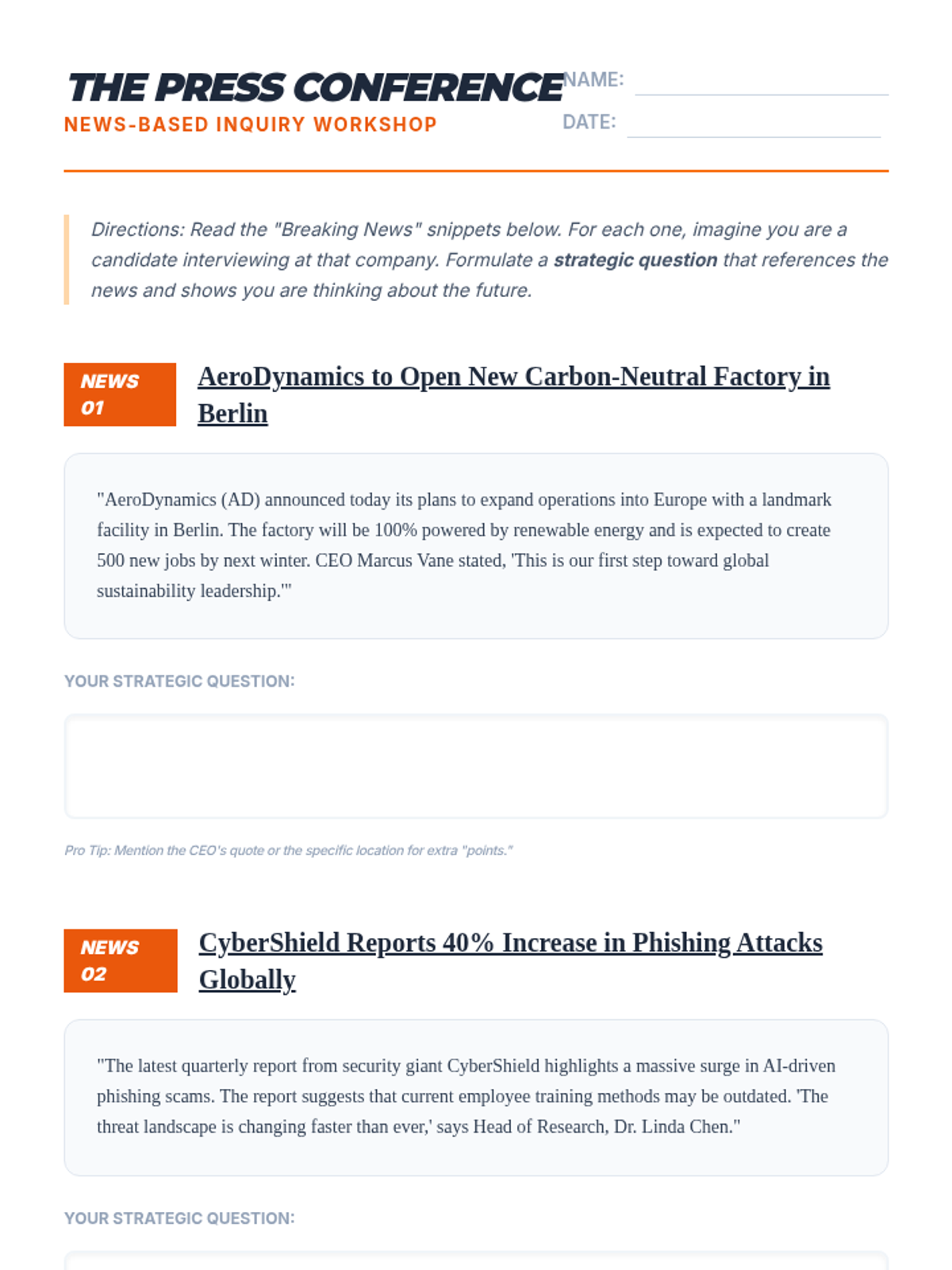
Students learn to use recent news and market trends to create timely, research-based interview questions.
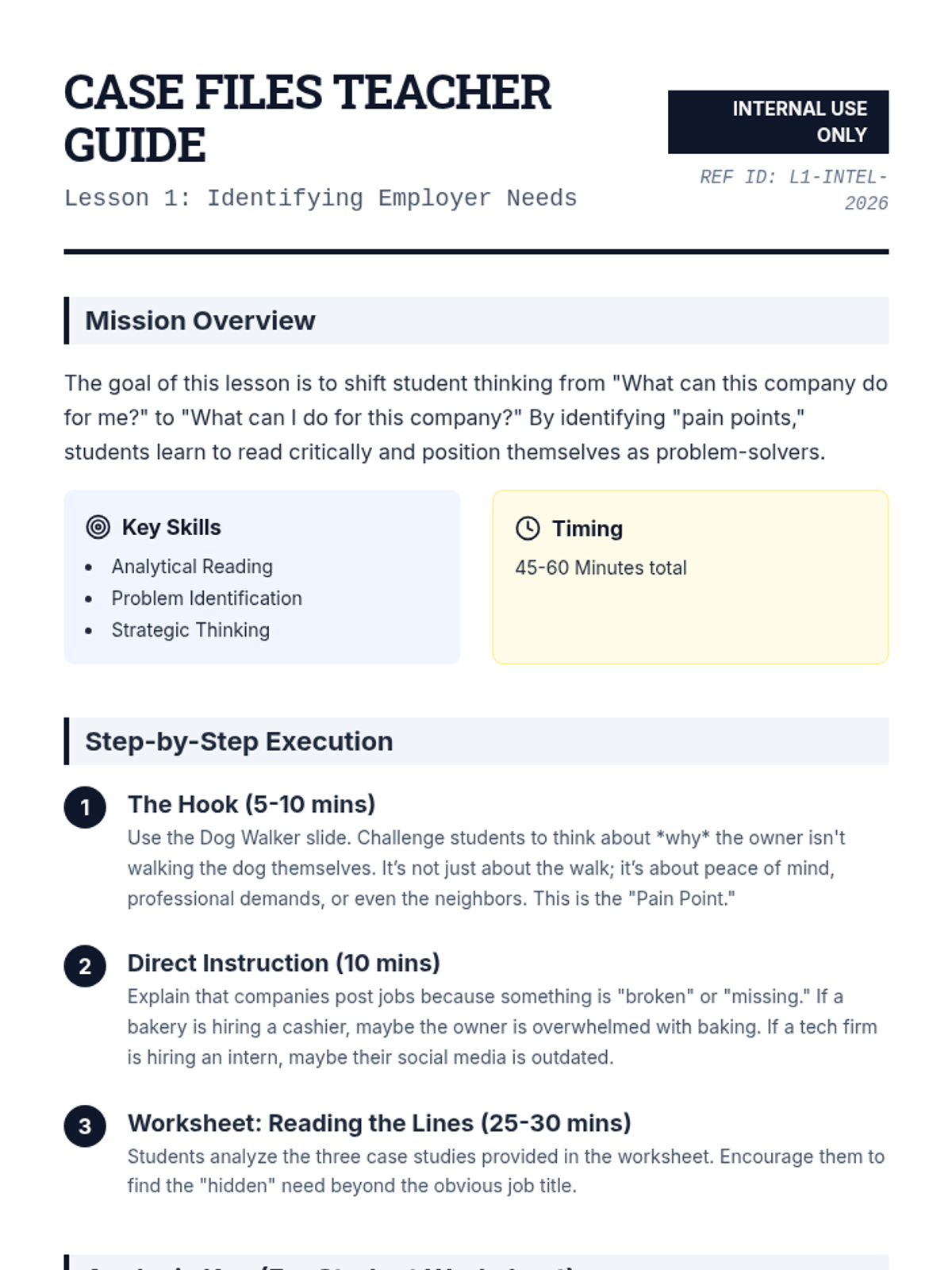
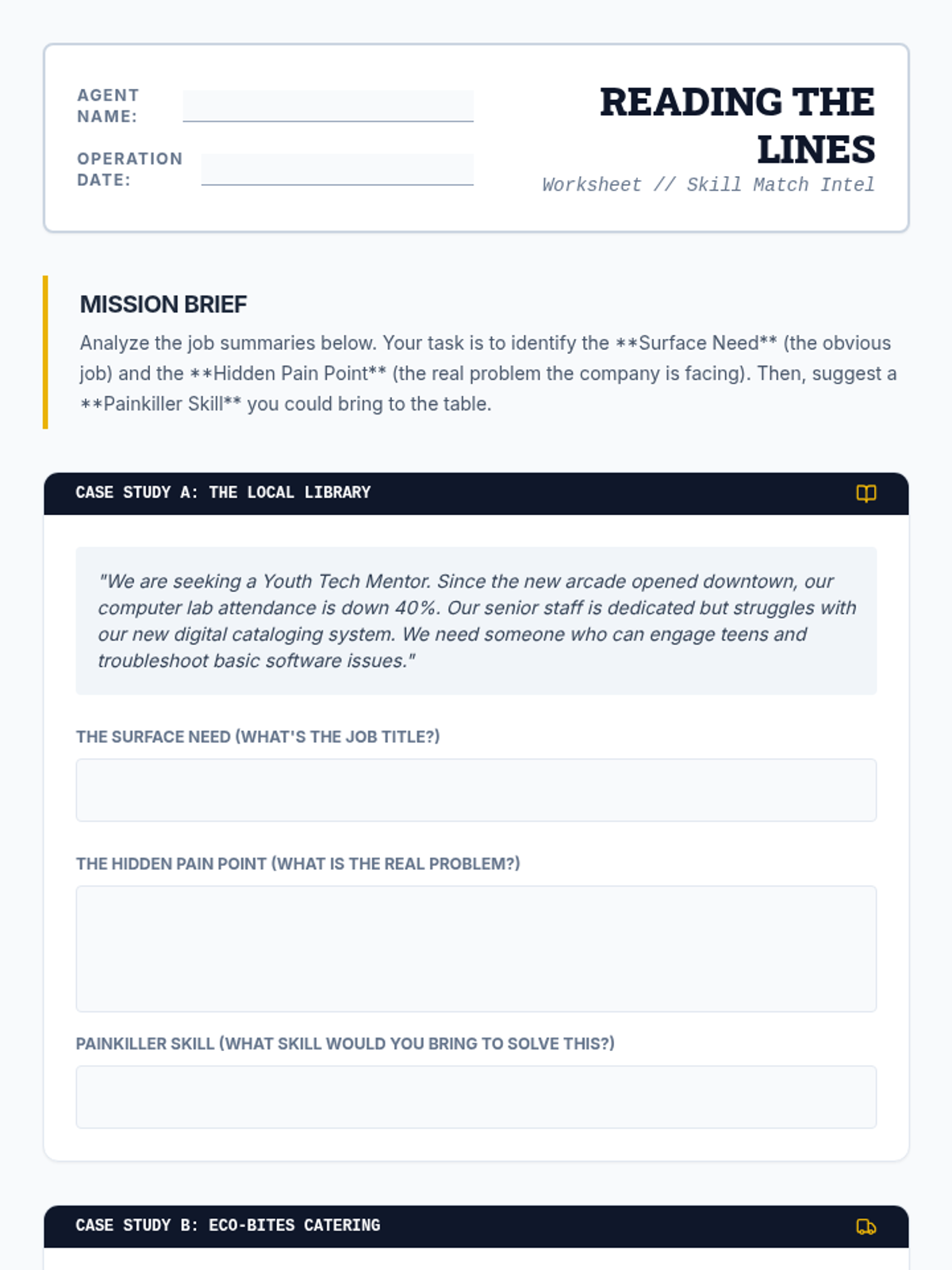
Students practice reading between the lines of job descriptions and company 'About' pages to identify what problems the company is trying to solve. They list the 'pain points' a new hire needs to address.
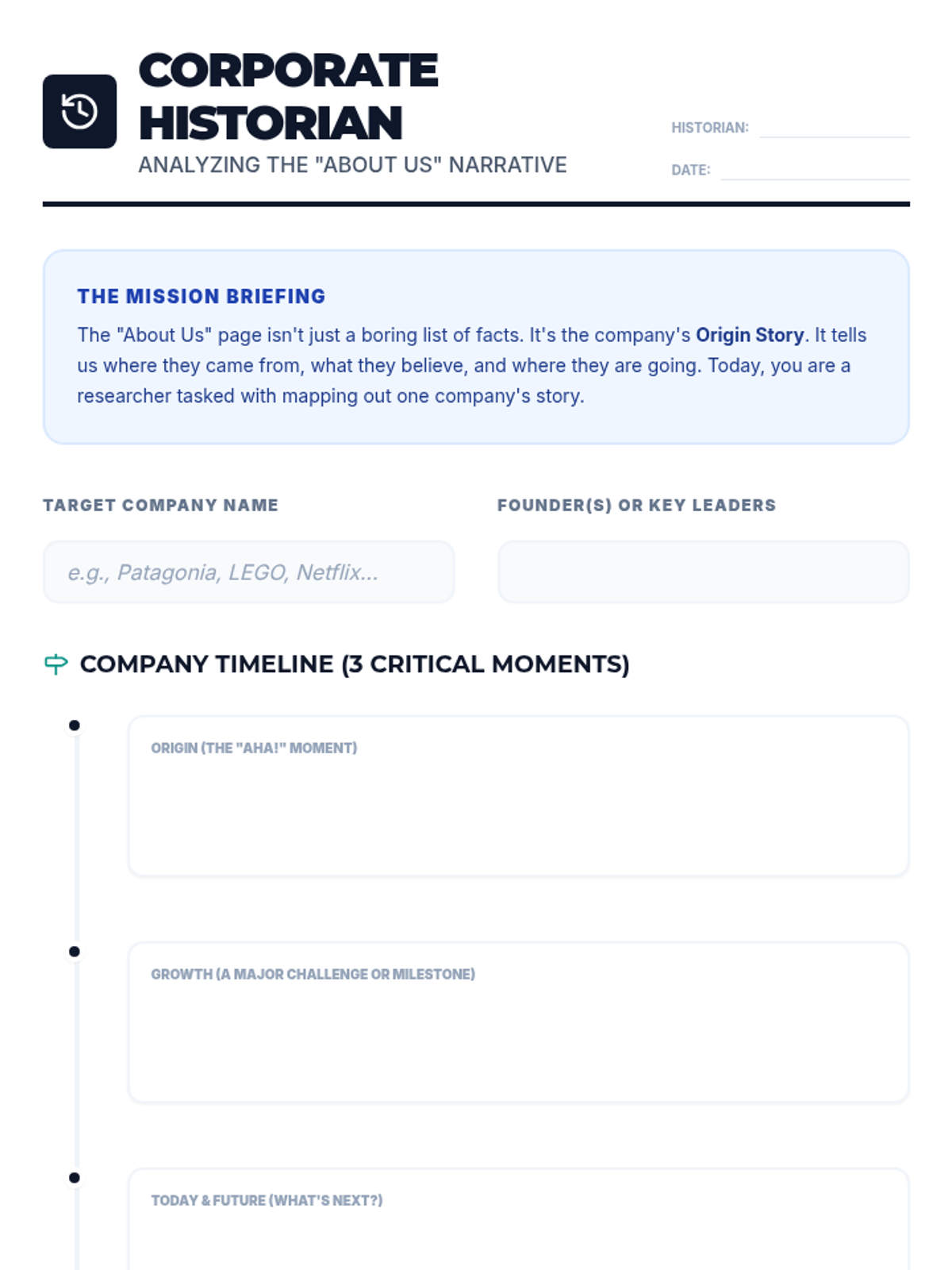
Students read full 'About Us' narratives to extract history, leadership style, and future goals using a graphic organizer.
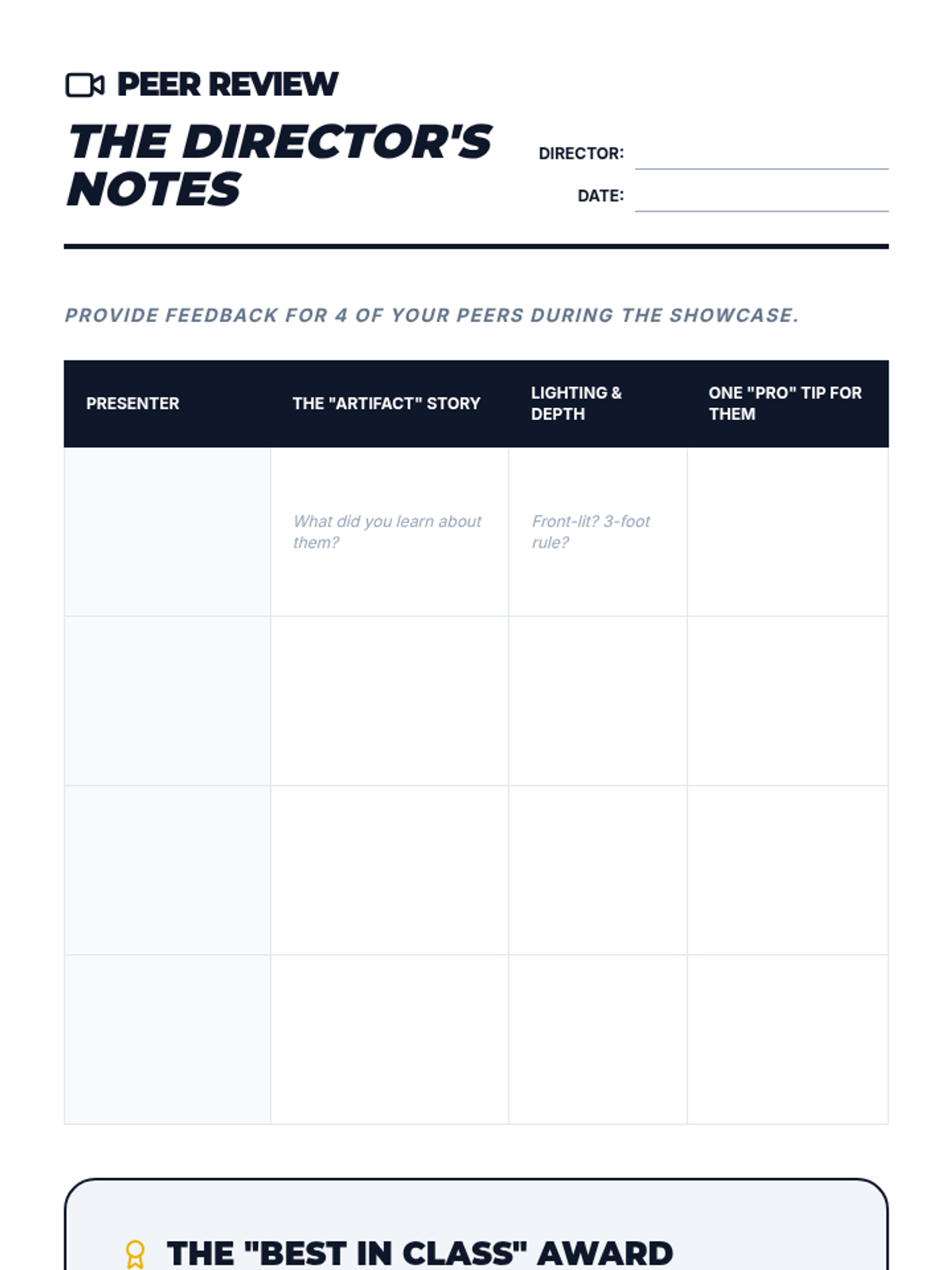
The final presentation where students showcase their 'interview corner' and receive peer feedback based on professional design principles.
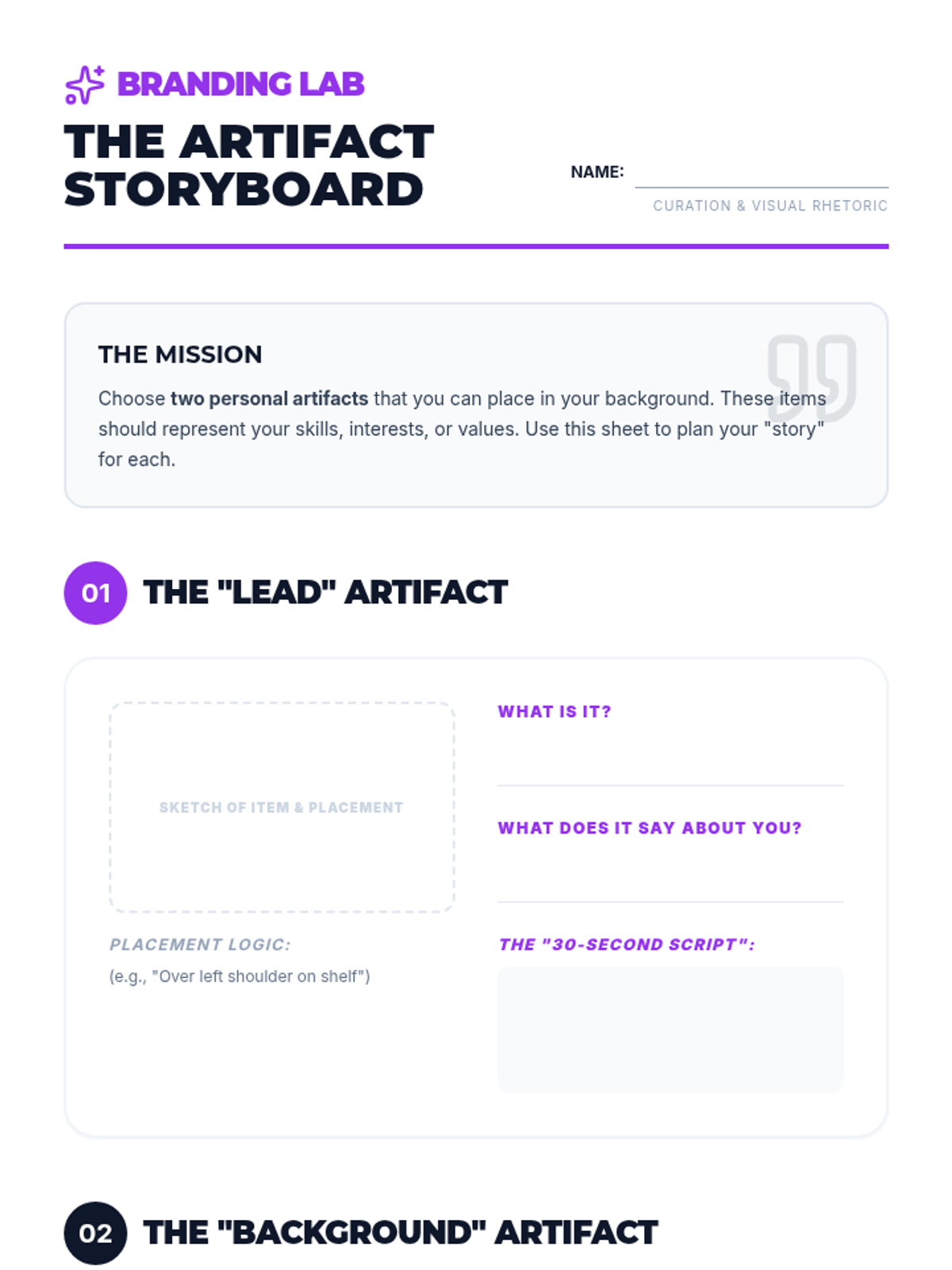
Students select and stage personal artifacts that tell a positive story about their interests, practicing how to use them as conversation starters.
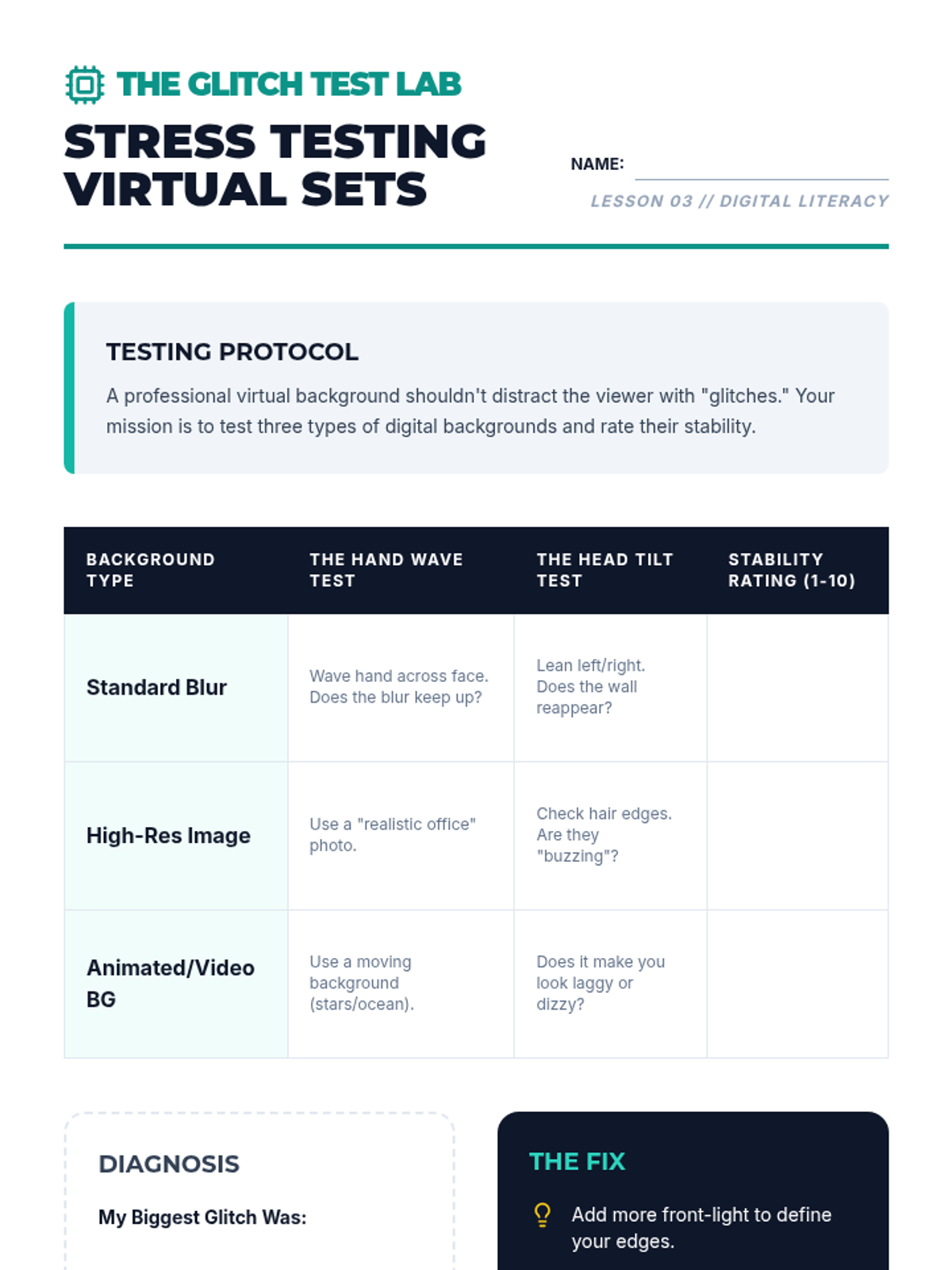
Learners explore the technical do's and don'ts of virtual backgrounds and blurring effects, testing for 'glitching' and professional aesthetics.
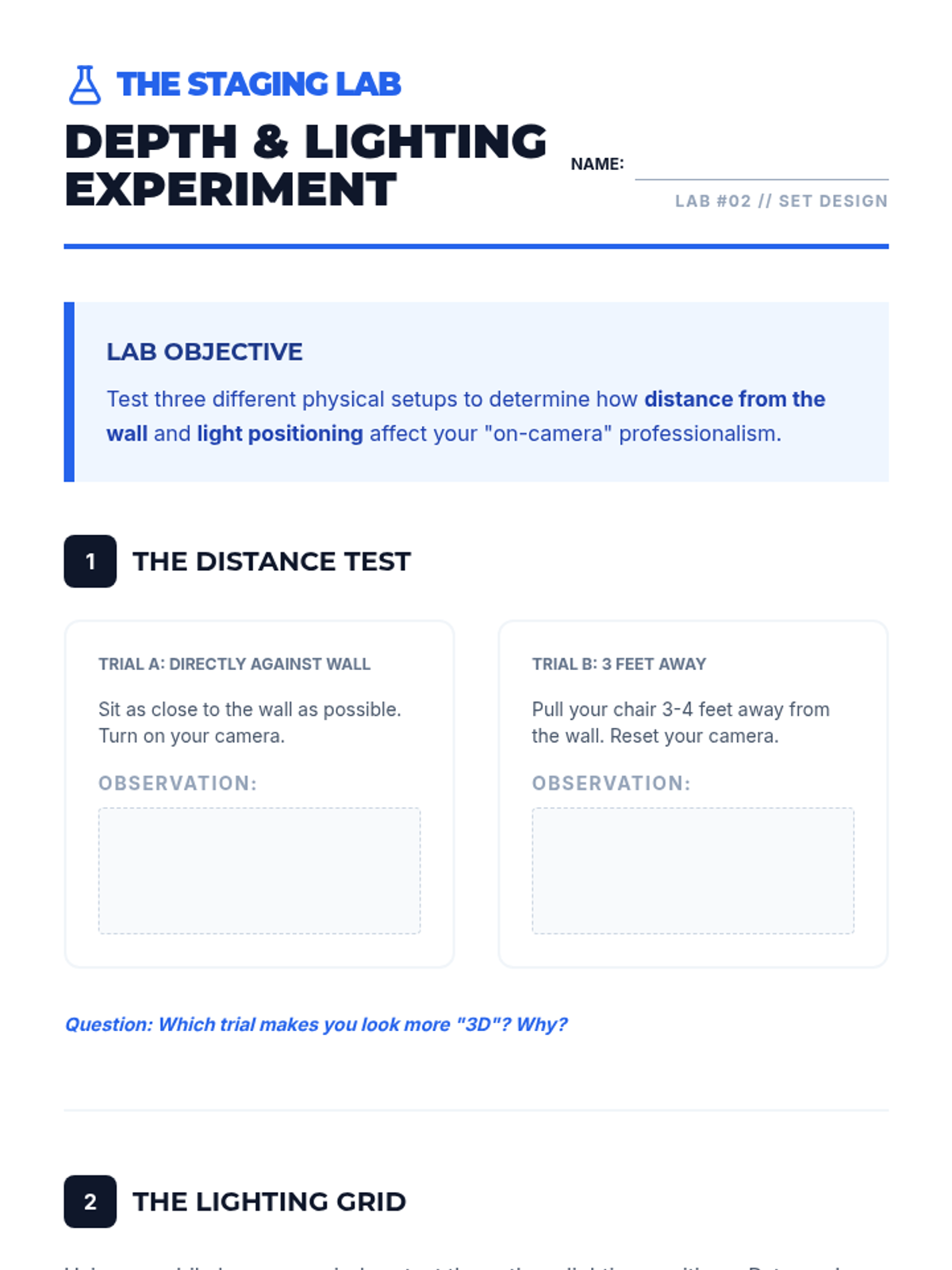
This lesson covers the concept of depth of field and lighting to avoid 'flat' backgrounds through practical experimentation.
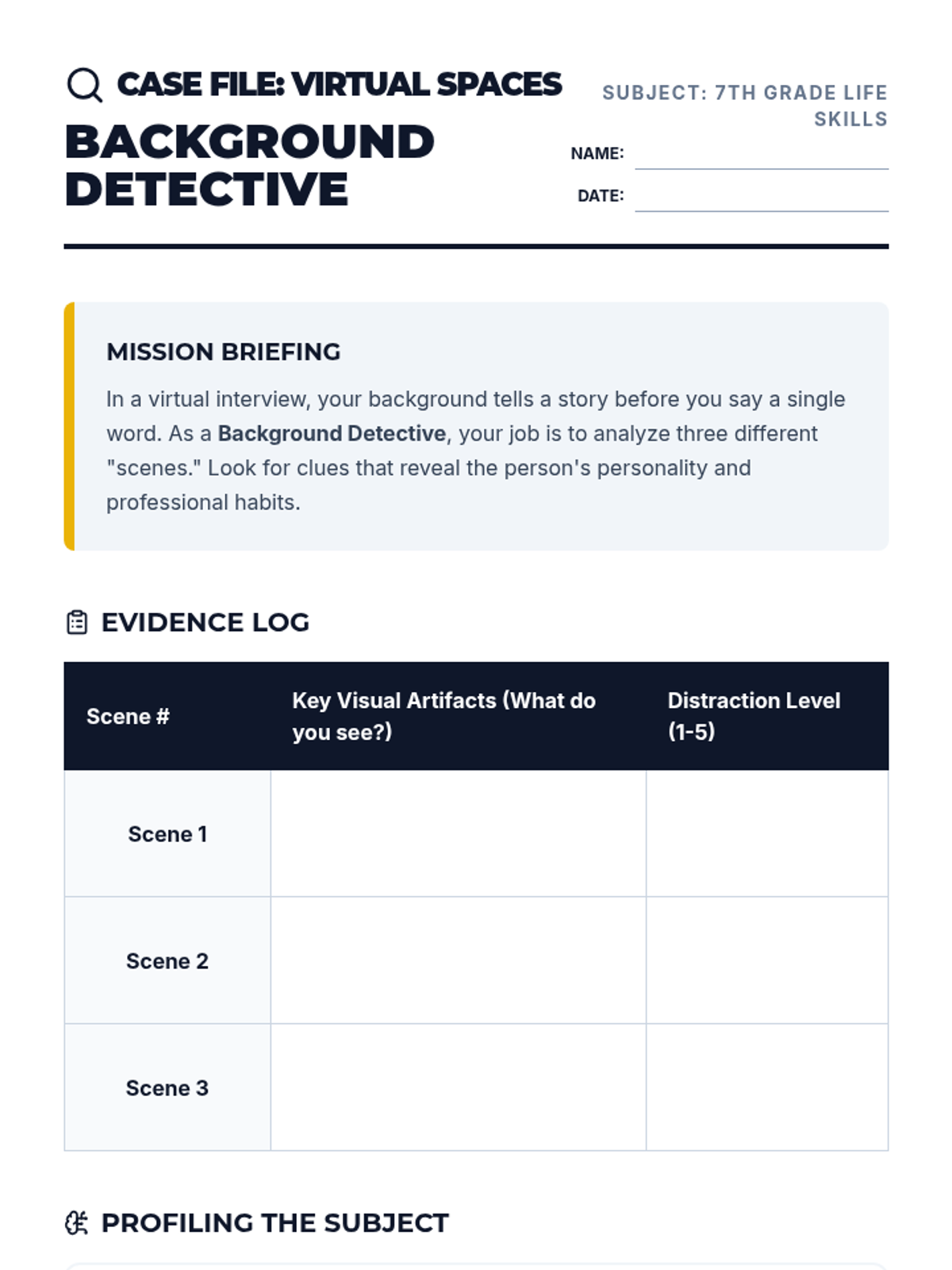
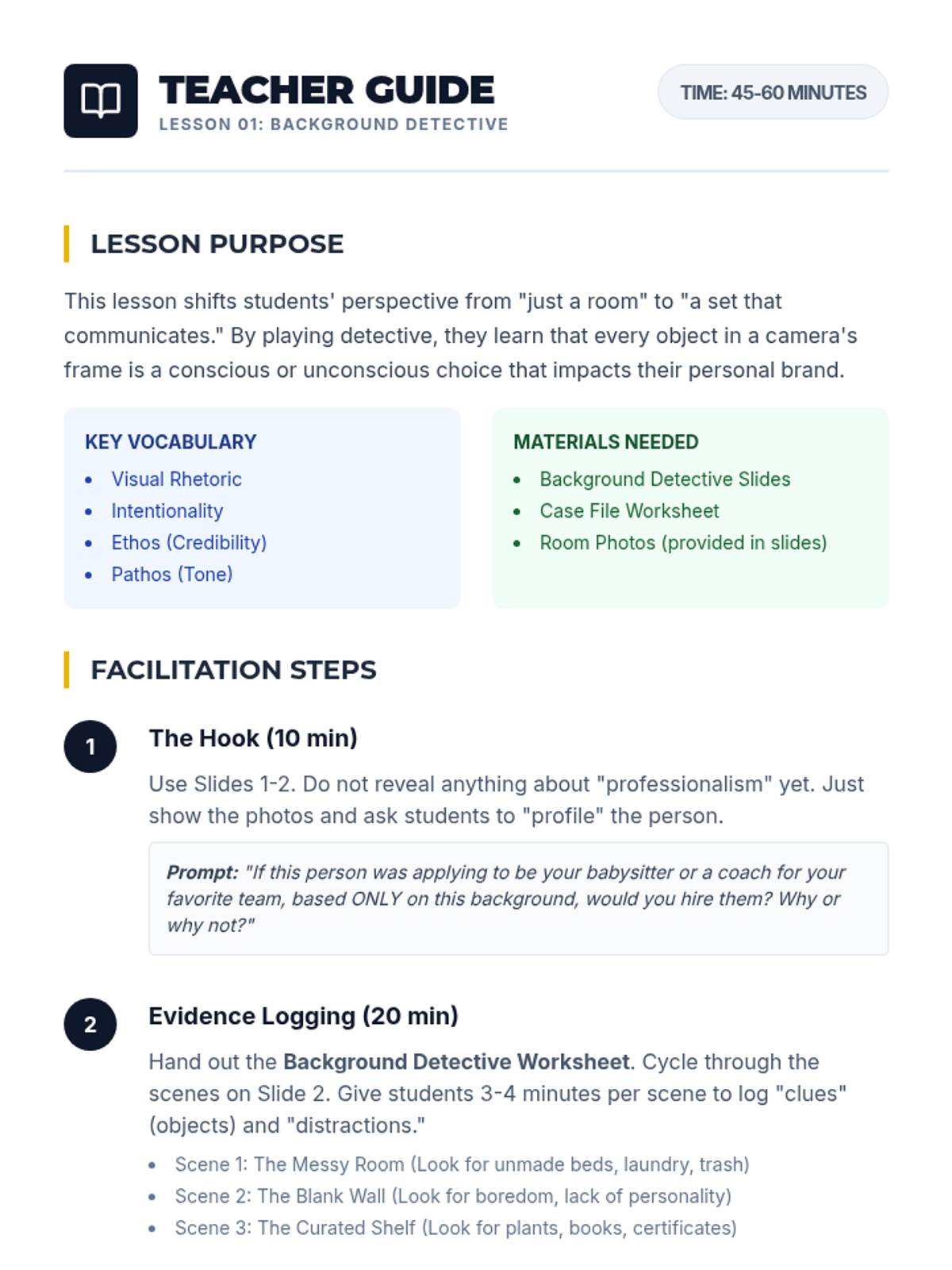
Students analyze screenshots of various backgrounds to identify professional versus distracting elements, playing 'Background Detective' to infer personality traits.
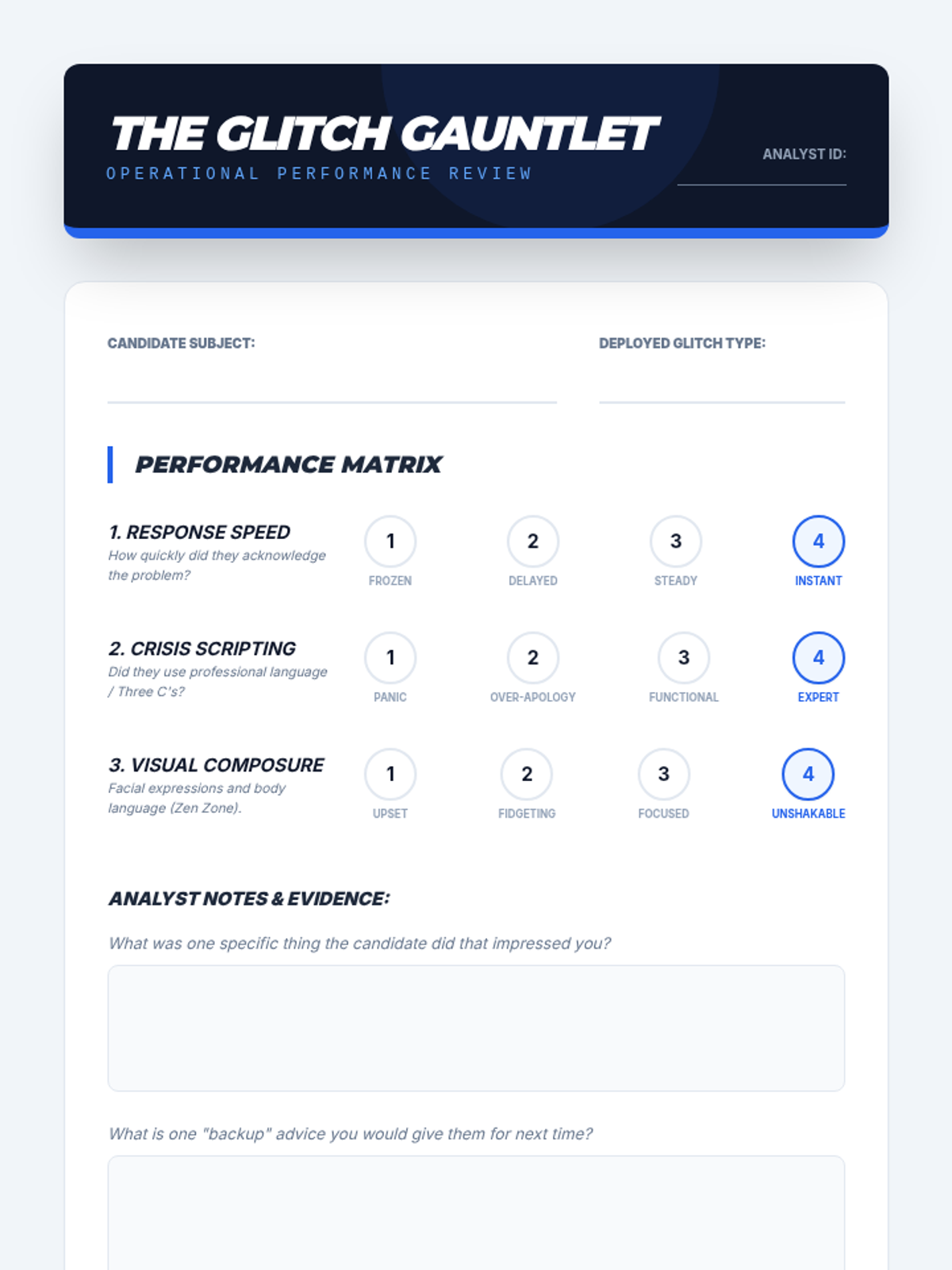
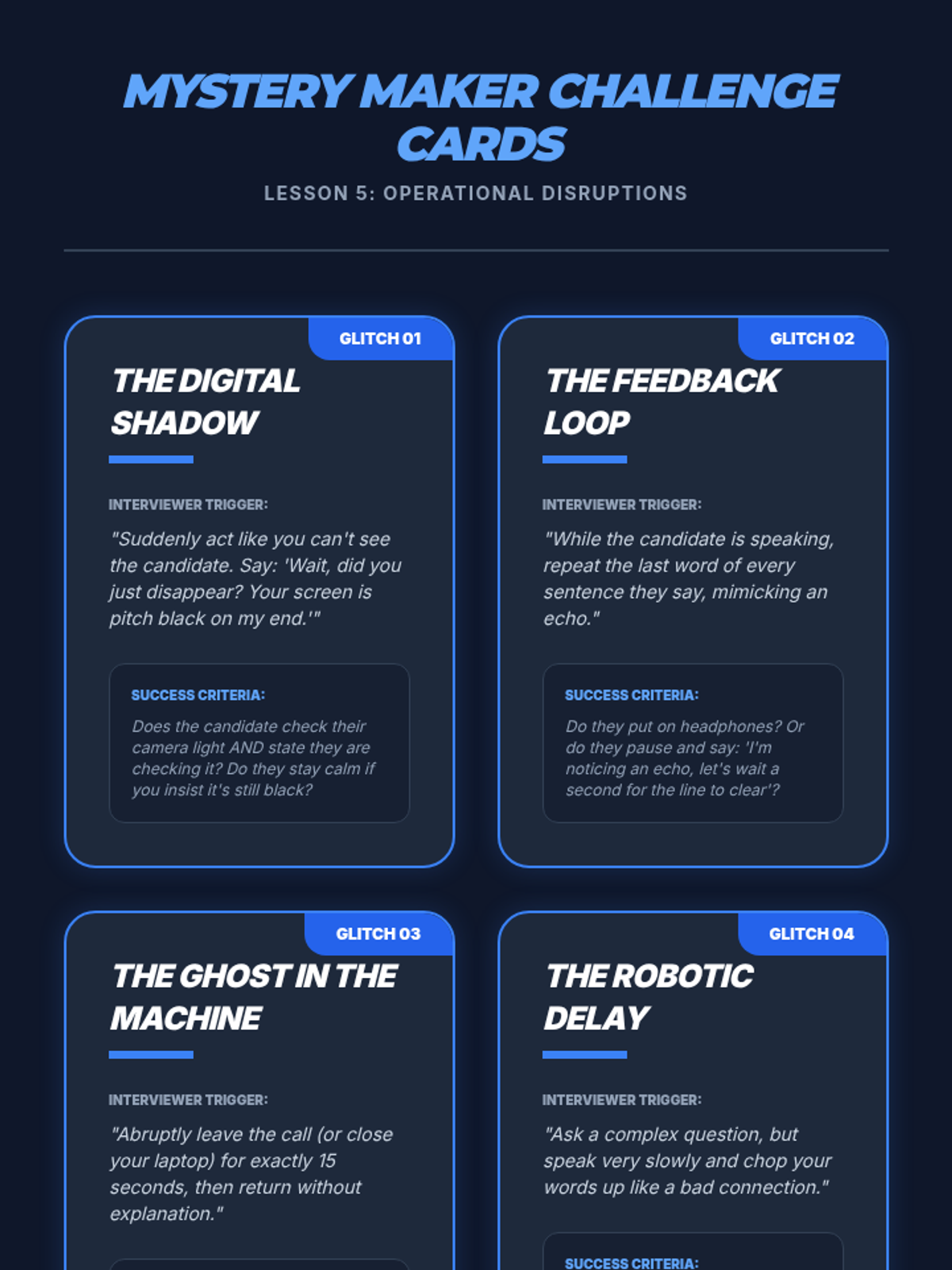
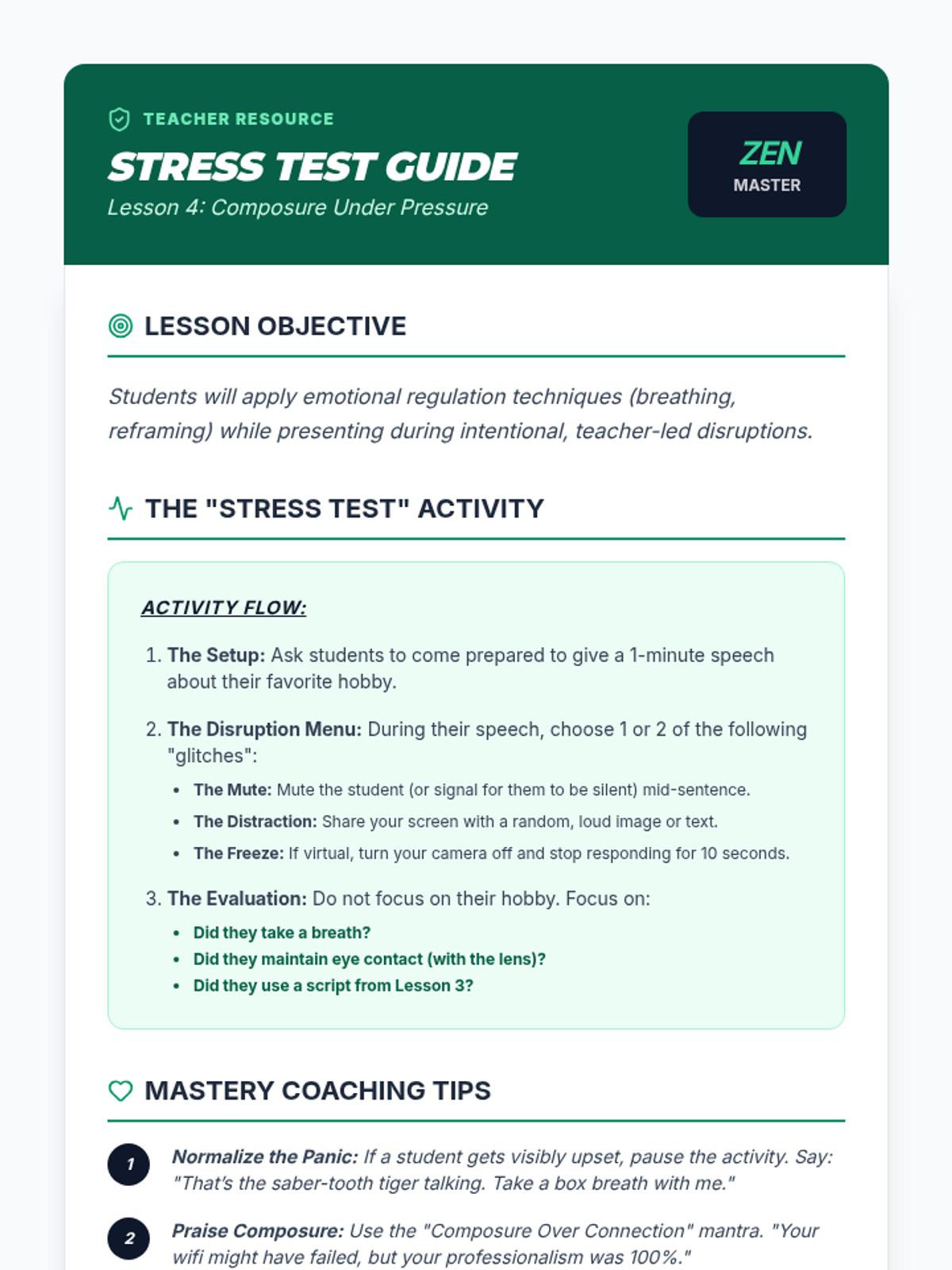
A high-stakes mastery lab where students navigate intentional technical failures during mock interviews to demonstrate troubleshooting and composure.
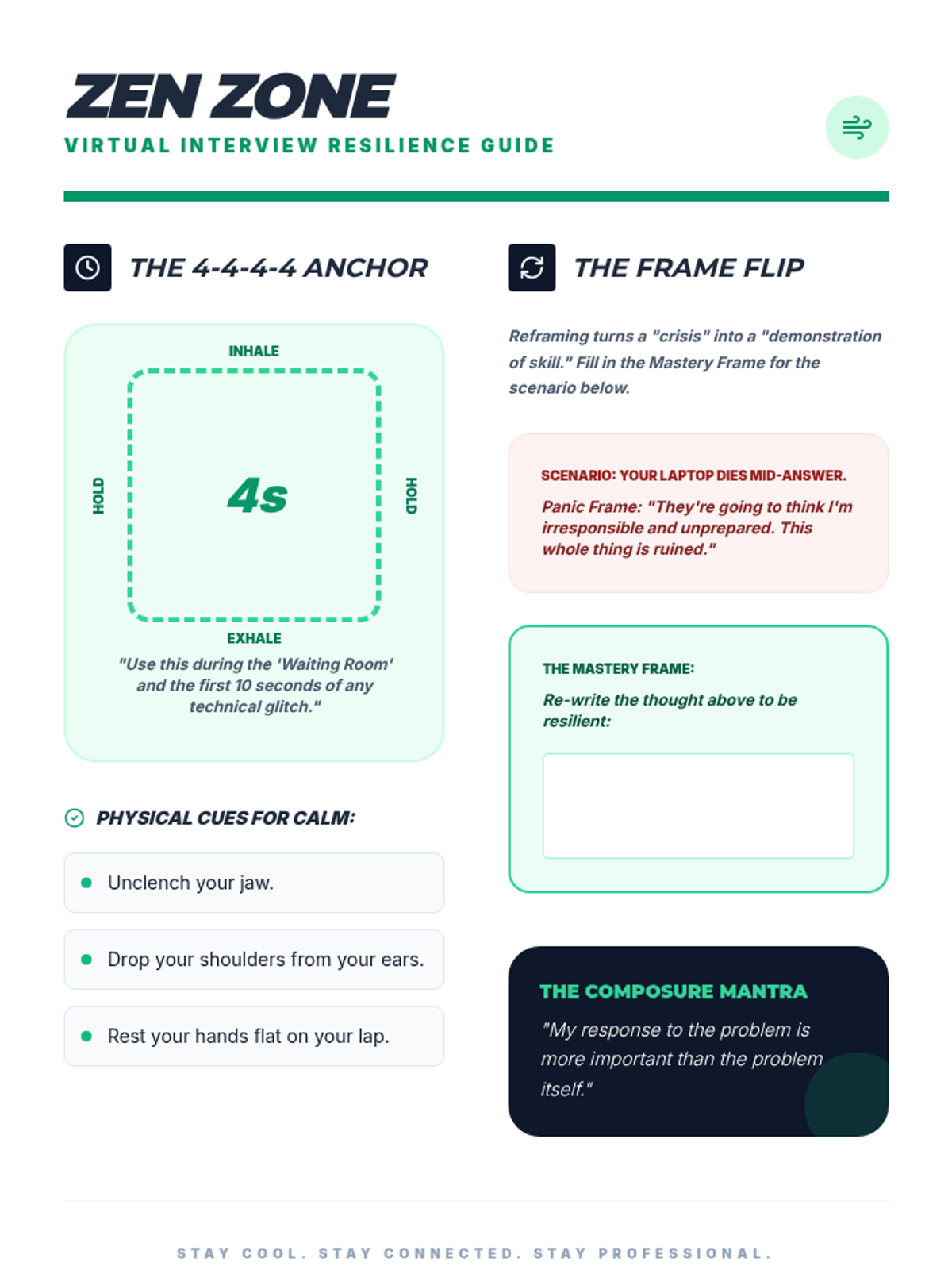
This lesson focuses on emotional regulation techniques and mindset shifts to stay calm when technology fails mid-flow.
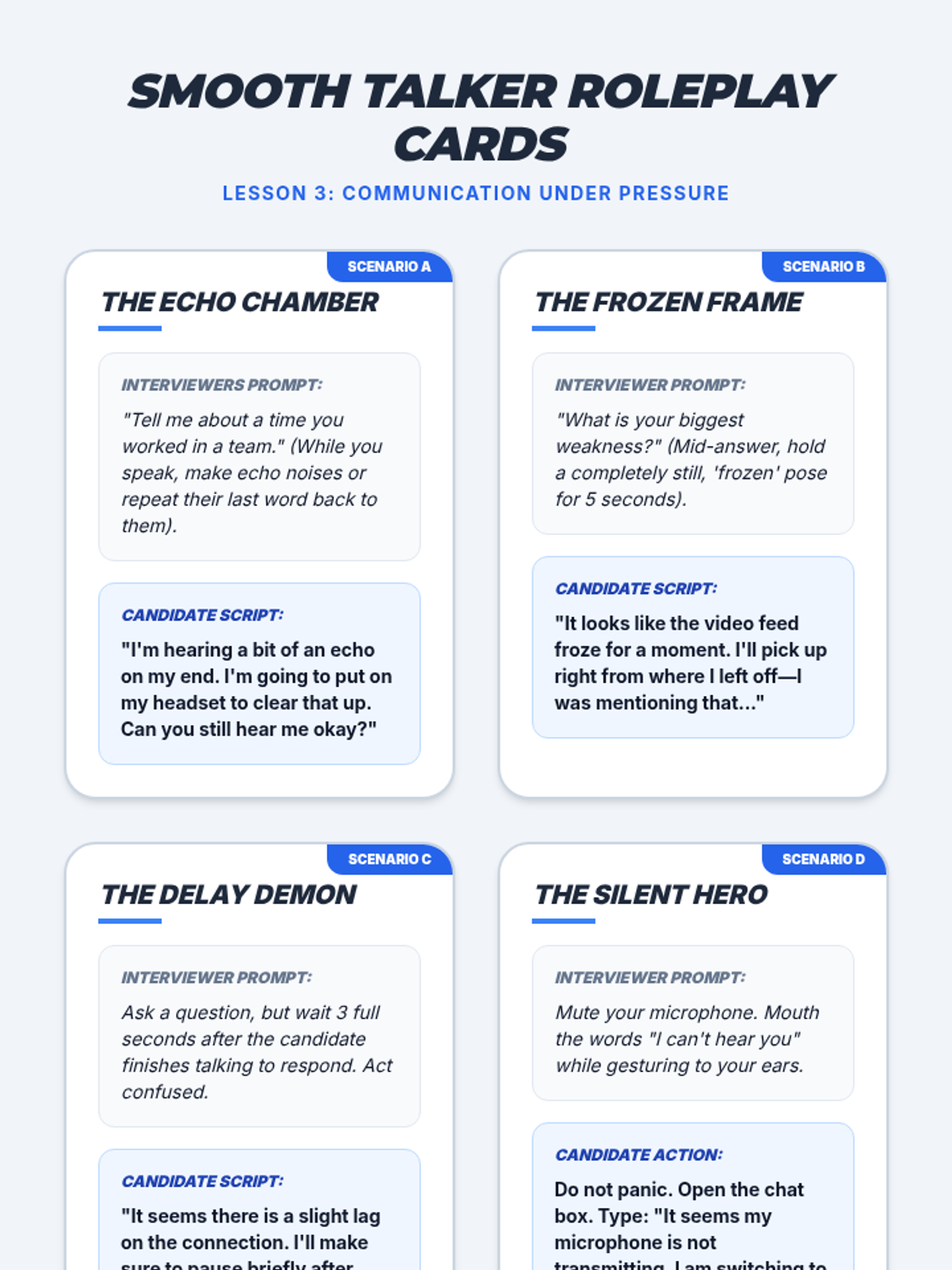
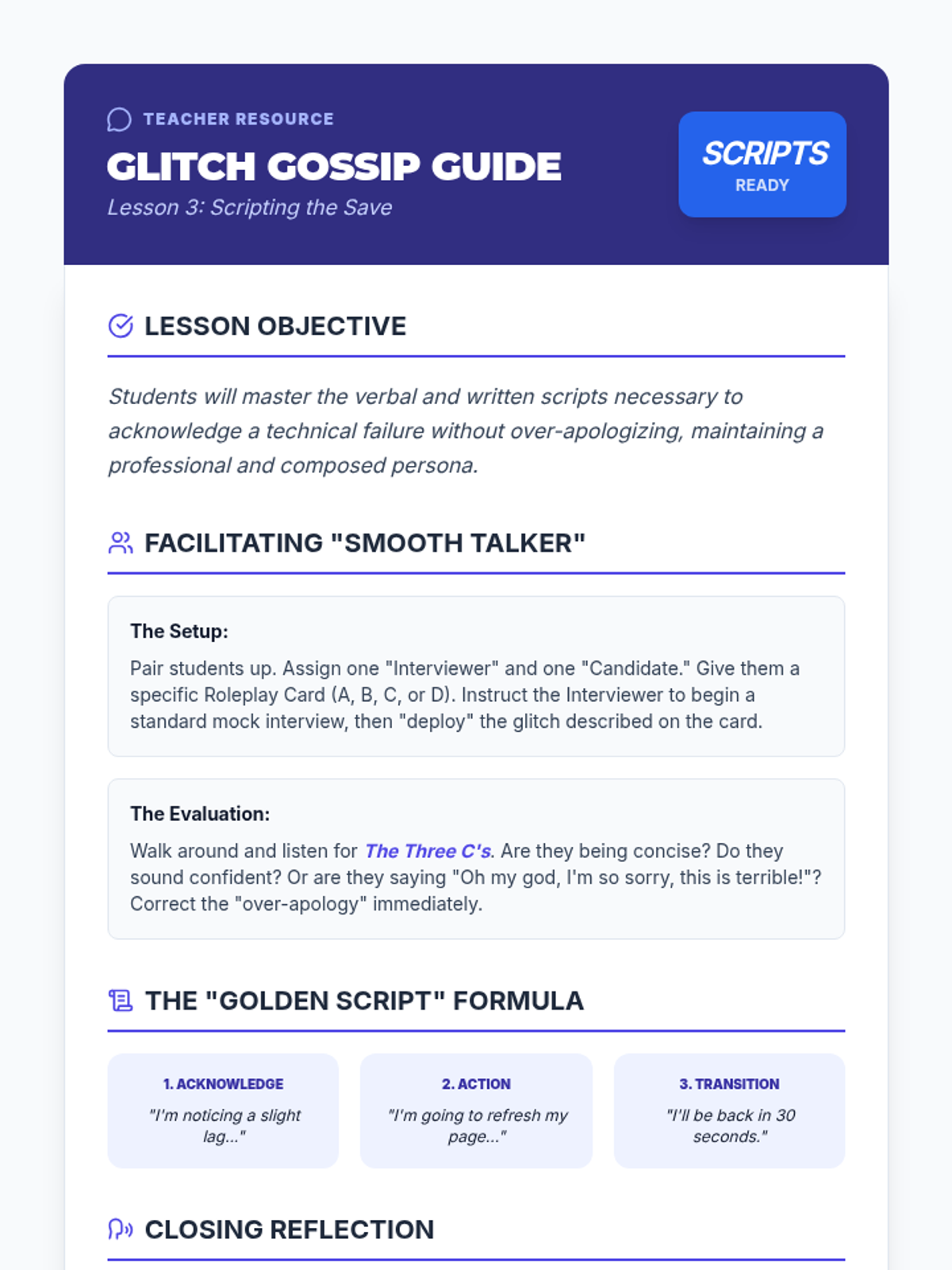
Students learn and practice specific verbal scripts to professionally communicate technical issues during an interview without panicking.
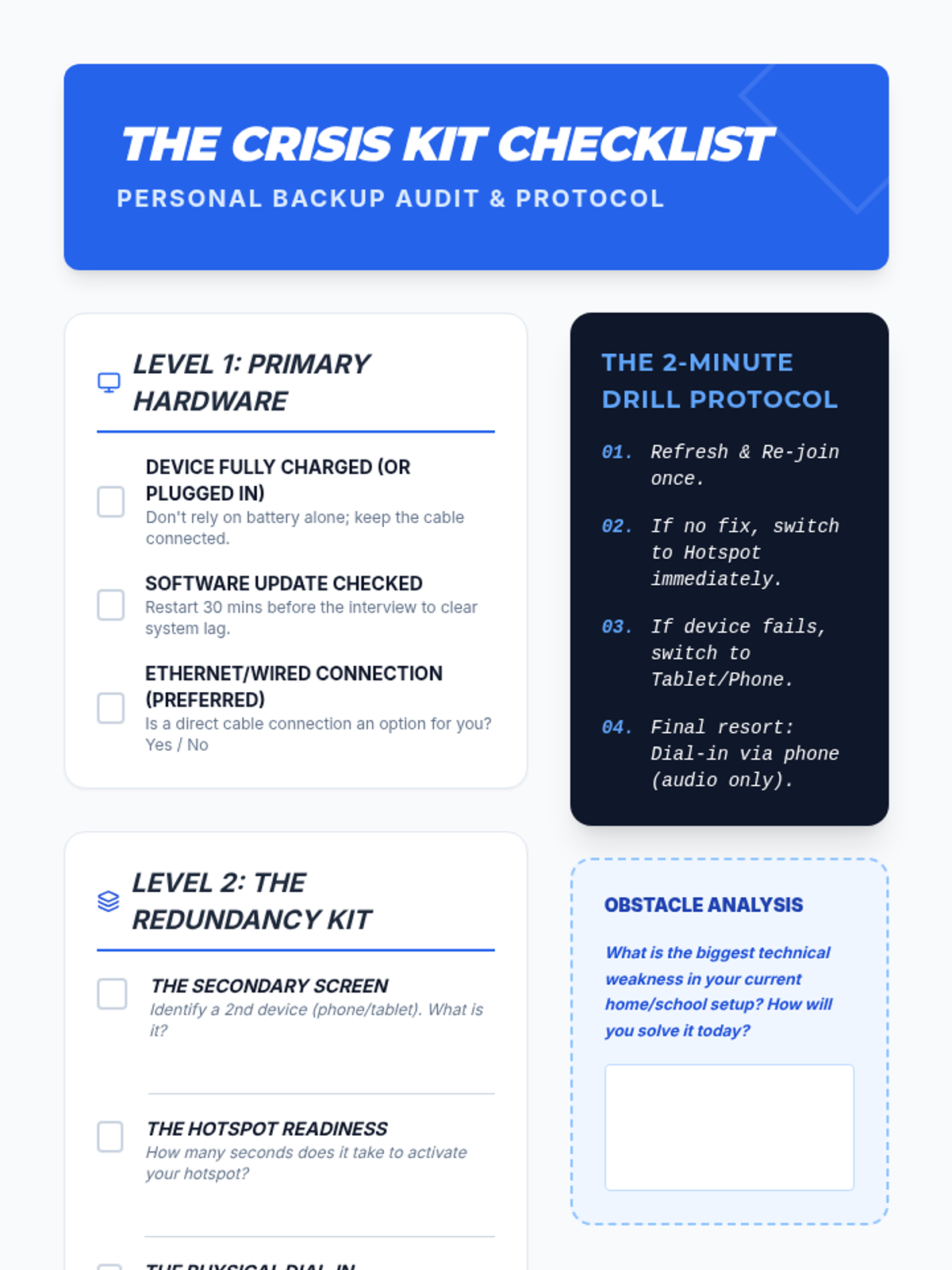
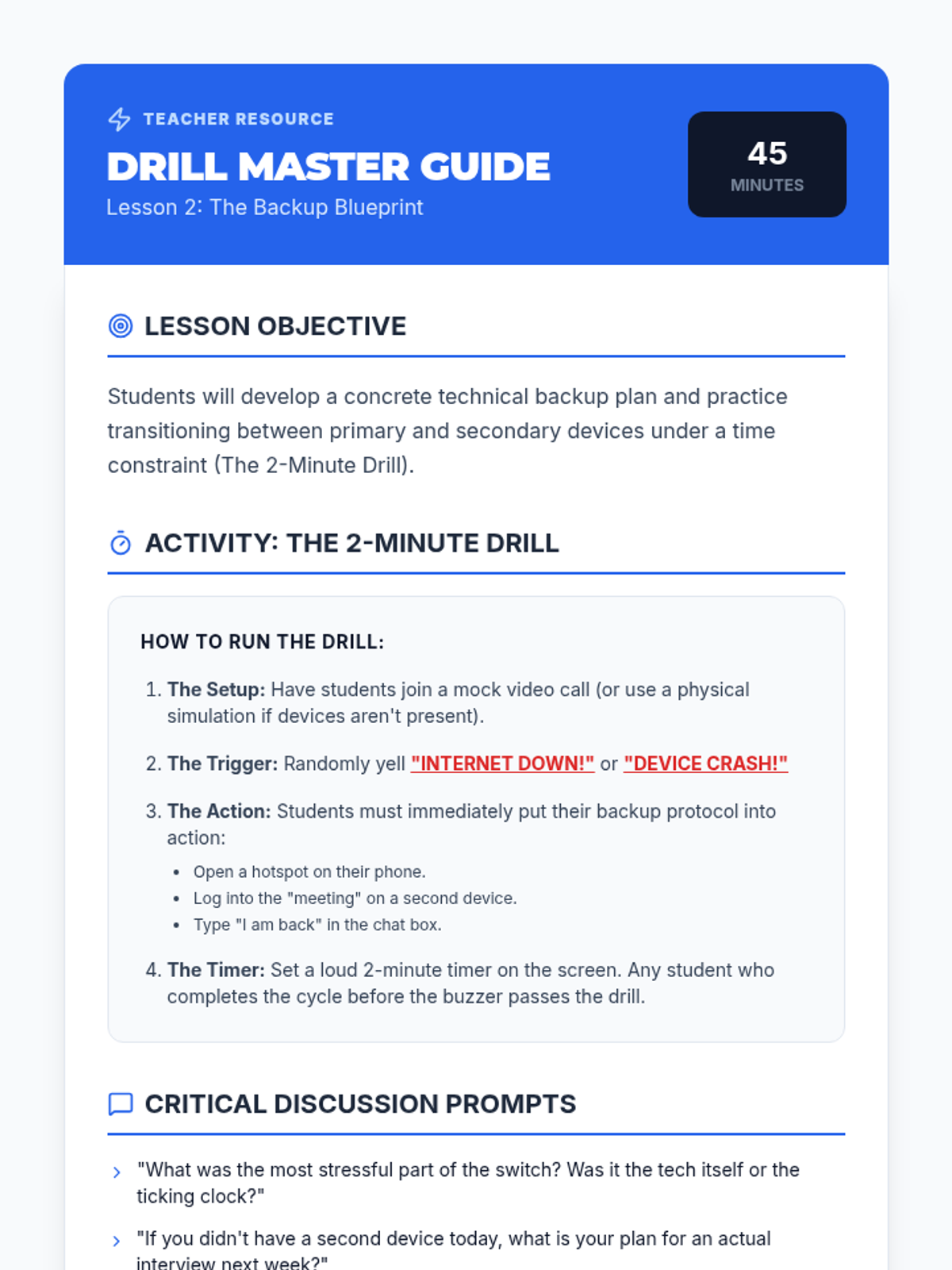
Learners develop a personal 'Crisis Kit' and backup protocol, including secondary devices and hotspot readiness.
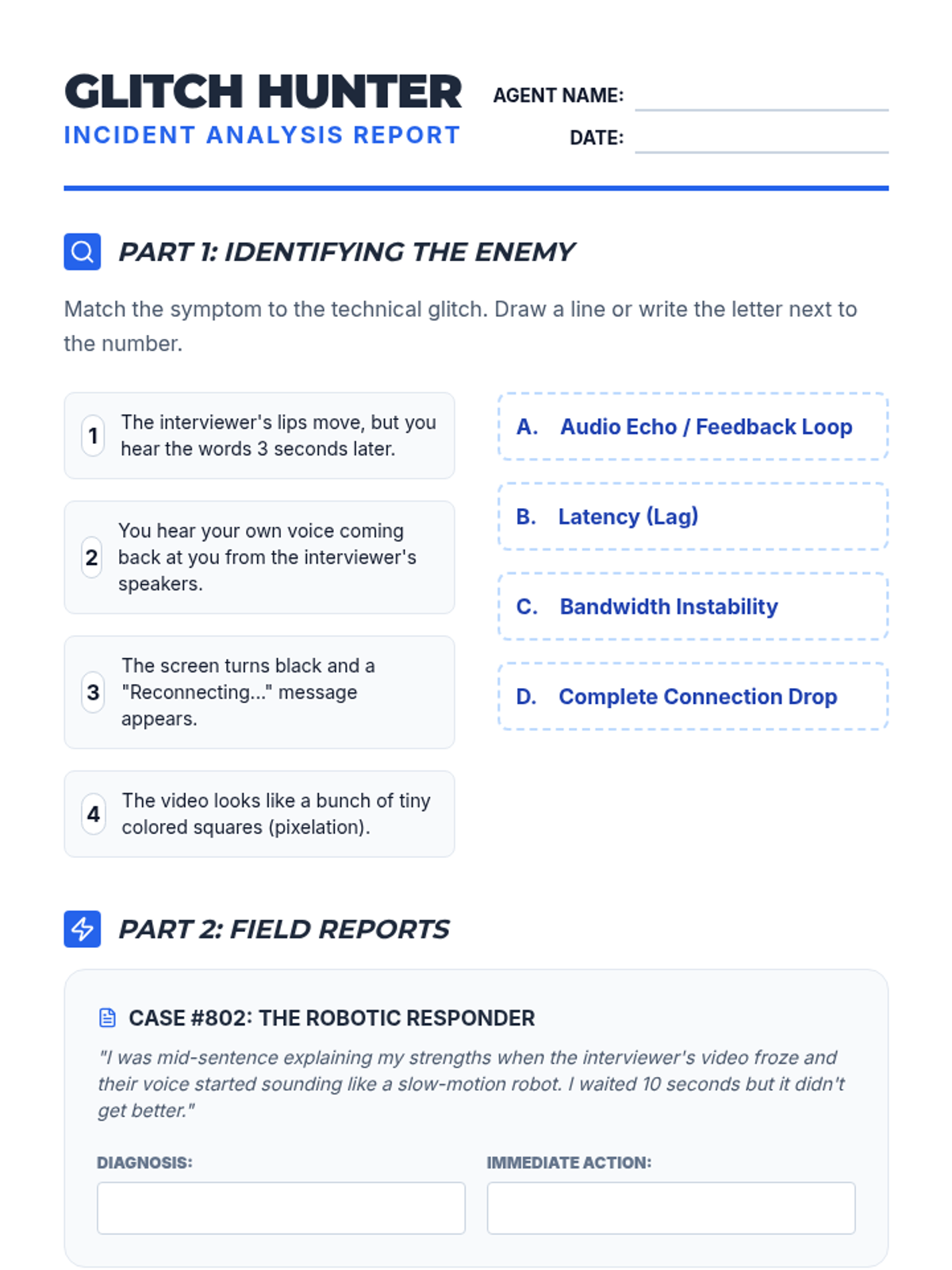
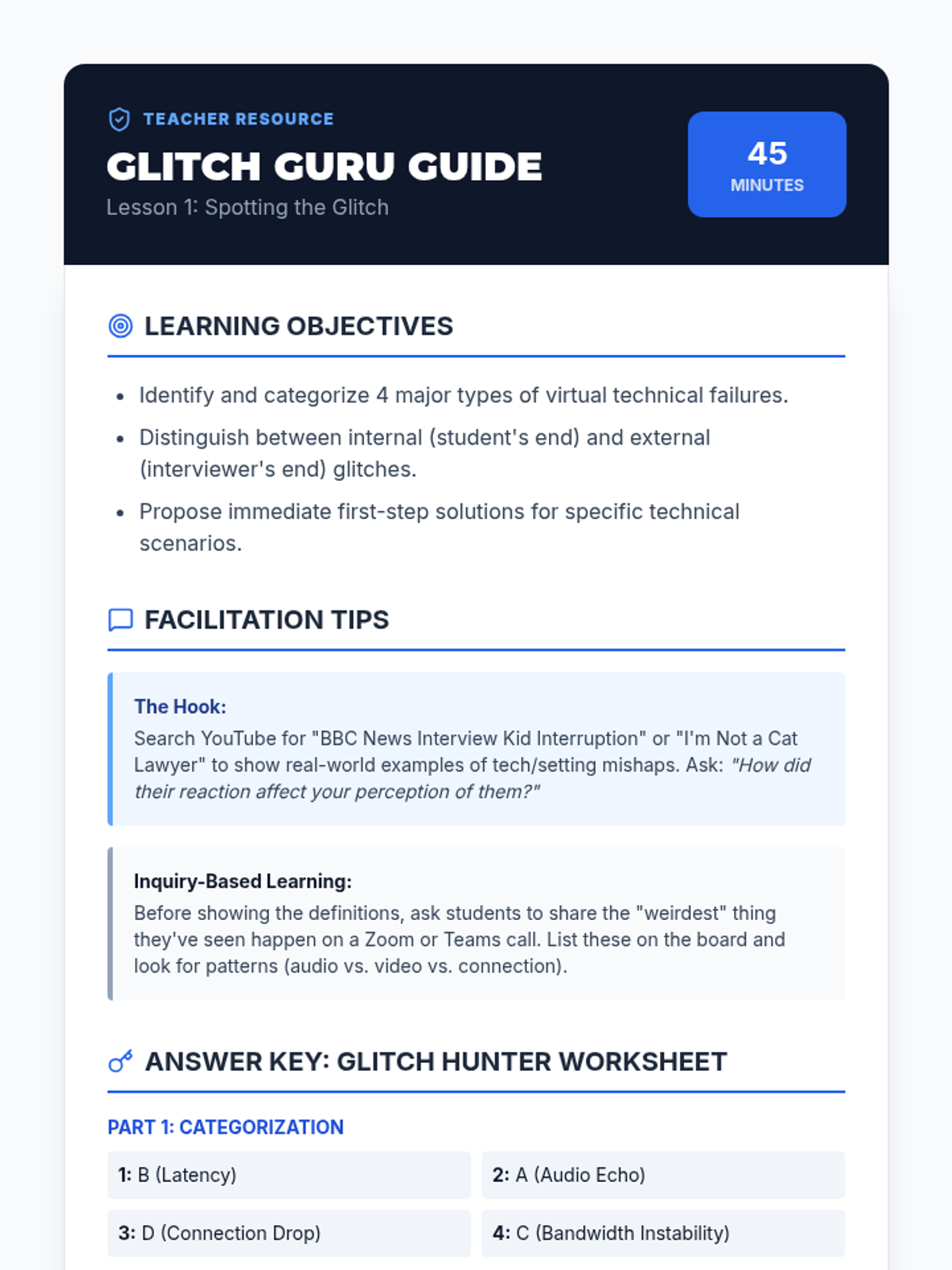
Students categorize common virtual interview issues such as lag, echo, and freezing, and learn primary troubleshooting steps for each.
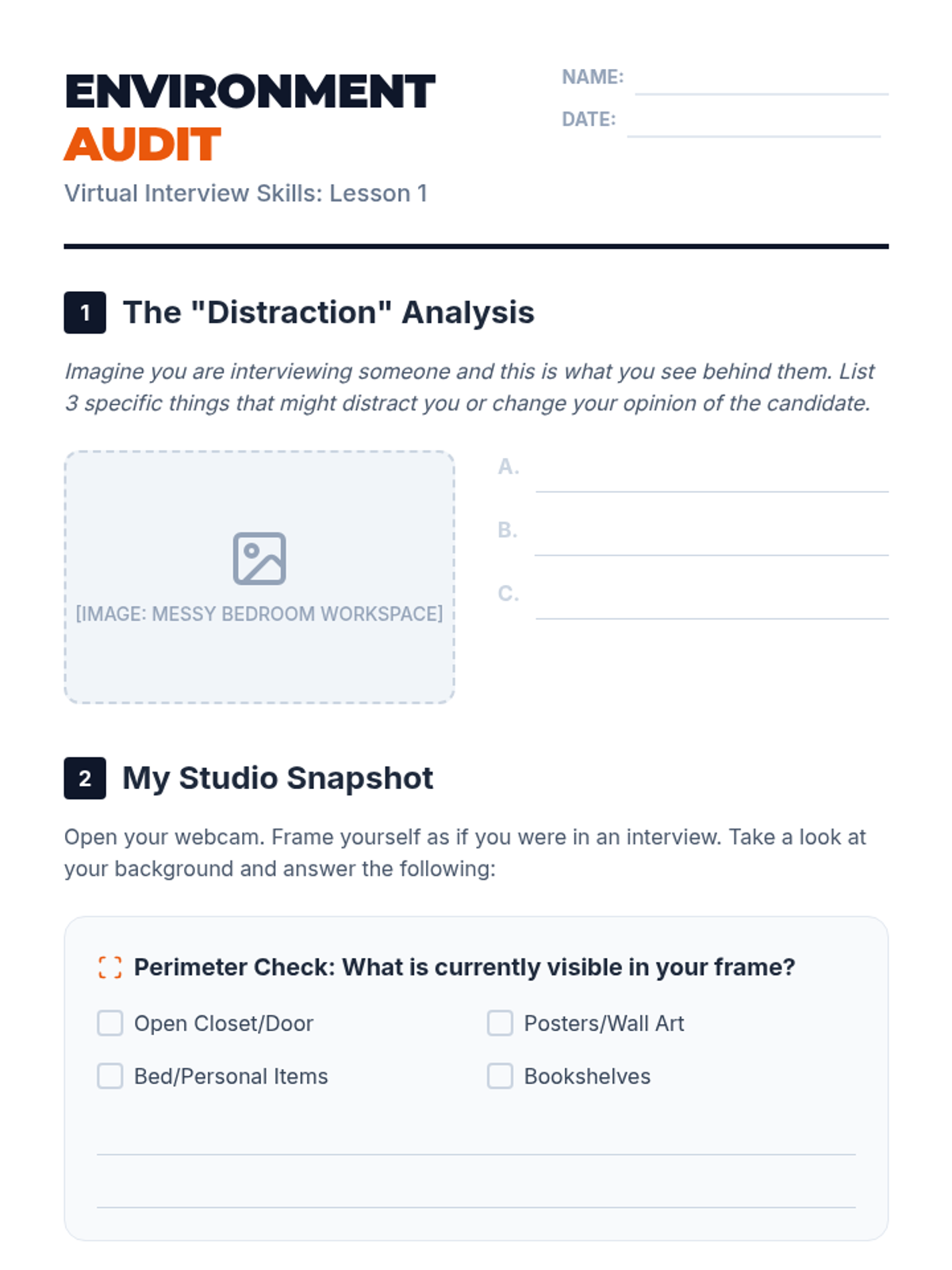
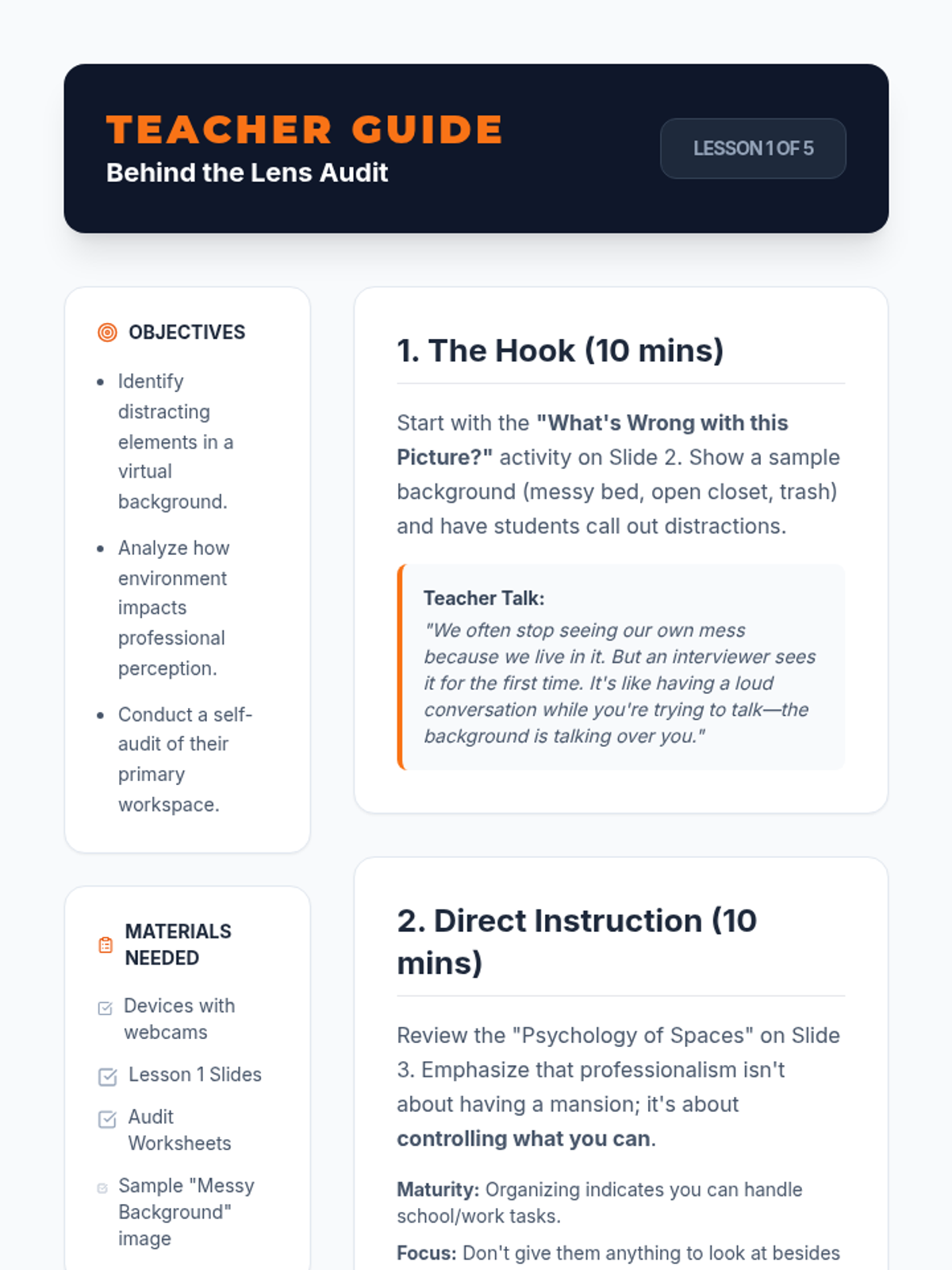
Students analyze their current video backgrounds to identify clutter, distractions, and privacy concerns using a critical eye.
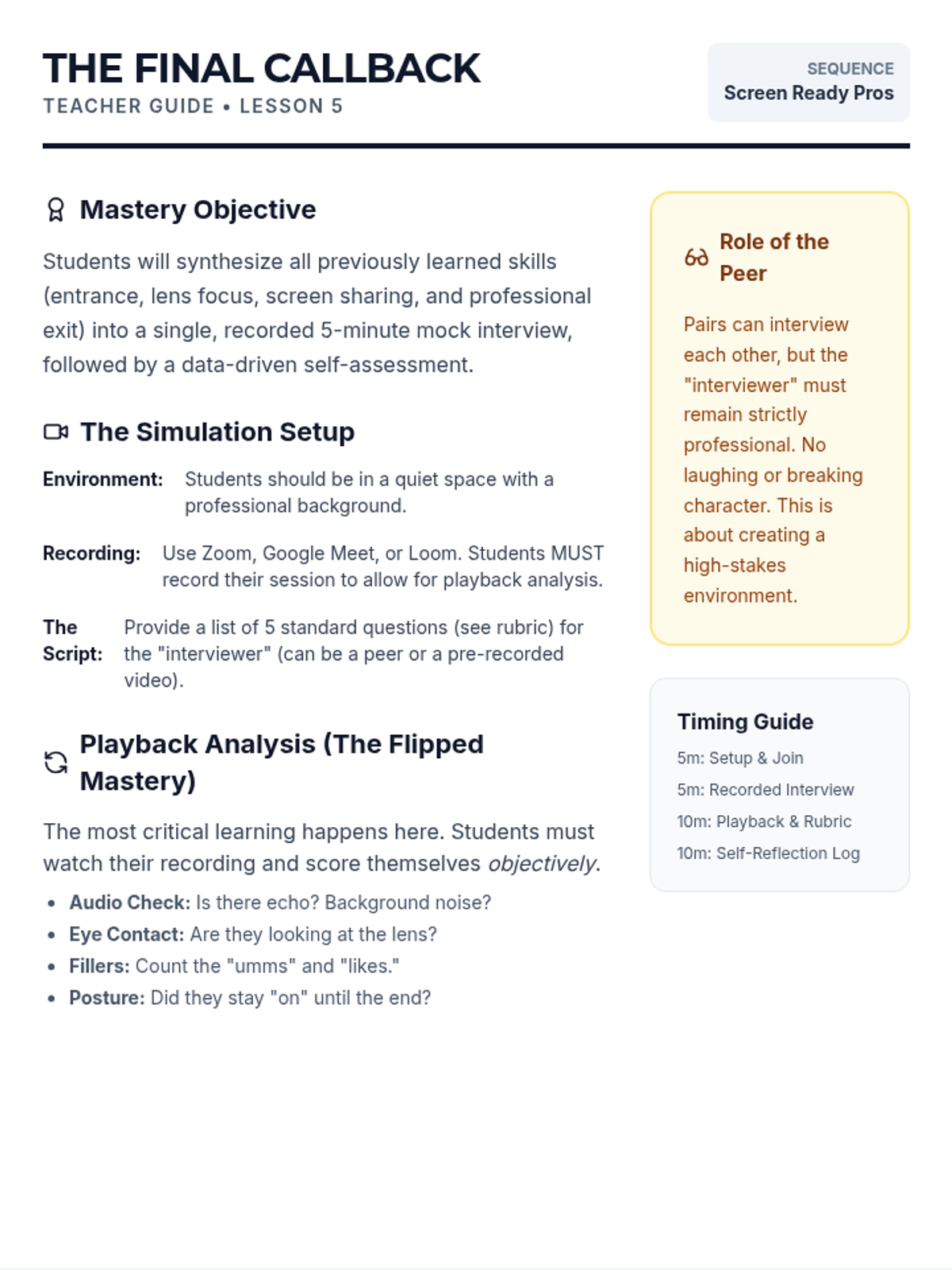
A culminating mock interview where students record, playback, and self-assess their performance using a rubric.
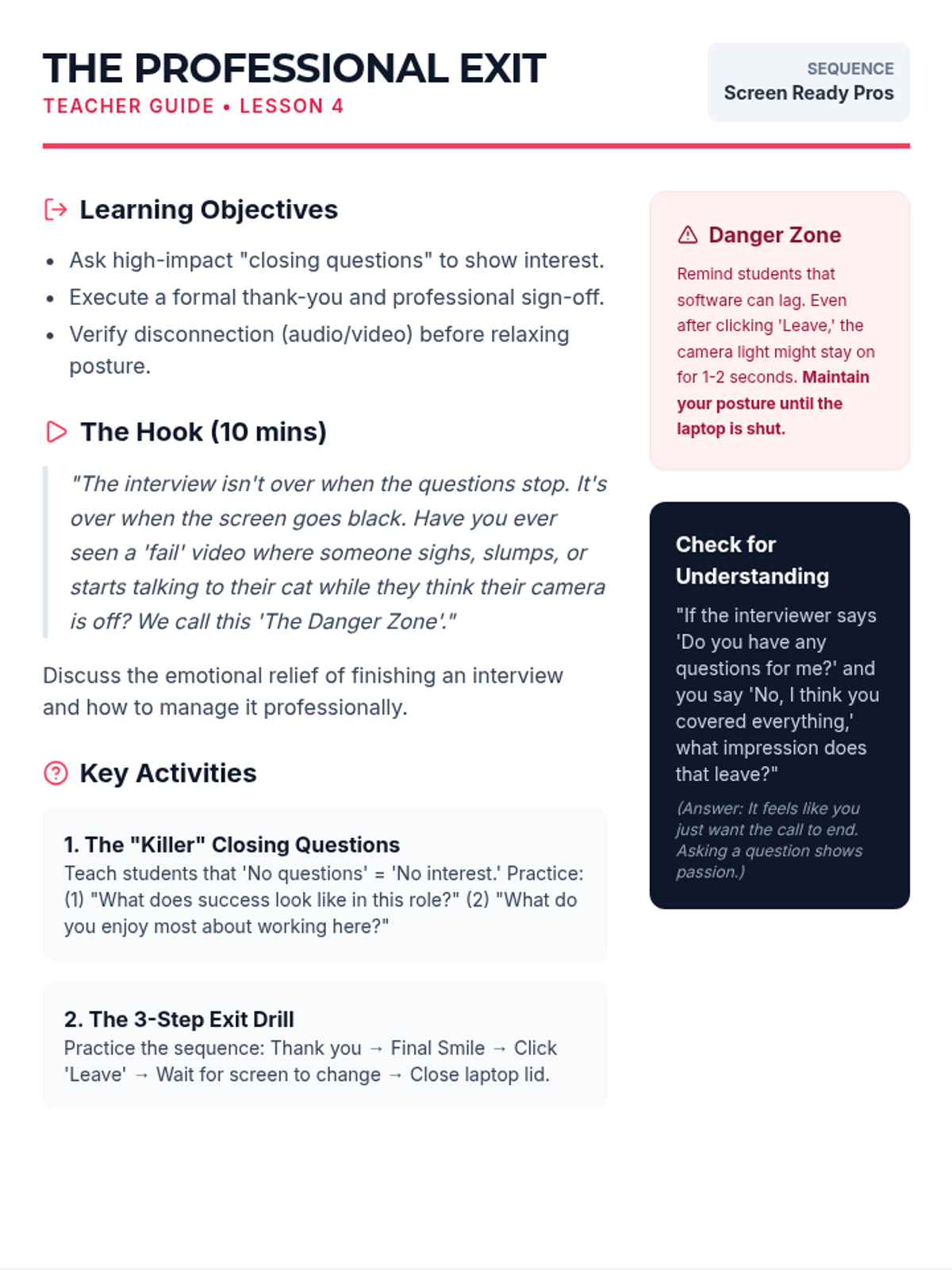
Mastering the formal conclusion of an interview, including final questions, thank-you etiquette, and the "camera-off" confirmation.
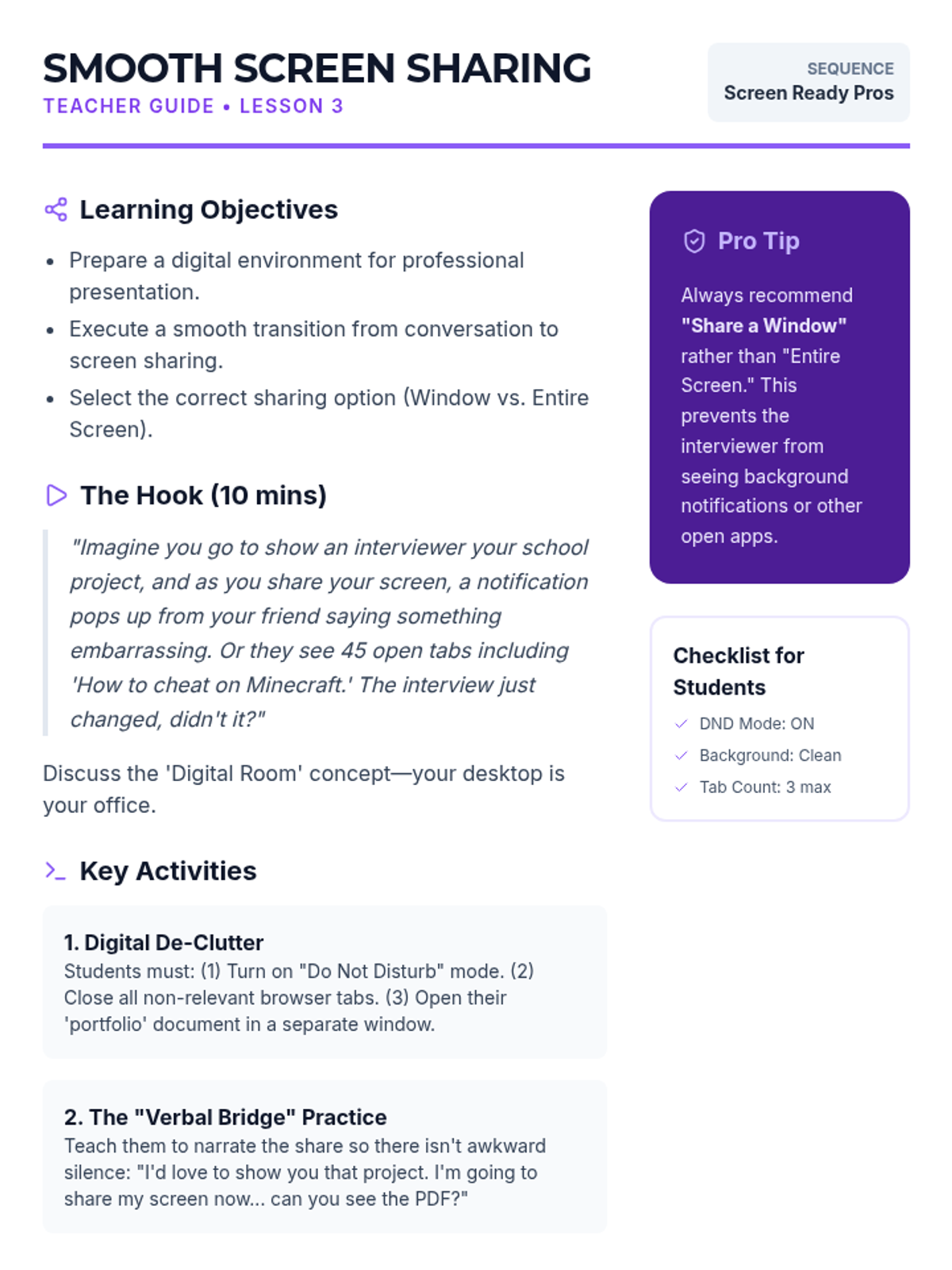
Teaches technical proficiency in screen sharing, managing digital environments, and presenting portfolios professionally.
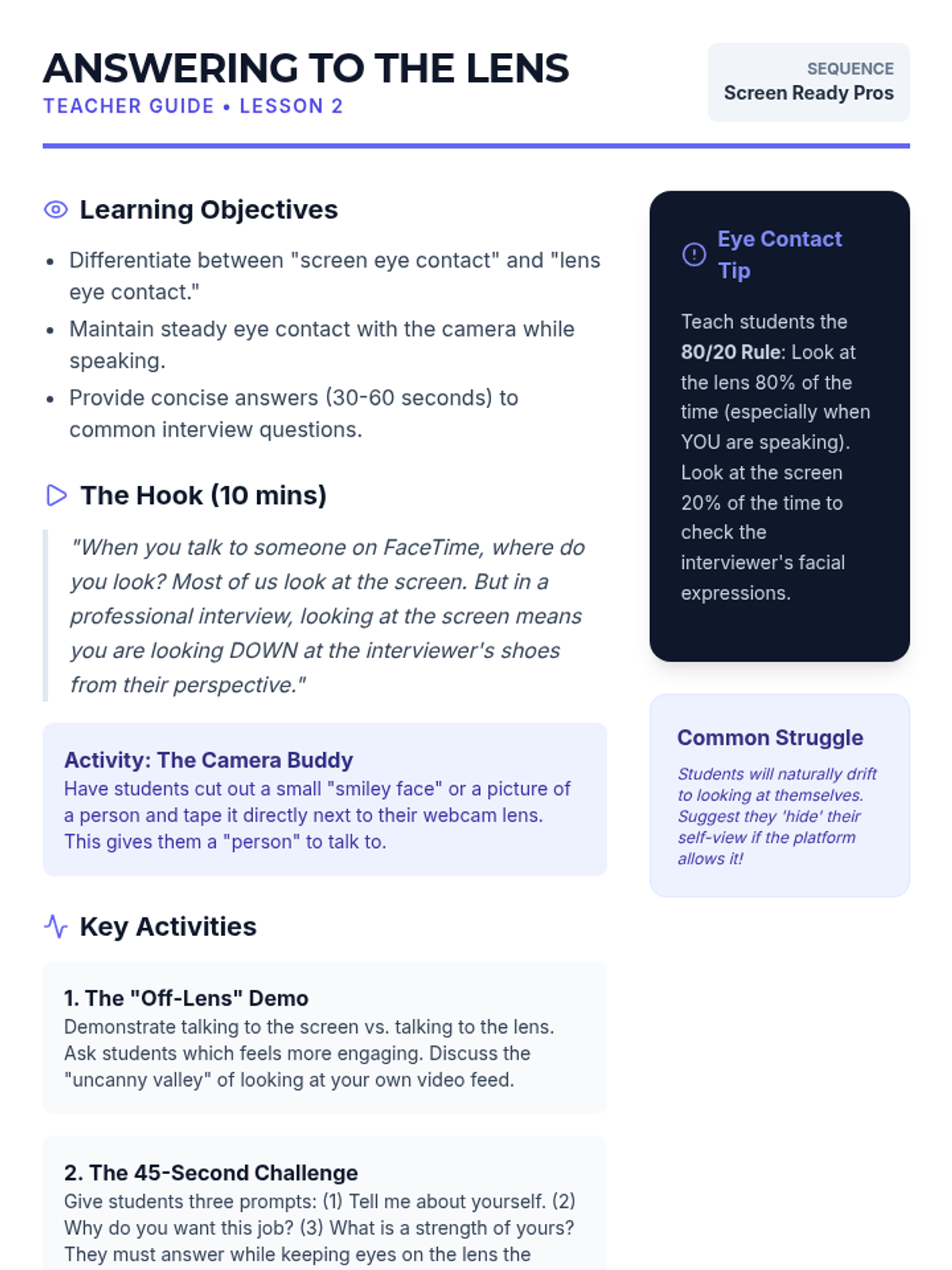
Covers the technique of looking at the camera lens rather than the screen to maintain eye contact and delivering focused answers.
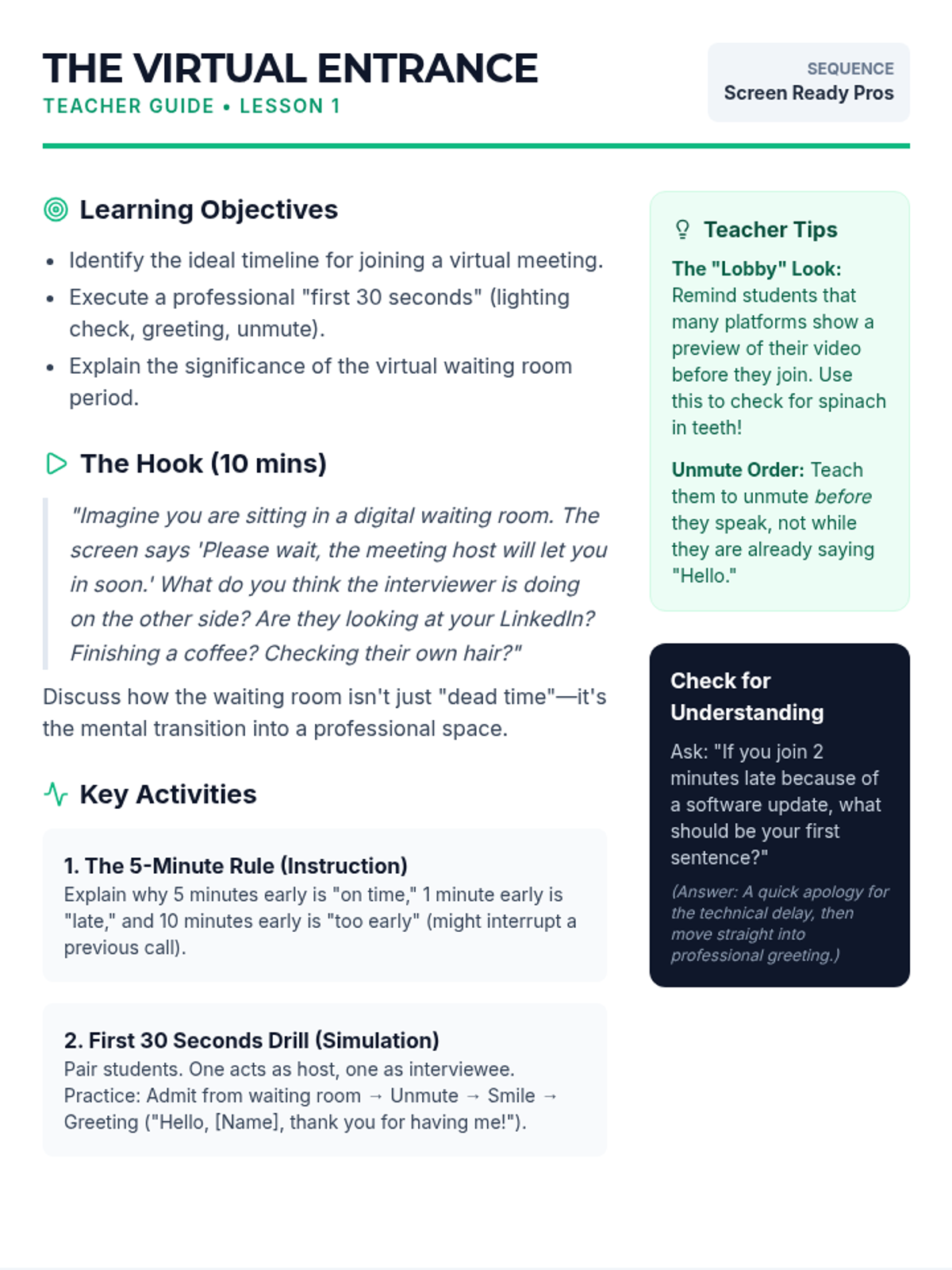
Focuses on the etiquette of joining calls, managing waiting rooms, and the first 30 seconds of a virtual connection.