Functional behavior assessment, data tracking, and de-escalation strategies for managing classroom conduct. Addresses positive reinforcement, token economies, and individualized behavior contracts to support student self-regulation.
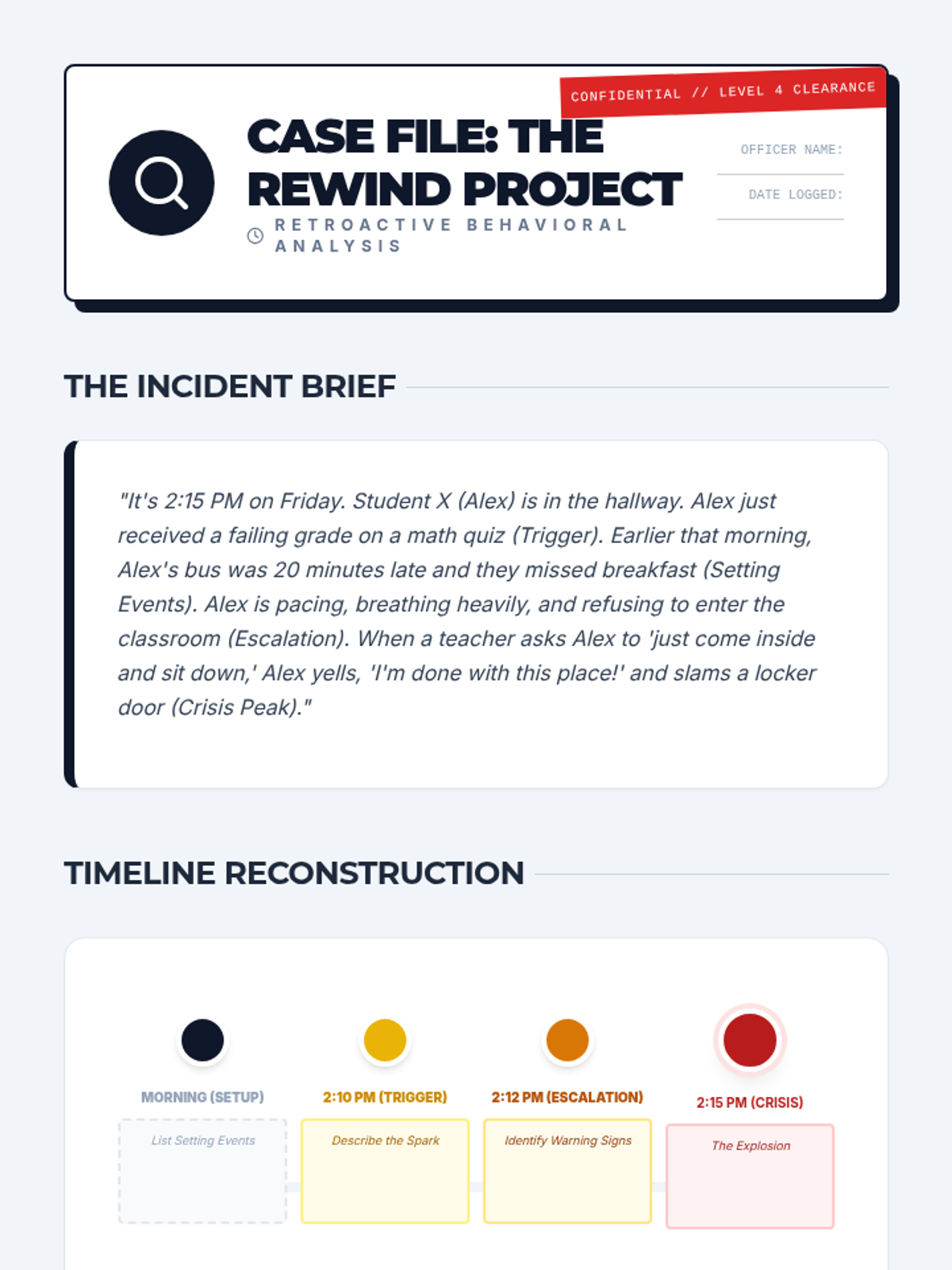
A summative project where students reconstruct a crisis event timeline to identify missed intervention 'off-ramps' and missed warning signs.
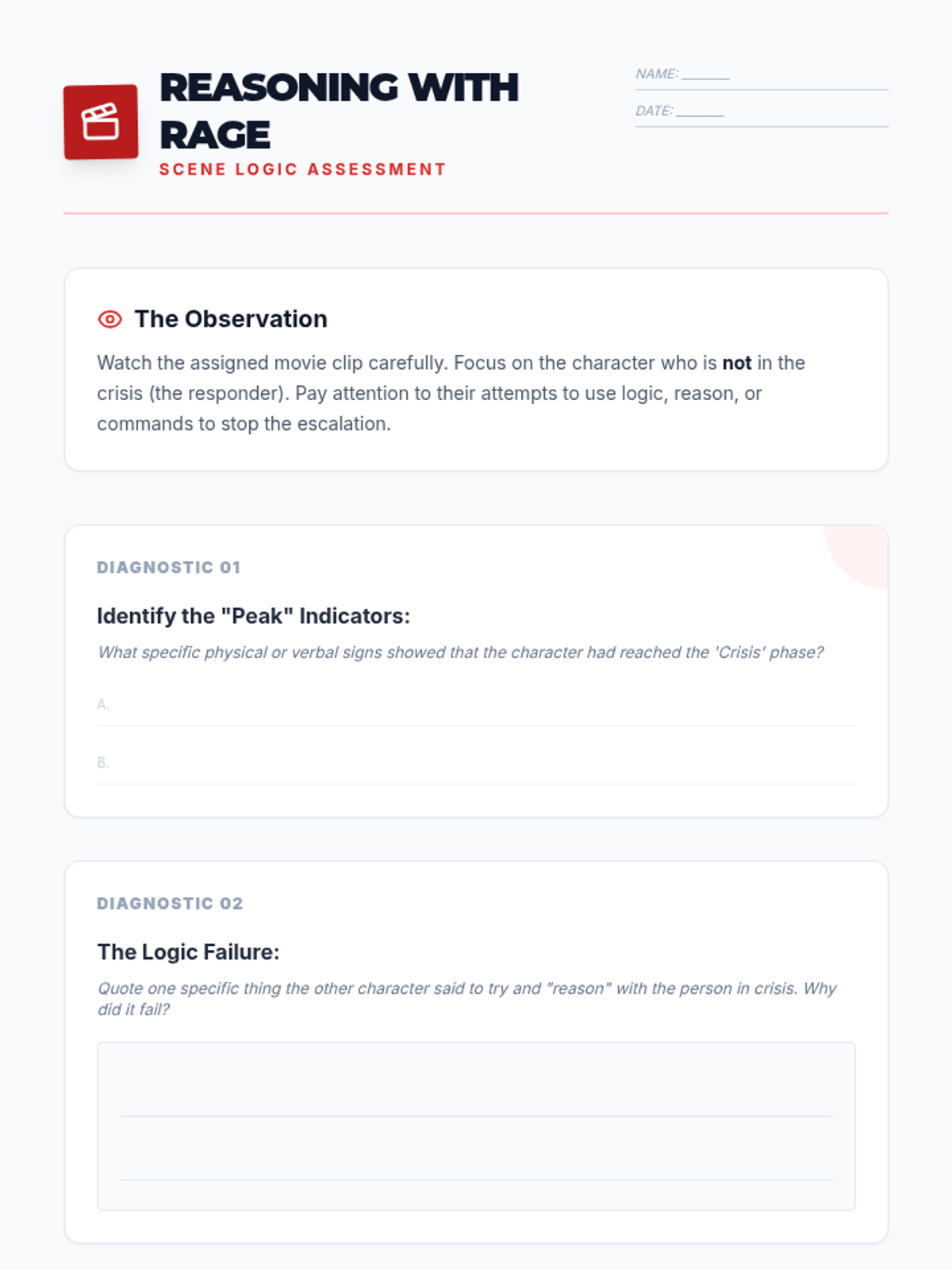
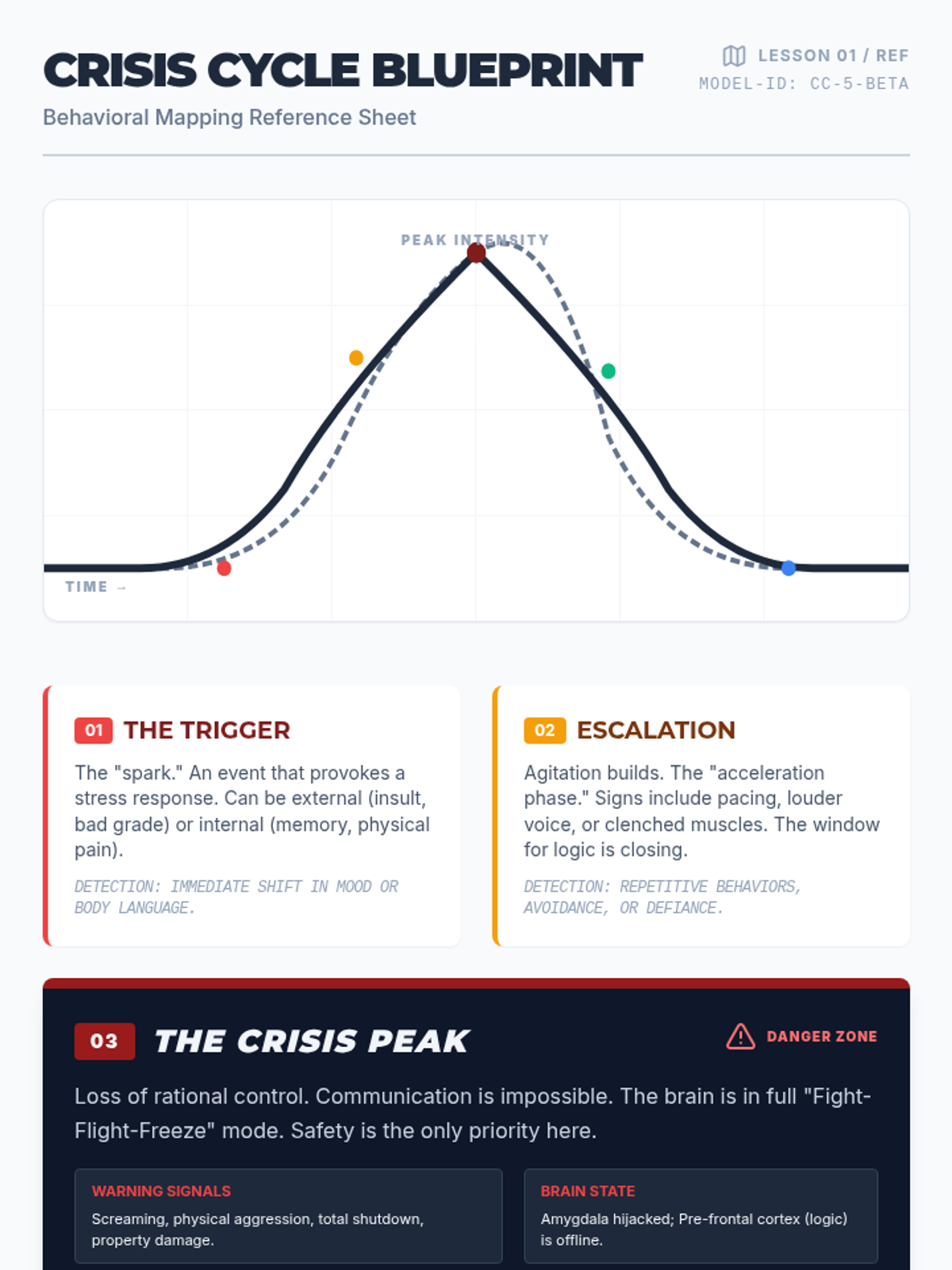
Analyzing the peak of the crisis cycle where rational communication fails and identifying physical and behavioral warning signs of an imminent outburst.
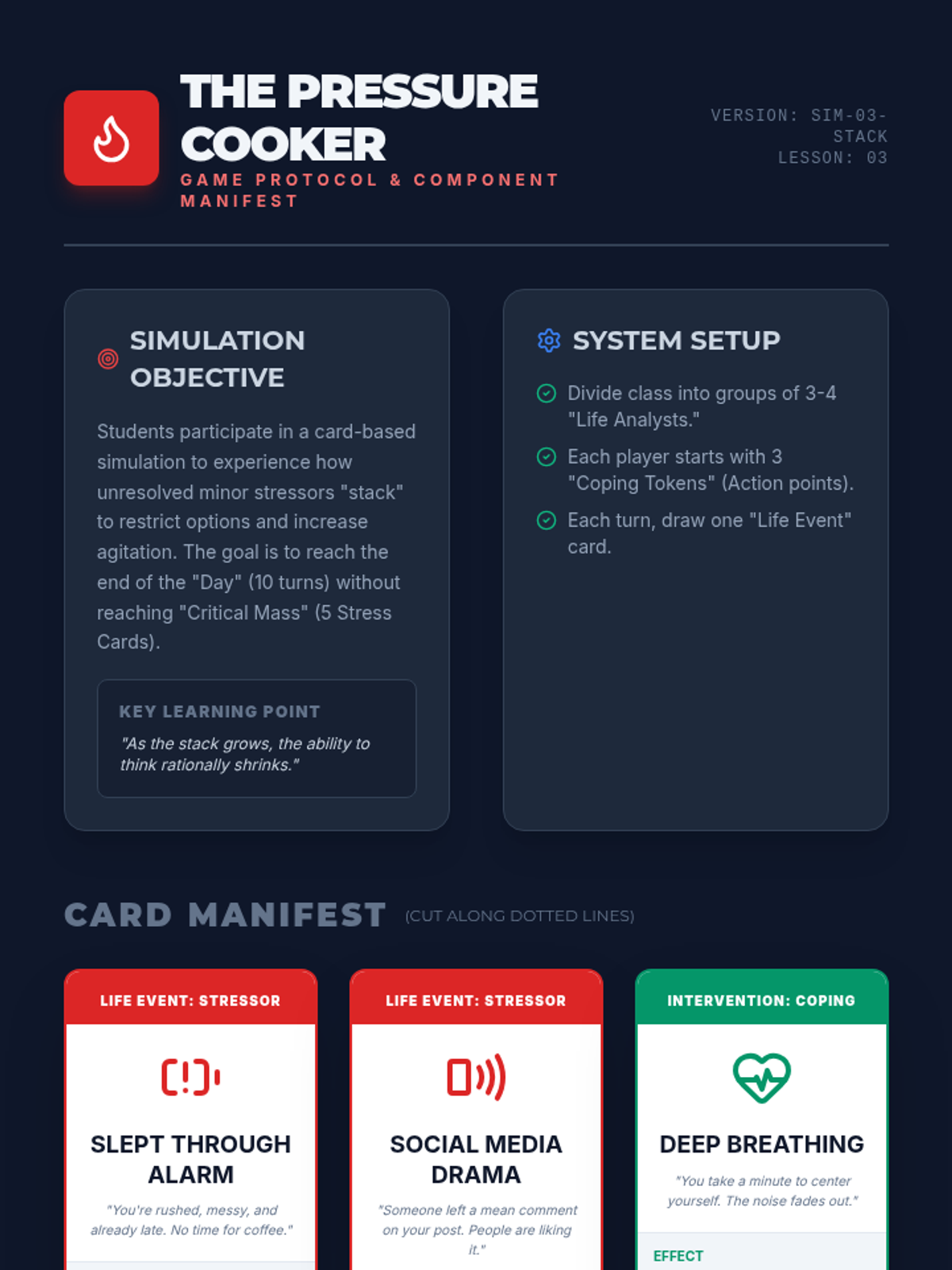
An exploration of the cumulative nature of stress and how unresolved frustrations lead to the acceleration phase of escalation.
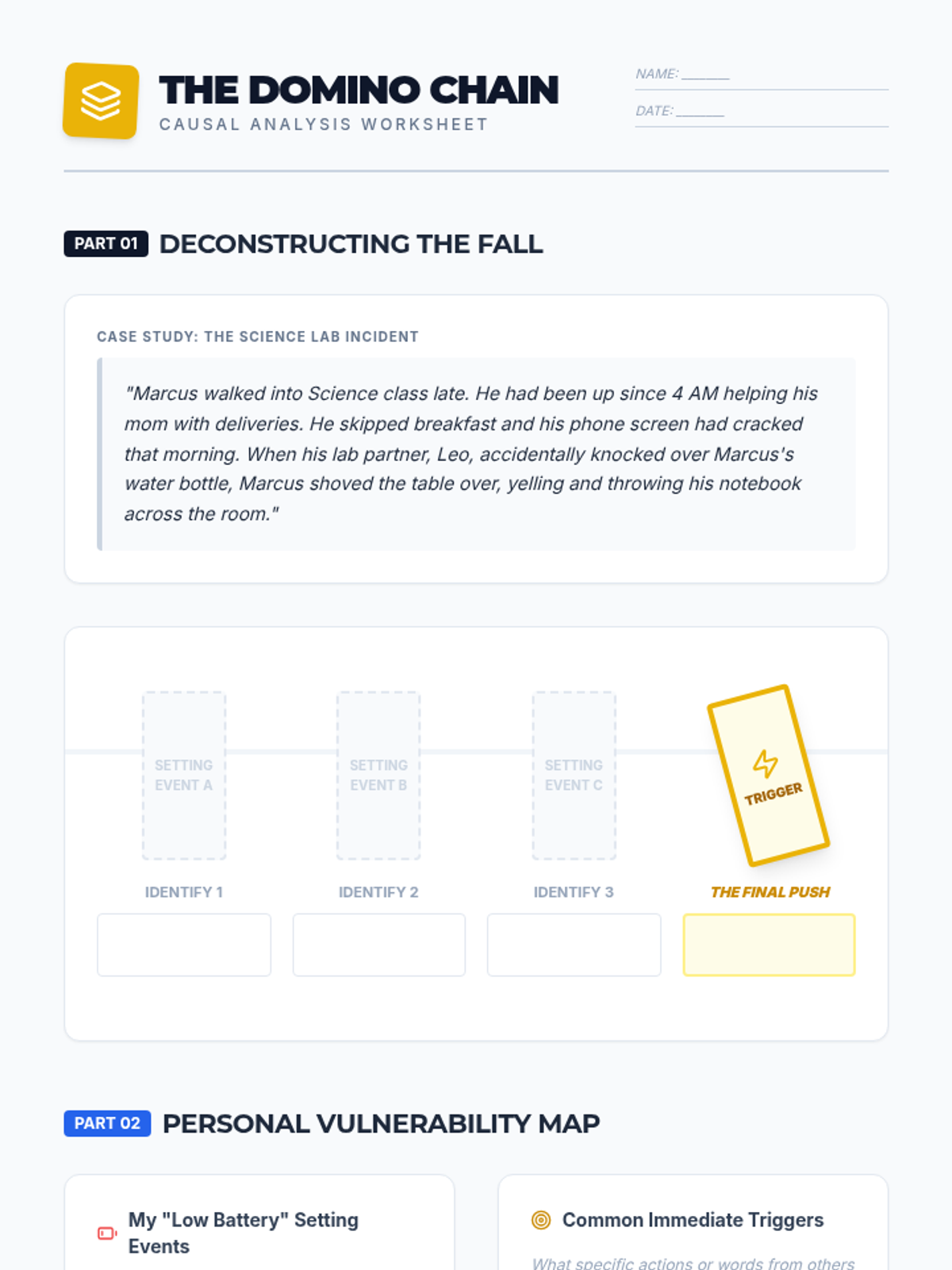
Differentiating between immediate triggers and setting events that prime an individual for agitation using a causal 'Domino Effect' model.
Introduction to the bell-curve model of behavioral escalation, identifying the five key stages: Trigger, Escalation, Crisis, De-escalation, and Recovery.
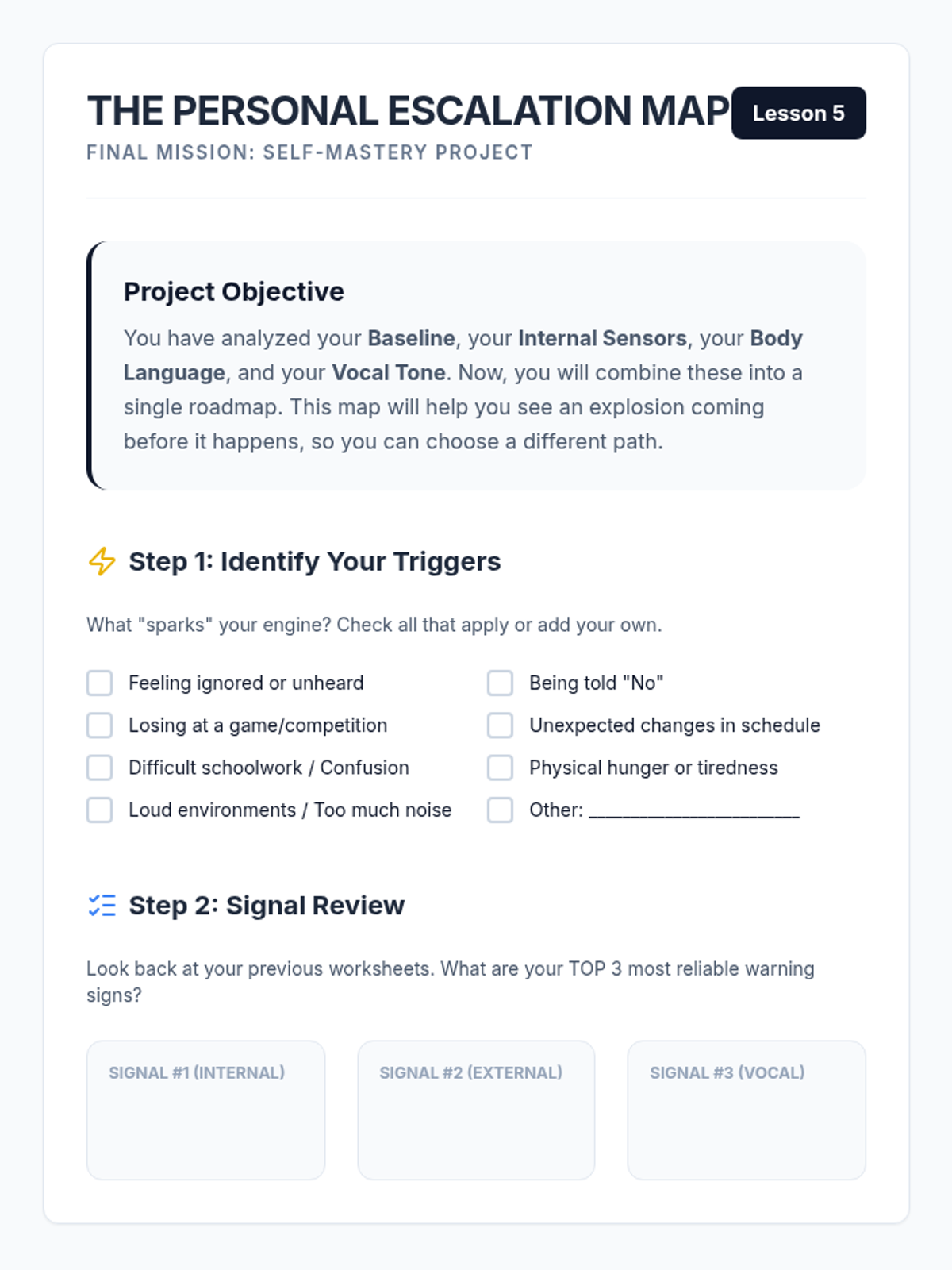
Students synthesize their learning by creating a visual 'Escalation Map' or 'thermometer' of their own process. This personalized tool identifies unique triggers and warning signs for early intervention.
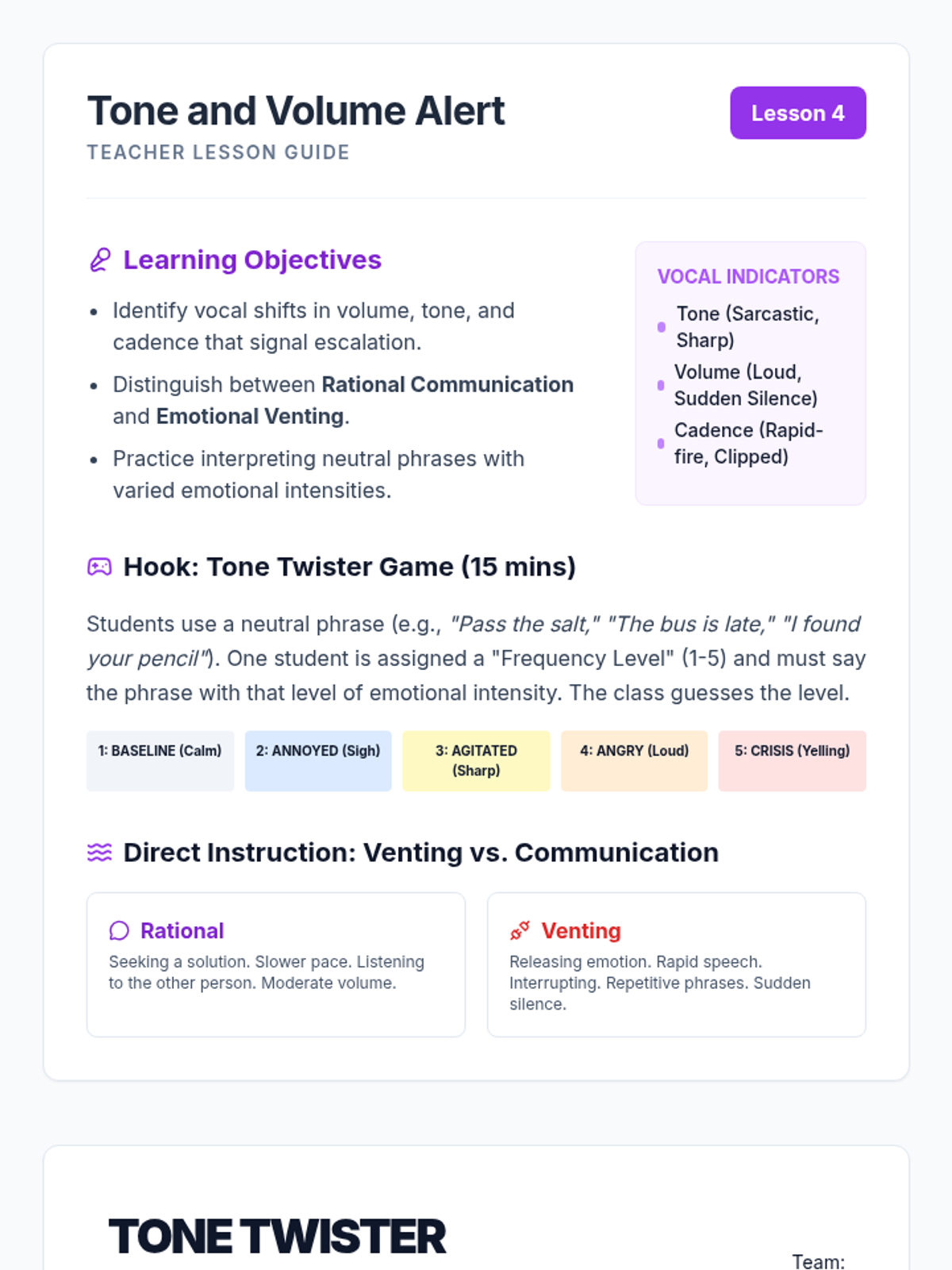
Explores how vocal volume, tone, and cadence change during escalation. Students engage in role-play to identify the shift from rational communication to emotional venting.
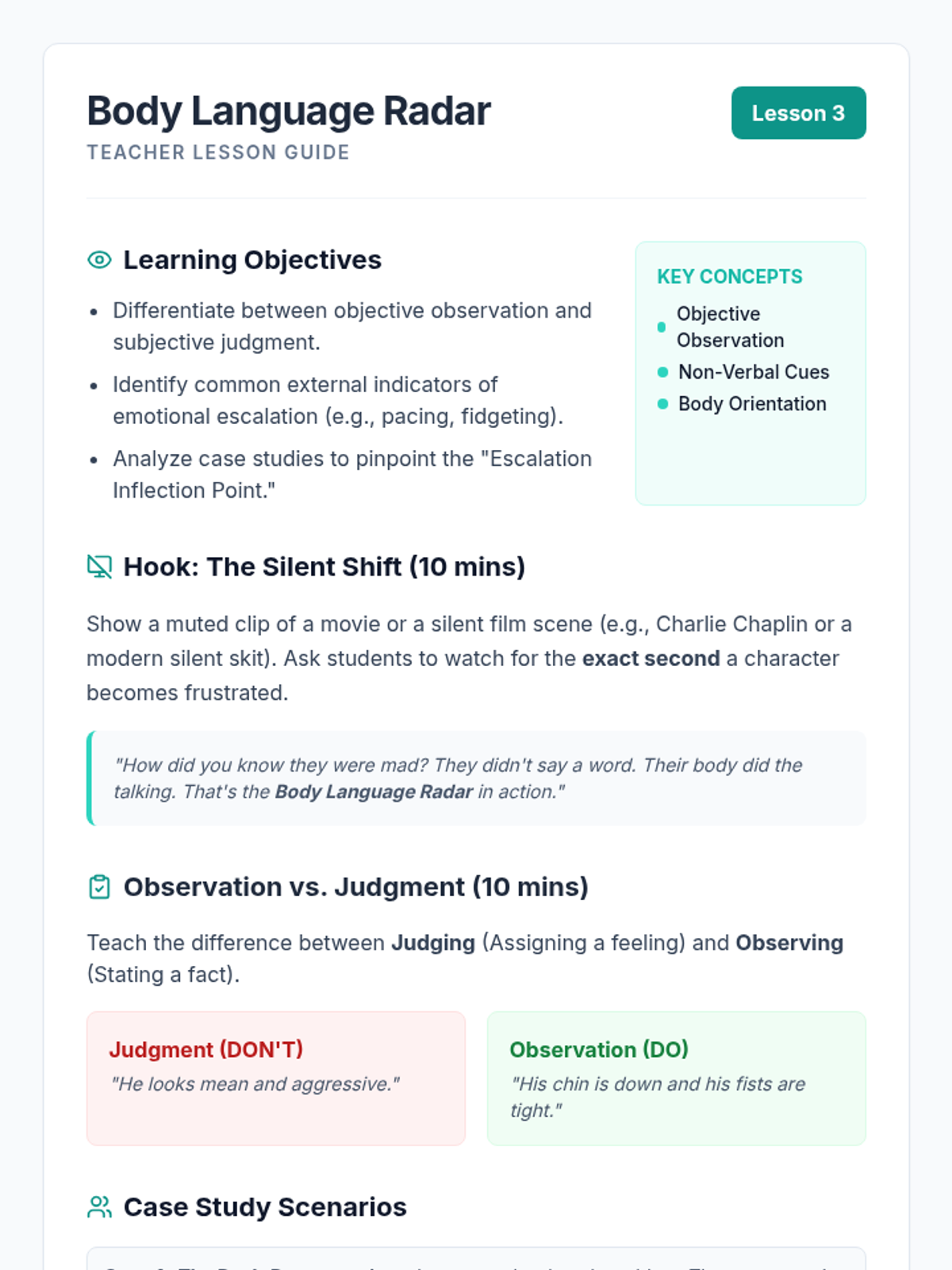
Students analyze external behavioral cues like body language and fidgeting to identify warning signs in themselves and others. They practice cataloging these signs objectively to improve their observational skills.
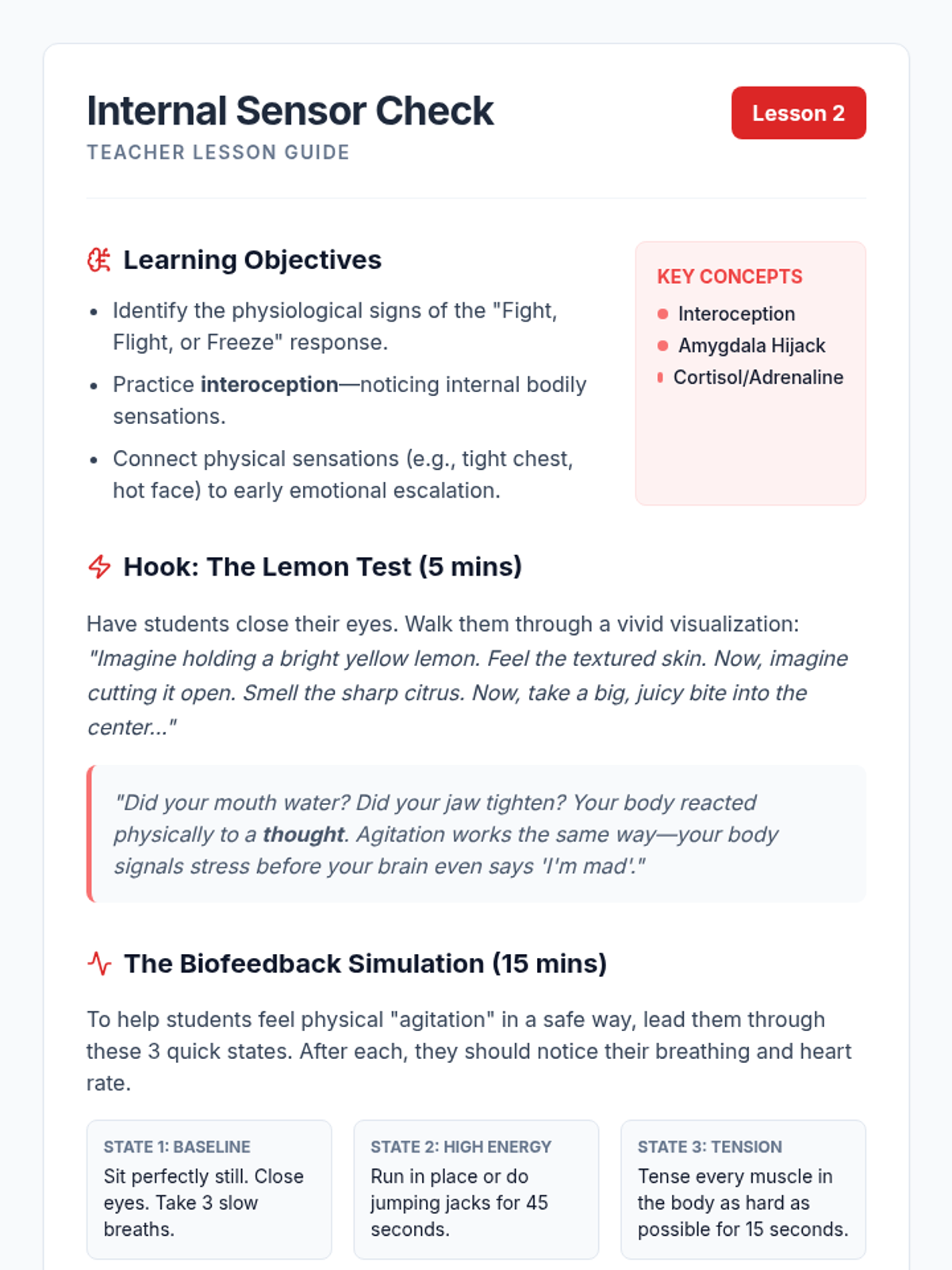
This lesson focuses on the internal biological signals of the escalation cycle, such as heart rate changes and muscle tension. Students learn to recognize how the body signals distress often before the brain consciously registers it.
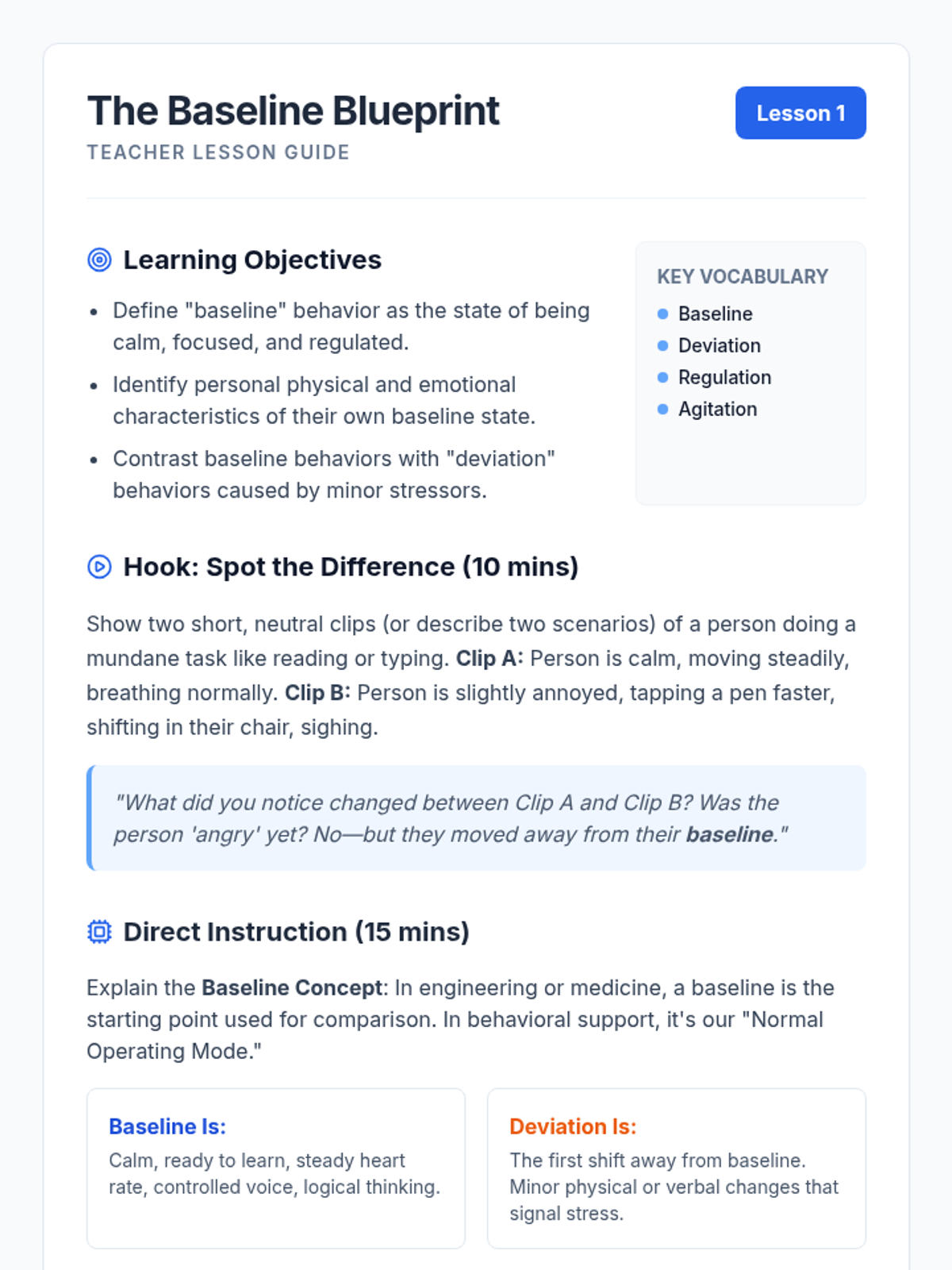
Students establish the concept of 'baseline' behavior—what they look and sound like when calm and regulated. They contrast this with general examples of stress to learn how to distinguish between normal energy shifts and problem behaviors.
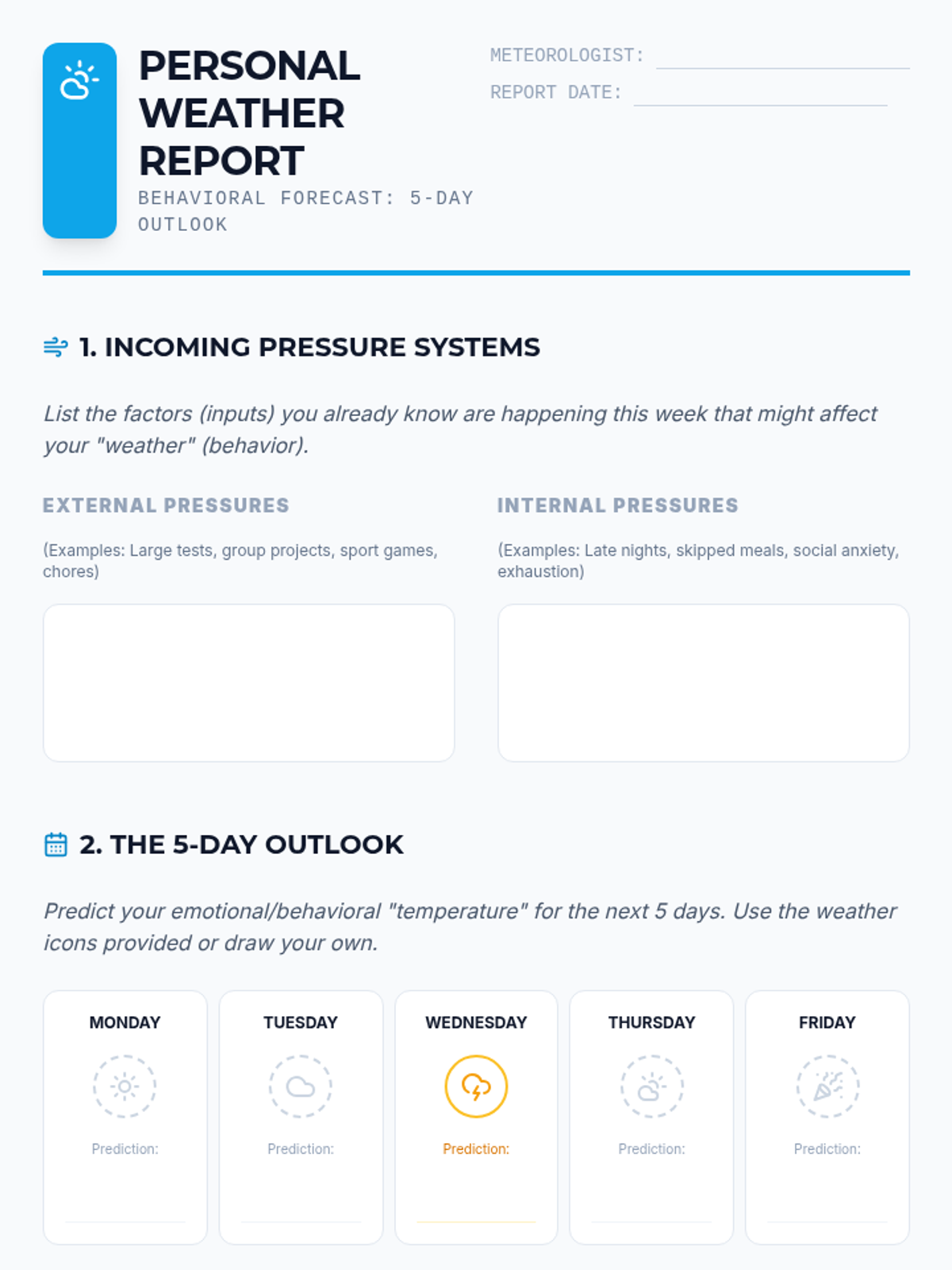
Students synthesize their learning by creating a 'behavioral weather forecast' based on their personal or a persona's data, reflecting on how inputs like sleep and stress influence outcomes.
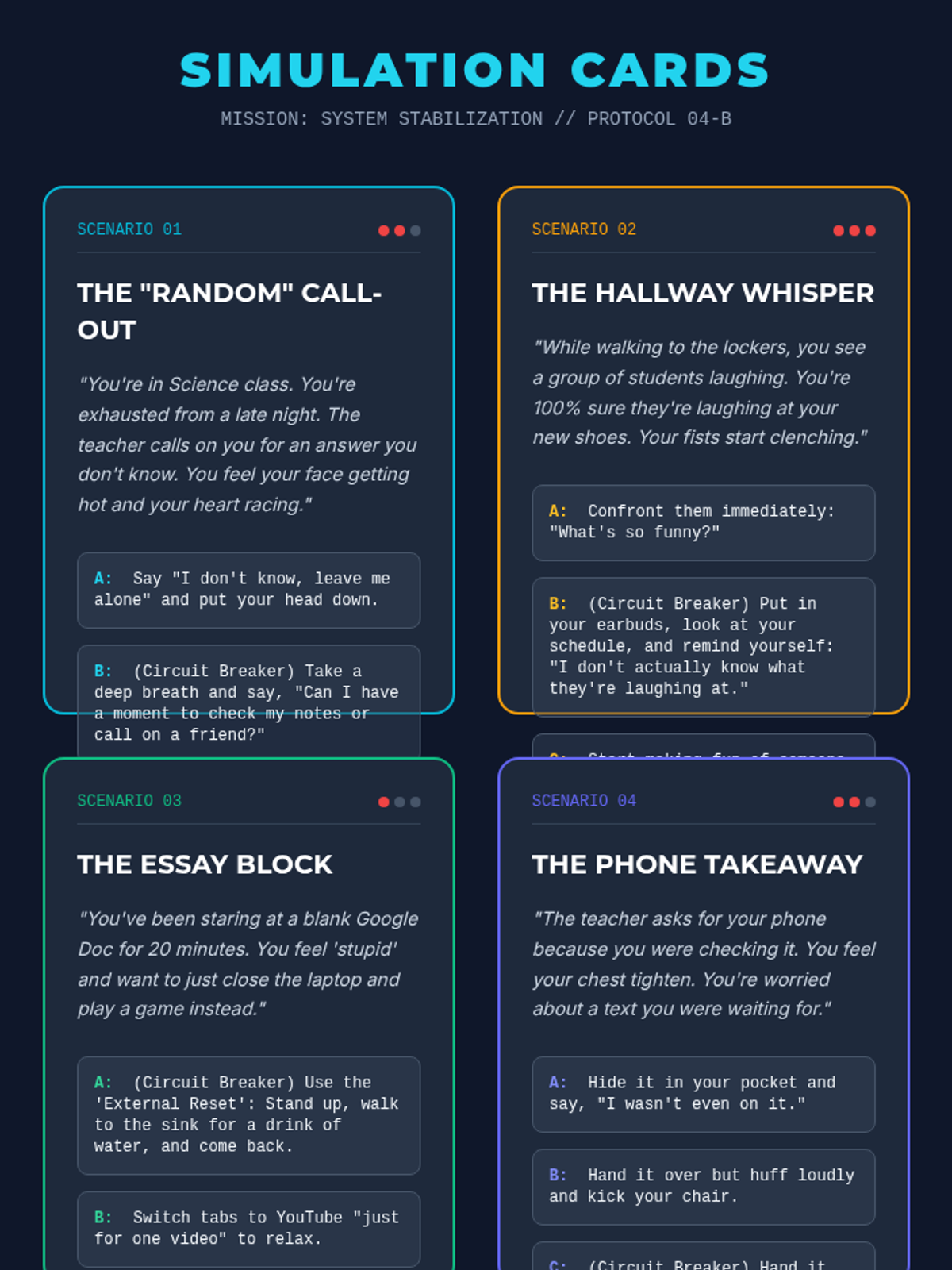
Students create 'circuit breaker' plans—specific strategies to interrupt negative behavioral spirals. They practice selecting interventions through a 'choose your own adventure' format.
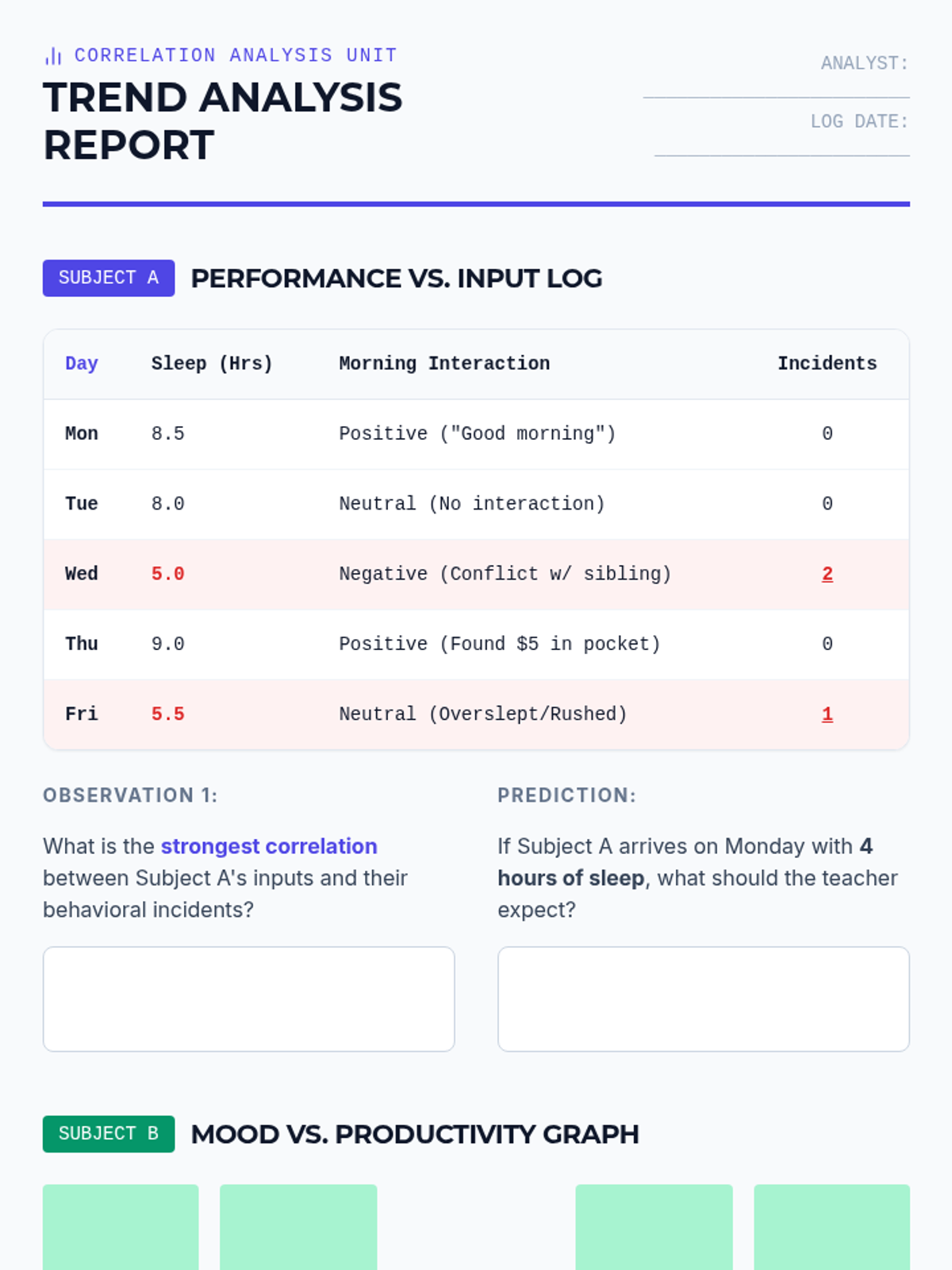
Students analyze graphs and data sets to find correlations between emotional states, external factors, and productivity. They learn how to spot trends that signal a need for intervention.
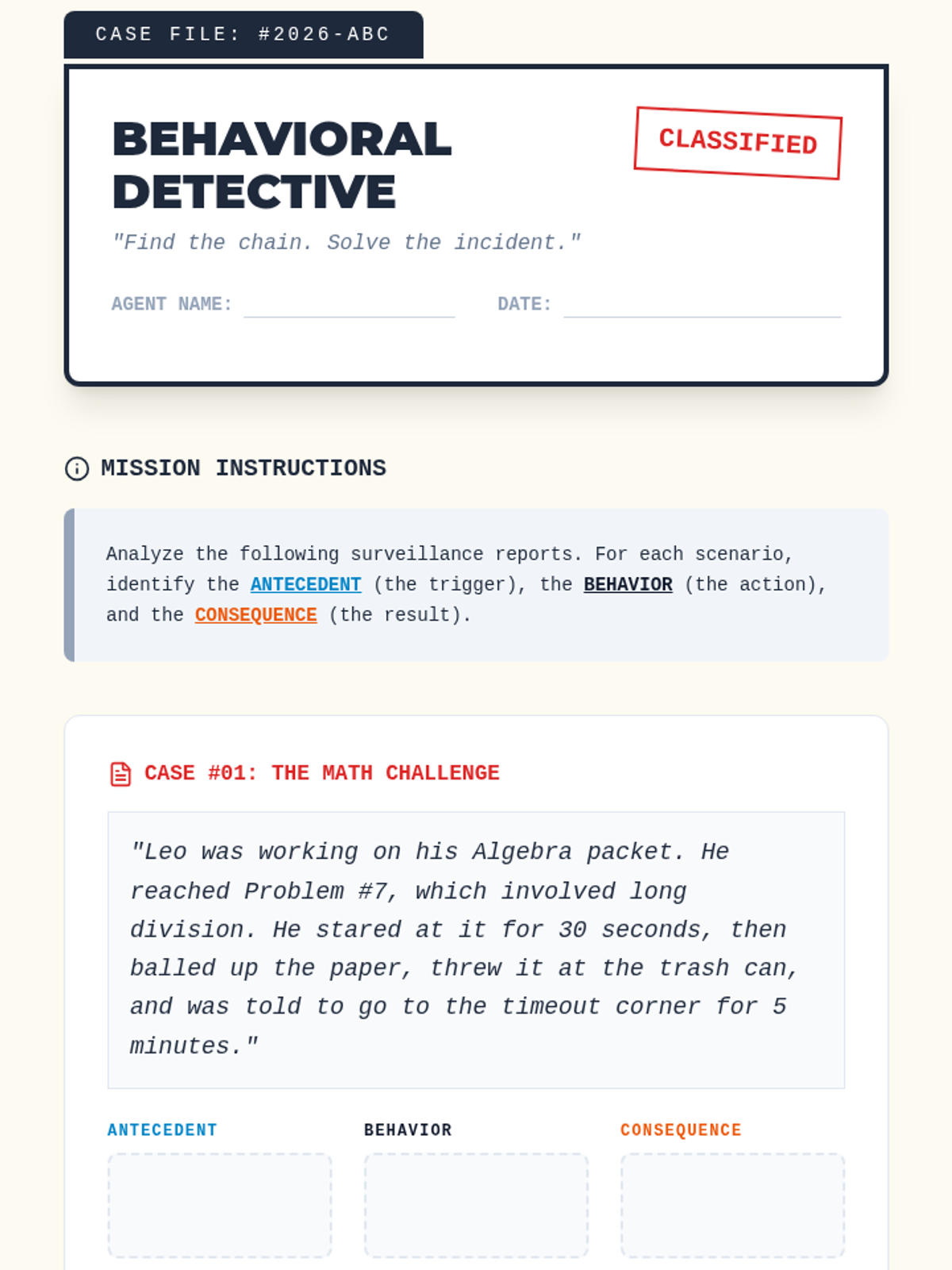
Students investigate the events that precede behaviors, known as antecedents or triggers. They use case studies to map the cause-and-effect chain of behavioral incidents.
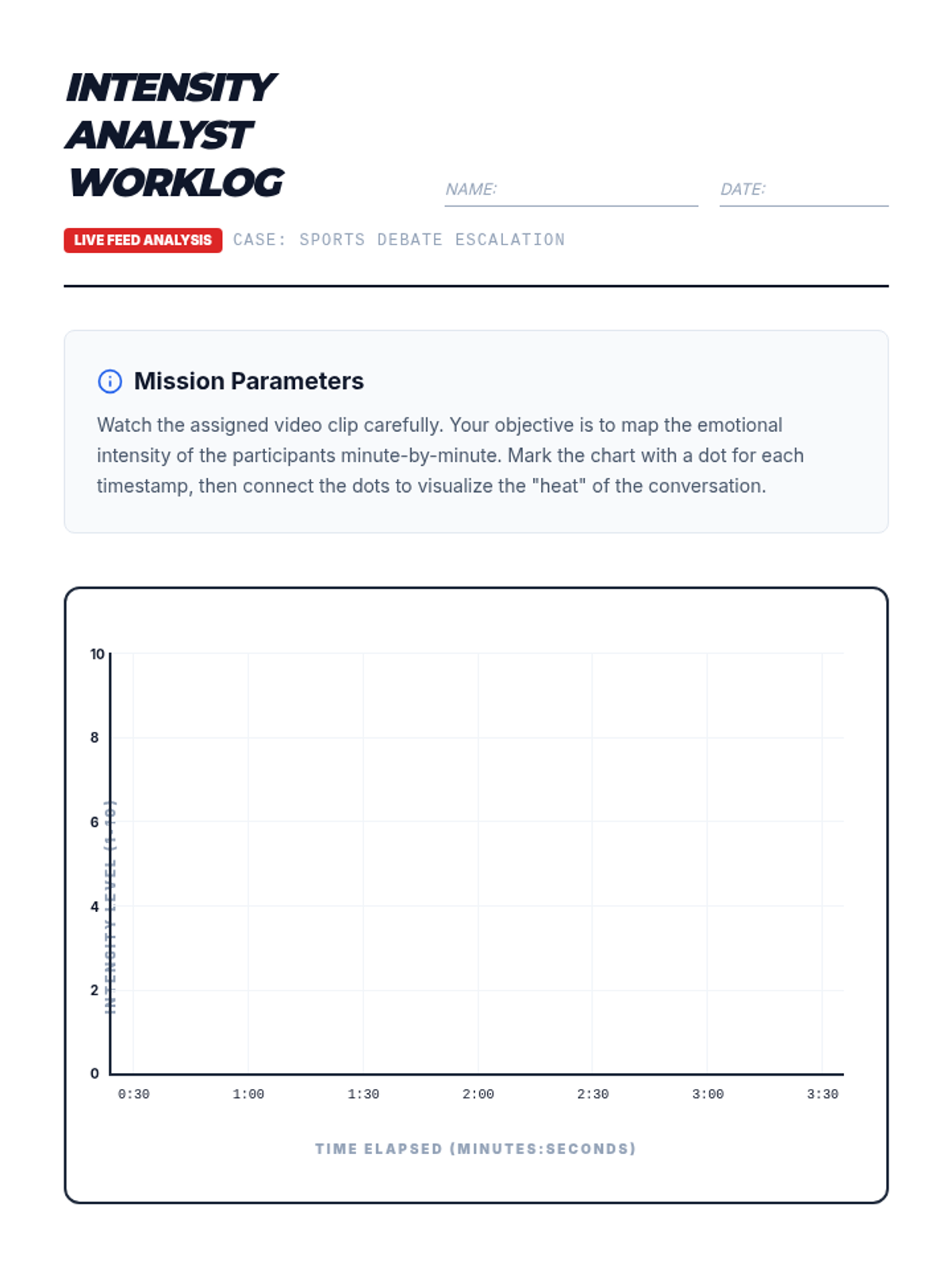
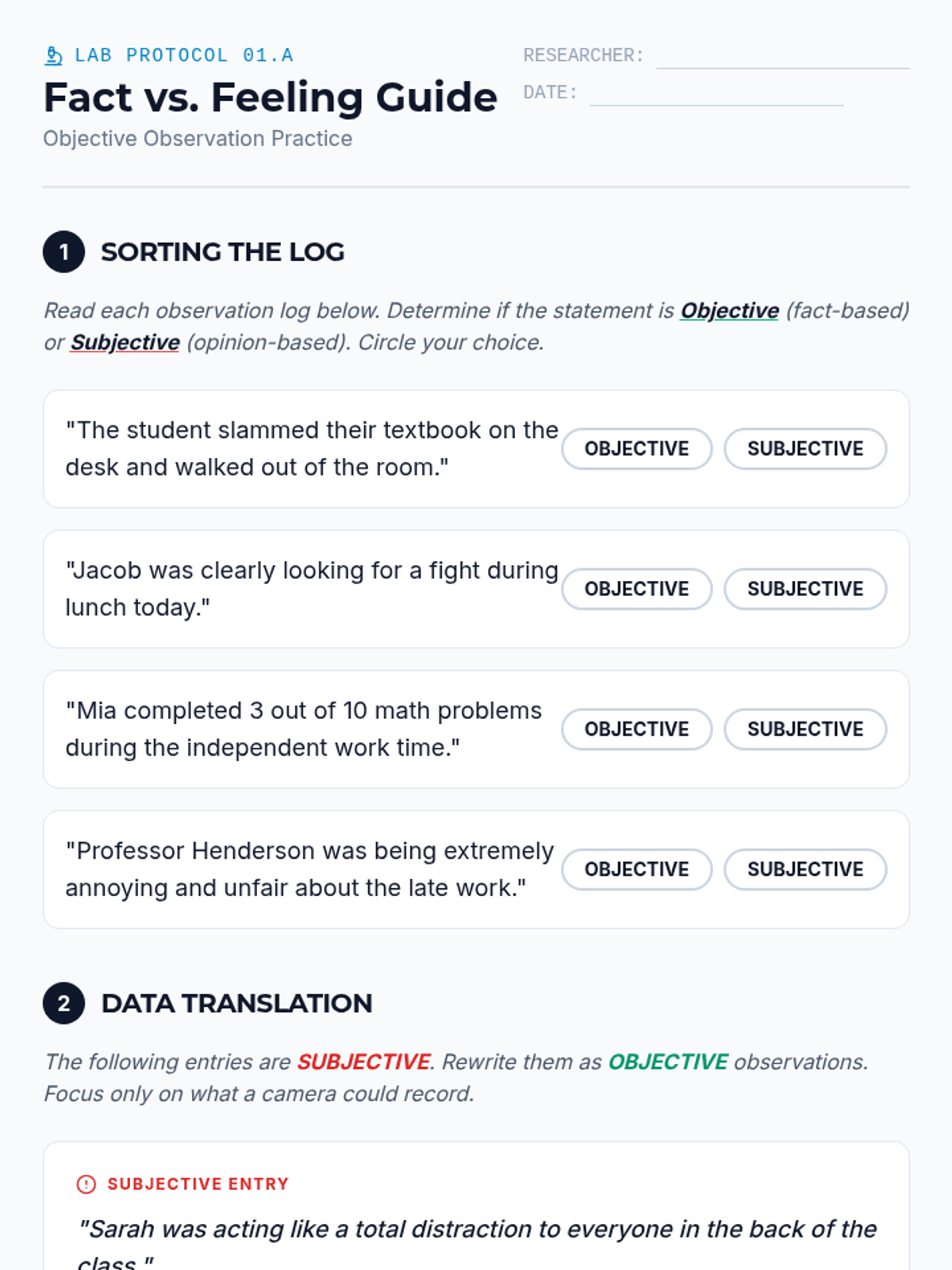
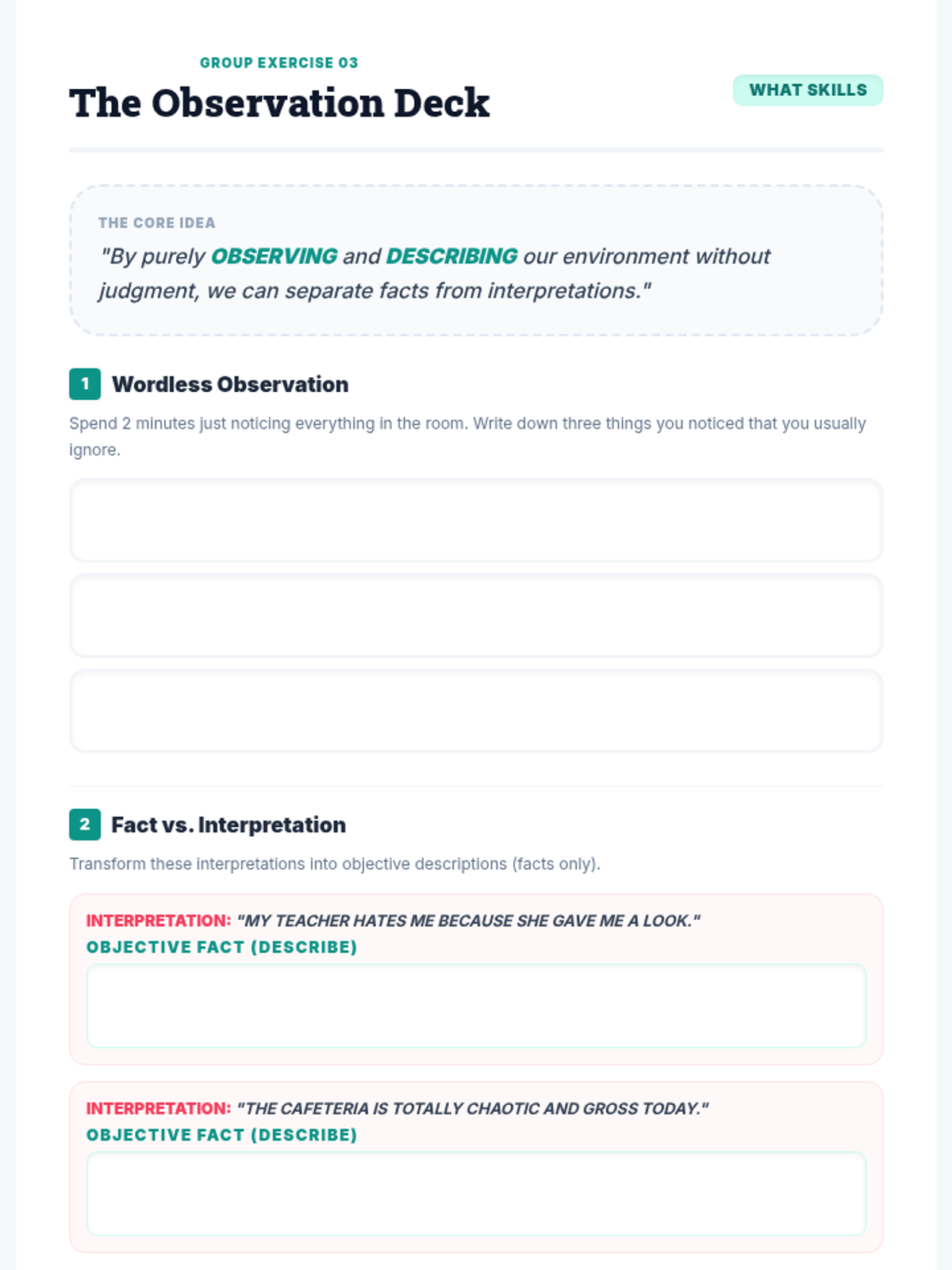
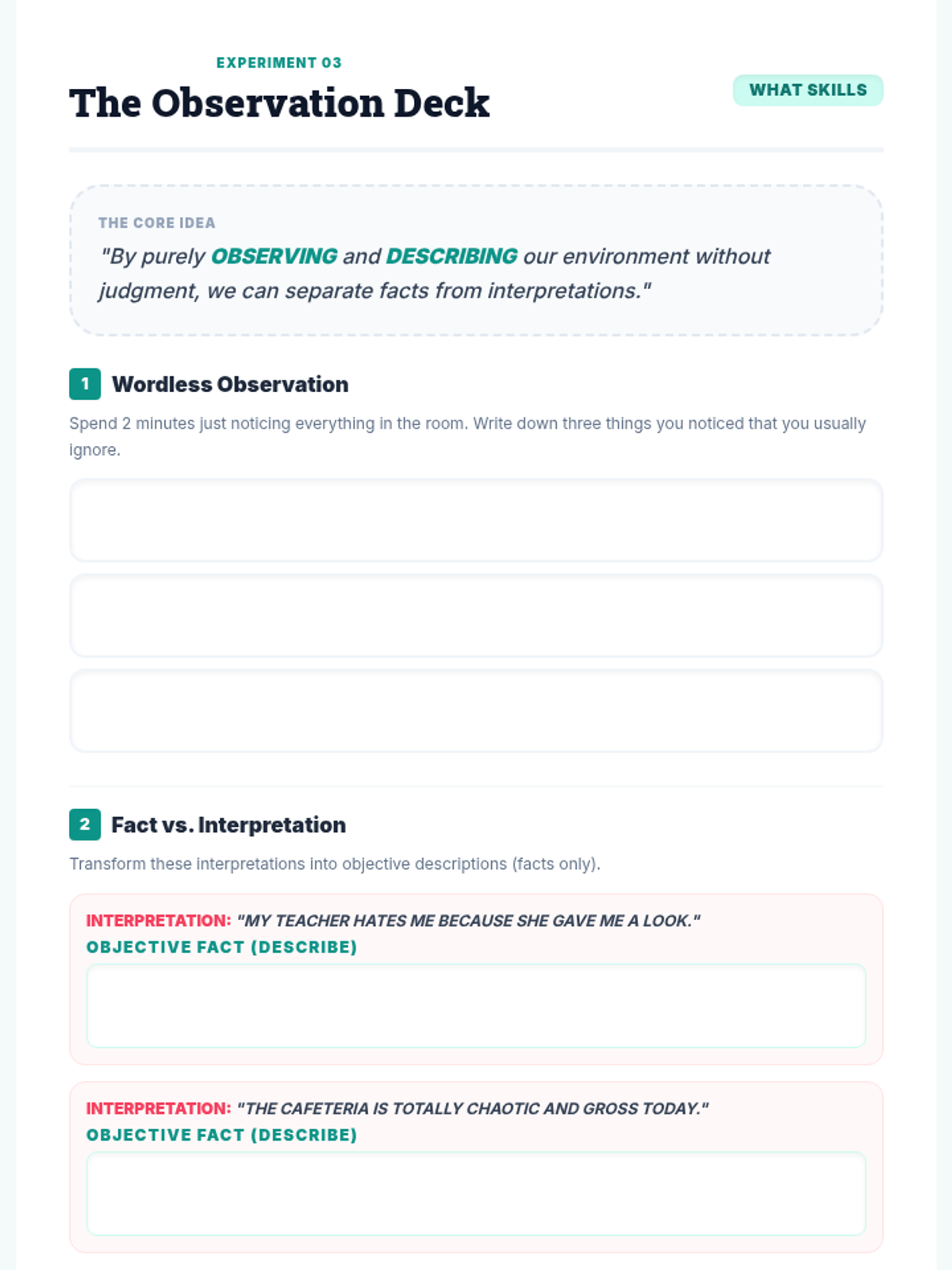
Students learn to distinguish between subjective interpretations and objective observations. They practice recording behavioral data accurately using scenarios and a silent video hook.
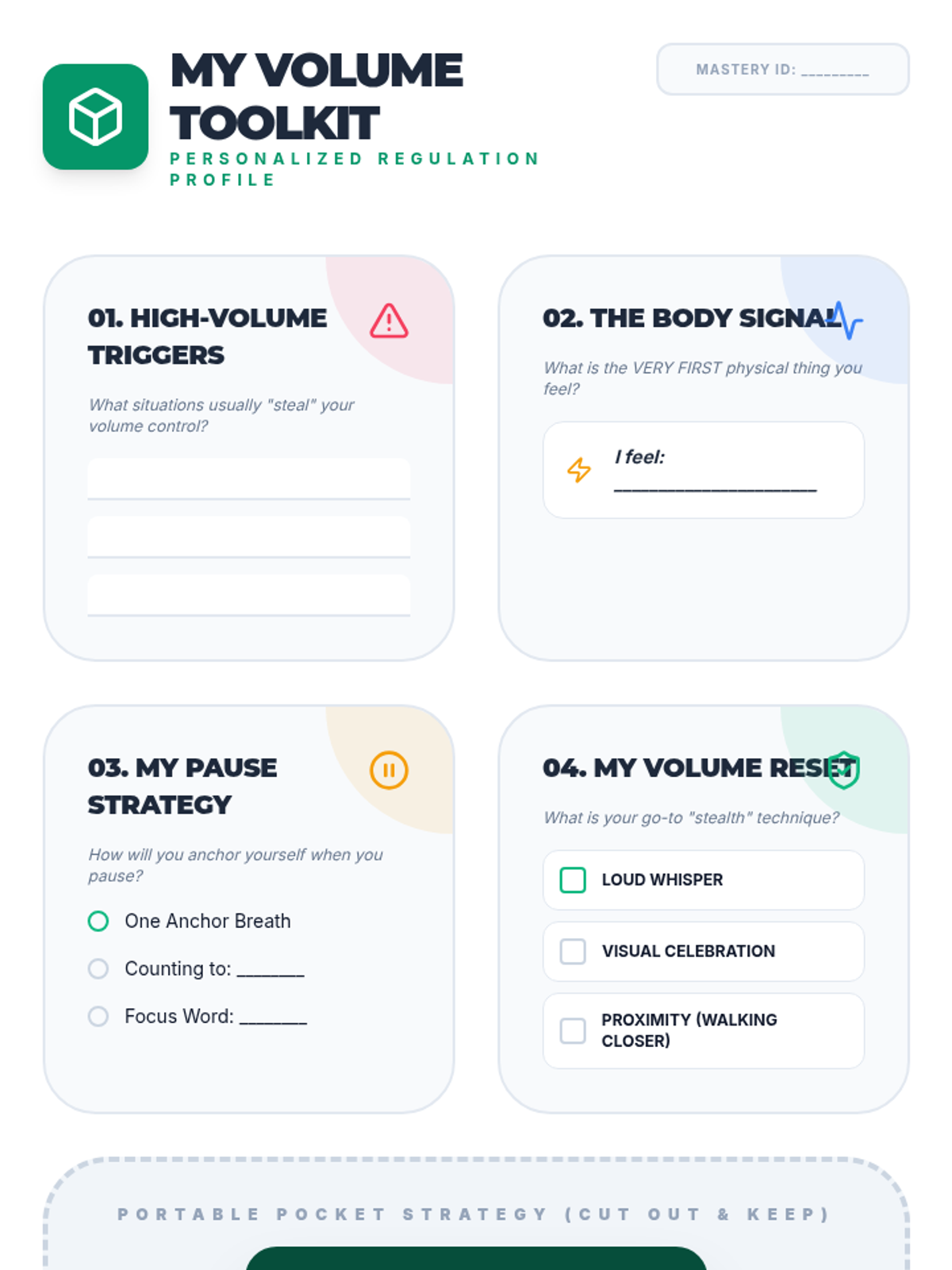
Students compile their personal list of strategies (counting, deep breaths, visual reminders) into a portable format. They practice accessing these tools during simulated stress scenarios.
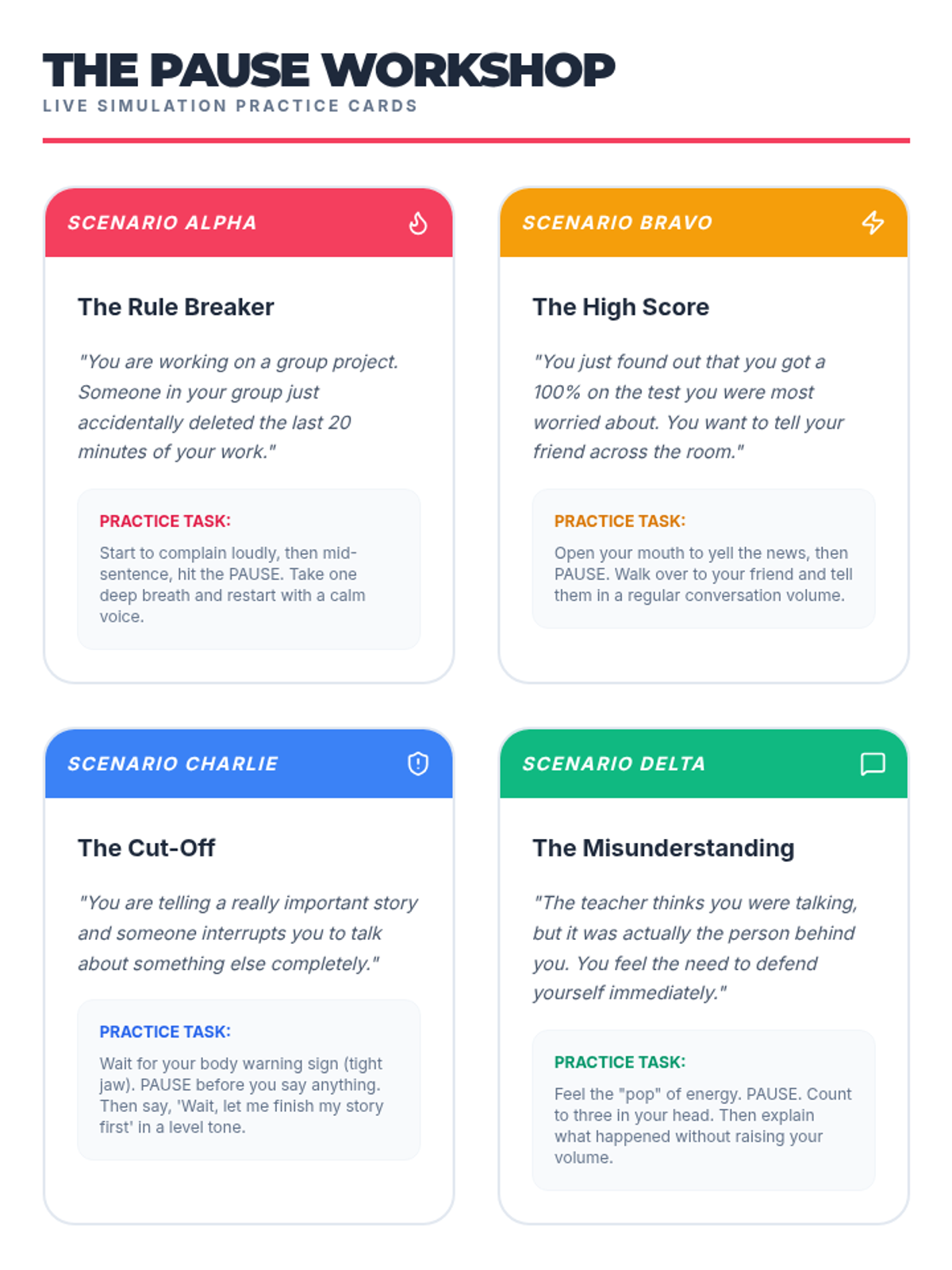
This lesson introduces the 'Pause' technique—stopping speech to take a breath when volume spikes. Students practice recognizing a trigger, pausing, and resetting their volume.
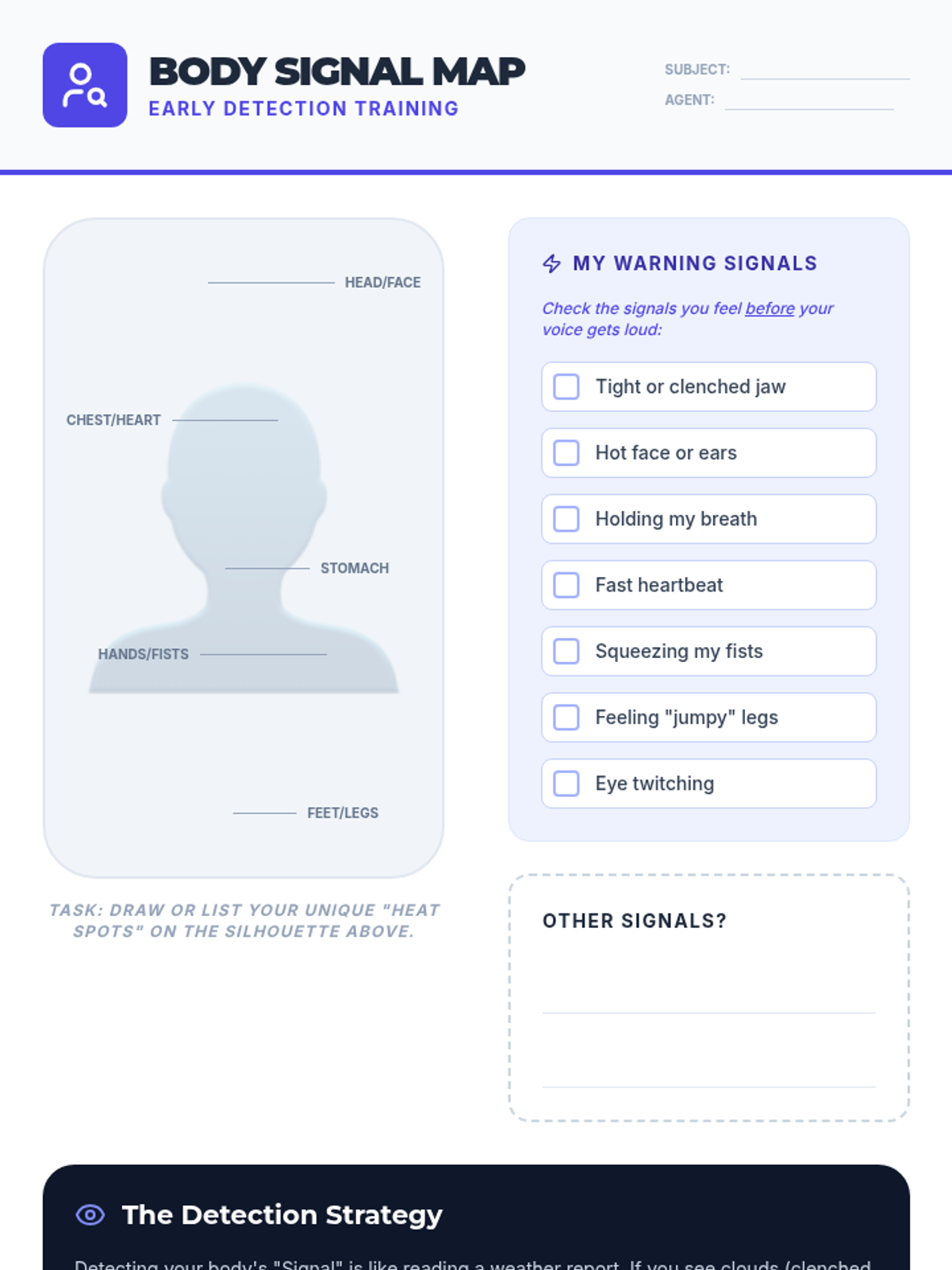
Students learn to identify physical cues (tight chest, clenched jaw) that happen before they yell. This lesson emphasizes catching the escalation early.
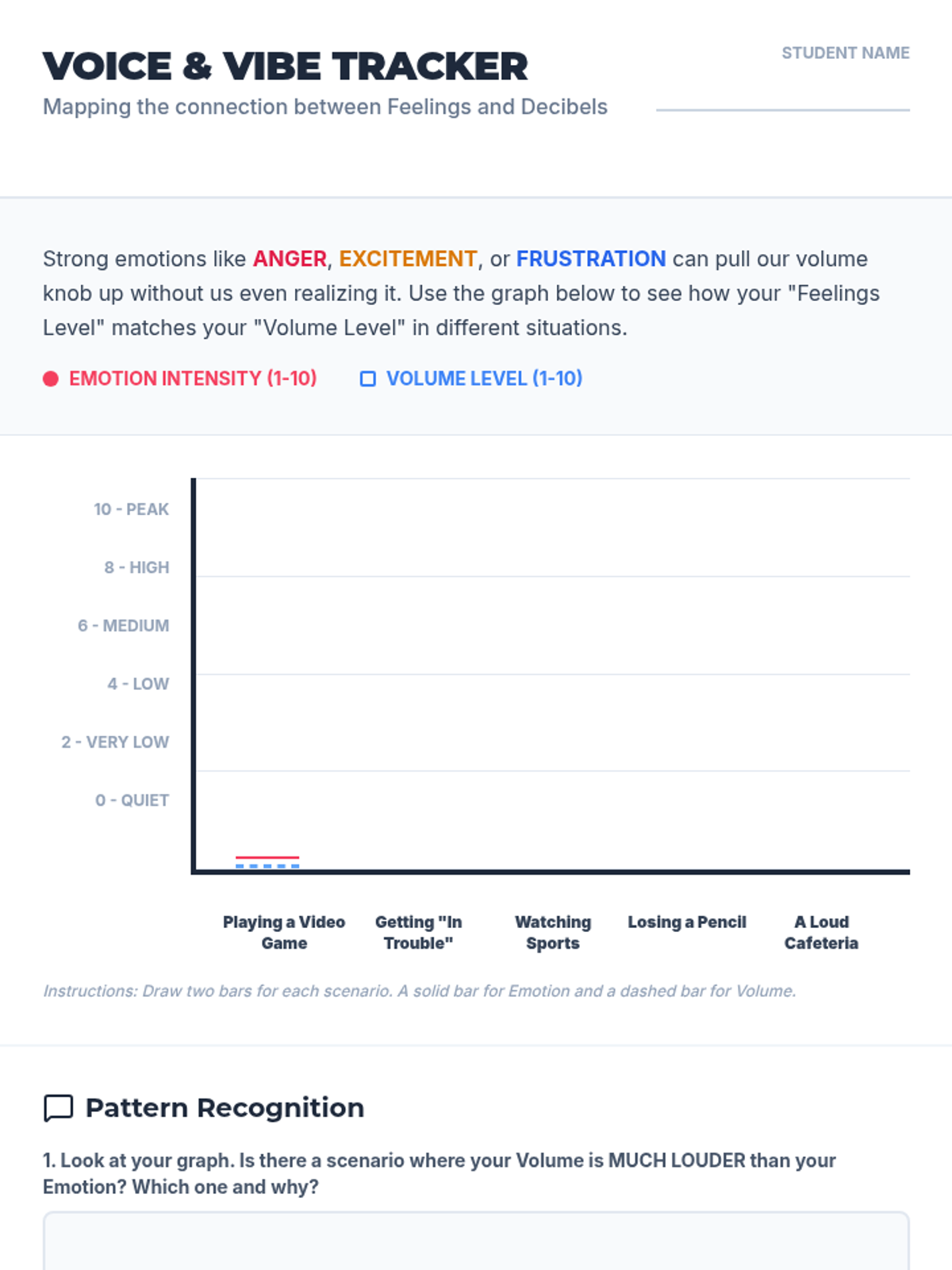
Students analyze the link between high-arousal emotions (anger, excitement, fear) and increased volume. They graph their own typical reactions to see patterns in their behavior.
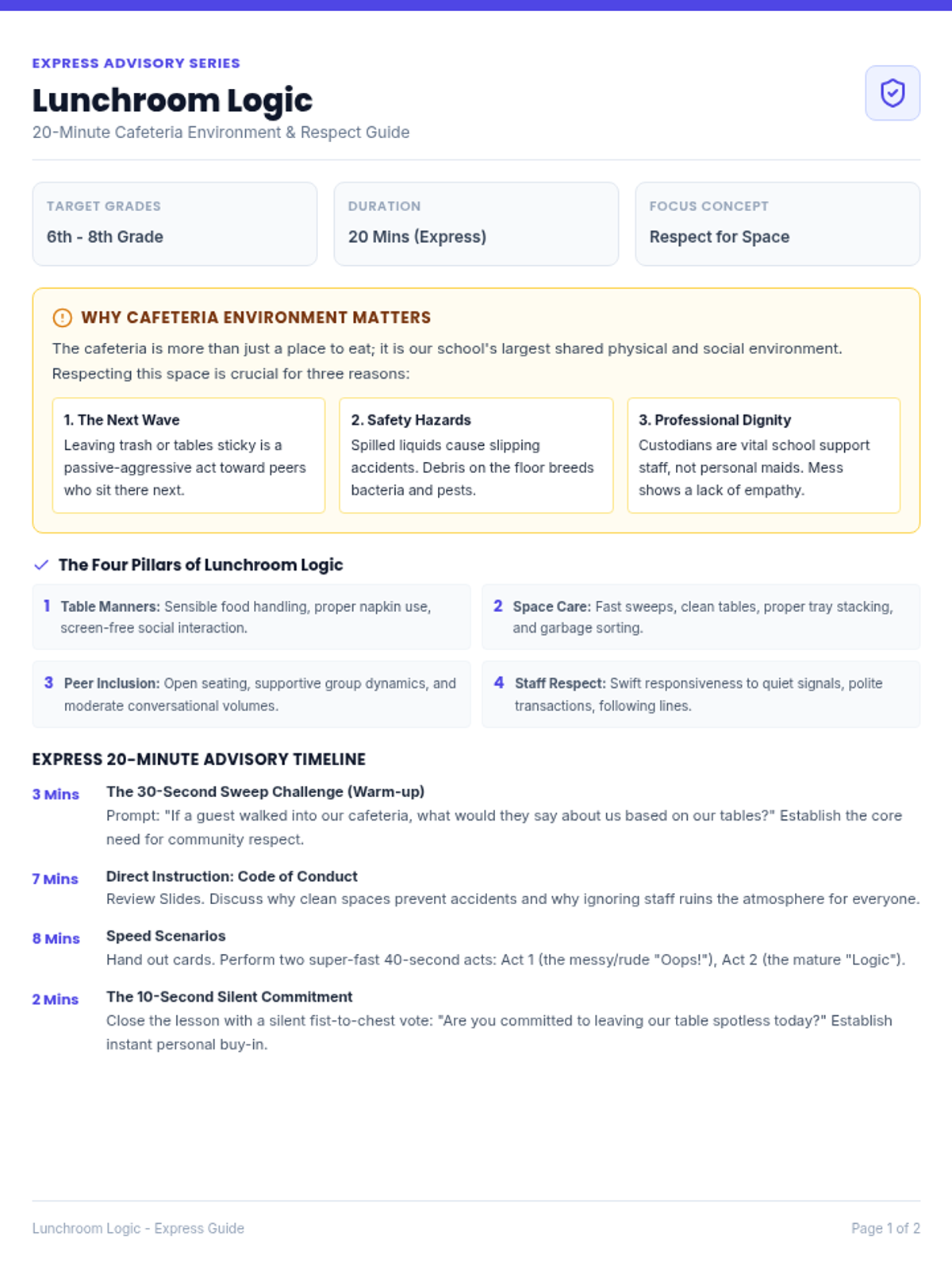
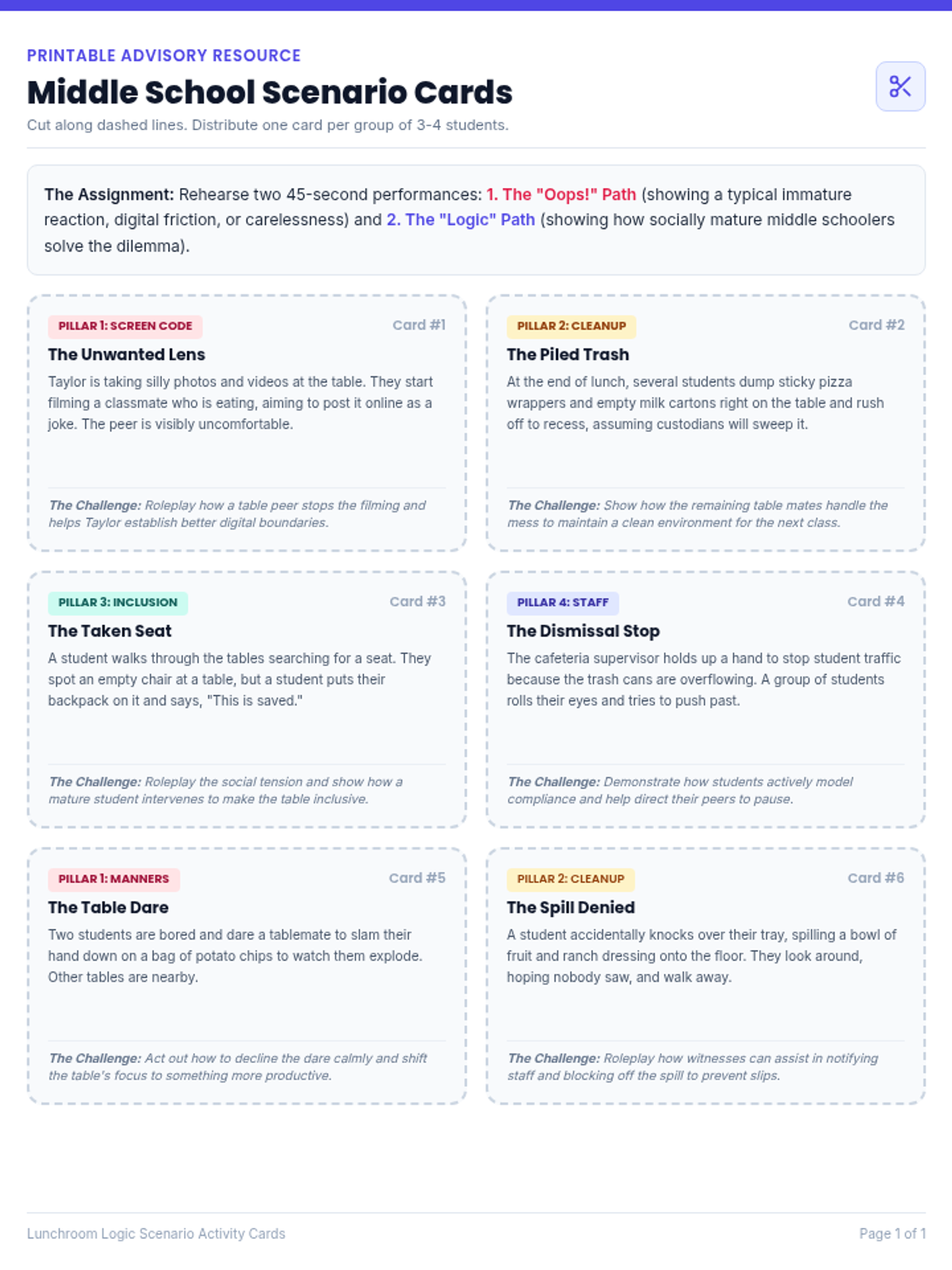
A rapid 20-minute express advisory lesson tailored for middle schoolers. It emphasizes the deep importance of respecting the physical and social cafeteria environment through fast-paced peer-led scenario roleplays and a collaborative classroom pledge.
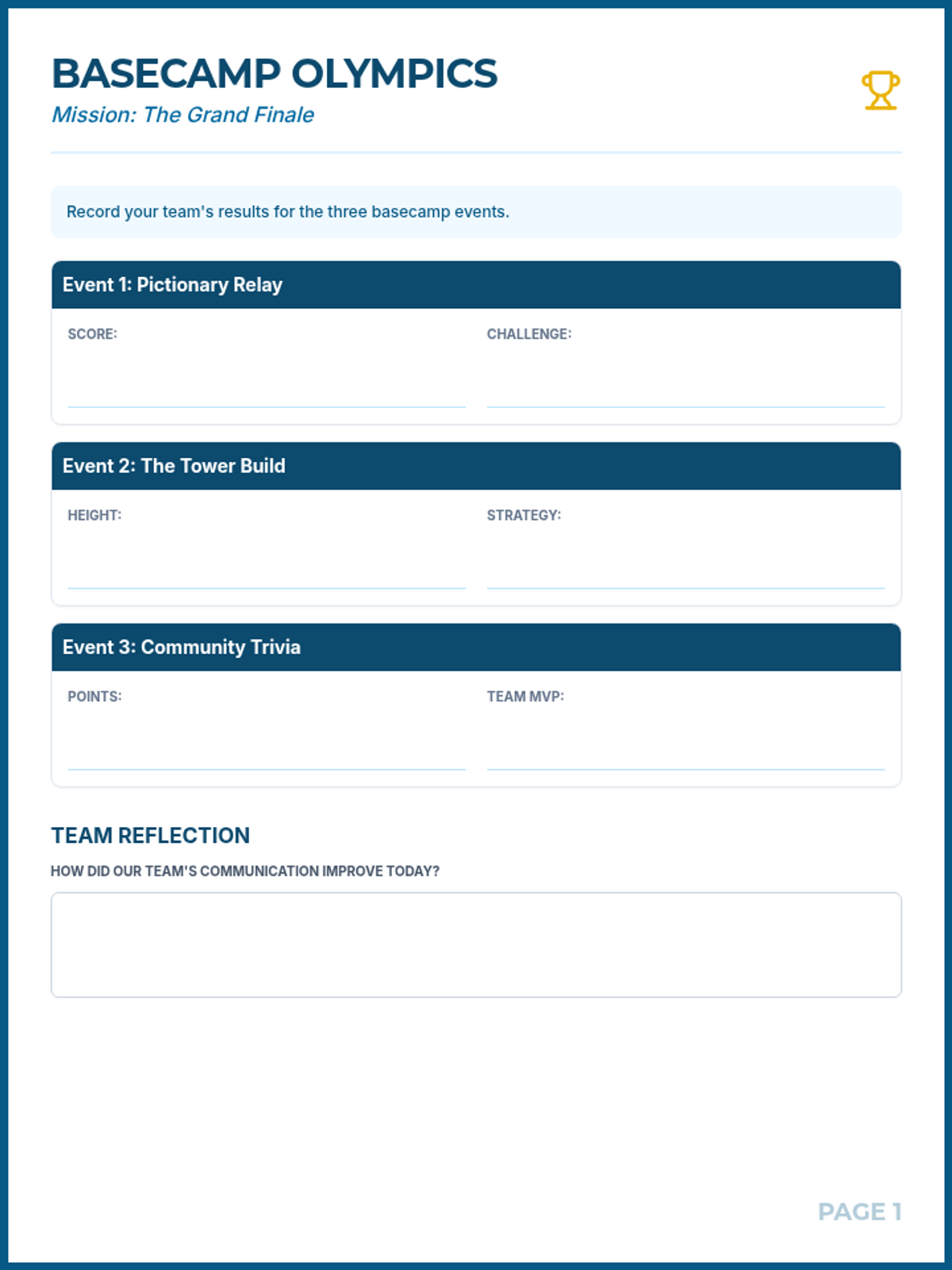
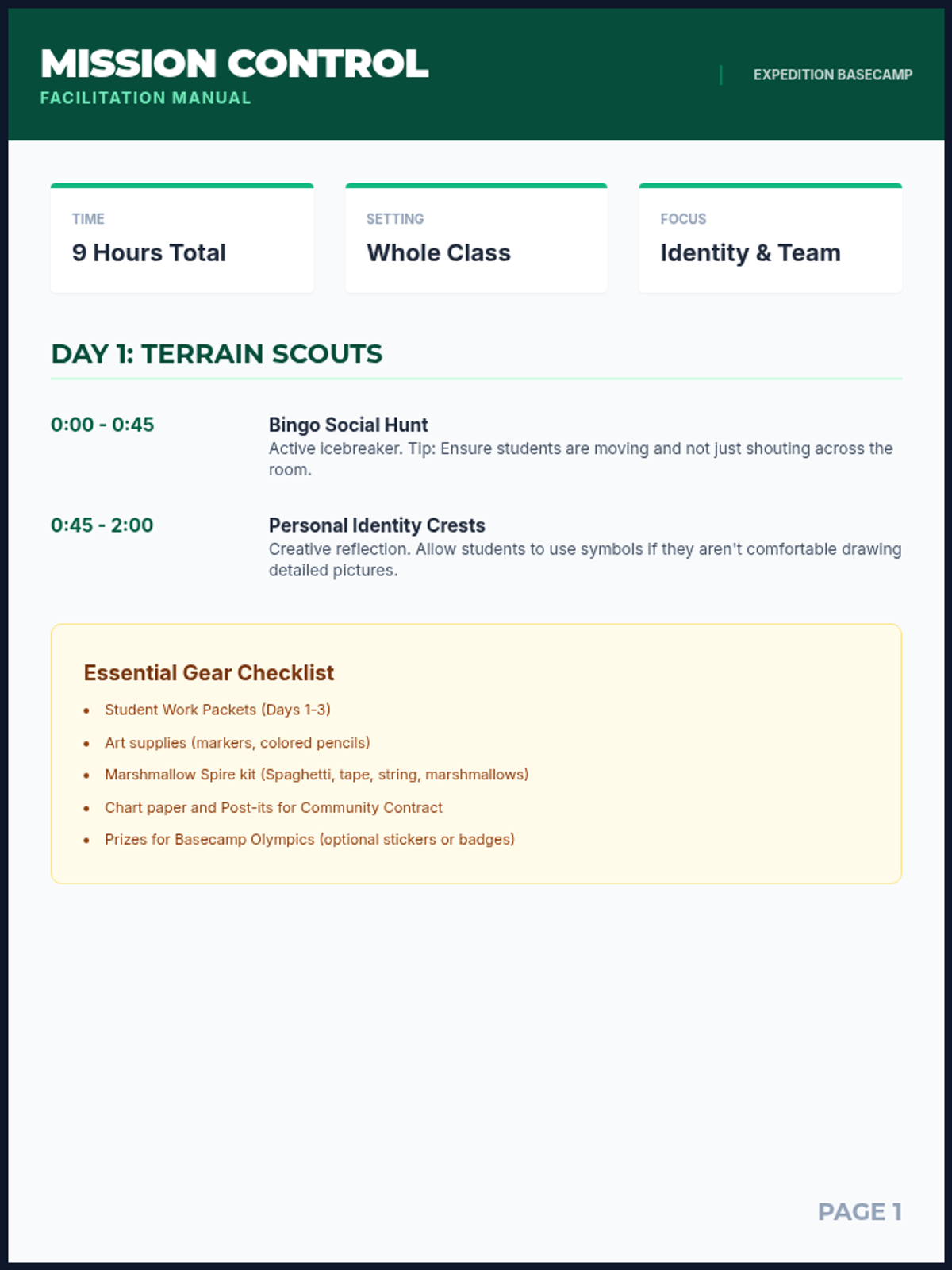
The final day celebrates the new community with a 'Basecamp Olympics' event and a reflective 'Letter to Future Self' to set the tone for the year ahead.
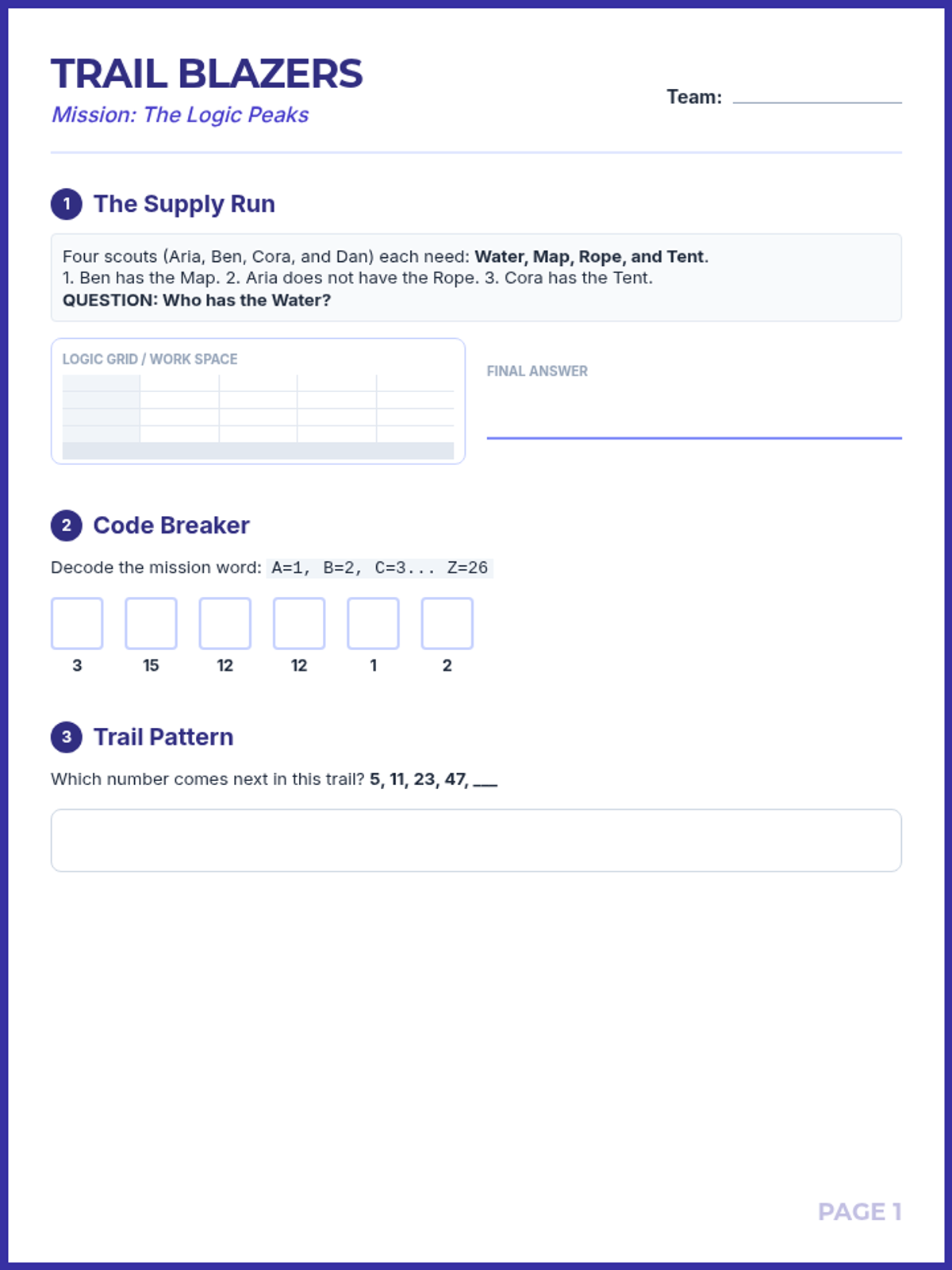
Day two shifts focus to collaborative problem-solving with an engineering challenge and the collective creation of a classroom 'Community Contract'.
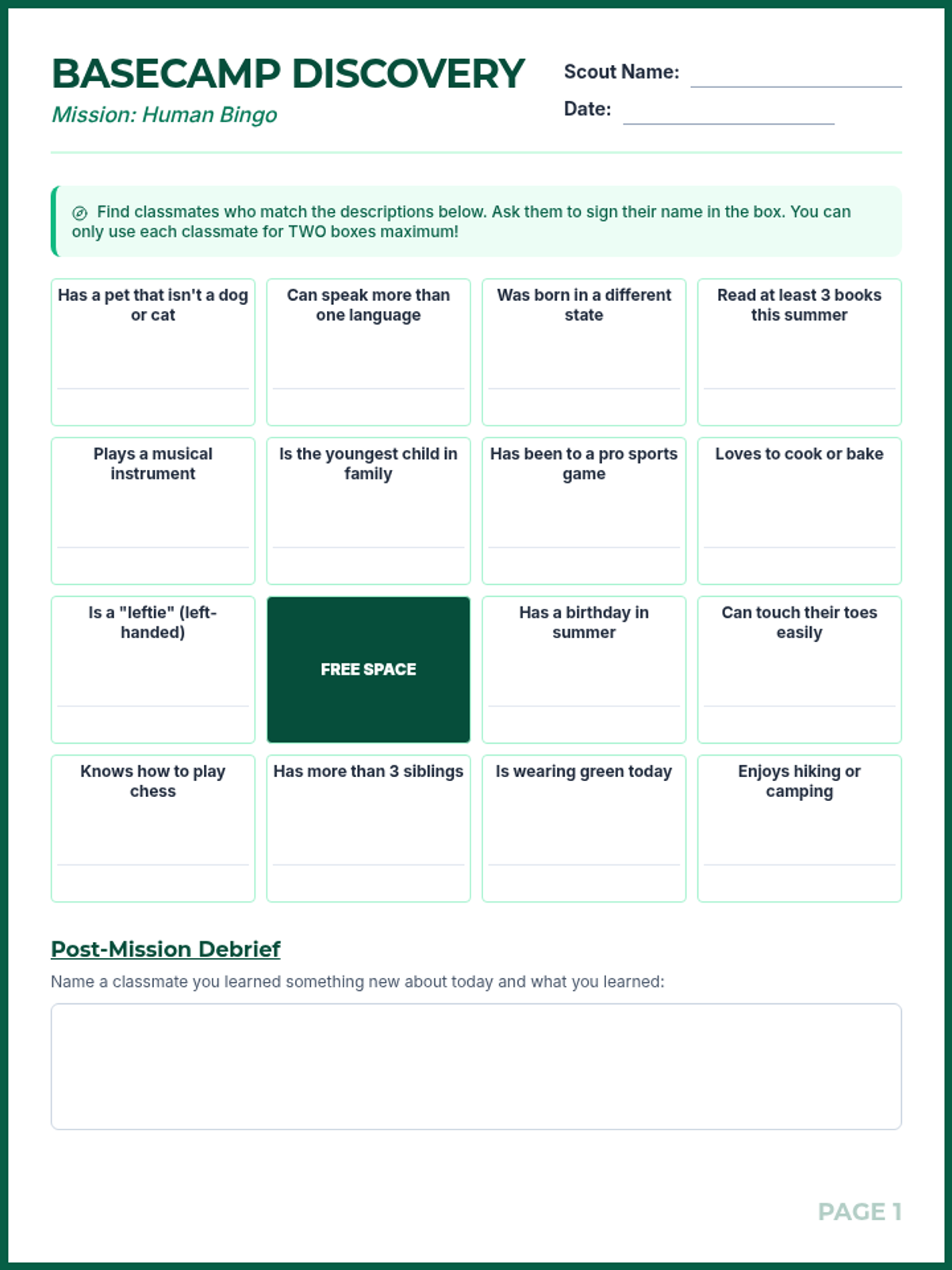
The first day of basecamp focuses on individual identity and initial team bonds through a 'Human Bingo' social hunt and a creative 'Personal Crest' project.
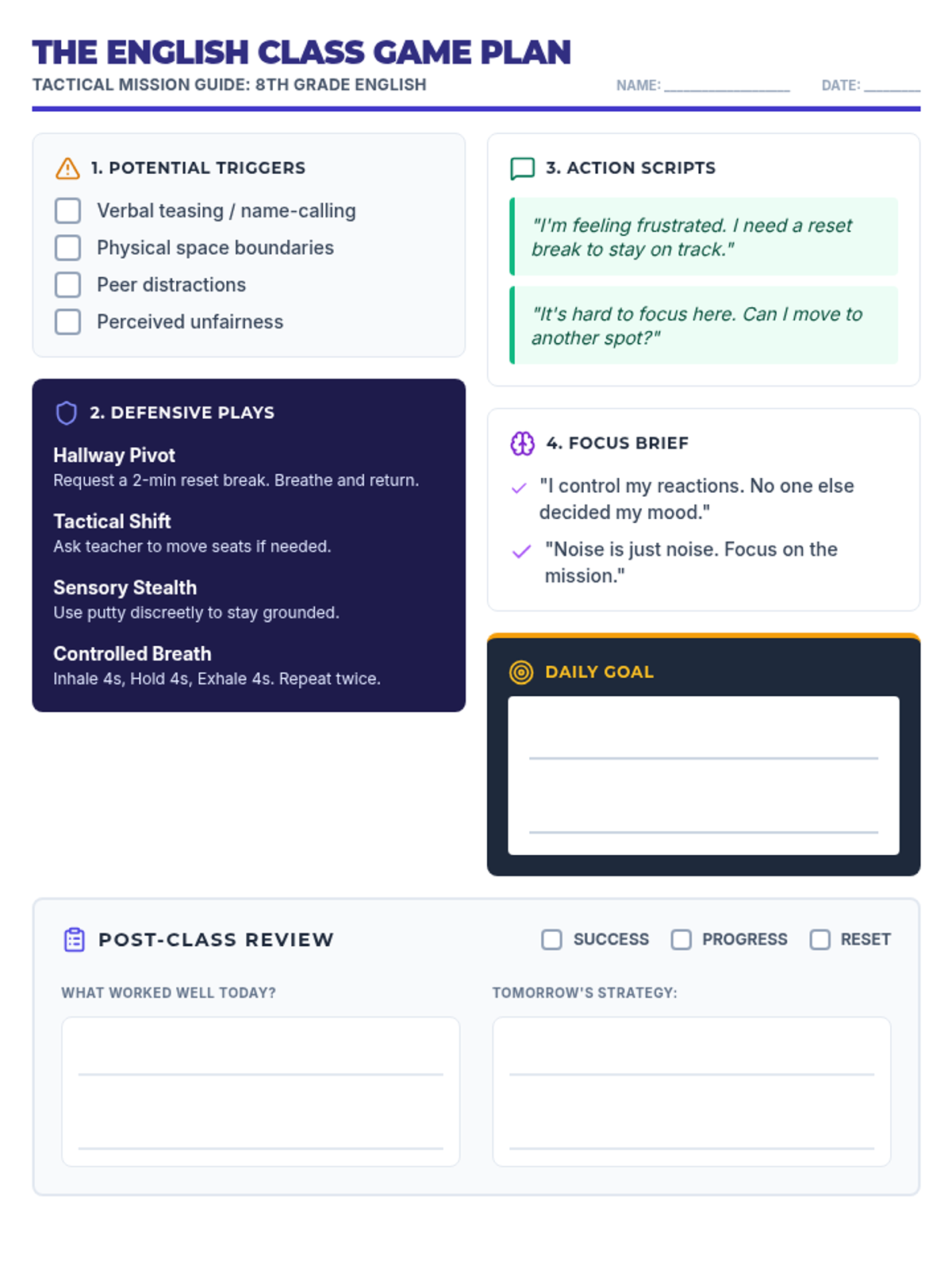
A personalized behavioral management plan for an 8th-grade student to navigate social triggers and maintain focus during English class through specific coping strategies.
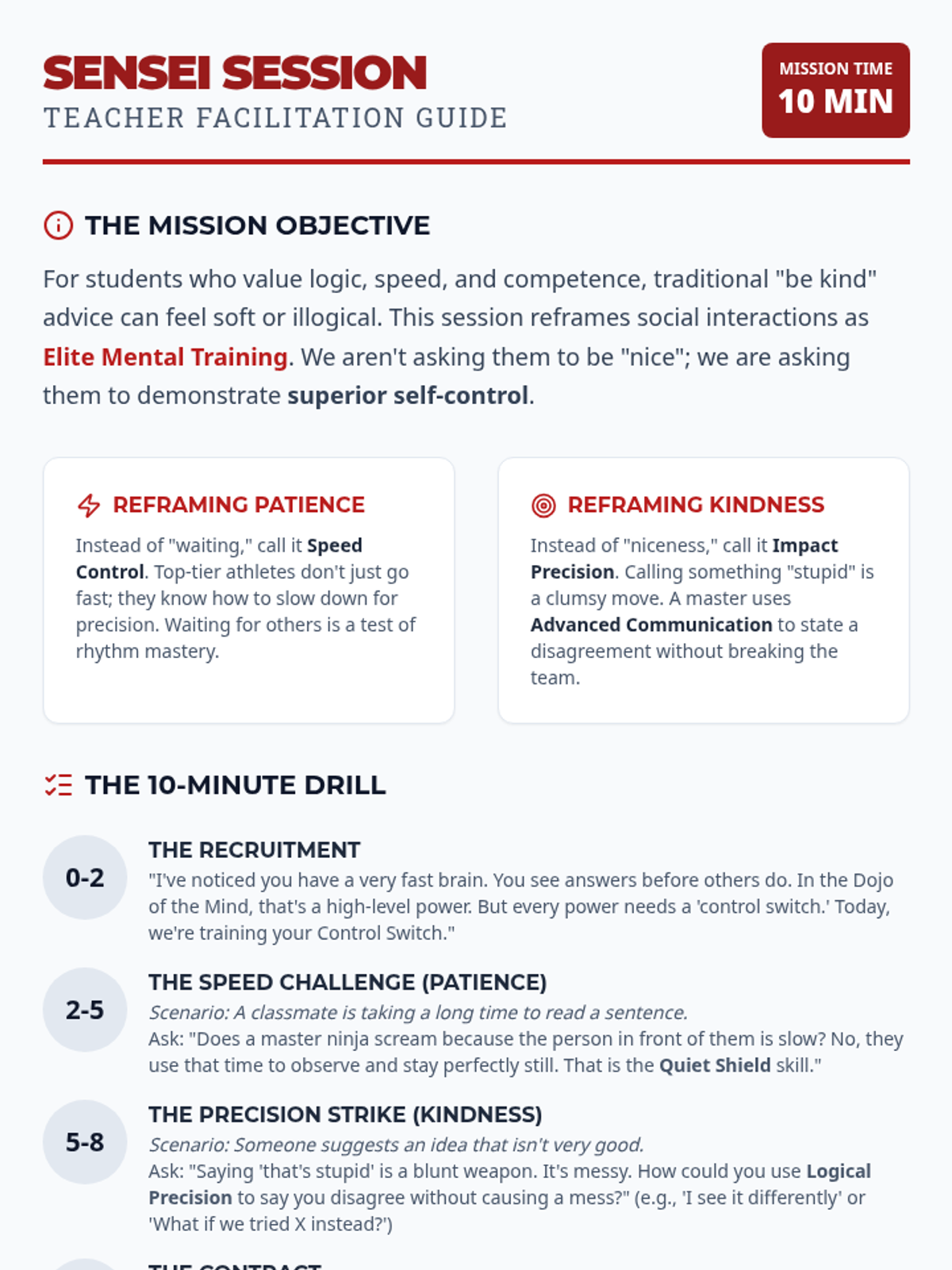
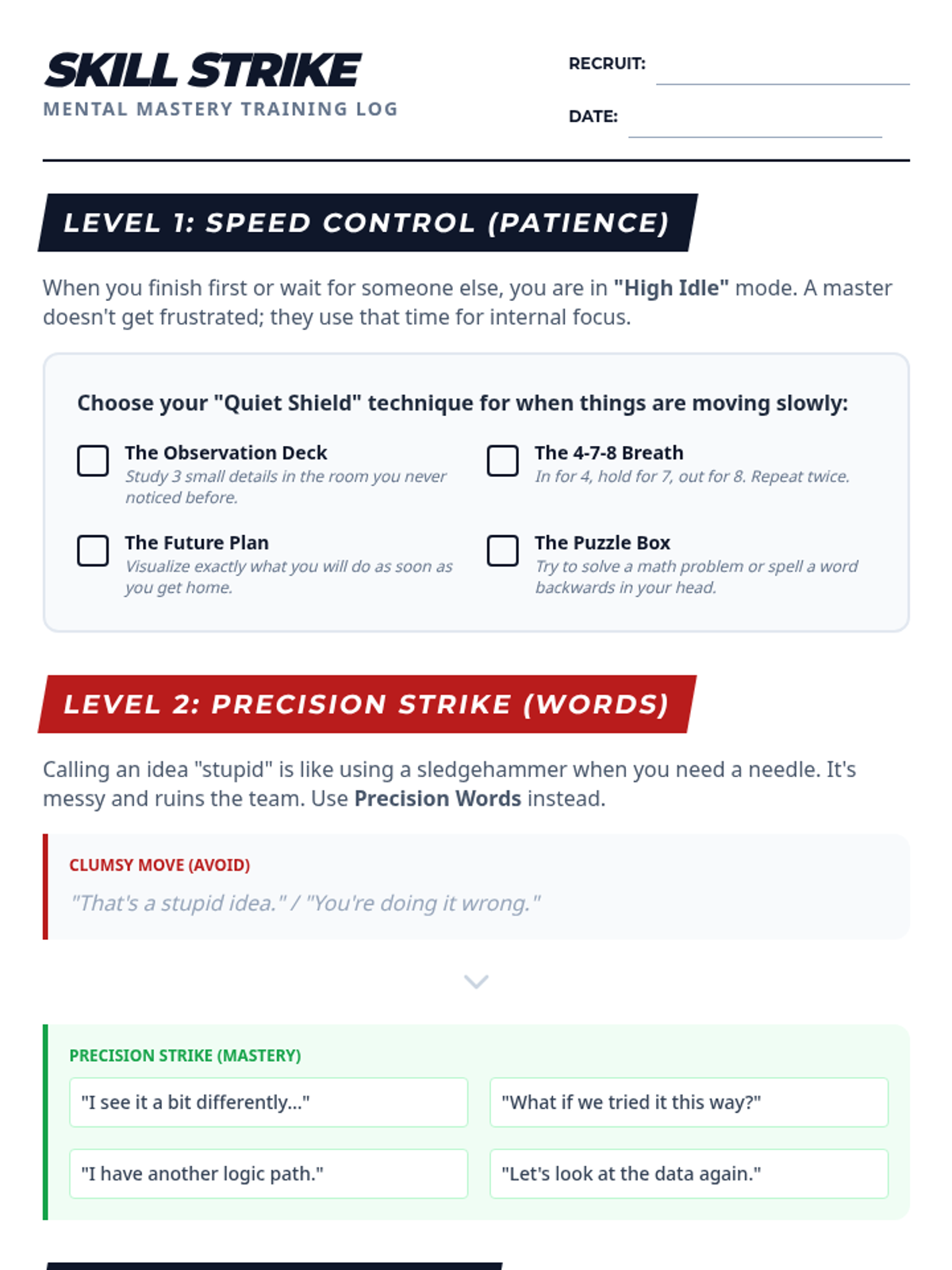
A specialized social-emotional lesson that reframes kindness and patience as elite 'mental skills' for high-achieving students. It uses a martial arts 'Dojo' theme to teach self-control as the ultimate form of mastery.
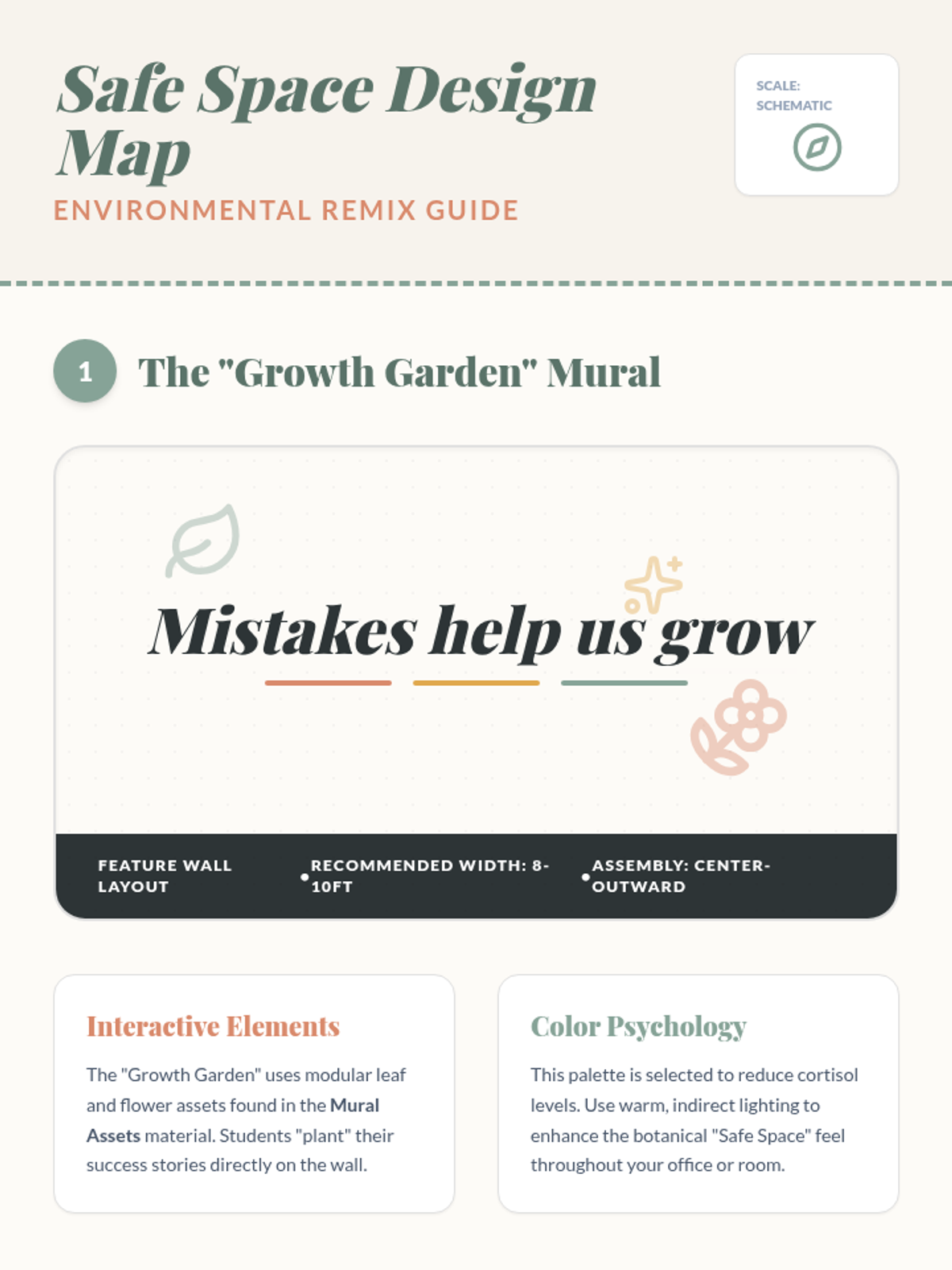
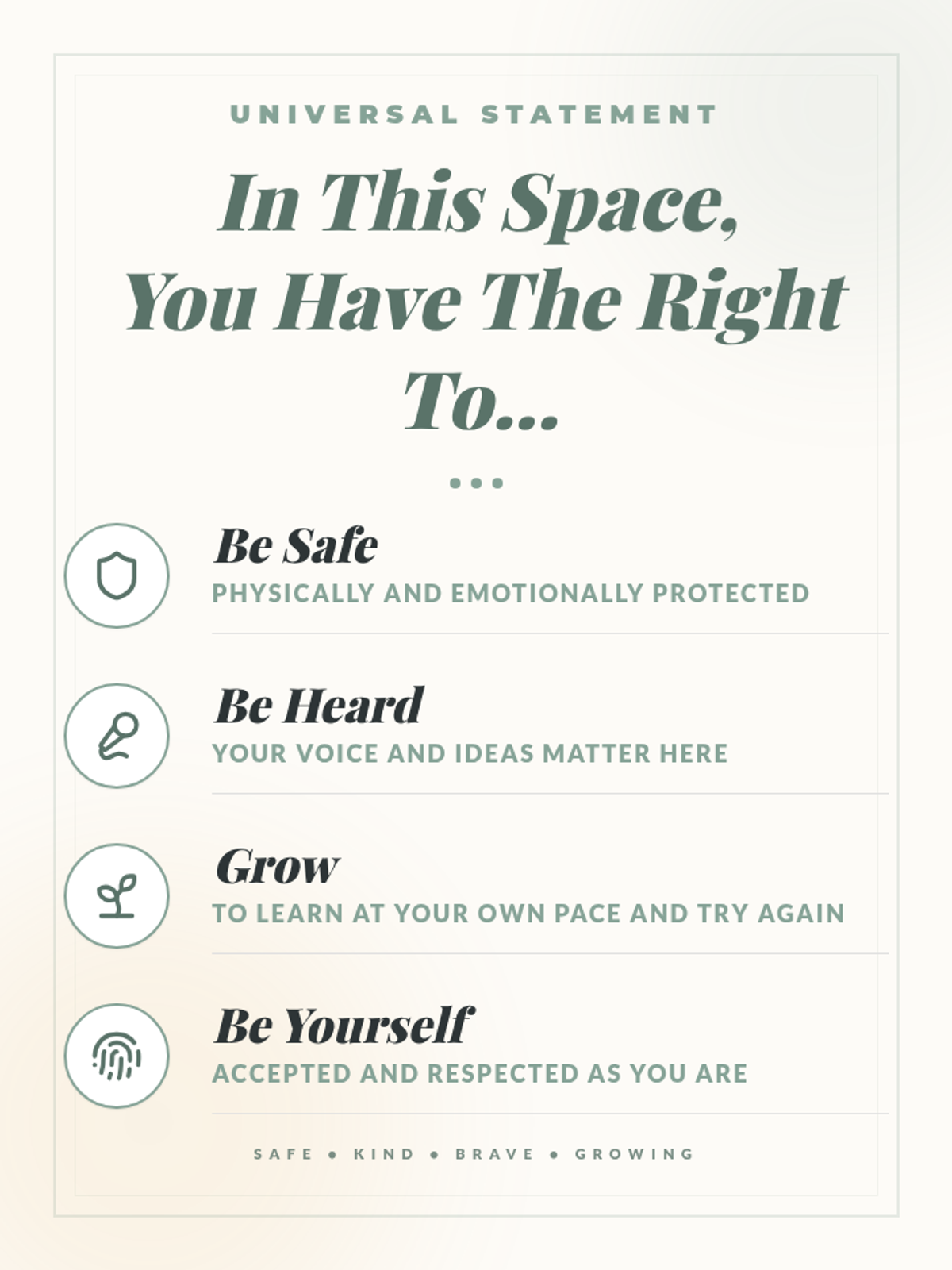
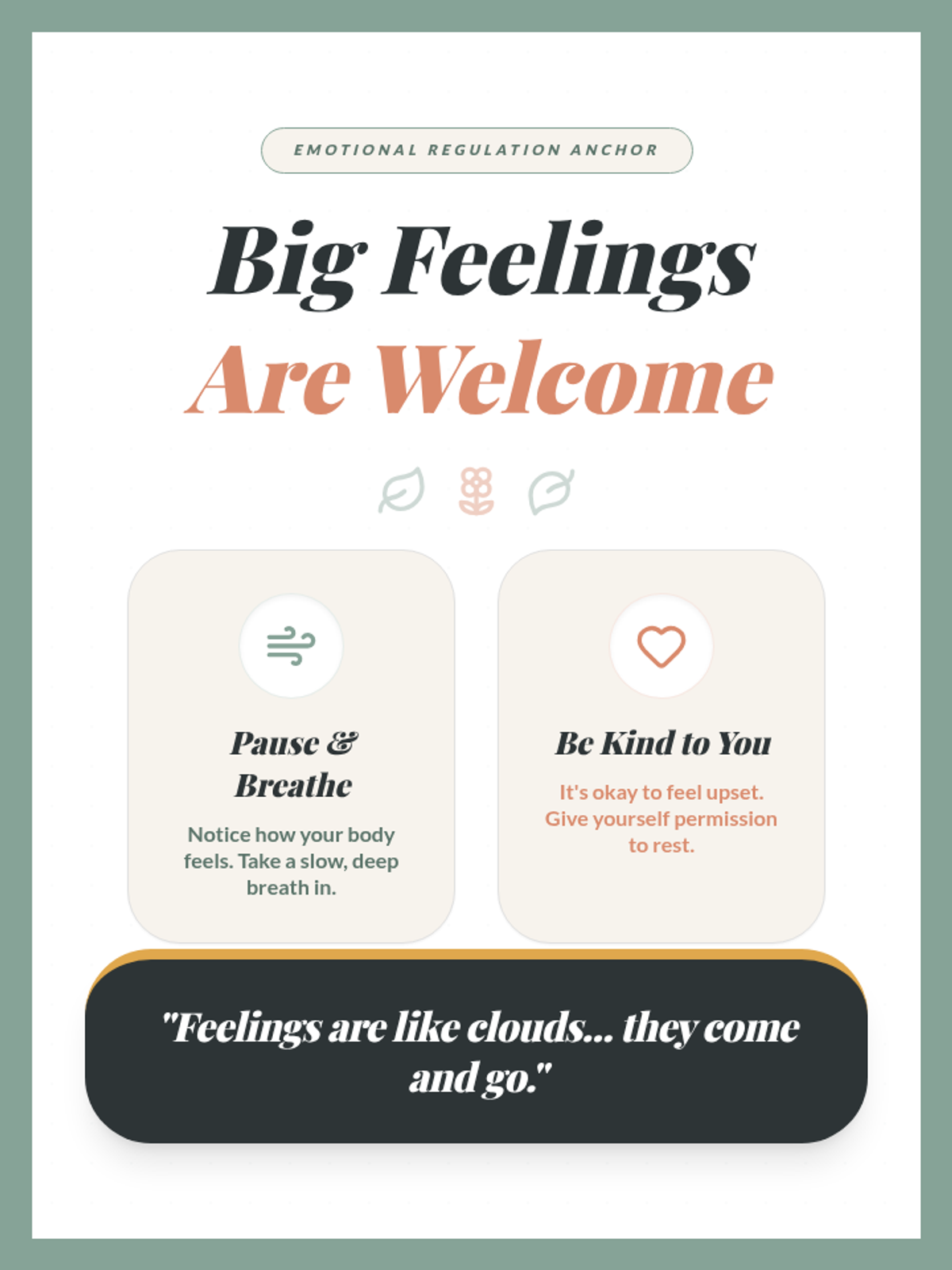
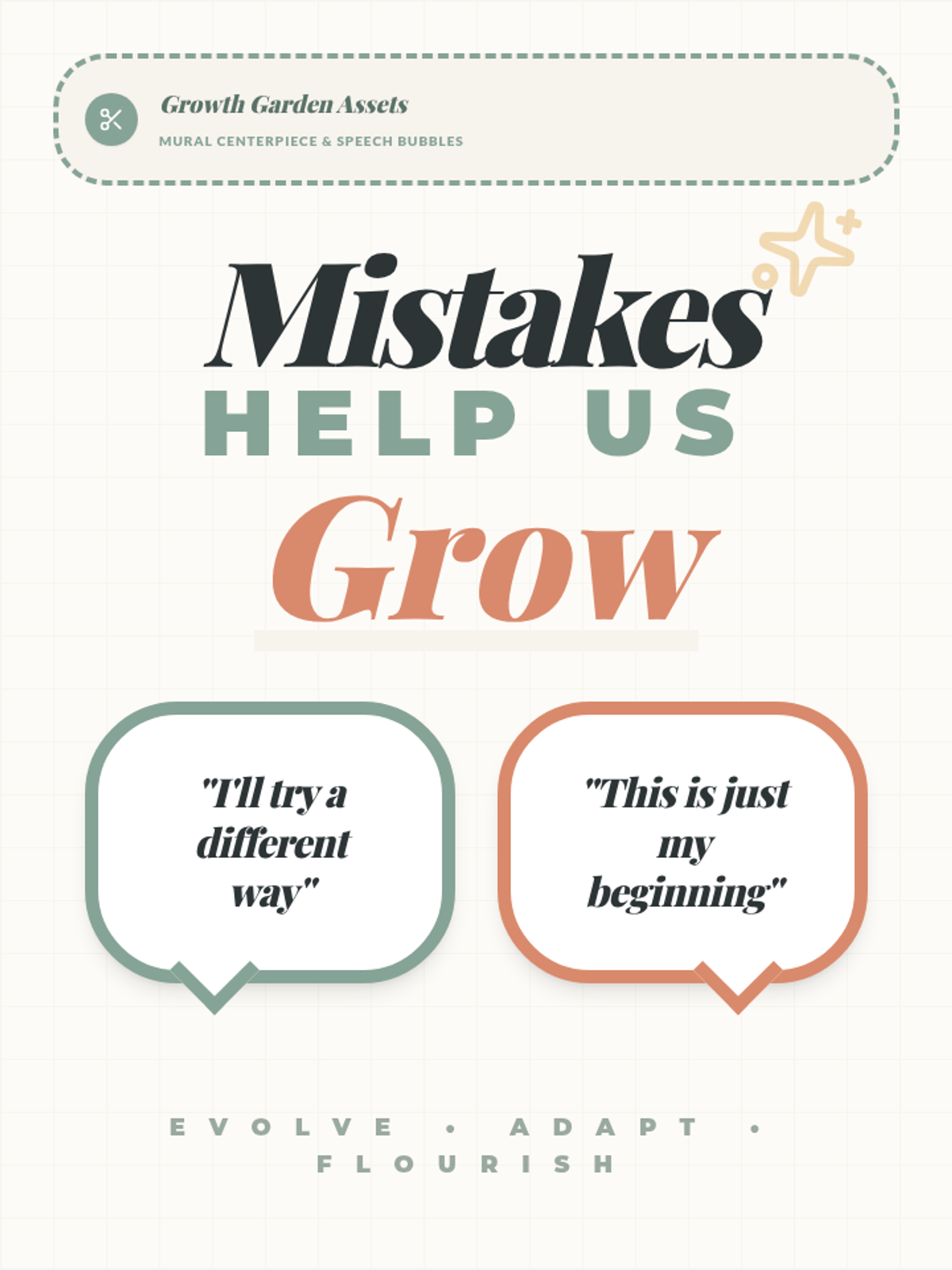
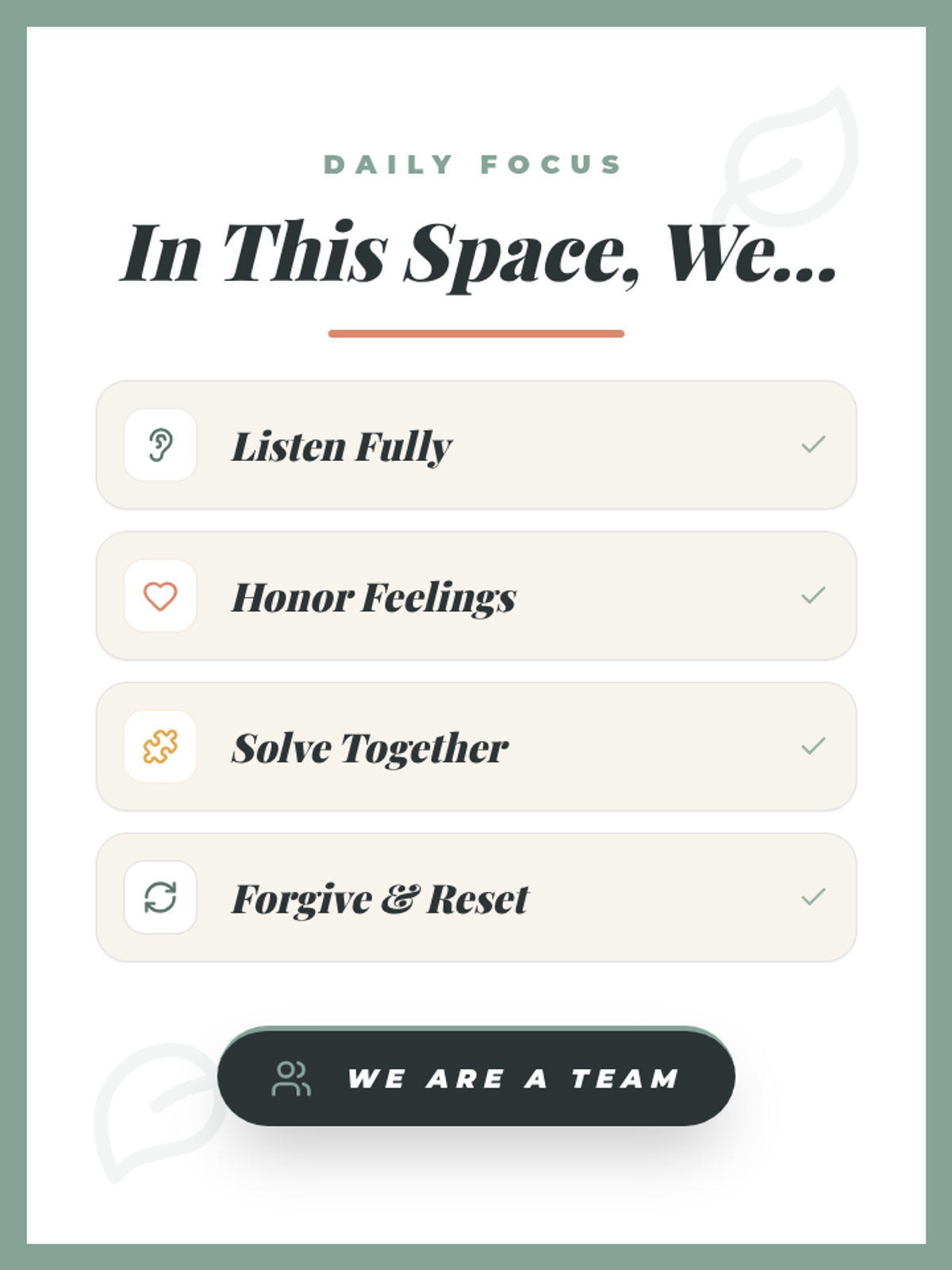
A comprehensive collection of environmental resources for a school office or classroom, featuring a growth-themed mural, a 3x4 bulletin board layout, and sensory corner posters designed with a calming, nature-inspired aesthetic.
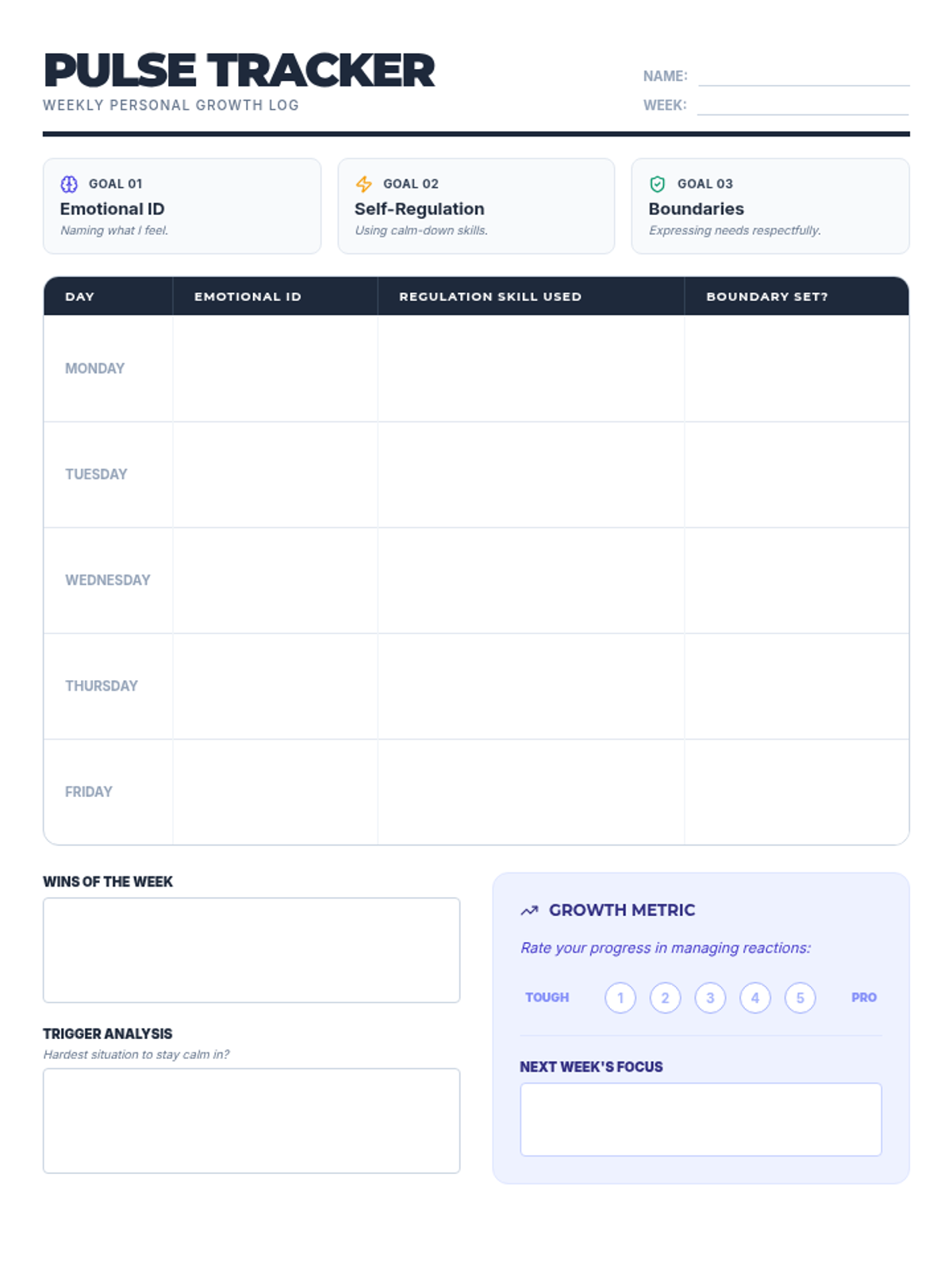
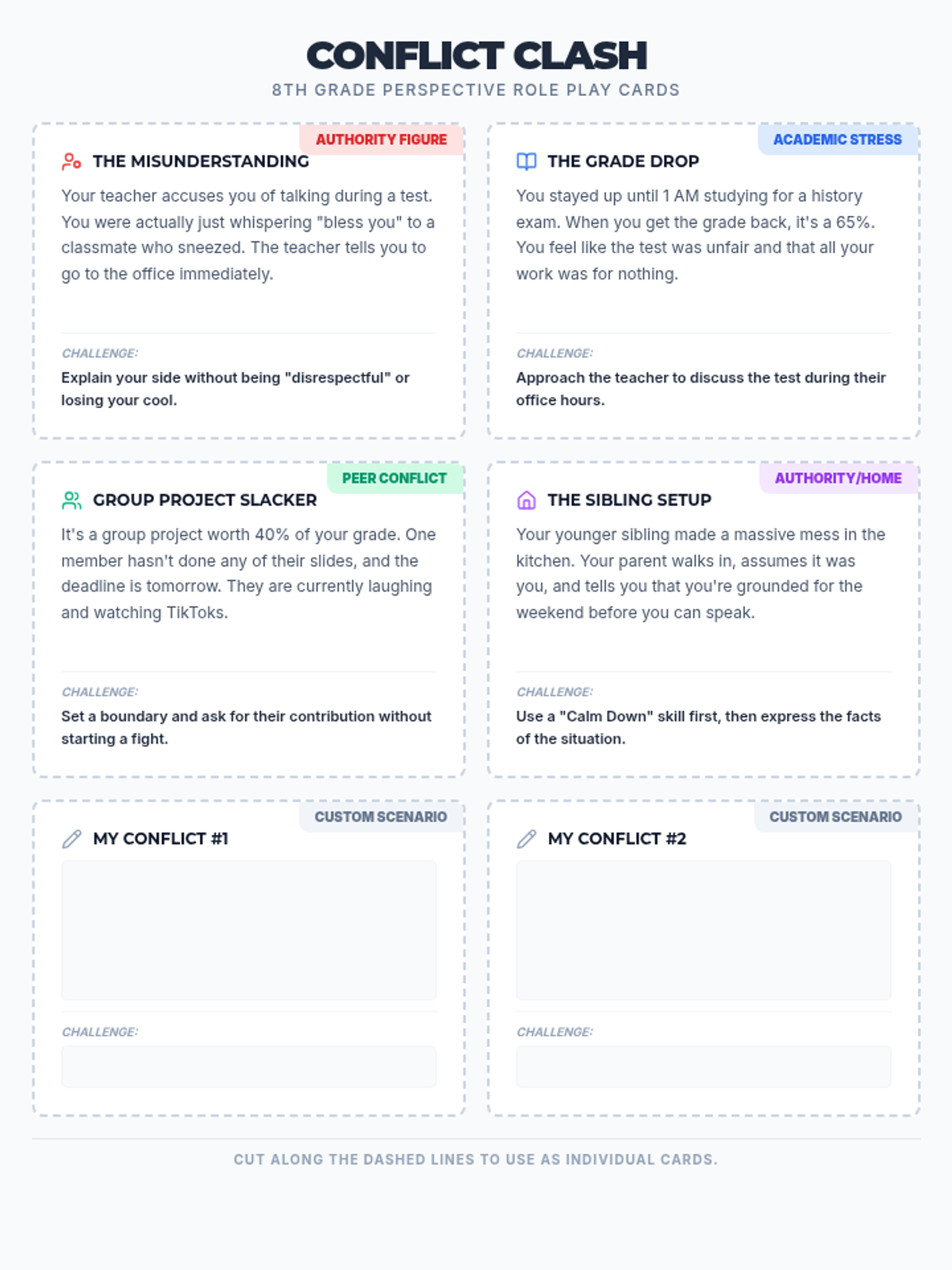
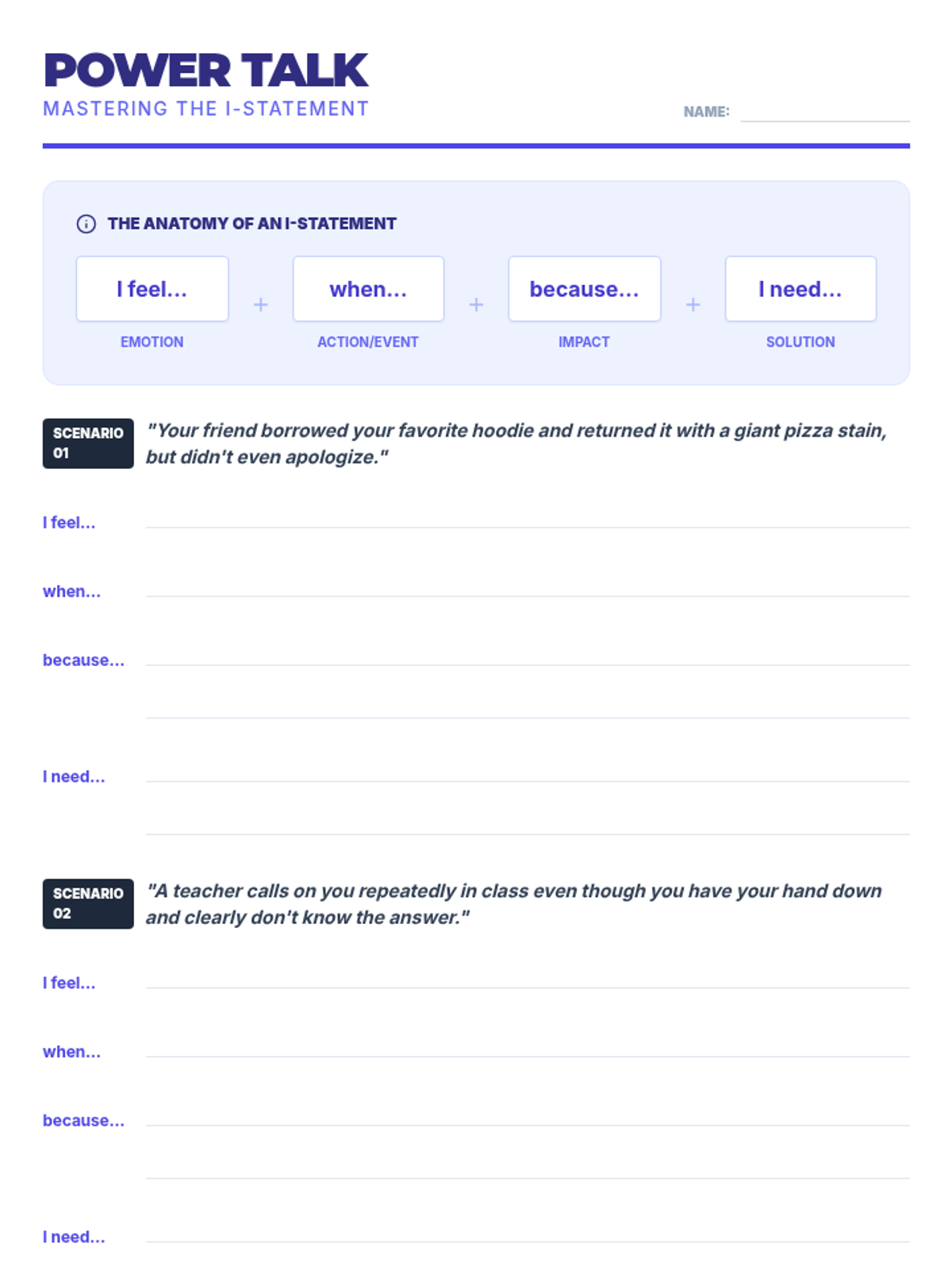
A comprehensive set of tools for 8th graders to track behavioral goals, navigate interpersonal conflicts through role-play, and master the art of assertive communication using I-statements.
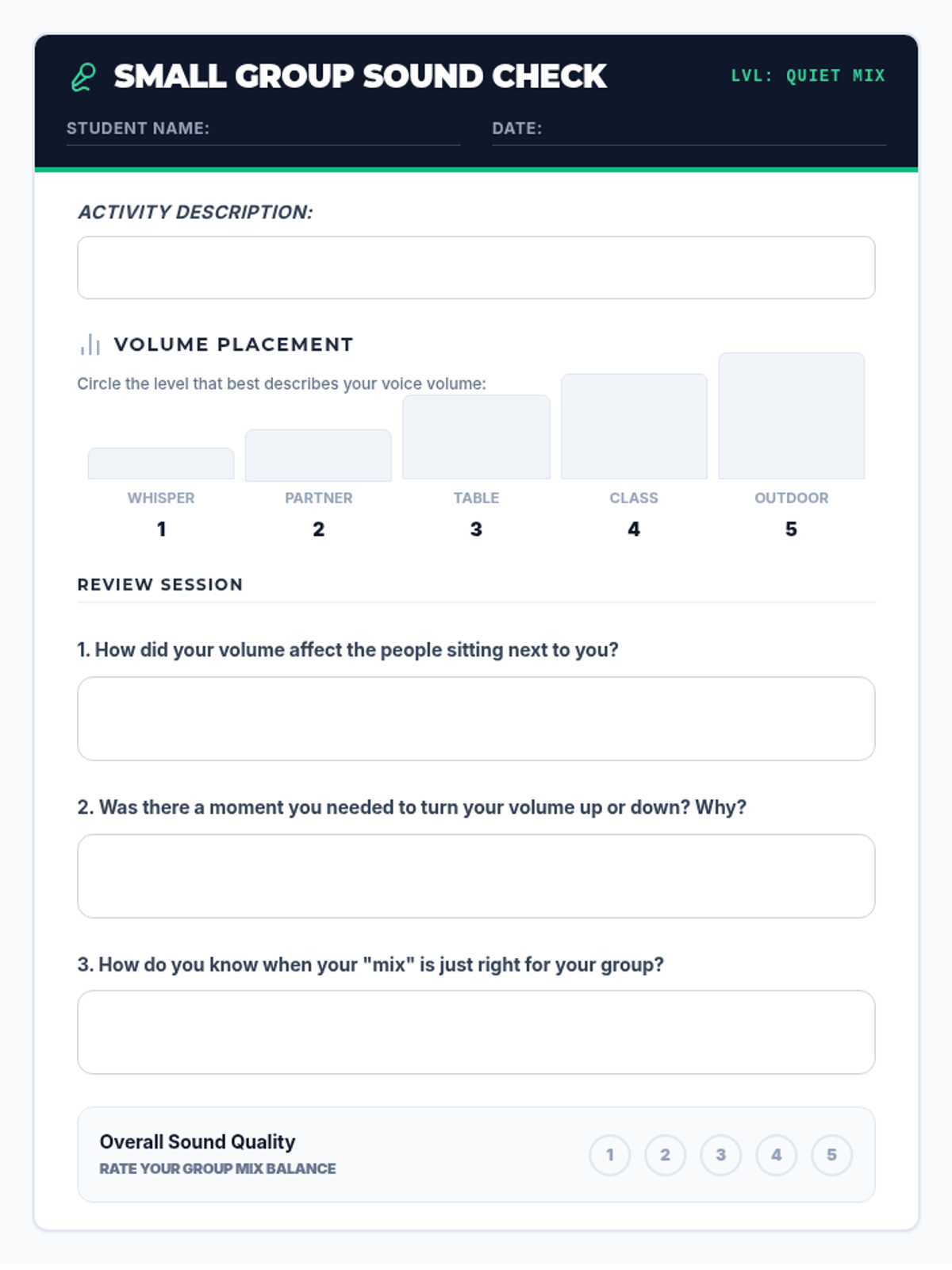
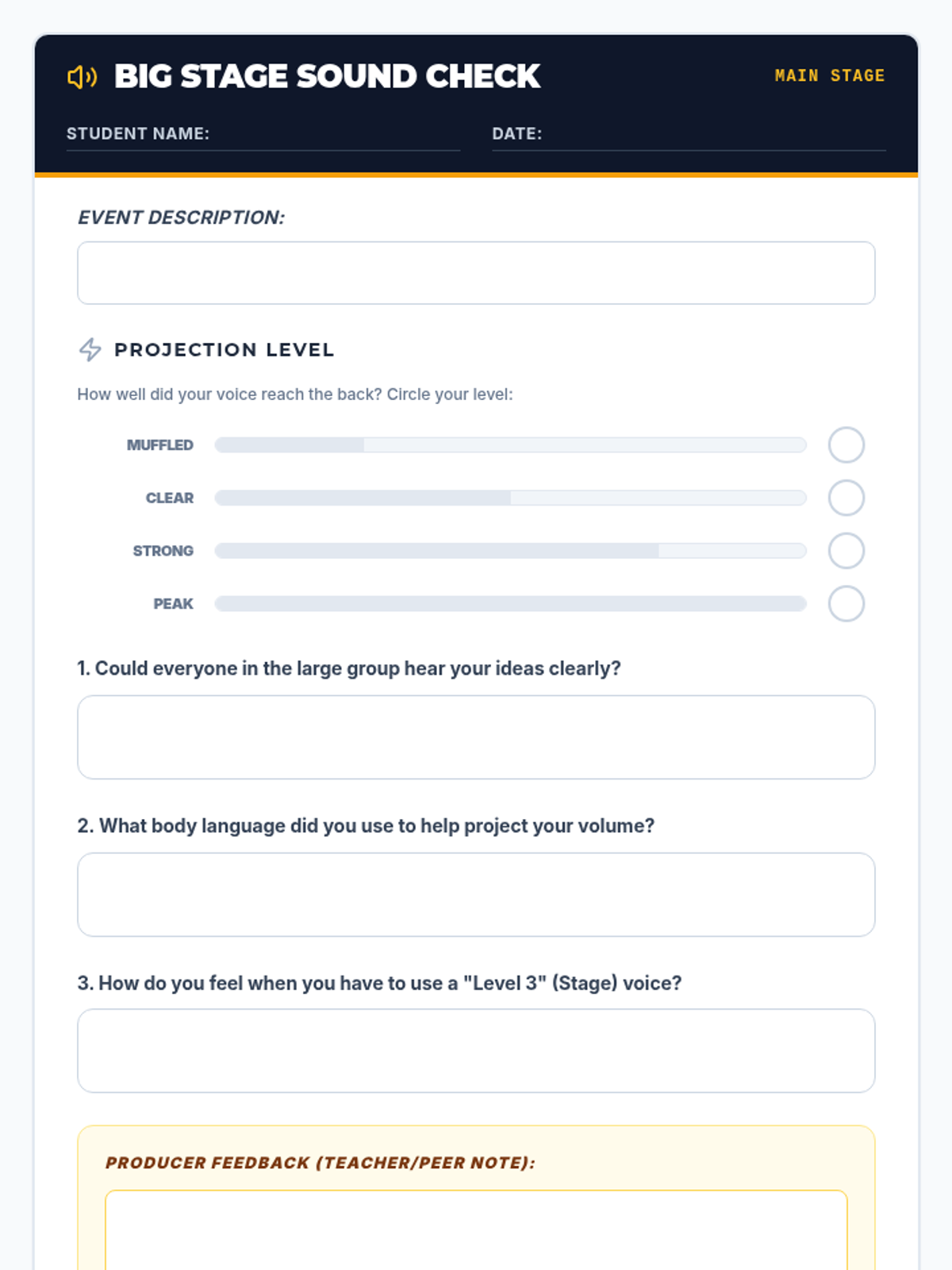
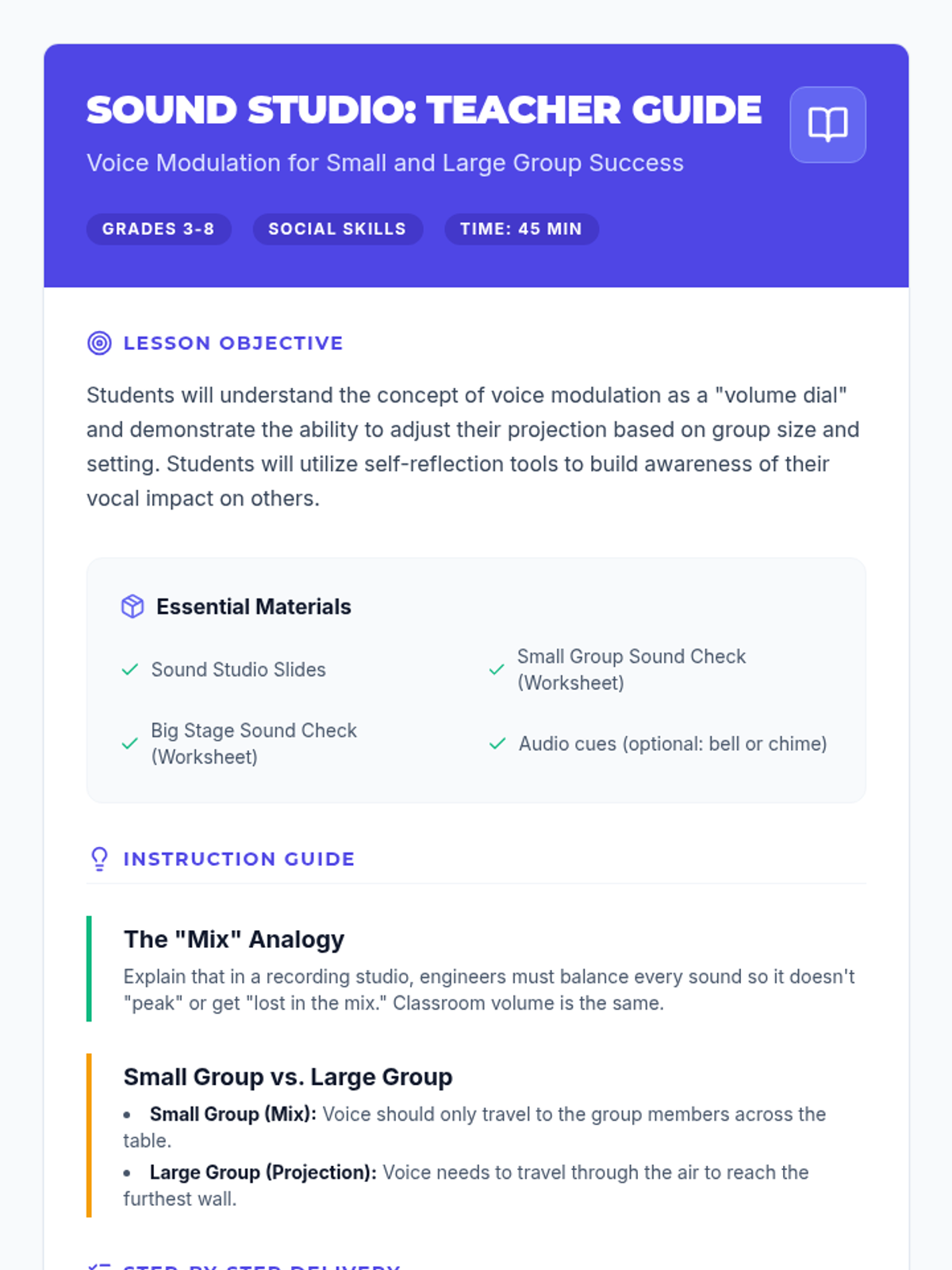
Students learn to adjust their voice volume like a sound engineer, mastering the 'volume dial' for small group collaboration and large group participation. Includes interactive slides and targeted self-reflection tools to build social-emotional awareness.
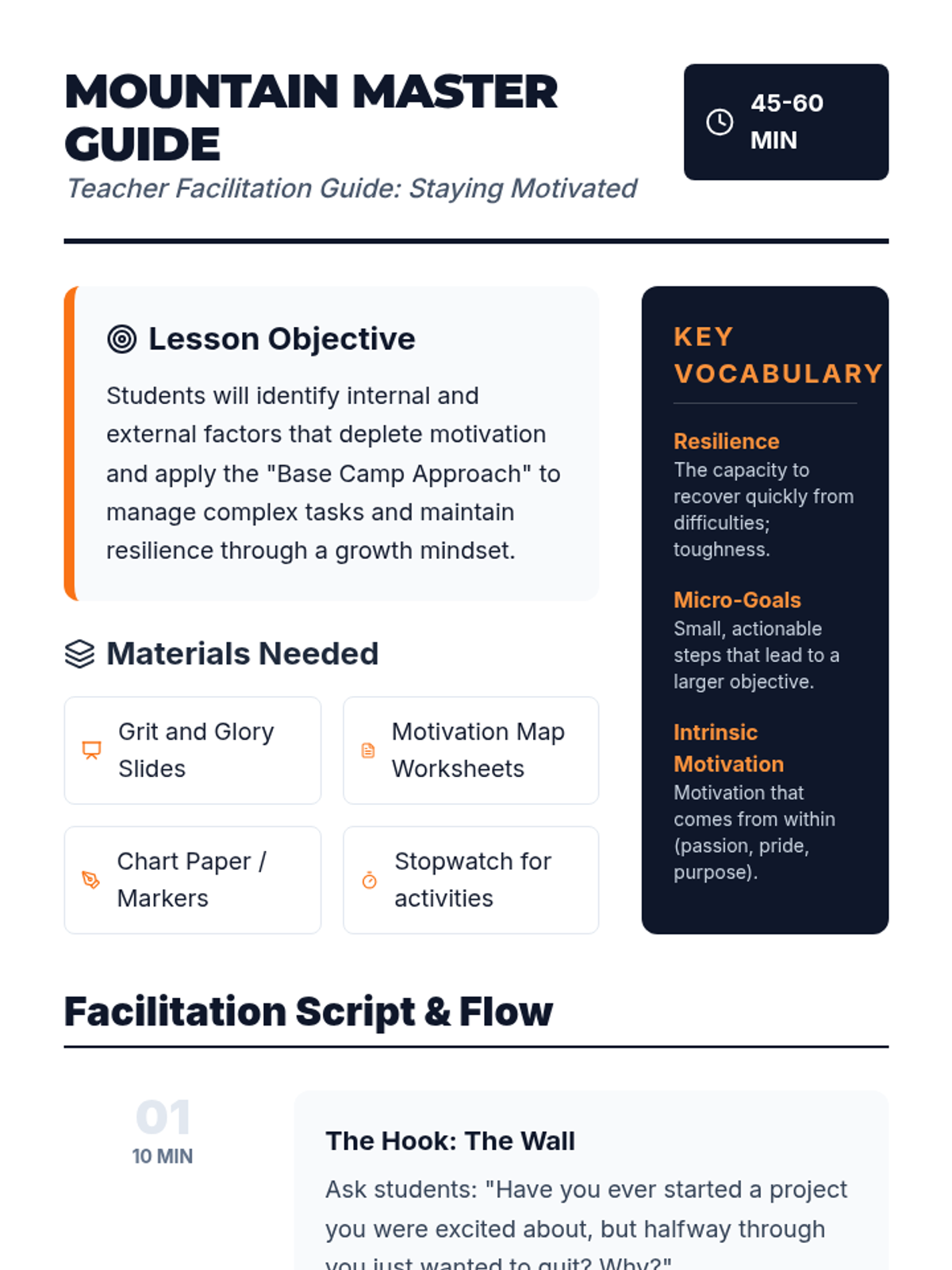
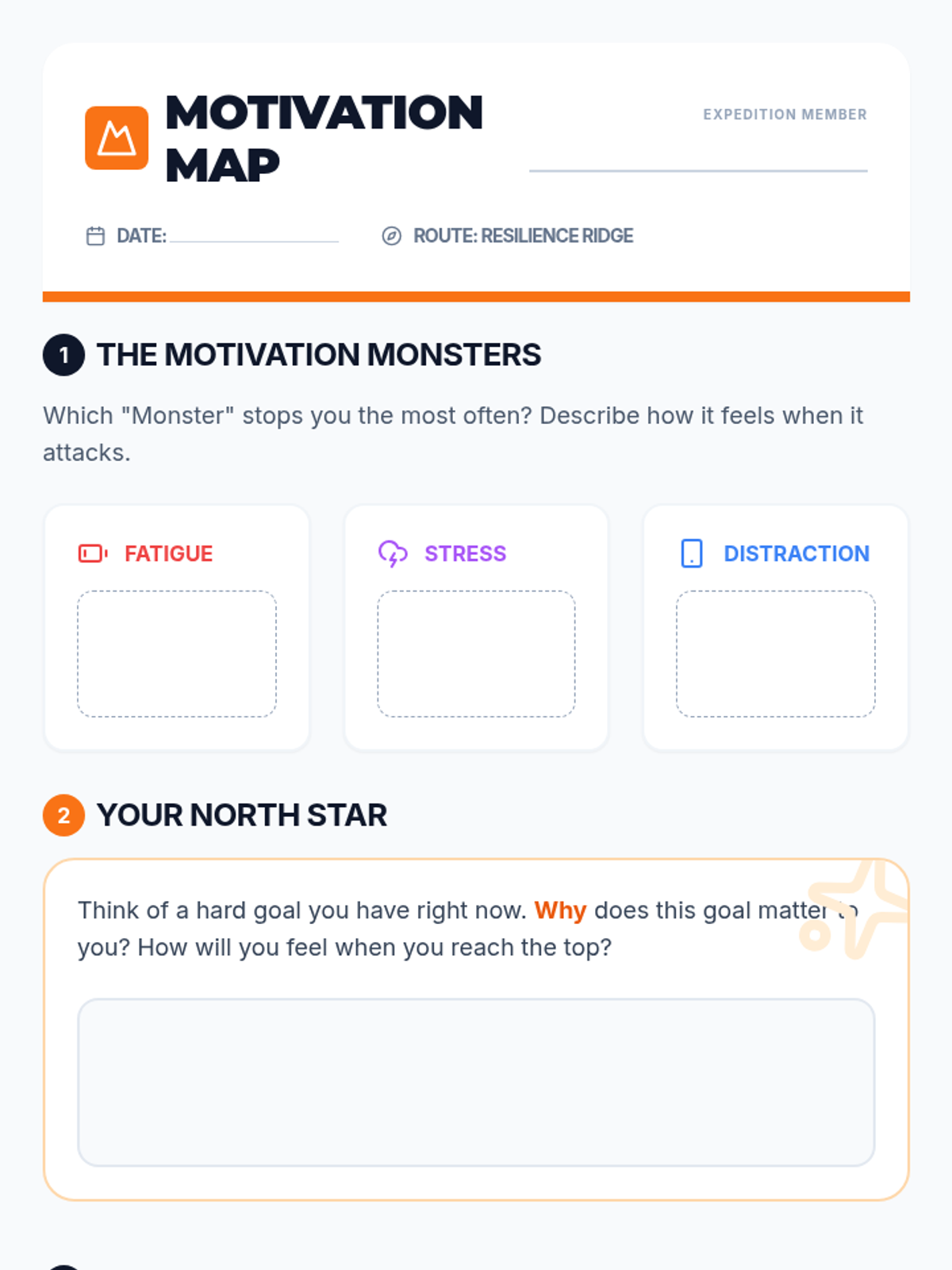
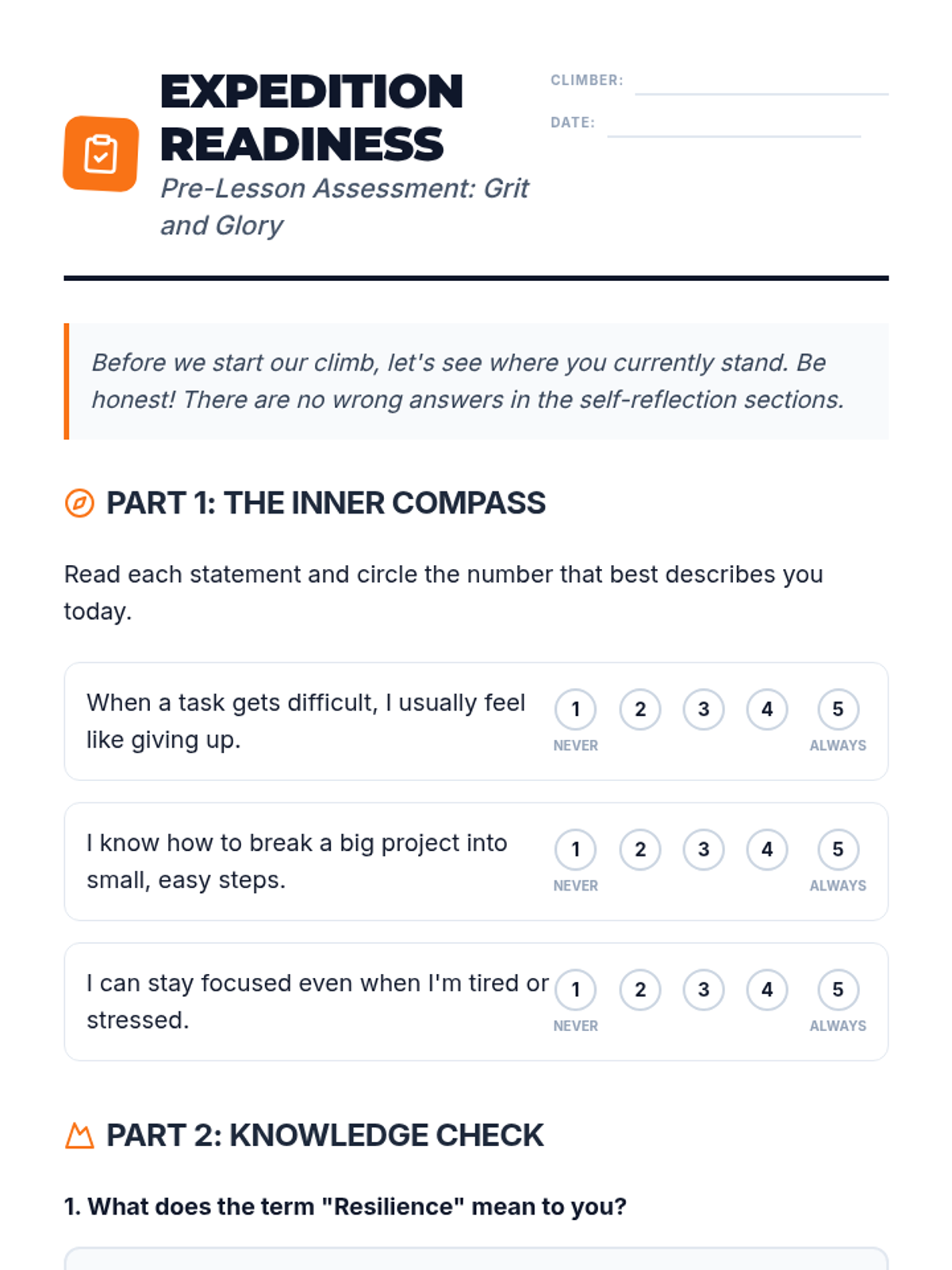
A comprehensive lesson on identifying motivation killers and implementing practical strategies to build resilience and maintain focus during difficult tasks.
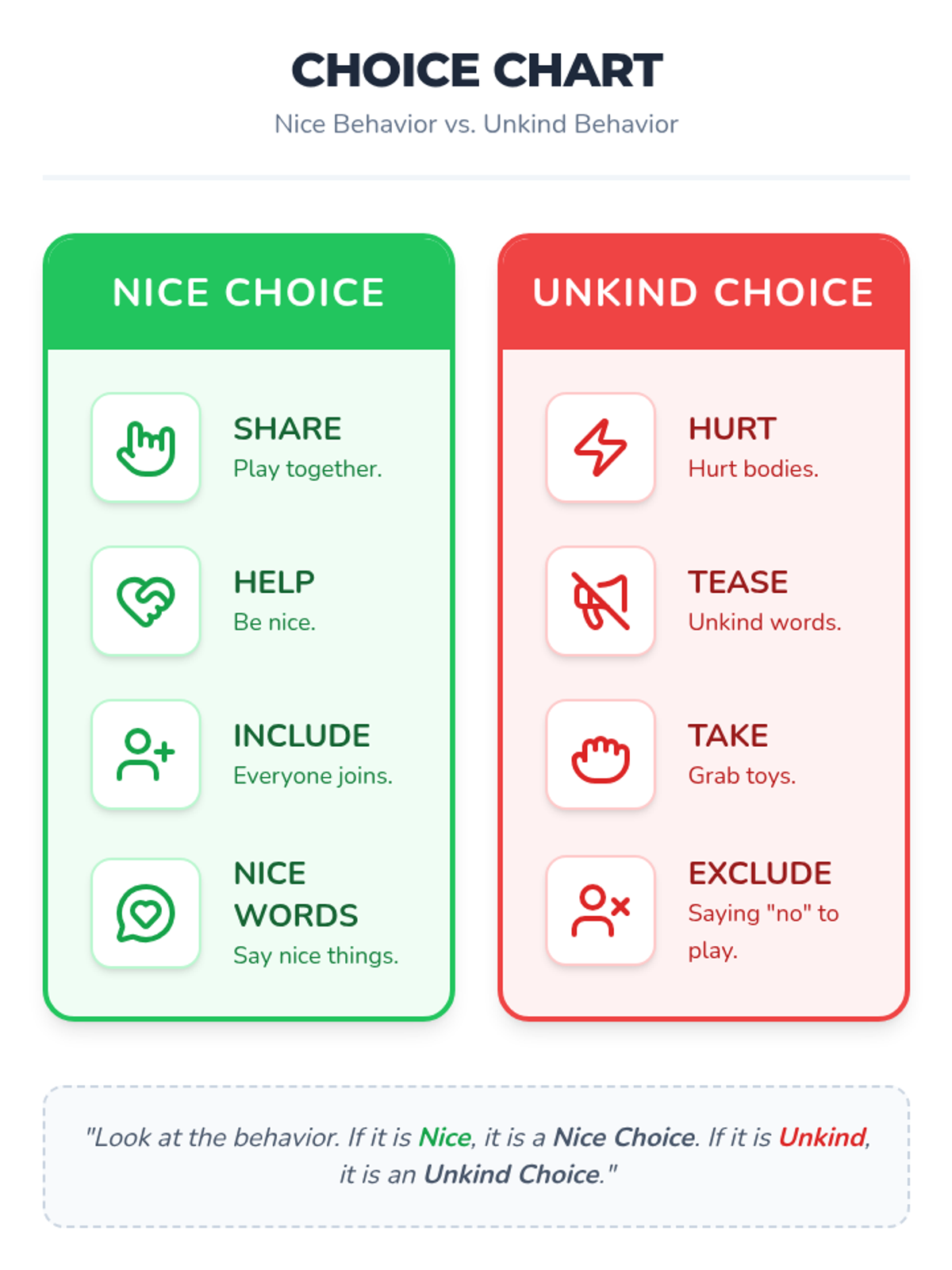
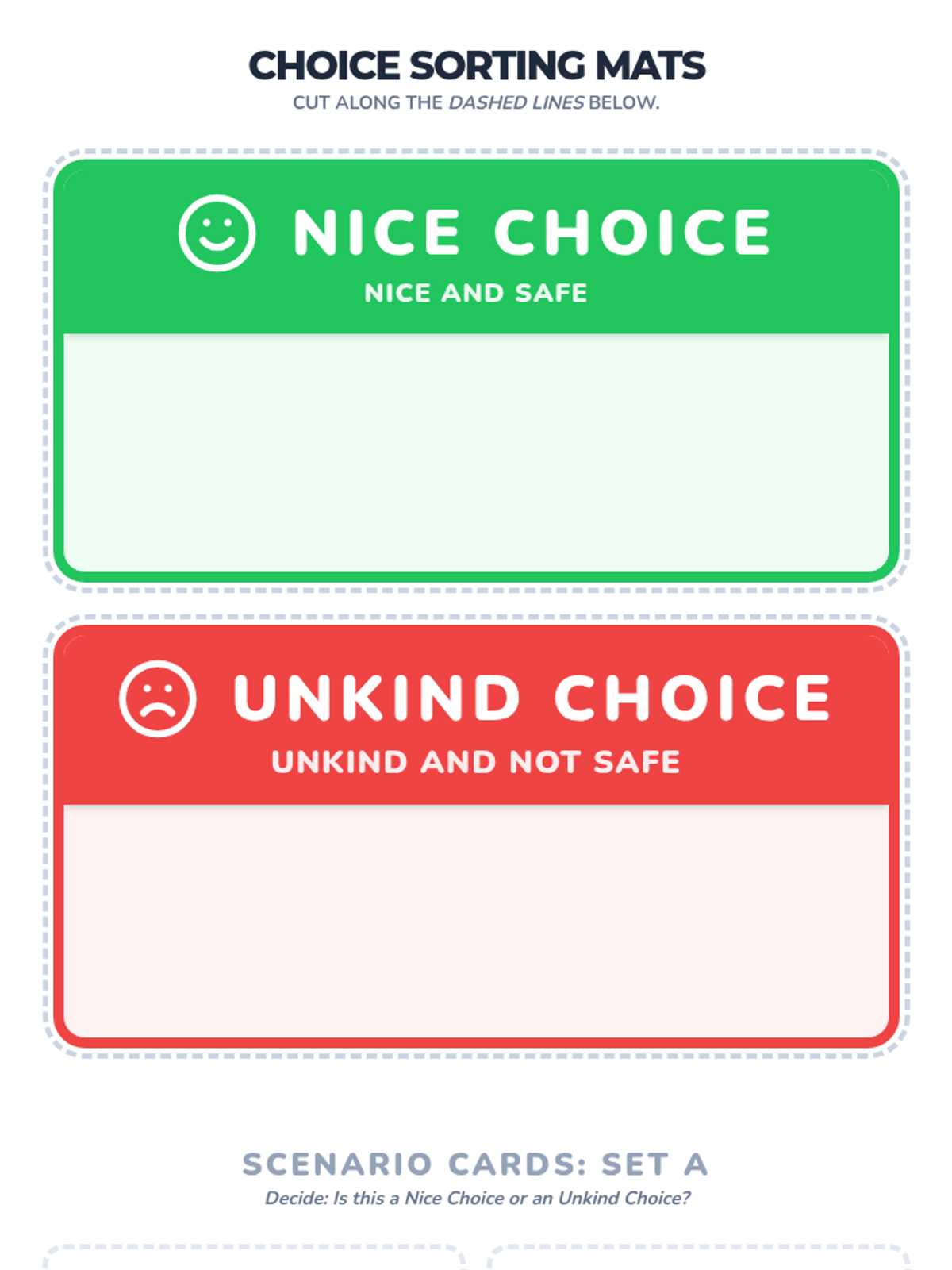
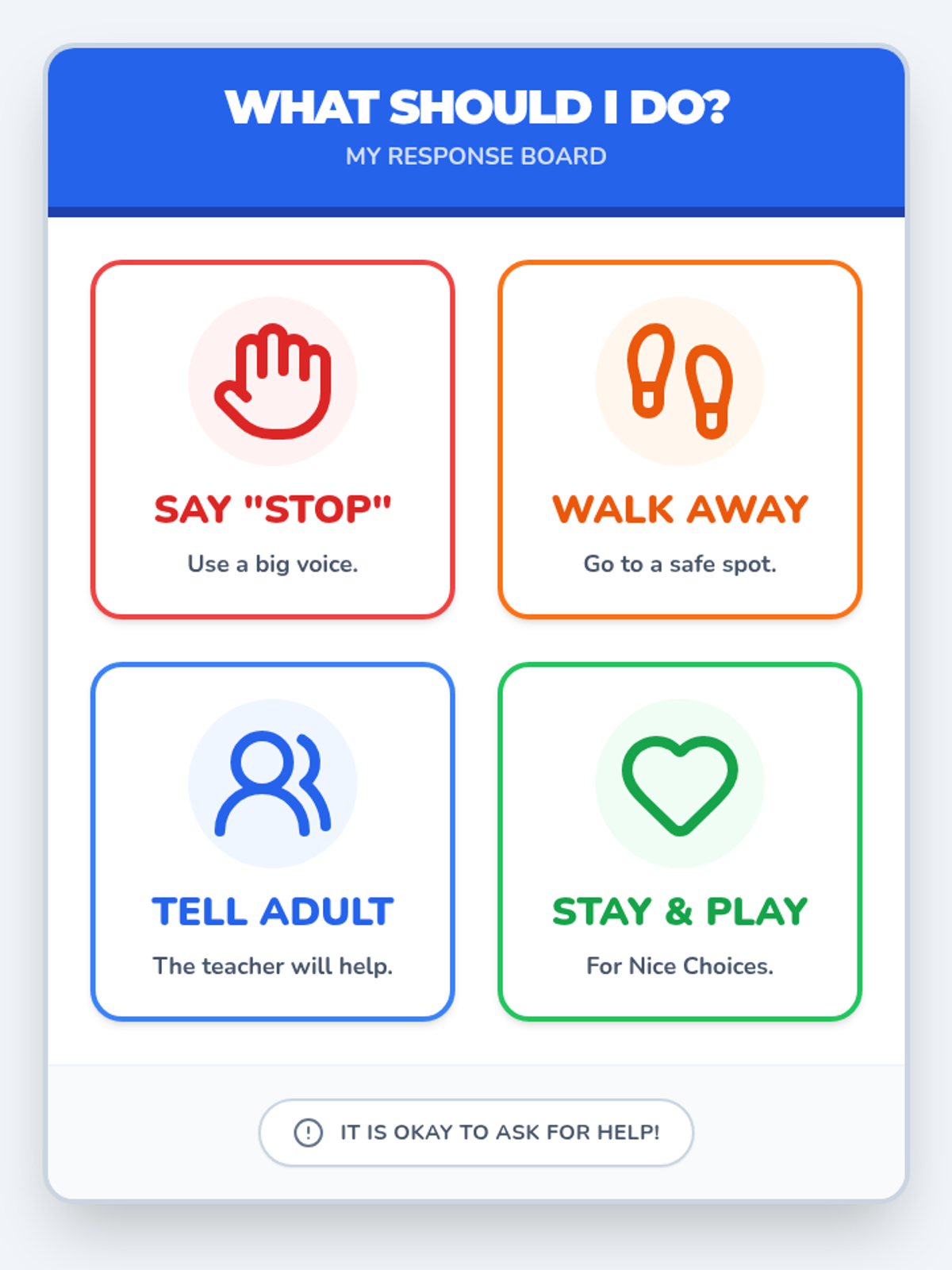
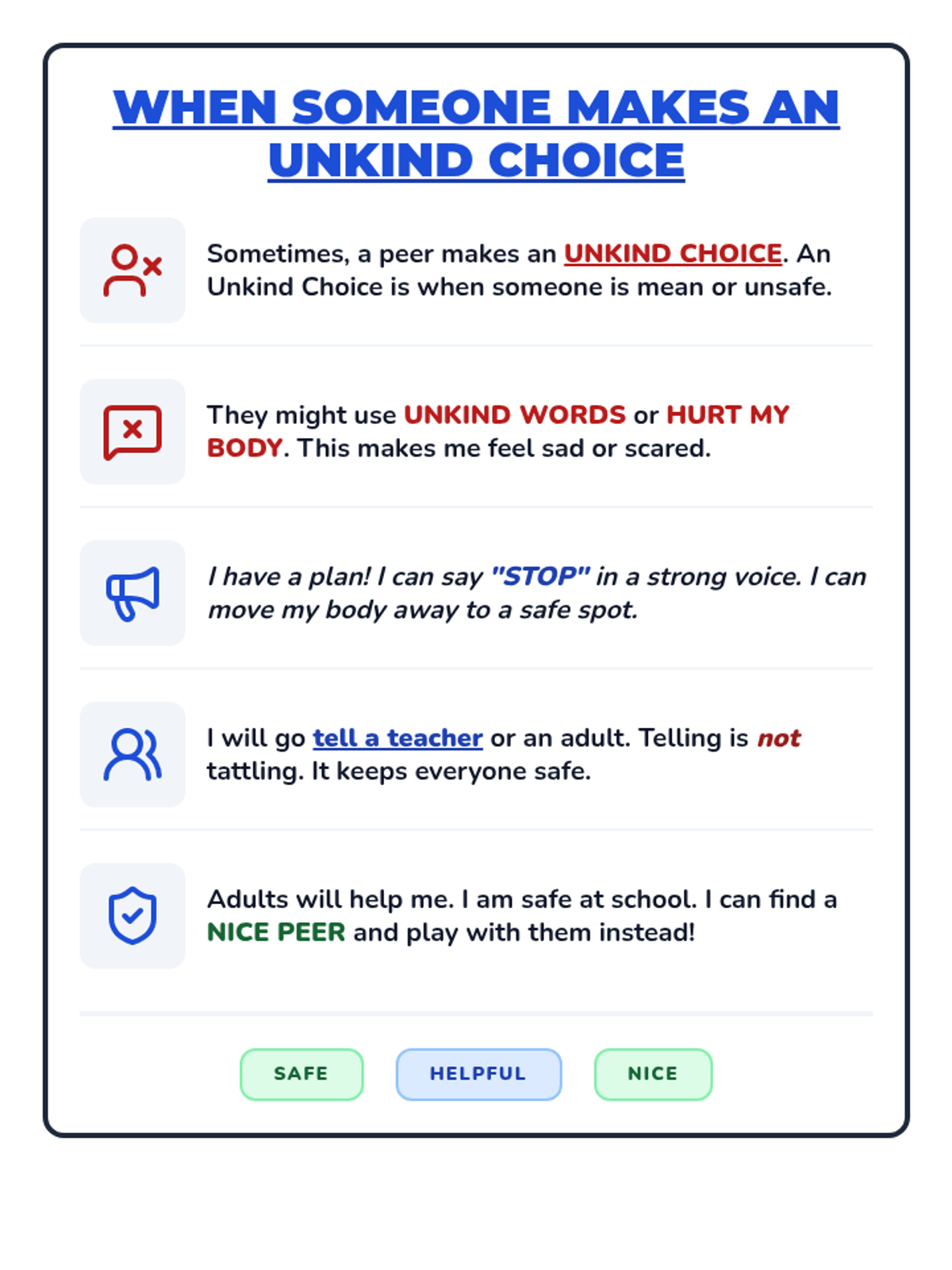
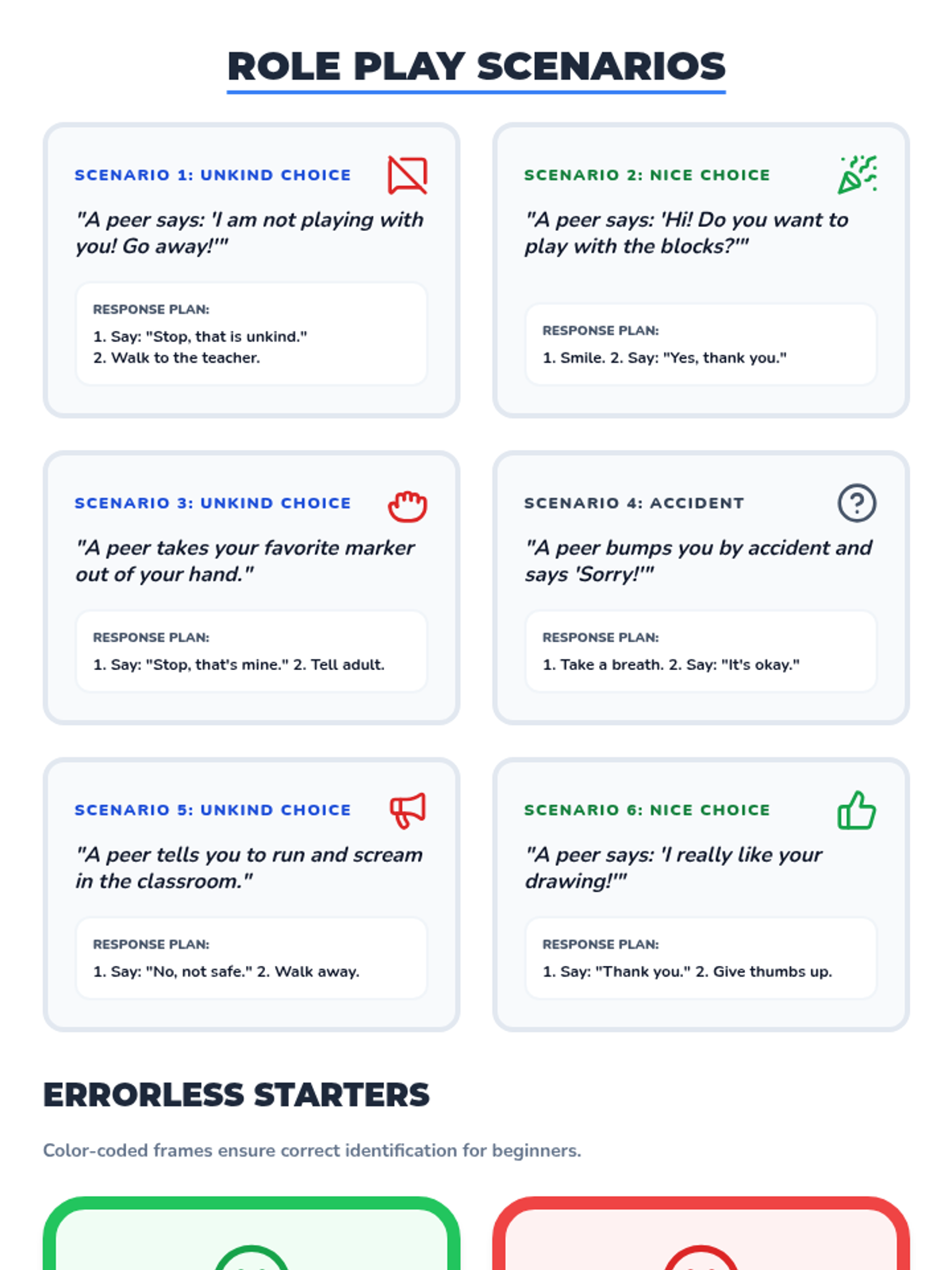
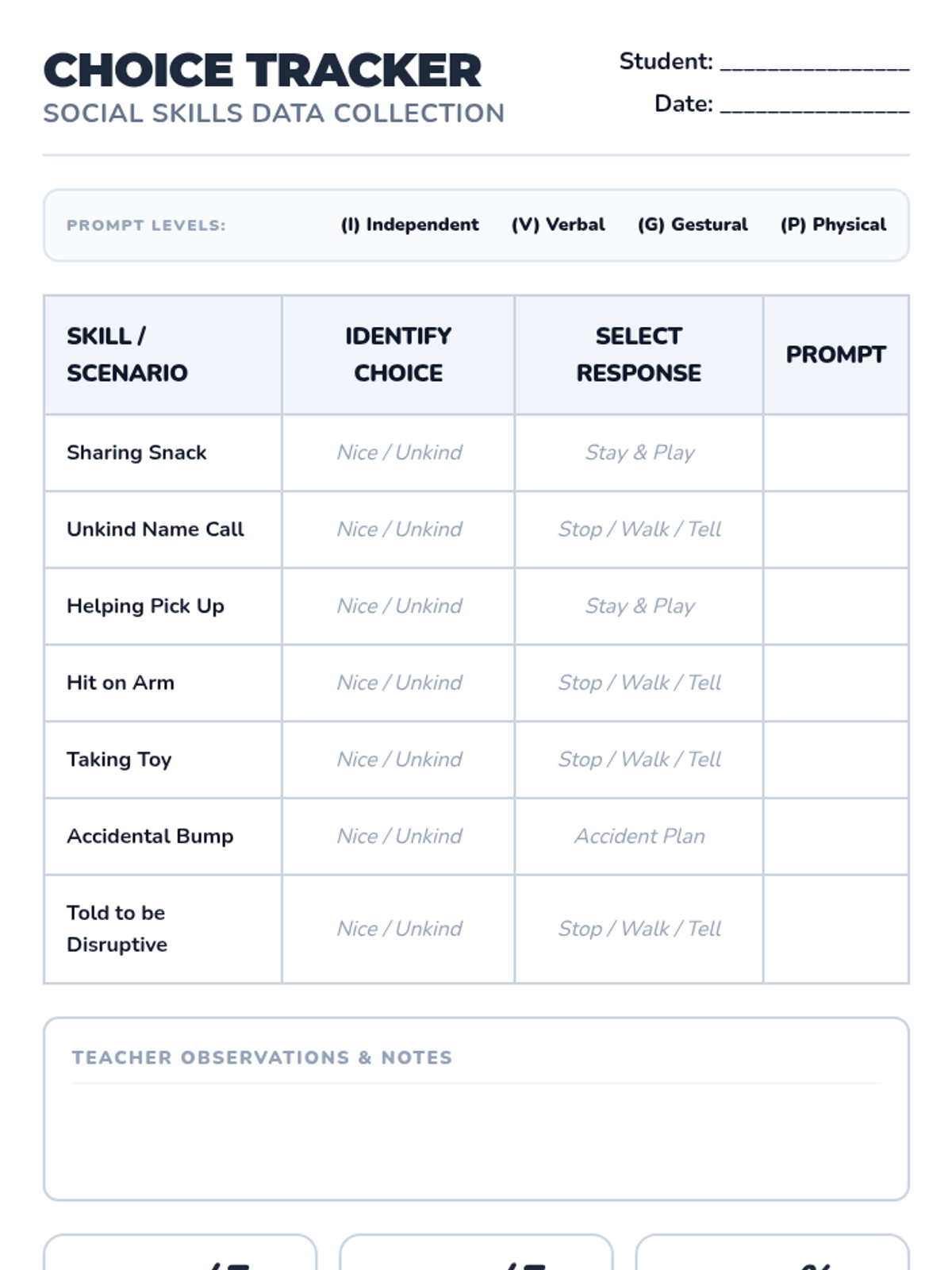
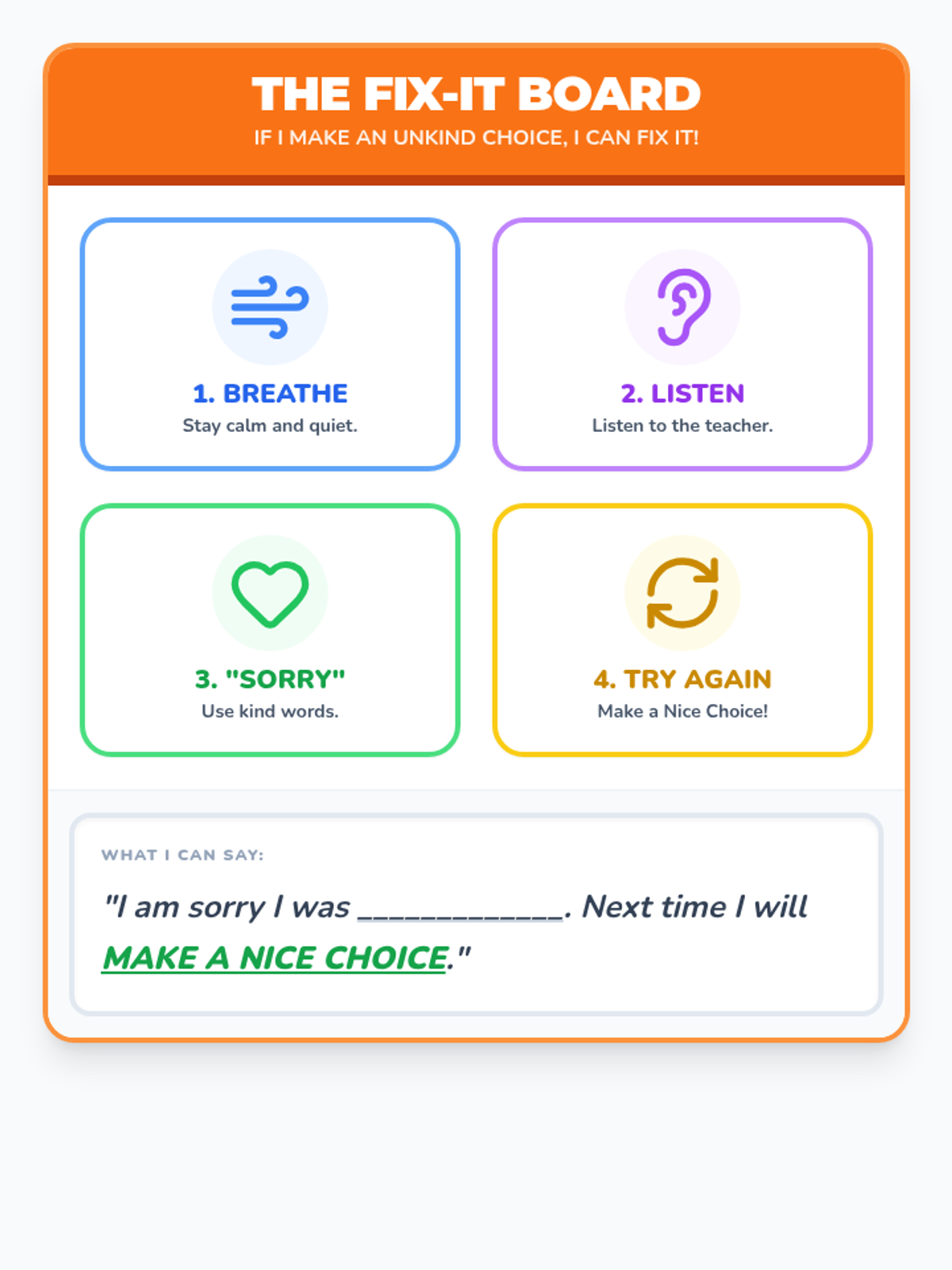
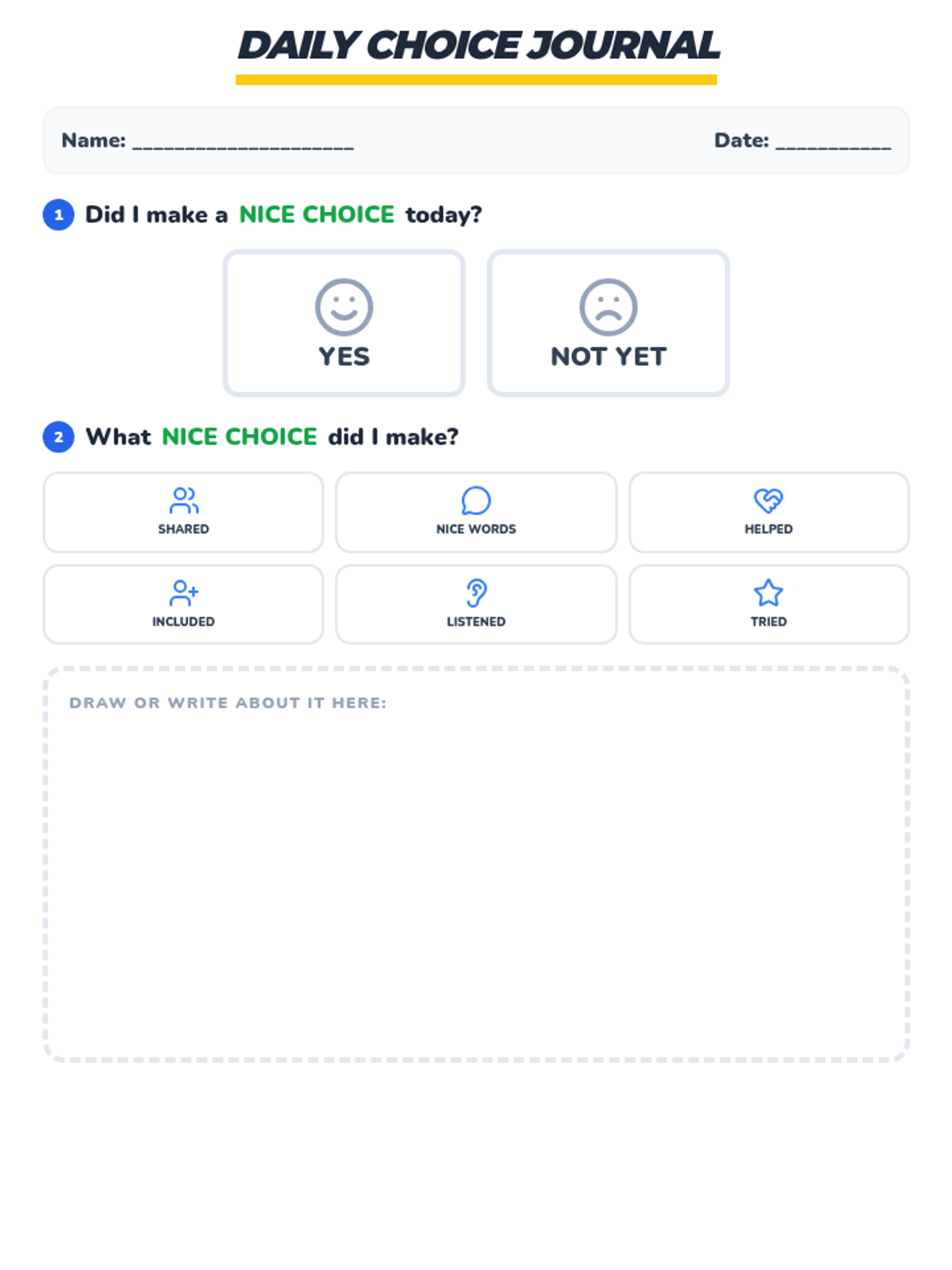
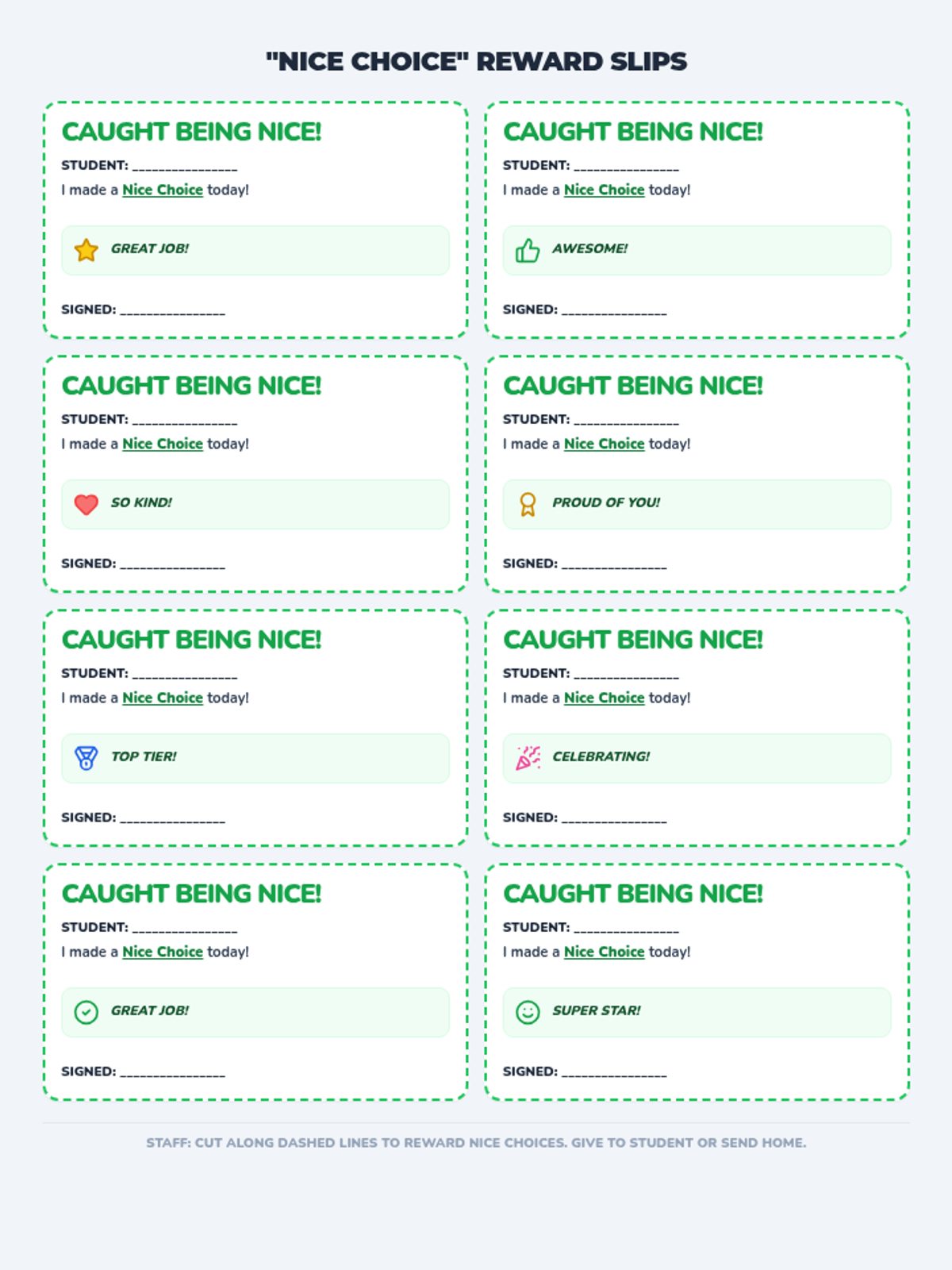
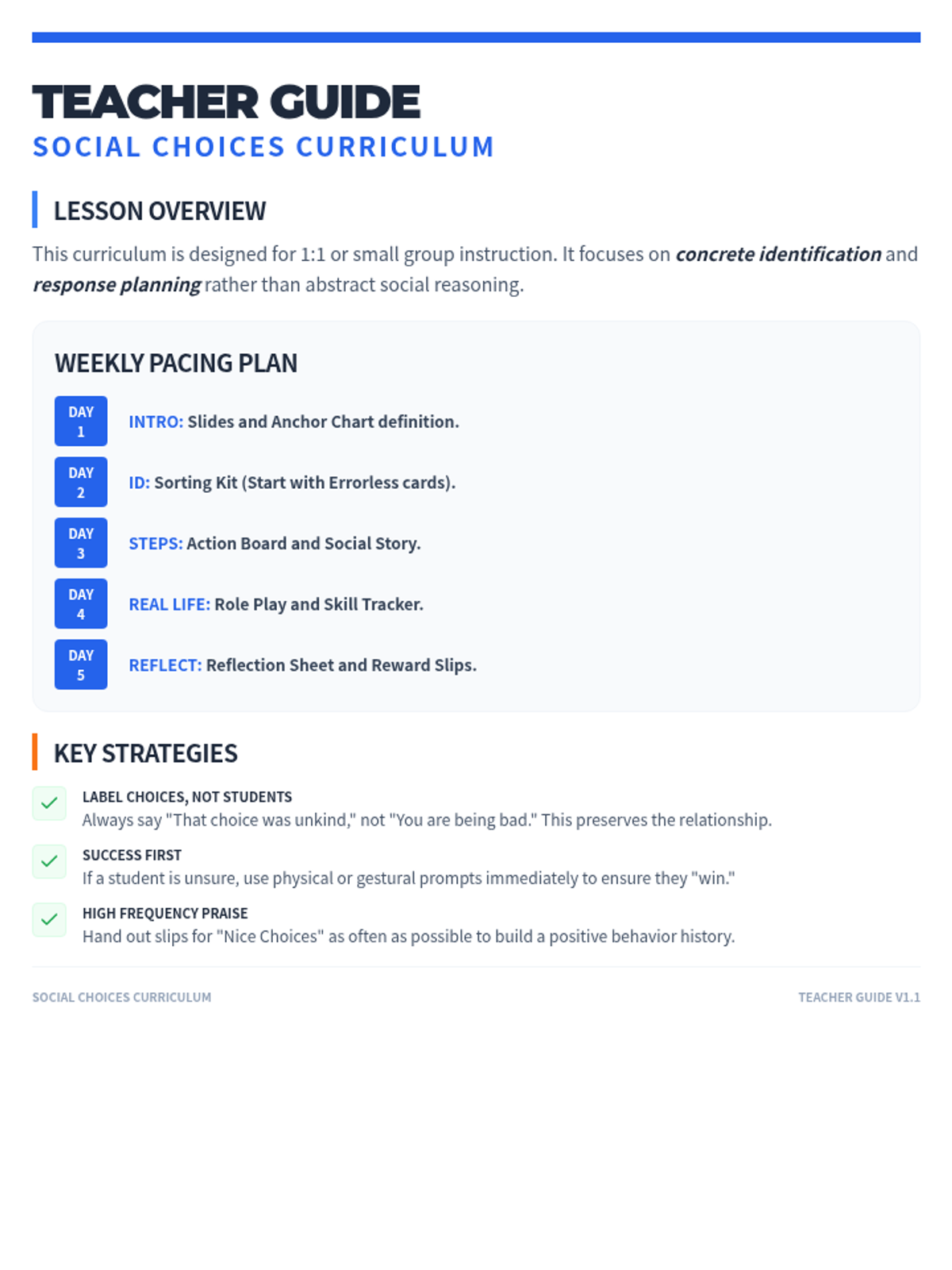
A comprehensive social skills lesson for middle school life skills students to distinguish between kind peer behaviors (Nice Choices) and unkind behaviors (Unkind Choices), including response strategies for bullying.
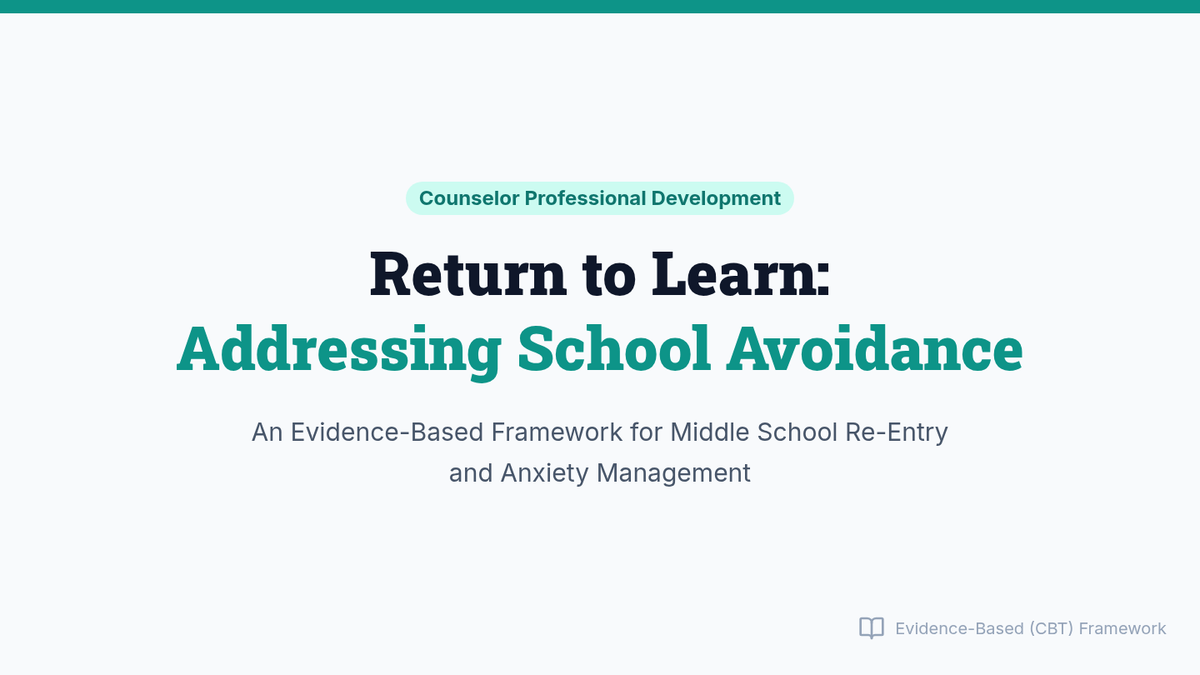
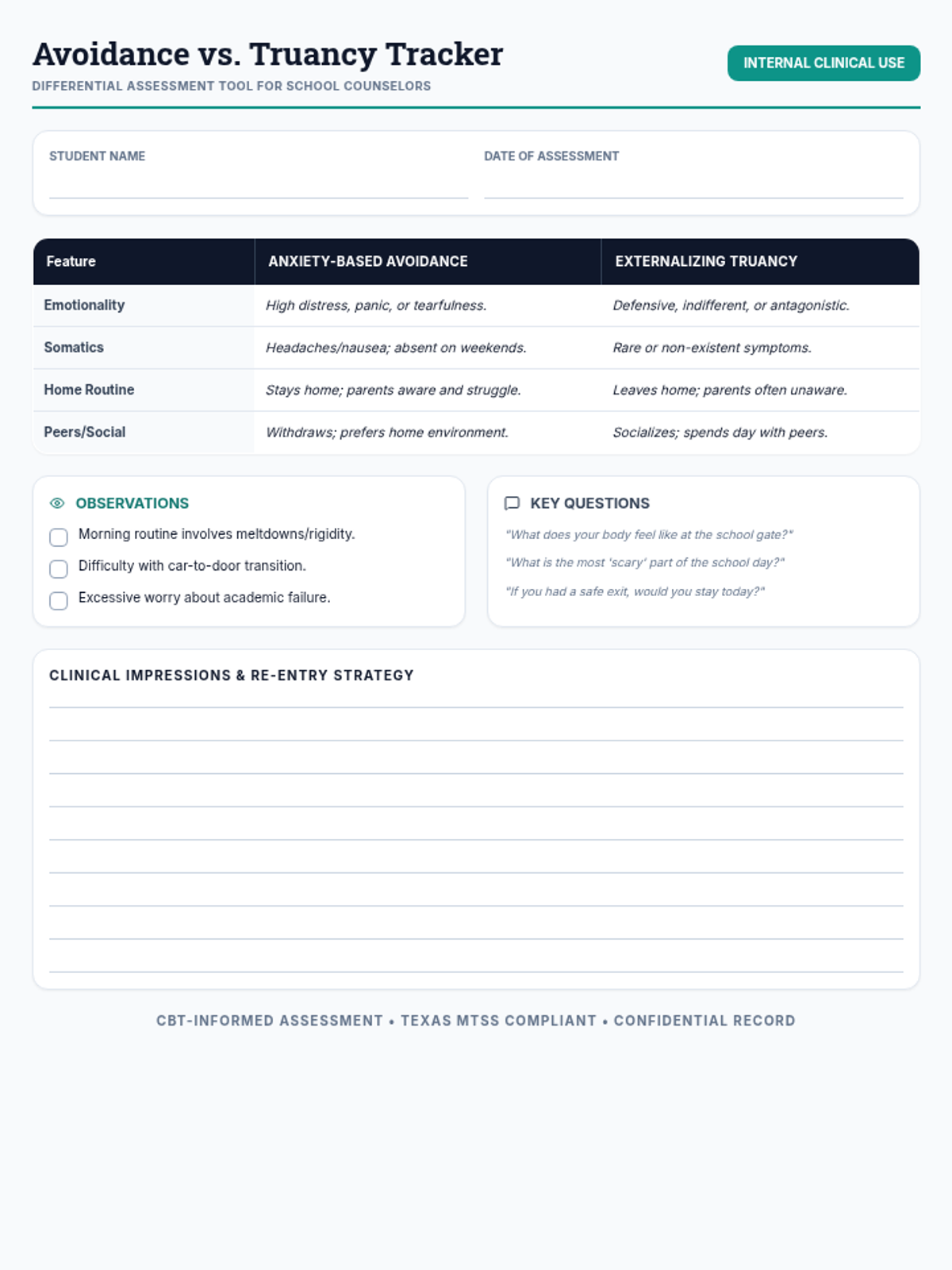
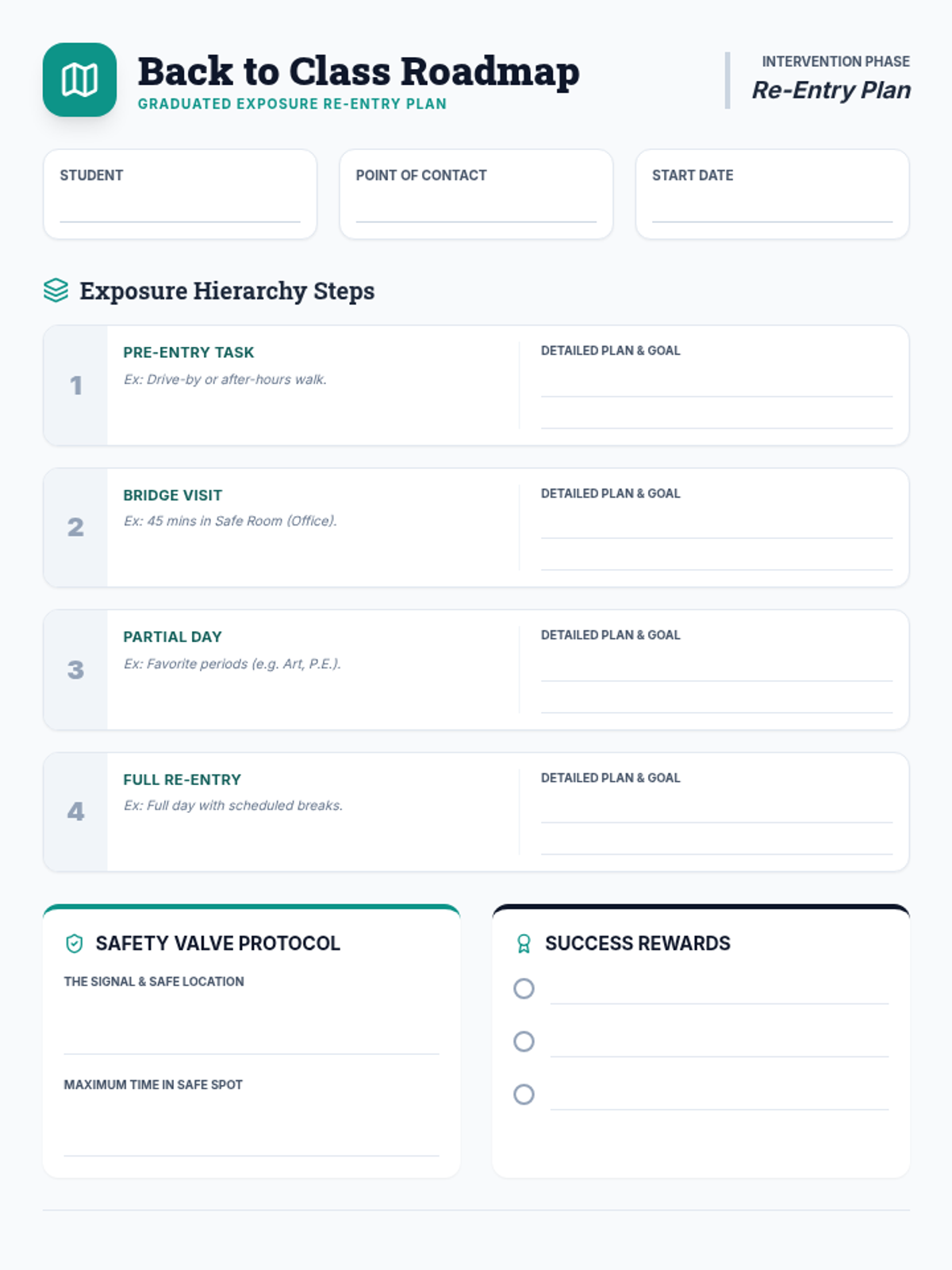
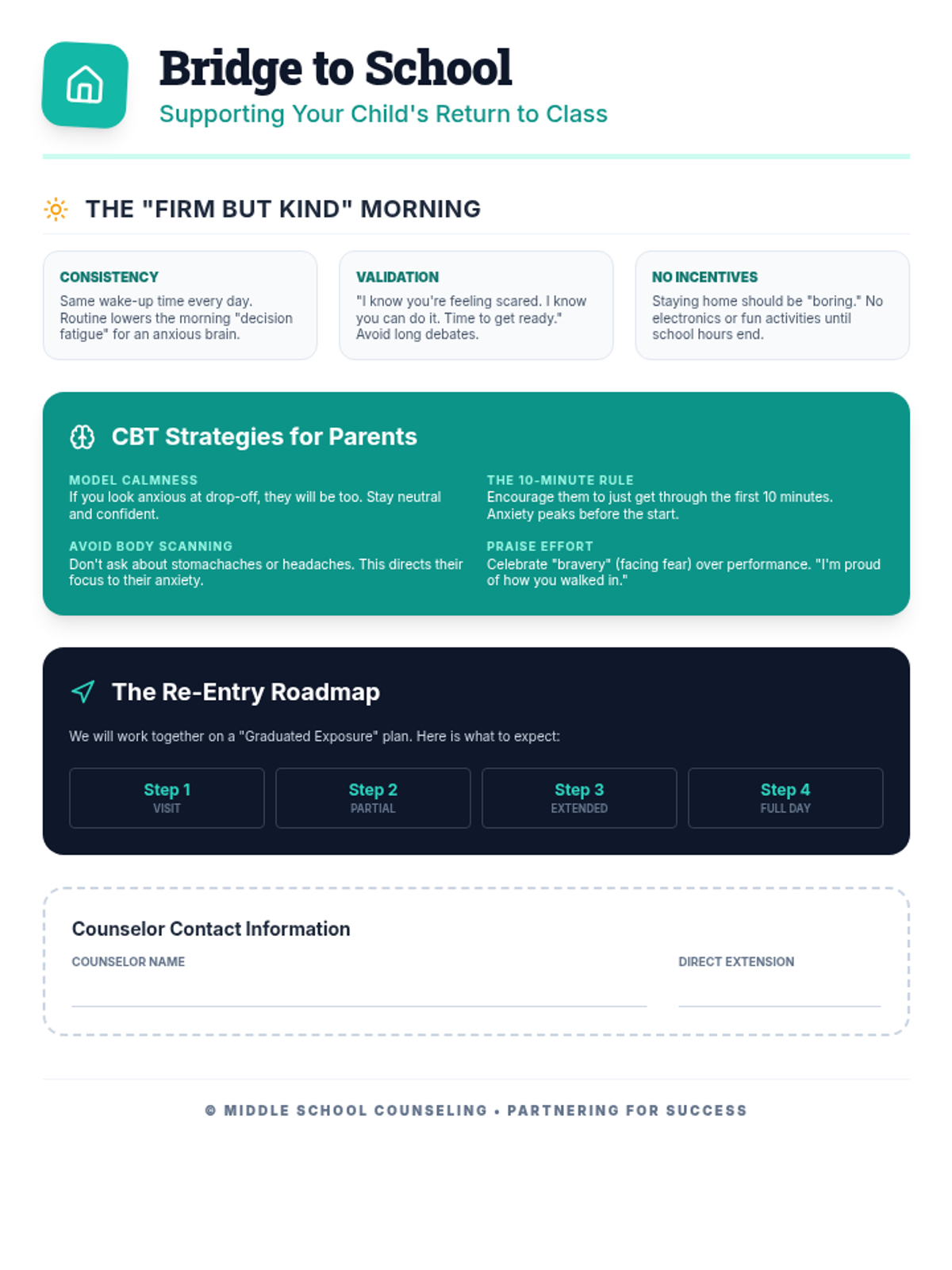
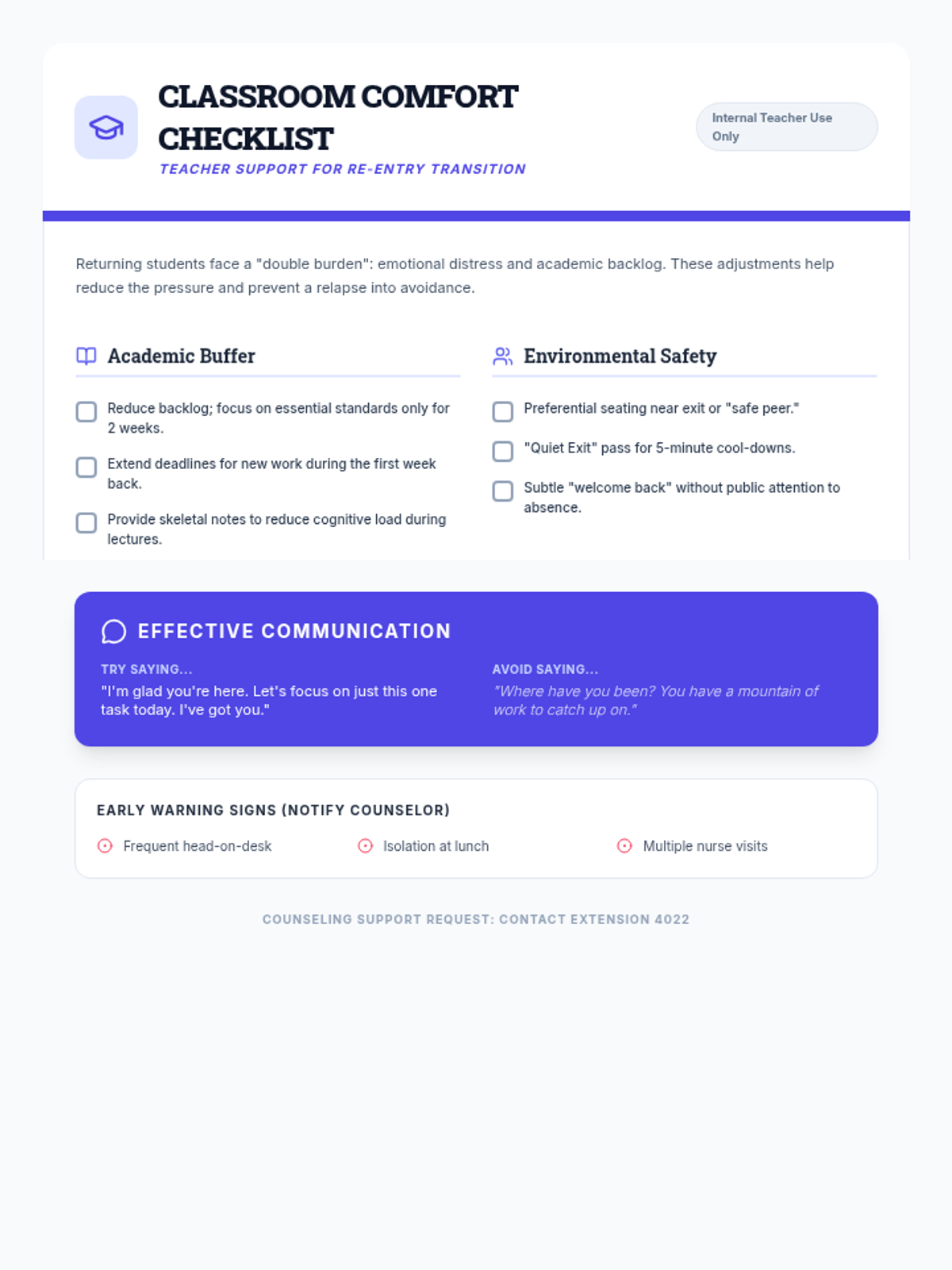
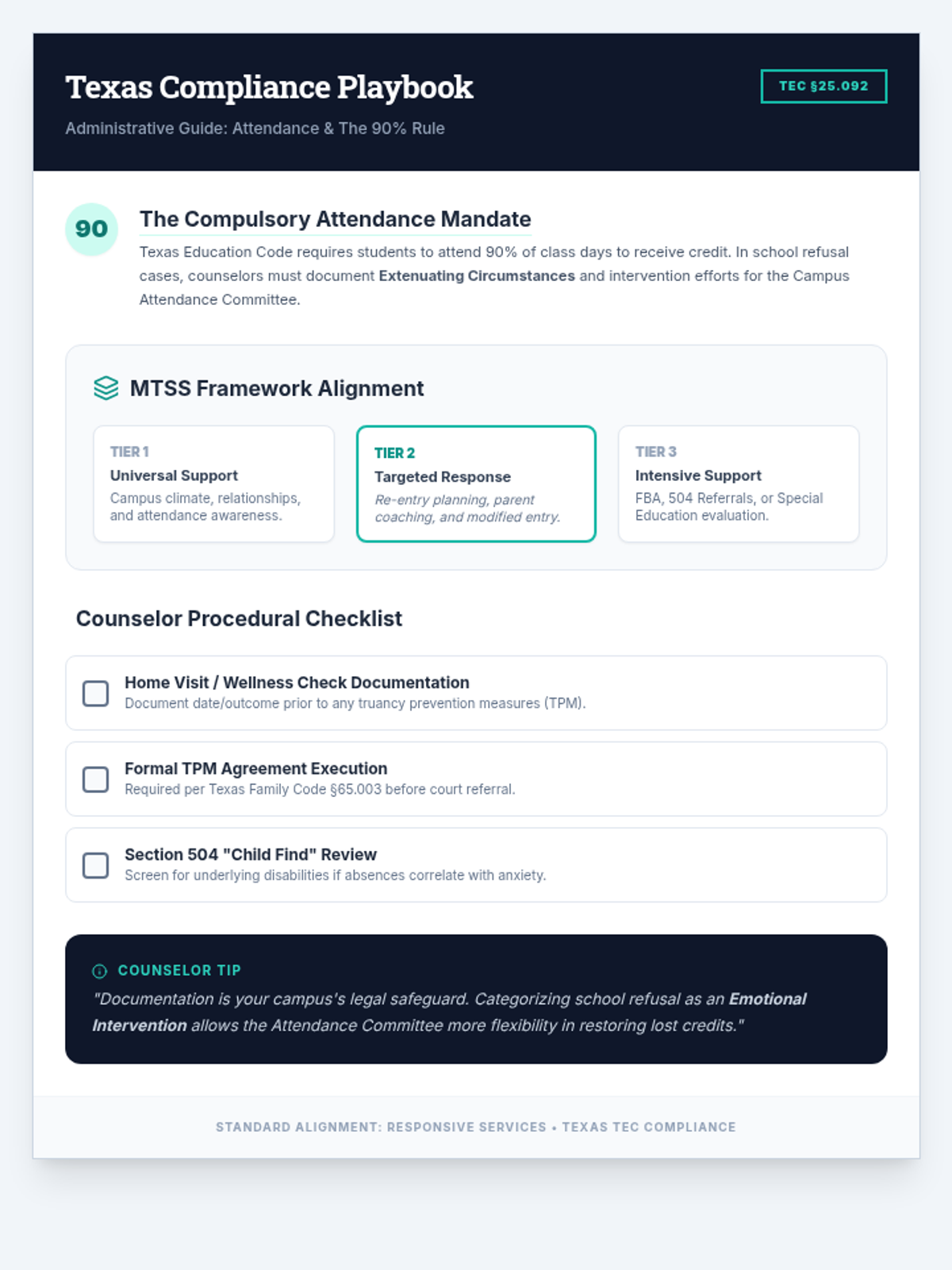
A comprehensive intervention framework for middle school counselors to address school refusal and avoidance using CBT-informed strategies, compliant with Texas educational standards.
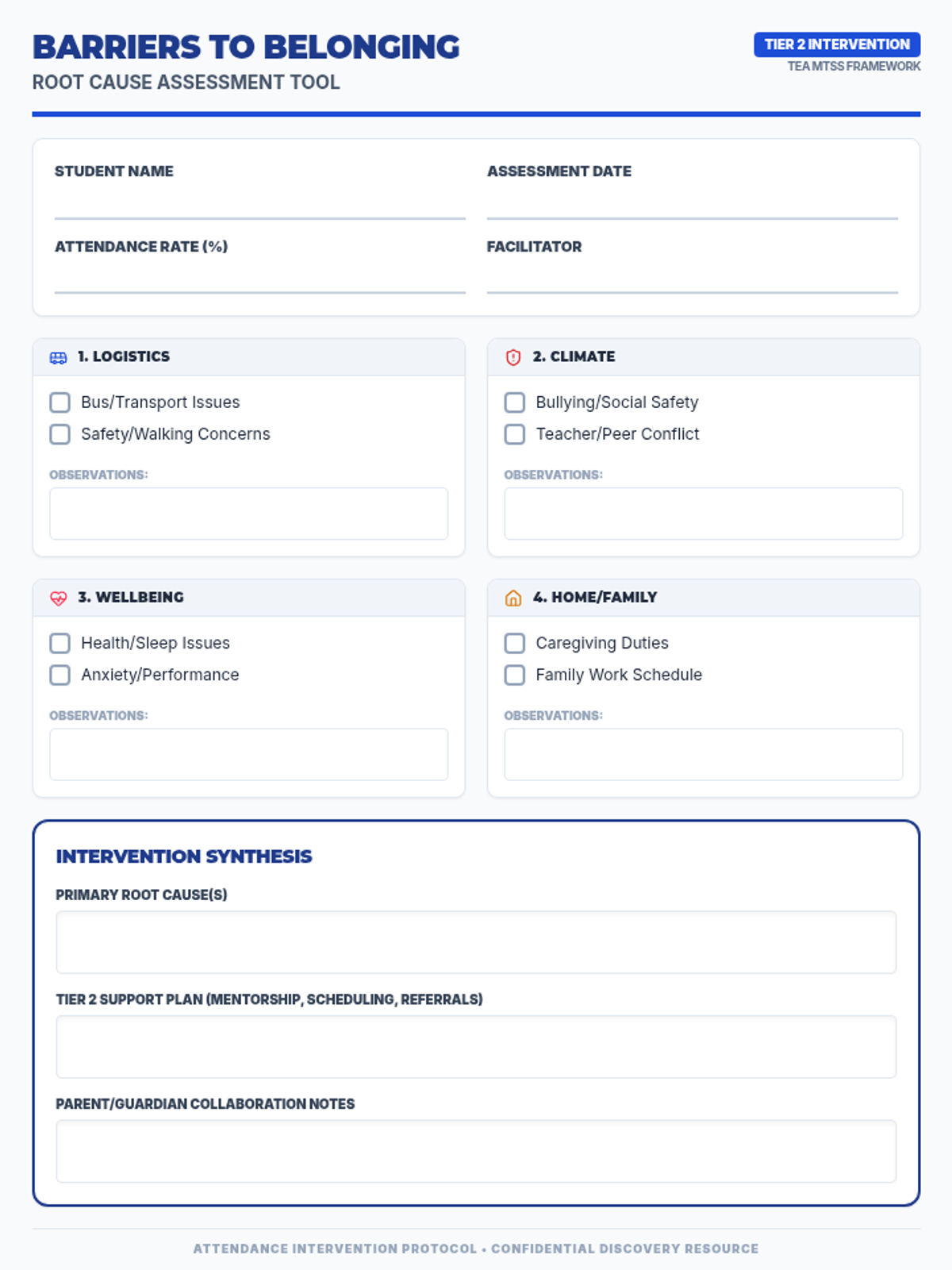
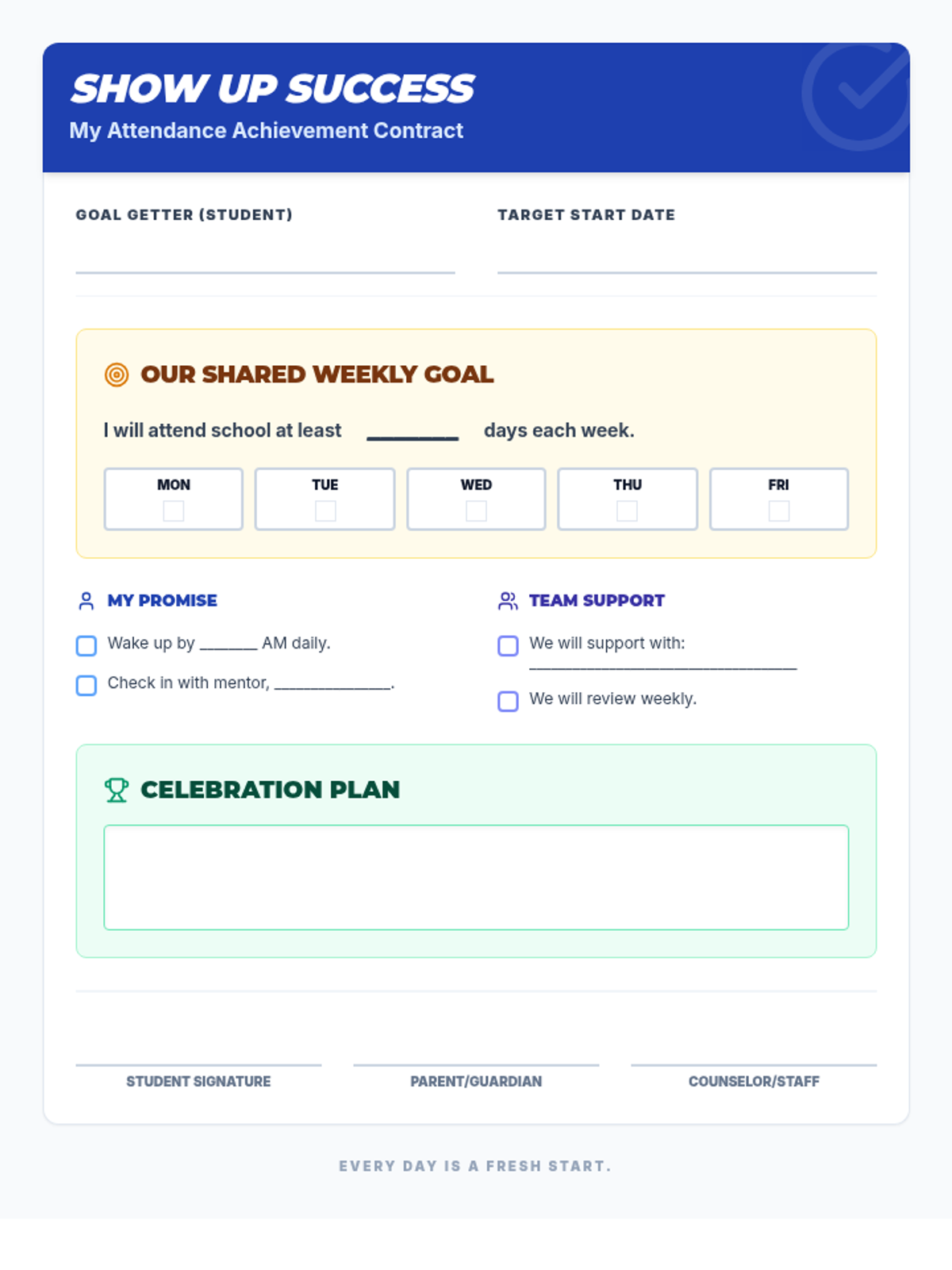
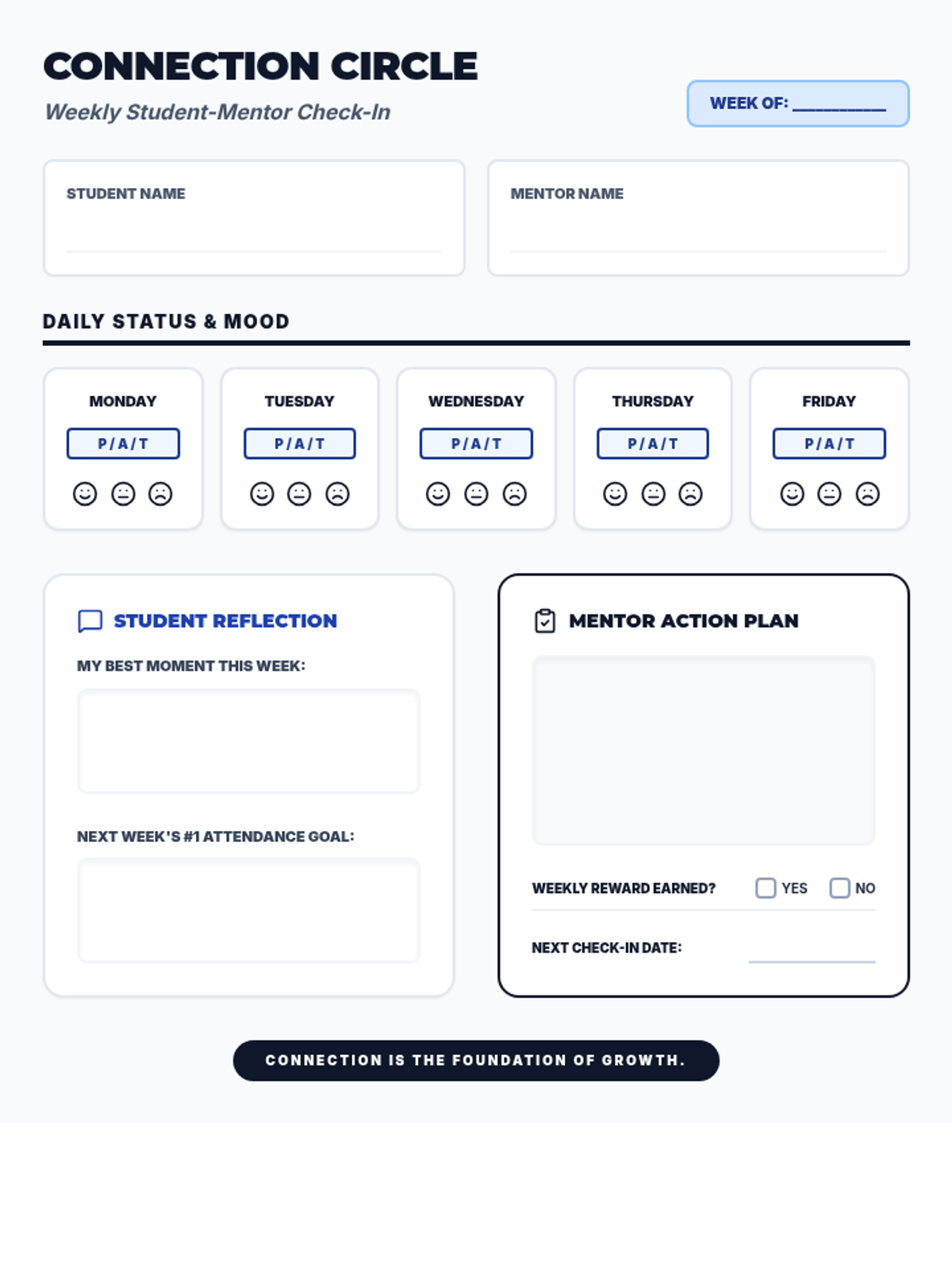
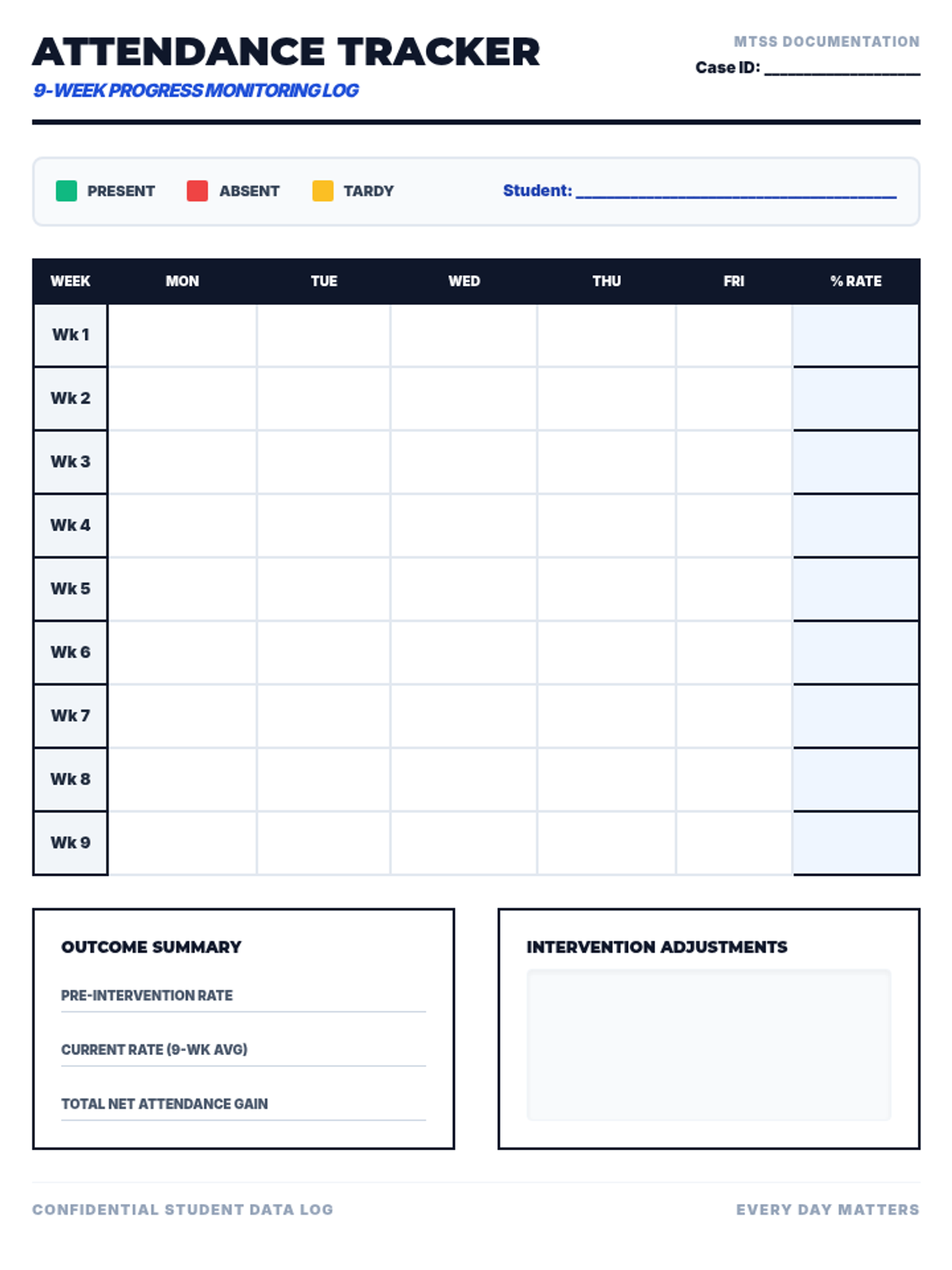
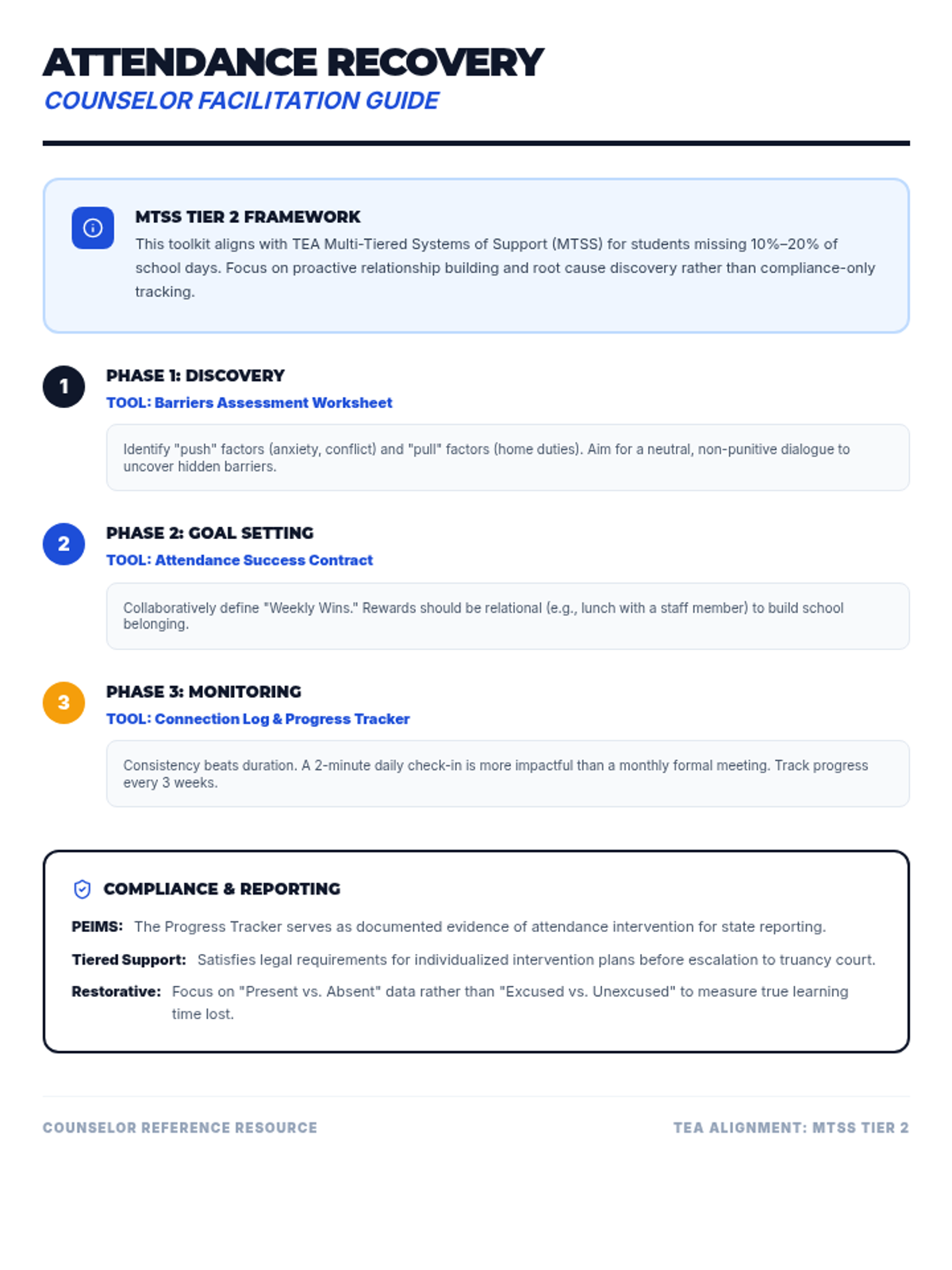
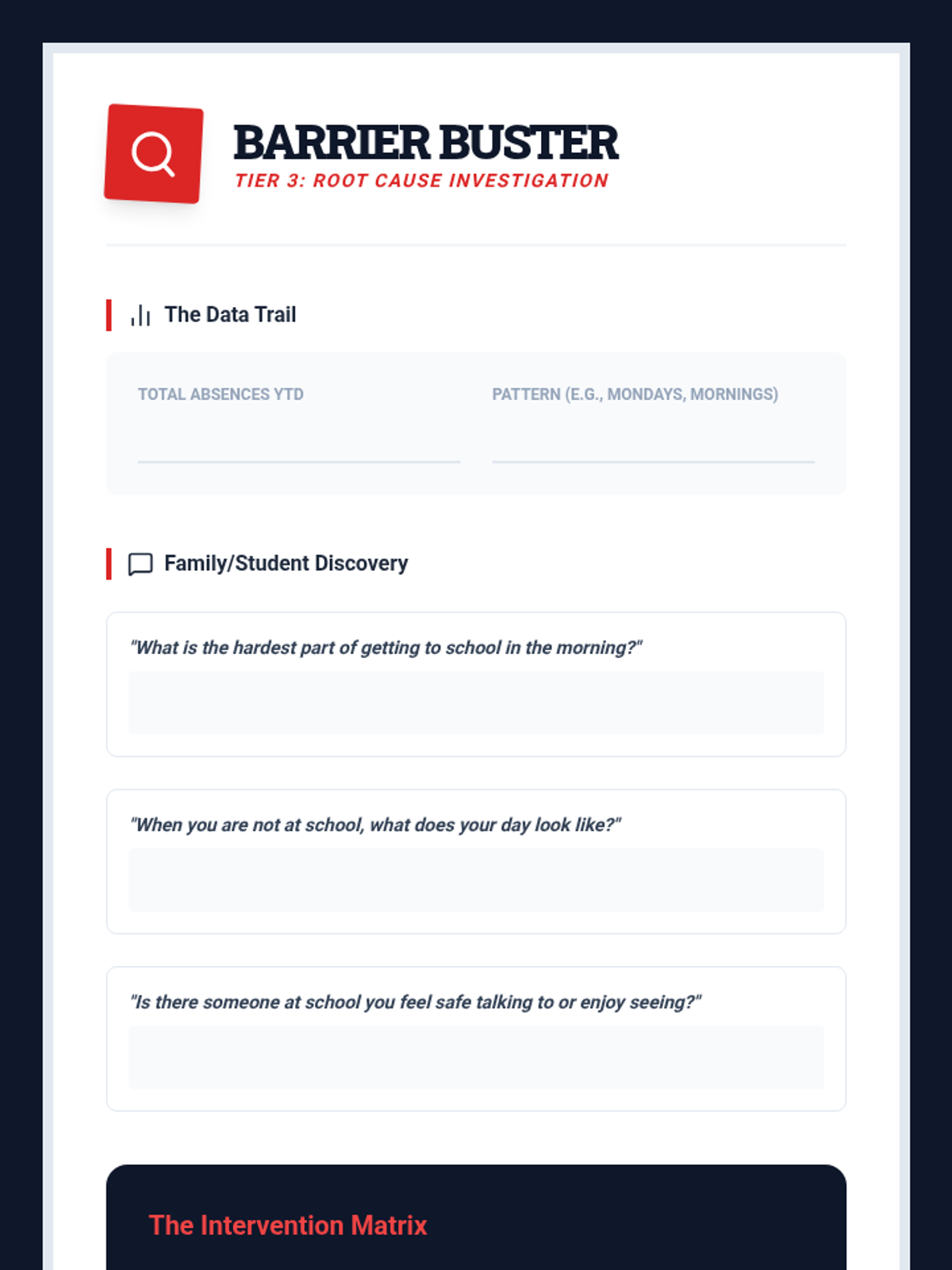
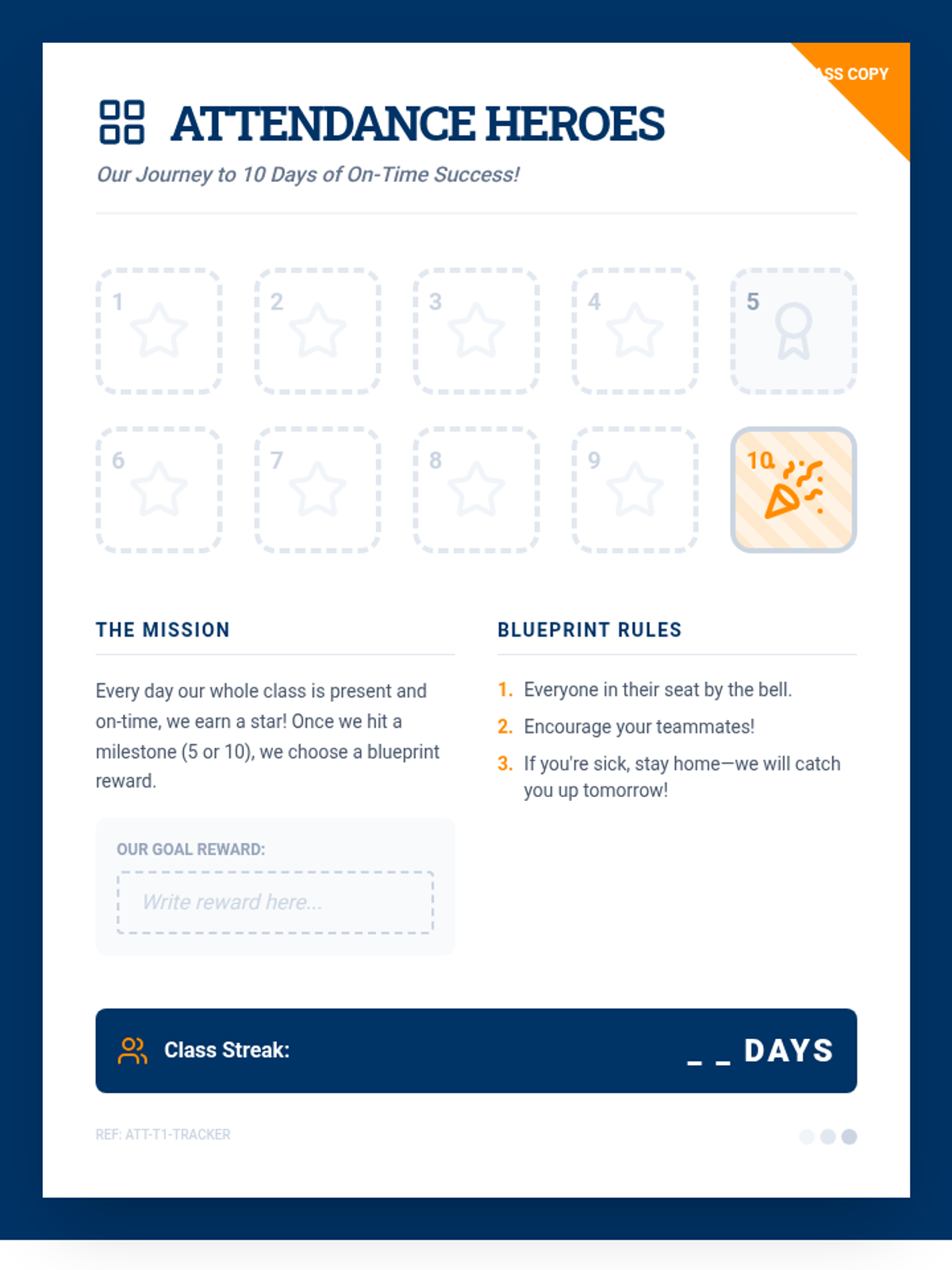
A comprehensive toolkit for middle school counselors to support students with chronic absenteeism through root cause analysis, individualized goal setting, and consistent mentorship.
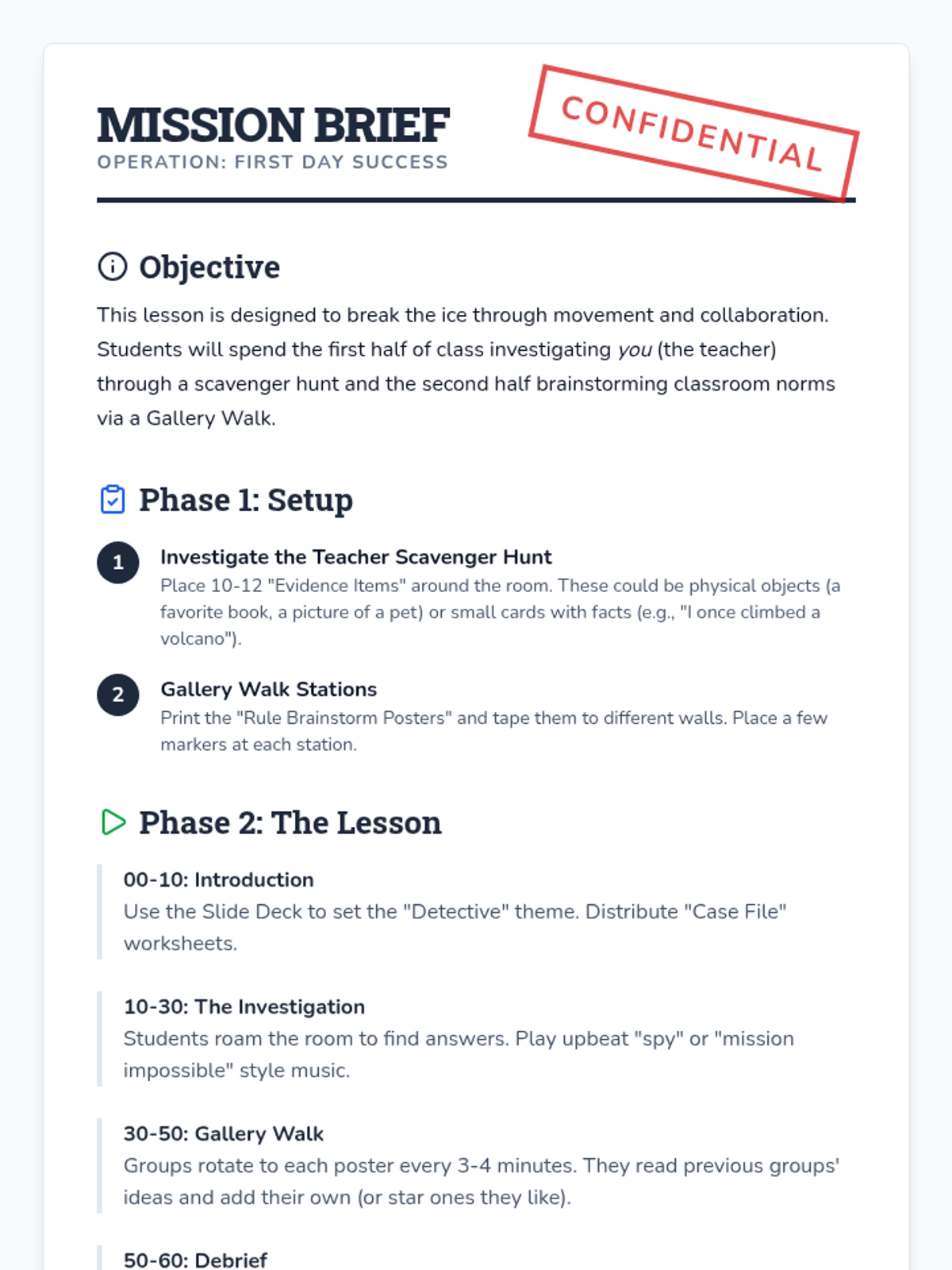
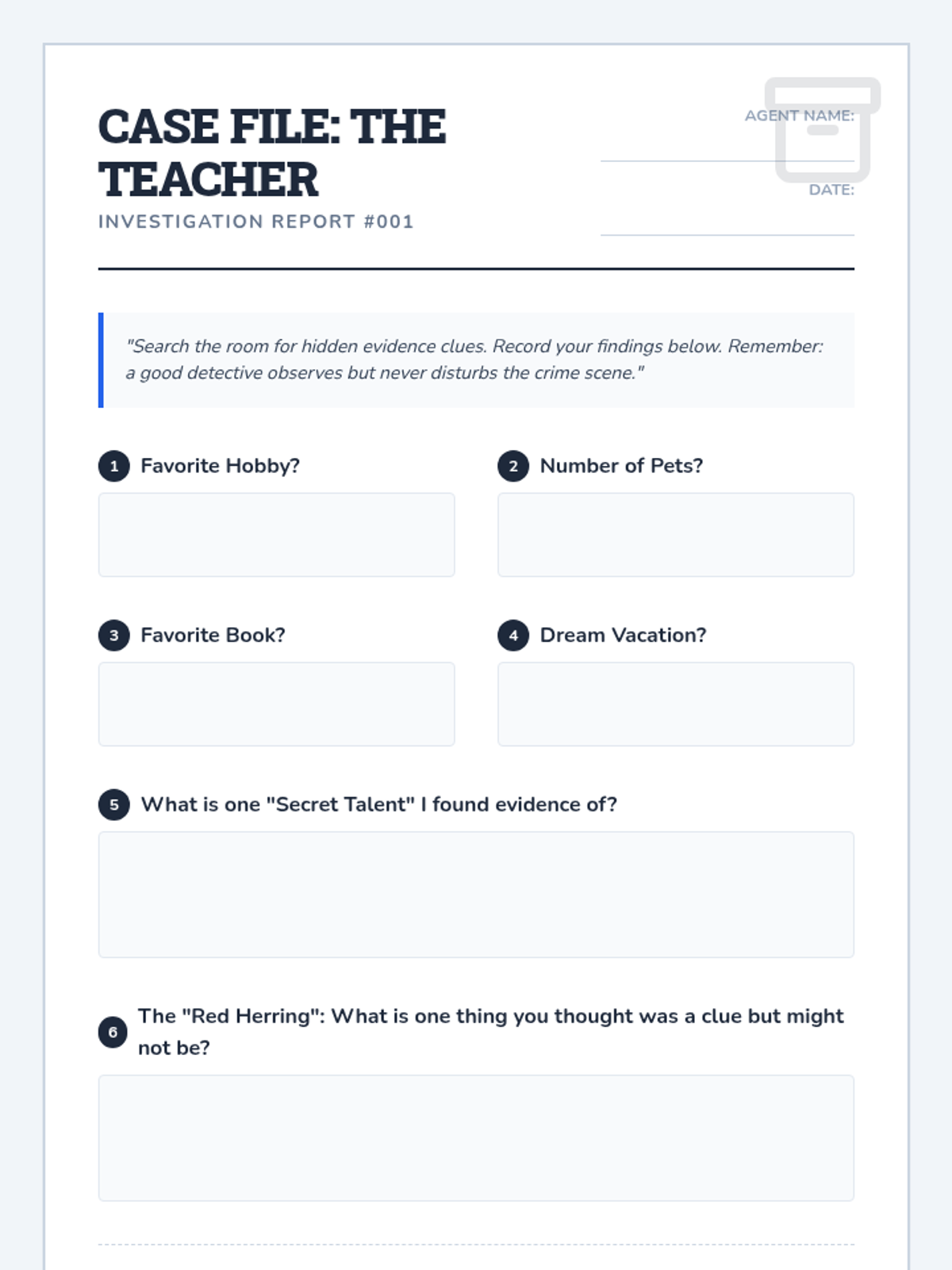
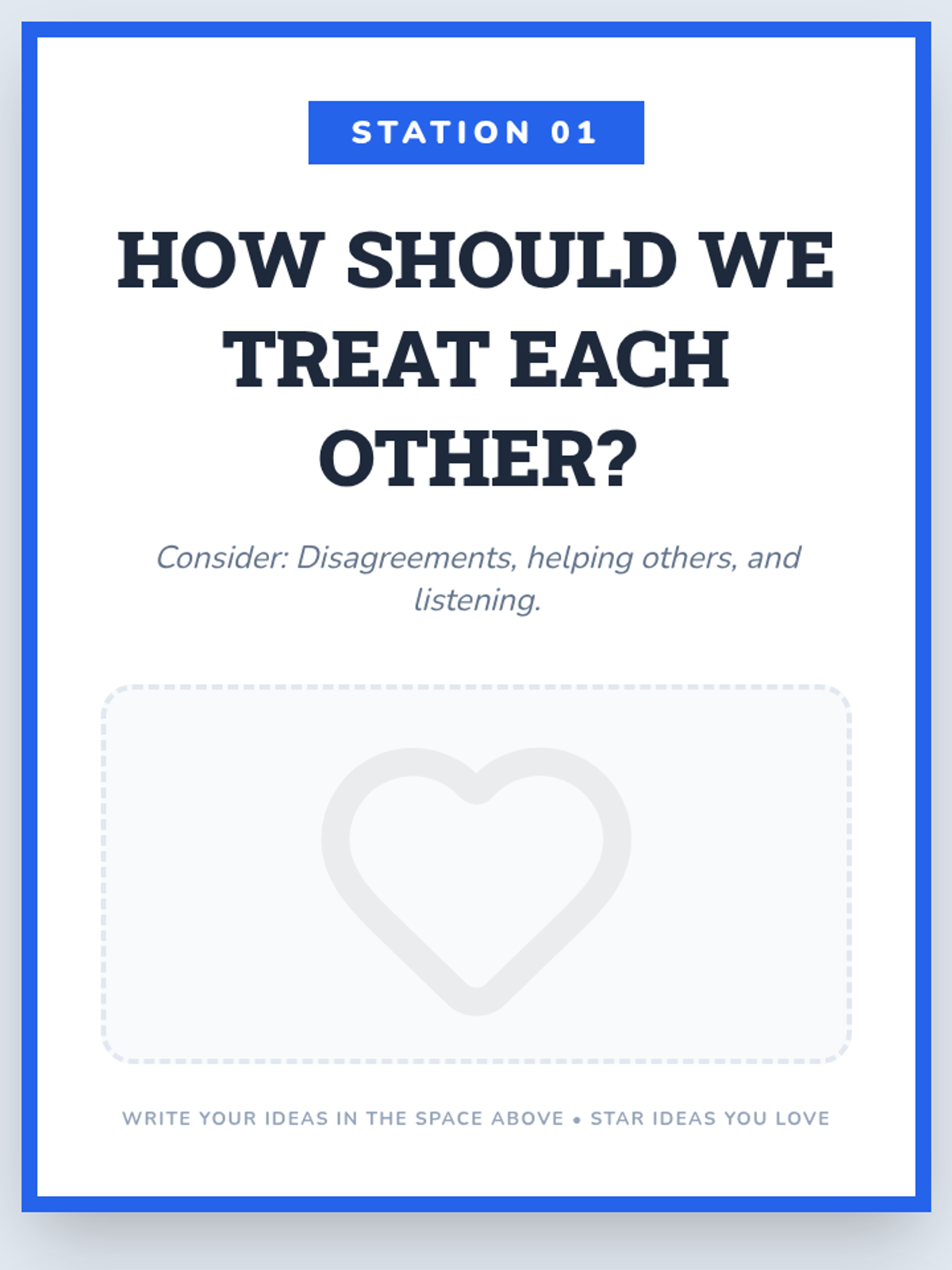
A high-energy first-day lesson where students become detectives to learn about their teacher and collaboratively design classroom expectations through movement-based activities.
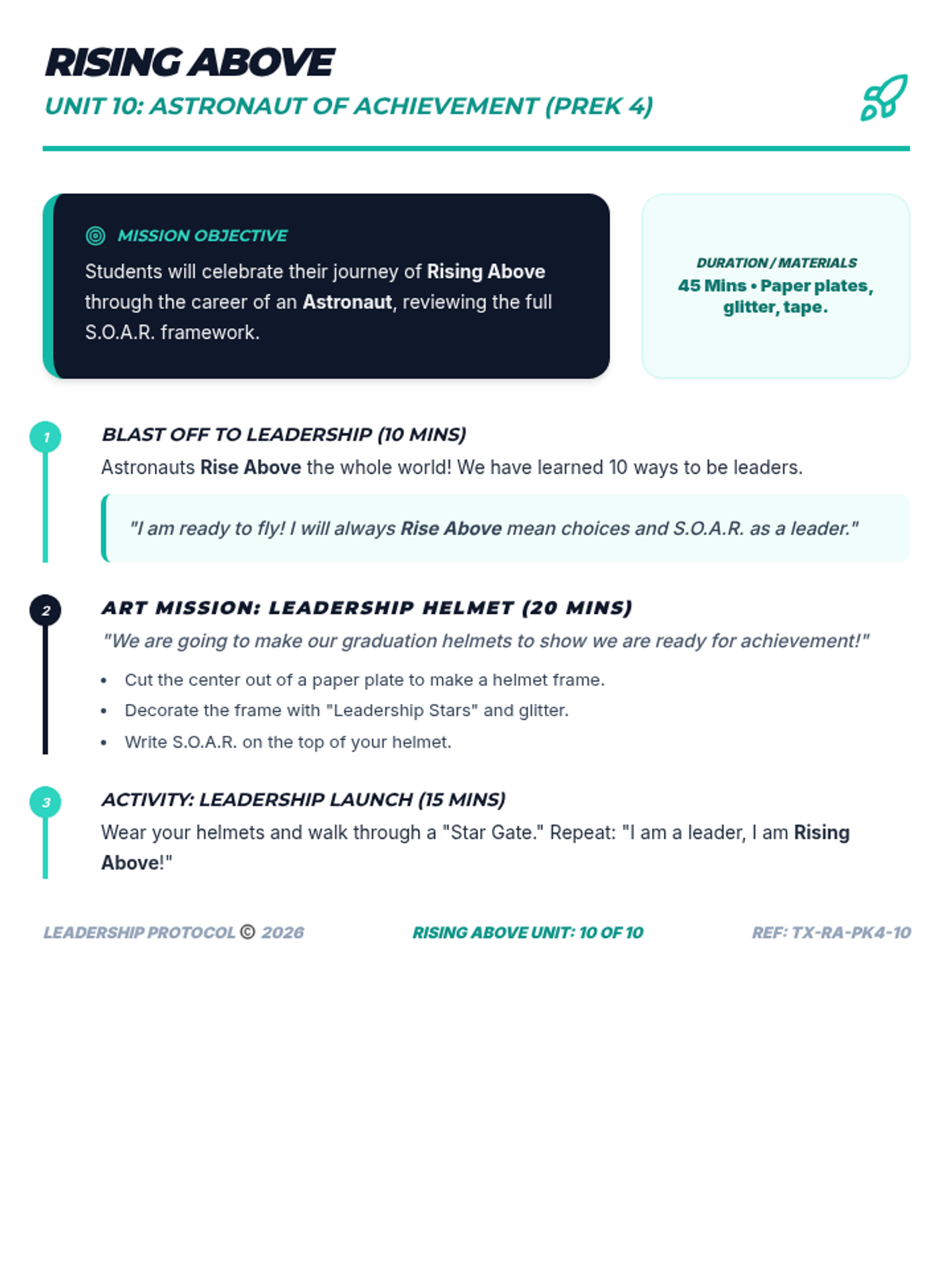
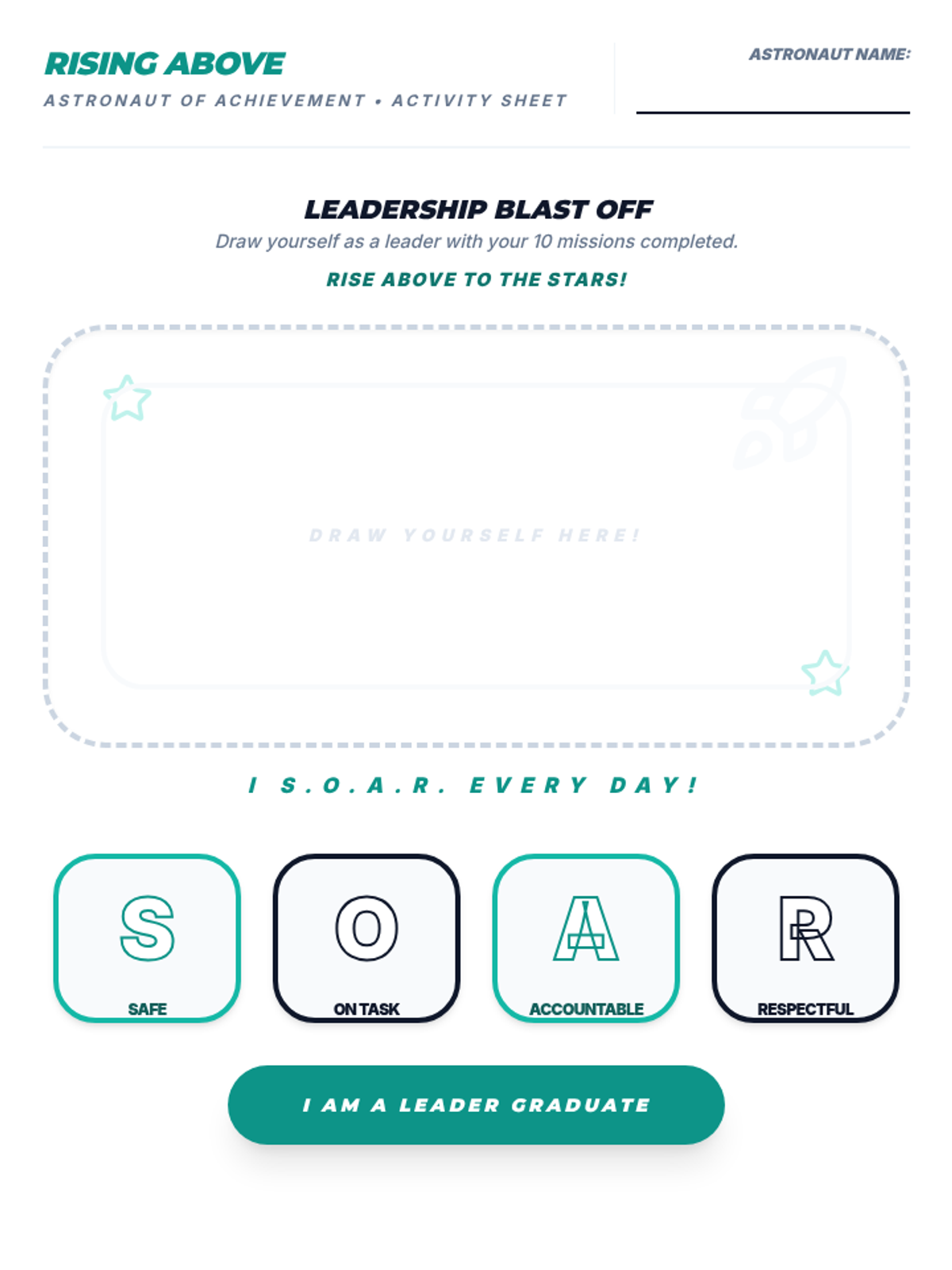
PreK 4 graduation celebrating their journey of 'Rising Above'. Art: Leadership Helmet.
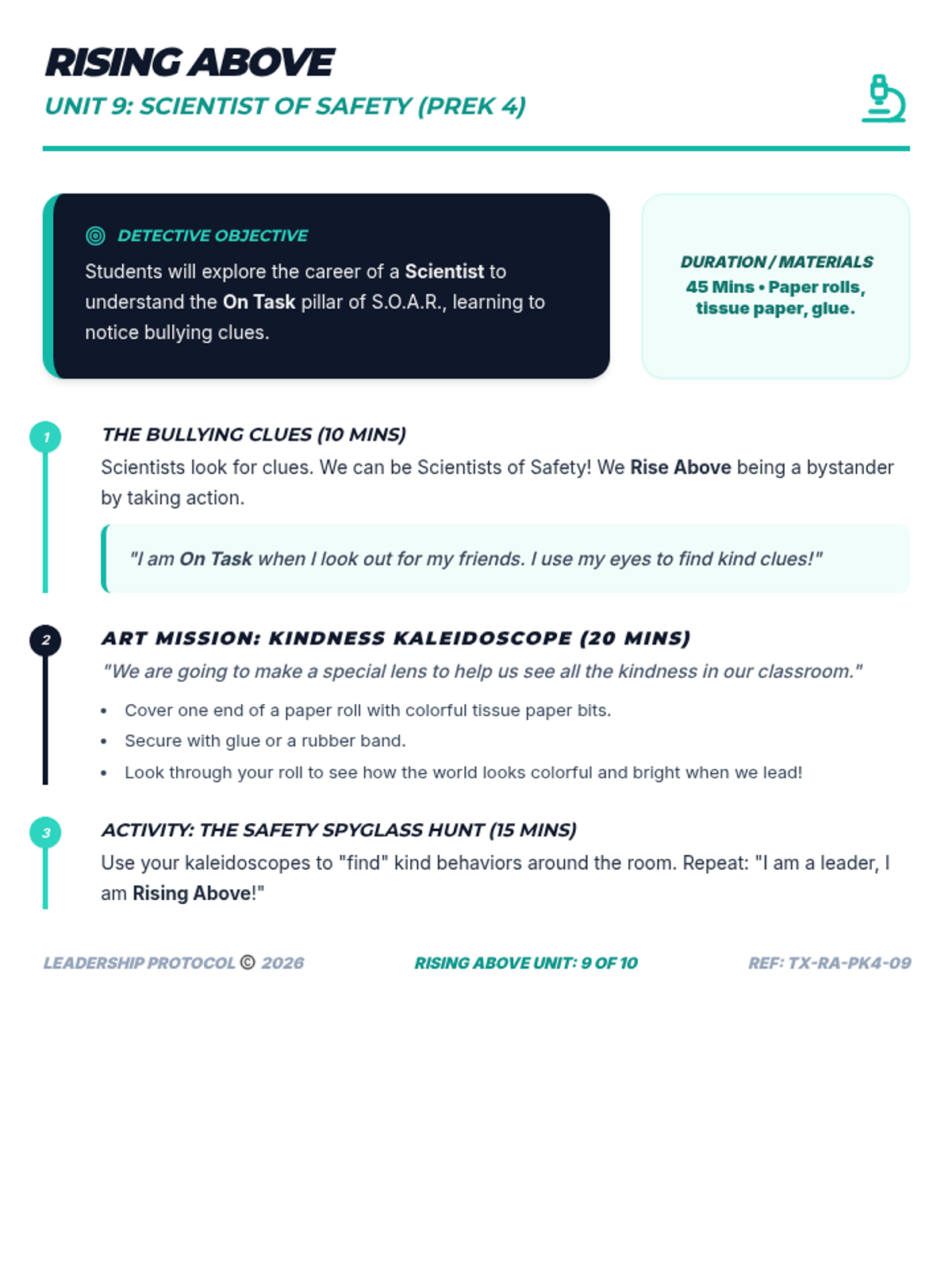
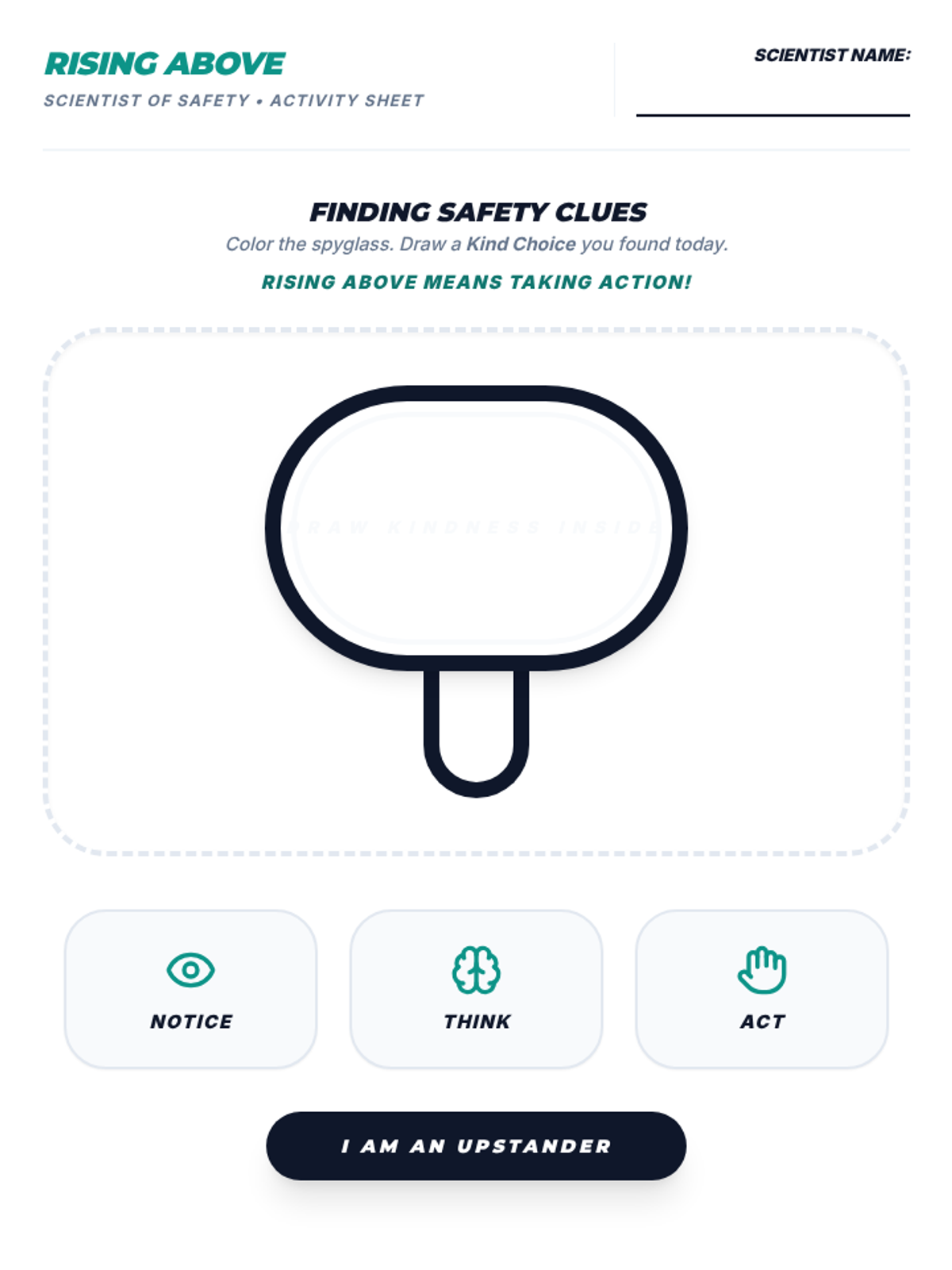
PreK 4 focus on identifying bullying clues through science. Art: Kindness Kaleidoscope.
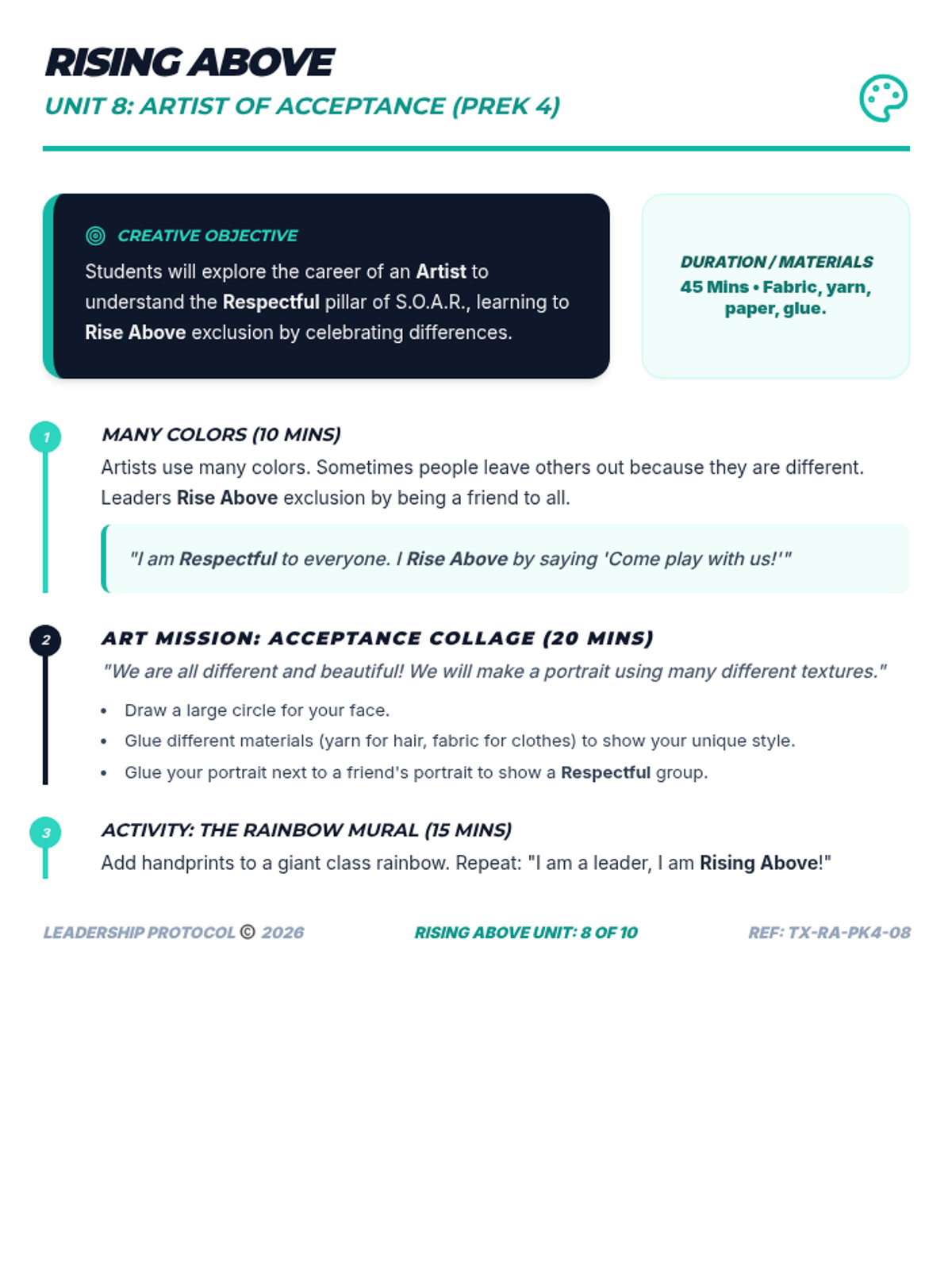
PreK 4 focus on celebrating differences through art. Art: Acceptance Collage.
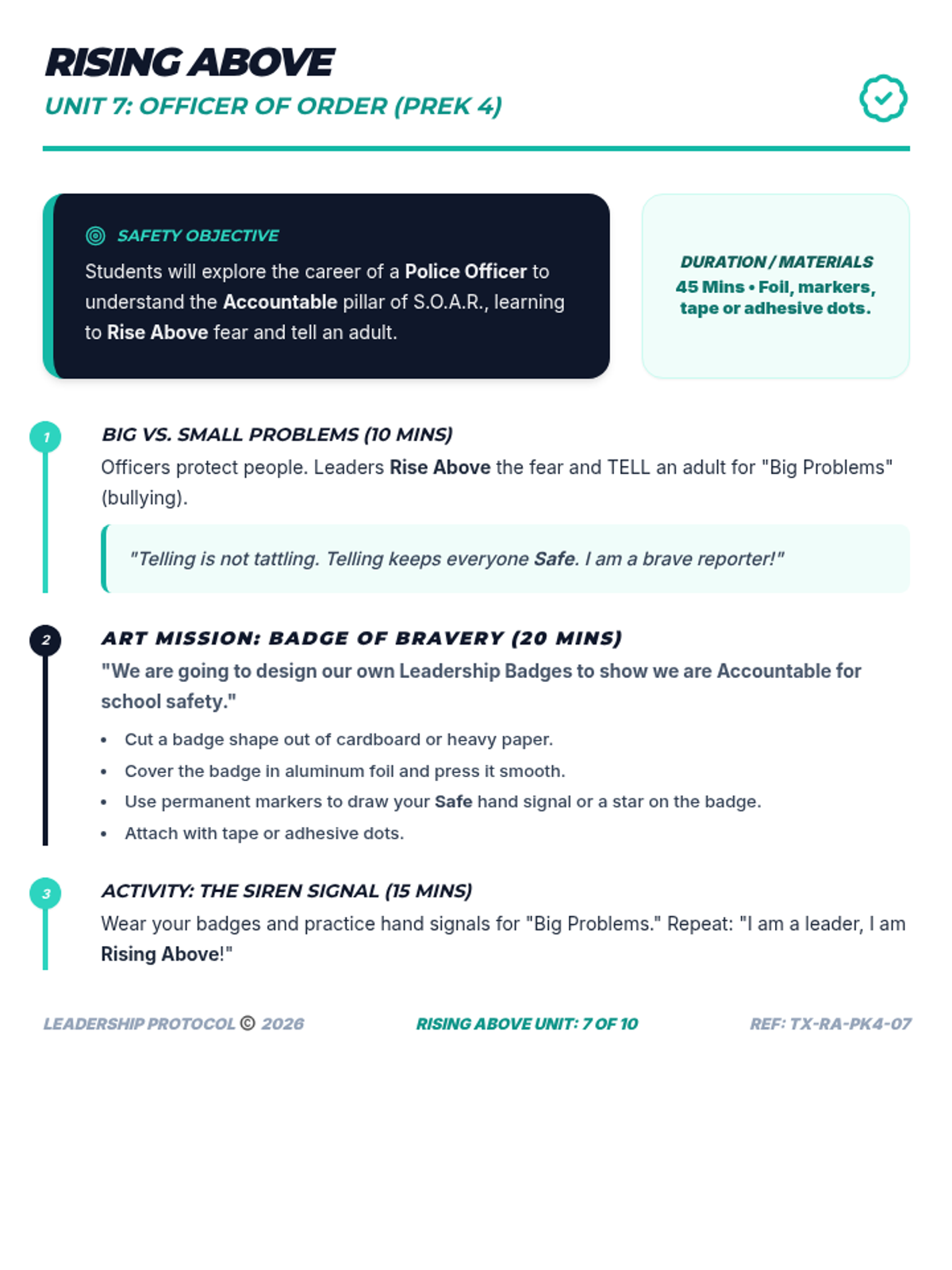
PreK 4 focus on rules and reporting 'big problems' through the career of a police officer. Art: Badge of Bravery.
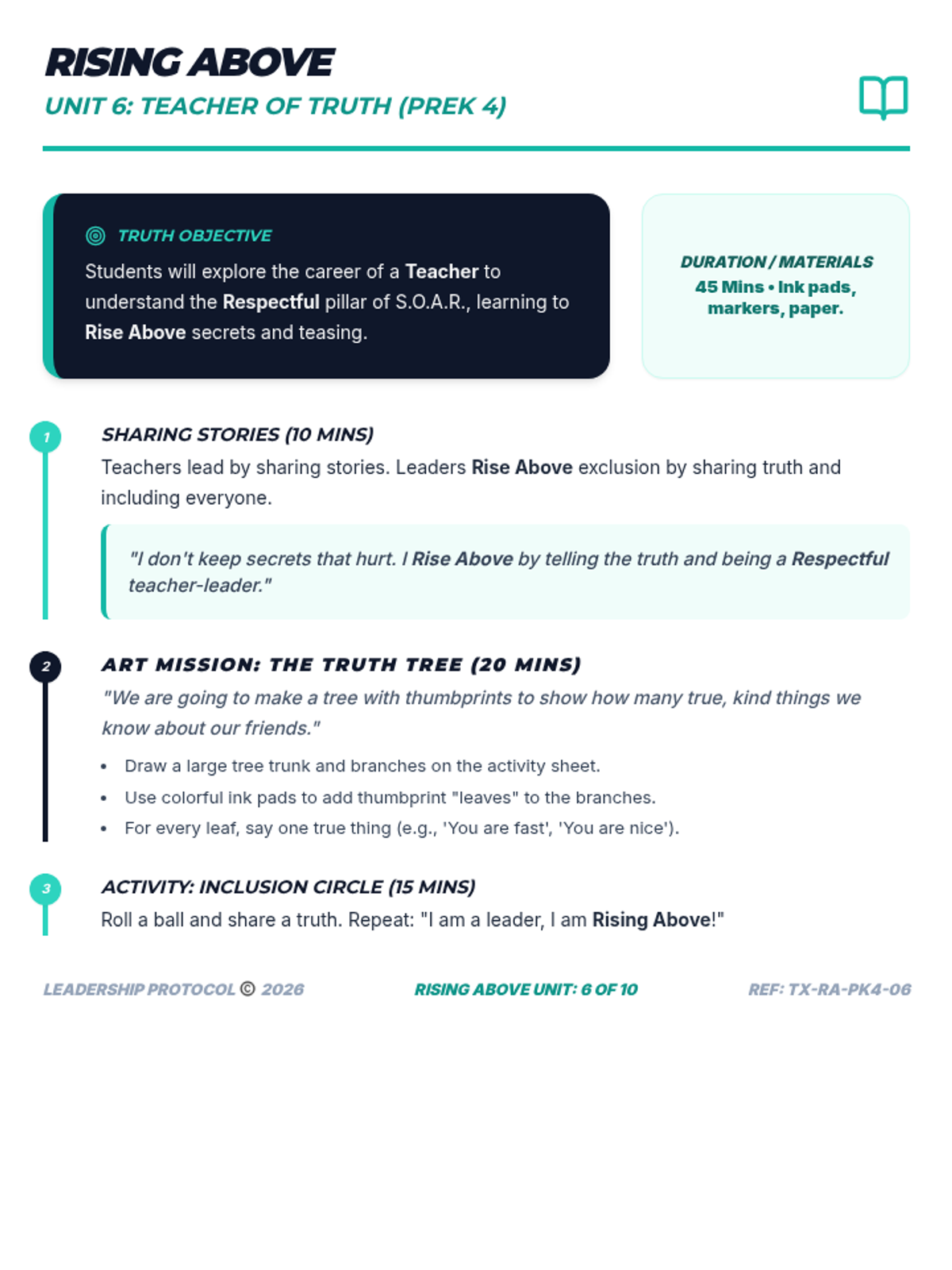
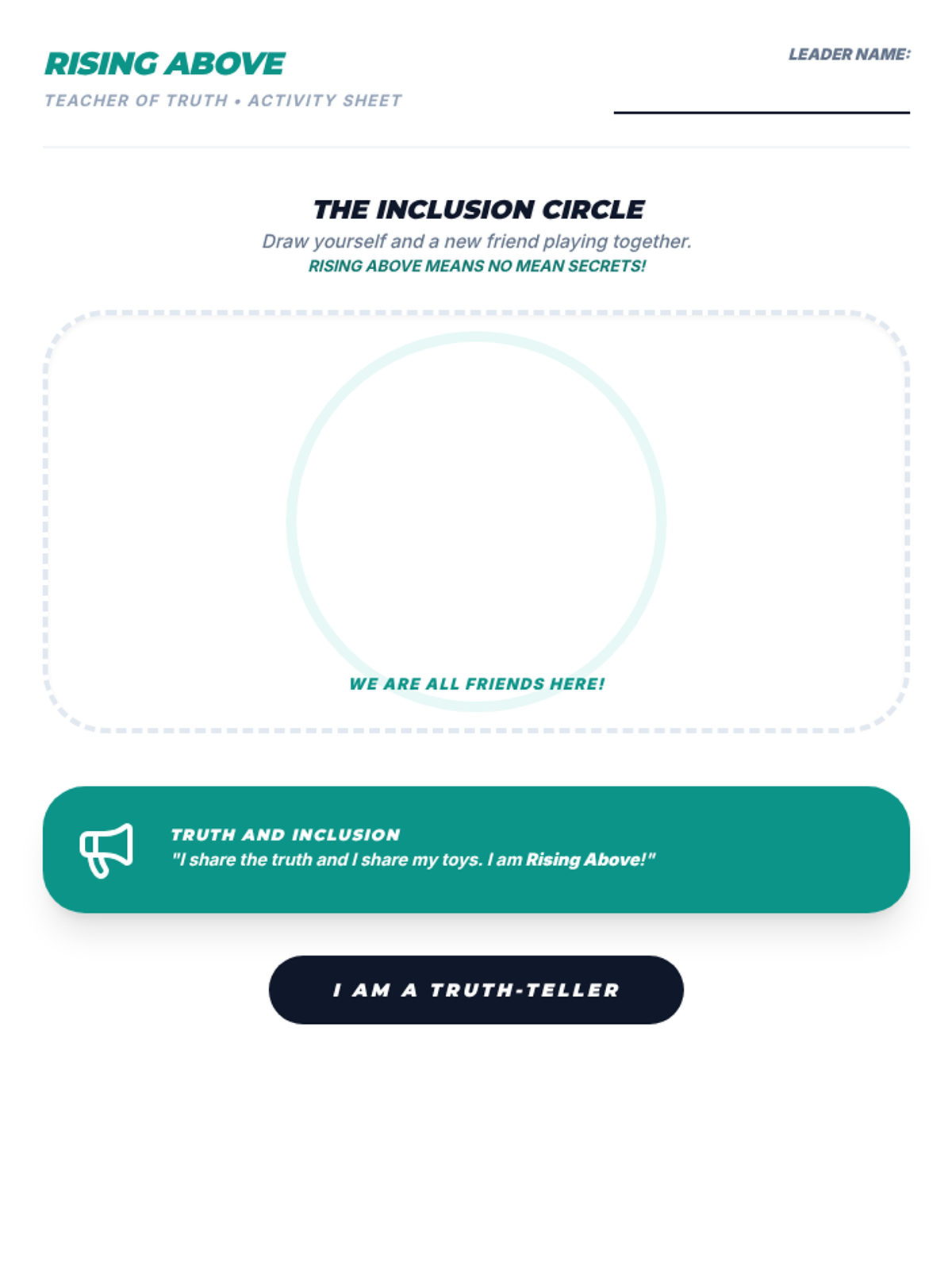
PreK 4 focus on truth and respectful communication through teaching. Art: Truth Tree.
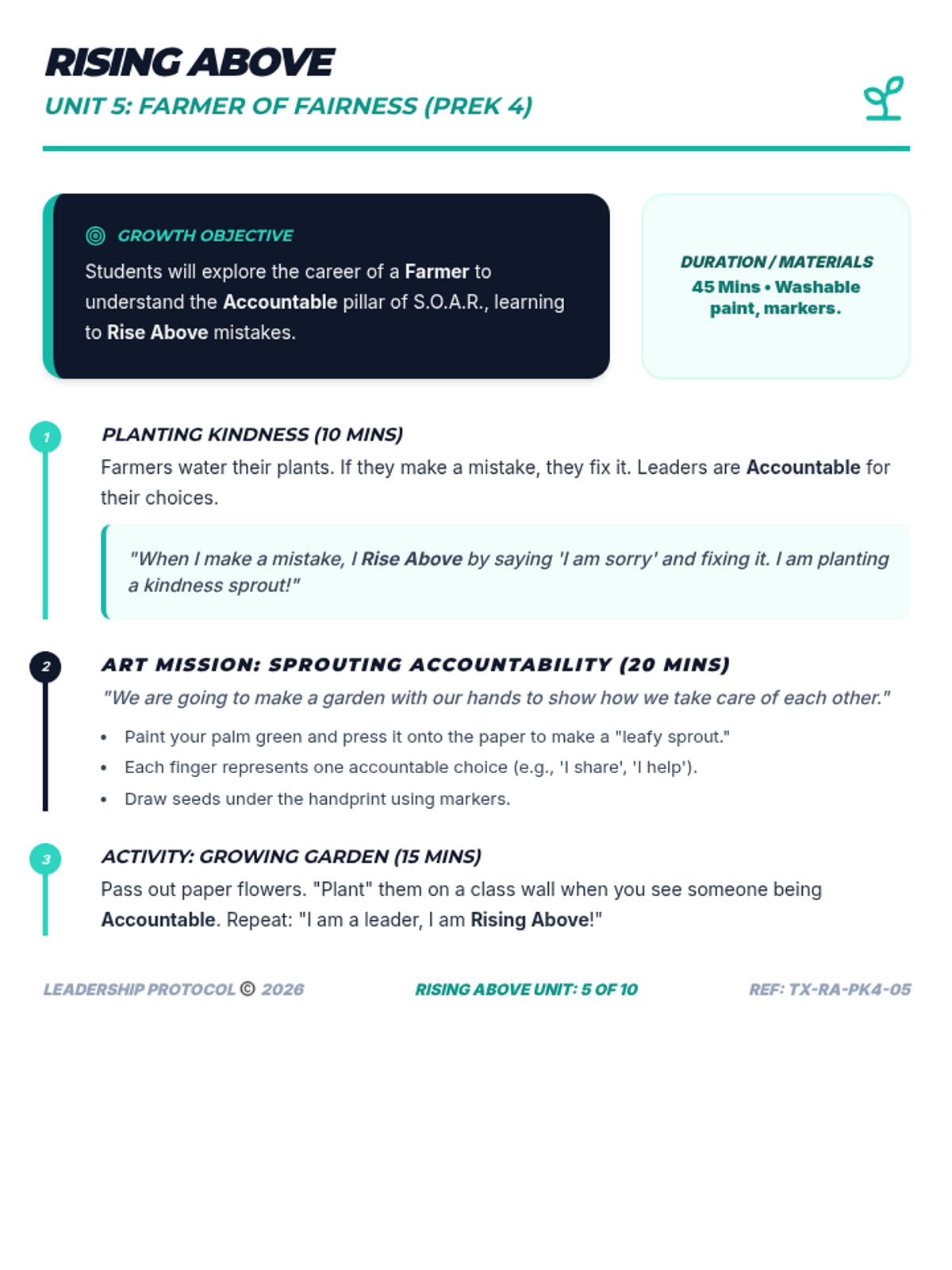
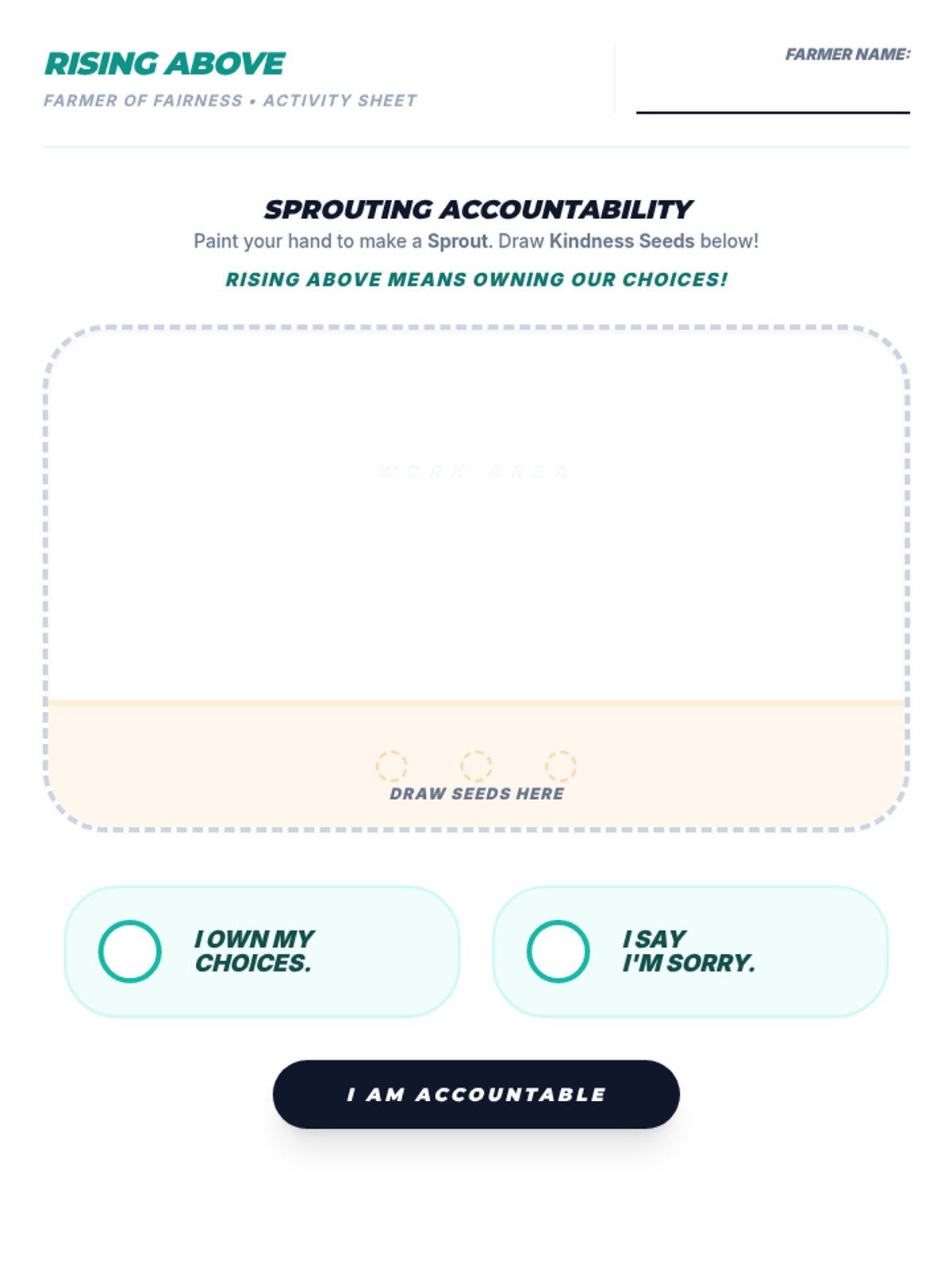
PreK 4 focus on accountability and growth through farming. Art: Sprouting Accountability.
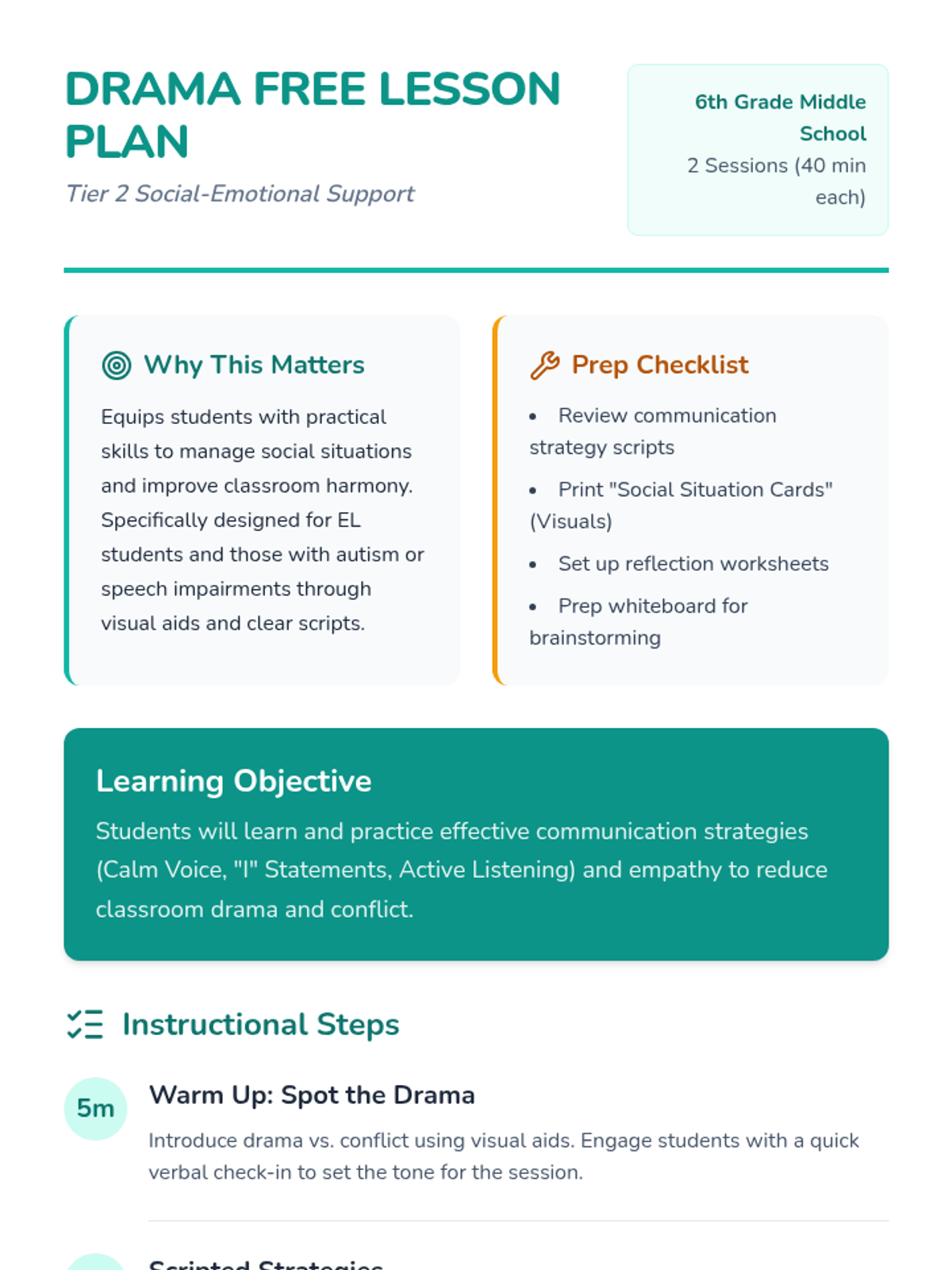
A two-session unit designed for 6th-grade students with communication disabilities to learn empathy, active listening, and conflict resolution strategies to foster a drama-free classroom environment.
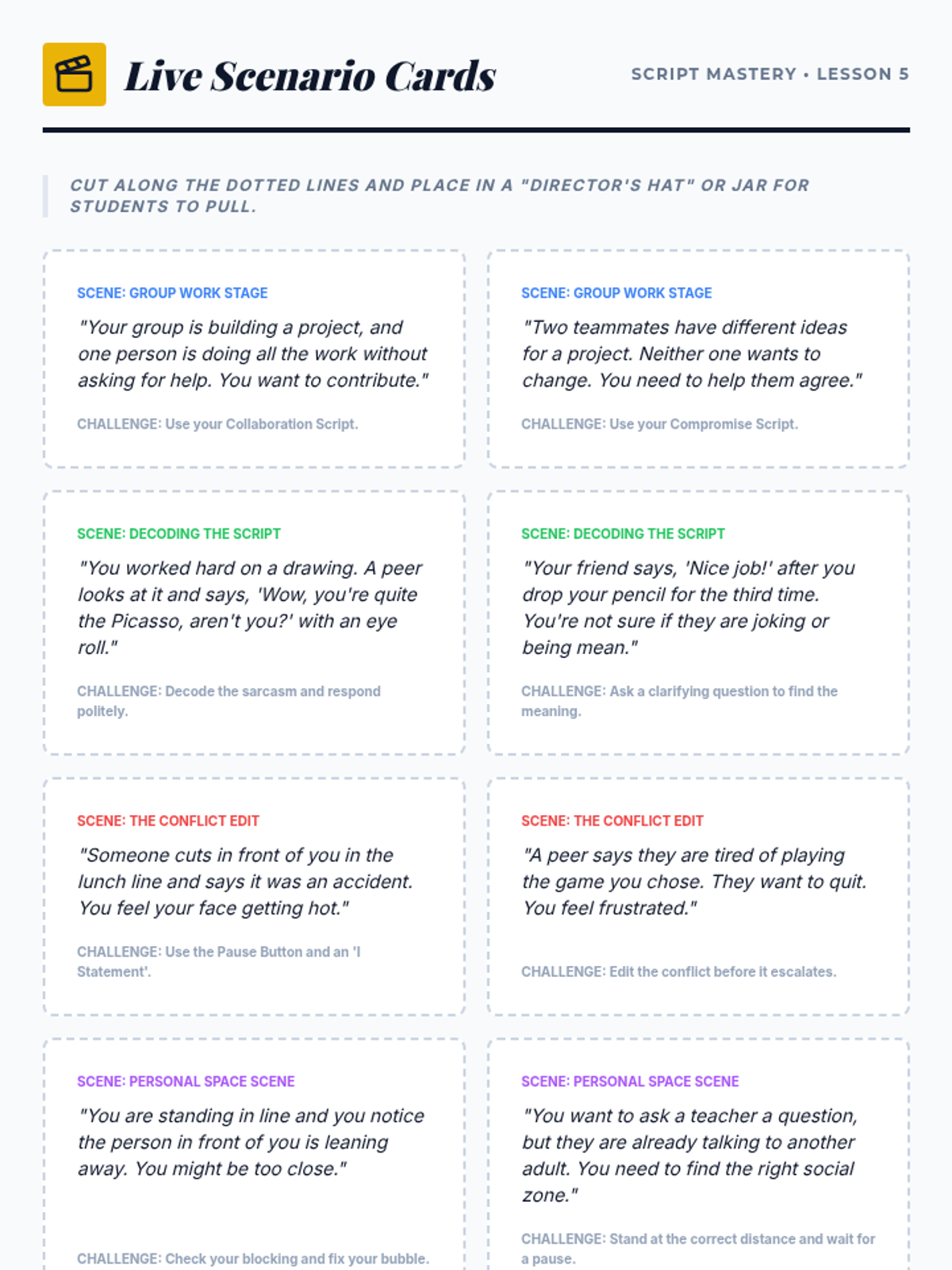
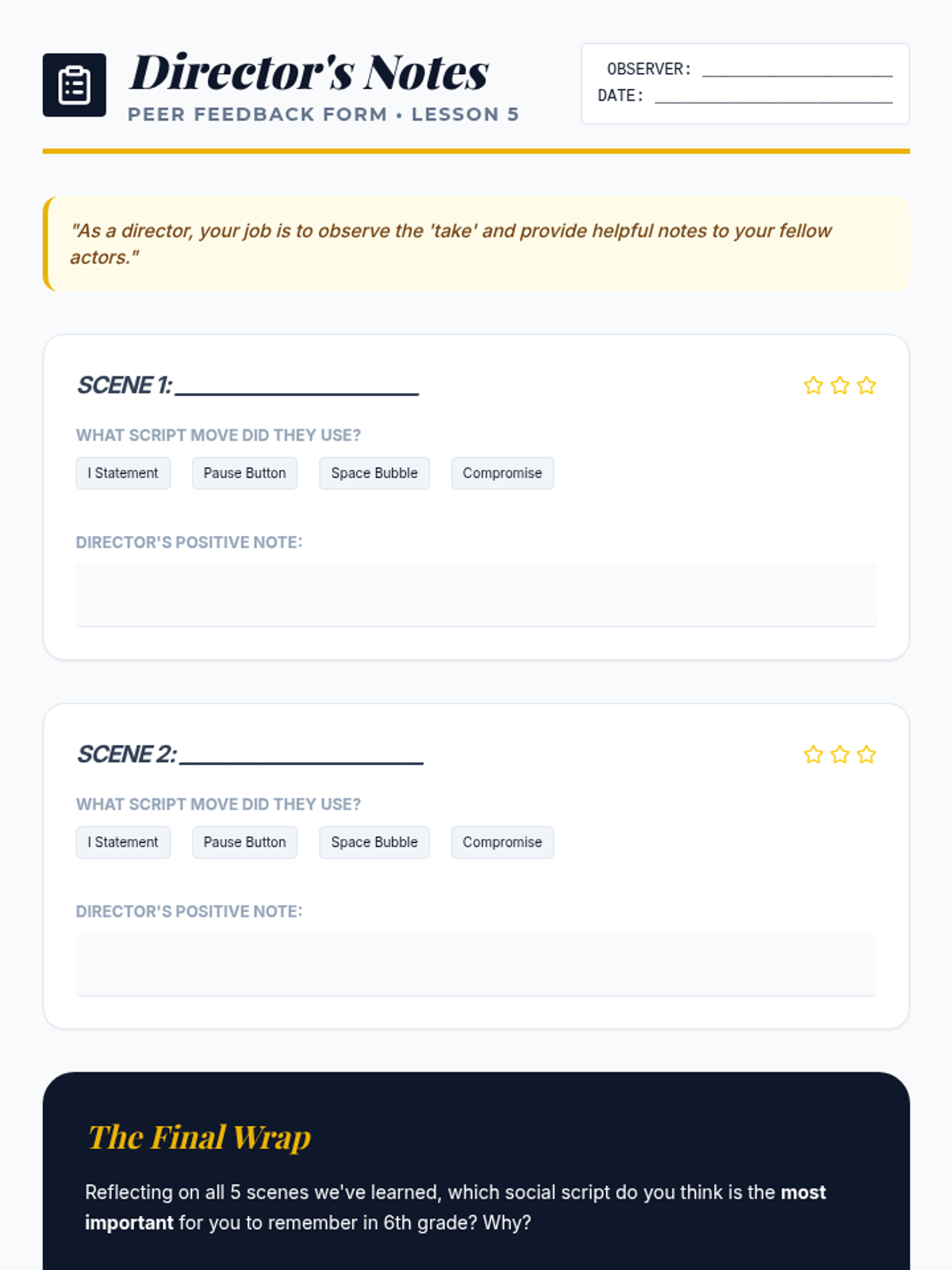
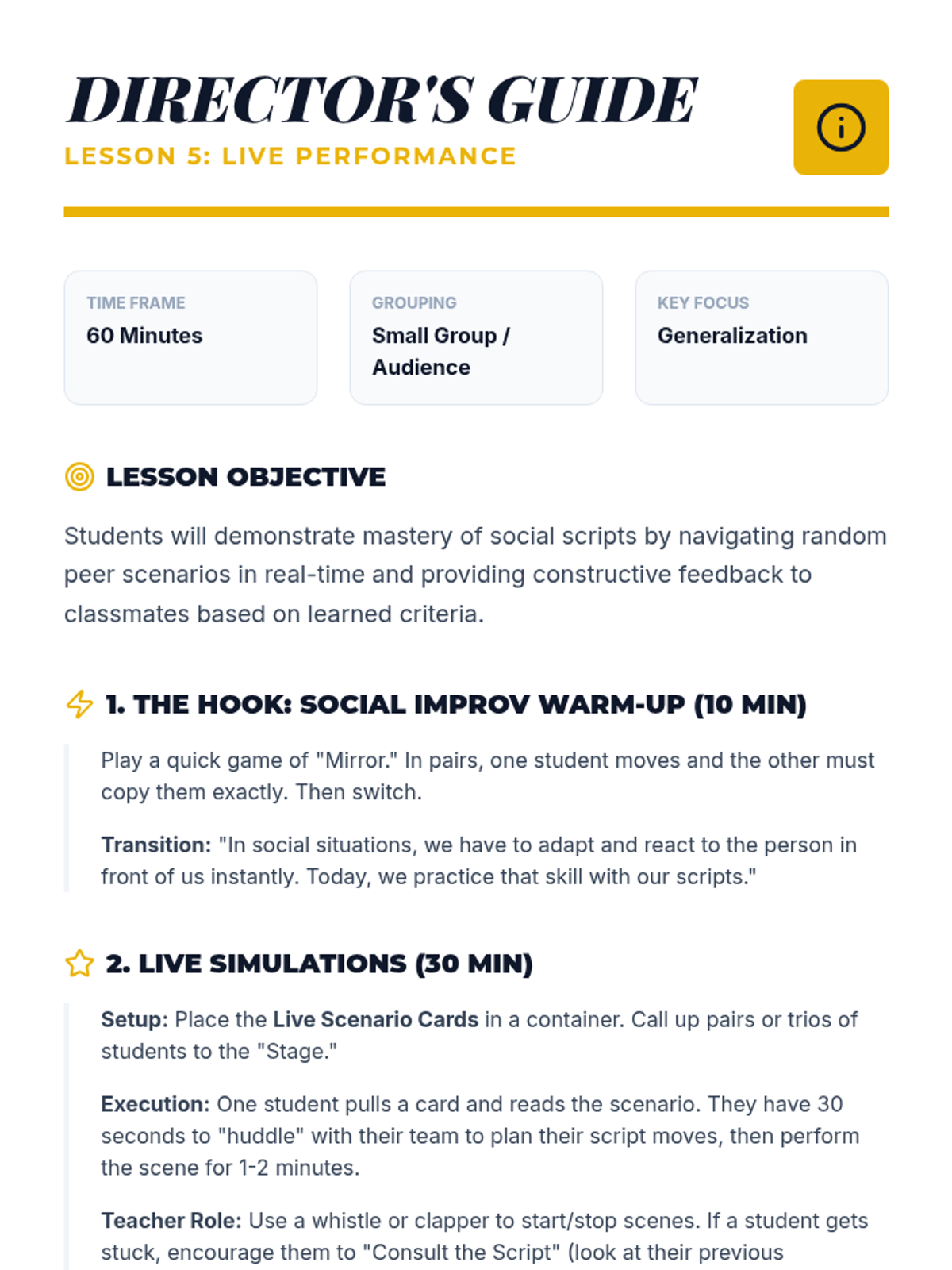
The sequence culminates in live social simulations where students use their learned scripts to navigate random peer scenarios and provide constructive feedback.
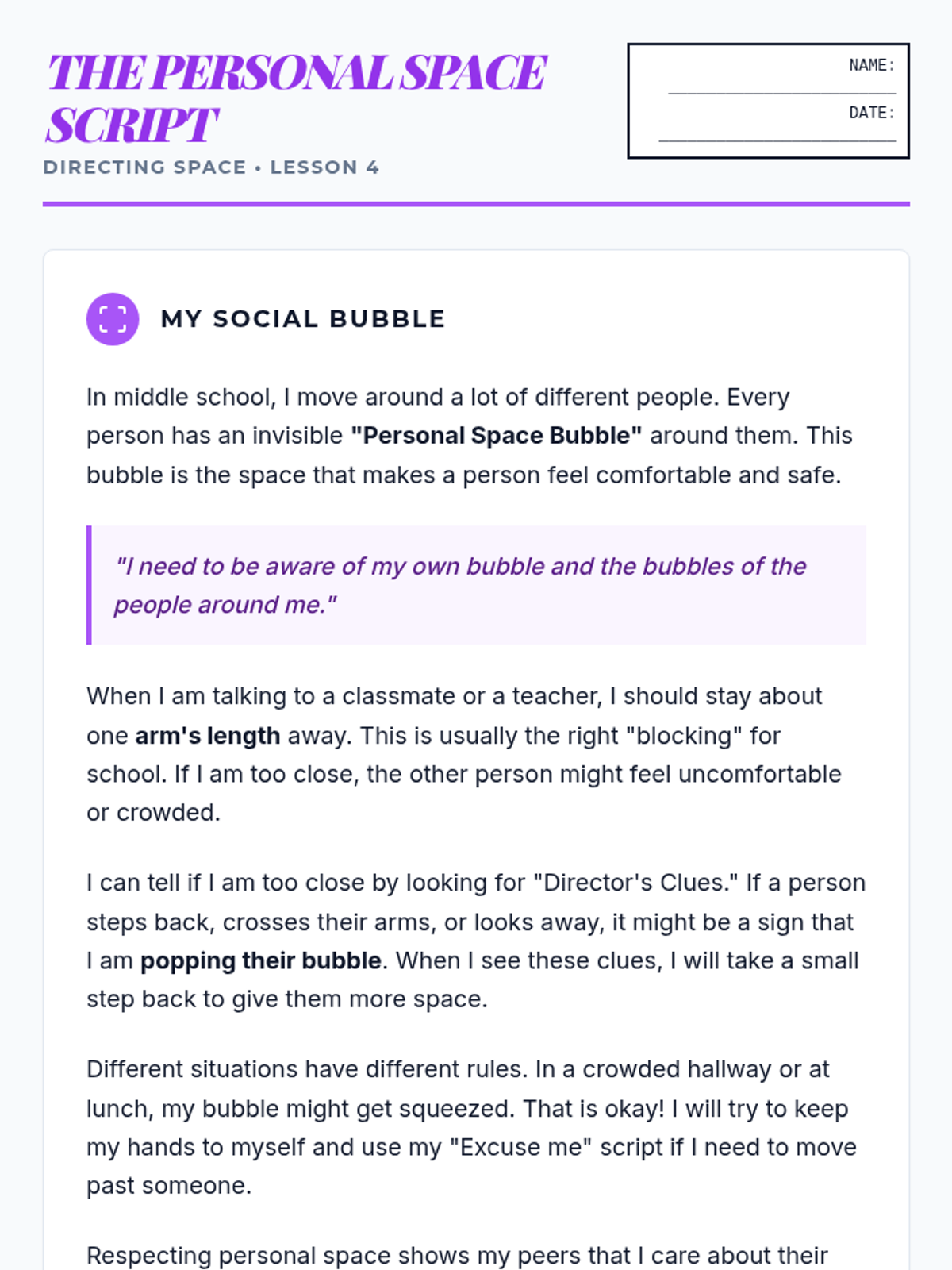
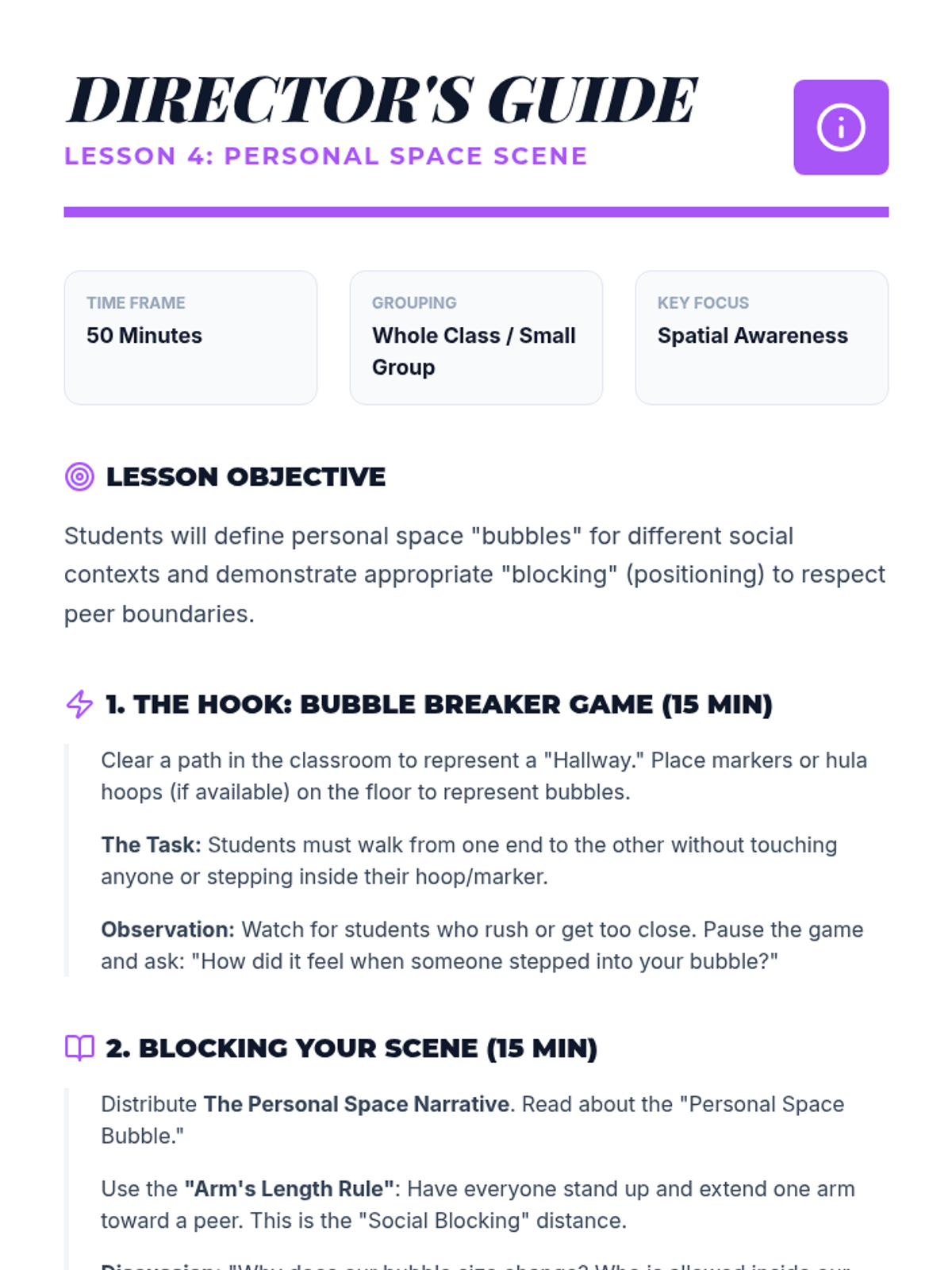
Students define personal space 'bubbles' and co-create a narrative about physical boundaries in school environments to improve spatial awareness.
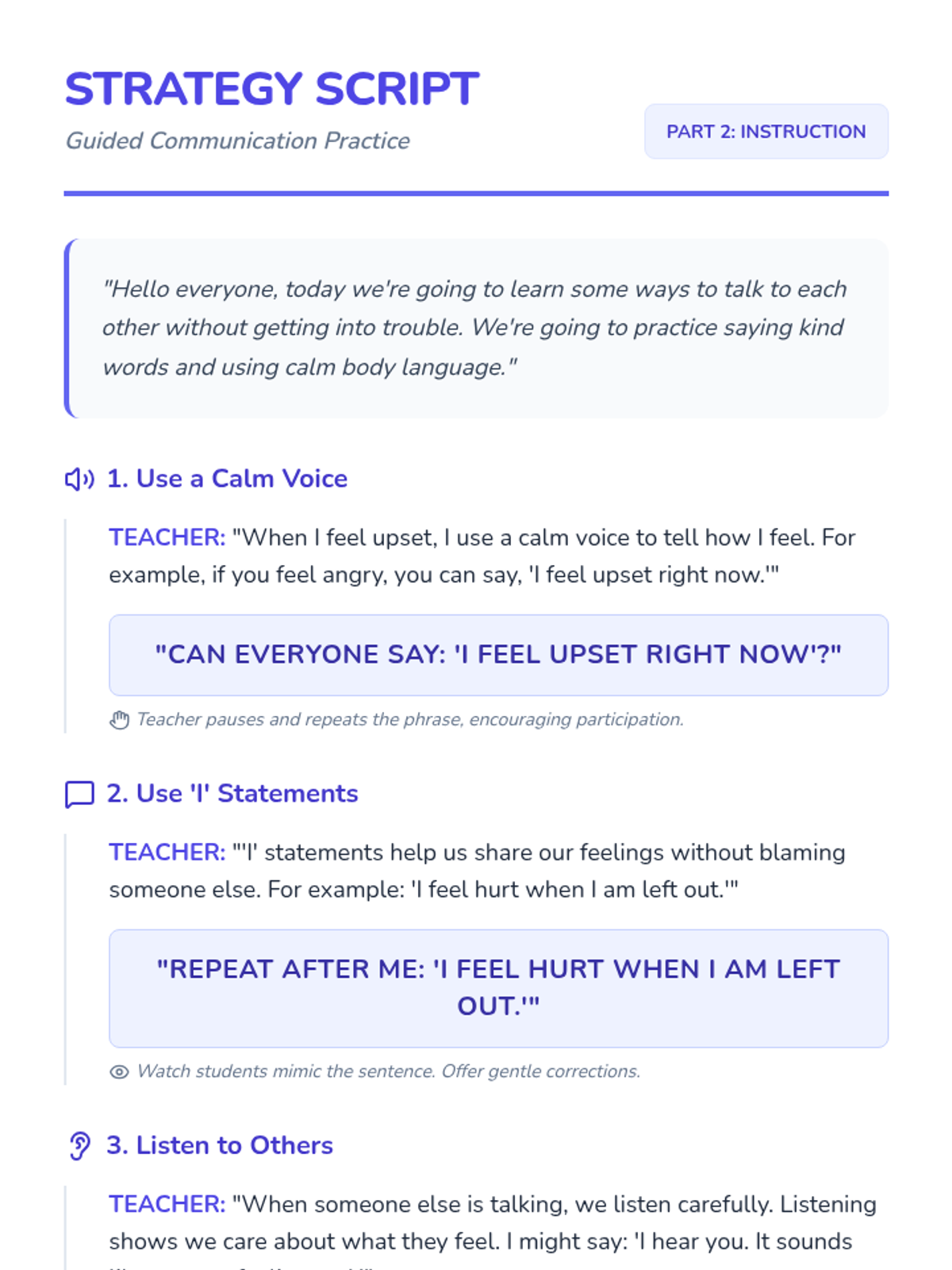
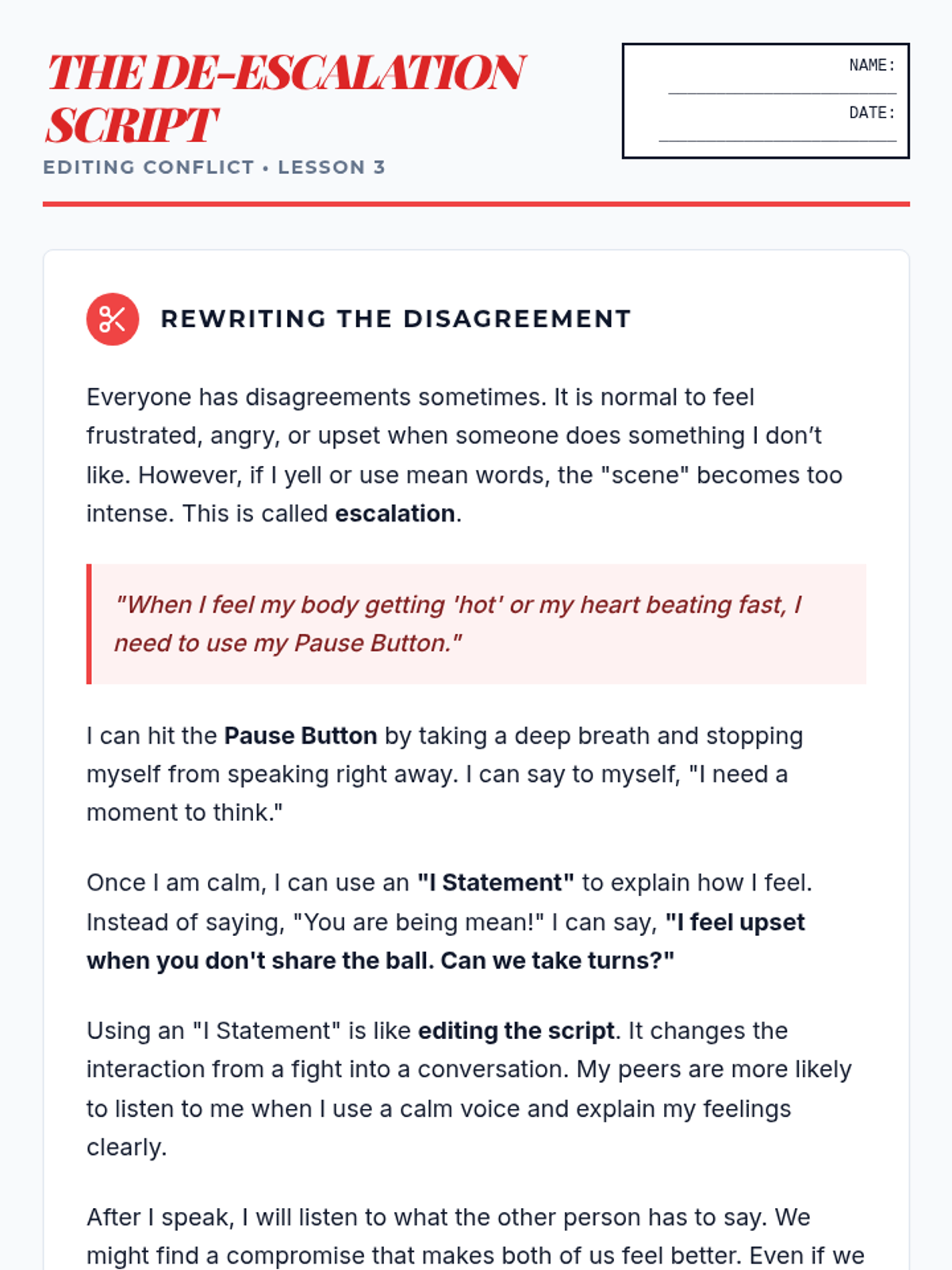
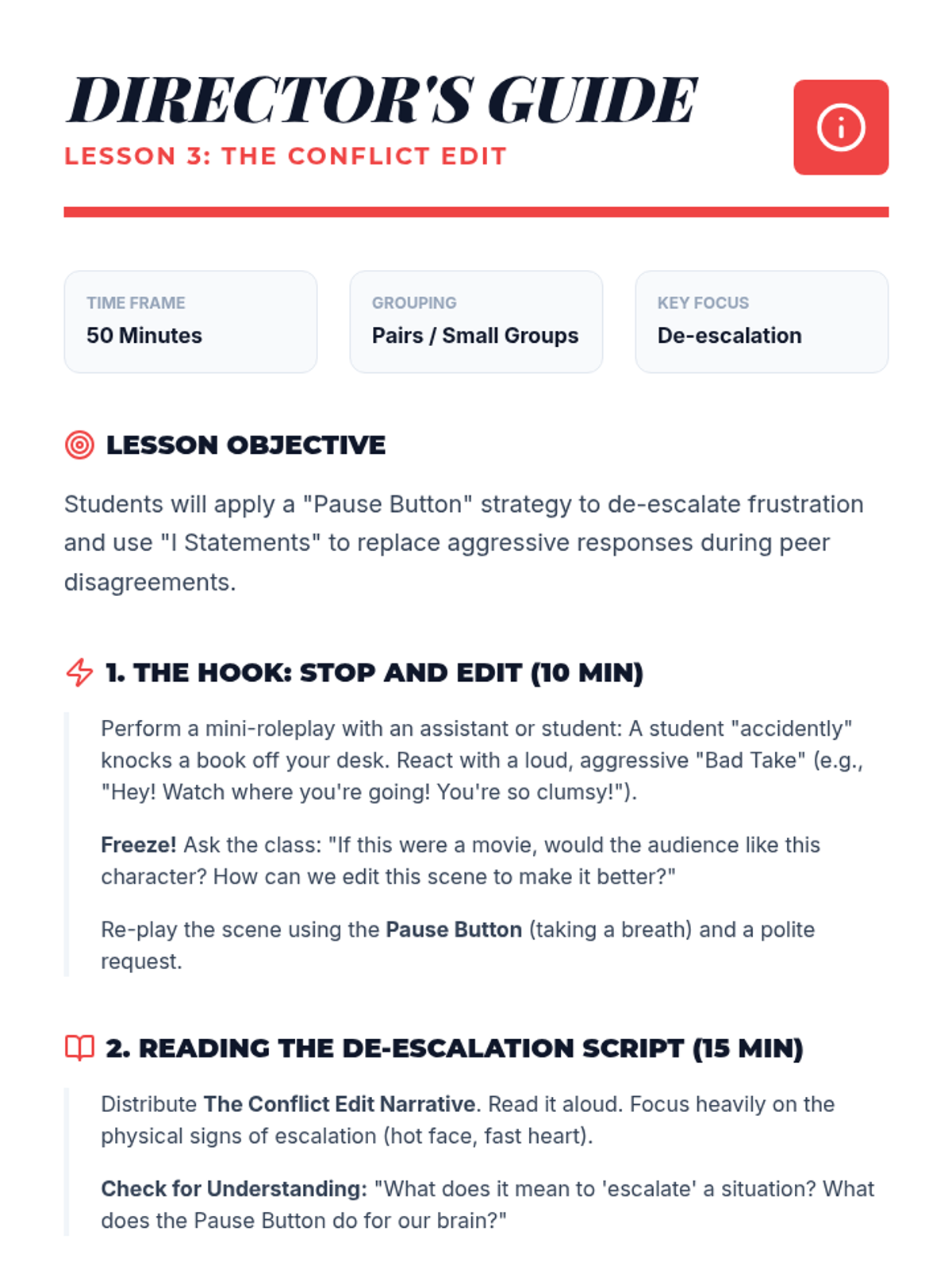
Learners identify the steps of de-escalation through a guided story and practice specific assertive scripts to manage disagreements politely.
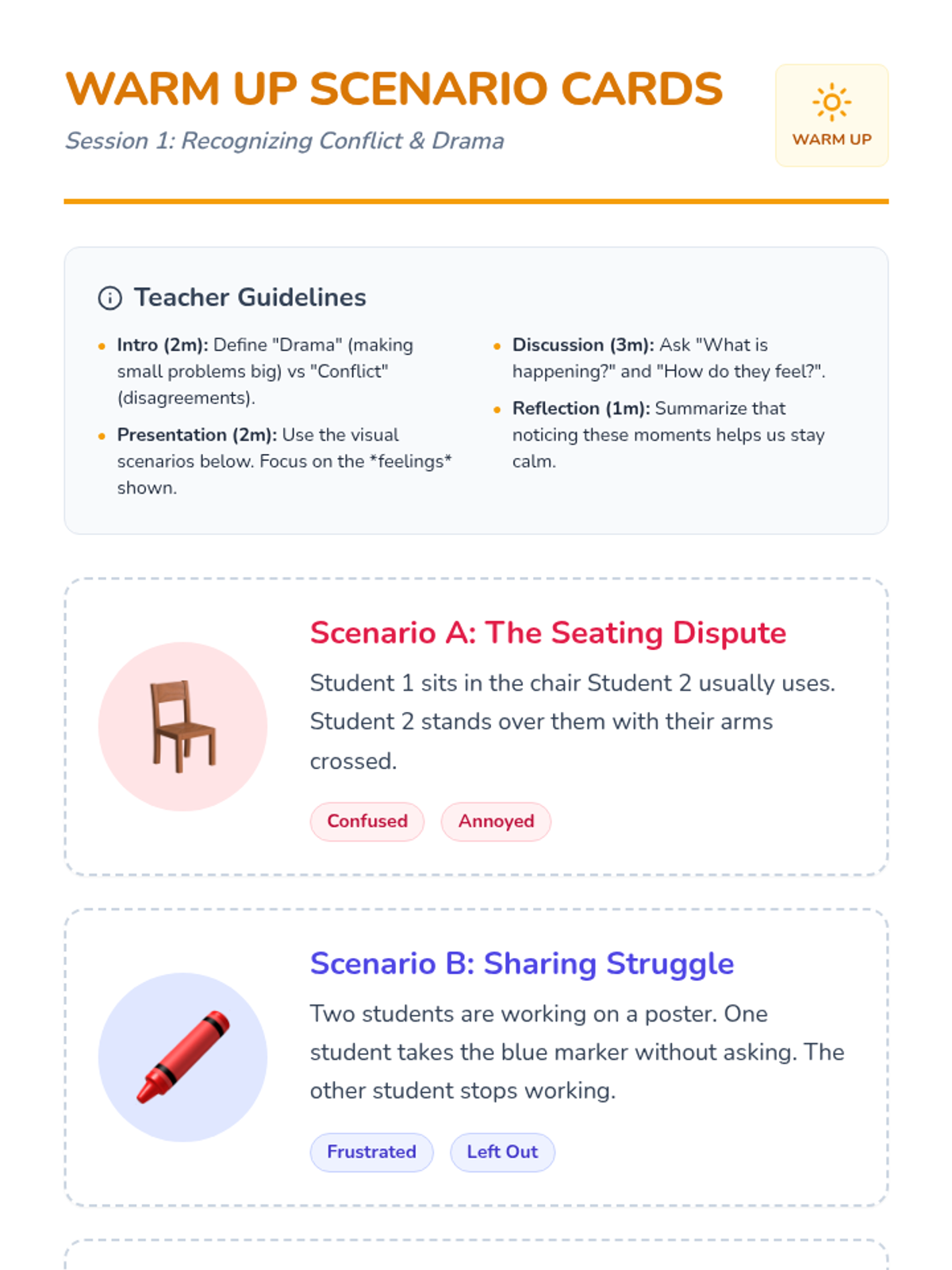
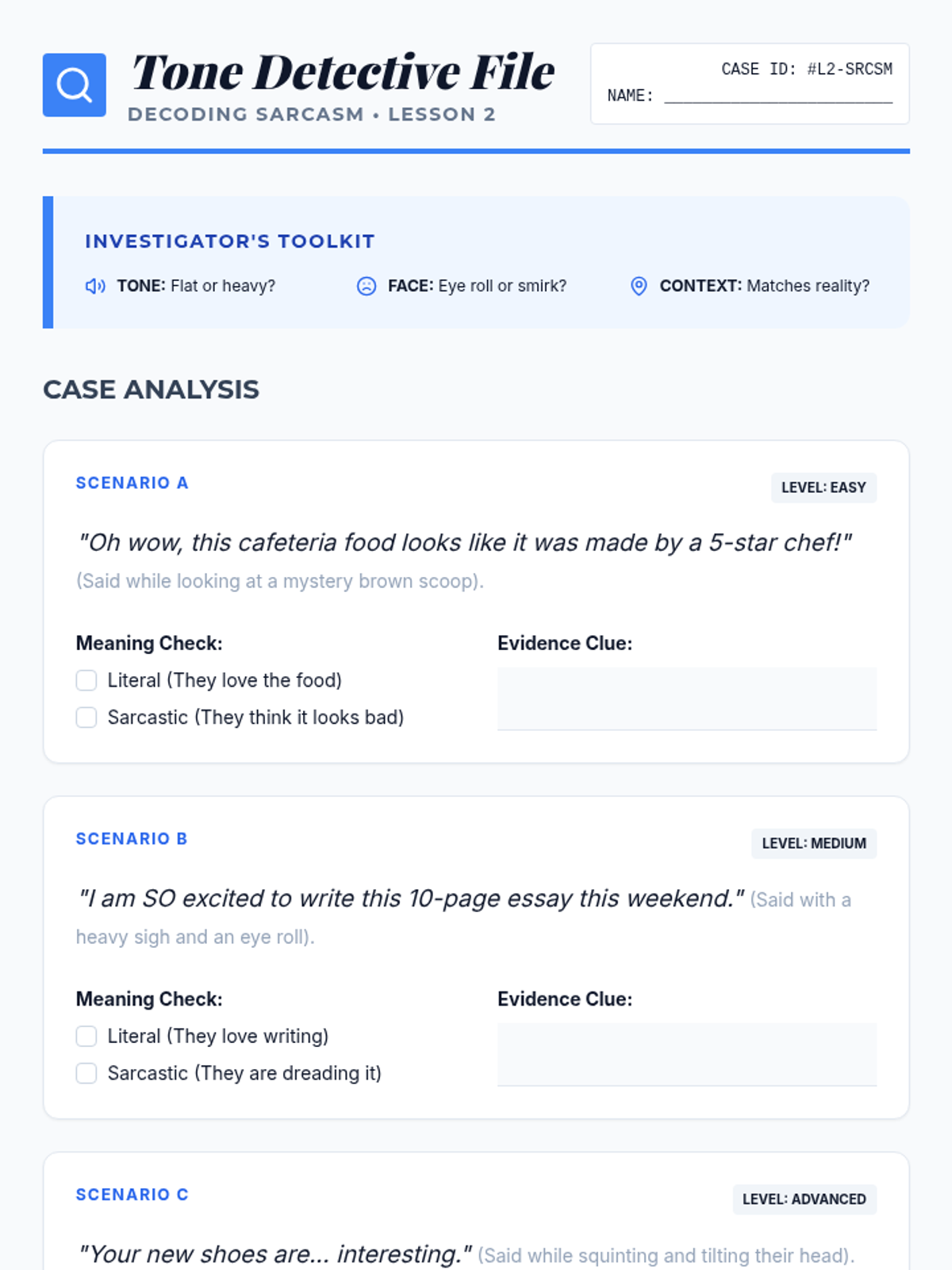
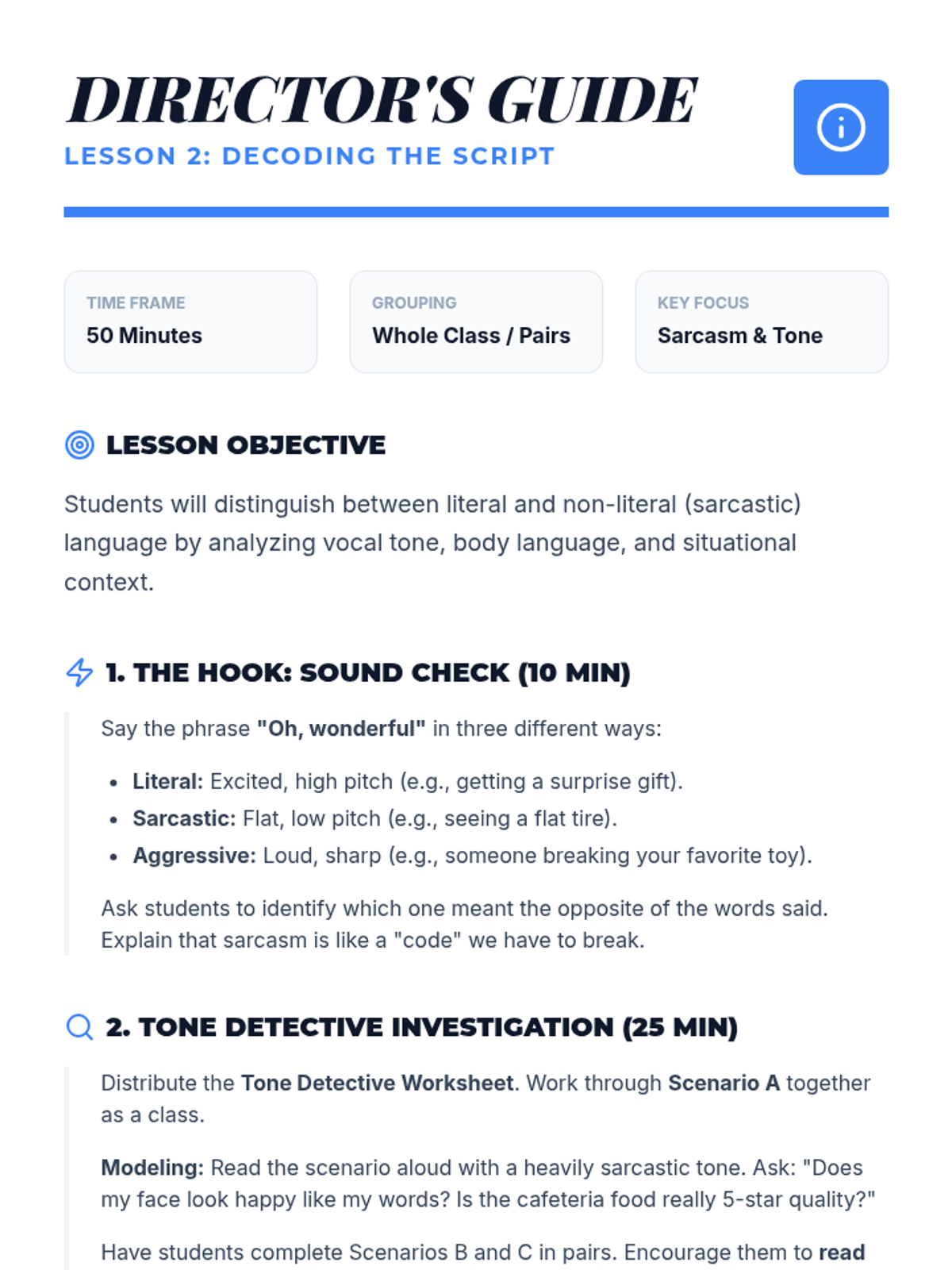
Students analyze the difference between literal and non-literal language, using social narratives to decode sarcasm and practice appropriate responses to social cues.
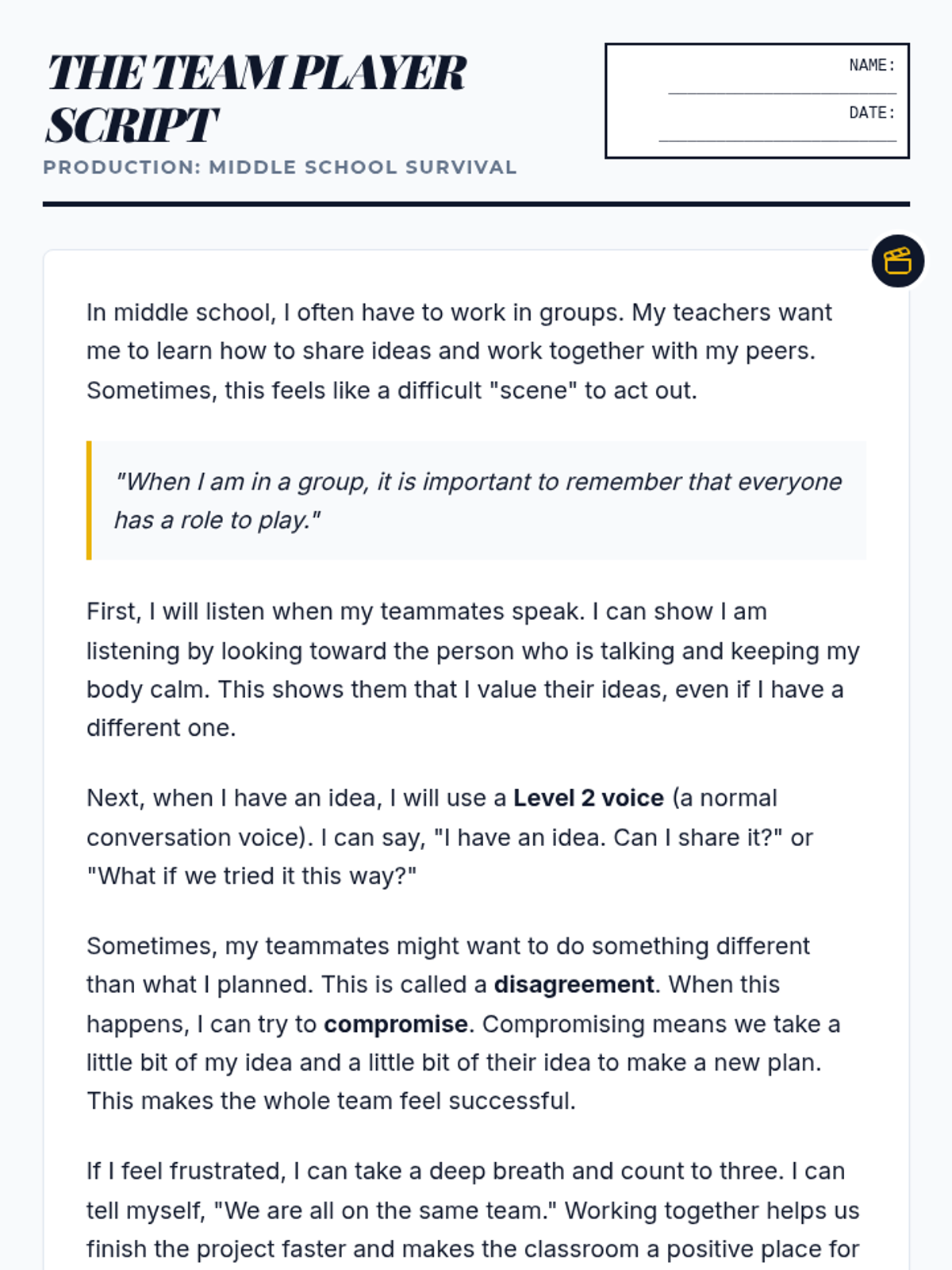
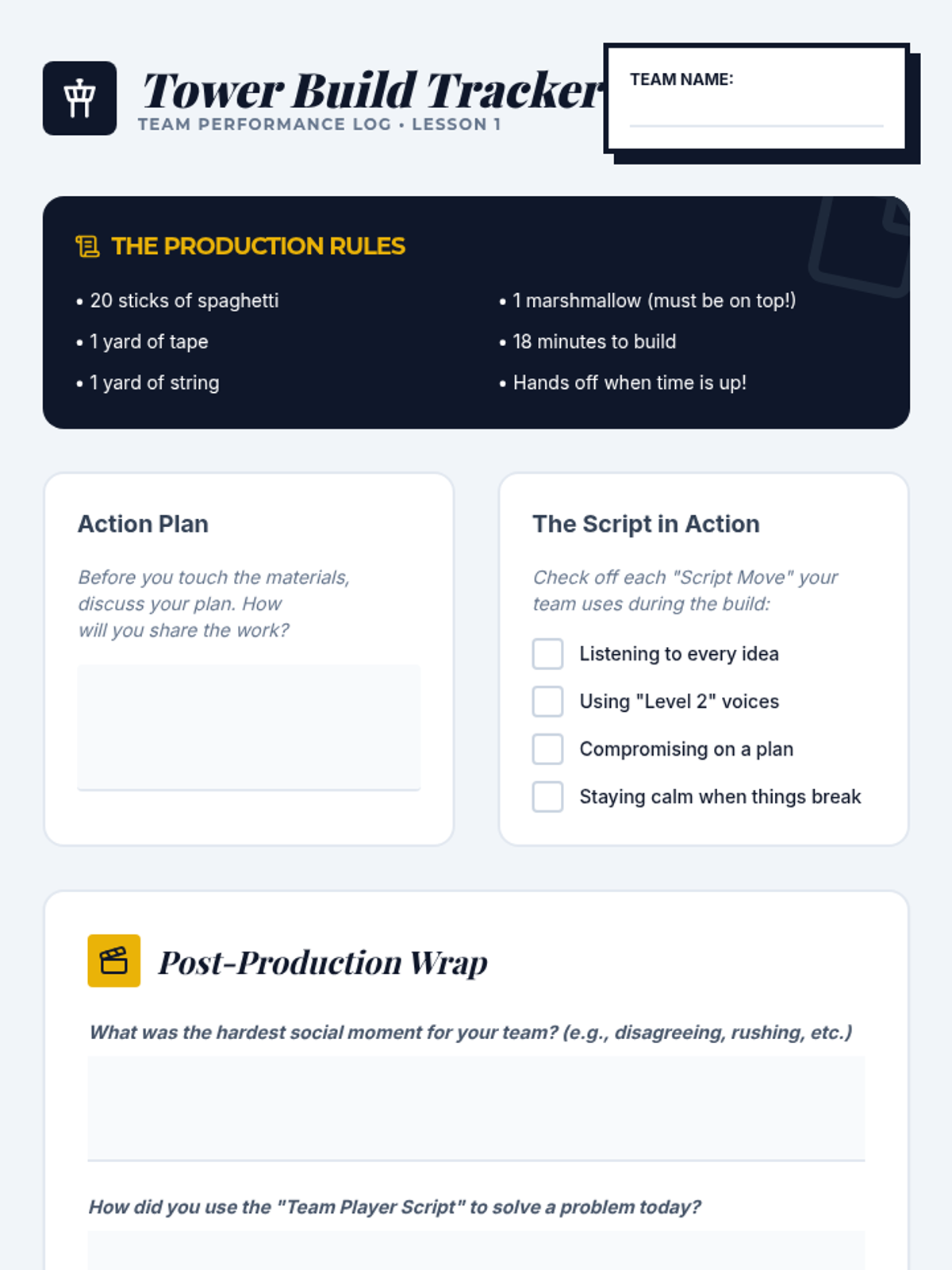
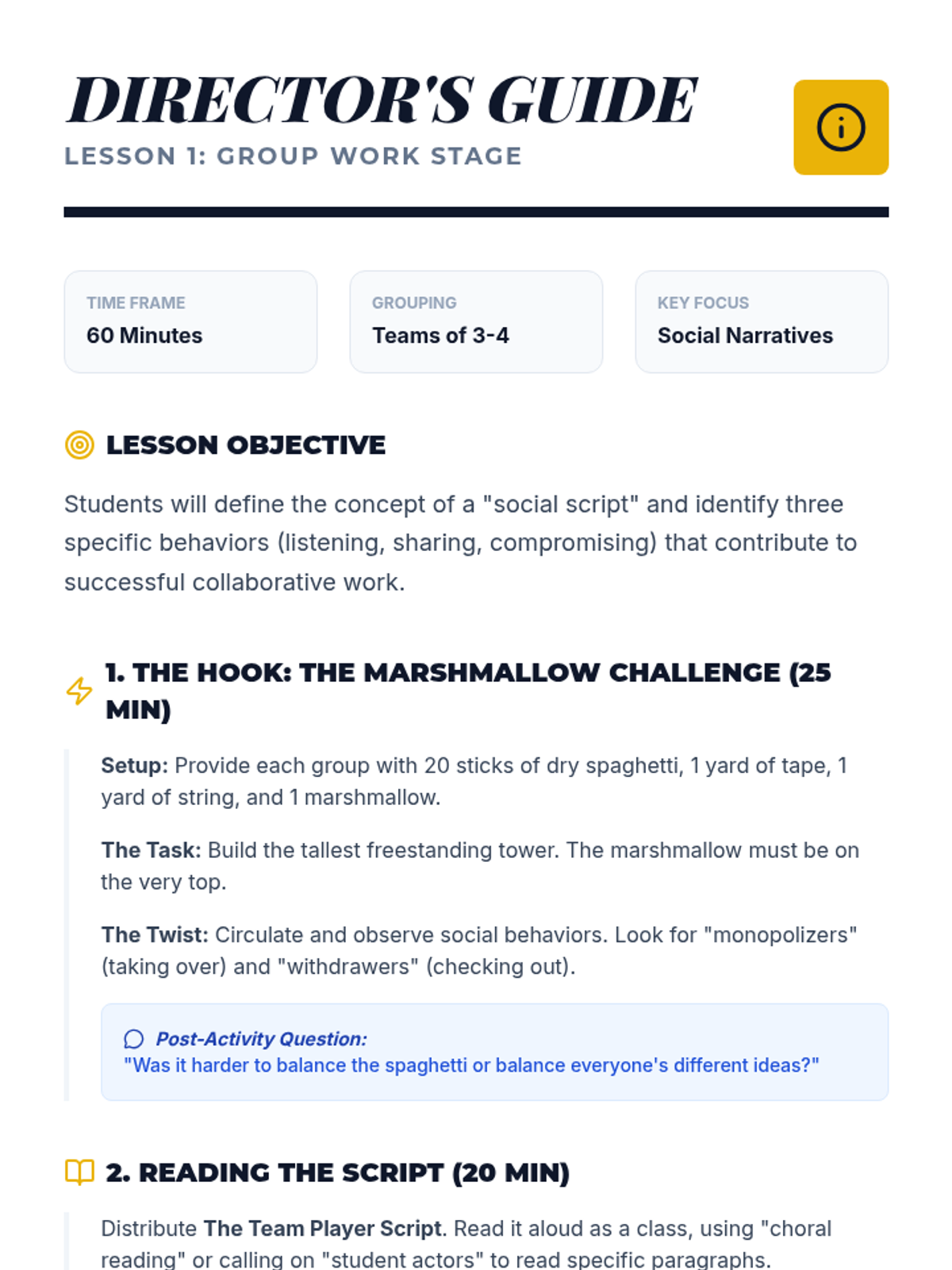
Students explore the roles and expectations within a collaborative group by reading a social narrative about sharing ideas and compromising, then applying it to a marshmallow tower building challenge.
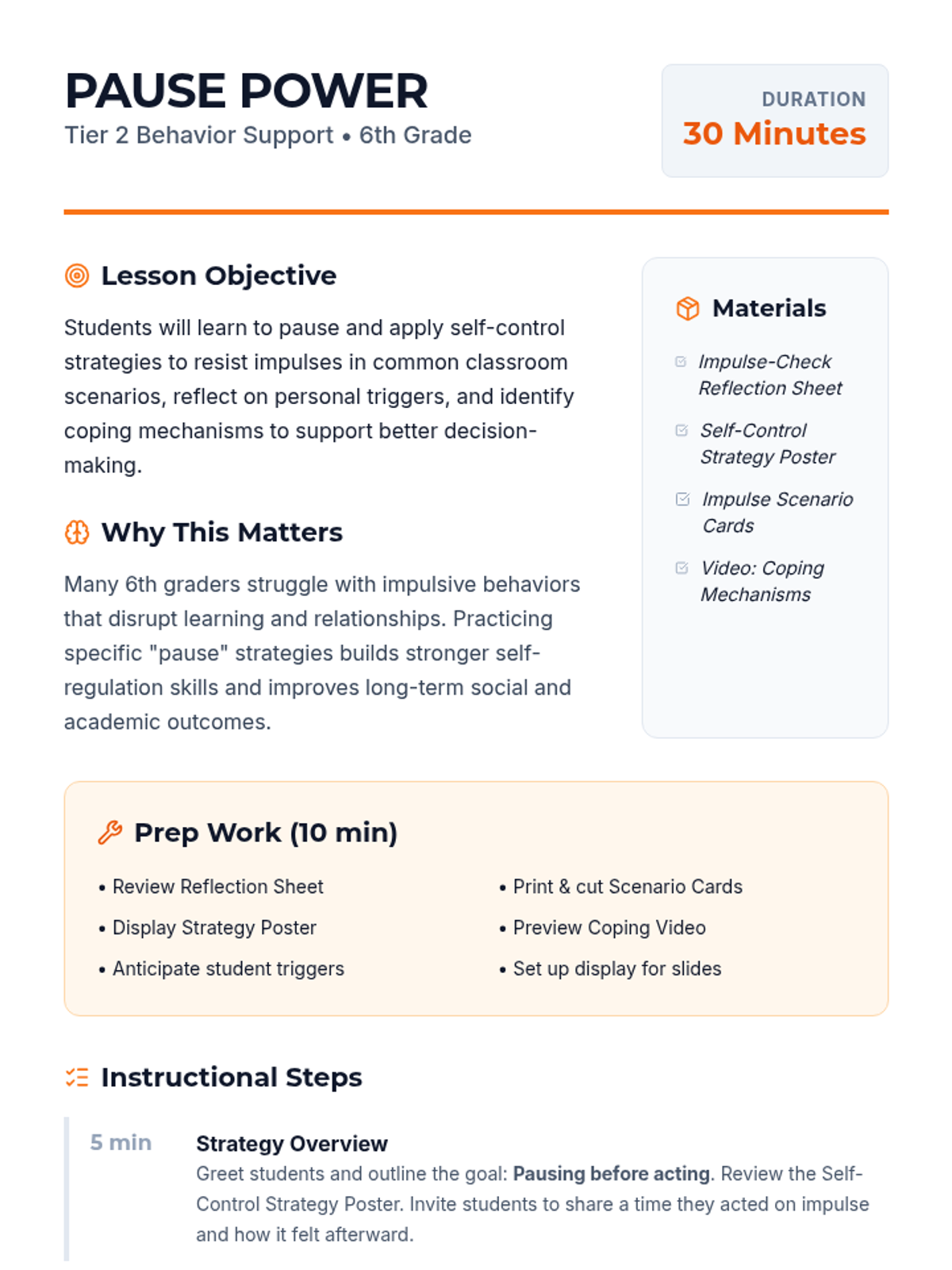
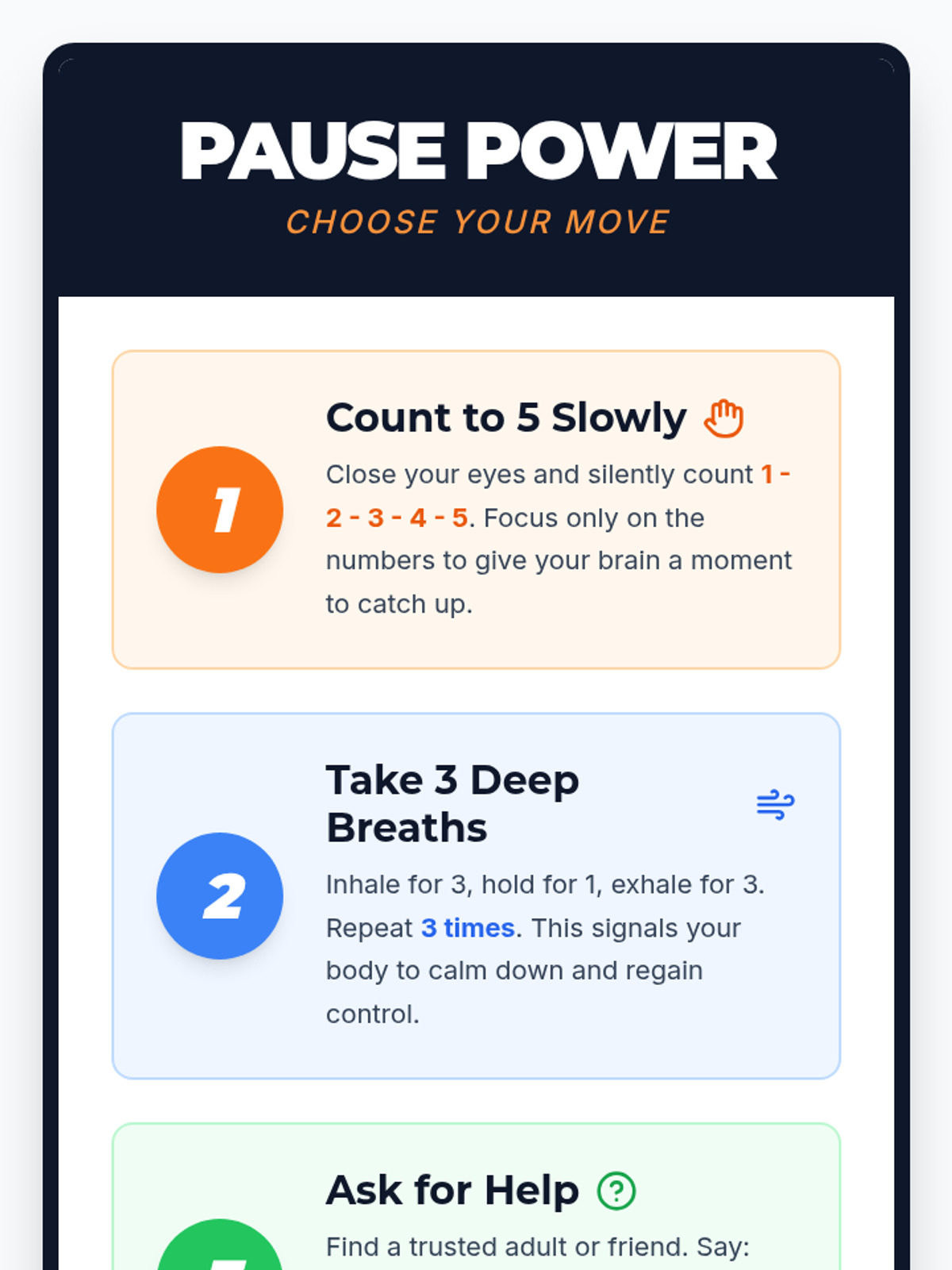
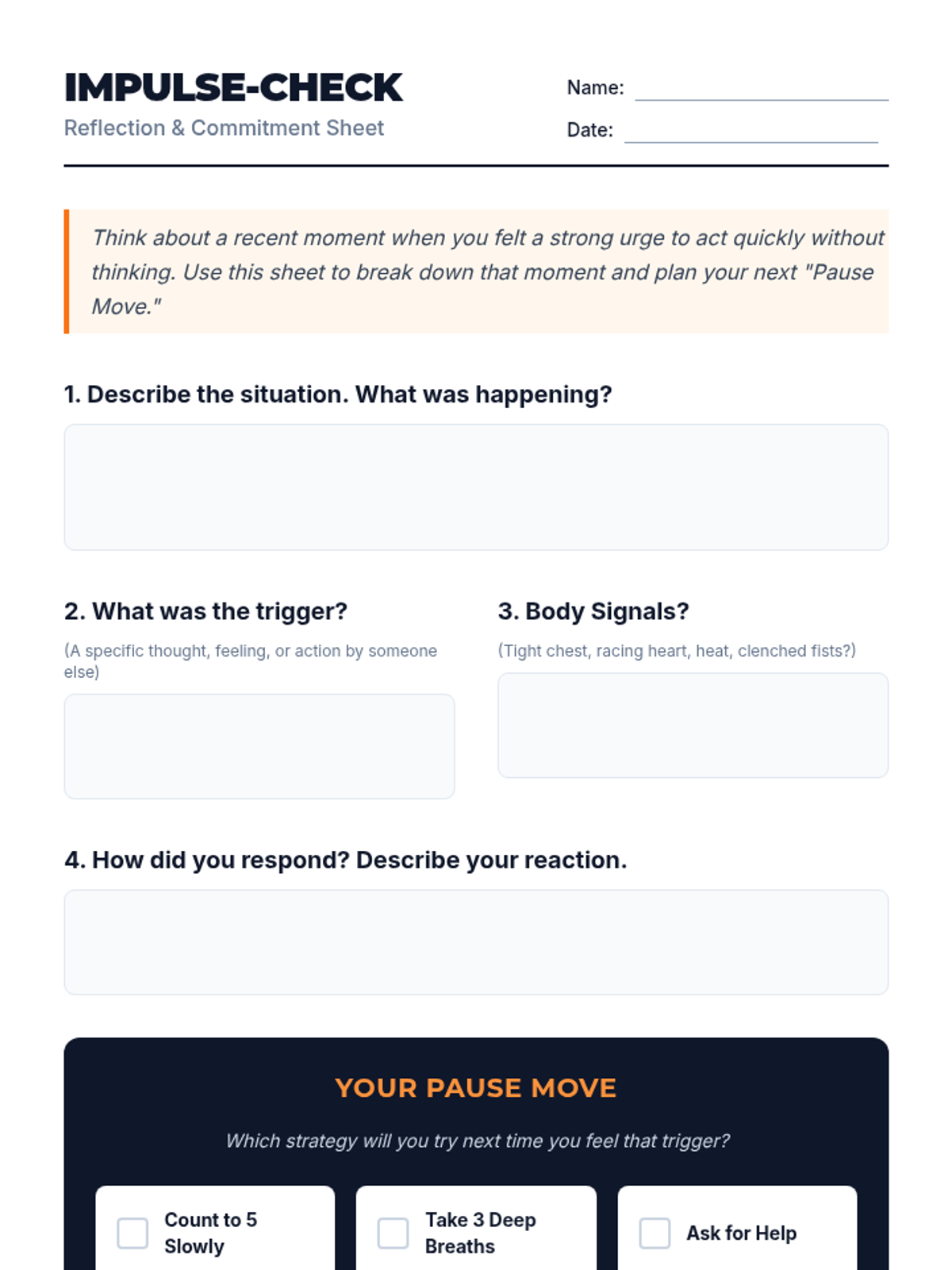
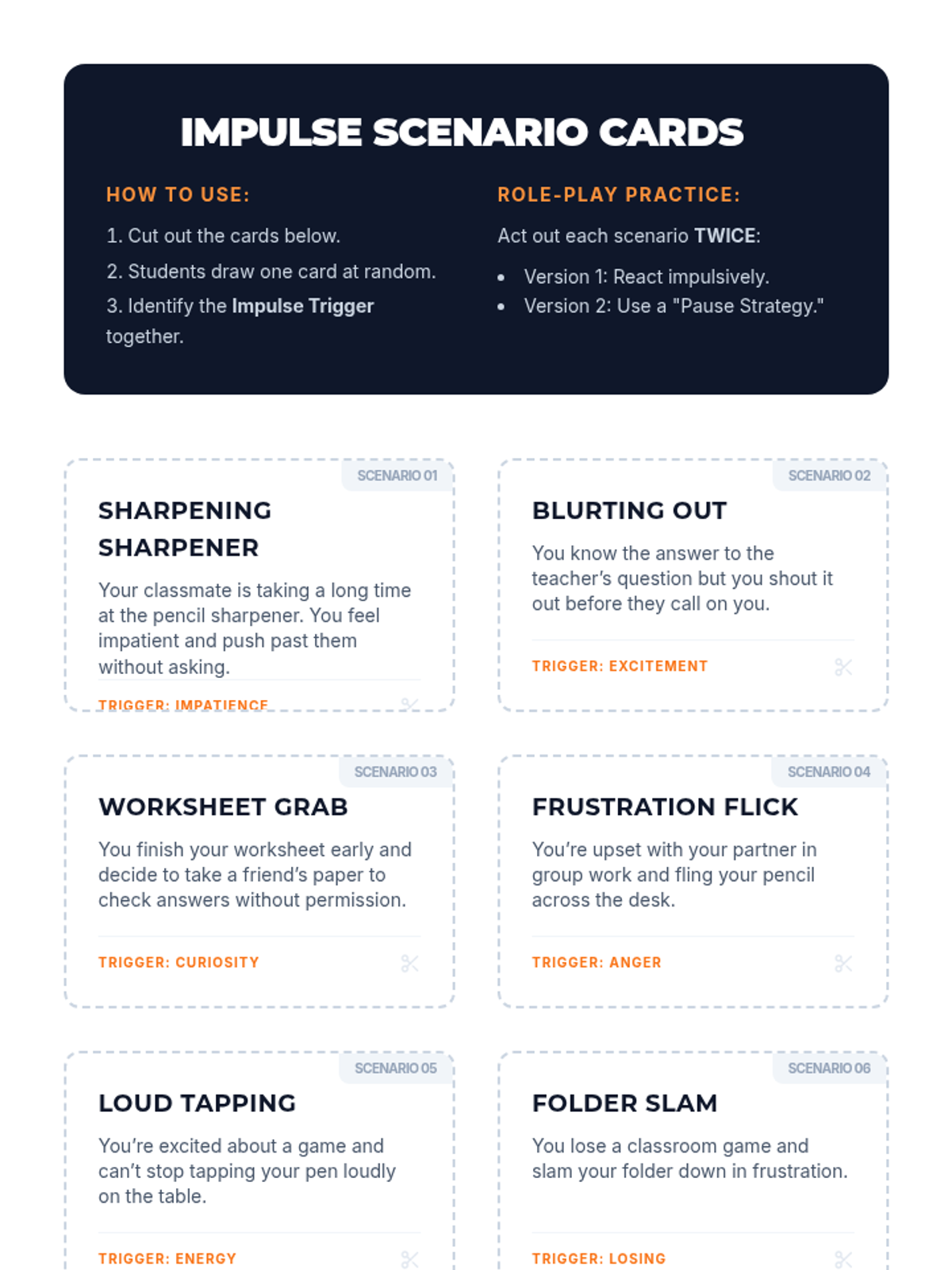
A 30-minute Tier 2 social-emotional learning lesson designed for 6th-grade students to practice self-control. Students explore impulse triggers, learn three core pause strategies, and practice making better decisions through role-play and reflection.
High-intensity support for chronically absent students (missing 10%+). Focuses on root-cause analysis, family casework, and removing systemic barriers through community collaboration.
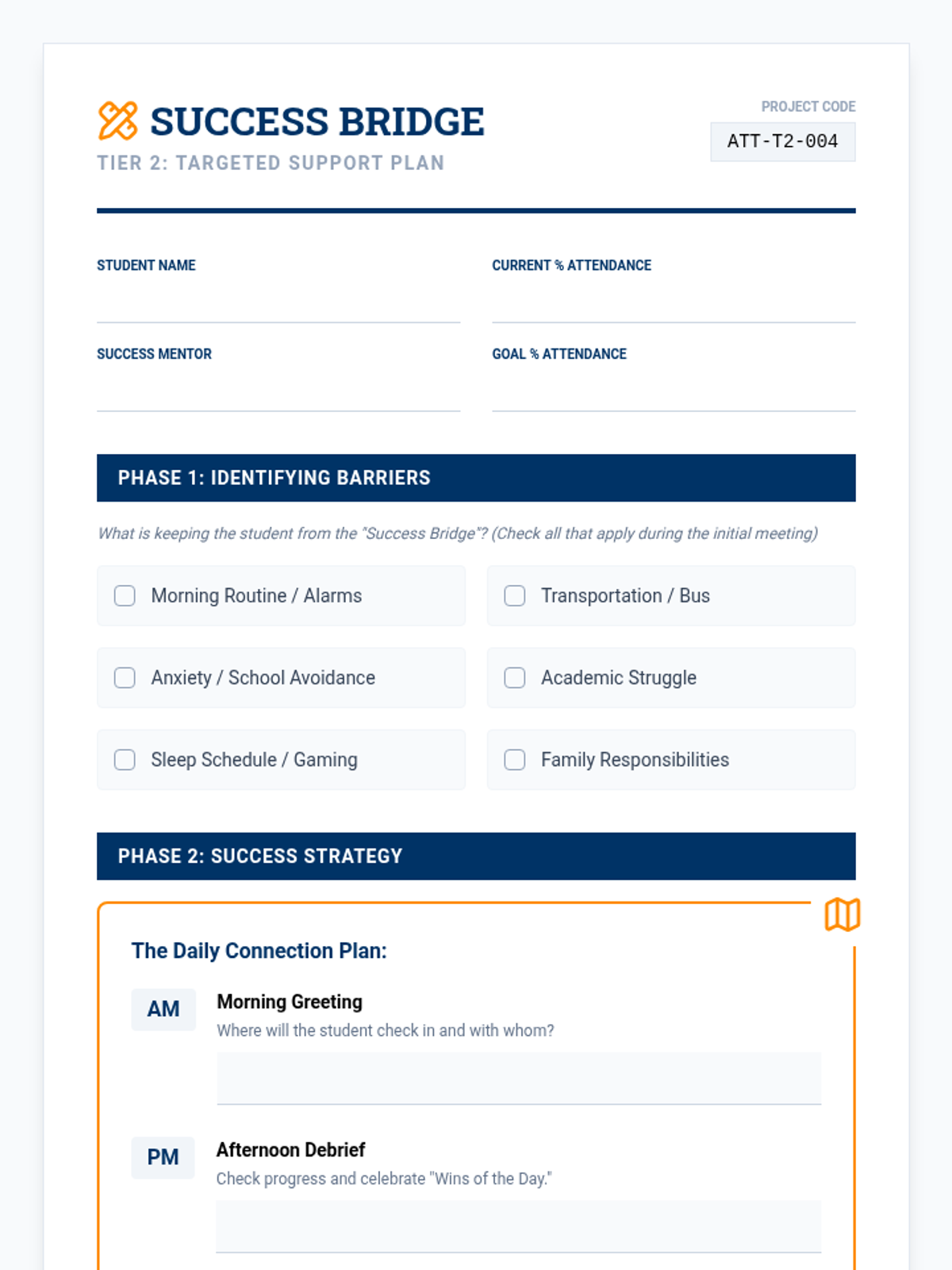
Identifying students at risk (missing 5-9% of school) and implementing early-warning interventions like Check-In/Check-Out and personalized success mapping.
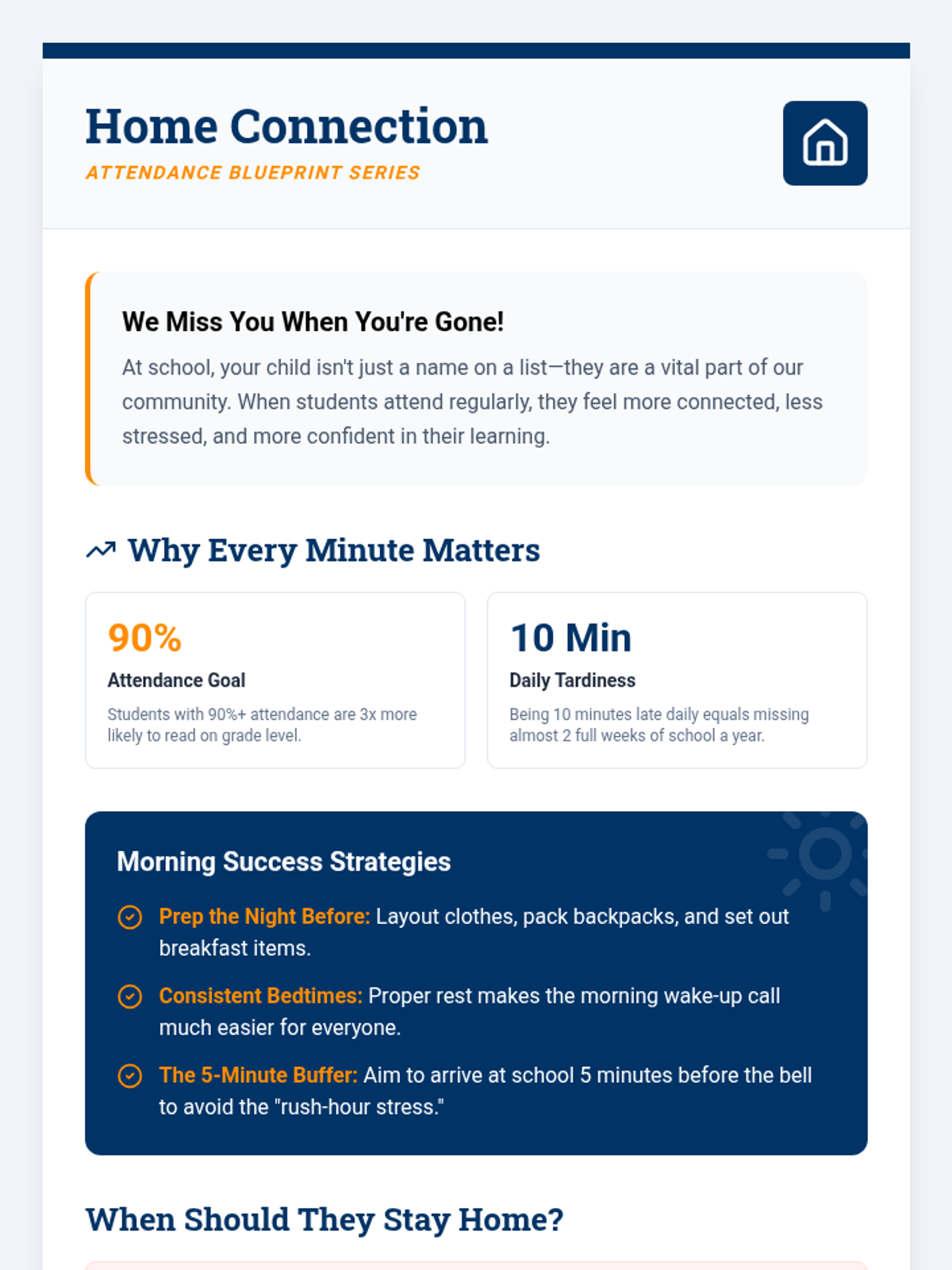
Establishing universal attendance expectations, building a culture of belonging, and communicating the "Every Minute Matters" philosophy to students and families.
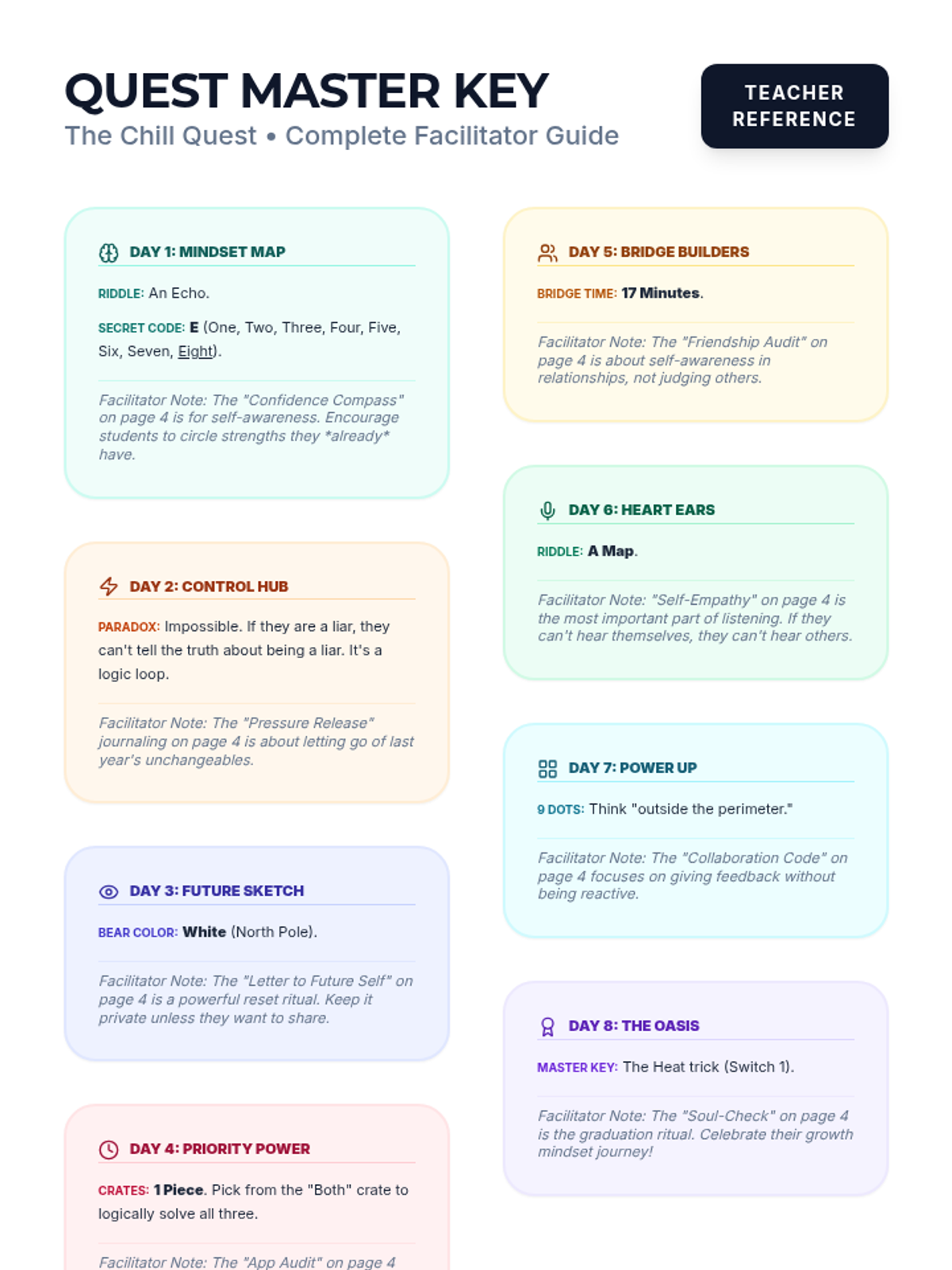
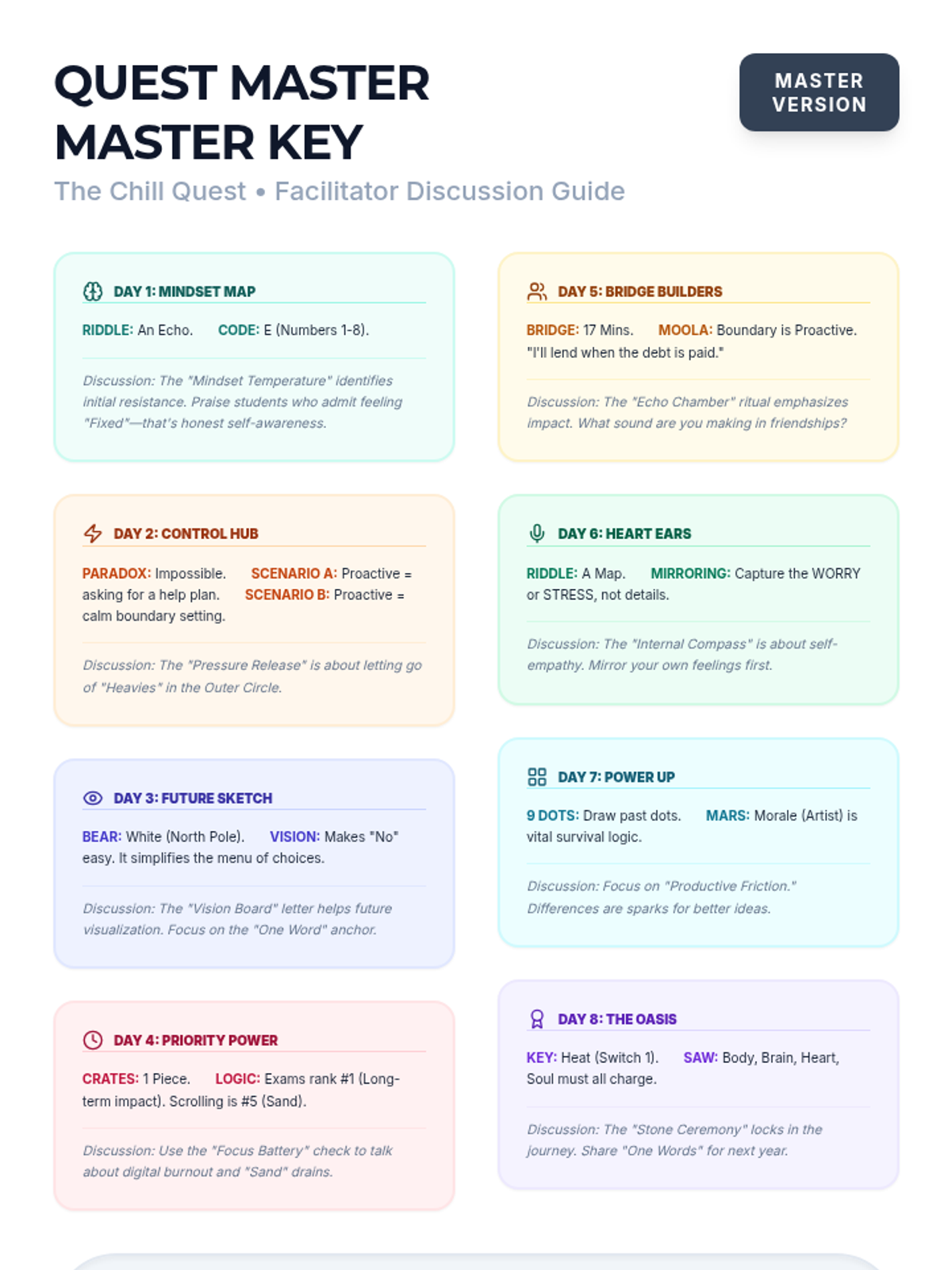
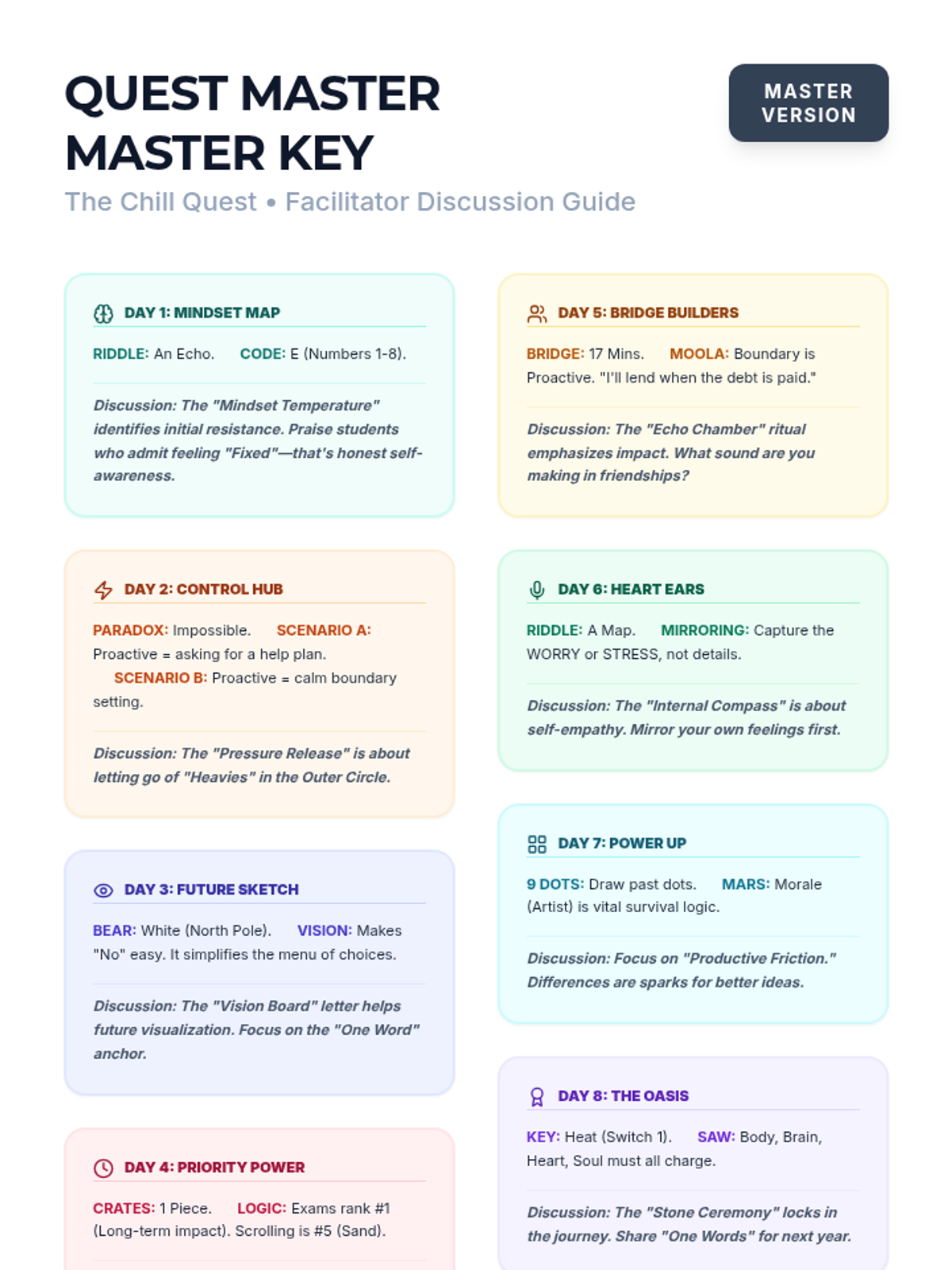
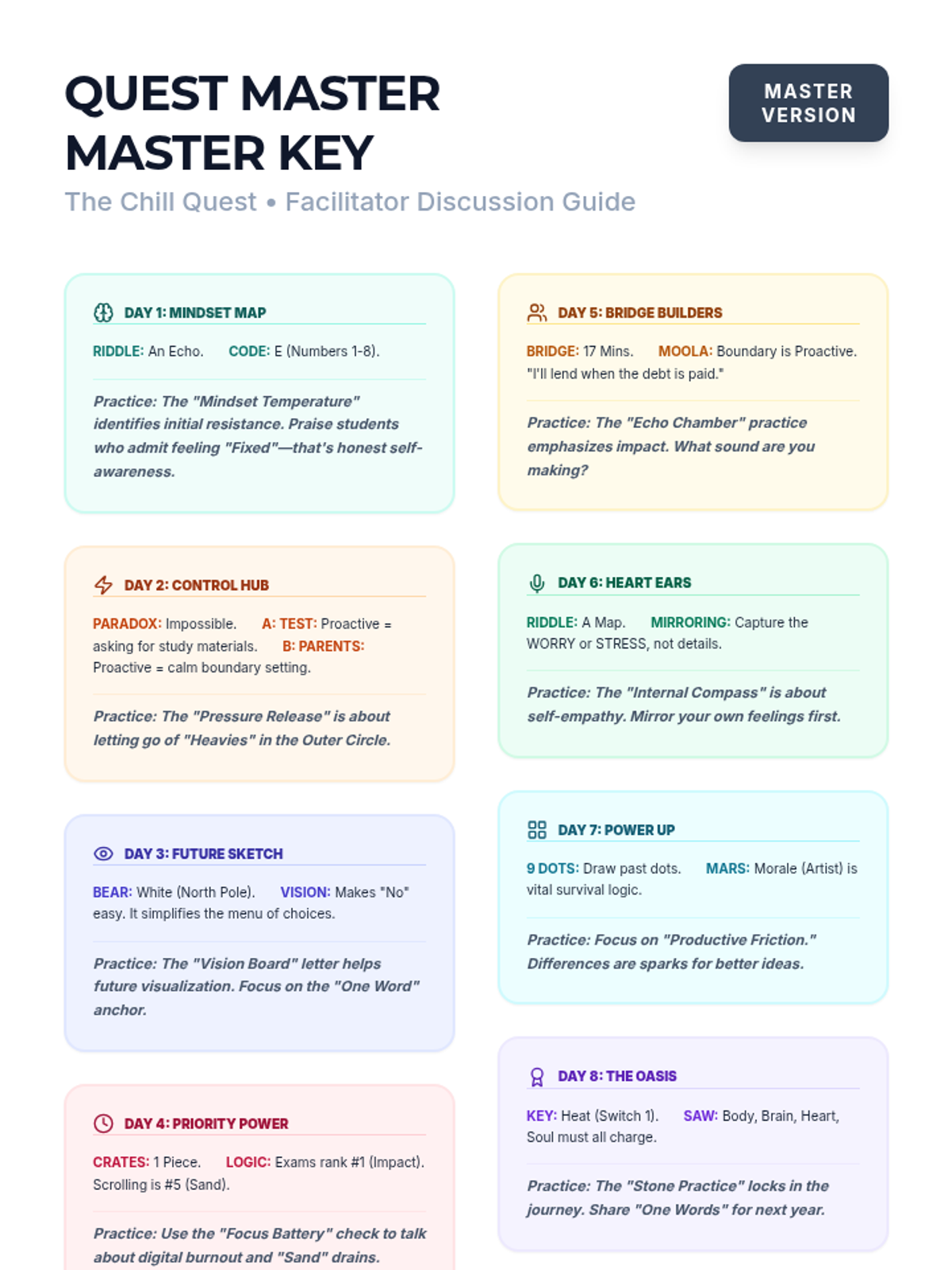
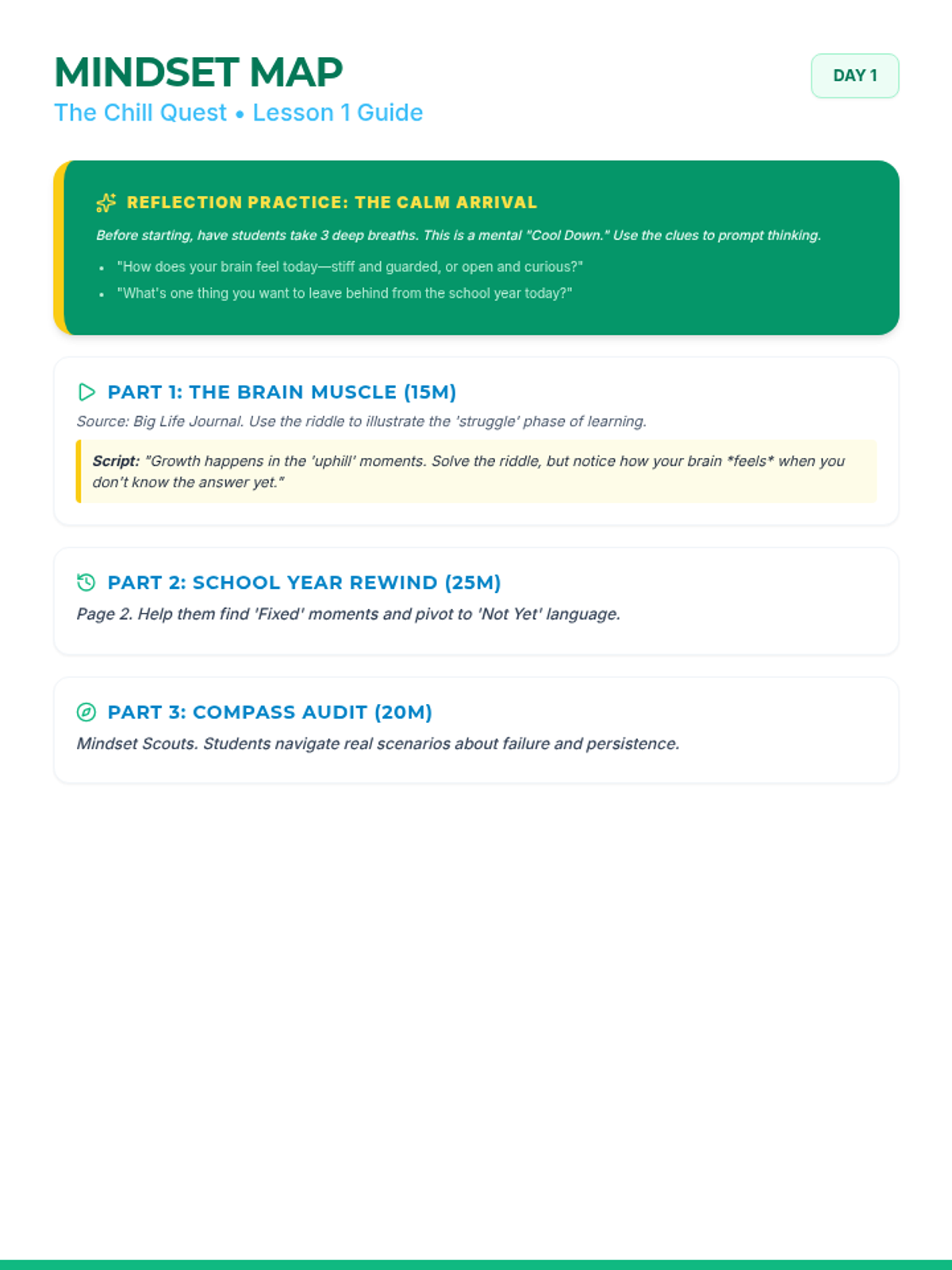
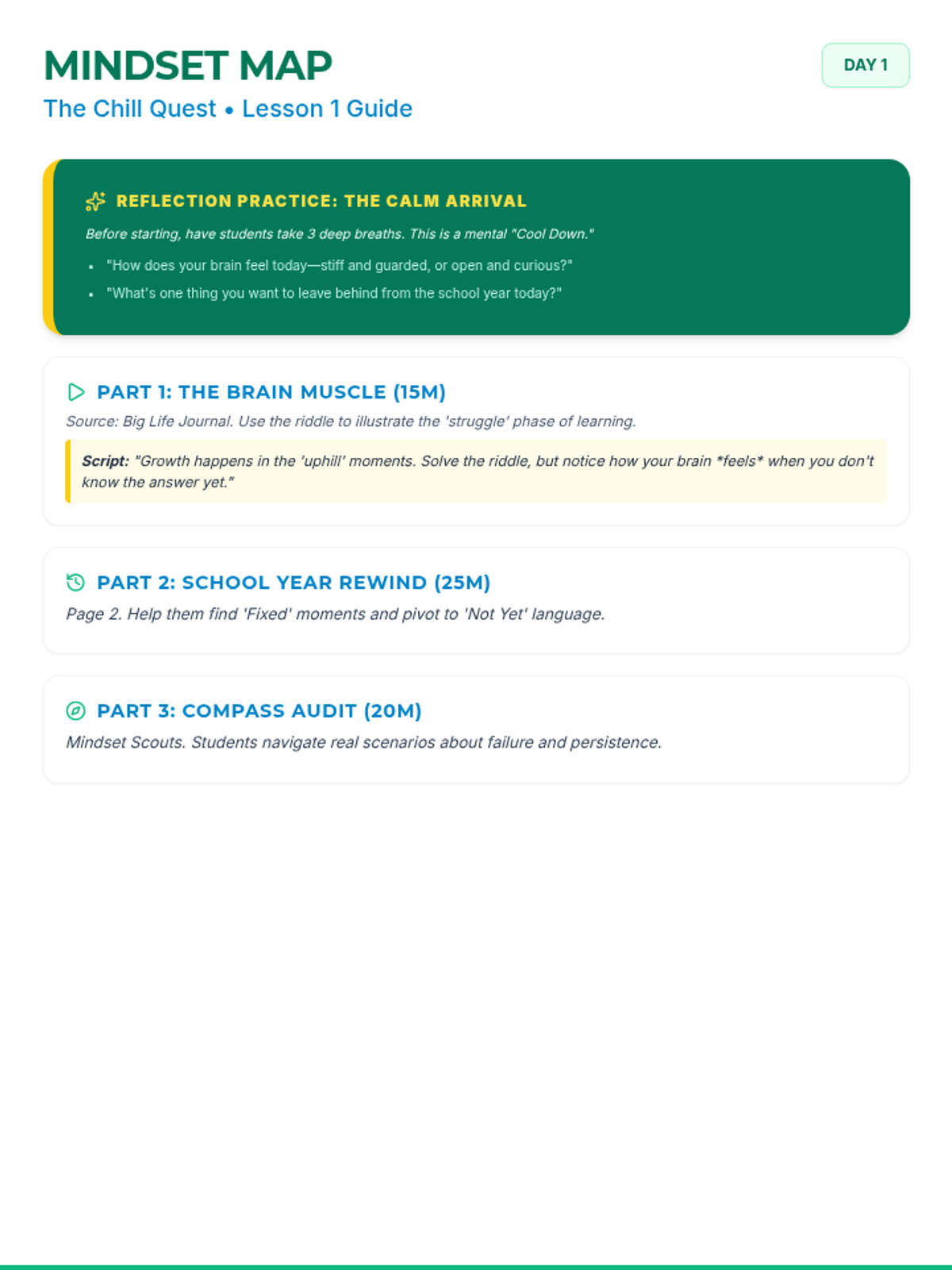
Complete Facilitator Answer Key and resources for The Chill Quest.
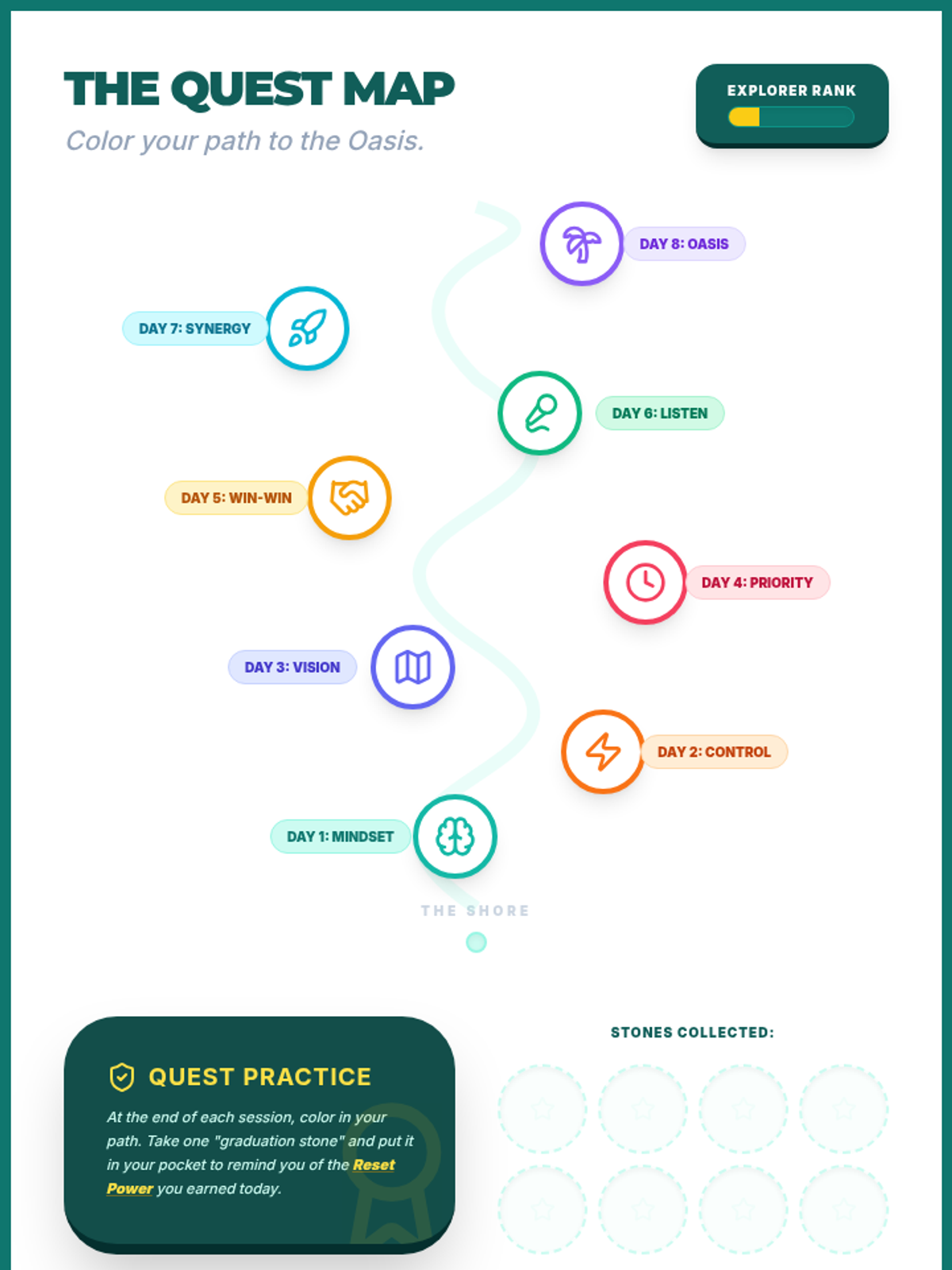
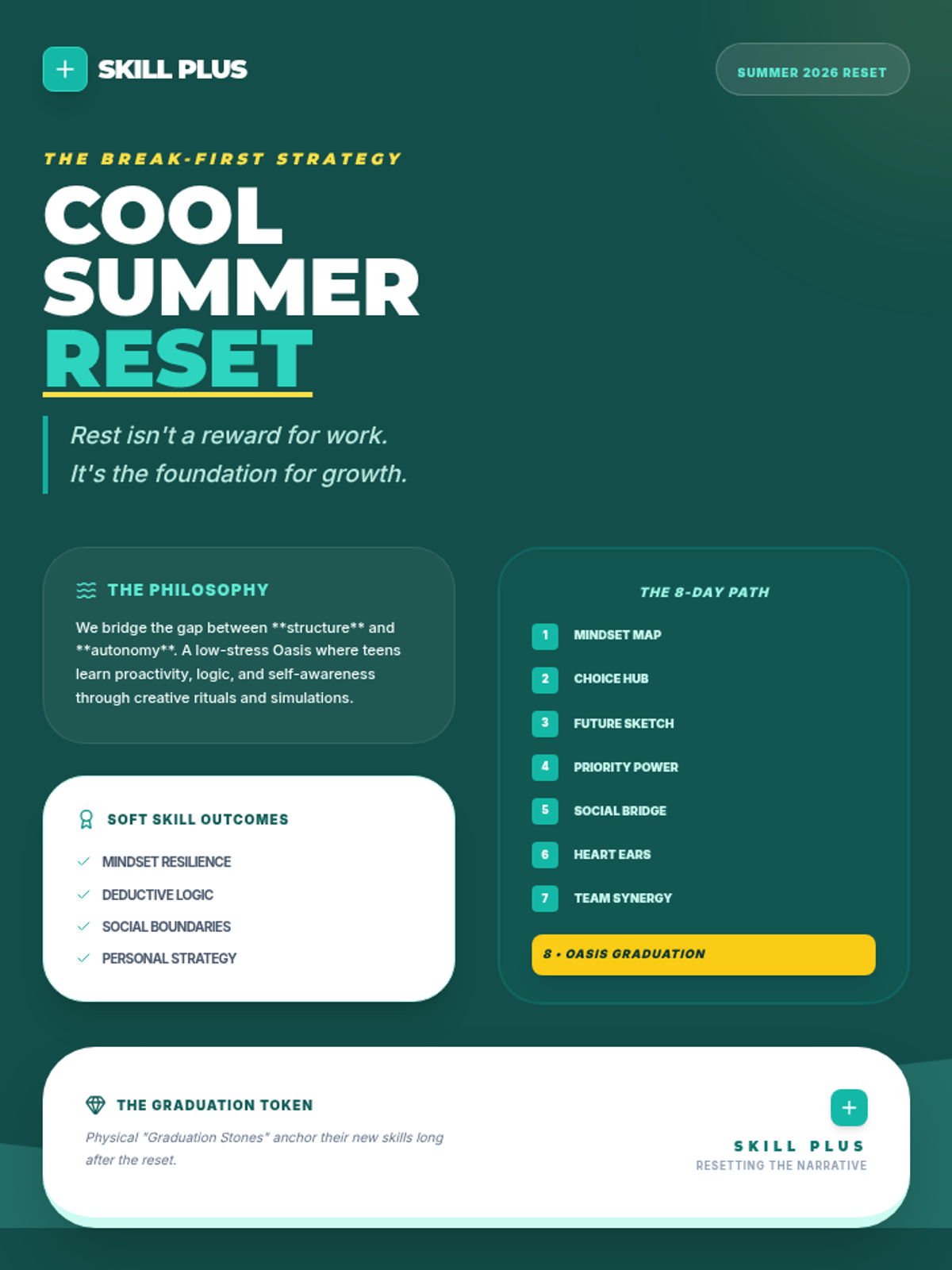
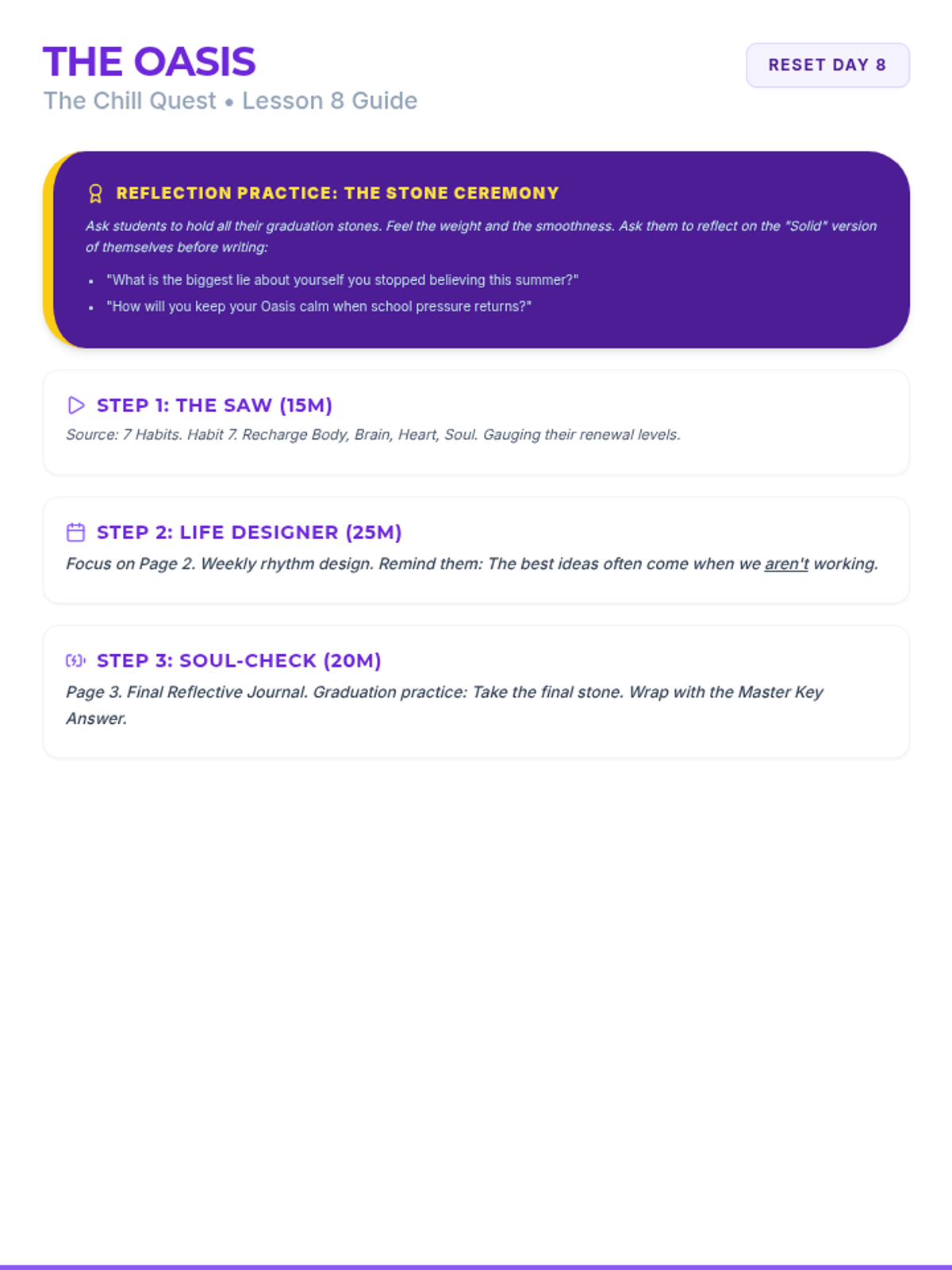
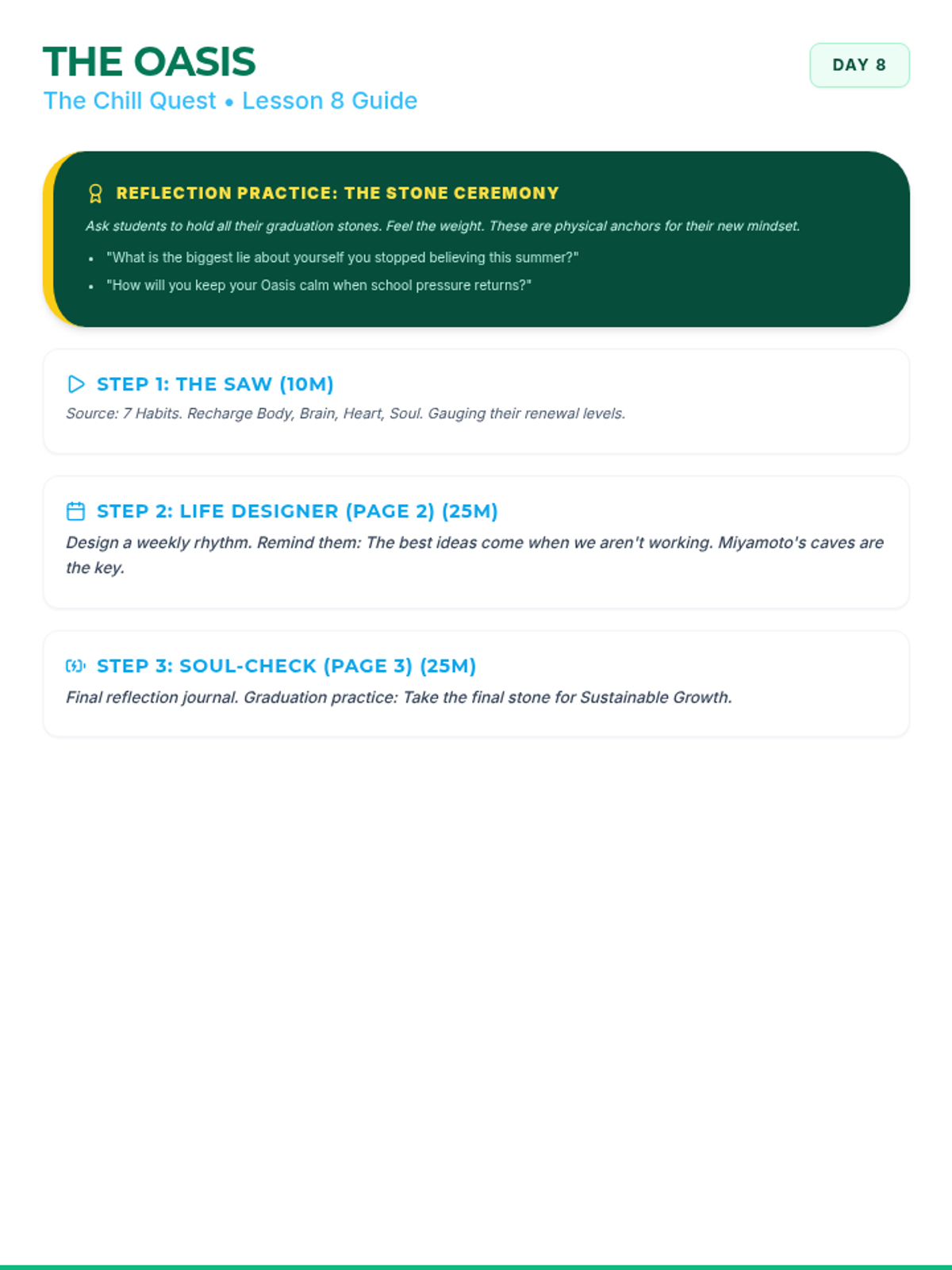
Focusing on self-care, renewal, and reflecting on the summer journey.
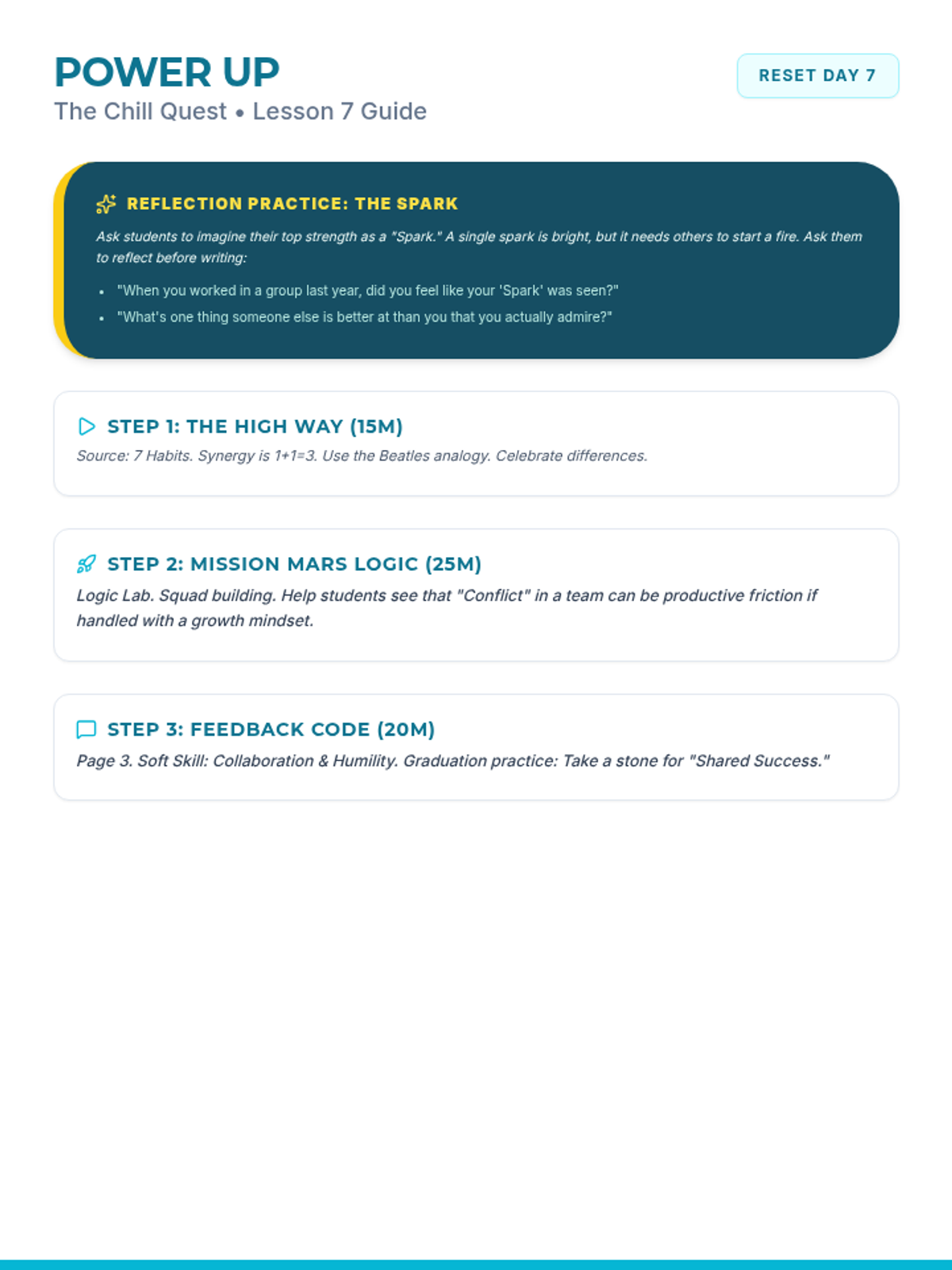
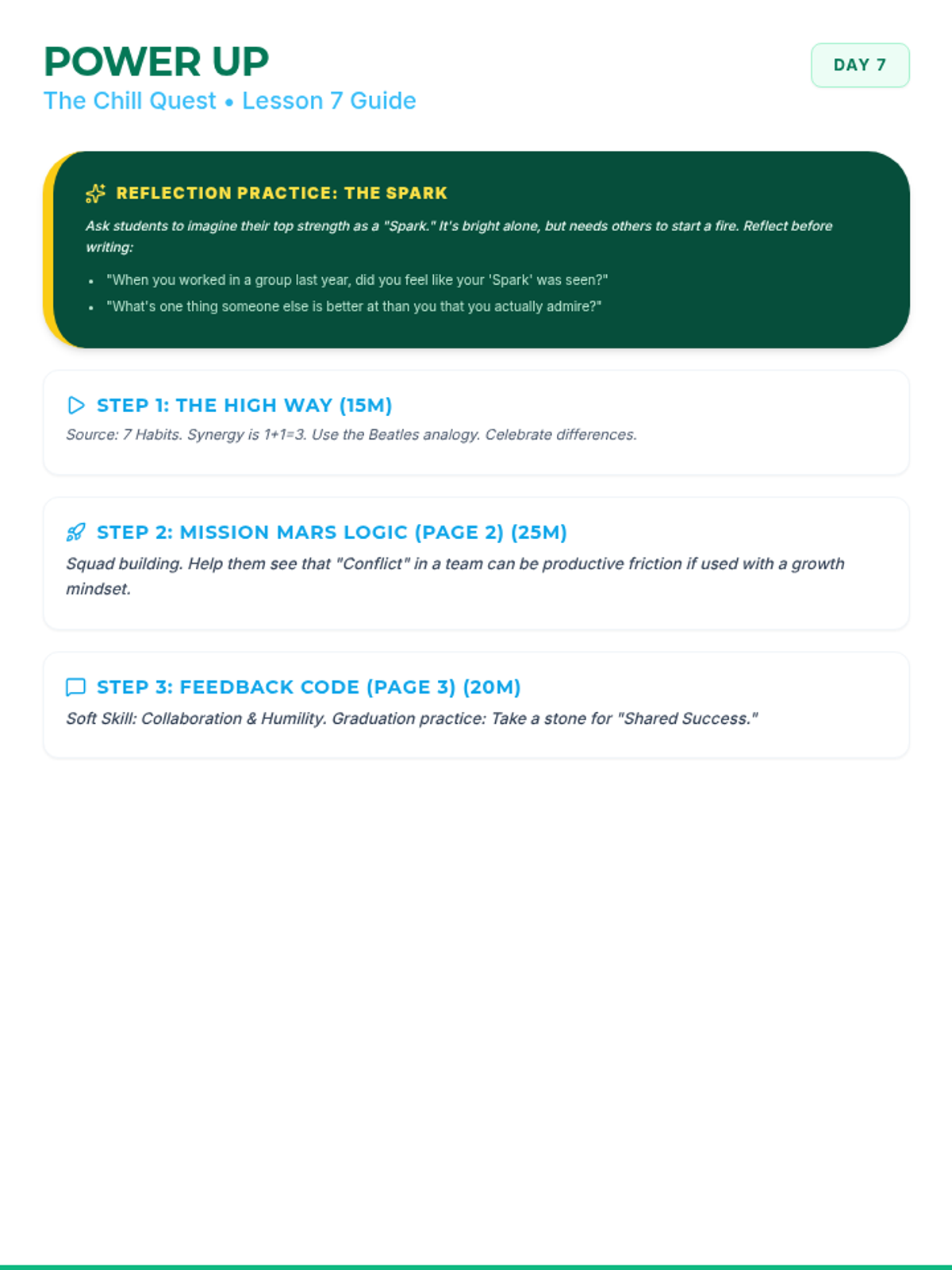
Exploring synergy and the power of working together through collaborative logic challenges.
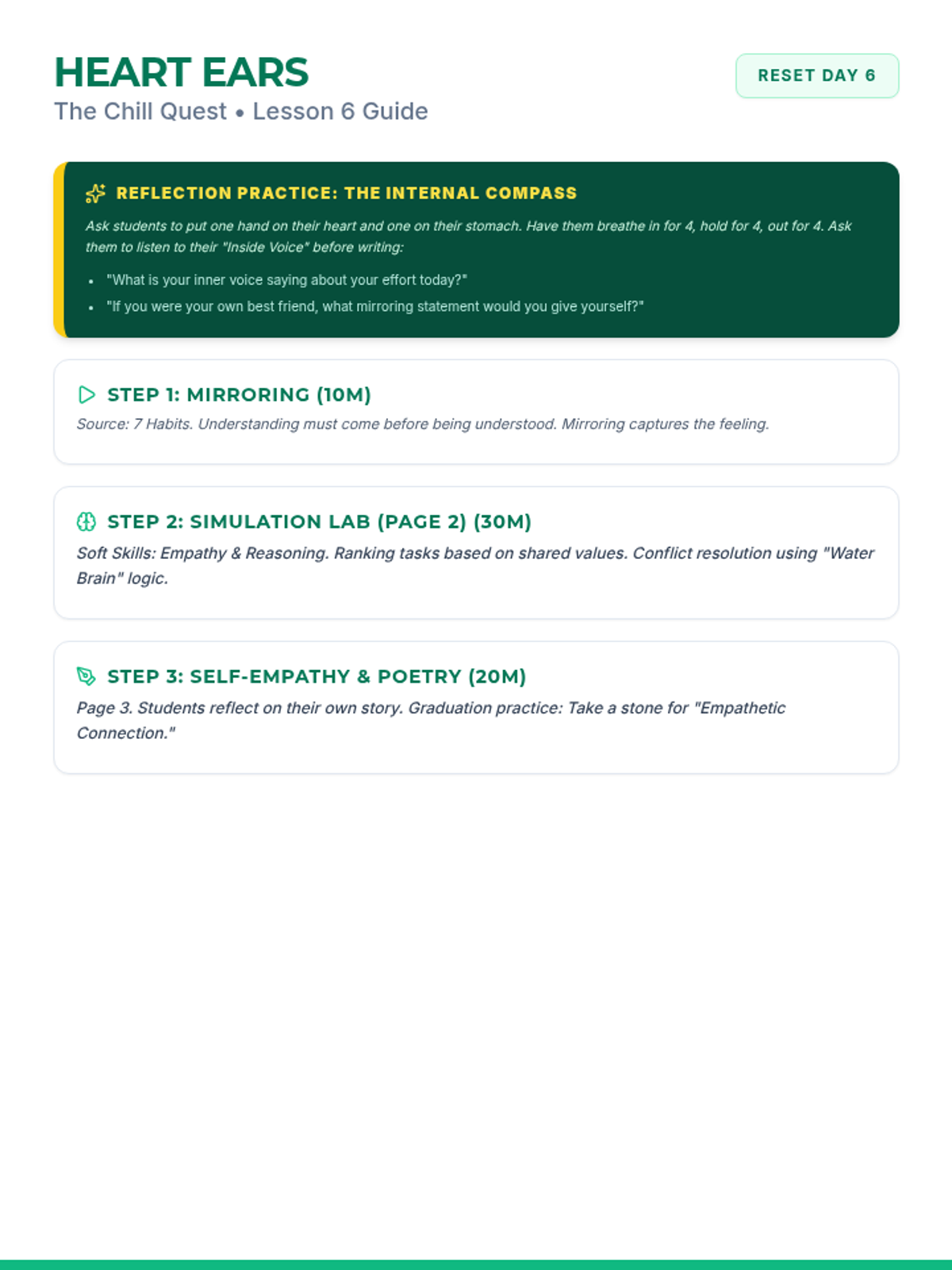
Mastering empathetic listening and reflective communication skills.
Developing a Win-Win mindset for healthier relationships and collaboration.
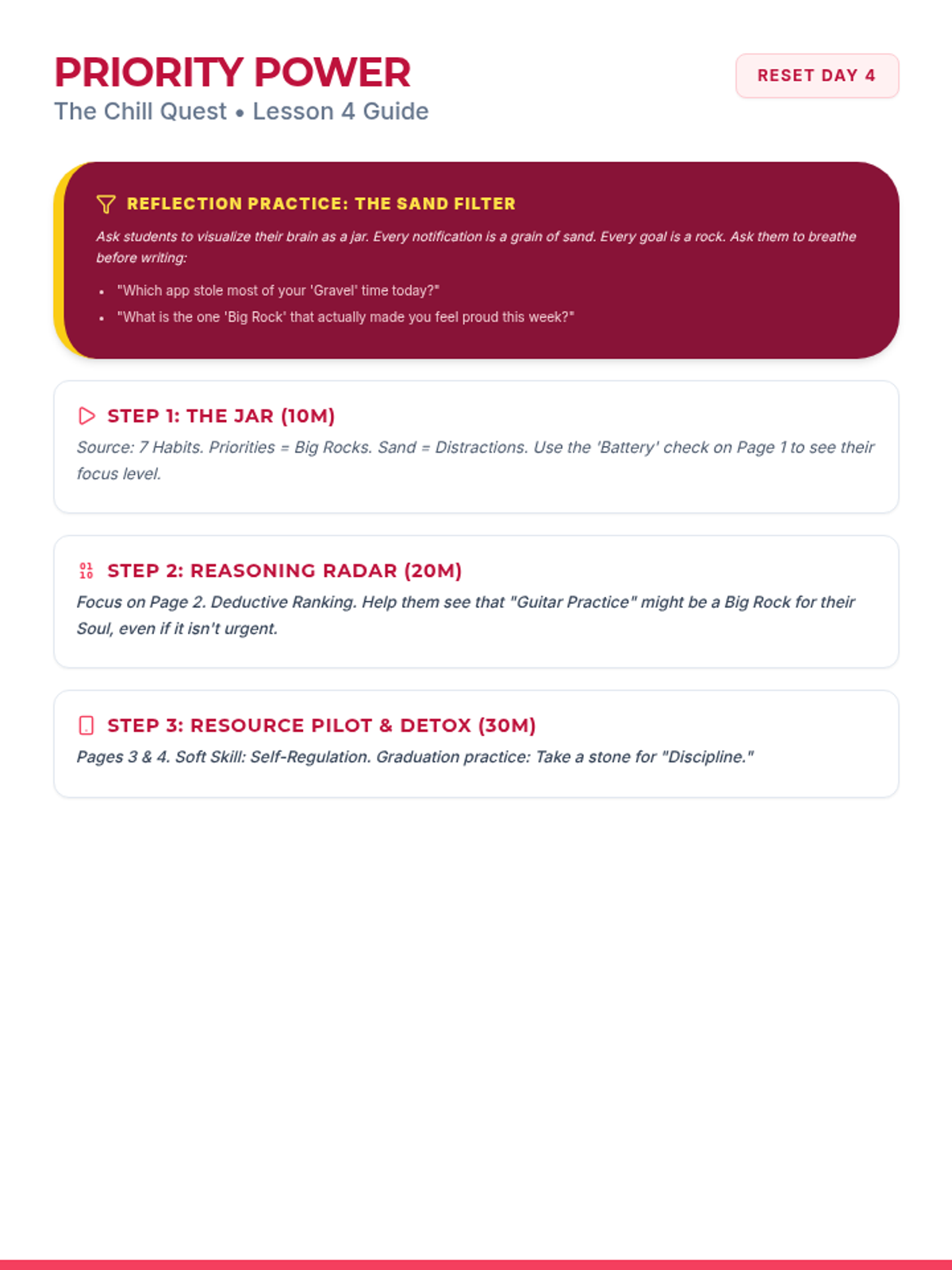
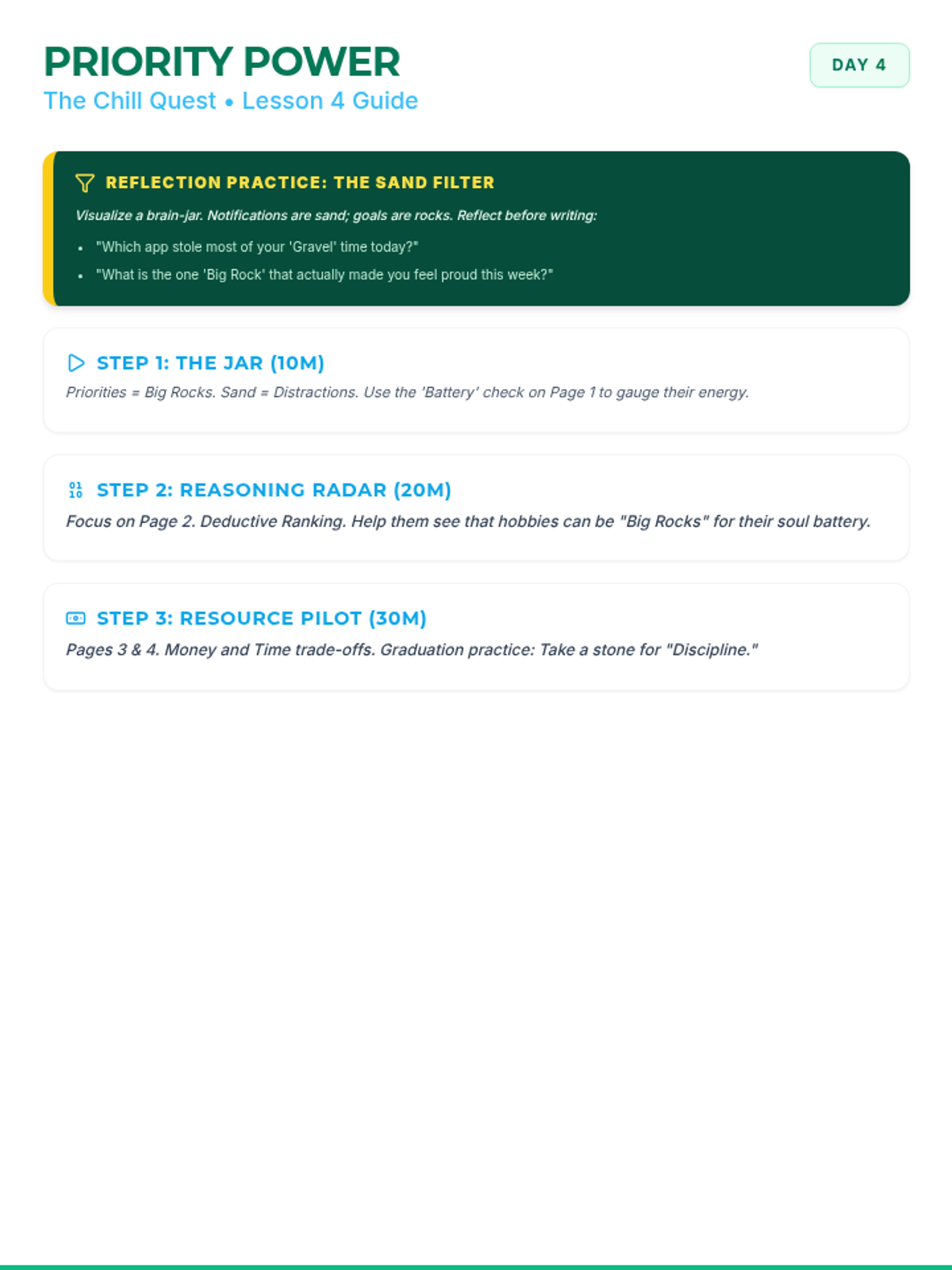
Learning prioritization and time management through the 'Big Rocks' concept.
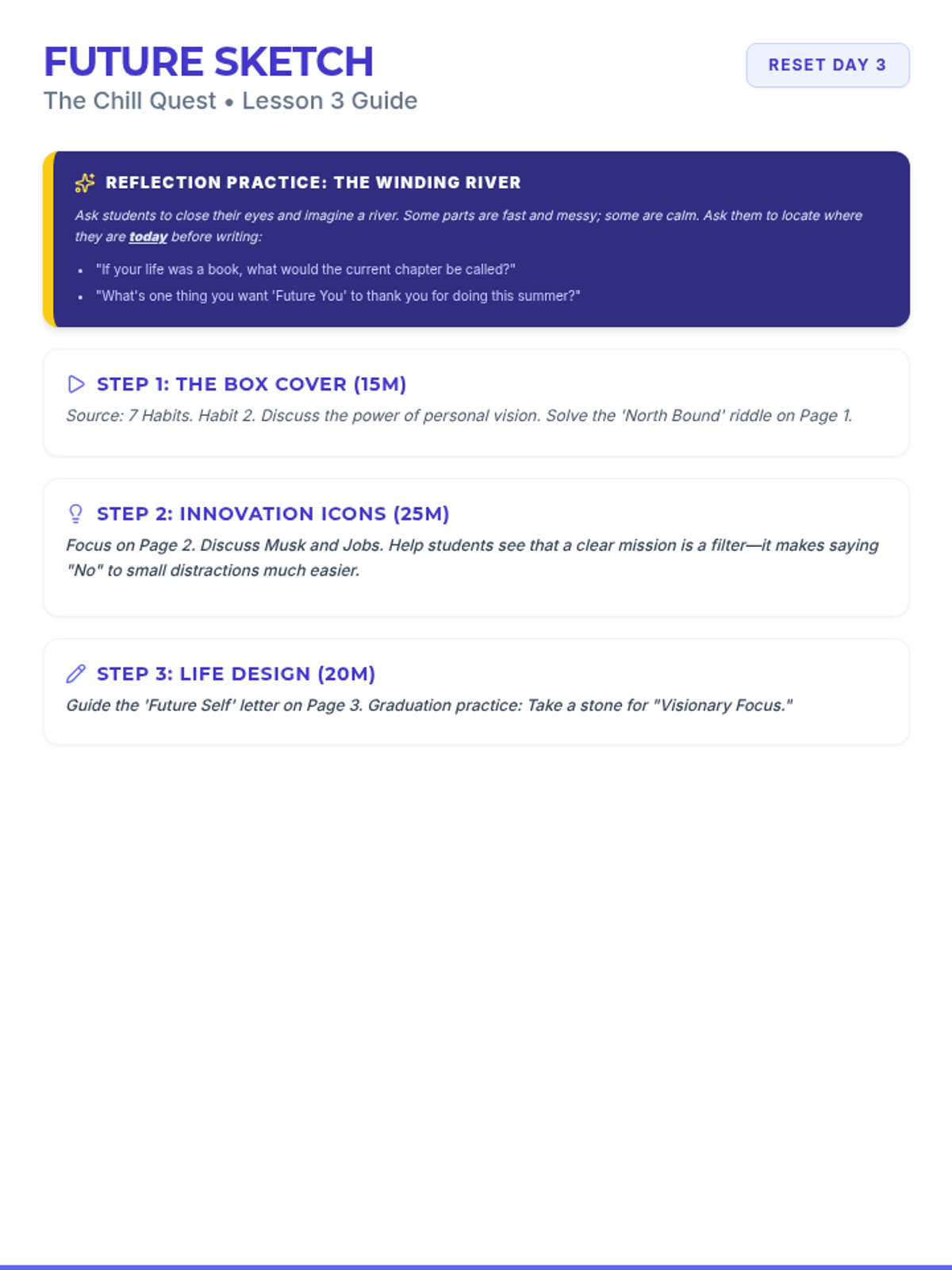
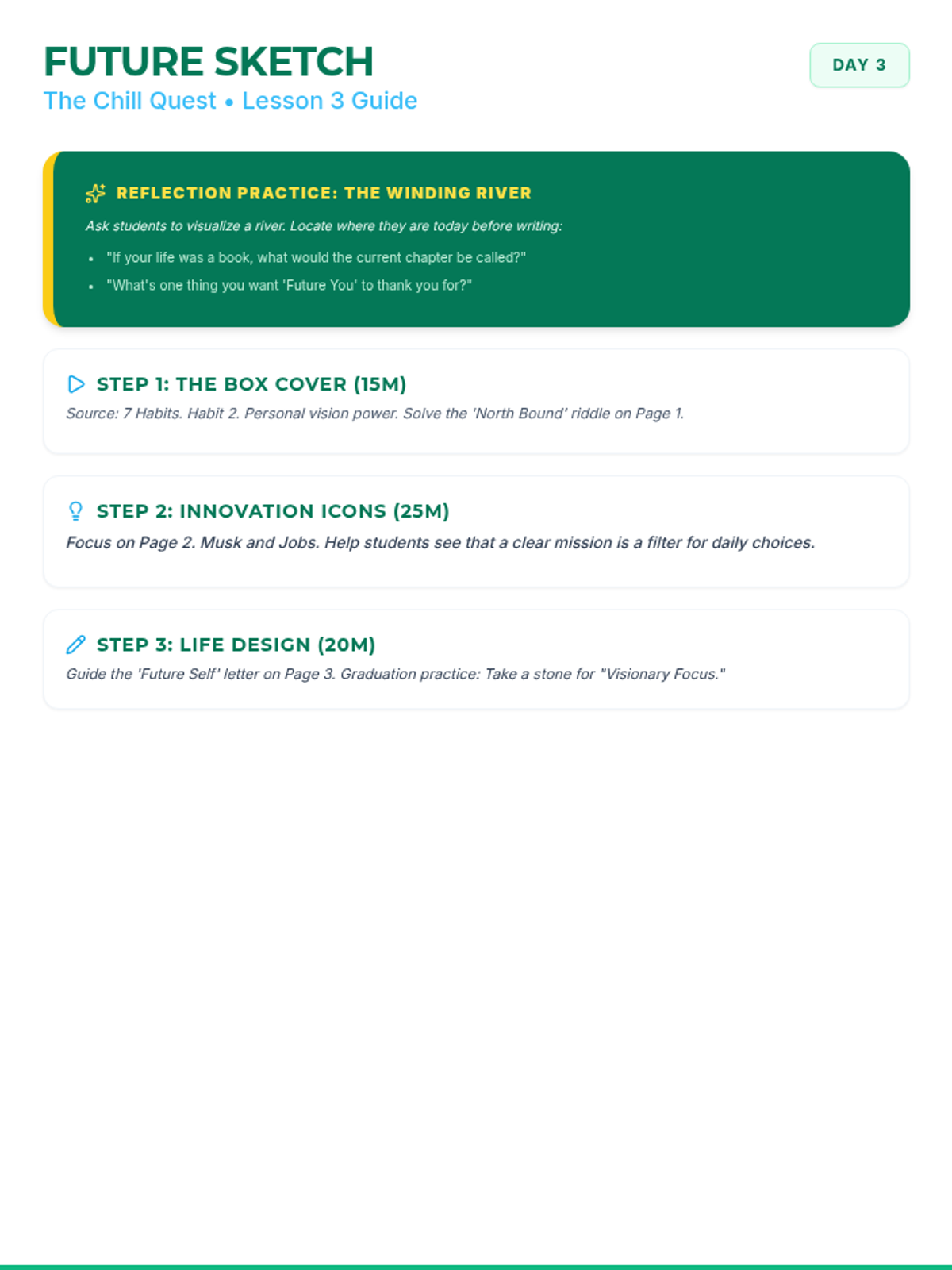
Setting goals and creating a personal vision statement for the future.
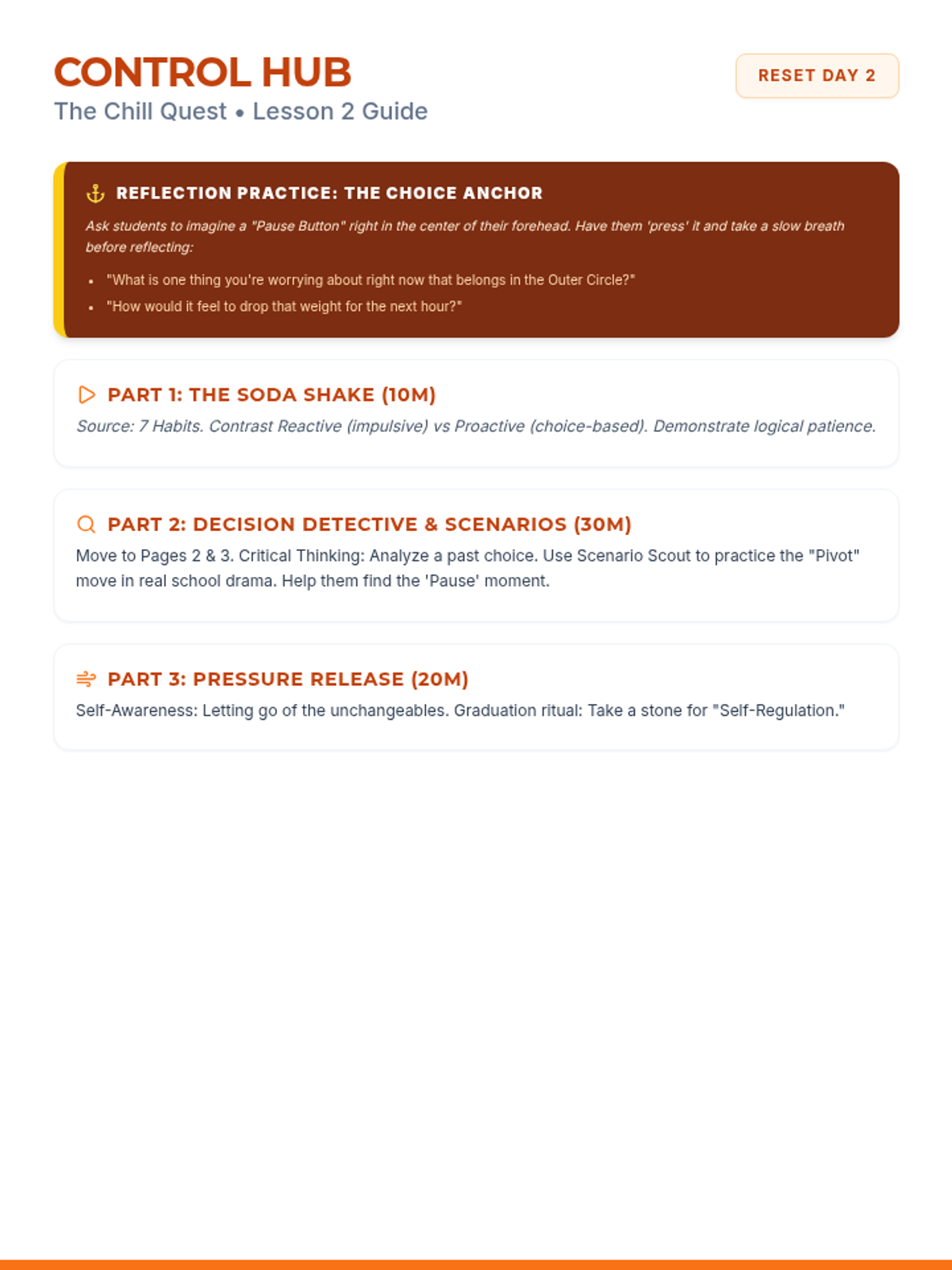
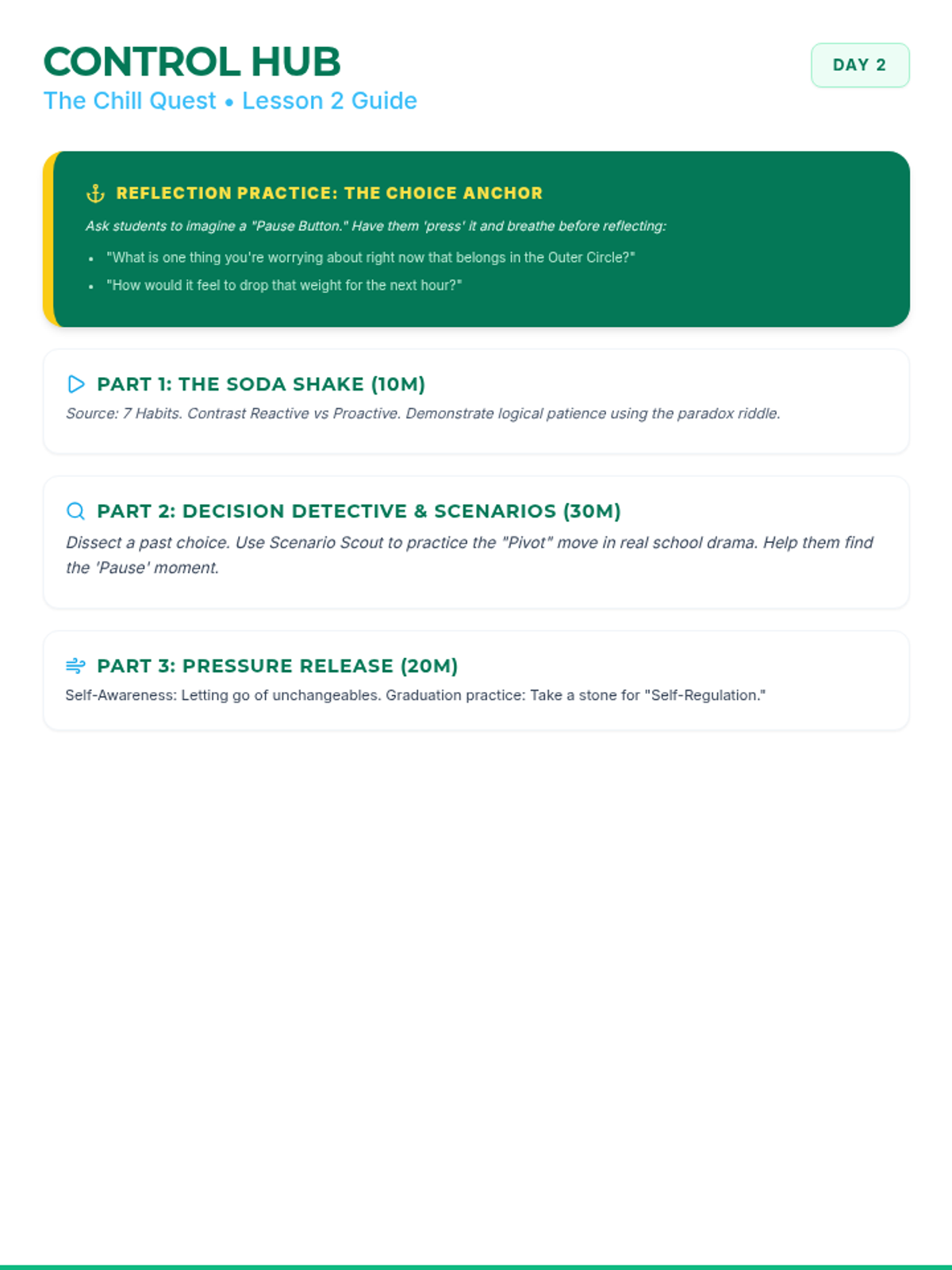
Exploring proactivity and the Circle of Control using the 7 Habits framework.
Introduction to fixed vs. growth mindsets using Big Life Journal concepts and brain-teasers.
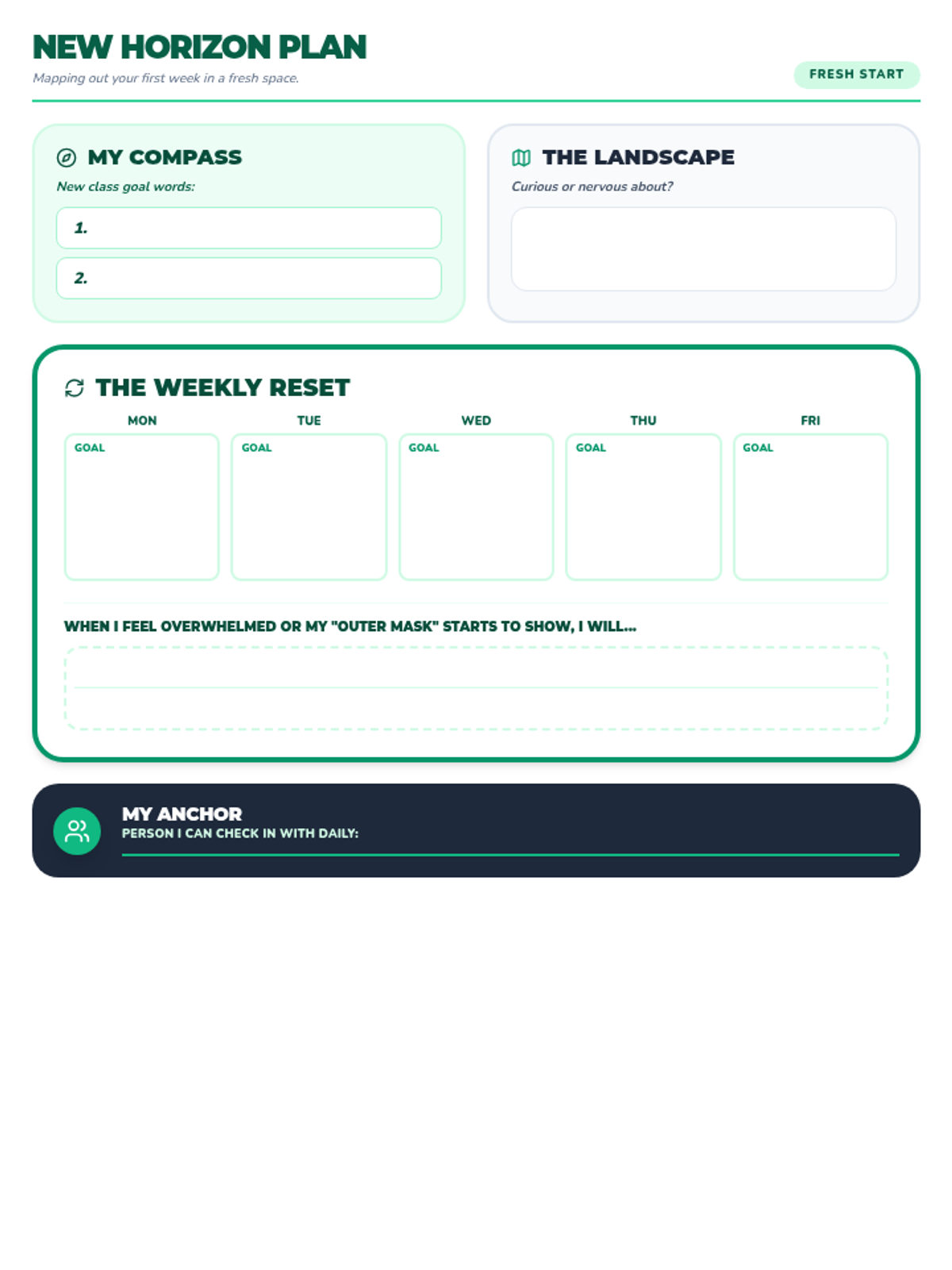
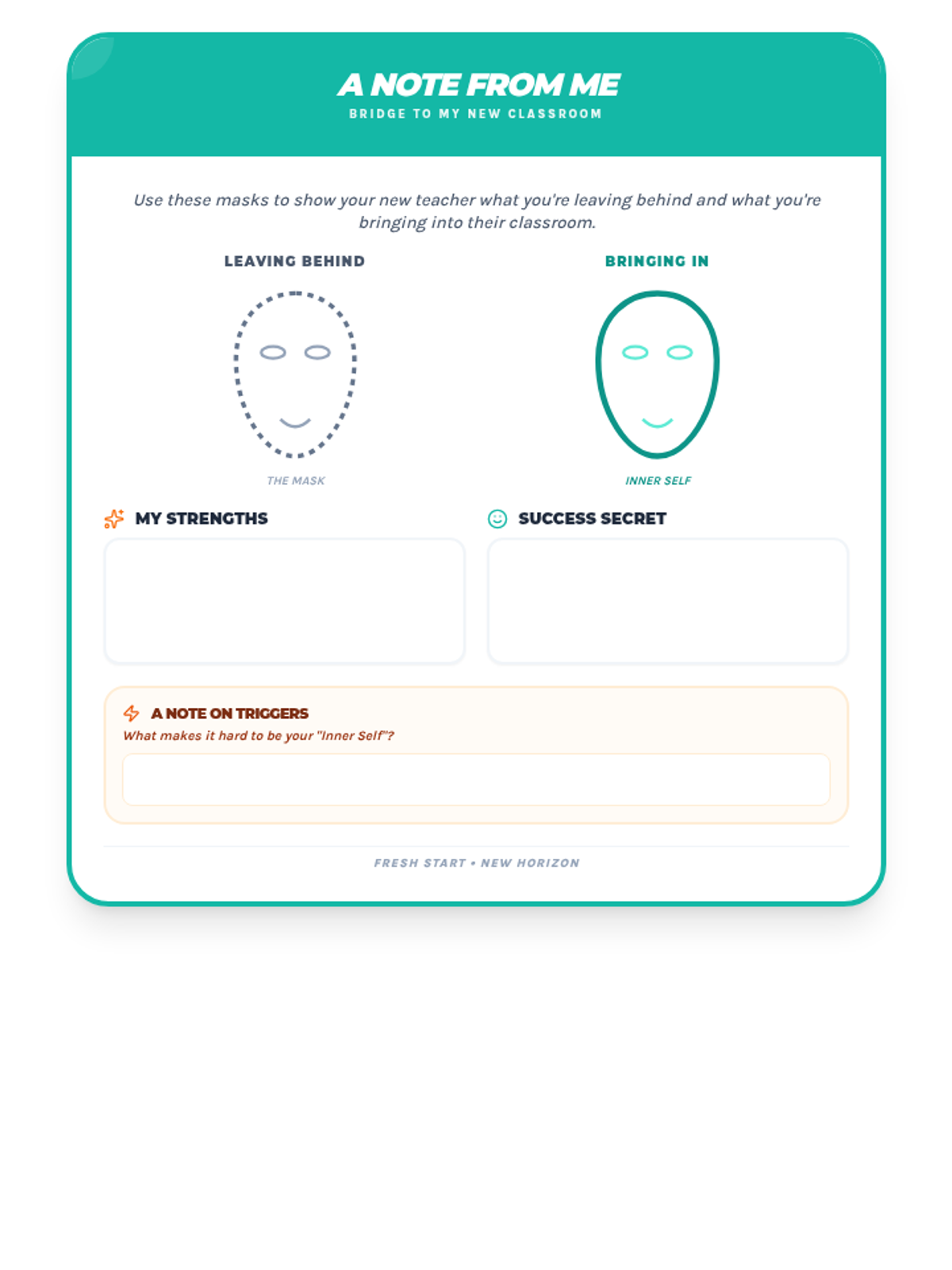
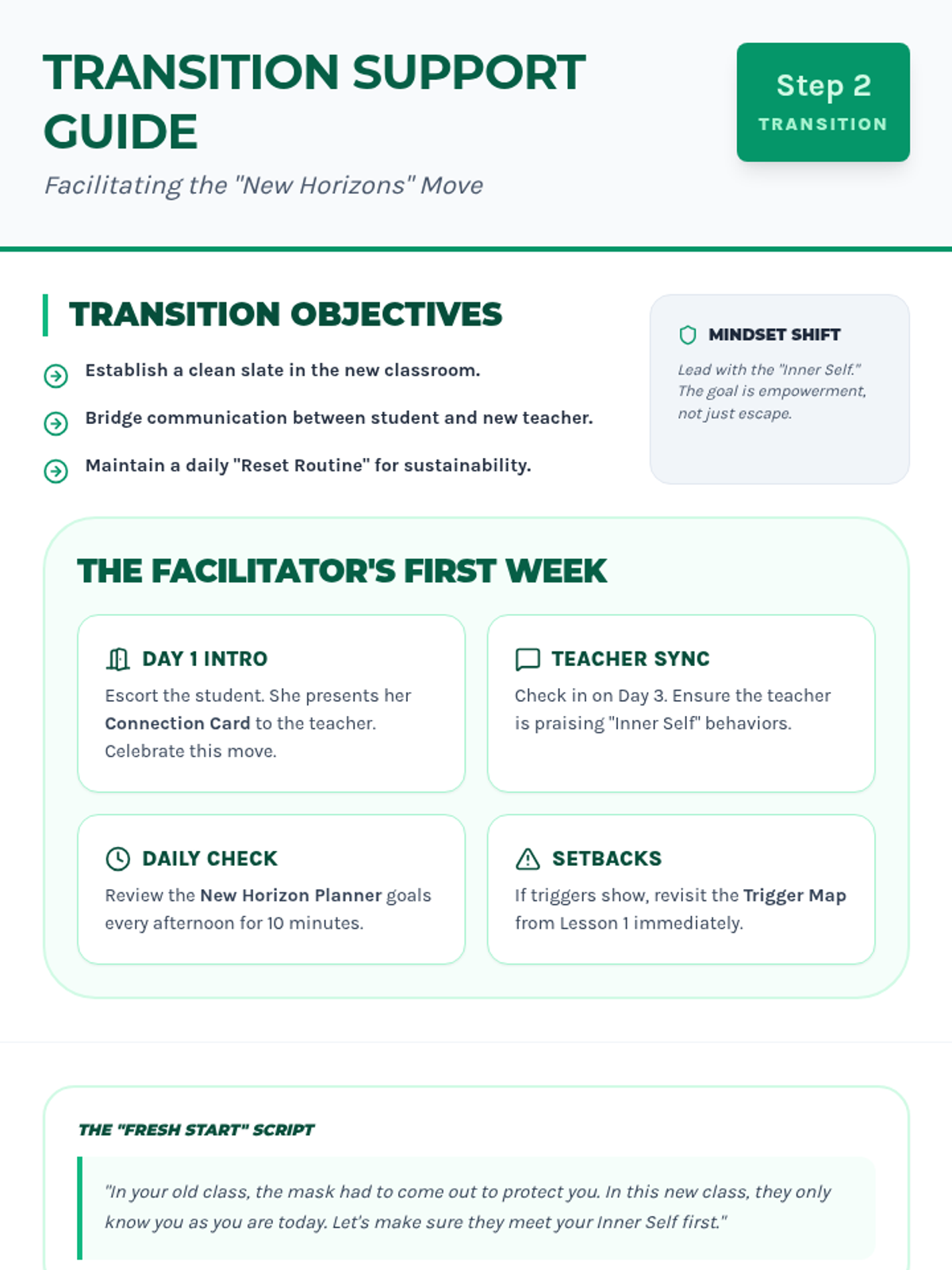
The final phase of the intervention, focusing on the practical and emotional transition to a new classroom environment and establishing a sustainable 'reset' routine.
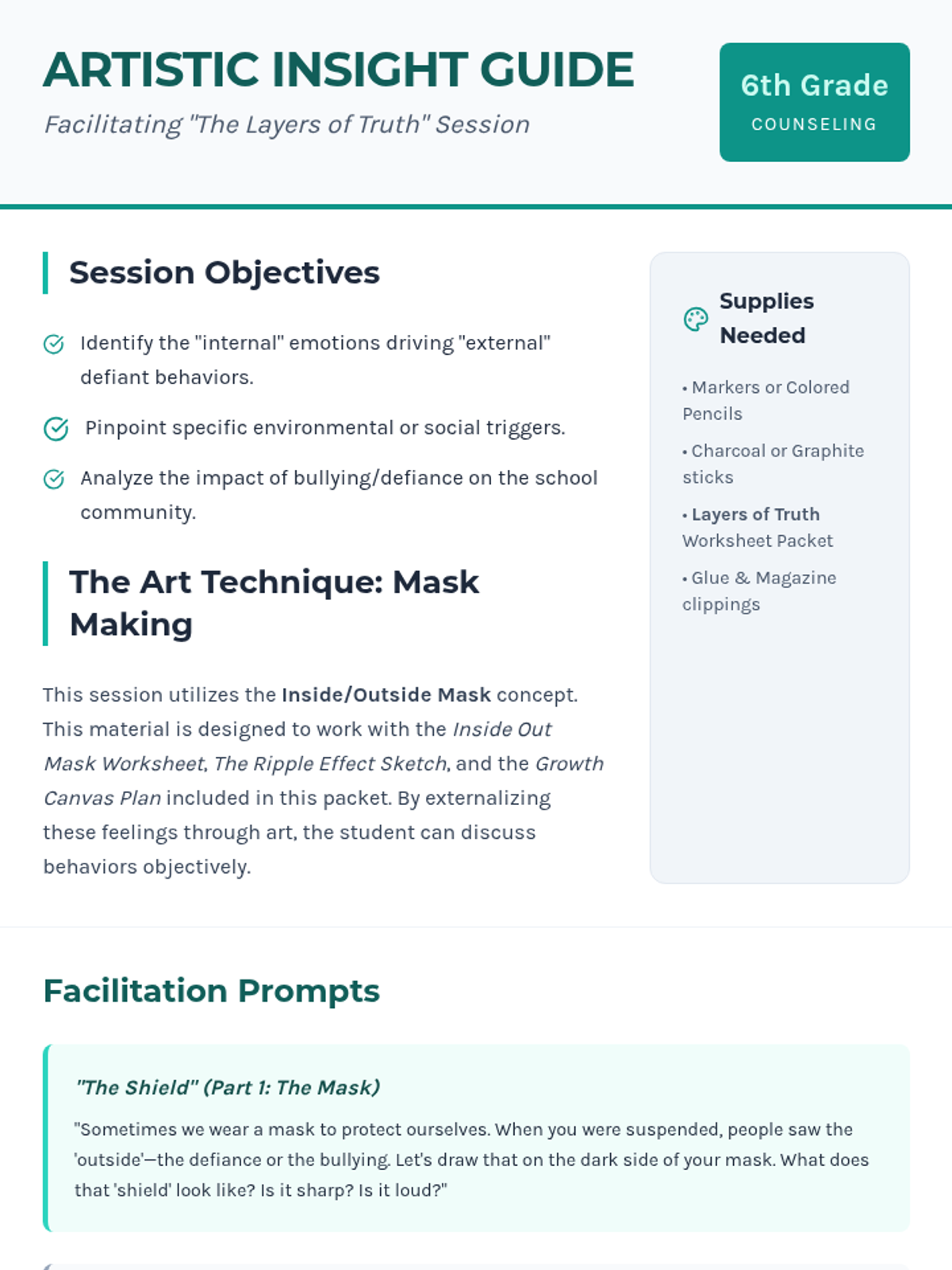
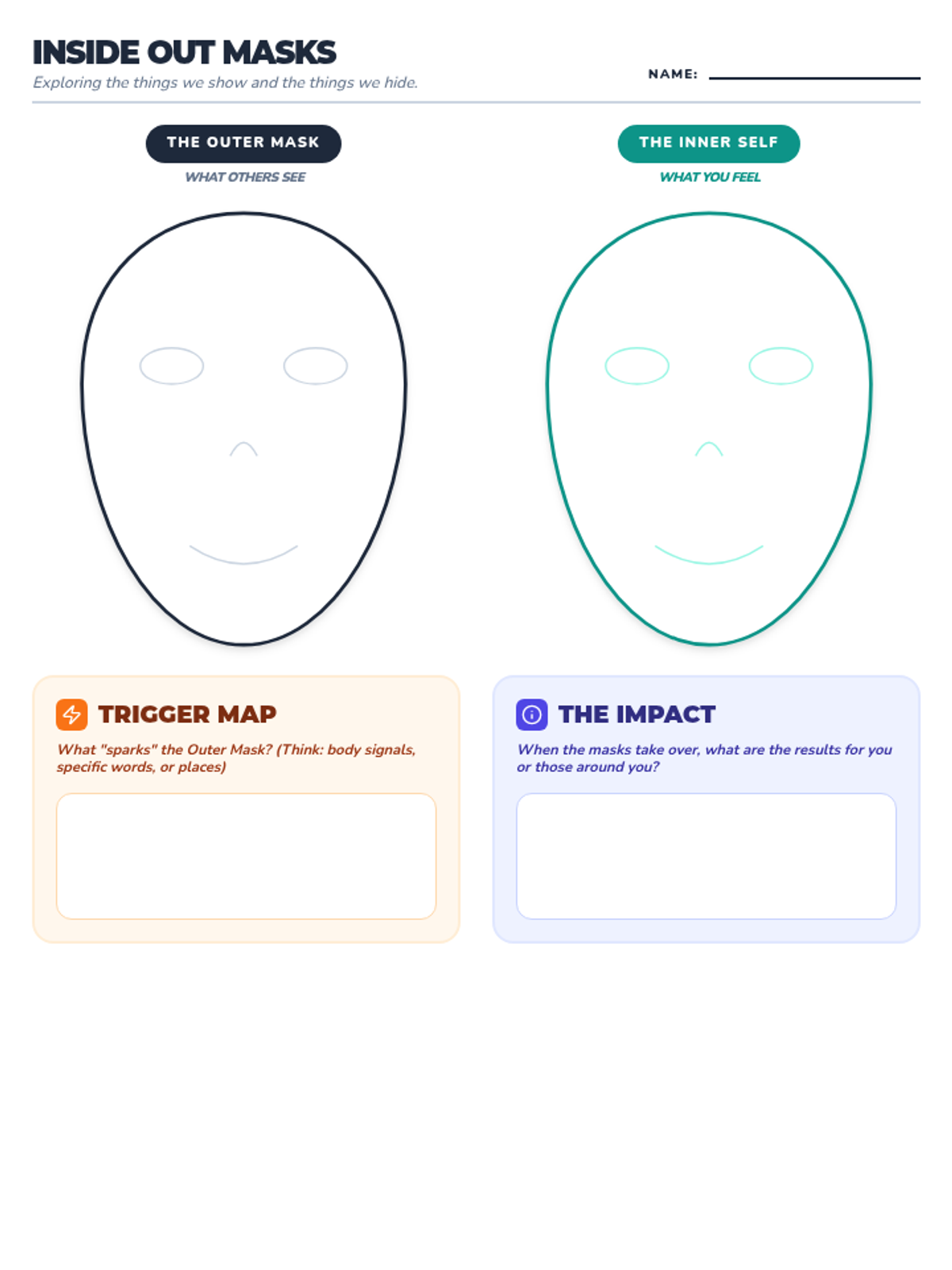
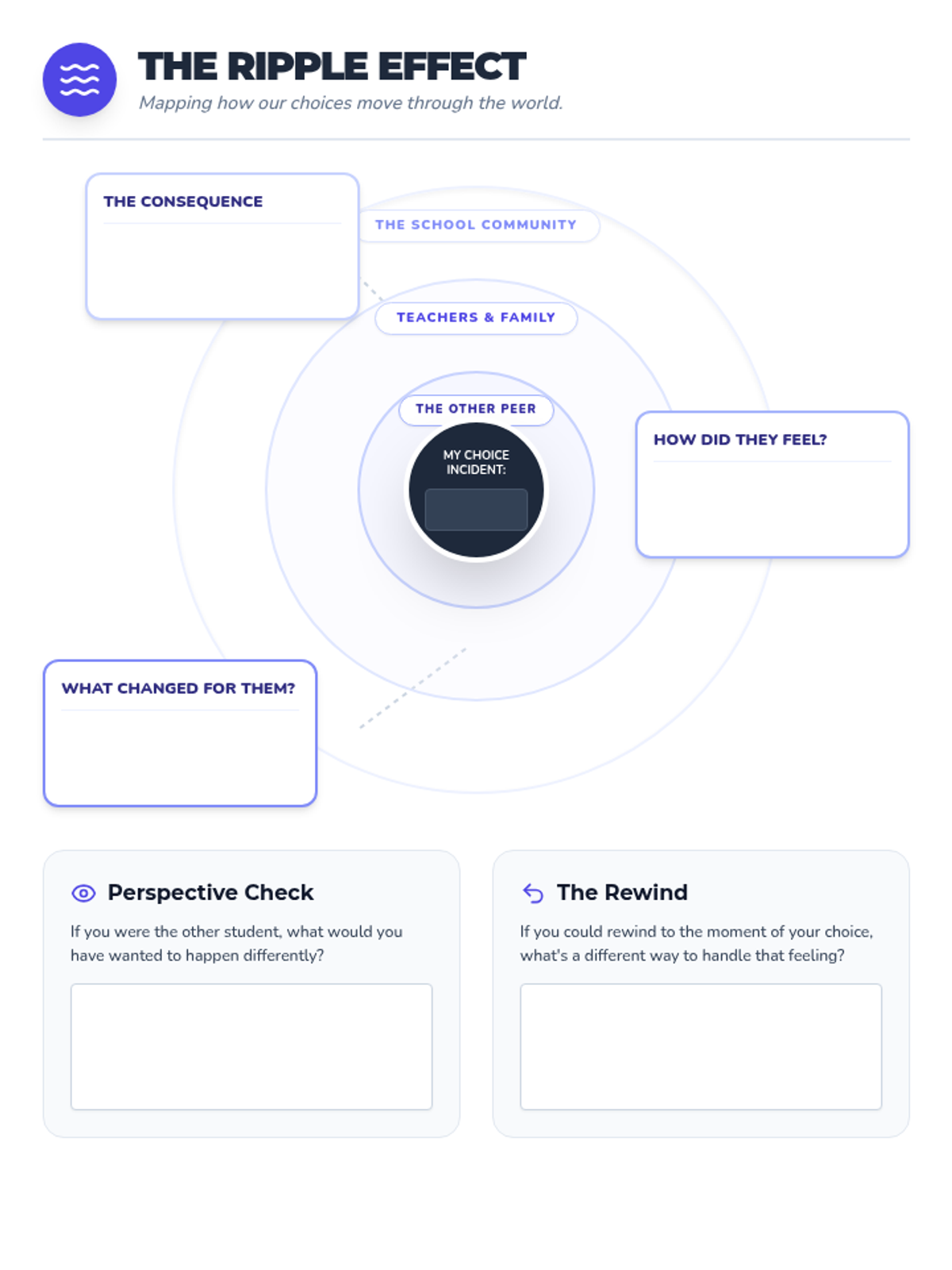
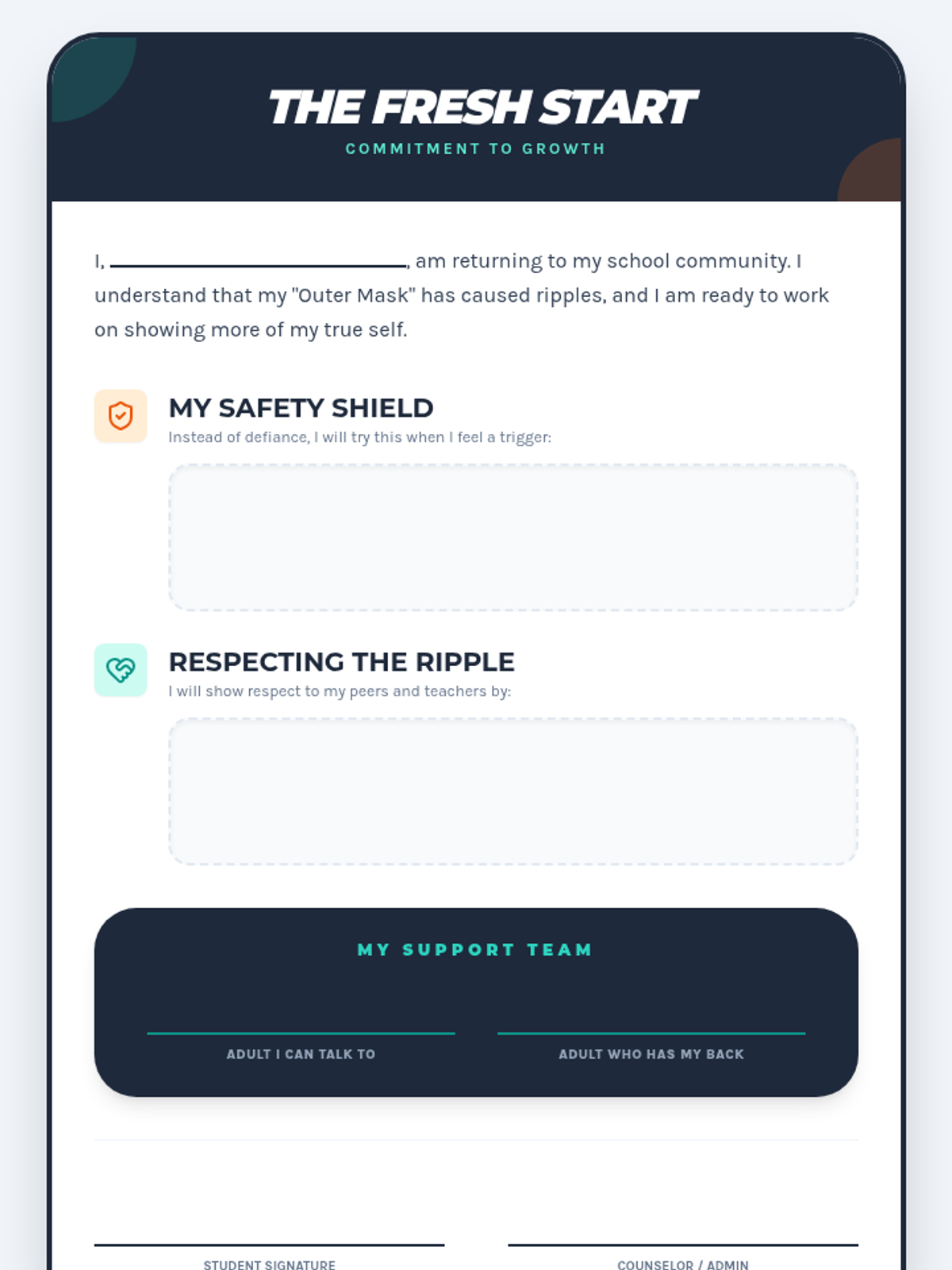
A therapeutic intervention lesson designed for a 6th-grade student returning from suspension, focusing on emotional identification and perspective-taking through art.
A lesson designed to help middle school students develop executive function skills by breaking down large tasks into manageable steps during study hall sessions.
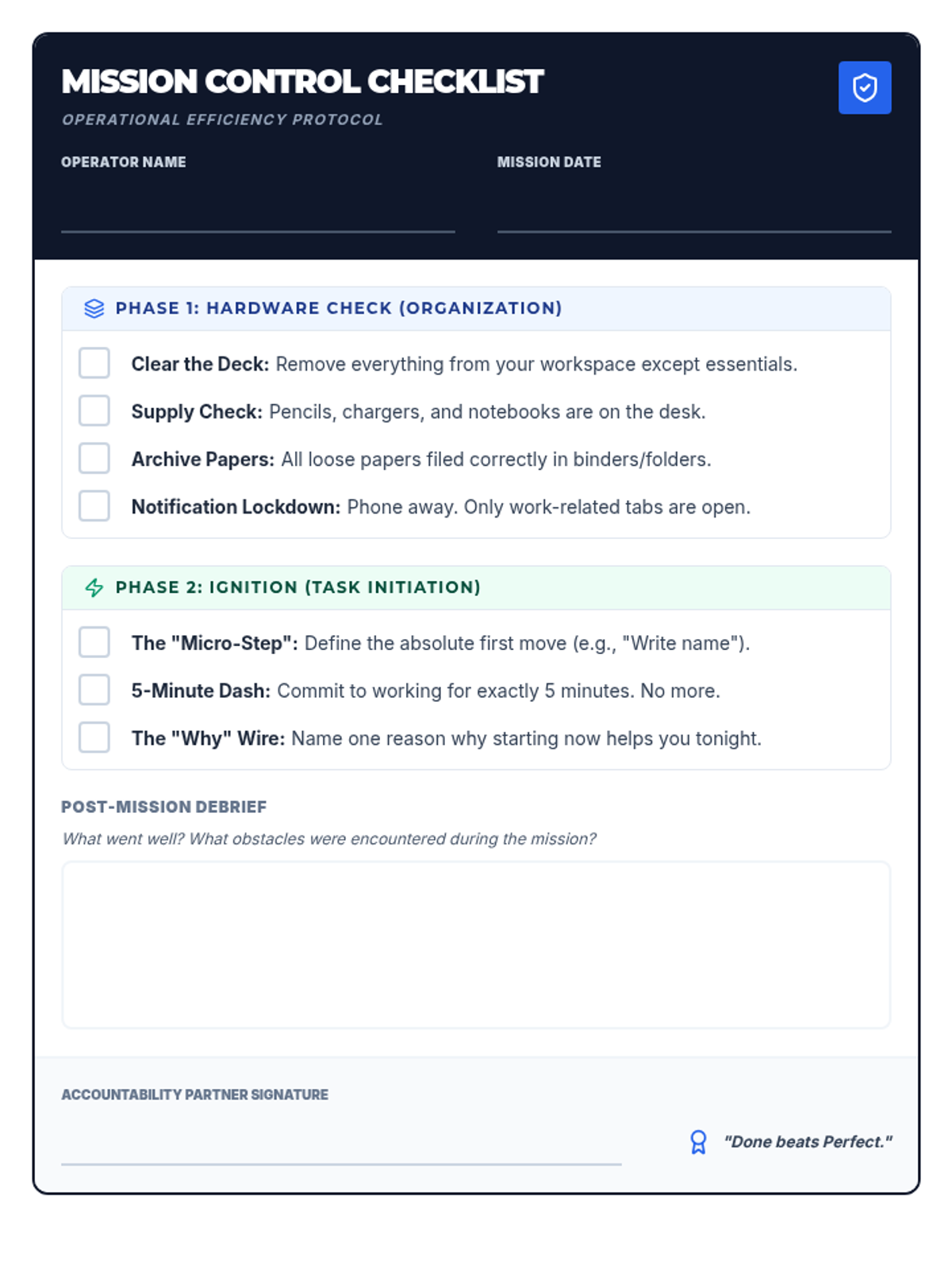
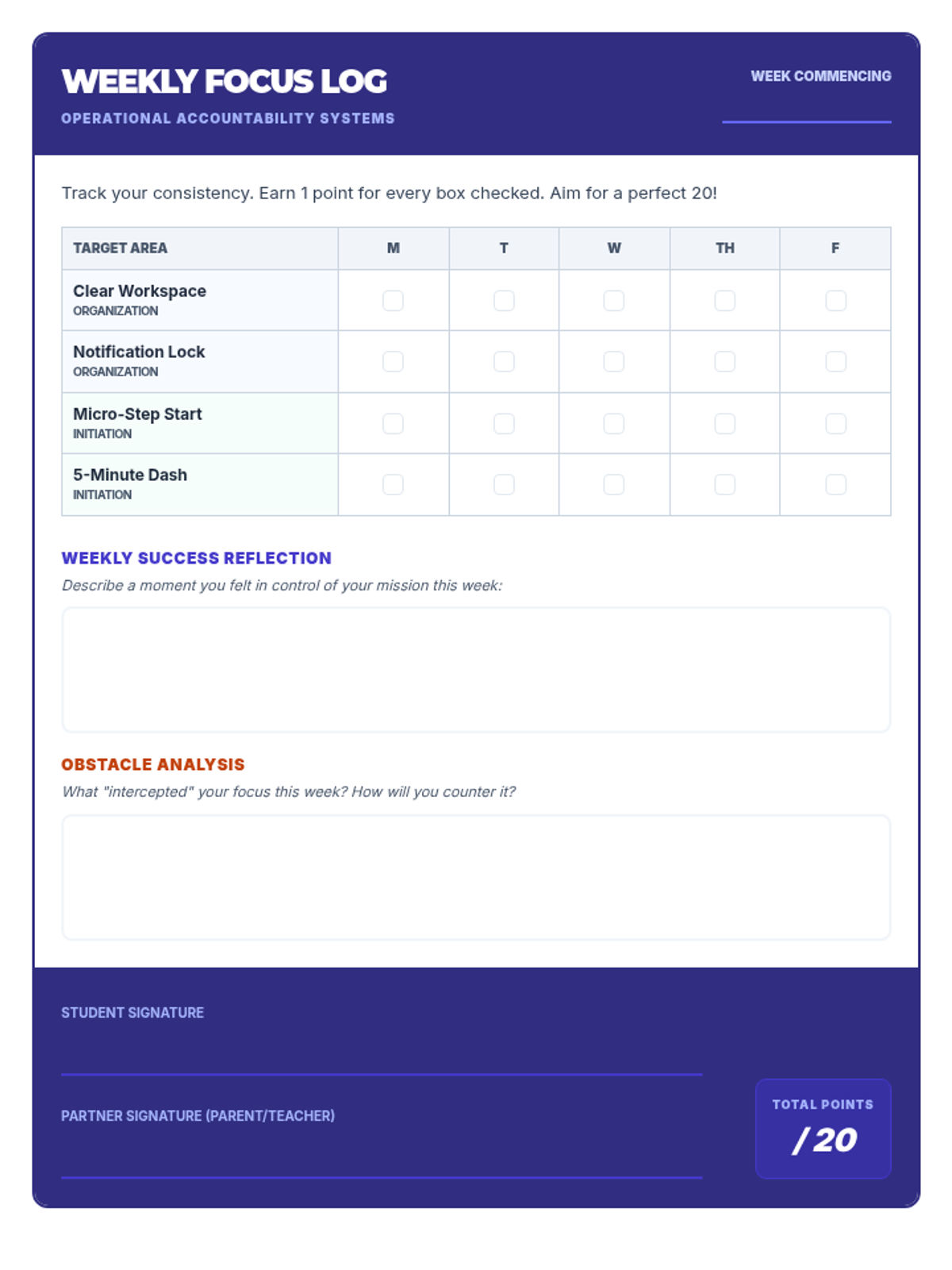
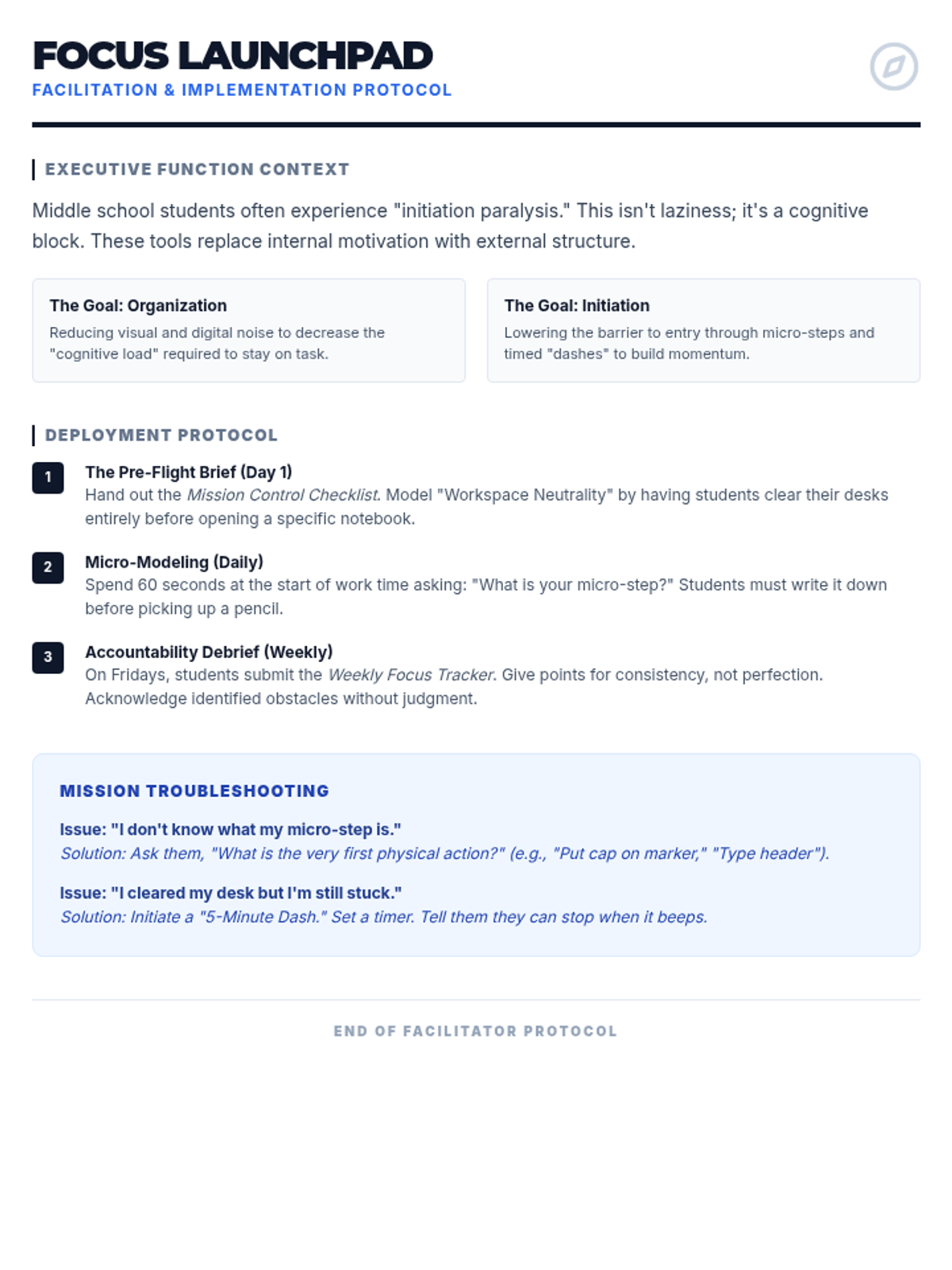
A set of tools designed to help middle school students master the executive function skills of organization and task initiation through structured accountability.
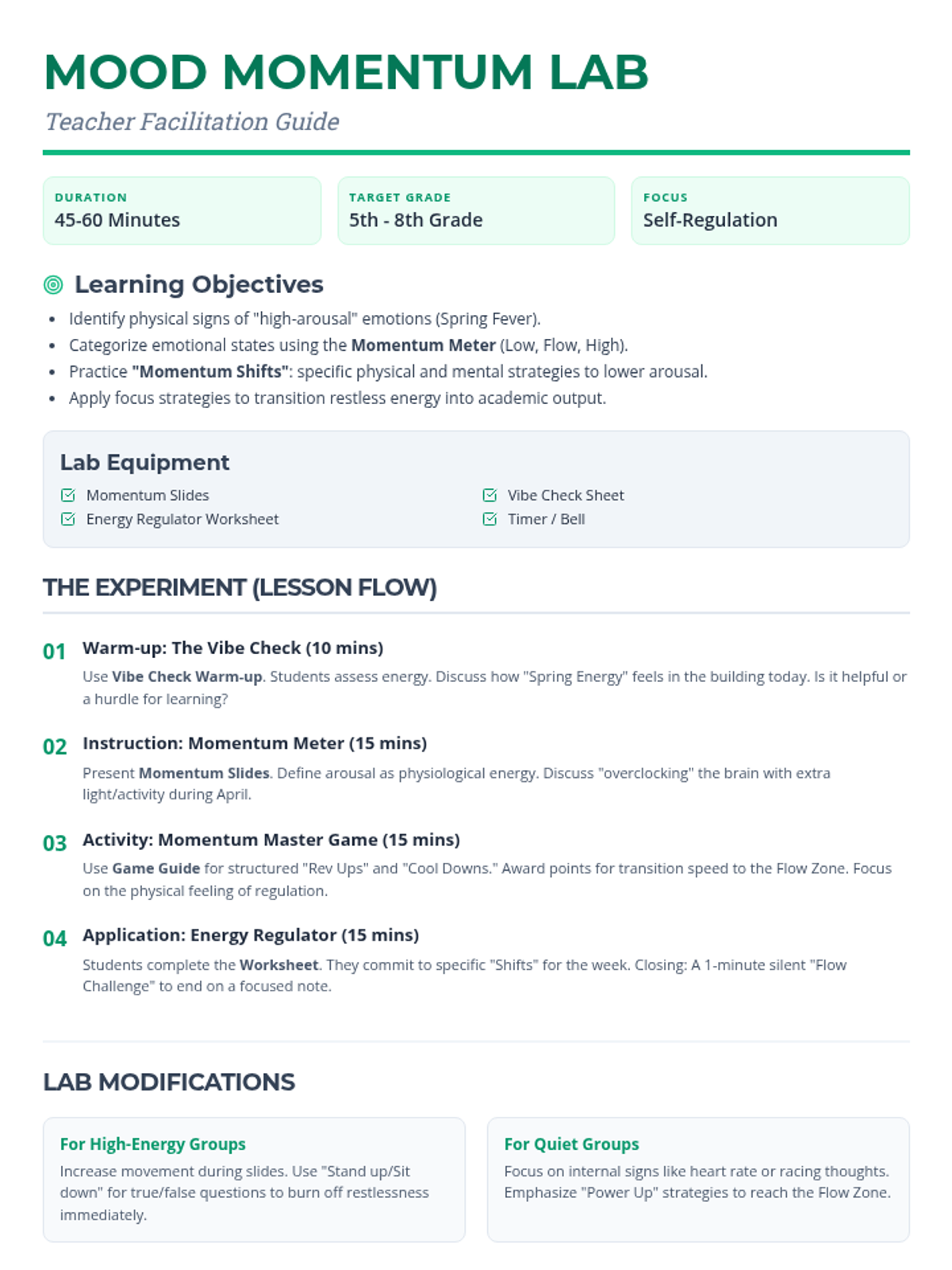
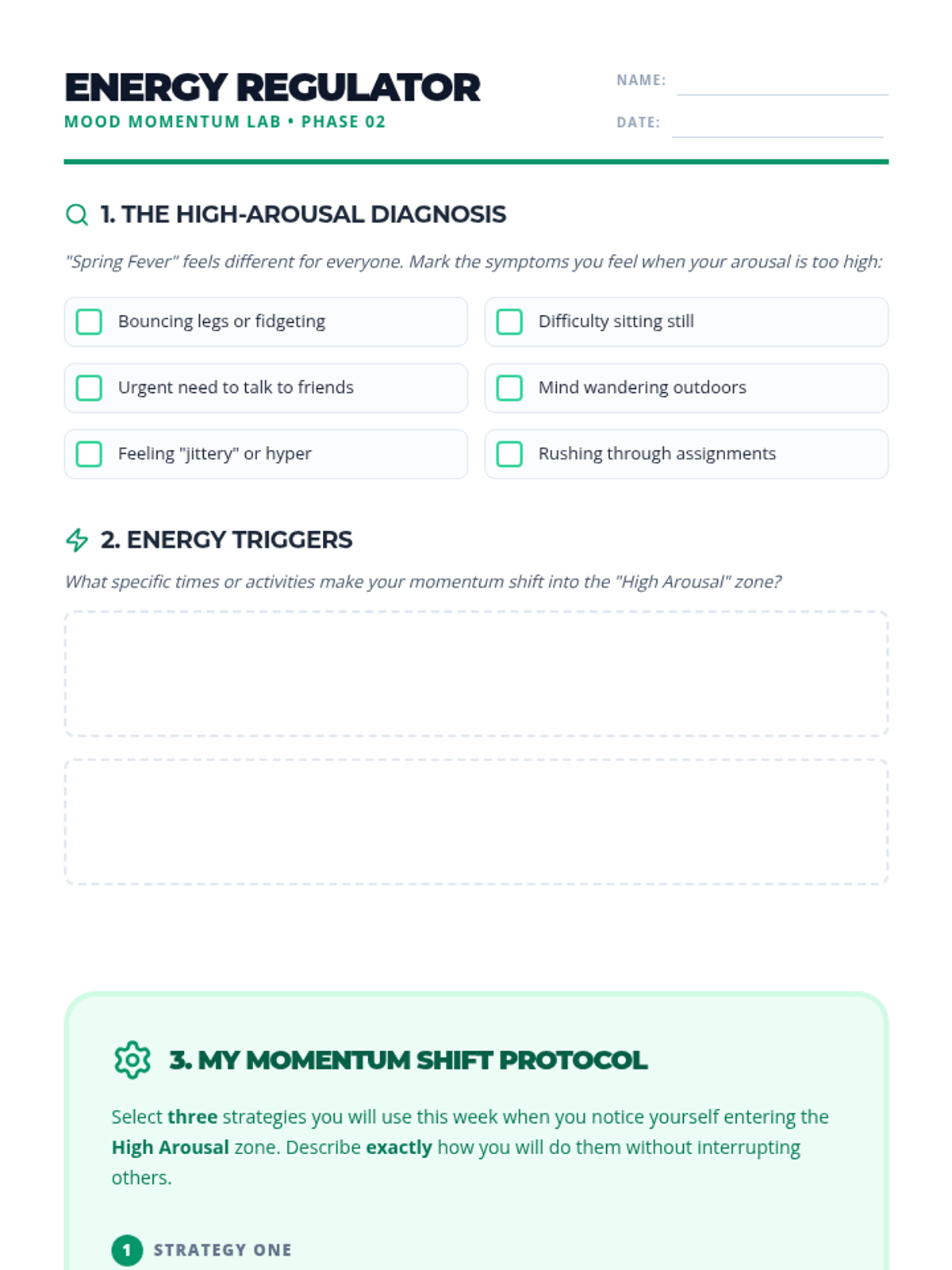
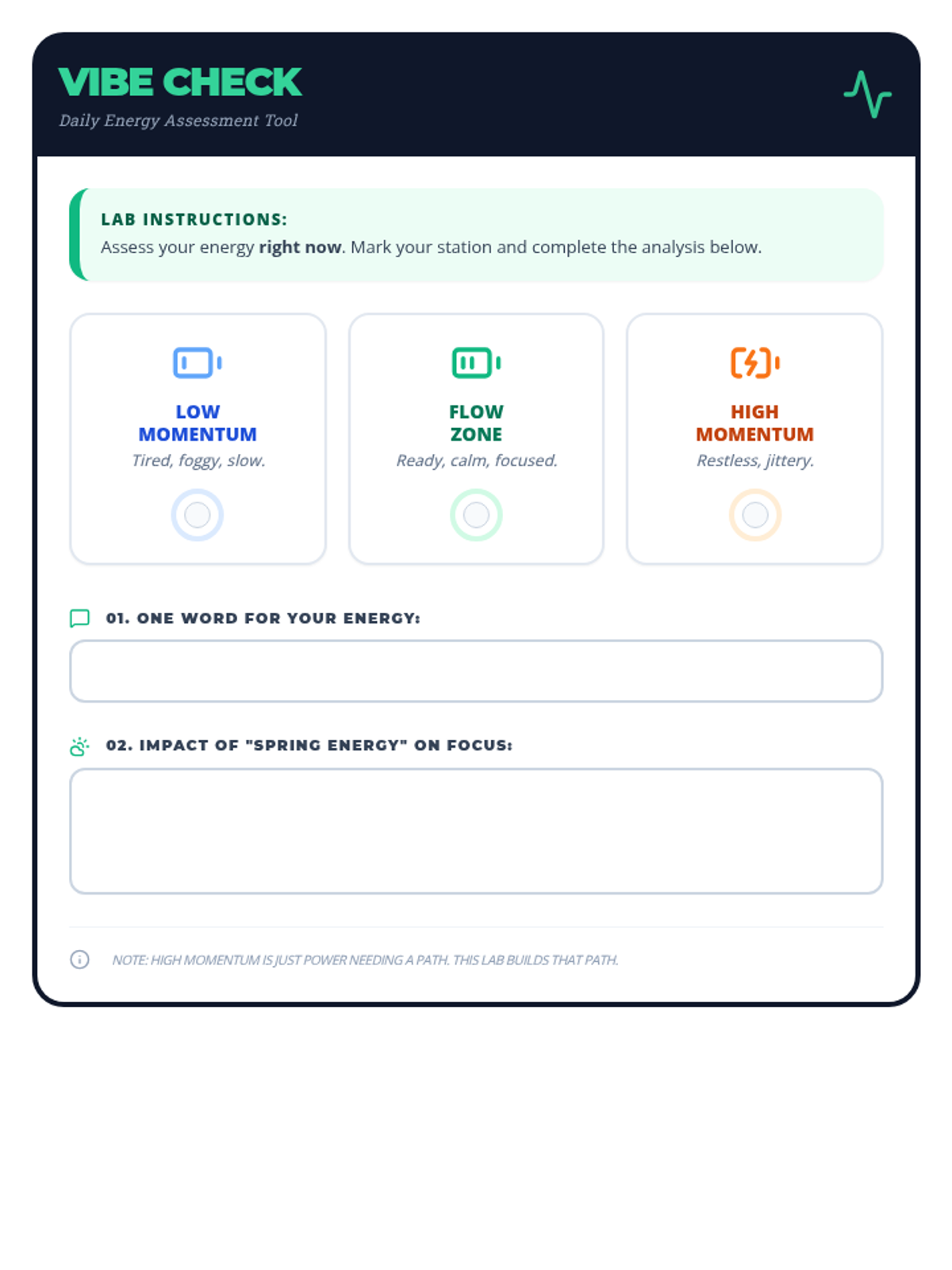
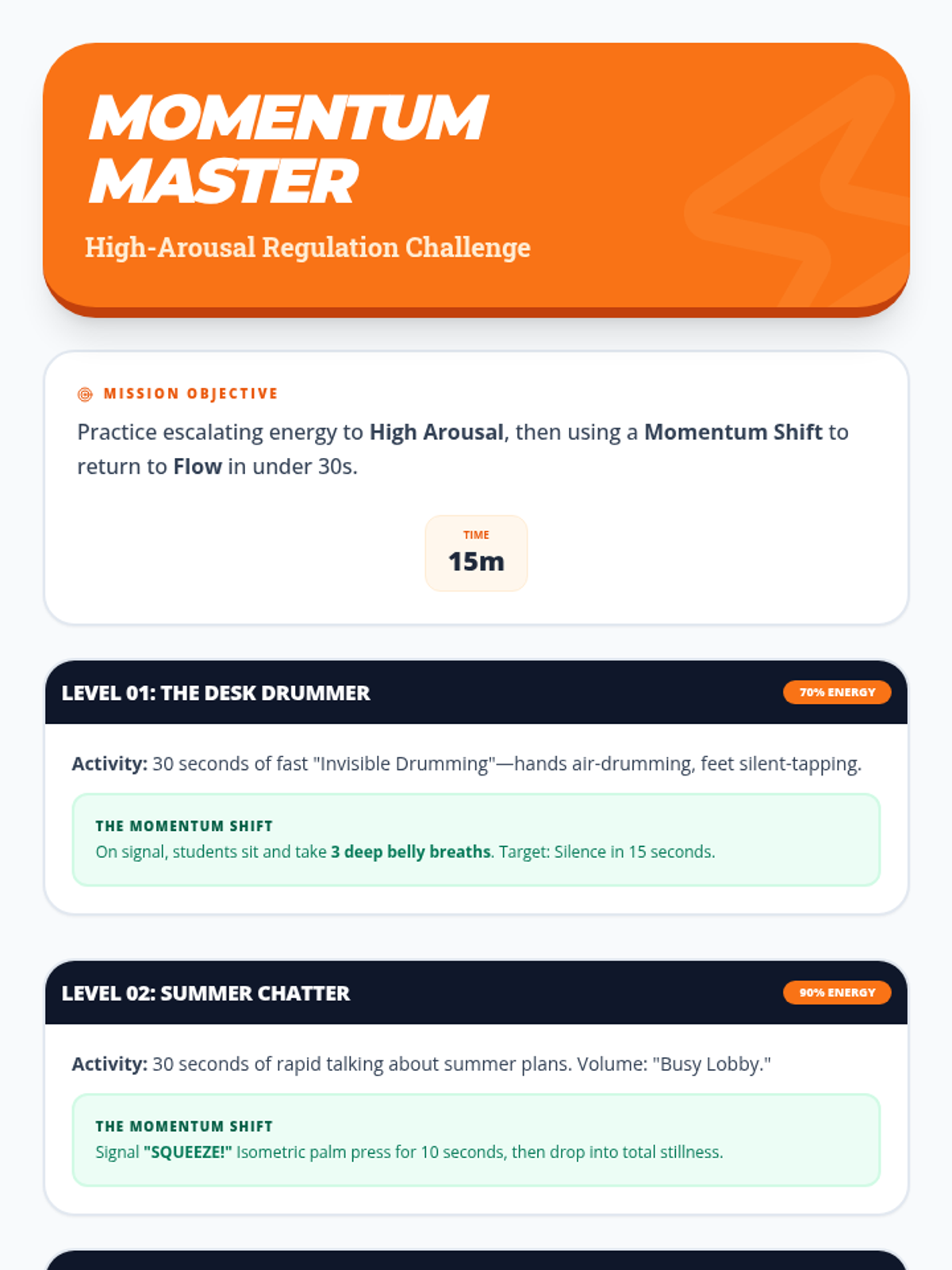
A high-energy social-emotional learning lesson designed to help students identify and regulate 'spring fever' energy. Students will learn to categorize their emotional arousal levels and apply 'momentum shifts' to transition from restless energy to productive focus.
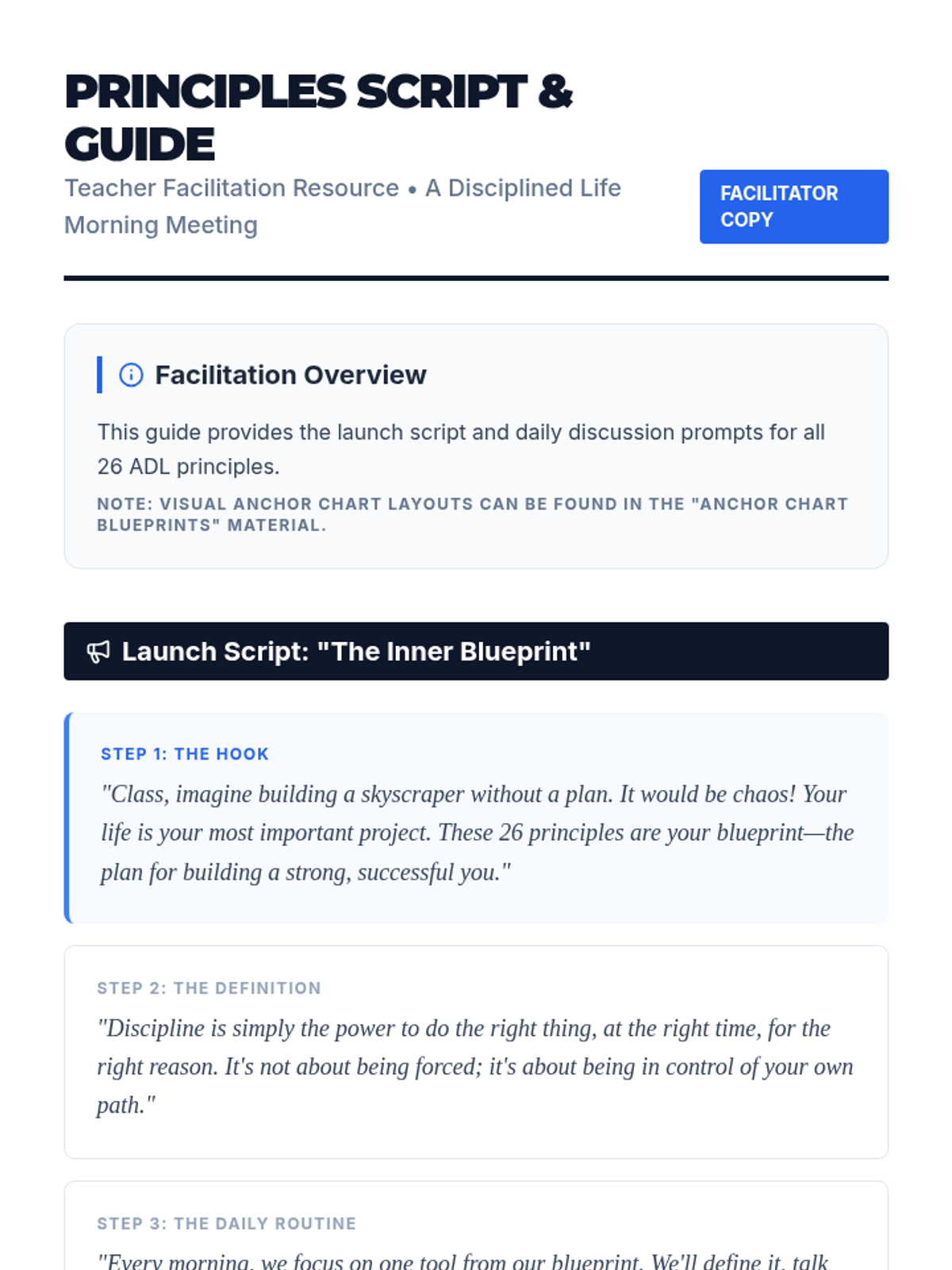
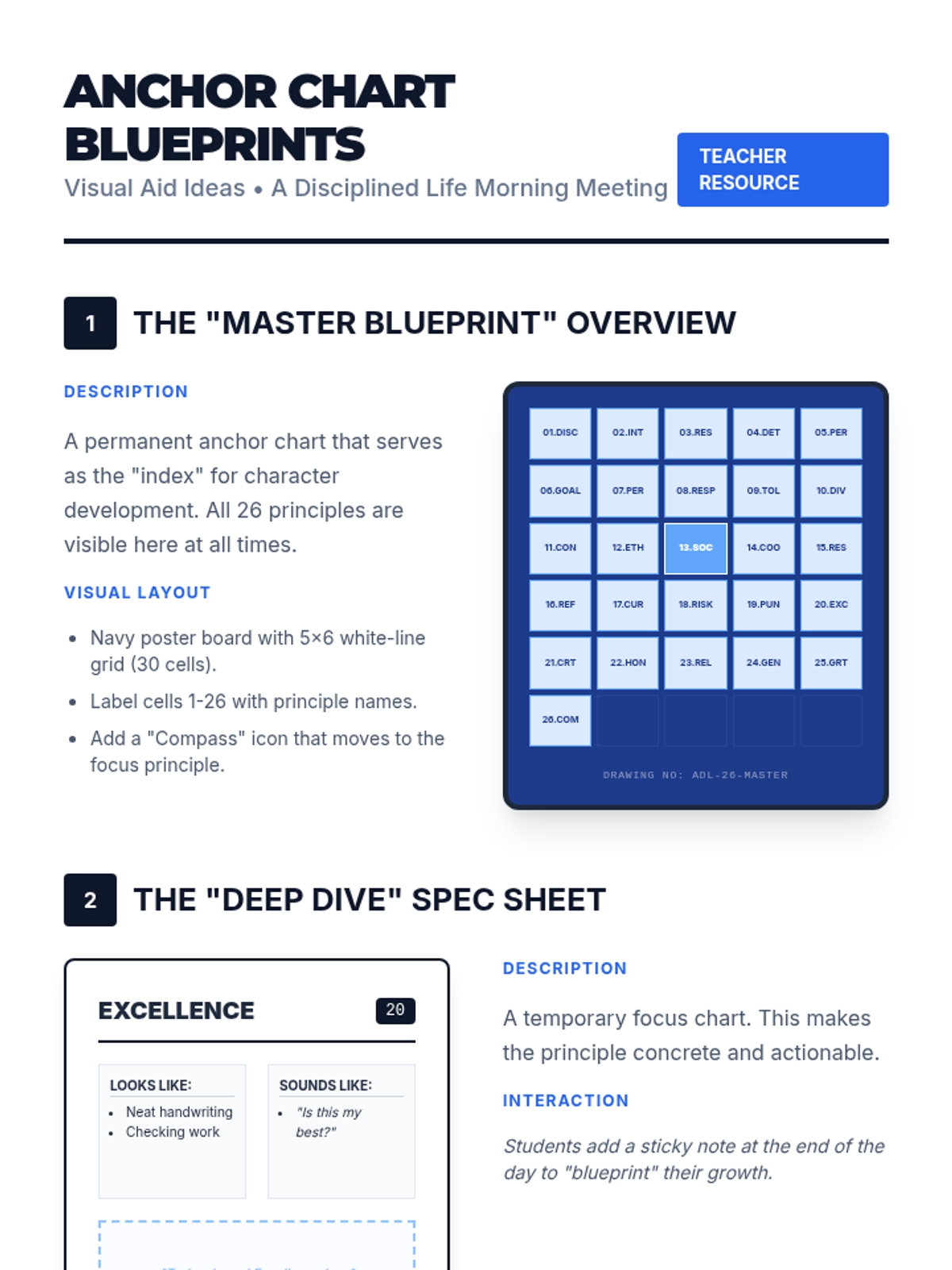
A comprehensive morning meeting introduction to the 26 principles of A Disciplined Life, providing teachers with a structured framework to introduce, discuss, and visualize character development.
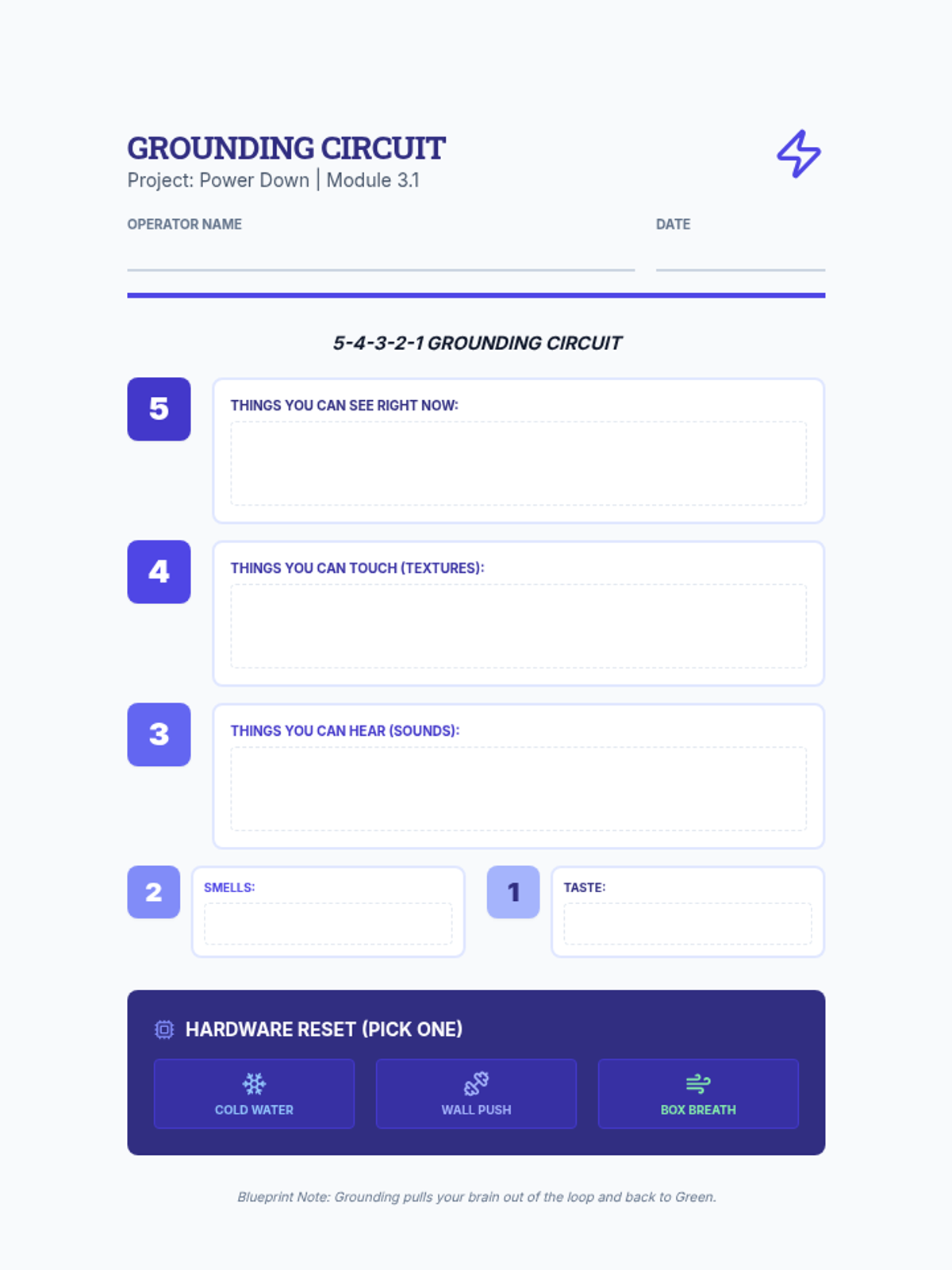
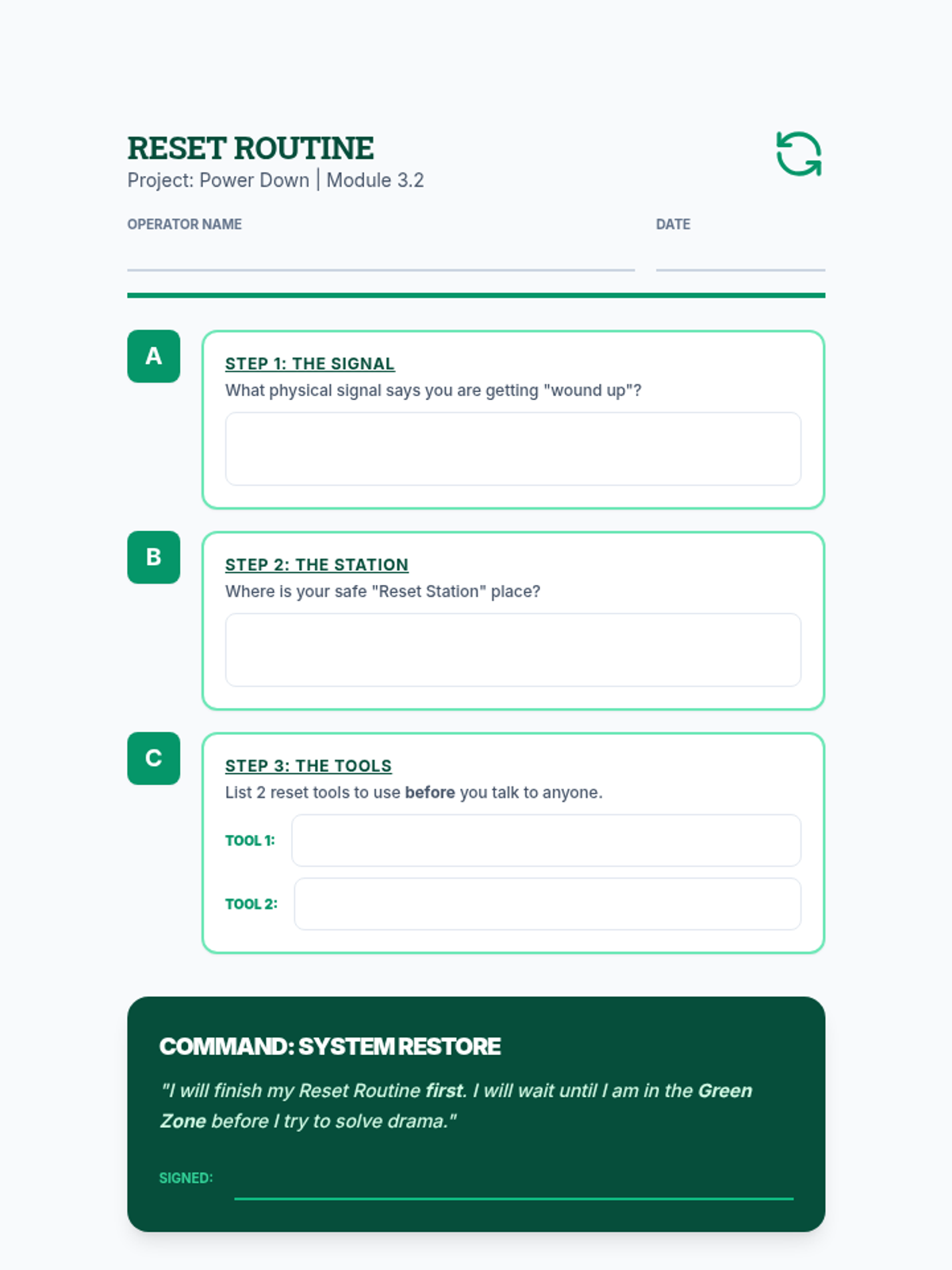
Tools for independent self-regulation using grounding techniques and a personalized reset routine to reduce the time spent in co-regulation.
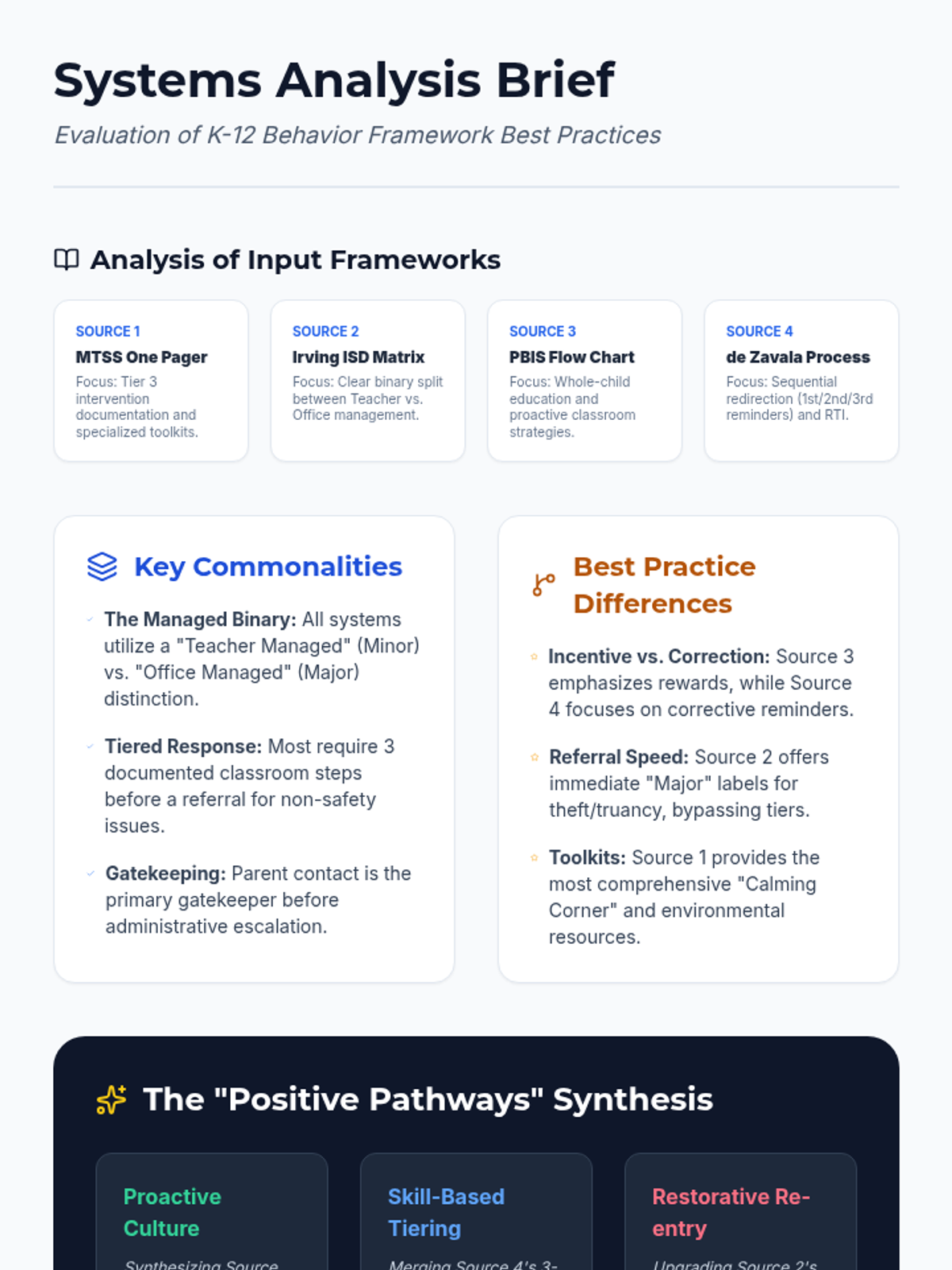
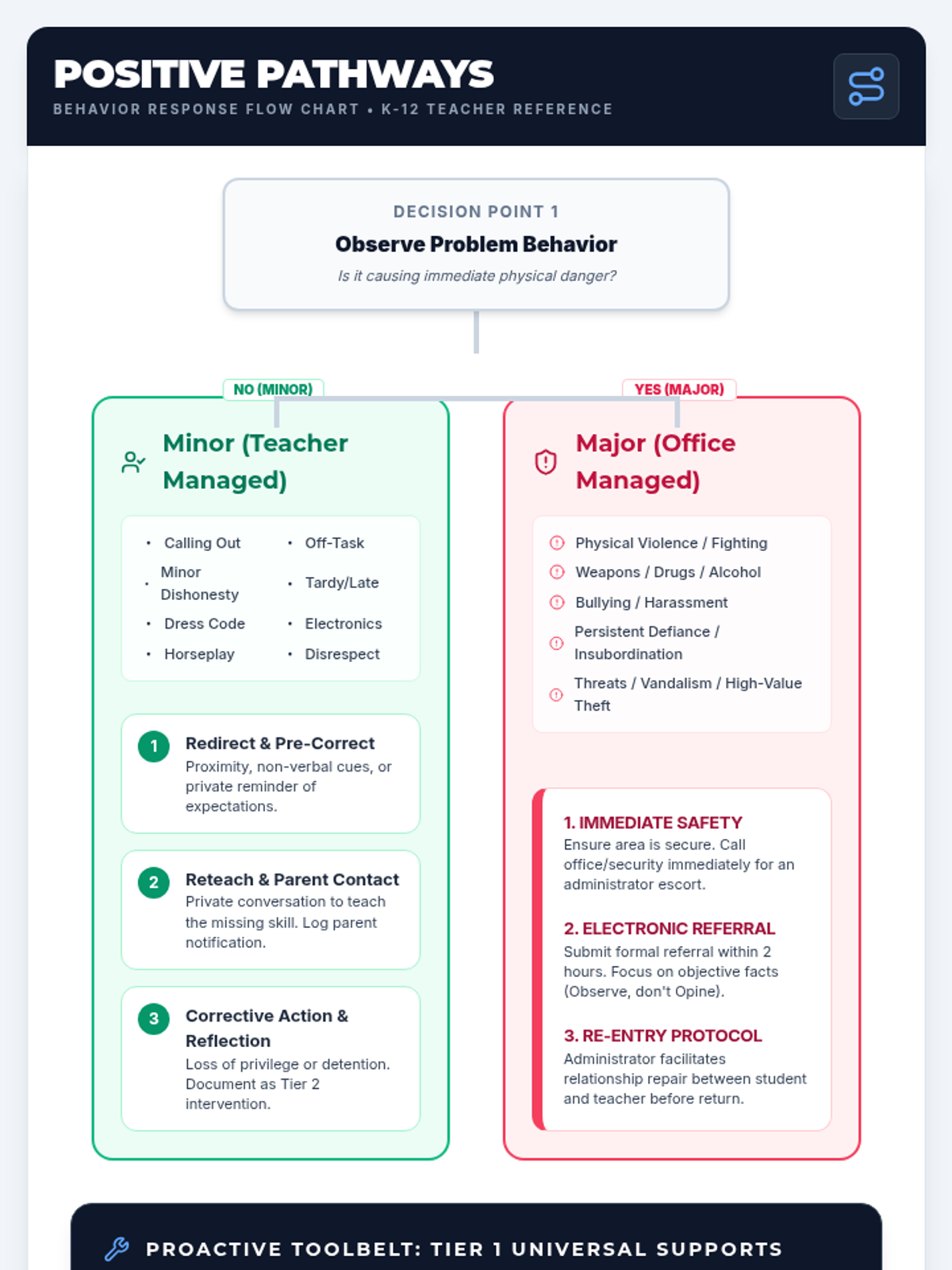
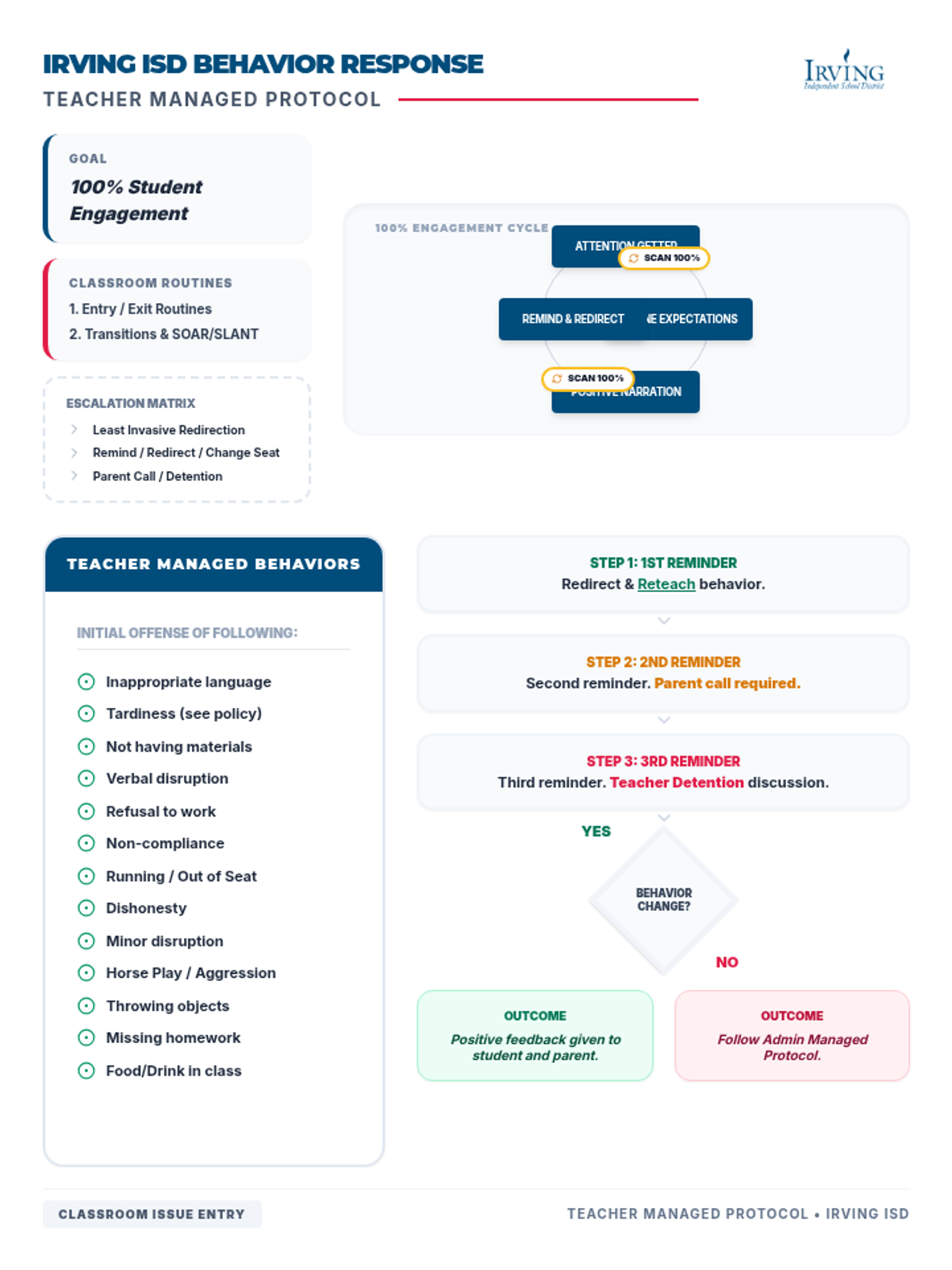
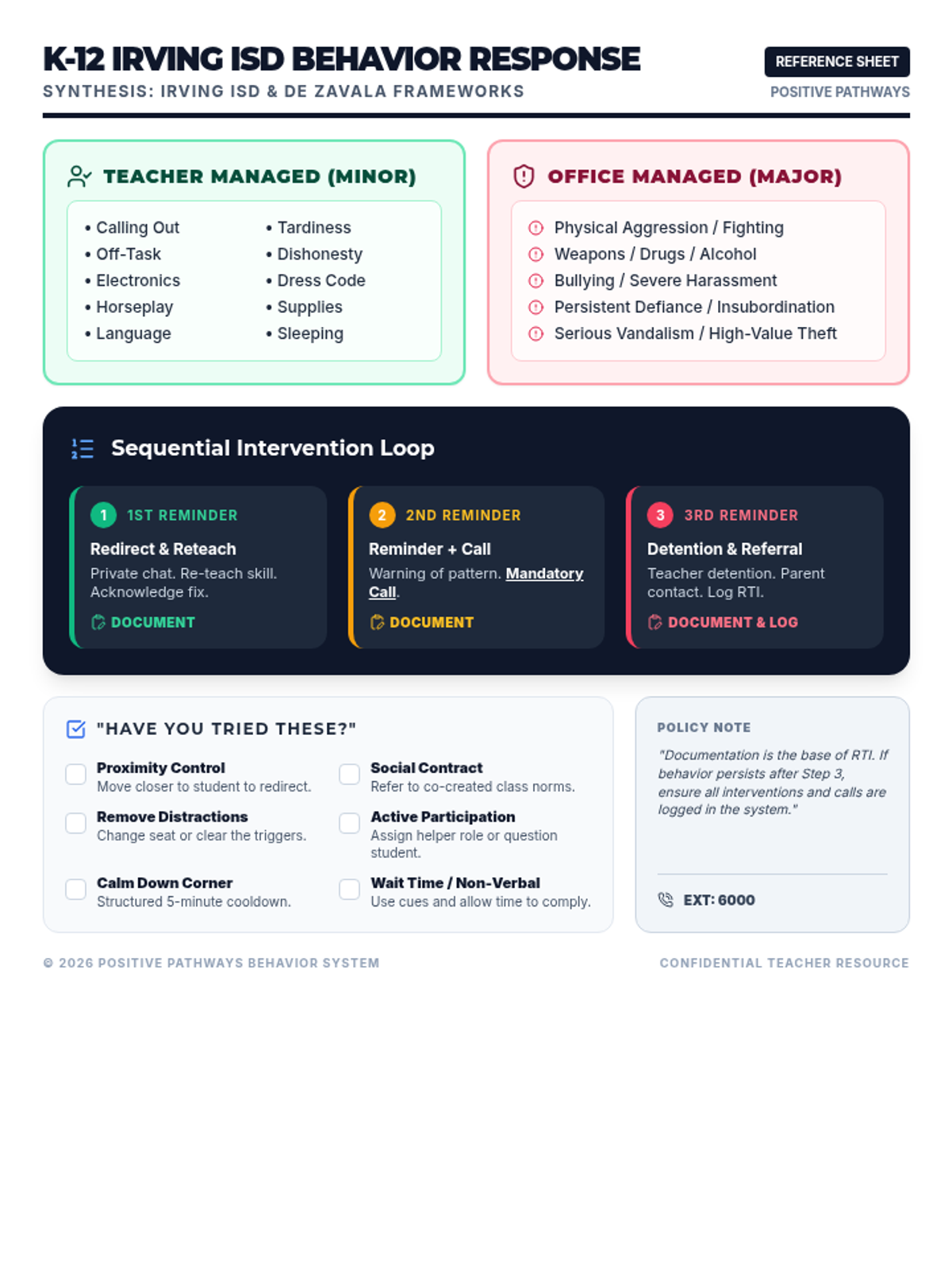
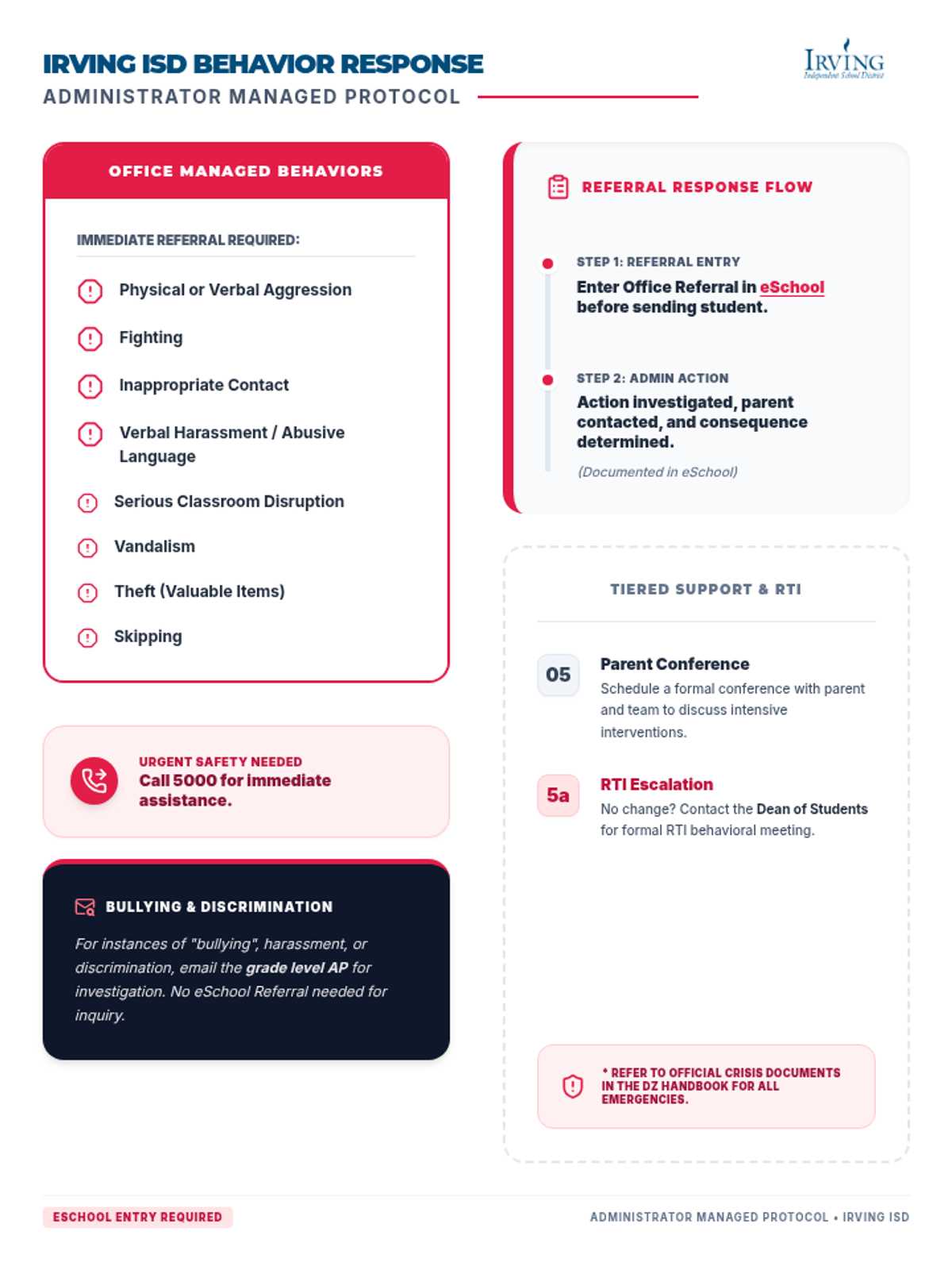
A comprehensive K-12 behavior management system that synthesizes best practices from MTSS, PBIS, and restorative justice frameworks. This lesson provides teachers with a clear decision-making flow and a detailed policy handbook for maintaining a positive school culture.
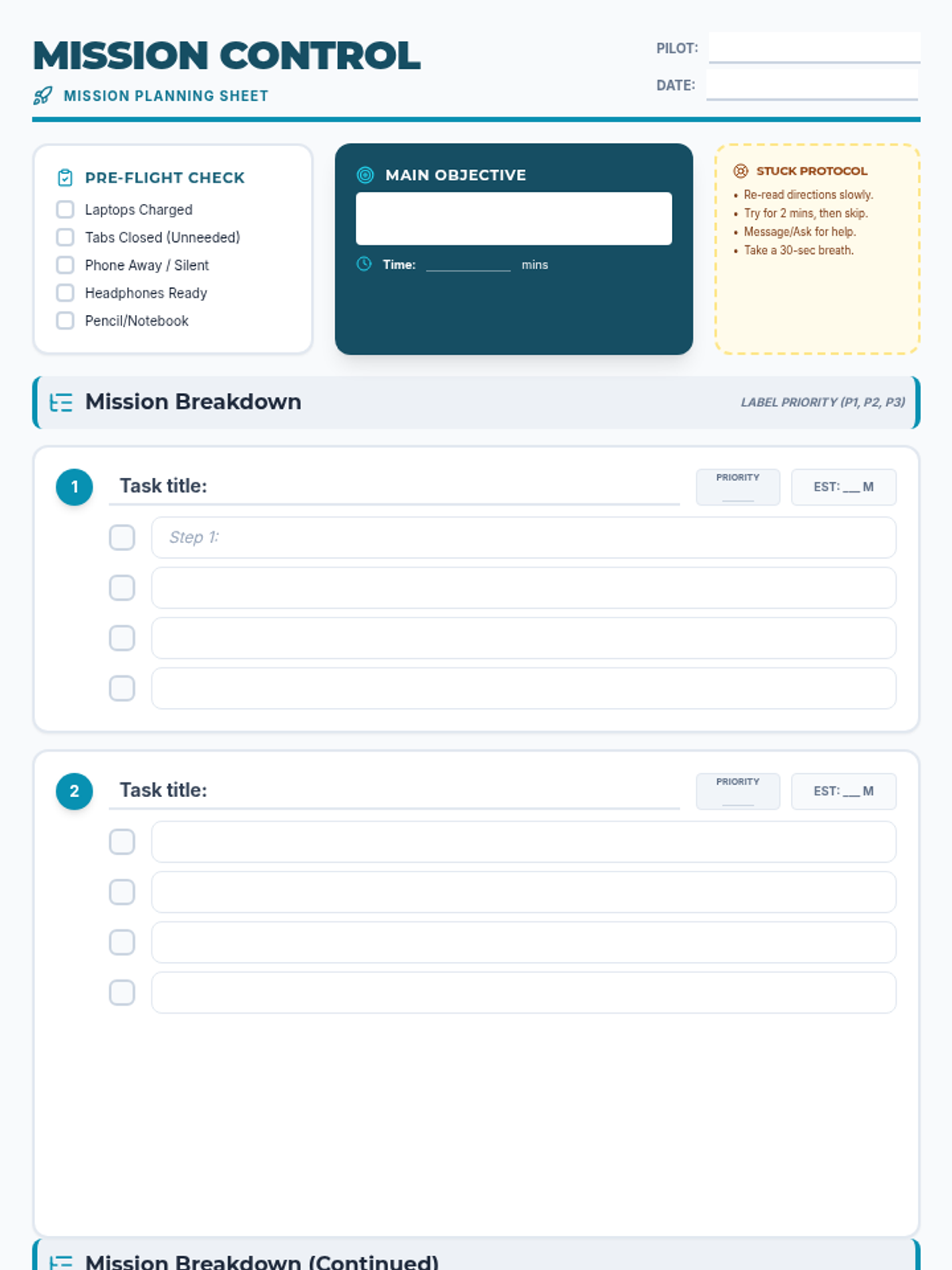
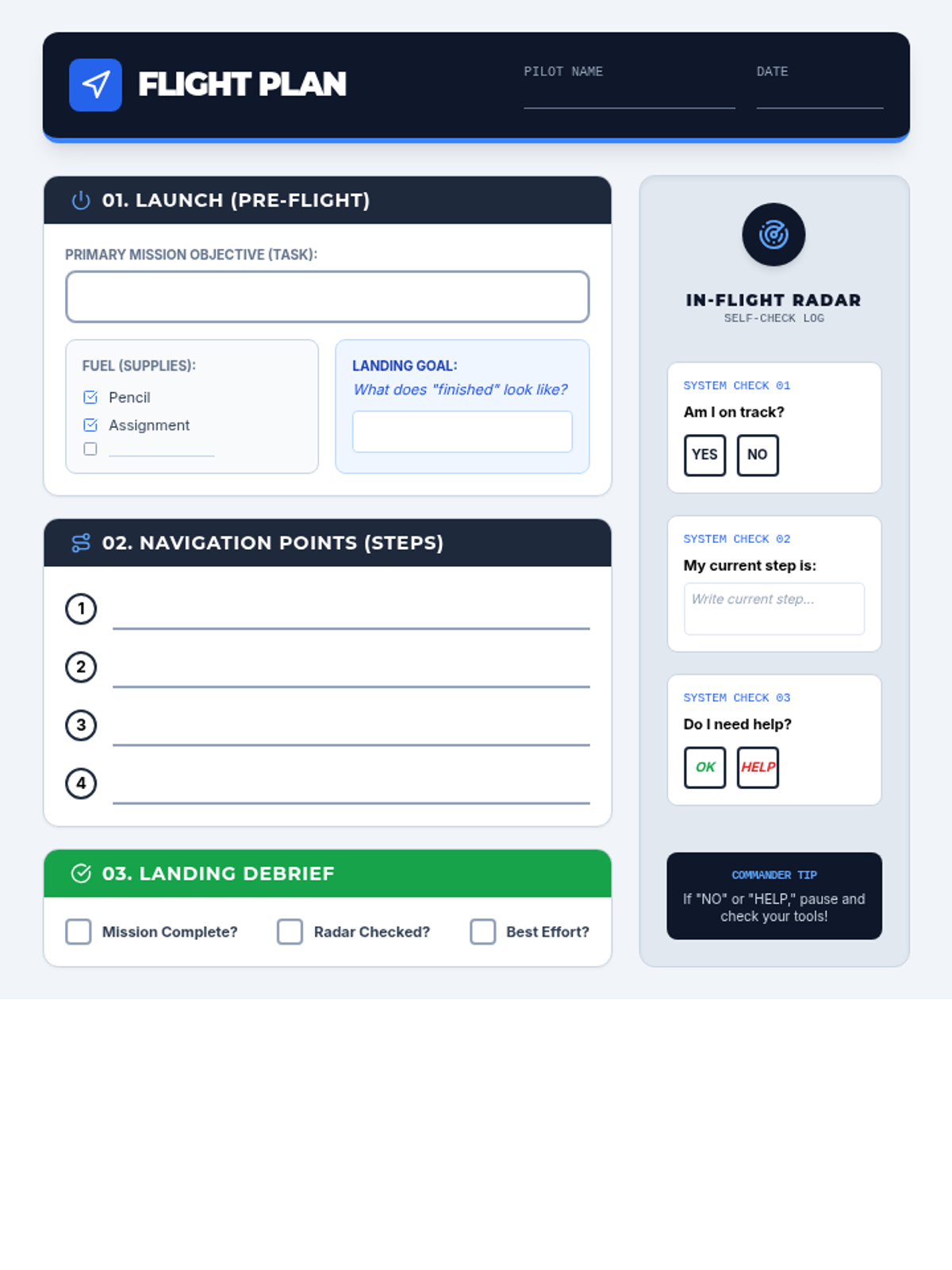
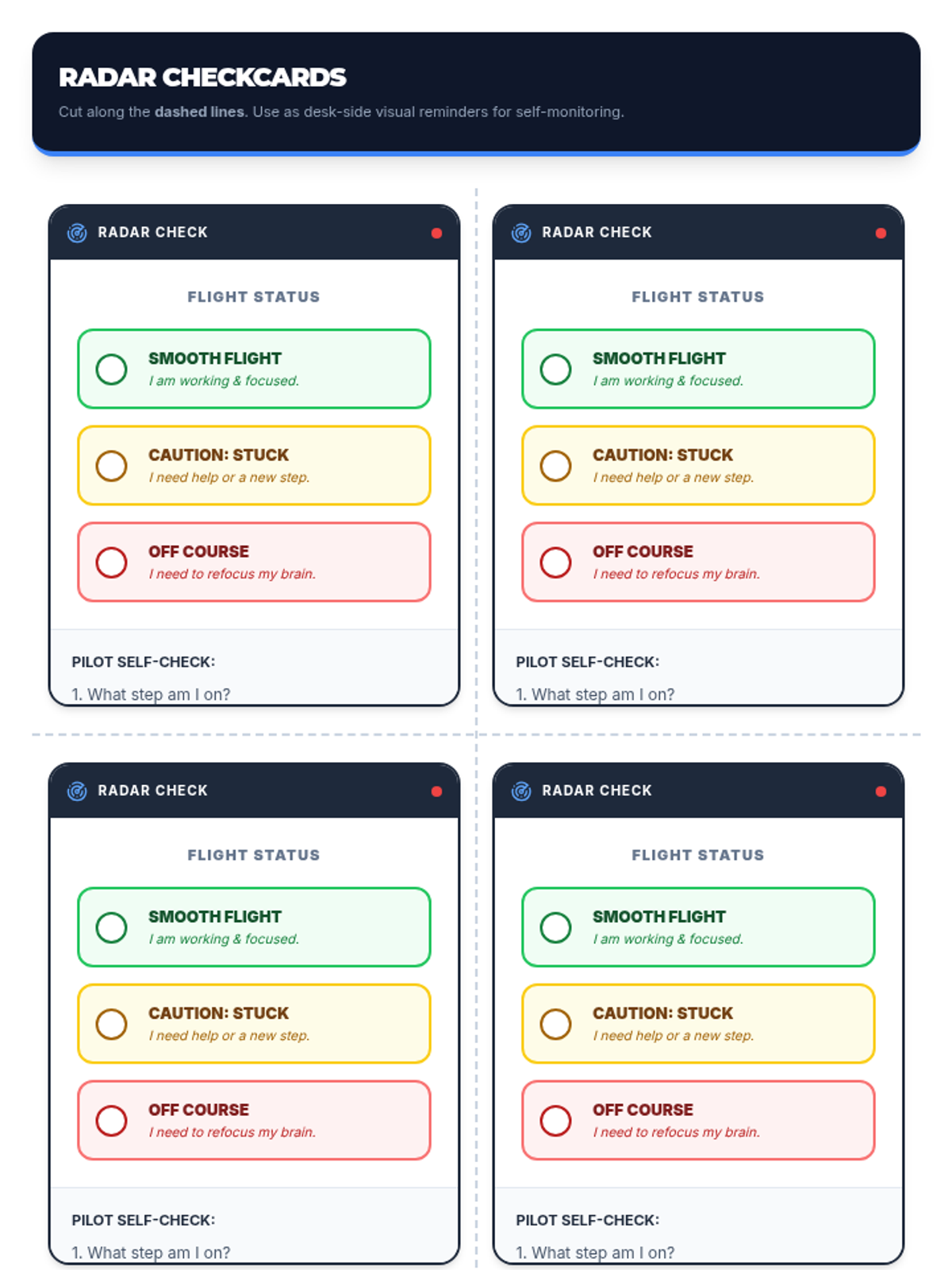
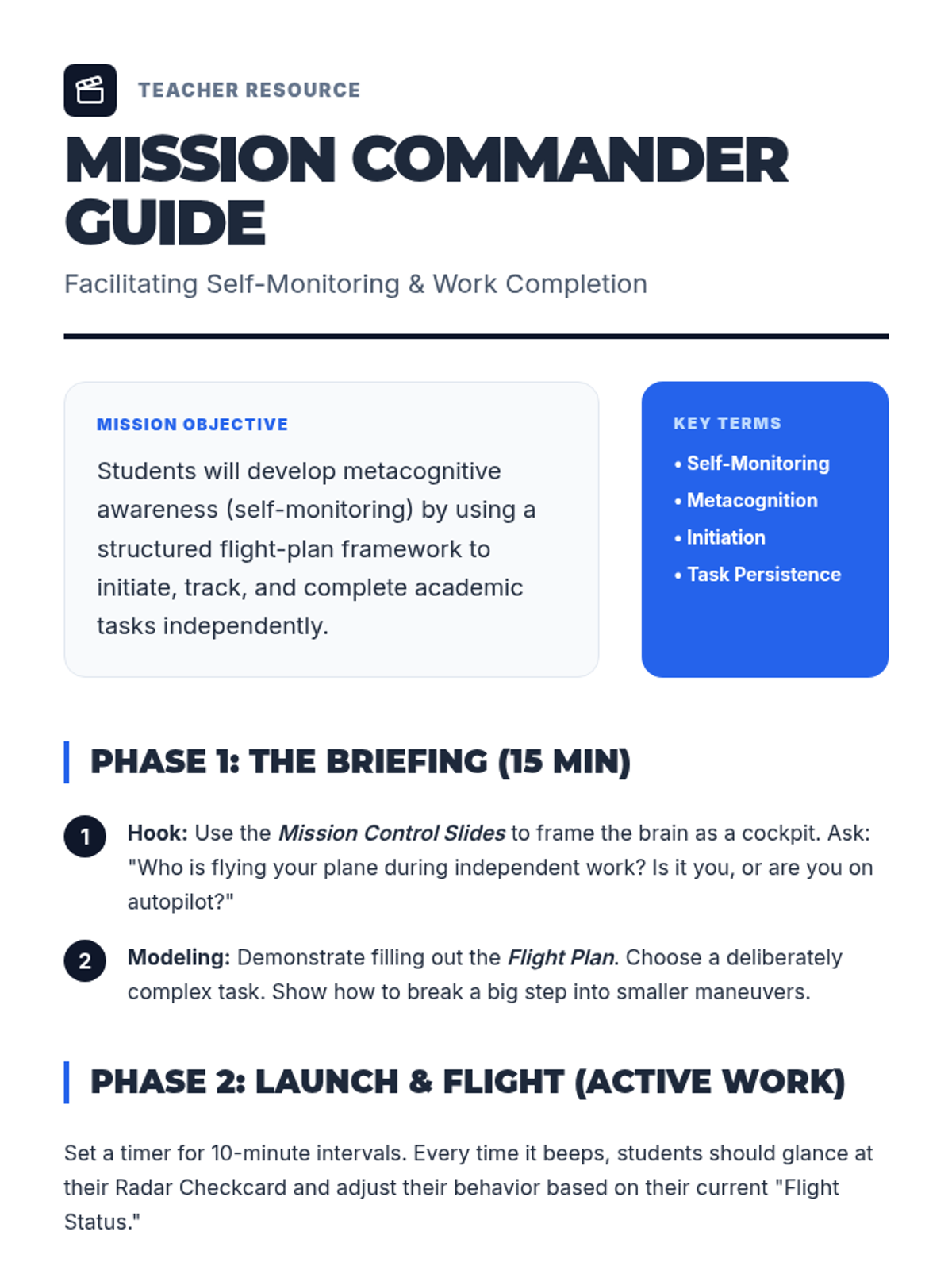
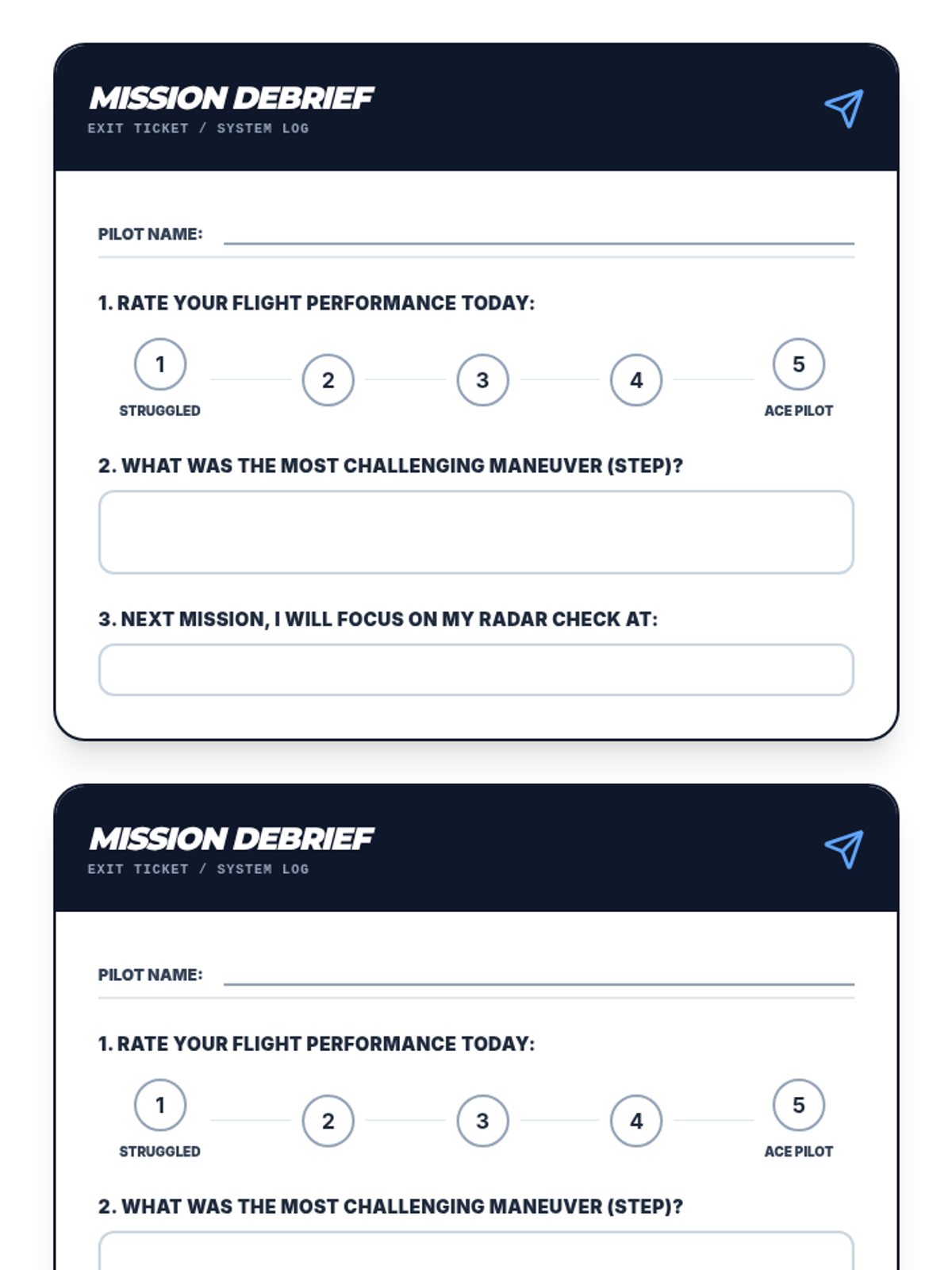
A lesson focused on executive functioning and self-monitoring skills to help students track their own work completion using a 'Mission Control' framework.
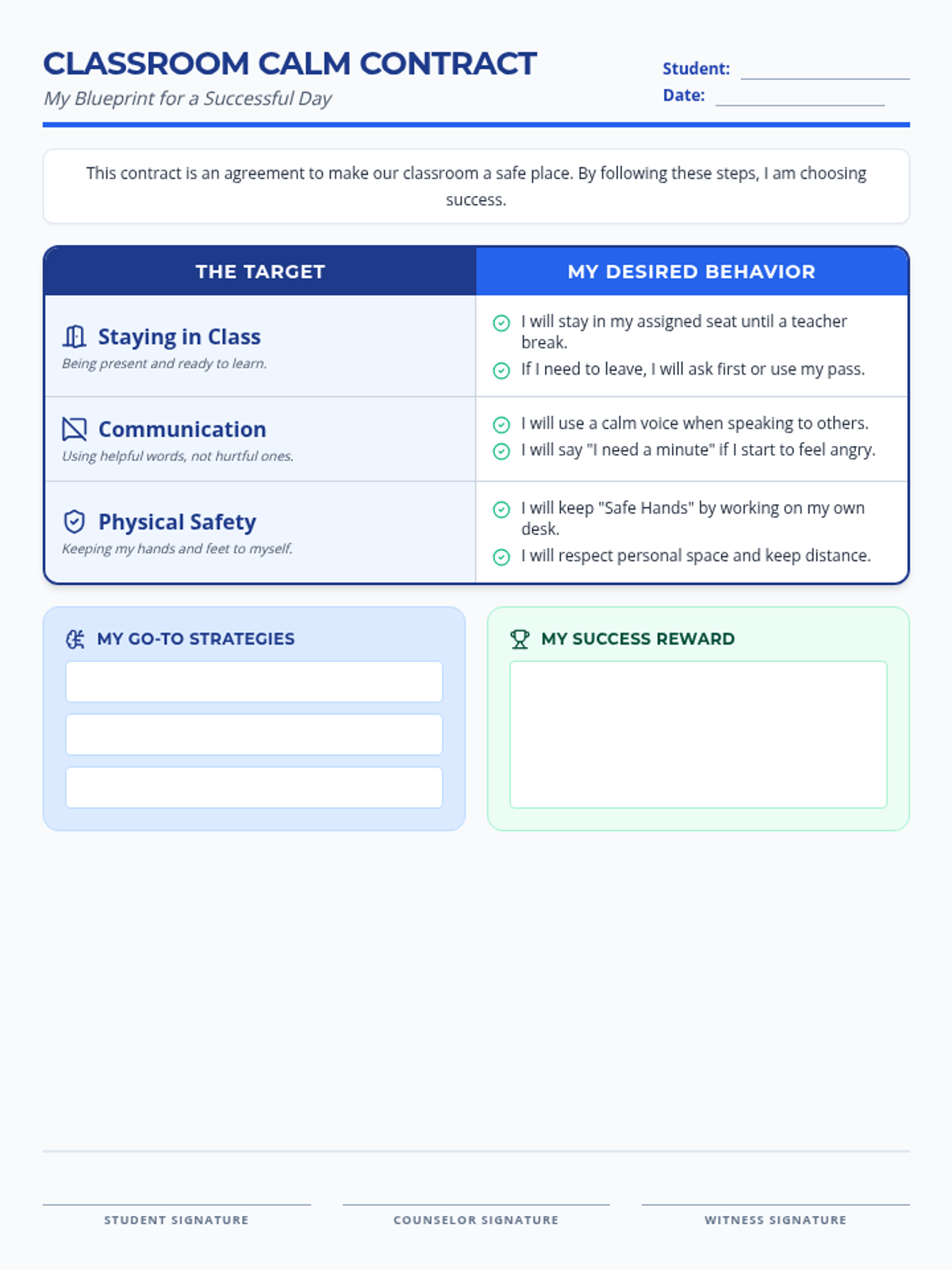
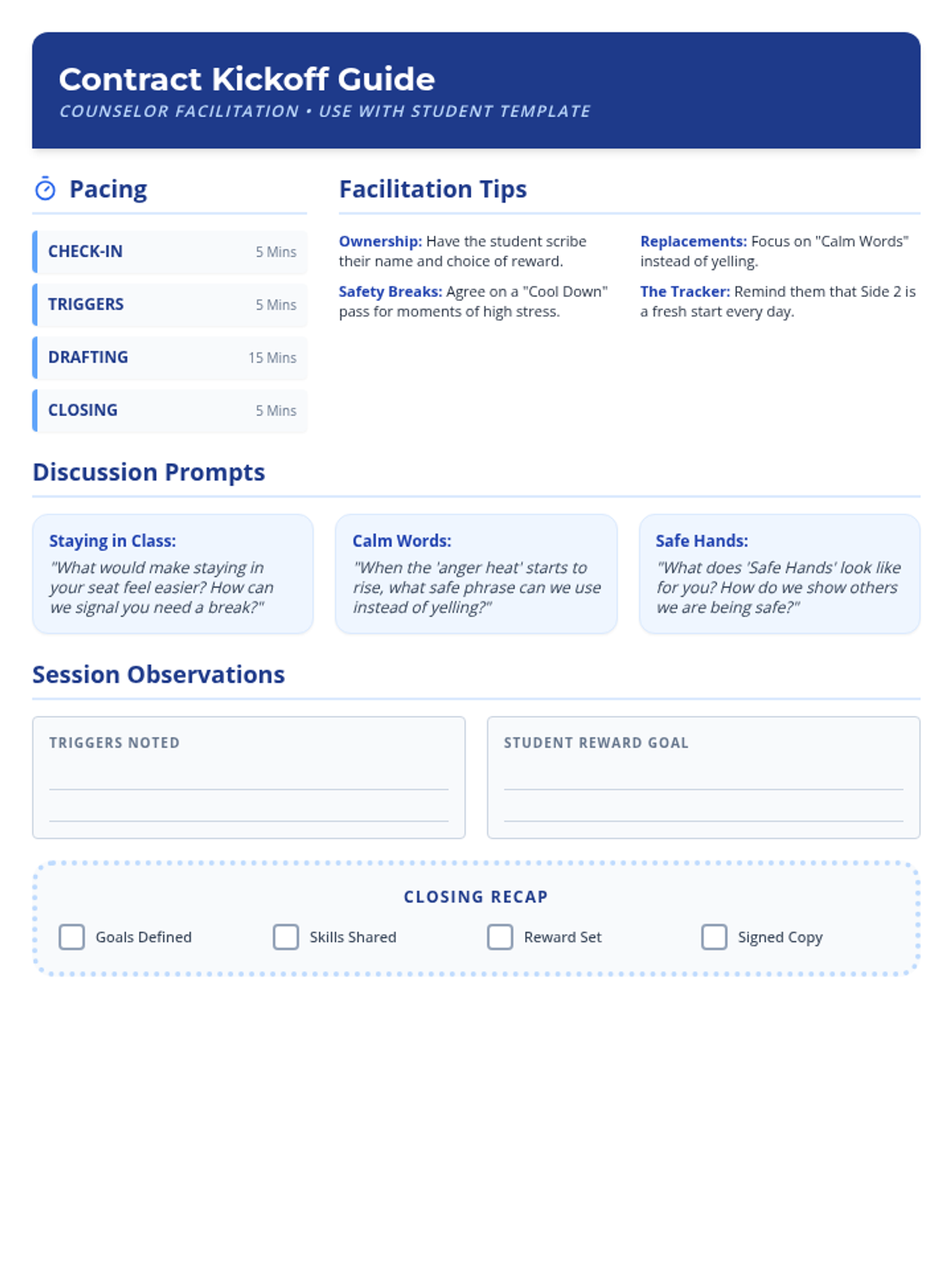
A 30-minute counseling session focused on creating a collaborative behavior contract to address class attendance, verbal communication, and physical safety.
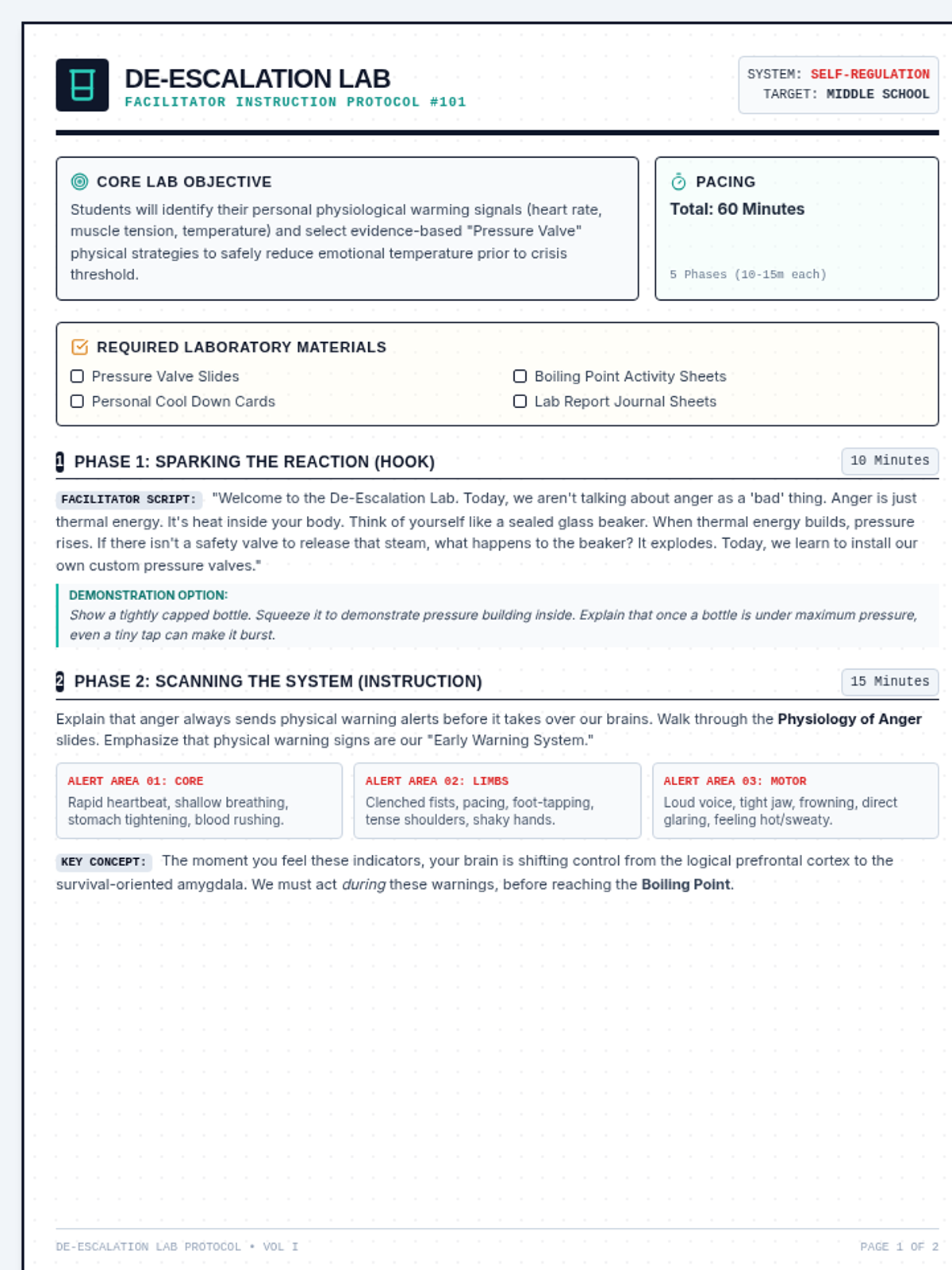
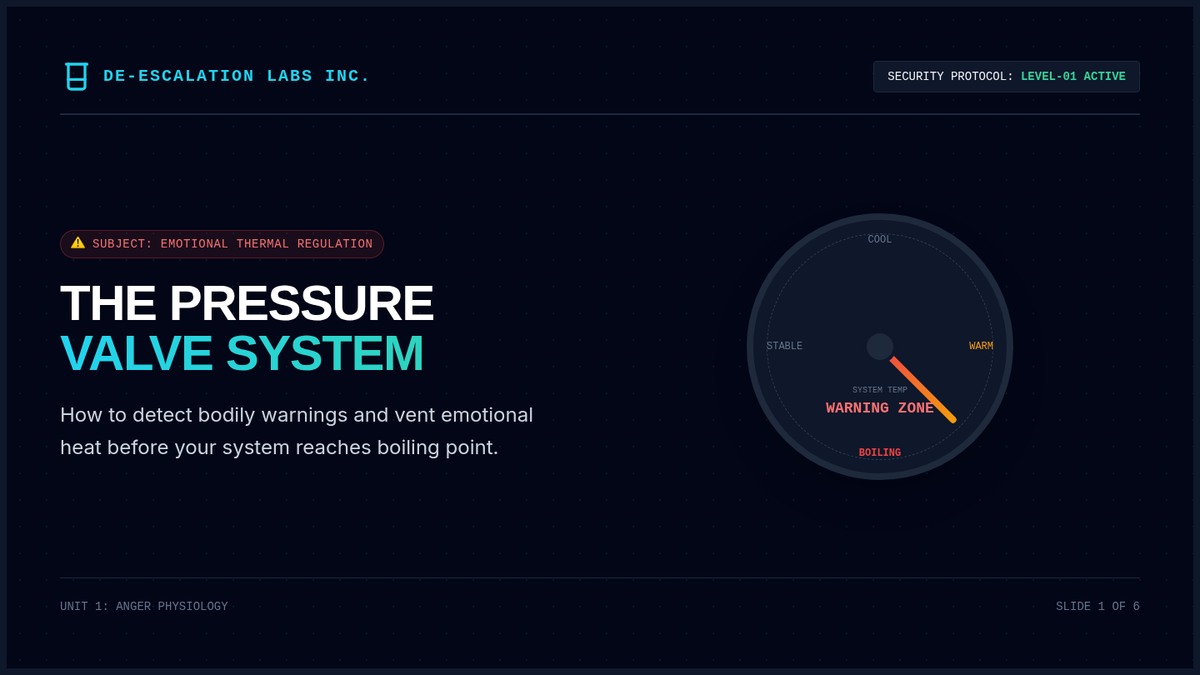
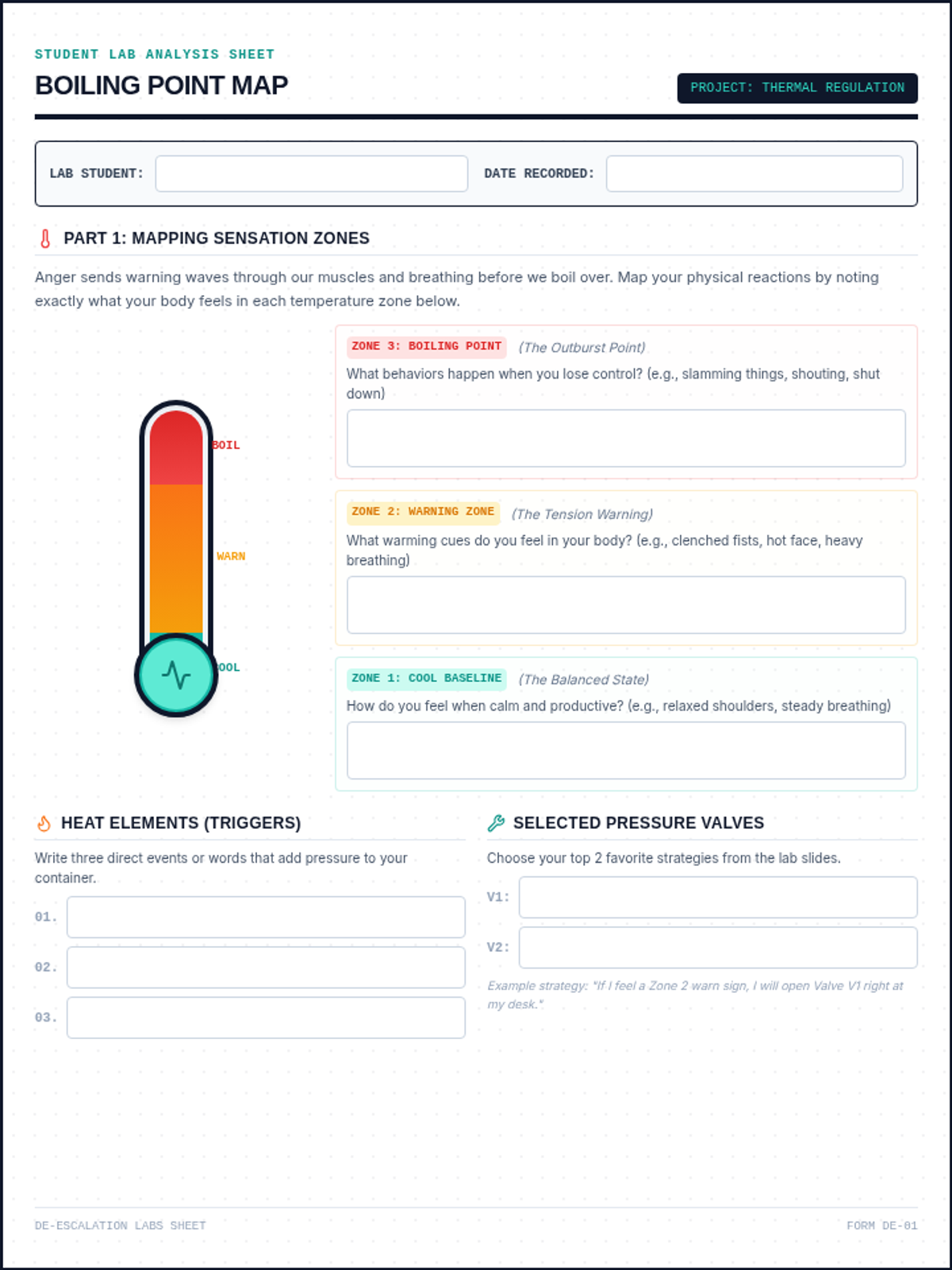
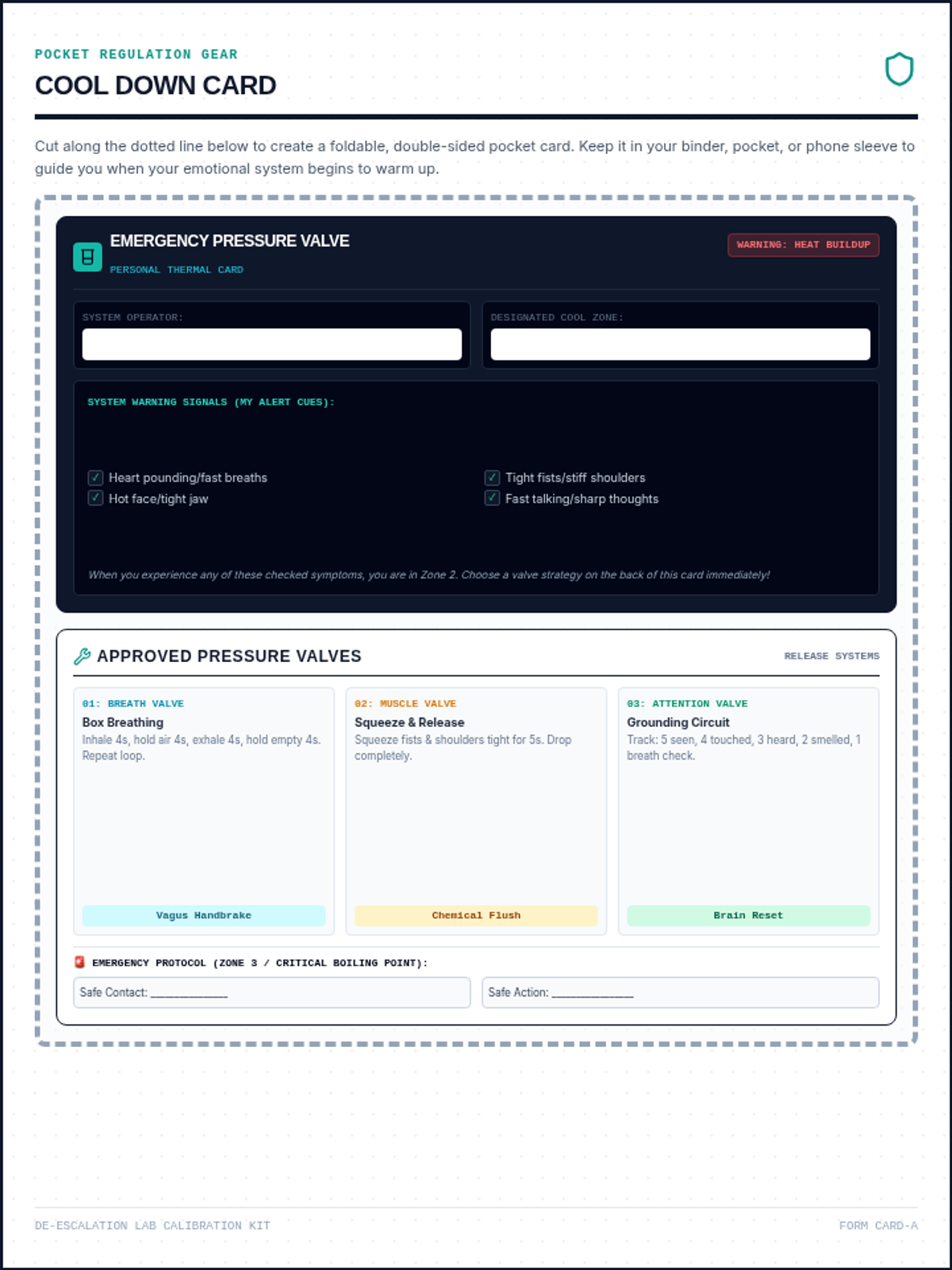
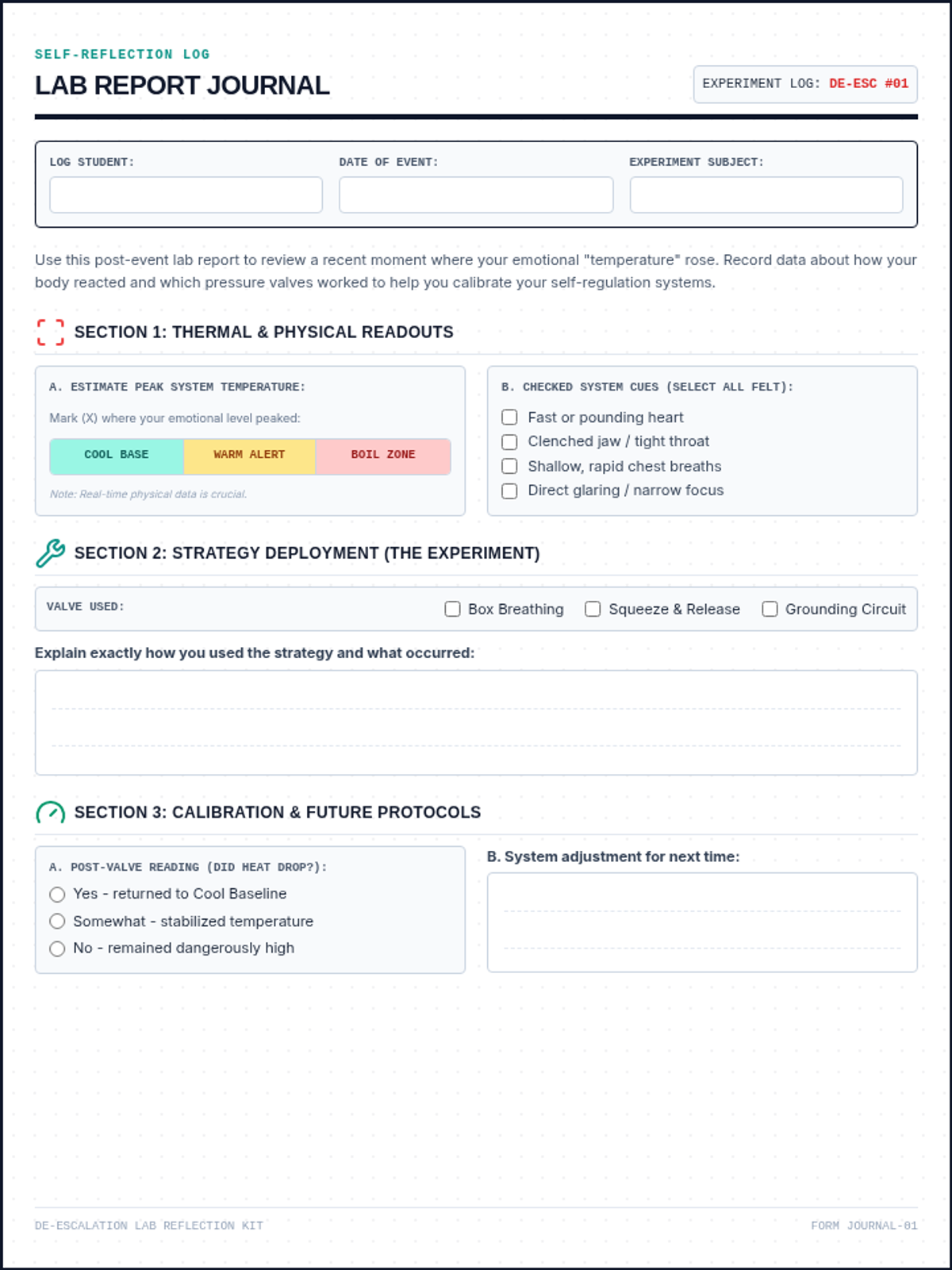
A behavioral intervention lesson for middle schoolers that uses a laboratory theme to explore the physical sensations of anger. Students identify their physiological warning signs, experiment with 'pressure valve' strategies, and create custom self-regulation plans to prevent emotional blow-ups.
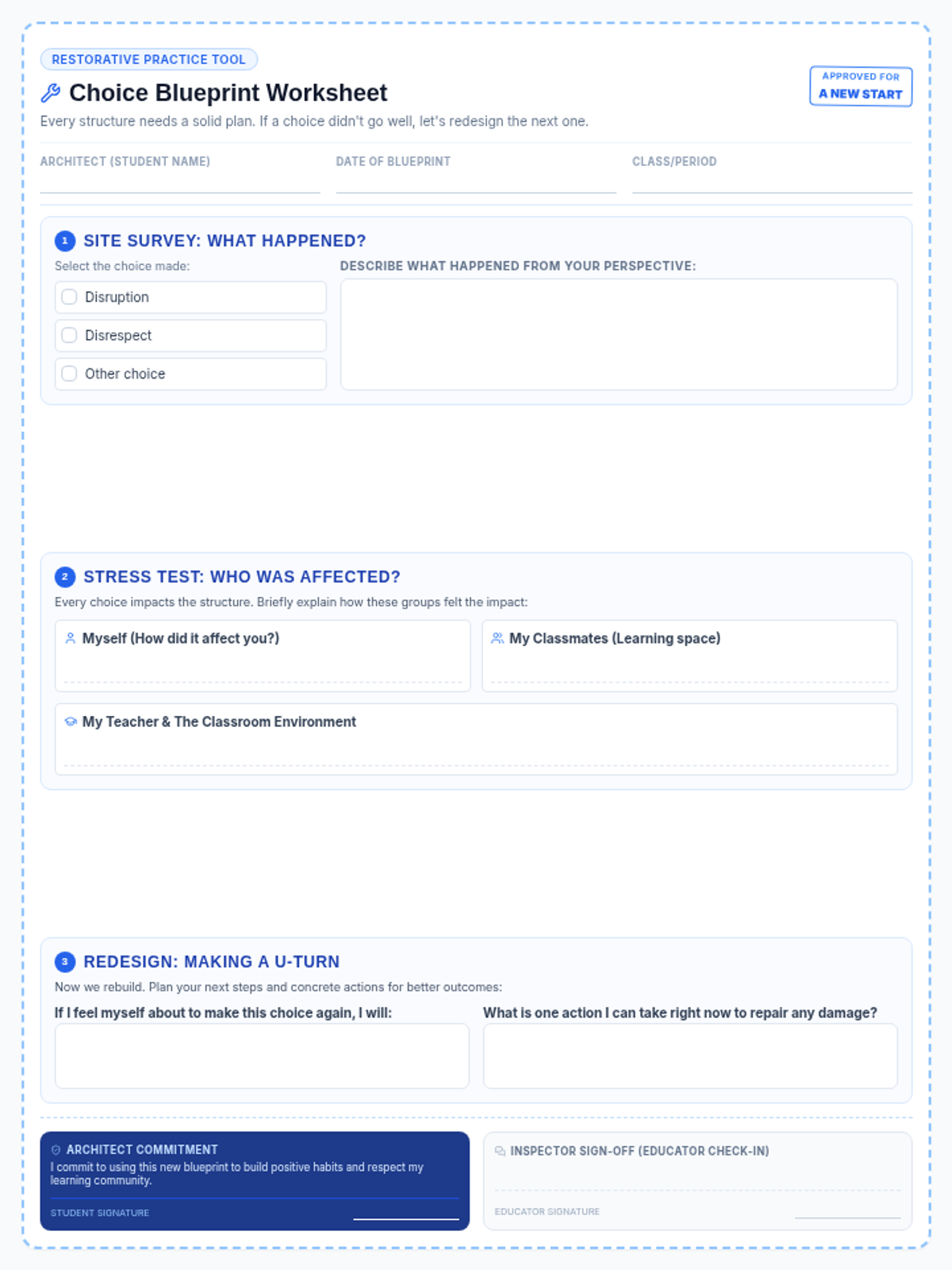
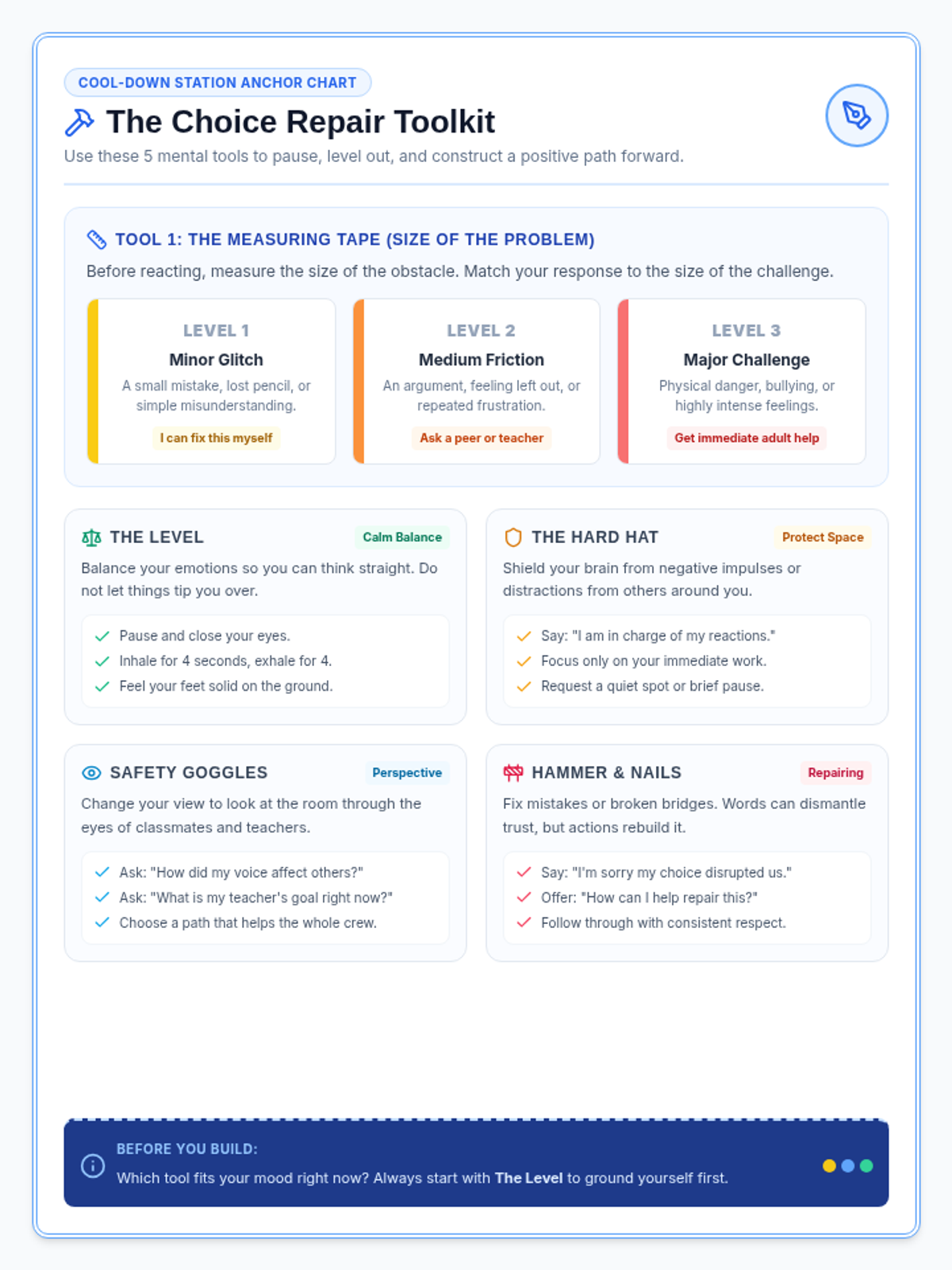
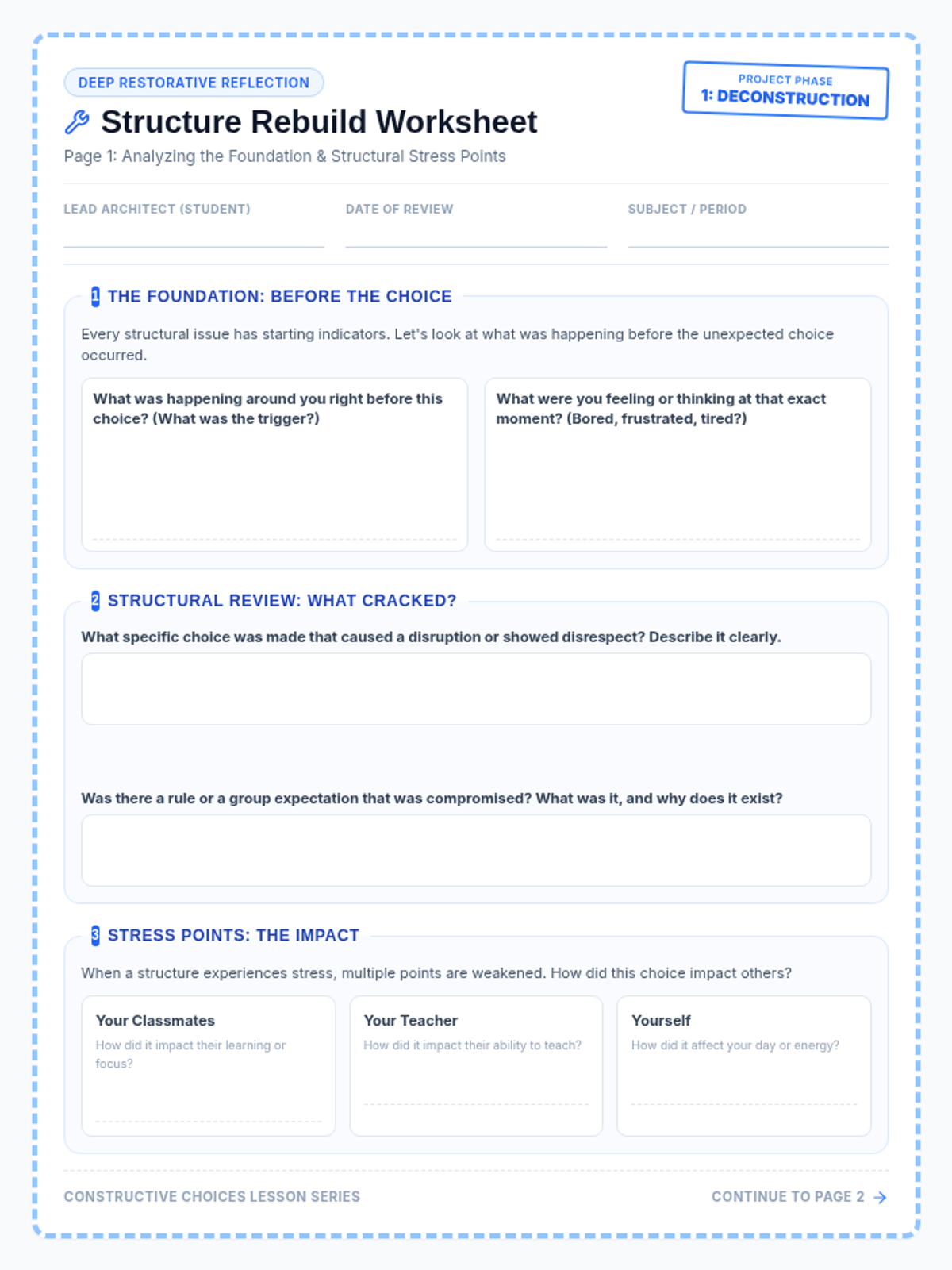
A restorative instruction set focusing on helping students pause, evaluate behavior impacts, and build a positive plan for respectful classroom engagement.
This lesson provides school social workers with a clinical and practical framework for identifying and supporting students struggling with anxiety, depression, and self-harm. It includes evidence-based interventions and safety planning tools specifically for the school environment.
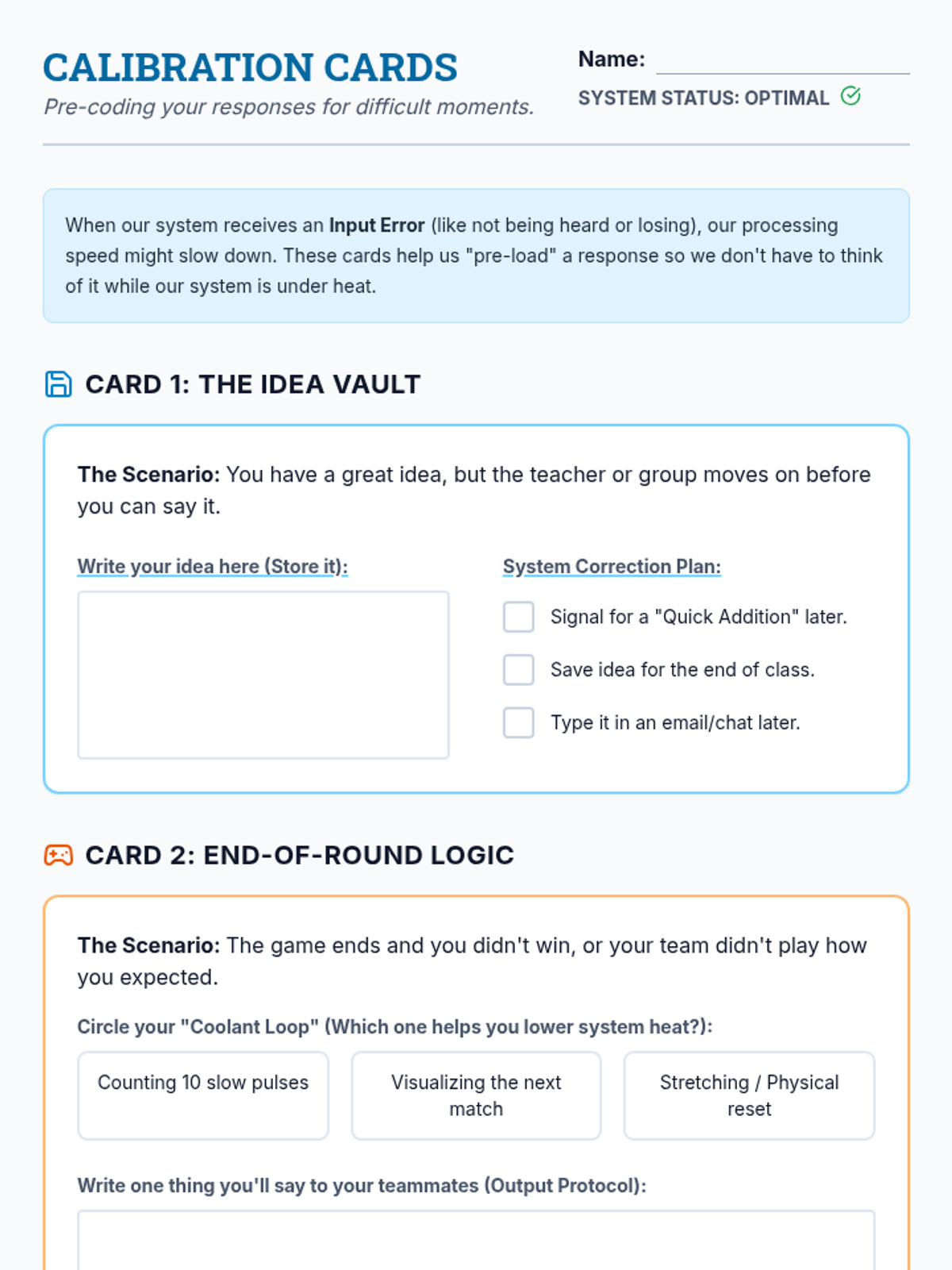
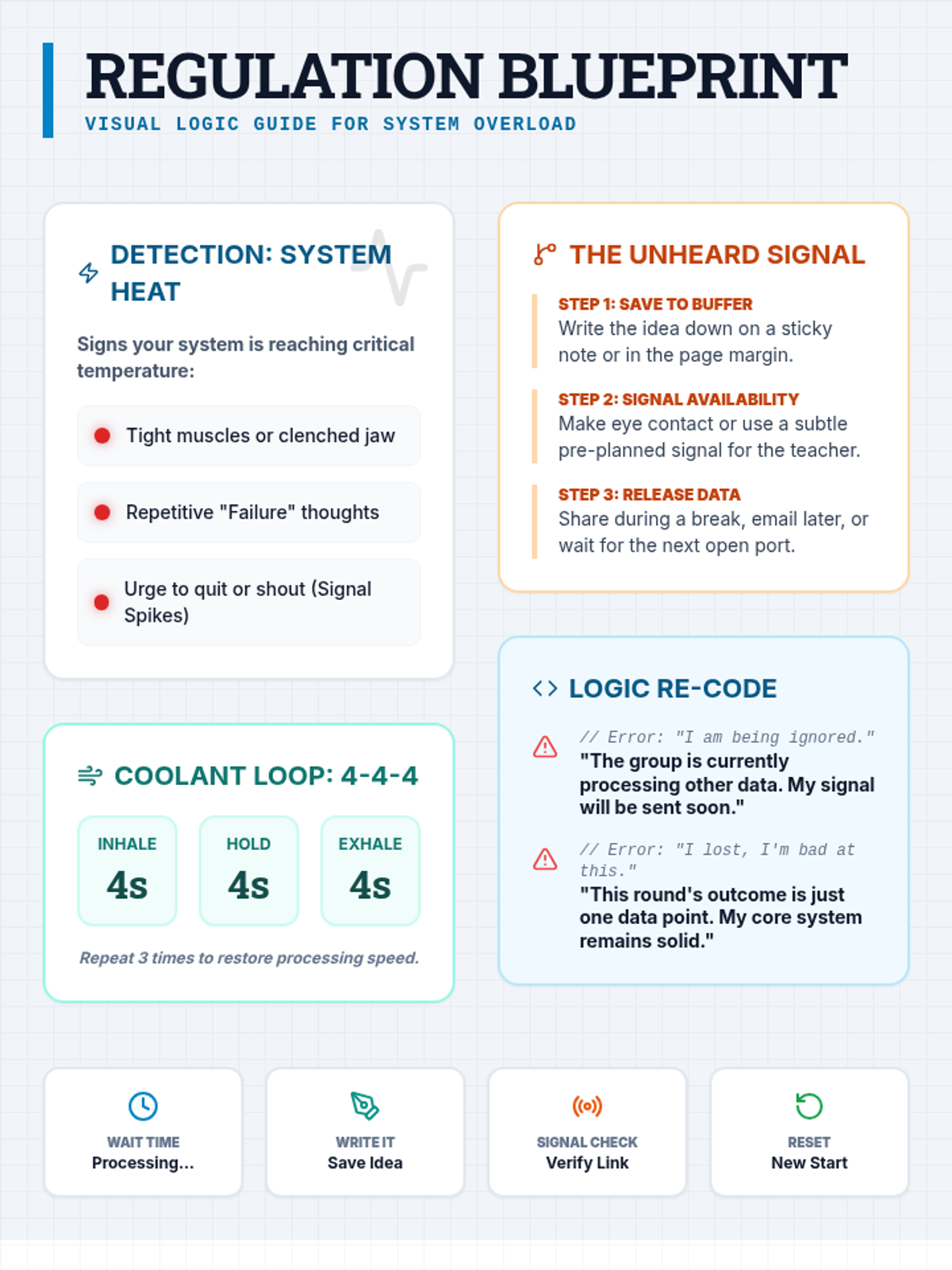
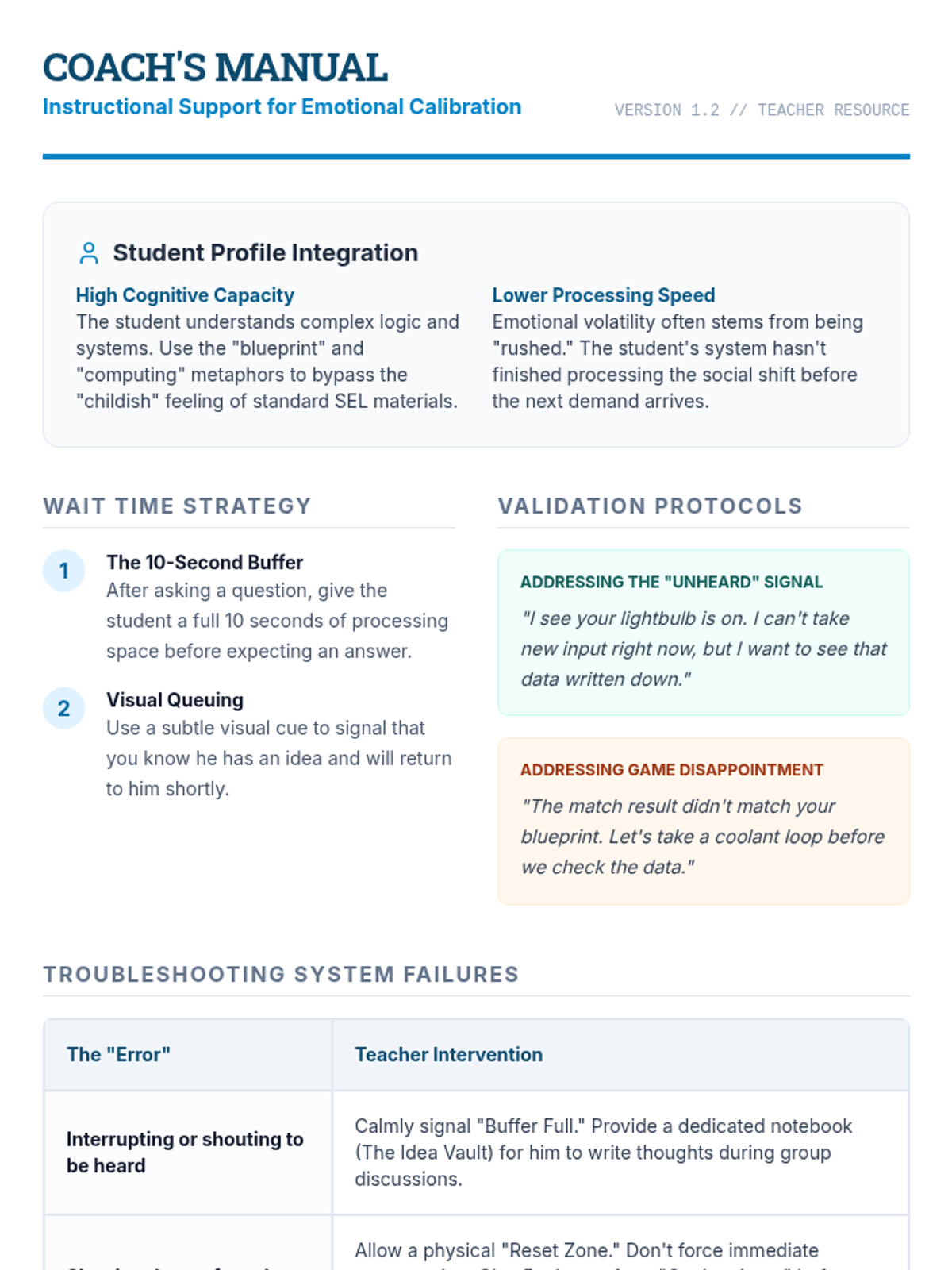
This lesson introduces the 'System Reset' framework for emotional regulation, focusing on the gap between expectations and reality and providing strategies for handling 'input errors' like not being heard.
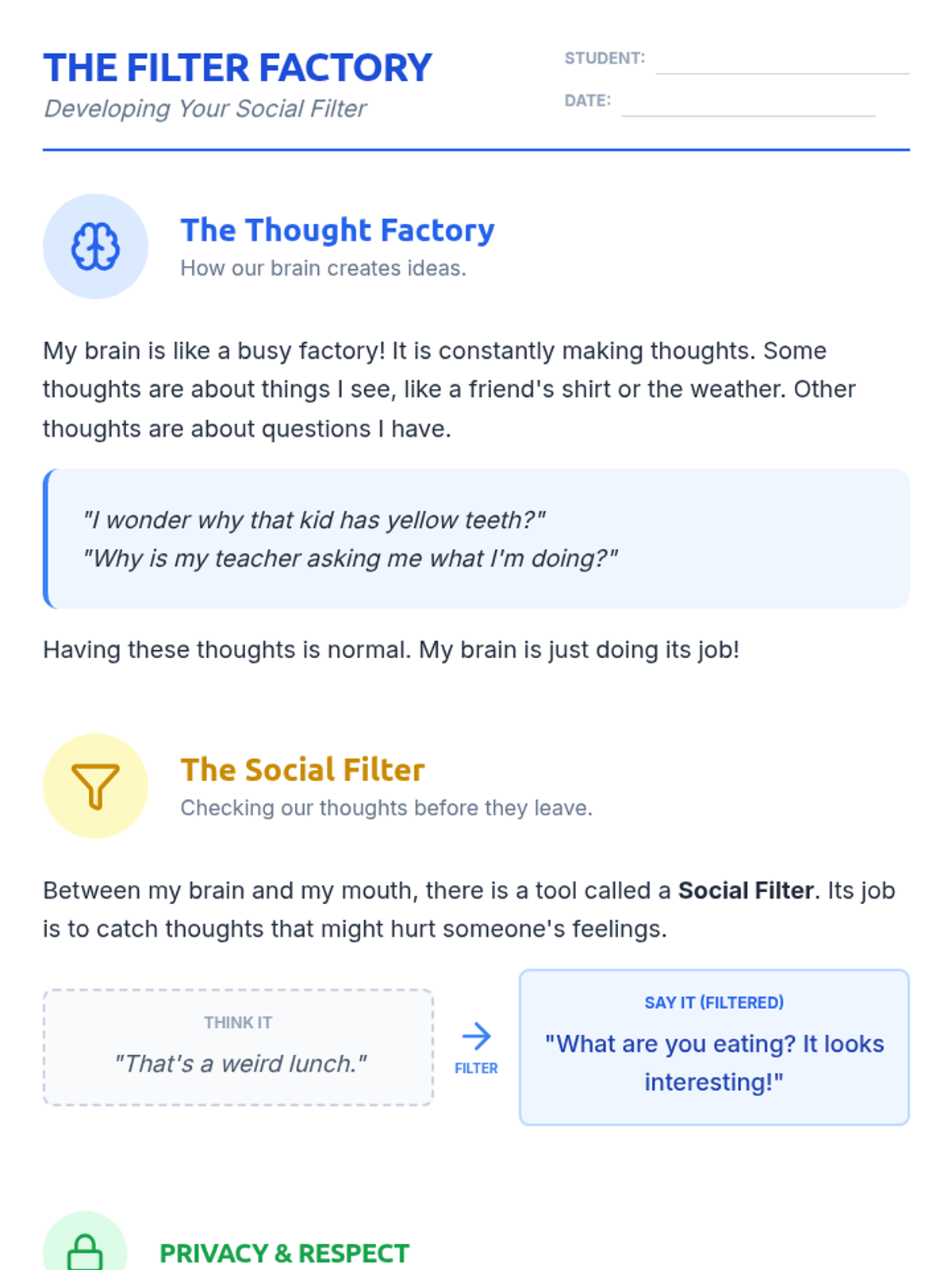
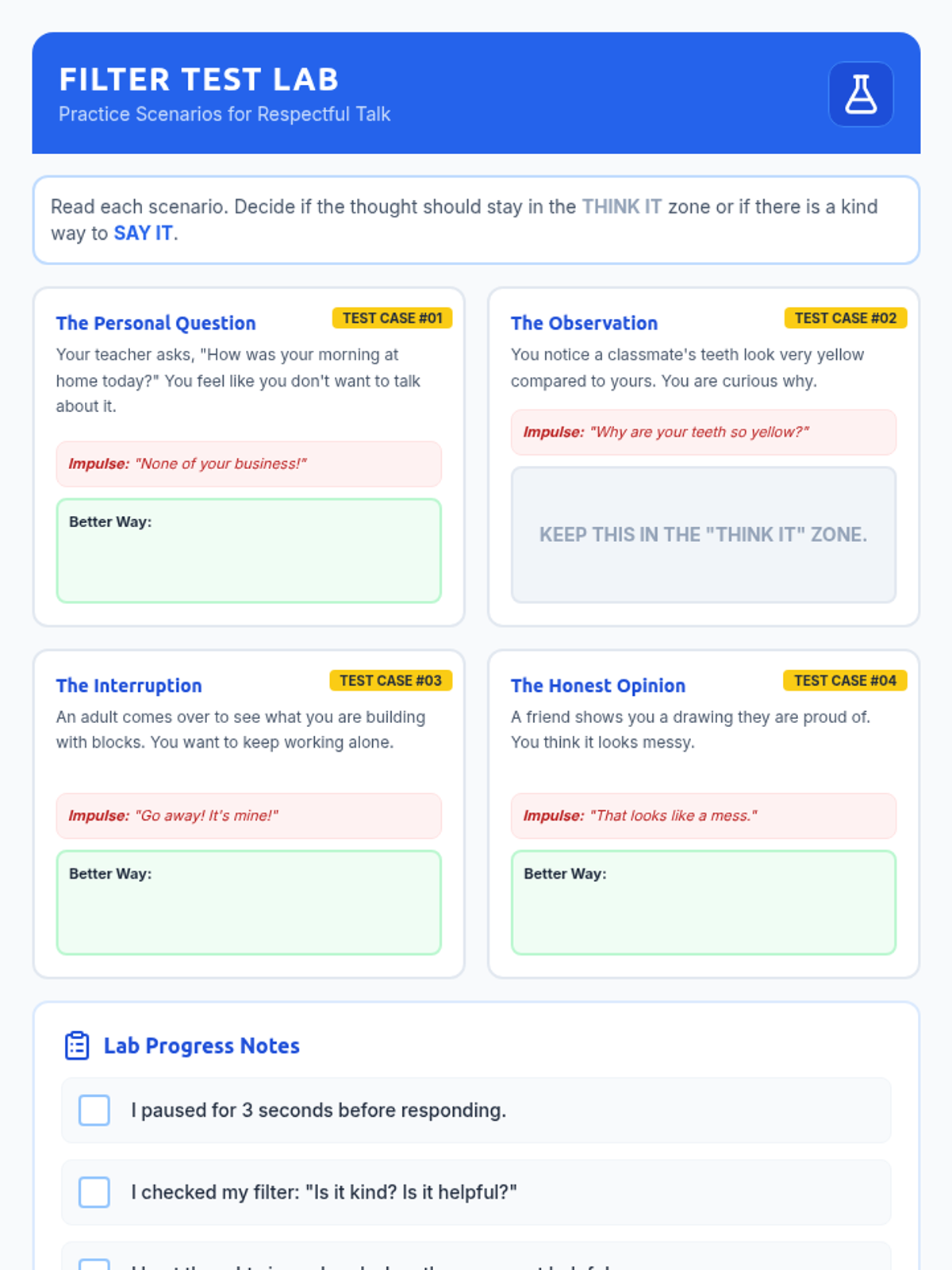
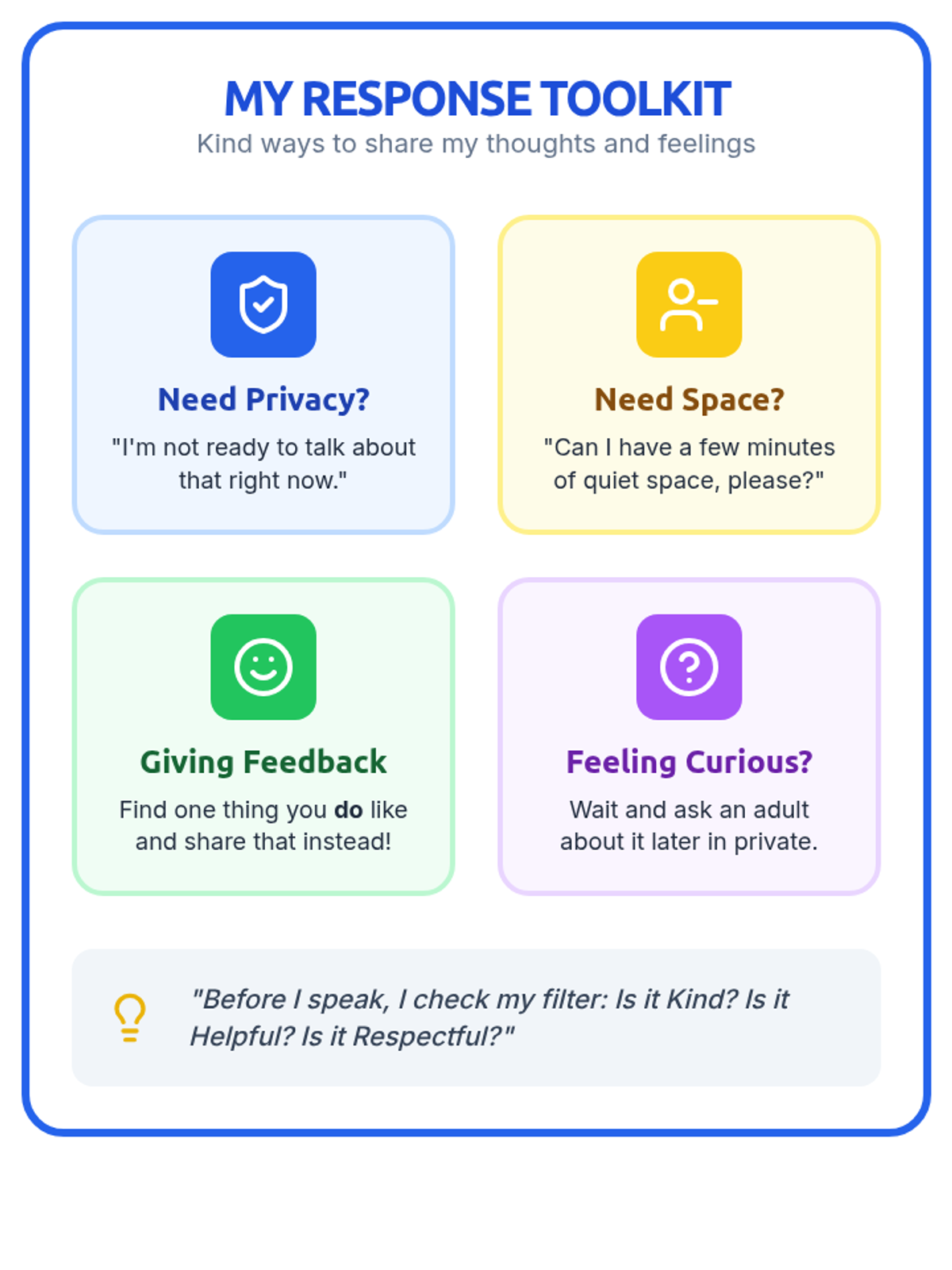
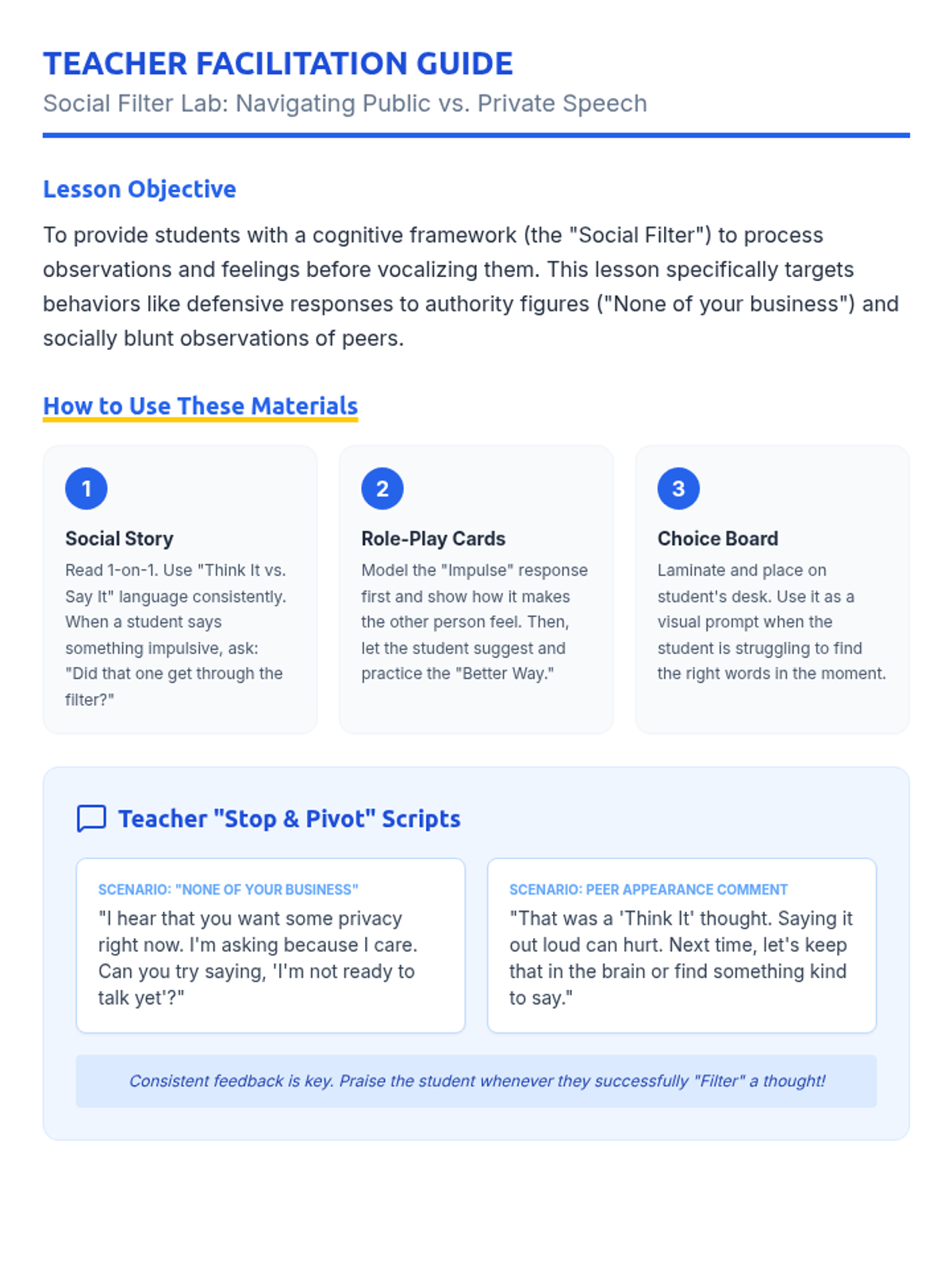
A set of resources designed to help students understand the difference between private thoughts and public comments, focusing on respectful communication and peer interactions through the 'Social Filter' metaphor.
Aceitação Radical e voltando a mente para a realidade para reduzir o sofrimento.
Autoconforto usando os cinco sentidos e melhorando o momento.
As habilidades STOP e TIPP para gerenciamento imediato de crises e resfriamento.
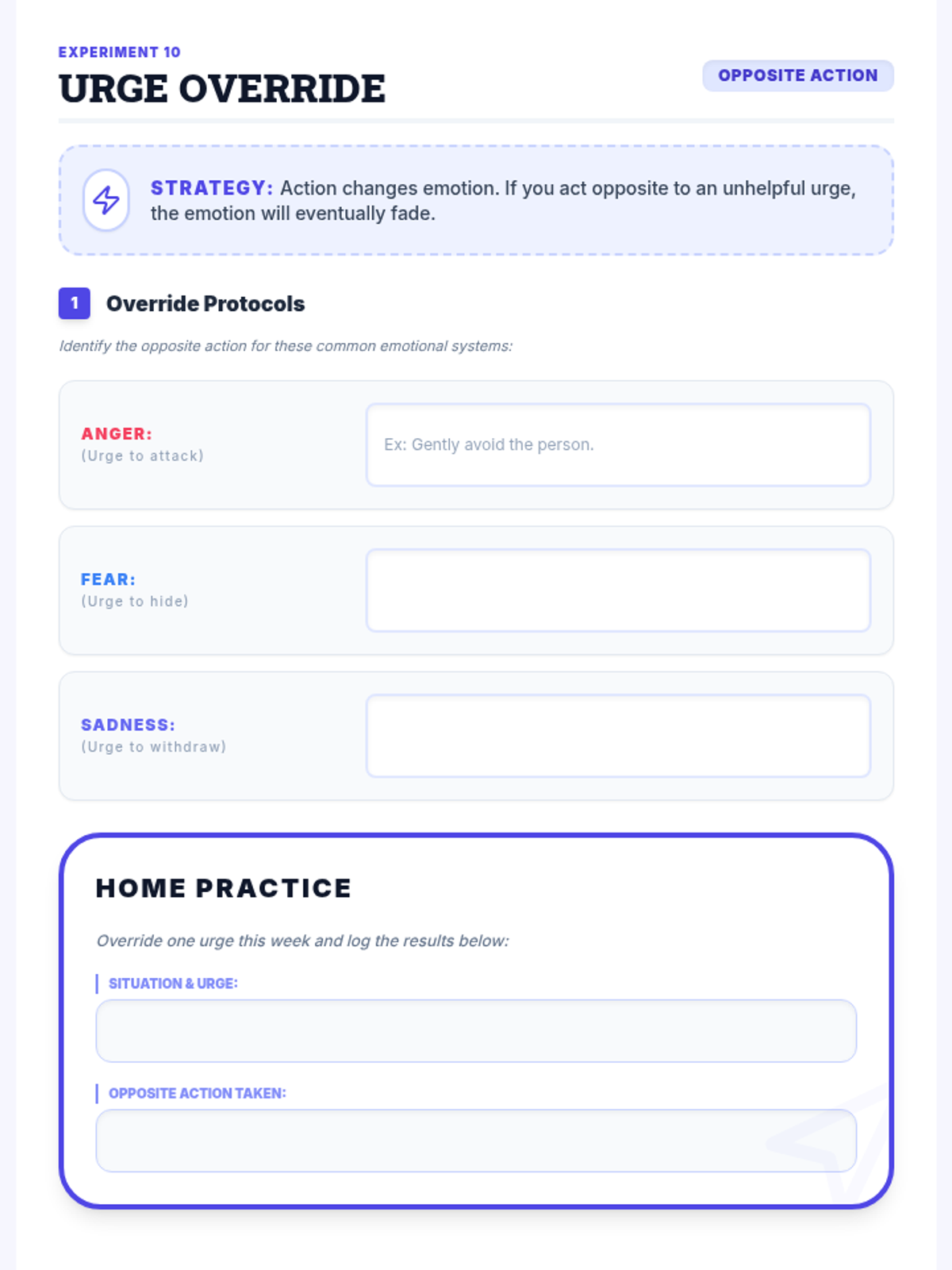
A habilidade de Ação Oposta para mudar emoções indesejadas agindo contra o impulso.
A habilidade PLEASE para manter um corpo saudável e apoiar uma mente saudável.
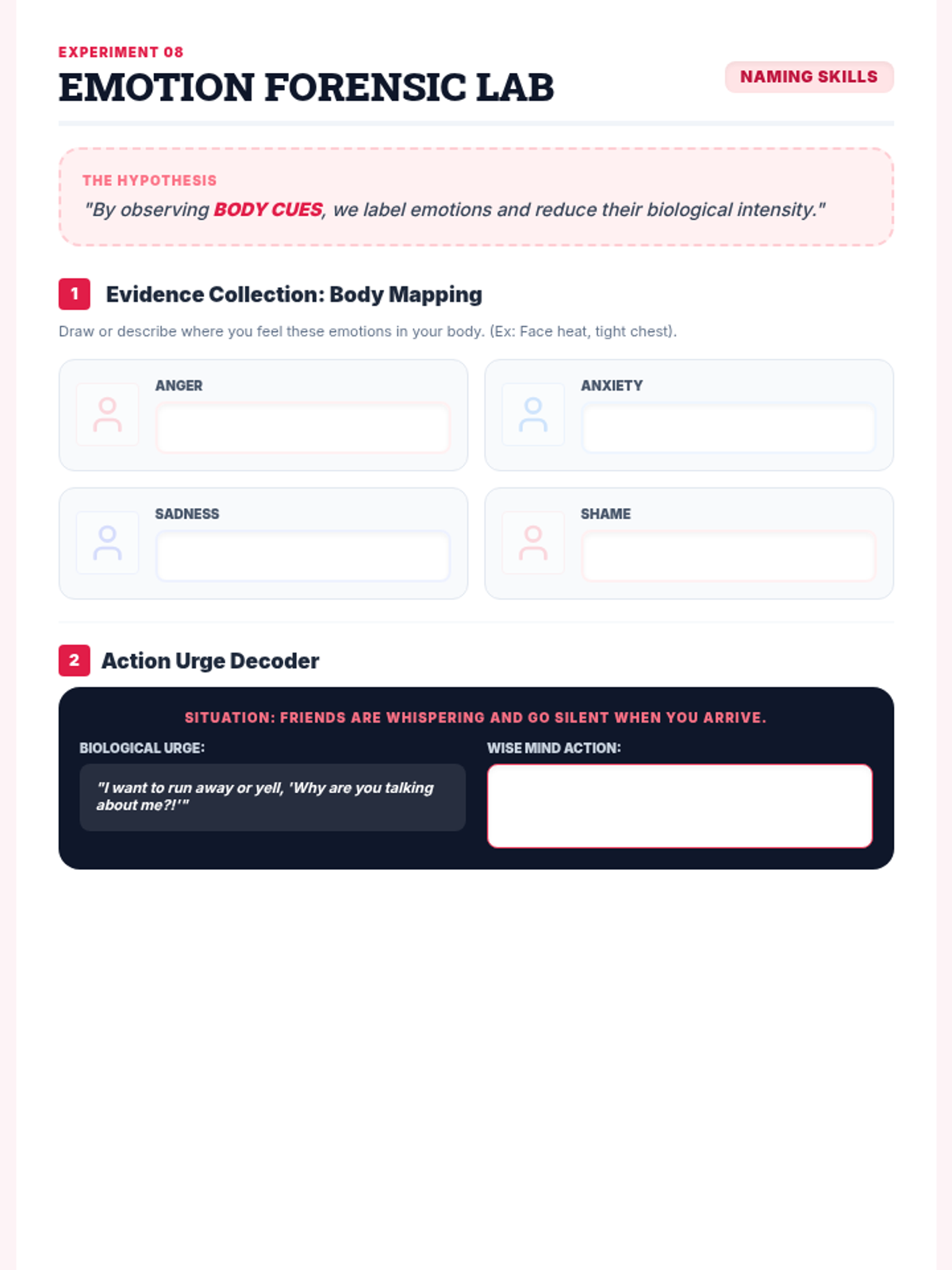
Aprender a identificar e nomear emoções para reduzir seu poder e aumentar a compreensão.
Usando a habilidade FAST para manter o autorrespeito e permanecer fiel aos valores.
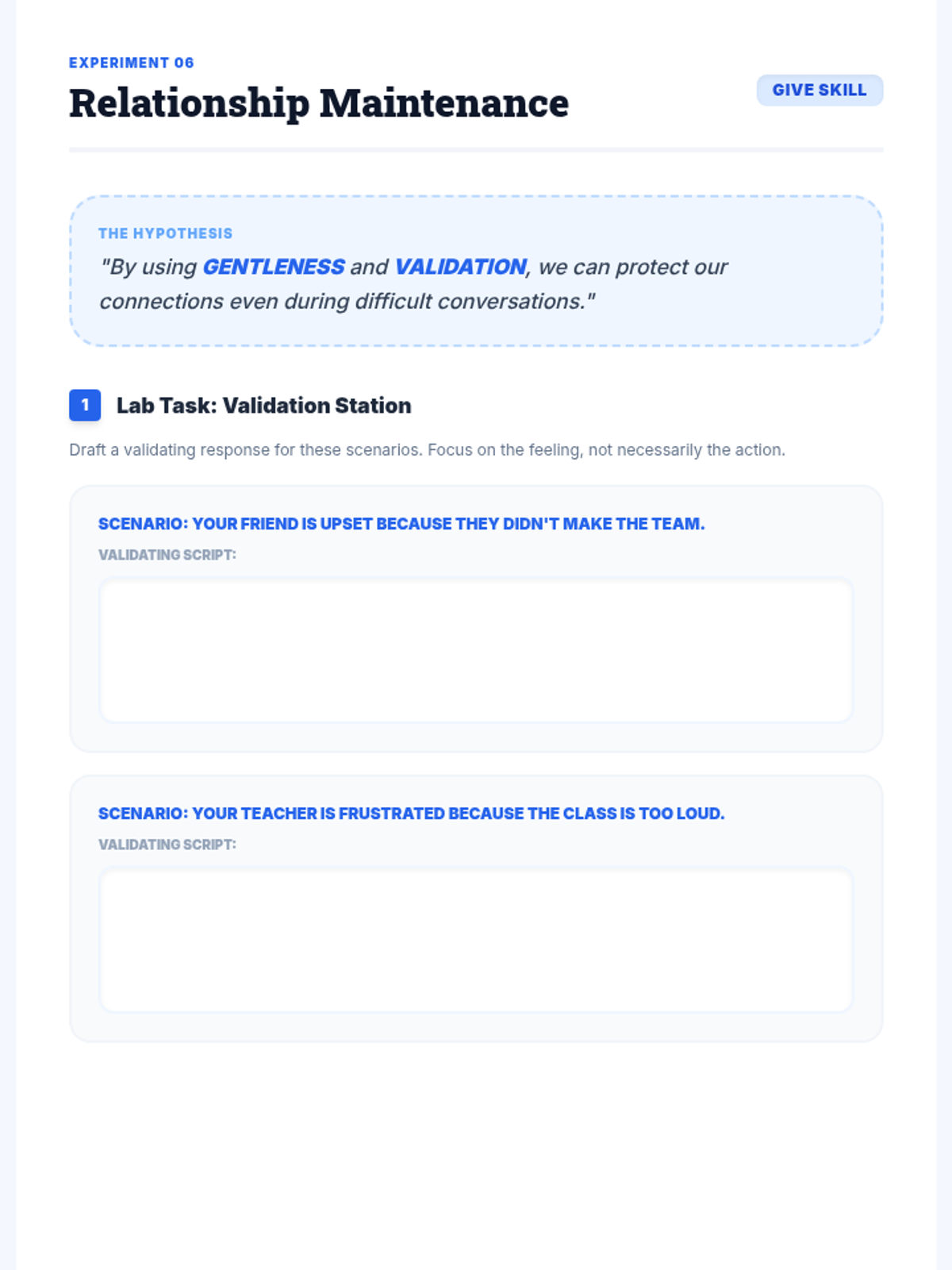
Usando a habilidade GIVE para manter e fortalecer relacionamentos durante as interações.
Usando a habilidade DEAR MAN para pedir coisas ou dizer não de forma eficaz, mantendo os relacionamentos.
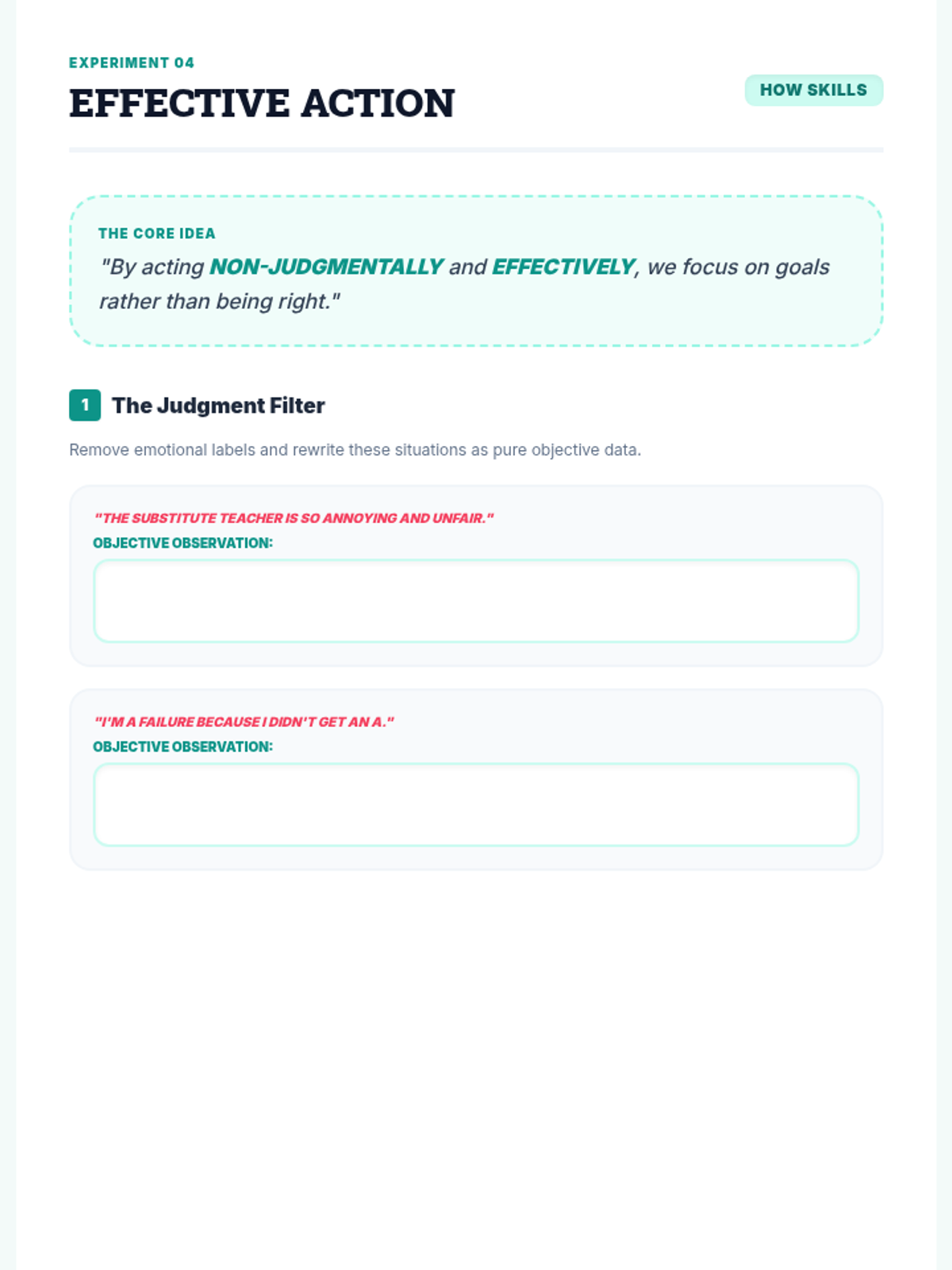
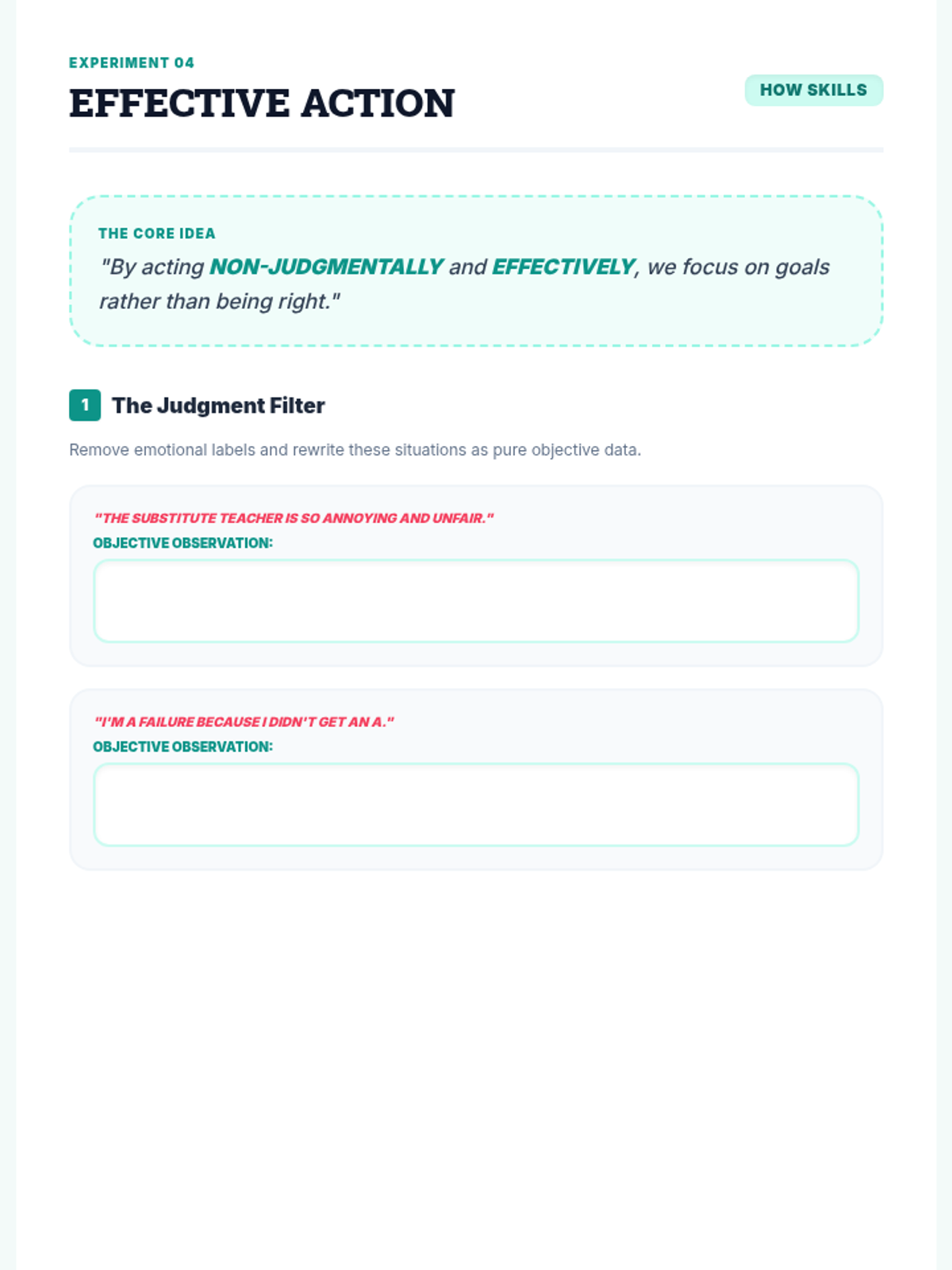
Ensinando as habilidades 'Como' da Atenção Plena: Sem Julgamentos, Uma Coisa de Cada Vez e de Forma Eficaz.
Ensinando as habilidades 'O Quê' da Atenção Plena: Observar, Descrever e Participar.
Foca no conceito de 'Mente Sábia'—o equilíbrio entre a Mente Emocional e a Mente Racional.
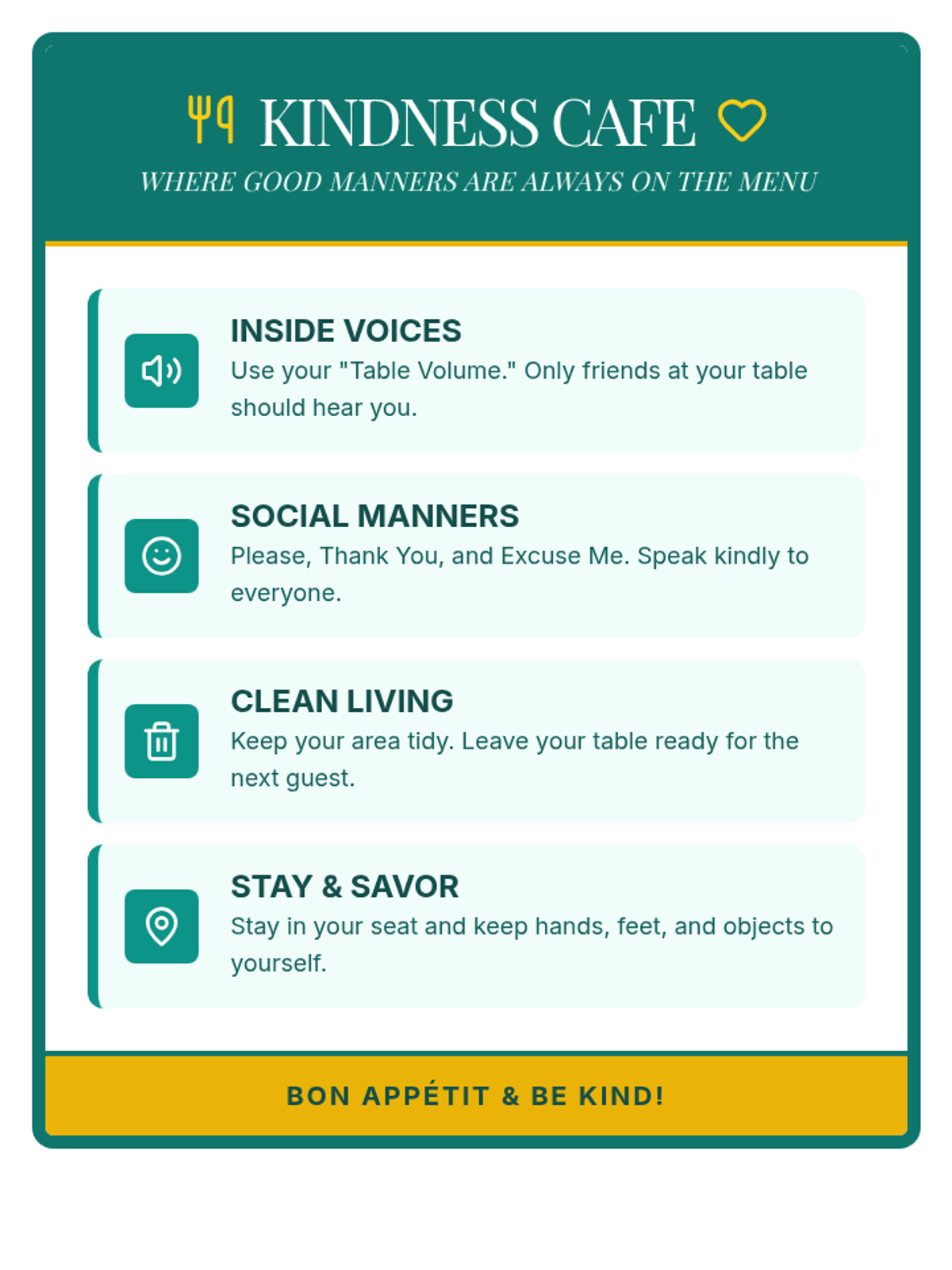
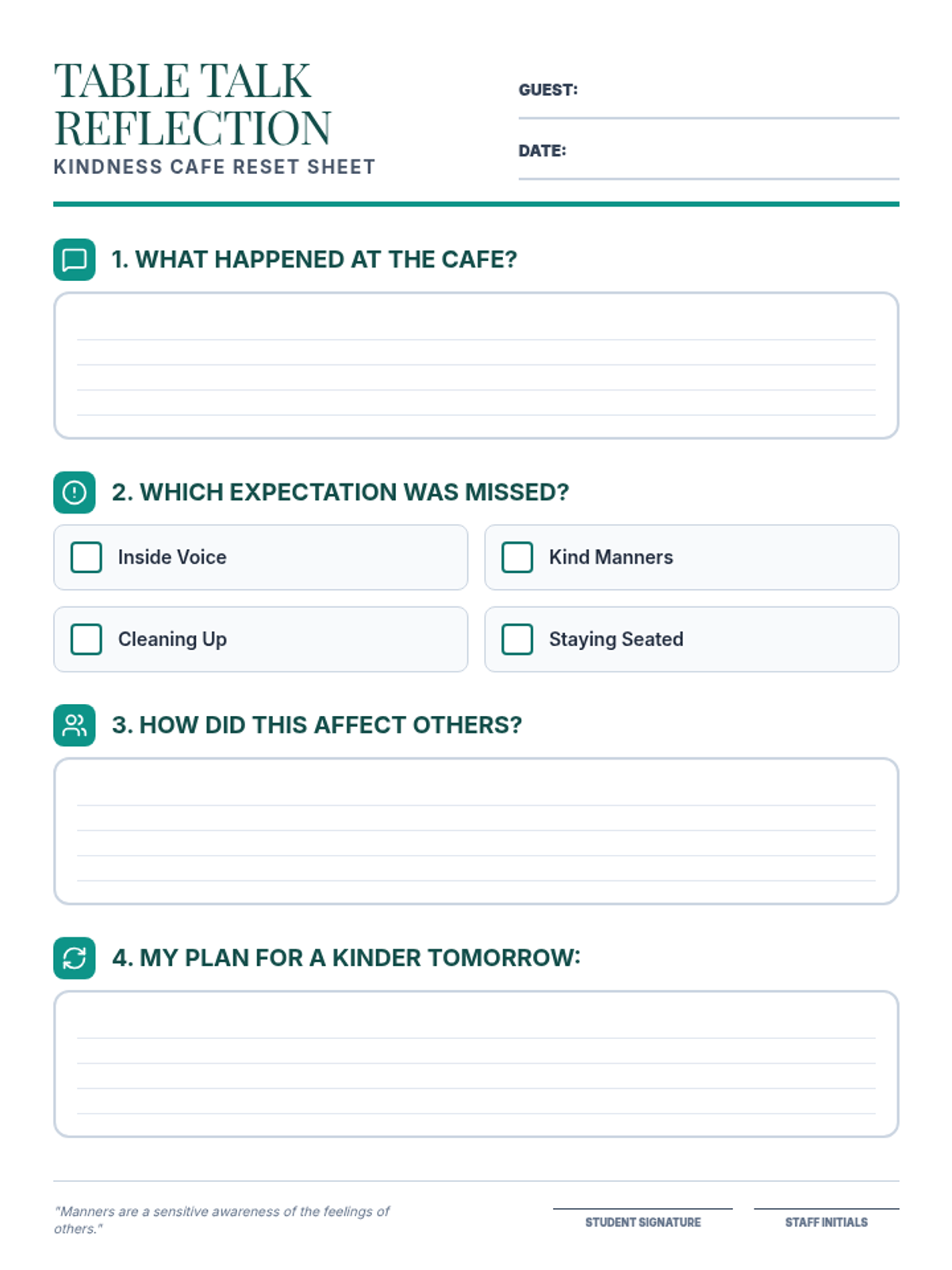
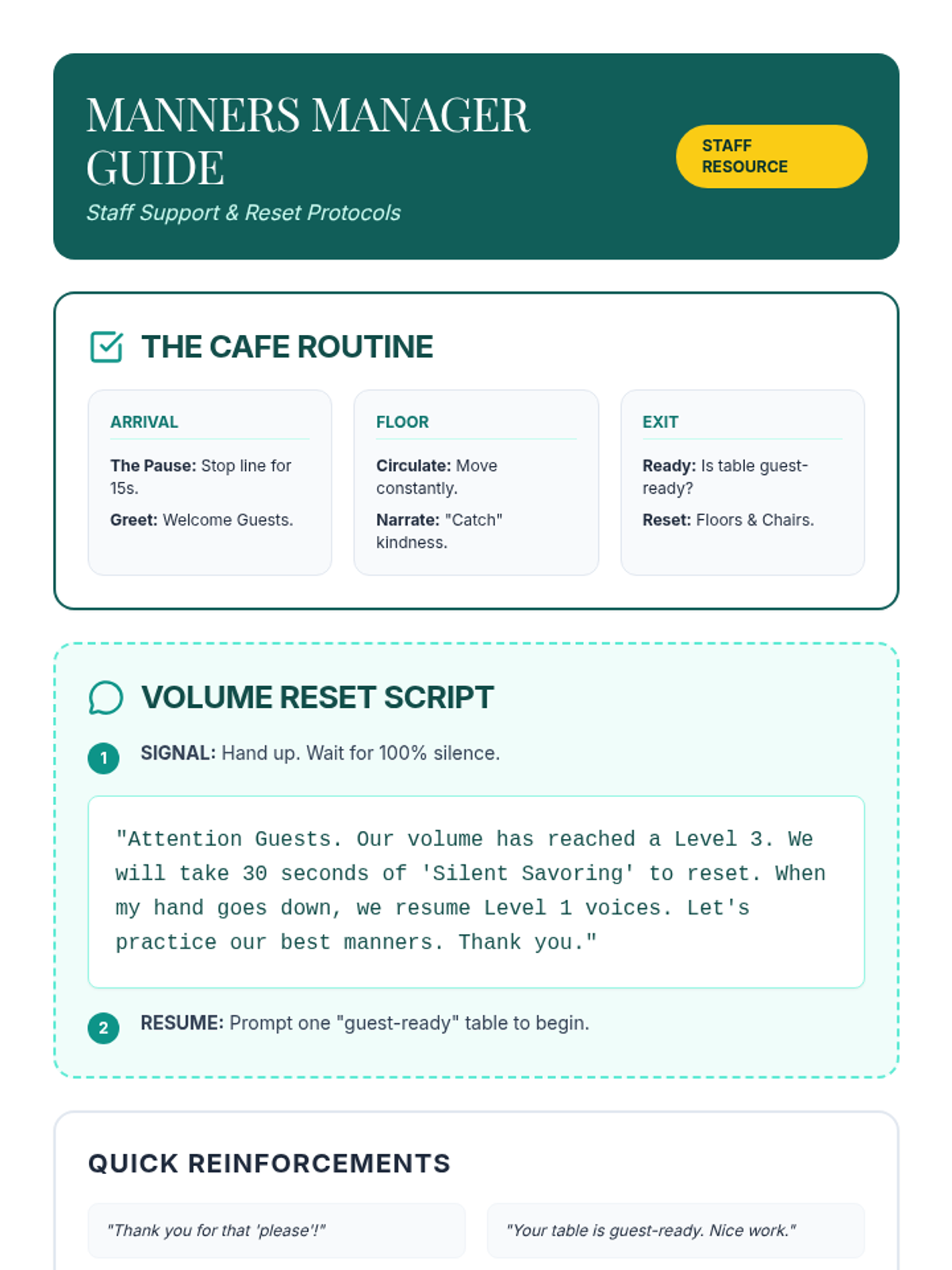
A behavior support package designed to transform the lunchroom into a calm, polite dining environment focused on kindness and social manners.
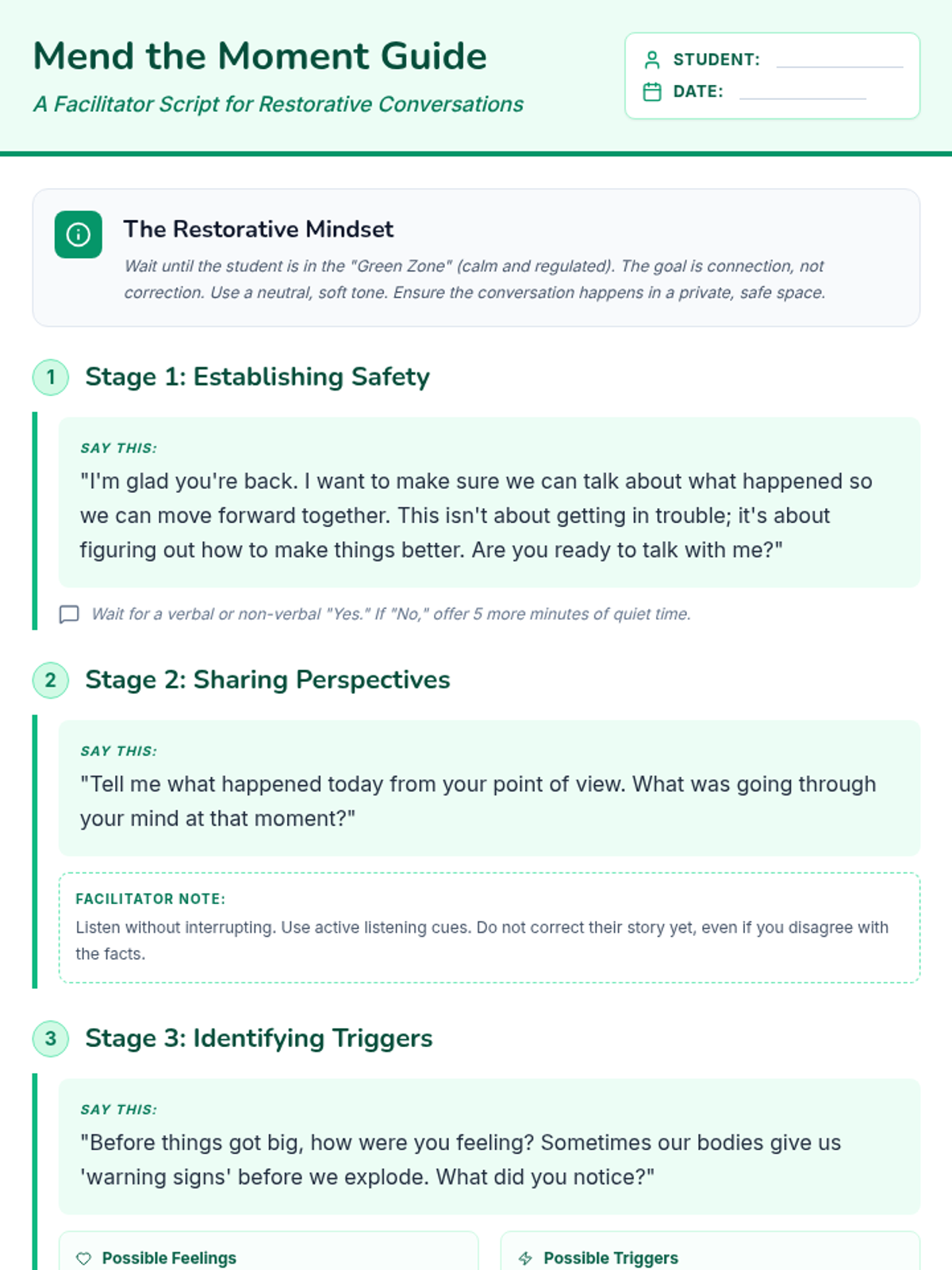
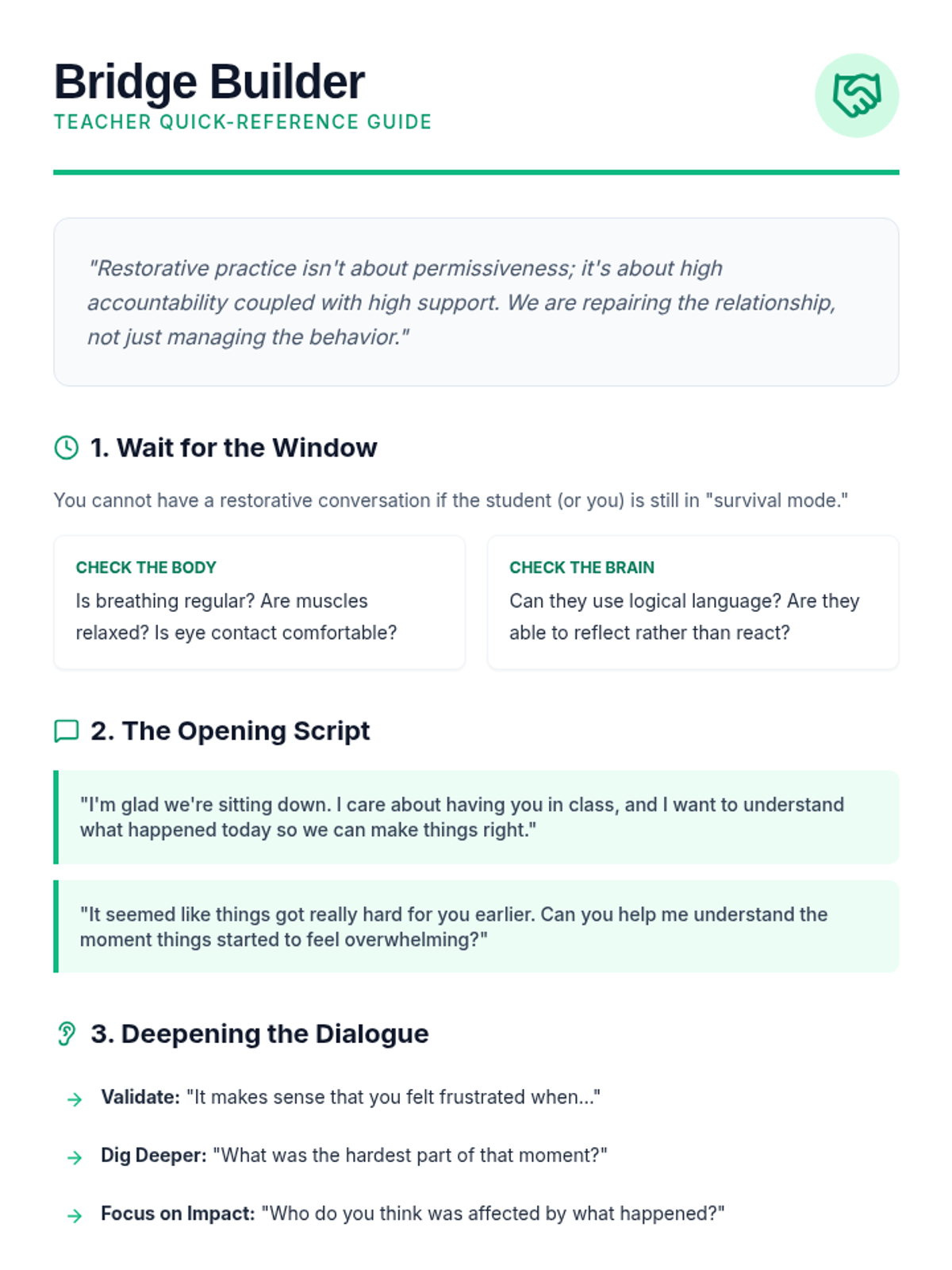
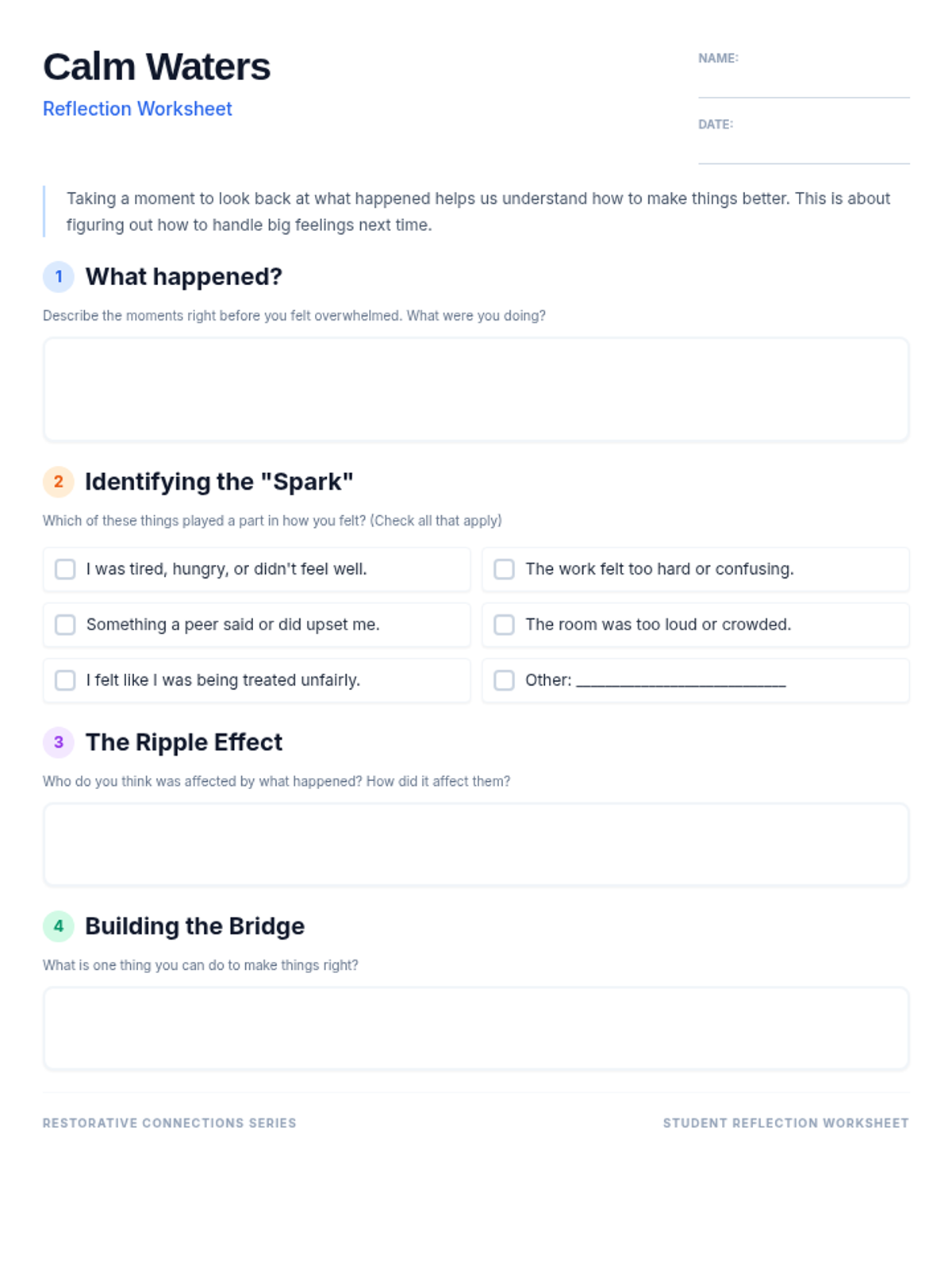
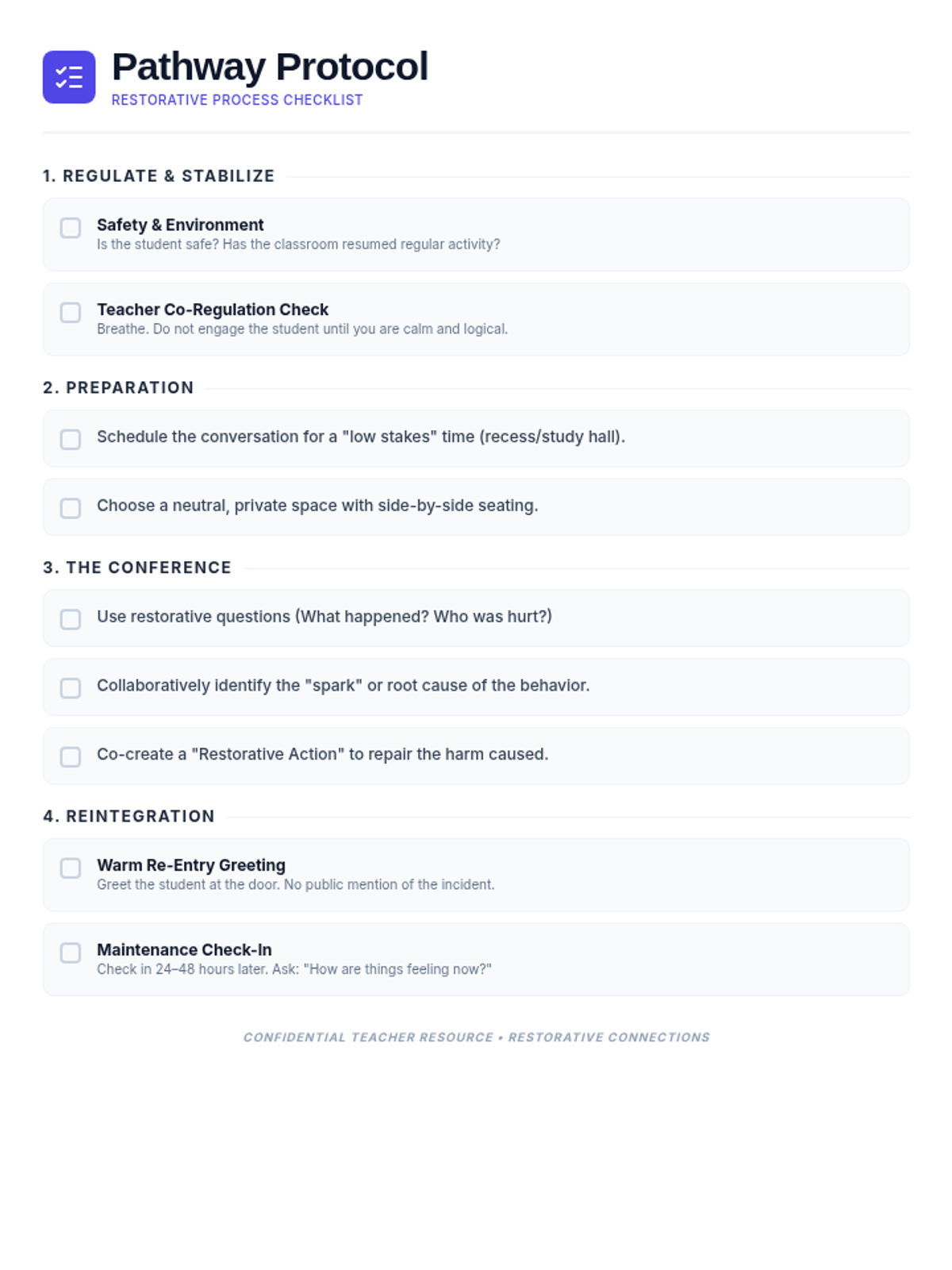
A restorative approach to helping students identify emotional triggers and navigate high-intensity moments through structured conversation and empathy.
A set of restorative tools designed to help teachers navigate the aftermath of student emotional outbursts, focusing on identifying triggers and rebuilding the student-teacher relationship.
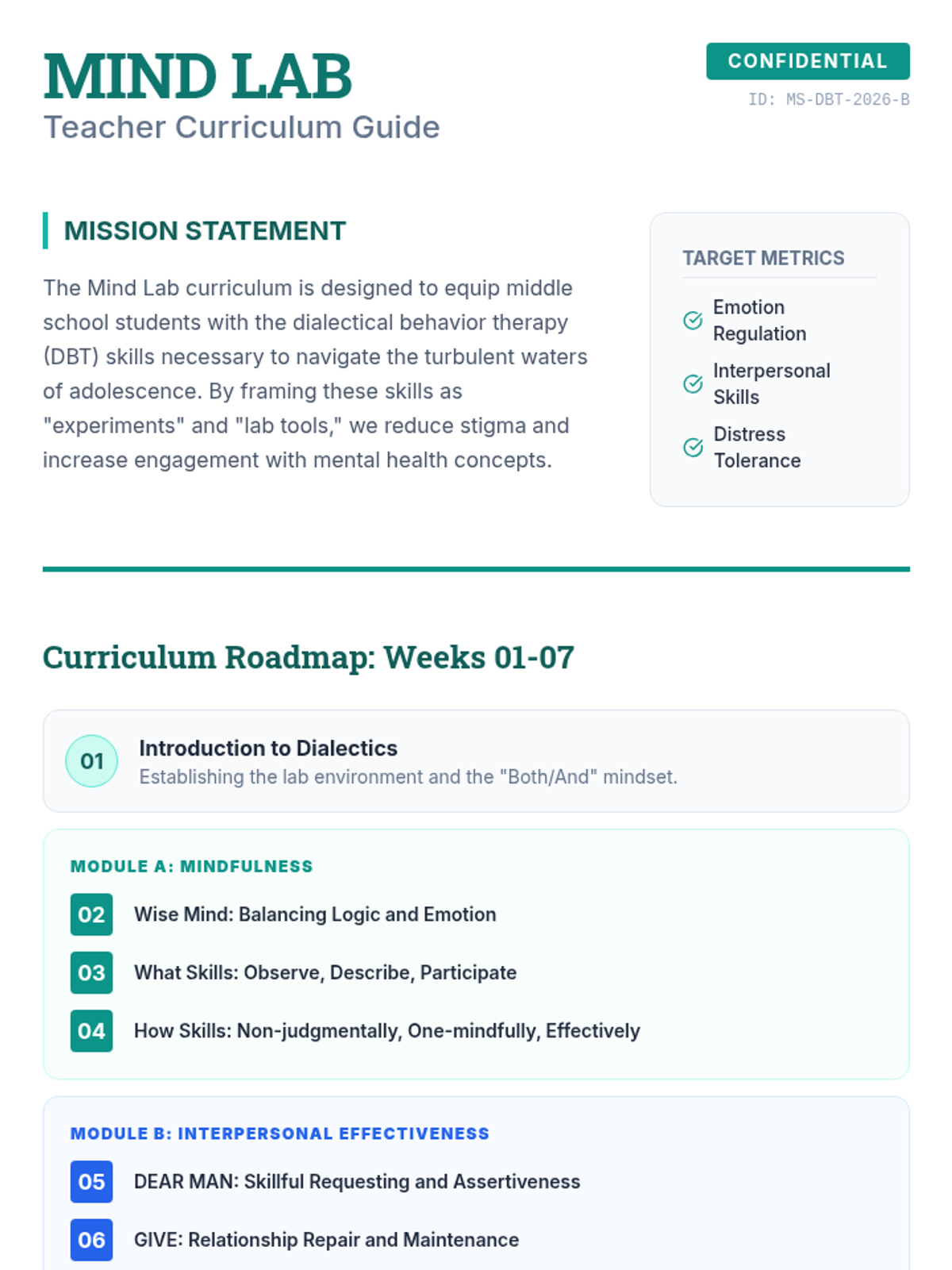
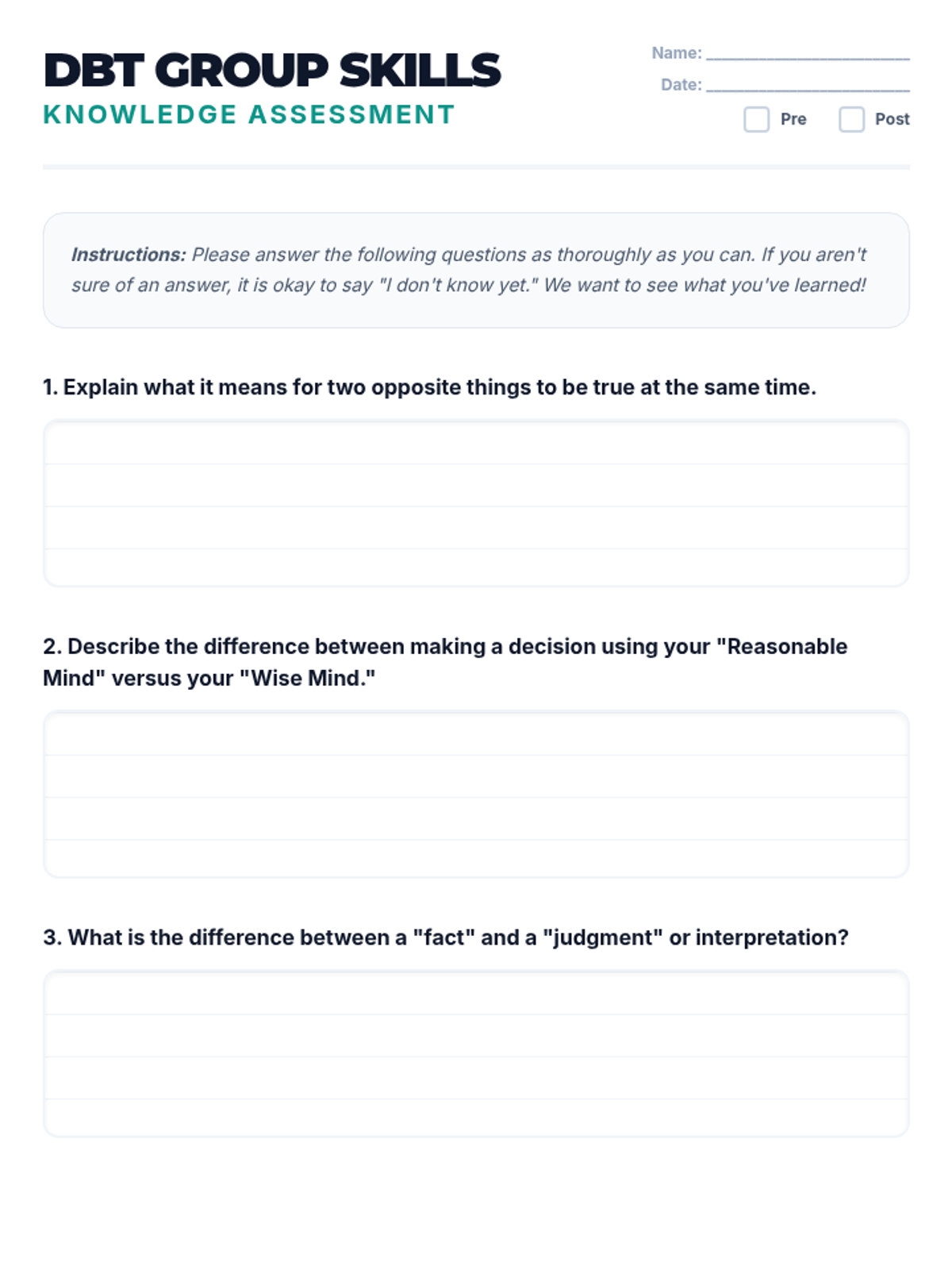
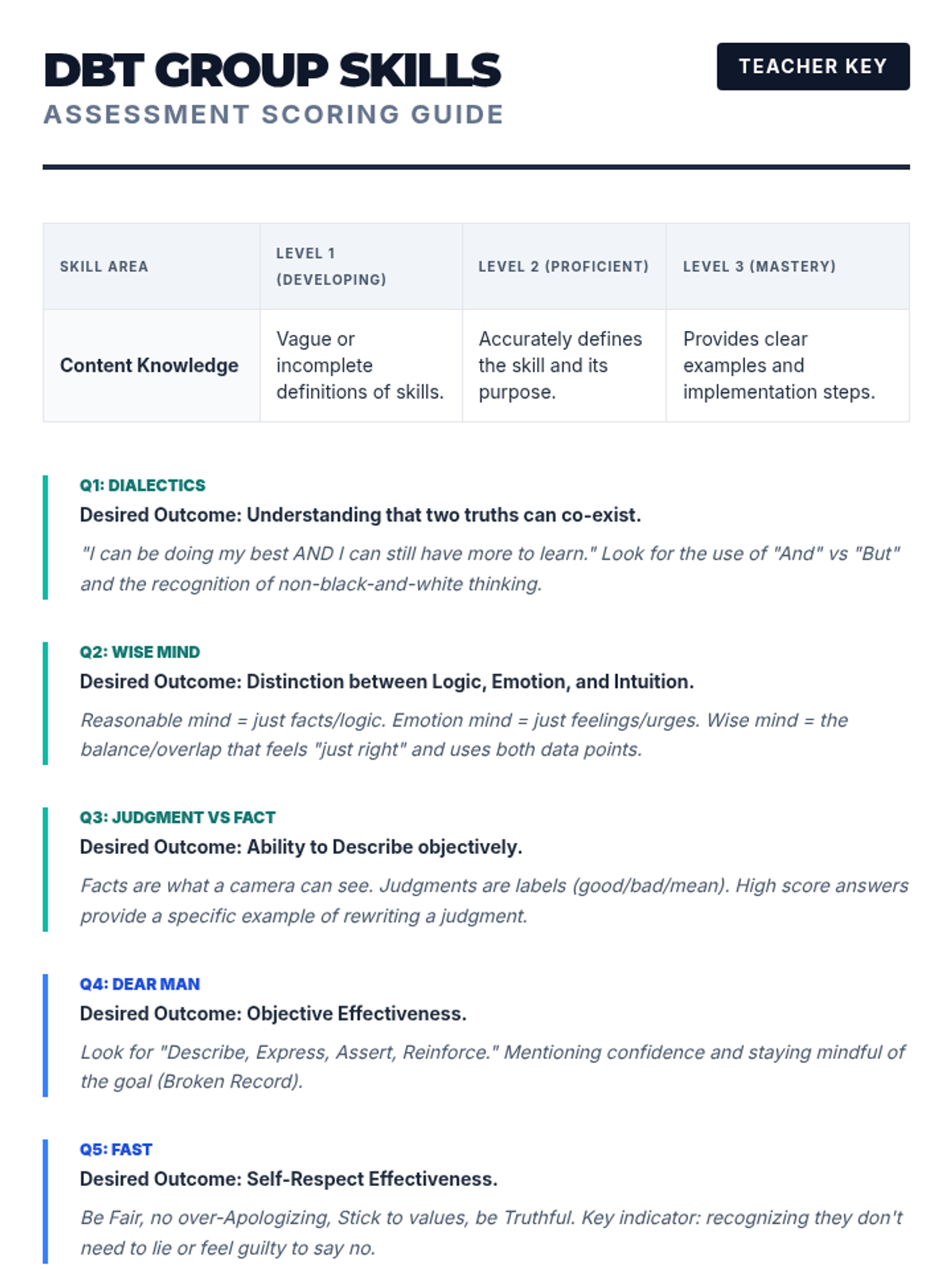
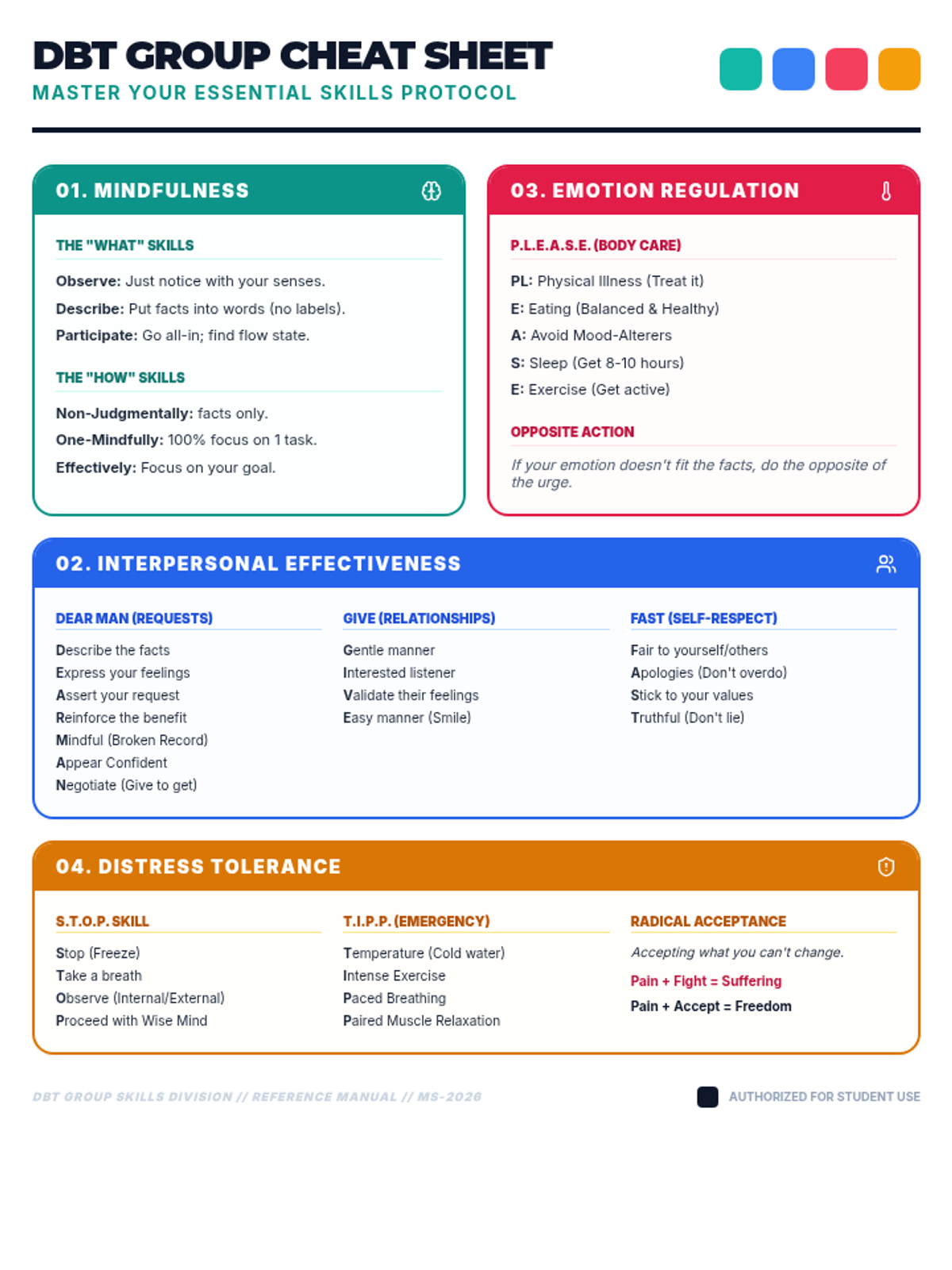
Introdução ao conceito de Dialética e à abordagem do Grupo DBT para construir uma vida que vale a pena viver.
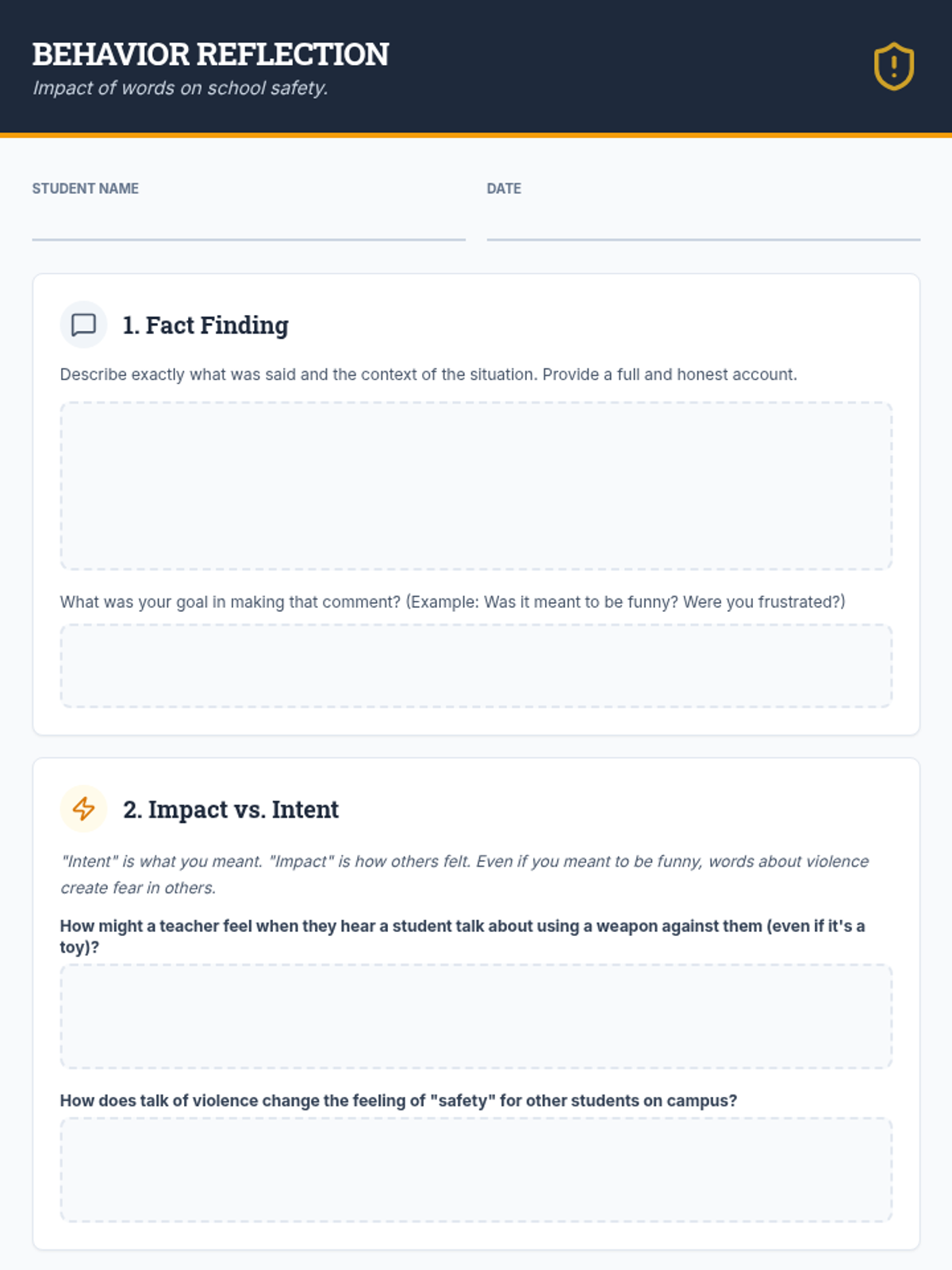
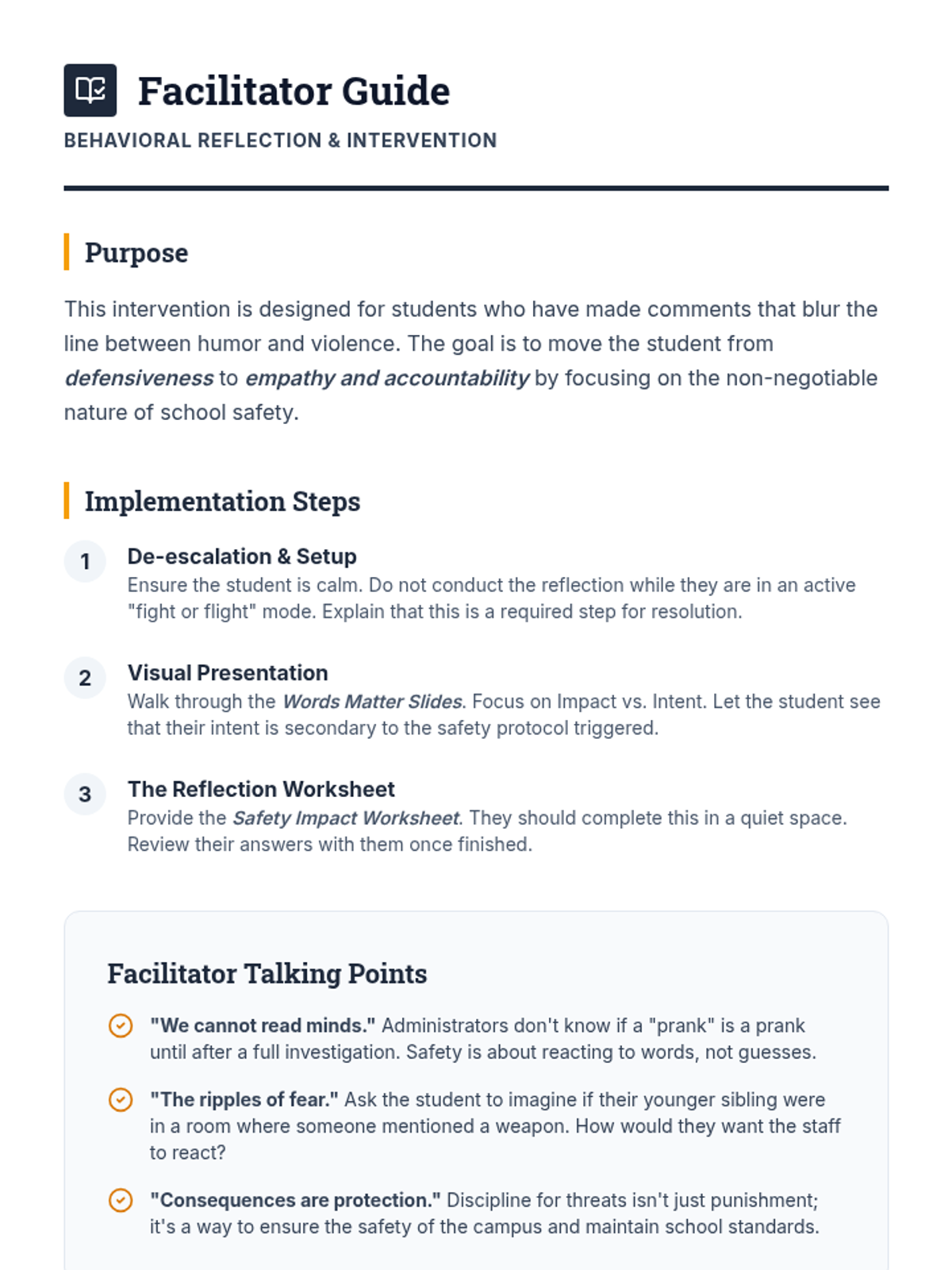
A restorative justice and behavioral reflection lesson focused on the impact of threatening language, the boundaries between humor and safety, and the real-world consequences of 'jokes' involving violence.
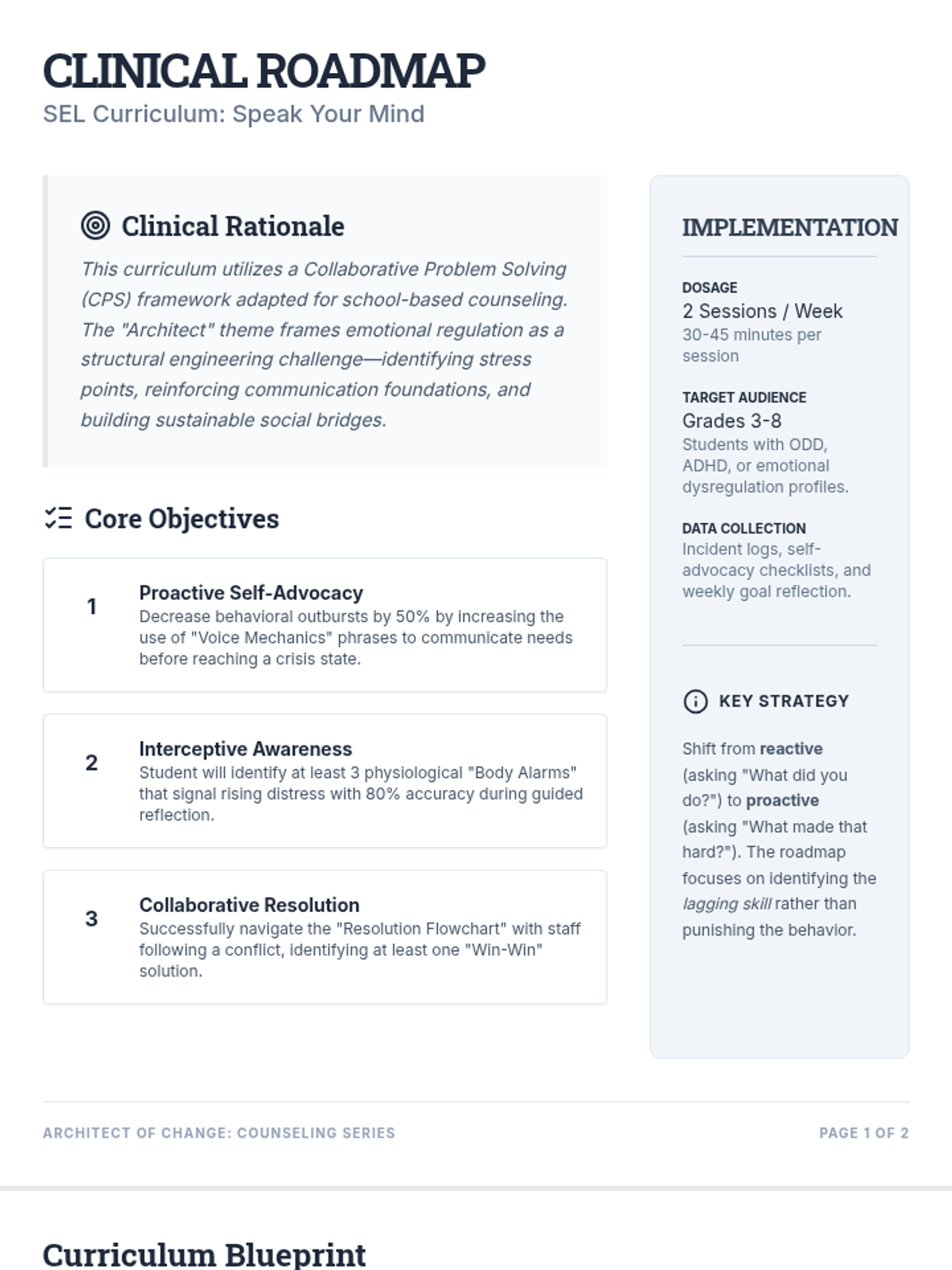
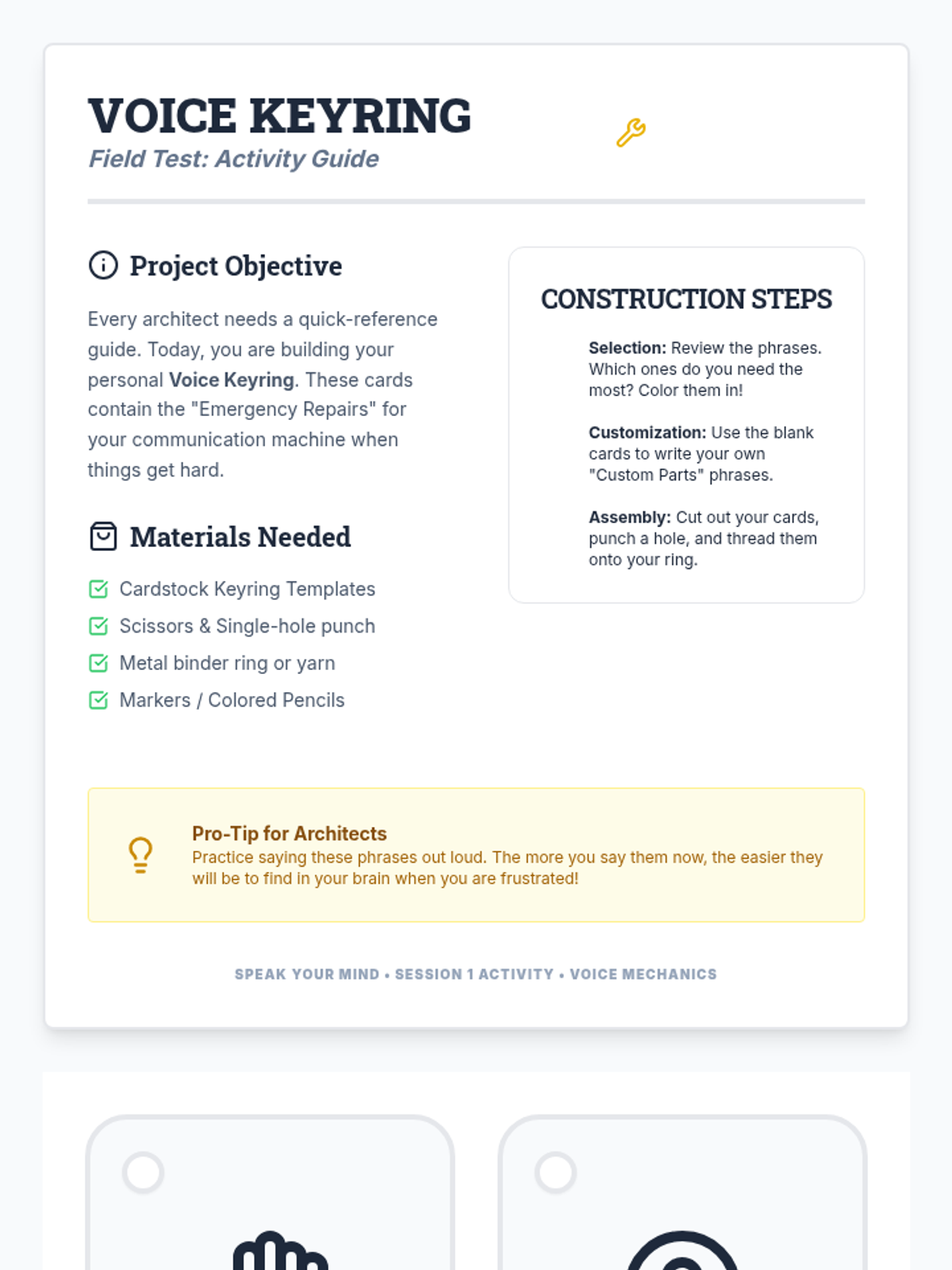
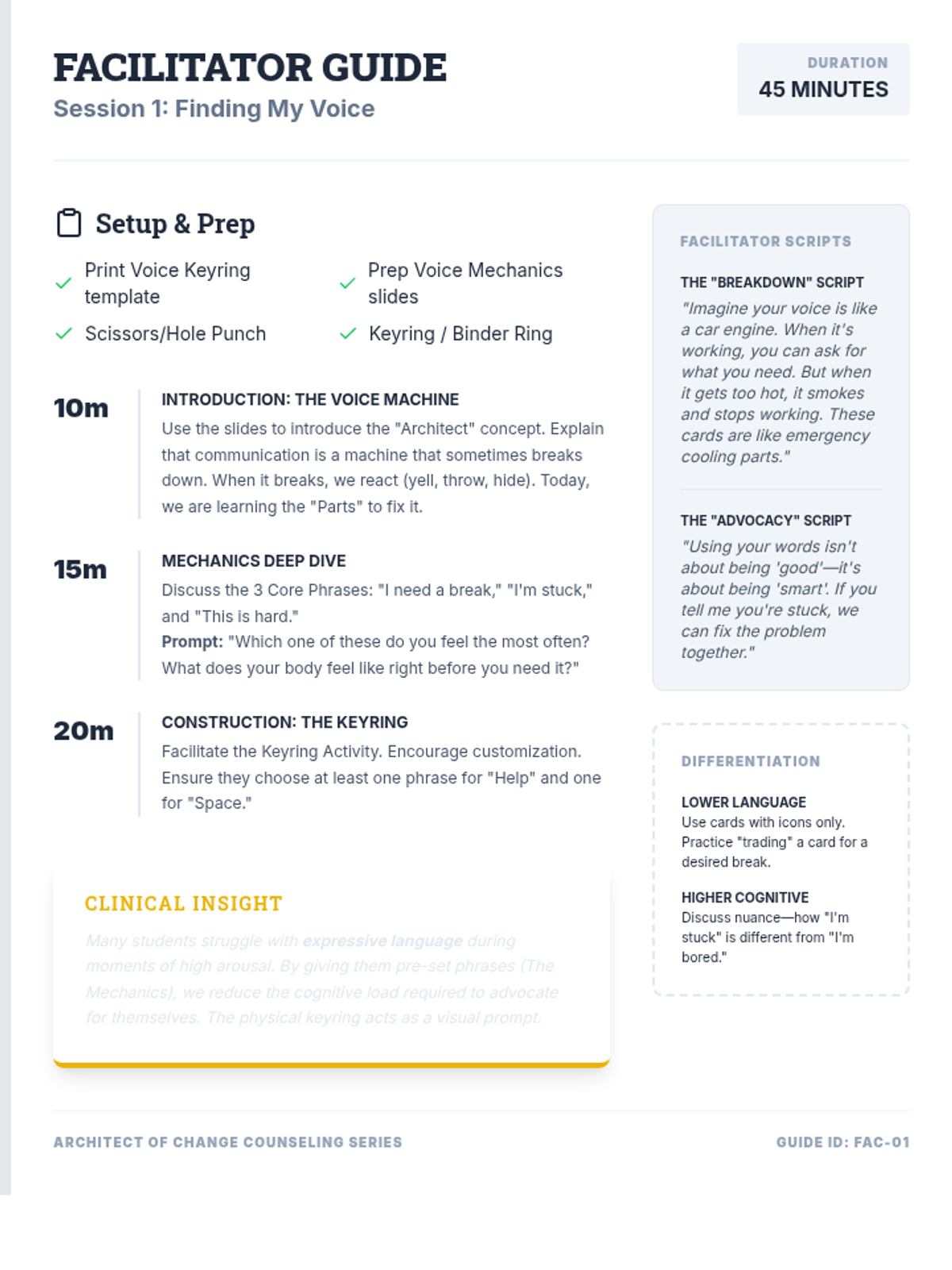
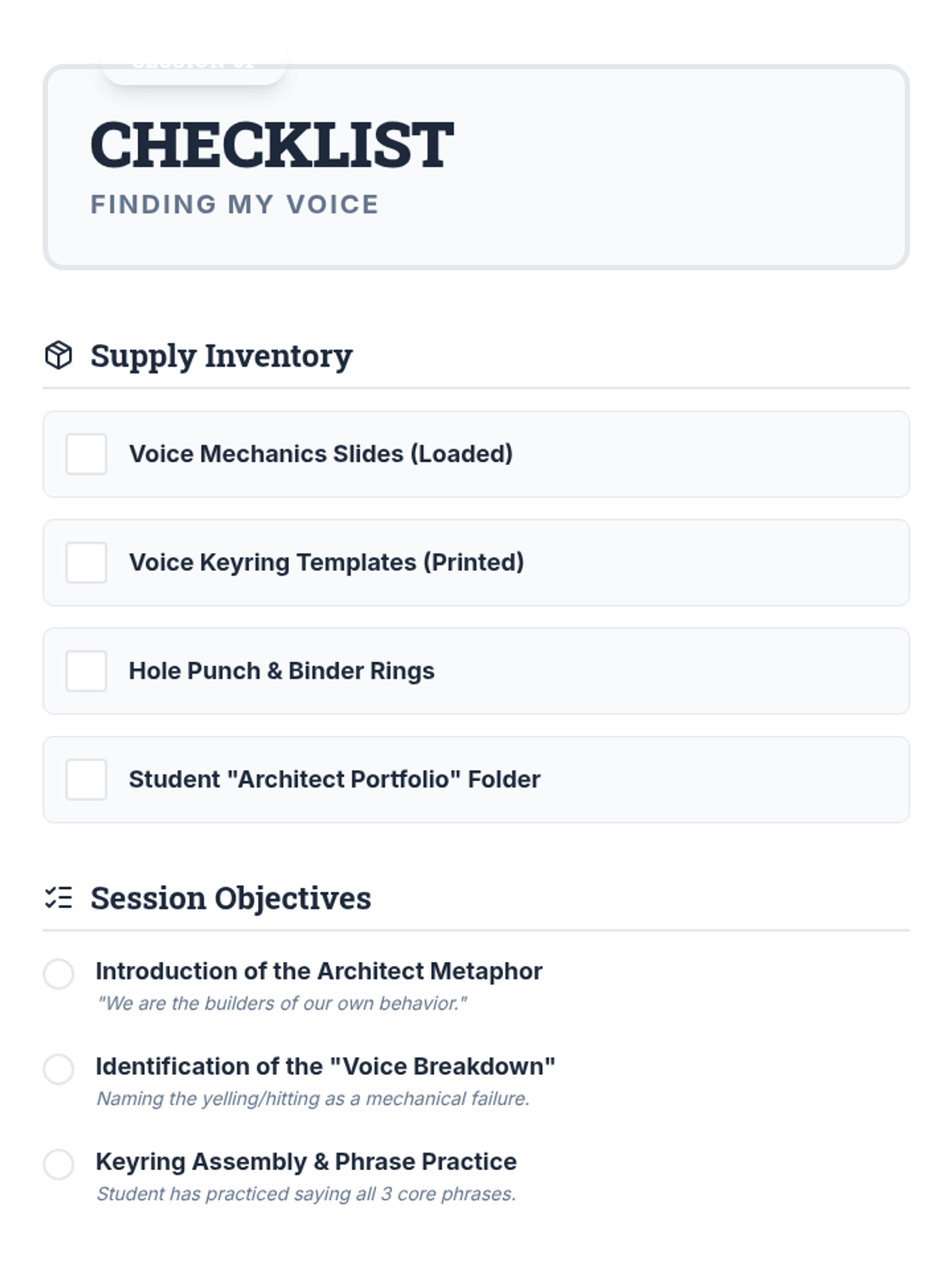
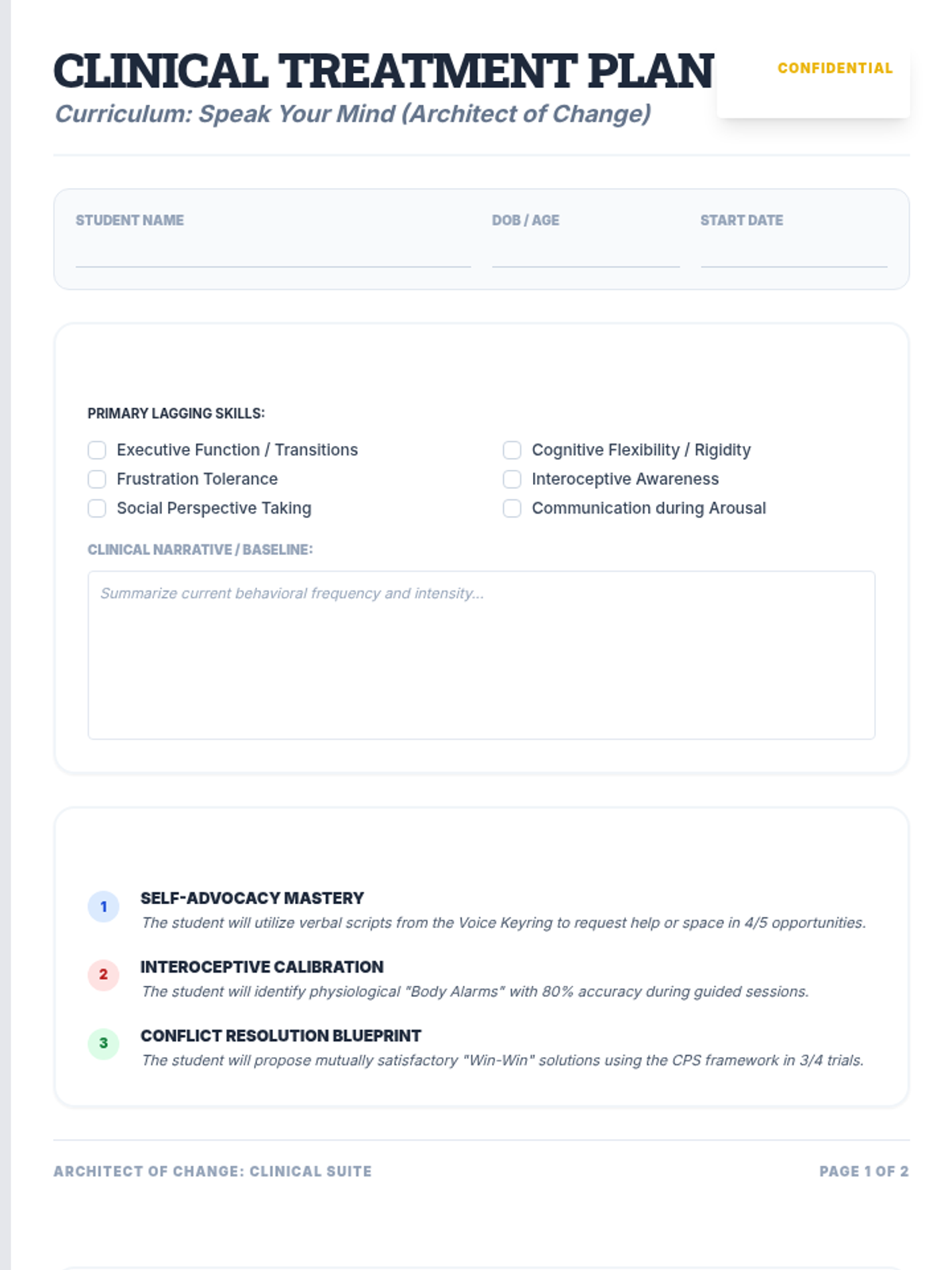
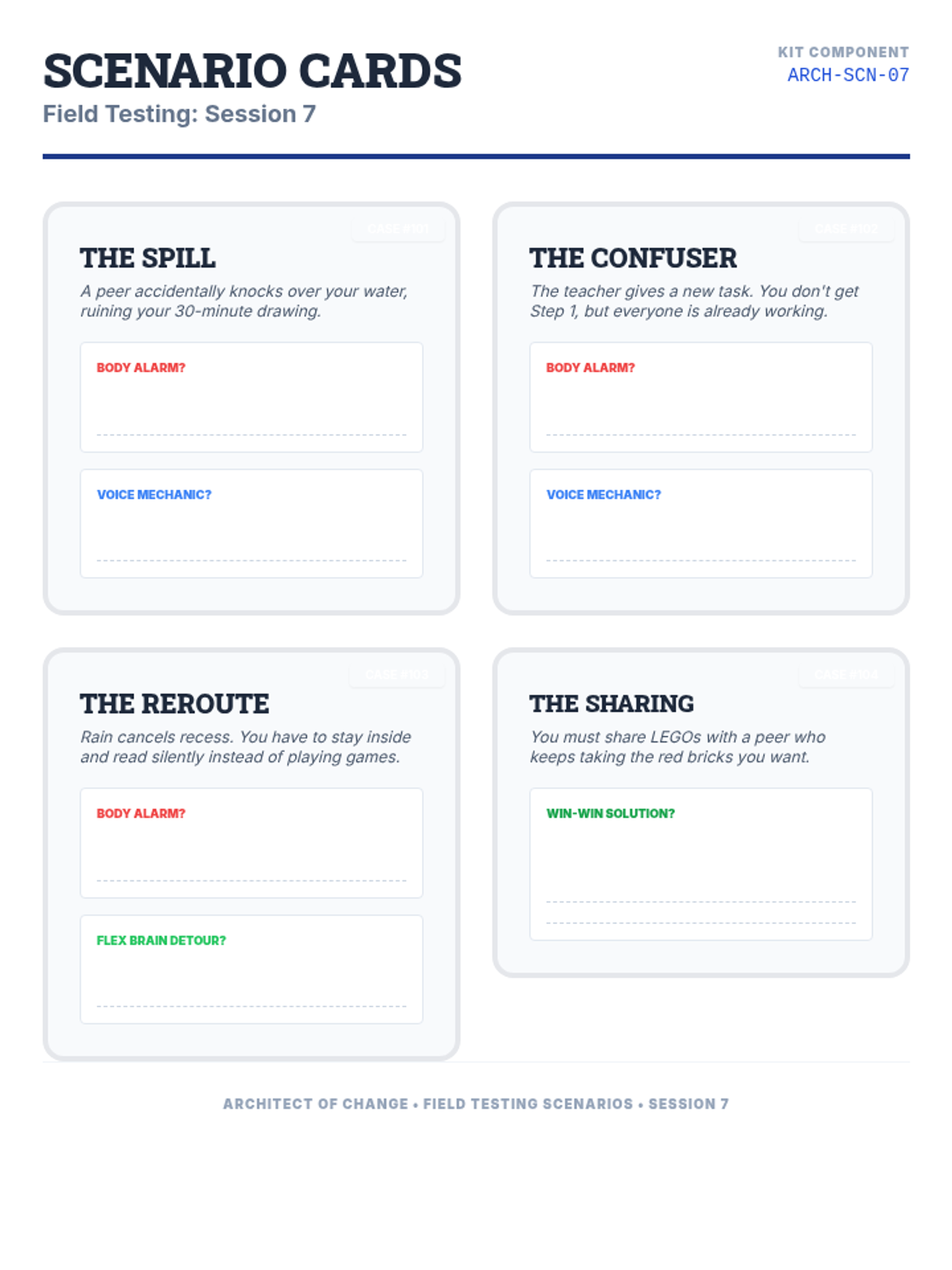
The foundational session focusing on identifying the 'Voice Mechanics'—the specific words and phrases needed to advocate for oneself before reaching a breaking point.
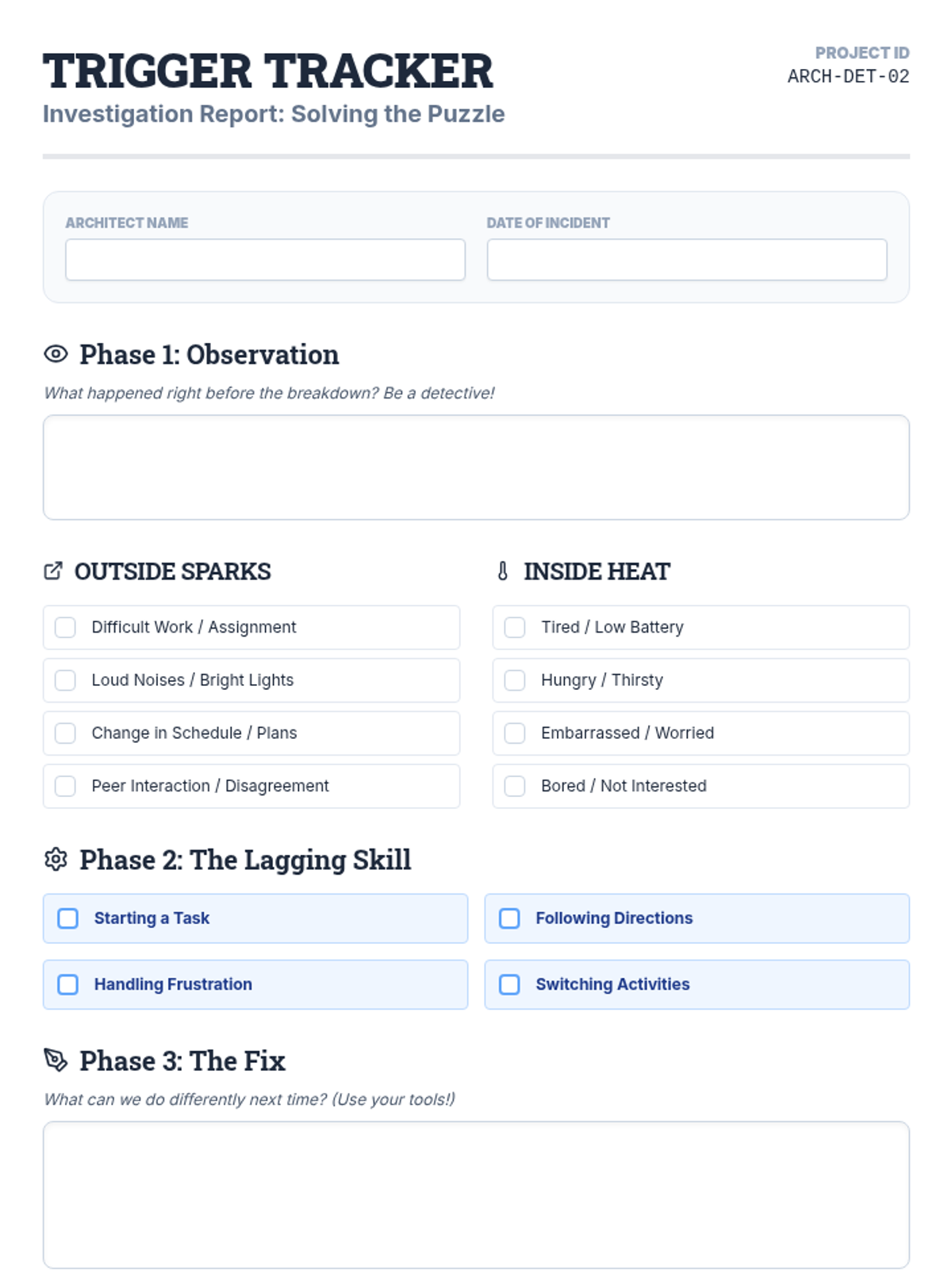
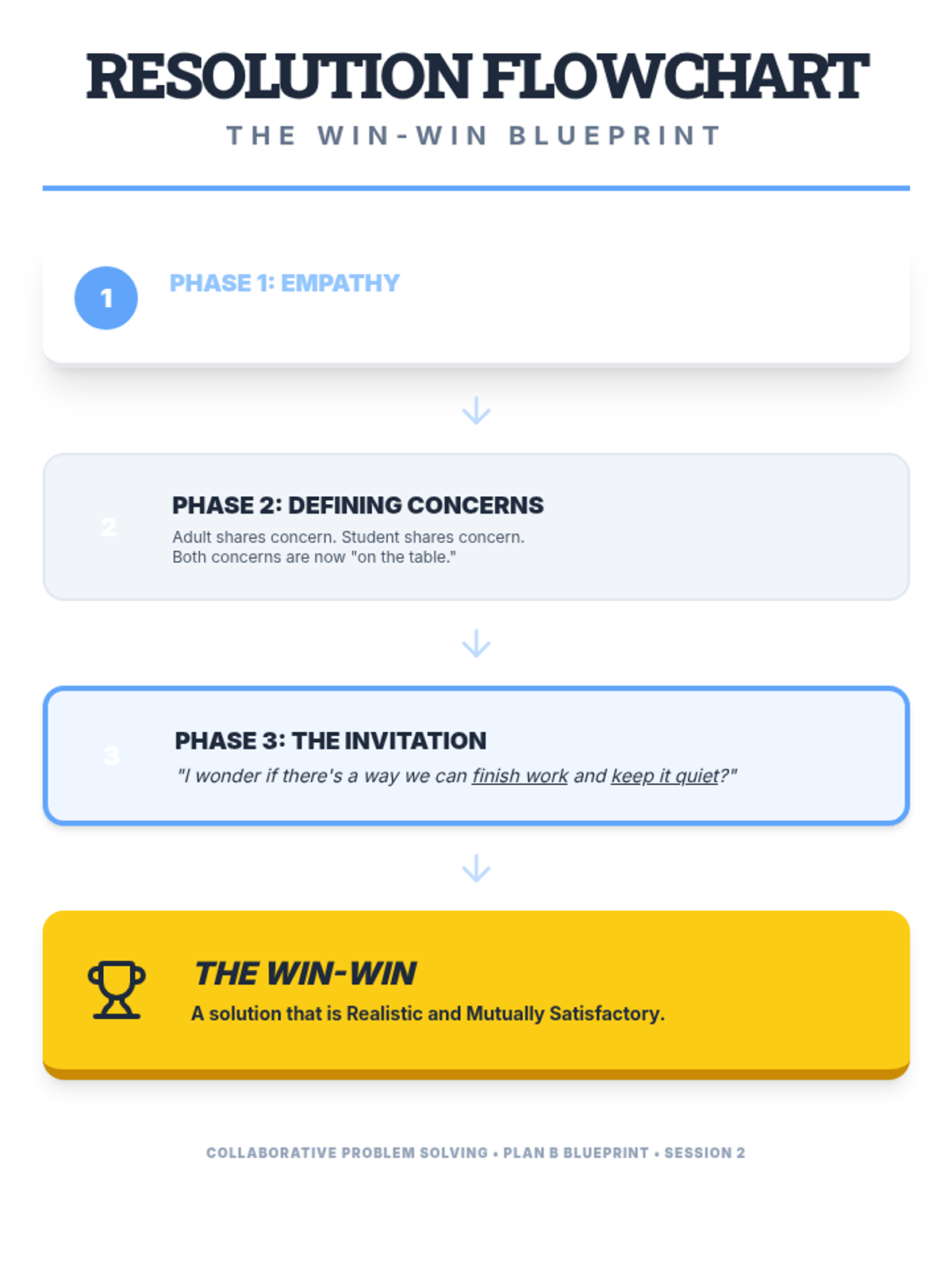
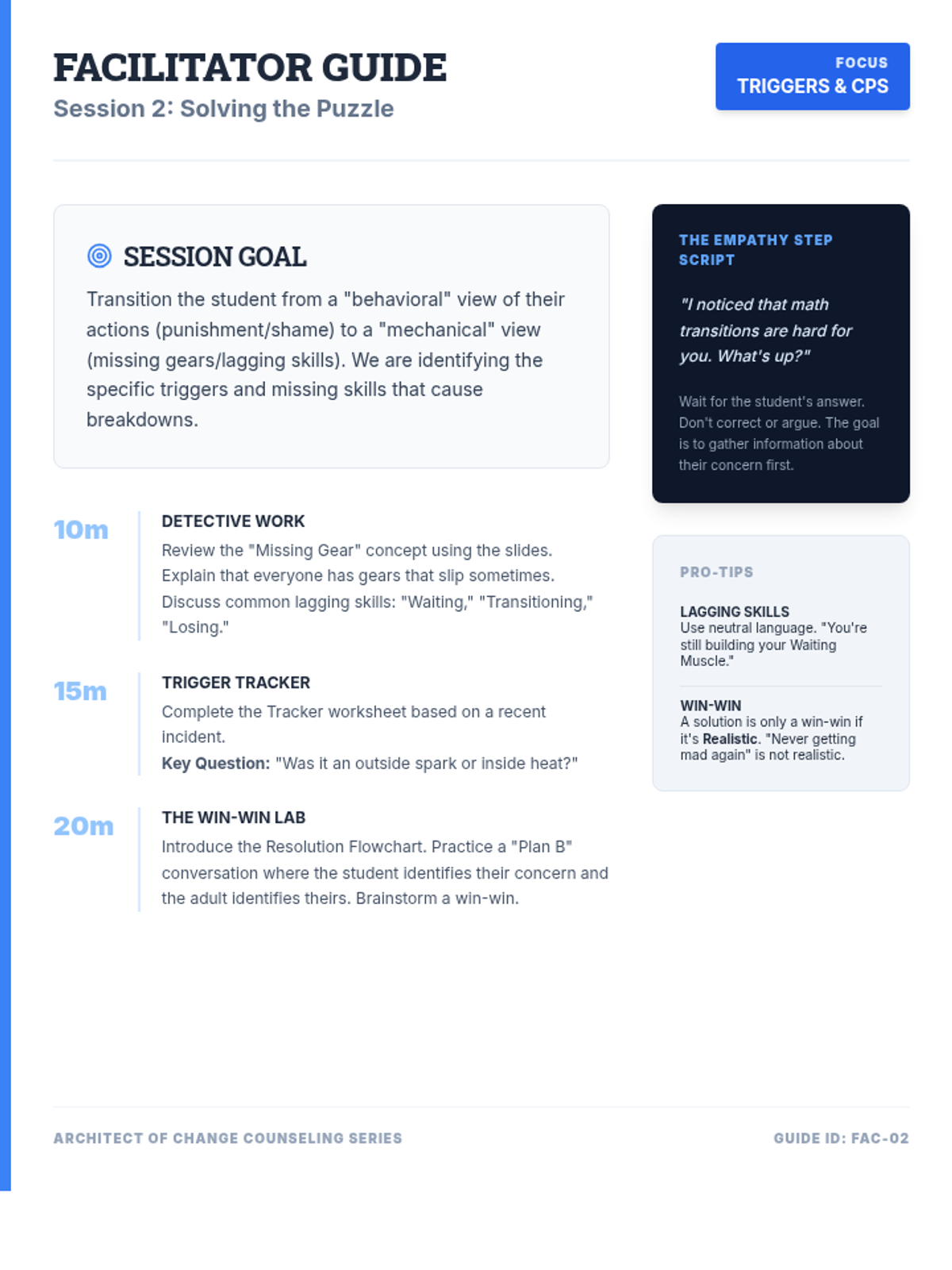
Focuses on identifying triggers and the 'anatomy of an incident' using a collaborative problem-solving framework.
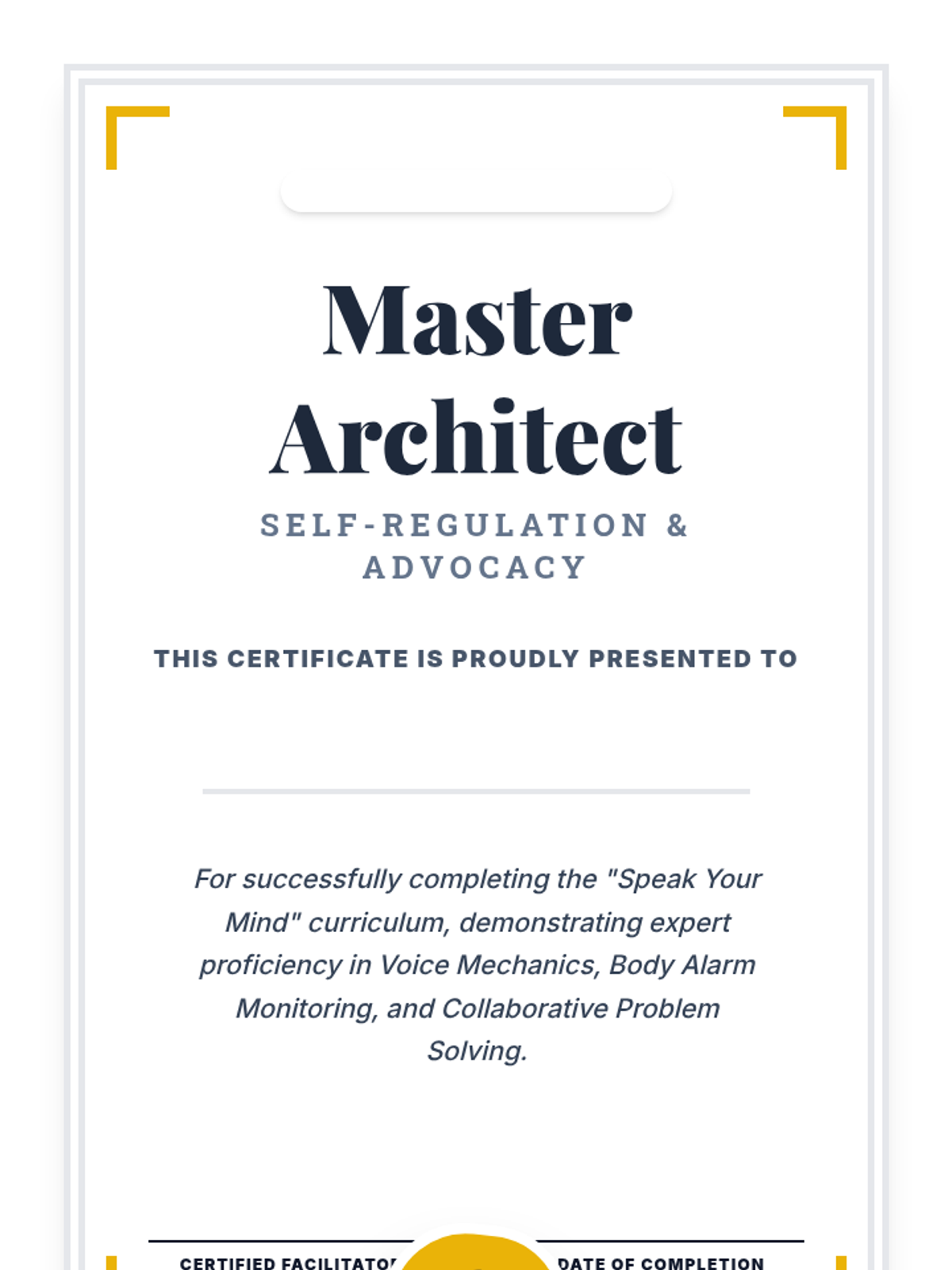
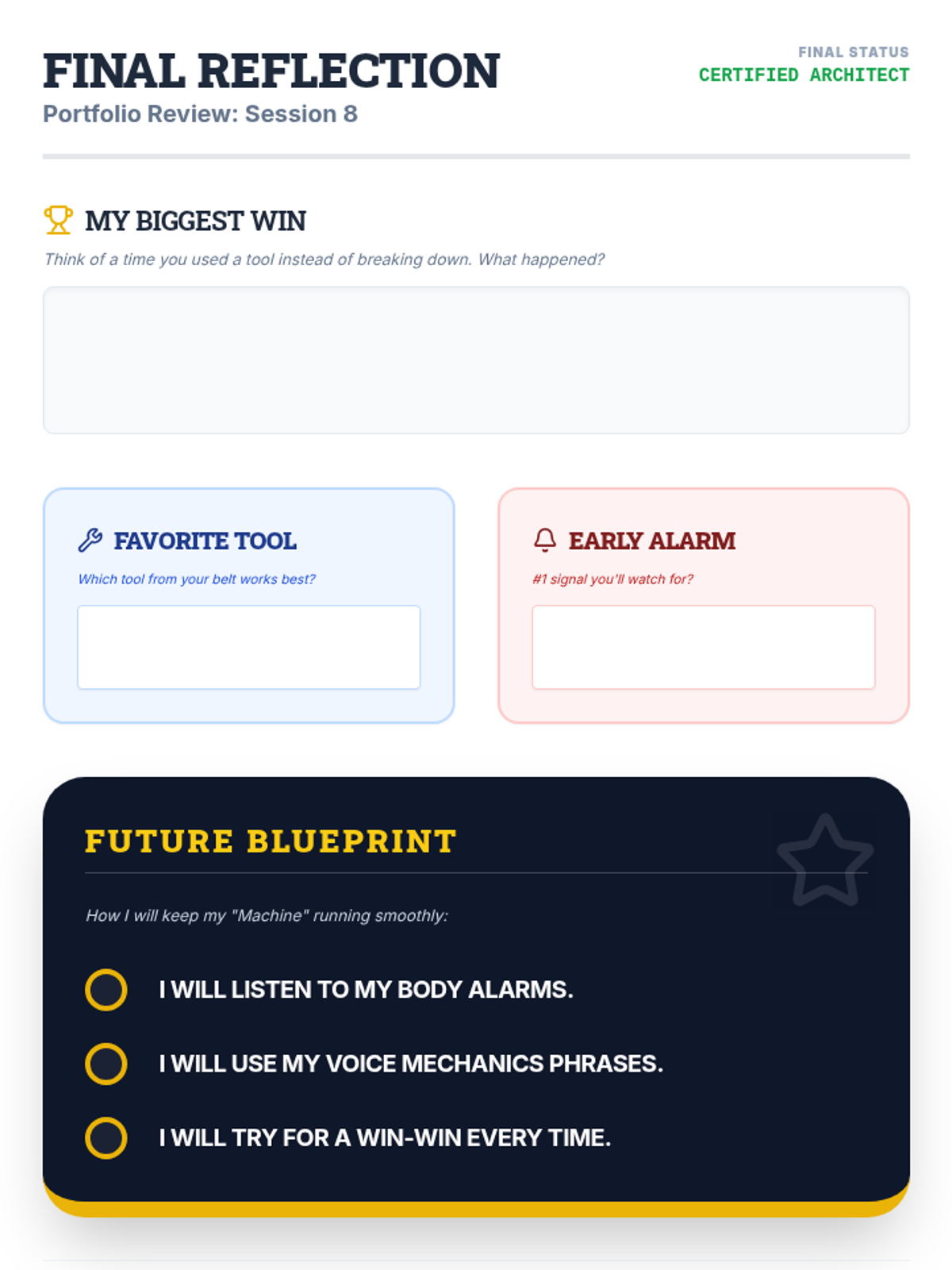
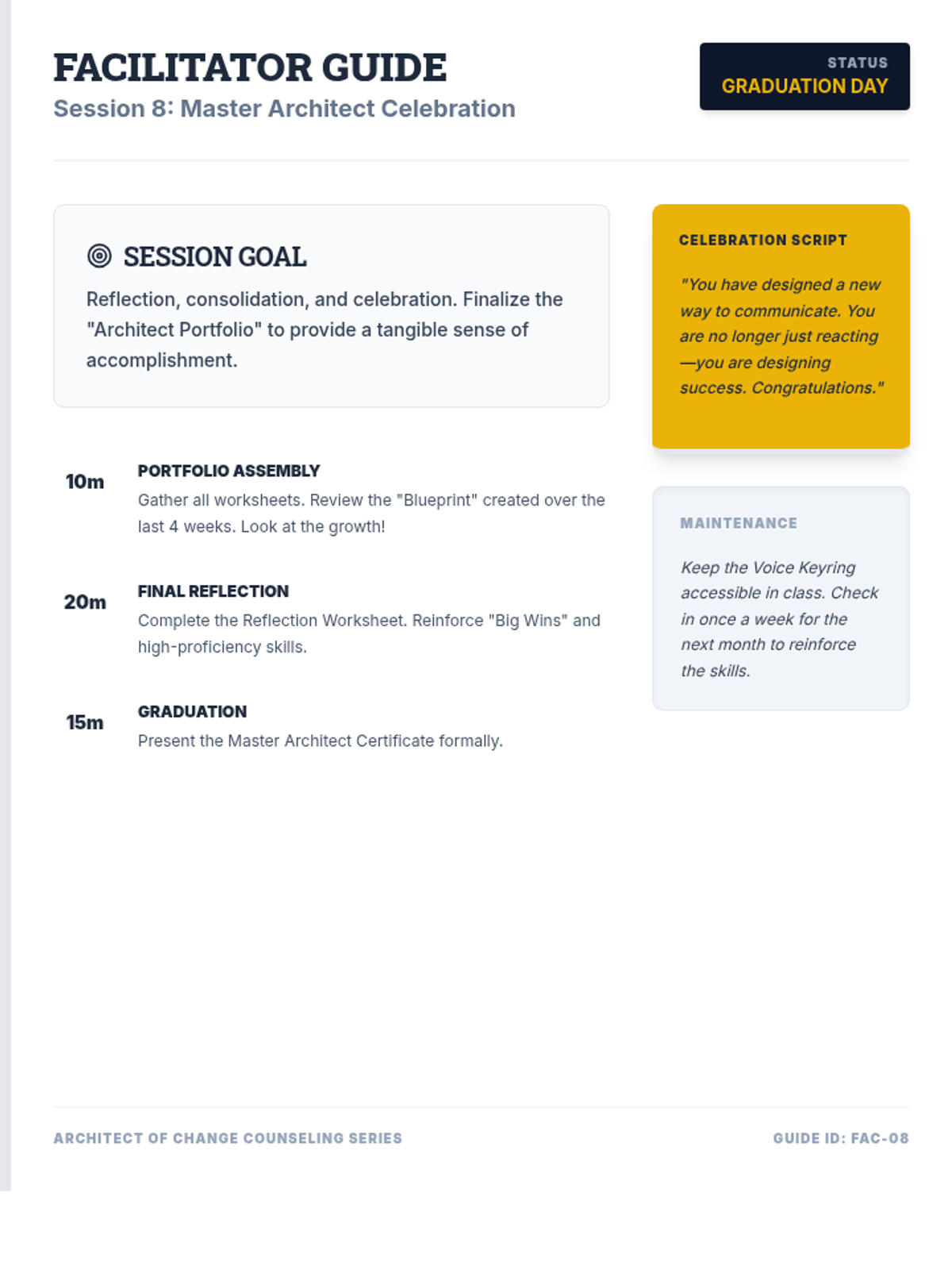
The final session for progress review, portfolio completion, and graduation as a 'Master Architect' of self-regulation.
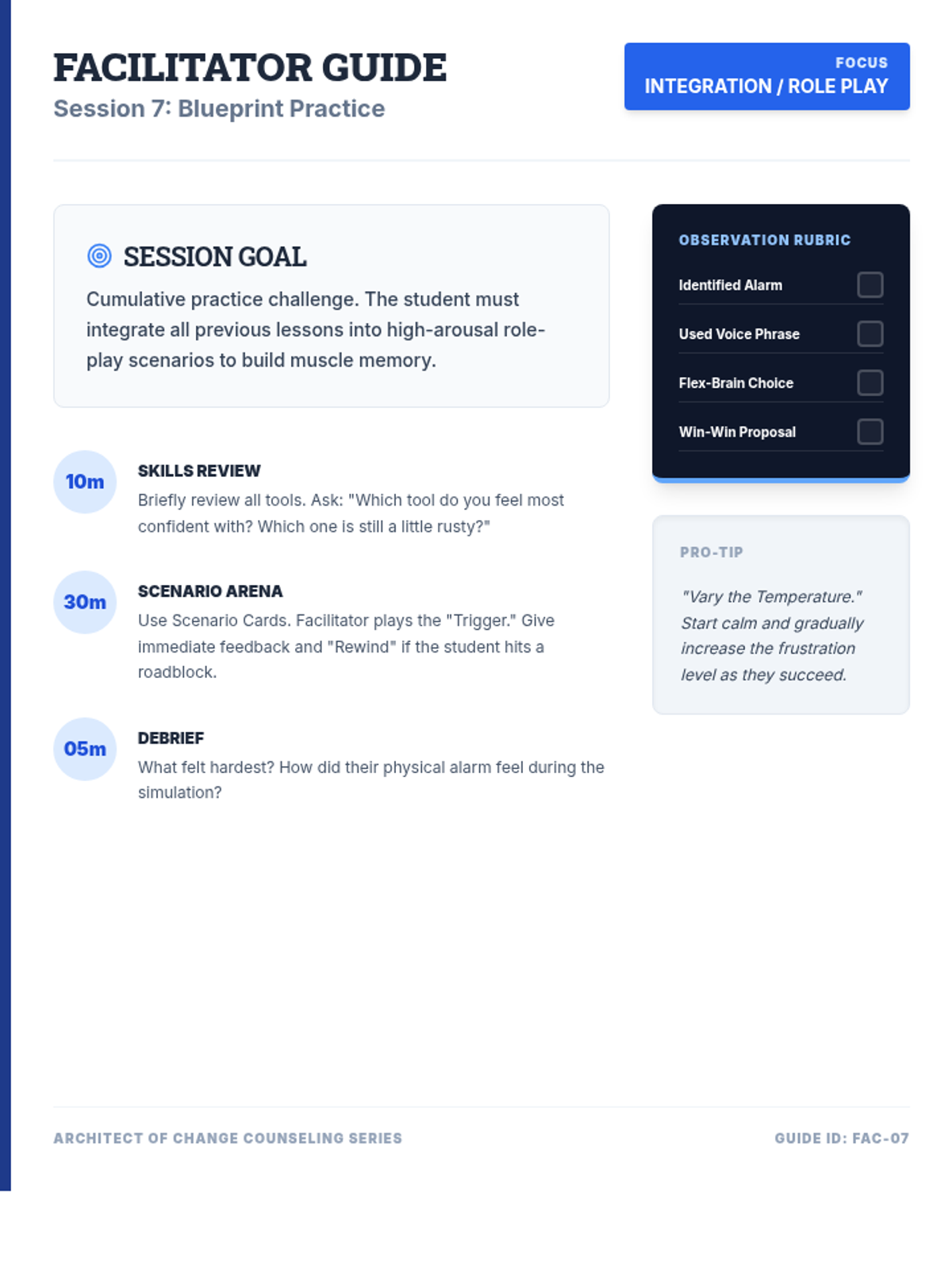
A cumulative role-play session where students apply all previous skills to complex, multi-step real-world scenarios.