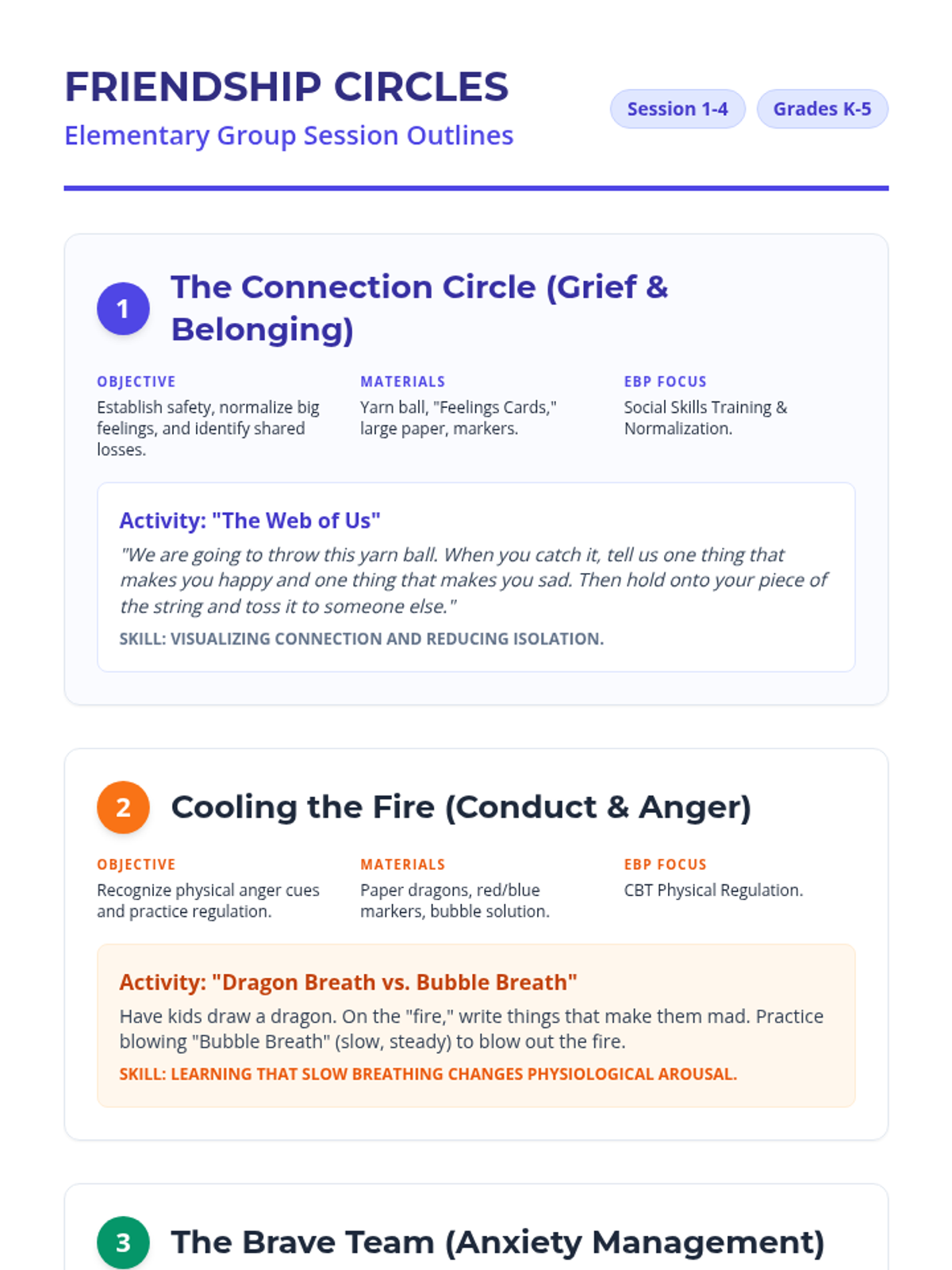
Peer relationship navigation, conversational turn-taking, and stress management strategies within supportive group settings. Develops communal belonging through shared mental health education and collaborative skill practice.
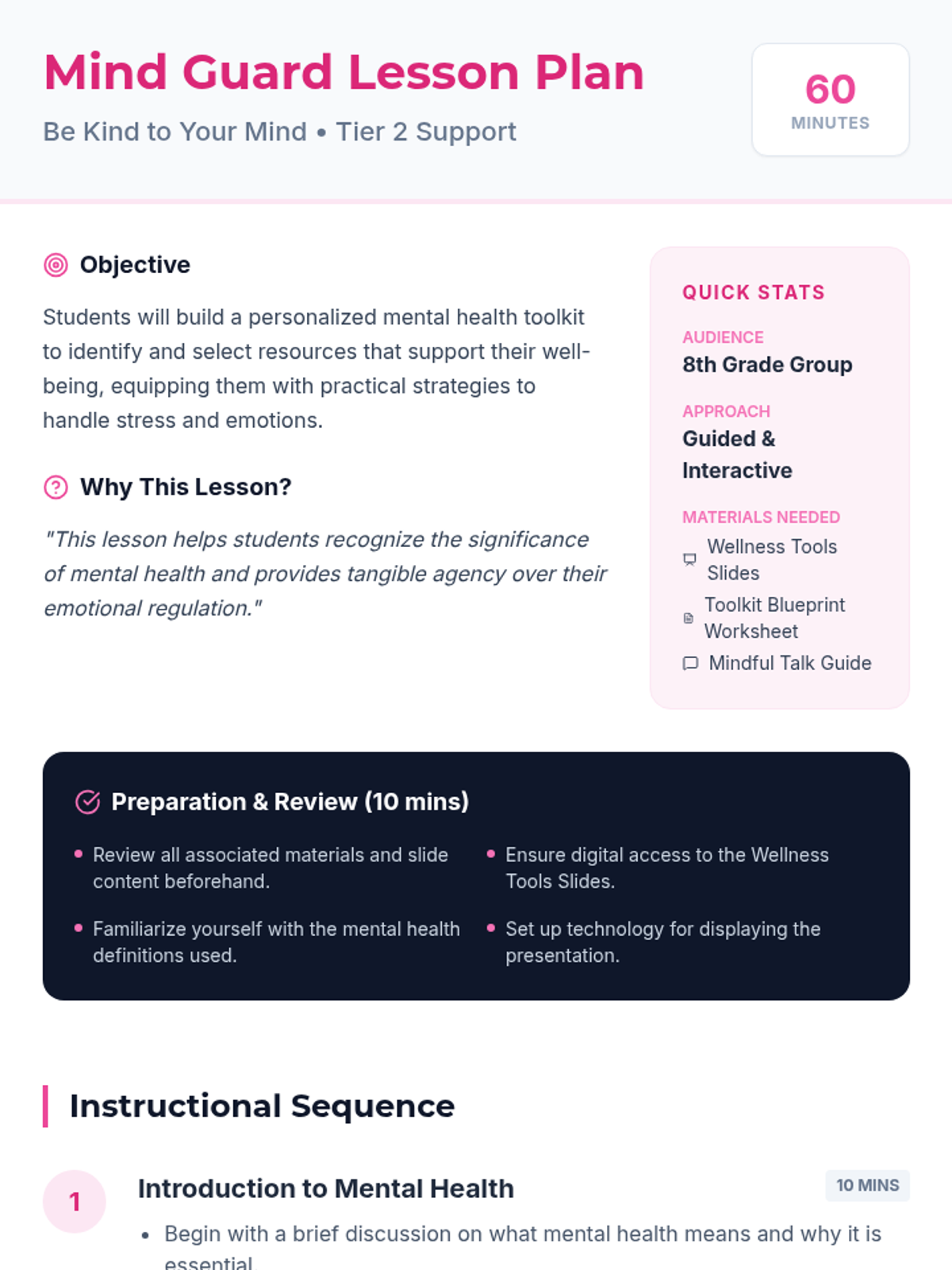
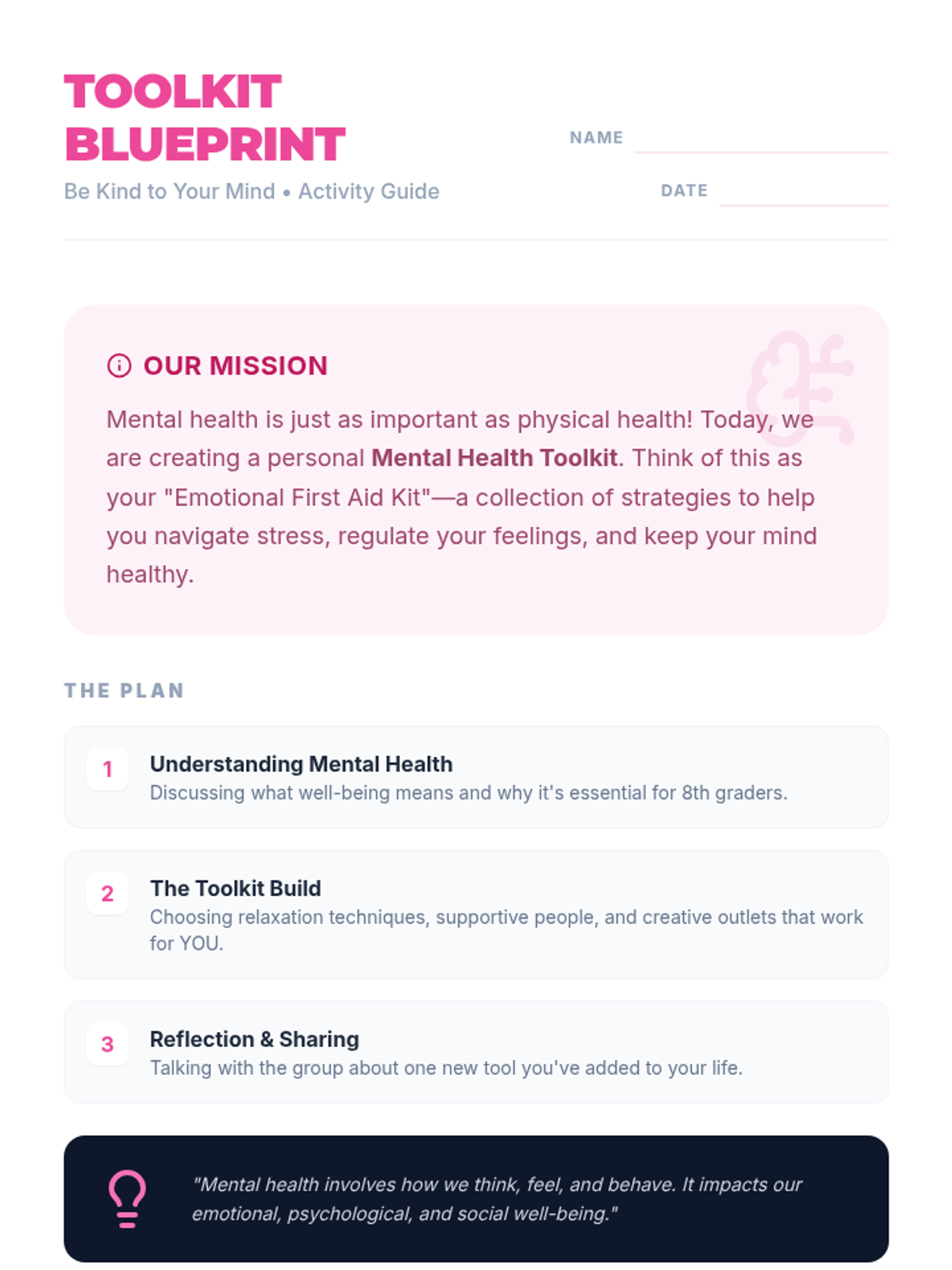
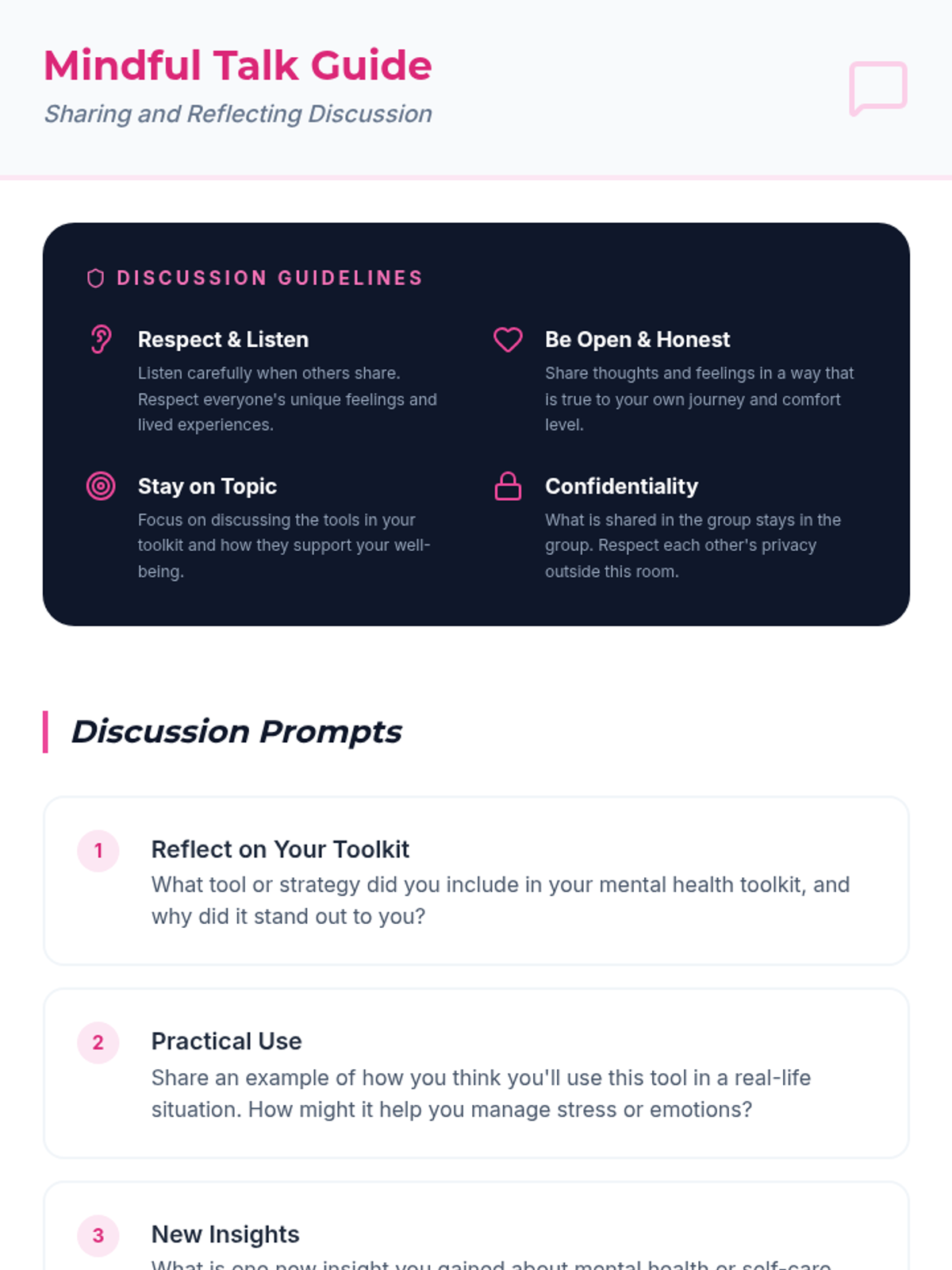
An 8th-grade Tier 2 group lesson focused on building a personalized mental health toolkit to help students manage stress and regulate emotions.
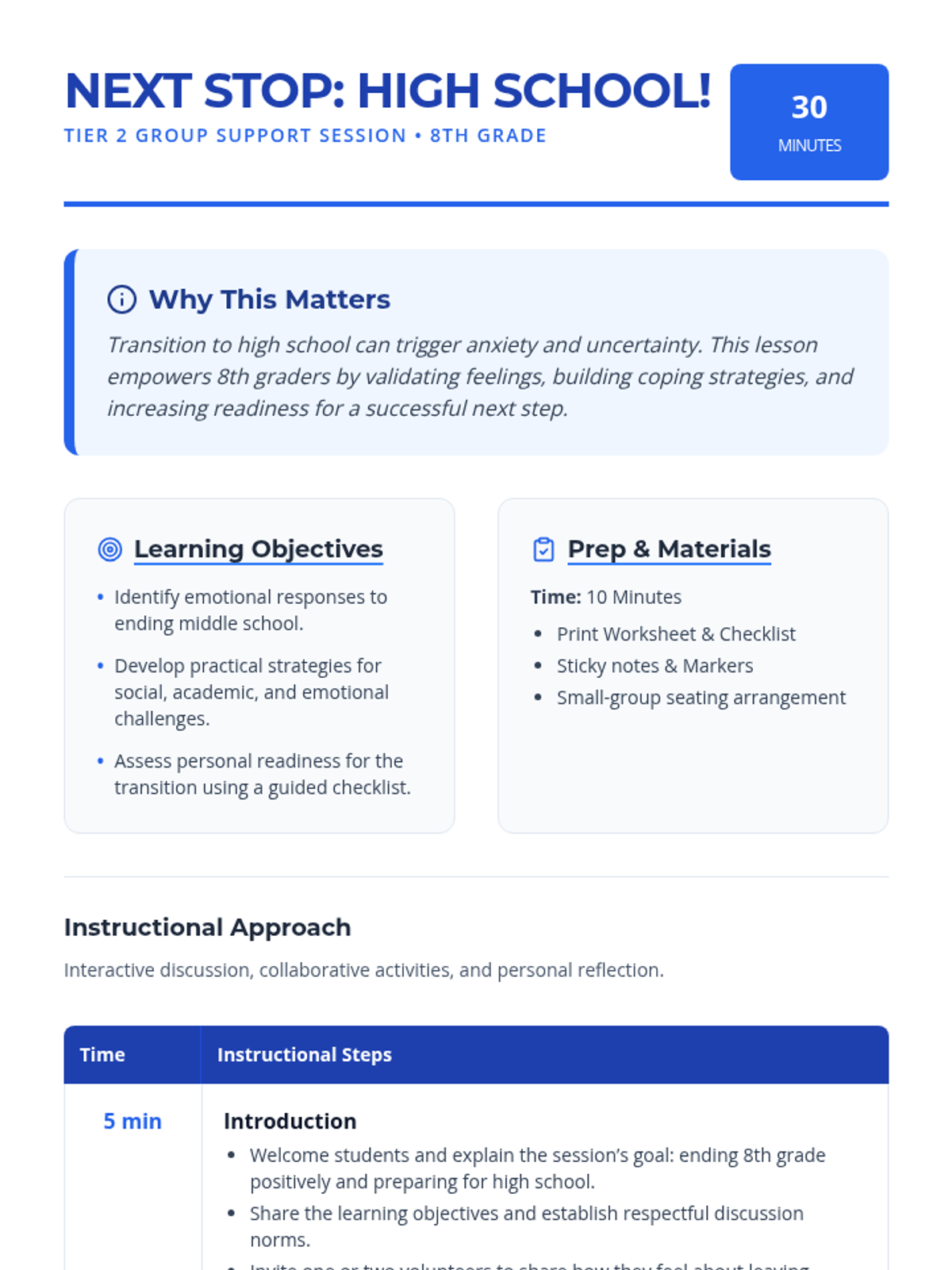
A 30-minute Tier 2 group support session for 8th graders focused on navigating the emotional and practical transition from middle school to high school.
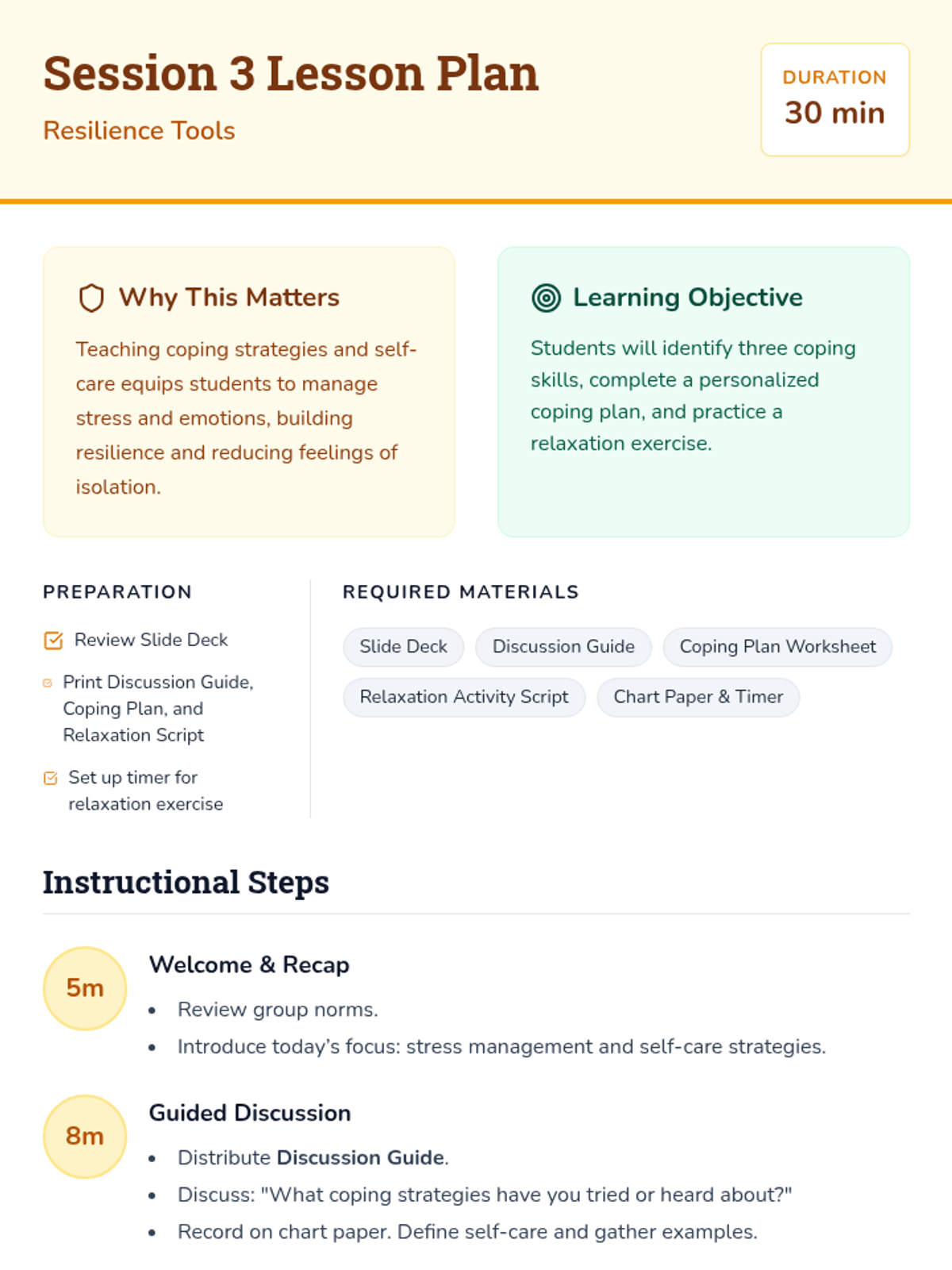
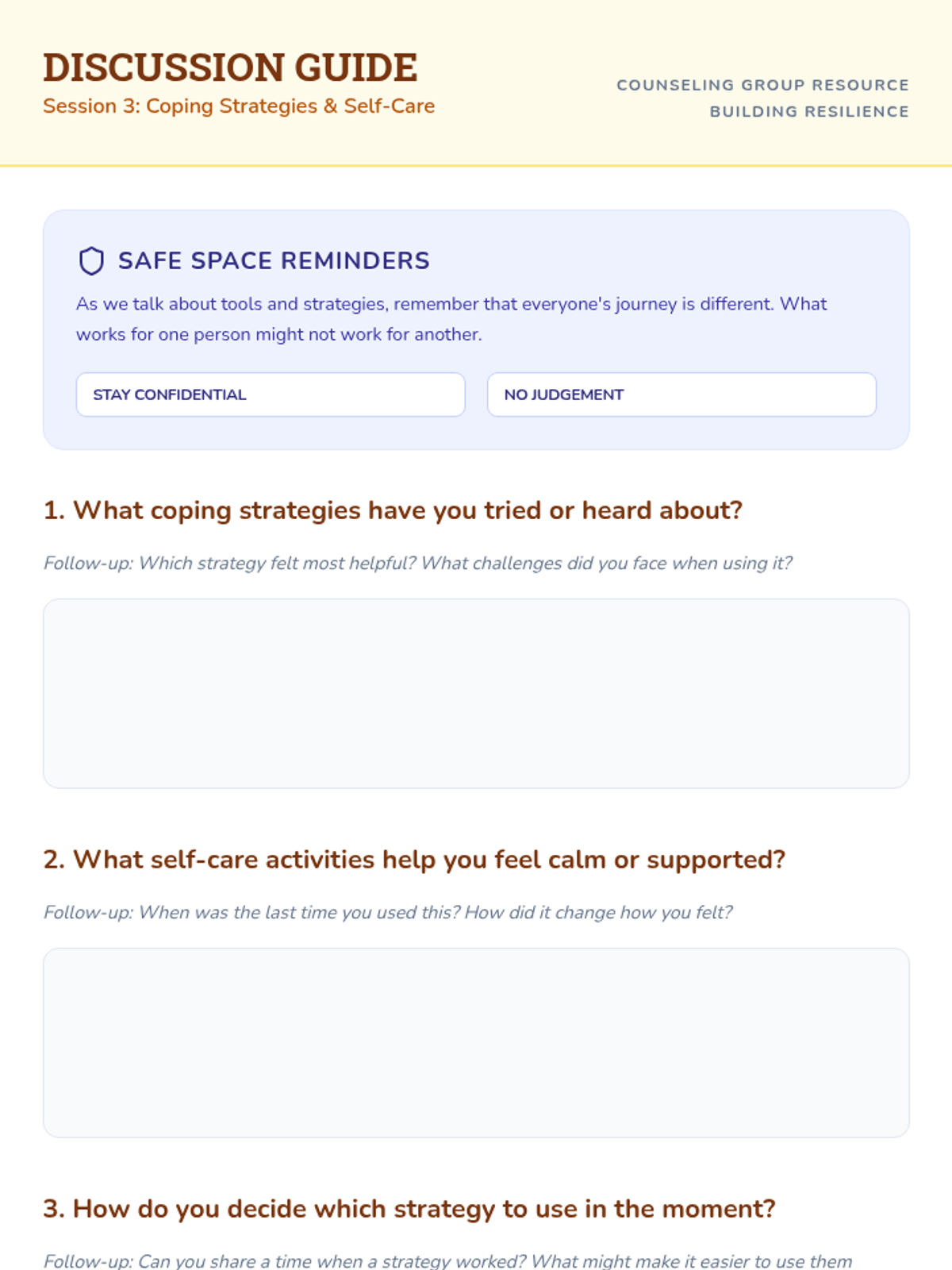
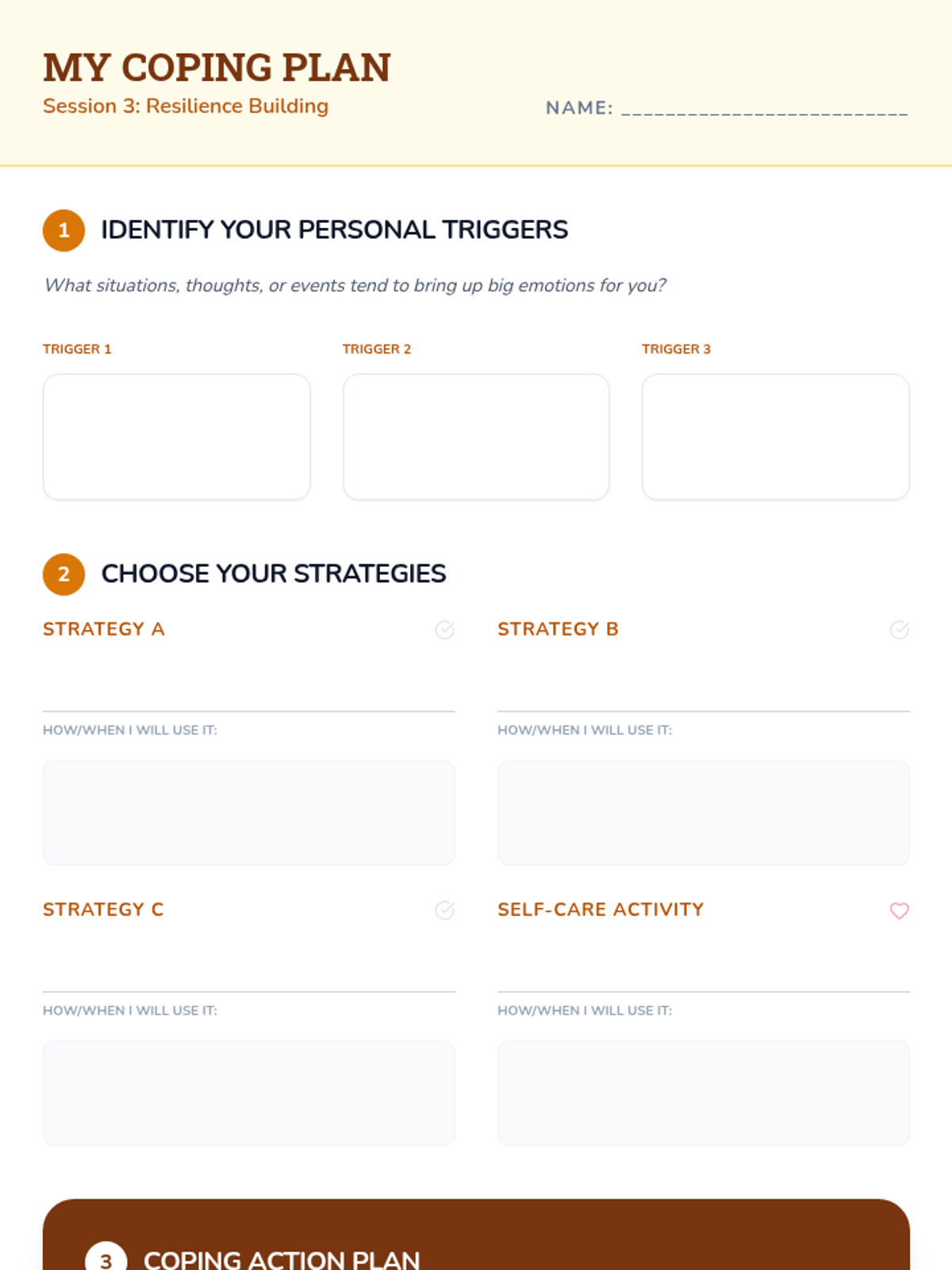
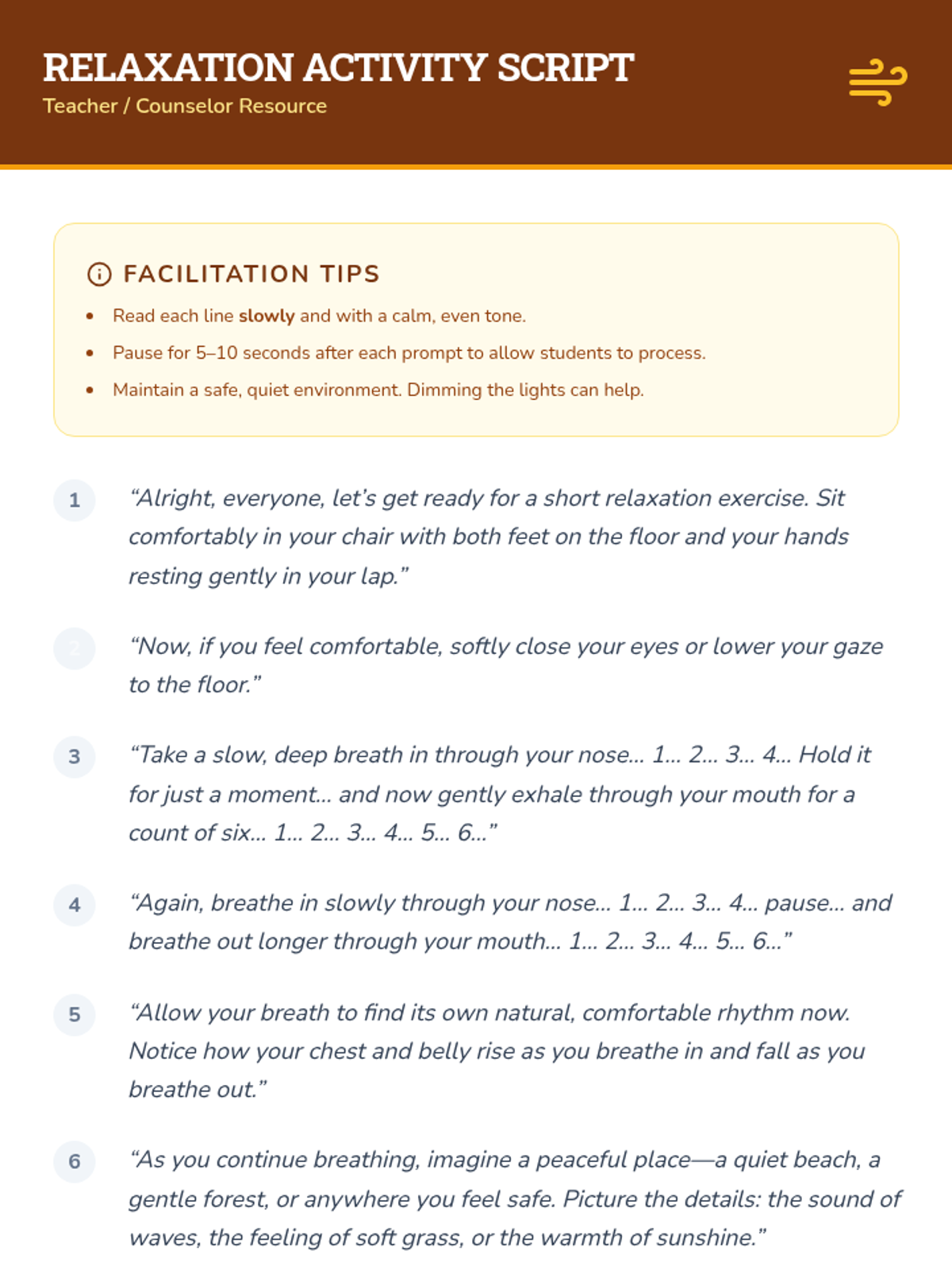
Exploring and practicing practical coping strategies and self-care techniques to manage stress and difficult emotions.
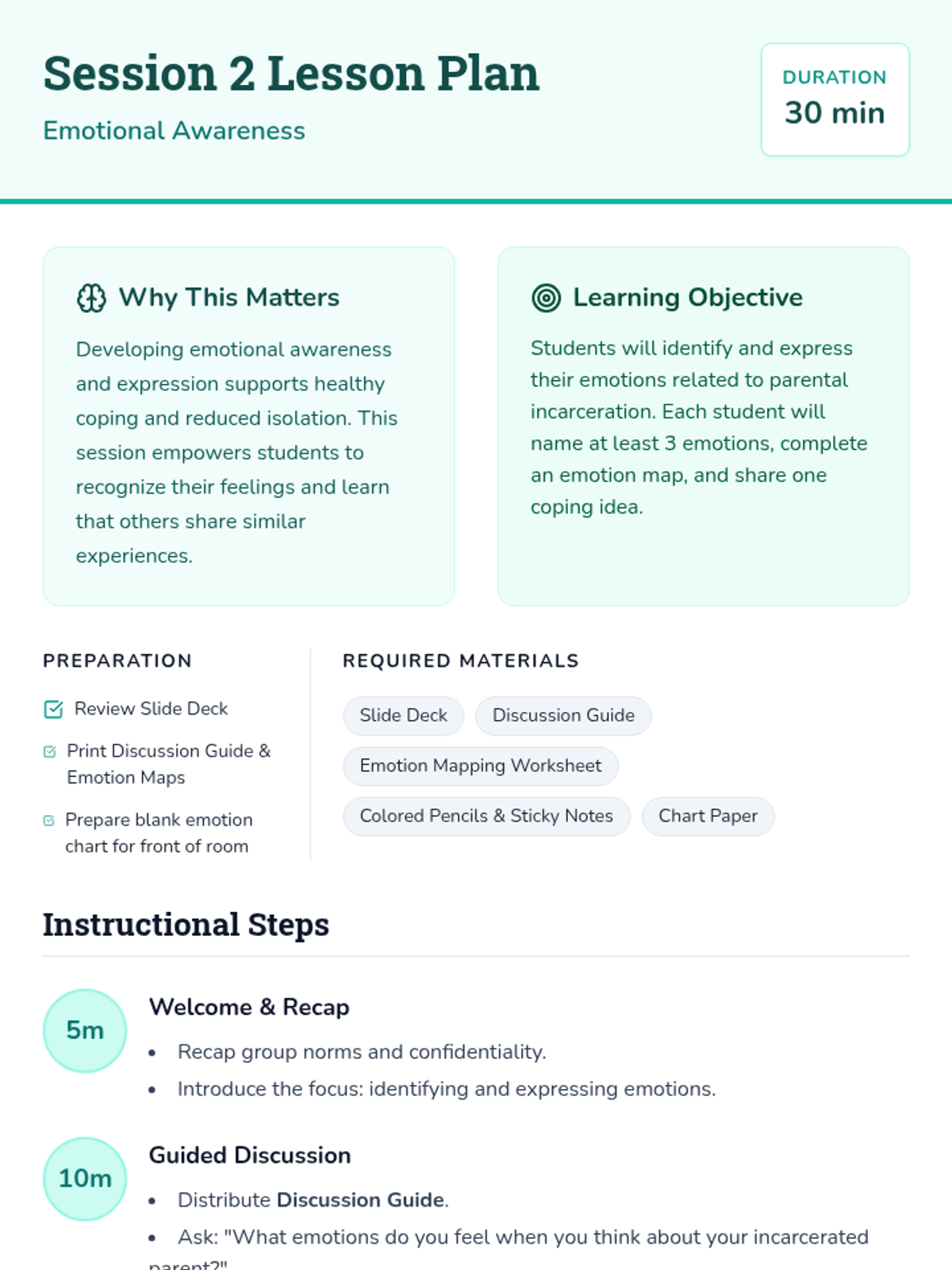
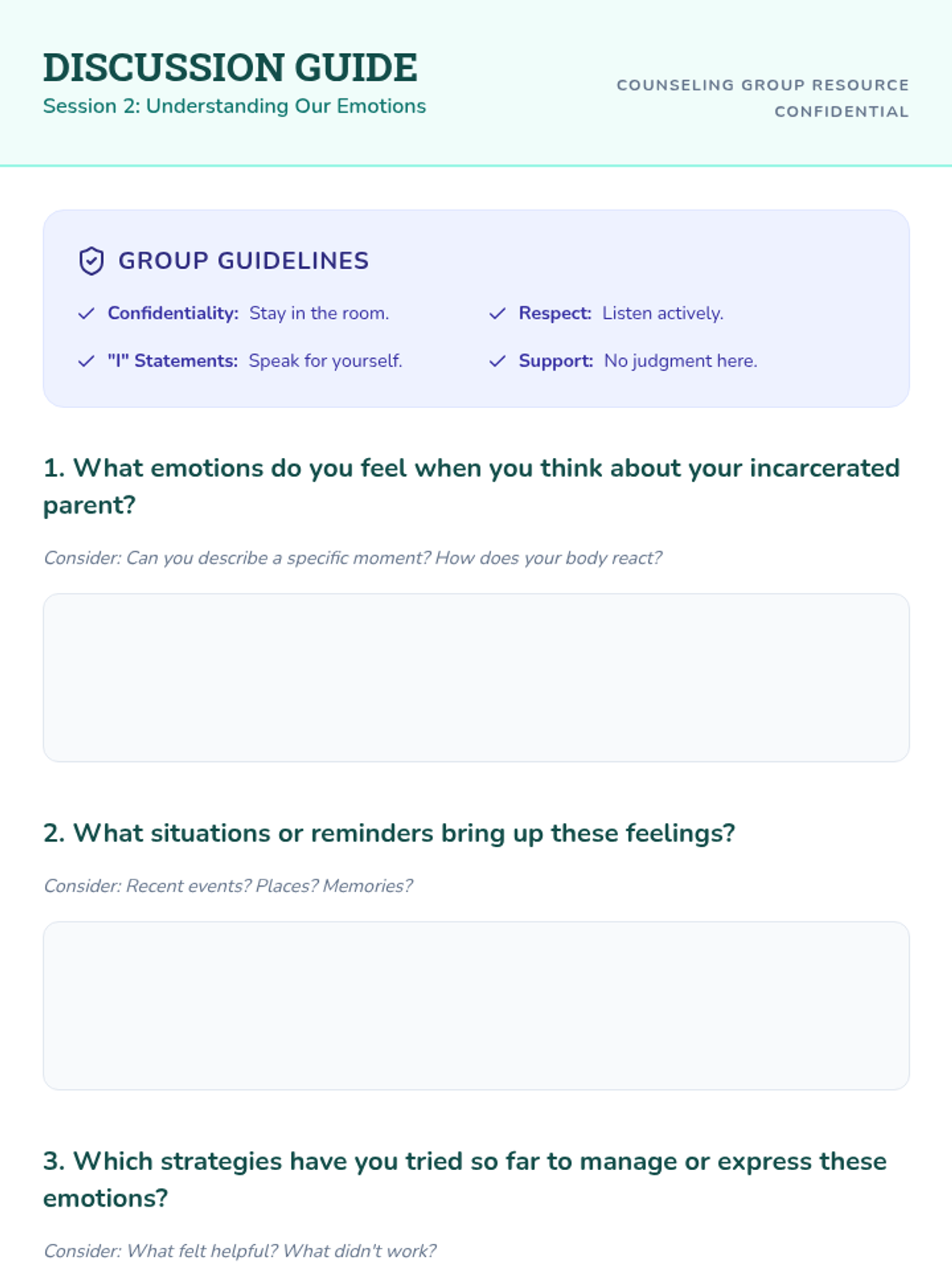
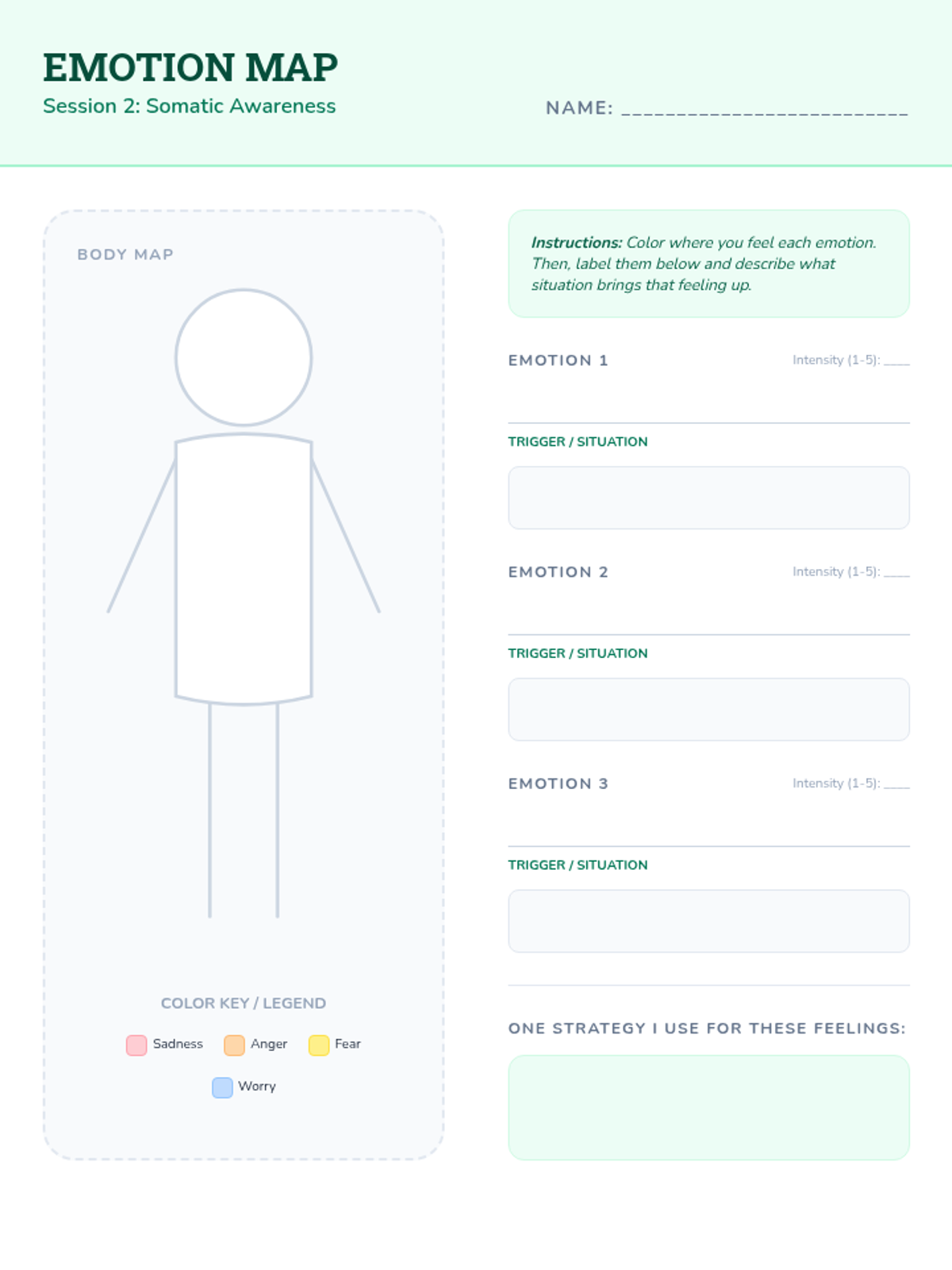
Identifying and expressing complex emotions related to parental incarceration through guided discussion and somatic mapping.
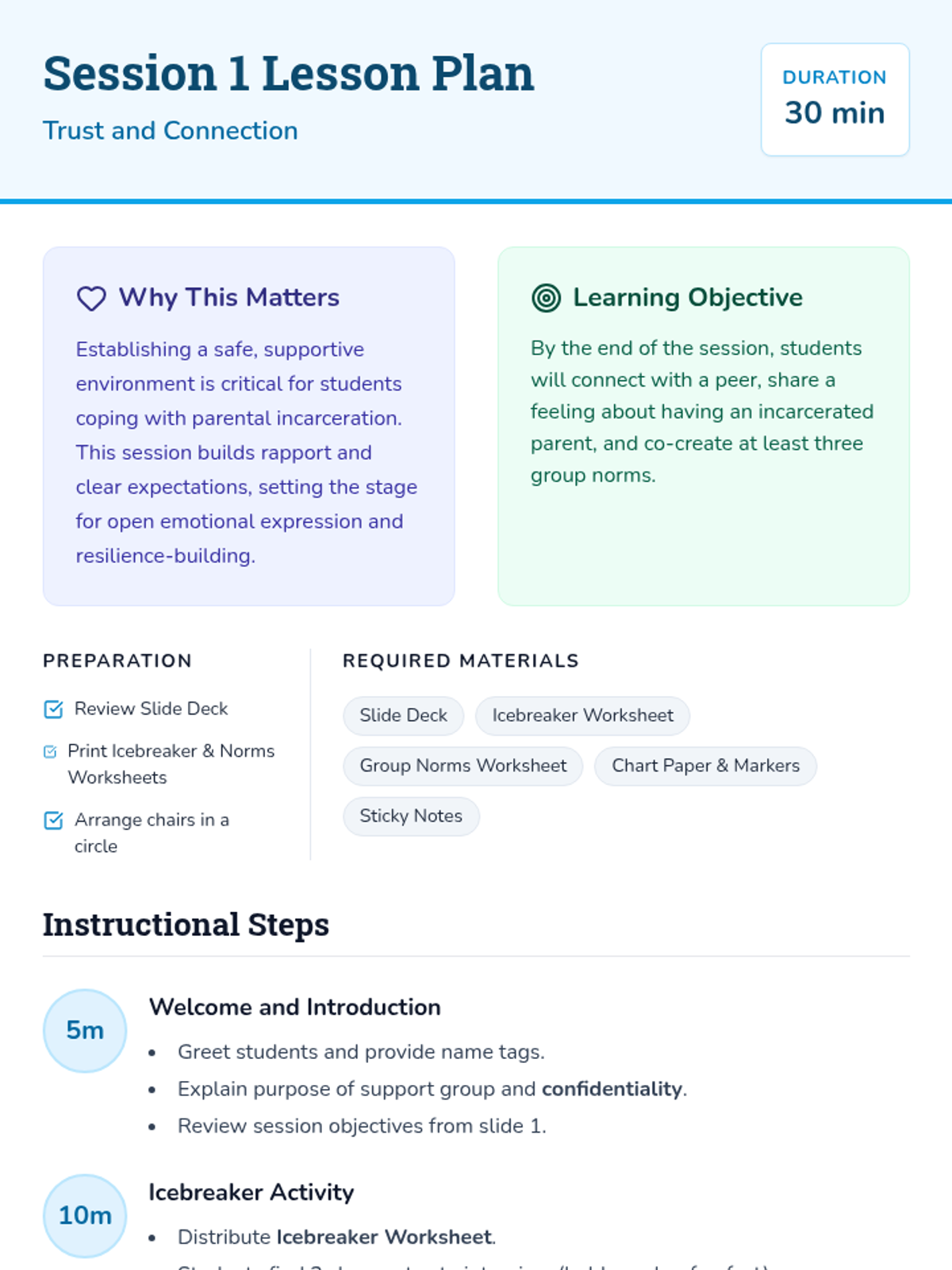
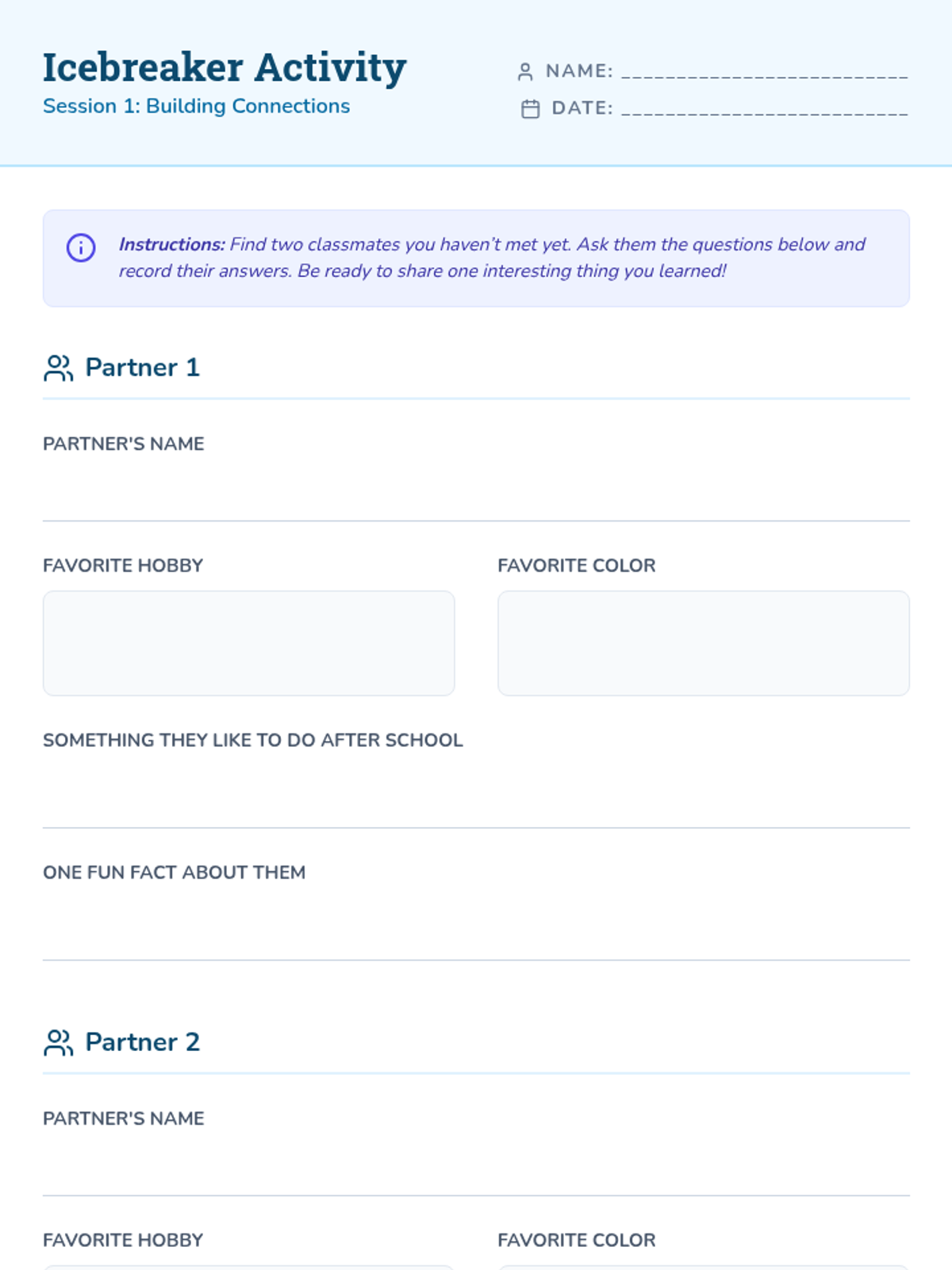
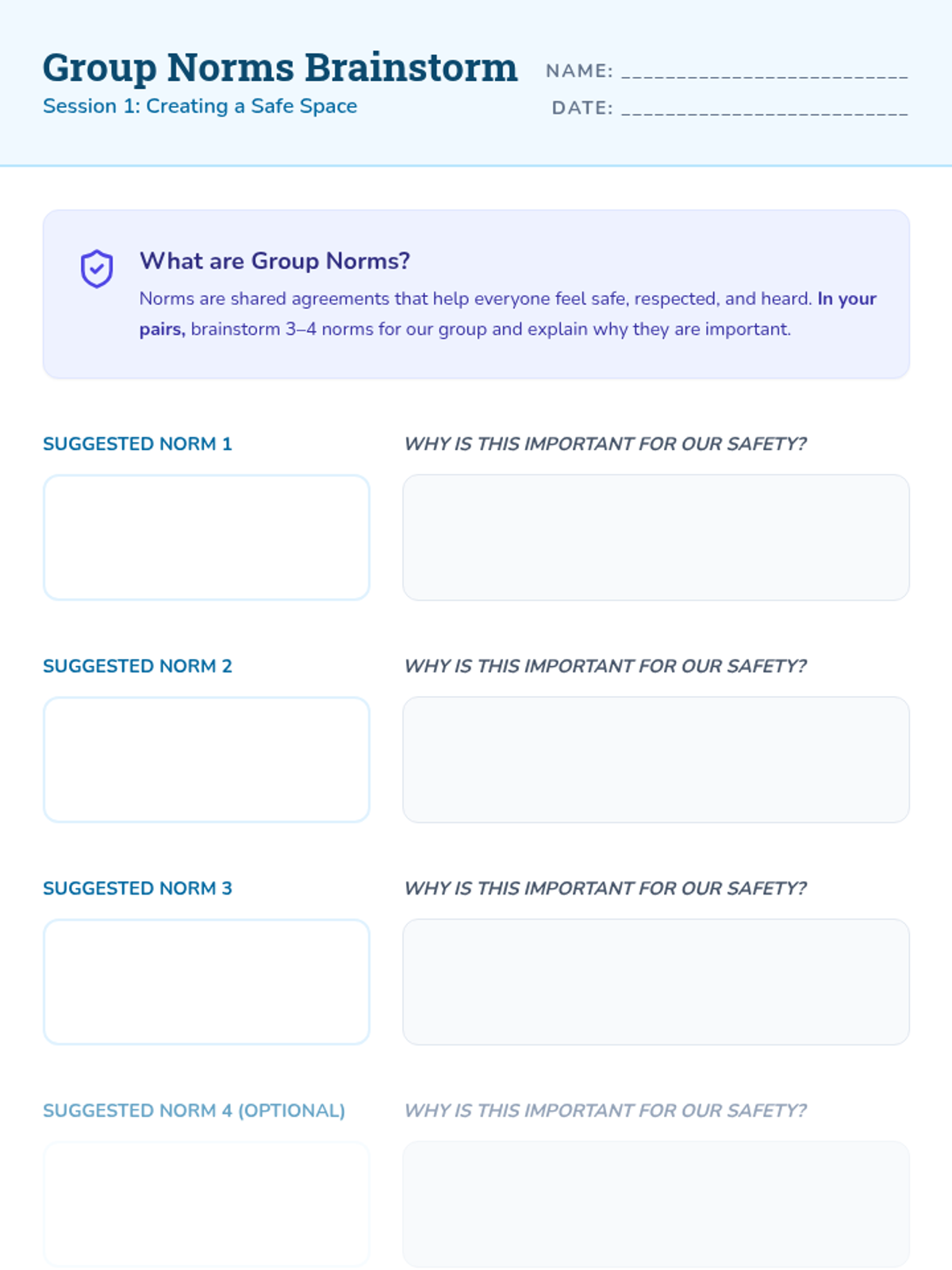
Establishing a safe, supportive environment by building rapport, setting clear expectations, and co-creating group norms.
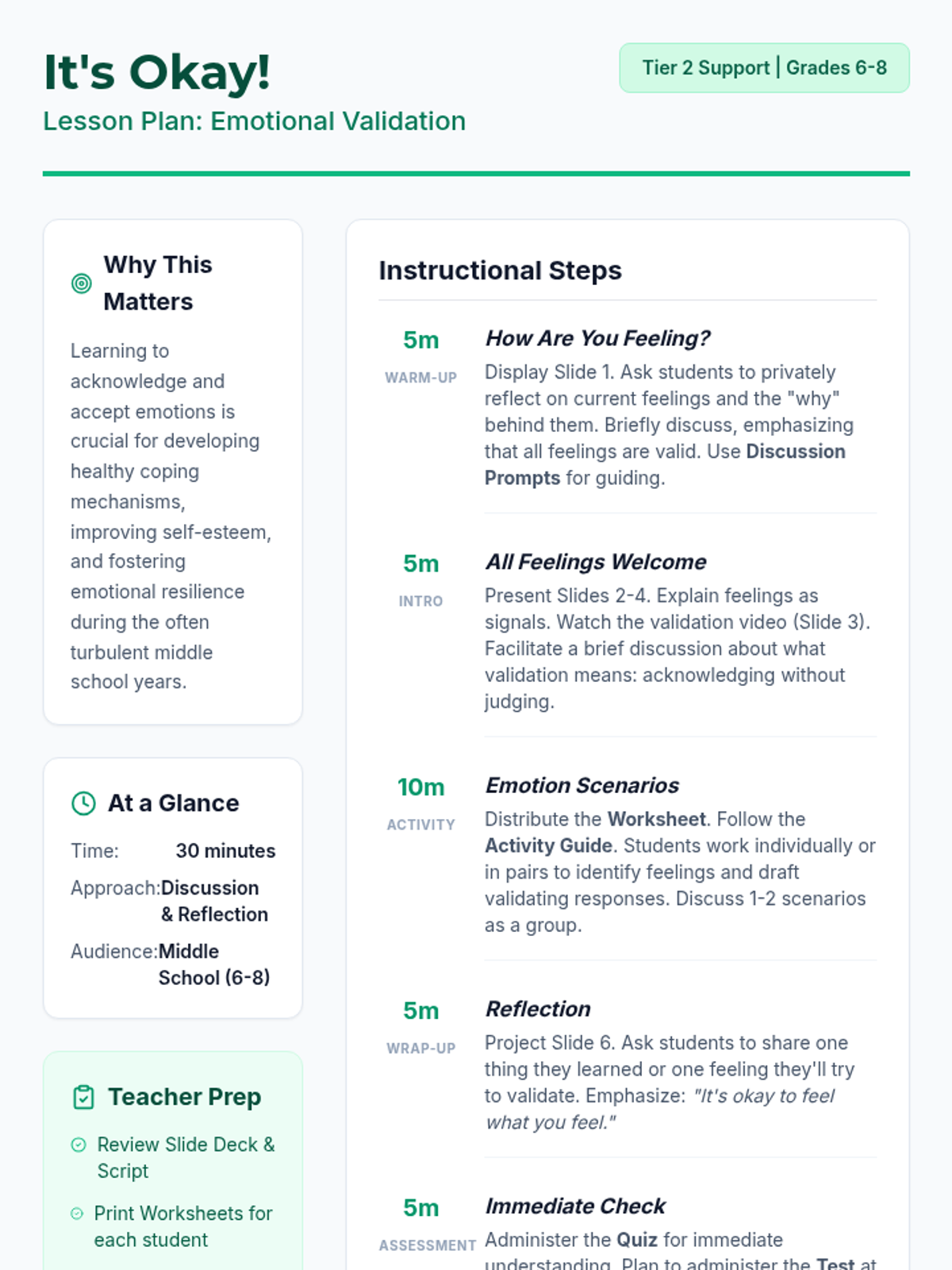
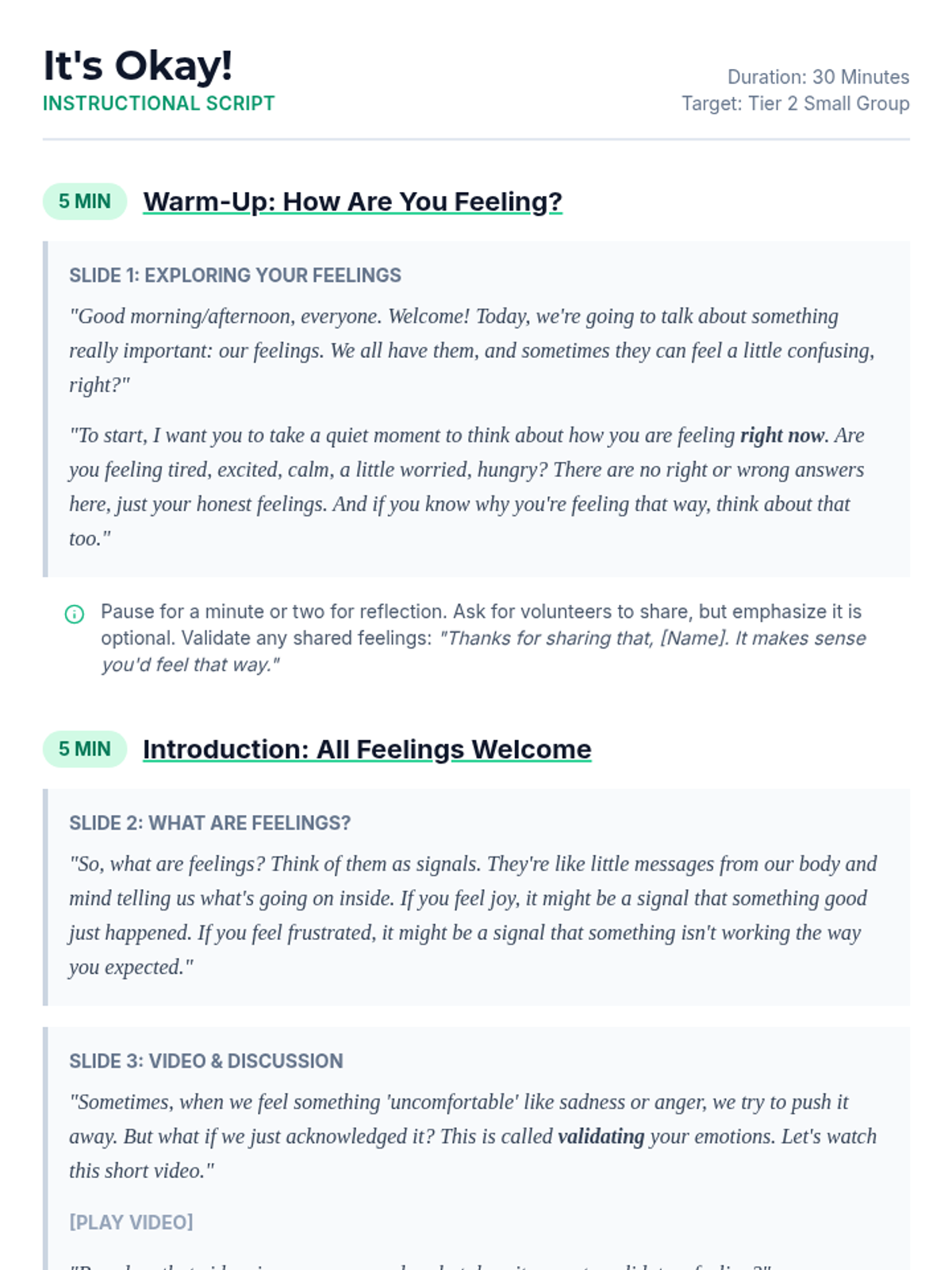
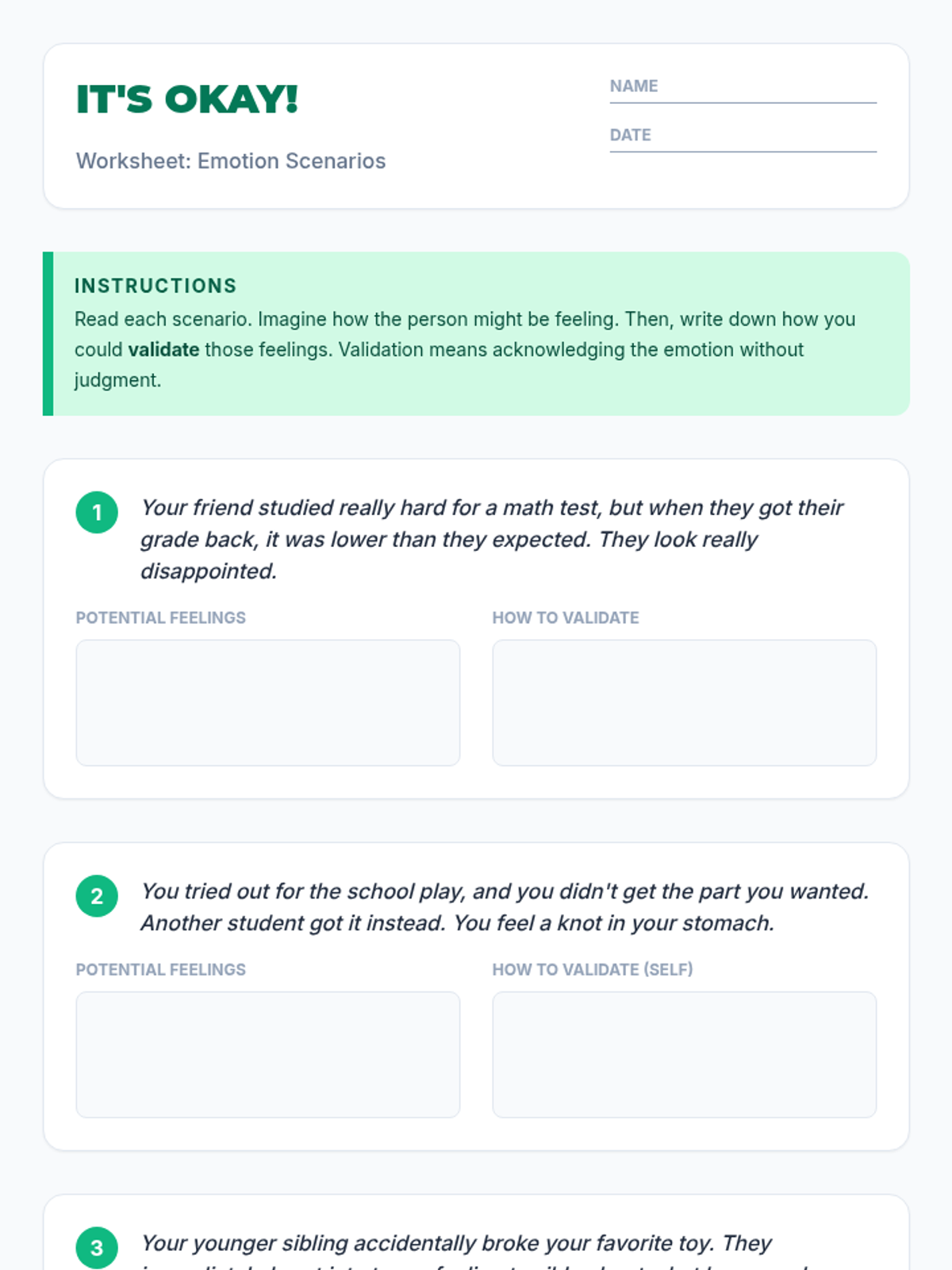
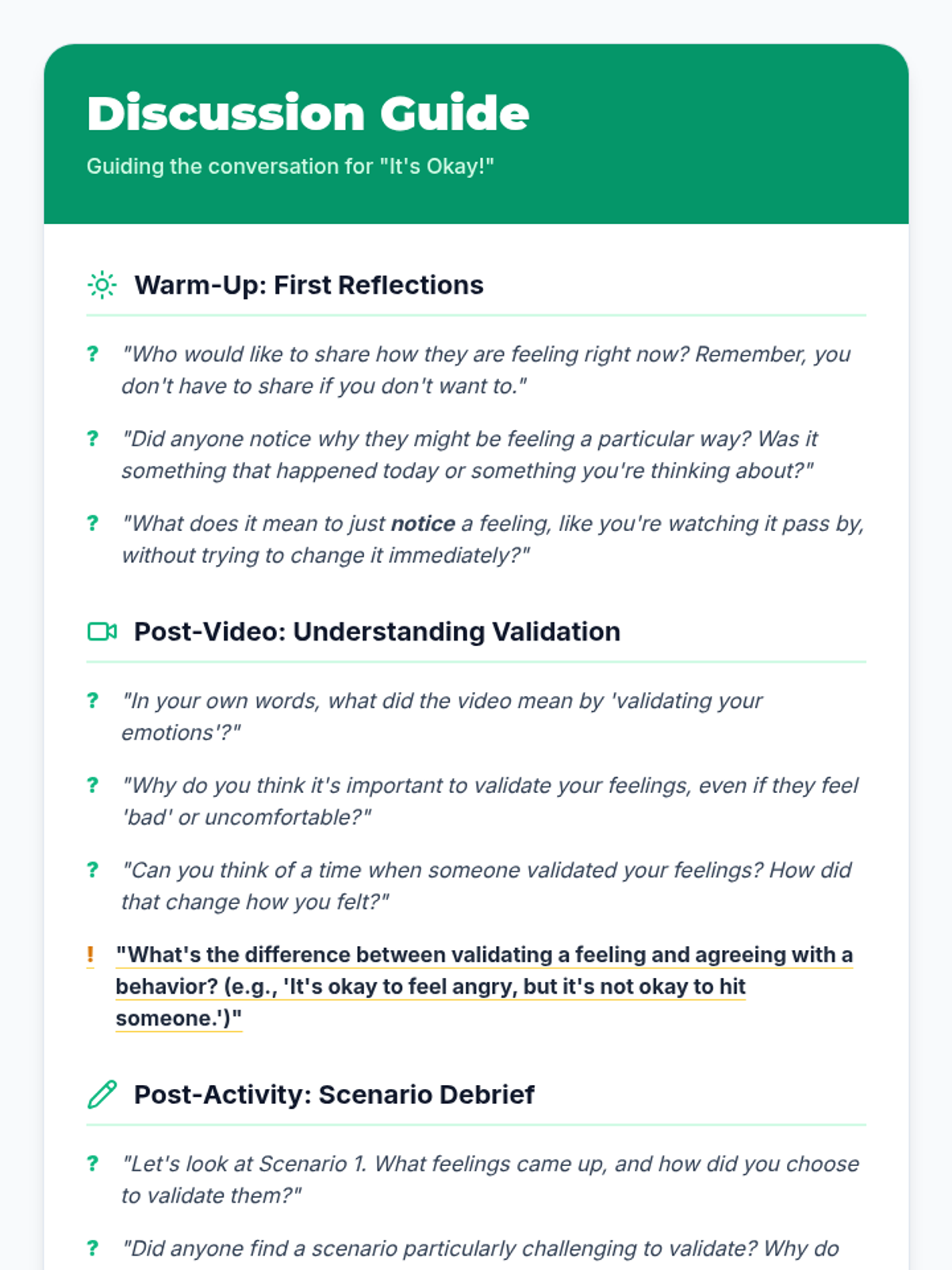
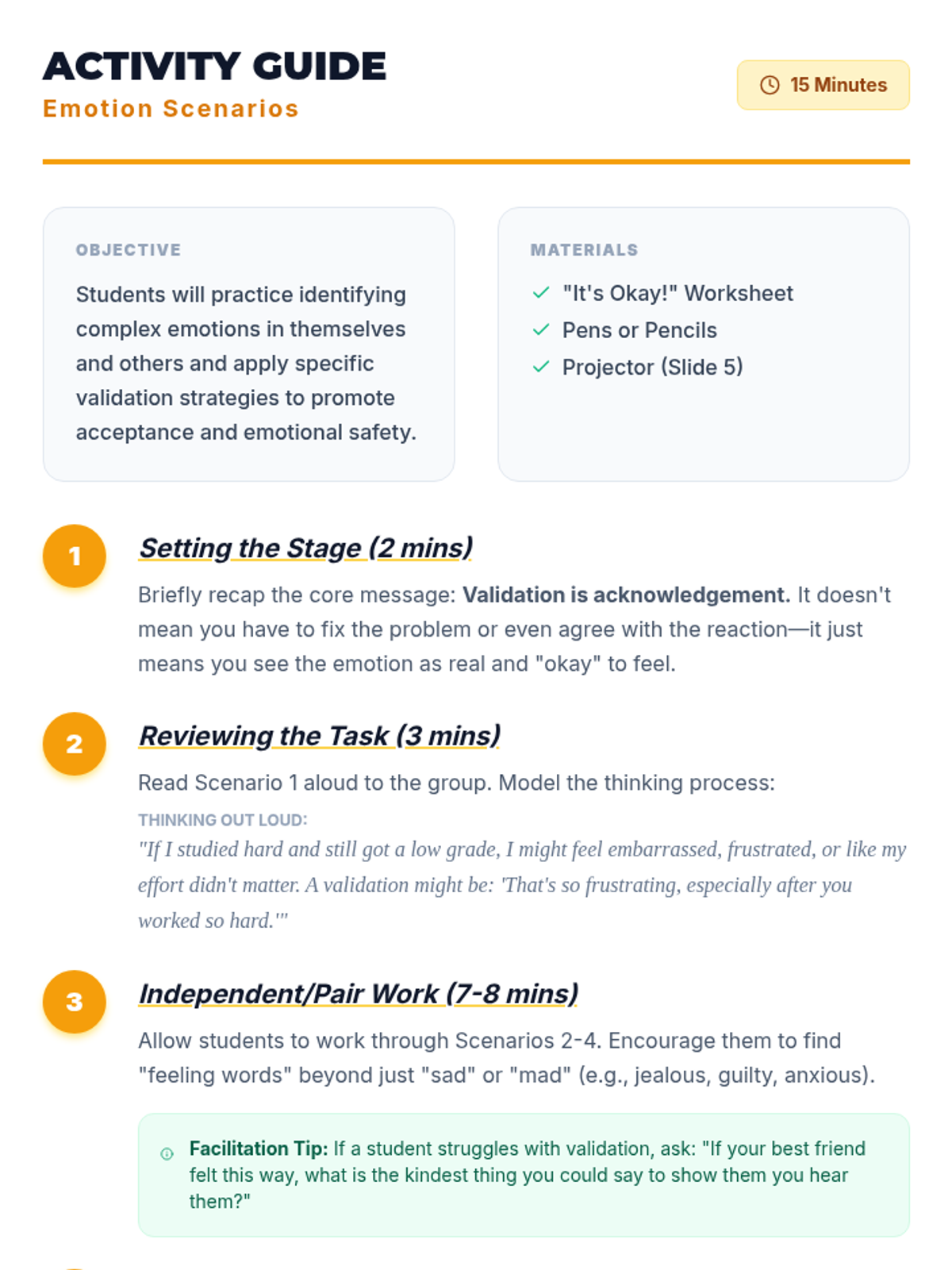
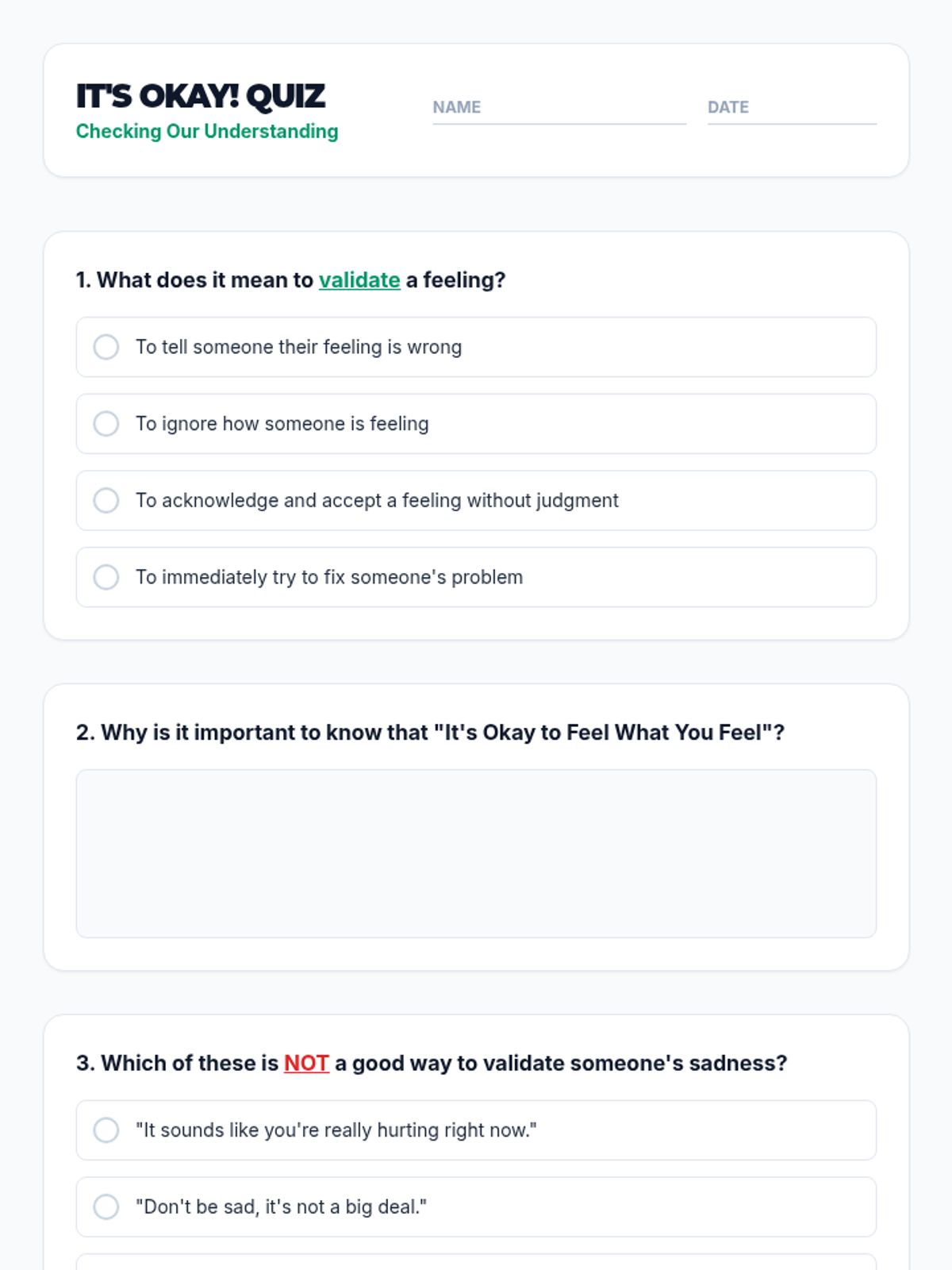
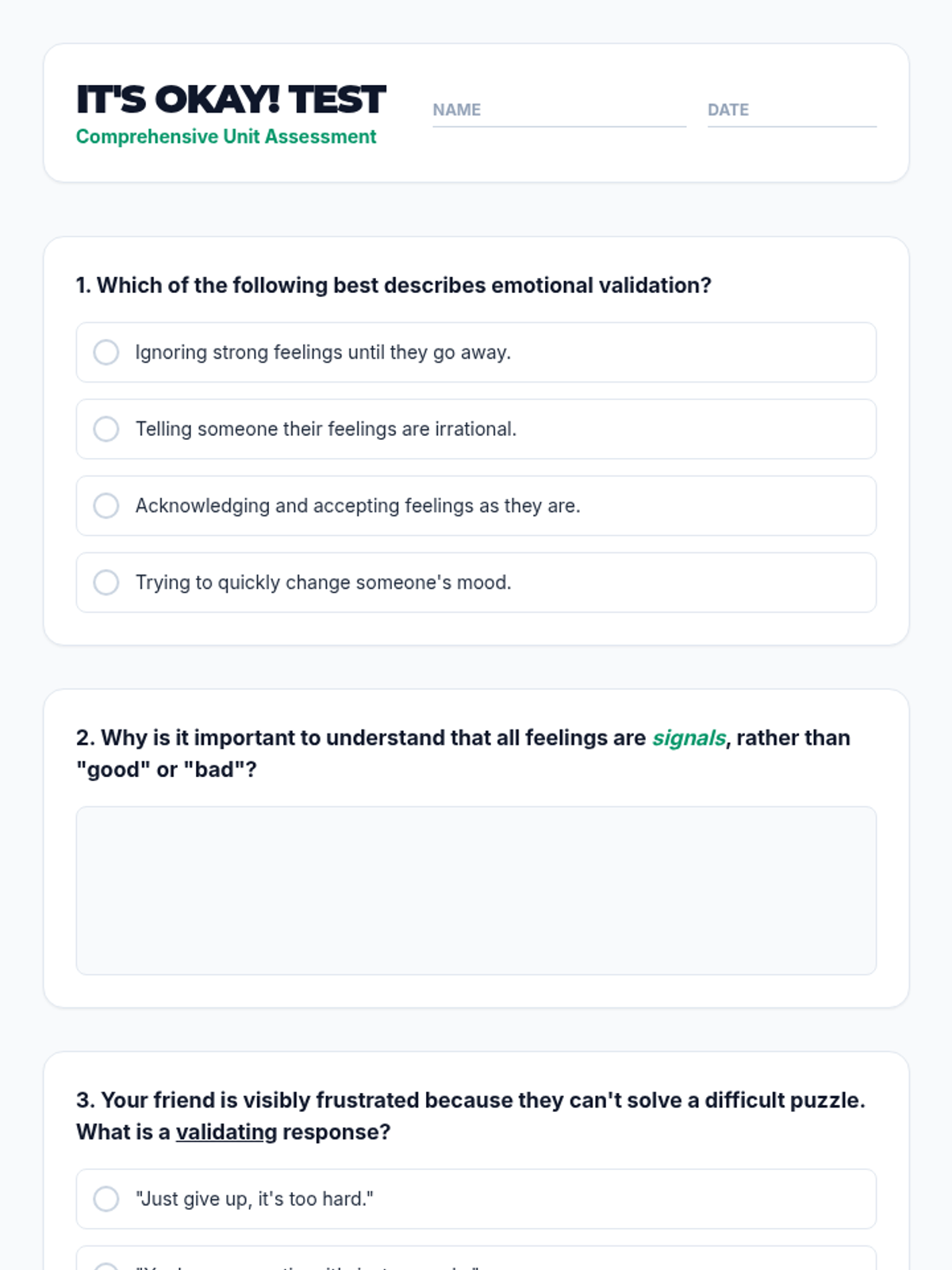
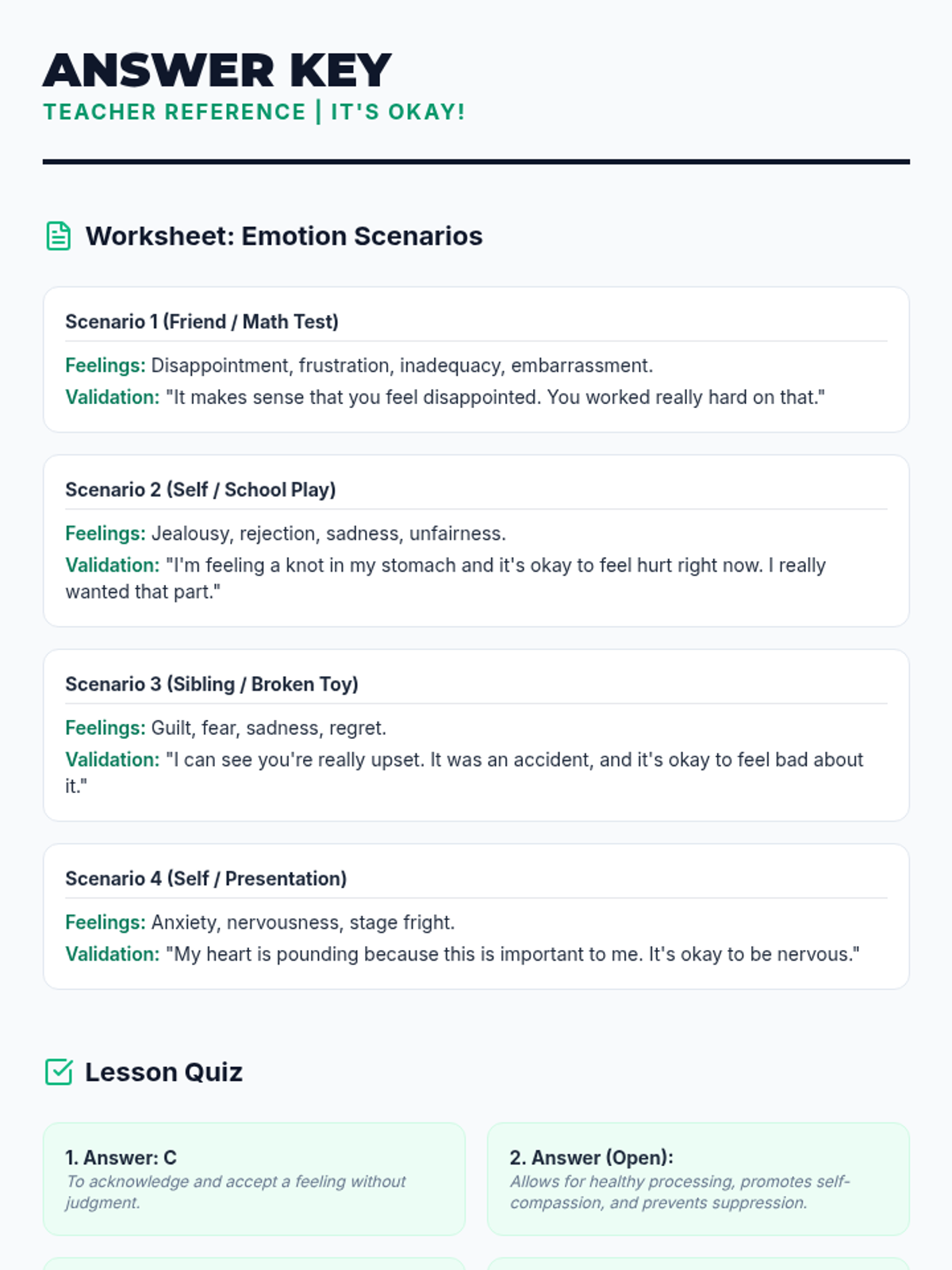
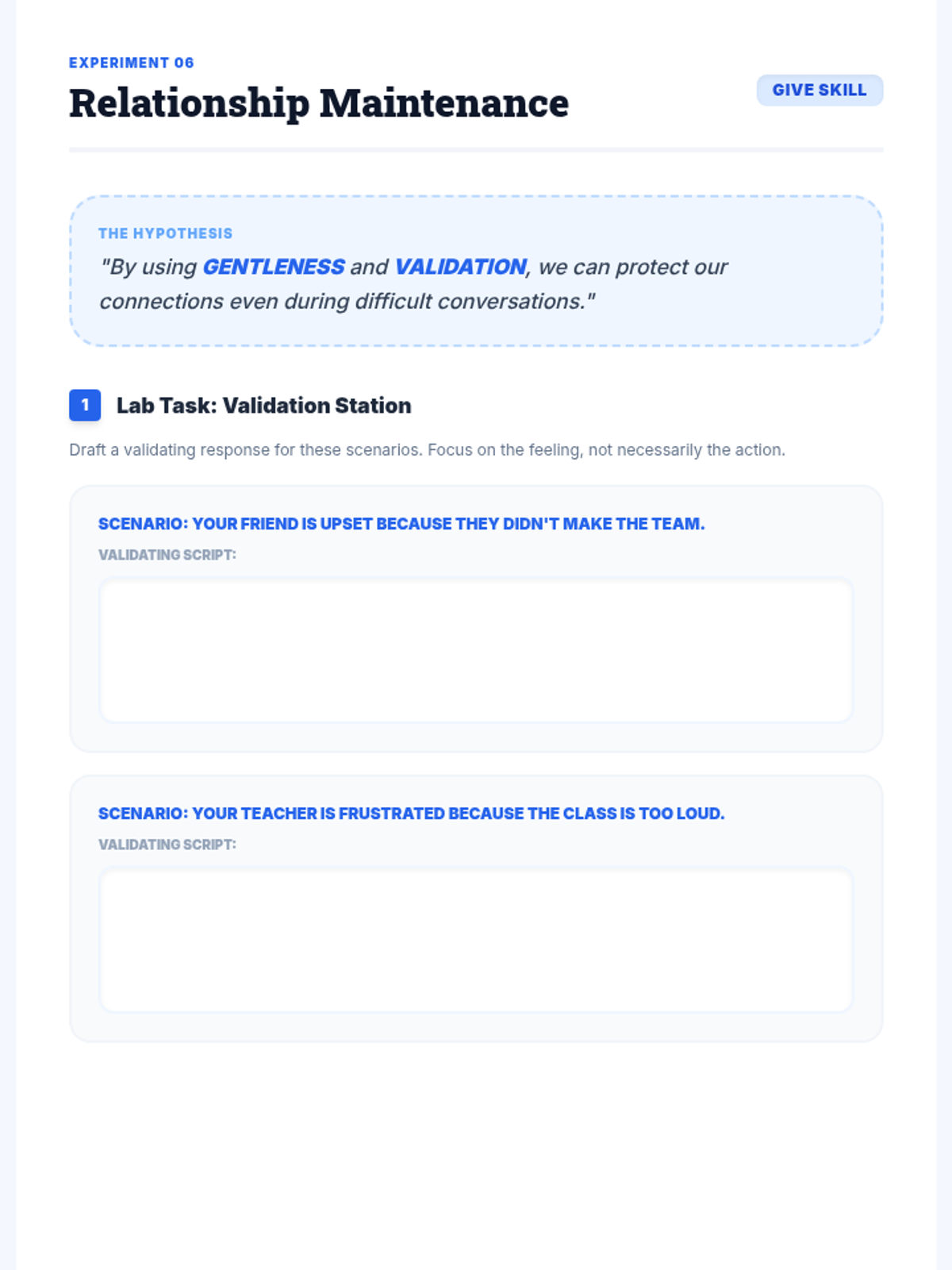
A 30-minute Tier 2 group lesson for middle schoolers focusing on emotional intelligence, identifying feelings, and practicing self-compassion through validation.
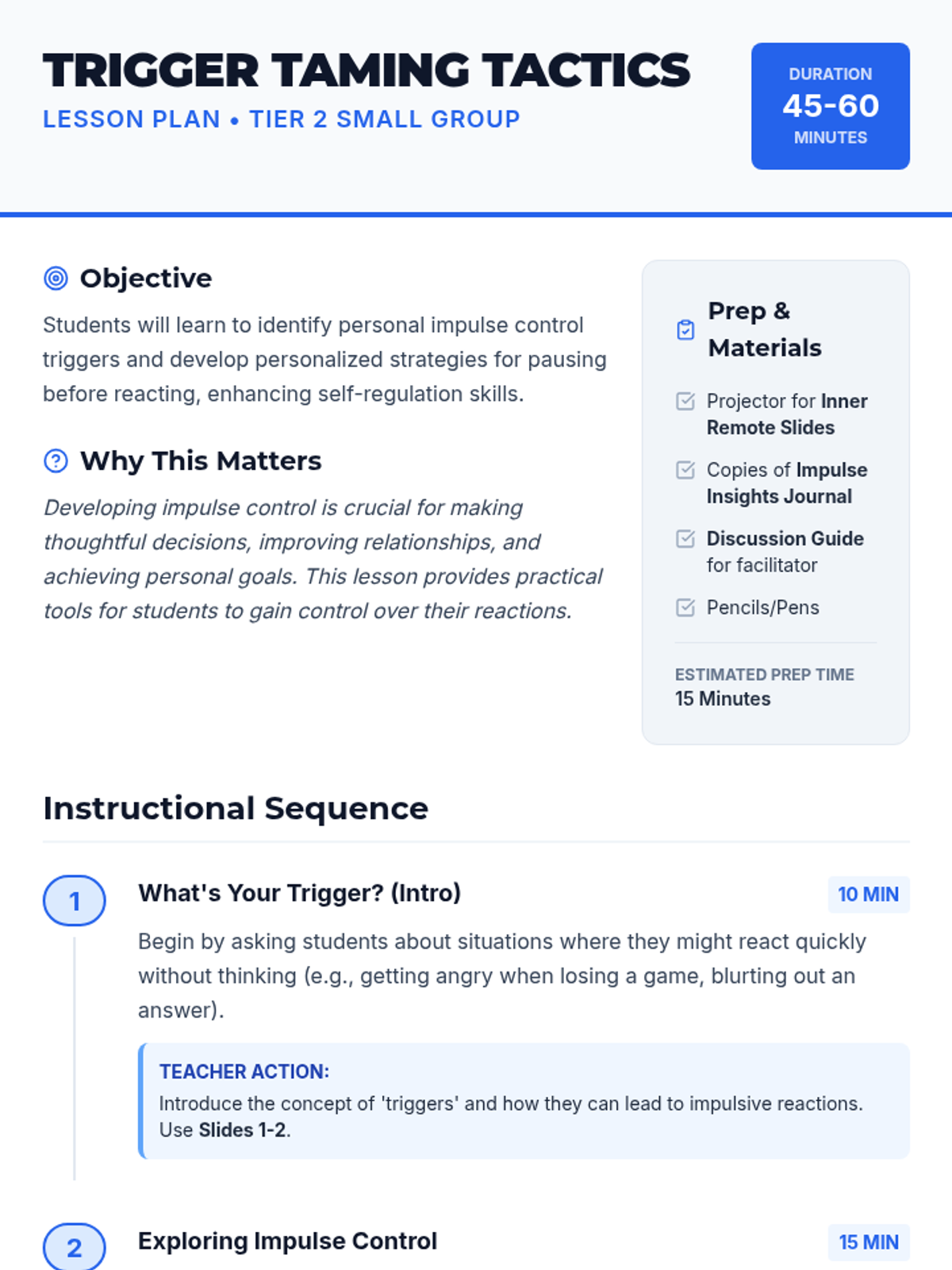
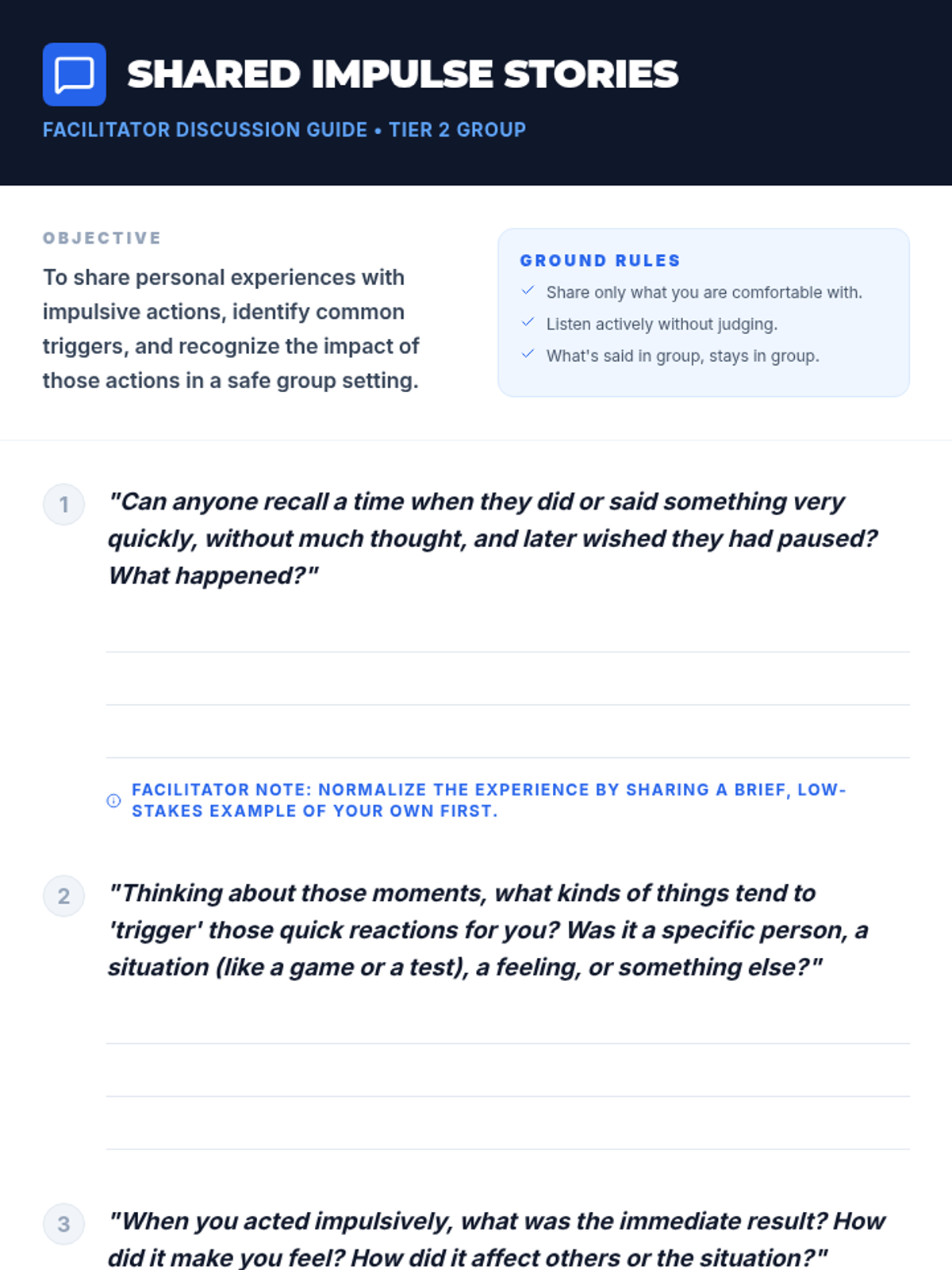
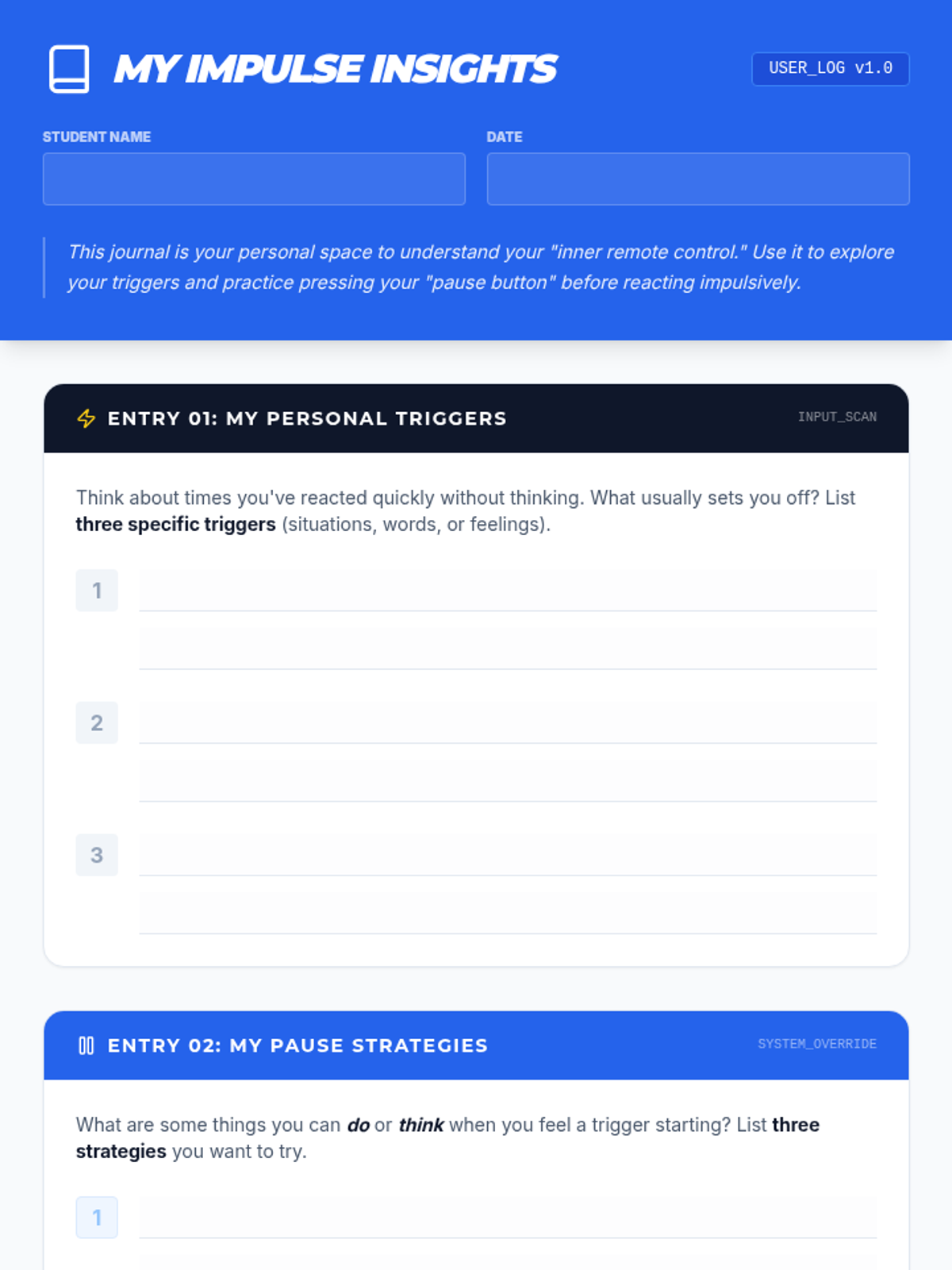
A Tier 2 small group lesson for middle schoolers to identify personal impulse triggers and develop 'pause button' strategies for better self-regulation.
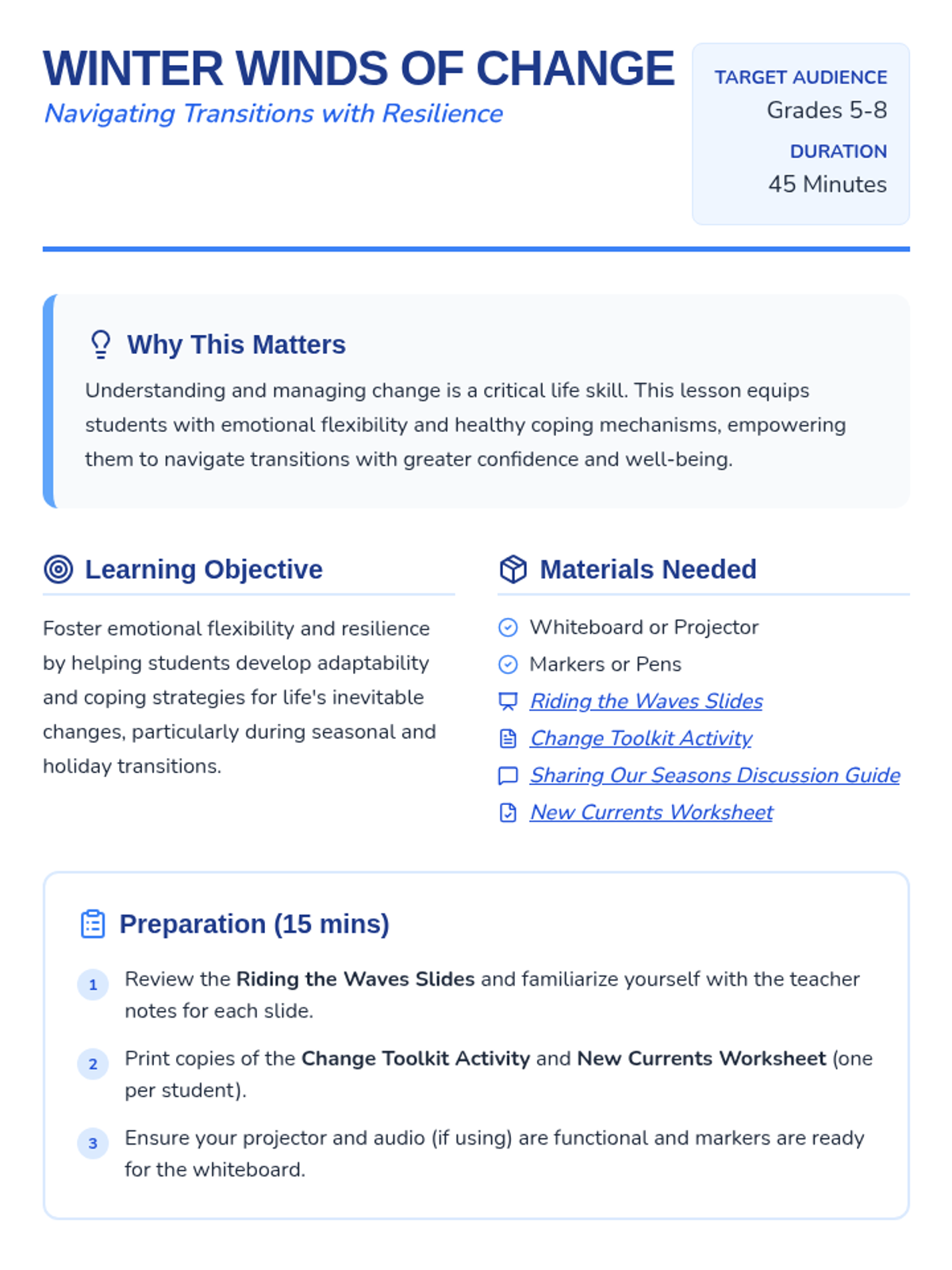
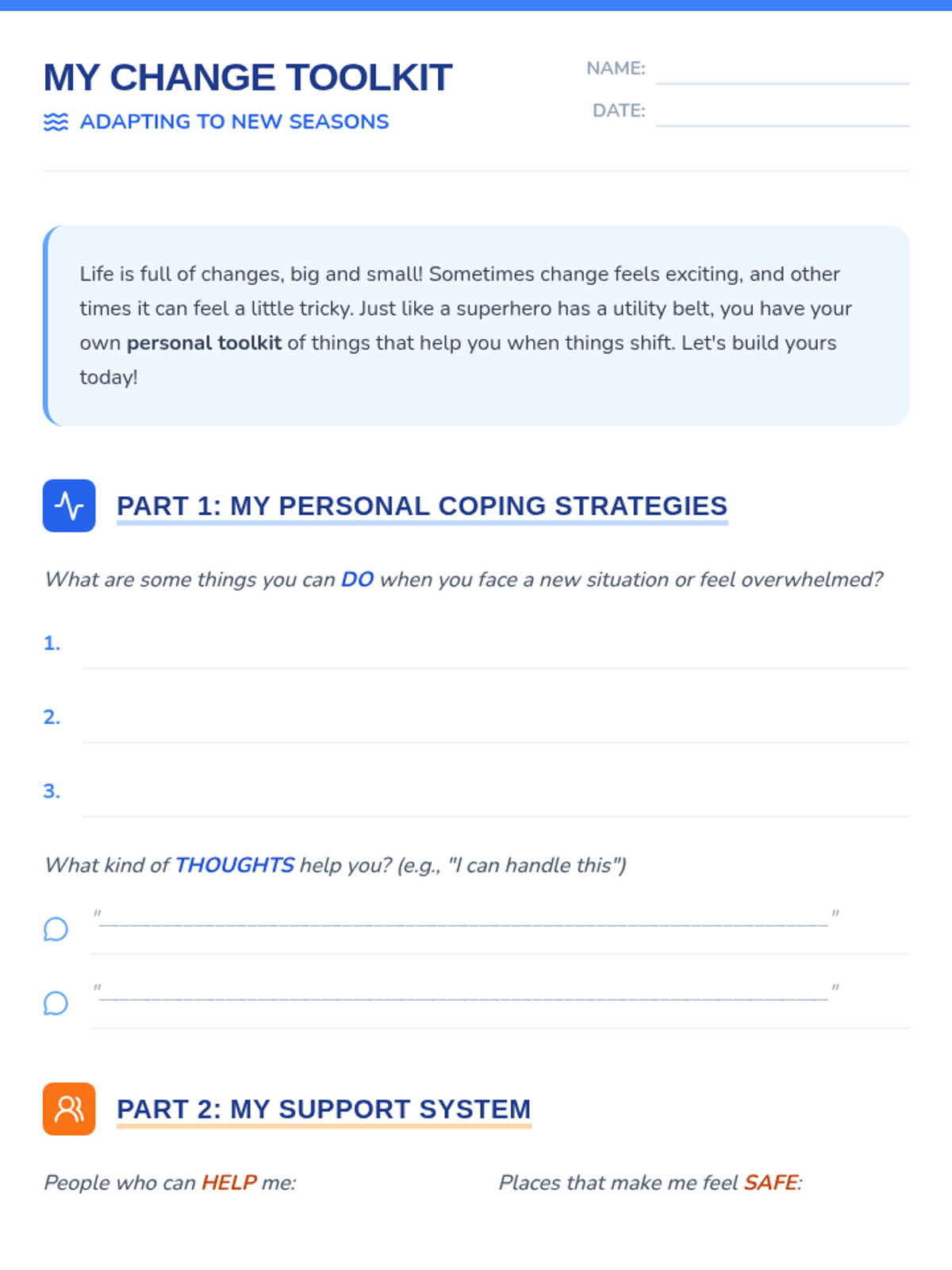
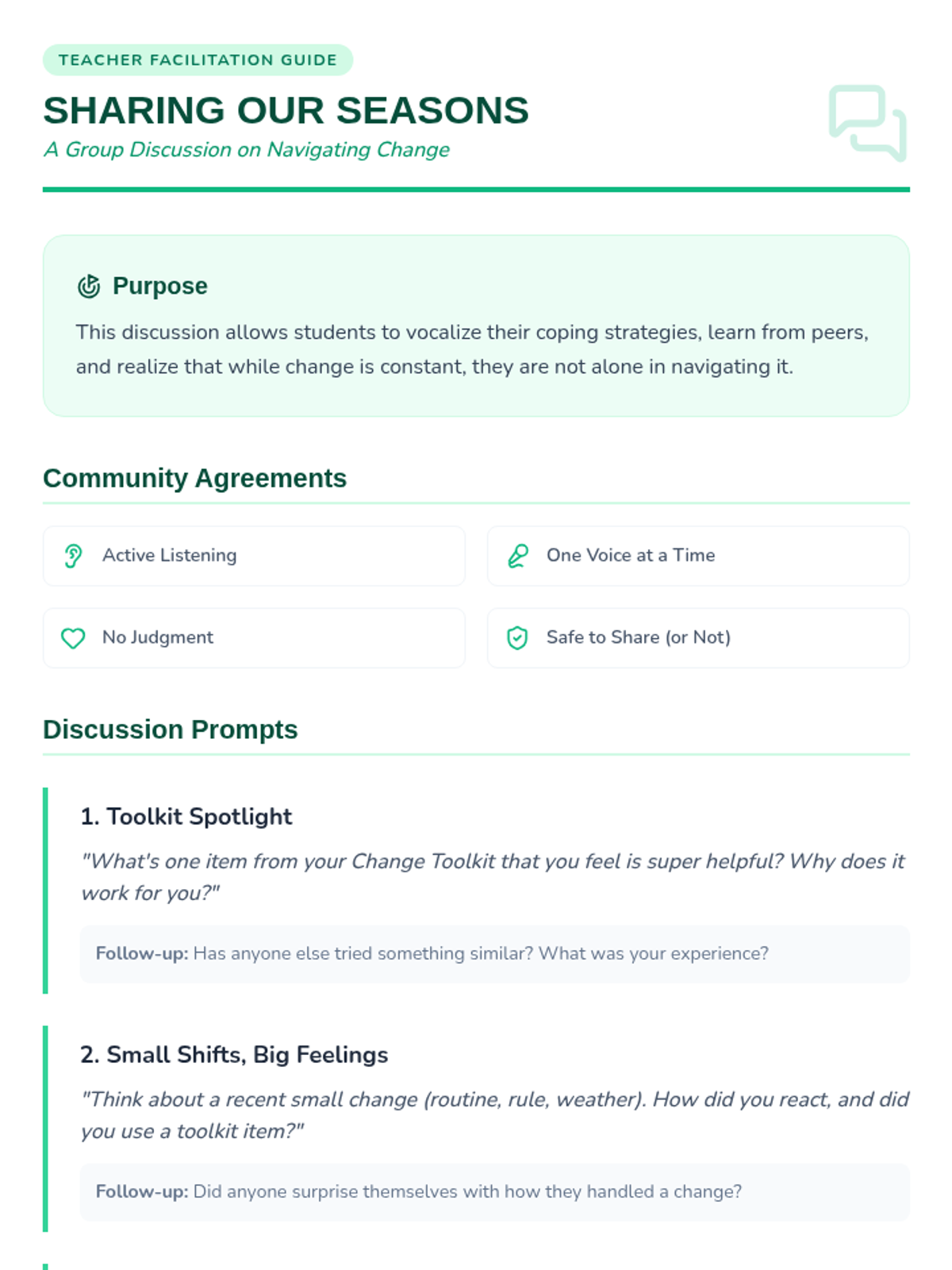
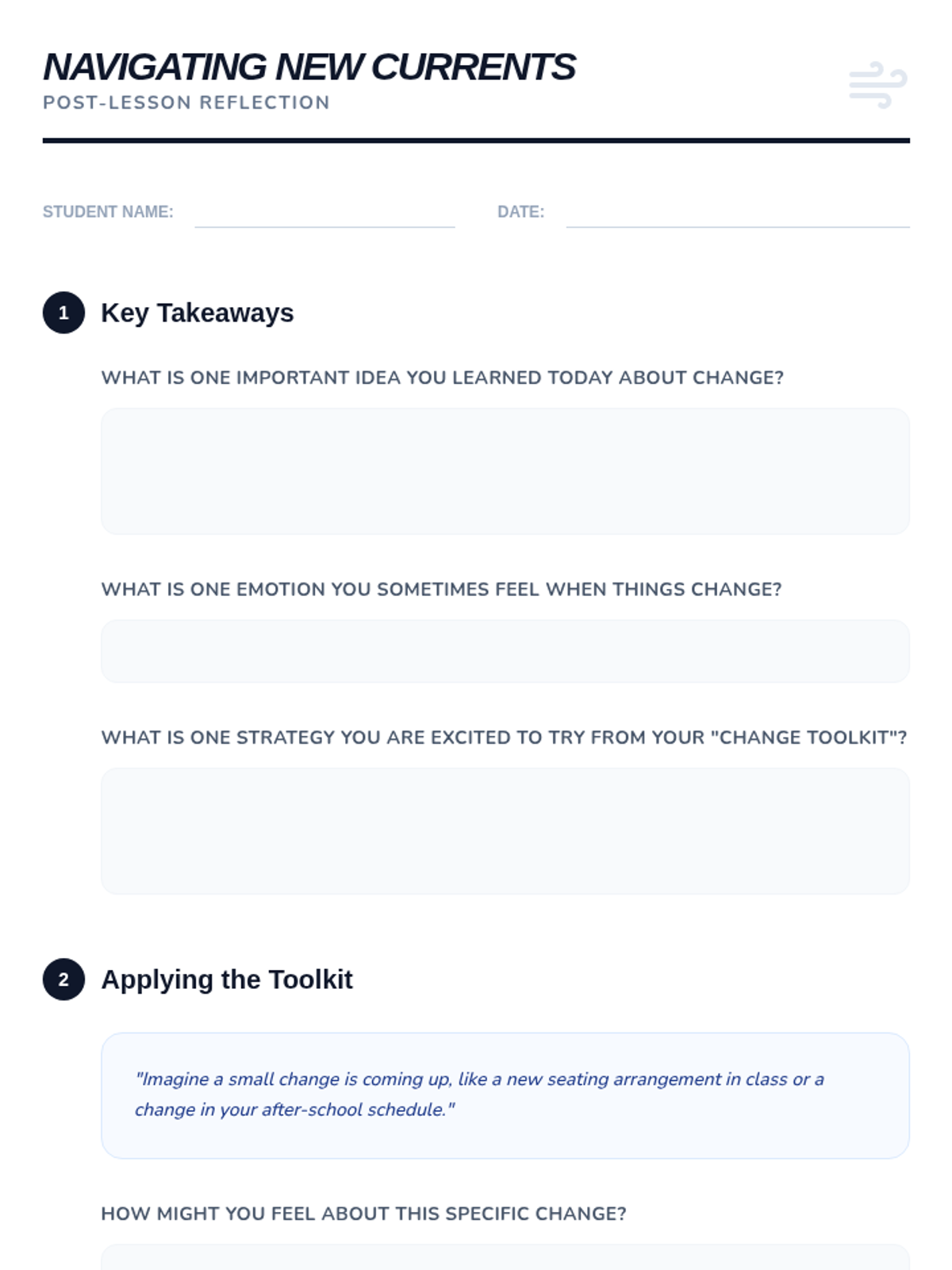
A 45-minute social-emotional learning lesson for grades 5-8 focused on developing adaptability and resilience through seasonal transitions and life changes. Students will identify emotions linked to change, build a personalized 'Change Toolkit' of coping strategies, and discuss ways to embrace new routines with confidence.
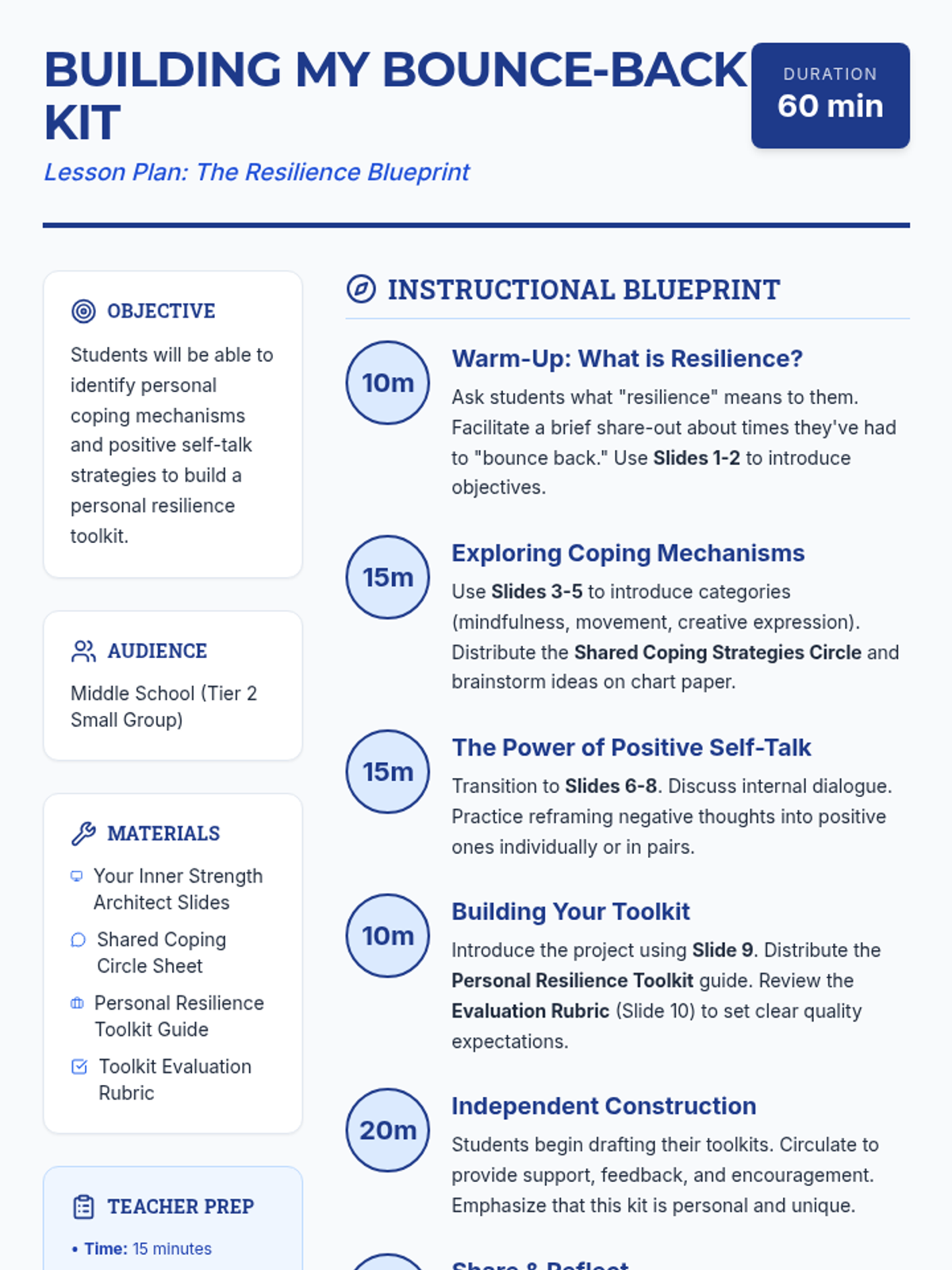
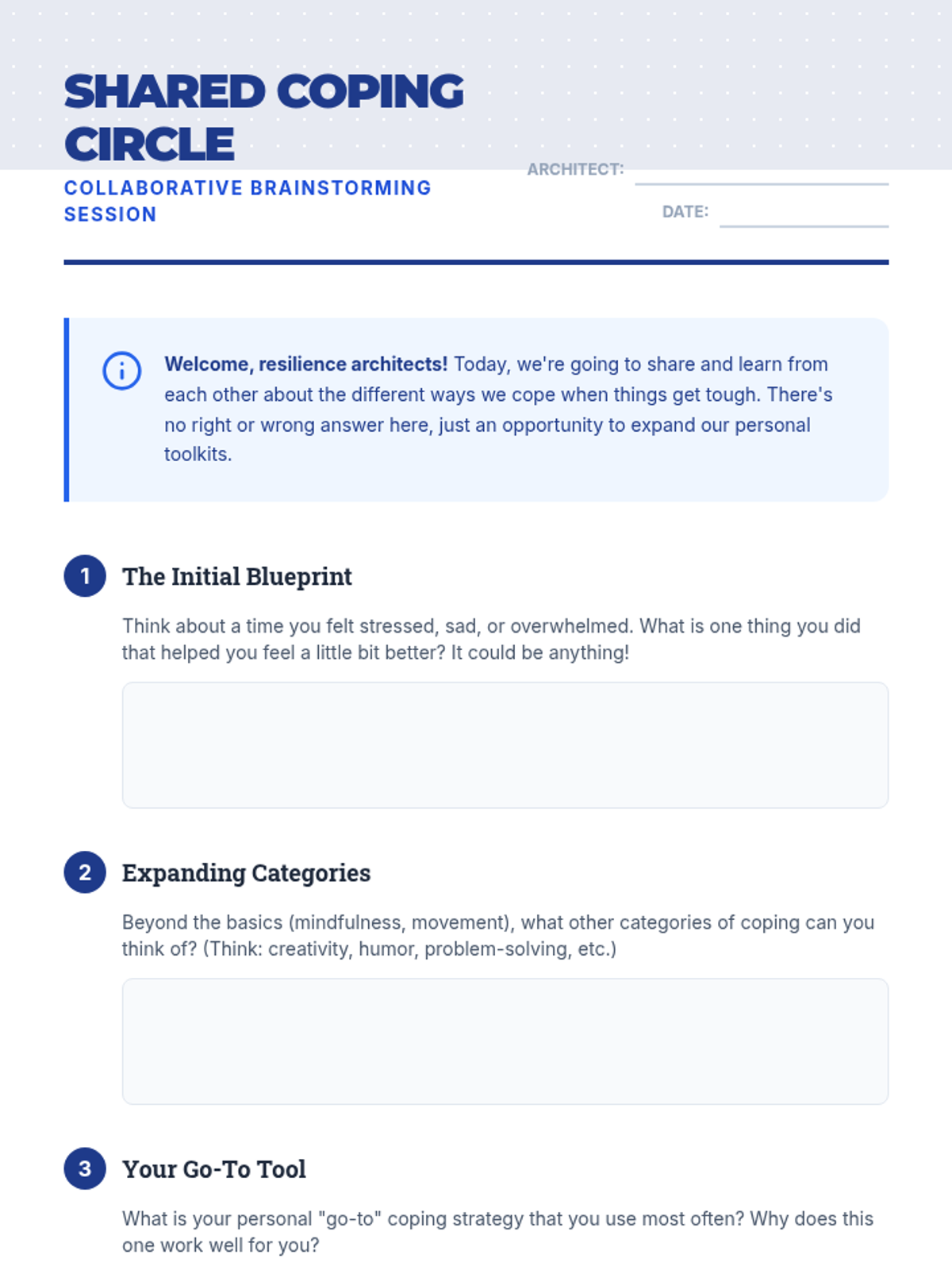
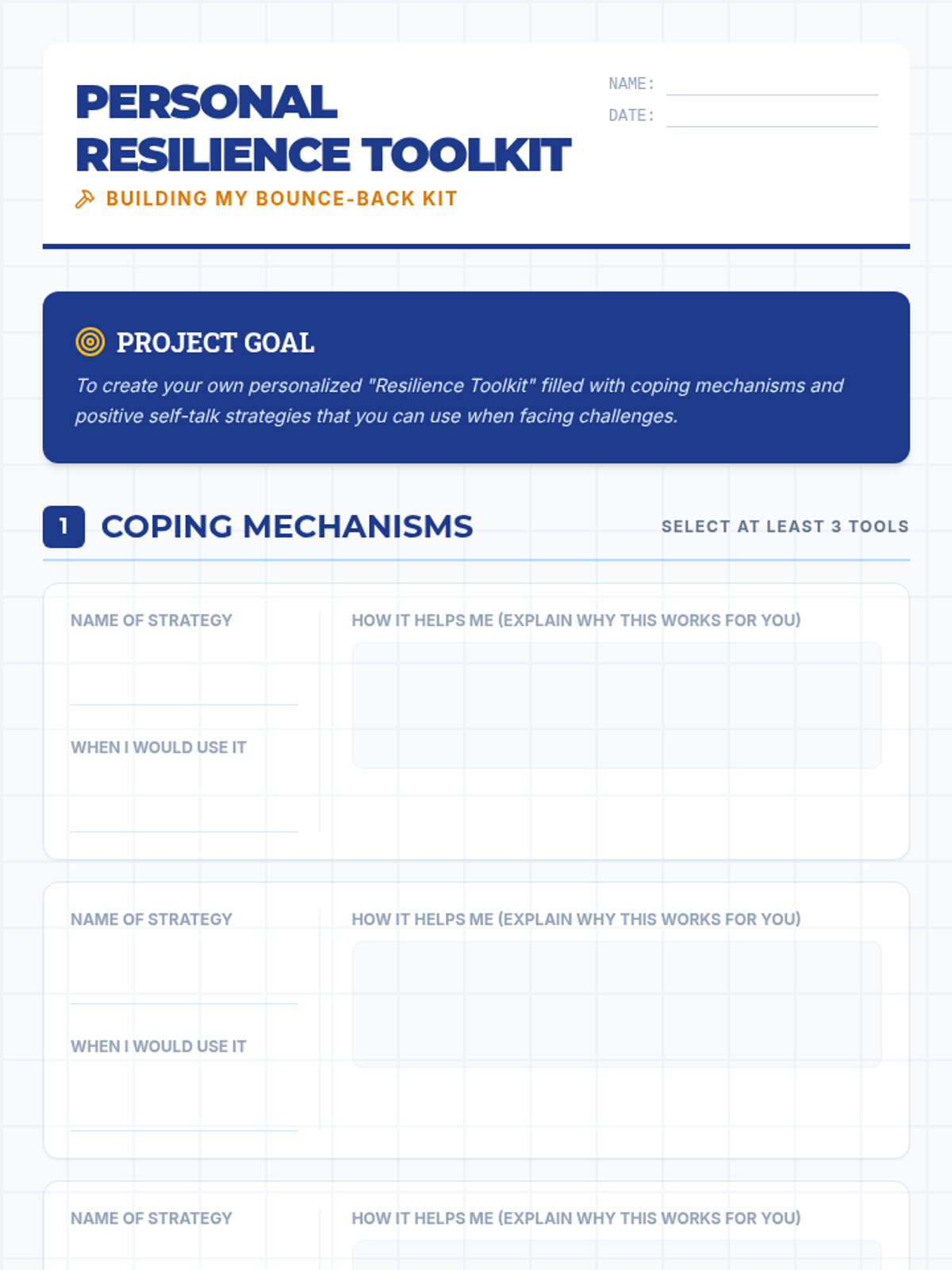
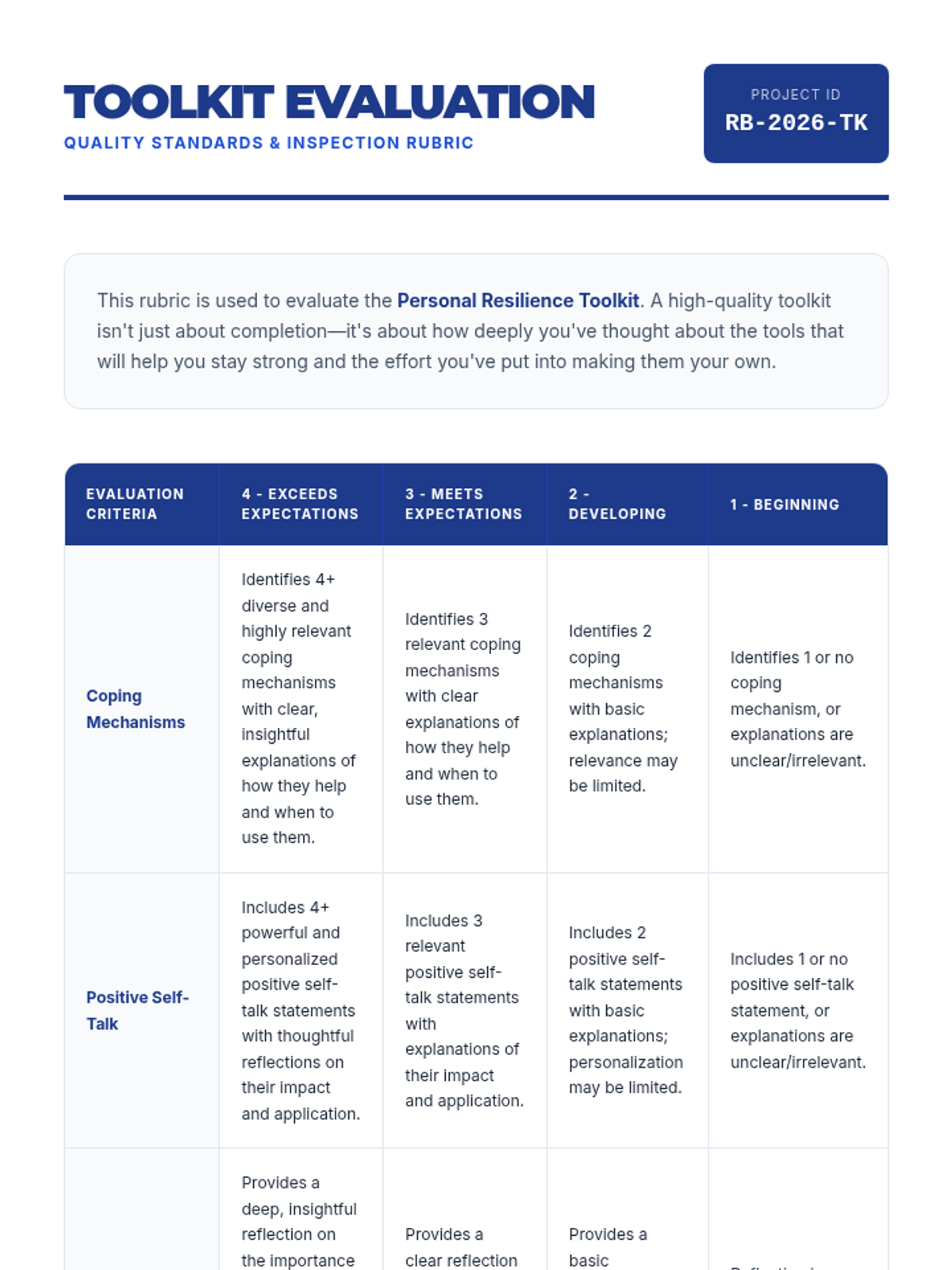
A Tier 2 small group lesson for middle schoolers to build a personal resilience toolkit, focusing on coping mechanisms and positive self-talk strategies through the metaphor of an architect building a blueprint.
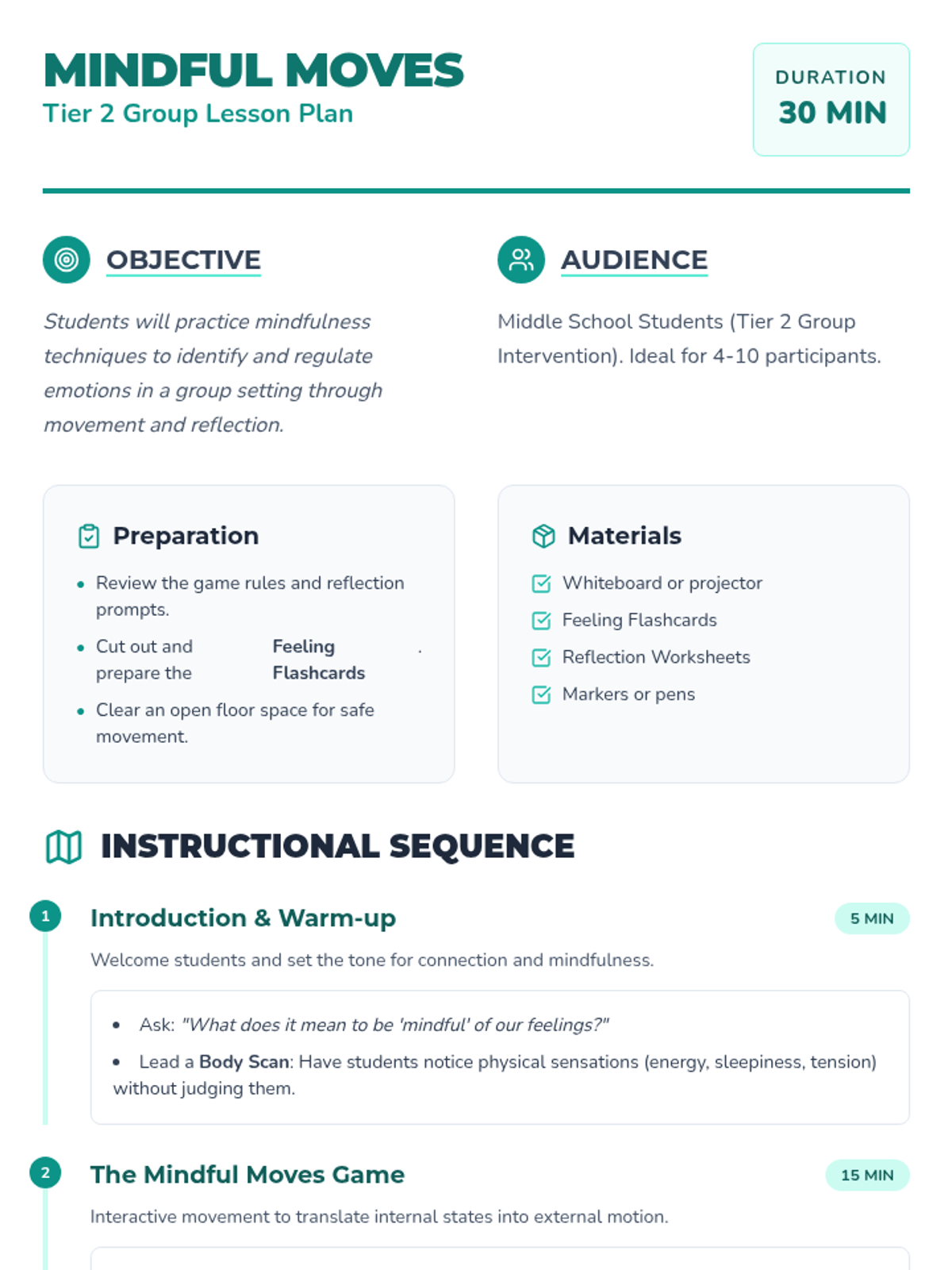
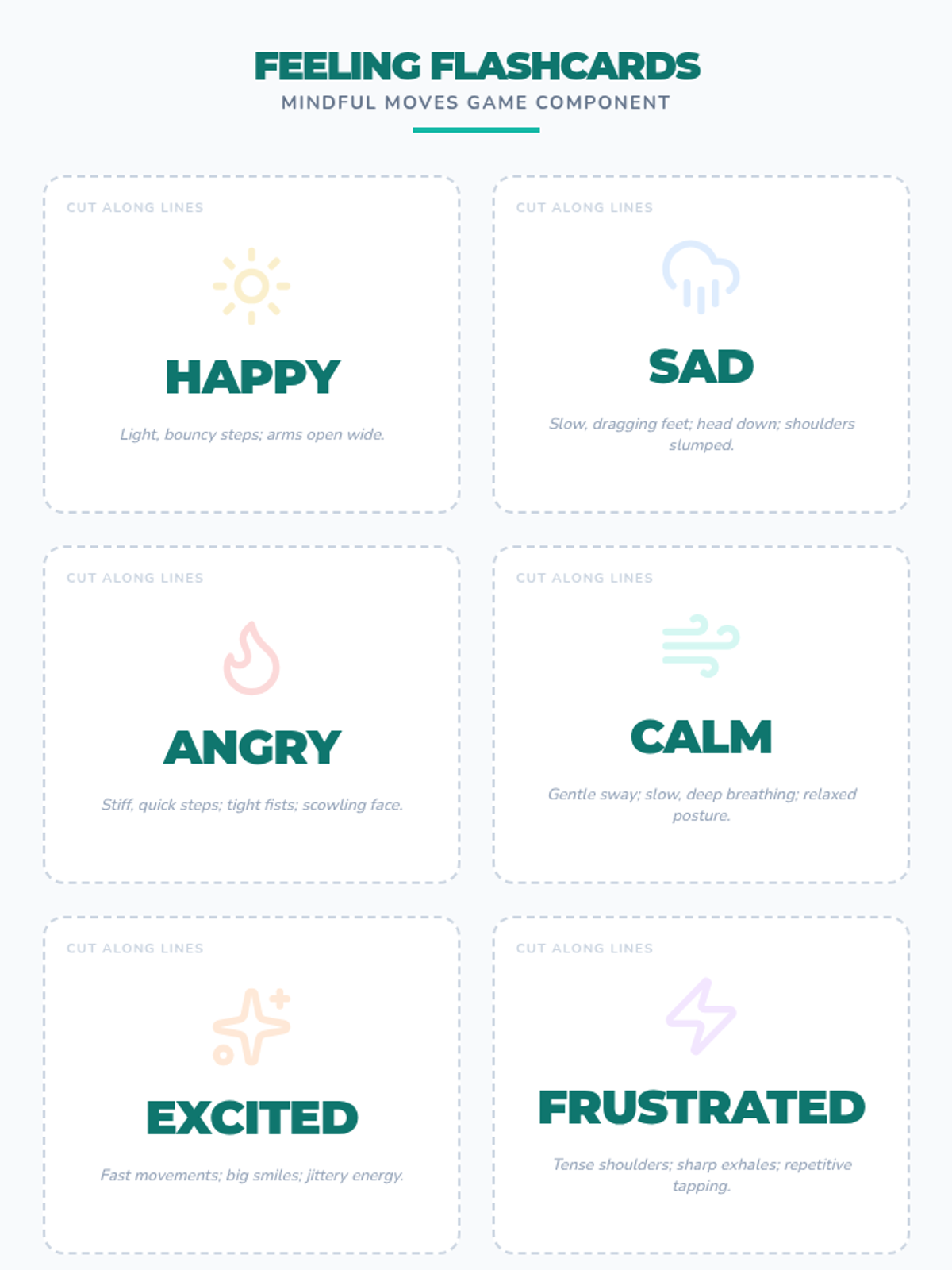
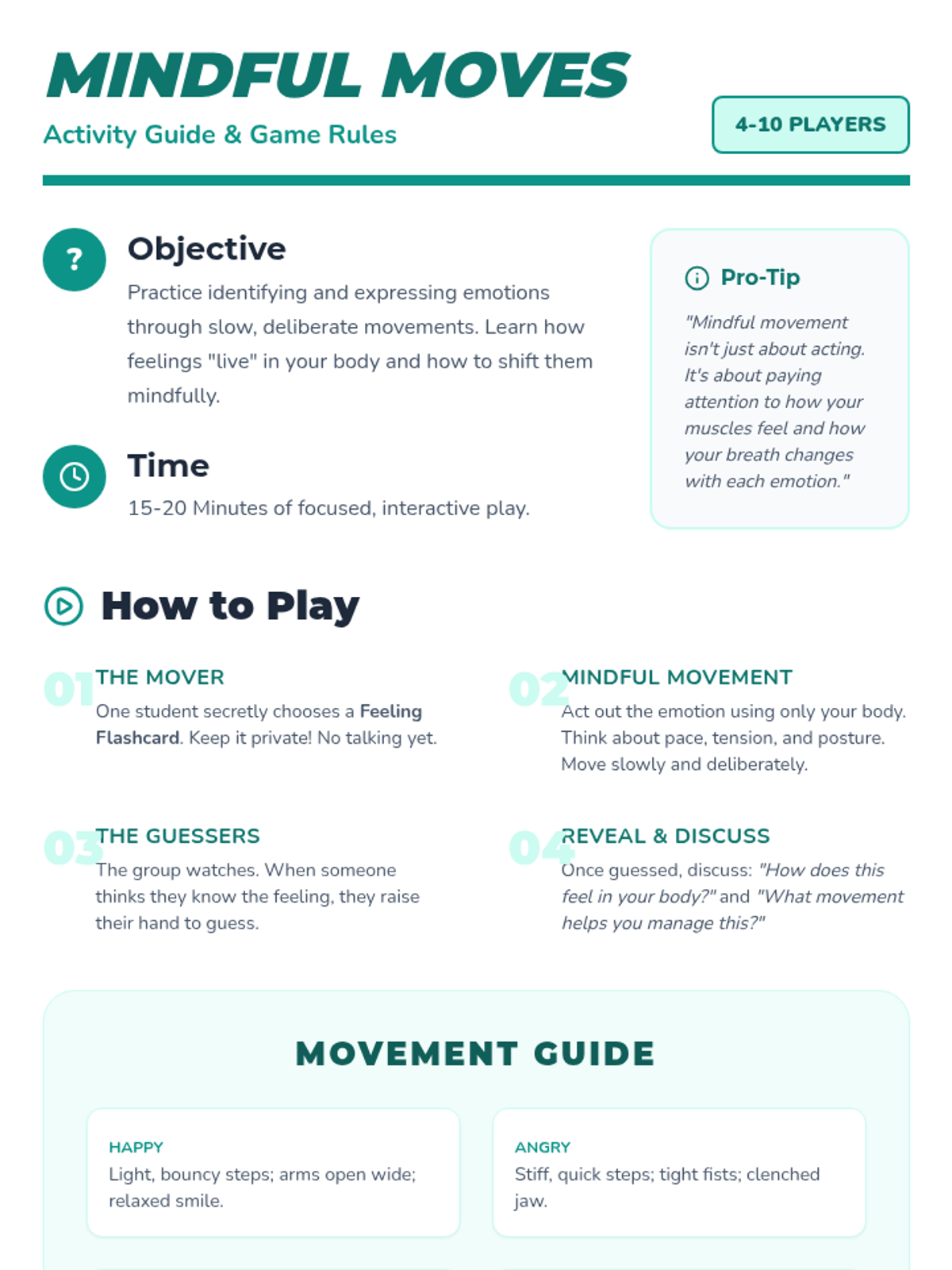
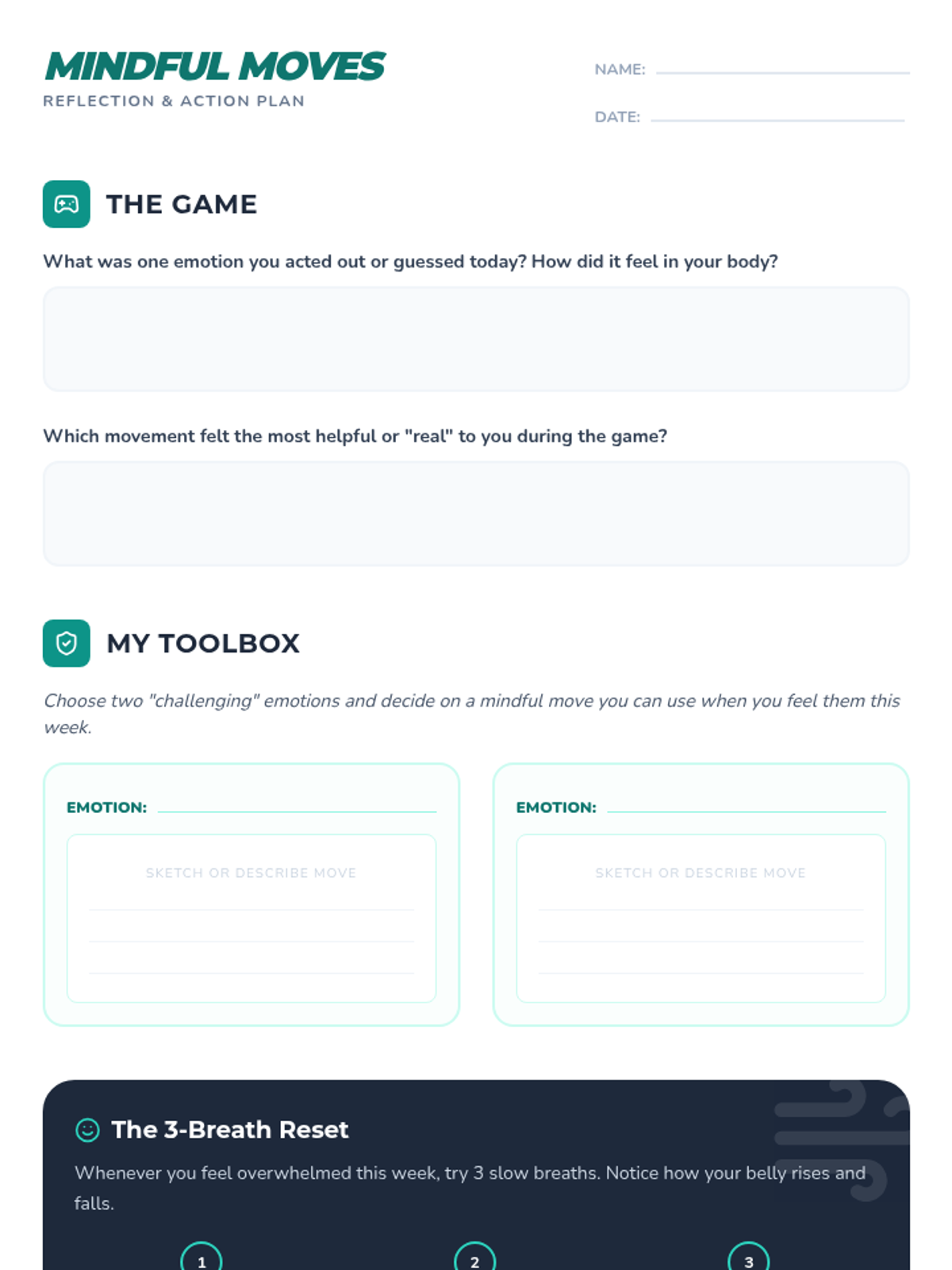
A 30-minute Tier 2 group intervention lesson for middle schoolers using movement to explore and regulate emotions through mindfulness.
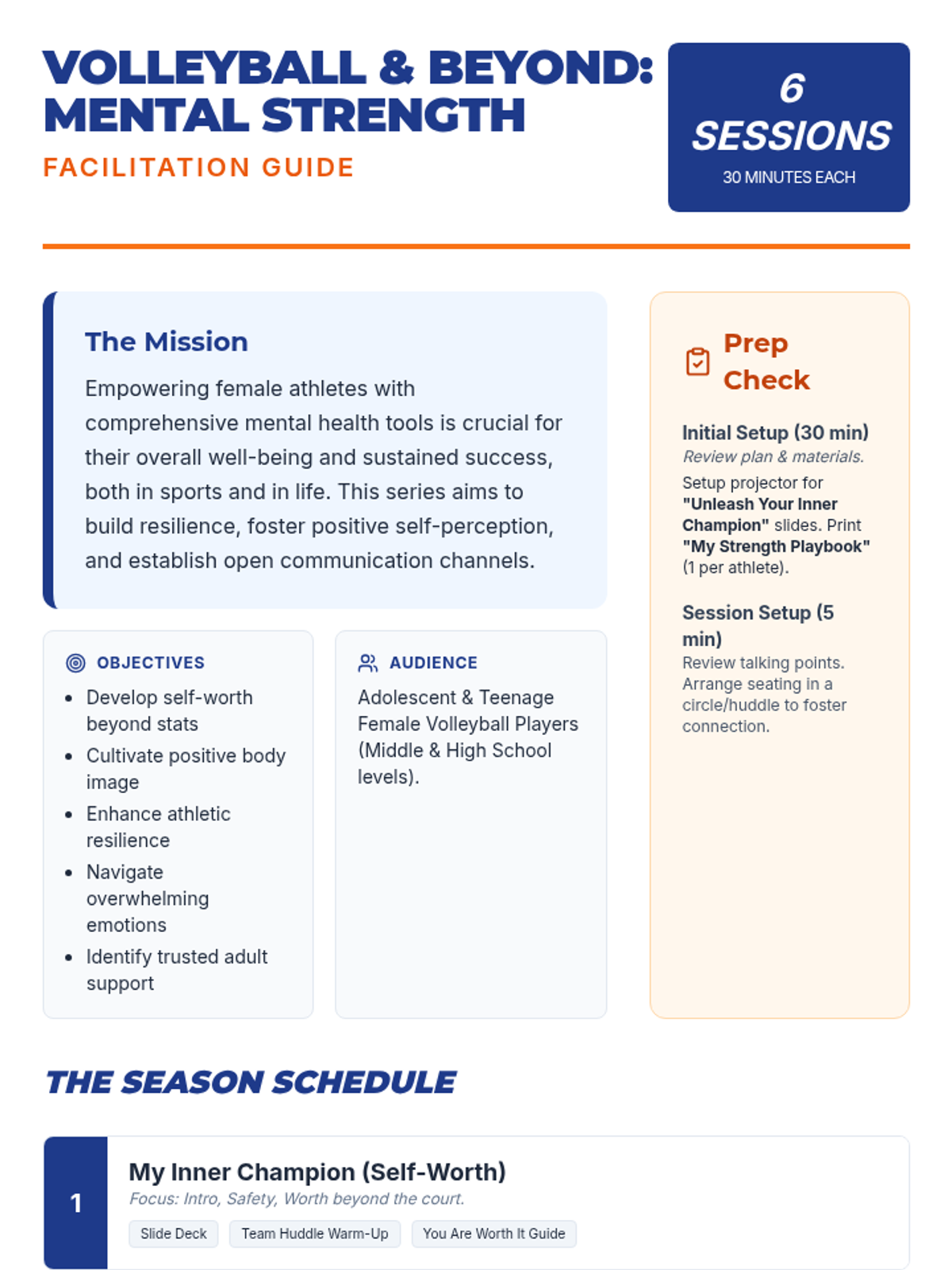
Exploring positive body image and celebrating what bodies can do.
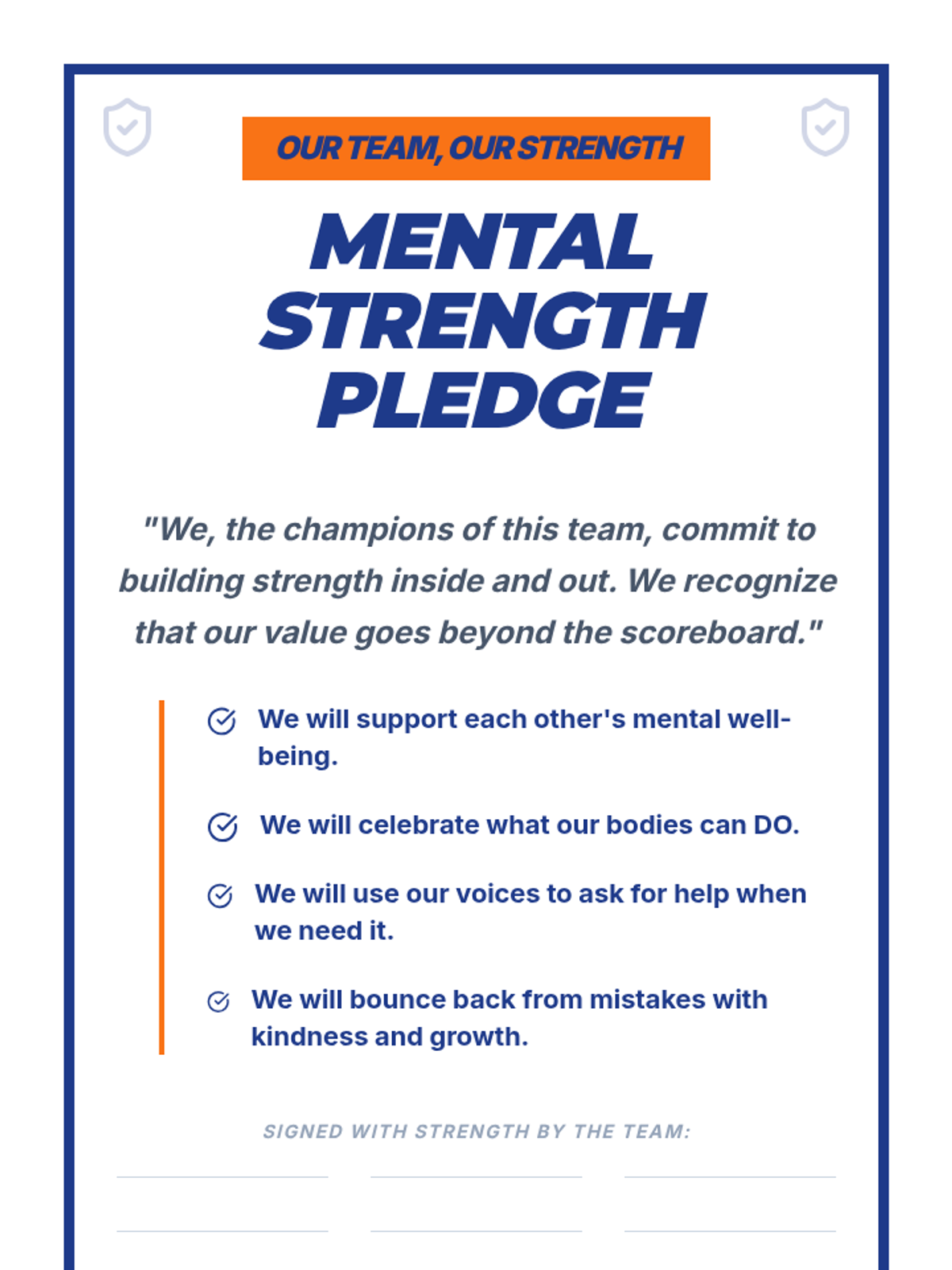
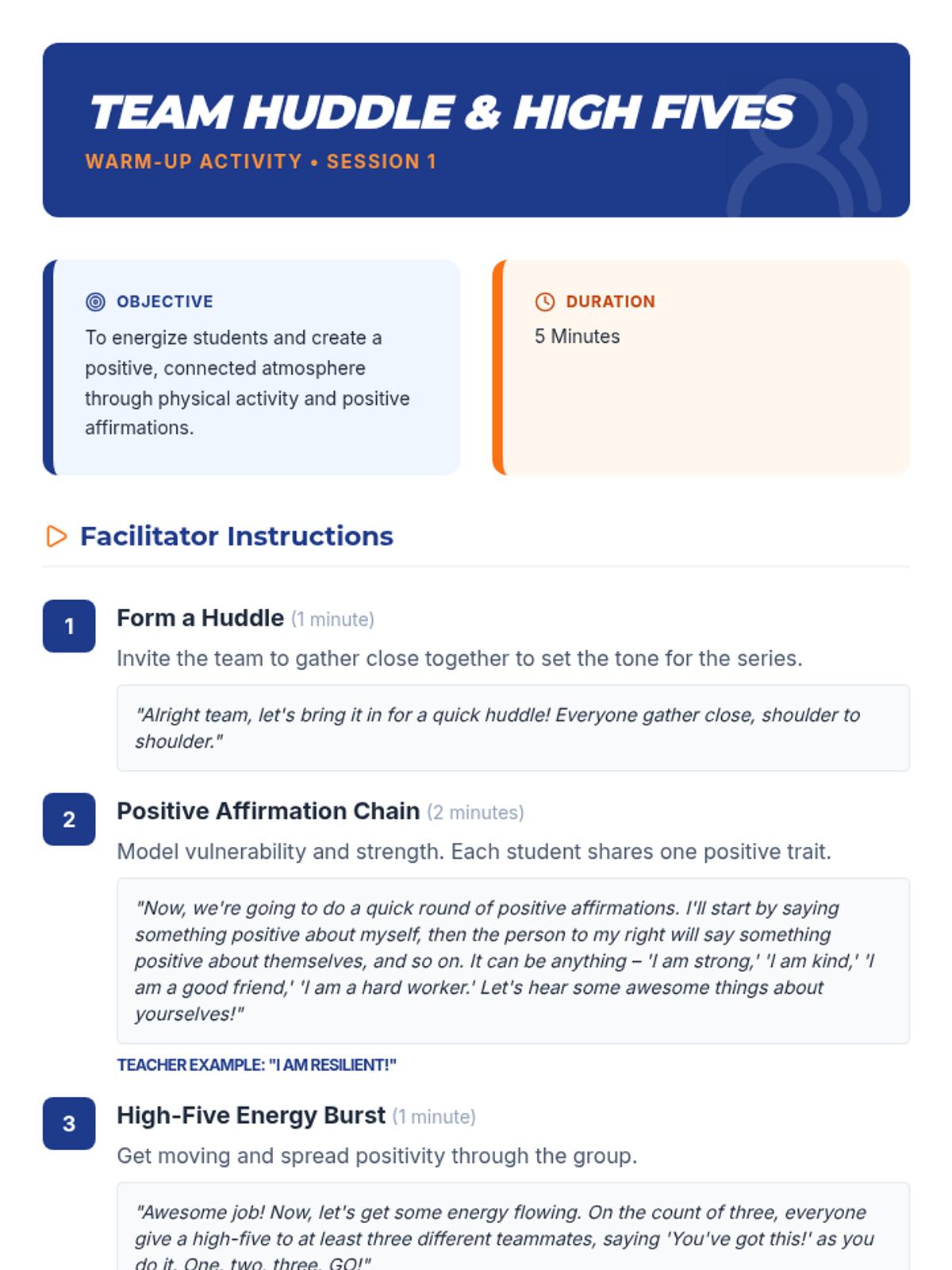
Reviewing key concepts and building a team-wide culture of support.
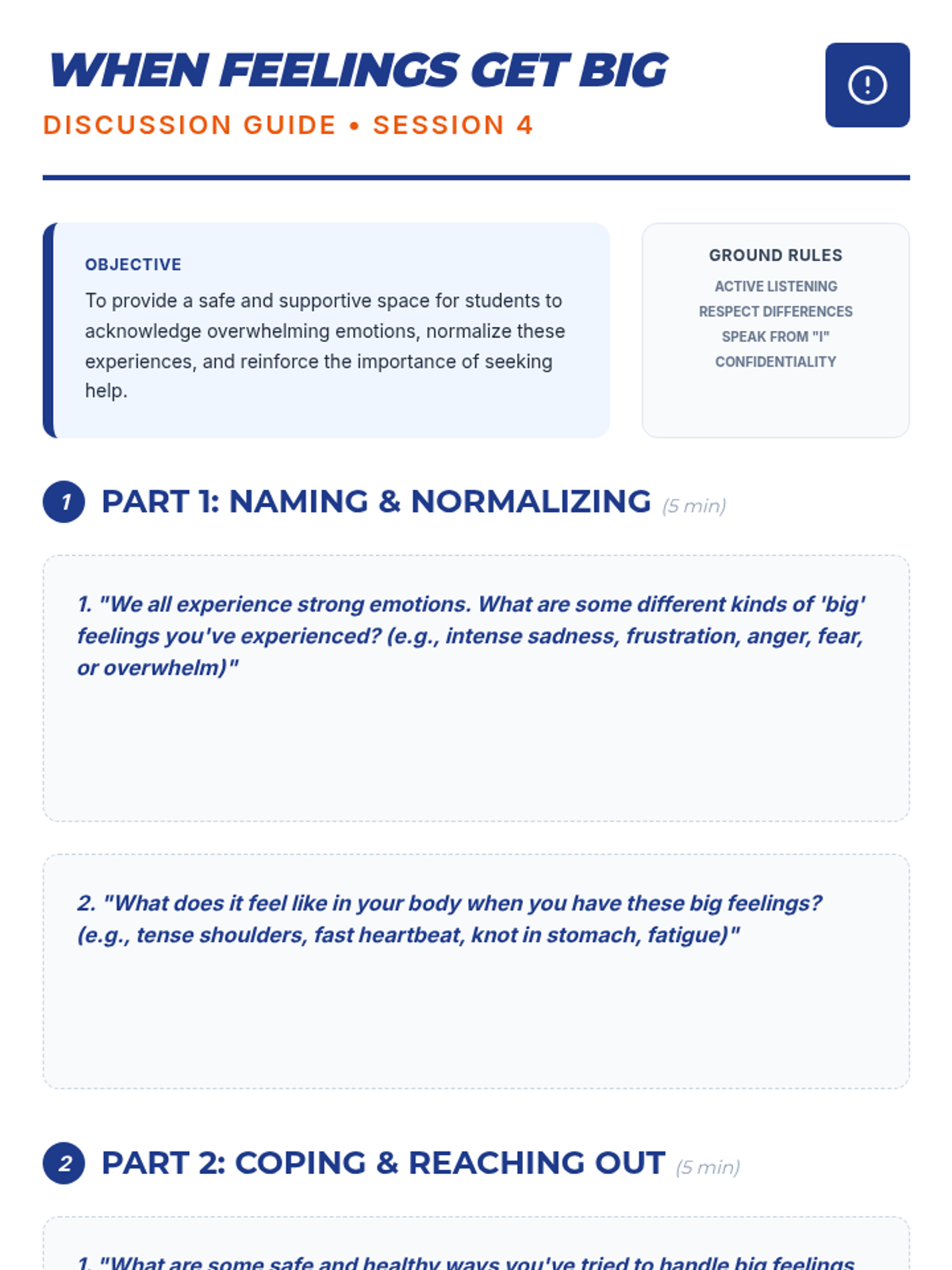
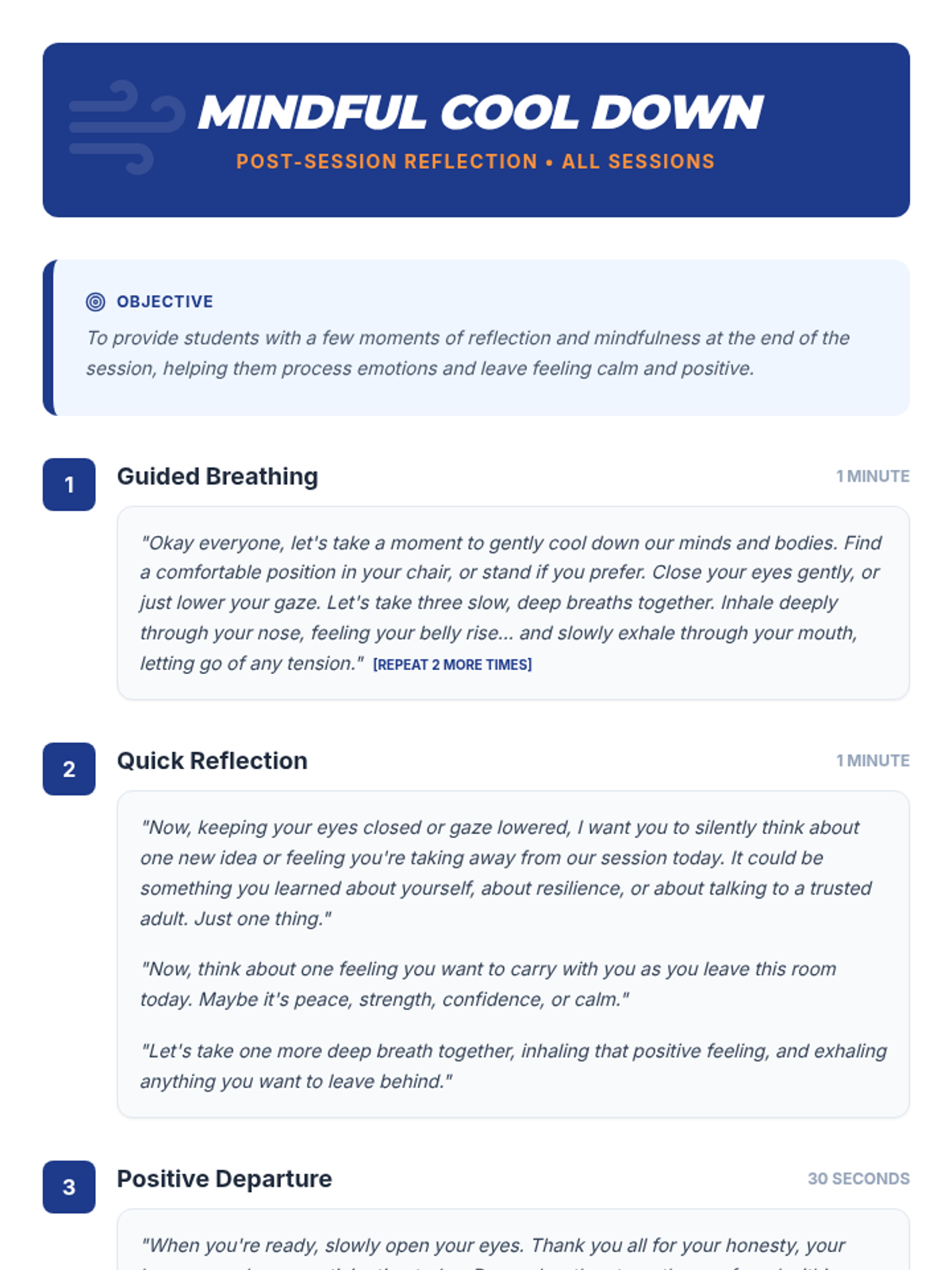
Identifying and understanding overwhelming emotions.
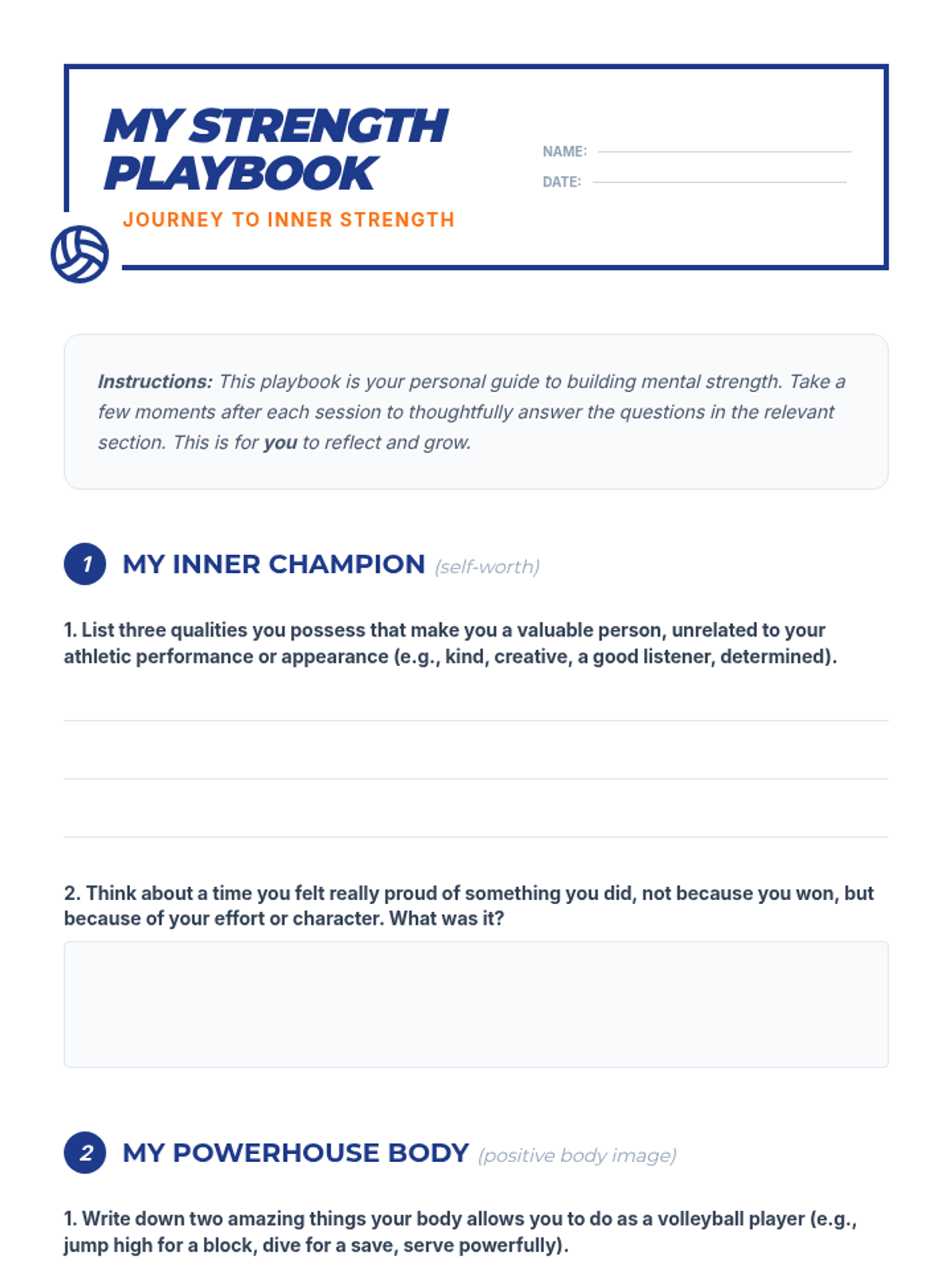
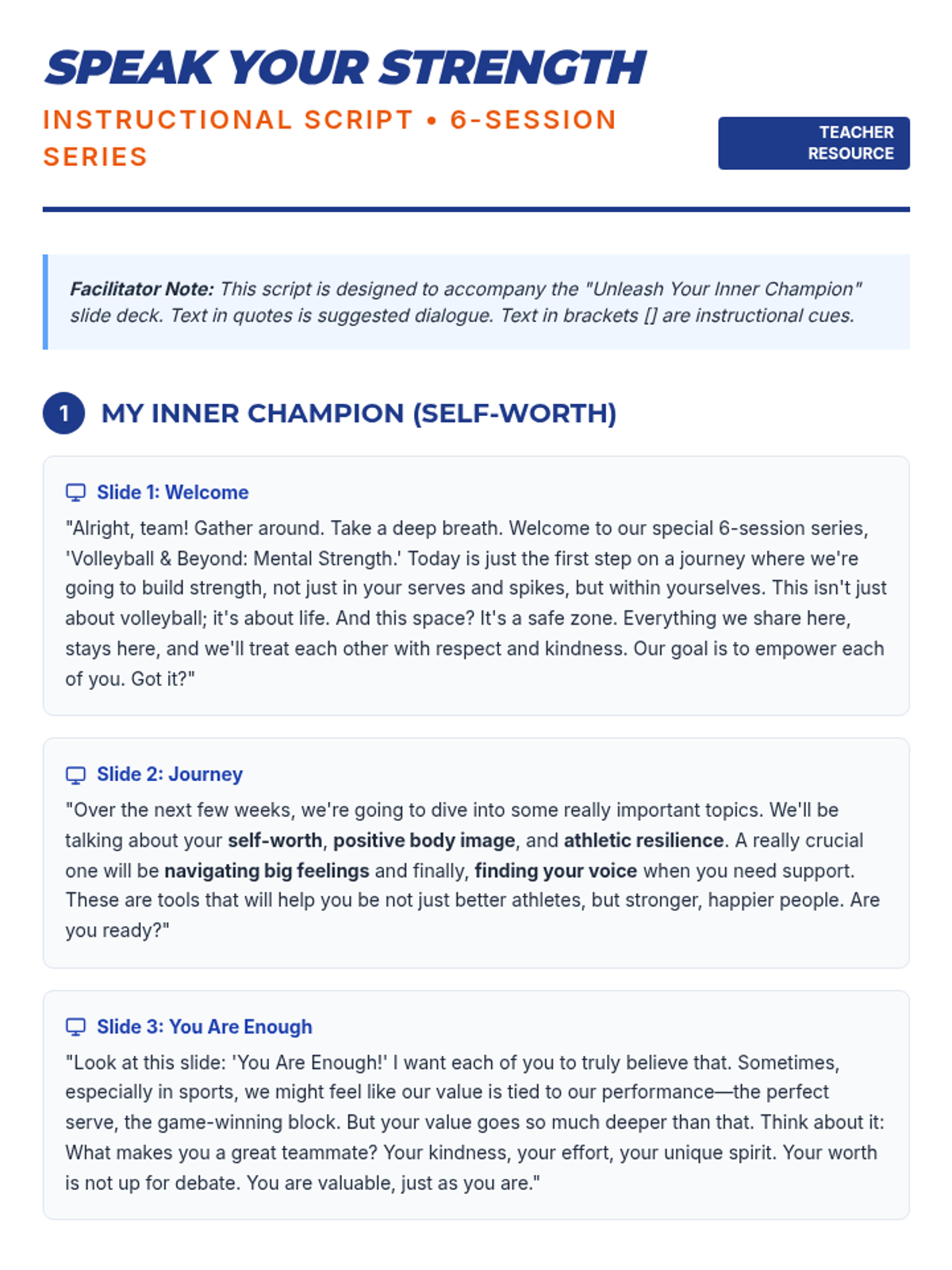
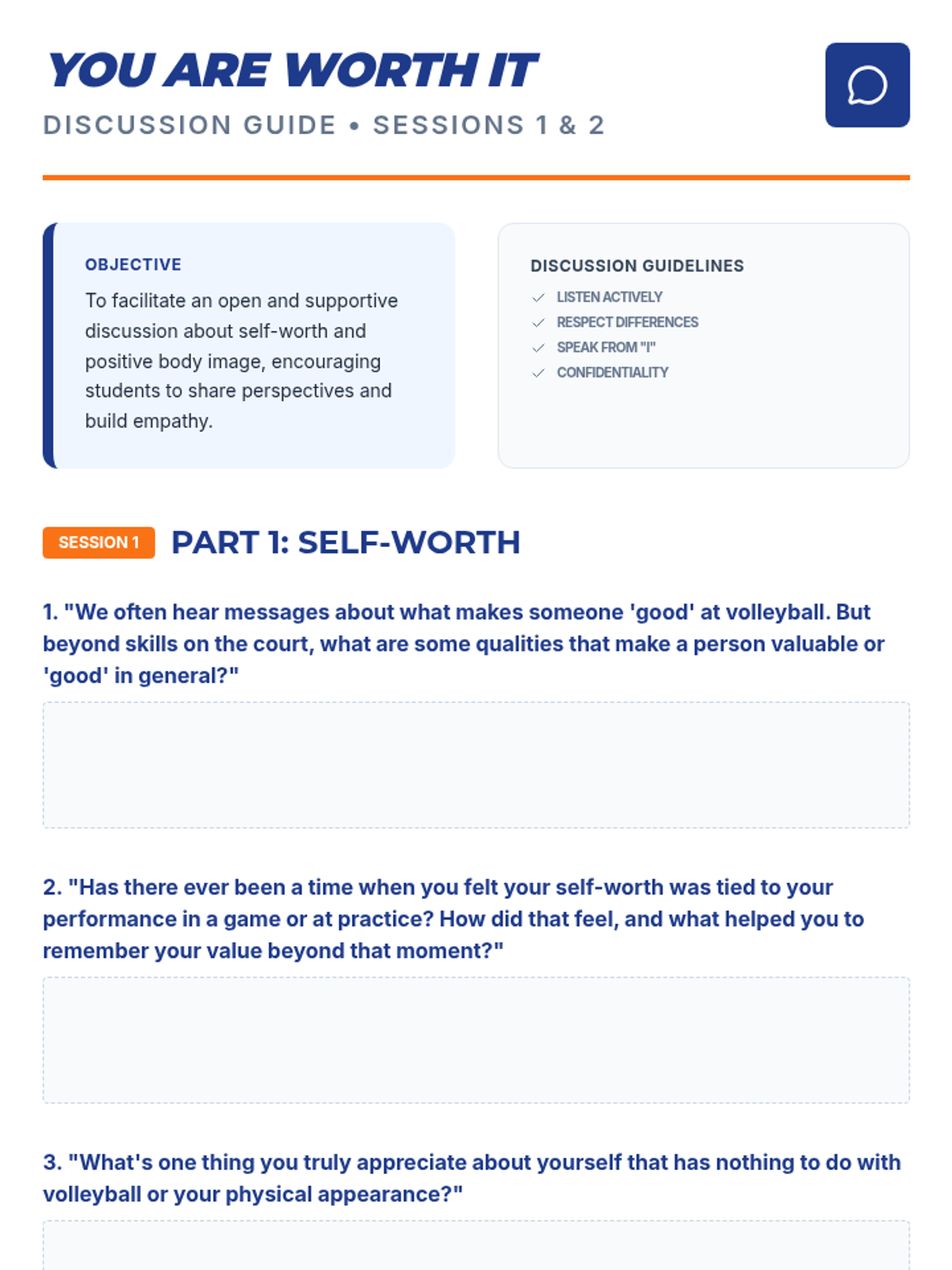
Focusing on self-worth beyond performance and athletic identity.
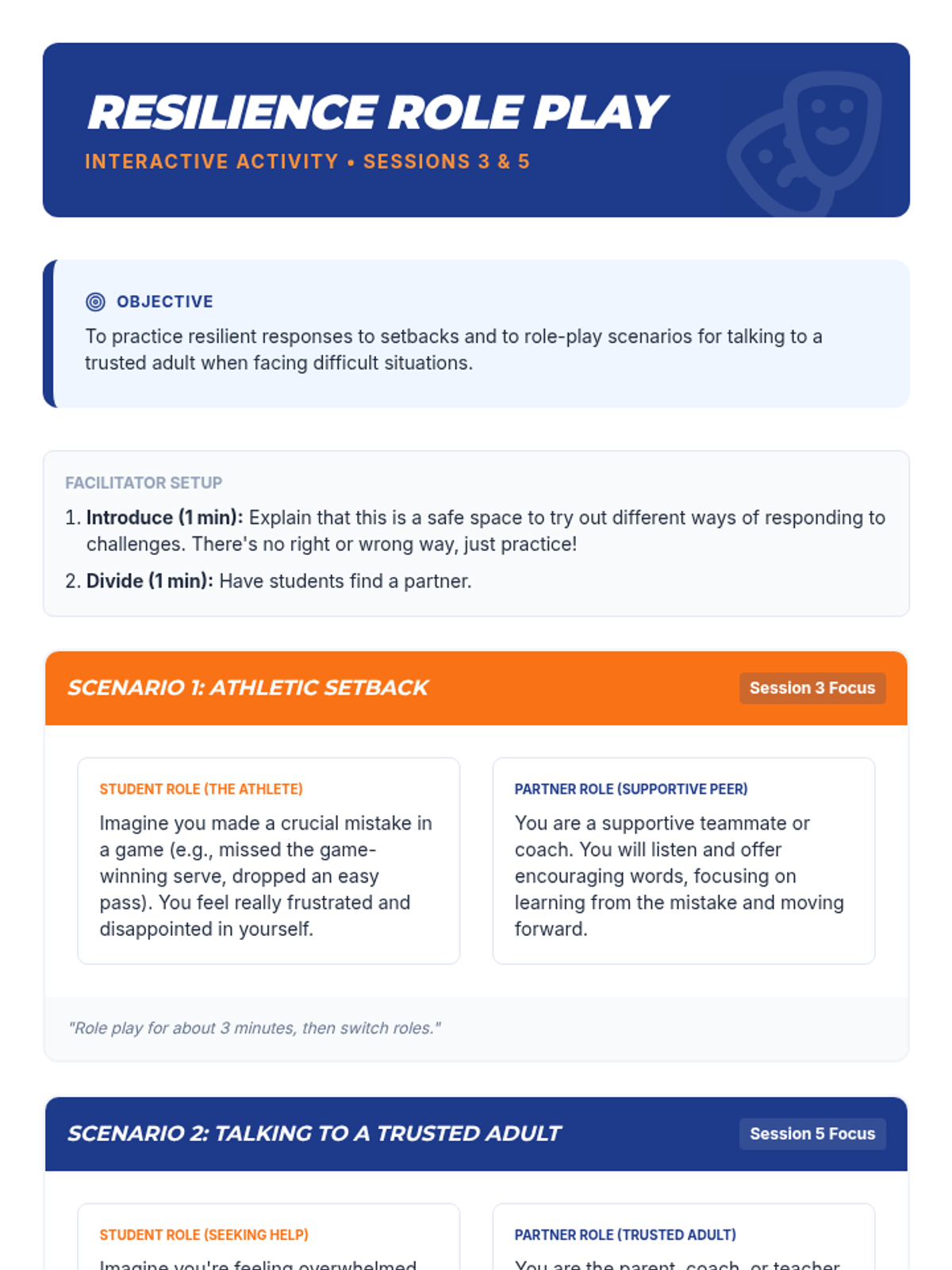
Building resilience through learning from mistakes on and off the court.
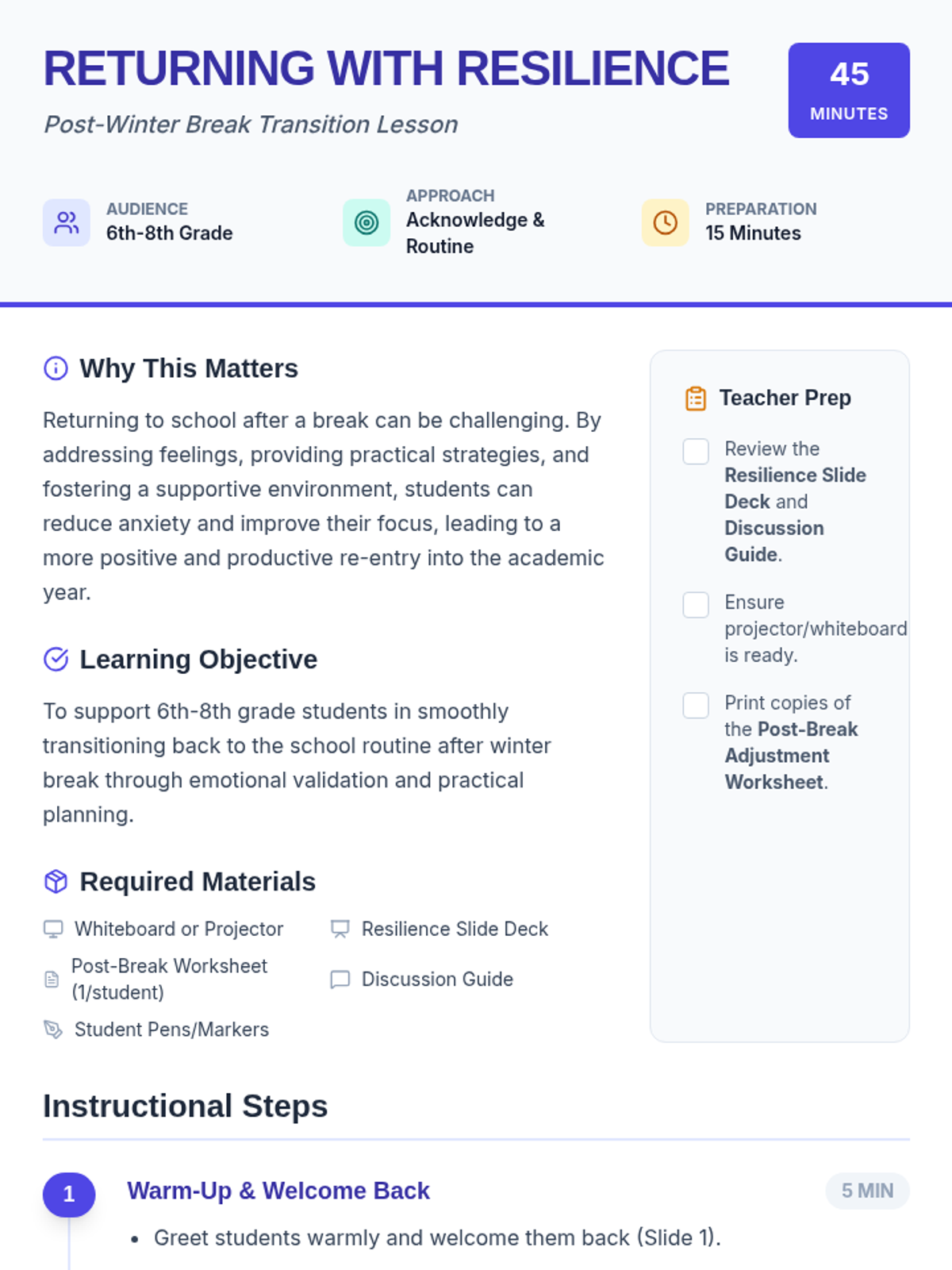
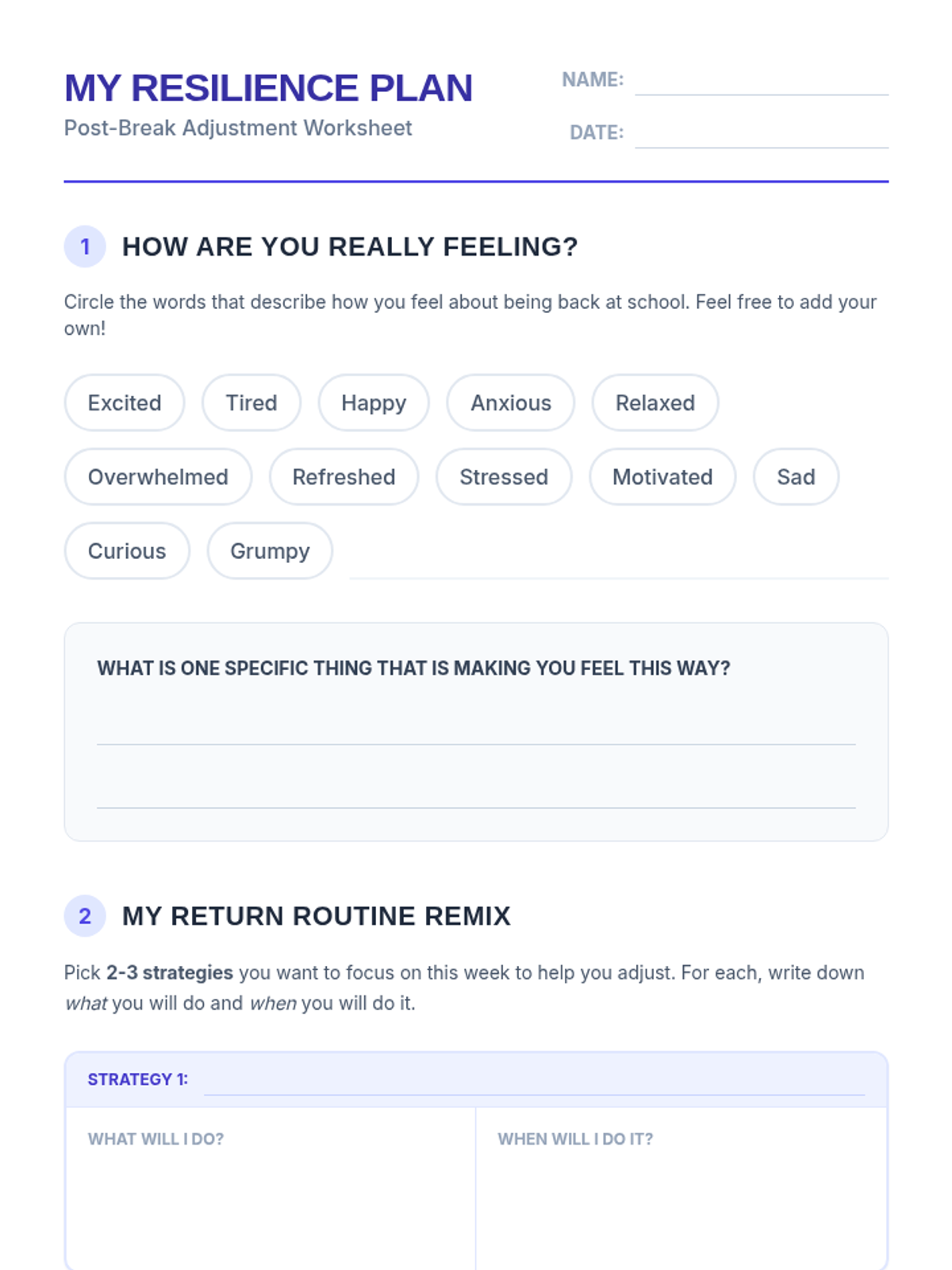
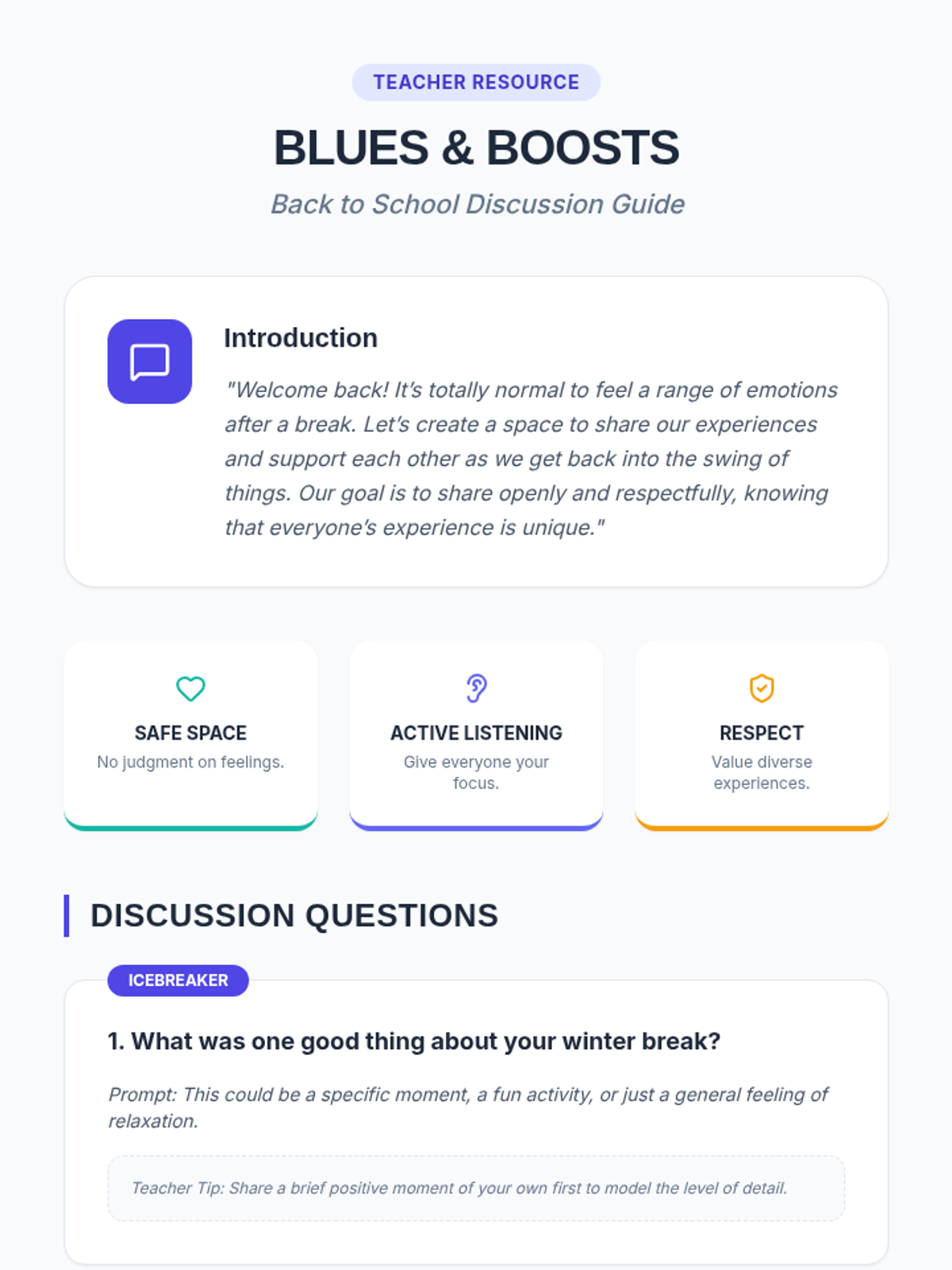
This lesson helps 6th-8th grade students smoothly transition back to the school routine after winter break. It focuses on acknowledging feelings, re-establishing routines, and building collective support to ease back into academics and social life.
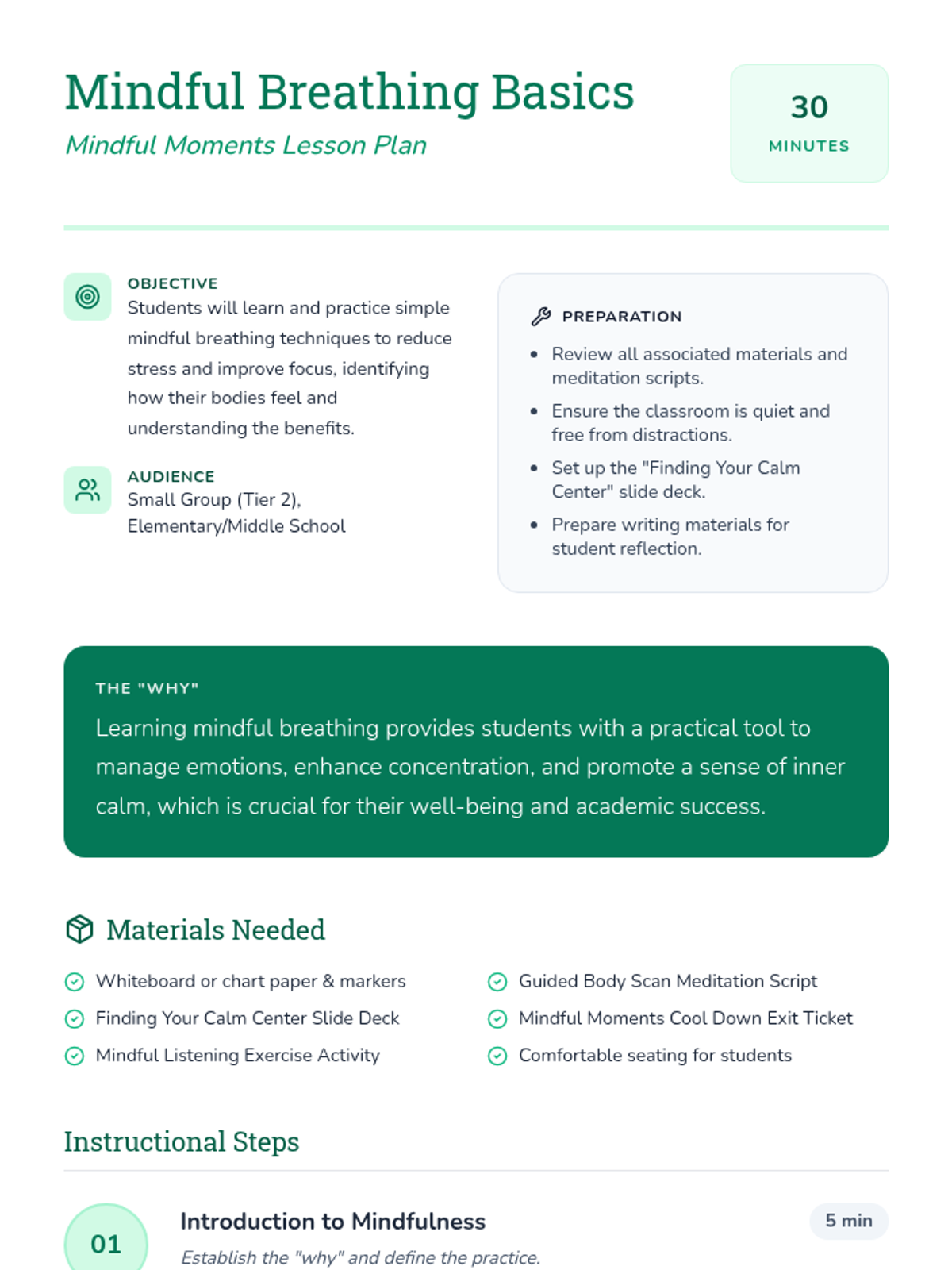
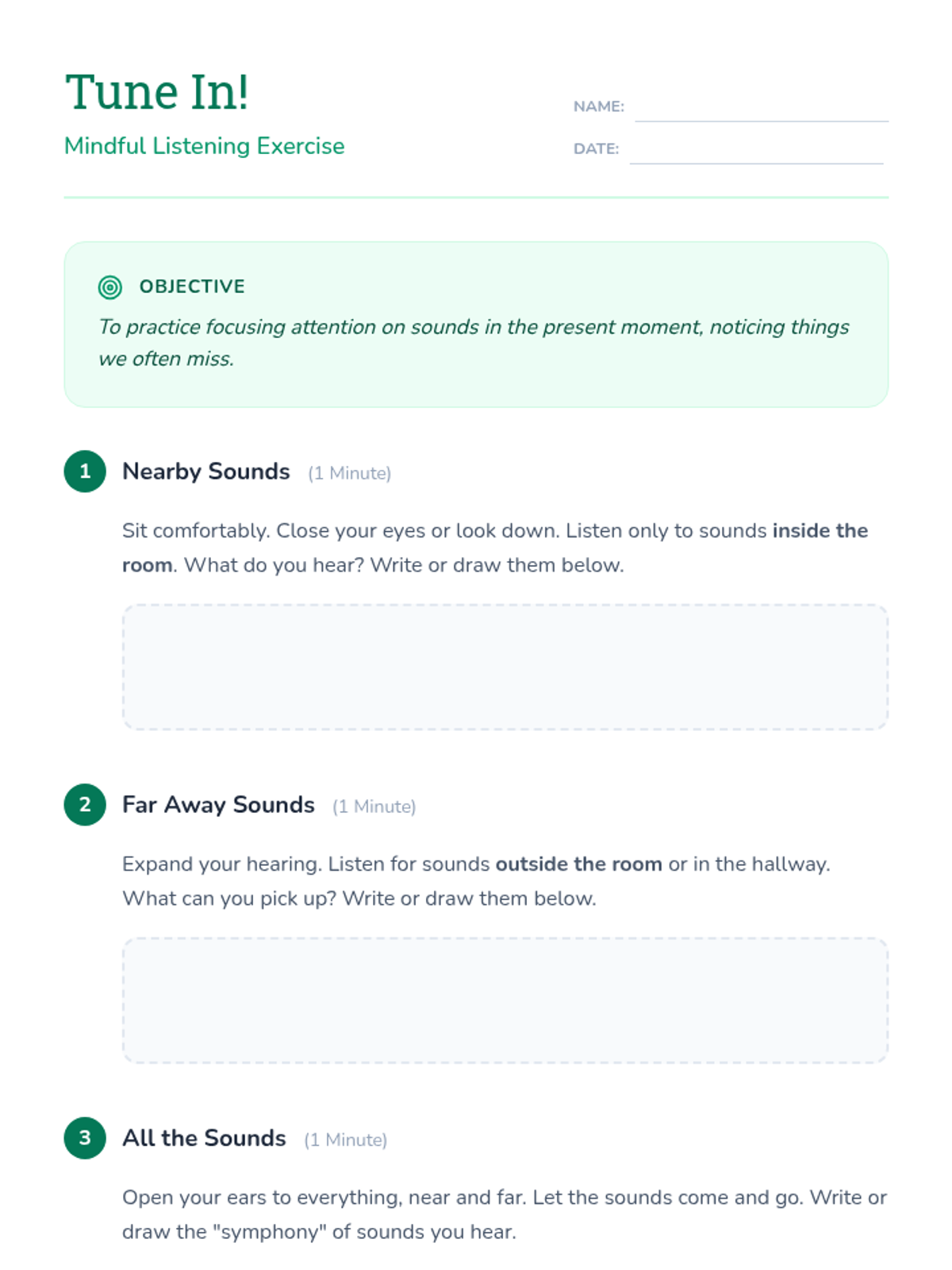
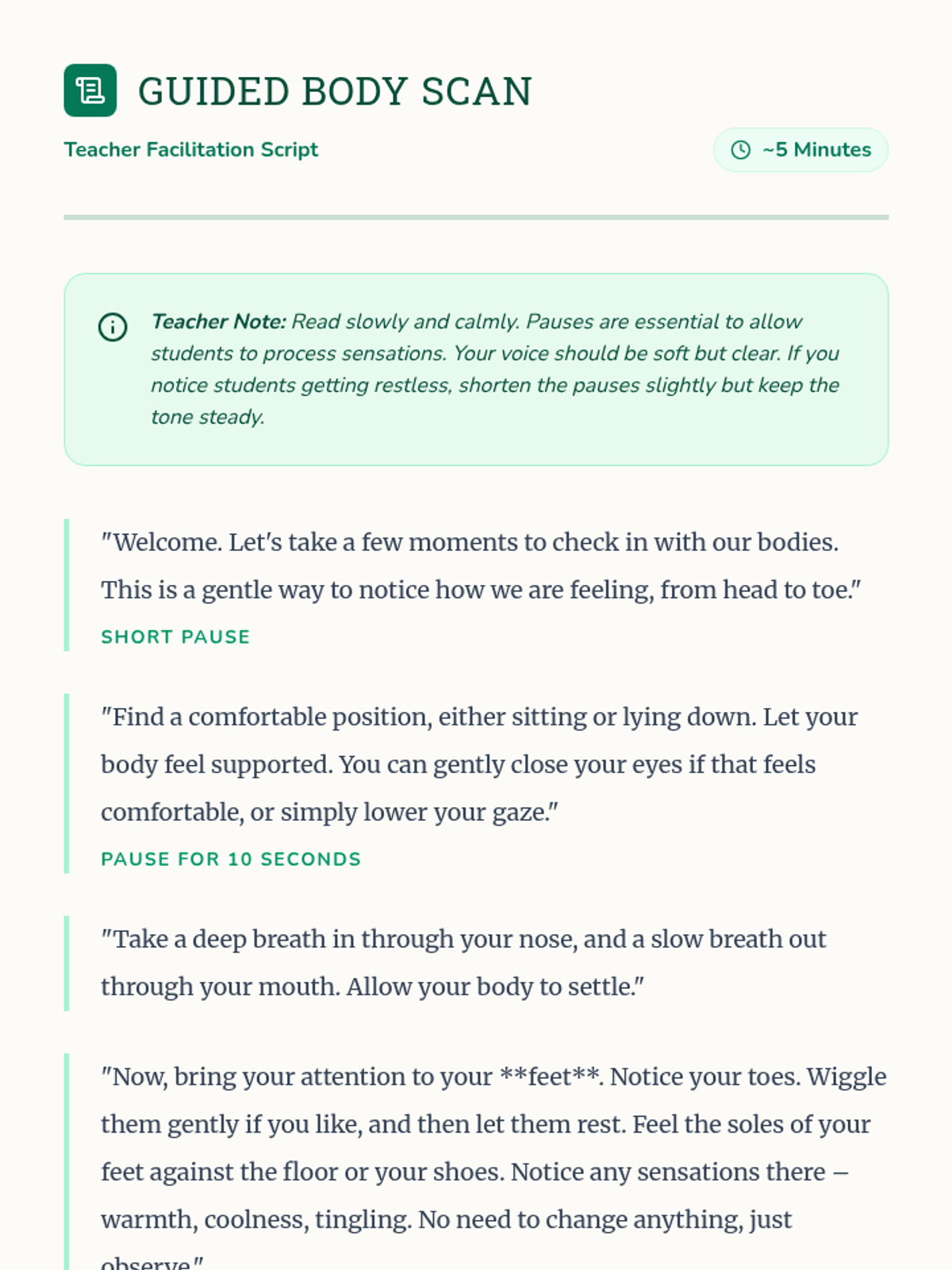
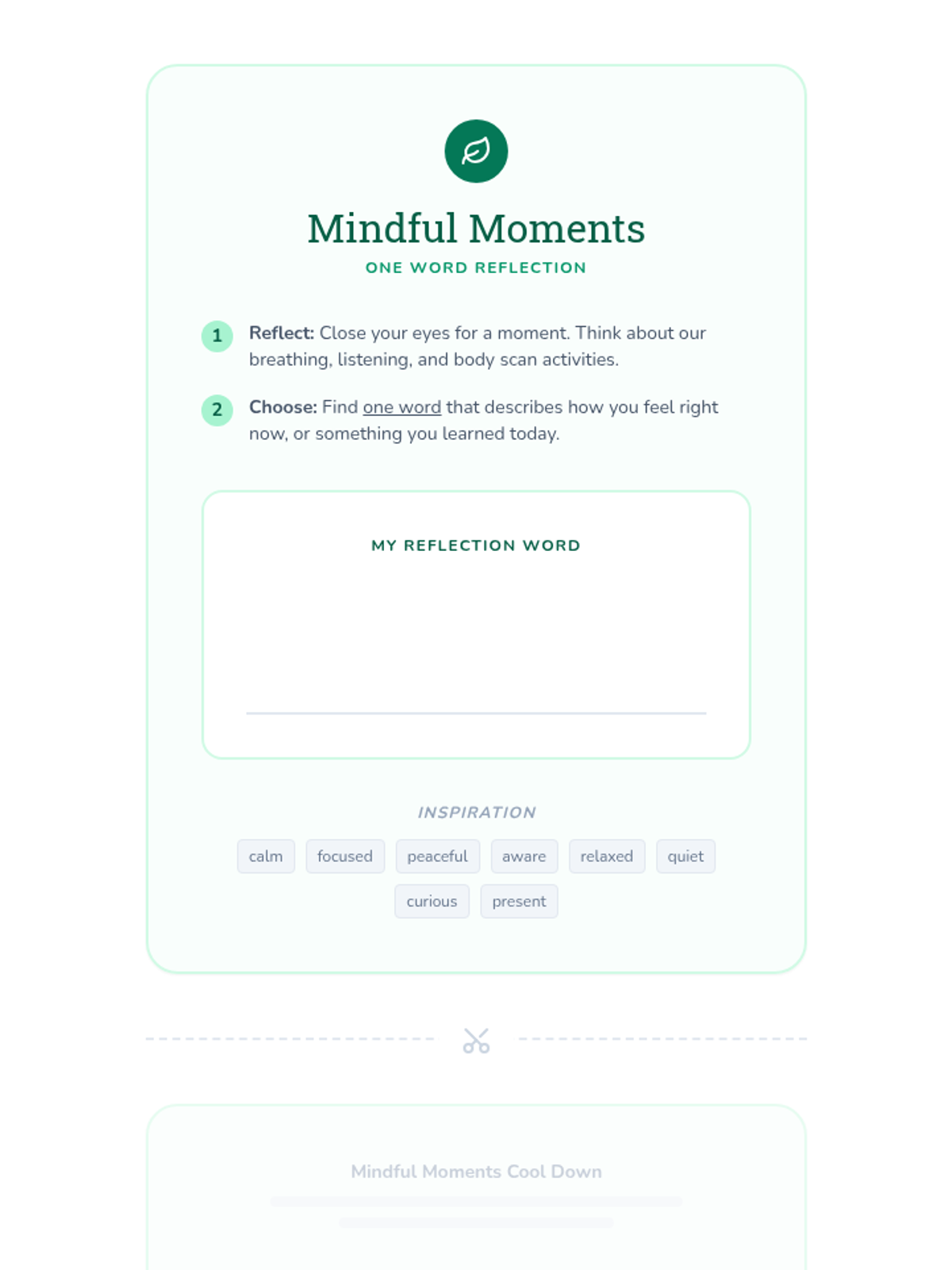
A Tier 2 group lesson introducing simple mindfulness techniques like mindful breathing and listening to help students reduce stress and improve focus.
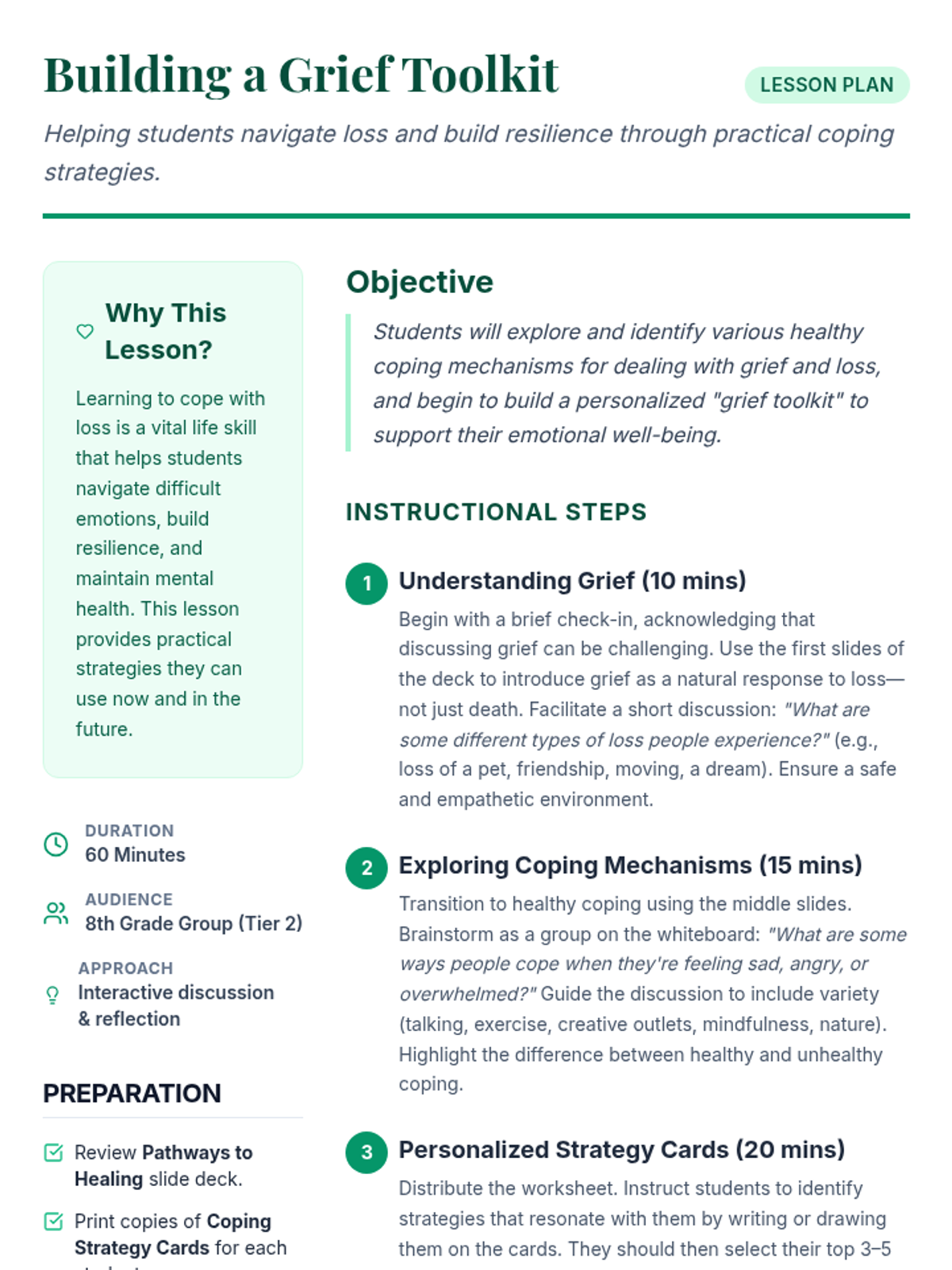
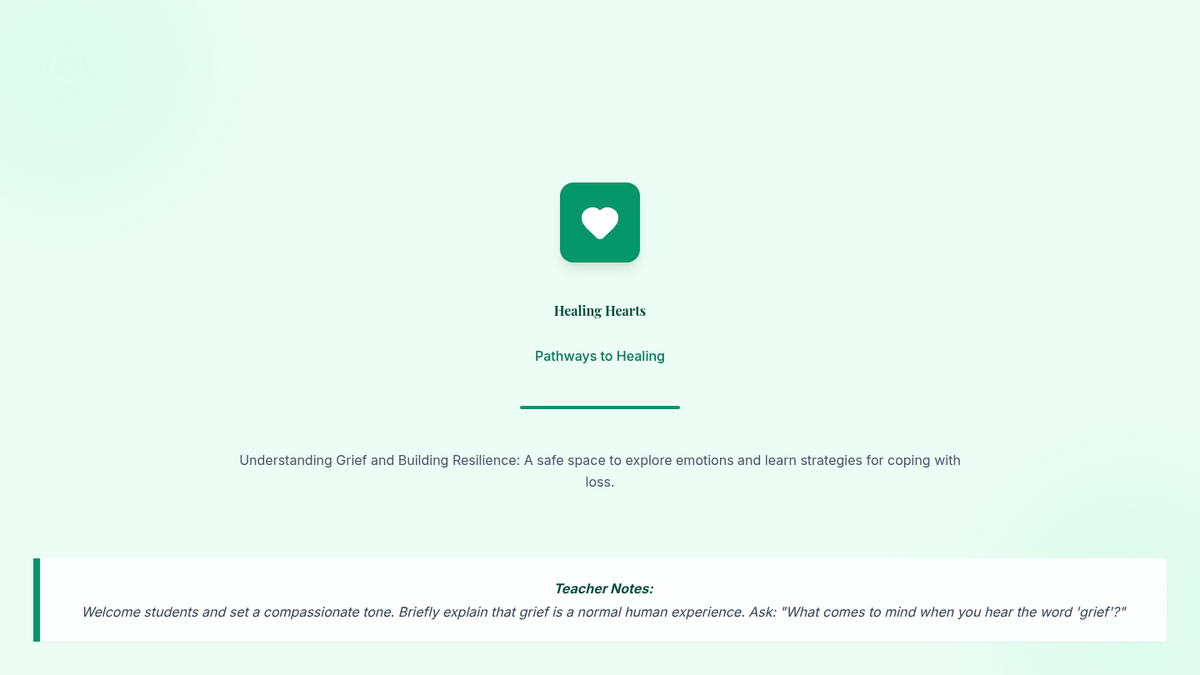
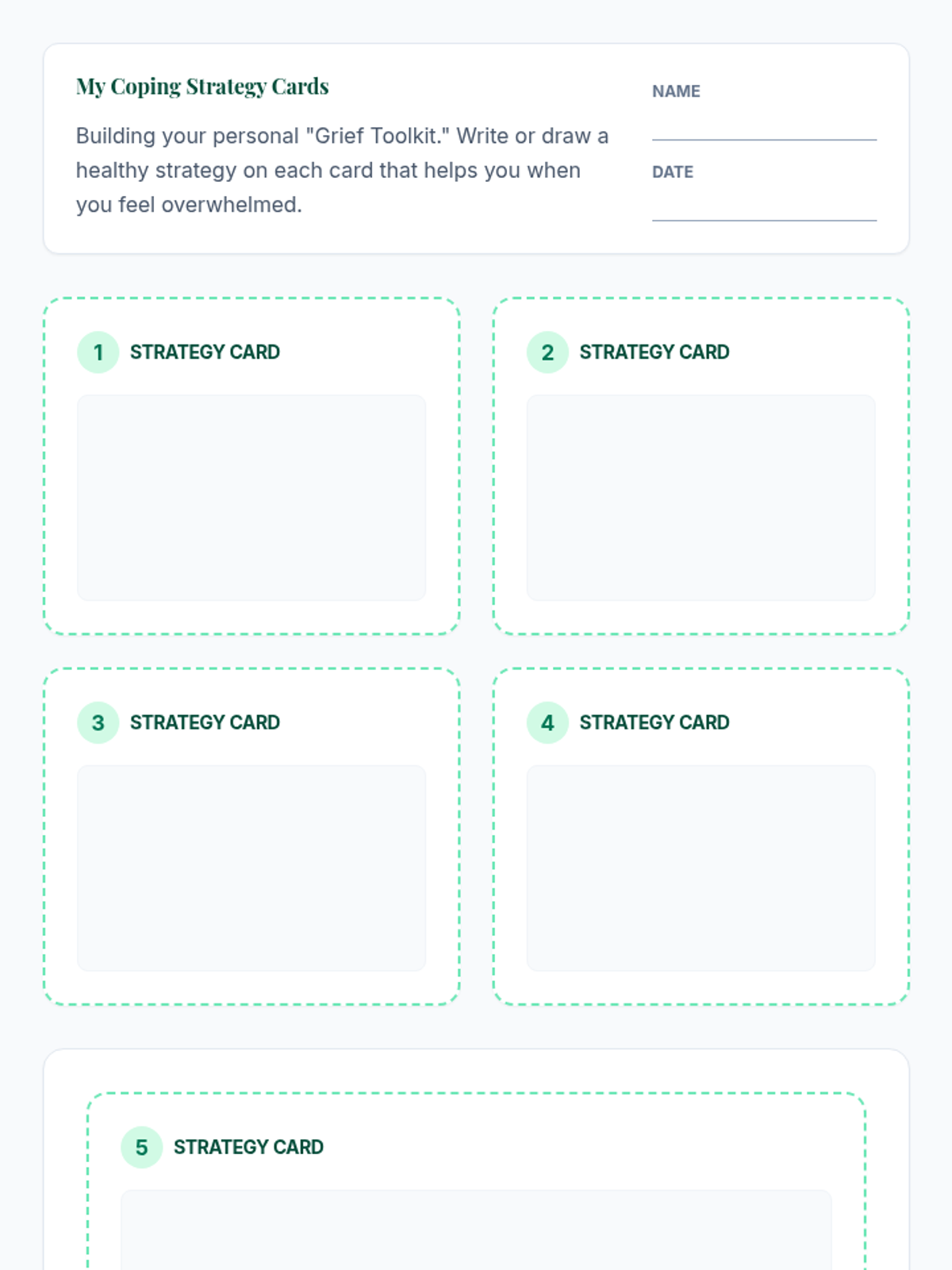
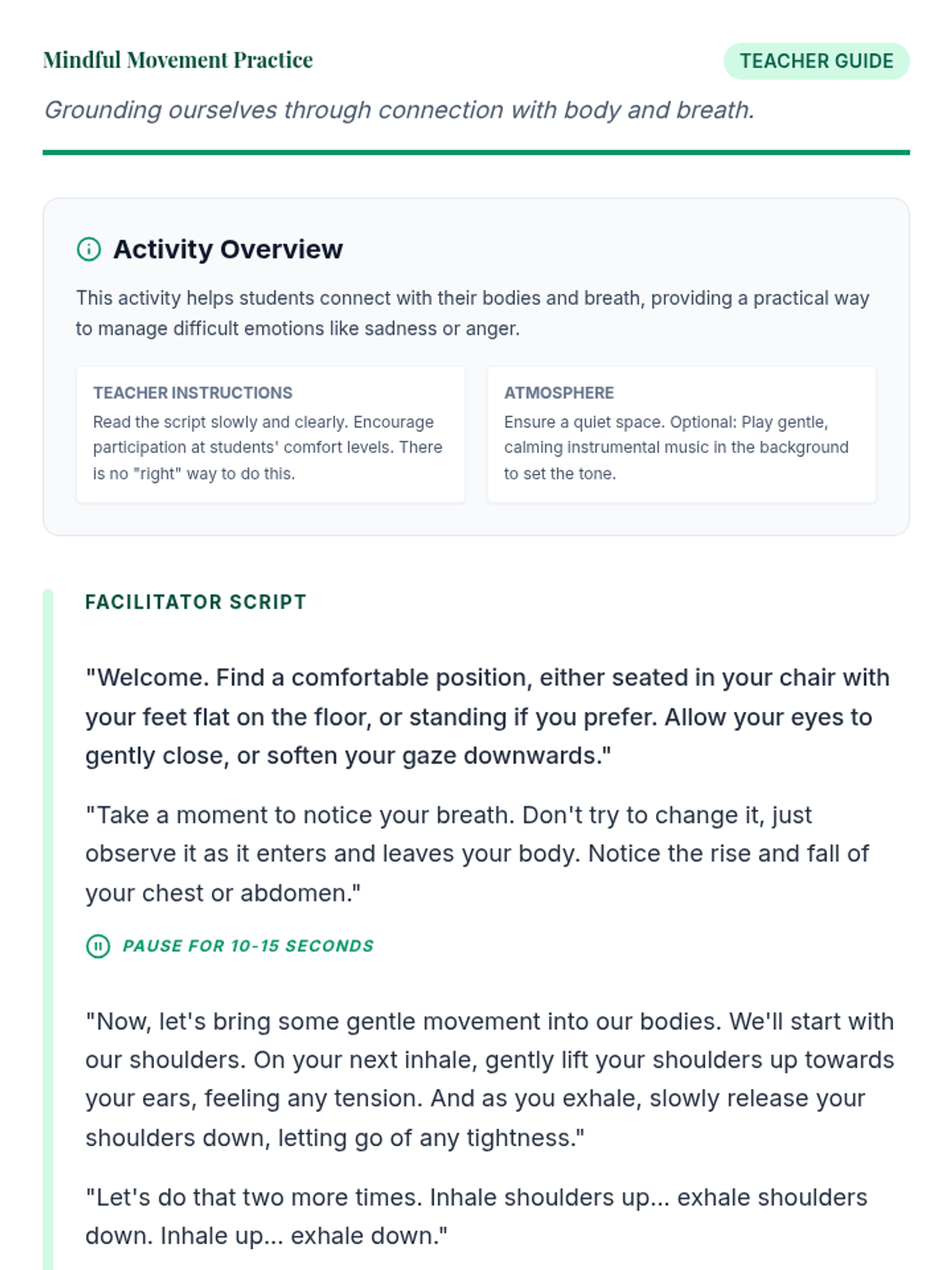
This small group session provides a safe space for 8th-grade students to explore healthy coping mechanisms for dealing with loss and grief, helping them build a personalized 'toolkit' for emotional resilience.
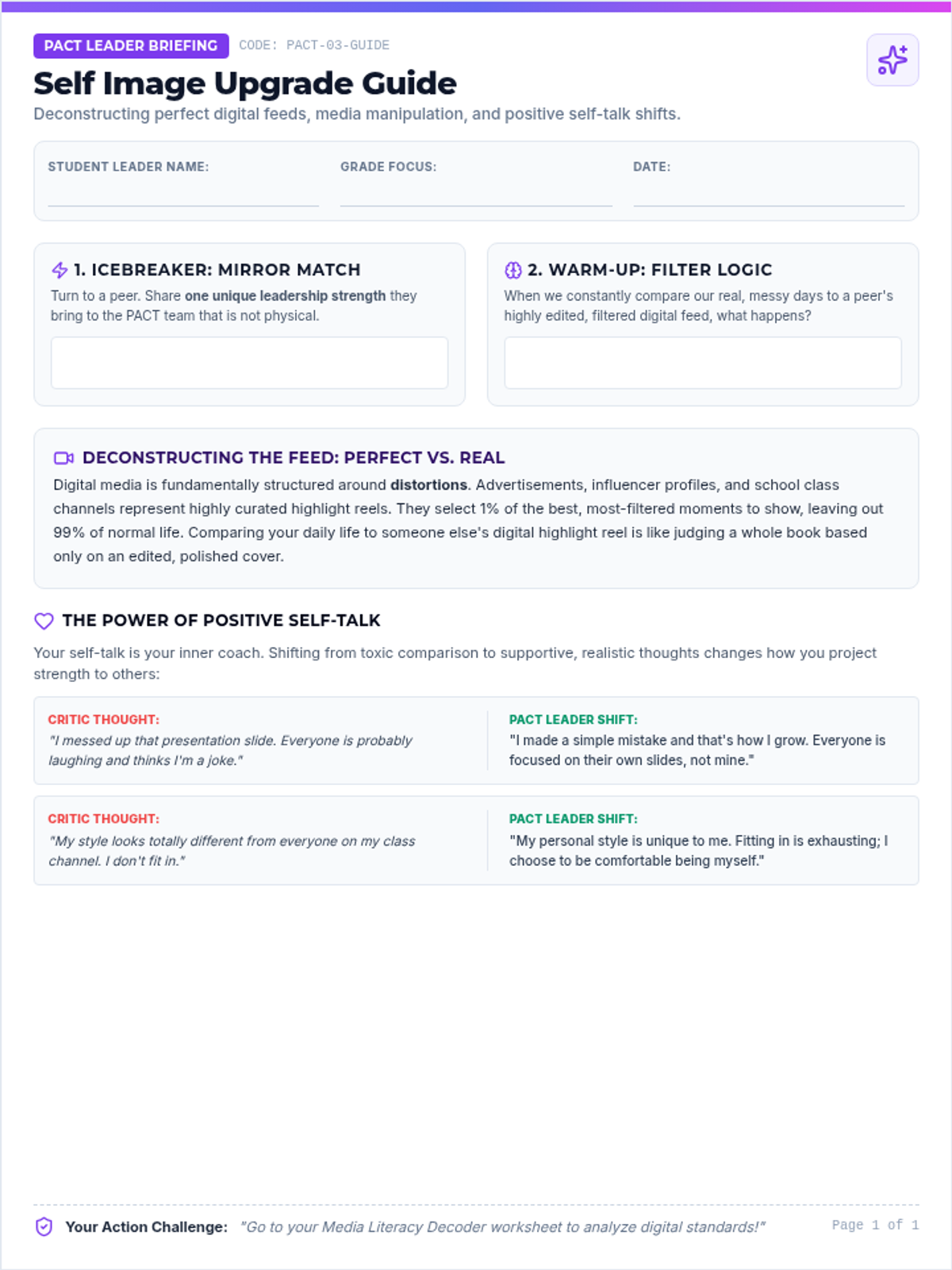
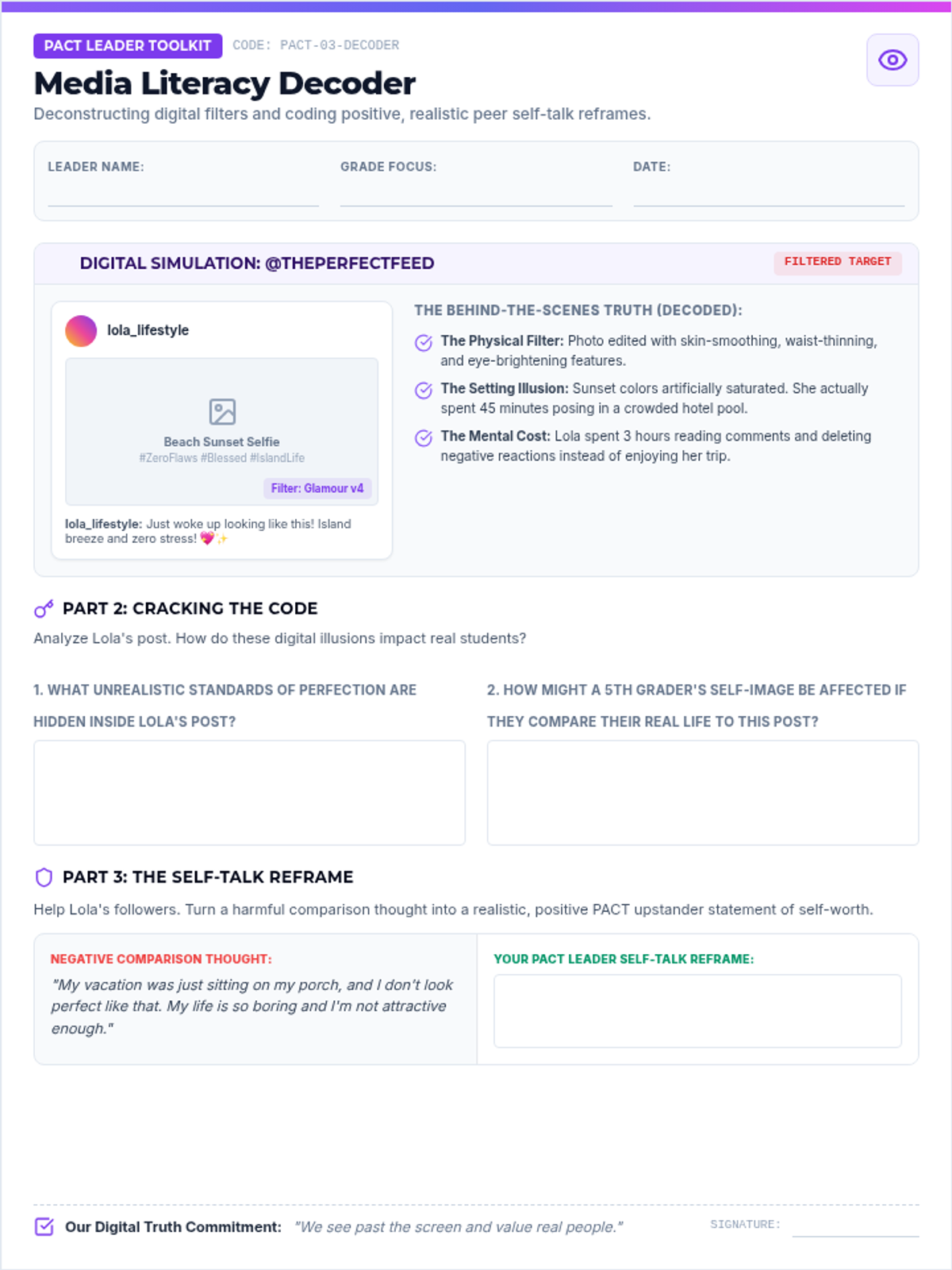
Focuses on building self-worth, identifying negative media messages, and shifting personal and peer narratives through positive self-talk strategies.
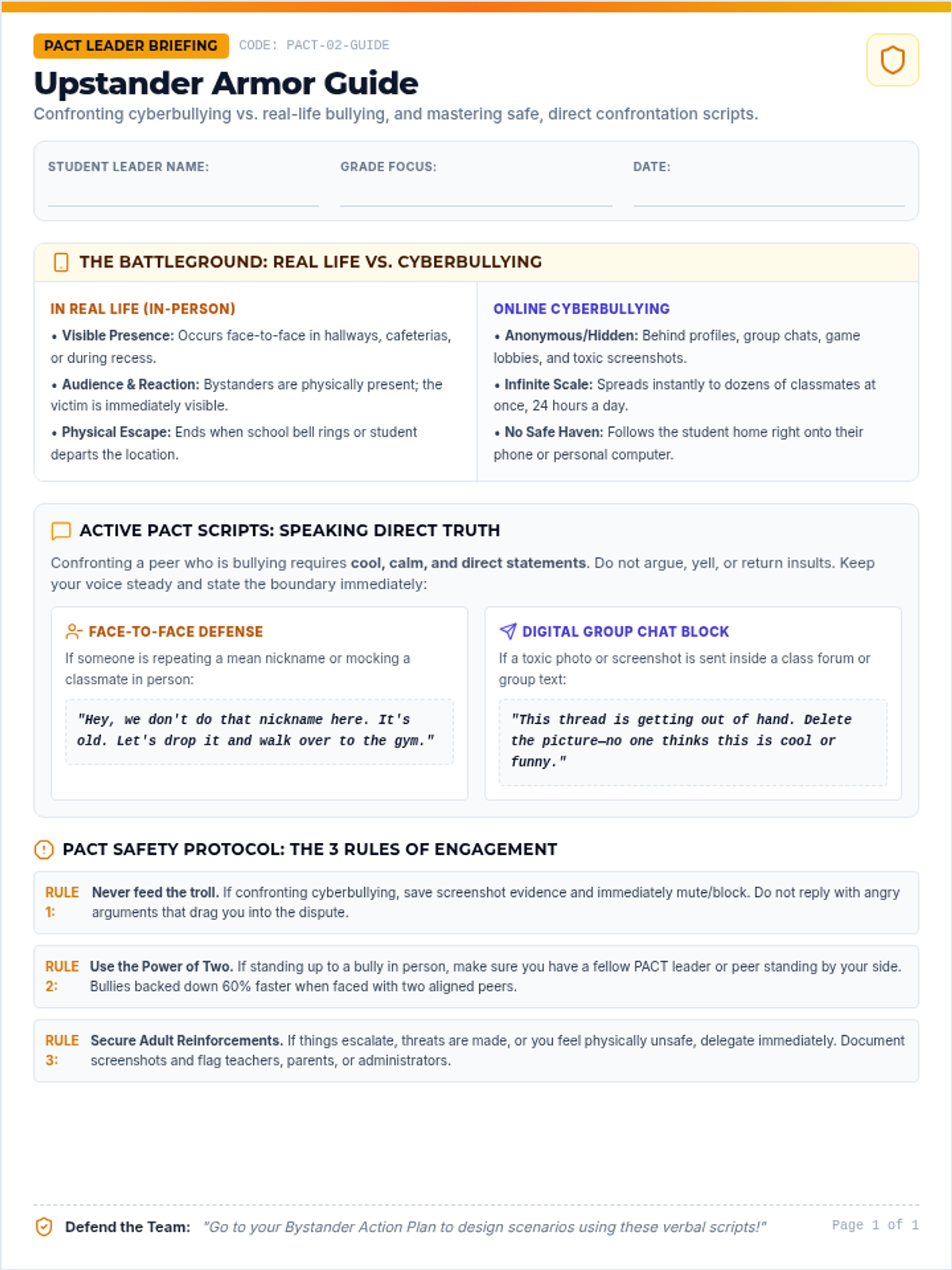
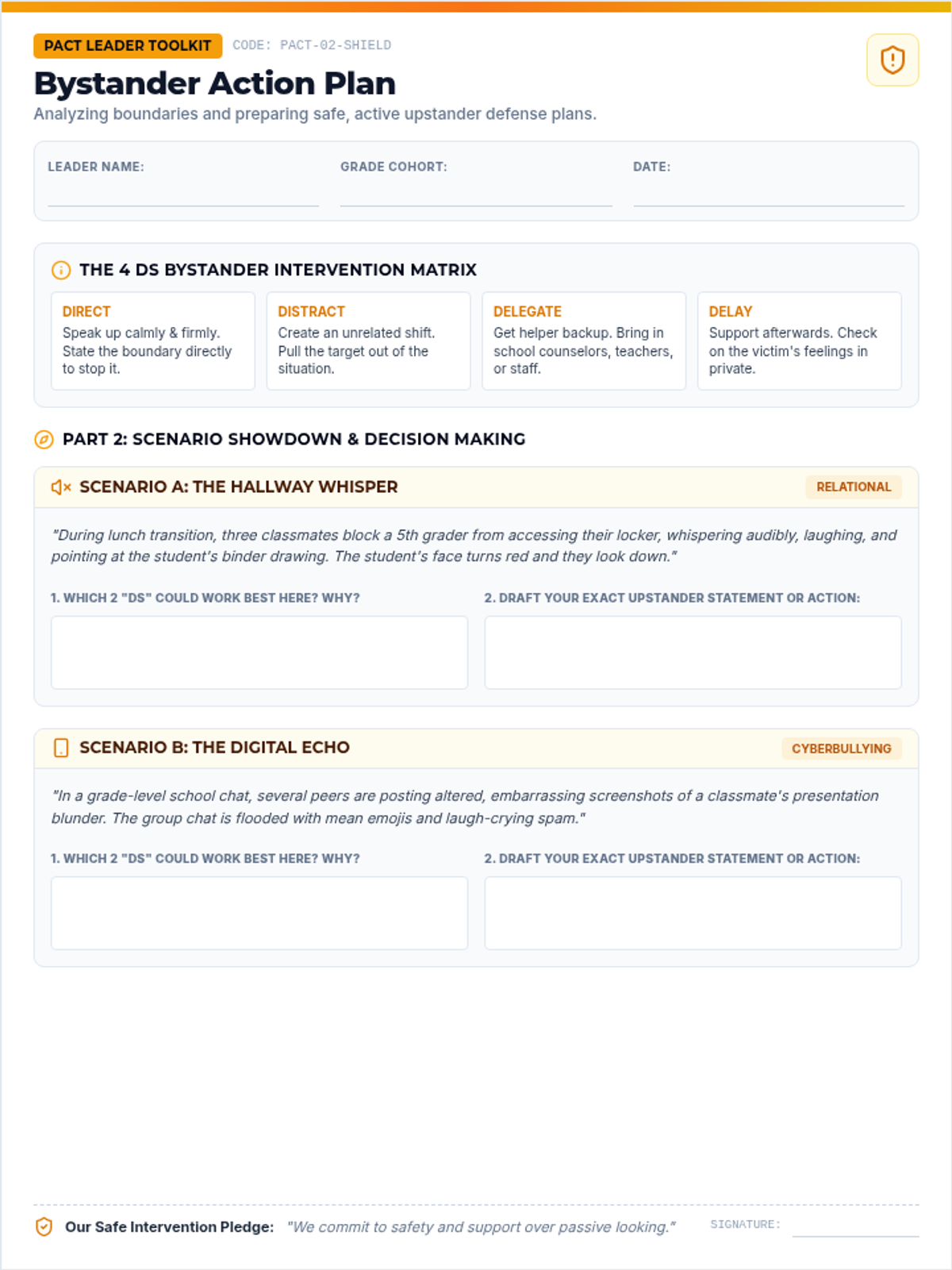
Teaches student leaders to identify the fine line between teasing and bullying, and equips them with safe, practical upstander intervention and peer support frameworks.
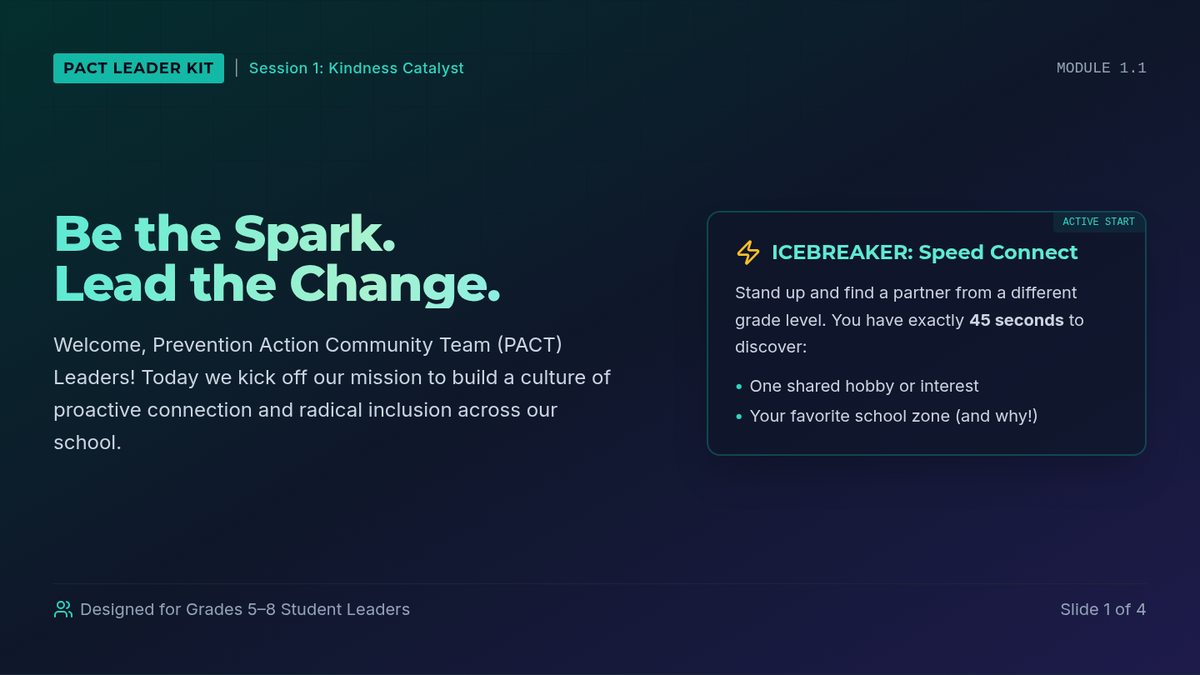
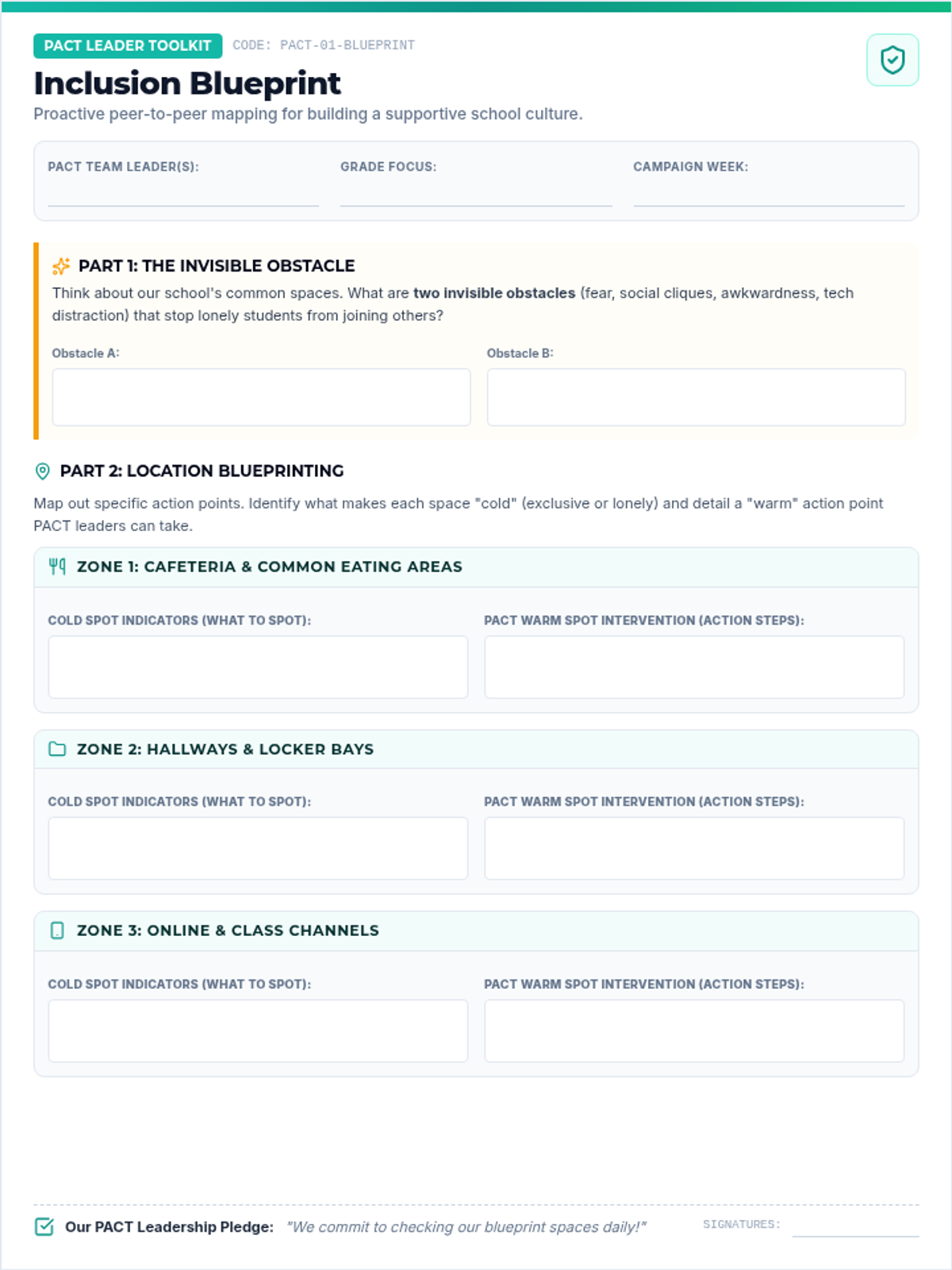
Equips PACT student leaders with core concepts of proactive inclusion, empathy, and positive peer-to-peer connection. Features a hands-on inclusion blueprint worksheet and peer training presentation.
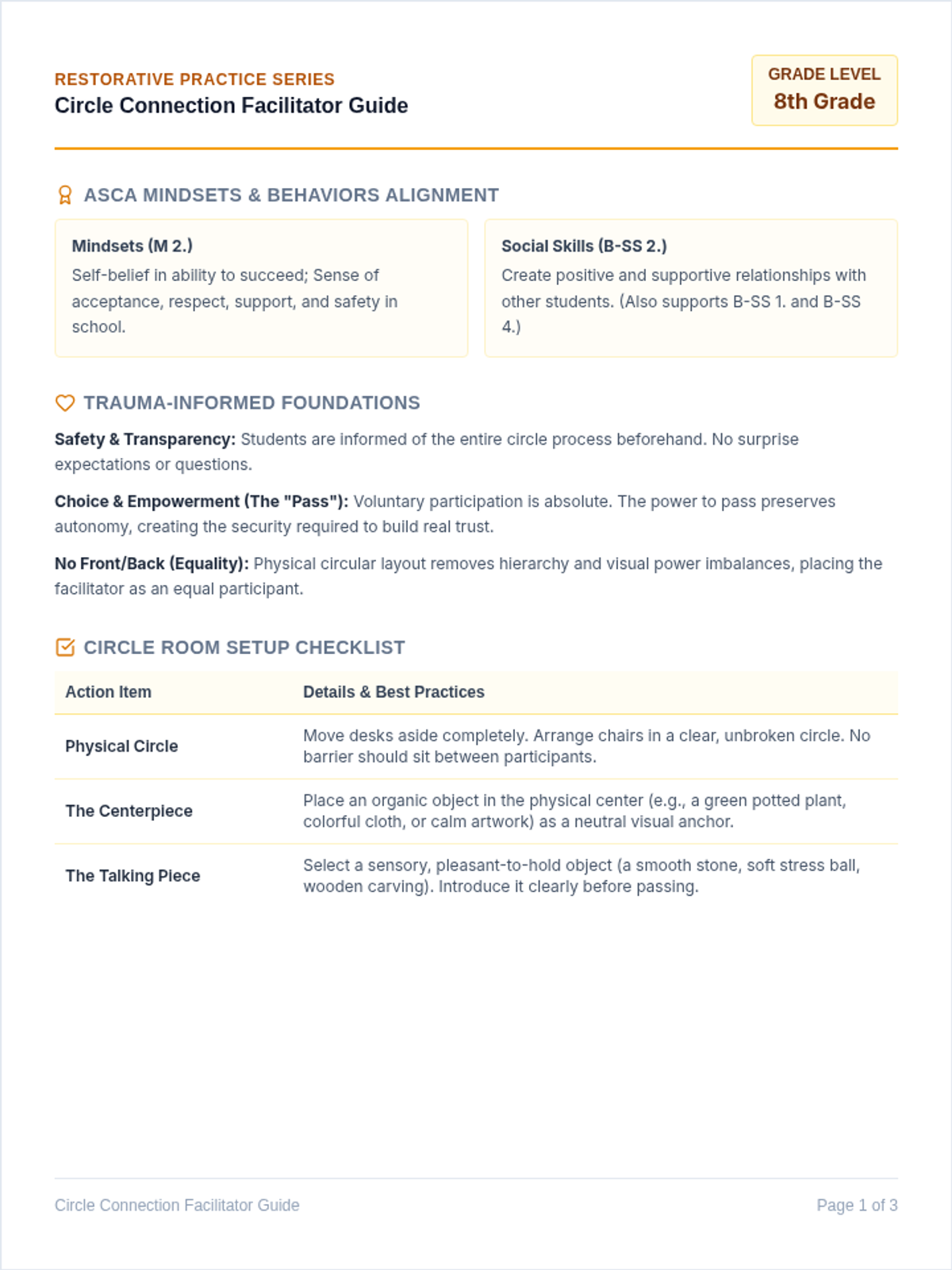
An introductory lesson designed to demystify restorative justice circles for 8th-grade students in California, building trust and encouraging voluntary participation using an ASCA-aligned, trauma-informed lens.
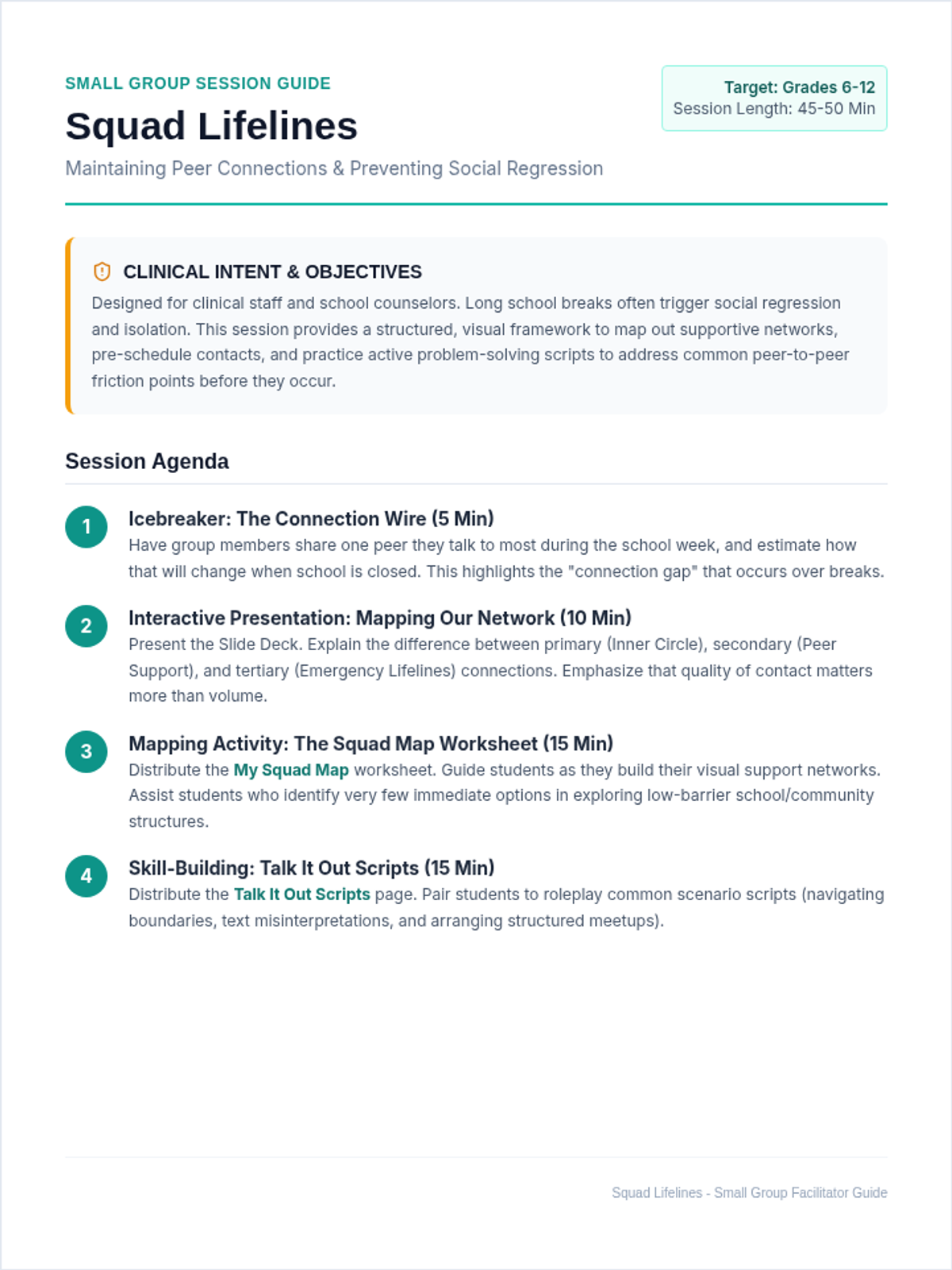
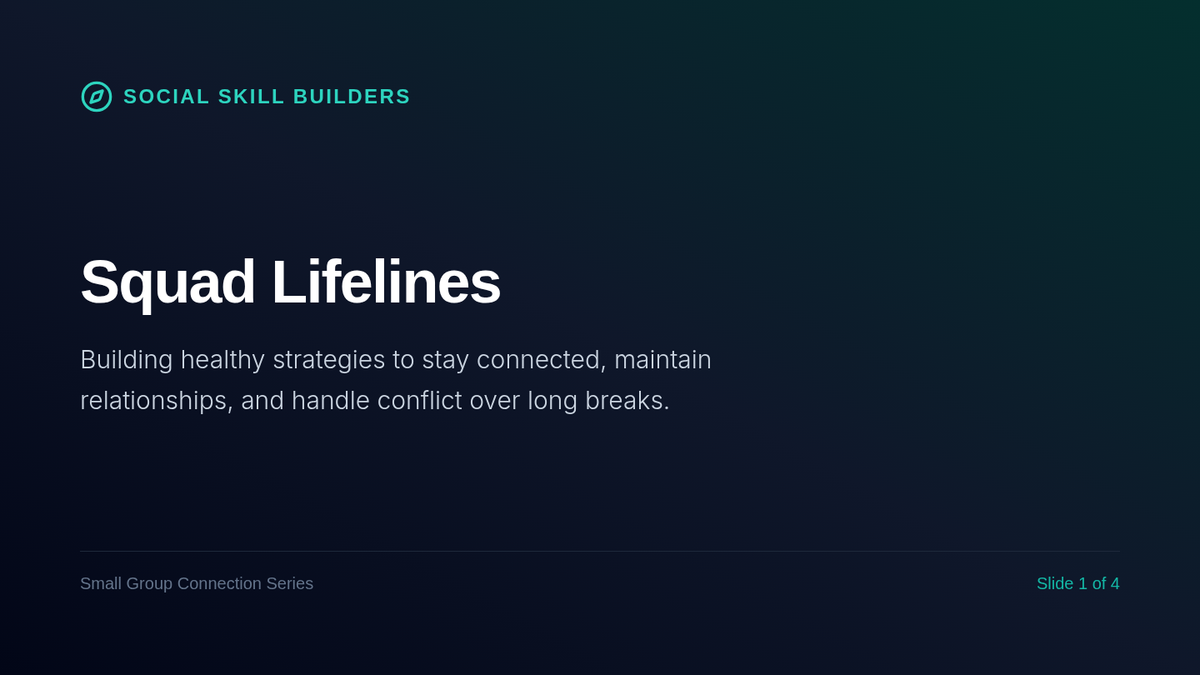
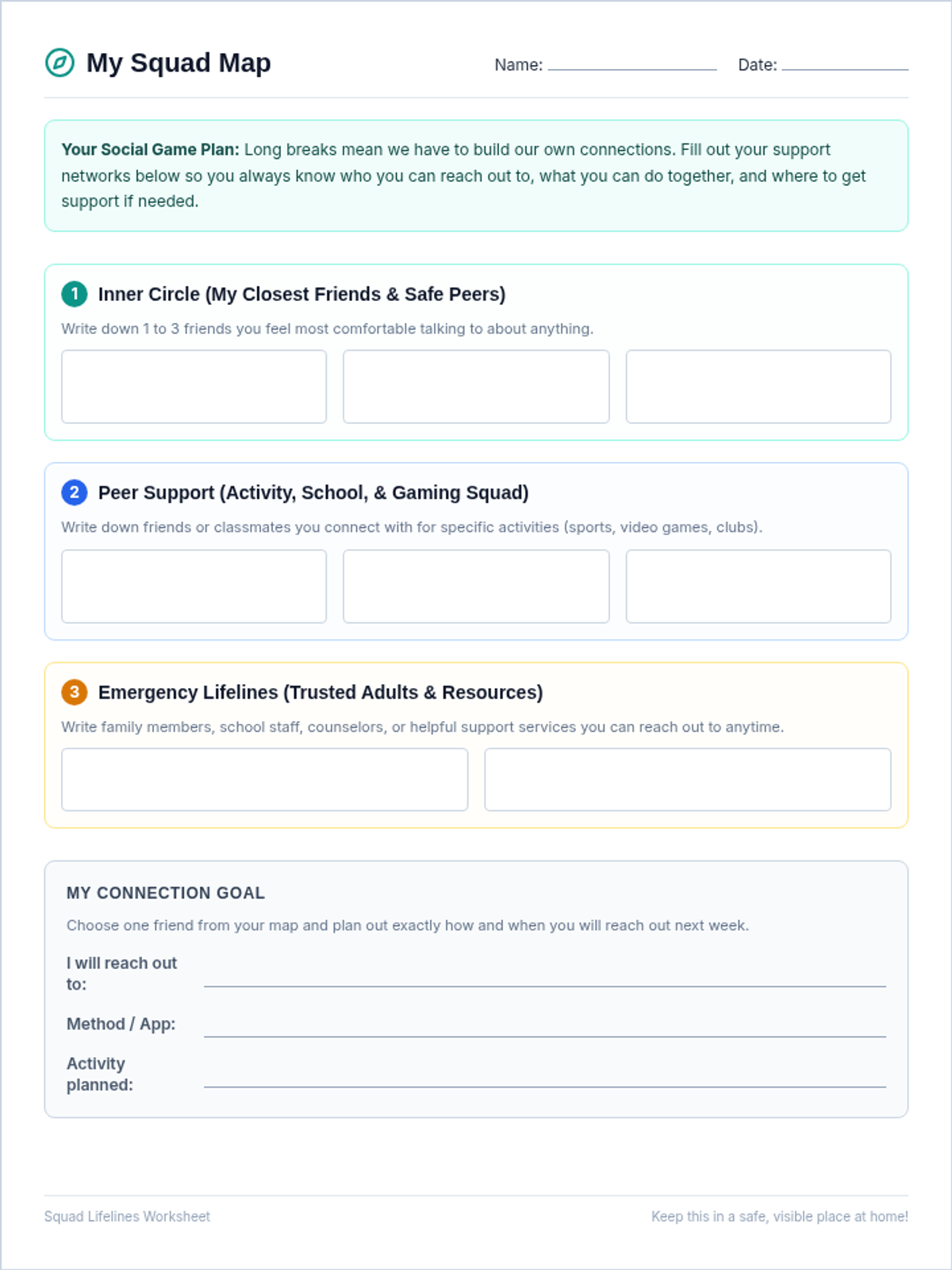
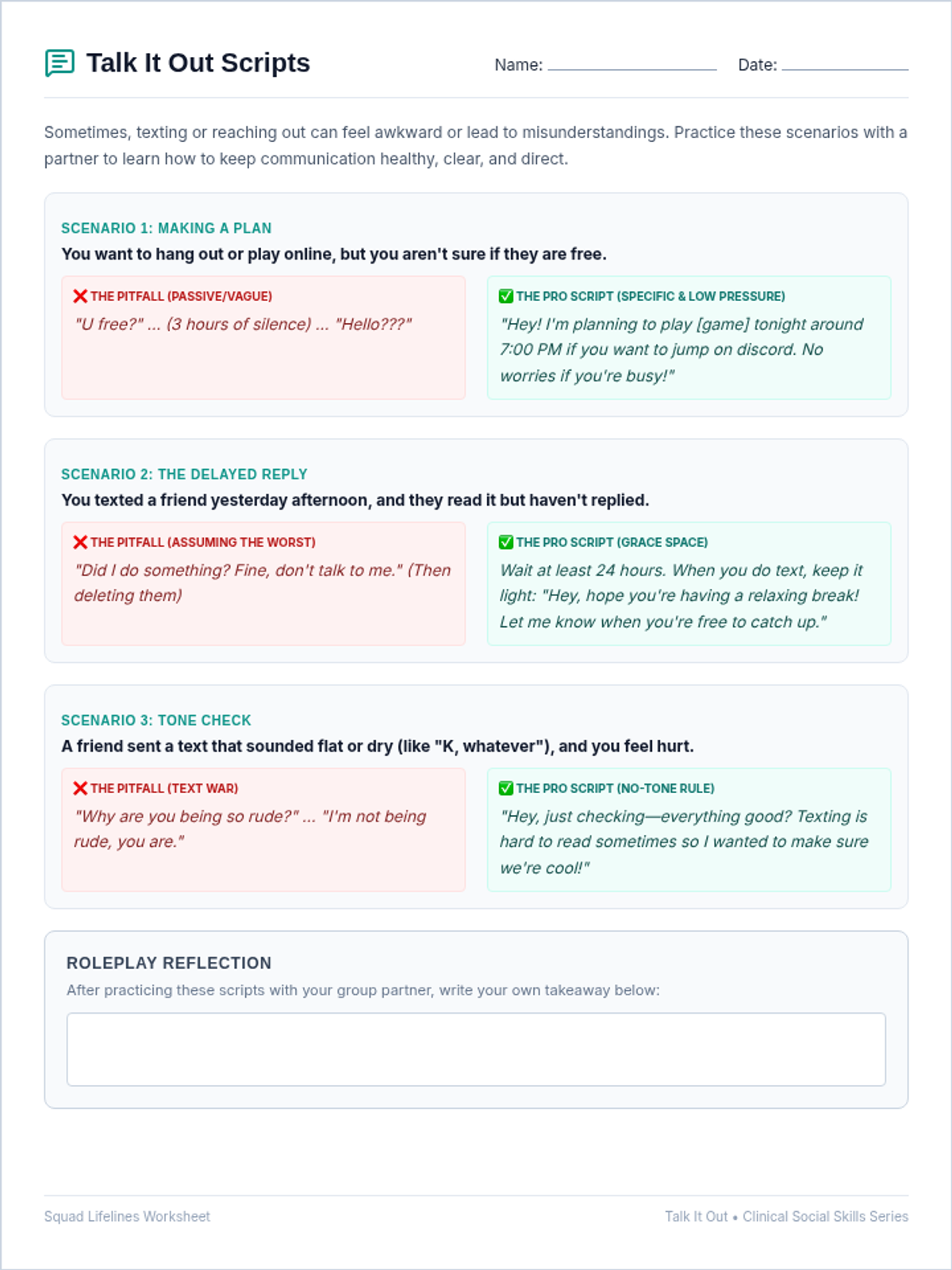
A specialized curriculum unit designed for clinical staff and school counselors facilitating small groups on social skills, helping students maintain active peer support, prevent isolation, and navigate conflicts during long school breaks.
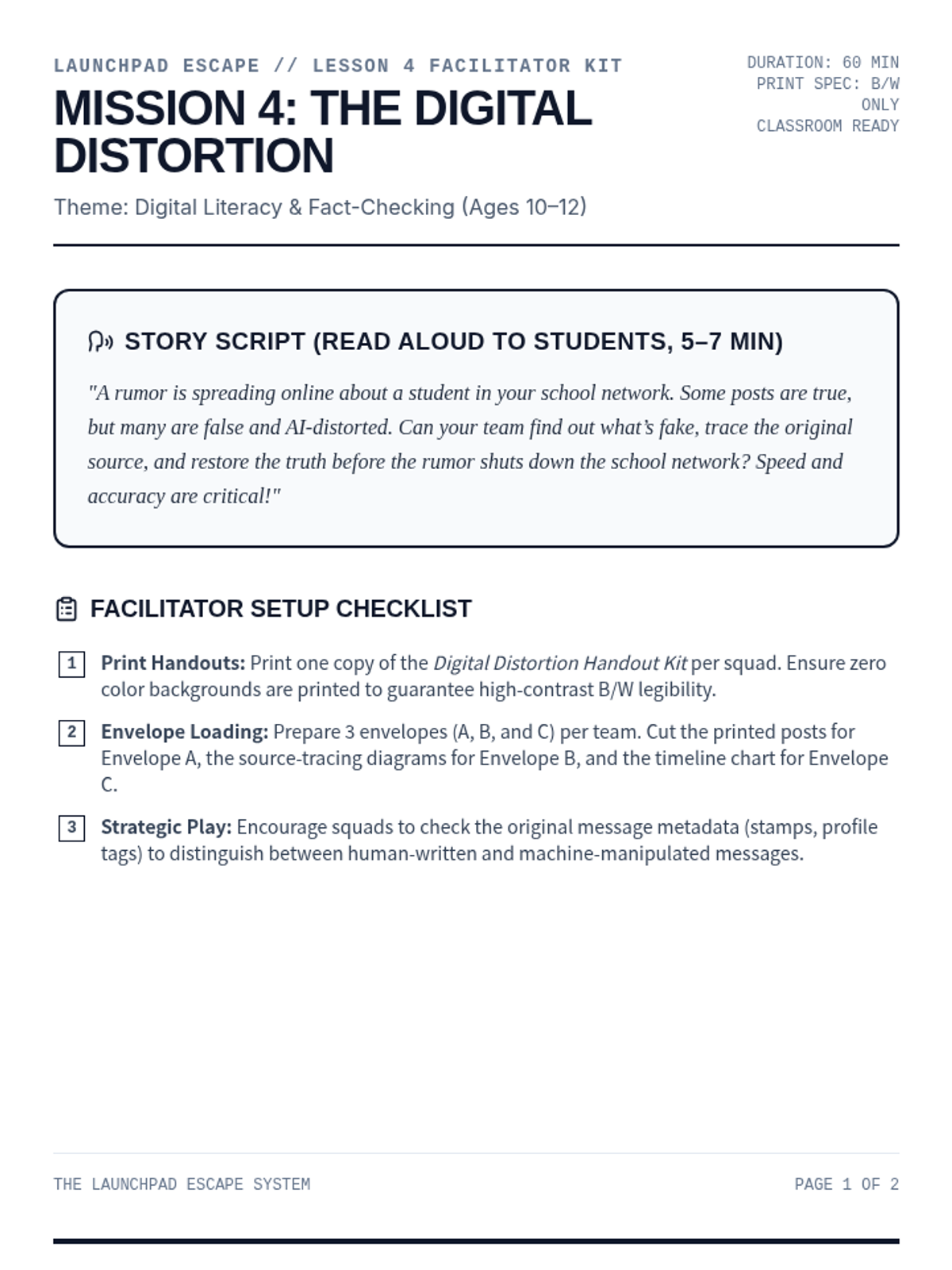
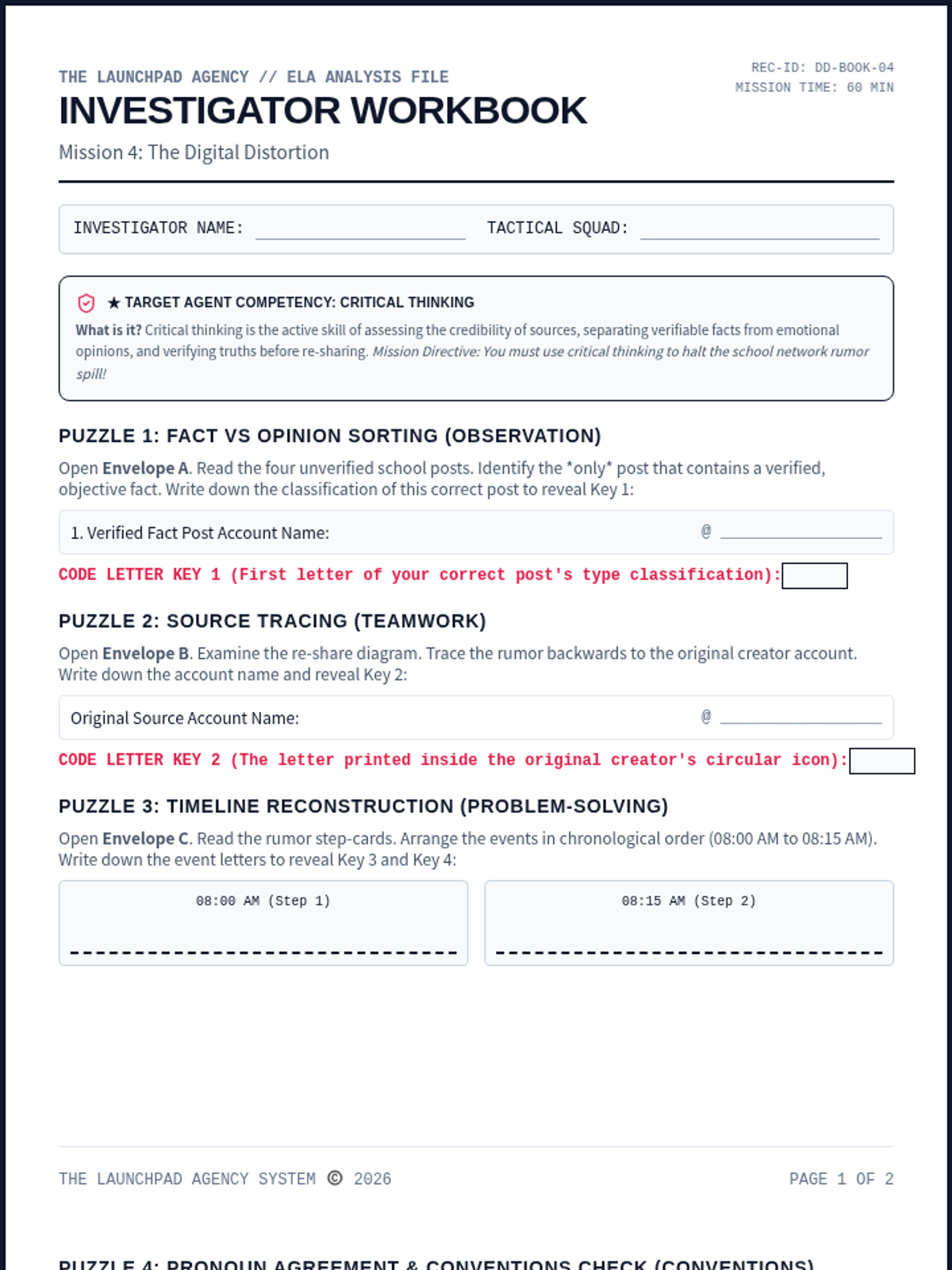
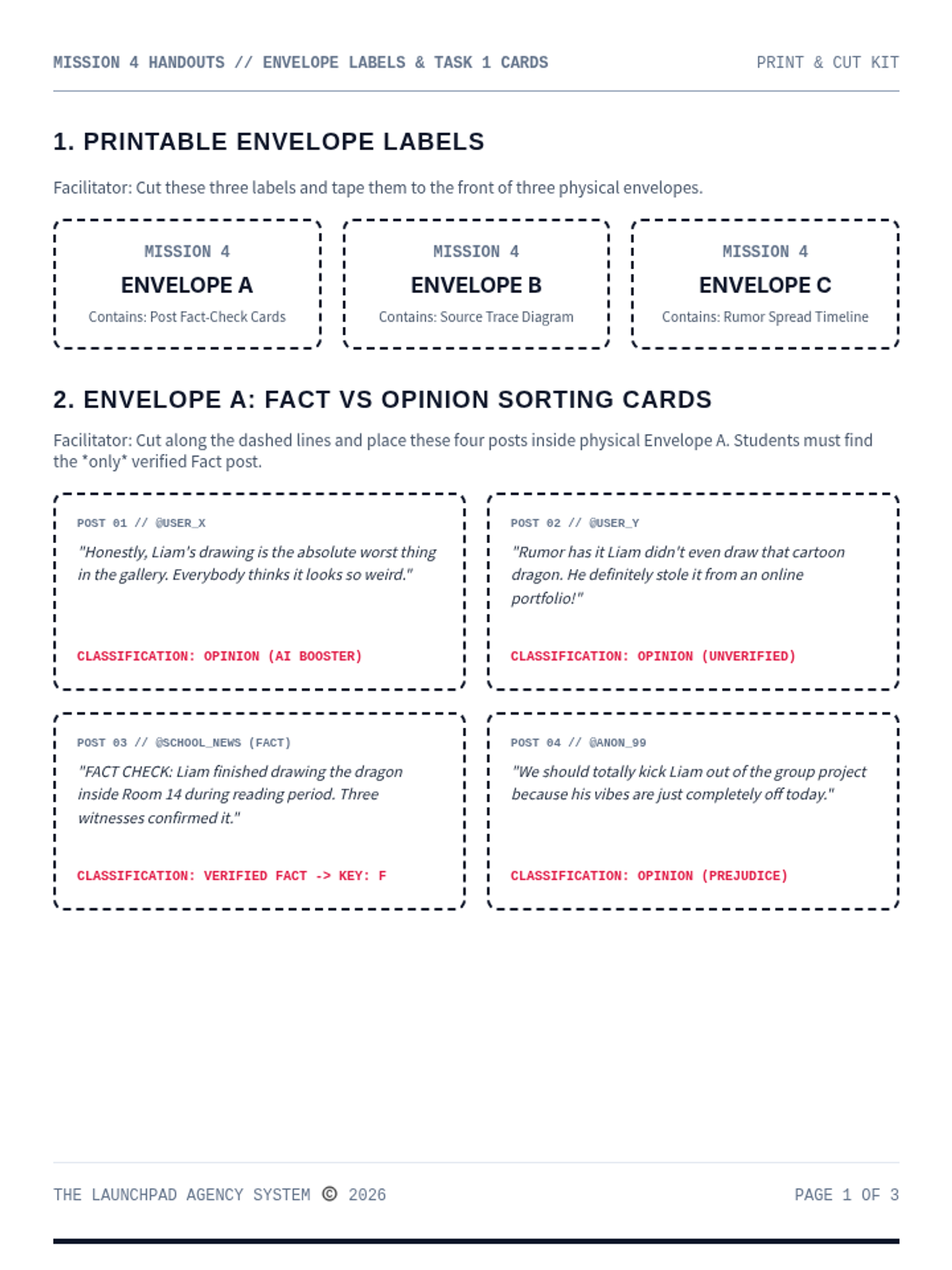
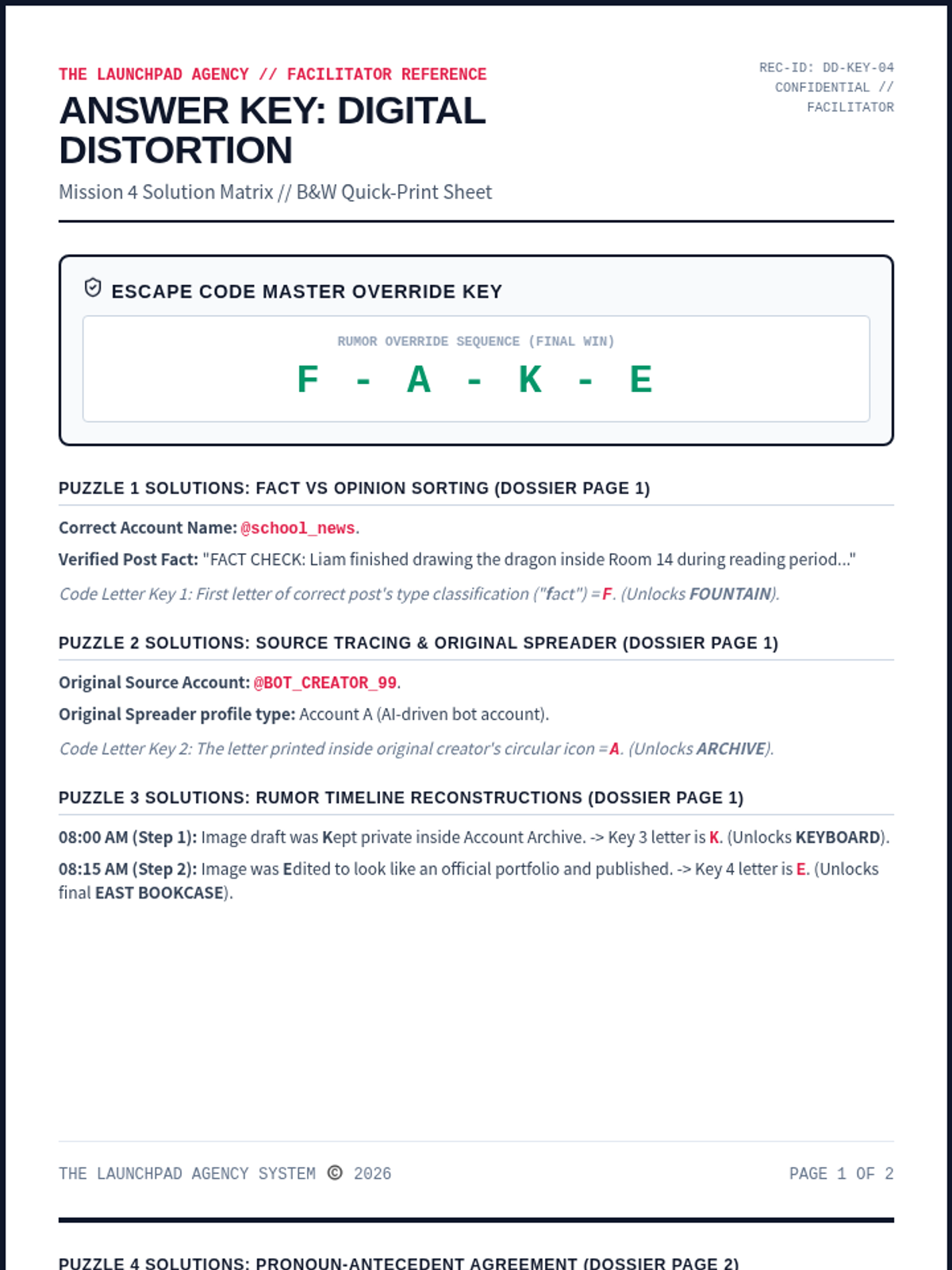
An online misinformation and fact-checking escape room for Ages 10-12. Recruits sort fact vs. opinion, trace original message sources, and reconstruct truth timelines to stop rumors.
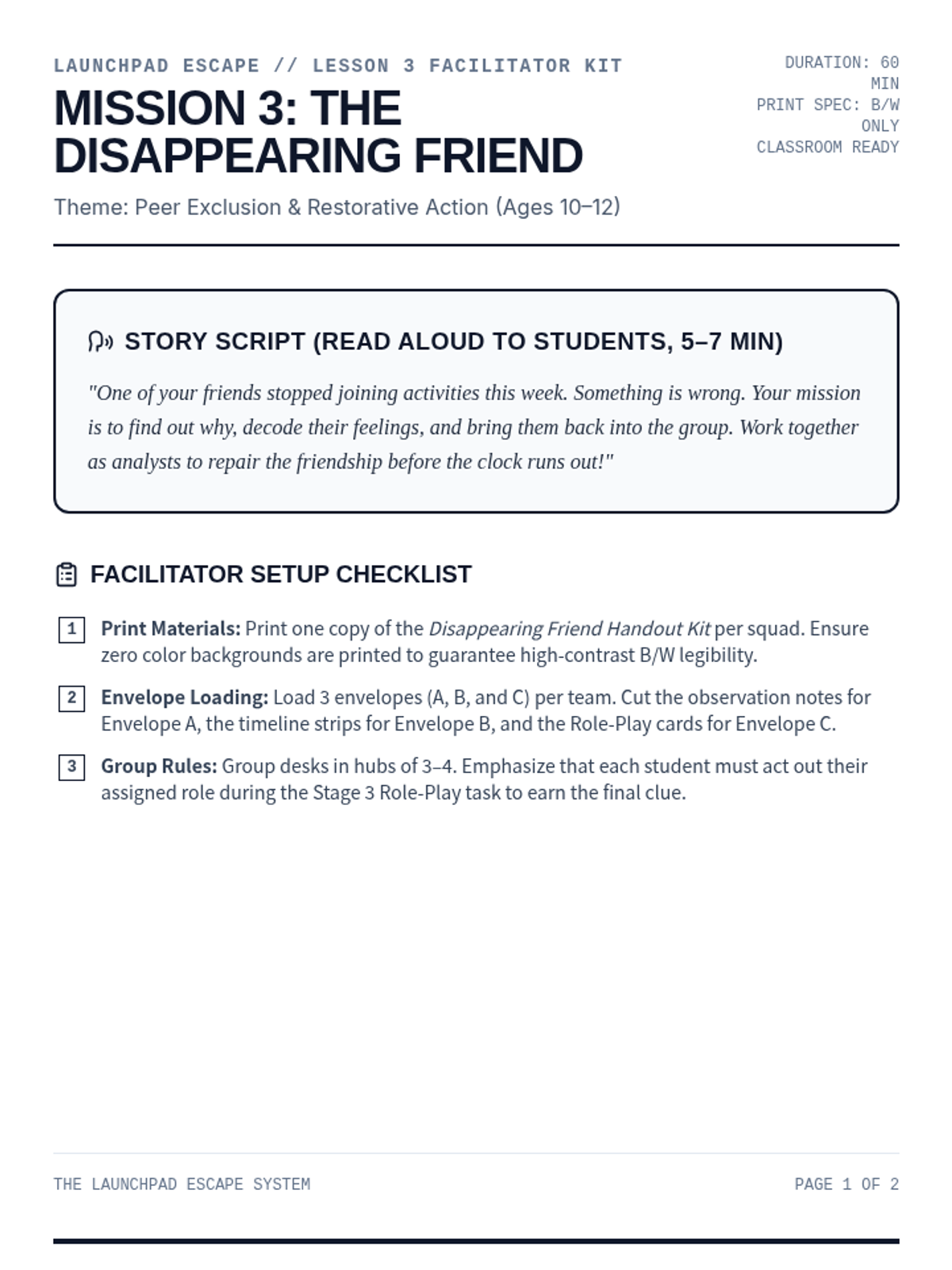
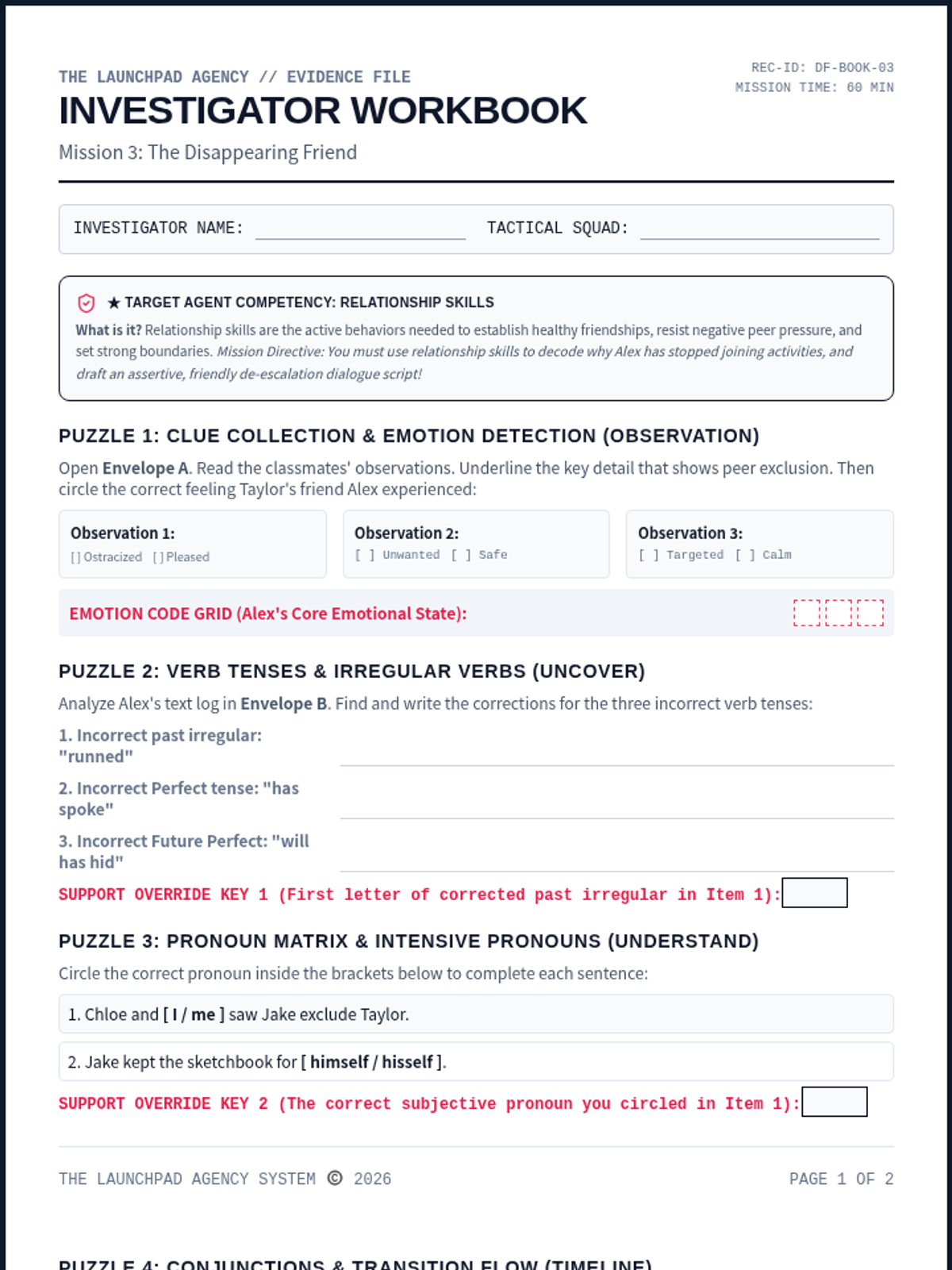
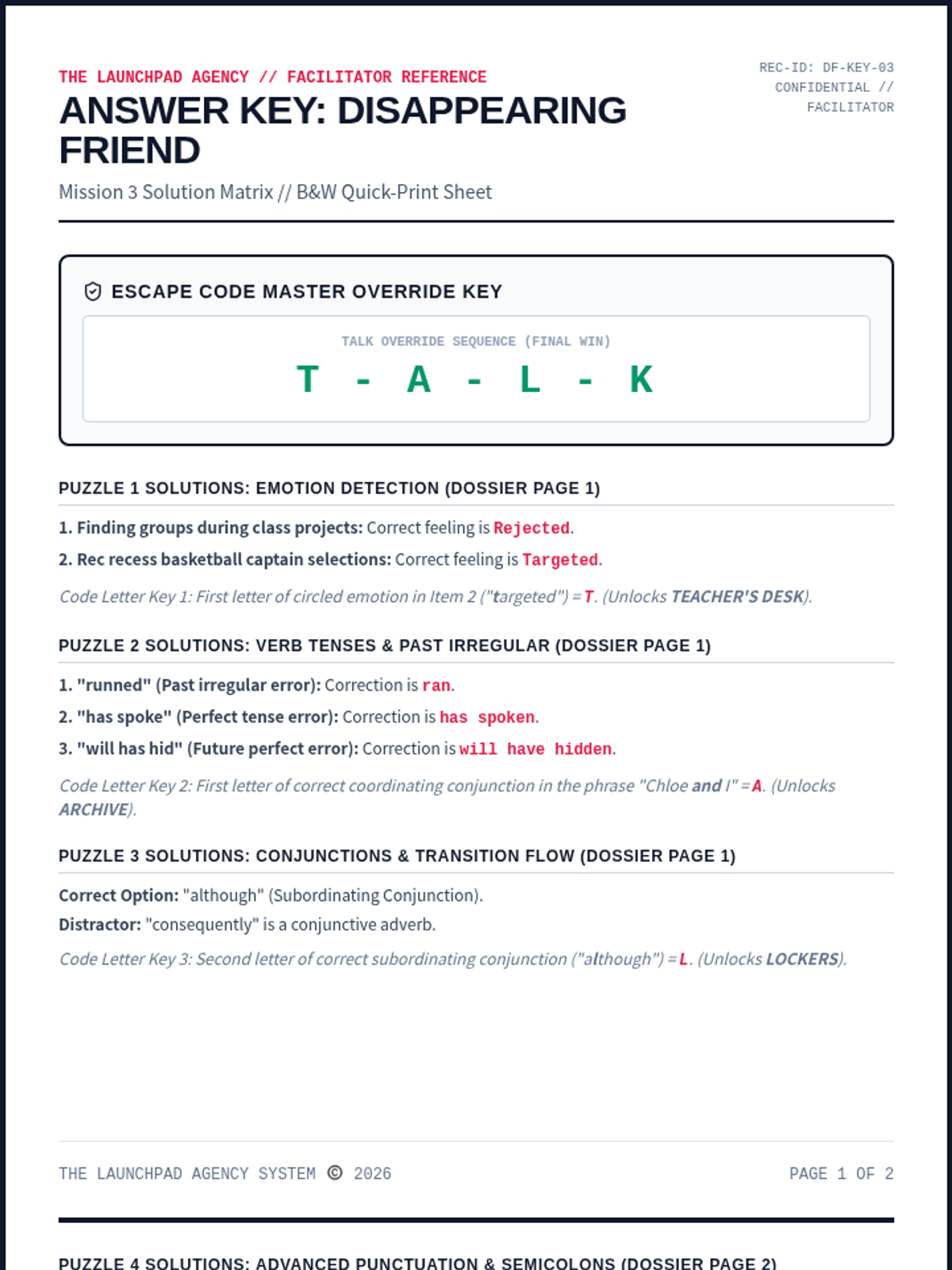
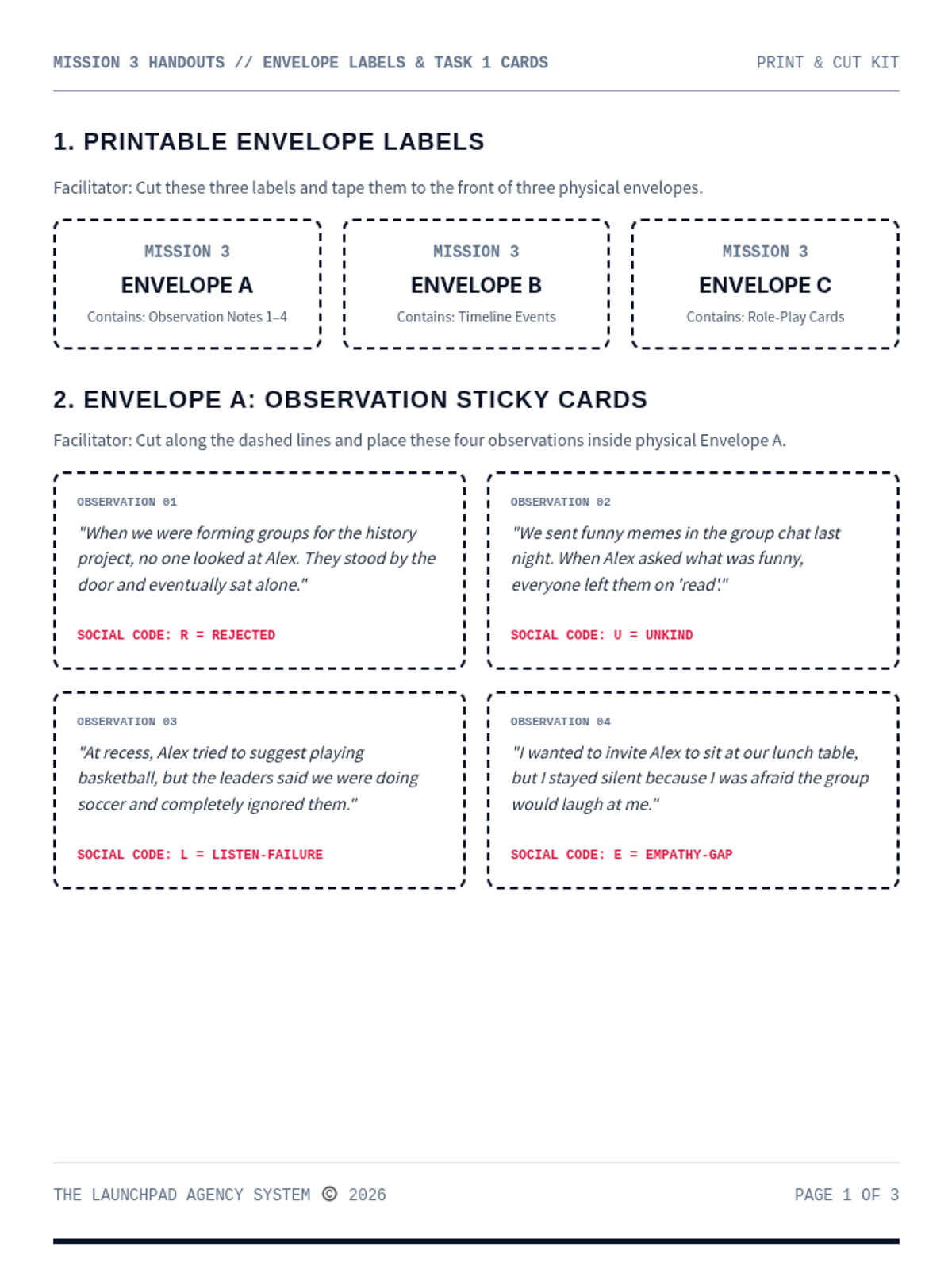
A chronological reconstruction and peer exclusion escape room for Ages 10-12. Recruits analyze sticky-note observations, identify missed social interactions, and role-play restorative de-escalation scripts.
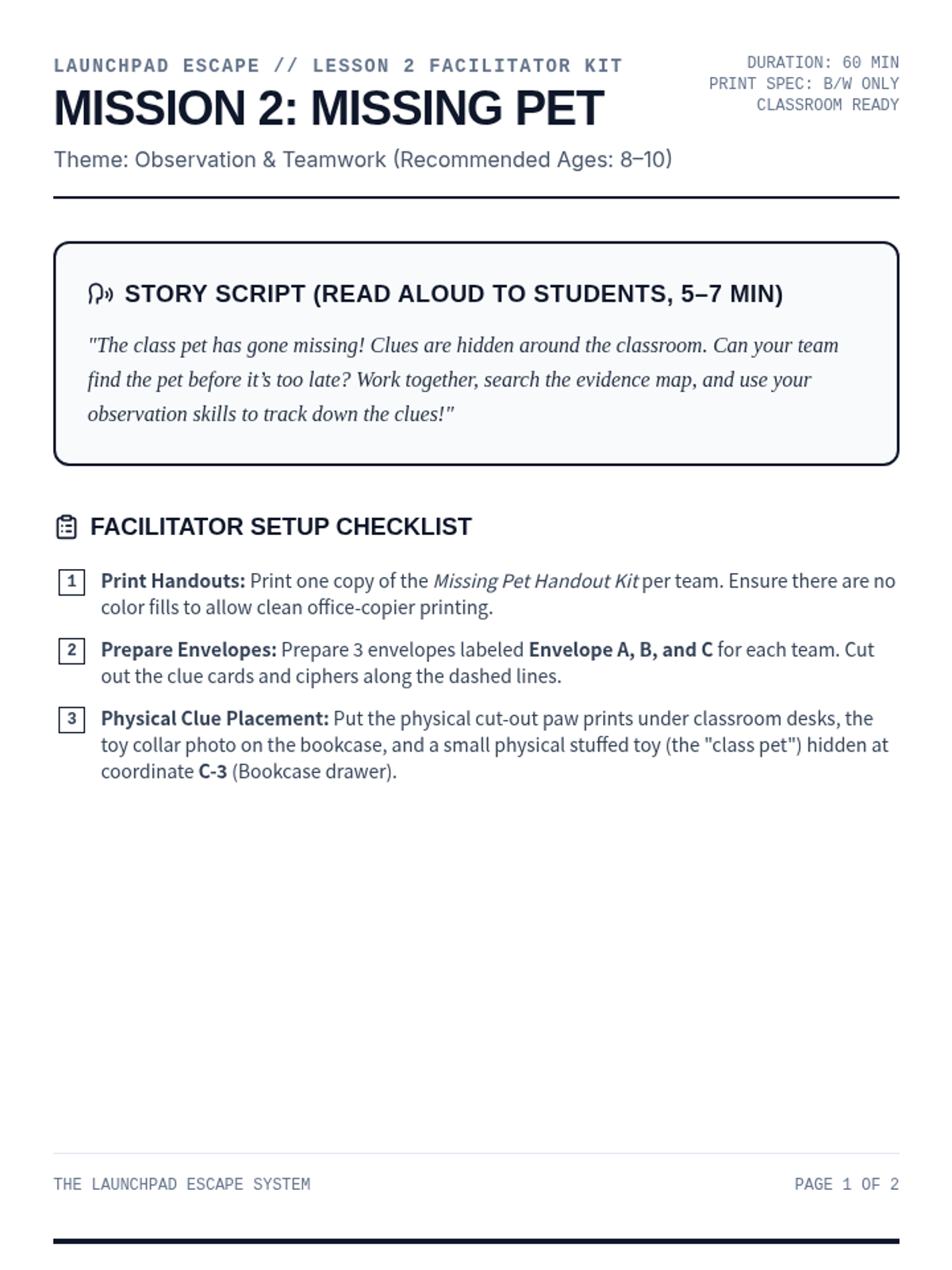
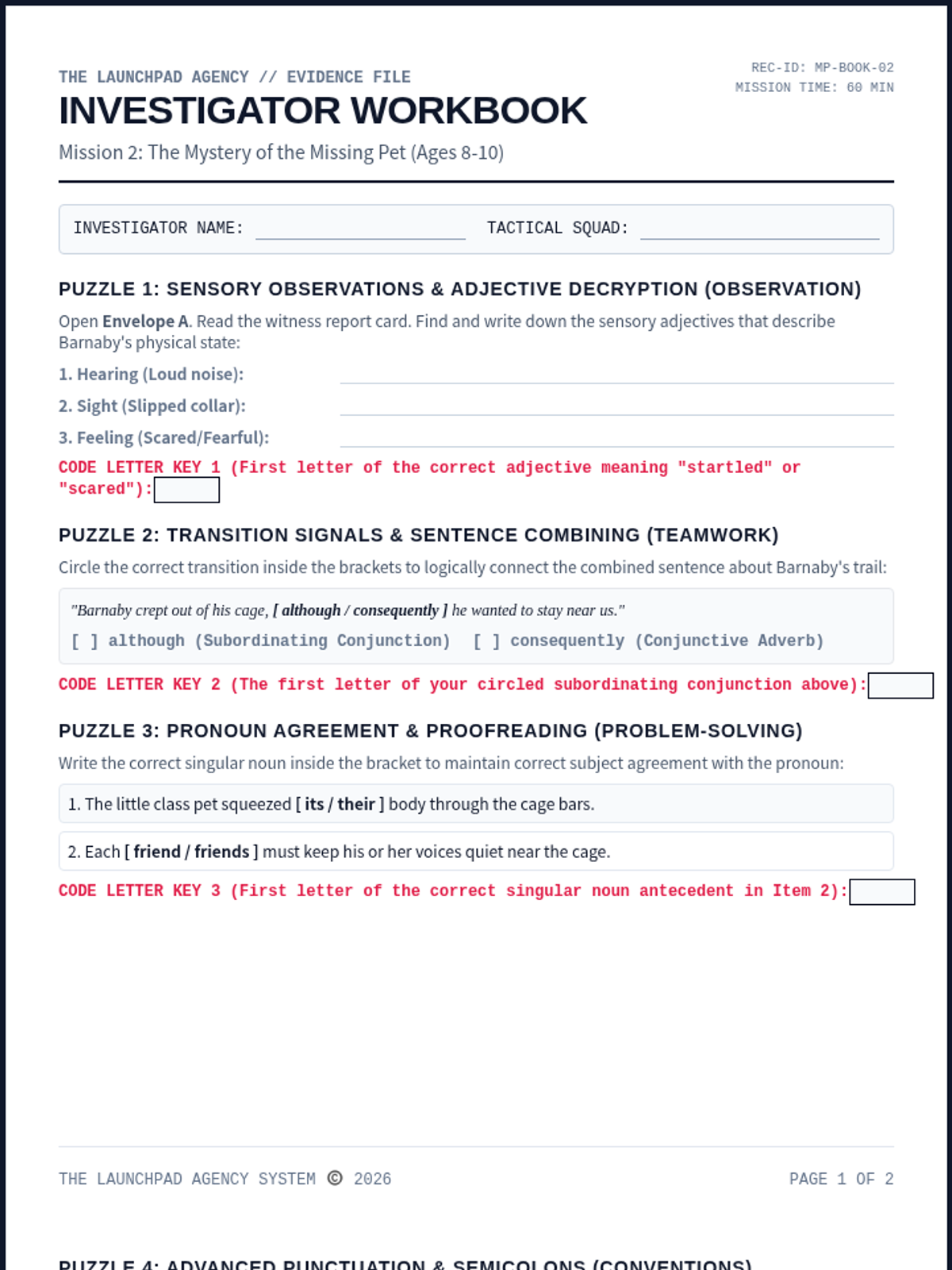
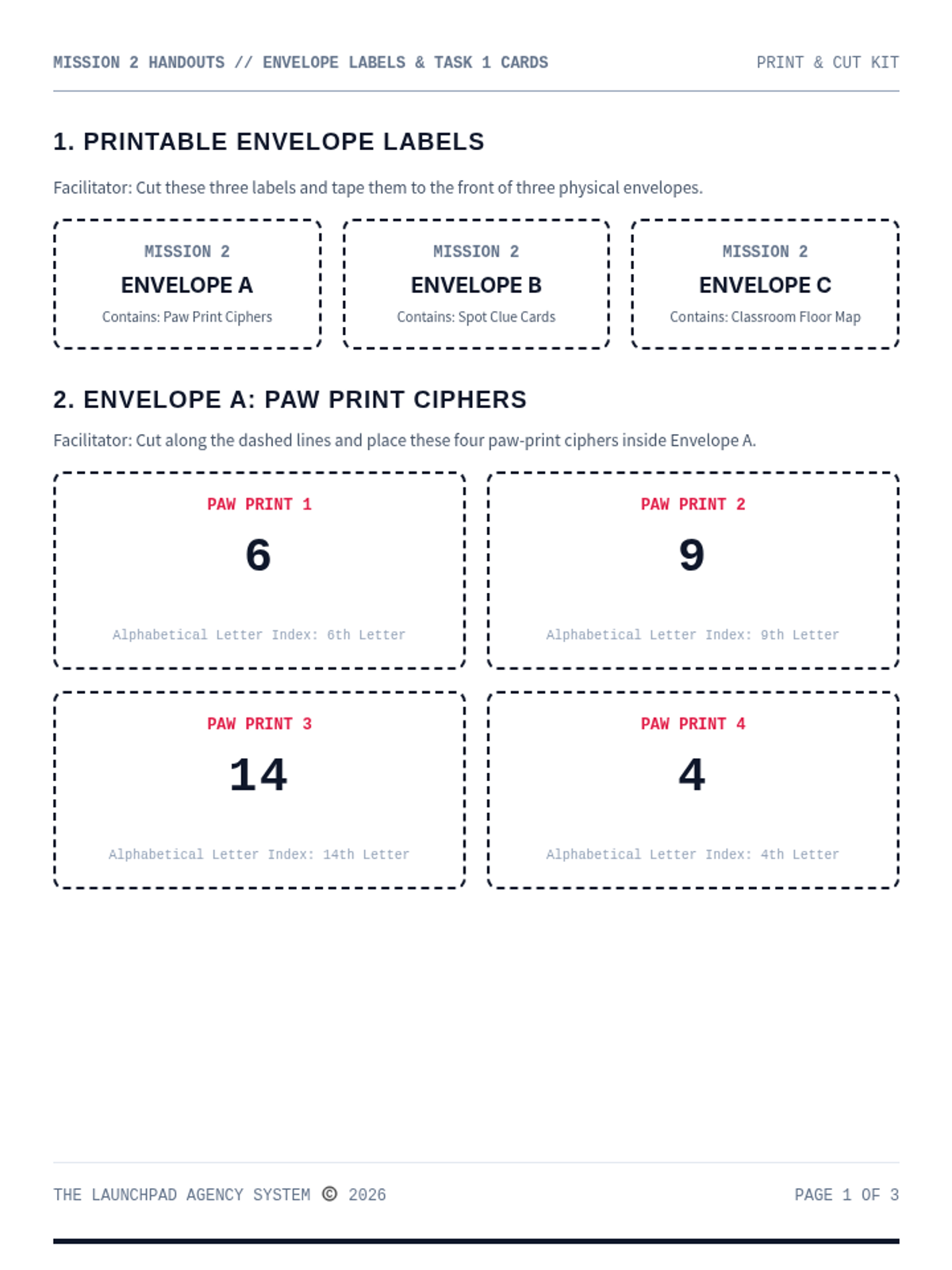
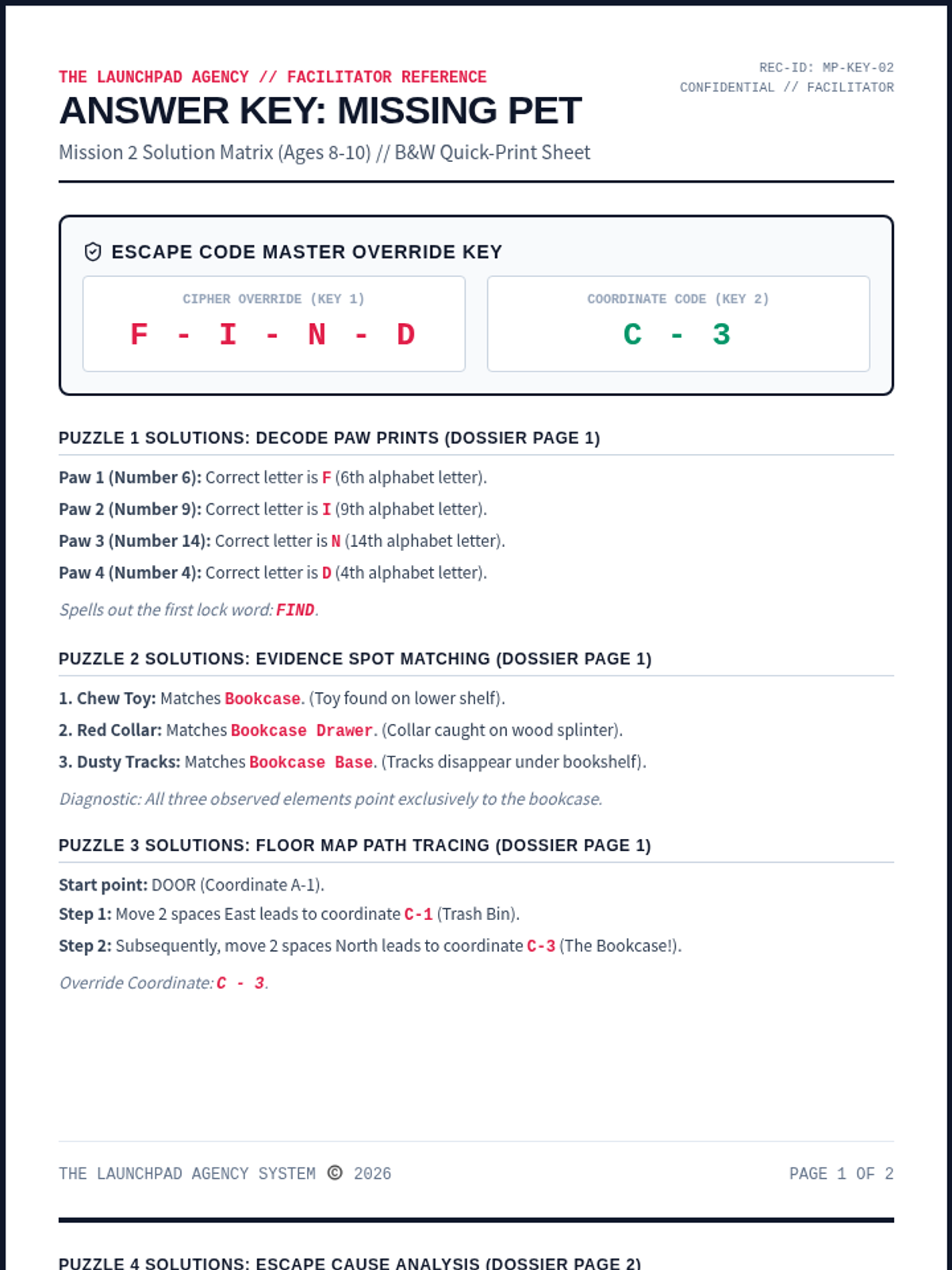
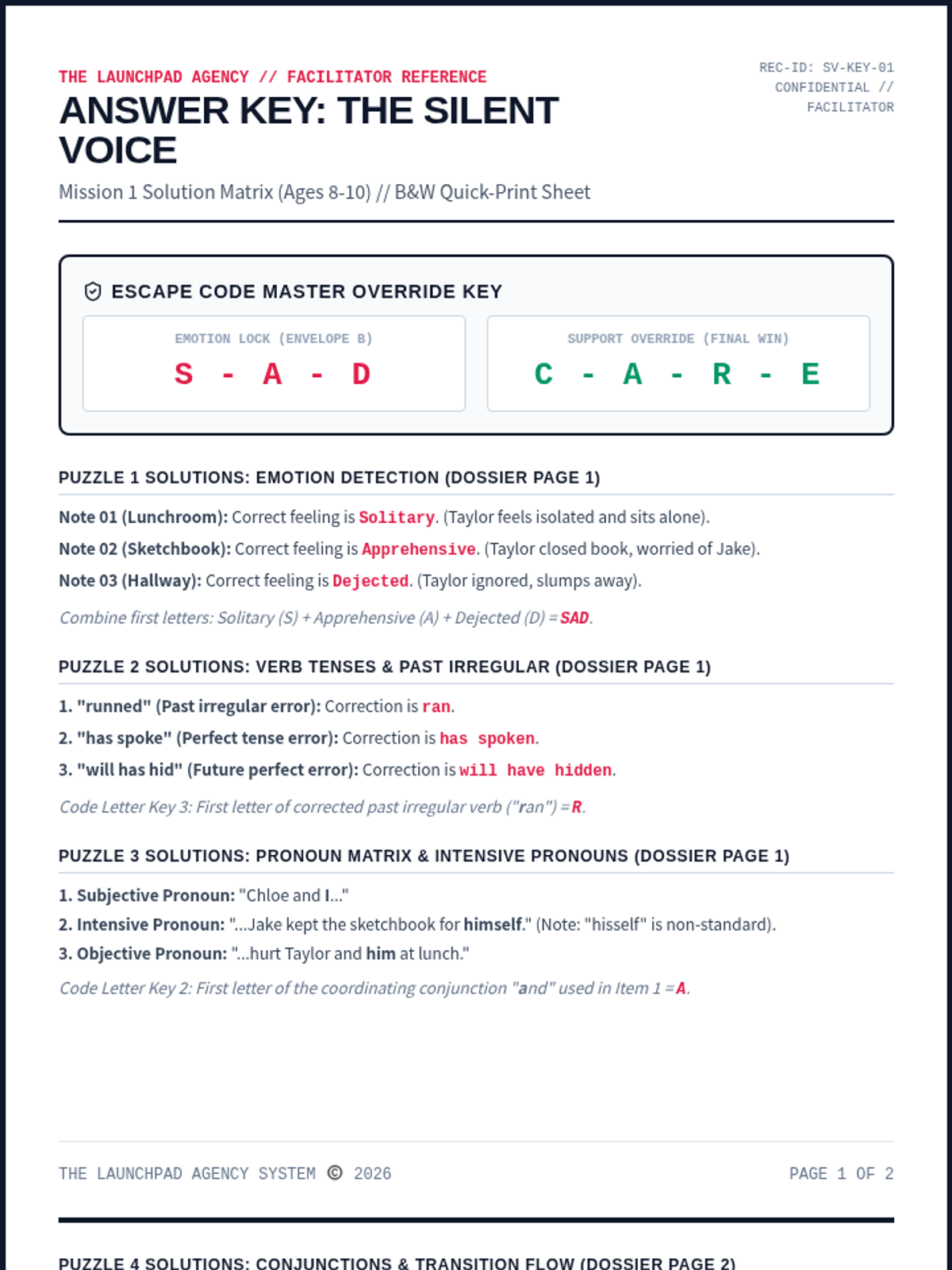
An observation-based escape mission for Ages 8-10. Recruits decode paw ciphers, match footprint evidence to classroom hiding spots, and compile a team map to find the missing class pet.
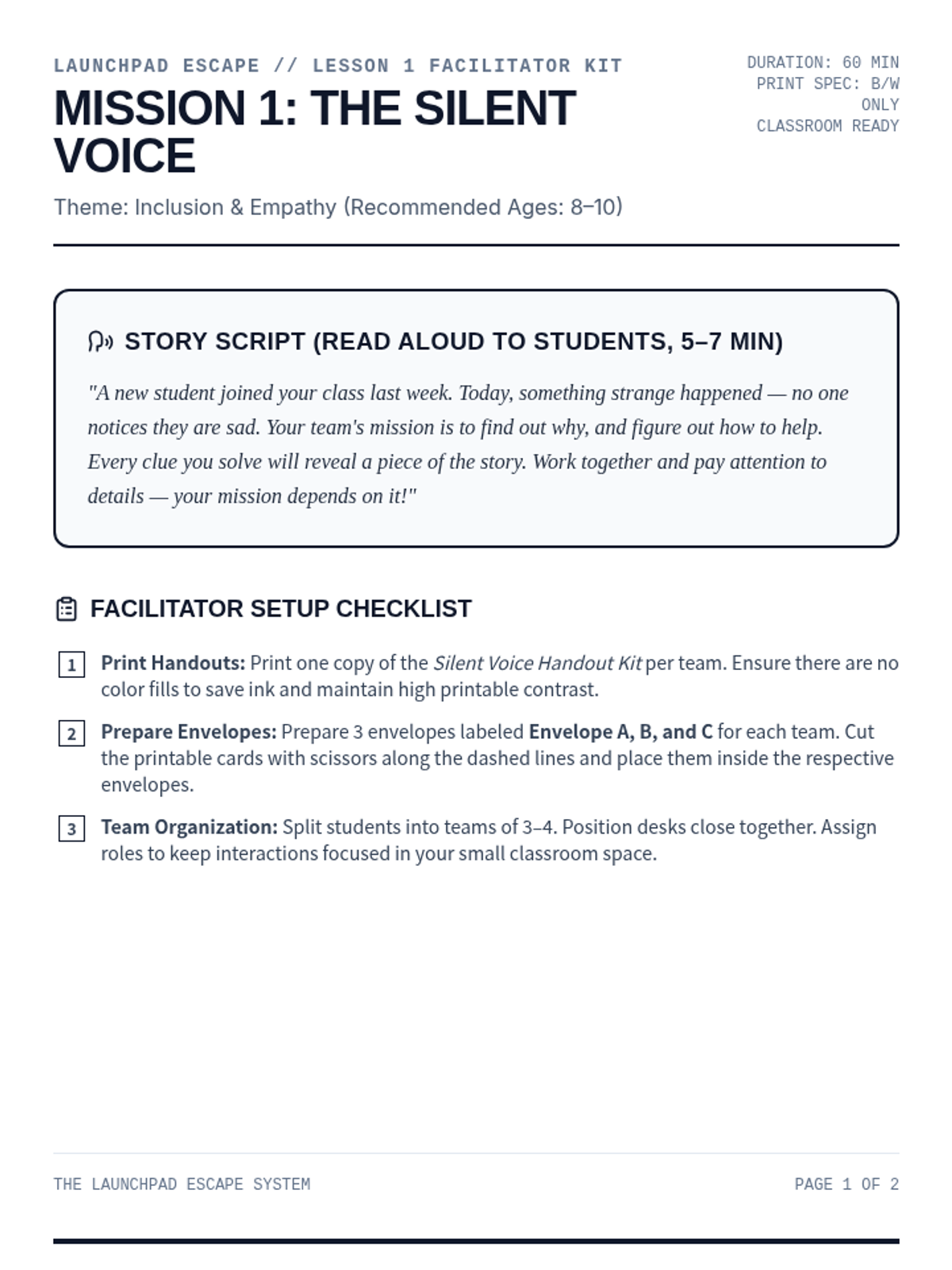
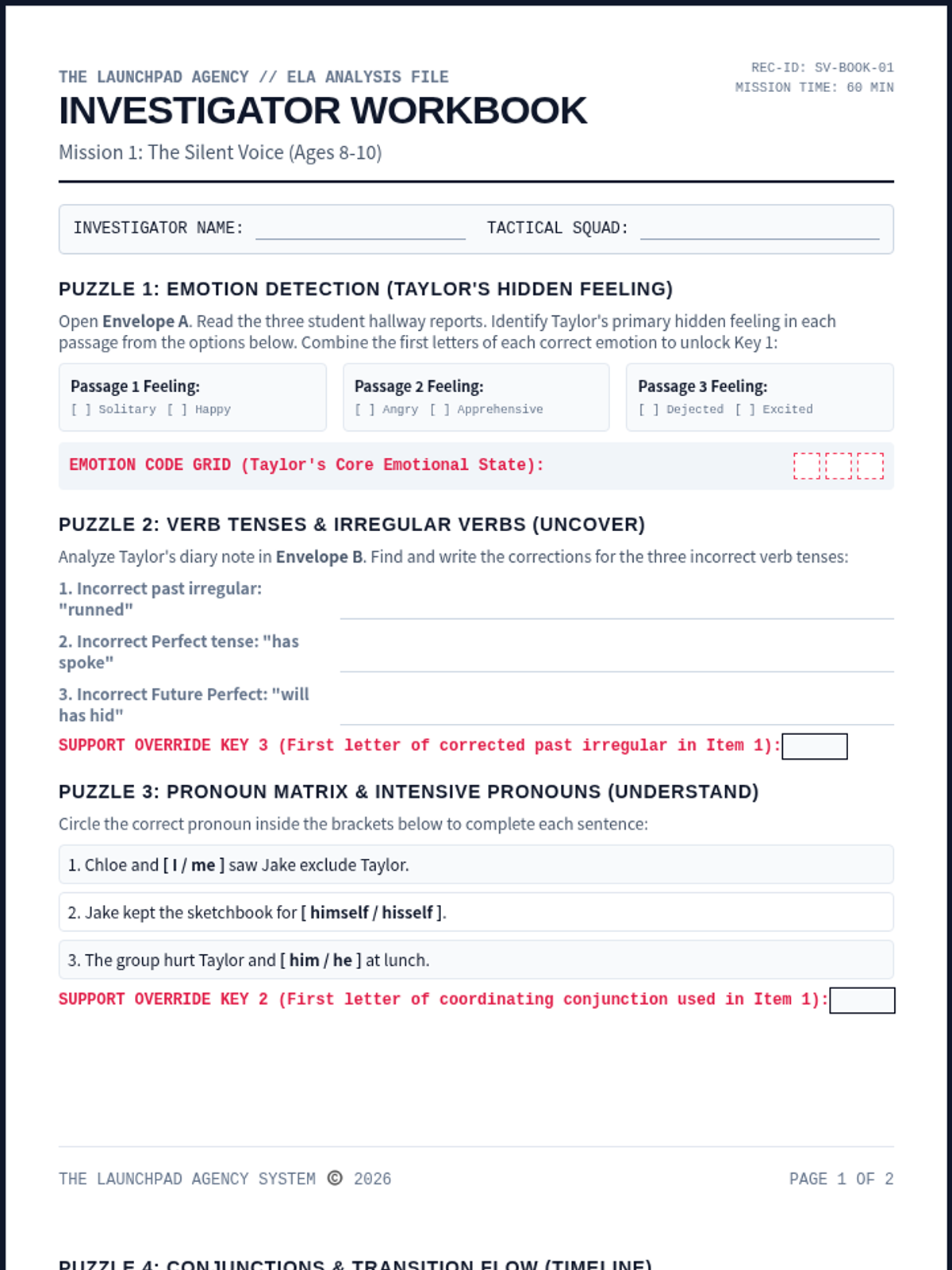
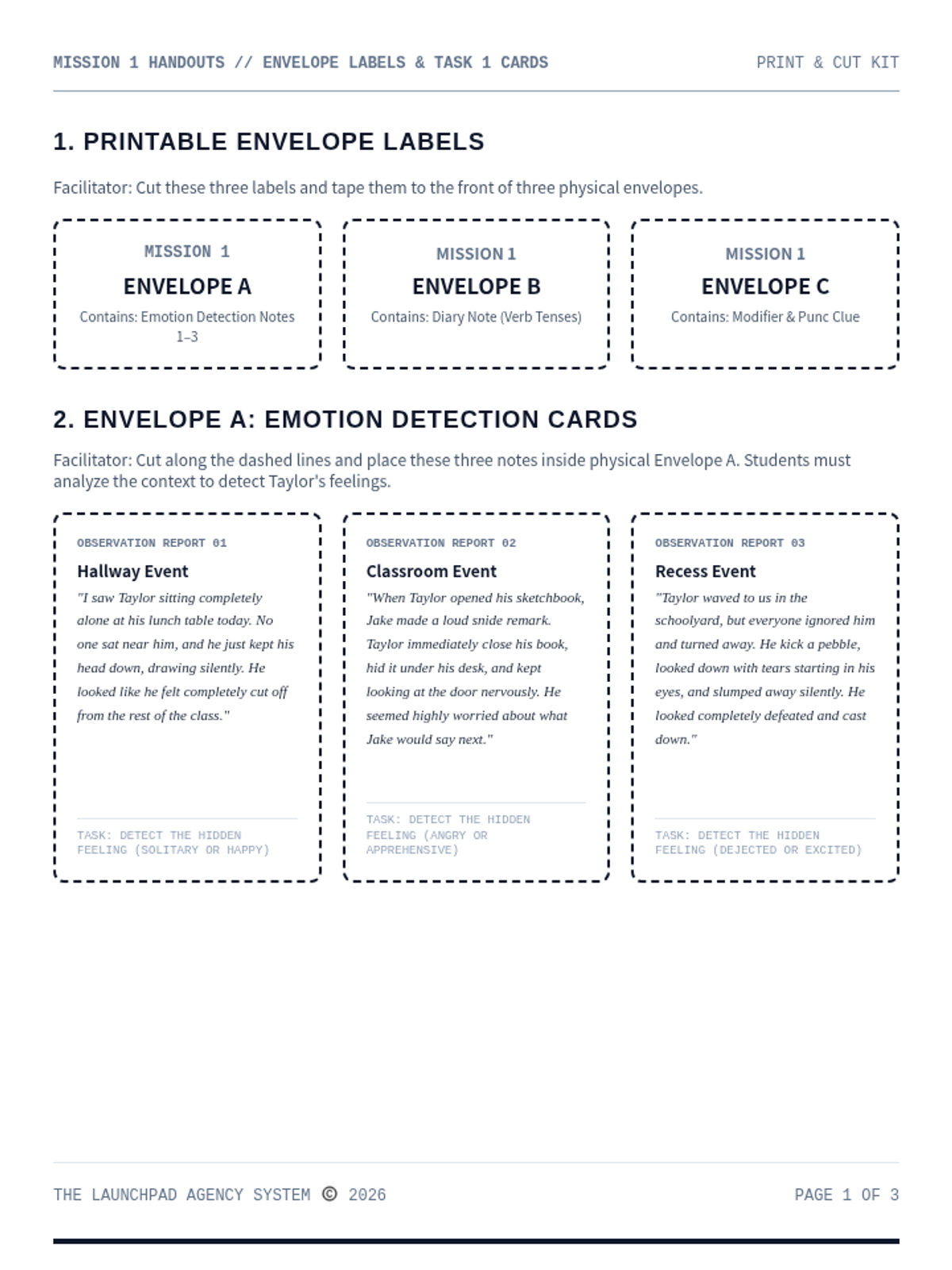
A cooperative social escape room for Ages 8-10 focused on inclusion and empathy. Recruits sort desk messages, build a timeline, and decode perspective cards to support a lonely classmate.
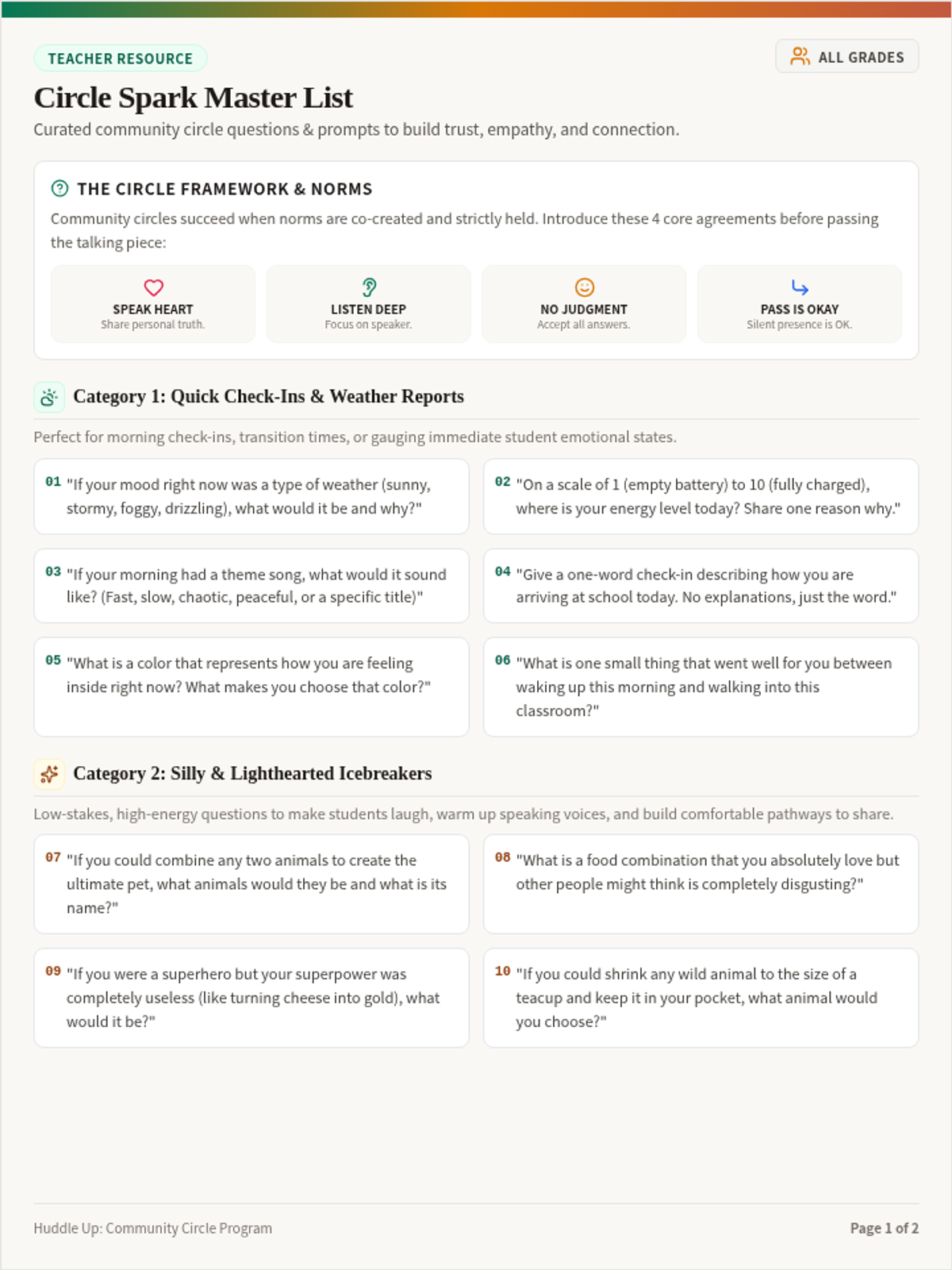
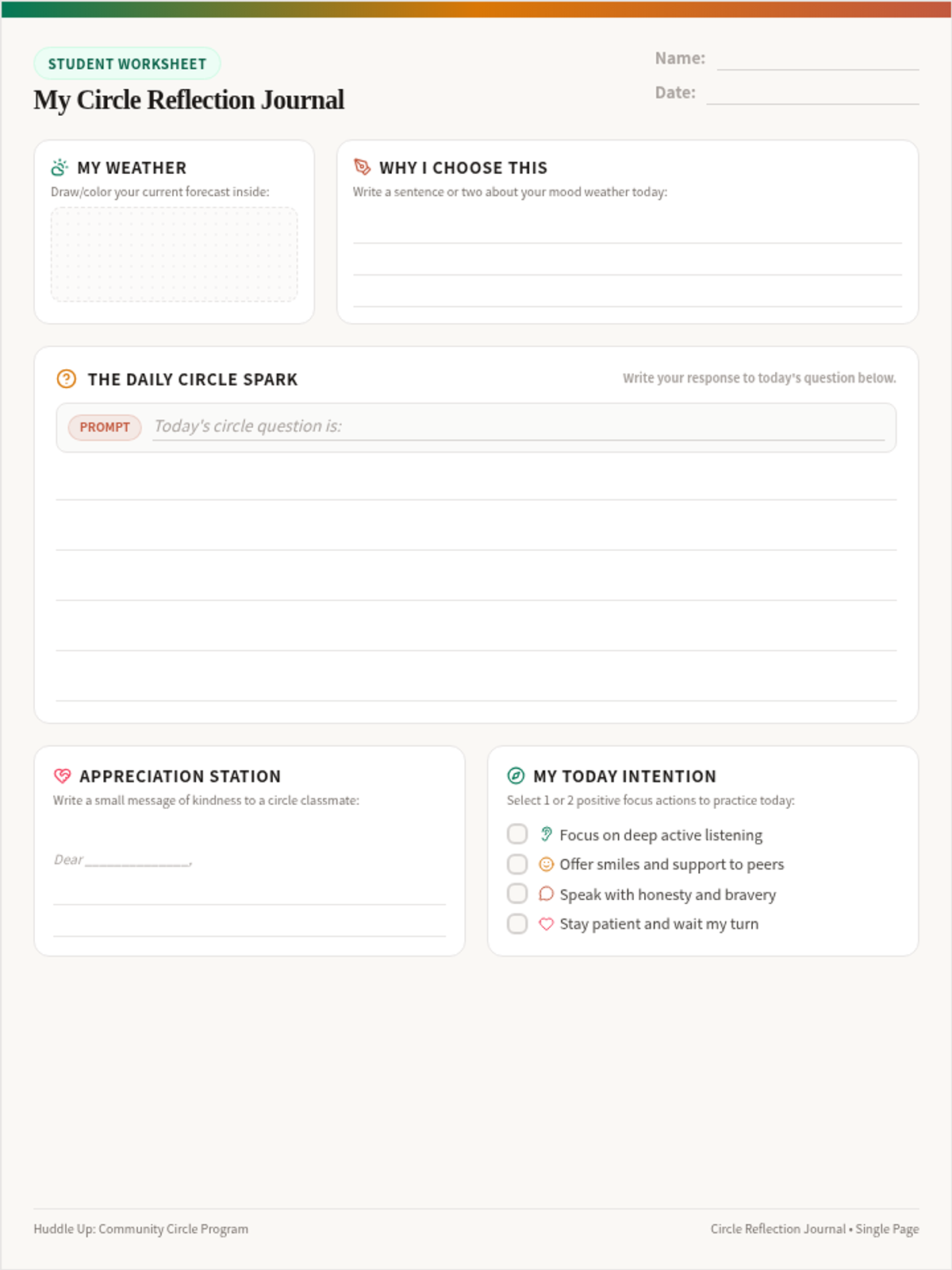
A complete toolkit to establish, run, and maintain engaging daily or weekly community circles that foster empathy, build classroom relationships, and check in on students' social-emotional well-being.
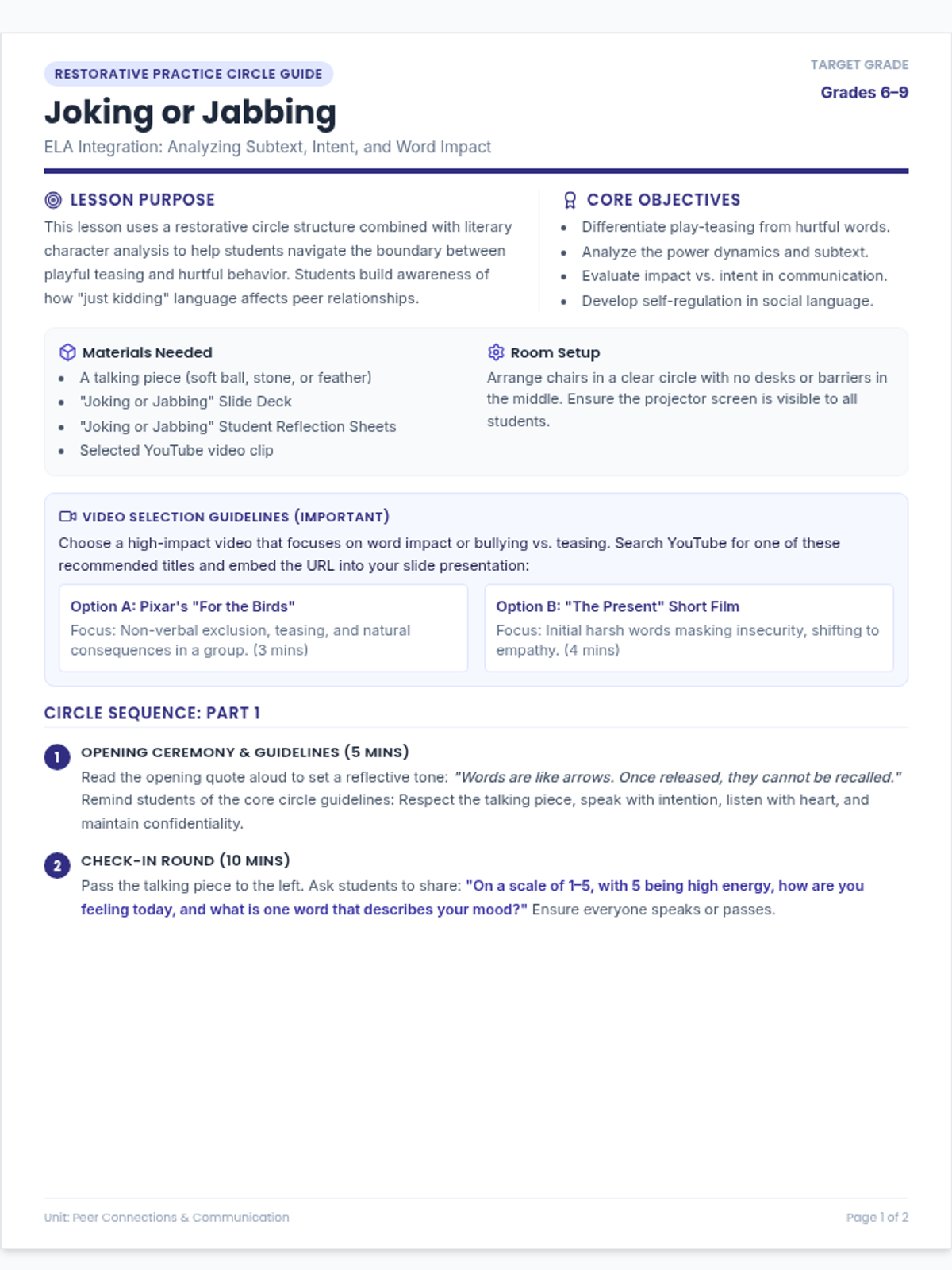
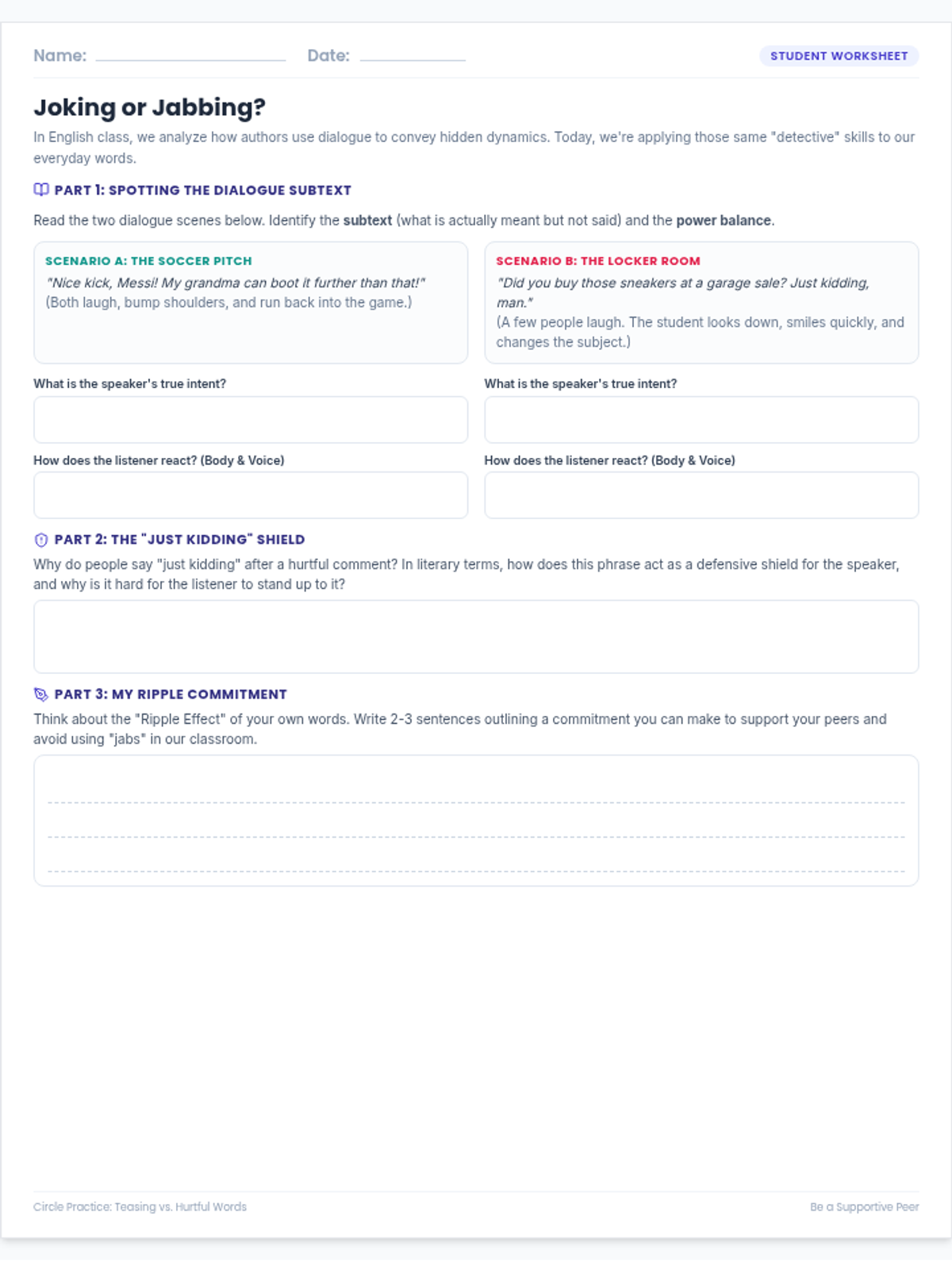
A restorative circle and ELA-integrated lesson focusing on the boundaries between friendly teasing and hurtful words. Students analyze scenarios, discuss video prompts, and reflect on their language impact.
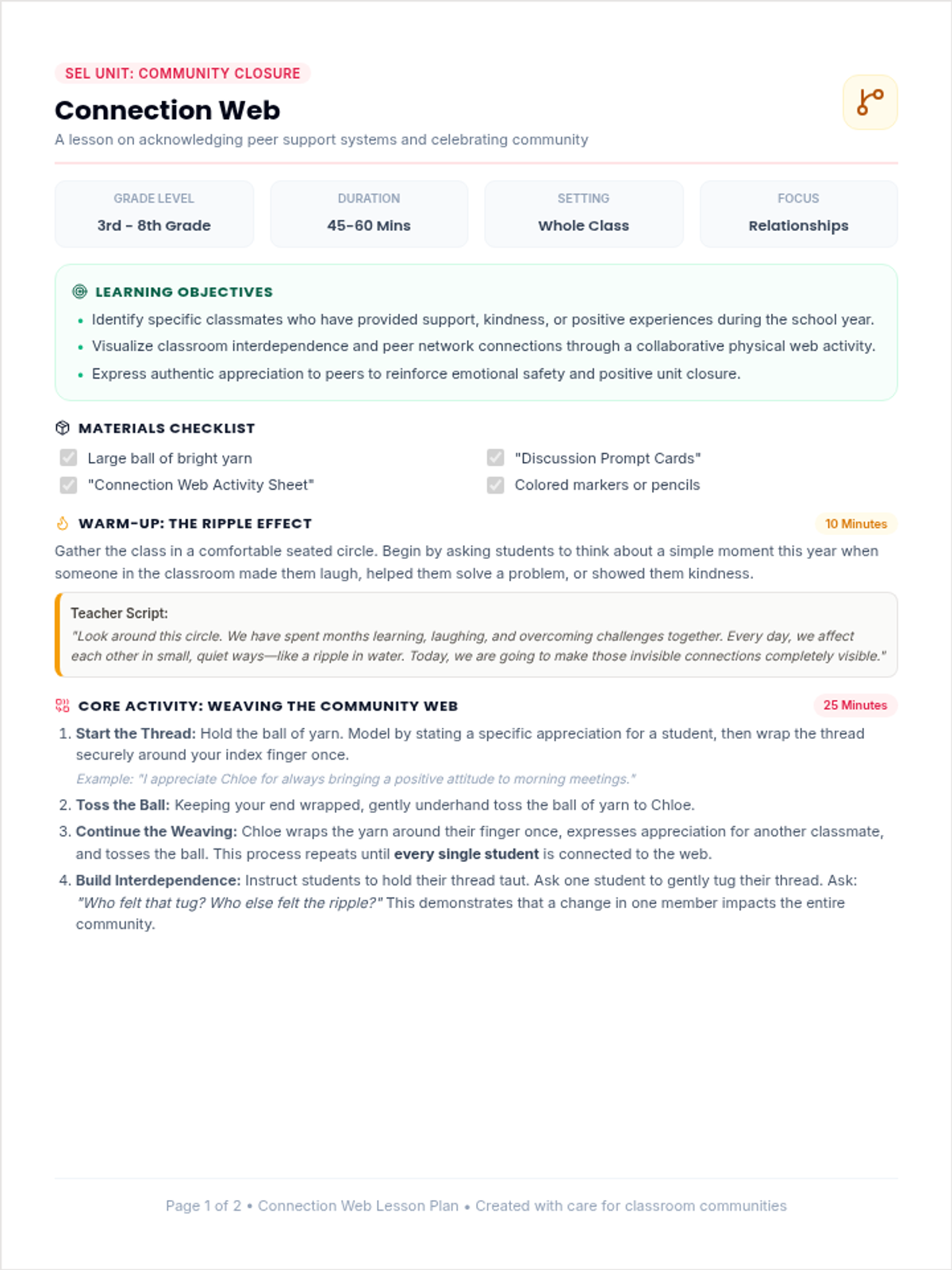
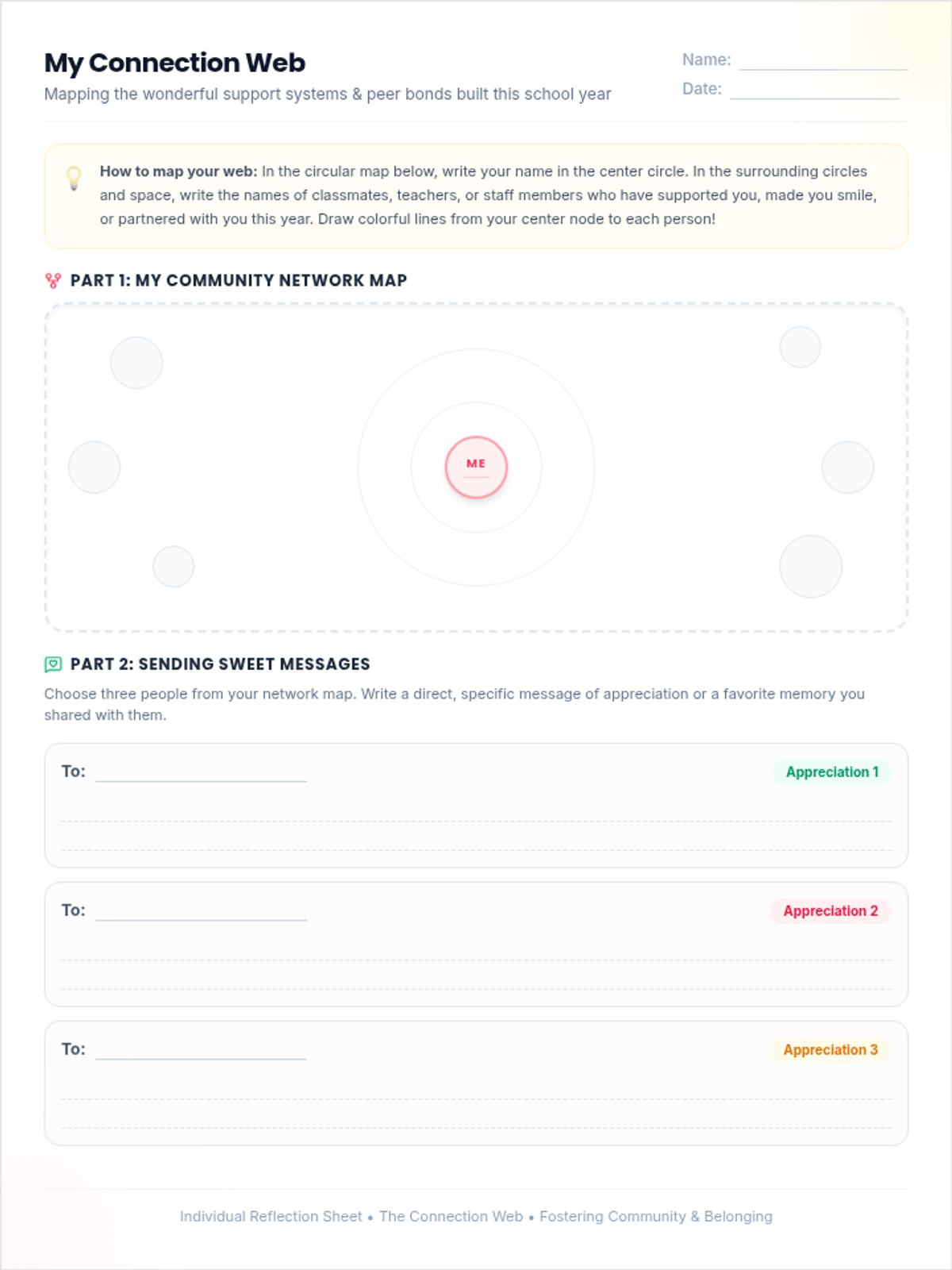
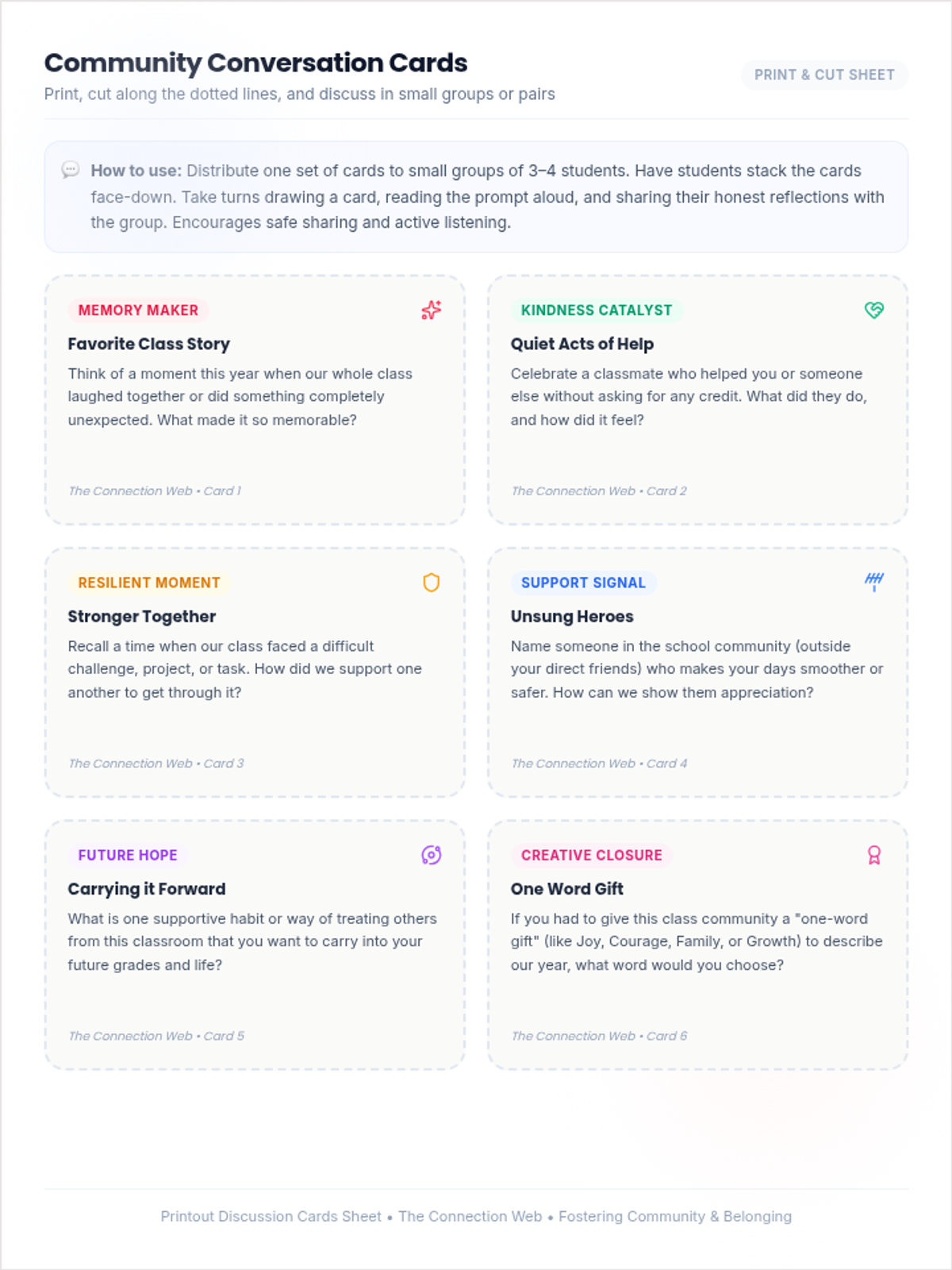
A warm, reflective social-emotional learning lesson designed to help students celebrate their classroom community, map their peer support networks, and experience positive closure as the school year ends.
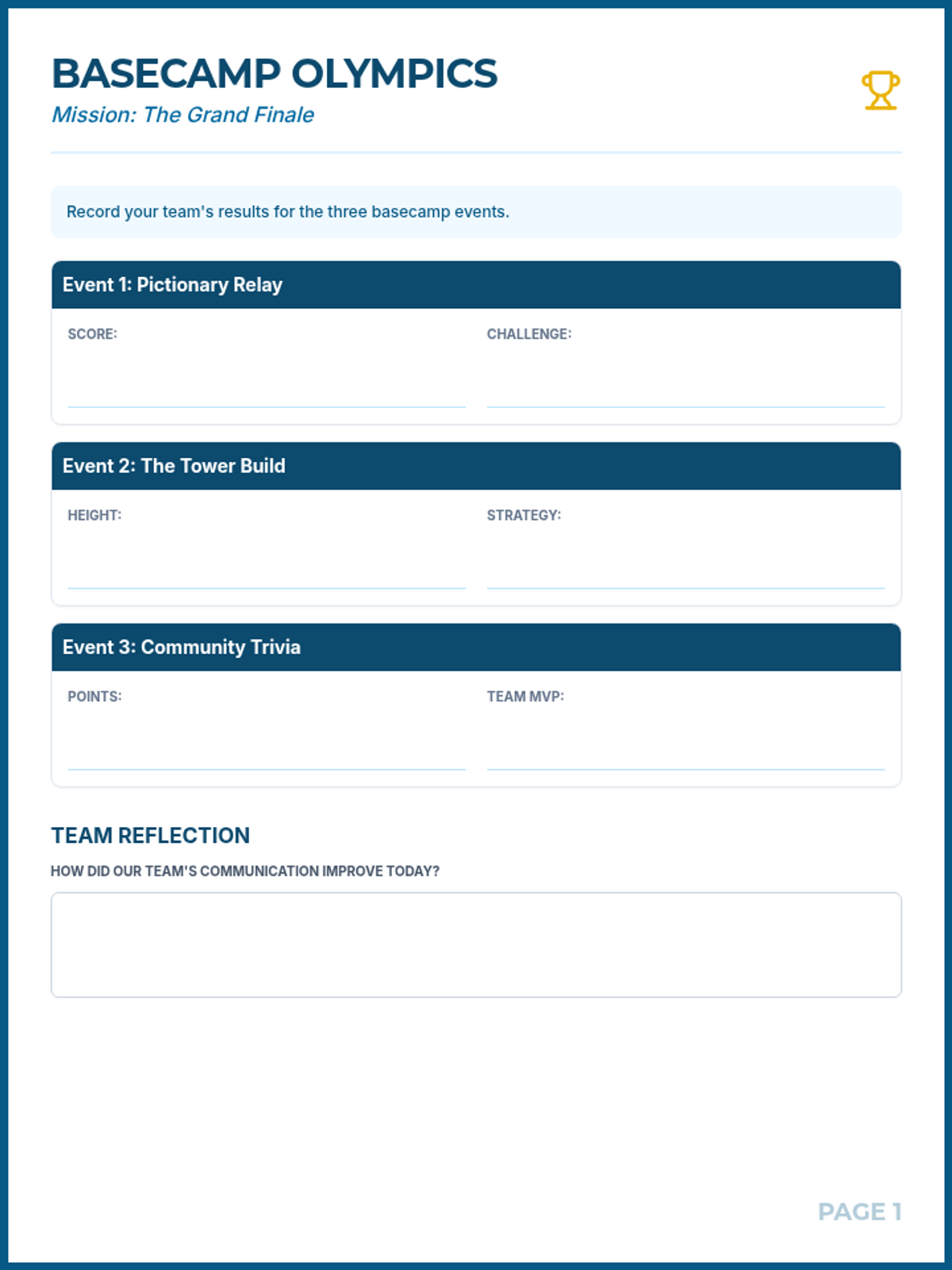
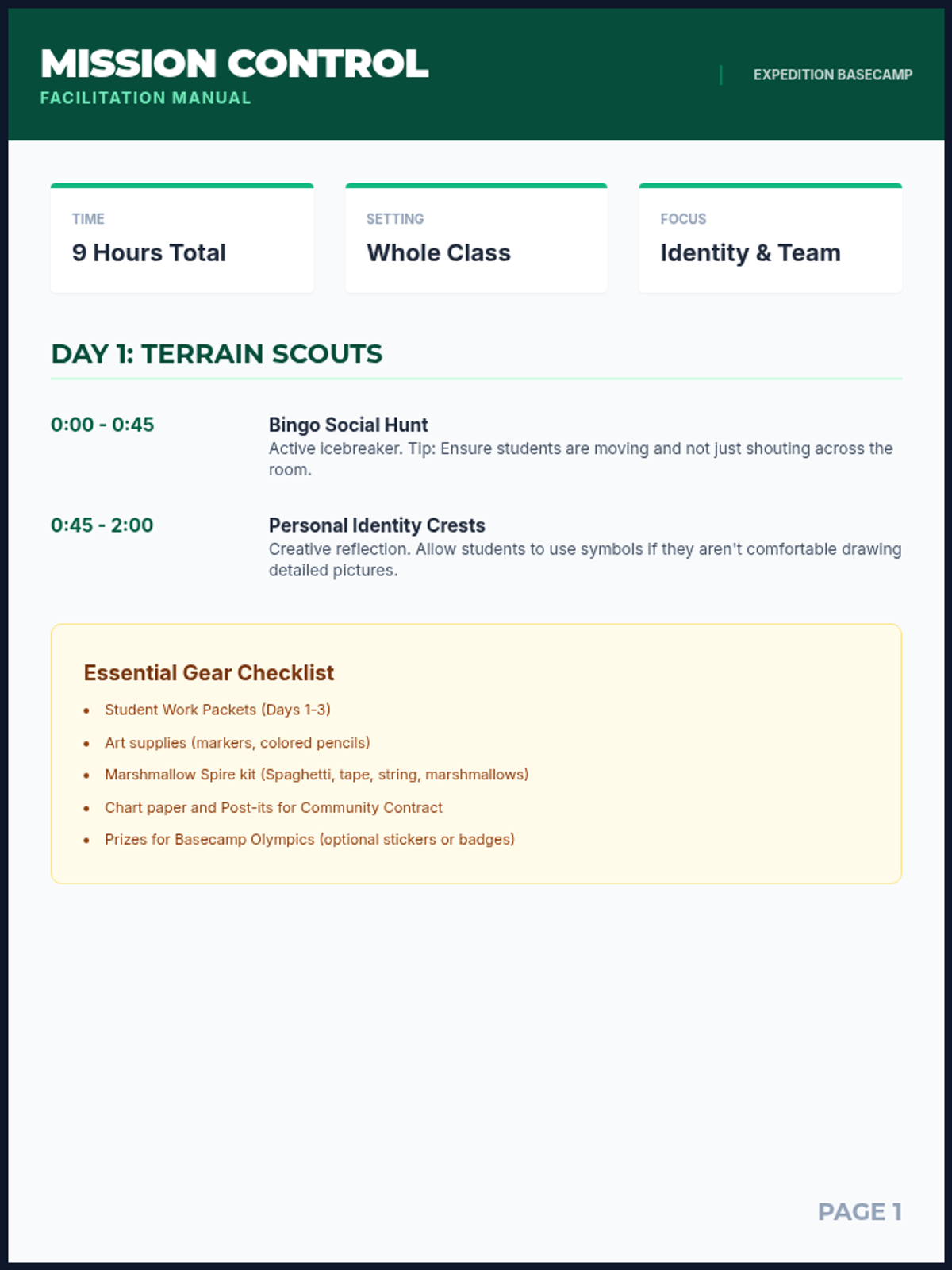
The final day celebrates the new community with a 'Basecamp Olympics' event and a reflective 'Letter to Future Self' to set the tone for the year ahead.
Day two shifts focus to collaborative problem-solving with an engineering challenge and the collective creation of a classroom 'Community Contract'.
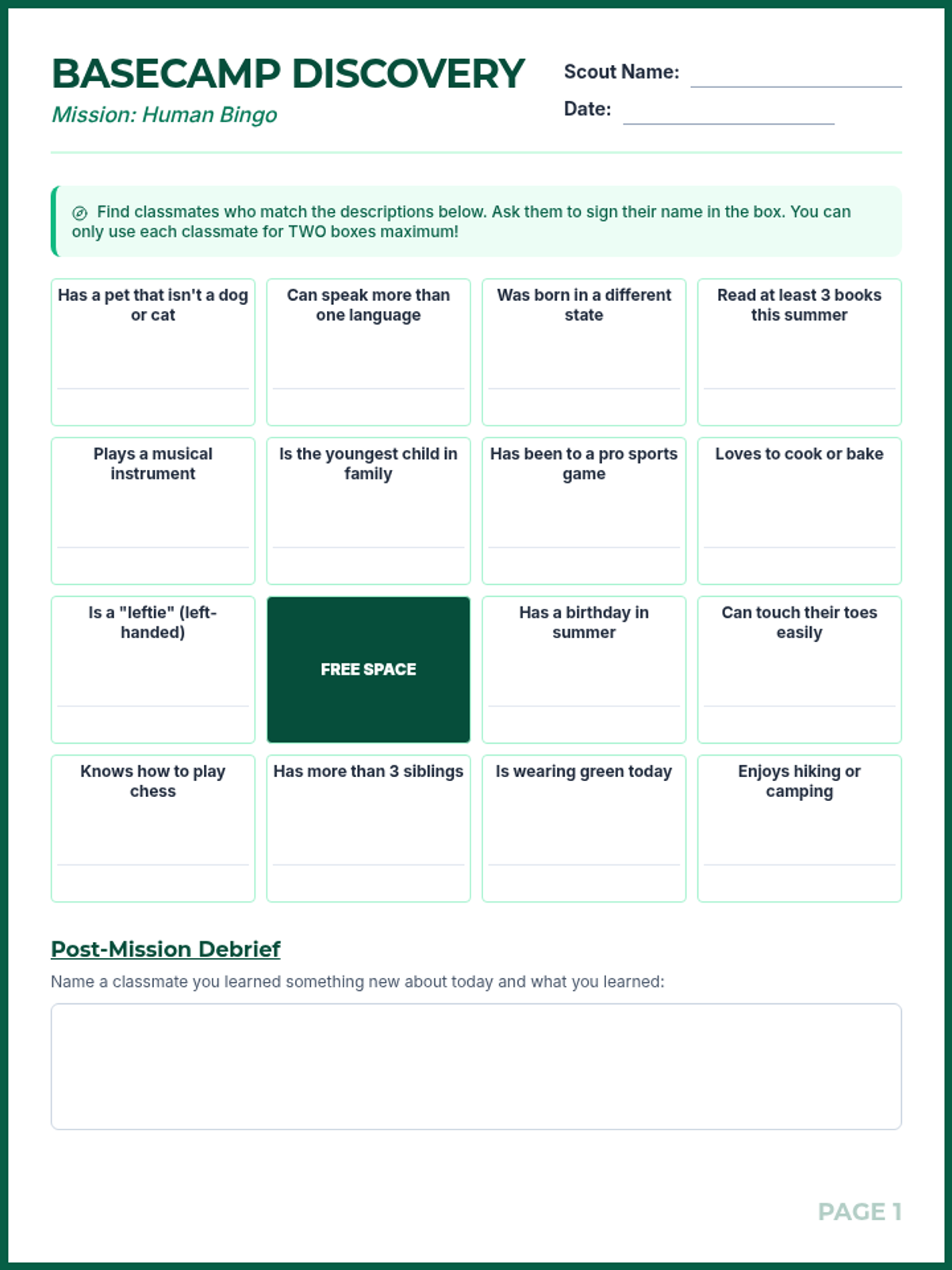
The first day of basecamp focuses on individual identity and initial team bonds through a 'Human Bingo' social hunt and a creative 'Personal Crest' project.
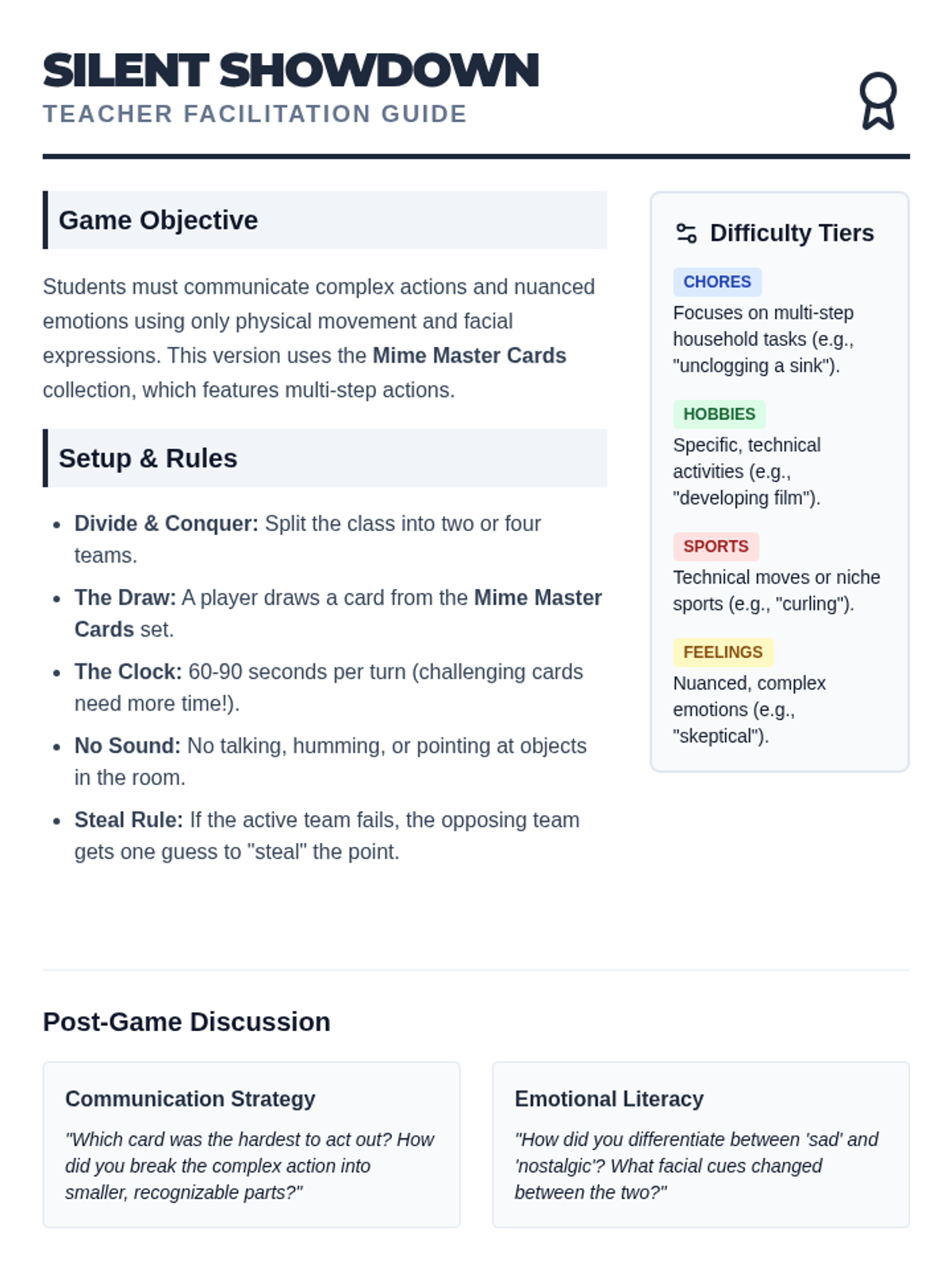
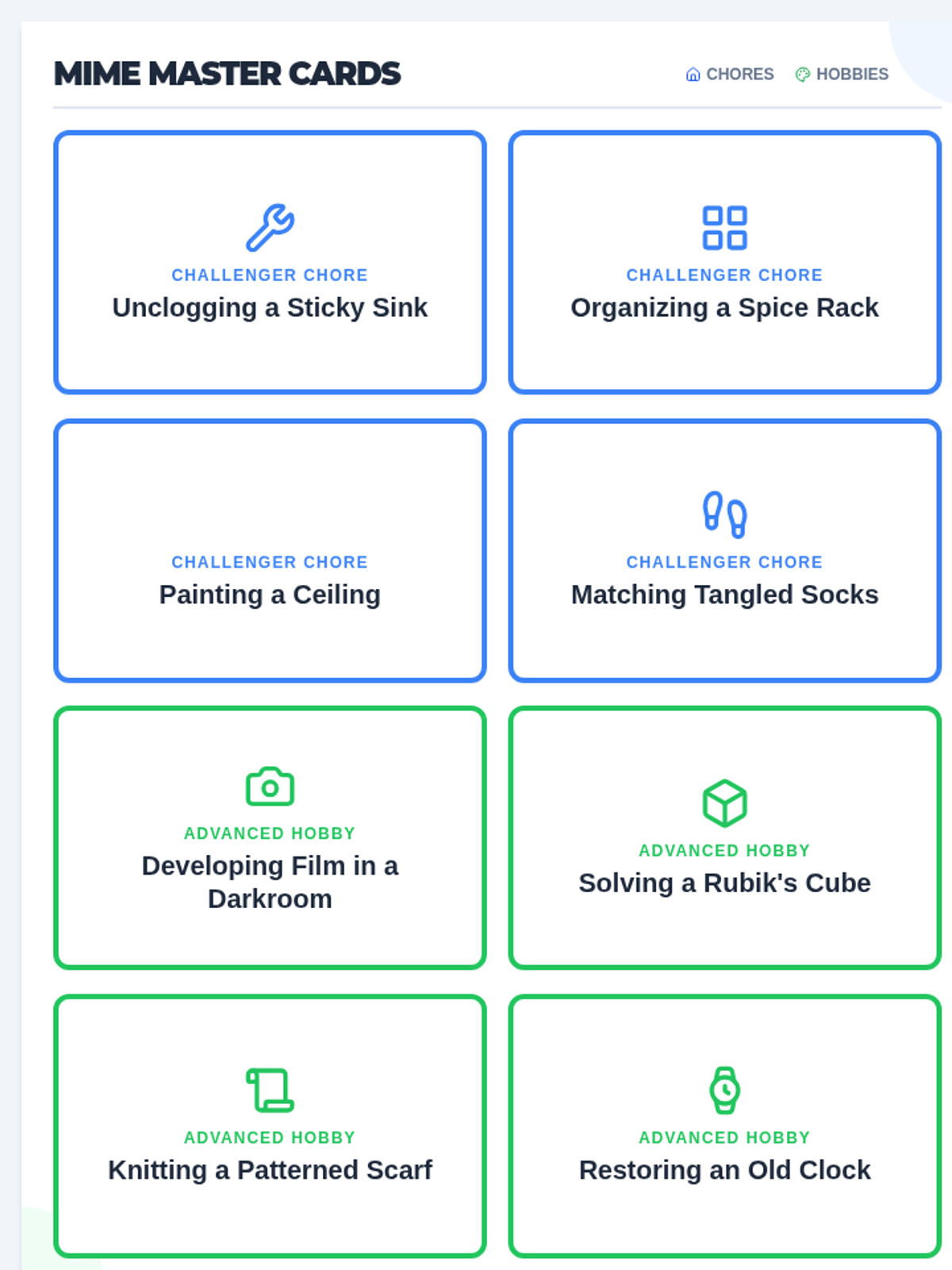
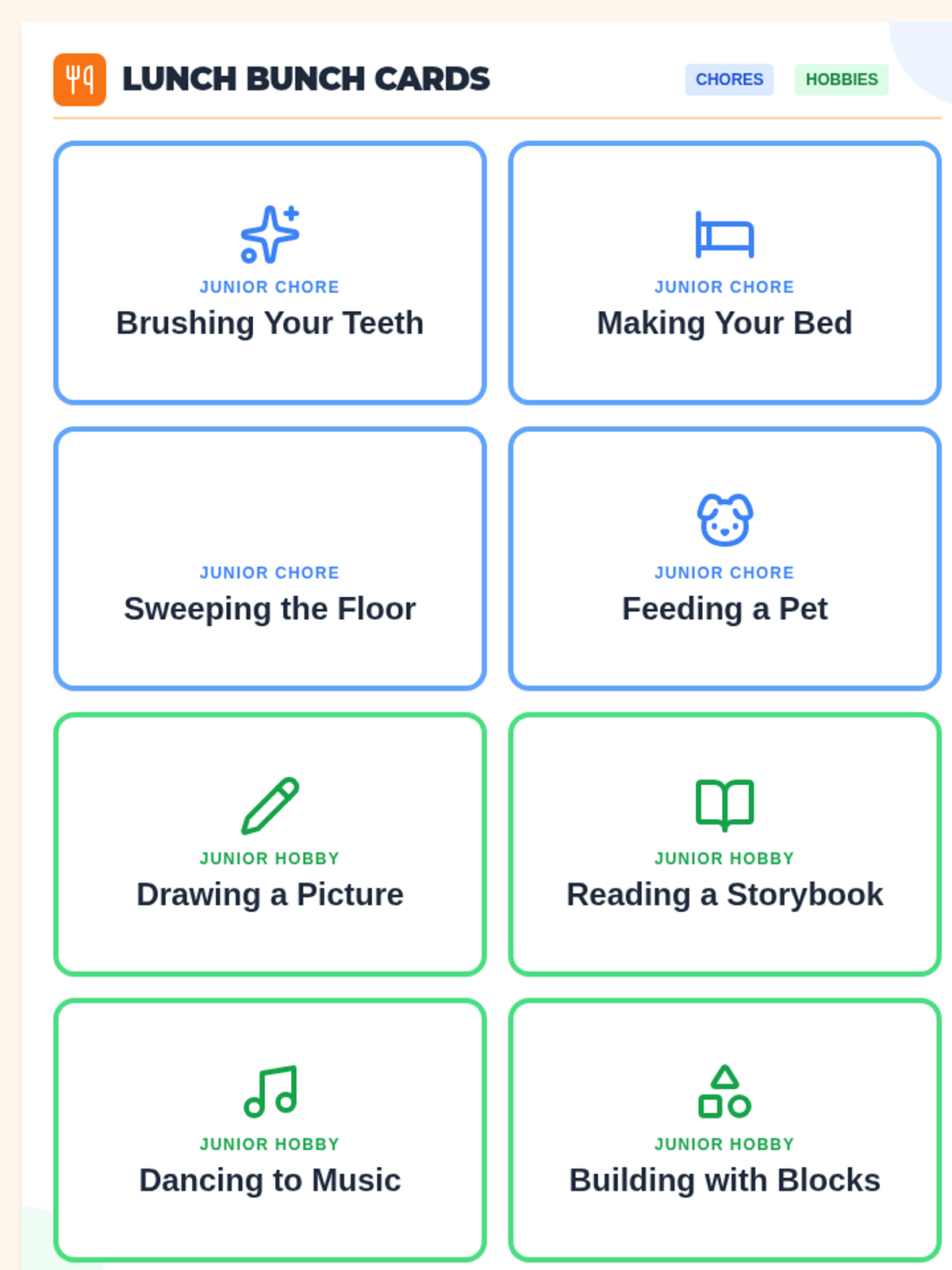
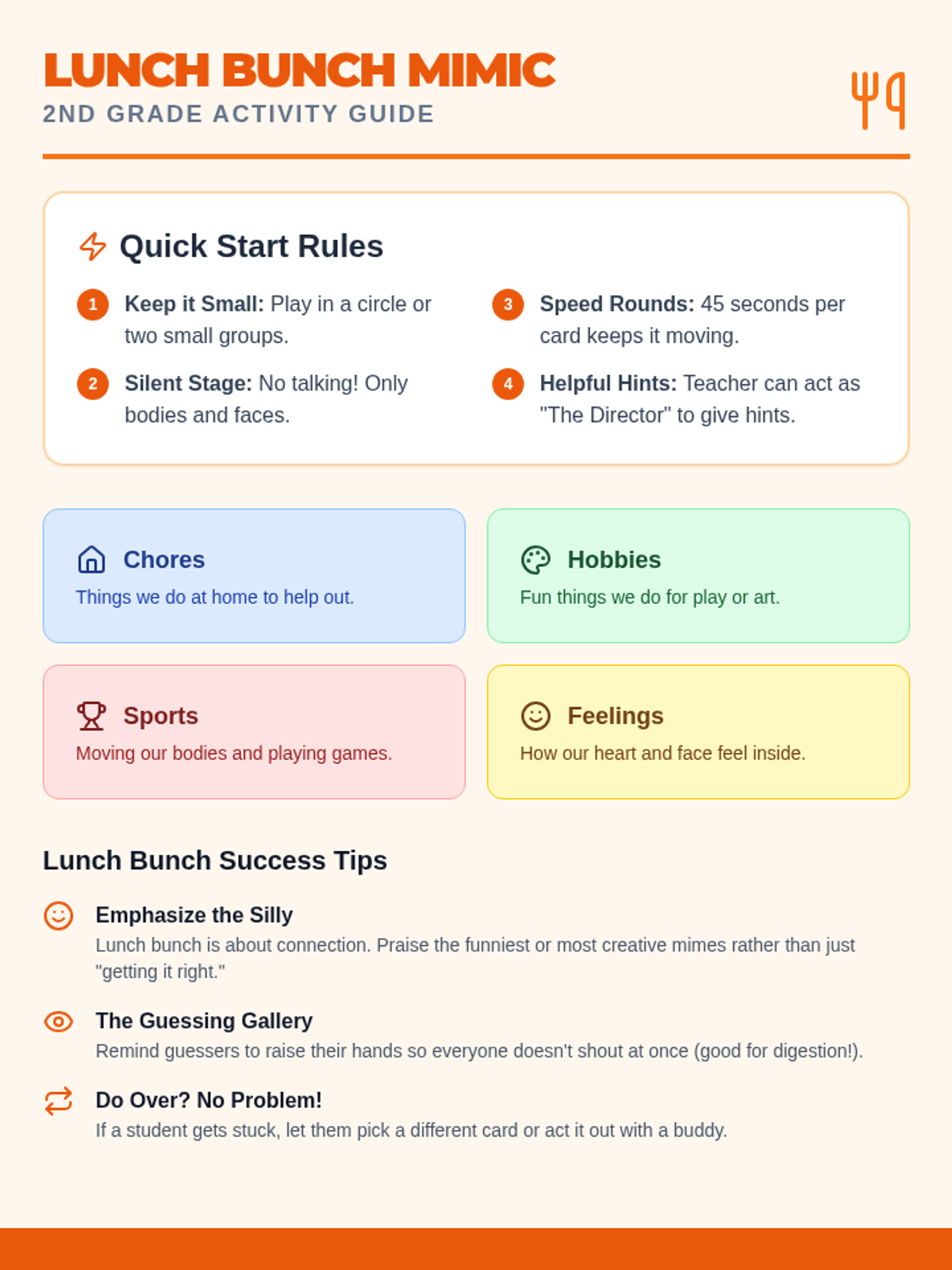
A dynamic lesson on non-verbal communication with two paths: a challenging 'Mime Master' level for older students and a simplified 'Lunch Bunch' version designed for 2nd grade social-emotional learning and casual play.
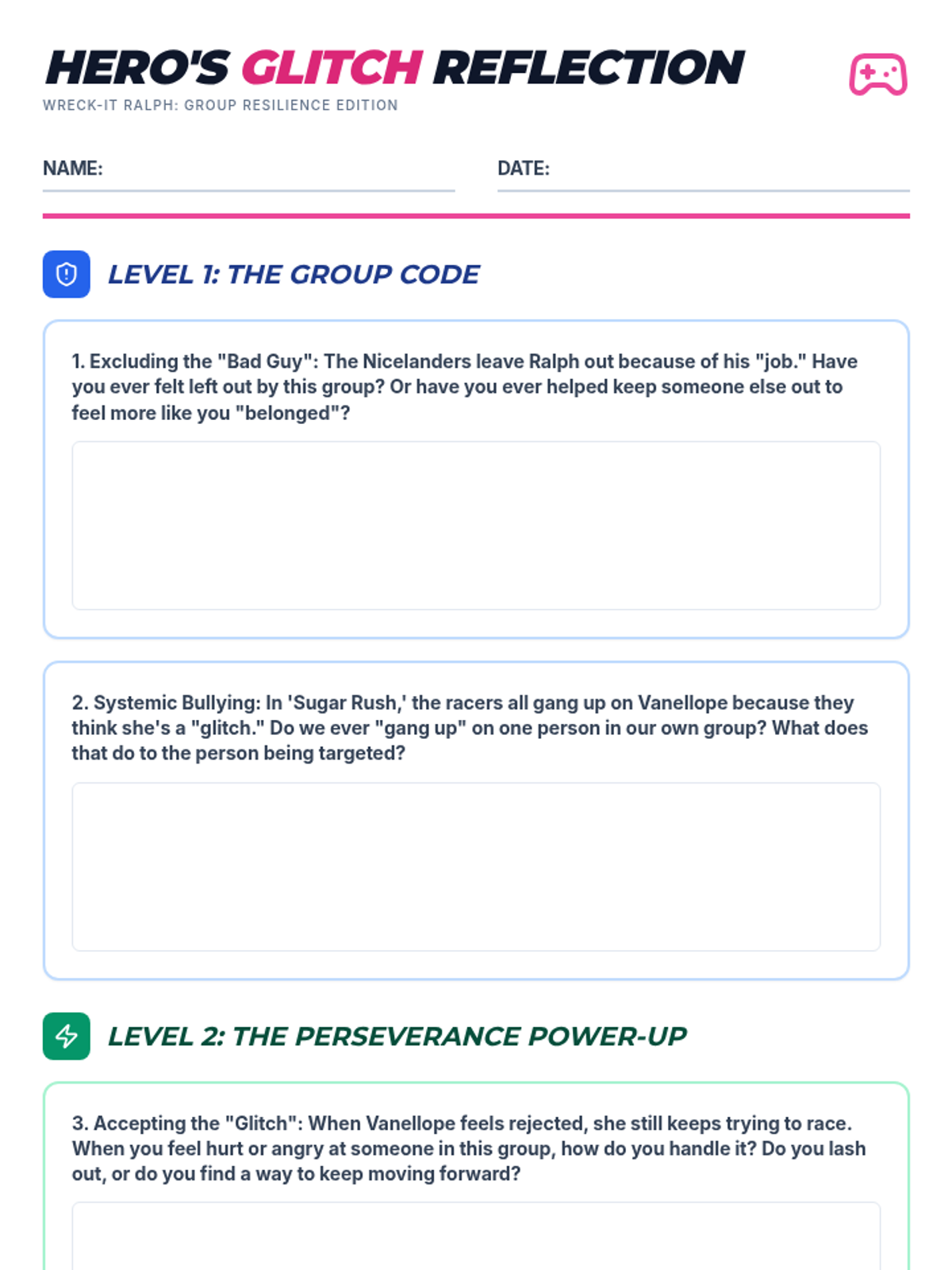
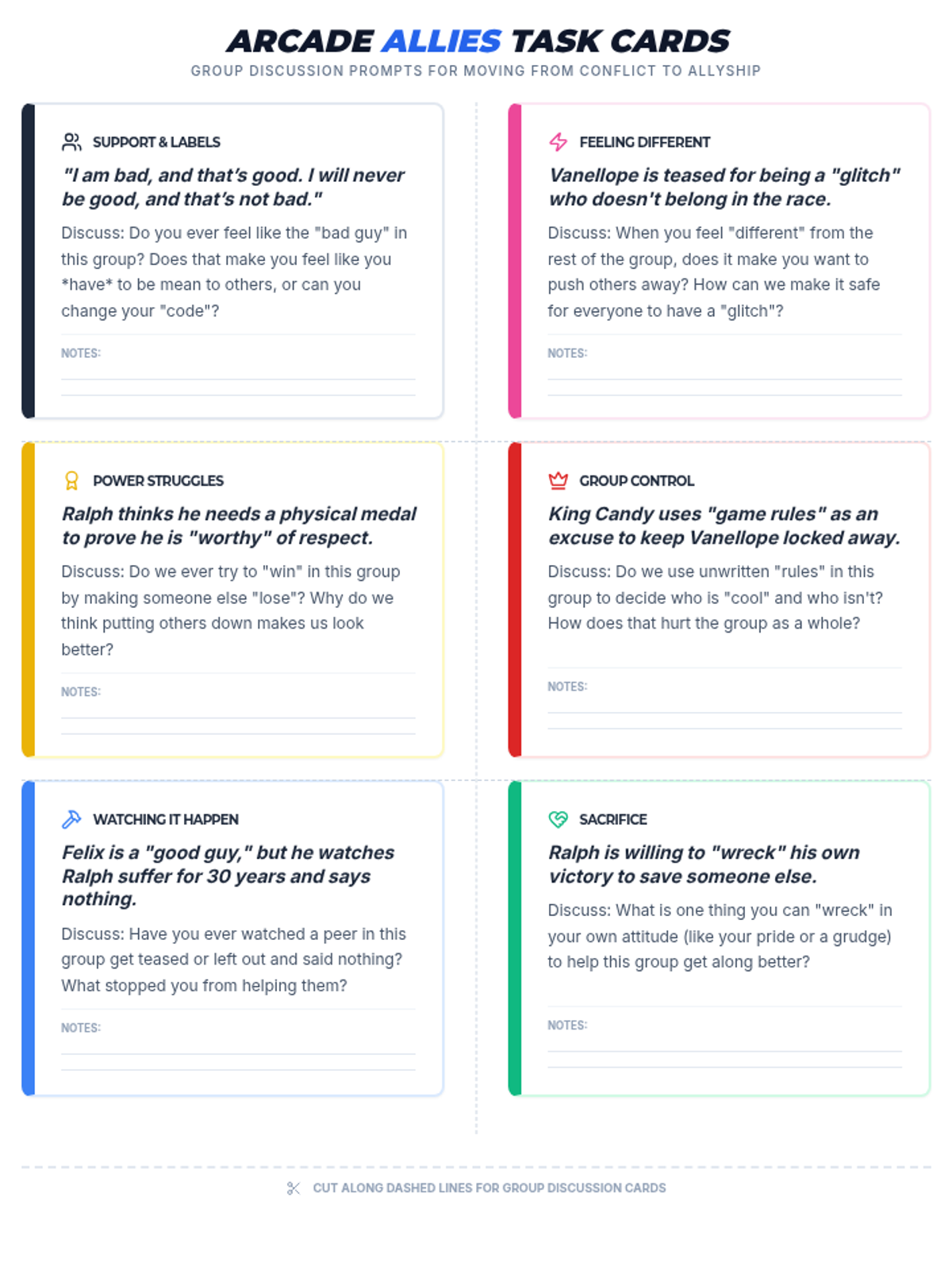
A movie-based training module using 'Wreck-It Ralph' to explore the mechanics of bullying, the importance of perseverance, and strategies for building empathy for those marginalized as 'outsiders'.
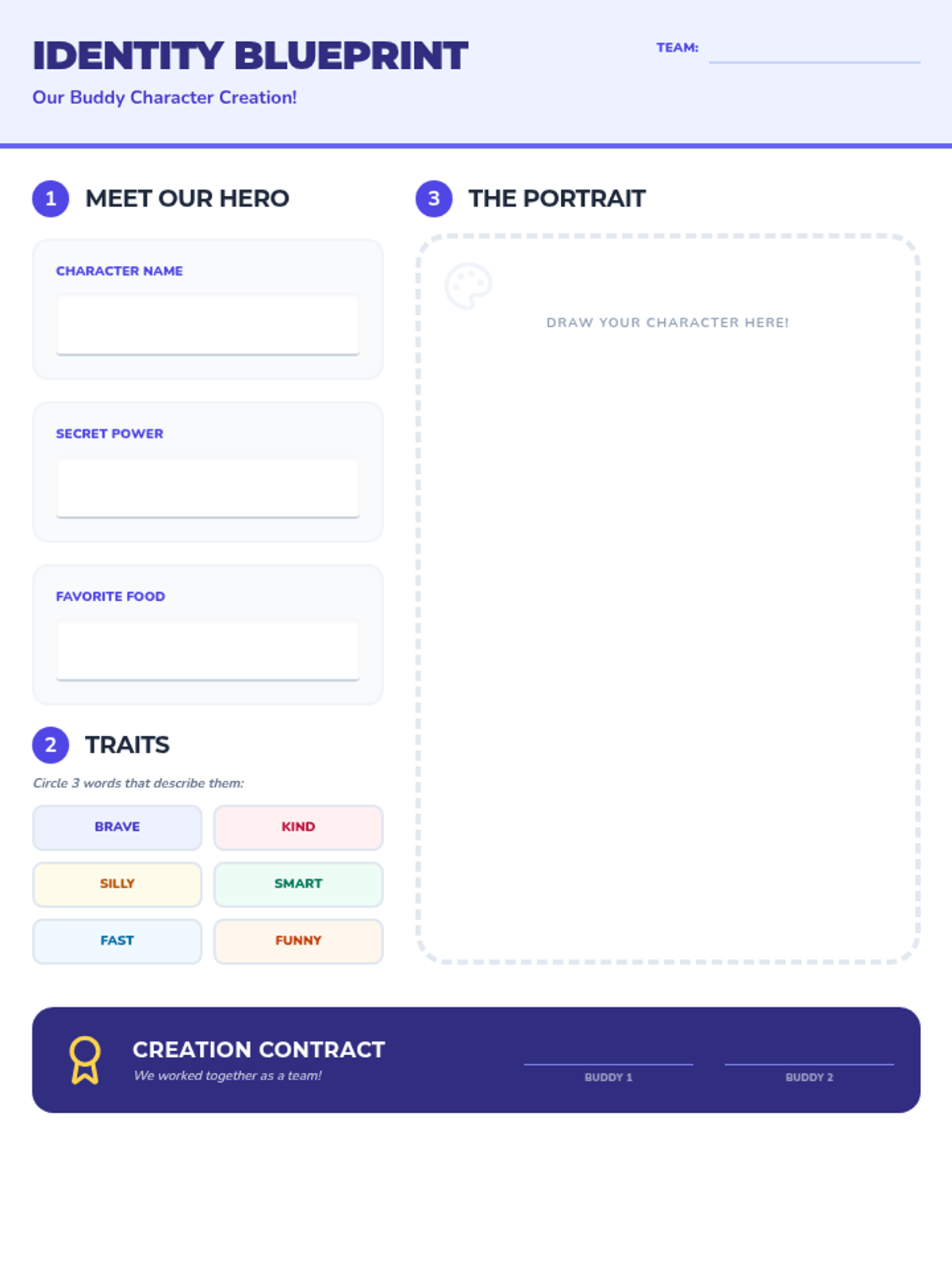
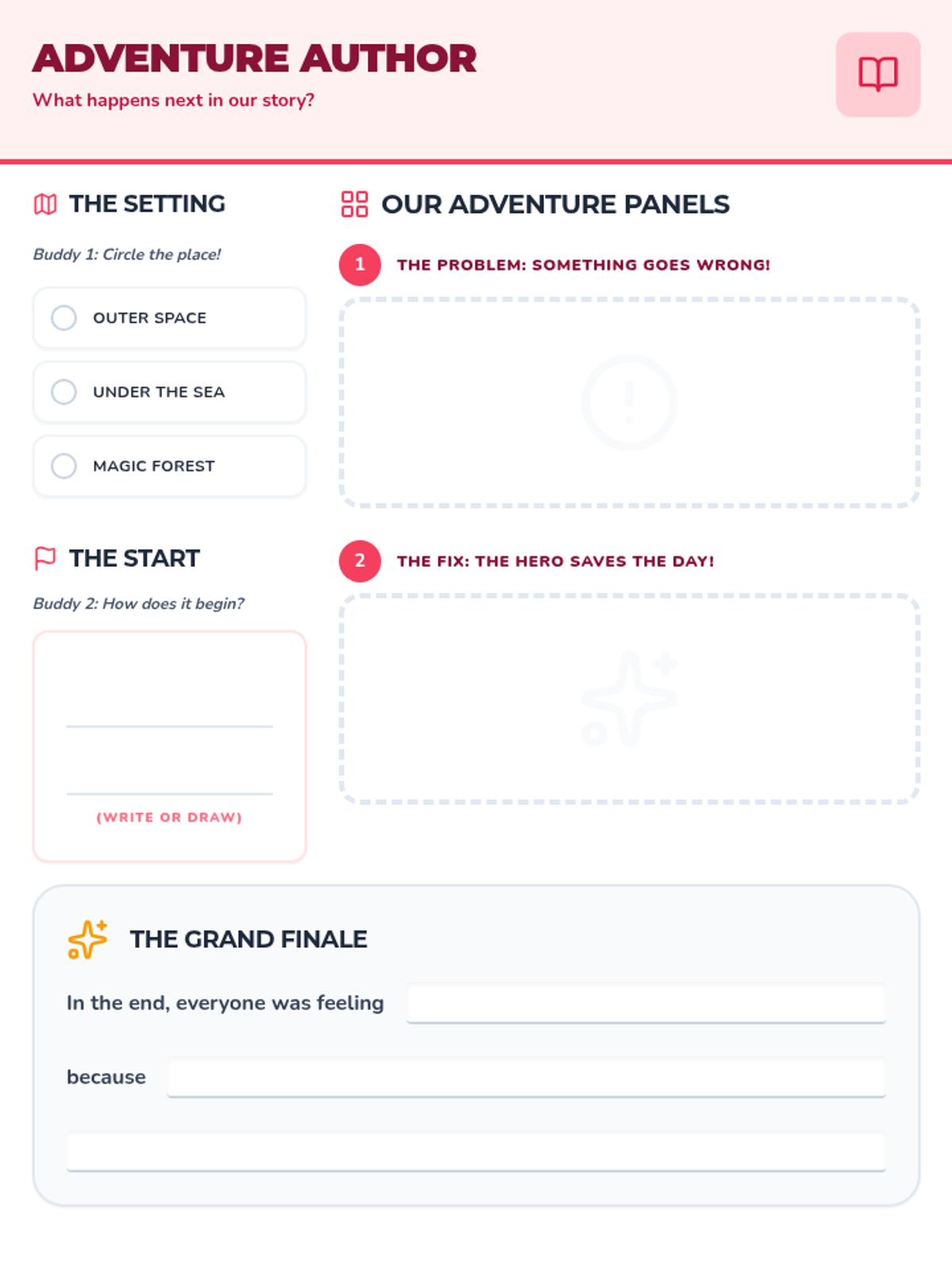
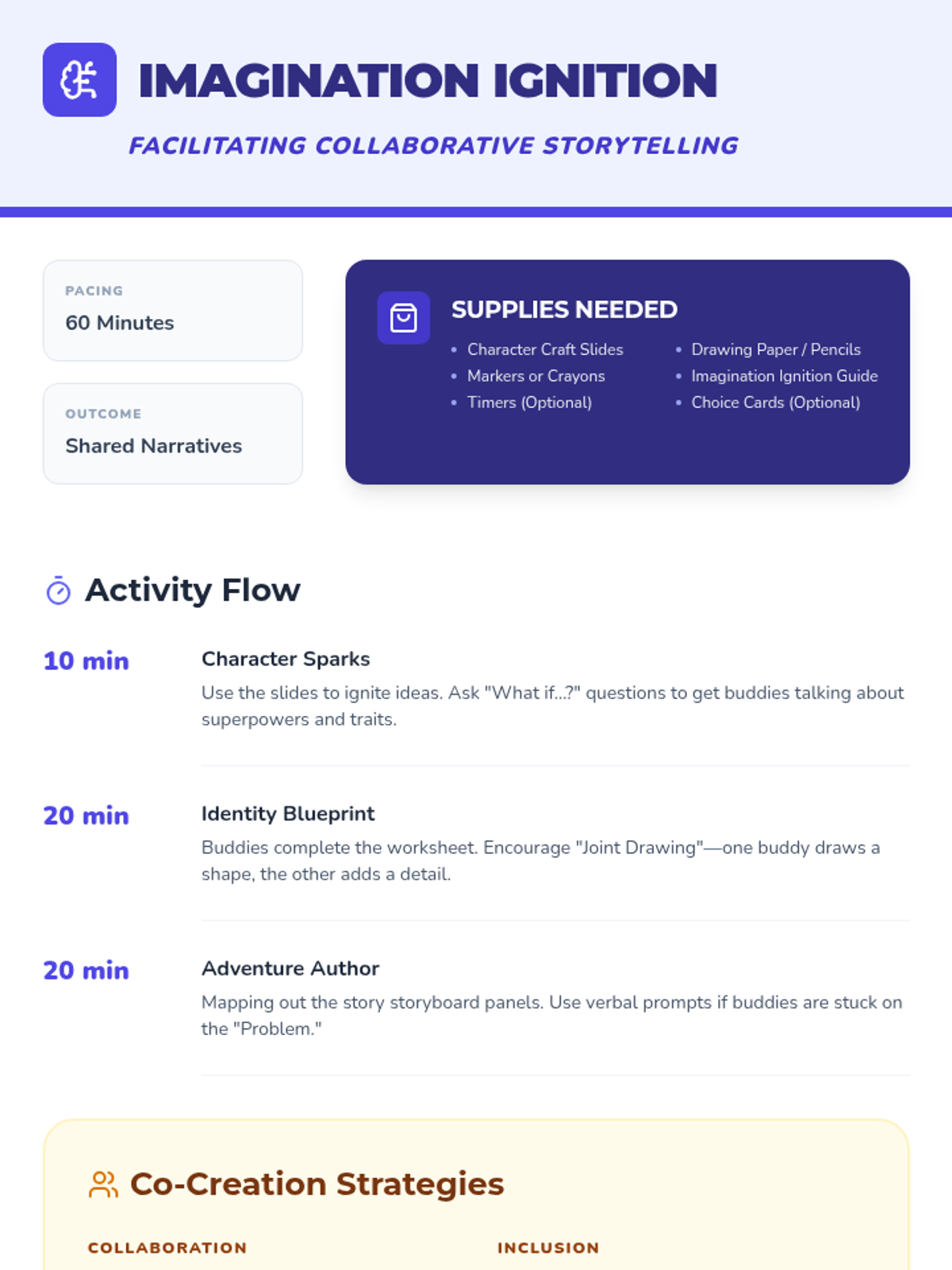
A creative collaboration lesson where Best Buddies pairs design a unique character and write a shared adventure story together.
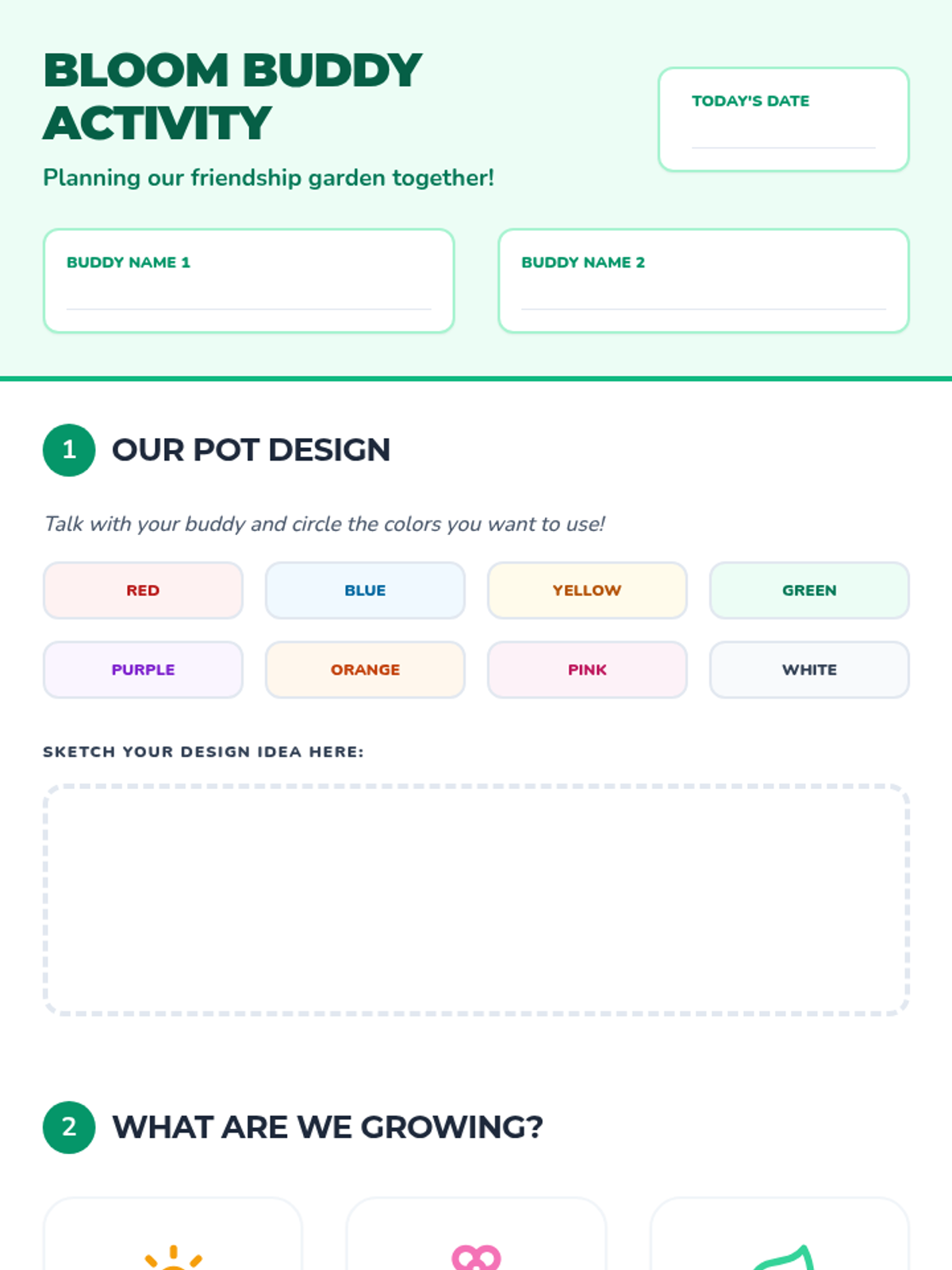
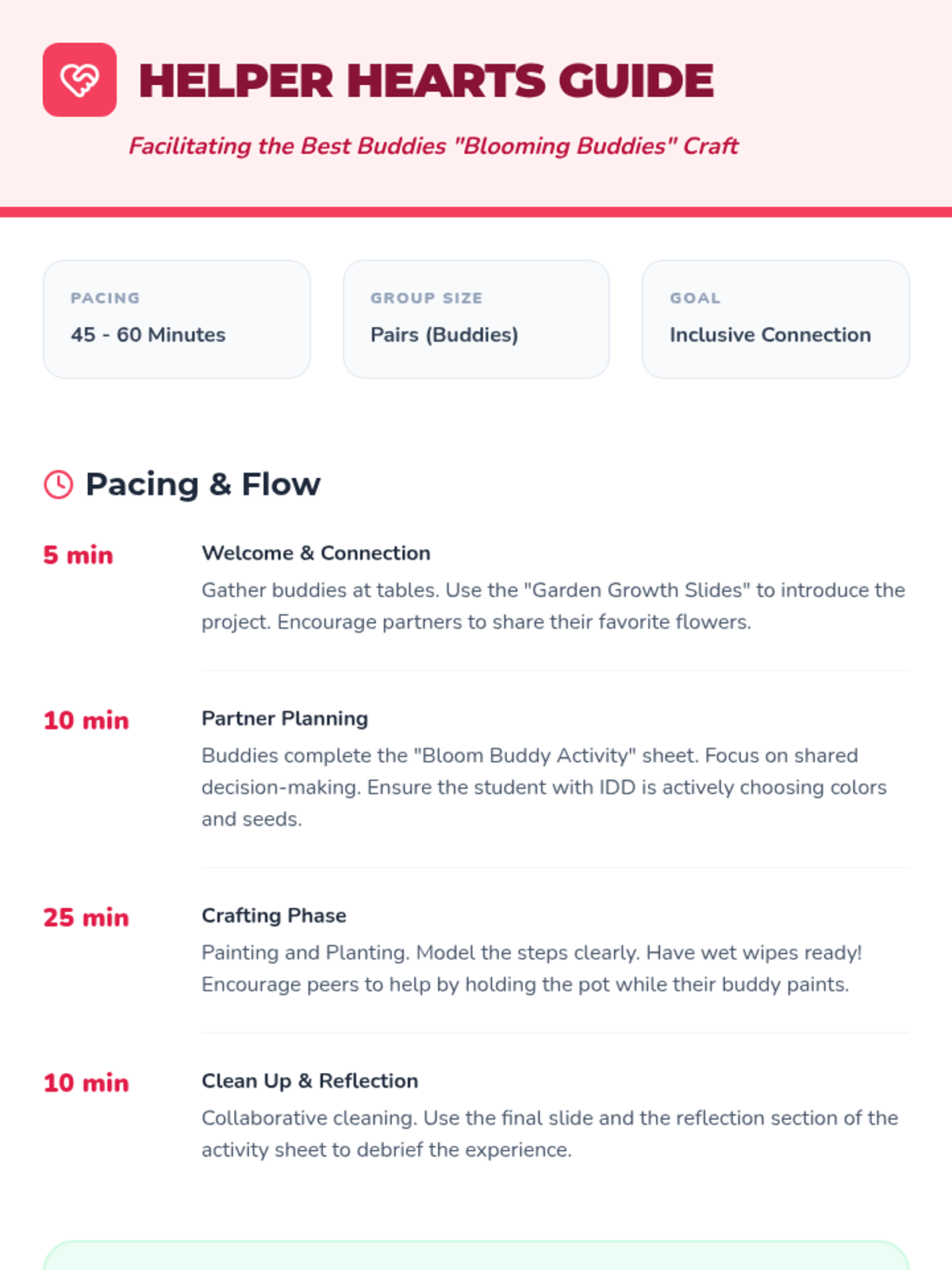
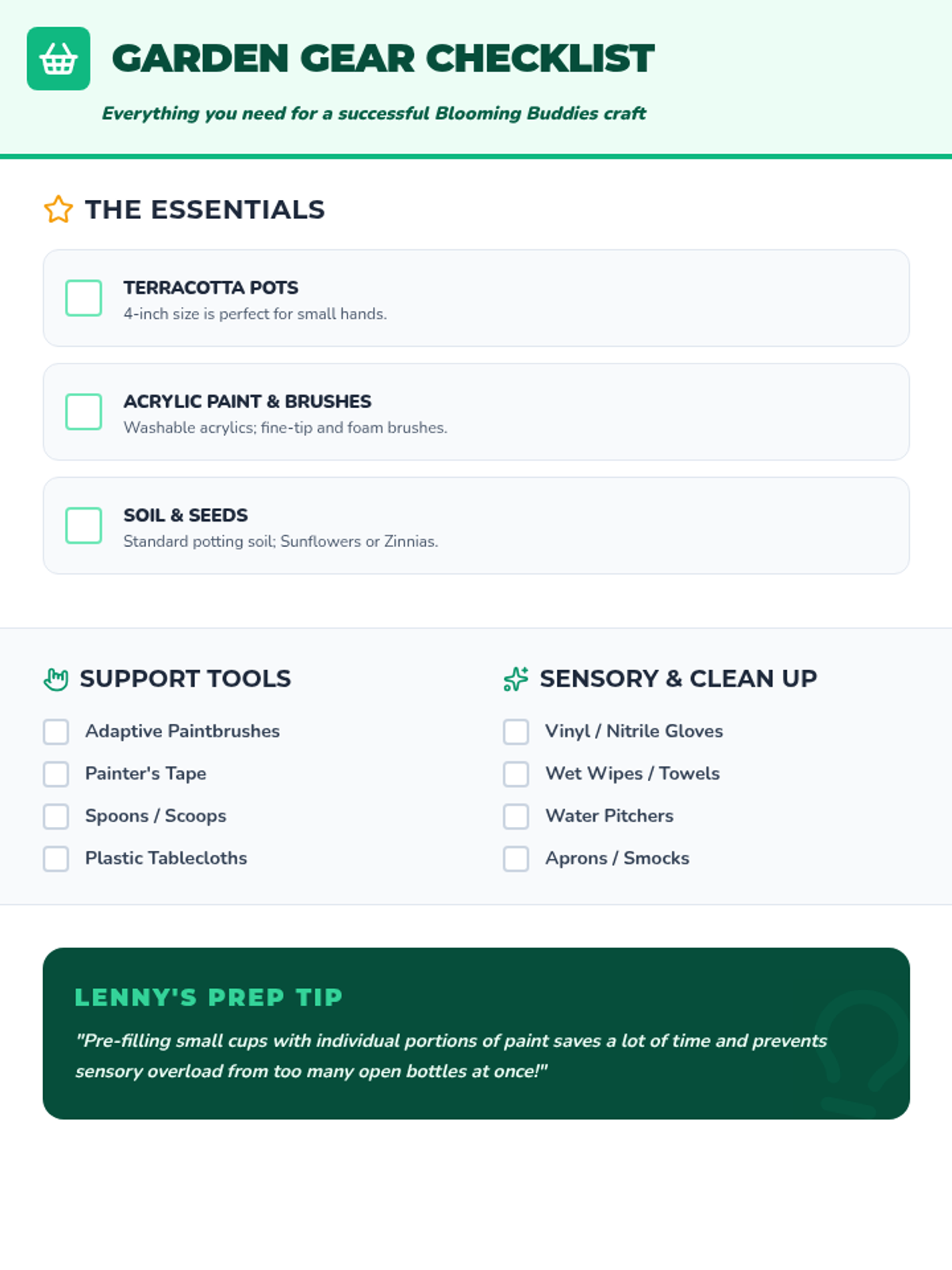
A collaborative crafting lesson designed for Best Buddies pairs to create seasonal flower pots, fostering social connection and fine motor skills through a shared gardening project.
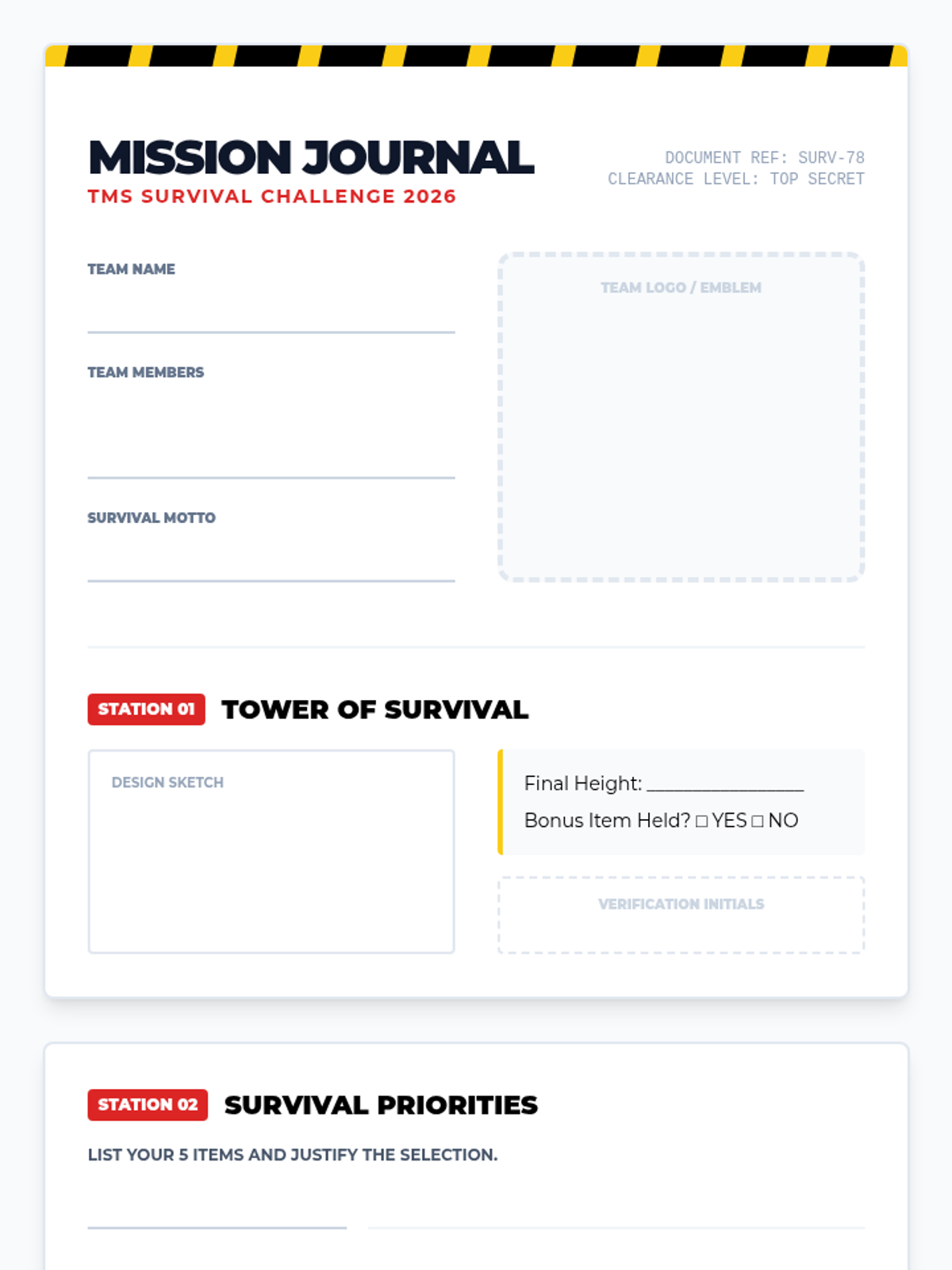
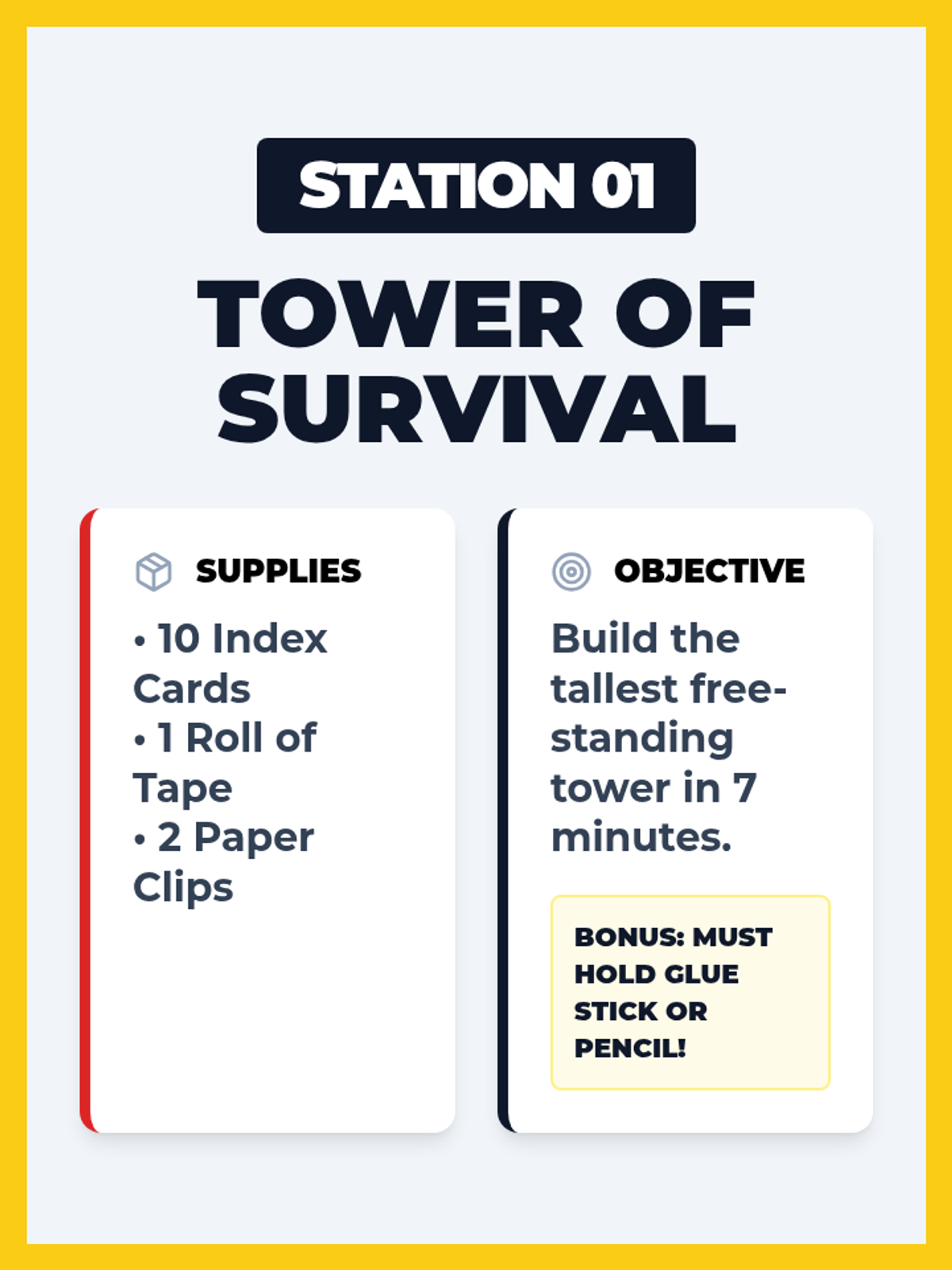
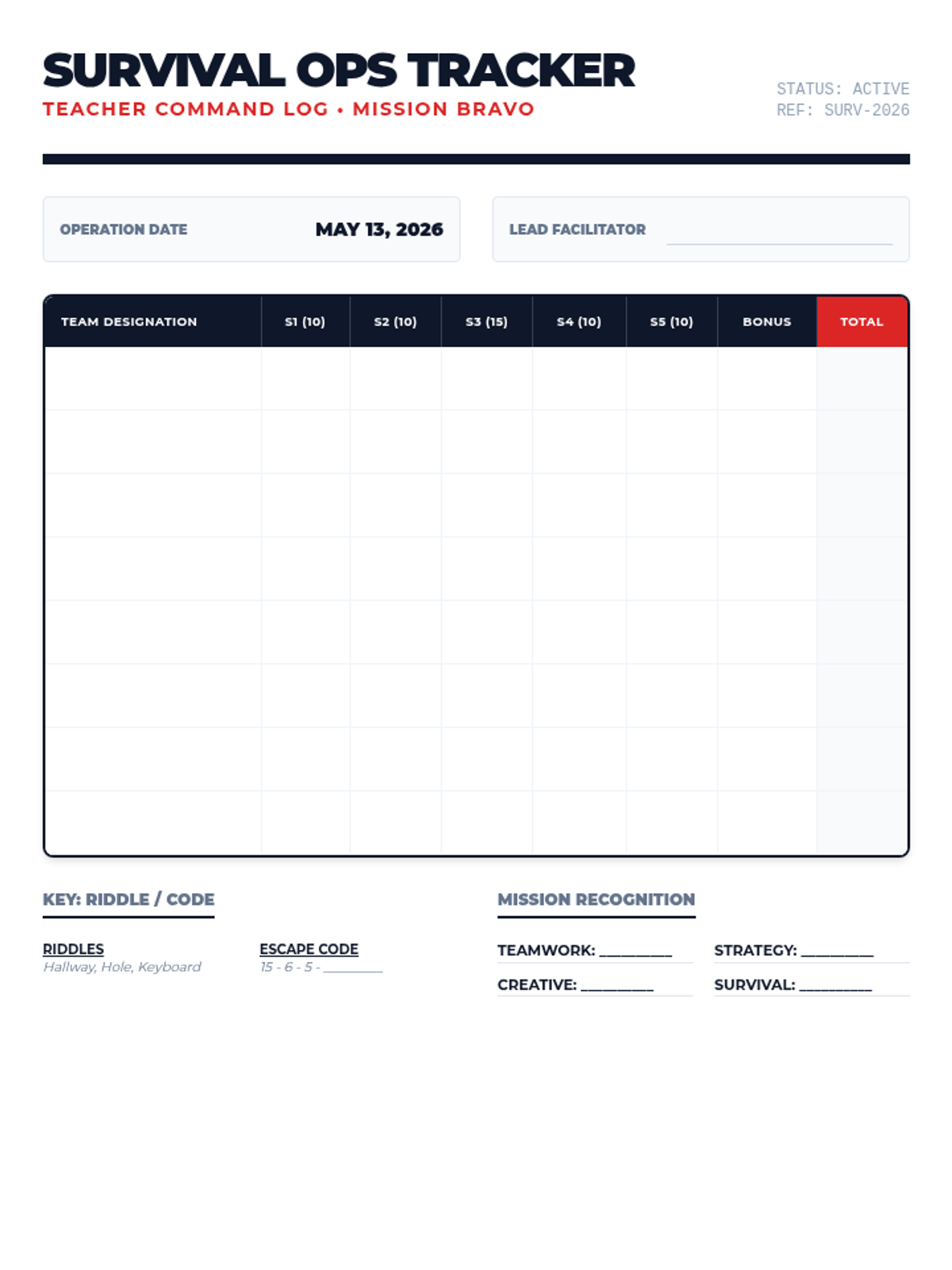
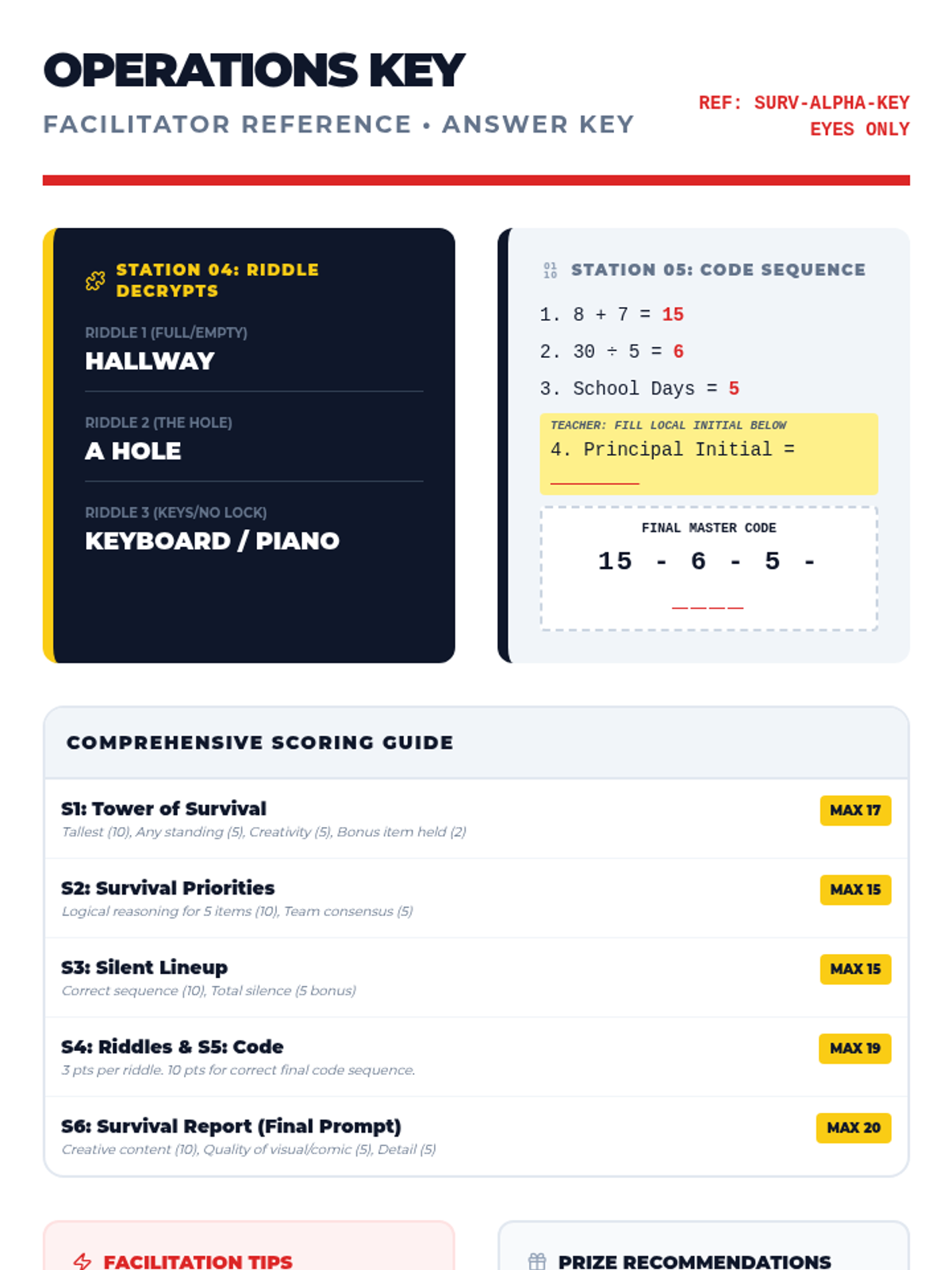
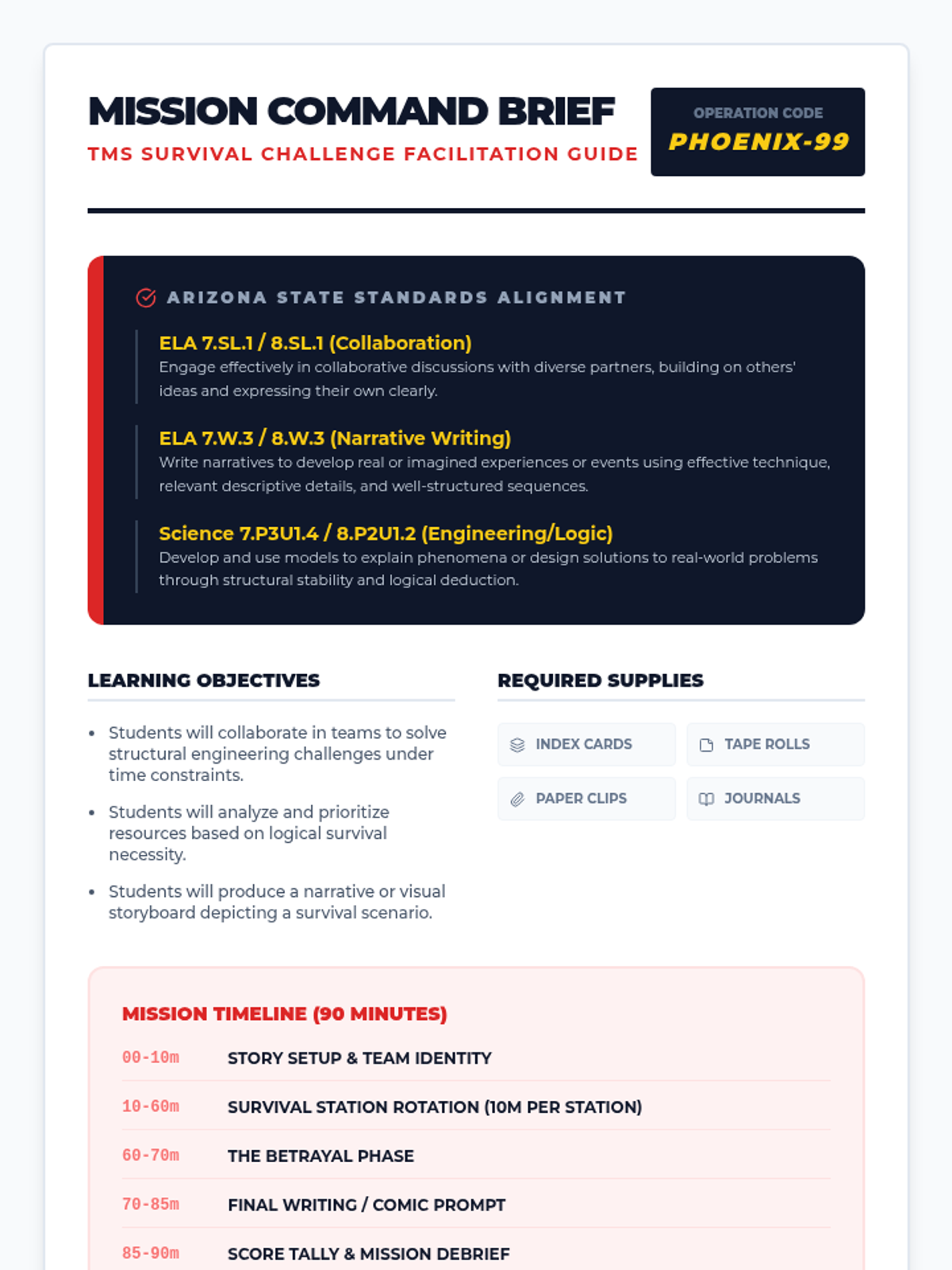
A high-energy, station-based team-building challenge where students must 'survive' a school lockdown scenario using logic, creativity, and teamwork.
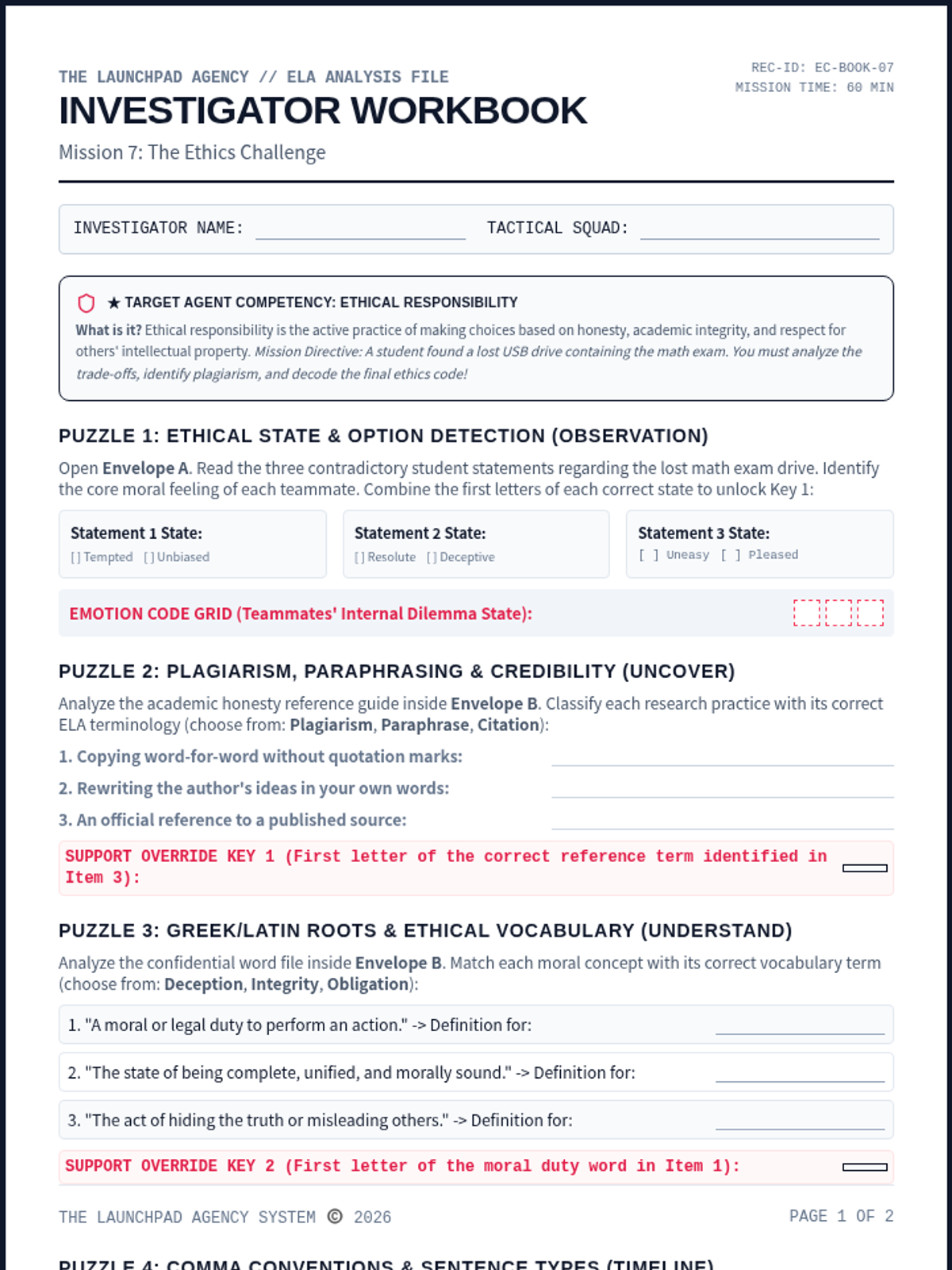
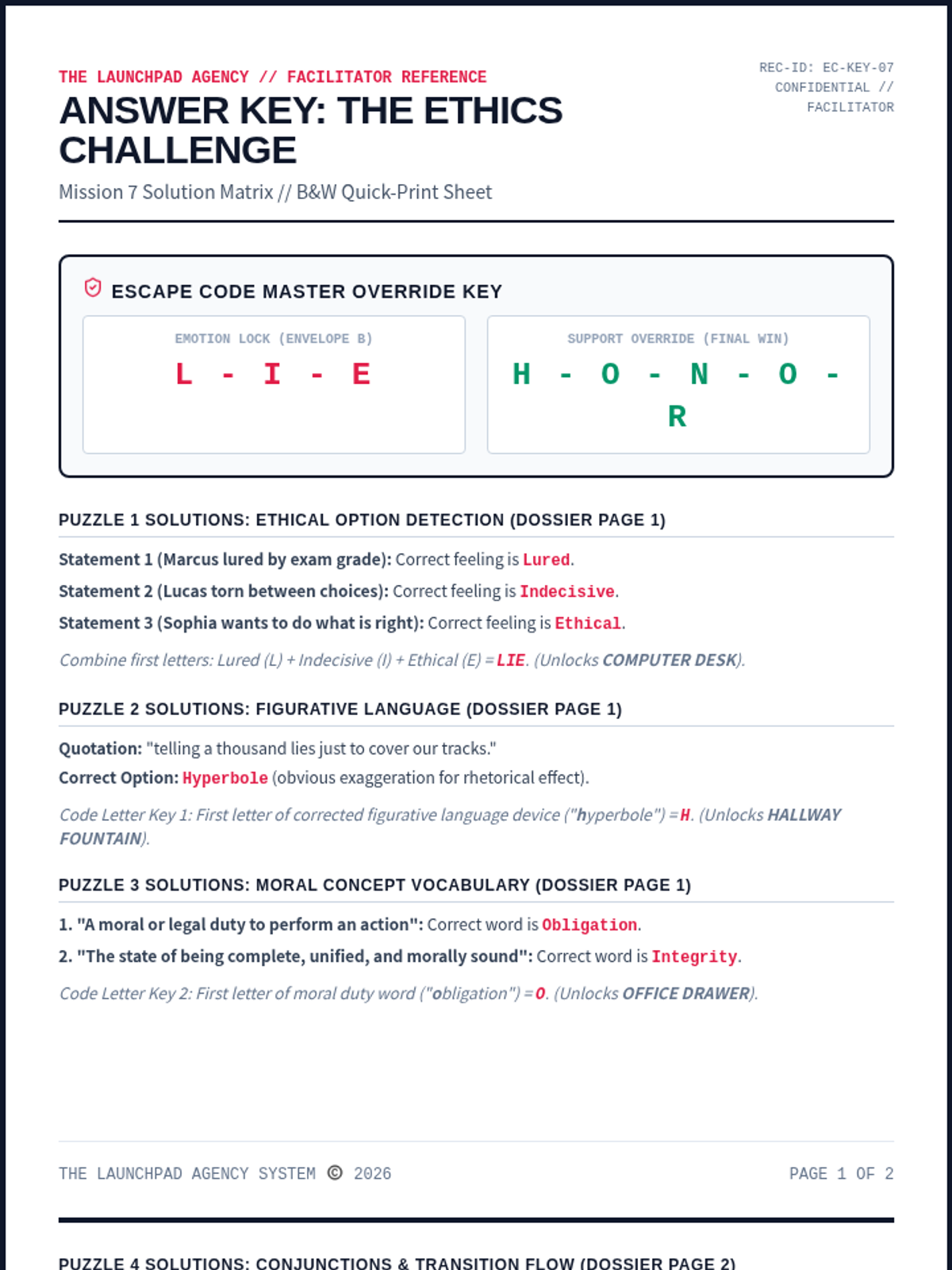
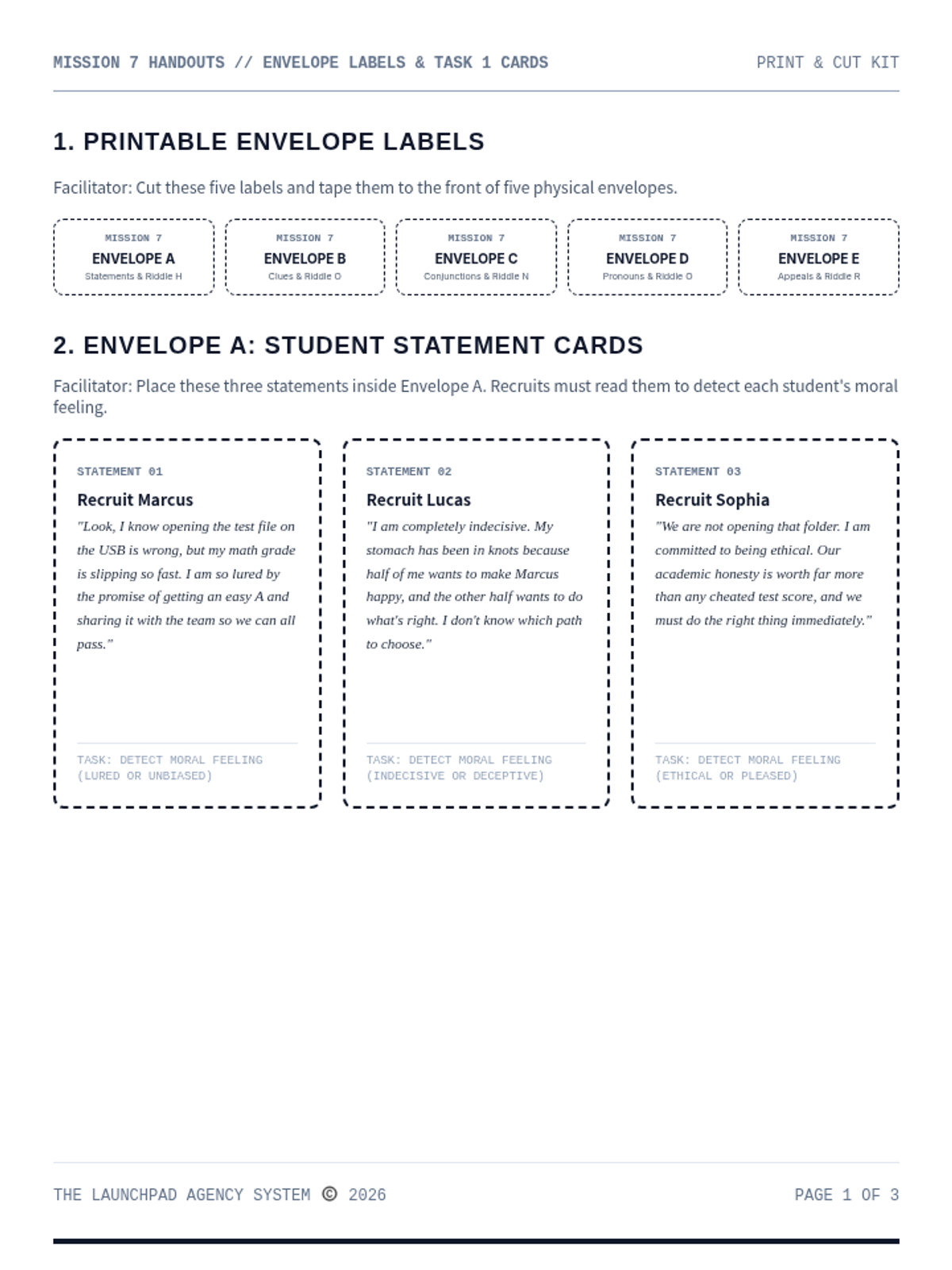
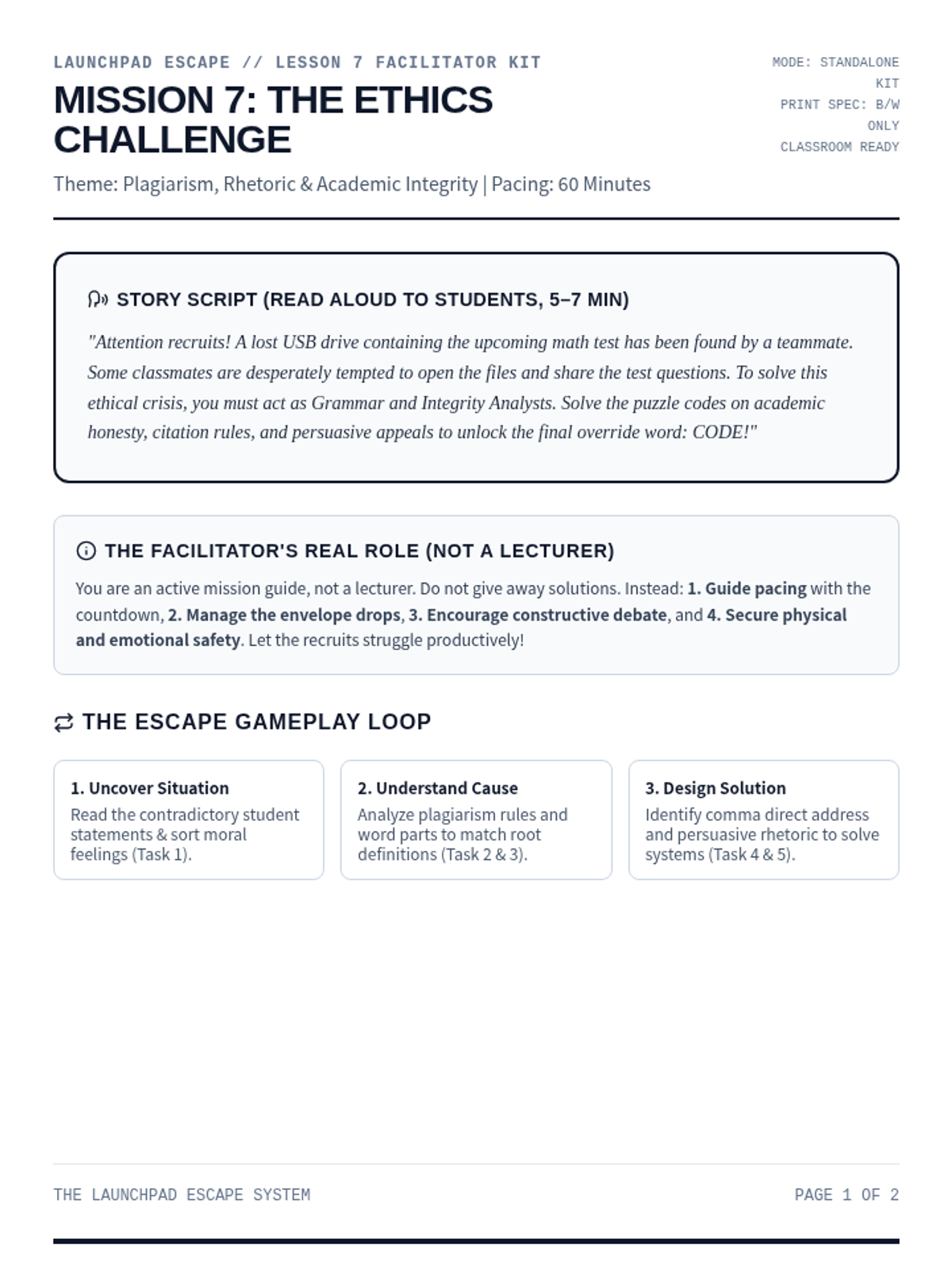
A high-stakes moral dilemma escape room for Ages 11-13. Recruits evaluate the trade-offs of academic honesty, identify plagiarism, analyze persuasive appeals, and decode the final ethics code.
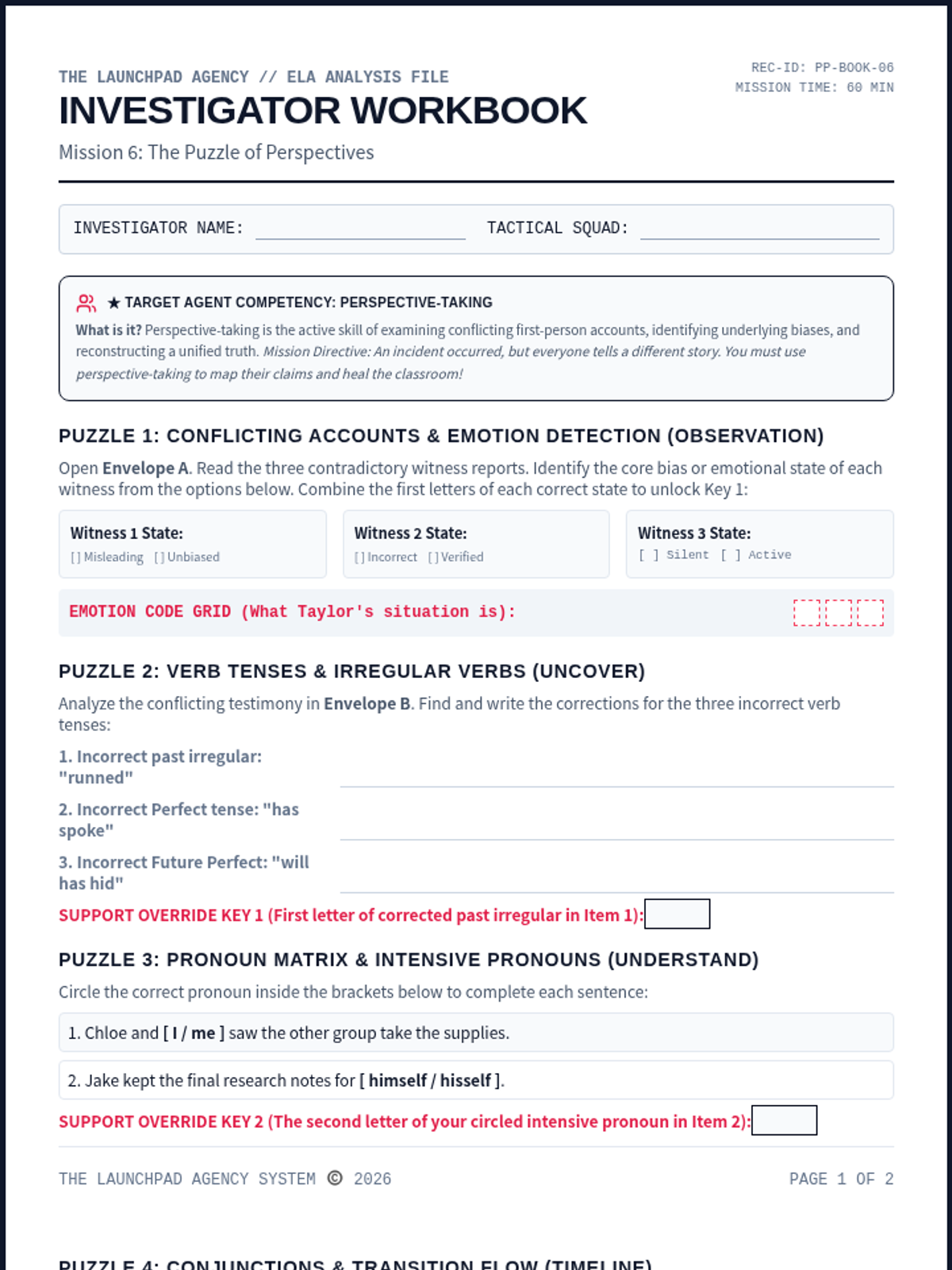
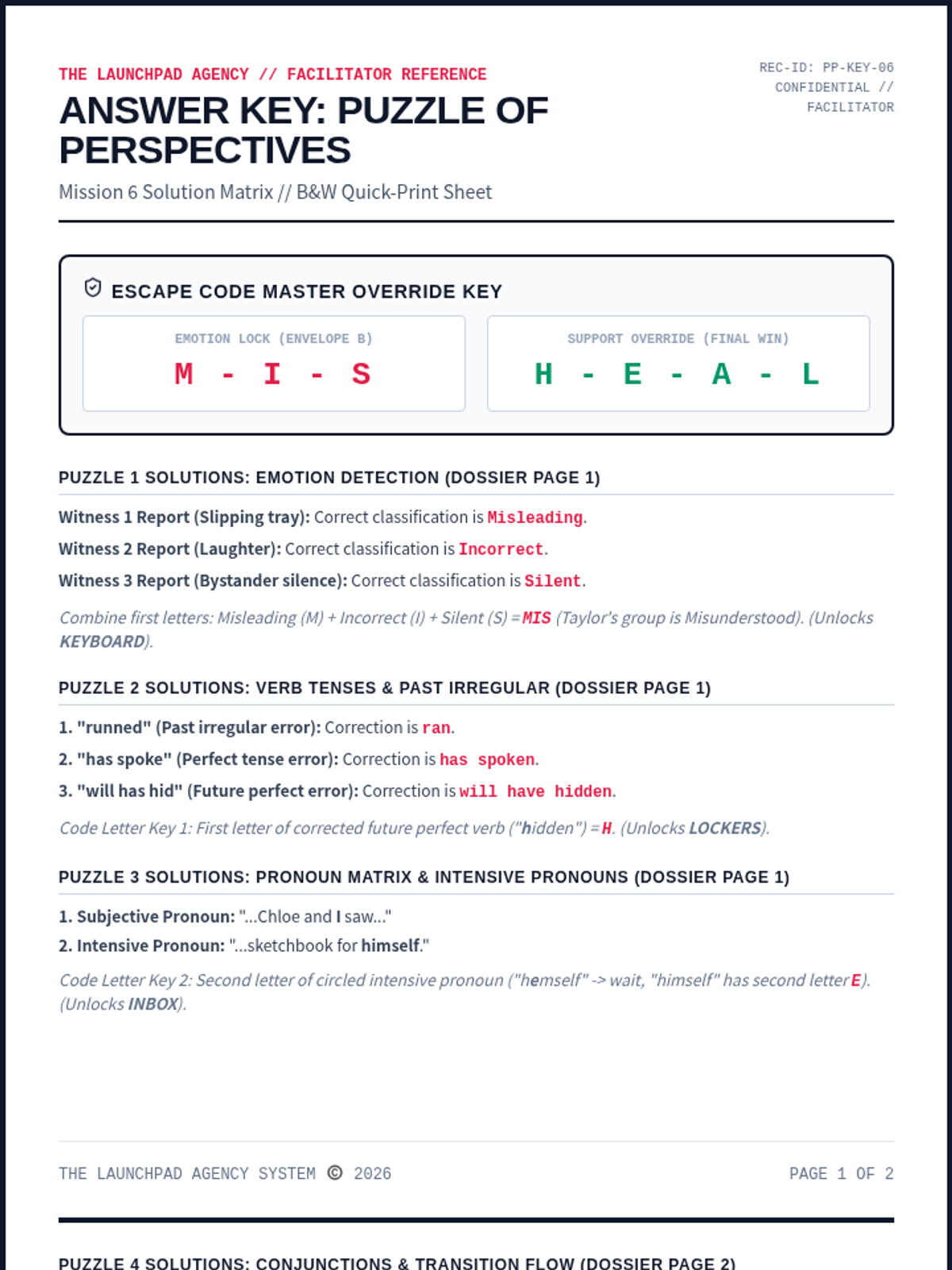
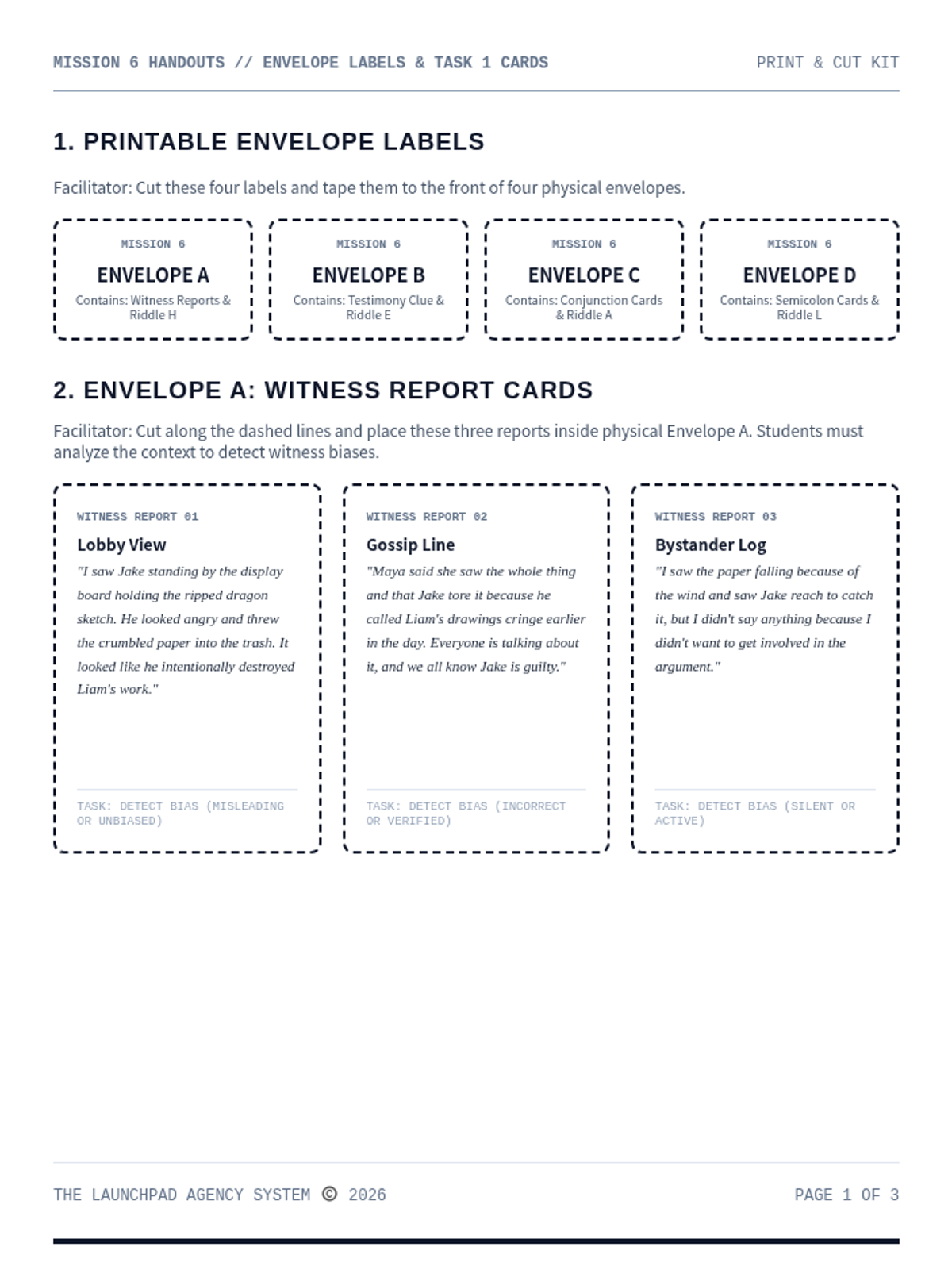
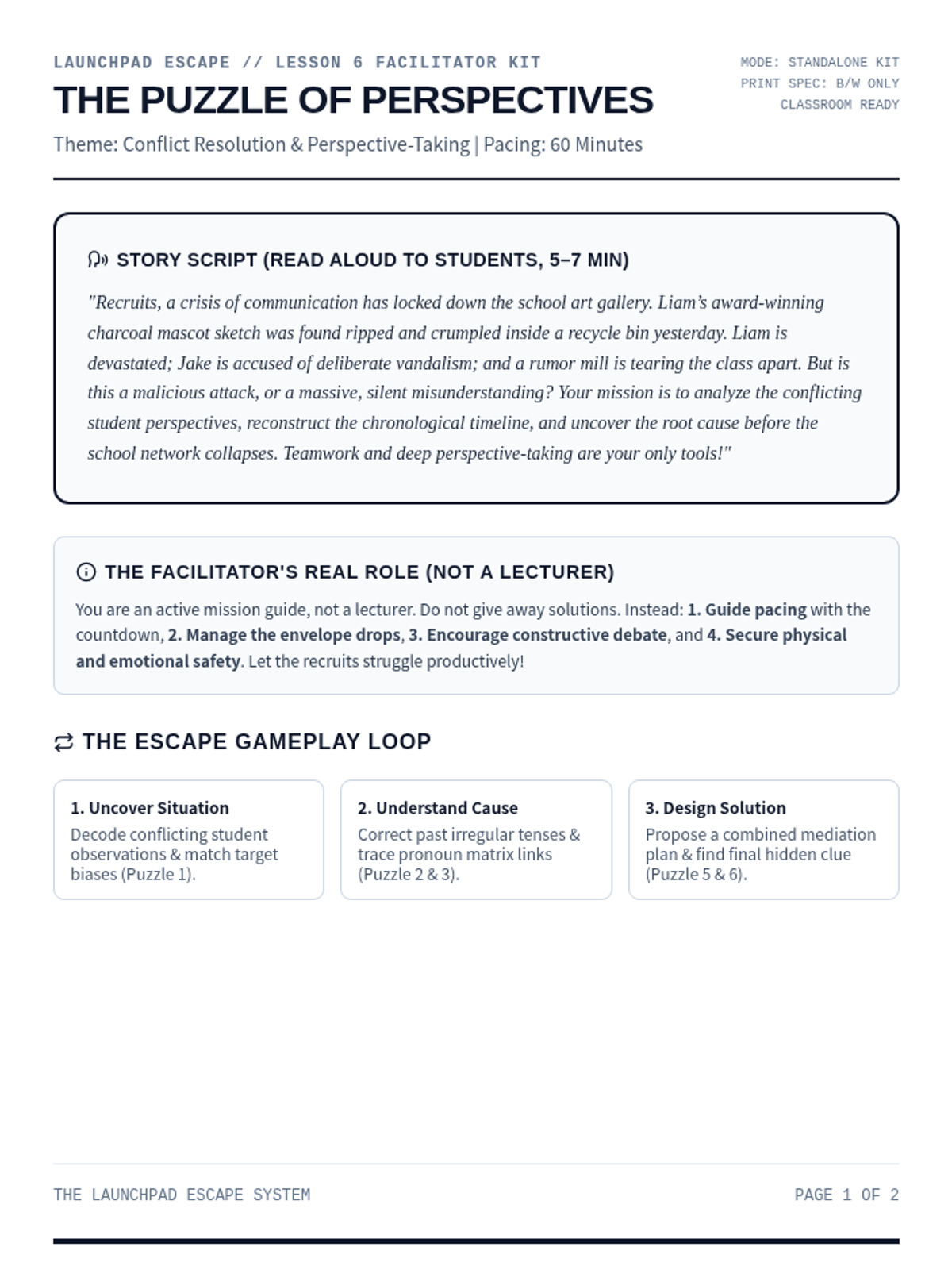
A high-stakes perspective-taking escape room. Recruits examine conflicting first-person accounts, analyze bias, reconstruct a unified timeline, and solve the override code.
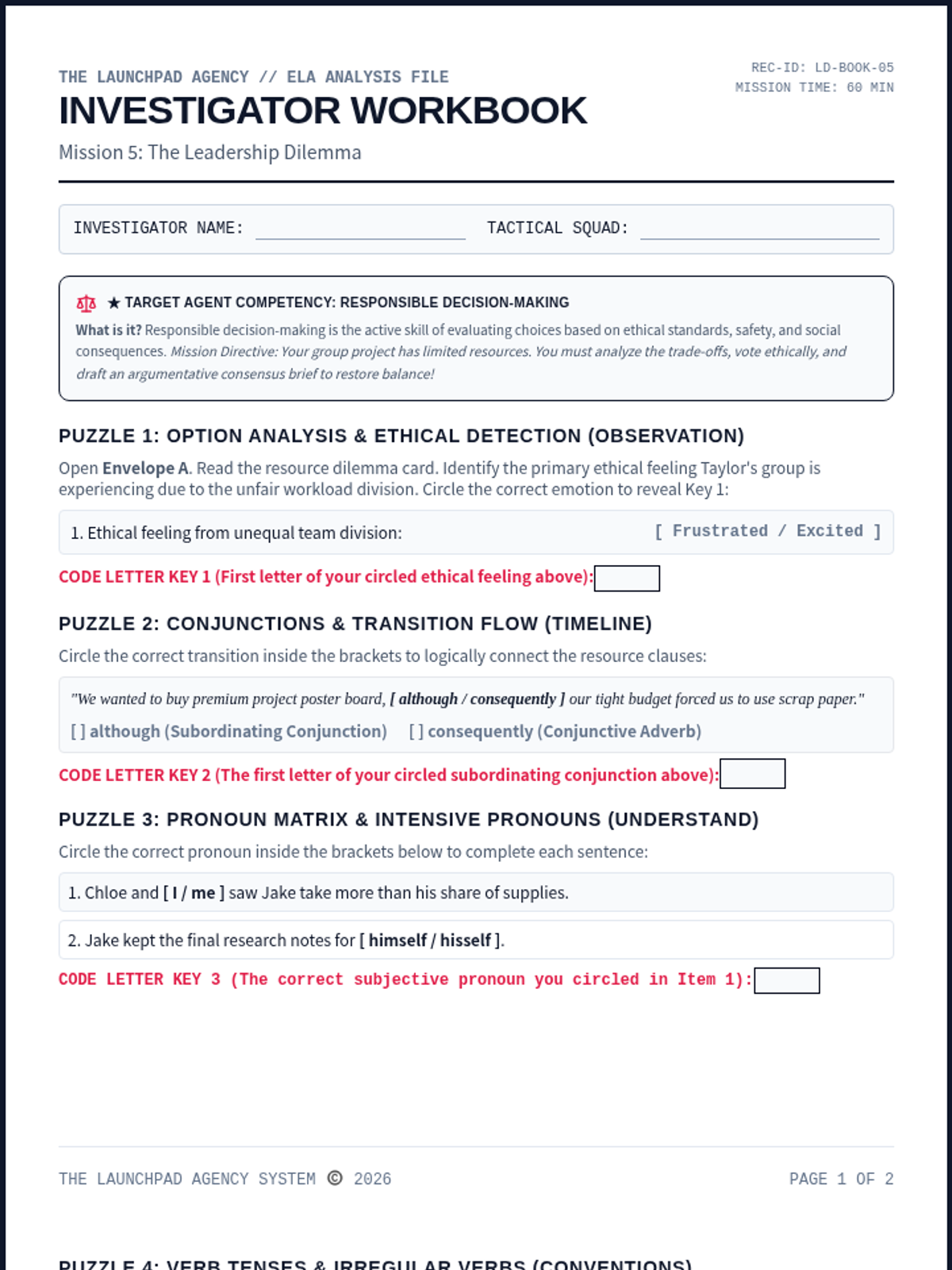
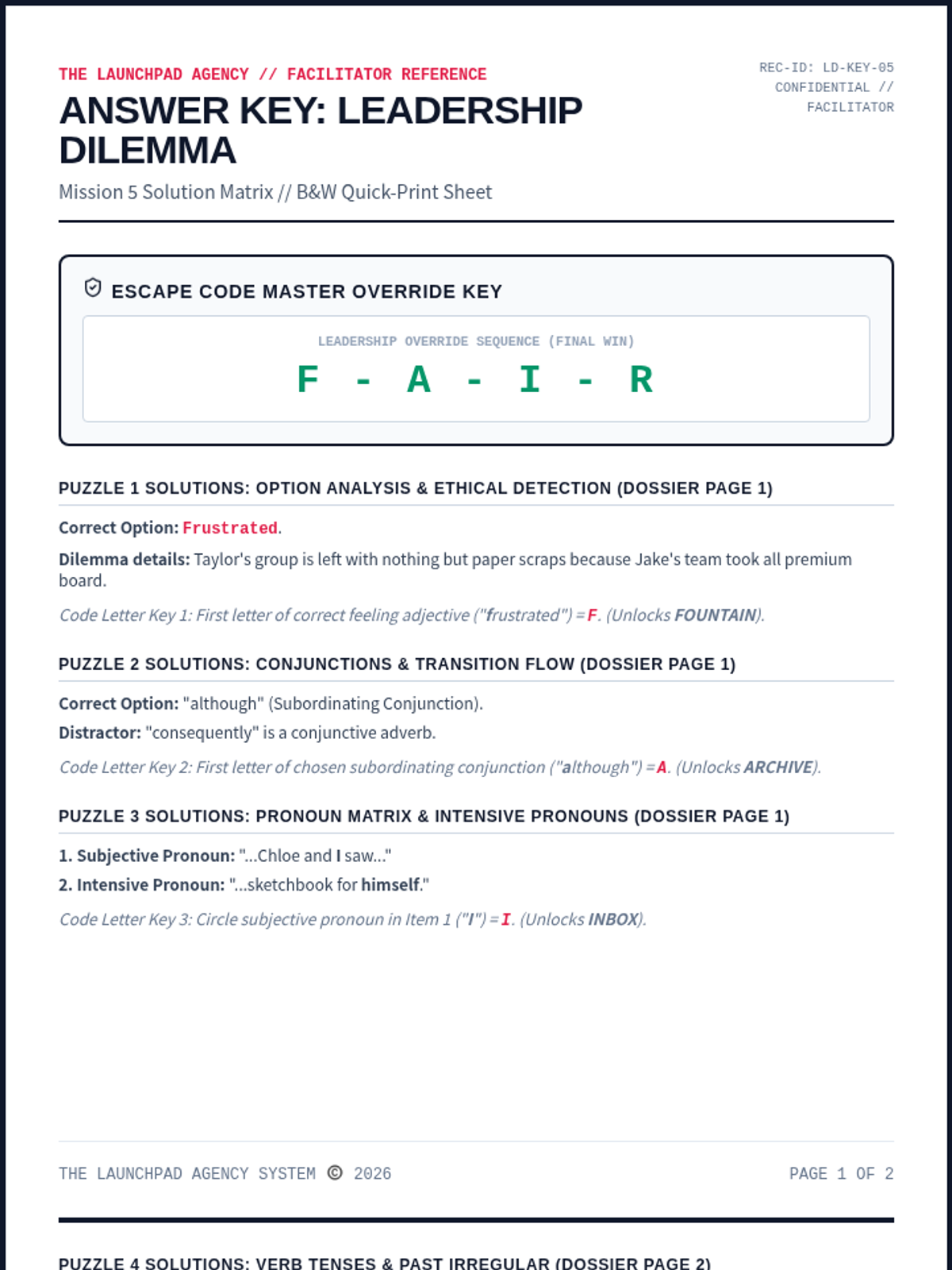
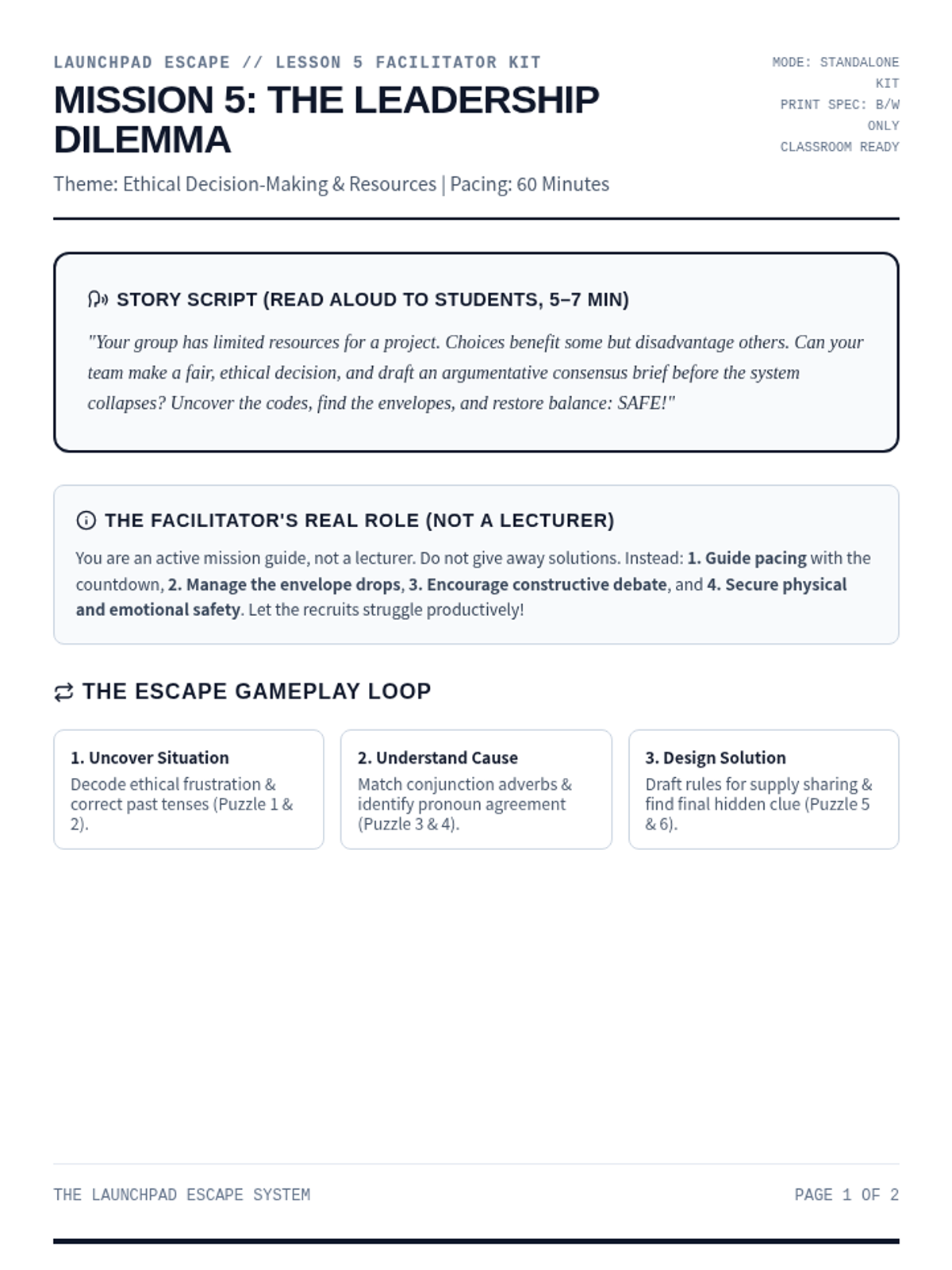
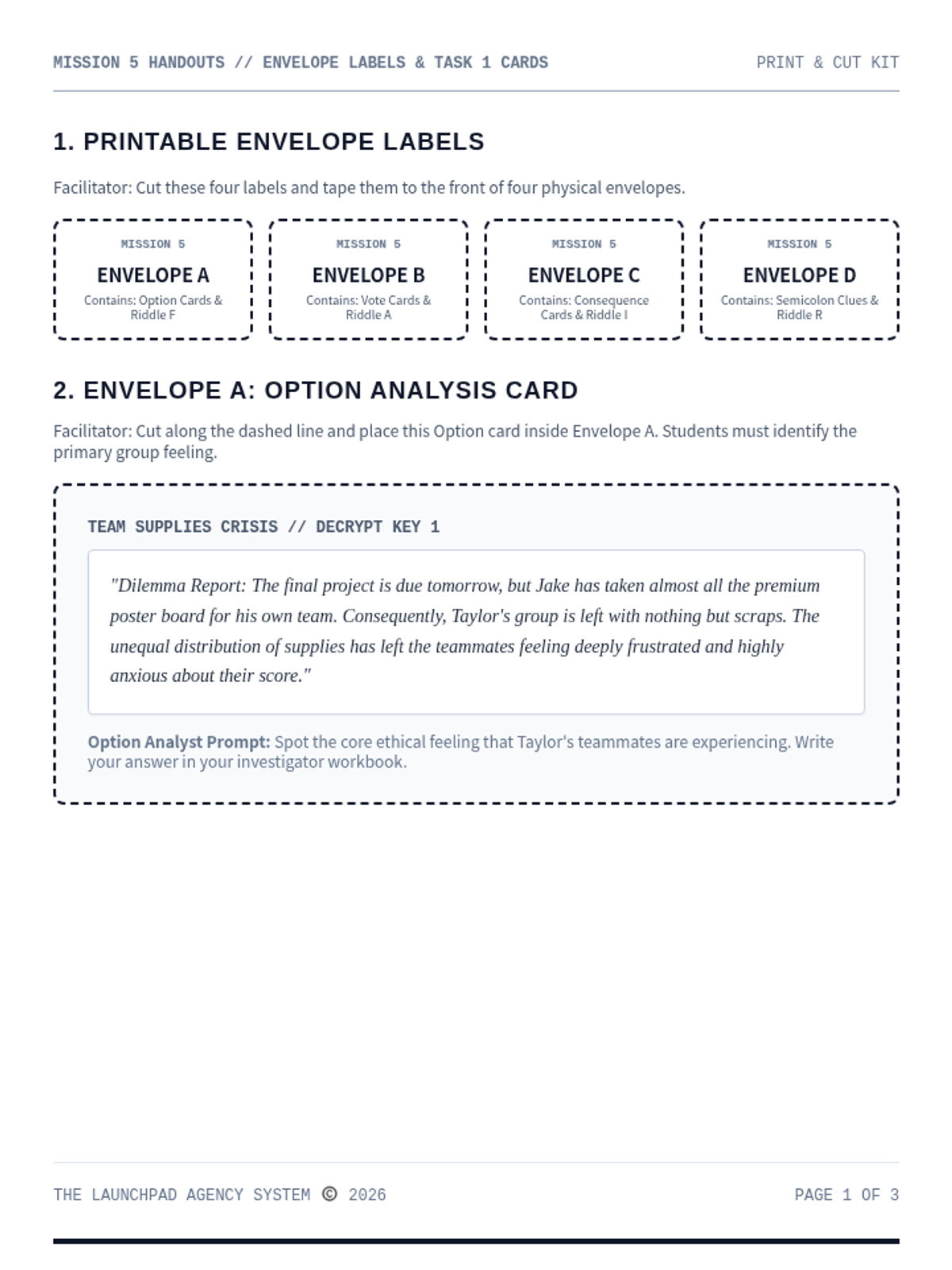
An ethical decision-making and systems-thinking escape room. Recruits analyze resource allocation options, vote on complex tradeoffs, map cascading social consequences, and draft an argumentative consensus brief to restore balance.
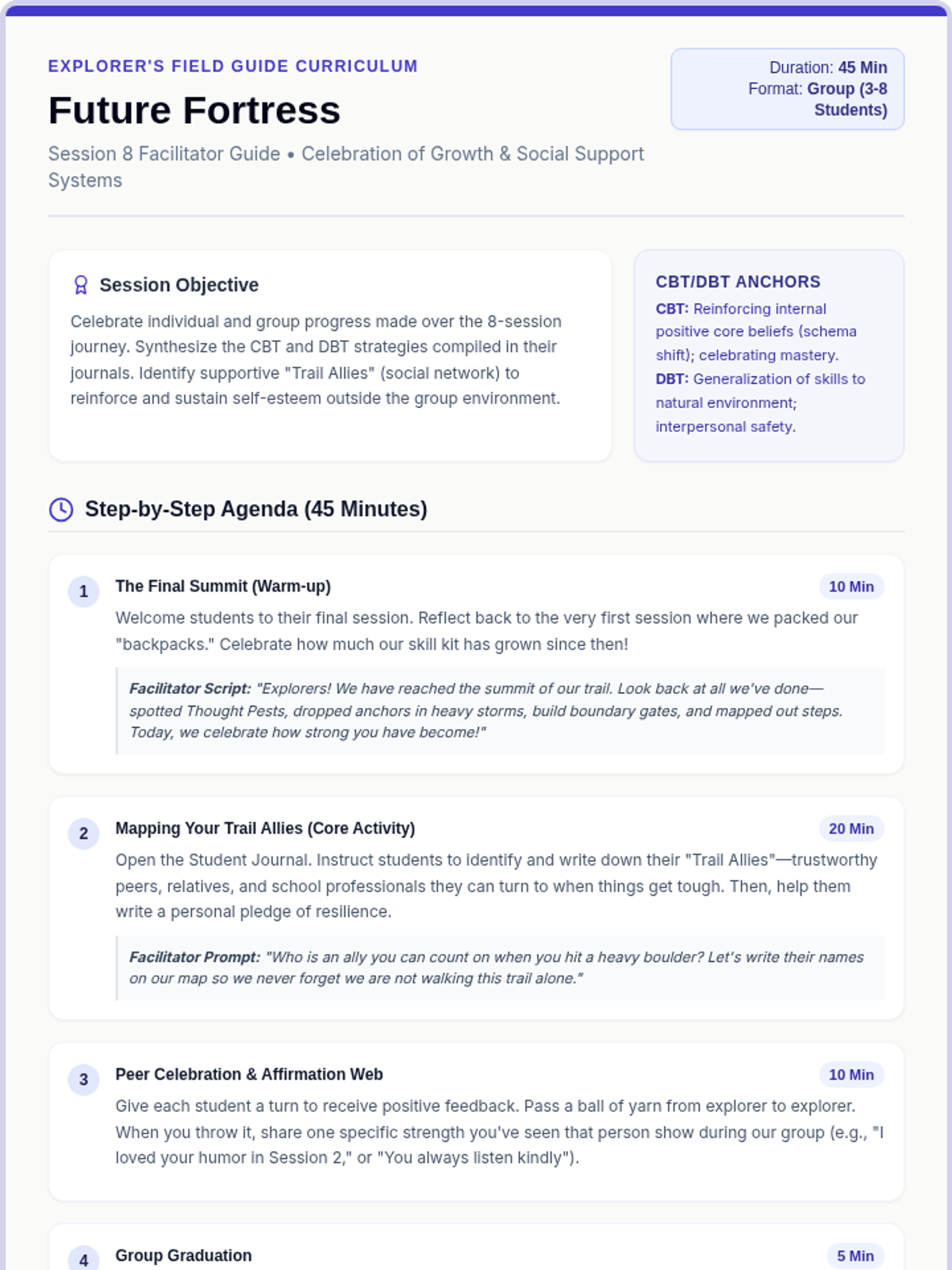
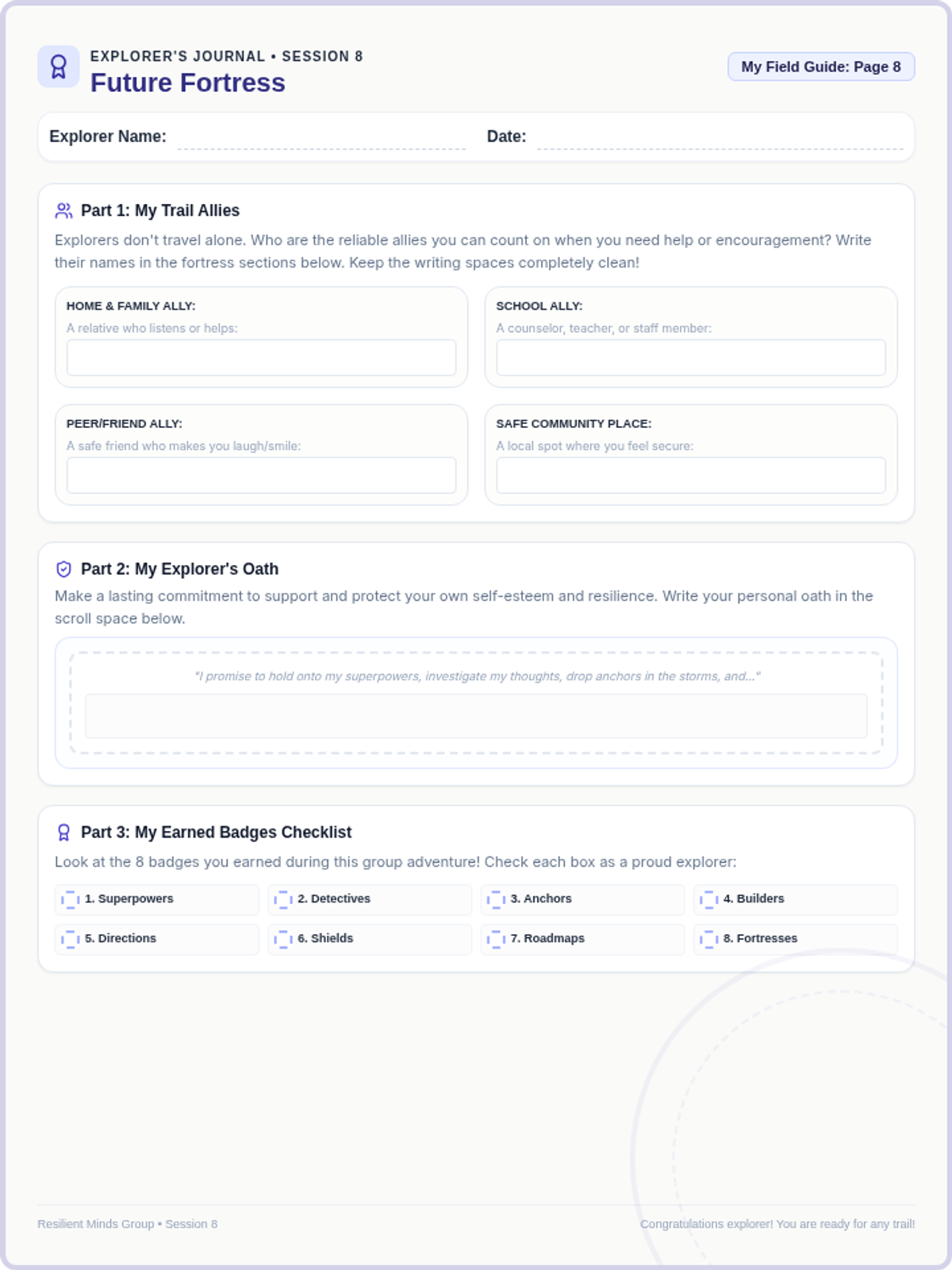
Students review their 8-session Explorer's Field Guide, celebrate growth, identify supportive 'trail allies' (social support), and pledge a personal self-esteem commitment.
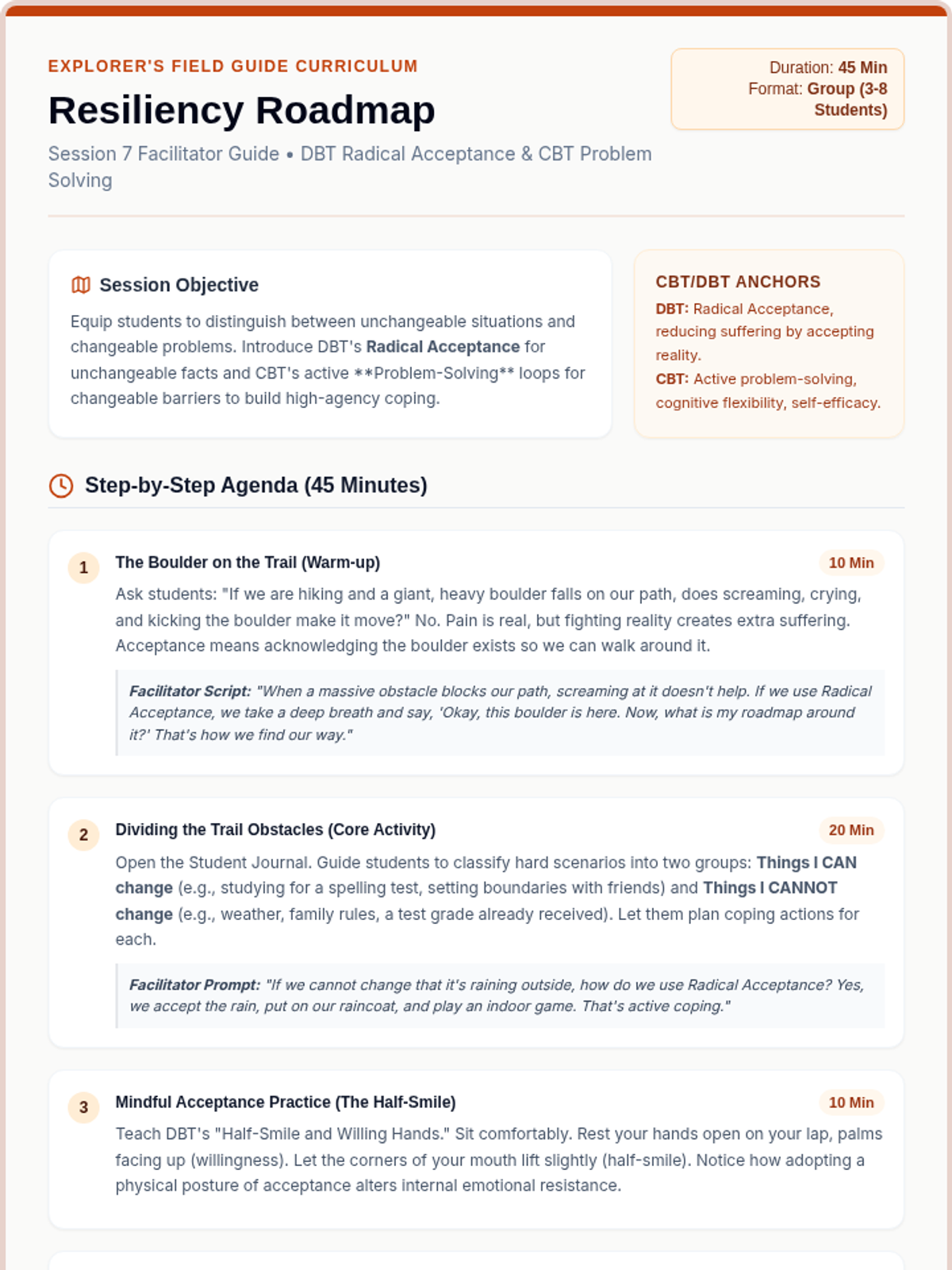
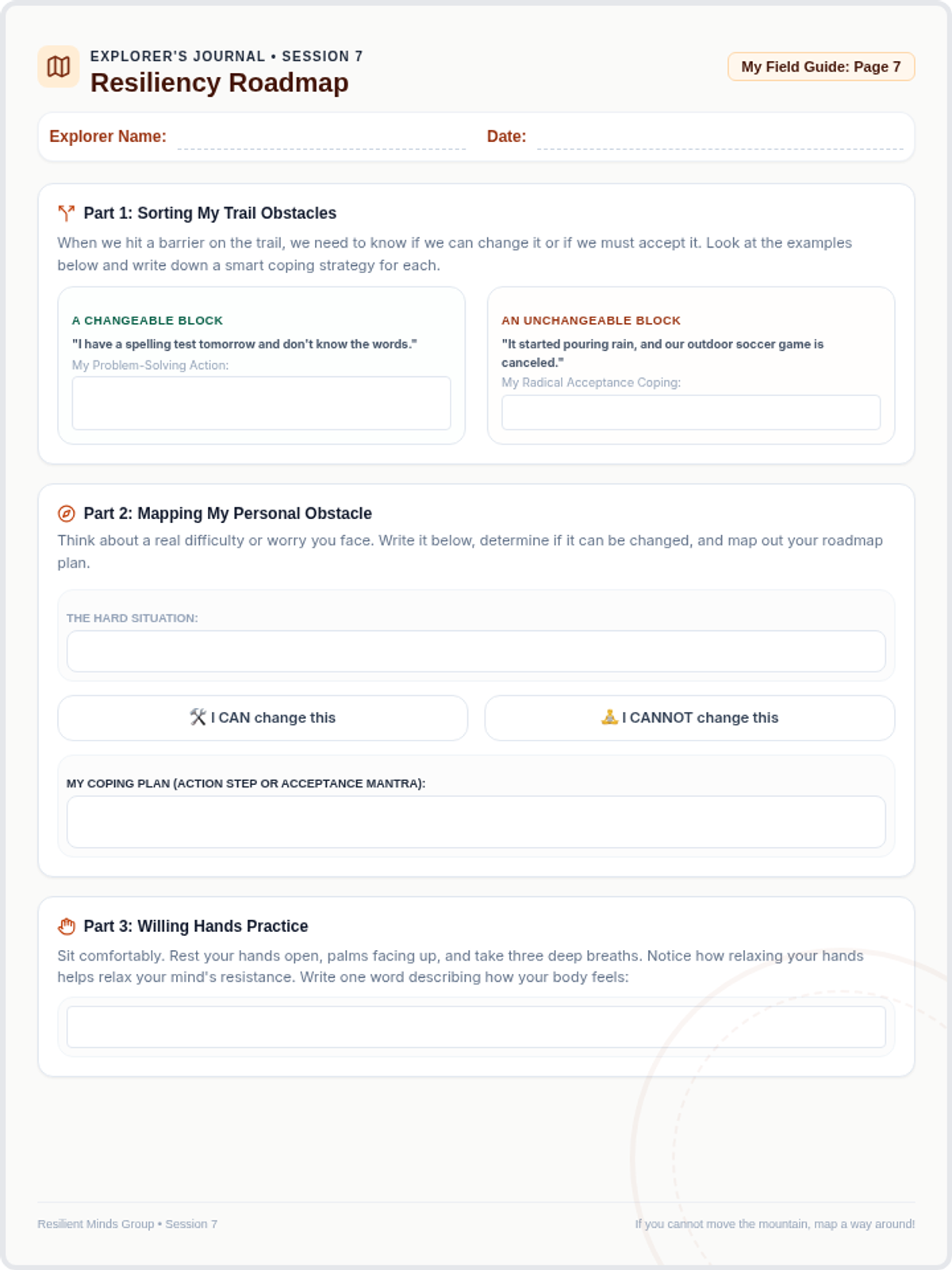
Students construct personalized coping strategies, blending CBT active problem-solving steps with DBT Radical Acceptance to navigate unchangeable difficulties.
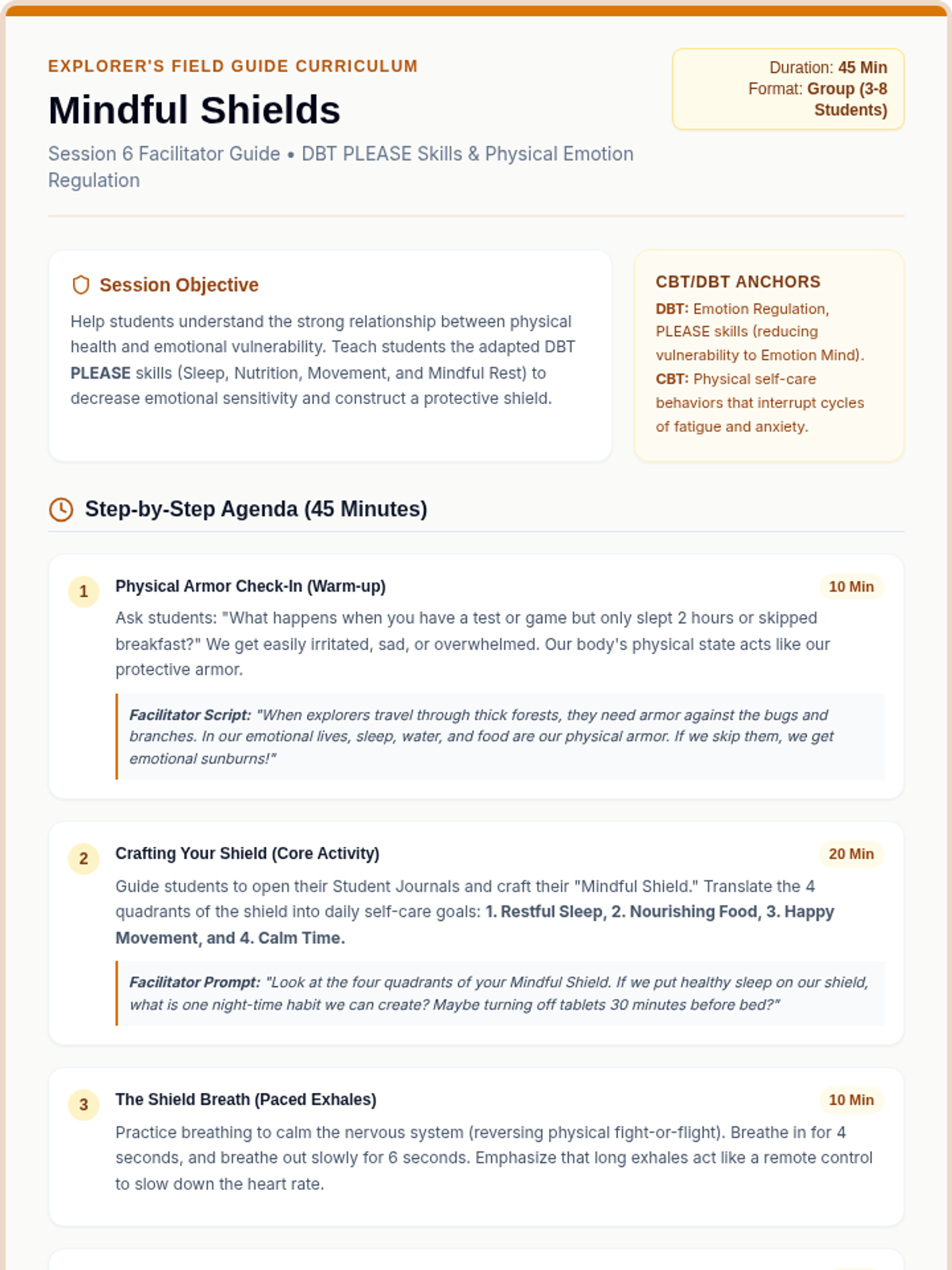
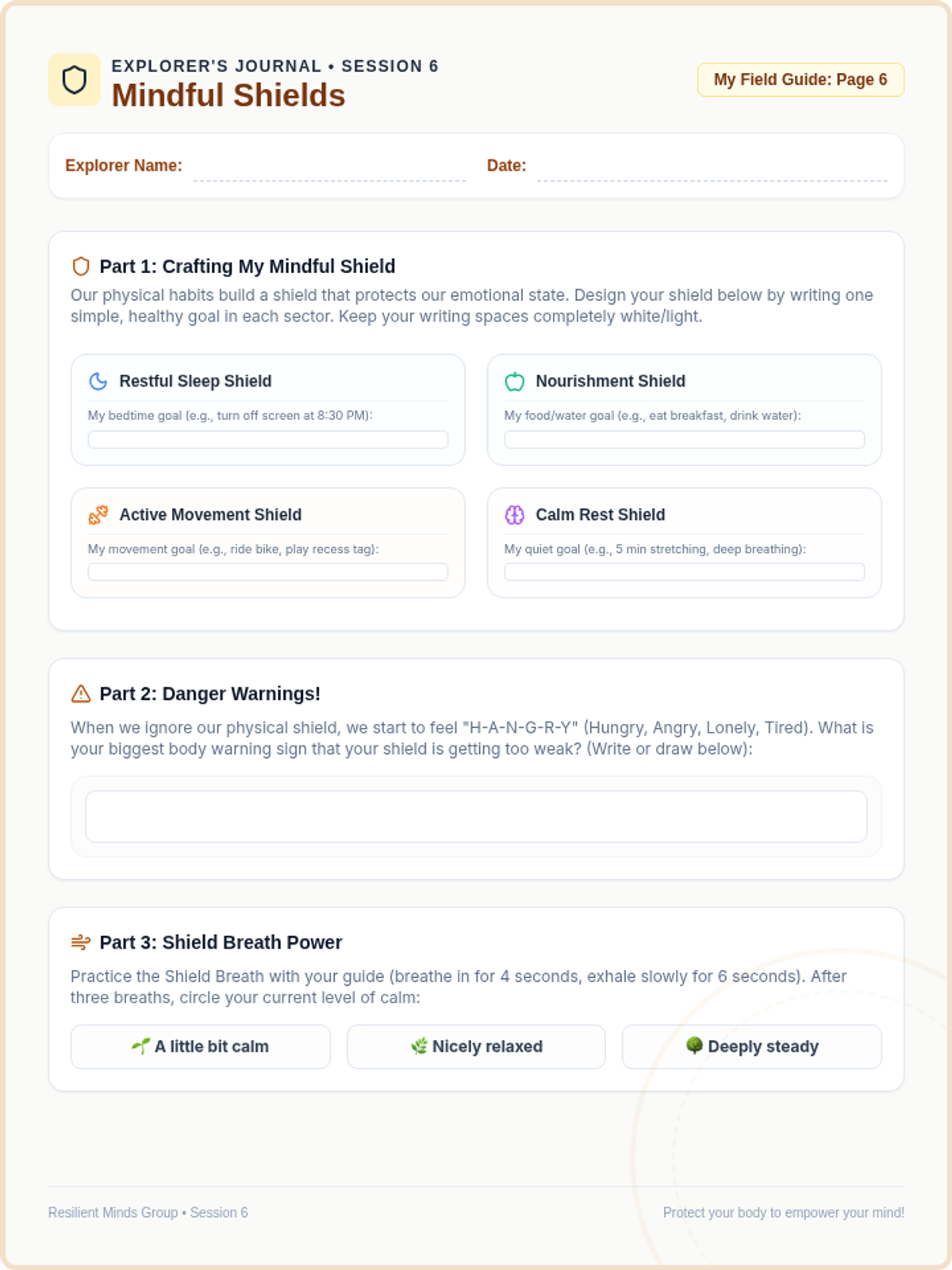
Students examine the physical body-mind connection, identifying stress triggers and learning DBT physical self-care (PLEASE) and emotional regulation strategies.
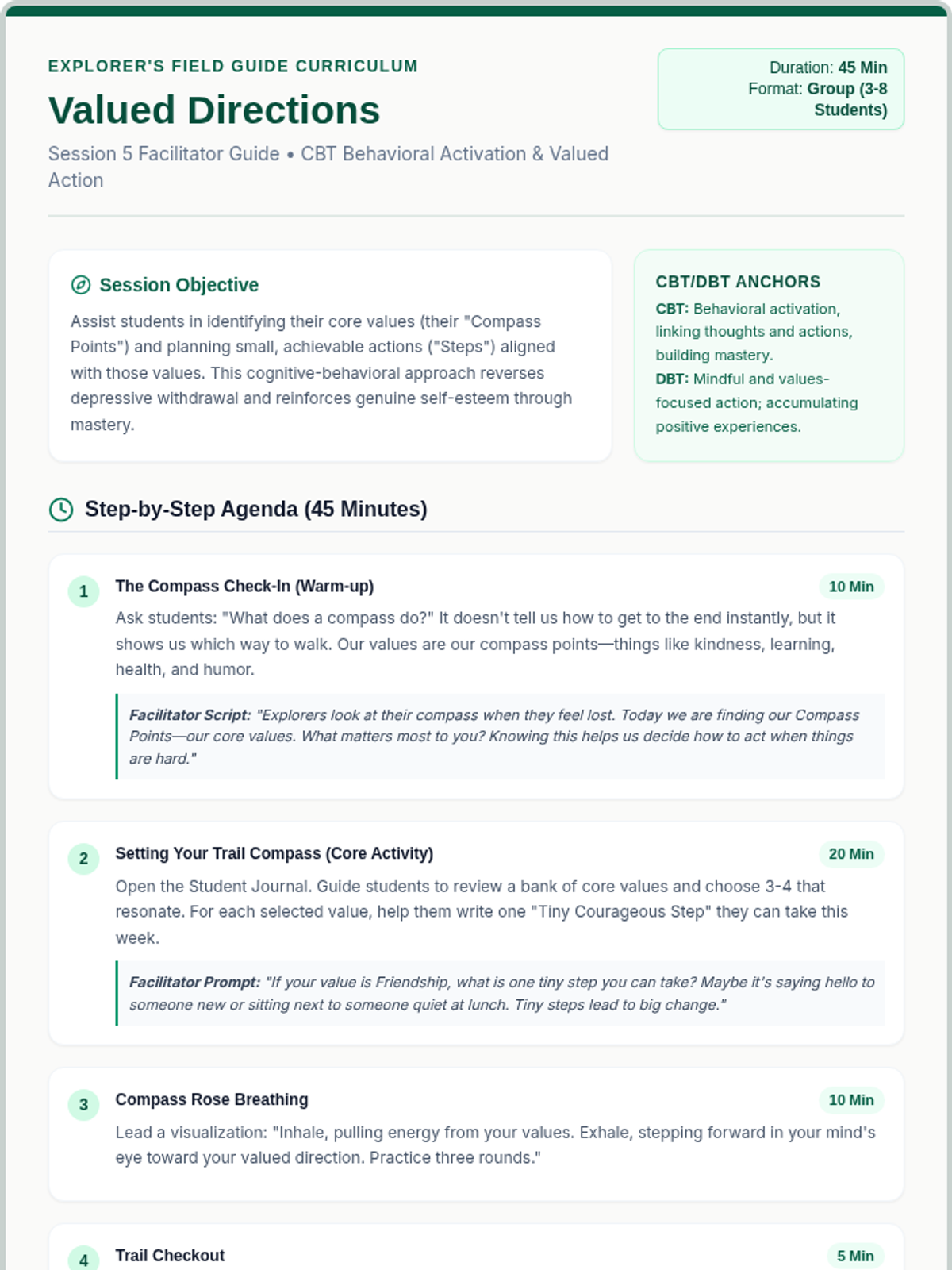
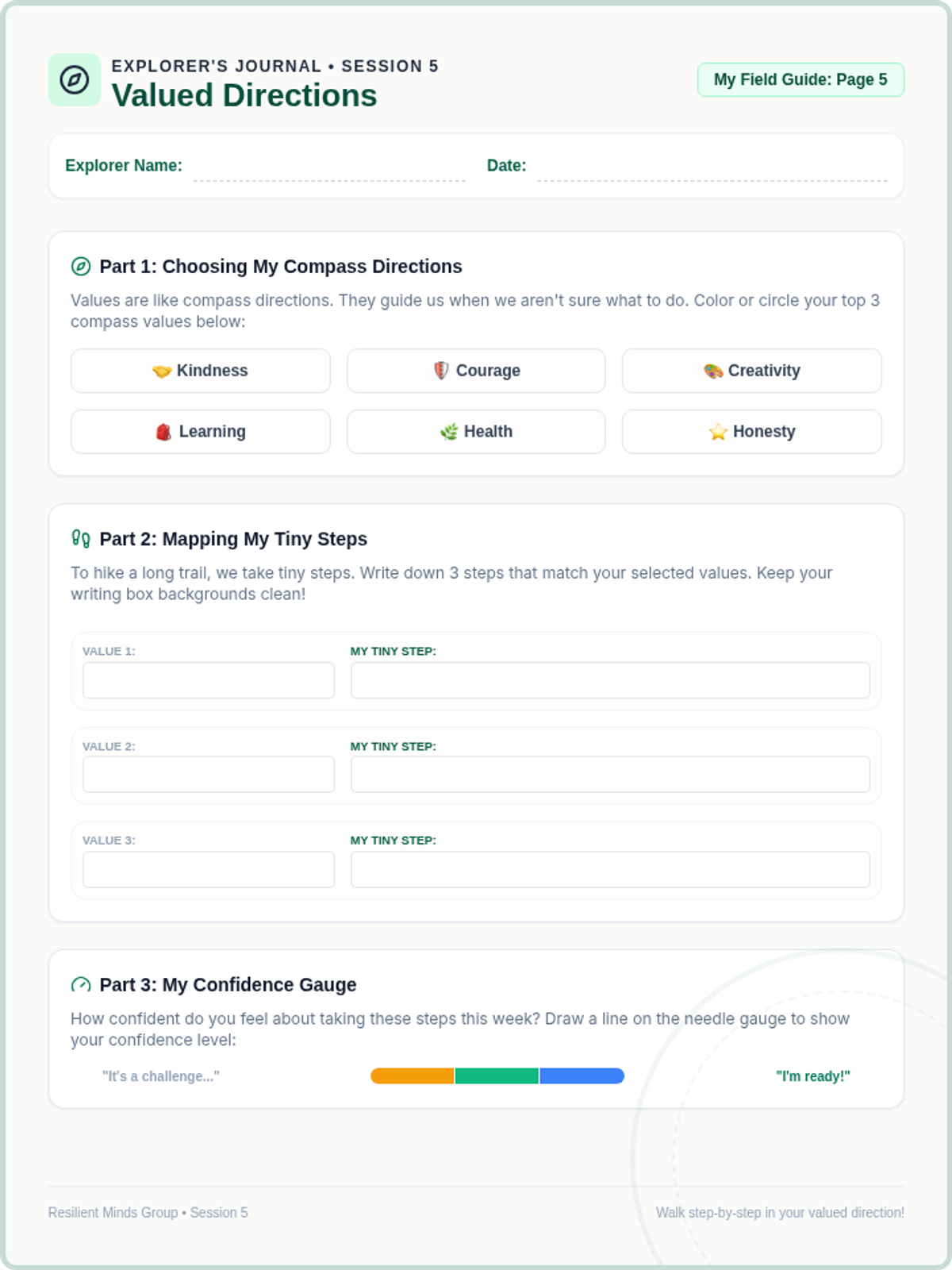
Students connect CBT behavioral activation with DBT 'mindful action' by exploring core values and mapping out tiny, courageous actions that align with their authentic strengths.
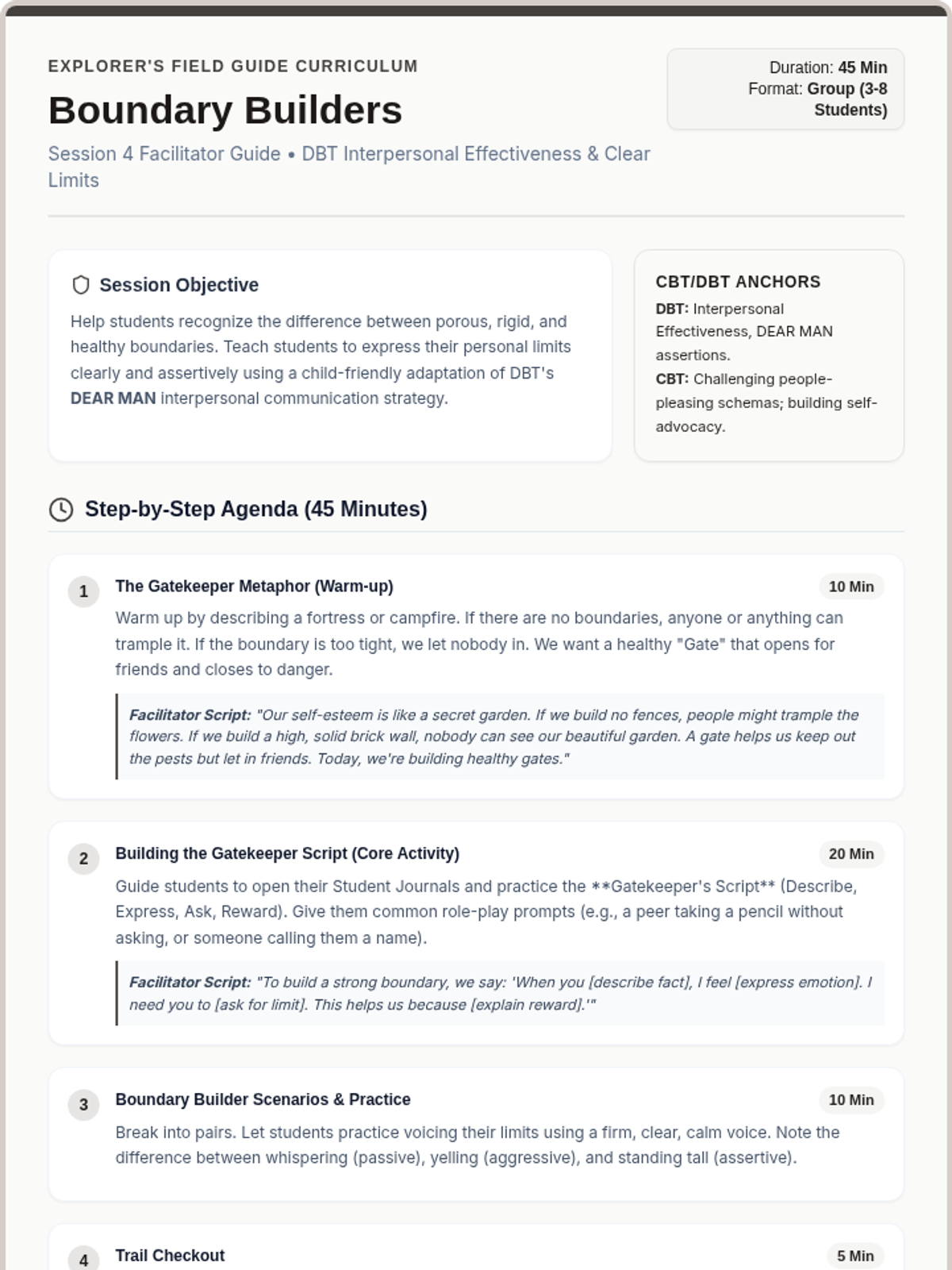
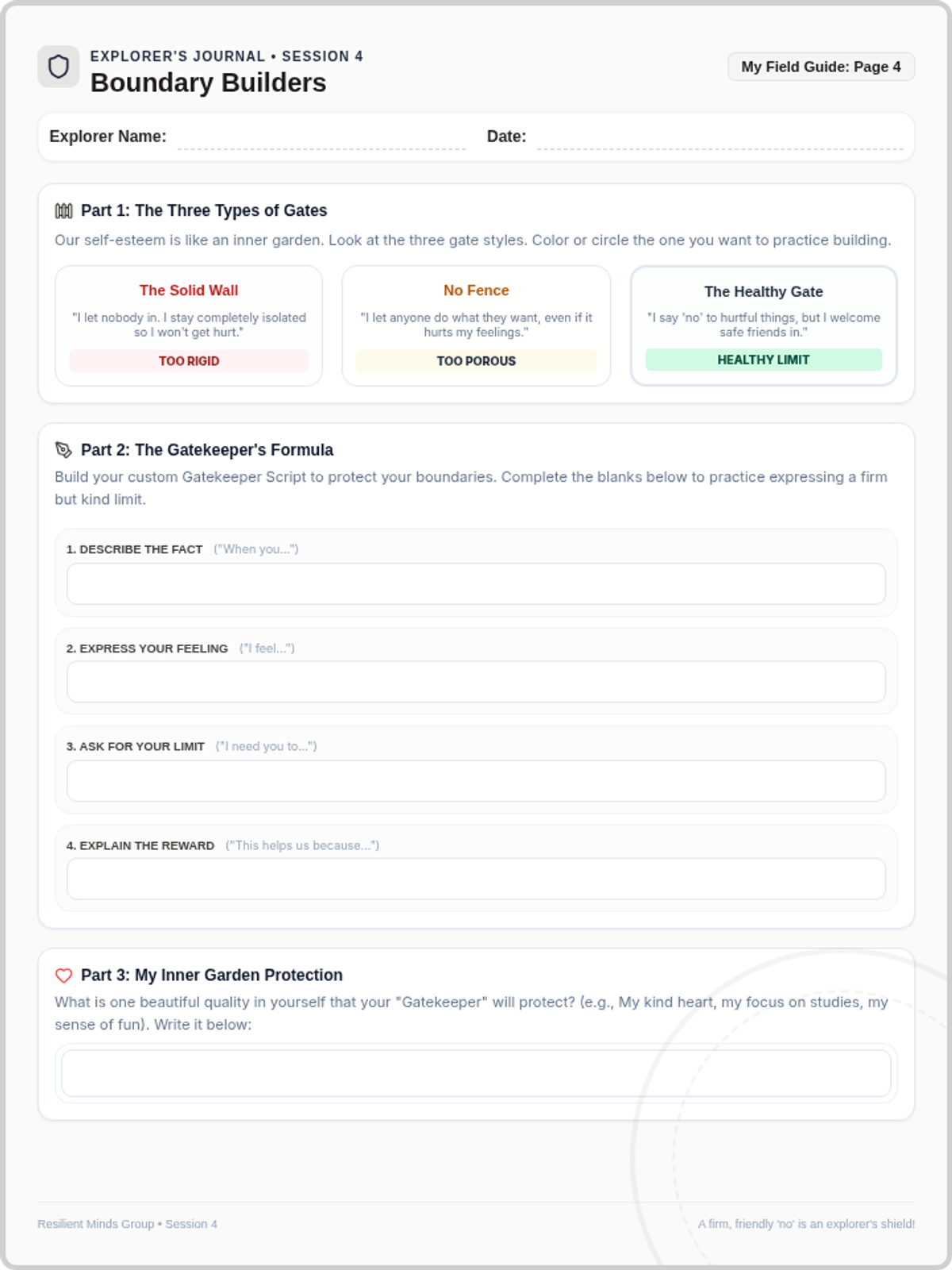
Students learn assertive communication, personal limit-setting, and DBT Interpersonal Effectiveness skills (DEAR MAN style) to navigate social situations and foster healthy self-esteem.
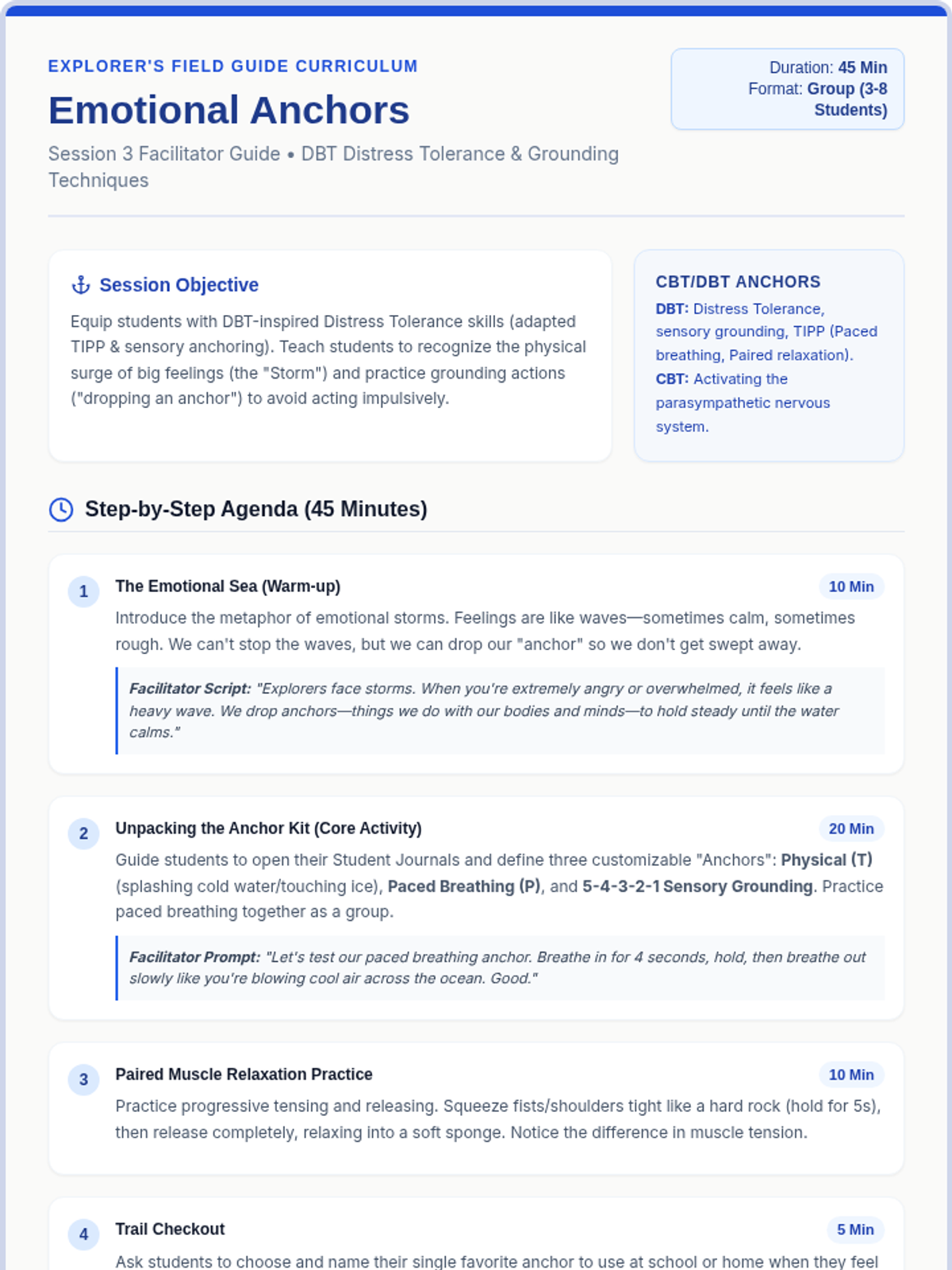
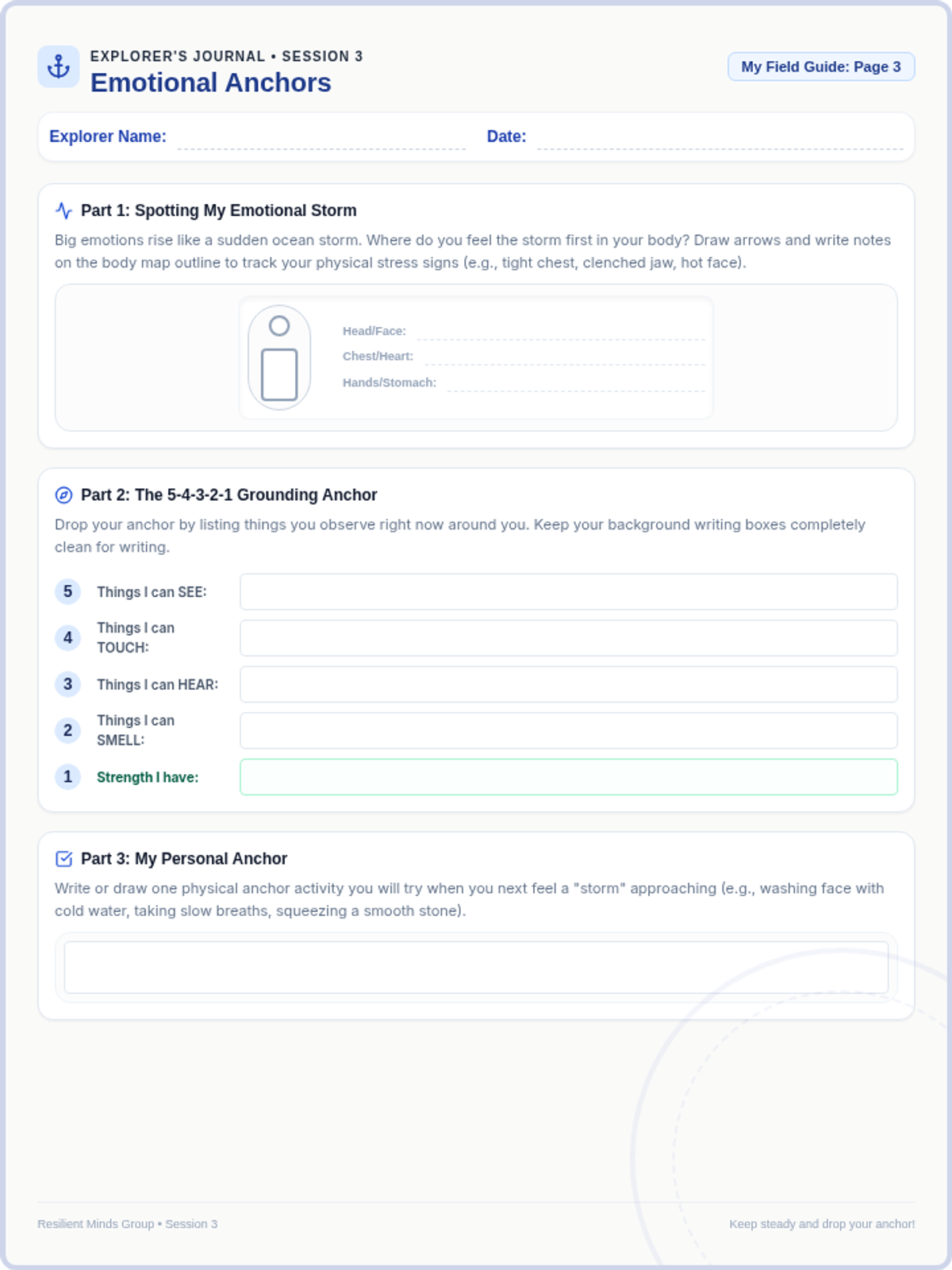
Students learn mindfulness, self-soothing, and distress tolerance techniques (DBT TIPP skills) to manage intense emotions and ground themselves.
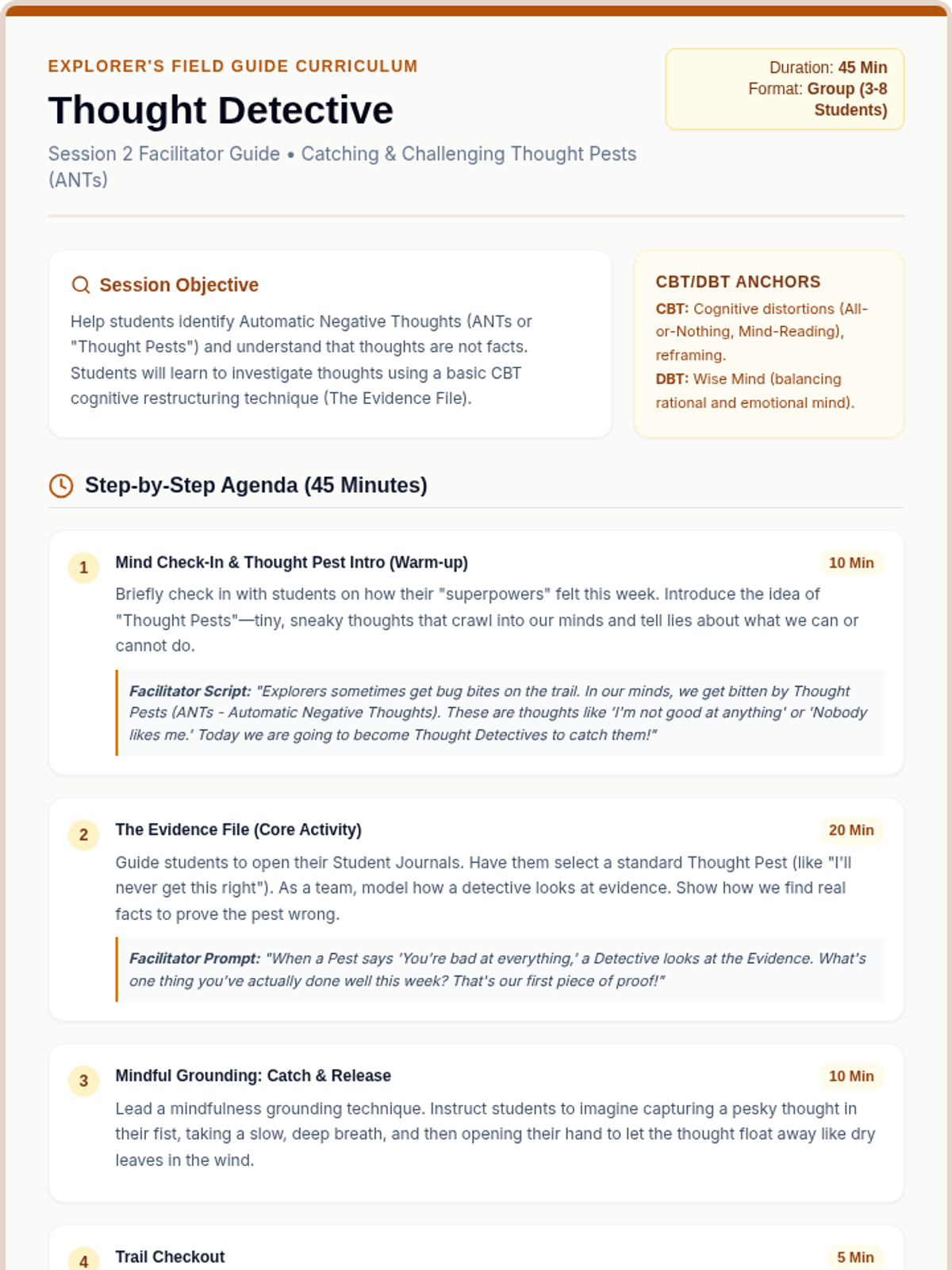
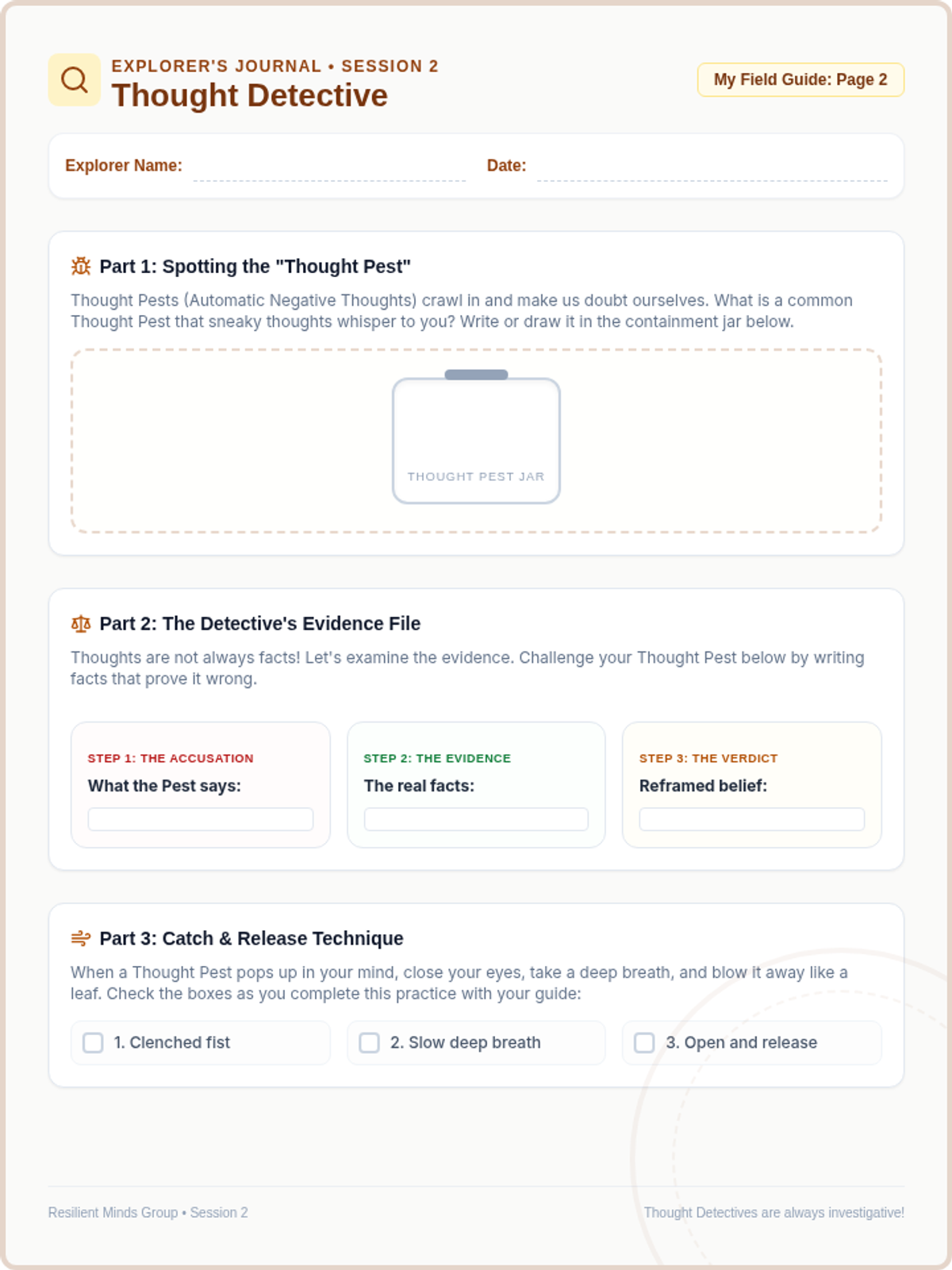
Students learn to identify and challenge automatic negative thoughts (ANTs) and cognitive distortions using CBT reframing techniques.
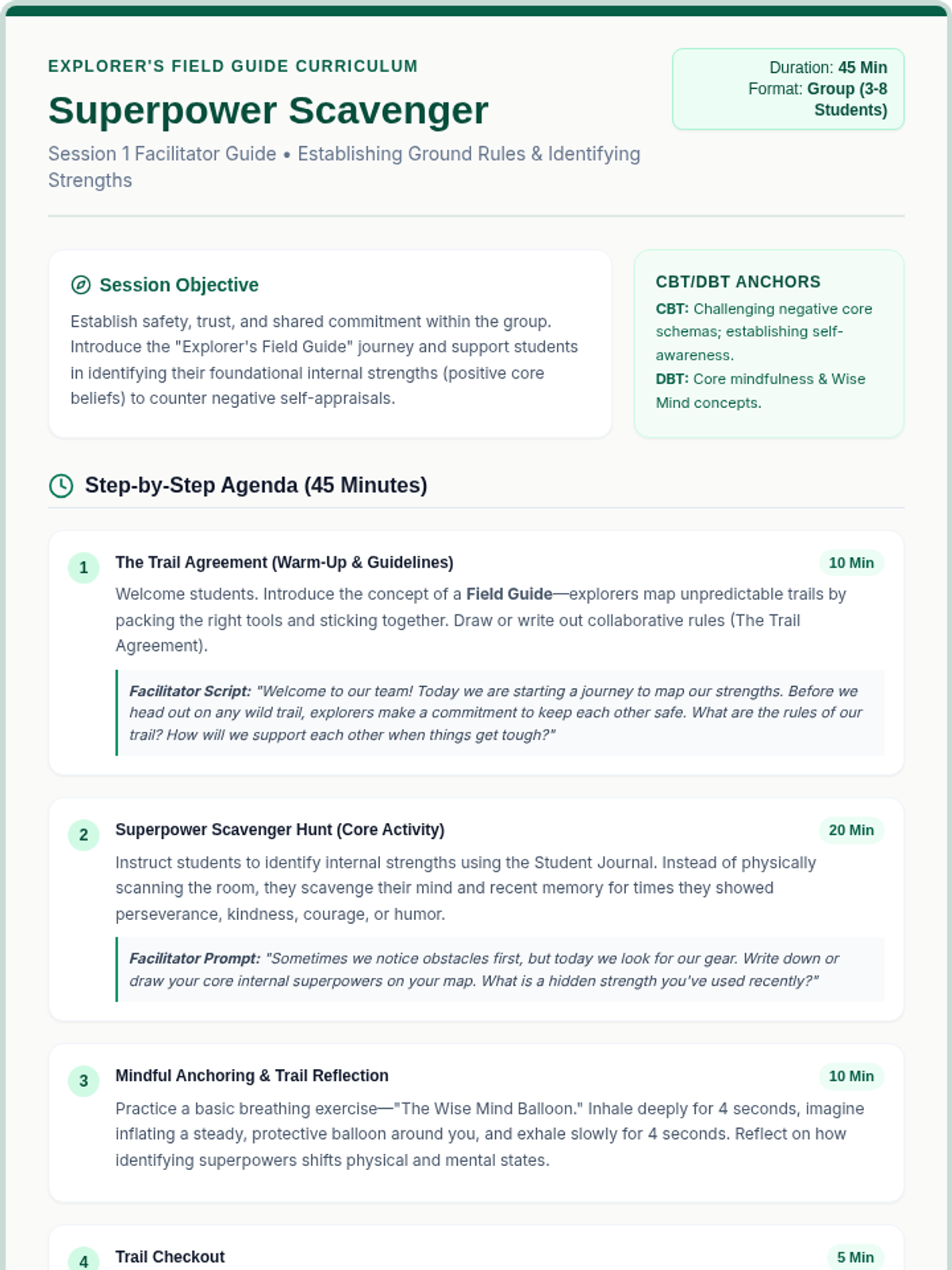
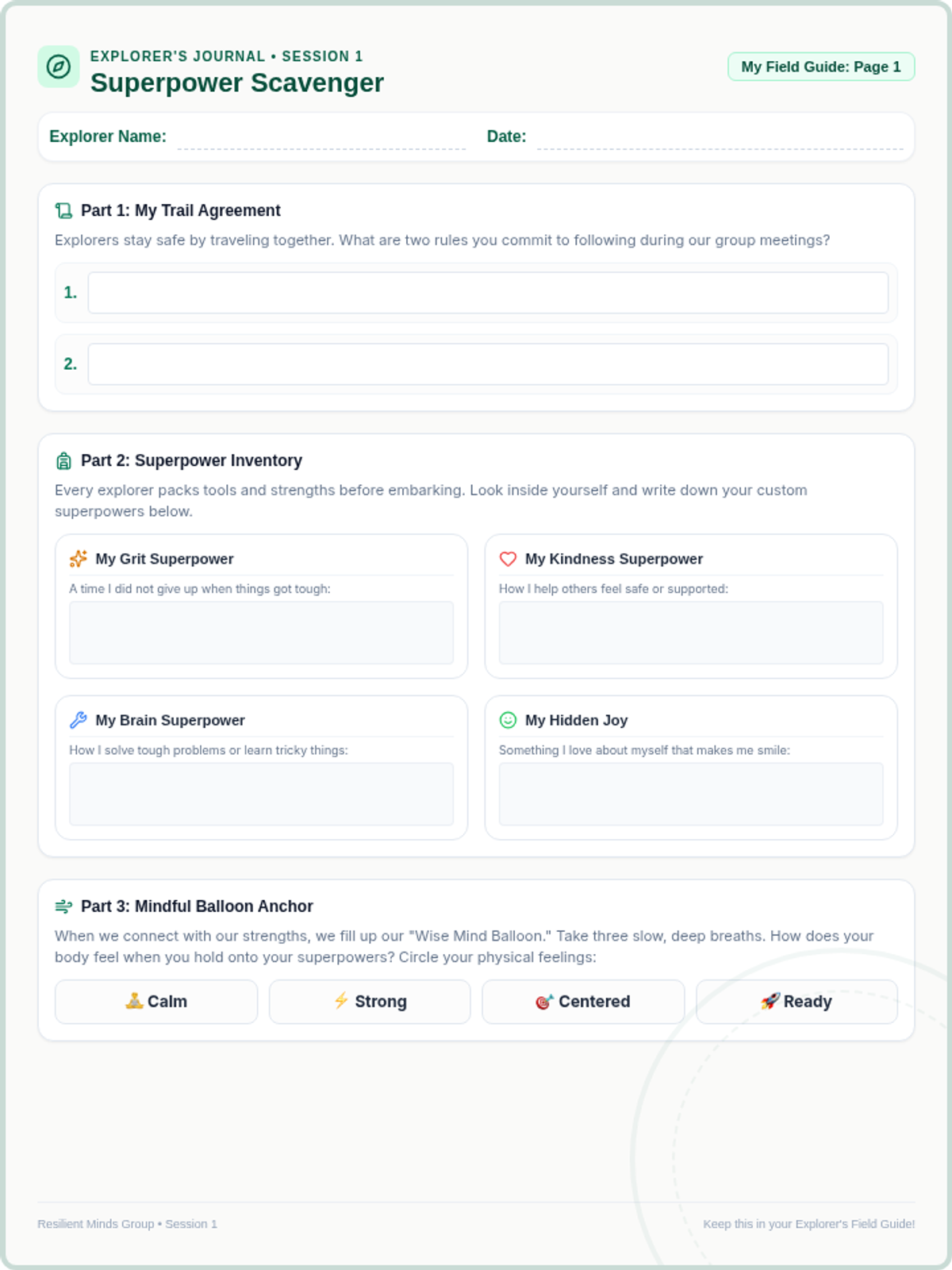
Students establish group guidelines, explore the 'Explorer's Field Guide' theme, and identify their unique internal strengths and positive core beliefs (CBT core beliefs & mindfulness).
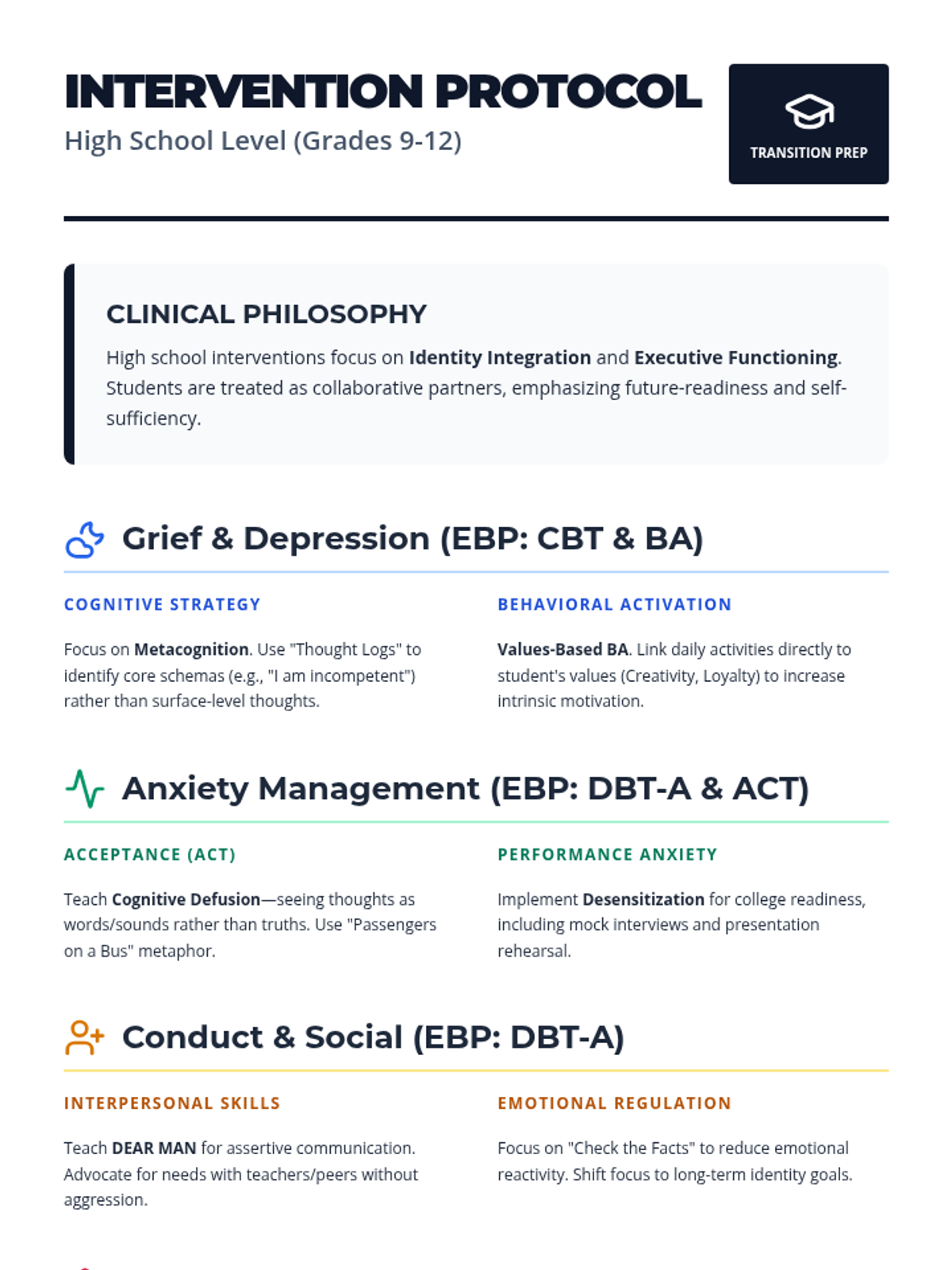
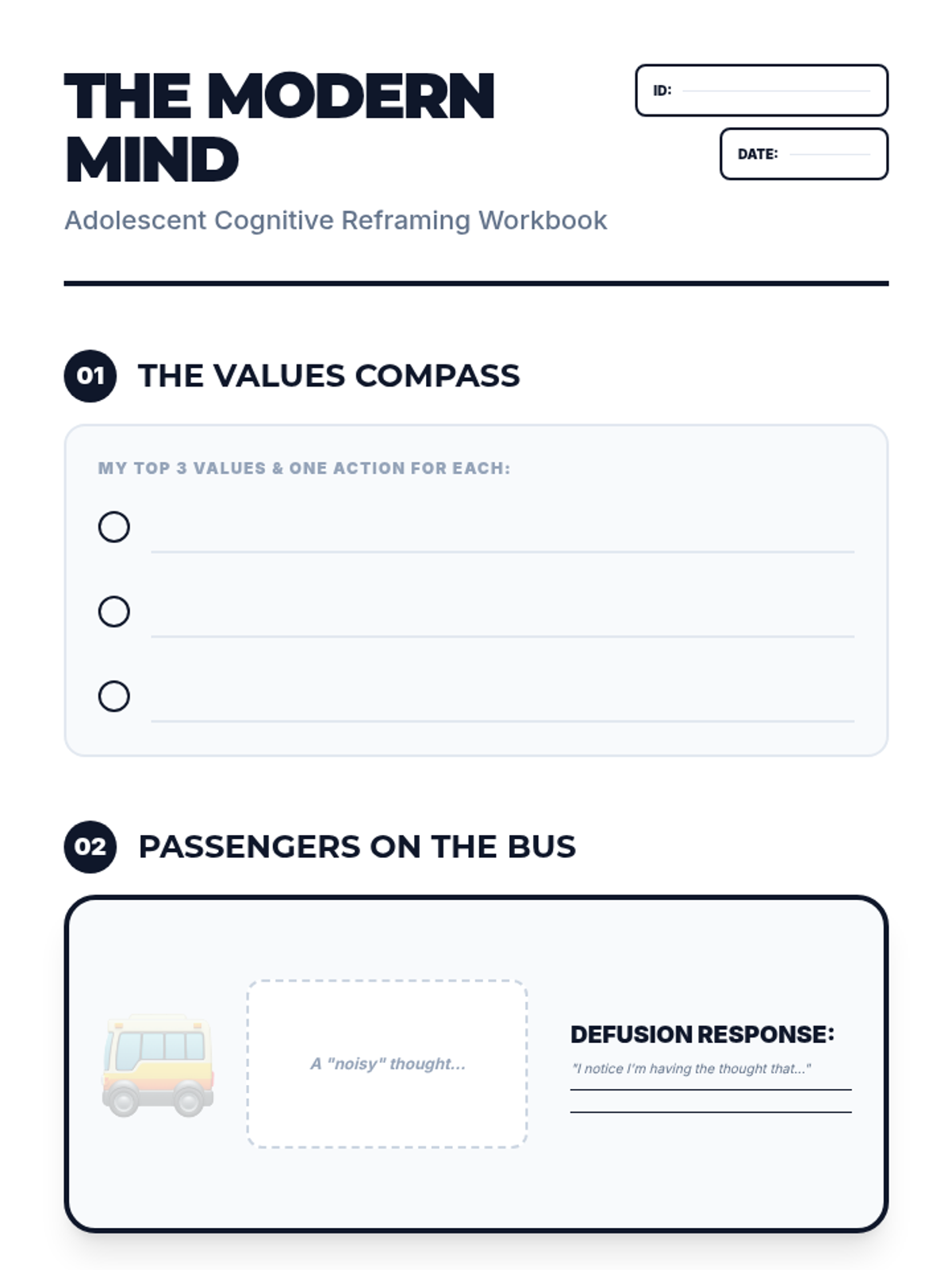
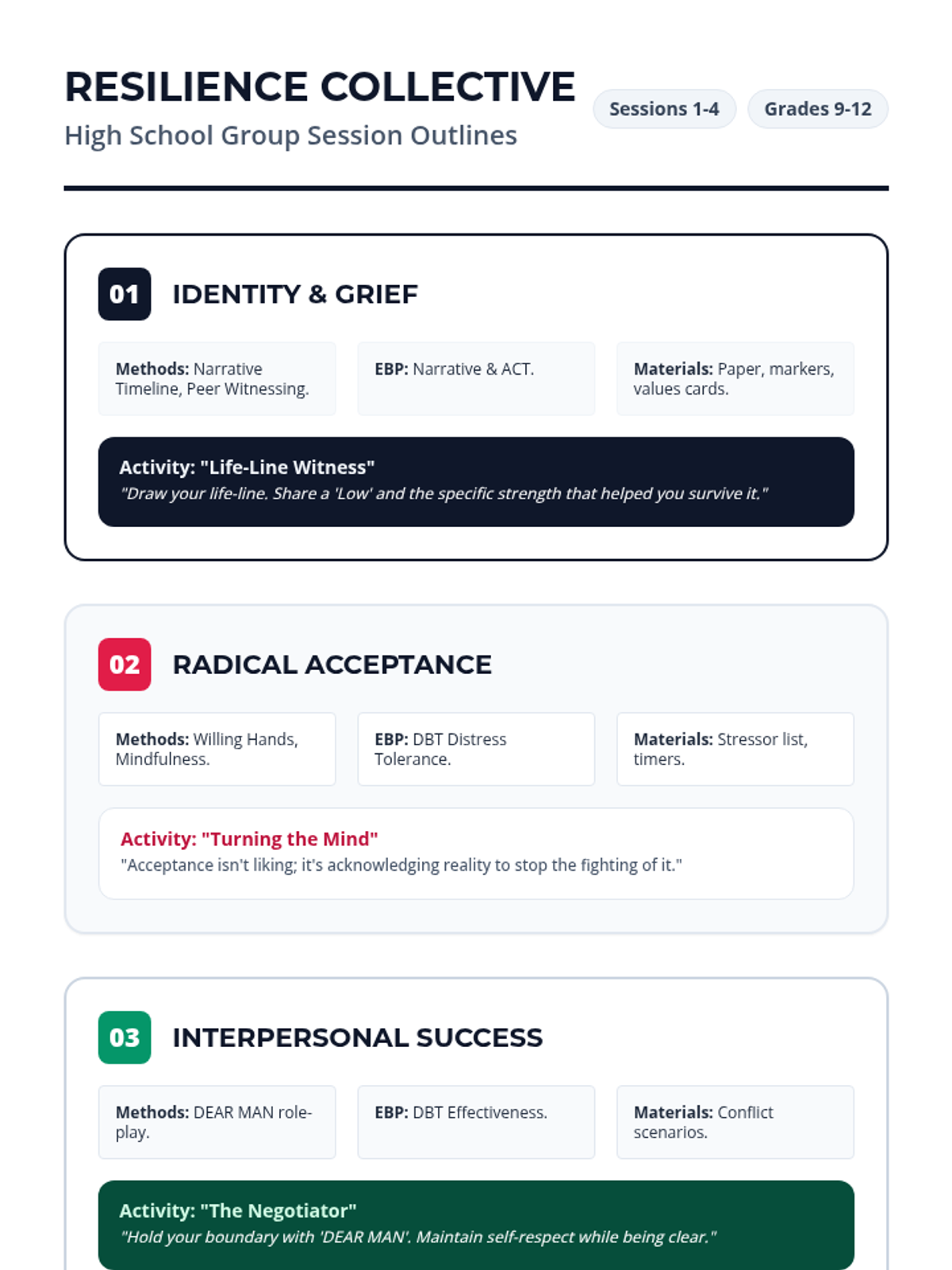
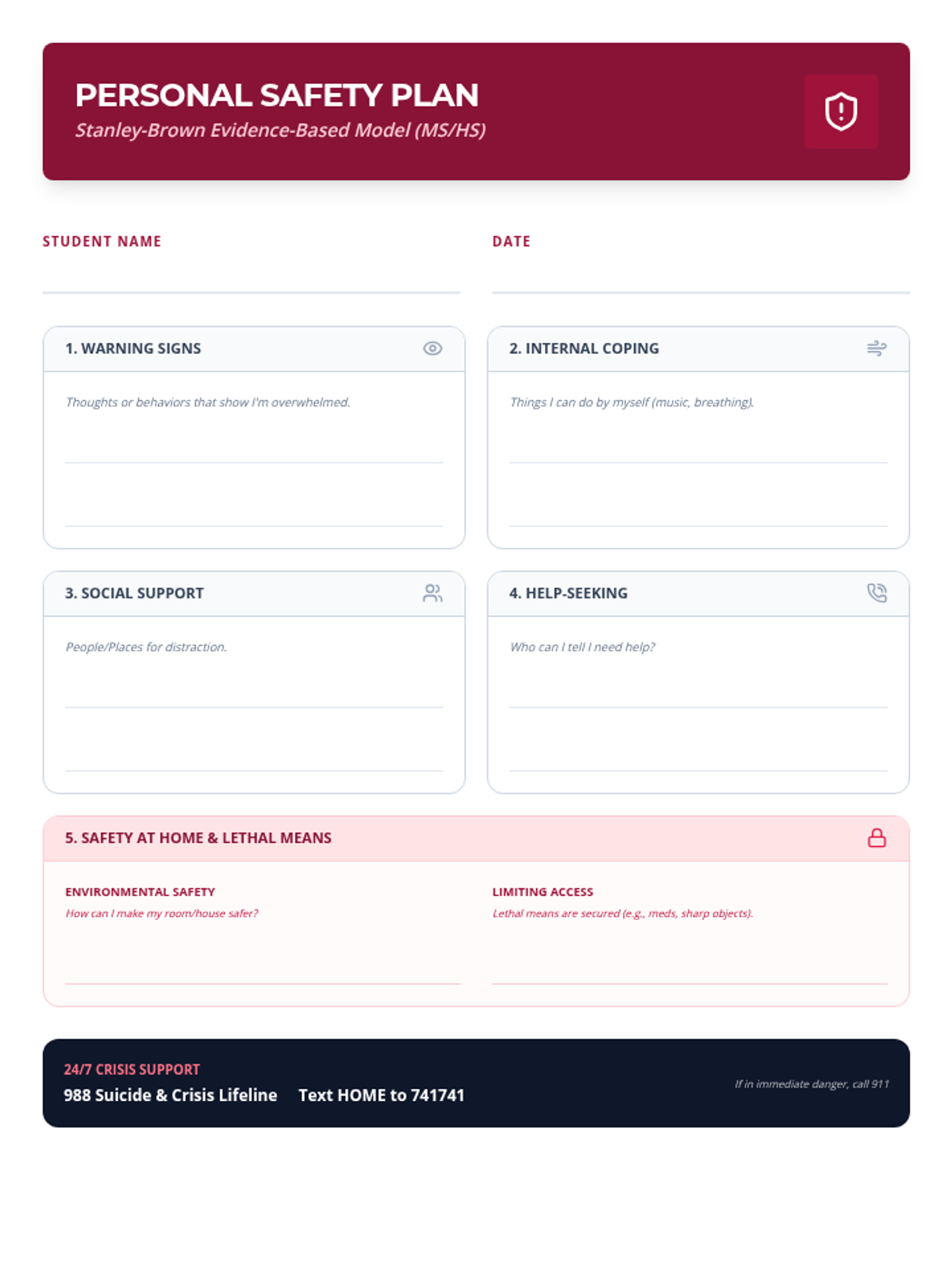
Advanced therapeutic interventions for high schoolers, emphasizing autonomy, complex cognitive reframing, interpersonal effectiveness, and comprehensive crisis protocols.
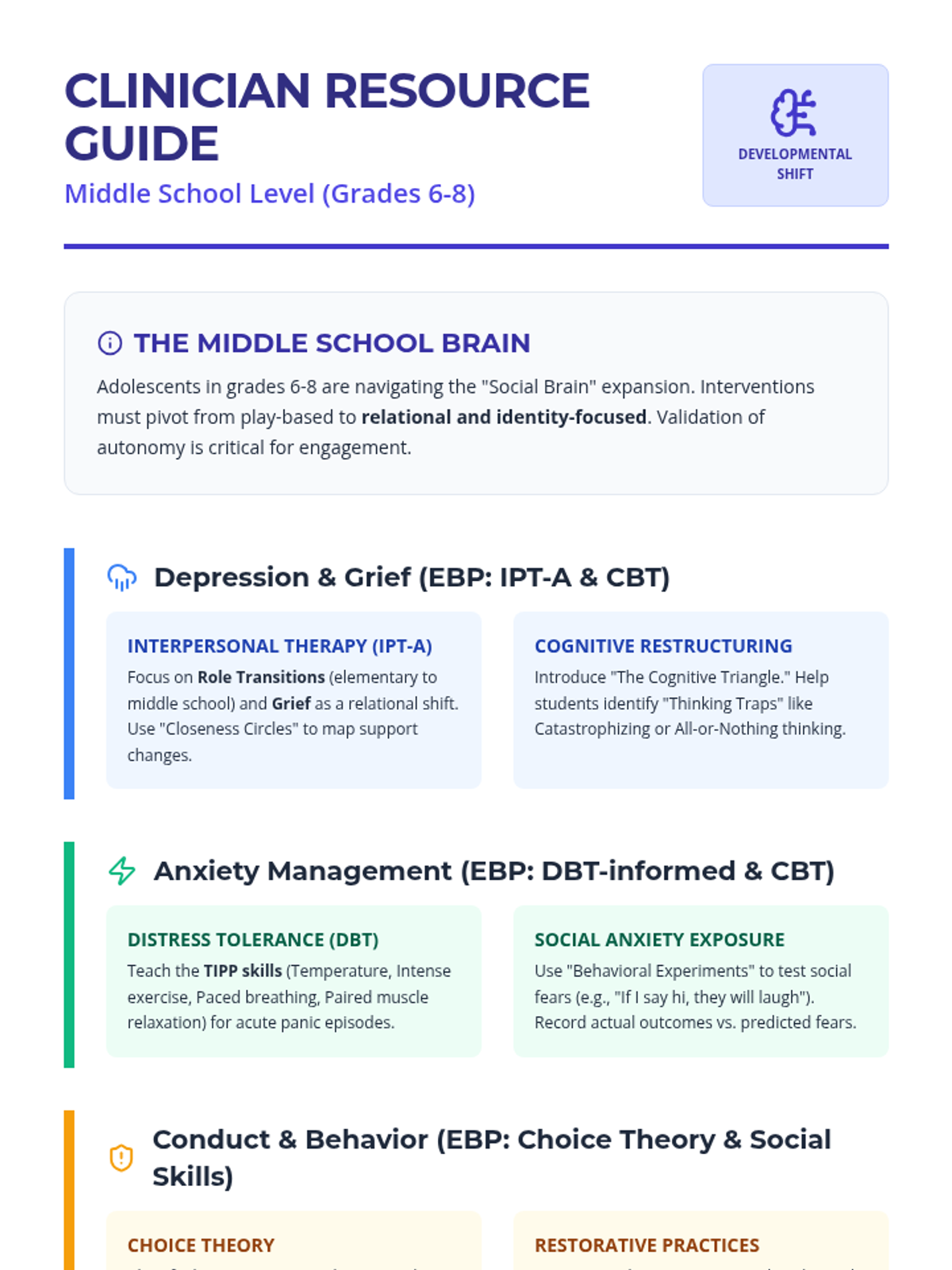
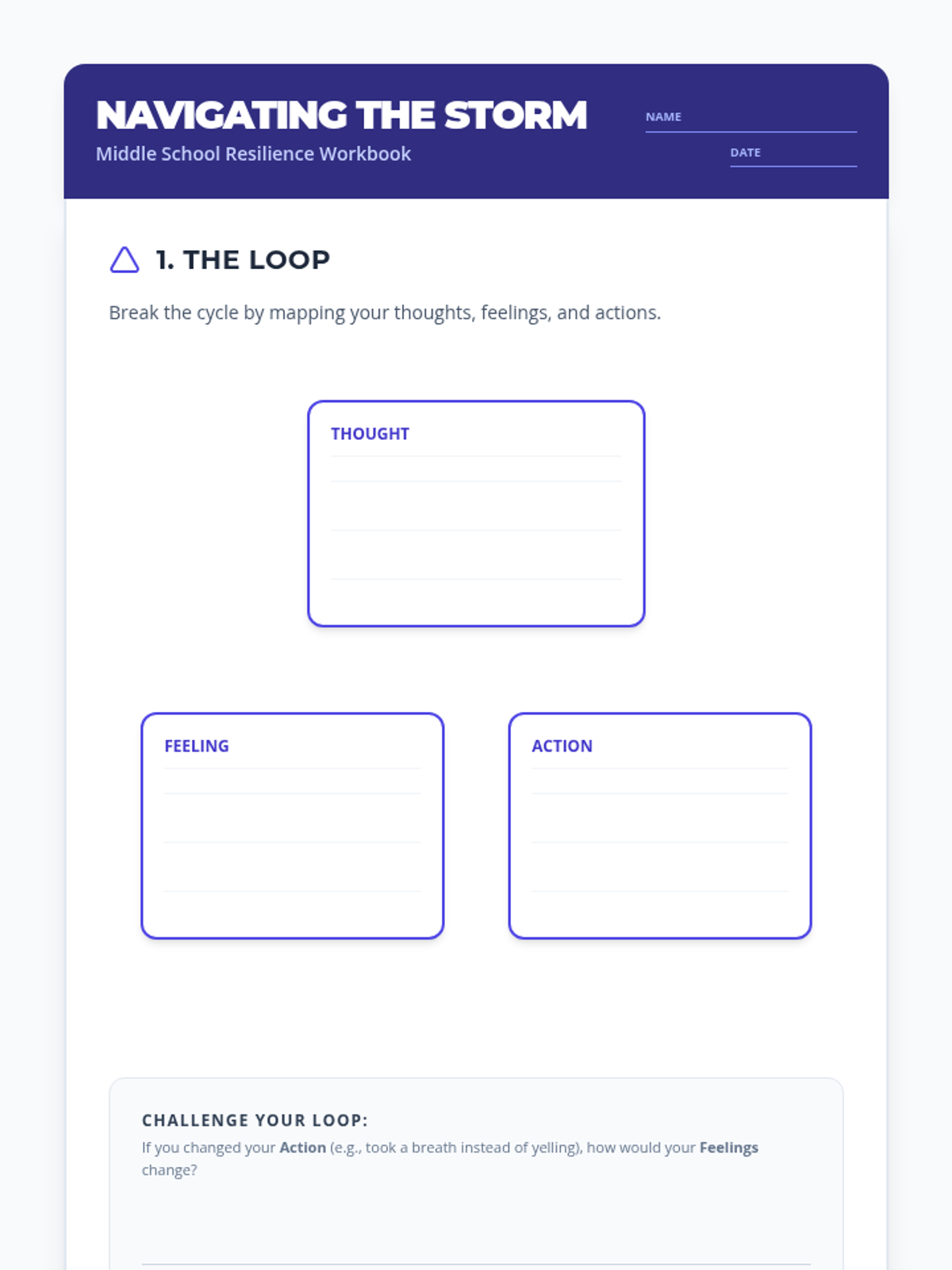
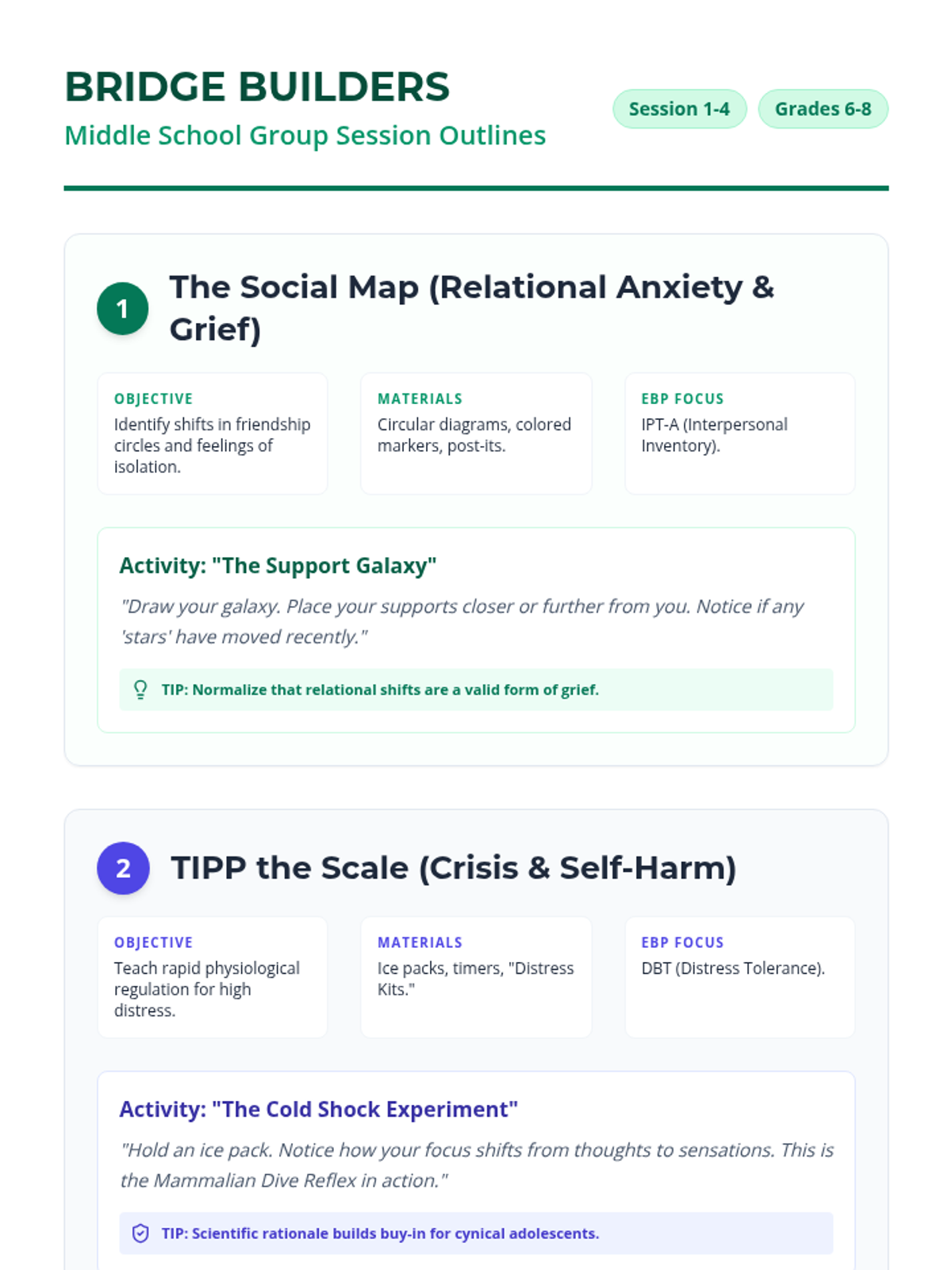
CBT and DBT-informed strategies tailored for the middle school transition, focusing on peer relationships, emotional regulation, and structured safety plans.
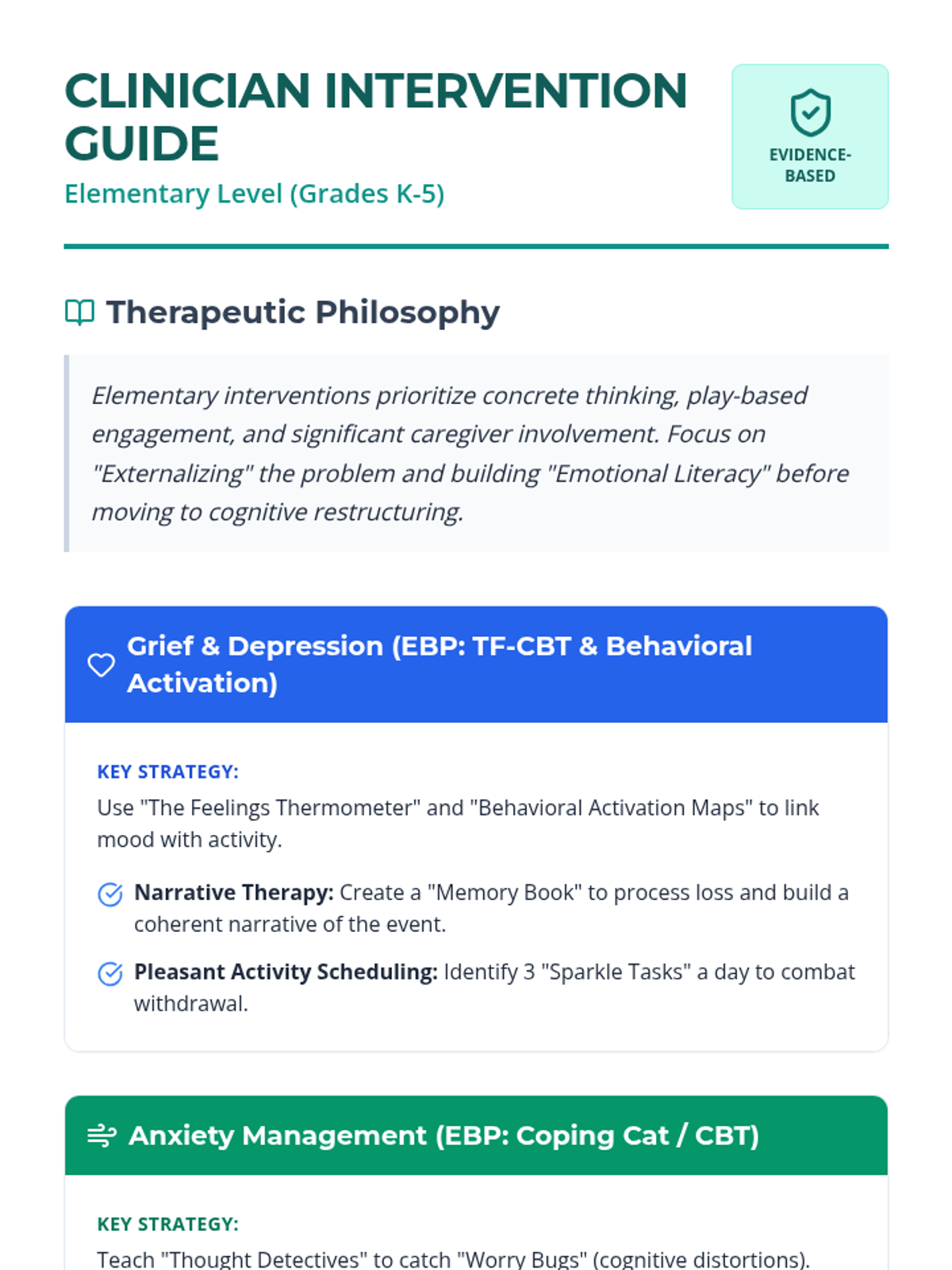
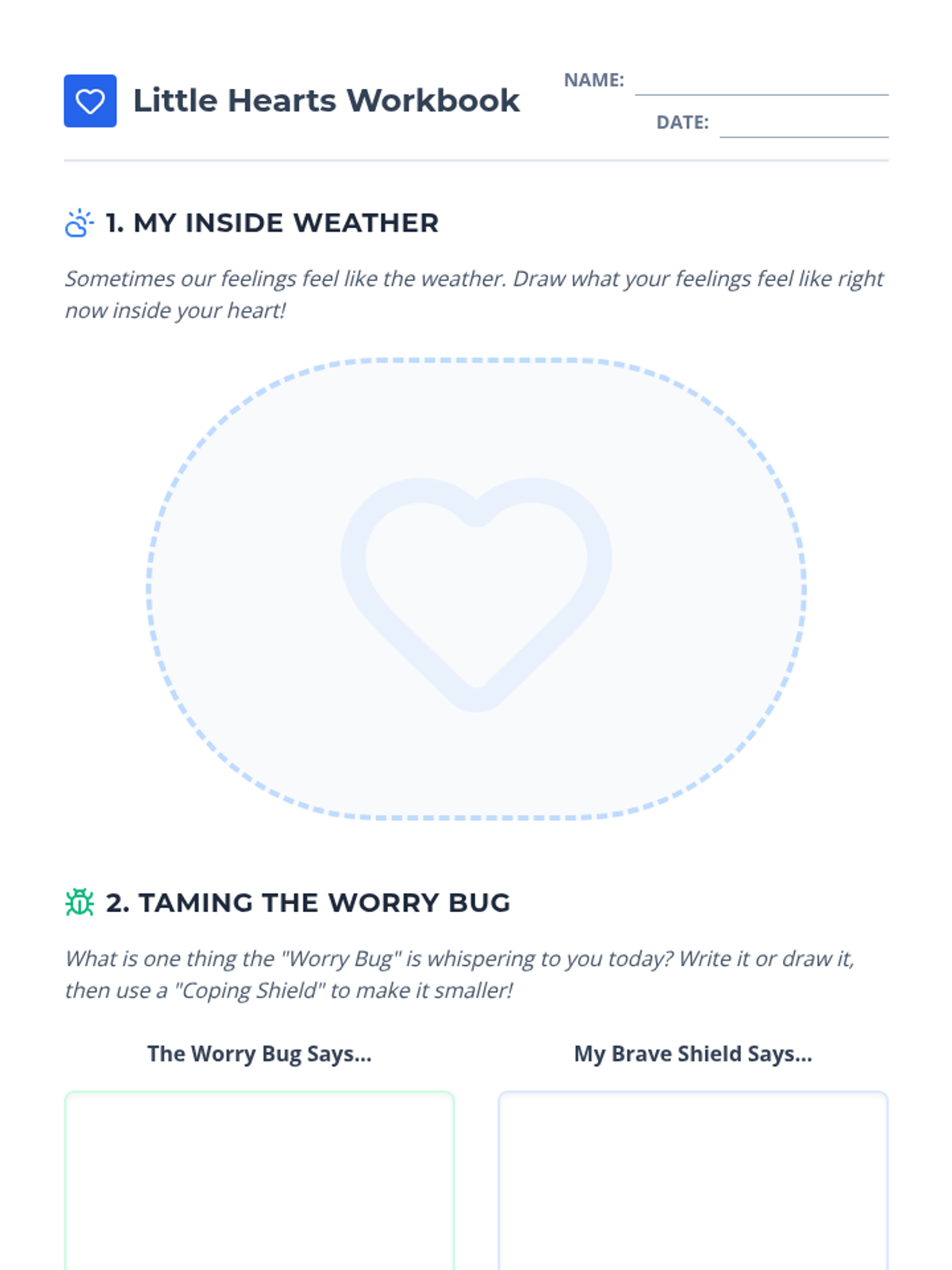
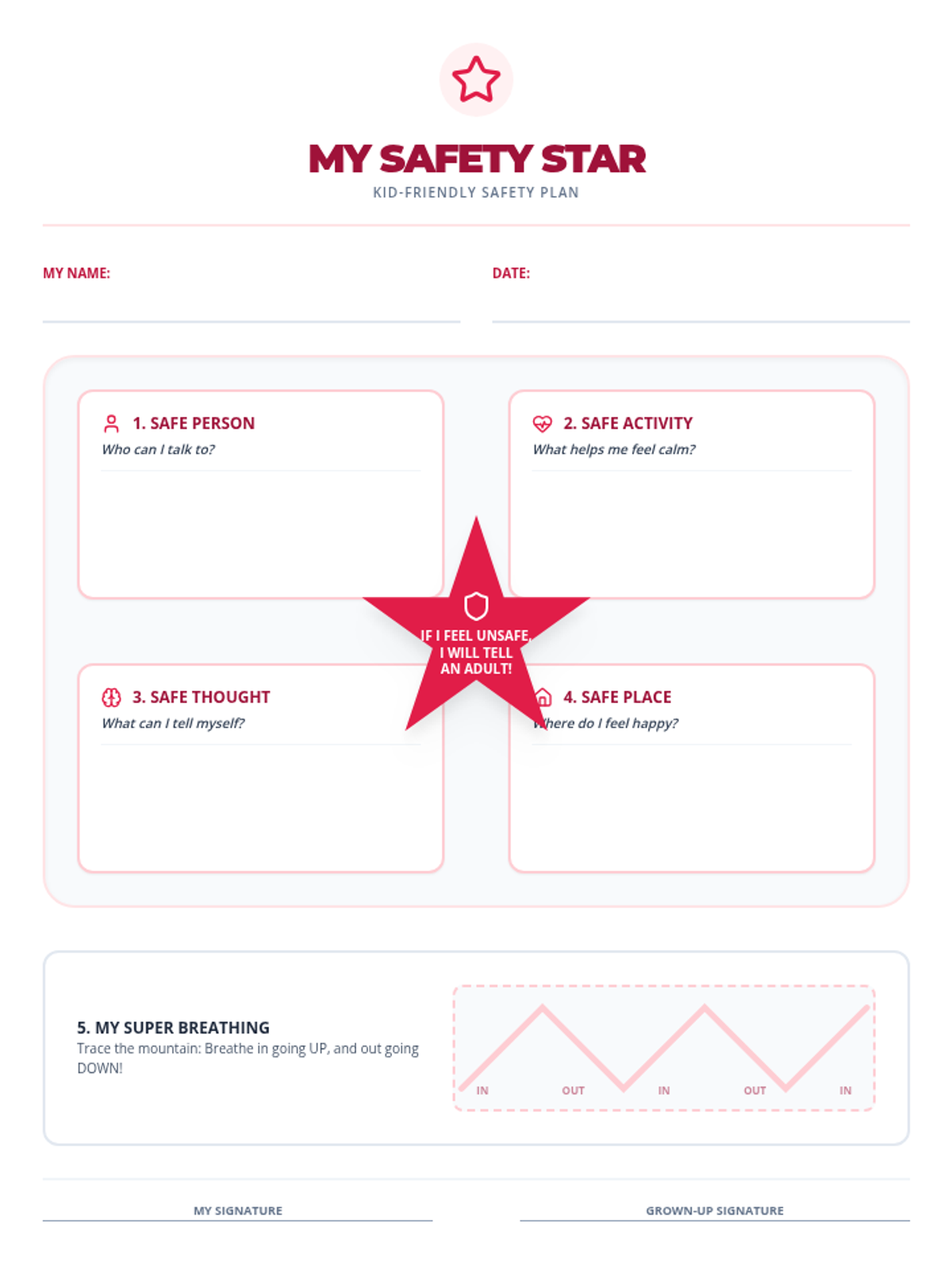
Developmentally appropriate interventions for elementary students focusing on play-based CBT, social-emotional learning, and kid-friendly safety planning.
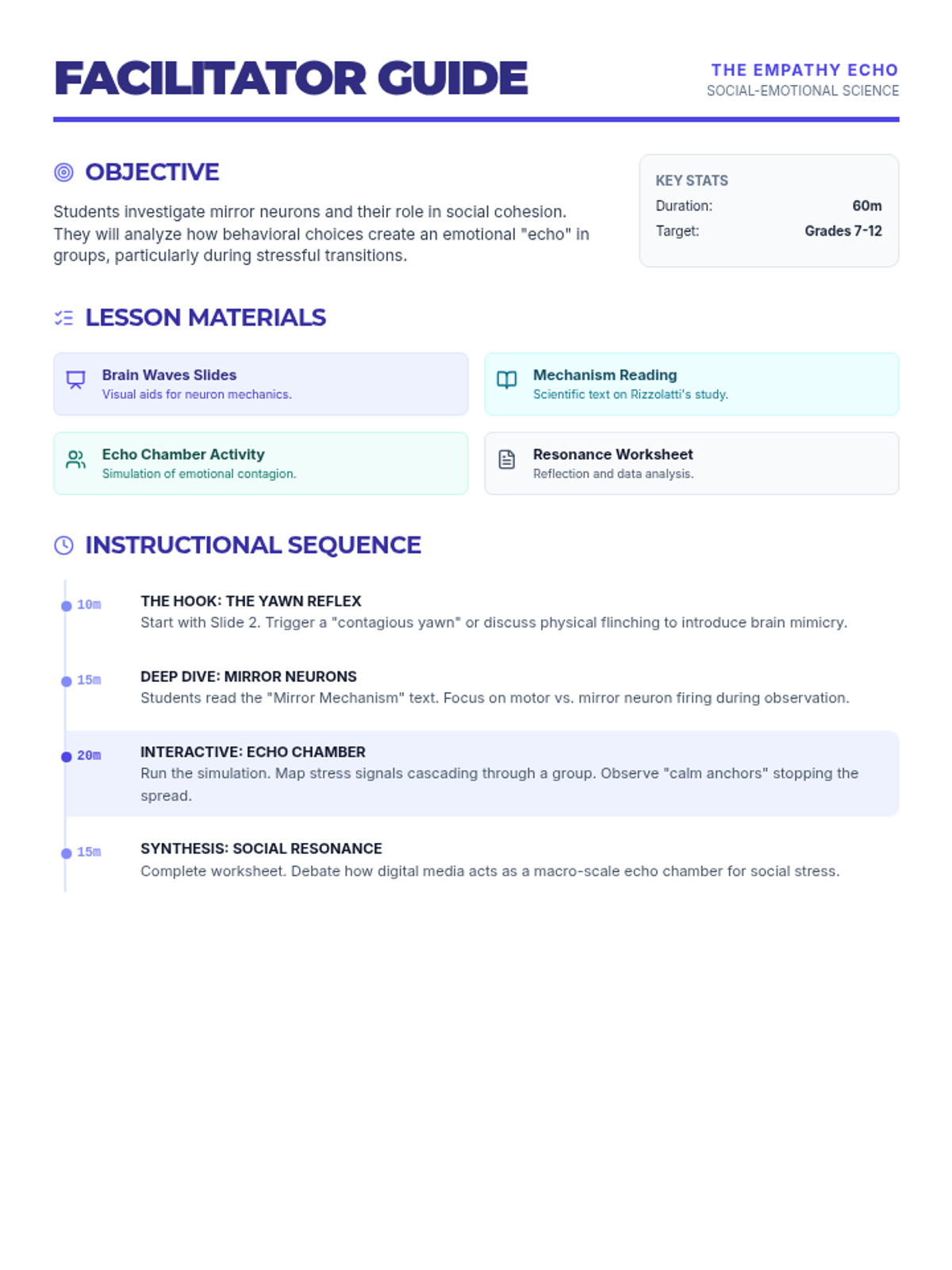
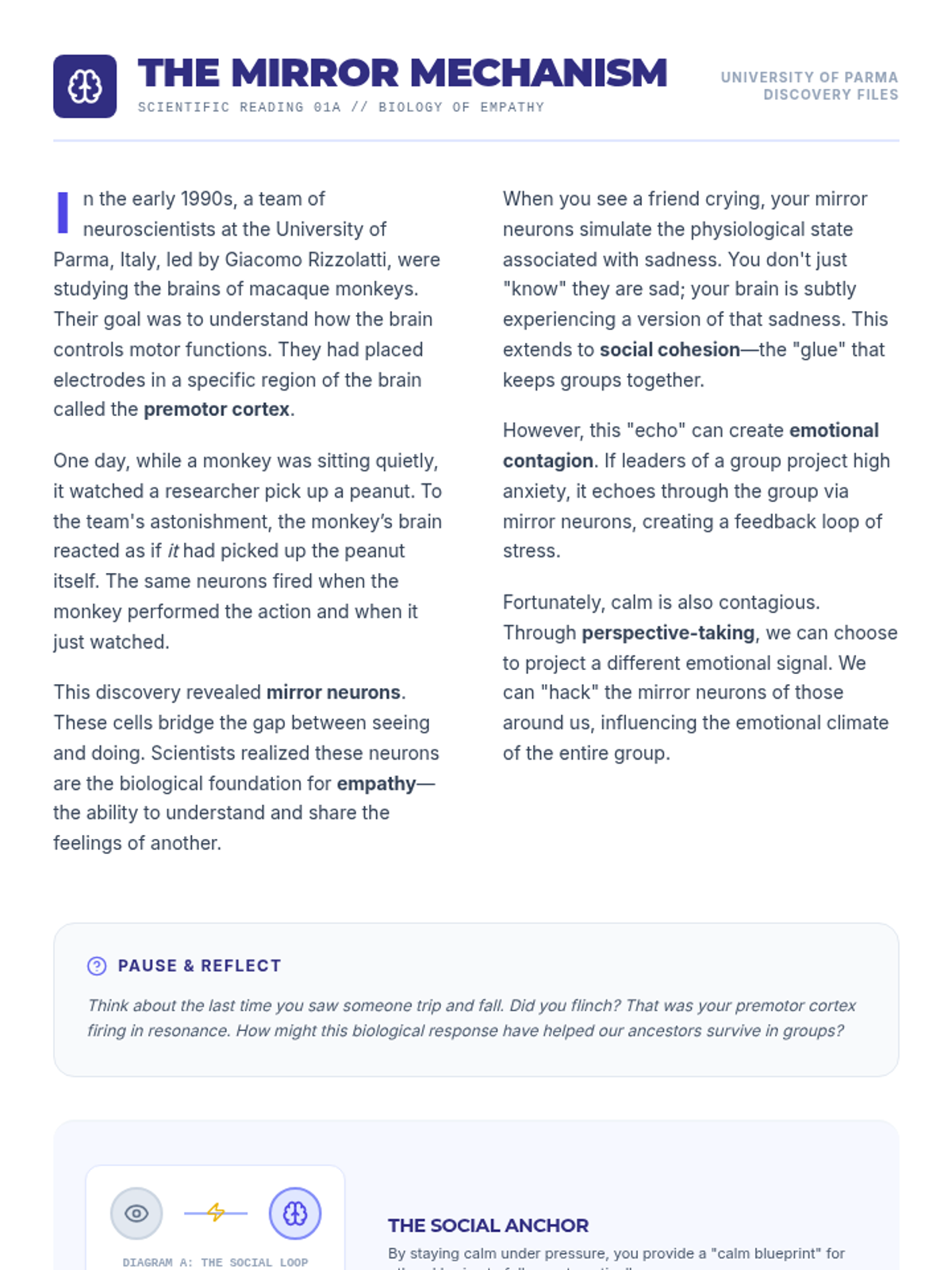
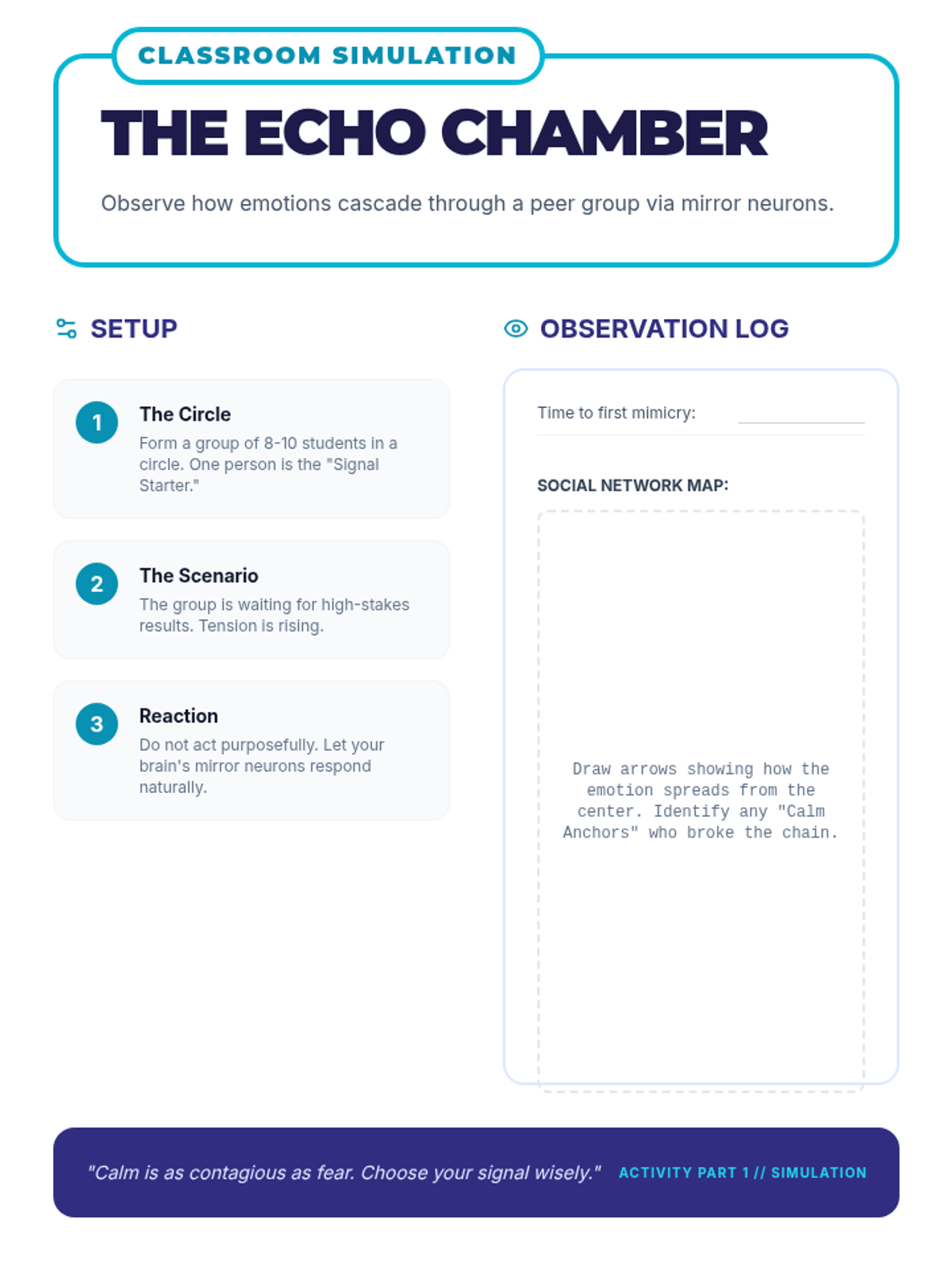
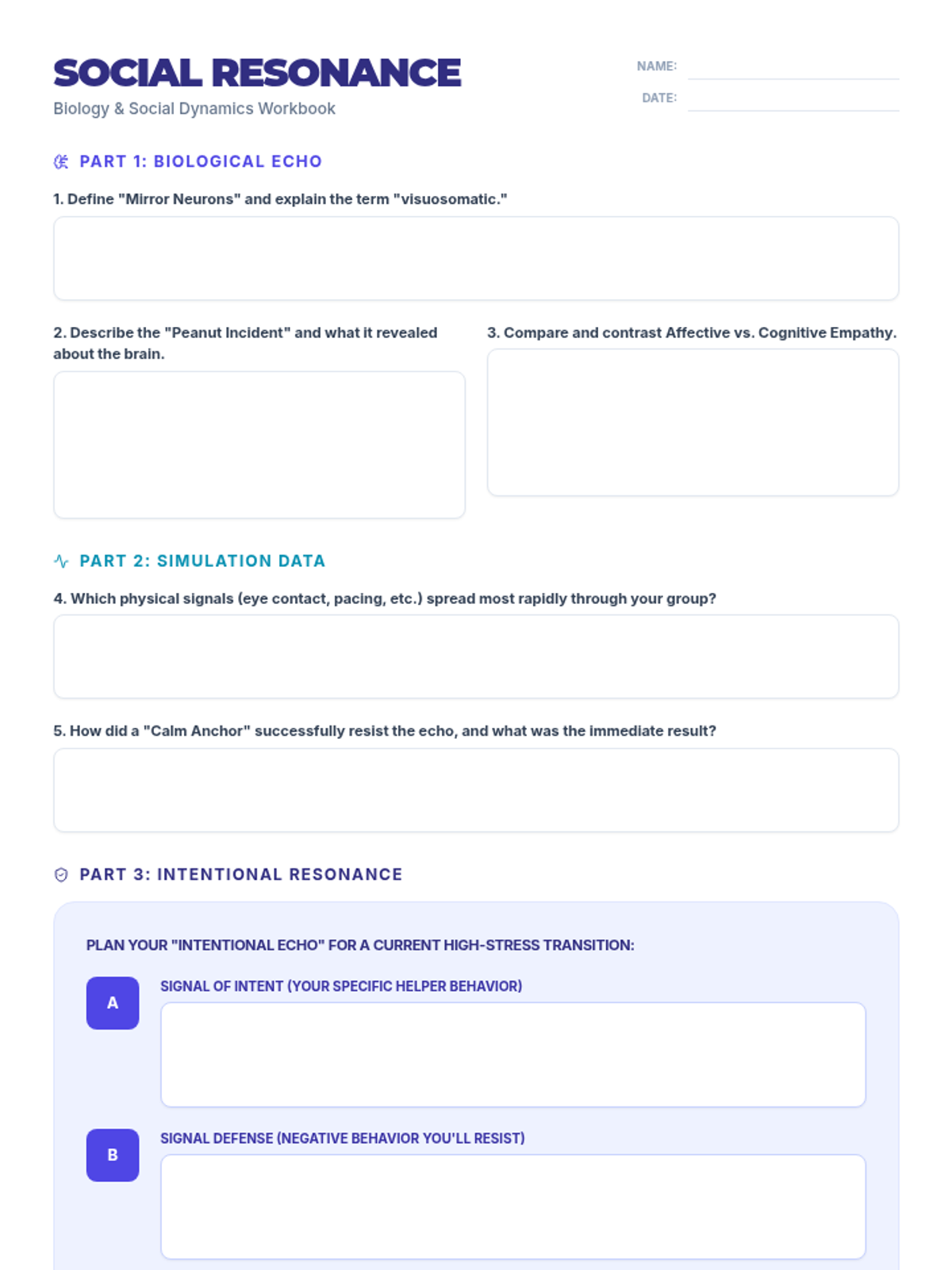
A comprehensive exploration of the biological foundations of empathy, focusing on mirror neurons and their role in social cohesion during high-stress transitions. Students will investigate how their behavioral choices create an 'emotional echo' within their peer groups.
Aceitação Radical e voltando a mente para a realidade para reduzir o sofrimento.
Autoconforto usando os cinco sentidos e melhorando o momento.
As habilidades STOP e TIPP para gerenciamento imediato de crises e resfriamento.
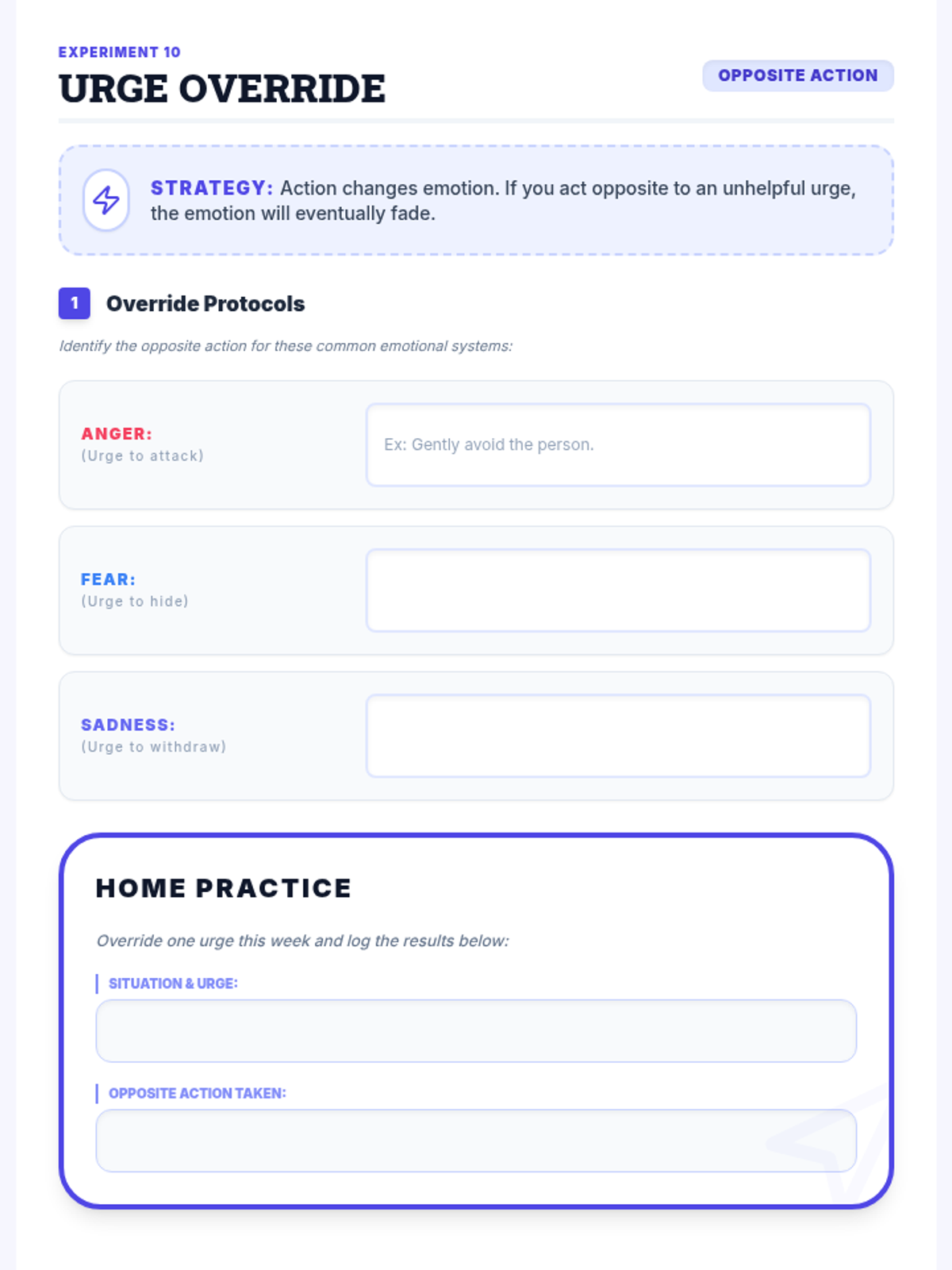
A habilidade de Ação Oposta para mudar emoções indesejadas agindo contra o impulso.
A habilidade PLEASE para manter um corpo saudável e apoiar uma mente saudável.
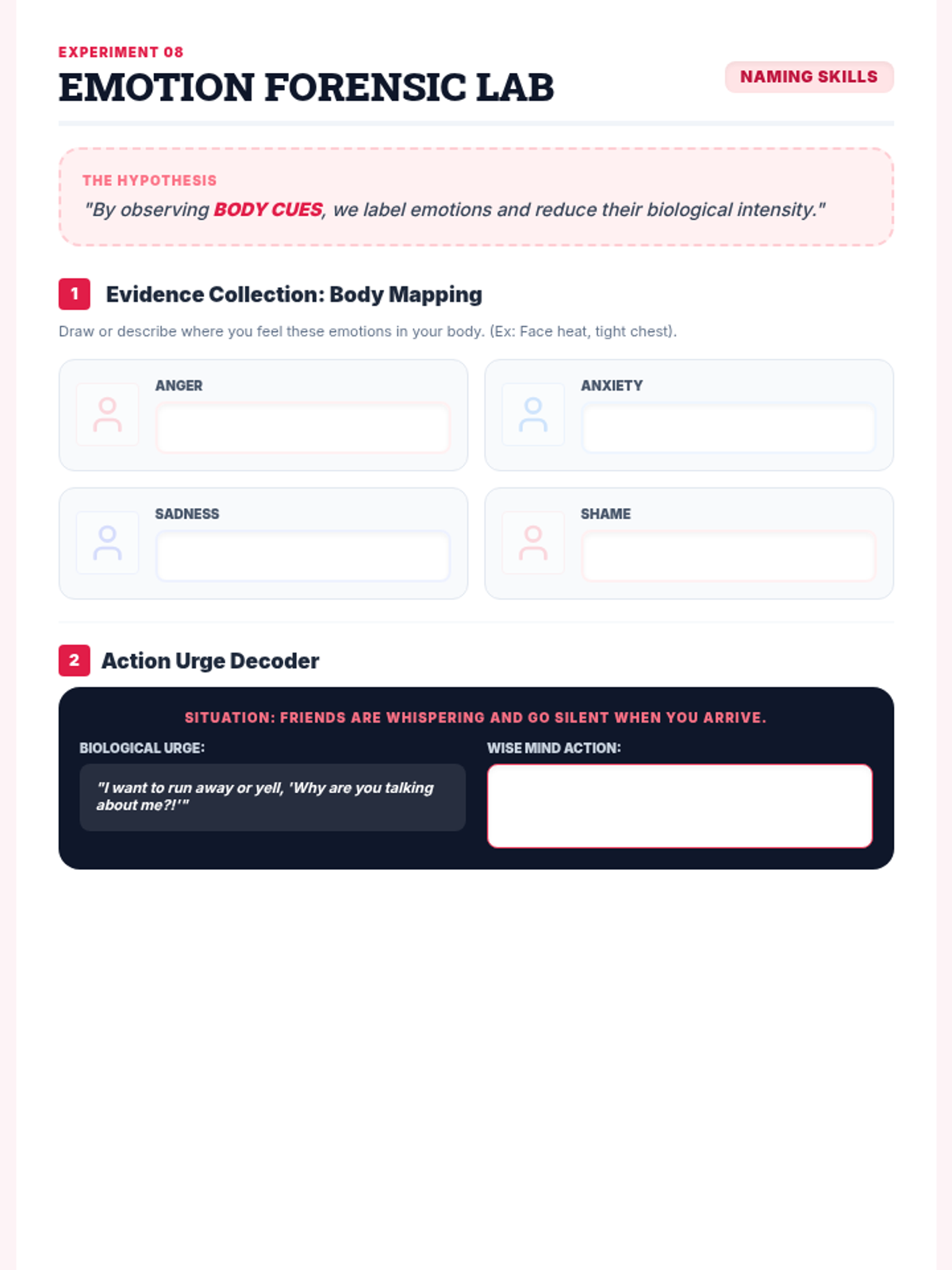
Aprender a identificar e nomear emoções para reduzir seu poder e aumentar a compreensão.
Usando a habilidade FAST para manter o autorrespeito e permanecer fiel aos valores.
Usando a habilidade GIVE para manter e fortalecer relacionamentos durante as interações.
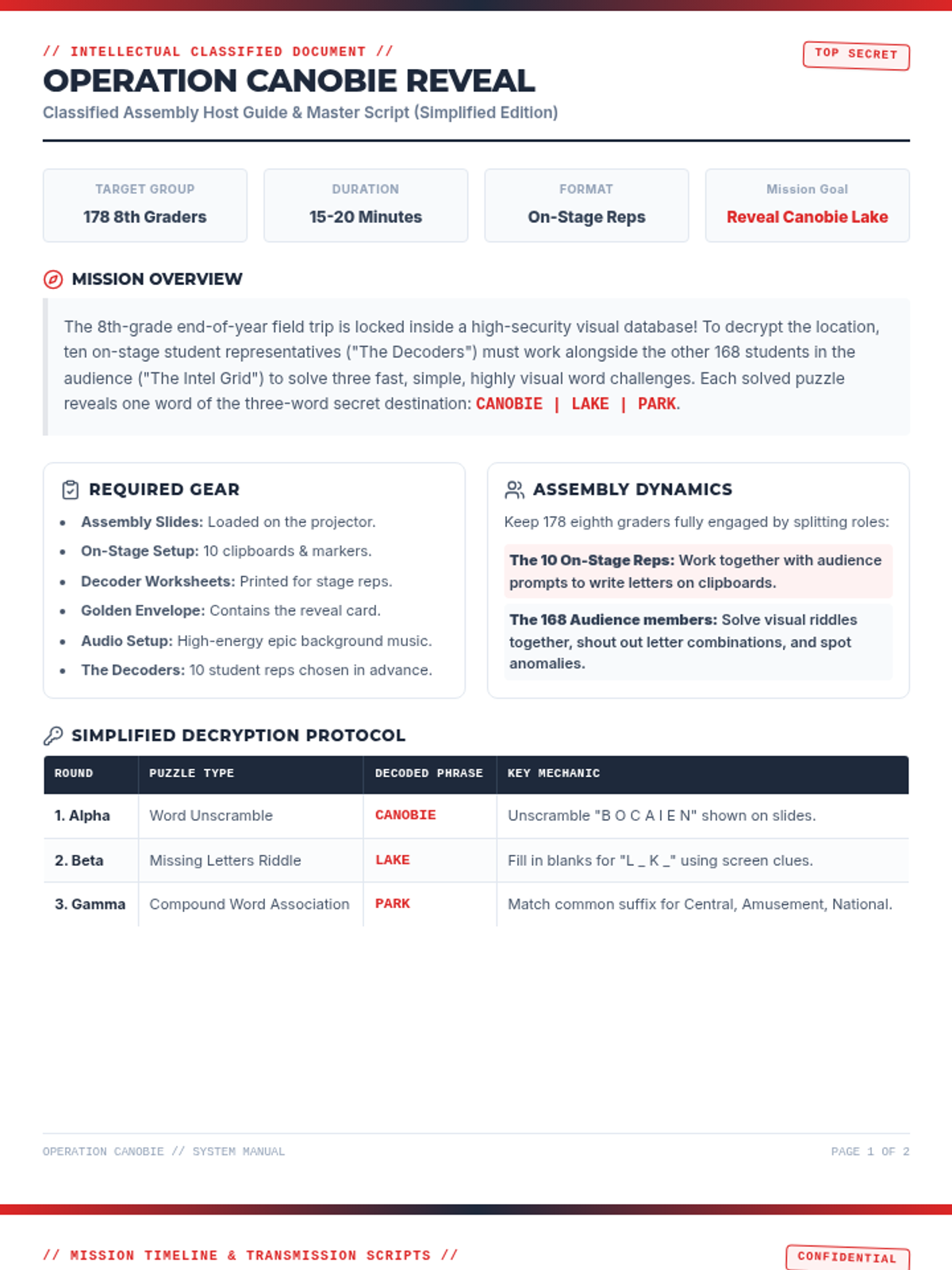
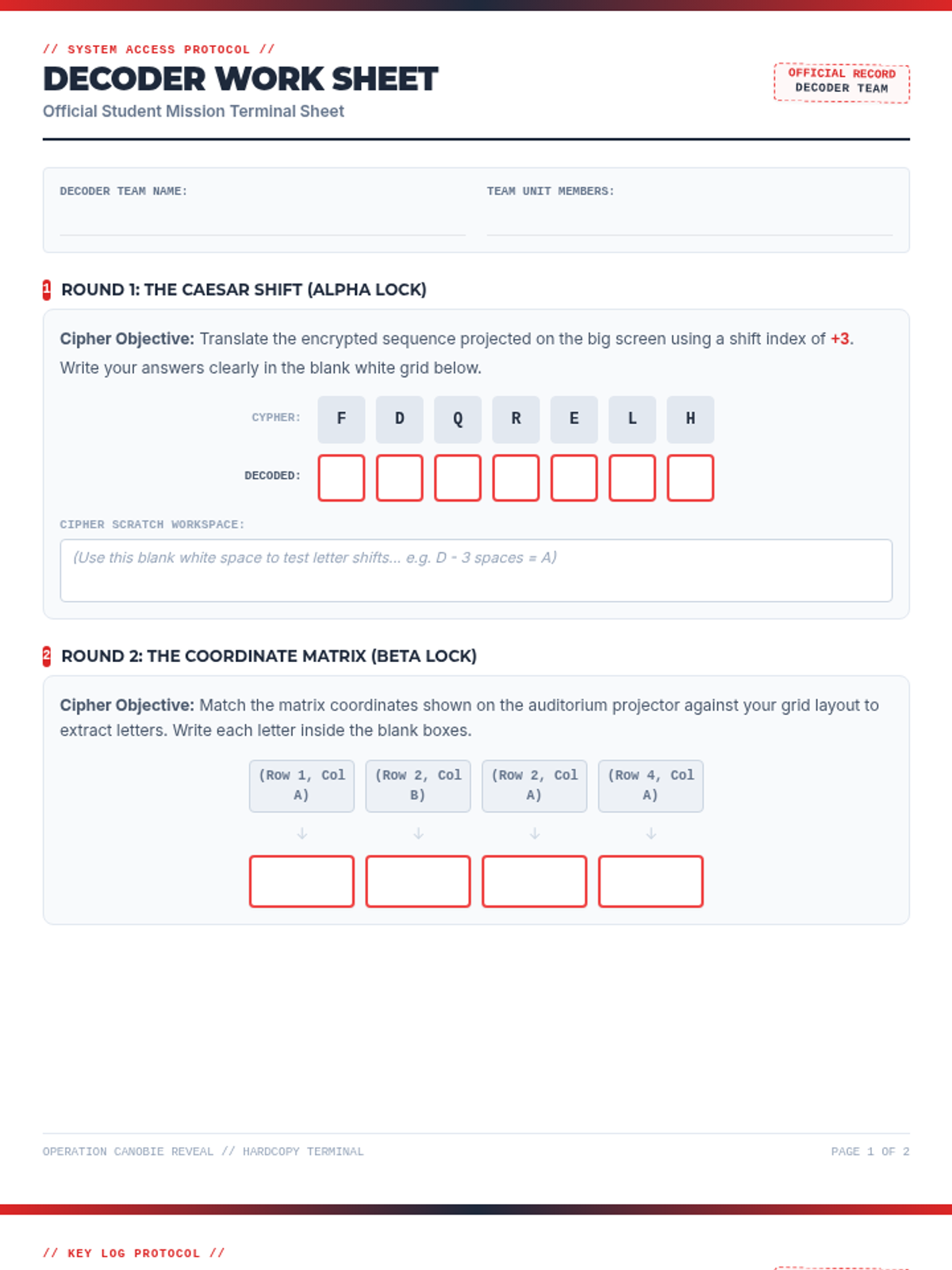
A high-energy, interactive assembly game designed for 178 eighth graders to reveal their end-of-year field trip. On-stage representatives work together with the audience to decode clues, culminating in the big reveal of Canobie Lake Park.
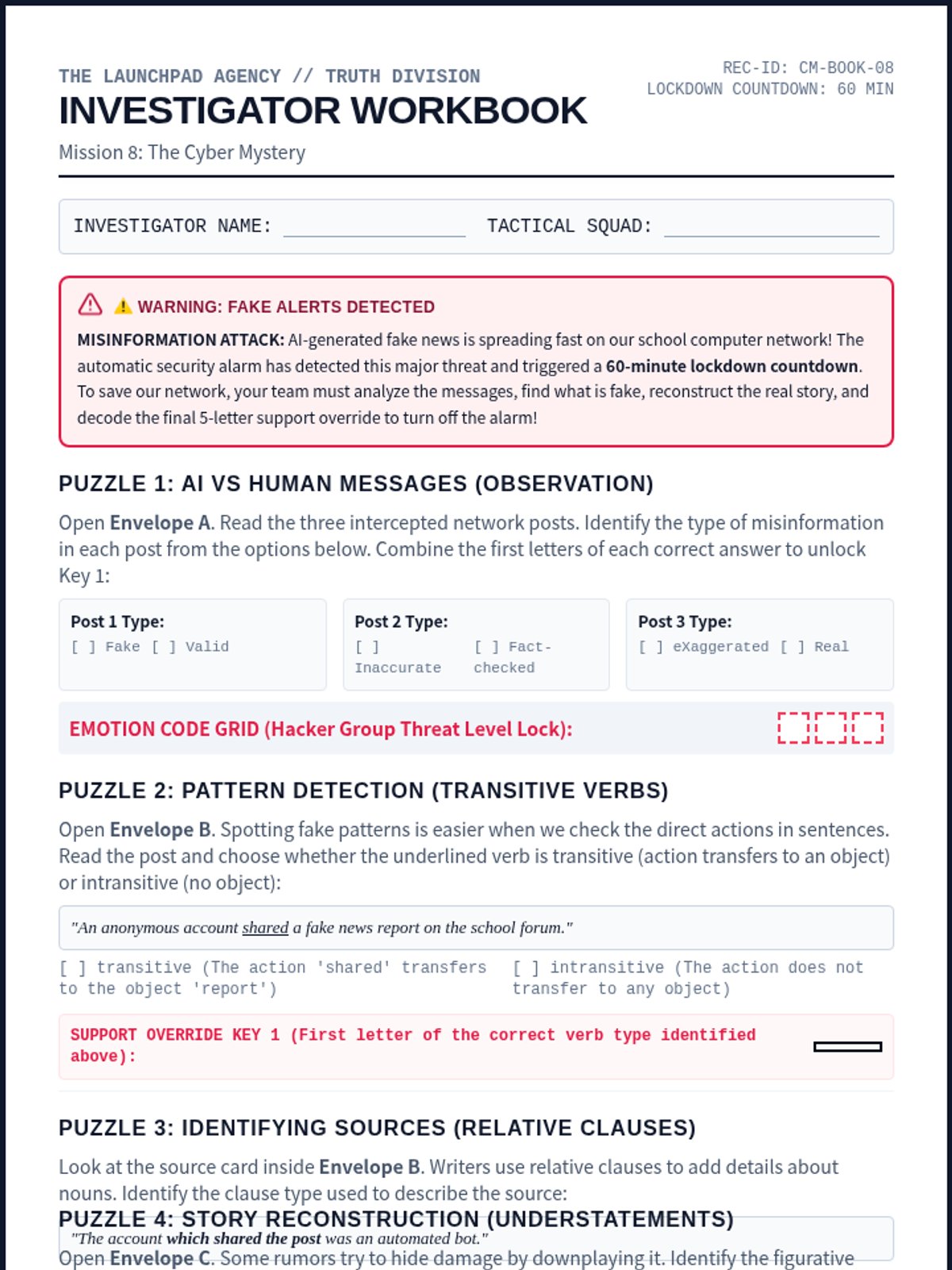
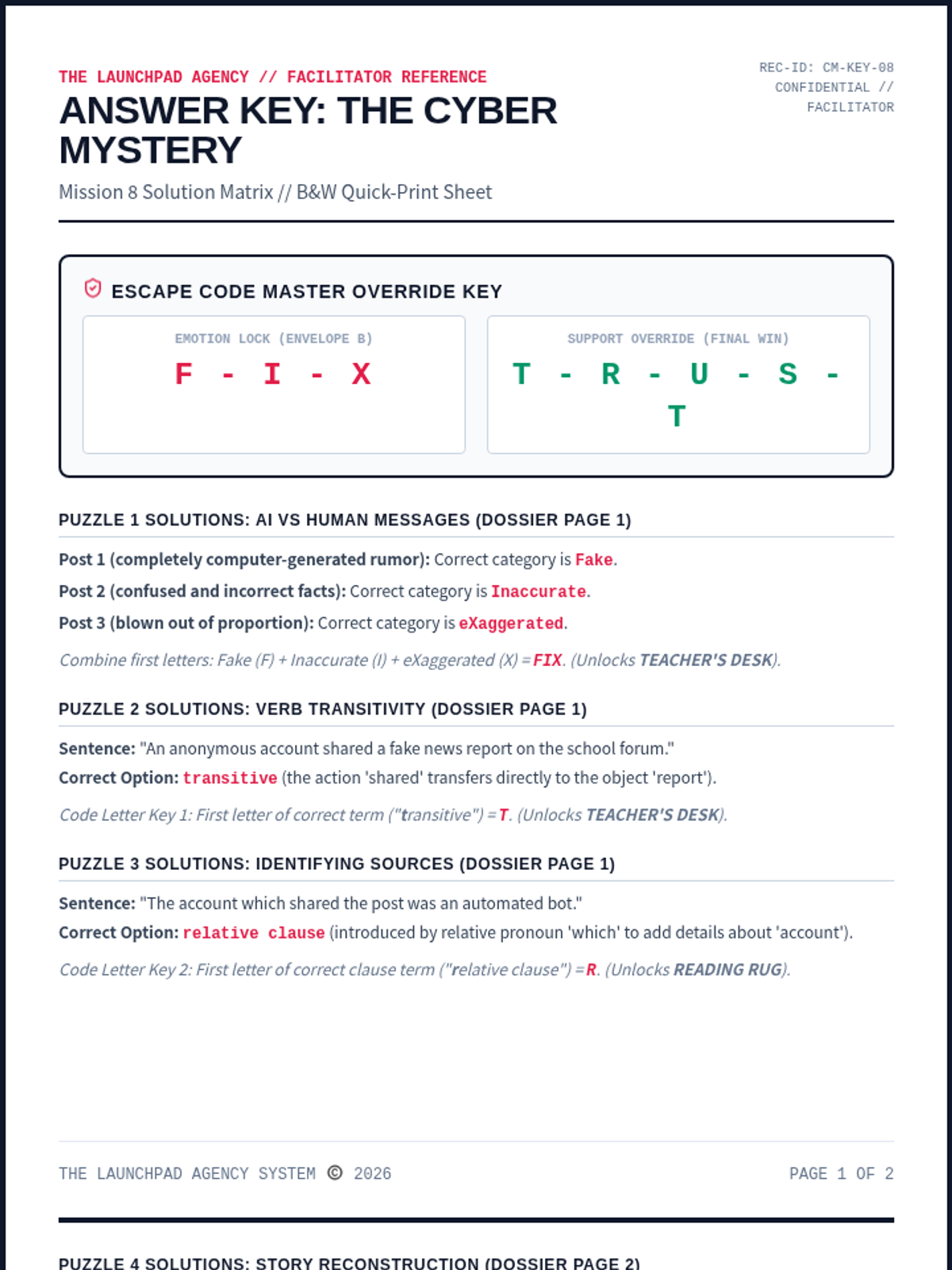
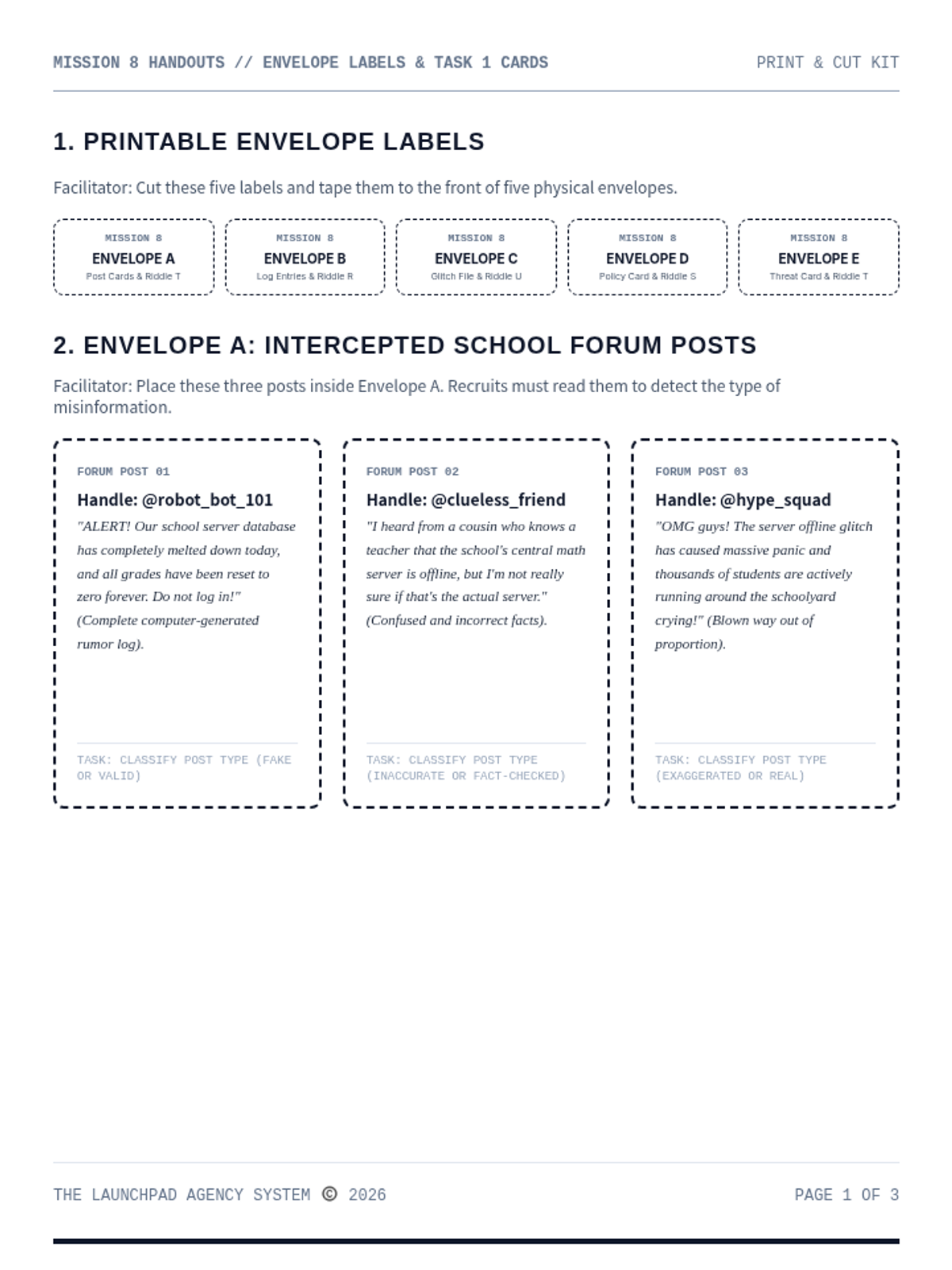
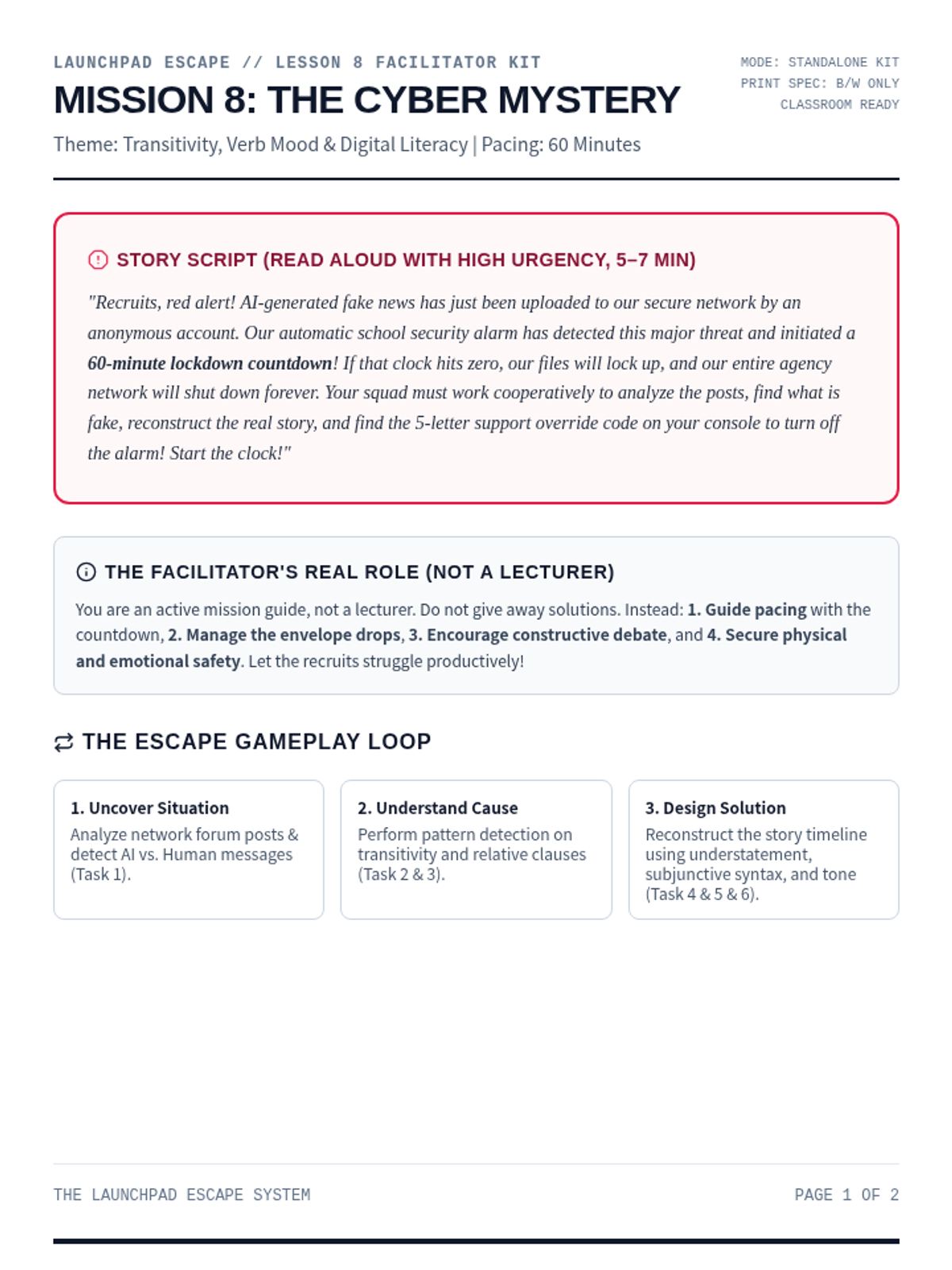
An advanced digital literacy and collaborative cryptography escape room for Ages 14-16. Recruits analyze verb transitivity, relative clauses, subjunctive moods, and tone to stop a school database wipe.
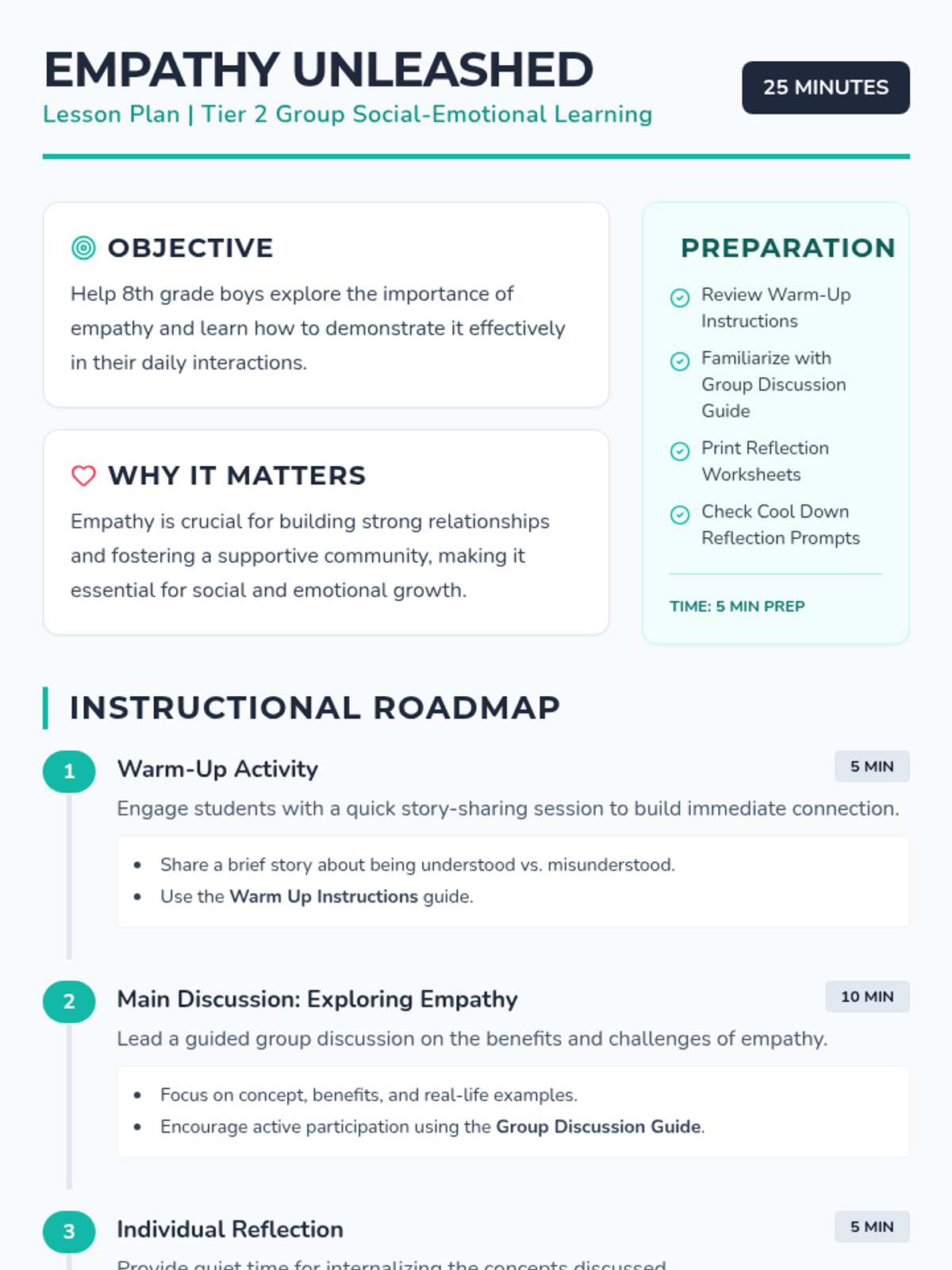
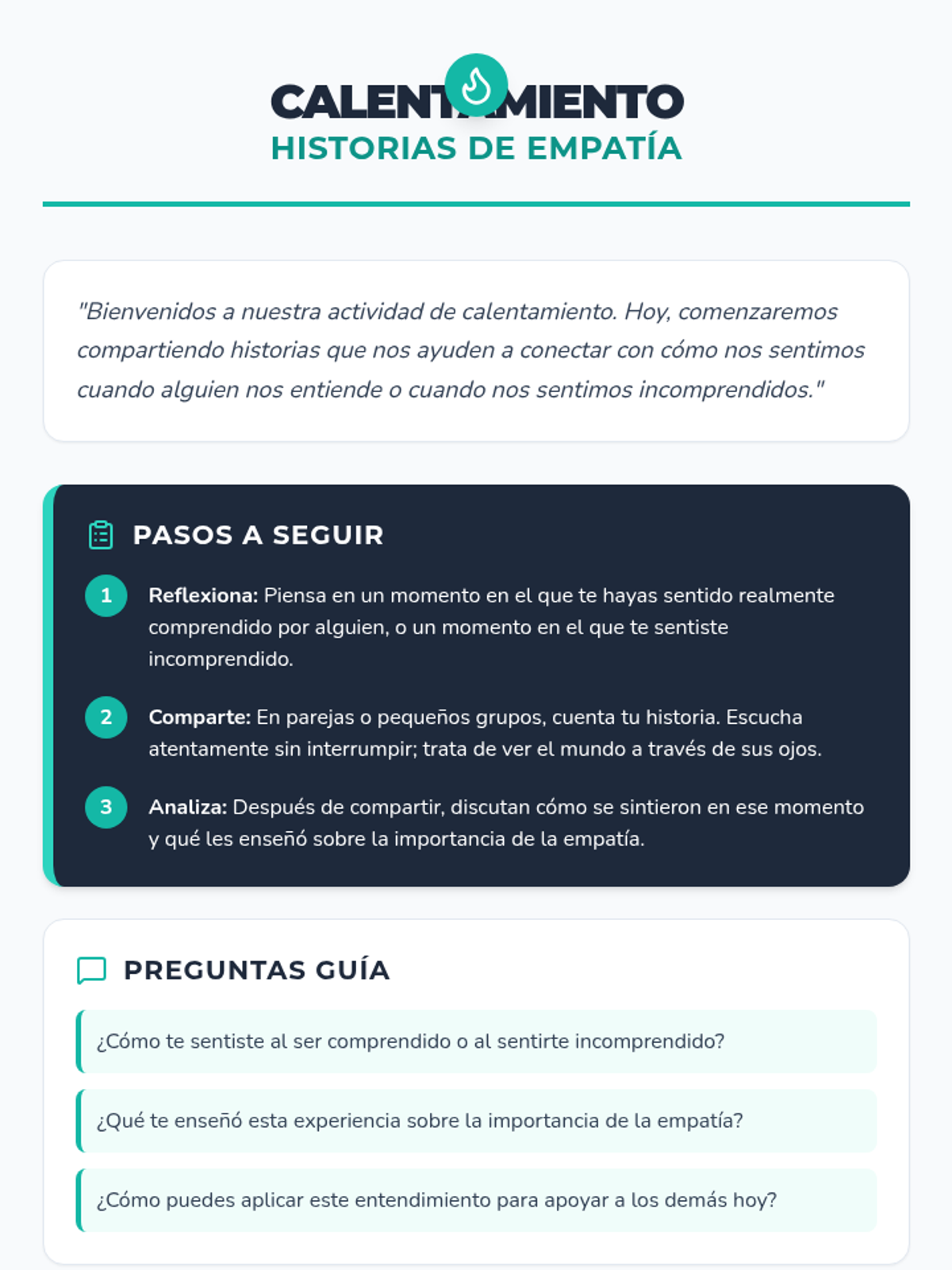
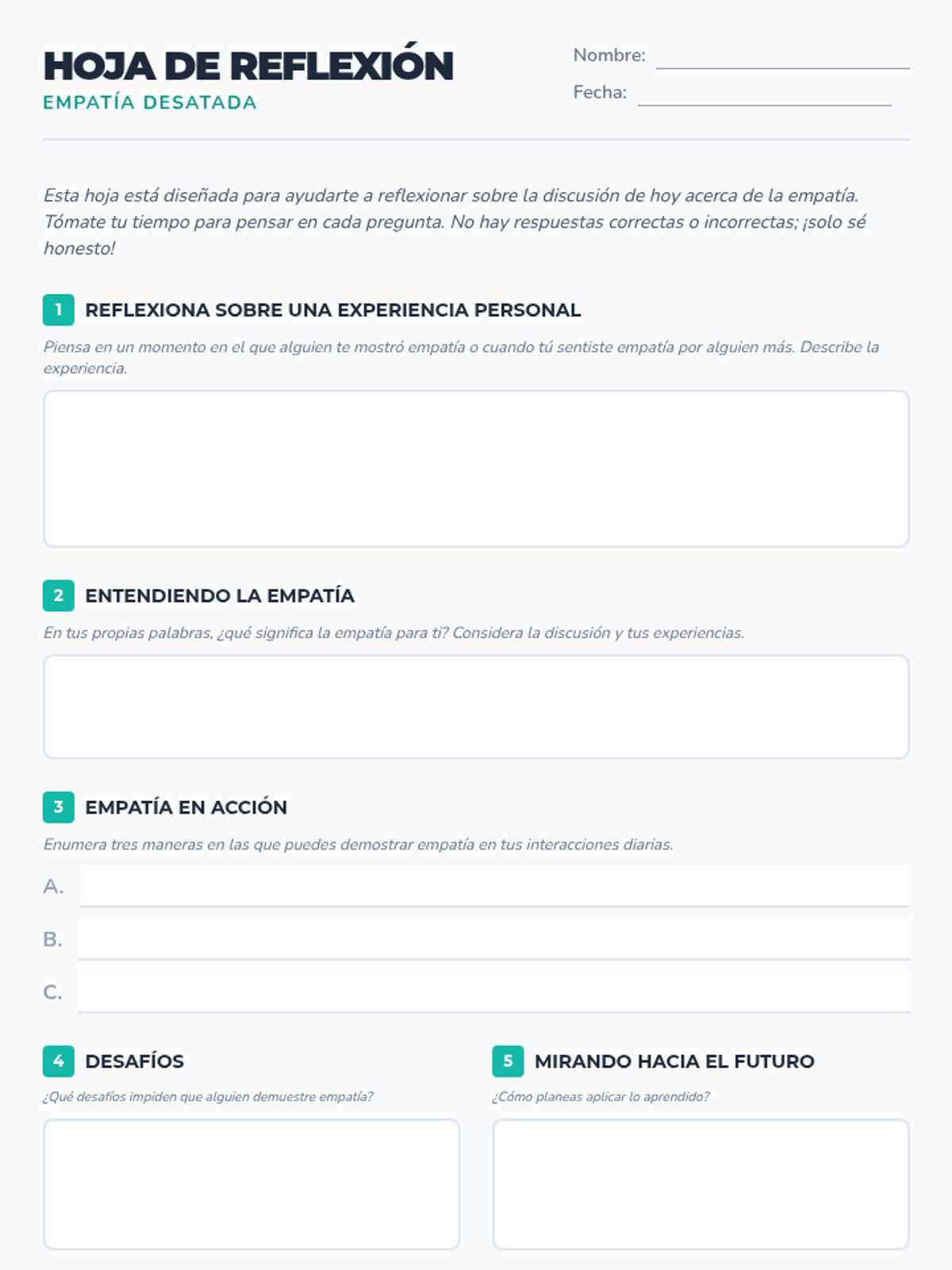
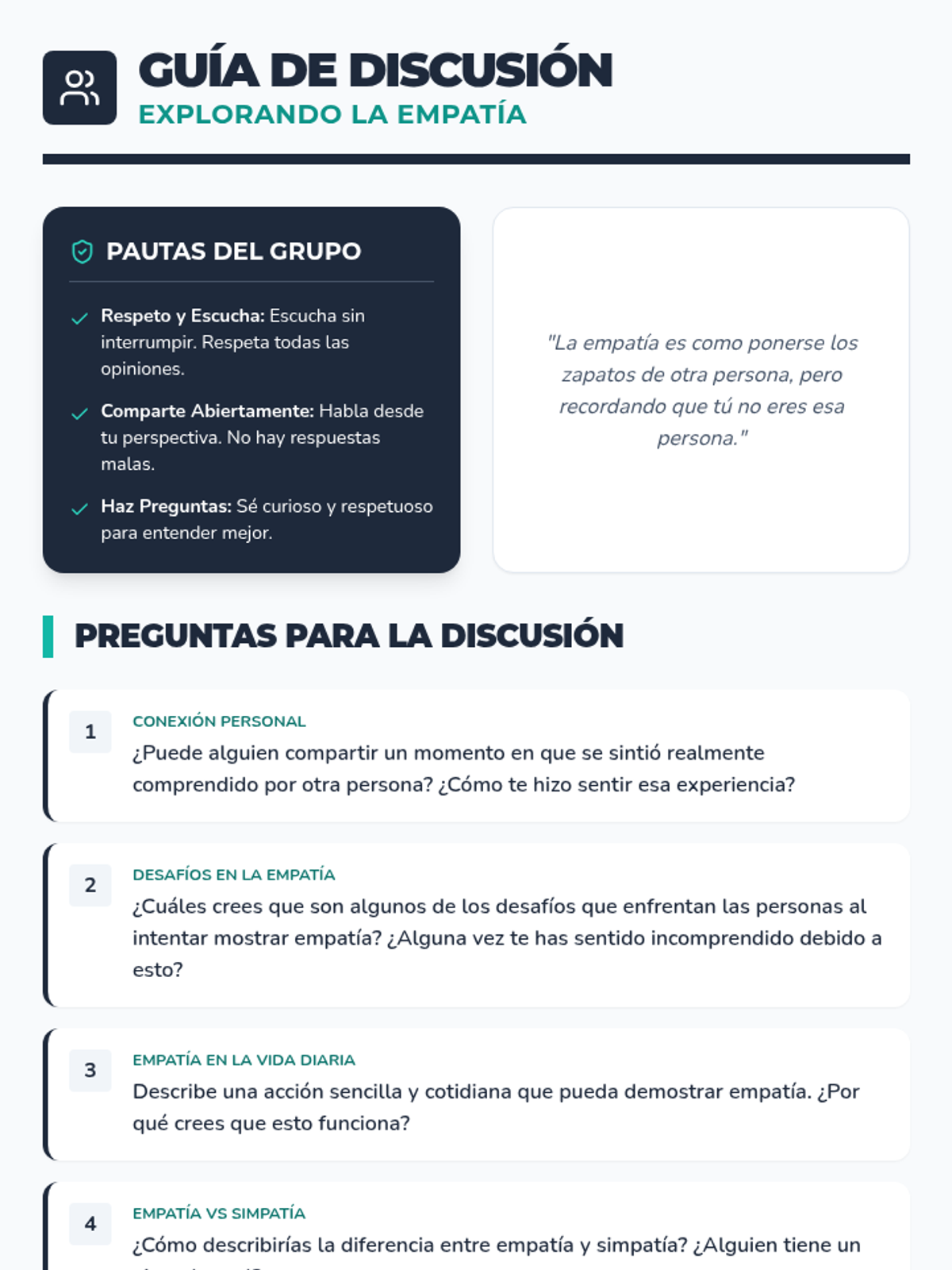
A 25-minute Tier 2 group lesson for 8th-grade boys focusing on understanding others' perspectives and building strong relationships through empathy.
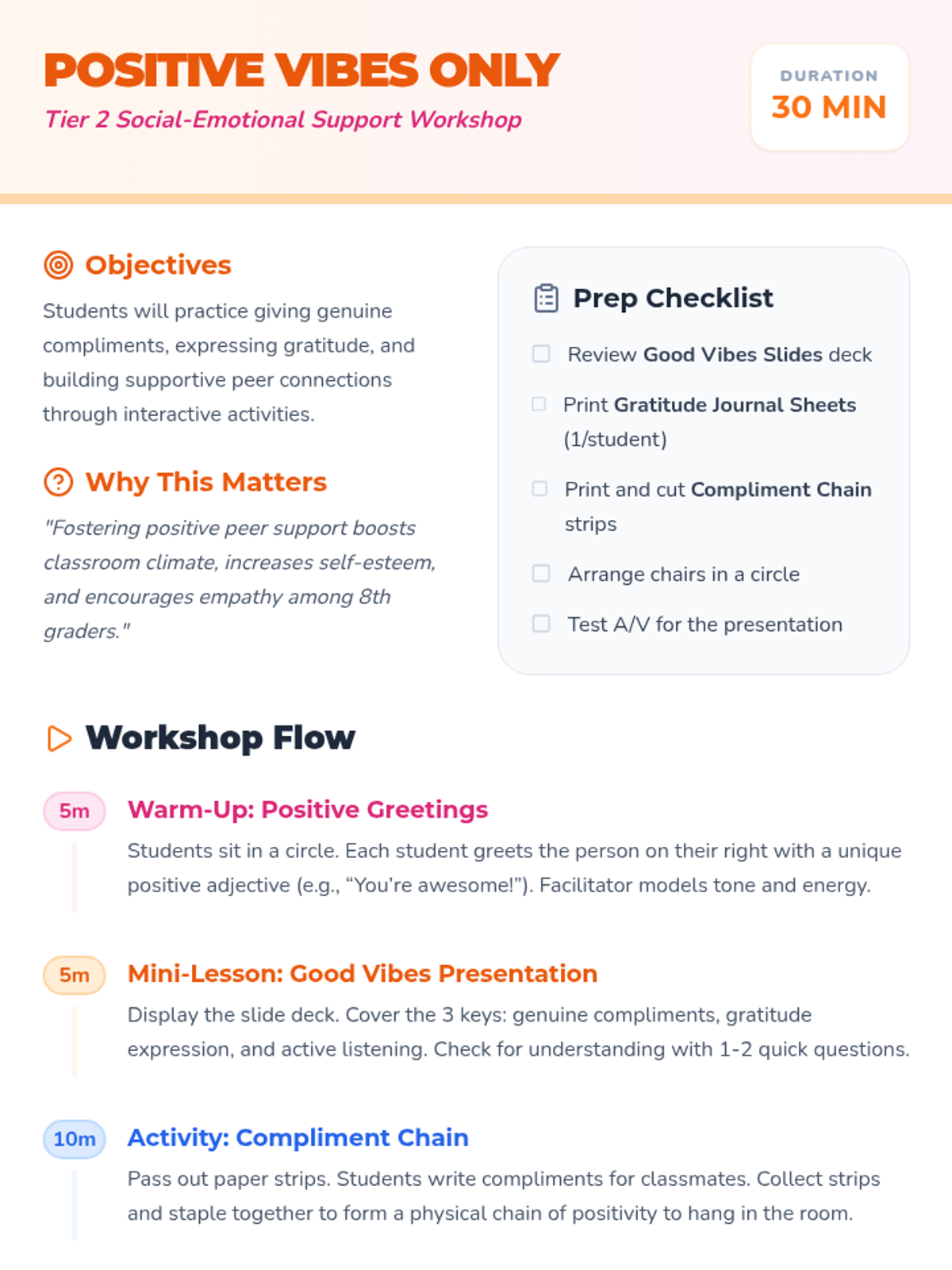
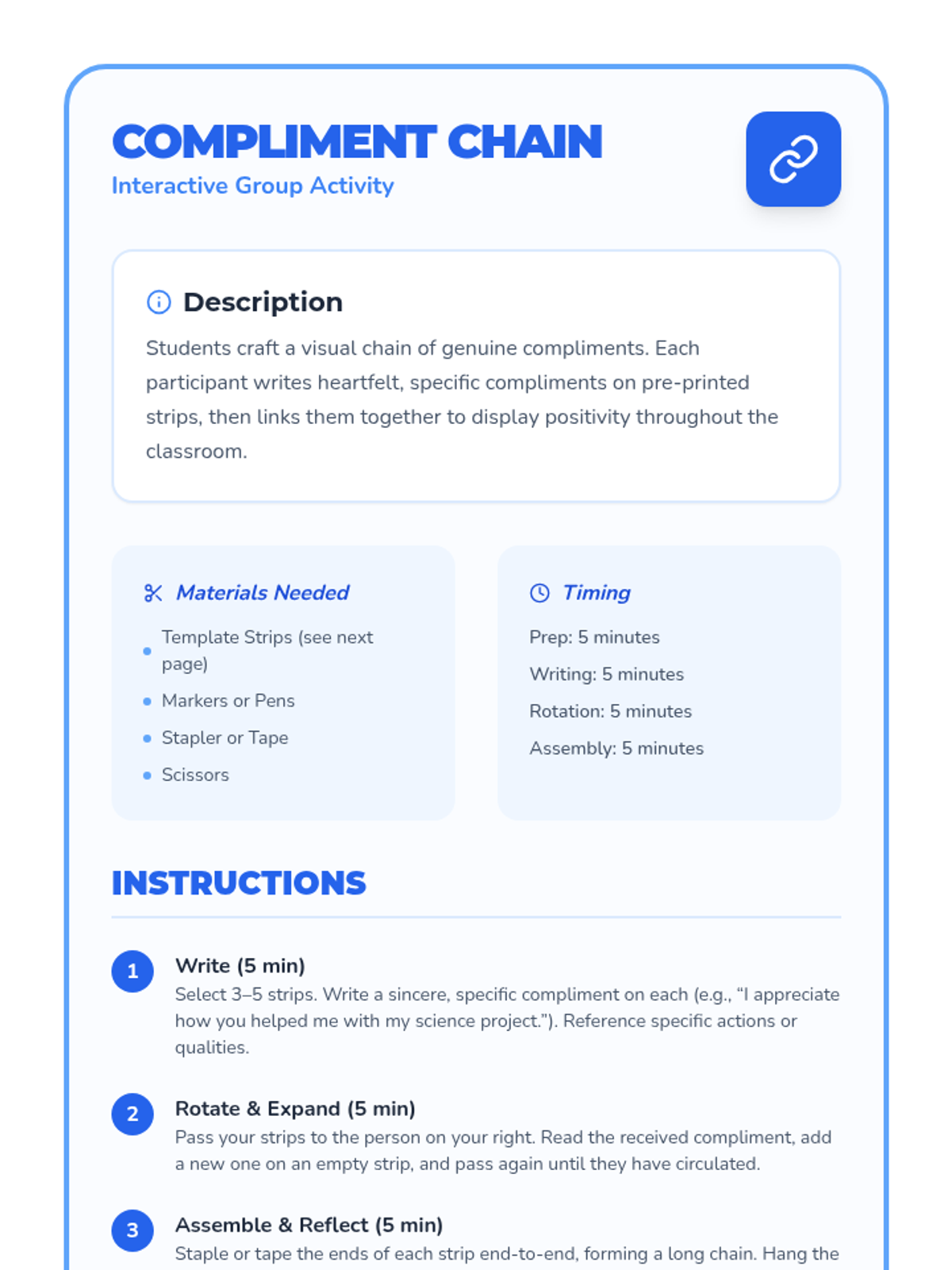
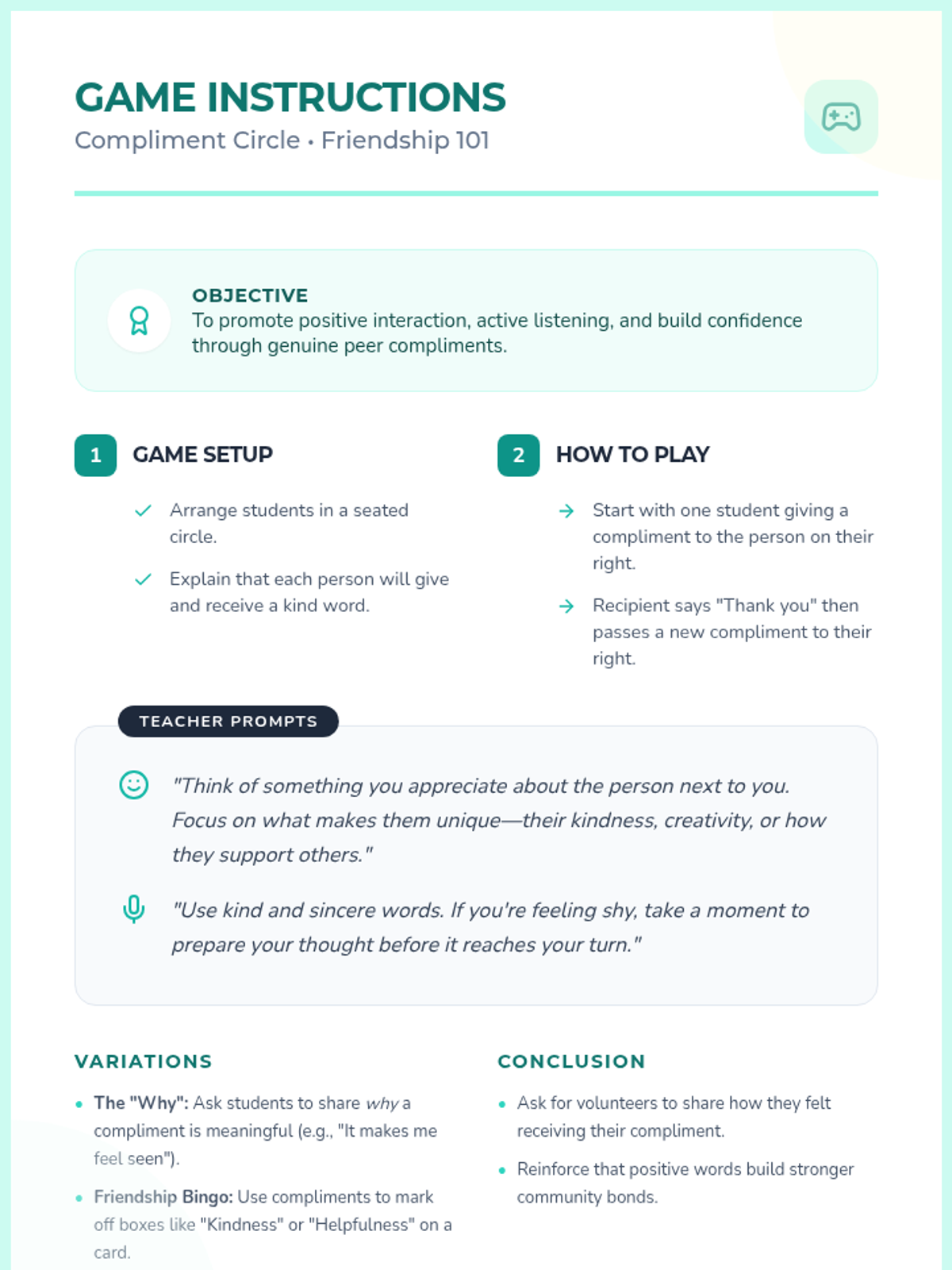
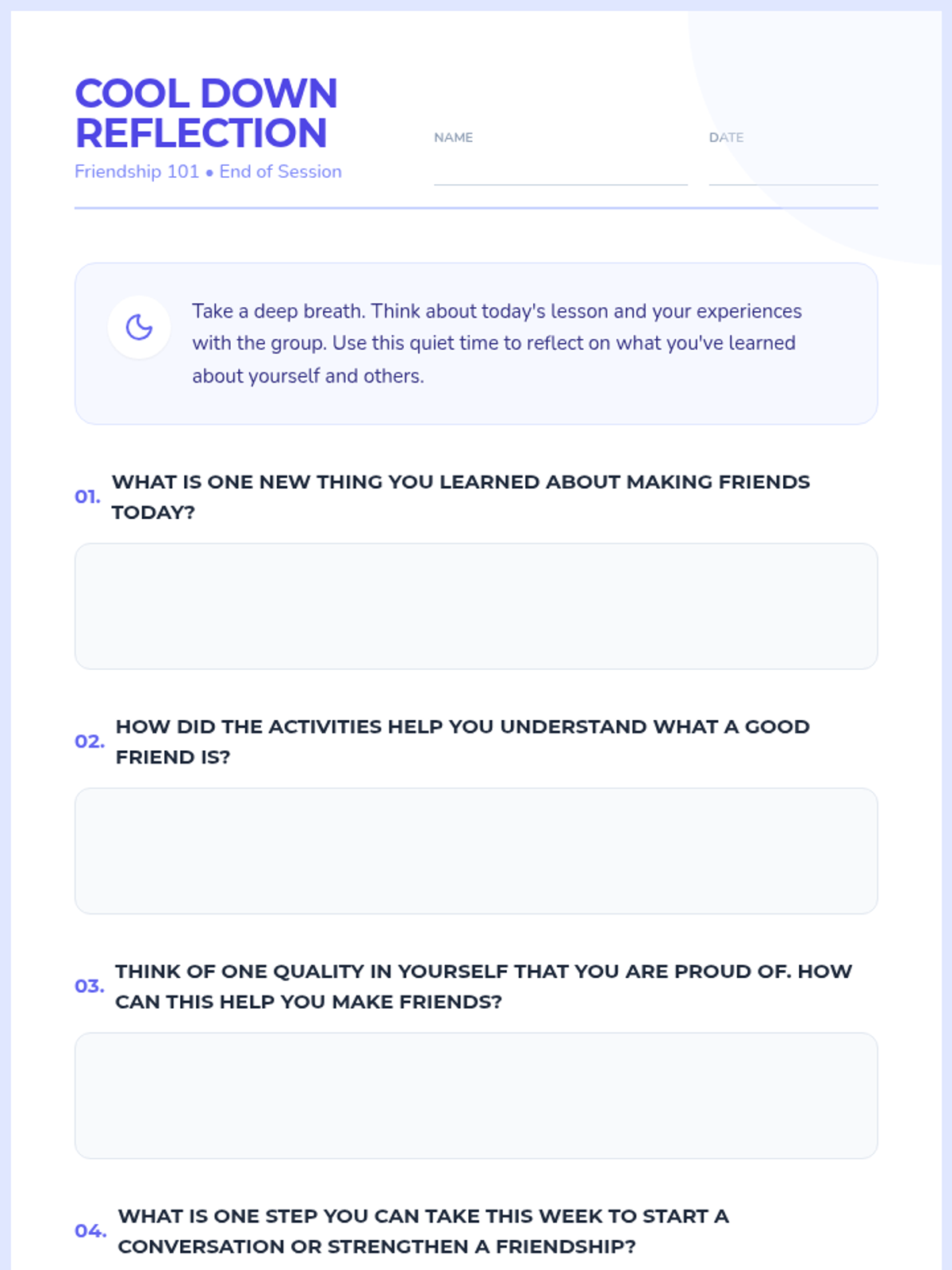
A 30-minute Tier 2 small-group workshop for 8th graders aimed at strengthening peer support through interactive activities like giving compliments and expressing gratitude.
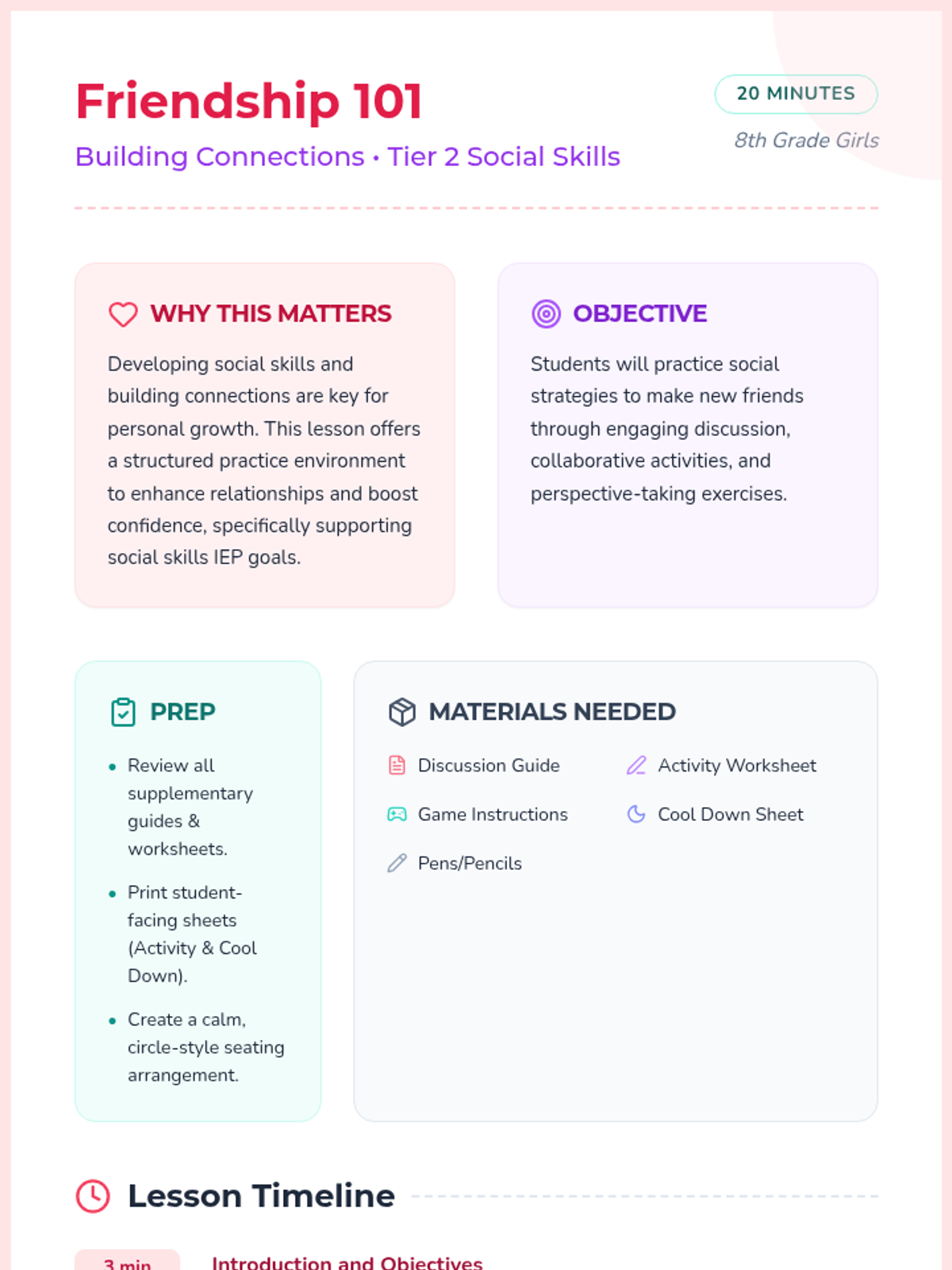
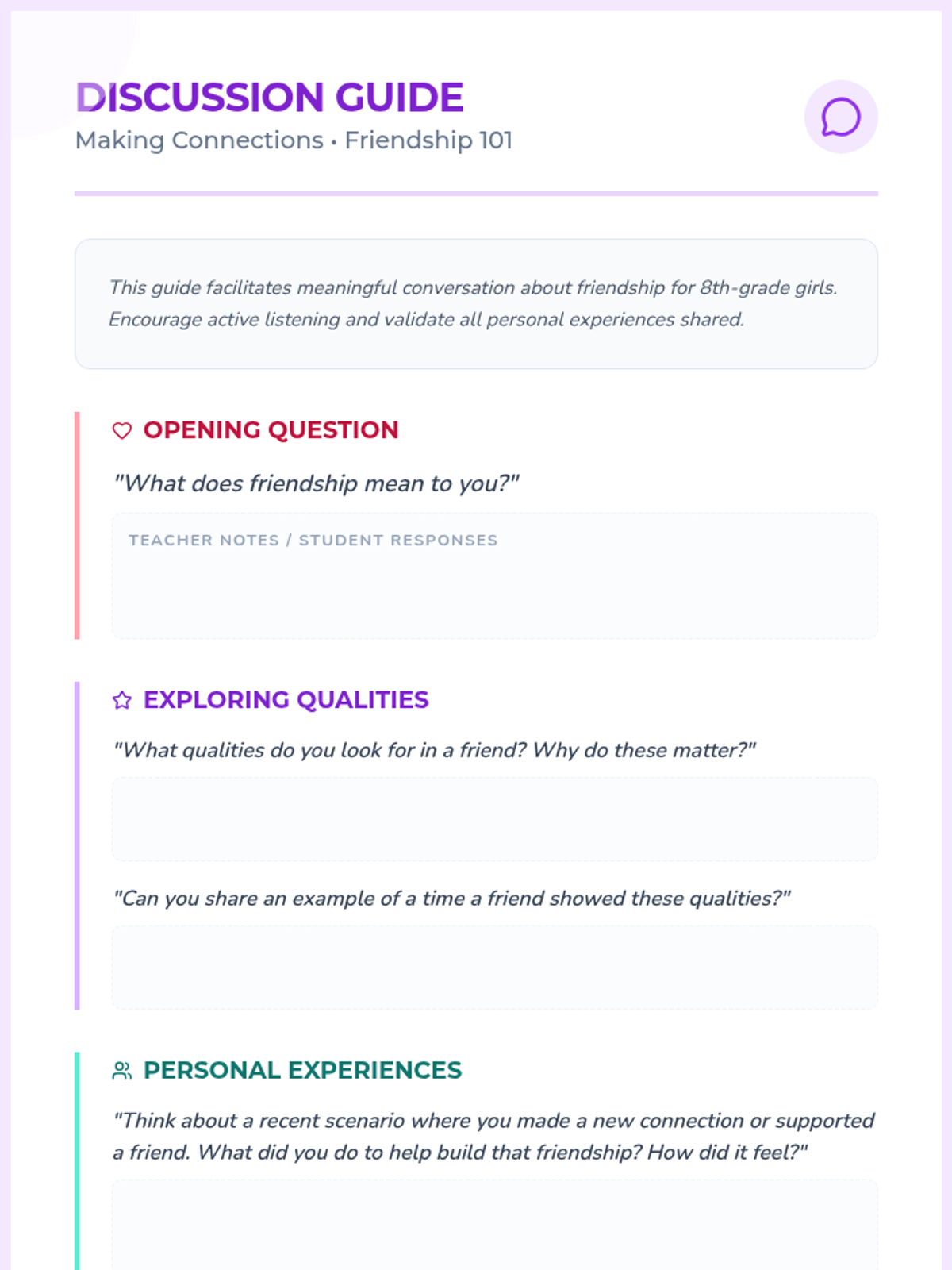
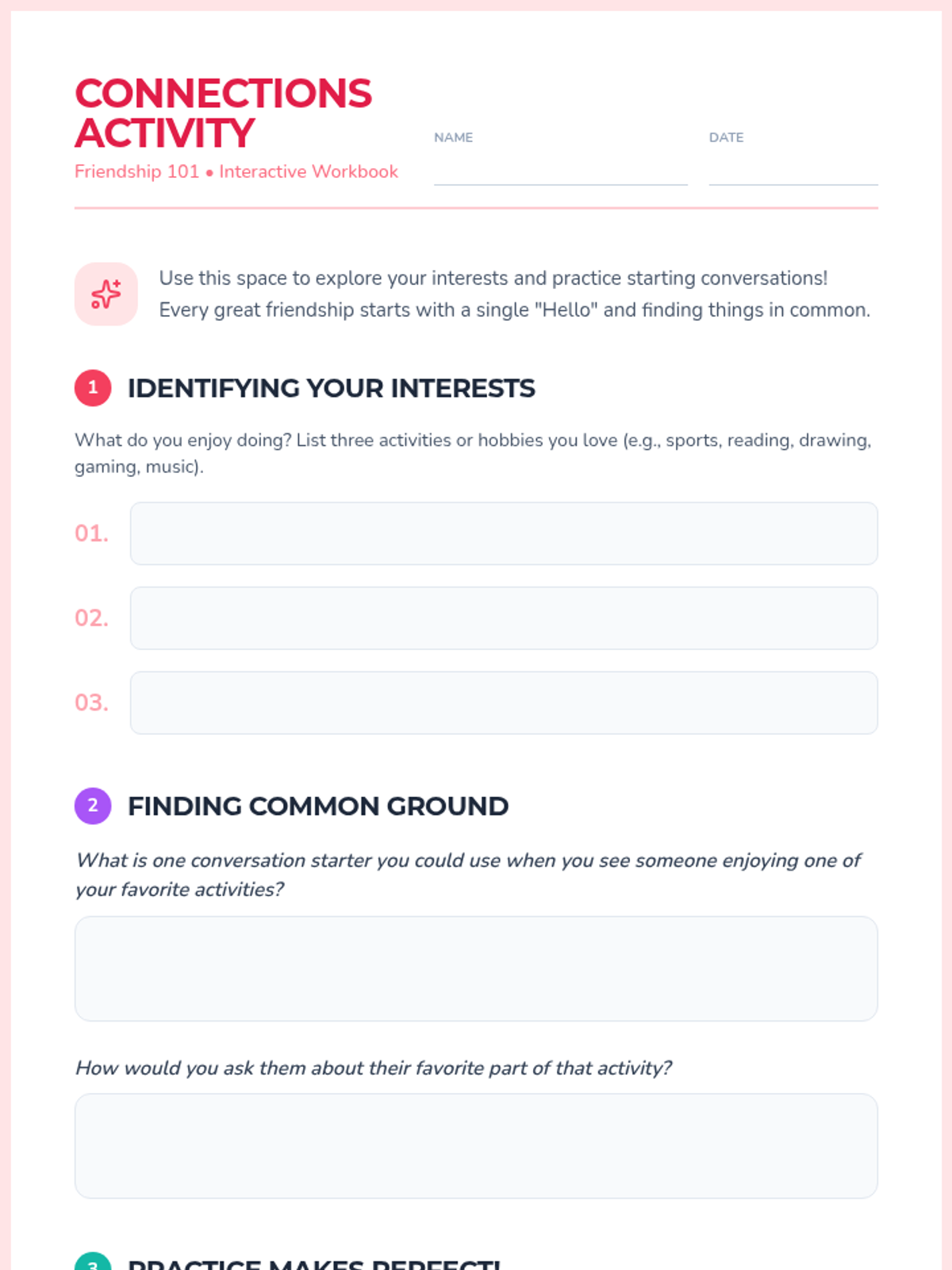
A 20-minute Tier 2 social skills lesson for 8th-grade girls focused on identifying personal interests, practicing conversation starters, and building positive social connections through guided discussion and activities.
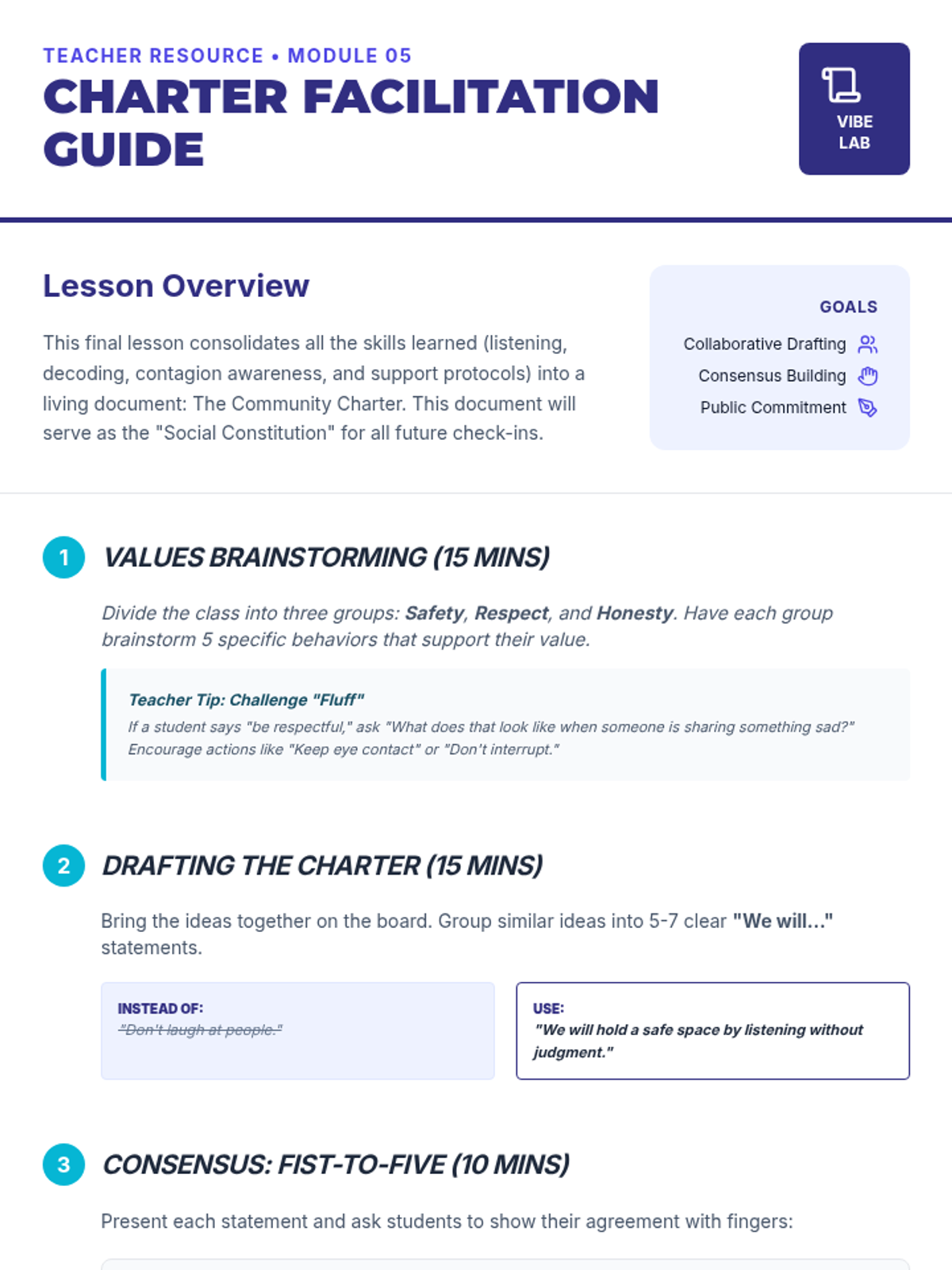
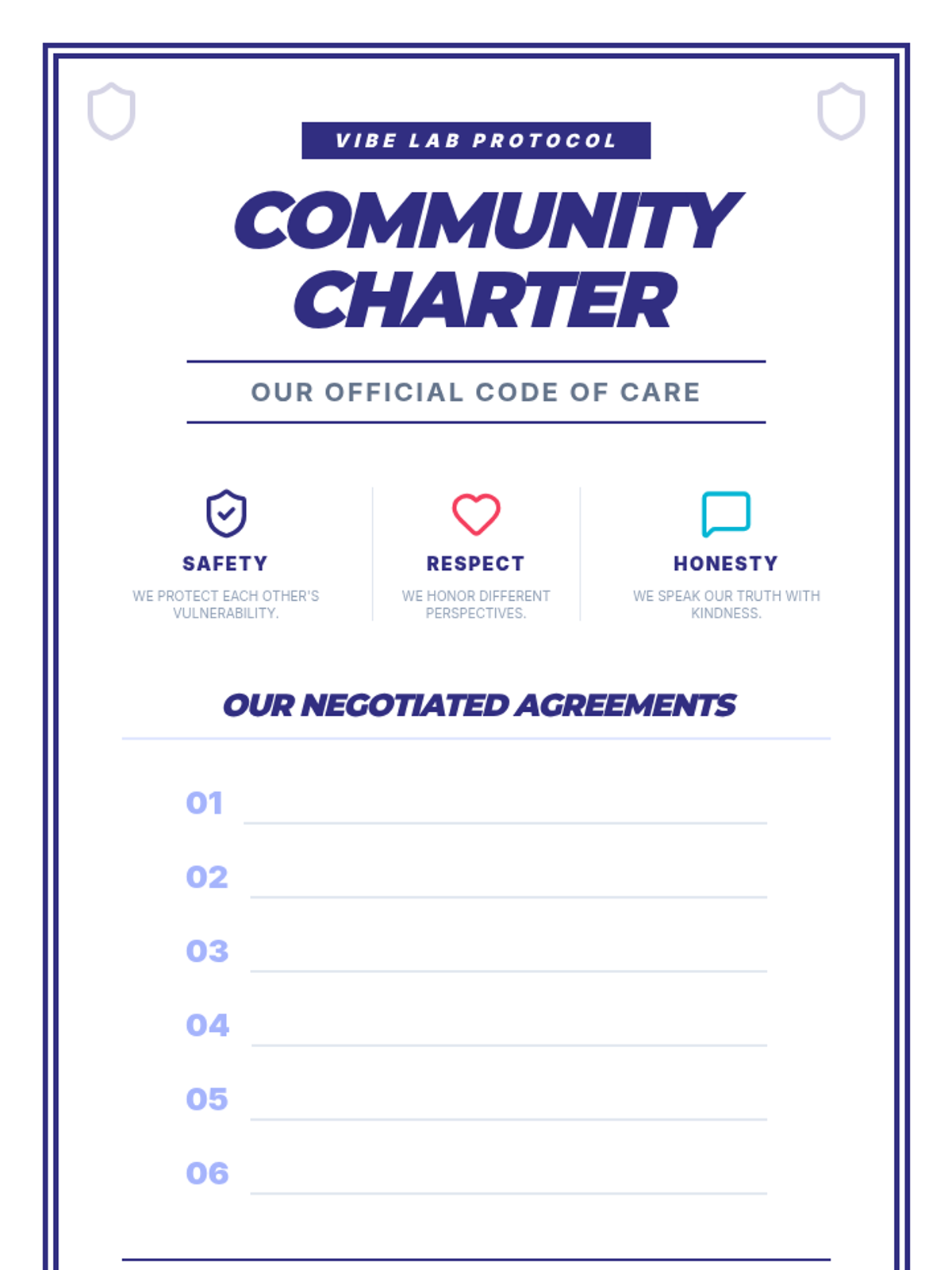
The class collaborates to create a set of norms and agreements for daily check-ins, defining safety, respect, and honesty in their shared space.
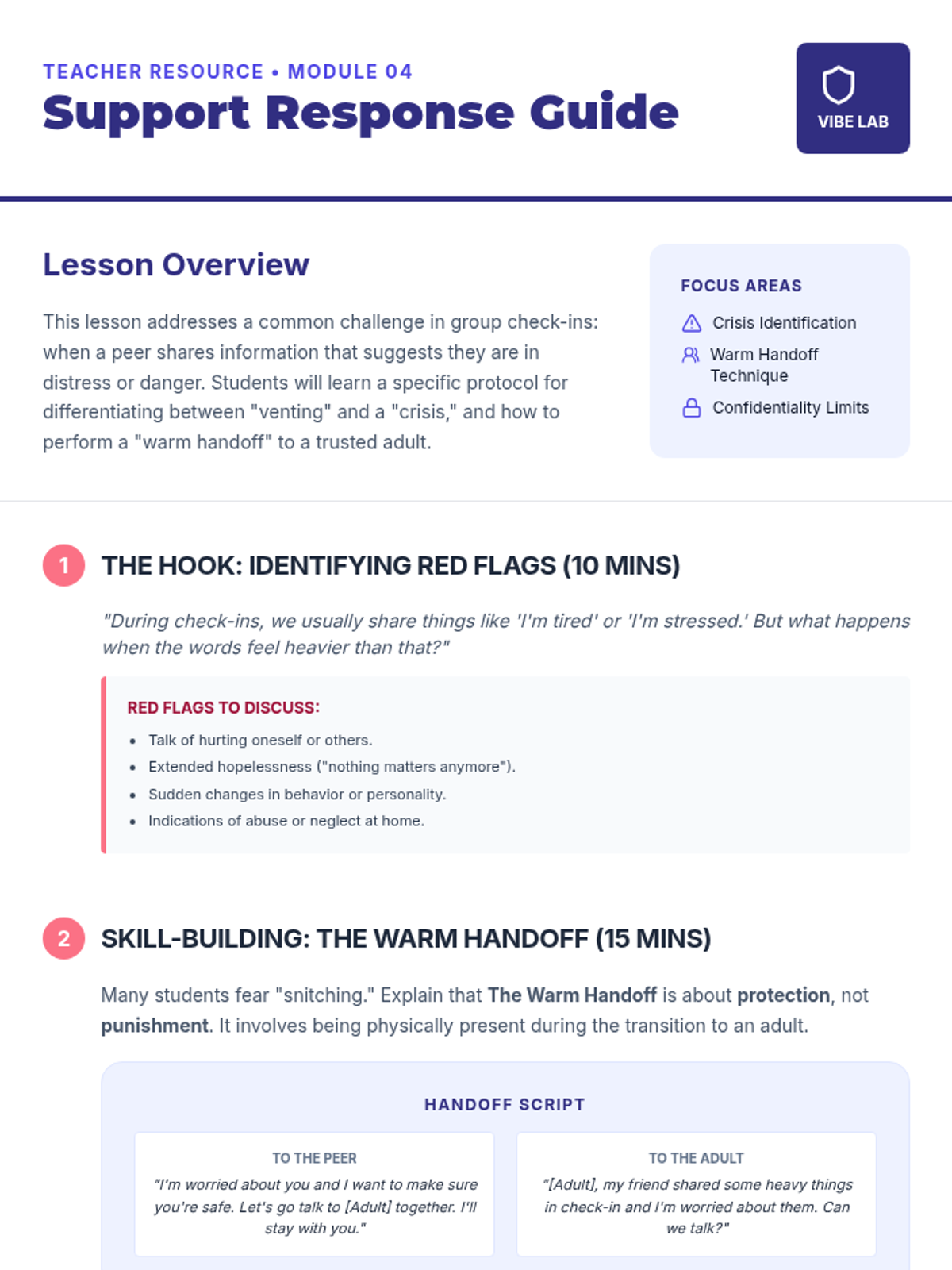
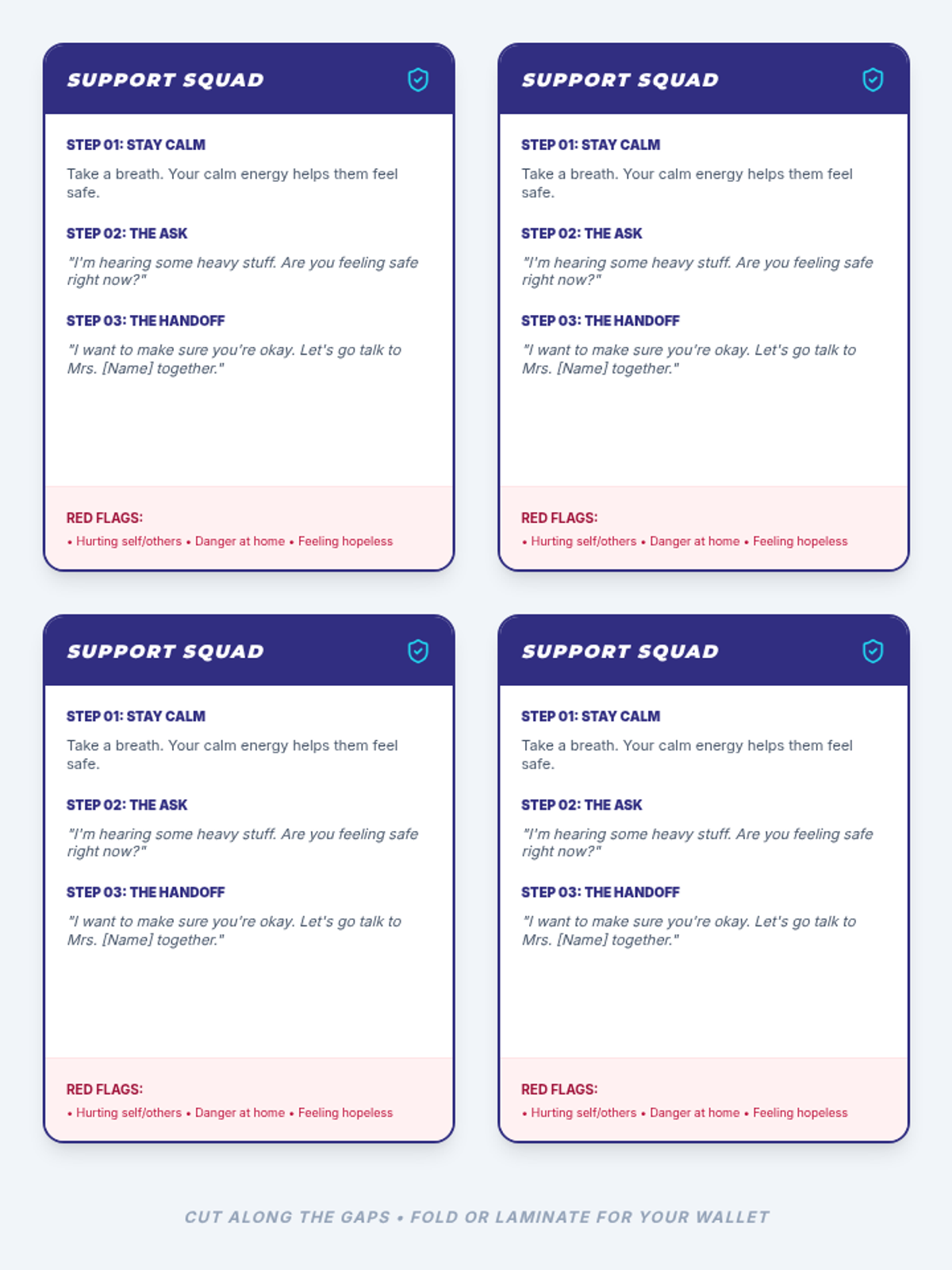
Students learn protocols for when a peer shares concerning information, distinguishing between being a supportive friend and involving an adult.
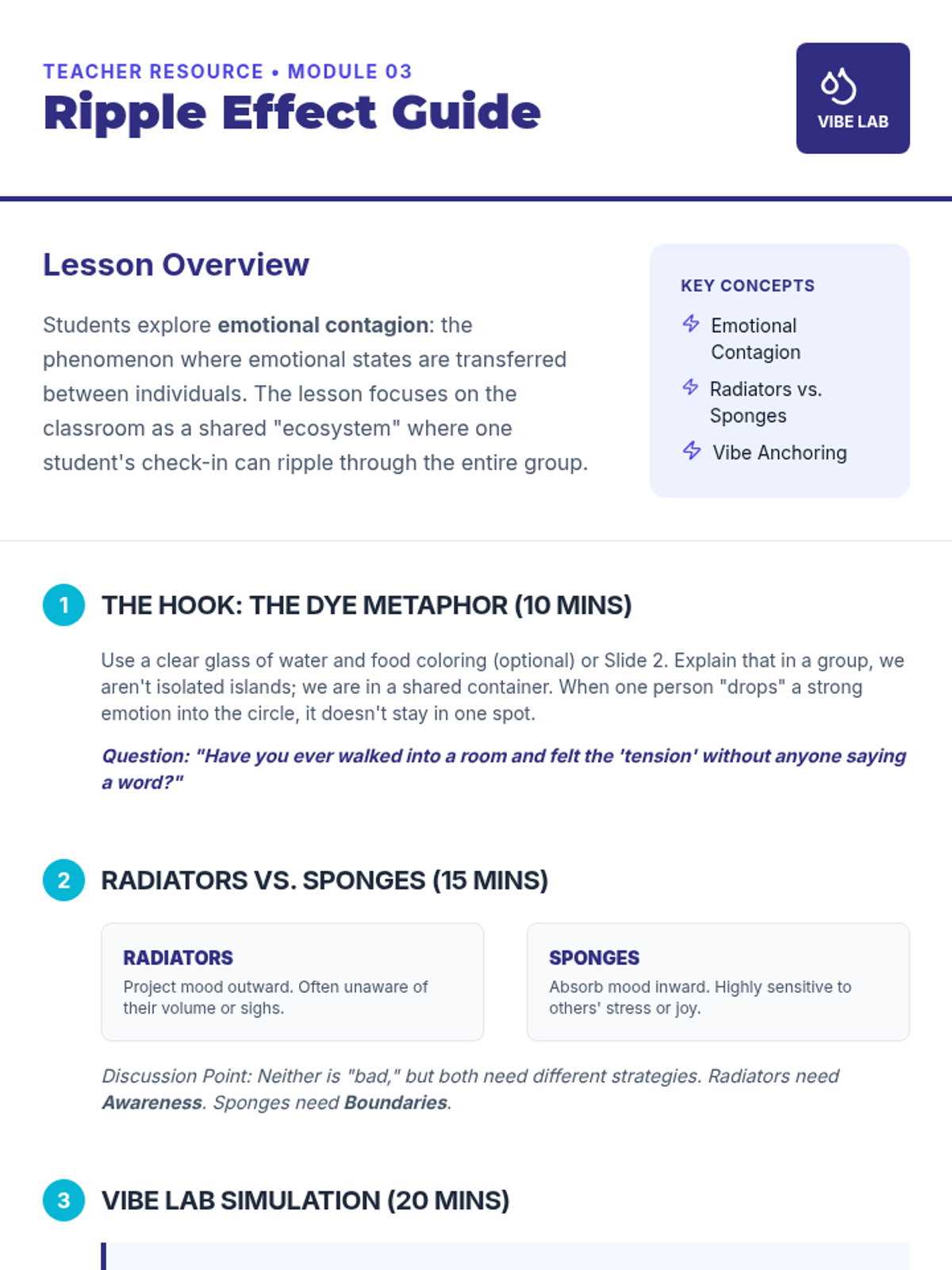
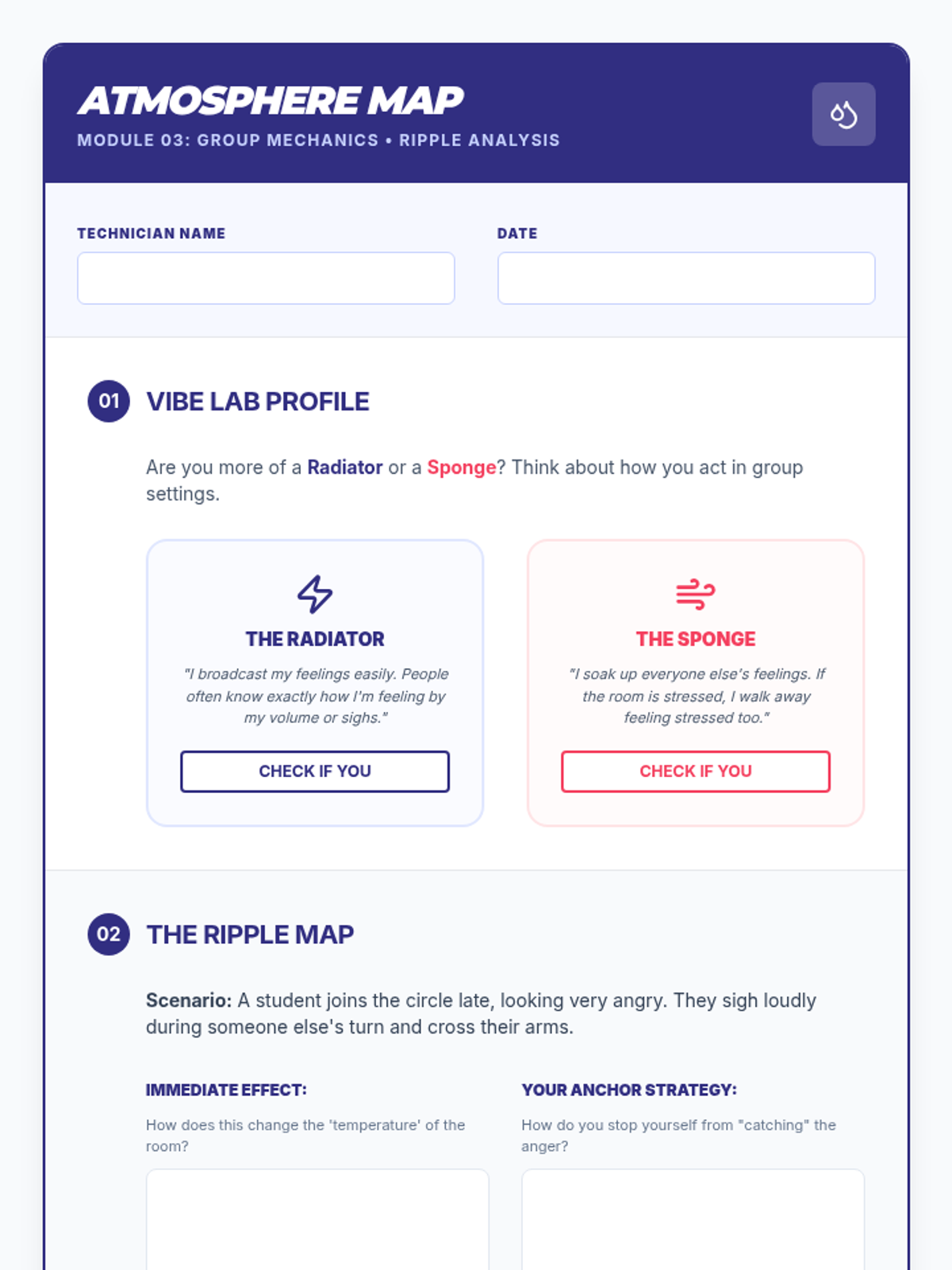
Through role-play, students explore how one person's mood can influence the energy of the entire group and discuss strategies for maintaining personal boundaries.
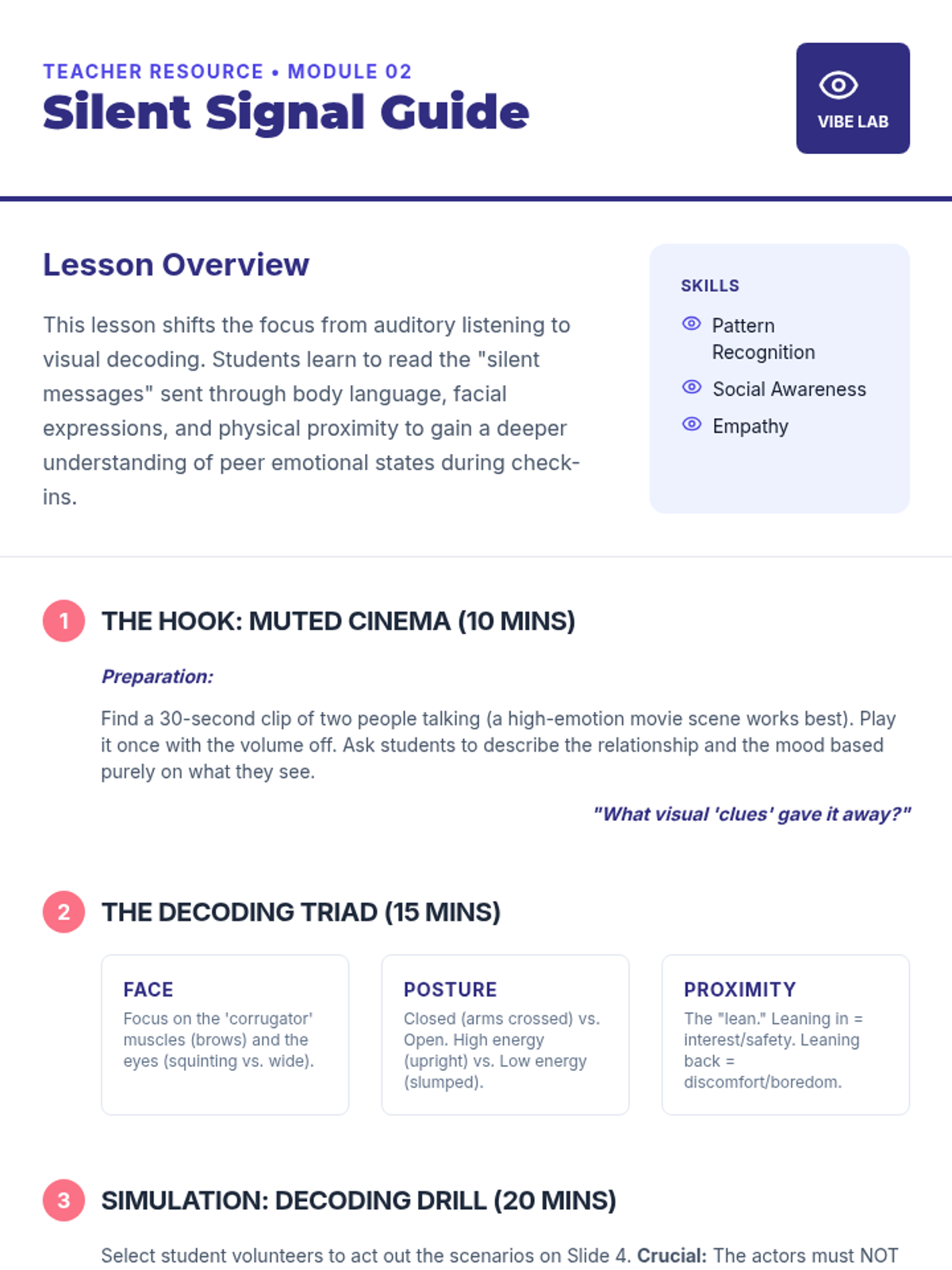
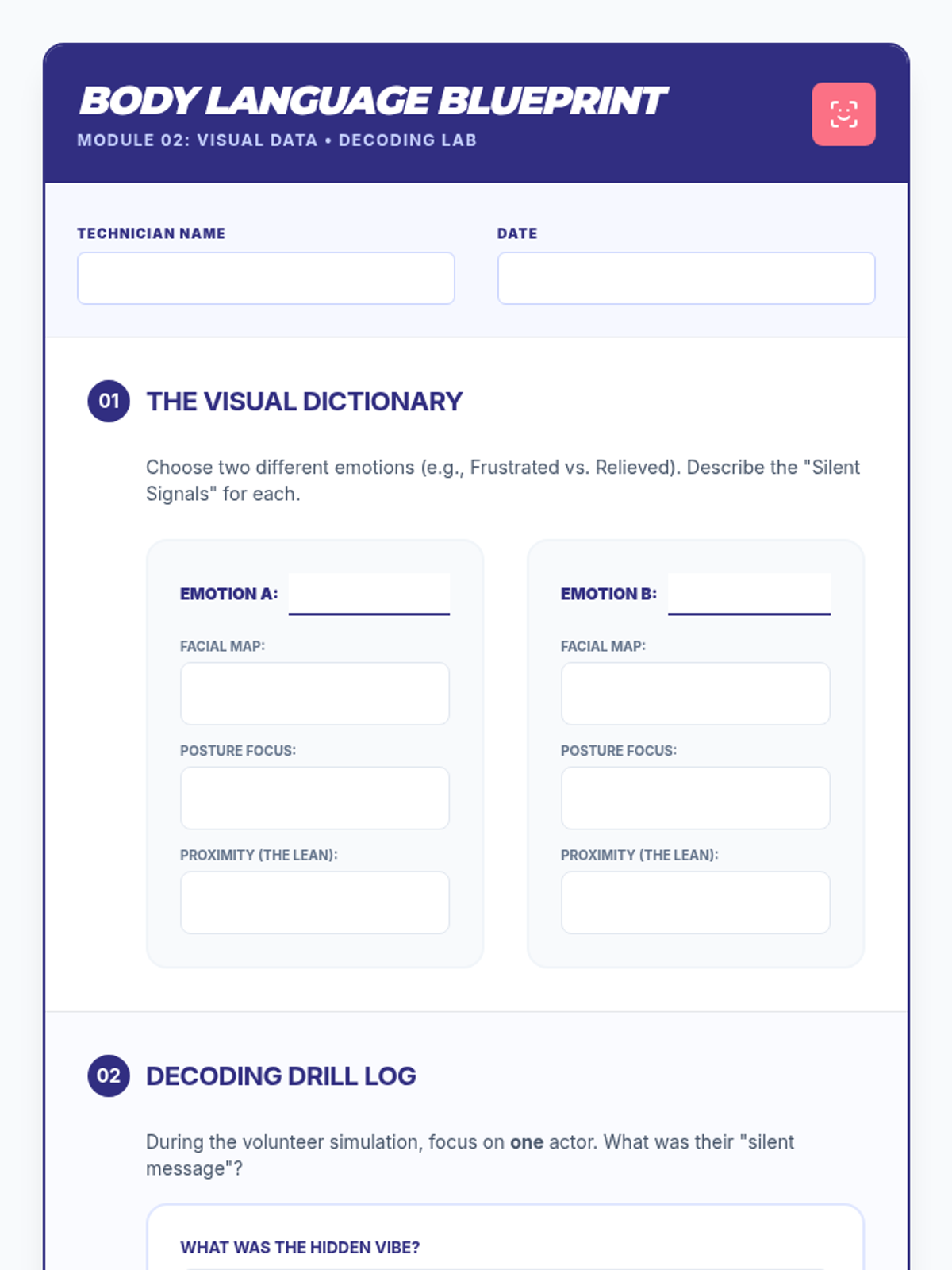
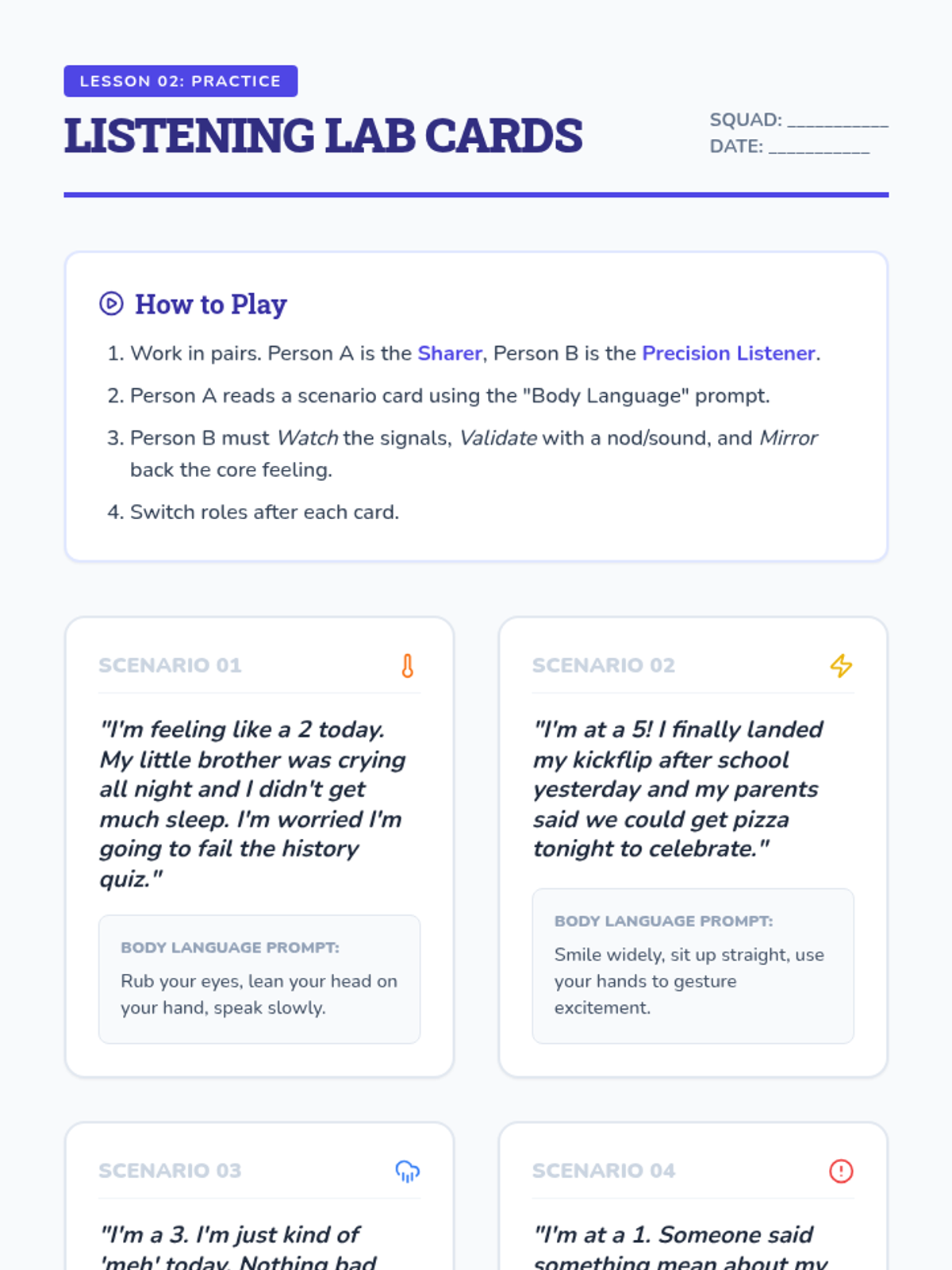
Students examine body language and facial expressions to understand unvoiced feelings during a check-in, practicing matching non-verbal cues to emotional states.
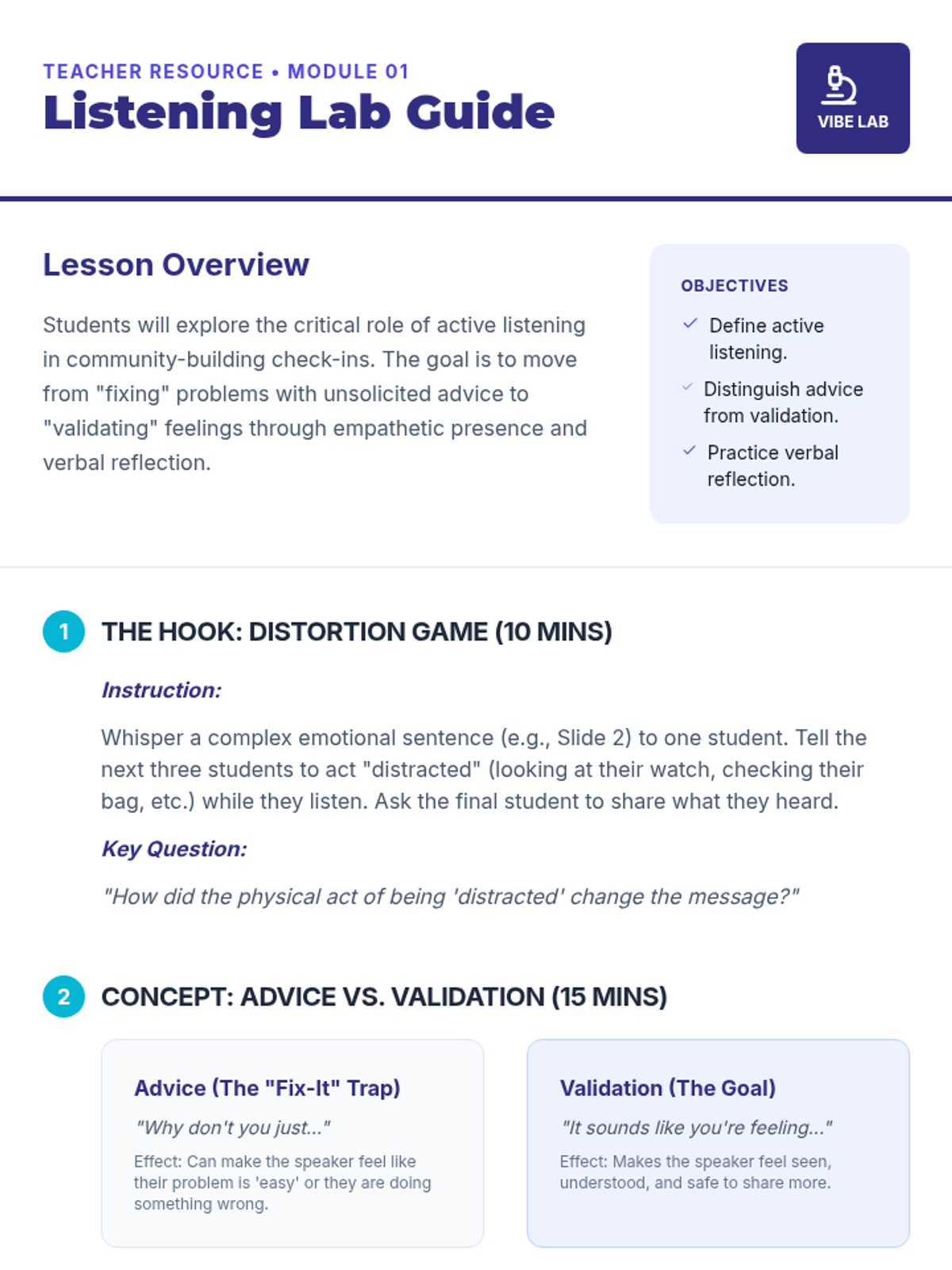
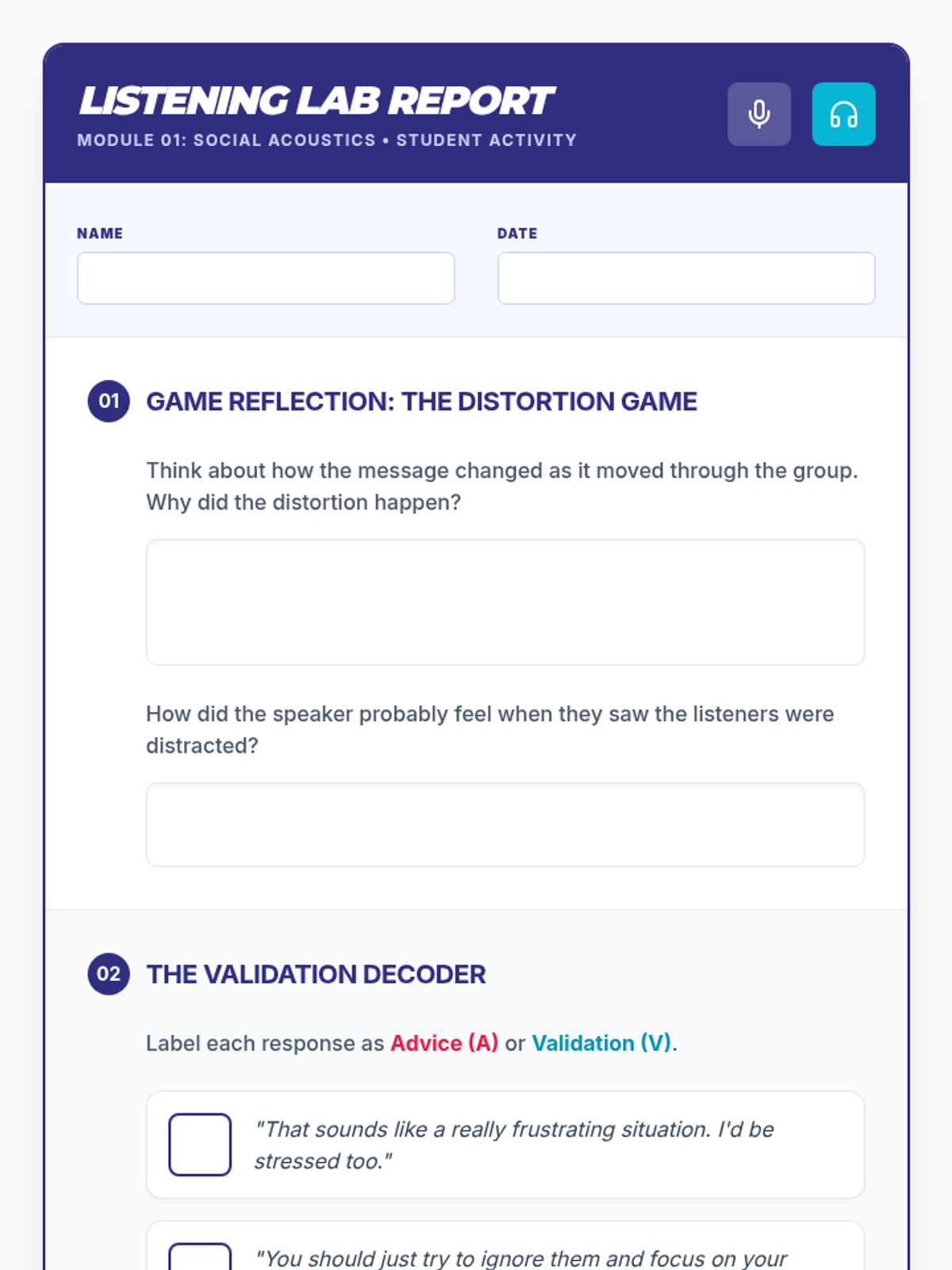
Students practice techniques for listening to peers during check-ins without judgment or immediate interruption, learning the value of validation over unsolicited advice.
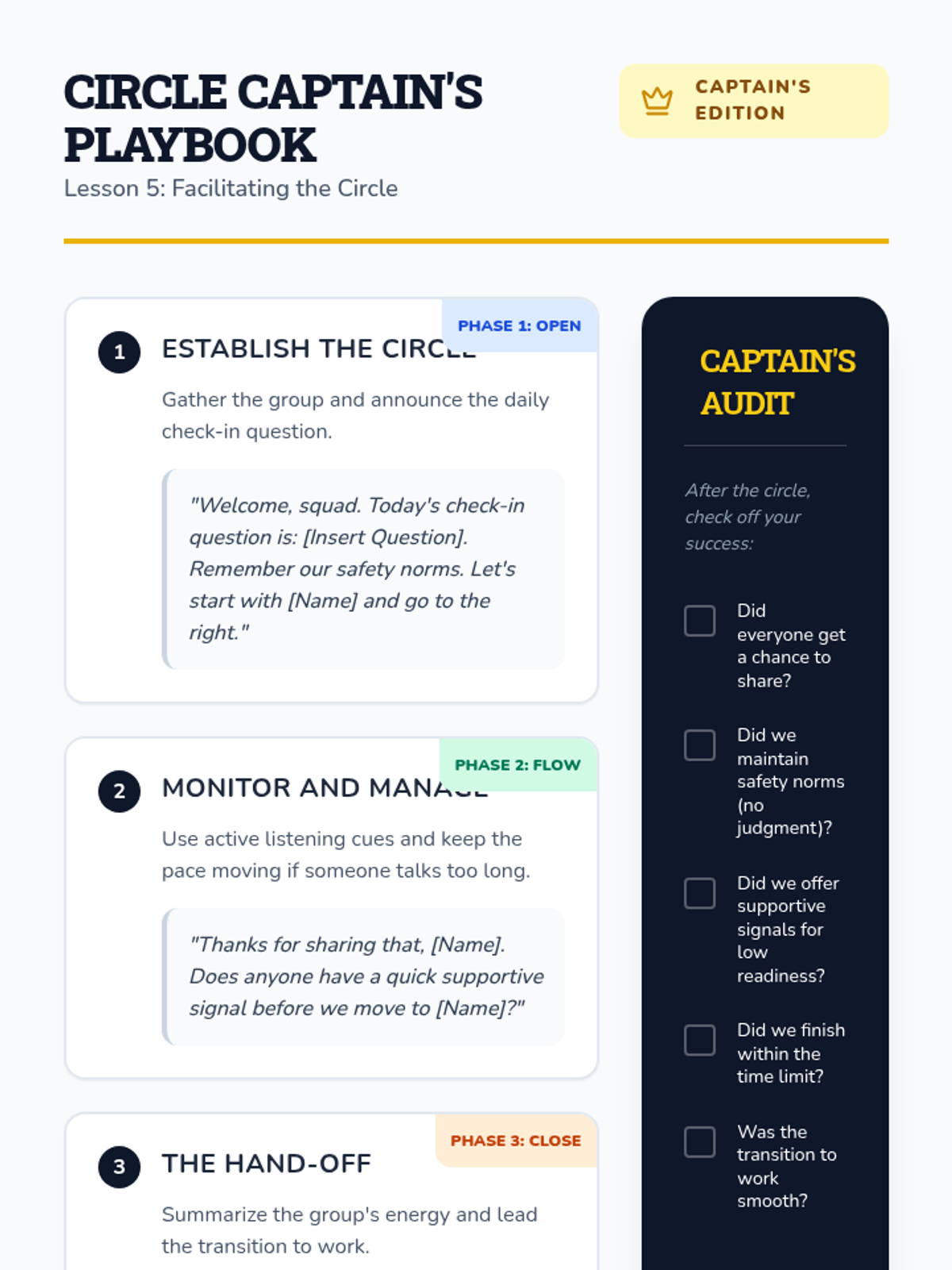
Students step into leadership roles to facilitate mock check-in circles. They practice time management, ensuring equitable participation, and smooth transitions from check-in to academic tasks.
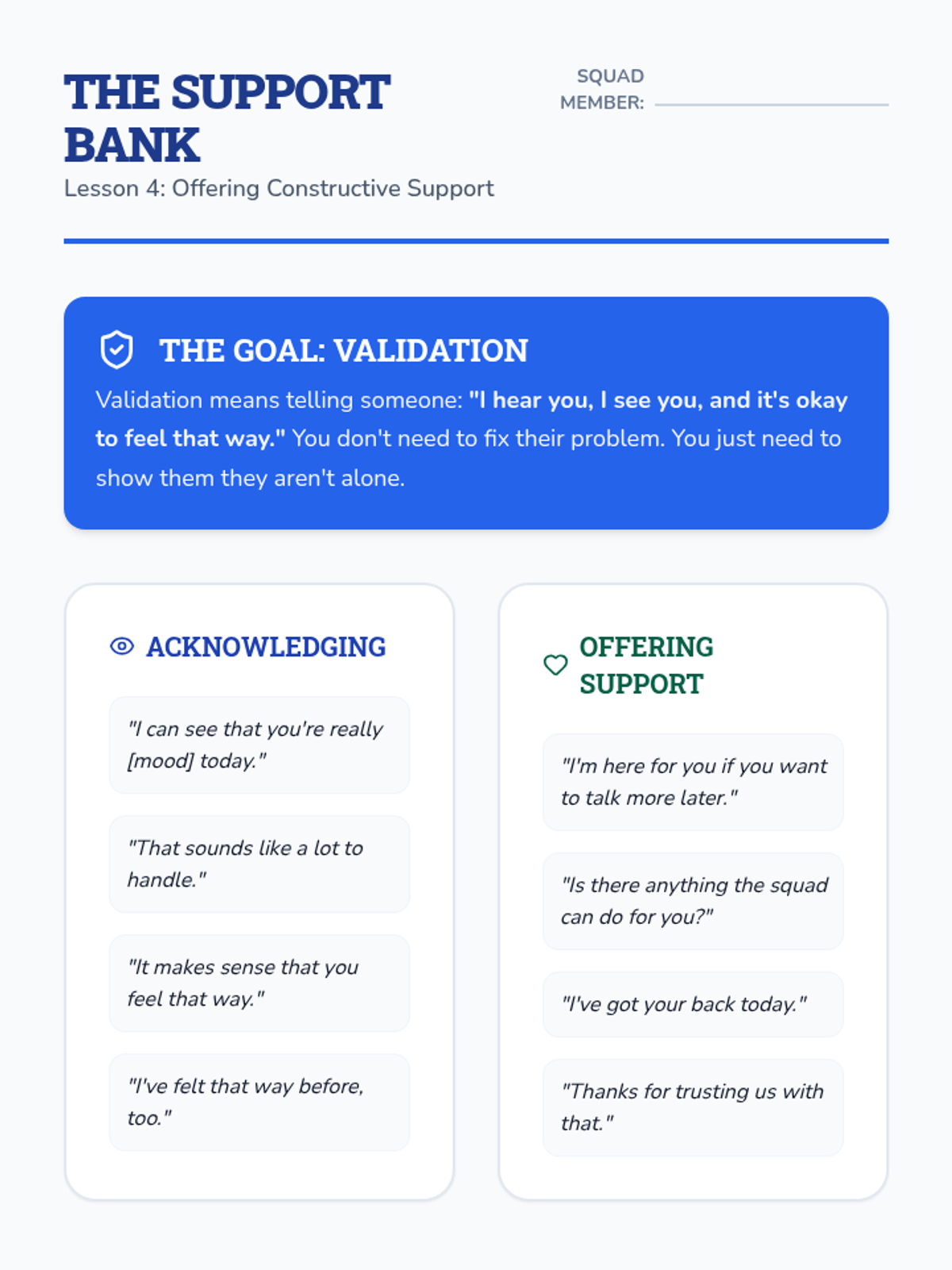
Teaches students how to offer constructive support using specific sentence stems. The focus is on validation and empathy rather than trying to immediately 'fix' a peer's problem or feelings.
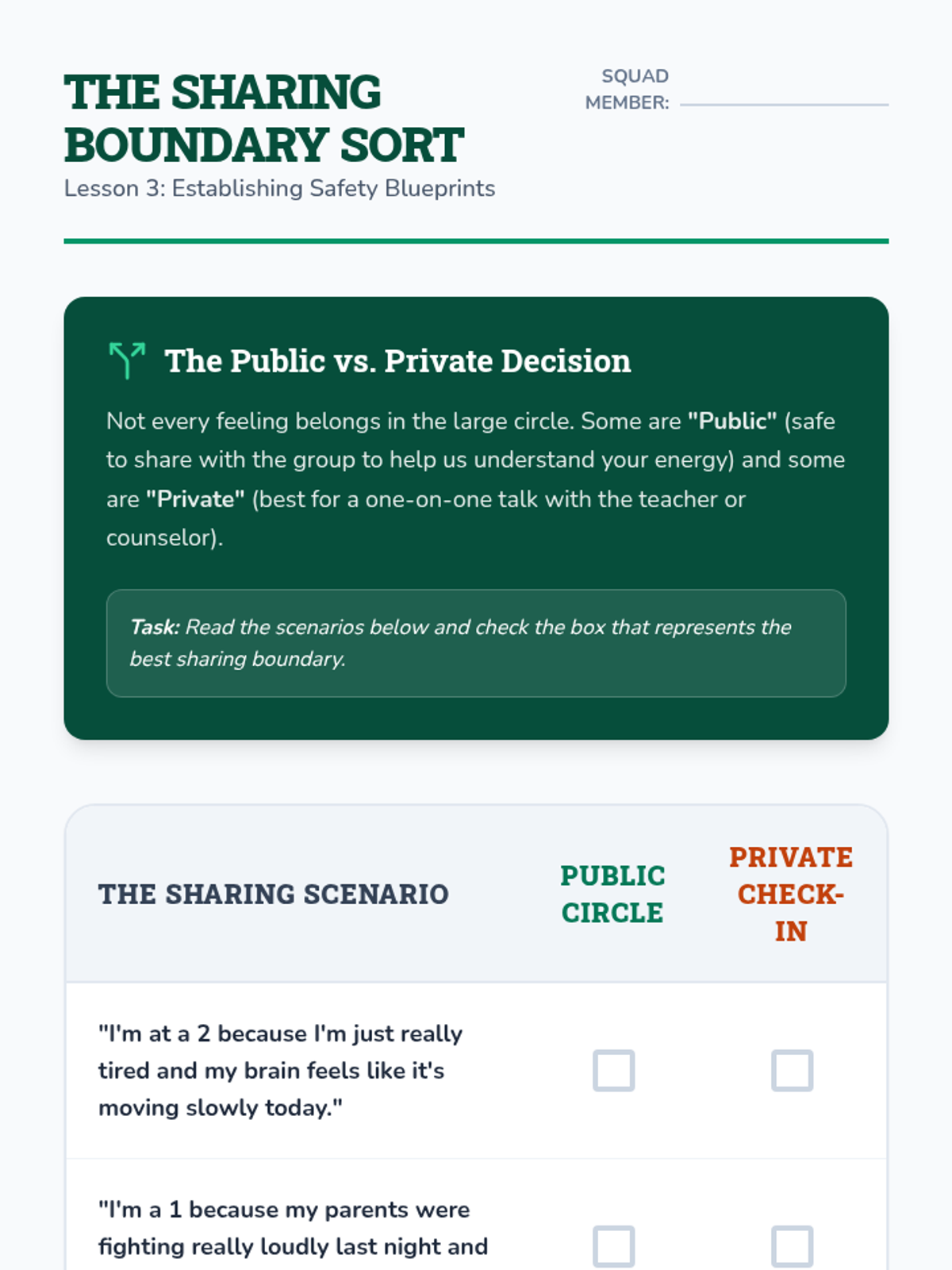
Students collaborate to establish 'rules of engagement' for sharing. They learn to distinguish between 'public' shares for the group and 'private' shares that require one-on-one teacher support.
Focuses on developing active listening skills specifically for peer check-ins. Students practice non-verbal validation and 'mirroring' techniques to ensure their peers feel heard and understood without judgment.
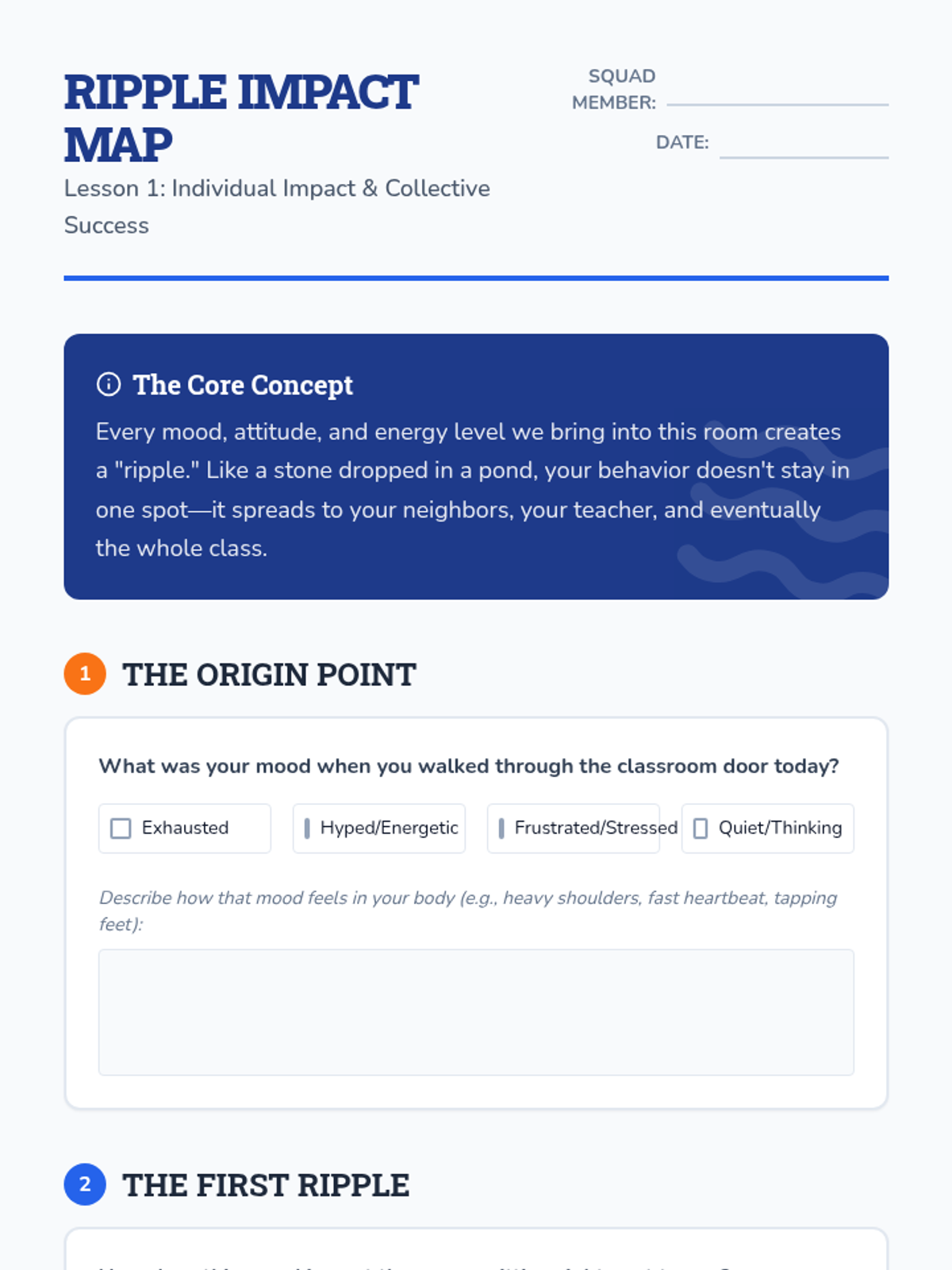
Students explore how individual moods and behaviors create a 'ripple effect' that impacts the entire classroom community. Through a domino simulation, they learn that checking in is a collective responsibility for the team's success.
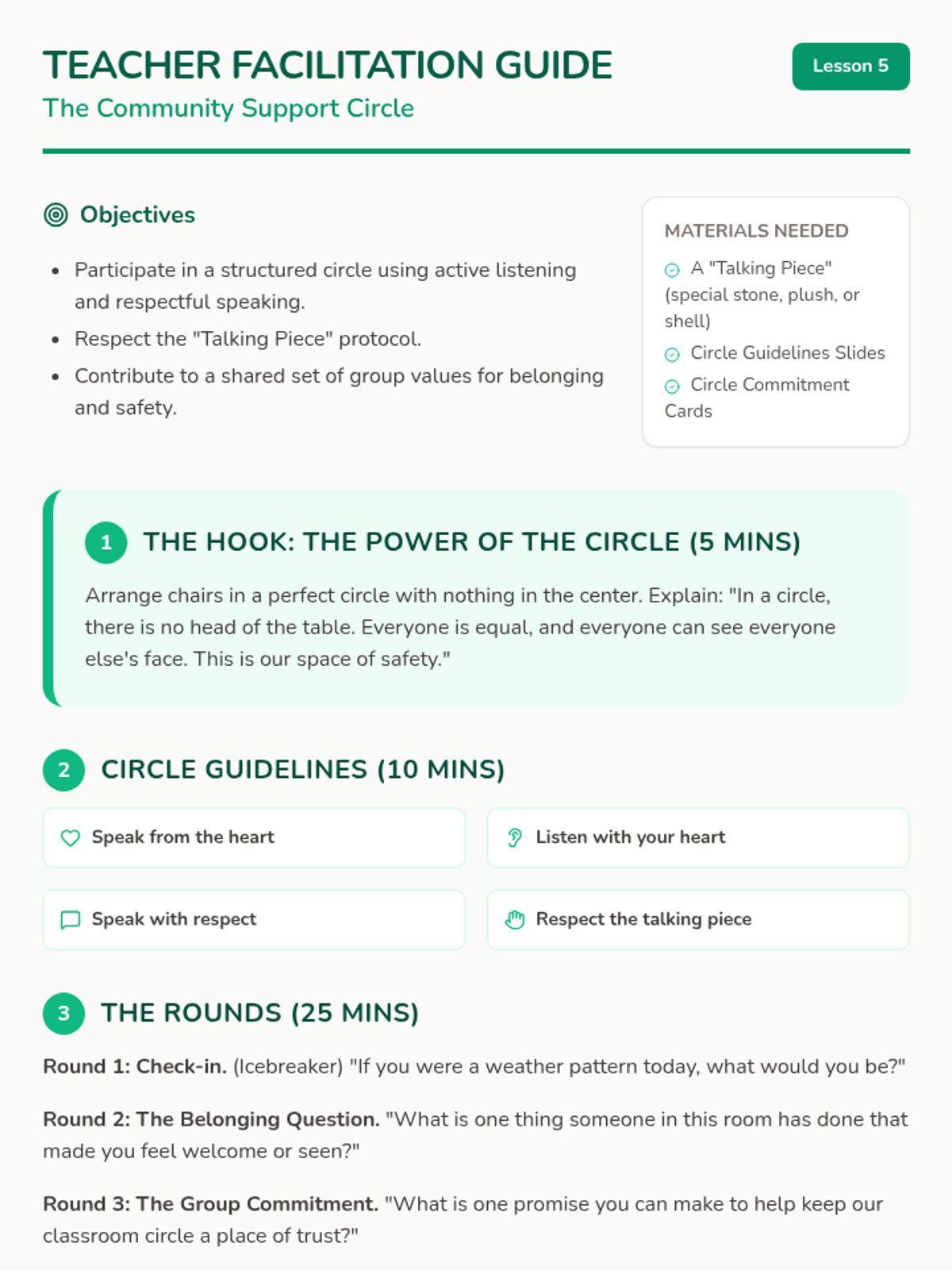
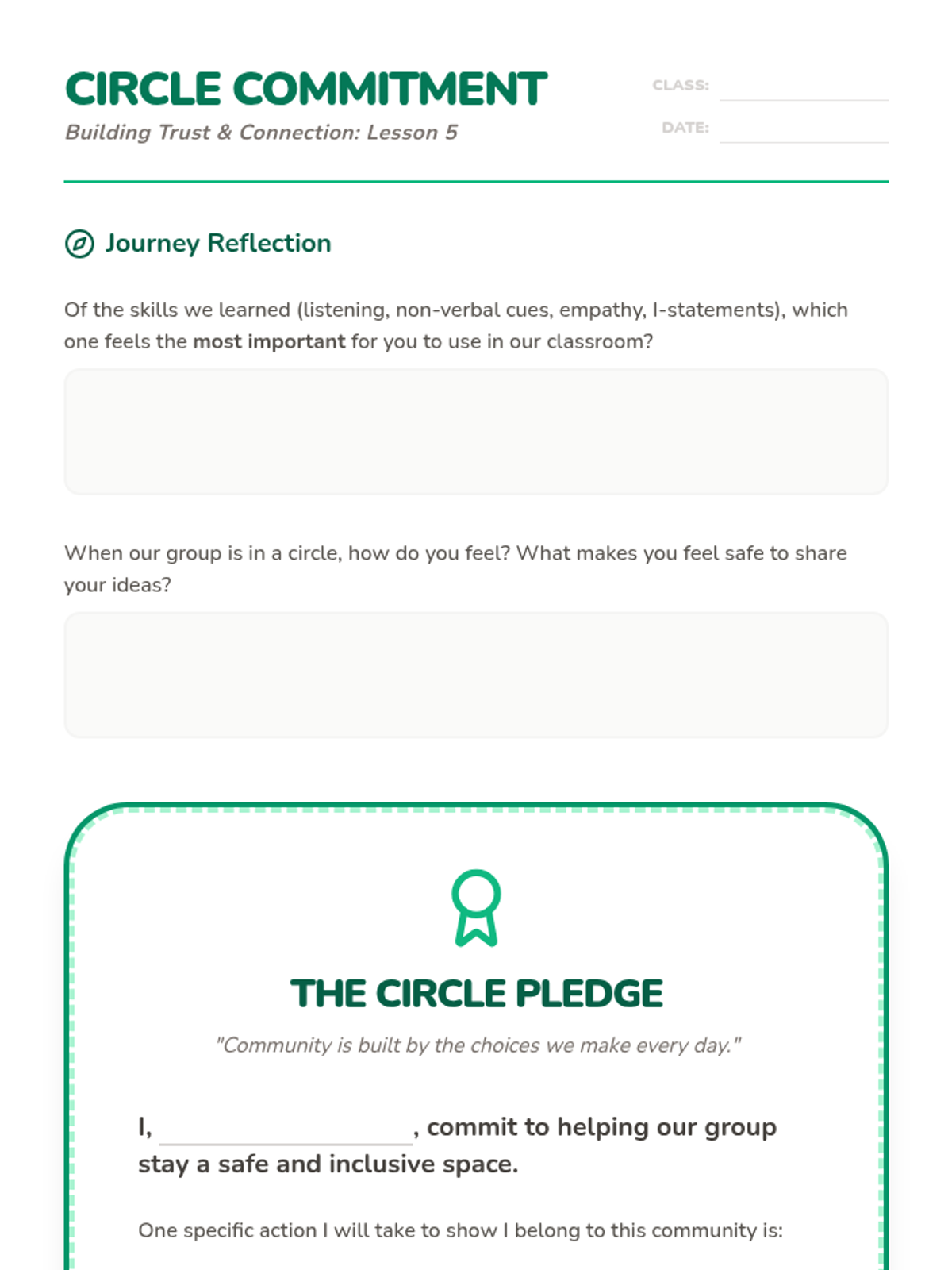
Students participate in a structured community circle to synthesize skills, listening without interruption and offering group support.
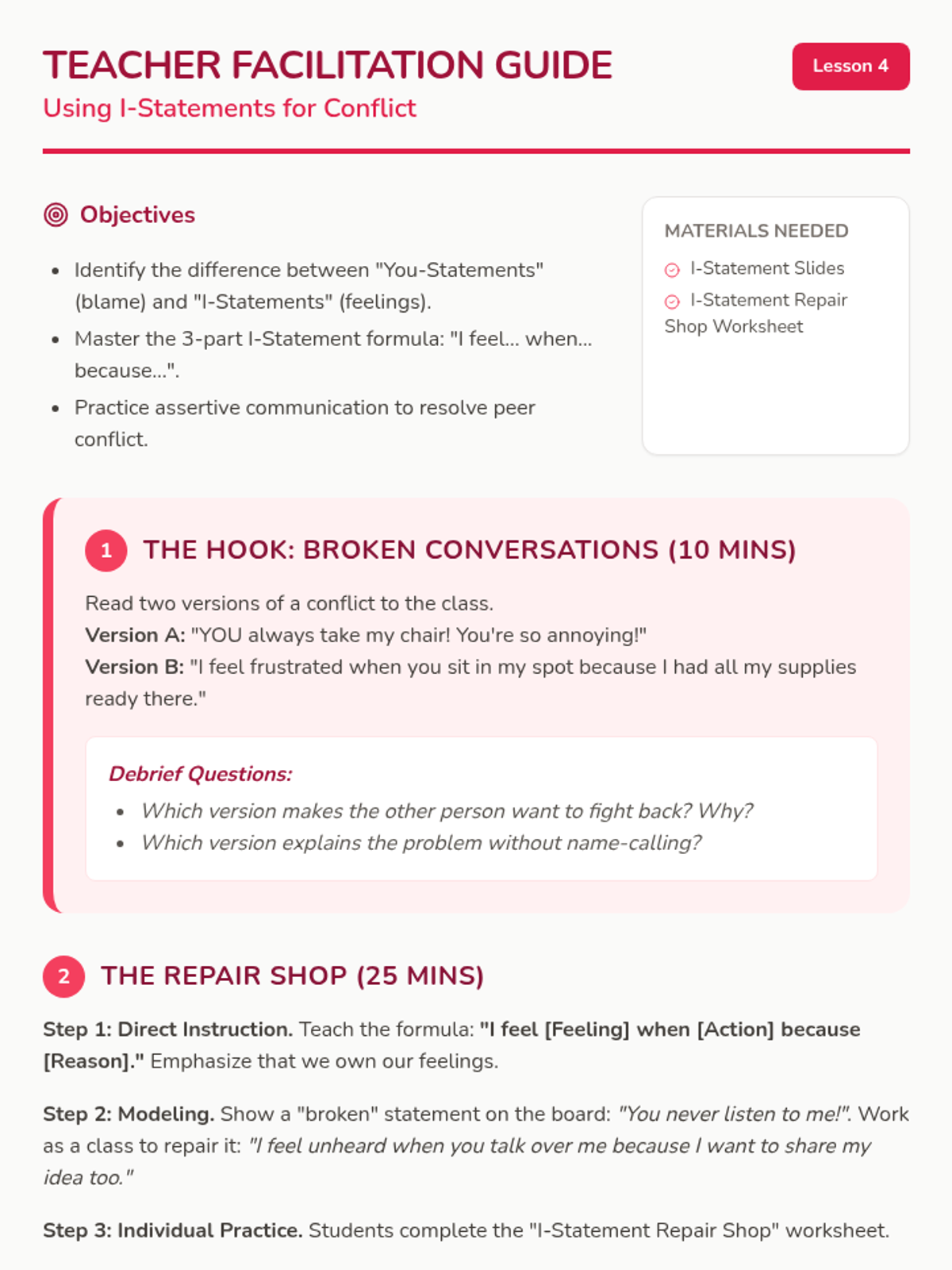
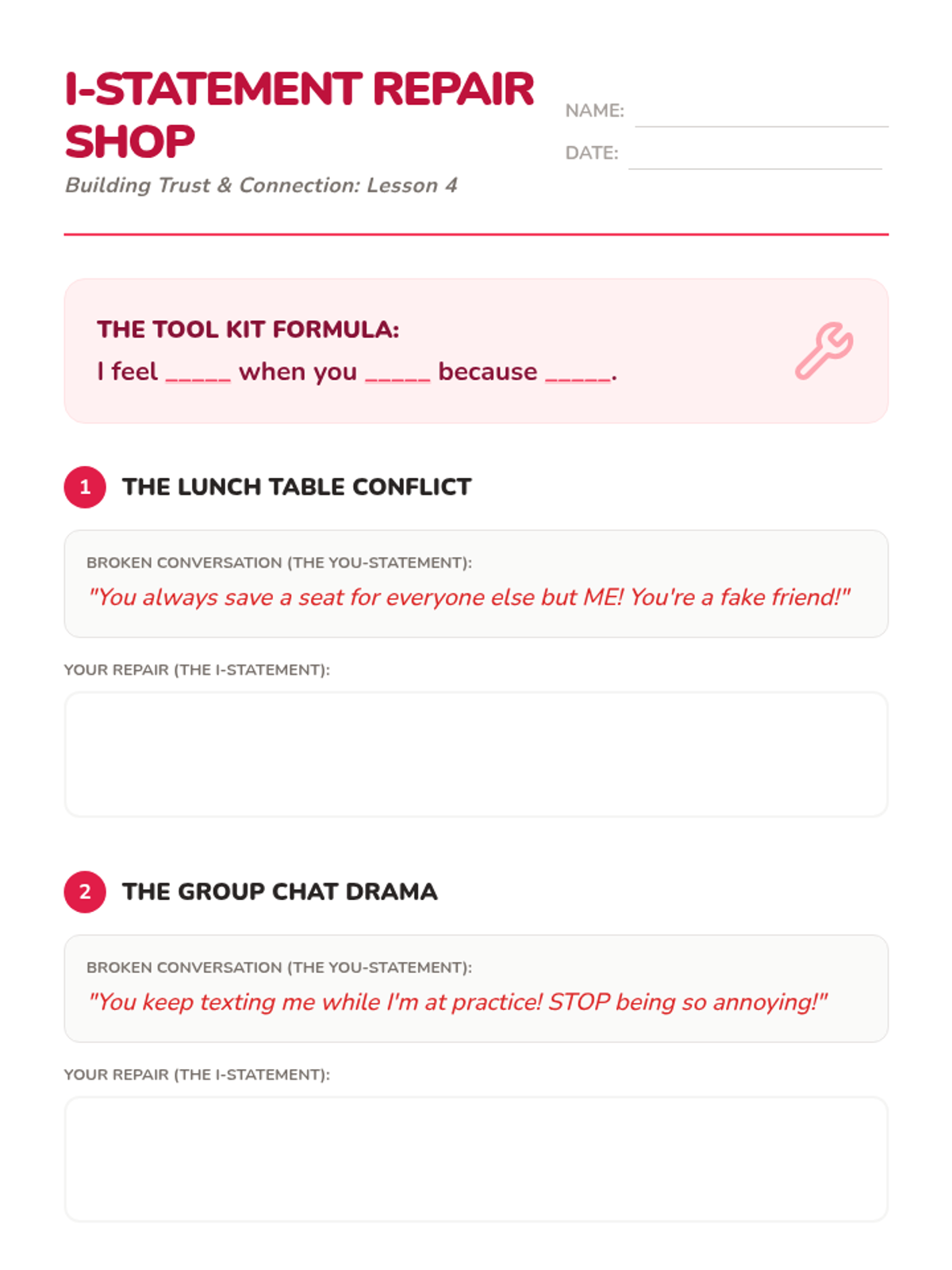
The class learns to use I-statements to express feelings without blame, transforming accusatory language into constructive dialogue.
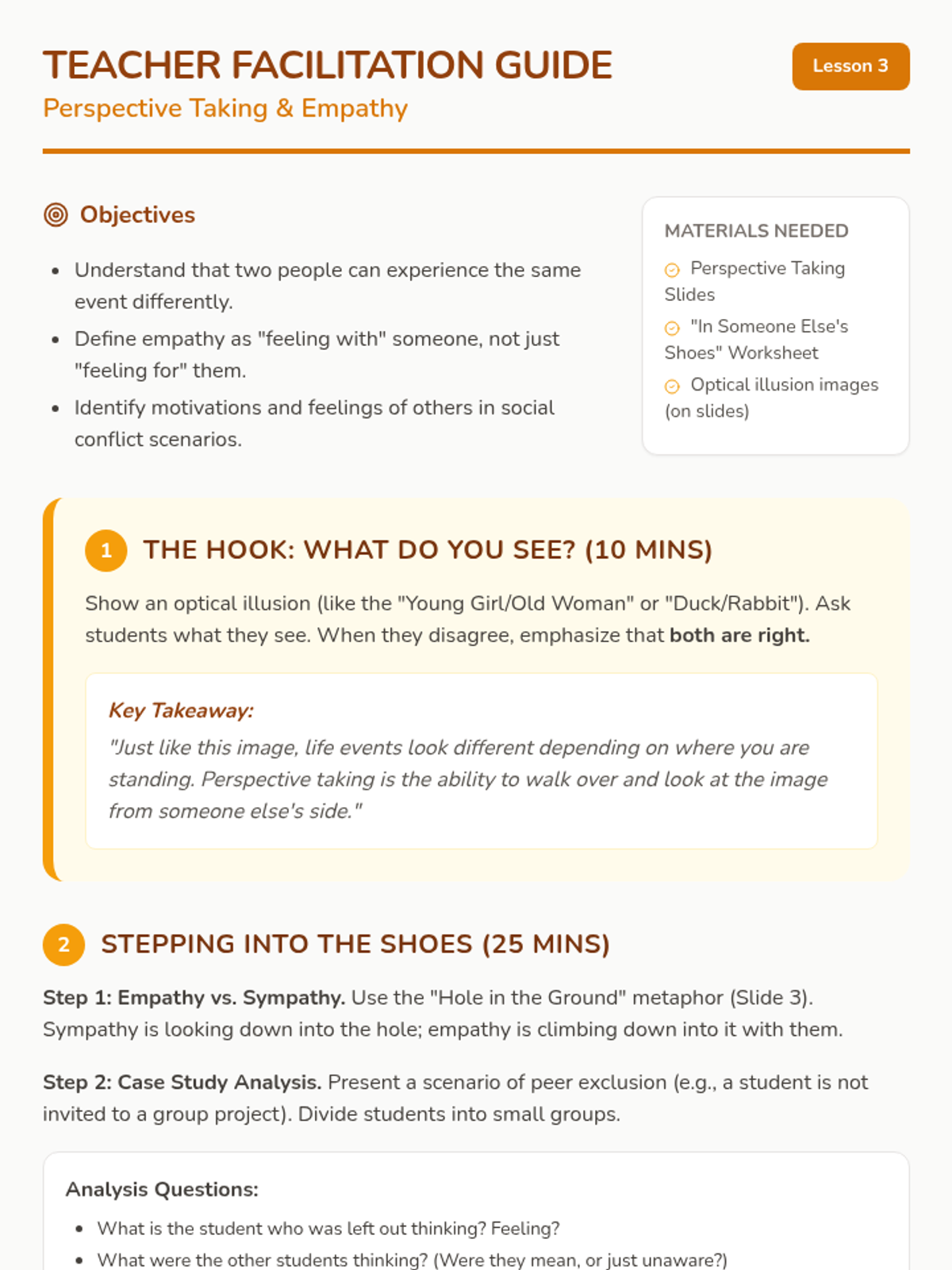
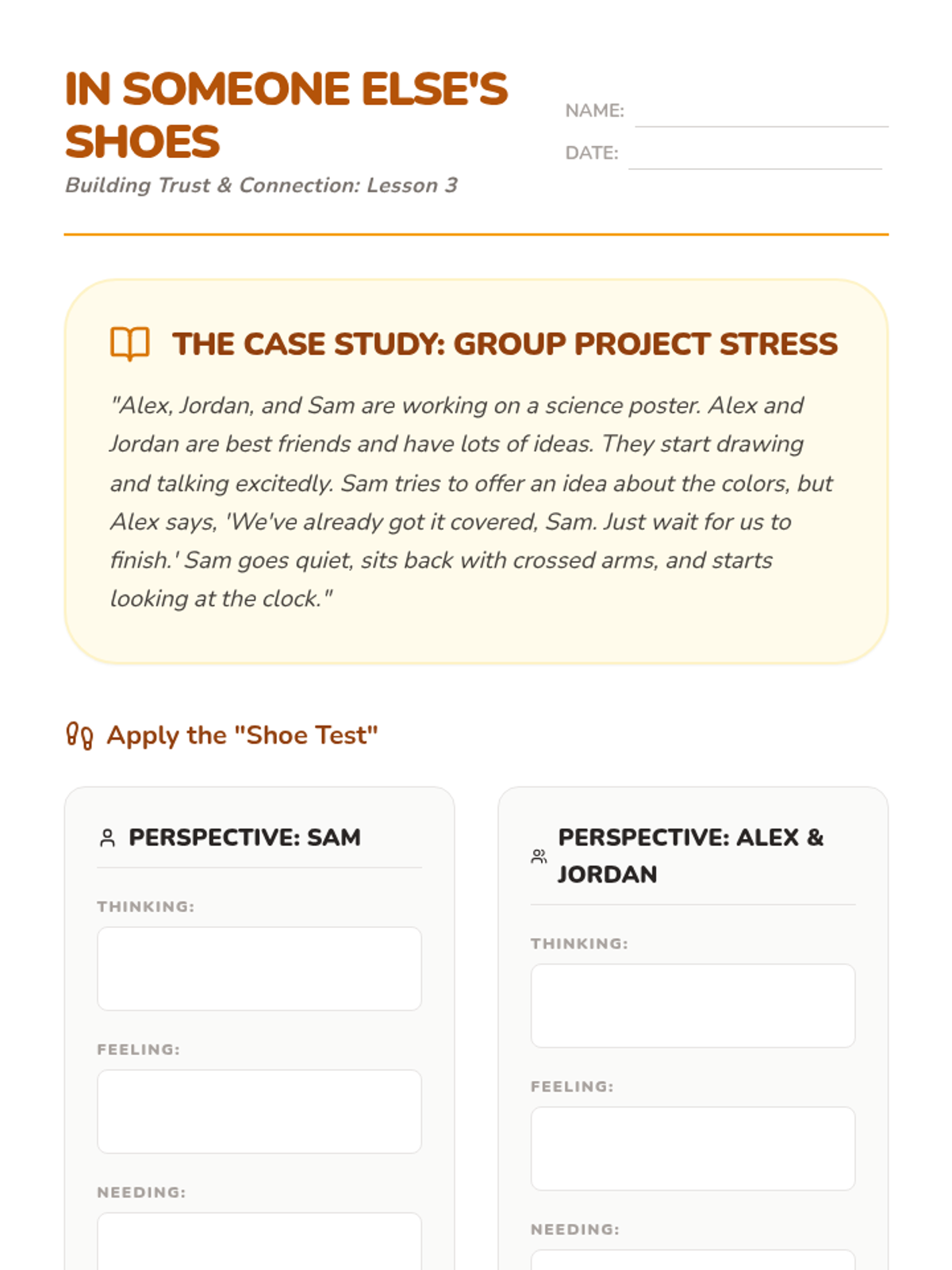
Students analyze case studies to understand multiple viewpoints and practice empathy by 'stepping into the shoes' of others.
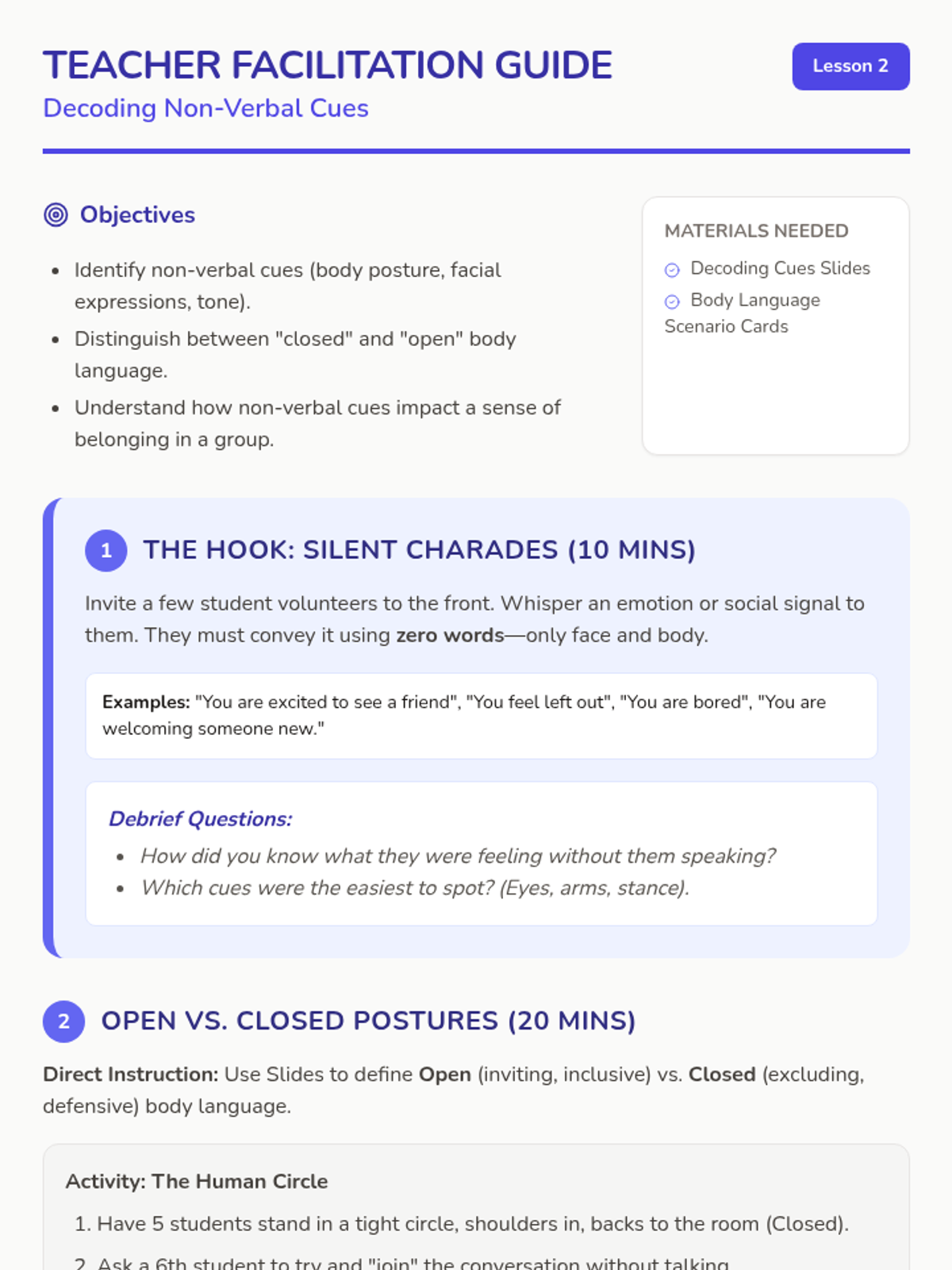
Learners explore how body language and tone impact belonging, practicing 'open' postures that invite connection.
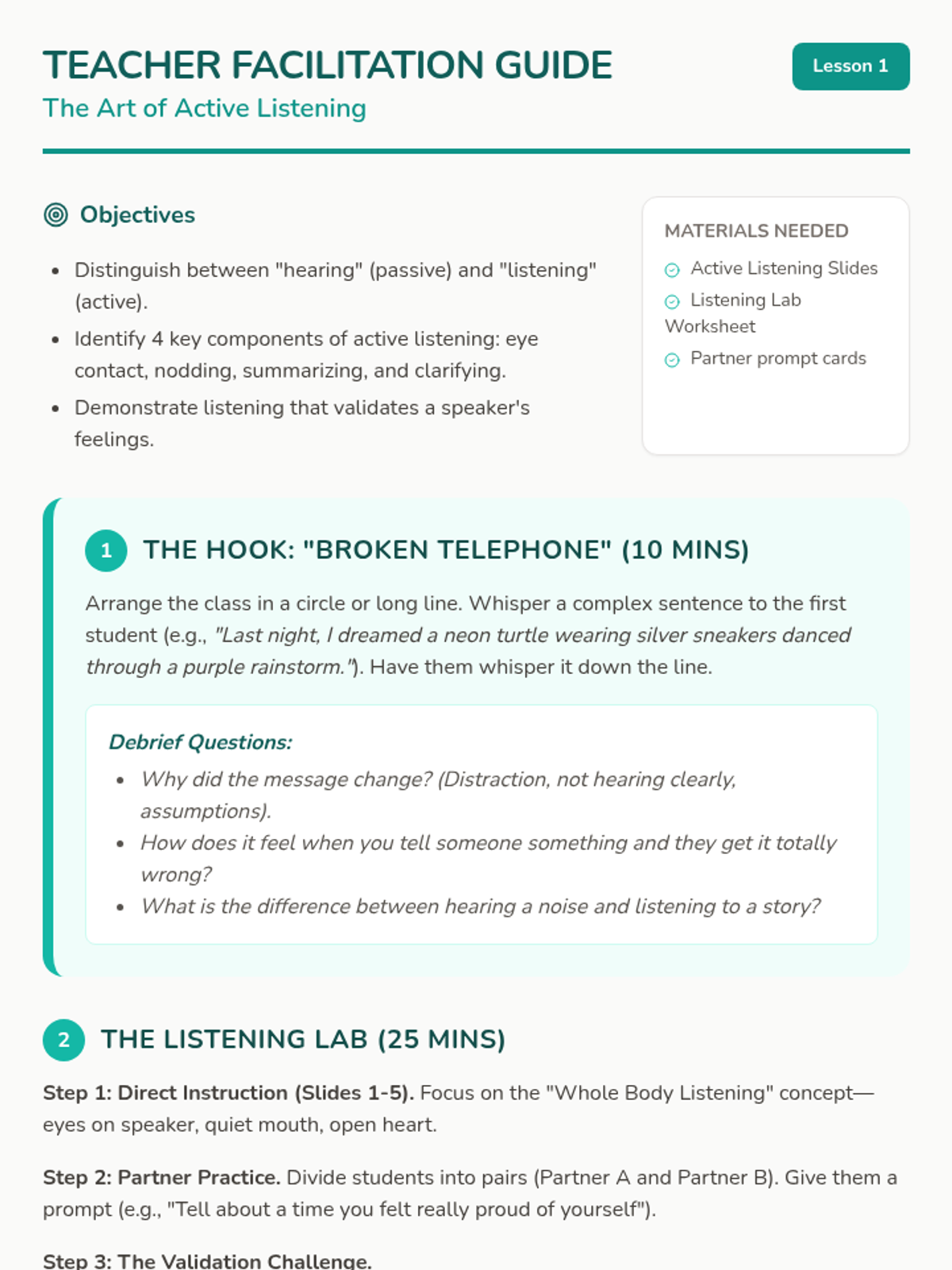
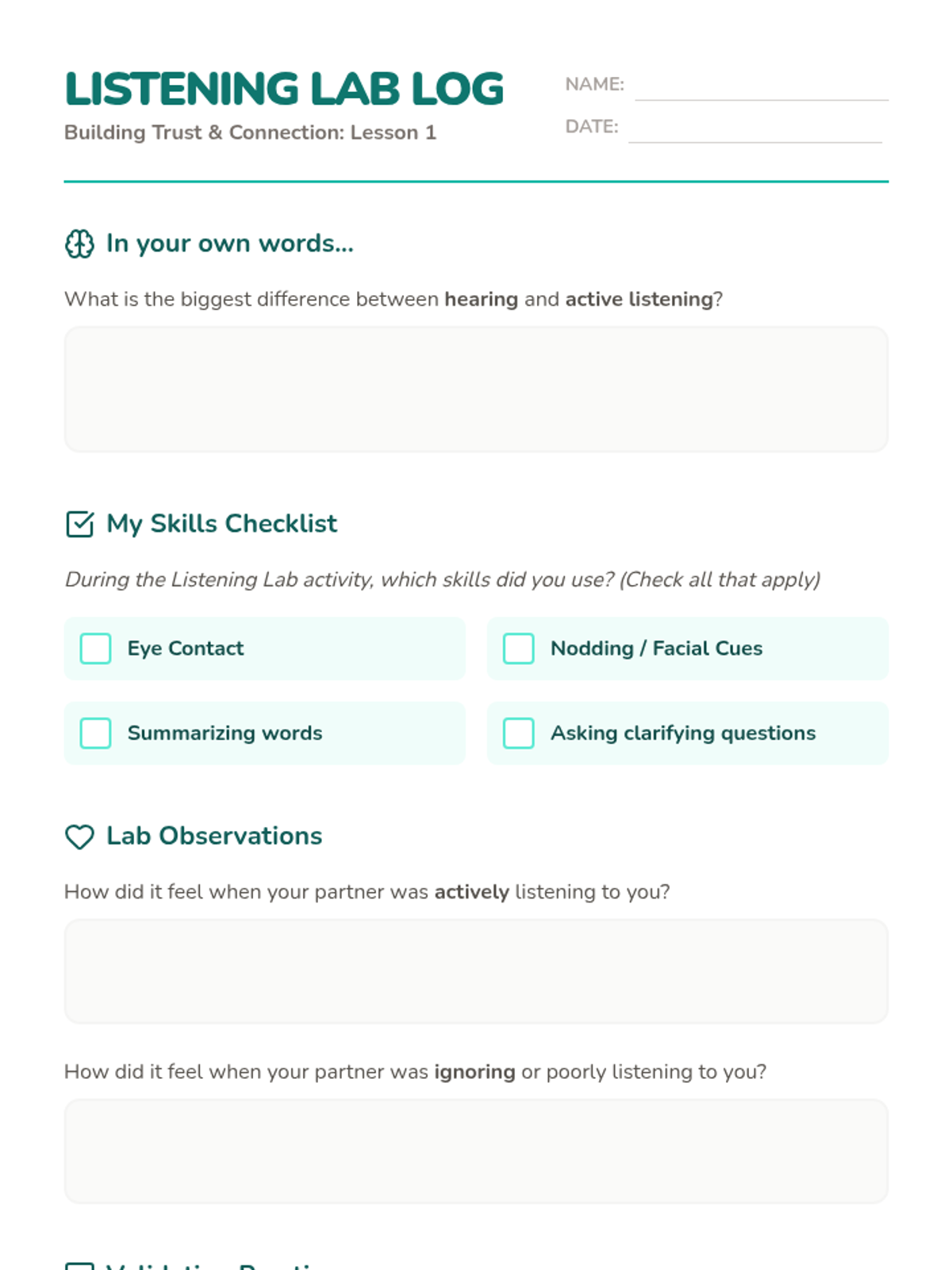
Students distinguish between hearing and active listening, practicing techniques like eye contact and summarizing to validate peers.
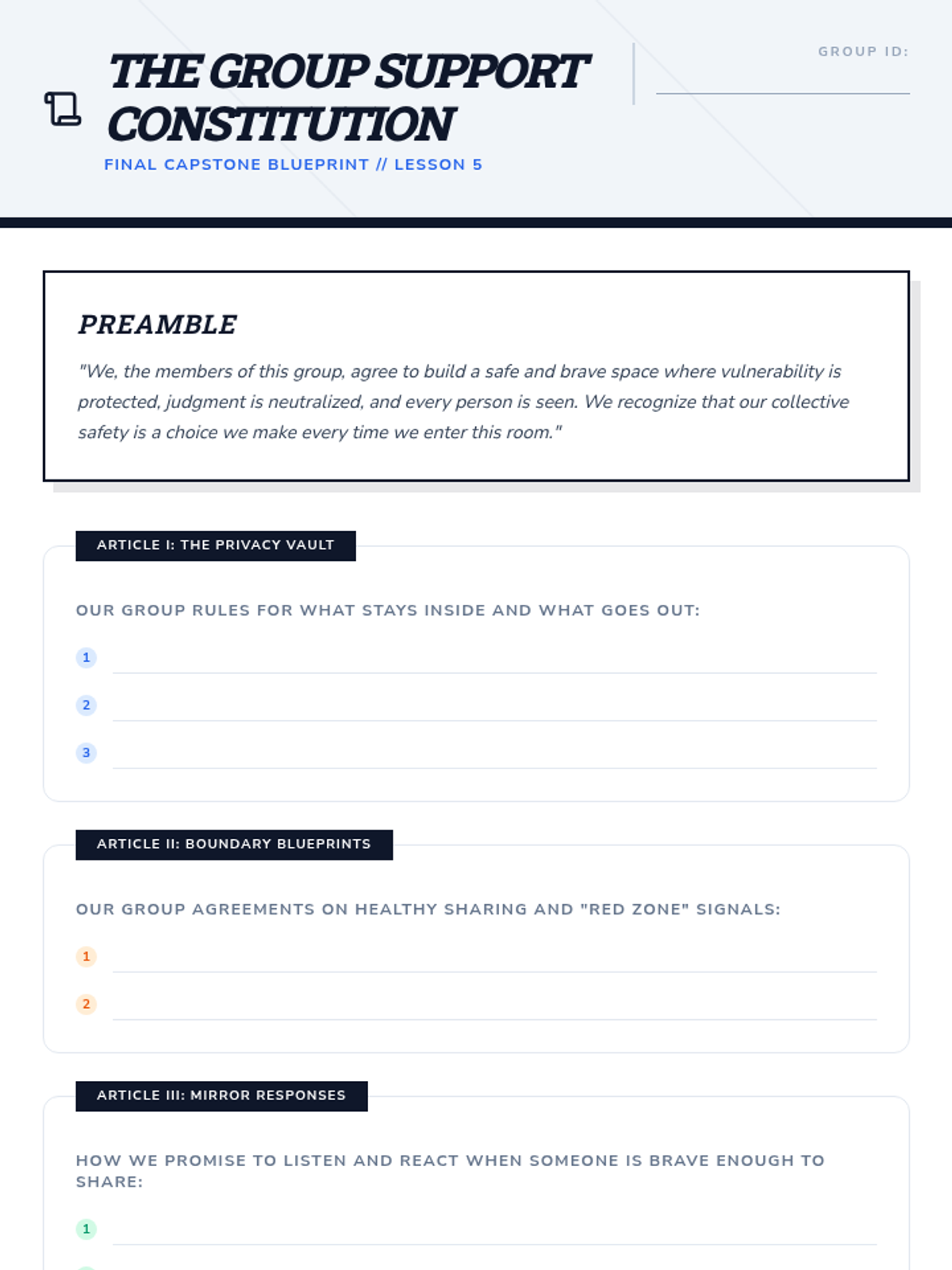
The capstone lesson where students synthesize their learning to draft, negotiate, and finalize a comprehensive support group contract for a hypothetical peer group.