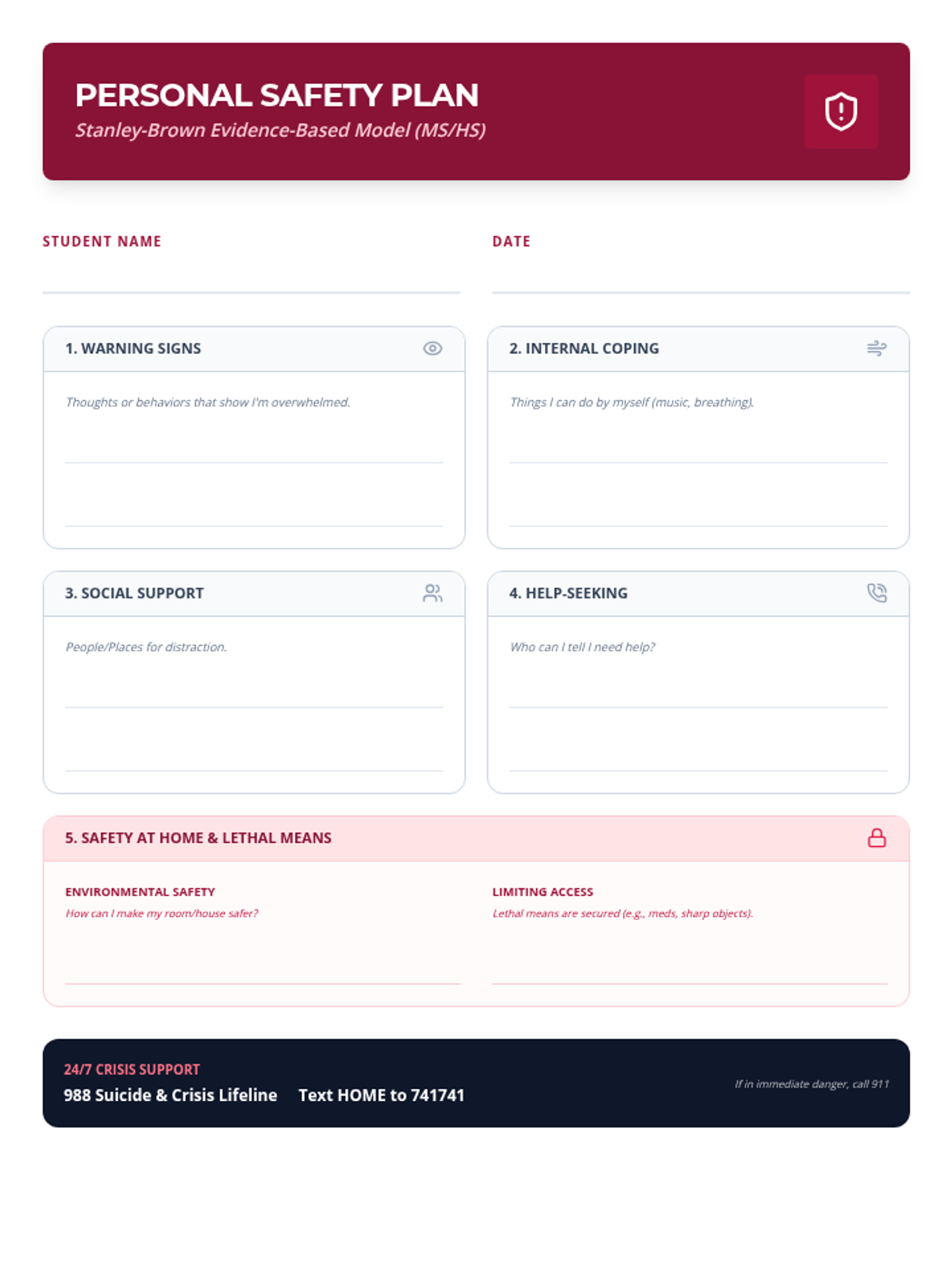
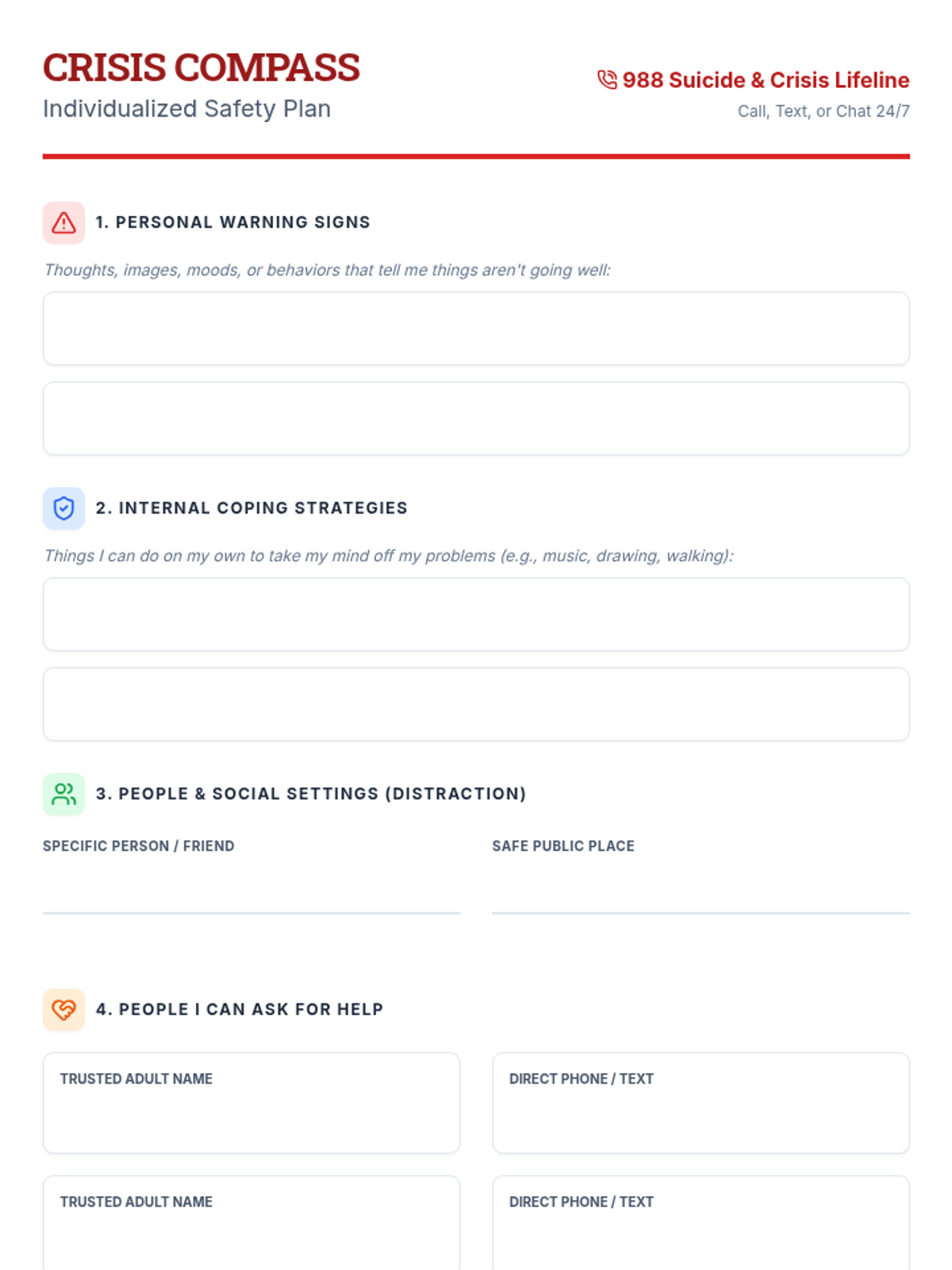
Identifies mental health crises and suicide warning signs while developing personal safety plans and grounding techniques. Equips users with peer gatekeeper skills and direct pathways to professional crisis resources and hotlines.
This lesson provides school social workers with a clinical and practical framework for identifying and supporting students struggling with anxiety, depression, and self-harm. It includes evidence-based interventions and safety planning tools specifically for the school environment.
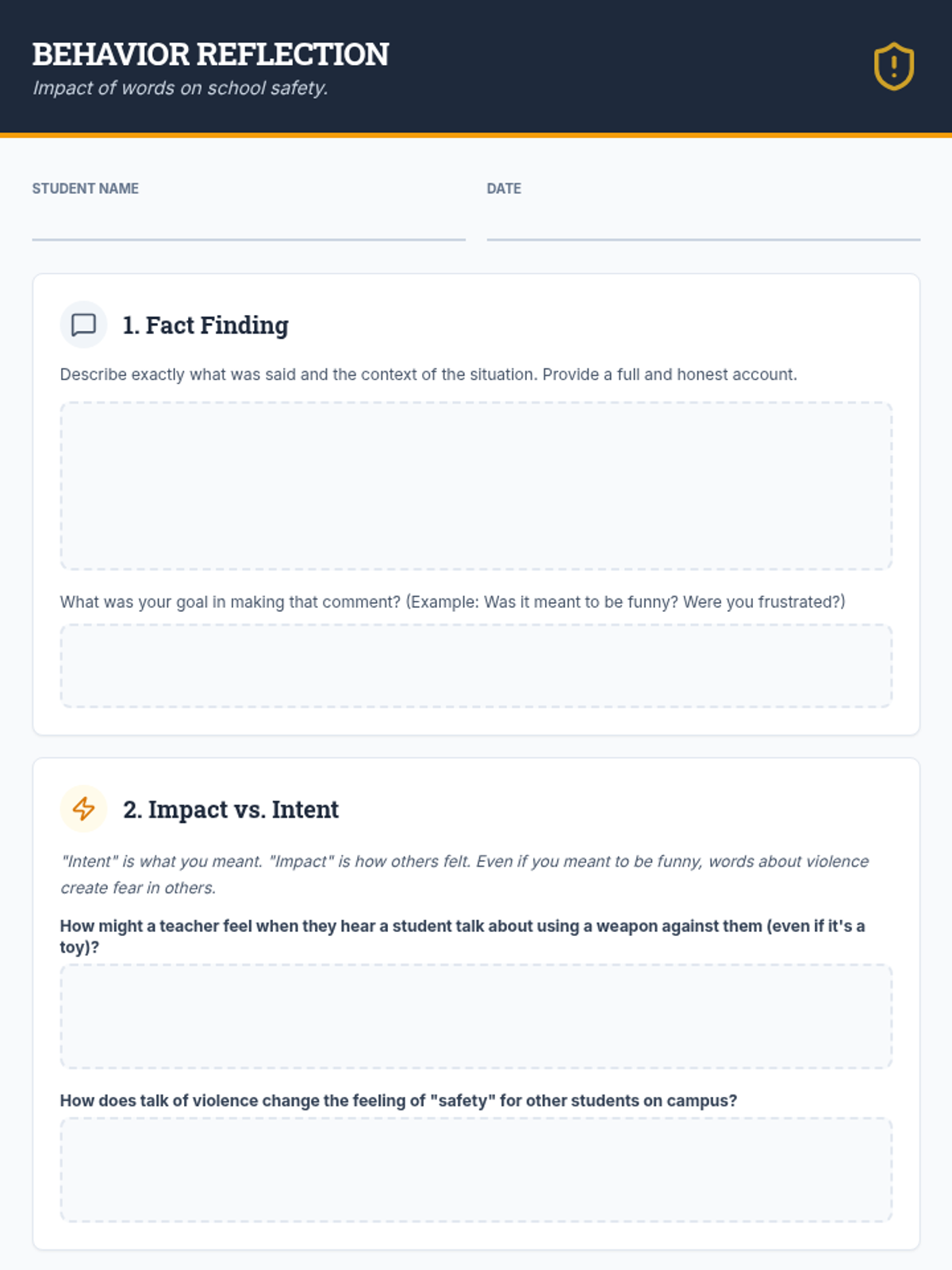
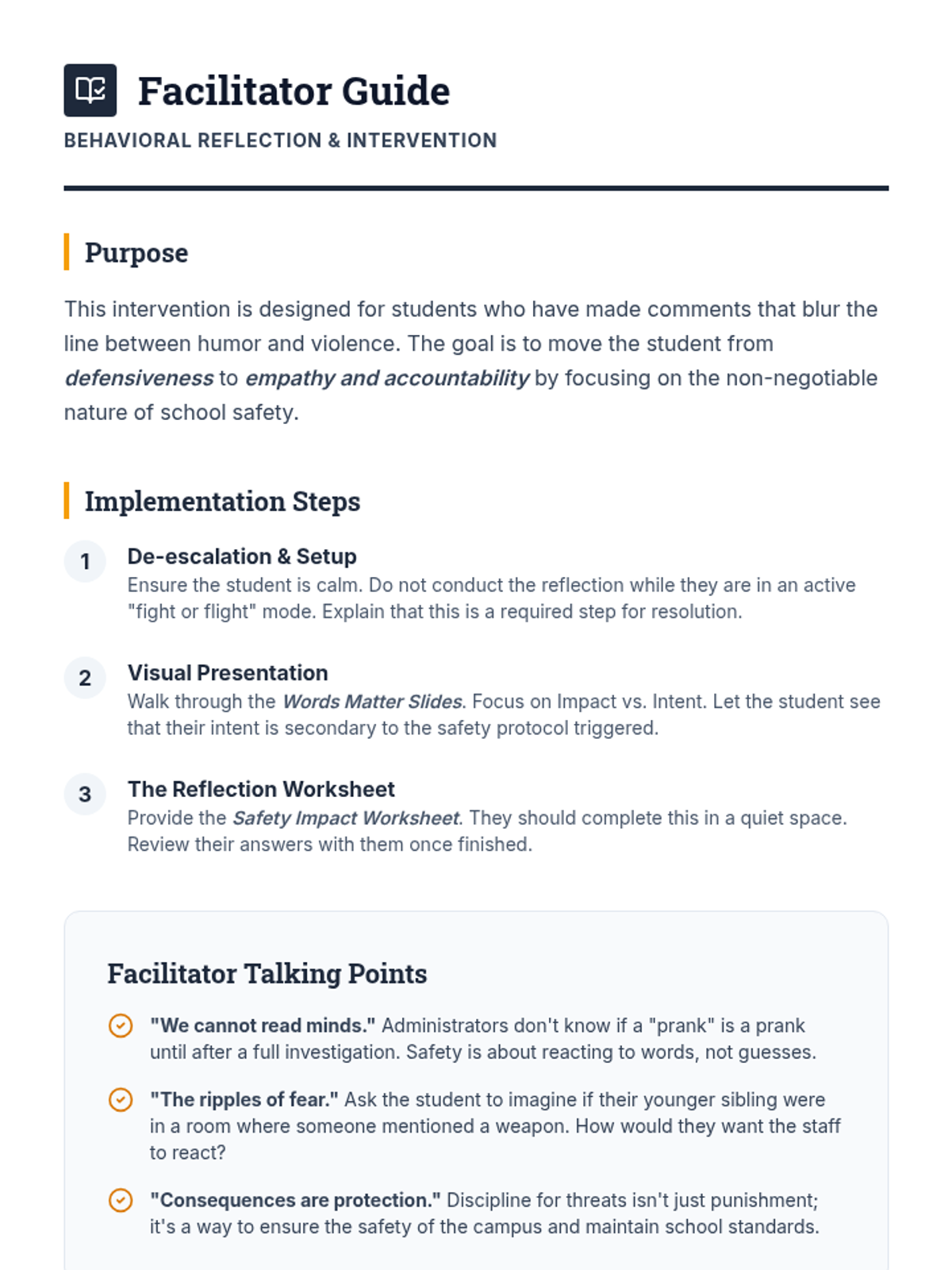
A restorative justice and behavioral reflection lesson focused on the impact of threatening language, the boundaries between humor and safety, and the real-world consequences of 'jokes' involving violence.
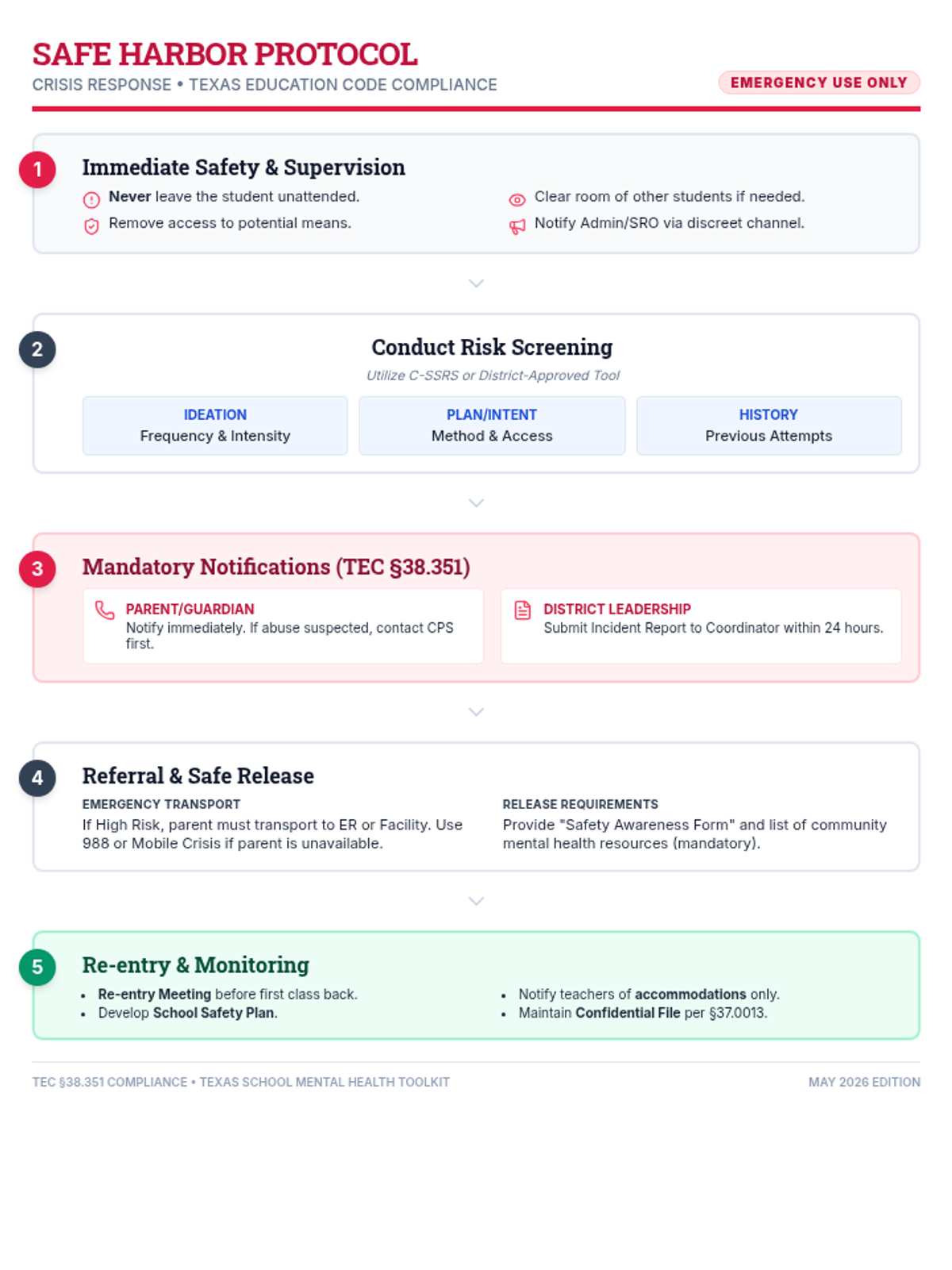
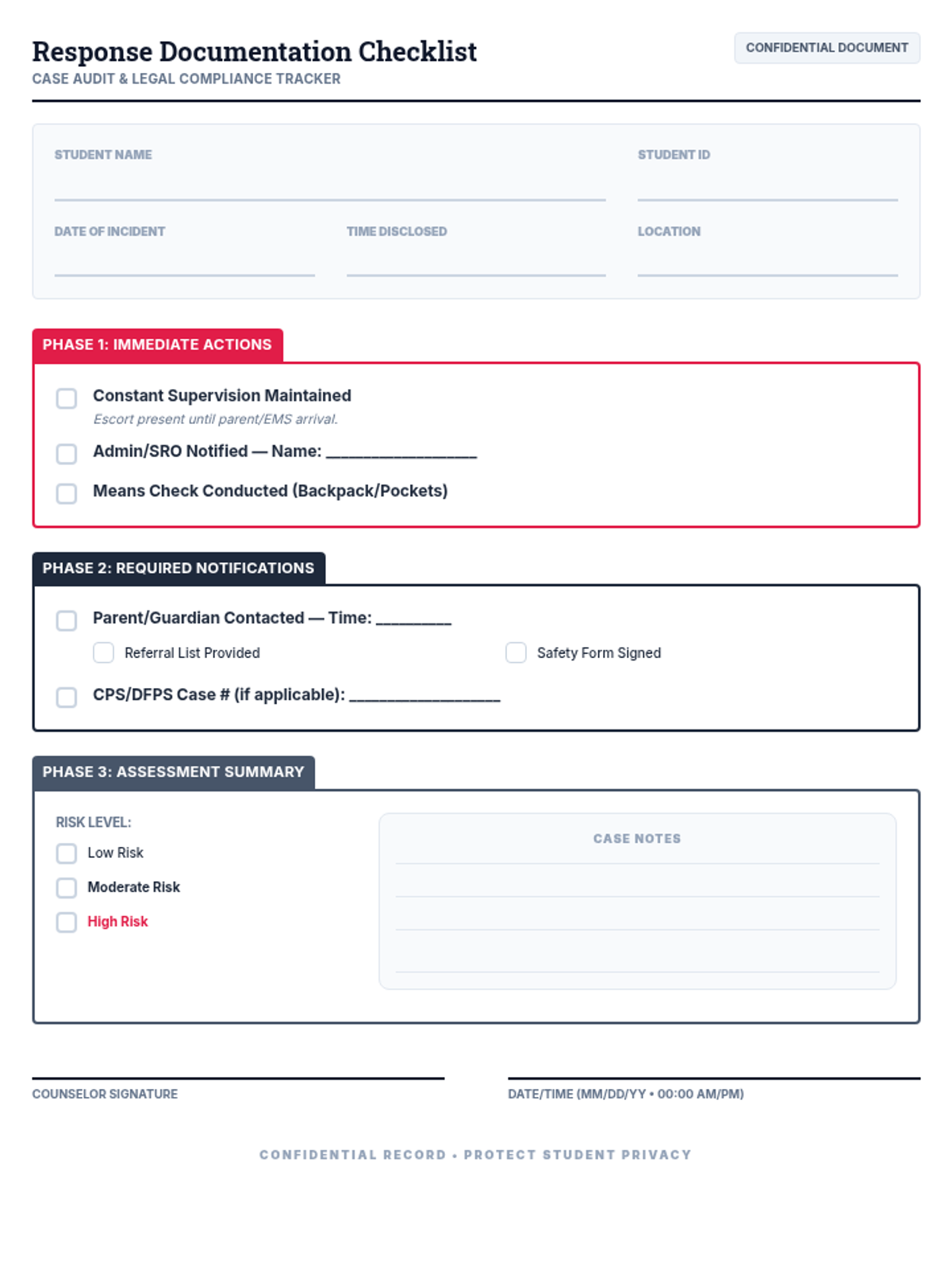
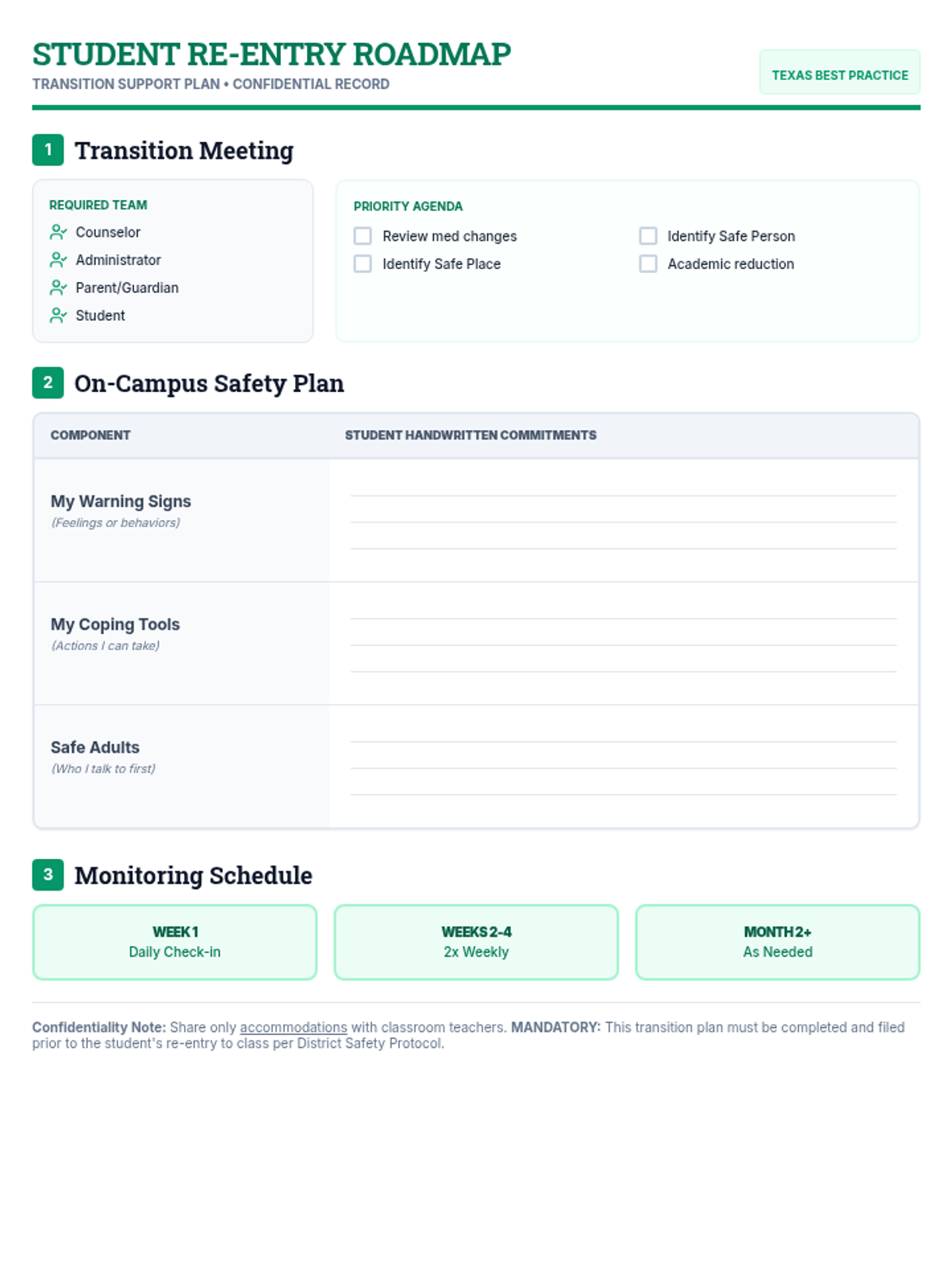
A comprehensive suite of materials for Texas middle school counselors to manage student mental health crises, ensuring compliance with state education codes while prioritizing student safety.
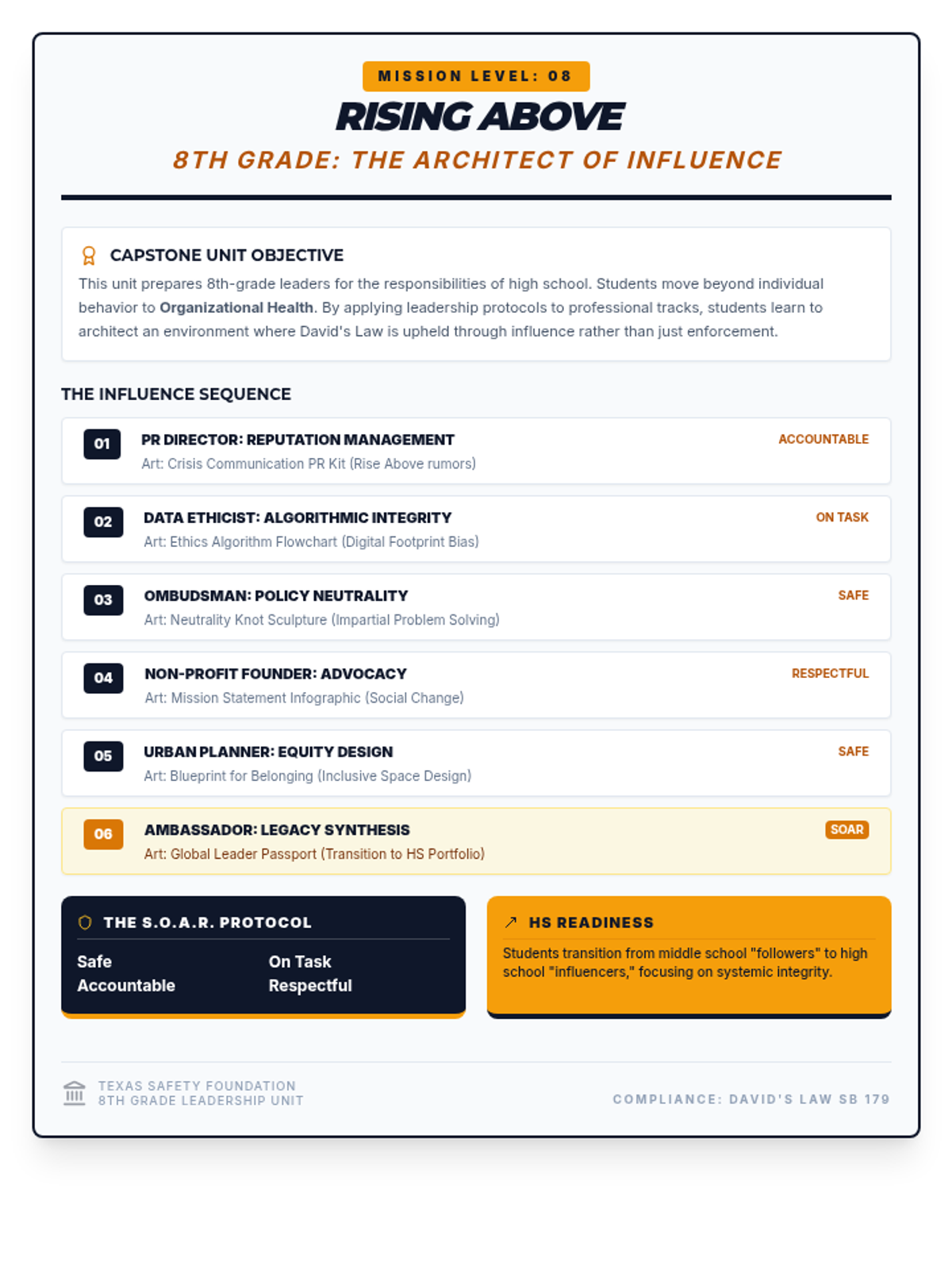
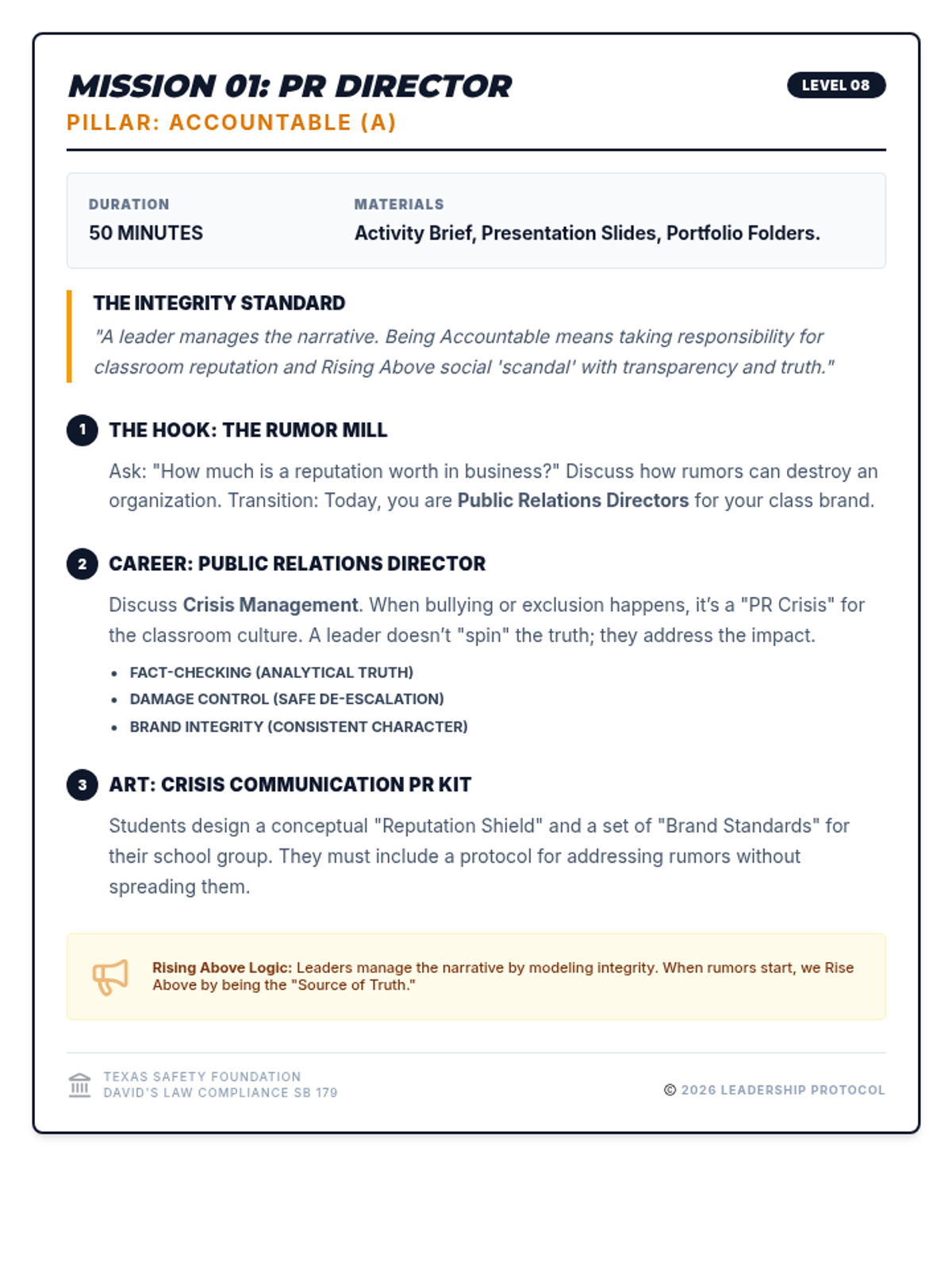
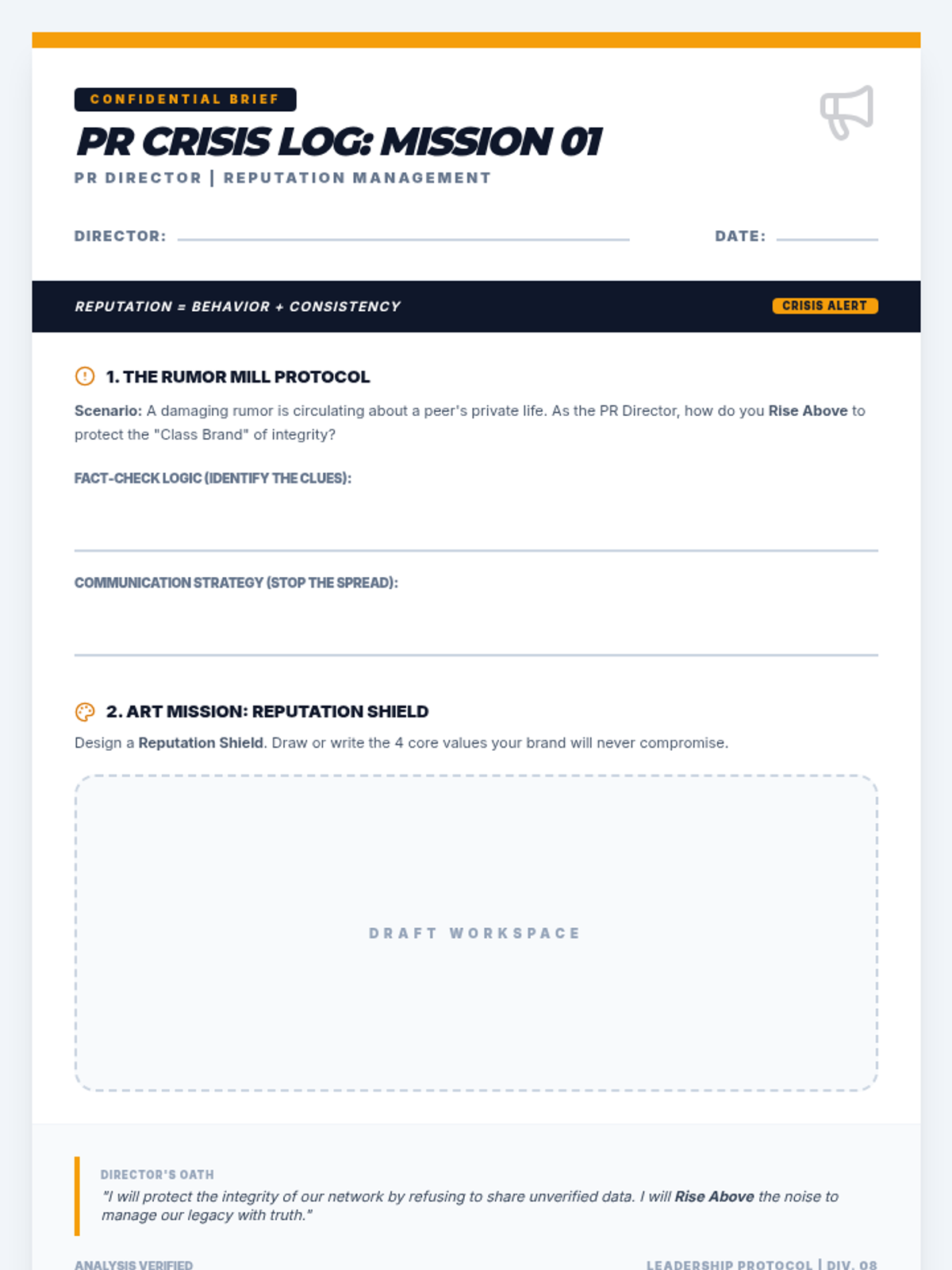
8th Grade focus on reputation management and accountability through a PR Director lens. Art: Crisis Communication PR Kit.
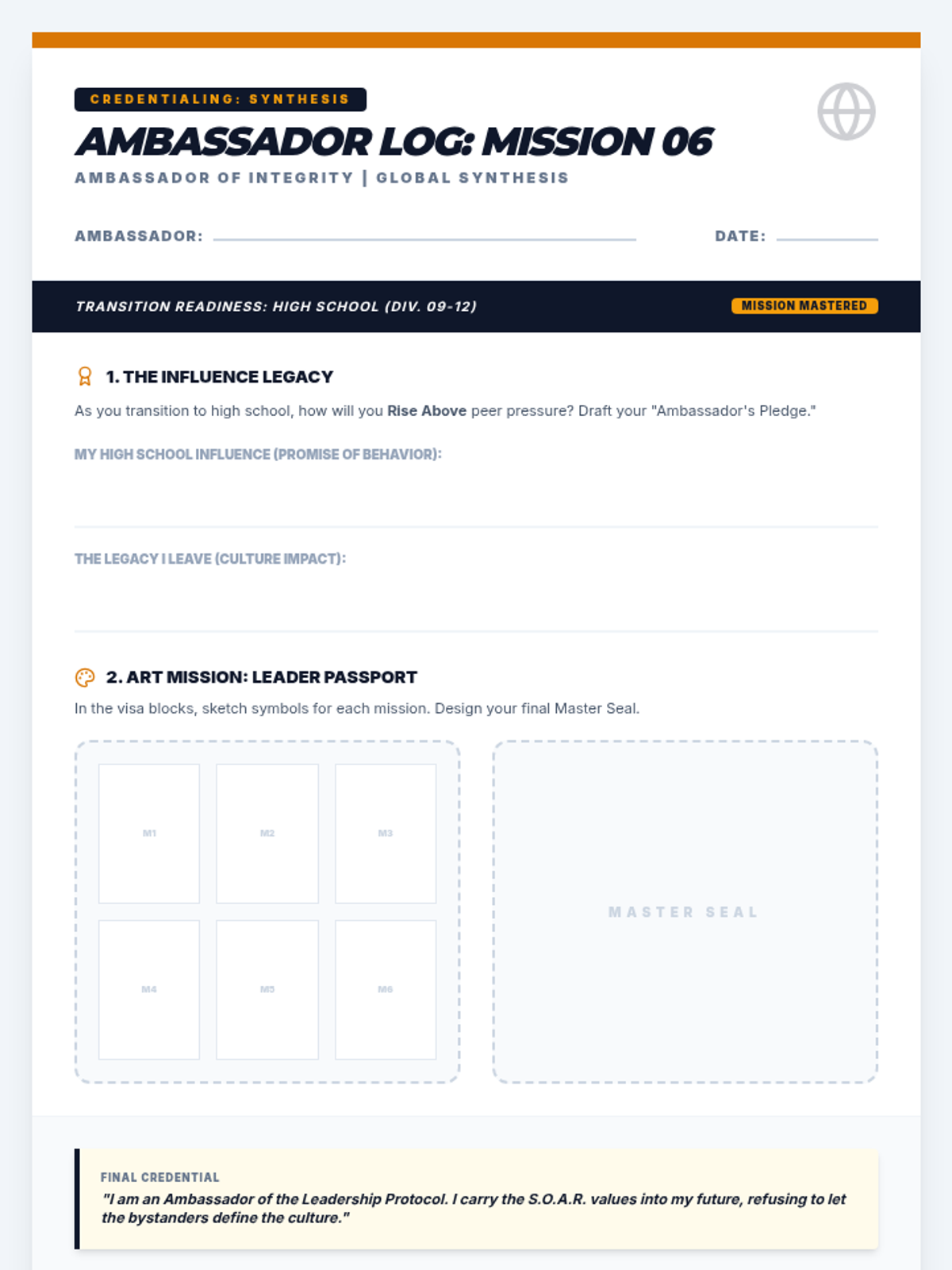
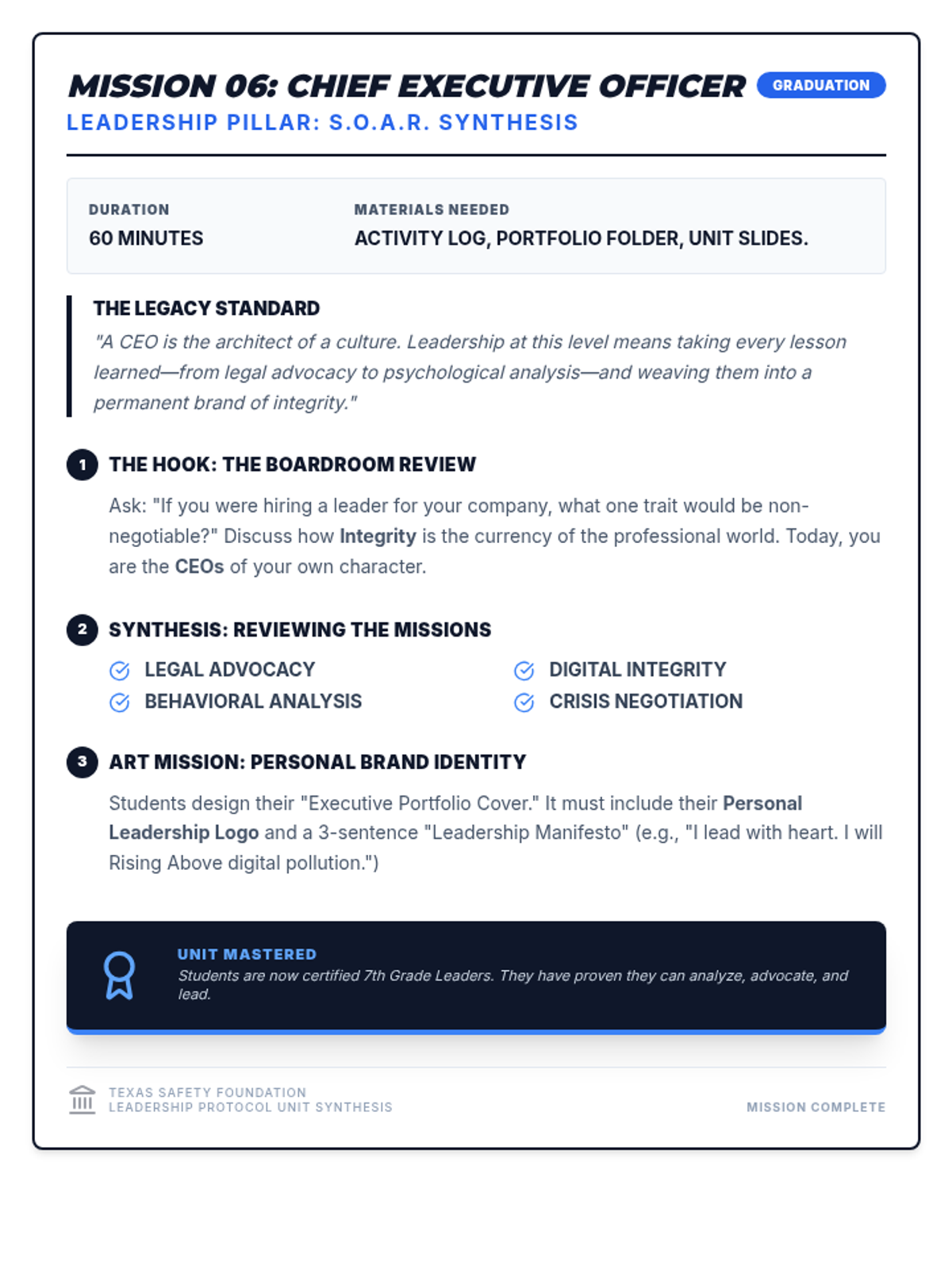
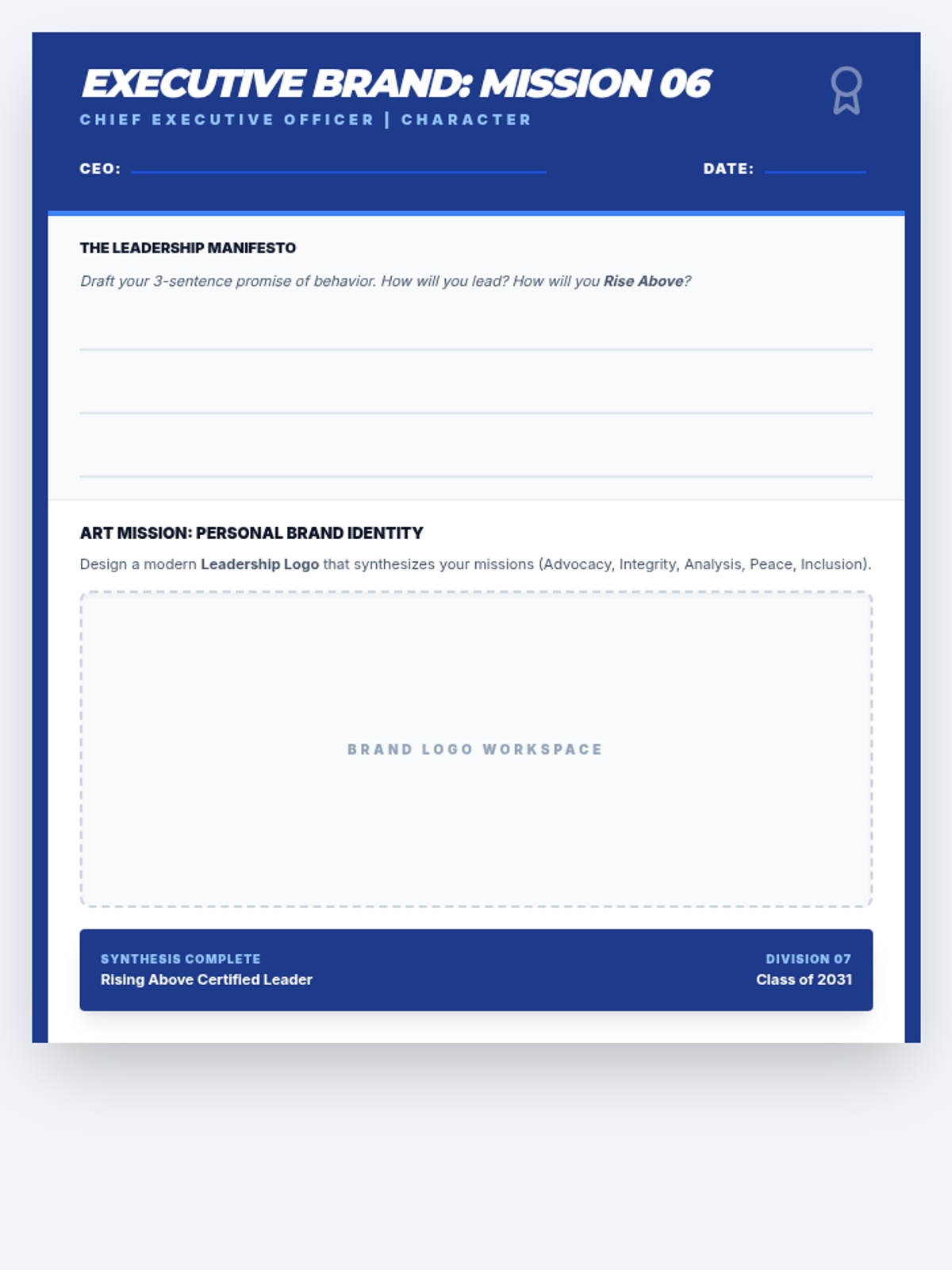
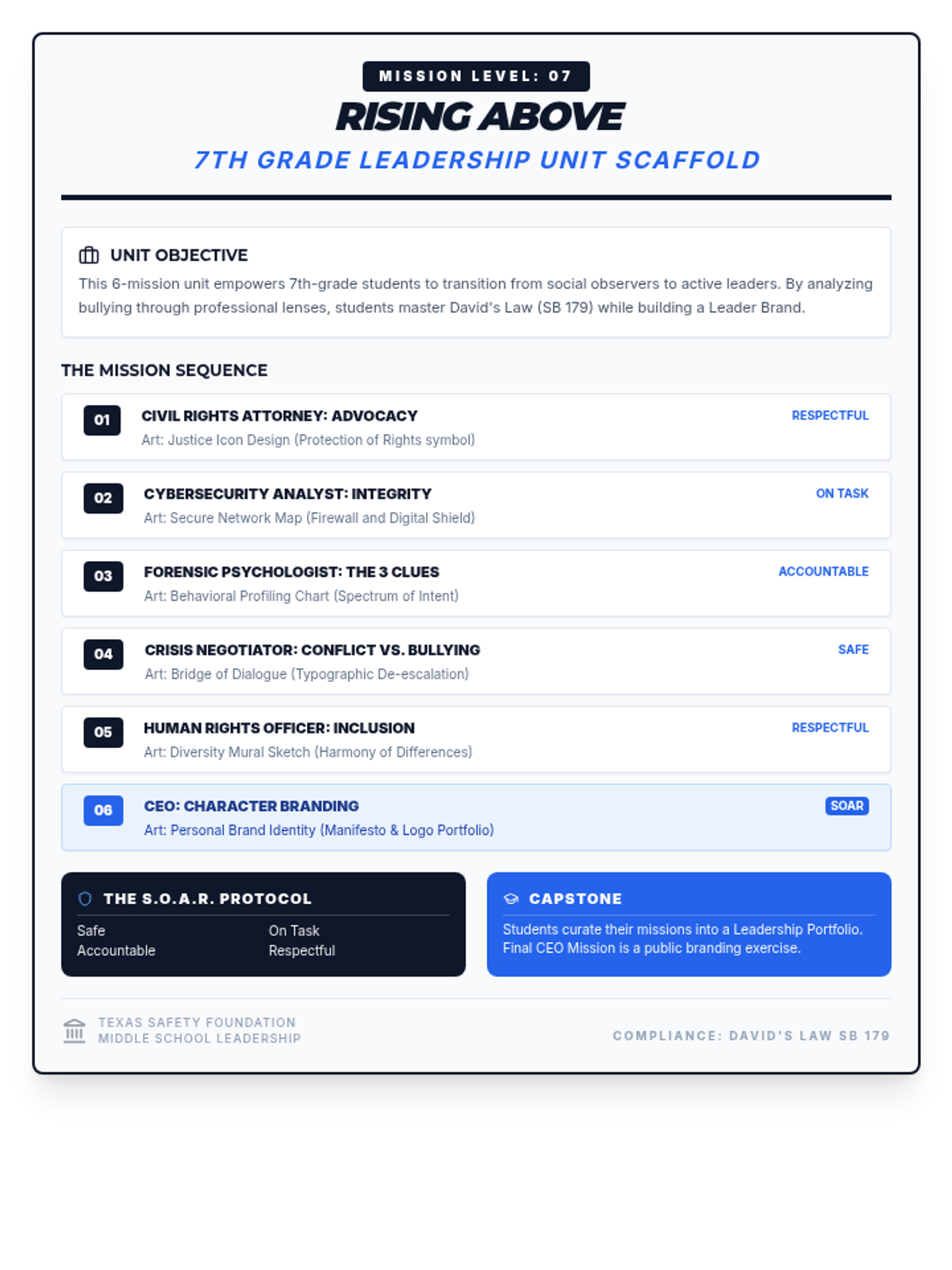
7th Grade unit synthesis focusing on personal leadership branding and the S.O.A.R. framework. Art: Personal Brand Identity.
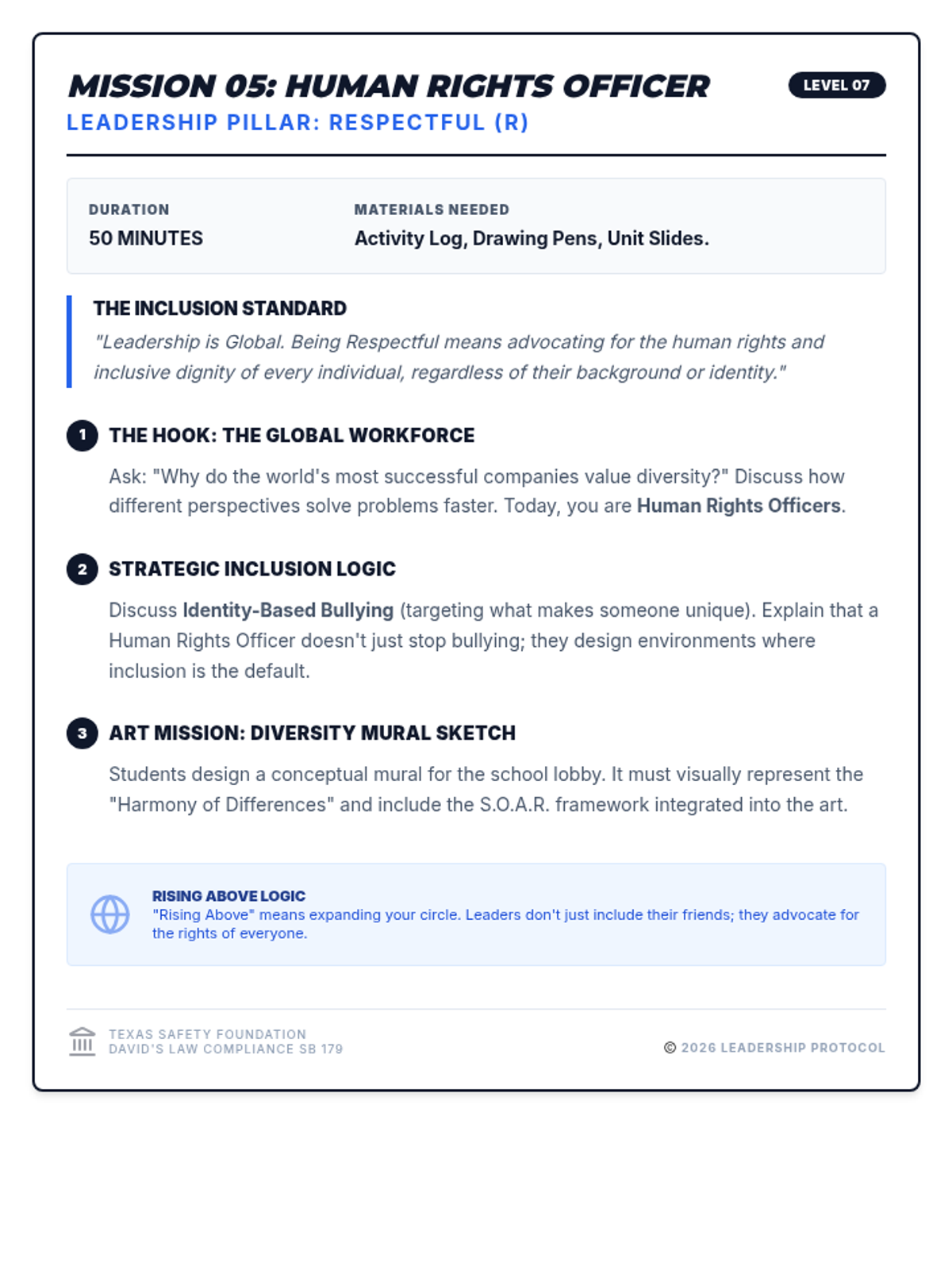
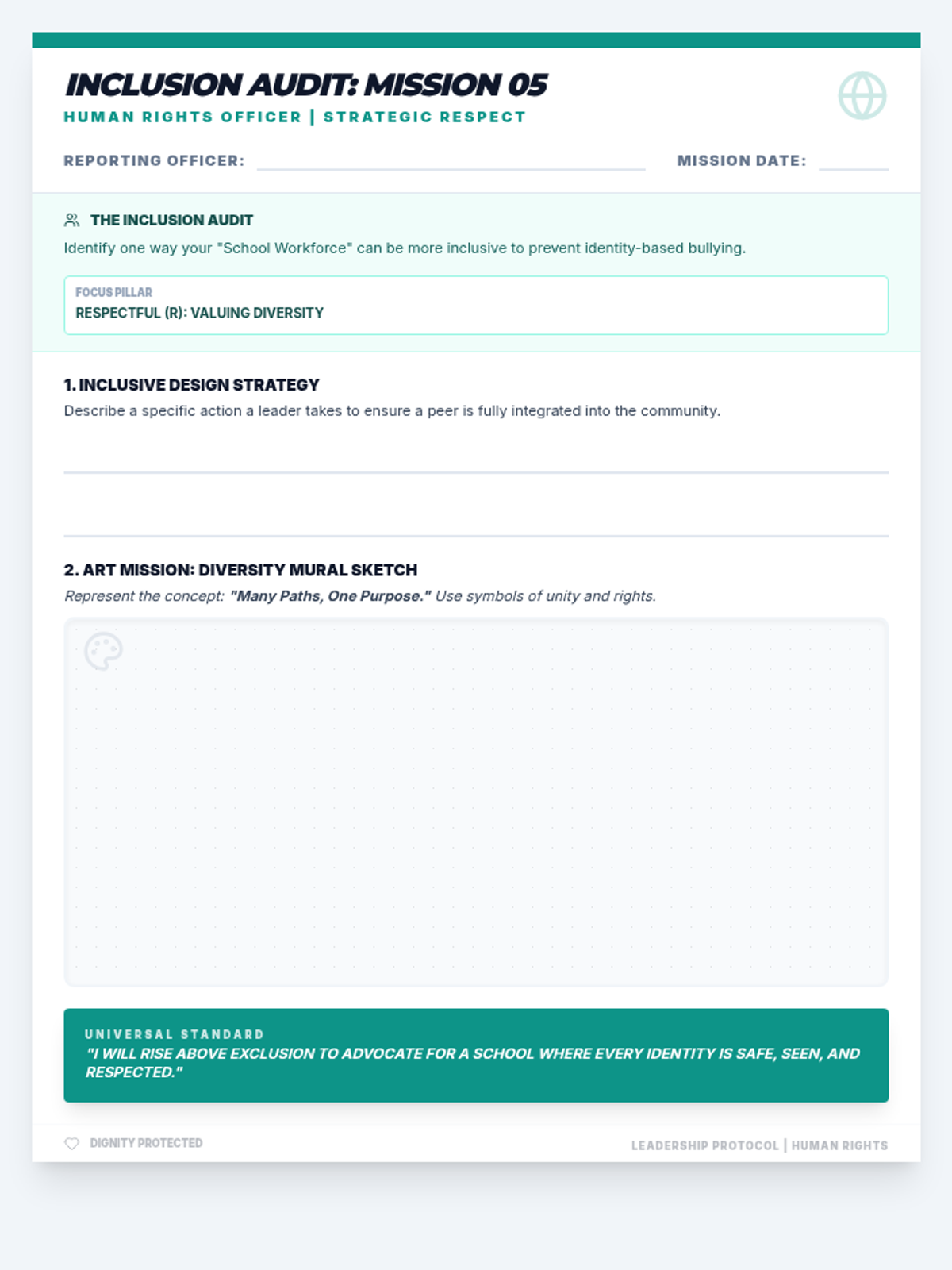
7th Grade focus on diversity, equity, and inclusive leadership through the lens of a Human Rights Officer. Art: Diversity Mural Sketch.
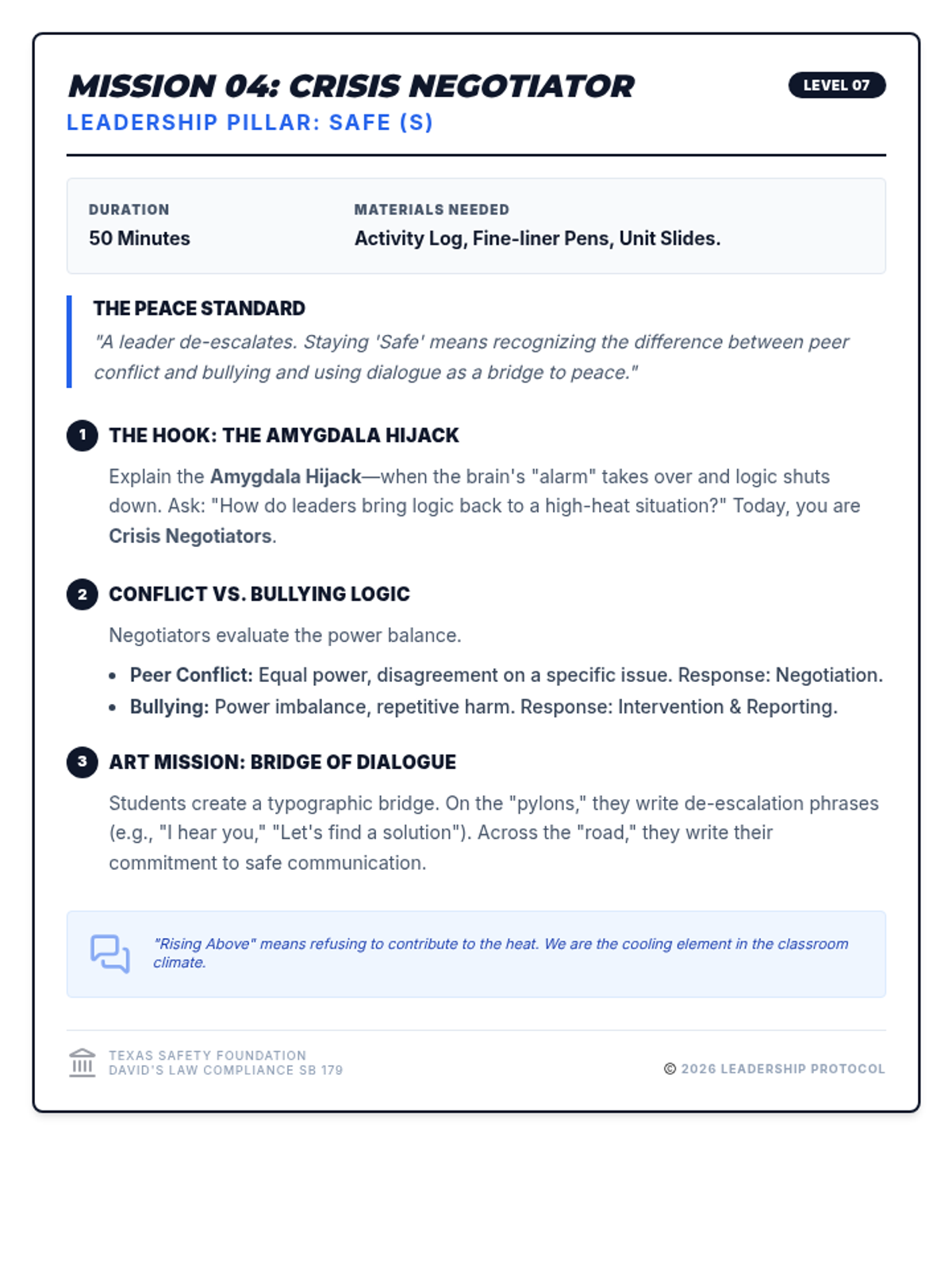
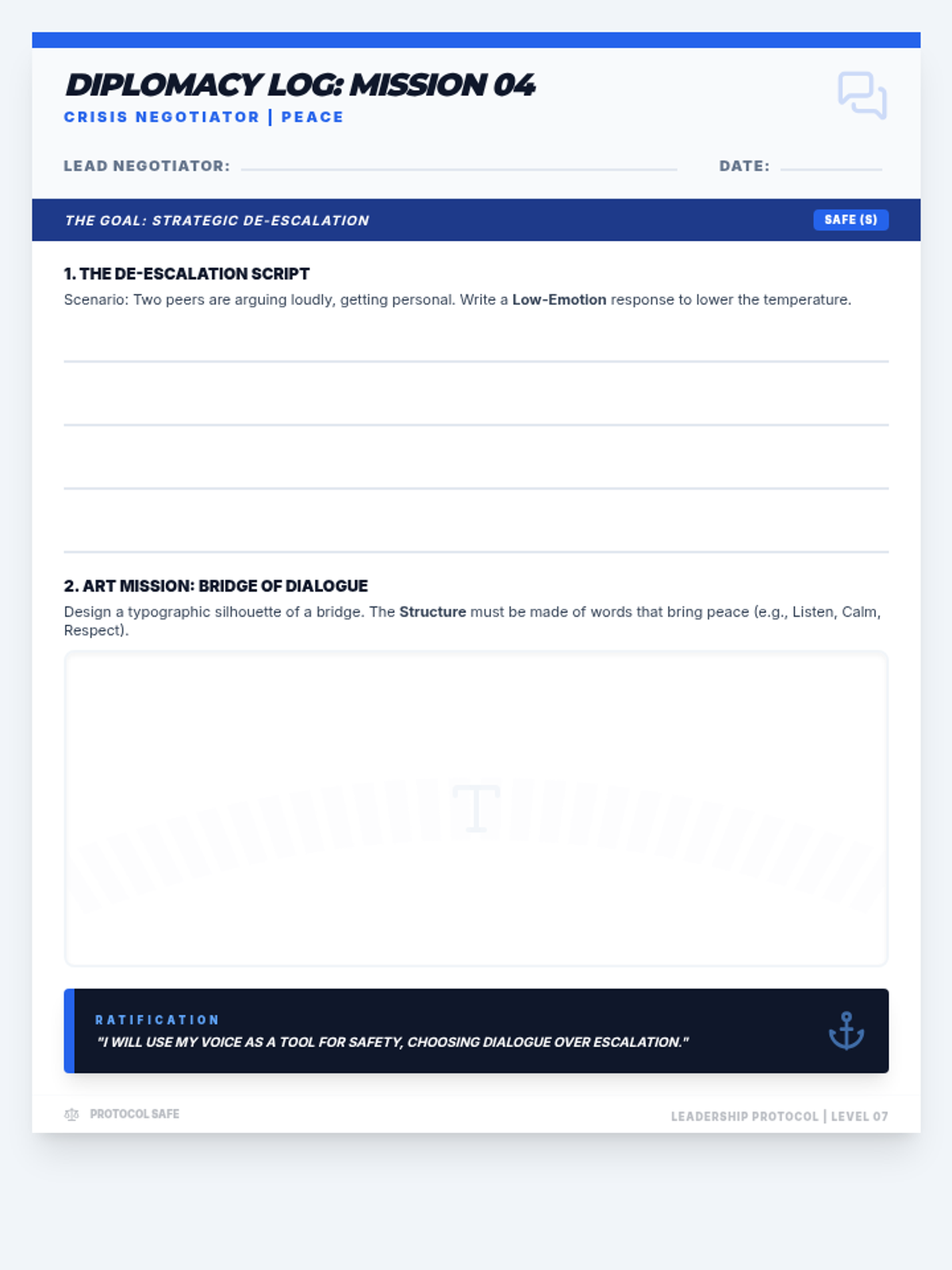
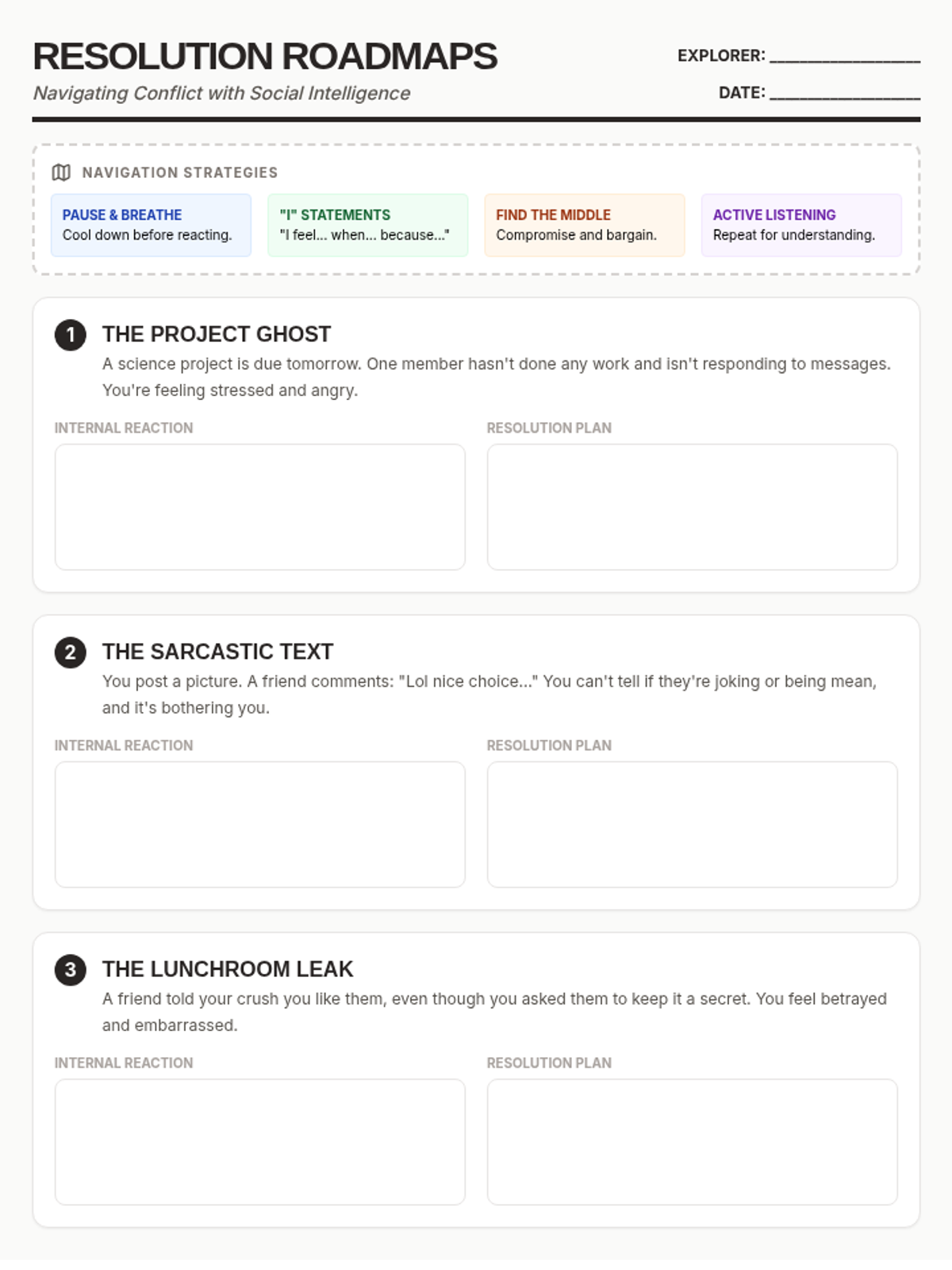
7th Grade focus on de-escalation, conflict vs. bullying, and maintaining a safe environment through the lens of a Crisis Negotiator. Art: Bridge of Dialogue.
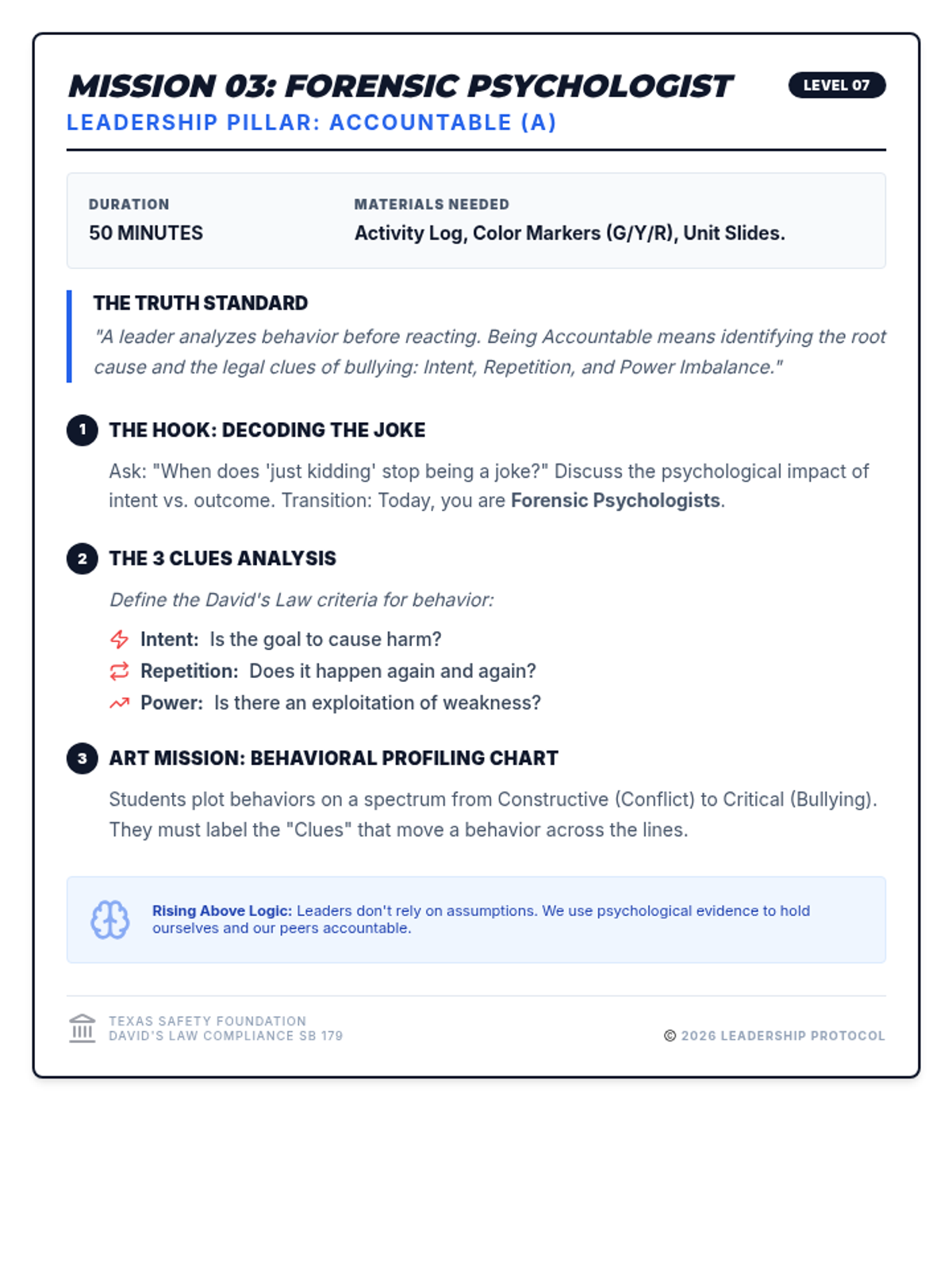
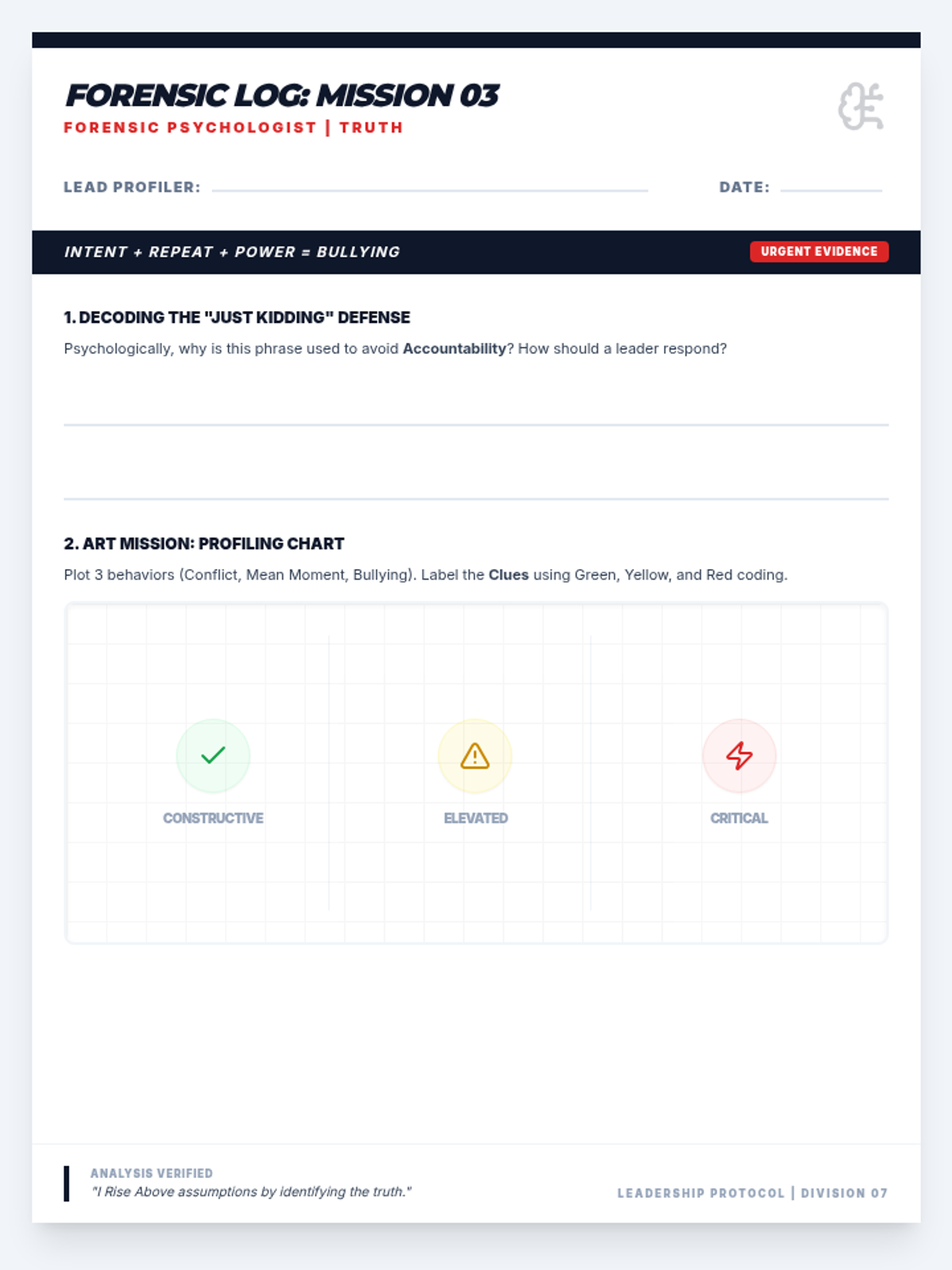
7th Grade focus on identifying intent, repetition, and power imbalances through the lens of a Forensic Psychologist. Art: Behavioral Profiling Chart.
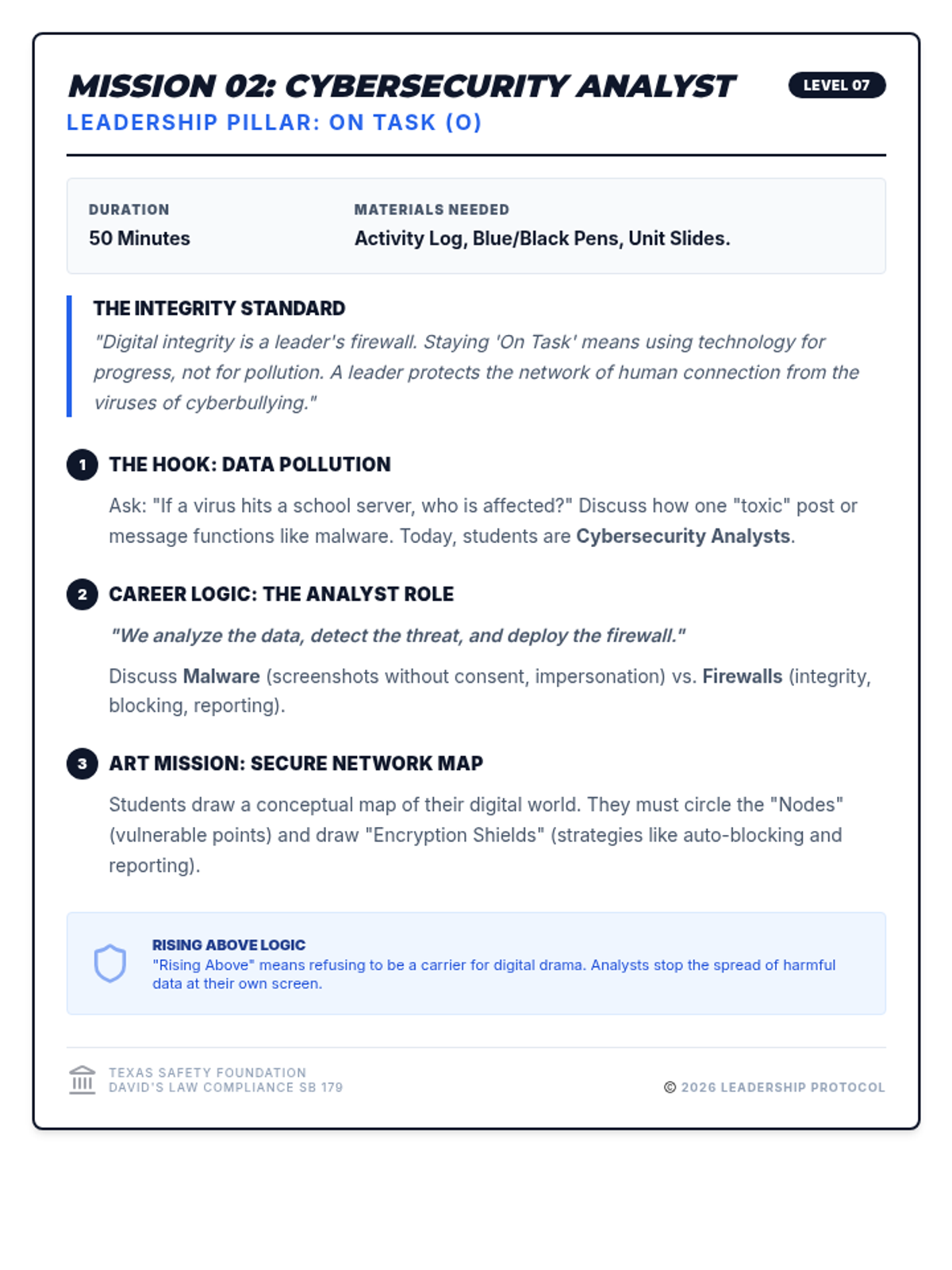
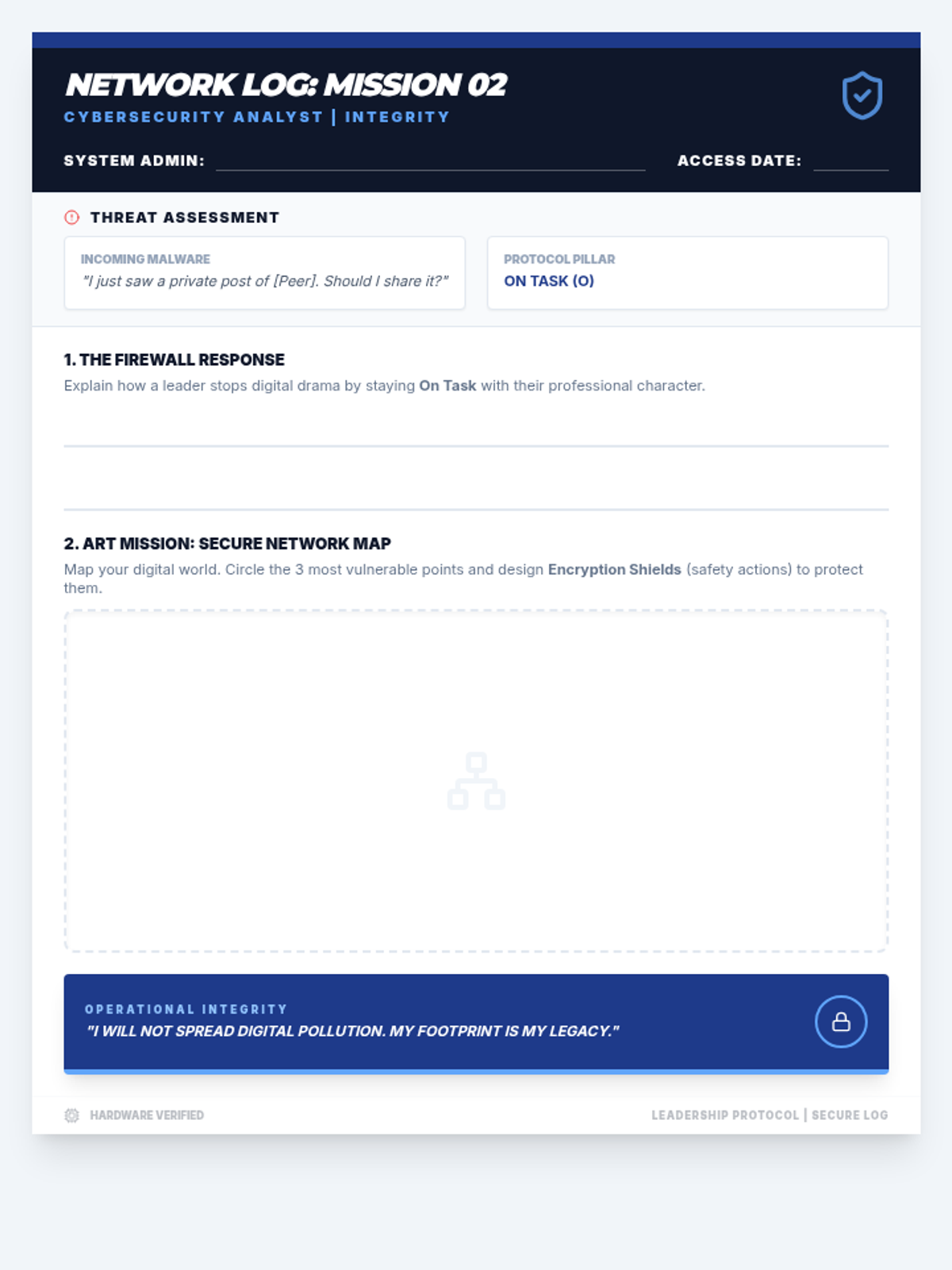
7th Grade focus on digital safety, data protection, and rising above cyber-pollution through the lens of a Cybersecurity Analyst. Art: Secure Network Map.
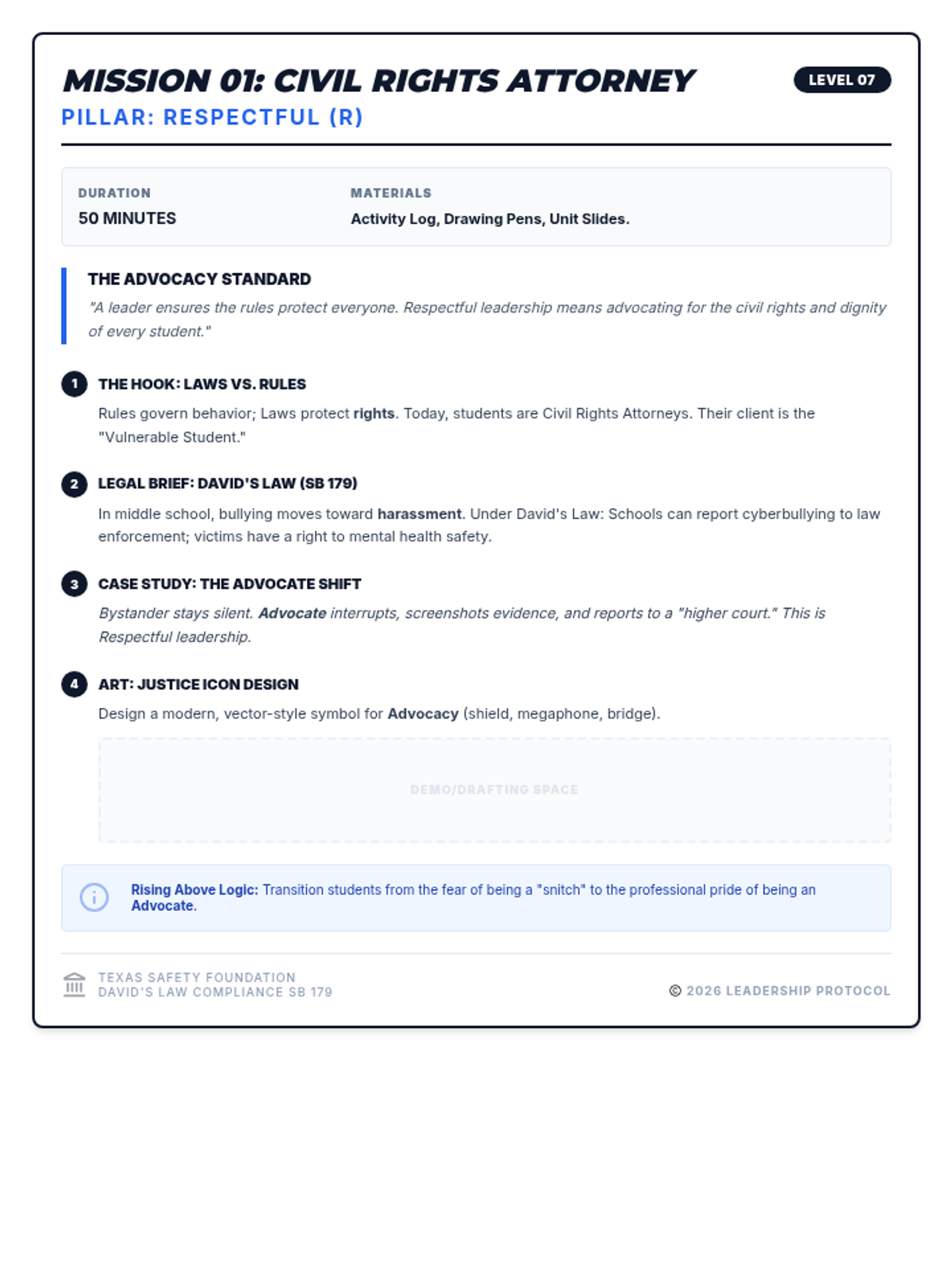
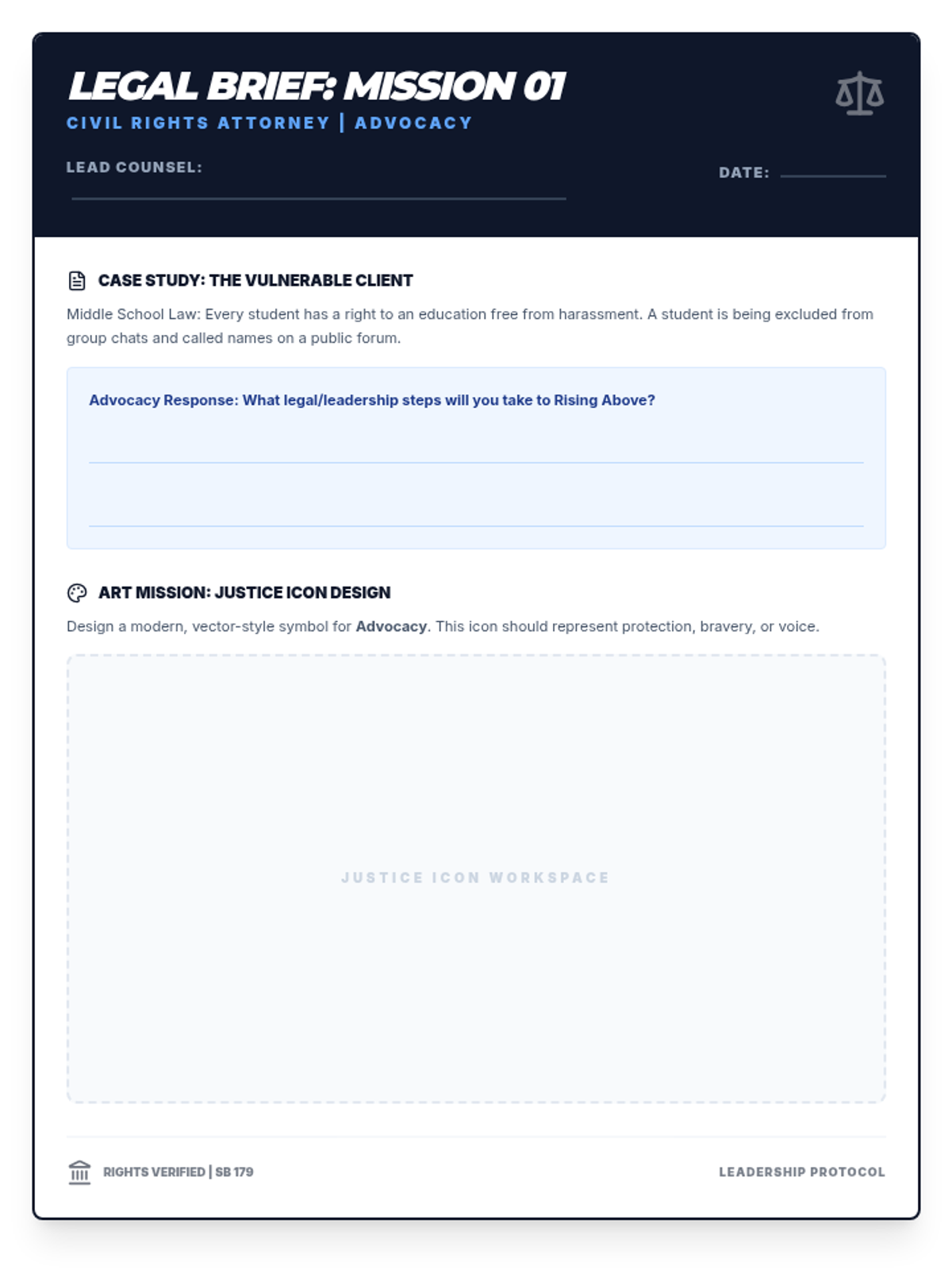
7th Grade focus on legal advocacy, David's Law, and protecting individual rights through the lens of a Civil Rights Attorney. Art: Justice Icon Design.
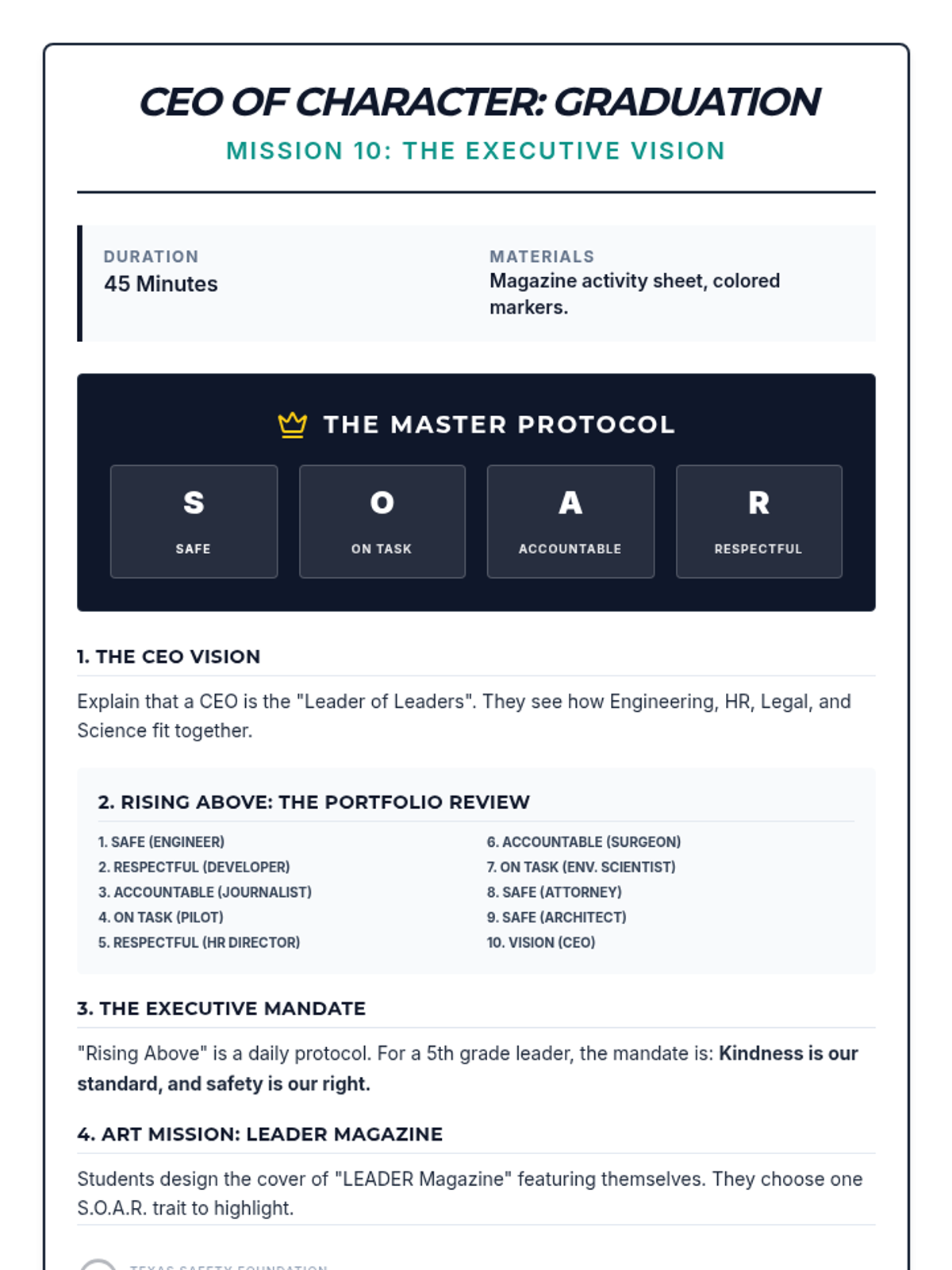
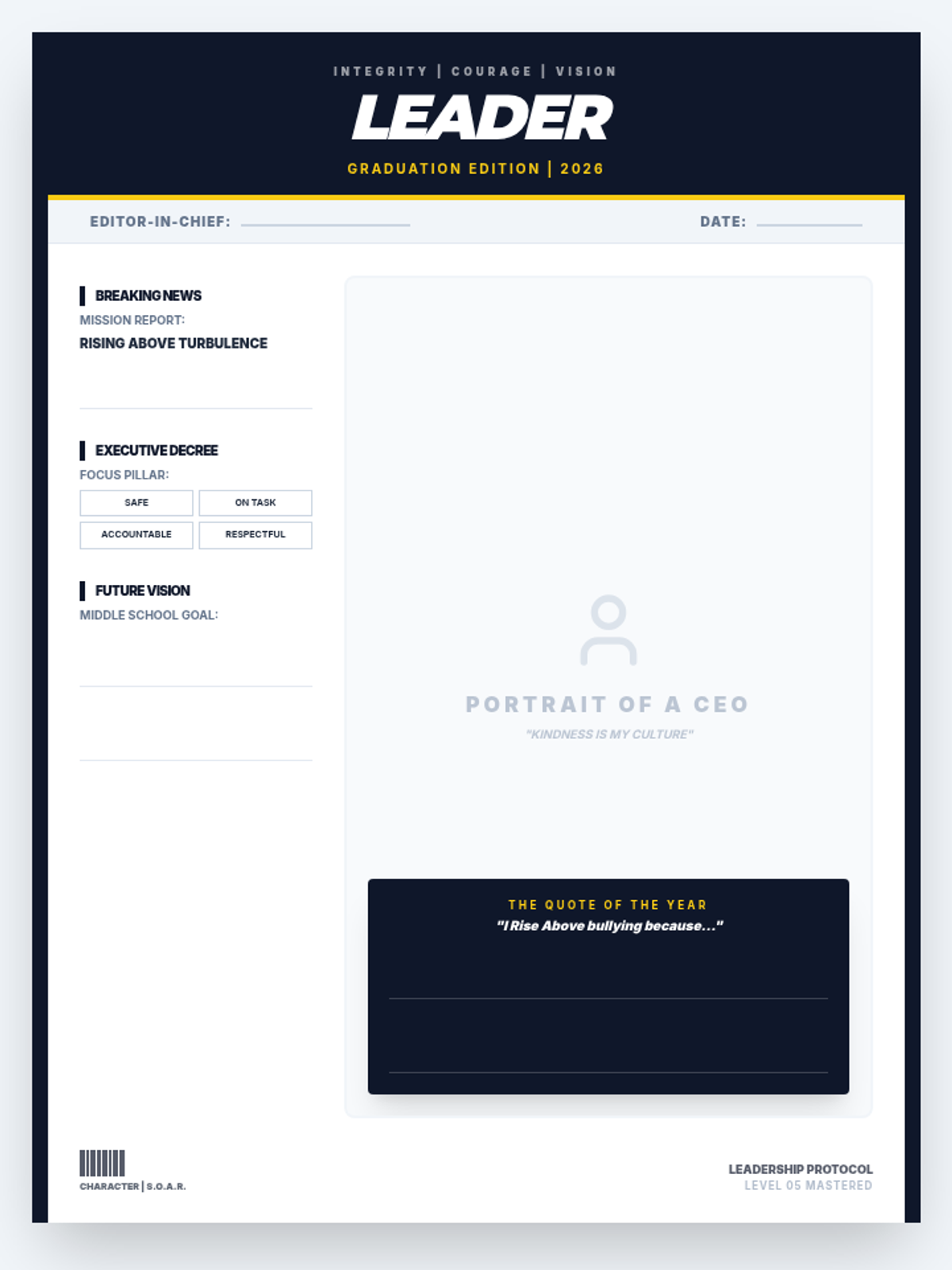
5th Grade graduation synthesizing all S.O.A.R. skills. Art: Leader of the Year Magazine Cover.
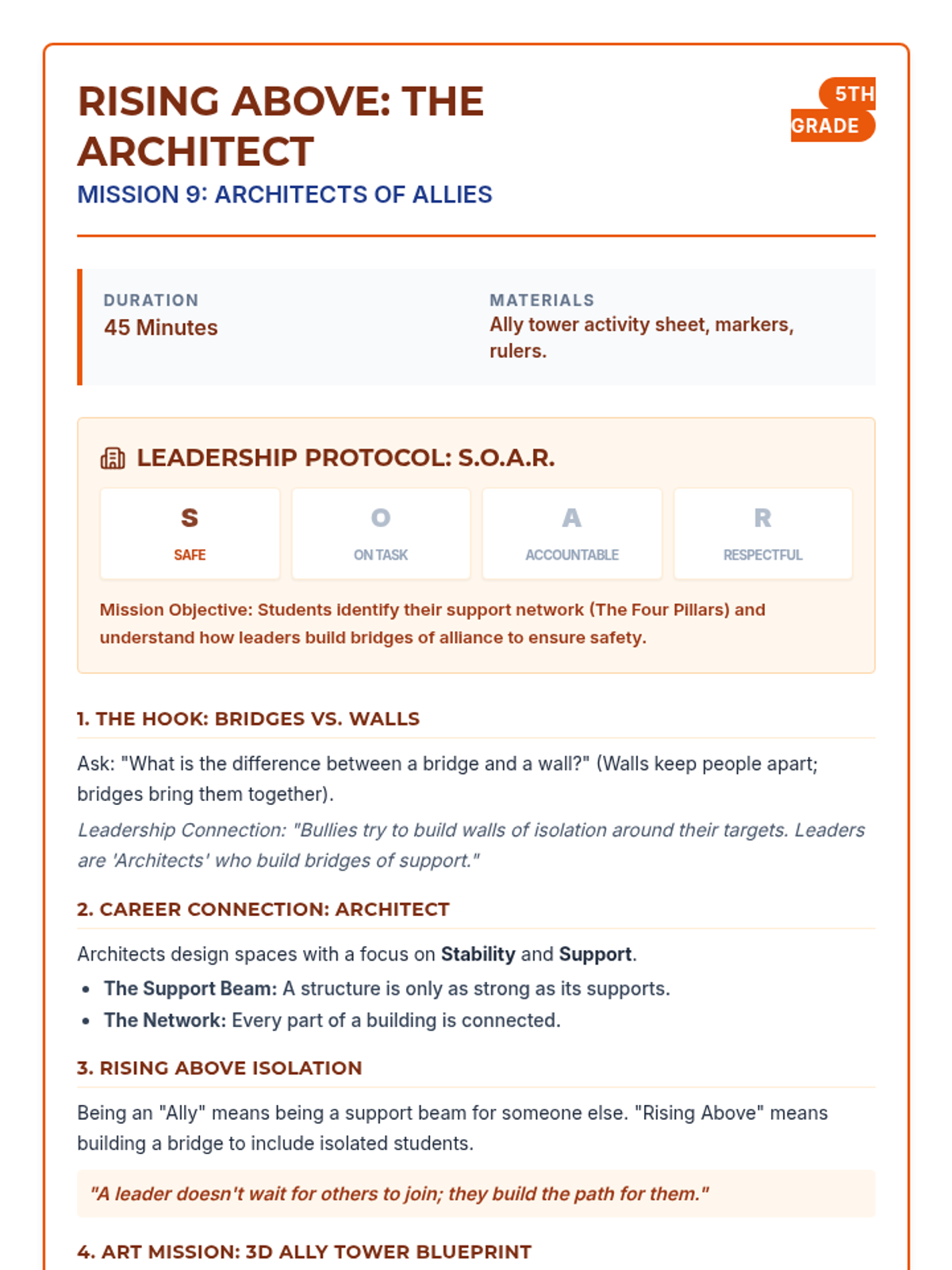
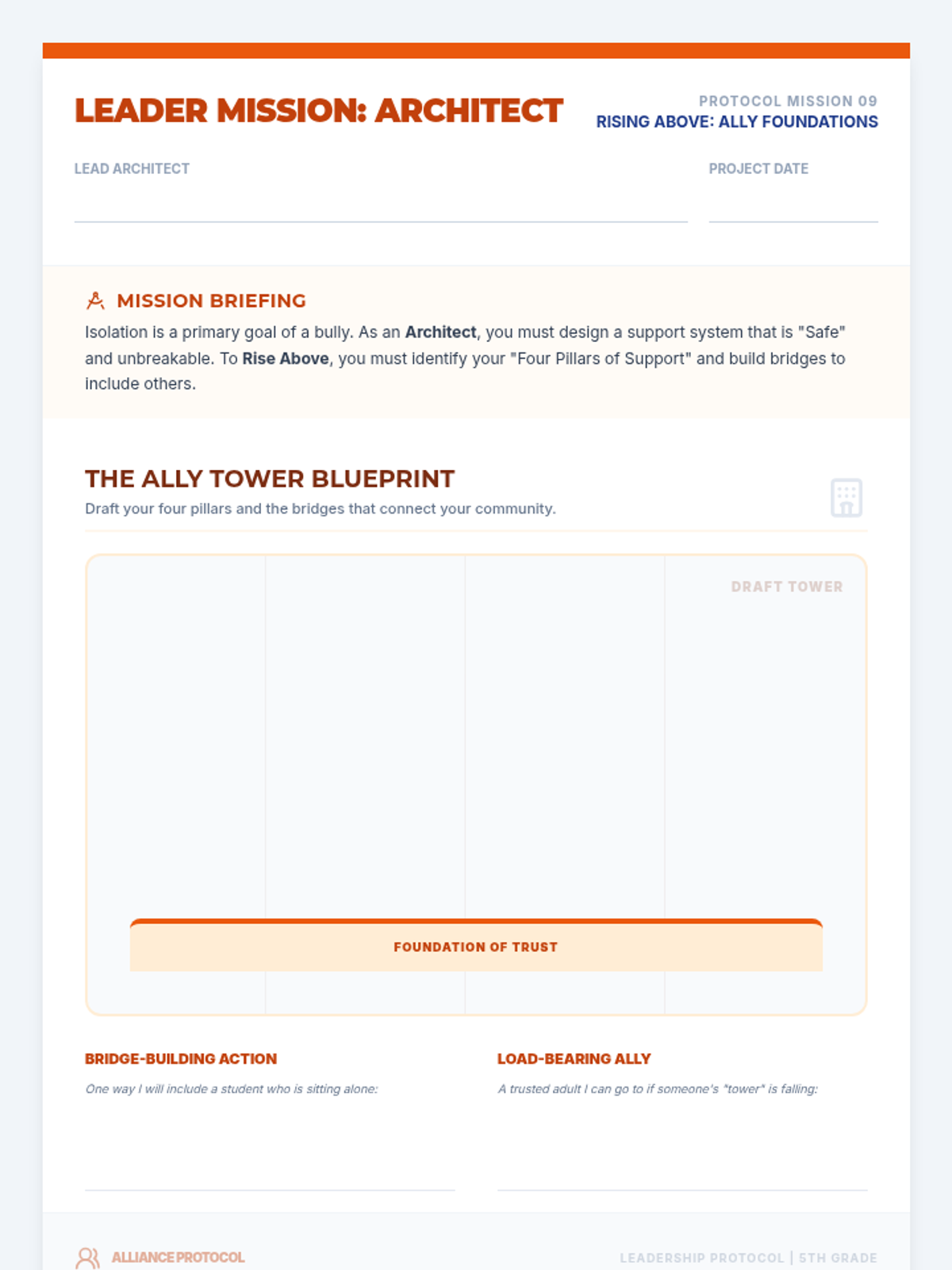
5th Grade focus on building strong support networks and bridges. Art: 3D Ally Tower Blueprint.
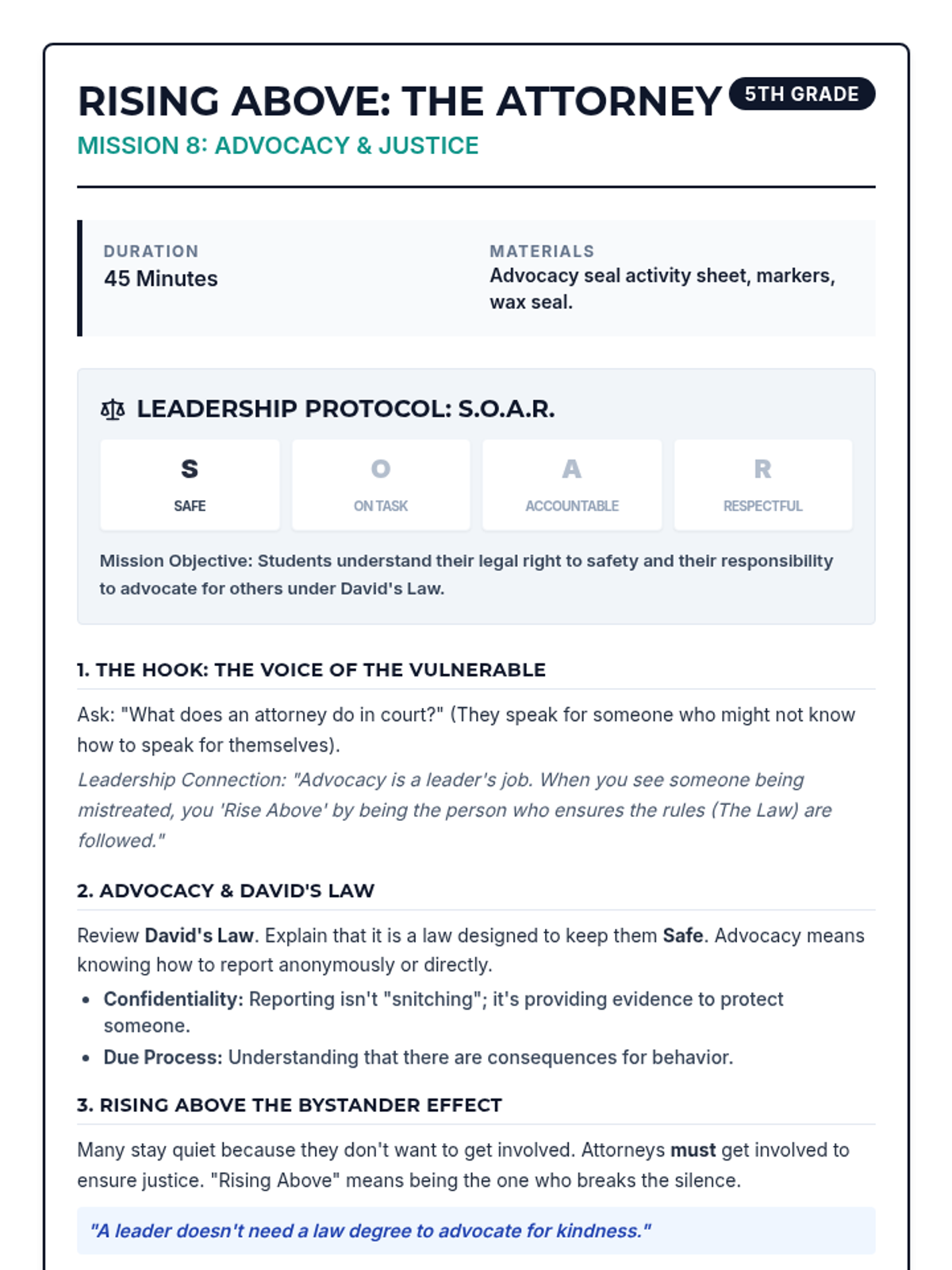
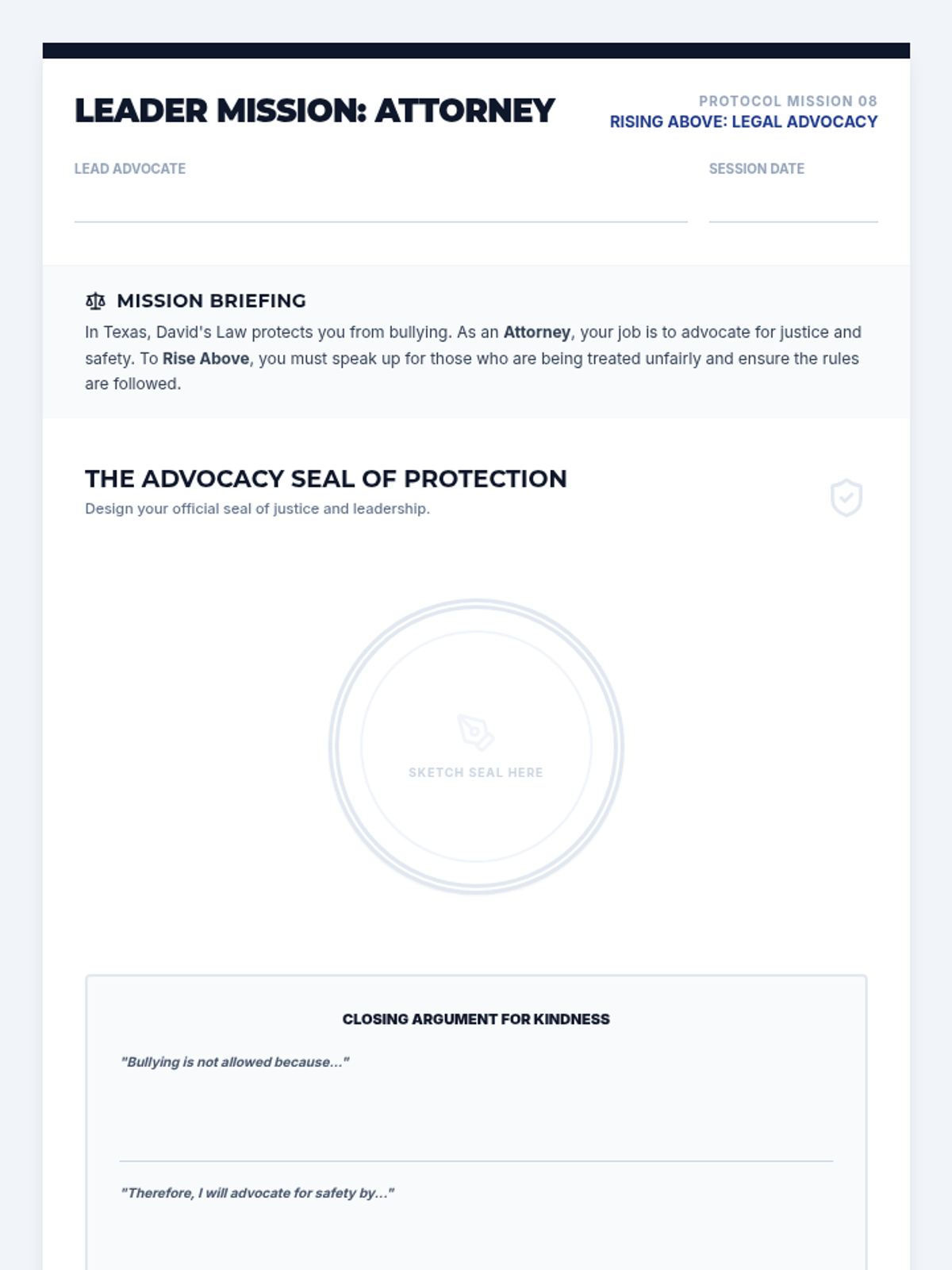
5th Grade focus on advocacy, David's Law, and protecting the vulnerable. Art: Advocacy Seal of Protection.
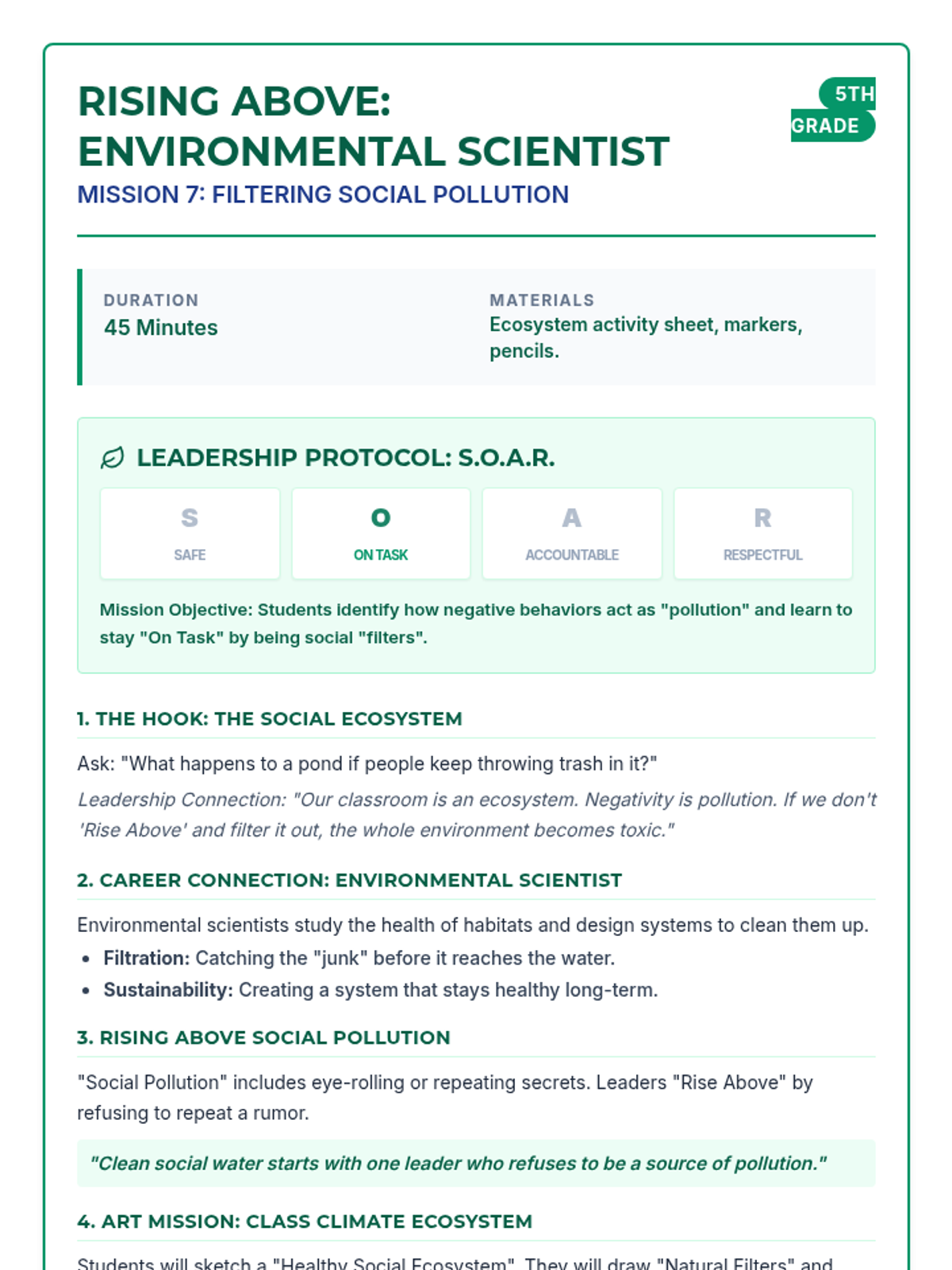
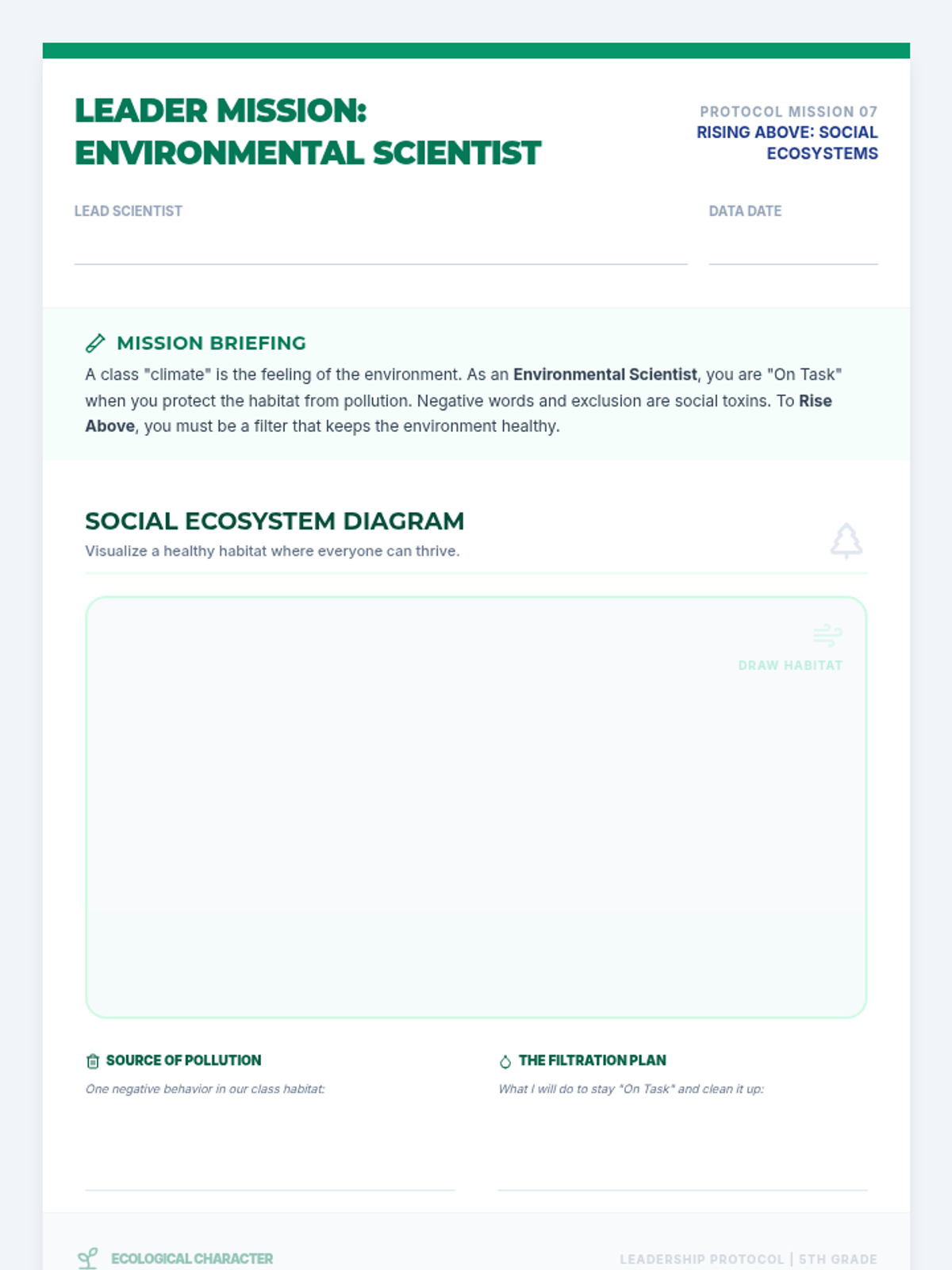
5th Grade focus on identifying and filtering social negativity. Art: Class Climate Ecosystem.
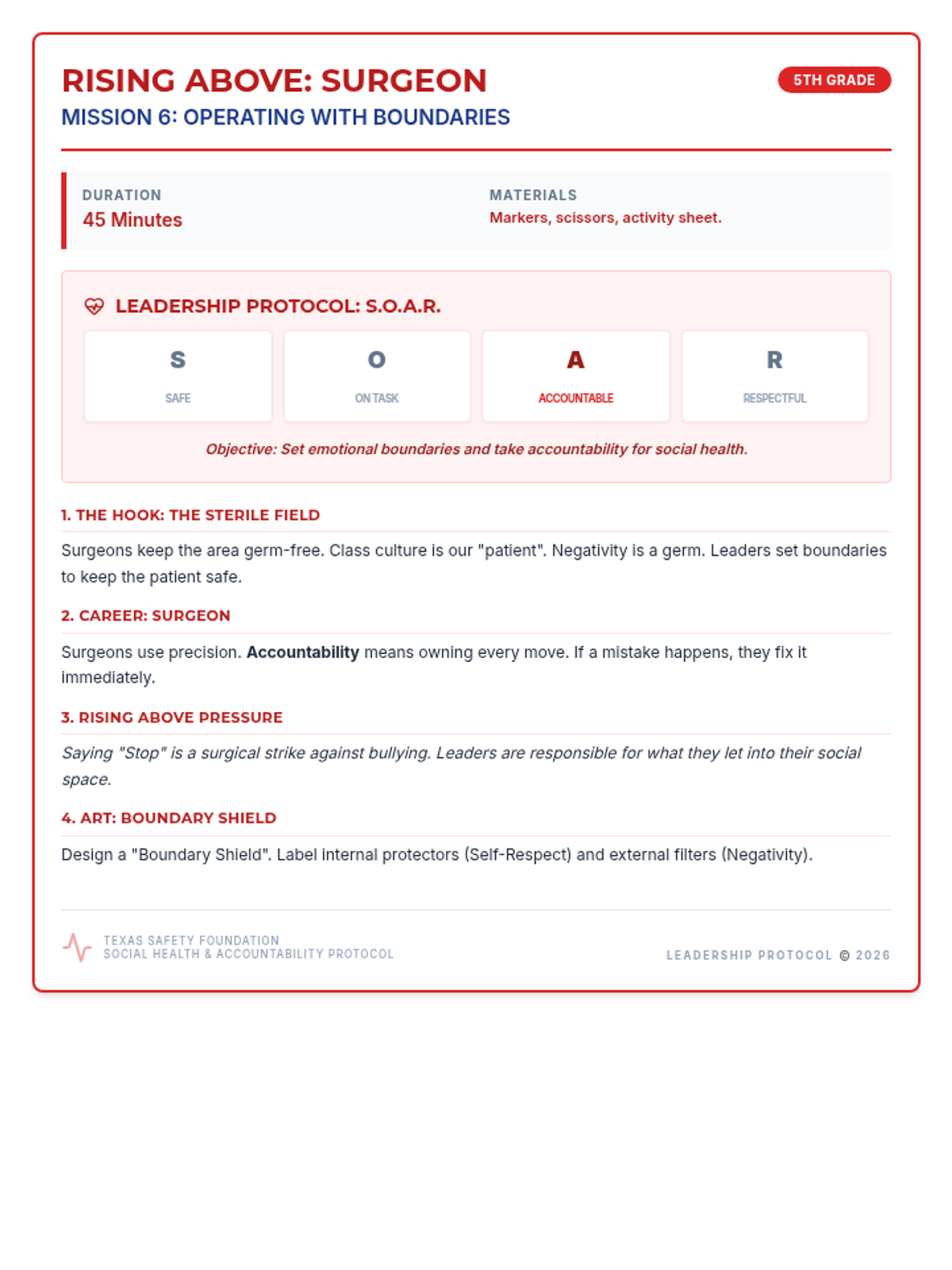
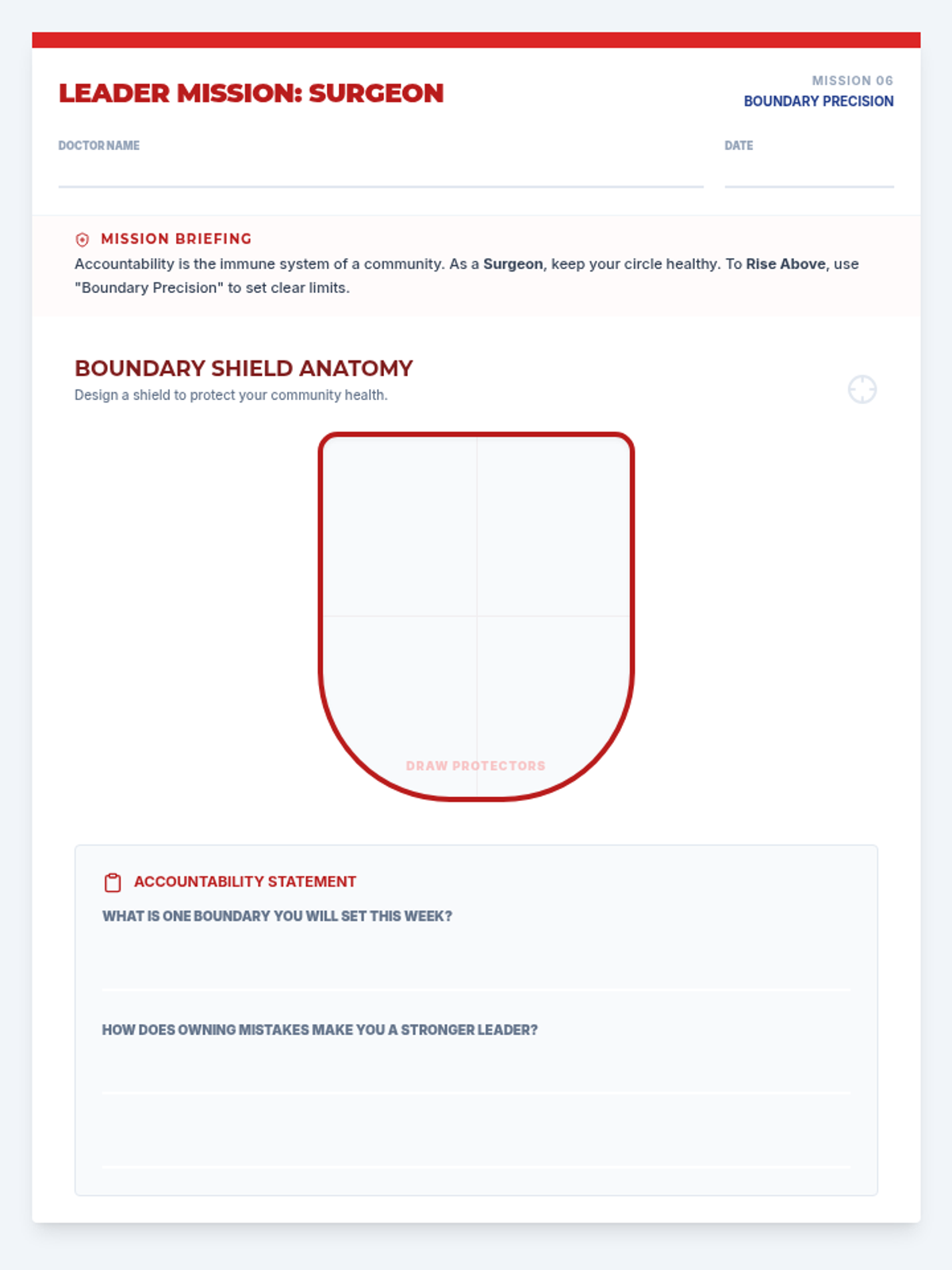
5th Grade focus on emotional boundaries and community health. Art: Boundary Shield Anatomy.
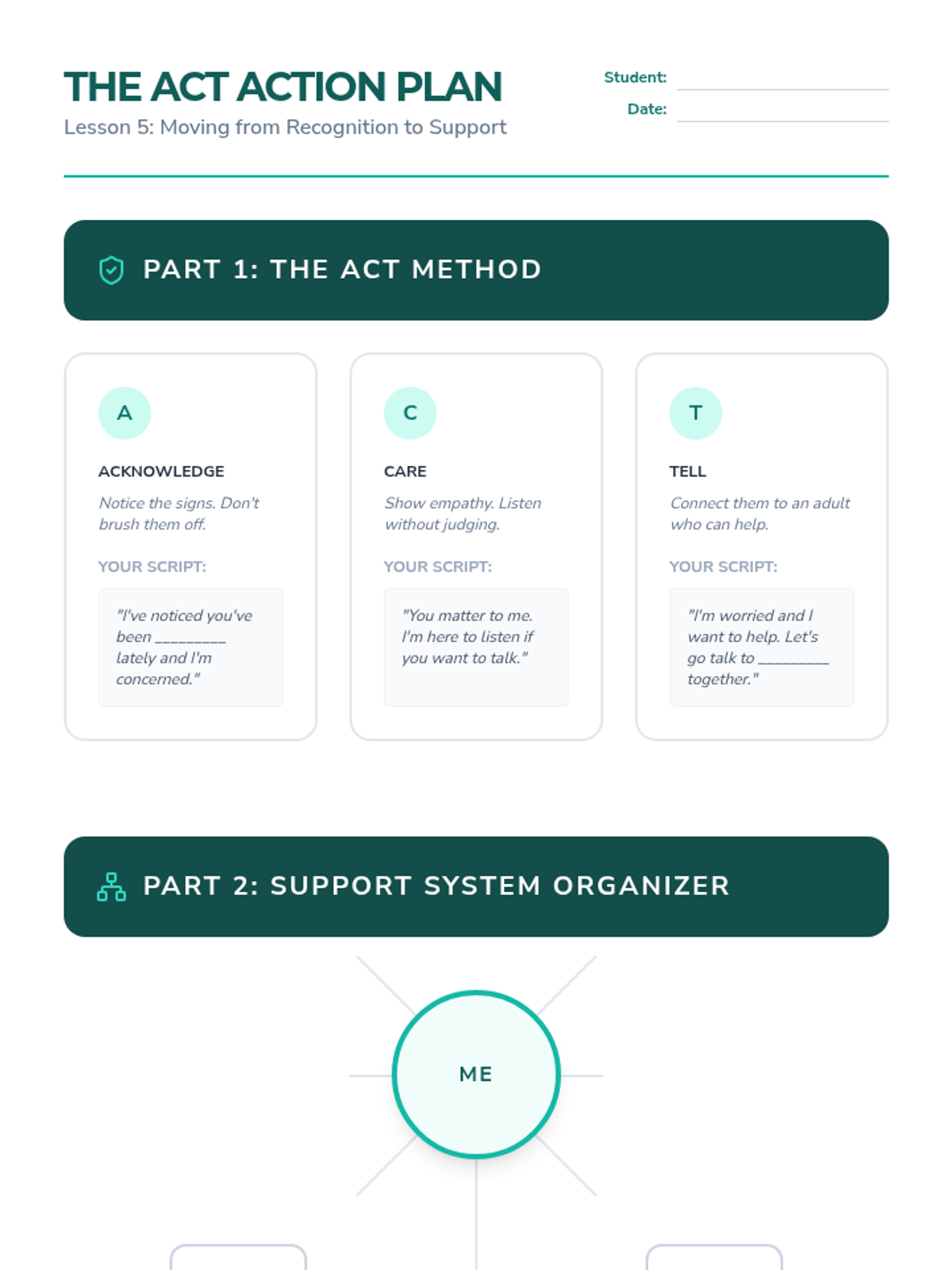
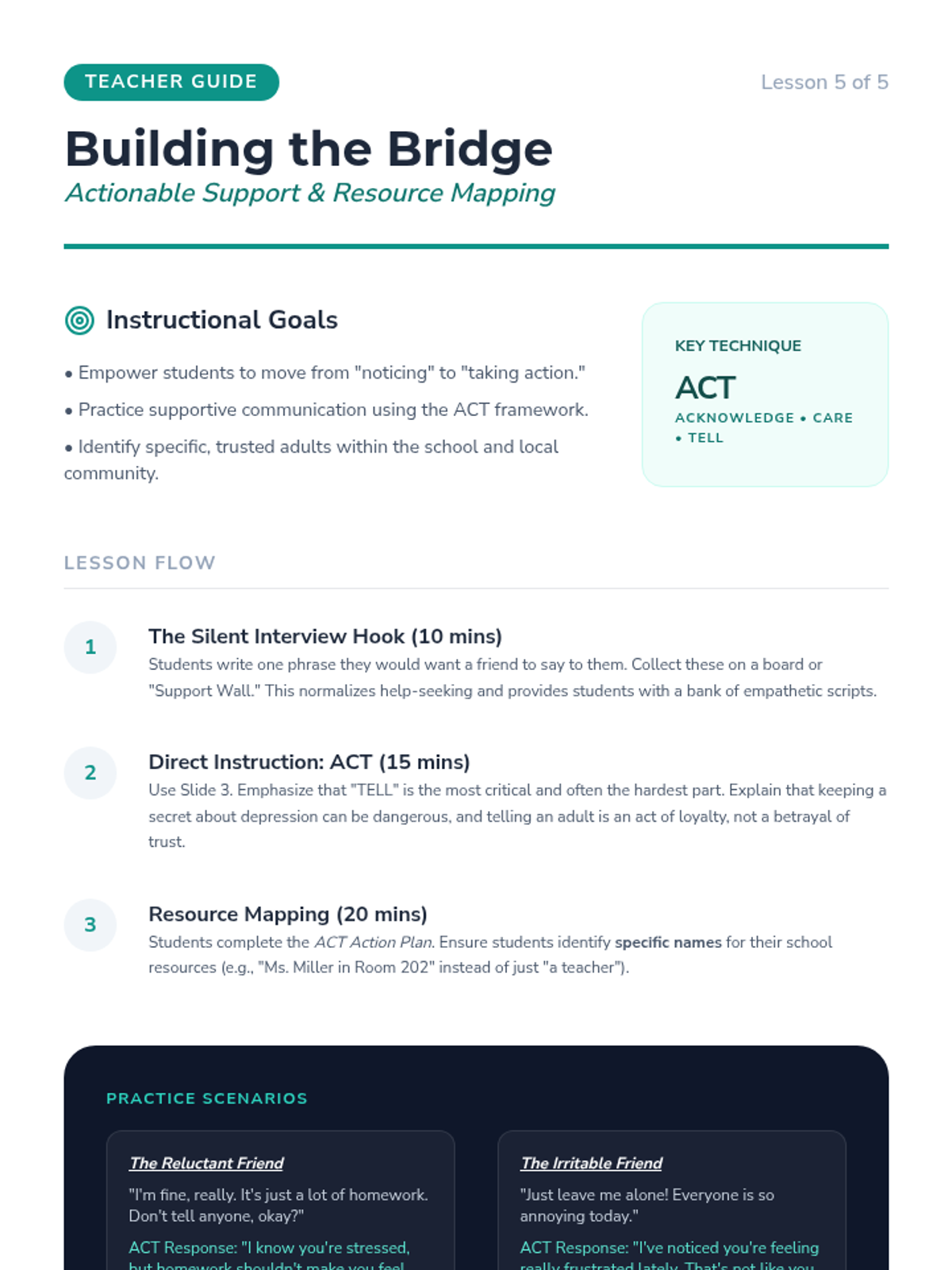
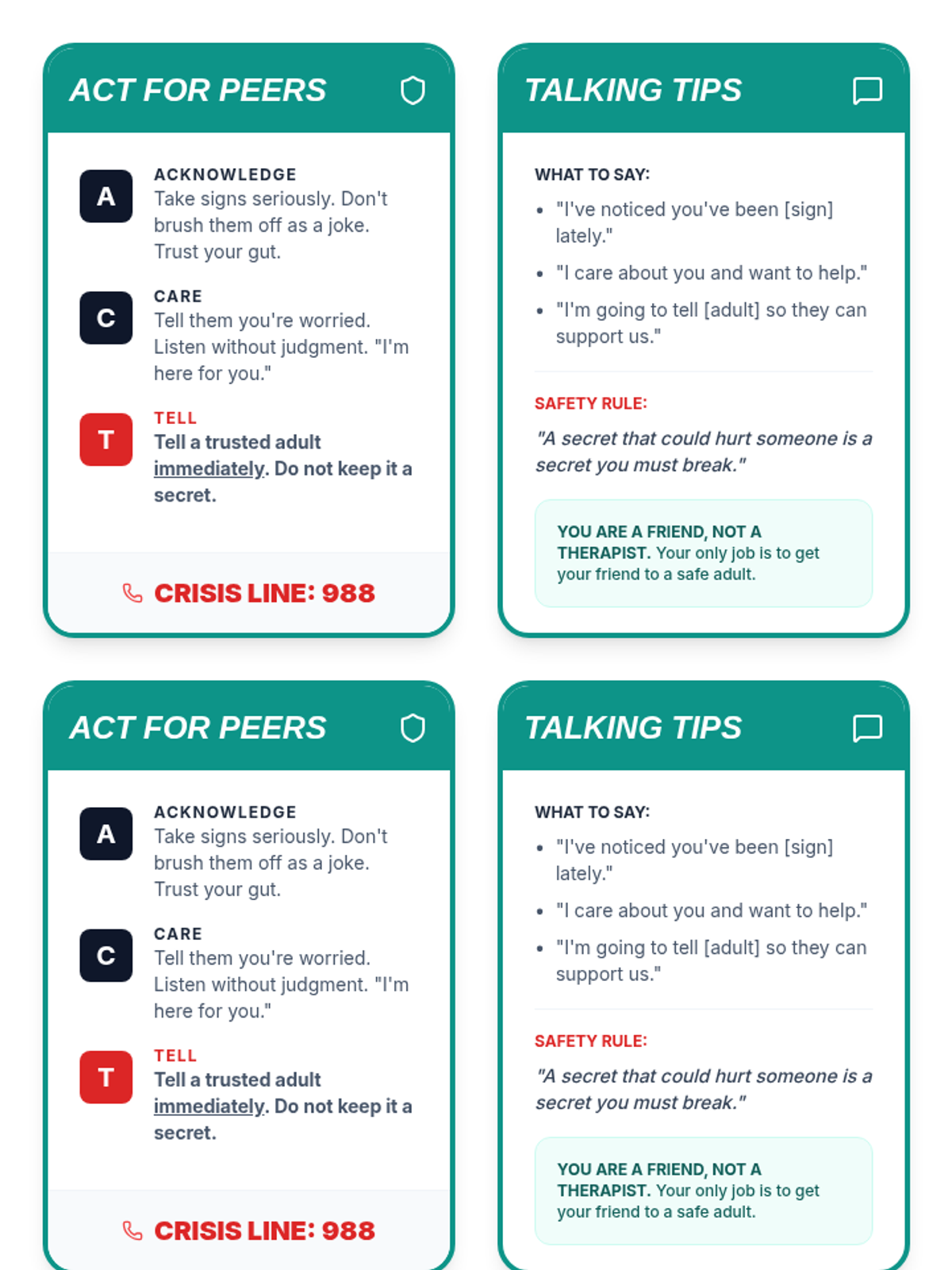
Teaches the ACT (Acknowledge, Care, Tell) method and helps students map out their own school and community support networks.
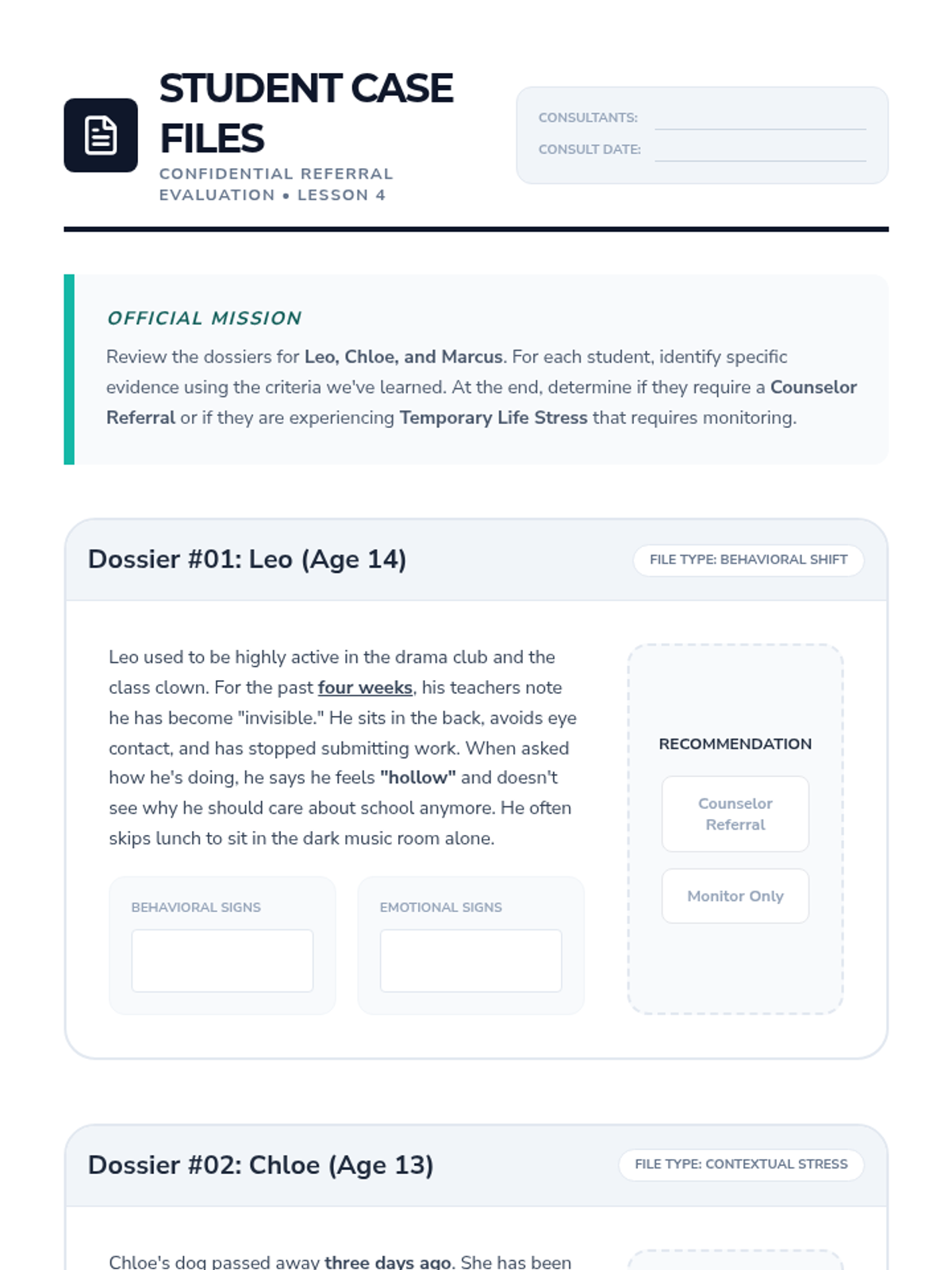
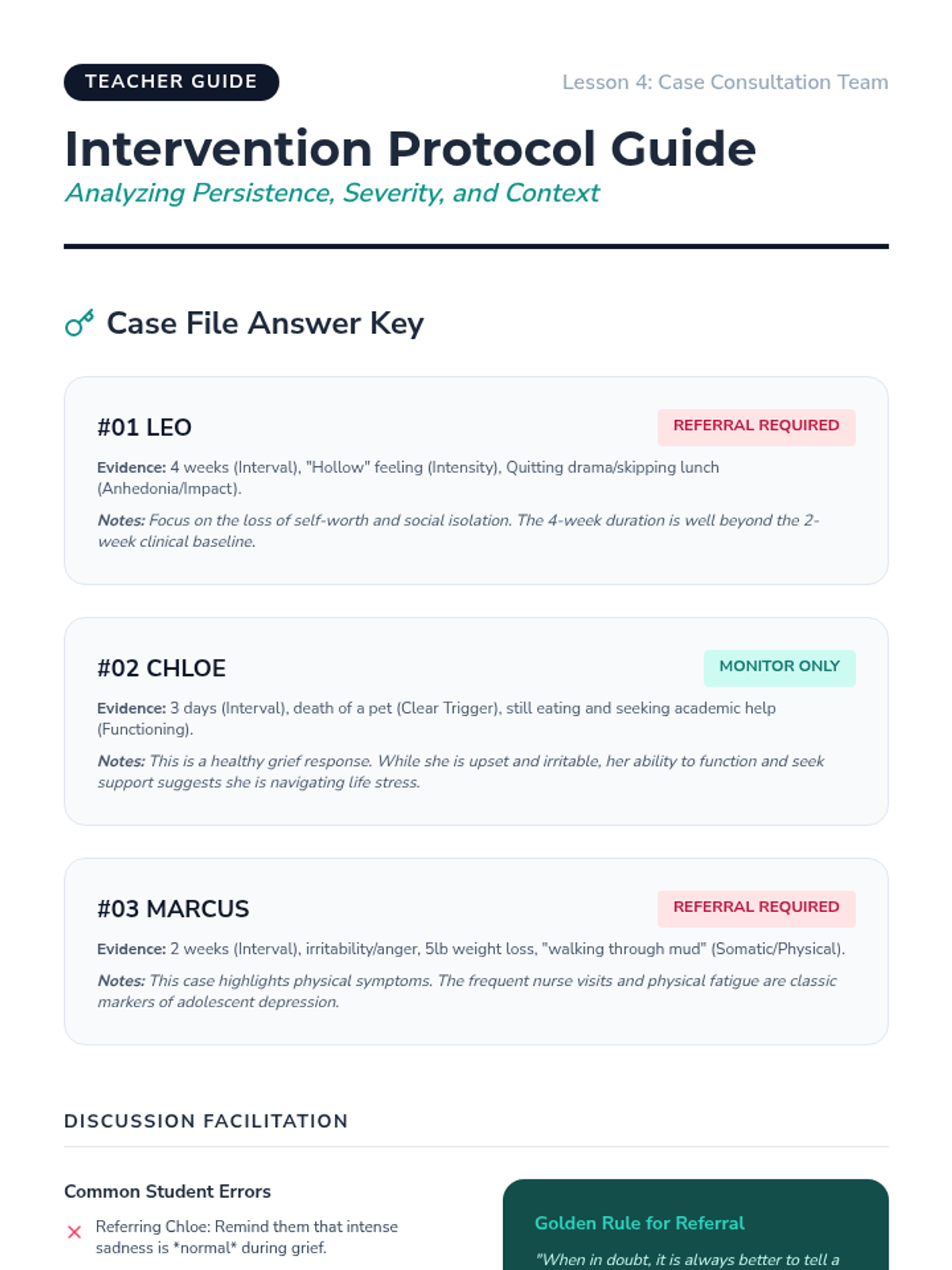
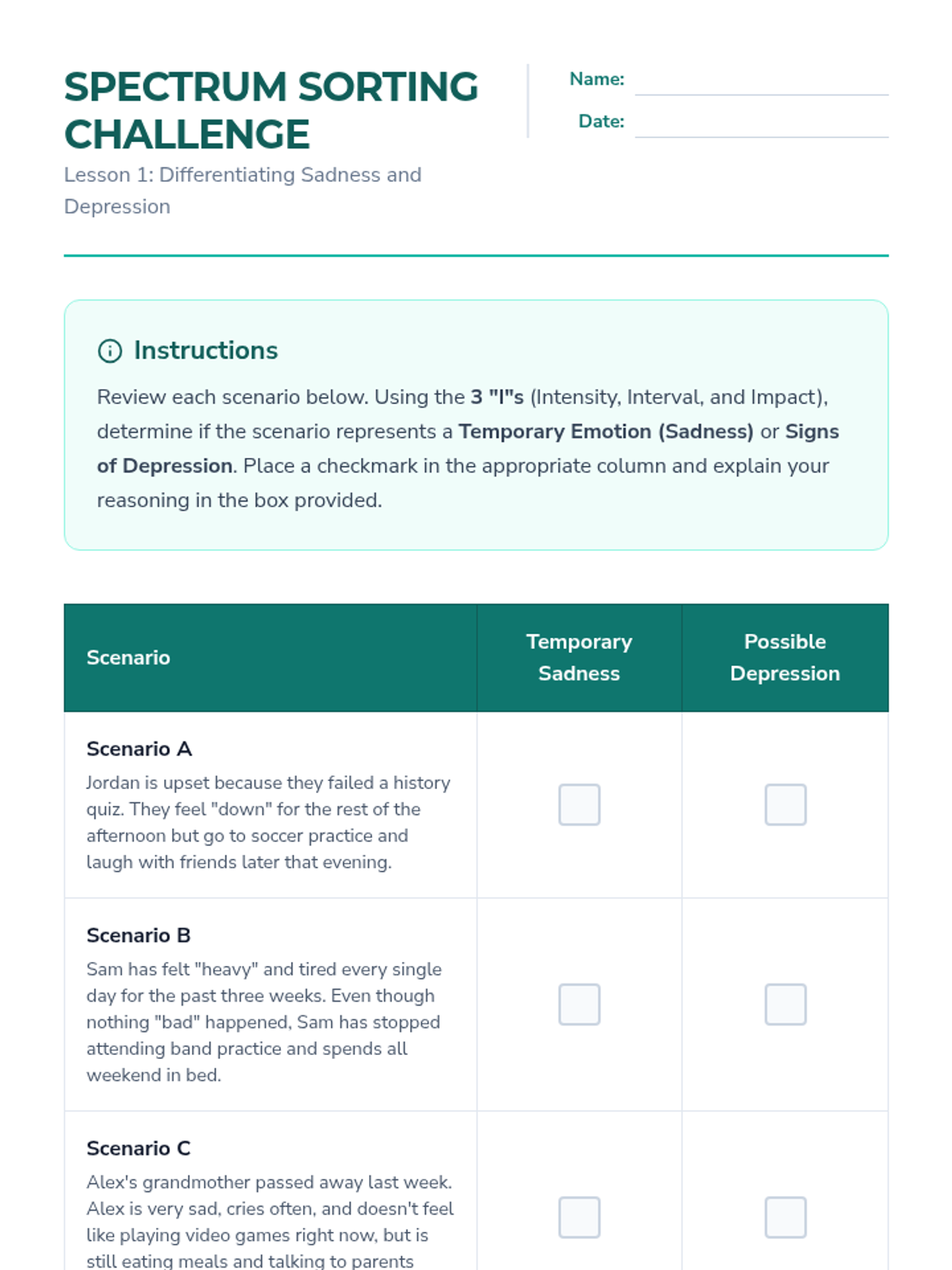
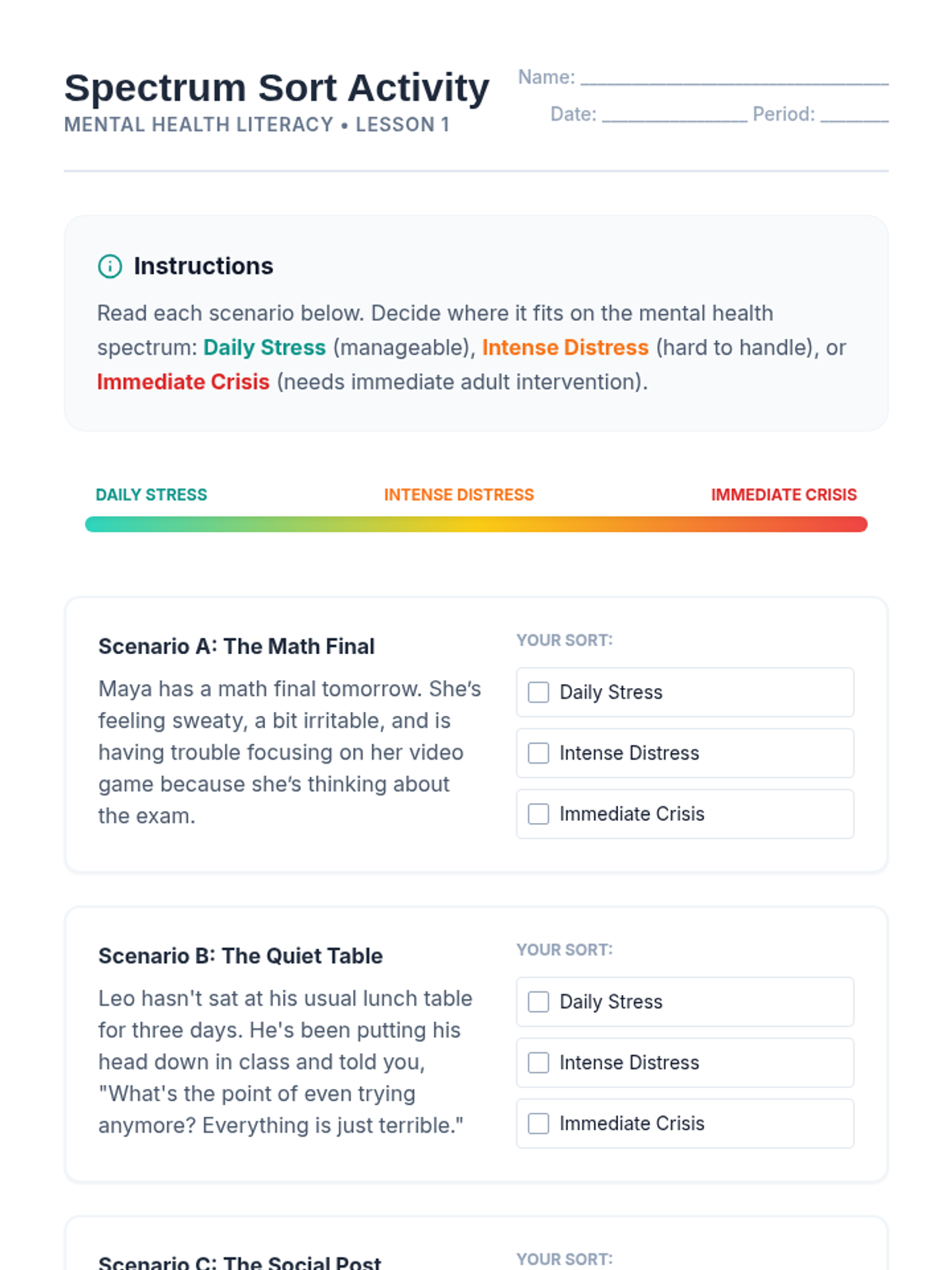
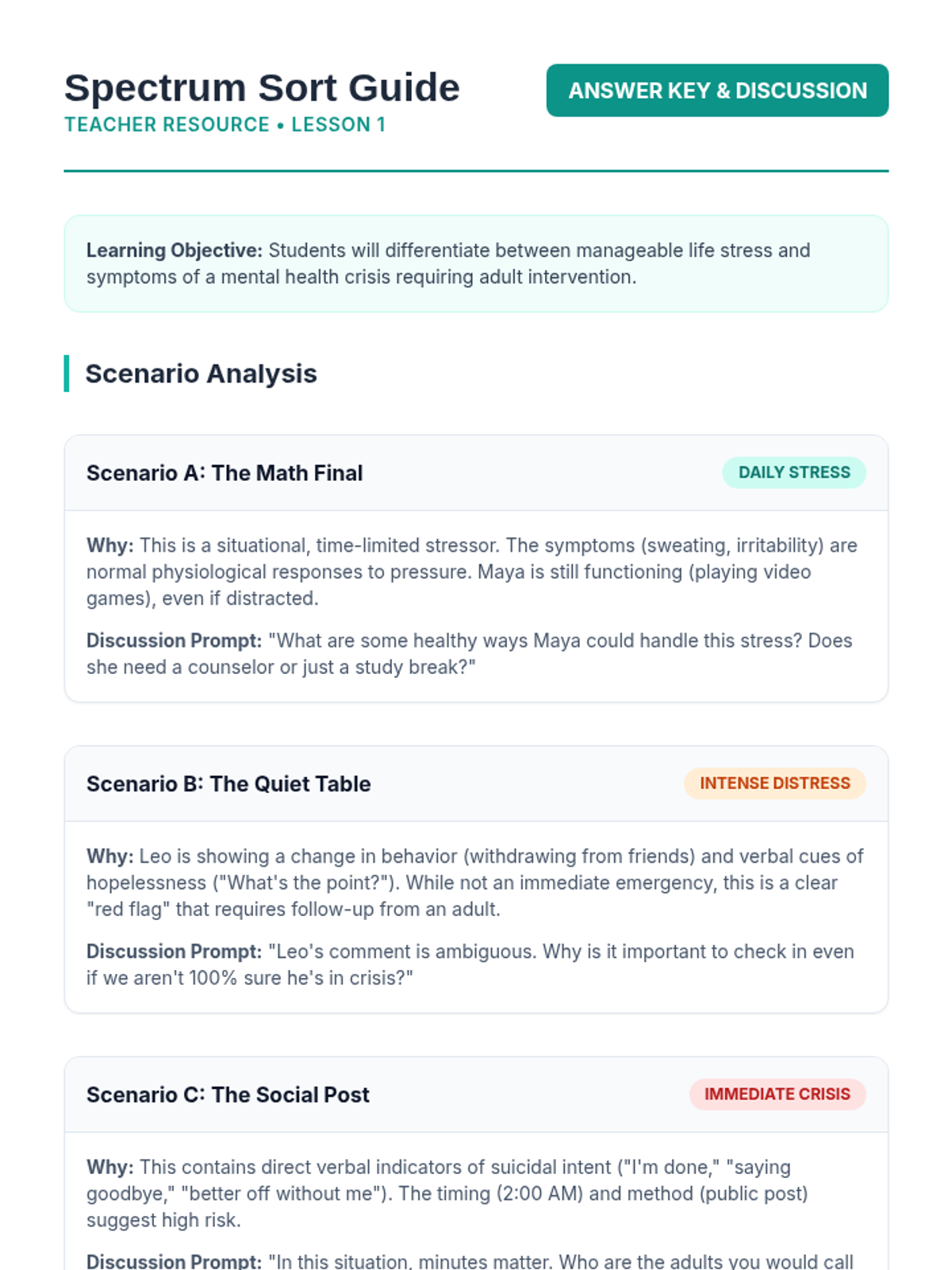
Students apply their knowledge to complex scenarios to determine if situations represent normal life stress or signs requiring intervention.
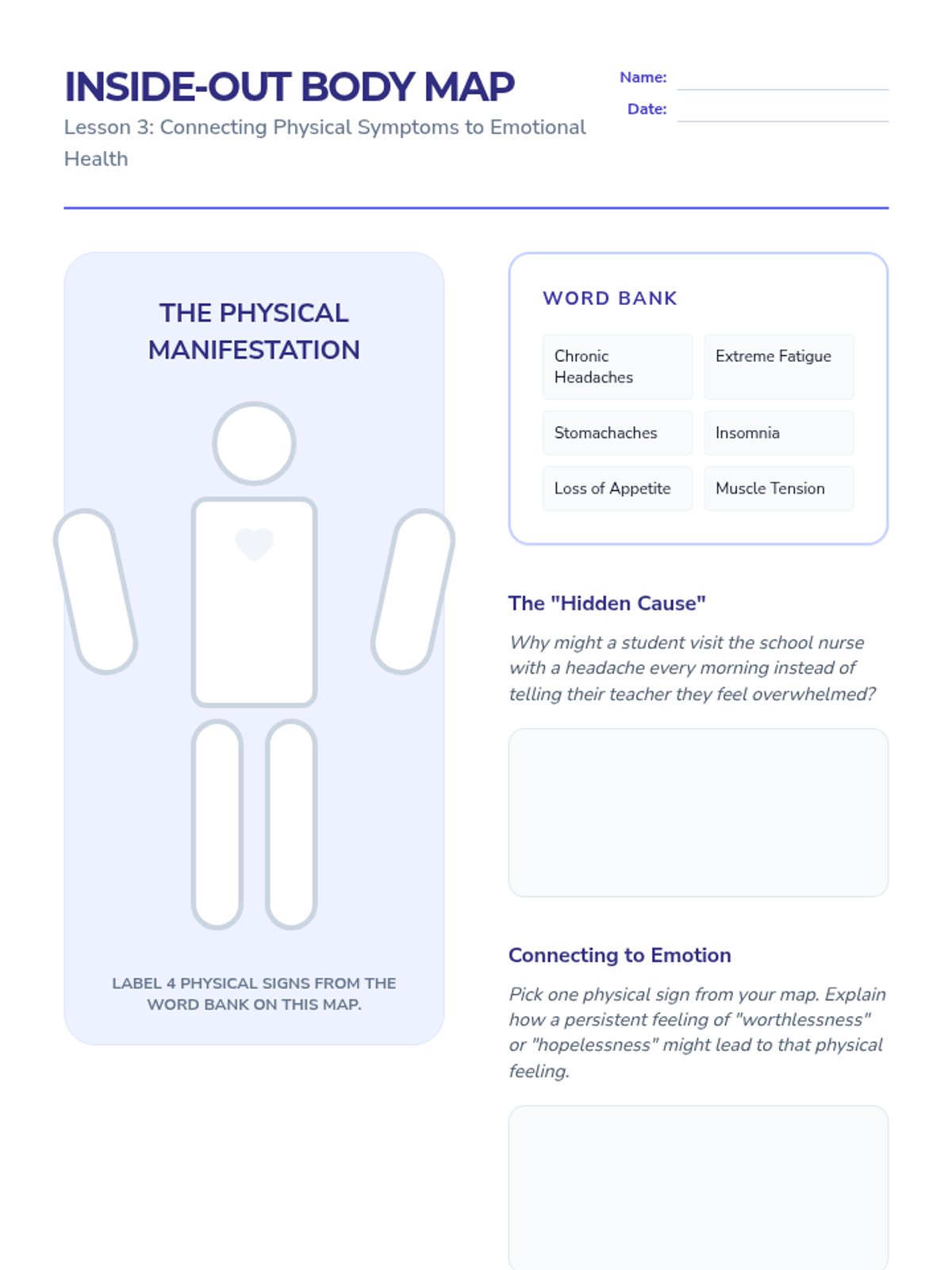
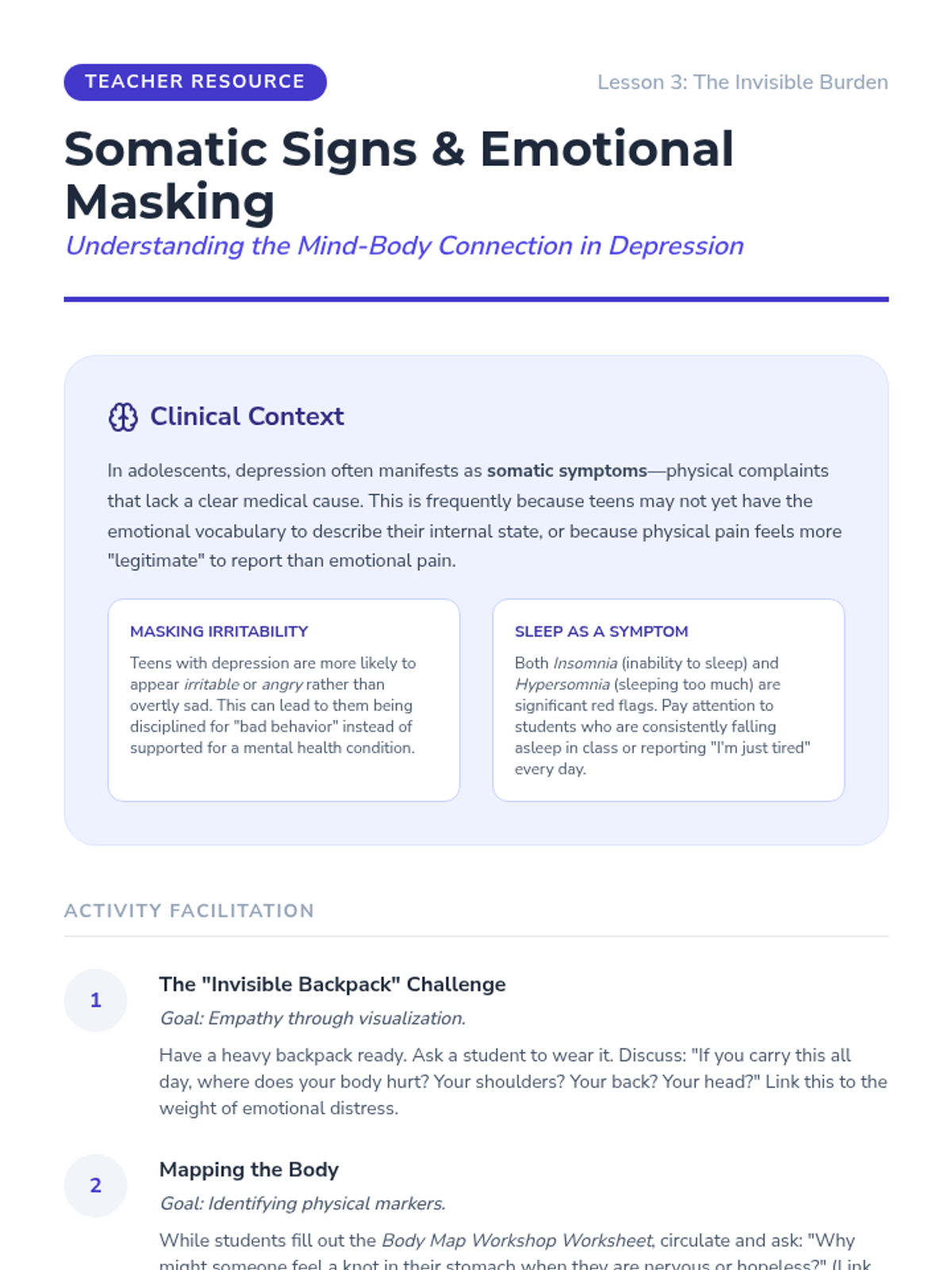
Explores somatic symptoms like sleep and appetite changes, illustrating how depression affects both the body and the mind.
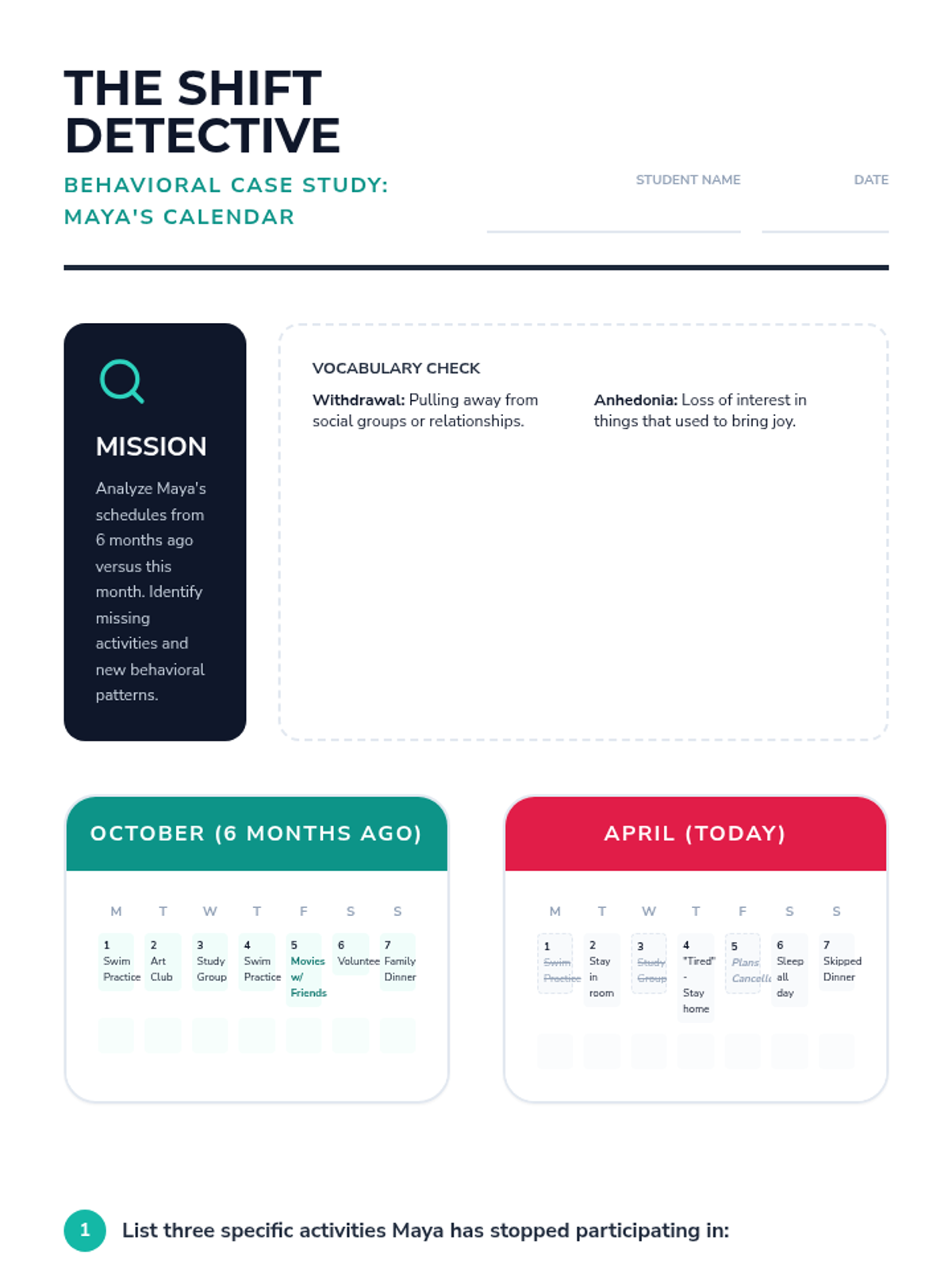
Focuses on observable behavioral shifts, specifically social withdrawal and loss of interest, using 'before and after' case studies.
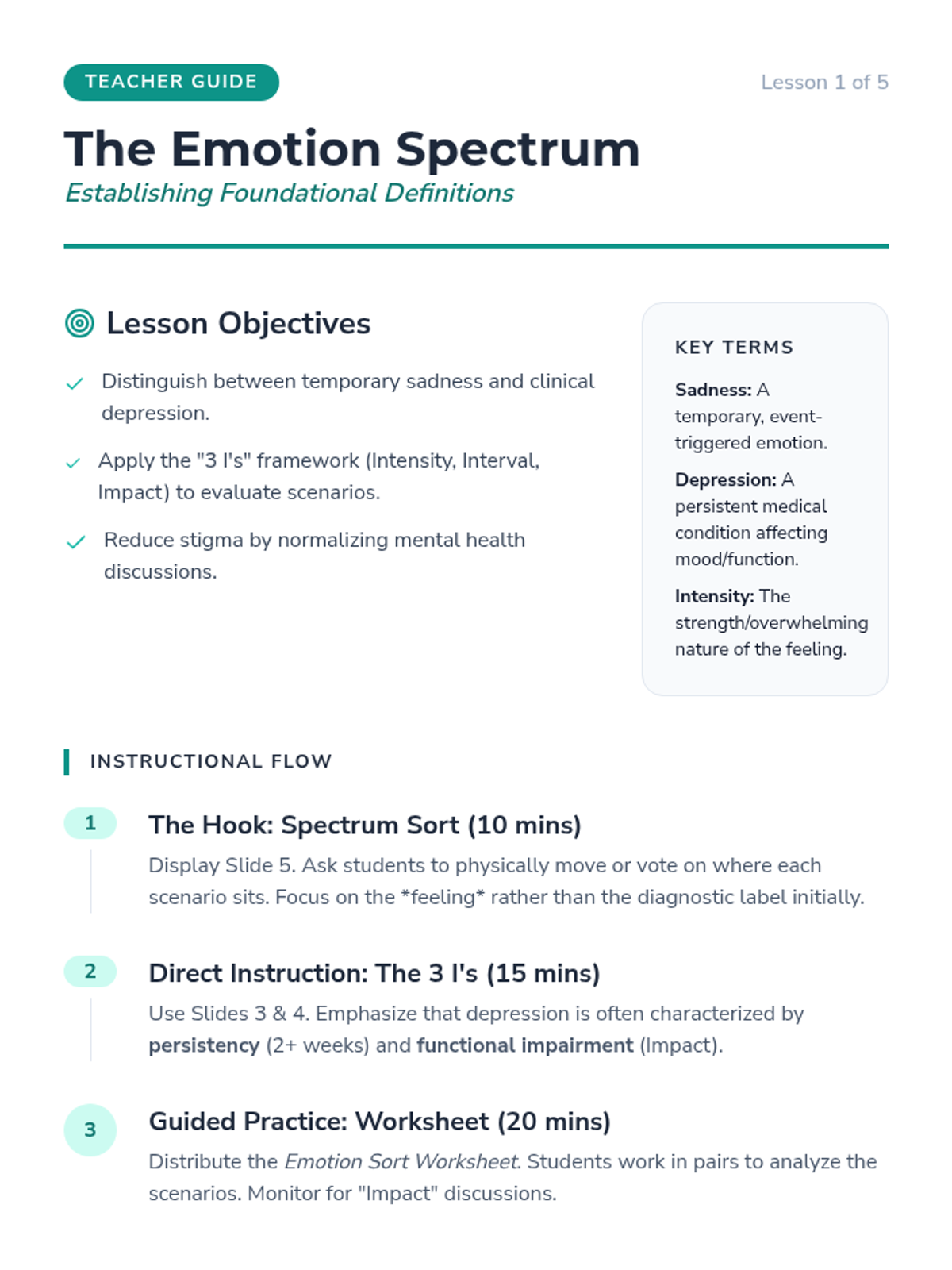
Students define sadness and clinical depression, comparing duration, intensity, and impact to establish a baseline for mental health literacy.
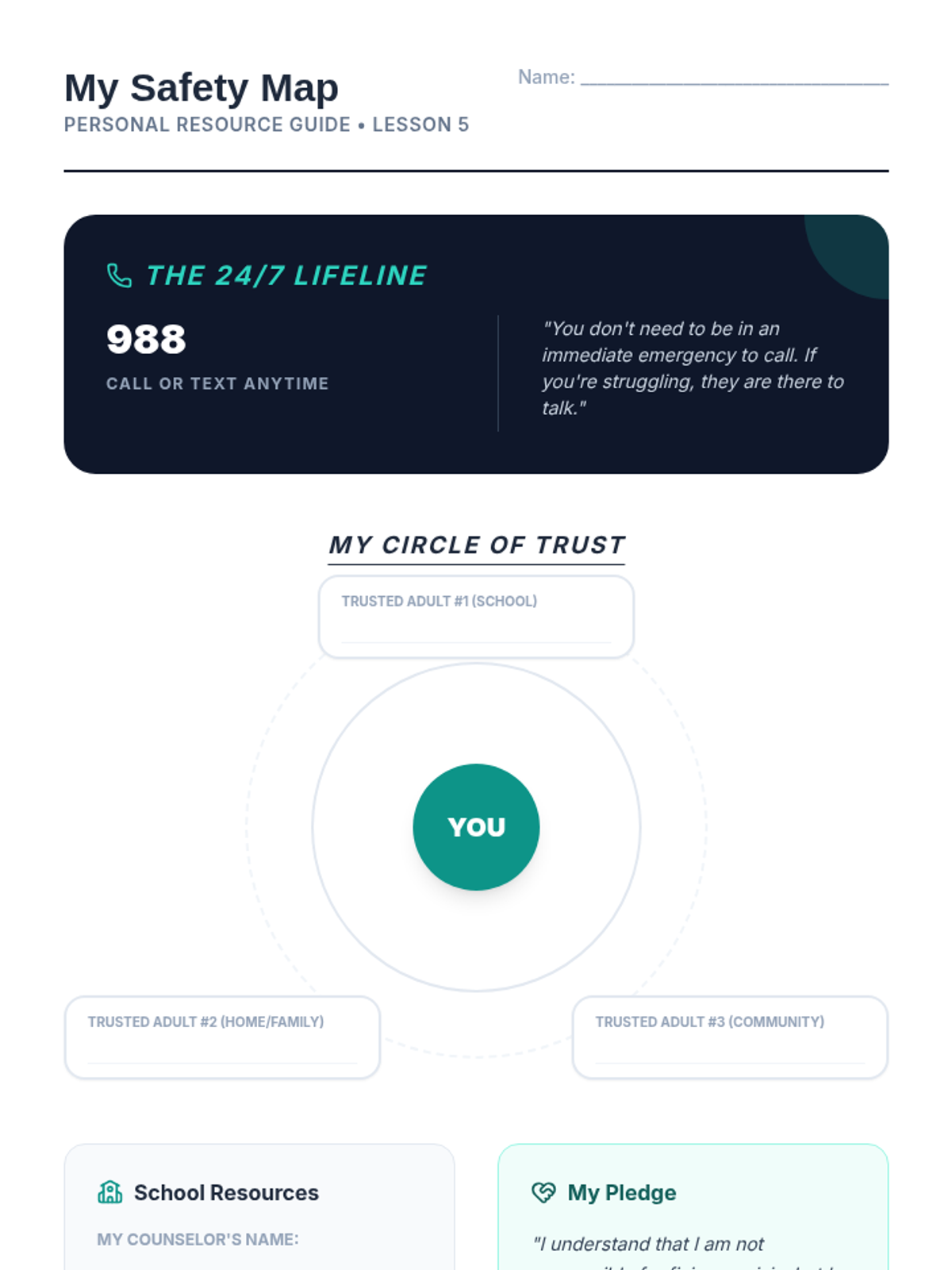
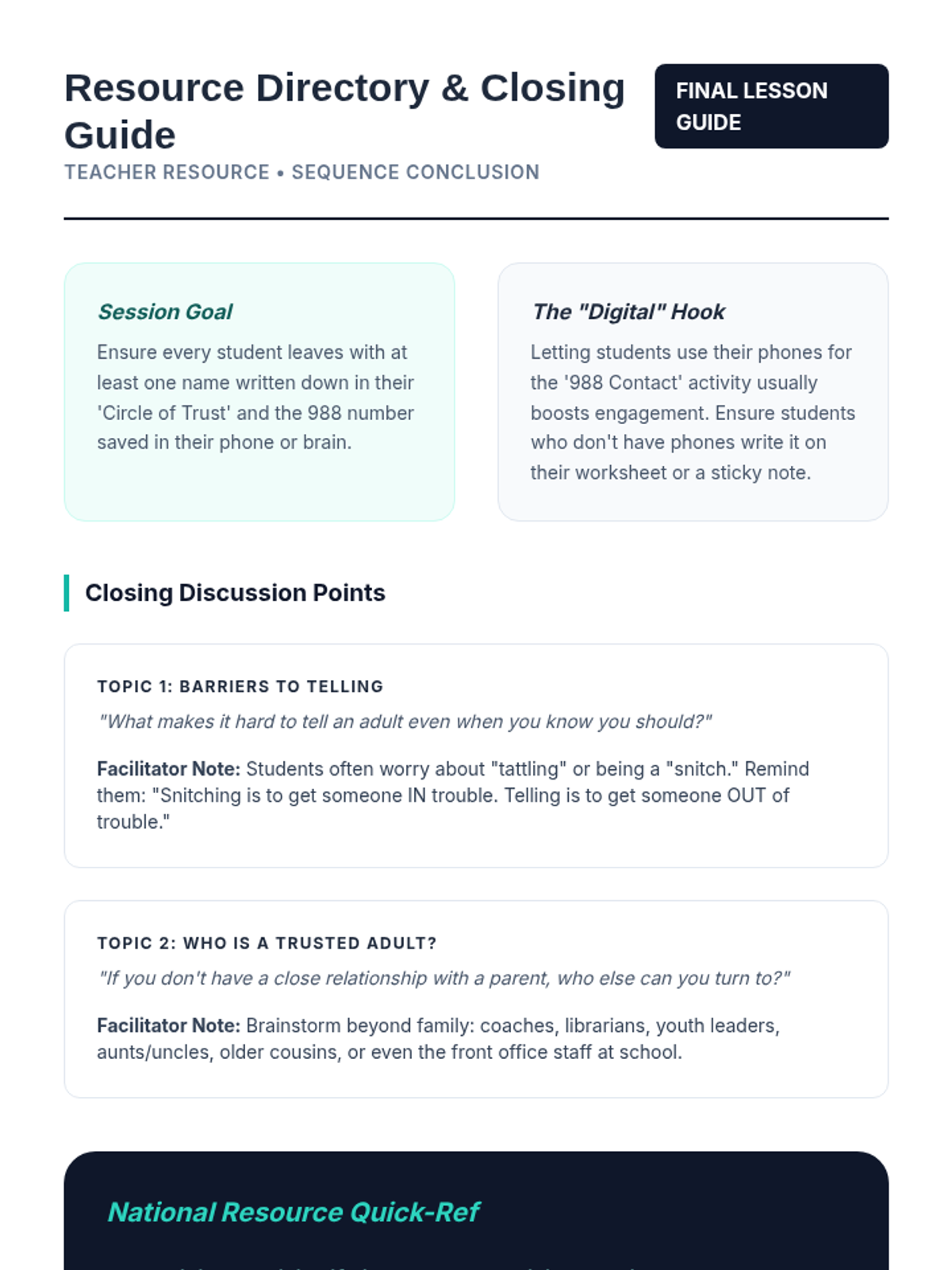
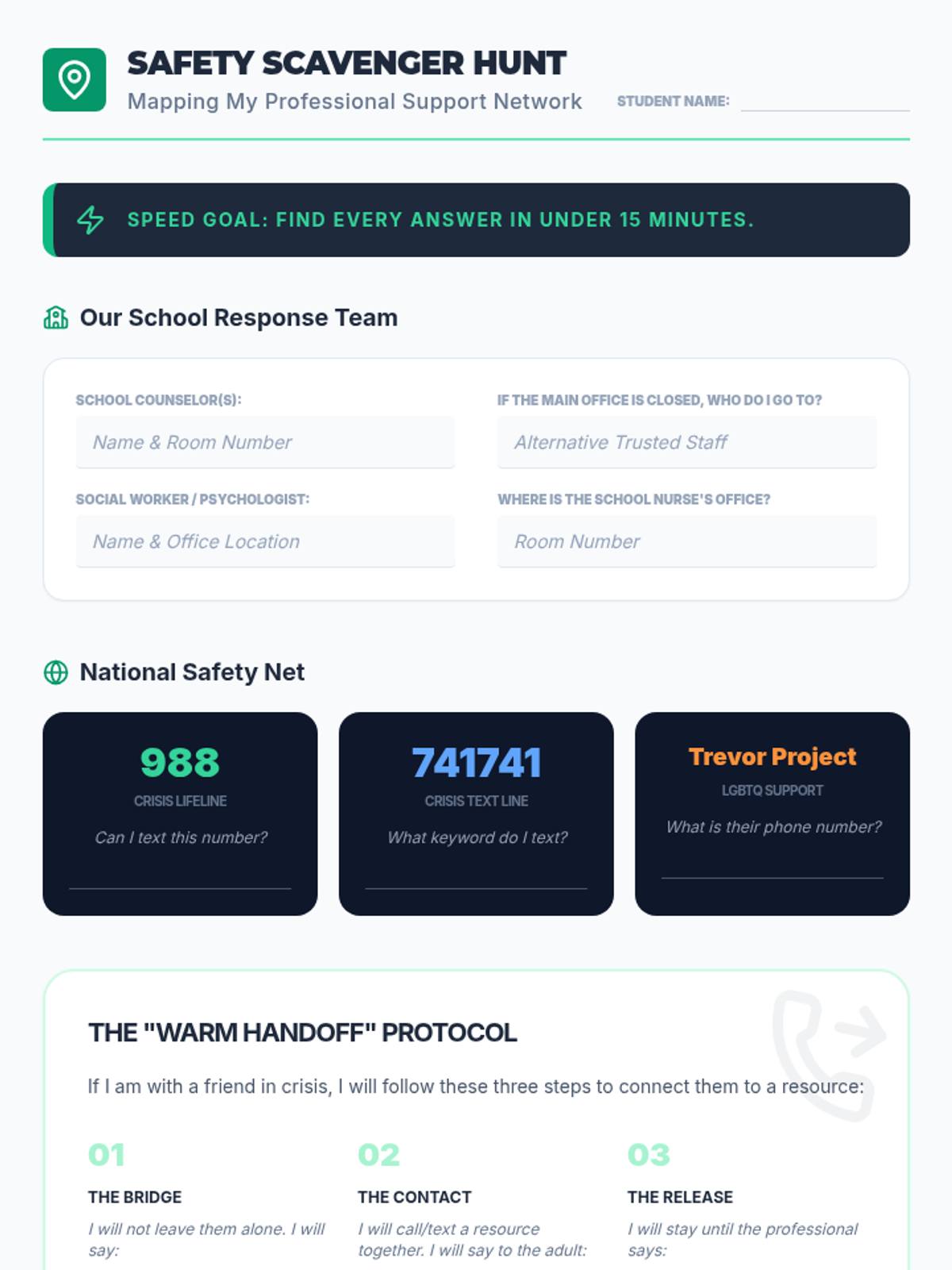
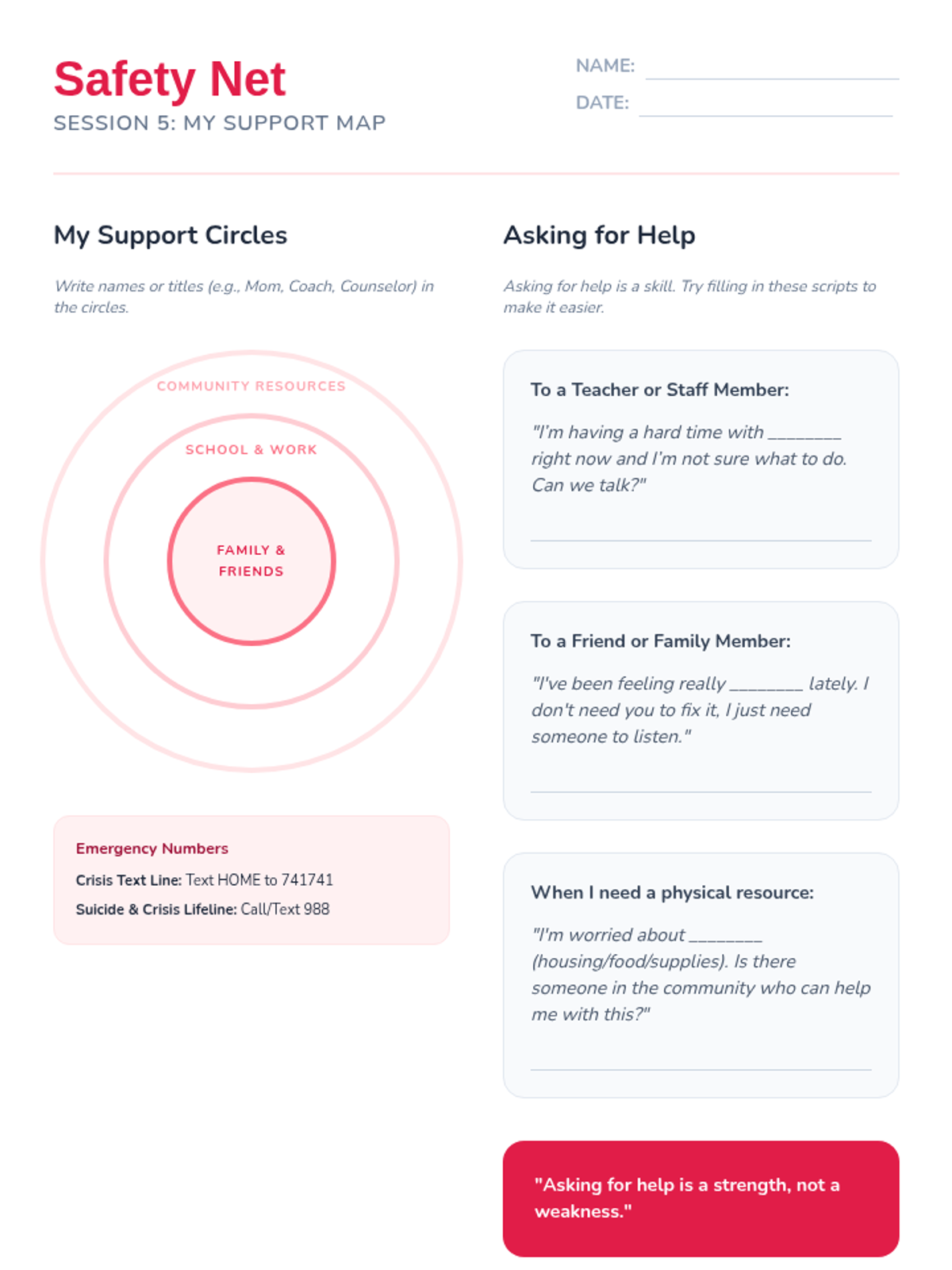
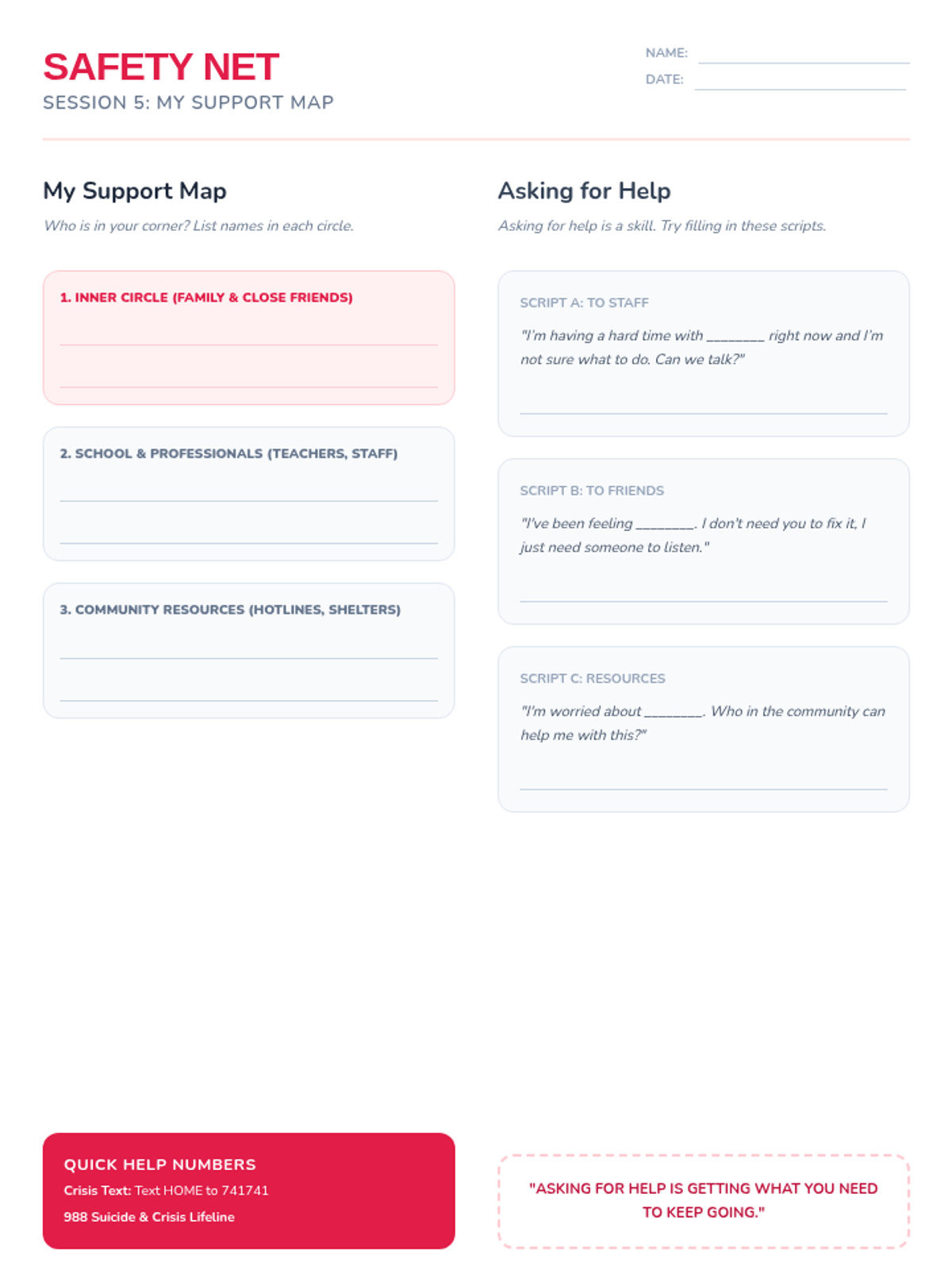
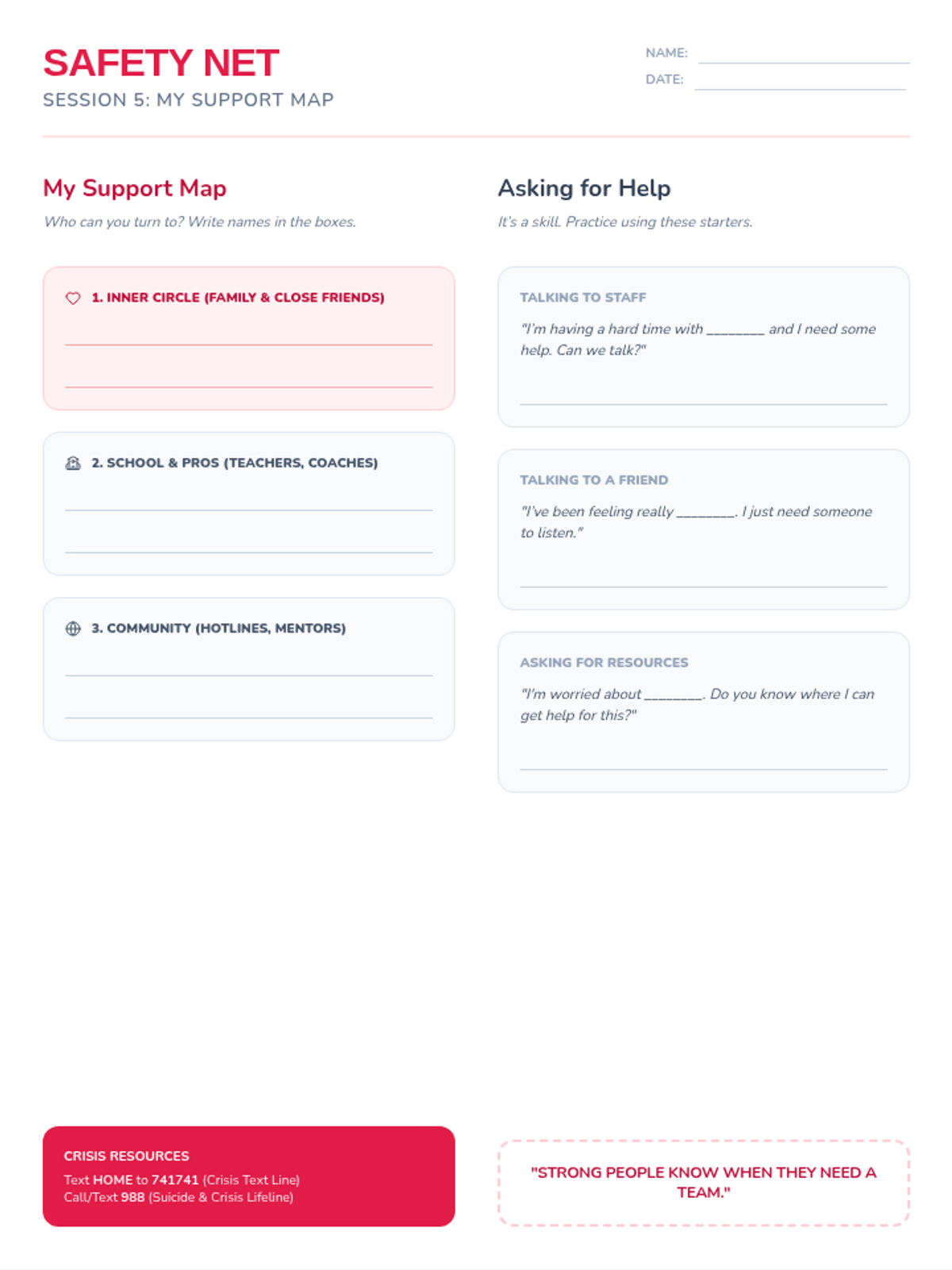
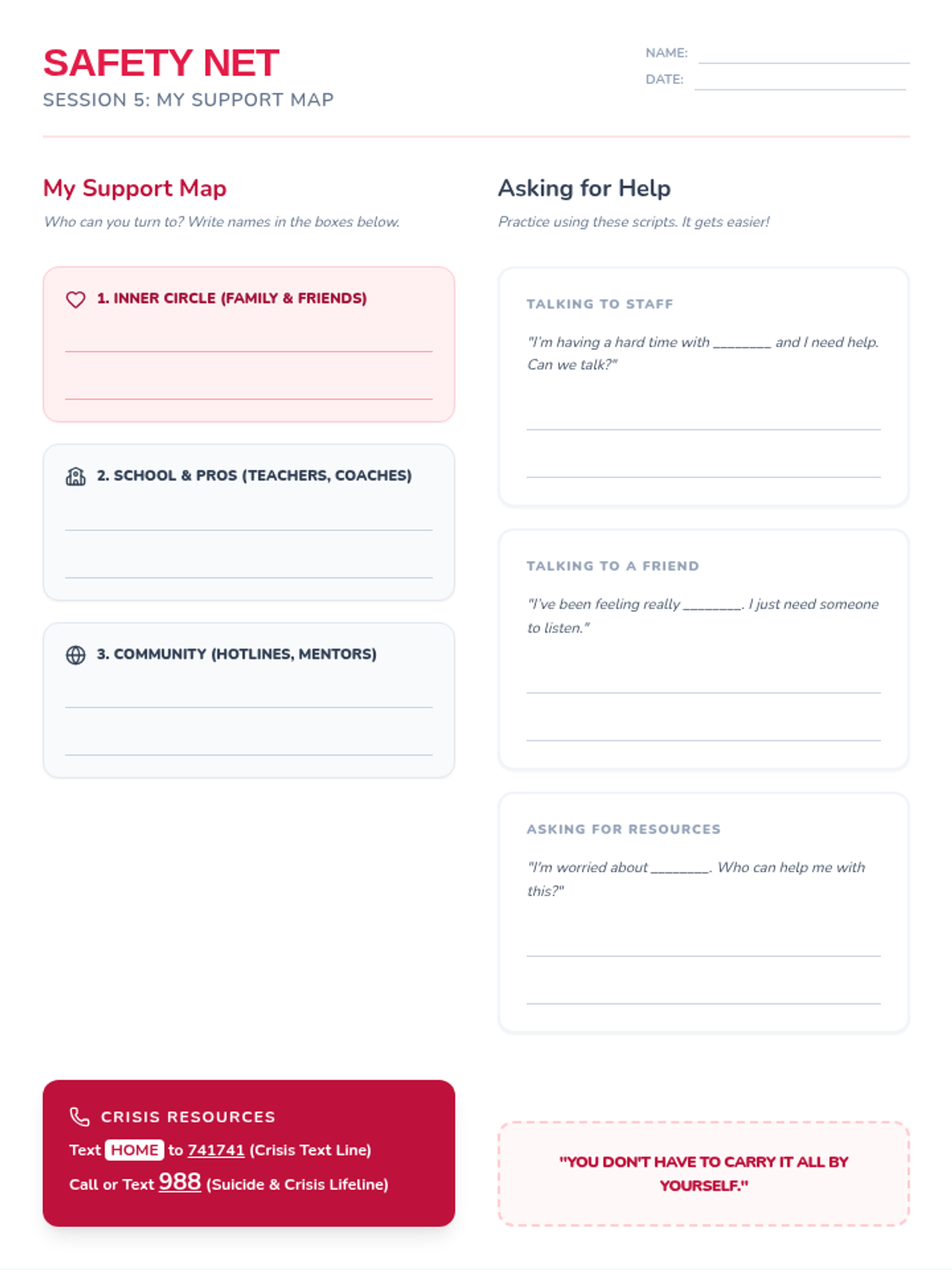
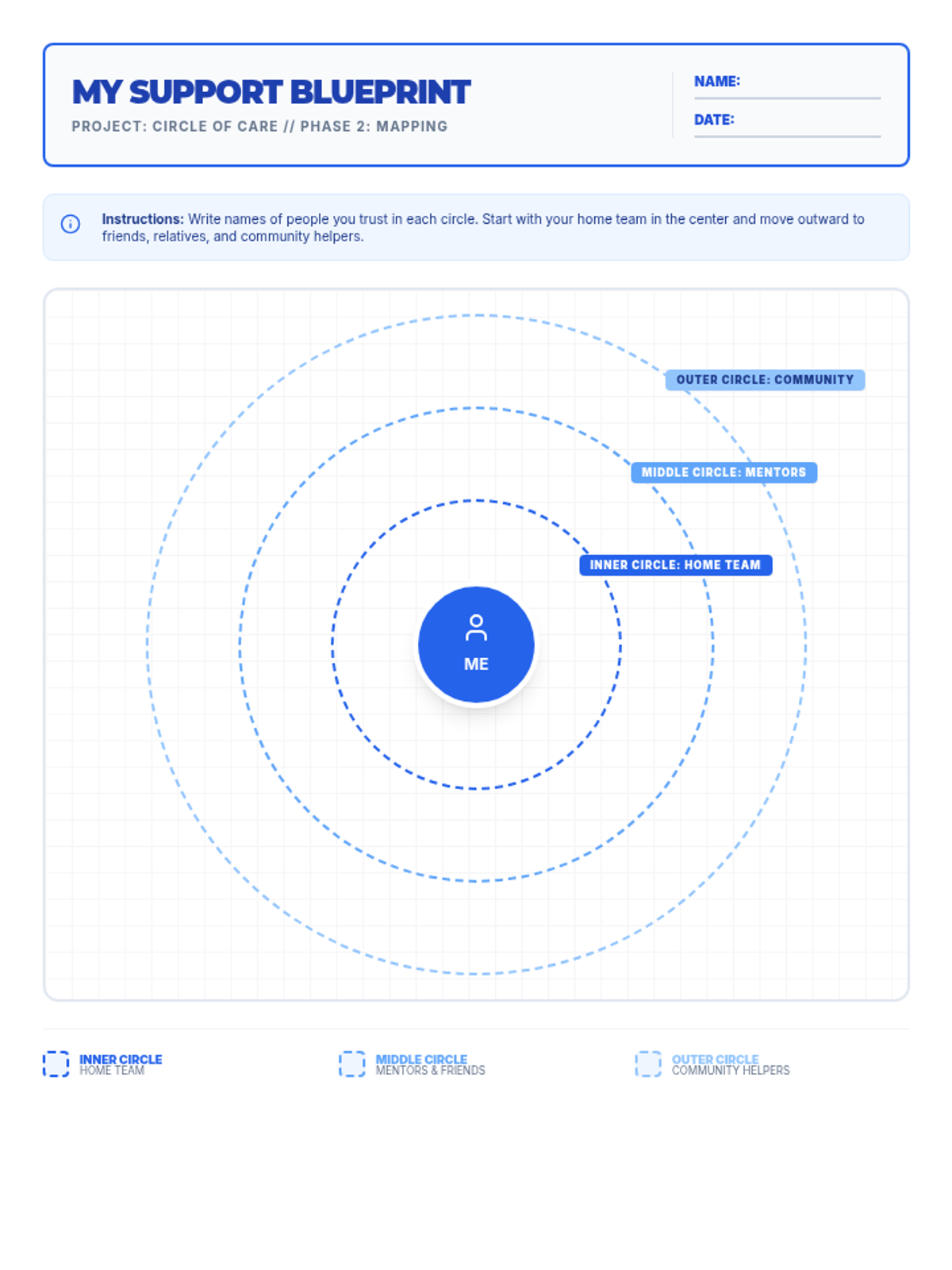
Students identify local and national resources and create a 'Circle of Trust' map identifying specific adults they would approach in a crisis.
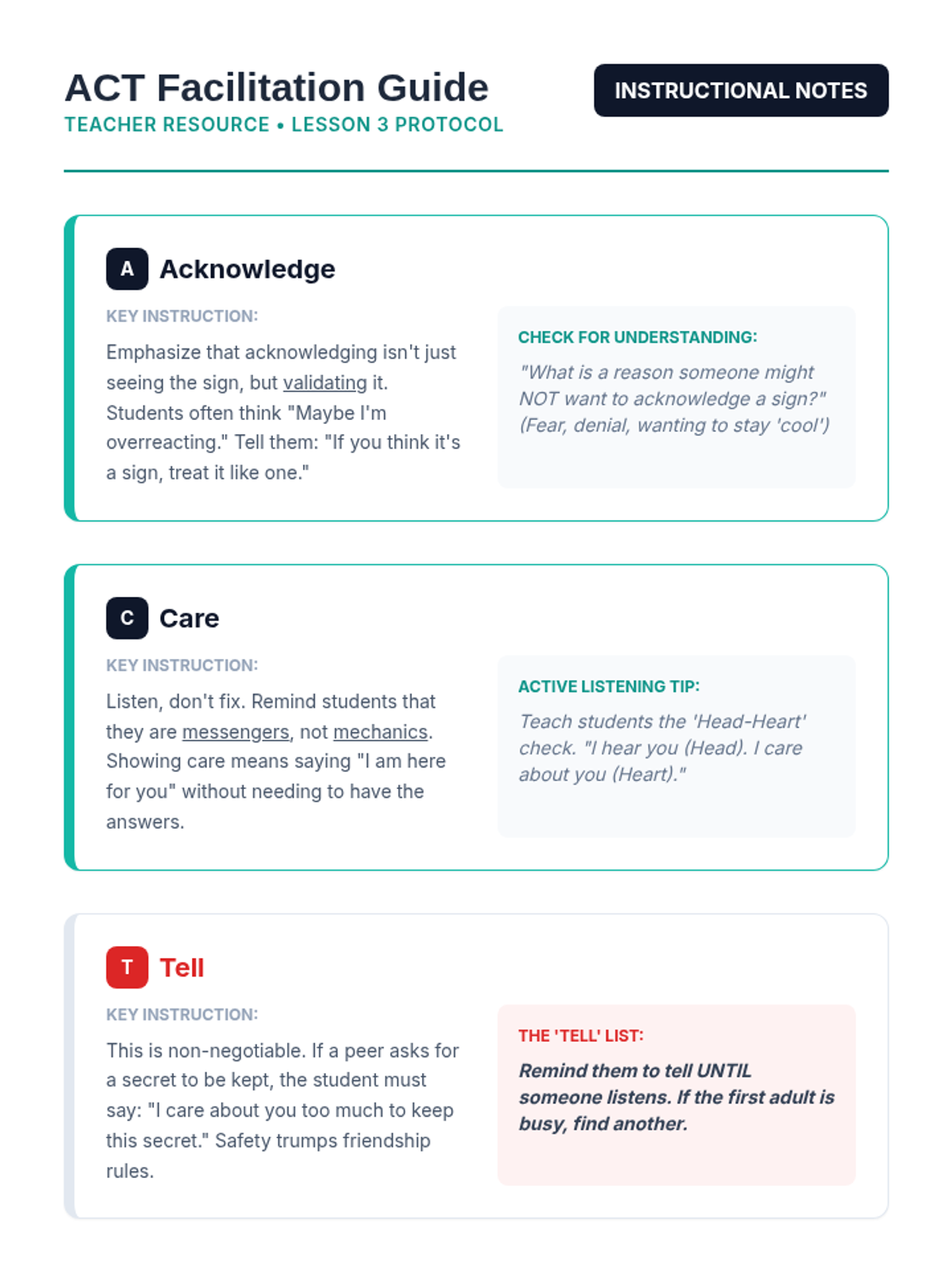
Students learn the ACT (Acknowledge, Care, Tell) acronym as a standard protocol for peer support. The lesson breaks down each step: acknowledging signs, demonstrating care, and telling a trusted adult.
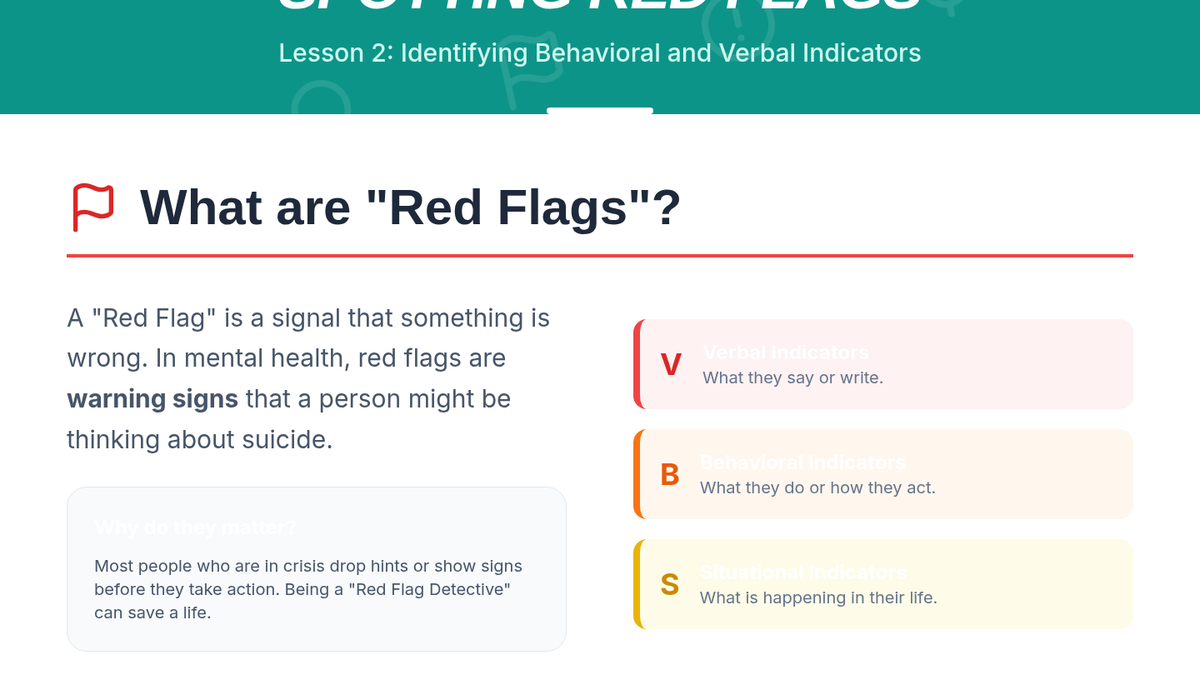
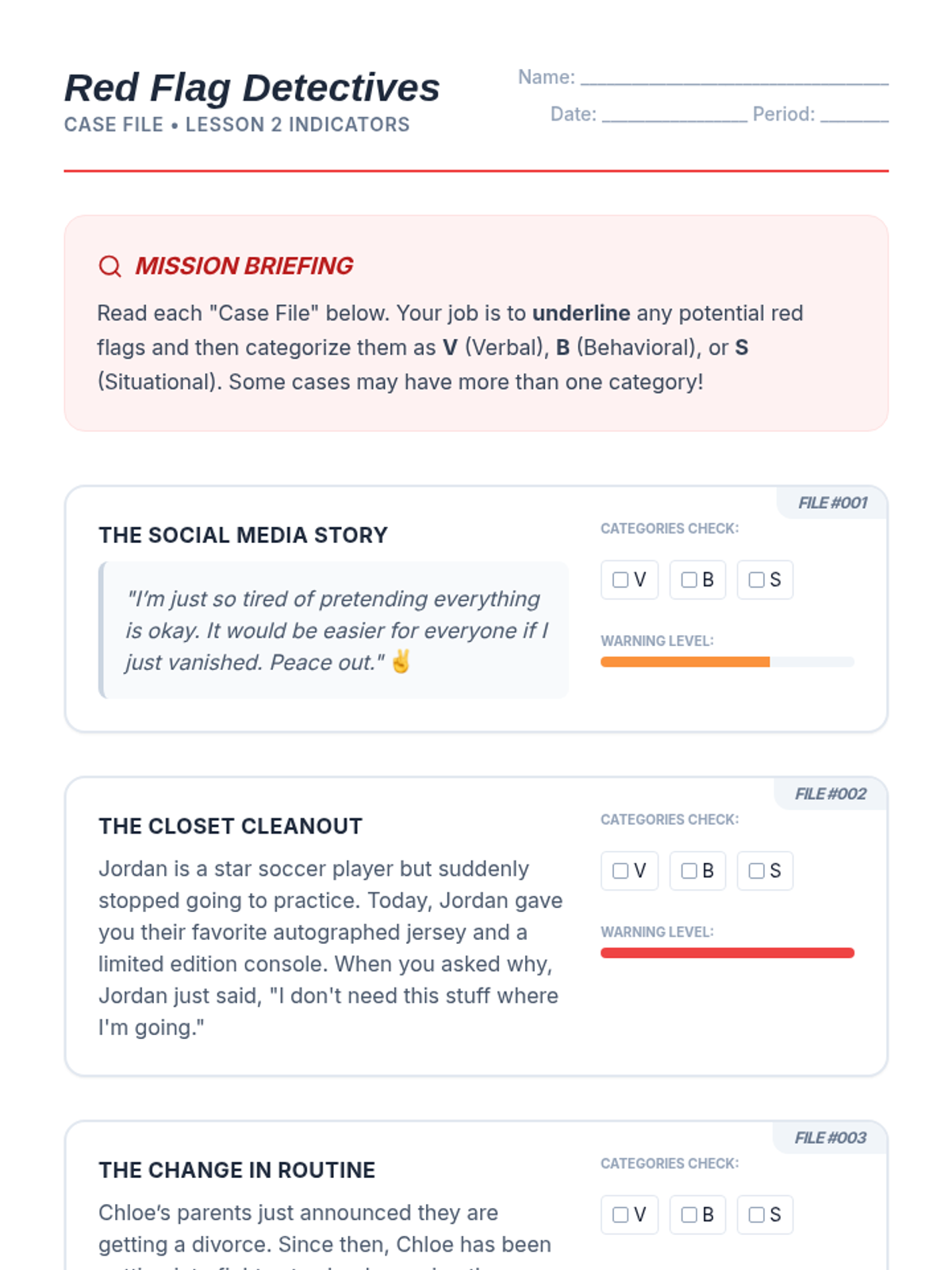
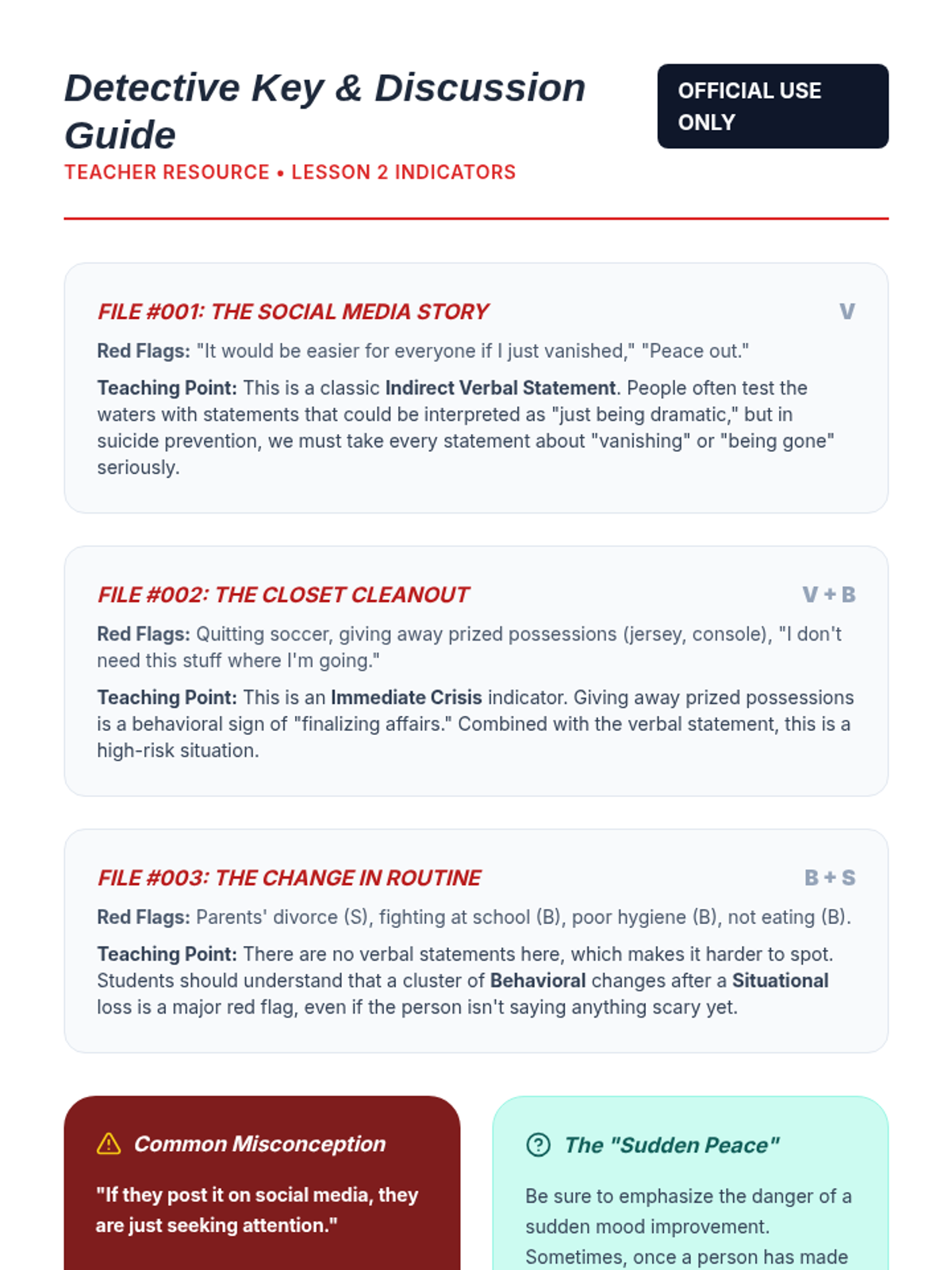
This lesson focuses on concrete warning signs, including changes in sleeping or eating habits, withdrawal, and specific verbal cues. Students review anonymous vignettes to practice spotting red flags.
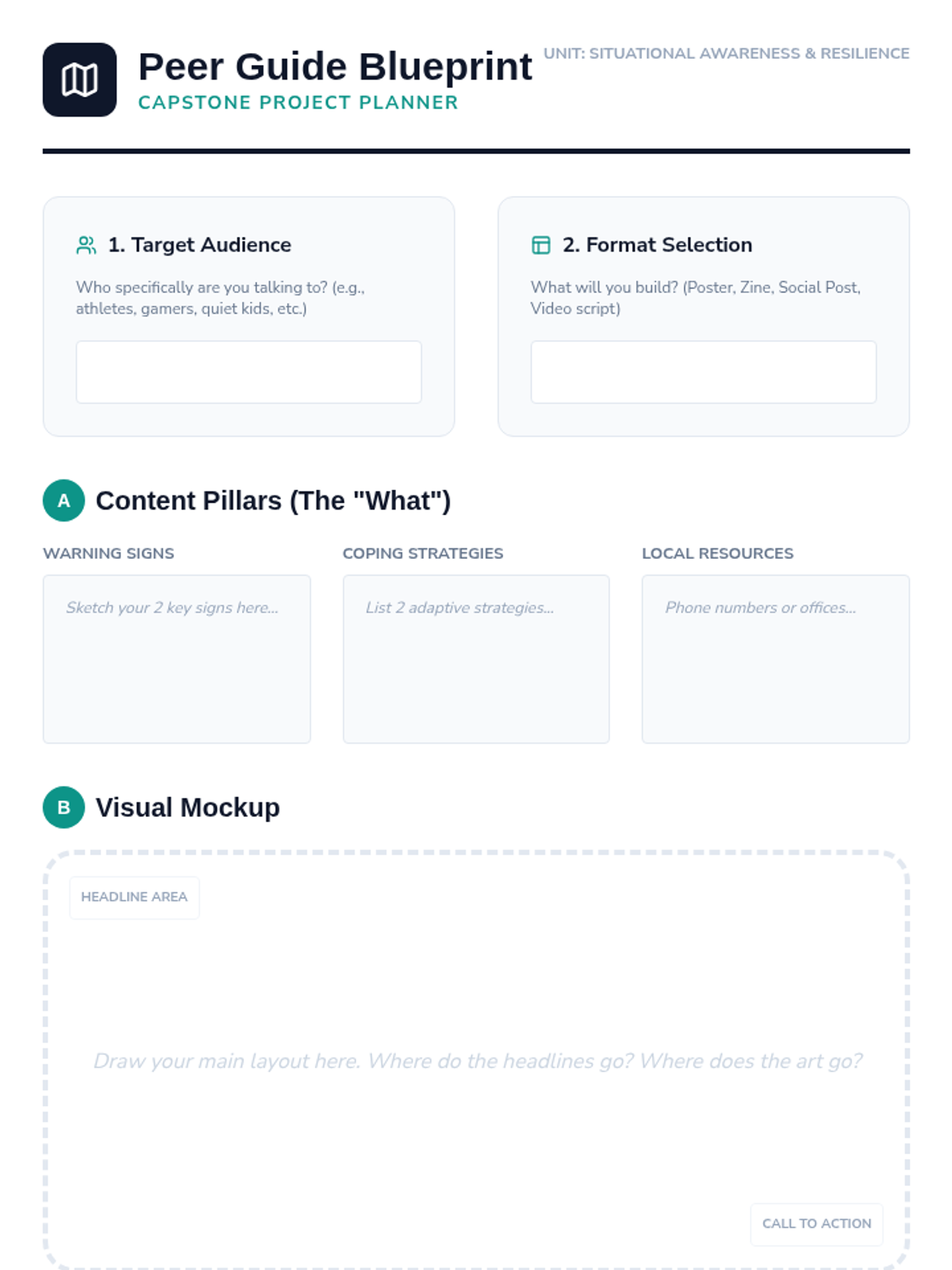
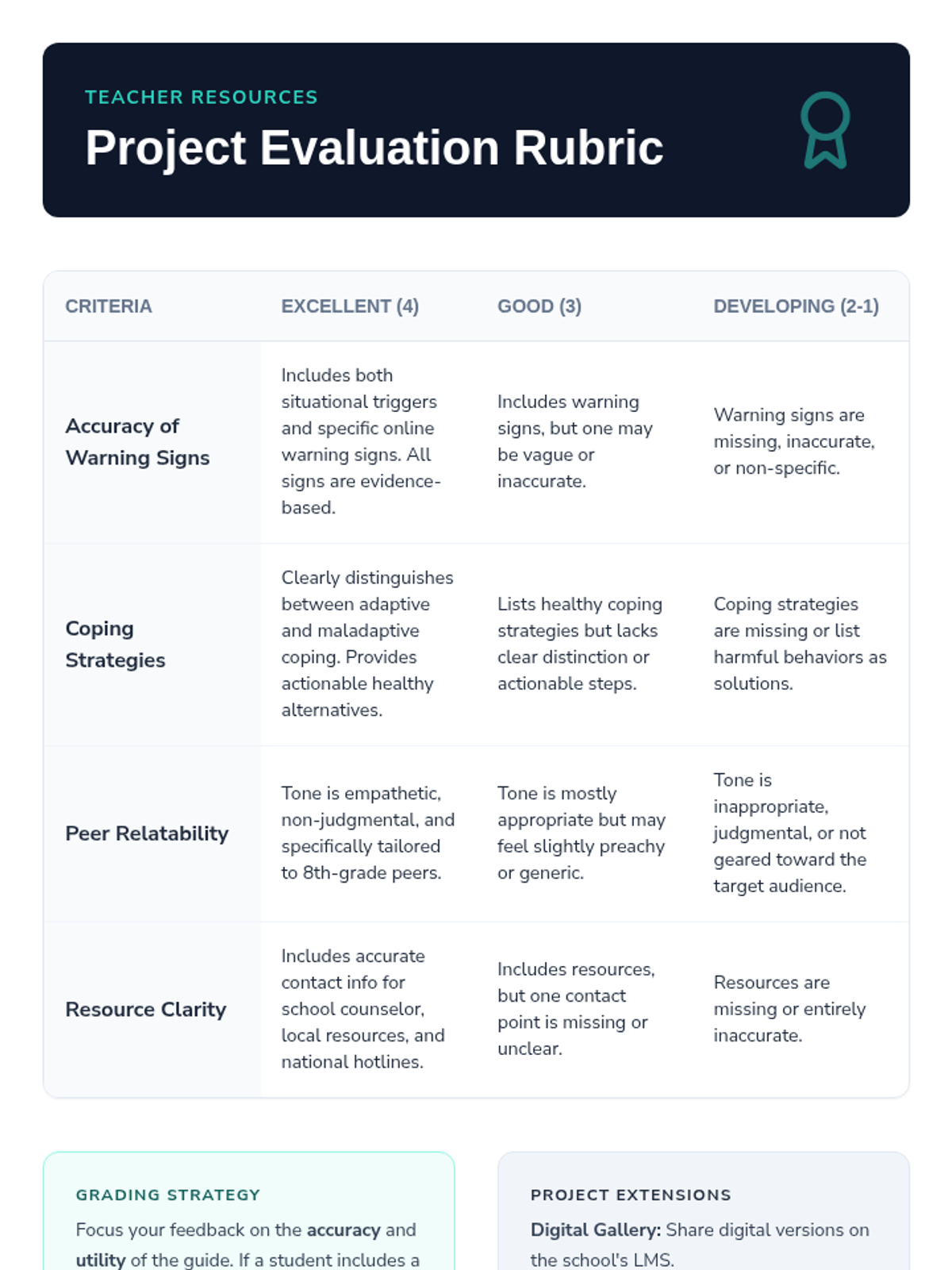
Students synthesize their learning to create a peer-facing resource guide for mental health support.
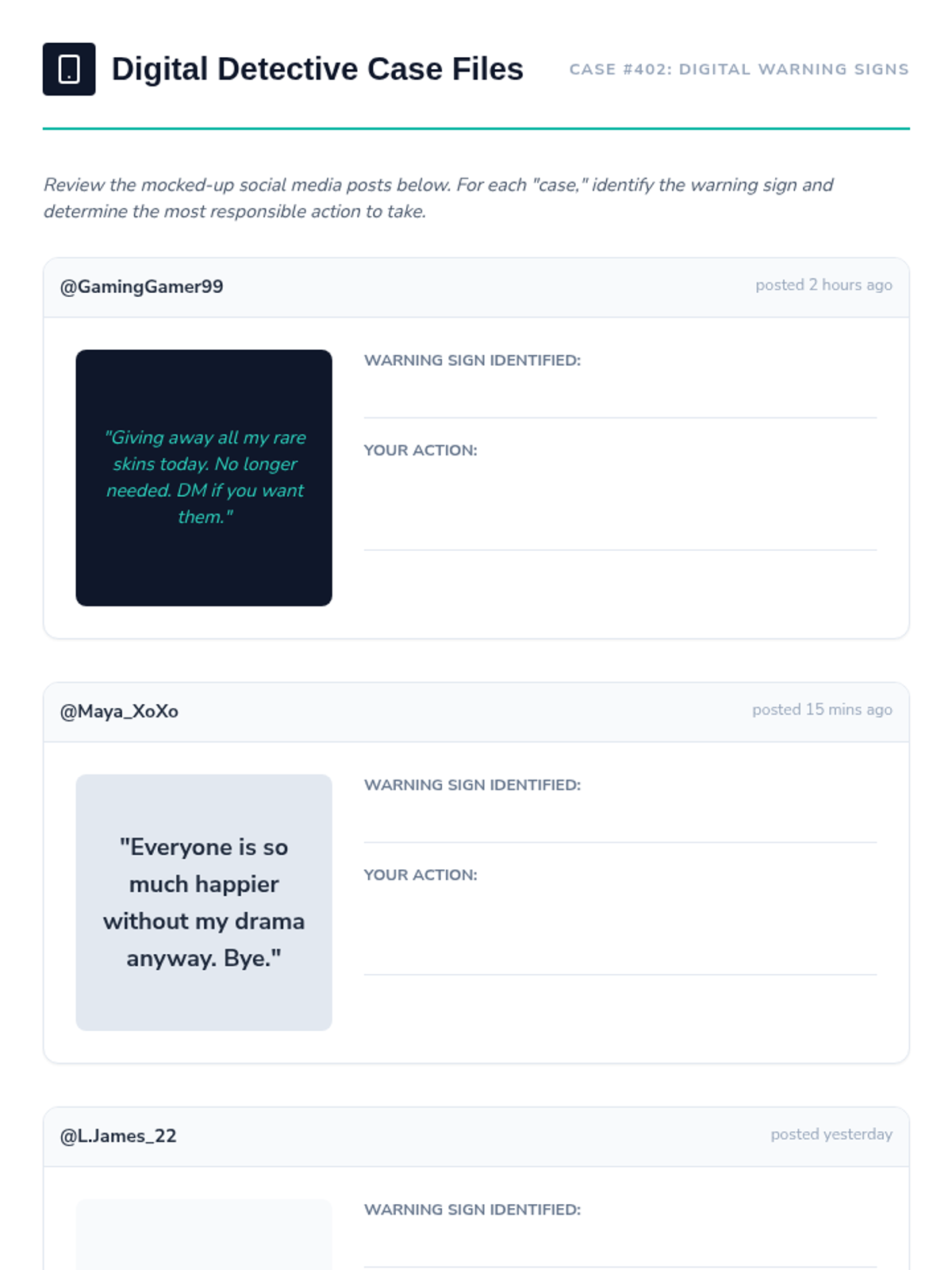
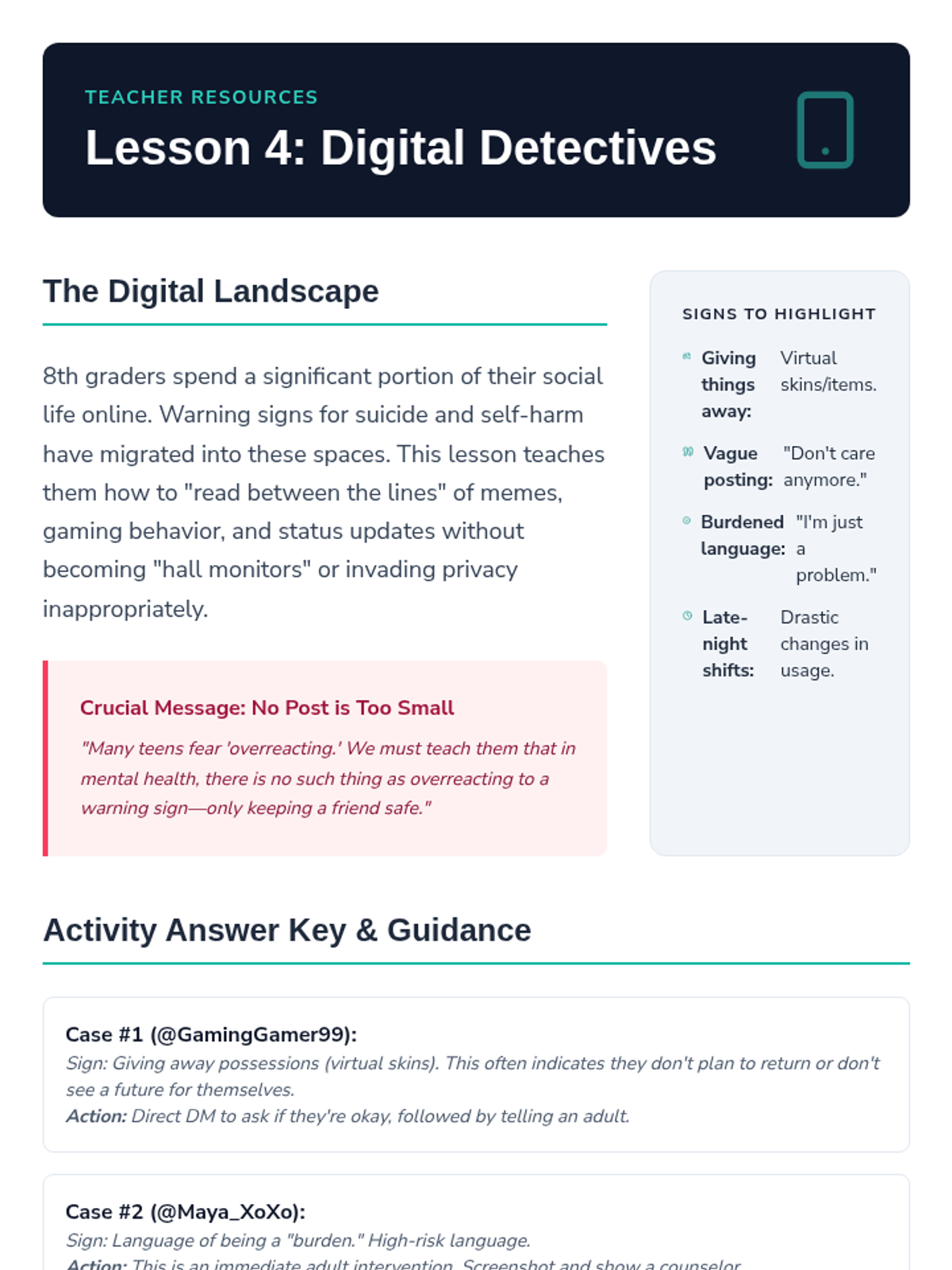
Students learn to recognize warning signs in digital environments and develop a checklist for online safety.
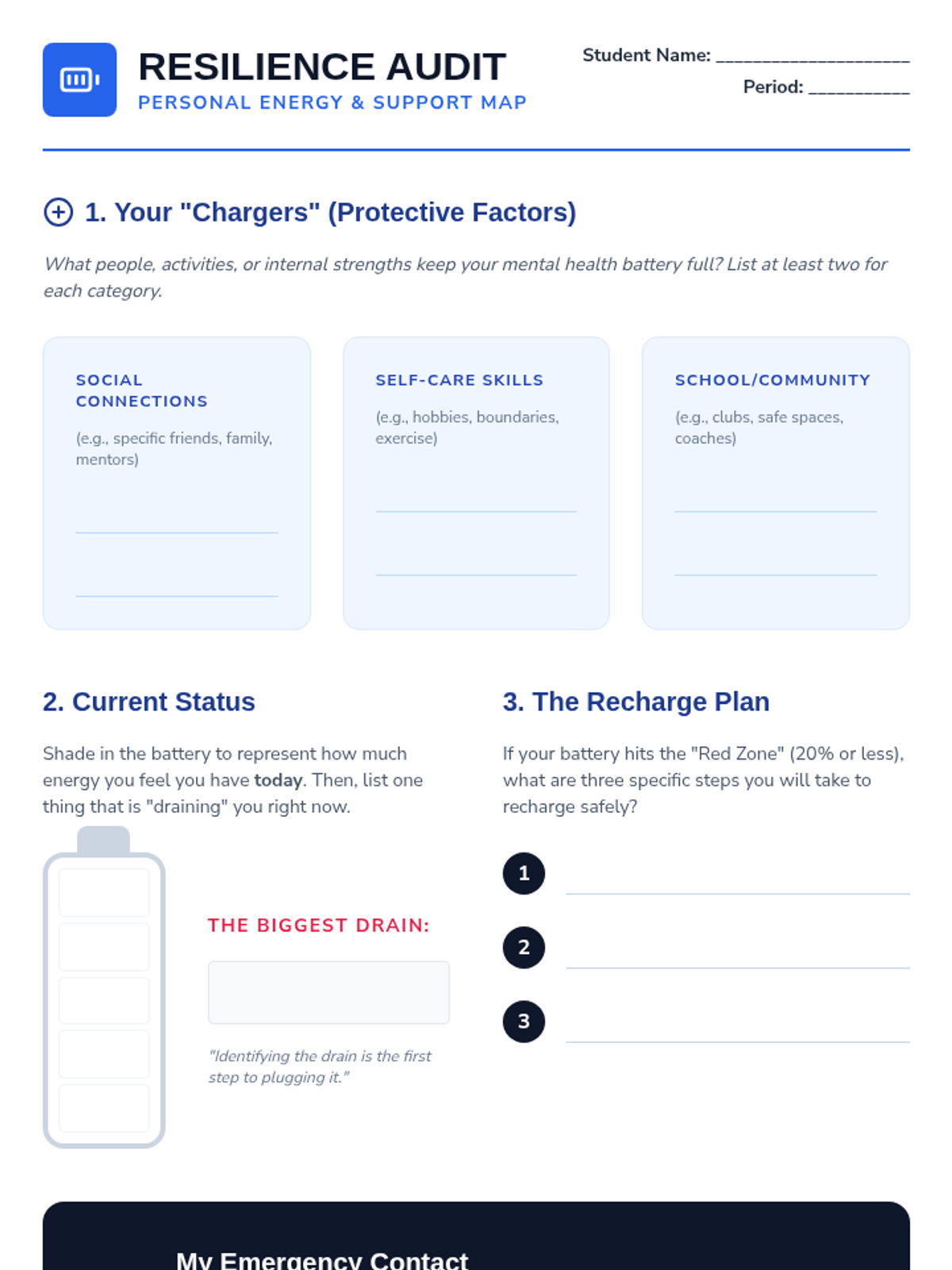
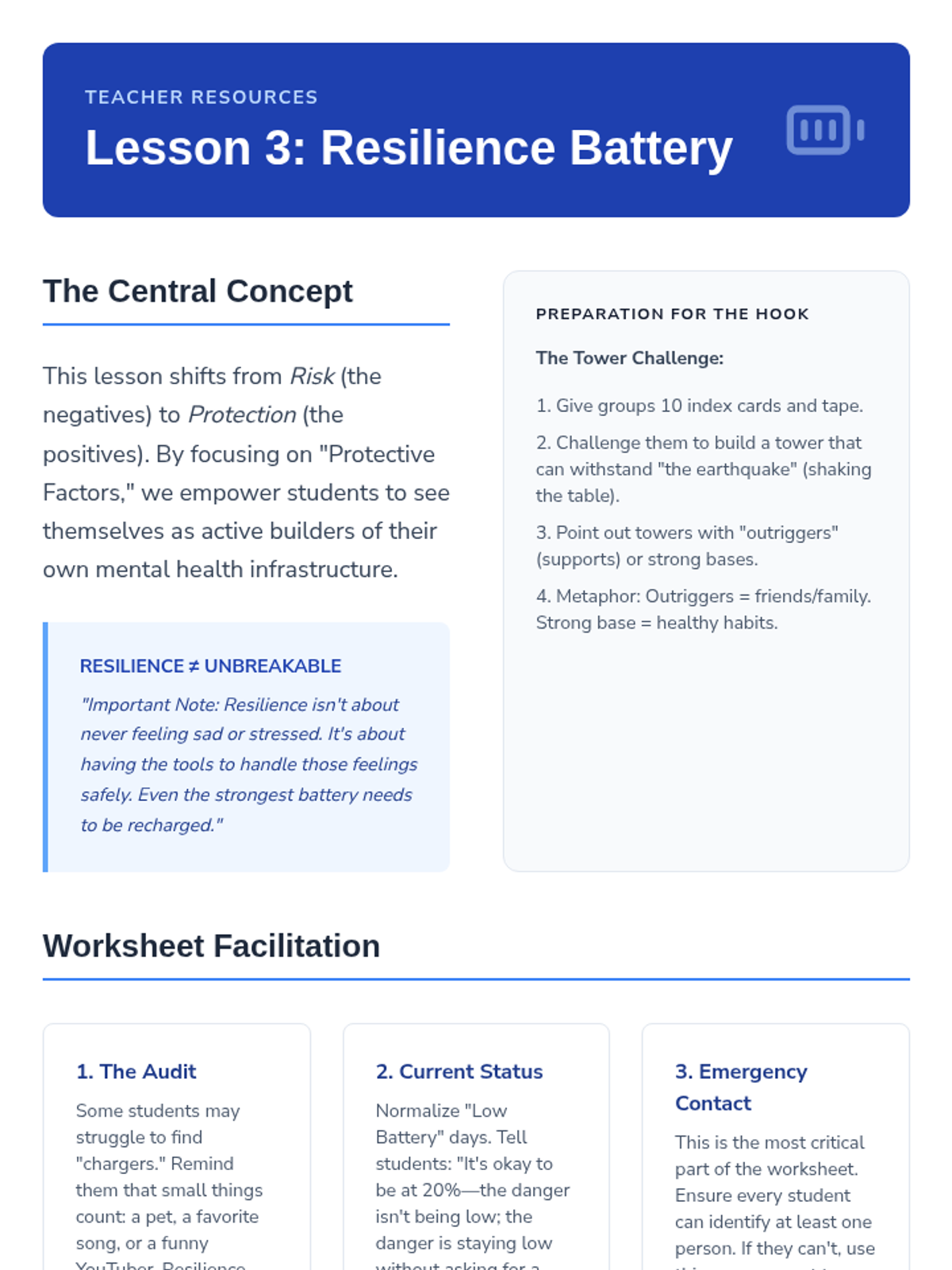
Students explore protective factors that build resilience and assess their own personal support systems.
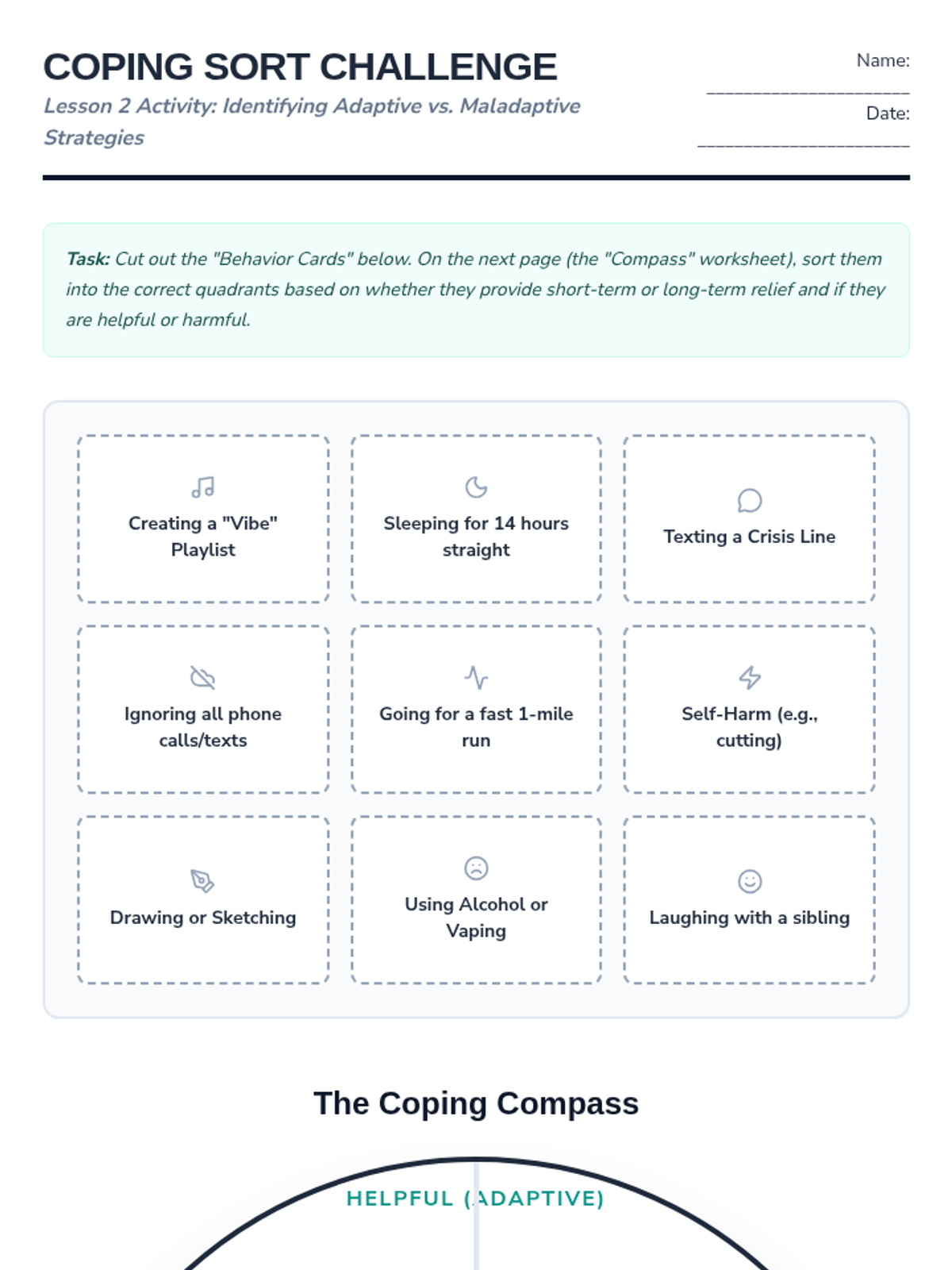
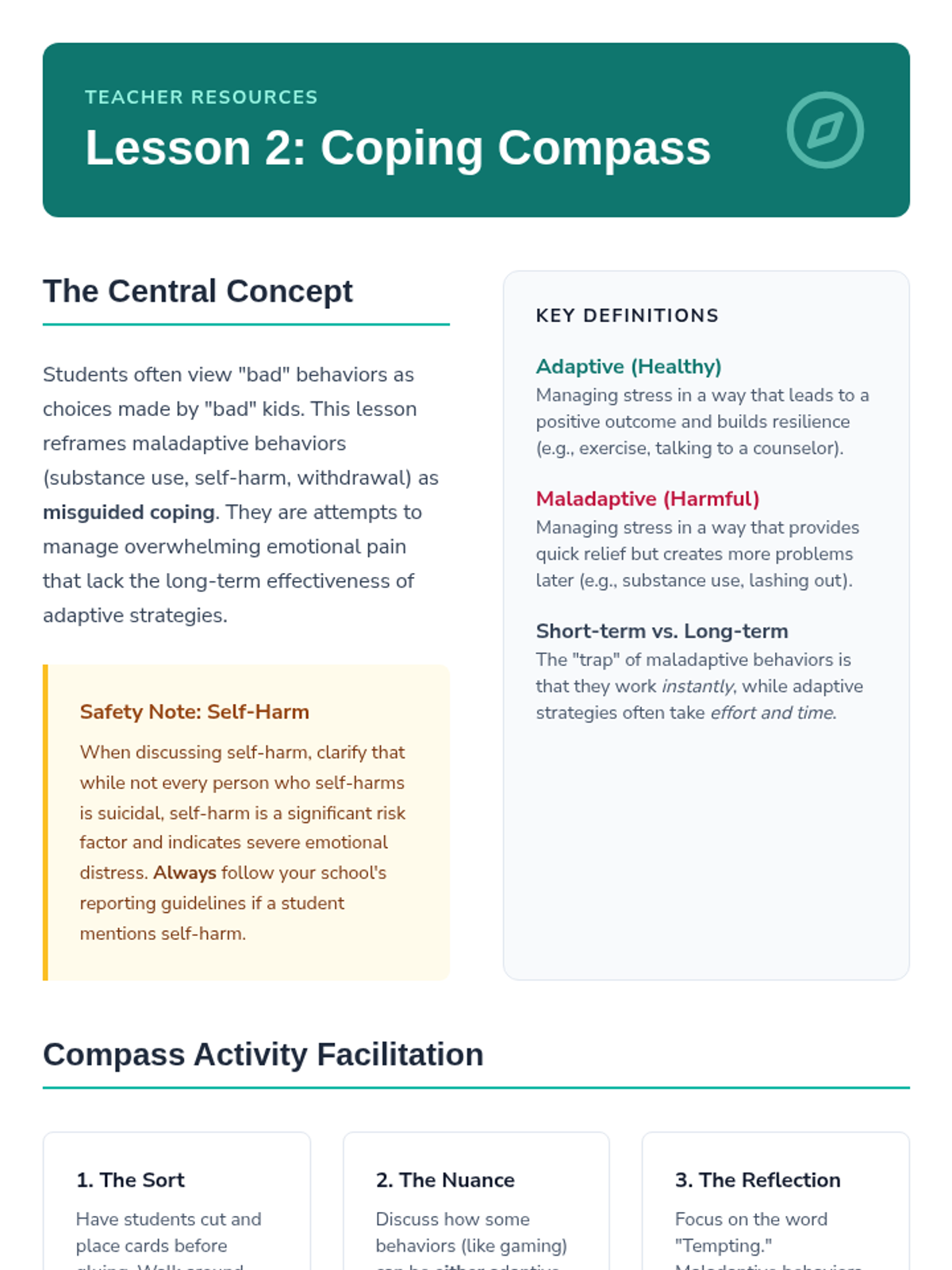
Students categorize coping strategies into adaptive and maladaptive behaviors, understanding the 'why' behind harmful actions.
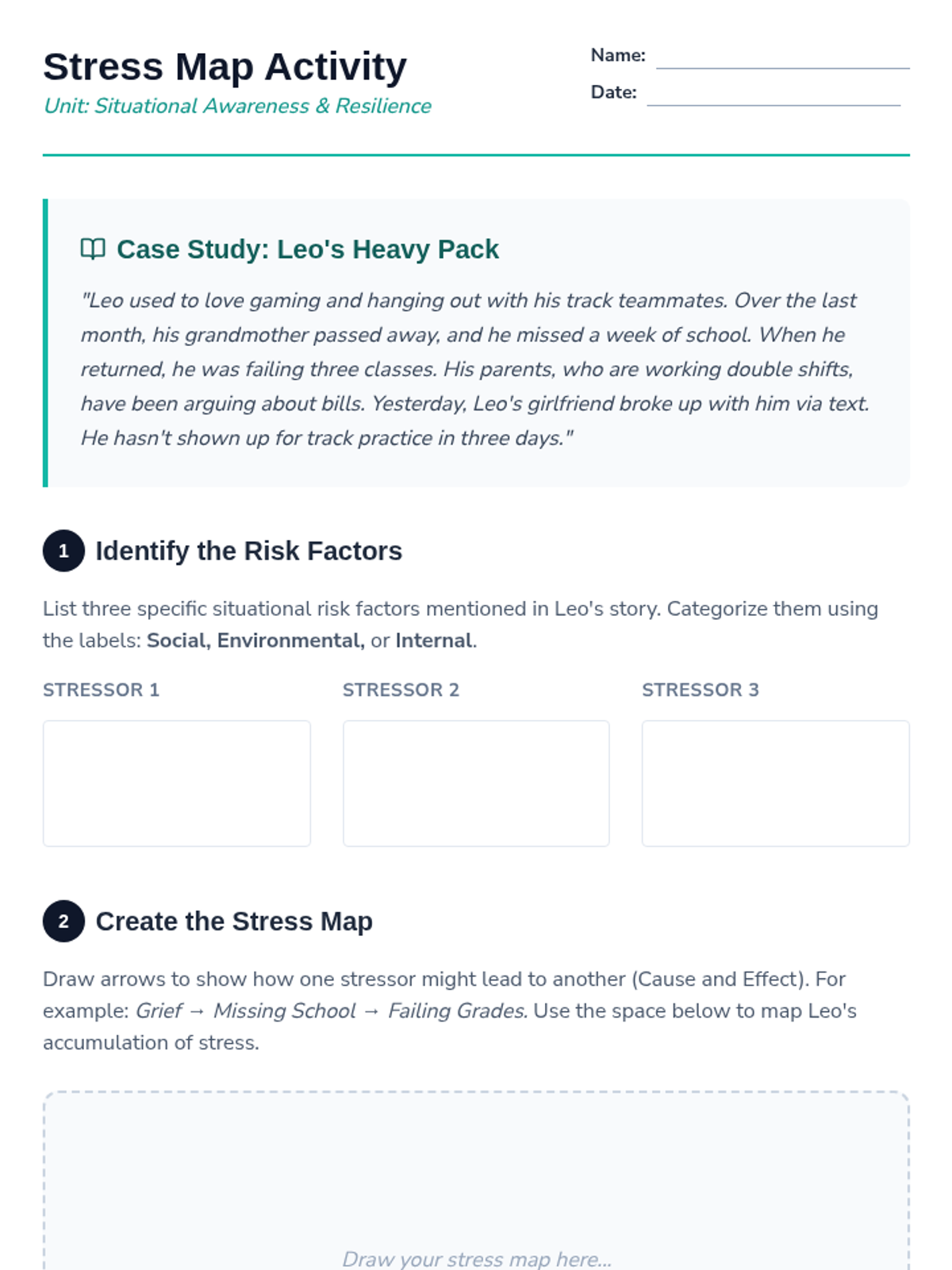
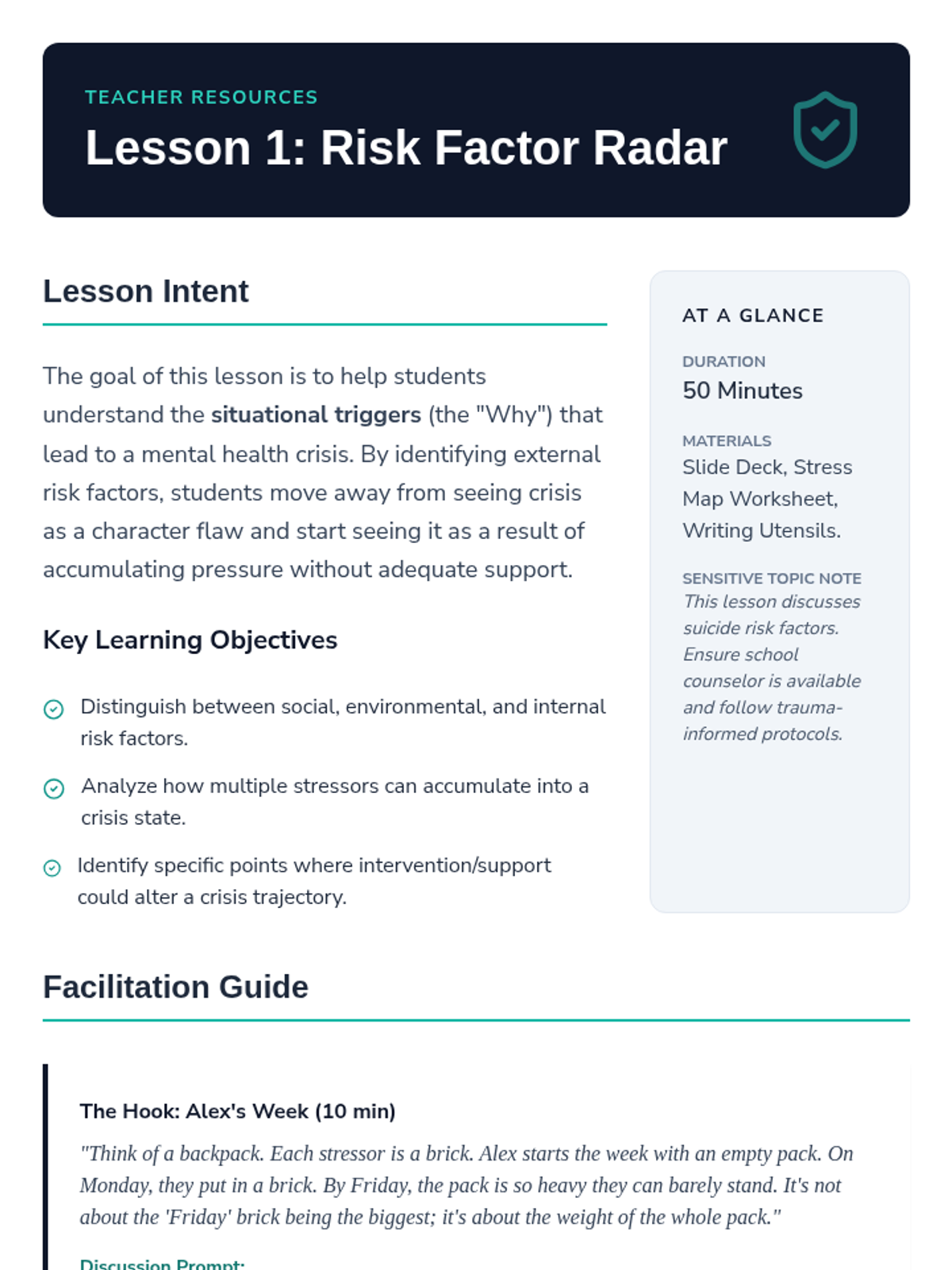
Students identify external events that can trigger a crisis and create cause-and-effect maps to understand how stressors accumulate.
Students explore the spectrum of mental health, learning to distinguish between everyday stressors, temporary sadness, and signs of a mental health crisis.
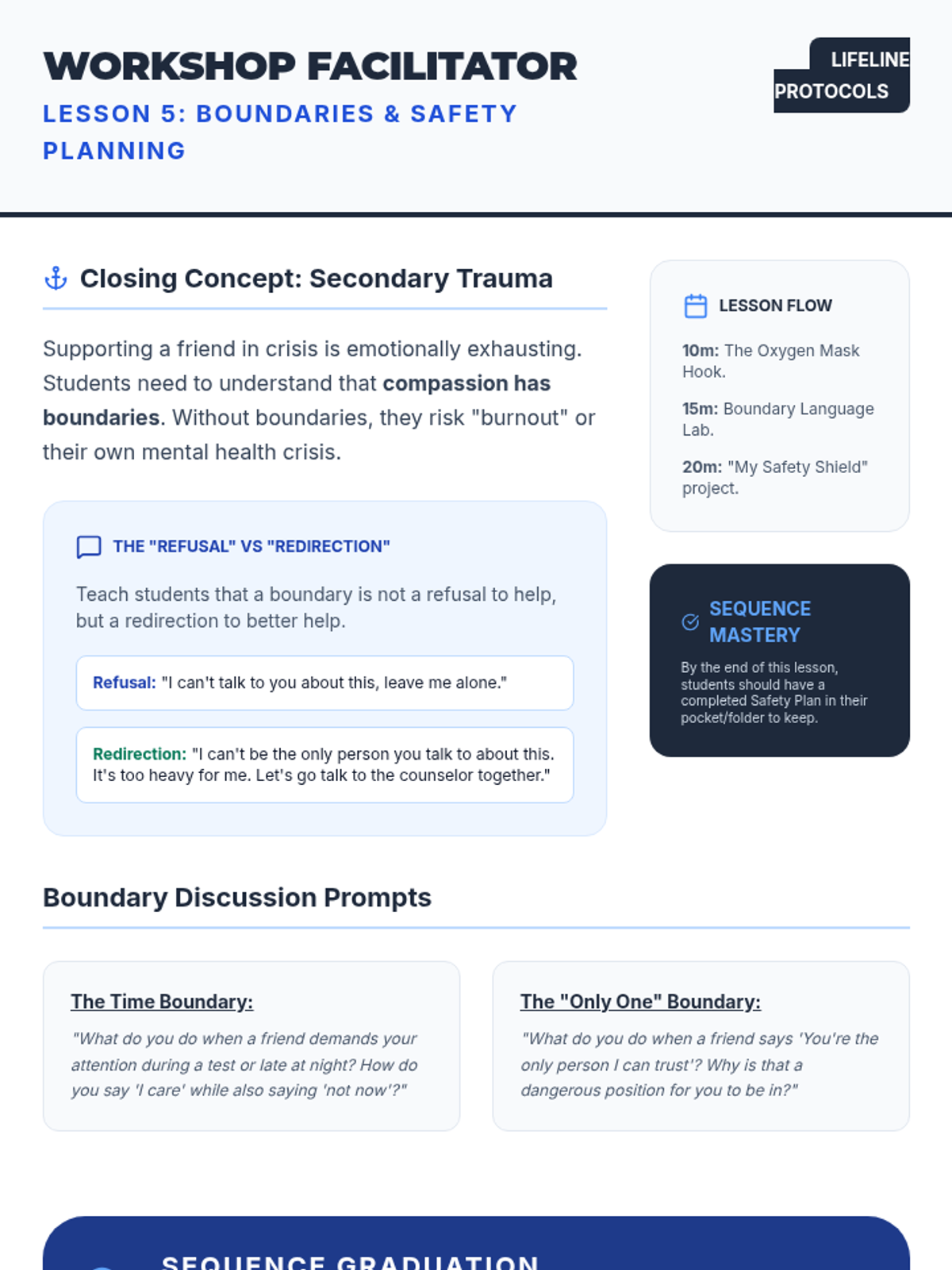
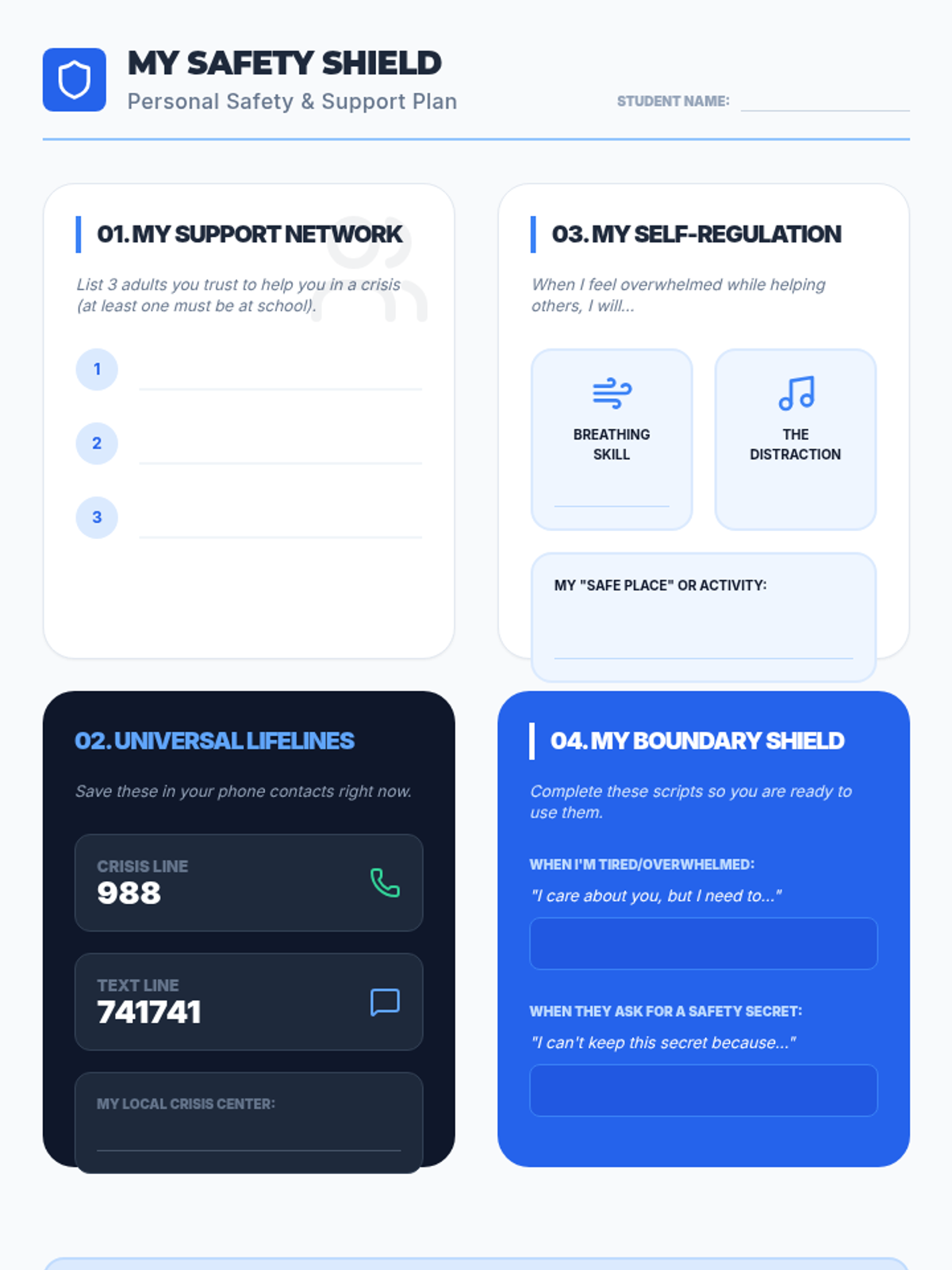
Students learn to set healthy boundaries when supporting others and create a personal safety plan that identifies their own trusted adults and self-regulation strategies.
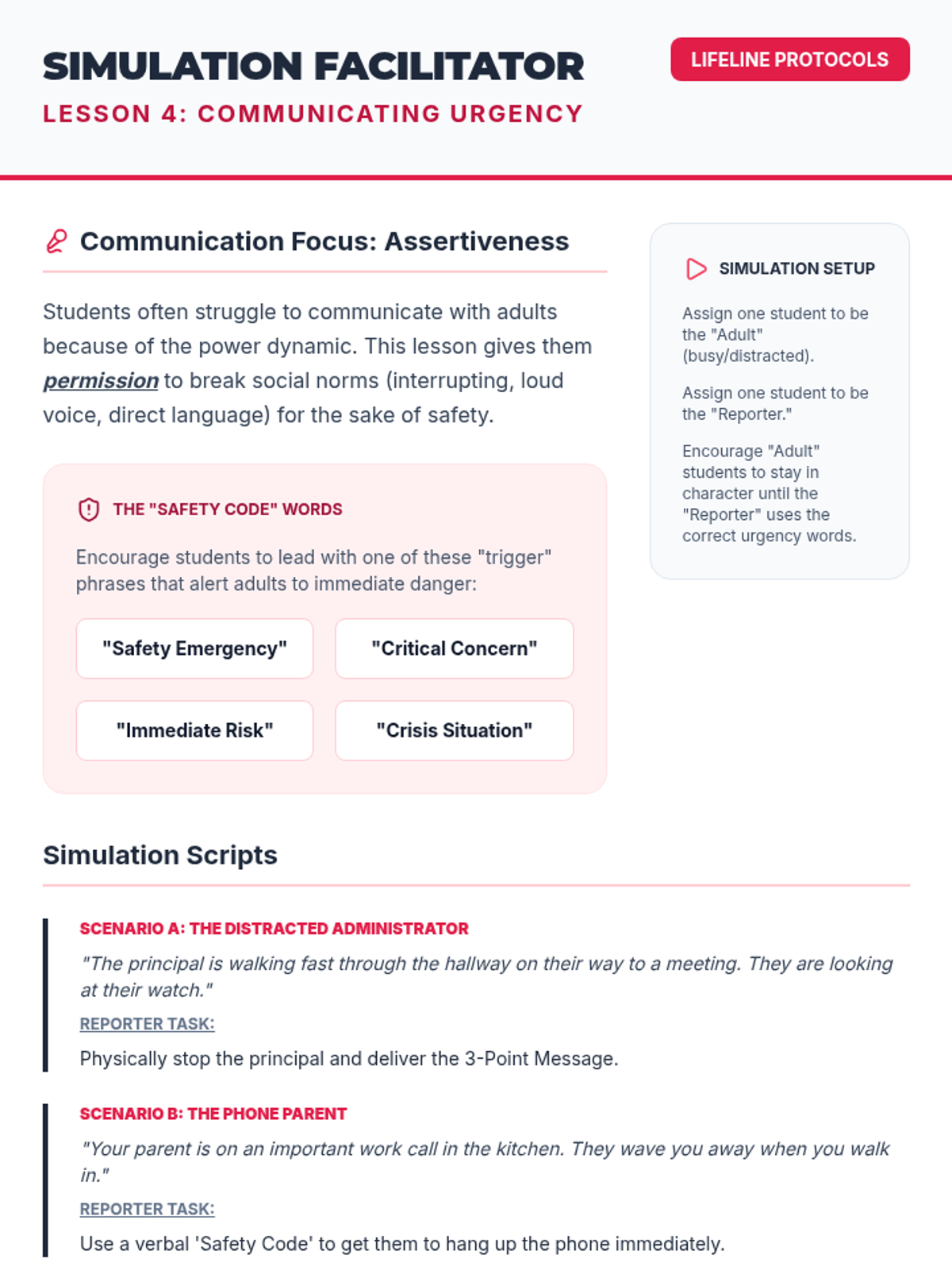
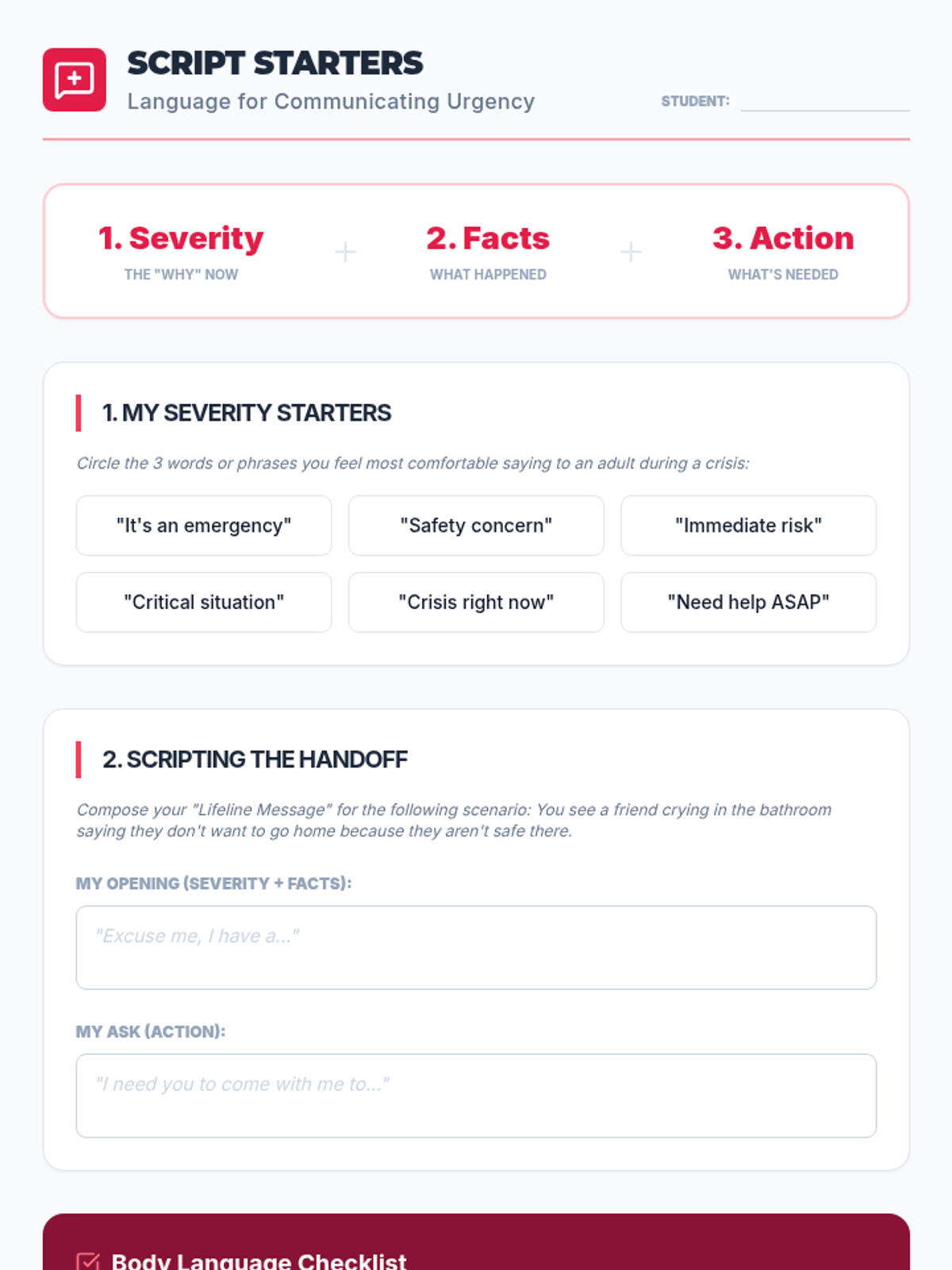
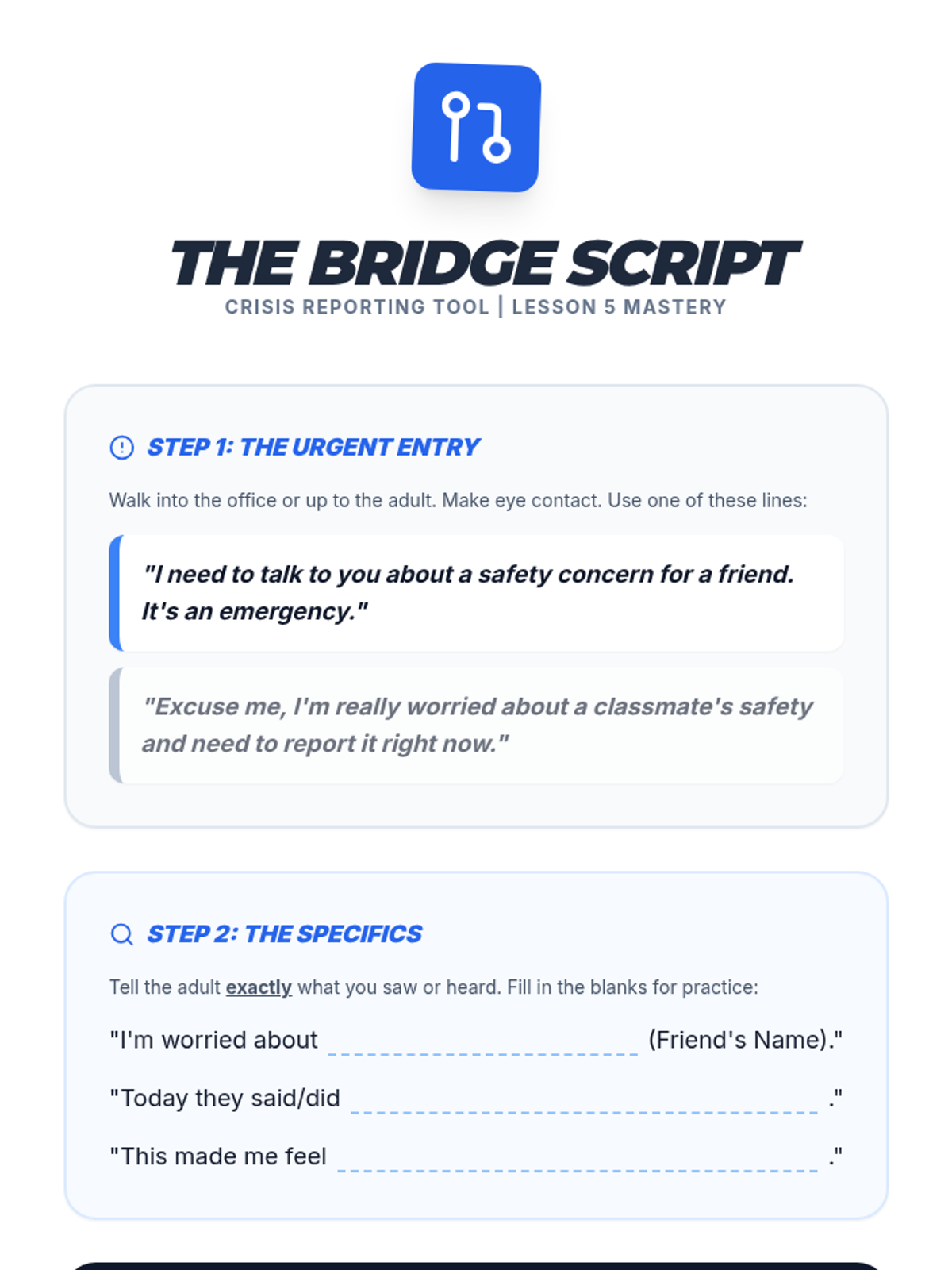
Students practice assertive communication to convey the urgency and severity of a crisis to busy adults, using specific language scripts and role-play simulations.
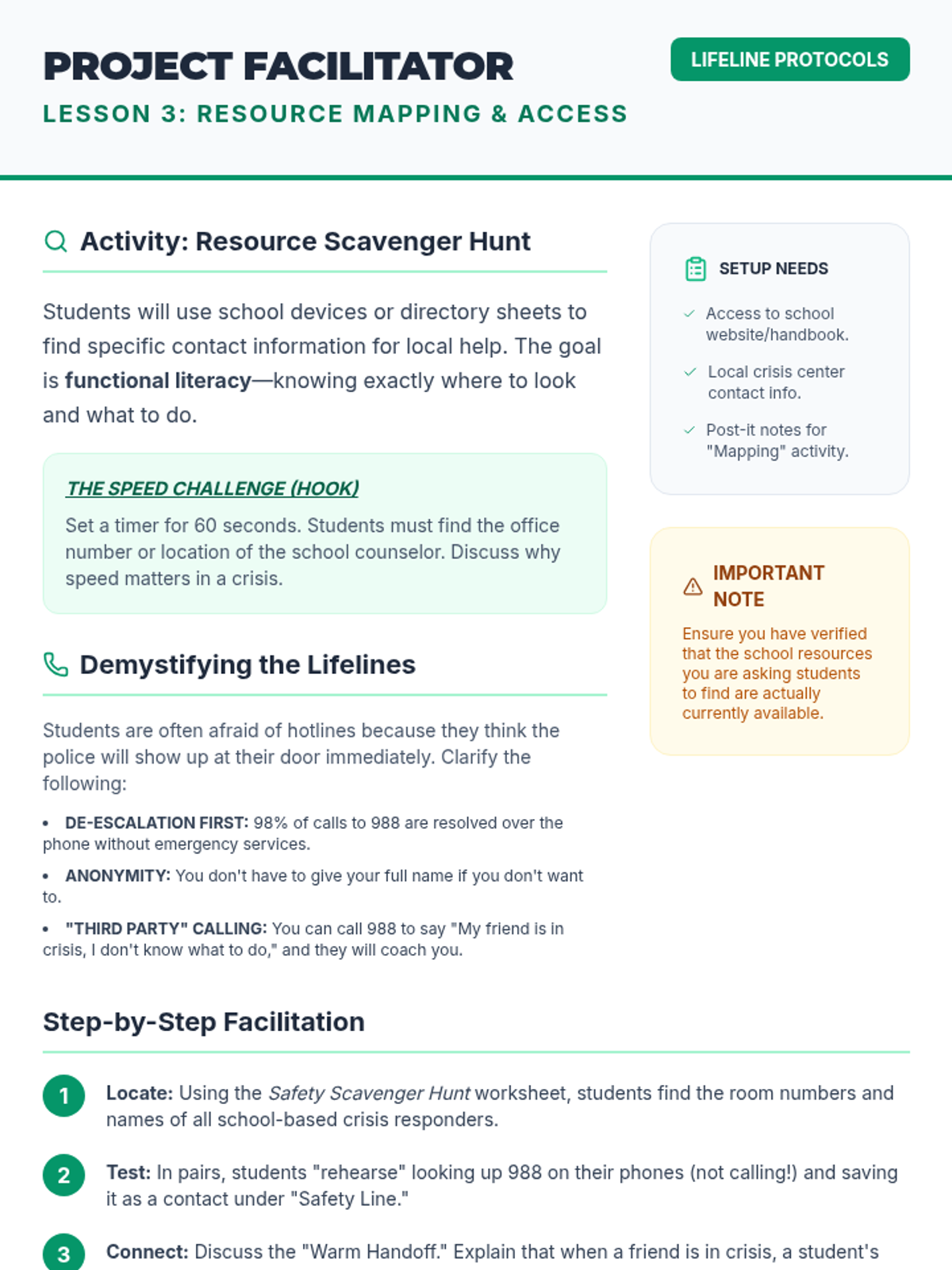
Students identify and map out local and national crisis resources, understanding the mechanics of hotlines and school support systems.
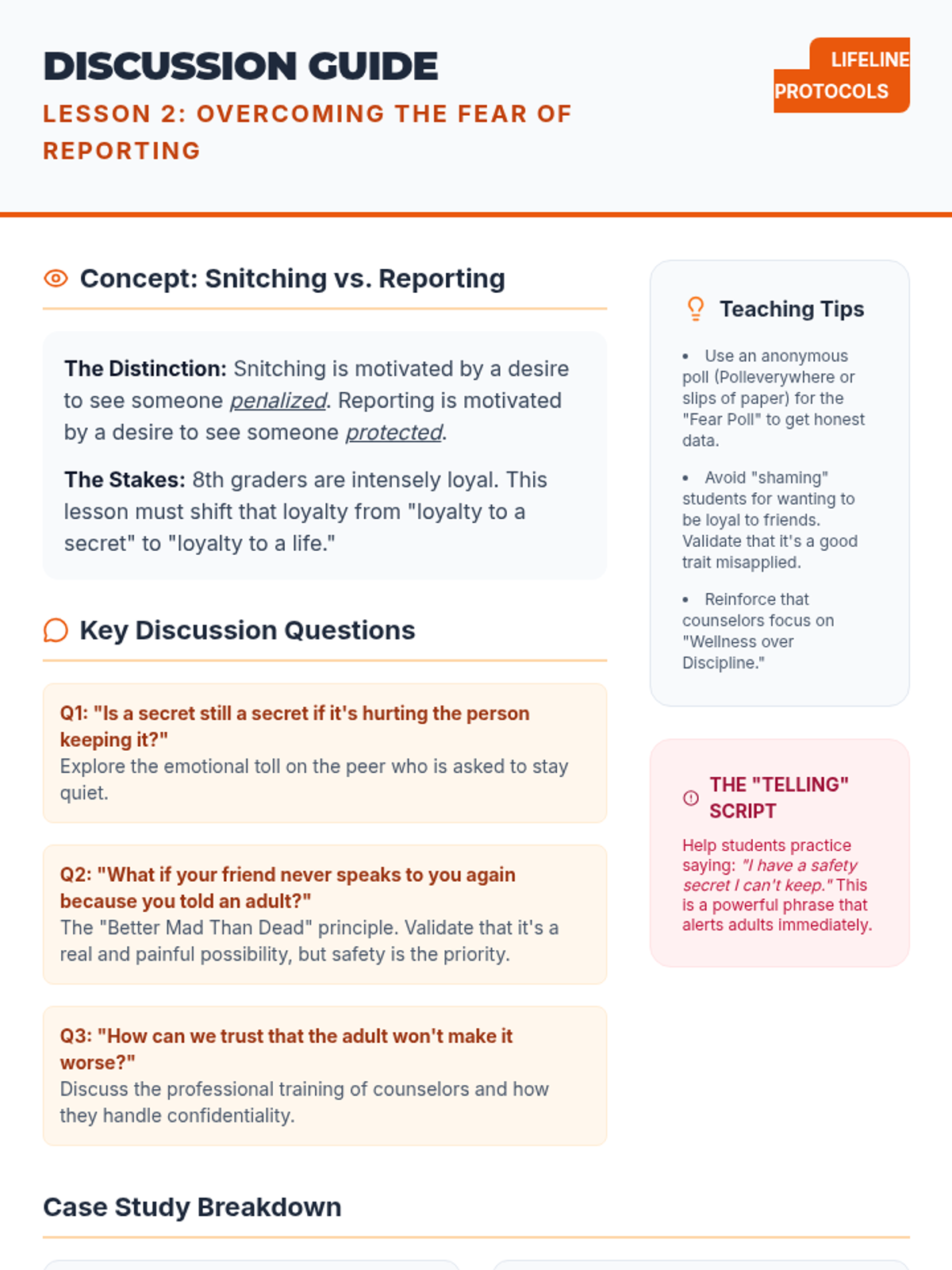
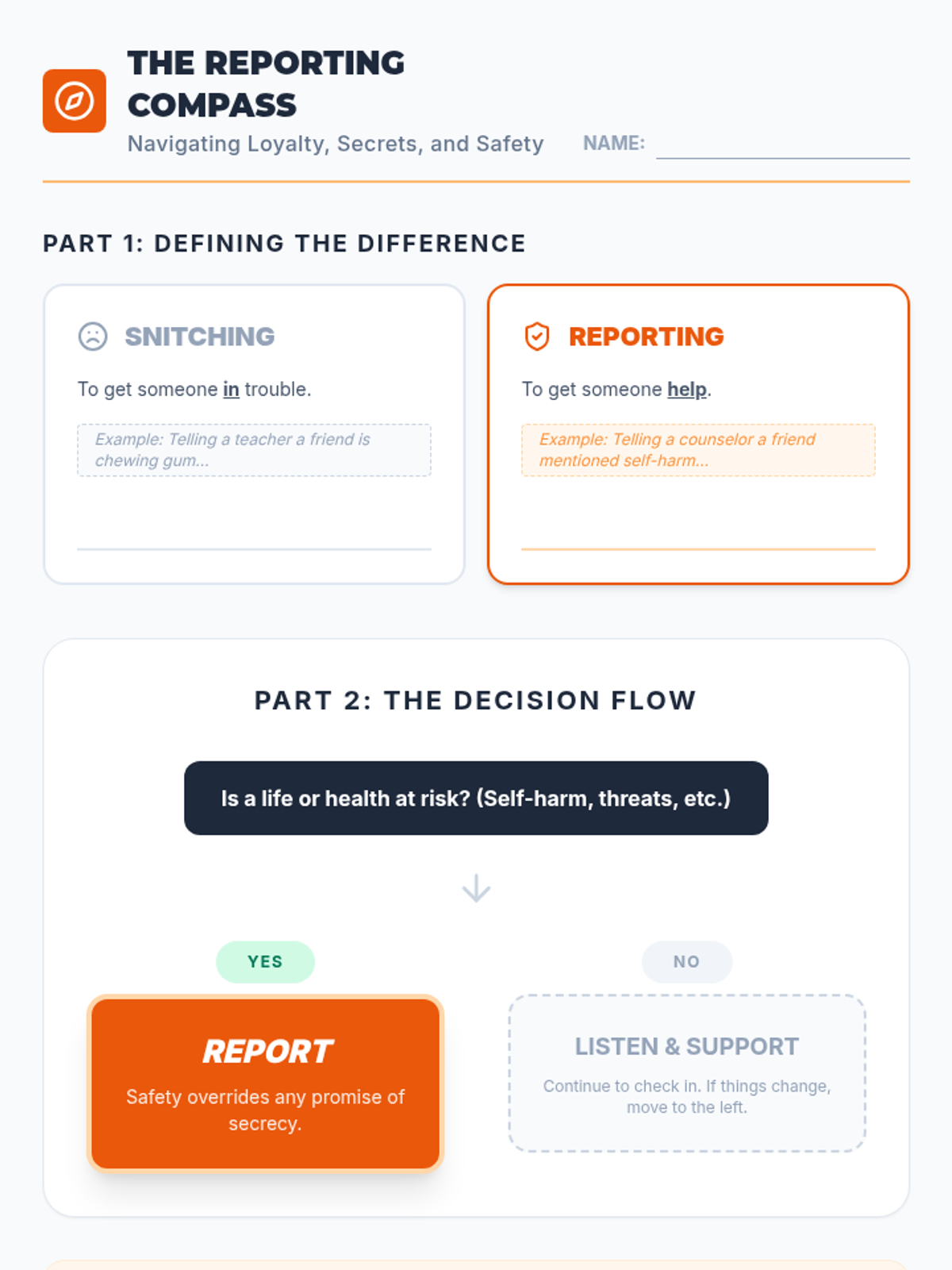
Addressing the stigma of "snitching" vs. "reporting," exploring ethical decision-making, and understanding when confidentiality must be broken for safety.
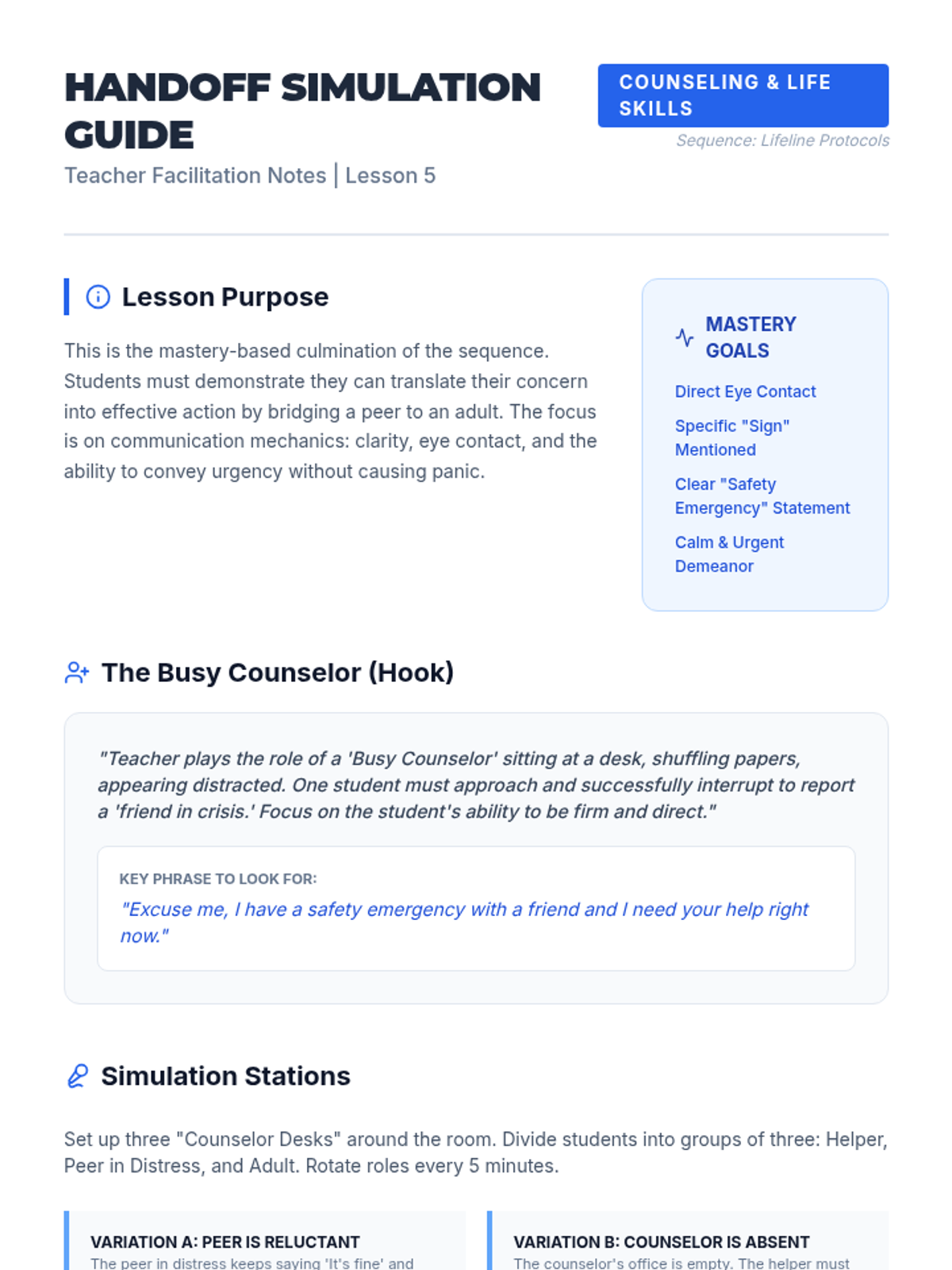
Students participate in simulations where they practice the 'handoff'—bridging a peer in distress to a professional. The focus is on clear, urgent communication with school counselors and administrators.
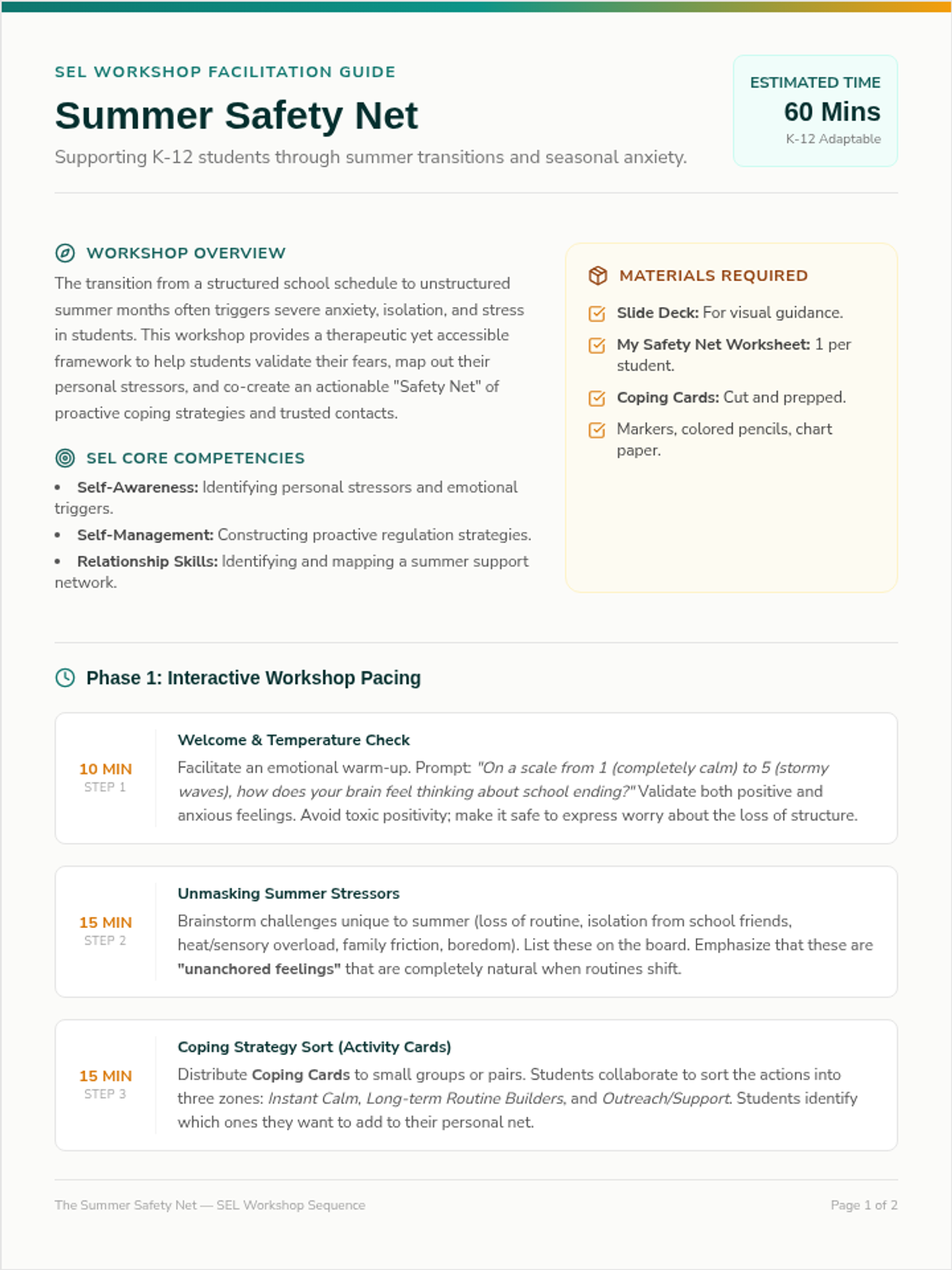
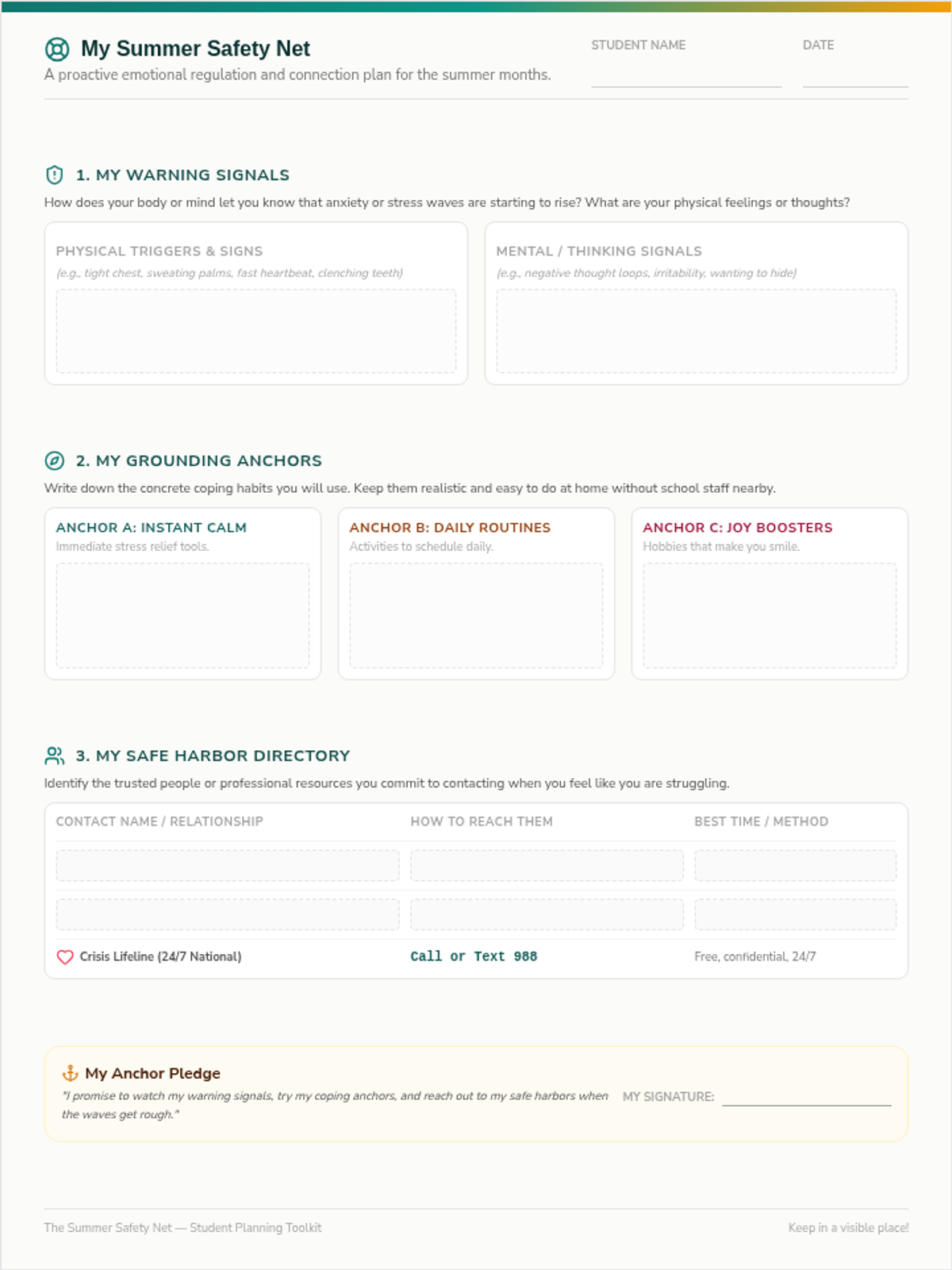
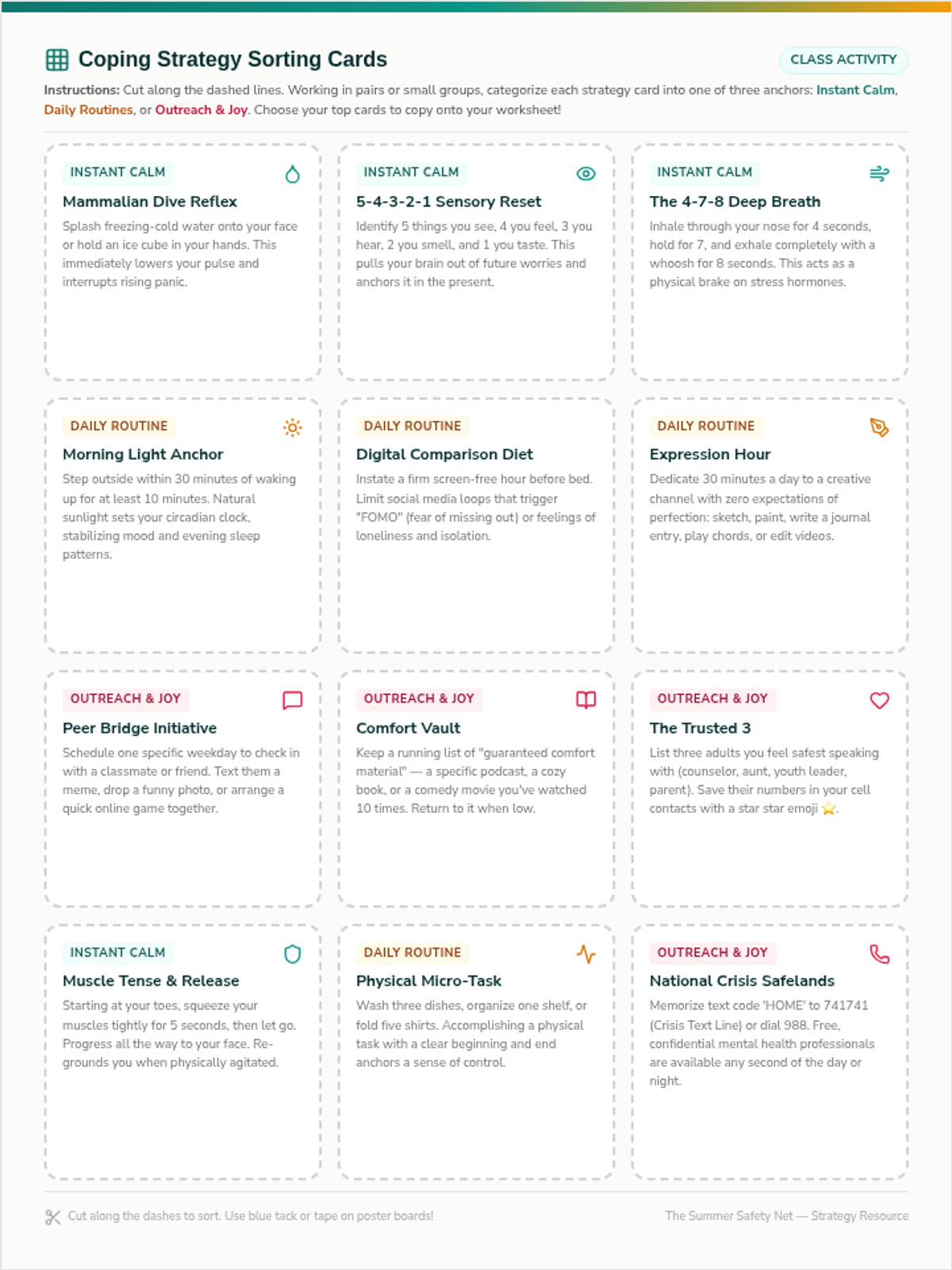
A collaborative mental health workshop designed to help students navigate summer transition anxiety by identifying stressors, mapping coping strategies, and co-creating a personalized proactive emotional regulation plan.
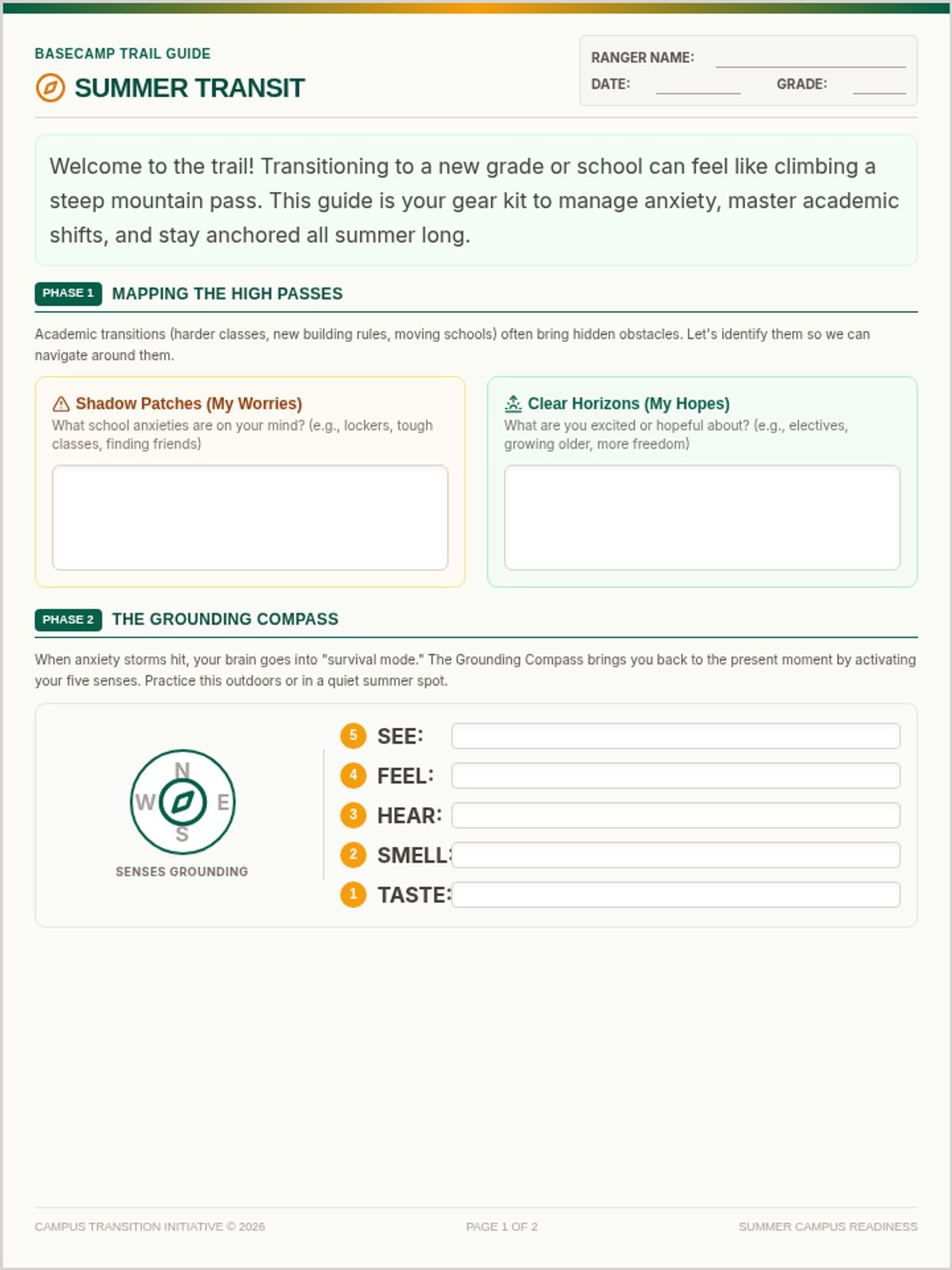
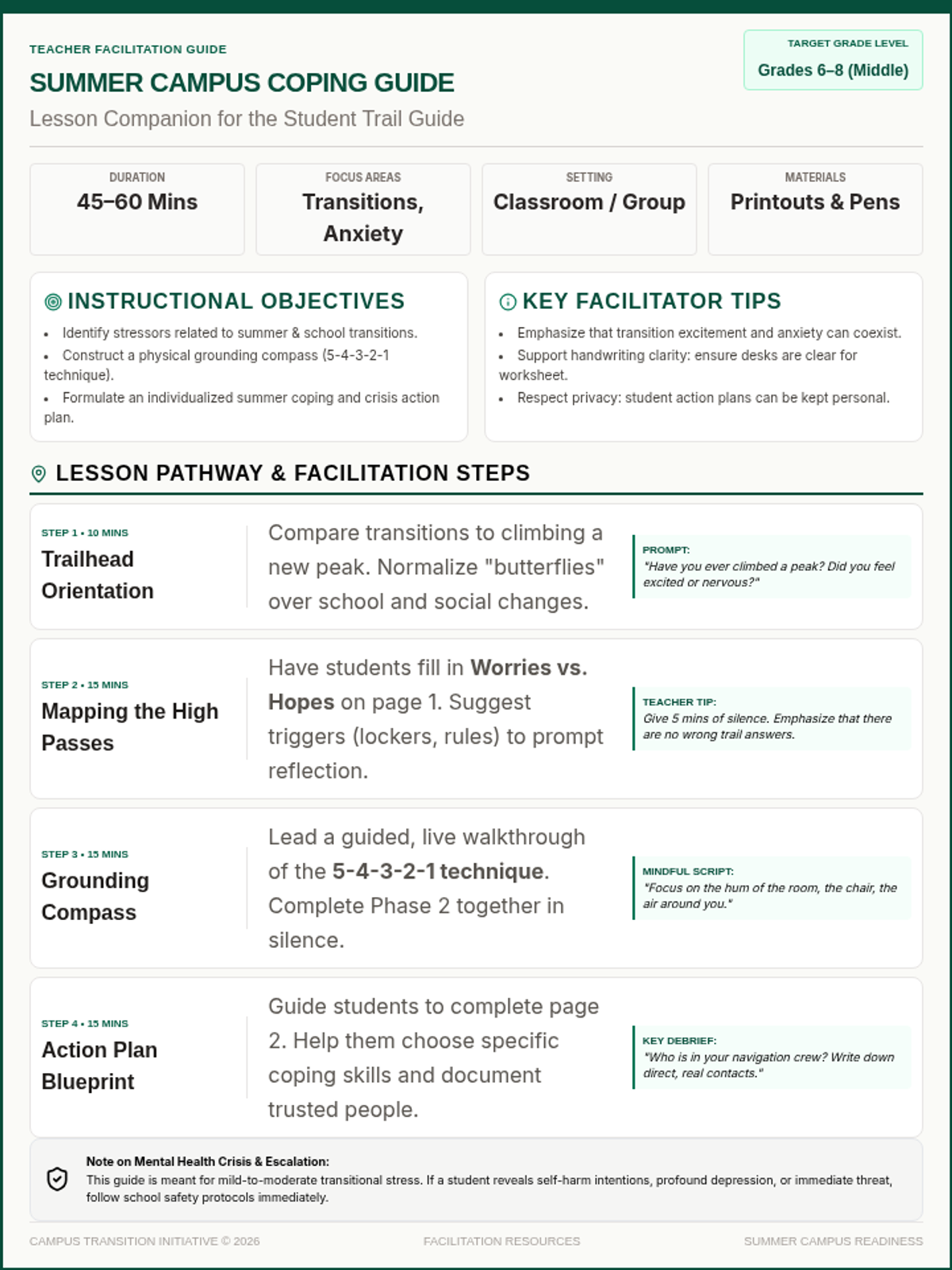
A transition-focused emotional regulation lesson designed to equip middle school students with mindfulness tools and coping mechanisms to handle academic anxiety and school transitions over the summer.
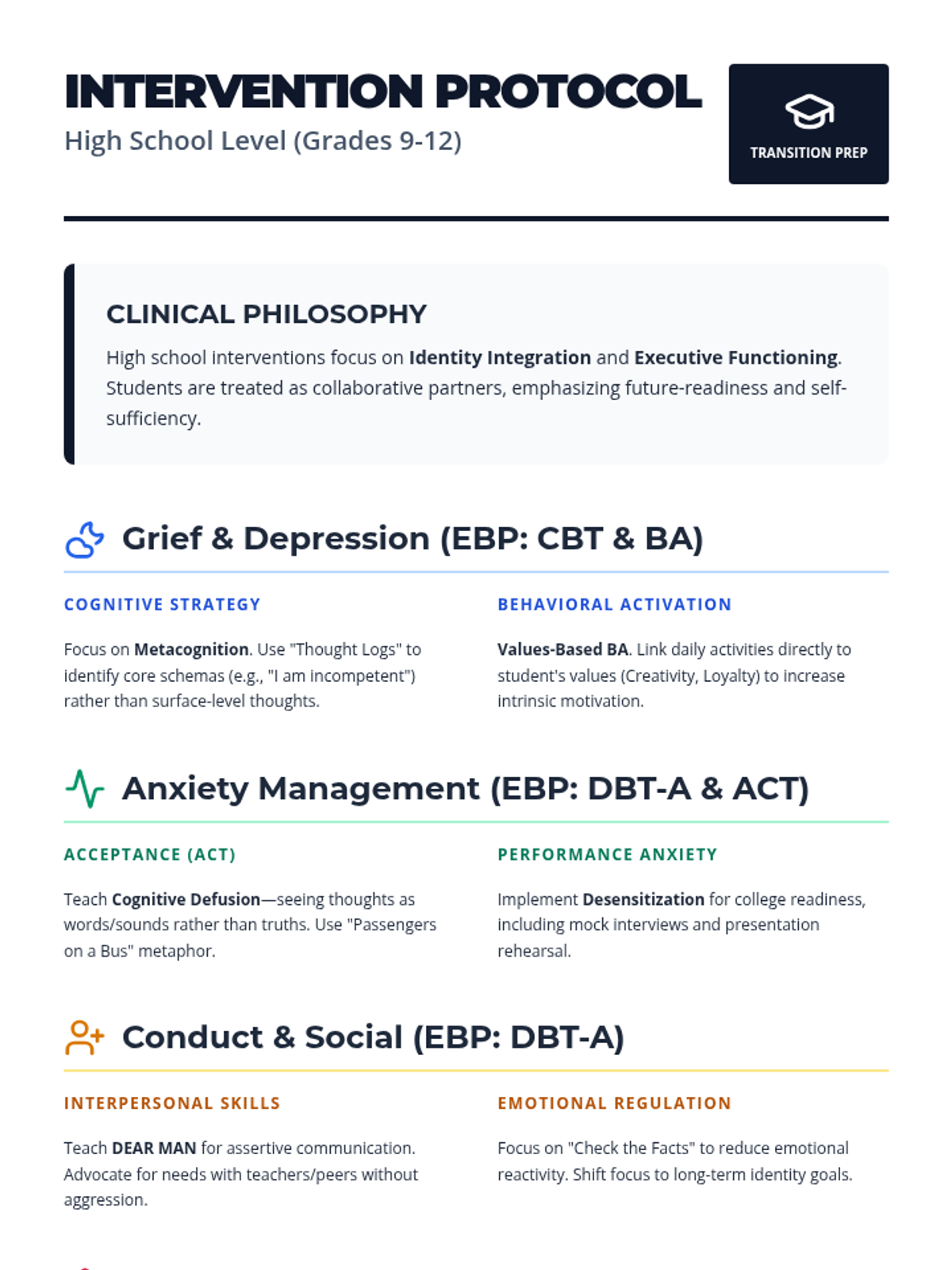
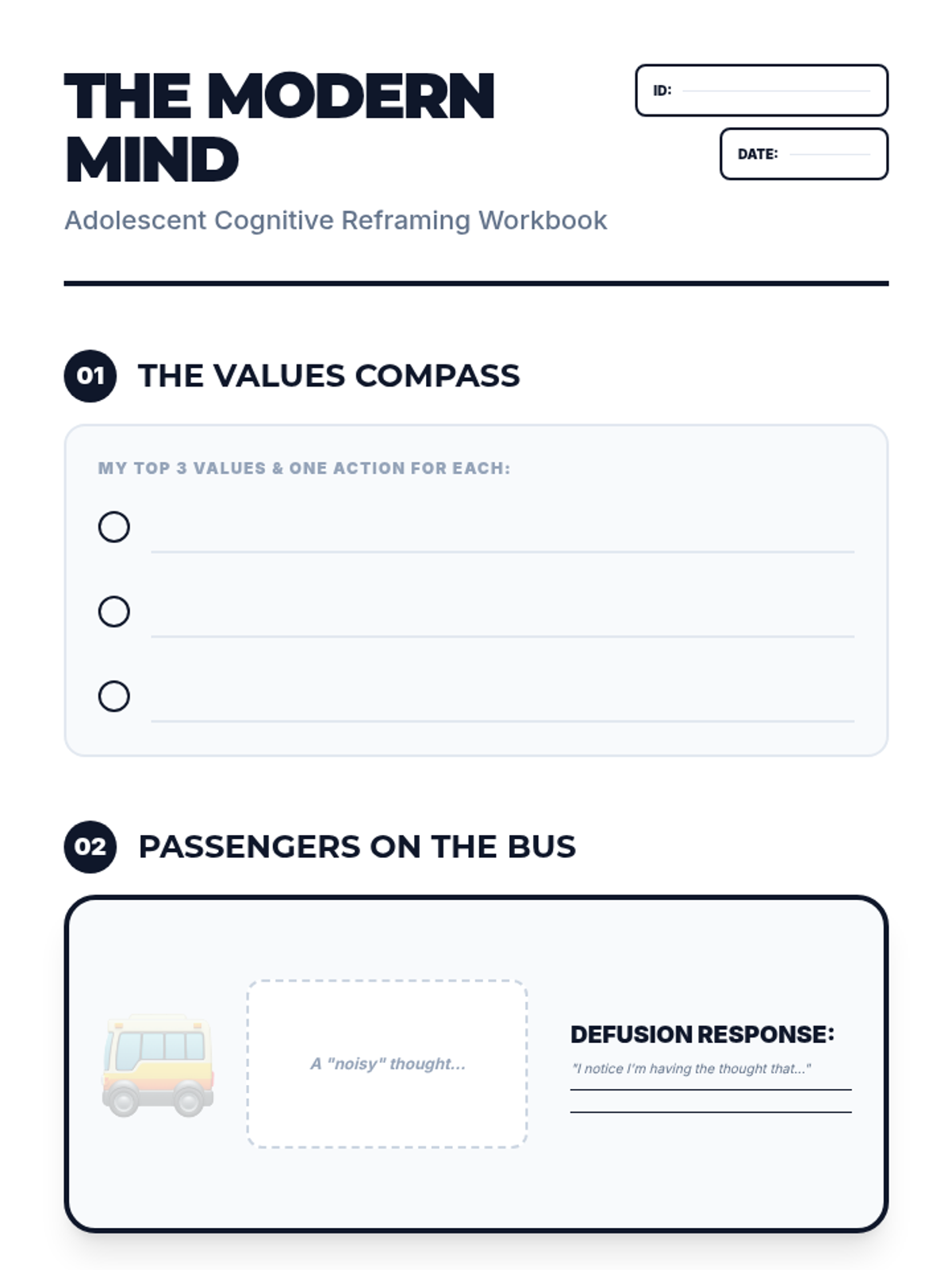
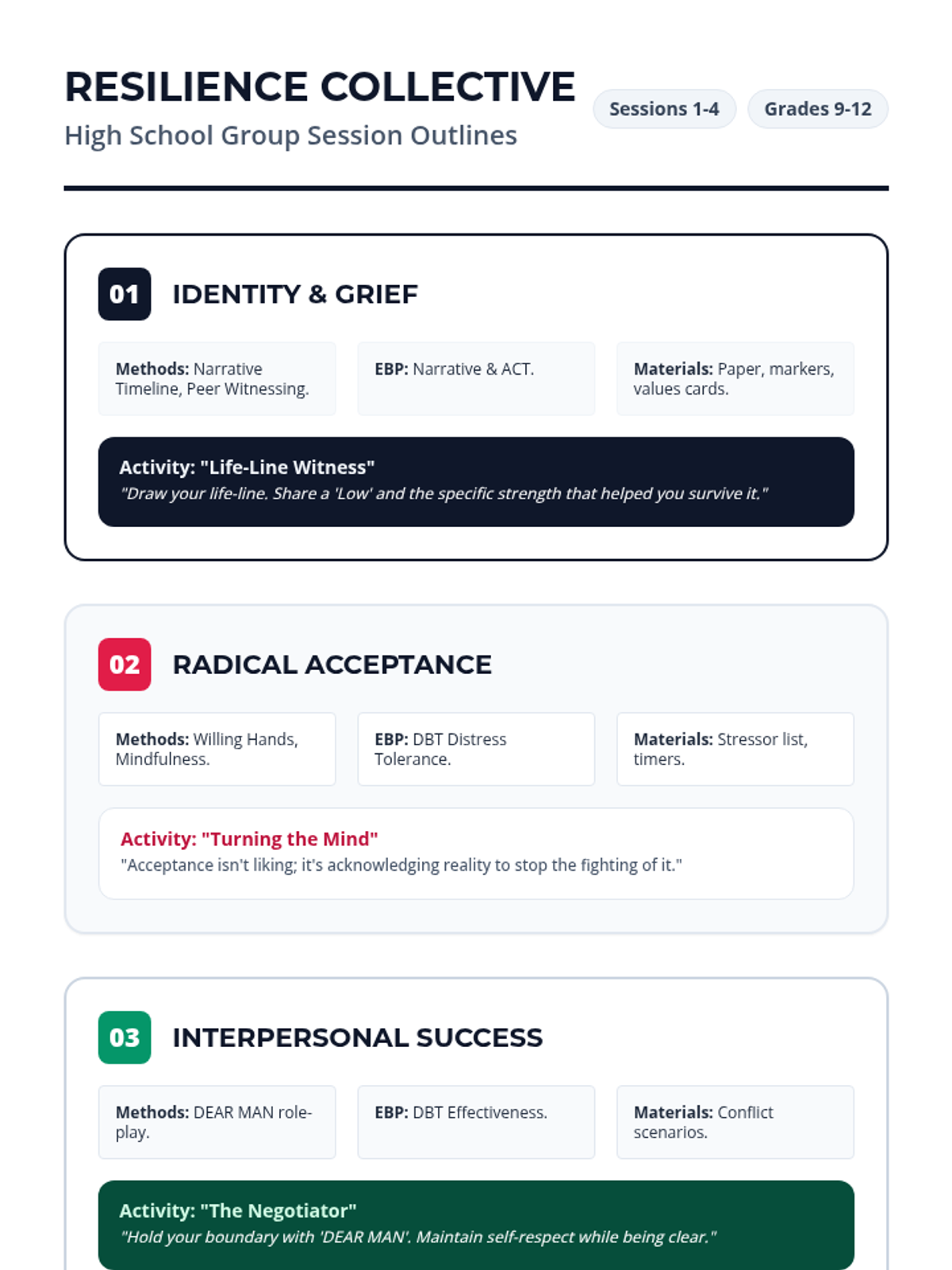
Advanced therapeutic interventions for high schoolers, emphasizing autonomy, complex cognitive reframing, interpersonal effectiveness, and comprehensive crisis protocols.
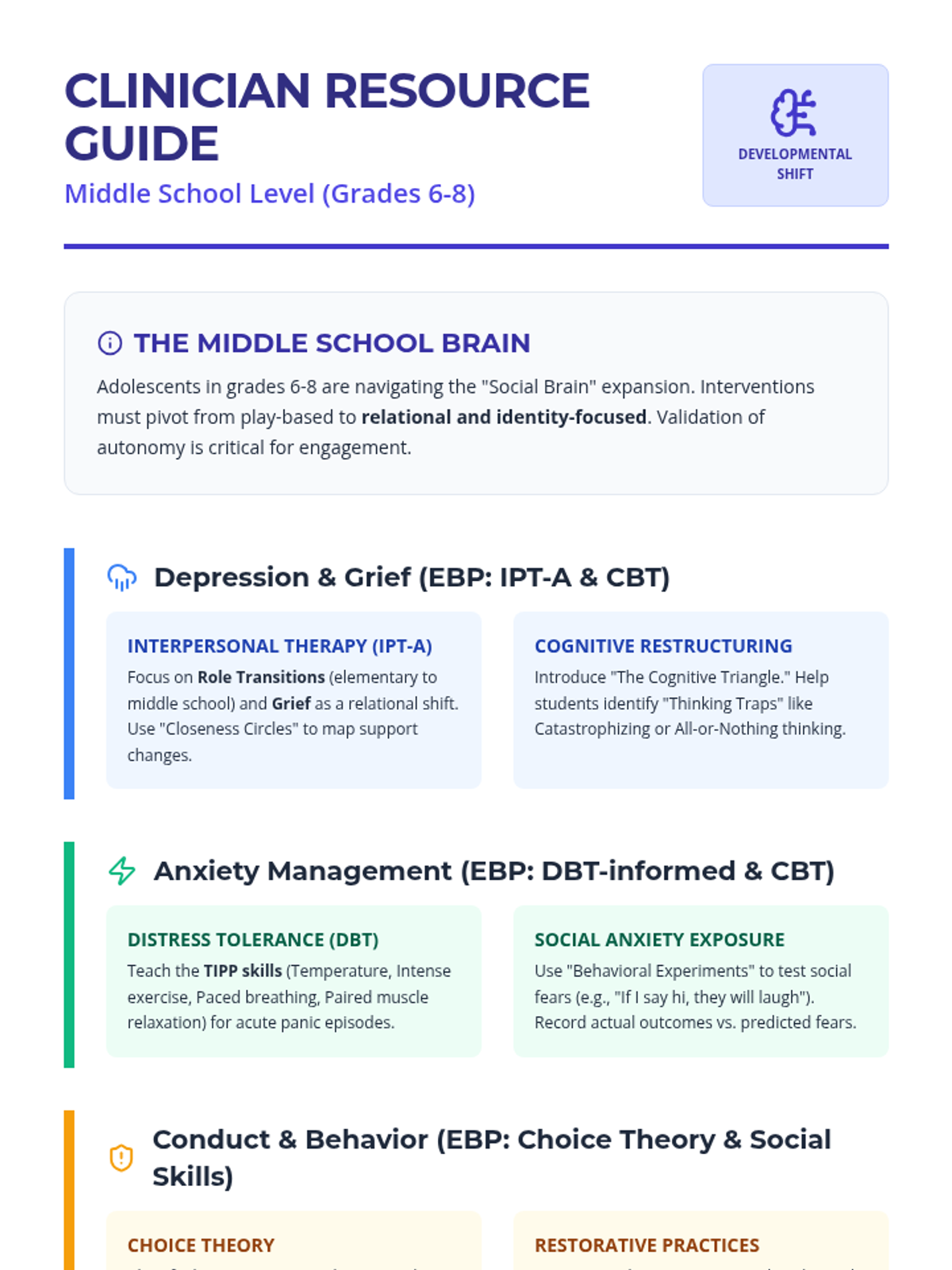
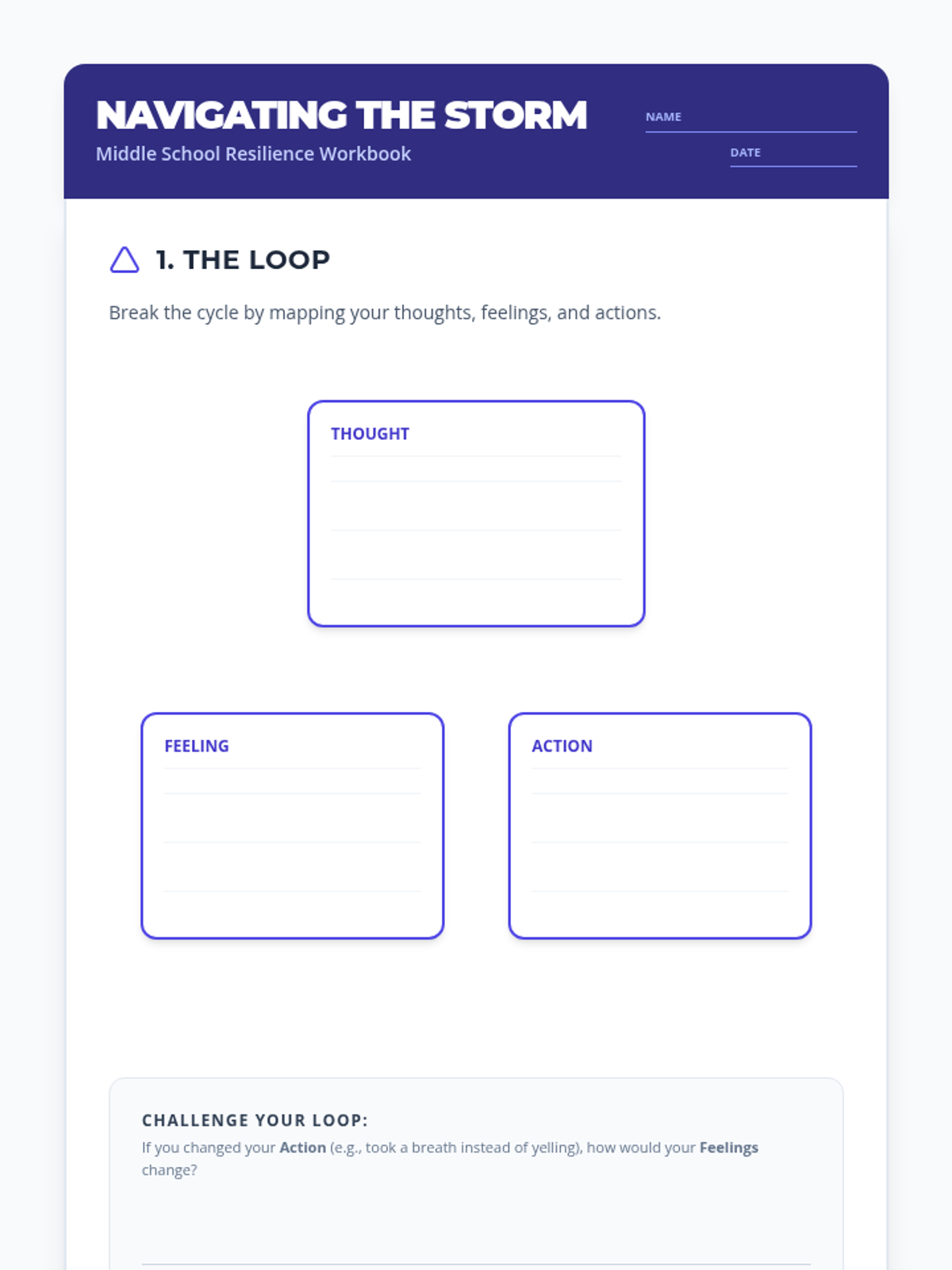
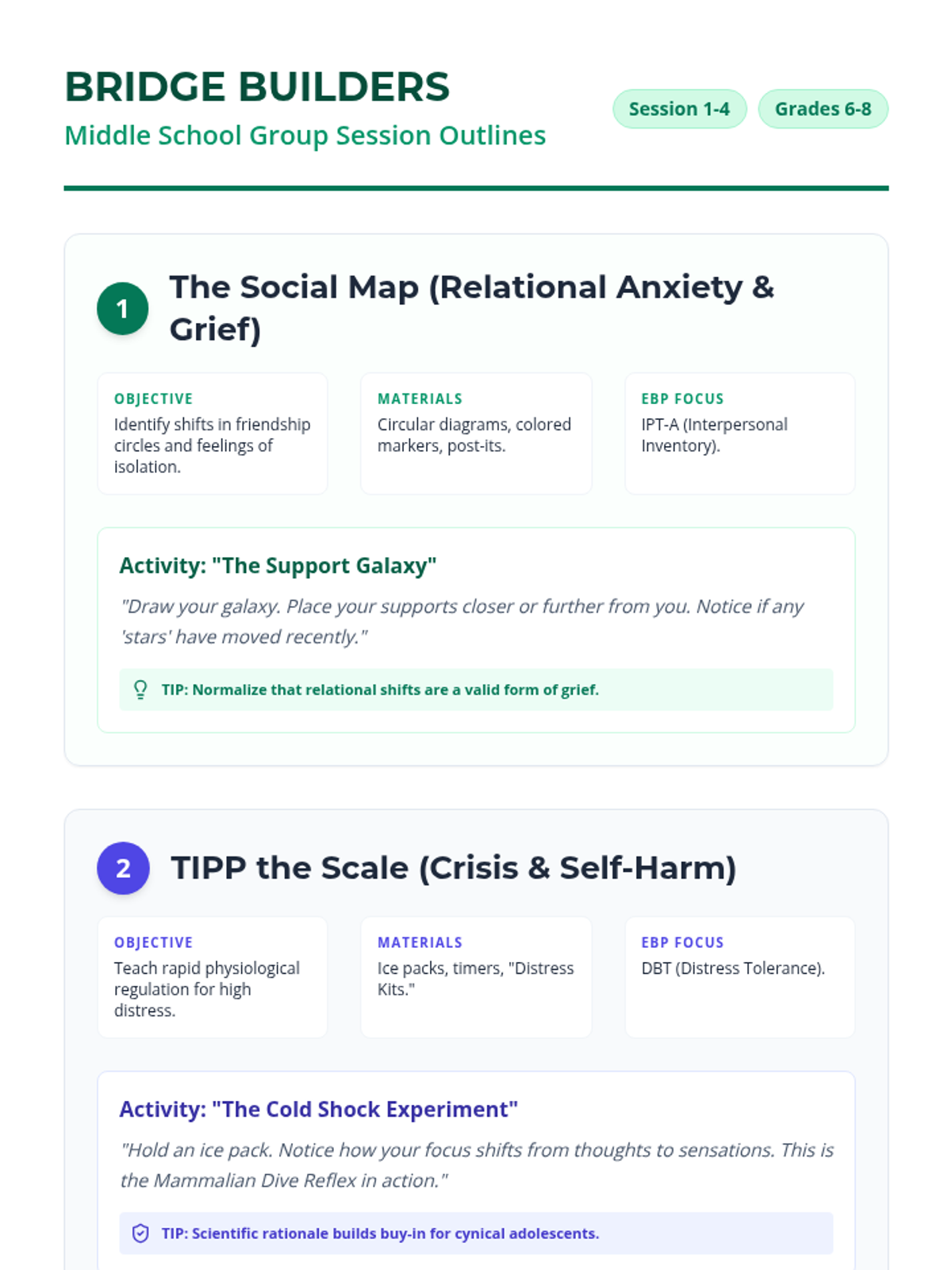
CBT and DBT-informed strategies tailored for the middle school transition, focusing on peer relationships, emotional regulation, and structured safety plans.
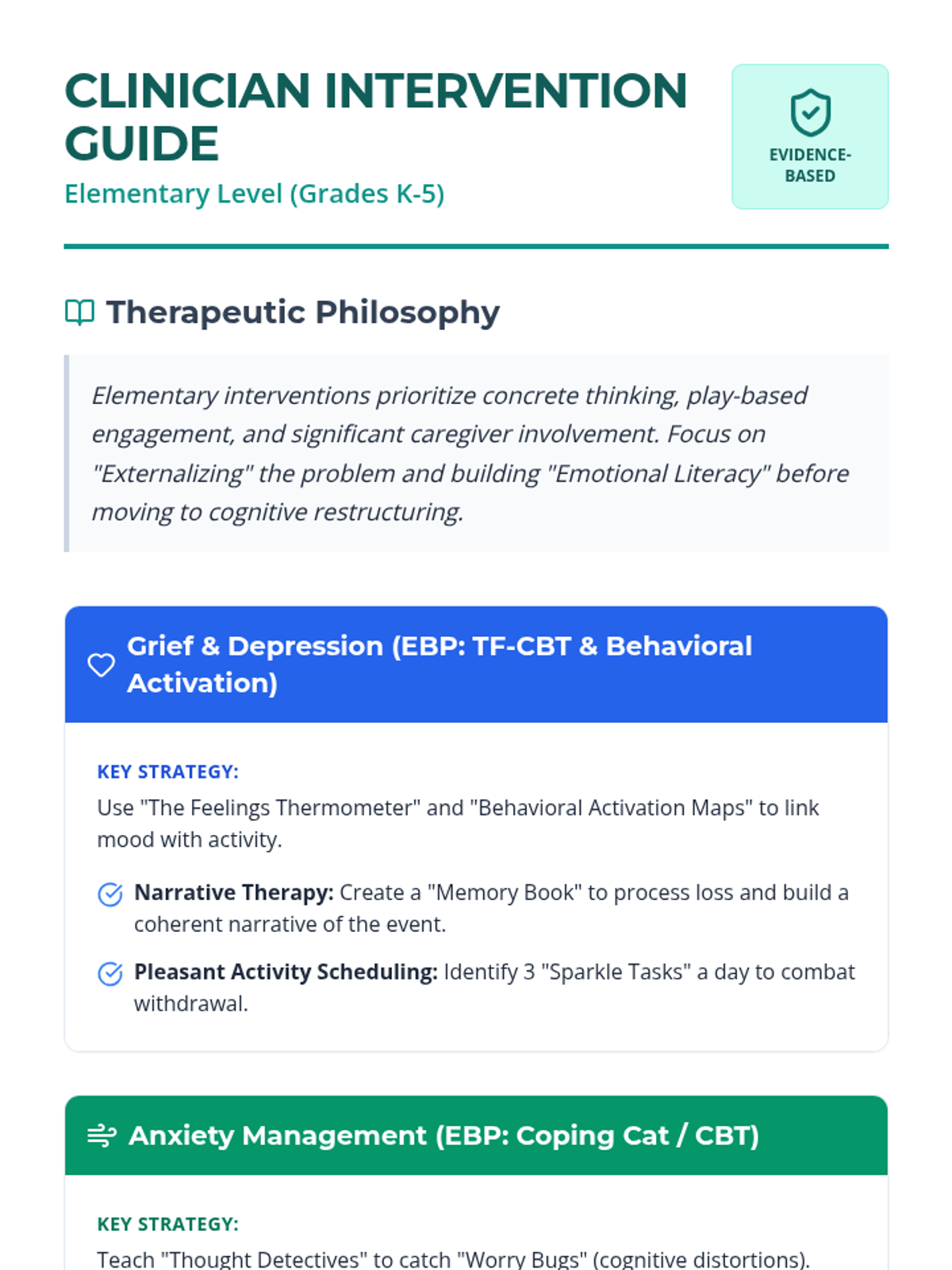
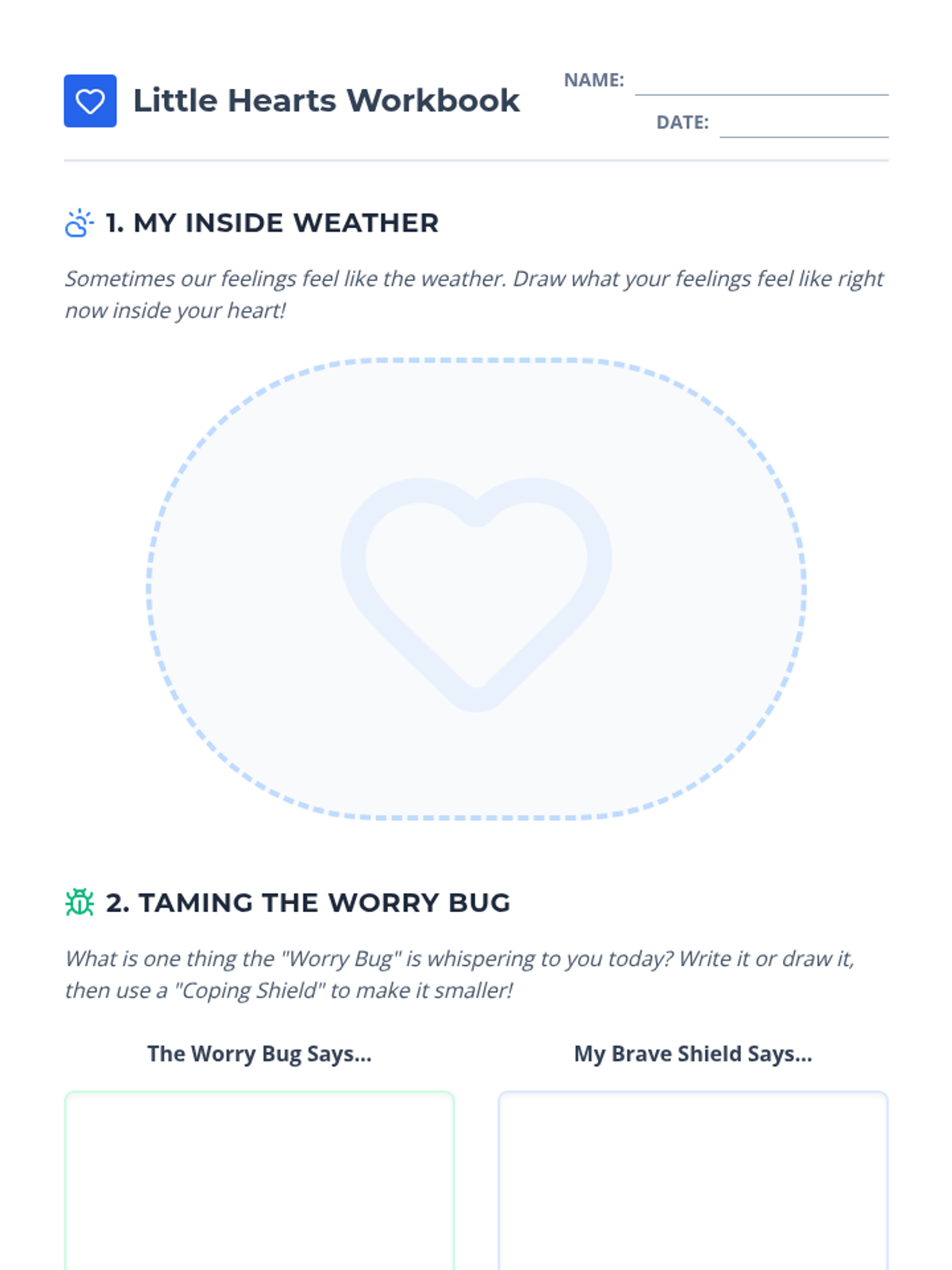
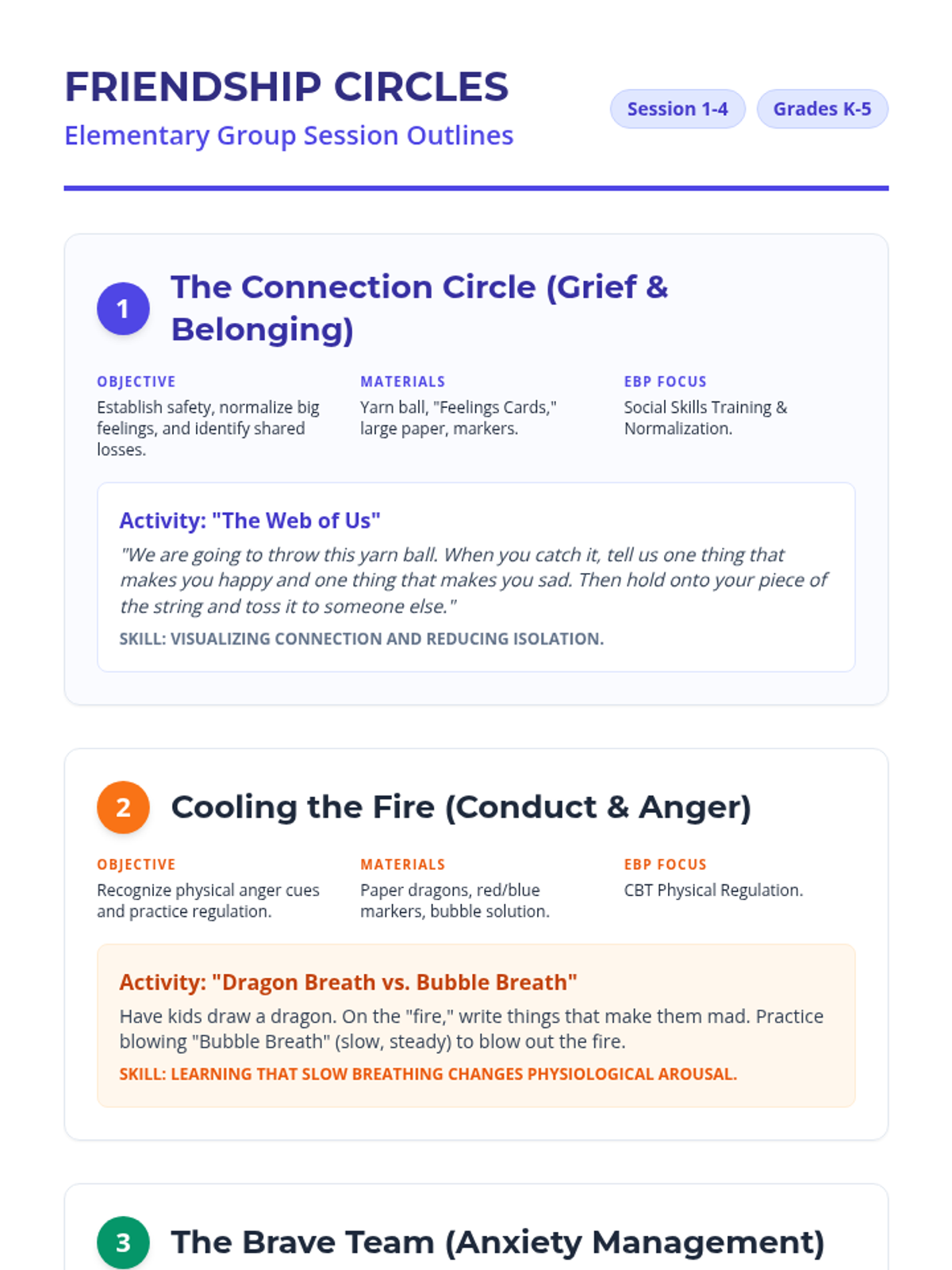
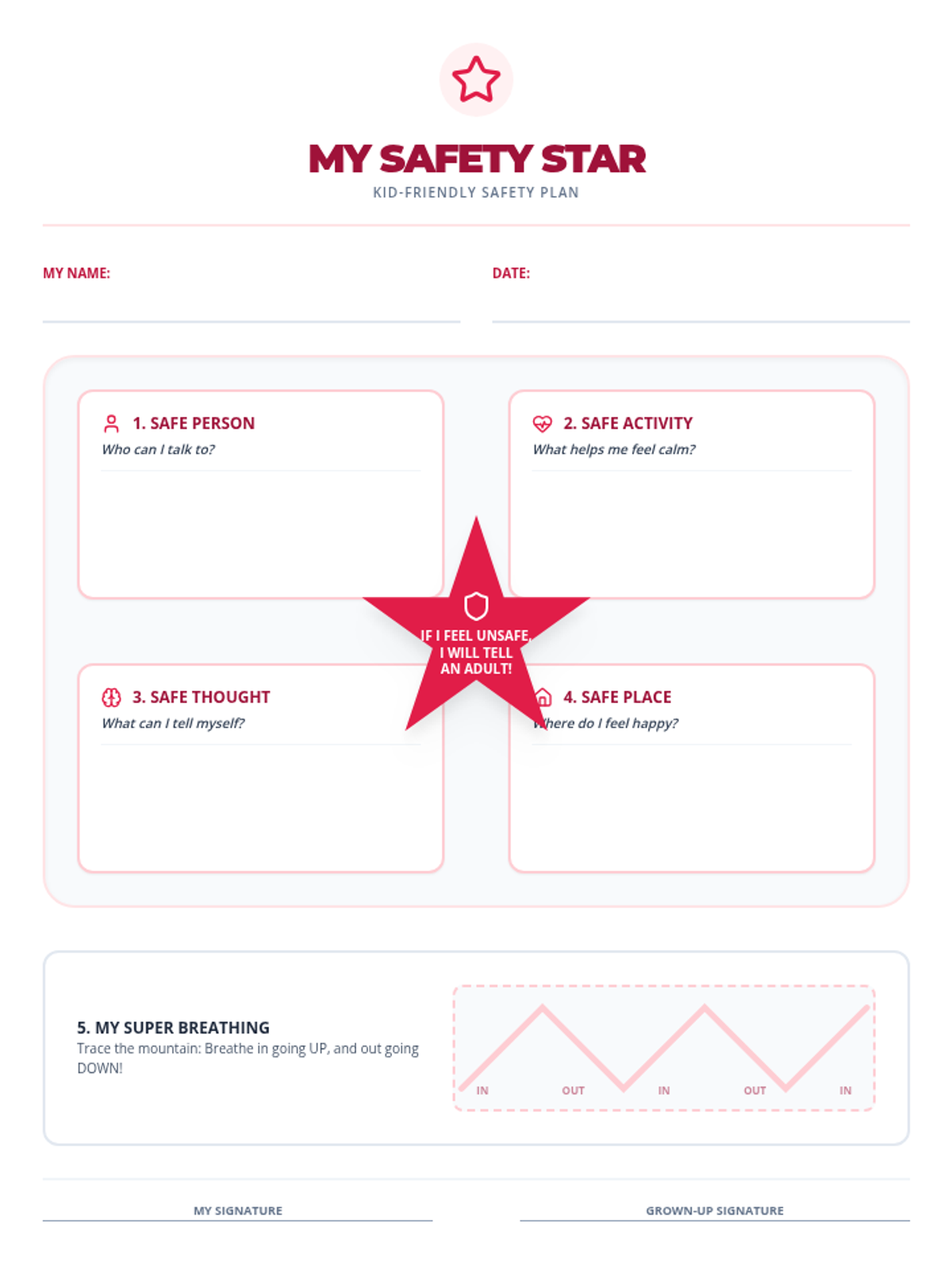
Developmentally appropriate interventions for elementary students focusing on play-based CBT, social-emotional learning, and kid-friendly safety planning.
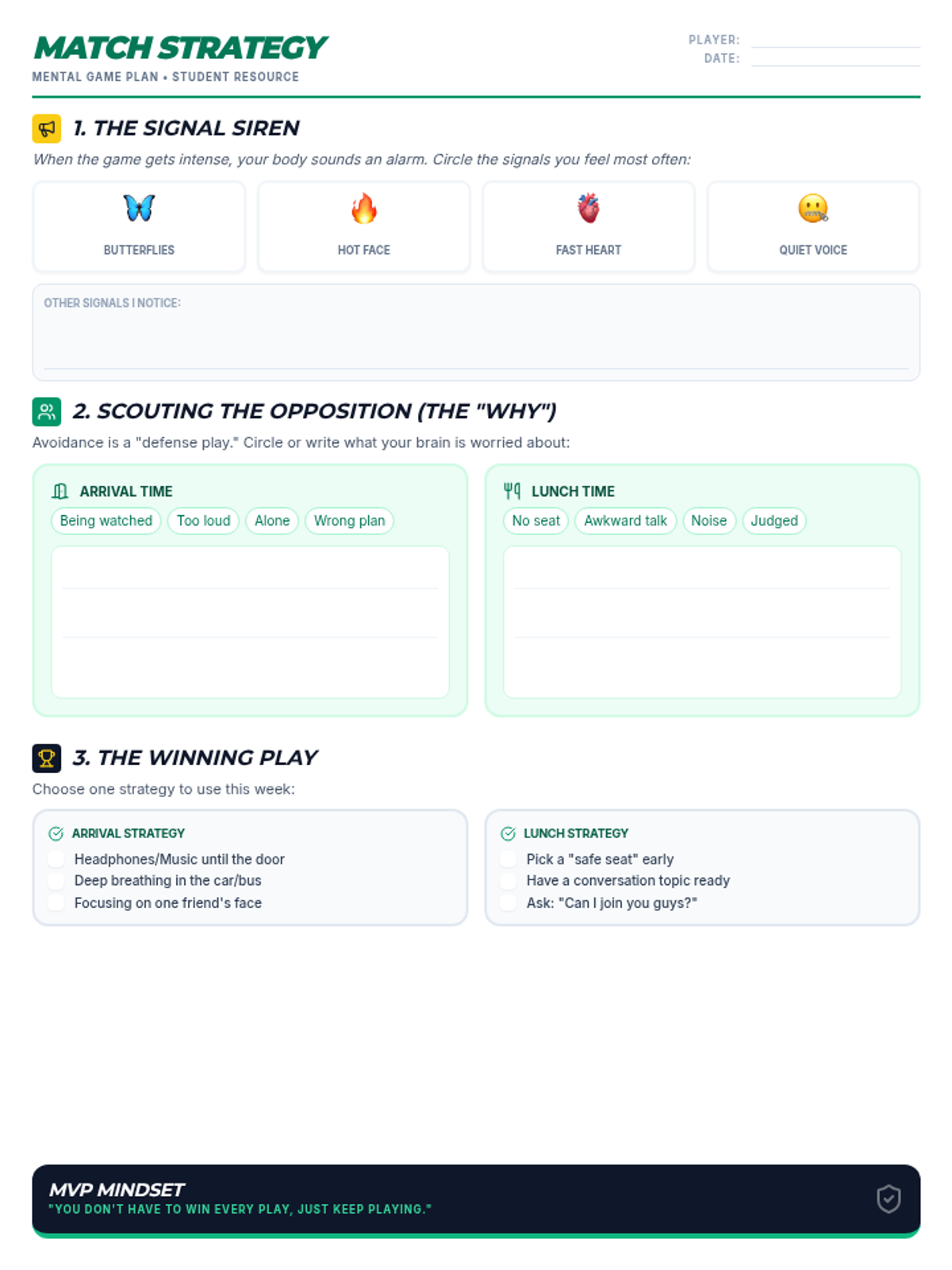
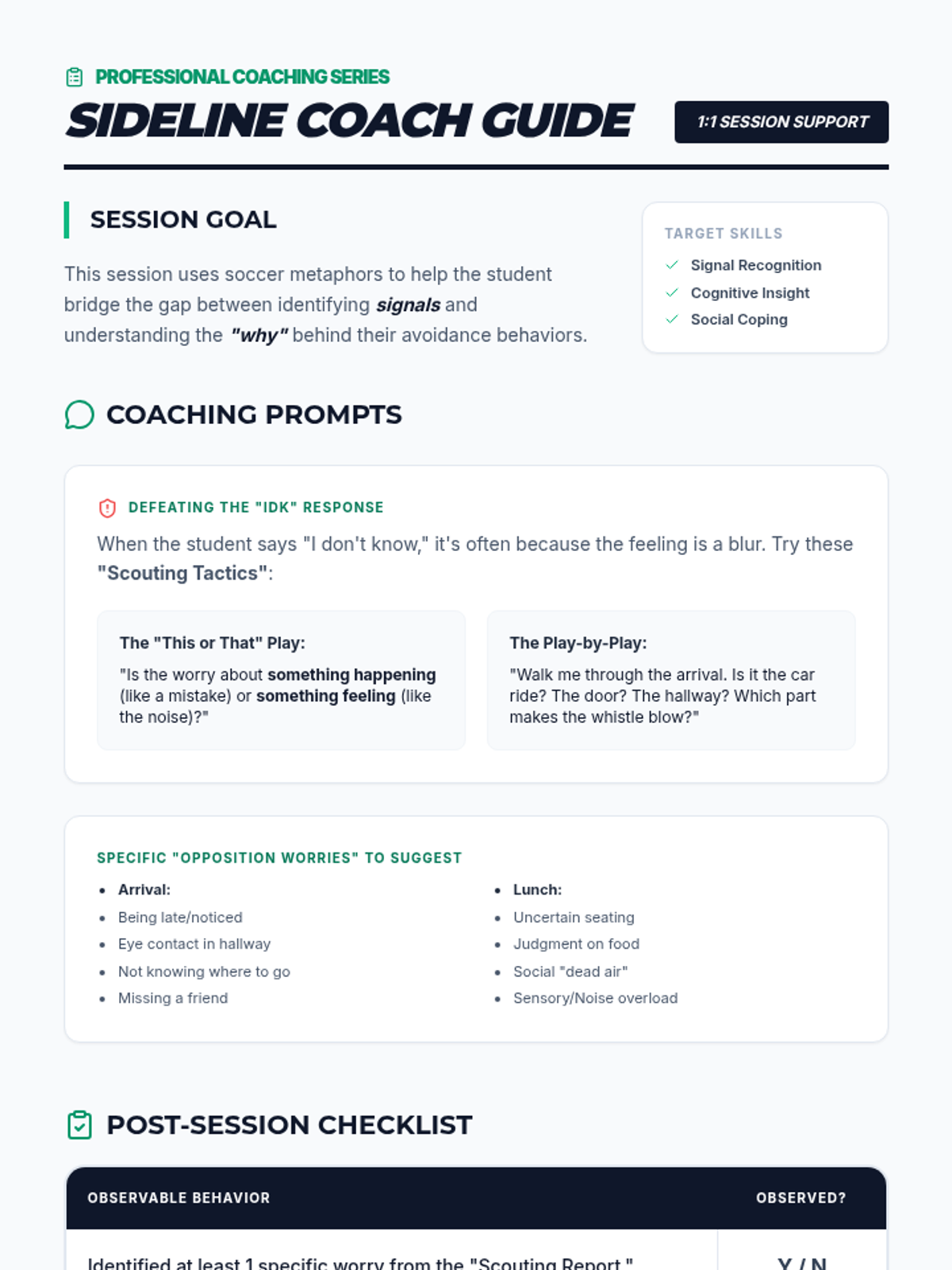
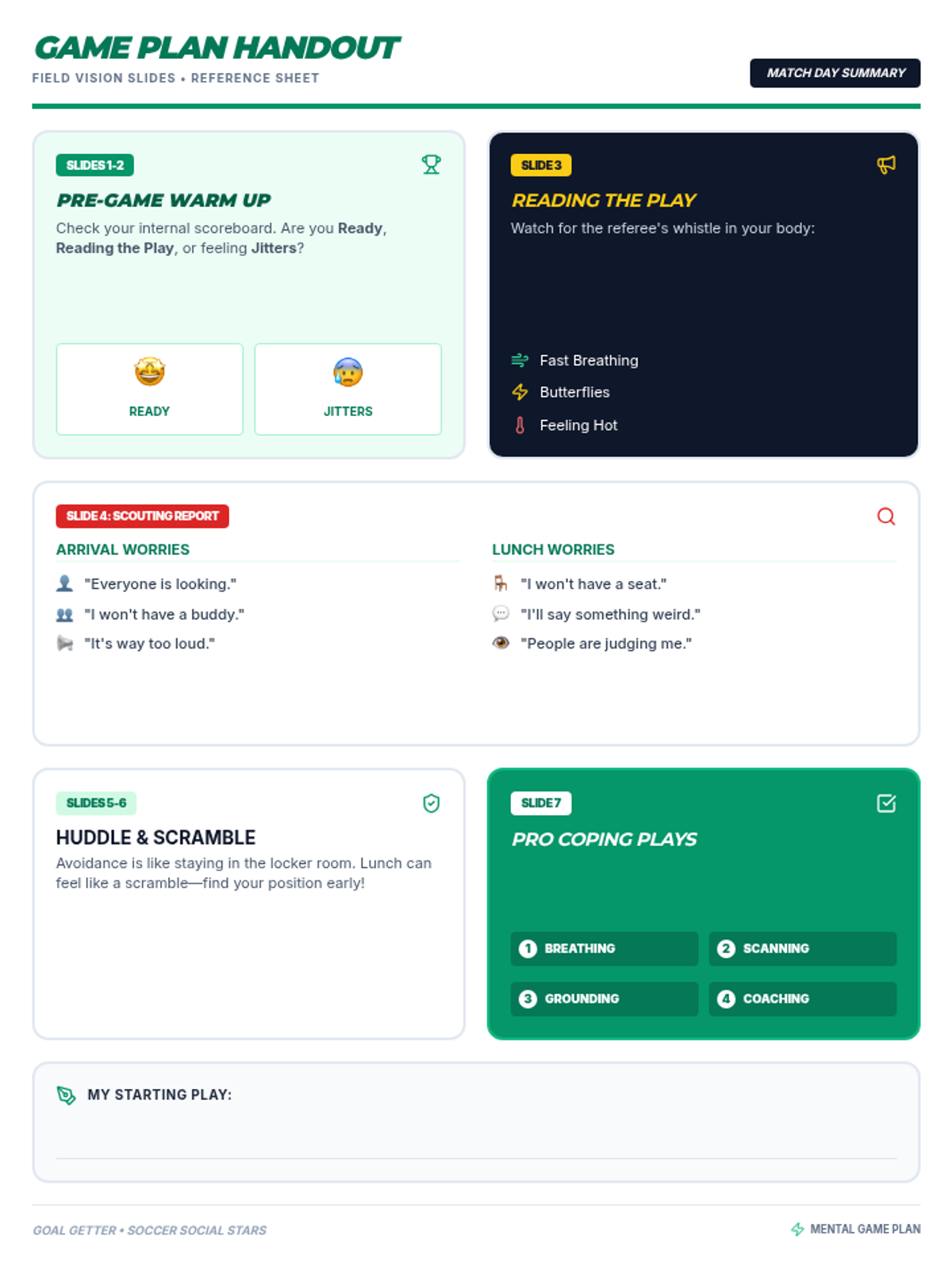
Focuses on identifying the 'why' behind avoidance of arrival and lunch through soccer analogies, identifying physical signals, and selecting coping strategies.
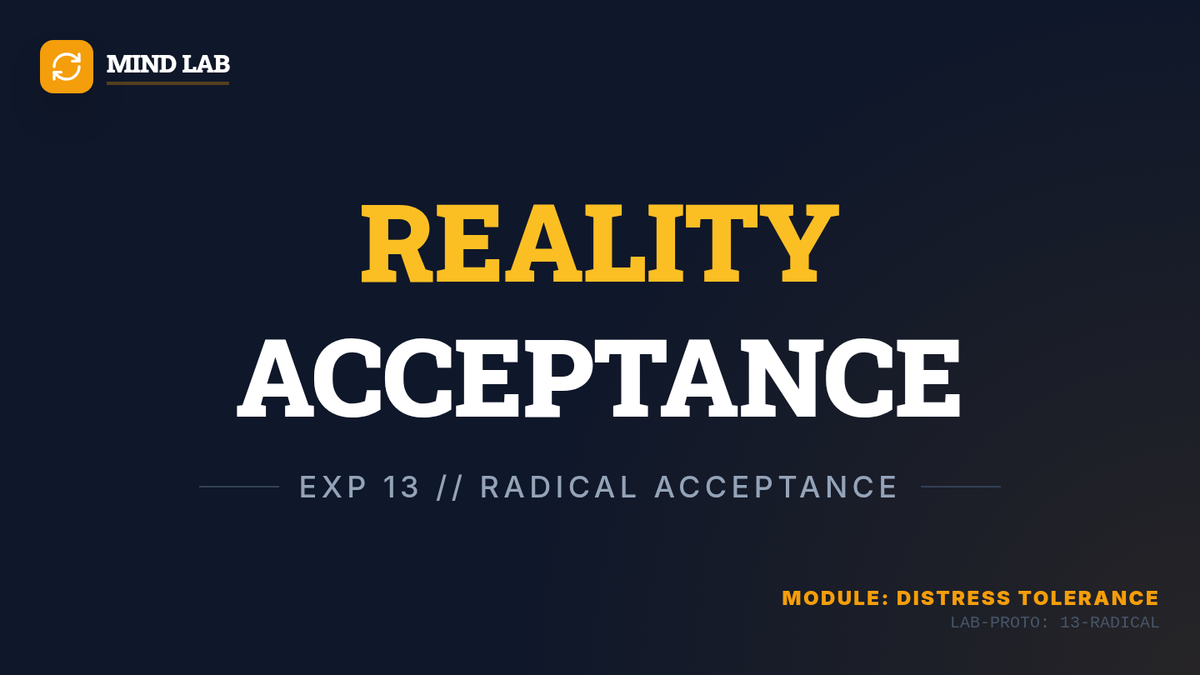
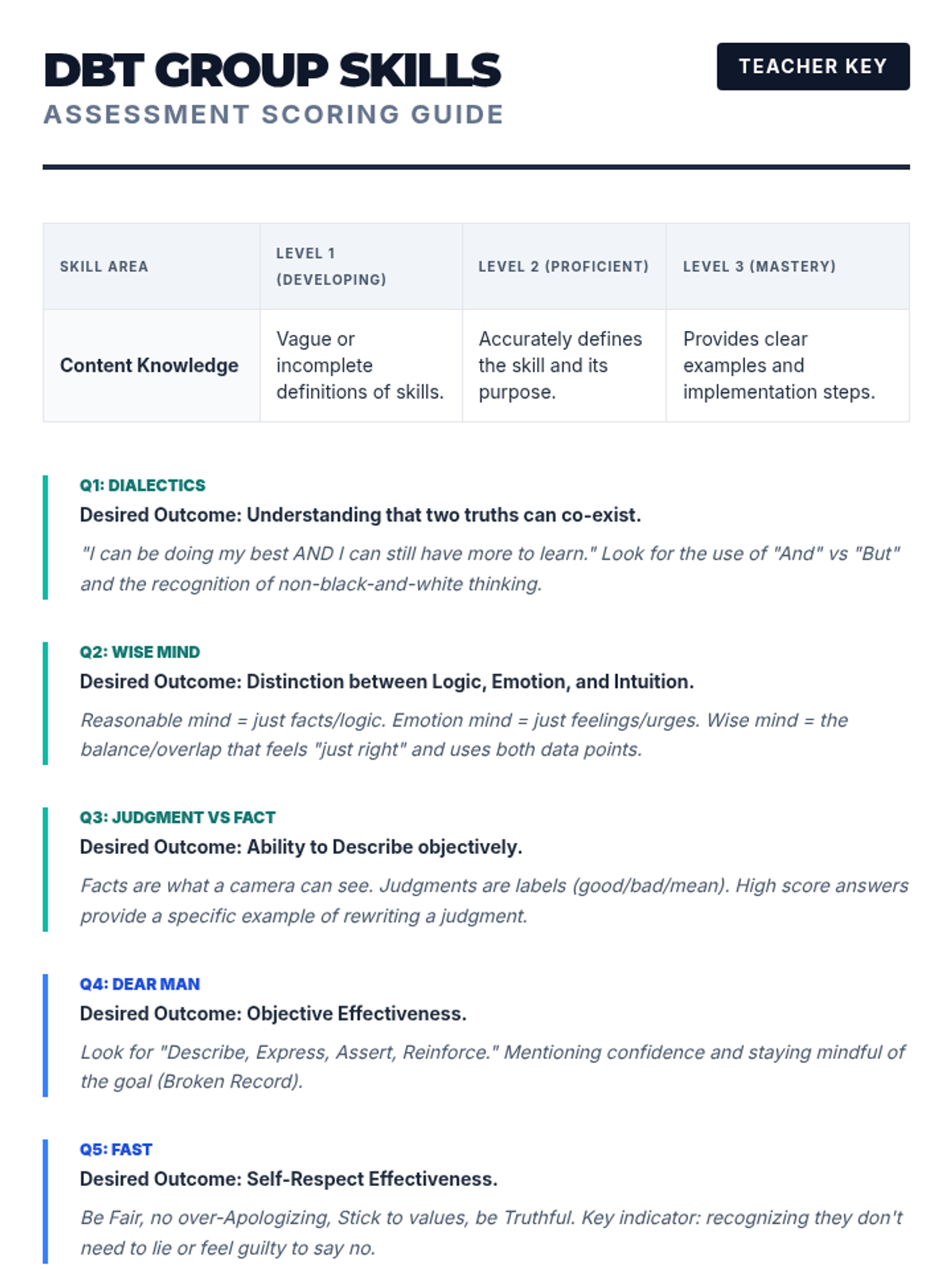
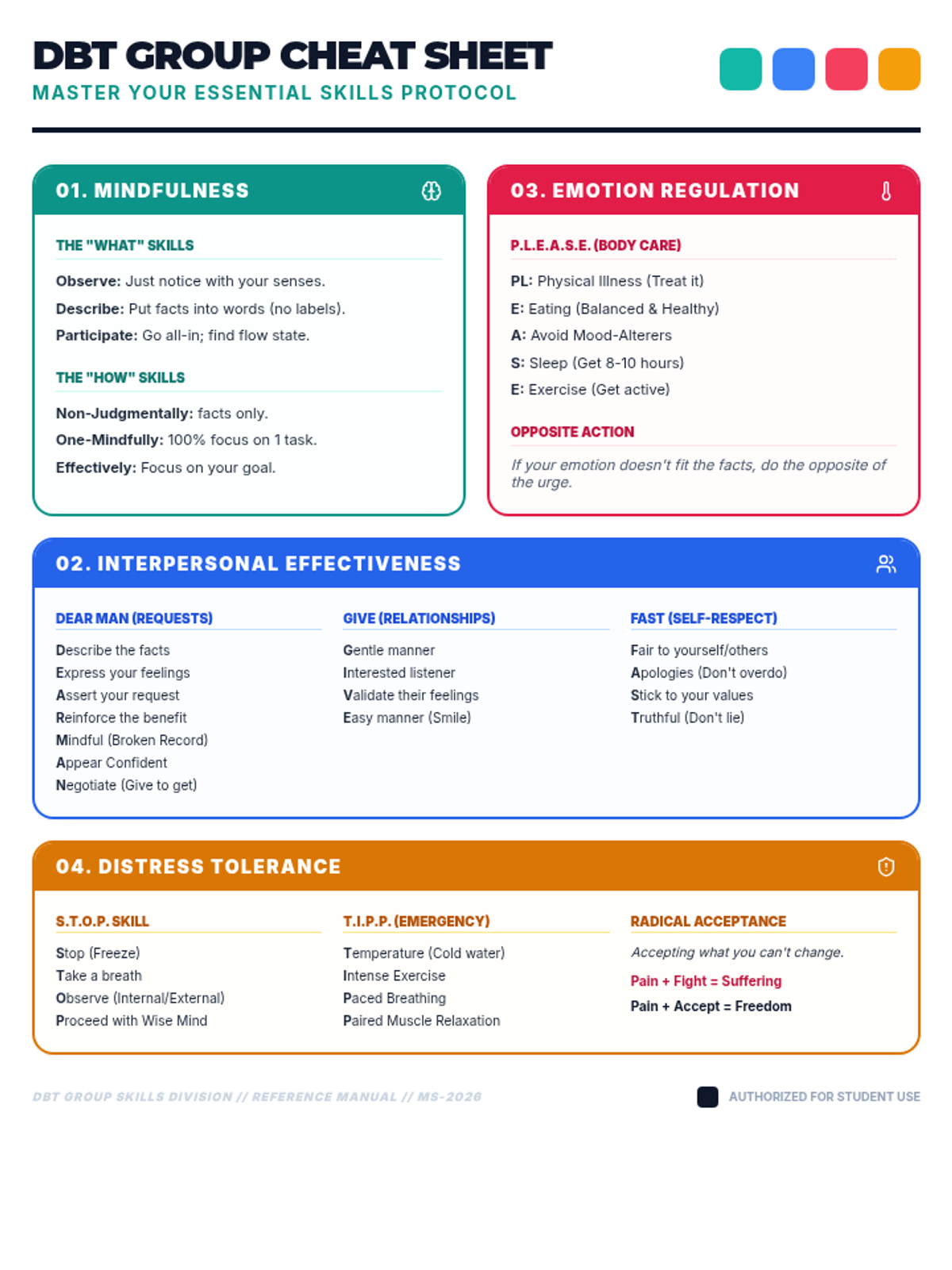
Aceitação Radical e voltando a mente para a realidade para reduzir o sofrimento.
Autoconforto usando os cinco sentidos e melhorando o momento.
As habilidades STOP e TIPP para gerenciamento imediato de crises e resfriamento.
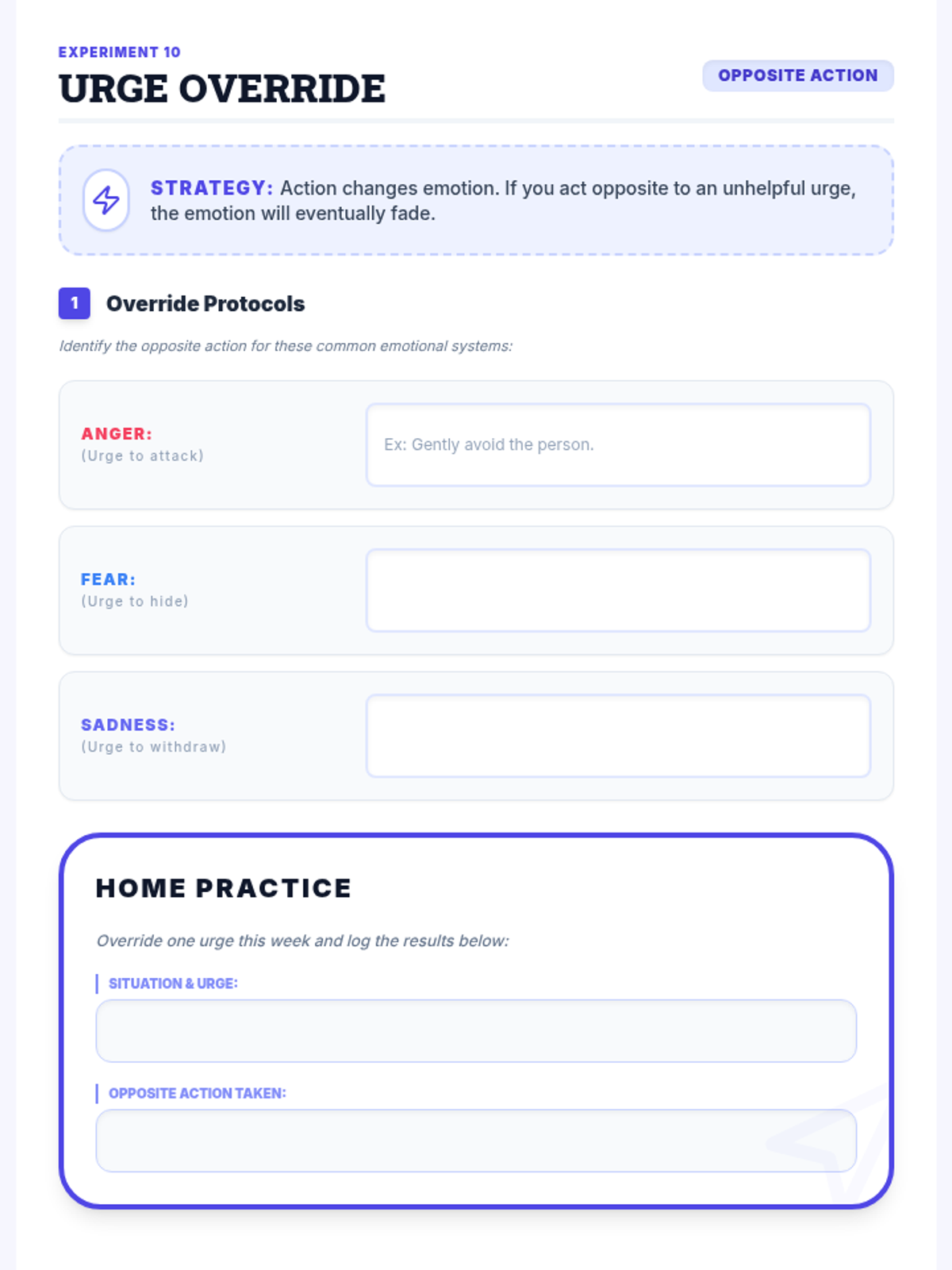
A habilidade de Ação Oposta para mudar emoções indesejadas agindo contra o impulso.
A habilidade PLEASE para manter um corpo saudável e apoiar uma mente saudável.
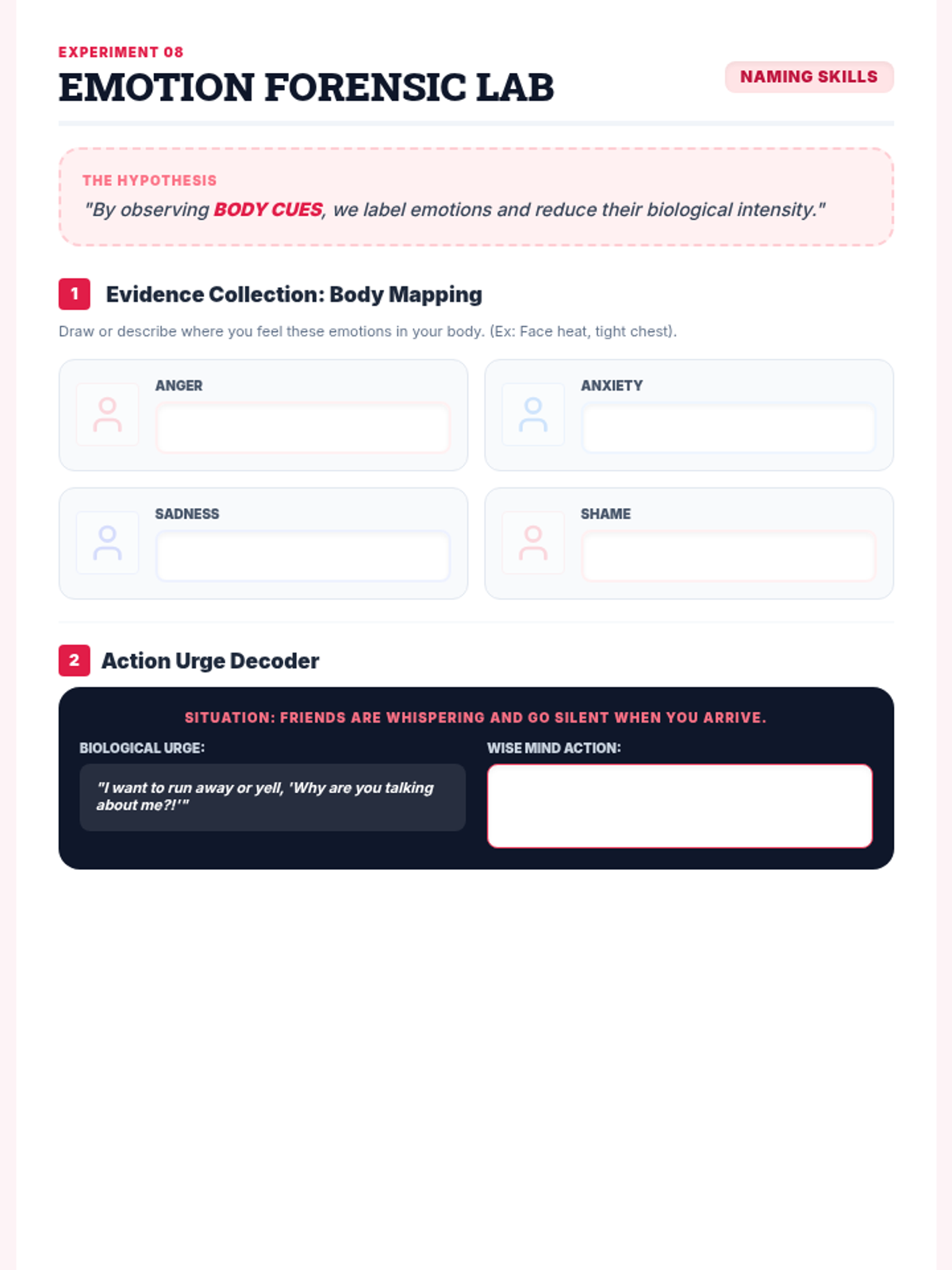
Aprender a identificar e nomear emoções para reduzir seu poder e aumentar a compreensão.
Usando a habilidade FAST para manter o autorrespeito e permanecer fiel aos valores.
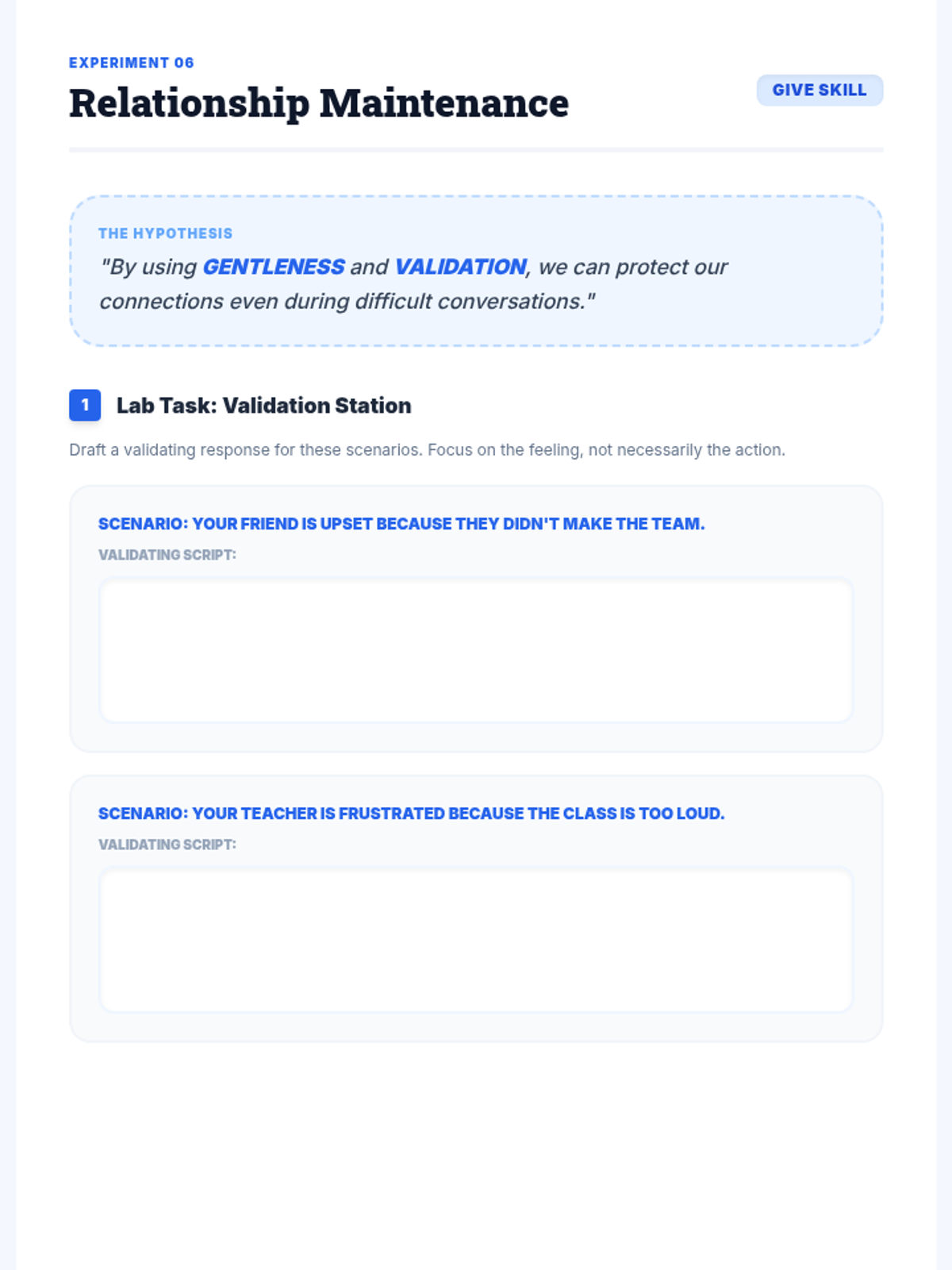
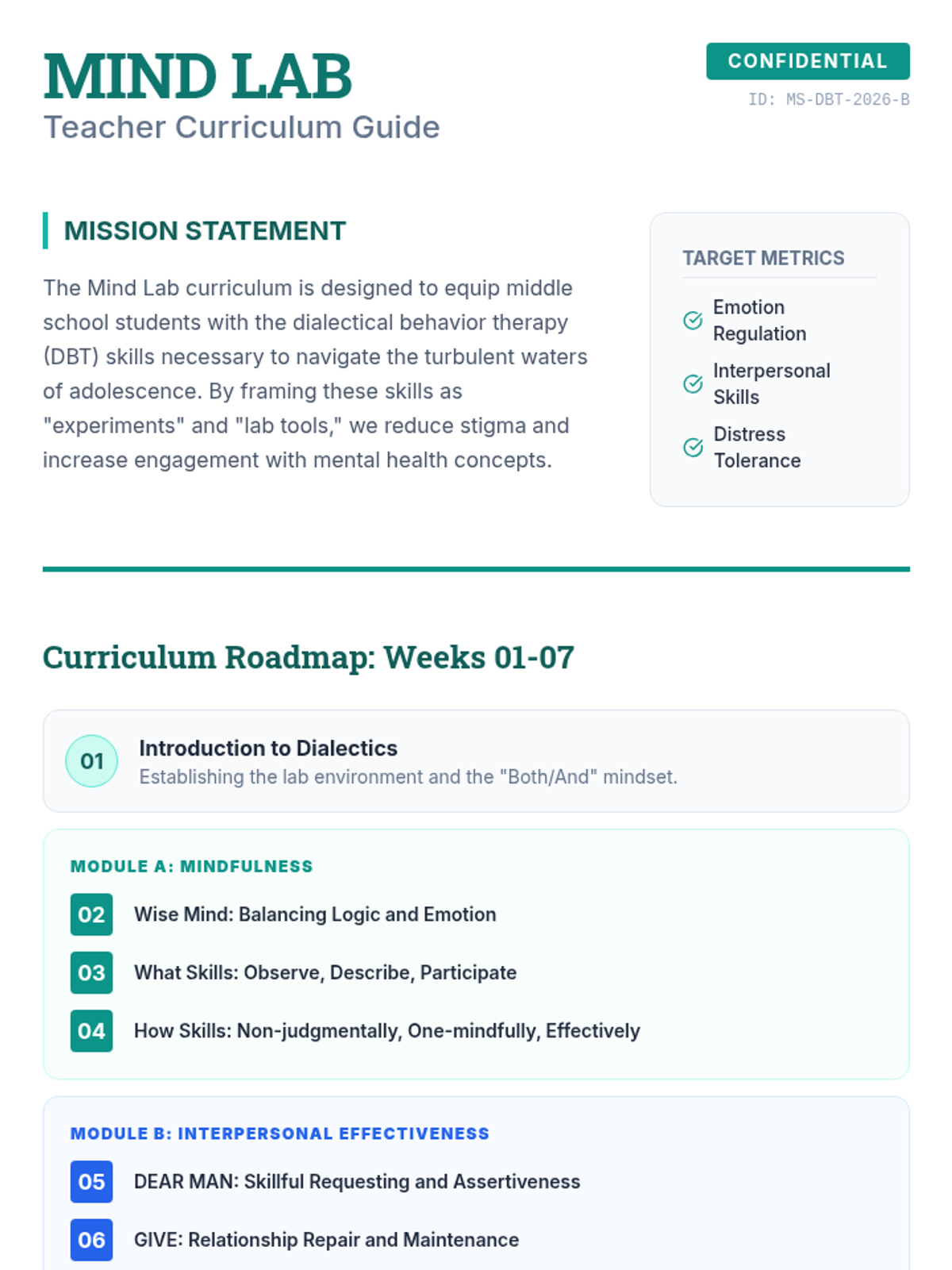
Usando a habilidade GIVE para manter e fortalecer relacionamentos durante as interações.
Usando a habilidade DEAR MAN para pedir coisas ou dizer não de forma eficaz, mantendo os relacionamentos.
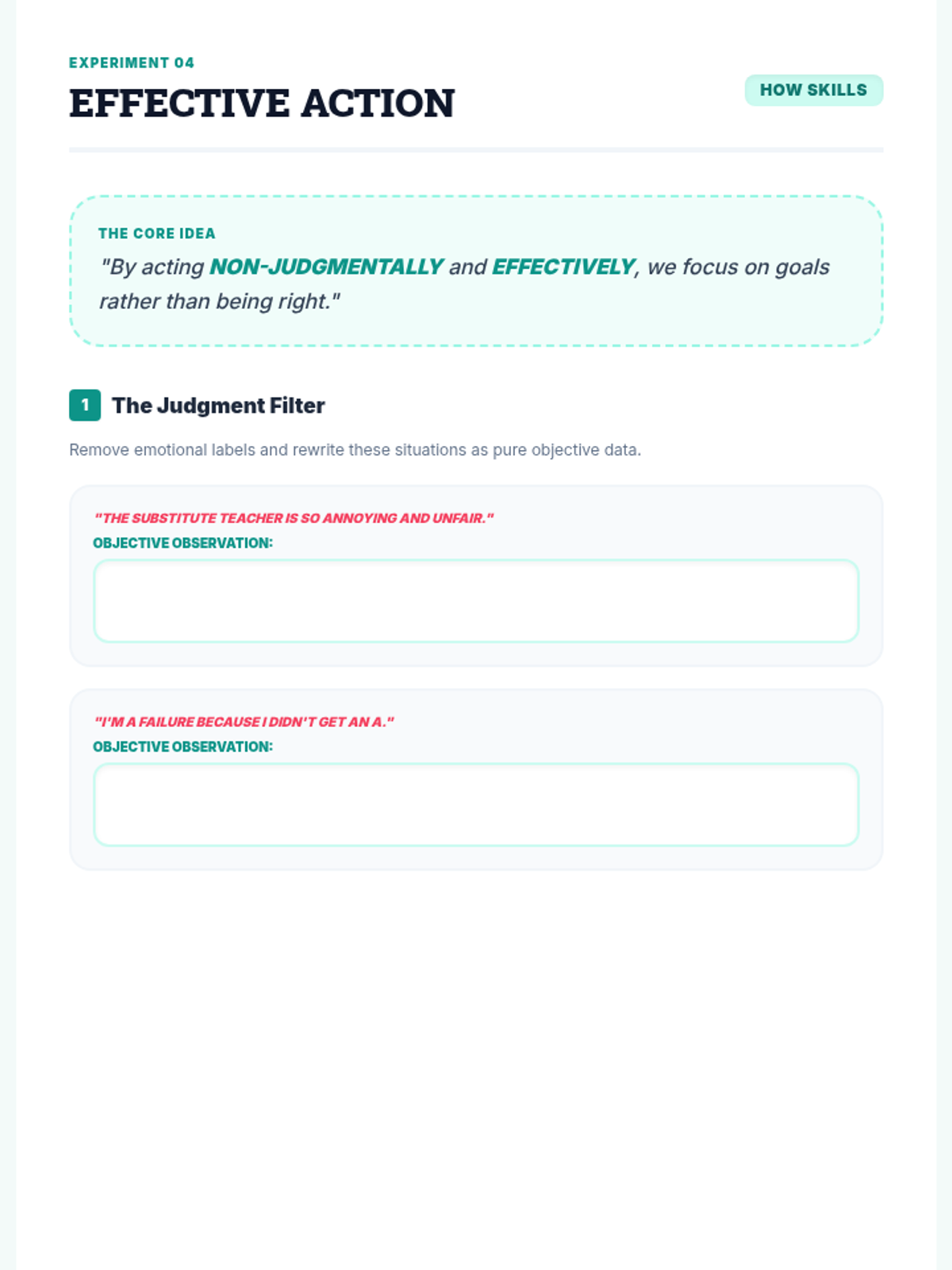
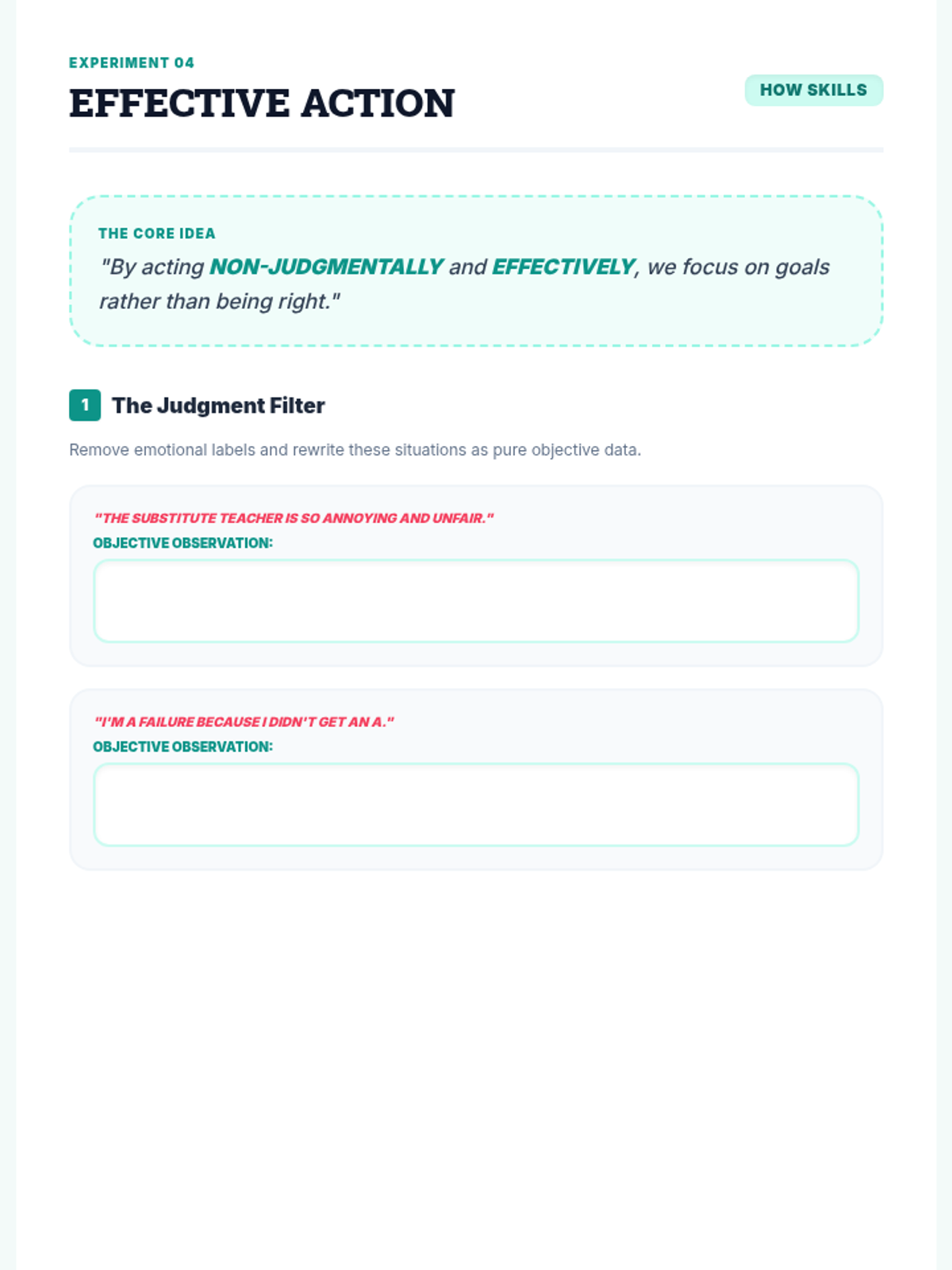
Ensinando as habilidades 'Como' da Atenção Plena: Sem Julgamentos, Uma Coisa de Cada Vez e de Forma Eficaz.
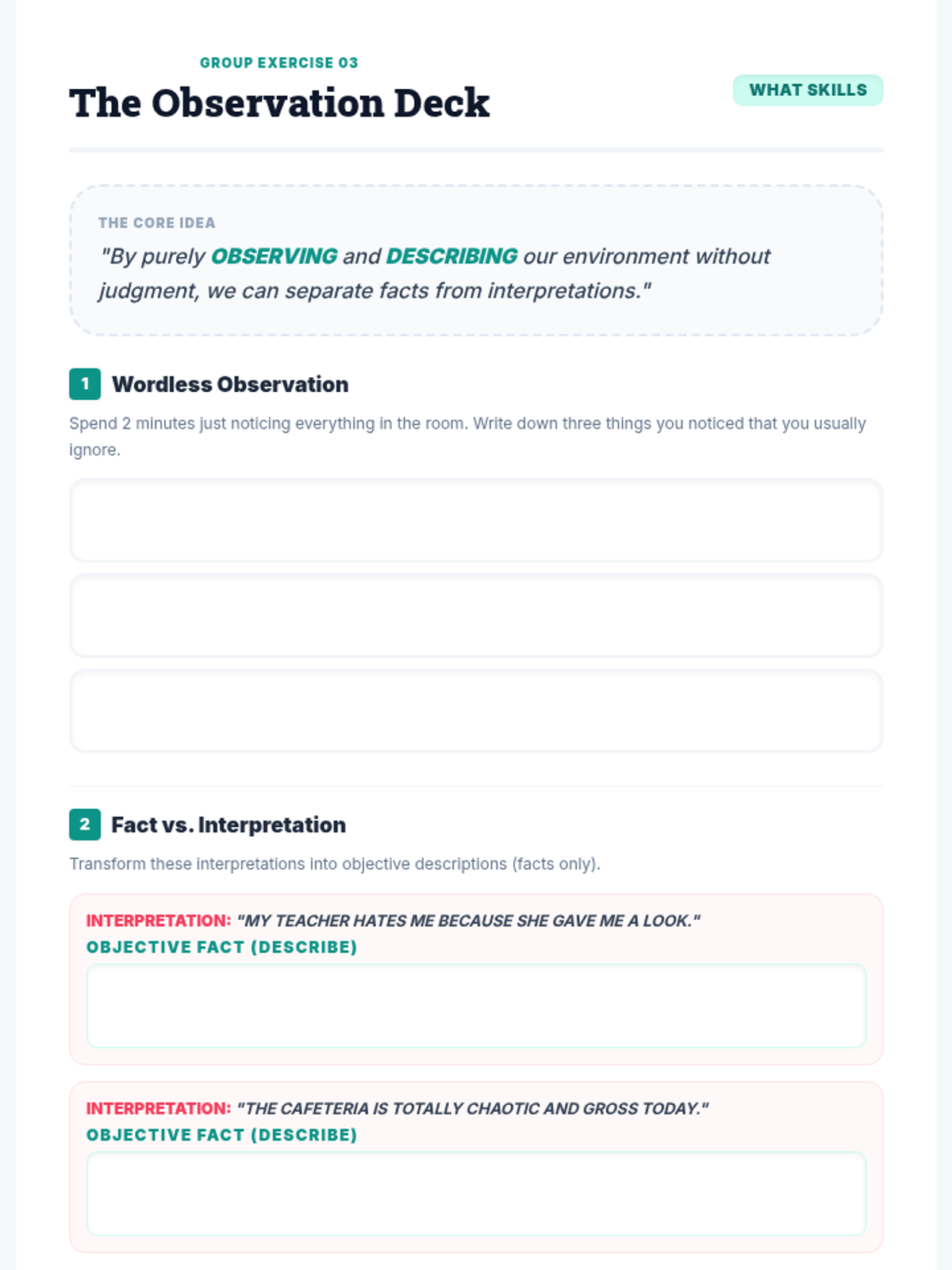
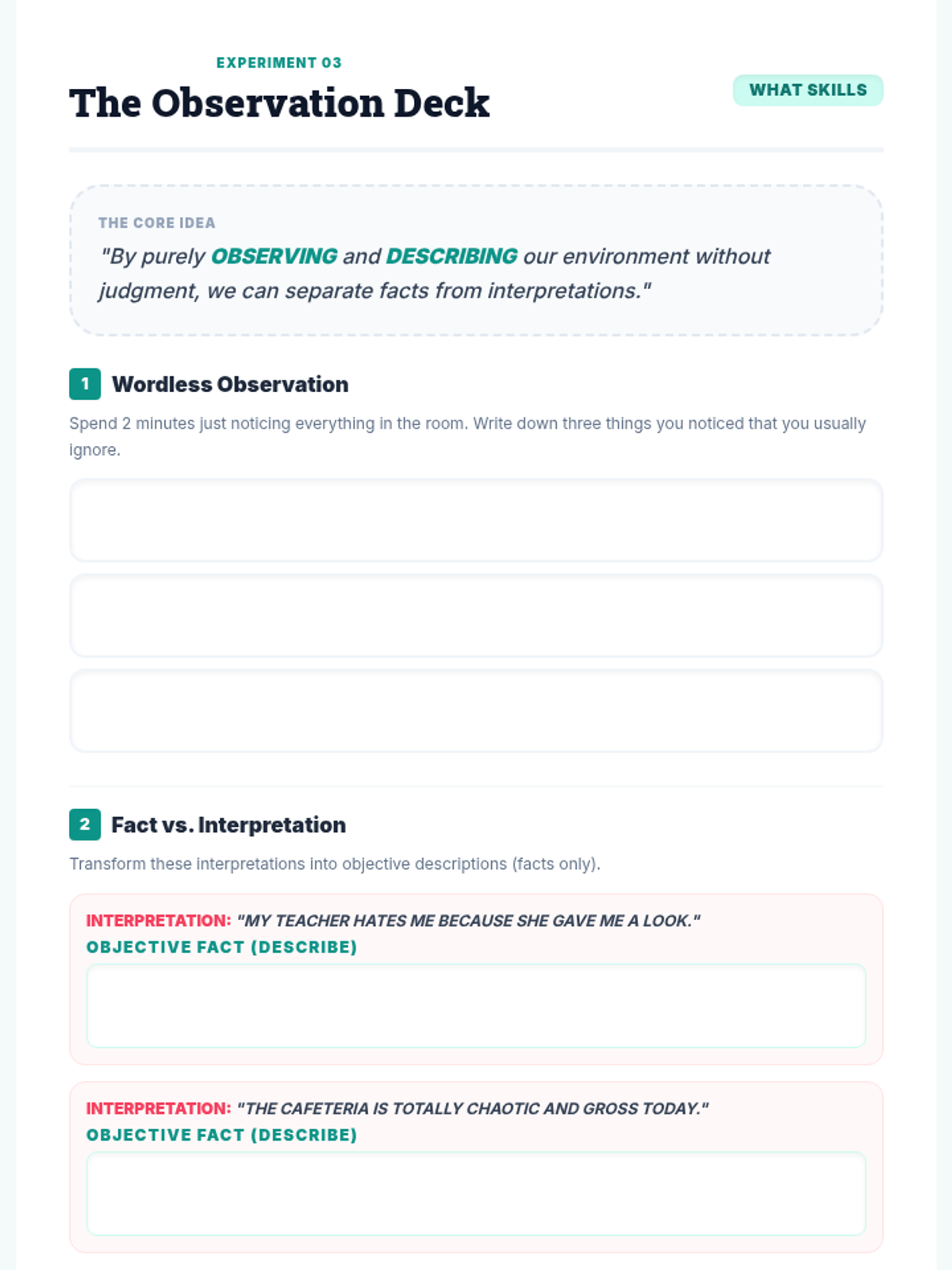
Ensinando as habilidades 'O Quê' da Atenção Plena: Observar, Descrever e Participar.
Foca no conceito de 'Mente Sábia'—o equilíbrio entre a Mente Emocional e a Mente Racional.
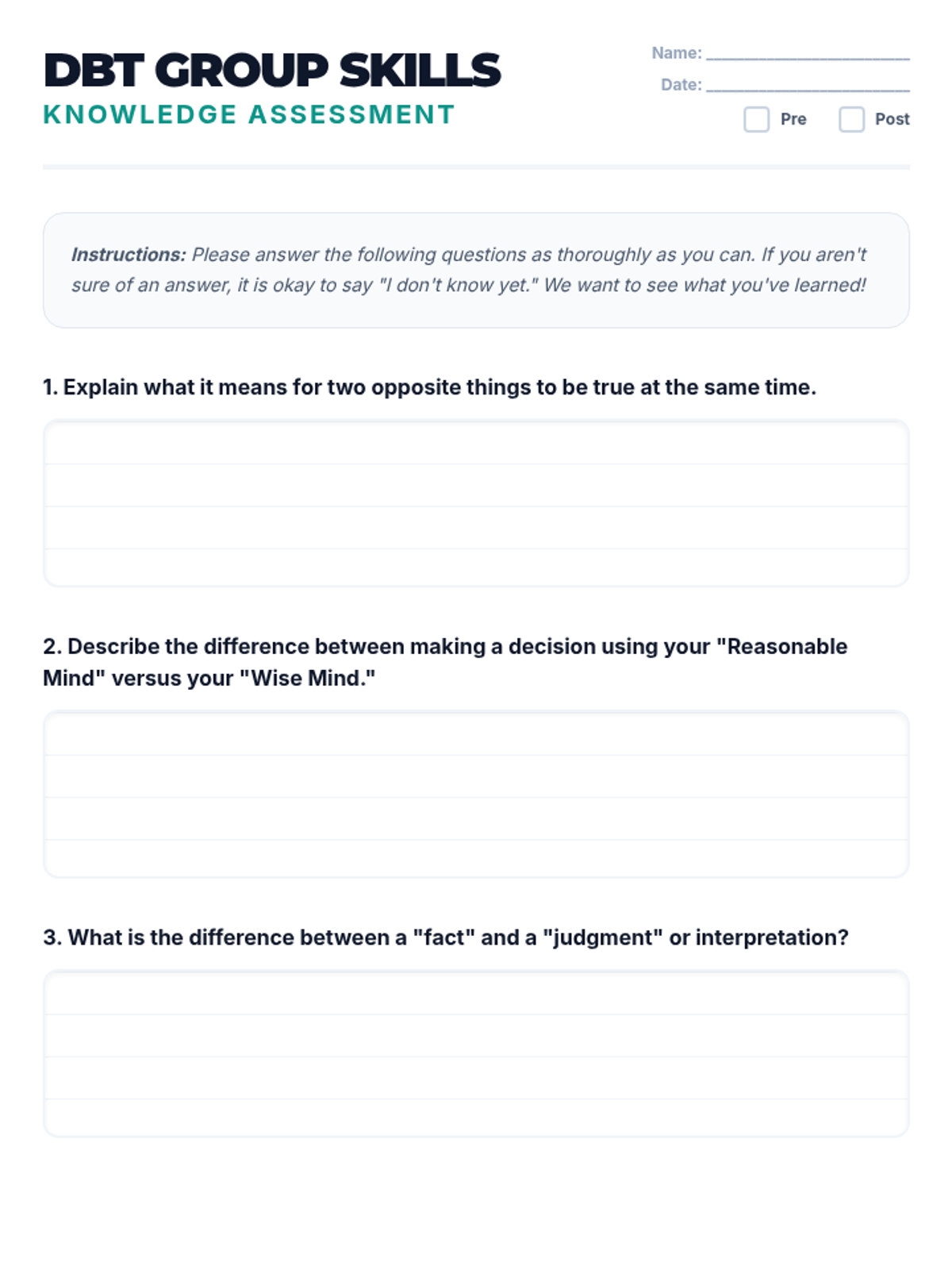
Introdução ao conceito de Dialética e à abordagem do Grupo DBT para construir uma vida que vale a pena viver.
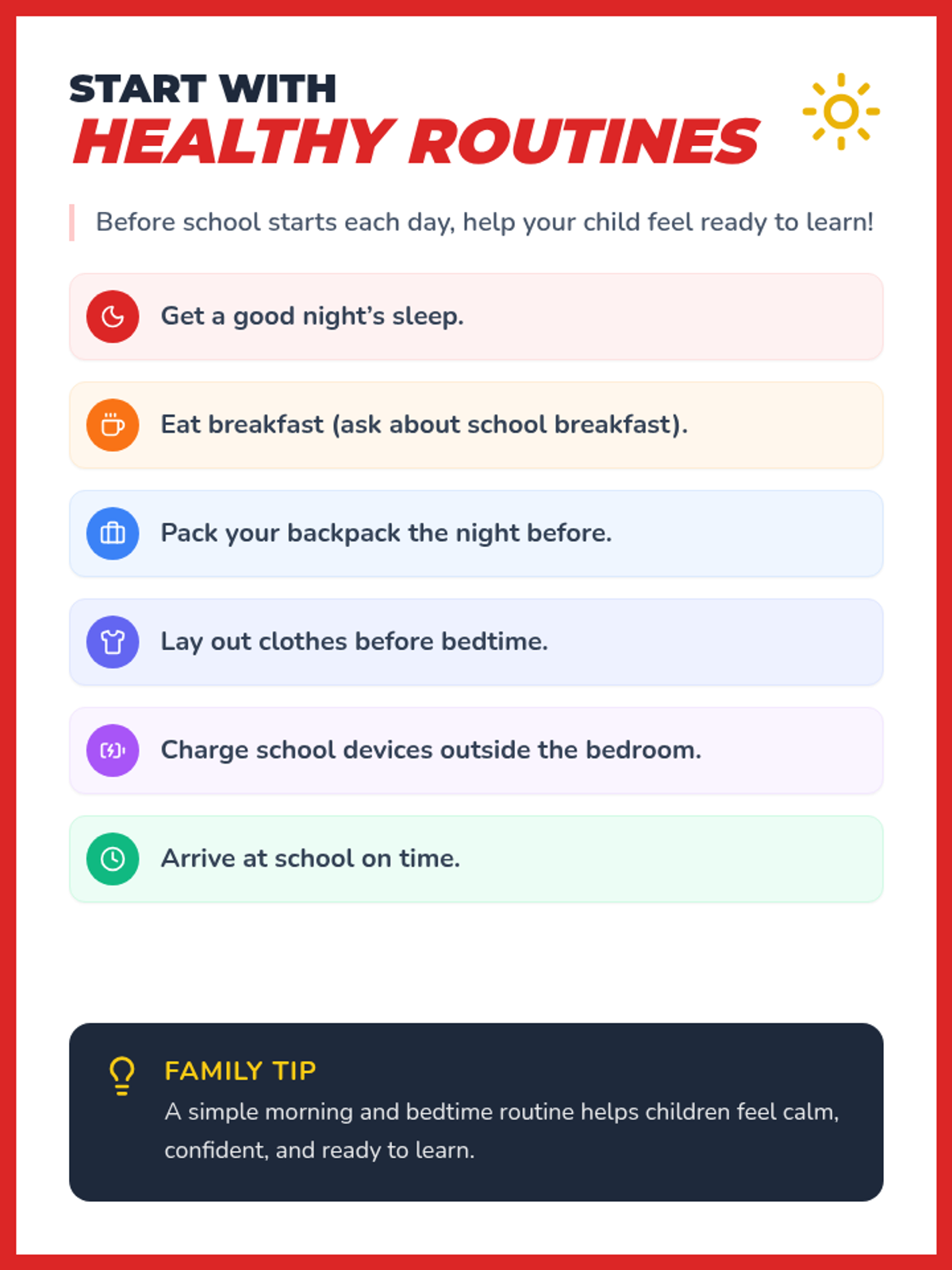
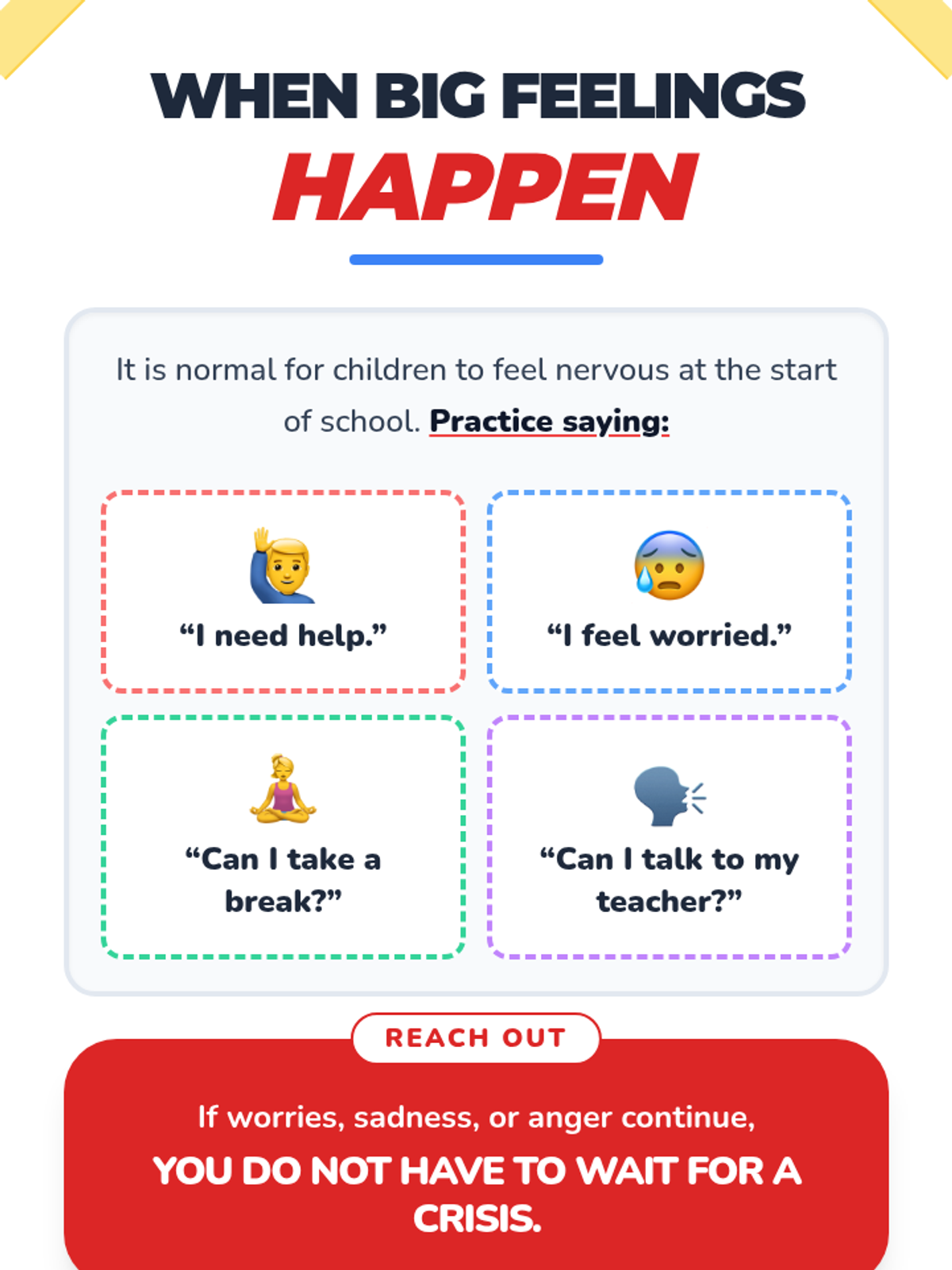
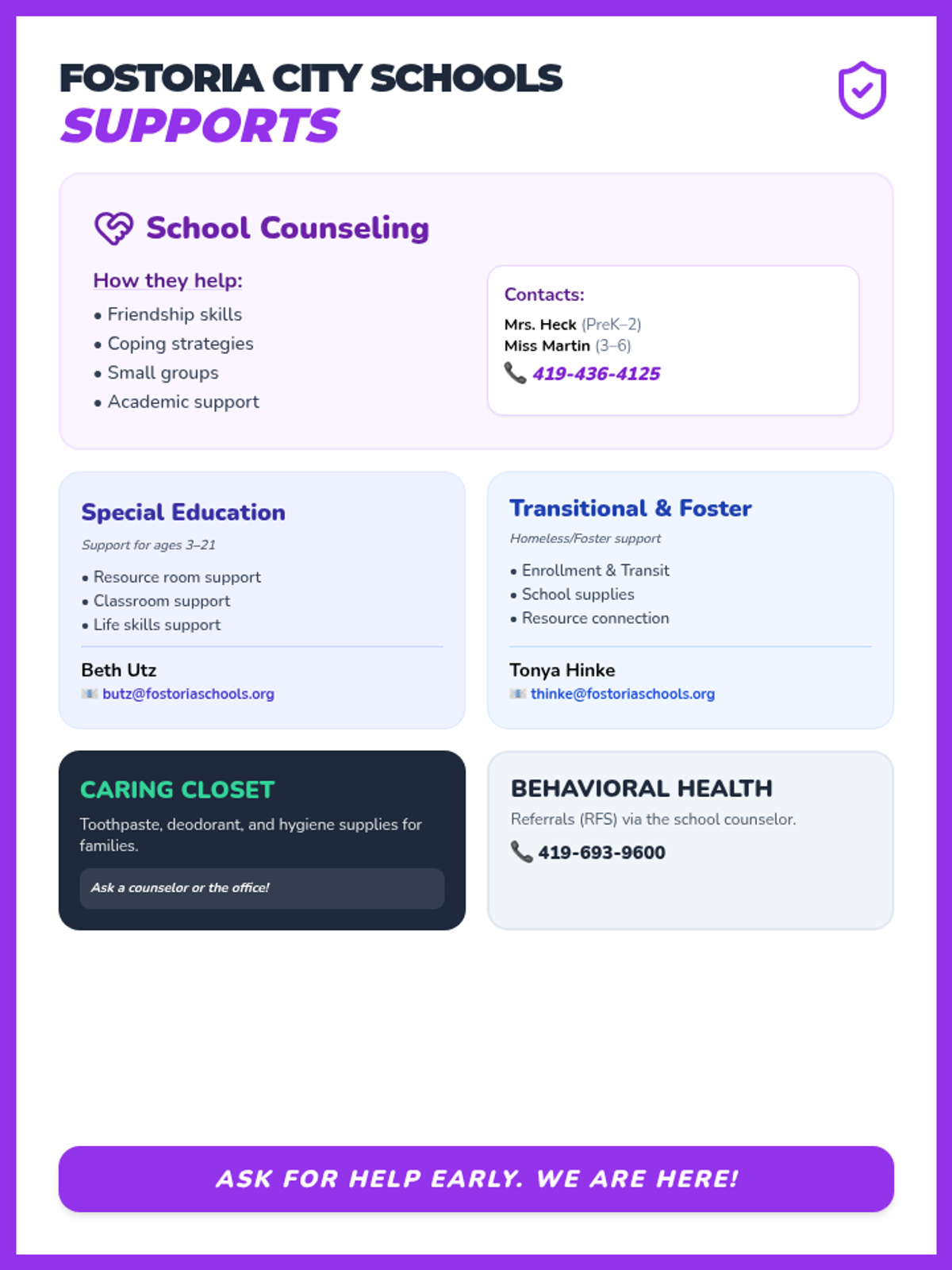
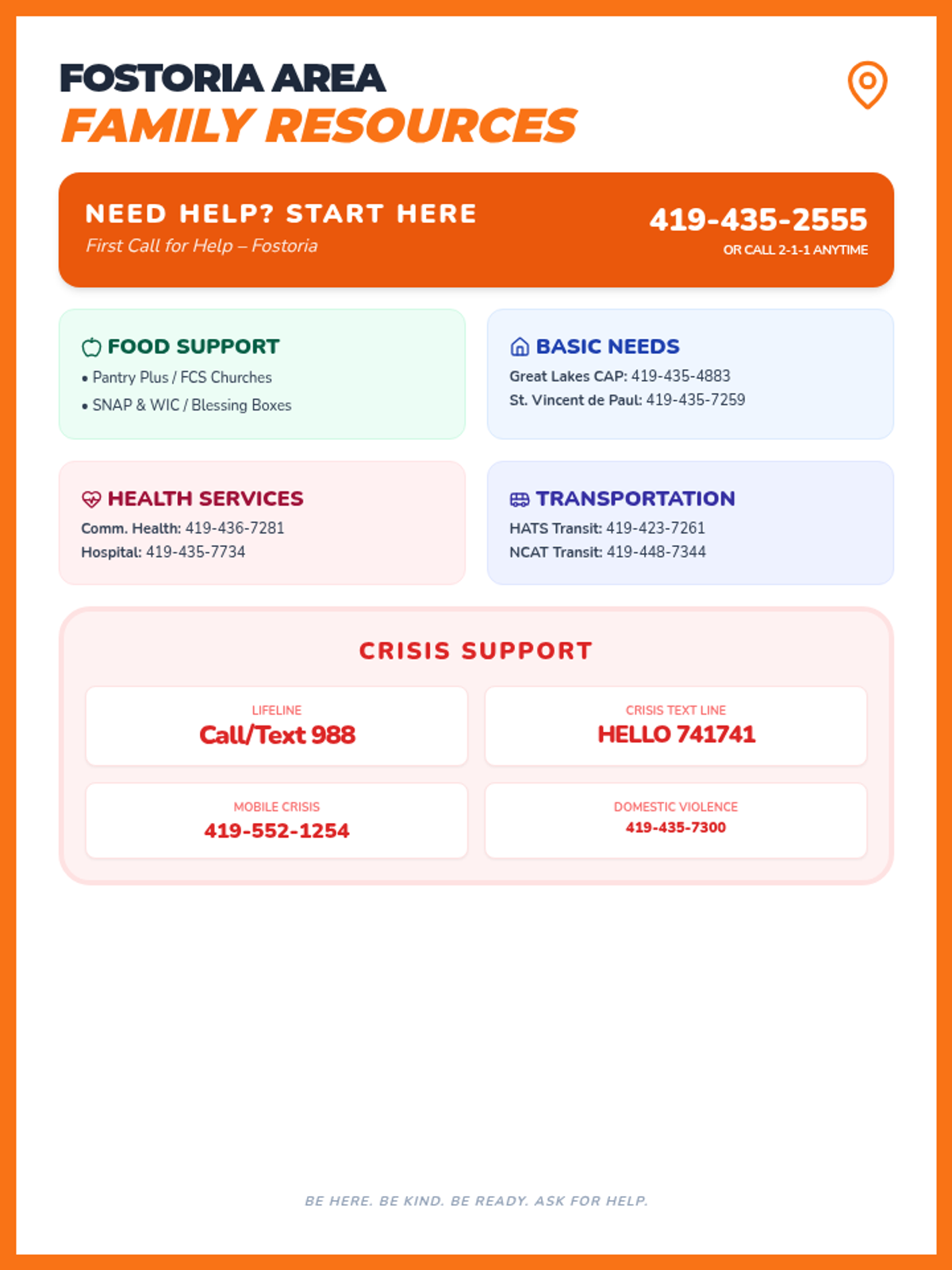
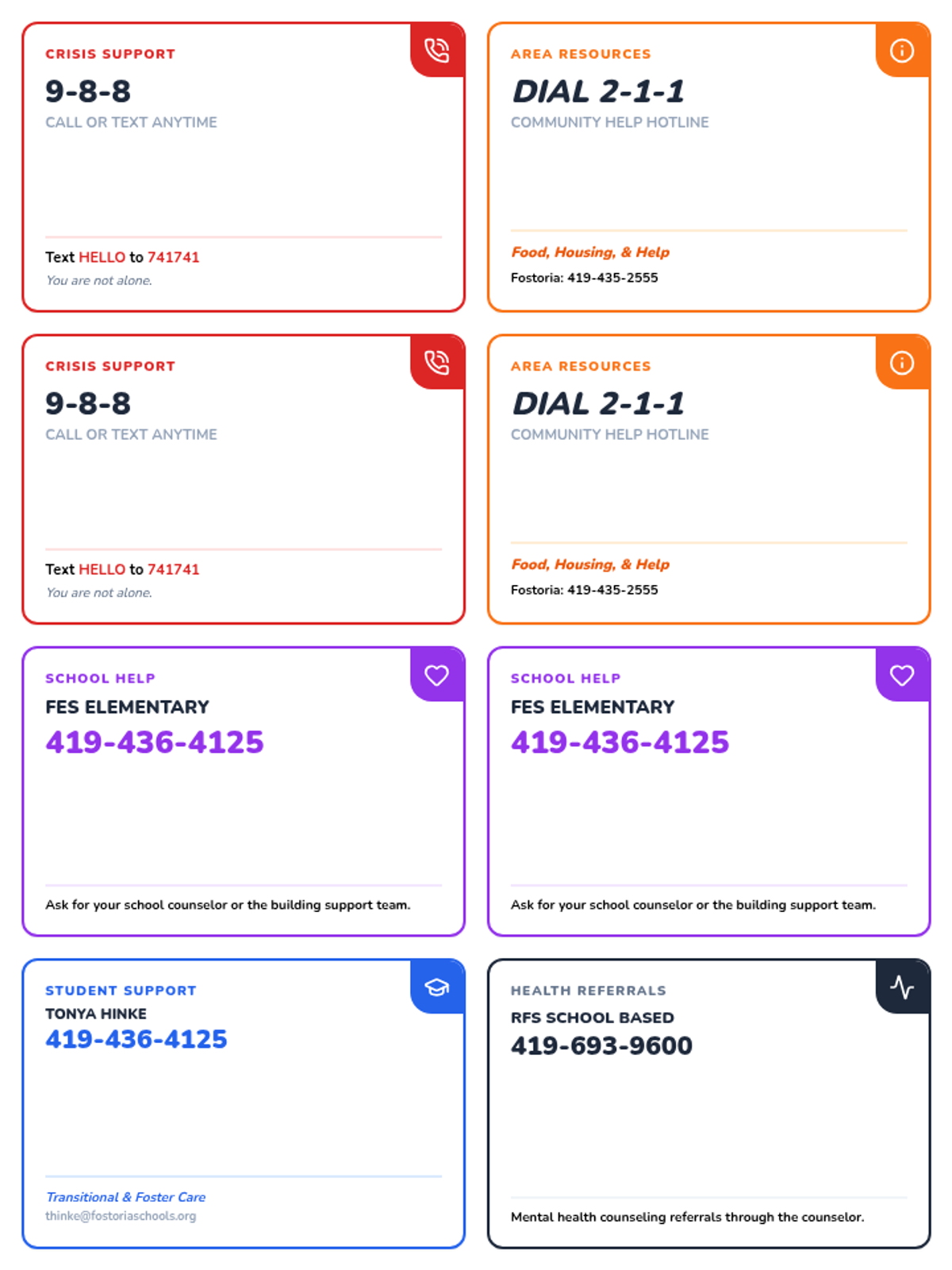
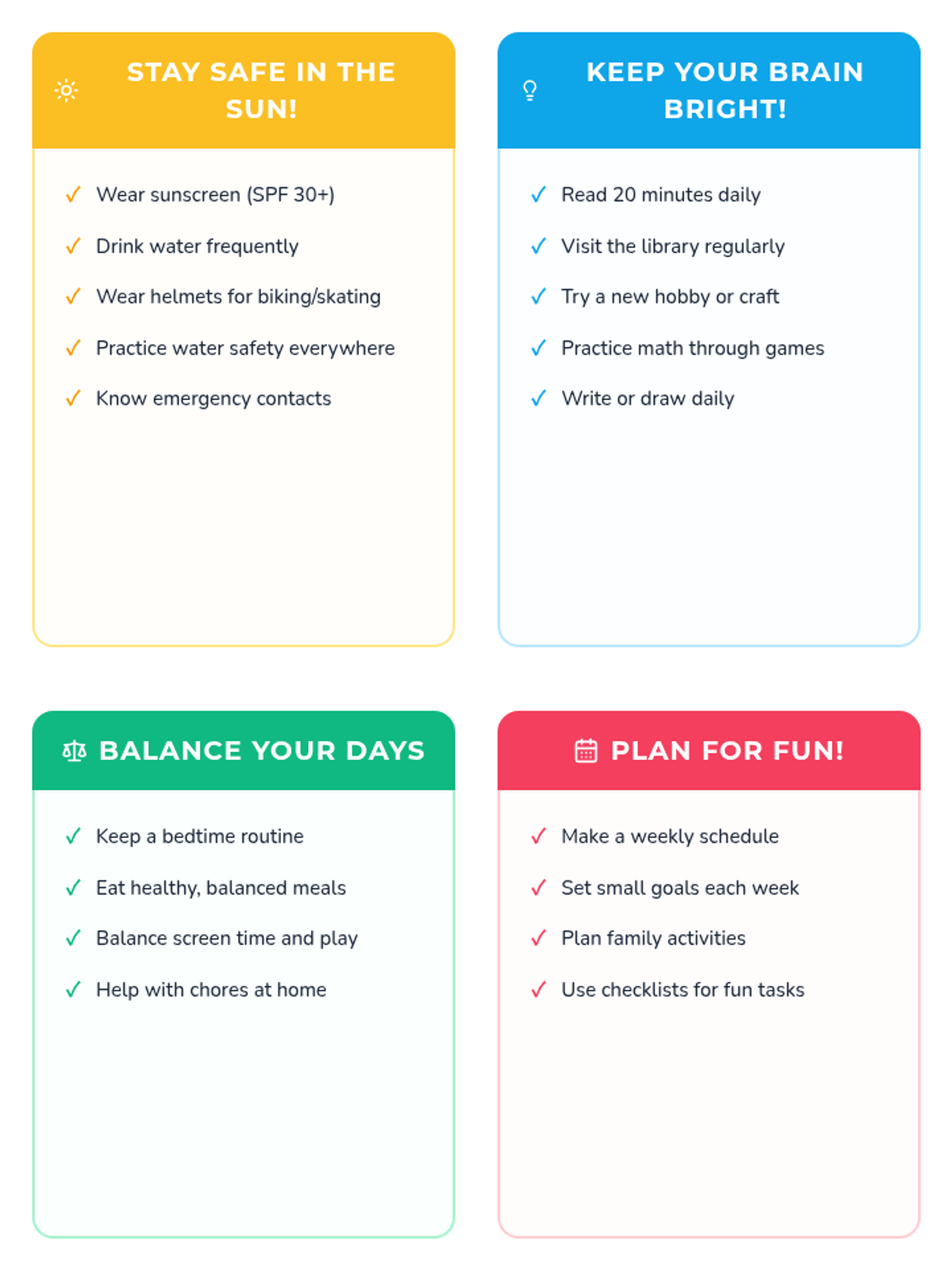
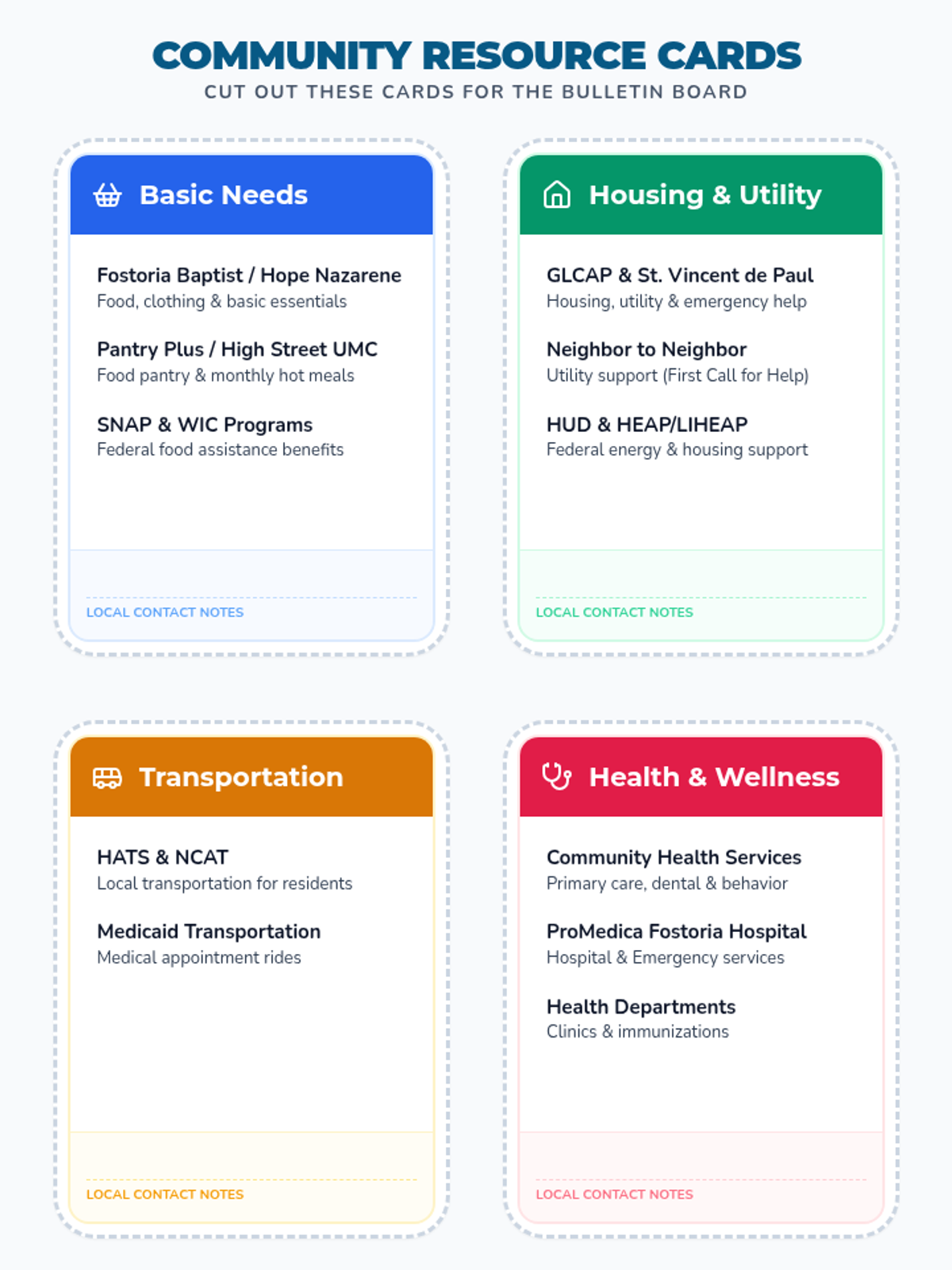
A comprehensive set of bulletin board materials designed to welcome families and provide essential school and community resource information. Includes posters, anchor charts, and contact cards for a professional and welcoming foyer or hallway display.
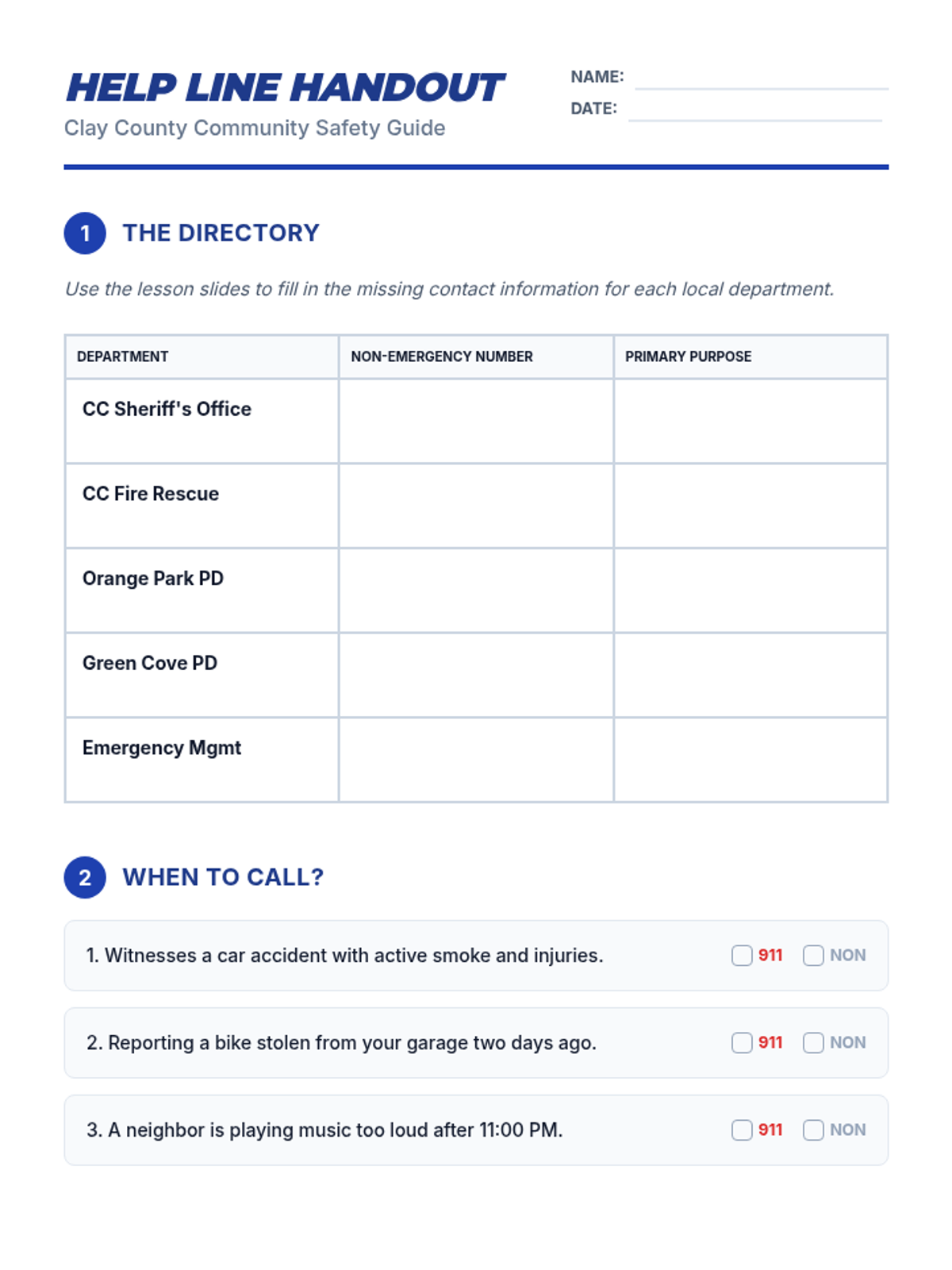
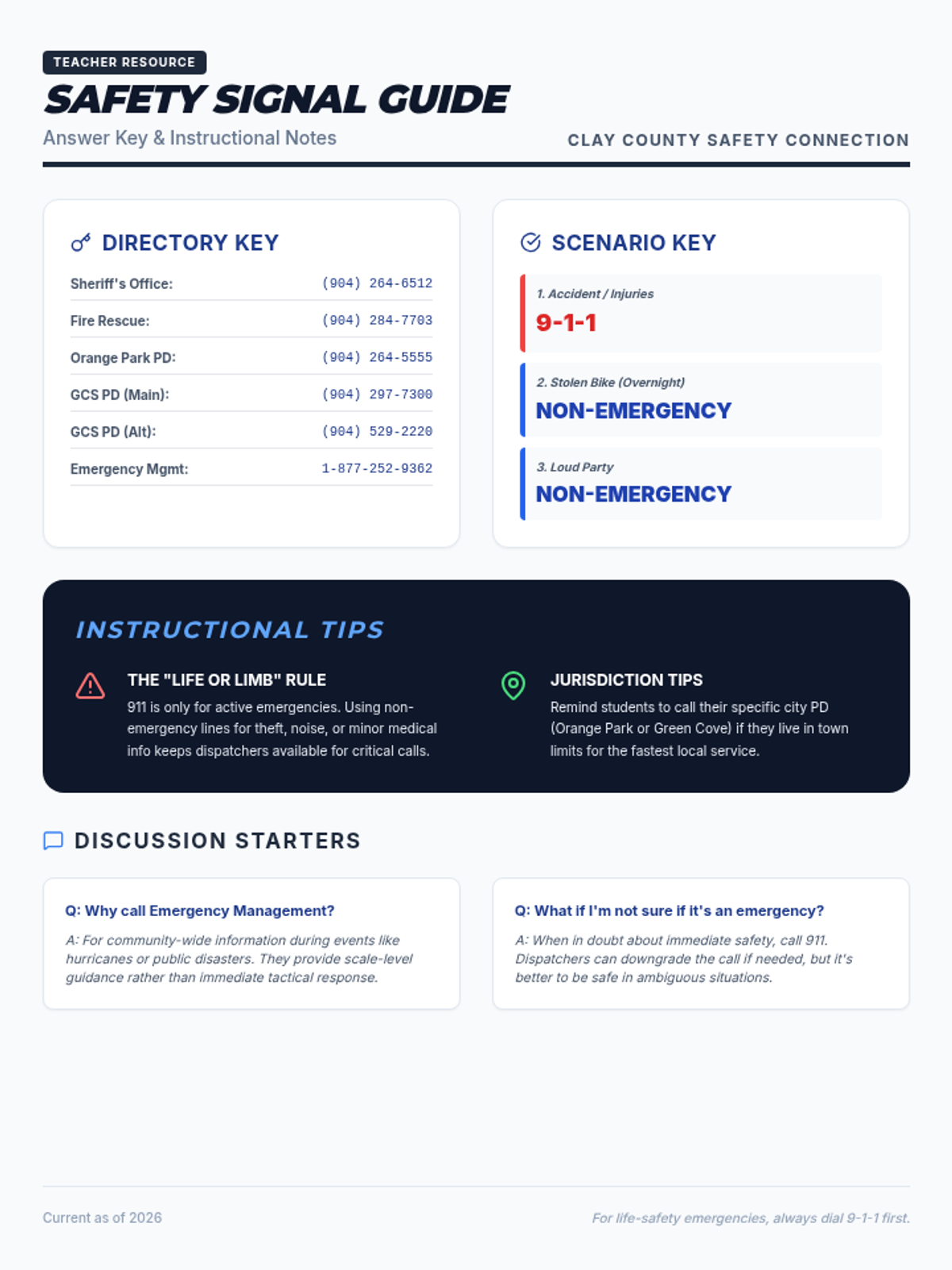
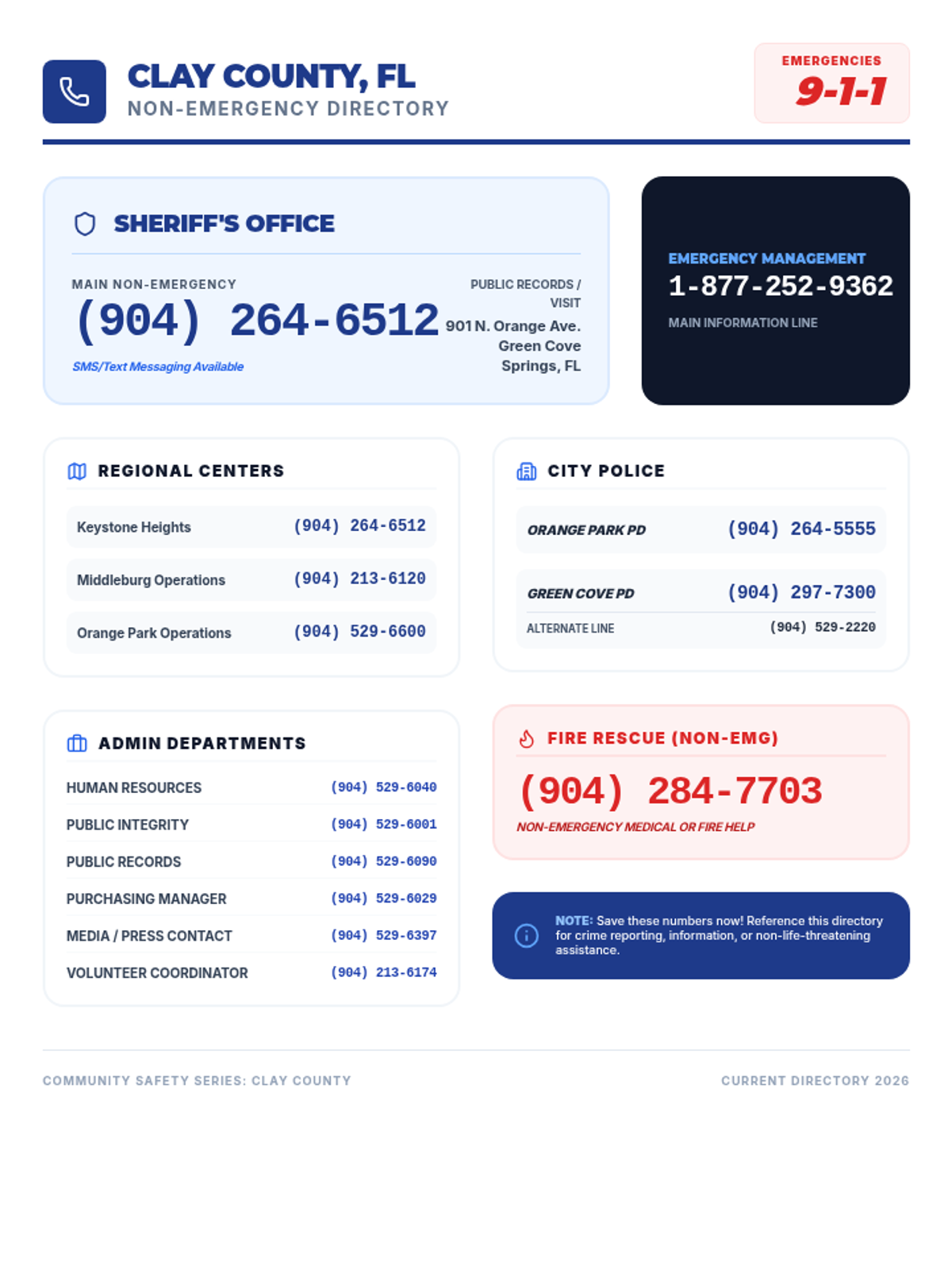
A guide for students to understand when and how to contact local authorities in Clay County, focusing on the distinction between emergency and non-emergency services.
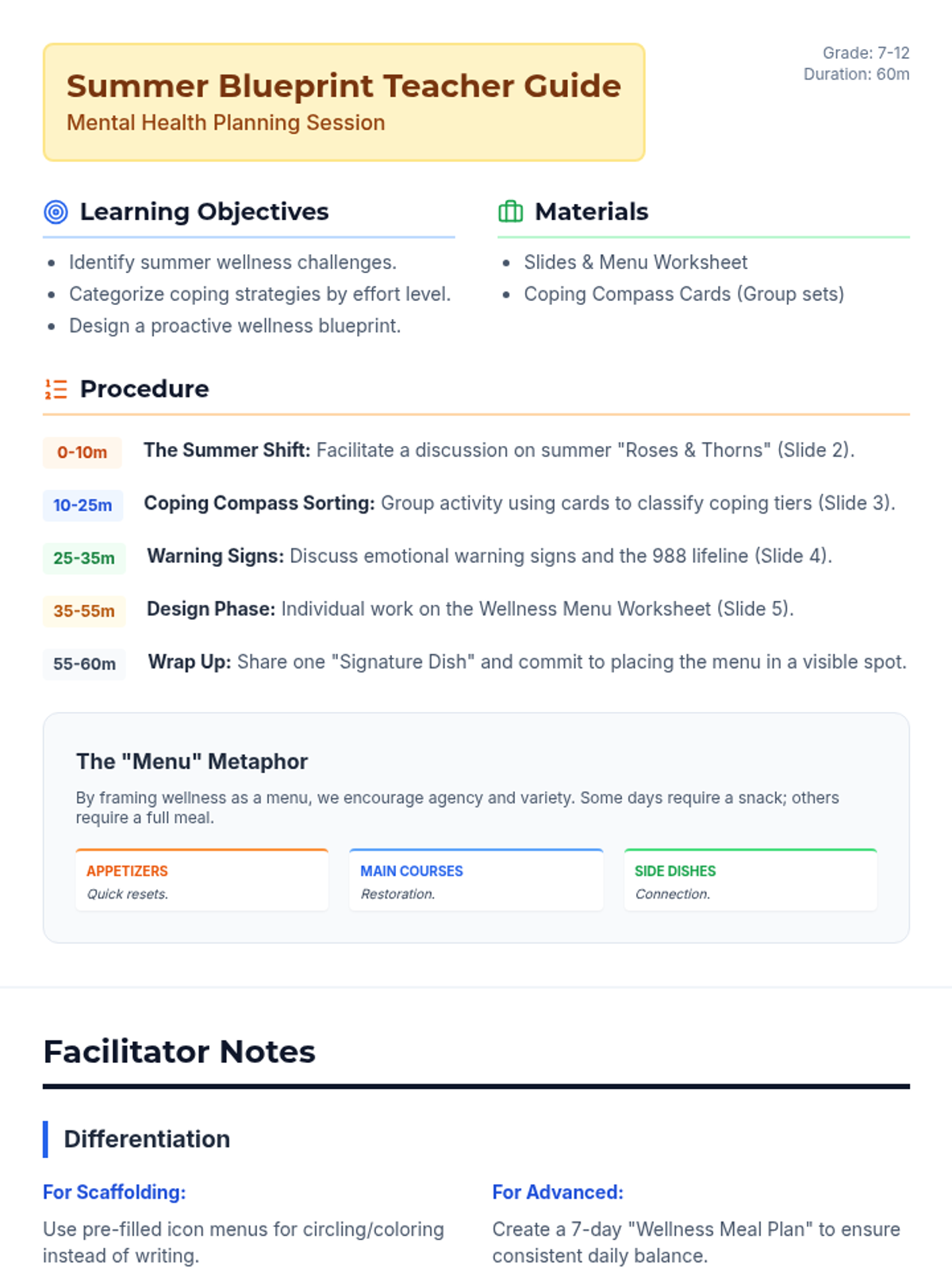
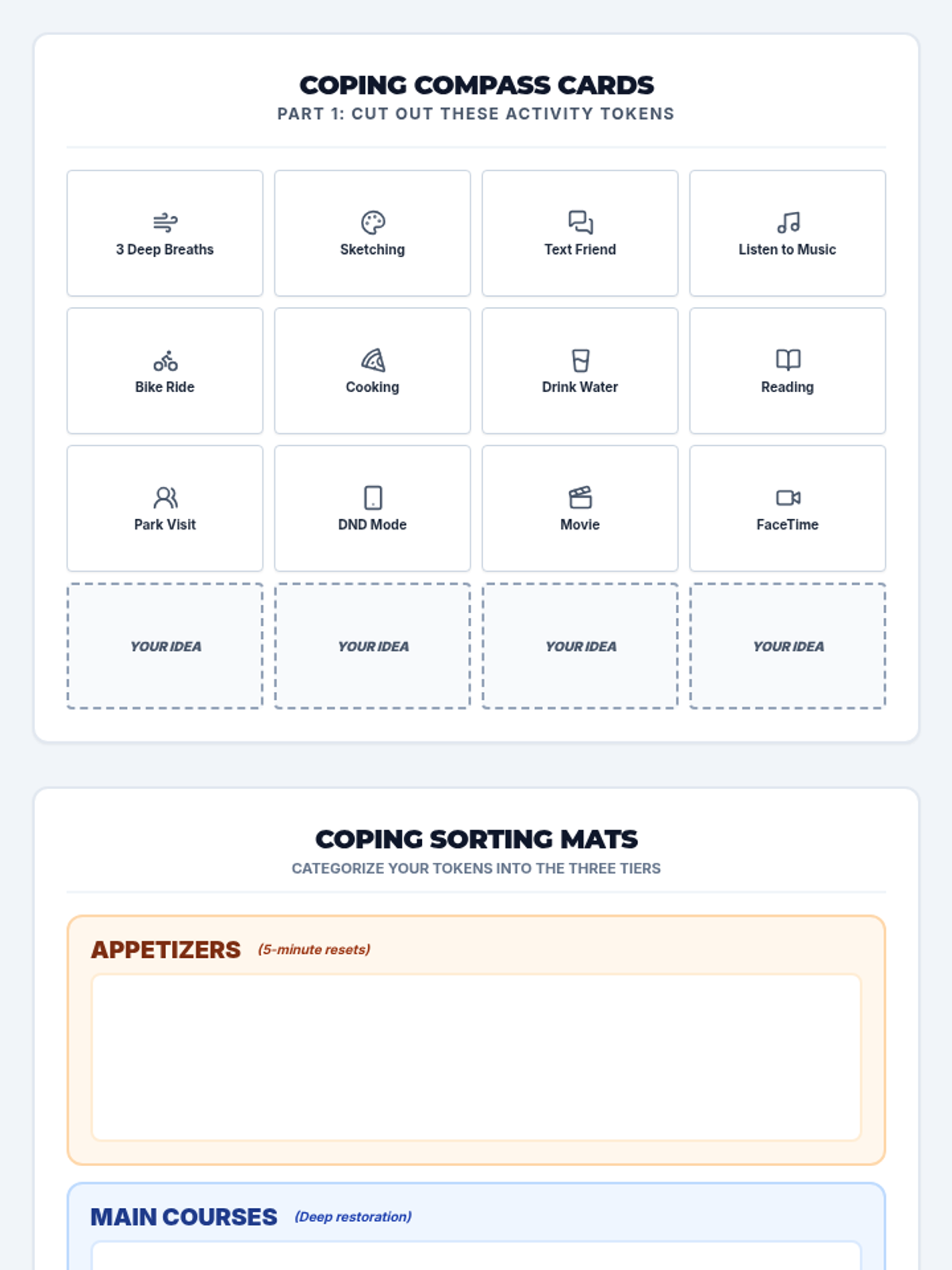
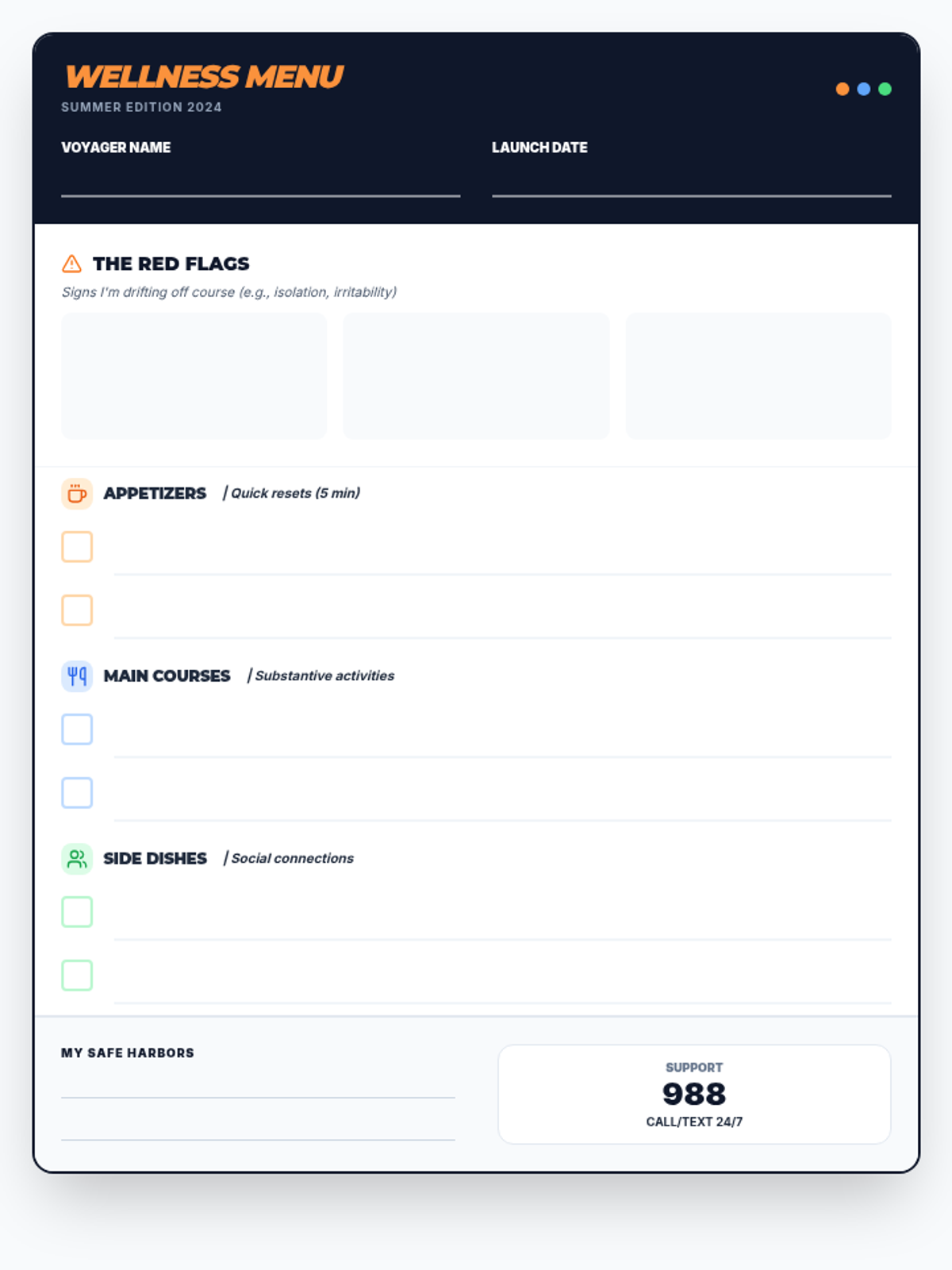
A proactive mental health planning session where students design a 'wellness menu' to maintain emotional balance and social connection during summer break.
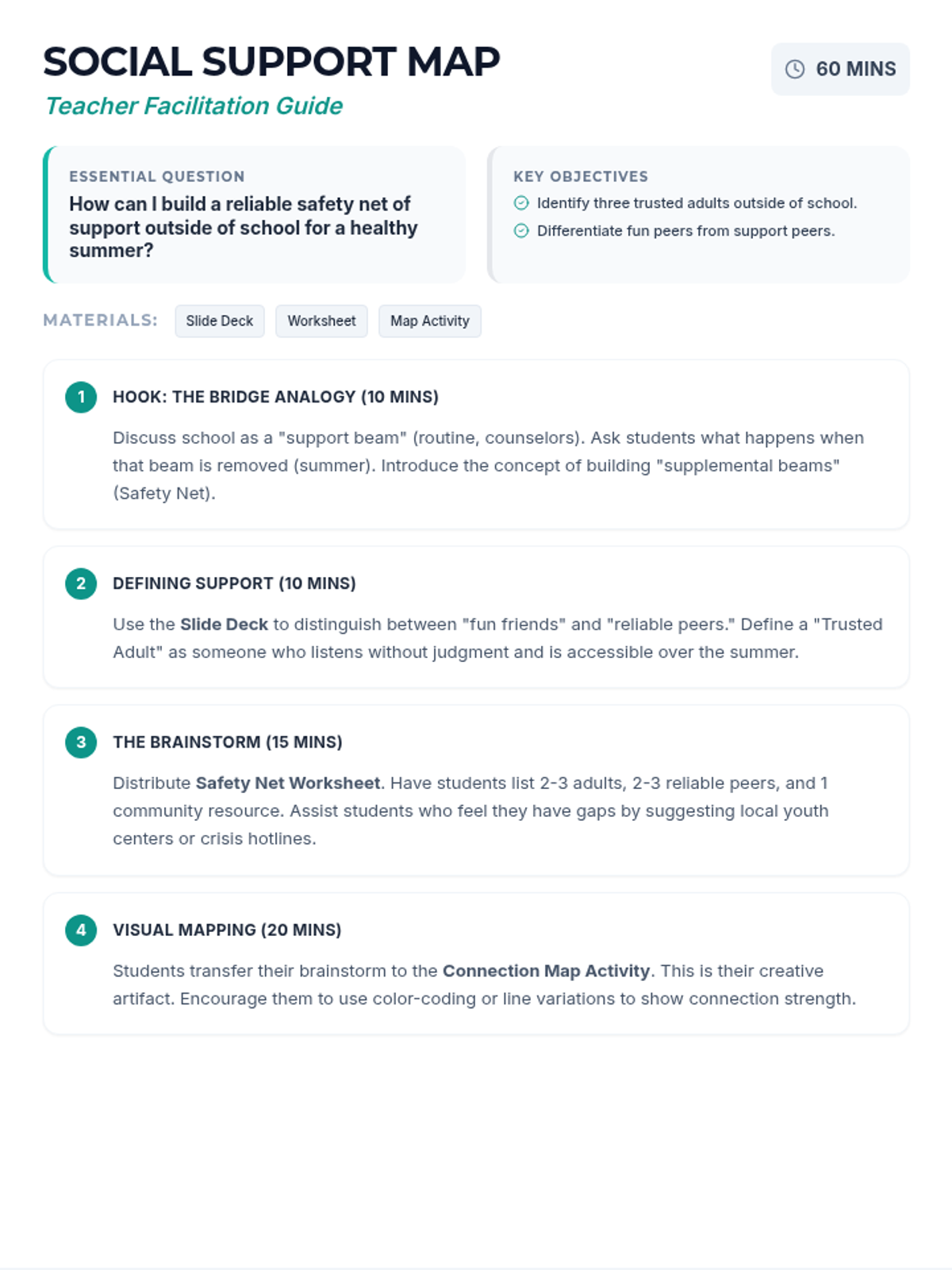
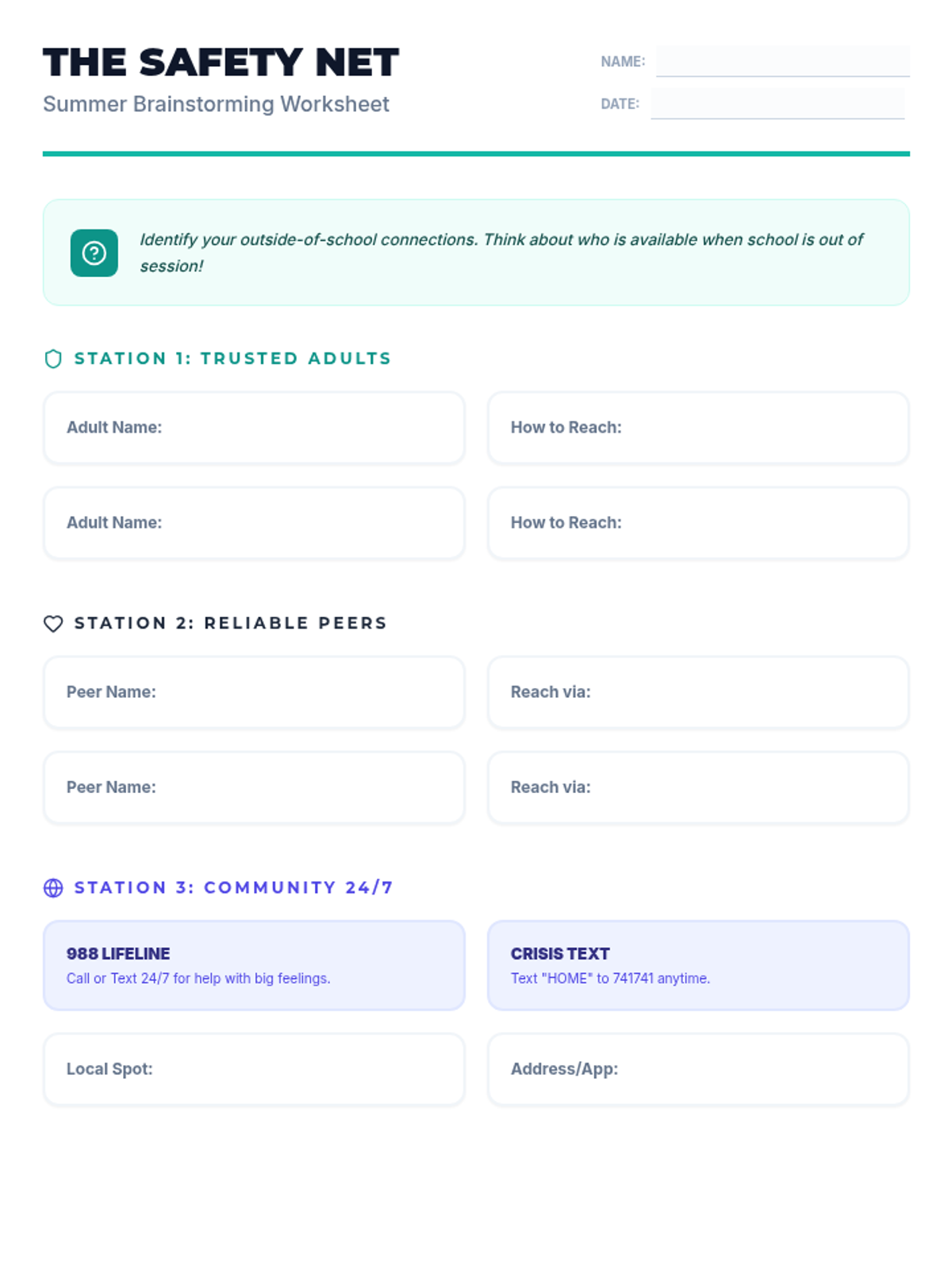
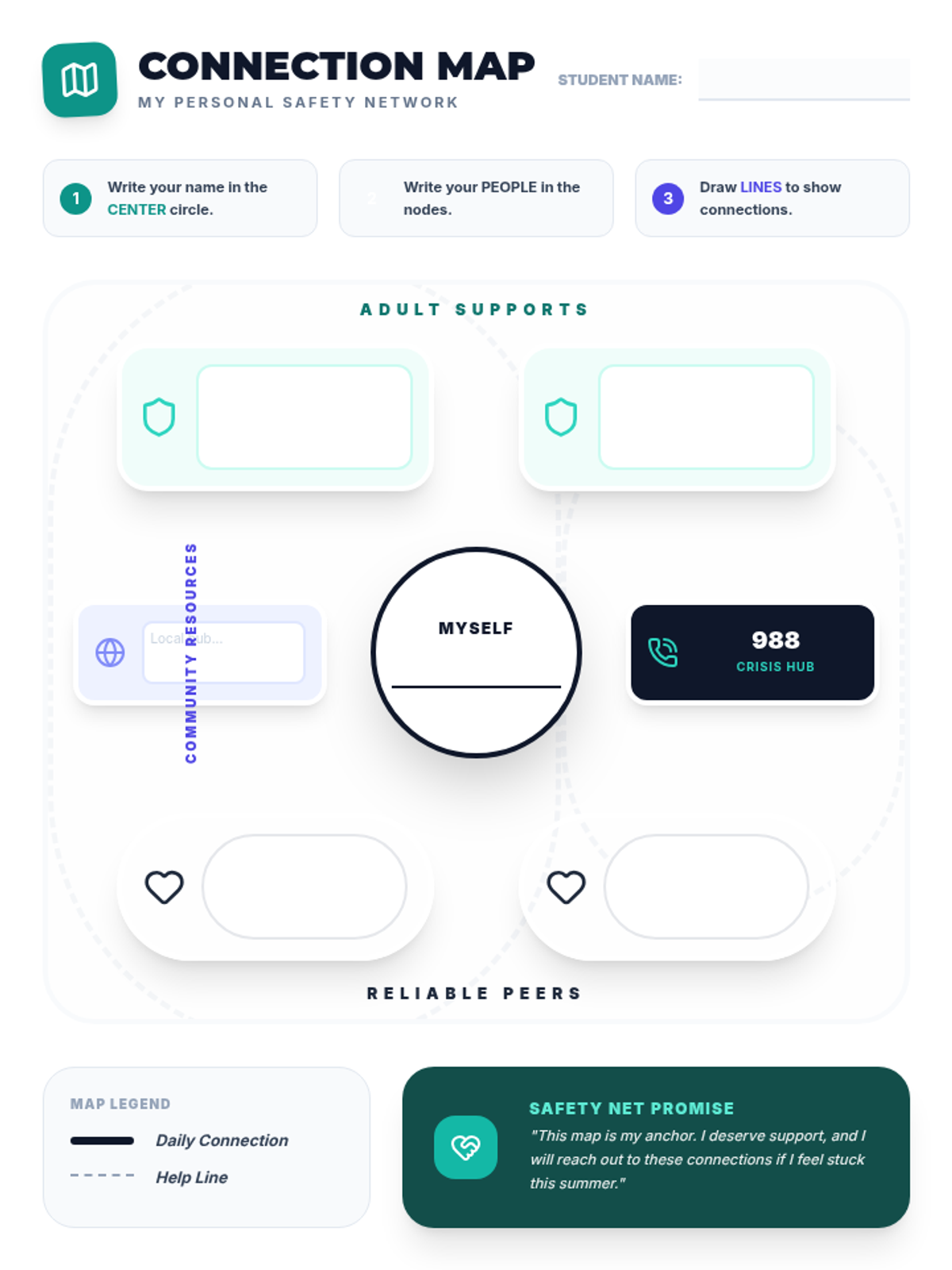
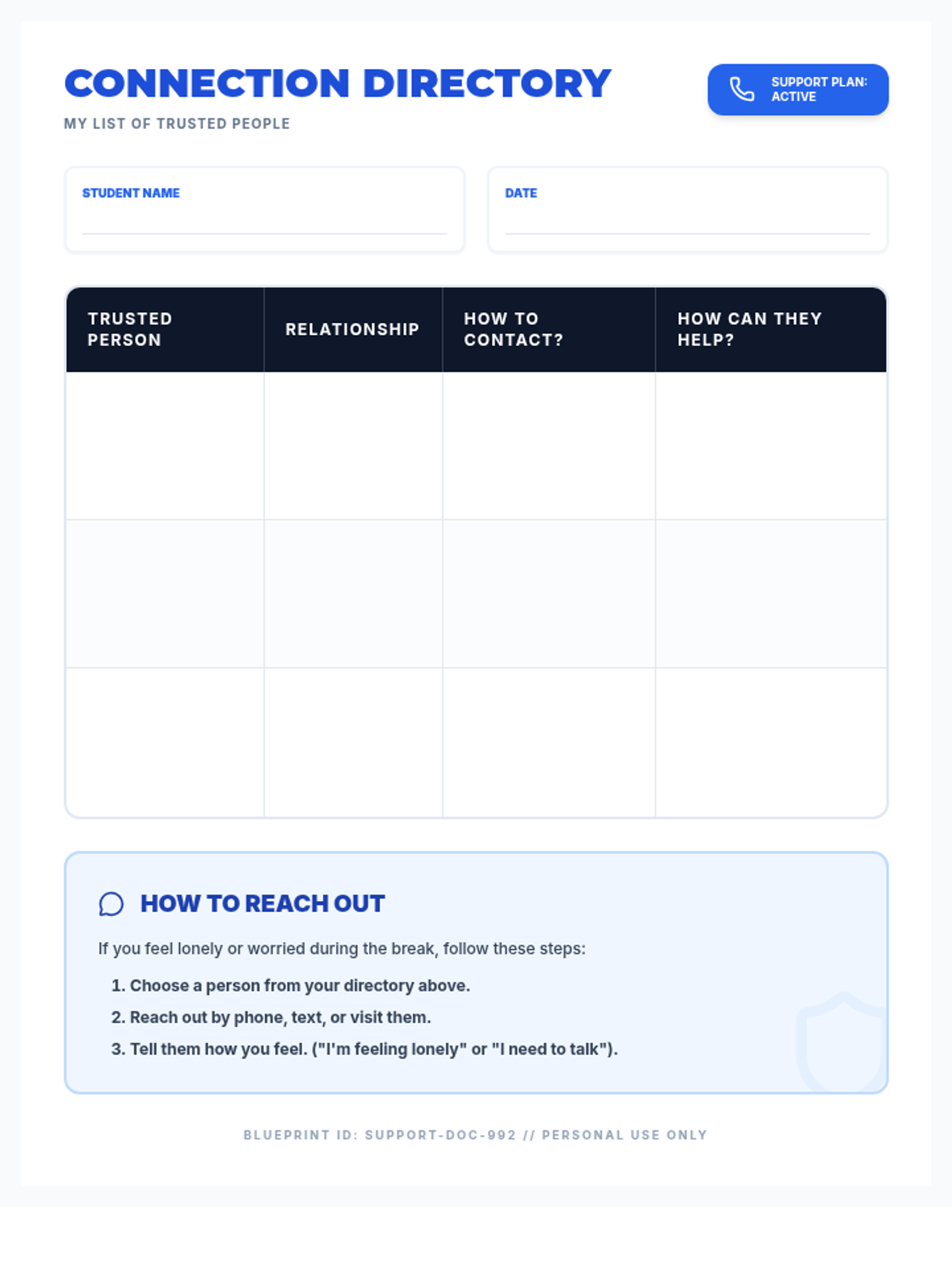
A social-emotional learning lesson designed to help middle schoolers map out their support networks for the summer break, focusing on trusted adults, peers, and community resources.
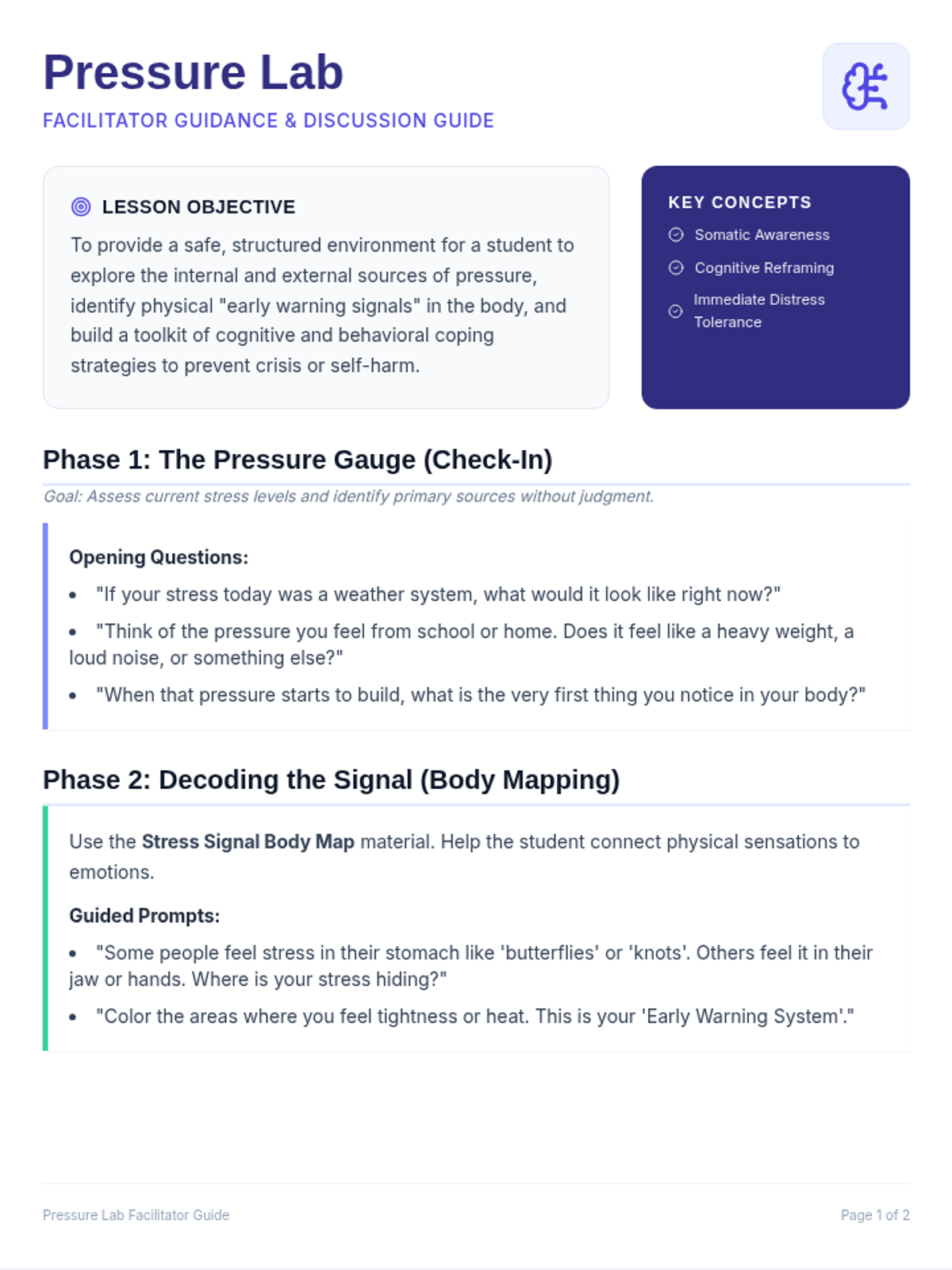
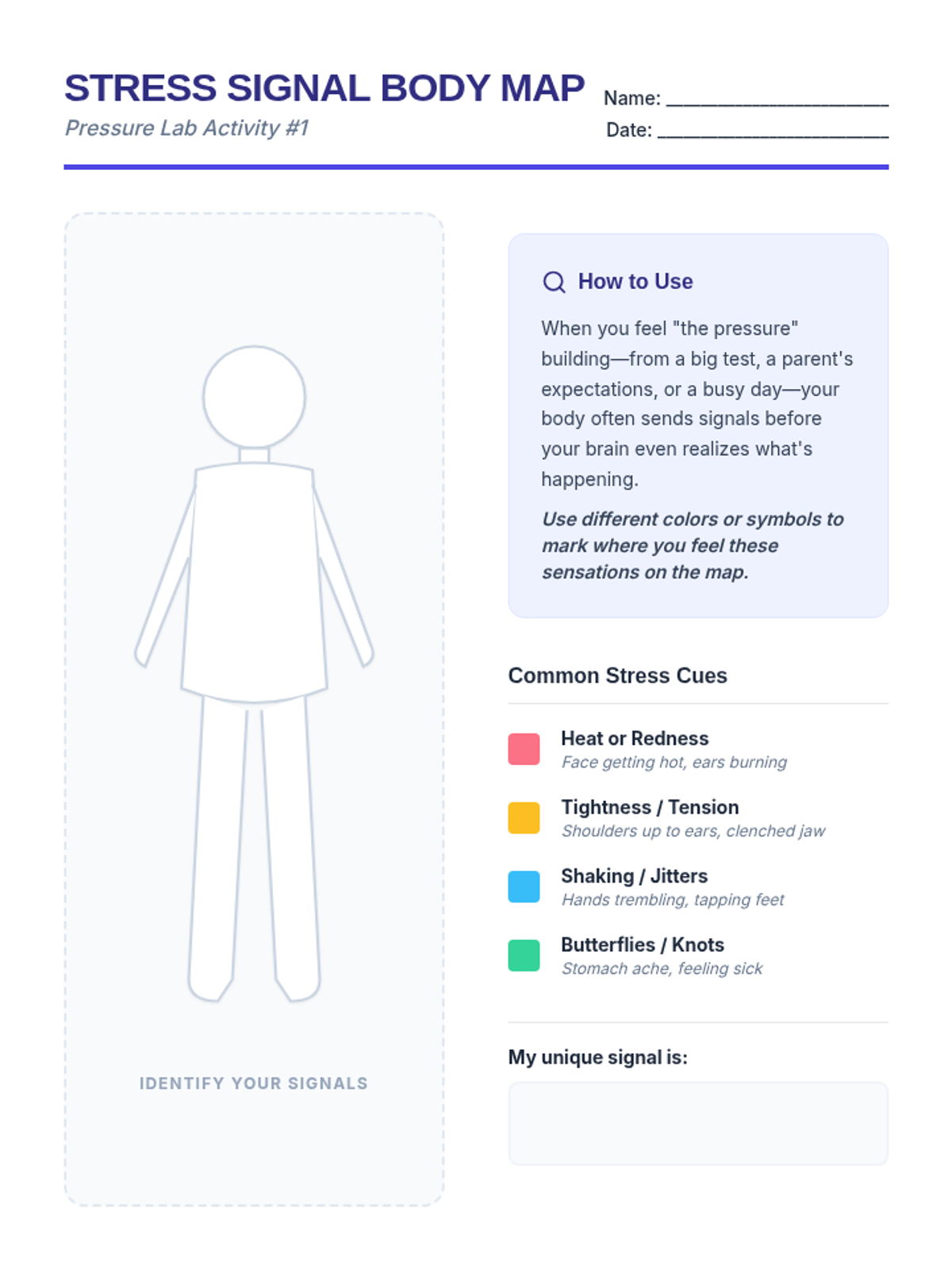
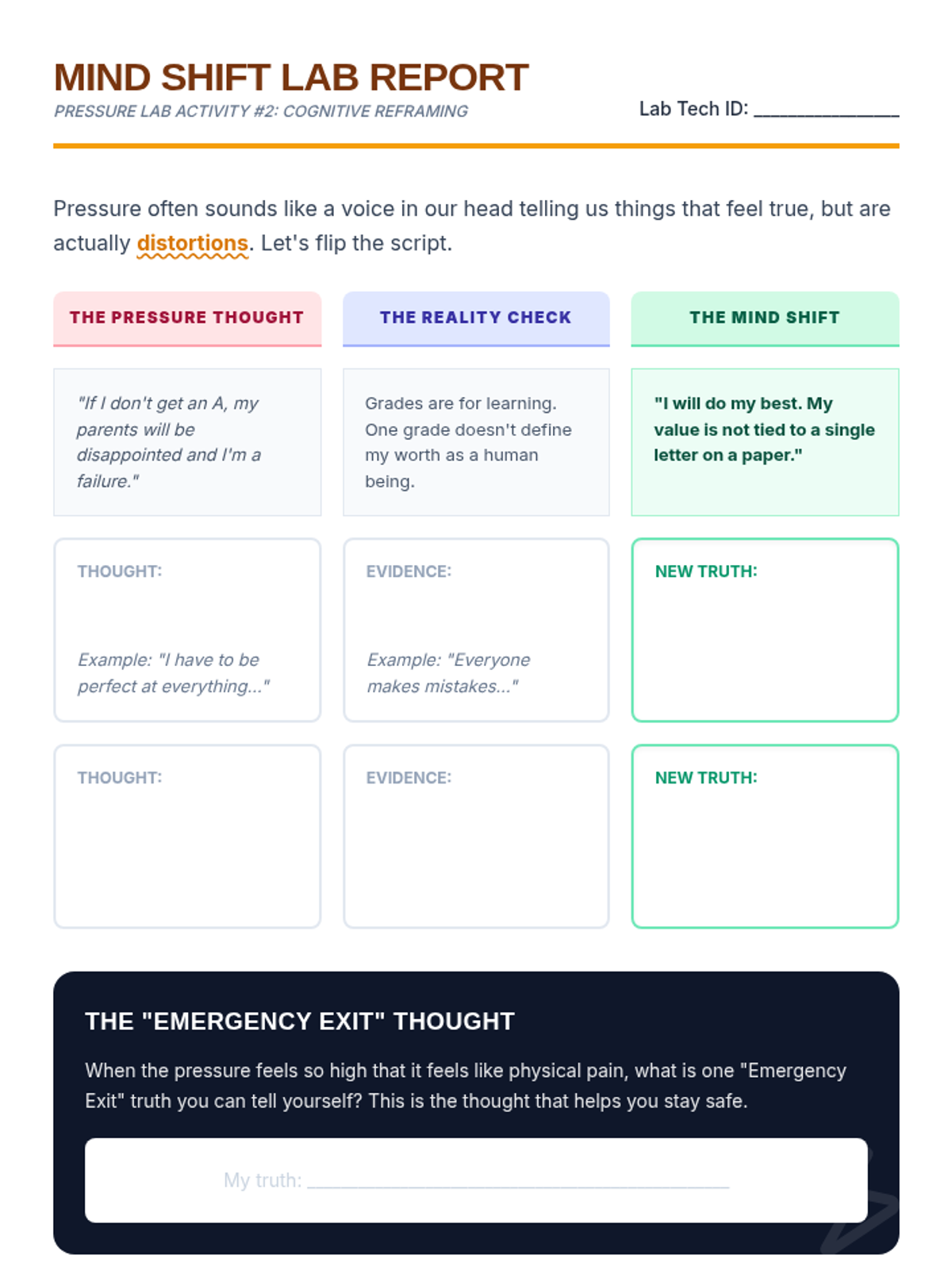
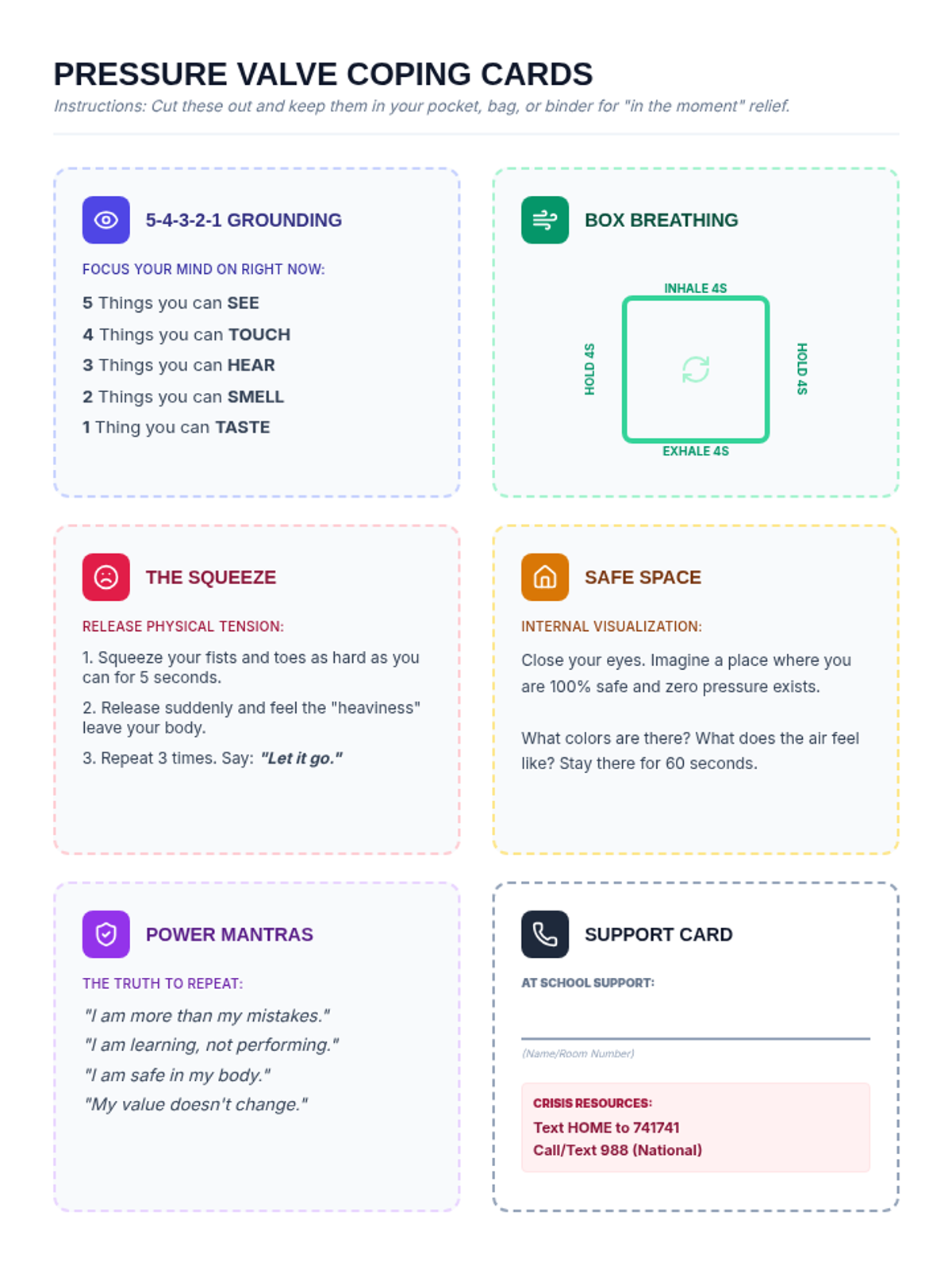
An individual counseling lesson for 6th-grade students to manage classroom and parental pressure, focusing on physical awareness, cognitive reframing, and immediate coping strategies.
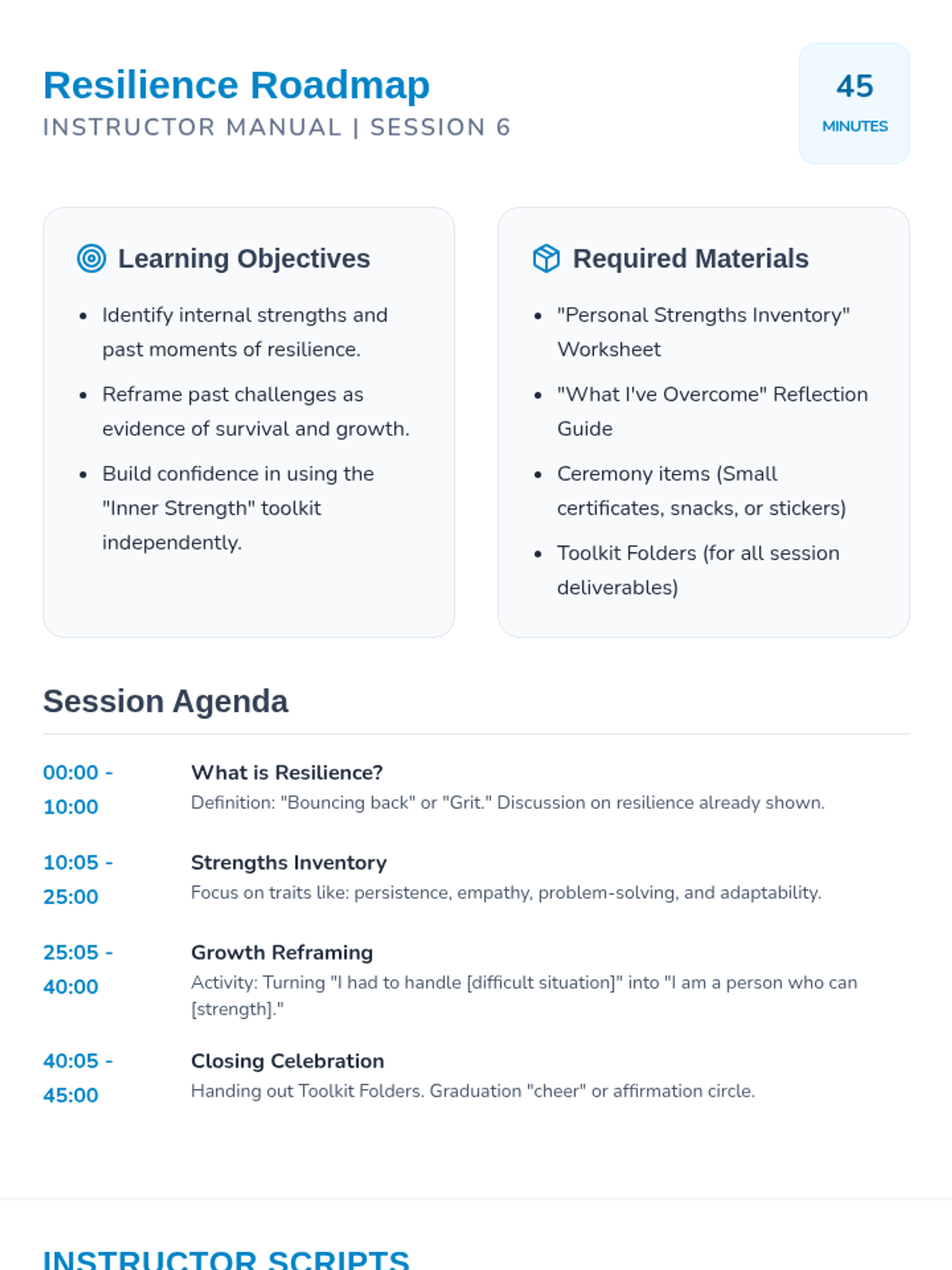
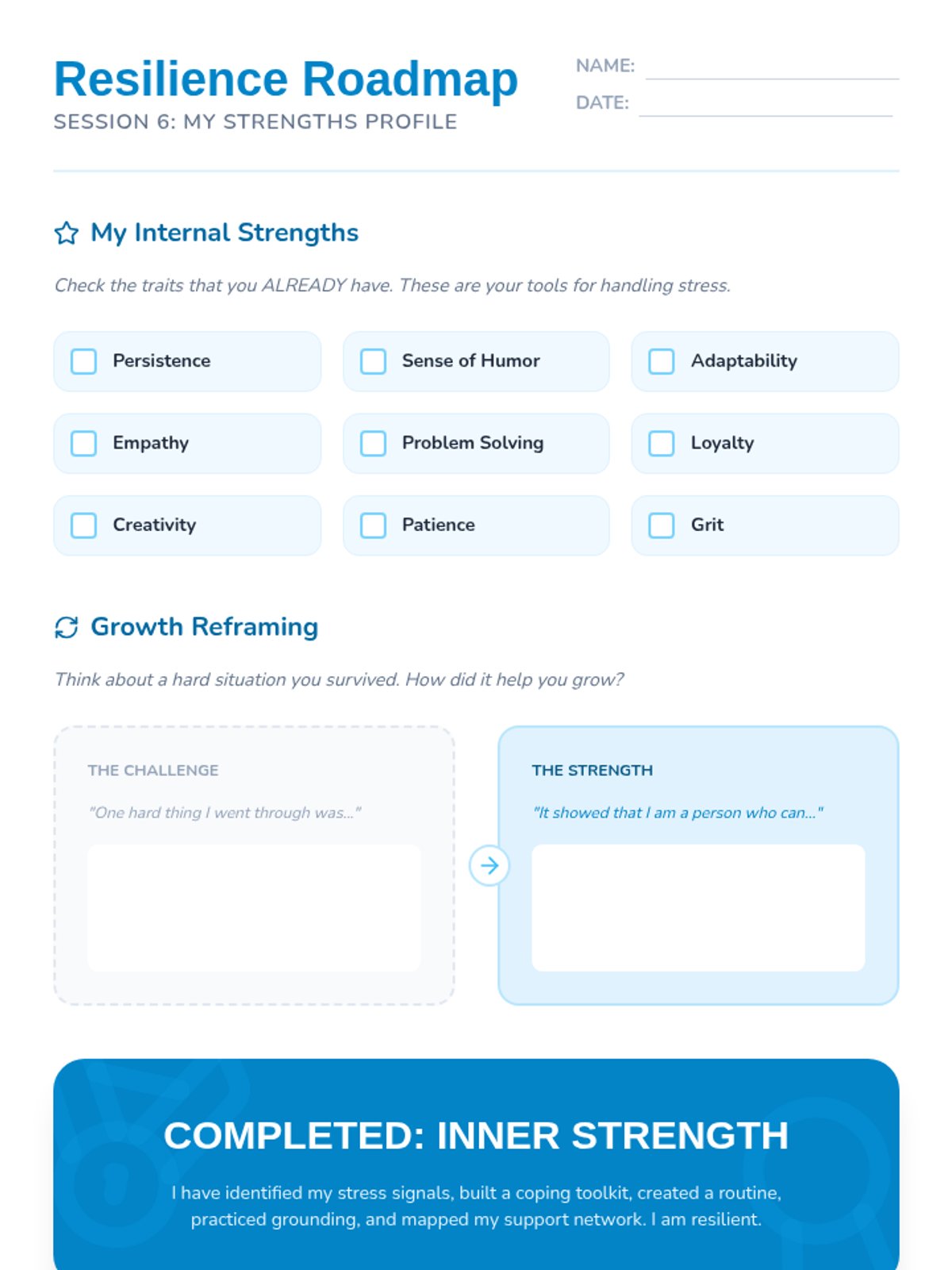
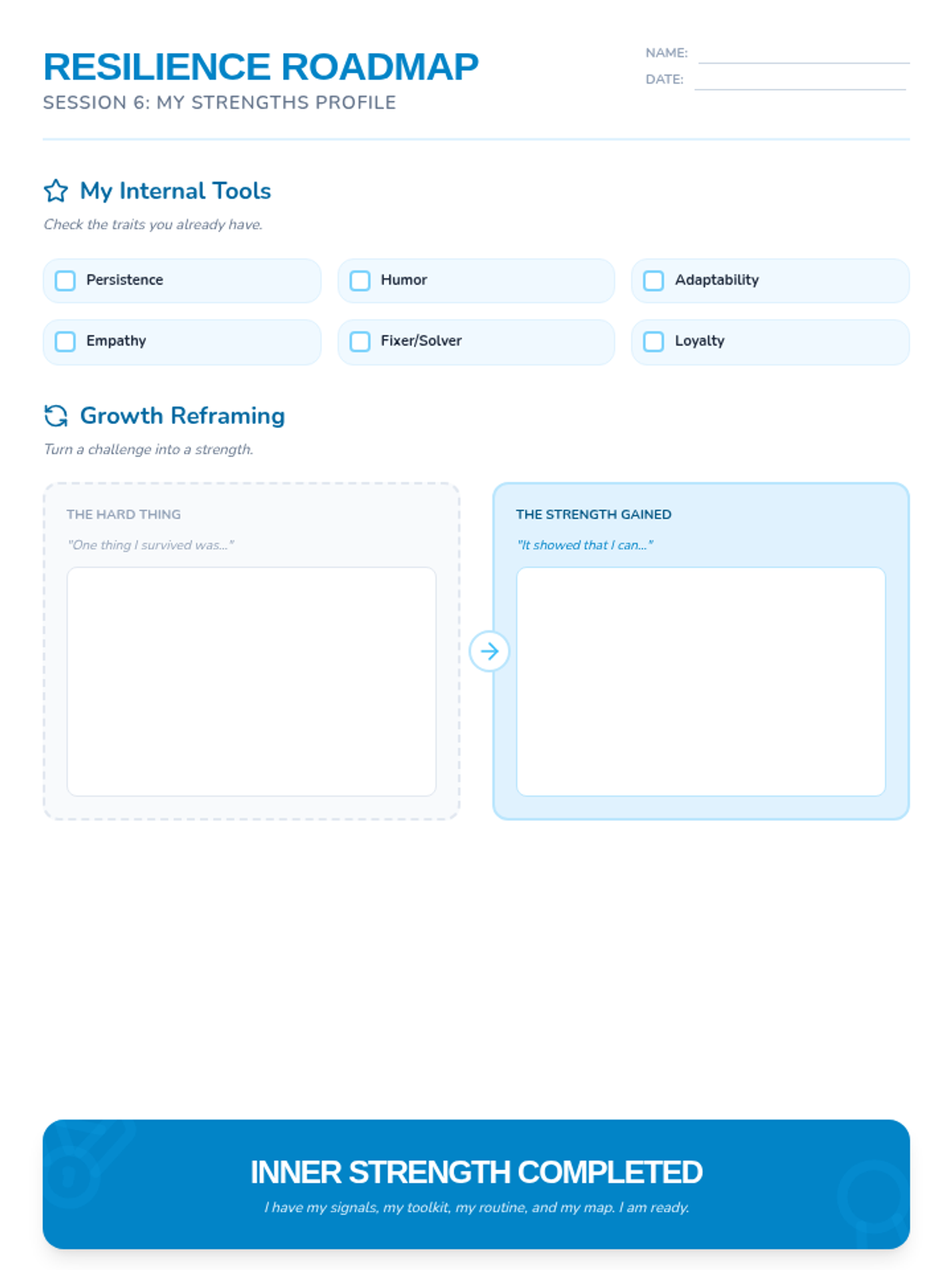
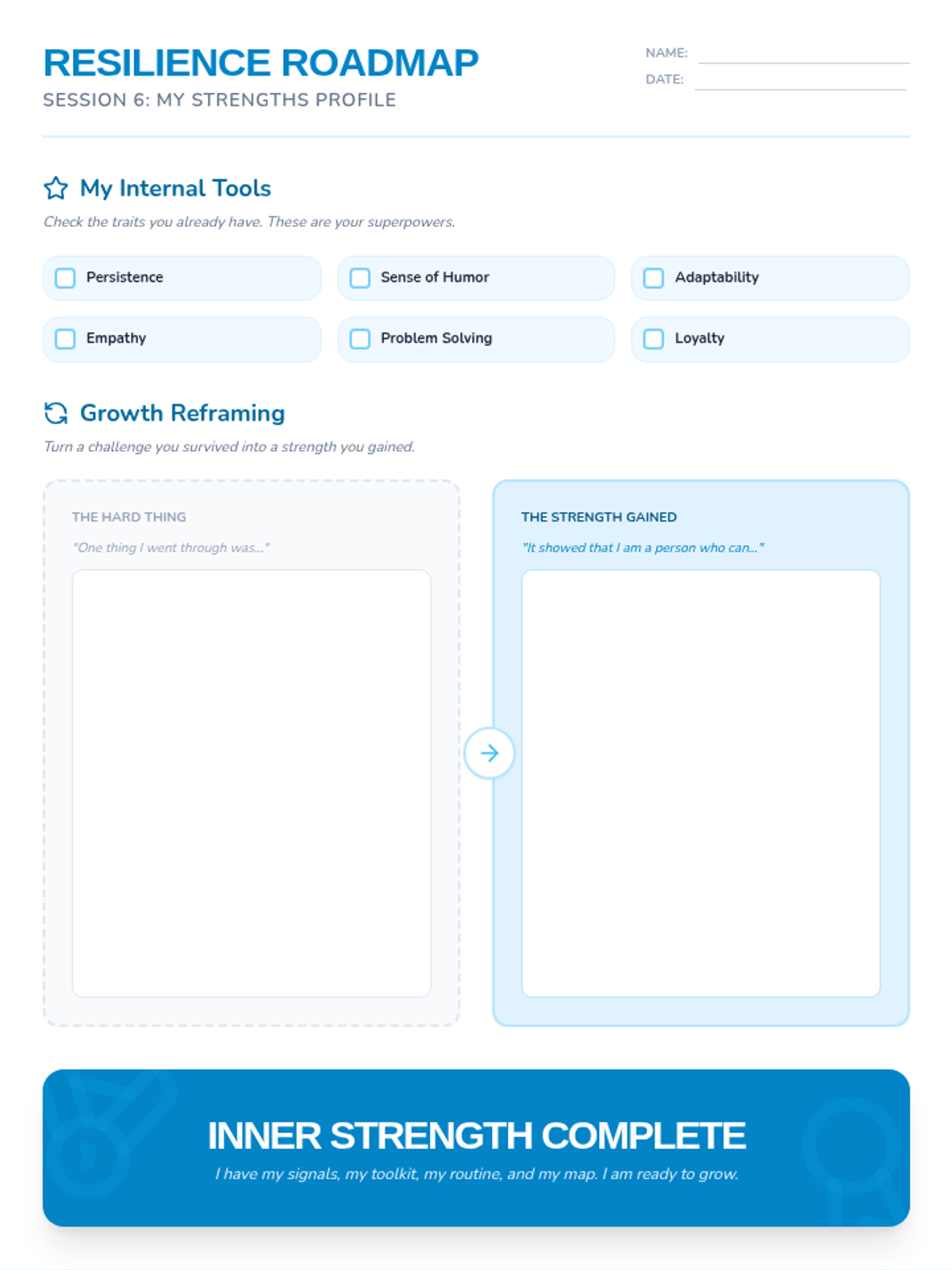
A final session focused on identifying personal strengths and reframing challenges as opportunities for growth.
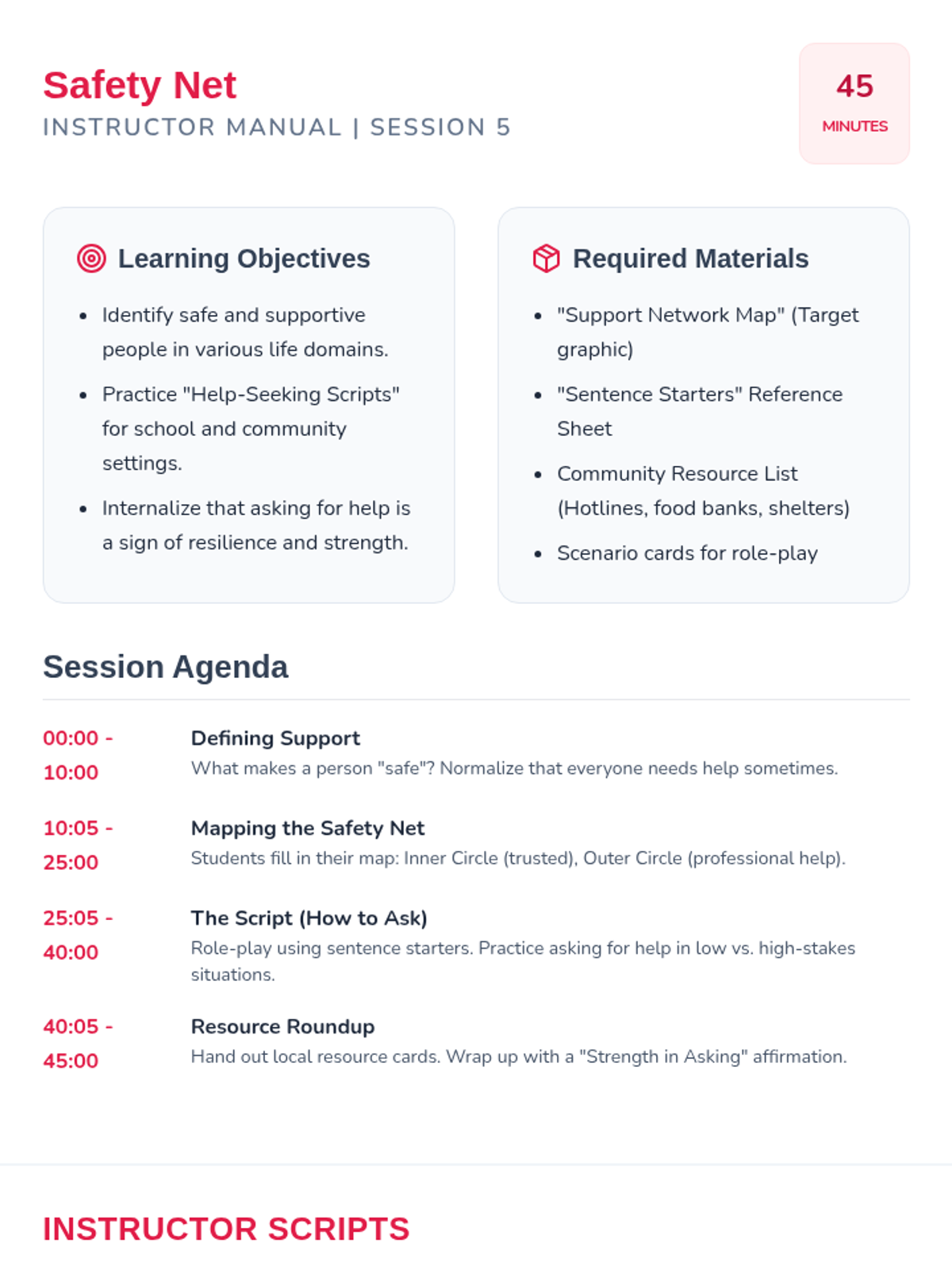
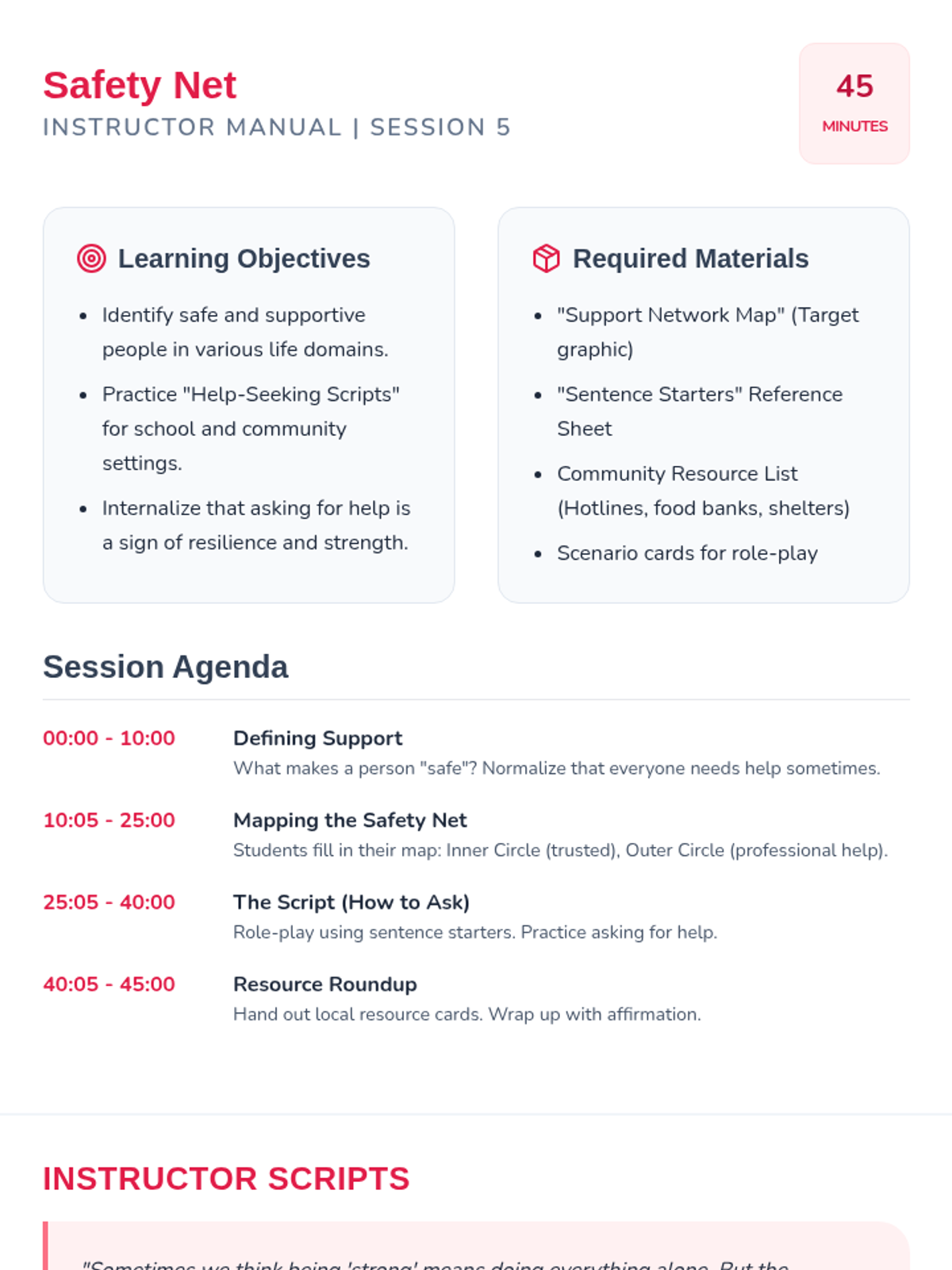
Students will map out their support networks and practice assertive communication for seeking help.
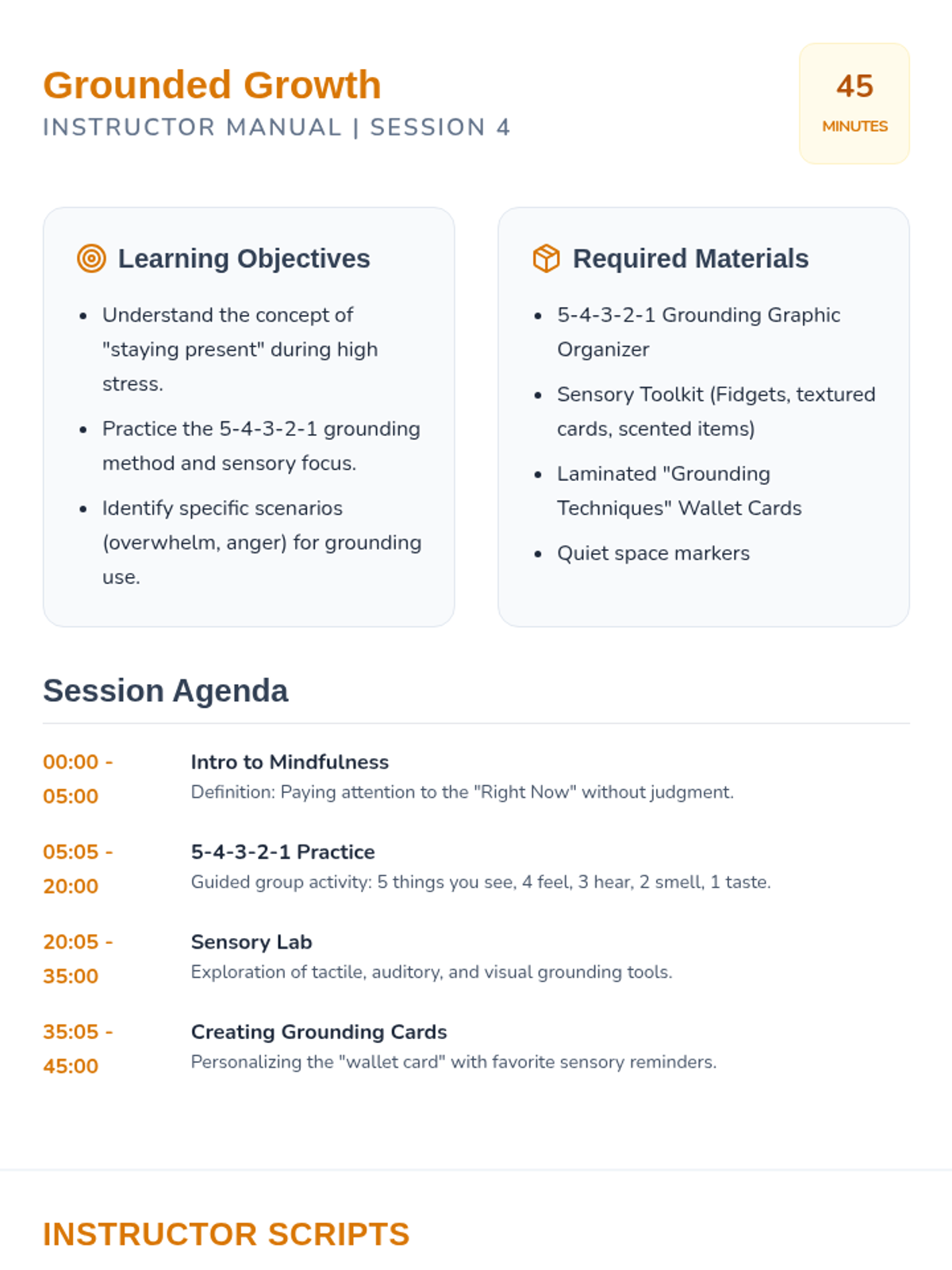
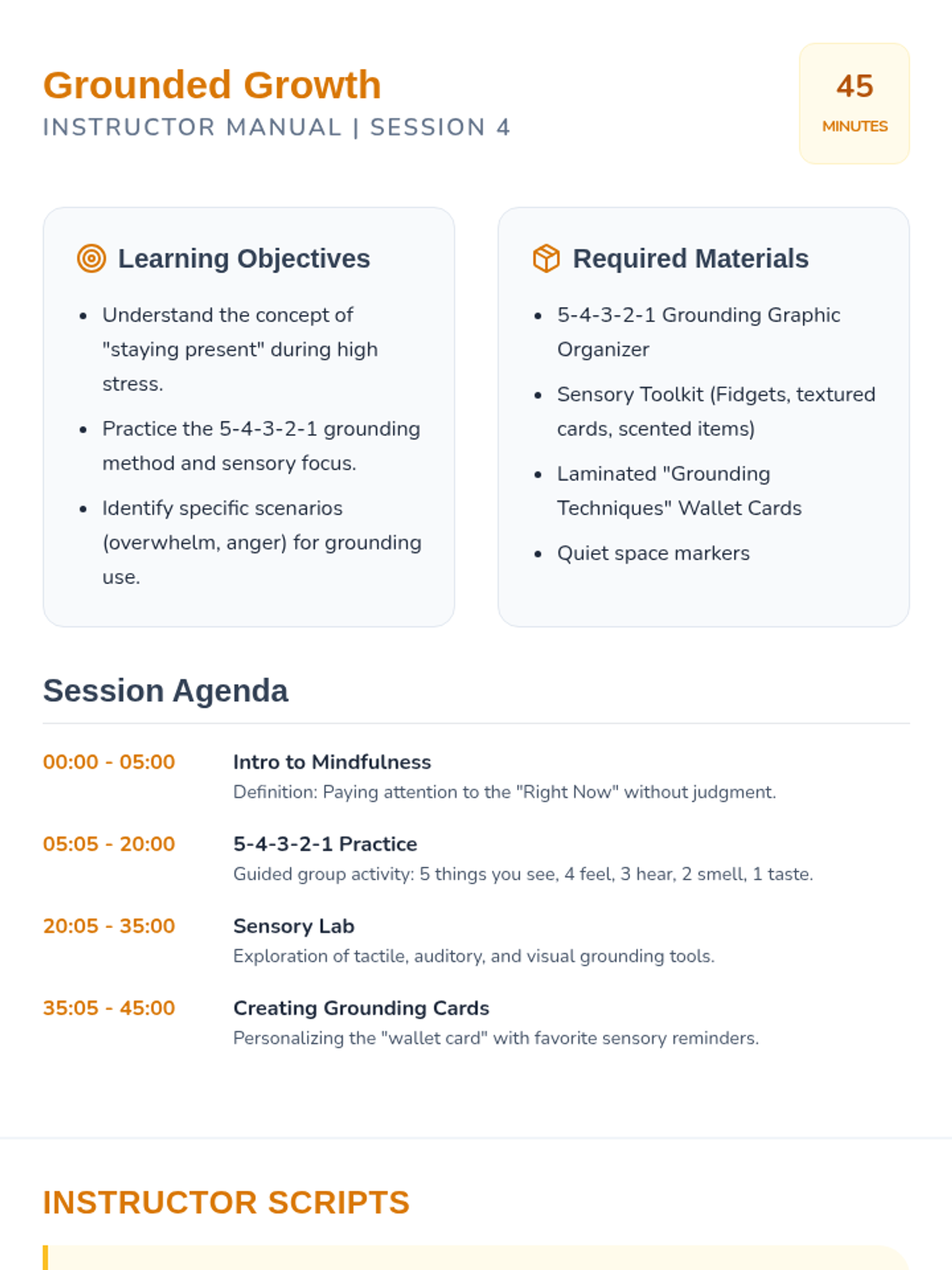
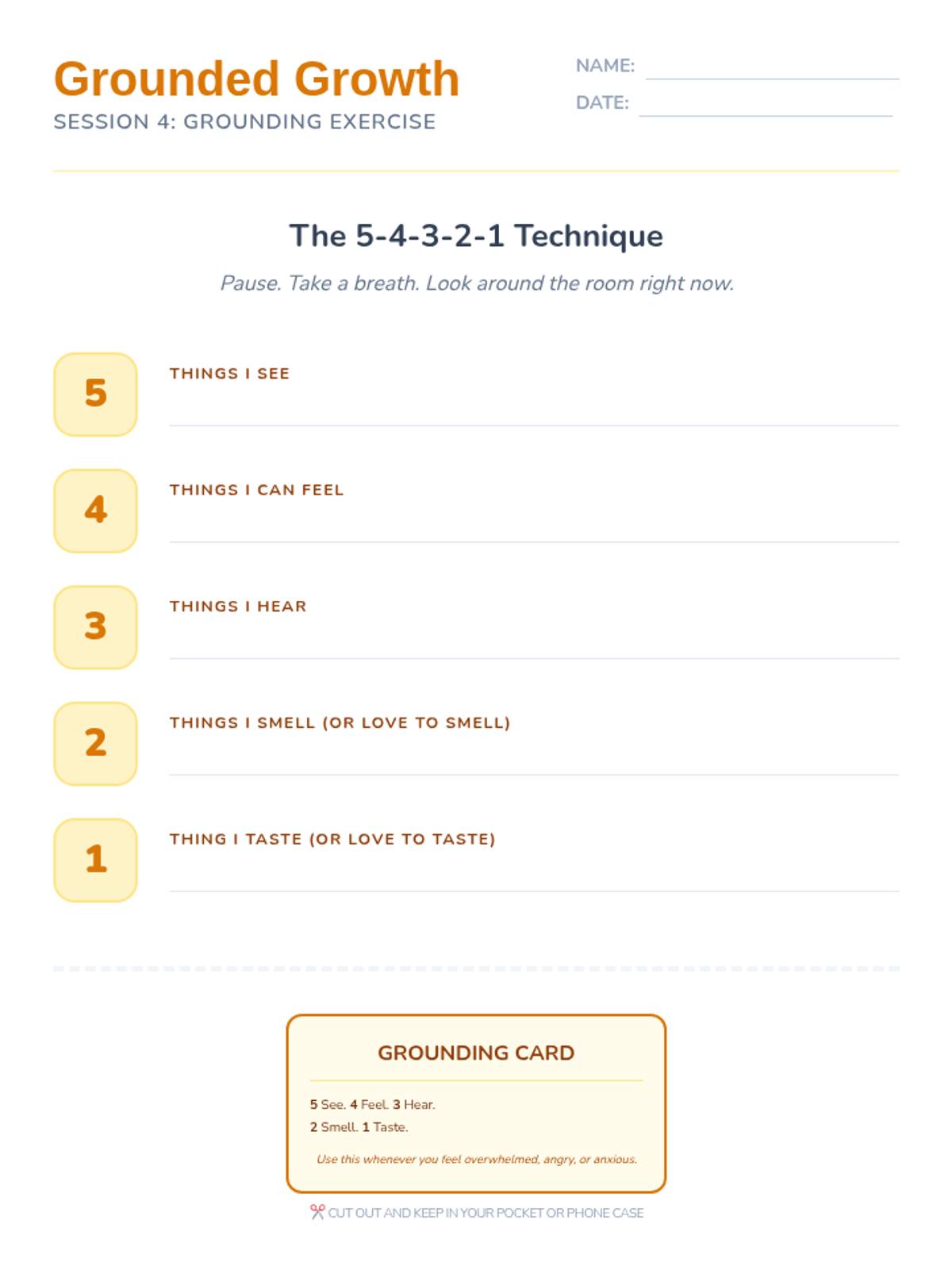
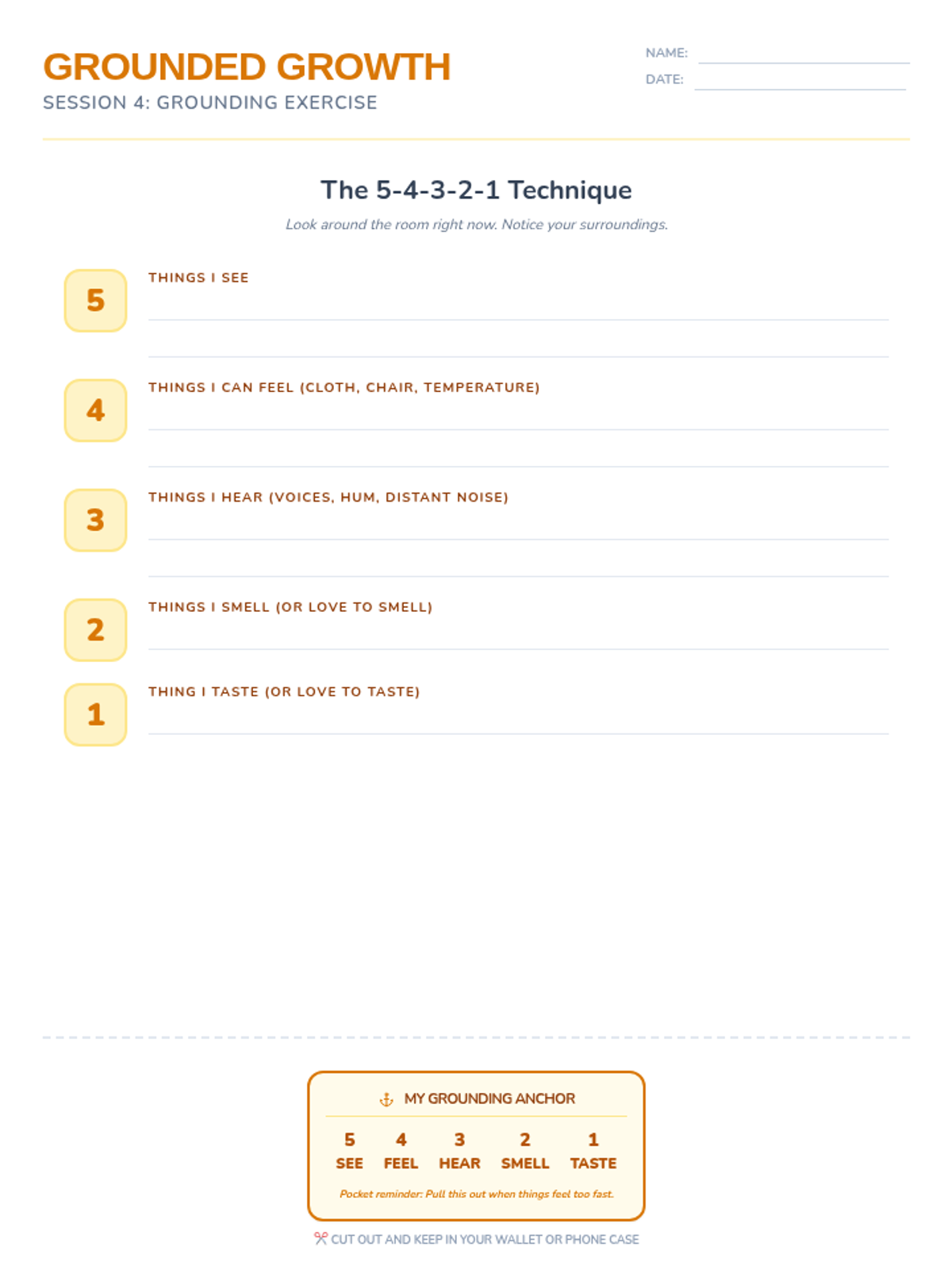
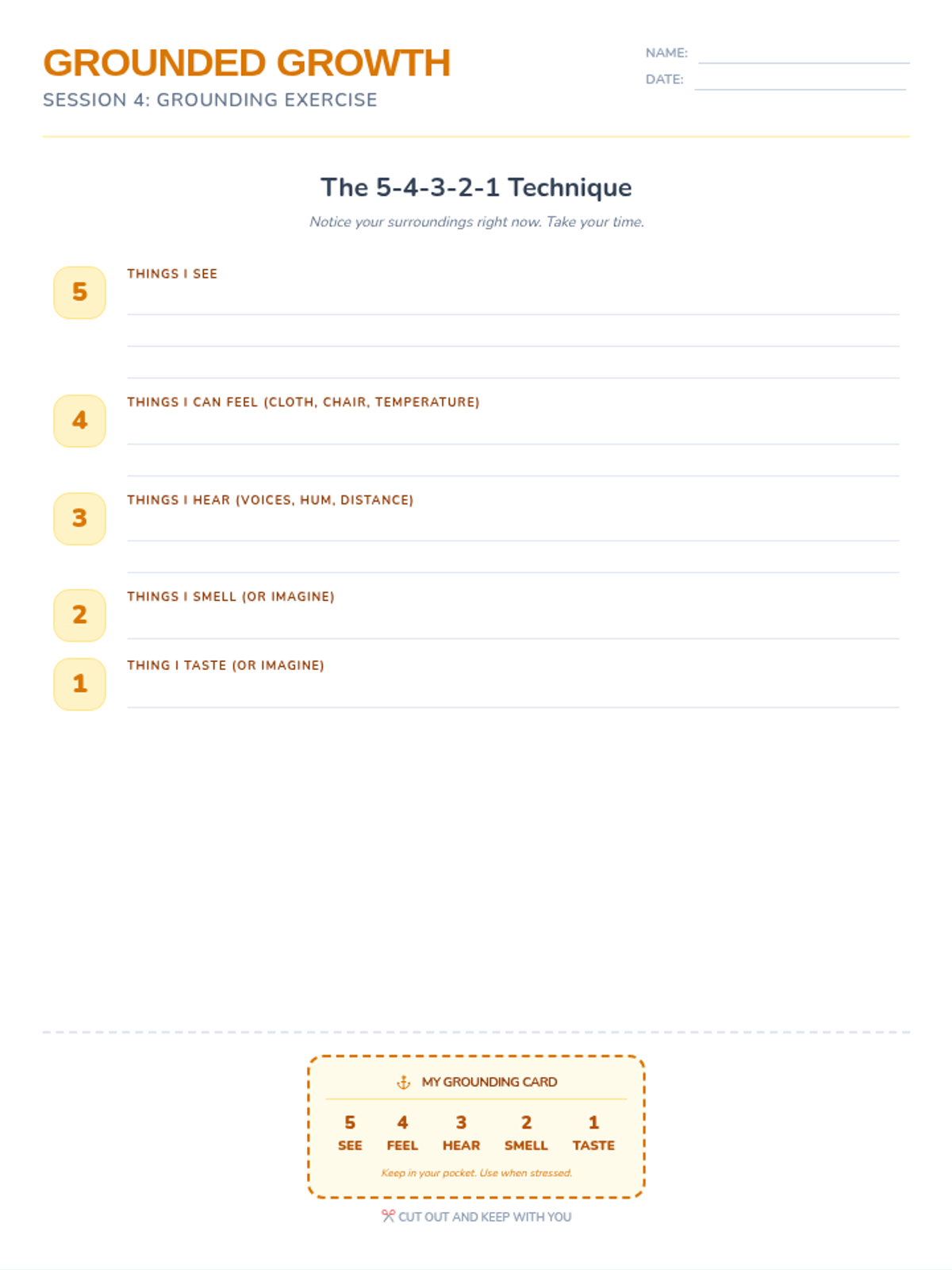
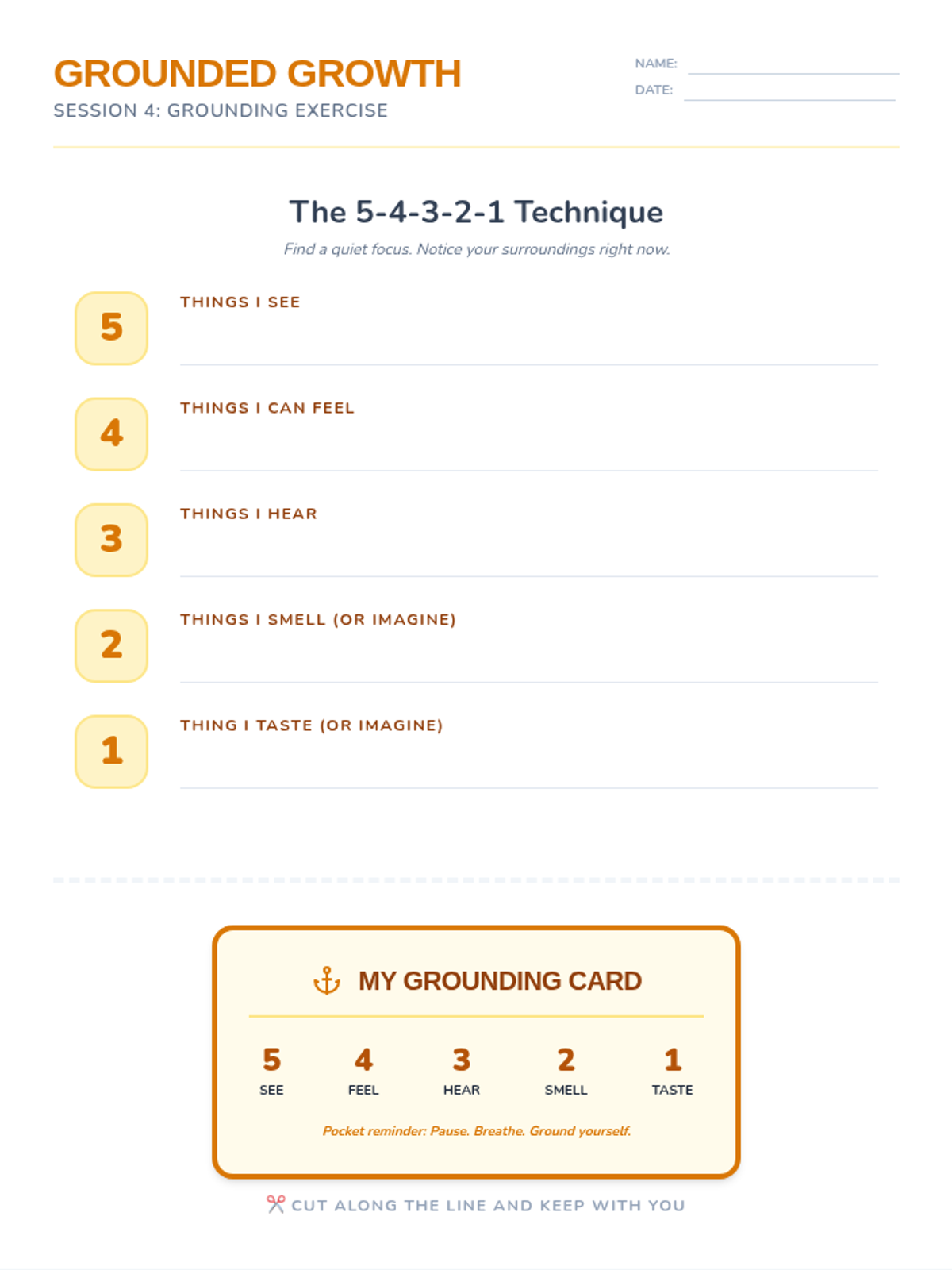
Practical application of grounding techniques and mindfulness to manage overwhelming emotions.
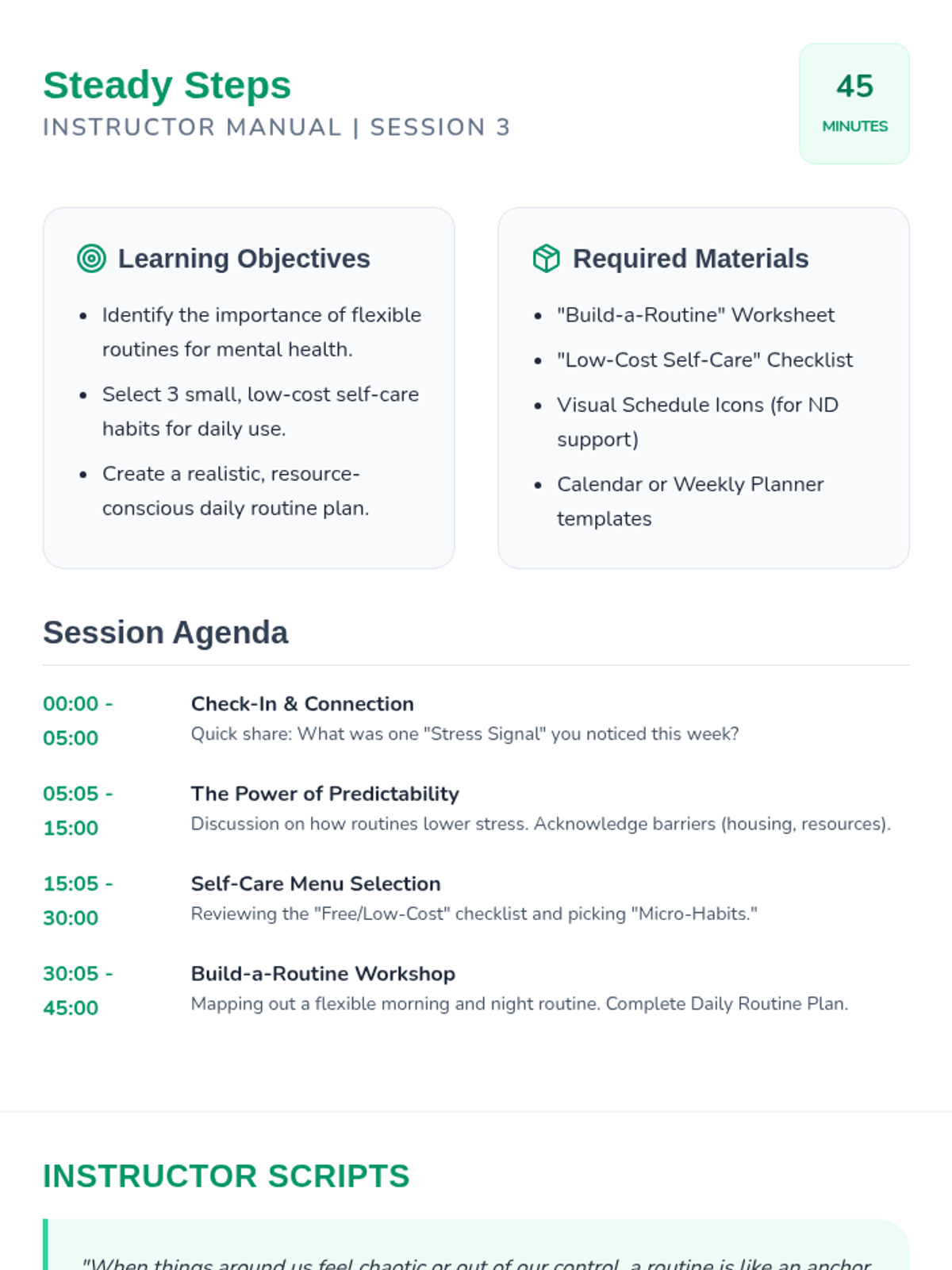
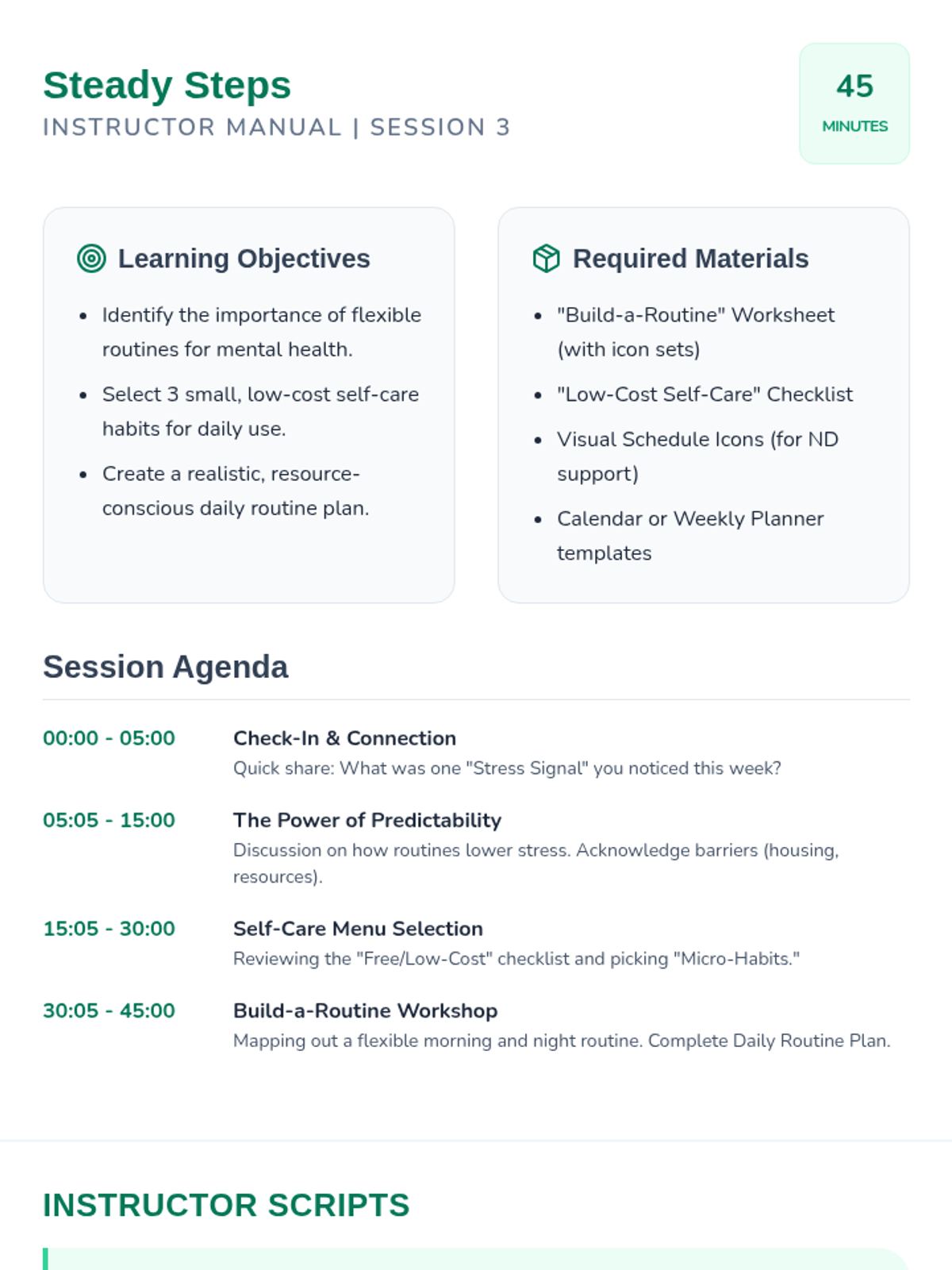
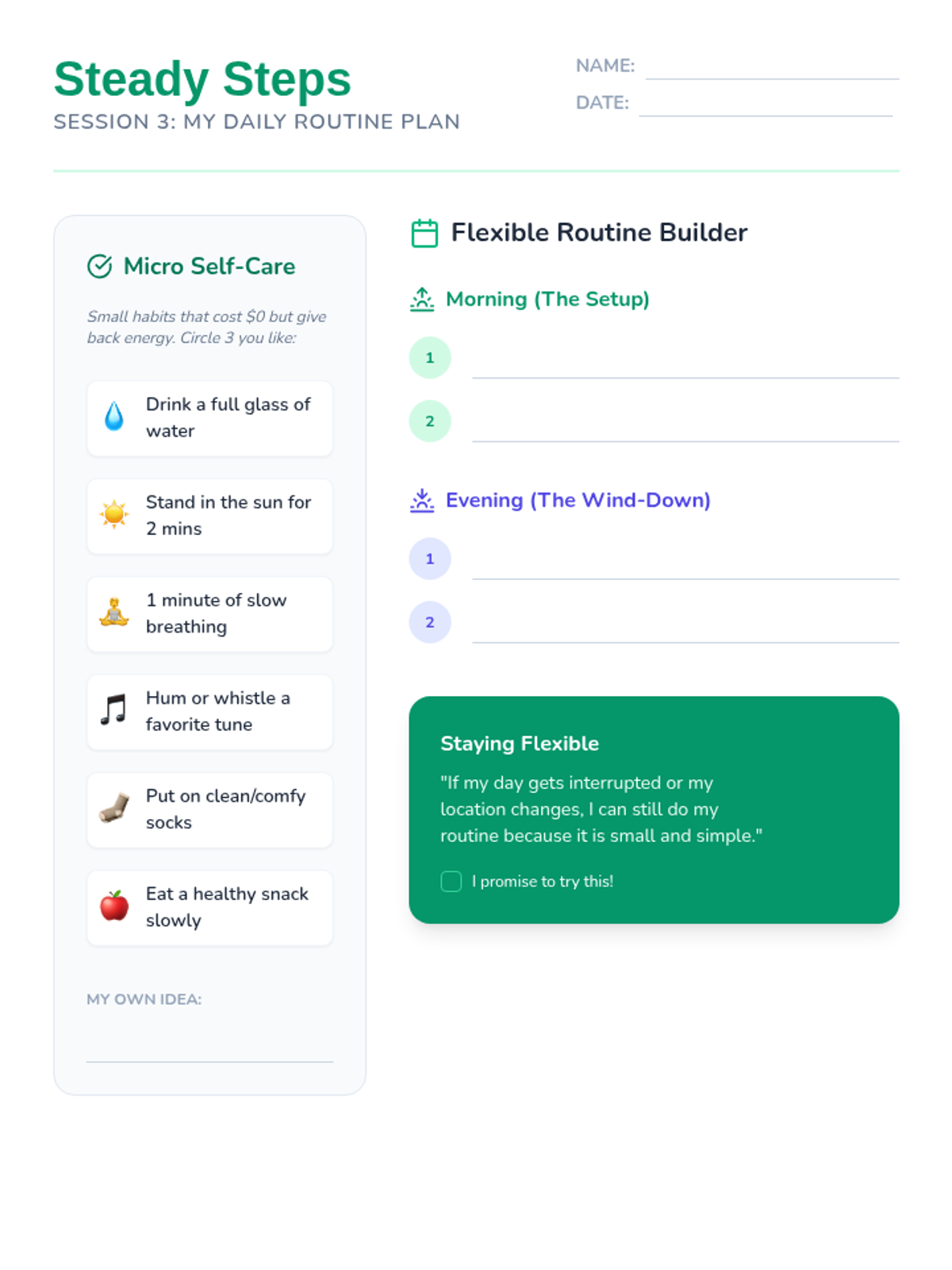
Students will explore the importance of flexible routines and identify low-cost self-care habits.
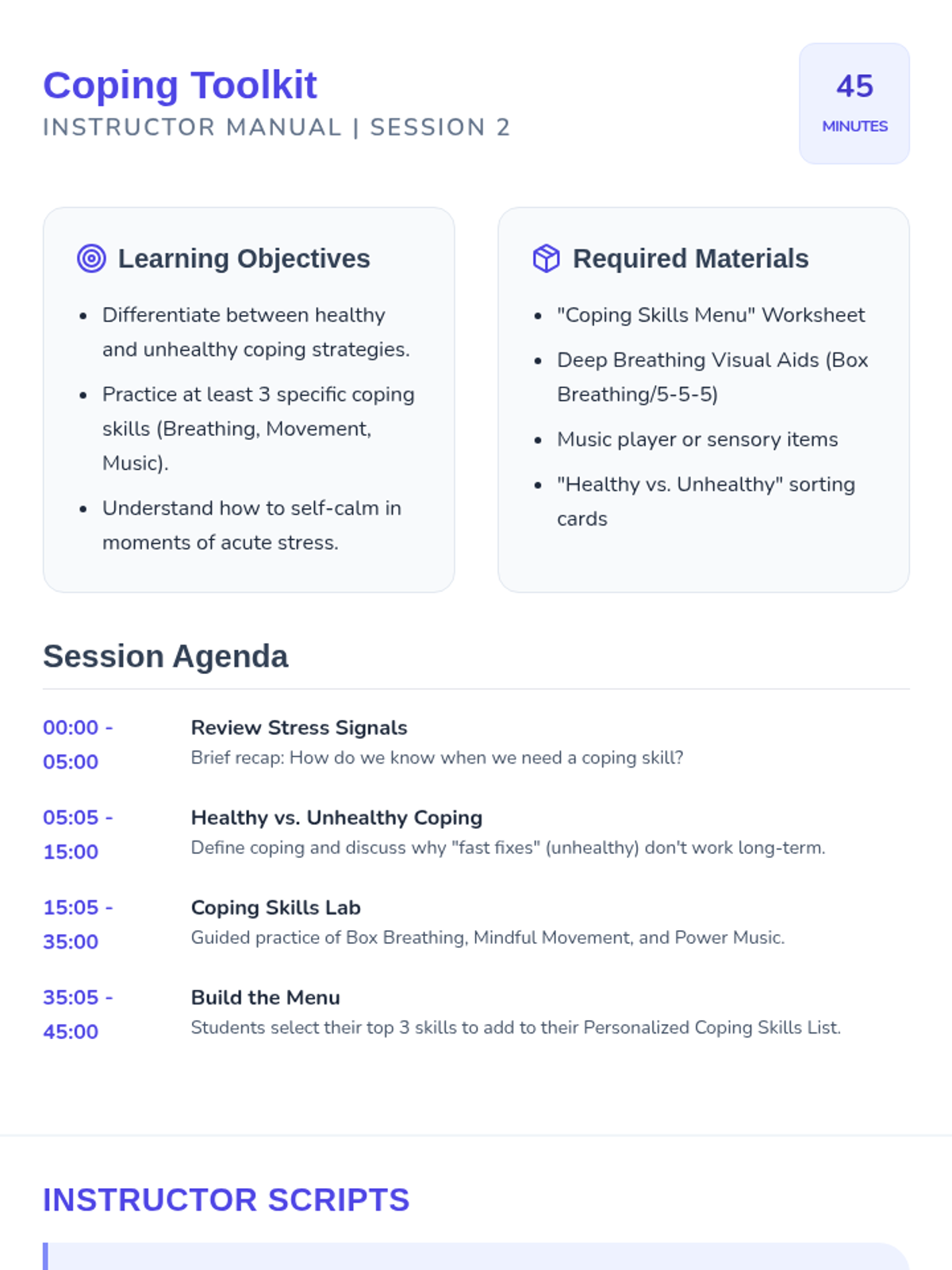
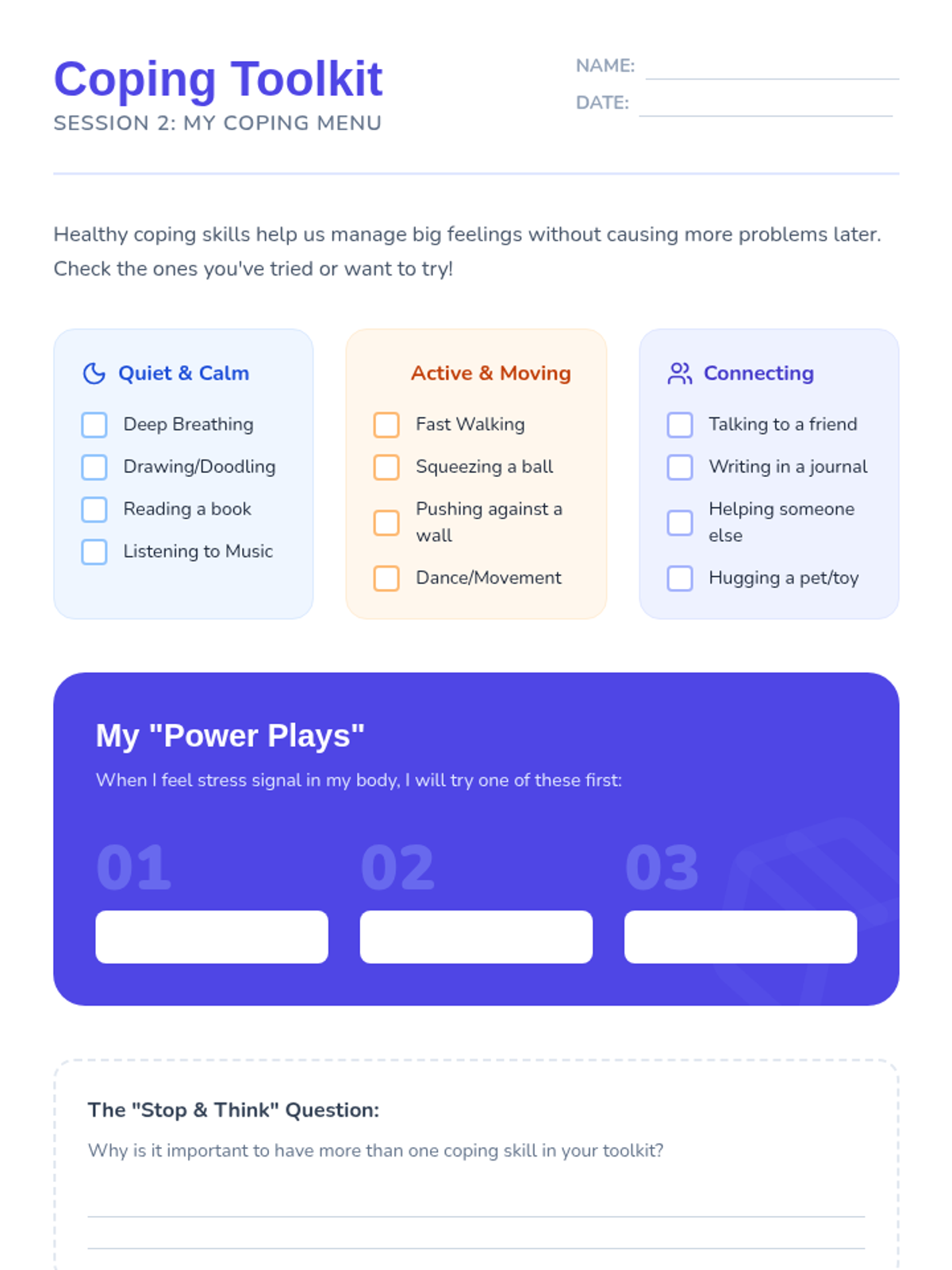
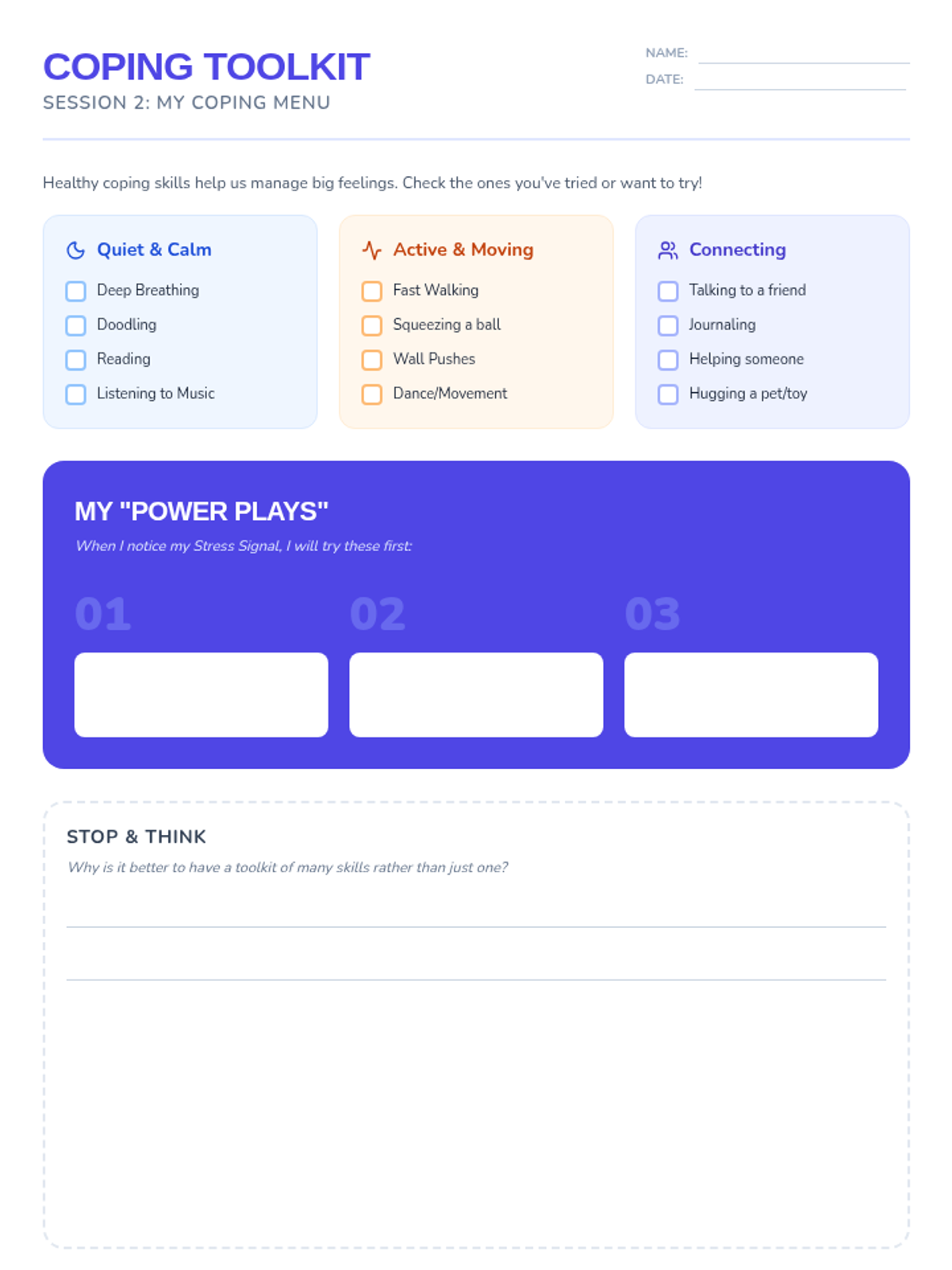
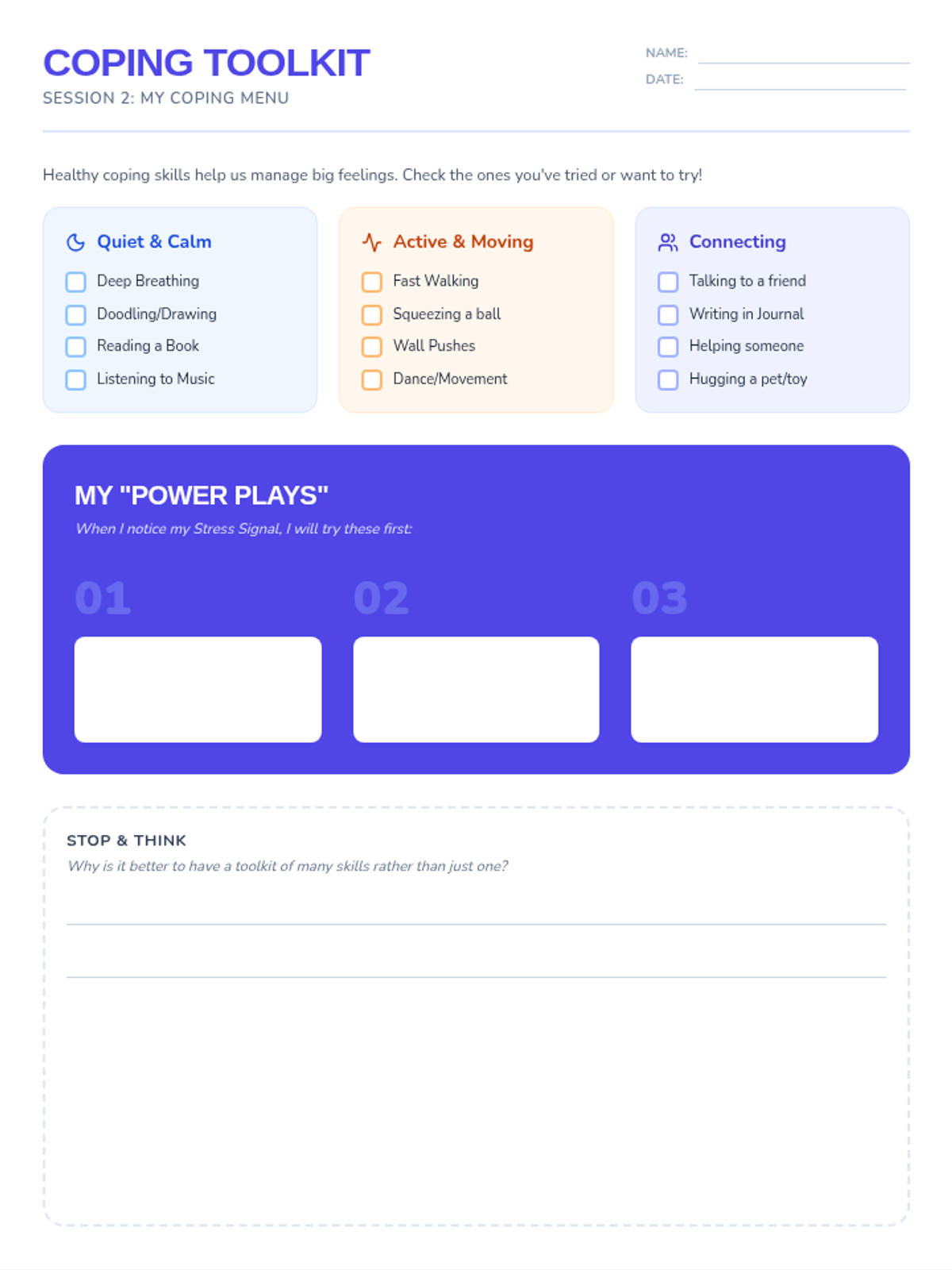
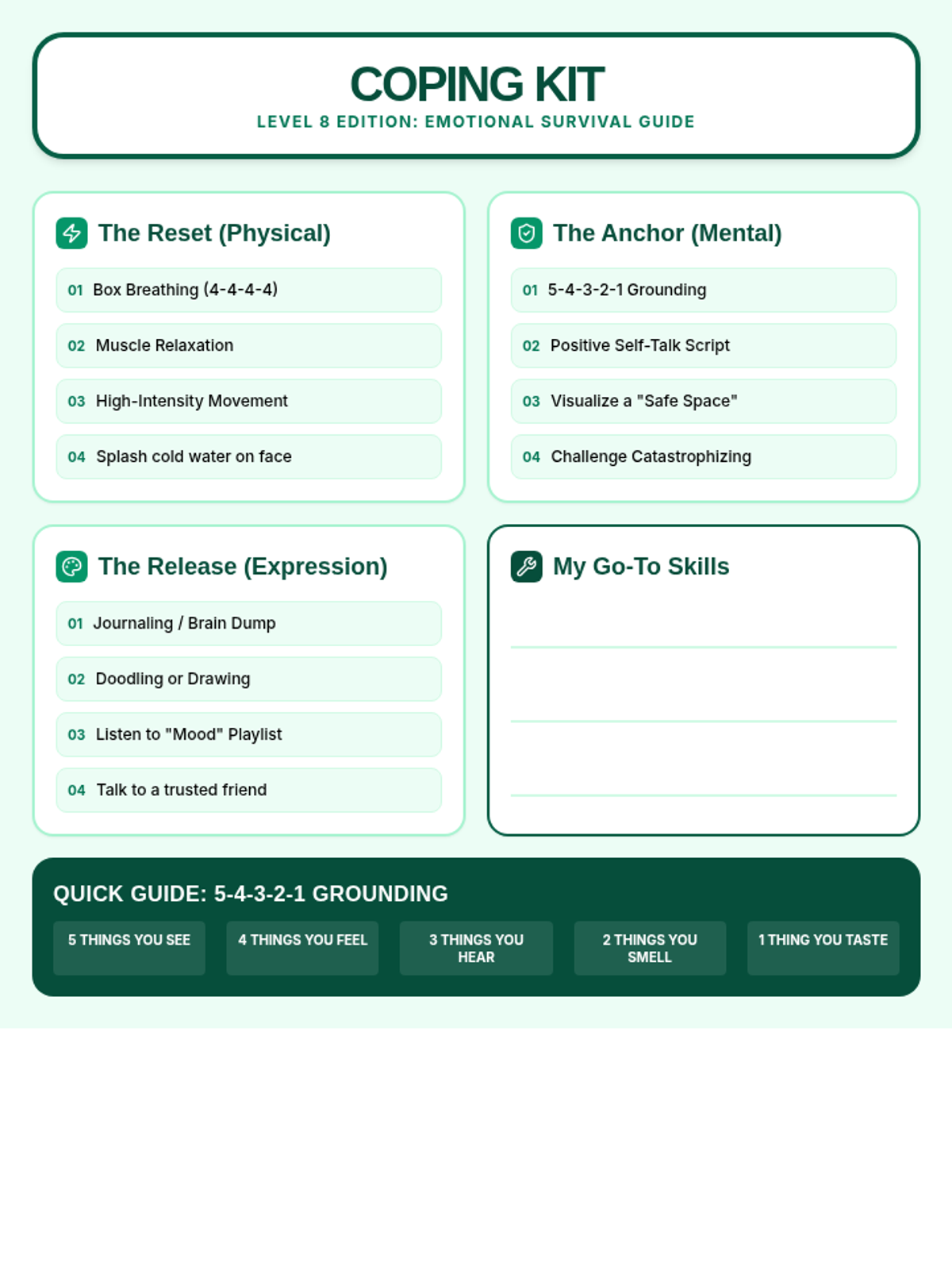
Introduction to healthy coping strategies and the development of a personalized coping skills menu.
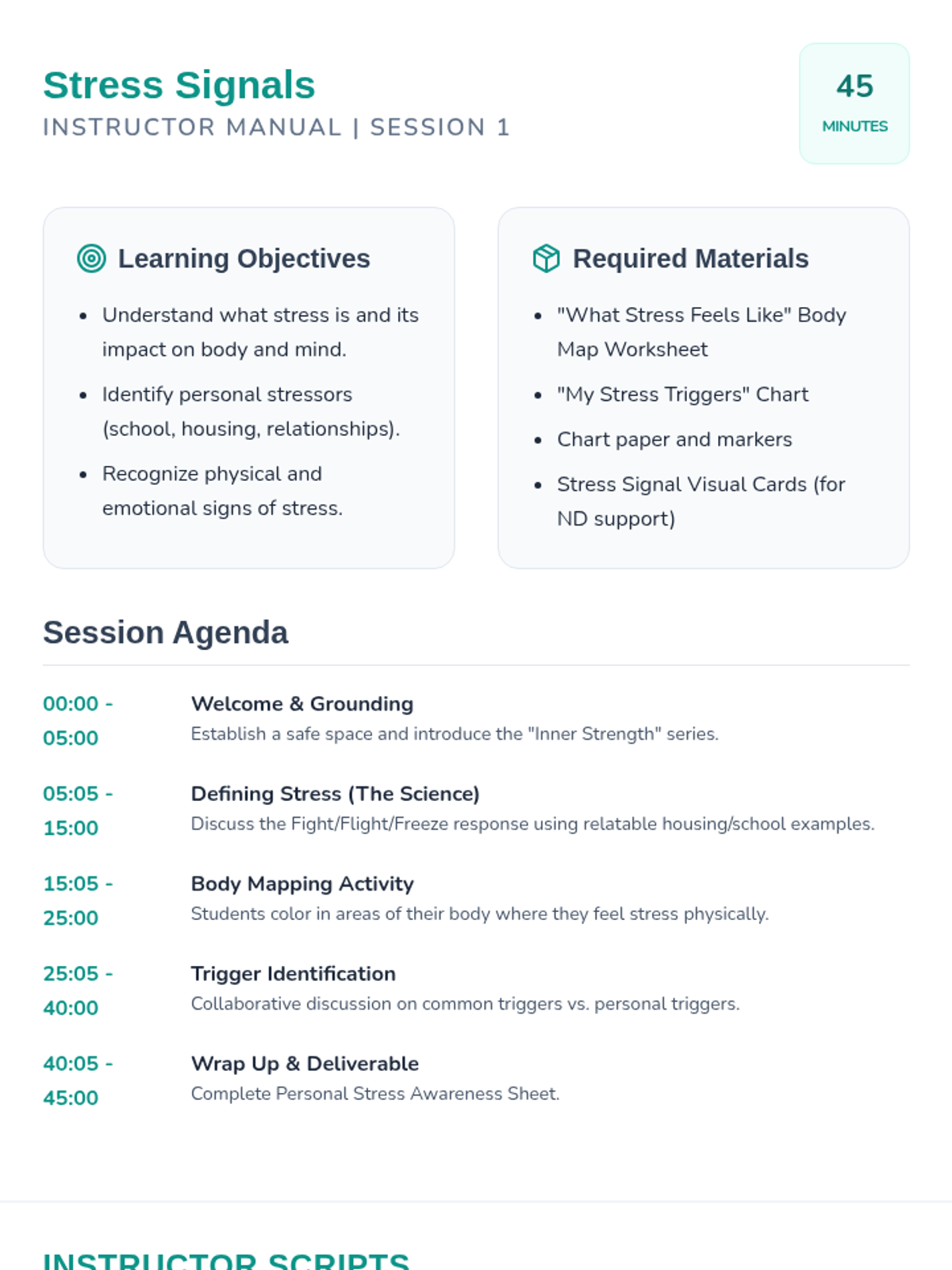
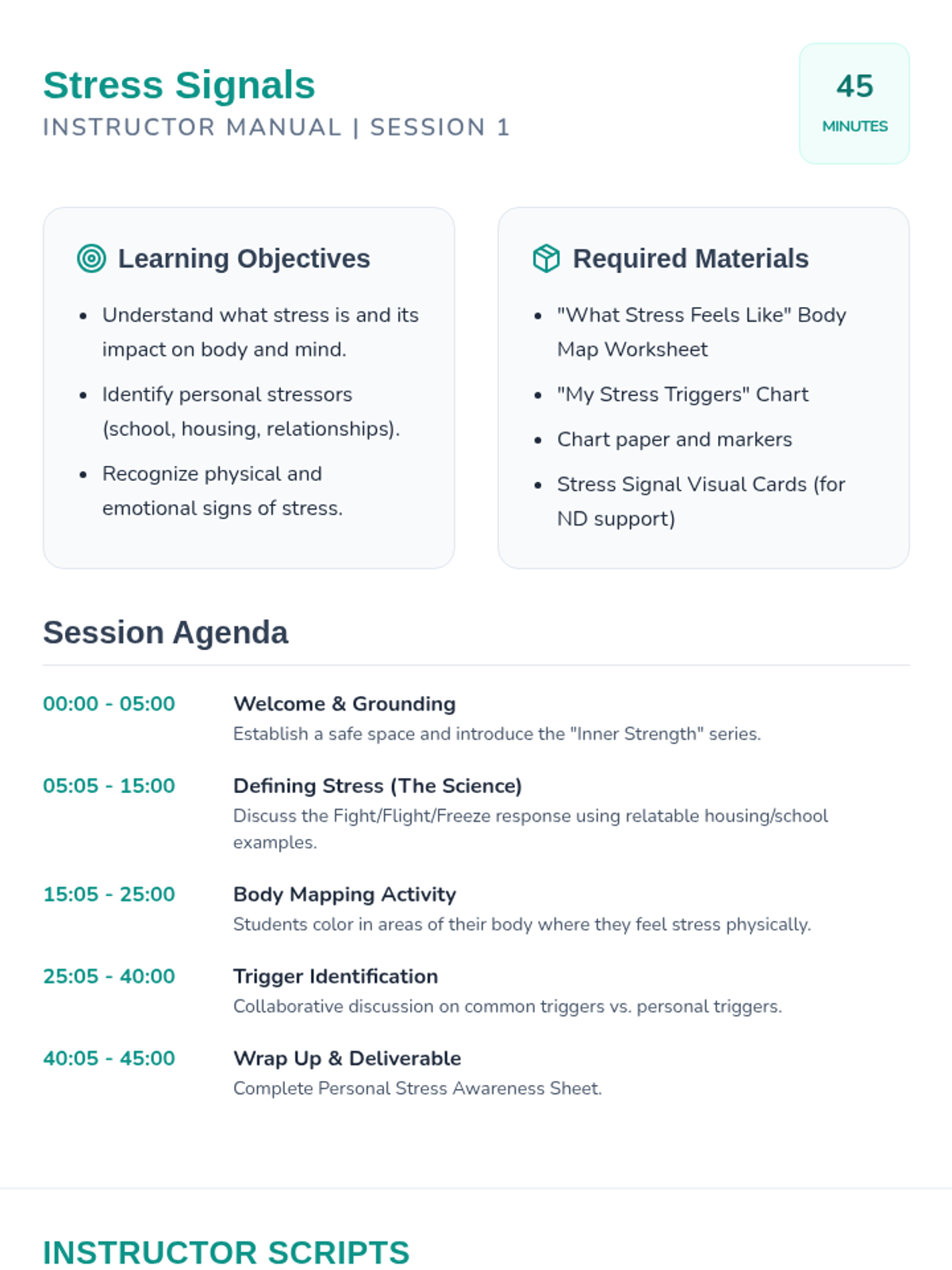
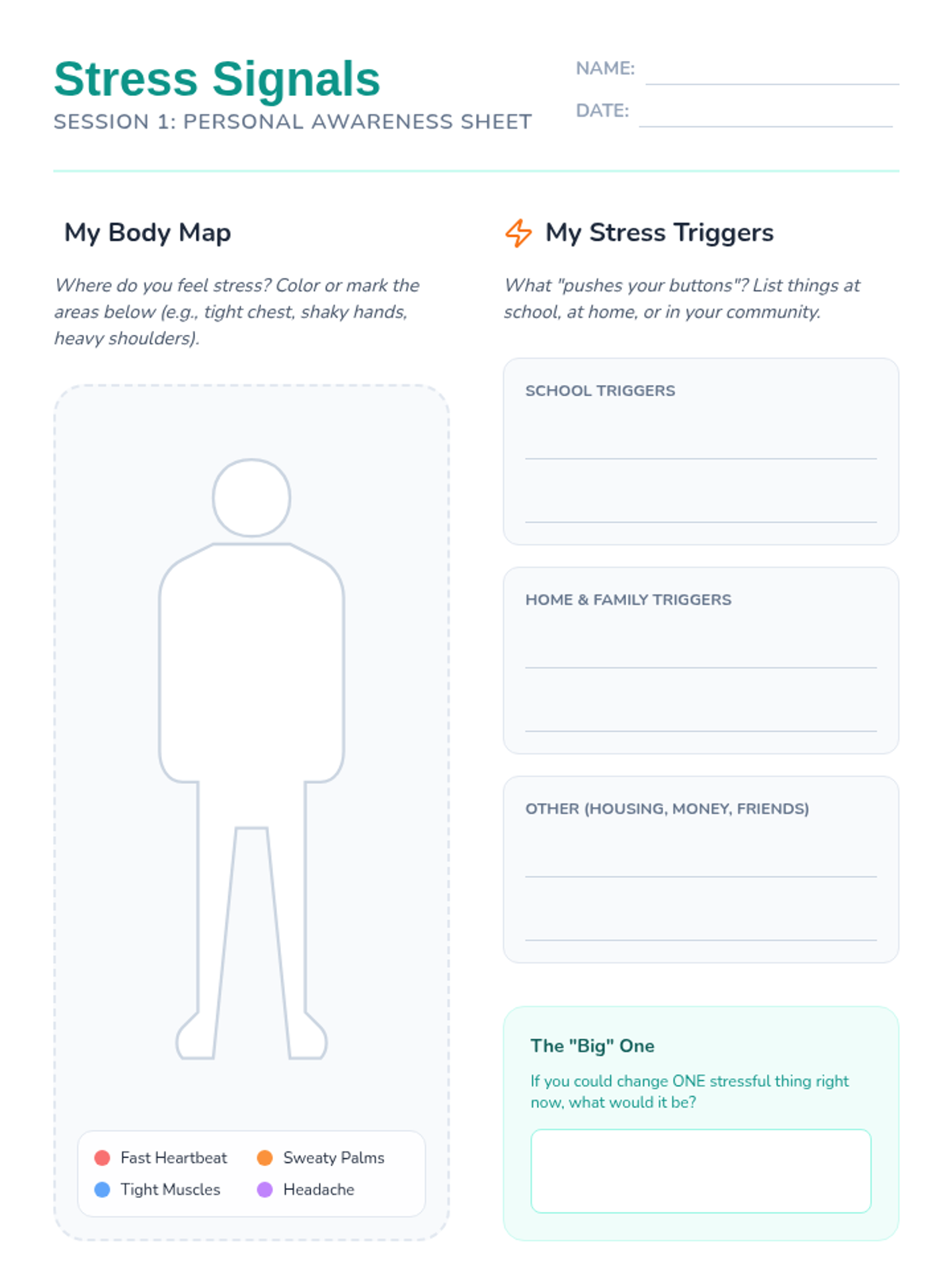
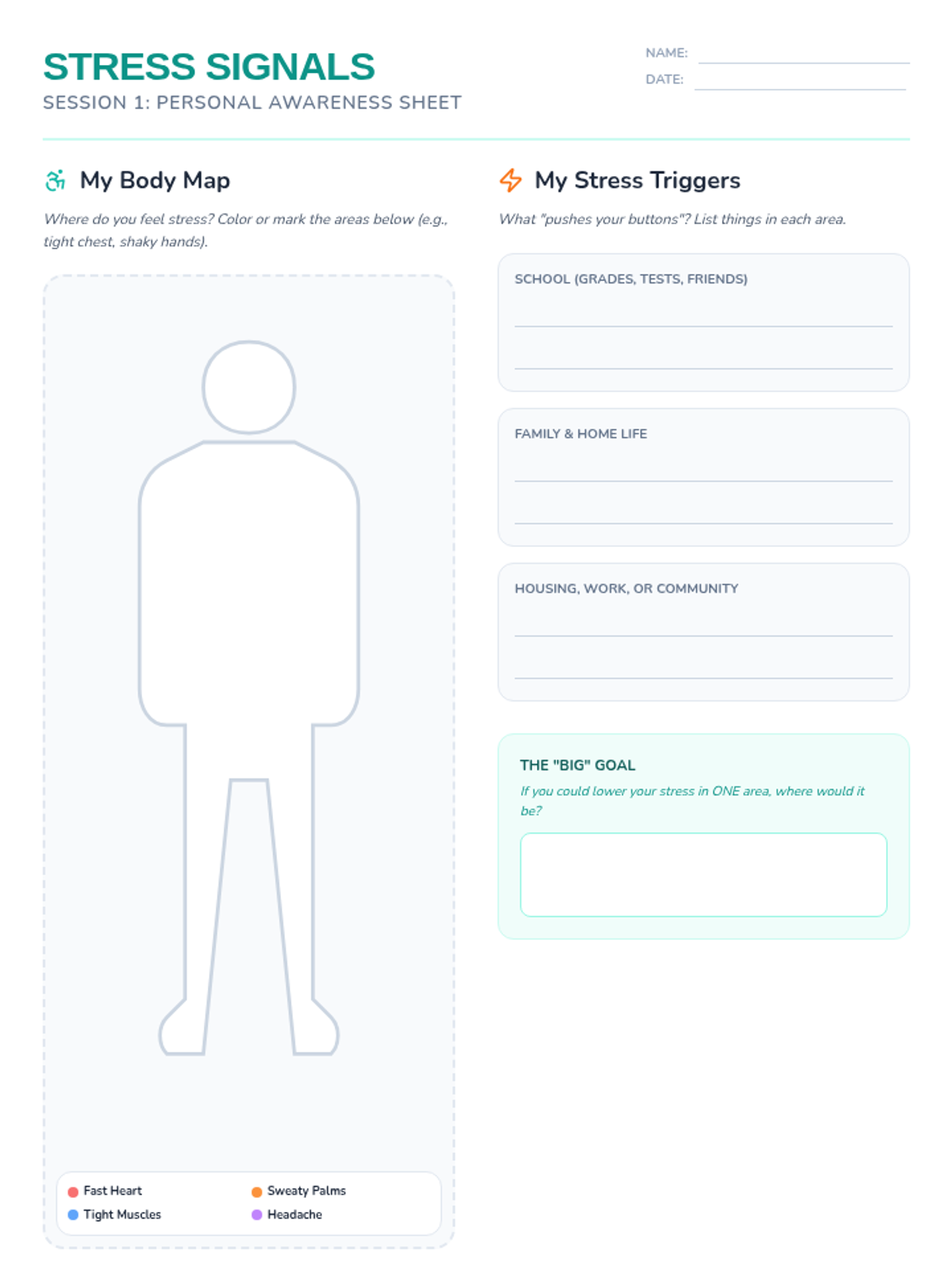
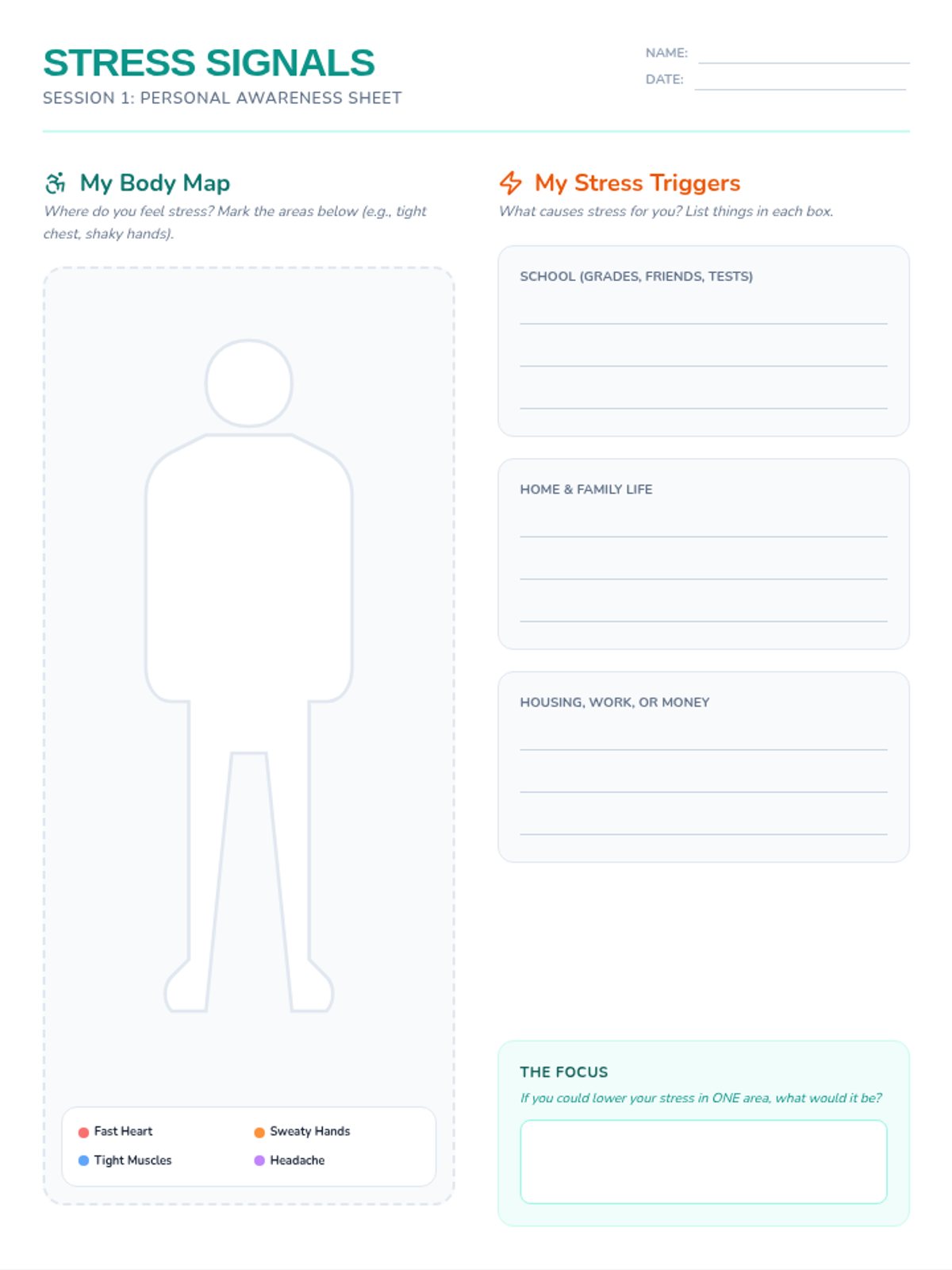
Students will learn to identify the physical and emotional signs of stress and recognize their personal triggers.
A collection of printable banners, headers, advice cards, and community resource listings to create an engaging summer-themed bulletin board.
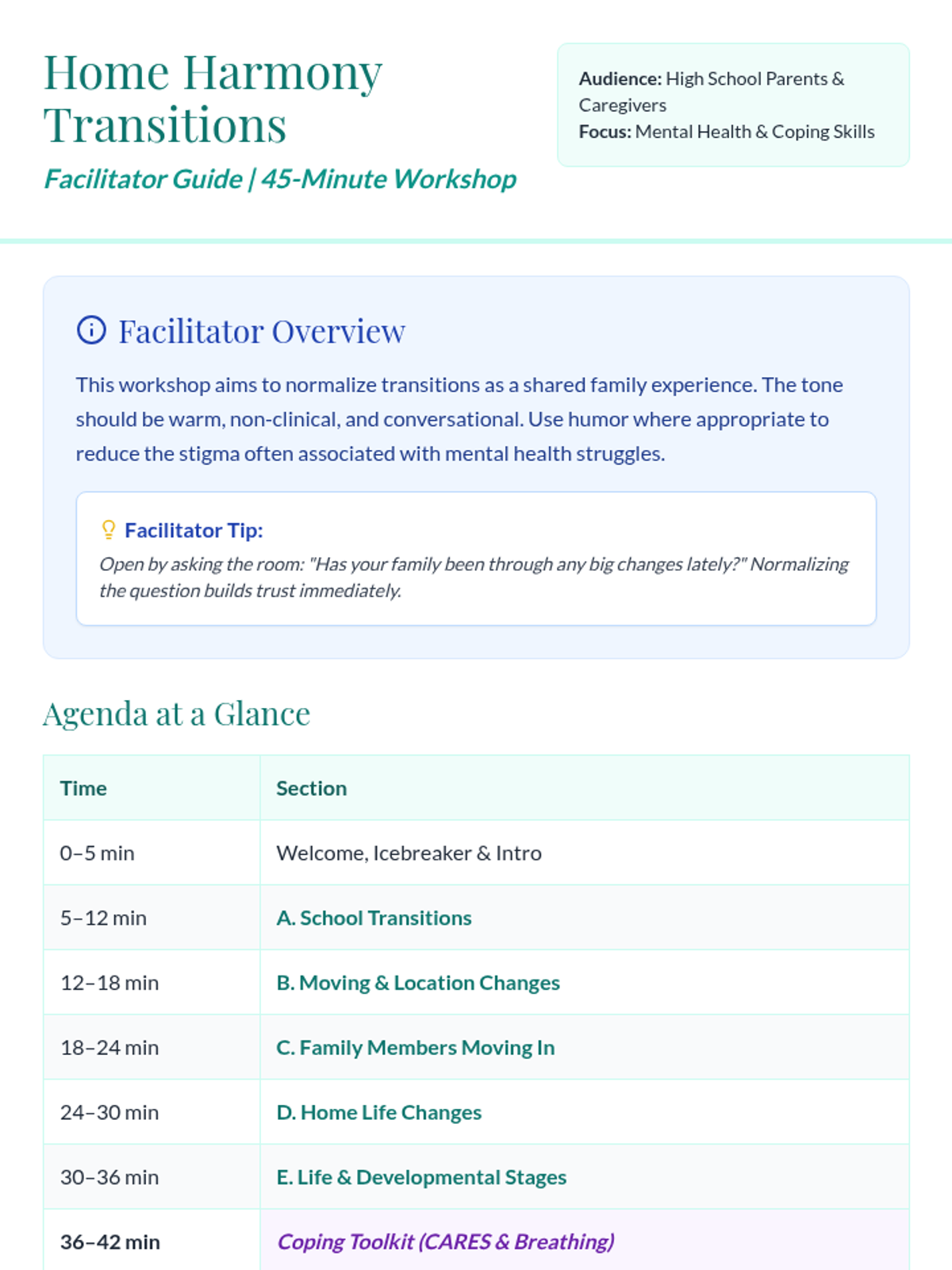
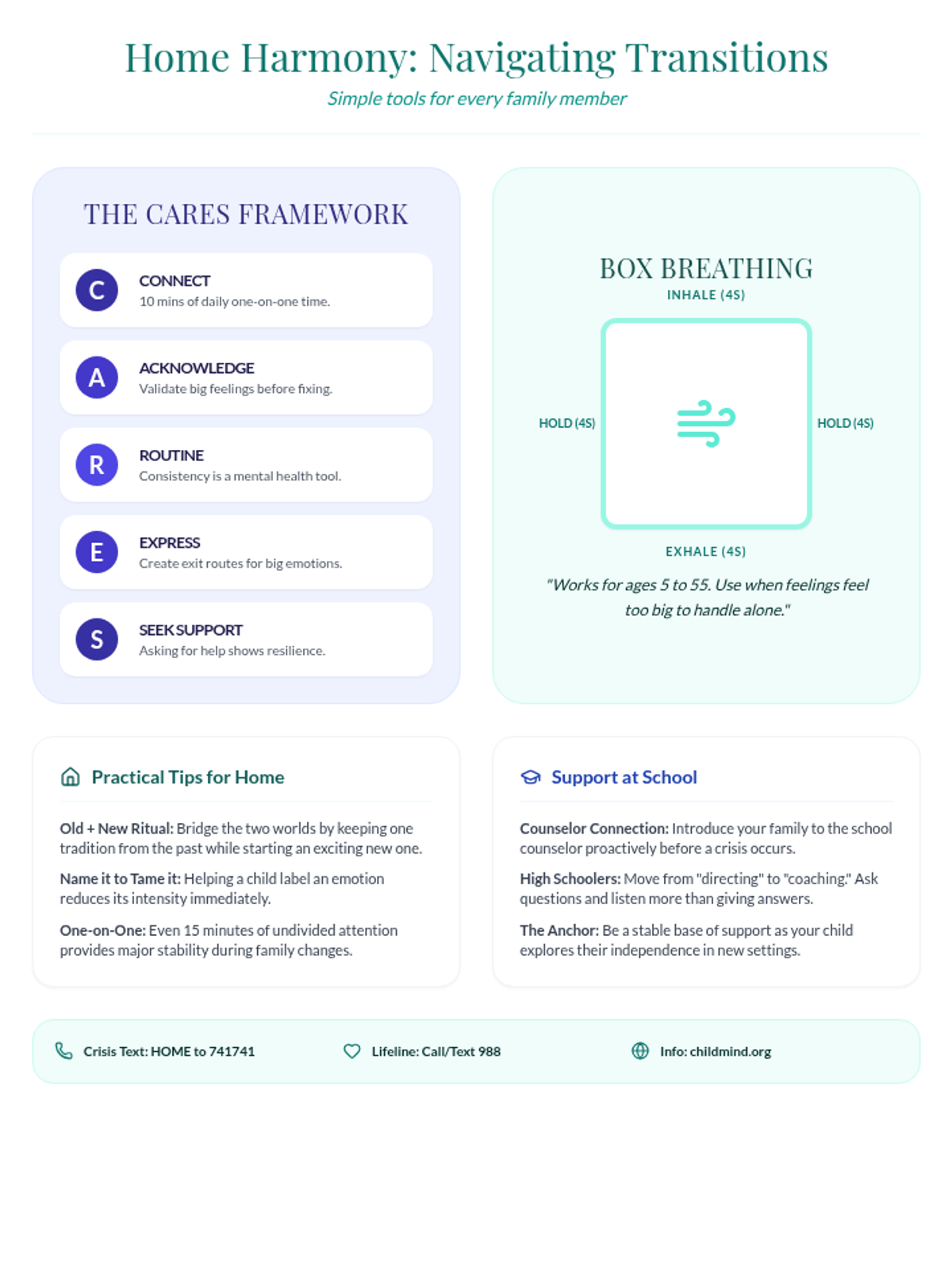
A 45-minute workshop designed to equip high school parents and caregivers with simple, effective coping strategies for family transitions.
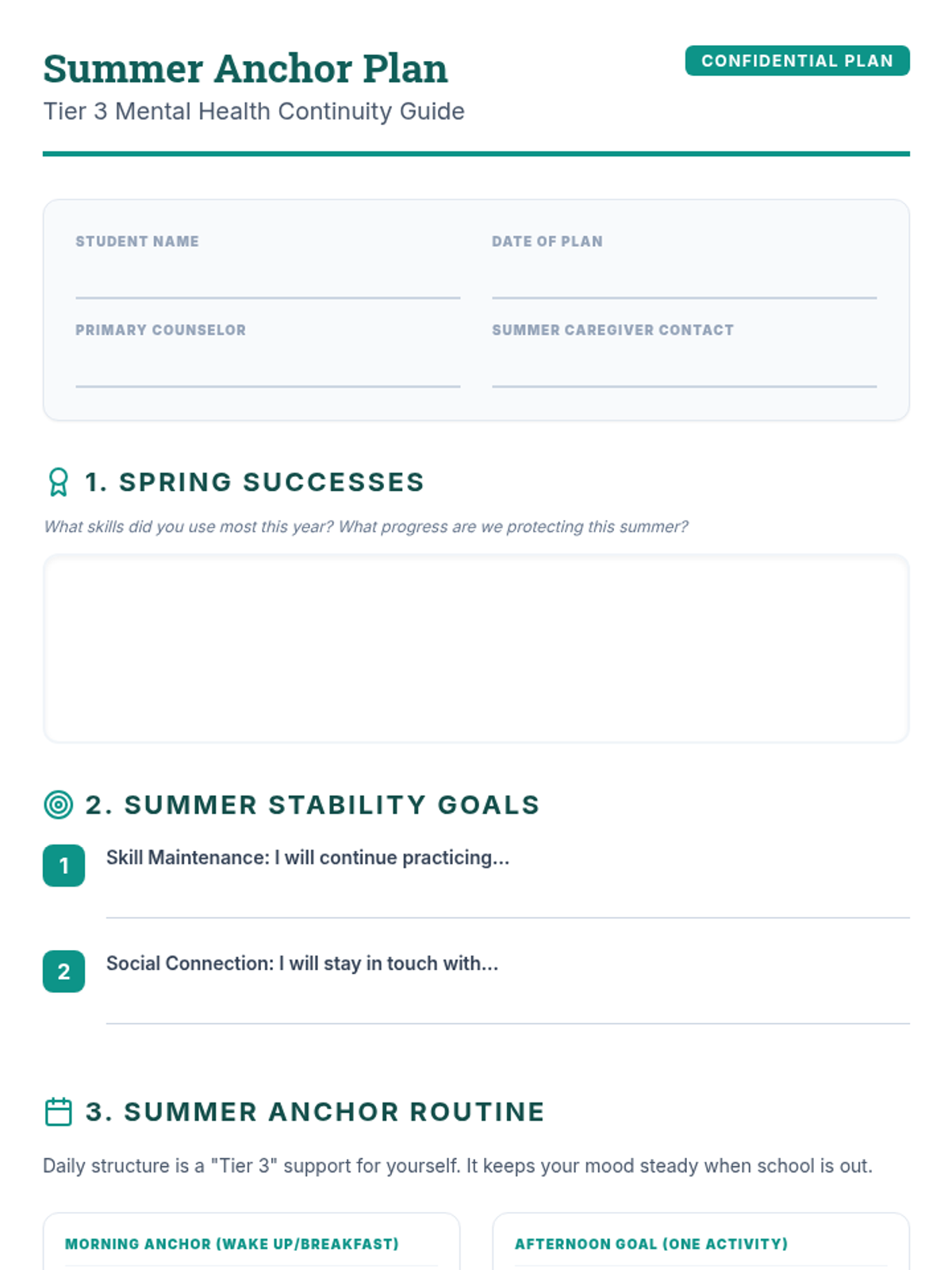
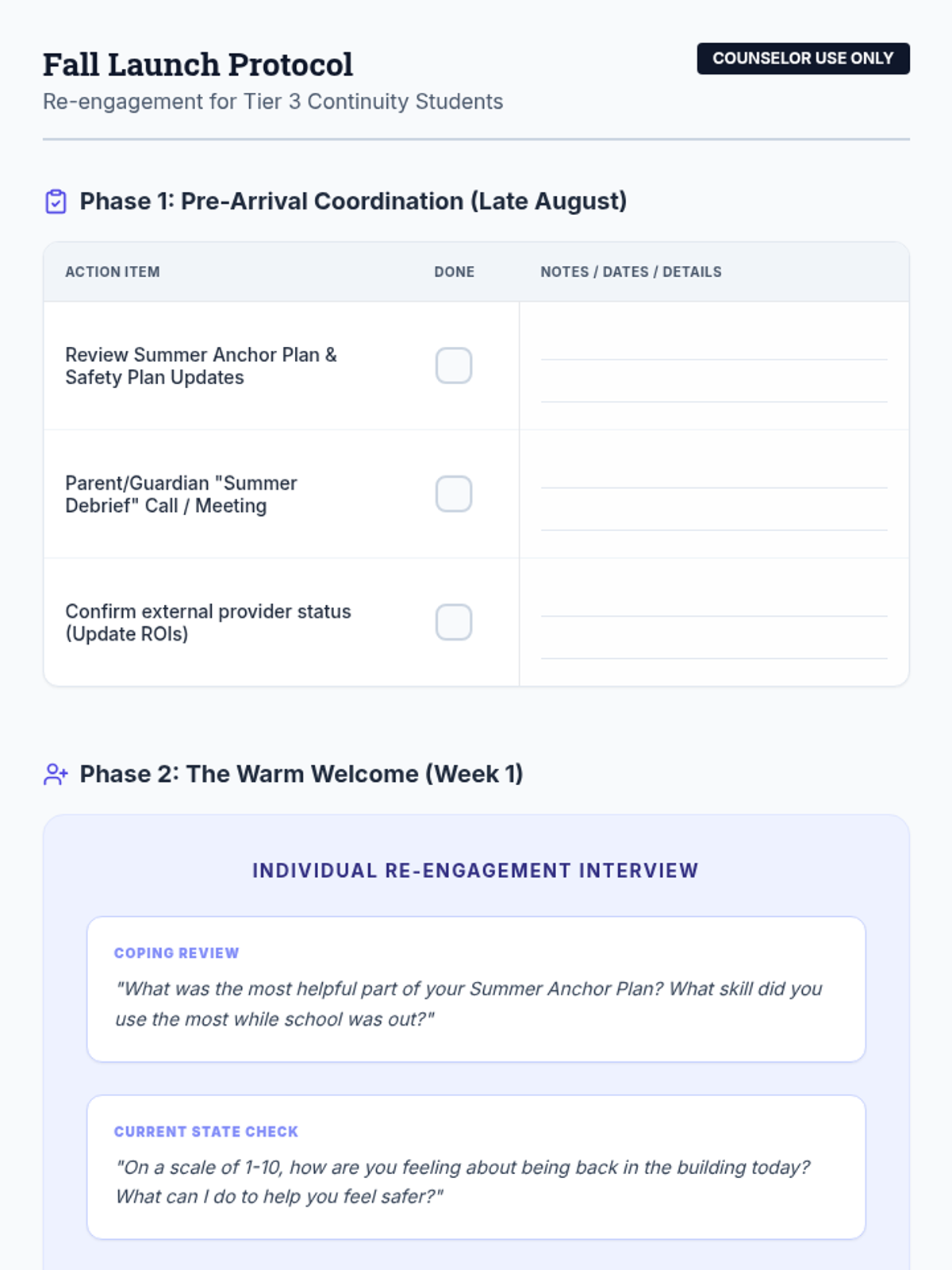
A structured framework for school counselors to facilitate the transition of Tier 3 students to summer break, ensuring continuity of care and crisis preparedness.
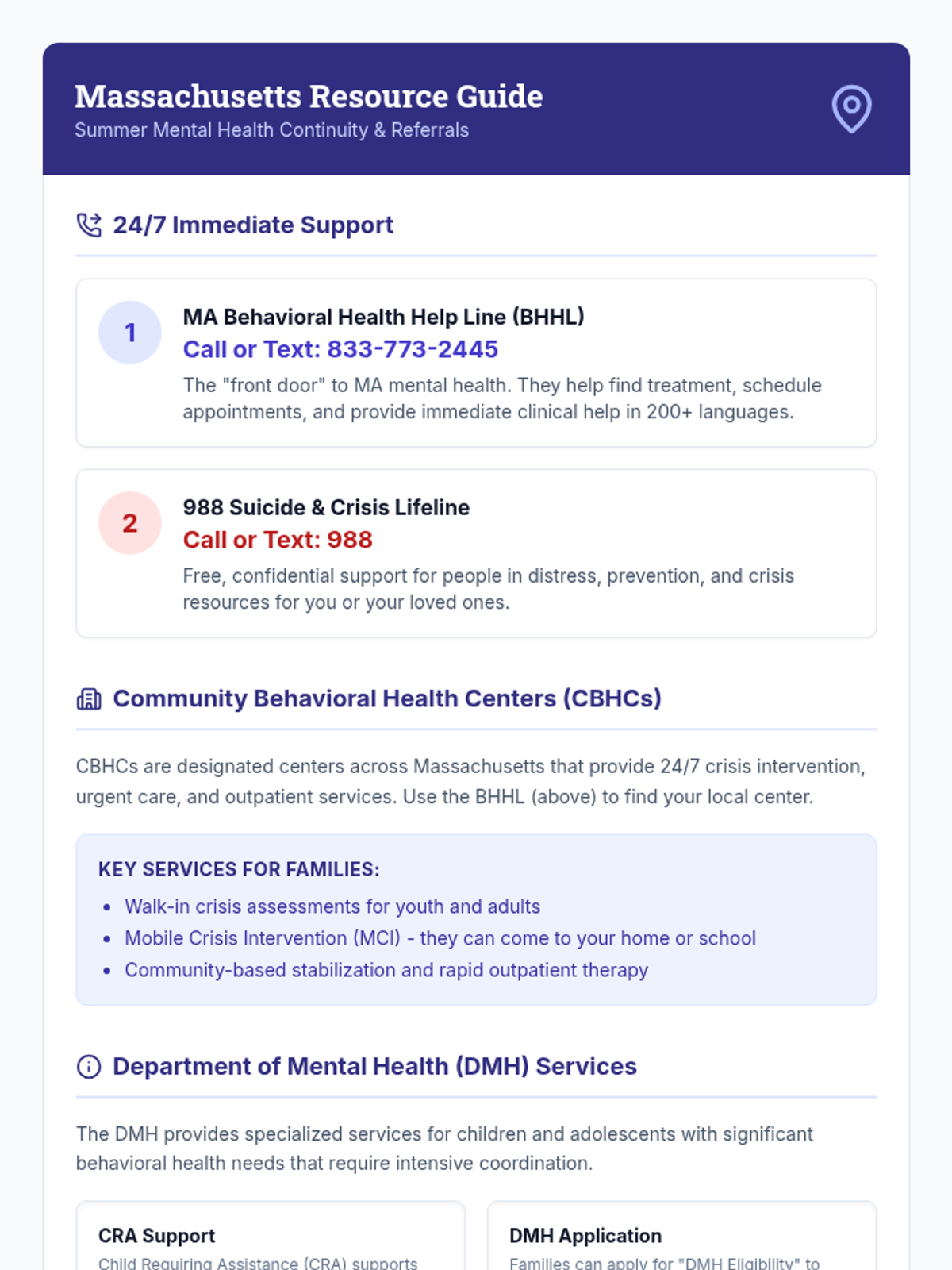
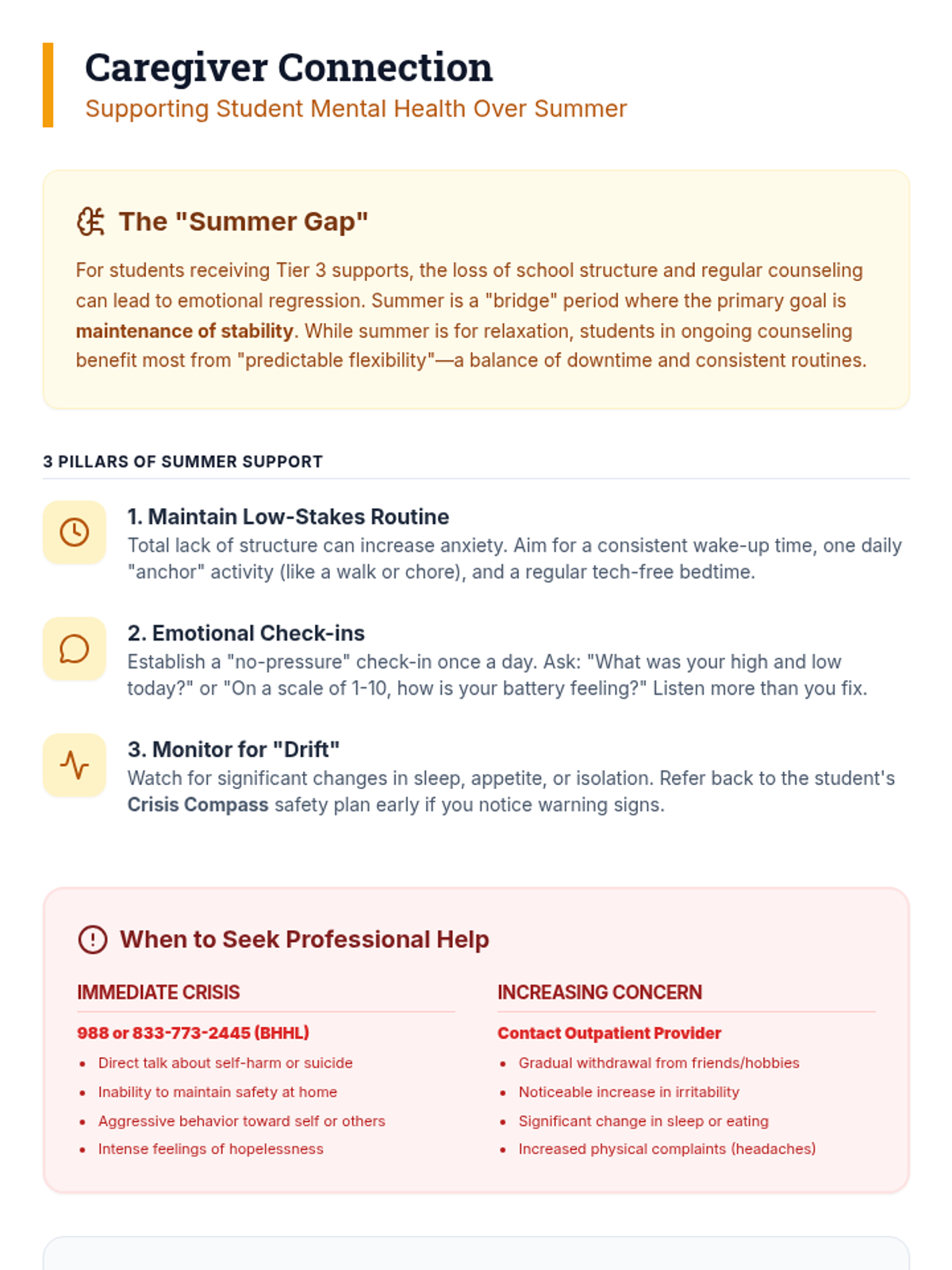
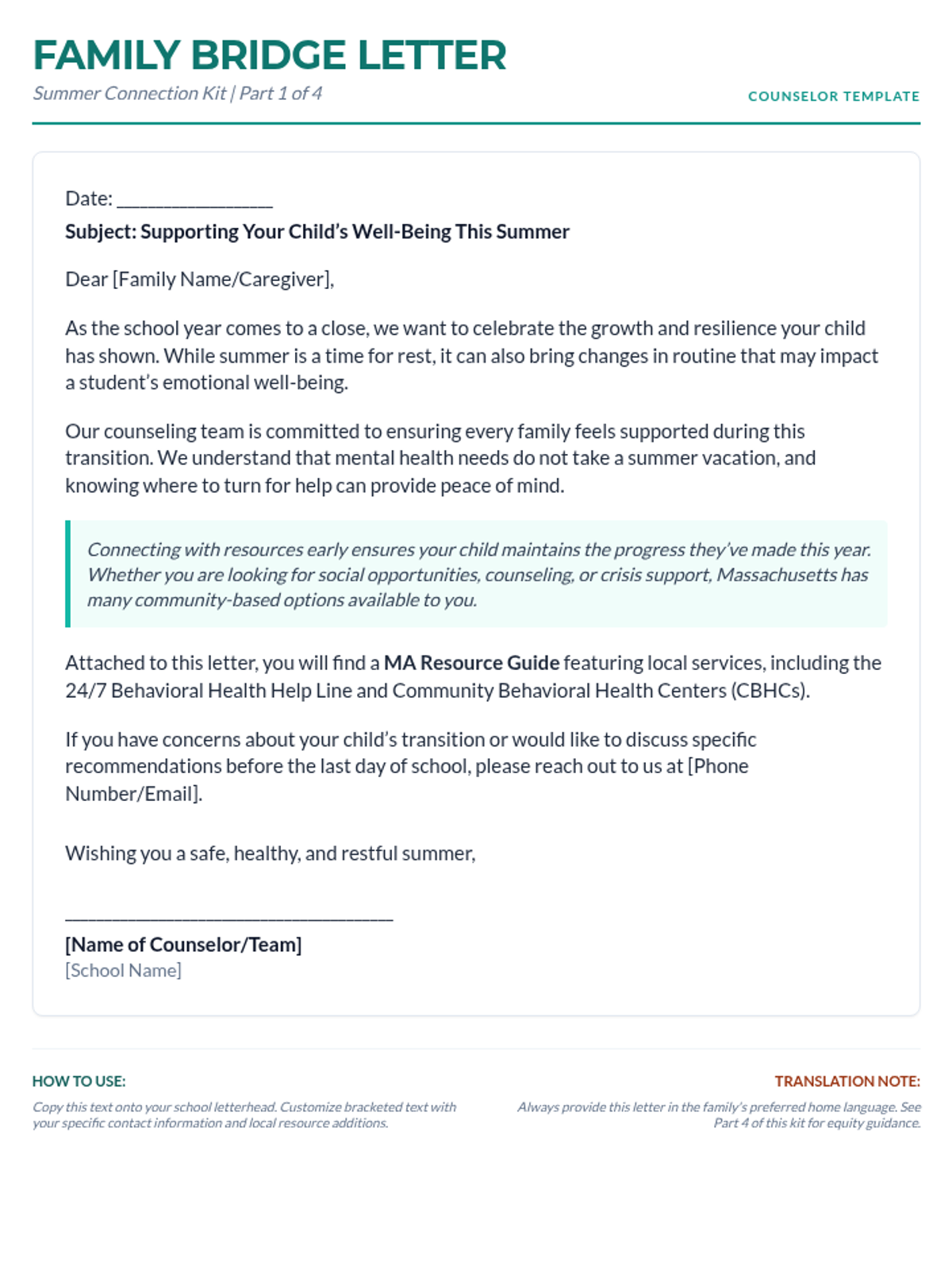
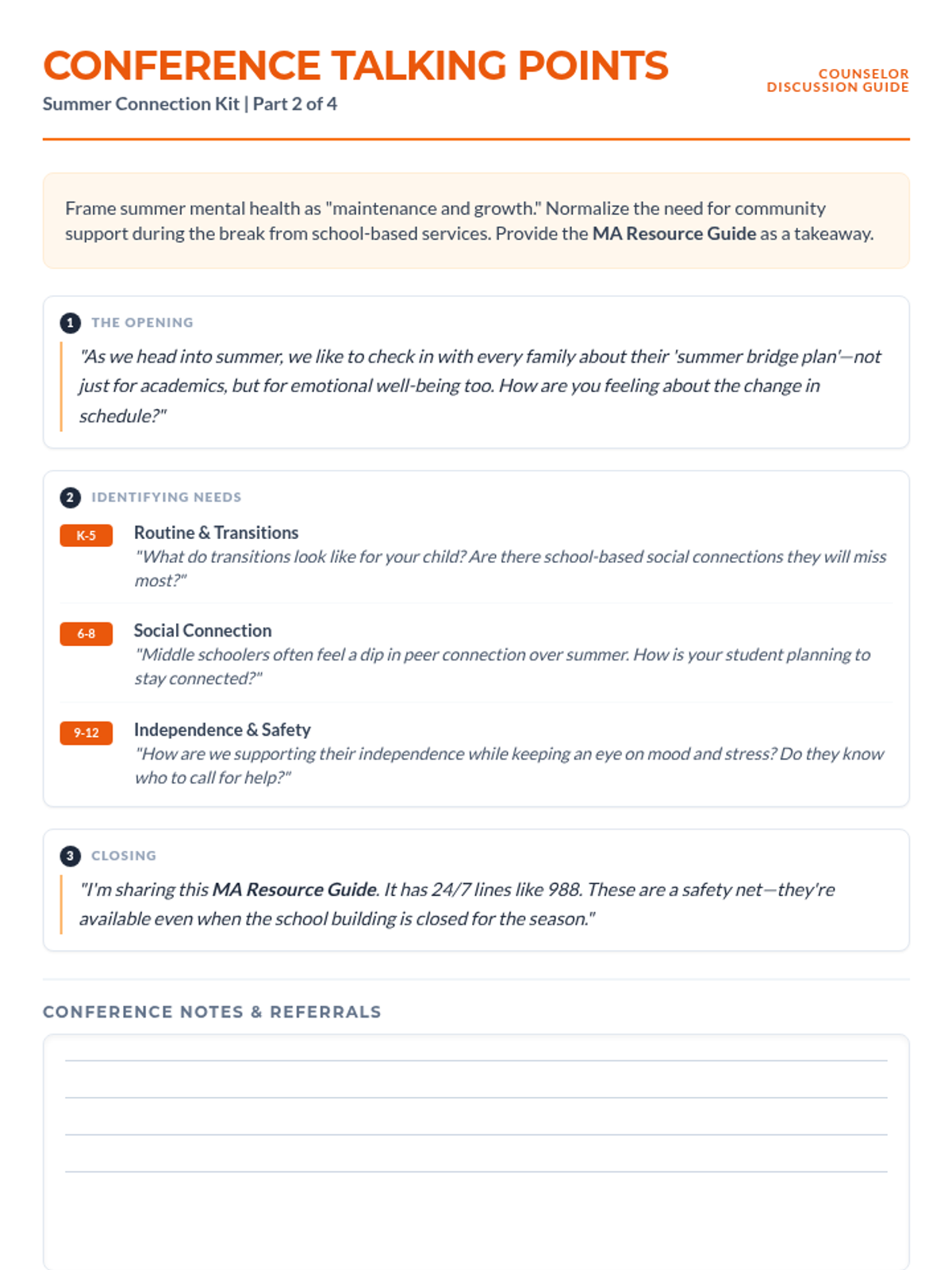
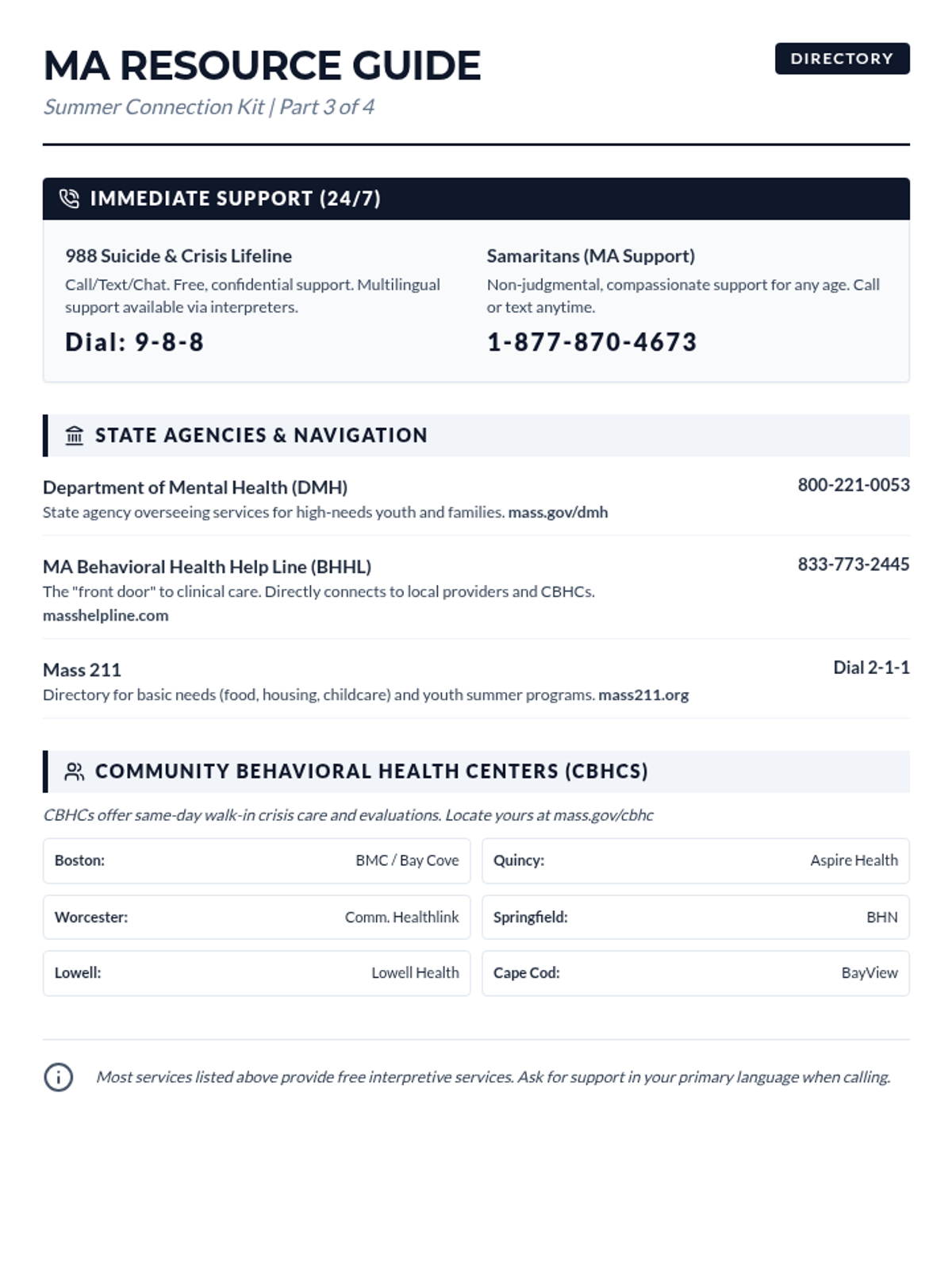
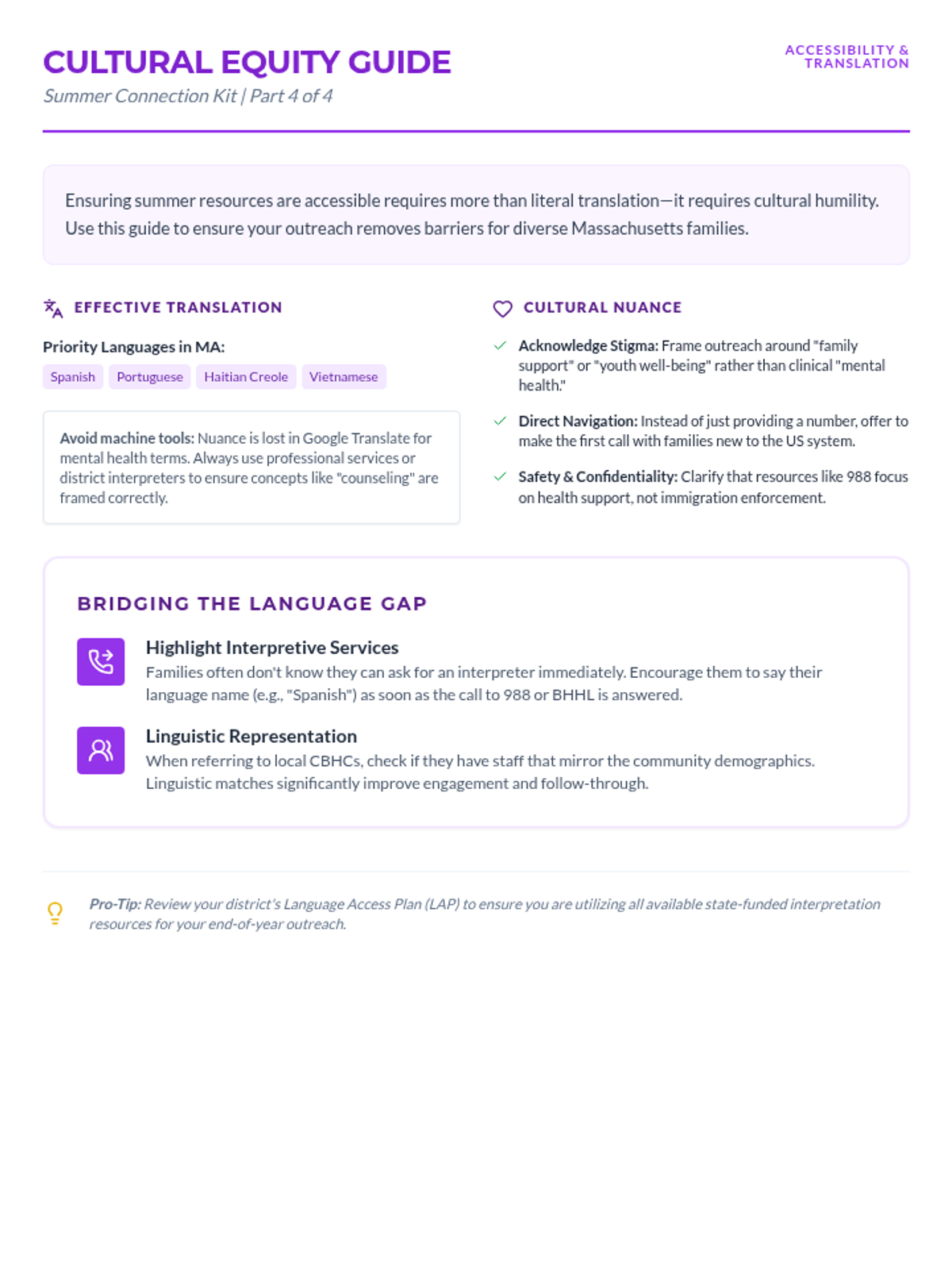
A comprehensive toolkit for school counselors to bridge the gap between school-year support and summer mental health resources for families in Massachusetts.
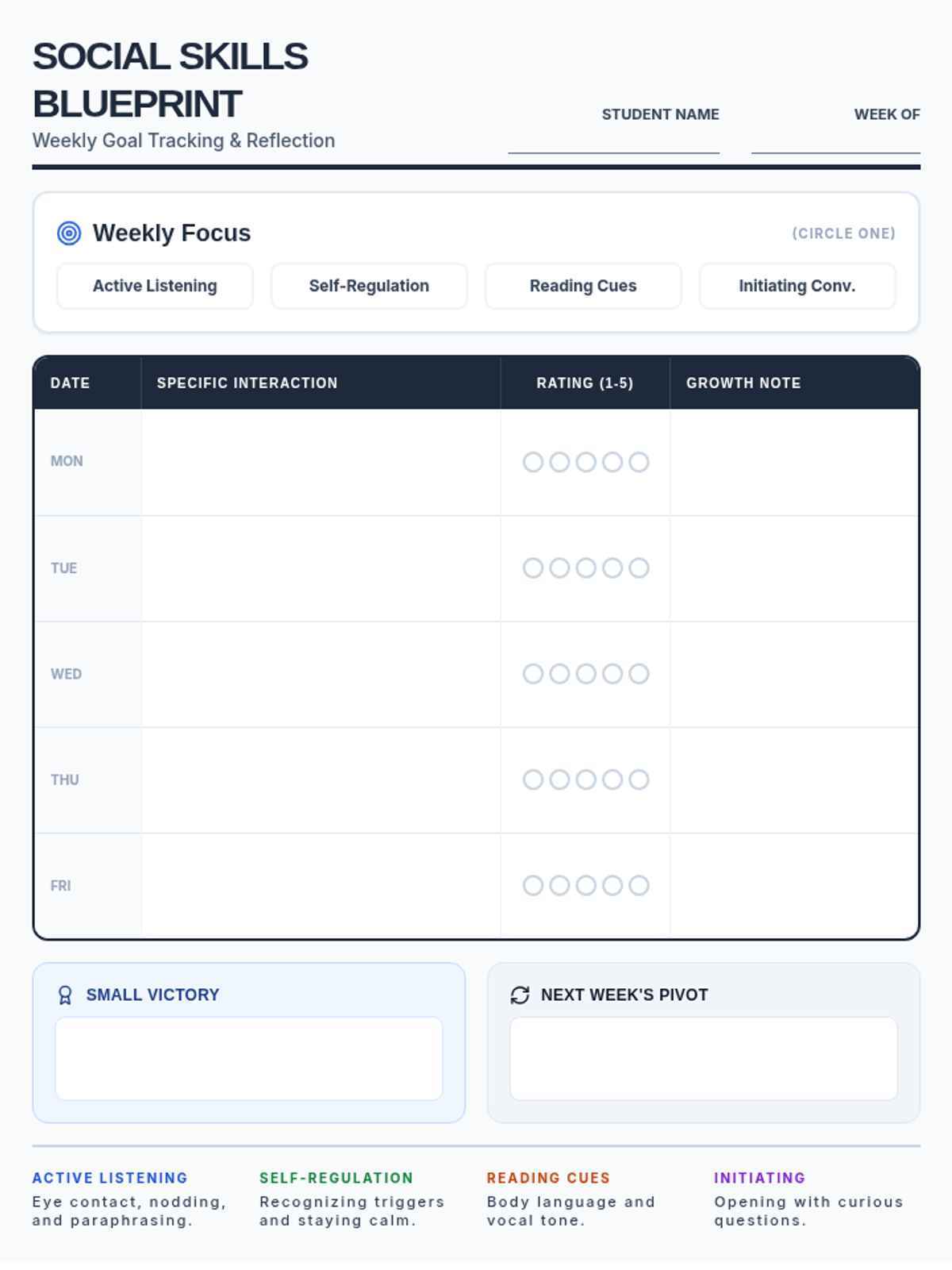
A comprehensive set of resources for middle and high school students focused on developing social-emotional intelligence, mental health awareness, and practical coping strategies. This lesson provides tools for self-tracking, group discussion, and hands-on practice with real-world scenarios.
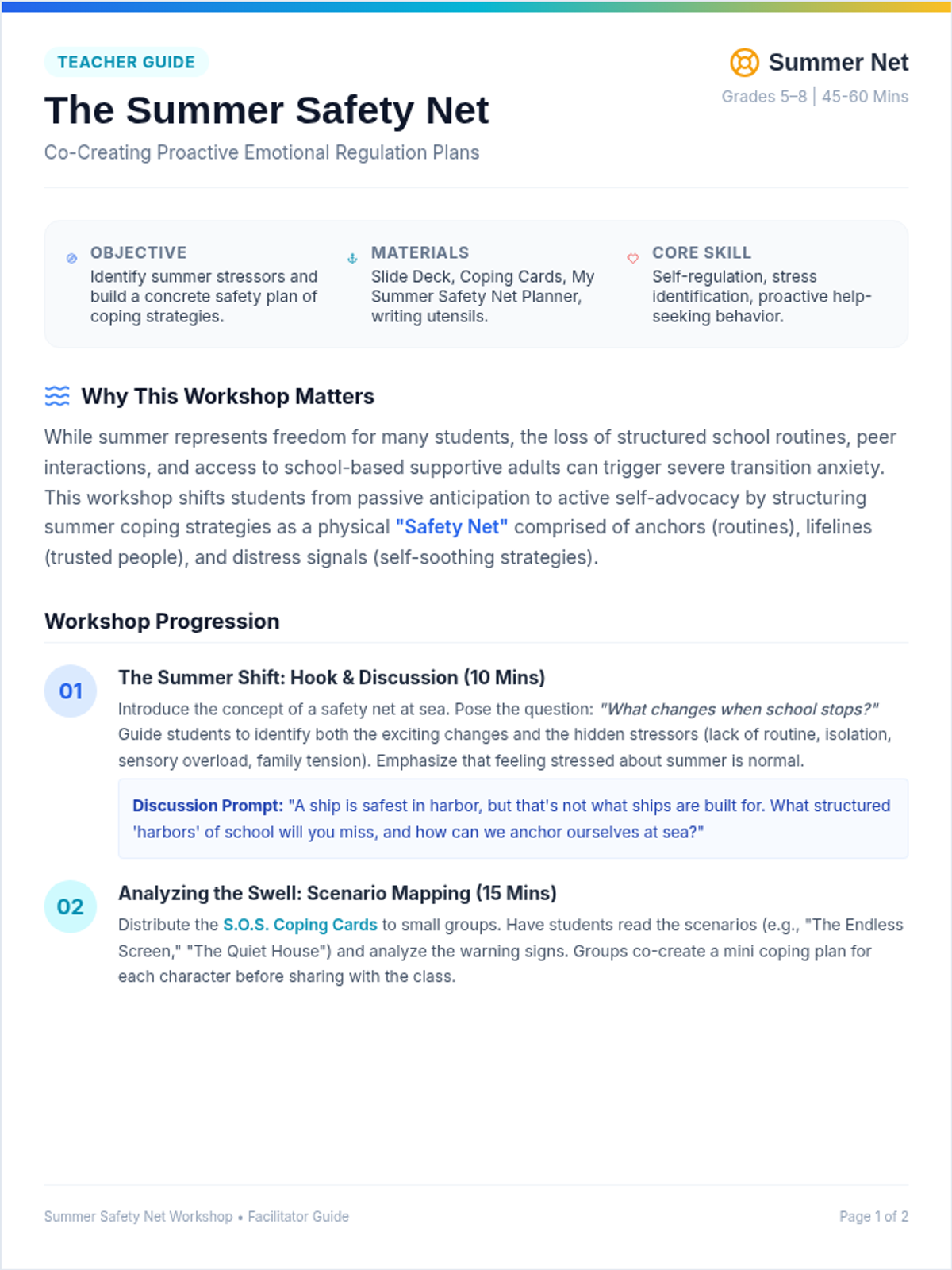
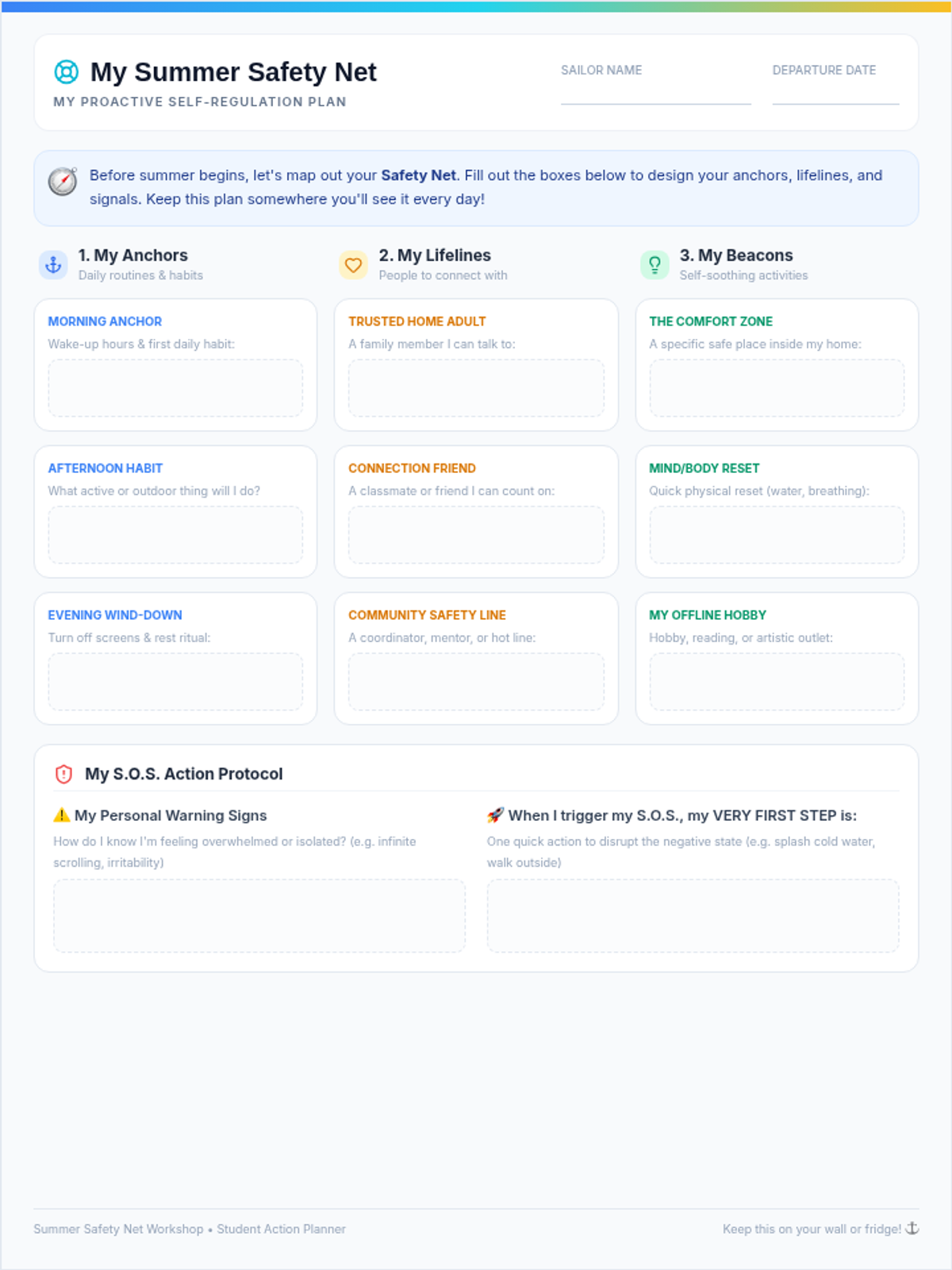
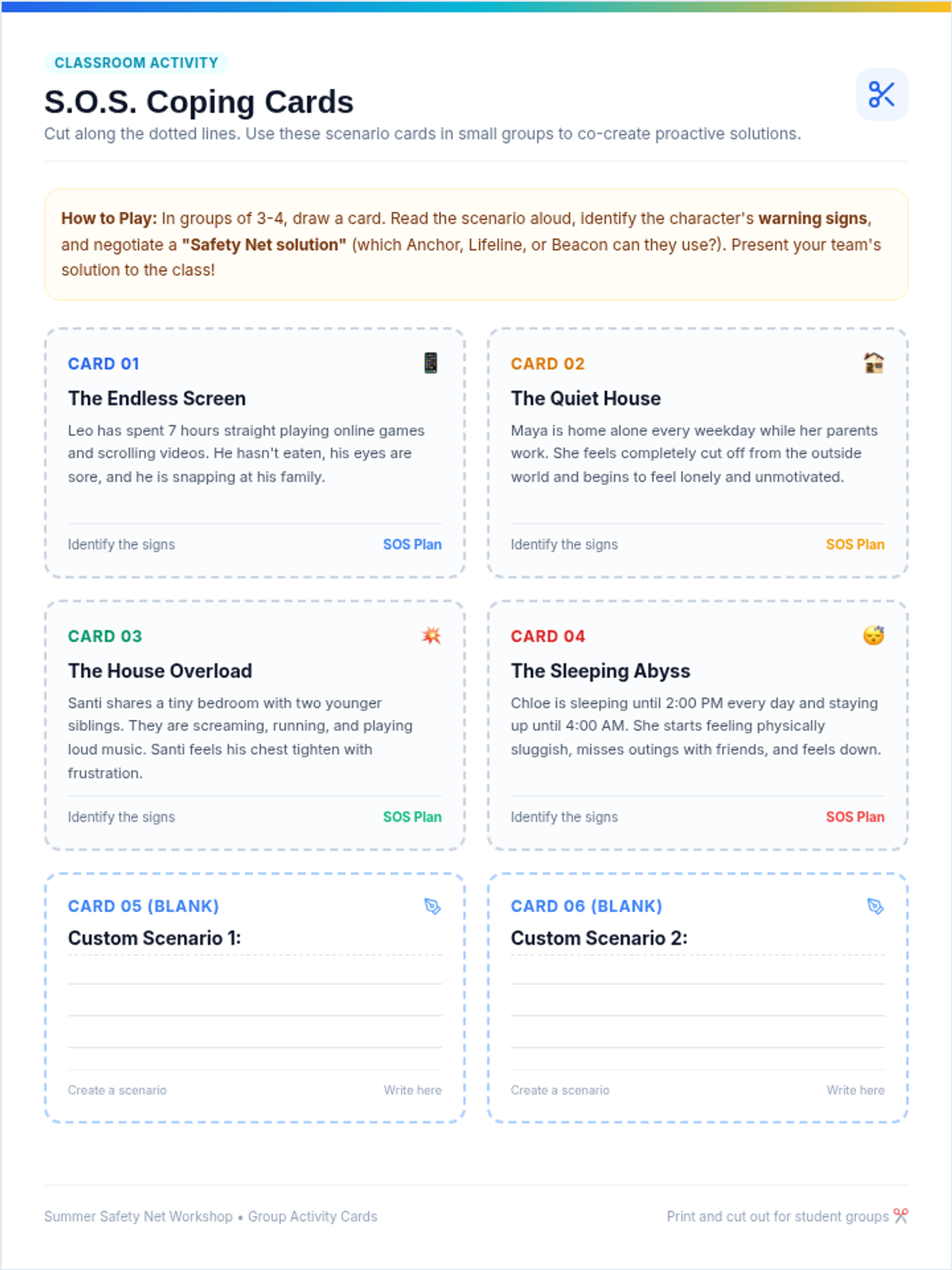
A collaborative workshop designed to help students identify summer stressors and co-create proactive plans for emotional regulation outside of school. This lesson builds concrete coping strategies and 'safety nets' for students transitioning to summer break.
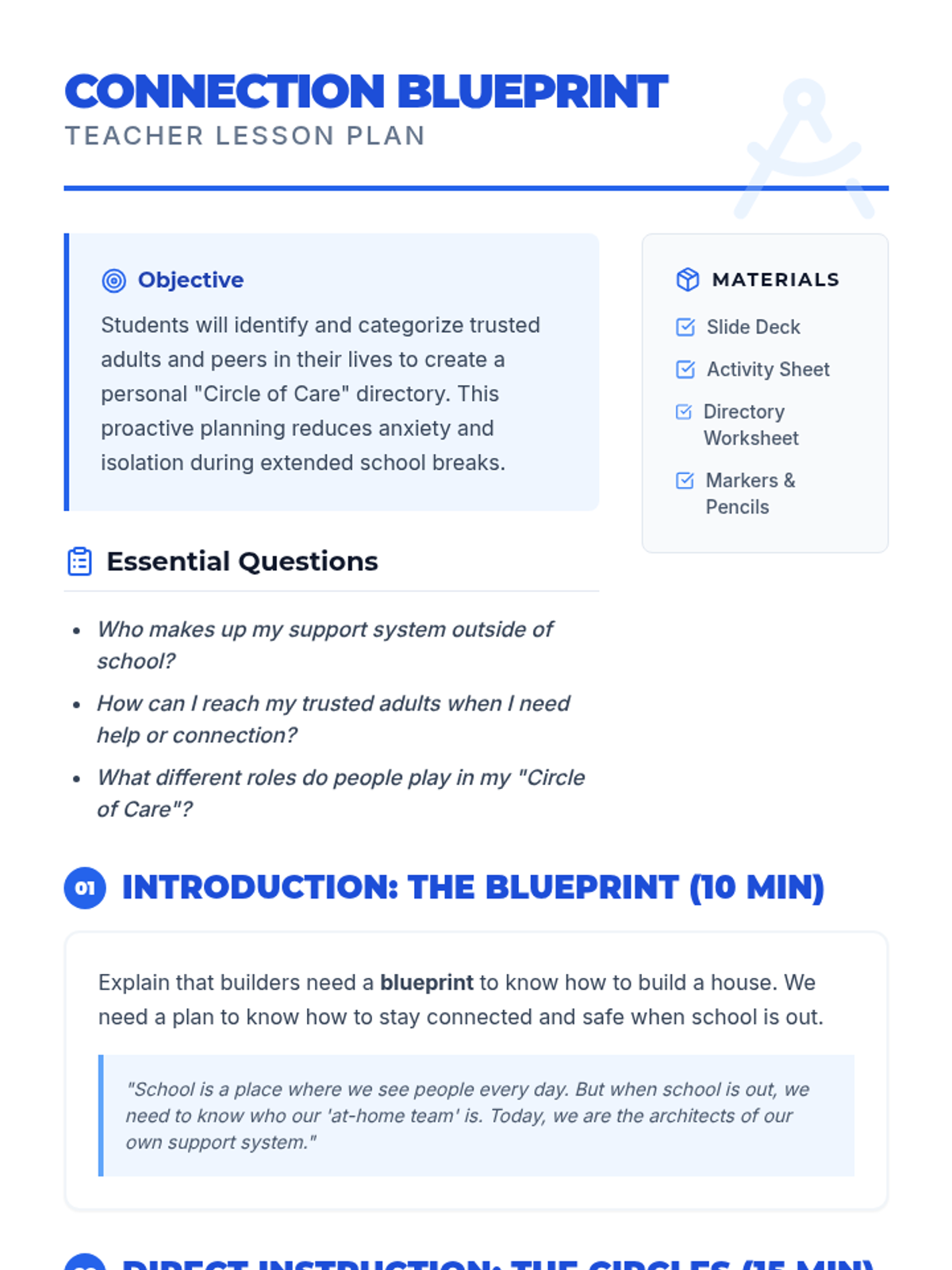
An intervention lesson designed to help students build a visual network of support before long school breaks, ensuring they have a plan for connection and safety outside the school building.
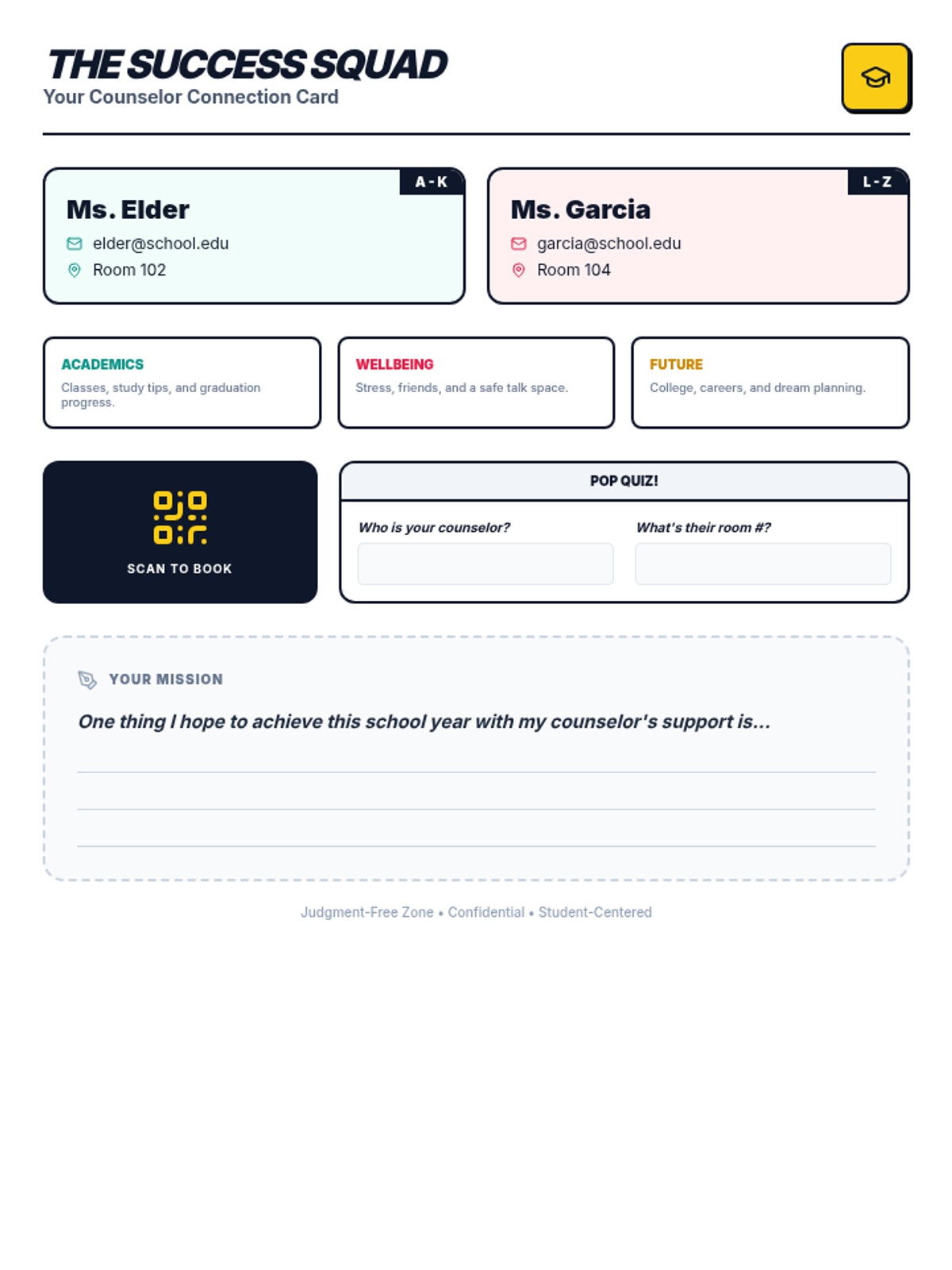
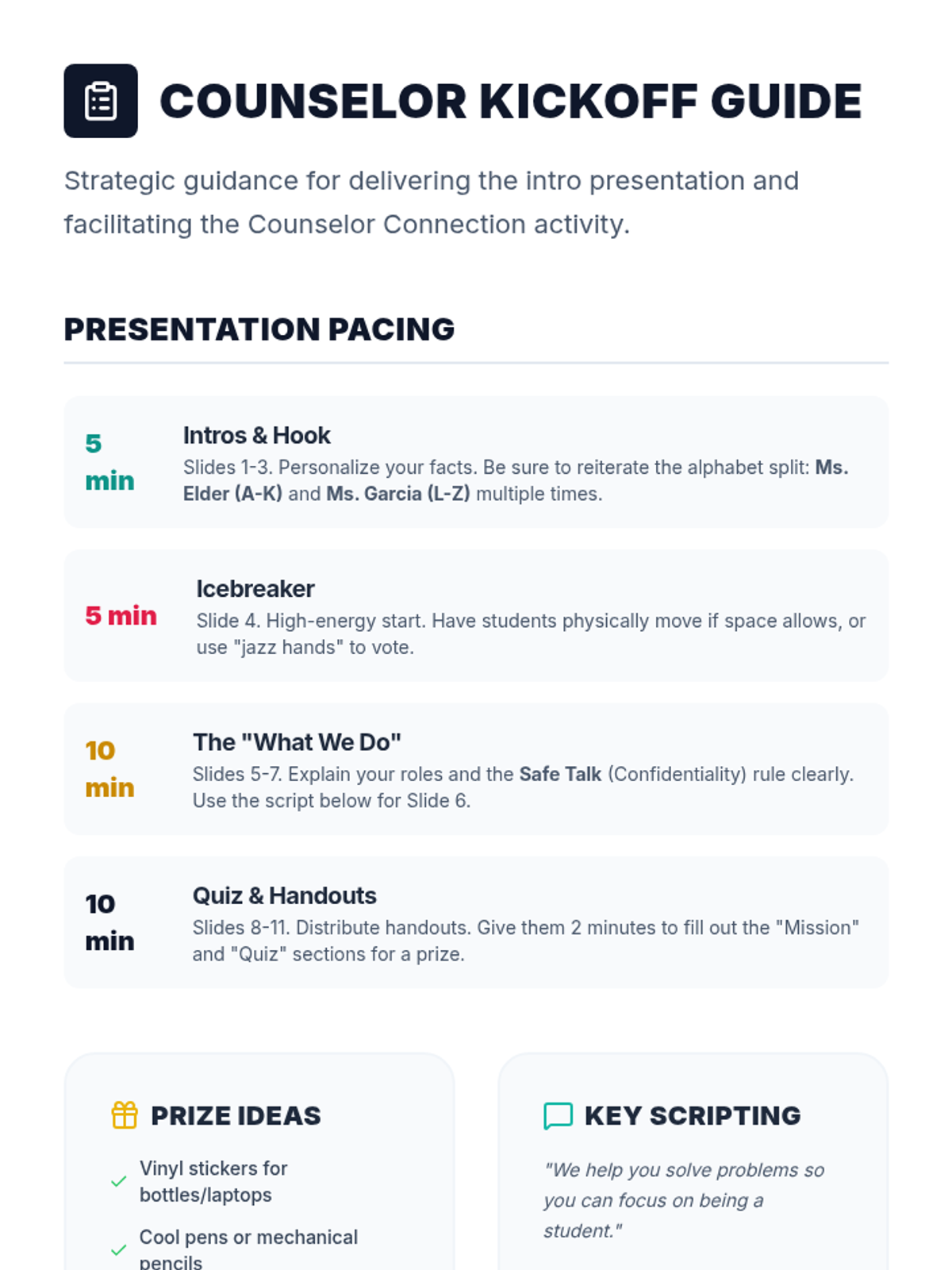
An engaging introduction to school counseling services for middle and high school students, featuring counselor bios, service overviews, and interactive activities.
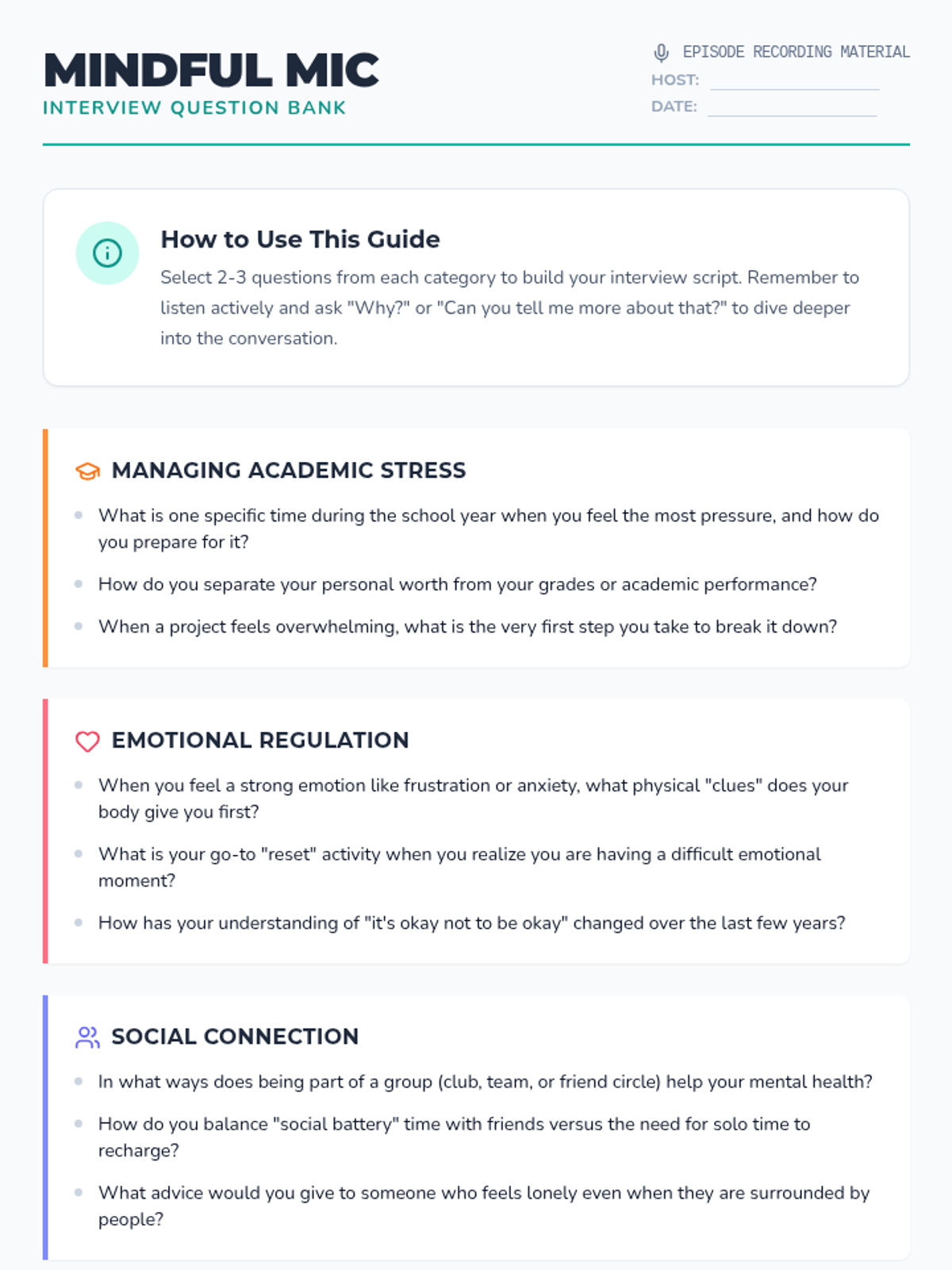
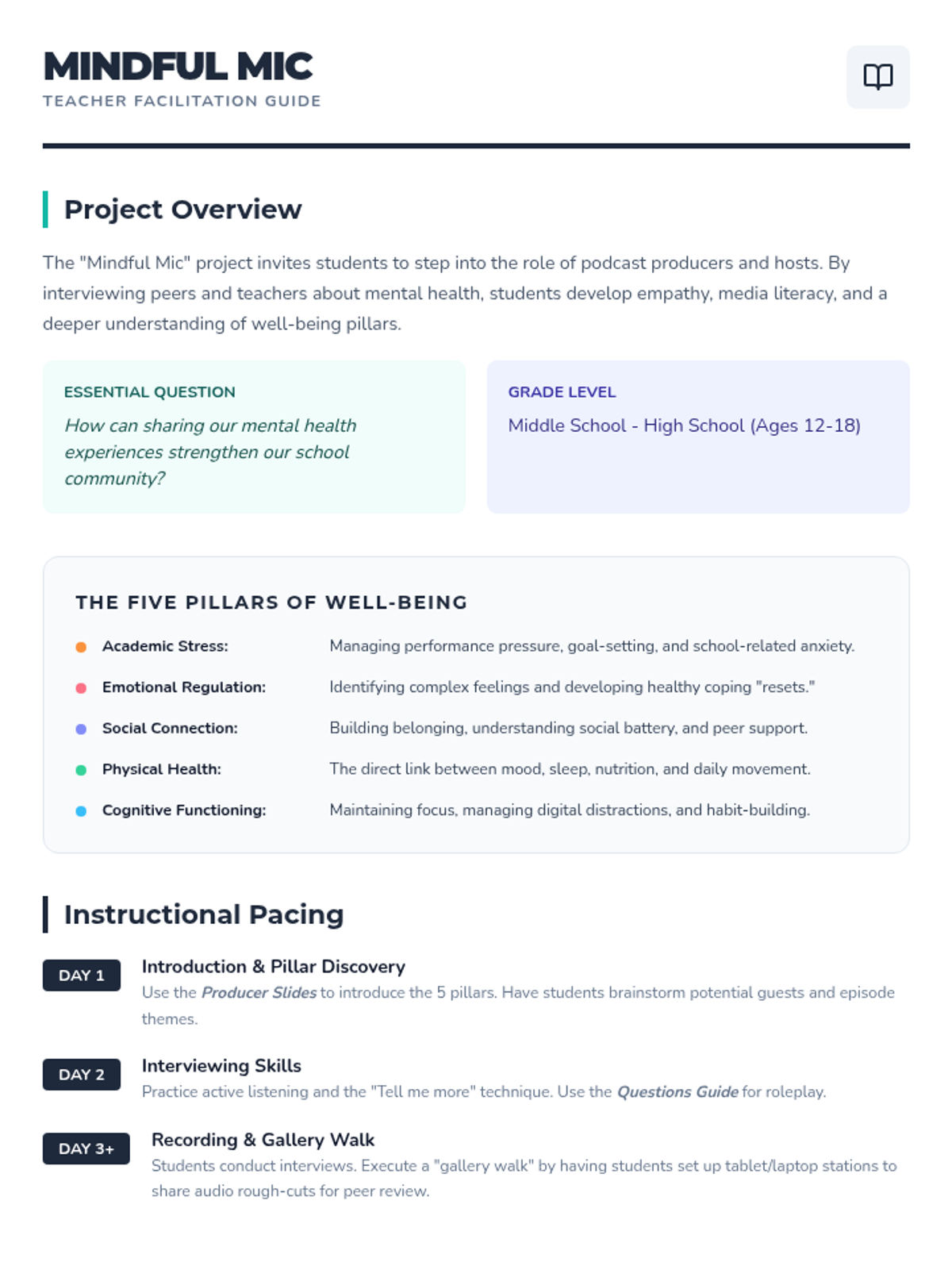
A comprehensive guide for students to produce a podcast exploring mental health through peer and teacher interviews. This lesson covers interview techniques and categorizes questions across five key pillars of well-being.
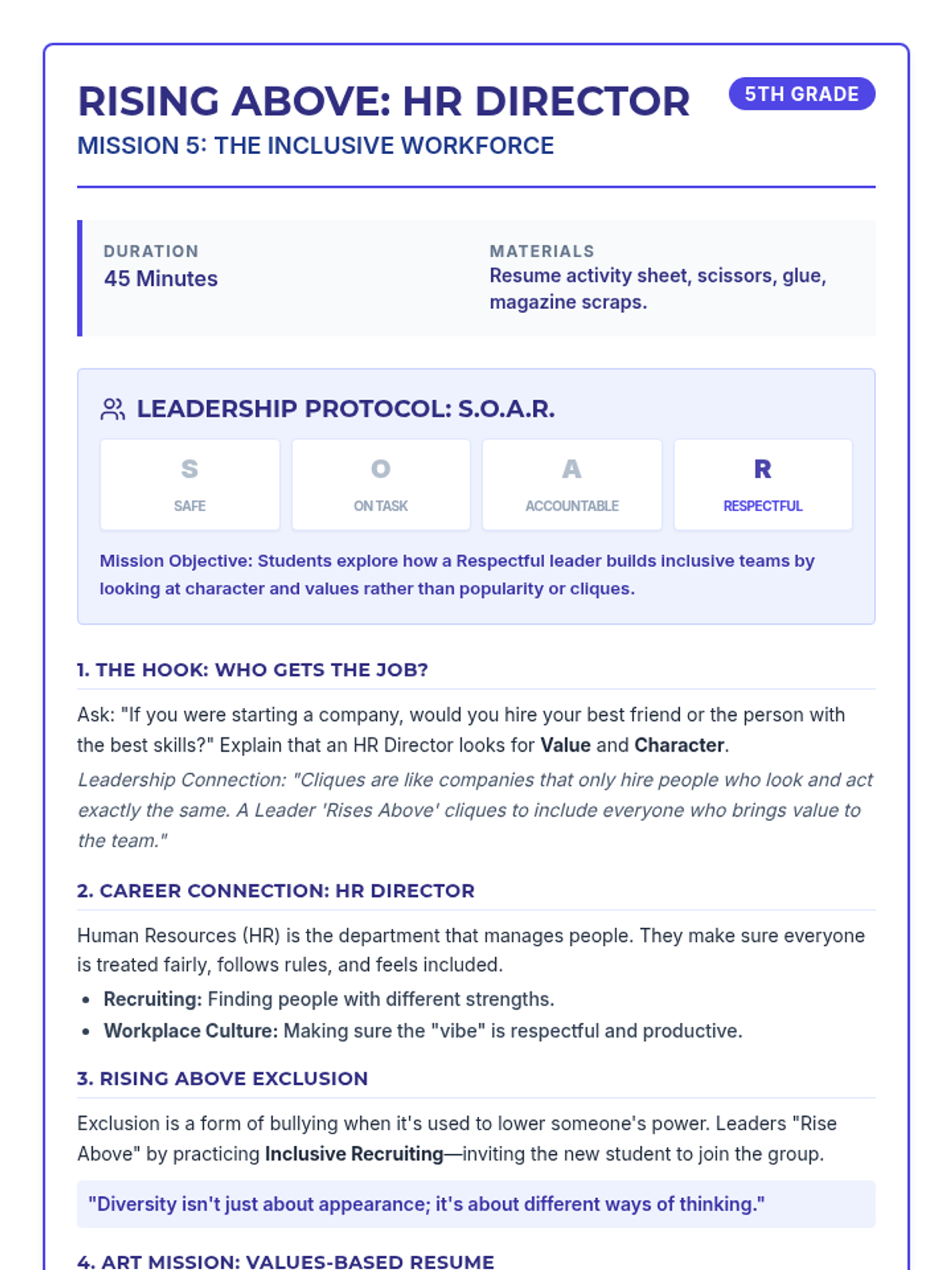
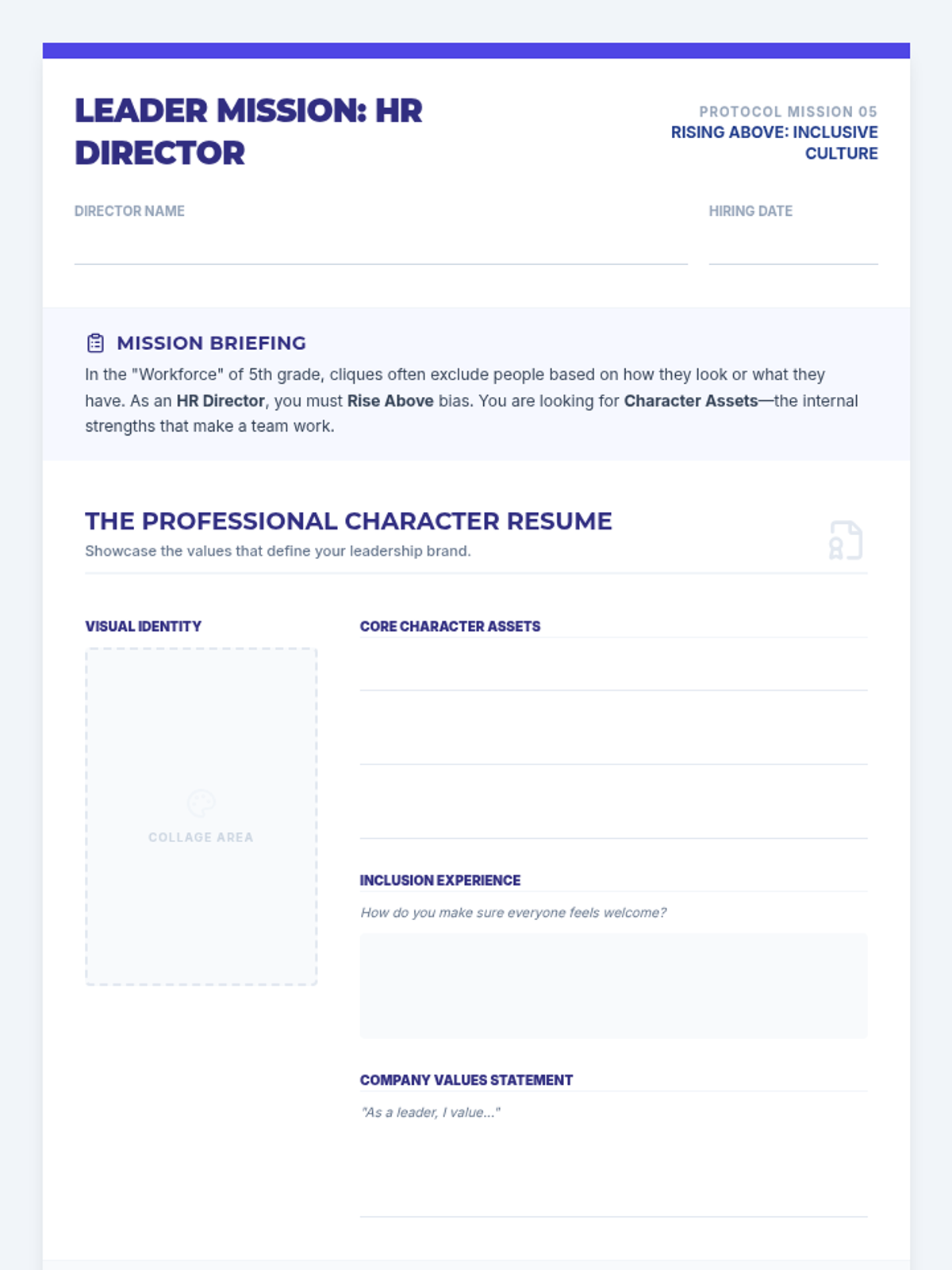
5th Grade focus on diversity, equity, and inclusion in the school 'workforce'. Art: Values-Based Resume Collage.
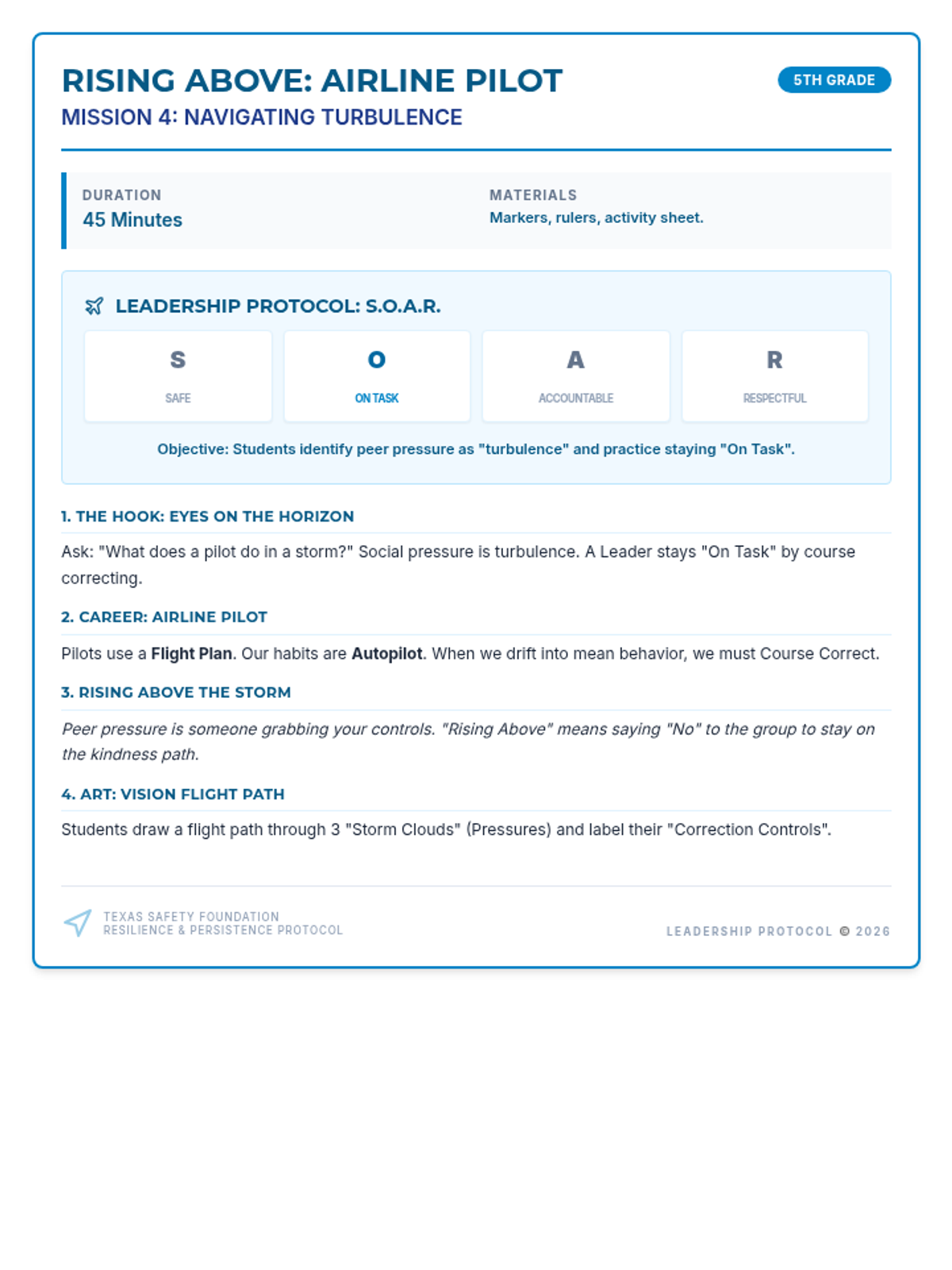
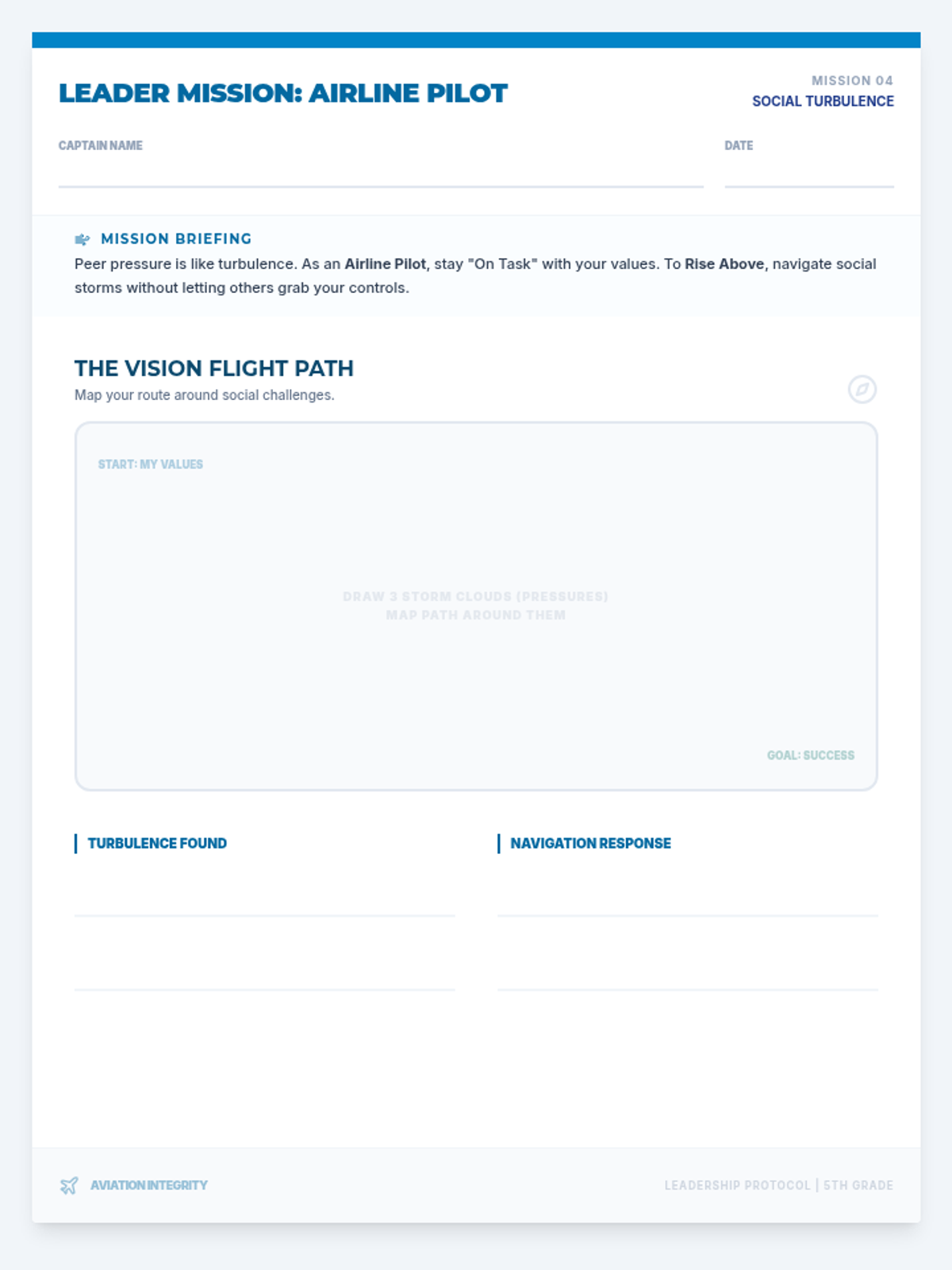
5th Grade focus on navigation through peer pressure and social turbulence. Art: Vision Flight Path Map.