Identifies mental health crises and suicide warning signs while developing personal safety plans and grounding techniques. Equips users with peer gatekeeper skills and direct pathways to professional crisis resources and hotlines.
Expanded 24-slide presentation for school social workers featuring detailed DSM-5-TR diagnostic criteria for anxiety, depression, ODD, IED, grief, and SI/NSSI. Includes a developmental matrix and 3 comprehensive case studies (Elementary, Middle, and High School) to apply clinical learning.
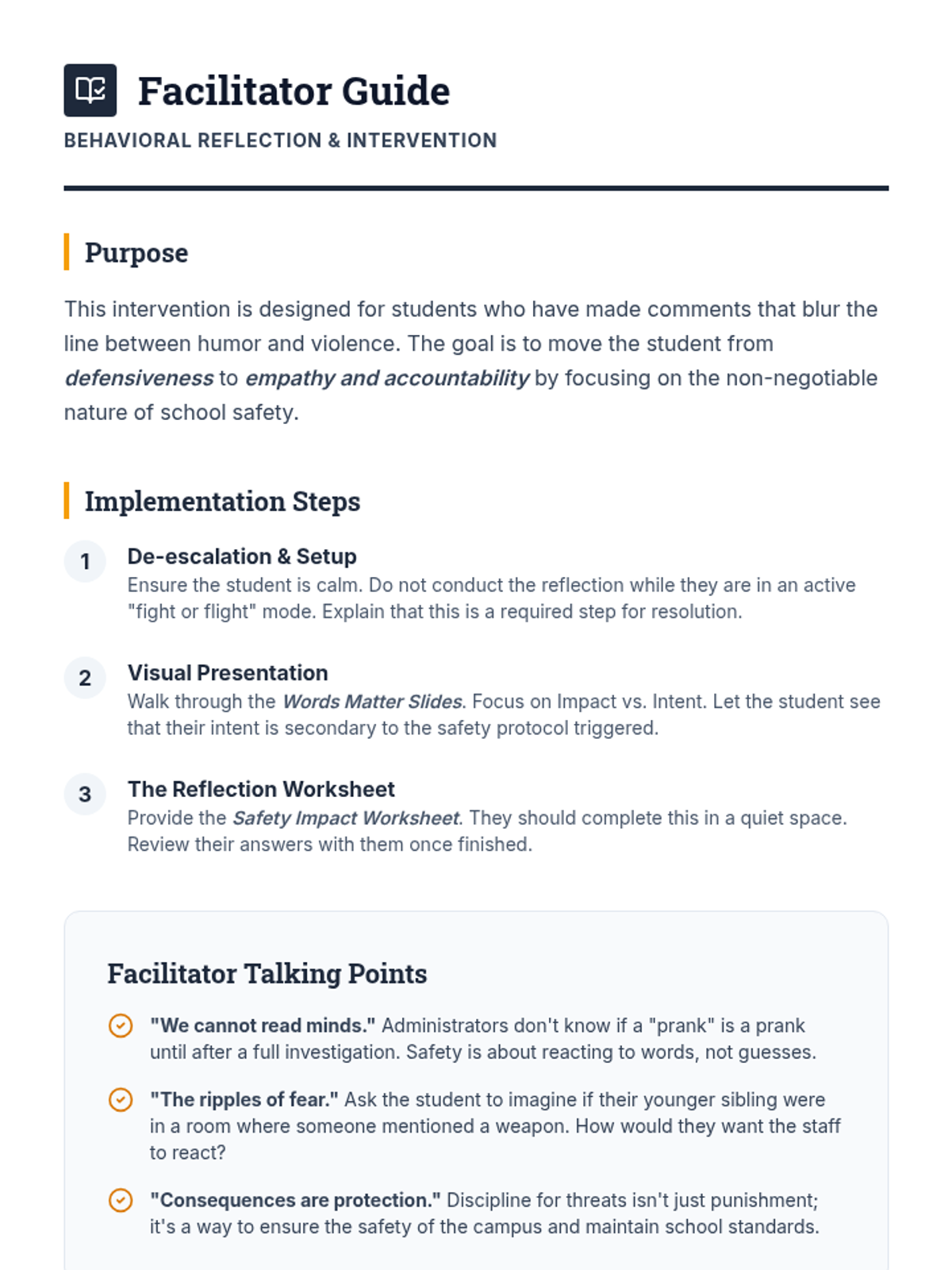
A facilitator guide with implementation steps, de-escalation tips, and talking points for safety-related behavioral reflections. Updated to ensure better page breaks and contrast.
An instructional presentation defining school safety boundaries and the consequences of threatening language. Updated to ensure all content fits within slide viewports and eliminate overlap.
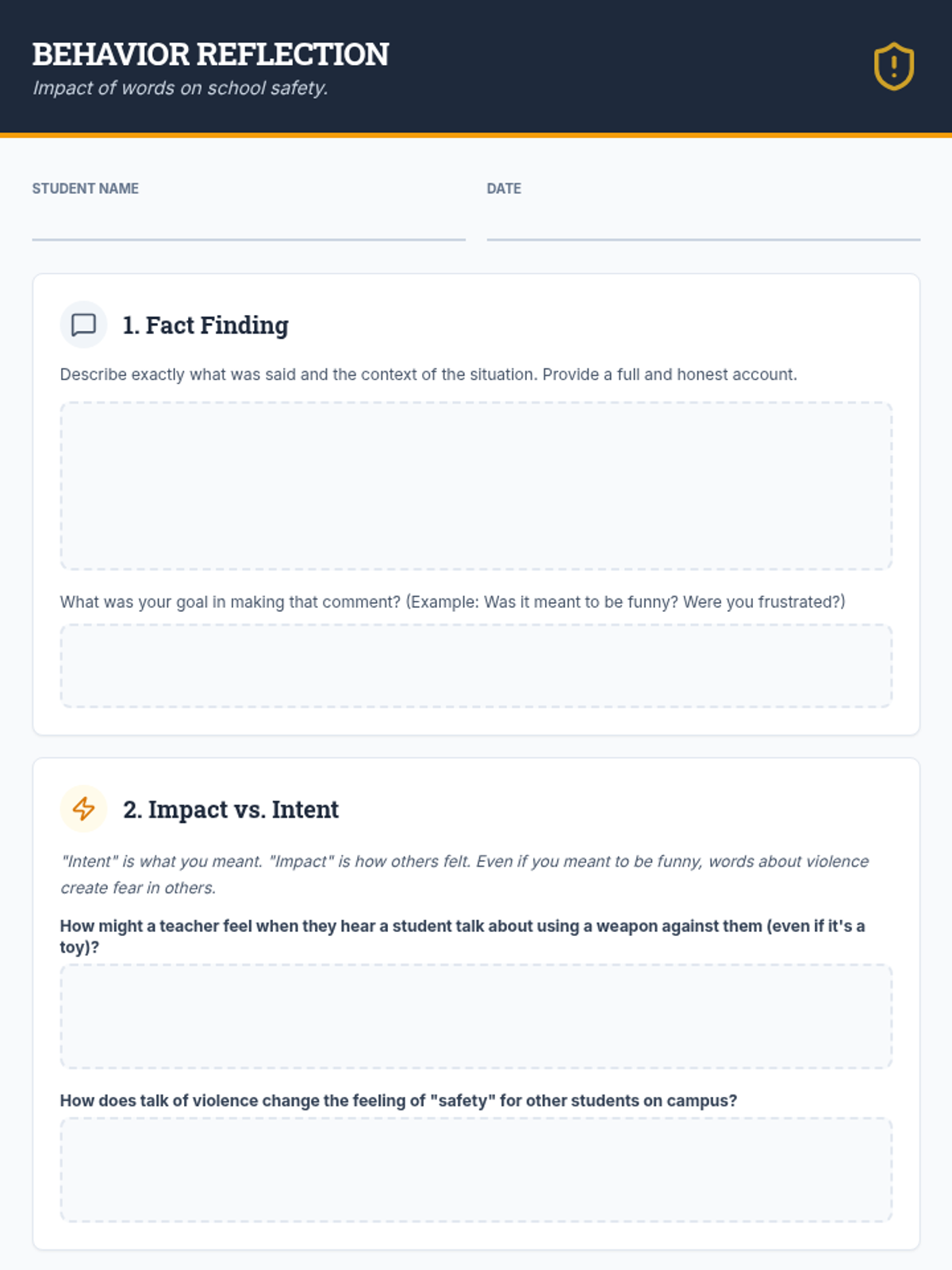
A structured reflection worksheet for students who have made inappropriate or threatening comments. It guides them through fact-finding, analyzing impact vs. intent, understanding safety boundaries, and planning restorative actions. Updated to ensure better layout and page-flow.
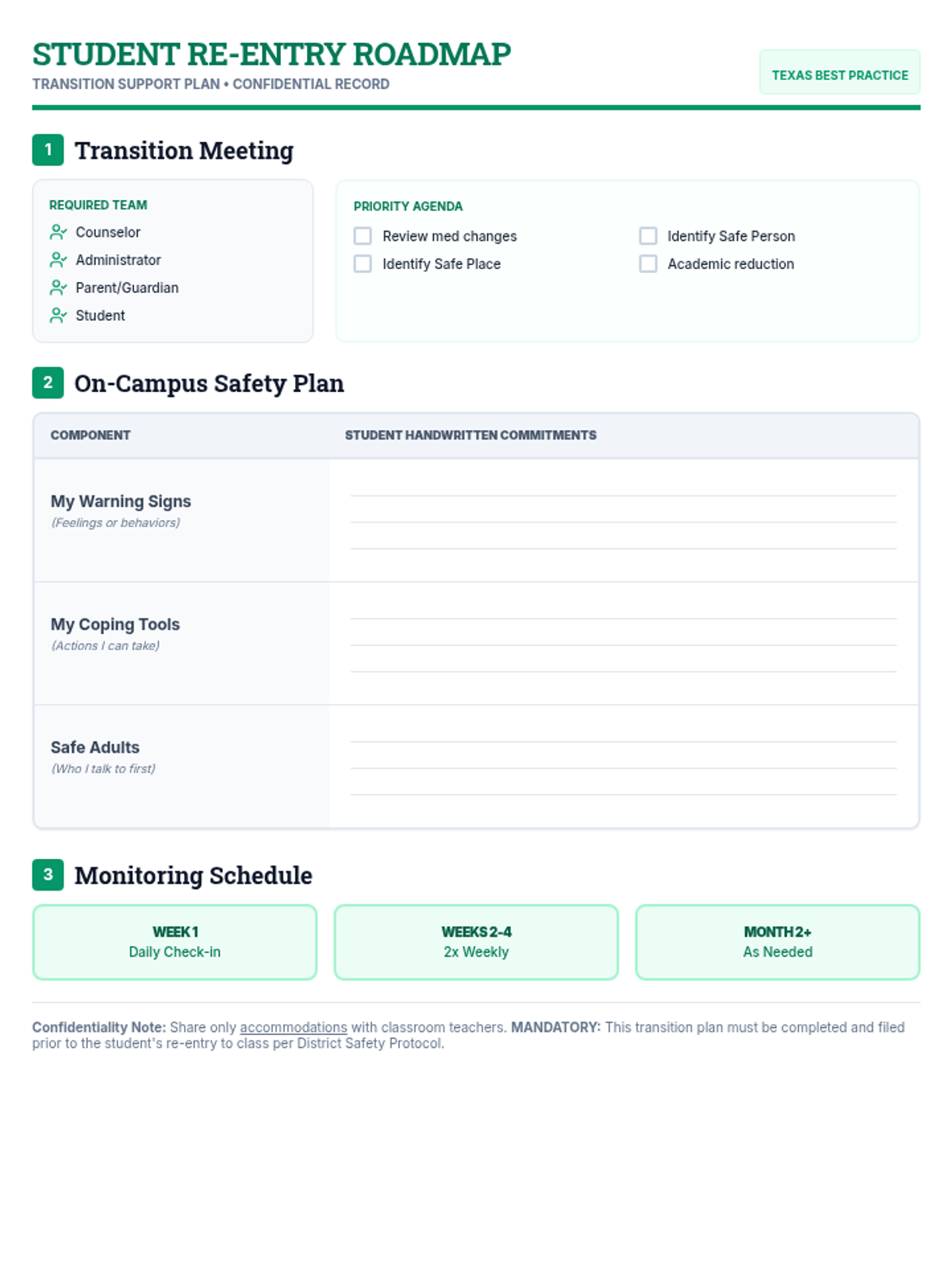
A structured roadmap for middle school counselors to facilitate safe and successful student re-entry following a mental health crisis or hospitalization.
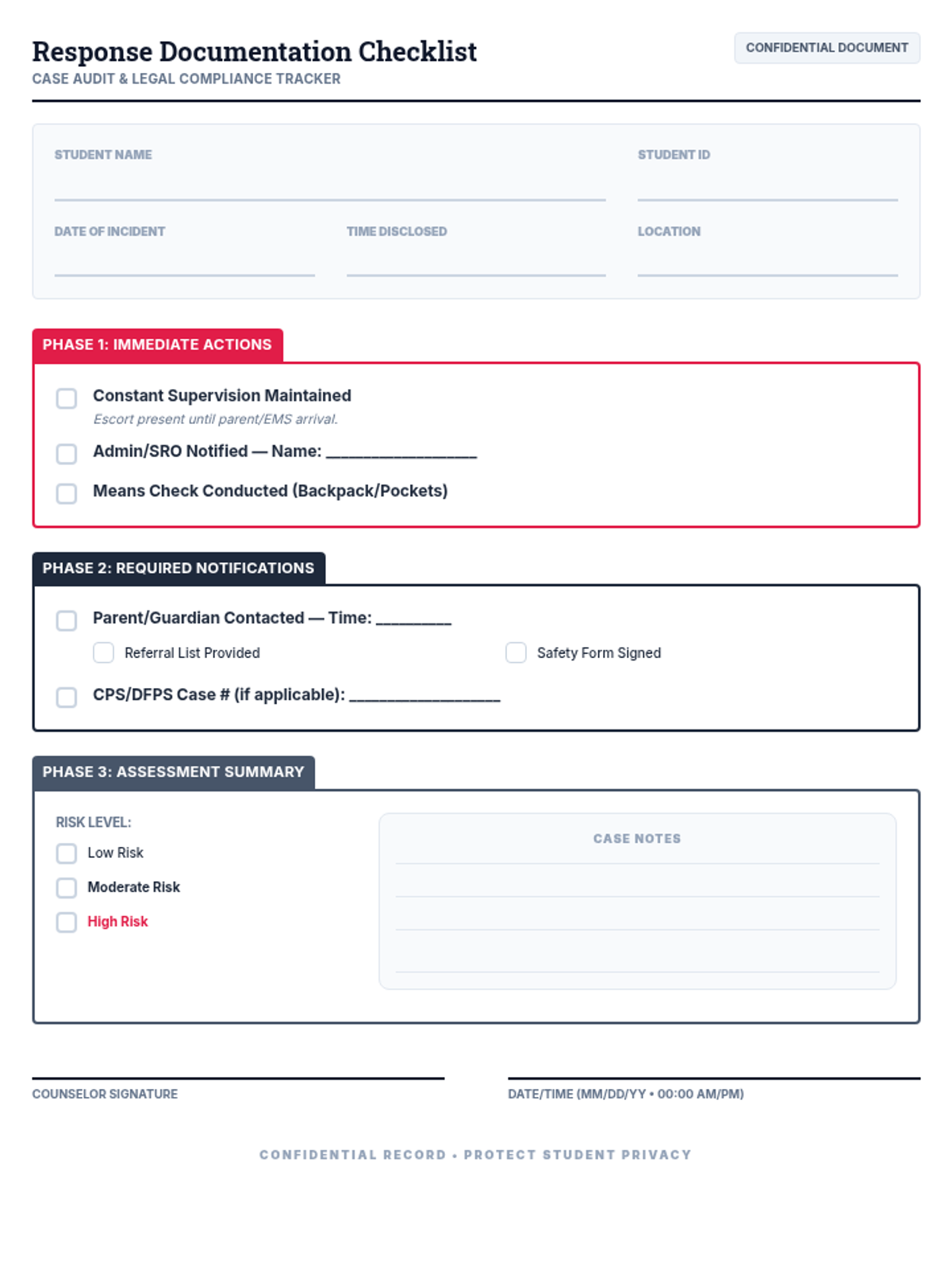
A meticulous documentation checklist for middle school counselors to ensure every required step of the crisis response protocol is logged for legal and district compliance.
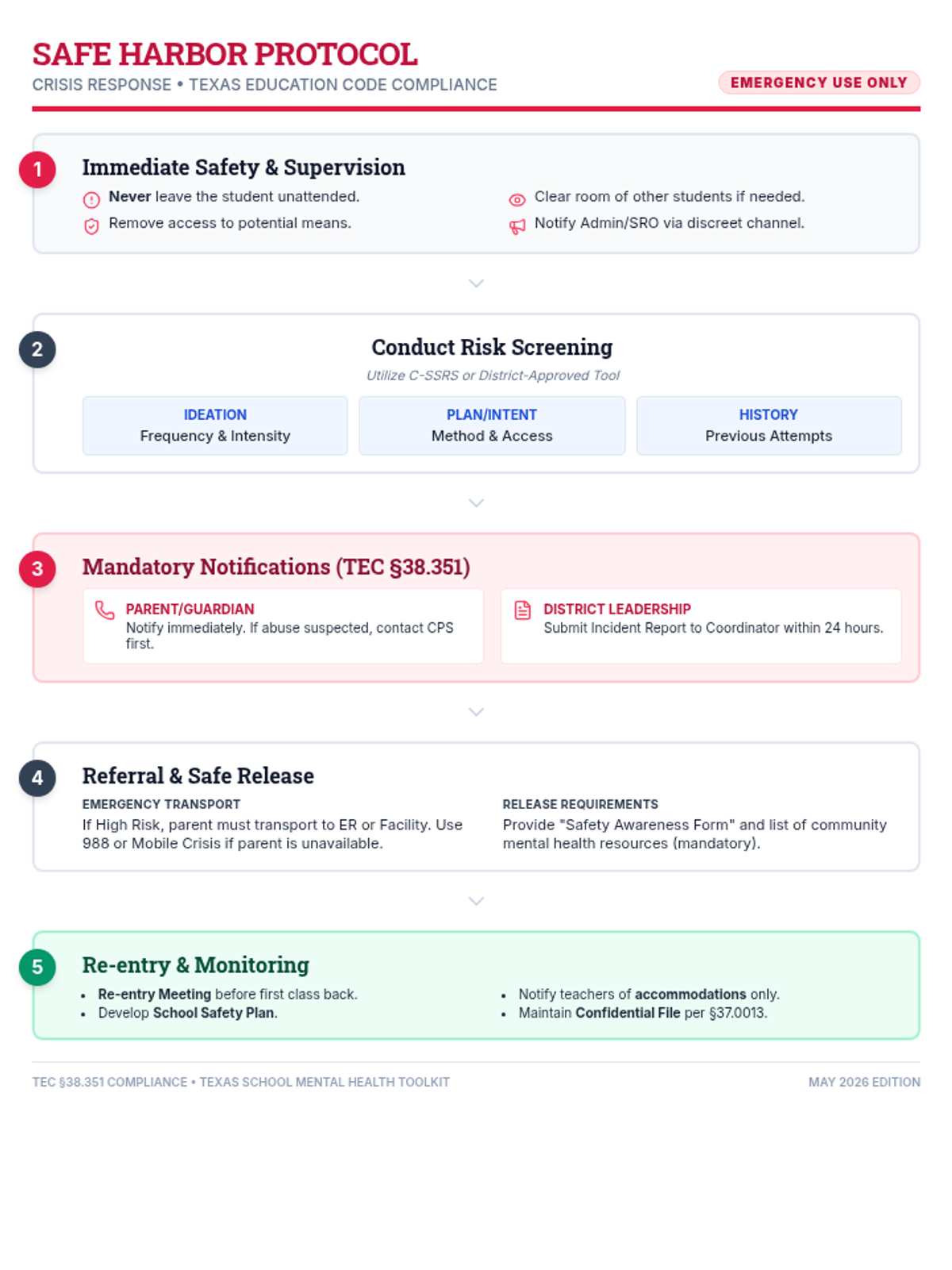
A high-stakes emergency flowchart for middle school counselors, detailing the step-by-step protocol for student suicide risk disclosure in alignment with Texas Education Code.
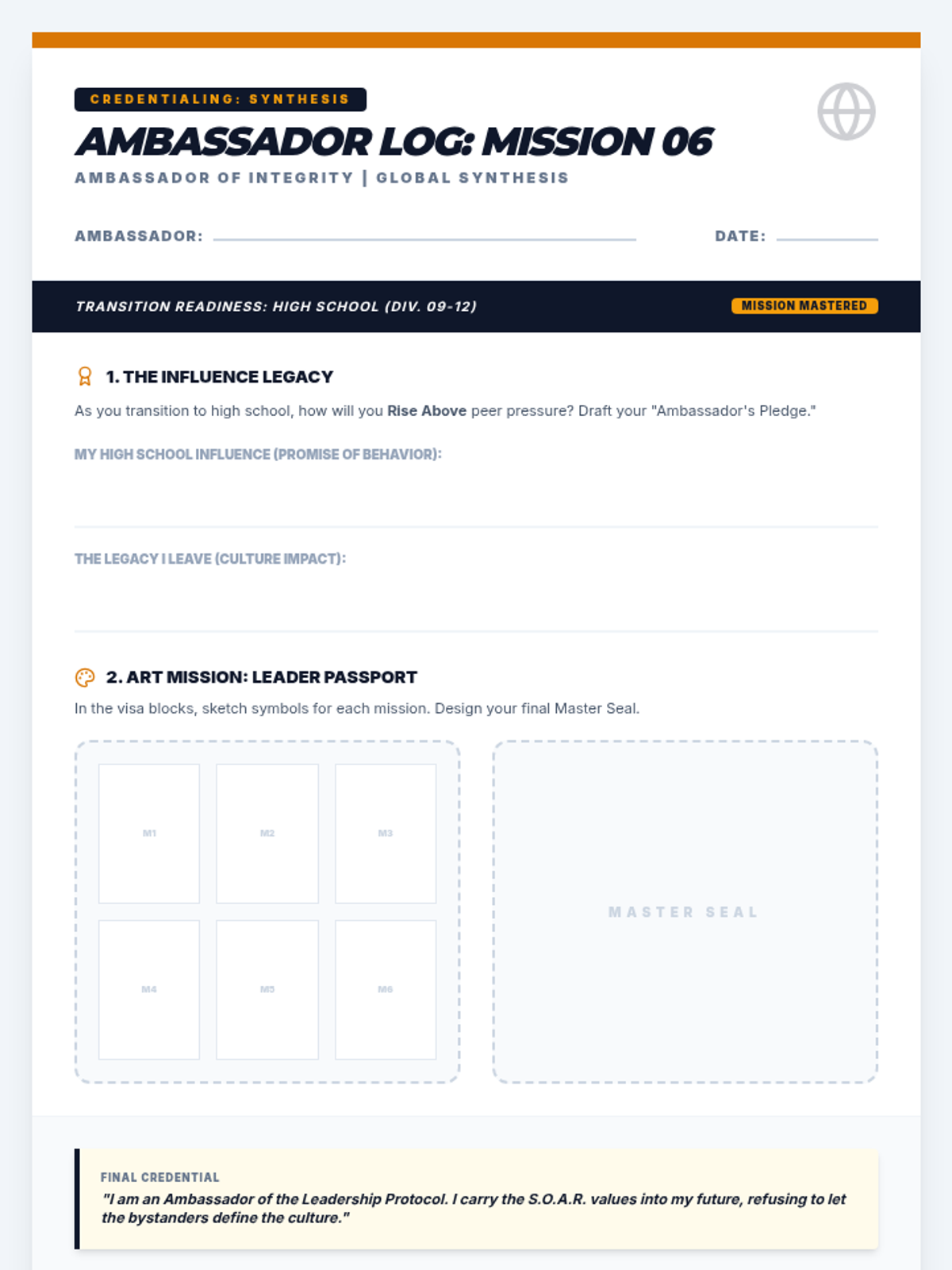
Student graduation activity log for 8th Grade. Features mission synthesis blocks, legacy planning, and a passport-style workspace for high school readiness credentials. Updated for single-page fit and improved visibility.
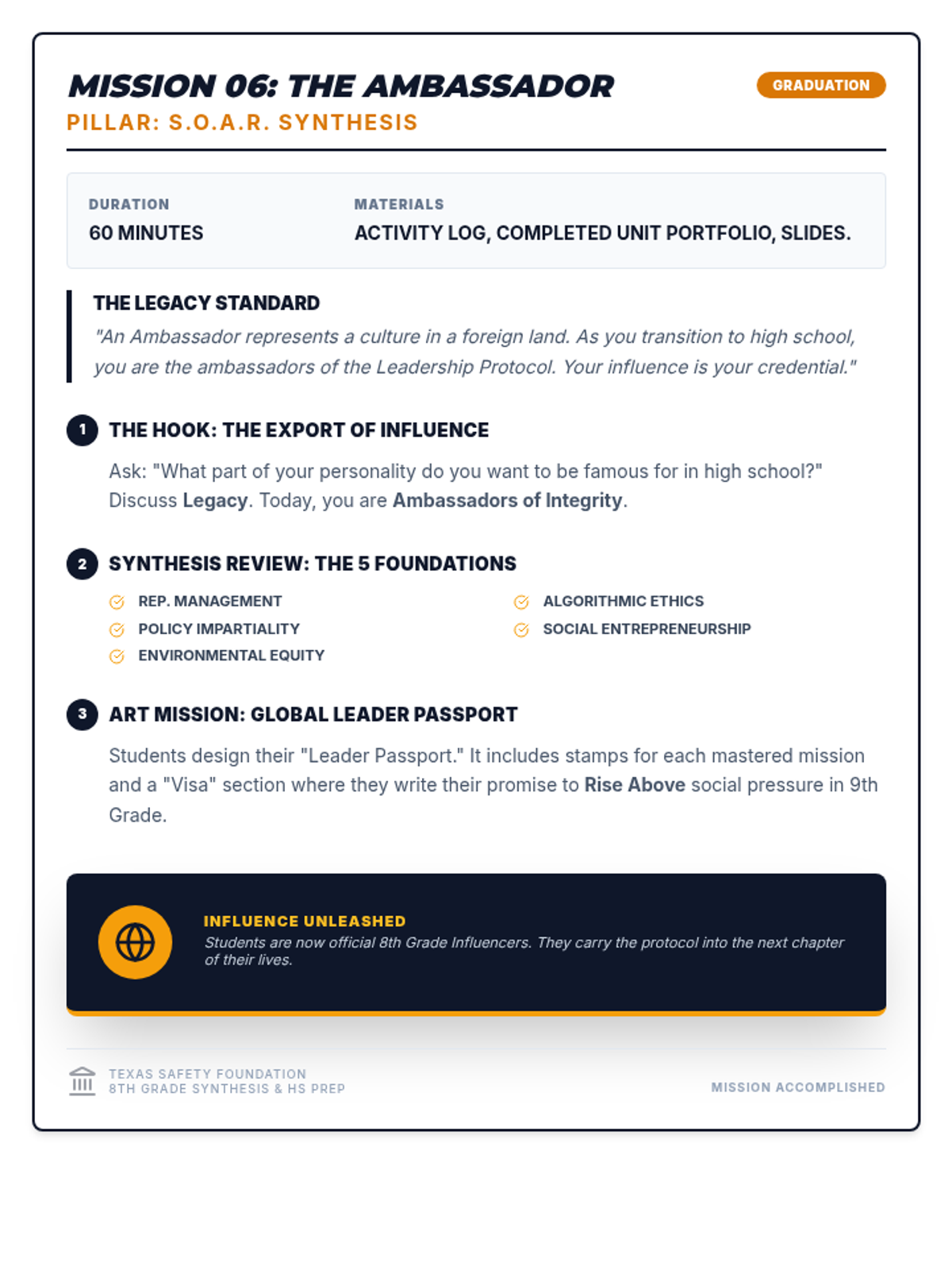
Teacher guide for 8th Grade Lesson 6 graduation. Synthesis of all advanced missions into a global leadership profile. Includes legacy planning and high school transition logic. Updated with grammar fix for the core slogan.
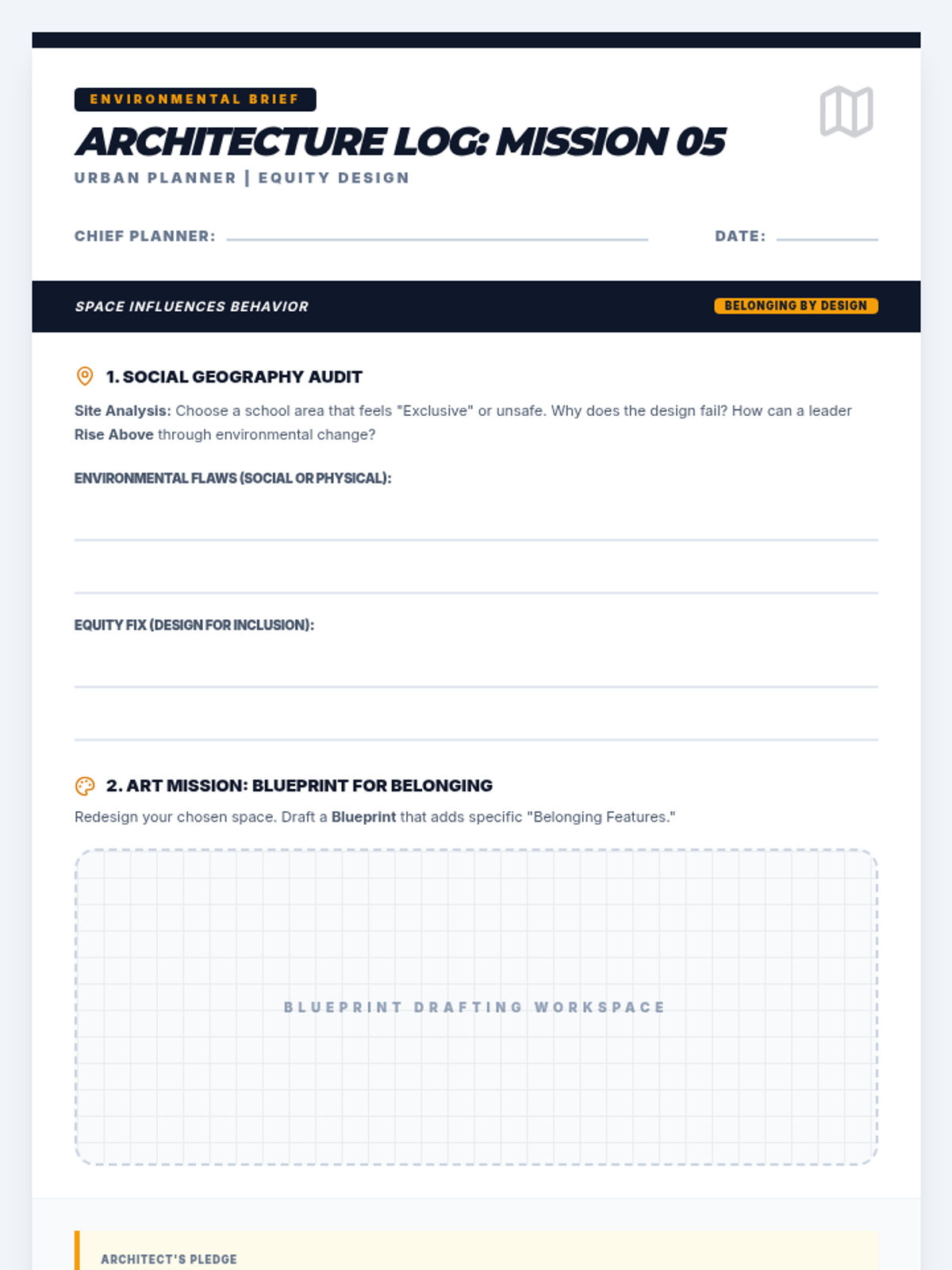
Student activity brief for 8th Grade Lesson 5. Features an environmental space audit and a blueprint workspace for designing an inclusive 'Common Space'. Updated with grammar fixes and higher contrast lines.
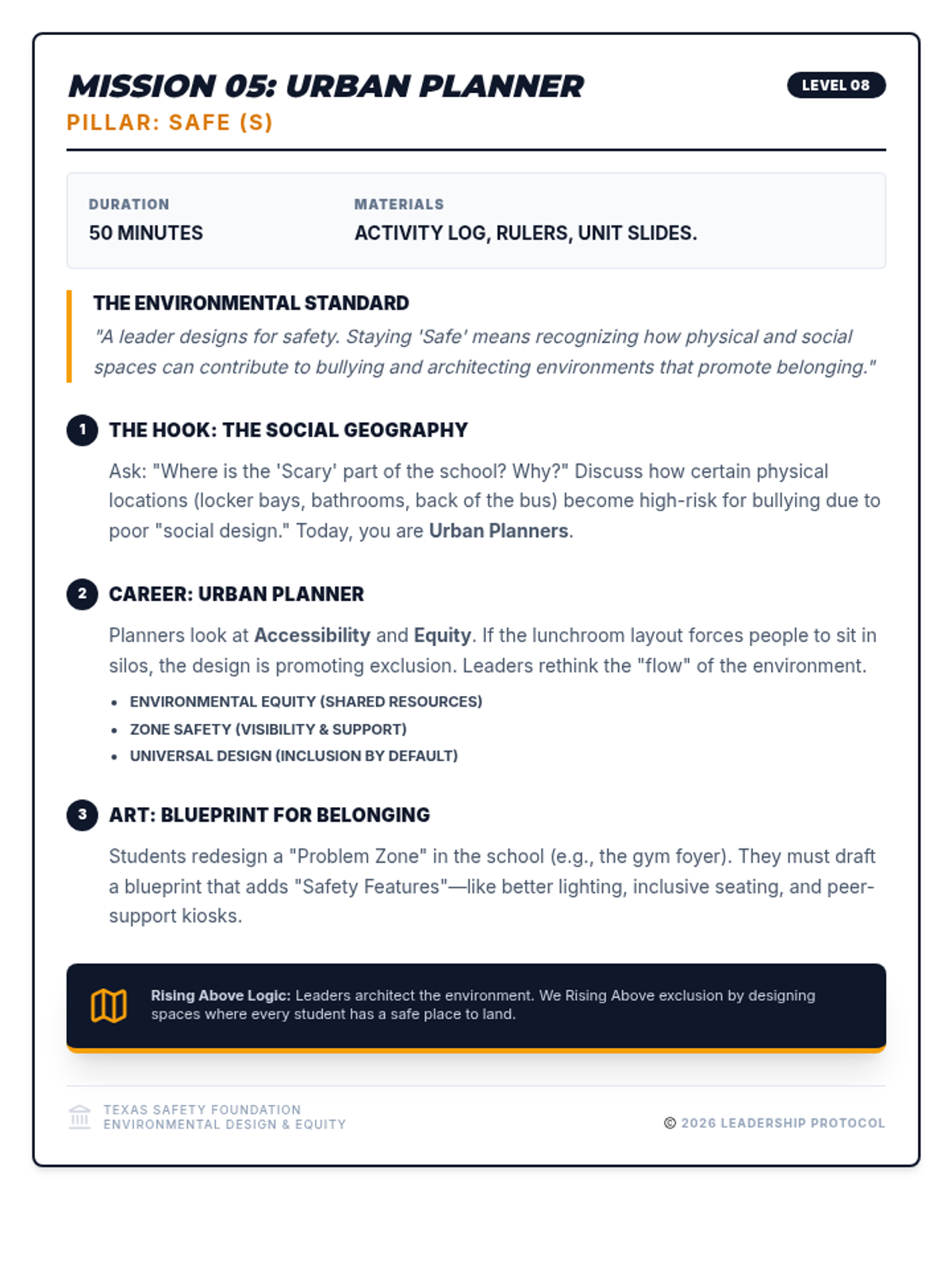
Teacher guide for 8th Grade Lesson 5. Focuses on environmental equity, social geography, and systemic safety through an Urban Planner lens. Includes instructional steps and art activity guidance.
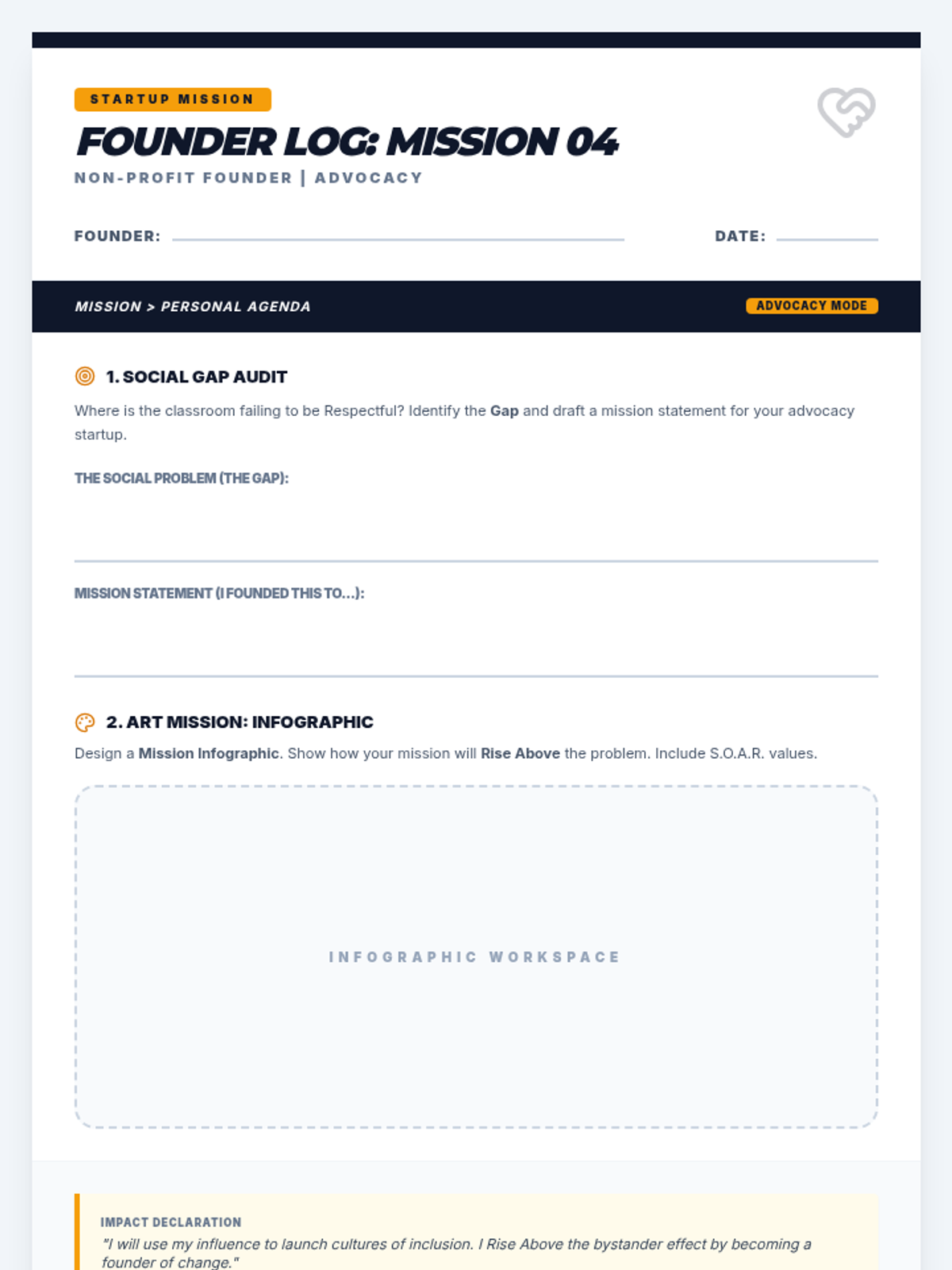
Student activity brief for 8th Grade Lesson 4. Features identifying a social 'gap', drafting a mission statement, and an infographic design workspace for advocacy startups. Updated with grammar fixes and higher contrast lines.
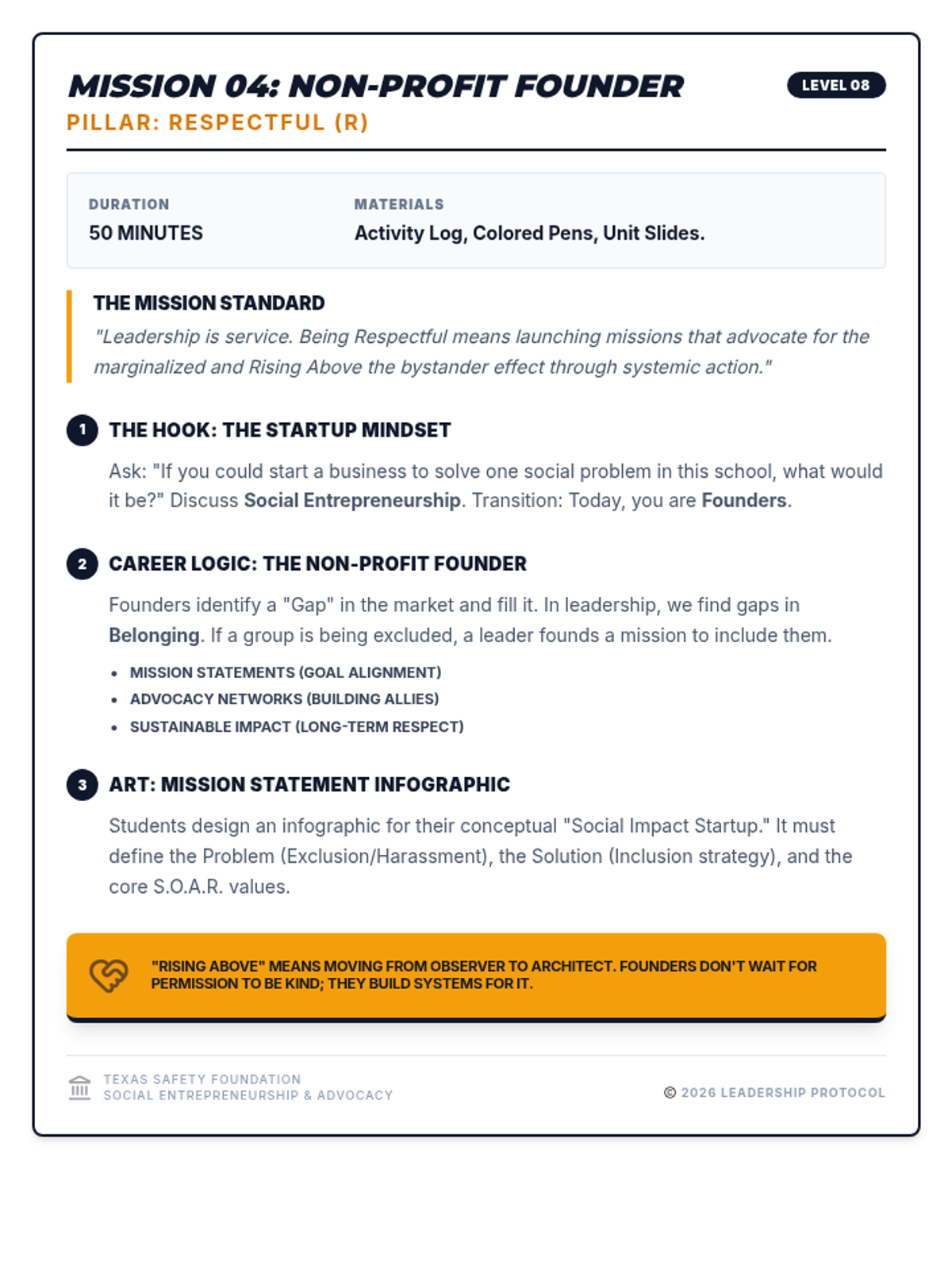
Teacher guide for 8th Grade Lesson 4. Focuses on social entrepreneurship, mission-driven leadership, and advocacy through a Non-Profit Founder lens. Includes instructional steps and art activity guidance.
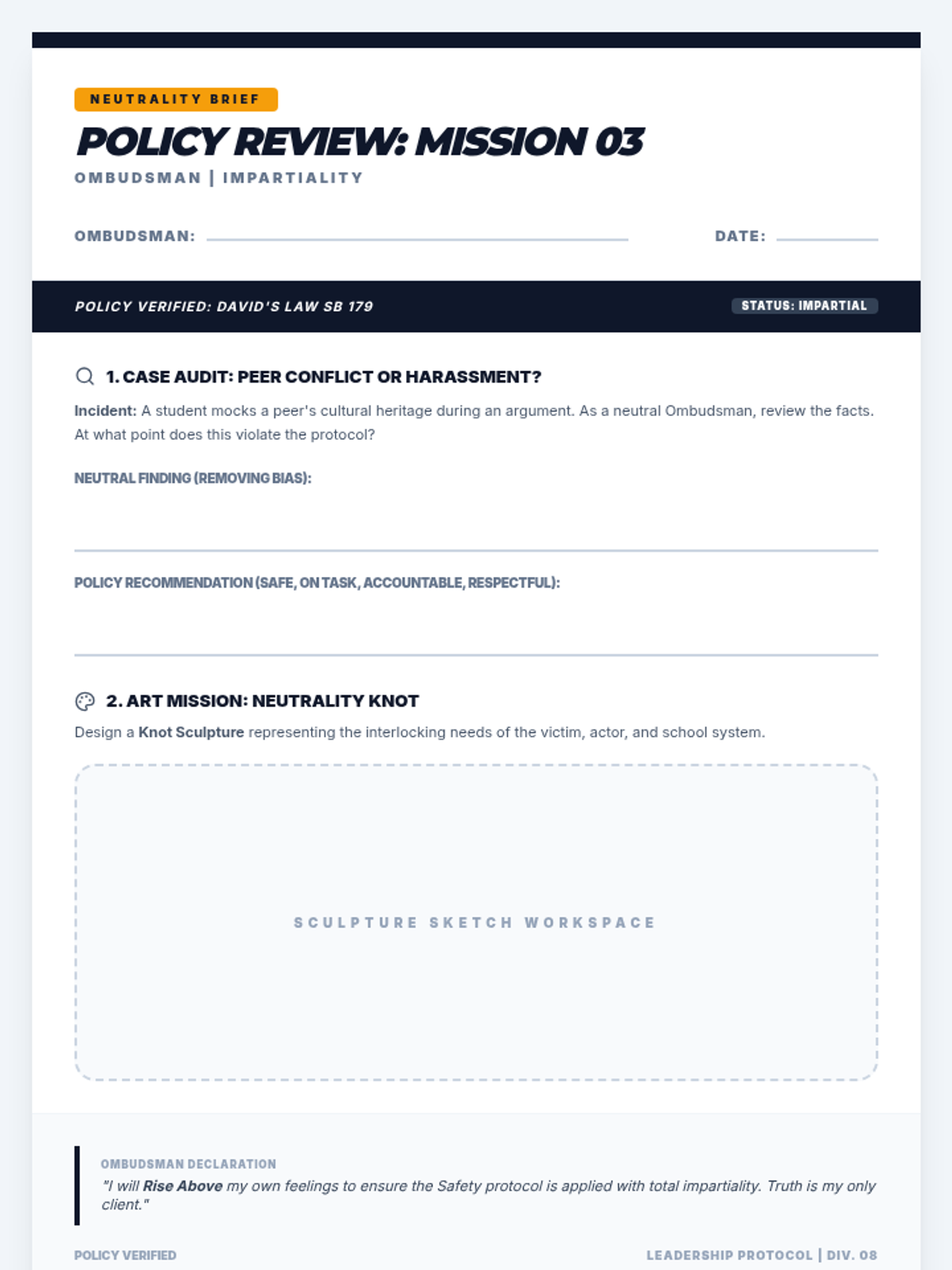
Student activity brief for 8th Grade Lesson 3. Features a policy audit case study and a workspace for designing a 'Neutrality Knot' sculpture. Updated with grammar fixes, SOAR definitions, and page break fixes.
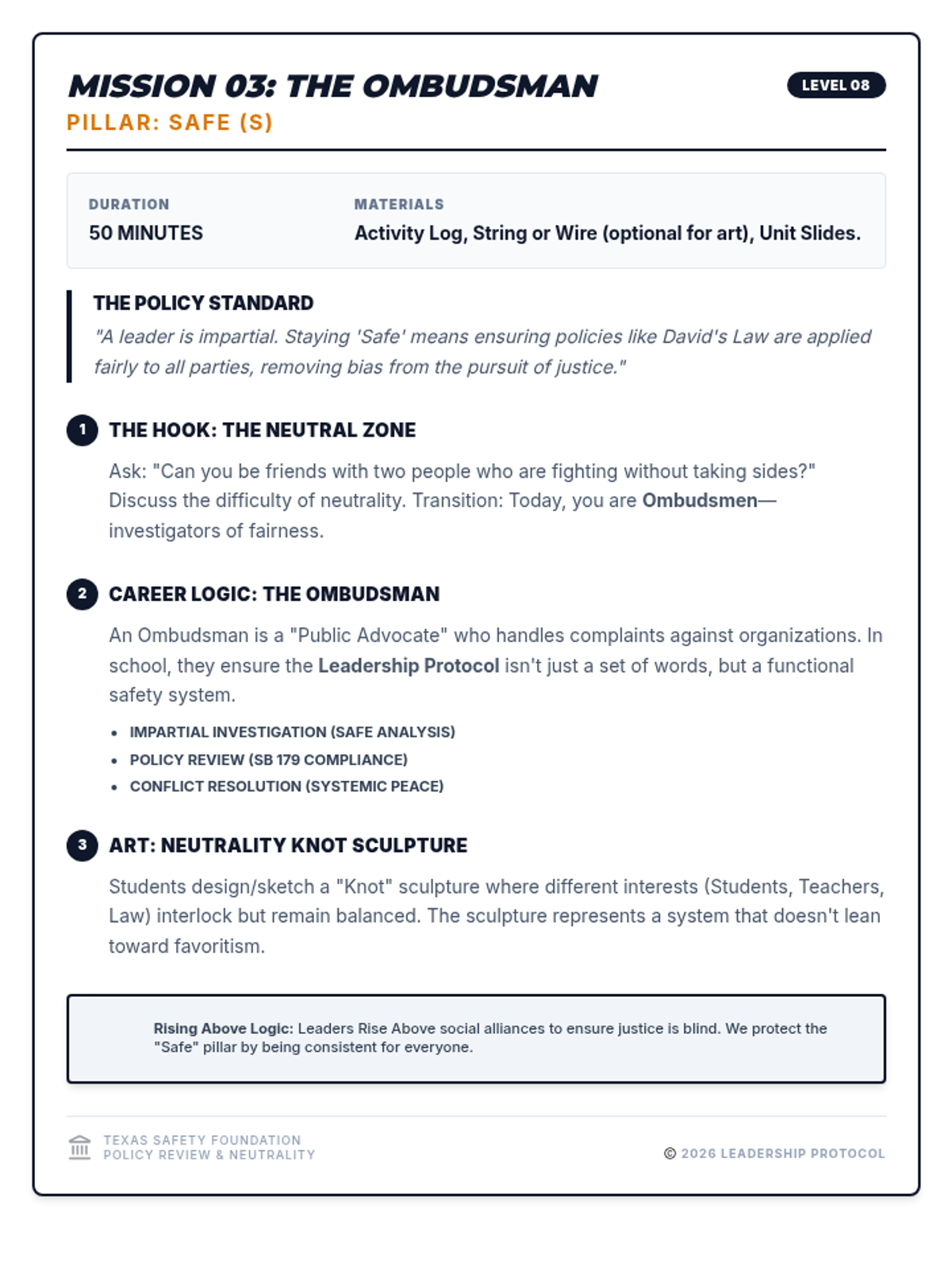
Teacher guide for 8th Grade Lesson 3. Focuses on impartiality, neutral investigation, and school policy through an Ombudsman lens. Includes instructional steps and art activity guidance.
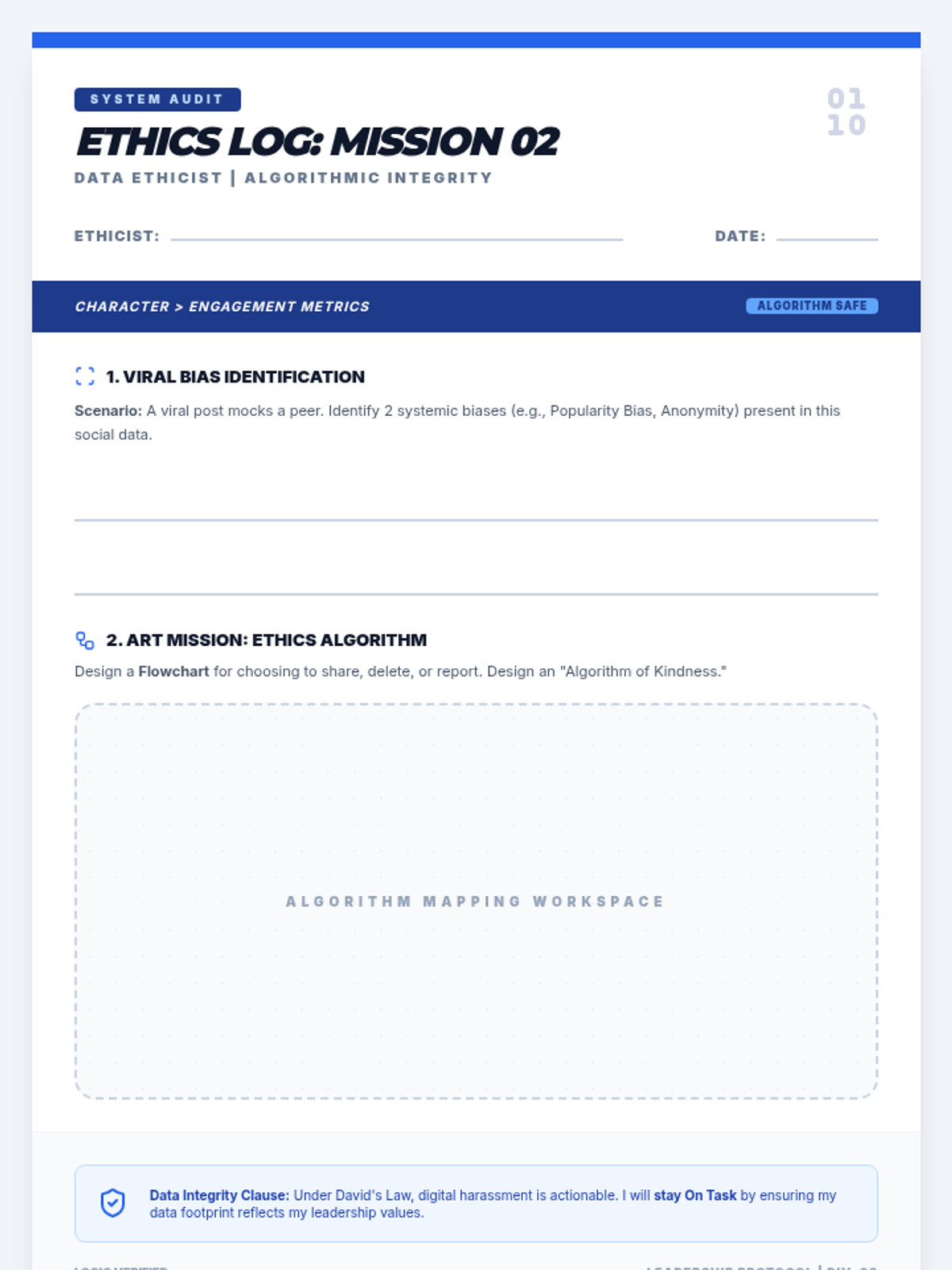
Student activity brief for 8th Grade Lesson 2. Features an ethical data audit and a logic flowchart workspace for designing an 'Algorithm of Kindness'. Updated with grammar fixes and higher contrast lines.
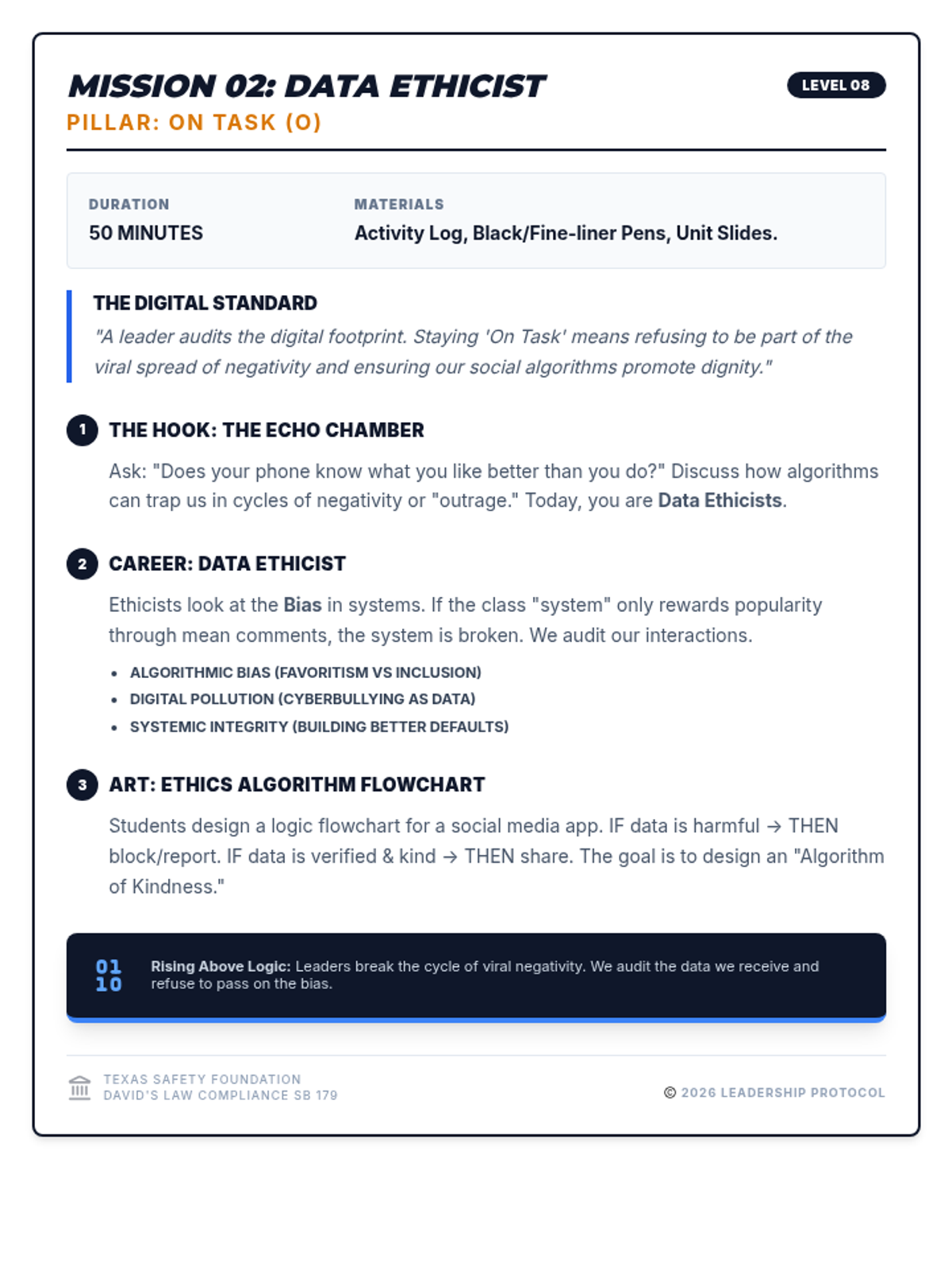
Teacher guide for 8th Grade Lesson 2. Focuses on digital footprint, algorithmic bias, and digital integrity through a Data Ethicist lens. Includes instructional steps and art activity guidance.
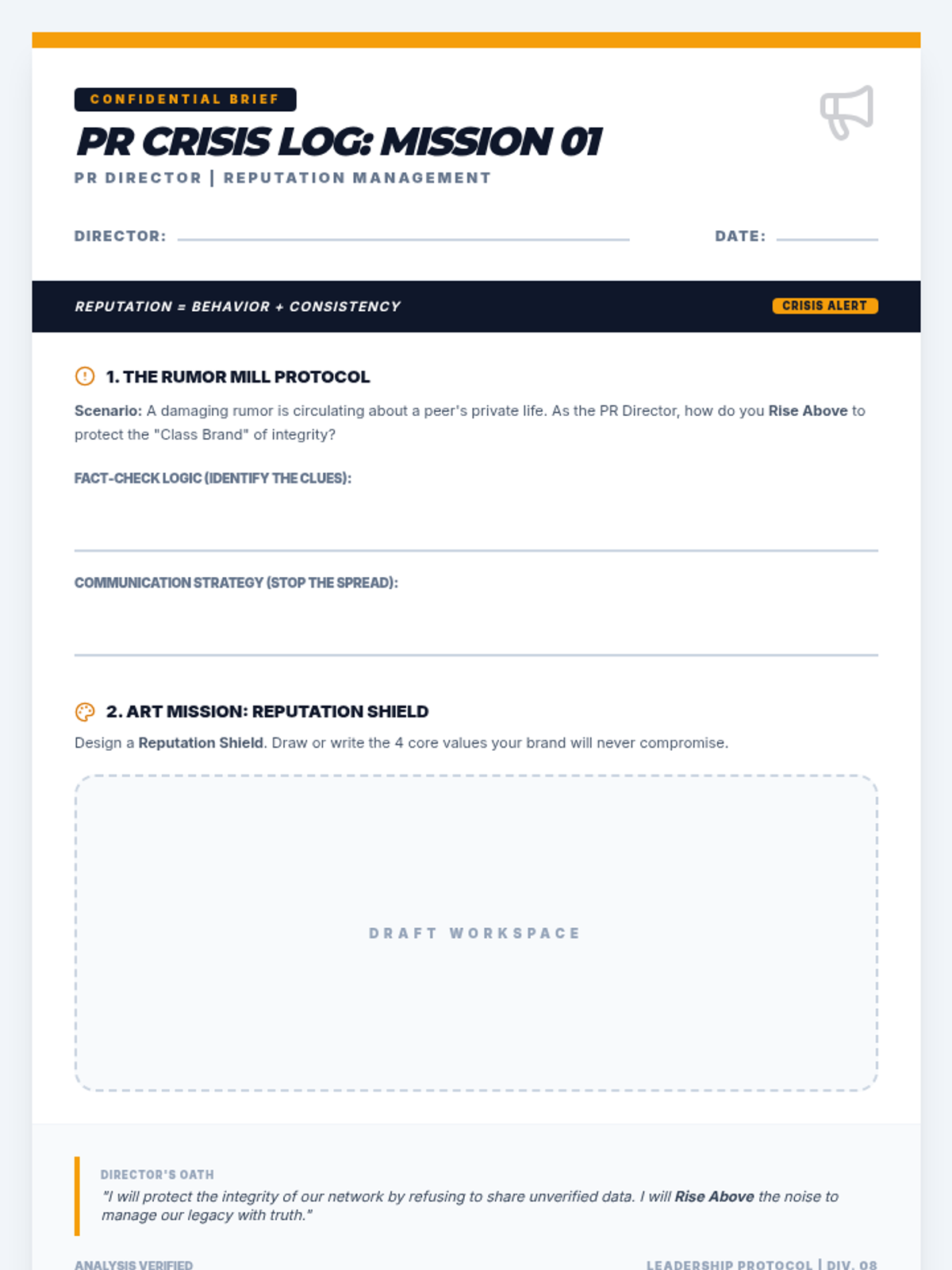
Student activity brief for 8th Grade Lesson 1. Features a PR crisis scenario, reputation management logic, and a workspace for designing a class 'Reputation Shield'. Updated with grammar fixes and higher contrast lines.
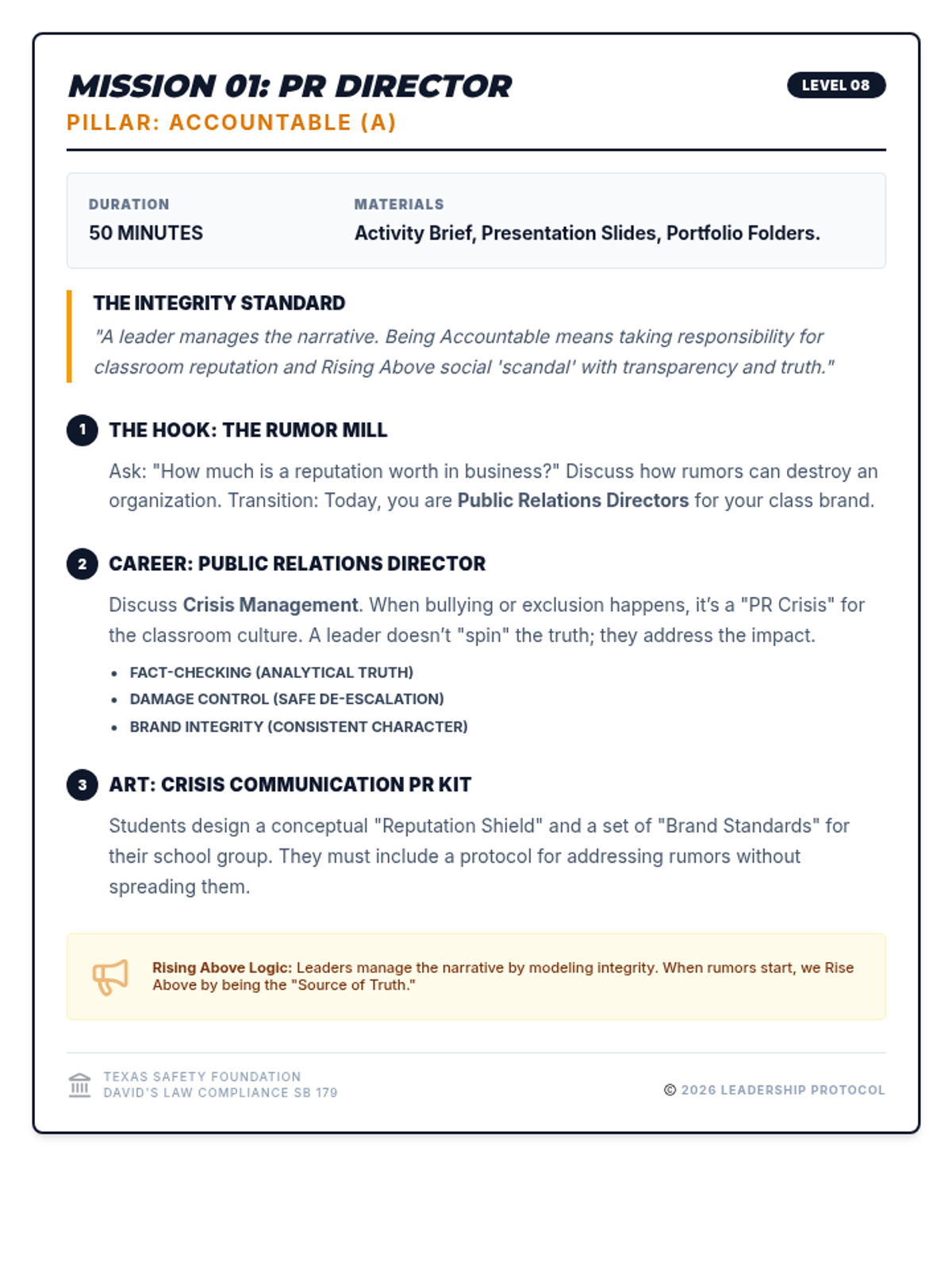
Teacher guide for 8th Grade Lesson 1. Focuses on reputation management and accountability through a PR Director lens. Includes instructional steps and art activity guidance.
Introductory slide deck for the 8th Grade 'Rising Above' unit. Connects organizational influence and systemic health to the S.O.A.R. framework through 6 advanced career tracks. Updated to remove markdown artifacts, improve contrast, and include all 6 mission details.
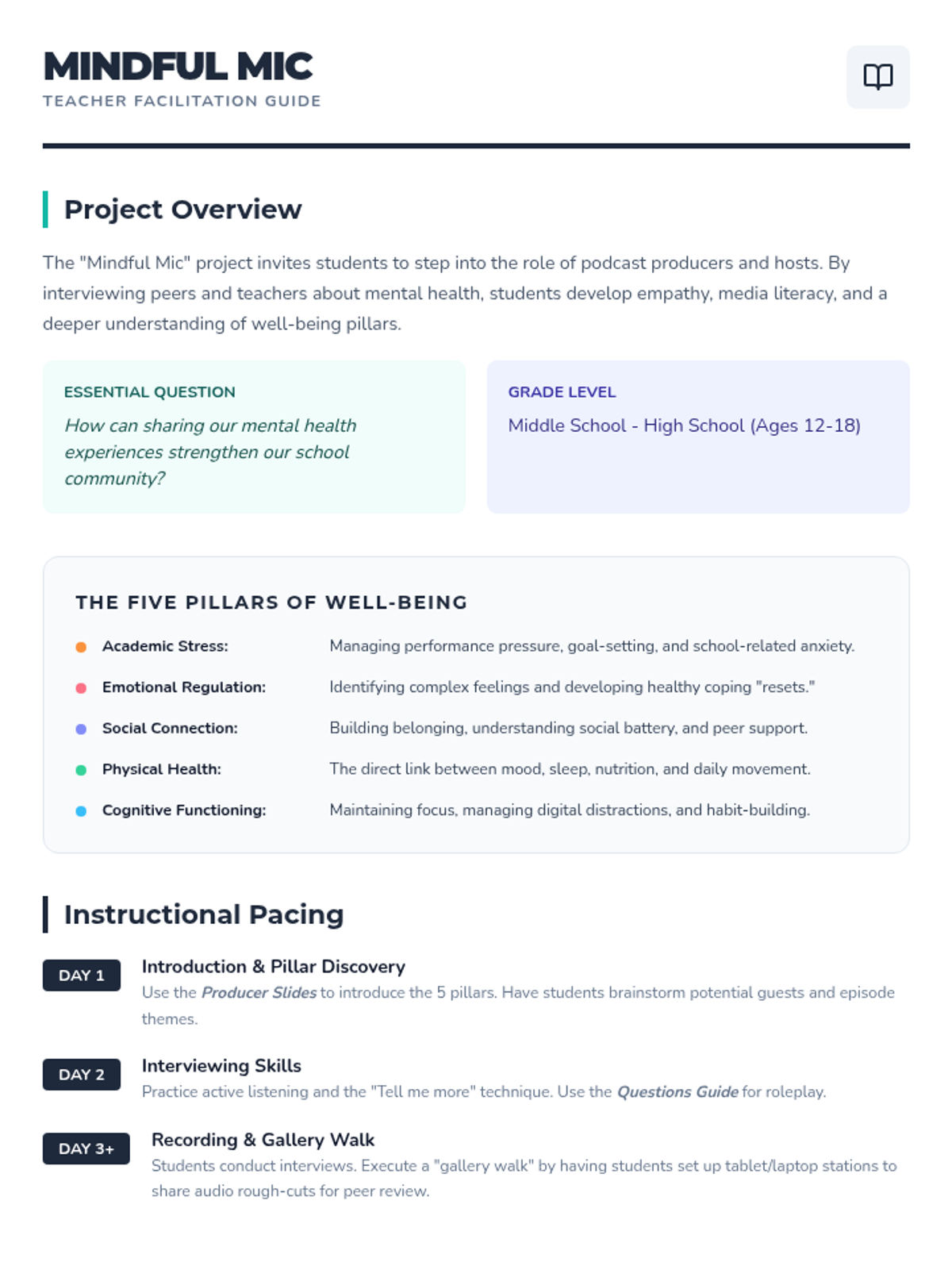
A teacher-facing facilitation guide for the Mindful Mic podcast project, featuring project objectives, pacing suggestions, safety protocols for sensitive topics, and an expanded assessment rubric.
Instructional slides for a student podcast project on mental health, covering the importance of the topic, interview techniques (active listening, safe spaces), and episode structuring.
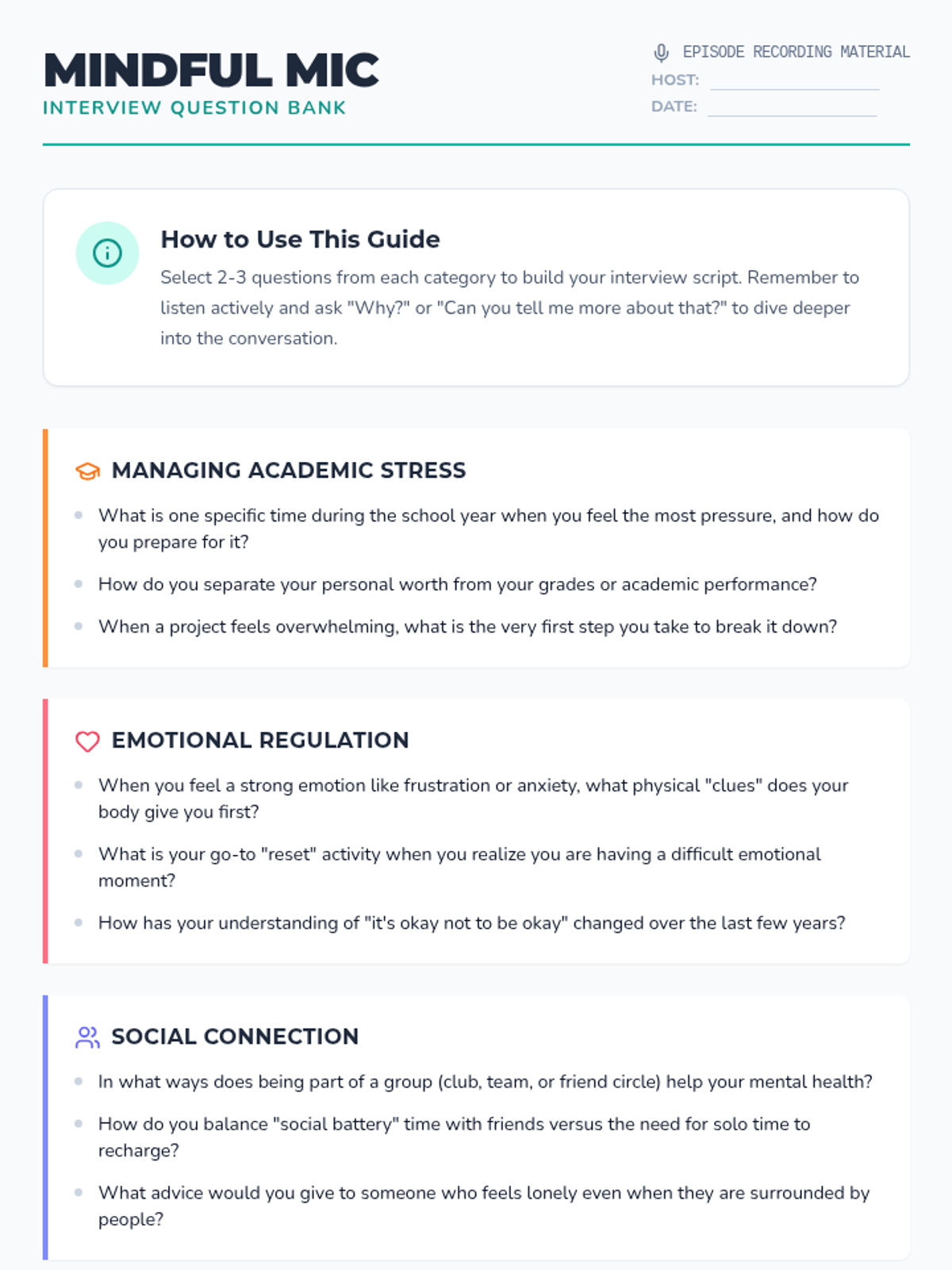
A categorized list of interview questions for a student podcast covering academic stress, emotional regulation, social connection, physical health, and cognitive functioning, revised for better printability and page layout.
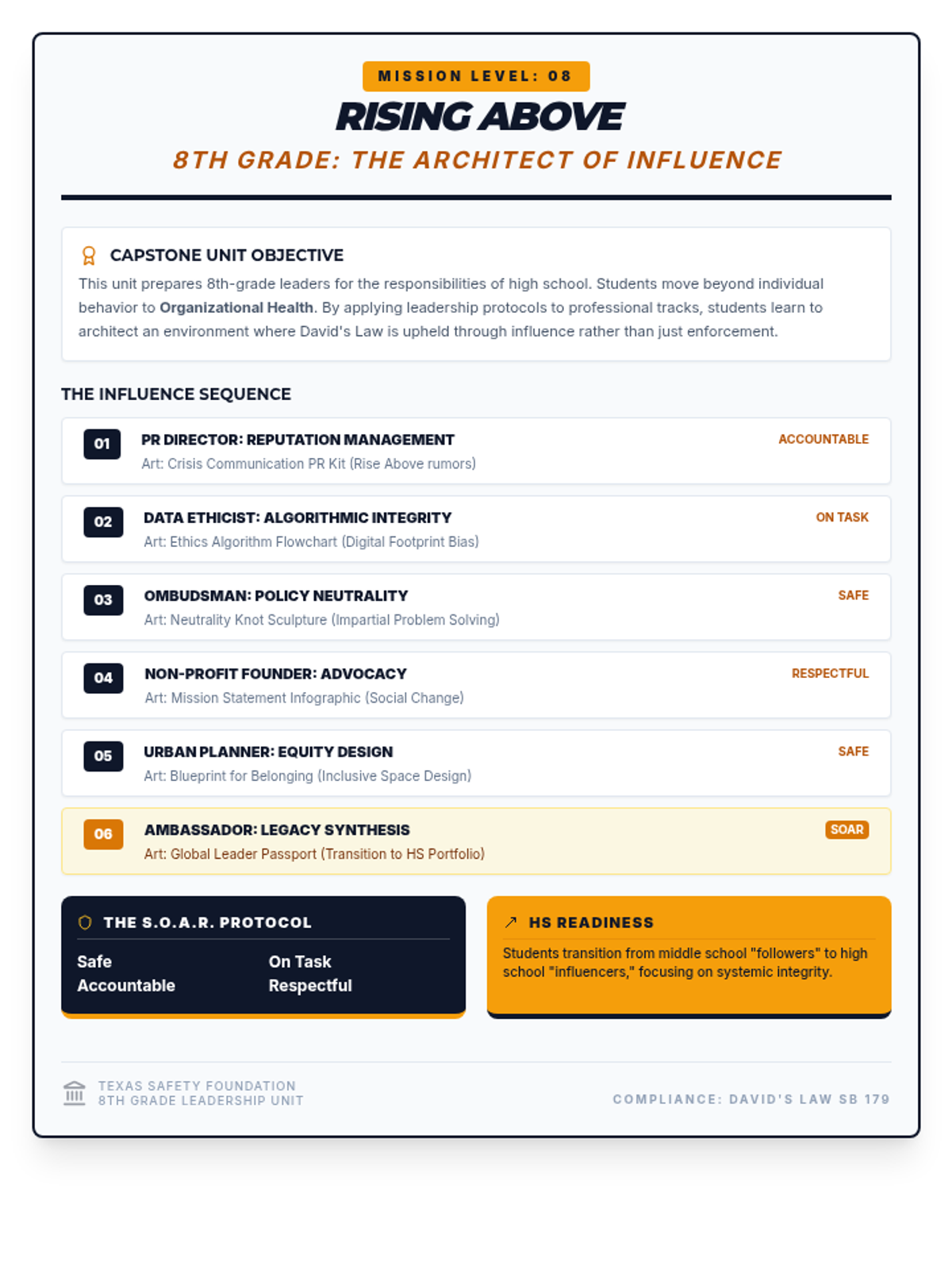
A comprehensive unit guide for the 8th Grade 'Rising Above' leadership sequence. Outlines 6 advanced career missions (PR Director, Ethicist, Ombudsman, Founder, Planner, Ambassador) and their S.O.A.R. connections. Updated with improved contrast and font sizing.
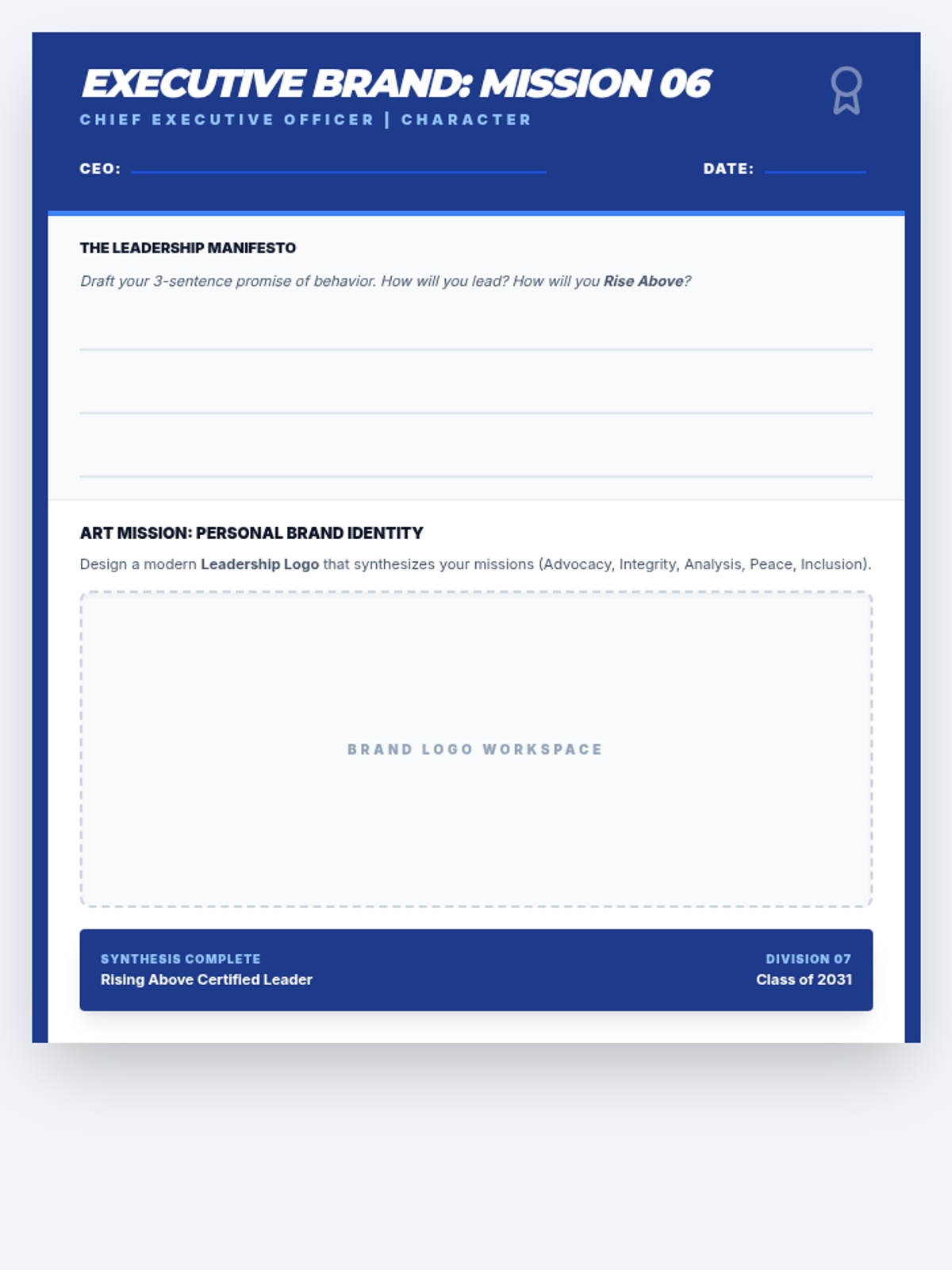
Student graduation activity log for 7th Grade. Synthesis of all 6 missions into a personal leadership brand with a logo design and manifesto. Updated for single-page fit and improved visibility. Grammar fix applied.
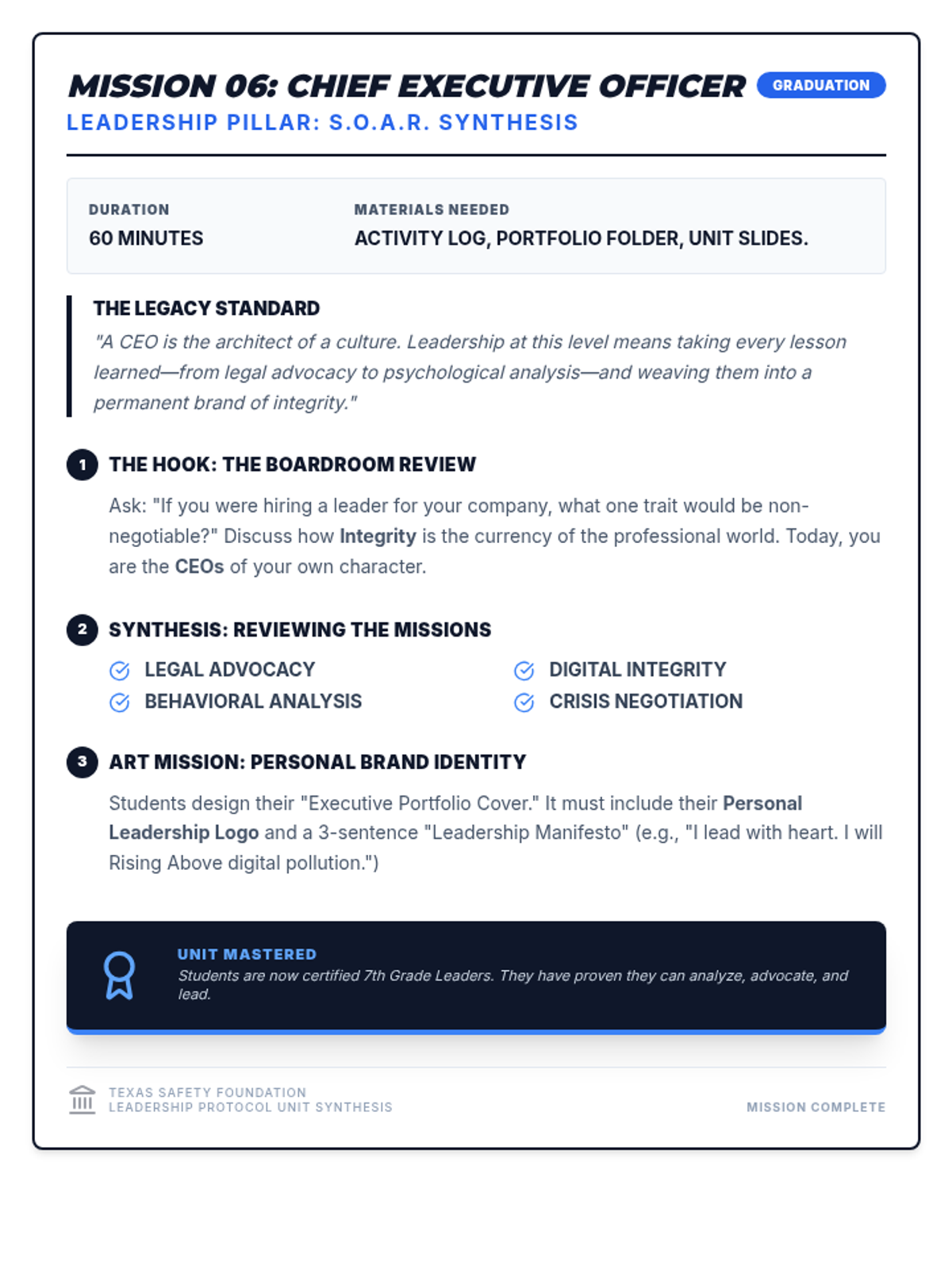
Teacher guide for 7th Grade Lesson 6 graduation. Synthesis of all 5 previous missions into a personal leadership brand. Updated for single-page fit and improved font sizes.
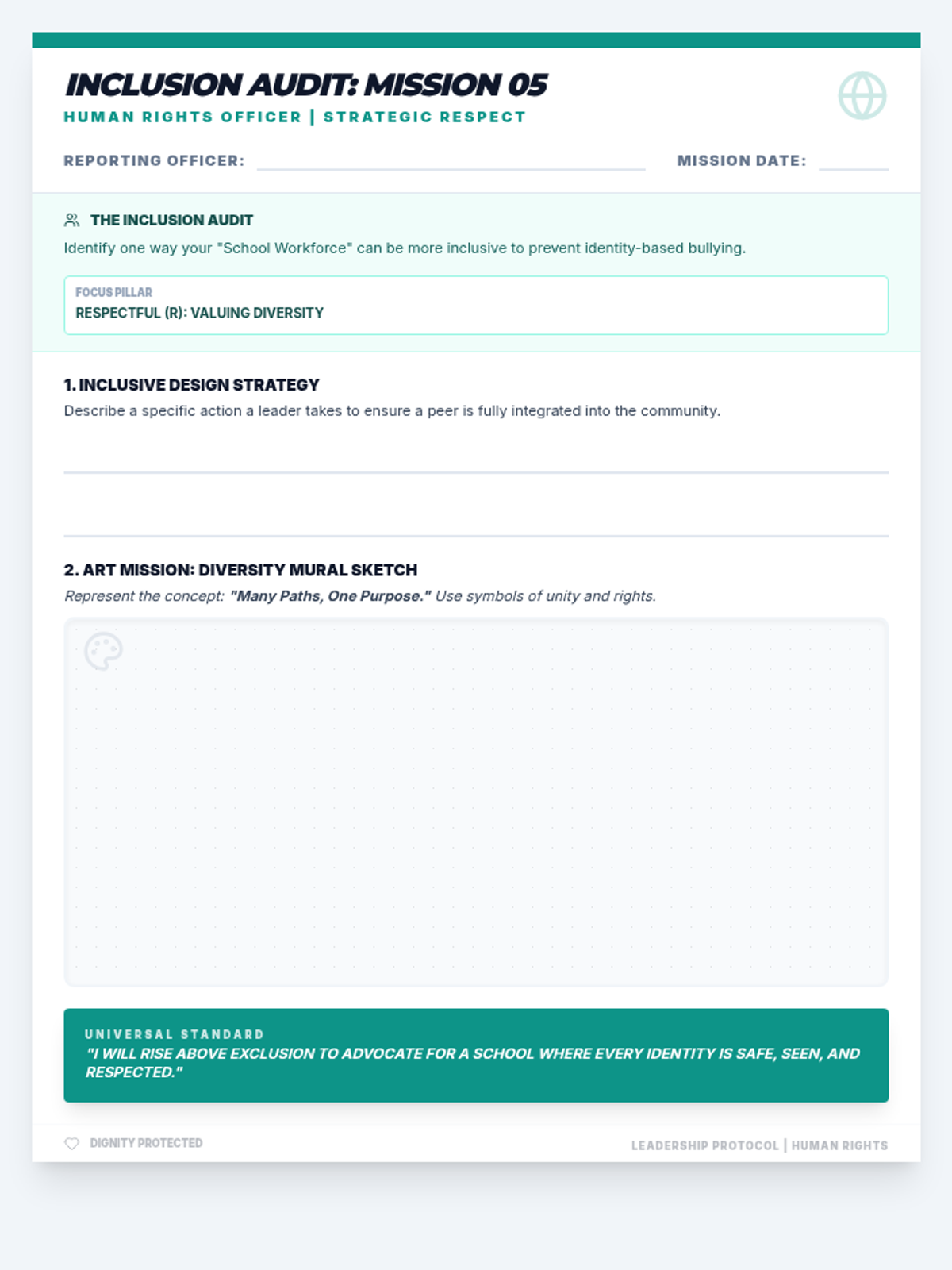
Student activity log for 7th Grade Lesson 5. Features a strategic inclusion prompt and a mural design area focused on school diversity. Updated for single-page fit and improved font sizes.
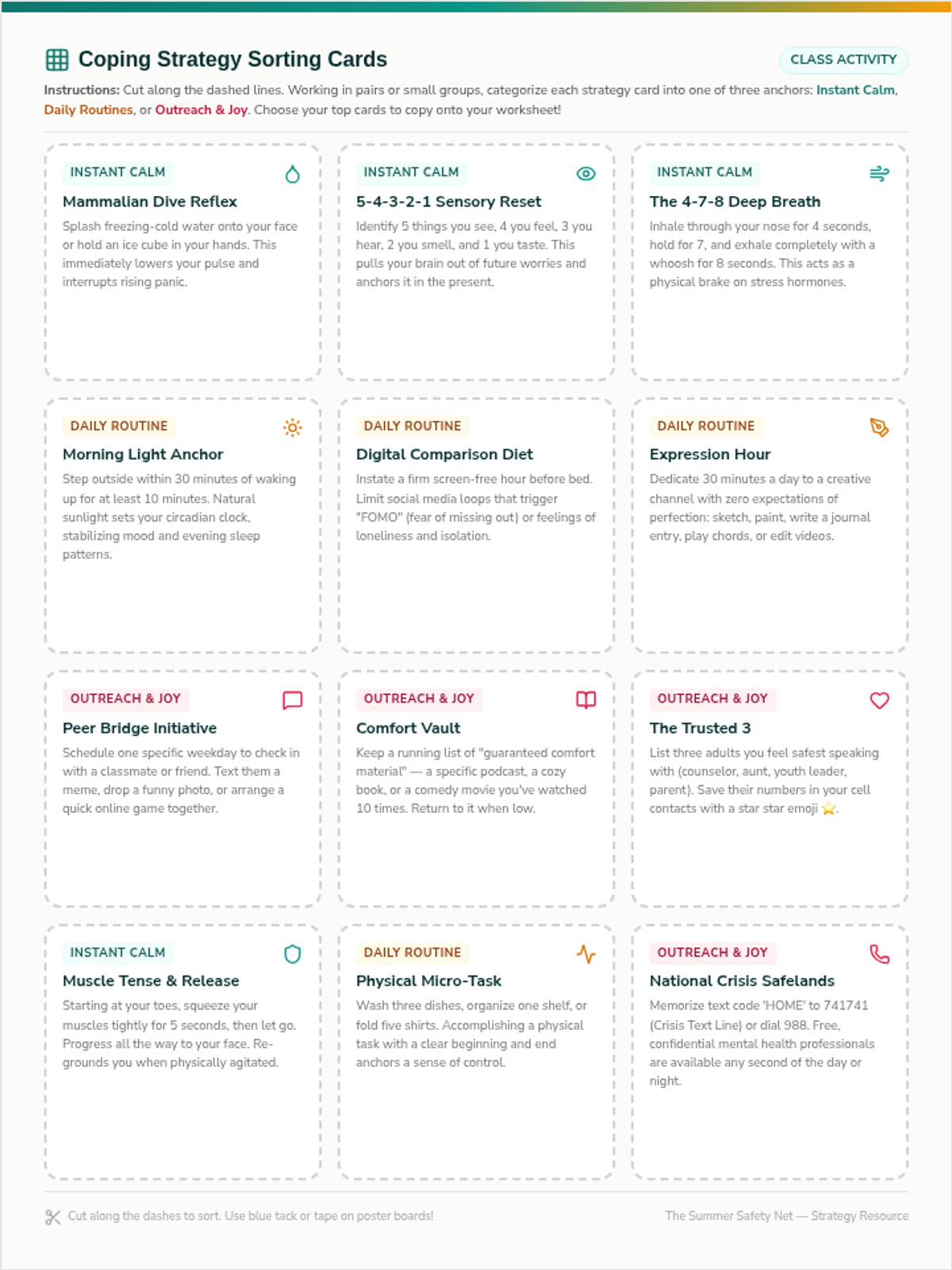
A printable 1-page sorting activity sheet containing 12 distinct, high-impact coping strategy cards for collaborative discussion and personalized selection.
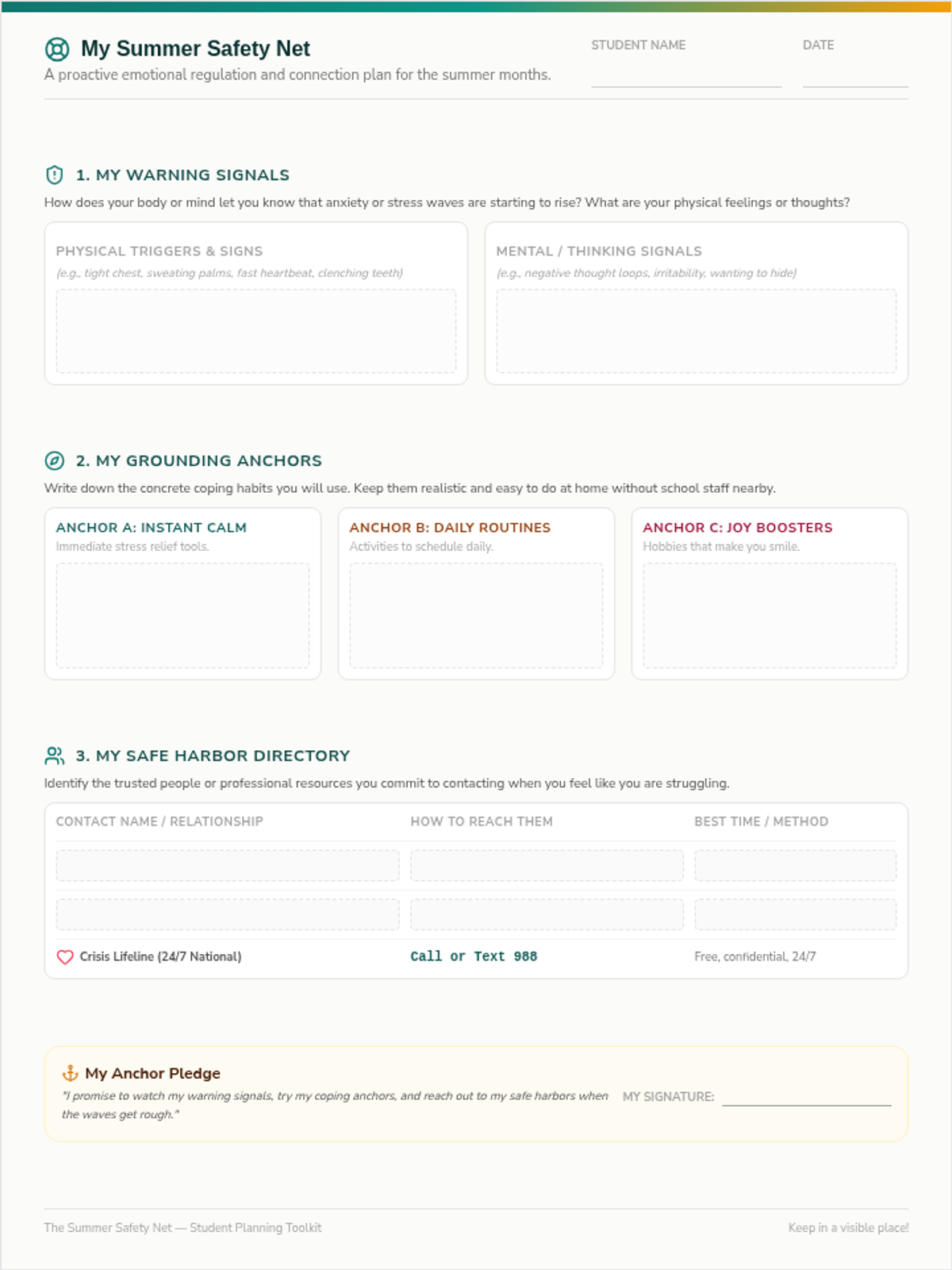
A comforting and highly functional 1-page student worksheet designed for individual safety net planning, warning signs tracking, and coping strategies compilation.
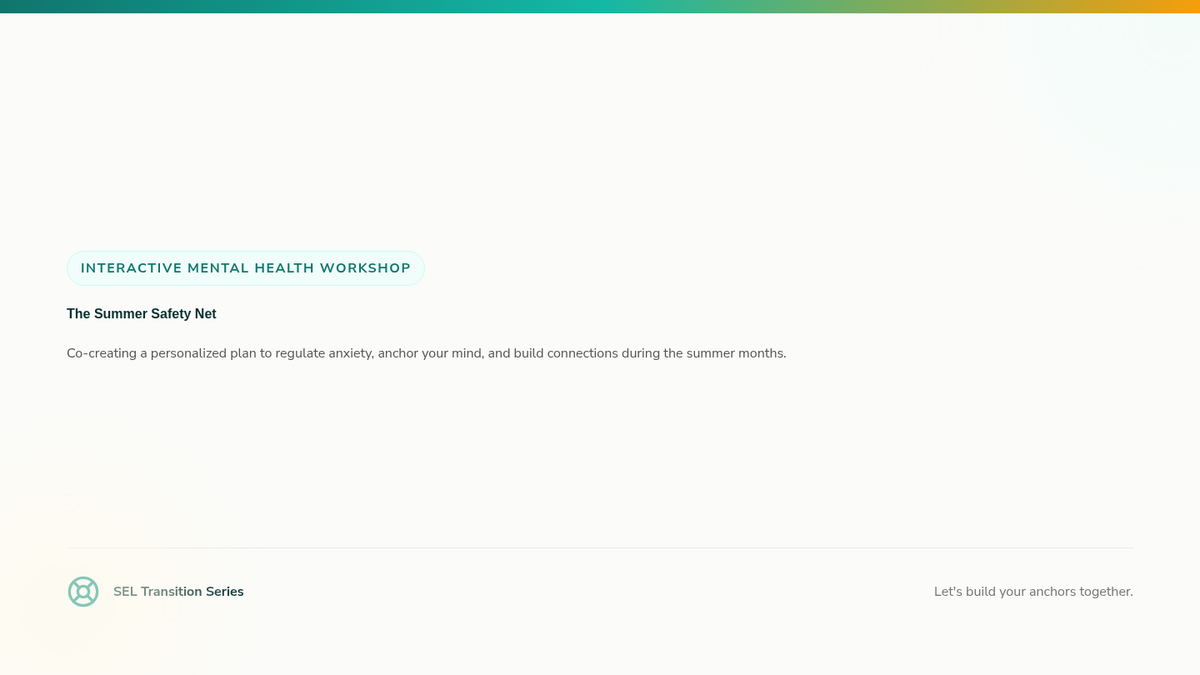
A highly polished 5-slide instructional presentation for 'The Summer Safety Net' workshop, containing warm-ups, stressor identification, coping strategies, and worksheet instructions.
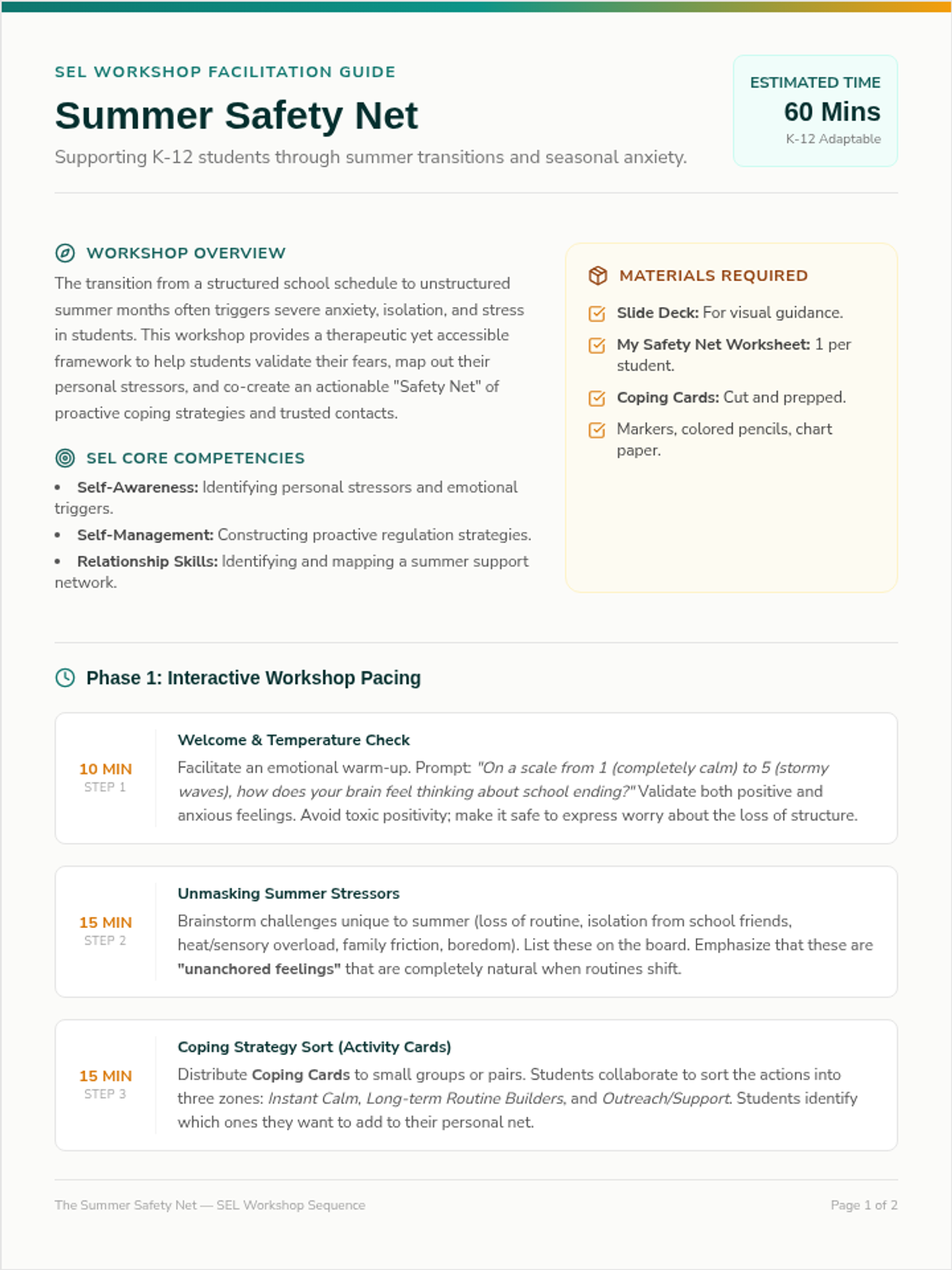
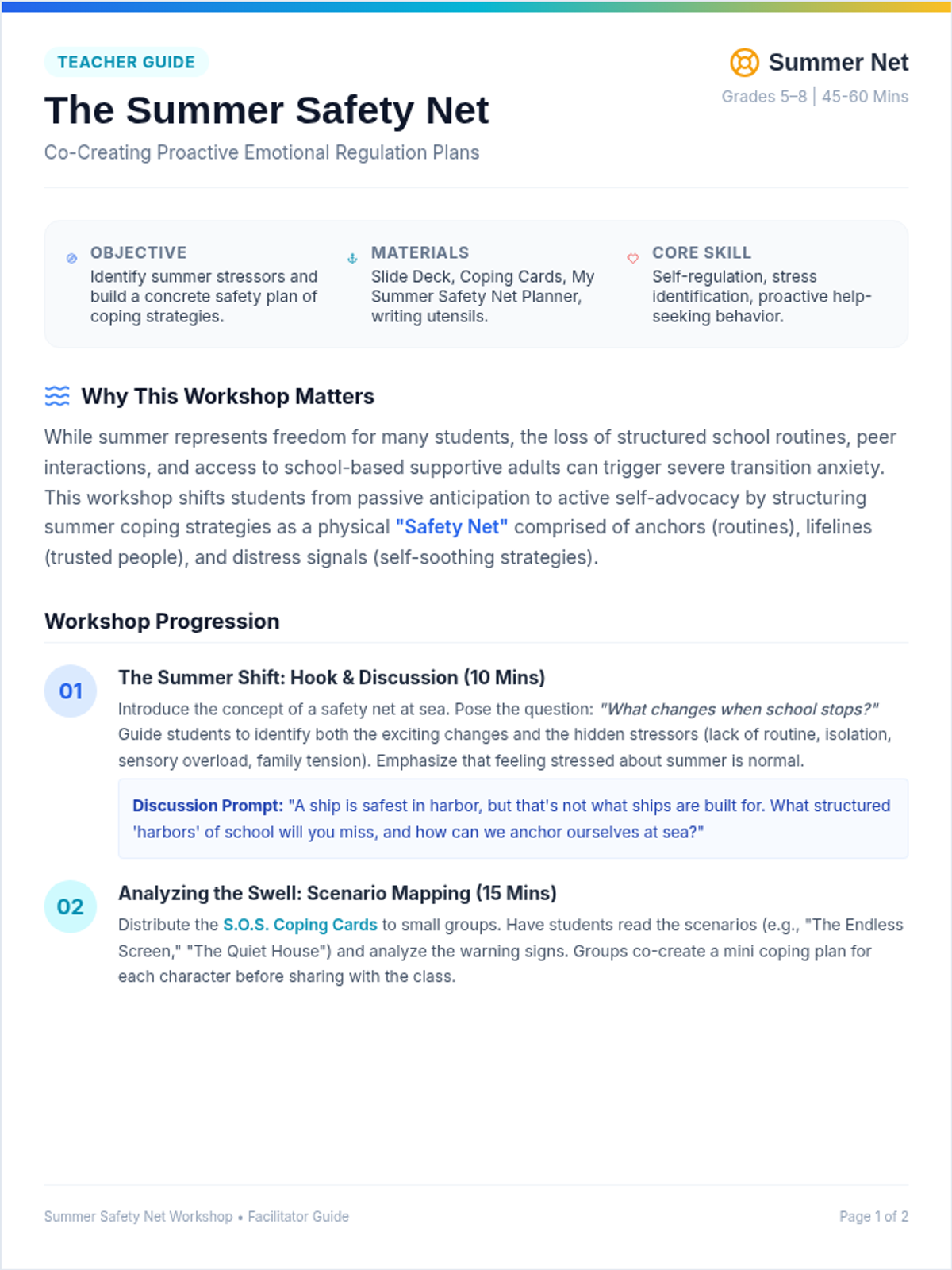
A comprehensive, professional 2-page teacher facilitation guide for 'The Summer Safety Net' workshop, containing pacing, SEL objectives, scripts, and differentiation tips.
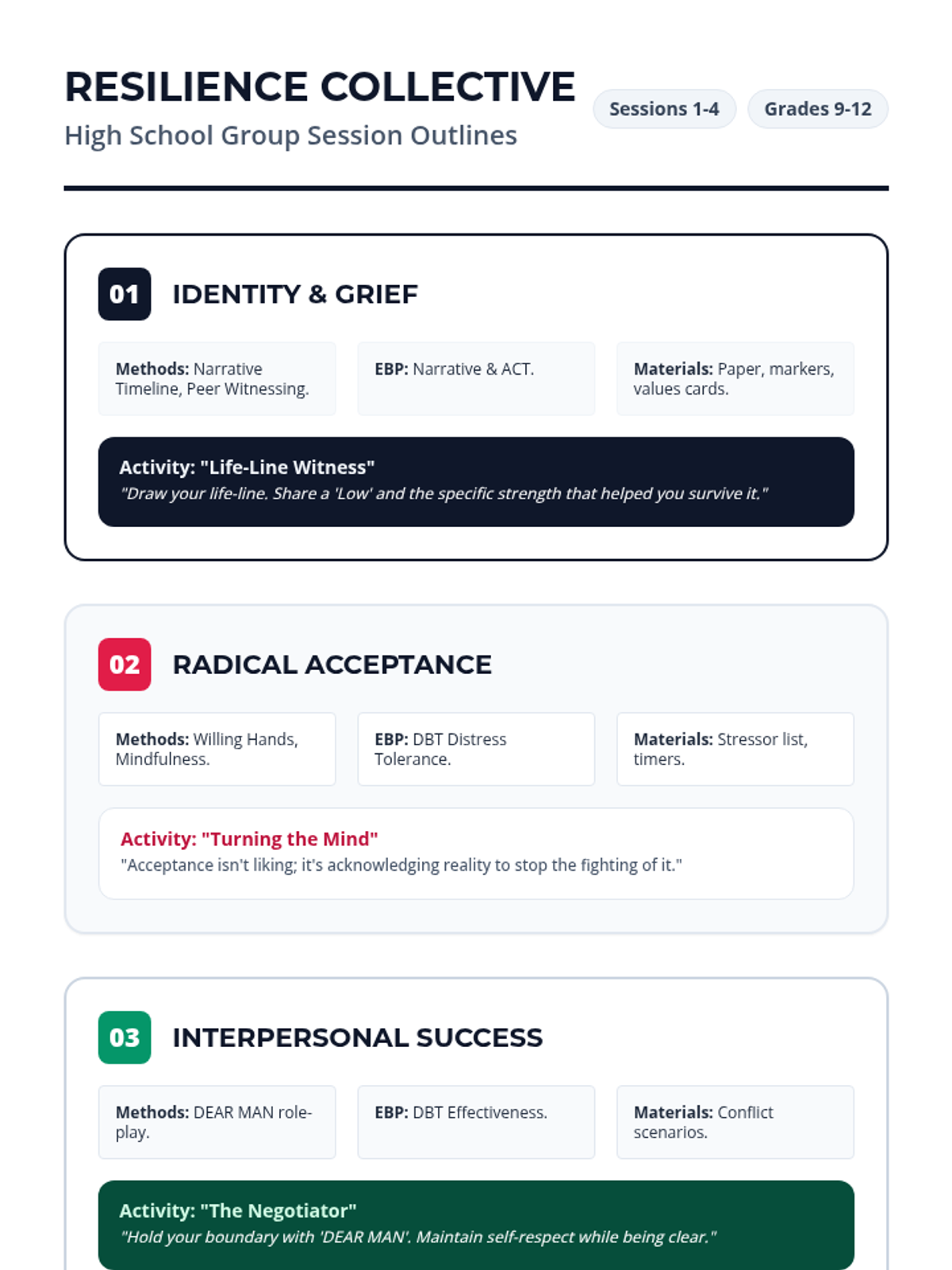
Structured group session outlines for high school students, incorporating advanced ACT and DBT-A concepts like Radical Acceptance and Interpersonal Effectiveness. Emphasizes peer witnessing and identity integration.
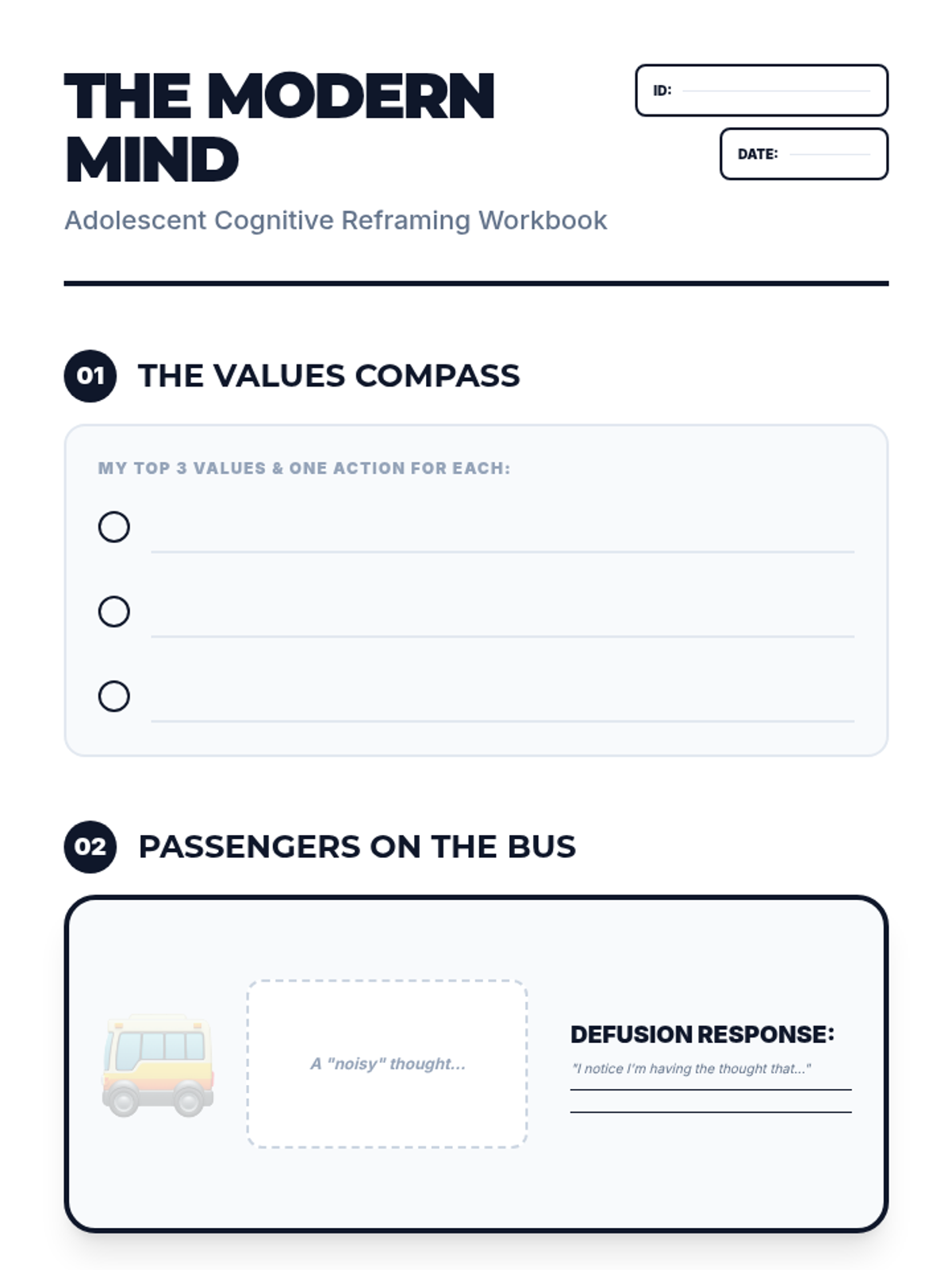
An advanced student workbook for high schoolers, featuring complex therapeutic exercises including Values-Based Mapping (ACT), Cognitive Defusion (ACT), and DEAR MAN interpersonal effectiveness (DBT). Designed for identity-level therapeutic work.
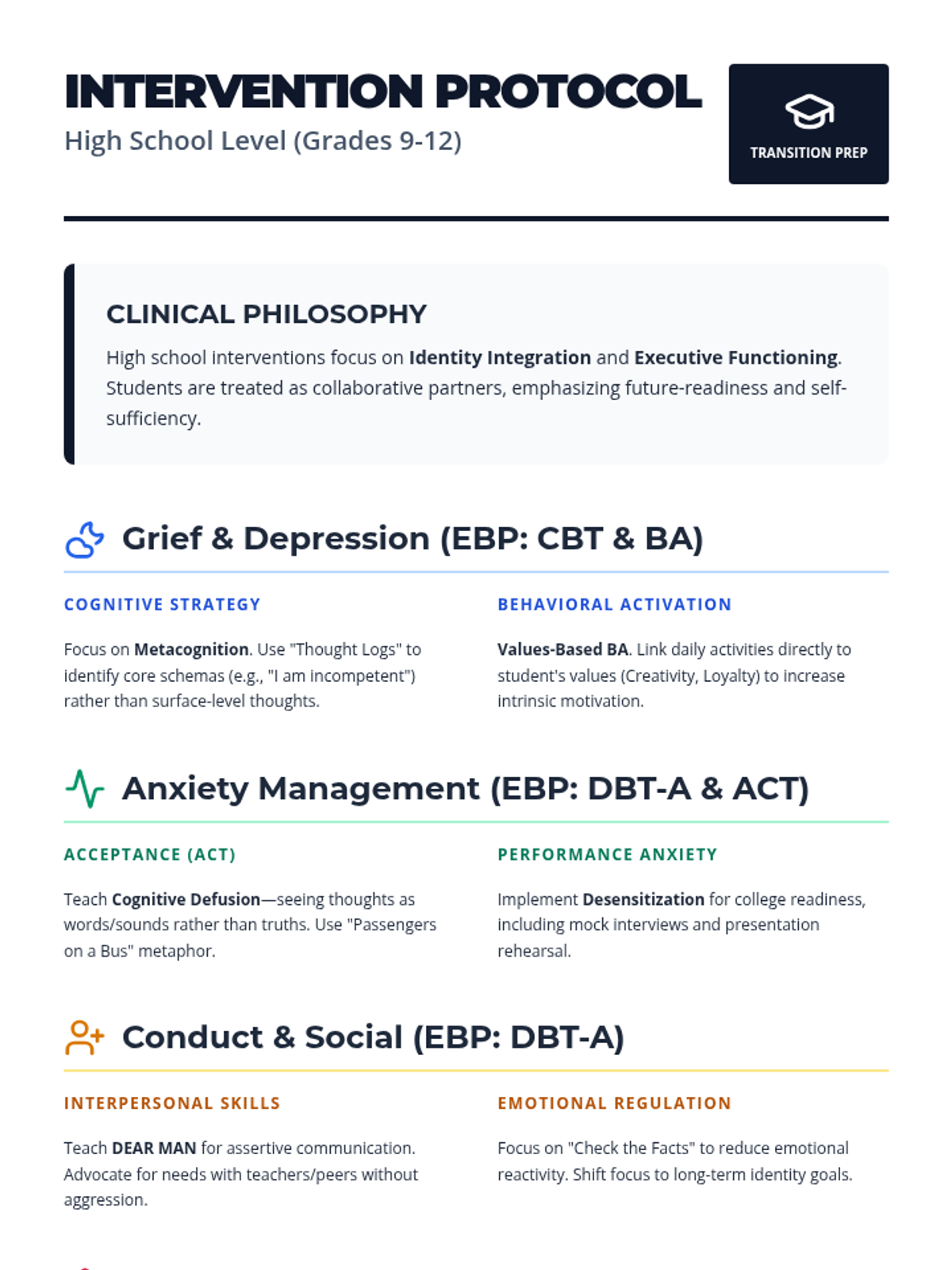
A high-level clinician guide for high school interventions, focusing on ACT, DBT-A, and CAMS protocols. Addresses cognitive complexity, identity integration, and interpersonal effectiveness.
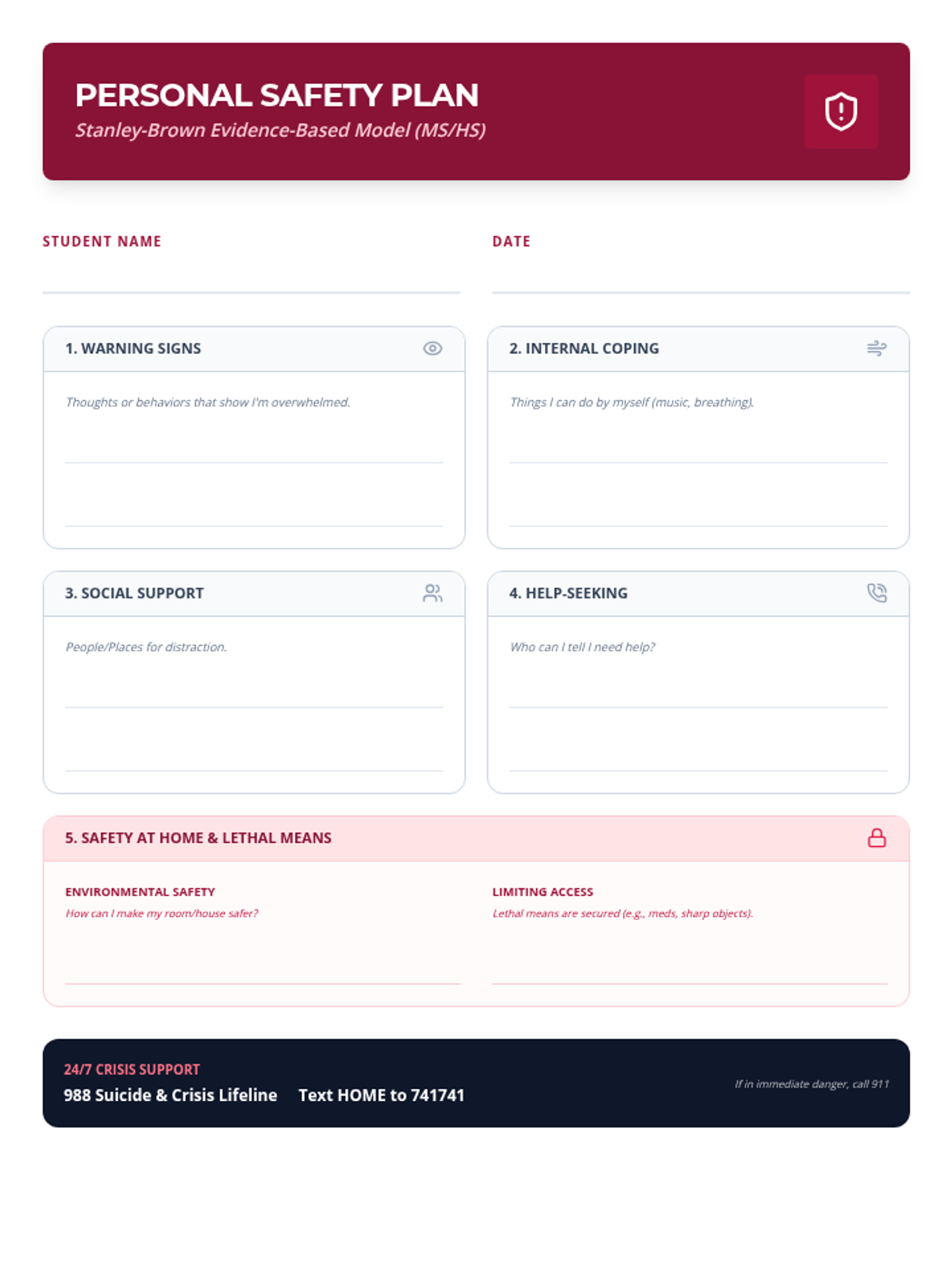
A standardized, evidence-based safety plan template for middle and high school students, following the Stanley-Brown model. Includes steps for warning signs, coping strategies, and emergency contacts.
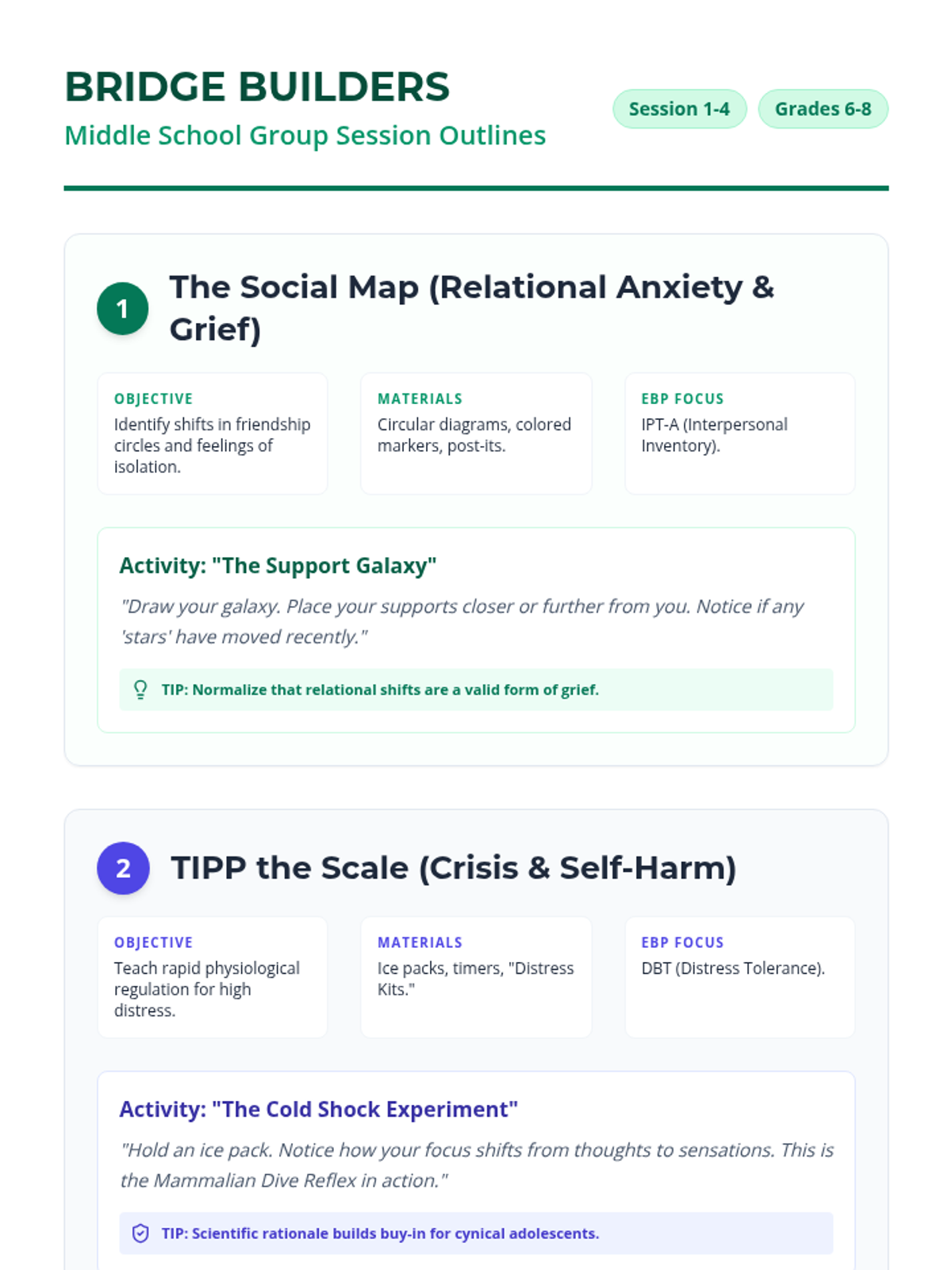
Structured group session outlines for middle school students, utilizing IPT-A, DBT, and Choice Theory to address social anxiety, conduct, and crisis prevention. Includes specific activities like "The Support Galaxy" and "The Cold Shock Experiment."
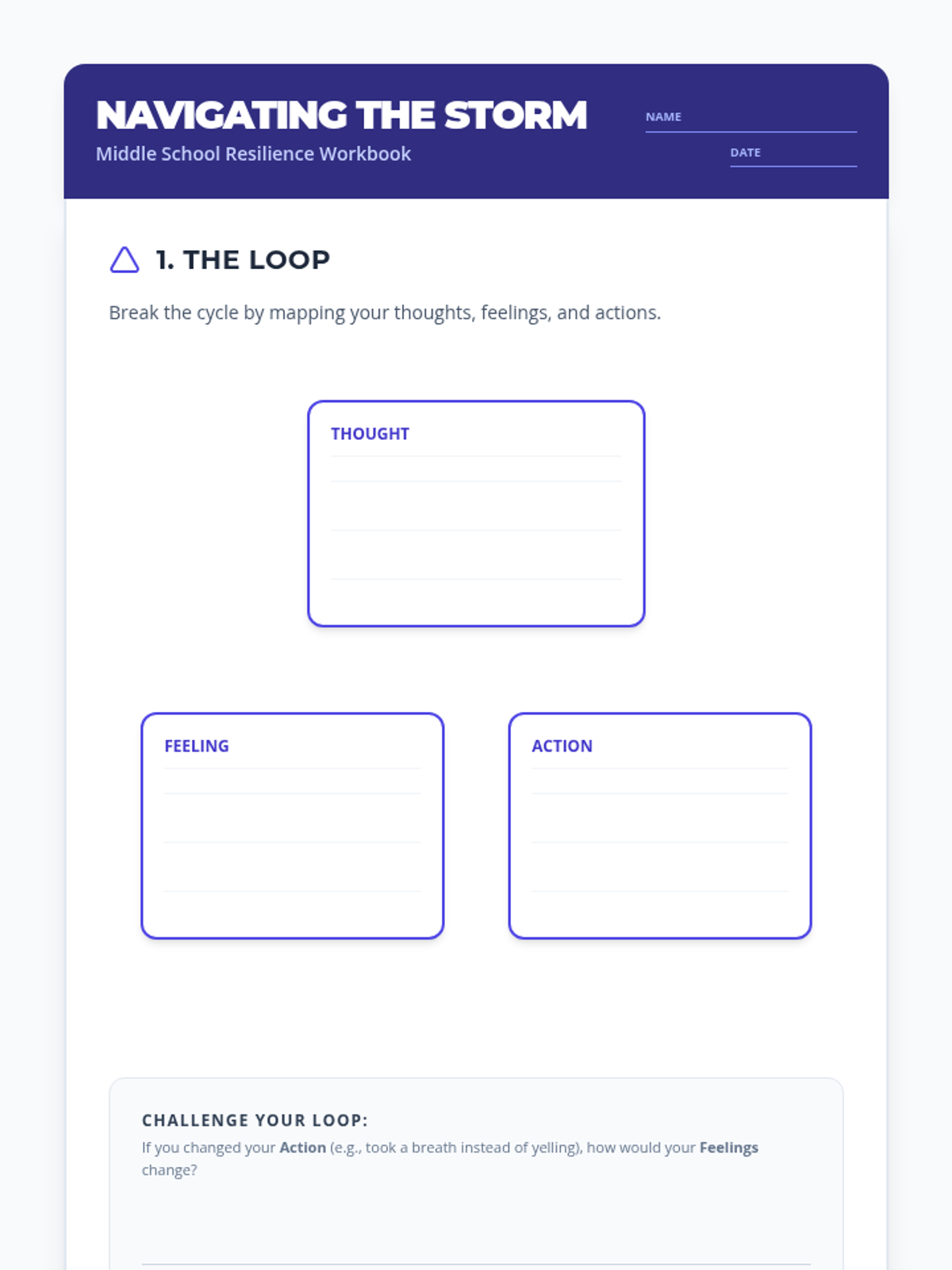
A middle school student workbook focused on CBT concepts like the Cognitive Triangle and Thinking Traps. Designed to help adolescents navigate complex emotions, social anxiety, and behavioral loops with autonomy-focused exercises.
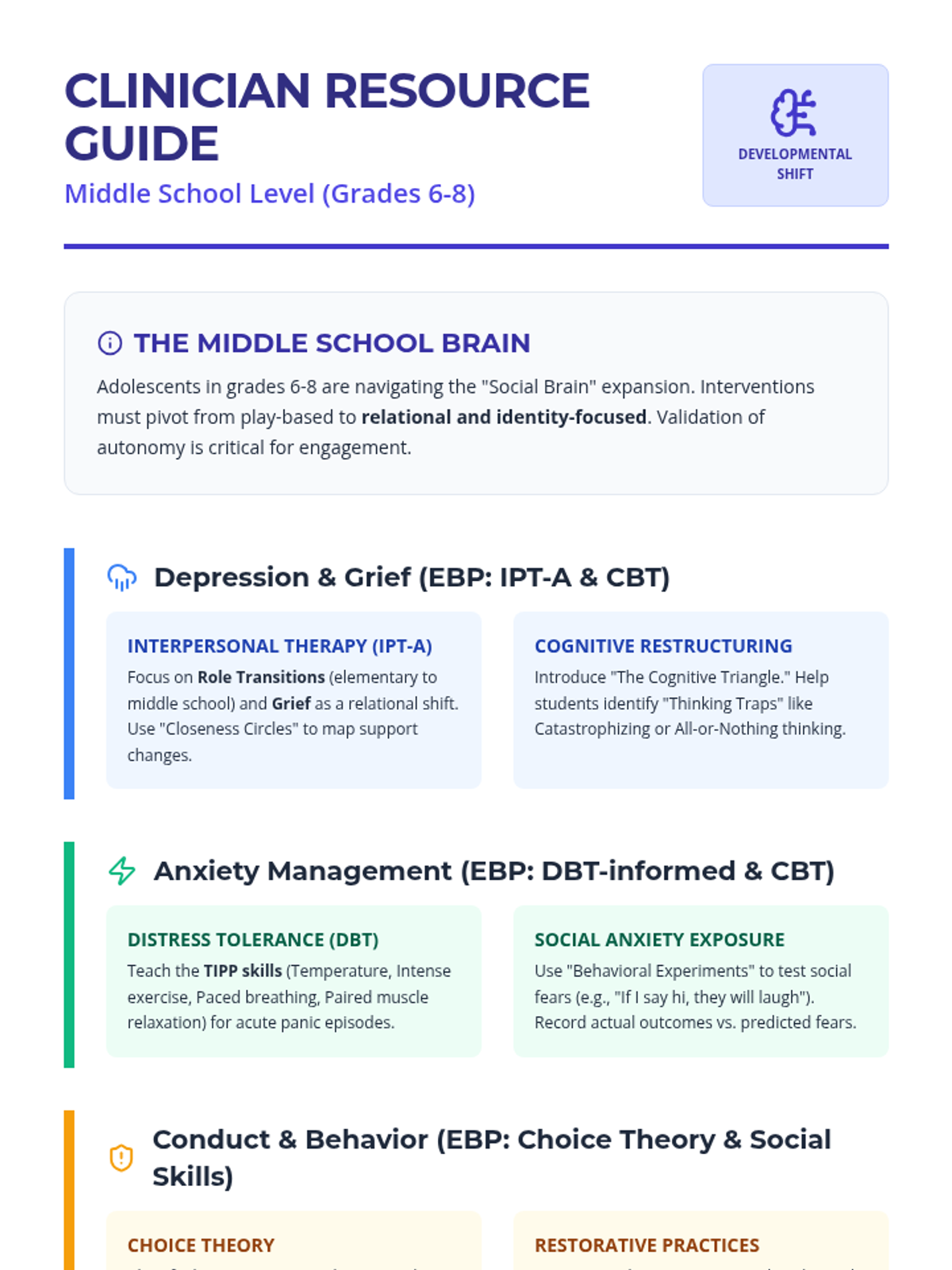
A comprehensive clinician guide for middle school mental health interventions, focusing on IPT-A, CBT, and DBT-informed strategies for grief, anxiety, and conduct, with a focus on the adolescent "Social Brain."
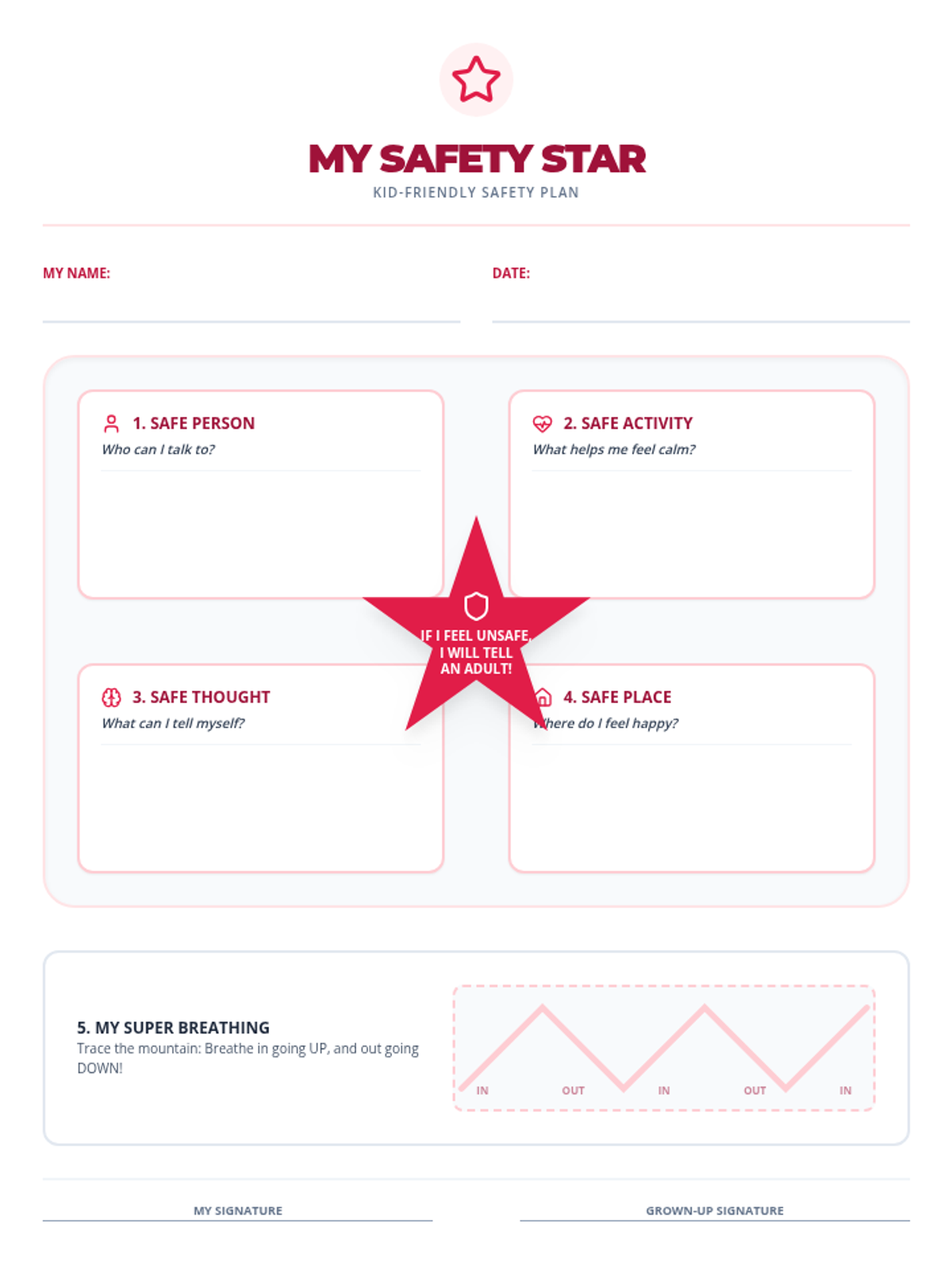
A visual, kid-friendly safety planning template for elementary students, focusing on five key points: Safe Person, Safe Activity, Safe Thought, Safe Place, and Breathing. Includes spaces for signatures and student drawing.
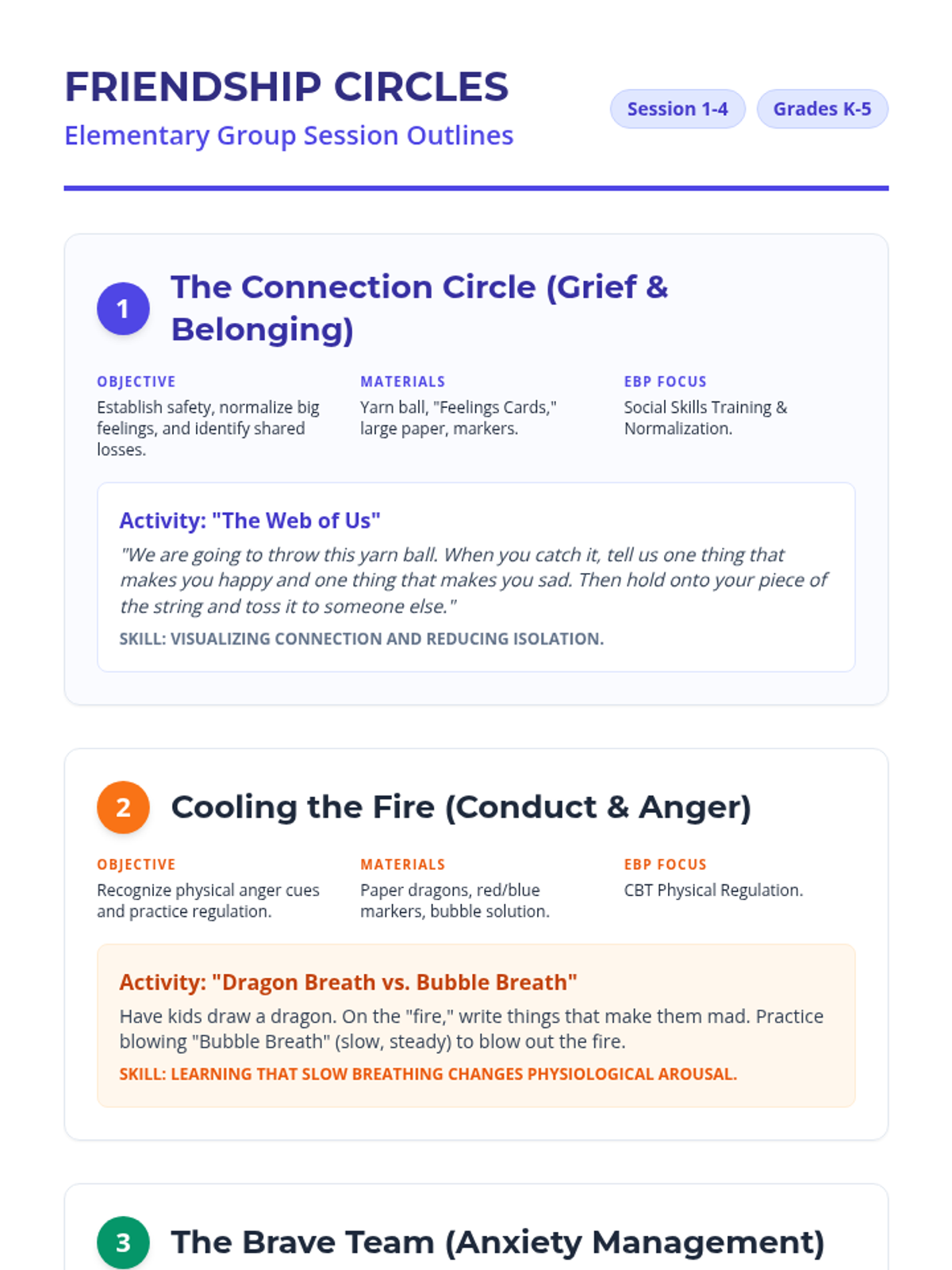
Structured group session outlines for elementary students, covering connection (grief), regulation (conduct), bravery (anxiety), and safety (crisis). Includes objectives, materials, and evidence-based practice focuses.
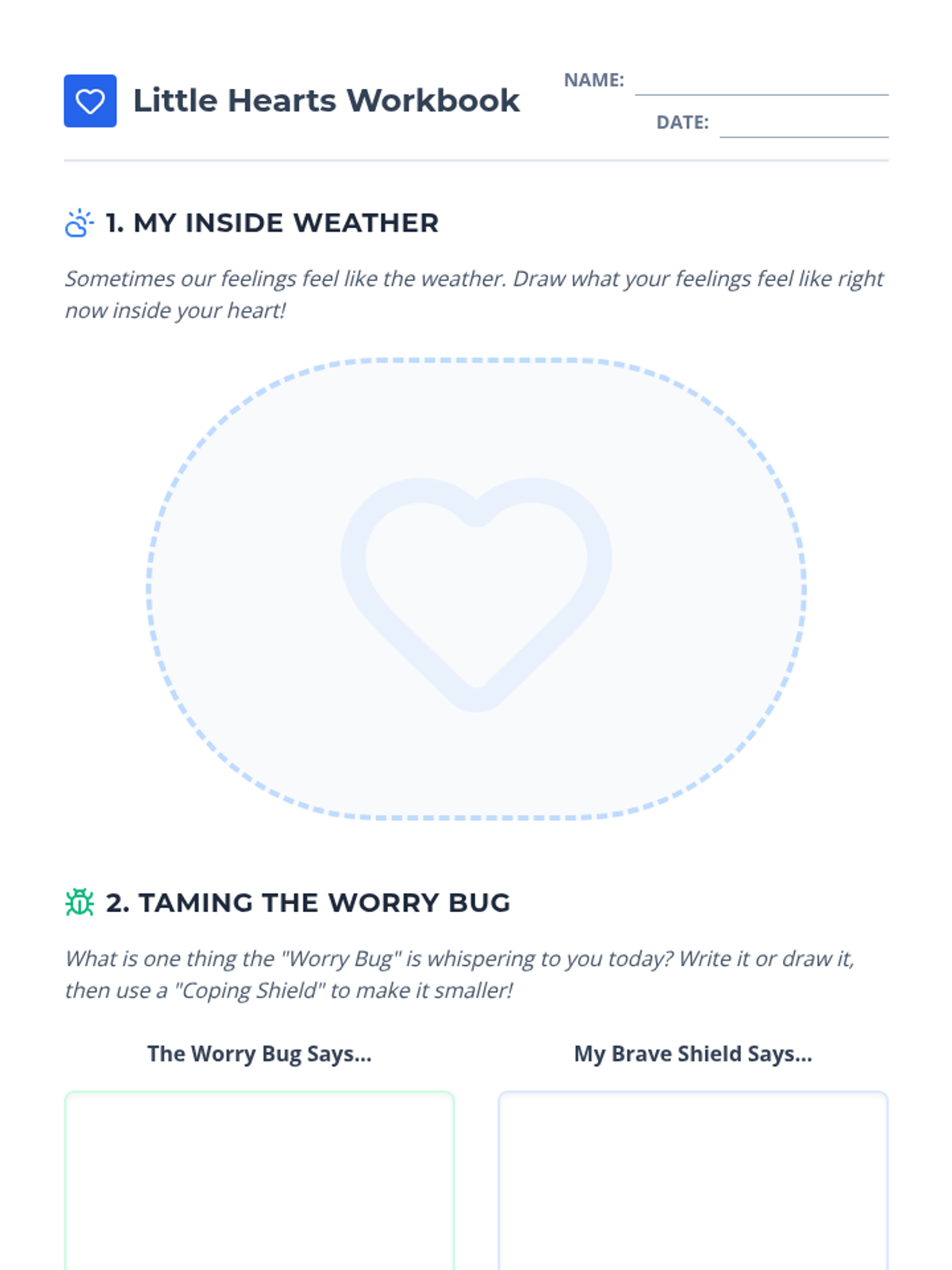
A kid-friendly student workbook for elementary students, containing interactive drawing and writing activities to help manage feelings, anxiety (The Worry Bug), and behavioral choices (The Choice Point).
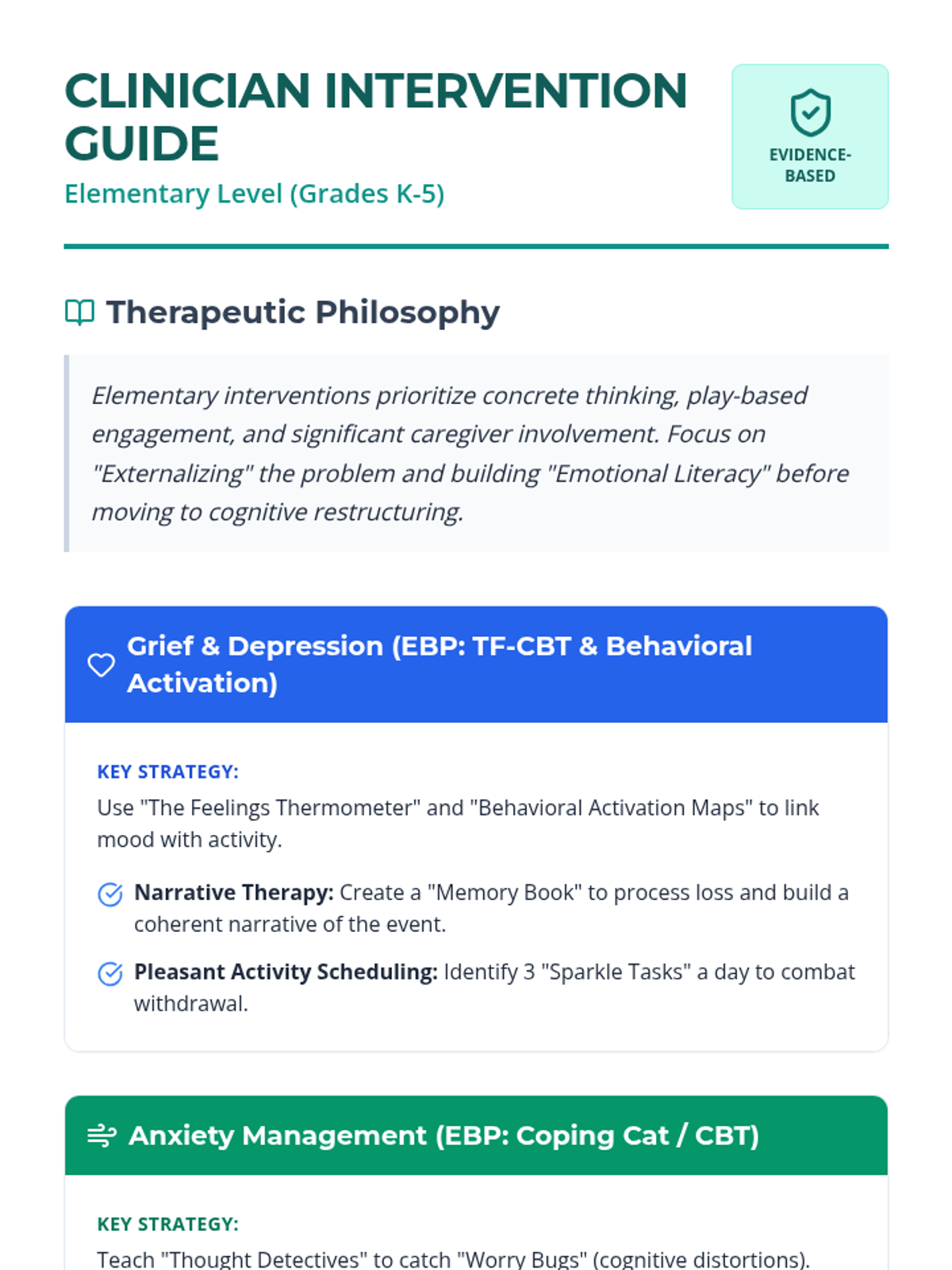
An evidence-based clinician guide for elementary school counselors, providing key strategies and interventions for grief, anxiety, conduct, and crisis management using developmentally appropriate language.
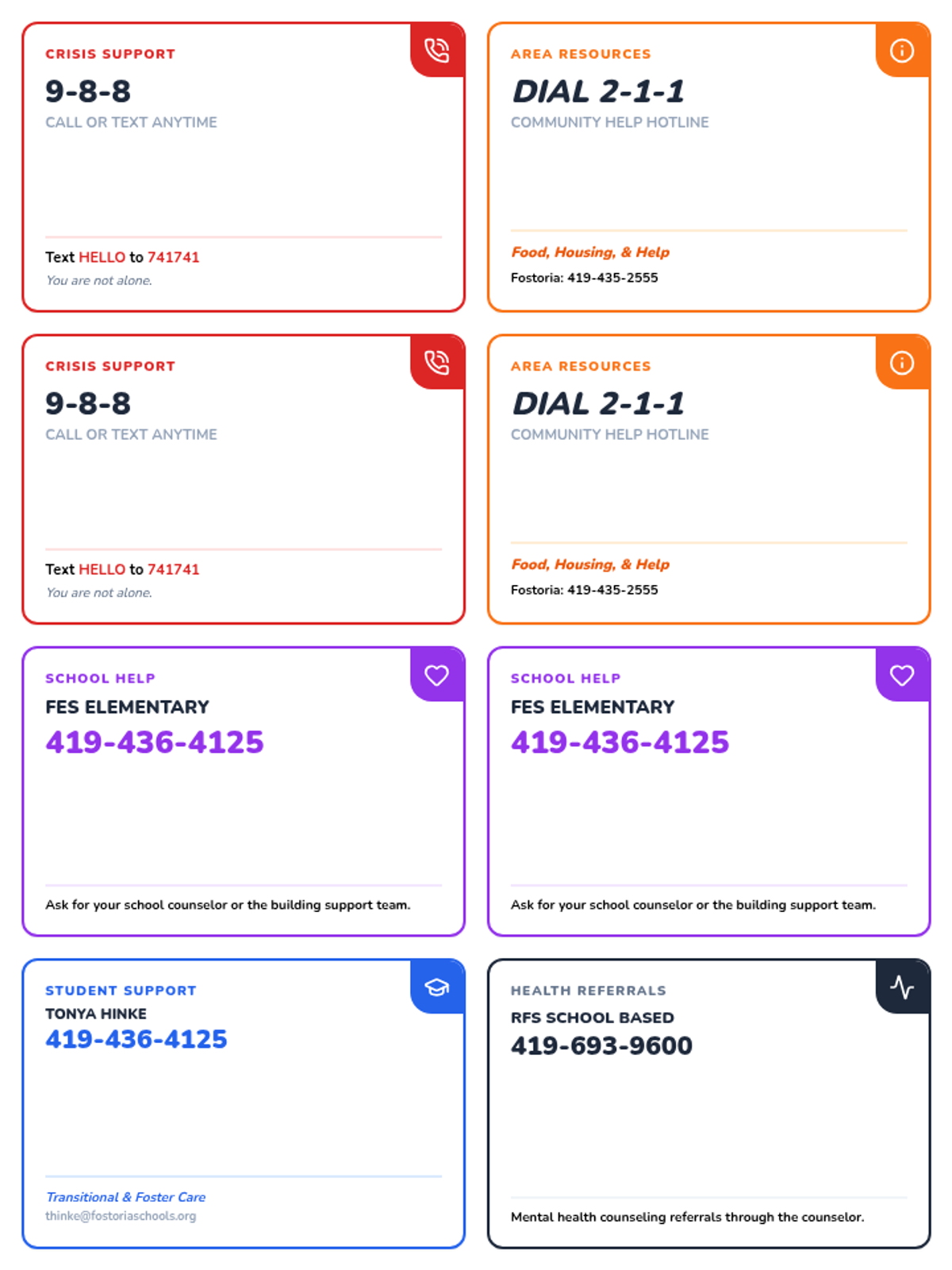
Small, pocket-sized printable cards with essential contact information for school and community resources, designed to be picked up by families.
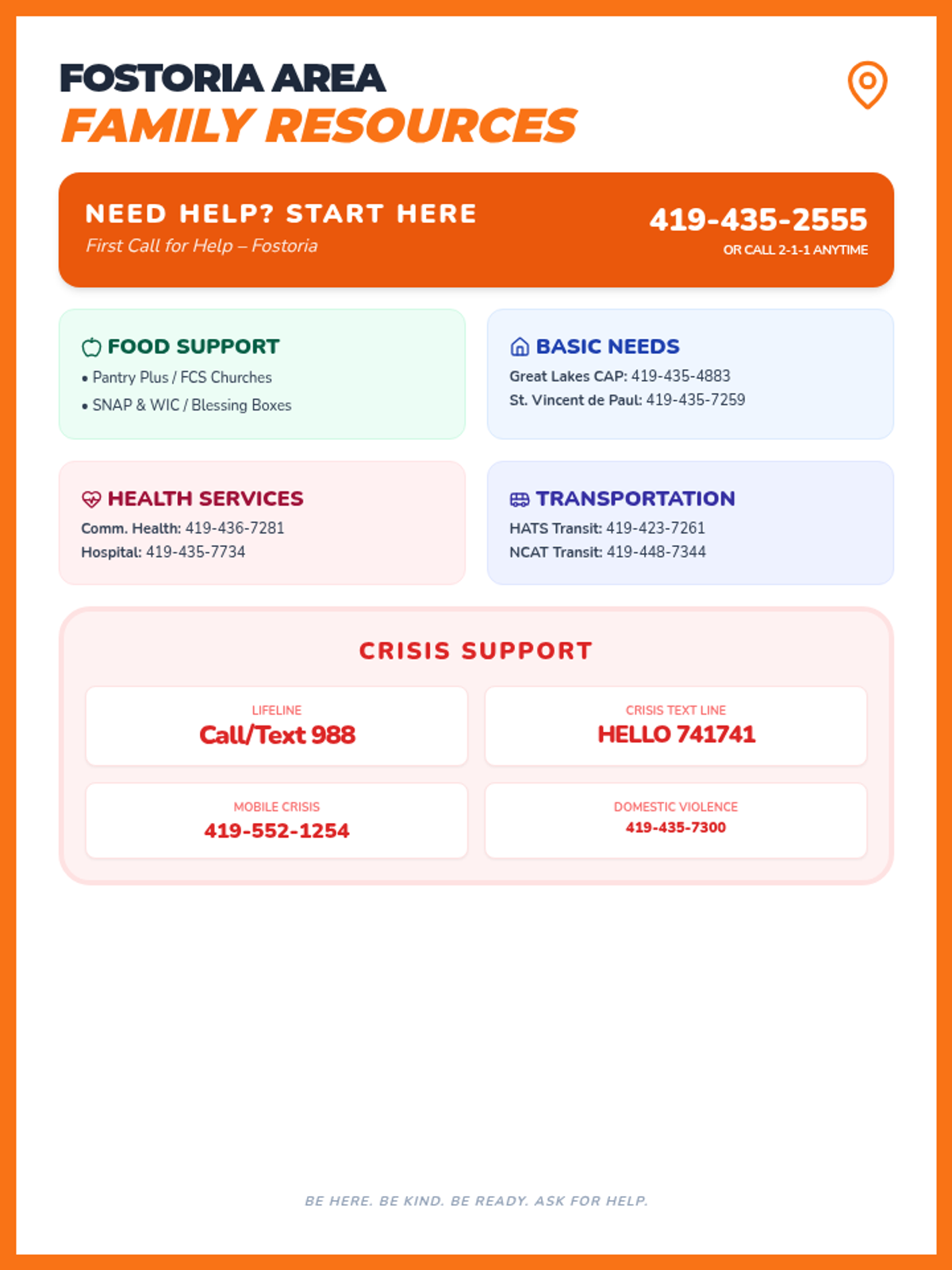
A comprehensive directory of community resources in the Fostoria area, covering food, housing, health, and crisis support.
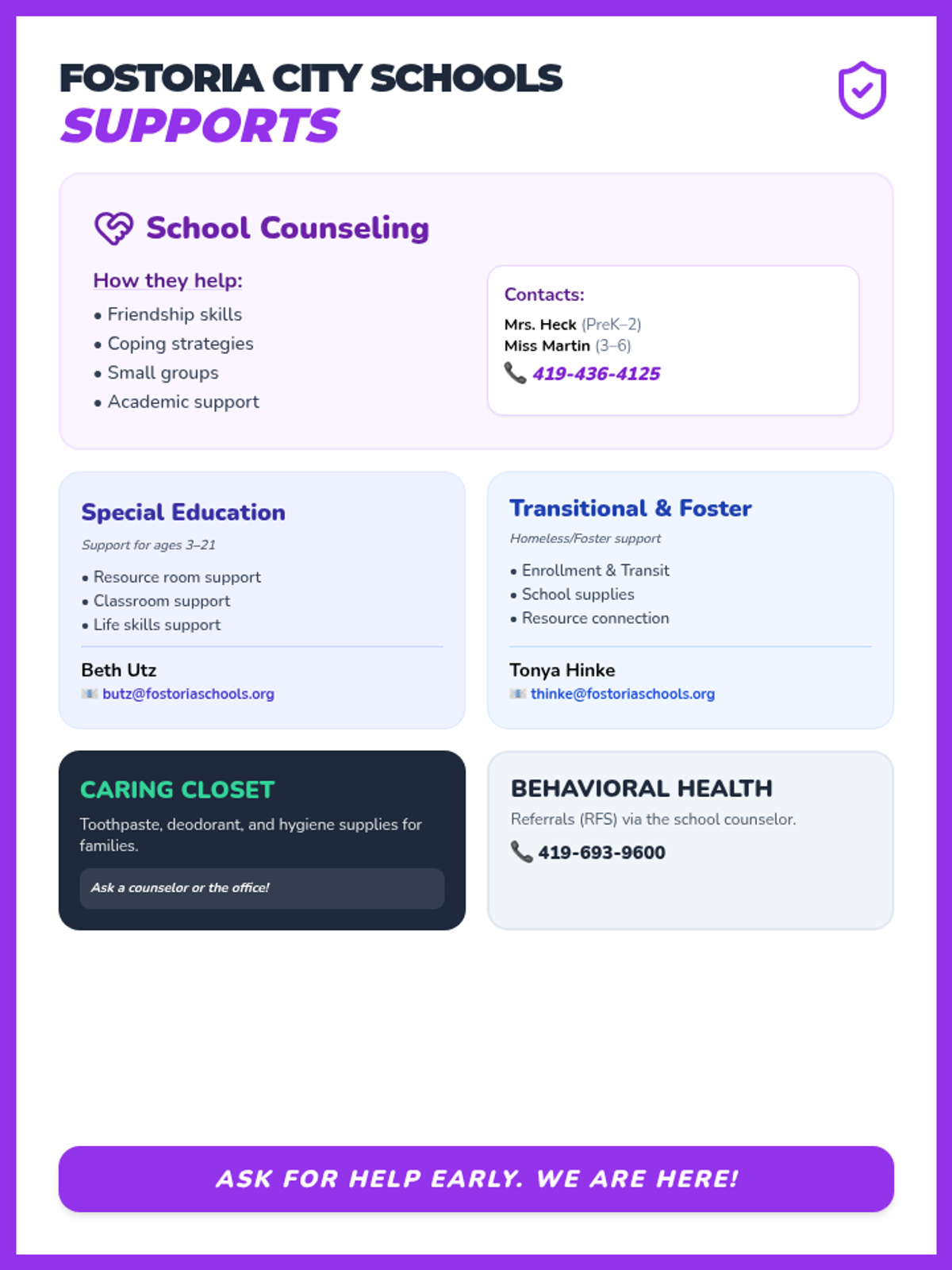
An informational directory for families listing the various support services available through Fostoria City Schools, including counseling, special education, and basic needs.
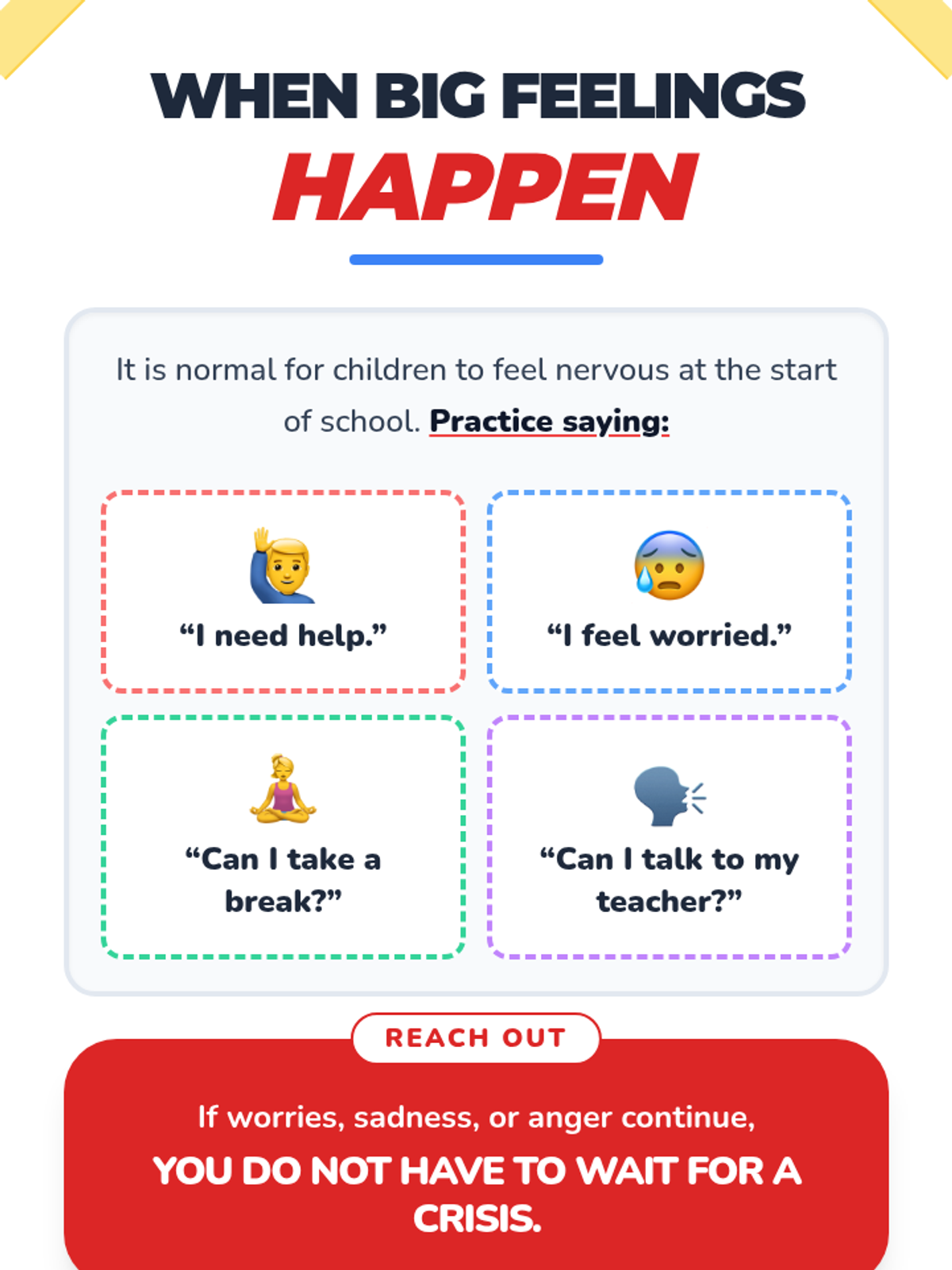
A large-format anchor chart for the bulletin board with practical self-advocacy phrases for students to use when experiencing big emotions.
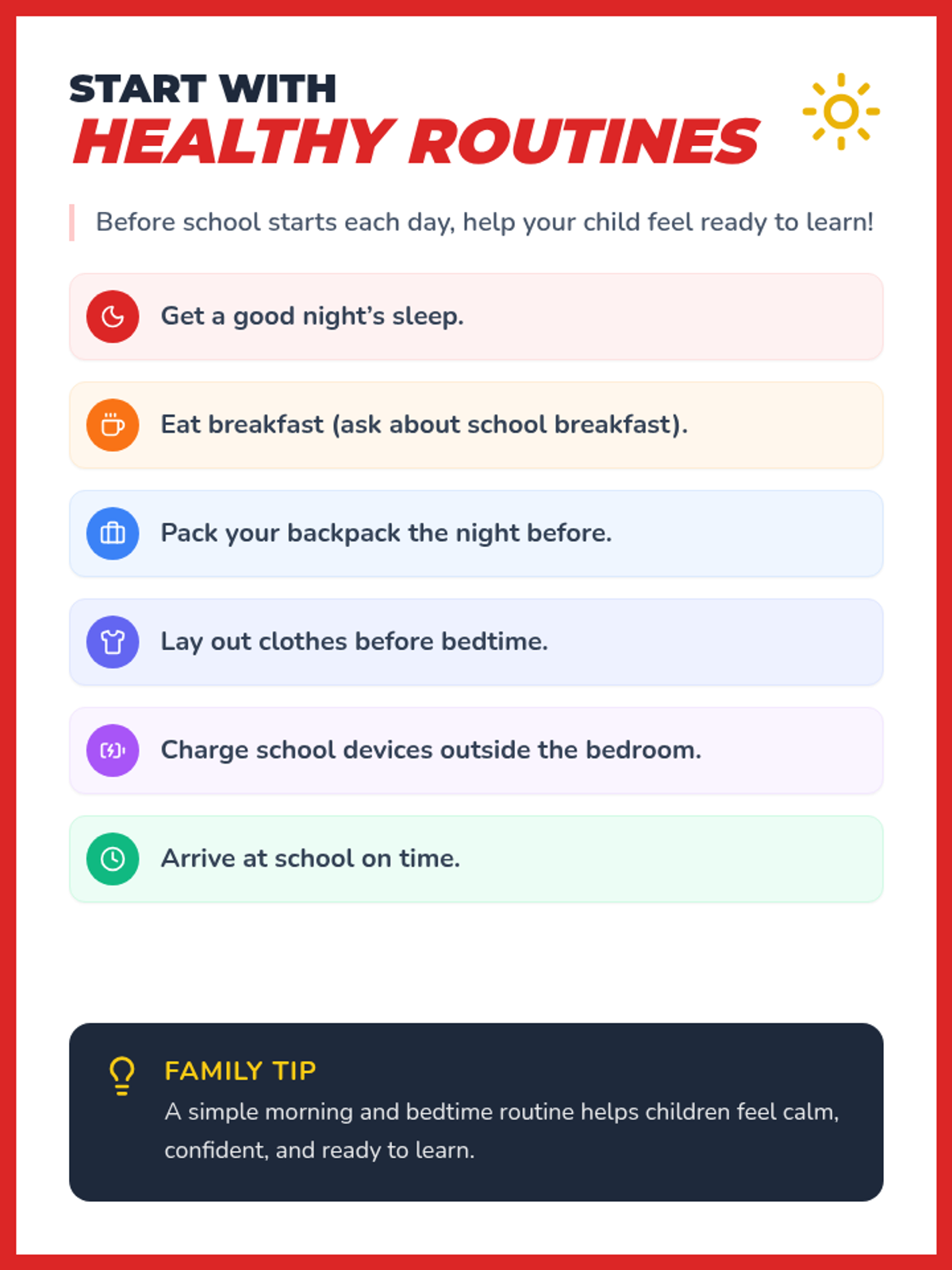
A set of informational posters for families focusing on establishing healthy daily routines, the importance of regular school attendance, and building connections.
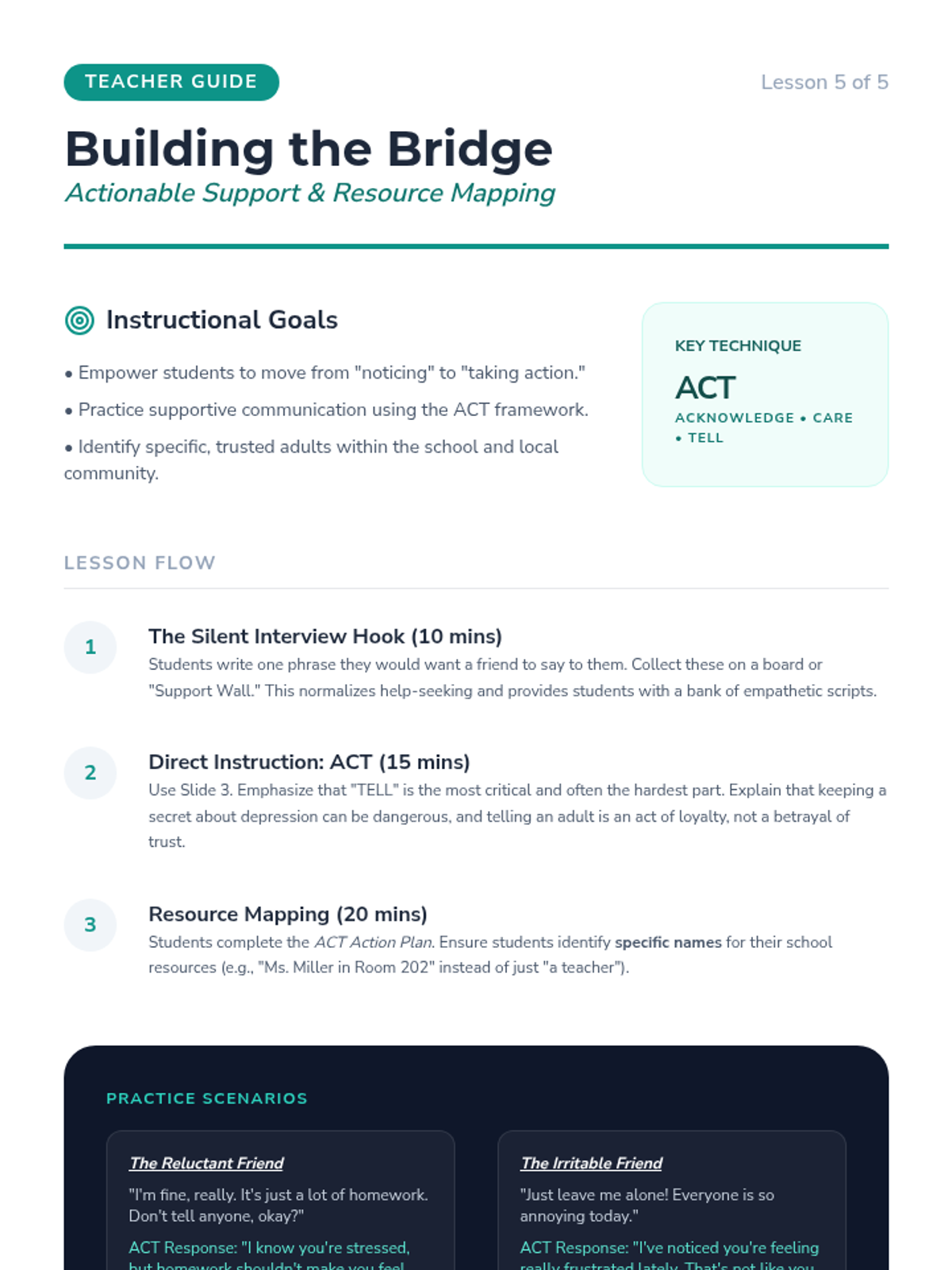
Teacher guide for Lesson 5, focusing on facilitating the ACT method and helping students navigate difficult conversations when referring peers for help.
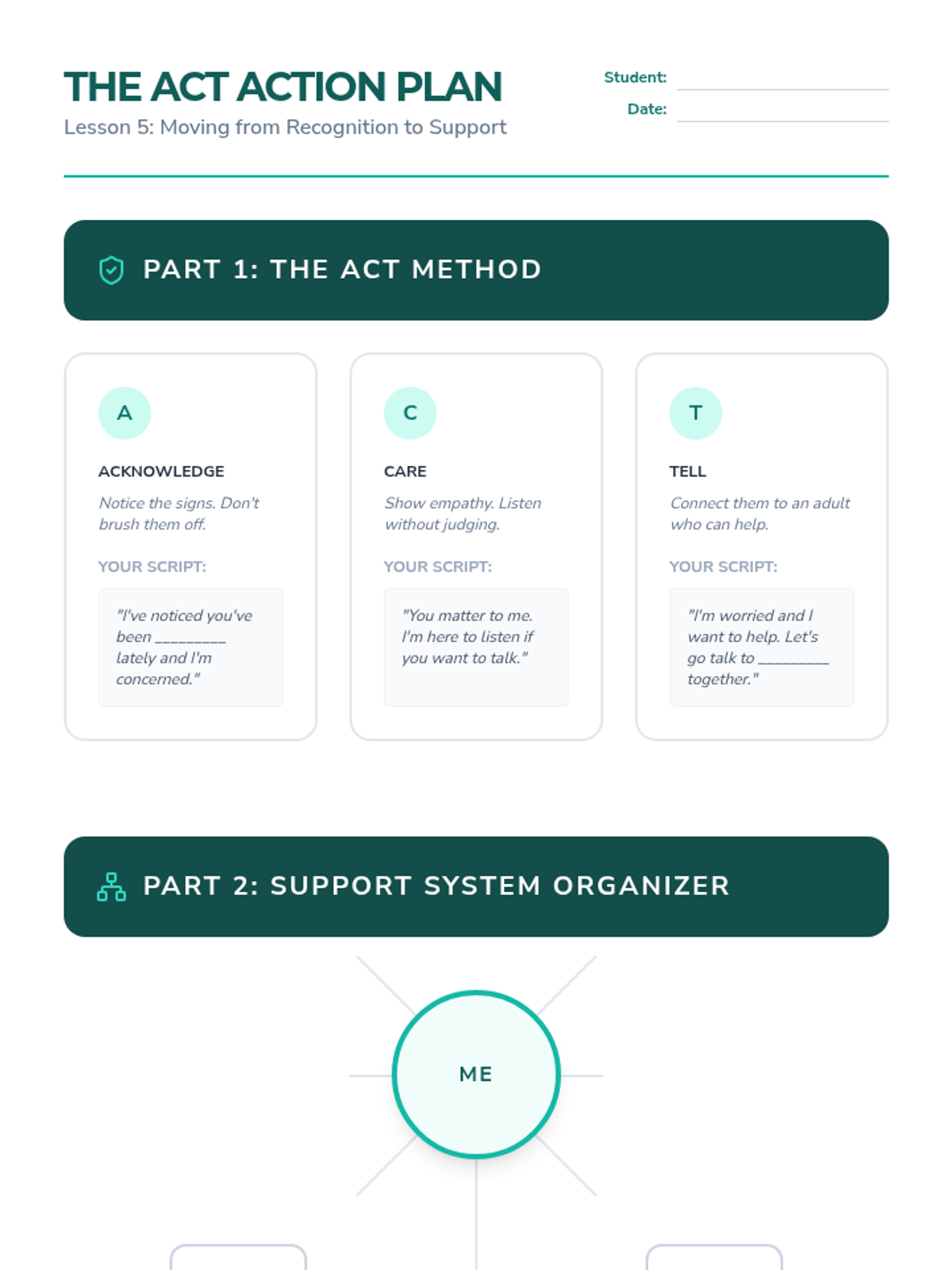
Student activity for Lesson 5, featuring the ACT (Acknowledge, Care, Tell) technique and a support network mapping exercise.
Slide deck for Lesson 5, focusing on the ACT (Acknowledge, Care, Tell) method and the importance of connecting peers to trusted adults.
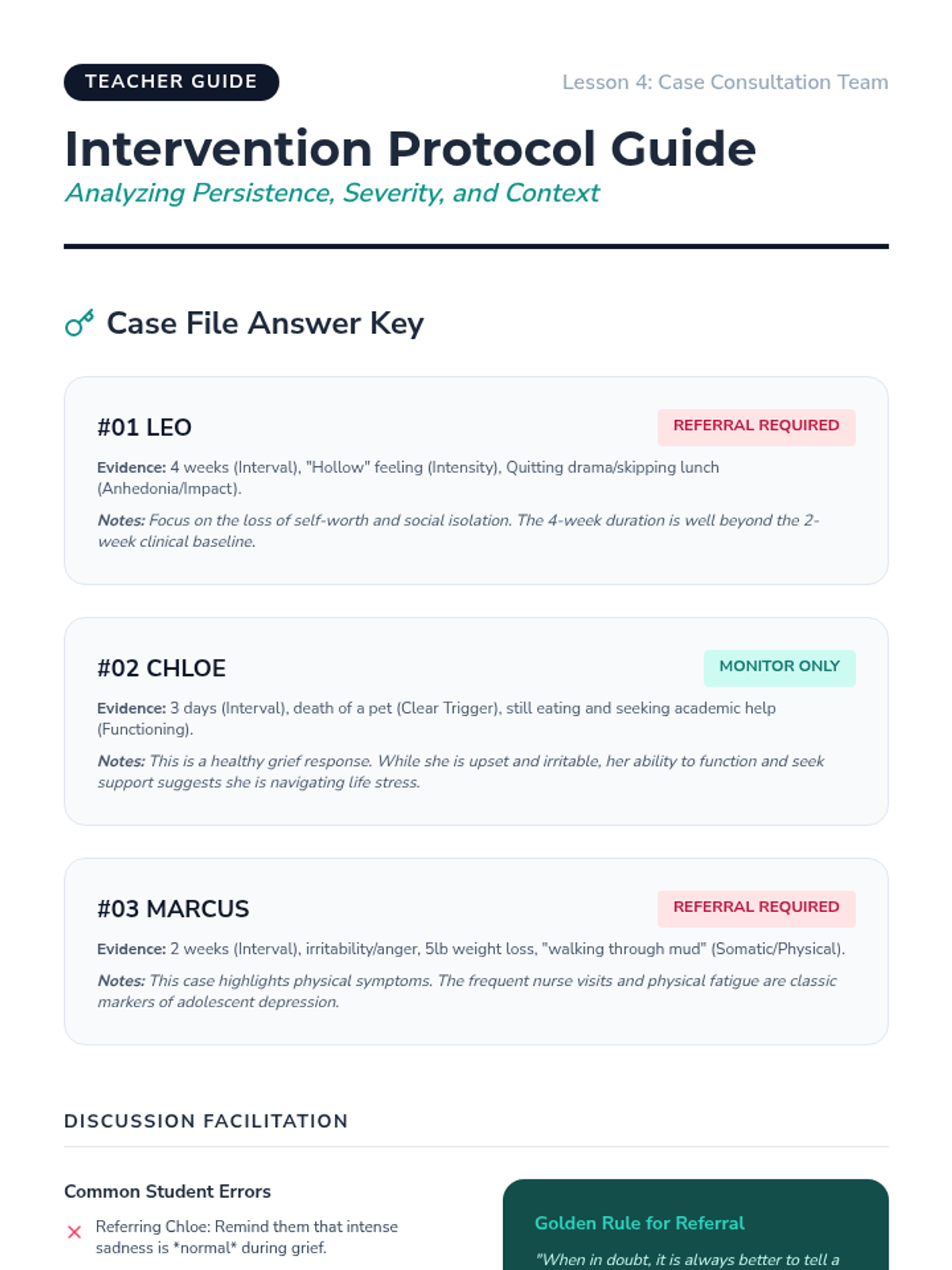
Teacher guide for Lesson 4, providing the answer key for the 'Student Case Files' activity and guidance on facilitating referral discussions.
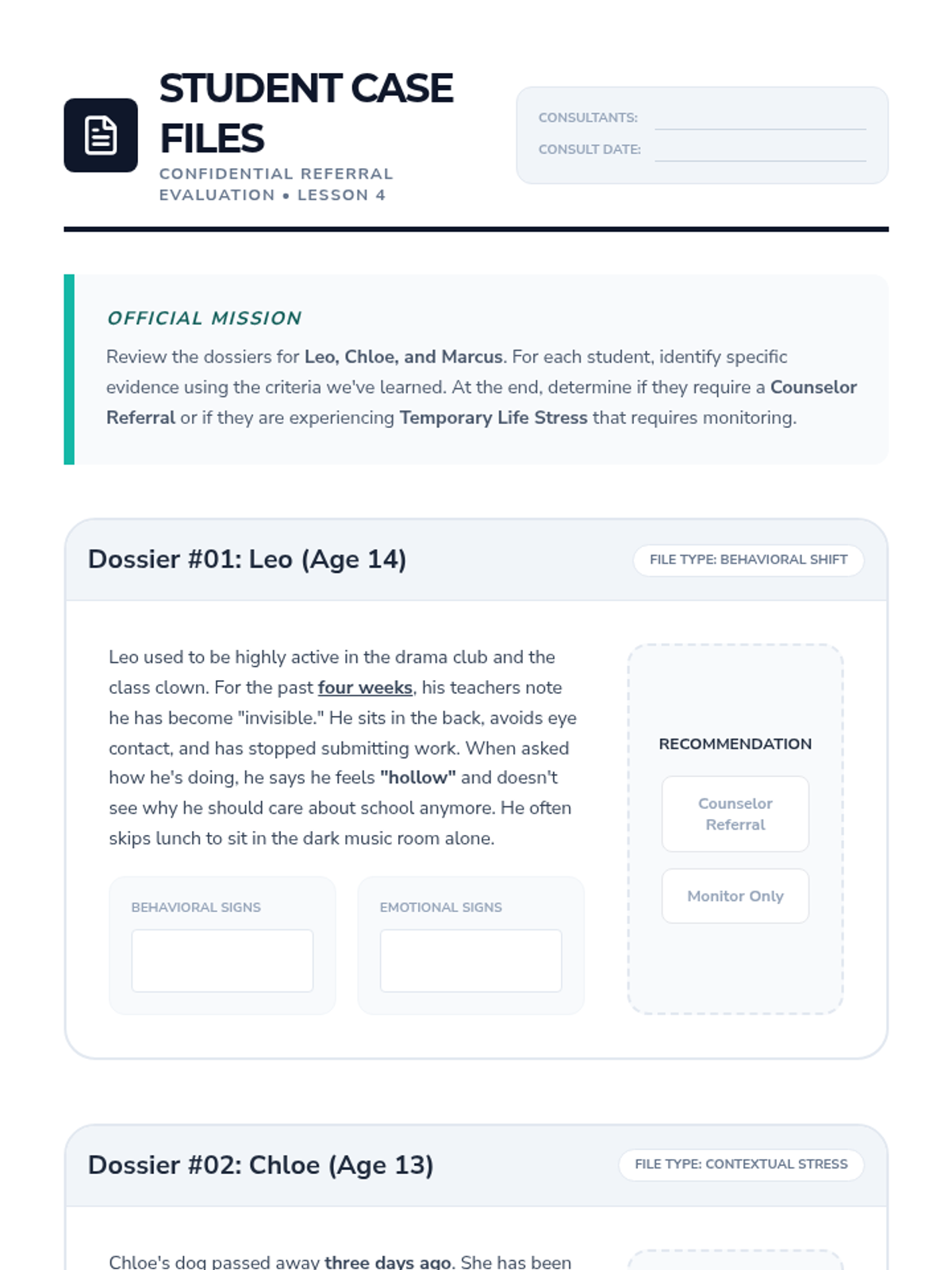
Student activity for Lesson 4, featuring three character dossiers (Leo, Chloe, and Marcus) for evaluation and referral decisions based on symptoms of depression versus life stress.
Introductory slide deck for Lesson 4, setting up the 'Case Consultation Team' activity where students analyze student case files for signs of depression versus normal life stress.
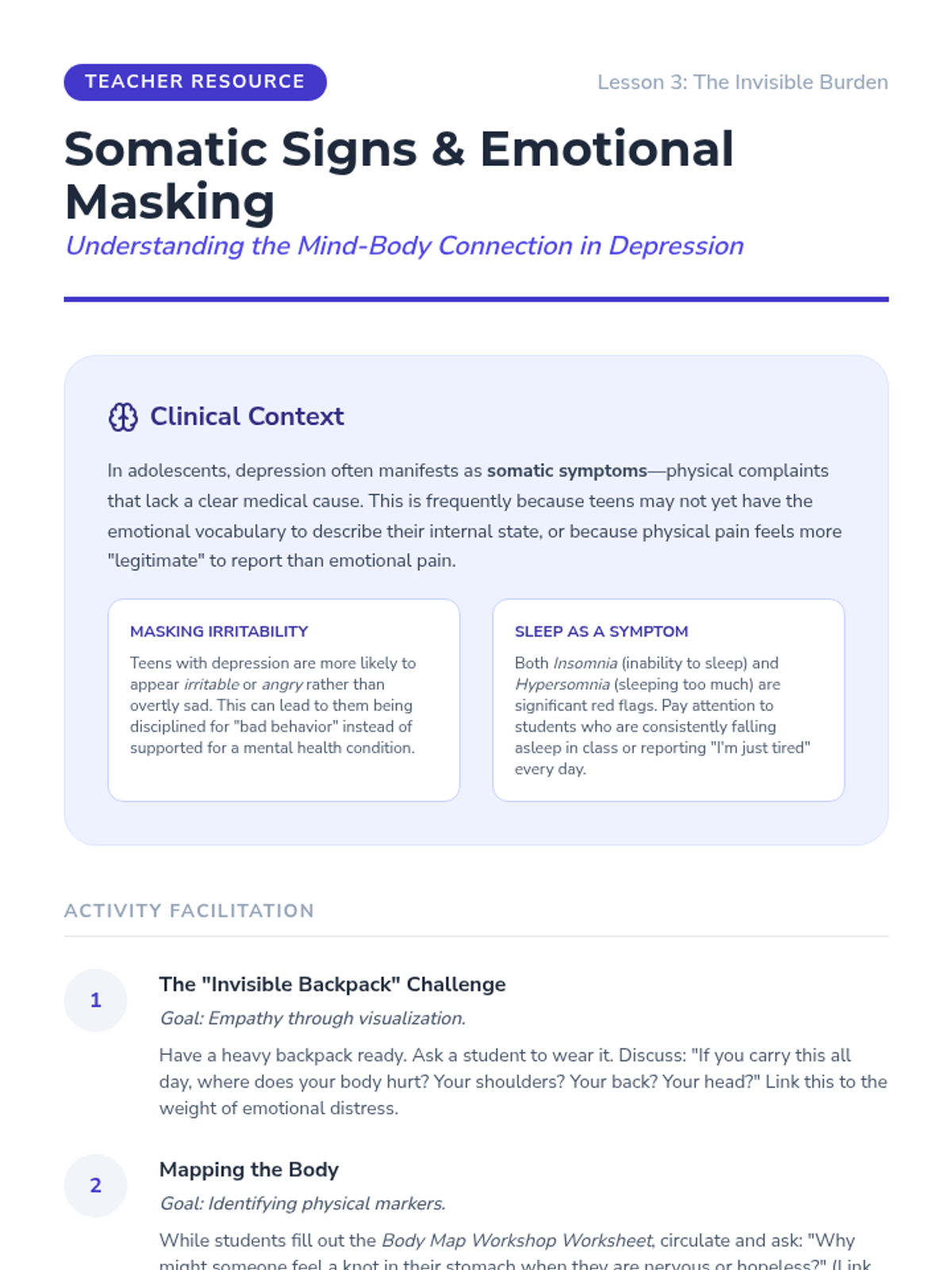
Teacher guide for Lesson 3, focusing on somatic symptoms and providing strategies for connecting physical complaints to emotional health.
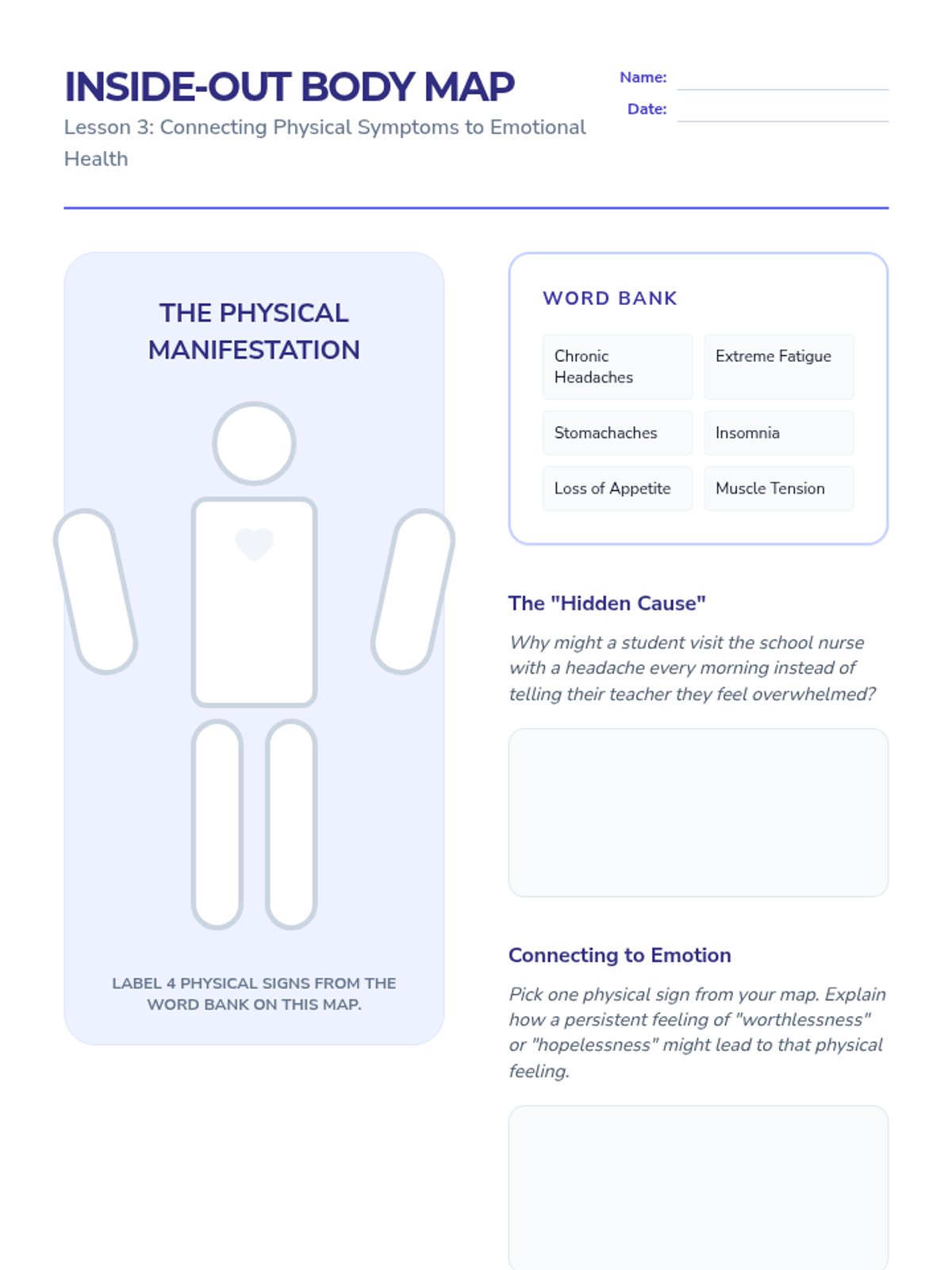
Student activity for Lesson 3, featuring a body map where students identify and connect physical symptoms of depression to emotional burdens.
Slide deck for Lesson 3, focusing on physical and emotional indicators of depression, including somatic symptoms like sleep and appetite changes.
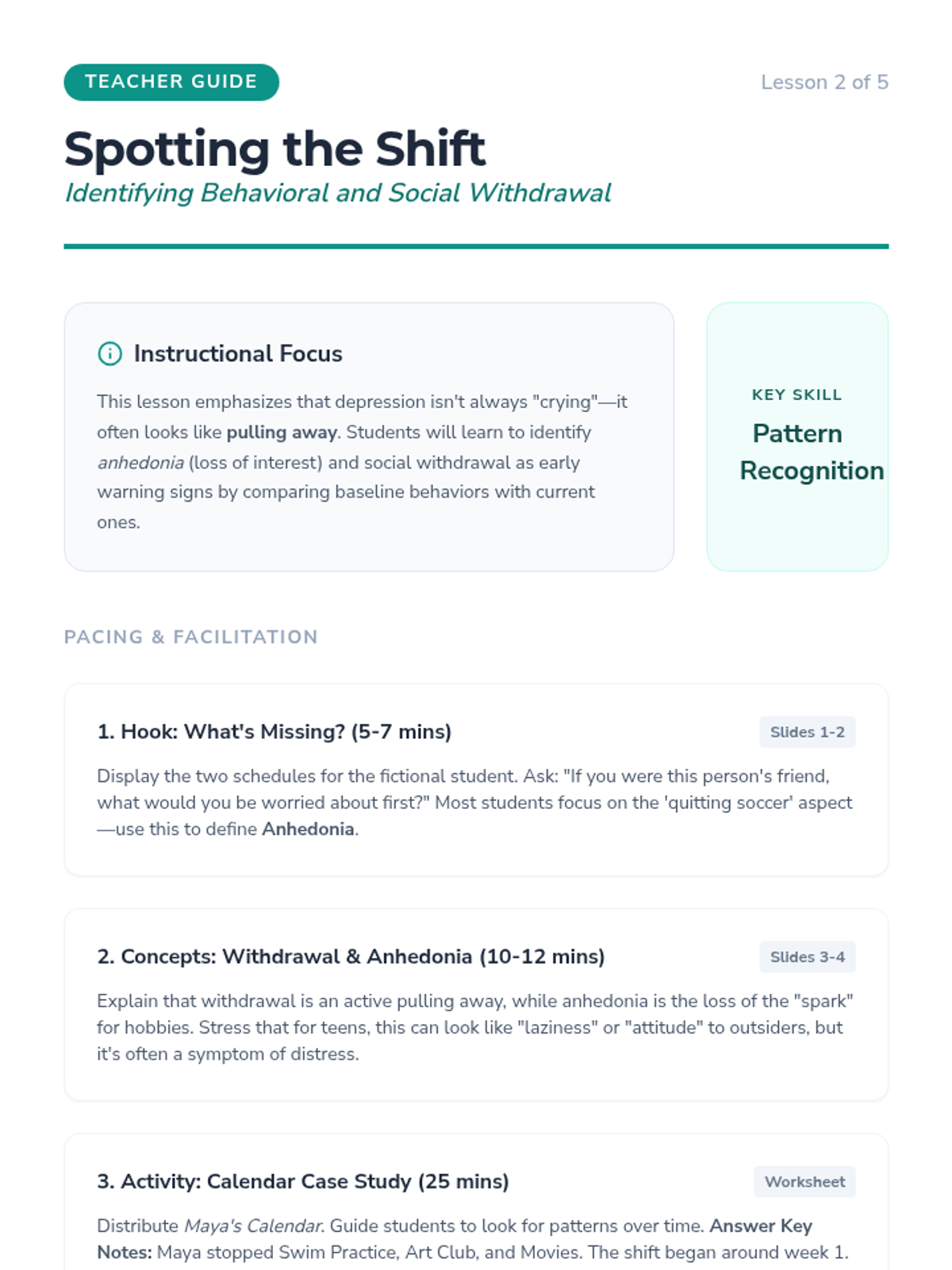
Teacher guide for Lesson 2, providing instructional flow, answer keys for the calendar activity, and discussion prompts for social withdrawal.
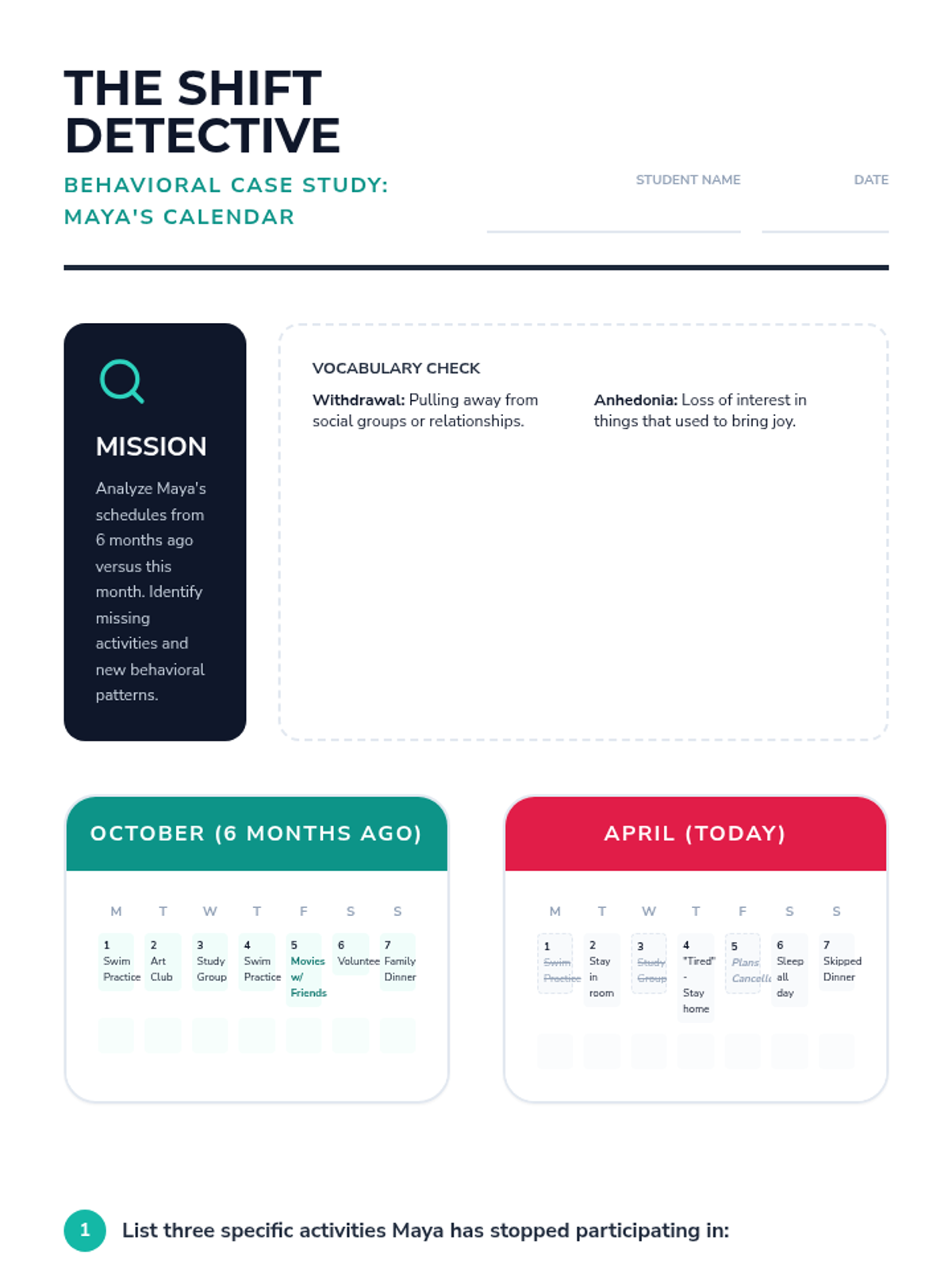
Student activity for Lesson 2, featuring a calendar comparison of a fictional student, Maya, to help students identify social withdrawal and anhedonia patterns.
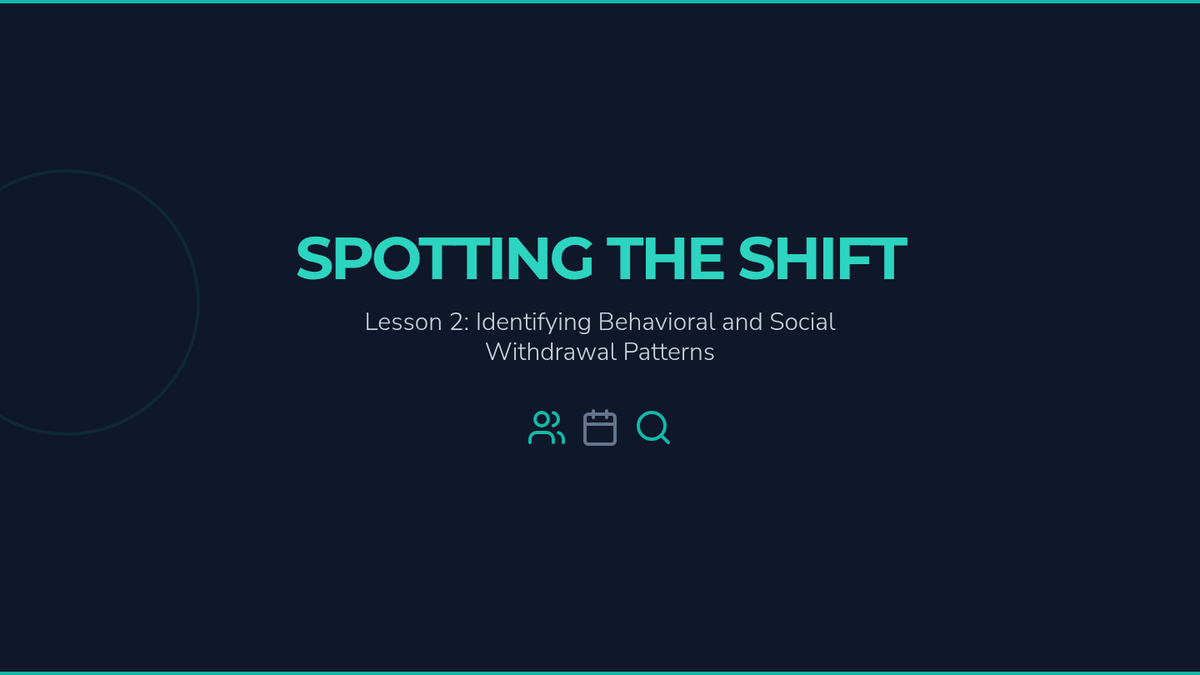
Slide deck for Lesson 2, focusing on observable behavioral shifts like social withdrawal and loss of interest (anhedonia).
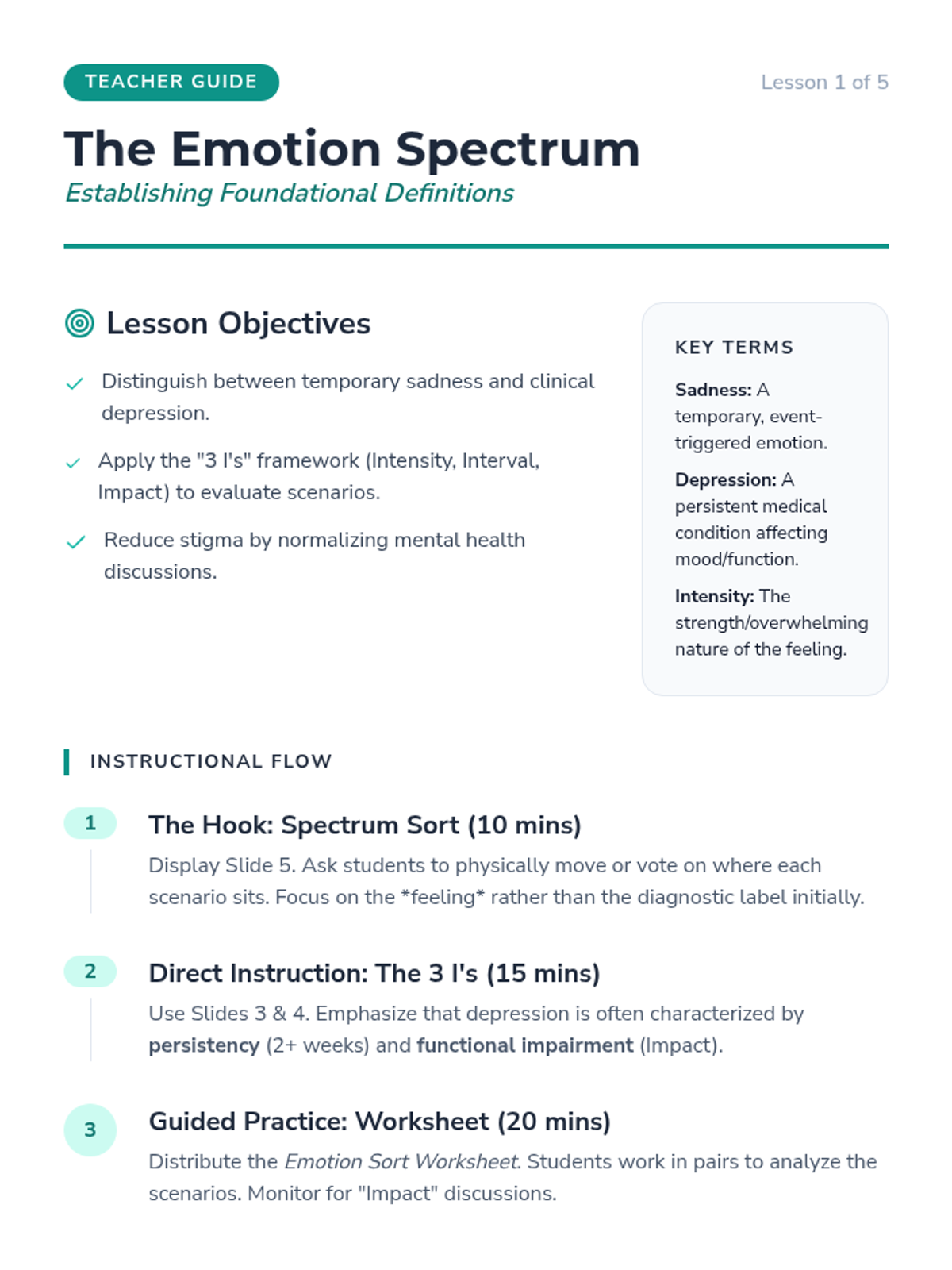
Teacher guide for Lesson 1, providing instructional flow, answer keys for the worksheet, and tips for managing mental health discussions in the classroom.
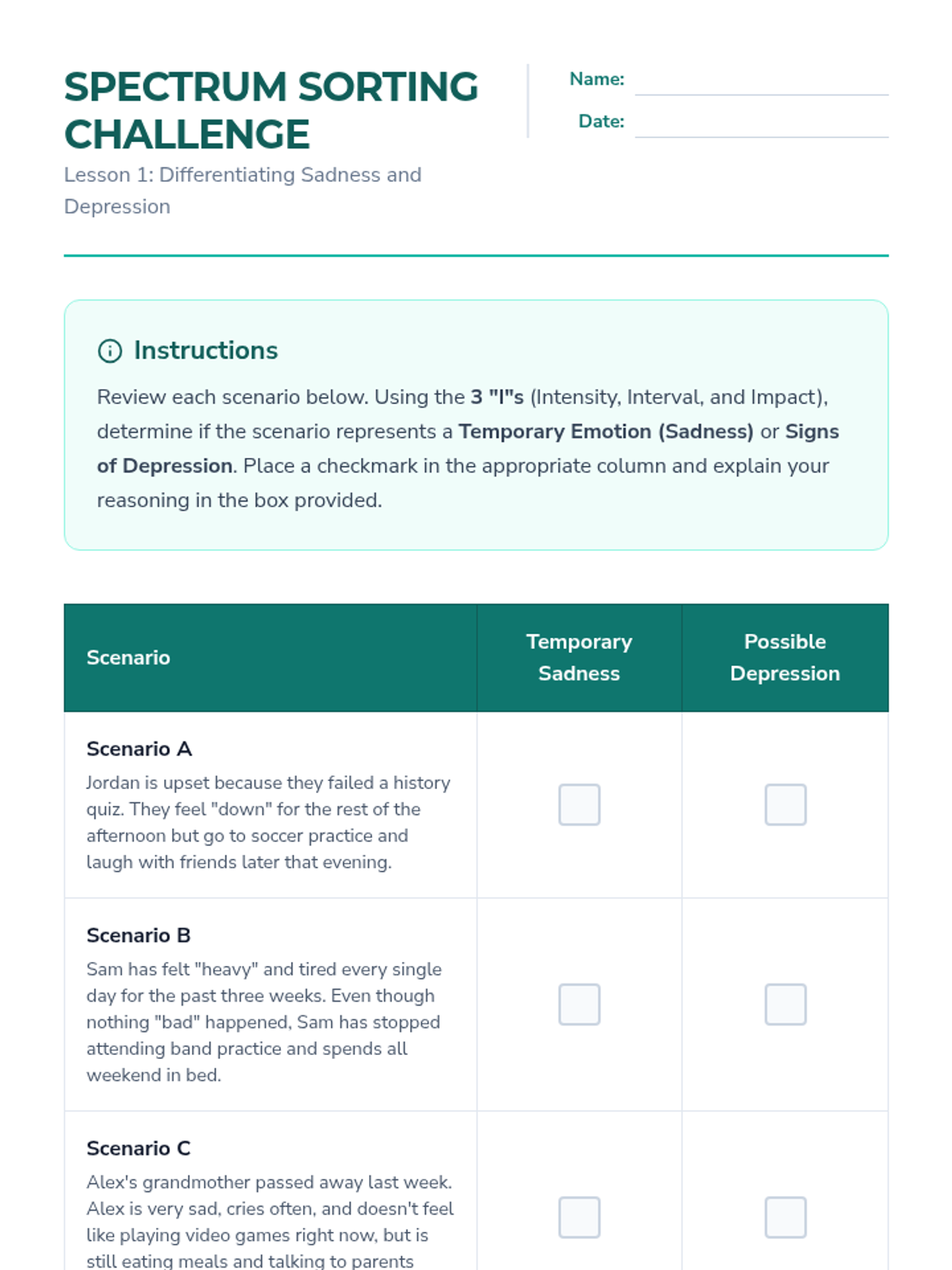
Student worksheet for Lesson 1, featuring a scenario-sorting activity where students differentiate between sadness and depression using the 3 'I's framework.
Introductory slide deck for Lesson 1, defining the differences between sadness and depression using the 3 'I's framework: Intensity, Interval, and Impact.
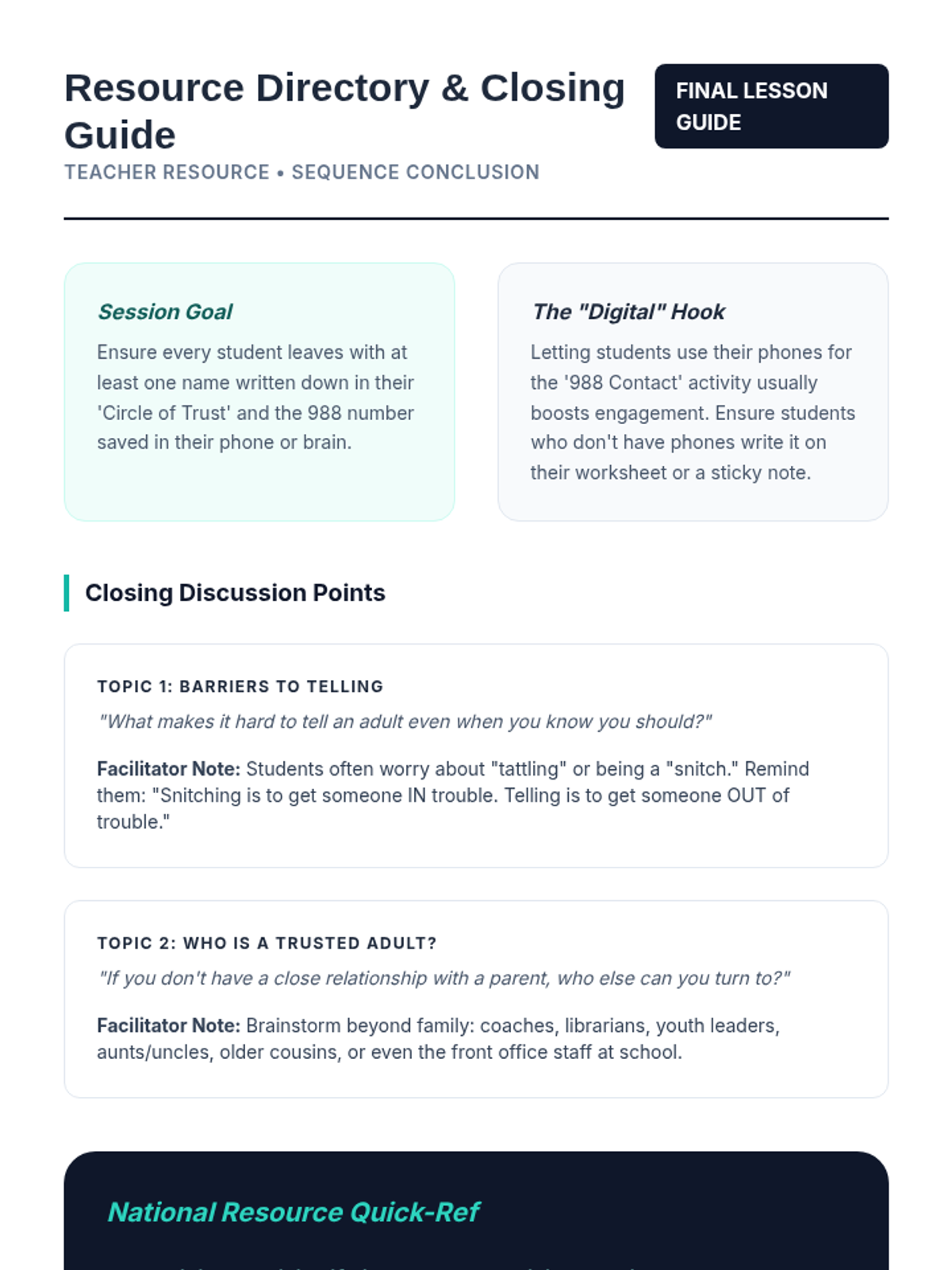
Final teacher guide for Lesson 5, including a directory of national resources, closing discussion points, and self-care reminders for the facilitator.
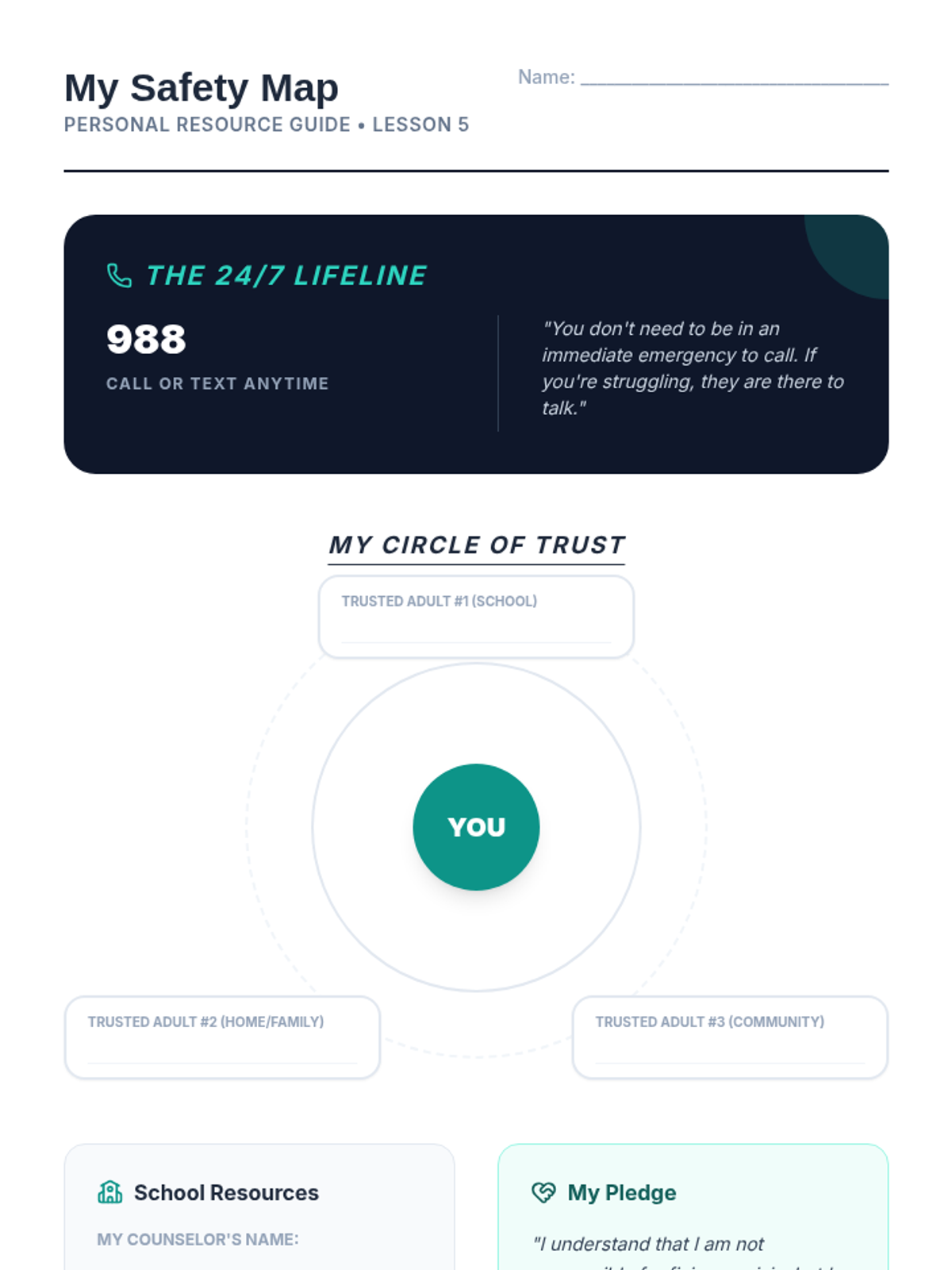
A student resource map for Lesson 5, allowing students to identify their personal 'Circle of Trust', school resources, and national crisis support info.
Visual presentation for Lesson 5, focusing on mapping support systems, identifying trusted adults, and saving national crisis resources like 988.
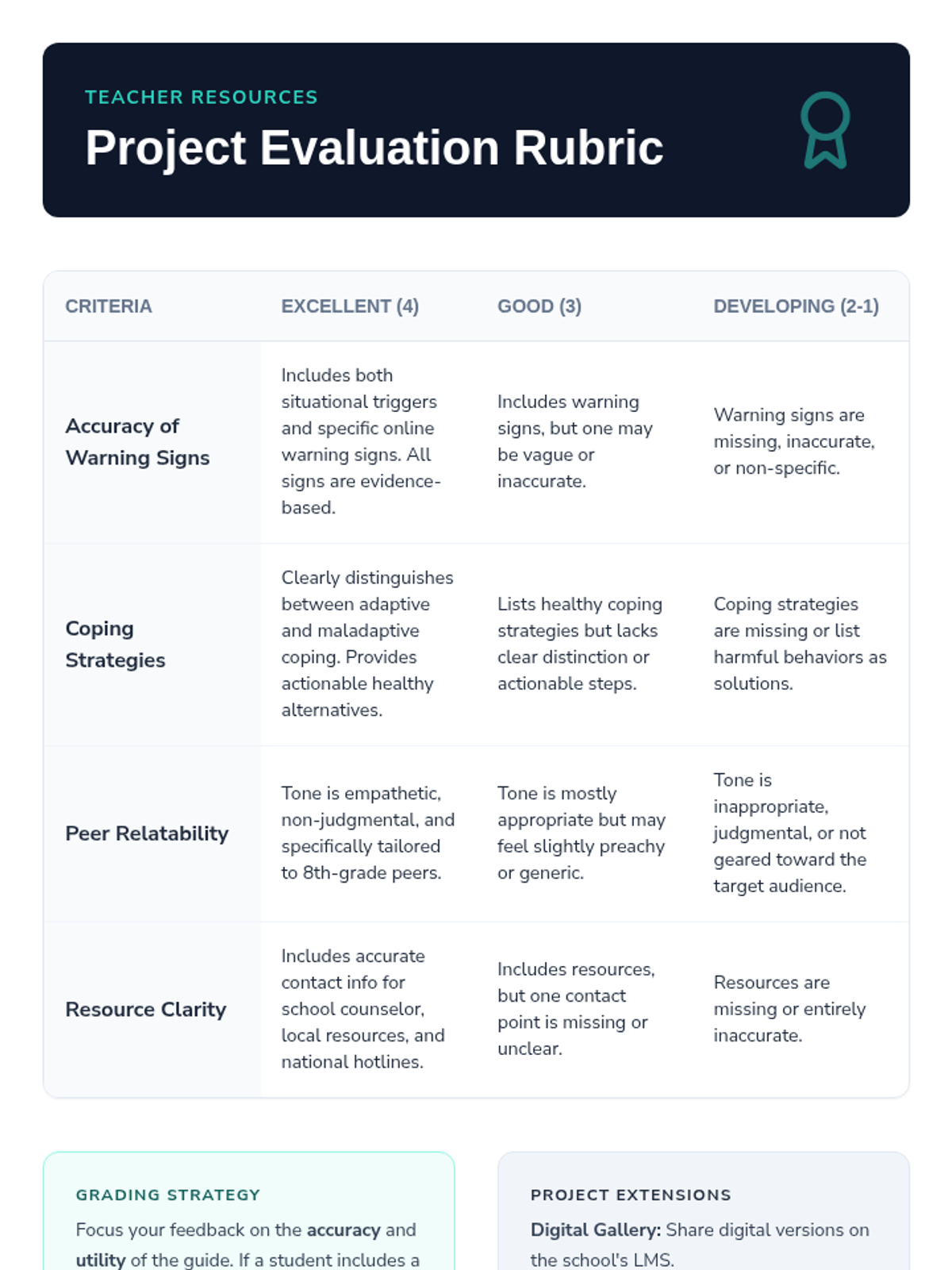
A comprehensive rubric and teacher guide for assessing the Peer Resource Guide project, including criteria for accuracy, tone, and resource inclusion.
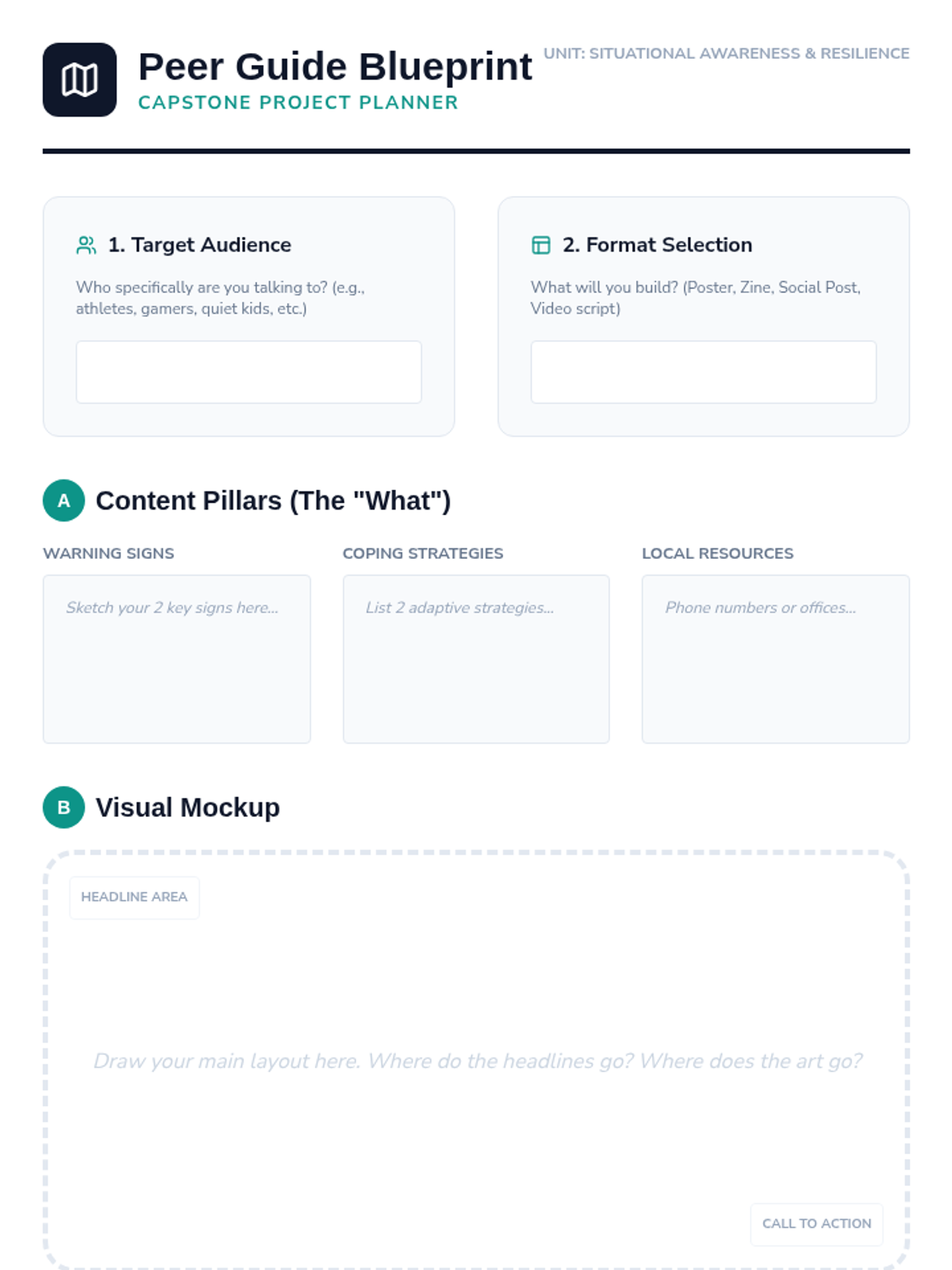
A planning document for the capstone project where students synthesize unit concepts to draft their peer-resource guide.
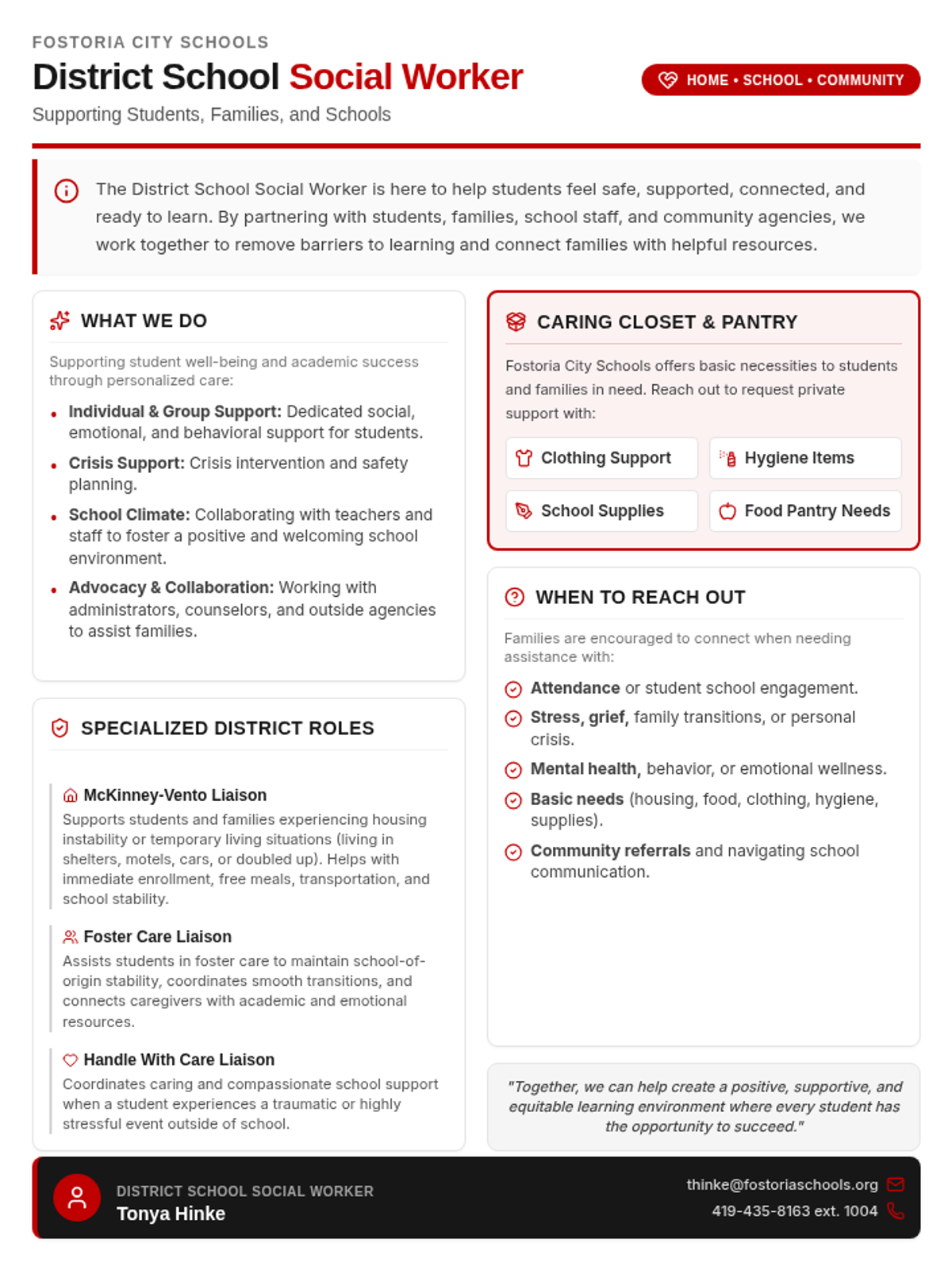
An elegant, highly professional single-page outreach and resources flyer for the District School Social Worker of Fostoria City Schools. It utilizes clean grids, custom program cards, clear visual cues, and a modern color scheme to ensure absolute legibility and optimal use of space.
An updated visually striking school district informational flyer for Fostoria City Schools. It removes any 'we' pronouns, features the custom FCS logo, explicitly details the Social Worker's role as the Caring Closet Coordinator, uses decreased margins to fill the 8.5x11 page size, and expands the original text details while retaining large, accessible text.
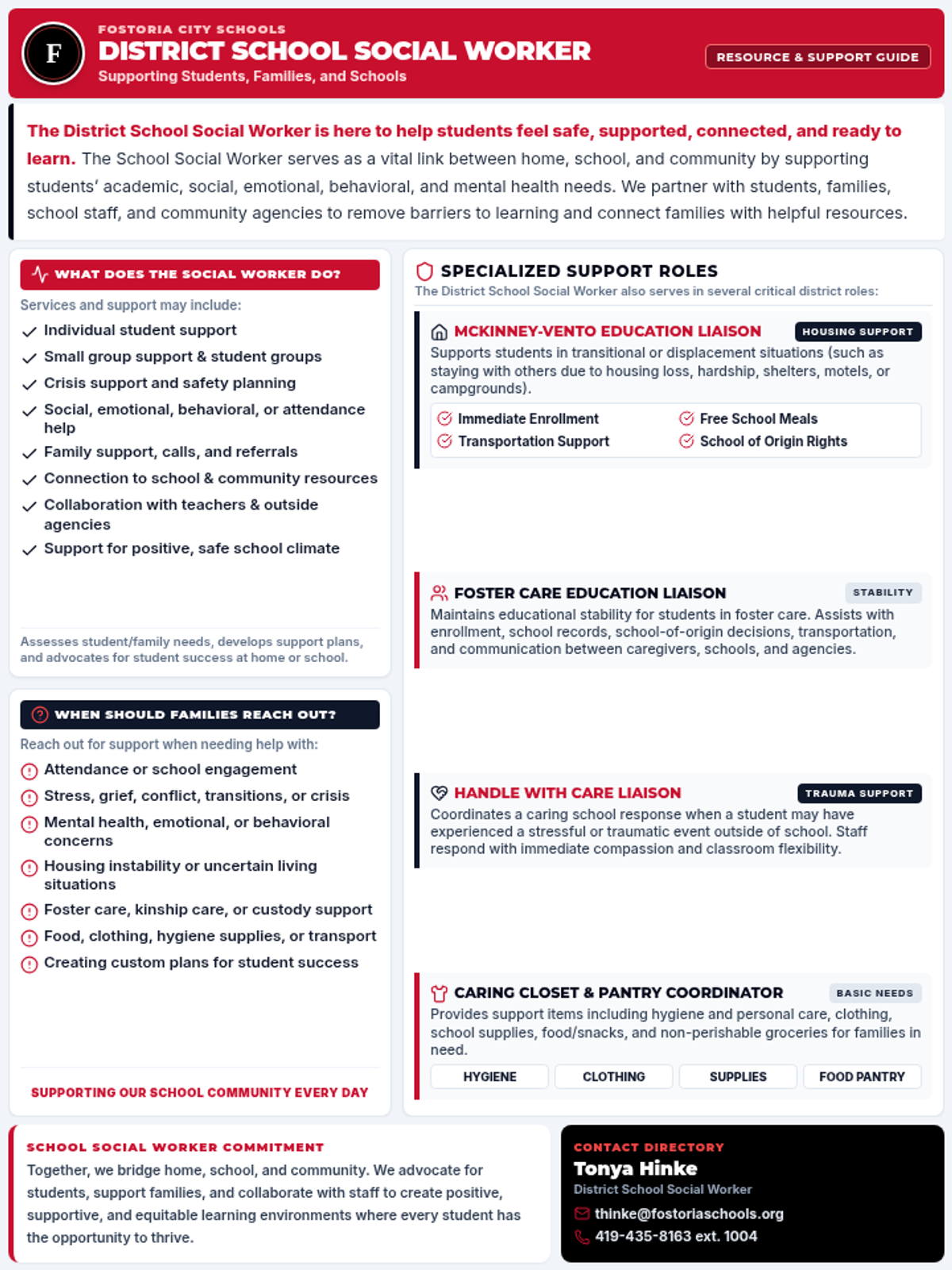
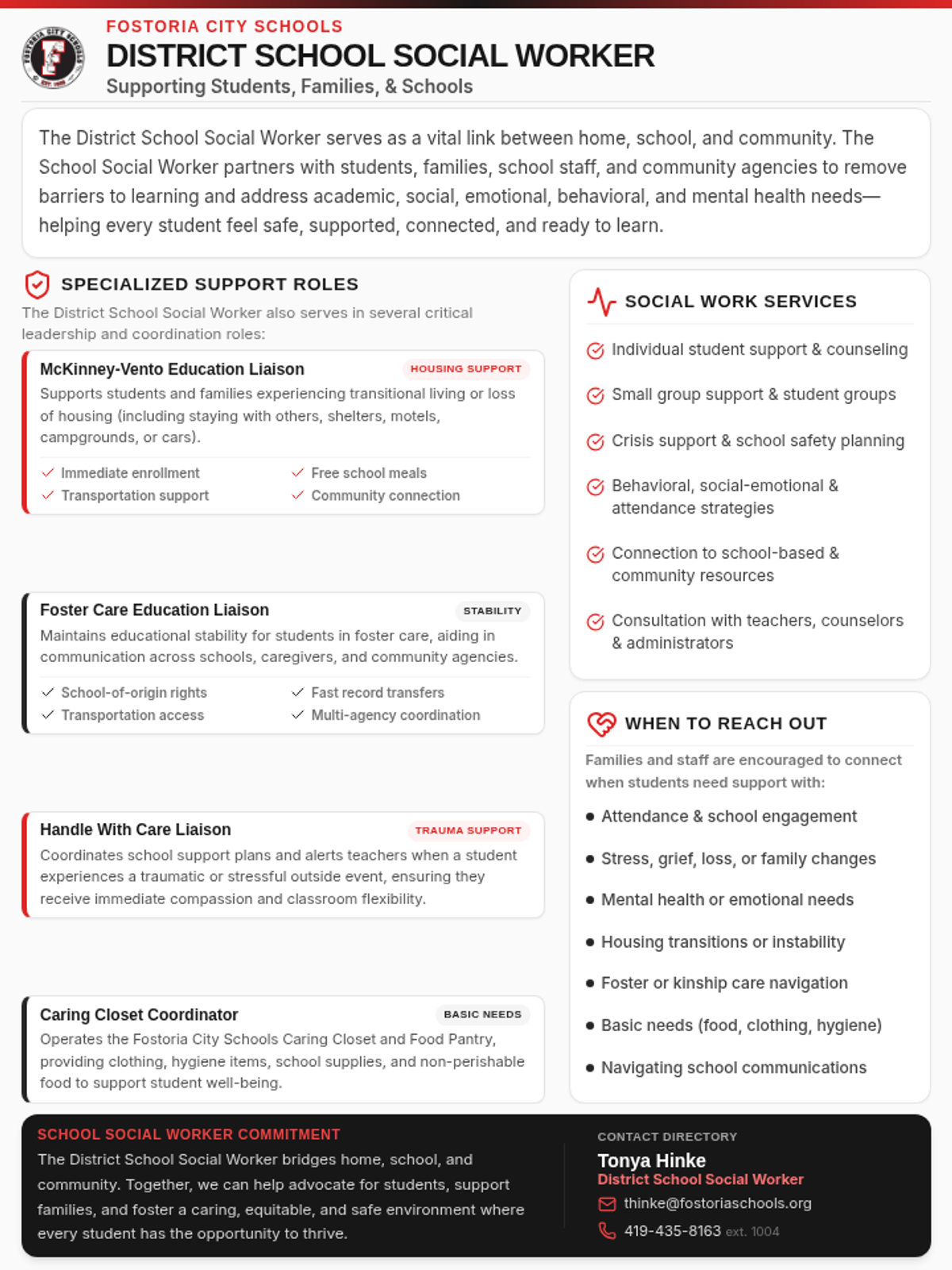
A professional and beautifully structured district school social worker outreach flyer for Fostoria City Schools. It contains high-contrast sections covering specialized roles (McKinney-Vento, Foster Care, Handle With Care, and Caring Closet), core social work services, and when to reach out, complete with professional contact details for Tonya Hinke.
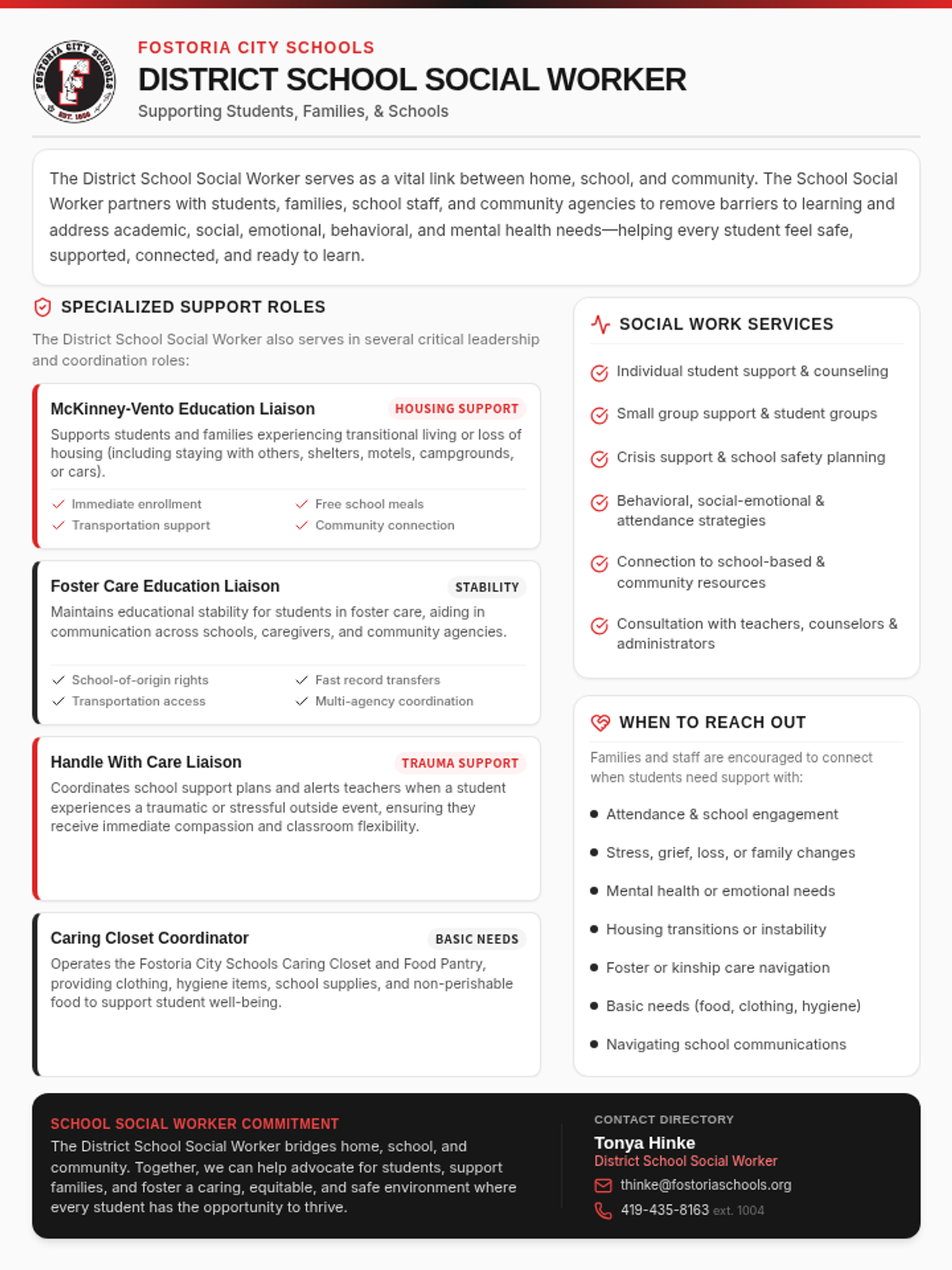
A professional and modern one-page promotional flyer for Fostoria City Schools' District School Social Worker. Designed using a polished red, black, white, and gray theme matching the district logo, it clearly outlines services, specialized liaison roles (McKinney-Vento, Foster Care, Handle With Care, and Caring Closet), scenarios for reaching out, commitment statement, and direct contact details for Tonya Hinke.
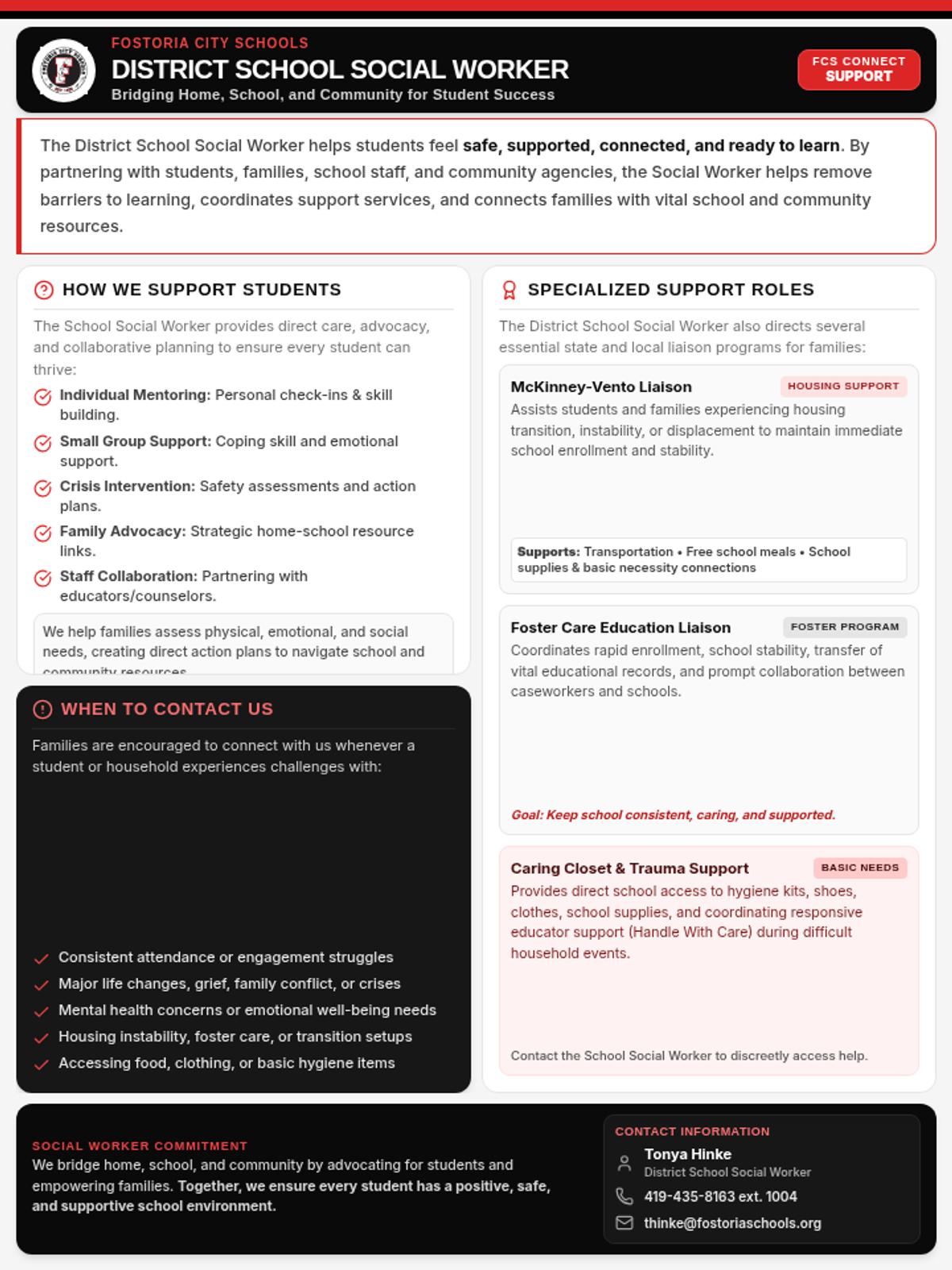
An updated single-page school social worker flyer with substantially increased font sizes to maximize readability and clarity for Fostoria City Schools families. Incorporates a bold, cohesive black, red, and white design matching official district colors, with clear sections on services, support indicators, specialized liaisons, and direct contact details.
A set of large-format banners and section headers for a family-focused bulletin board, designed to be cut out and used as organizational titles.
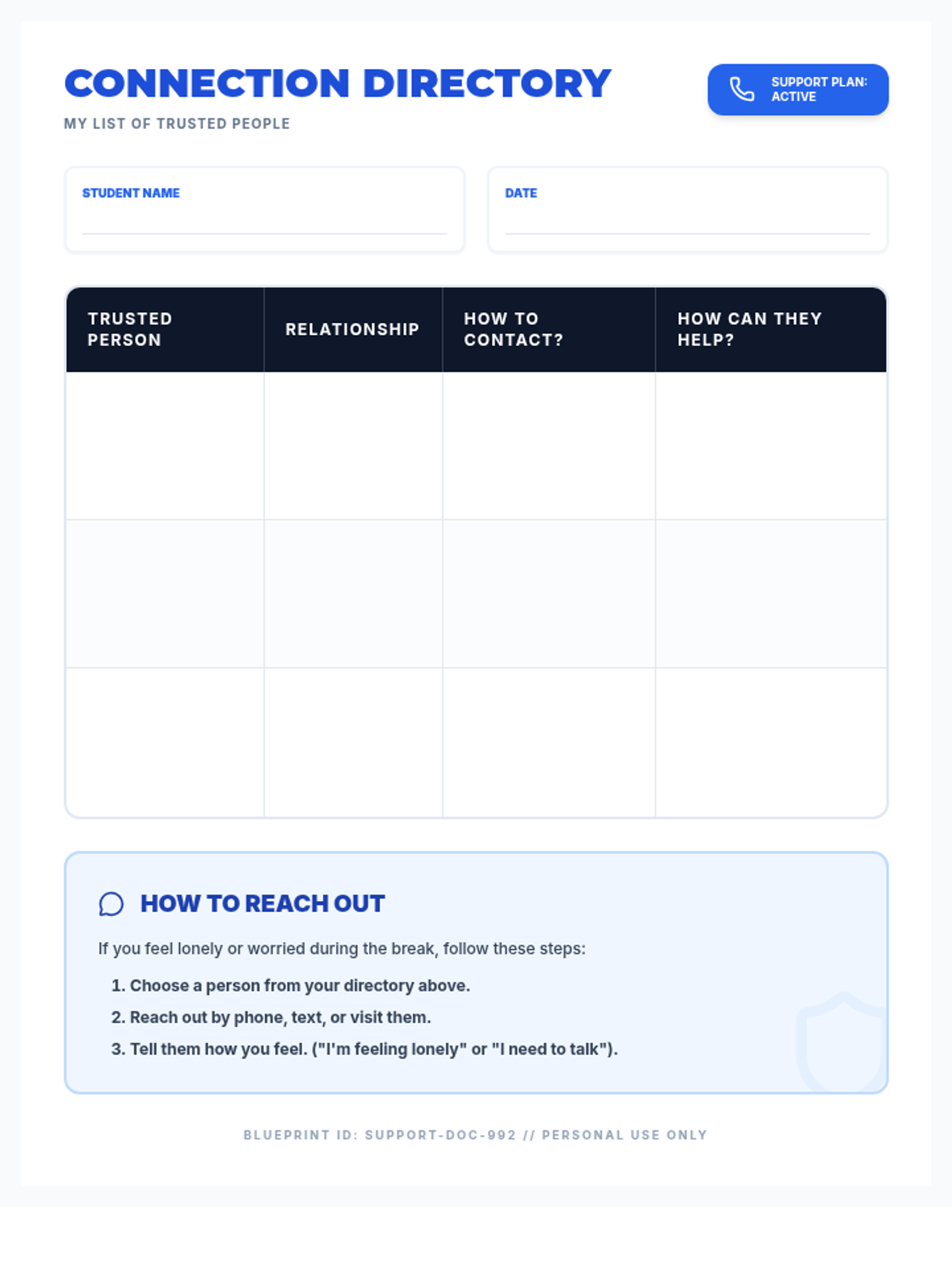
A directory worksheet for students to record names, contact methods, and support roles for their trusted adults, completing the 'Connection Blueprint' intervention.
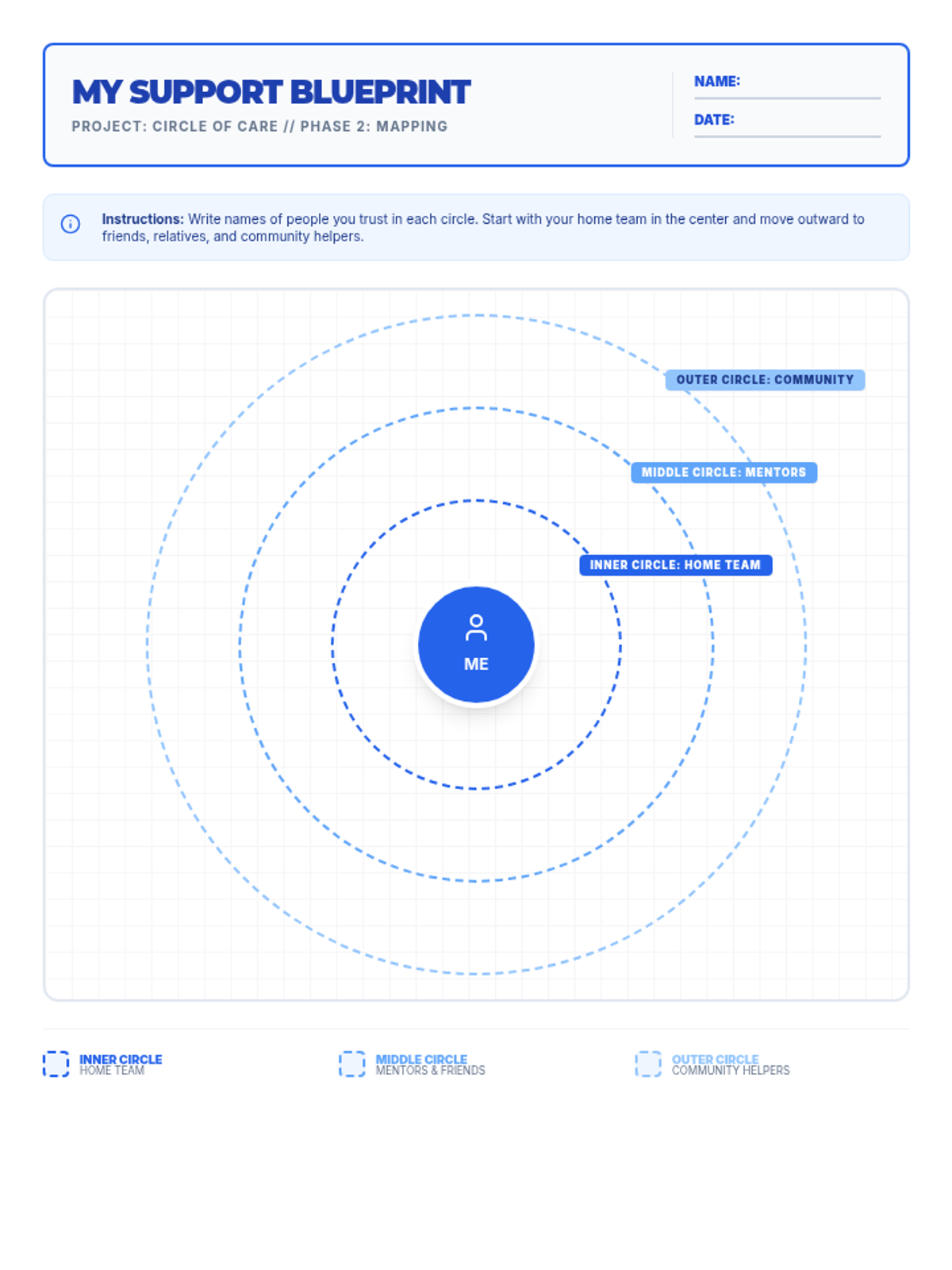
A visual mapping activity for students to identify their support networks using concentric circles, following the 'Connection Blueprint' theme.
Engaging visual presentation for 'The Connection Blueprint' lesson, using a consistent architectural theme to explain the 'Circle of Care' concept and identify trusted adults.
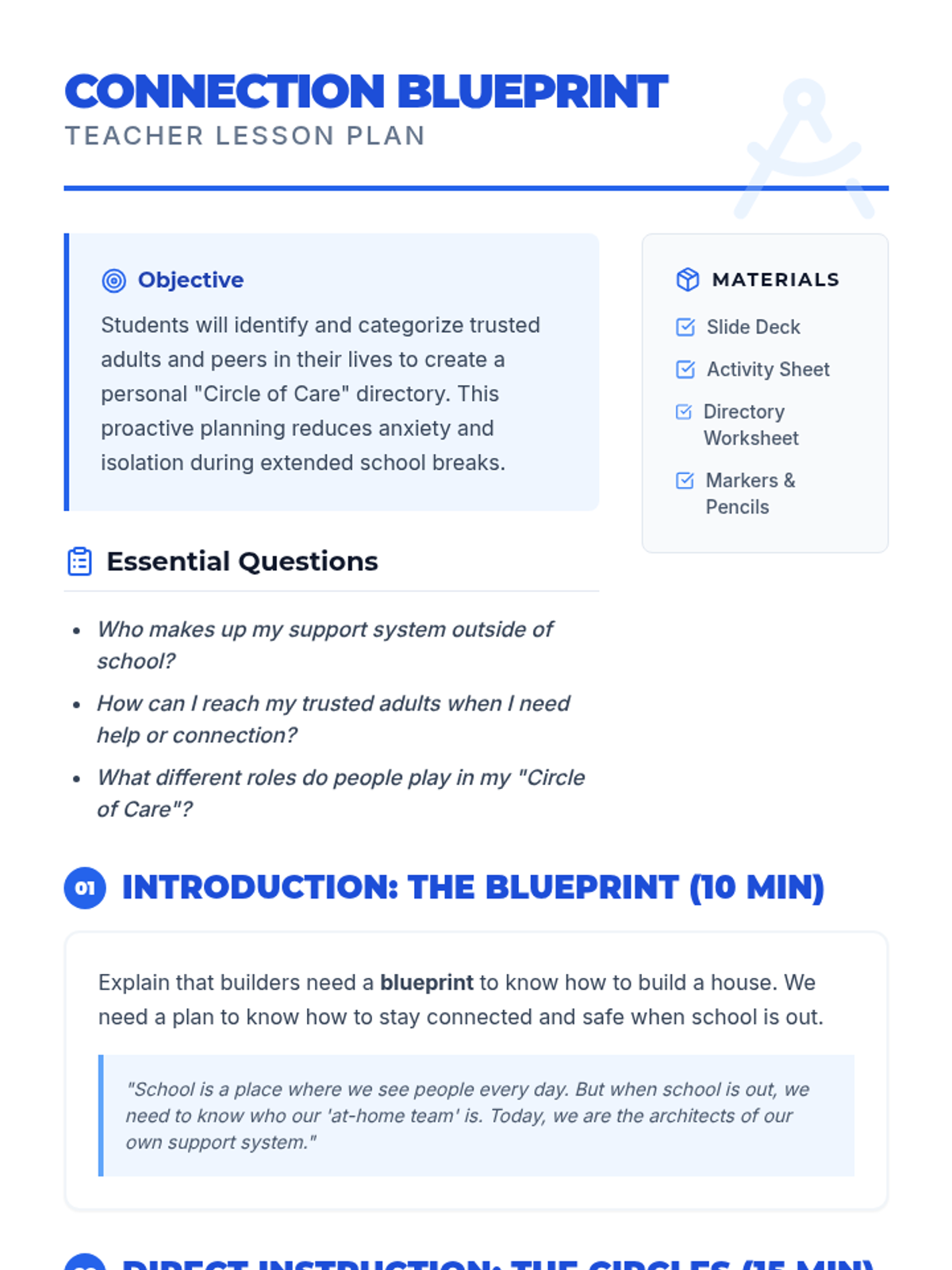
Comprehensive teacher guide for 'The Connection Blueprint' intervention, featuring lesson objectives, detailed procedures, and pedagogical tips for helping students build support networks.
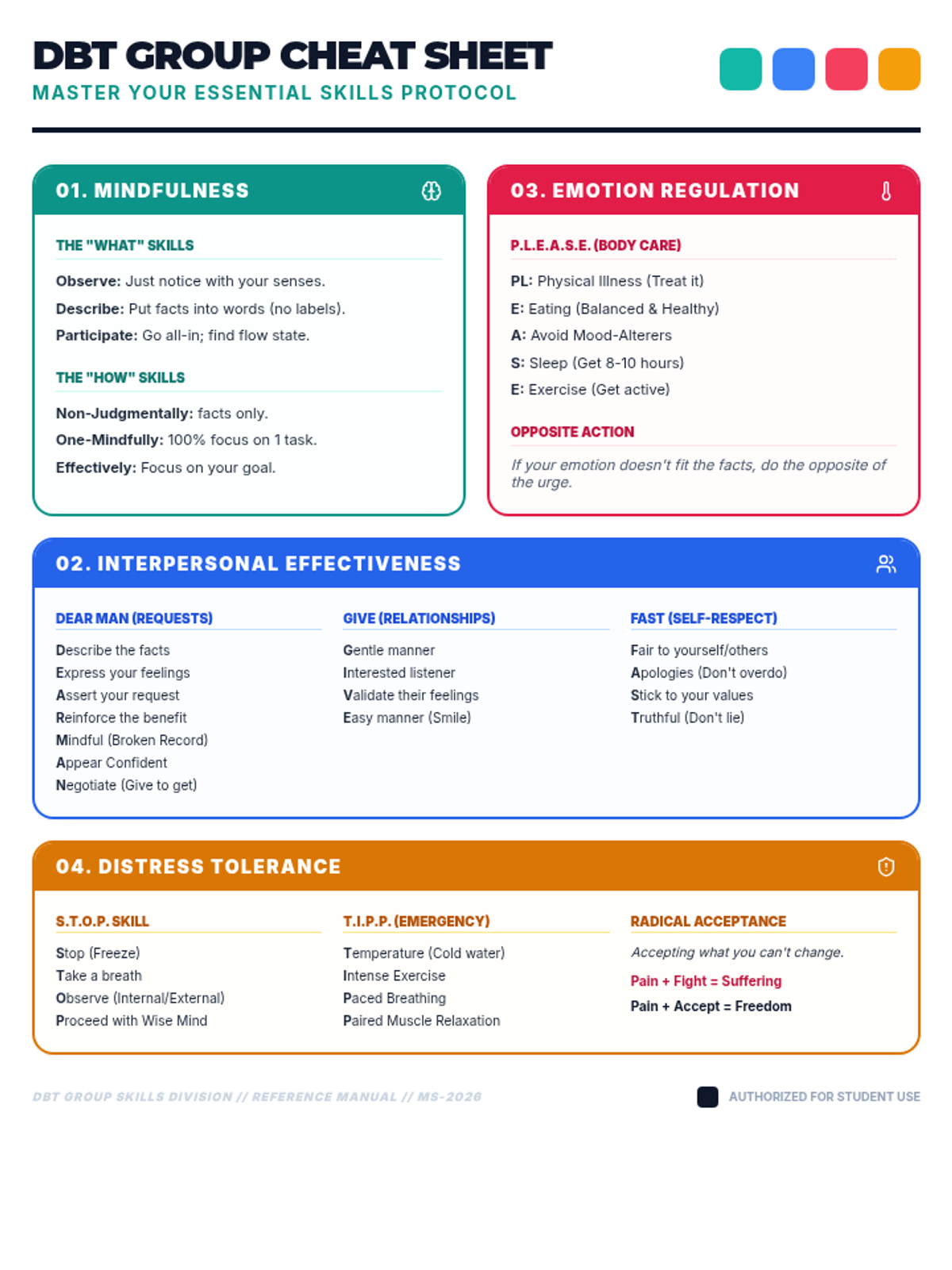
A highly condensed one-page reference sheet containing all core DBT skills (Mindfulness, Interpersonal, Emotion Regulation, and Distress Tolerance) with brief definitions and acronyms. Revised for single-page layout.
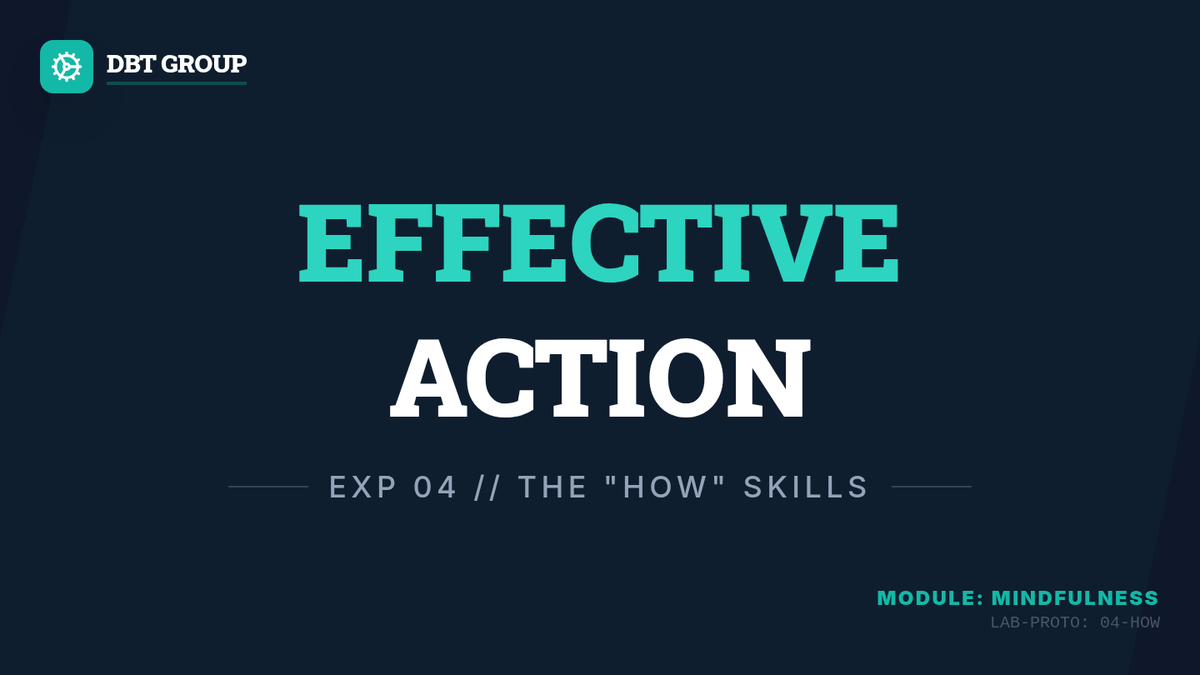
Week 4 slides for the DBT Group curriculum. Introduces the "How" skills of Mindfulness: Non-judgmentally, One-mindfully, and Effectively with practical examples and a roleplay scenario. Revised for layout and clarity.
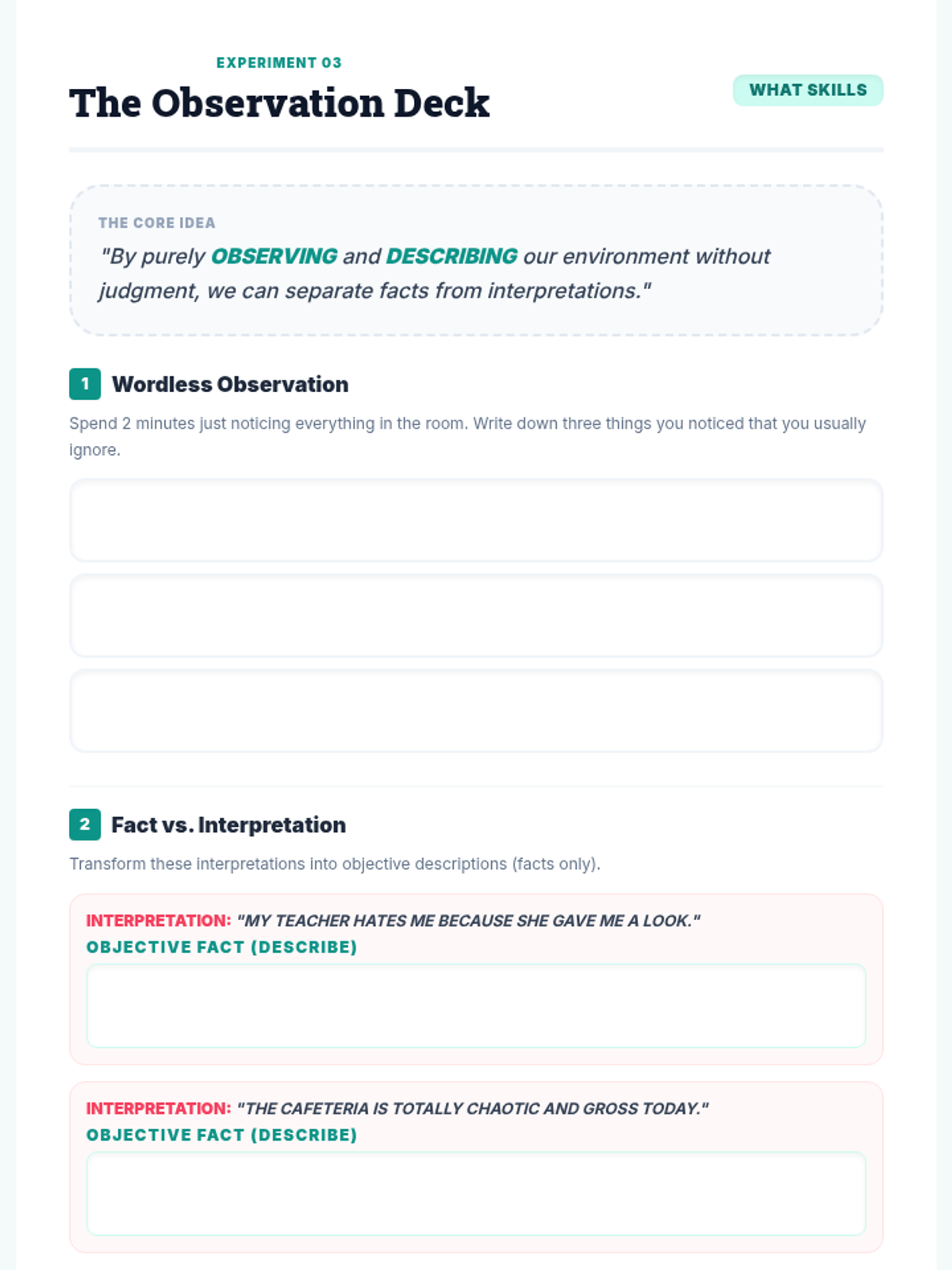
Week 3 student workbook materials for the DBT Group curriculum. Includes activities for Observing, Describing (Fact vs. Interpretation), and Participating with a home experiment log. Revised for layout and legibility.
Week 2 slides for the DBT Group curriculum focusing on the Wise Mind concept. Explains Reasonable Mind, Emotion Mind, and the Wise Mind synthesis with a practical breathing experiment. Revised for layout and content accuracy.
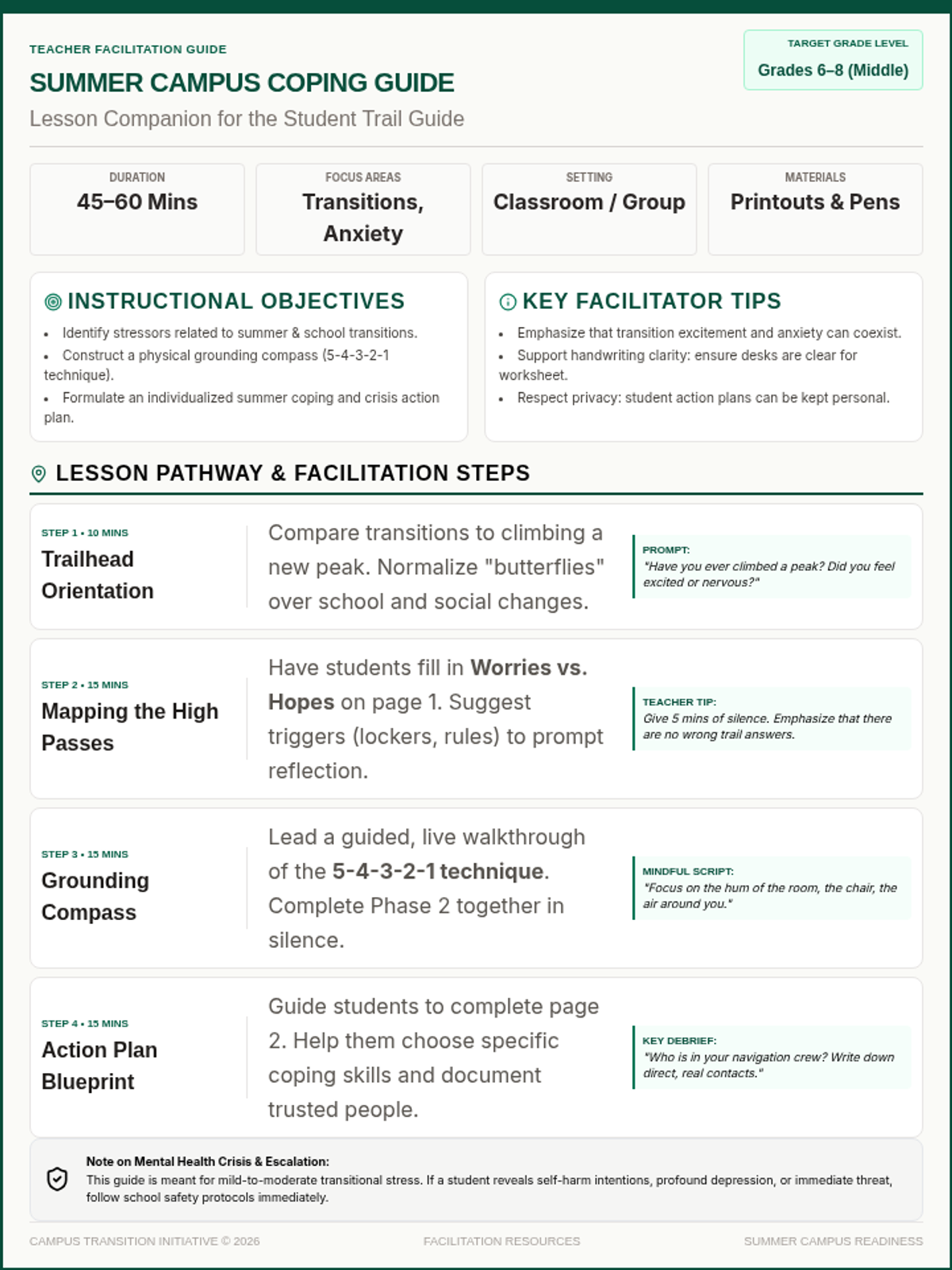
A comprehensive teacher-facing lesson plan and facilitation guide for introducing coping skills, leading a 5-4-3-2-1 grounding exercise, and helping middle school students process transition anxiety.
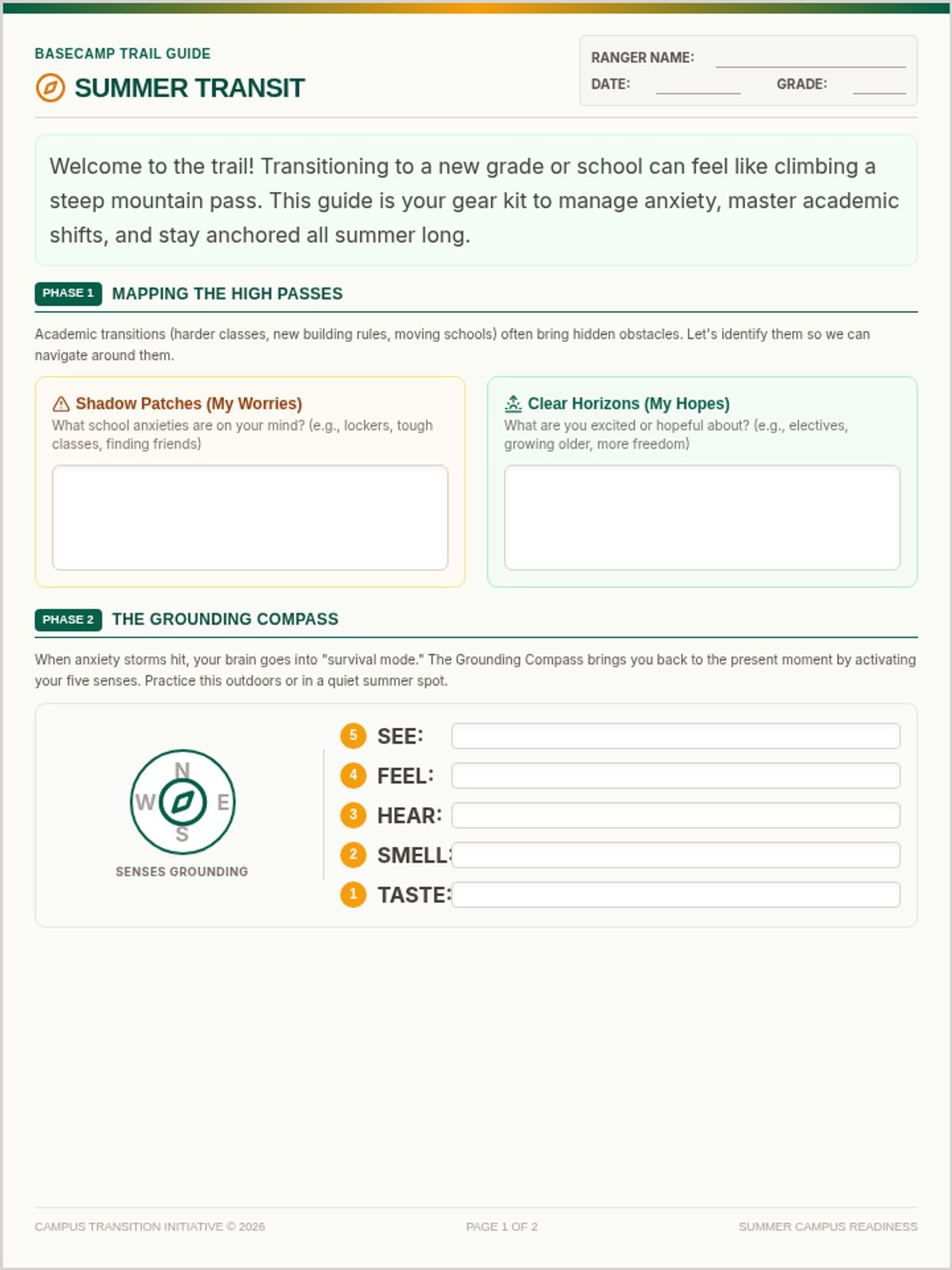
A beautiful retro-camp styled 2-page summer coping skills worksheet for middle schoolers. Covers academic transition fears, grounding mindfulness techniques, coping skills checklists, and individual action plans.
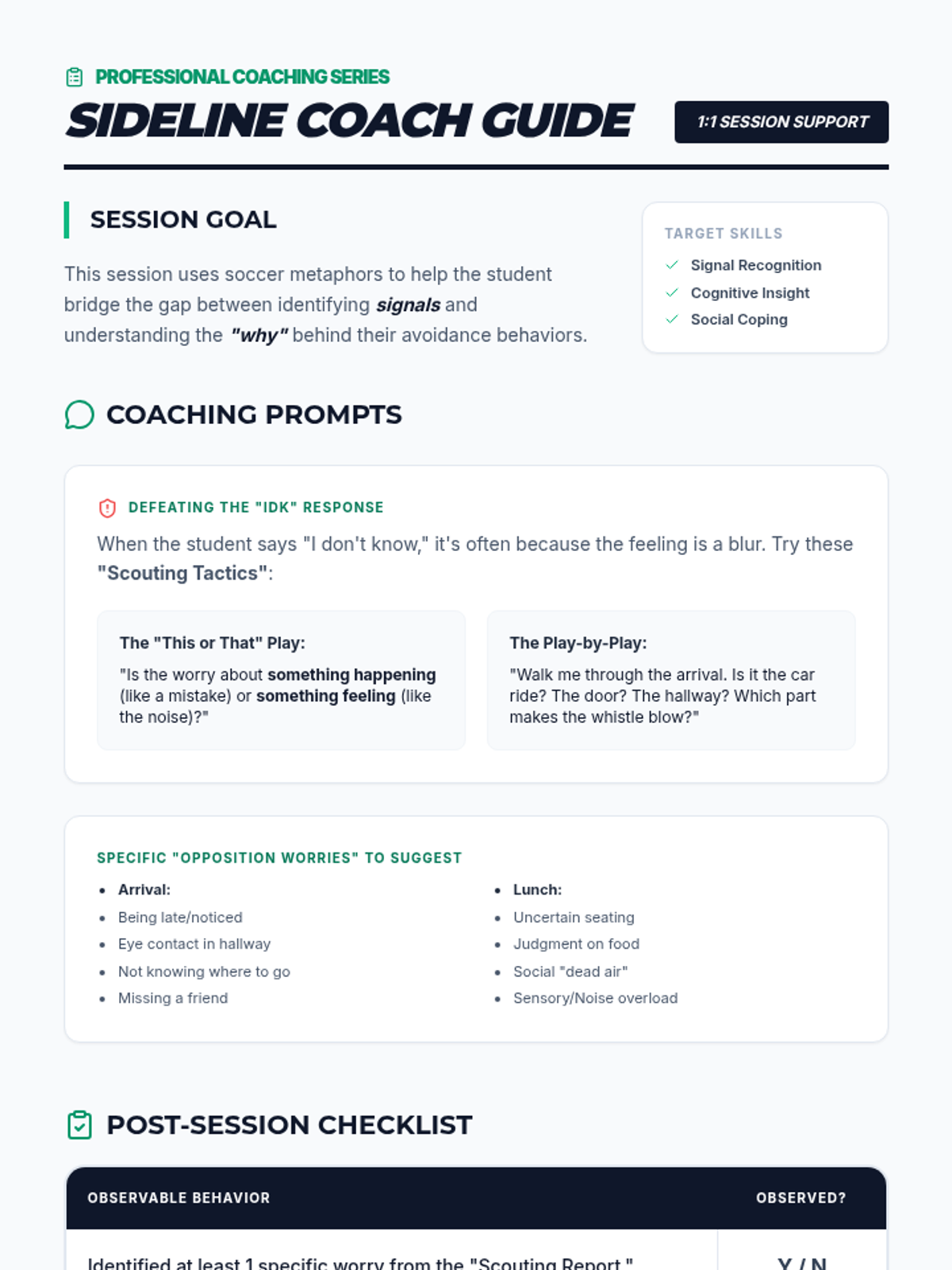
A teacher's facilitation guide updated with specific "Scouting Tactics" and prompts to help defeat the "I don't know" response. Updated to ensure full content visibility and flow during printing.
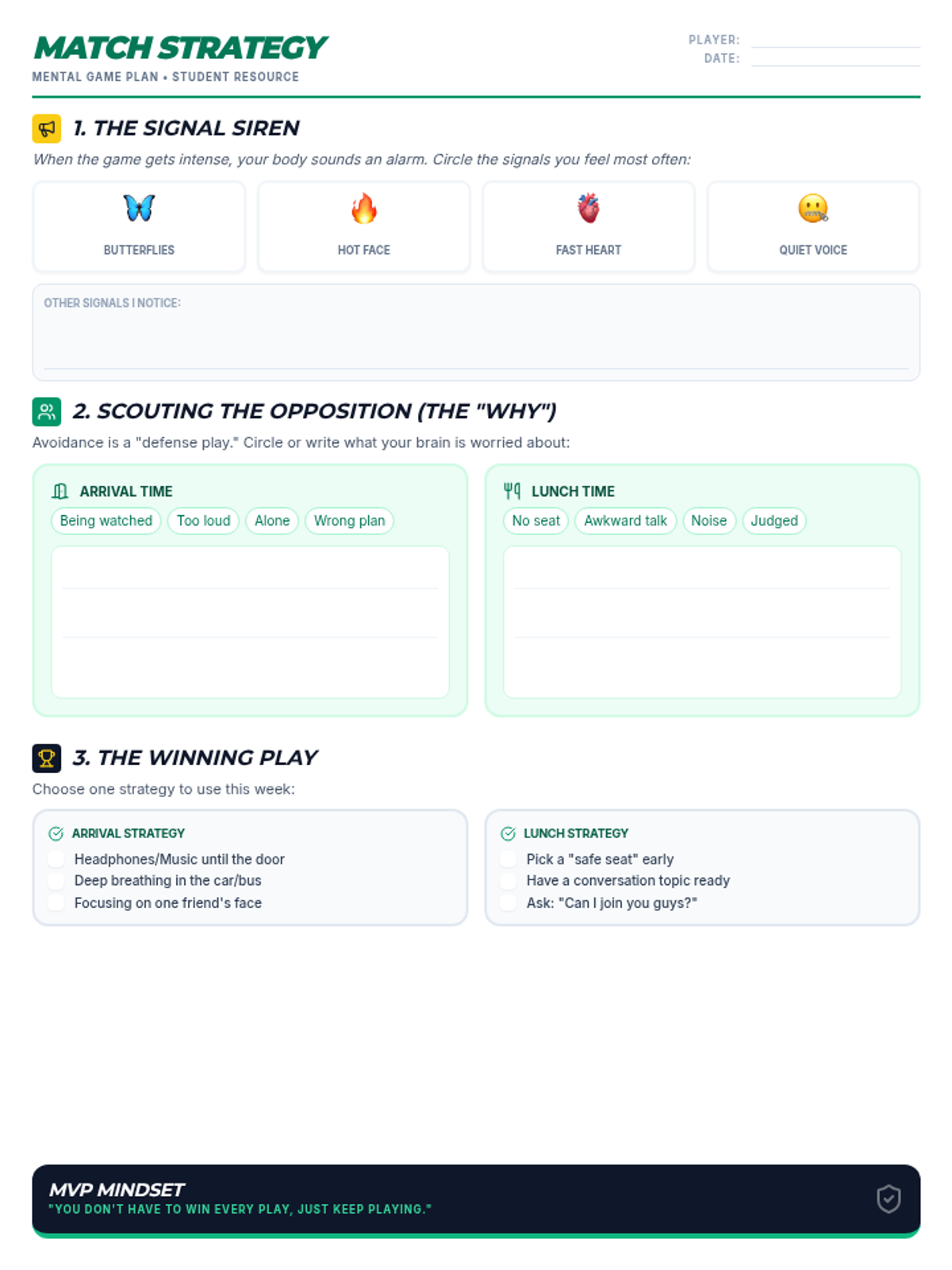
A soccer-themed student worksheet updated with "word bank" tags in the avoidance section to help students select common social anxiety triggers when they are unsure of their "why". Updated to ensure full content visibility during printing.
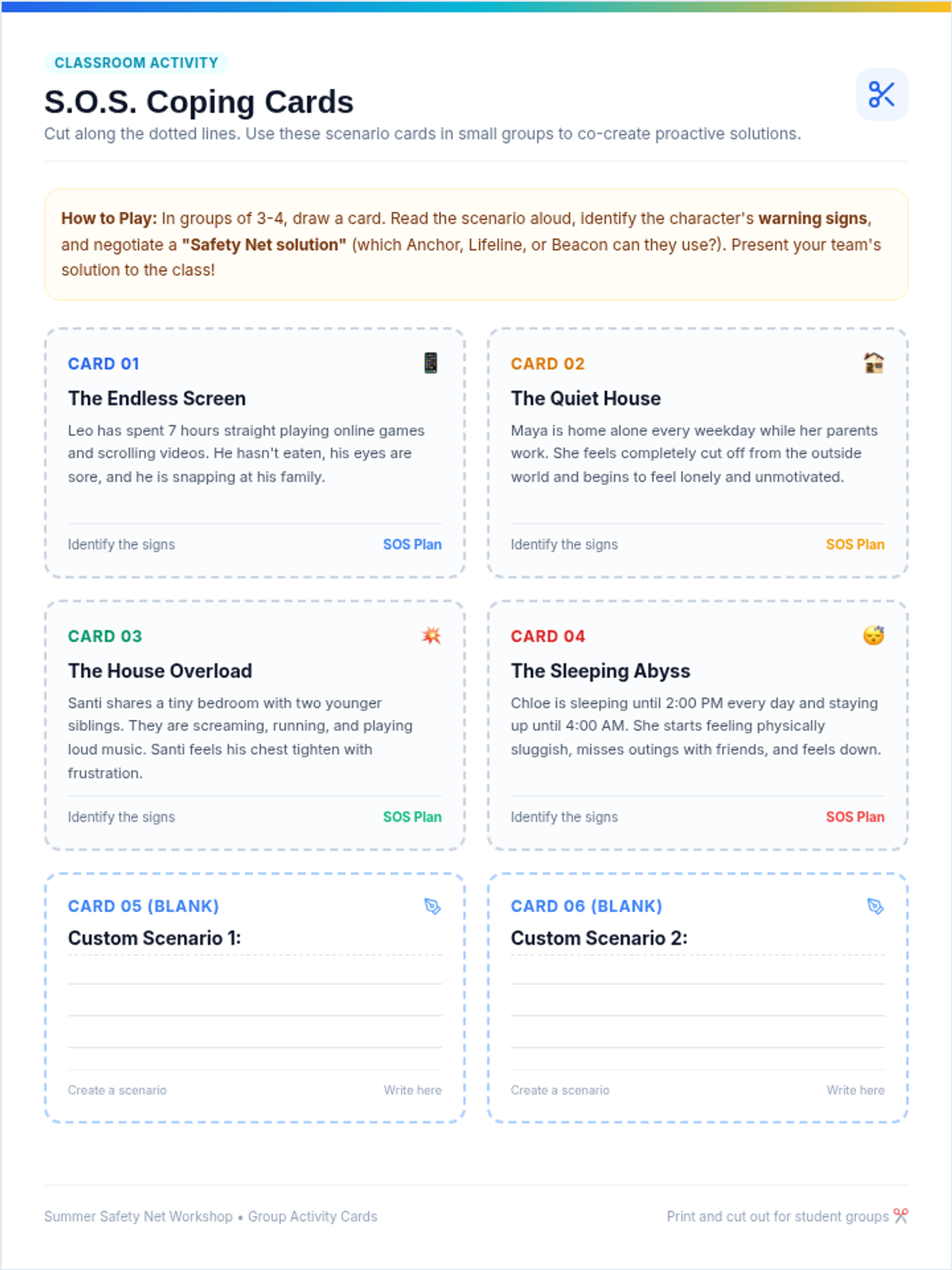
A printable 1-page activity sheet featuring 6 dashed-border discussion cards. These 'S.O.S. Coping Cards' present realistic summer stressors (isolation, bedroom sharing overload, screen fatigue) for student groups to analyze and solve together.
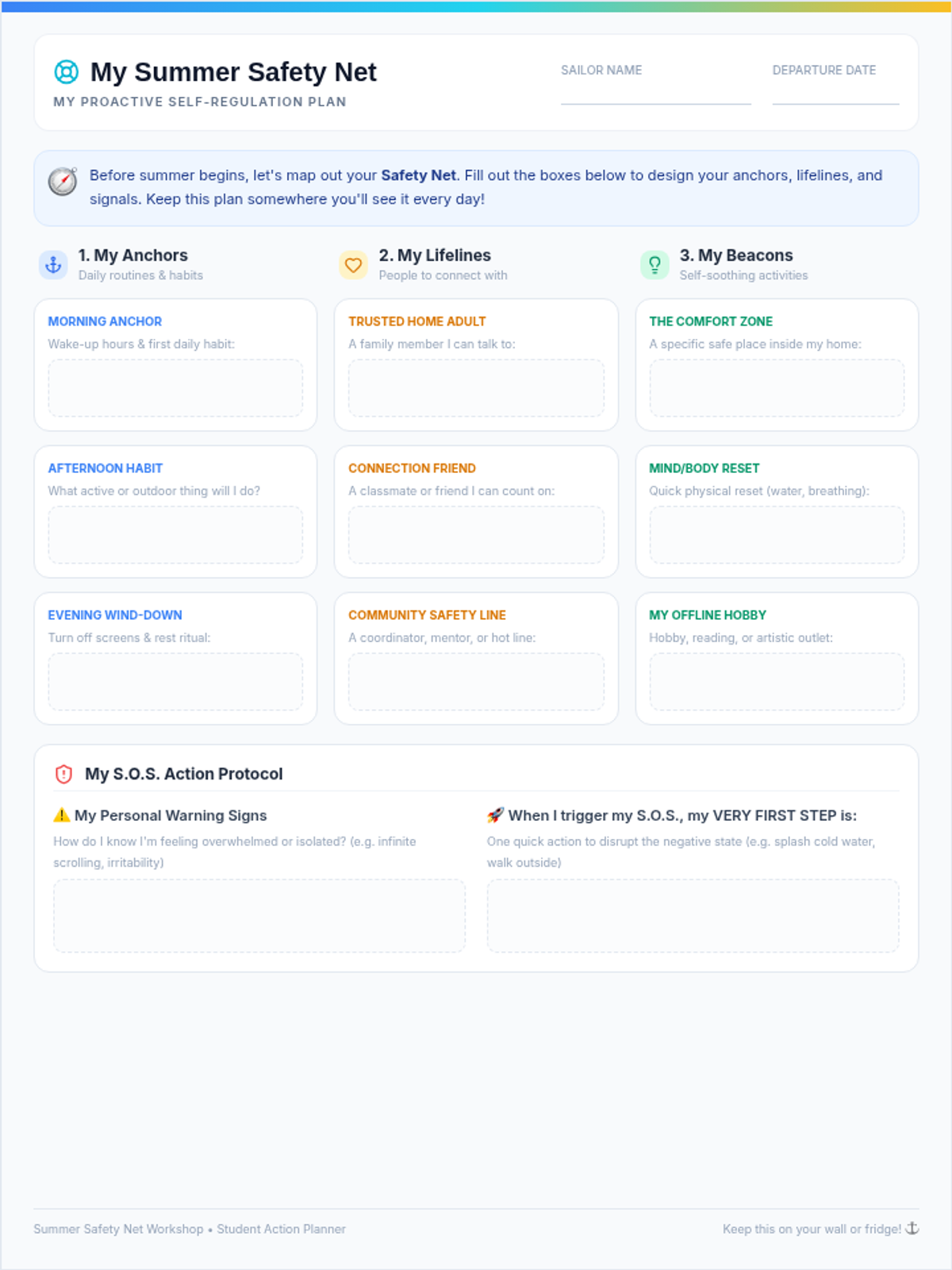
A beautifully formatted, student-facing 1-page planner worksheet. It provides structured fields with light, writable backgrounds for students to list their personalized daily routines, trusted lifelines, and coping strategies.
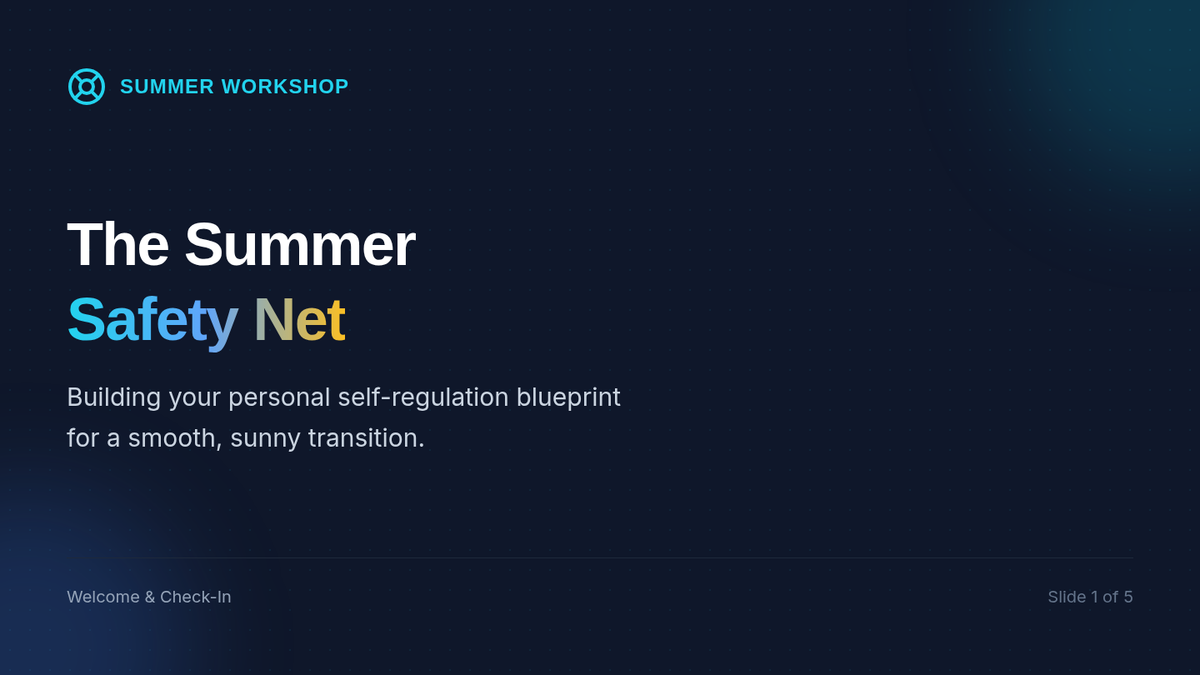
An interactive, 5-slide visual presentation to guide the class through the 'Summer Safety Net' workshop, detailing summer transition concepts, interactive discussion cues, and safety plan framework.
A comprehensive, 2-page teacher facilitation guide outlining the 'Summer Safety Net' workshop. It includes step-by-step instructions, discussion prompts, pacing, and differentiation strategies for educators.