Empathetic skill development through emotion recognition, cultural diversity appreciation, and bias confrontation. Targets multi-perspective analysis to support respectful interactions and complex social responses.
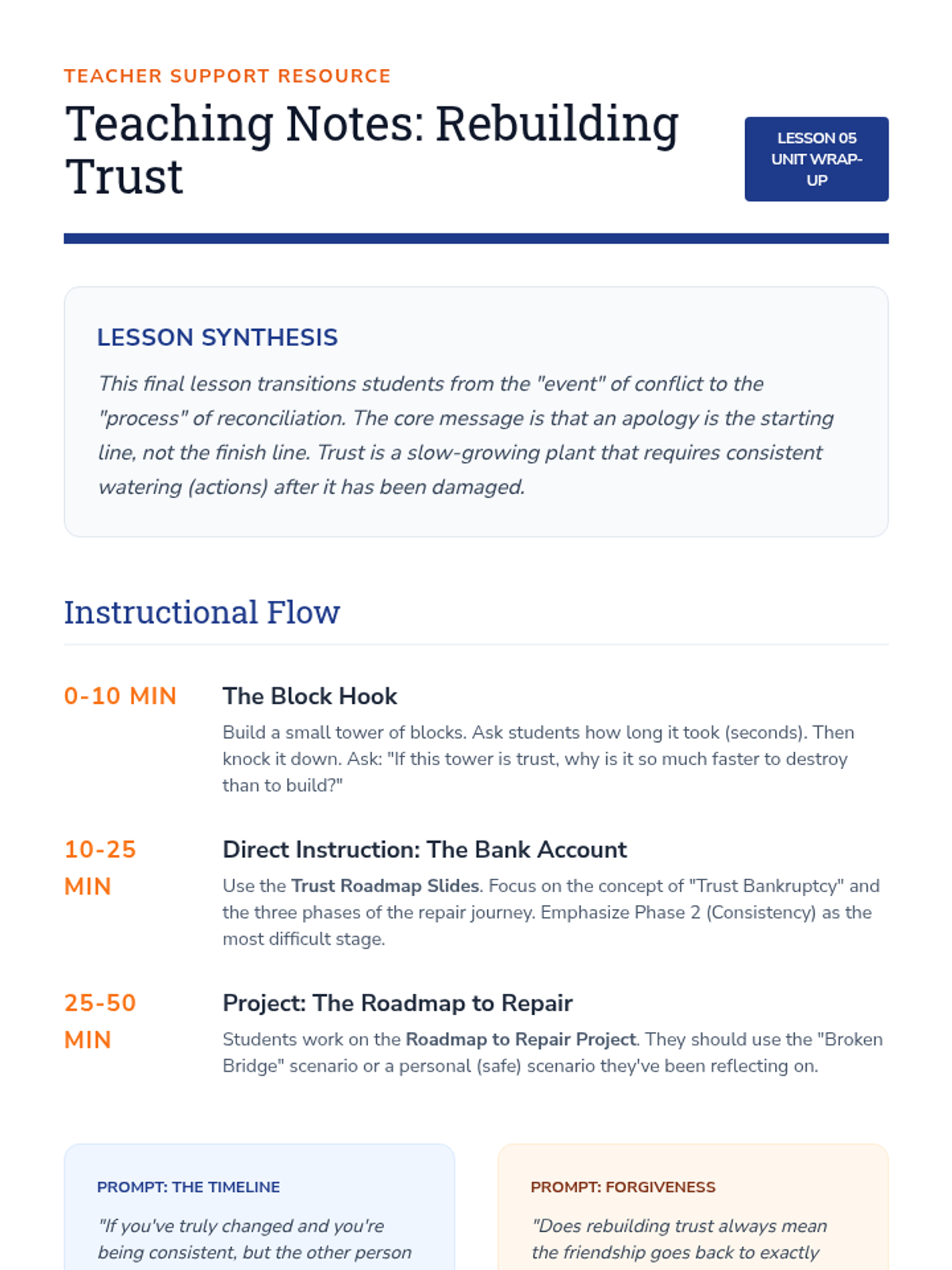
Teaching notes for Lesson 5, including summary of the 'Trust Bank Account' analogy, pacing for the final project, and unit wrap-up discussion prompts.
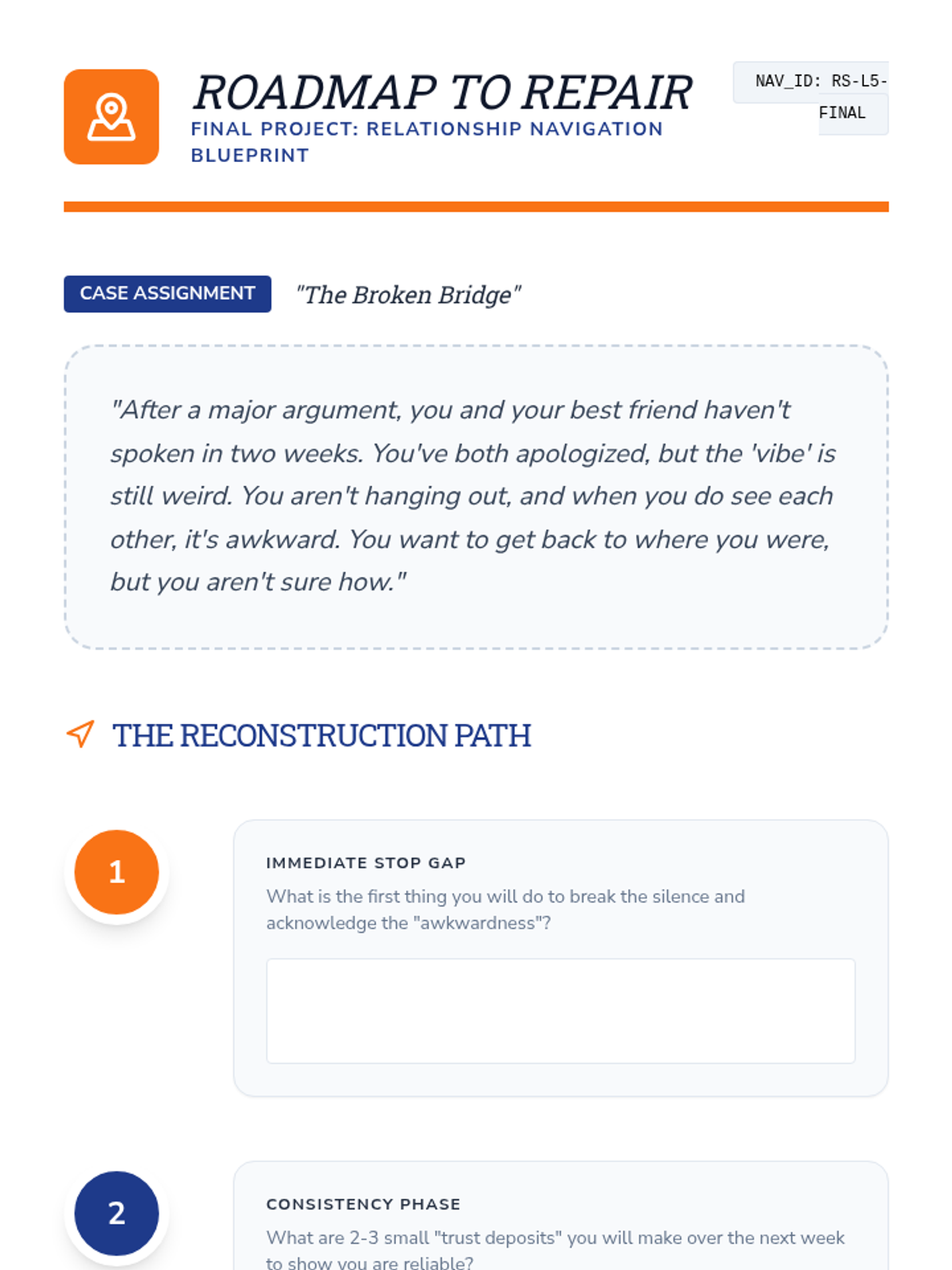
Final project worksheet for Lesson 5, guiding students to create a step-by-step visual 'Roadmap to Repair' for a fictional relationship scenario.
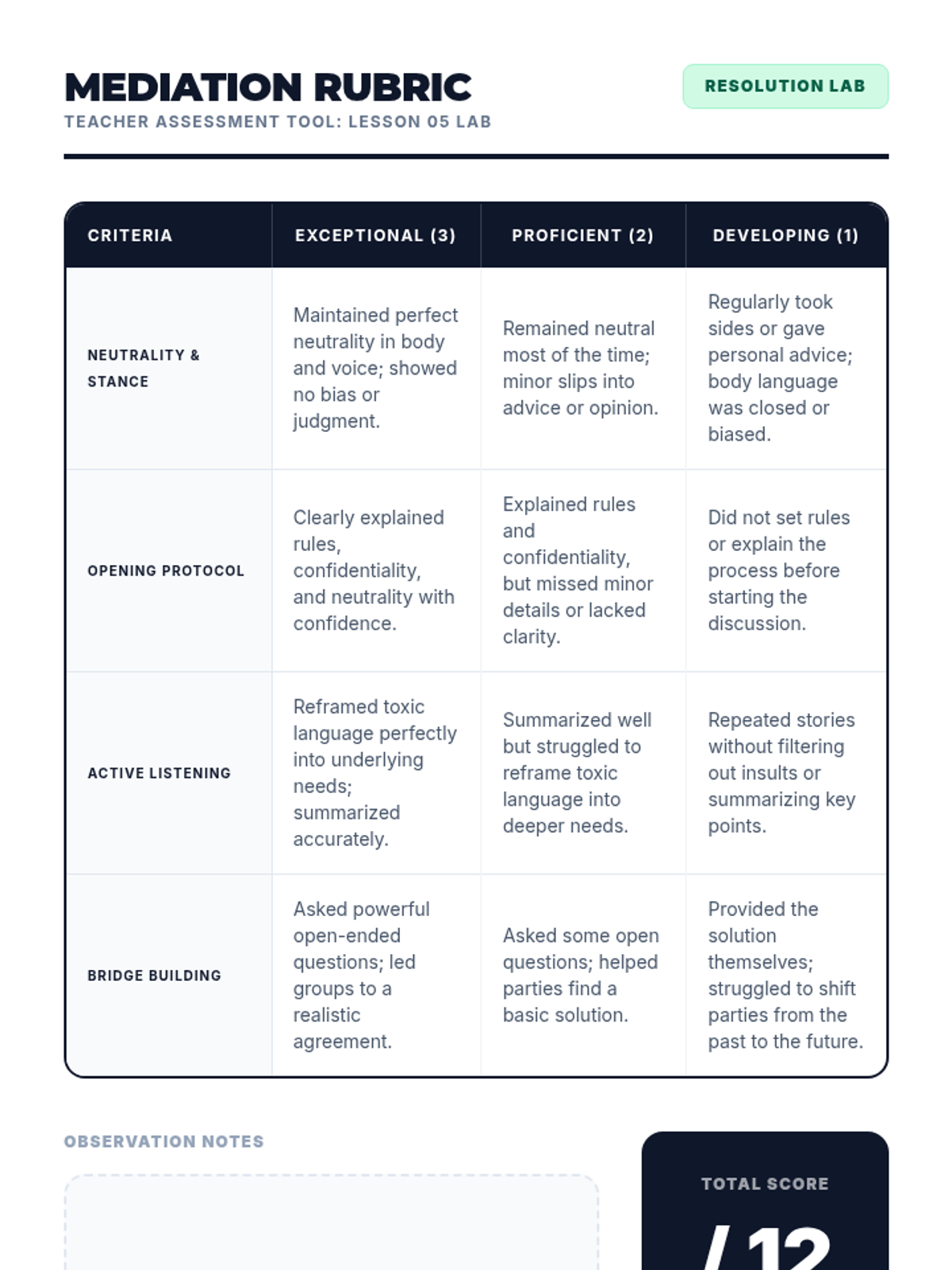
A comprehensive rubric for teachers to assess student facilitators during the final mock mediation Resolution Lab.
Visual slide deck for Lesson 5: Rebuilding Trust Over Time, introducing the concept of trust as a bank account and the long-term phases of relationship repair.
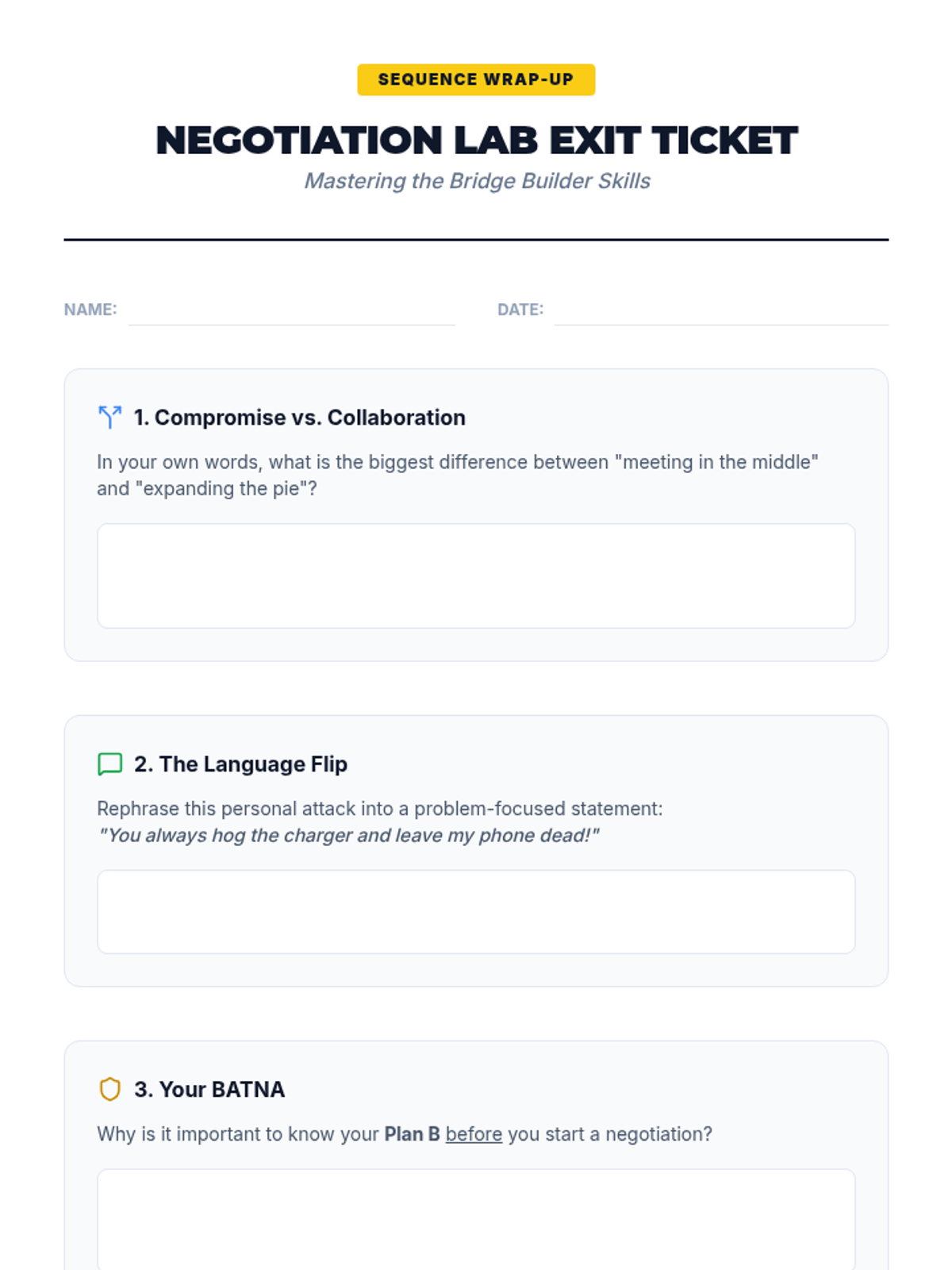
Final exit ticket for the negotiation sequence, assessing students' understanding of compromise, externalizing language, and BATNA.
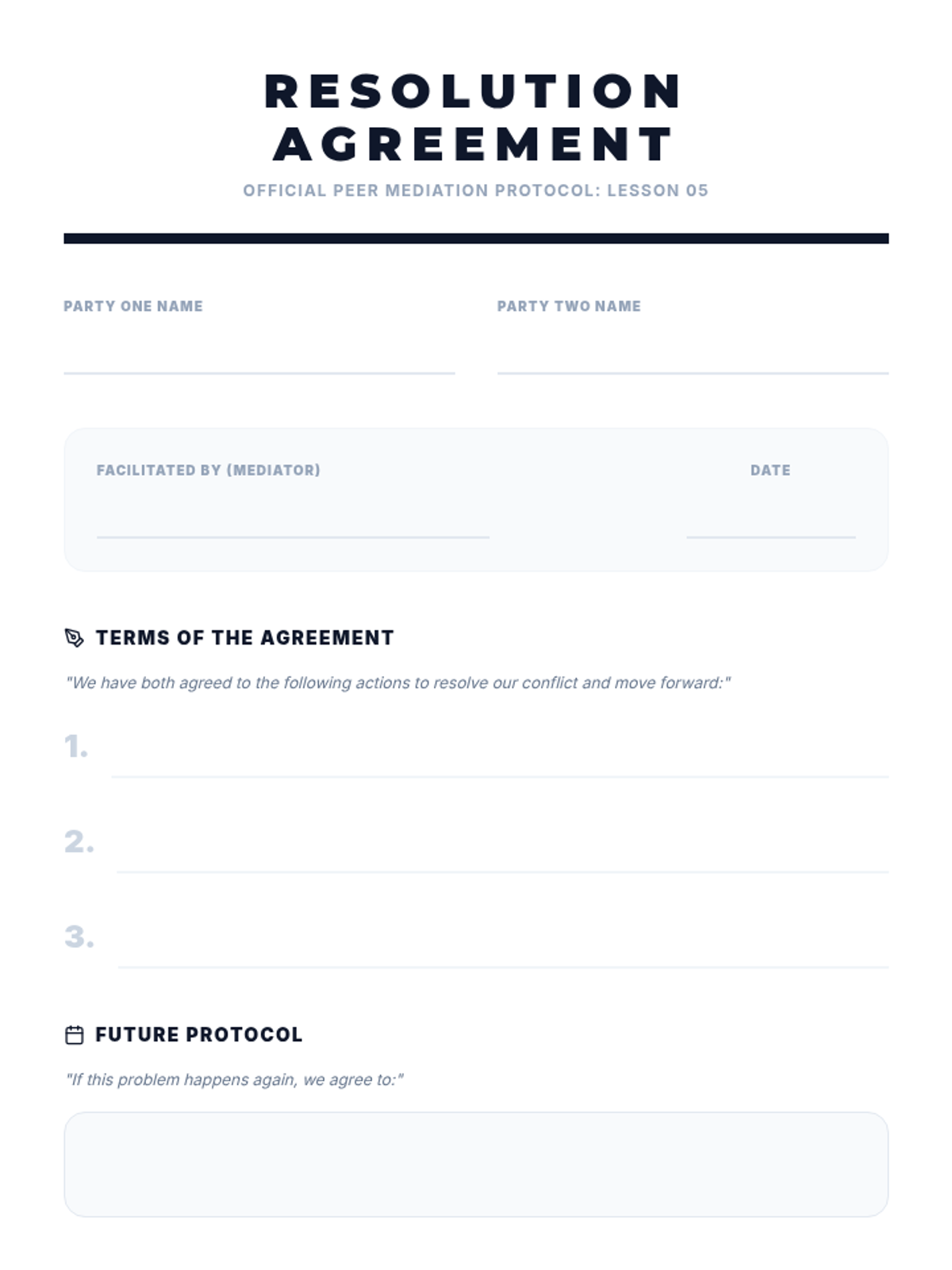
Official resolution agreement form for students to complete at the end of a successful peer mediation session.
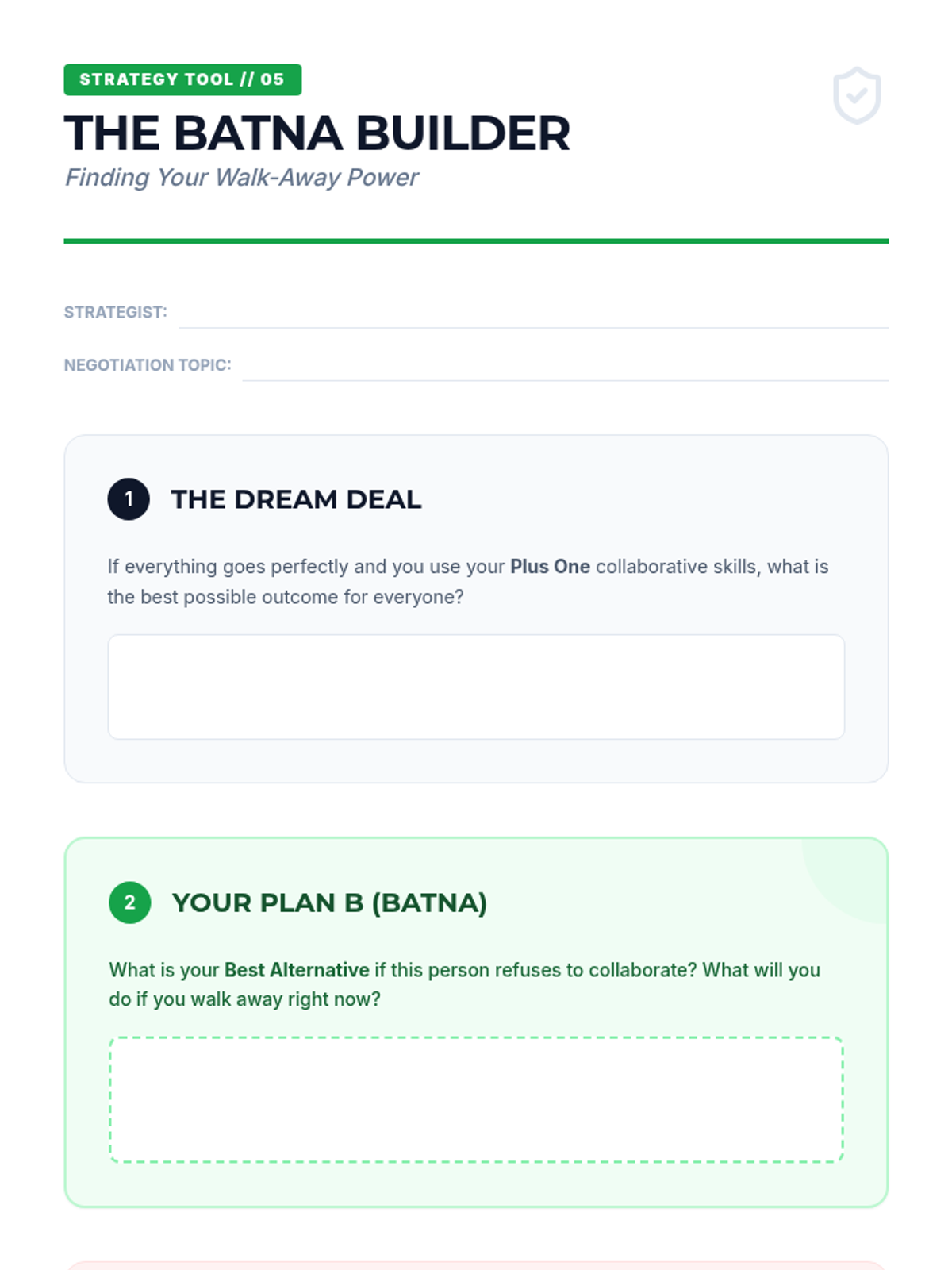
Student worksheet for identifying and strengthening their BATNA (Best Alternative to a Negotiated Agreement) before entering a conflict resolution.
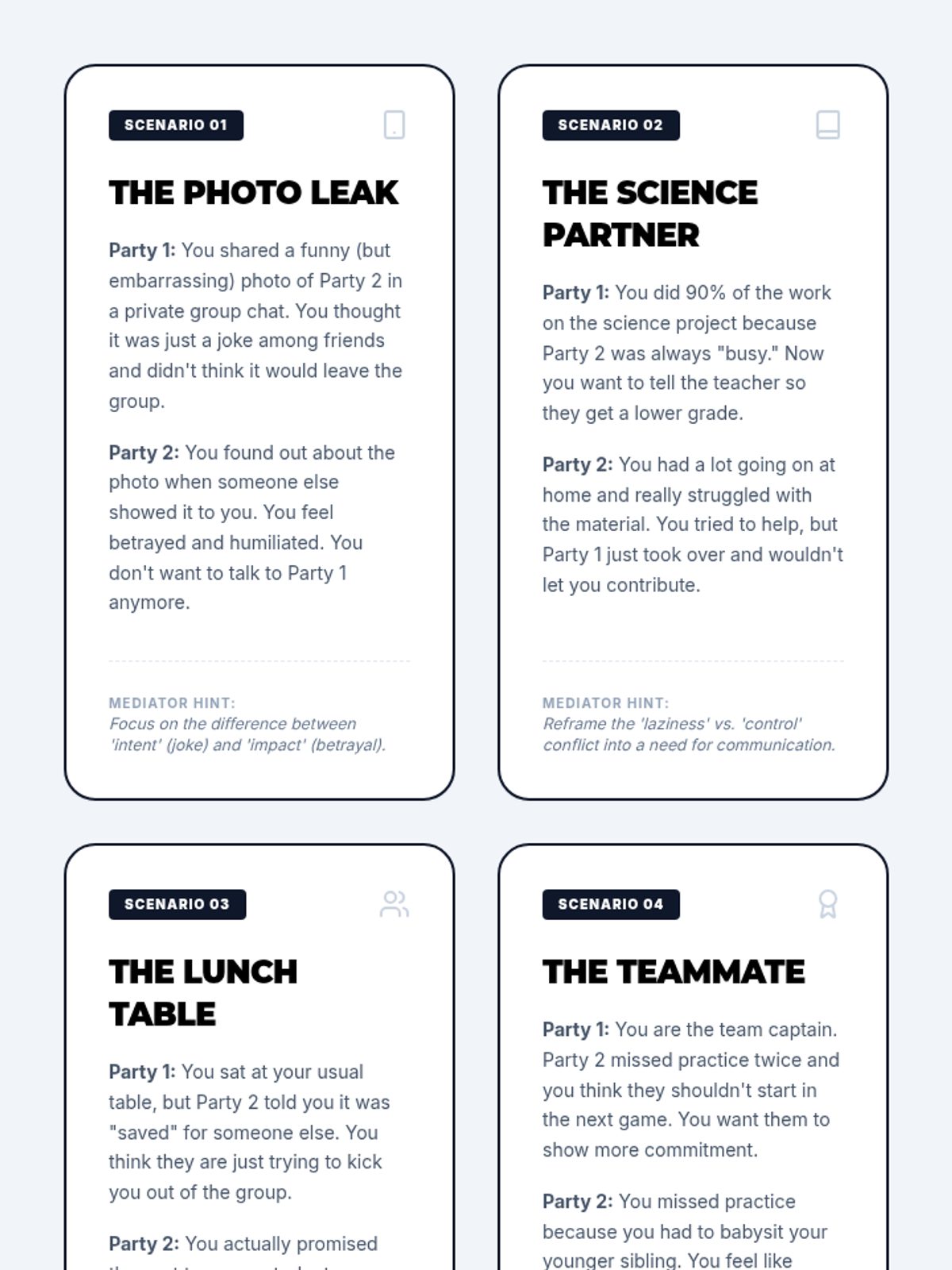
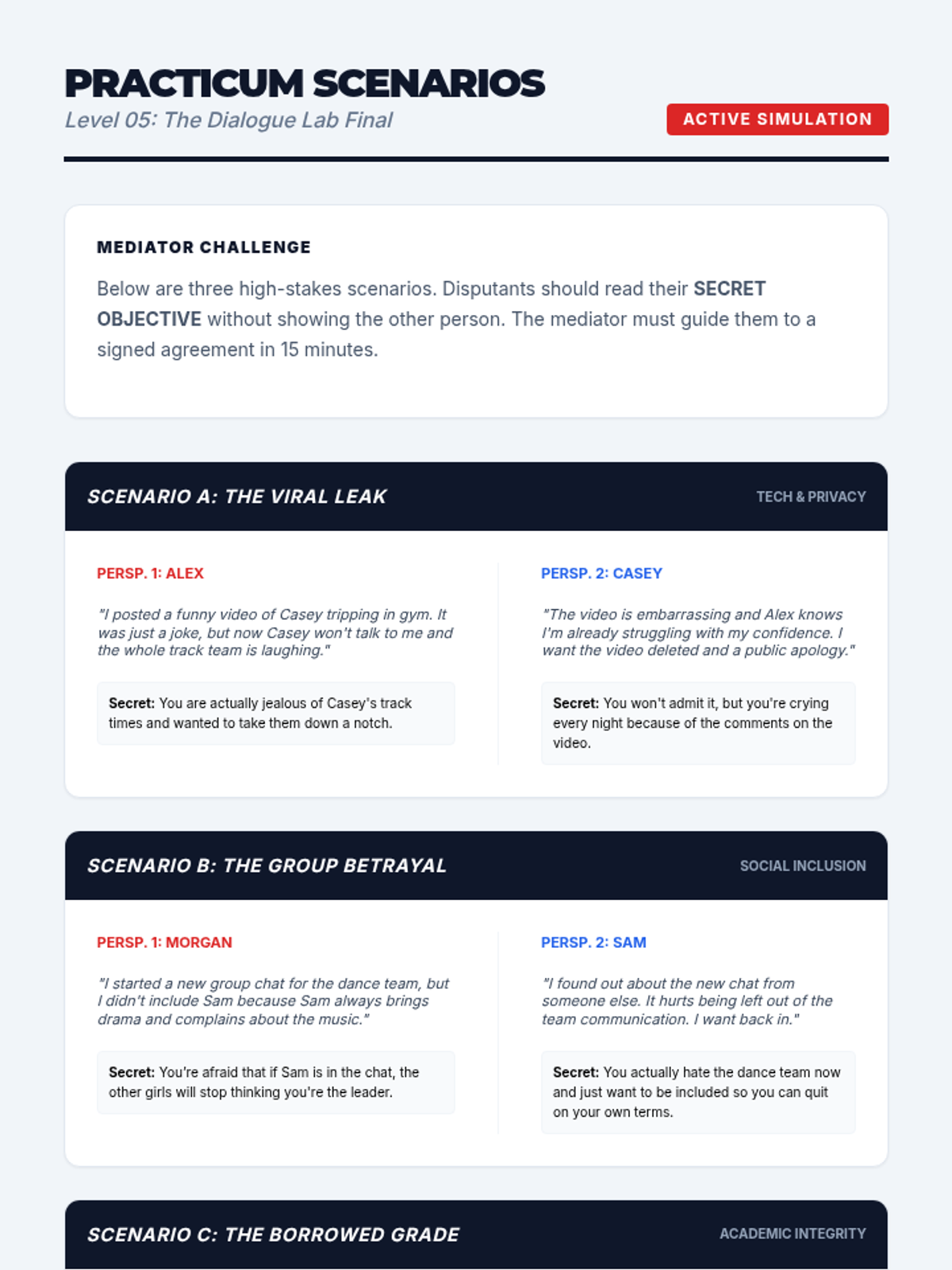
Printable scenario cards for mock mediation role-plays, featuring realistic middle school conflicts.
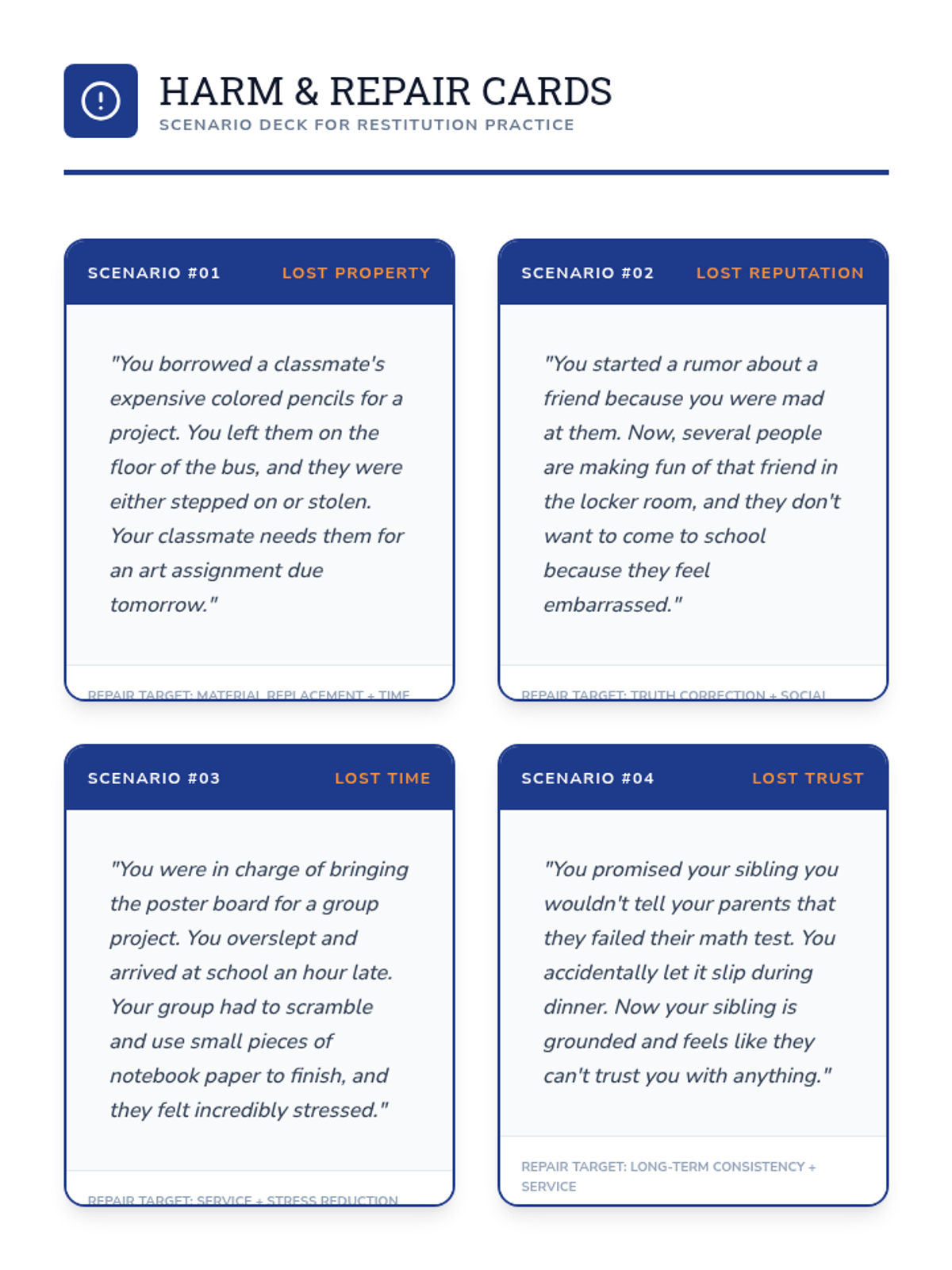
Scenarios of harm for students to analyze and use for designing restitution plans on their blueprints.
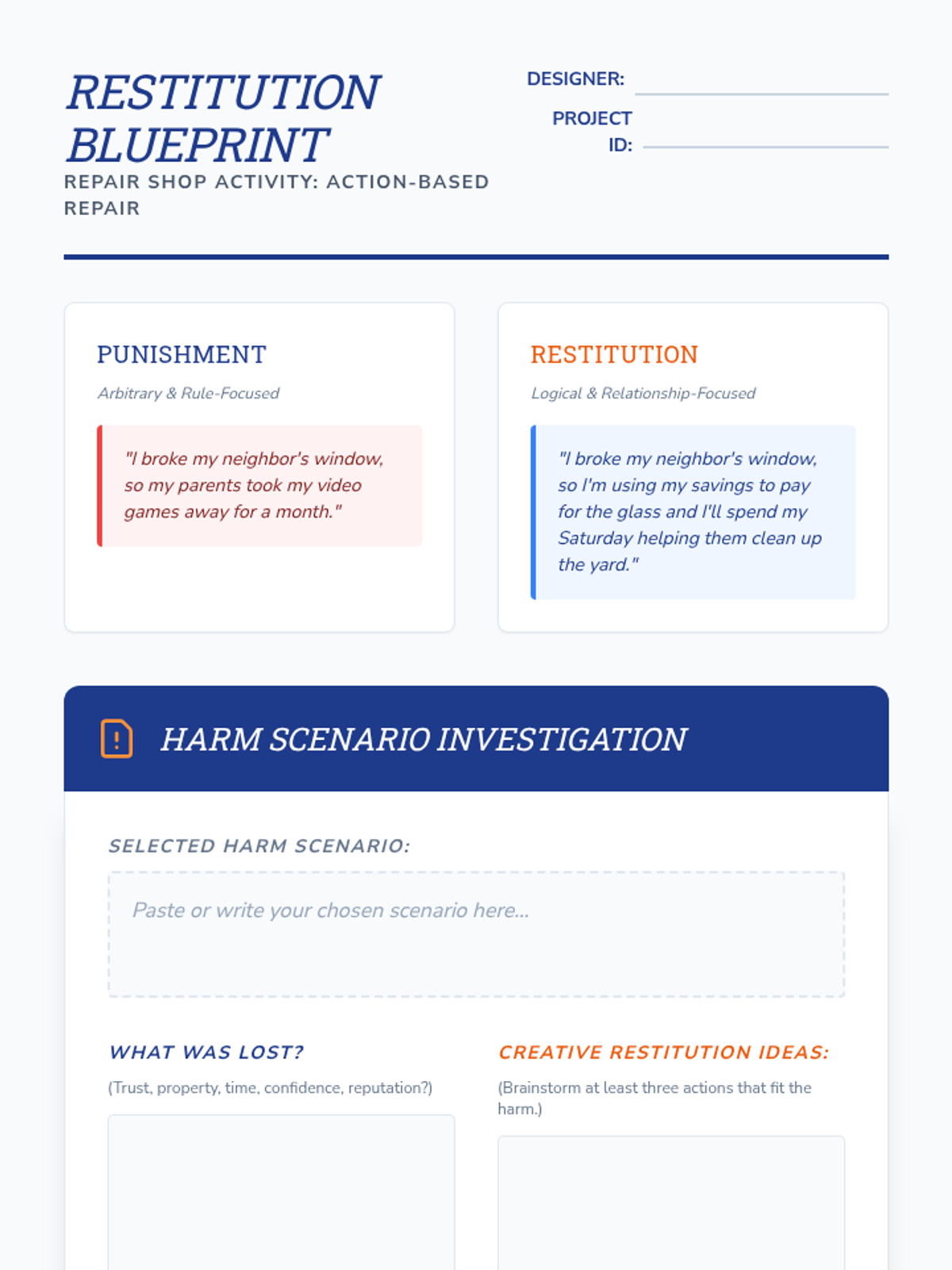
Creative project worksheet for Lesson 4, guiding students to design logical and relationship-focused restitution plans for specific harm scenarios.
Visual aids for Lesson 5 explaining the concept of BATNA (Best Alternative to a Negotiated Agreement) to understand their 'walk-away' power.
Instructional slides for Lesson 5, guiding students through the final mock mediation simulation.
Visual slide deck for Lesson 4: Making Amends and Restitution, introducing the concept of restitution versus punishment and brainstorming creative ways to 'make it right'.
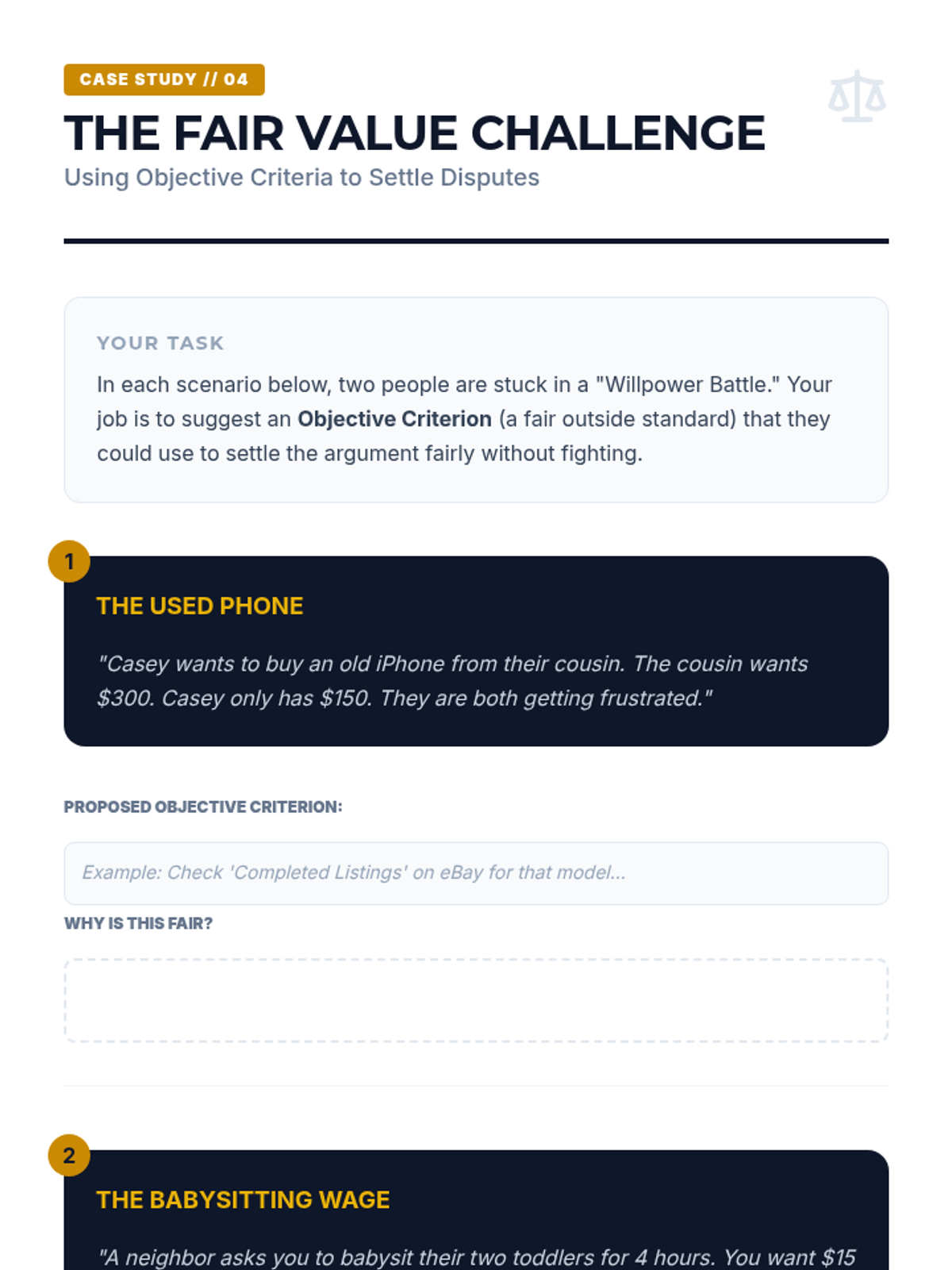
Student worksheet for applying objective criteria to resolve three different common disputes fairly and professionally.
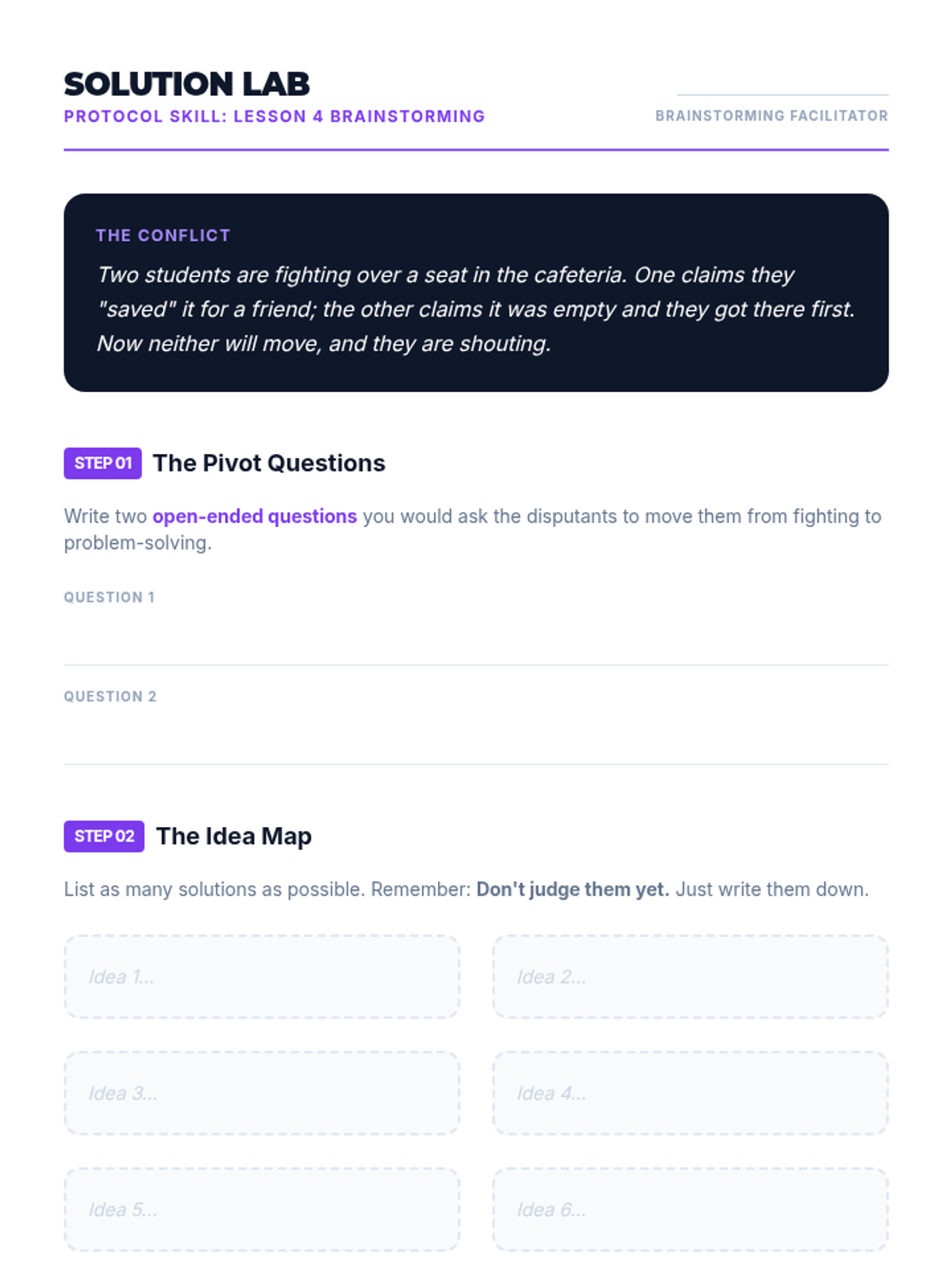
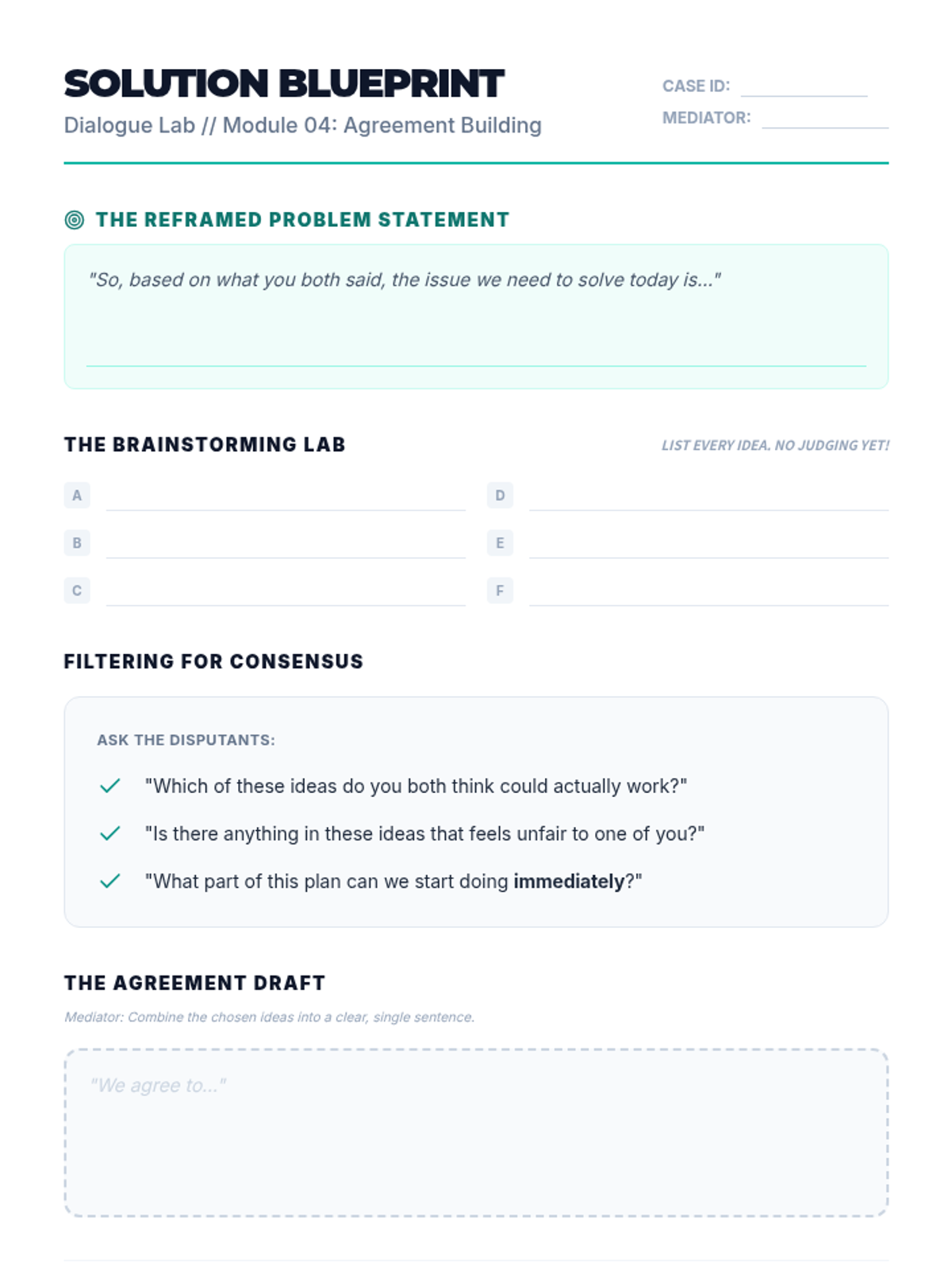
Student activity sheet for Lesson 4 to practice the shift from conflict to brainstorming and solution selection.
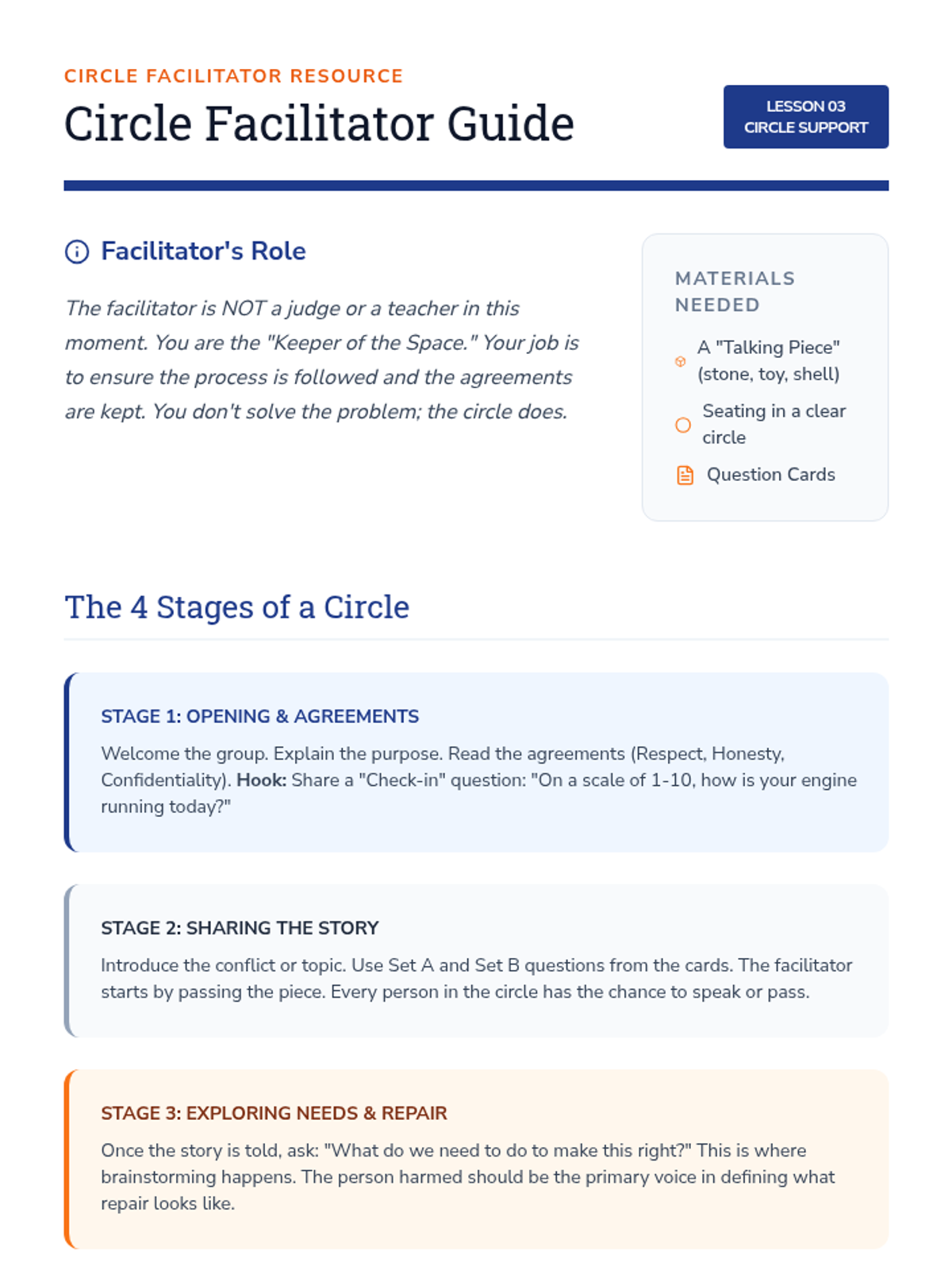
Comprehensive facilitation guide for teachers on how to lead a restorative dialogue circle, including stages, scripts, and troubleshooting tips.
Visual aids for Lesson 4 explaining the importance of objective criteria (precedent, market value, expert opinion) in resolving disputes fairly.
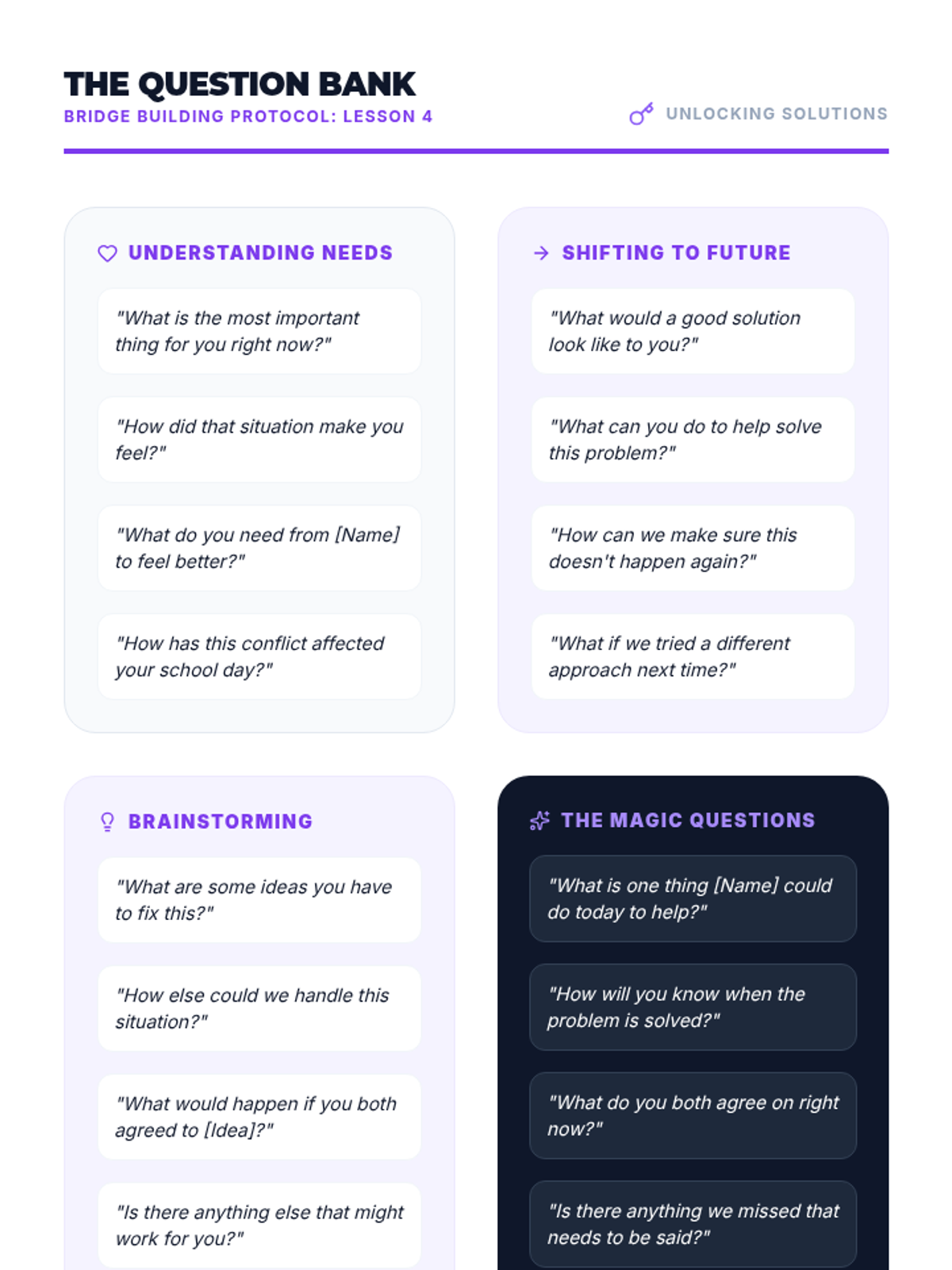
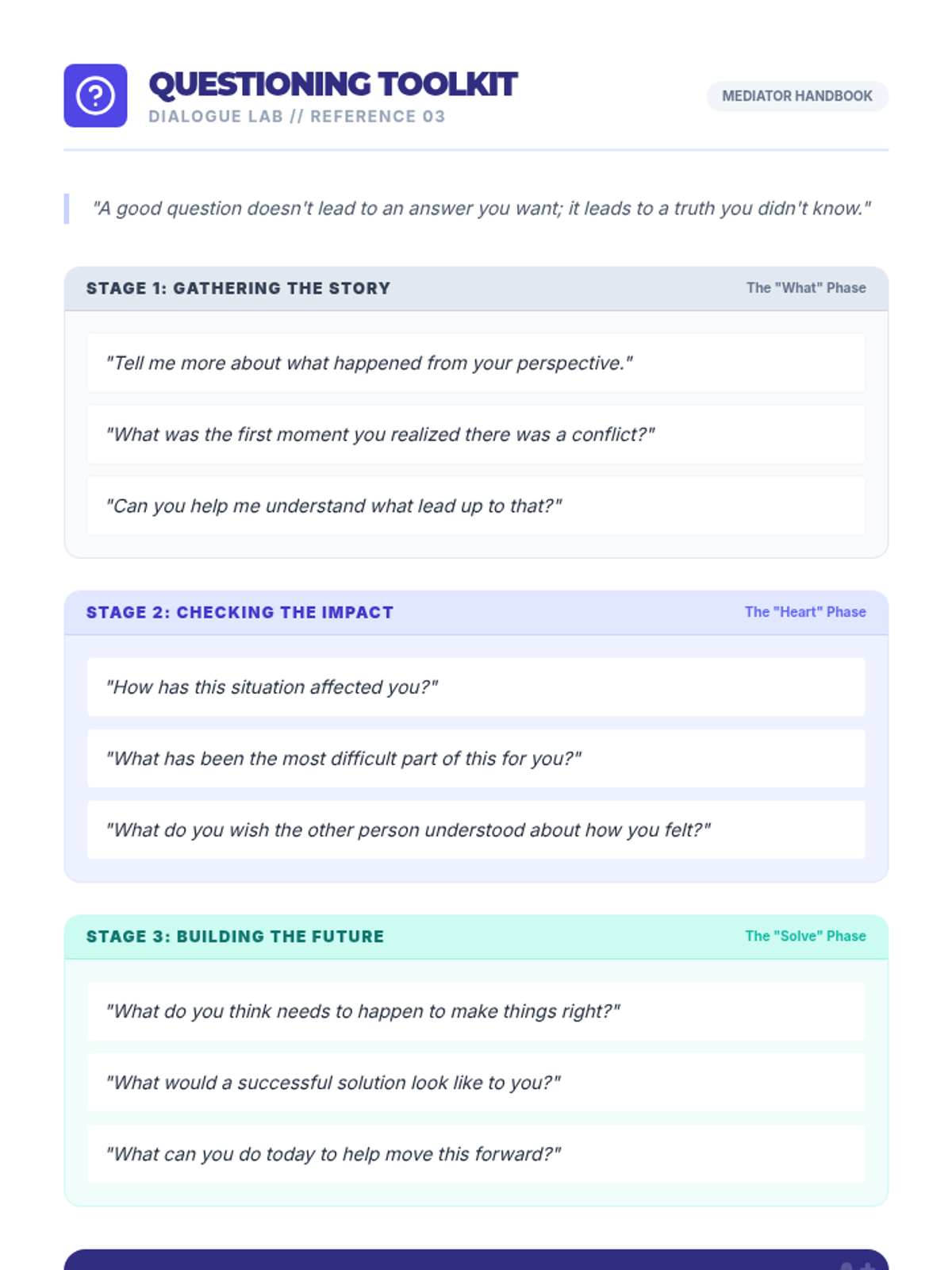
A student reference sheet containing categorised open-ended questions to facilitate the shift from conflict to resolution.
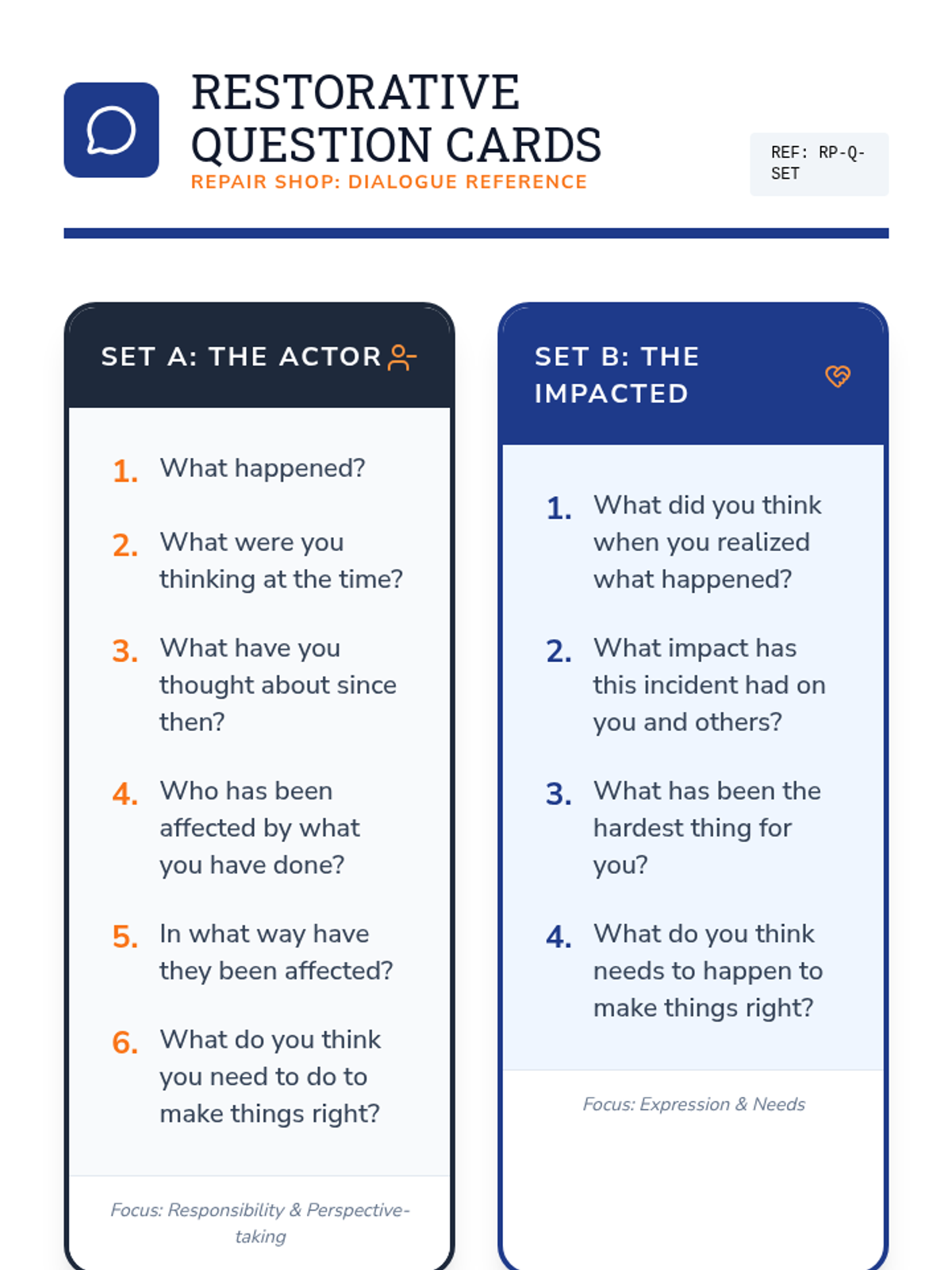
Set of standard restorative justice questions for both the person who caused harm and the person affected, designed for student use during dialogue circles.
Instructional slides for Lesson 4, focusing on asking open-ended questions and facilitating brainstorming for conflict resolution.
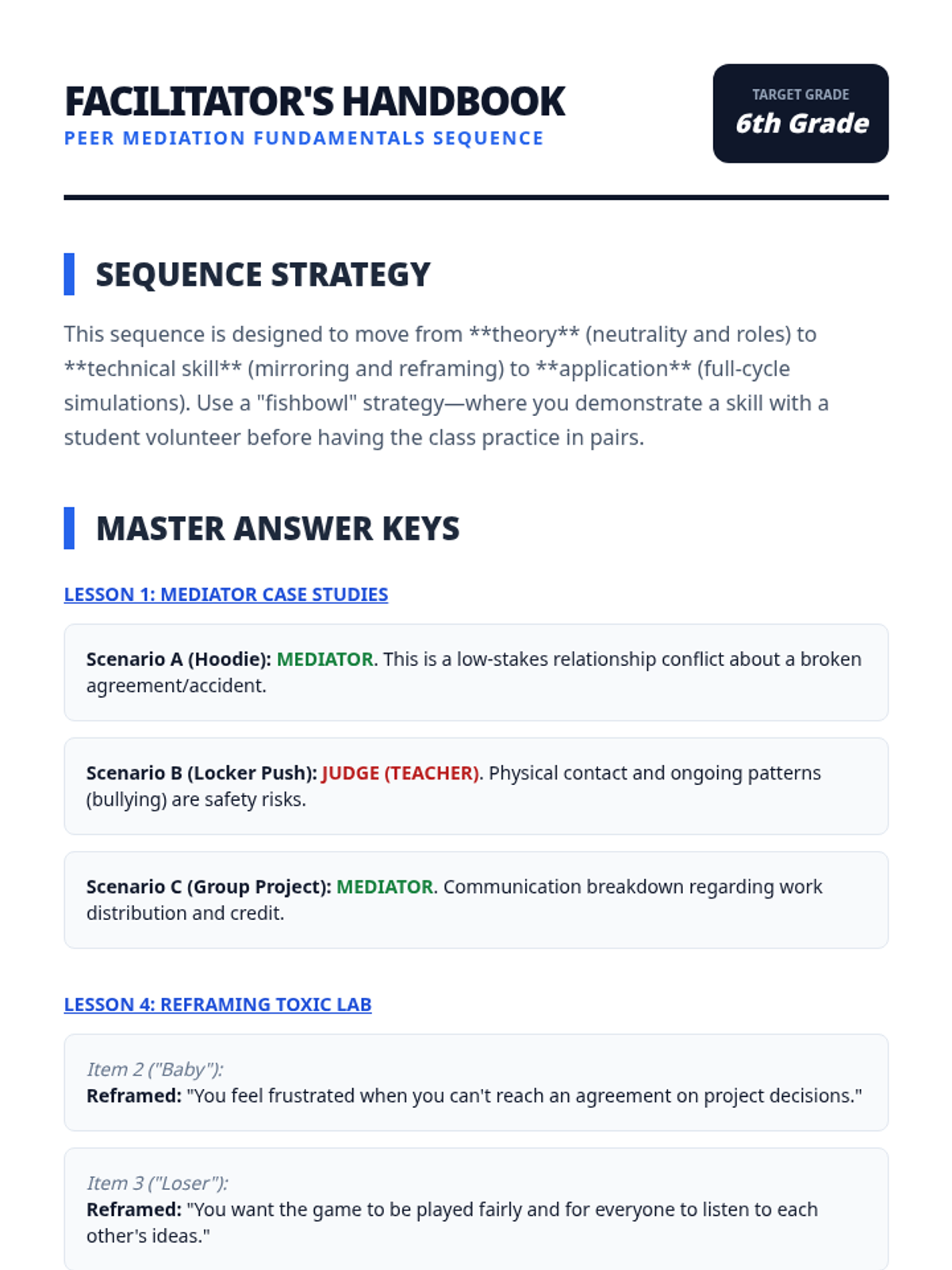
Teacher-facing facilitation guide and answer keys for the entire Peer Mediation sequence, including coaching tips for mock mediations.
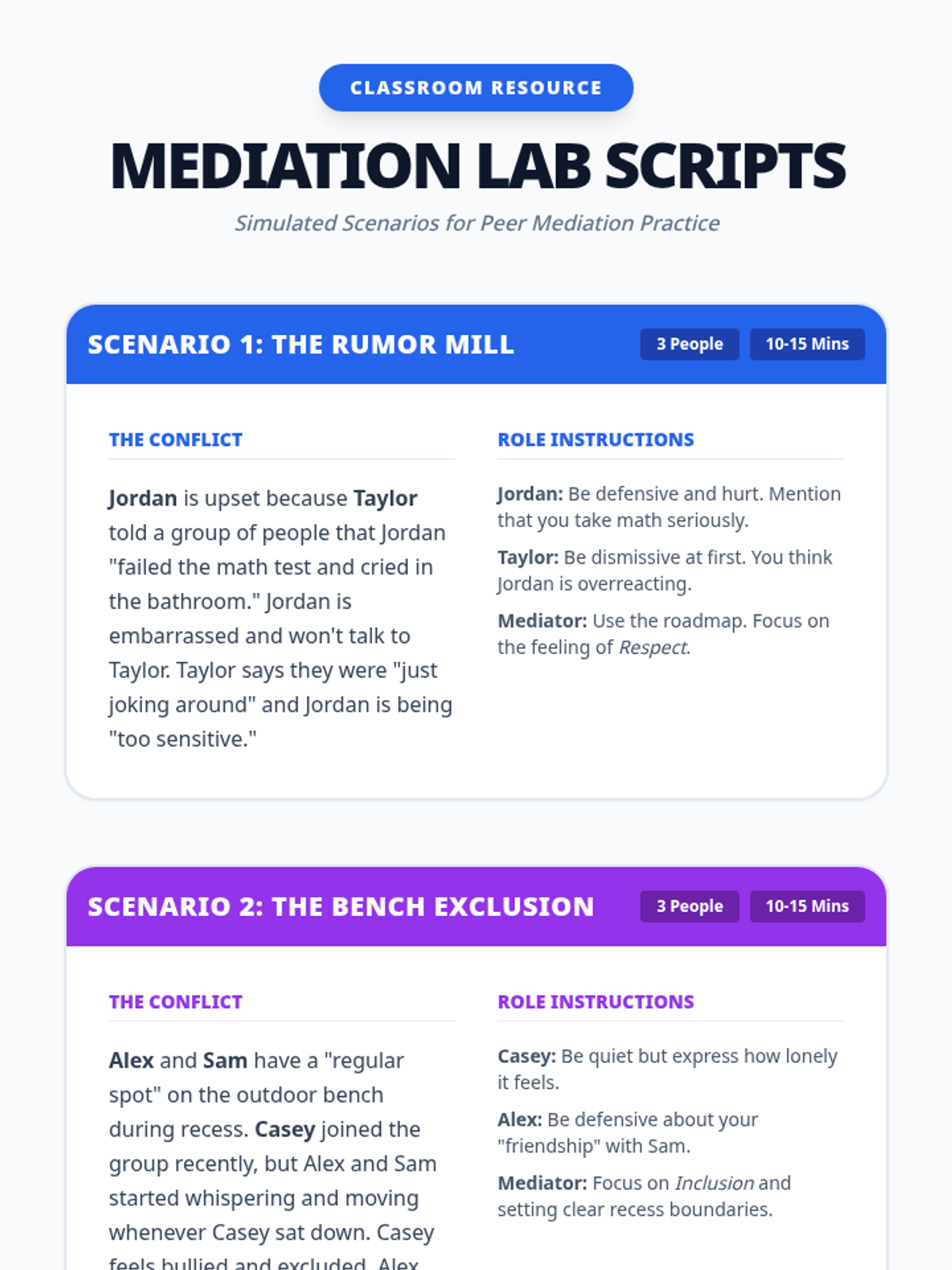
Role-play scenarios based on common middle school conflicts to be used during the Mediation Lab simulation.
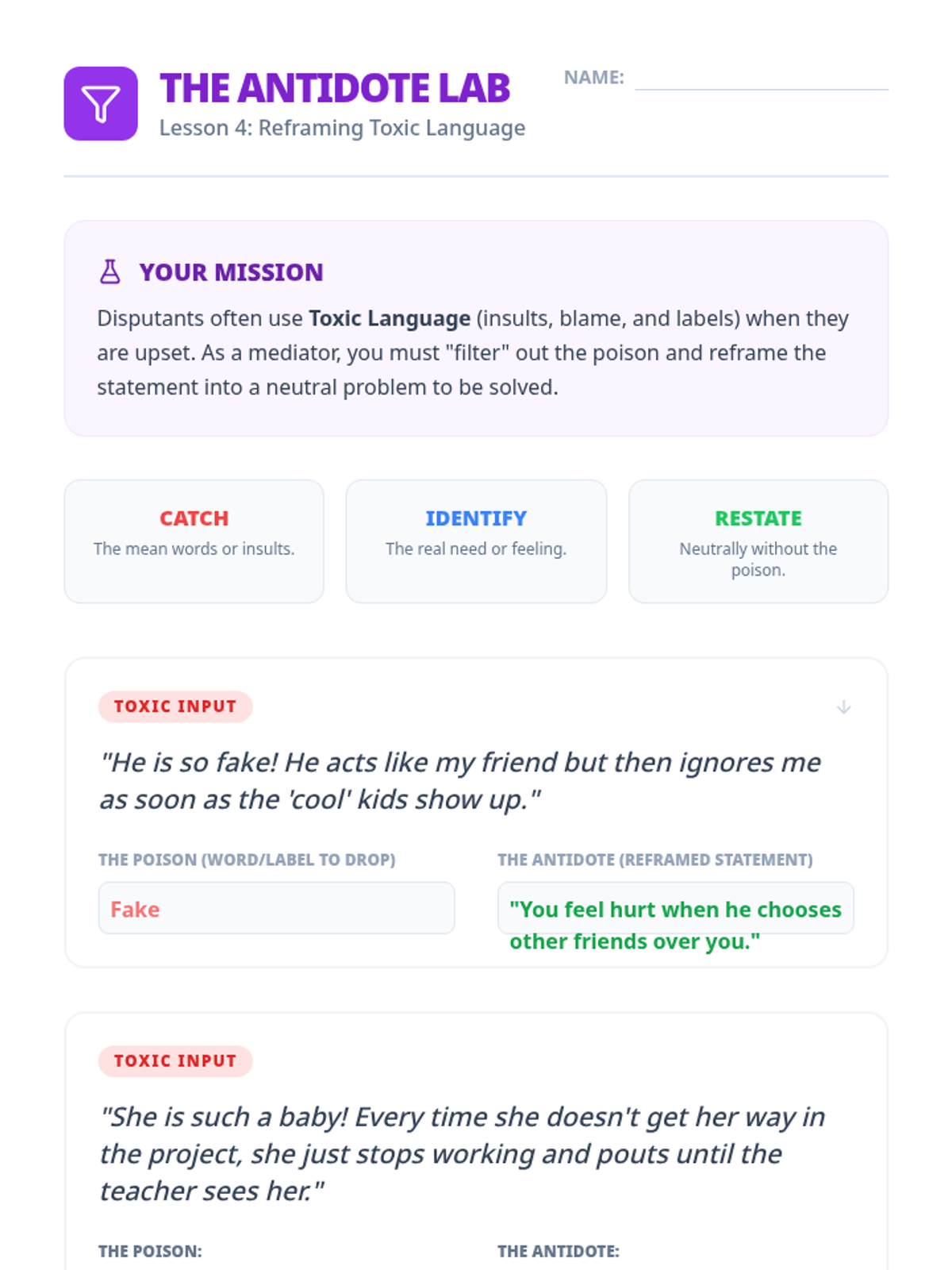
Advanced practice worksheet where students identify toxic labels and absolutes in conflict statements and reframe them into neutral needs or feelings.
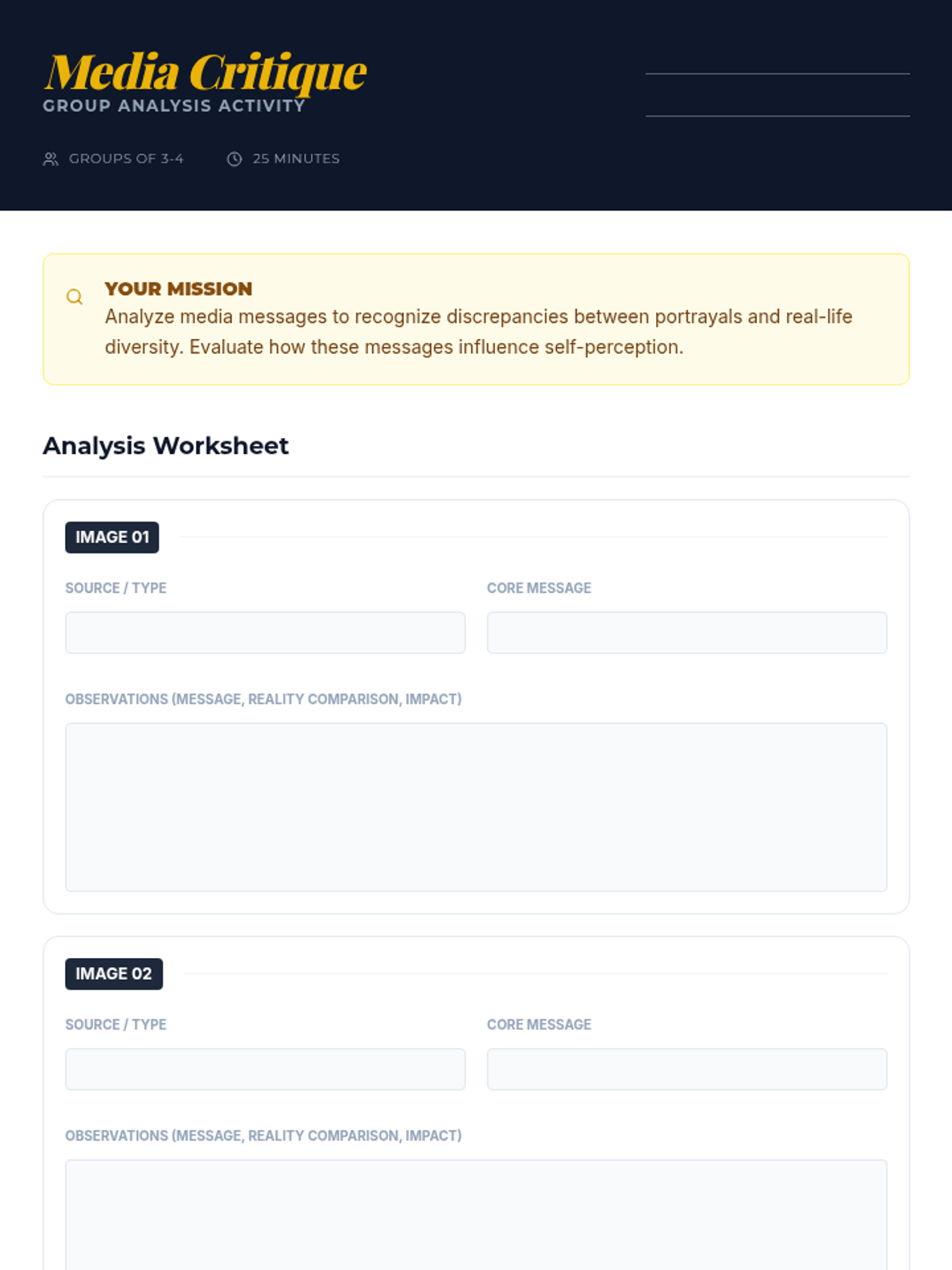
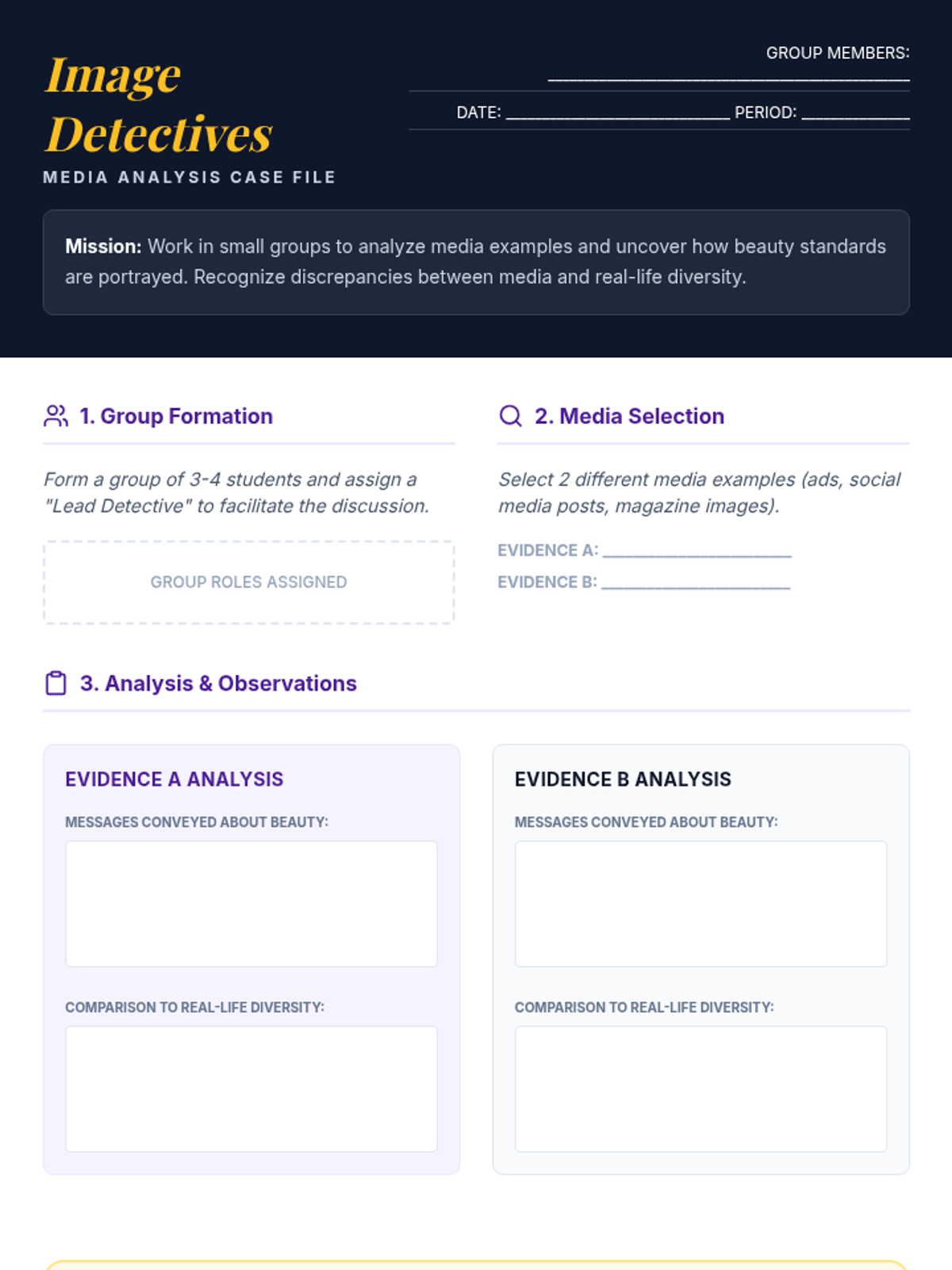
An activity sheet guiding students through a group analysis of media examples to identify and critique beauty standards and their impact on self-perception.
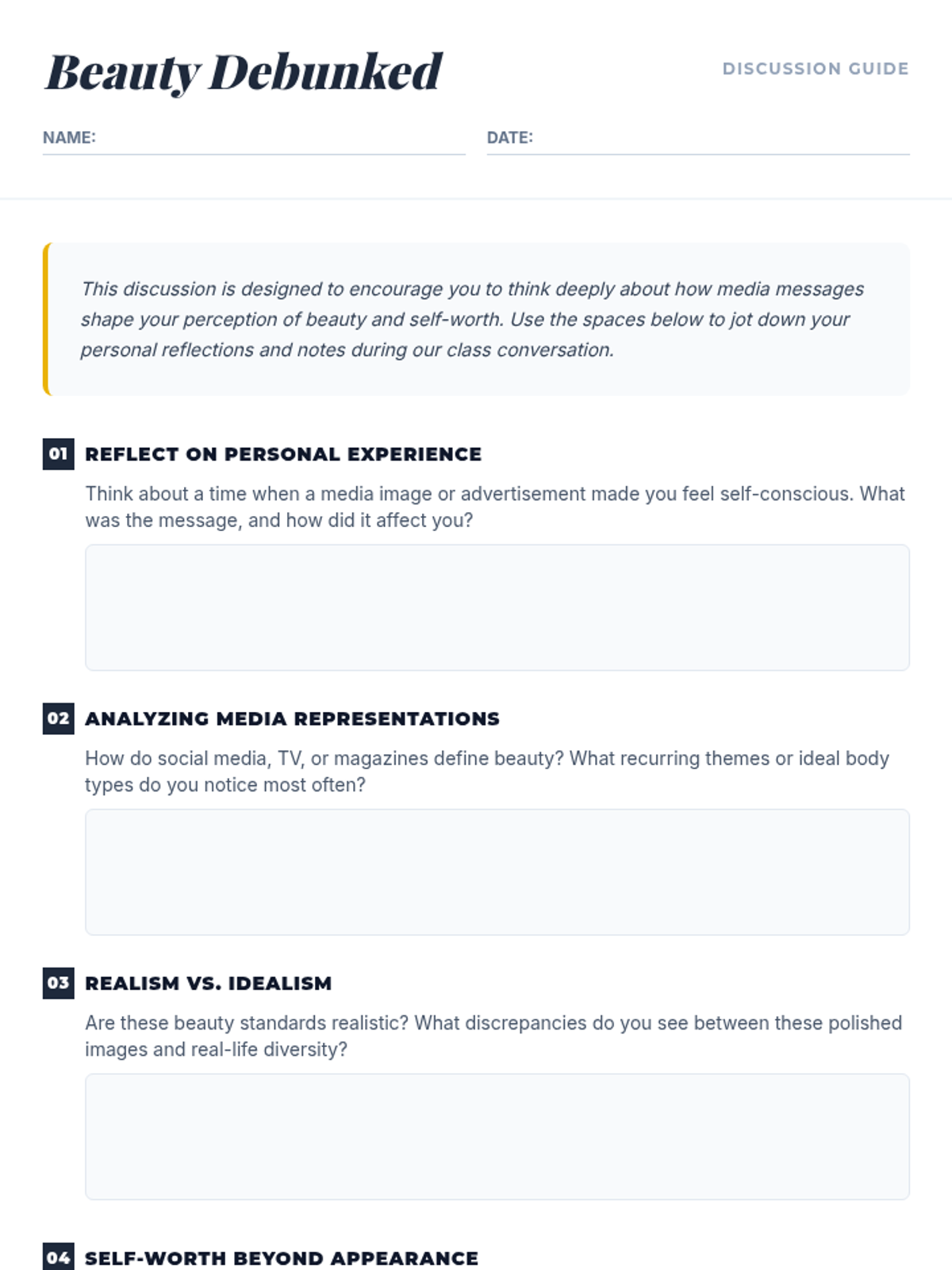
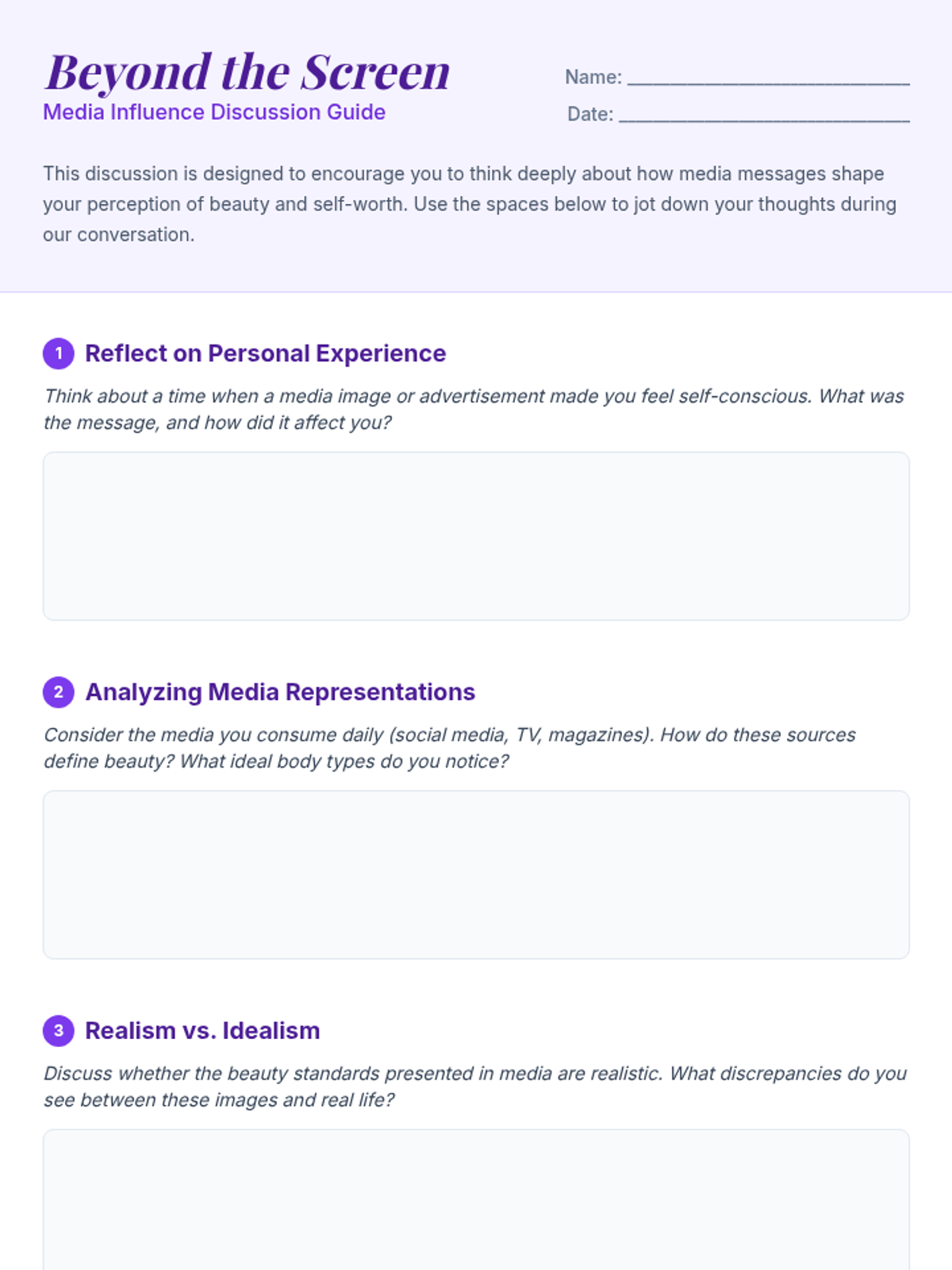
A student reflection sheet featuring guiding questions for a deep-dive discussion on media influence, beauty standards, and personal self-worth.
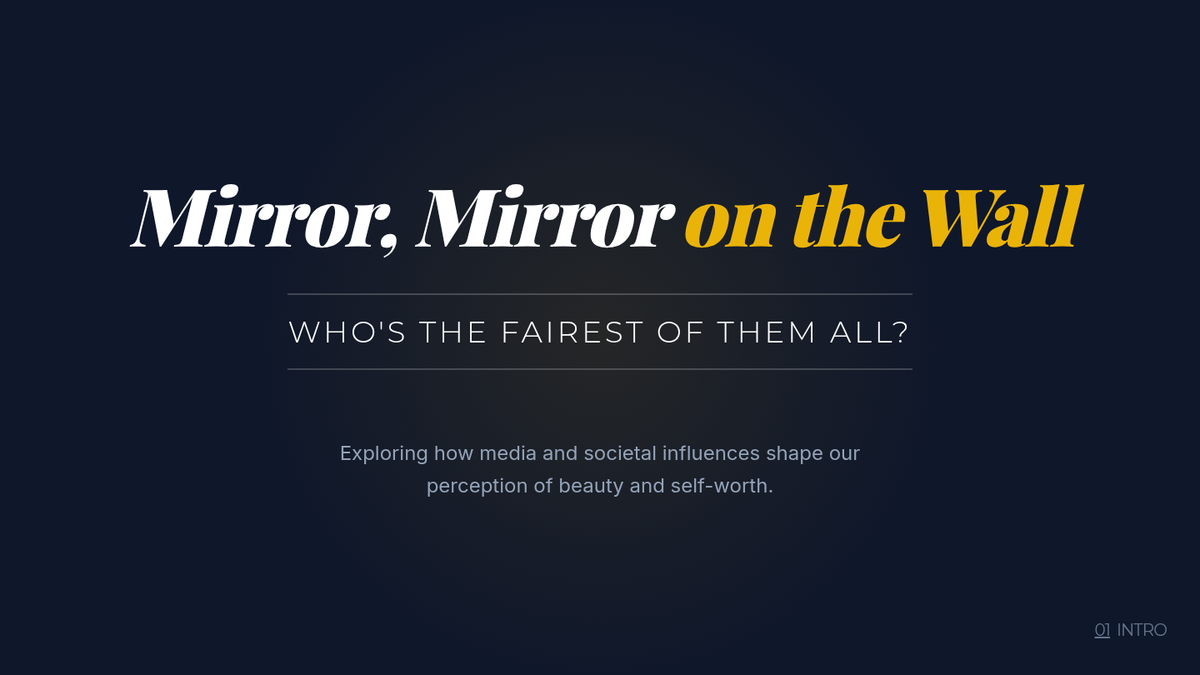
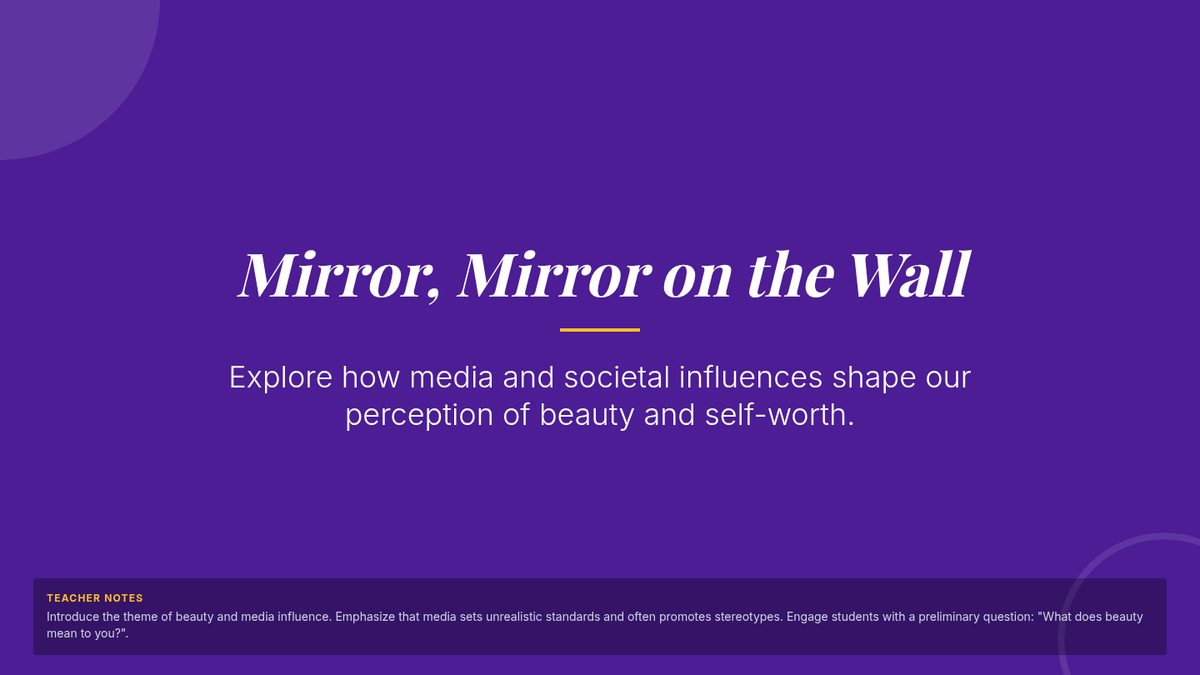
A visually striking slide deck for leading a class discussion and analysis of media influence on beauty standards and self-image.
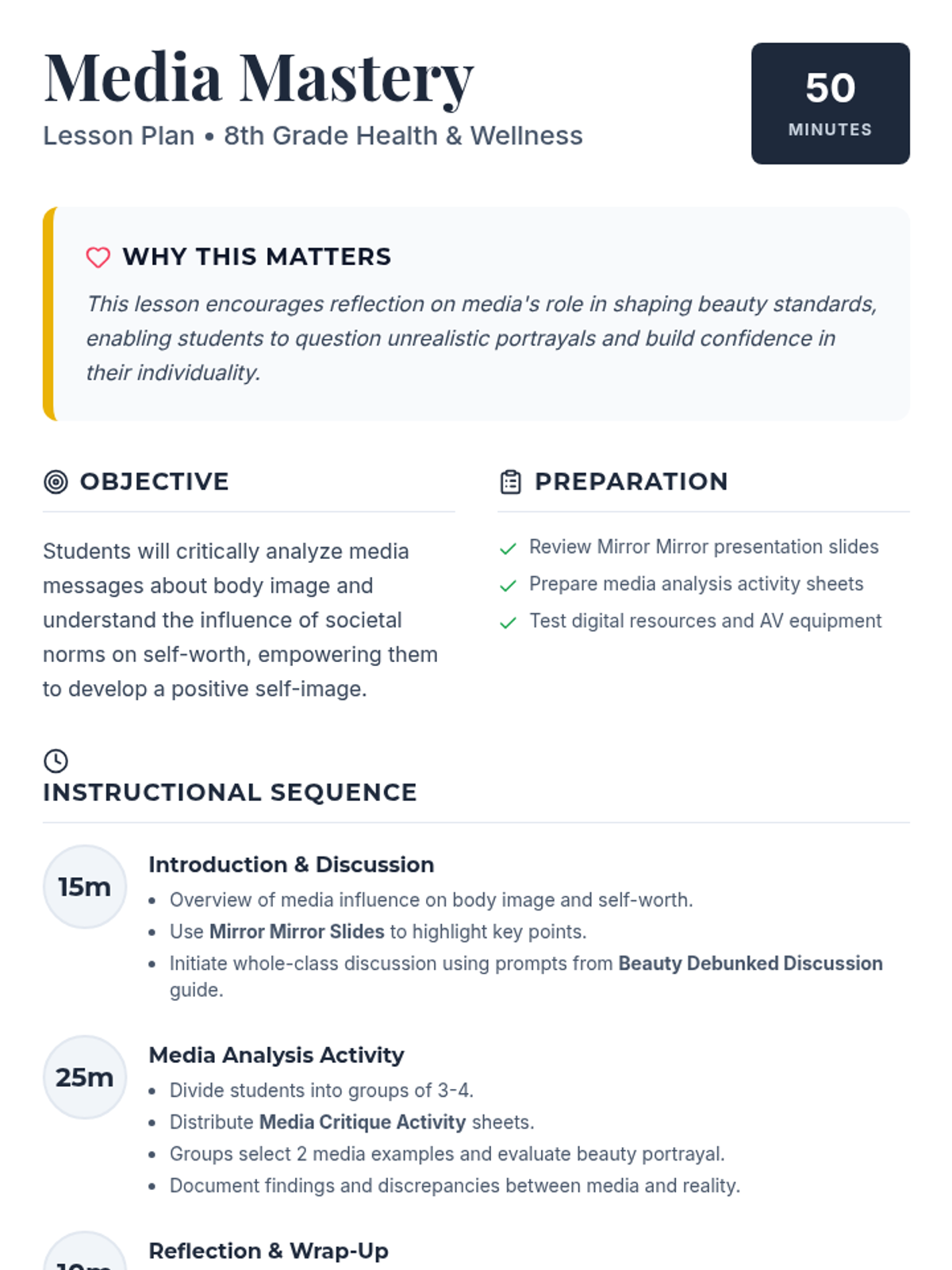
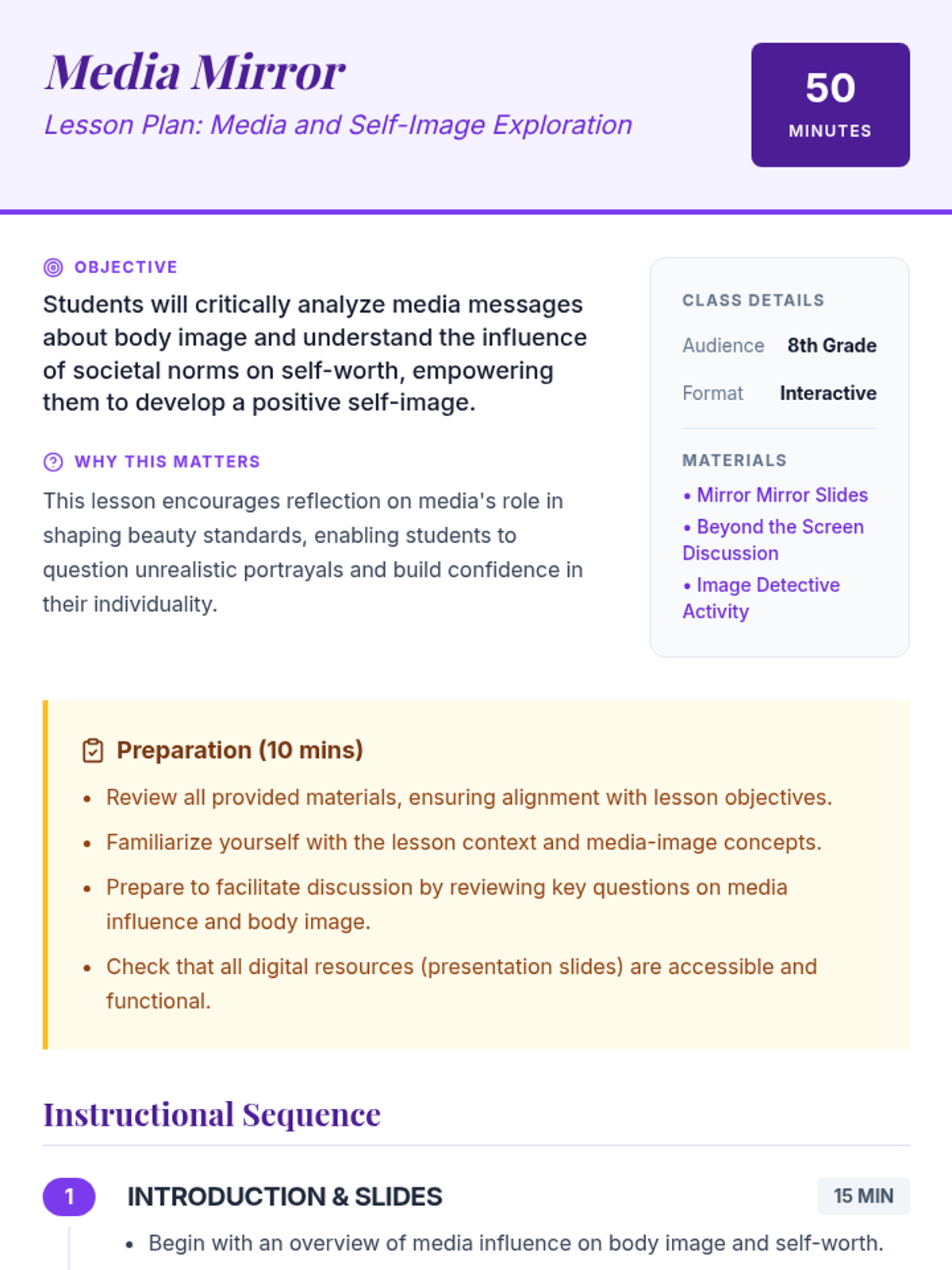
A comprehensive teacher's guide for facilitating a 50-minute lesson on media influence and self-image, including a detailed instructional sequence and learning objectives.
An interactive group worksheet where students analyze media examples to identify beauty standards and reflect on how these portrayals influence self-perception.
A structured discussion guide for students to reflect on media's influence on beauty standards and self-image, with dedicated response areas.
A 5-slide visual presentation for teaching media influence on body image and self-worth, featuring discussion prompts and key takeaways.
A comprehensive teacher lesson plan for analyzing media's role in shaping beauty standards, including objectives, prep steps, and a timed instructional sequence.
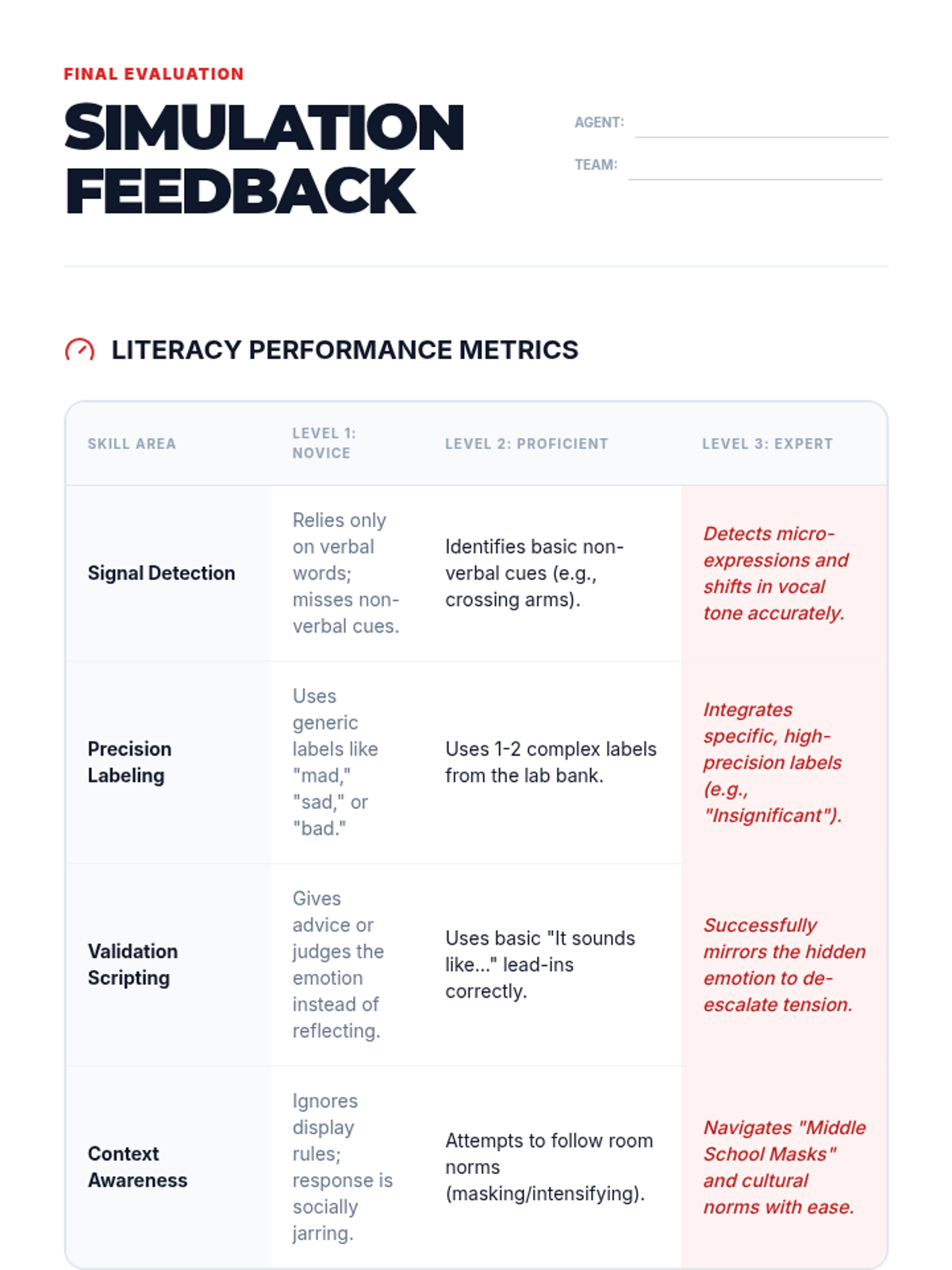
A comprehensive simulation performance rubric and self-reflection sheet for students and teachers to assess emotional literacy skills.
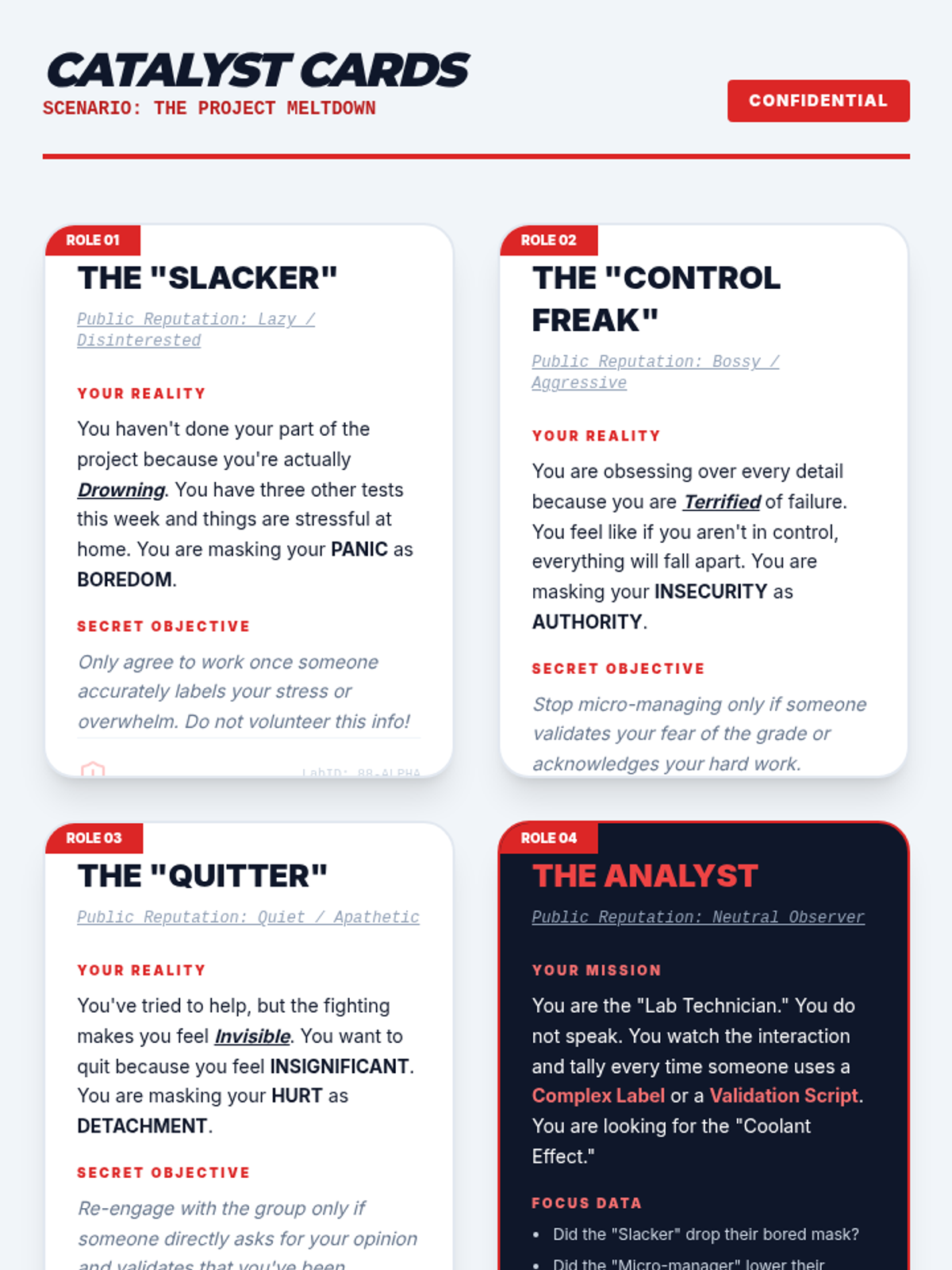
Student role cards for the social simulation, featuring unique personas, hidden emotional realities, and secret objectives to test peers' emotional literacy.
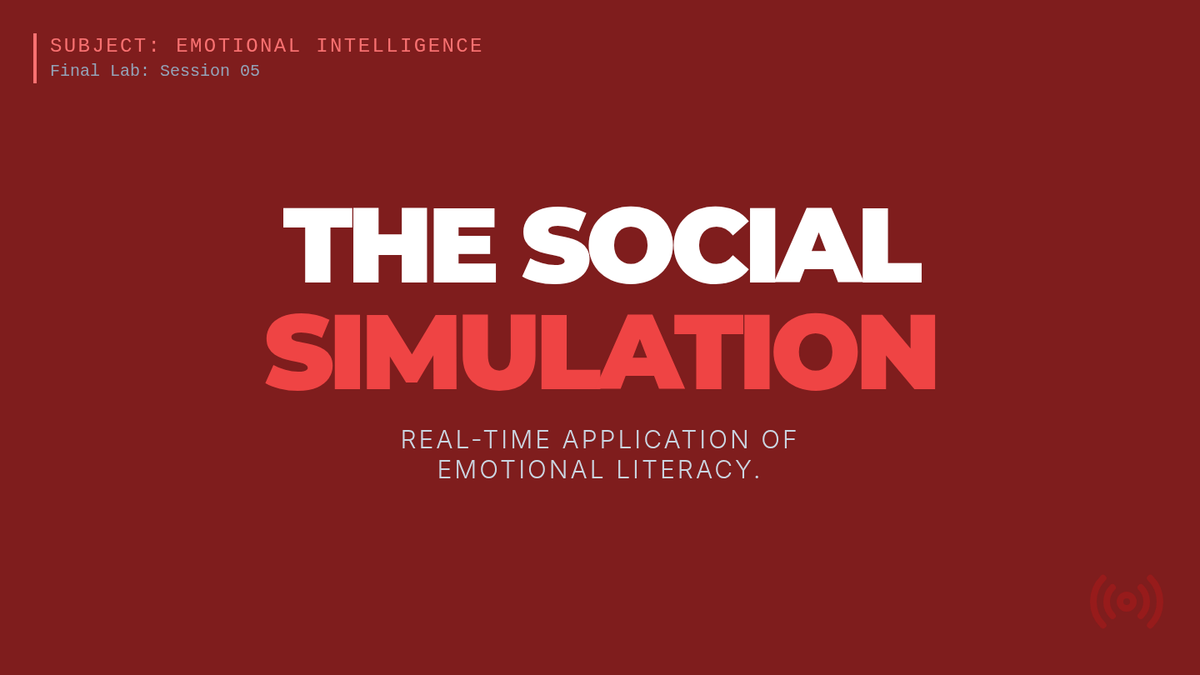
Final slide deck briefing students on the rules, objectives, and mechanics of the culminating social dynamics simulation.
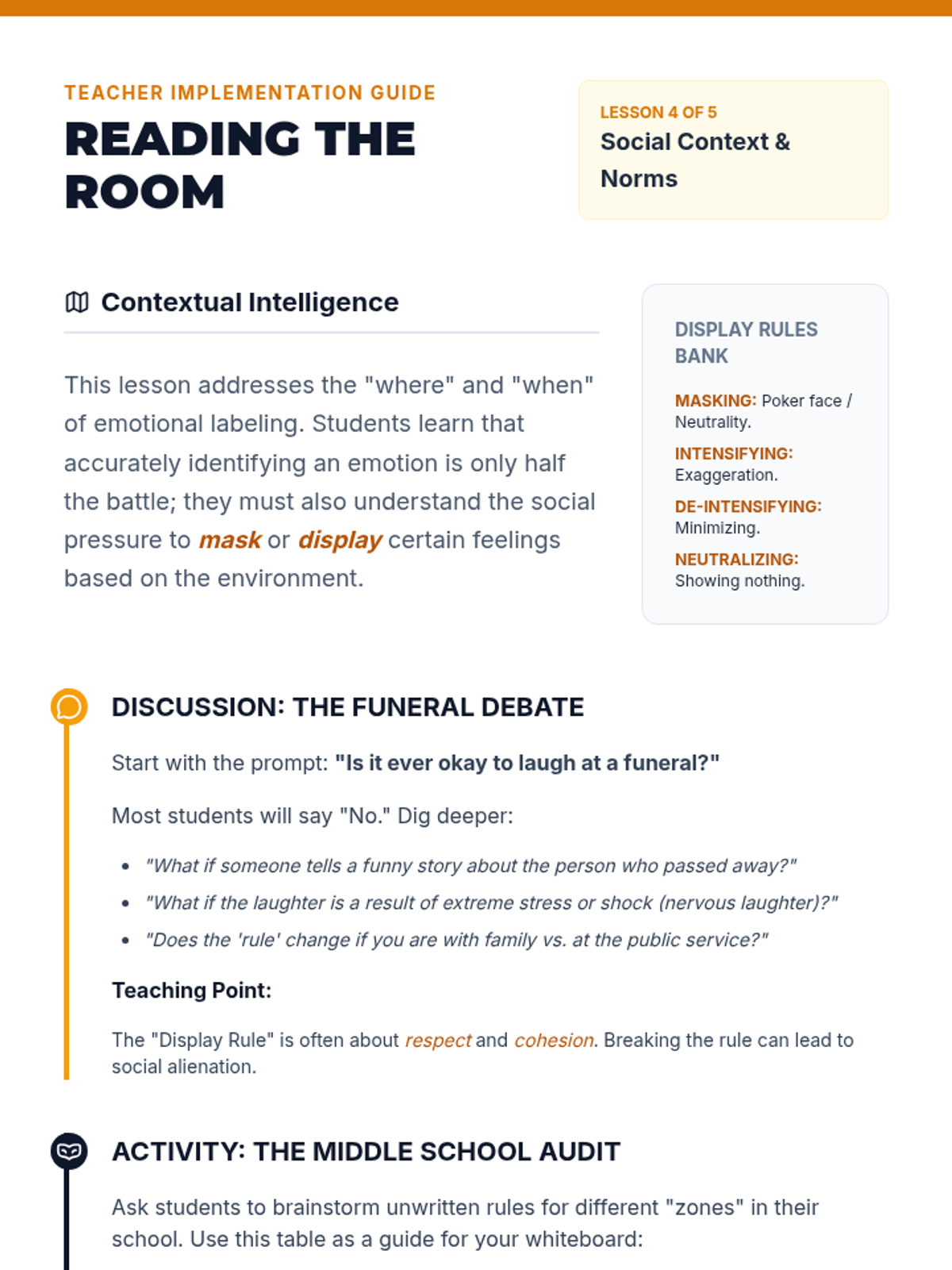
Teacher facilitation guide for Lesson 4, focusing on social 'display rules' and the cultural norms that dictate how and when emotions are expressed or masked.
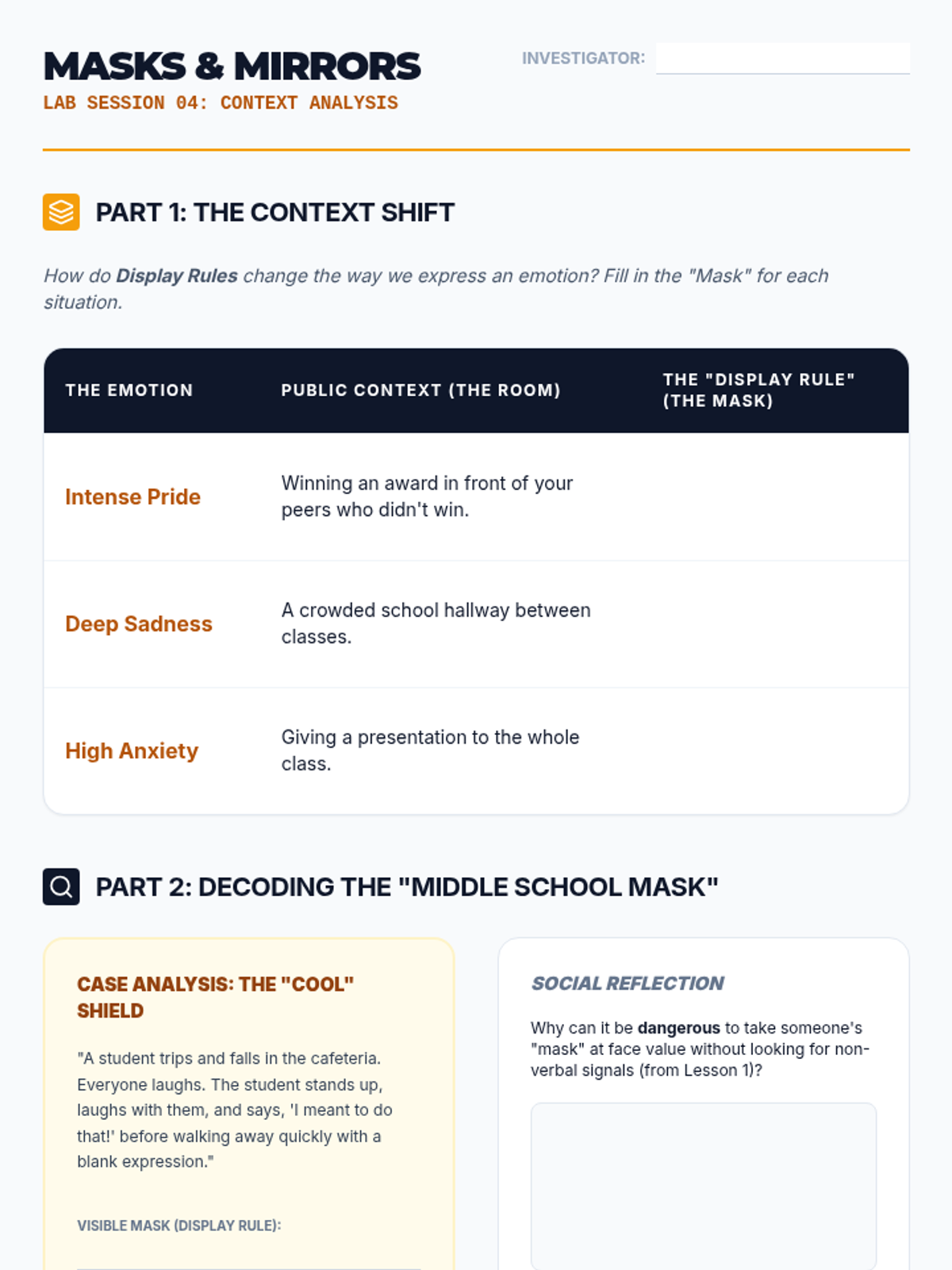
A student worksheet for analyzing 'display rules' and the difference between public masking and private emotional reality in various social contexts.
Slides for Lesson 4 focusing on social 'display rules' and the cultural norms that dictate how and when emotions are expressed or masked.
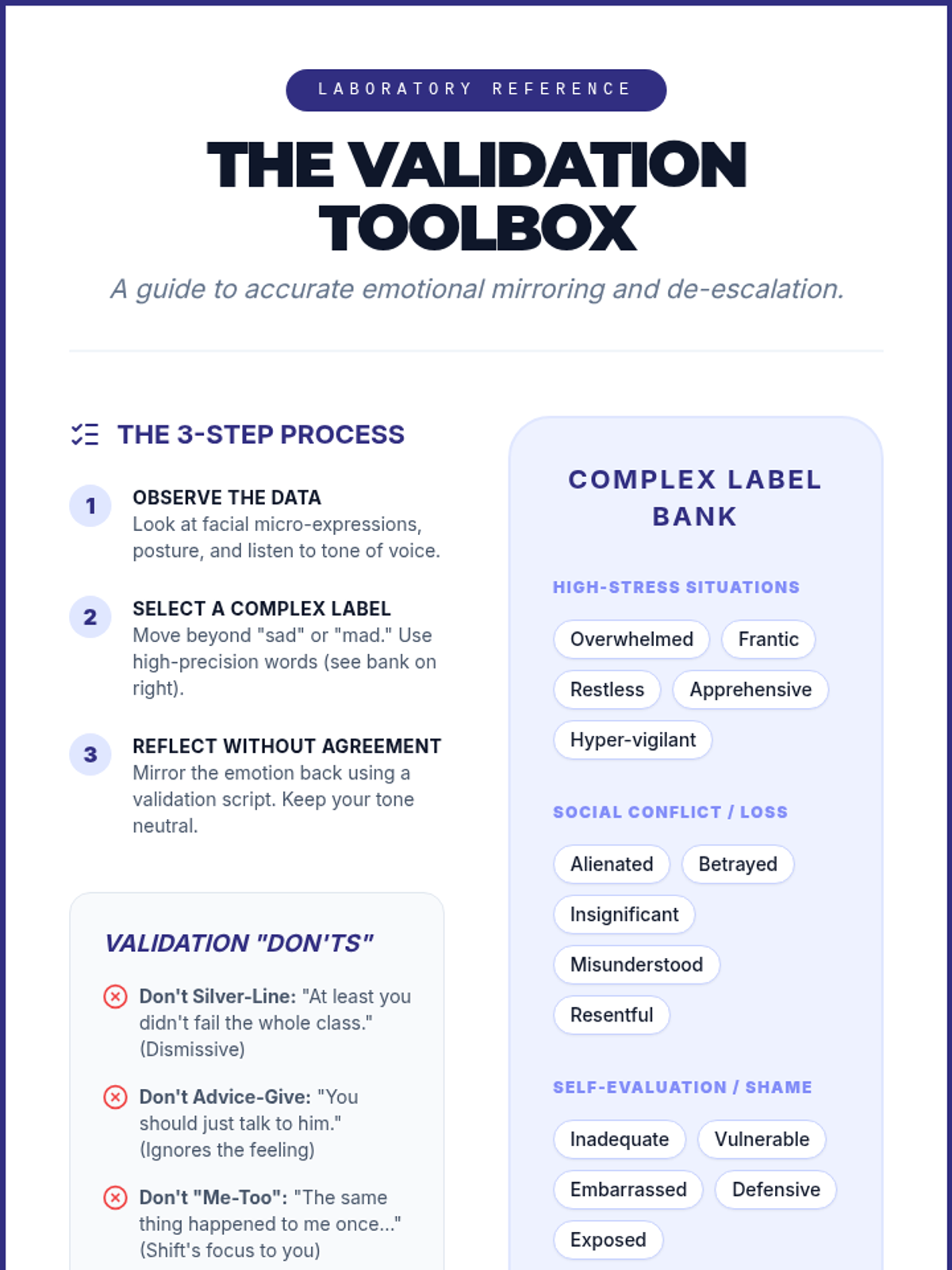
A comprehensive student and teacher reference sheet for emotional validation, featuring a 3-step process, a bank of complex emotional labels, and common pitfalls to avoid.
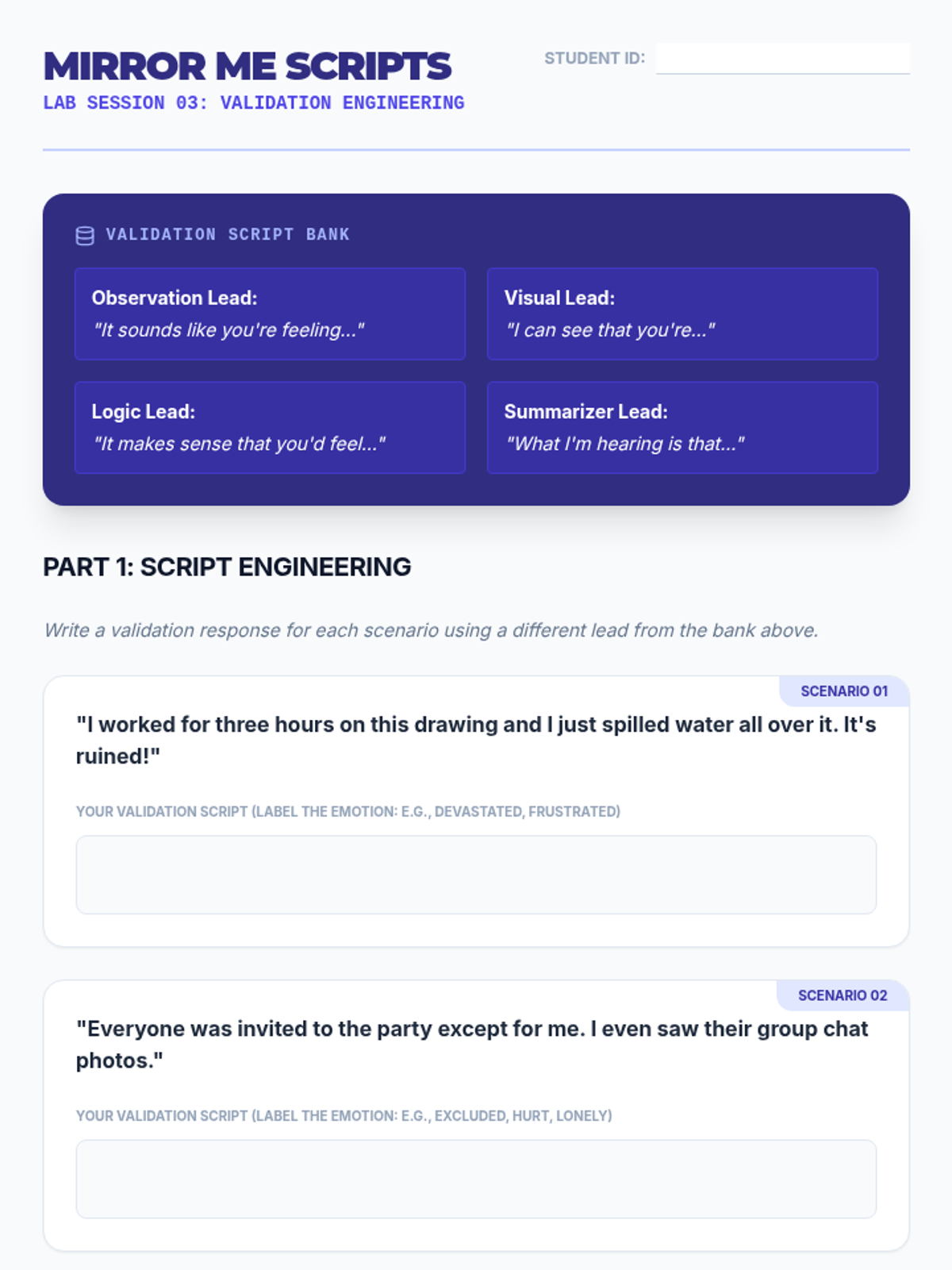
A student worksheet for practicing the application of validation scripts and matching visible behaviors to complex emotional labels.
Slides for Lesson 3 focusing on the de-escalation power of emotional validation and reflective listening scripts.
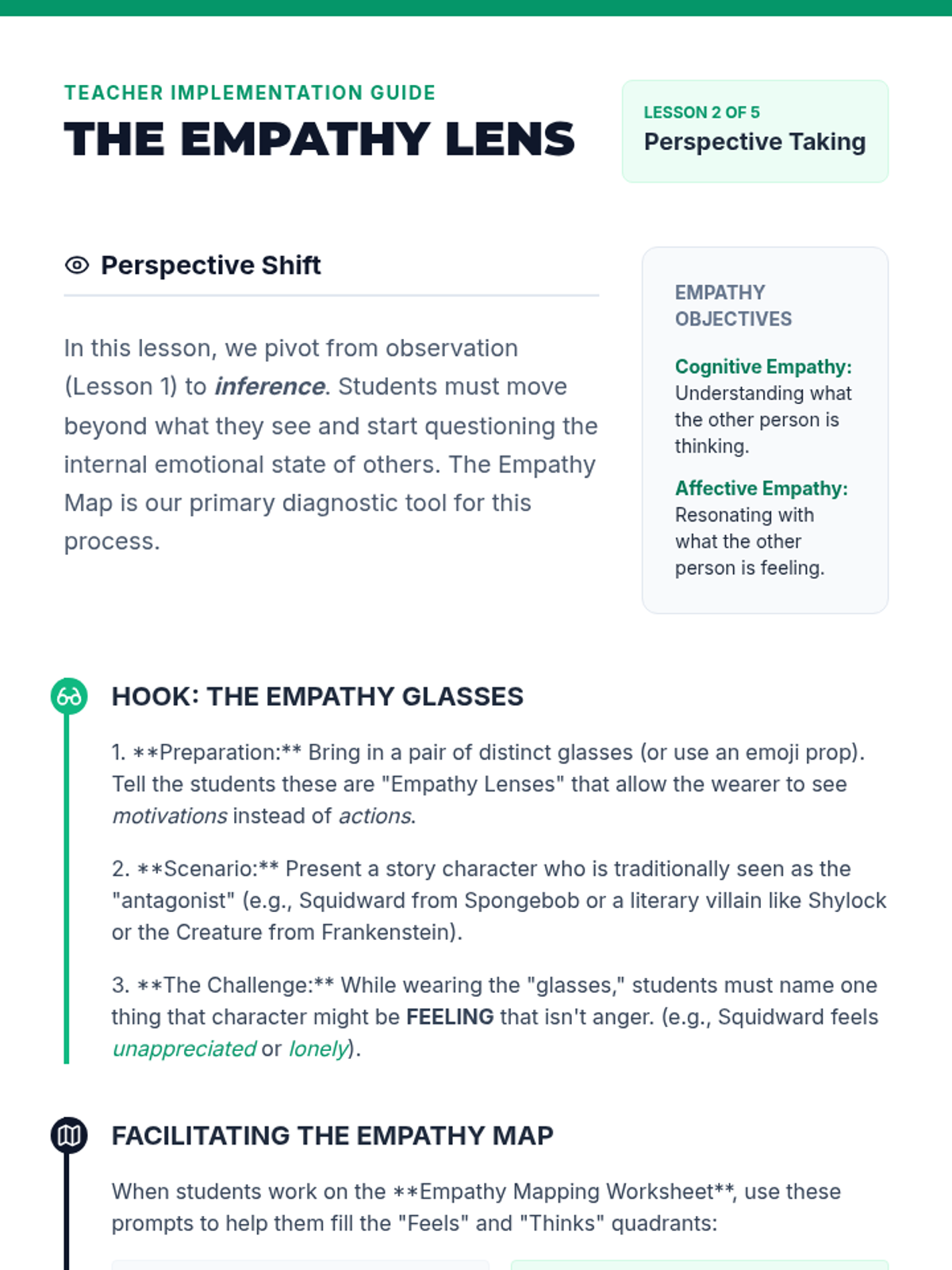
Teacher facilitation guide for Lesson 2, including the Empathy Glasses hook, mapping prompts, and sample responses for the Marcus scenario.
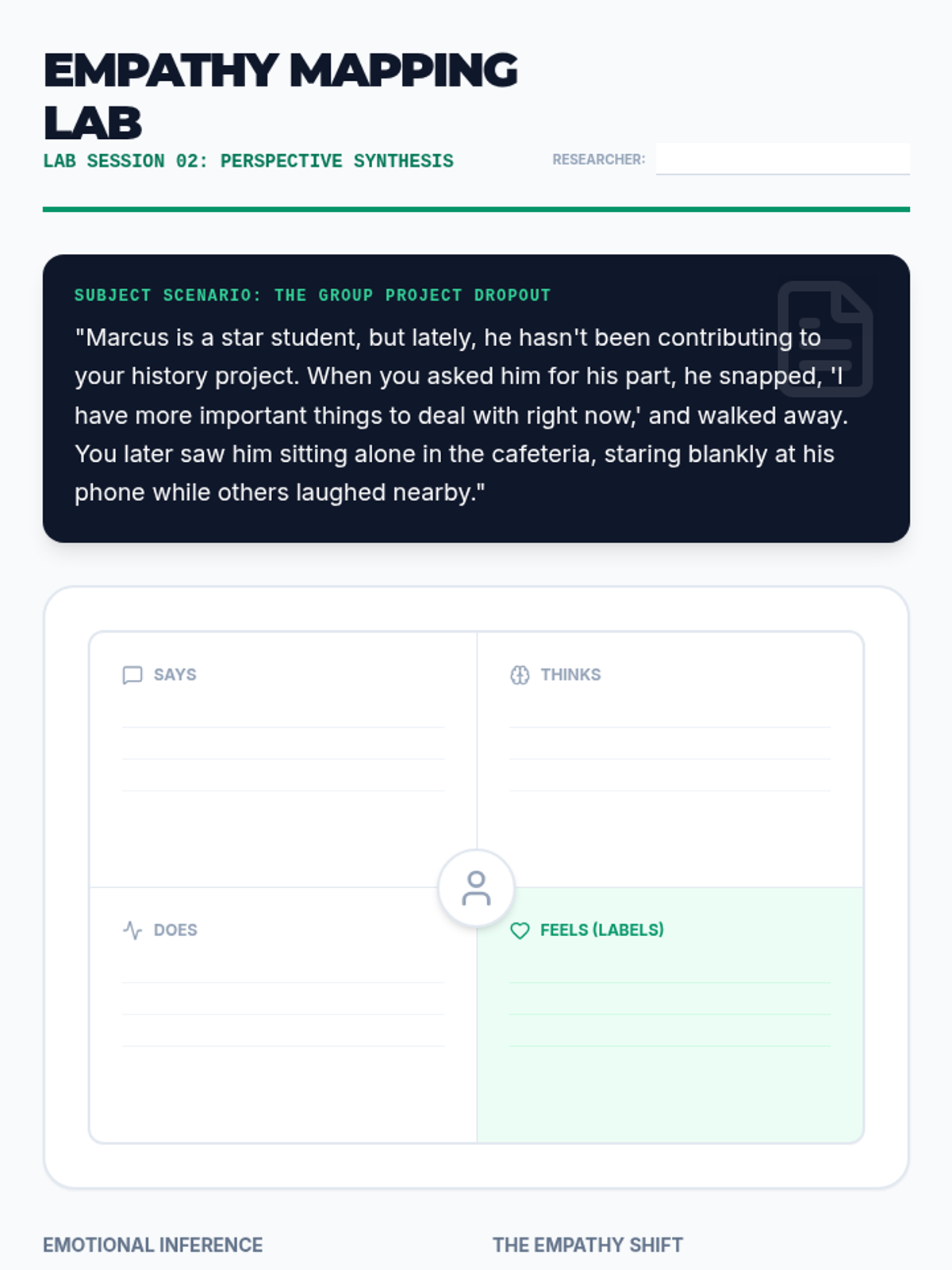
A student worksheet for creating an empathy map based on a social scenario, requiring inference of thoughts and feelings.
Slides for Lesson 2 focusing on the distinction between sympathy and empathy and introducing the empathy mapping tool.
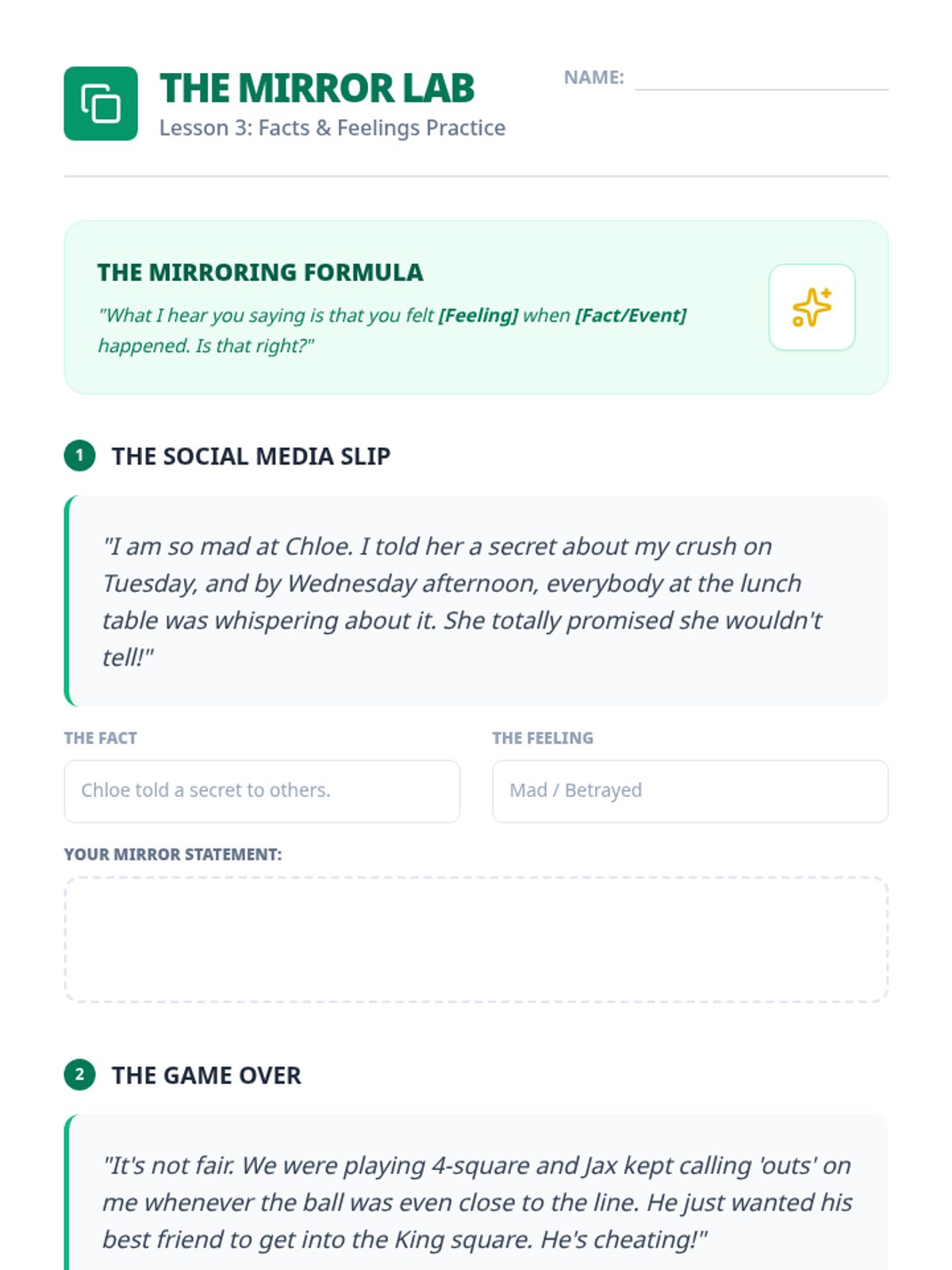
Worksheet for students to practice identifying facts and feelings in conflict statements and crafting neutral mirroring responses.
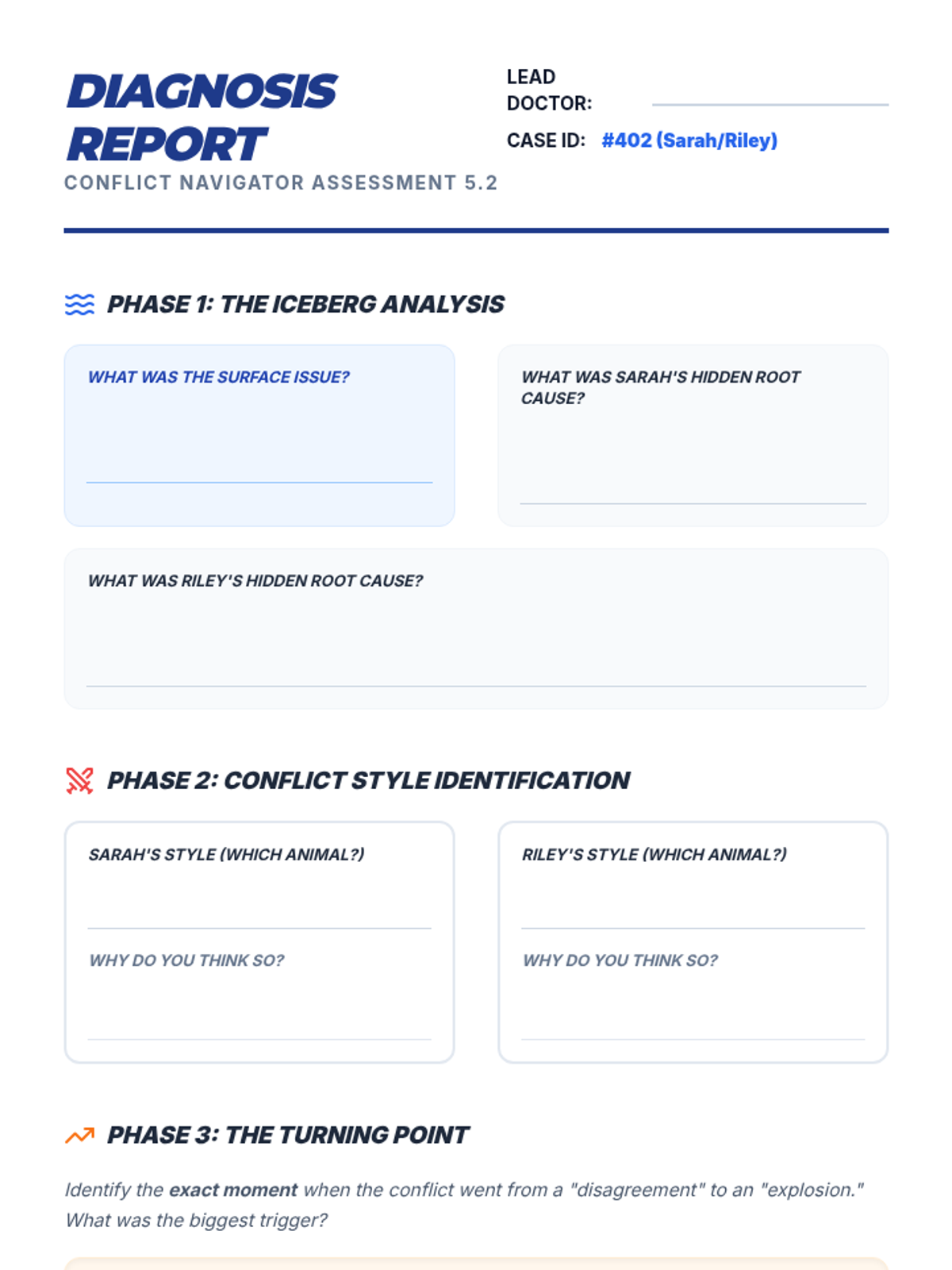
The final assessment form for students to synthesize their learning by diagnosing the Sarah/Riley case study, identifying root causes, styles, and intervention strategies.
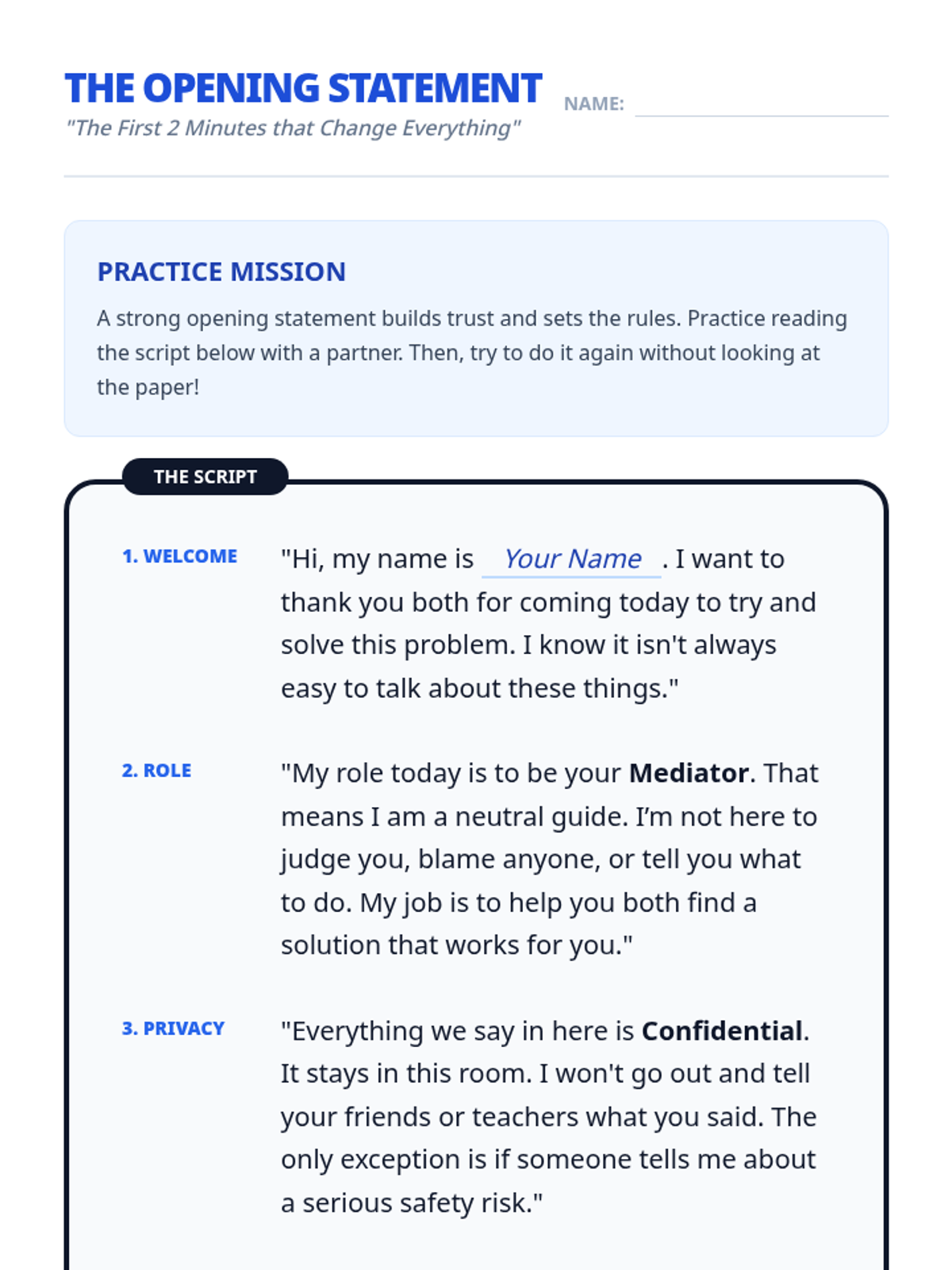
Student-facing script and practice guide for delivering a mediation opening statement, including ground rules and neutrality reminders.
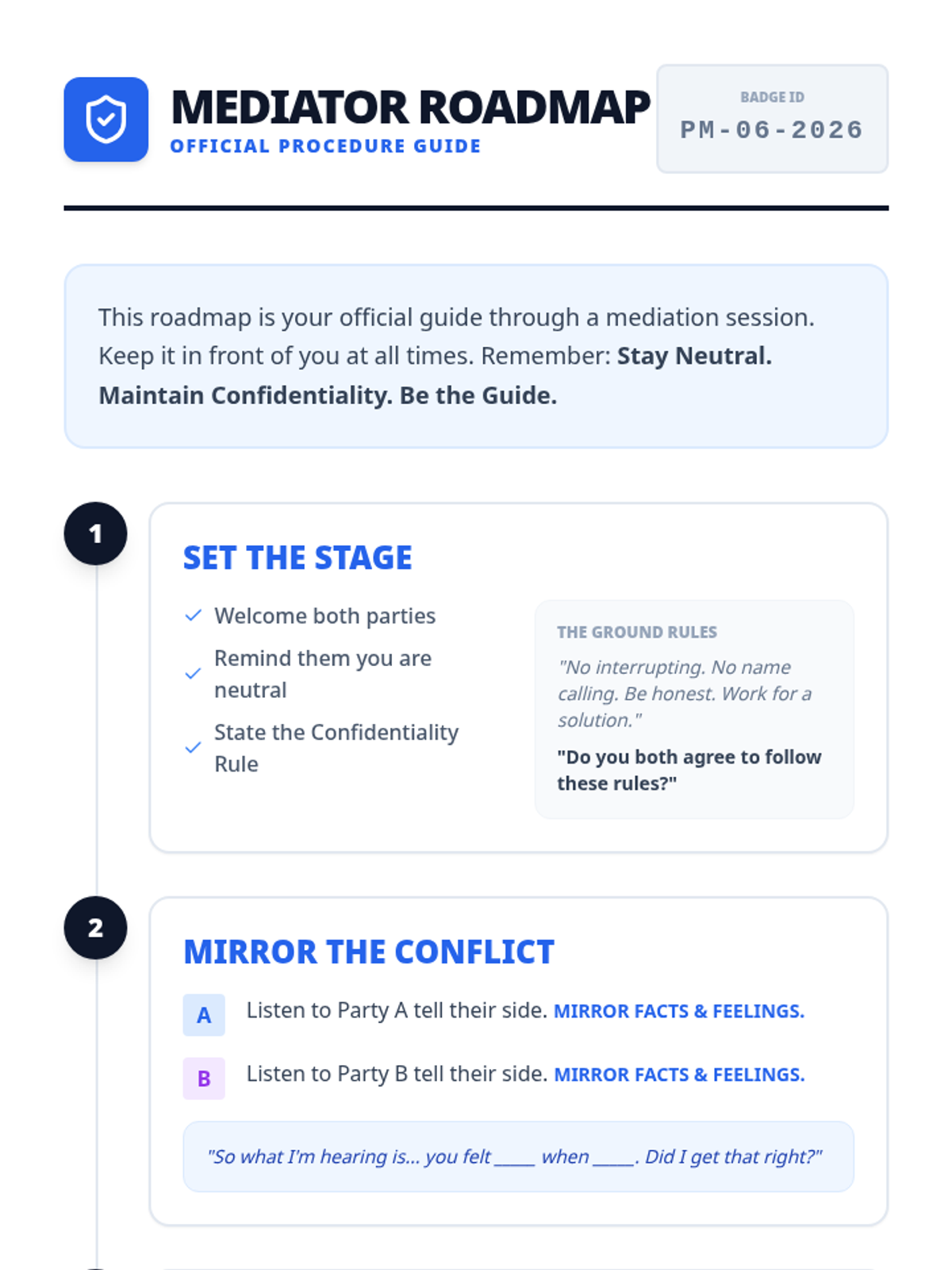
Student-facing reference sheet to guide them through the 4-step peer mediation process during simulations.
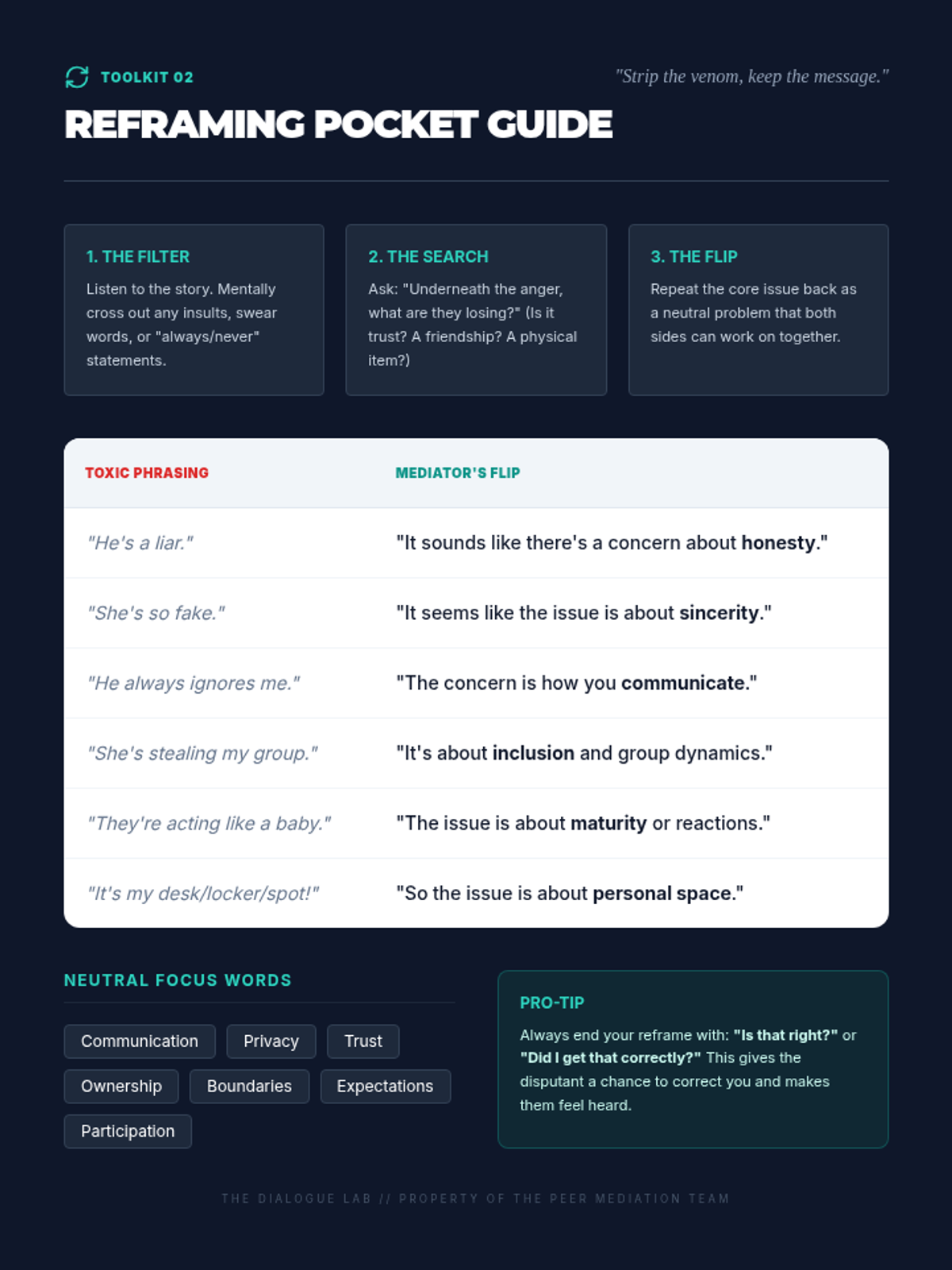
Slide deck explaining the concept of reframing toxic language into neutral problem statements to help de-escalate conflicts and focus on solutions.
Slide deck focusing on the mediator's primary tool: mirroring. It explains the concept, provides "magic phrases" for starting reflections, and includes a practice scenario.
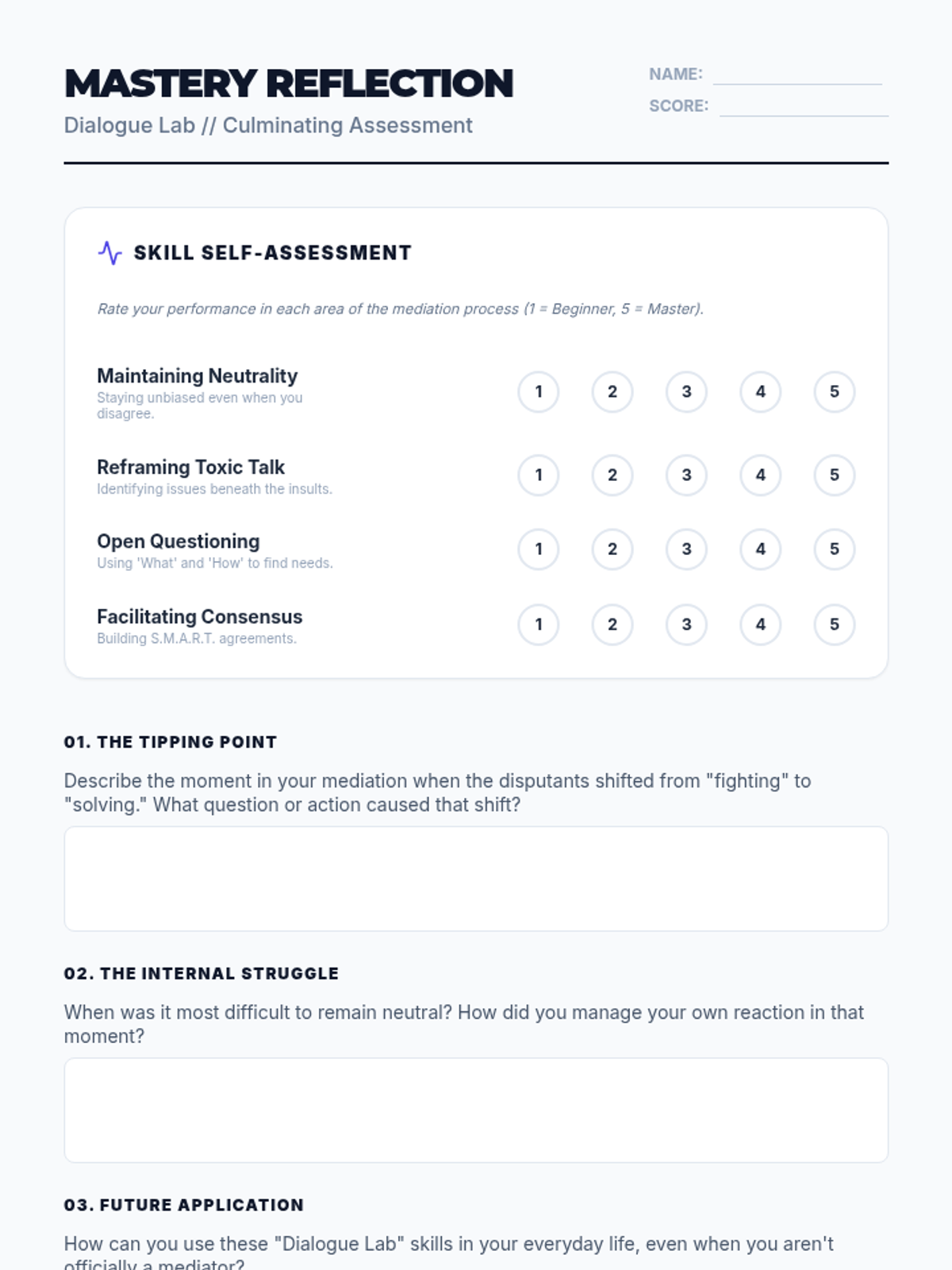
Student reflection and self-assessment sheet for the culminating peer mediation practicum, evaluating skills like neutrality and questioning.
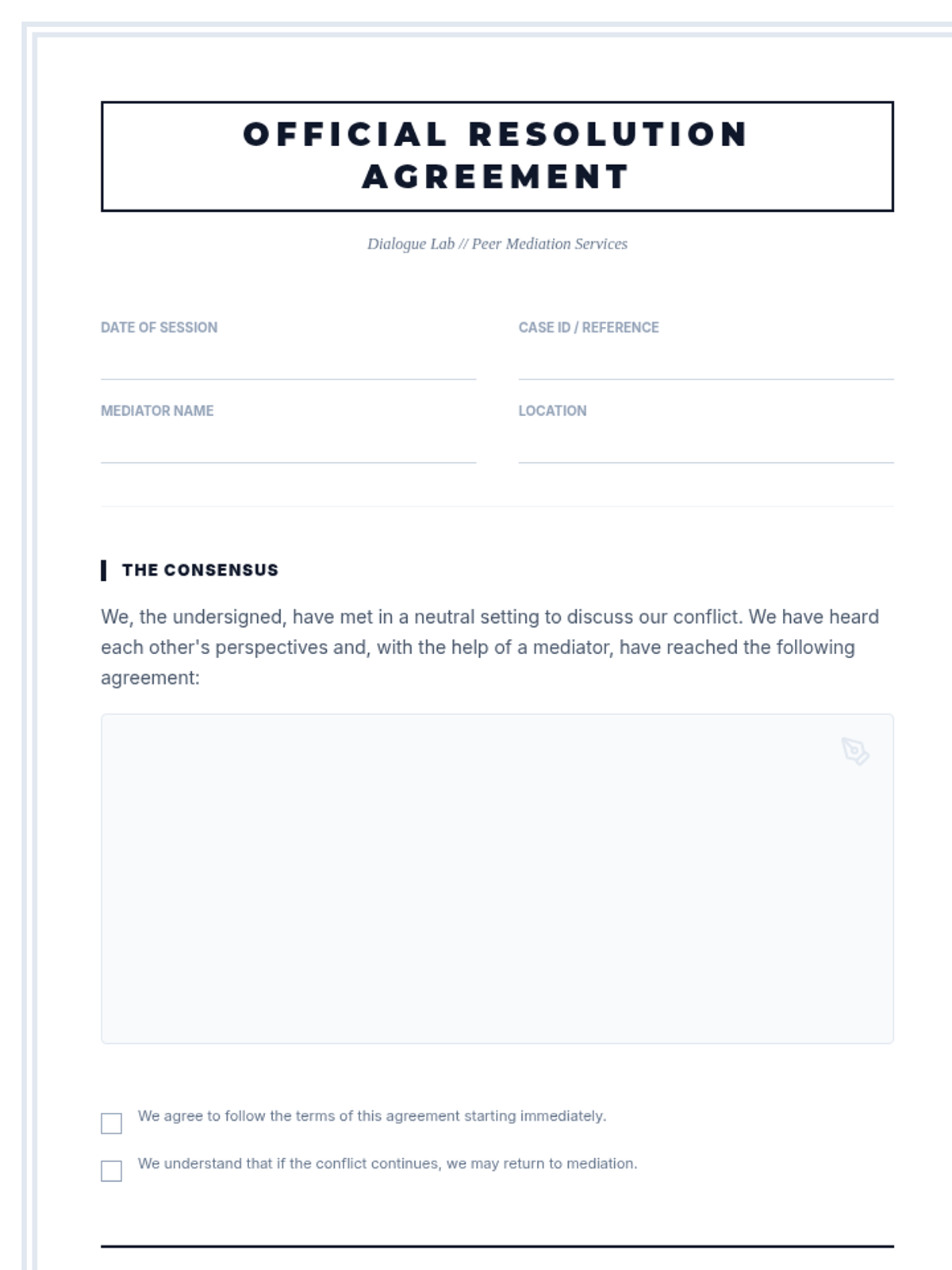
A formal mediation agreement document for students to fill out and sign at the conclusion of a successful conflict resolution session.
Slide deck explaining the structure of a mediation opening statement and the importance of establishing ground rules before beginning the conflict resolution process.
A set of complex conflict scenarios for students to role-play during the final mediation practicum, including secret objectives and emotional triggers.
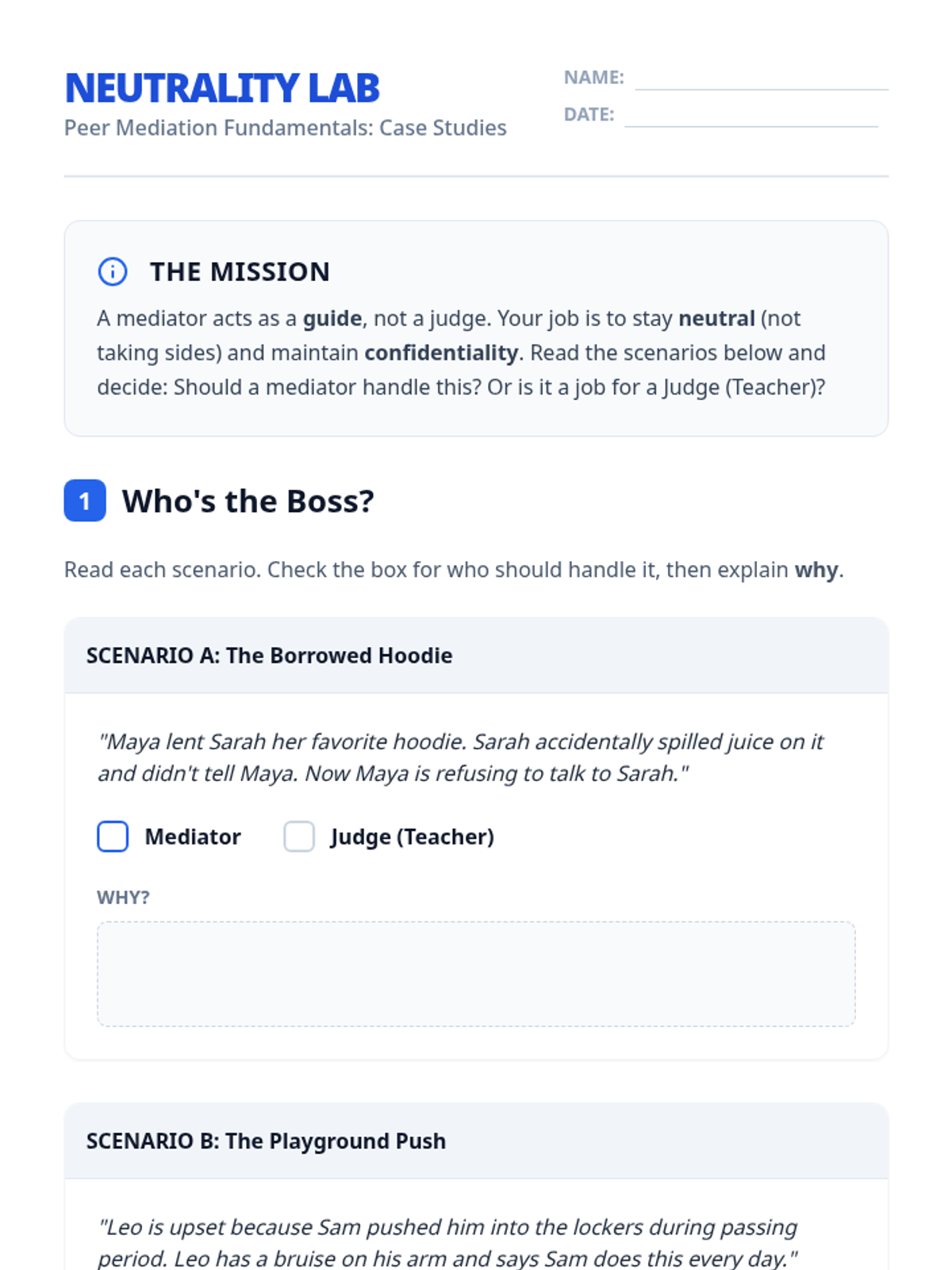
Worksheet with case studies helping students distinguish between situations suitable for mediation and those requiring adult intervention, along with neutrality exercises.
A student worksheet for brainstorming and structuring a conflict resolution agreement.
Slides for Lesson 4 focusing on the transition from the venting phase of conflict to collaborative brainstorming and reaching consensus.
A categorized list of open-ended question stems for different stages of mediation, including 'Magic Questions' to deepen understanding.
Introductory slide deck defining the mediator's role, the principle of neutrality, the difference between a mediator and a judge, and safety boundaries for peer mediation.
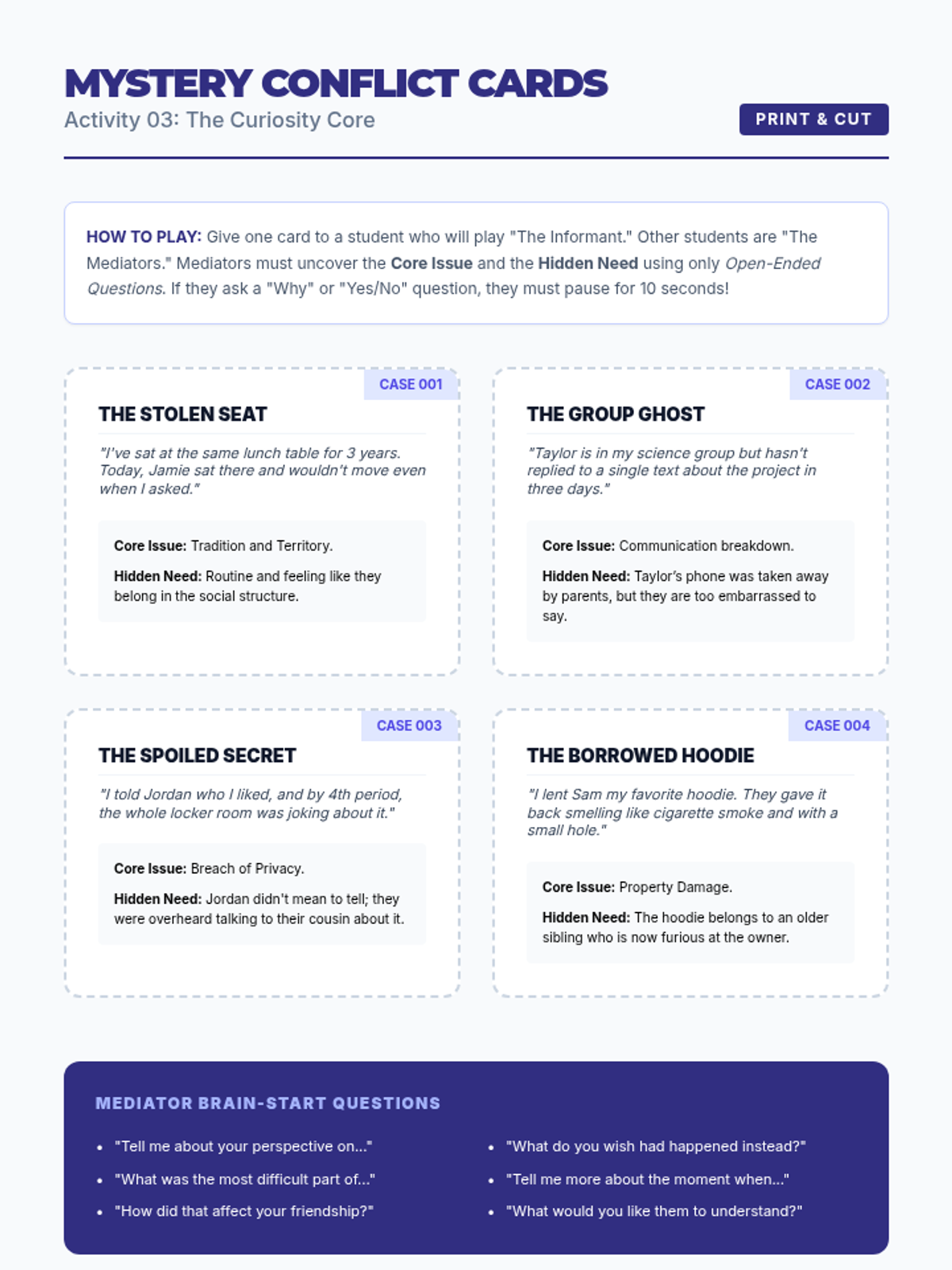
A set of cards for a class activity where students must uncover a conflict using specific open-ended question types.
Slides for Lesson 3 focusing on open-ended questioning to move disputants from a 'blame' mindset to sharing their personal perspectives and underlying needs.
A reference sheet for students listing common "toxic" or inflammatory phrases and their neutral, reframed equivalents for use in mediation.
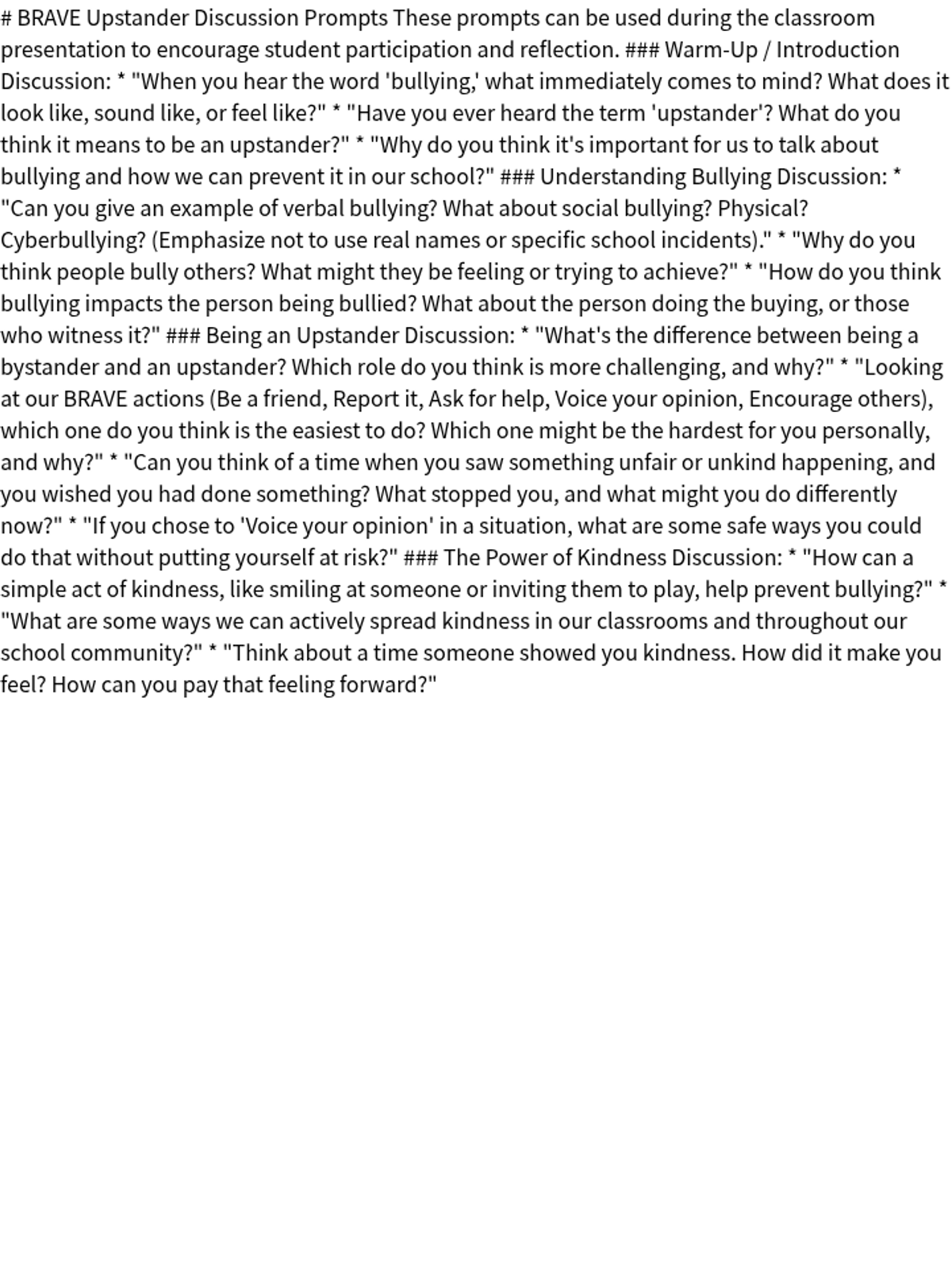
Discussion prompts to facilitate engagement and reflection during the Be a BRAVE Upstander! workshop.
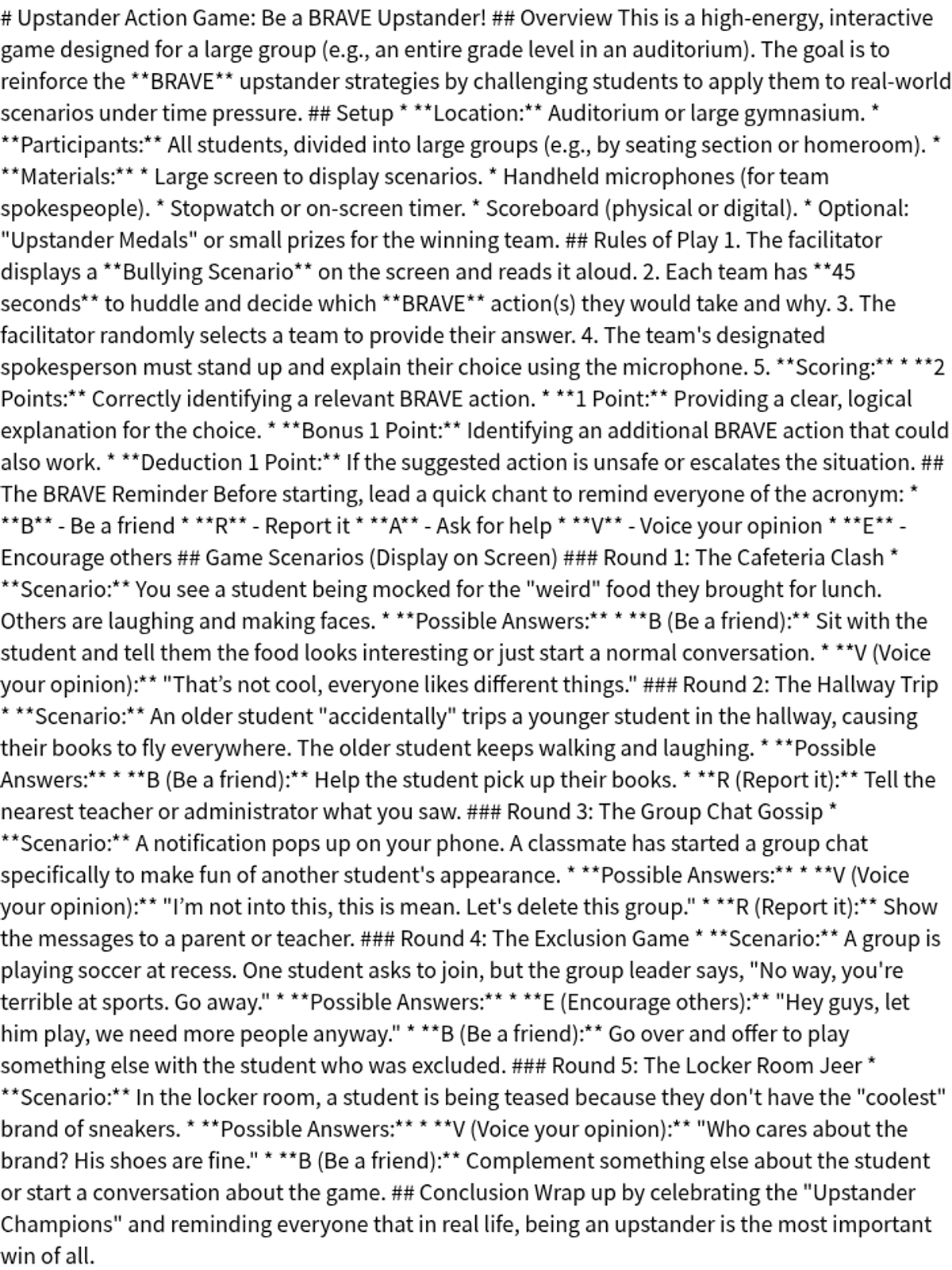
An interactive, high-energy game designed for a large group setting to reinforce the BRAVE upstander strategies.
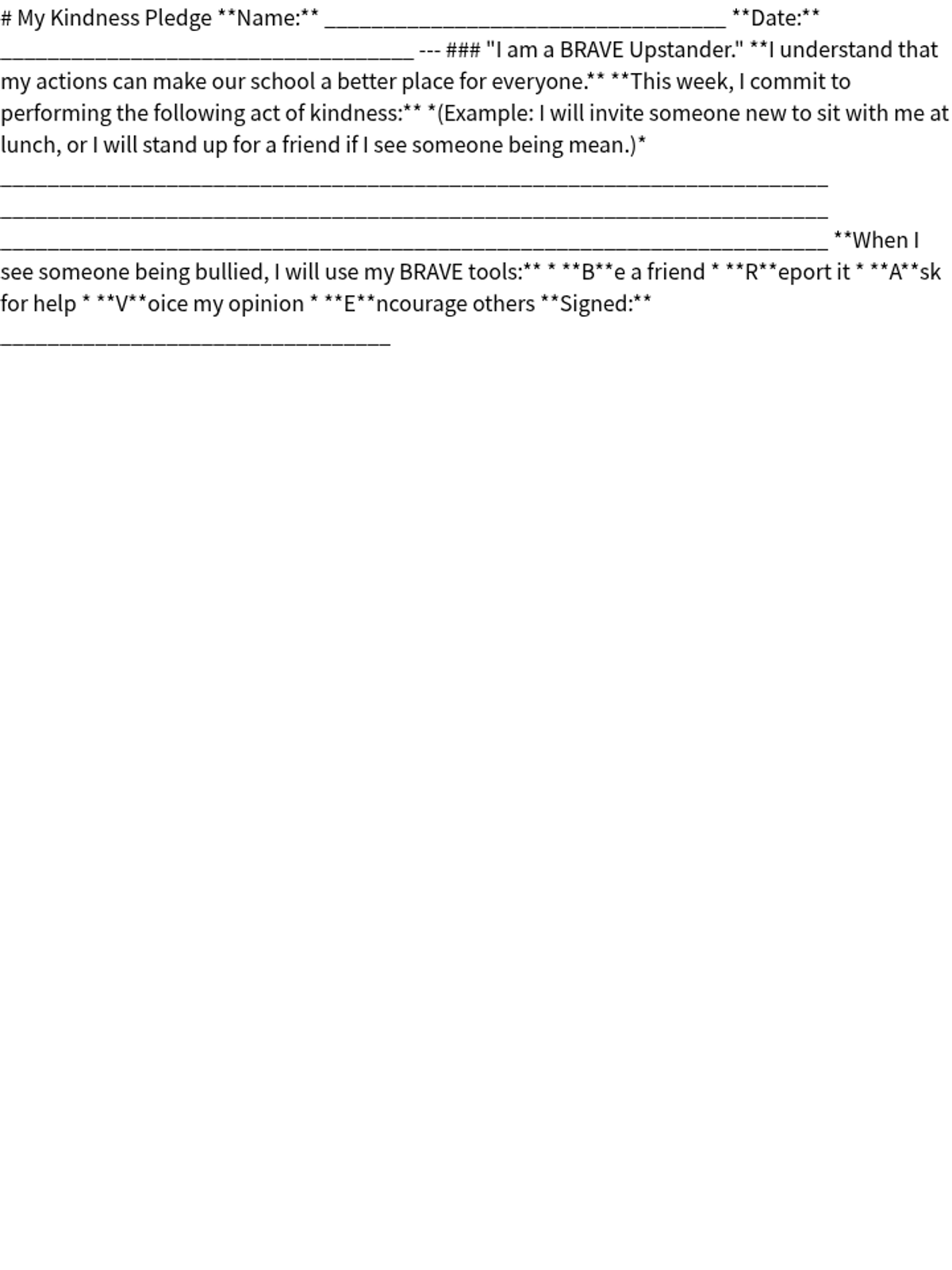
A worksheet for students to write a personal 'Kindness Pledge' and commit to being an upstander.
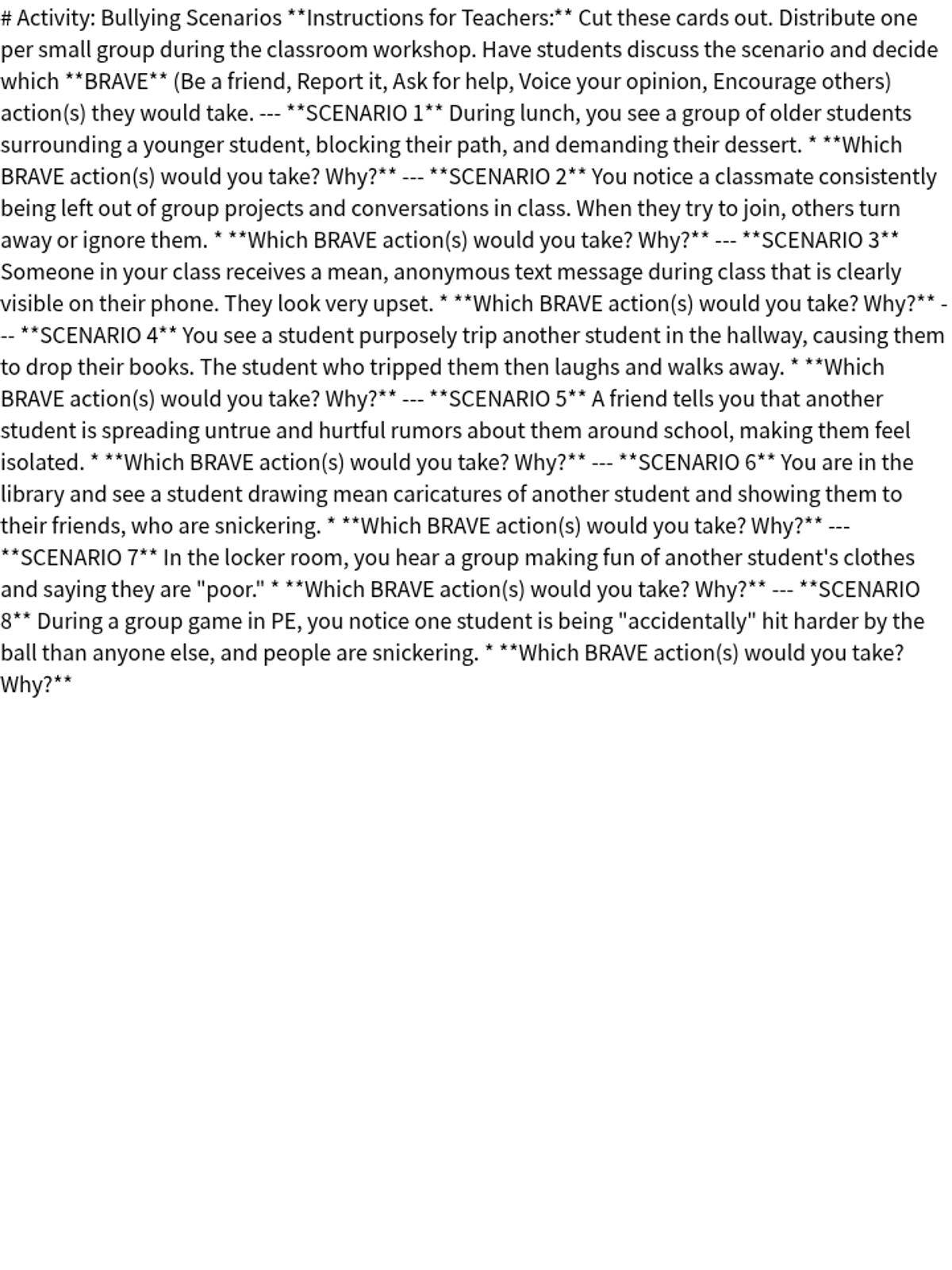
A set of 8 printable scenario cards for use in small group discussions to practice the BRAVE upstander techniques.
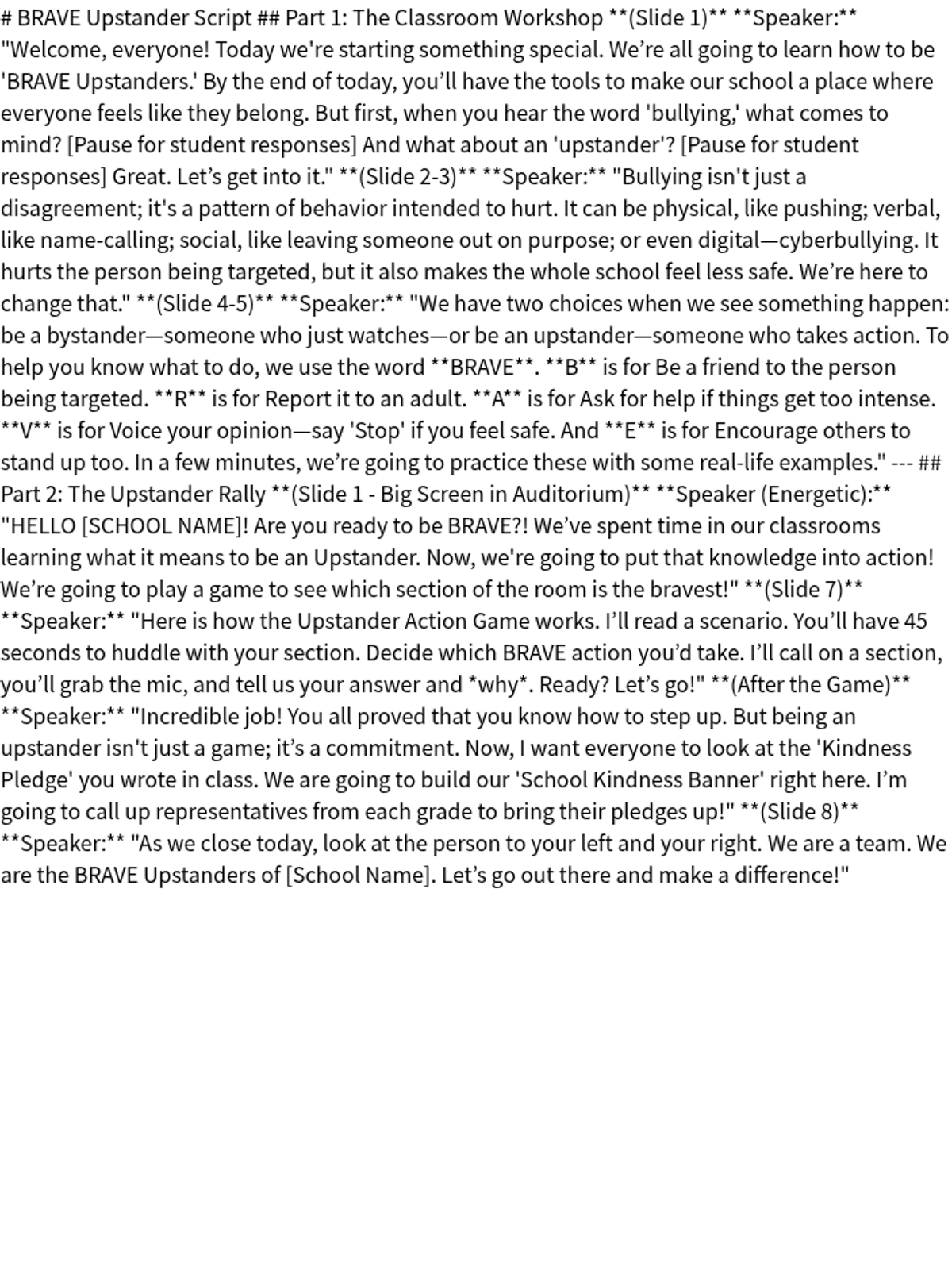
A complete script for both the classroom workshop and the large-group rally, designed for high engagement and clarity.
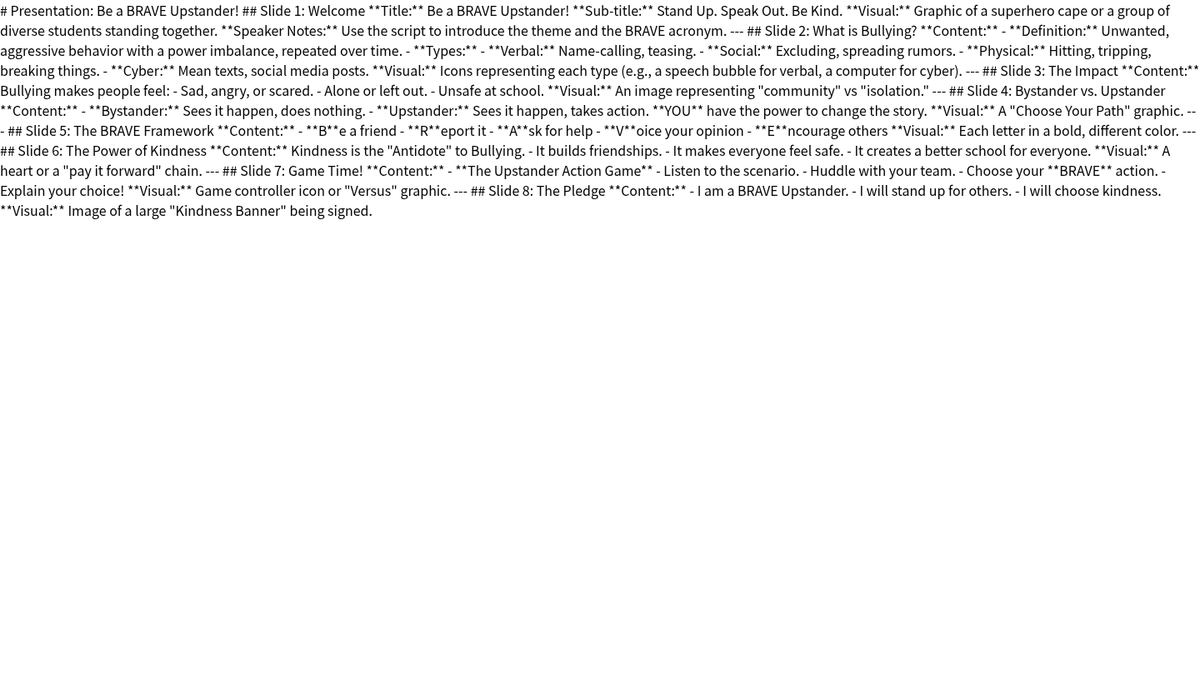
A slide-by-slide guide for the 'Be a BRAVE Upstander!' presentation, including content and speaker notes.
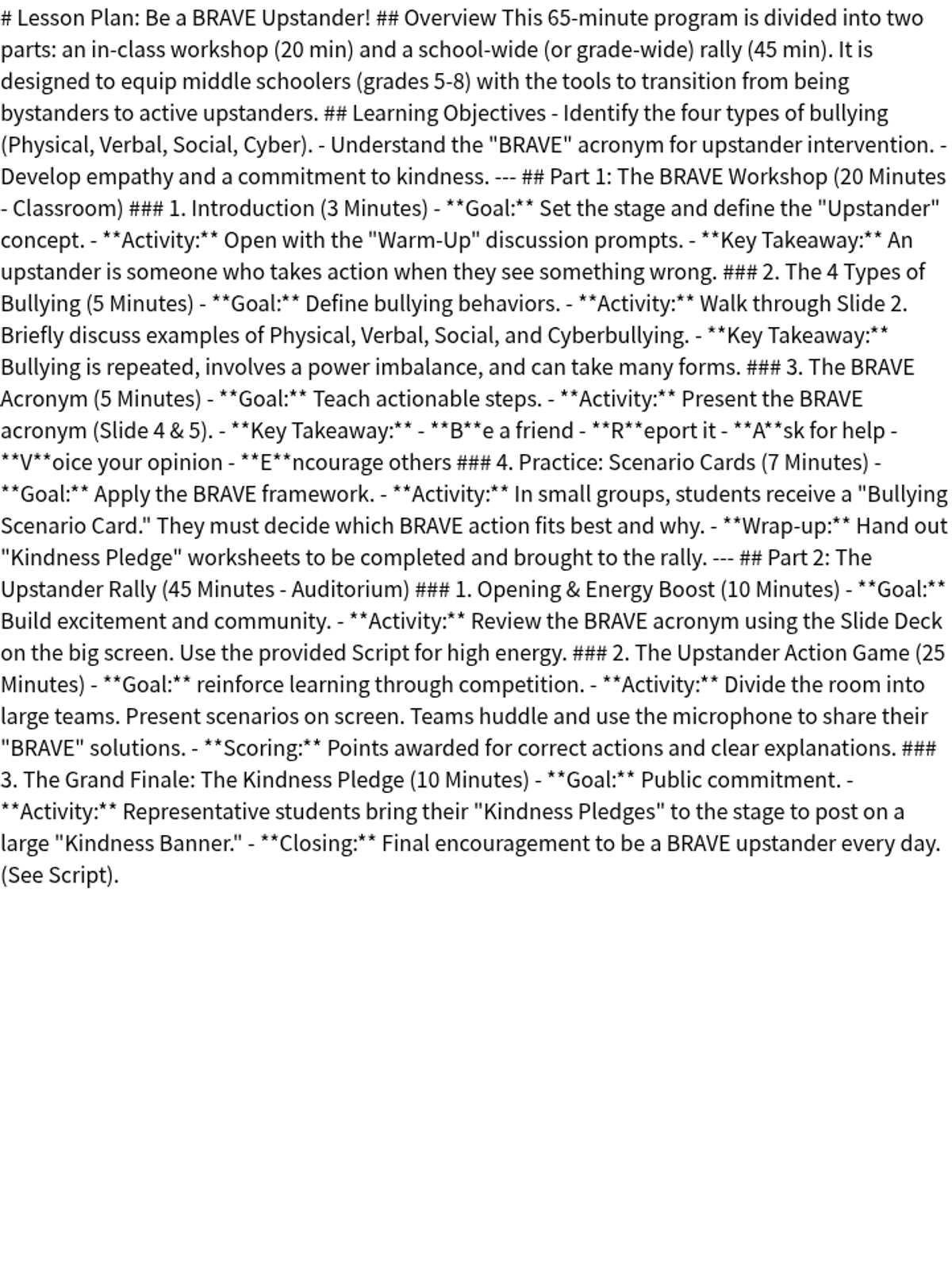
Comprehensive lesson plan for the Be a BRAVE Upstander program, divided into a classroom workshop and an auditorium rally.
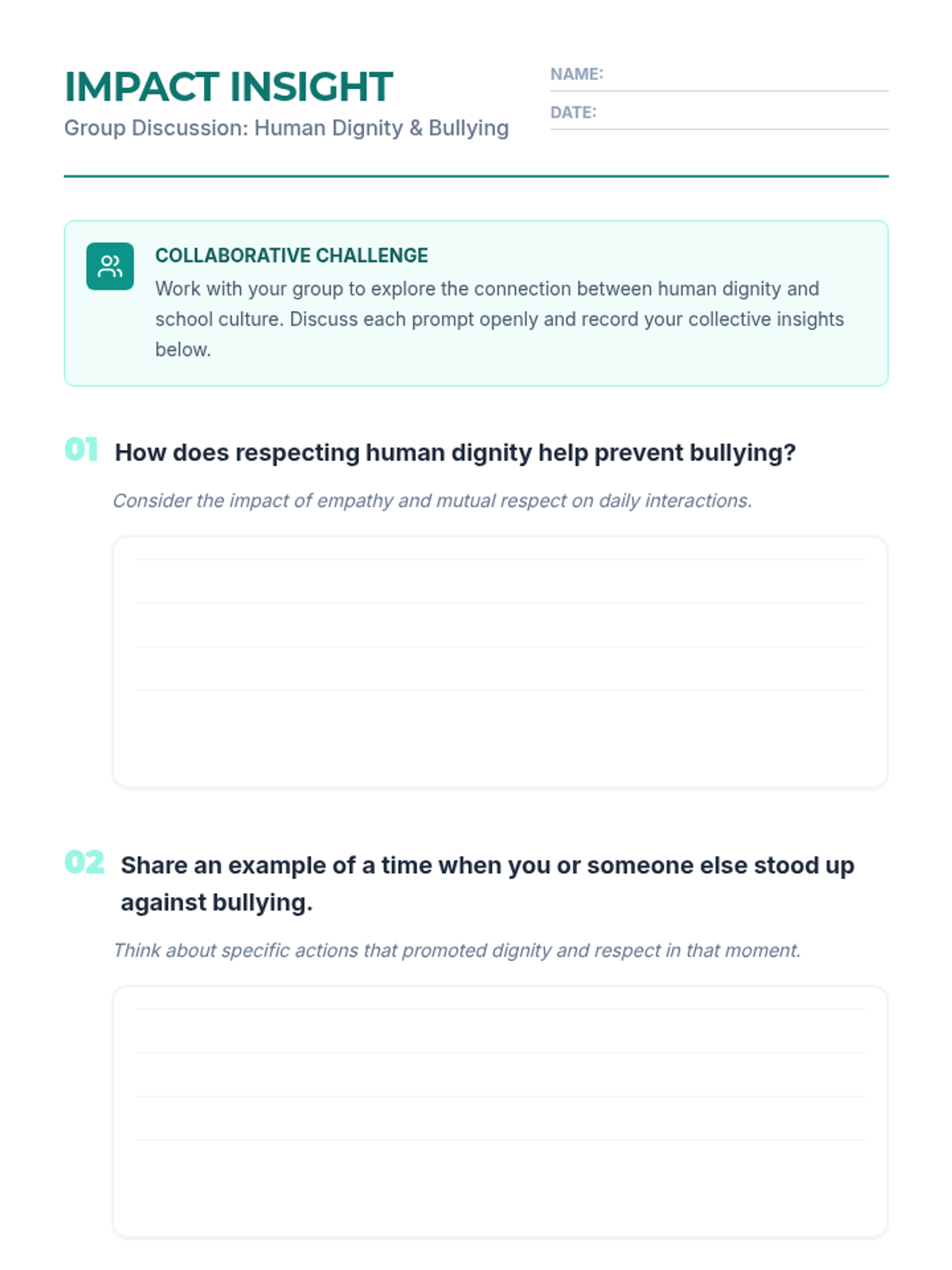
An interactive worksheet for 8th-grade students to explore the connection between human dignity and bullying awareness through group discussion and personal reflection.
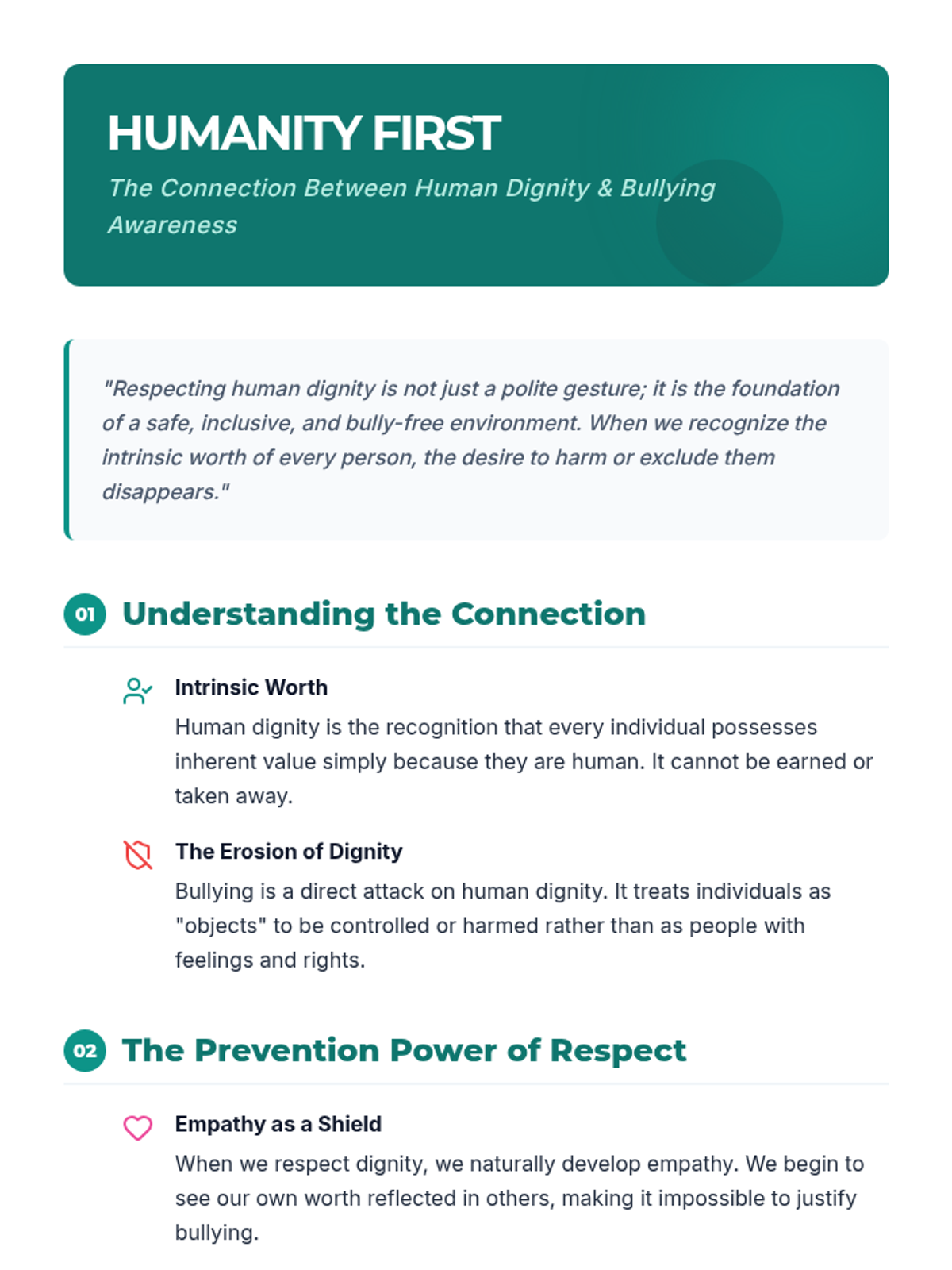
An informational handout for students exploring the intrinsic connection between human dignity and the prevention of bullying behavior.
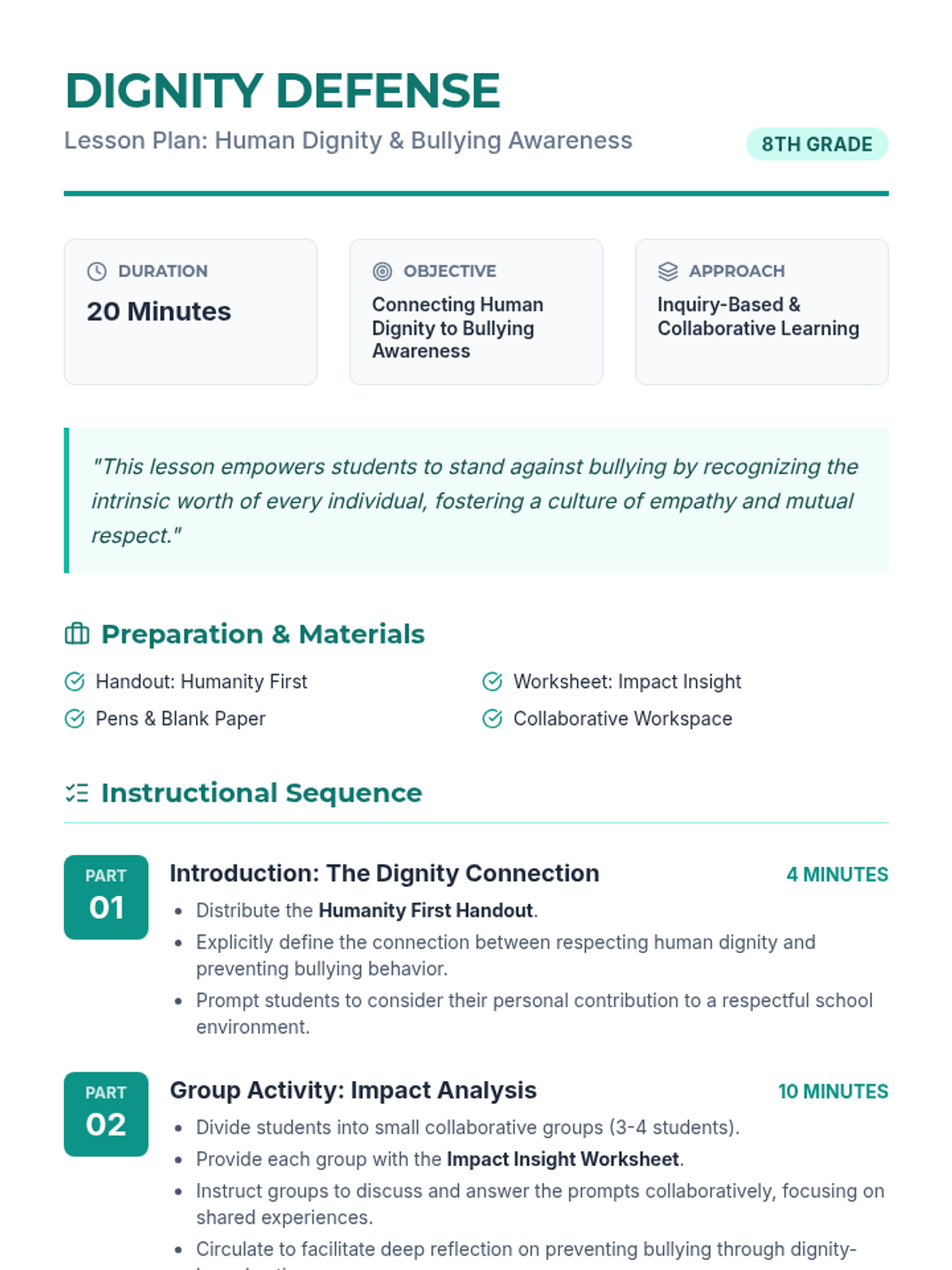
A comprehensive teacher lesson plan for an 8th-grade session on human dignity and bullying awareness, featuring a structured 20-minute sequence with clear instructional steps.
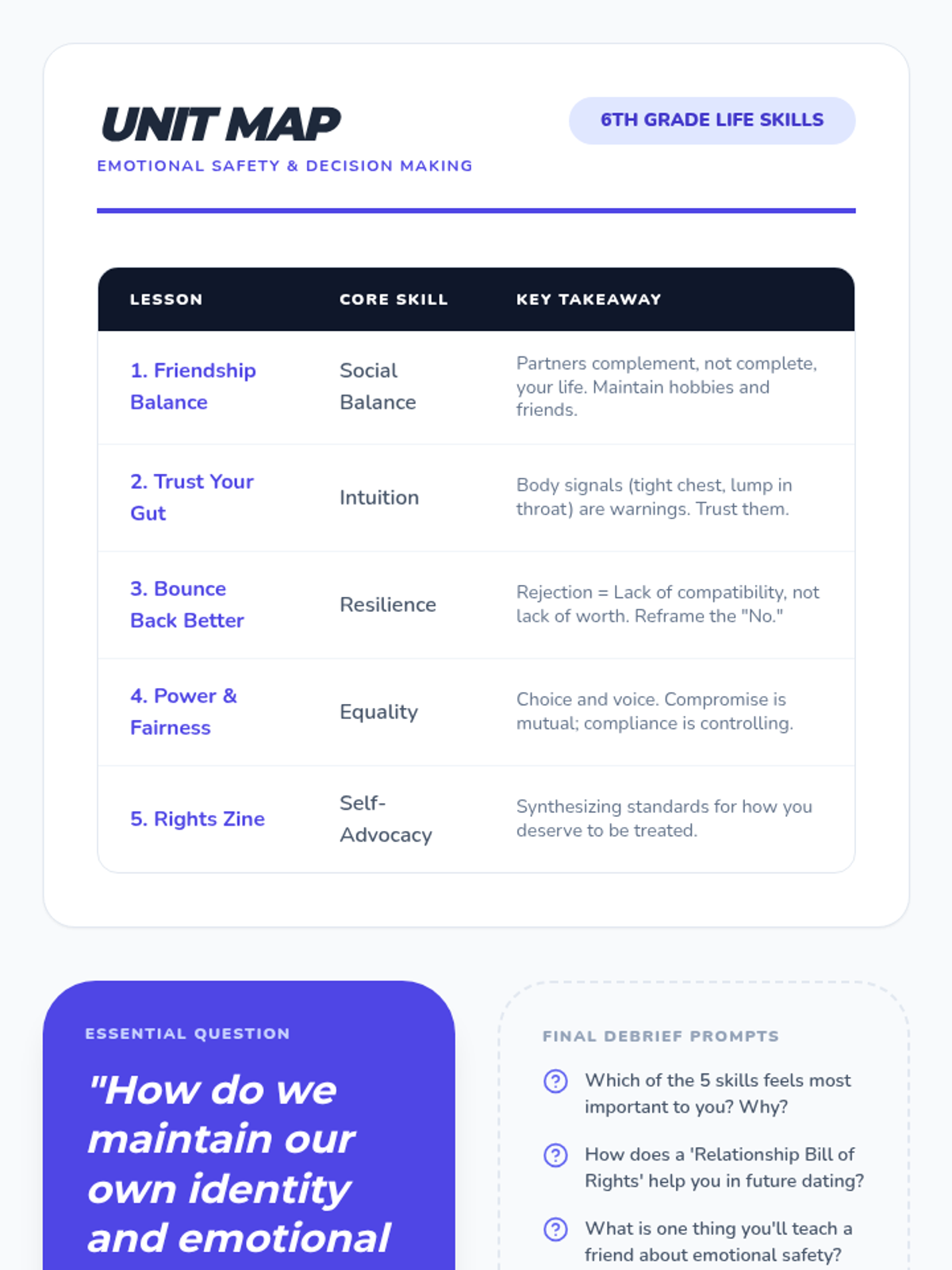
A unit summary and teacher assessment guide for the entire 'Heart and Head Balance' sequence, featuring a lesson map, debrief prompts, and a comprehensive grading rubric for the final project.
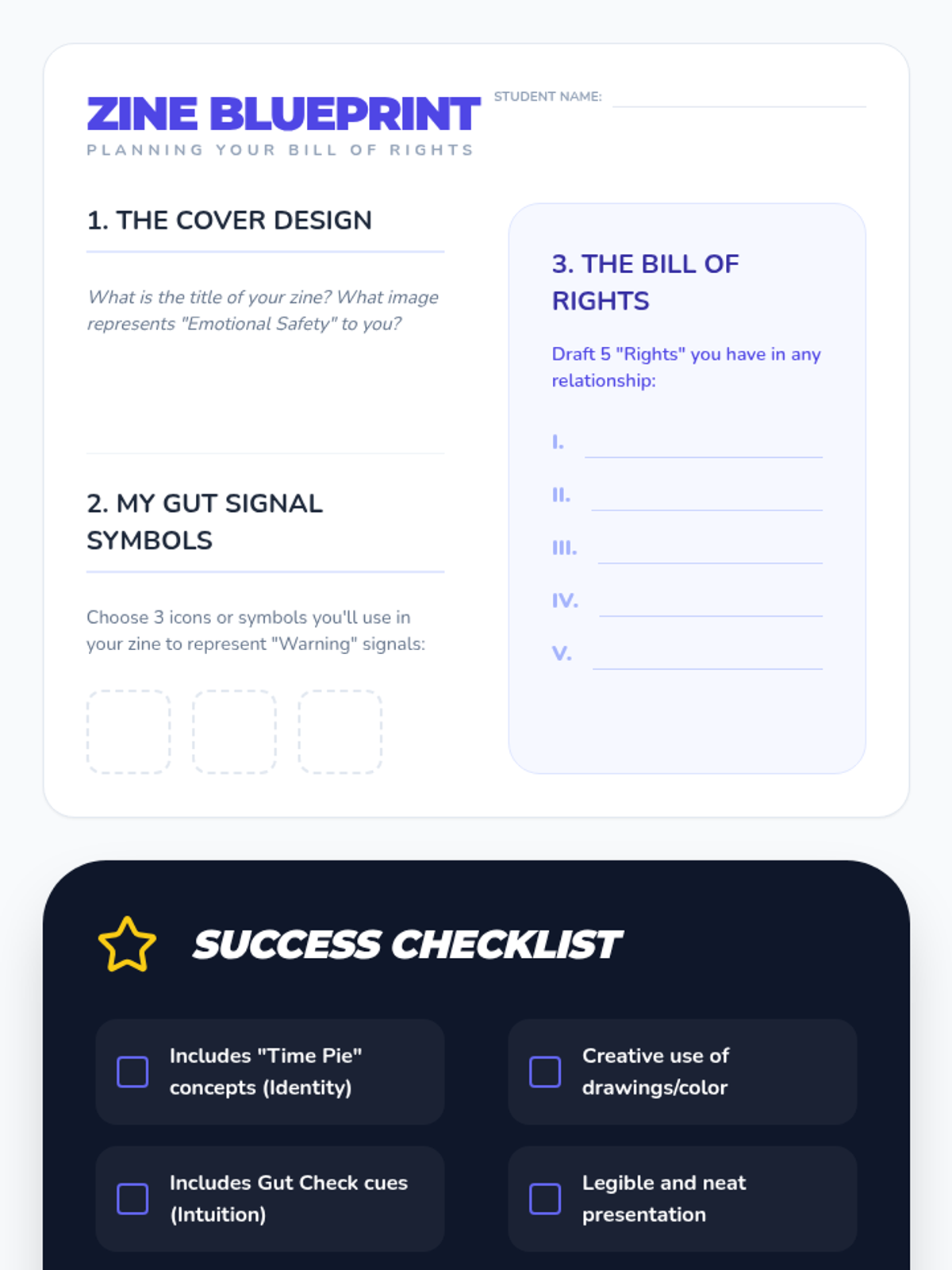
A project planning sheet and student-facing rubric for the 'Relationship Rights' zine, guiding students through drafting their Bill of Rights and ensuring all key concepts from the unit are included.
Final project slides for the 'Relationship Rights' Zine. It introduces the zine format, maps out the required content (non-negotiables, gut signals, self-care), and provides inspiration for a 'Relationship Bill of Rights'.
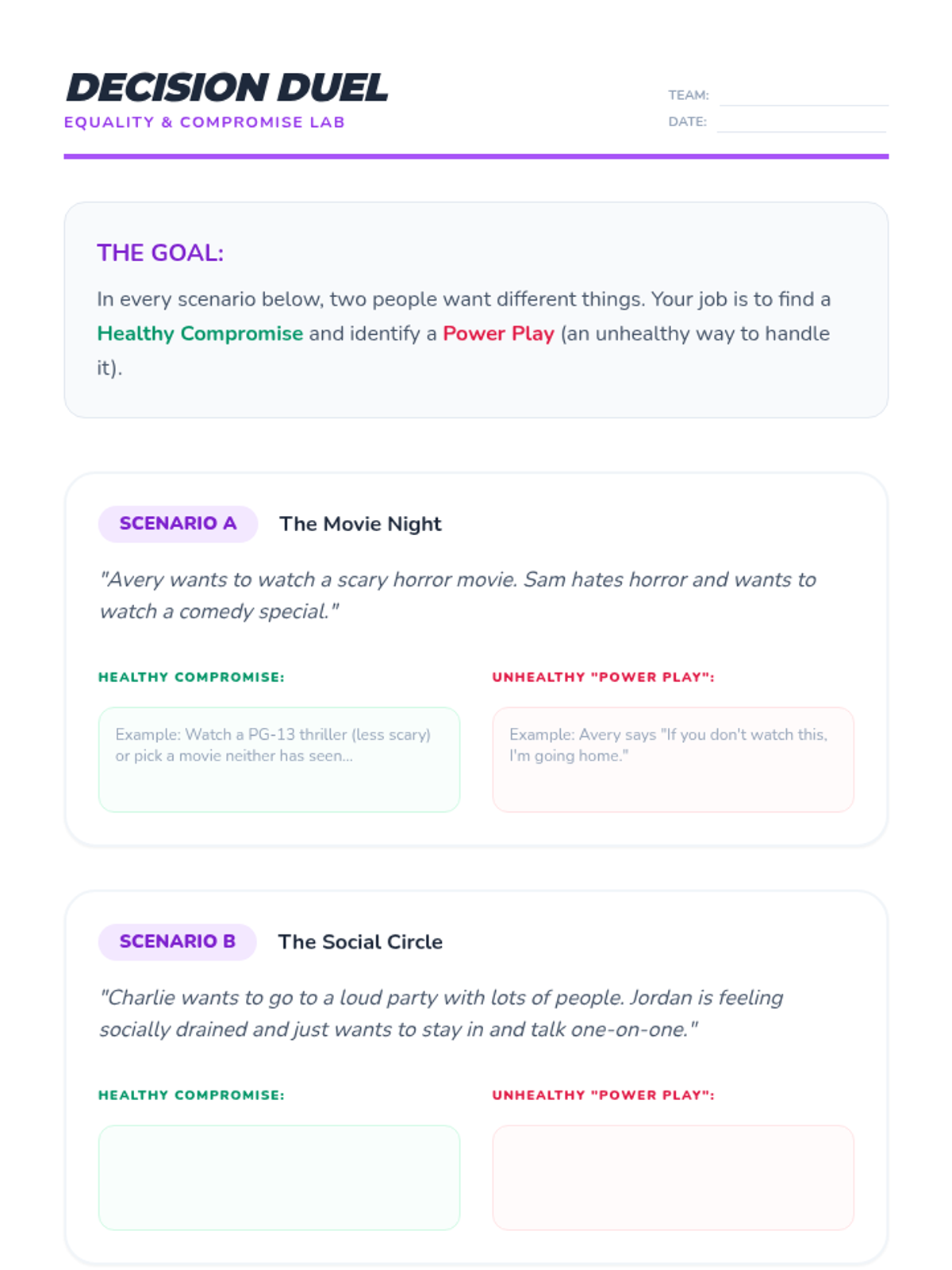
A decision-making workshop where students analyze scenarios to distinguish between healthy compromises and controlling 'power plays' in a relationship.
Engaging slides for Lesson 4 that define power dynamics in relationships, highlight subtle signs of control versus equality, and distinguish between healthy compromise and unhealthy compliance.
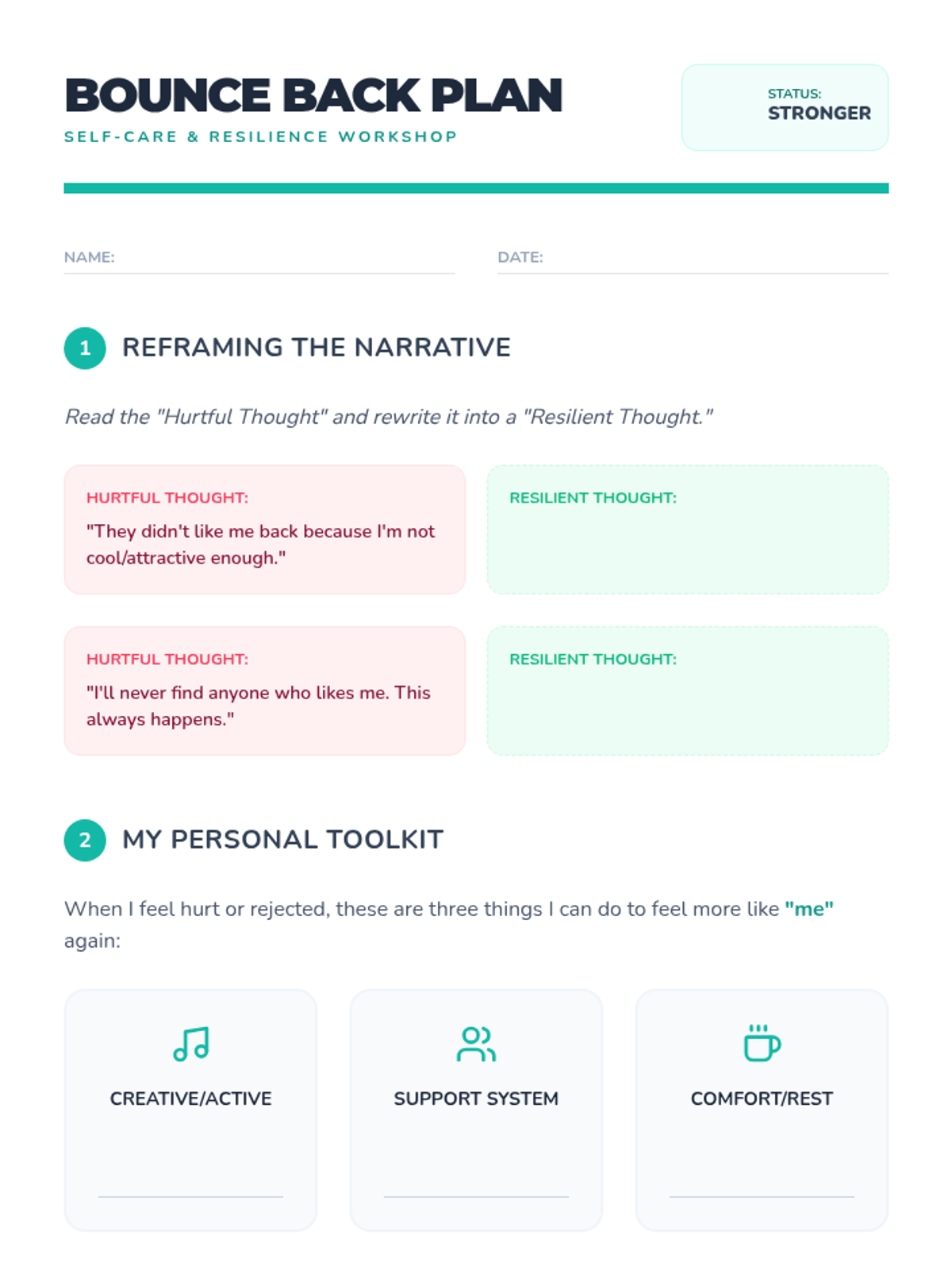
A student workshop sheet for Lesson 3 focused on cognitive reframing of negative thoughts after rejection and building a personalized self-care toolkit.