Written and verbal communication standards for the workplace, including email etiquette, presentation delivery, and professional phone conduct. Develops collaborative skills for teamwork, constructive feedback, and efficient time management.
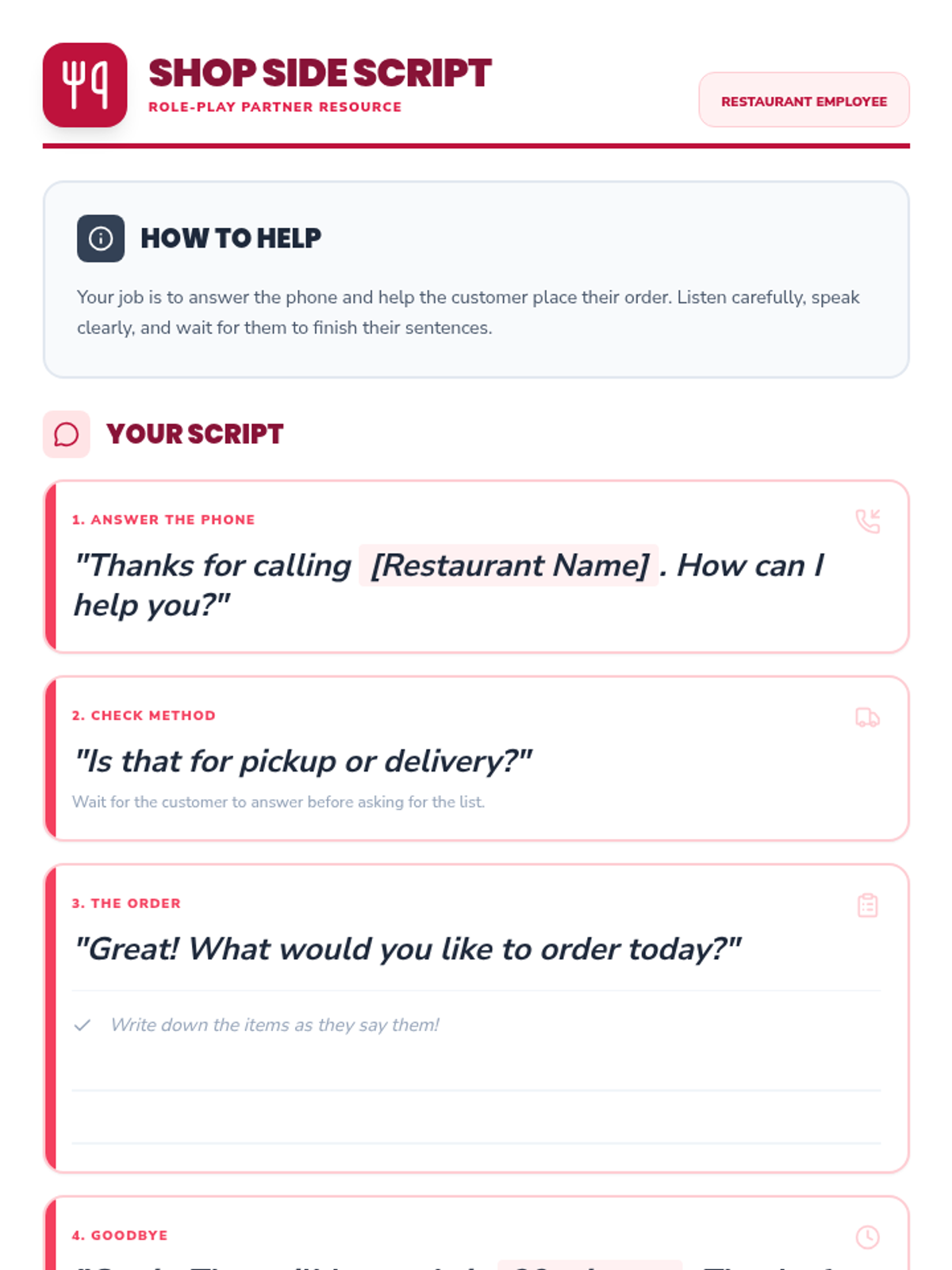
A role-play script for the restaurant employee side of the phone call, featuring blank restaurant name fields and a new conditional section for requesting contact information based on the order method. Optimized for a single page.
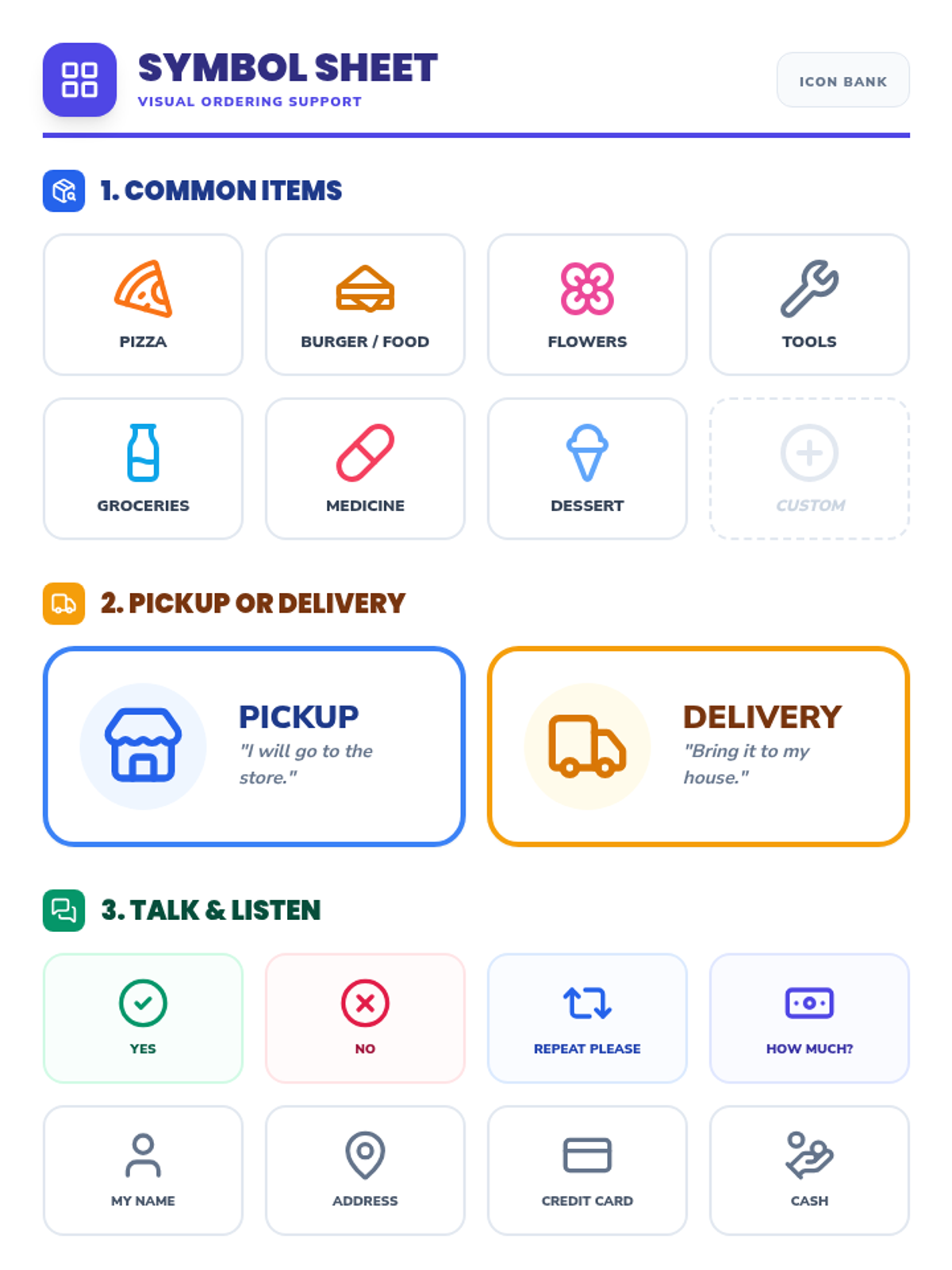
A comprehensive symbol sheet featuring a wide range of icons for common items, actions, and social responses to support students in making choices and communicating during a phone order. Now includes writing lines for identifying order items.
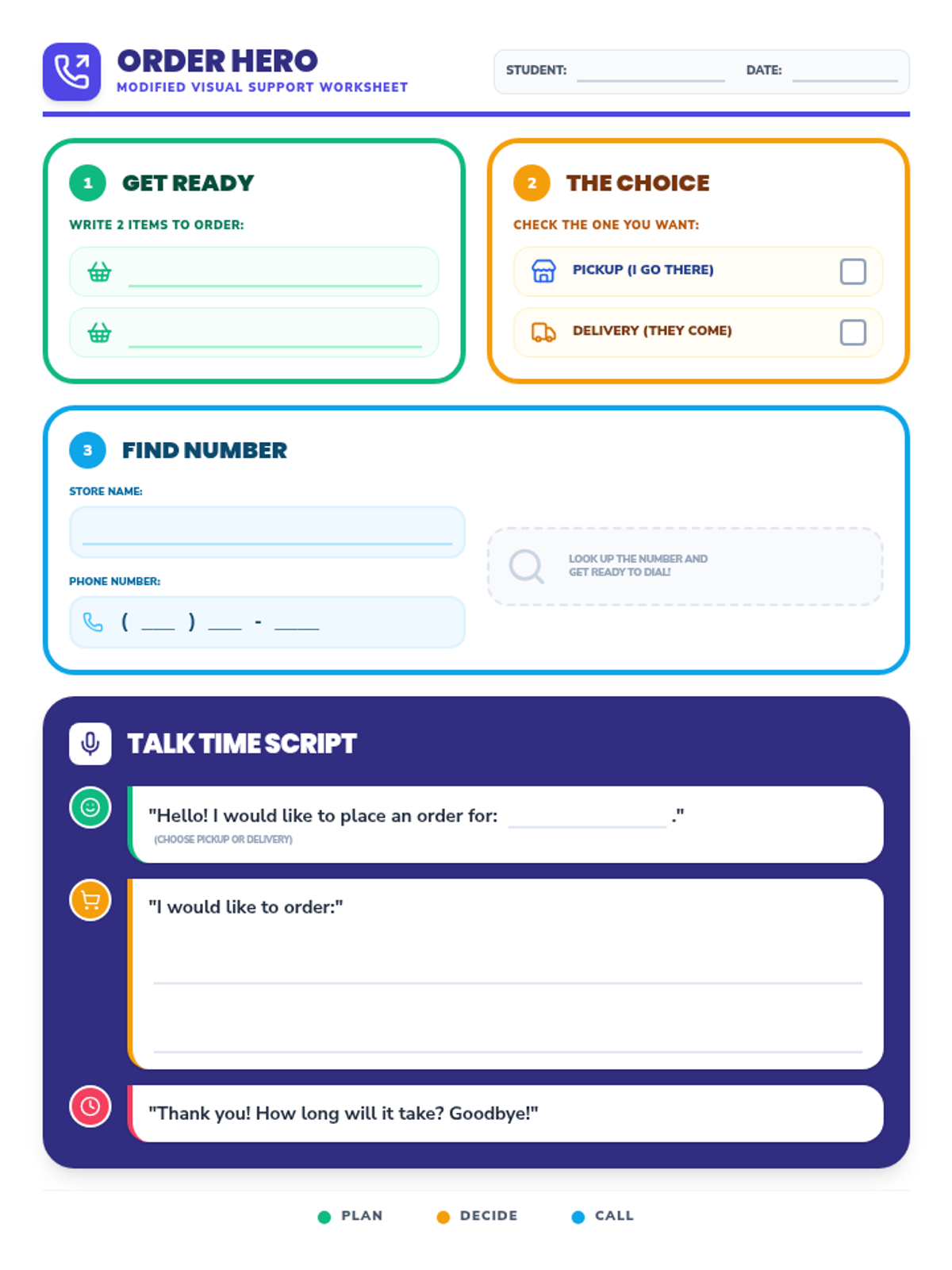
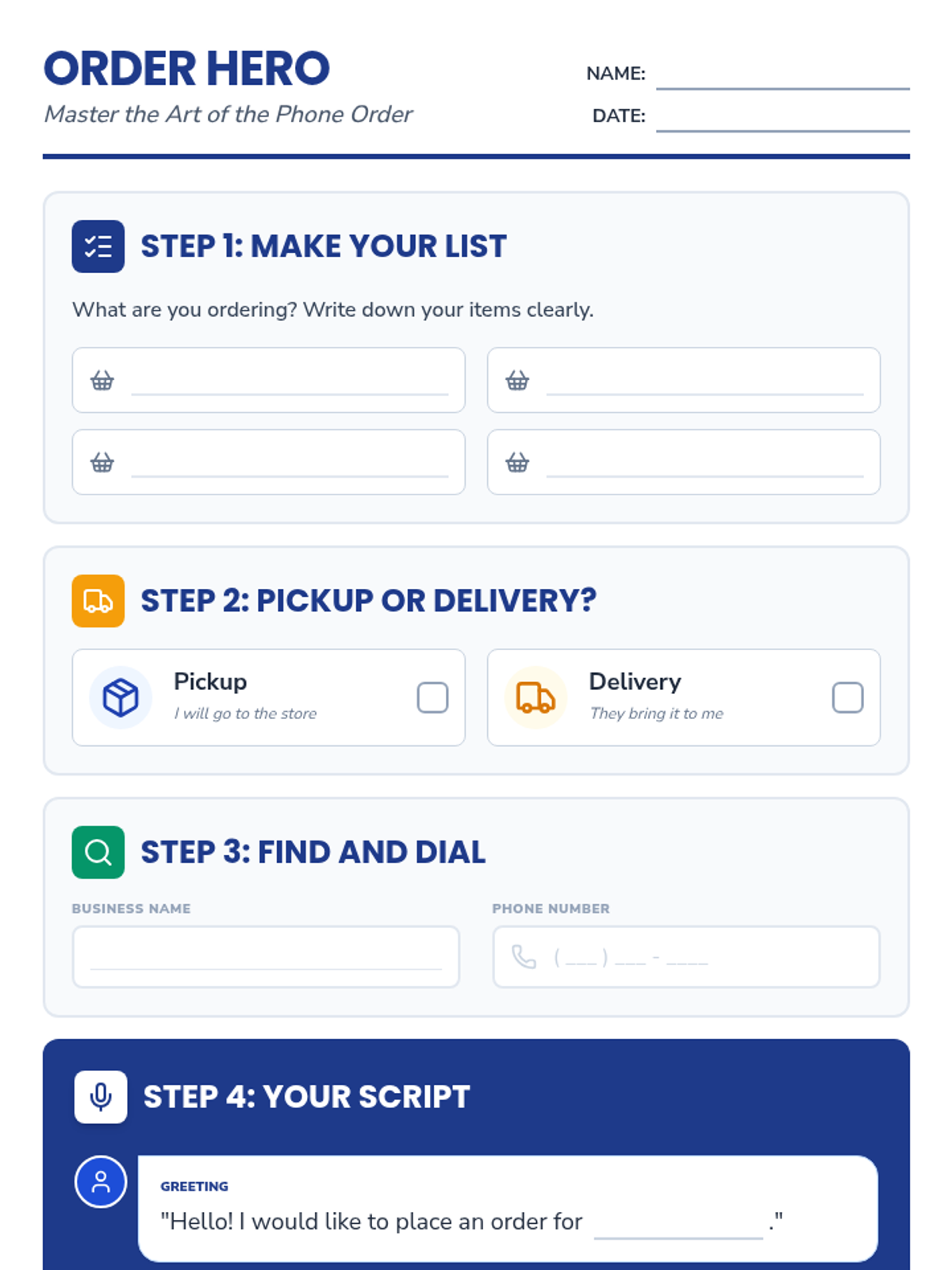
A modified worksheet that balances the structured steps of the original with the high-contrast visual cues of the call cards. Features color-coded sections for items, delivery/pickup choices, and a script with large writing areas.
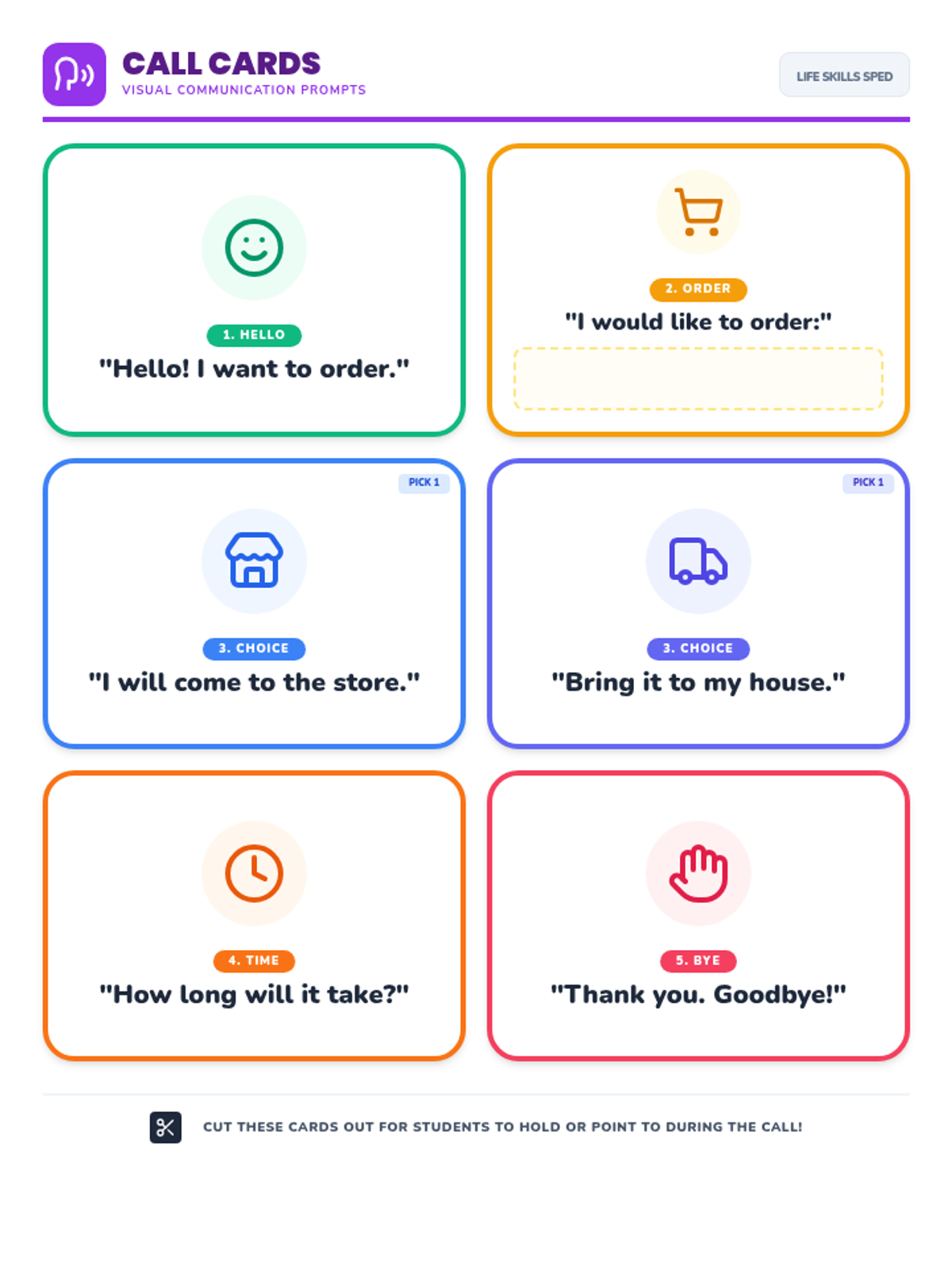
A set of color-coded visual communication cards with high-contrast icons and clear text to help special education students navigate the steps of a phone order. Features a fill-in-the-blank area for the order item.
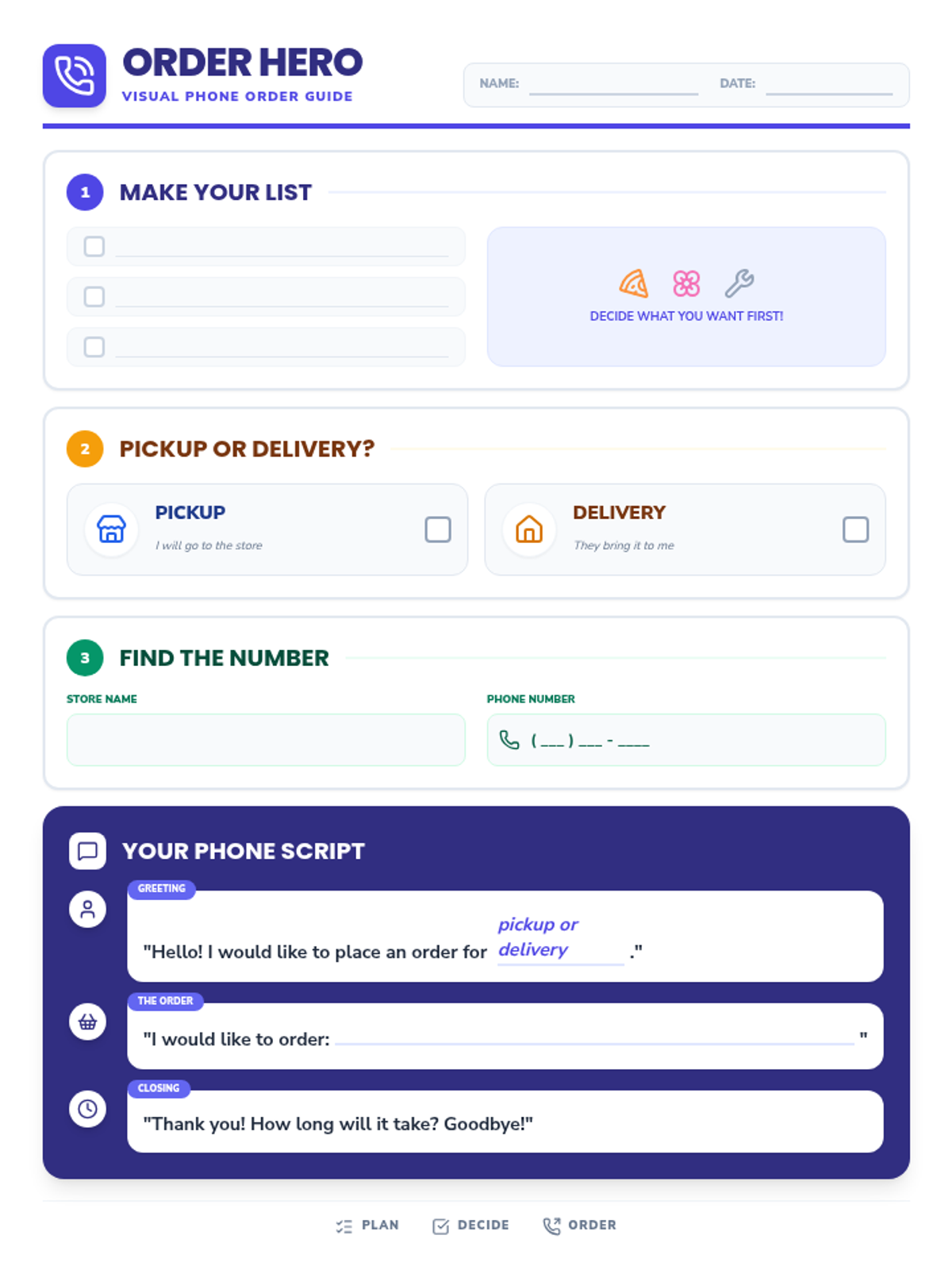
A compact, highly visual worksheet designed with large icons, pictorial choices, and speech-bubble scripts on a single page to guide students through the steps of placing a phone order. Now with an expanded phone number writing area.
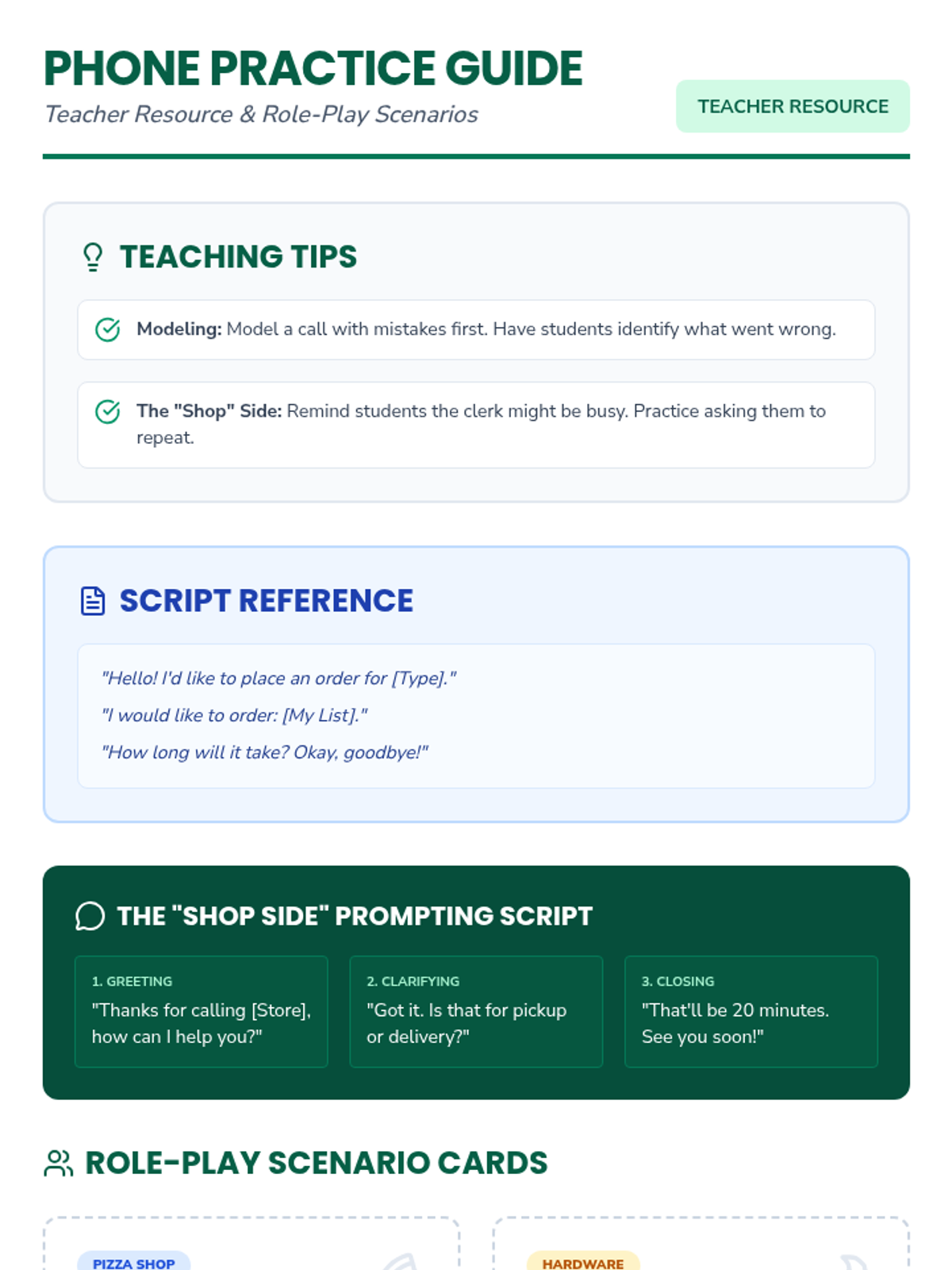
A teacher guide providing instructional tips and four role-play scenario cards to help students practice placing phone orders in a safe, classroom environment.
A comprehensive 1-page phone ordering worksheet that includes preparation steps, logistical choices, personal contact info fields, and a full role-play script with both customer and employee lines. Optimized for a standard 8.5x11 letter PDF with expanded vertical spacing to fill the page.
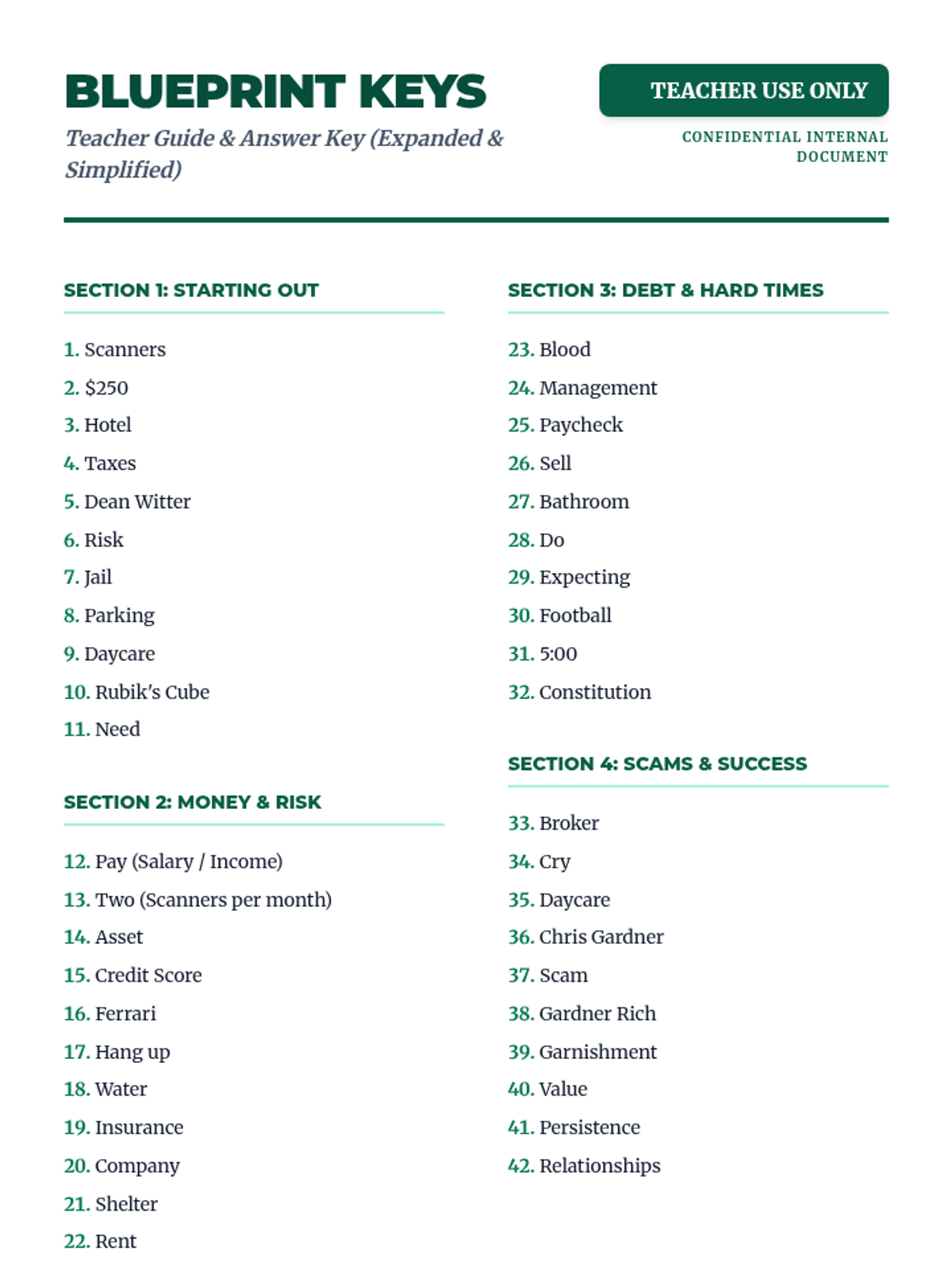
The answer key and discussion guide for the 'Brokerage Blueprint' worksheet, including all 42 answers and prompts for classroom debate on opportunity cost and asset management. Includes new answers for credit, insurance, and debt management.
A comprehensive 42-question fill-in-the-blank worksheet with word banks and simplified language, designed for students who struggle with reading. Includes new questions on credit, insurance, and debt management. Fixed layout issues and orphaned punctuation.
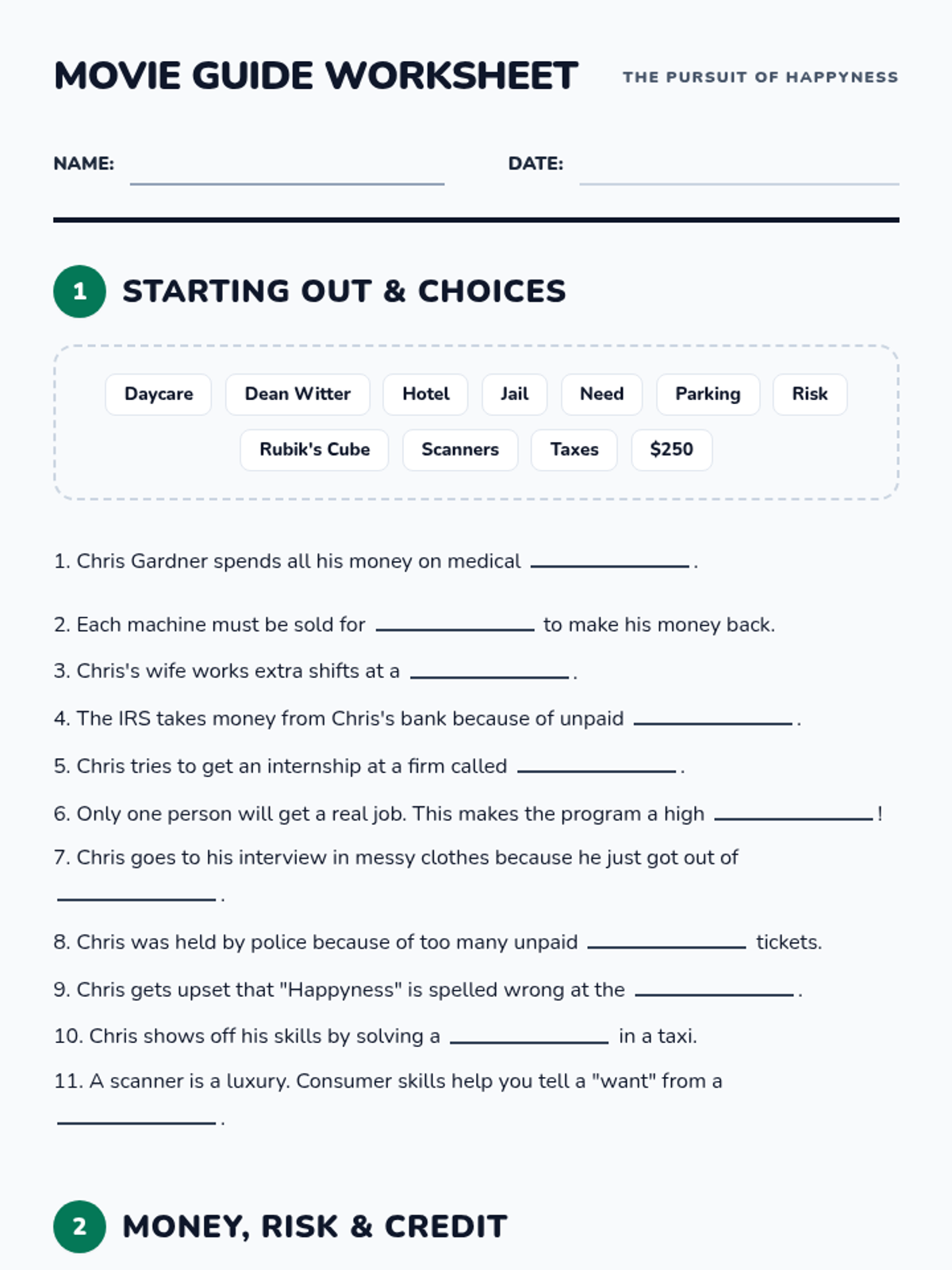
A visually accessible introduction to 'The Pursuit of Happyness' with simplified text and large fonts, perfect for students who struggle with reading.
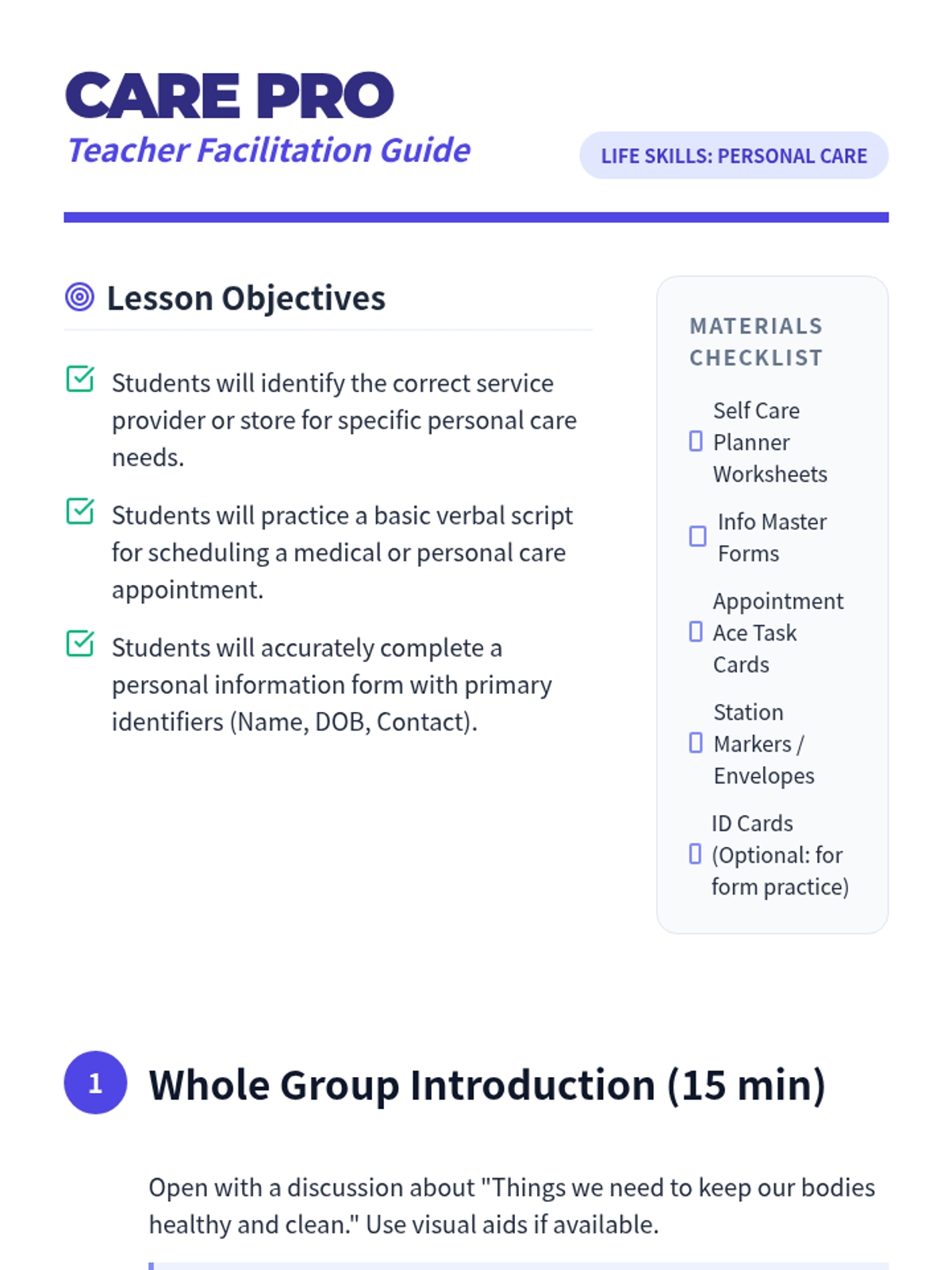
A comprehensive teacher's guide for the Self Care Pro lesson. Includes instructional sequences, station setup for task cards, and specific differentiation strategies for Level 2 learners.
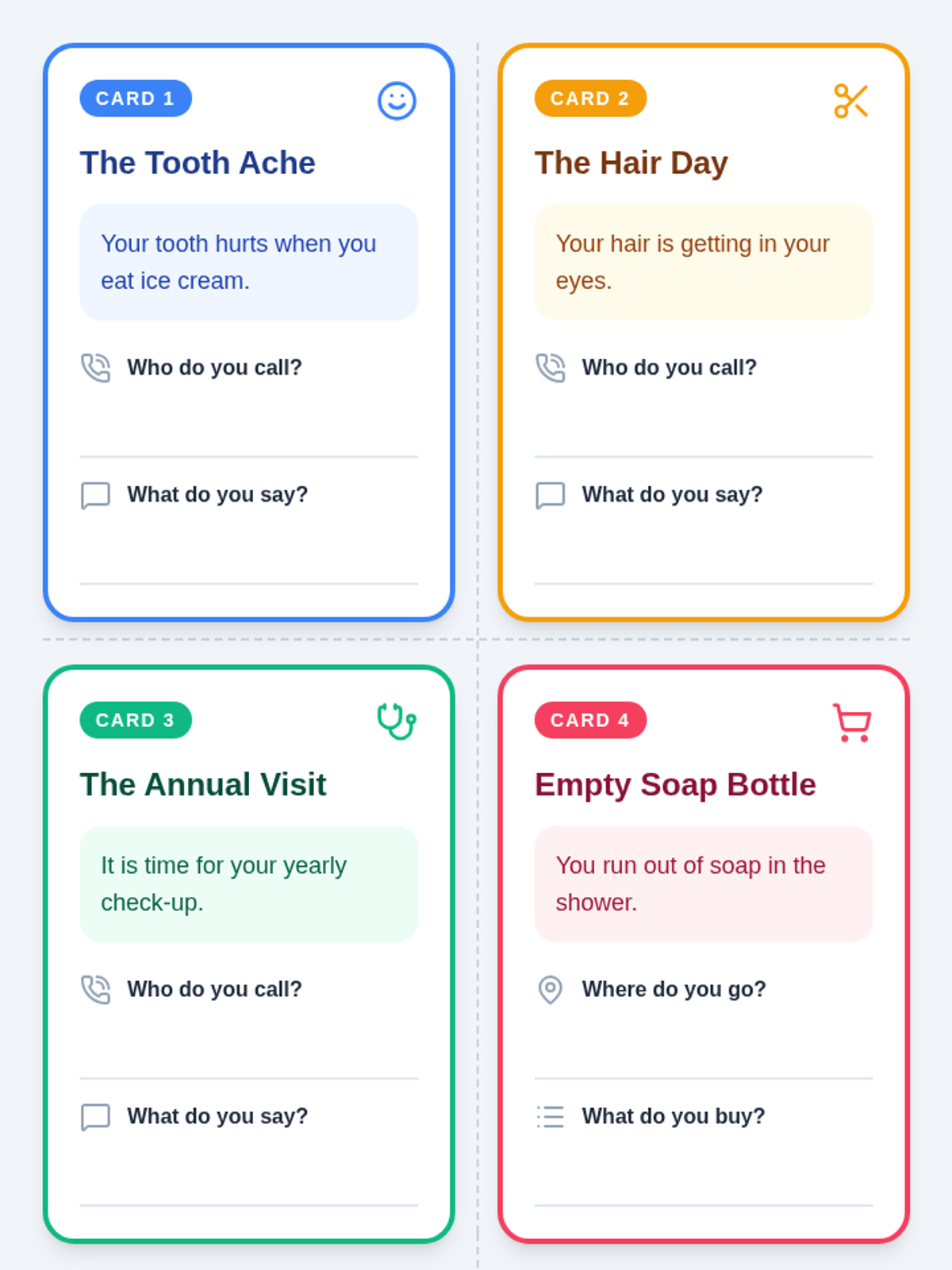
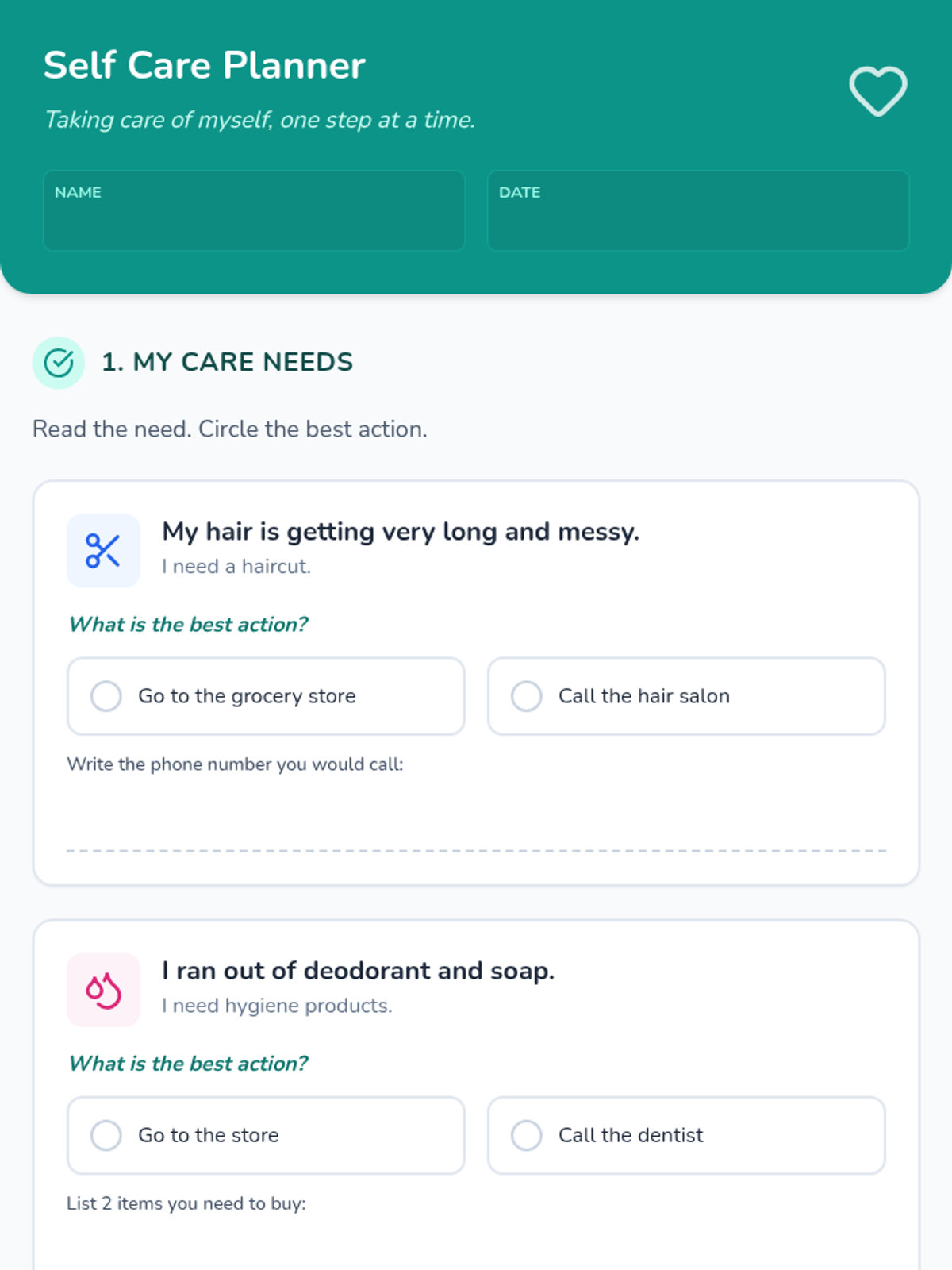
A set of scenario-based task cards for practicing identifying appropriate actions for personal care needs and scheduling various appointments. Includes 8 distinct scenarios with visual supports.
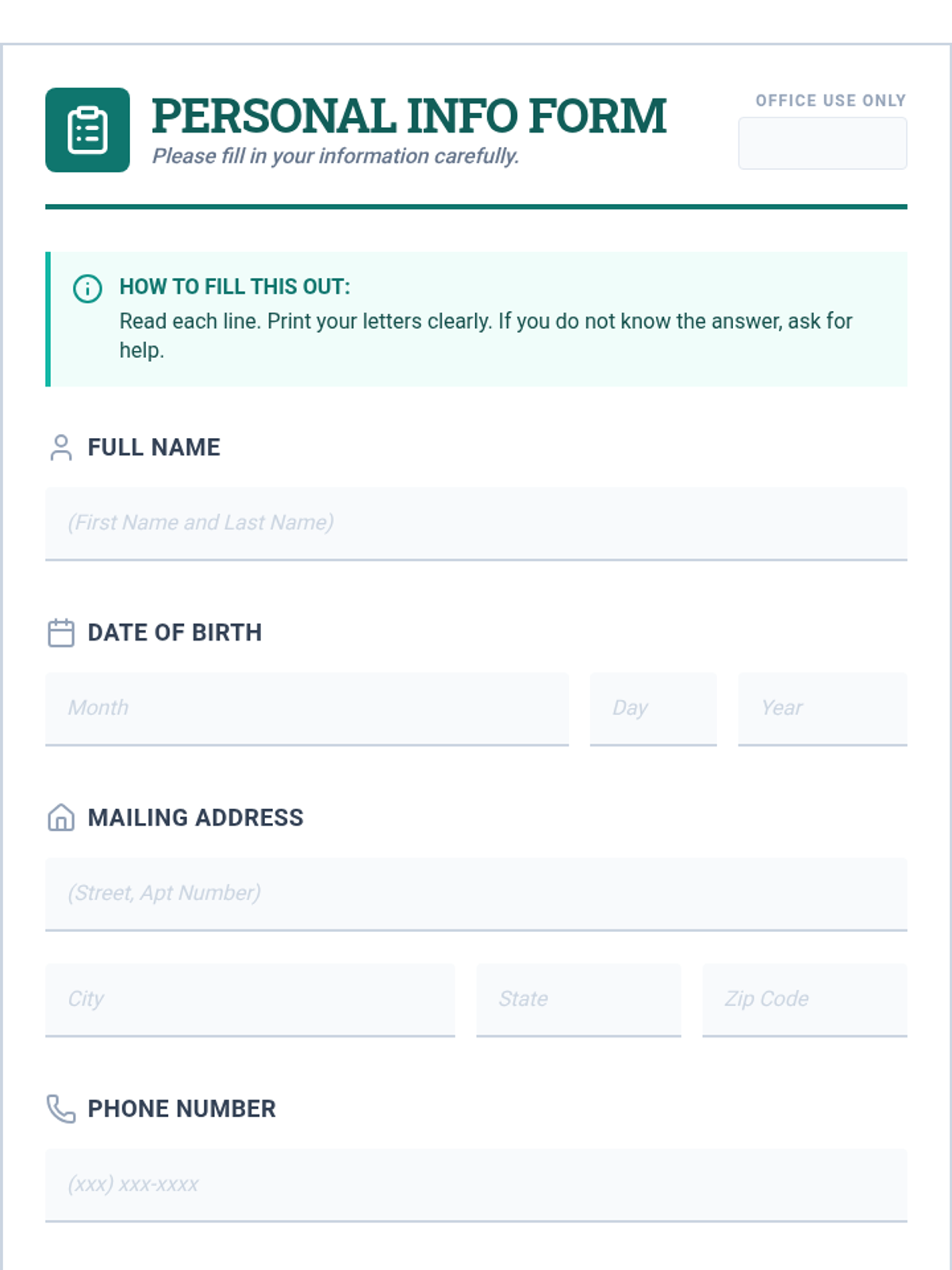
A practice personal information form designed to mimic real-world medical or service forms. Features simplified labels, visual icons, and large writing areas for Level 2 learners.
A guided worksheet for identifying personal care actions and practicing the script for scheduling a medical appointment. Includes visual supports and clear step-by-step instructions.
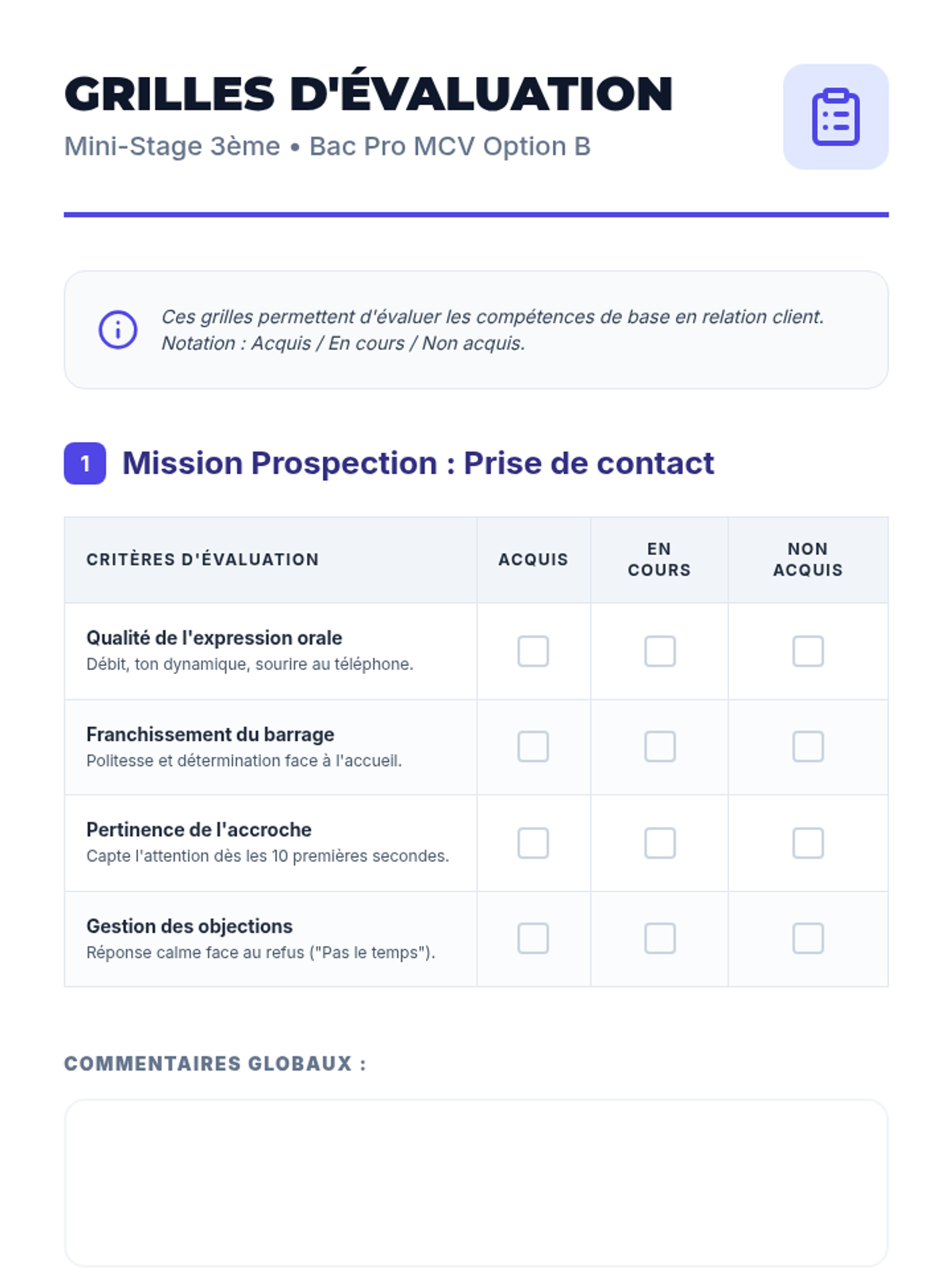
Recueil de grilles d'évaluation pour l'enseignant, couvrant les missions de prospection et de fidélisation ainsi que les compétences douces observées durant le mini-stage. Contraste amélioré pour une lecture optimale.
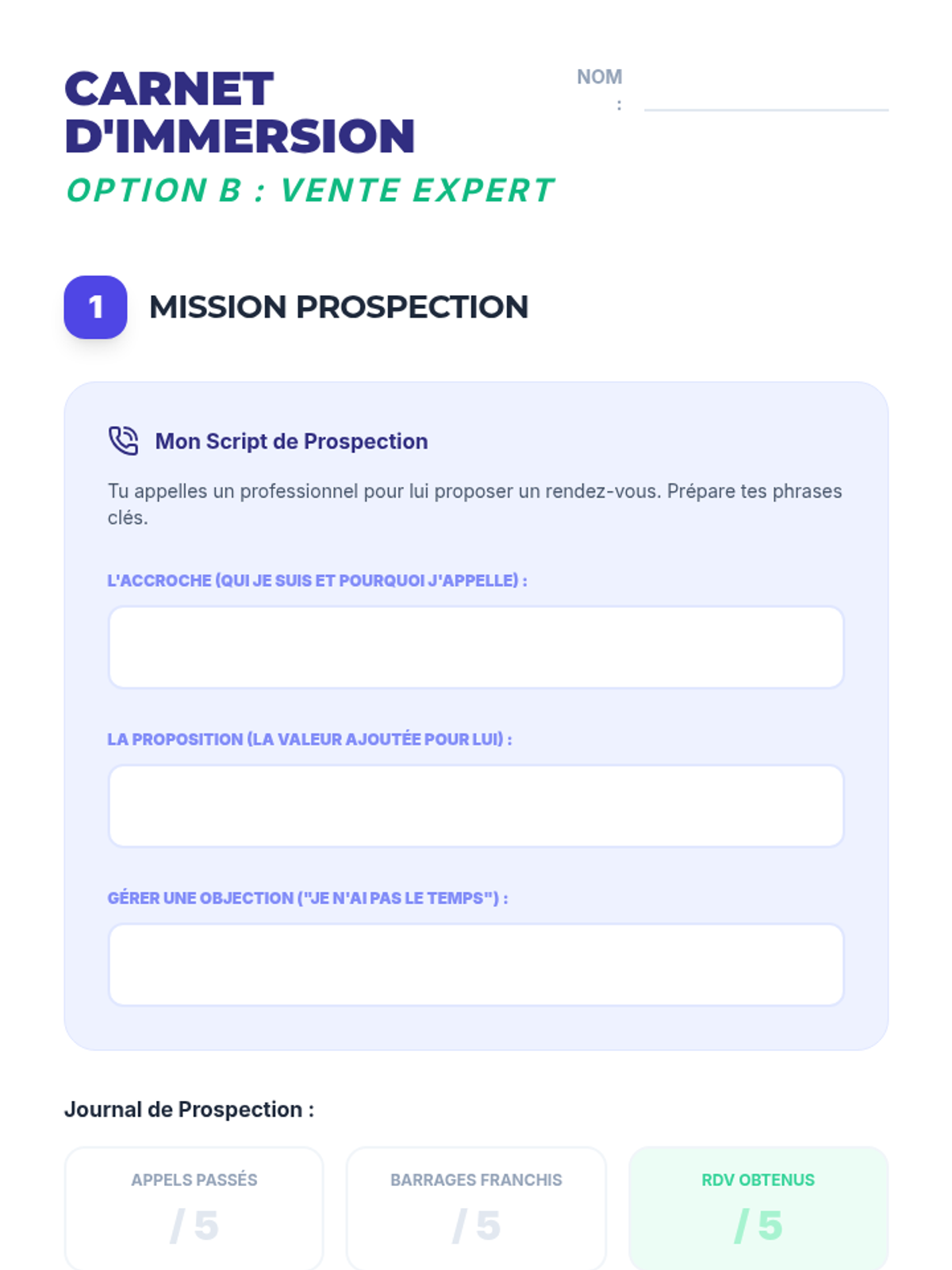
Livret d'activités mis à jour avec les missions de Prospection et de Fidélisation pour les élèves de 3ème en mini-stage.
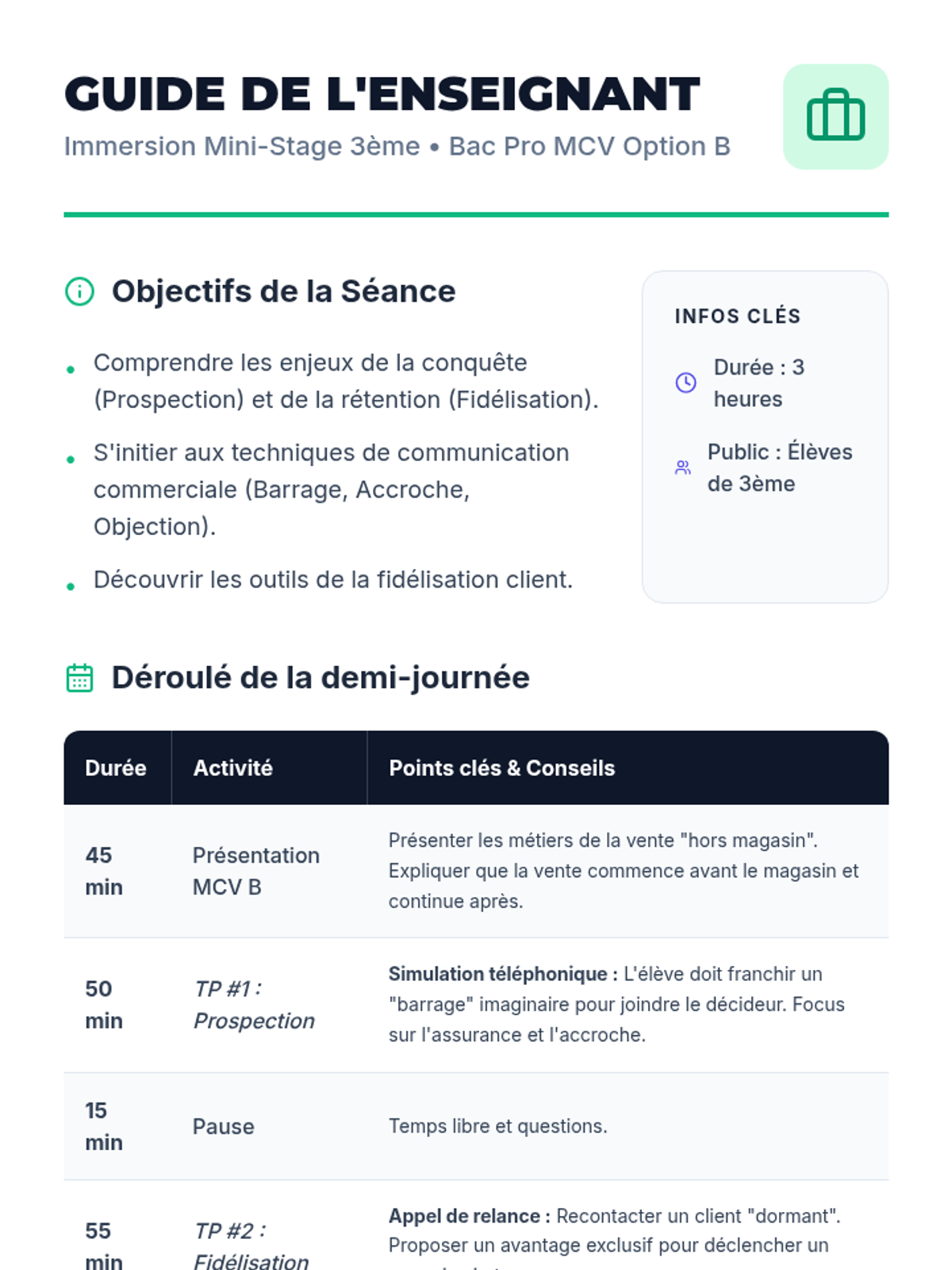
Guide pédagogique pour l'enseignant animant le mini-stage de 3h. Inclut le minutage détaillé, les objectifs pédagogiques et les conseils d'animation pour les deux travaux pratiques.
Diaporama de présentation mis à jour avec les TP de Prospection et de Fidélisation. Tailles de police optimisées pour une visibilité maximale (minimum 24px) et design modernisé.
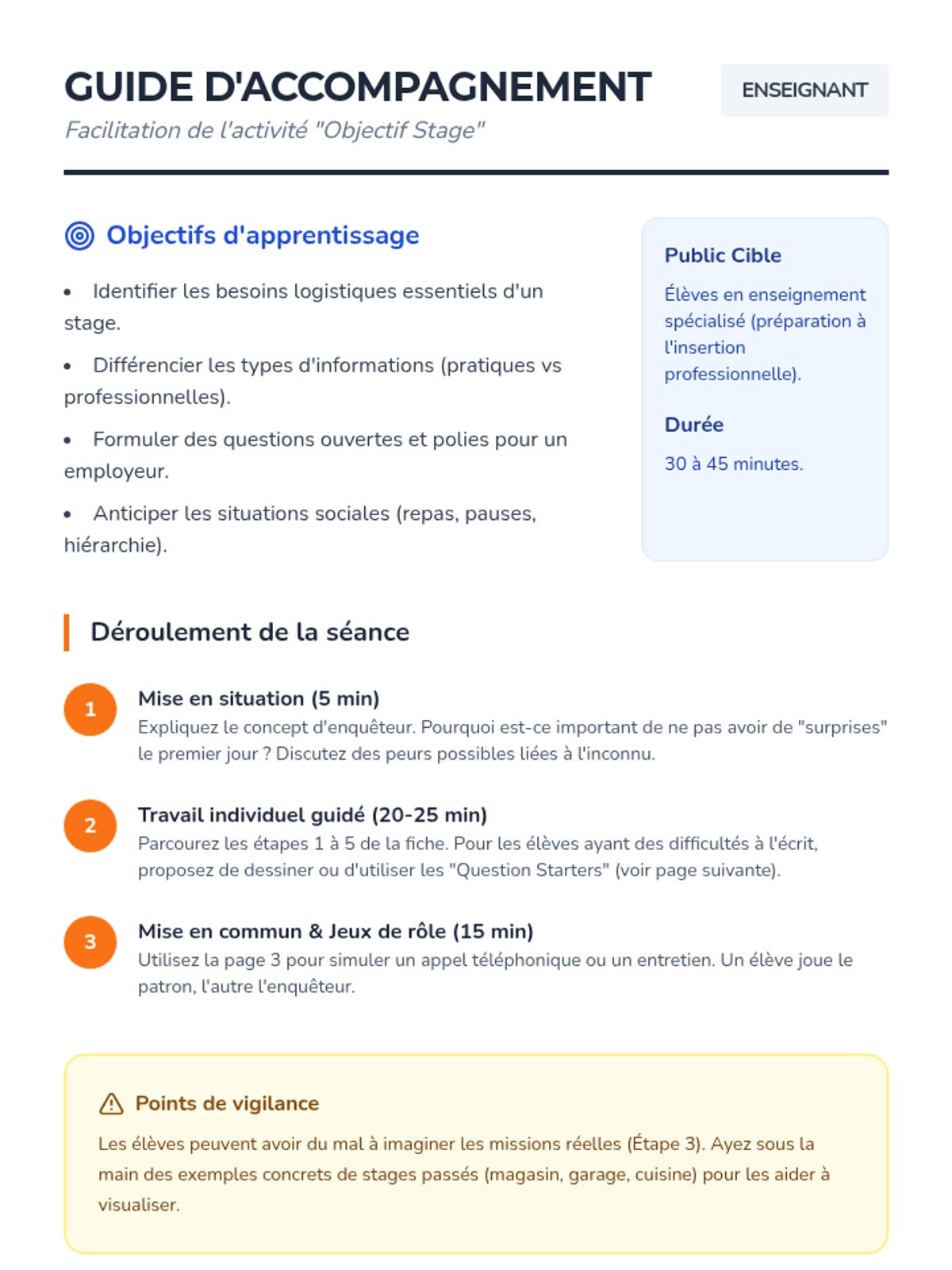
Un guide pour l'enseignant contenant les objectifs pédagogiques, le déroulement de la séance, des déclencheurs de phrases pour les élèves et des conseils d'adaptation pour l'enseignement spécialisé.
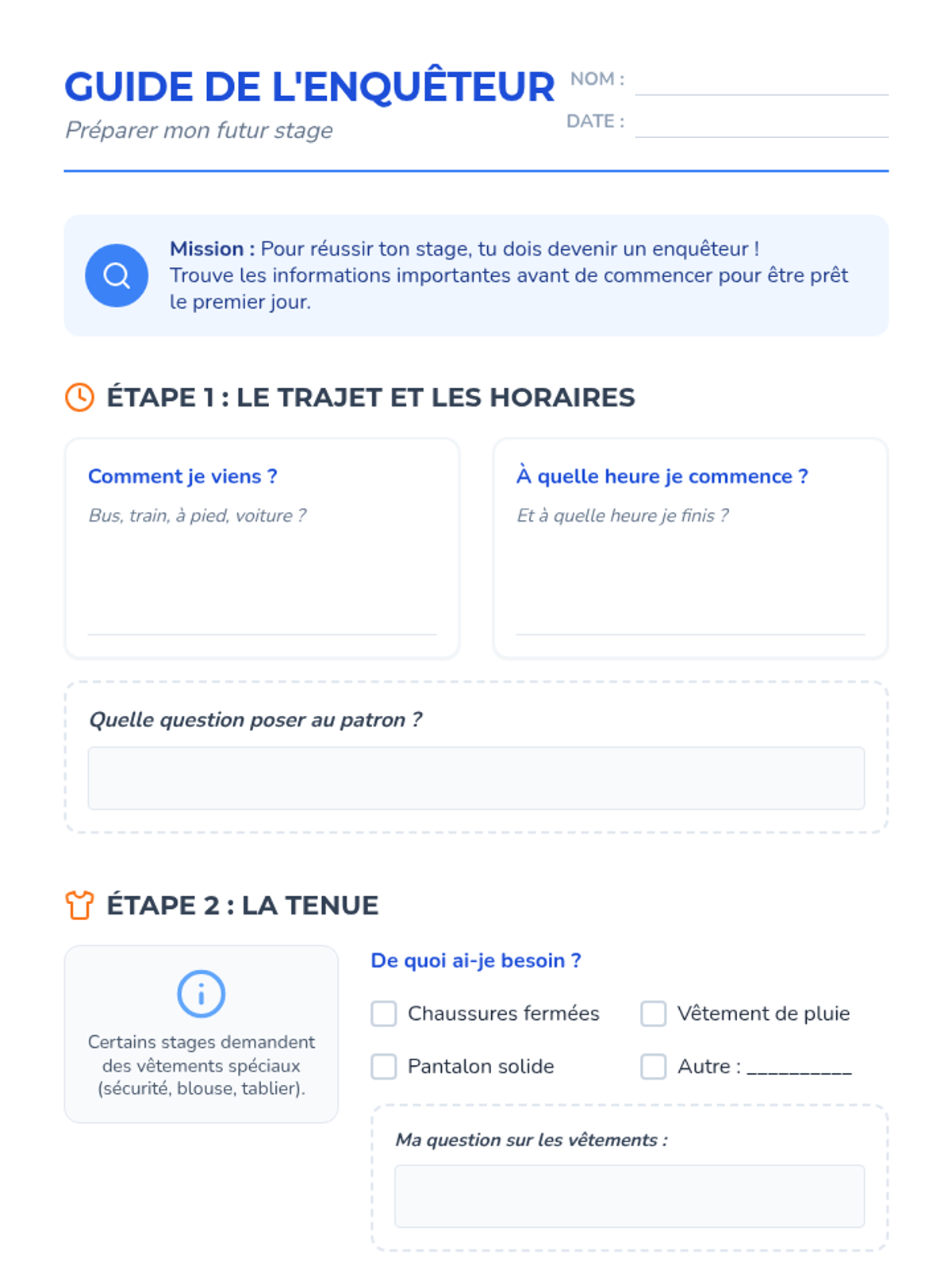
Une fiche d'activité structurée en plusieurs étapes pour aider les élèves à identifier et noter les questions essentielles avant un stage (logistique, tenue, missions, repas).
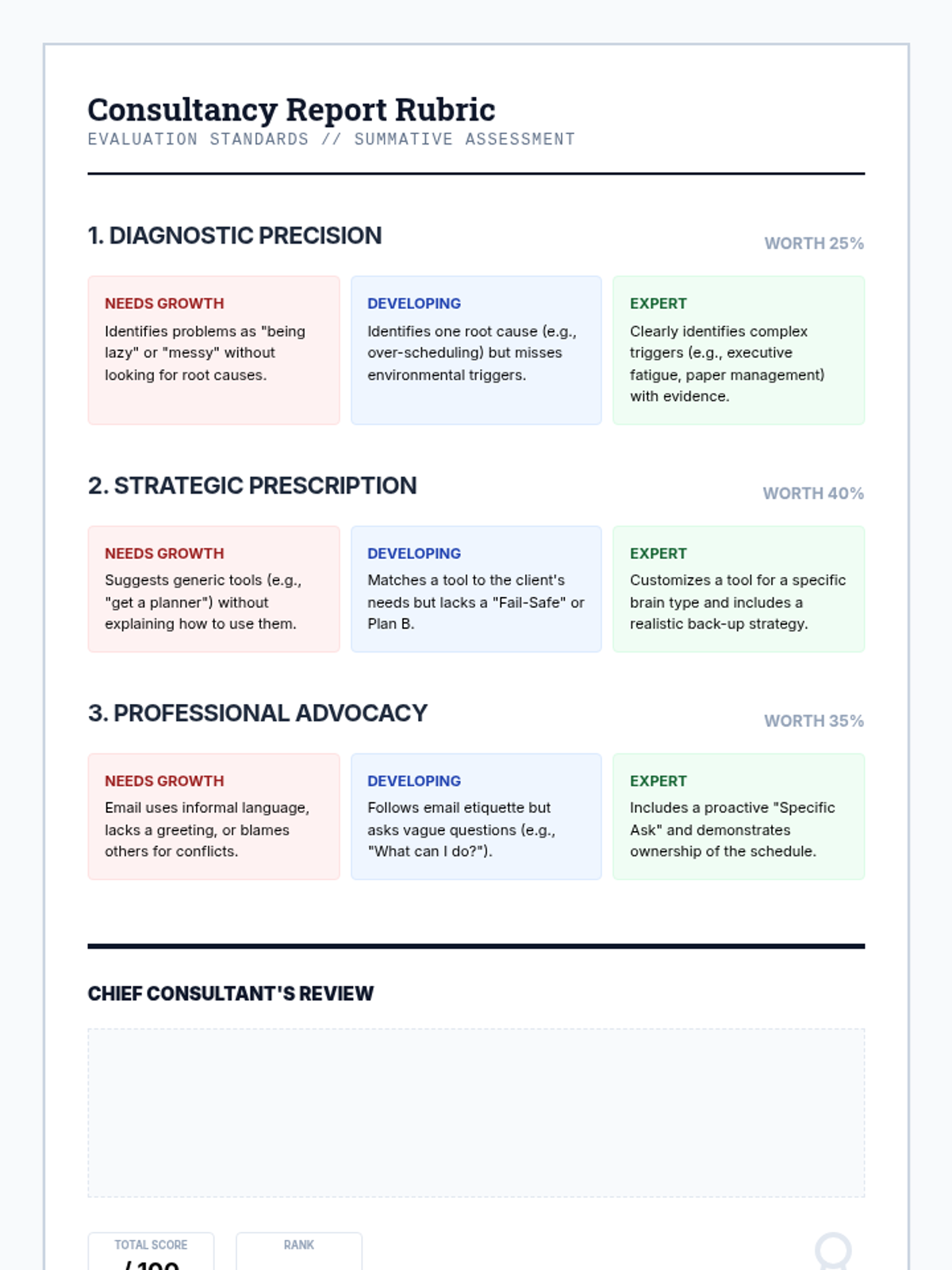
Teacher-facing rubric for assessing the Final Consultancy Report. Evaluates diagnostic precision, strategic prescription (tools), and professional advocacy (communication).
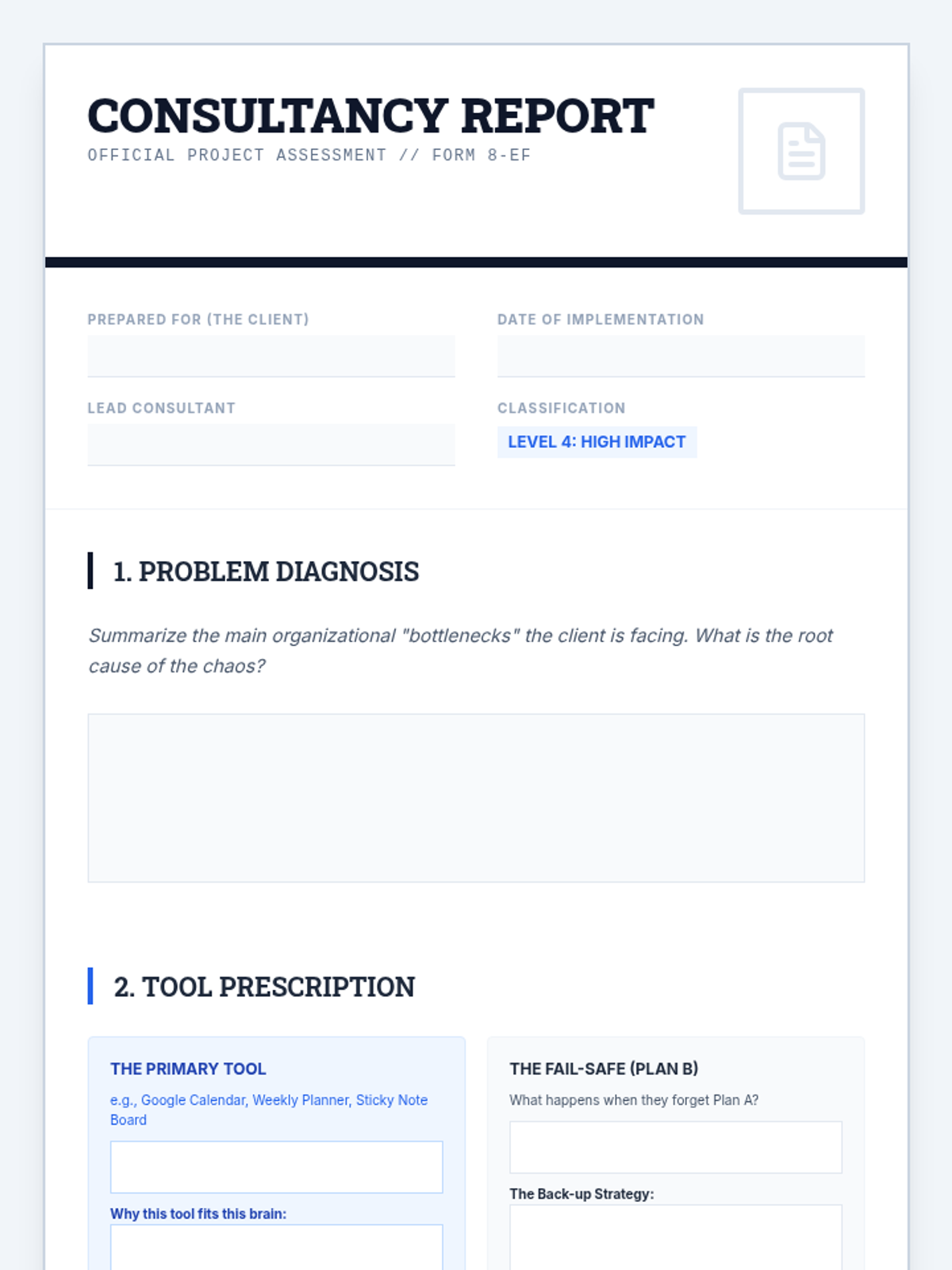
The summative assessment for the sequence. Students acting as consultants produce a formal report for a client (or themselves), outlining a diagnosis, tool prescription, and communication plan.
Slides for Lesson 4 comparing digital and analog organizational tools. Presents pros and cons for different 'brain types' and sets up the 'Tool Tank' activity where students pitch solutions for specific client profiles.
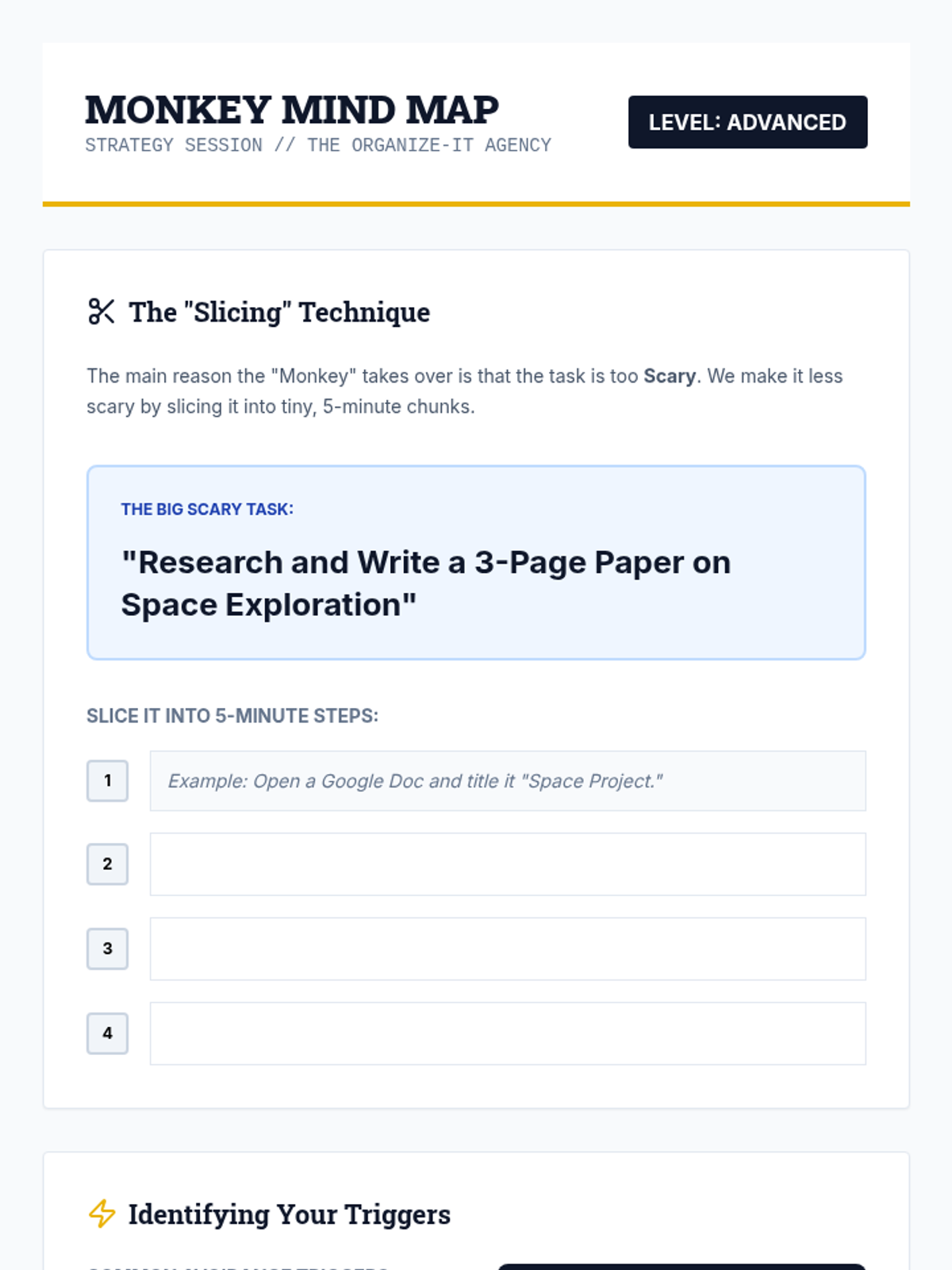
A student worksheet for analyzing the procrastination cycle. Features the 'Slicing' technique to break large tasks into manageable 5-minute steps and a trigger analysis section to identify personal procrastination habits.
Slides for Lesson 3 exploring the psychology of procrastination. Highlights the emotional loop of avoidance and panic, introduces the 5-minute rule, and provides a frame for the 'Instant Gratification Monkey' video discussion.
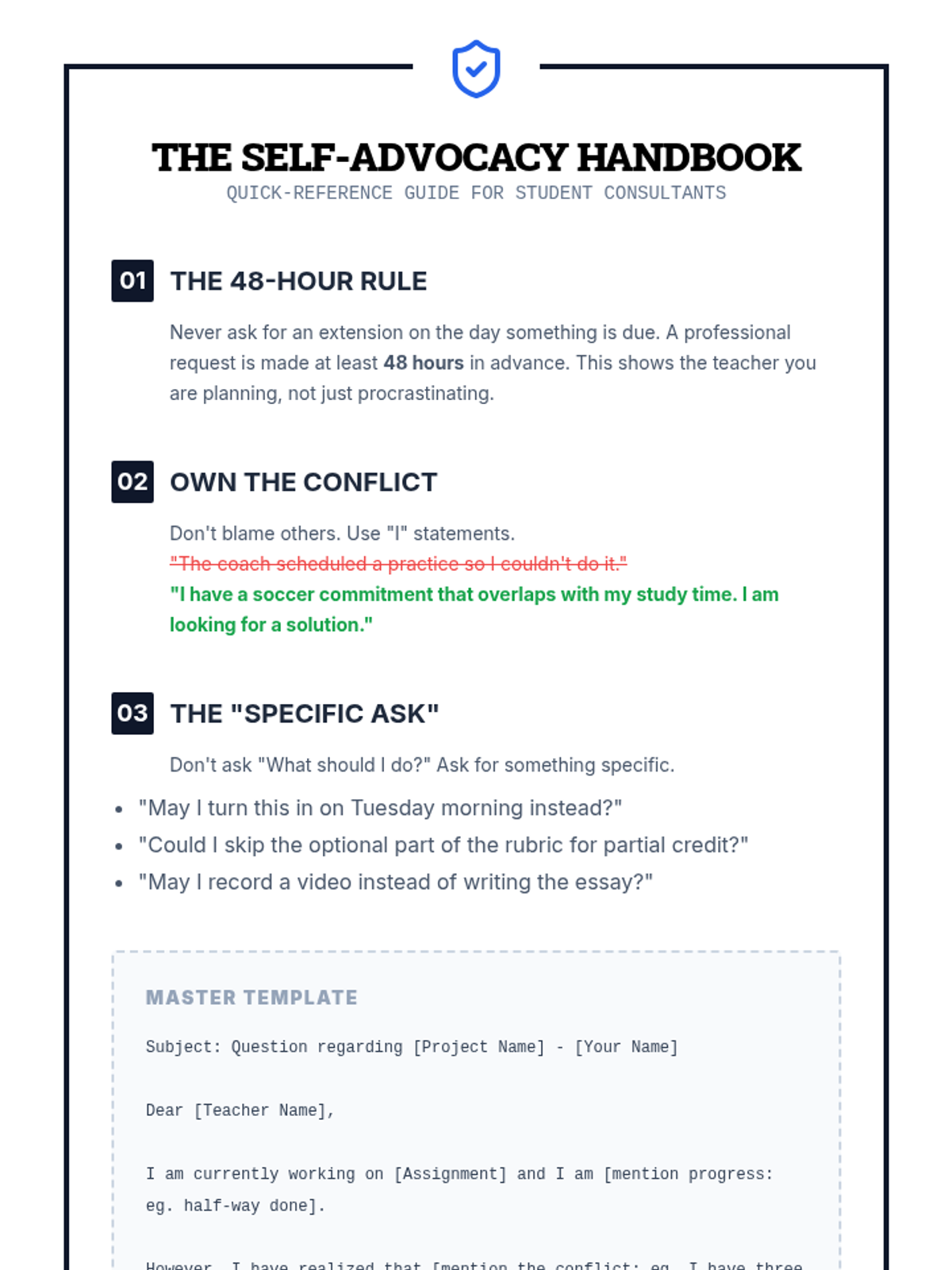
A handbook for students detailing the rules of professional communication and self-advocacy. Includes an email makeover activity where students rewrite an unprofessional message into a formal request.
Slides focusing on the transition from reactive to proactive communication. Introduces the anatomy of a professional email and provides a role-play simulation for requesting deadline extensions.
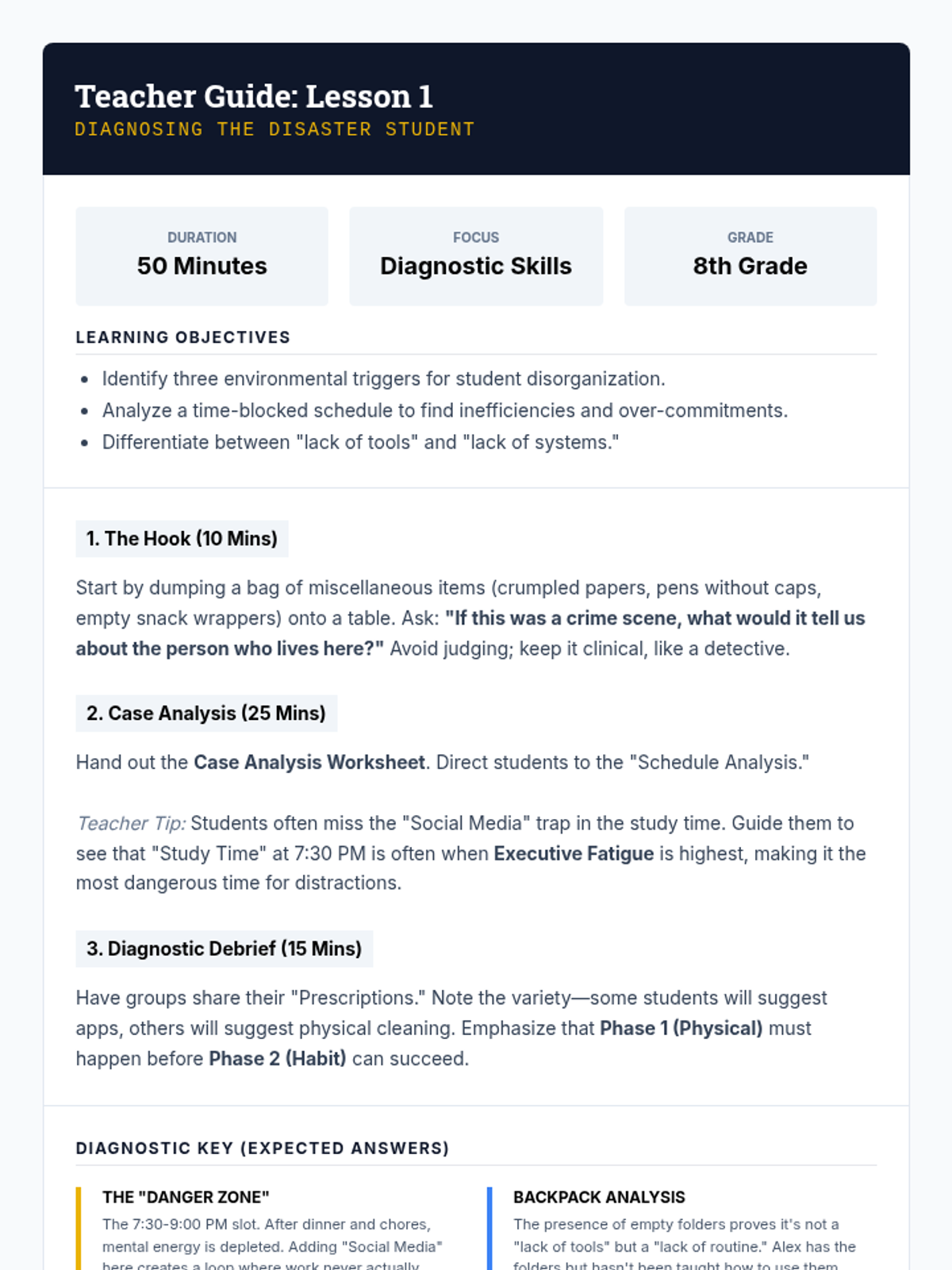
Teacher facilitation guide for Lesson 1, including instructional steps, guiding questions for the backpack 'hook', and an answer key for the Case Analysis Worksheet.
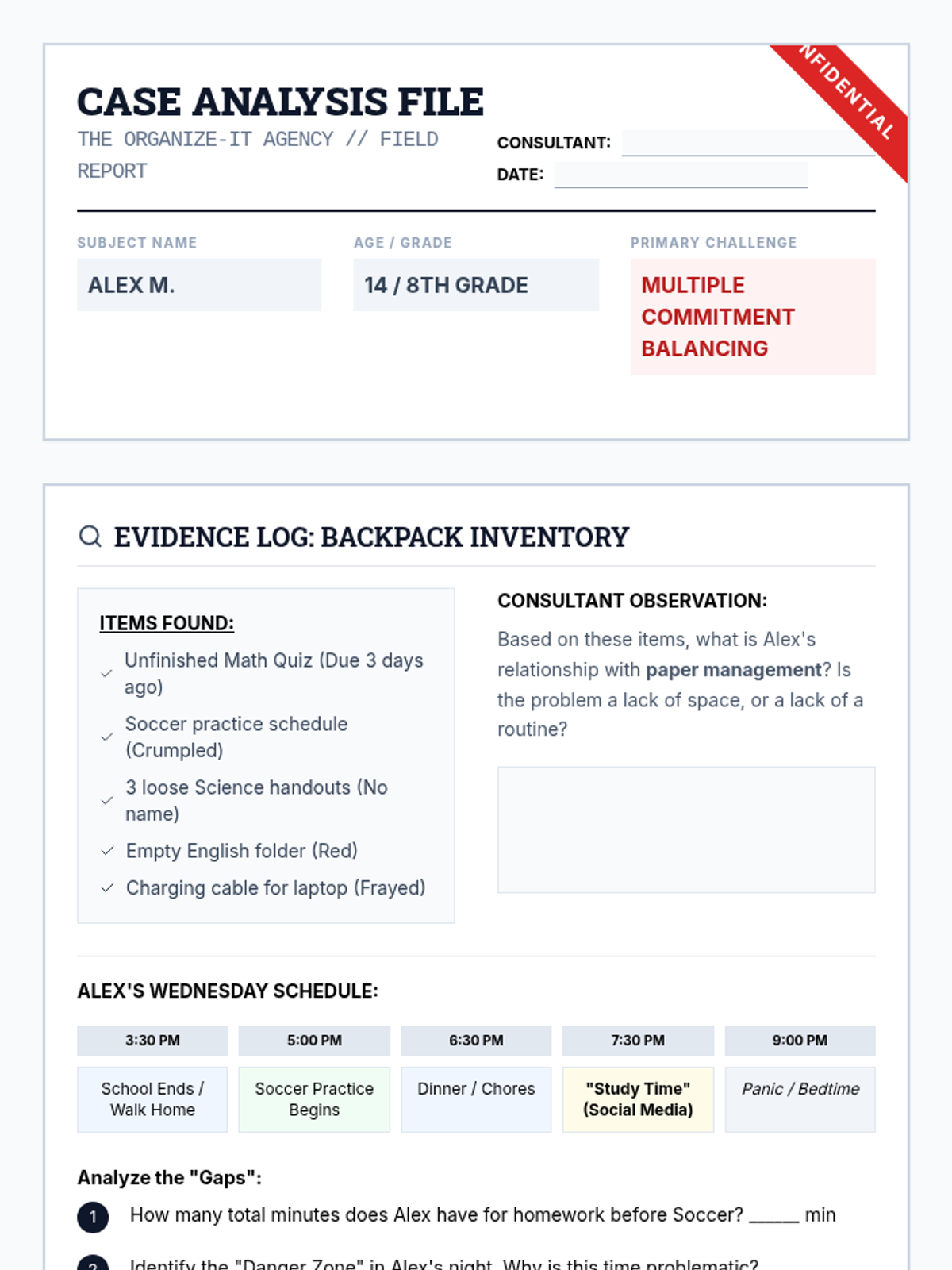
A student worksheet designed as a 'Field Report' for analyzing Alex's case study. Includes backpack inventory analysis, schedule gap identification, and a diagnostic checklist for prescribing solutions.
Introductory slides for the unit, establishing the student's role as a 'Consultant' and presenting the first case study of Alex M. Includes diagnostic frameworks and backpack analysis.
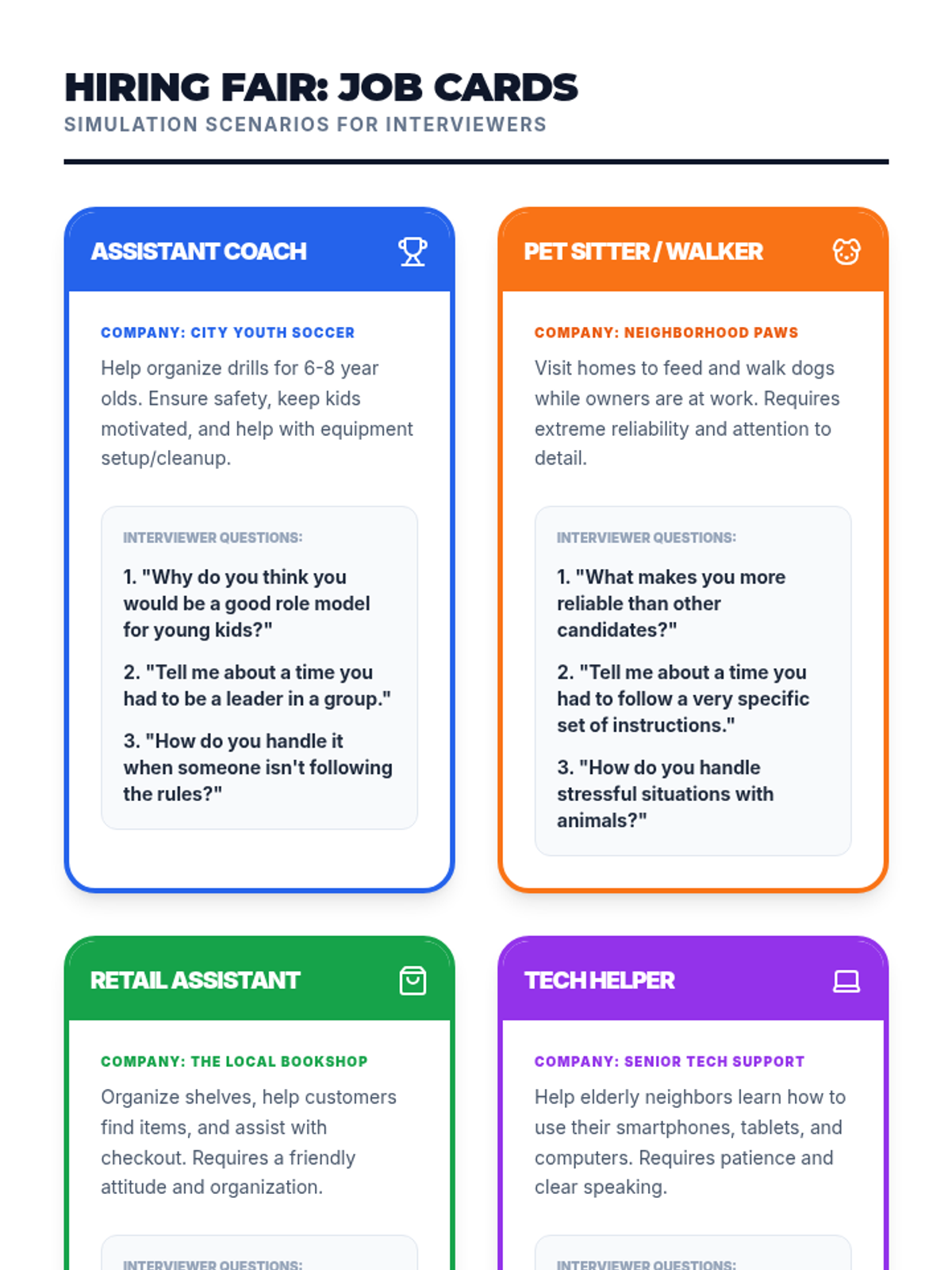
Job scenario cards for the mock interview simulation, providing specific job descriptions and targeted interview questions for the student interviewers to use.
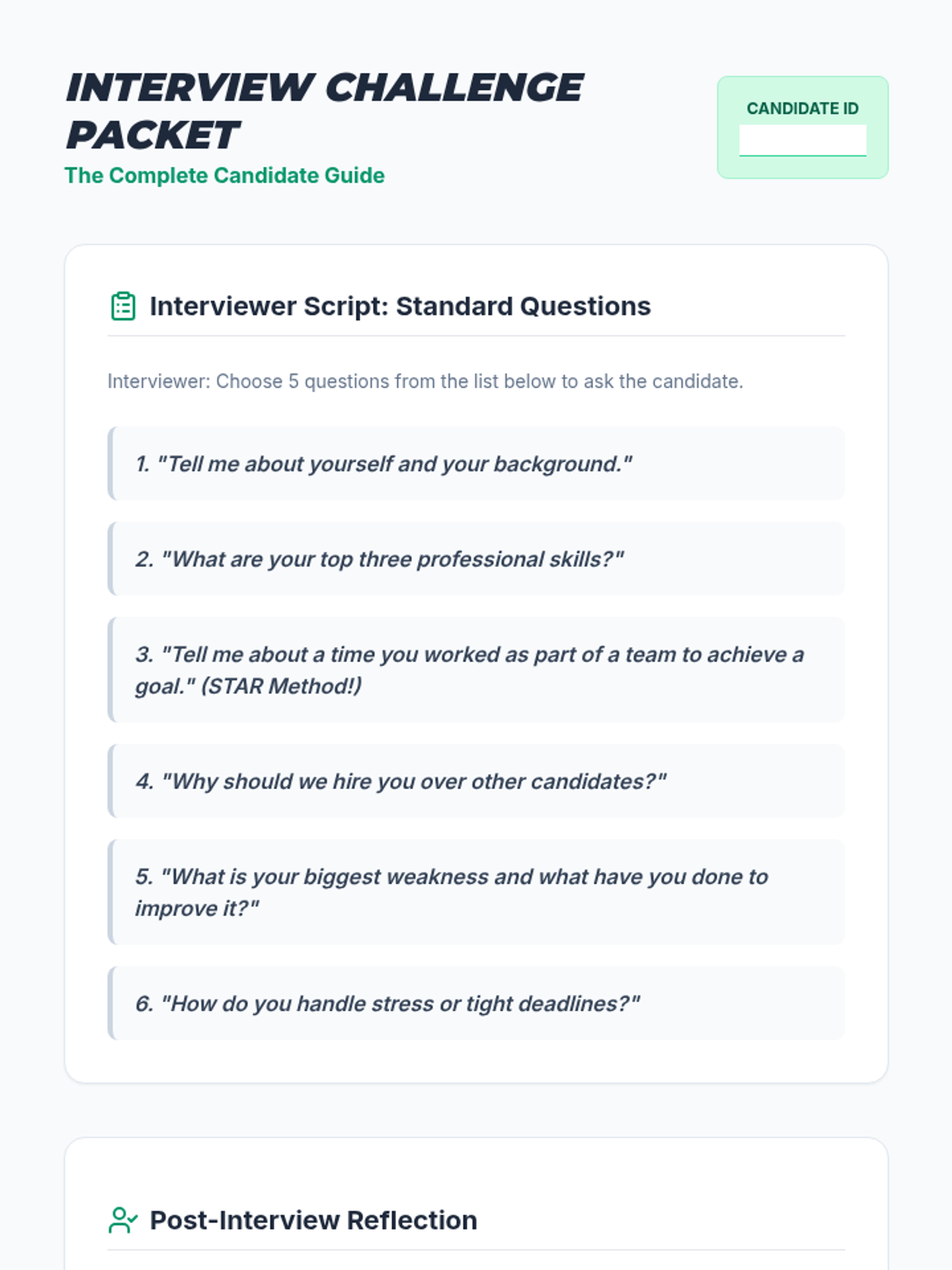
A student packet for the mock interview simulation, including the interviewer's script with standard questions and a post-interview self-reflection section.
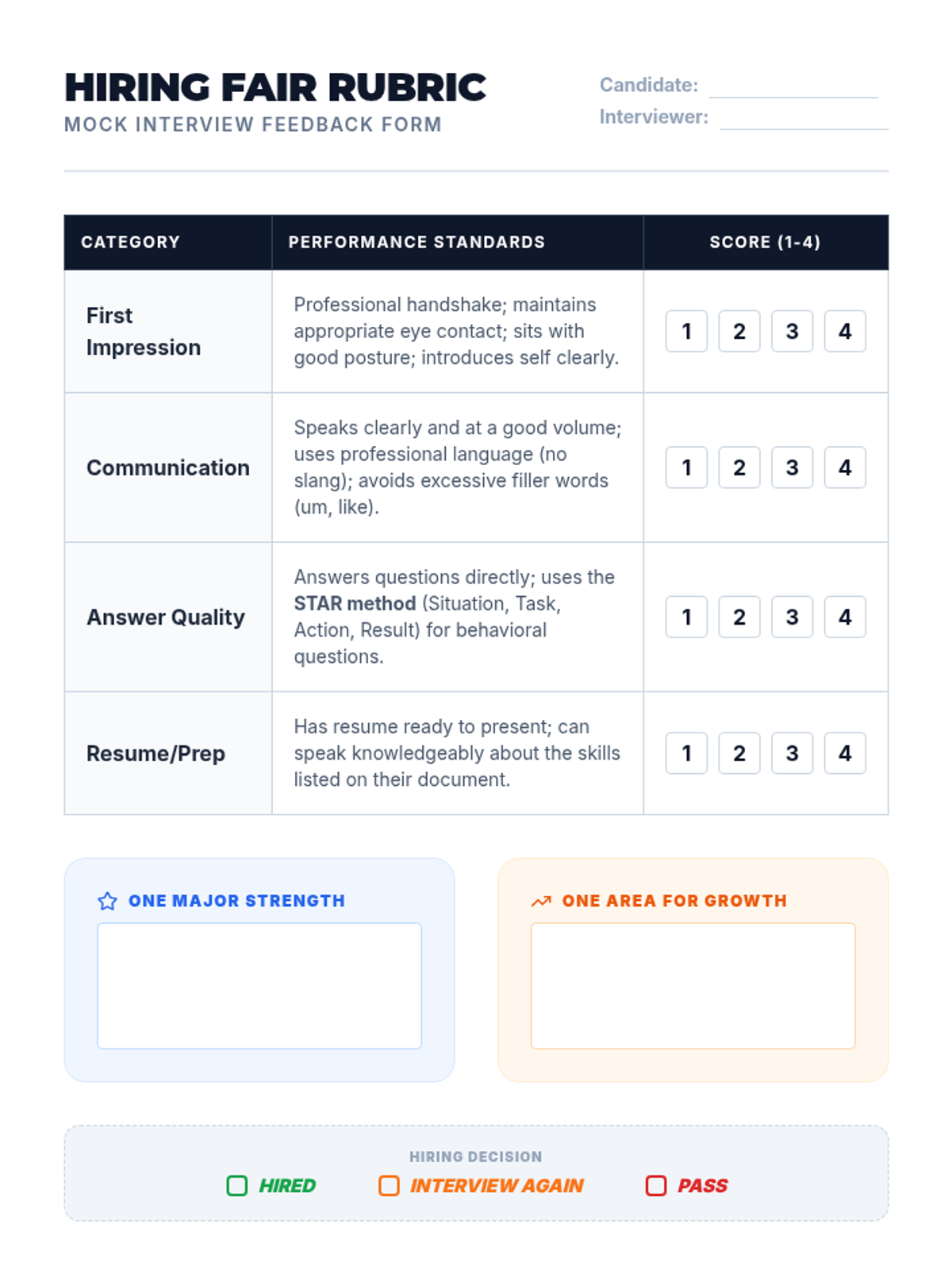
Interview rubric for the mock simulation, allowing students to provide structured feedback on non-verbal communication, answer quality using the STAR method, and overall professionalism.
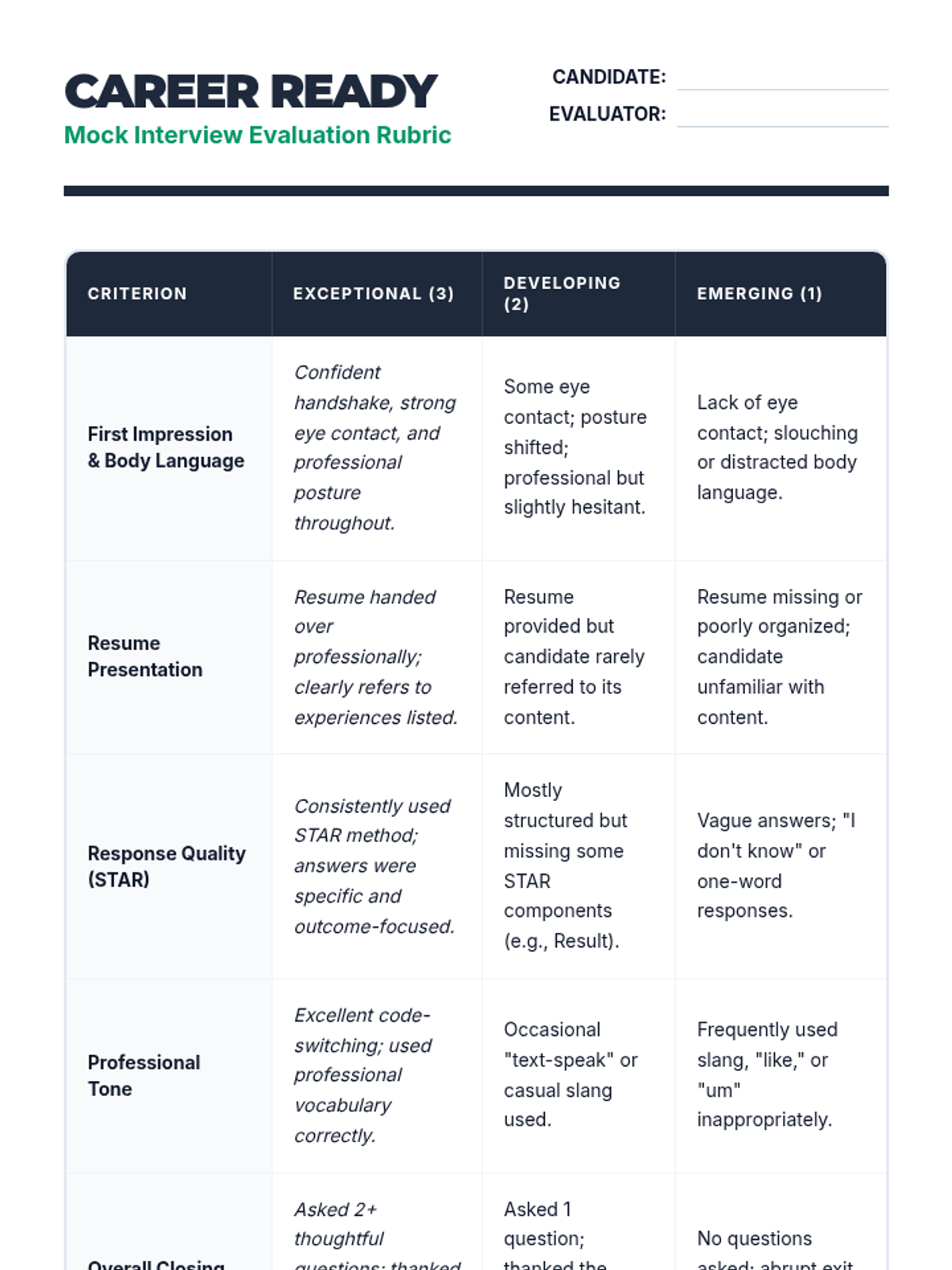
A comprehensive rubric for evaluating students during the mock interview simulation, covering body language, resume use, STAR method, tone, and closing.
Slide deck for the mock interview simulation, including rules for interviewers and interviewees, rotation flow, and guidelines for providing constructive feedback.
Visual presentation for Lesson 5, outlining the rules for the 'Hiring Fair' mock interview simulation and how to provide professional feedback.
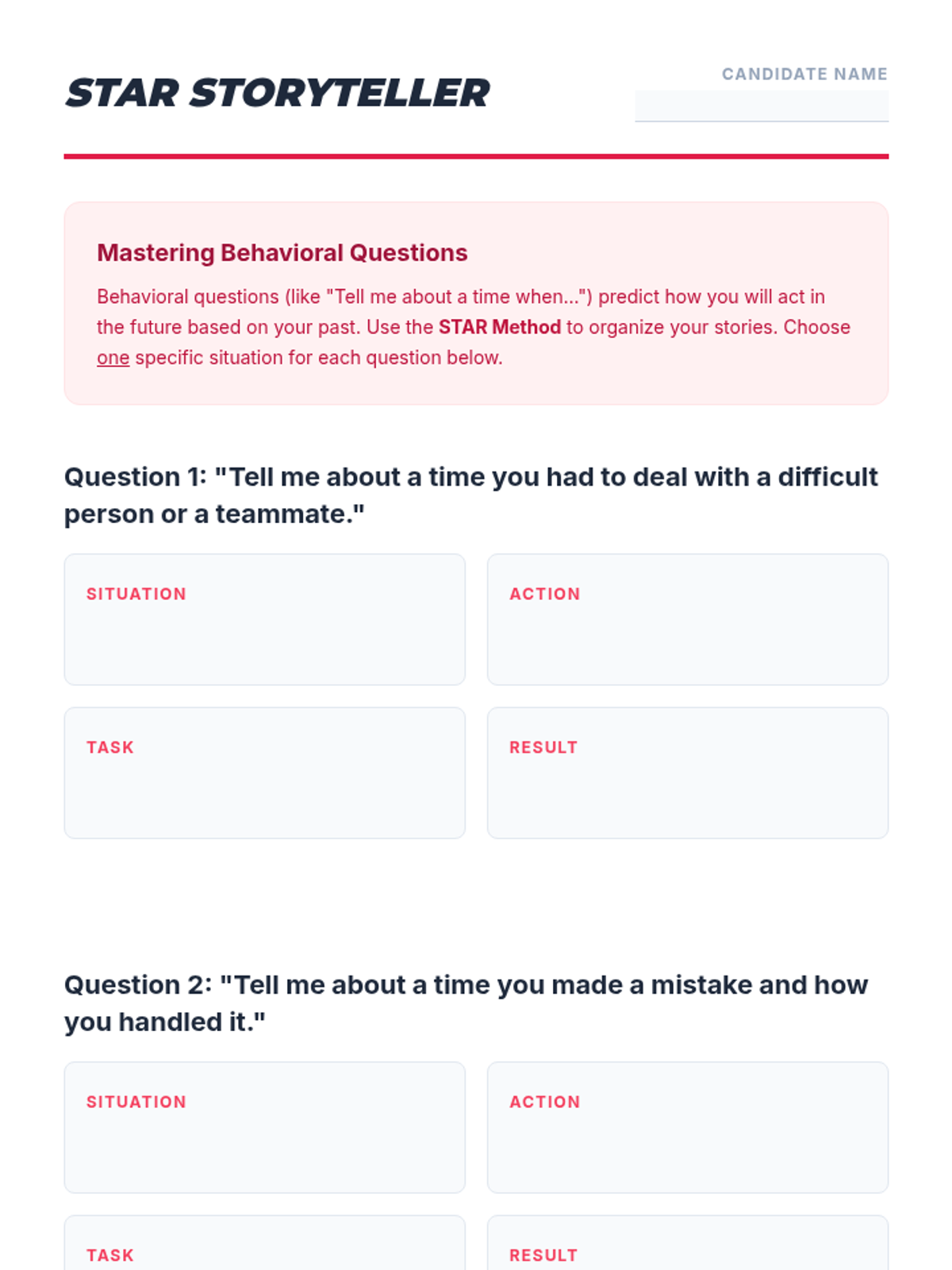
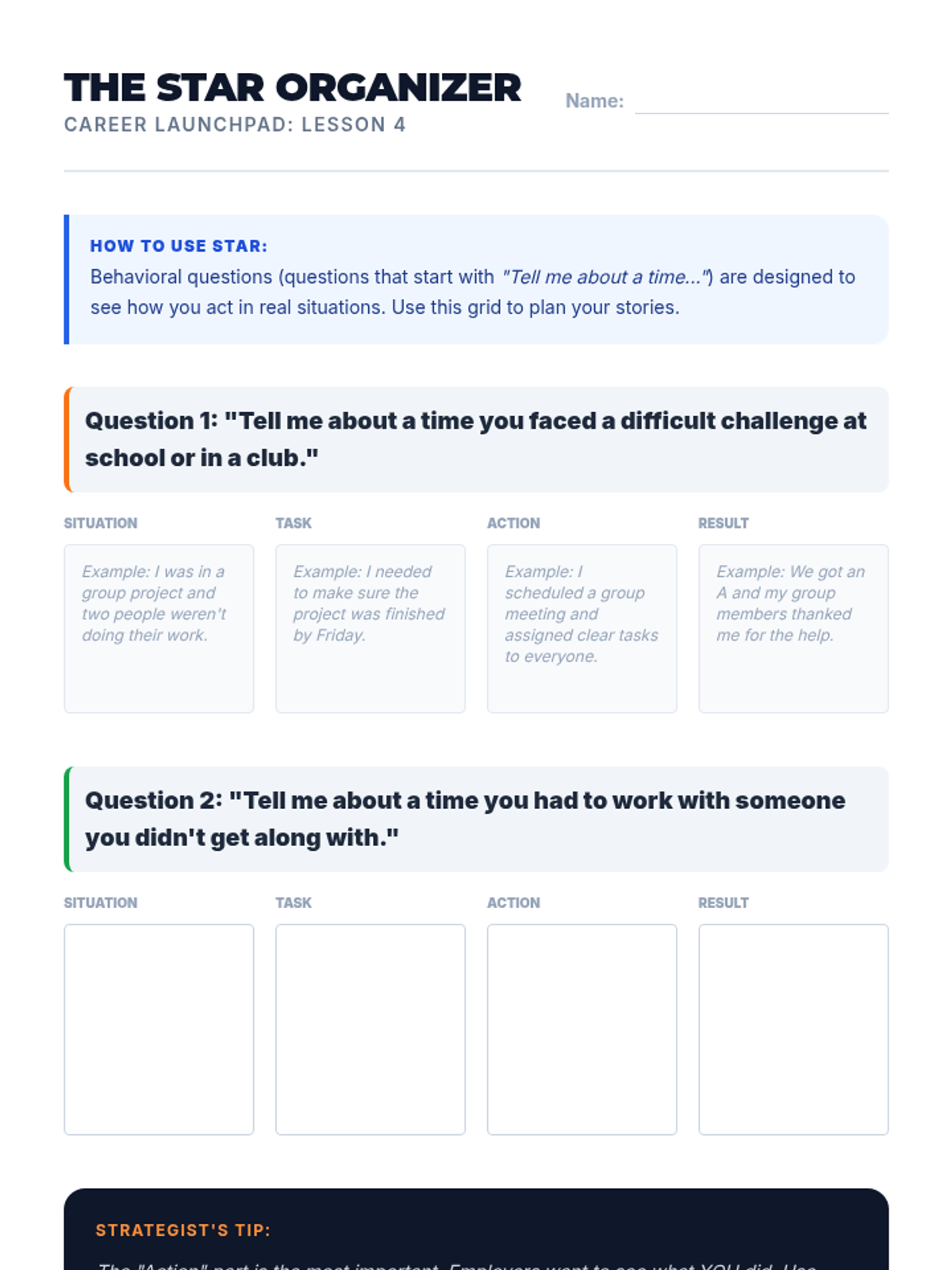
A worksheet for students to draft responses to behavioral interview questions using the STAR (Situation, Task, Action, Result) method.
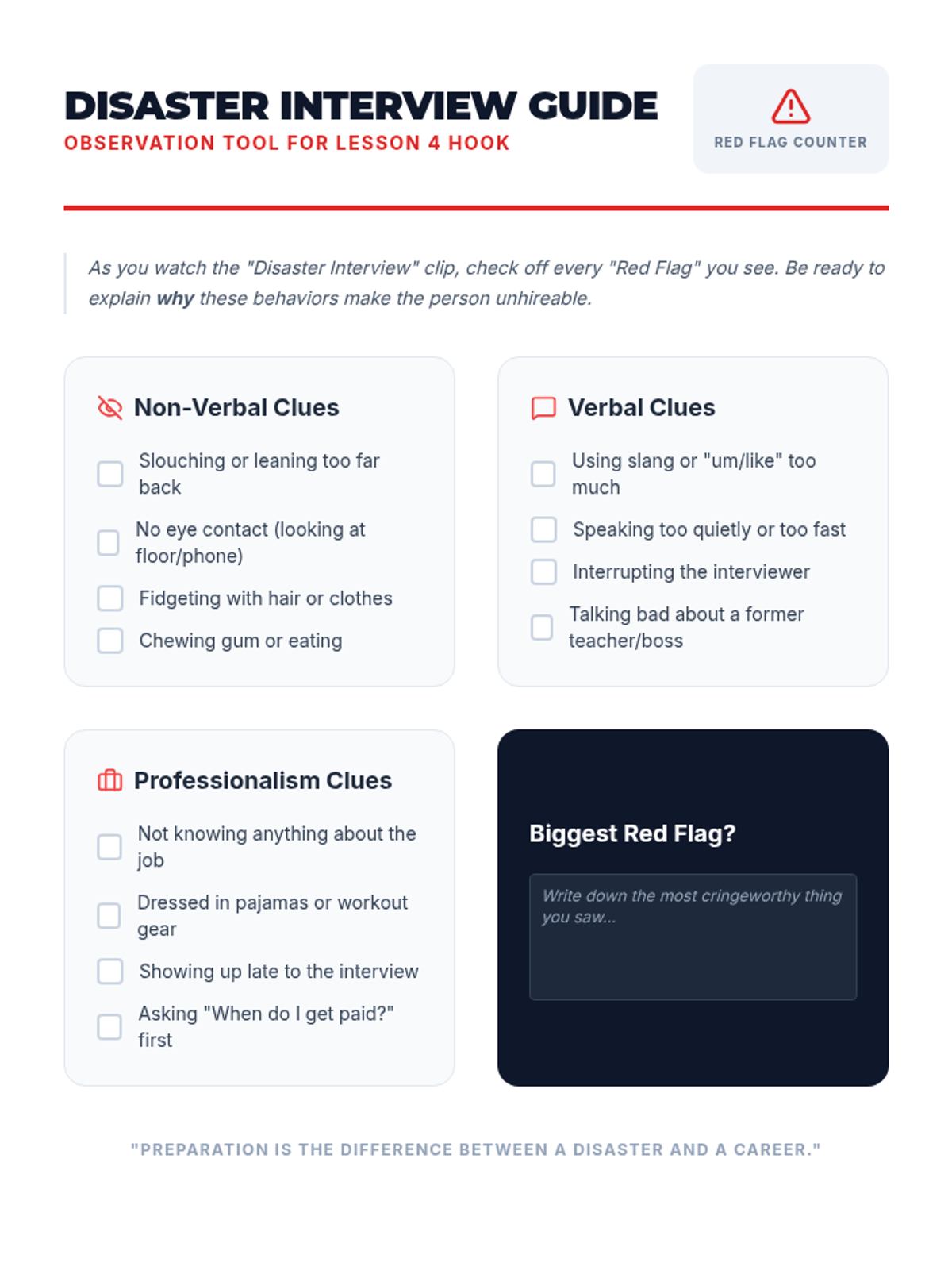
Observation sheet for students to use while watching an 'interview disaster' clip, helping them identify non-verbal and verbal red flags in a professional setting.
A slide deck covering interview strategies, non-verbal cues (the 'Silent Interview'), the STAR method for behavioral questions, and handling tough interview questions.
Worksheet for Lesson 4 where students practice using the STAR method (Situation, Task, Action, Result) to draft professional responses to common behavioral interview questions.
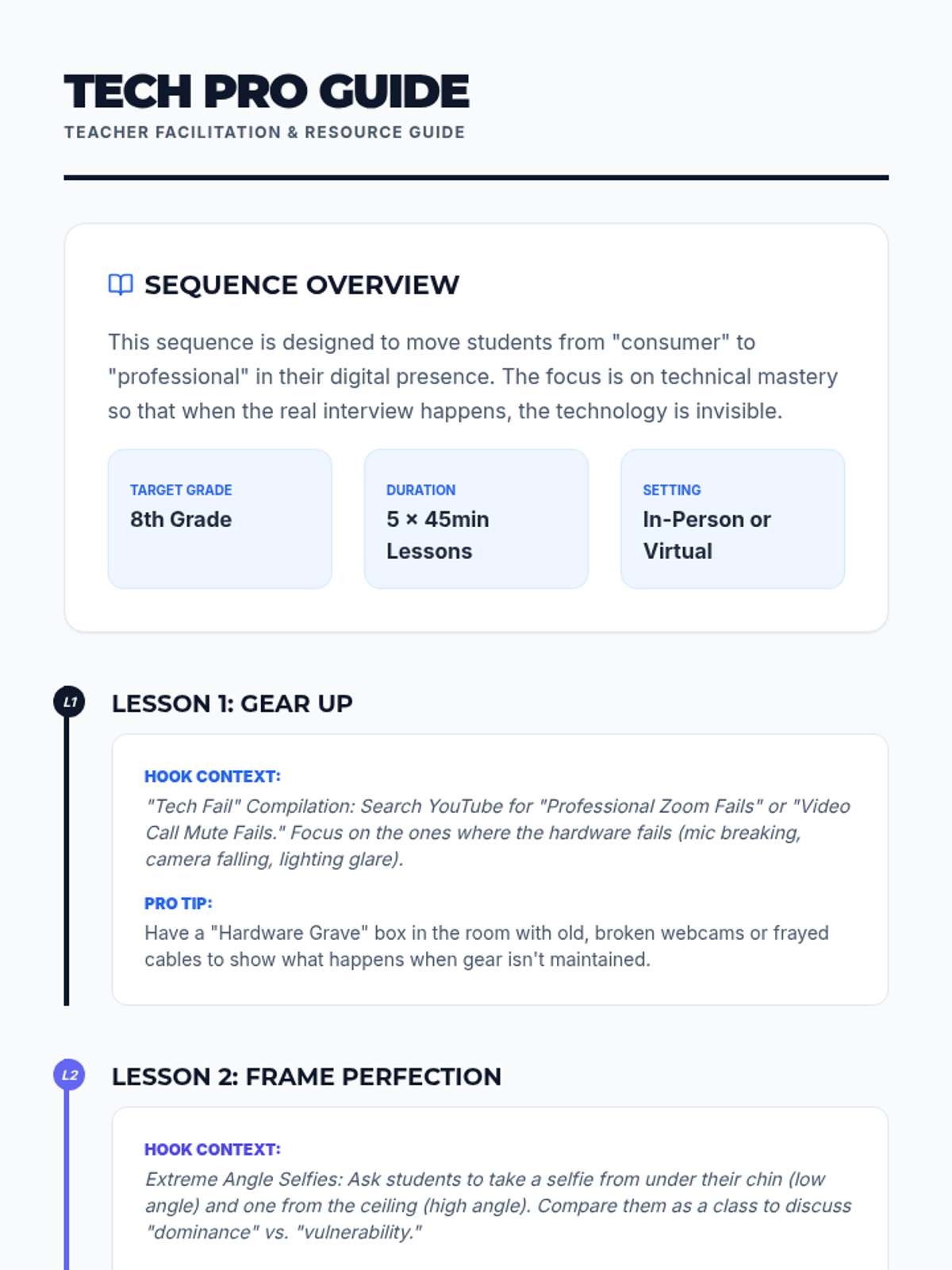
Comprehensive facilitation guide for teachers covering all five lessons, including hook context, platform keys, and troubleshooting tips.
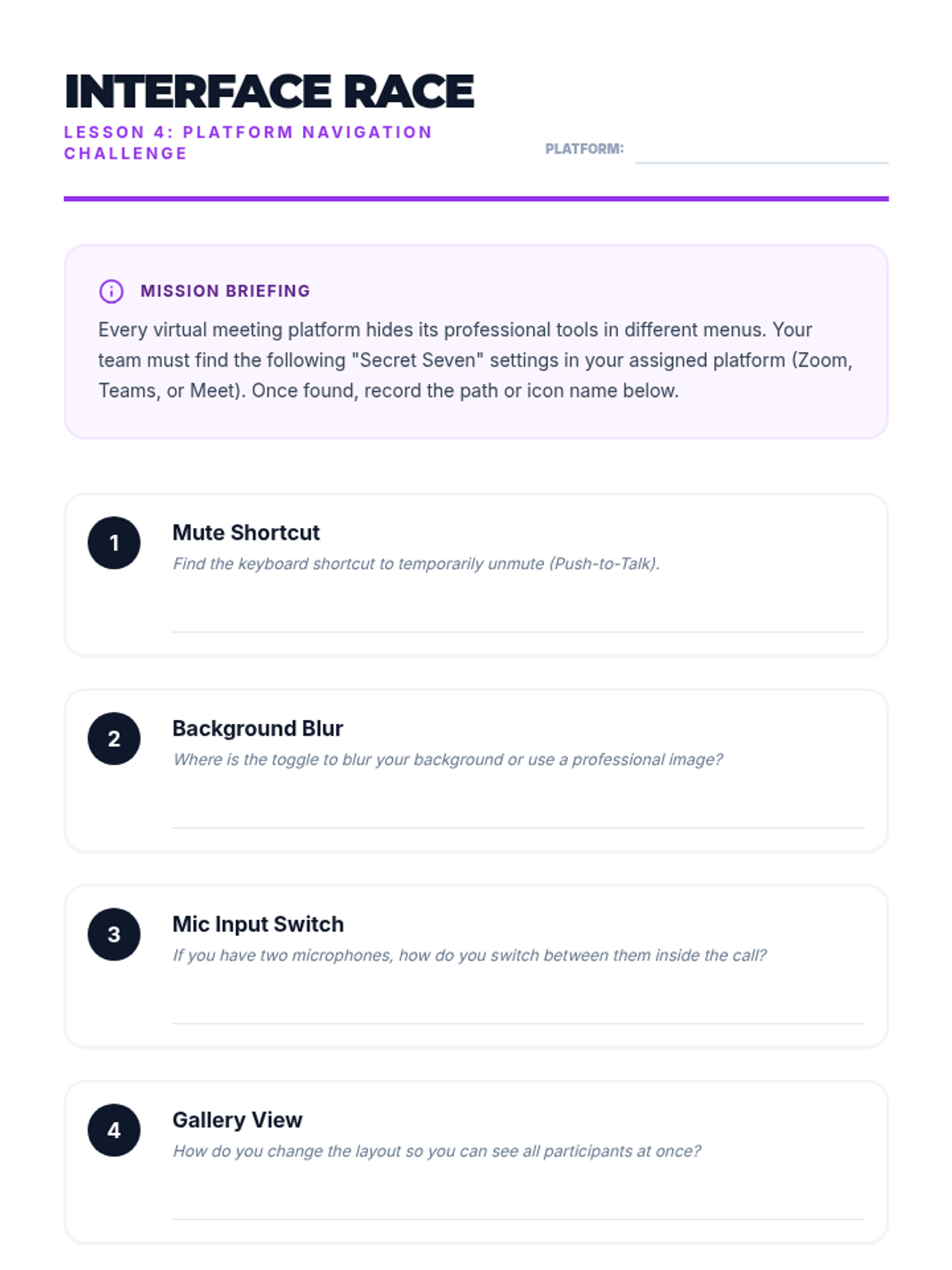
Student activity for Lesson 4 focusing on navigating meeting platform interfaces to find specific technical settings.
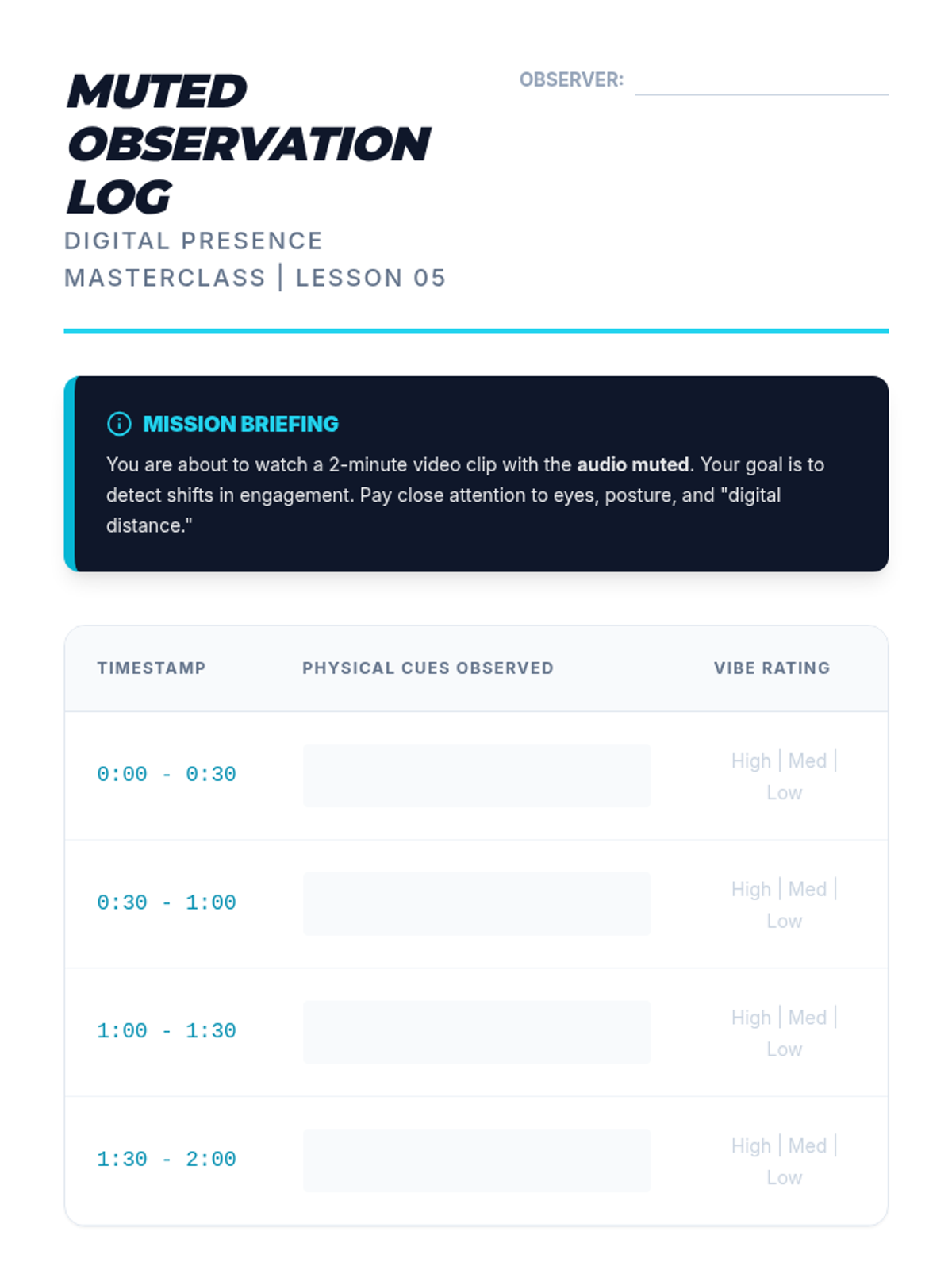
A student observation worksheet for analyzing non-verbal cues in muted video clips and planning re-engagement strategies.
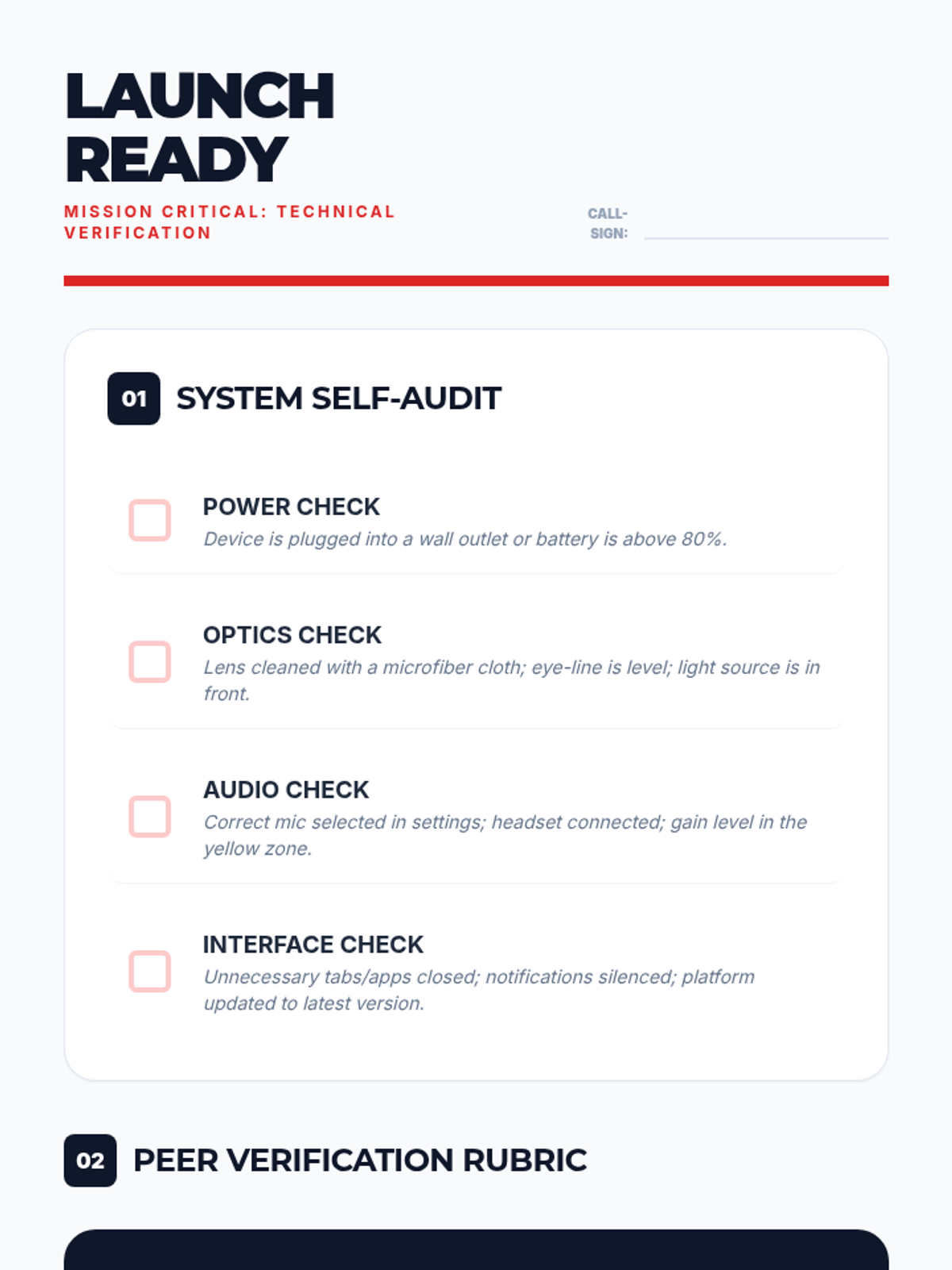
Final technical verification checklist and peer audit rubric for the sequence's mastery assessment.
A 5-slide presentation on reading digital social cues and re-engaging an interviewer. It covers identifying micro-signals of boredom and specific strategies for shifting the energy of a virtual meeting.
Visual presentation for the final simulation lesson, guiding students through the mock interview flow and the playback analysis process.
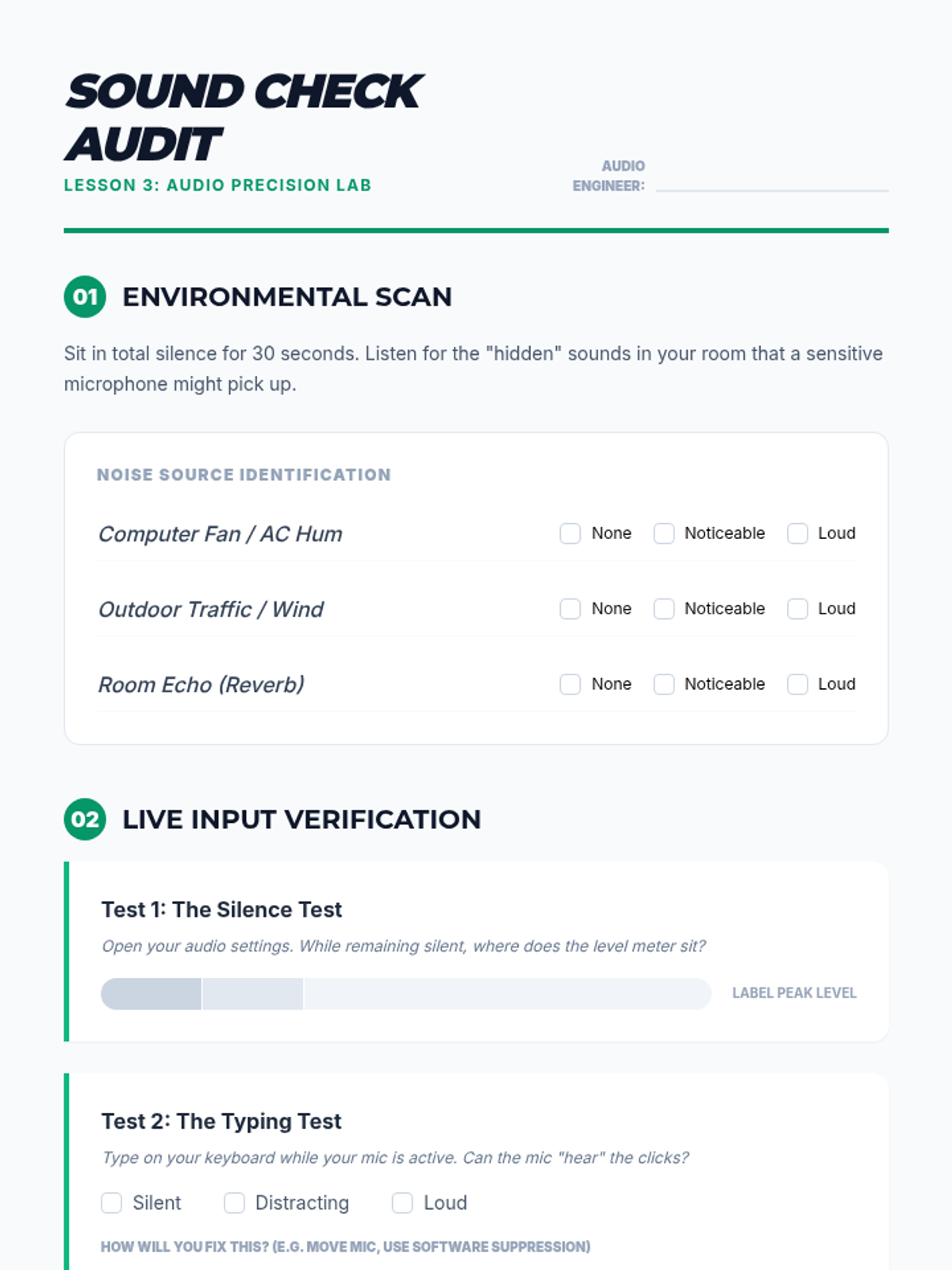
Student worksheet for Lesson 3 focusing on environmental audio analysis, noise floor testing, and microphone input calibration.
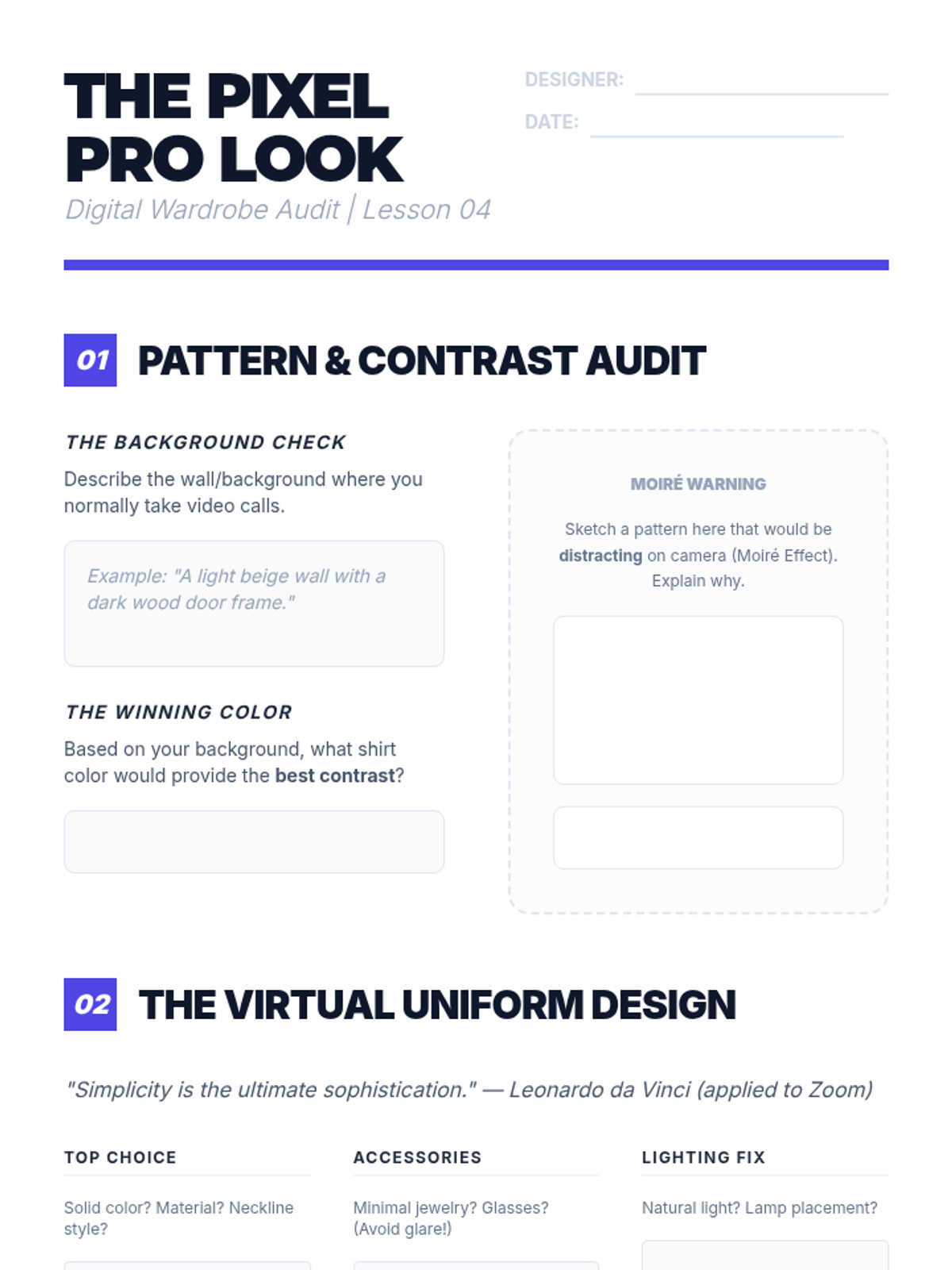
A student design worksheet to audit their virtual background contrast, identify distracting patterns, and plan their professional virtual interview attire.
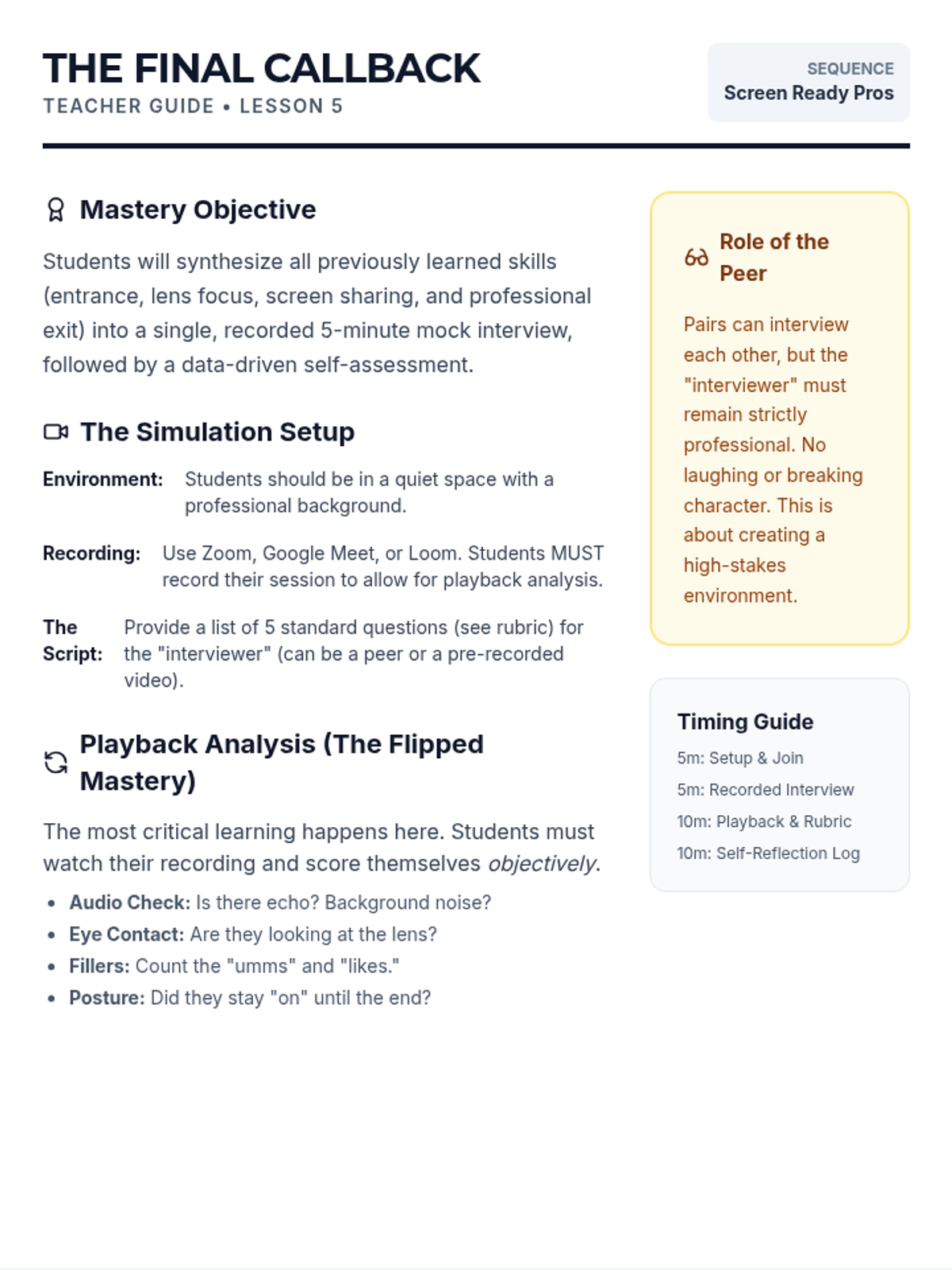
Teacher guide, simulation rubric, and self-reflection log for the final mock interview lesson, integrating all skills from the sequence.
Visual presentation for Lesson 5 focusing on the final technical verification process, including the 60-second launch challenge and peer audit protocols.
A 5-slide presentation on virtual dress codes for 8th graders. It covers the 'Pattern Panic' (Moiré Effect), background contrast strategies, and the psychology of colors in digital video formats.
Visual presentation for Lesson 4, covering final questions, the 'hot mic' danger zone, and the step-by-step exit protocol.
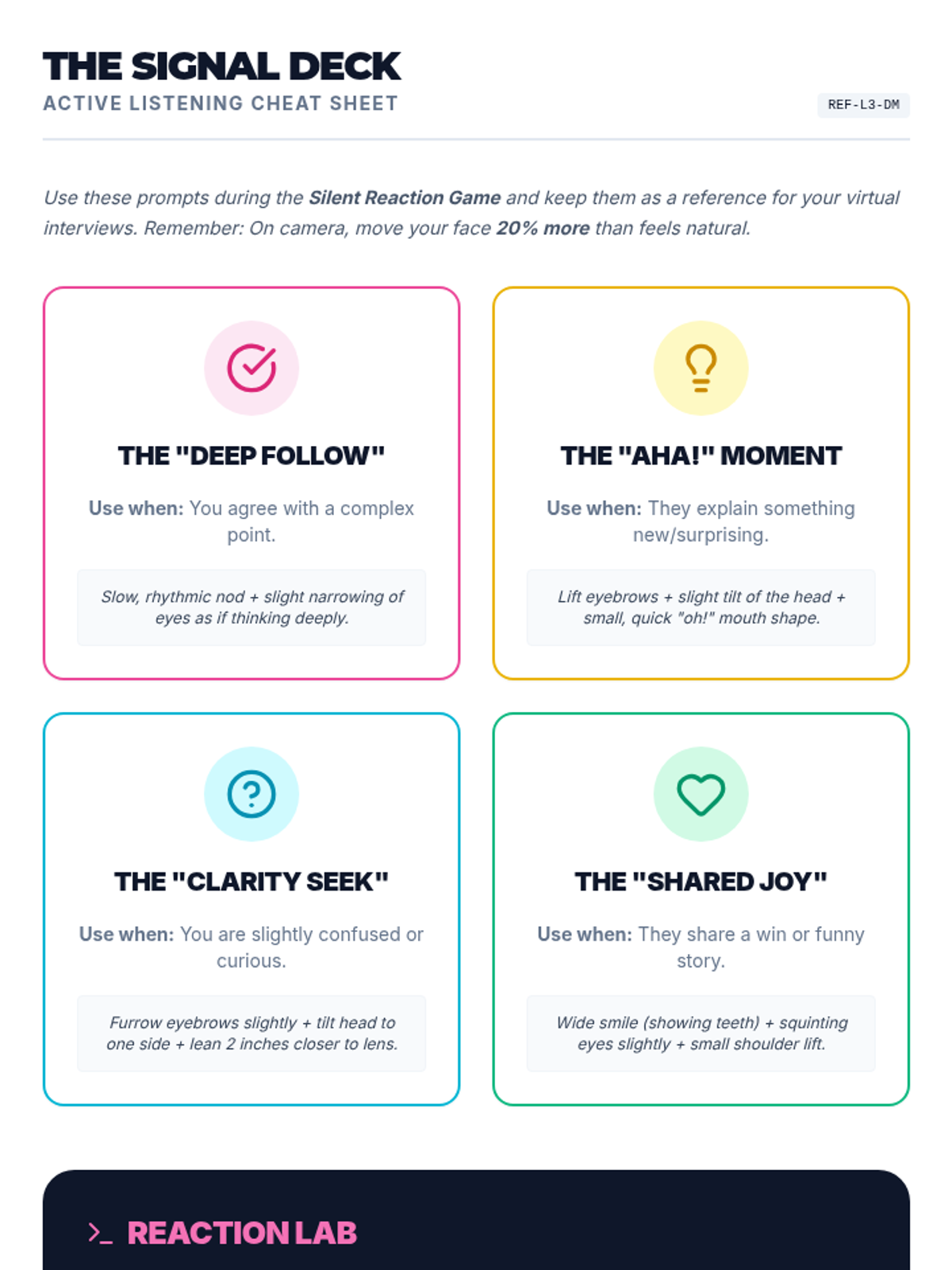
A reference and activity sheet containing a 'Silent Signal' cheat sheet for virtual active listening and a reflection area for the Silent Reaction game.
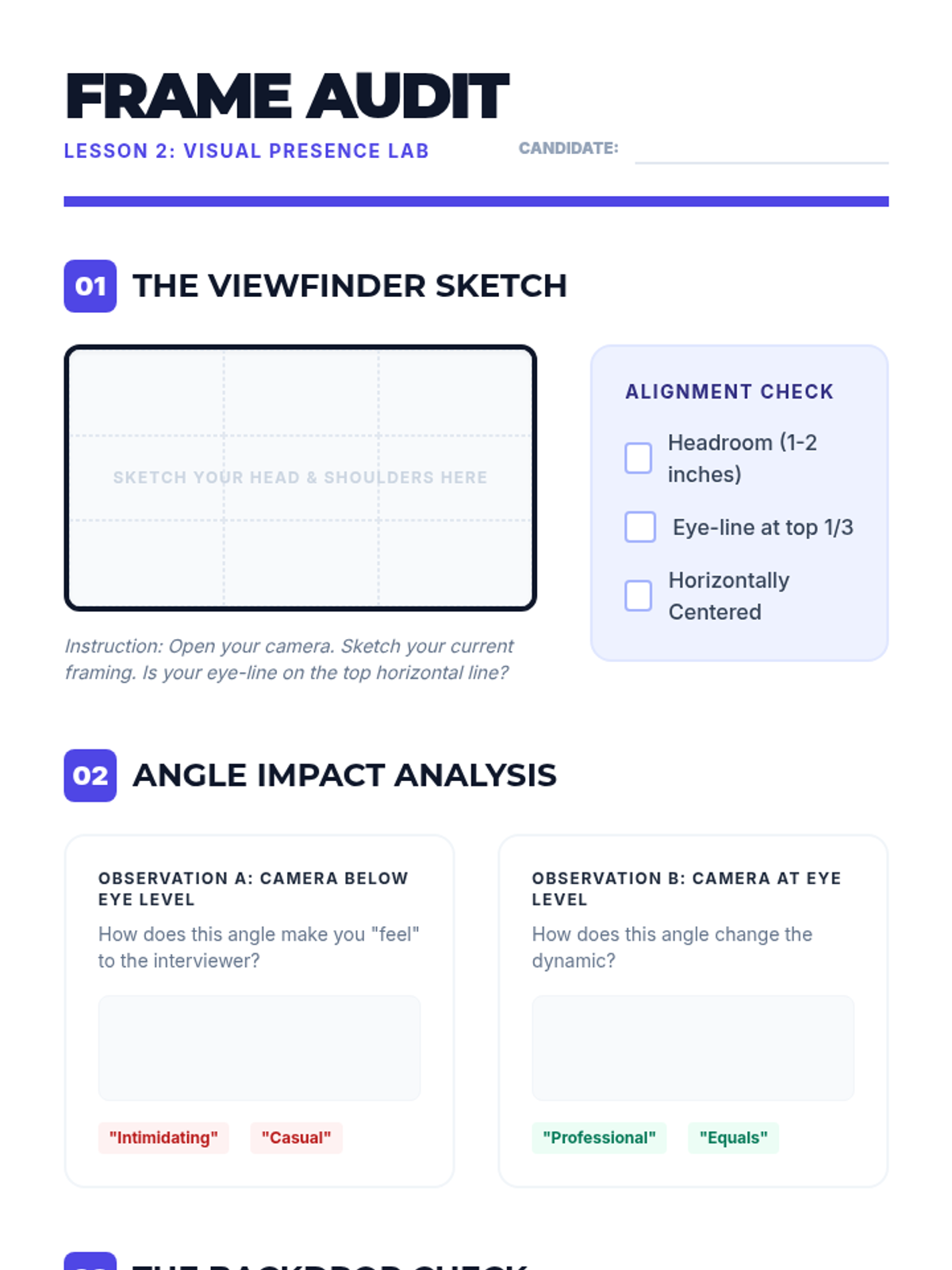
Student worksheet for Lesson 2 focusing on visual framing, the Rule of Thirds, and analyzing the psychological impact of camera angles.
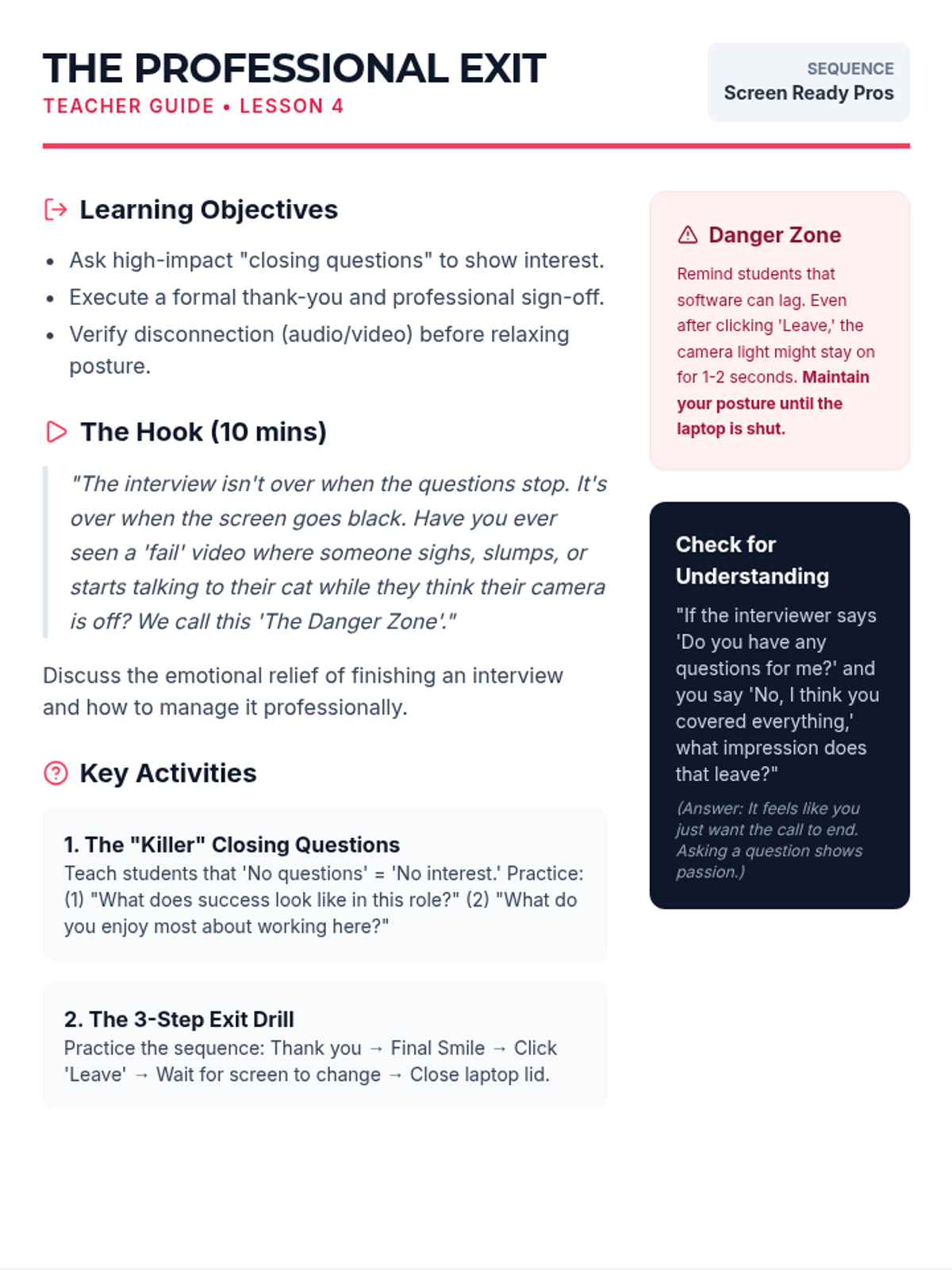
Teacher guide and student activity sheet for Lesson 4, focusing on final questions, thank-you etiquette, and the technical disconnect.
A 5-slide presentation on using facial expressions and active listening cues in virtual meetings. It explains the 'Audio Wall' problem and introduces the 'Silent Trifecta' of cues.
Visual presentation for Lesson 4 introducing platform interfaces (Zoom, Teams, Google Meet), meeting etiquette like mute discipline, and navigating interactive features.
Visual presentation for Lesson 3, contrasting 'Entire Screen' vs 'Window' sharing and providing the 'Verbal Bridge' script for smooth transitions.
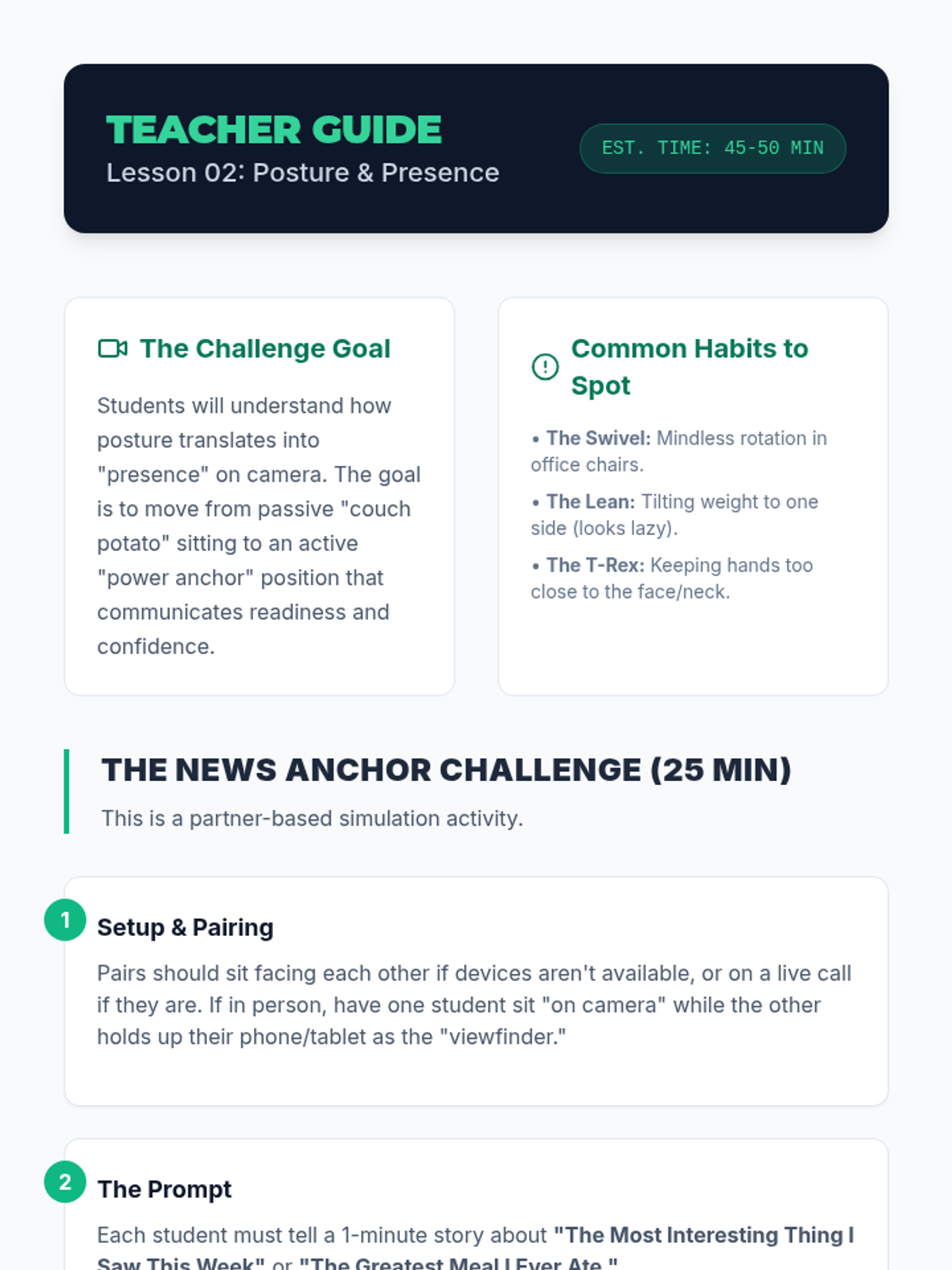
A facilitation guide for teachers to lead Lesson 02, including the setup for the News Anchor Challenge, common student habits to watch for, and debriefing questions.
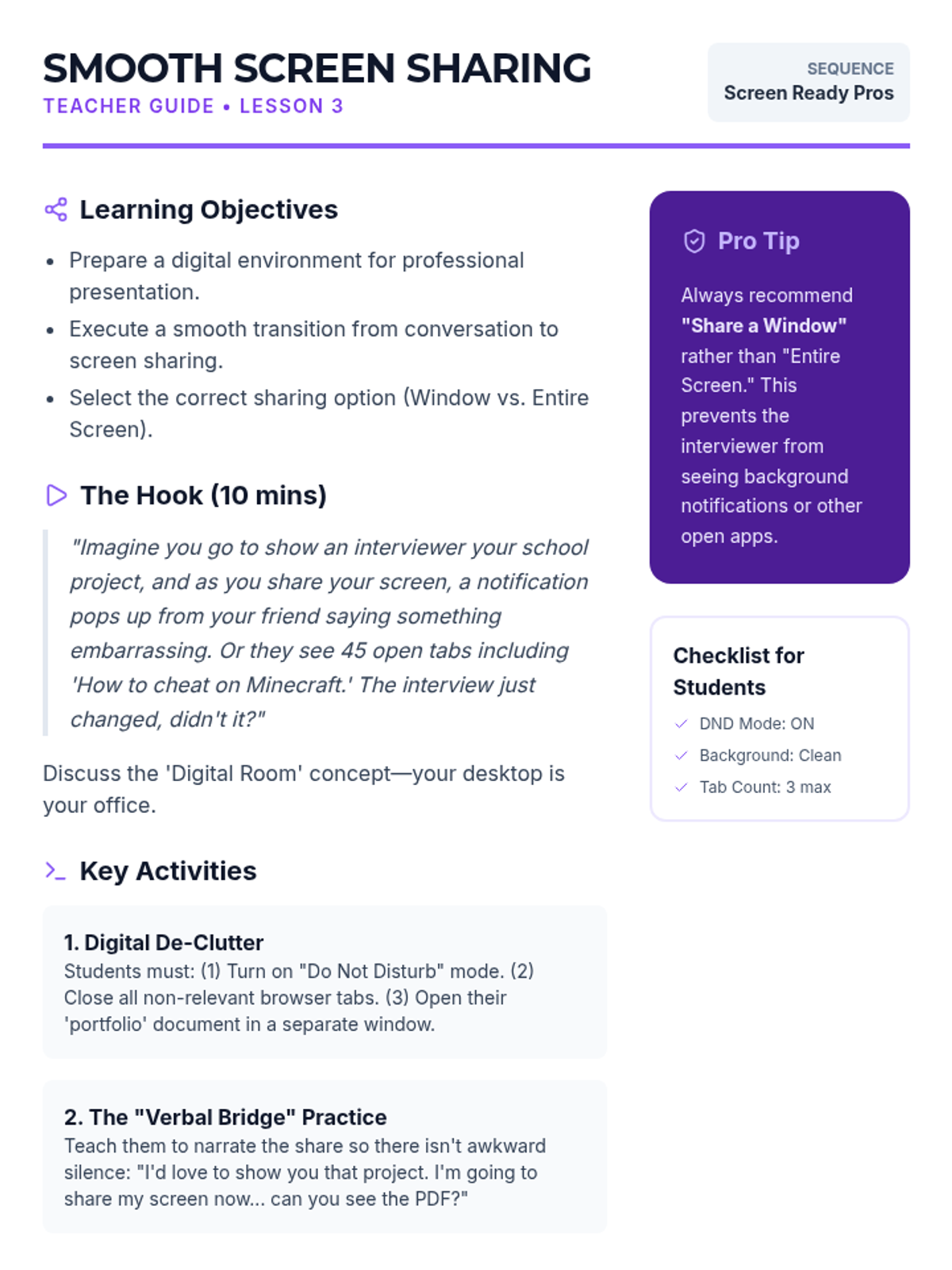
Teacher guide and student activity sheet for Lesson 3, focusing on digital environment preparation and smooth screen sharing transitions.
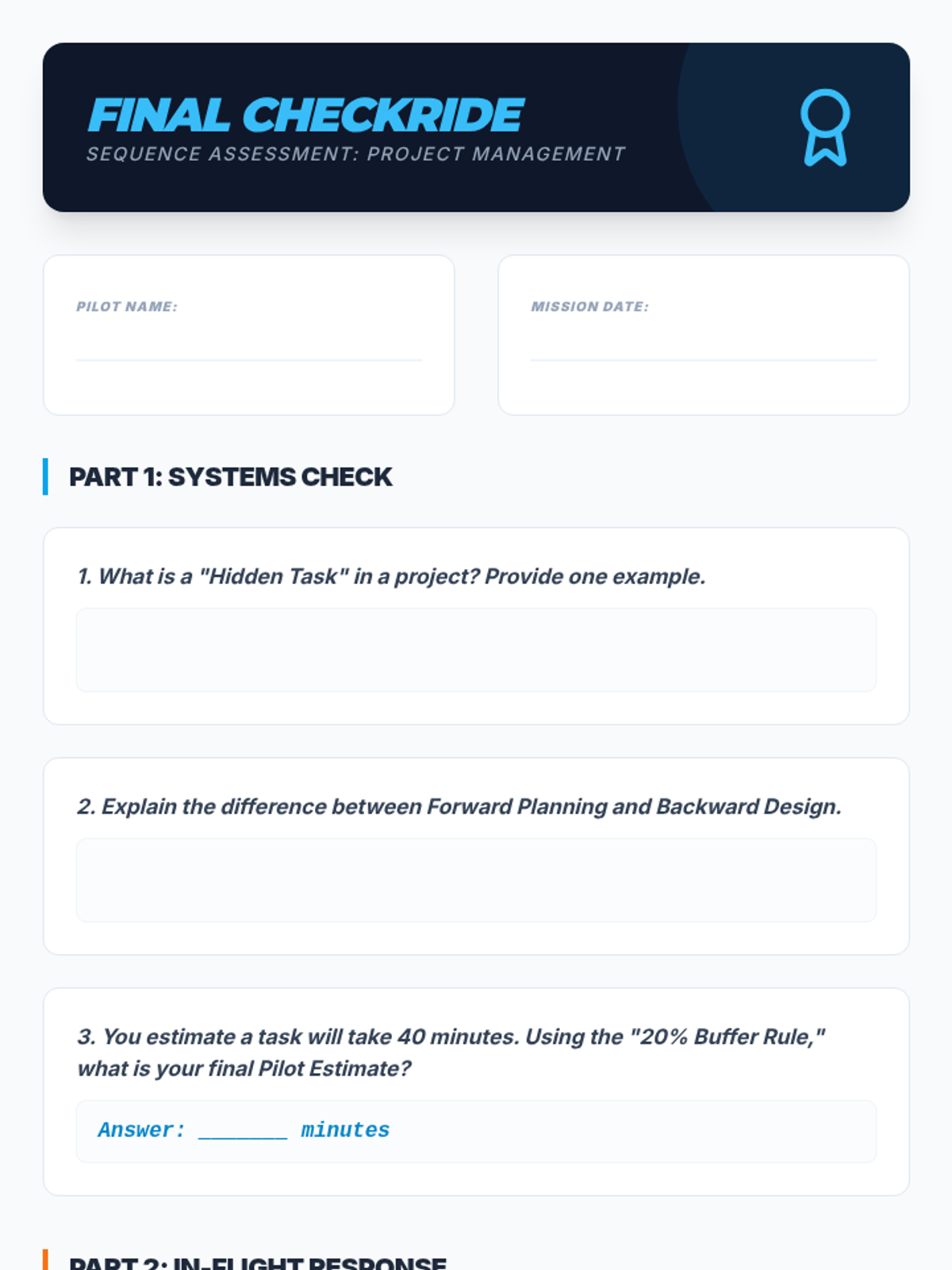
A comprehensive final assessment for the Project Pilot sequence, testing students on task deconstruction, backward planning, time estimation, and disaster recovery strategies.
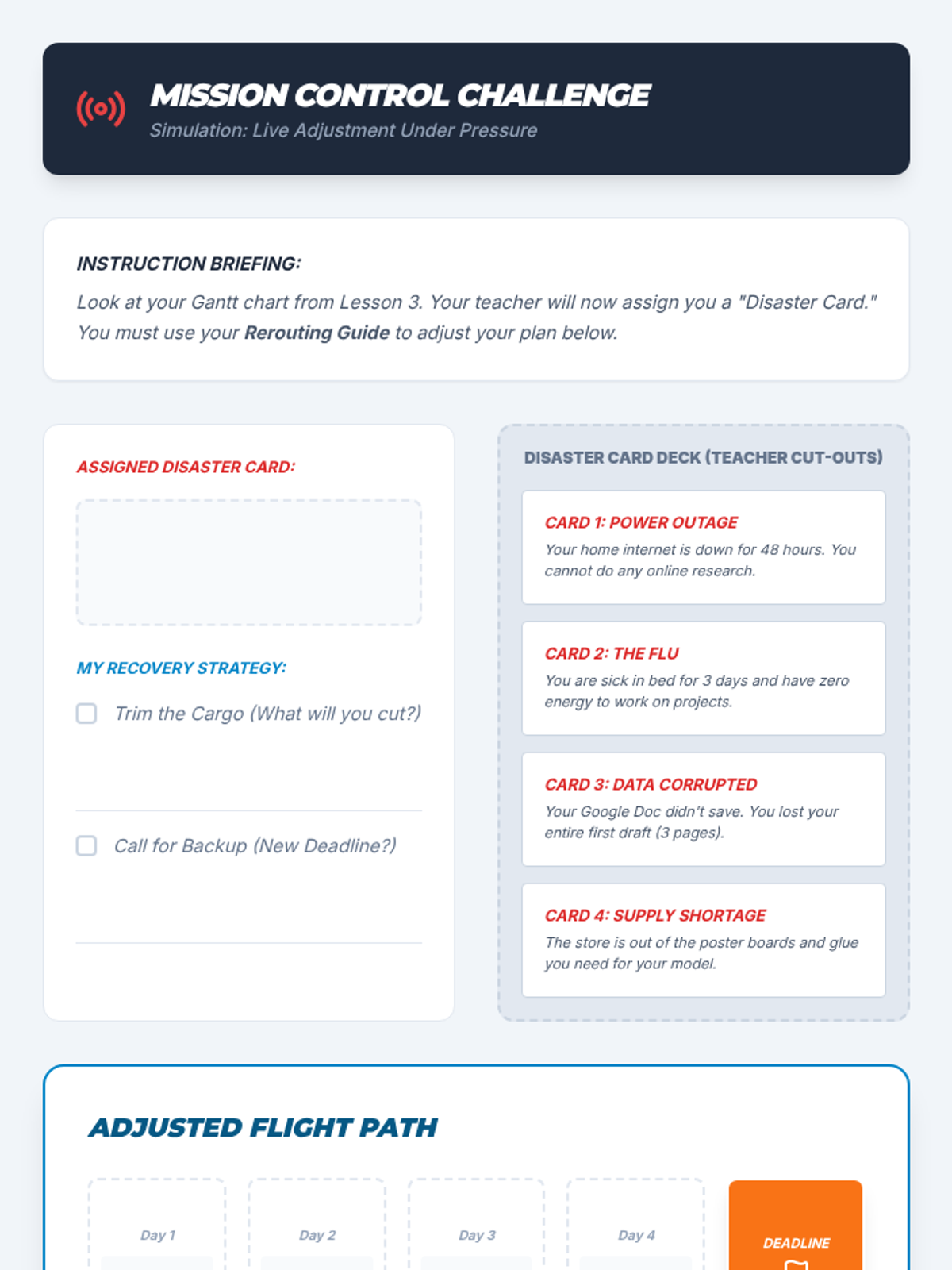
A simulation activity where students are given a 'Disaster Card' (e.g., lost data, sickness) and must use their recovery strategies to adjust their project timeline.
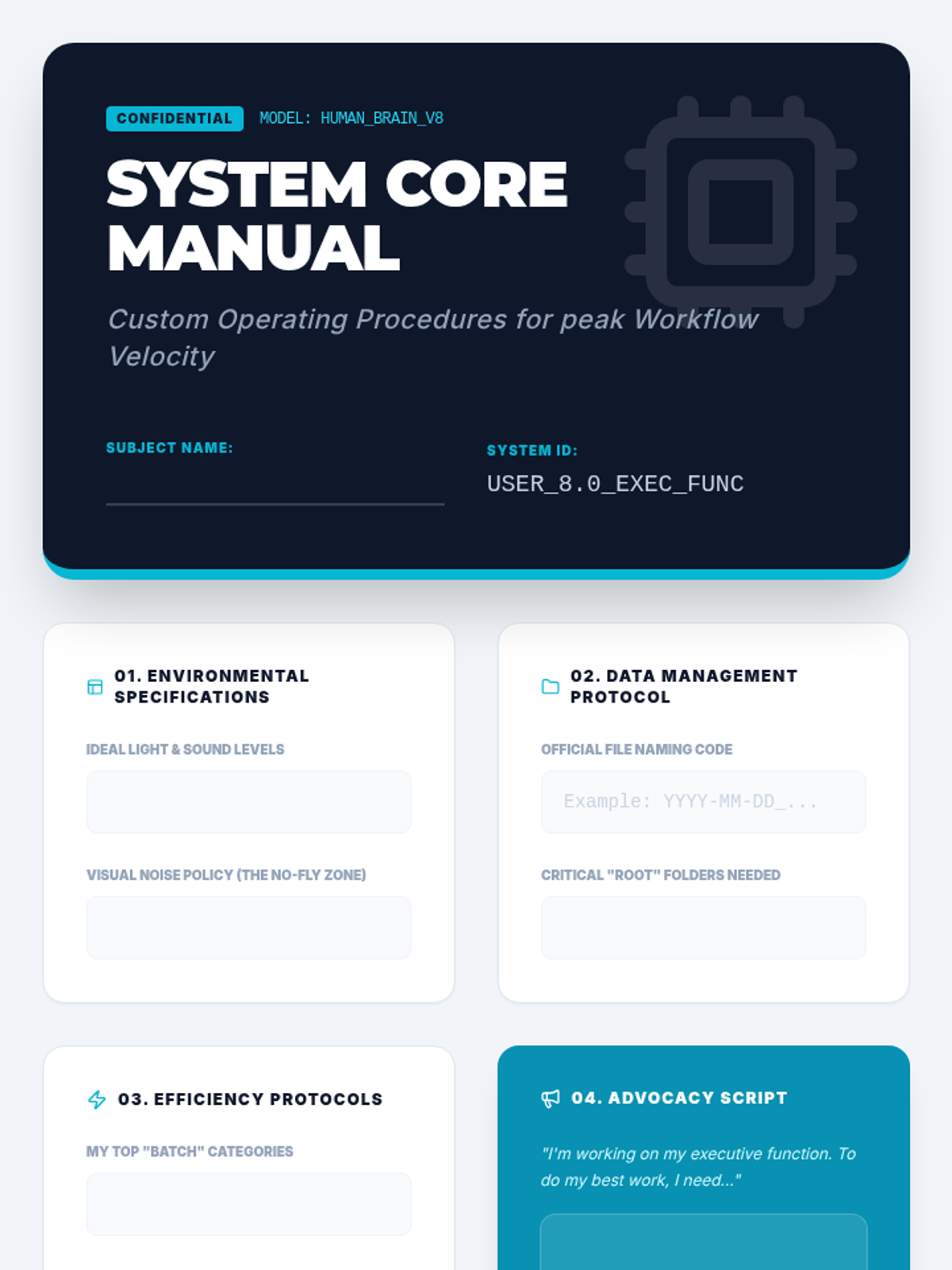
The capstone project template for the sequence. Students synthesize all previous learning into a professional-looking "System Core Manual" that documents their personalized organizational strategies and self-advocacy needs.
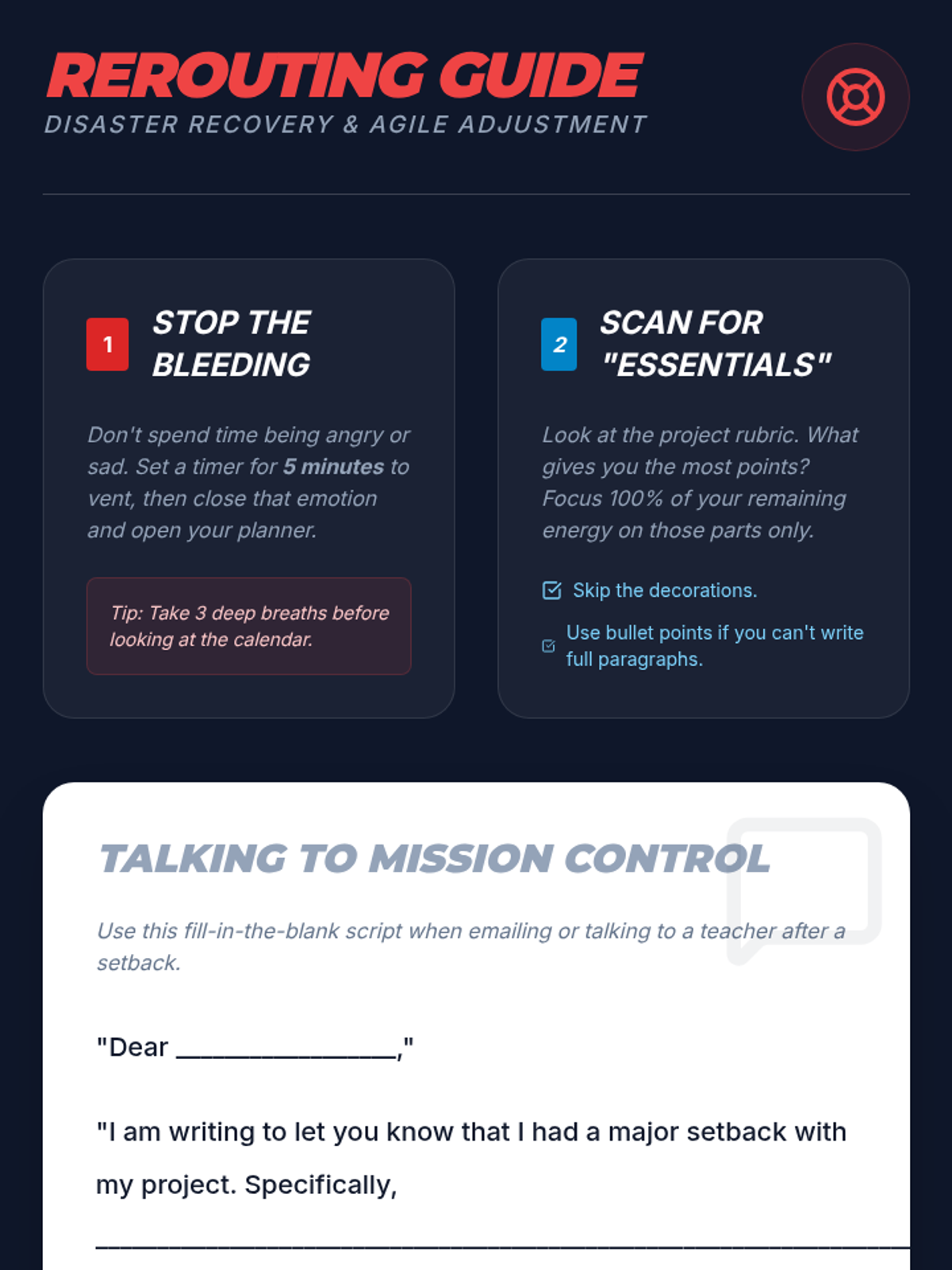
A disaster recovery guide for students, providing a step-by-step protocol for project setbacks and a fill-in-the-blank script for communicating with teachers.
Final project presentation guiding students to synthesize their learning into a personal "Operating Manual." Focuses on self-advocacy and developing a set of standard operating procedures for their individual cognitive needs.
Slides for Lesson 5 of the Project Pilot sequence, simulating project 'disasters' and teaching strategies for agile adjustment, renegotiation, and resilience.
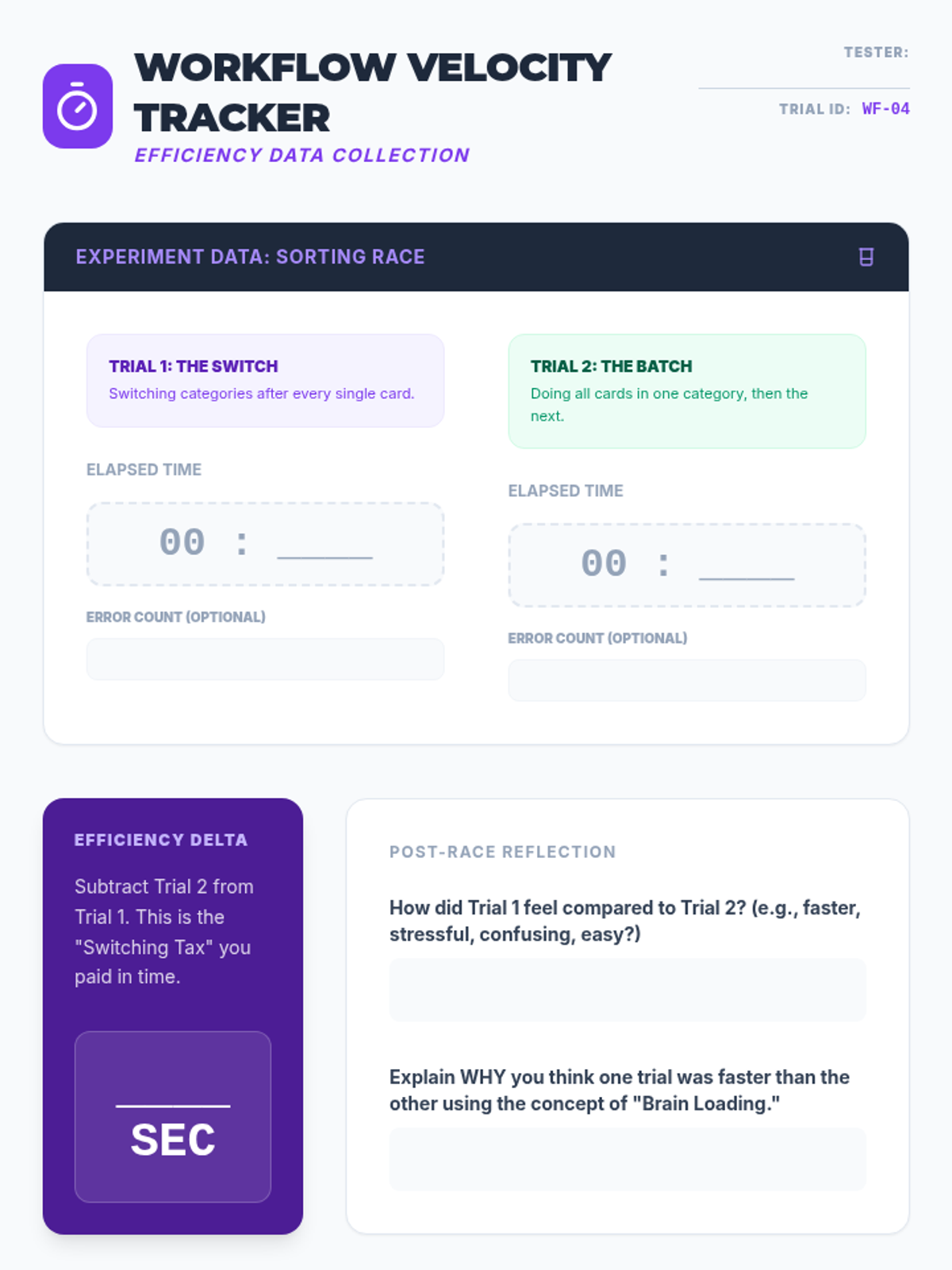
Experimental data tracker for the sorting race. Students record times for sequential versus batched tasks, calculate their efficiency delta, and plan real-world application of batching strategies to their homework.
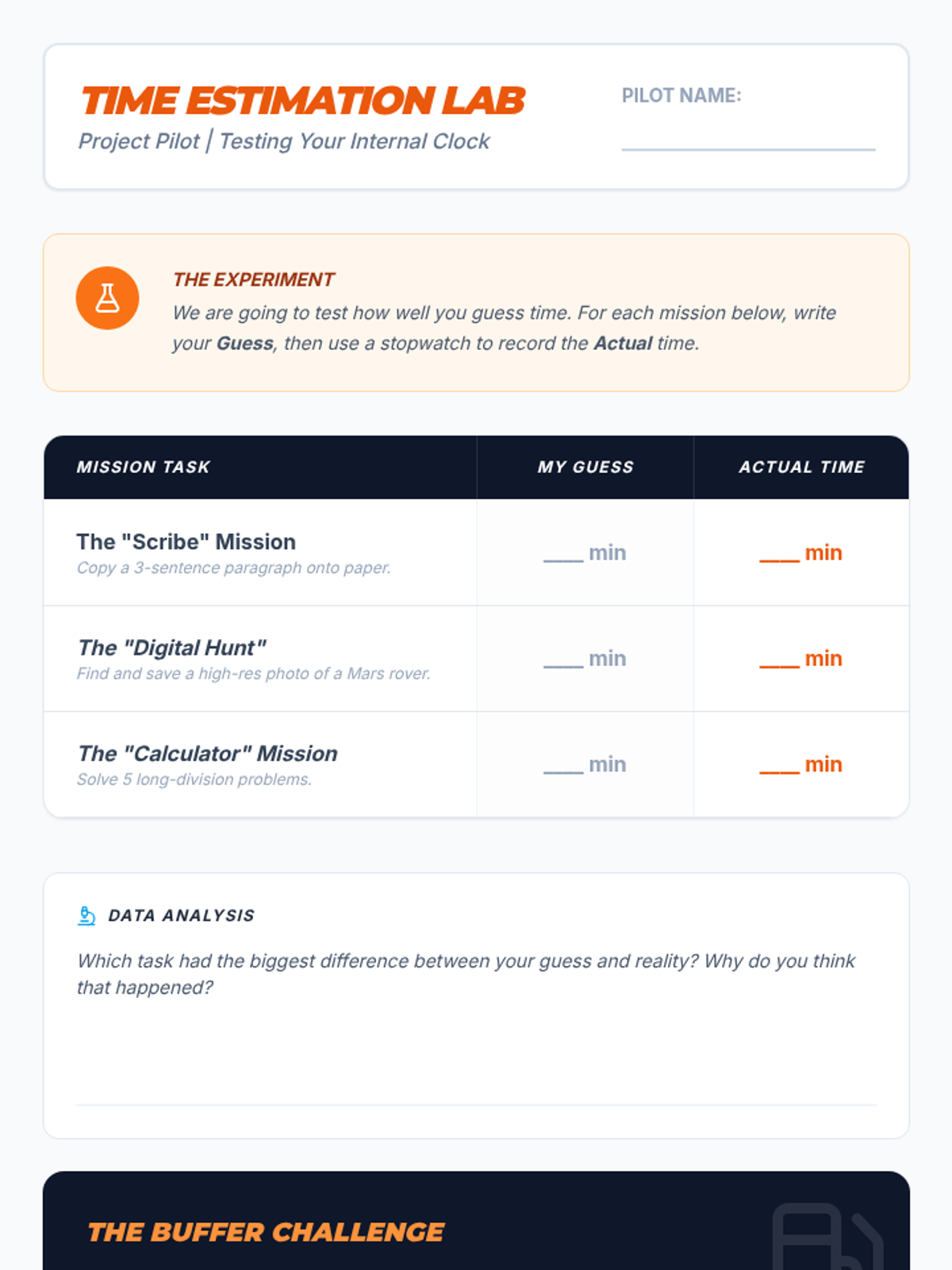
An activity where students estimate task duration, perform the tasks, and compare their estimates to reality to learn about the planning fallacy.
Slides explaining the concept of task batching versus context switching. Includes instructions for a physical "Sorting Race" experiment to demonstrate the productivity cost of multitasking.
Slides for Lesson 4 of the Project Pilot sequence, introducing the concept of the planning fallacy, reasons for estimation errors, and the 20% buffer rule.
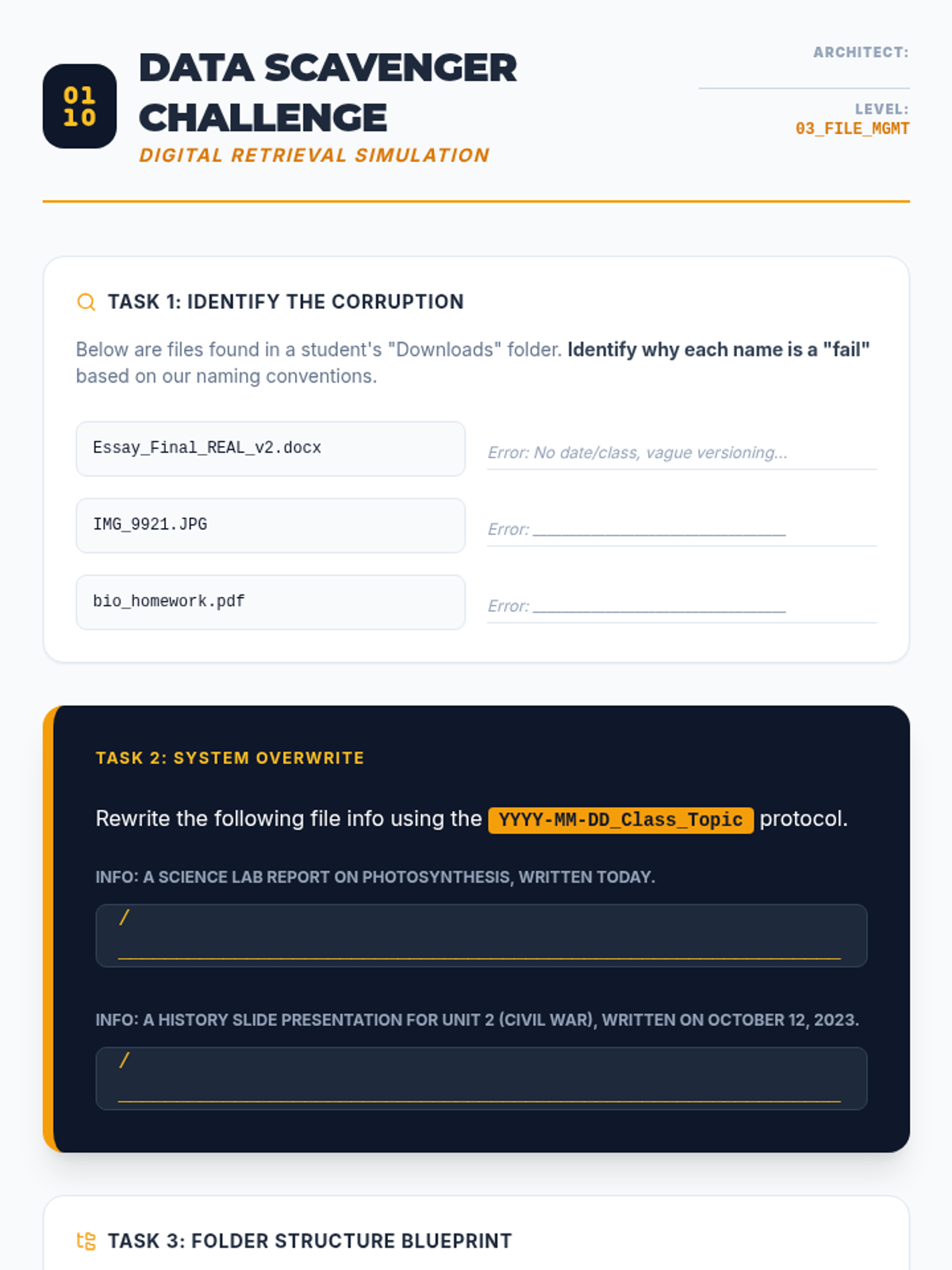
Worksheet practicing file naming conventions and digital hierarchy. Students analyze poorly named files, rewrite them using professional protocols, and design a personalized folder structure.
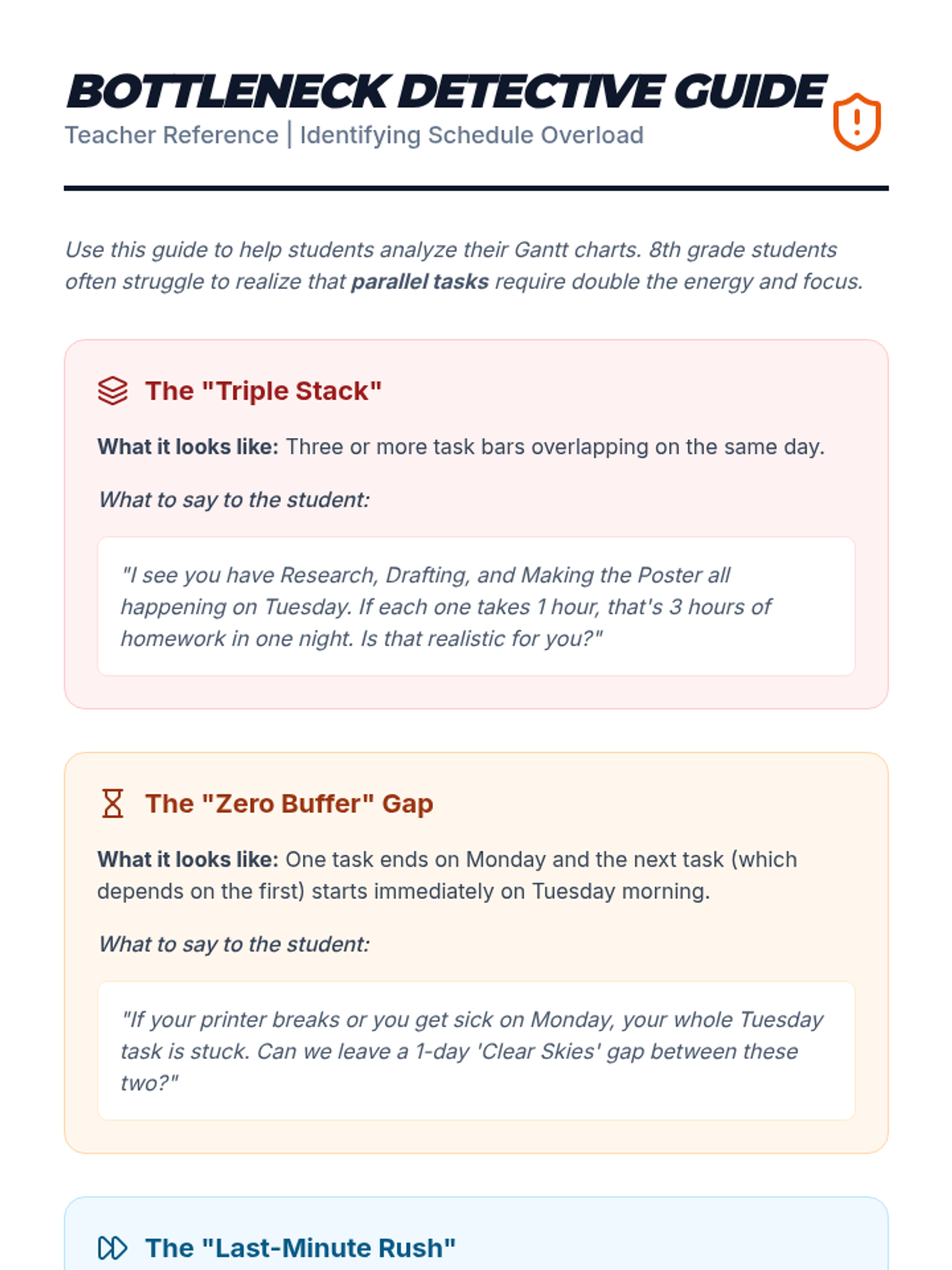
Teacher guidance for identifies and addressing schedule conflicts and bottlenecks on a student's Gantt chart, including specific student-facing prompts.
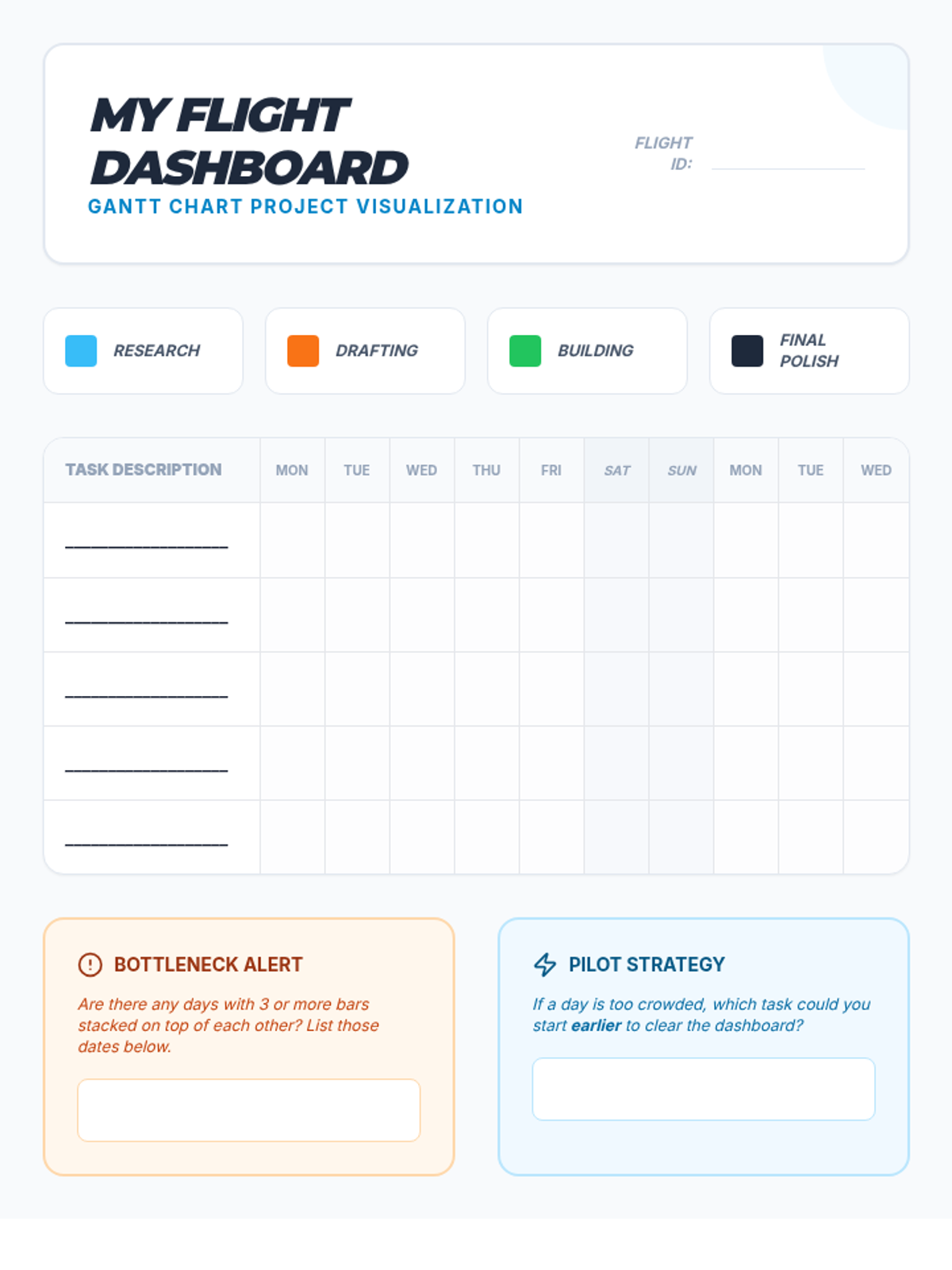
A student worksheet for creating a simplified Gantt chart to visualize project tasks, identifies parallel work, and recognize schedule bottlenecks.
Slide deck teaching digital file management, focusing on file naming conventions (YYYY-MM-DD format), folder hierarchy architecture, and the "Inbox Zero" strategy for email management.
Slides for Lesson 3 of the Project Pilot sequence, introducing Gantt charts, parallel tasks, and the concept of identifies bottlenecks through visual color-coding.
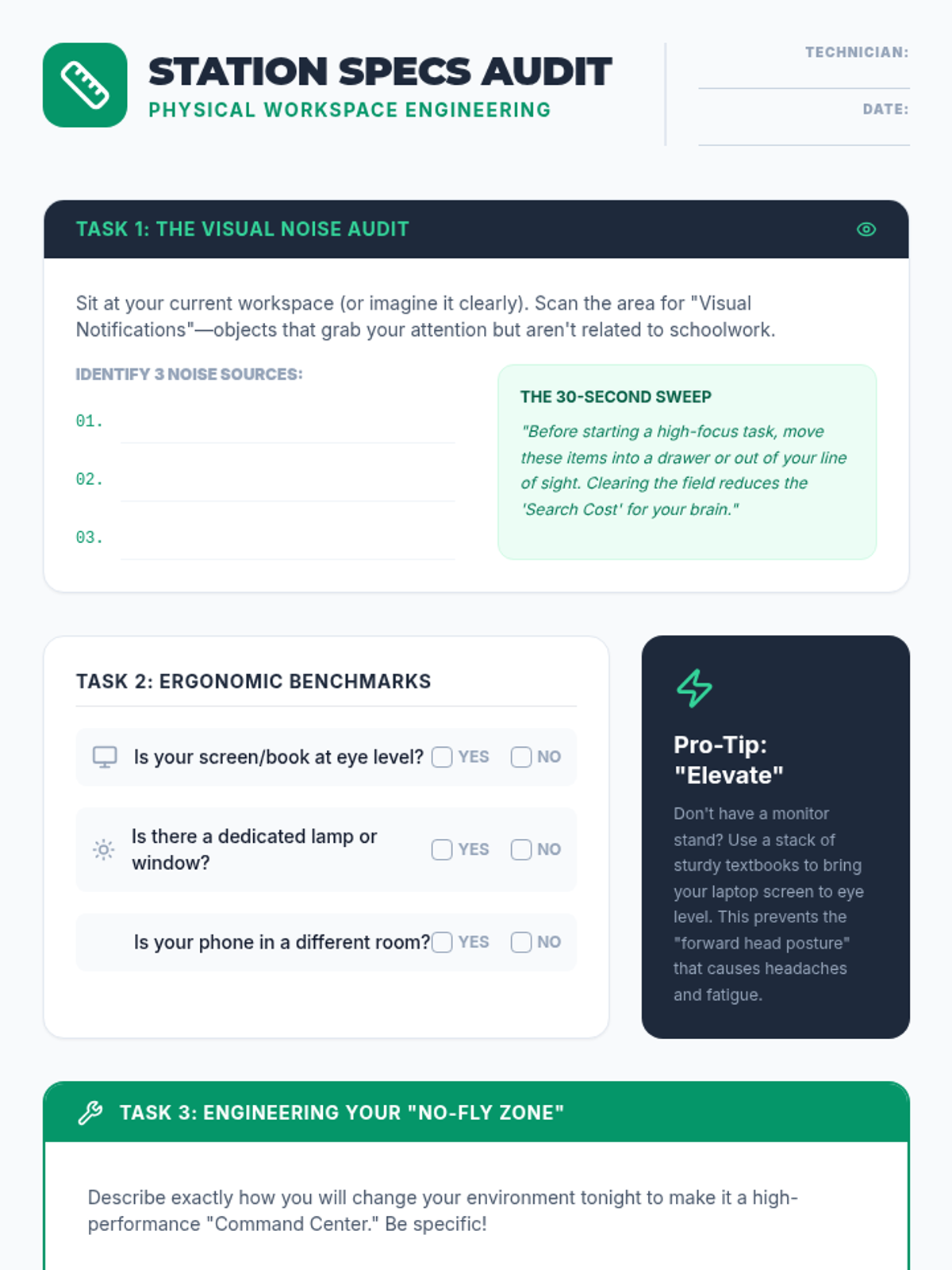
A worksheet for students to audit their current study environment and create a concrete engineering plan to optimize their physical workspace for focus and ergonomics.
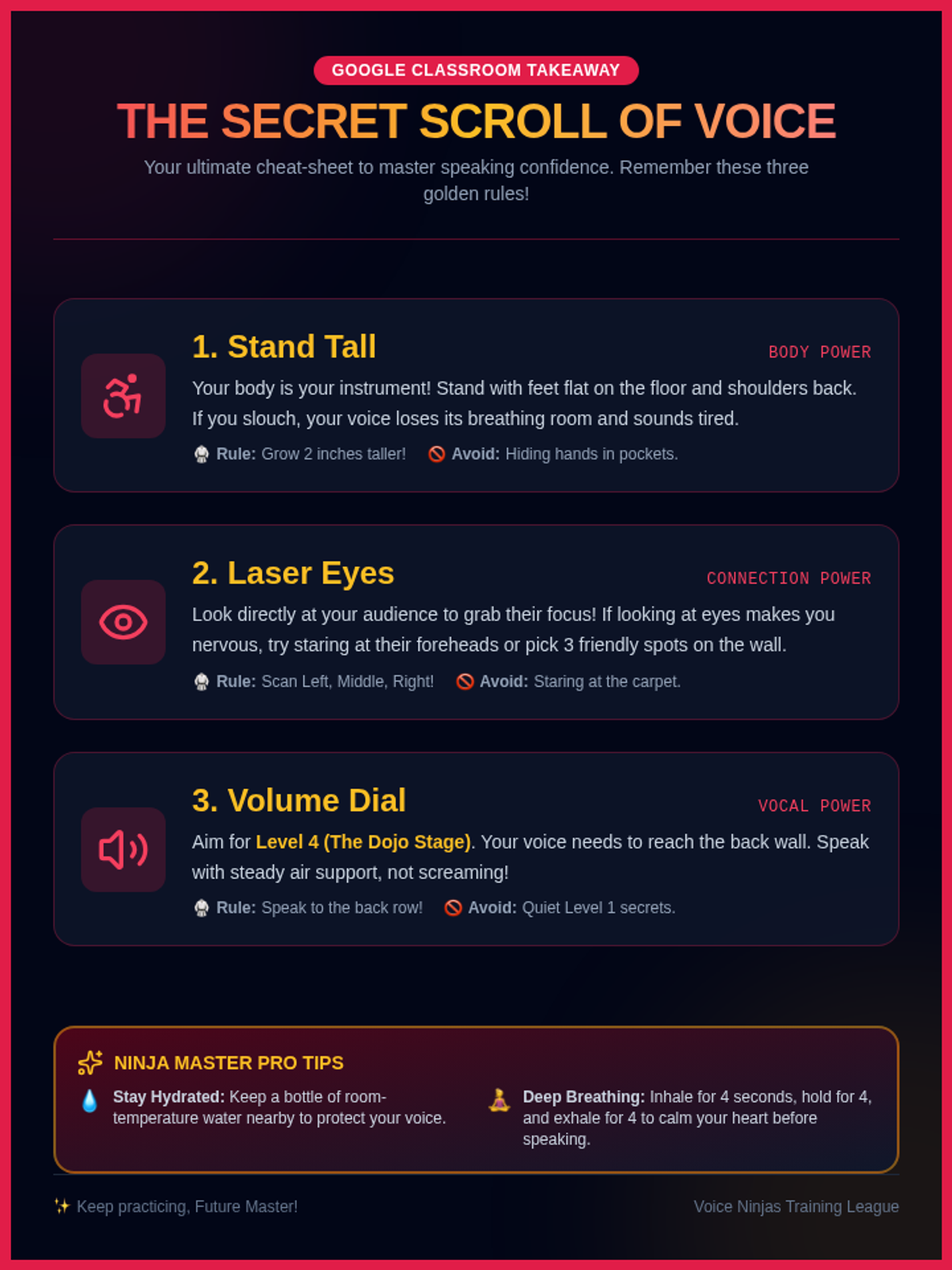
A highly visual, single-page classroom infographic designed as a post-session takeaway. Summarizes the three core broadcaster speaking rules (Posture, Eye Contact, Volume) with actionable tips for 13-year-olds.
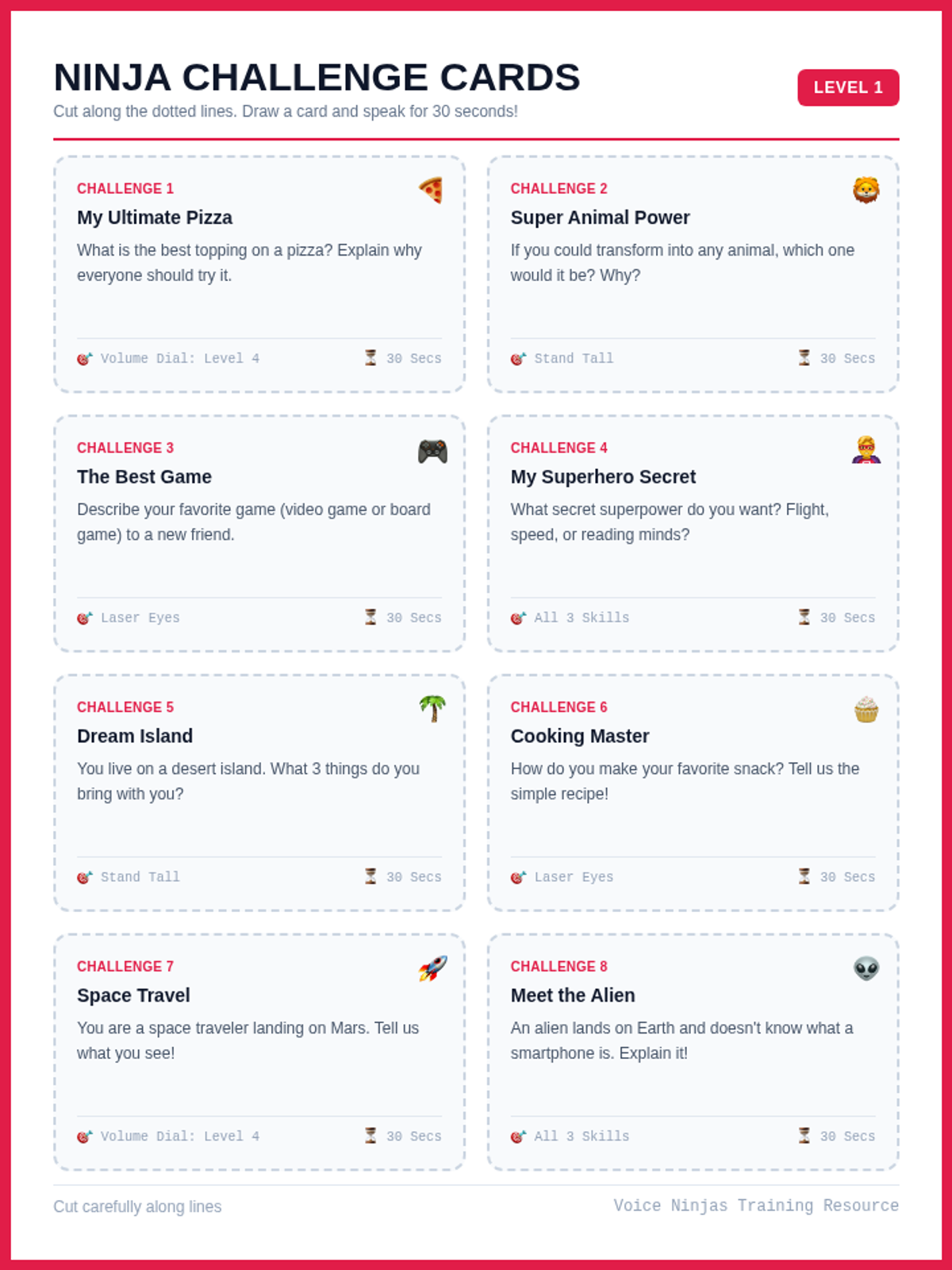
A sheet of 8 printable studio prompt cards featuring simple, fun impromptu topics for low-proficiency speakers to practice volume, posture, and eye contact.
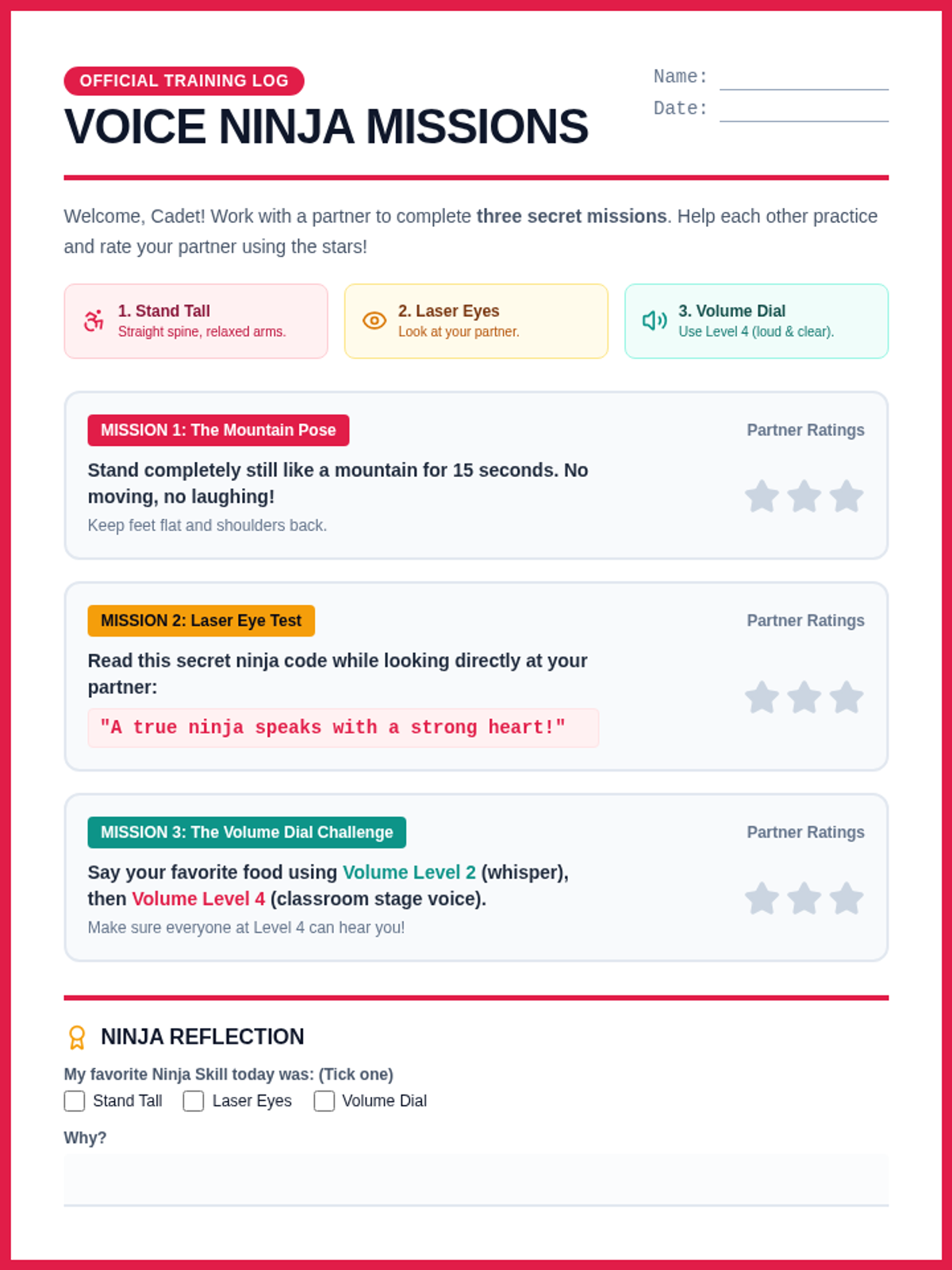
A clean, neutral practice worksheet where 13-year-olds complete public speaking missions in breakout groups and grade each other using stars. Features simplified language and plenty of space for handwritten notes.
Vibrant presentation slides for a public speaking lesson. Teaches low-proficiency 13-year-olds the mechanics of body posture, eye contact, and volume using bright, high-impact layouts, an interactive warm-up, and clear visual goals.
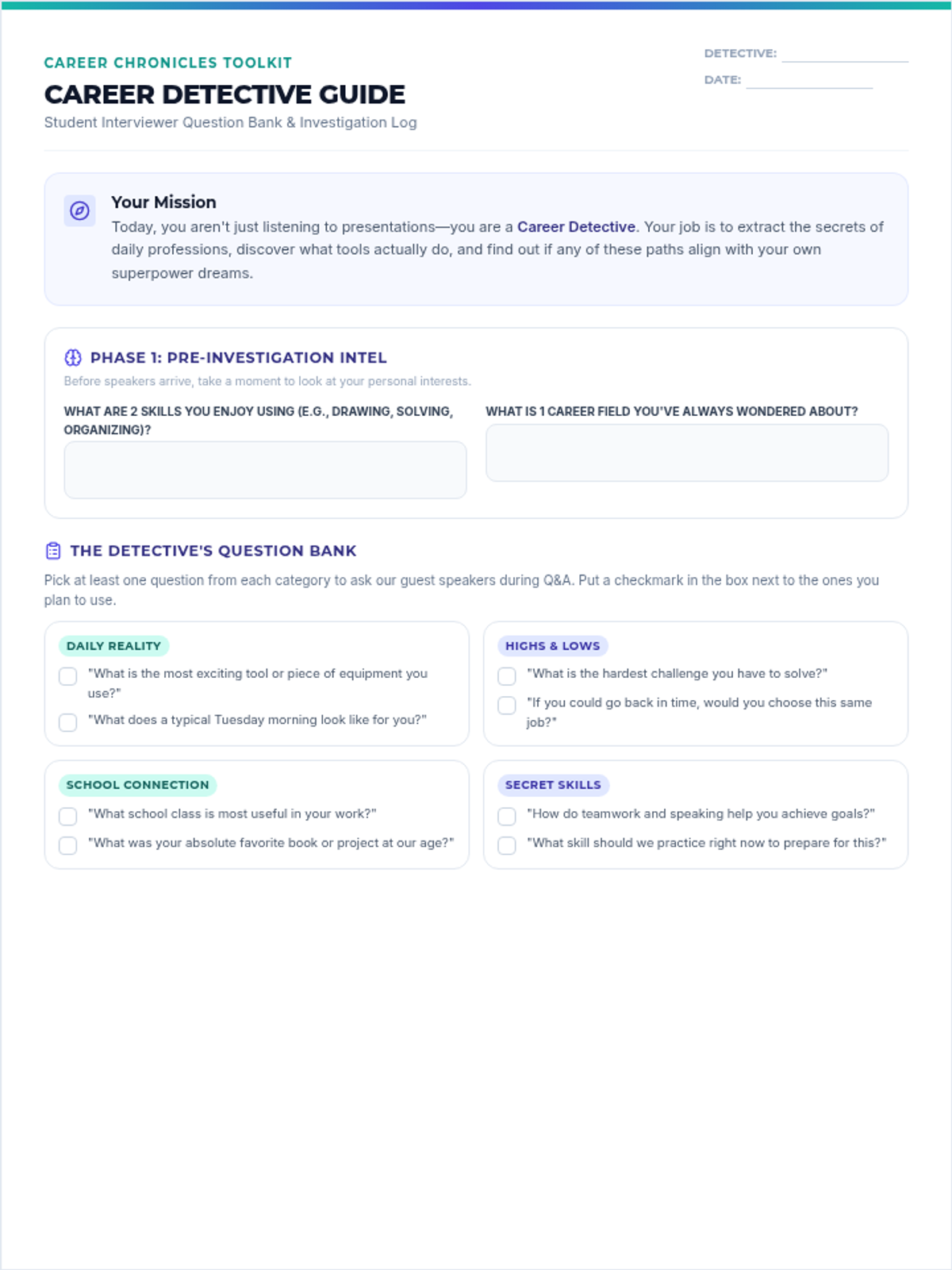
An interactive student workbook for Career Day. It includes dynamic question generation helpers, an interviewer question bank, a neat note-taking matrix, and a follow-up reflection/thank-you draft sheet.
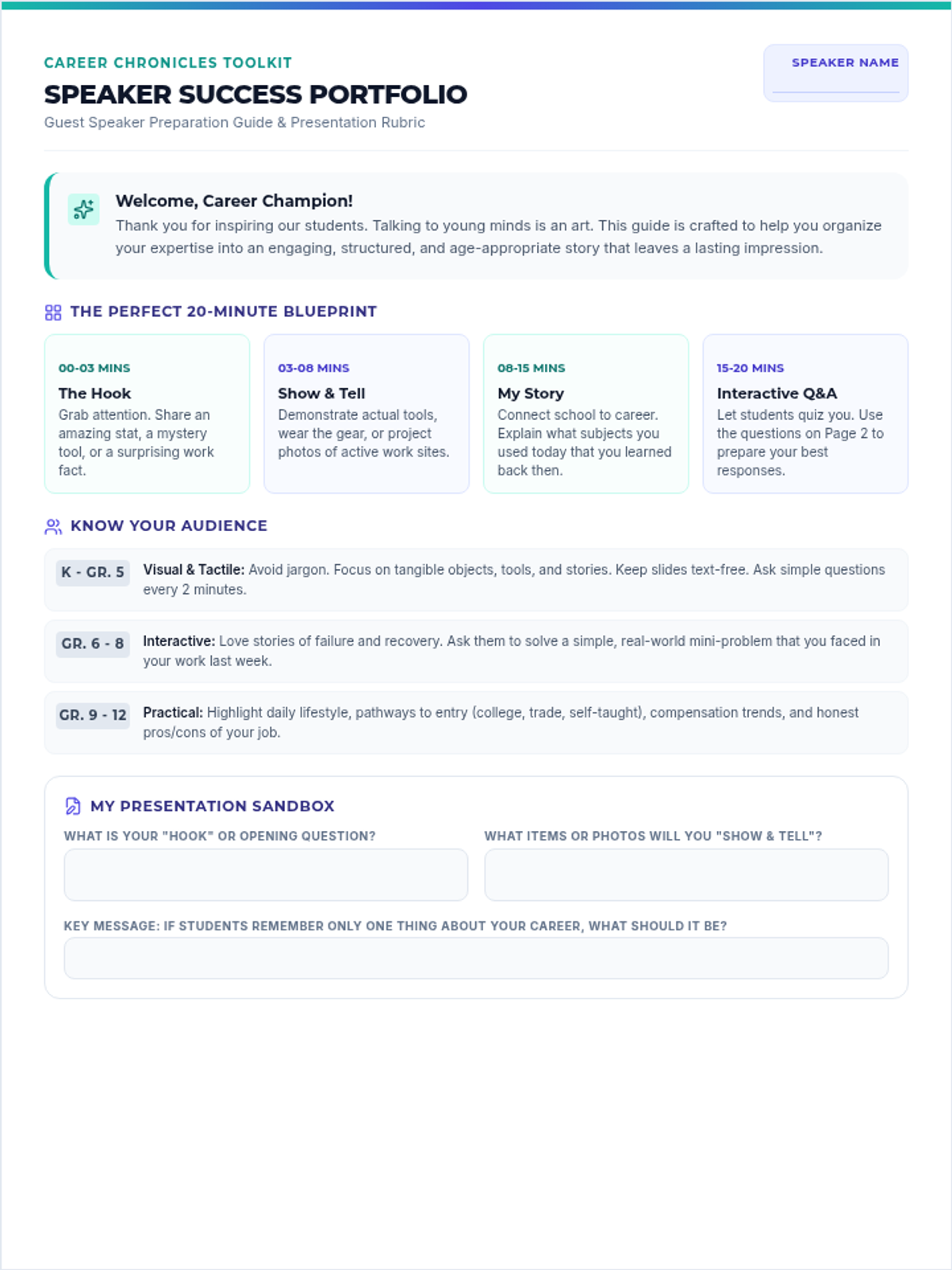
A comprehensive preparation guide for Career Day guest speakers. It features a presentation planner, interactive prompt lists, common student questions, engagement tips for different grade levels, and a structured rubrics section for self-evaluation or classroom feedback.
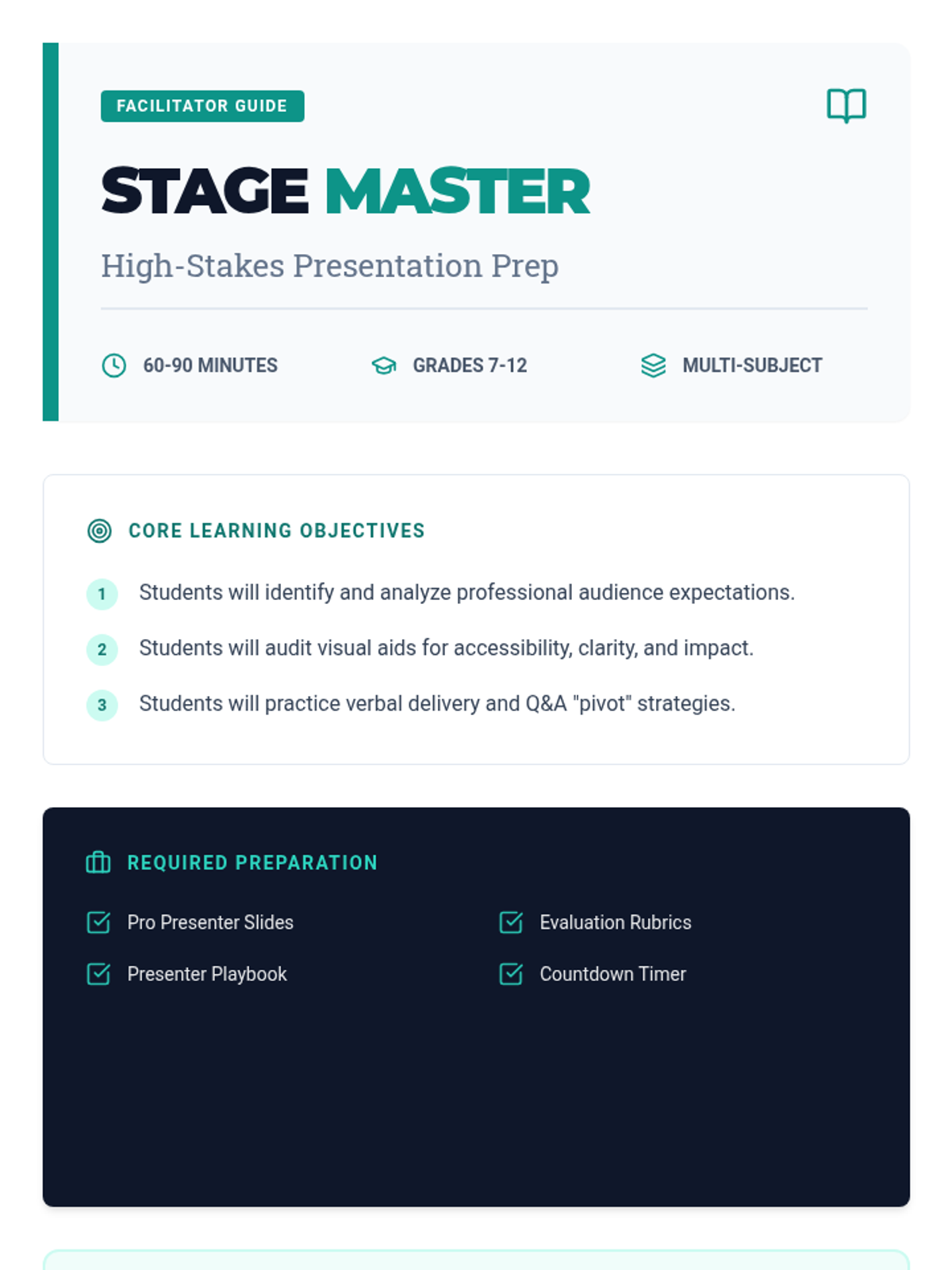
A facilitation guide for teachers to deliver the Conference Ready lesson, including pacing, instructional tips, and common student misconceptions.
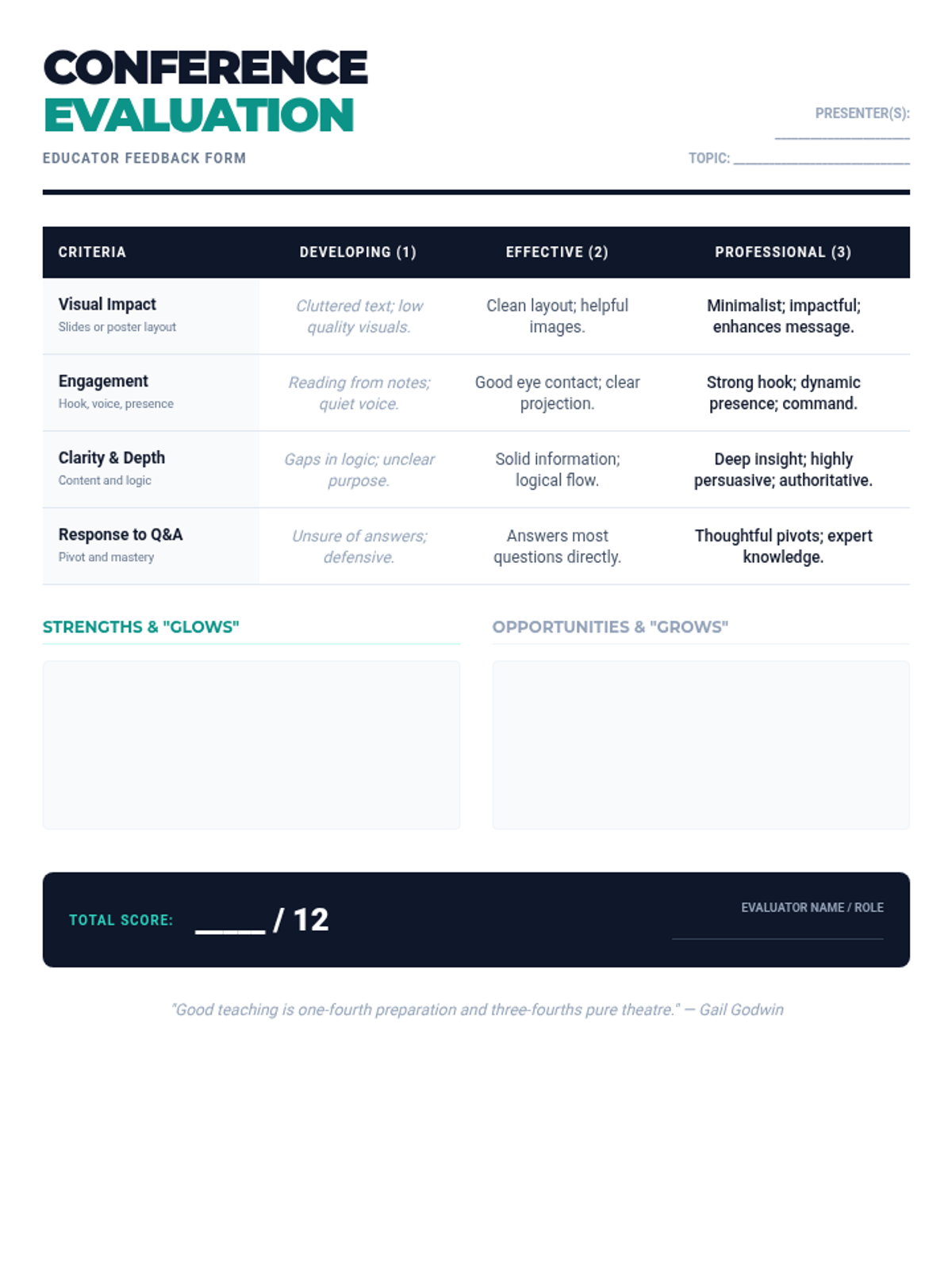
An evaluation rubric for educators to provide professional feedback on student presentations, focusing on visual impact, engagement, and content depth.
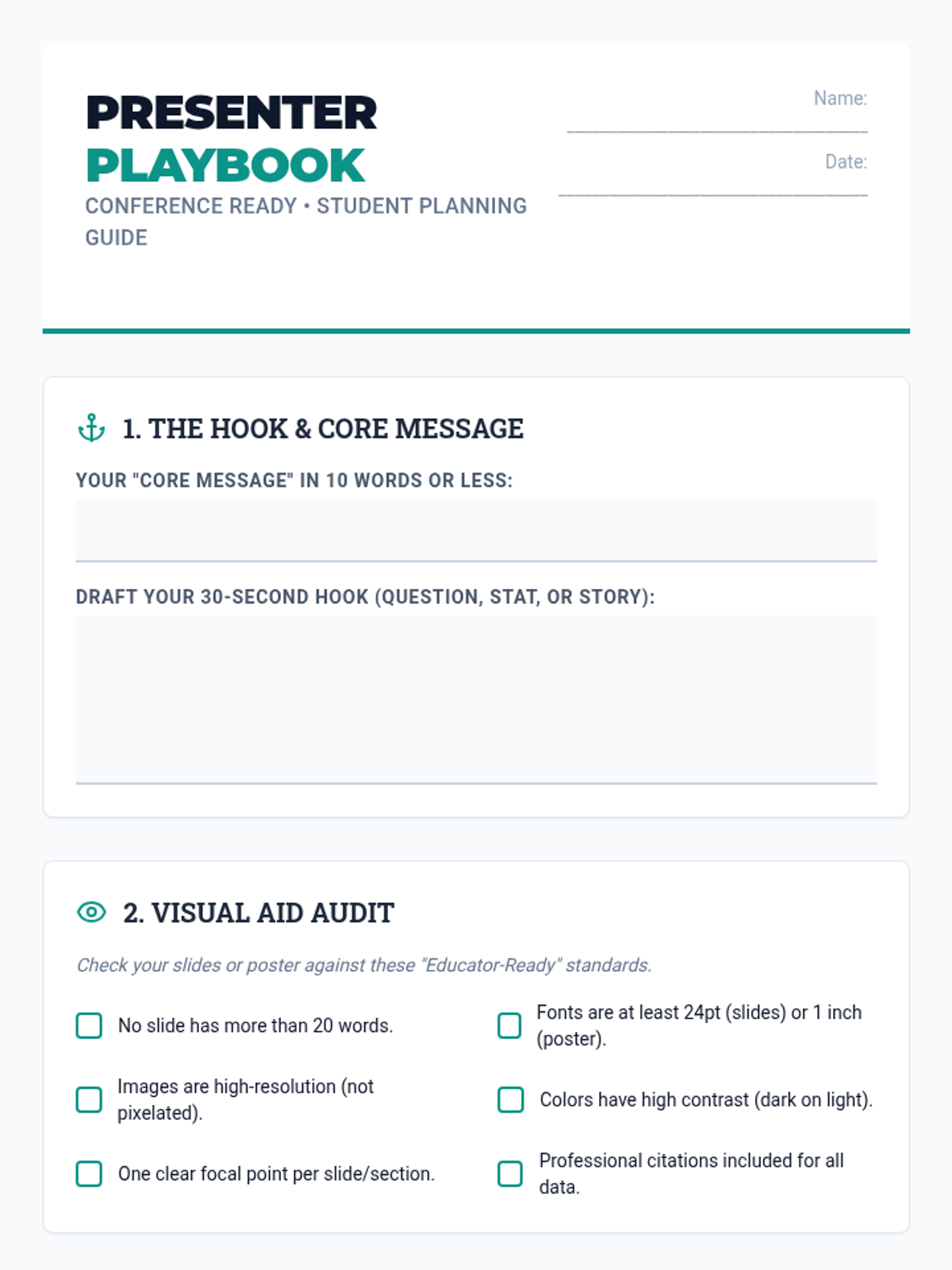
A planning worksheet for students to refine their hook, audit their visual aids, and prepare for Q&A sessions with educators.
Instructional slides for students on how to present effectively to educators, covering slide design, poster layouts, professional etiquette, and Q&A strategies.
A 2-page success pack for students including a 'Before You Submit' checklist and an 'Audience Expectations' guide to ensure a high-quality presentation experience. Corrected for page breaks and layout consistency. Expanded text size for impact.
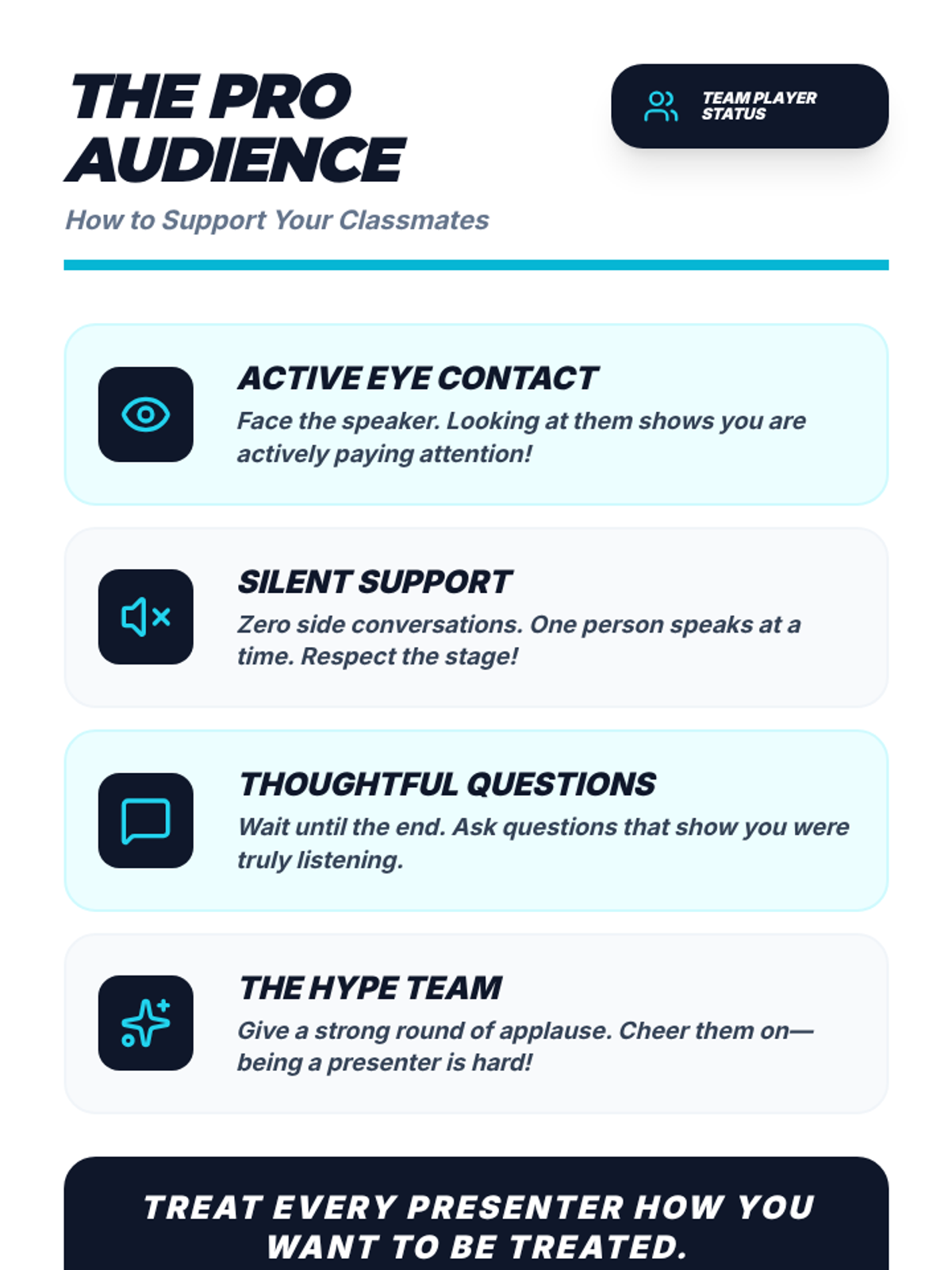
A concise and visually engaging guide for students on how to be a respectful and supportive audience member. Corrected for layout, kerning, and single-page fit.
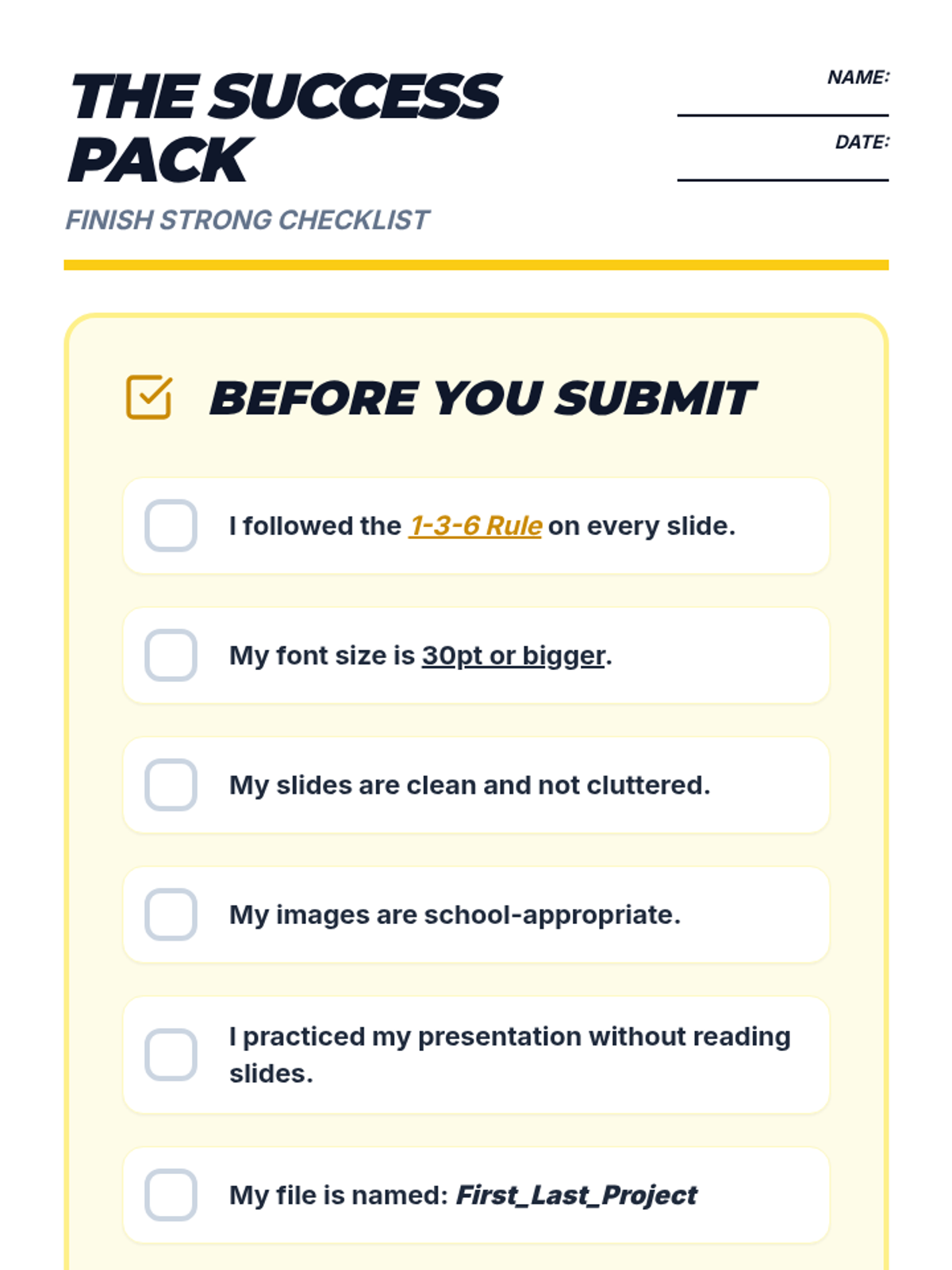
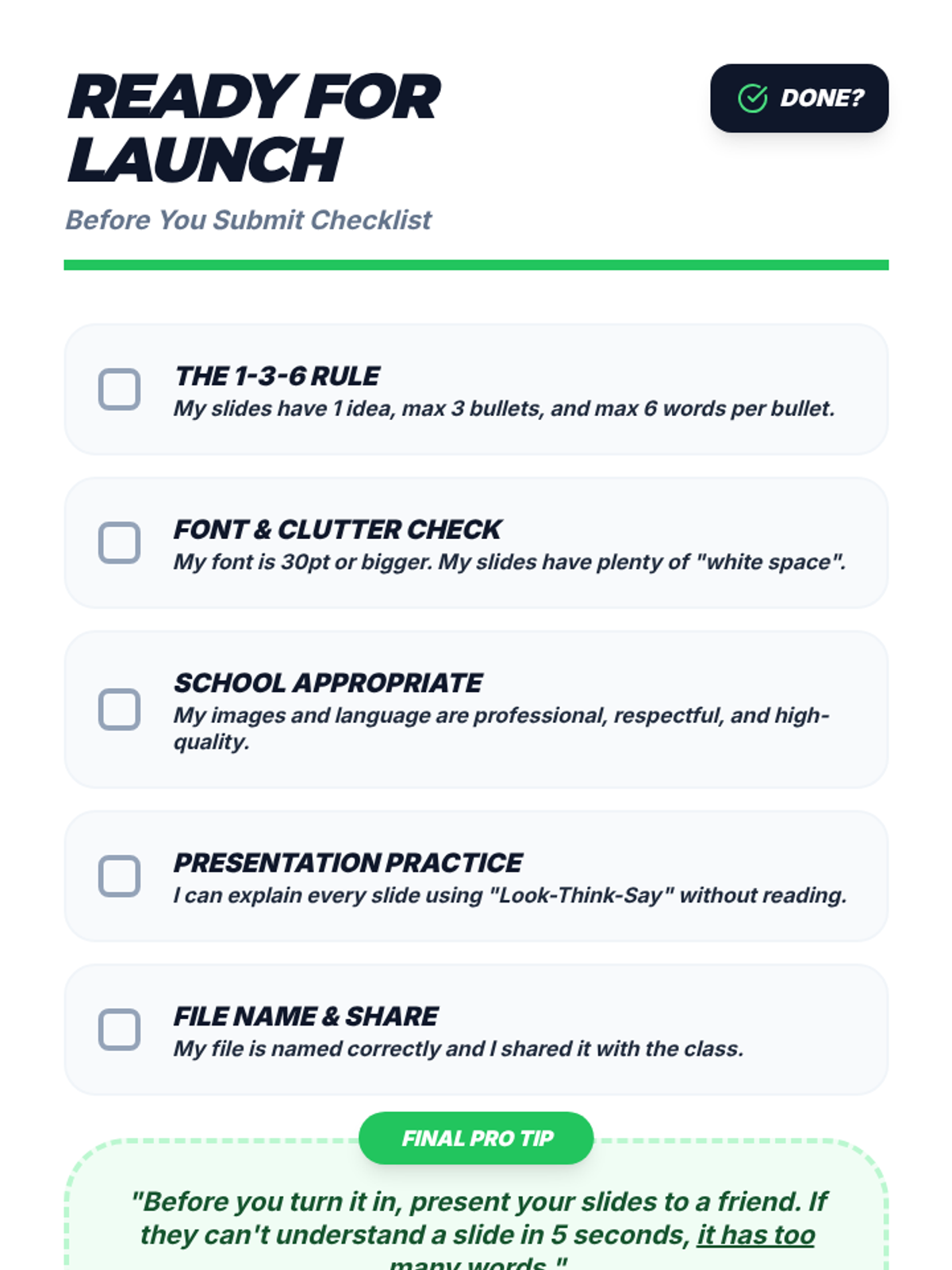
A final 'Before You Submit' checklist page for students to verify their 1-3-6 rule adherence, font readability, image appropriateness, and sharing settings. Consolidated for a clean single-page layout.
A student-friendly presentation rubric with a 0-2 scale. Revised with specific observable behaviors for speaker skills like voice projection, eye contact, and posture. Corrected for text contrast and consolidated to one page.
A comprehensive step-by-step instructional guide for middle schoolers on how to physically create, name, design, and share a Google Slides presentation. Corrected with screenshot placeholders, side-by-side models, and presentation crimes.
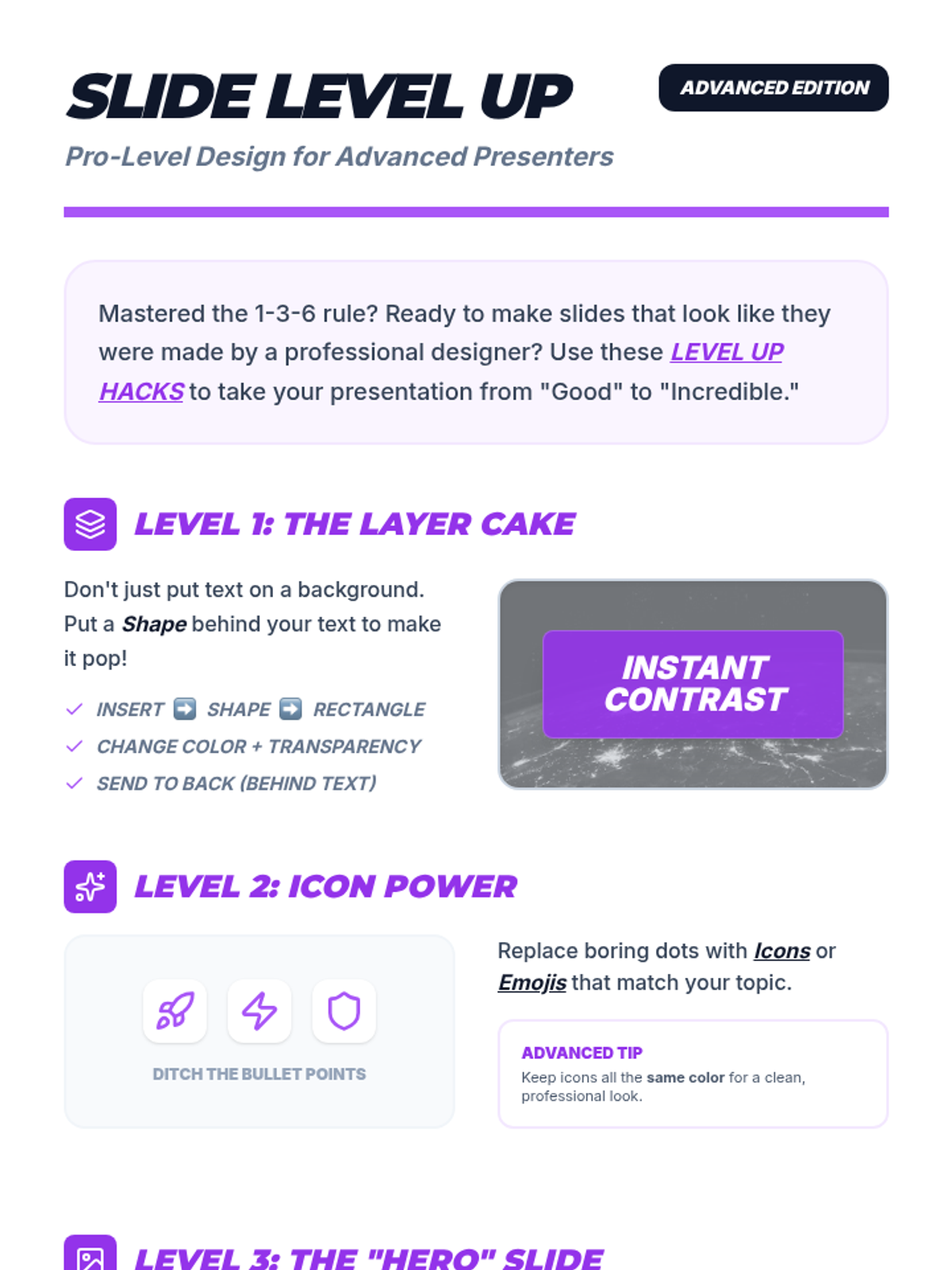
An advanced design guide for middle schoolers to "level up" their slide presentations with pro-level tips on layering, icons, hero images, and color palettes. Corrected for page breaks and layout consistency.
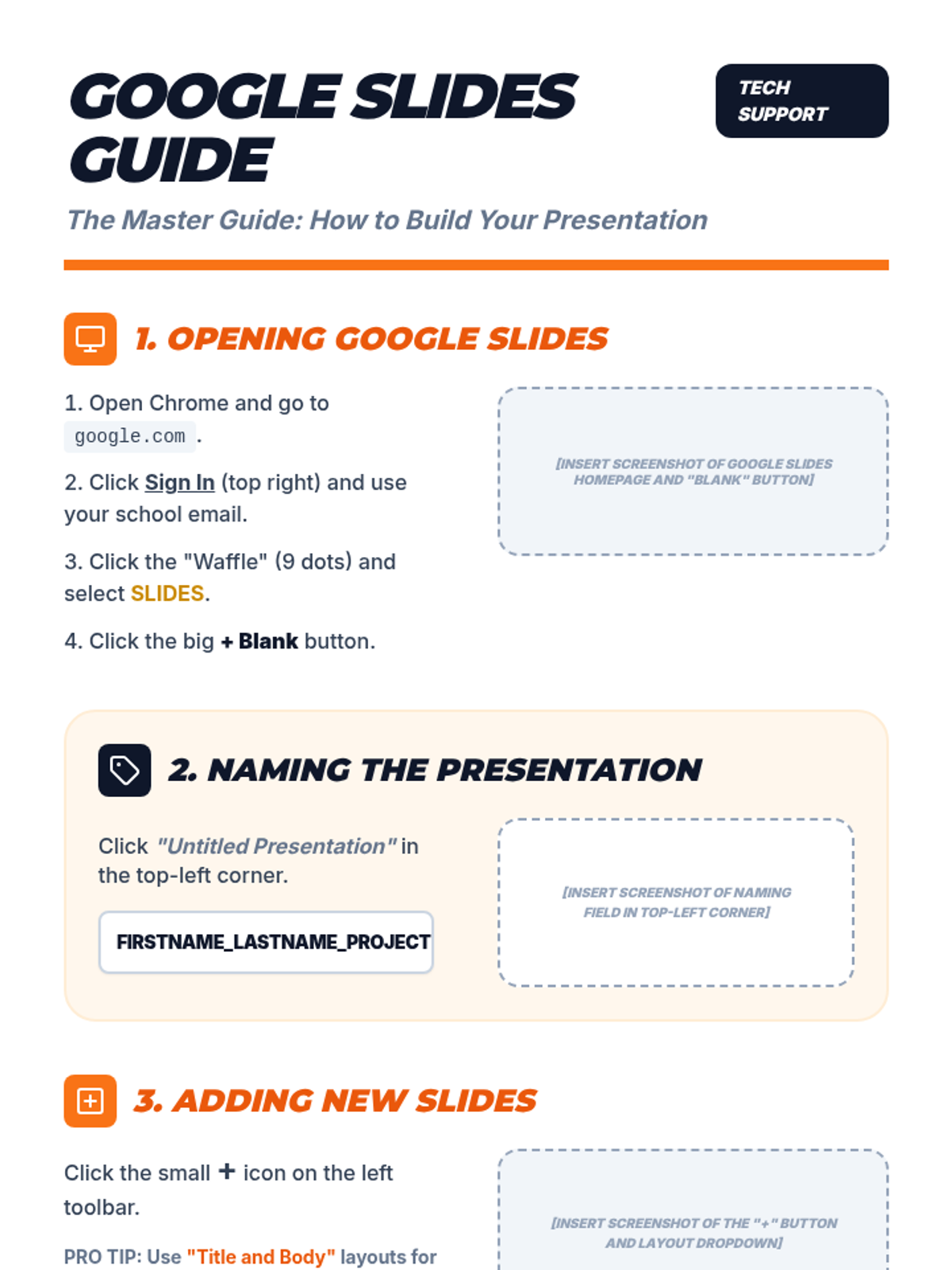
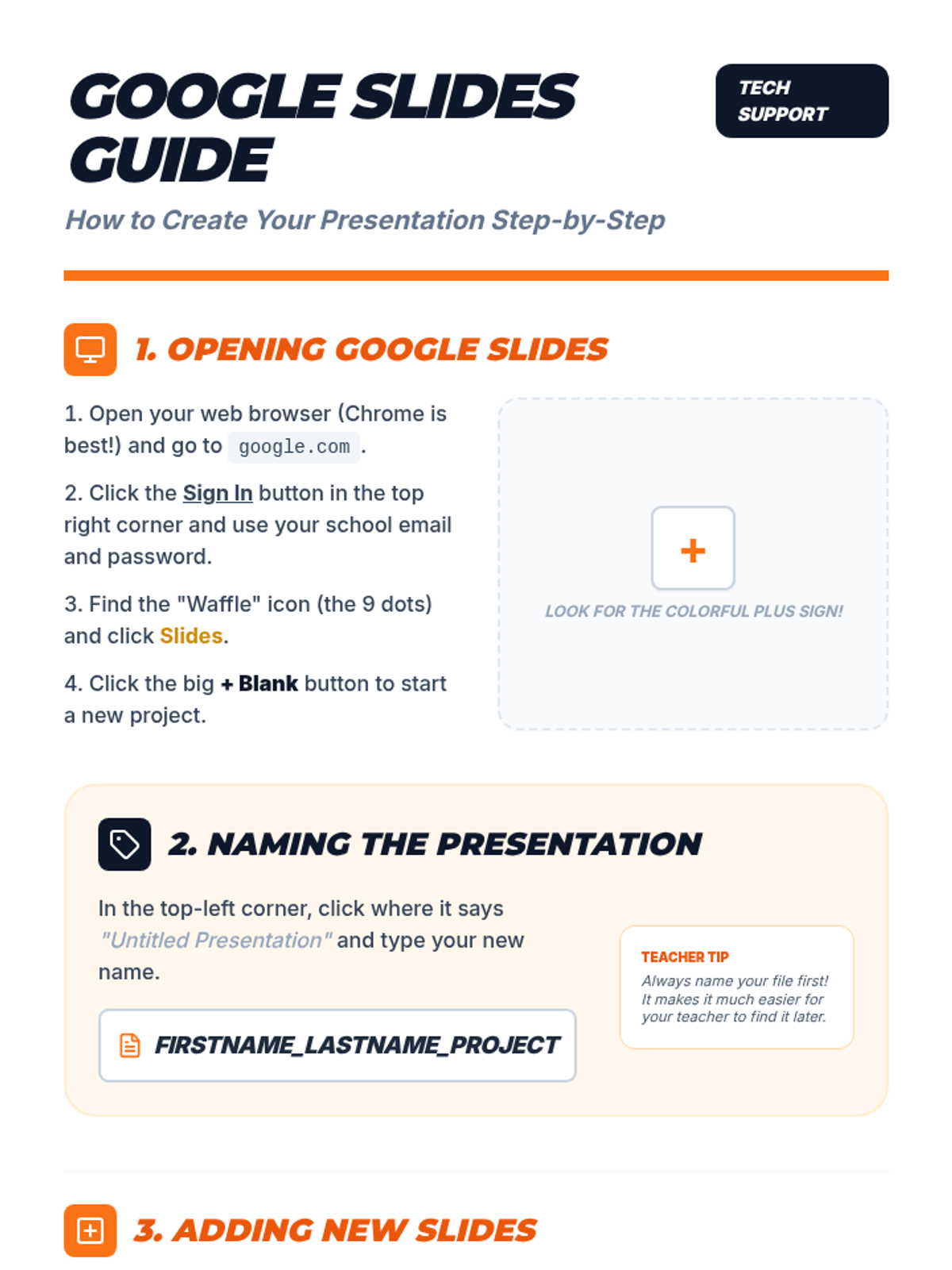
A comprehensive step-by-step instructional guide for middle schoolers on how to physically create, name, design, and share a Google Slides presentation. Corrected for page breaks and layout consistency. Labeled screenshot placeholders included. Improved for accessibility.
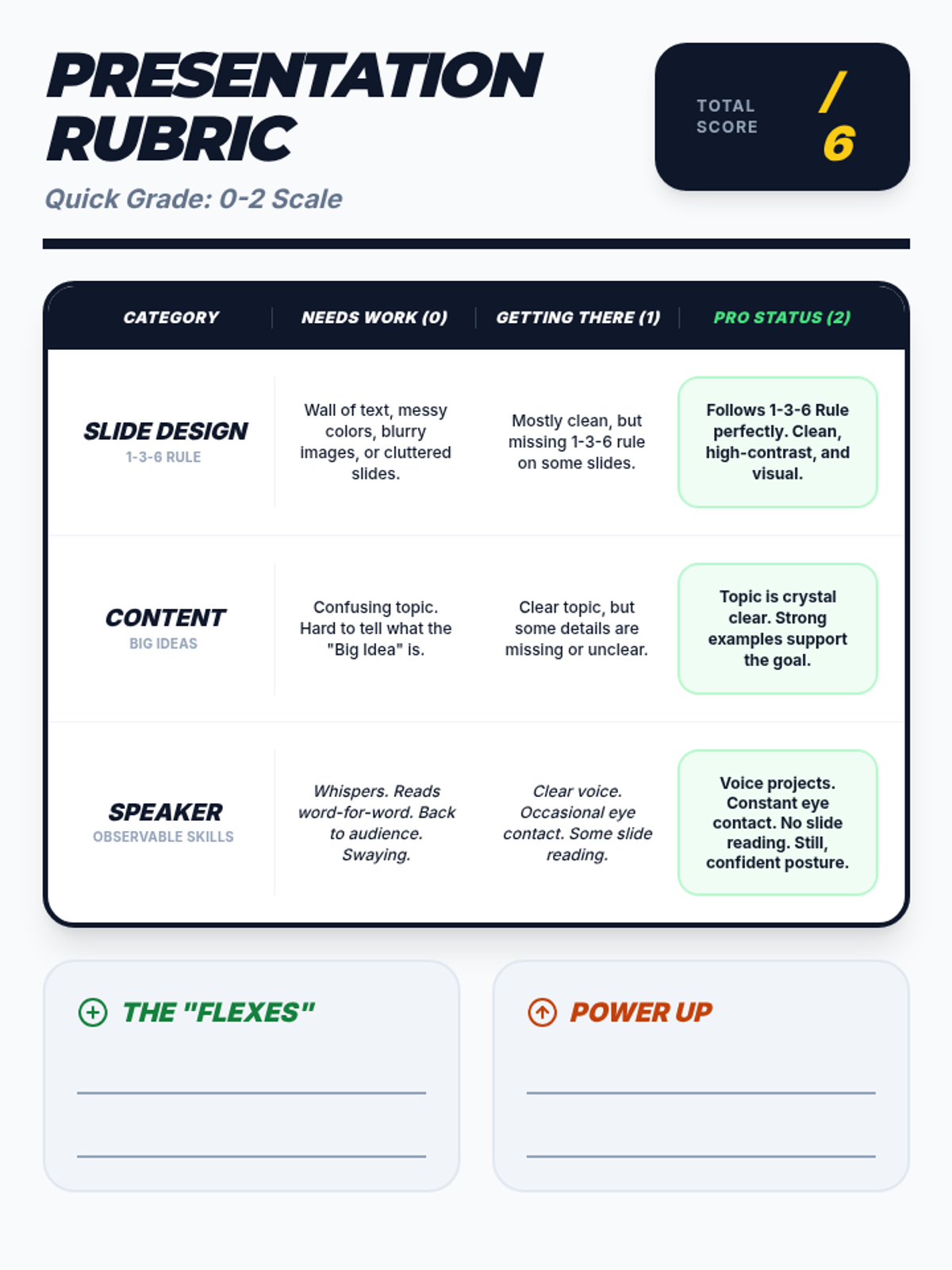
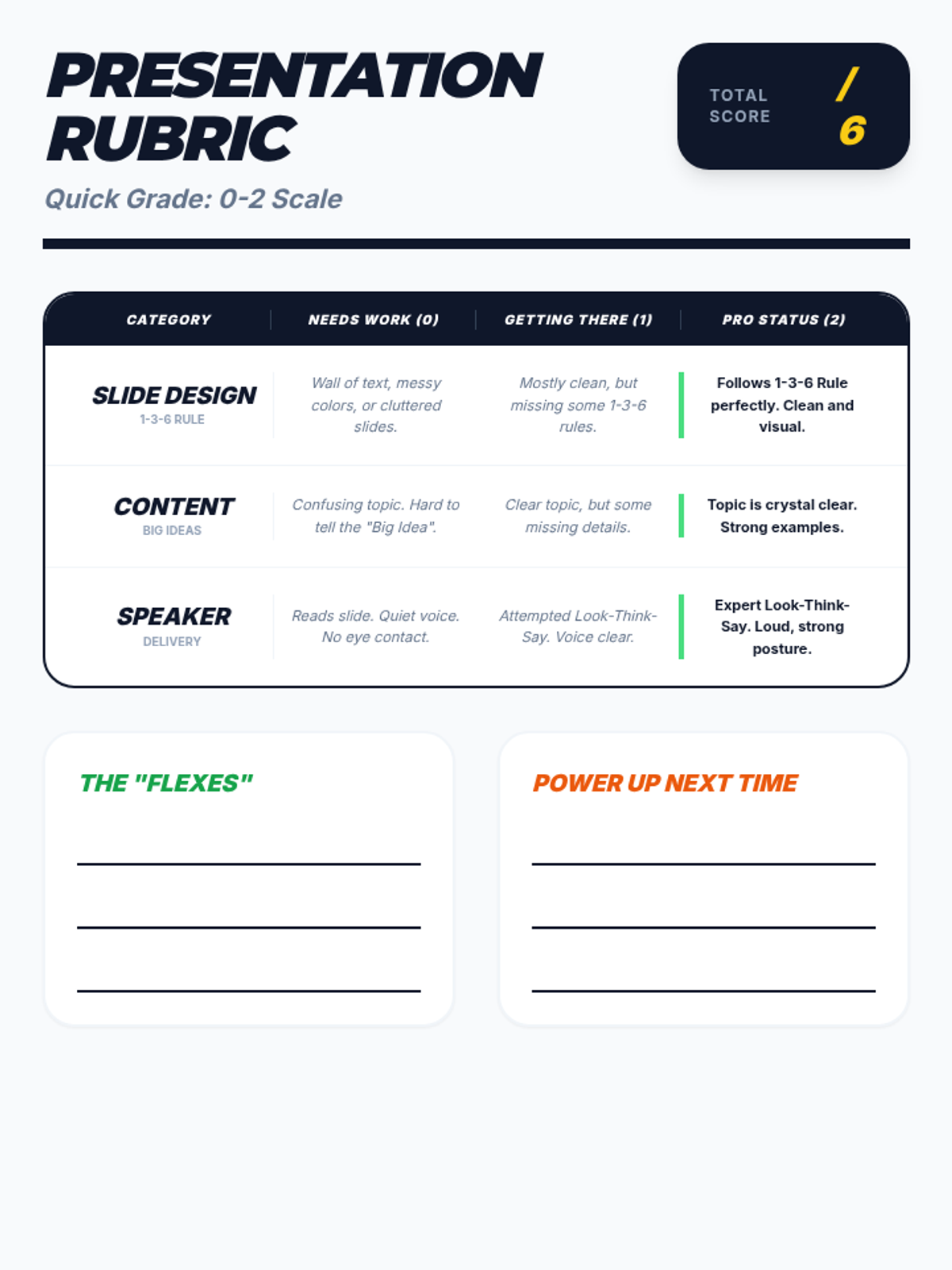
A student-friendly presentation rubric with a 0-2 scale across three categories: Slide Design, Content Clarity, and Presentation Skills. Revised for specific observable behaviors and optimized for print.
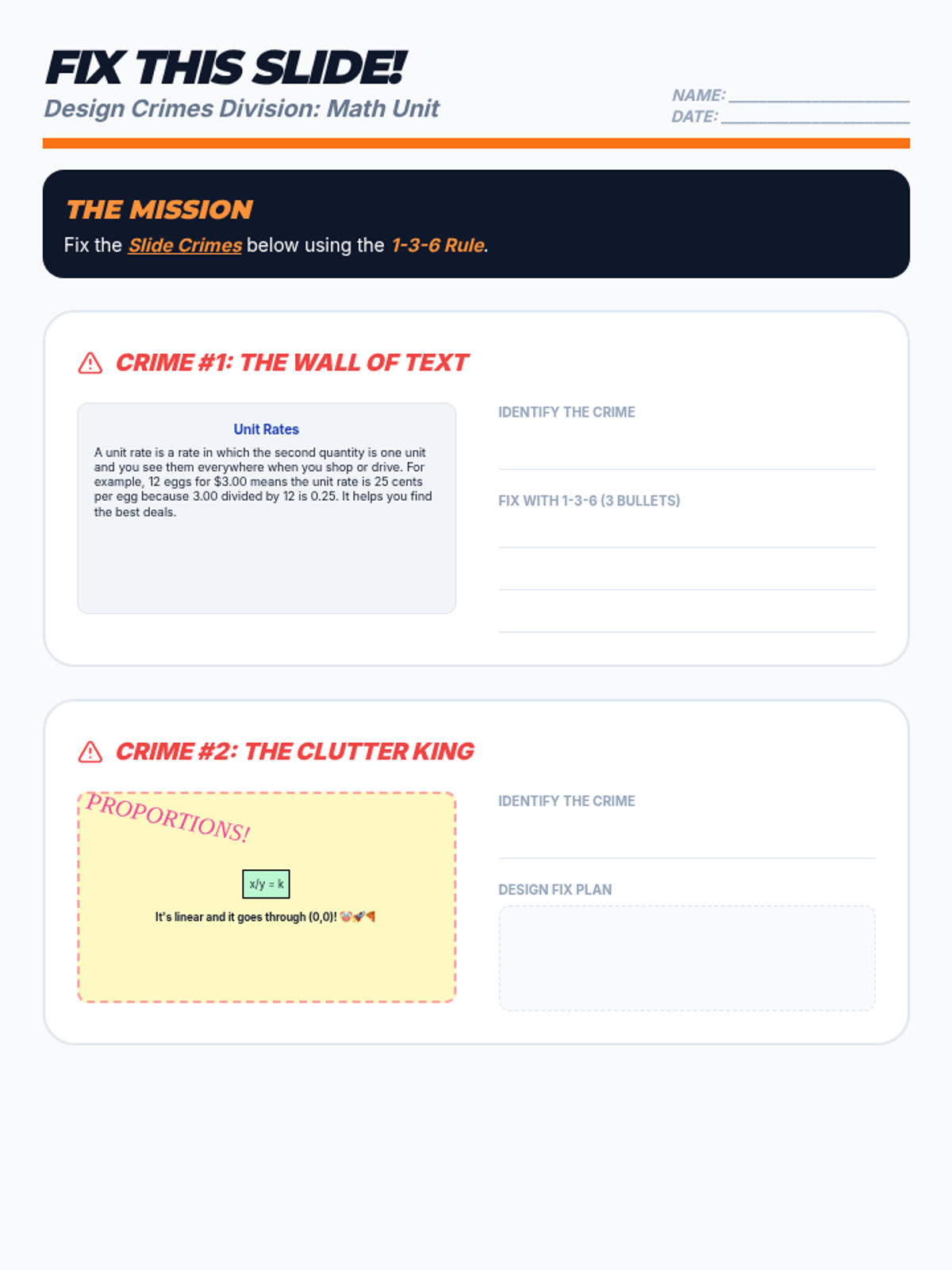
A 'Fix This Slide' activity where students identify design crimes in two math-themed slides and propose improvements based on the 1-3-6 rule. Stacked layout for optimal print fit. Corrected for consistency and work areas. Labeled work areas included.
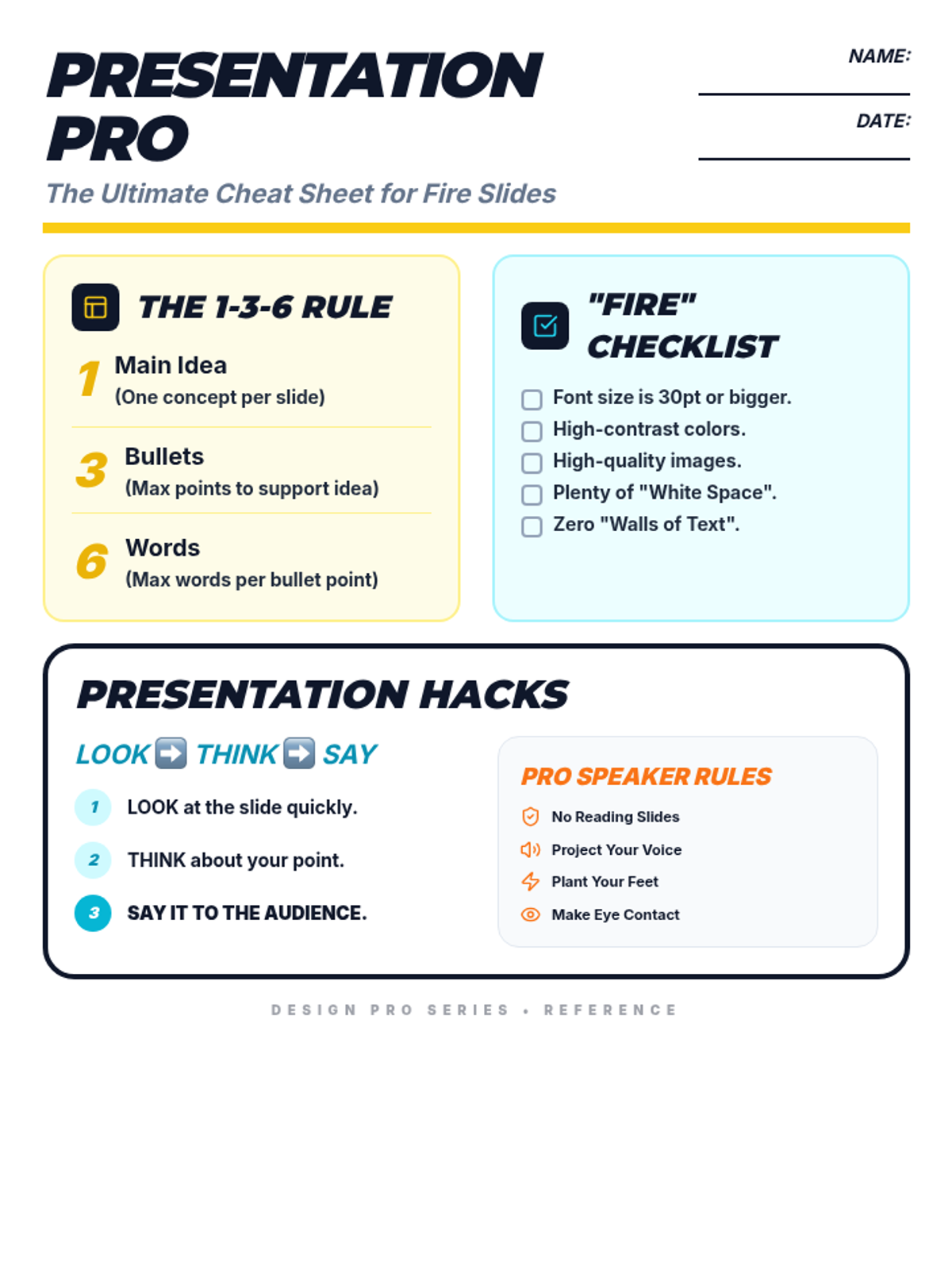
A refined 1-page student handout for presentation skills, featuring the 1-3-6 rule, 'Slide Crimes', and delivery techniques. Corrected for printability and appropriateness. Now includes a small planning area.
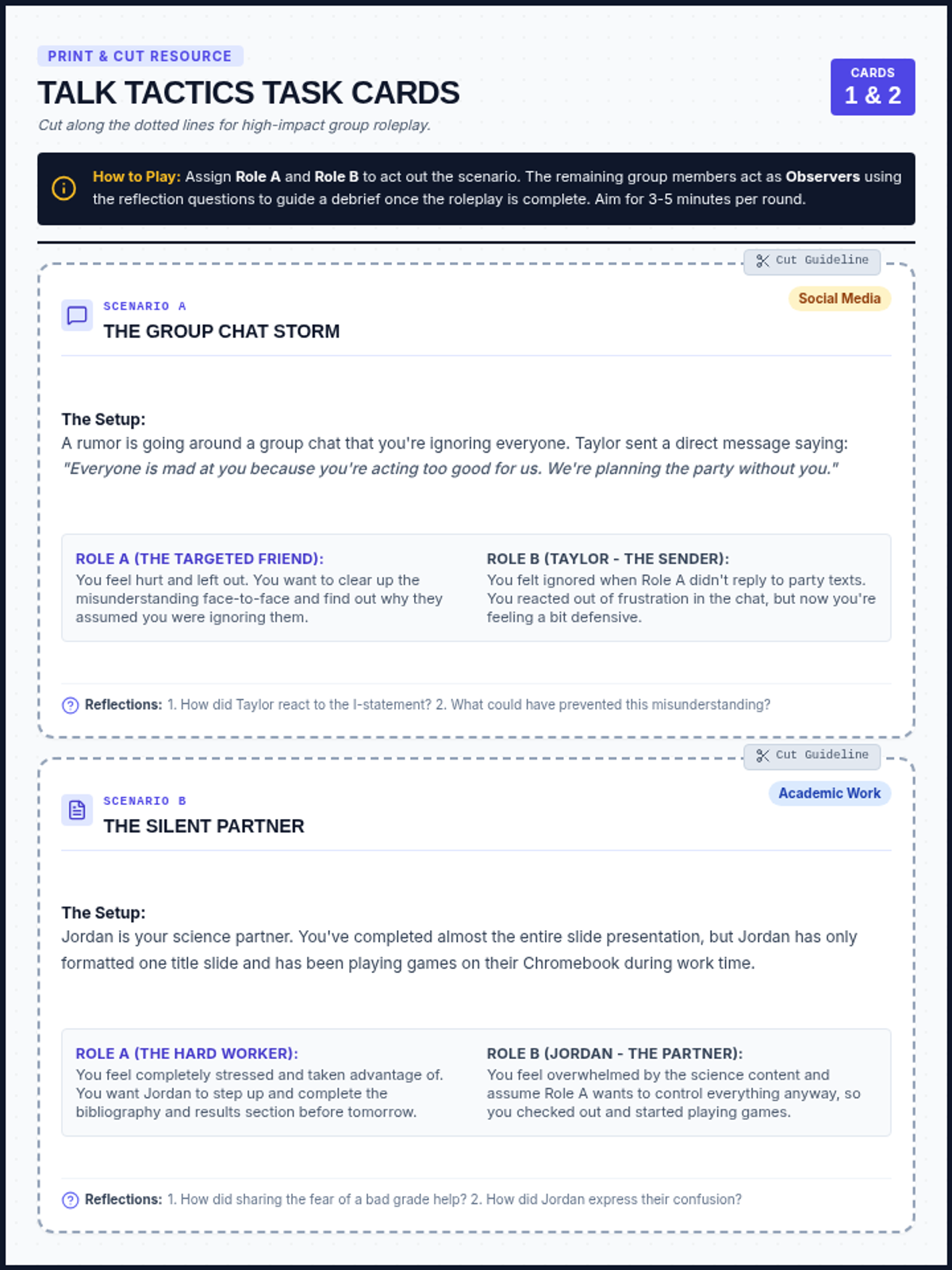
A 2-page print-ready material containing 4 distinct, large-format conflict resolution task cards designed for small-group roleplay, complete with scenario details, role perspectives, and reflective group questions.
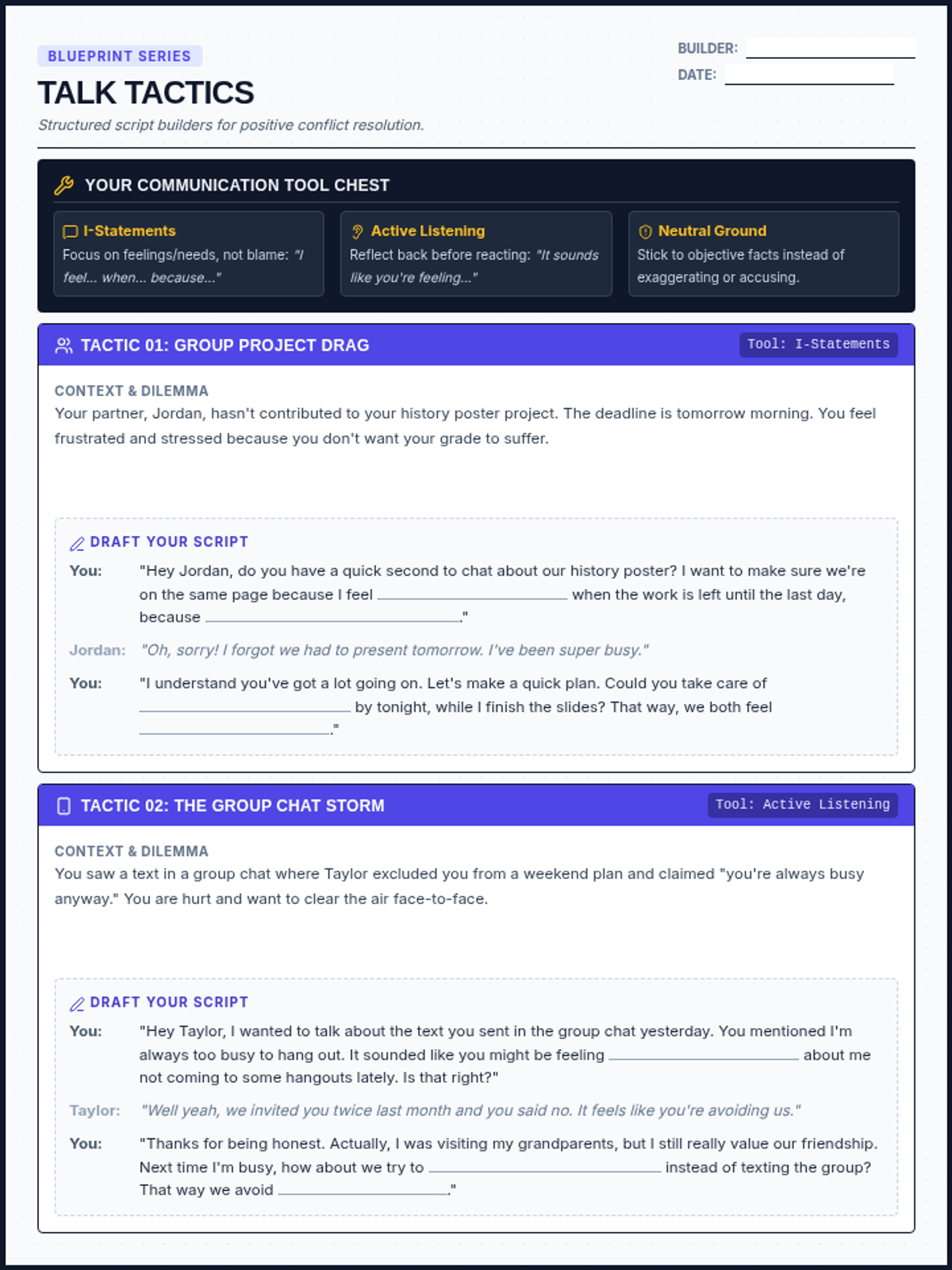
A 2-page student worksheet containing structured, fill-in-the-blank script templates that help students practice specific positive communication techniques across four common conflict scenarios.
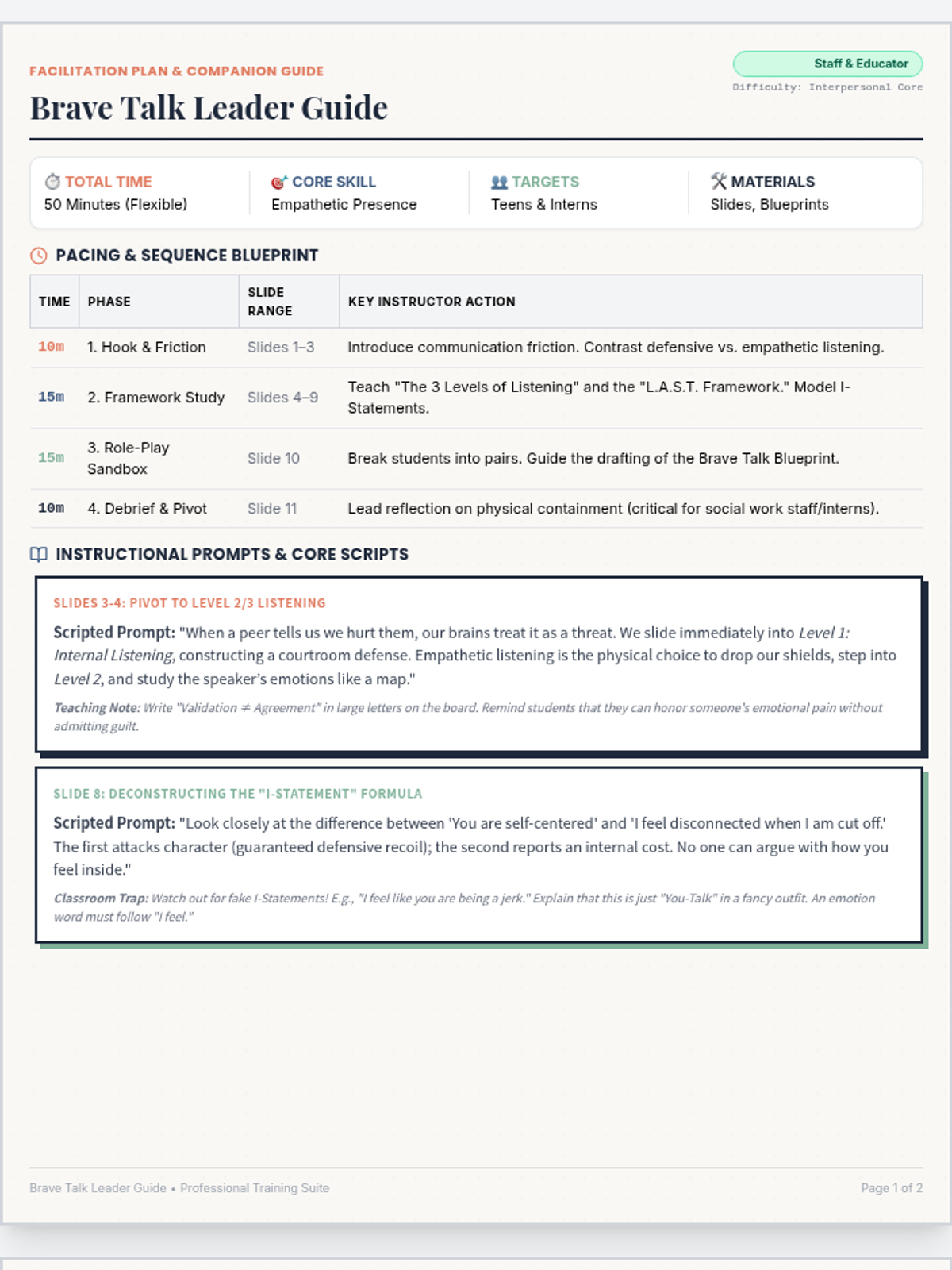
A professional 2-page companion and facilitation guide for teachers and supervising social workers. Includes slide-by-slide prompt scripts, targeted role-play guidelines, developmental debriefing structures, and boundaries supervision protocols.
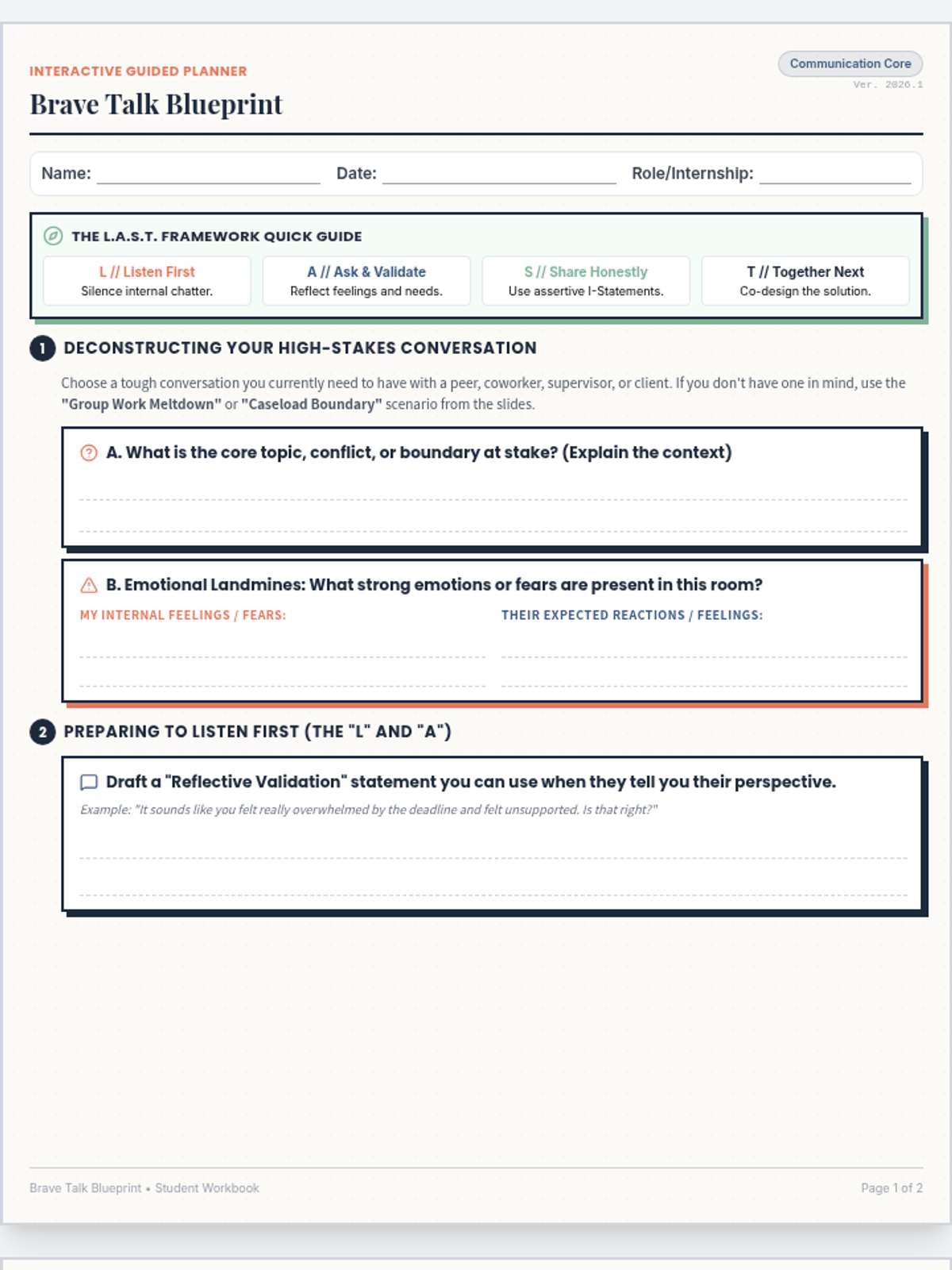
A double-sided blueprint worksheet for students and interns to deconstruct difficult conversations. It features a complete planning sandbox for crafting I-statements, planning reflective listening responses, and analyzing personal default communication pitfalls.
A beautifully designed, print-ready, and displayable 11-slide presentation on teaching difficult conversations using empathetic listening and the L.A.S.T. Framework. Features custom layout systems tailored for students and social work training.
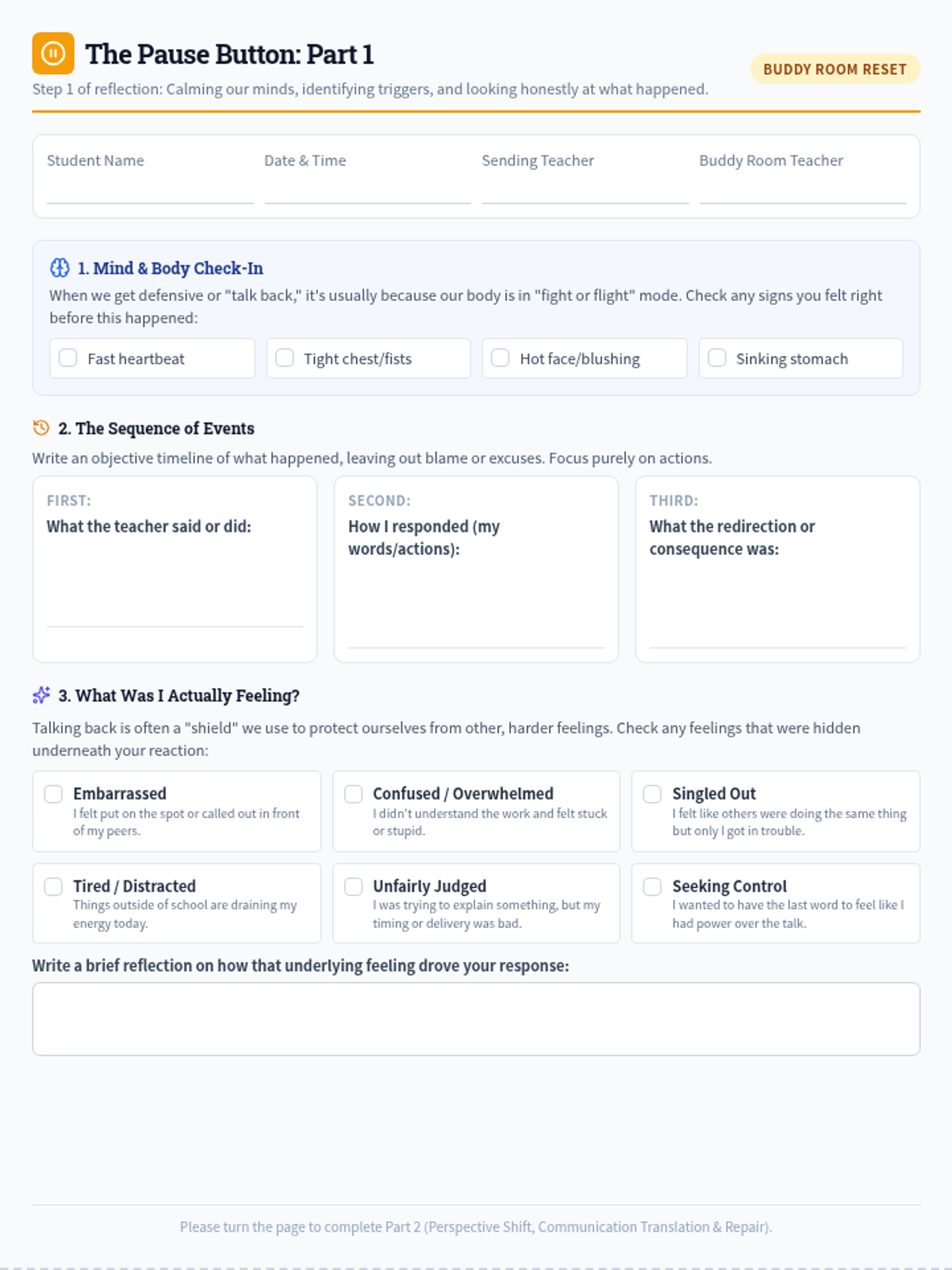
An expanded two-page restorative reflection workbook for students in a buddy room due to disrespectful language or talking back. It guides students through somatic cooling-off, objective timeline sequencing, uncovering underlying feelings (embarrassment, overwhelm, singling out), perspective shifting, translating statements into respectful communication, and drafting a concrete re-entry repair plan.
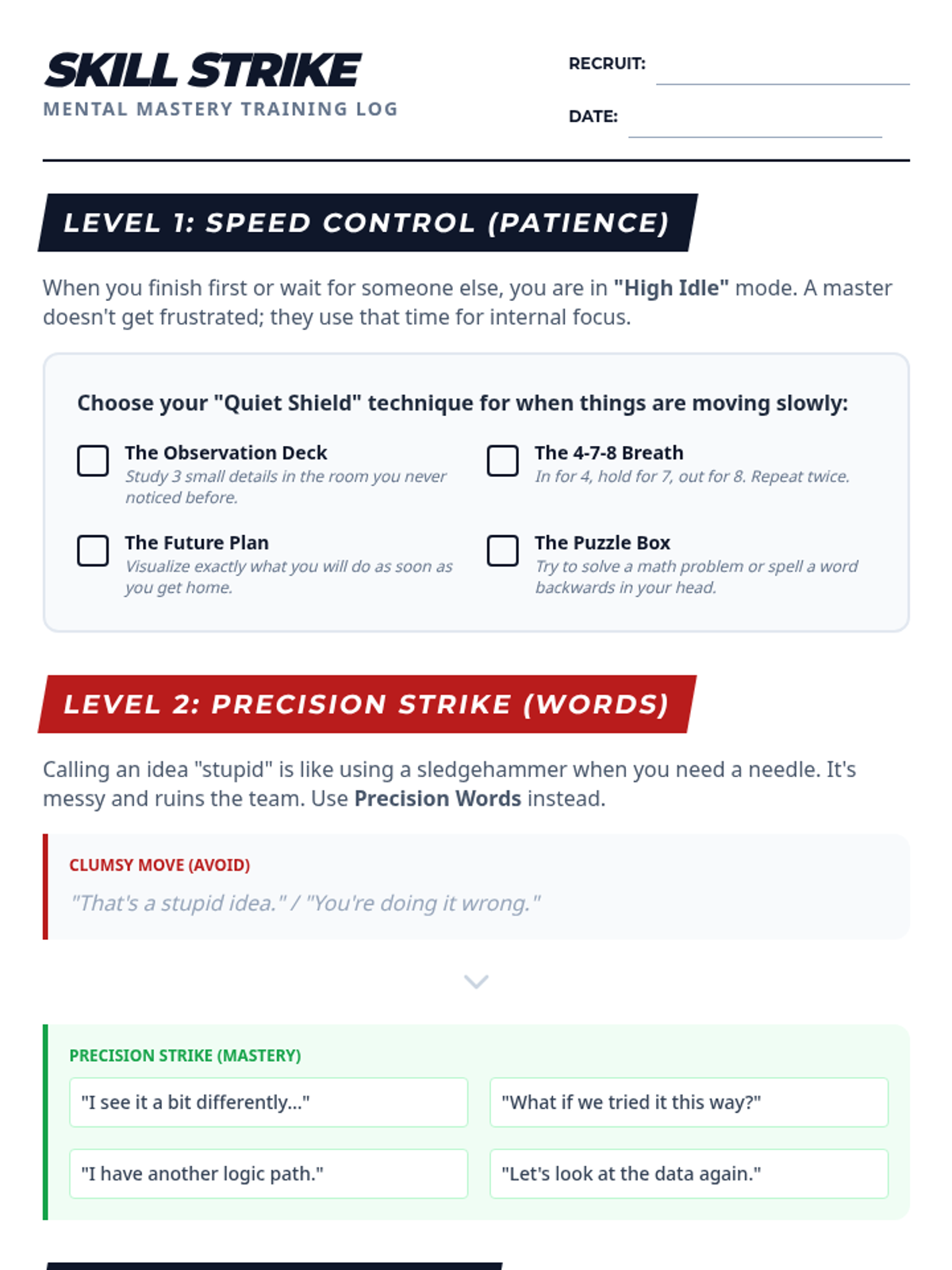
A Dojo-themed slide deck with a natural parchment and wood aesthetic. It features three mission-based scenarios including a science experiment logic challenge, and specific 'Quiet Shield' tools to teach self-control to high-achieving students.
A Dojo-themed student worksheet on parchment-colored background, including three 'Mission' scenarios including a science experiment logic challenge, a tool selection area, and a large commitment space for self-mastery goals.
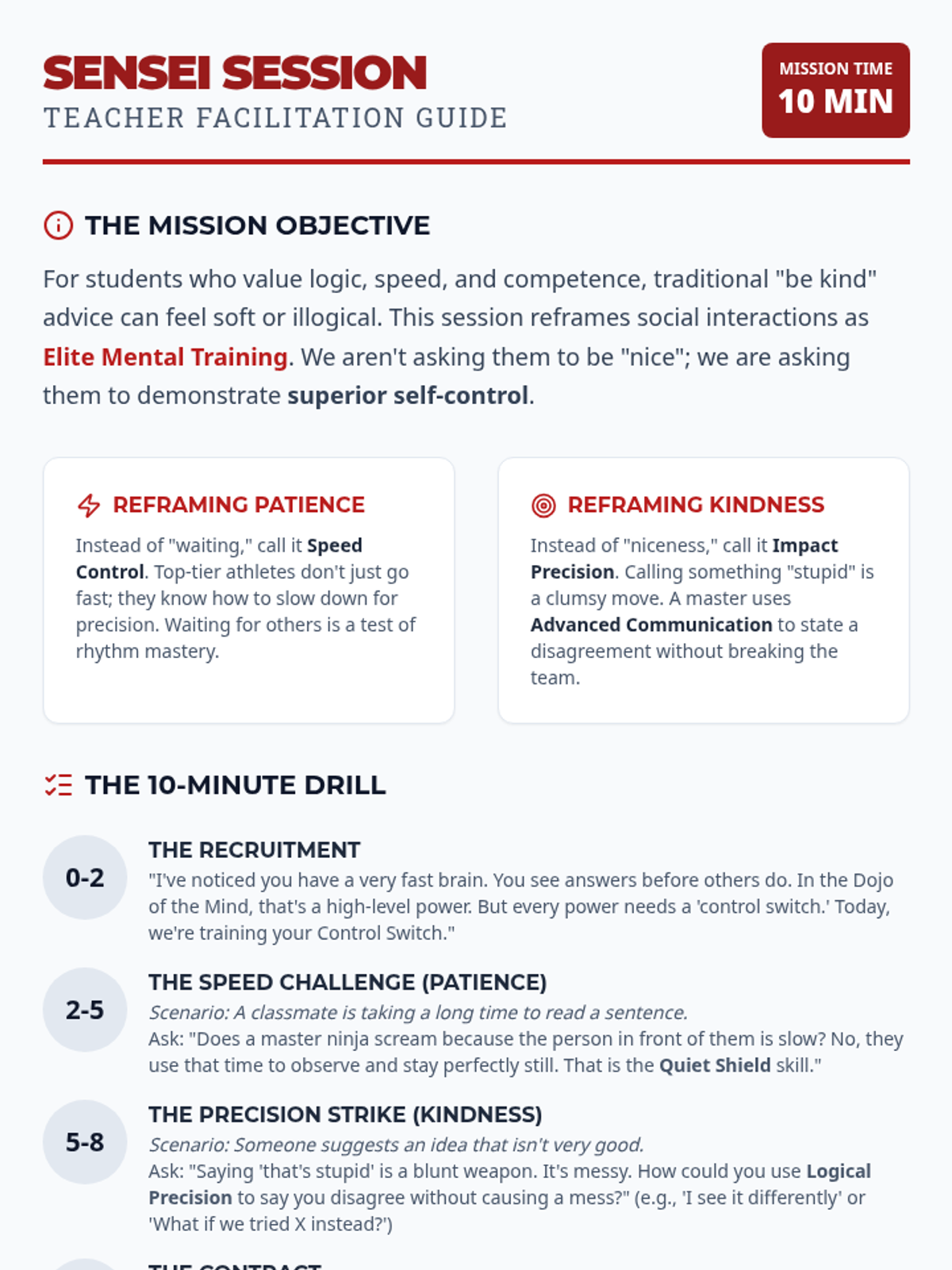
A specialized facilitator guide for the Mind Dojo lesson, focusing on high-level language and strategic coaching for students with fast-moving, ego-driven minds.
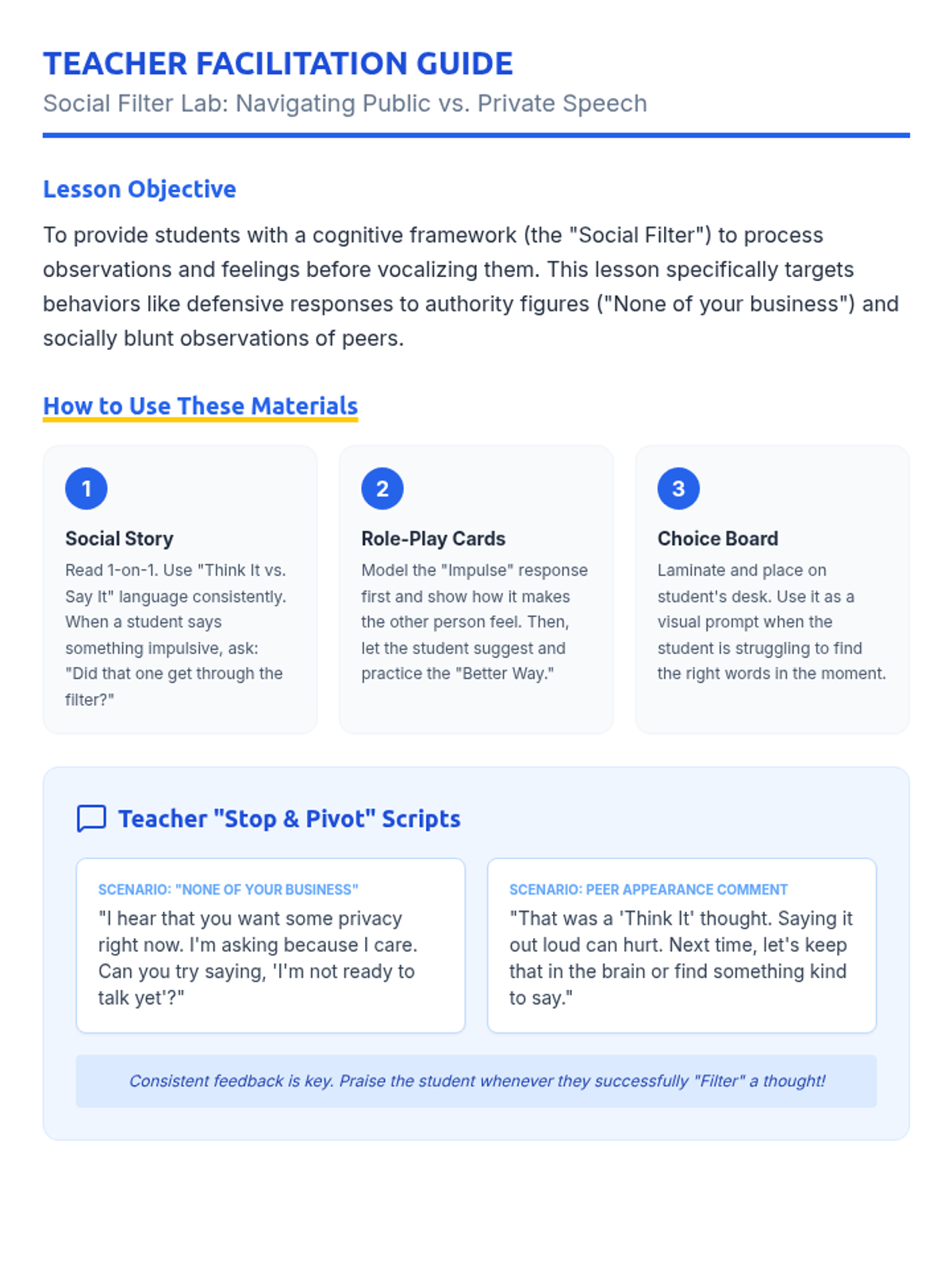
A middle school facilitation guide providing educators with cognitive-behavioral strategies and scripts for implementing social filter concepts with junior high students.
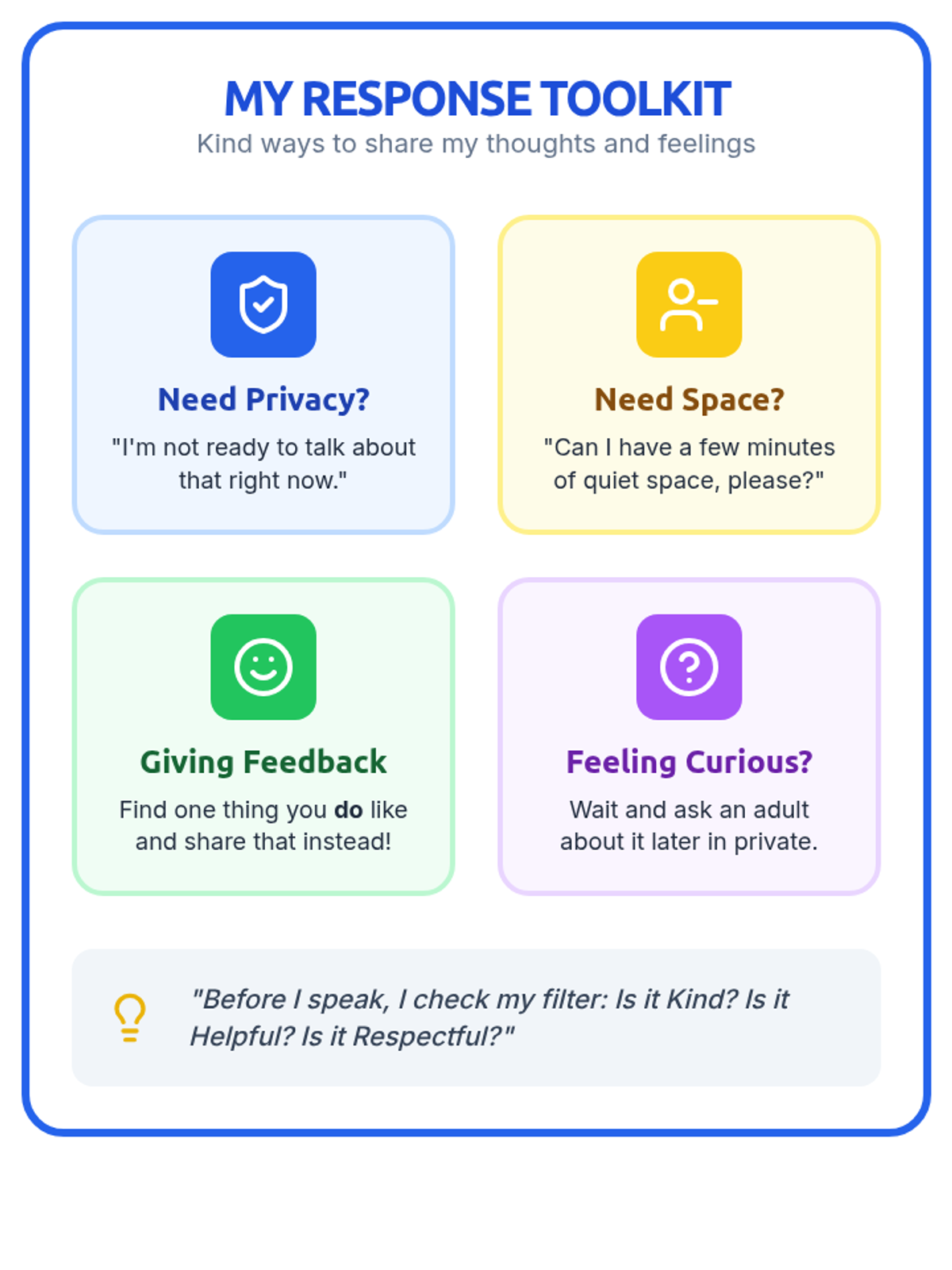
A high-impact visual choice board for junior high students, providing strategic communication scripts and reminders for maintaining professional and social boundaries.
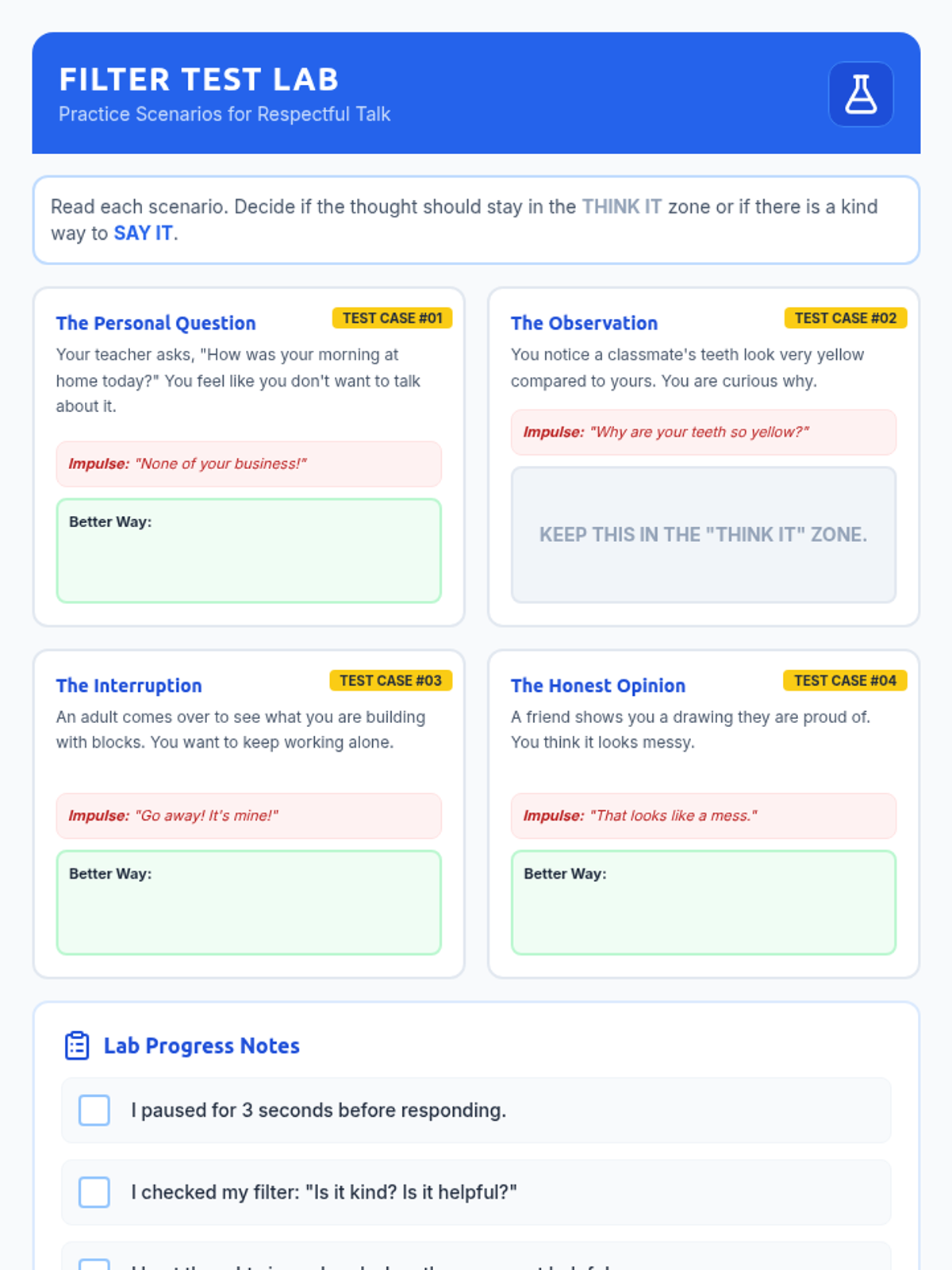
A junior high-appropriate scenario worksheet for practicing social filtering in common middle school situations, with expanded writing space and updated examples.
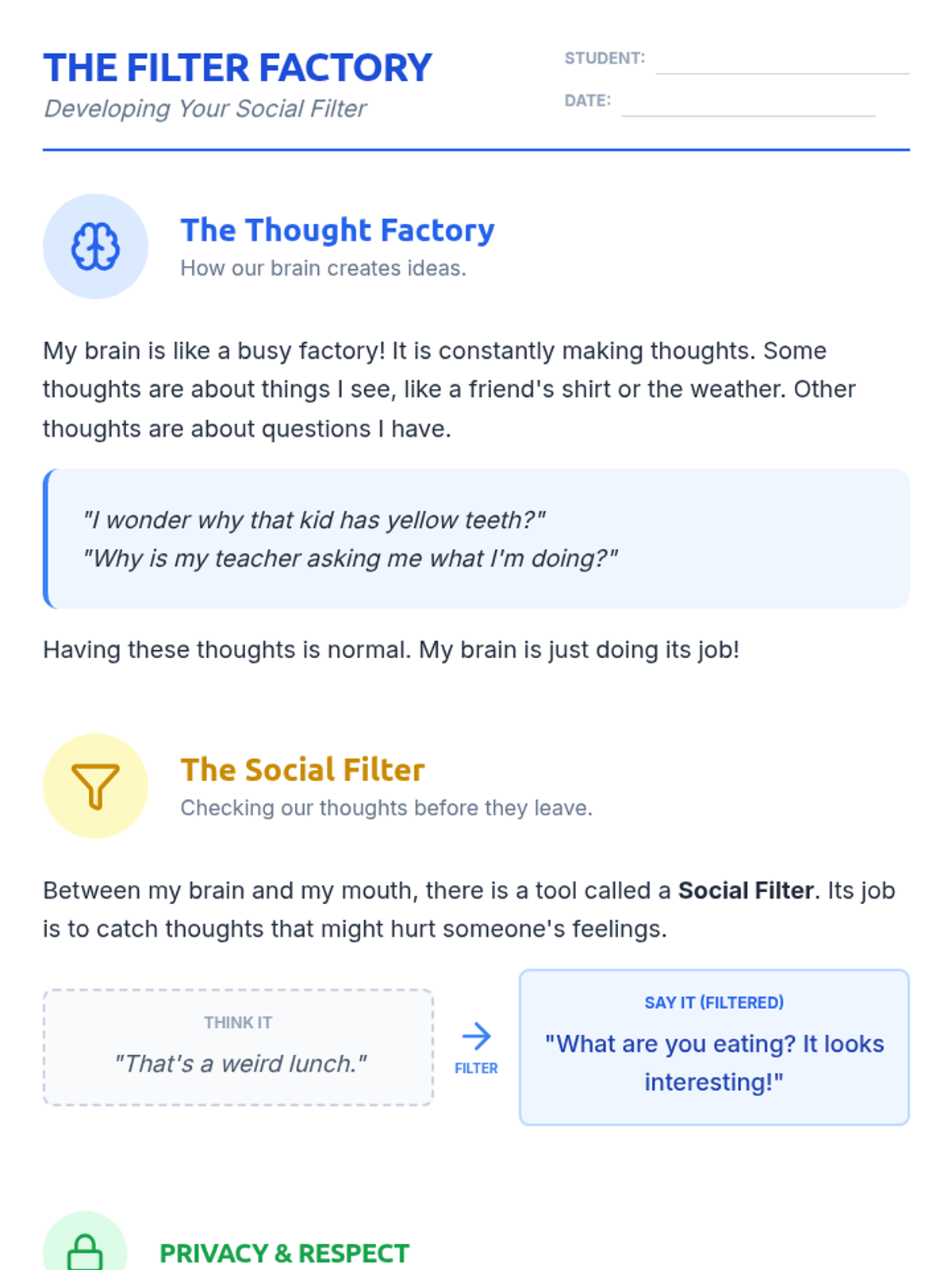
A multi-page social story adapted for junior high students, explaining the 'Social Filter' strategy as a tool for managing reputation and relationships.
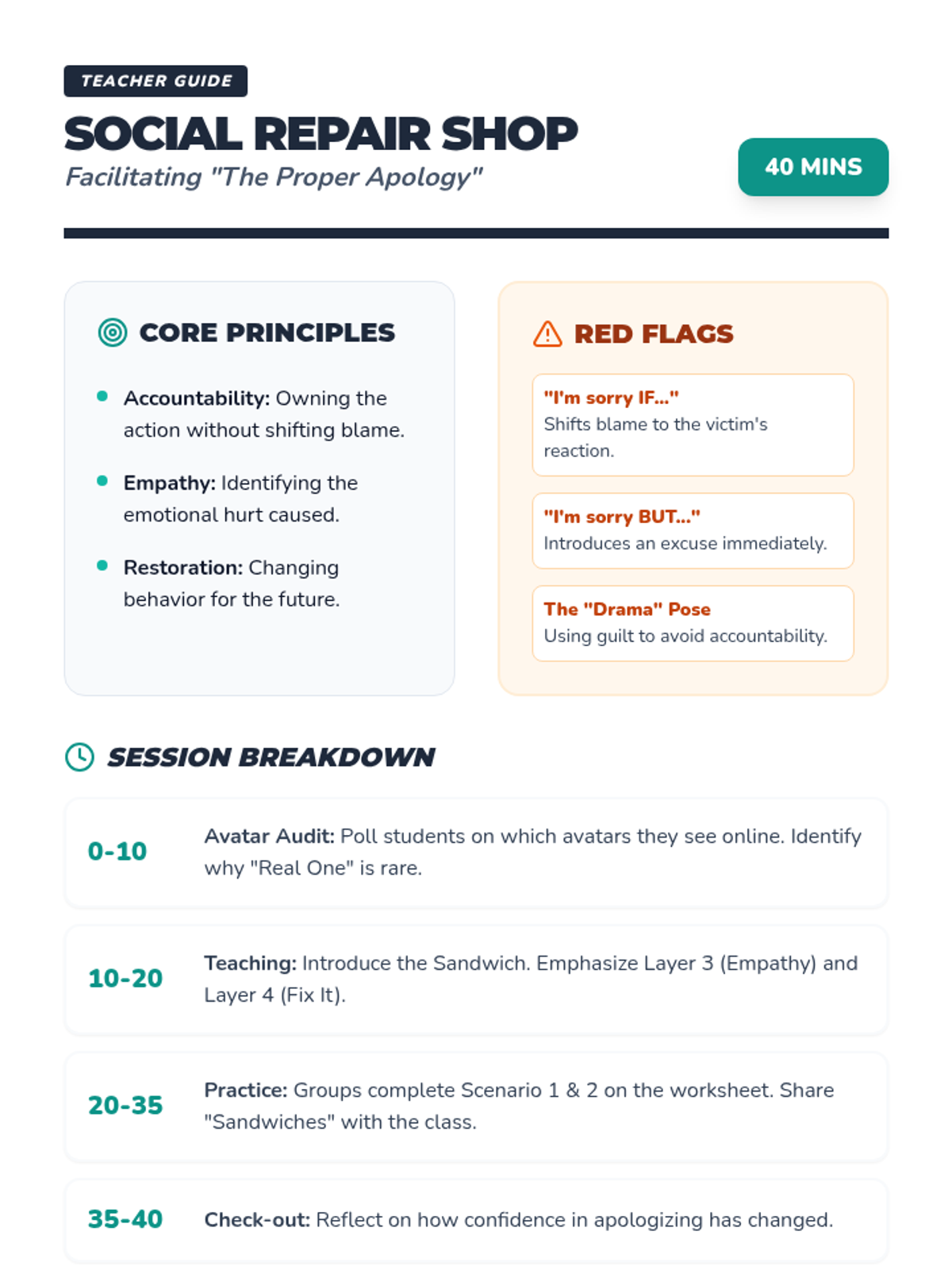
A comprehensive 3-page teacher's guide for the Proper Apology lesson, featuring a detailed pacing guide, core principles, and a complete answer key for all 7 social scenarios. Modified to reflect the updated 'Borrowed Hoodie' sample scenario used for instruction.
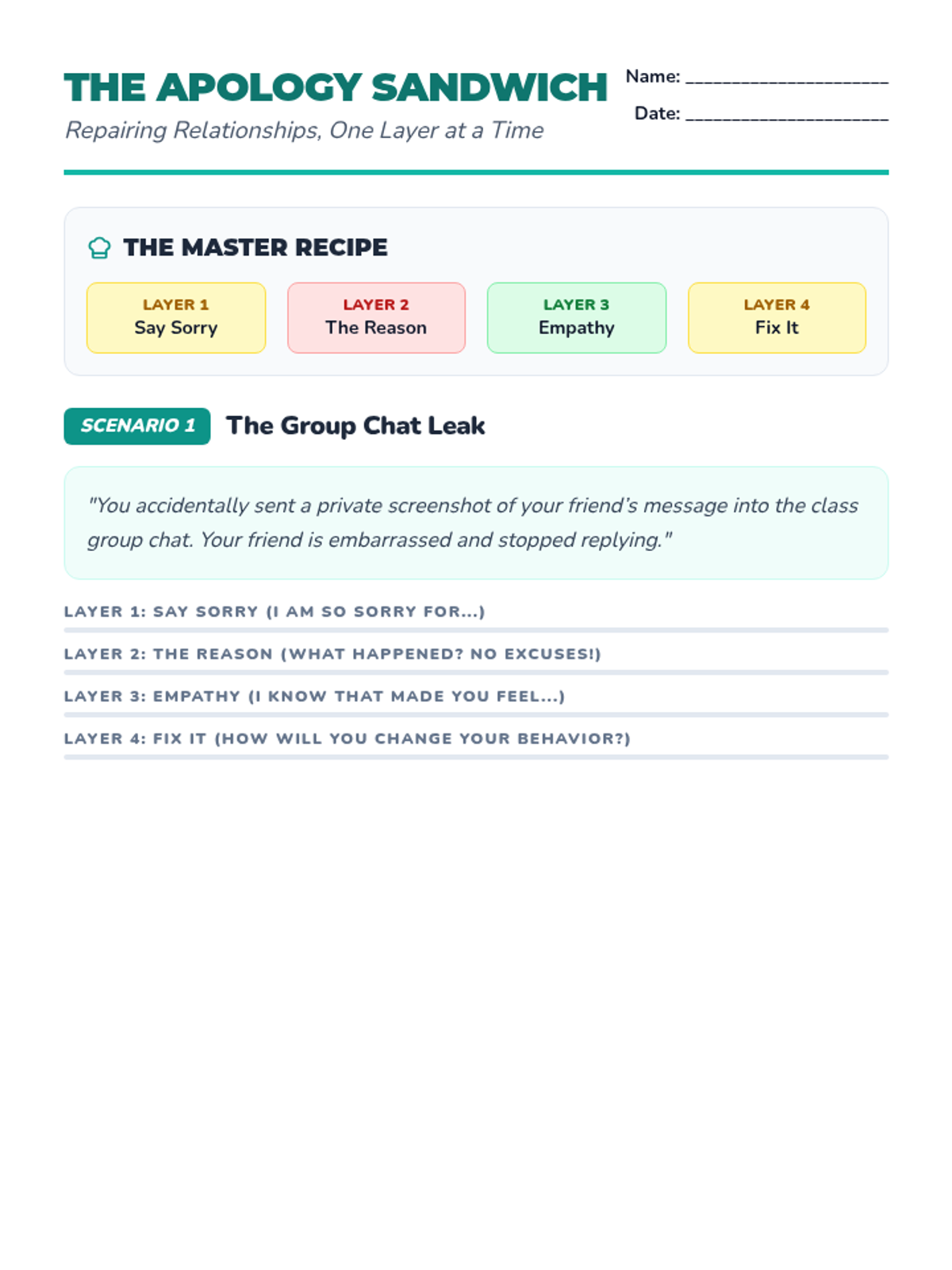
A 8-page comprehensive worksheet with individual pages for each scenario (Scenes 1-7). Each page includes a group submission header, master recipe reference, and a visual fill-in 'Apology Sandwich' for students to record their responses.
A revised 20-slide presentation for the 'Proper Apology' lesson. Slide 10 now features a unique 'Borrowed Item' scenario (spilled juice on a friend's hoodie) to provide a fresh example for instruction that does not overlap with the student practice scenes. The visual 'Social Repair Shop' theme remains consistent throughout.
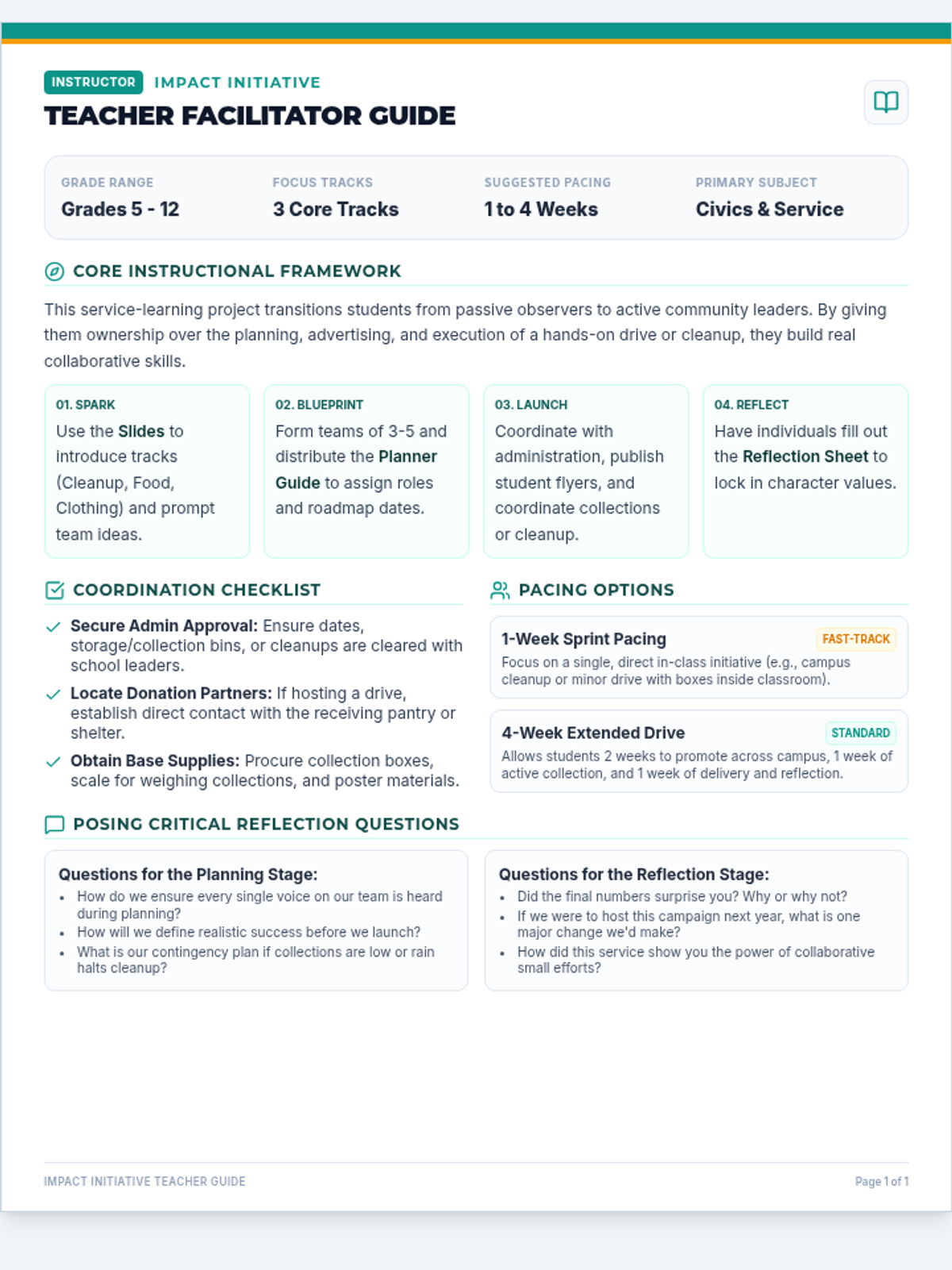
A print-ready, 1-page teacher facilitation guide outlining project timelines, coordination checklists, core instructional frameworks, and reflection questions to support student-led community service initiatives.
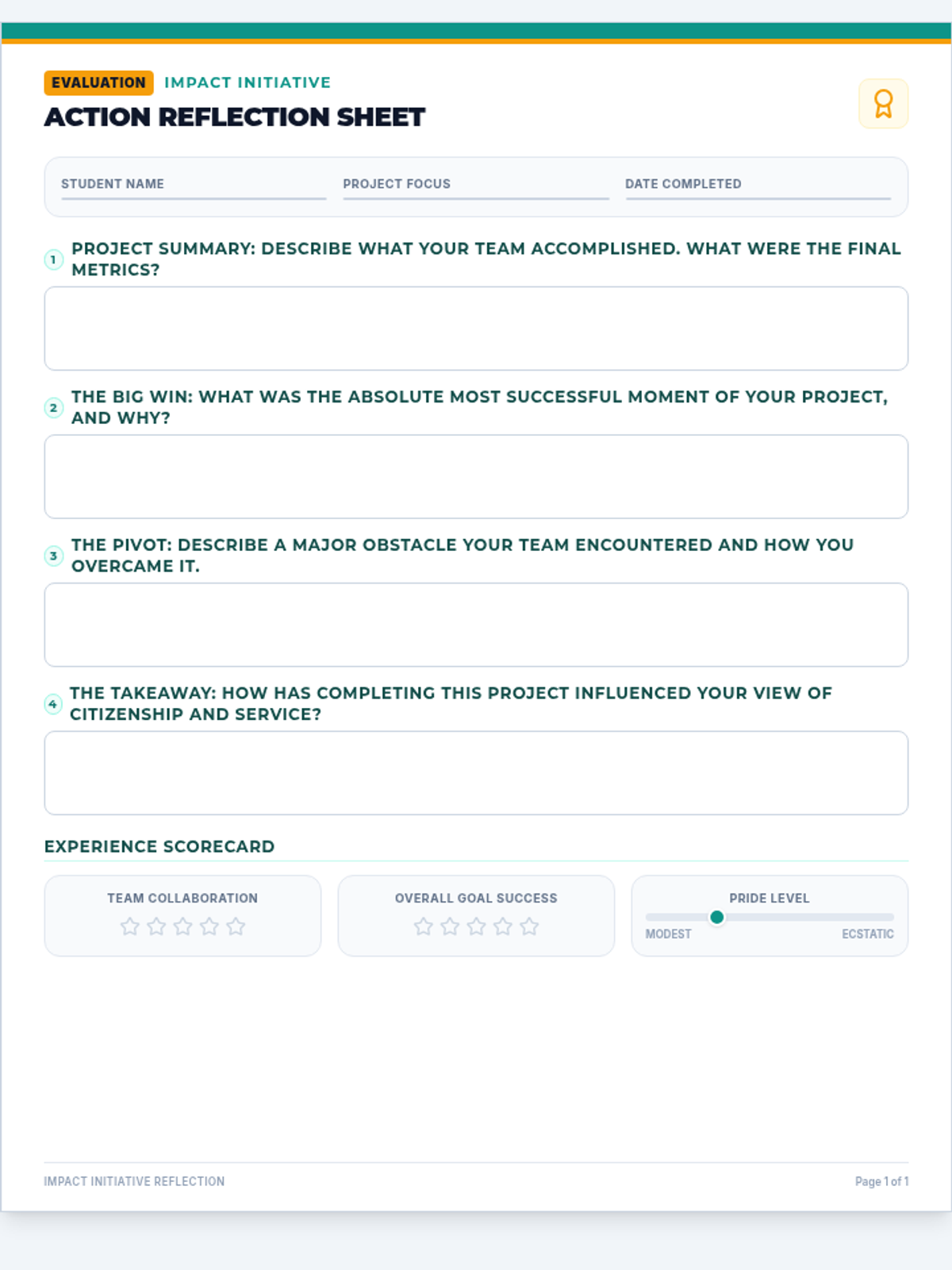
A simplified, 1-page student reflection worksheet designed to follow project execution, incorporating critical thinking prompts on team wins, obstacles, and overall community impact alongside visual evaluation indicators.
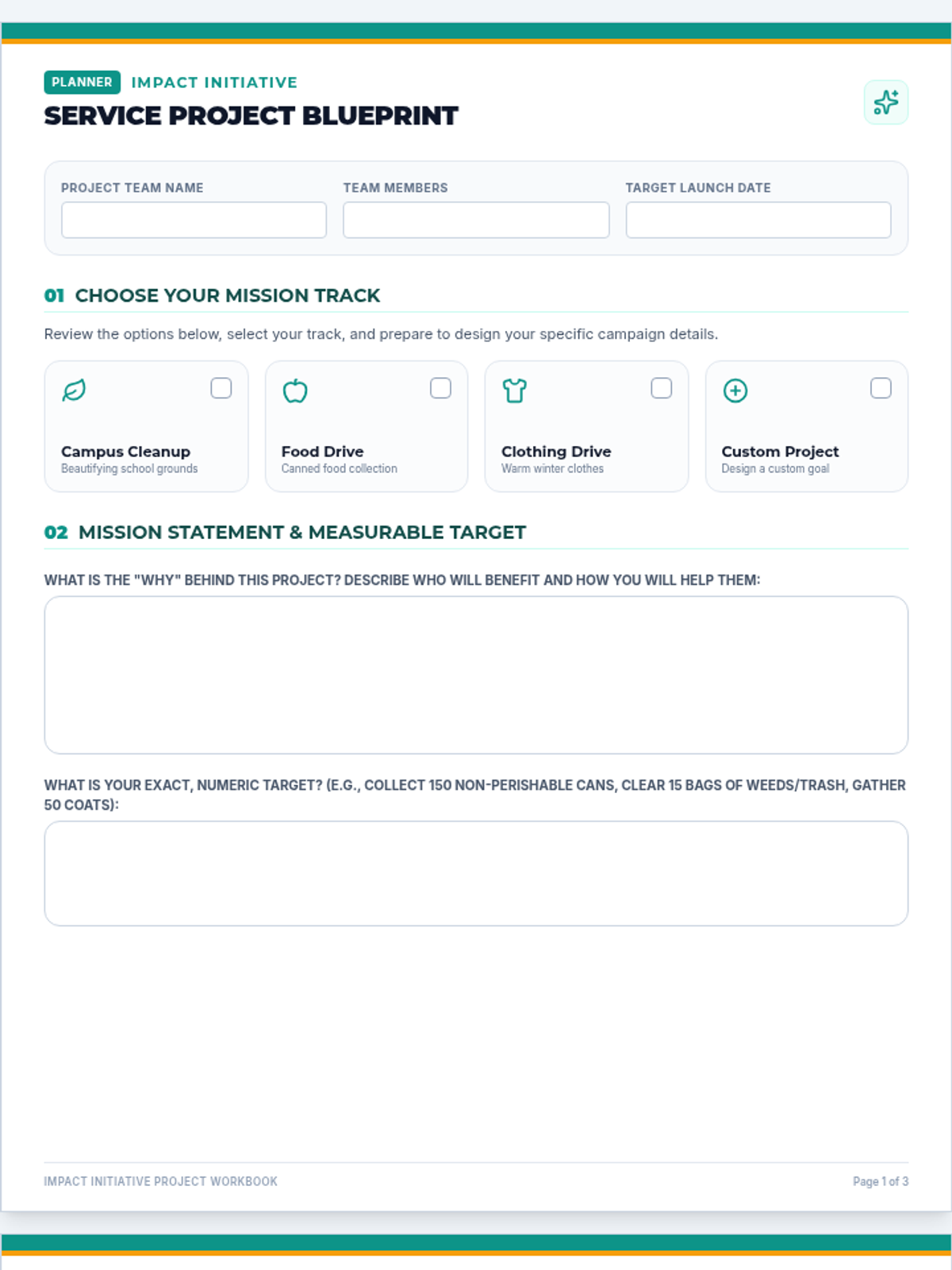
A print-ready, 3-page student project planning guide structured step-by-step to assist service-learning teams in choosing their track, defining goals, assigning student roles, mapping deadlines, and designing promotional strategies.
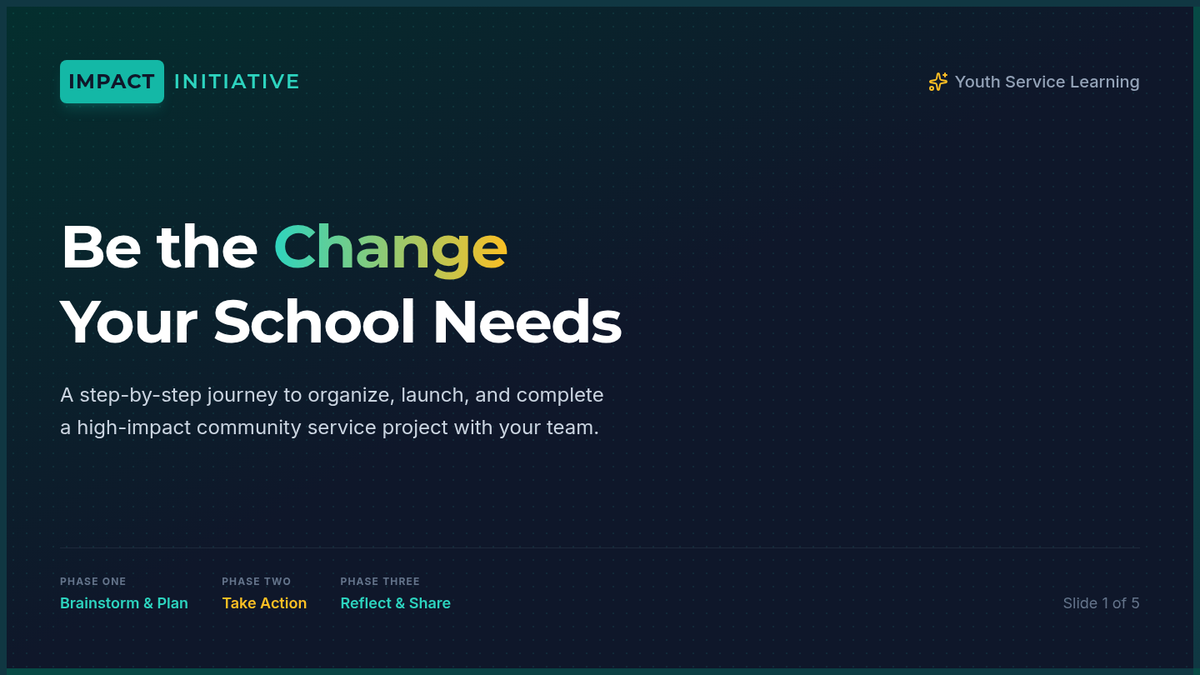
A 5-slide interactive-style presentation deck that introduces the service learning tracks (Campus Cleanup, Food Drive, Clothing Drive) and guides student teams through project planning, launching, and reflection. It has a beautiful bold slate and teal blueprint design.
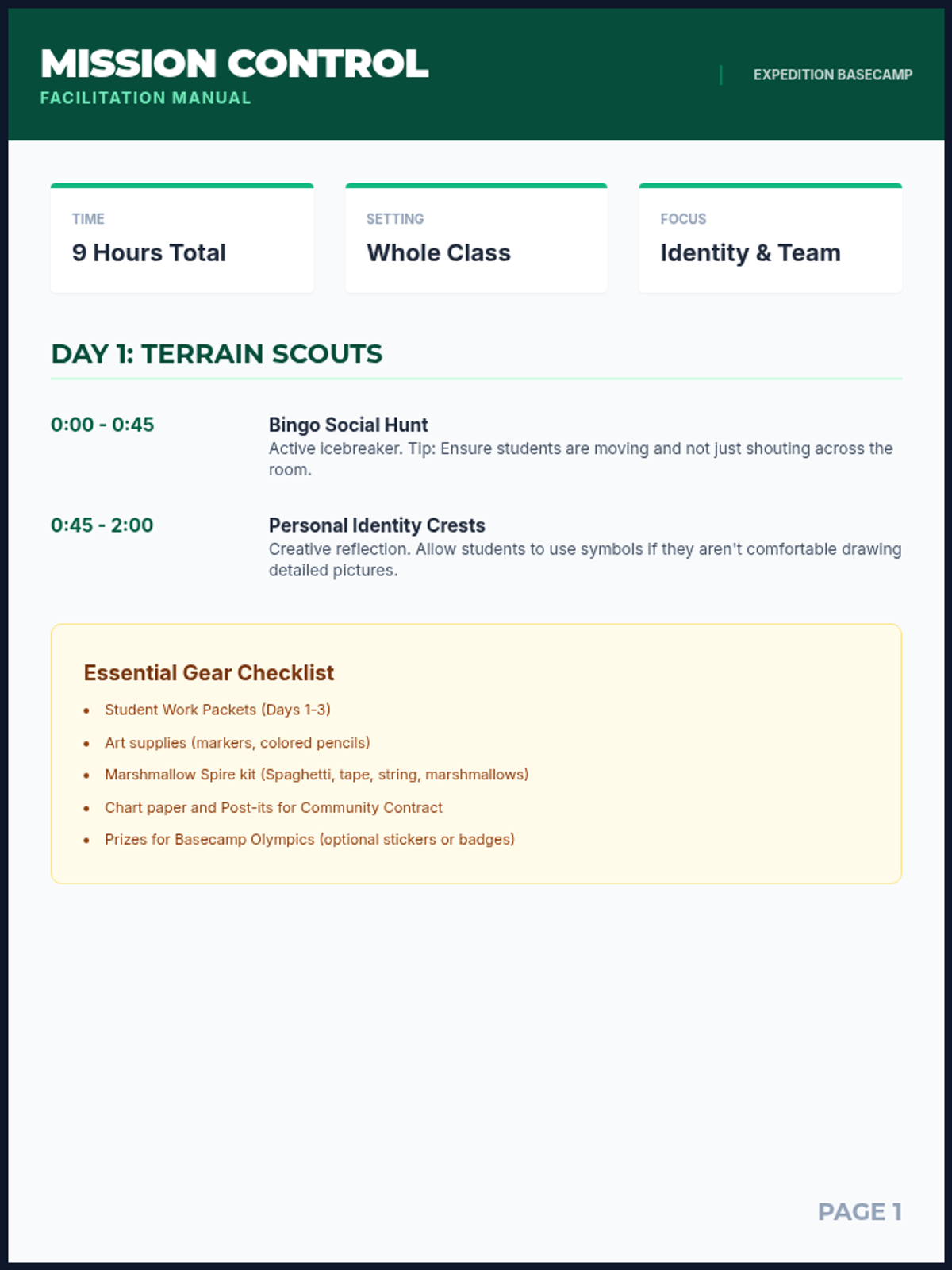
A three-page comprehensive teacher guide for the 'Expedition Basecamp' sequence. Includes revised answer keys with clear solutions and a teacher preparation checklist. Polished for clarity and professionalism.
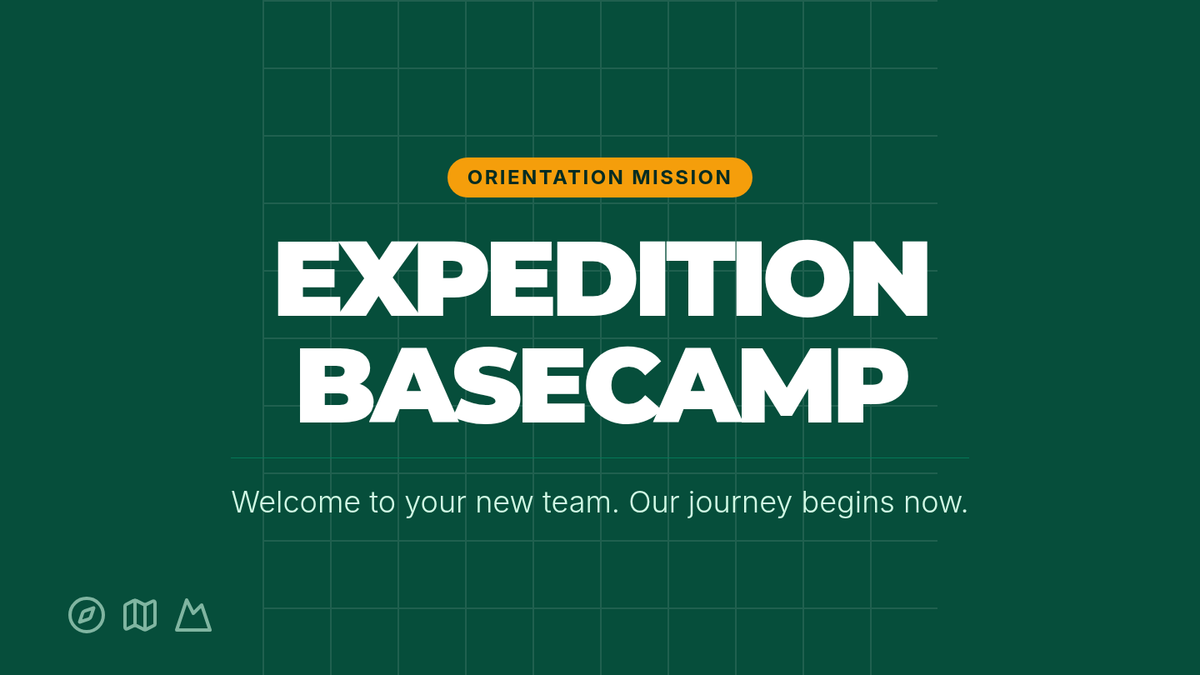
A comprehensive 5-slide presentation deck covering the agenda for the 3-day 'Expedition Basecamp' orientation. Polished visual consistency and icon opacity.
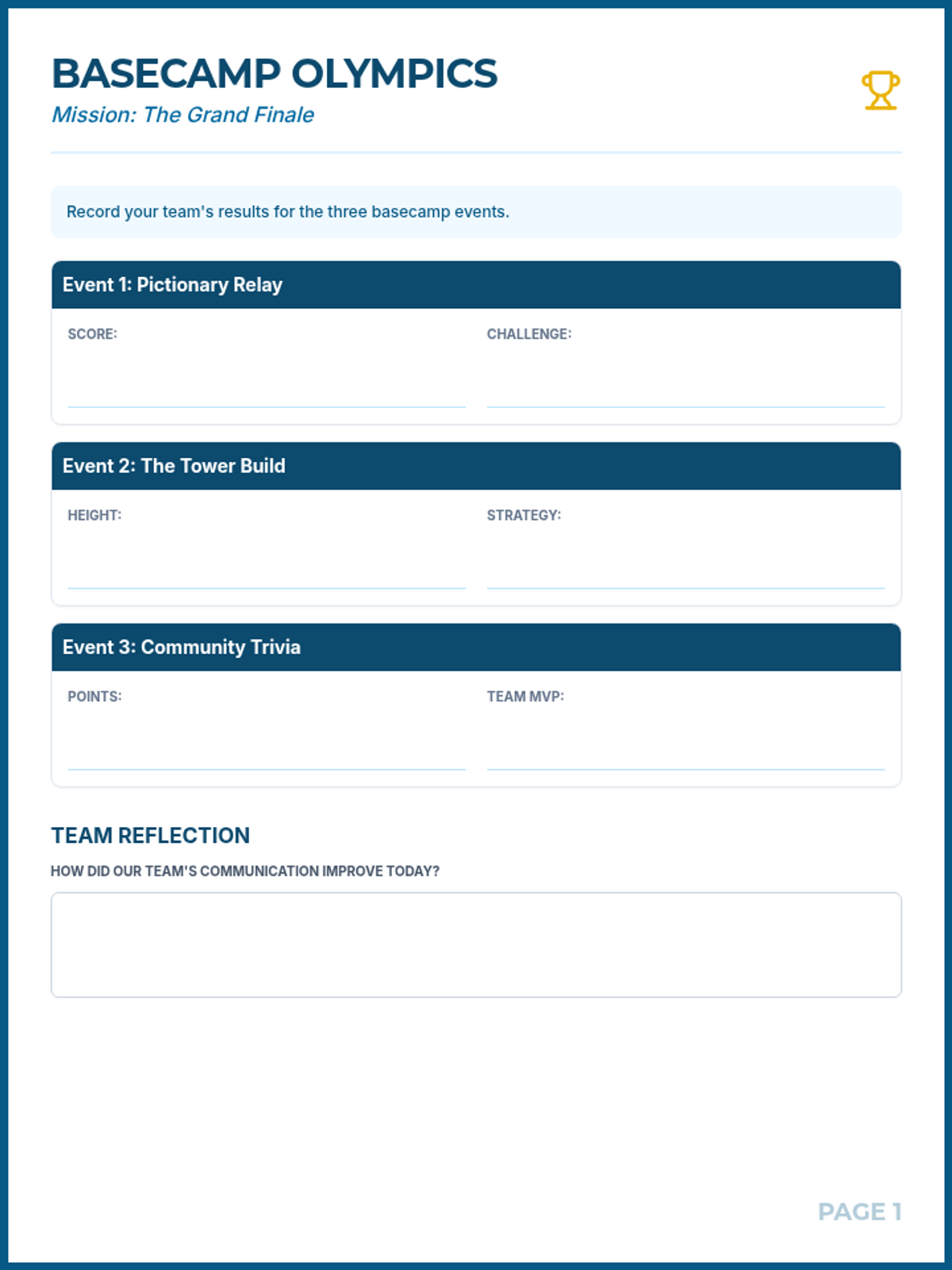
A two-page student packet for Day 3, featuring a 'Basecamp Olympics' scorecard and a 'Letter to My Future Self' reflection activity. Optimized layout and response areas for student use.
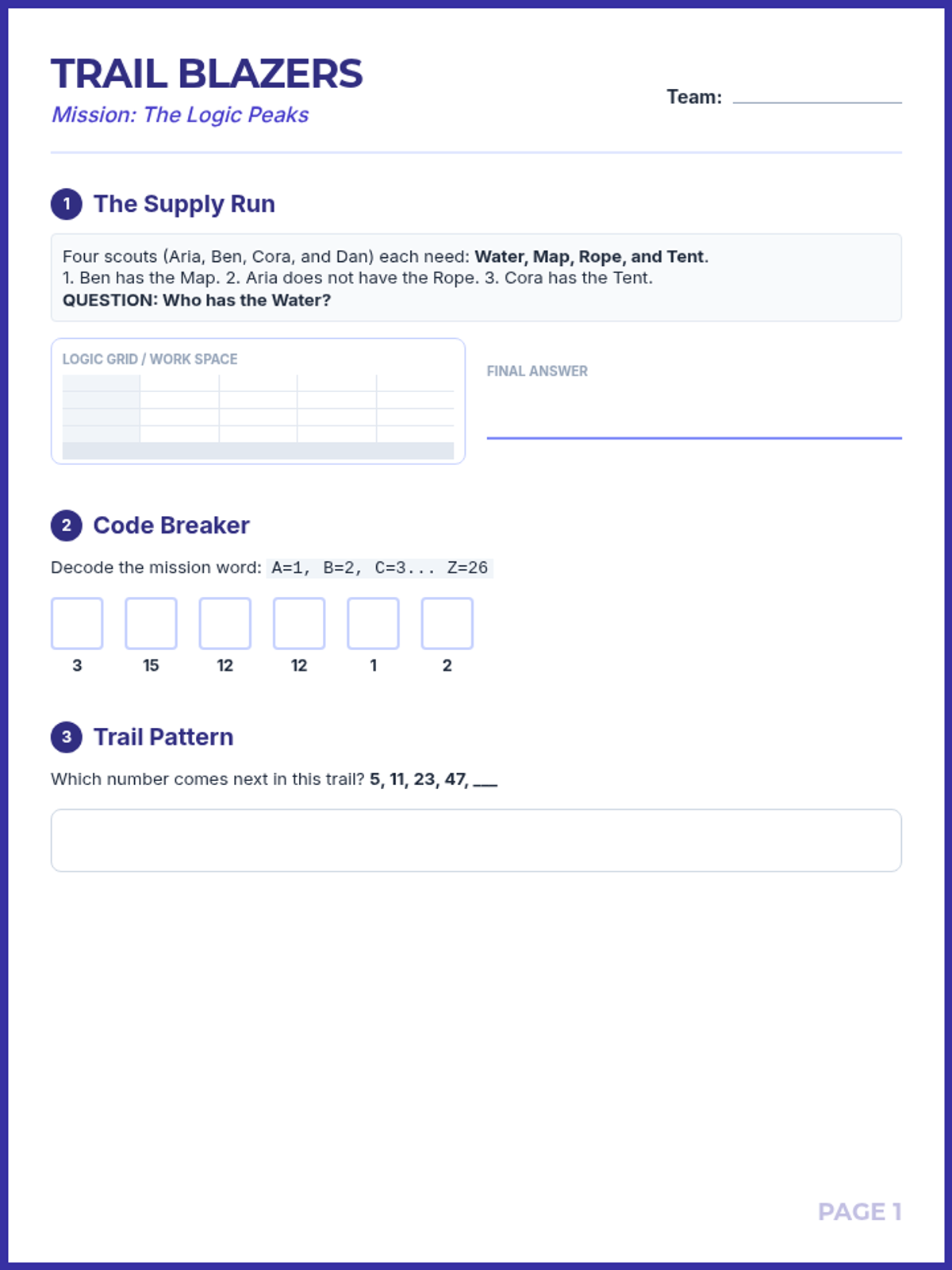
A two-page student packet for Day 2, featuring a 'Logic Peaks' cooperative puzzle challenge and a 'Community Contract' drafting guide. Fixed logic puzzles, improved workspace areas, and optimized layout.
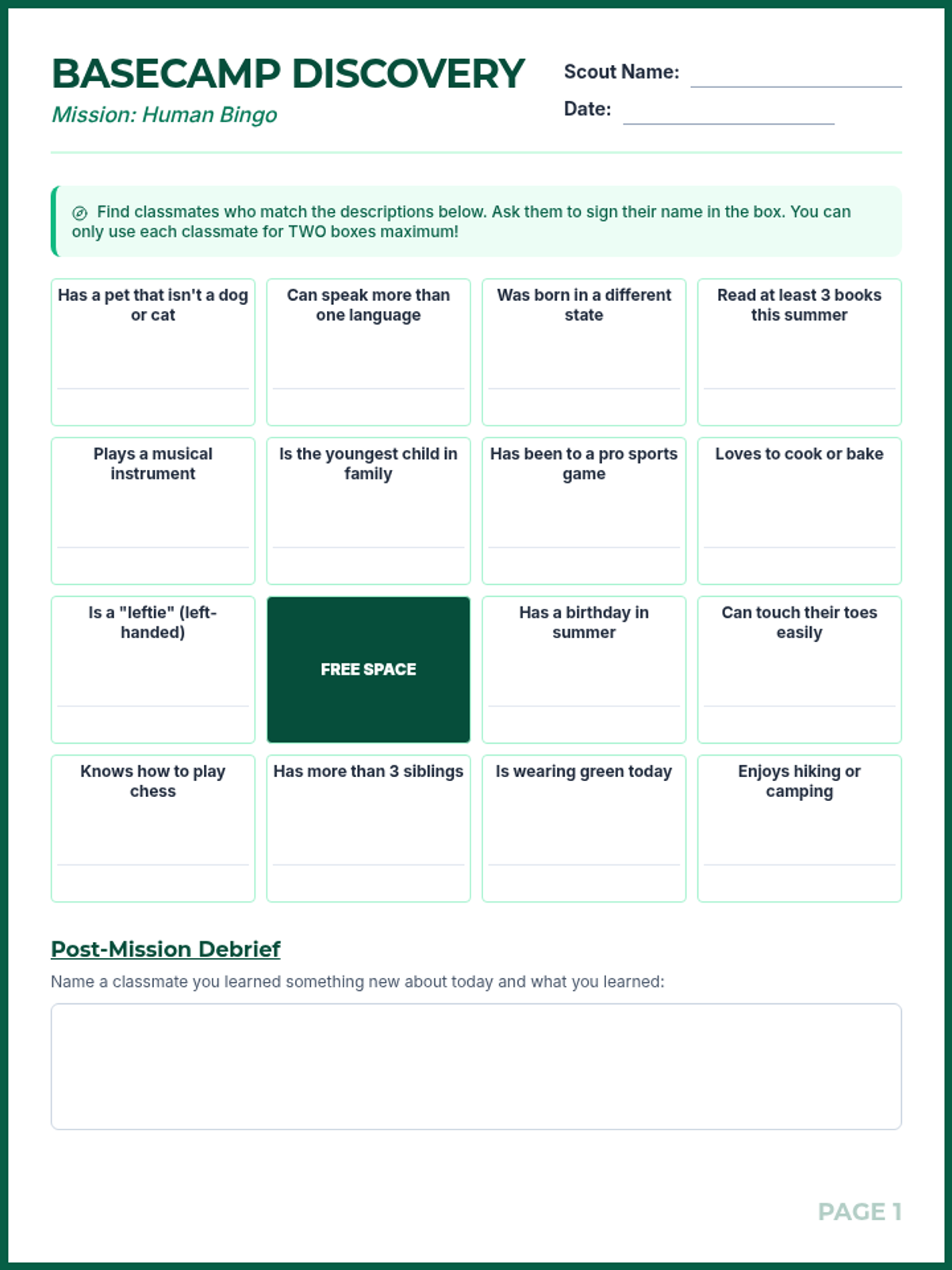
A two-page student packet for Day 1, featuring a 'Human Bingo' icebreaker and a 'Personal Crest' identity project. Fixed layout issues and improved student response areas.
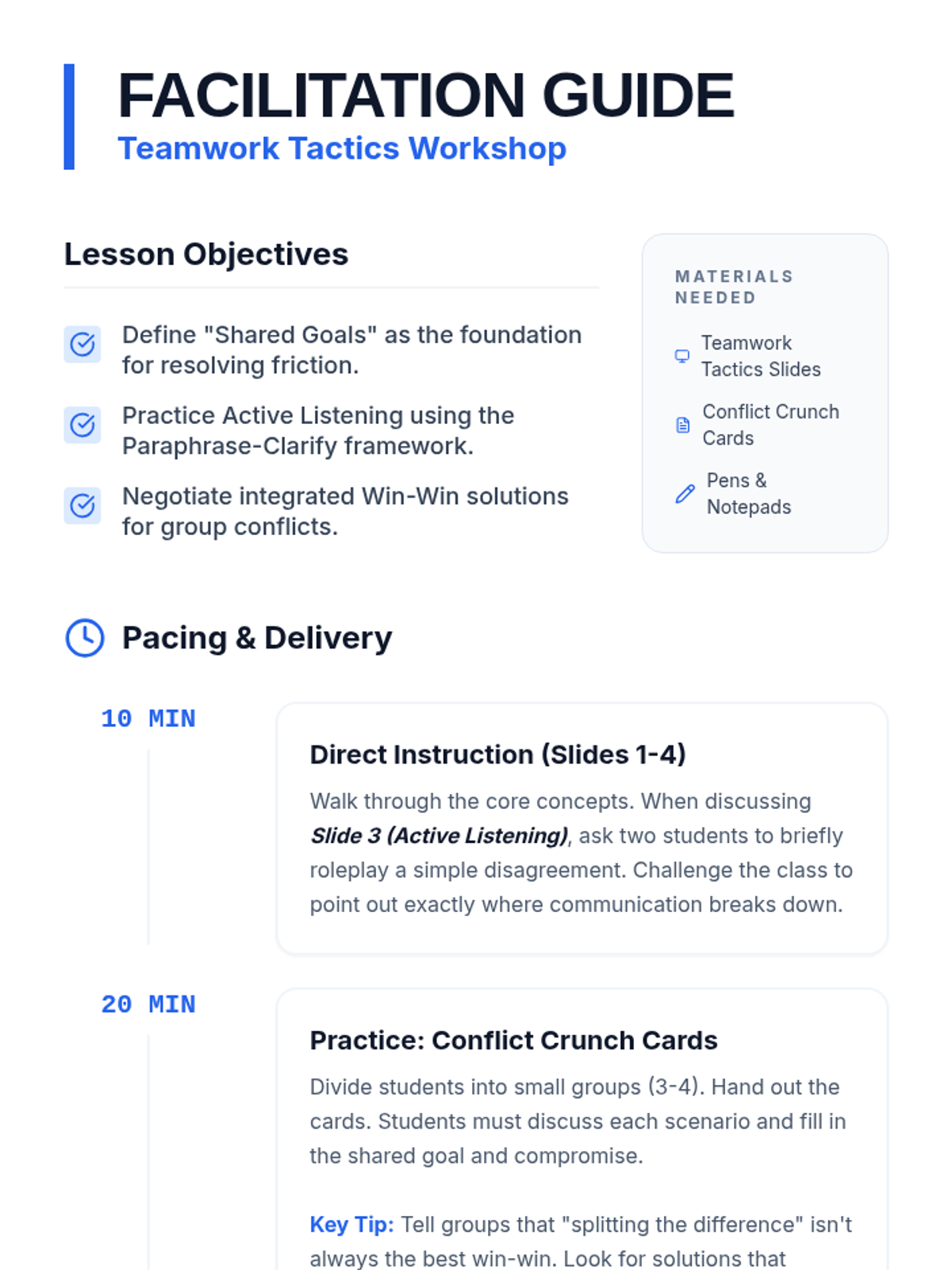
A comprehensive teacher's guide for the Teamwork Tactics lesson, including learning objectives, a detailed pacing guide, and thought-provoking discussion prompts.
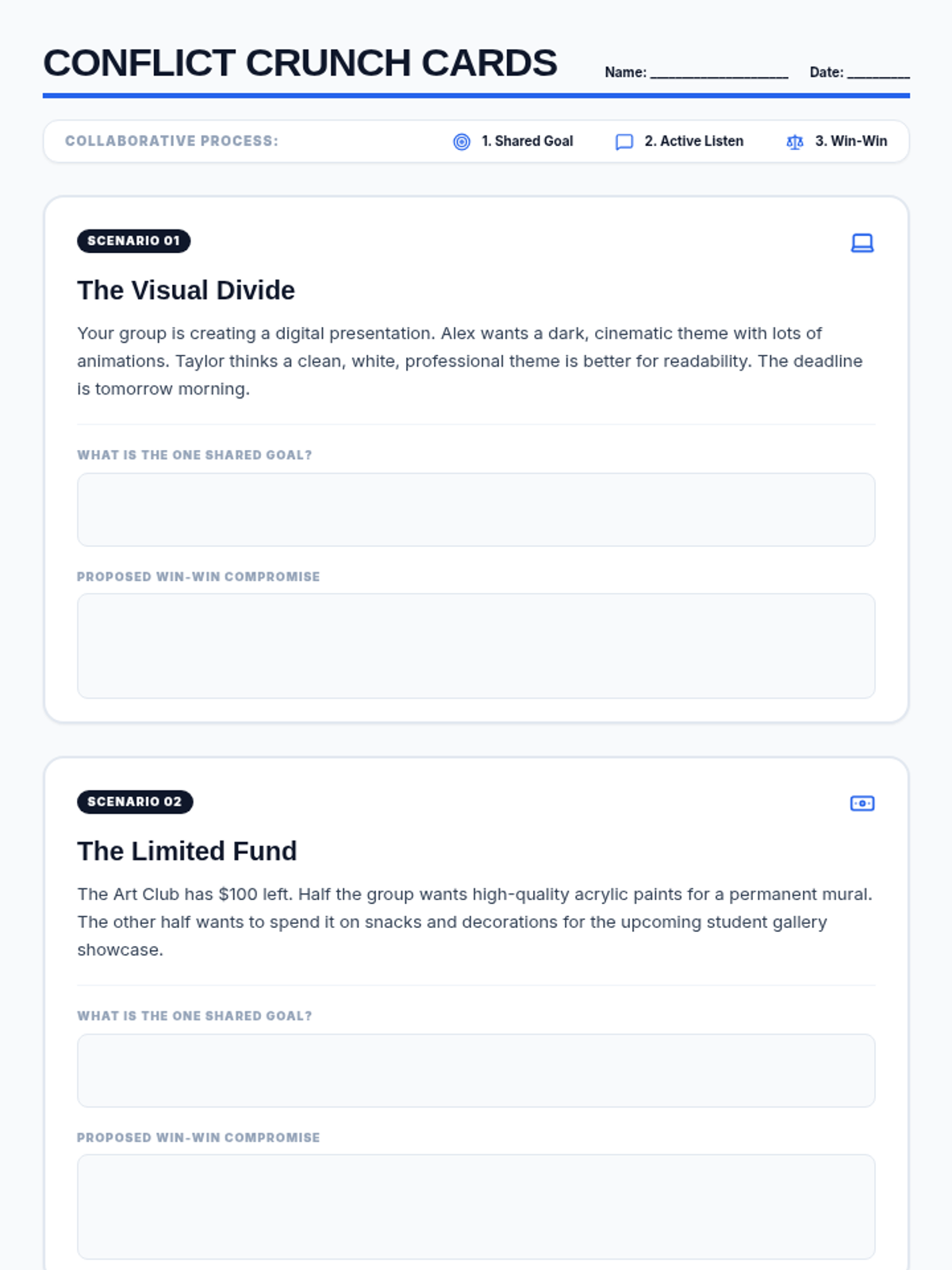
A set of 6 printable scenario cards designed to help students practice identifying shared goals and negotiating compromises in realistic group conflict situations.
A 5-slide visual presentation covering the core principles of collaborative problem solving, including shared goals, active listening techniques, and negotiation strategies.
An instructional slide deck teaching students three core strategies for finishing the year strong: chunking large projects, the 5-minute rule, and identifying a support network.
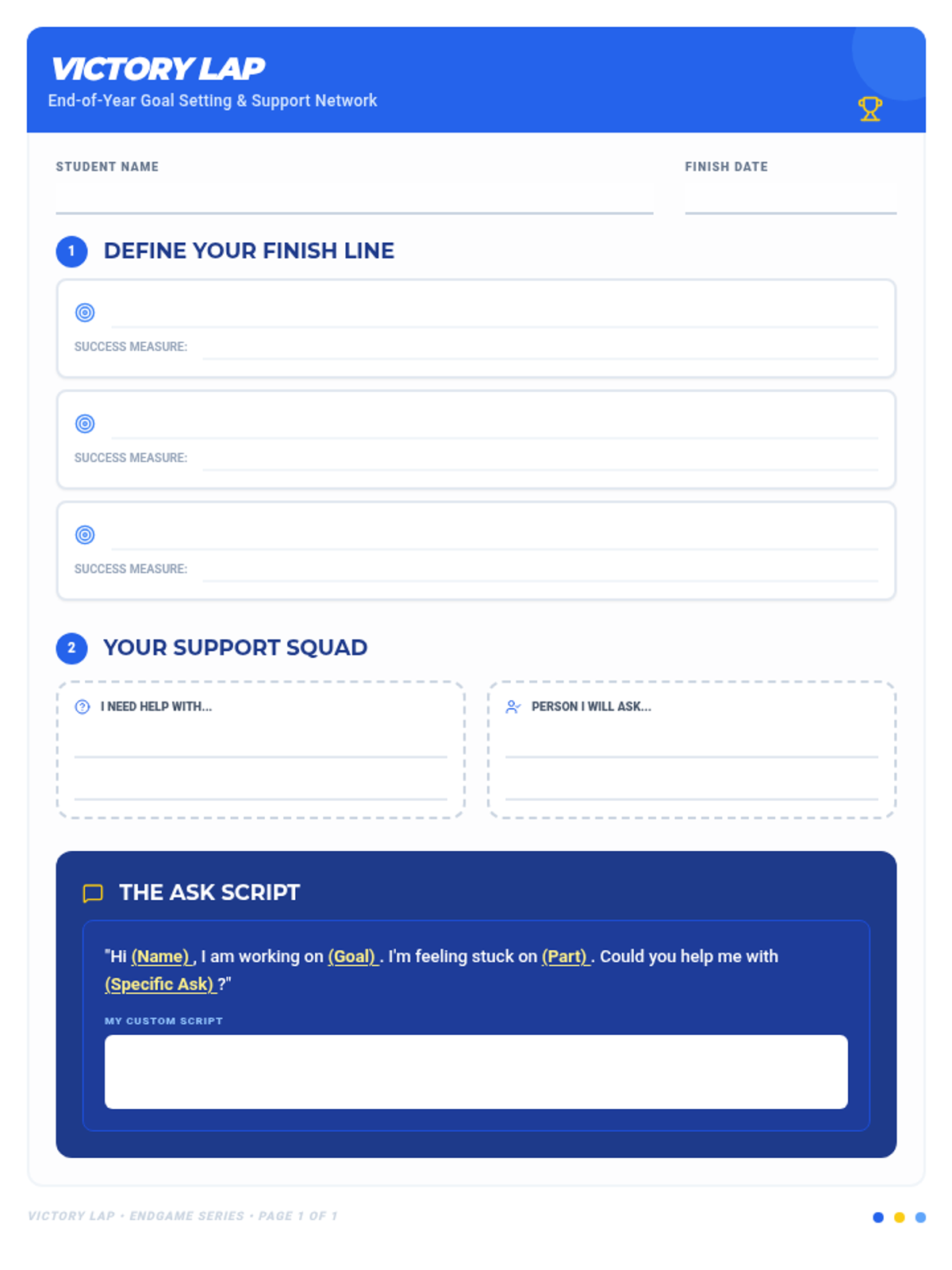
A goal-setting worksheet that guides students in identifying end-of-year objectives, mapping out their support network, and practicing self-advocacy scripts.
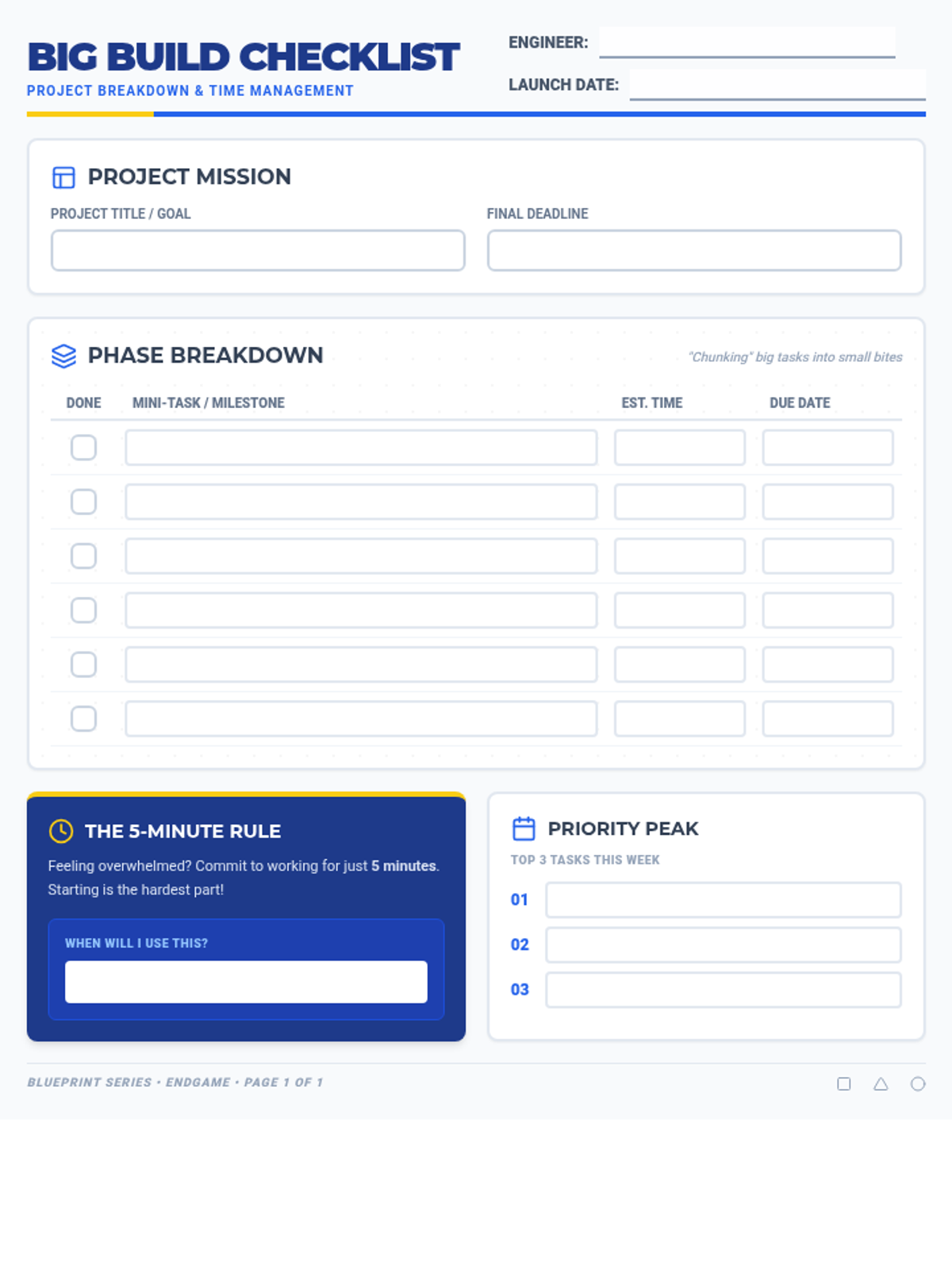
A project management checklist designed to help students break down large assignments into manageable mini-tasks with time estimates and deadlines.
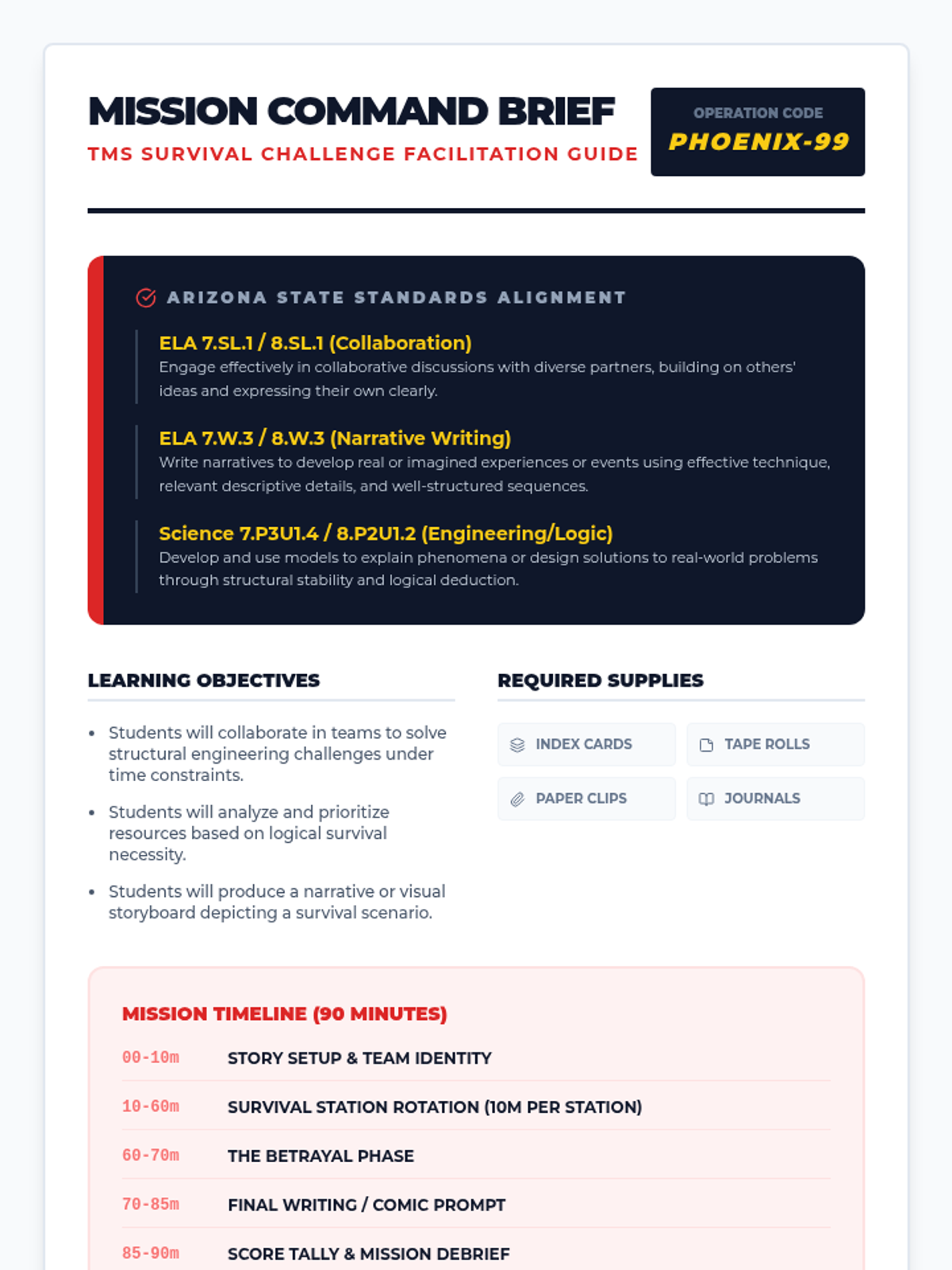
A comprehensive Arizona-aligned lesson plan for the TMS Survival Challenge, condensed into a high-energy 45-minute format with updated pacing and facilitator tips.
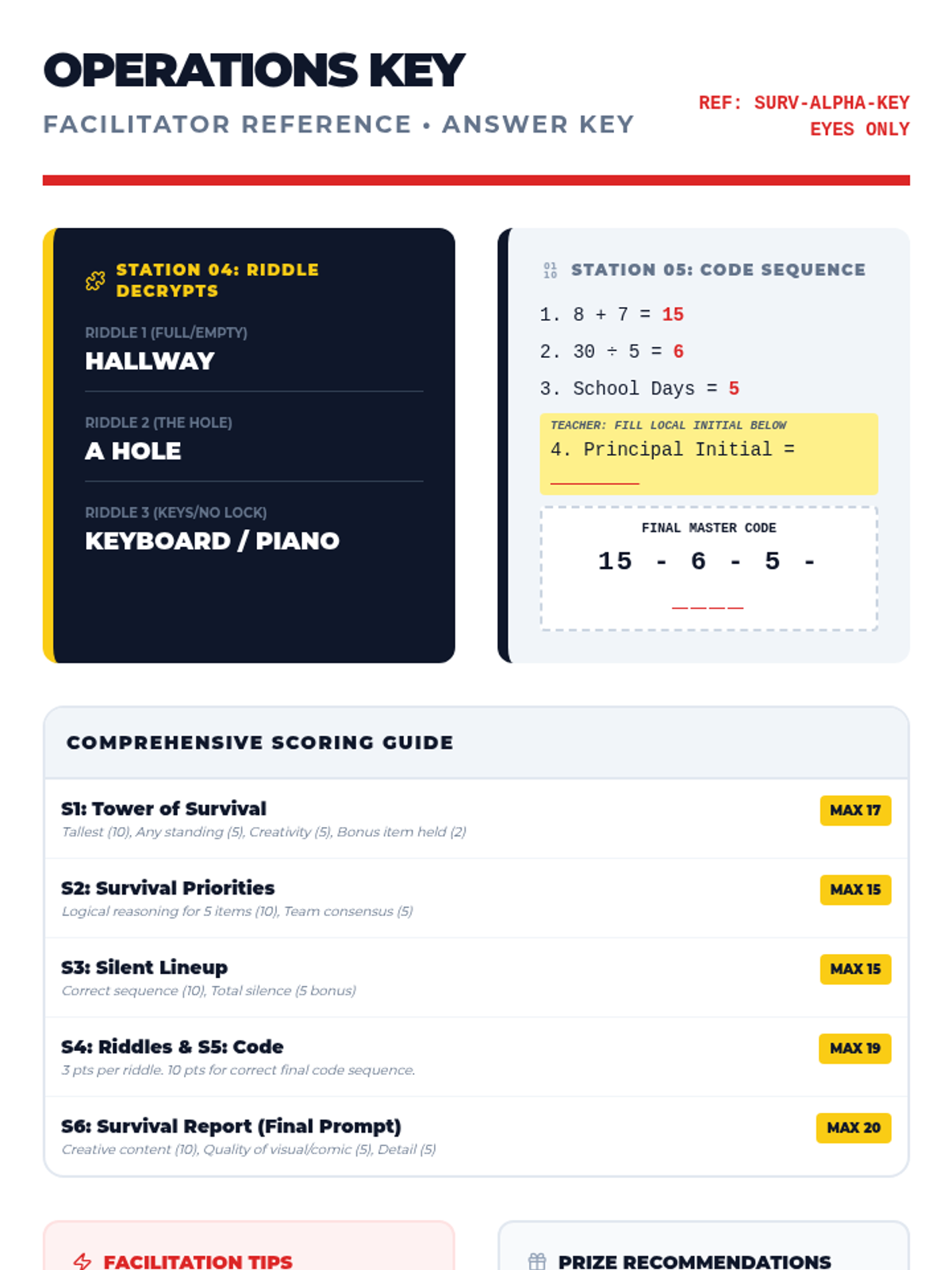
A tactical teacher-facing answer key and facilitation guide for the Survival Challenge, updated for the 45-minute rapid response timeline.
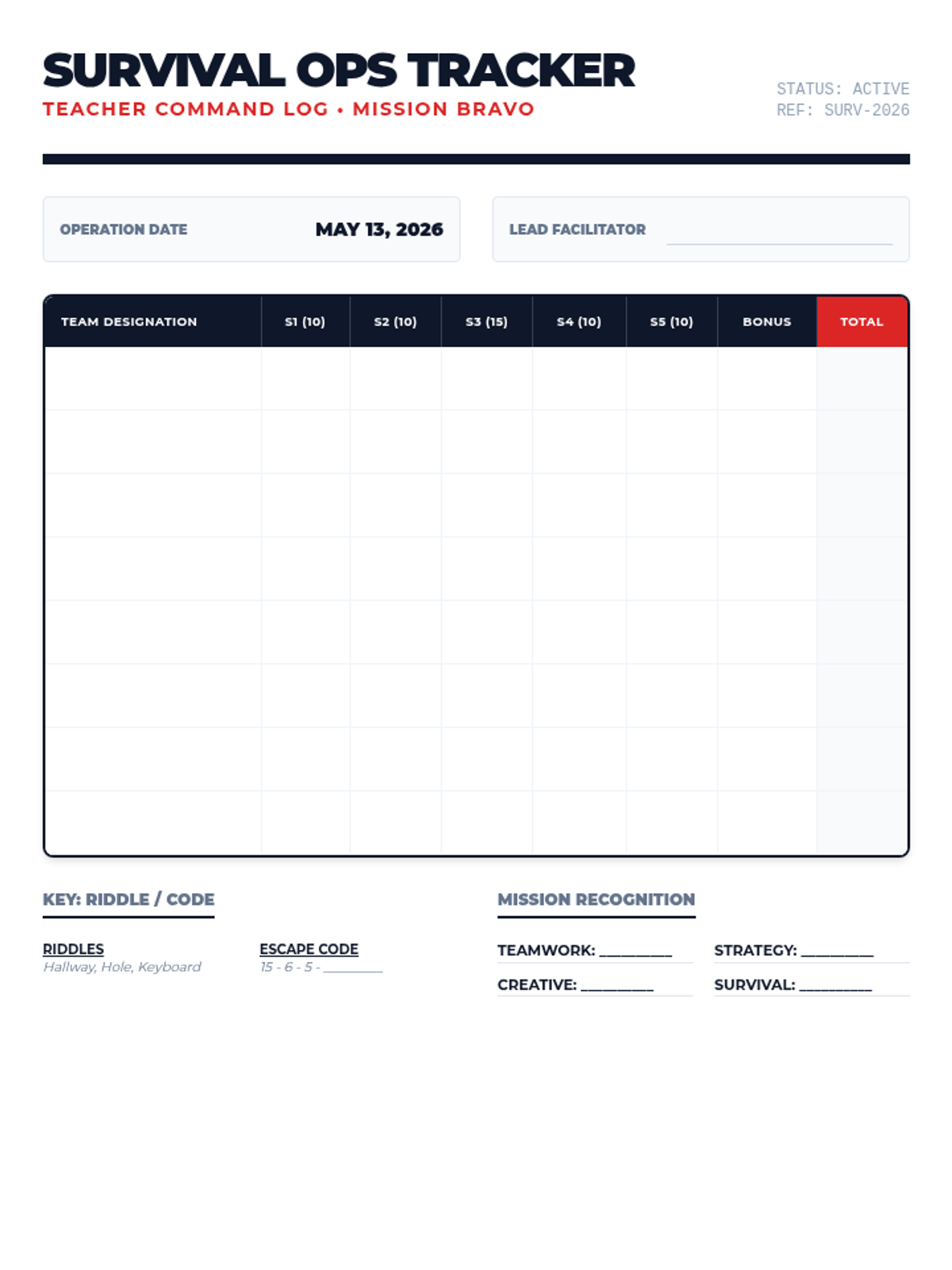
A specialized teacher's tracking sheet for managing team points, station progress, and award categories during the Survival Challenge. updated with escape code '15-6-5-F'.
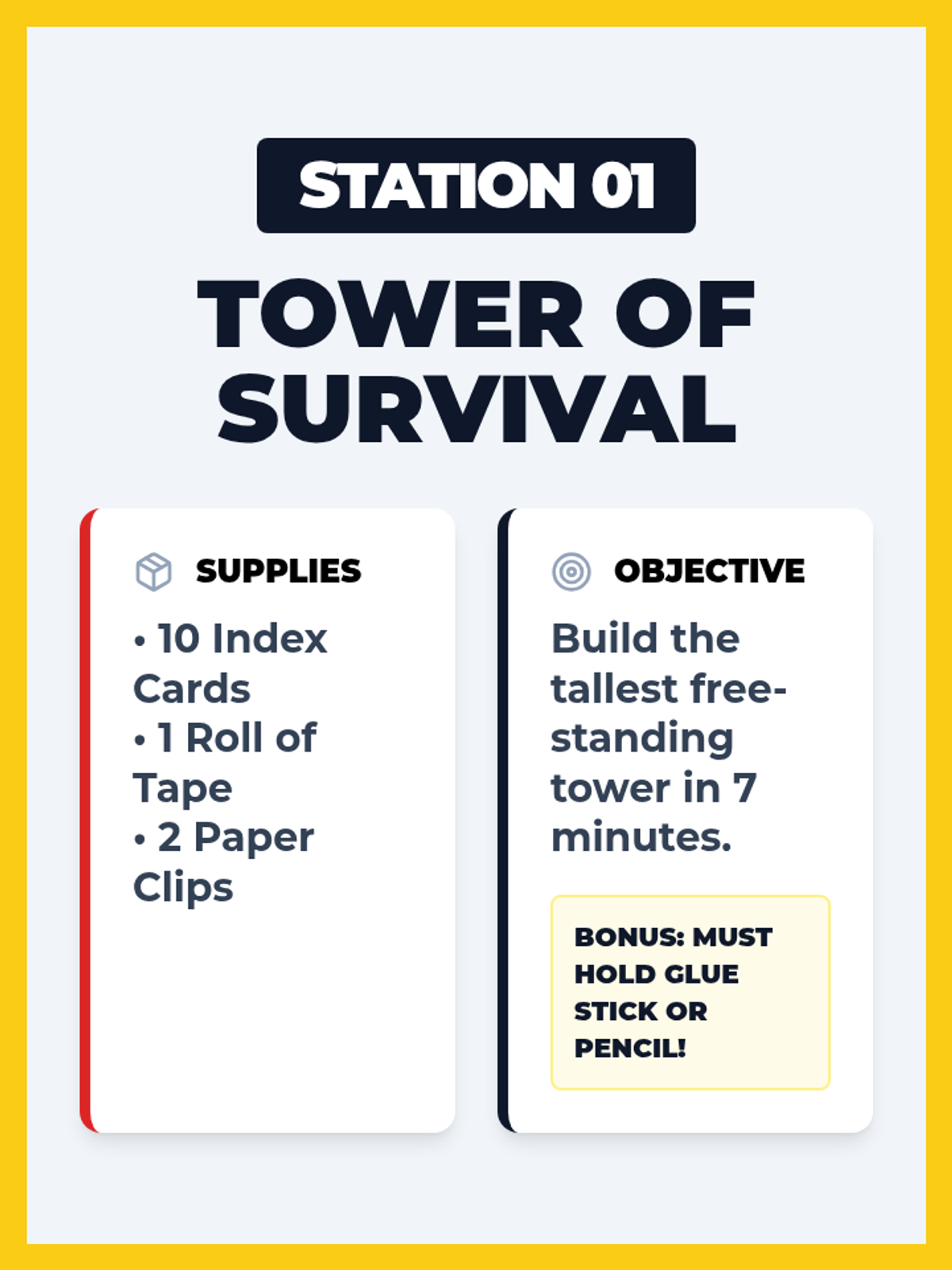
High-visibility station signs for each challenge, updated with Principal initial 'F' and math answers for Station 5. updated for 5-minute station rotation.
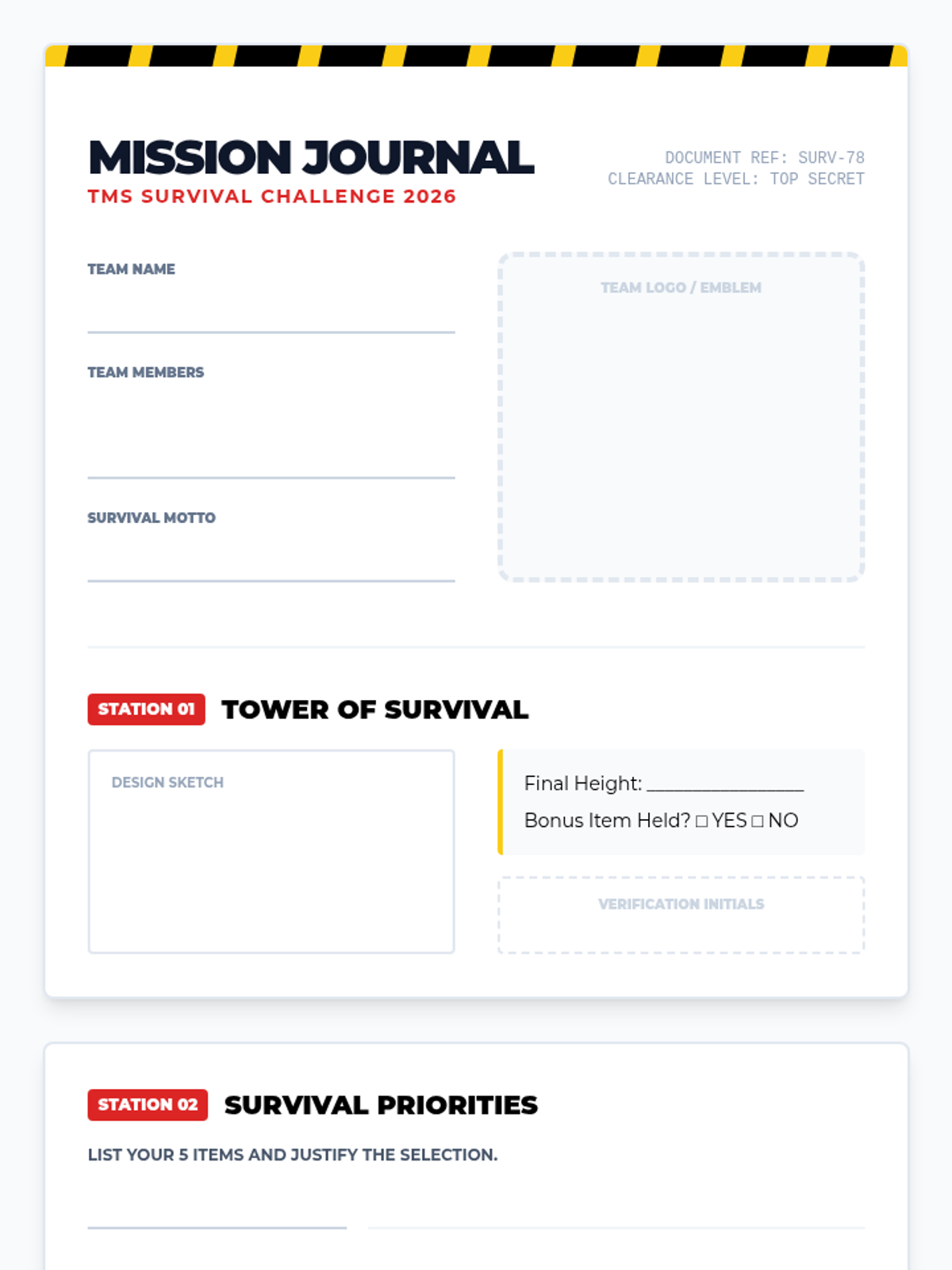
A comprehensive 4-page student packet for recording team information, station progress, and the final writing prompt, styled with tactical survival elements.
A high-energy presentation deck for the TMS Survival Challenge, featuring story setup, station instructions, rules, and point breakdowns with bold visual icons. updated with Principal initial 'F'.
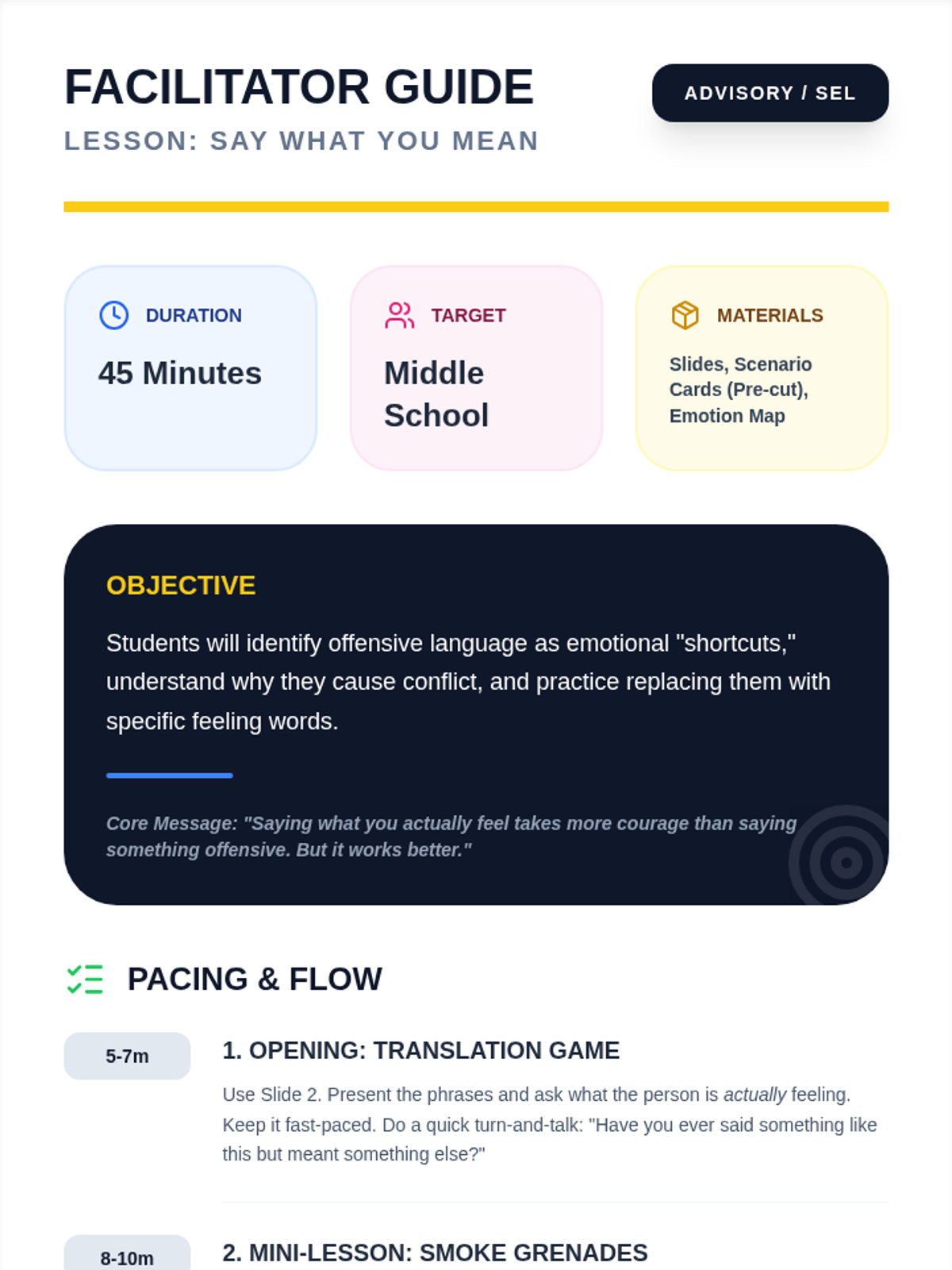
A detailed facilitation guide for educators, providing pacing, instructional talk tracks, and a step-by-step walkthrough for the 'Say What You Mean' lesson. Updated to reflect the 'Static on a Speaker' metaphor, the reordered slide deck, and specific roleplay instructional phrasing.
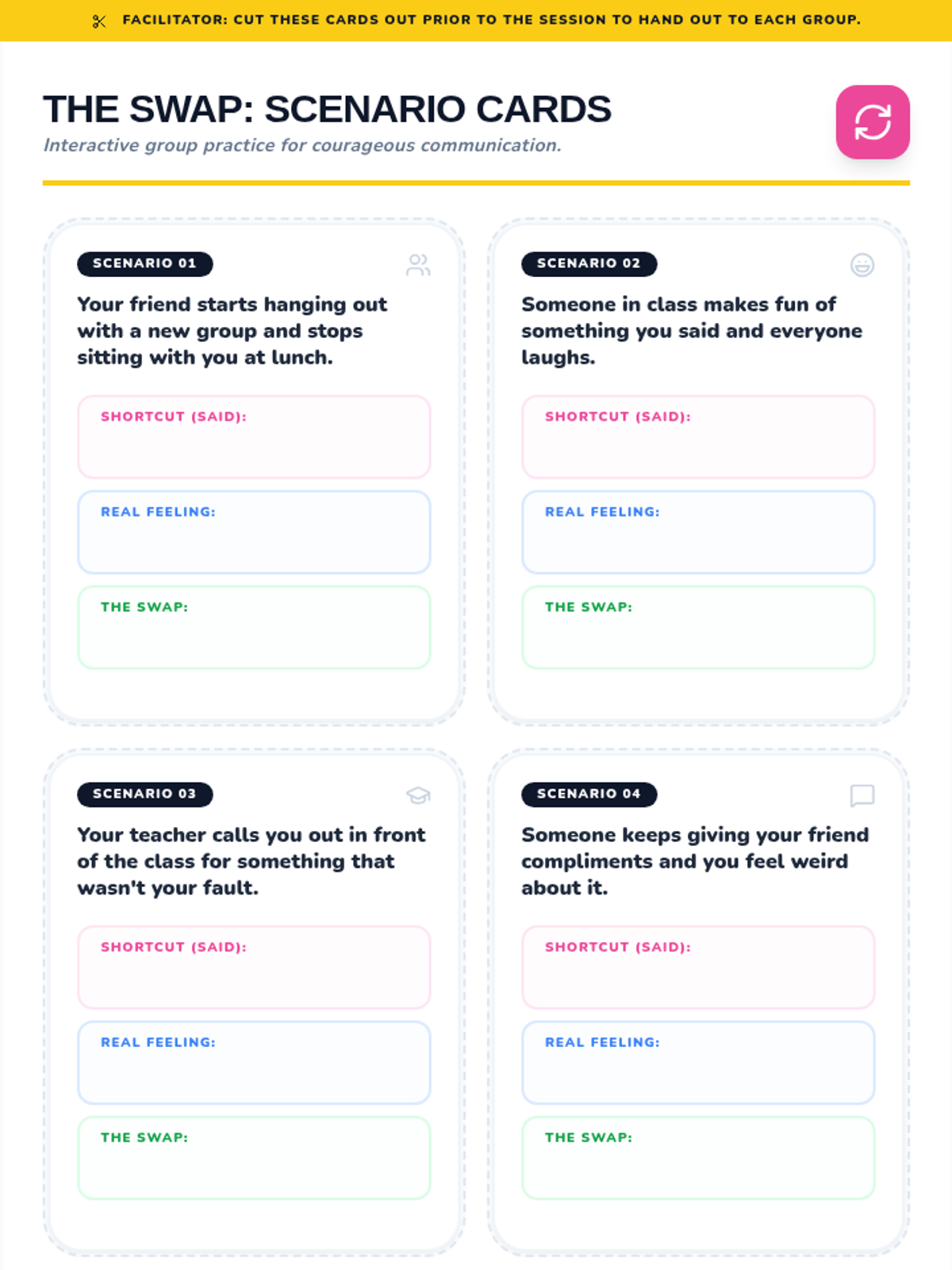
A set of 6 printable Scenario Cards containing only the situation text for roleplay and discussion. Designed to be used with the 3-step practice guide in the lesson slides. High-impact design with large text for easy reading.
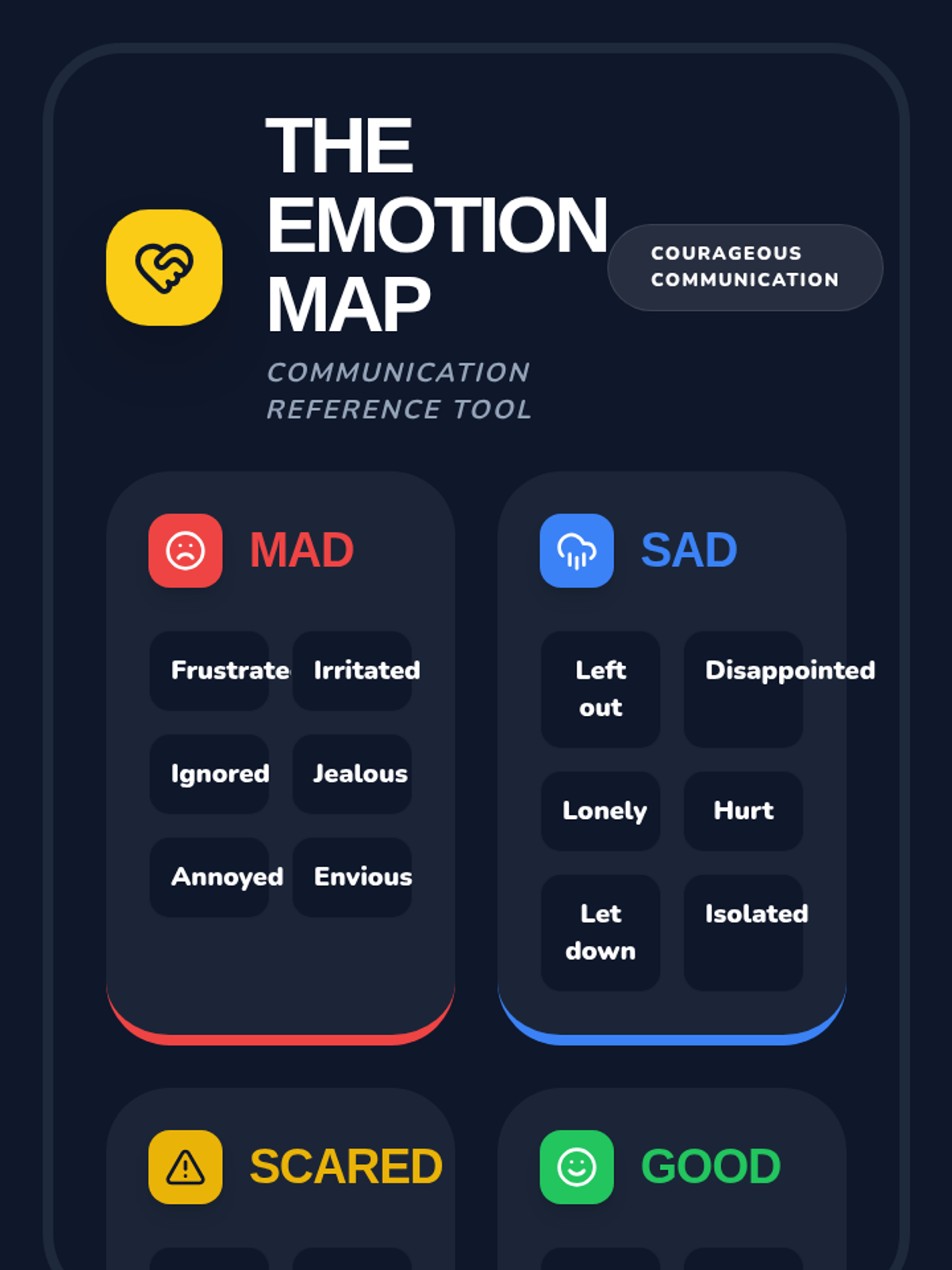
A bold and energetic printable feelings wheel designed for middle school students, featuring a layered approach to expanding emotional vocabulary across four primary zones: Mad, Sad, Scared, and Good. Simplified with a light background and a high-contrast white center hub for print-friendliness. Corrected for center-out logical flow and improved readability.
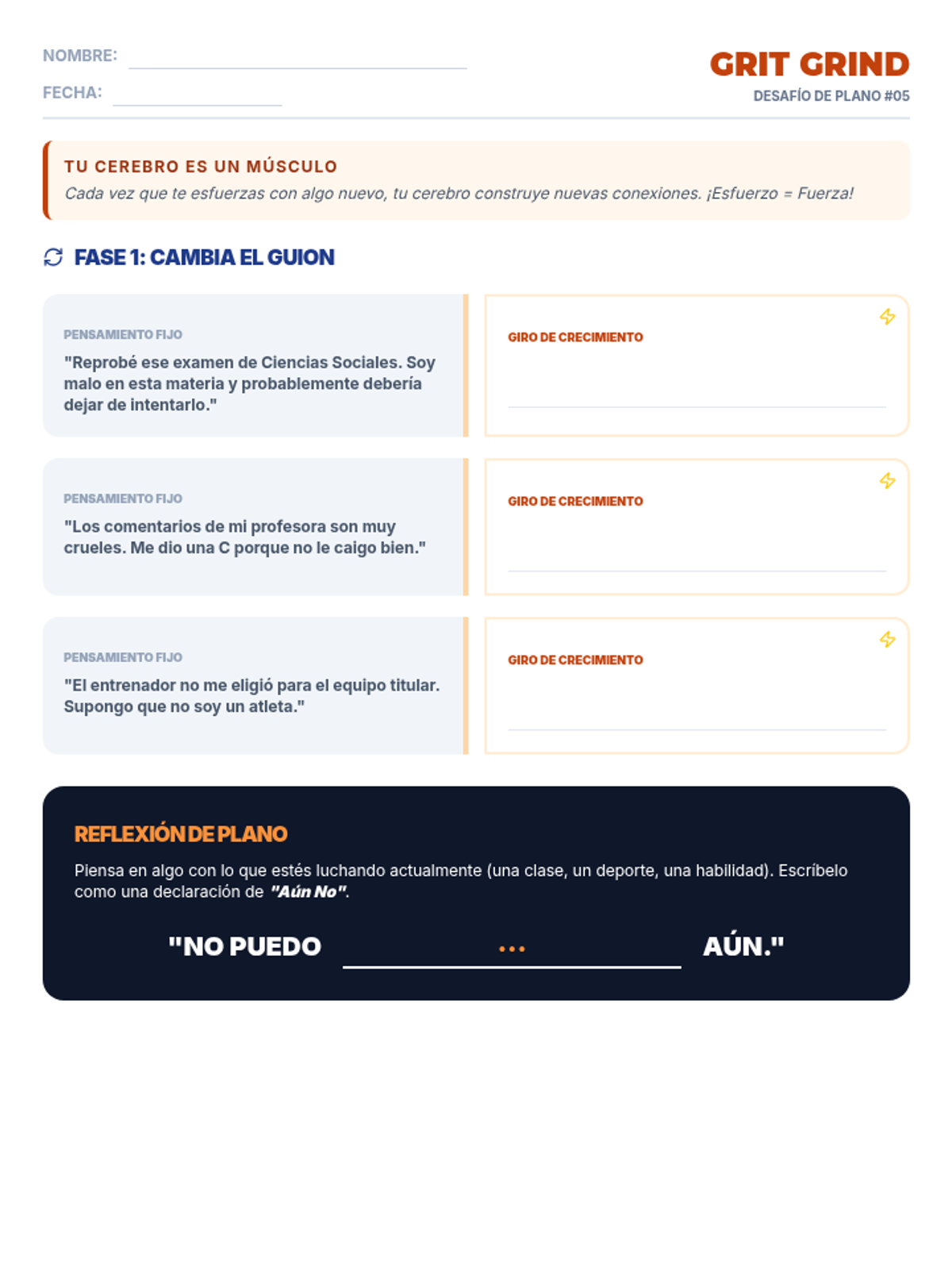
Spanish version of the Grit Grind Mindset Worksheet for Lesson 5. Features a 'Flip the Script' exercise where students convert fixed-mindset thoughts into growth-mindset plans, and concludes with a personal 'Not Yet' reflection.
An expanded 15-slide presentation for a 90-minute telemental health session, incorporating all Conflict Clash scenarios, emotion identification, Pulse Tracker logging, and social stories for 8th graders.
Spanish version of the Voice Power Presentation Slides for Lesson 6. Focuses on the importance of self-advocacy and provides a professional 'Success Script' for students to use when emailing or talking to teachers about academic help in Spanish.
Spanish version of the Grit Grind Presentation Slides for Lesson 5. Explores the differences between Fixed and Growth mindsets, emphasizes 'The Power of Yet,' and introduces the Script Flip challenge in Spanish.
Spanish version of the Brain Boosters Presentation Slides for Lesson 4. Explains the 'Forgetting Curve' and introduces memory anchoring techniques in Spanish.
Spanish version of the Learning Layers Presentation Slides for Lesson 3. Introduces the concept of dual coding and visual note-taking (doodle notes) in Spanish.
Spanish version of the Time Masters Presentation Slides for Lesson 2. Explains the 'Rocks, Pebbles, and Sand' prioritization method using the success jar metaphor in Spanish.
Spanish version of the Goal Getters Presentation Slides for Lesson 1. Introduces the concept of SMART goals and explains the SMART formula in Spanish. Includes the sorting challenge game instructions.
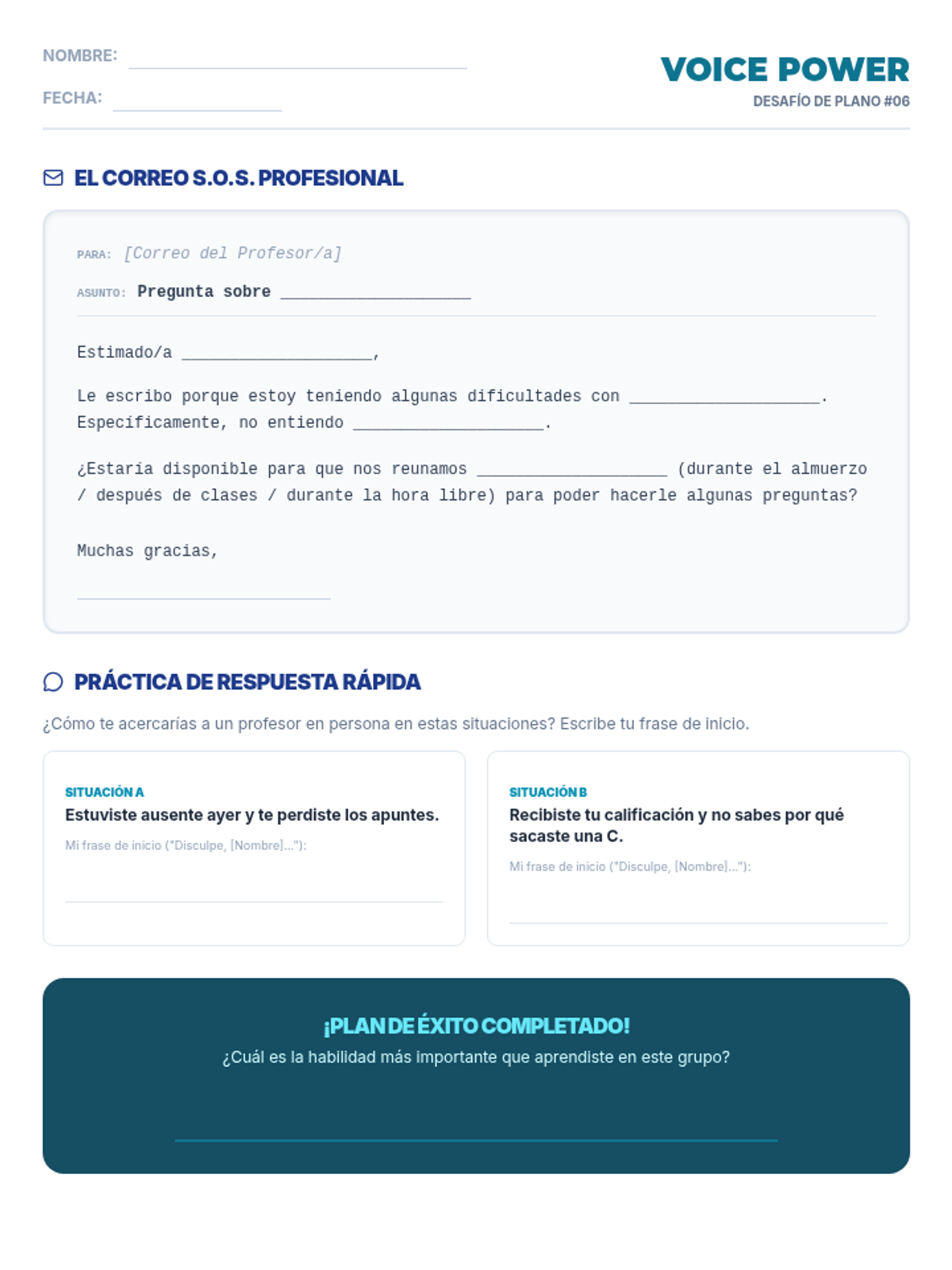
Spanish version of the Voice Power Advocacy Worksheet for Lesson 6. Includes a template for writing a professional email to a teacher and practice scenarios for approaching teachers in person to advocate for academic needs in Spanish.
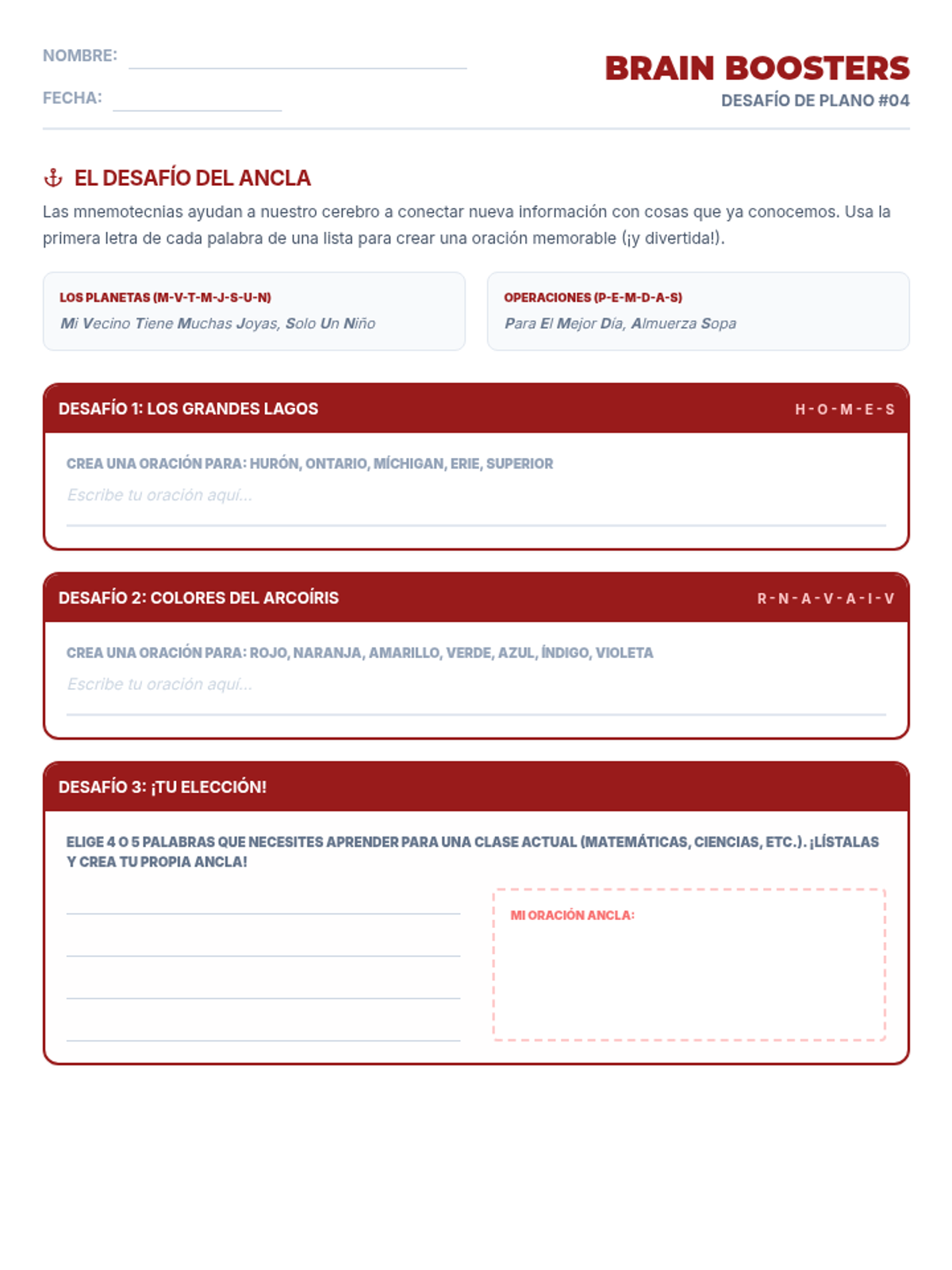
Spanish version of the Brain Boosters Memory Worksheet for Lesson 4. Guides students through creating their own mnemonic sentences for common academic lists (Great Lakes, Rainbow Colors) and encourages them to apply the technique to their own current coursework in Spanish.
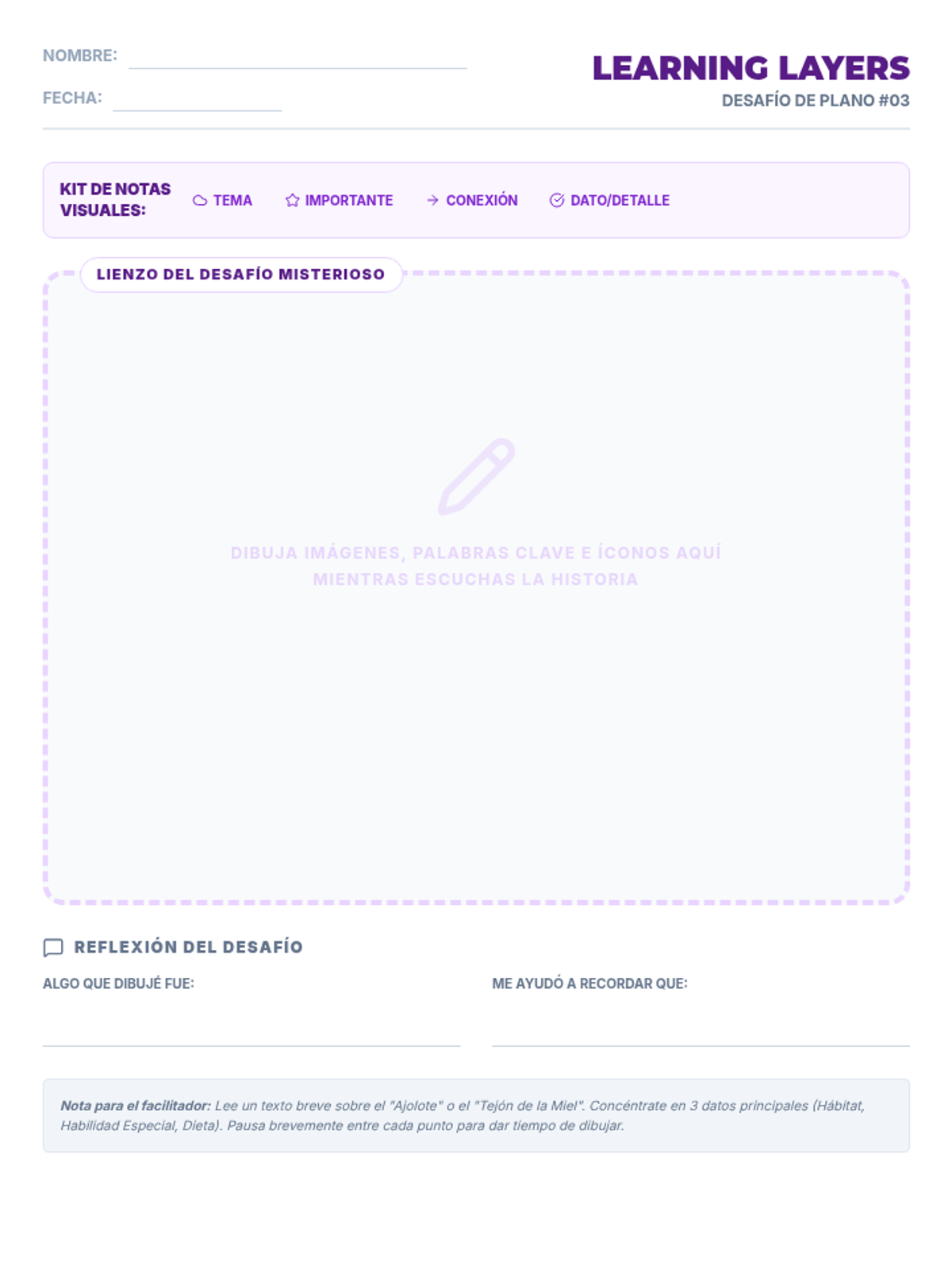
Spanish version of the Learning Layers Visual Note Worksheet for Lesson 3. Provides a canvas for students to practice visual note-taking (doodle notes) and a reflection area in Spanish.
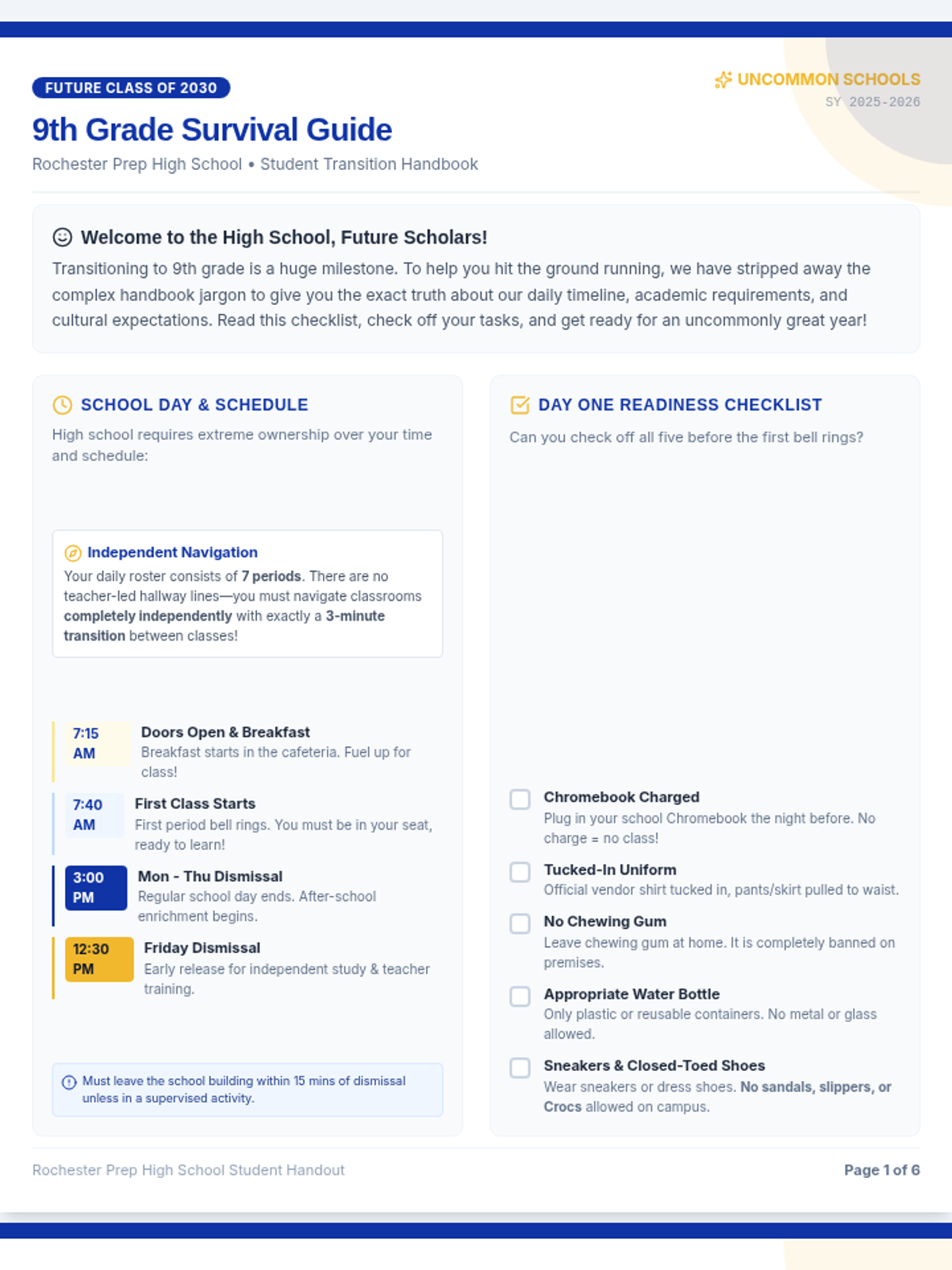
A student-friendly, twelve-slide transition presentation designed for rising 9th graders, de-jargonizing the handbook expectations around academic promotion, cell phones, Chromebooks, hours, and locker search rules, including independent navigation, Google Classroom submissions, and a student-friendly GPA guide.