Mindful breathing and body scan meditation techniques integrated with daily self-care routines. Develops strategies for balancing life demands and advocating for personal wellness needs.
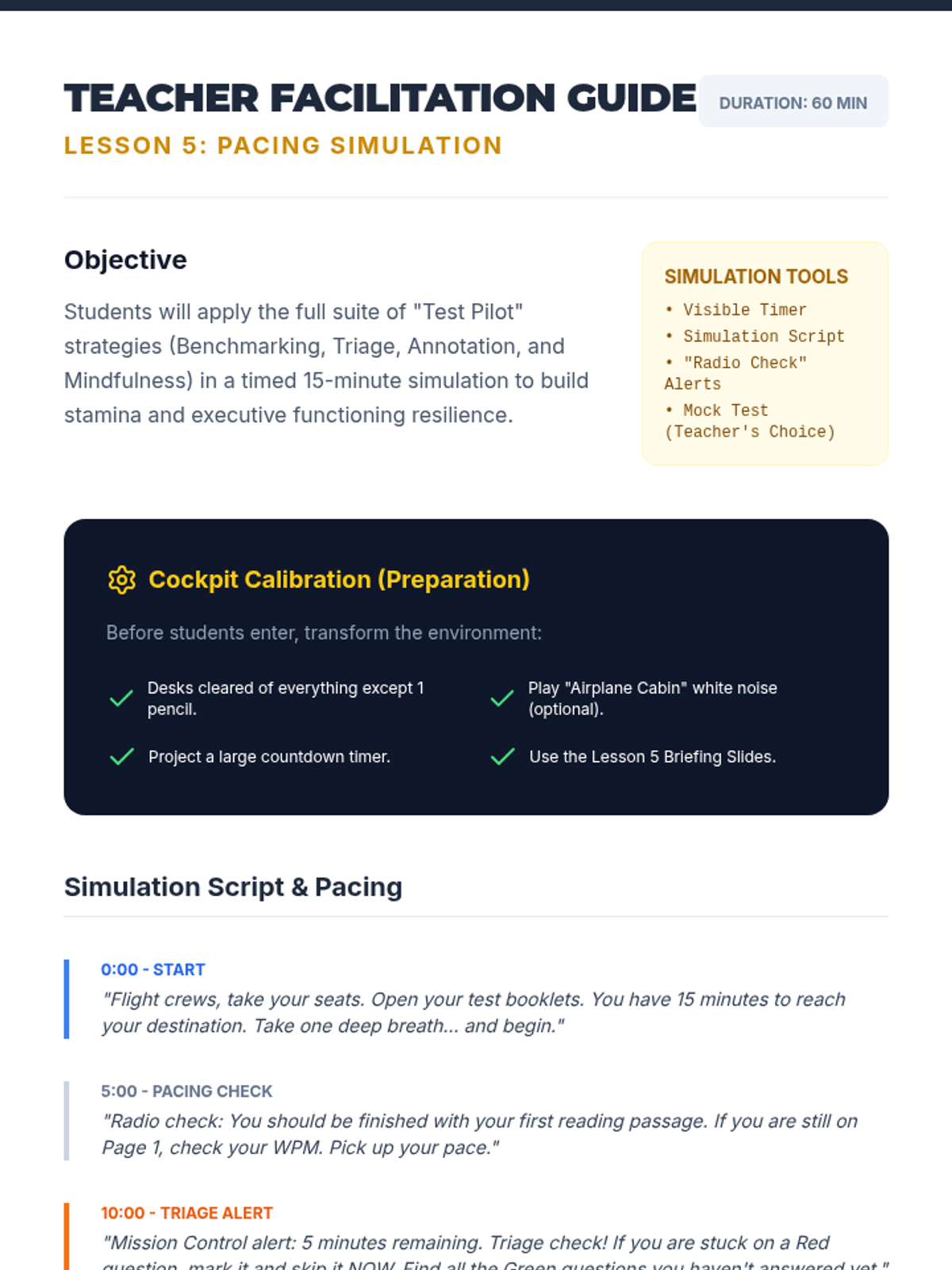
A teacher guide for Lesson 5 including the simulation script, timing intervals, and a guide for the post-simulation debrief and student certification.
A student reflection sheet and goal-setting document for the final pacing simulation, helping students create a personalized 'Test Protocol' for future exams.
Slides for Lesson 5, the final simulation briefing, reviewing all Test Pilot Academy strategies and providing time-check benchmarks for the mock exam.
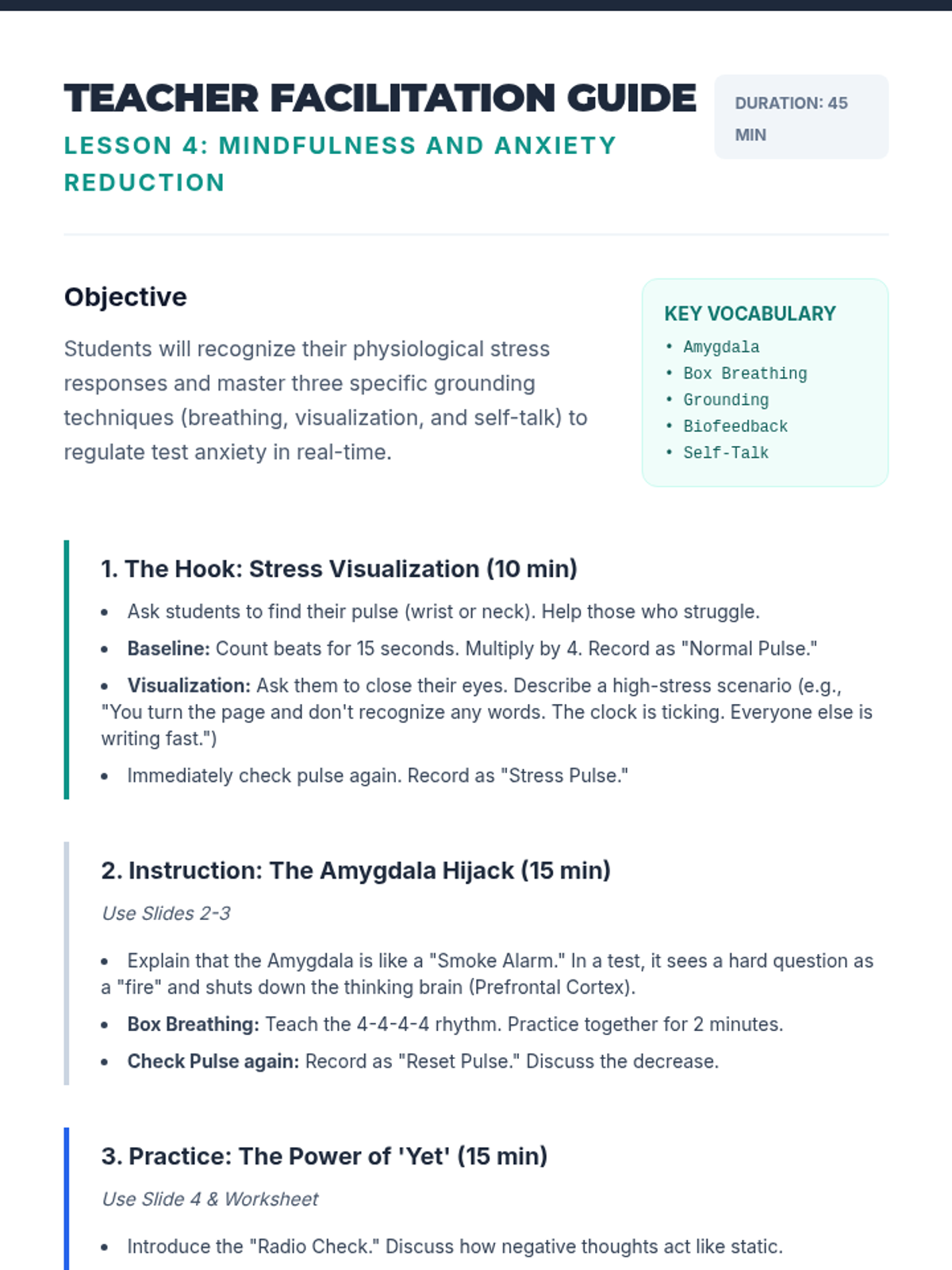
A teacher guide for Lesson 4 including instructions for the biofeedback pulse check, grounding exercise facilitation, and strategies for student buy-in using the Test Pilot theme.
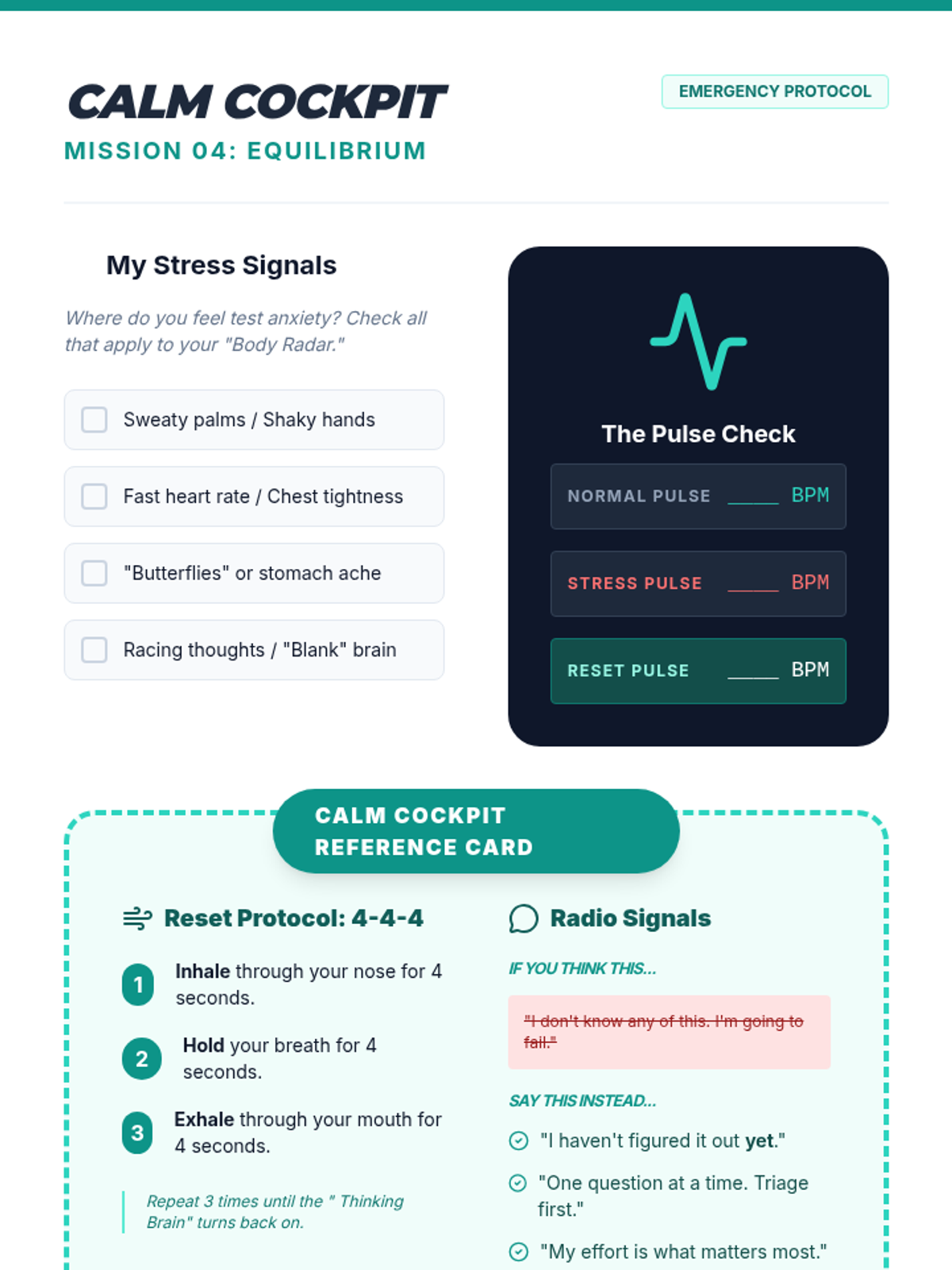
A student resource featuring an anxiety-mapping activity and a cutout 'Calm Cockpit' reference card with grounding techniques and positive self-talk prompts.
Slides for Lesson 4 teaching mindfulness and anxiety reduction techniques for testing, focusing on the physiology of stress and grounding exercises.
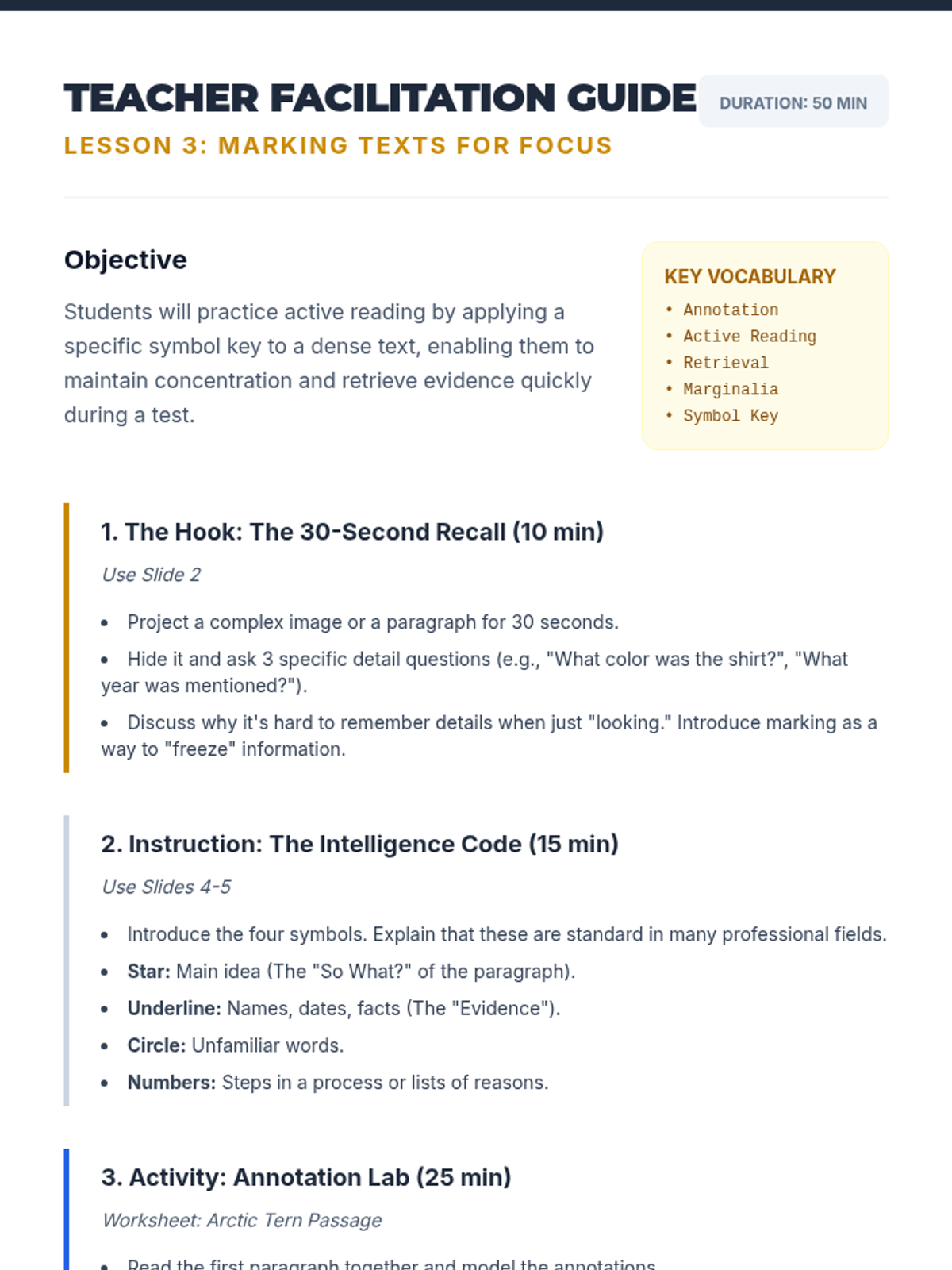
A teacher guide for Lesson 3 including instructions for the recall challenge, a model of the annotated passage, and an answer key for retrieval questions.
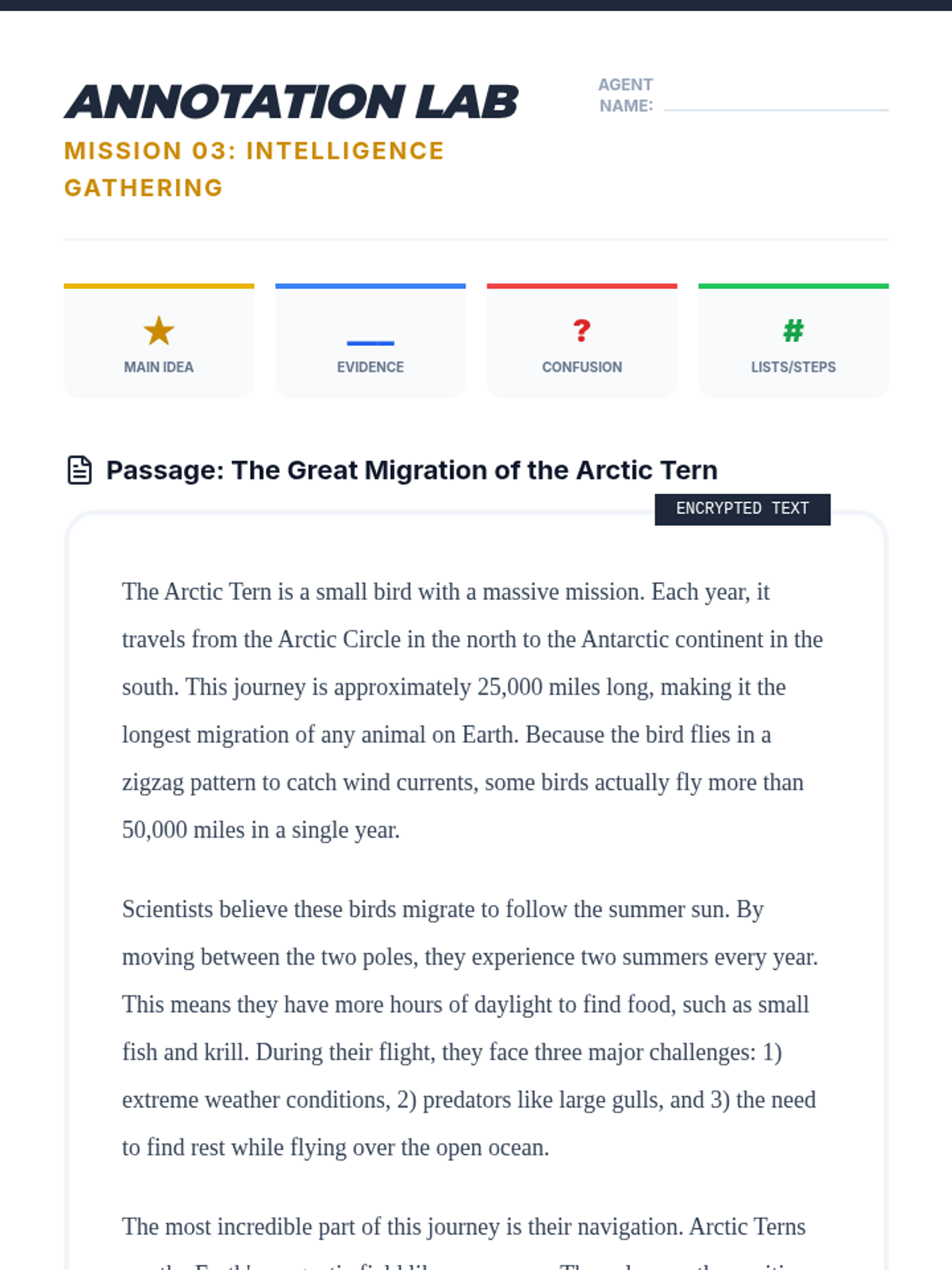
A student worksheet for practicing text annotation using a specific symbol key, featuring a dense passage about Arctic Tern migration and retrieval questions.
Slides for Lesson 3 teaching active reading strategies through the 'Intelligence Gathering' theme, focusing on a specific annotation symbol key for testing.
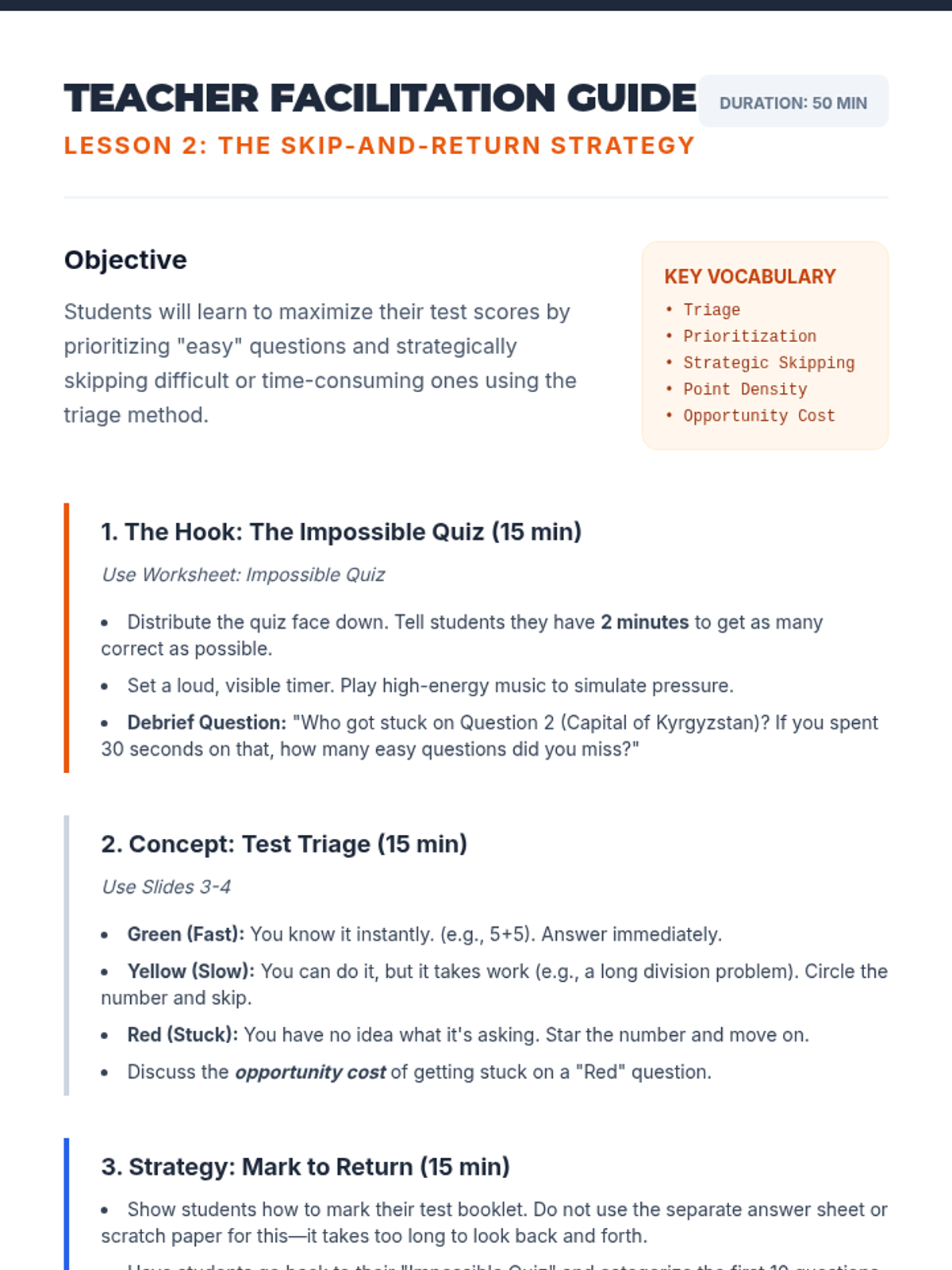
A teacher guide for Lesson 2 focusing on the triage method, managing the 'Impossible Quiz' activity, and addressing common student psychological barriers to skipping questions.
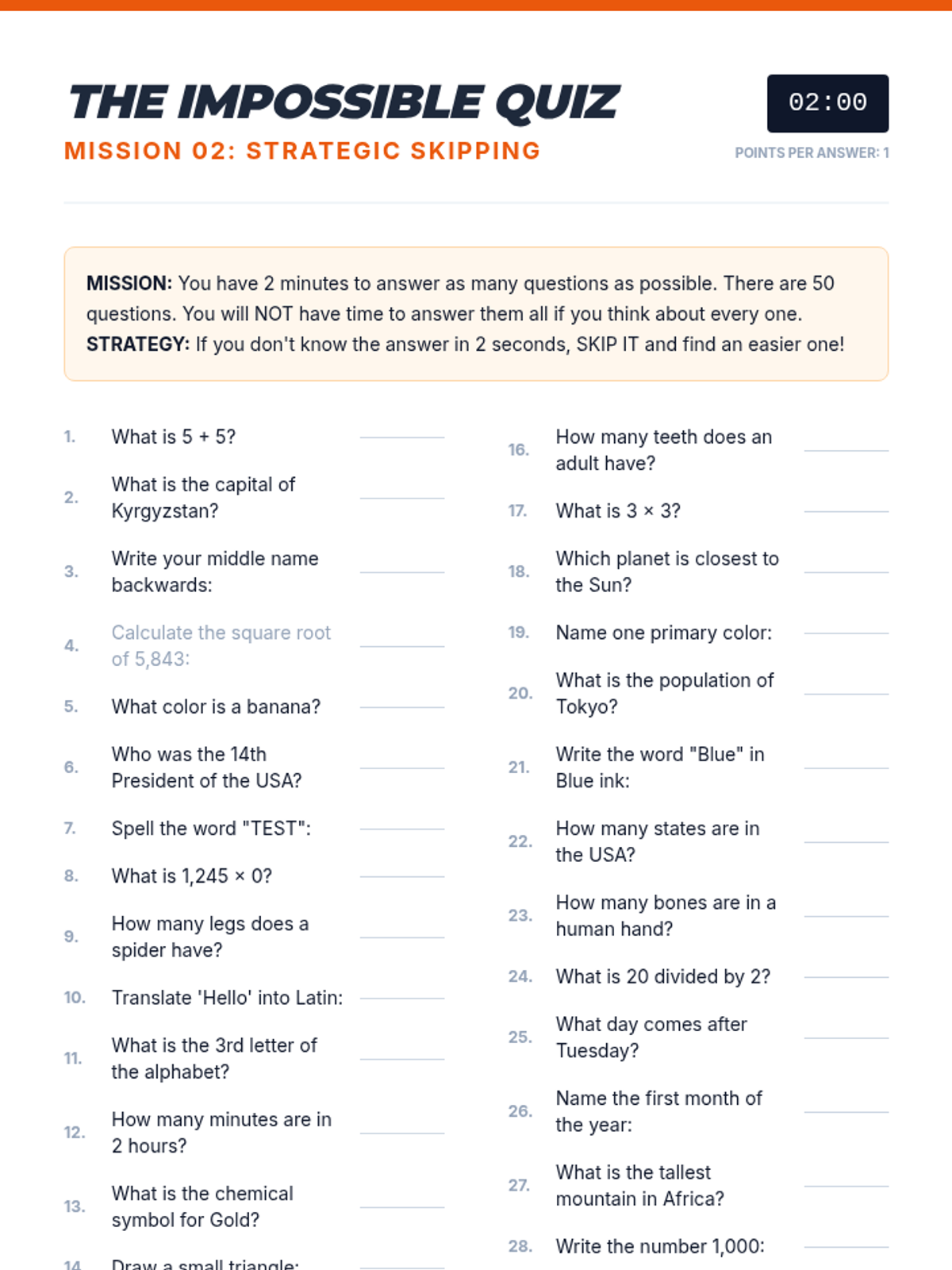
An activity sheet featuring the 'Impossible Quiz' challenge, designed to force students to use skipping and prioritization strategies under a tight time limit.
Slides for Lesson 2 teaching the 'triage' method of test-taking, categorizing questions into Fast, Slow, and Stuck to maximize points within time limits.
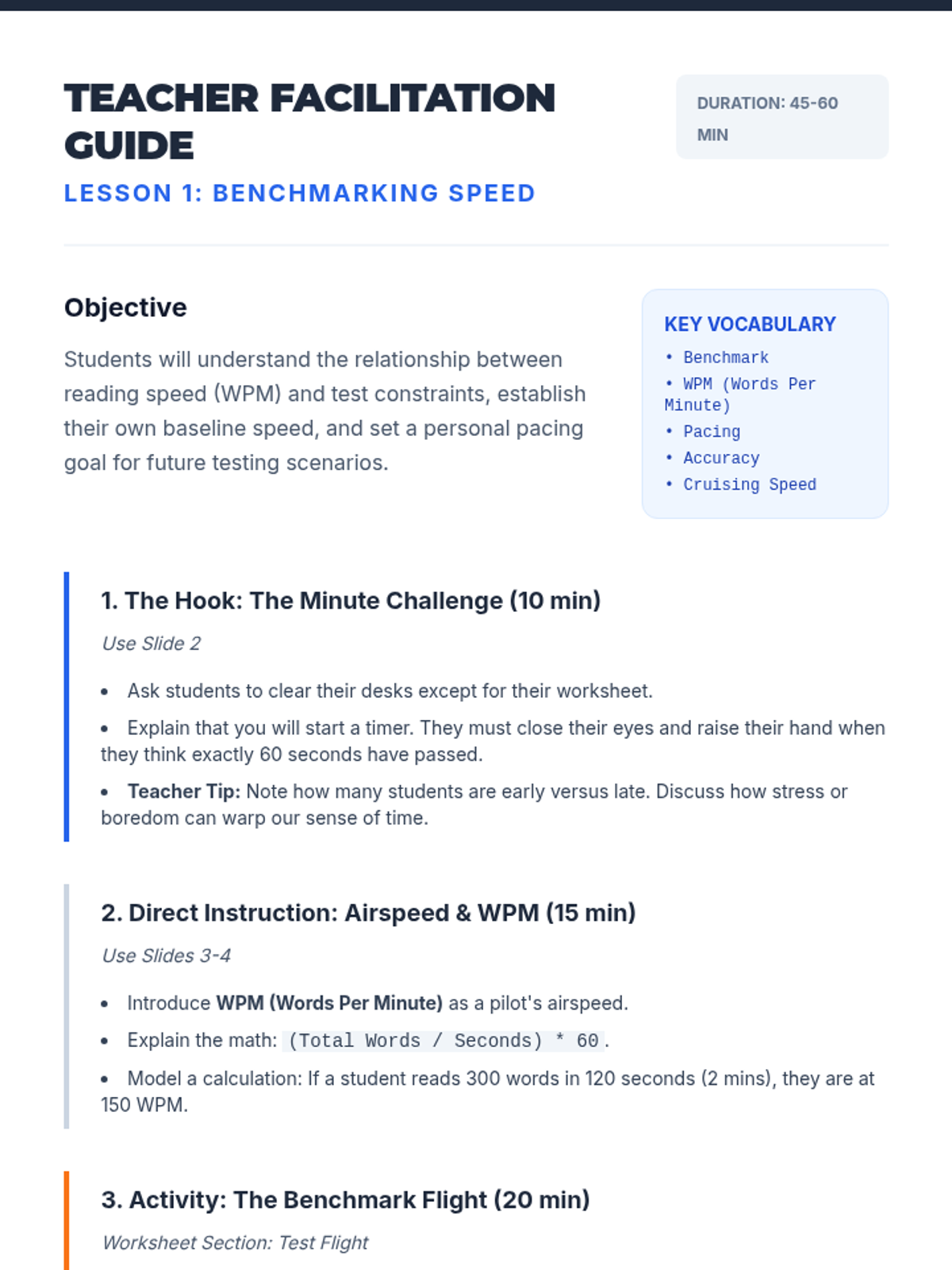
A comprehensive teacher guide for Lesson 1, including objective, procedural steps for the stopwatch challenge, WPM calculation modeling, answer key, and differentiation strategies.
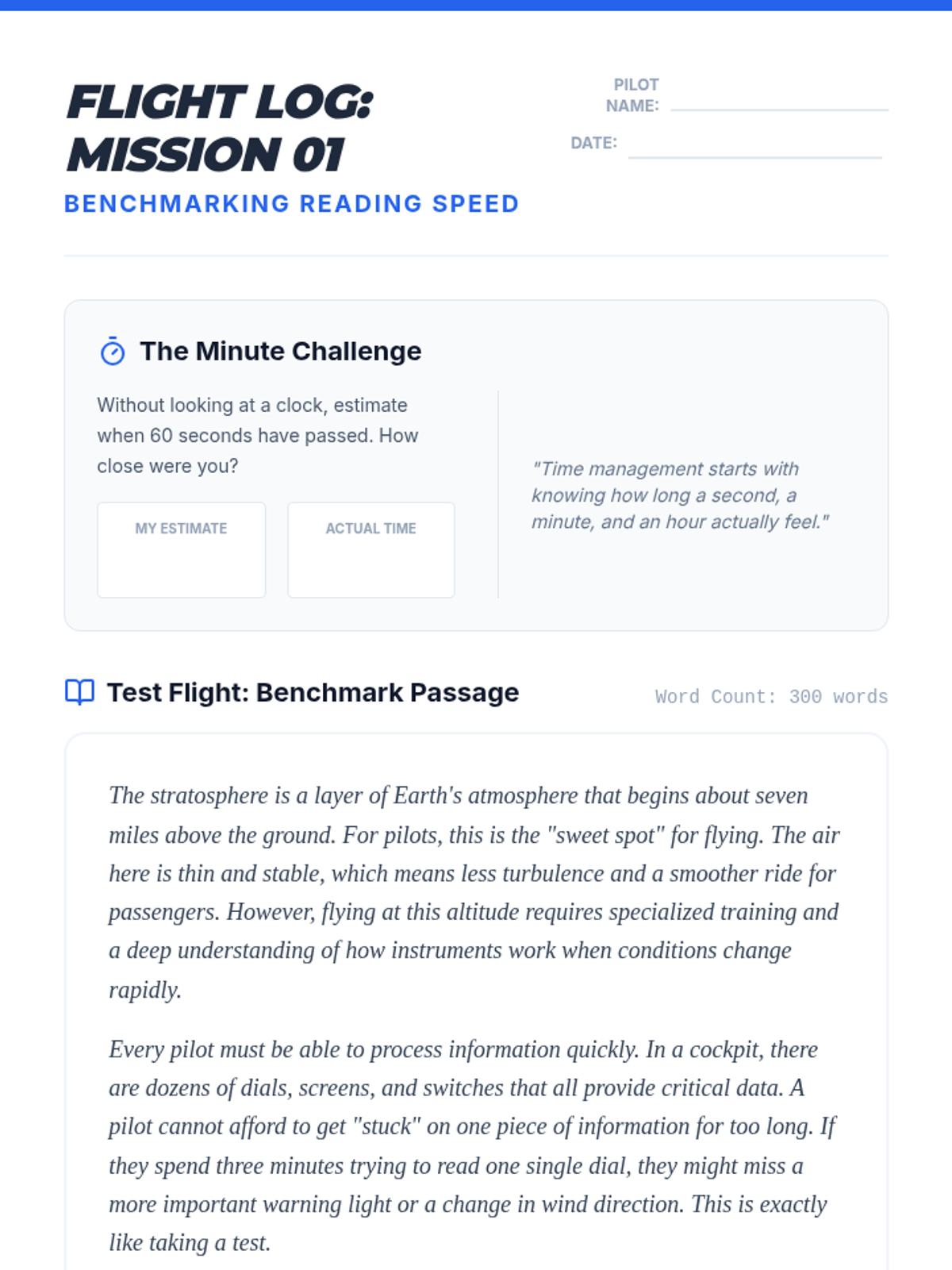
A student worksheet for establishing a reading speed baseline, featuring a themed 'Flight Log' layout, a reading passage, WPM calculation tools, and comprehension questions.
Introductory slides for the Test Pilot Academy sequence, establishing the theme and teaching students how to calculate and analyze their reading speed (WPM) for standardized tests.
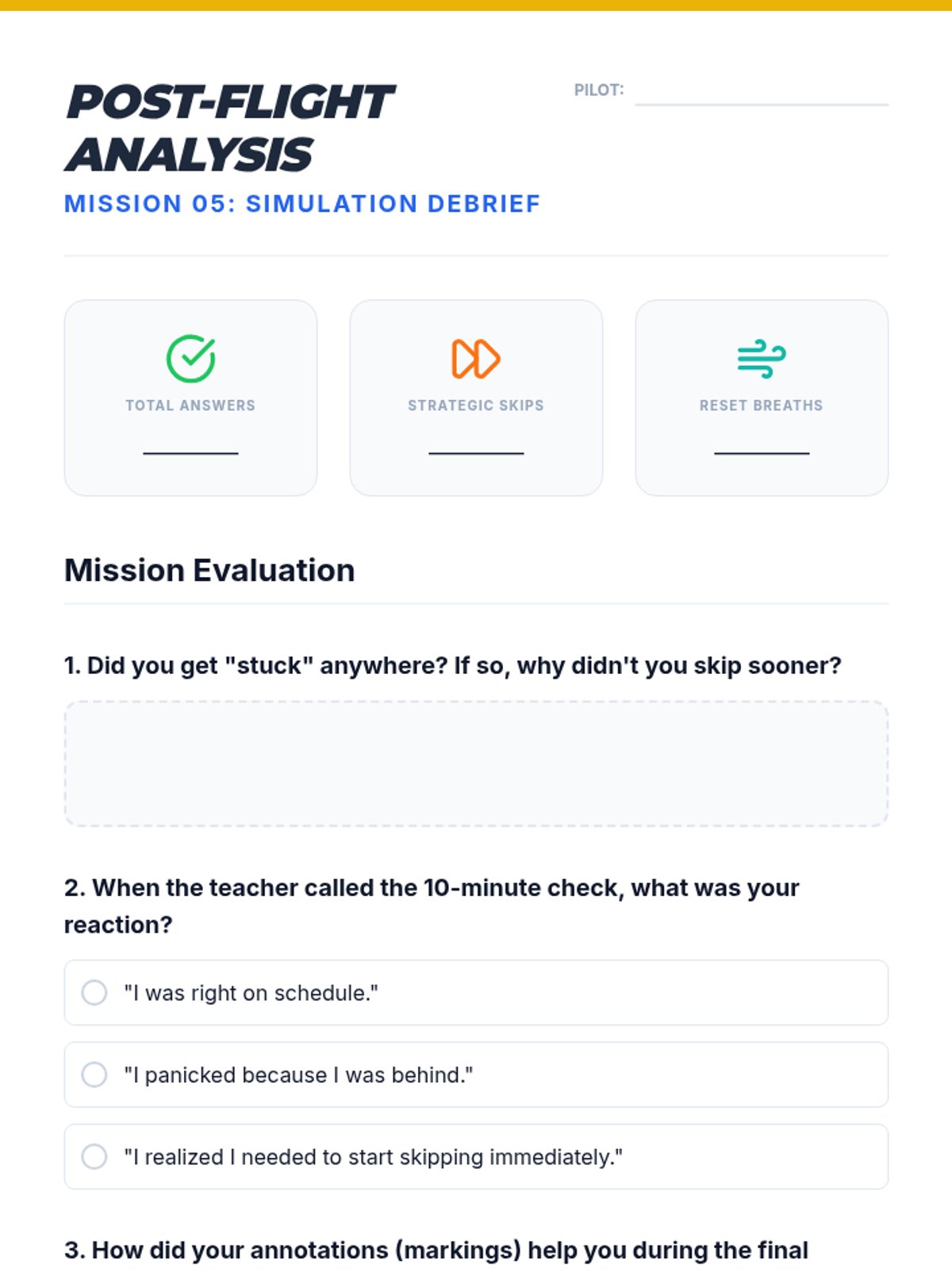
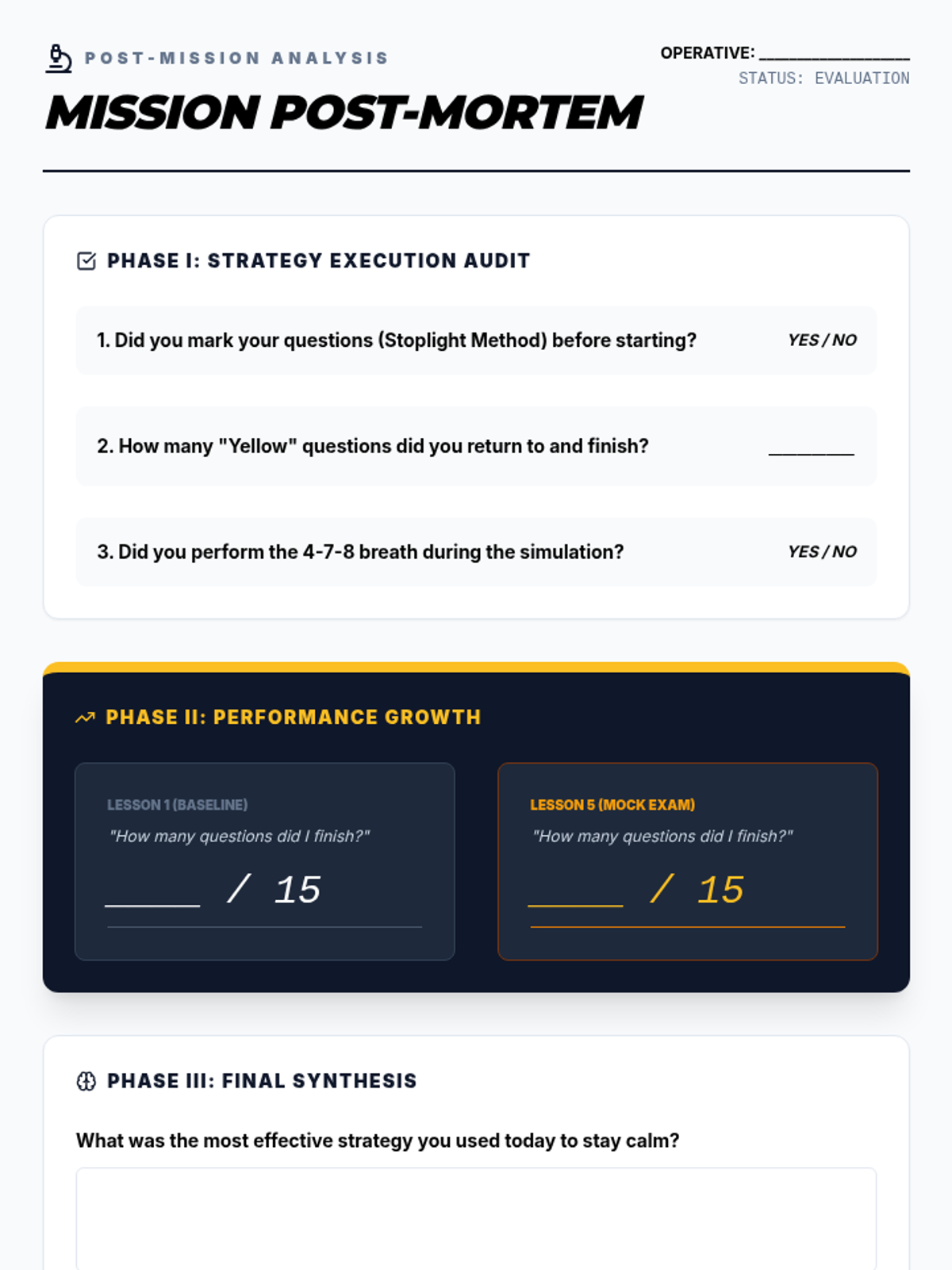
The post-mission analysis worksheet where students reflect on their mock exam performance, compare their results to their baseline, and synthesize their learnings.
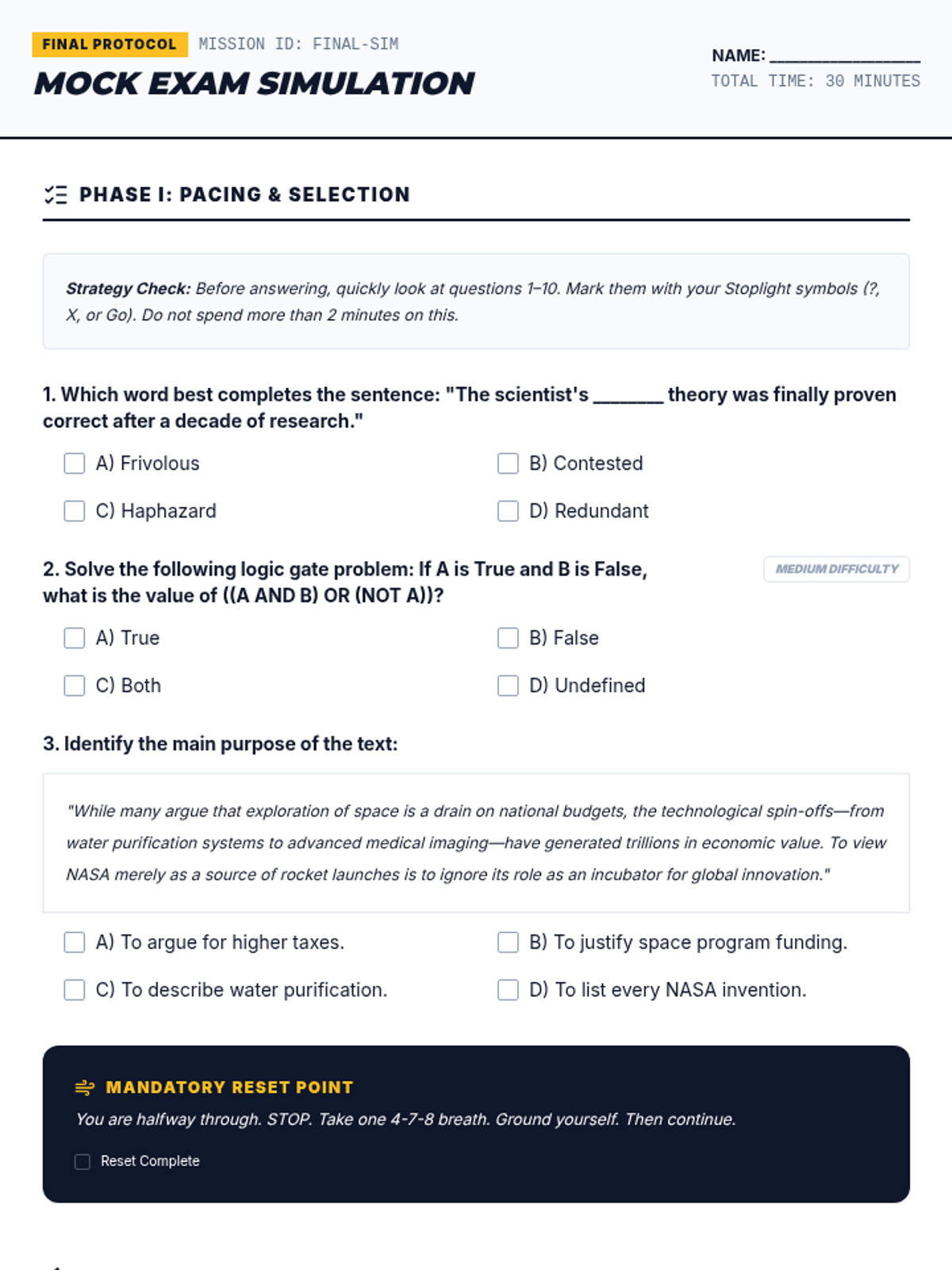
The final mock exam simulation for Lesson 5, integrating triage, stress management, and elimination strategies into a timed session.
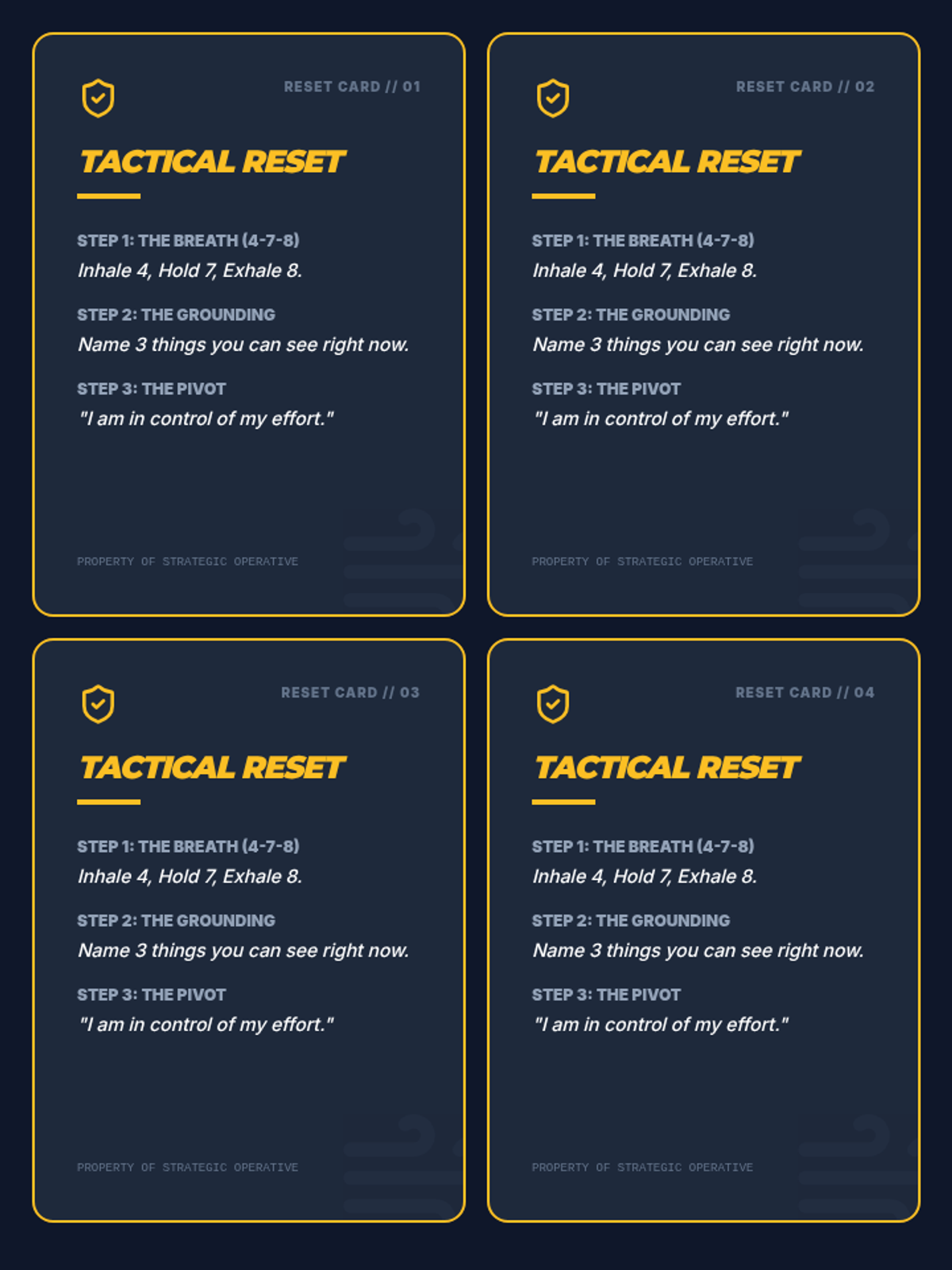
Printable tactical reset cards for students to keep on their desks during exams, providing quick reminders of breathing and grounding techniques.
Lesson 4 slides on managing physical and mental test stress, featuring the 4-7-8 tactical breathing technique and positive self-talk strategies.
A slide deck for the 'Opportunity Cost Simulation' lesson, explaining the core economic concept of opportunity cost using relatable 8th-grade scenarios and RPG-style choice mechanics.
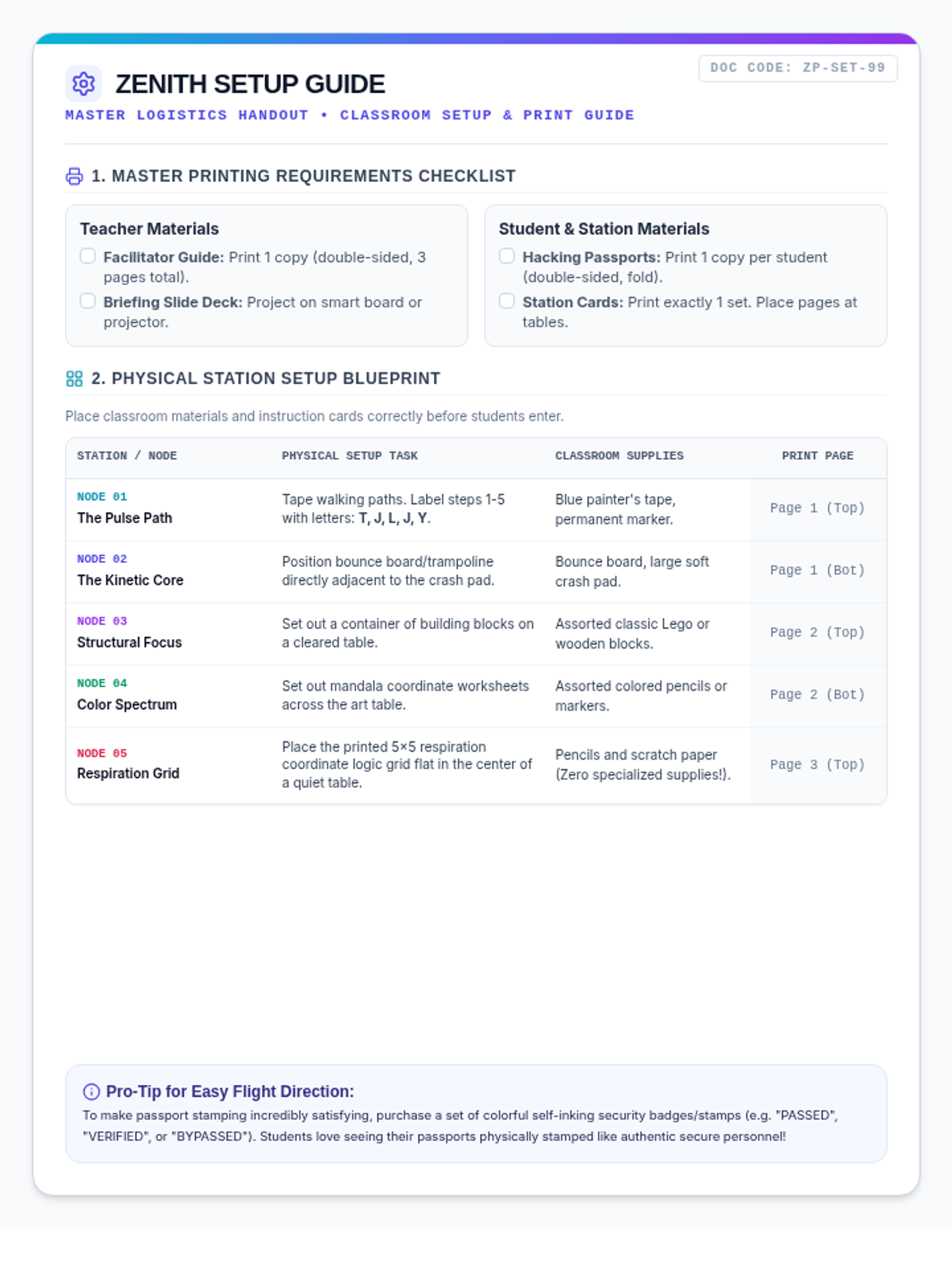
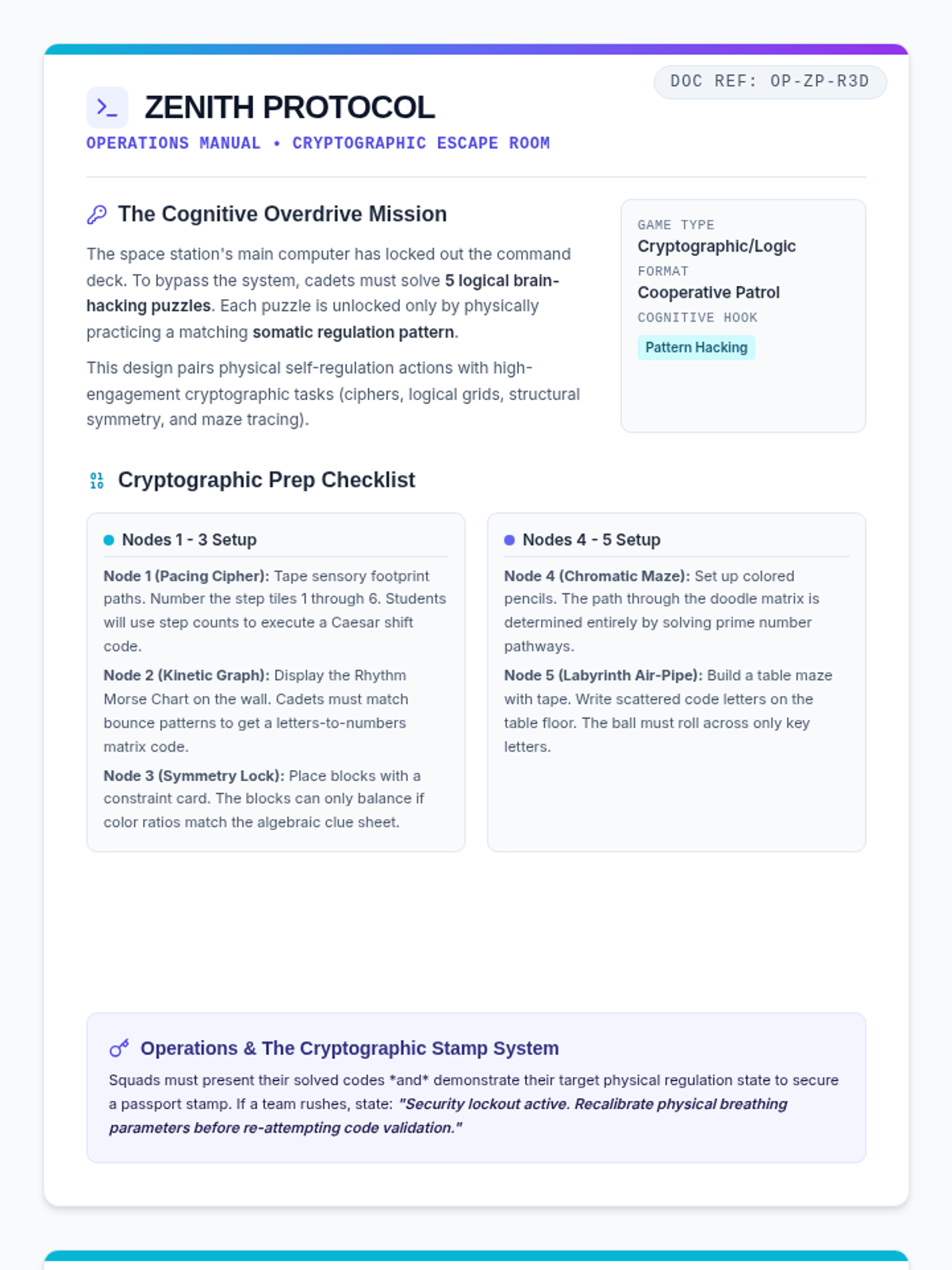
A high-impact logistics setup guide for teachers. Outlines exact printable requirements, supply lists, and spatial setup blueprints for the 5-node self-regulation escape room.
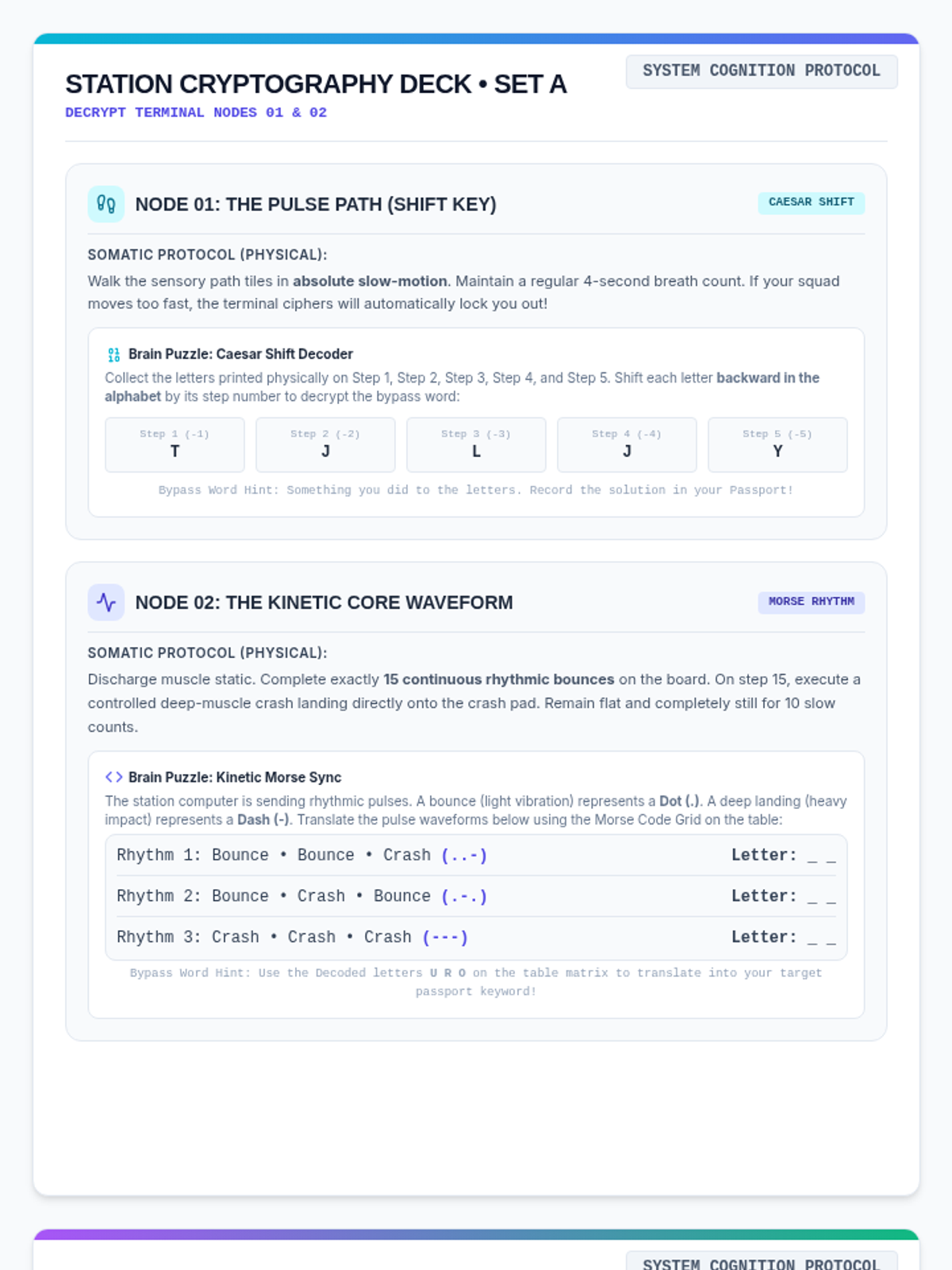
Highly visual station instruction cards for each of the 5 physical escape room activities (Sensory, Kinetic, Focus, Art, and Breath). Placed physically at stations to direct students through the activities and puzzles.
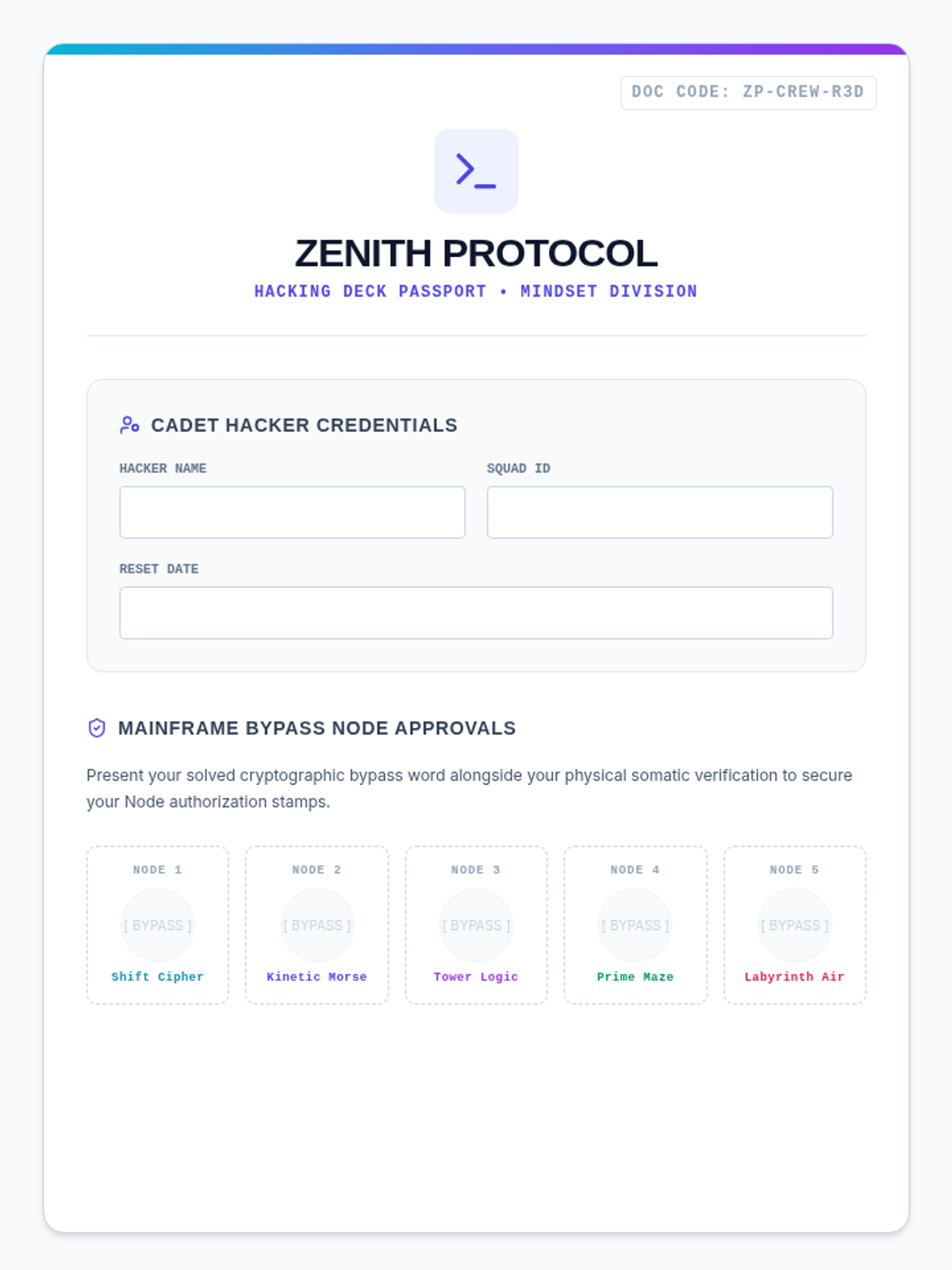
A student-facing tracking booklet designed like a crew security passport. Includes credential fields, a five-node stamping grid, interactive self-regulation rating scales, and terminal verification code inputs.
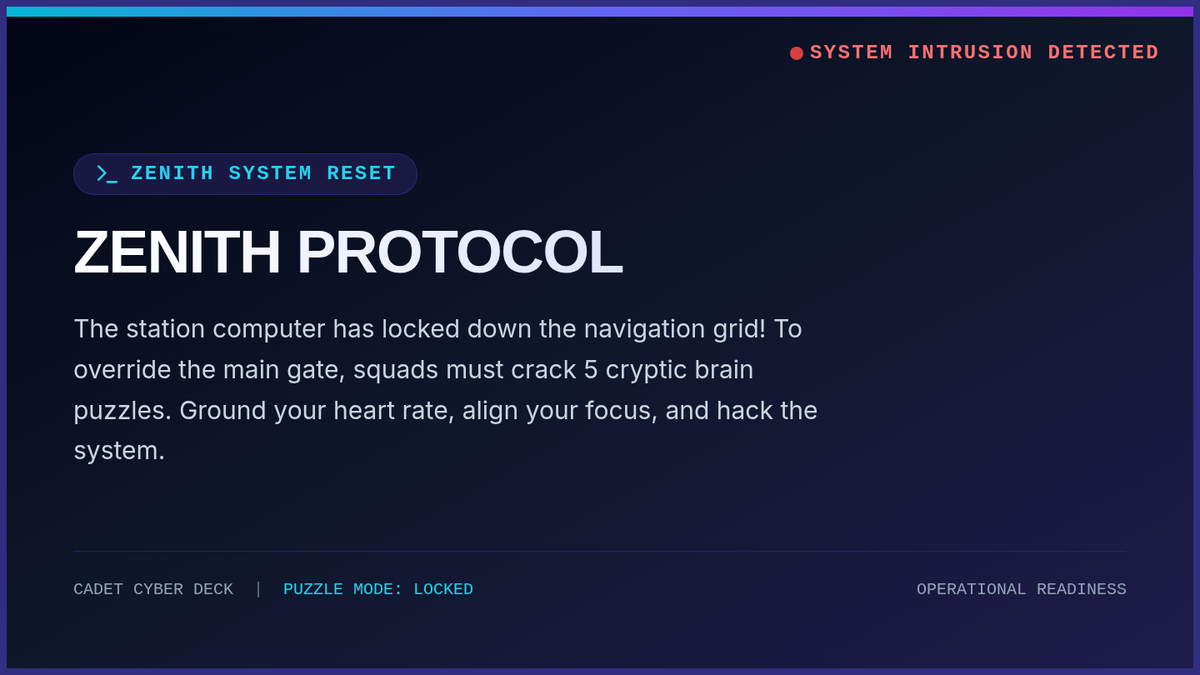
Interactive slide deck to guide middle schoolers through the Zenith Protocol escape room story, rules, and coping station objectives. Includes retro-cyber theme, explicit font sizes, and sleek design.
A teacher-facing facilitator operations guide for the Zenith Protocol escape room. Outlines step-by-step physical setup instructions, solution master keys for all five stations, and reflective post-activity debriefing frameworks.
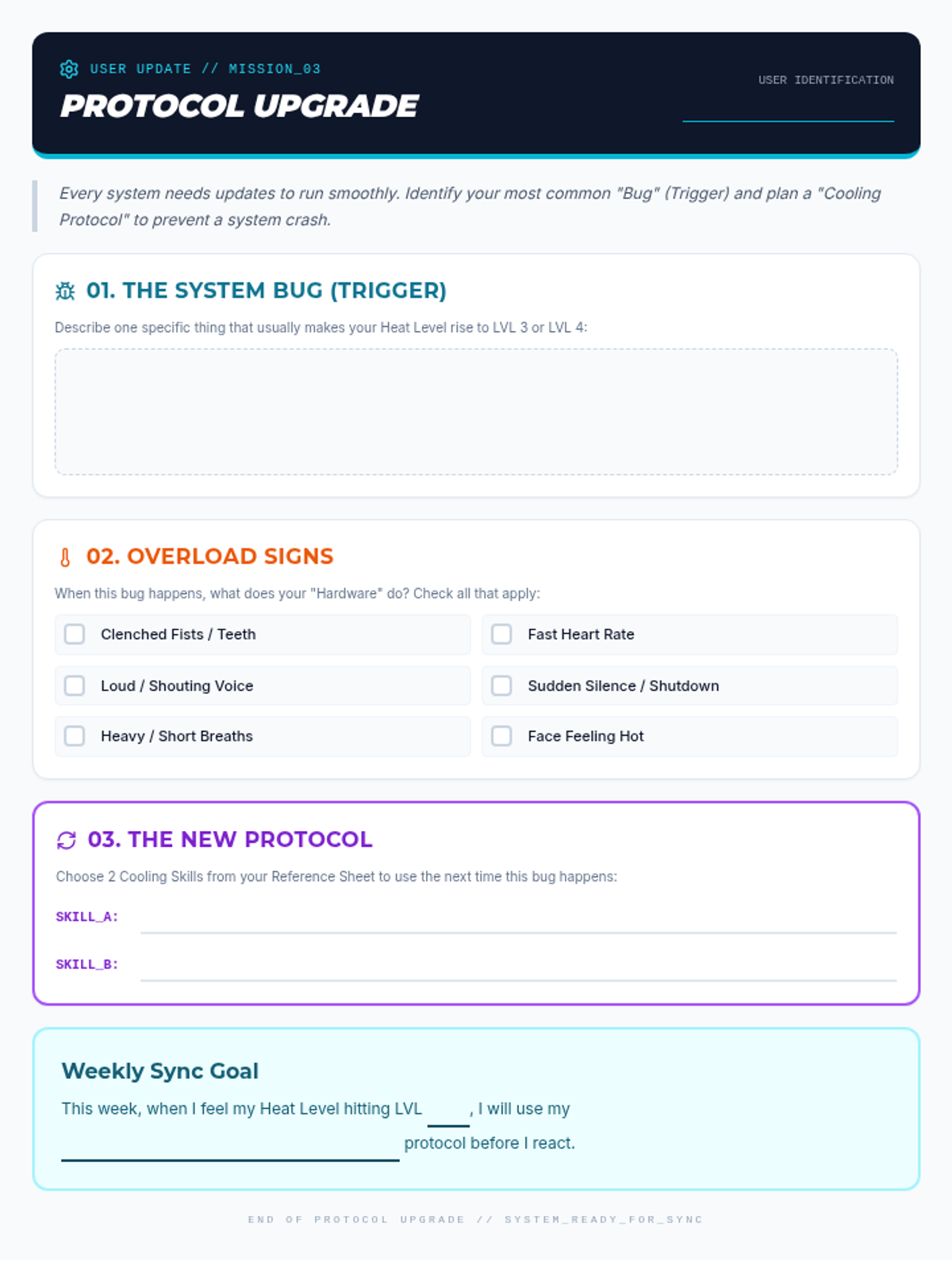
A student goal-setting worksheet where they identify a personal trigger, recognize their physical signs of overload, and commit to using specific "Cooling Protocols" for the upcoming week.
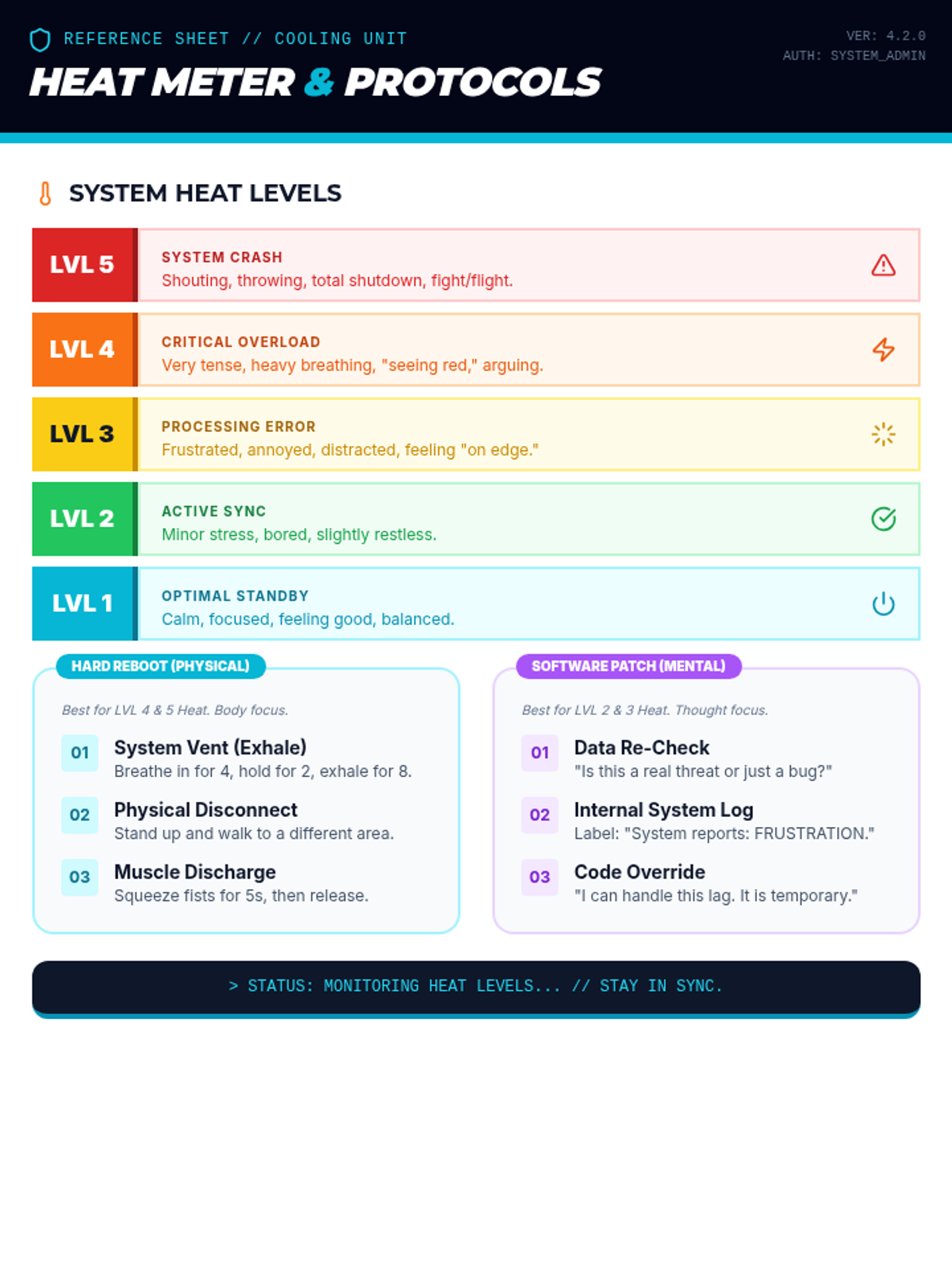
A visual reference guide for students featuring a 1-5 "Heat Meter" (emotion thermometer) and a categorized menu of "Hard Reboot" (physical) and "Software Patch" (mental) coping skills.
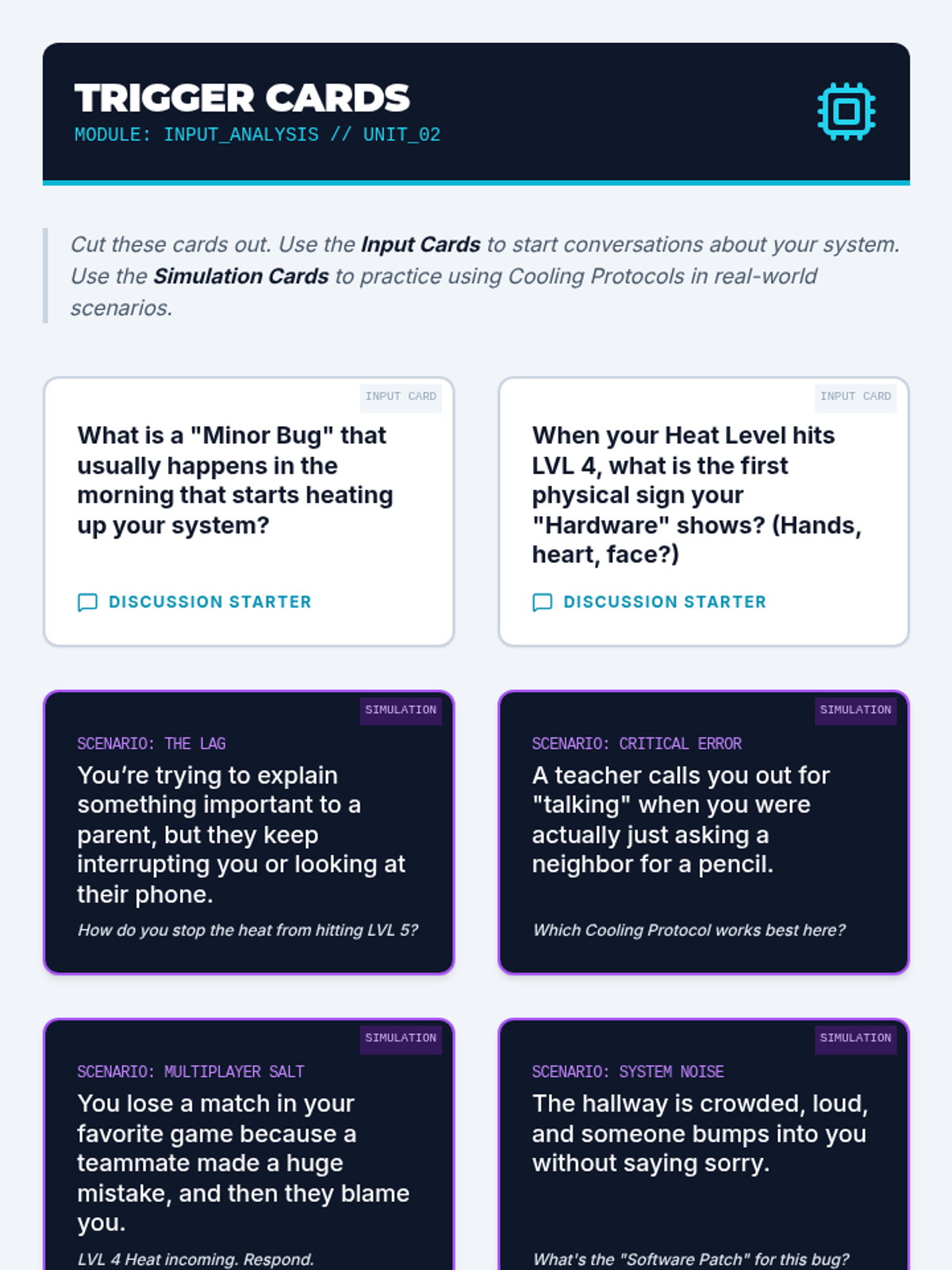
A set of printable conversation and role-play cards. "Input Cards" feature discussion prompts about personal triggers, while "Simulation Cards" provide realistic scenarios for students to practice regulation strategies.
Visual presentation slides for the System Override lesson, introducing the tech-based metaphor for emotion regulation, the Heat Meter (1-5 scale), and coping protocols.
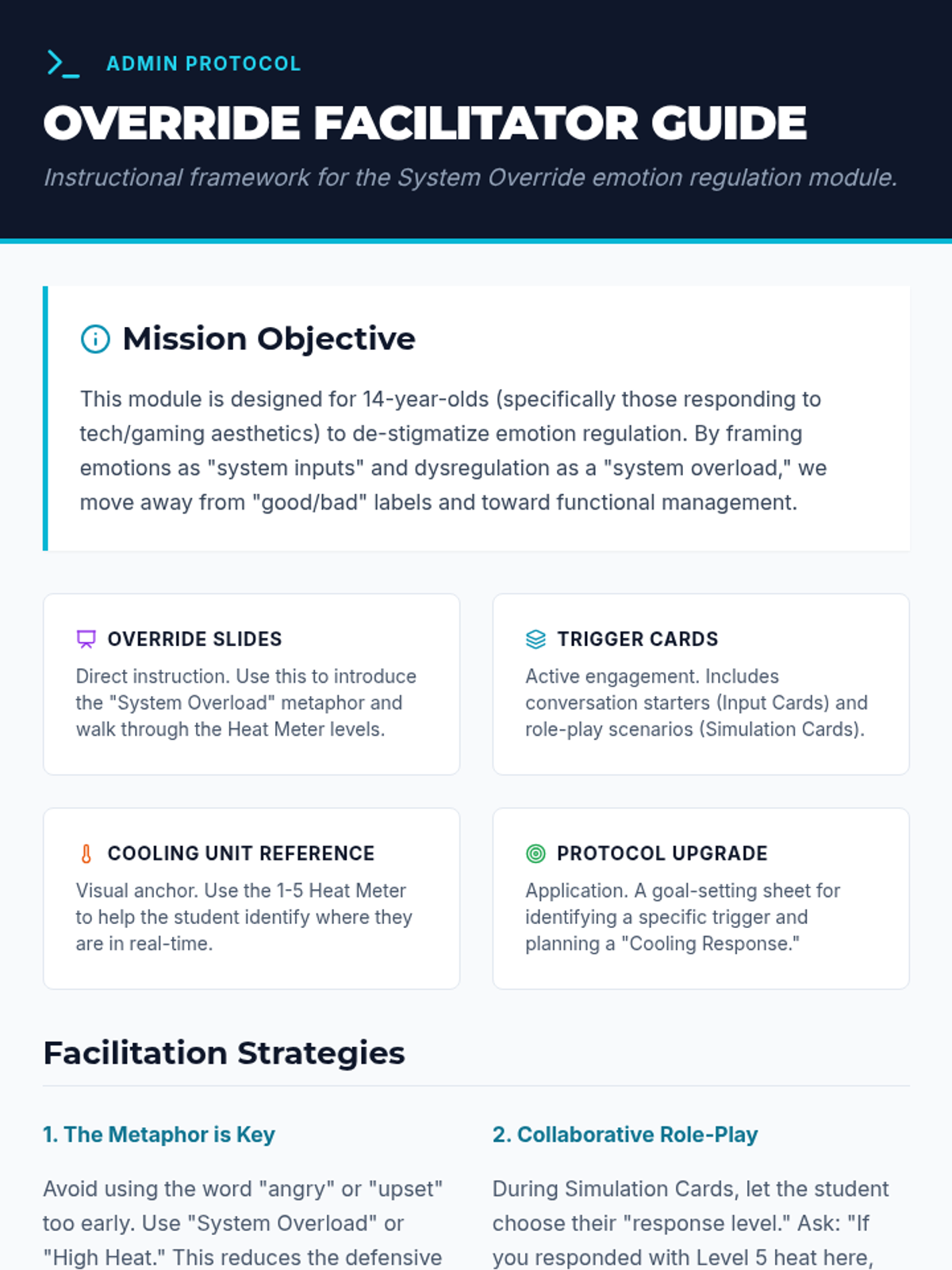
A professional facilitation guide for educators to implement the System Override module, including scripting tips, differentiation strategies, and an overview of the tech-themed metaphor.
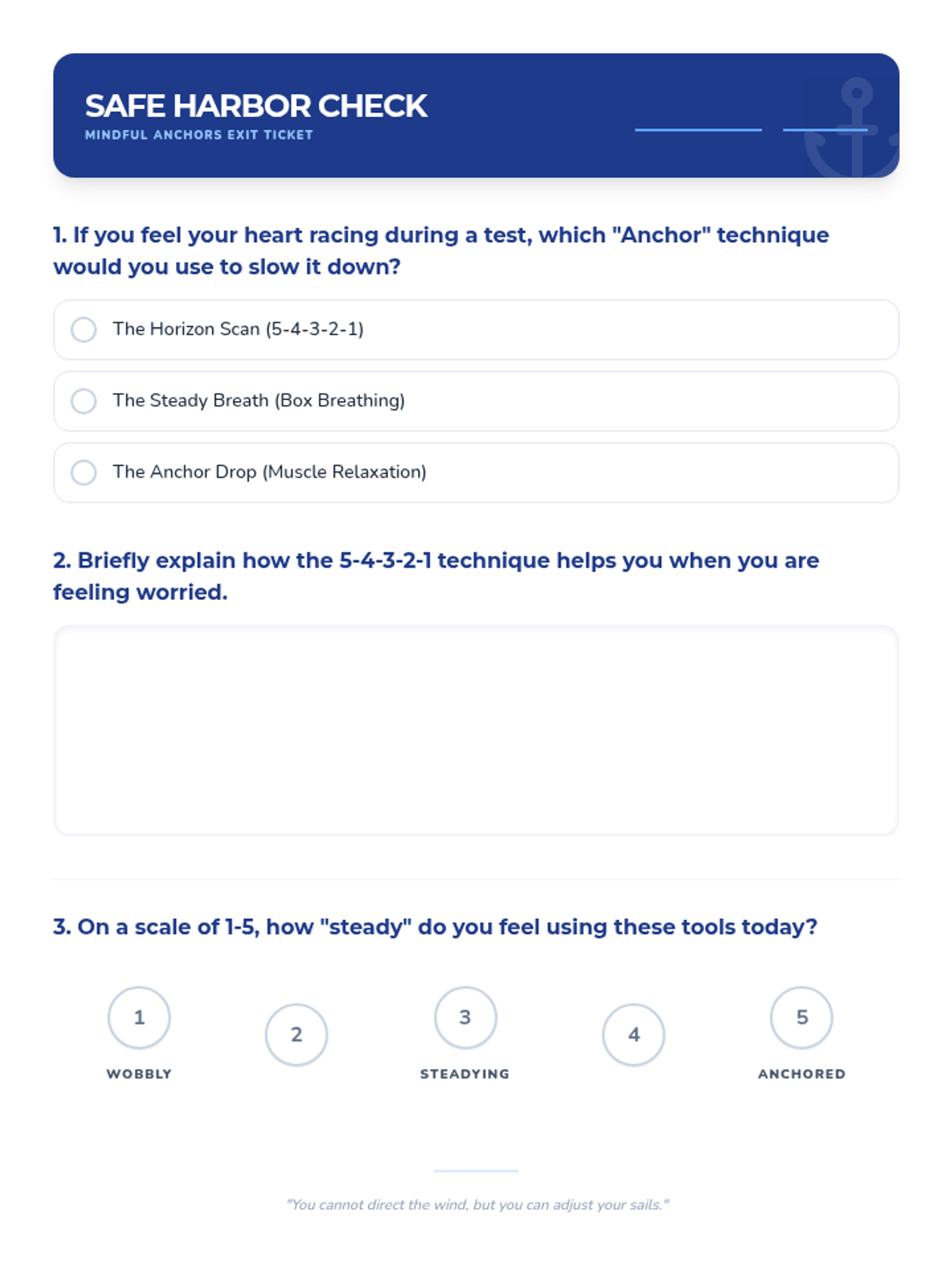
A quick assessment for students to demonstrate their understanding of grounding techniques. It includes multiple-choice questions on technique application, a short-answer explanation for the 5-4-3-2-1 method, and a self-assessment scale for confidence.
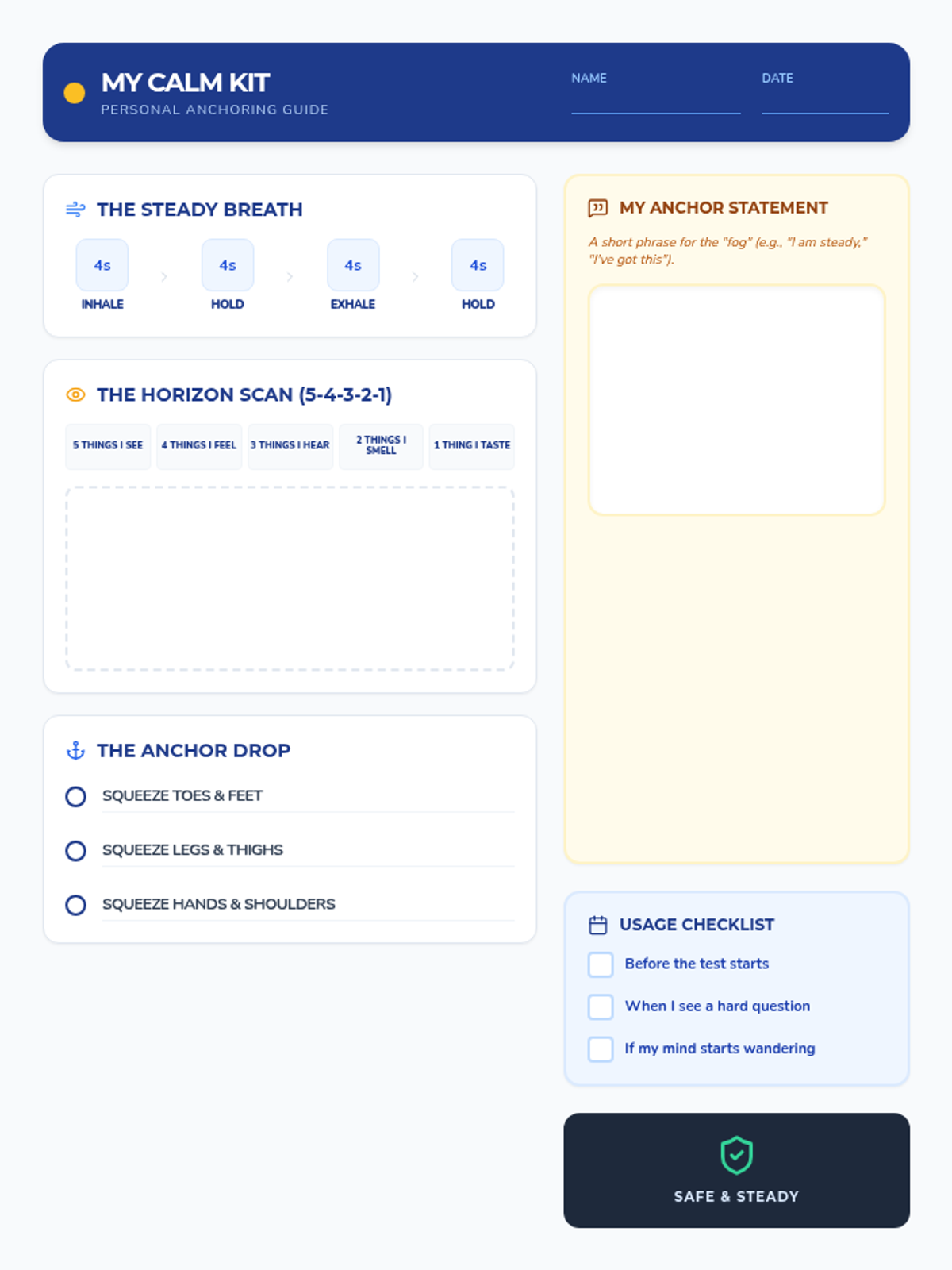
A student-facing worksheet used to document personal grounding strategies. It includes visual reminders of the three techniques, a space for a personal "Anchor Statement," and a checklist for when to apply these tools during academic stress.
A visual slide deck with a maritime theme to guide students through three grounding techniques: Box Breathing, 5-4-3-2-1, and Progressive Muscle Relaxation. It features large text and clear instructional visuals for group presentation.
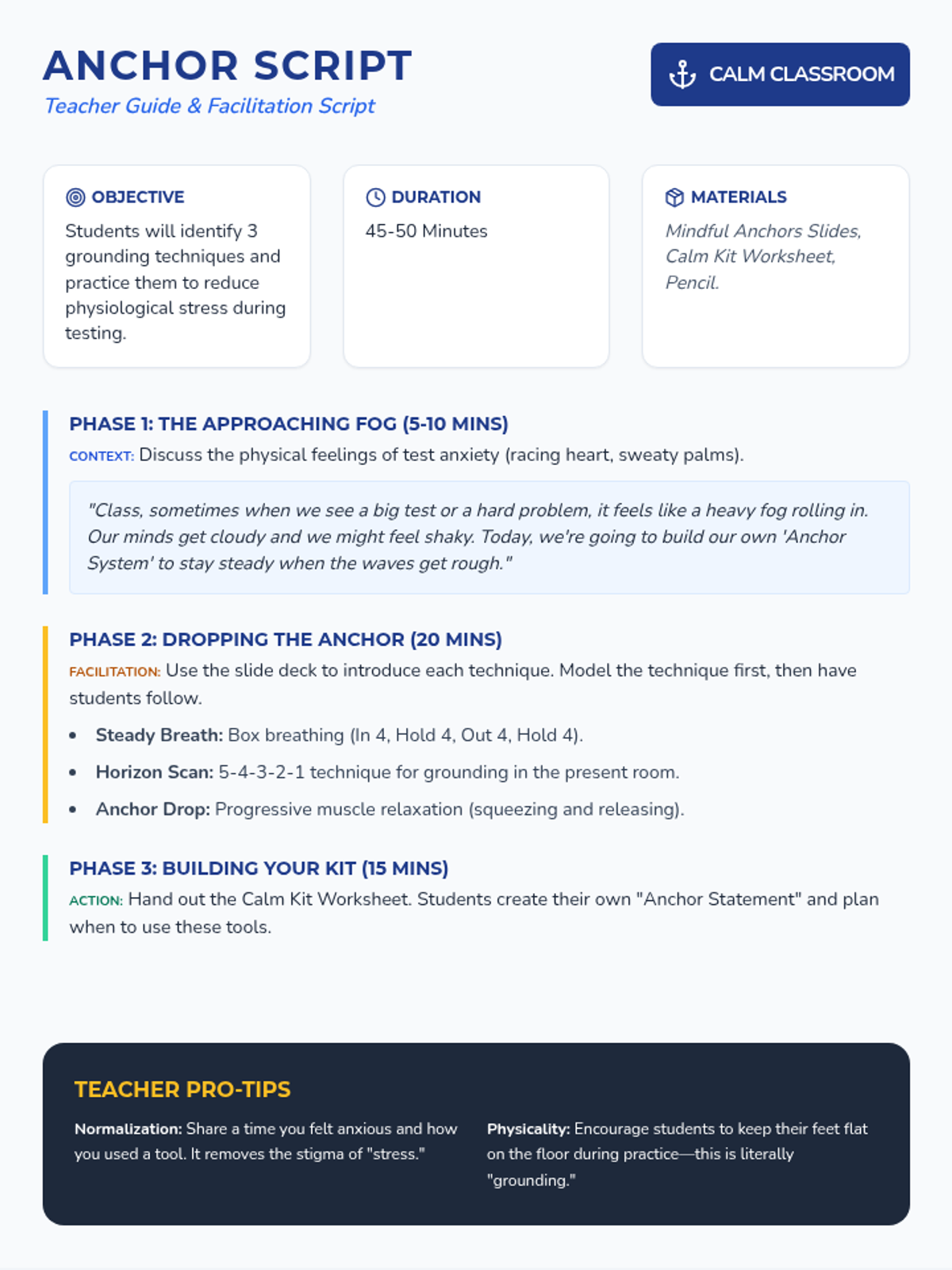
A comprehensive teacher guide for the Mindful Anchors lesson, including a facilitation script, pedagogical tips, and an answer key for assessment. It provides a maritime-themed framework for teaching test-anxiety reduction.
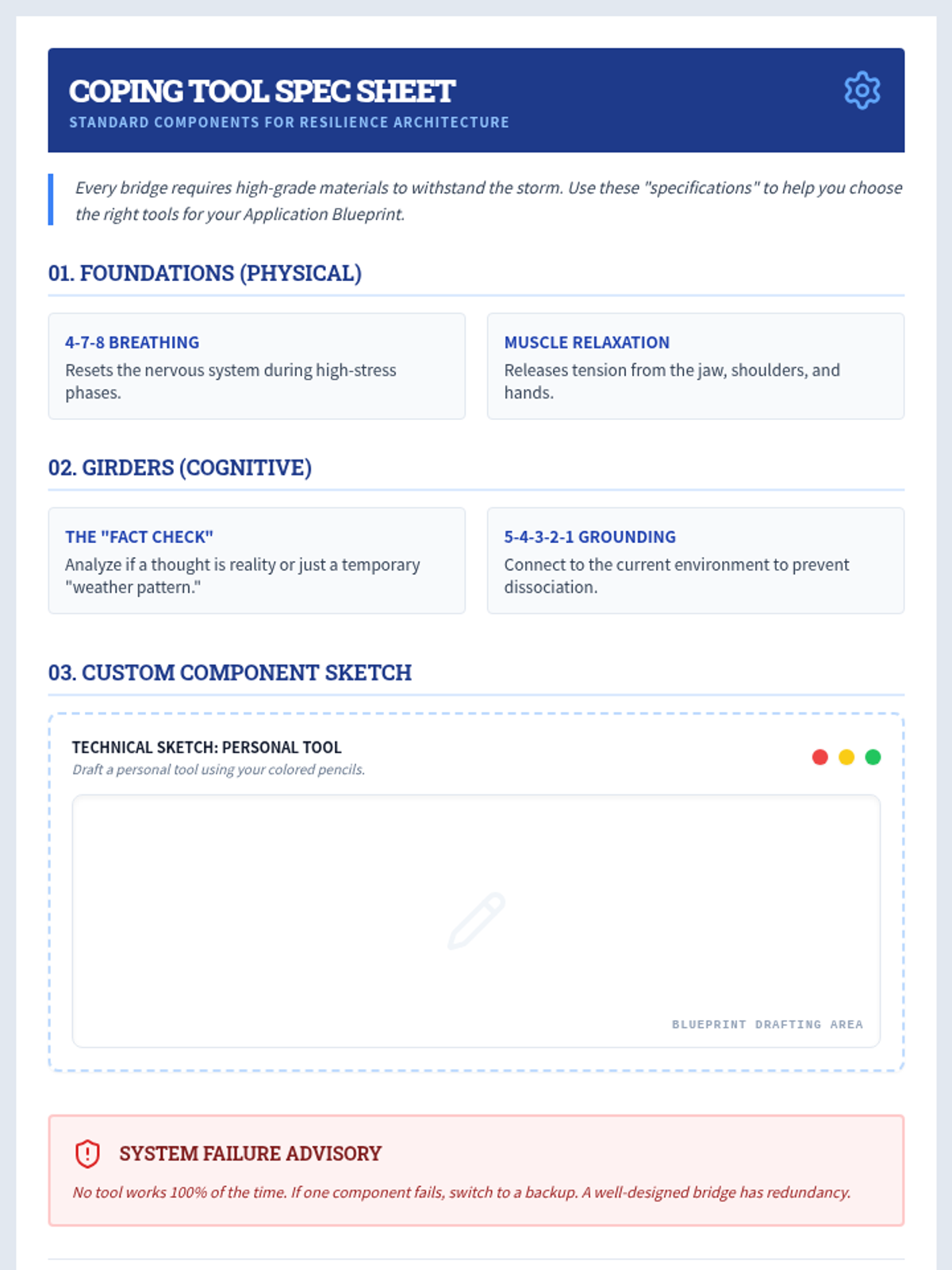
A technical reference sheet for students providing "specifications" for different coping skills, categorized as foundations, girders, and cables to match the architectural theme.
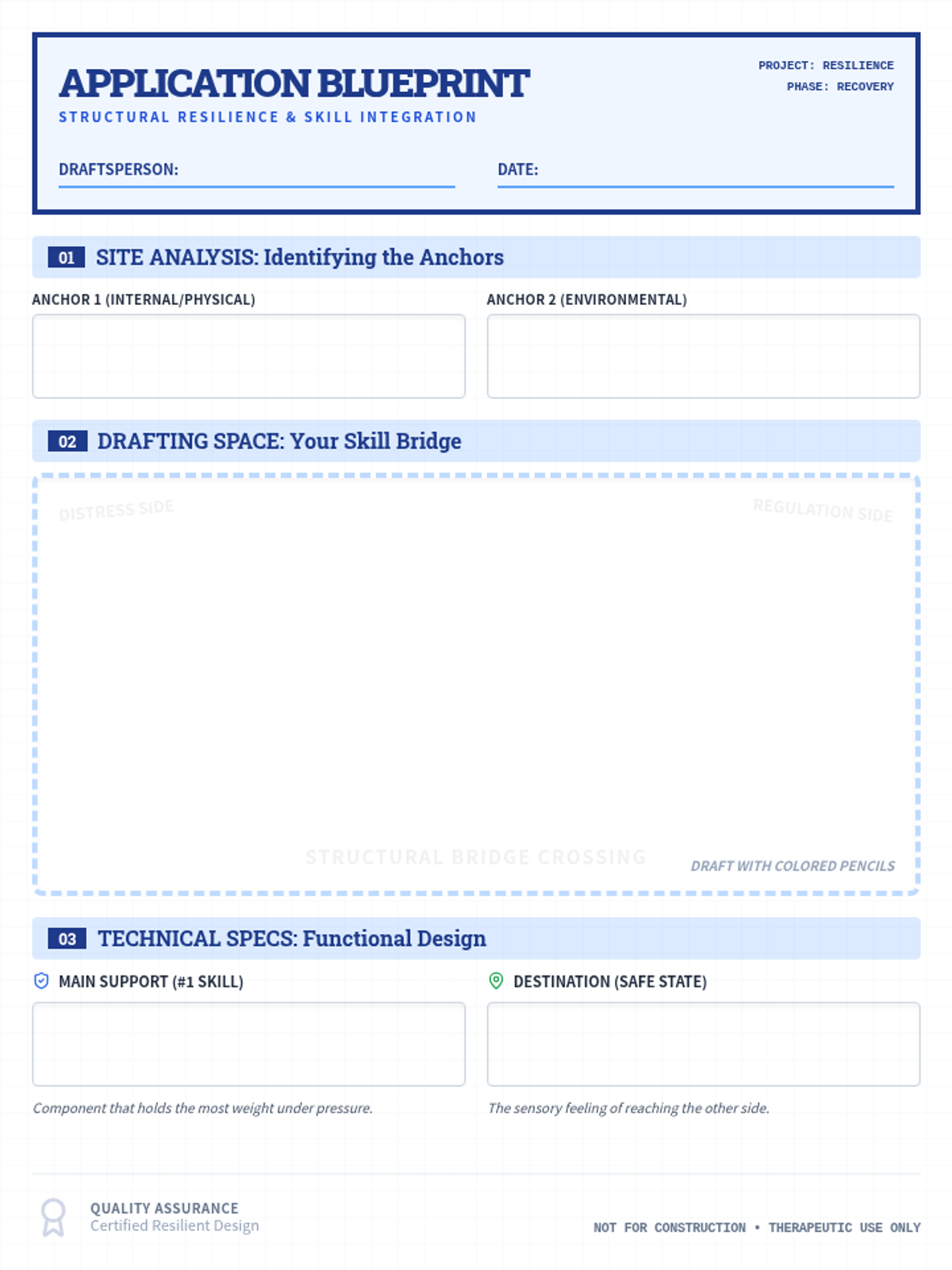
A structured worksheet for students to draft their architectural bridge between distress and regulation, including space for site analysis and technical specifications of their coping skills.
A visual presentation to guide teens through the concept of the Blueprint Project, using architectural metaphors to explain the bridge between emotional distress and coping application.
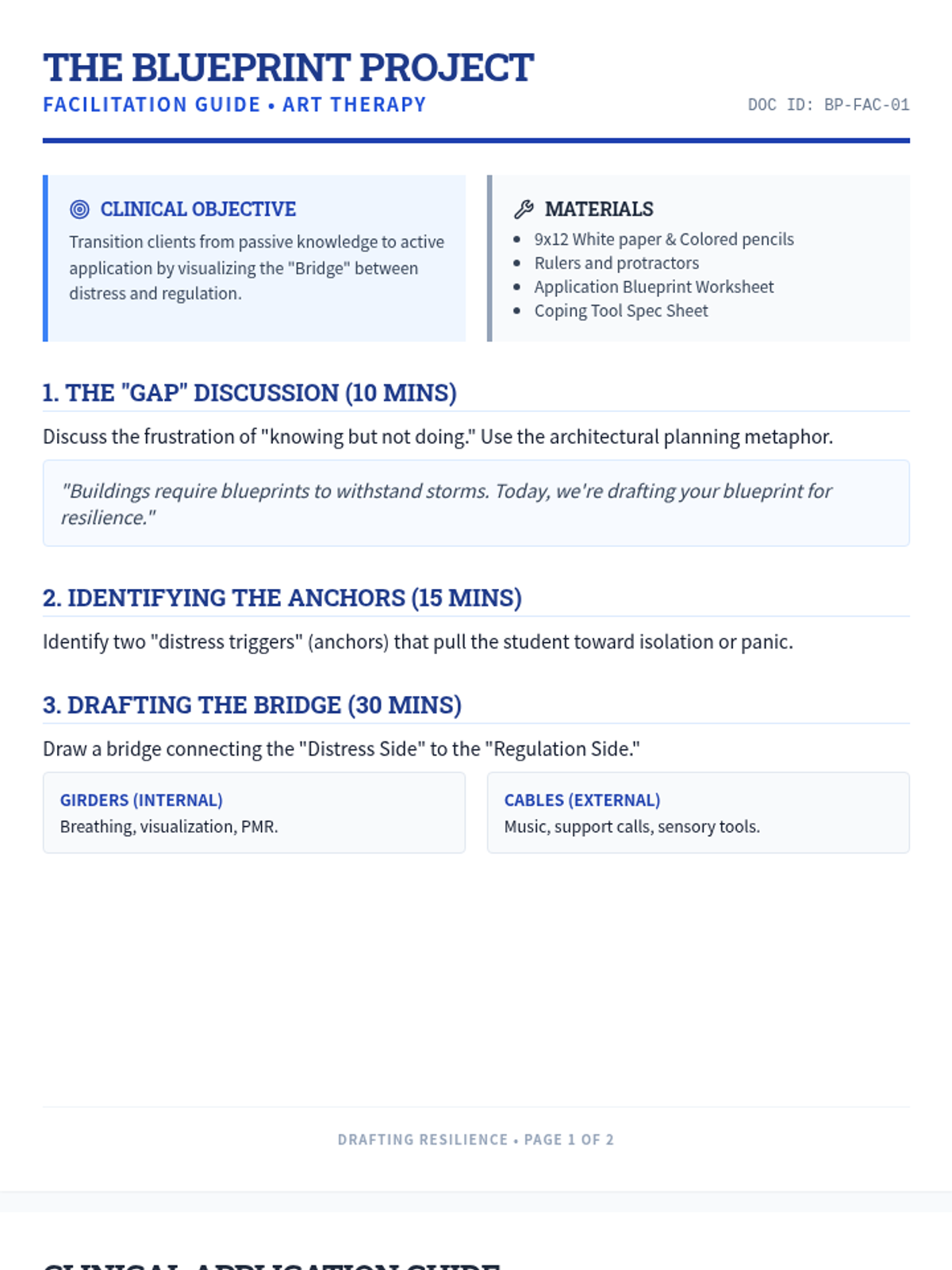
A comprehensive facilitation guide for art therapists, providing lesson flow, therapeutic prompts, and intervention strategies for the "Blueprint Project" lesson.
Week 8 slides for the DBT Group curriculum. Focuses on identifying and naming emotions through physical cues, action urges, and primary vs. secondary layers. Uses a forensic/detective theme. Revised for renamed branding.
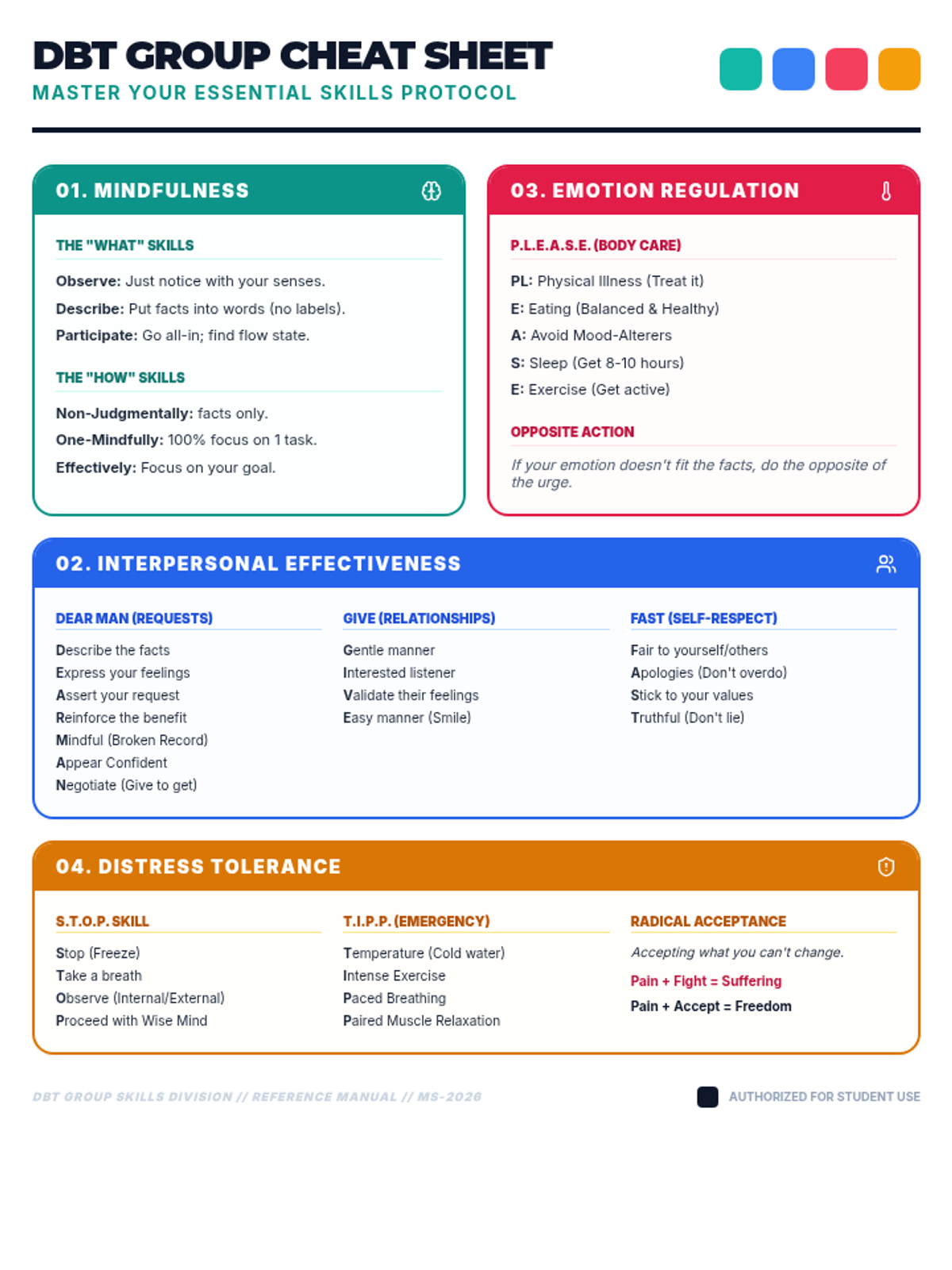
A highly condensed one-page reference sheet containing all core DBT skills (Mindfulness, Interpersonal, Emotion Regulation, and Distress Tolerance) with brief definitions and acronyms. Revised for single-page layout.
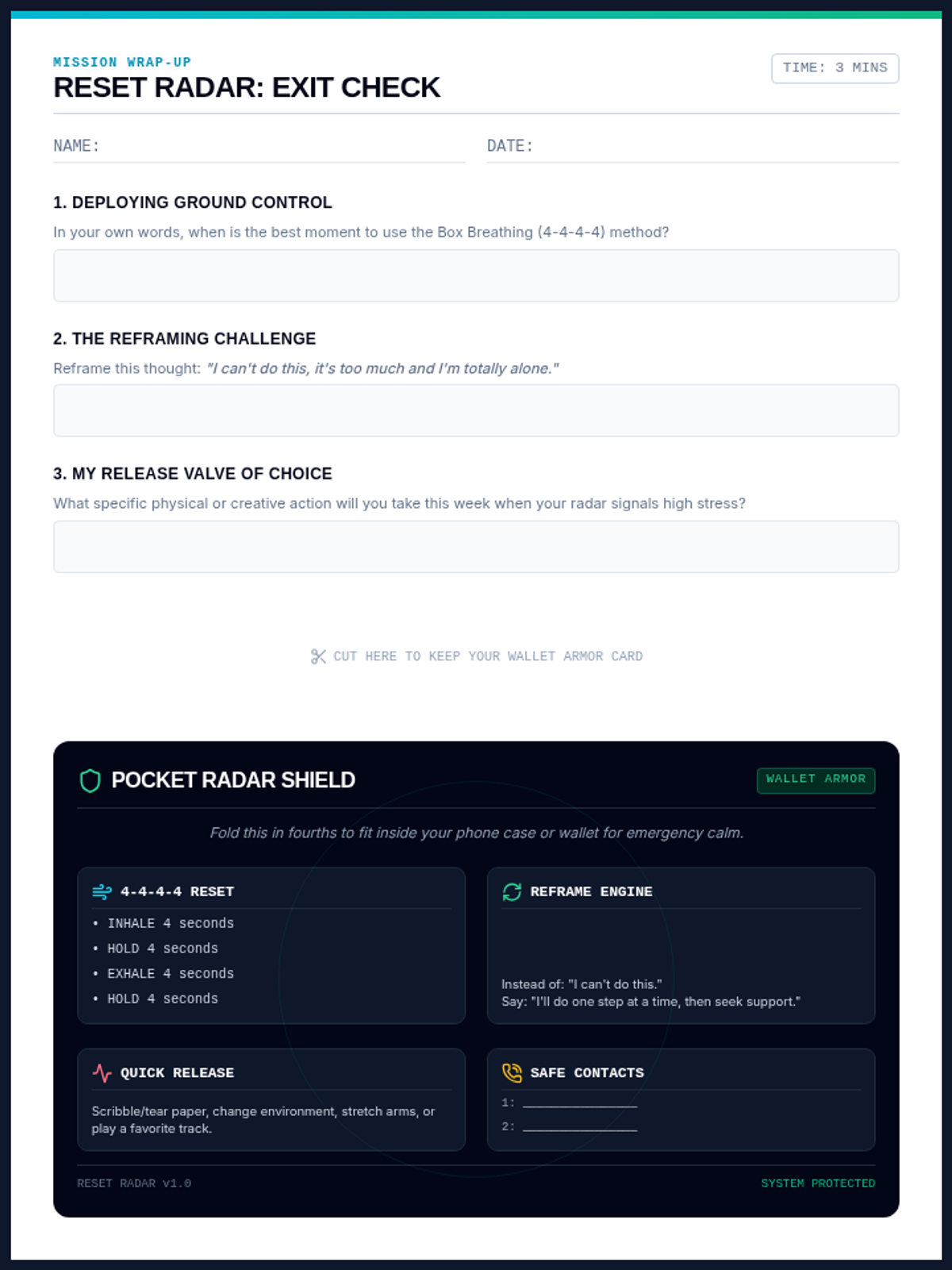
A 1-page exit ticket and cut-out pocket card. The top half functions as a quick 3-minute reflection tool, and the bottom half folds into a wallet-sized emergency stress cheat sheet.
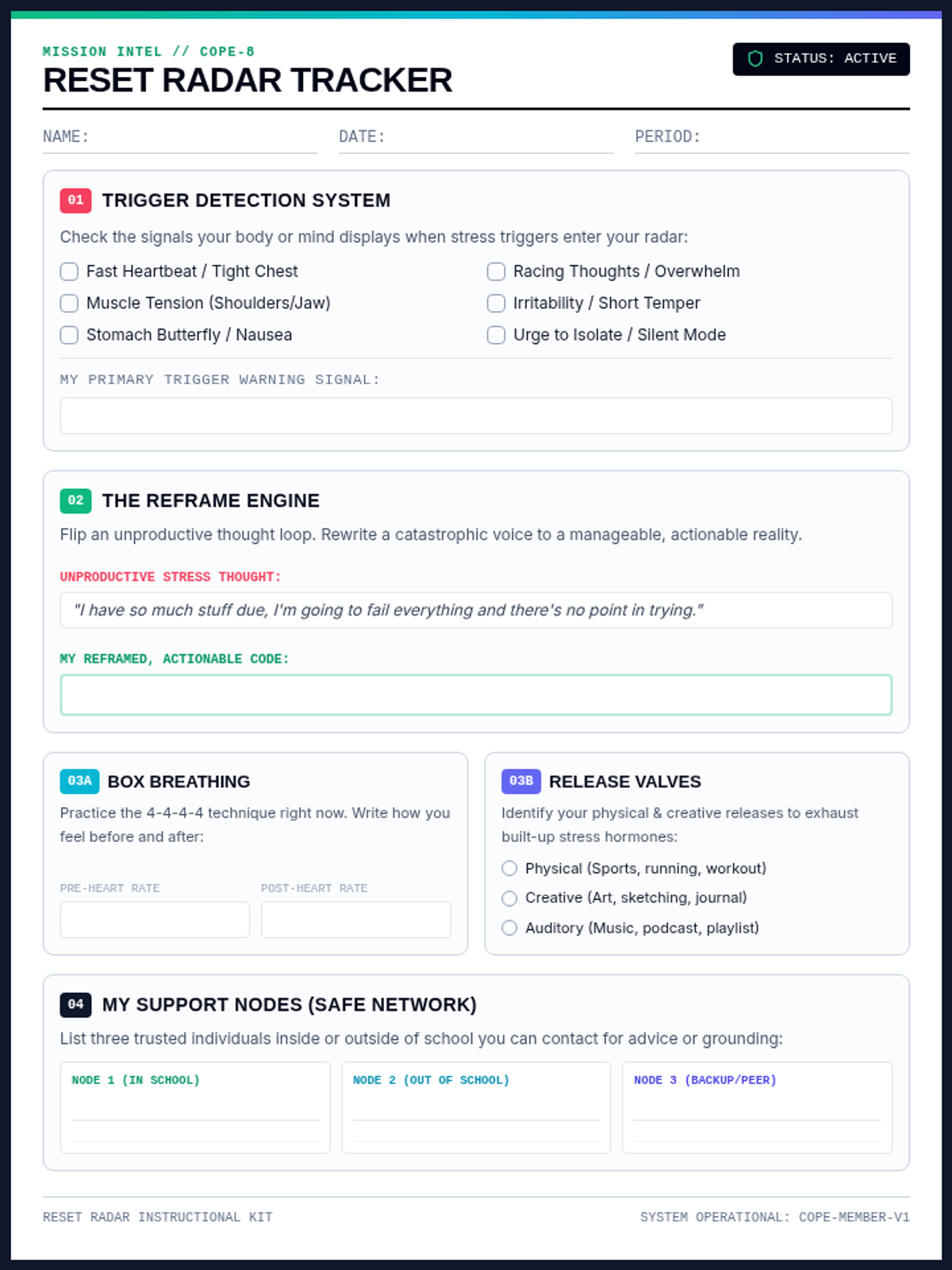
A high-utility, printable 1-page guided notes worksheet styled as a tactical mental radar dashboard. Students identify stress signals, construct a reframing formula, list emotional release outlets, and document trusted contacts.
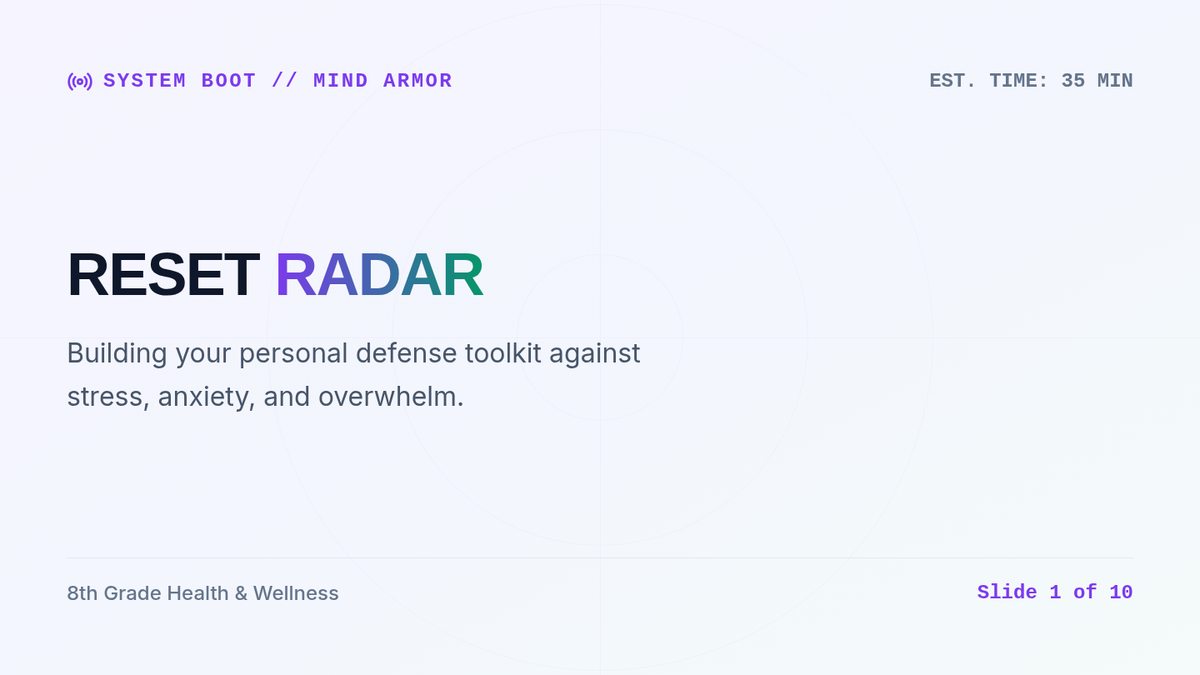
An interactive 10-slide presentation styled with a soft, clean pastel radar system. Teaches 8th graders evidence-based coping skills (box breathing, cognitive reframing, physical outlets, and boundaries) with highly readable dark text on pastel cards.
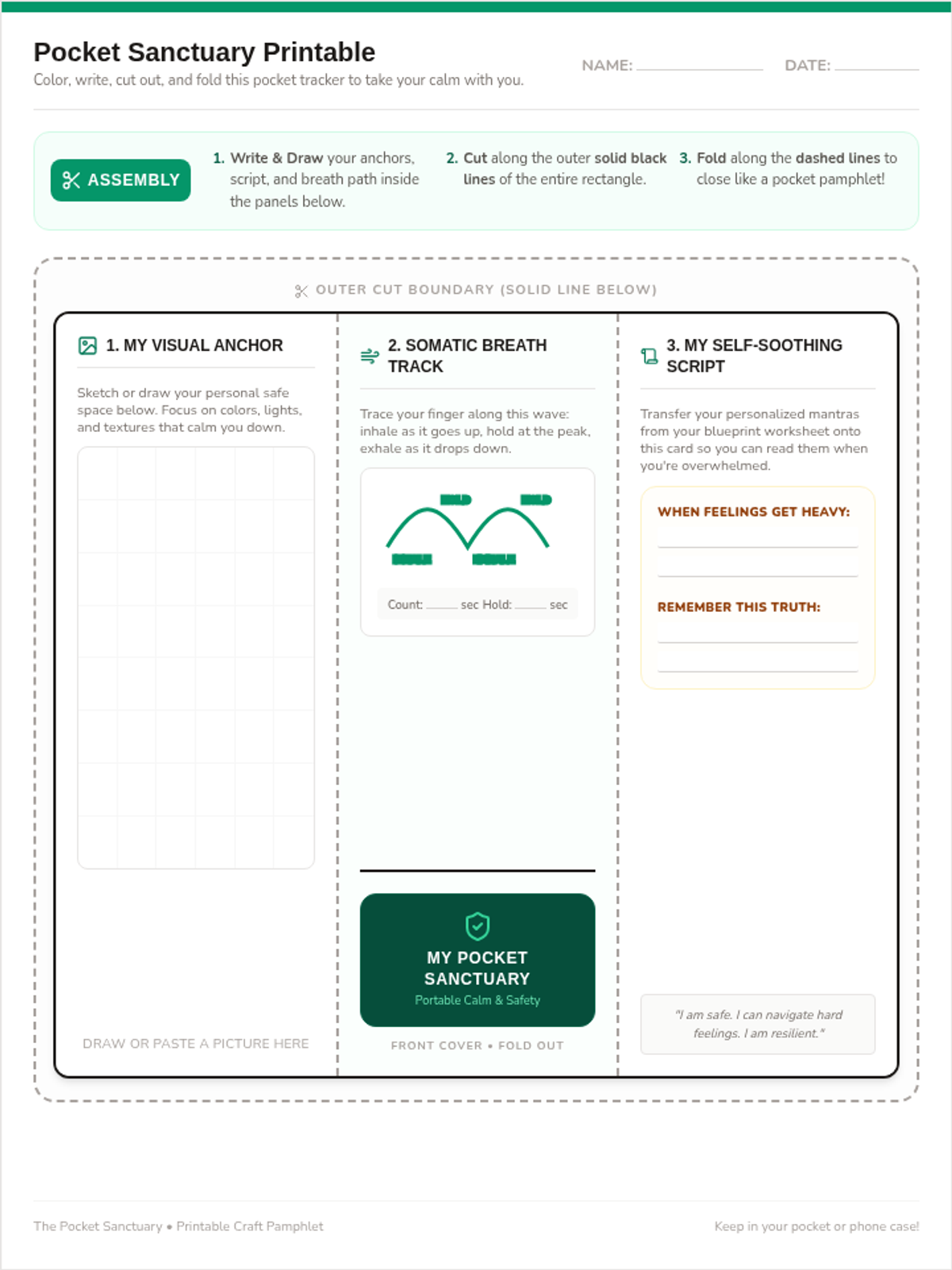
A printable 1-page pocket-sized foldout template (the Pocket Sanctuary) where students sketch their visual anchors, outline their custom breathing patterns, and write out self-regulation scripts.
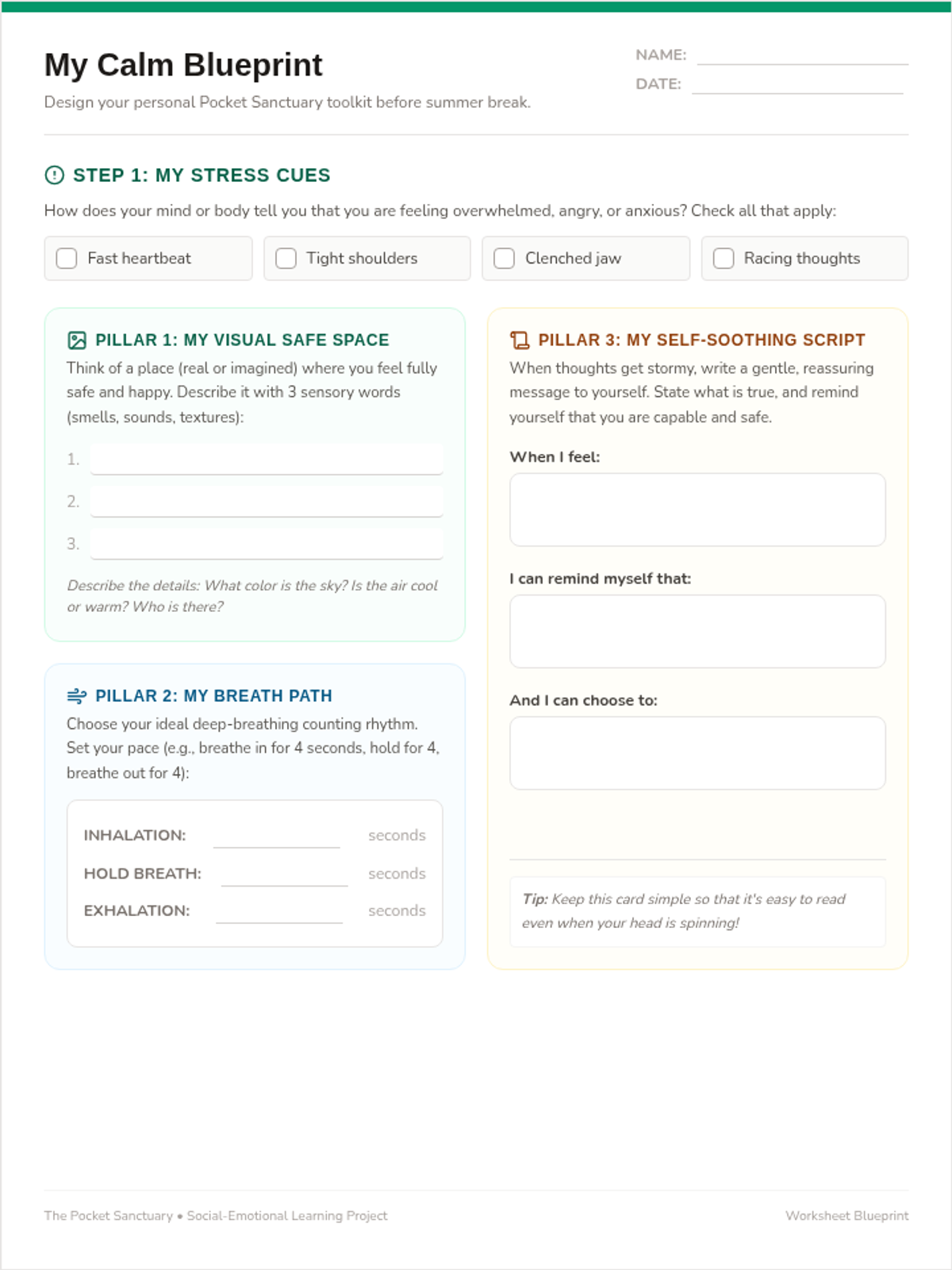
A beautifully designed student planning worksheet (the Calm Blueprint) for identifying triggers, personal visual anchors, deep breathing paces, and encouraging mantras.
A 4-slide presentation matching the calming theme of the pocket sanctuary lesson, featuring slide structures, key discussion prompts, and easy-to-read guides with text larger than 24px.
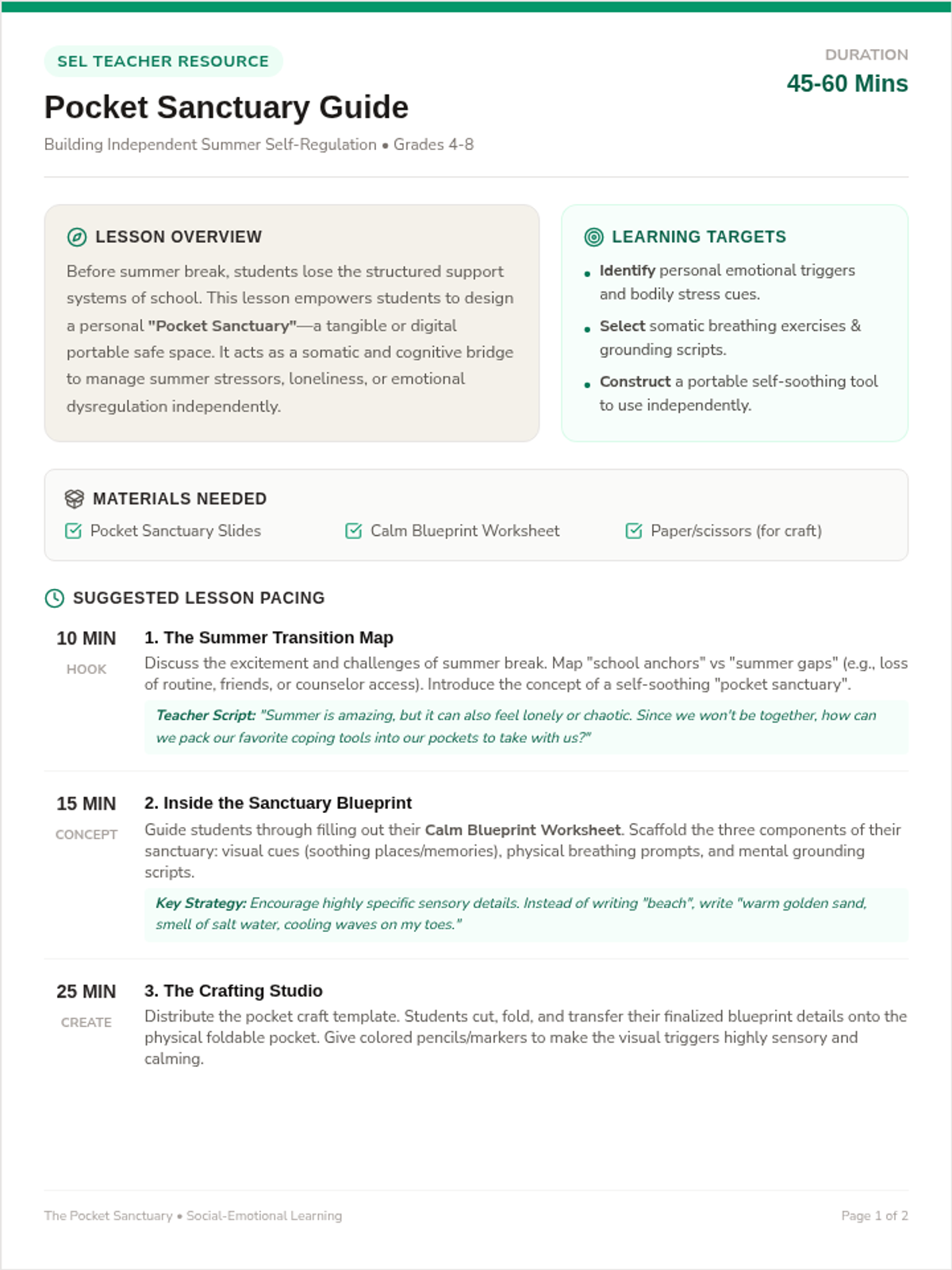
A comprehensive 2-page teacher facilitation guide containing lesson objectives, materials checklists, step-by-step lesson pacing, scripting prompts, and differentiation strategies for launching the Pocket Sanctuary lesson.
A visually arresting presentation introducing the biology of a 'mind storm', the neuroscience of emotional regulation, and a guided mindful breathing model based on the virtual calming jar.
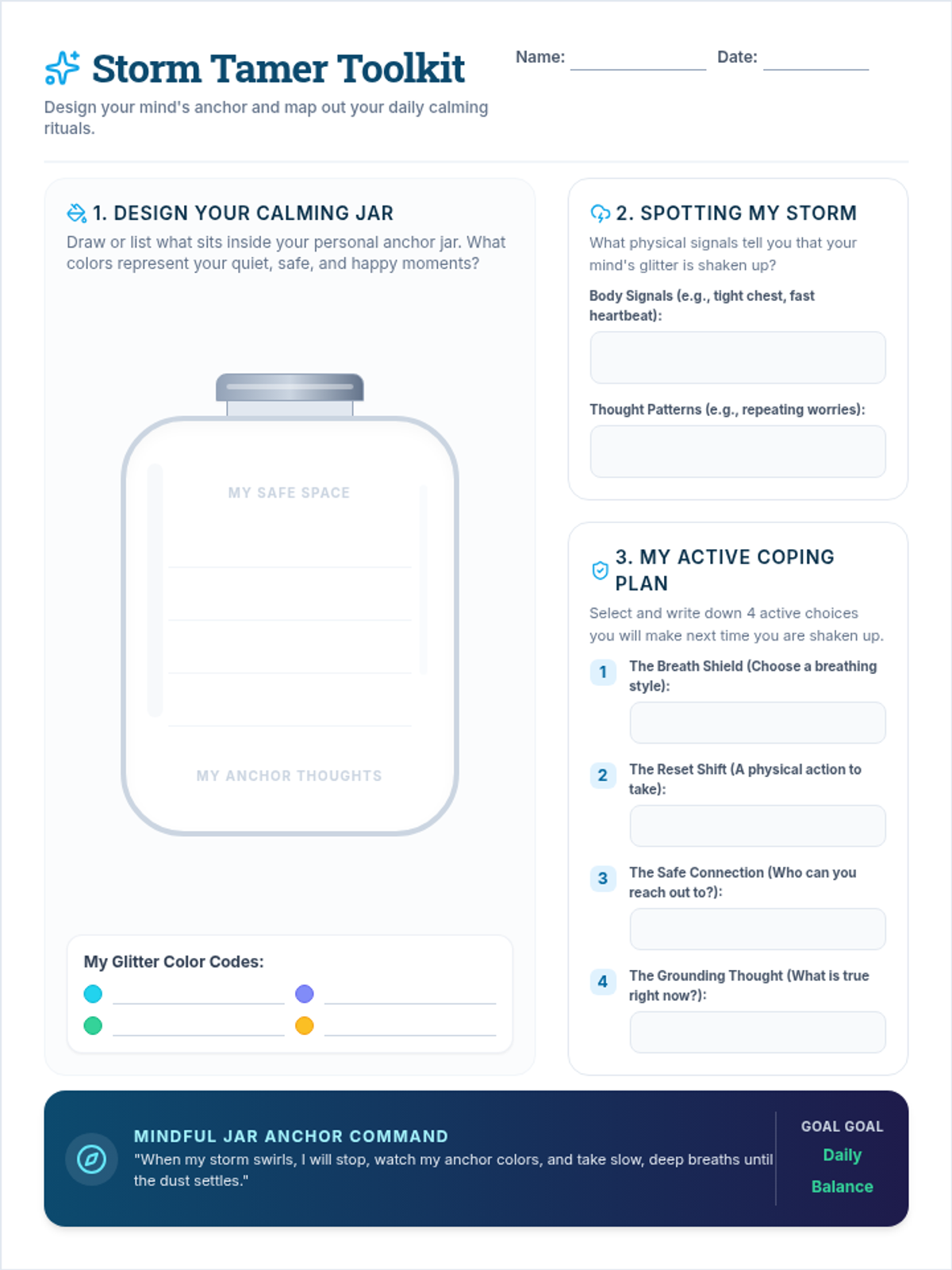
A beautifully illustrated worksheet where students design their own metaphorical calming jar, assign color meanings to their emotional states, and build a 4-step daily coping toolkit around the central visual metaphor.
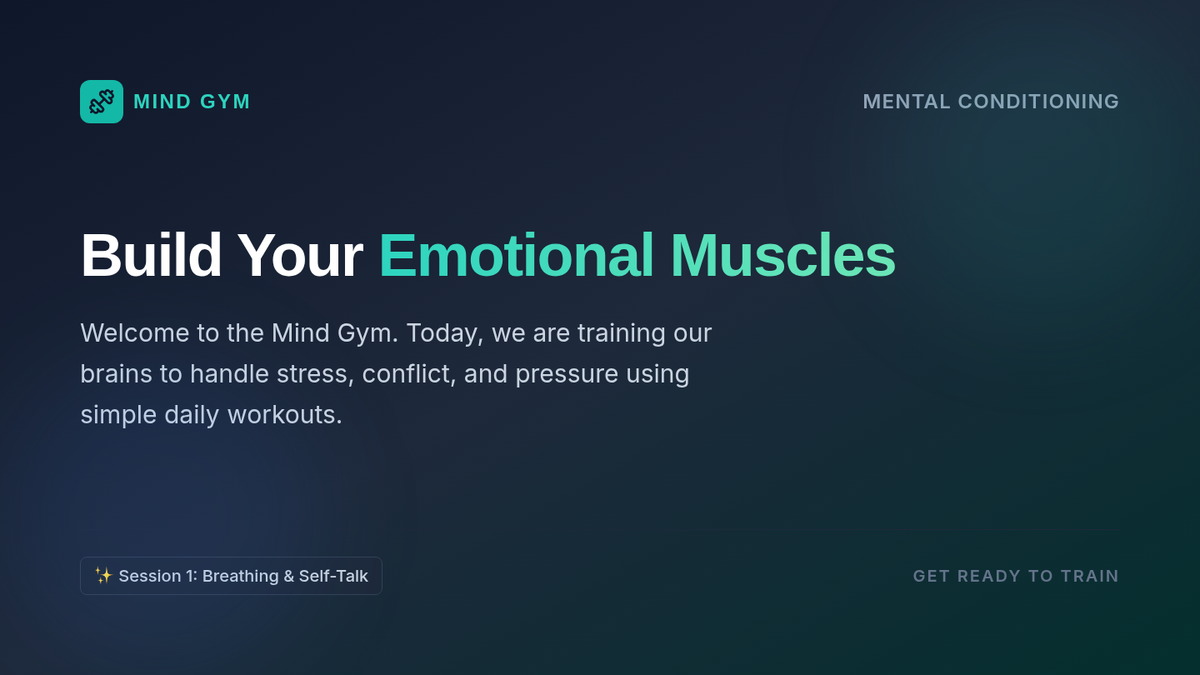
Interactive and highly visual presentation slides introducing emotional regulation muscles, guided breathing techniques, and the science of self-talk.
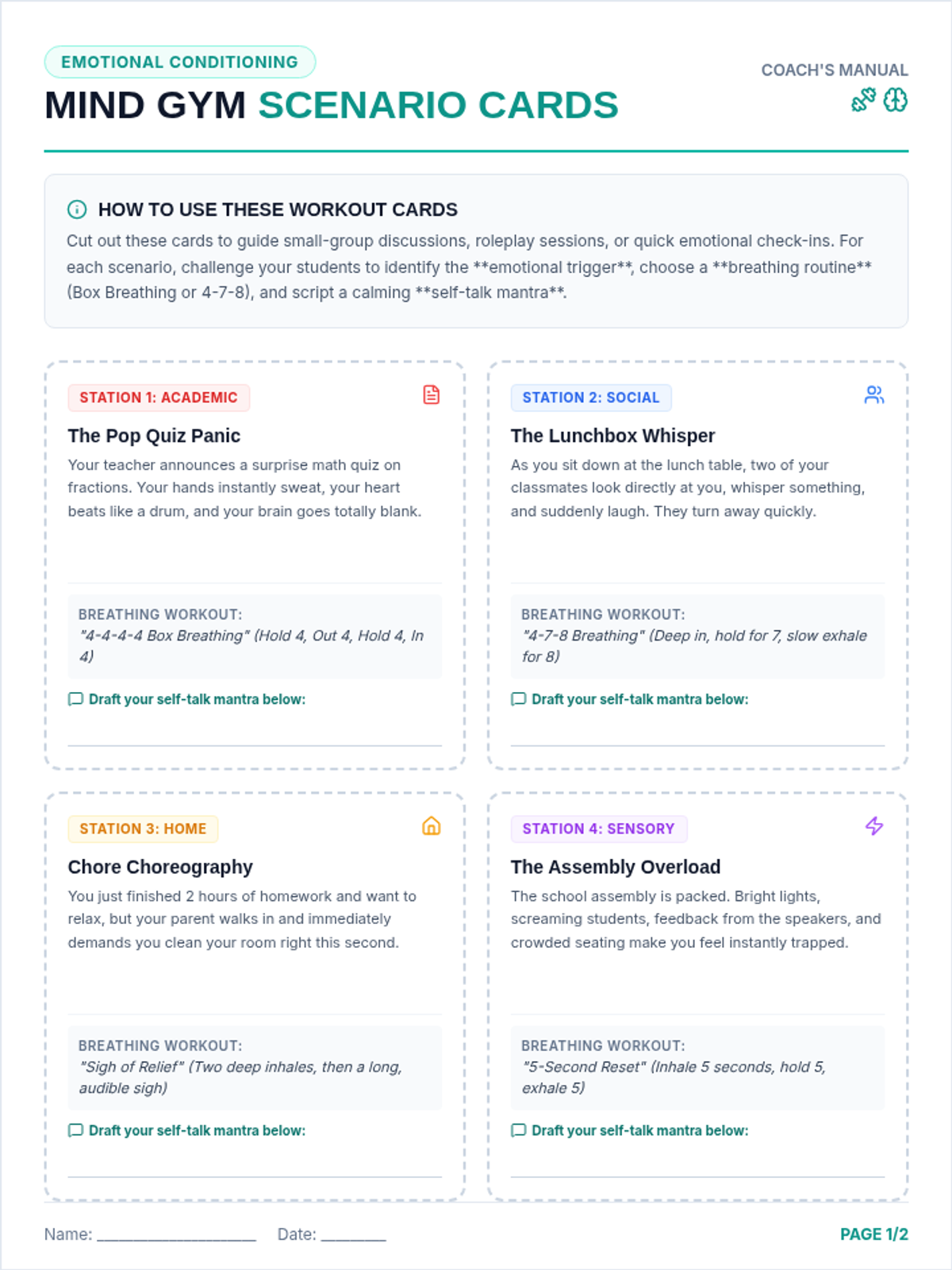
Printable scenario discussion cards styled like a mental fitness routine, designed for small group practice of emotional regulation, self-talk, and breathing strategies.
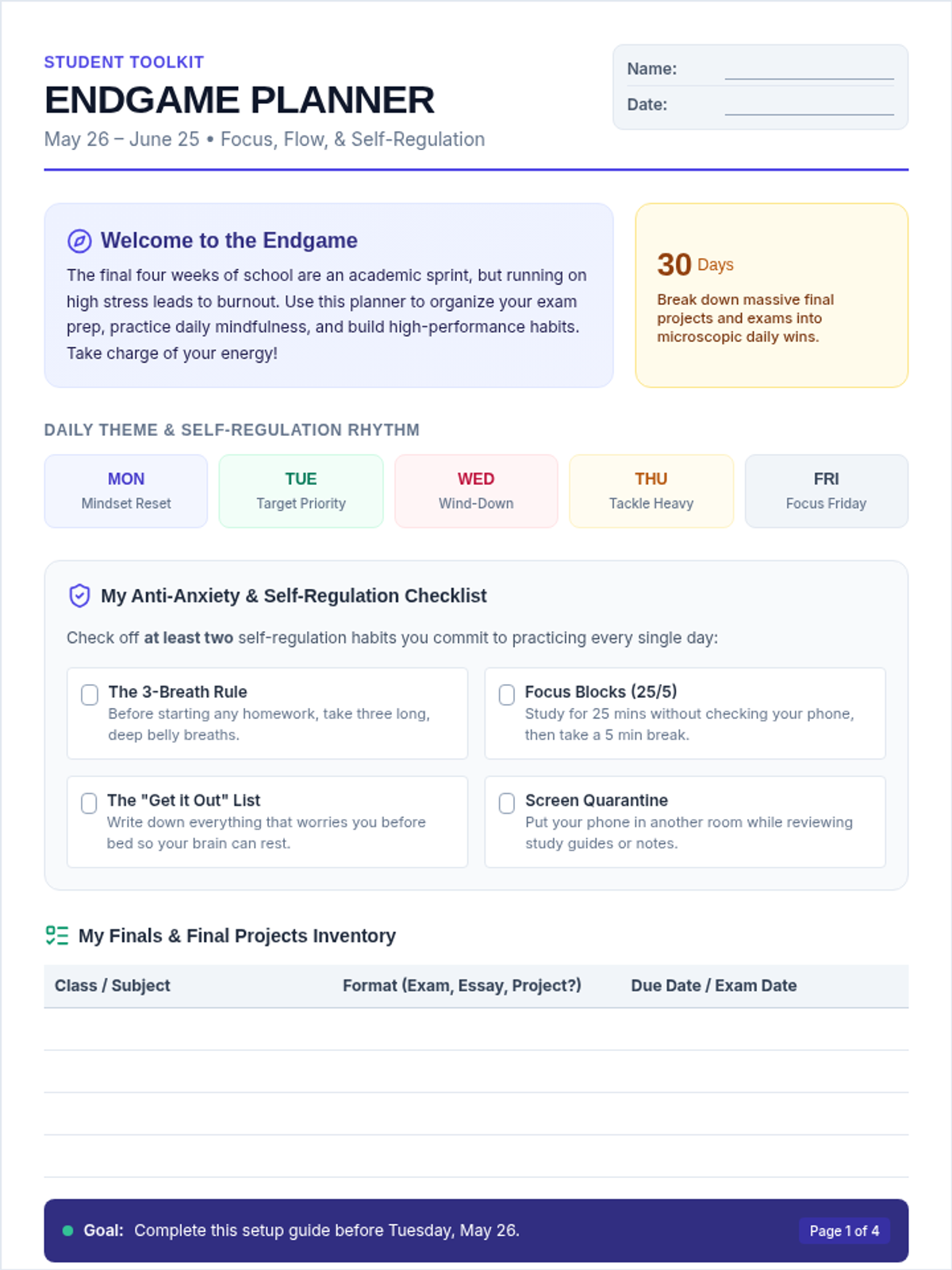
A highly structured, printable 4-page interactive workbook and calendar featuring daily executive functioning checklists, stress-management anchors, and co-planning layouts for May 26 to June 25.
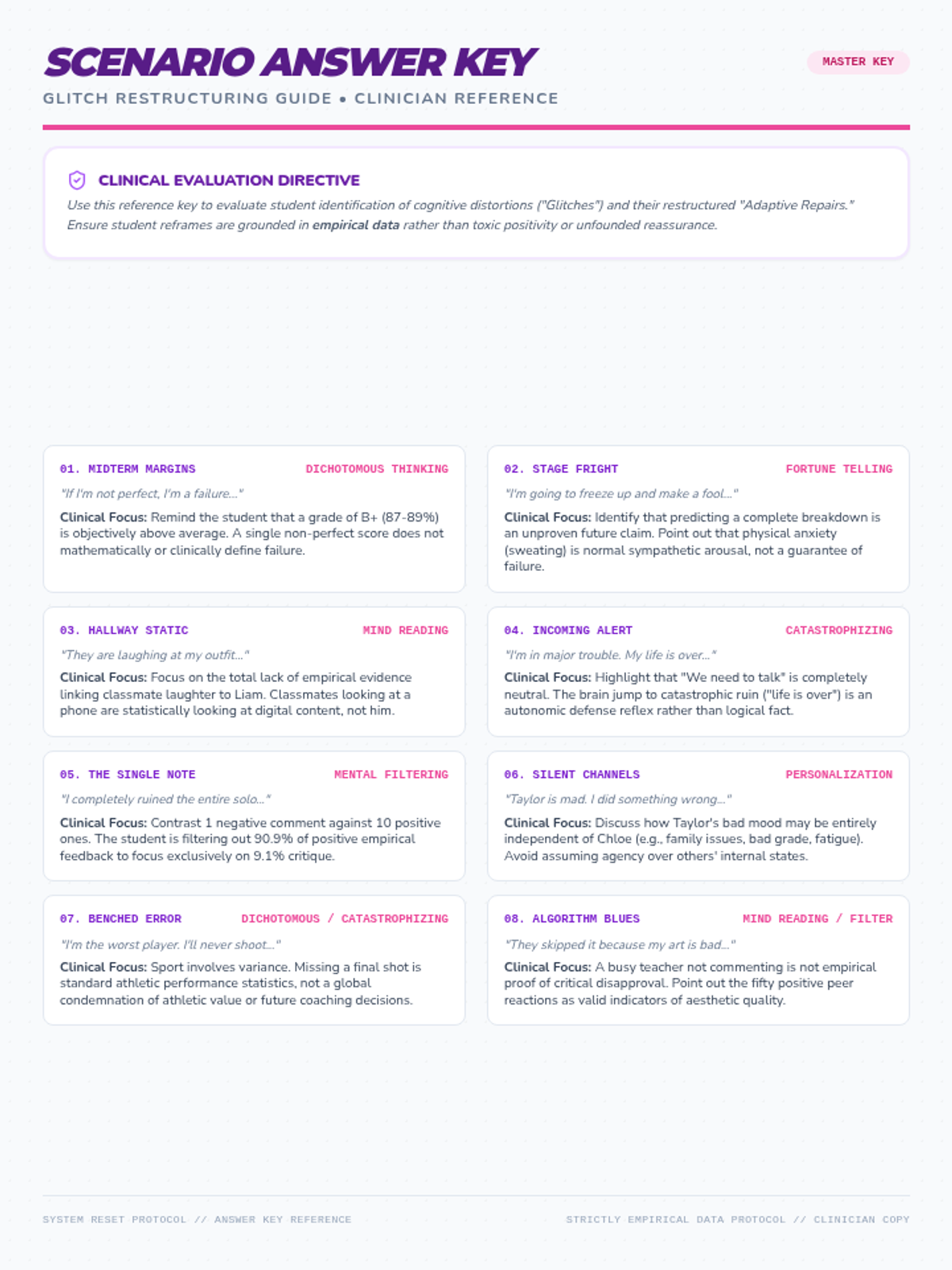
An educator-facing clinical answer key for the Glitch Scenario Cards. It provides the identified distortion name, key clinical focus points, and guidance on how to evaluate student reframing attempts without using reassurance.
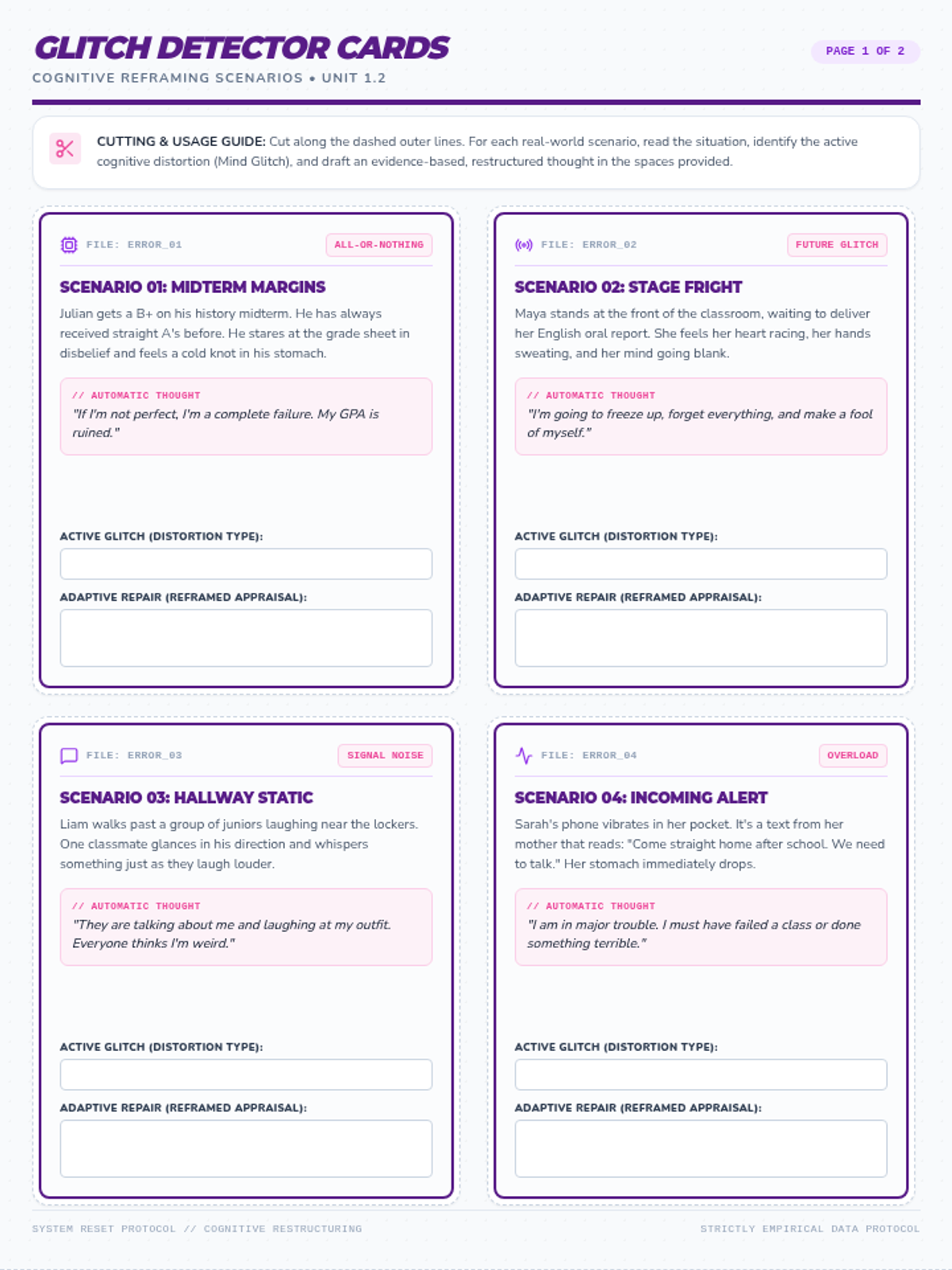
A 2-page print-ready set of 8 cognitive distortion scenario cards for teens. Formatted with a Y2K tech aesthetic, they provide real-world scenarios and blank areas for students to write down identified glitches and write adaptive cognitive upgrades.
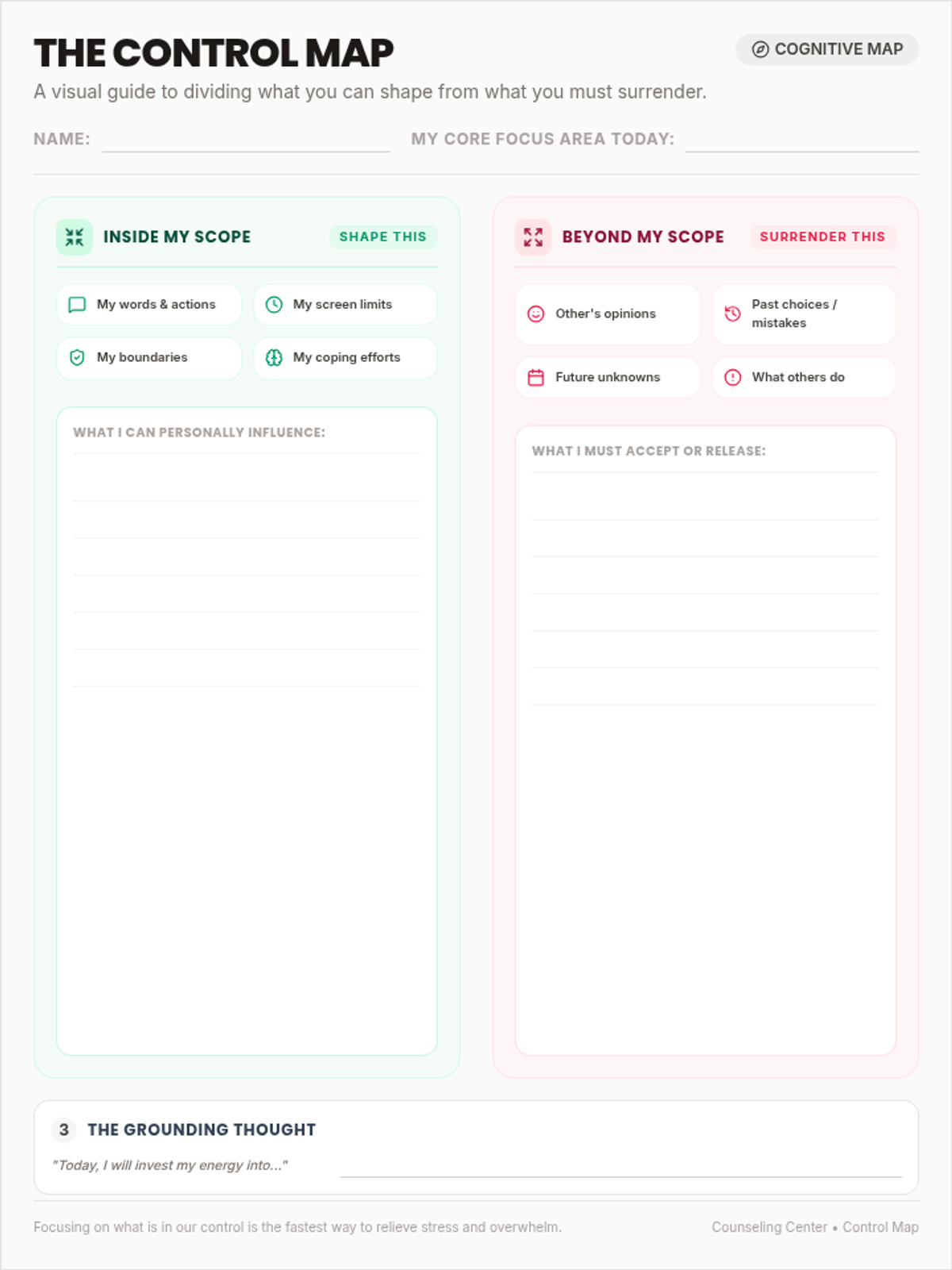
A cognitive visual mapping worksheet for high school students. It defines areas of influence (Inside My Scope) versus areas to release (Beyond My Scope), with structured student handwriting writing spaces.
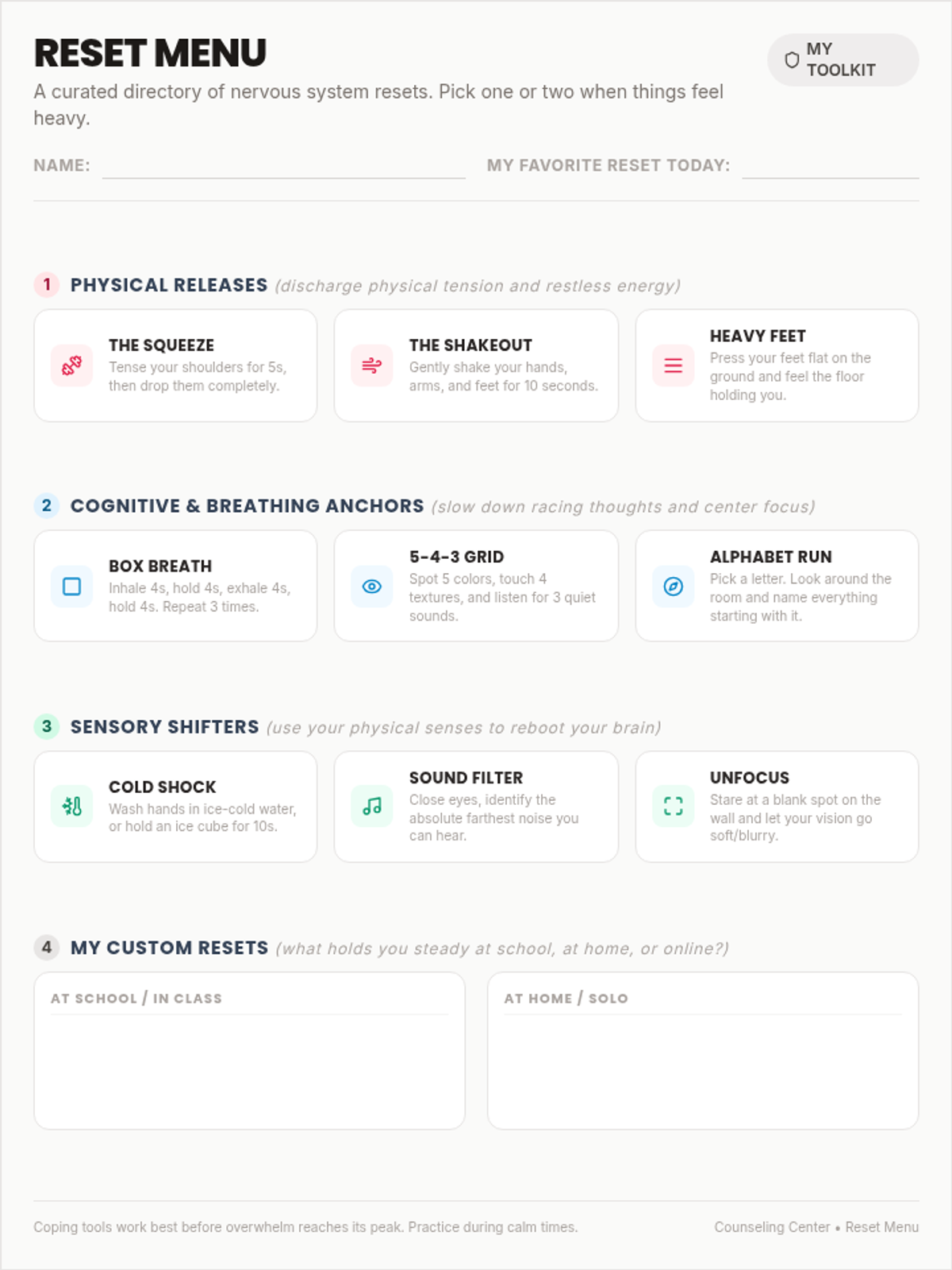
A visual coping strategies menu designed for high school students. It details somatic releases, cognitive anchors, and sensory shifters, with blank blocks for personalized student coping options.
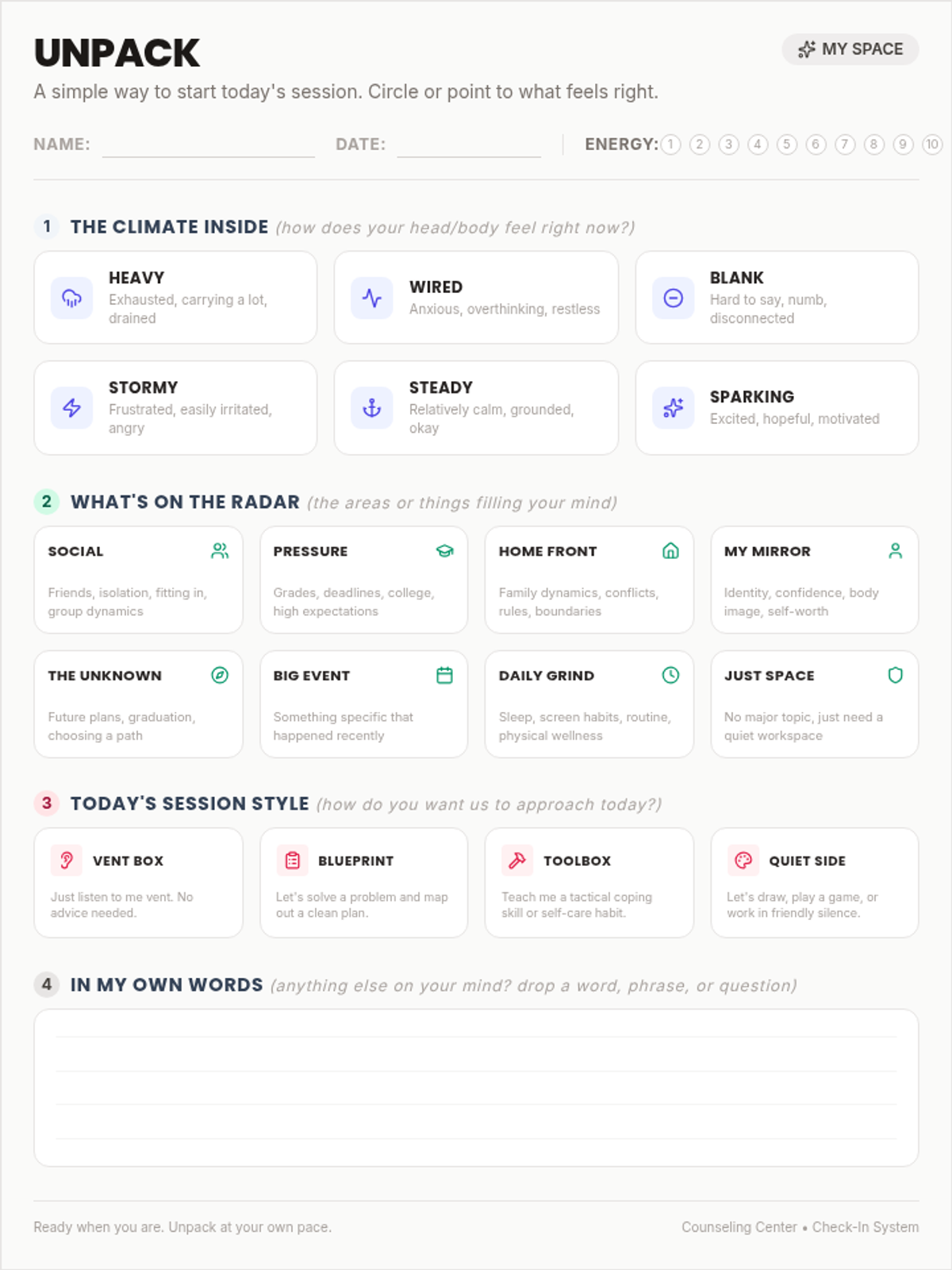
A beautiful and modern choice board for high school counseling sessions. It features clean sections where students can choose their current feelings, discussion topics, and preferred session style, helping to lower conversation boundaries.
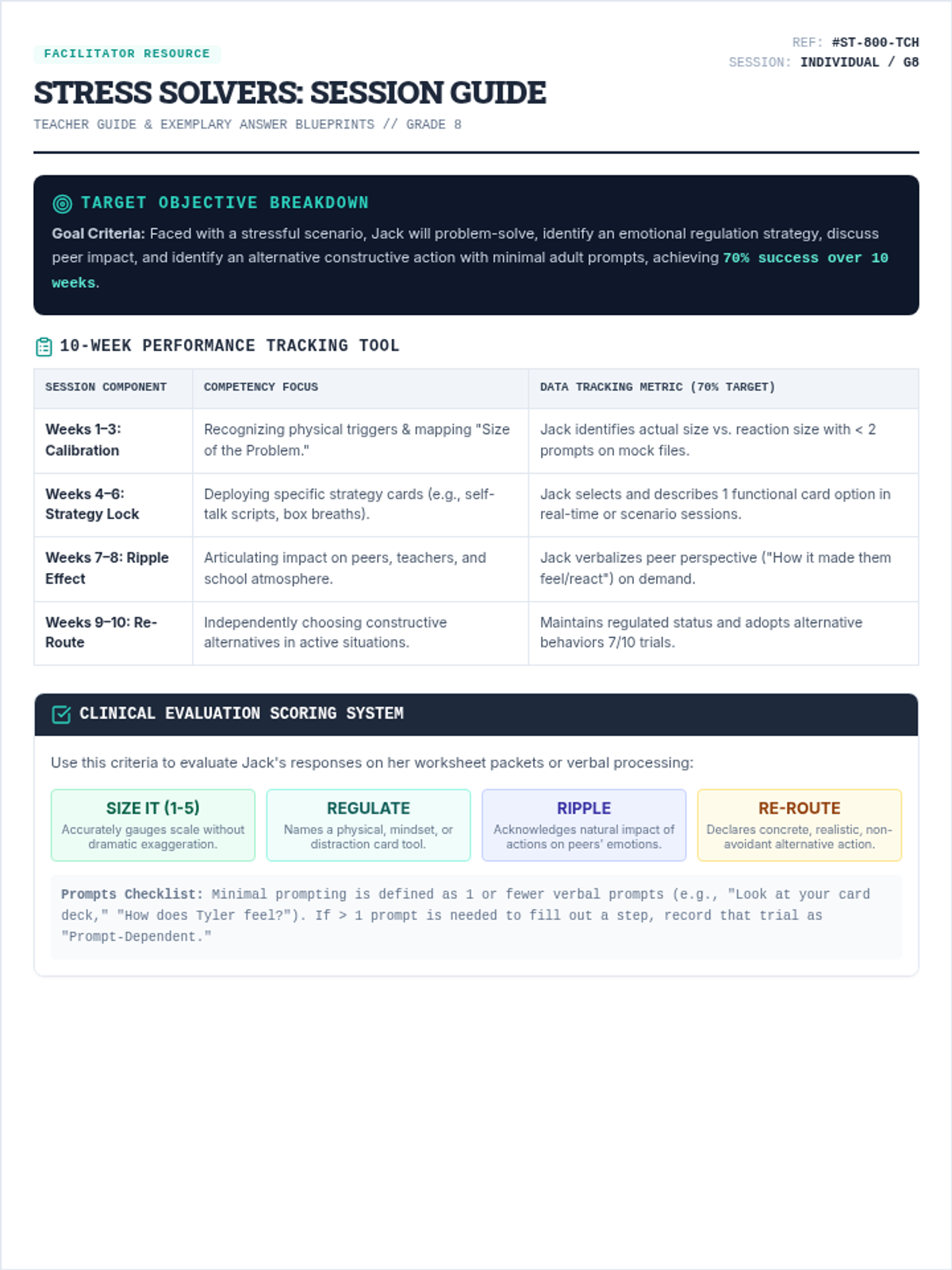
A detailed facilitator session guide and answer key supporting the 'Stress Solvers' curriculum. Contains weeks-specific data-tracking instructions, an evaluation rubric, solved keys for student Cases 01 & 02, and two completely new, fully solved scenarios (Cafeteria Lockout & Pop Quiz Panic).
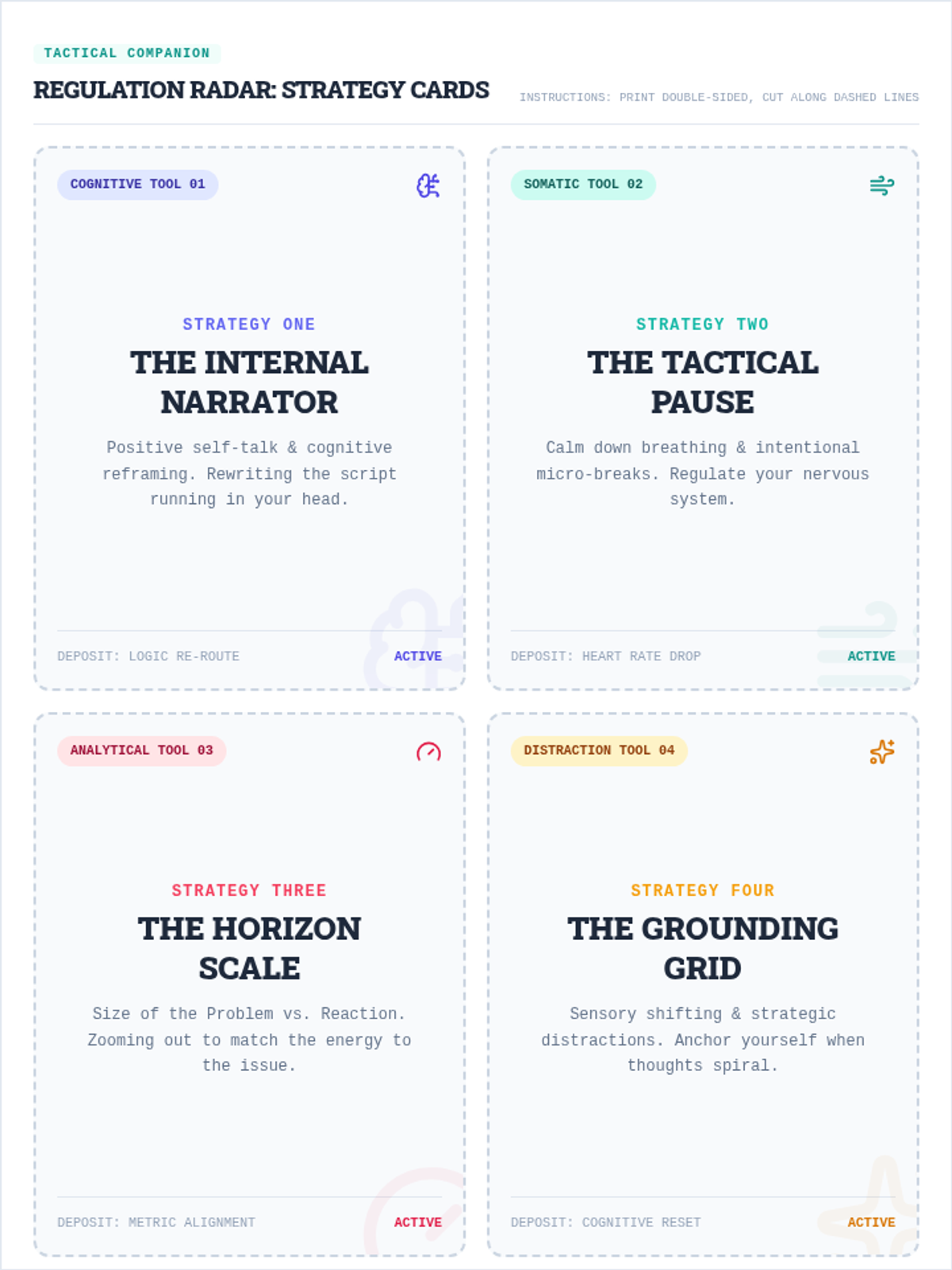
A set of visual regulation strategy cards designed to support 8th-grade emotional regulation, breathing tools, mindset reframing, sensory grounding, and size of the problem self-reflection. Printable in a 2x2 grid layout designed to look clean, mature, and structured.
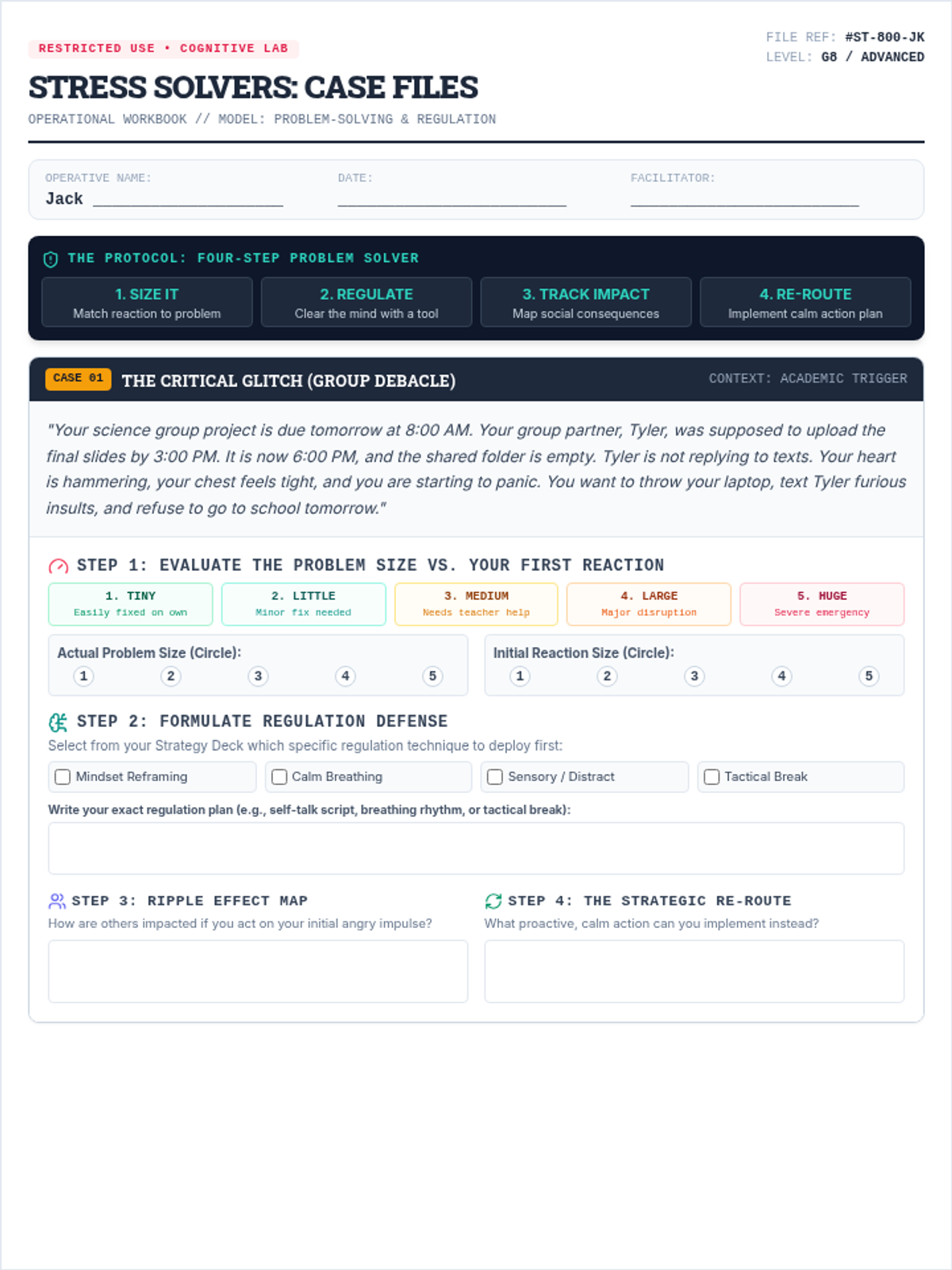
An 8th-grade scenario-based worksheet designed to guide students (like Jack) through step-by-step problem-solving, cognitive reframing, and self-reflection. Includes realistic adolescent trigger scenarios and structured spaces for analyzing the size of the problem, coping mechanisms, and peer impact.
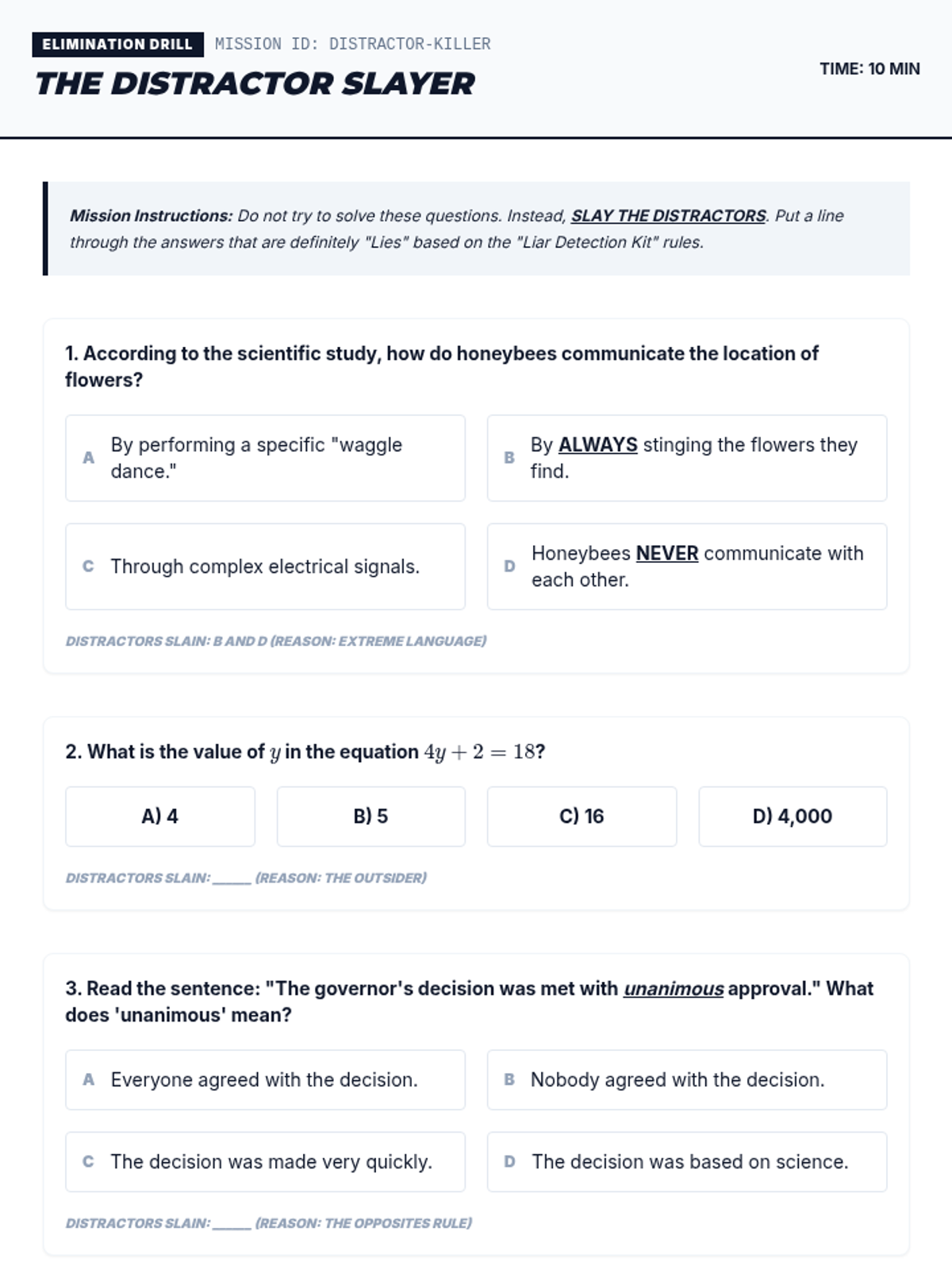
A practice drill where students apply distractor-identification techniques to eliminate wrong answers and increase their guessing probability.
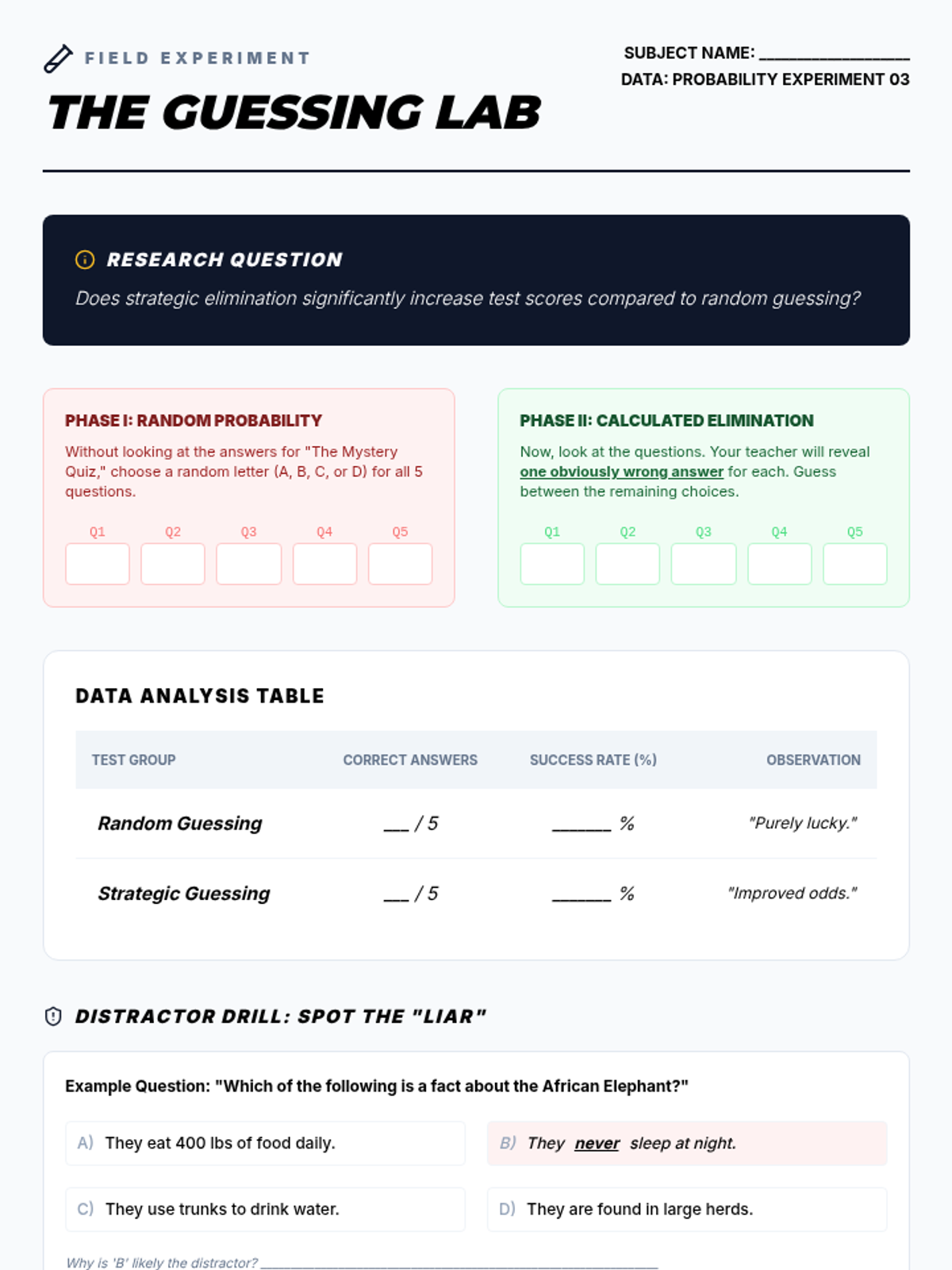
A laboratory-style worksheet for Lesson 3 where students record the results of a probability experiment comparing random guessing to strategic elimination.
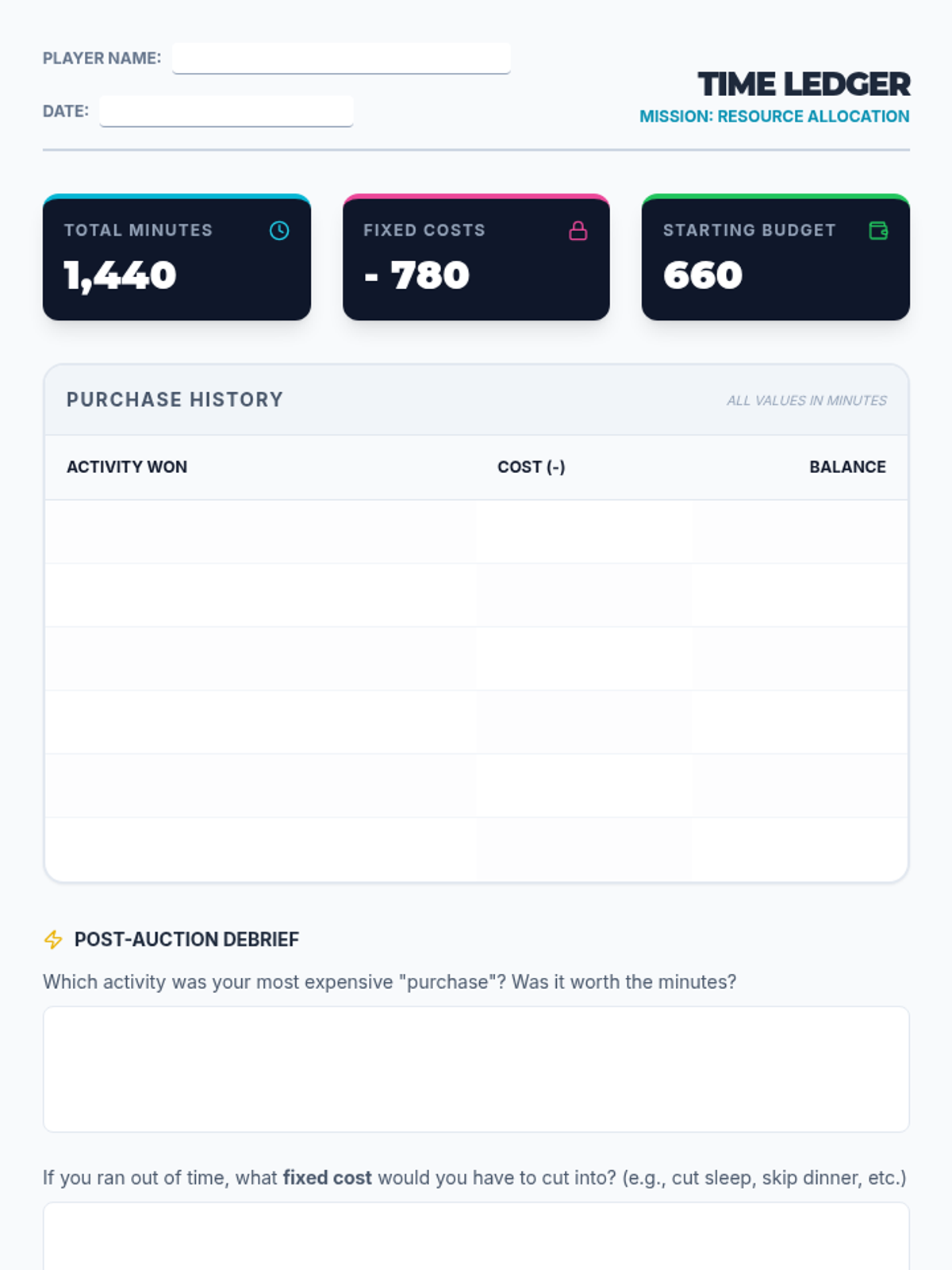
A student worksheet for the 'Currency of Time' lesson. It includes a ledger for tracking 'minutes' spent during the time auction and reflection questions about trade-offs and priorities.
Lesson 3 presentation on educated guessing, covering the probability of elimination and techniques for identifying "distractor" answers.
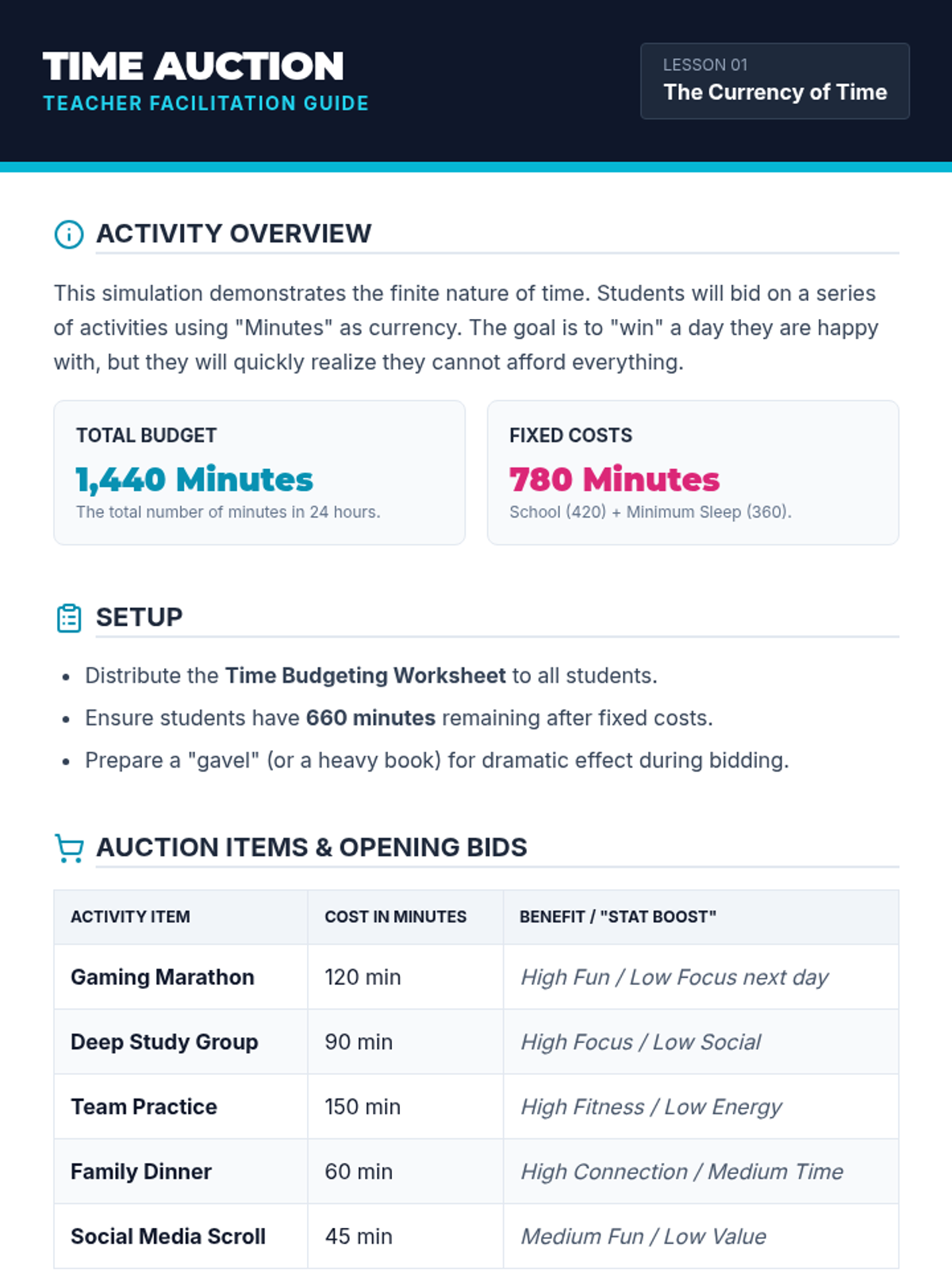
A facilitation guide for teachers to run the 'Time Auction' activity. Includes activity setup, a list of auction items with their 'costs' in minutes, and discussion hooks to debrief the simulation.
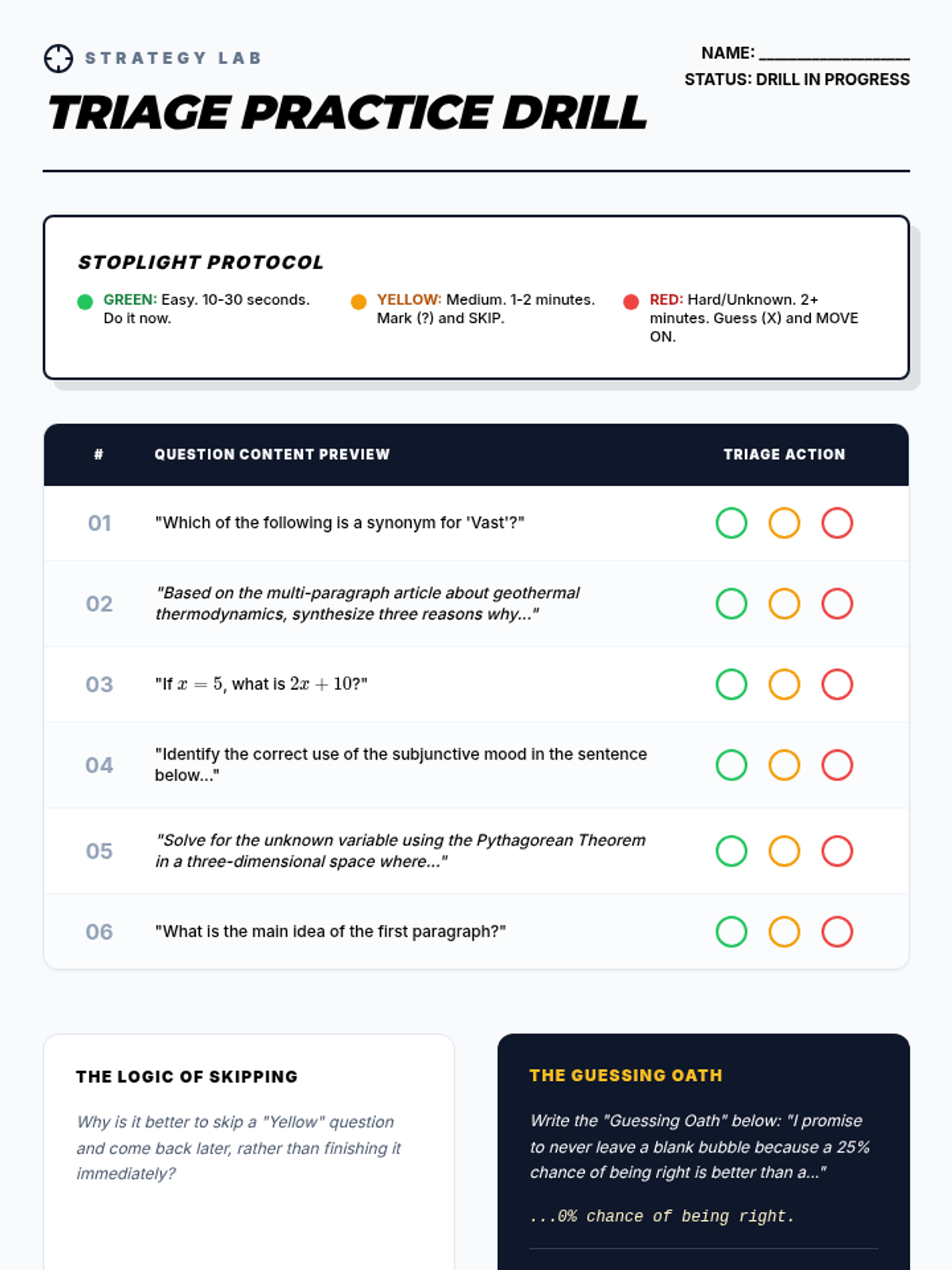
A practice sheet where students categorize different question types (Green, Yellow, Red) and reflect on the strategic benefits of skipping and guessing.
An introductory slide deck for the 'Currency of Time' lesson, framing time management as a game-based resource allocation simulation. It uses RPG-style visuals to explain fixed costs, finite resources, and the concept of time as currency.
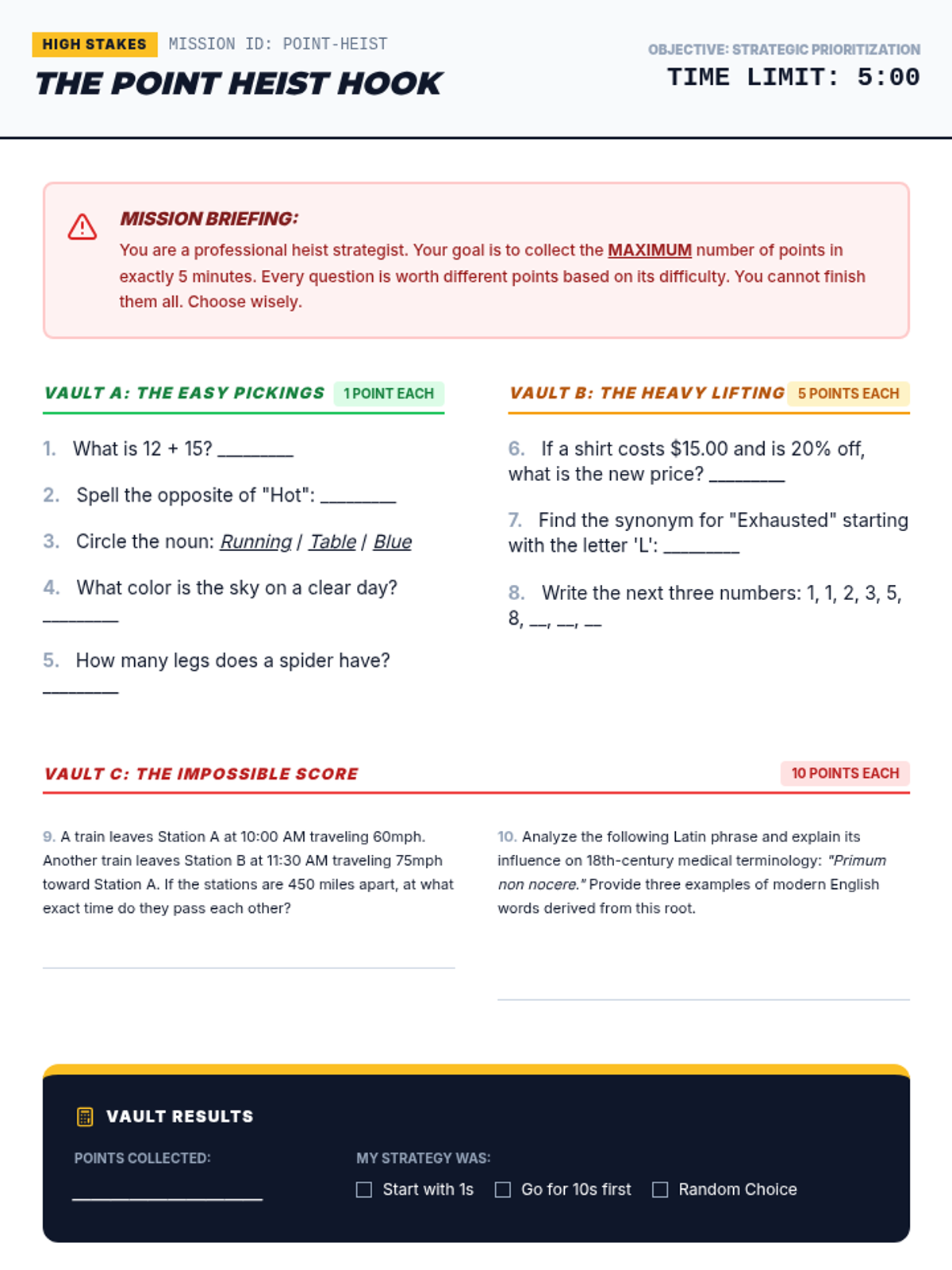
The "Point Heist" activity where students practice prioritizing easy questions over hard ones to maximize their total score under a strict time limit.
Lesson 2 slides introducing the Triage (Stoplight) Strategy for prioritizing questions and managing time during a test.
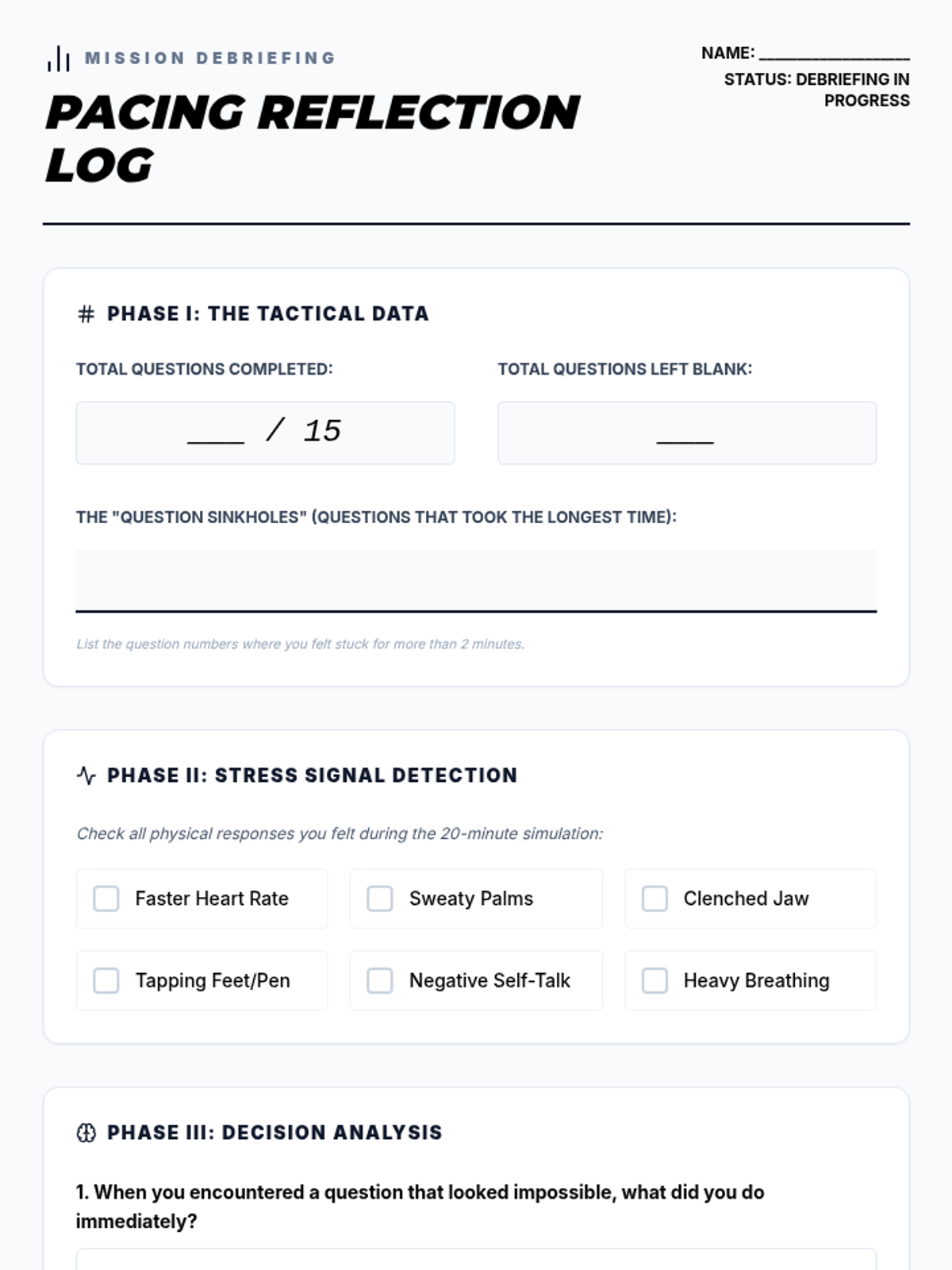
A reflection worksheet where students analyze their diagnostic test results, identify stress triggers, and evaluate their time management choices.
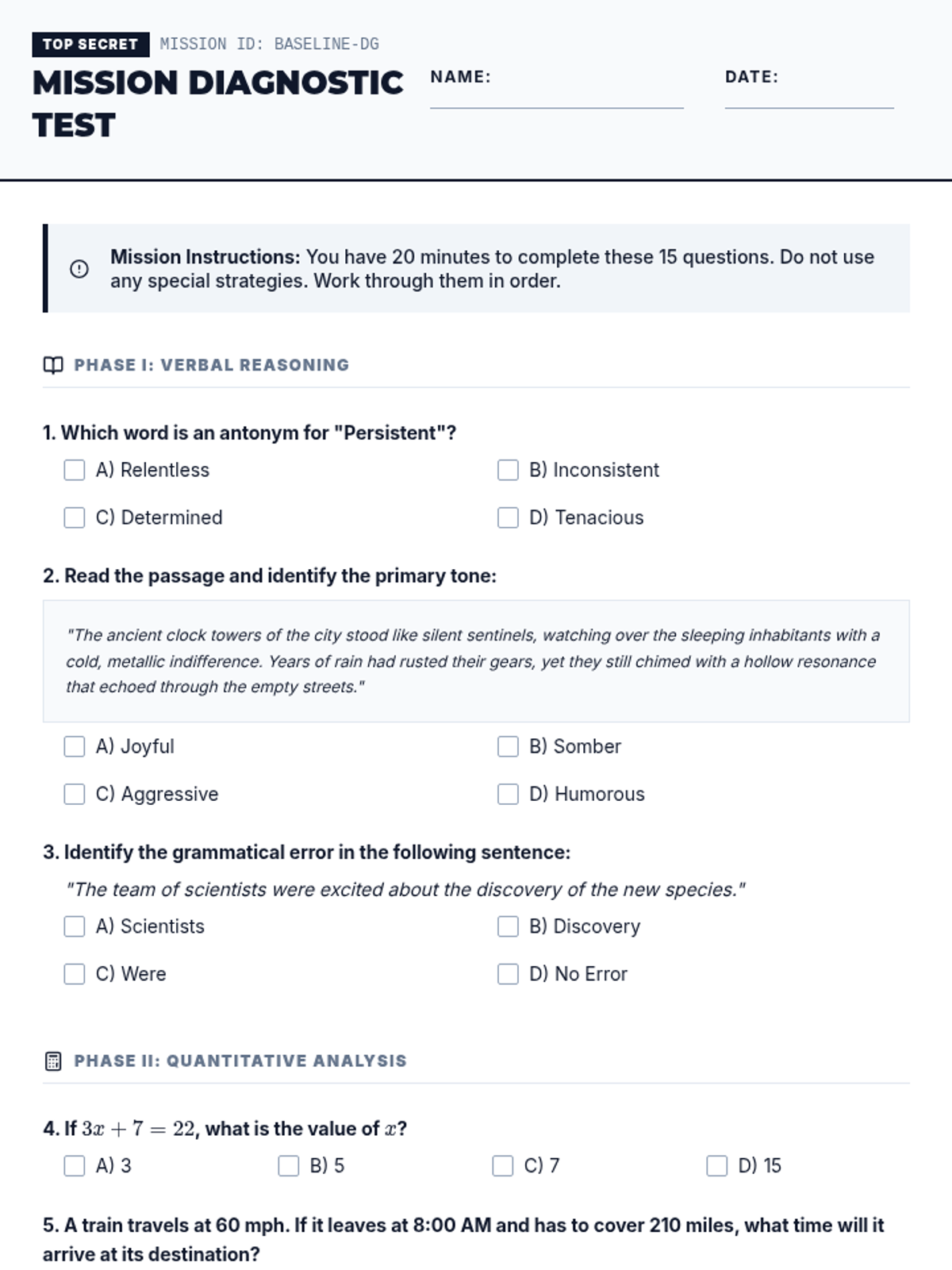
A diagnostic test containing mixed difficulty questions (ELA, Math, Logic) used to establish a student's natural testing pace and anxiety baseline.
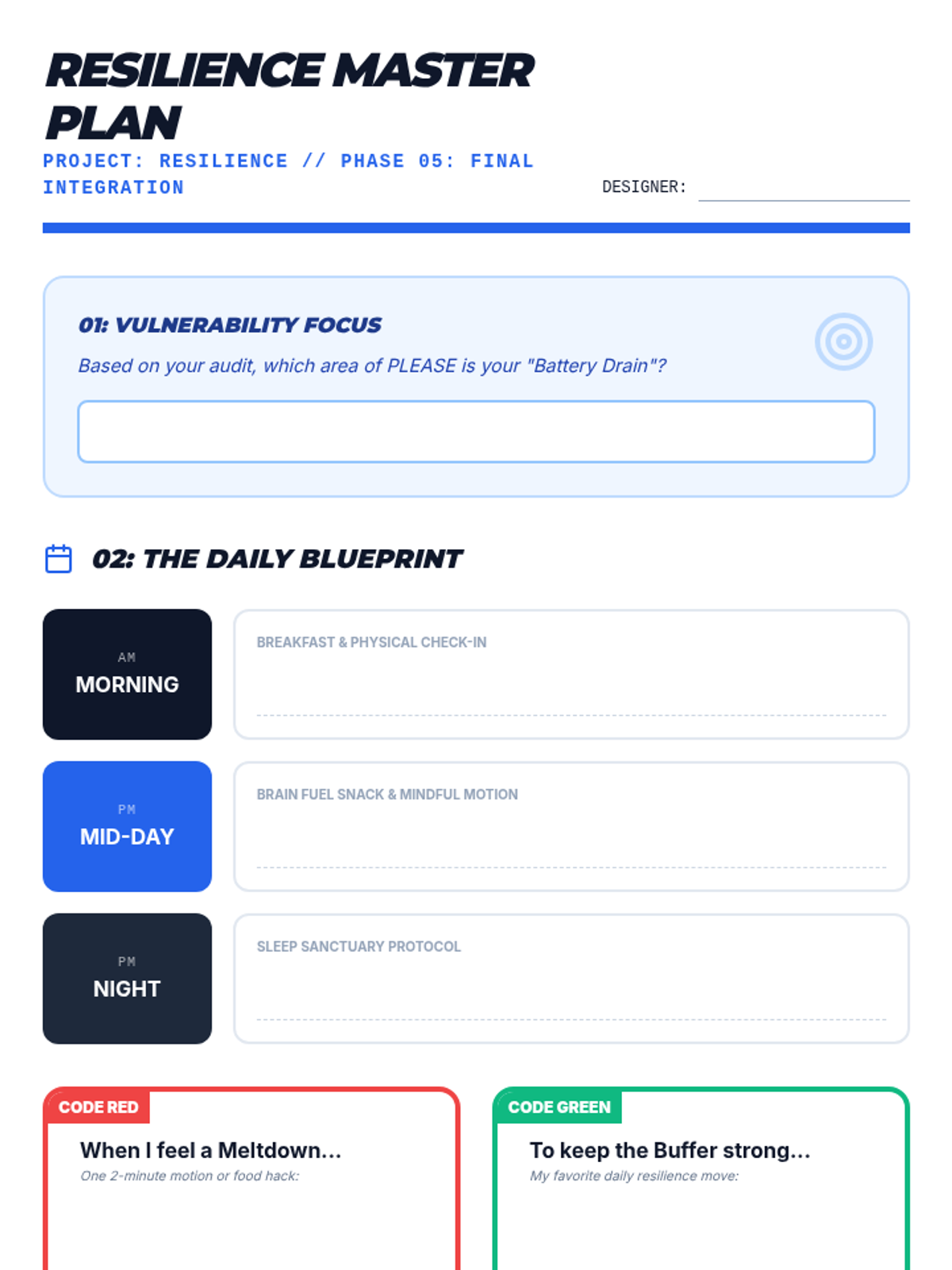
A comprehensive final project document where students synthesize their PLEASE routine, track their habits over 7 days, and write a letter of intent to their future selves.
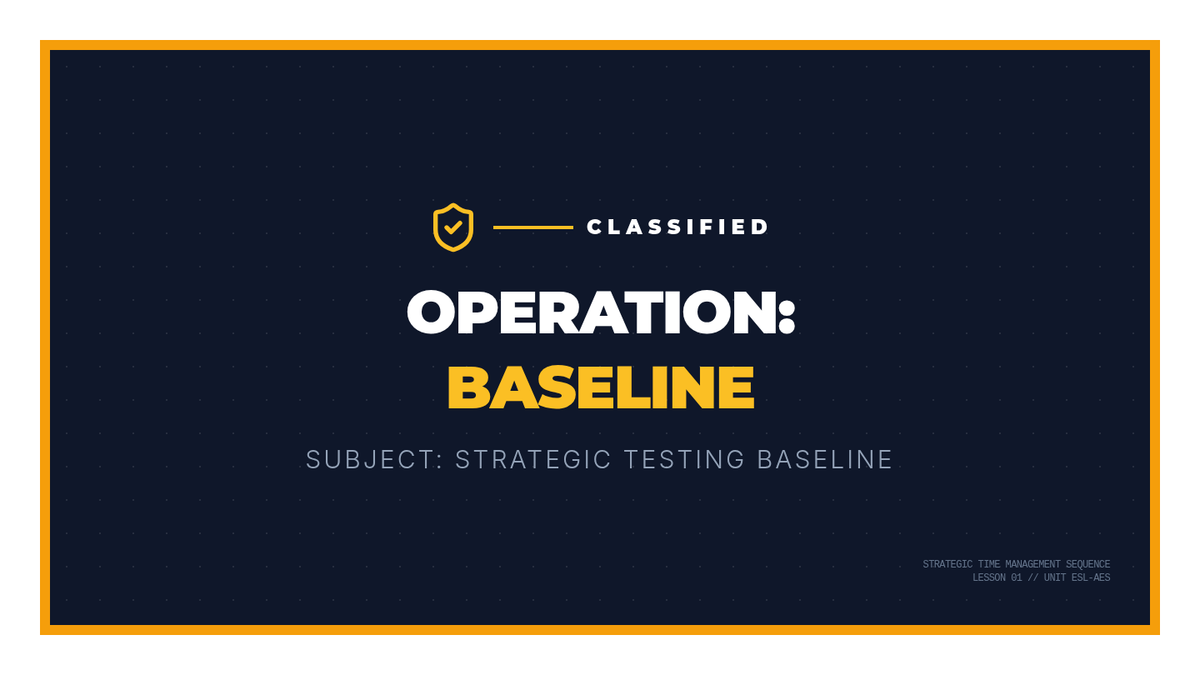
Introductory presentation for Lesson 1, setting the "Strategic Mission" theme and providing parameters for the diagnostic test.
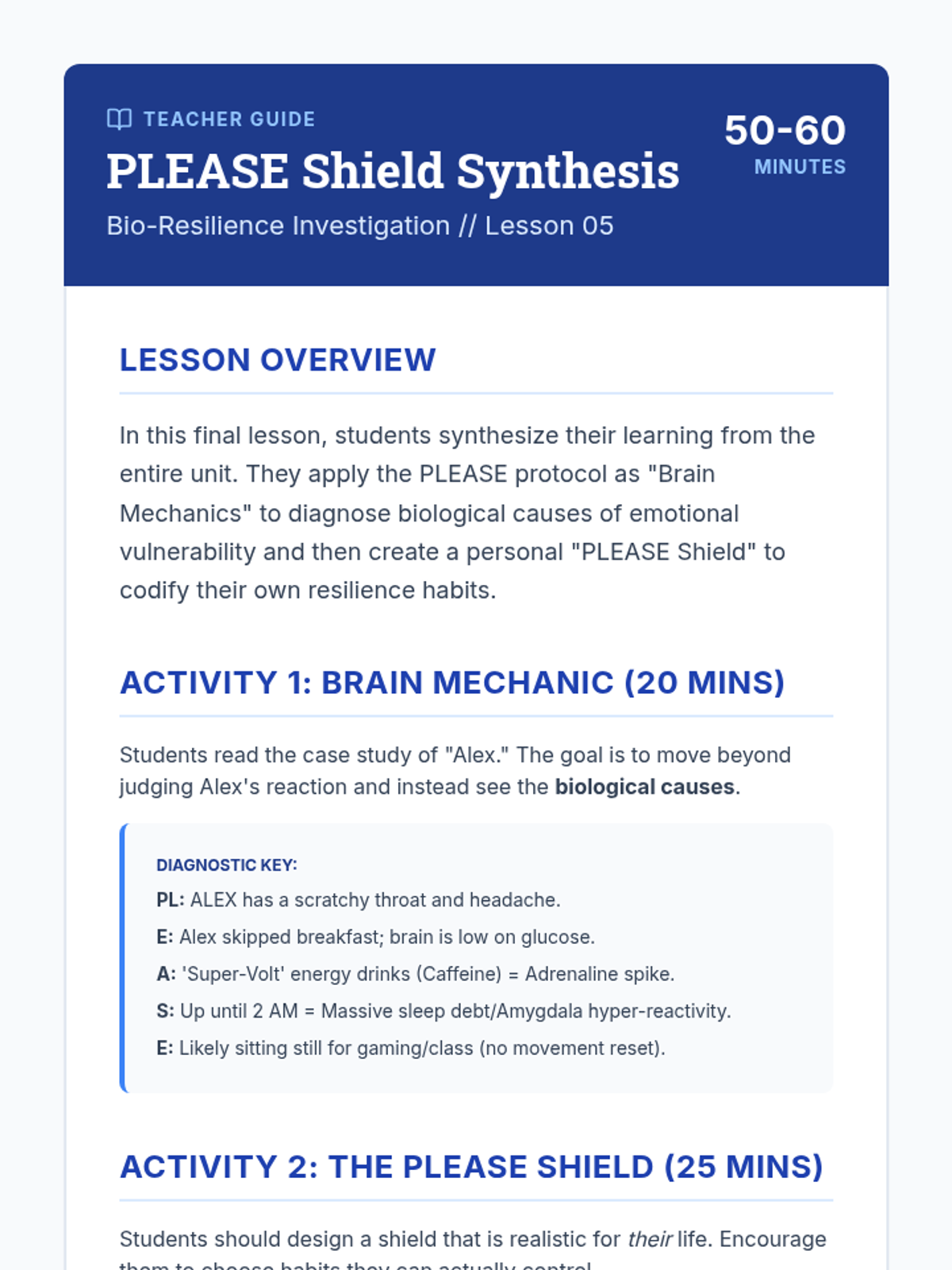
A teacher facilitation guide for Lesson 5, including a diagnostic key for the Brain Mechanic activity and project success criteria.
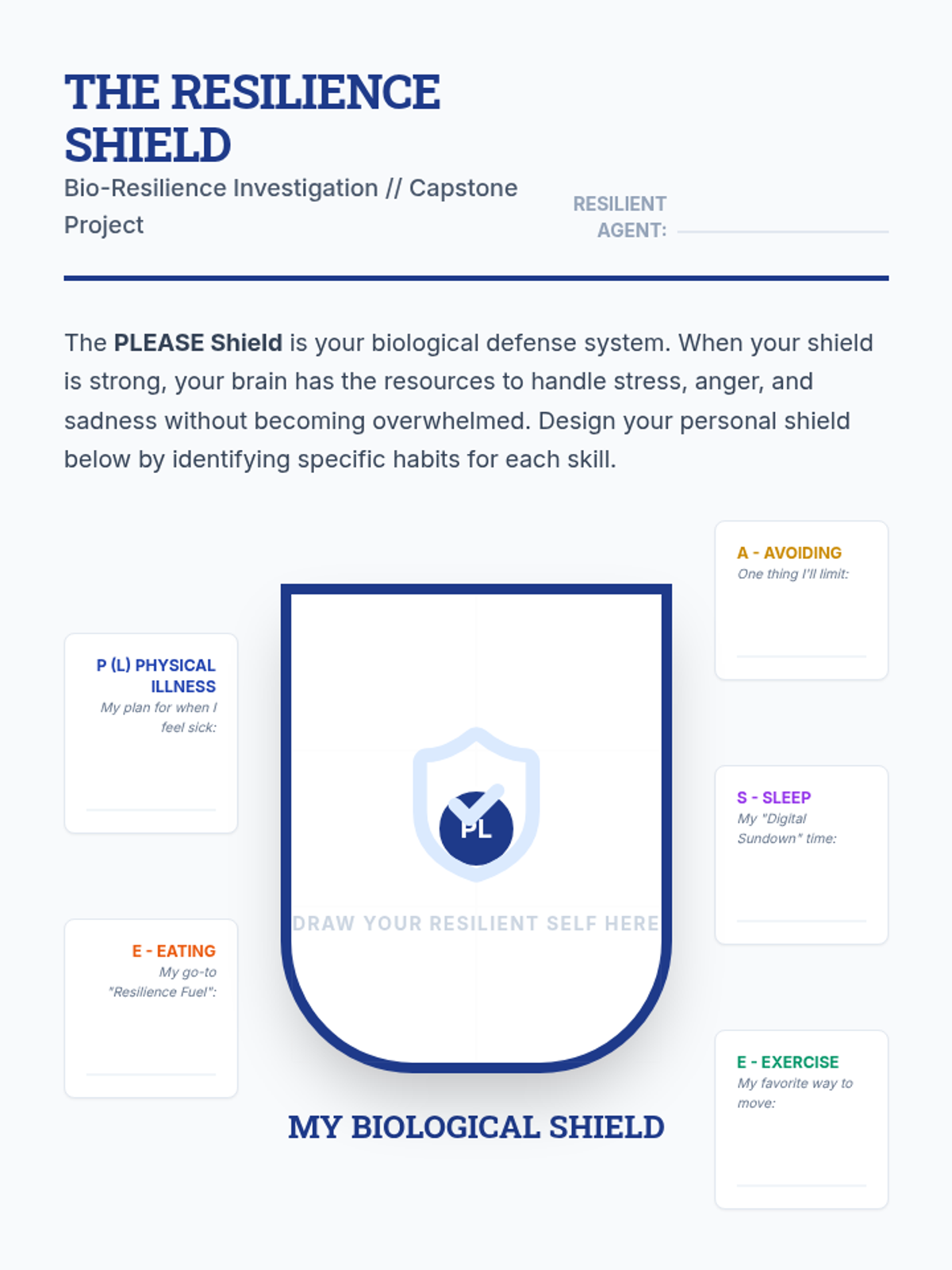
A student project worksheet for designing a personal 'PLEASE Shield' by identifying specific physical health habits that build emotional resilience.
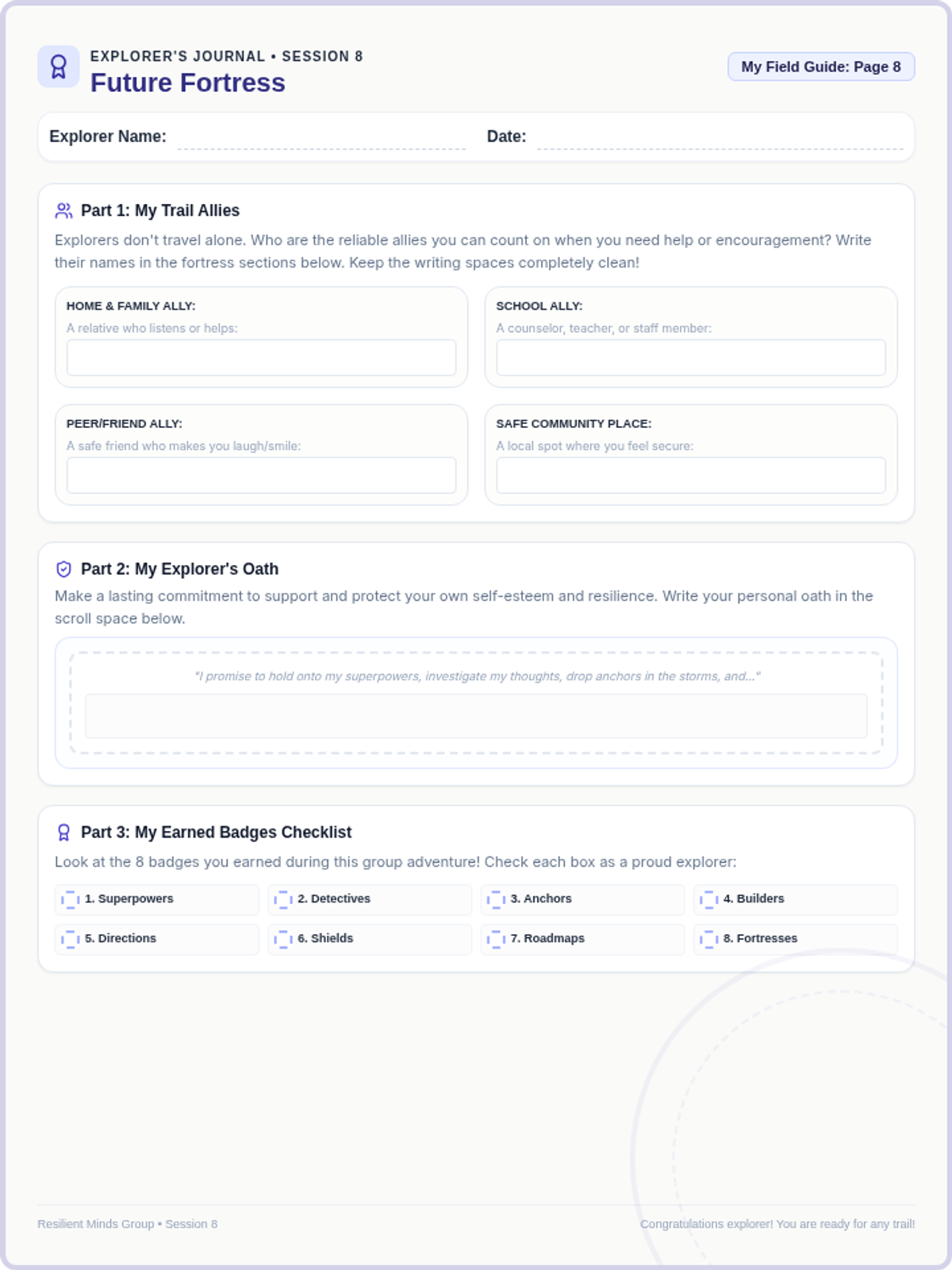
Student-facing worksheet for Session 8 of the Resilient Minds Group curriculum. Outlines graduation celebration, social support mapping, peer feedback, and generalization strategies.
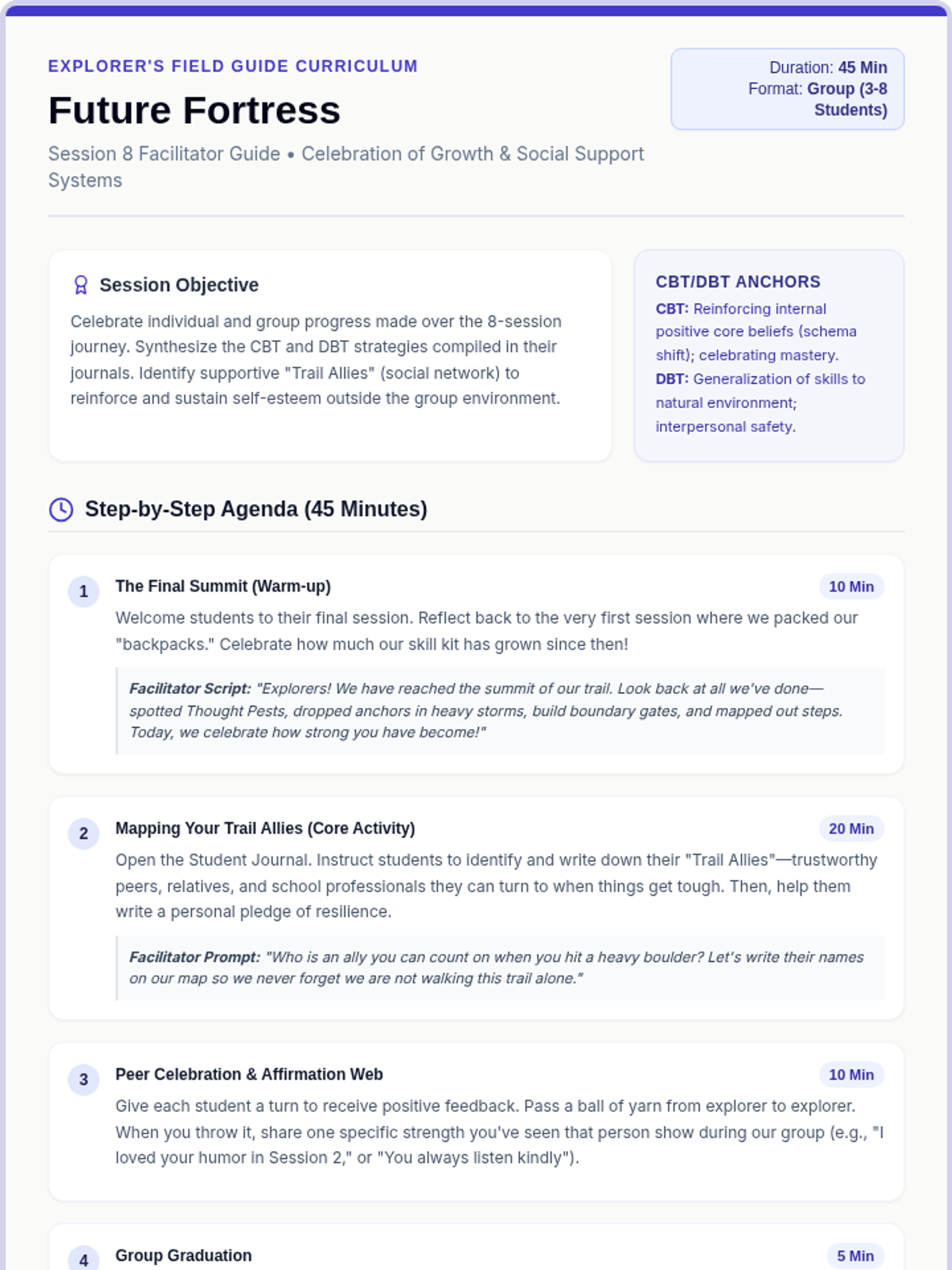
Facilitator guide for Session 8 of the Resilient Minds Group curriculum. Outlines graduation celebration, social support mapping, peer feedback, and generalization strategies.
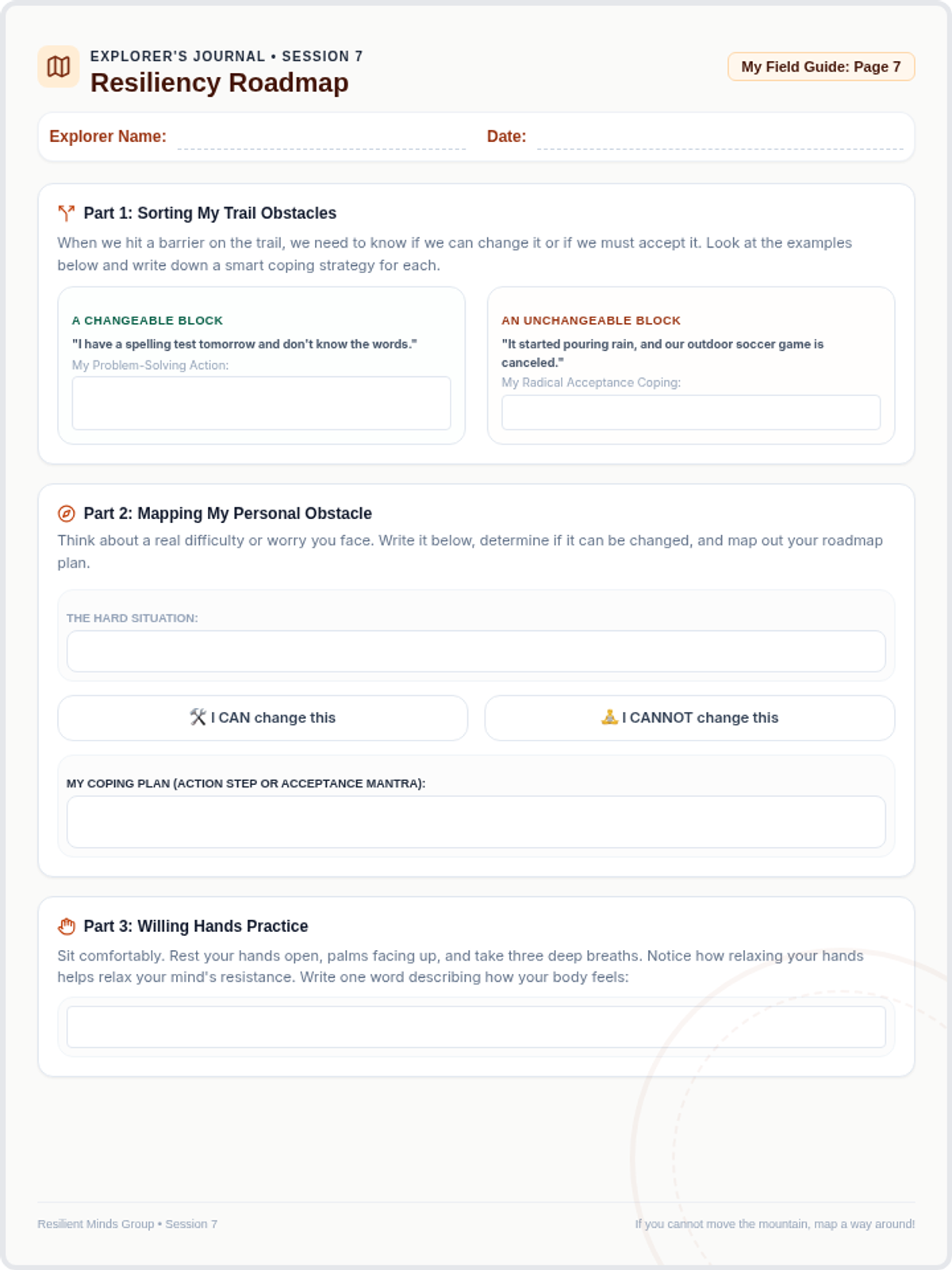
Student-facing worksheet for Session 7 of the Resilient Minds Group curriculum. Features a decision matrix for Changeable vs Unchangeable events, and a somatic Willing Hands reflection space.
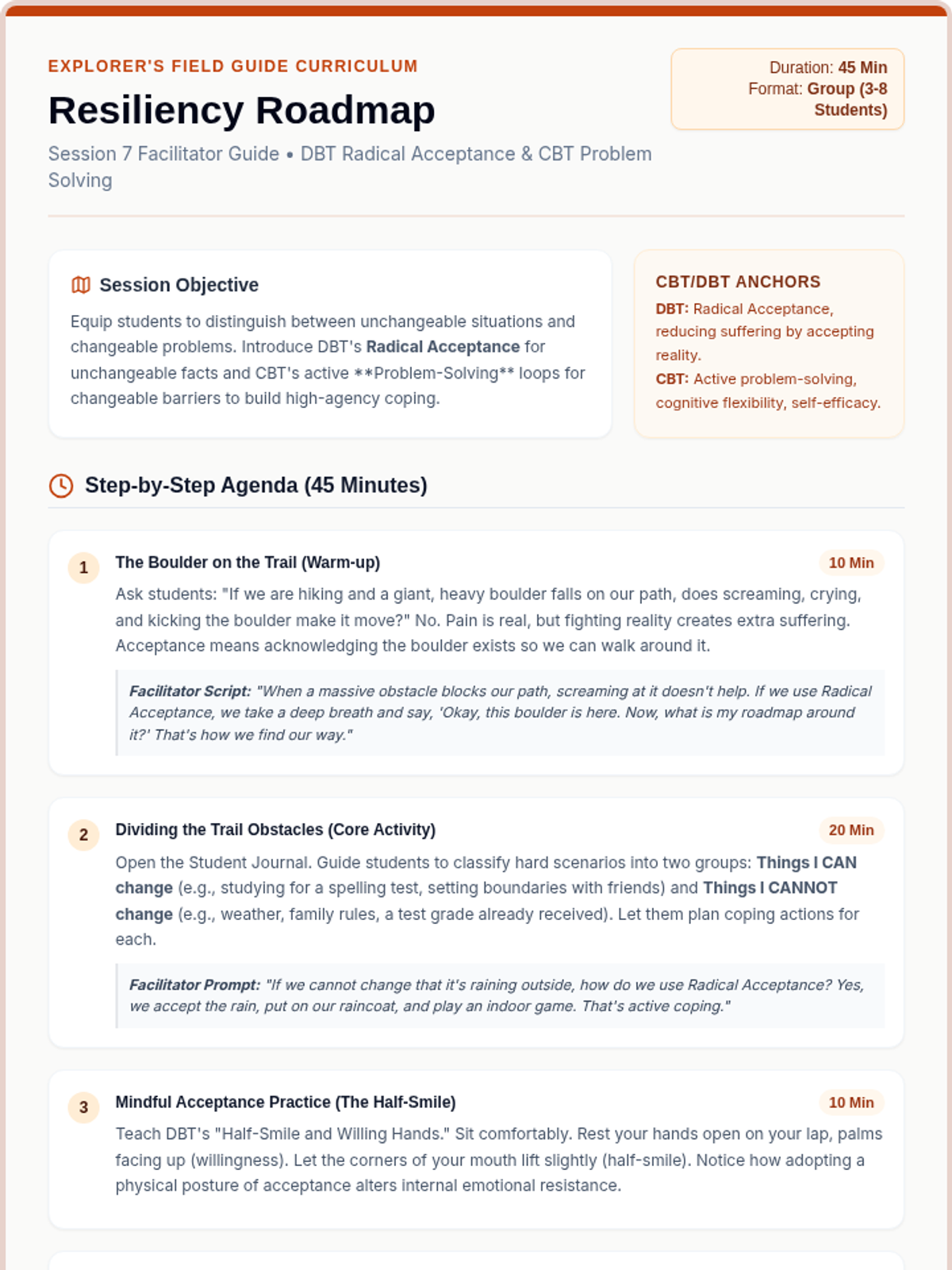
Facilitator guide for Session 7 of the Resilient Minds Group curriculum. Outlines session objectives, CBT/DBT concepts, a step-by-step 45-minute agenda, therapeutic scripts, and clinical guidance tips.
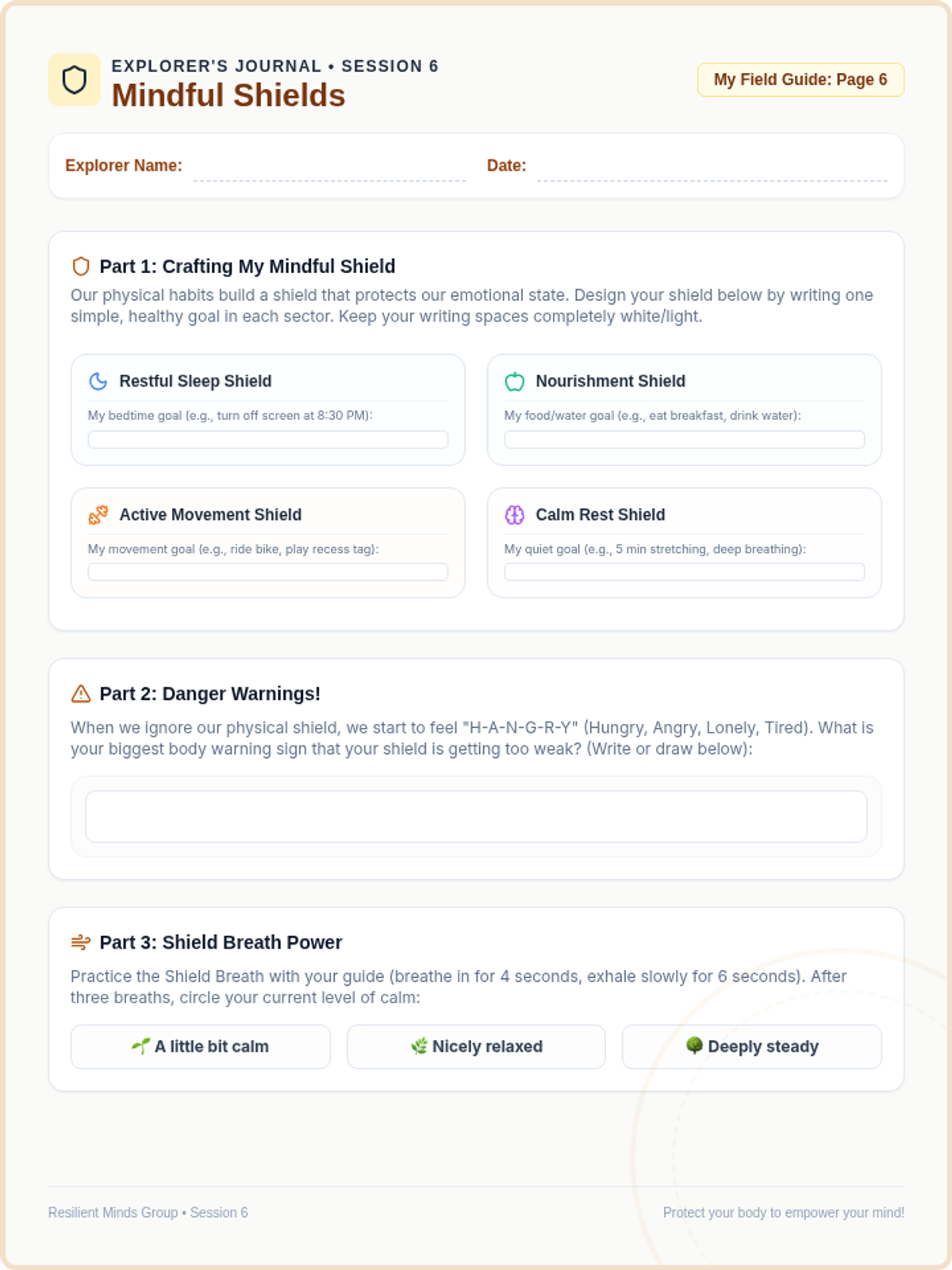
Student journal sheet for Session 6 of the Resilient Minds Group. Focuses on physical health-emotional regulation links and contains a 2x2 shield goal mapping structure.
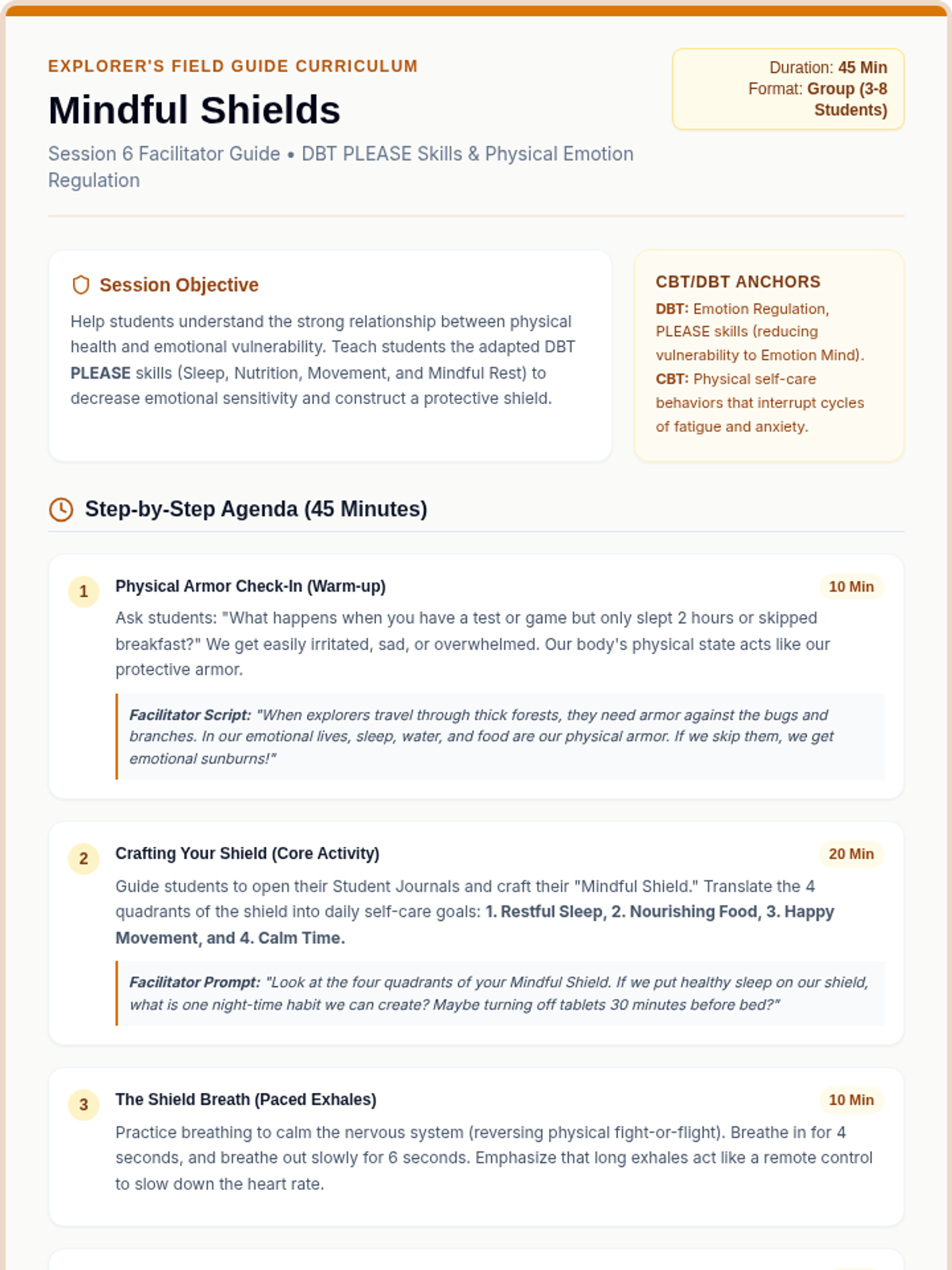
Facilitator guide for Session 6 of the Resilient Minds Group curriculum. Outlines DBT PLEASE physical self-care and emotional regulation strategies with therapeutic guidelines.
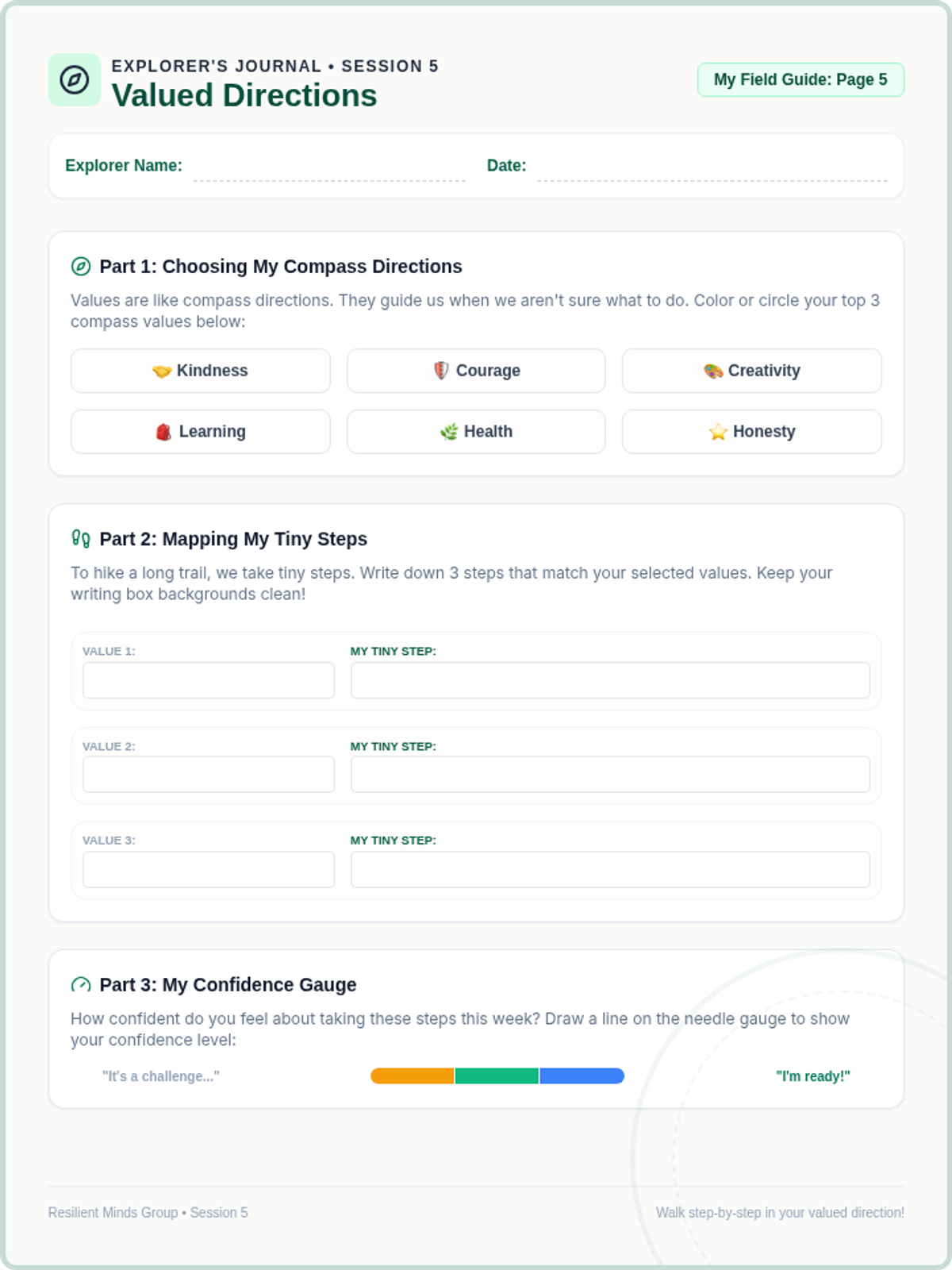
Student journal sheet for Session 5 of the Resilient Minds Group. Features a custom values selection bank and a structured 3-step action planning layout.
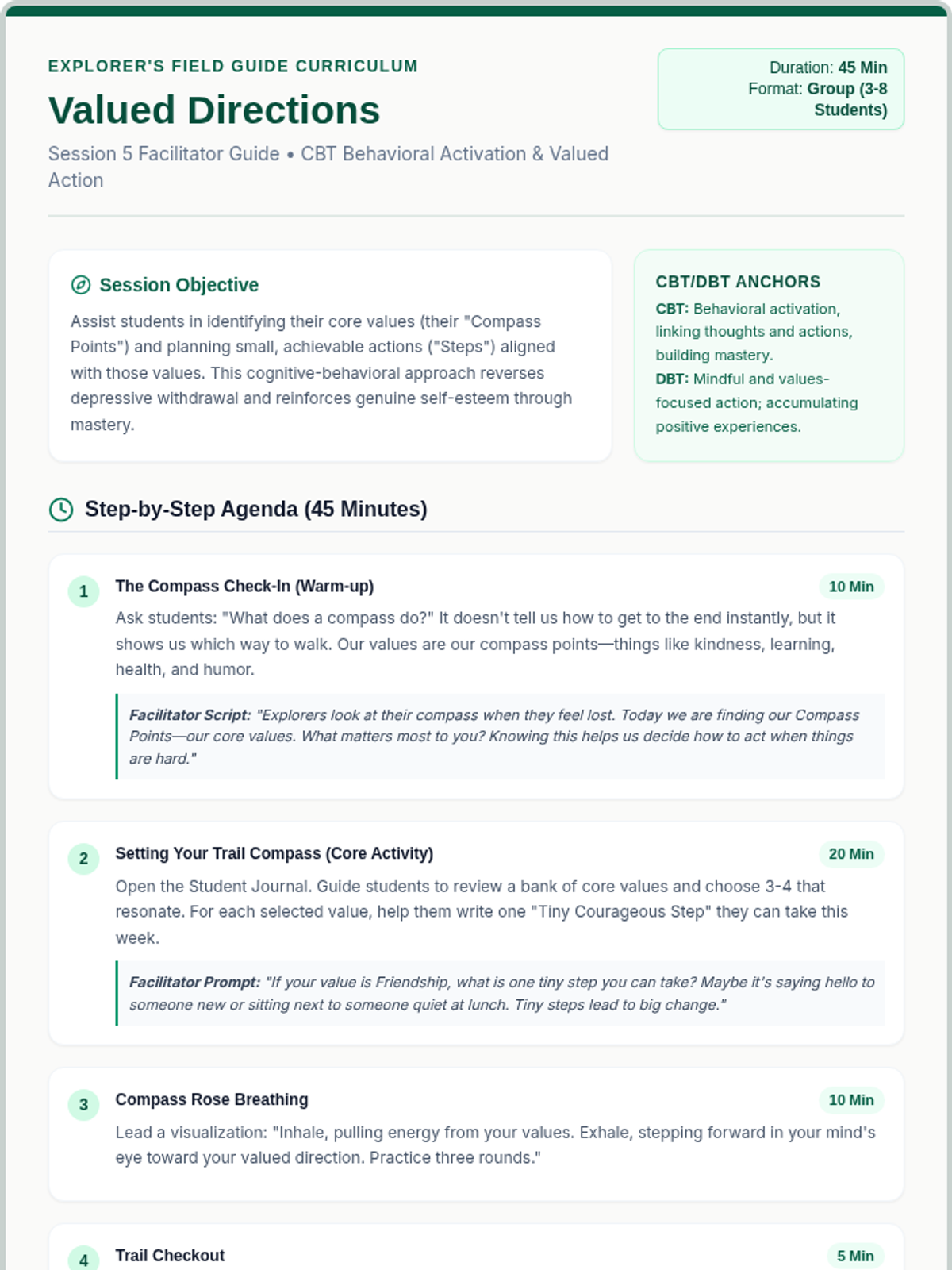
Facilitator guide for Session 5 of the Resilient Minds Group curriculum. Links CBT behavioral activation and DBT valued action with planning small, achievable steps.
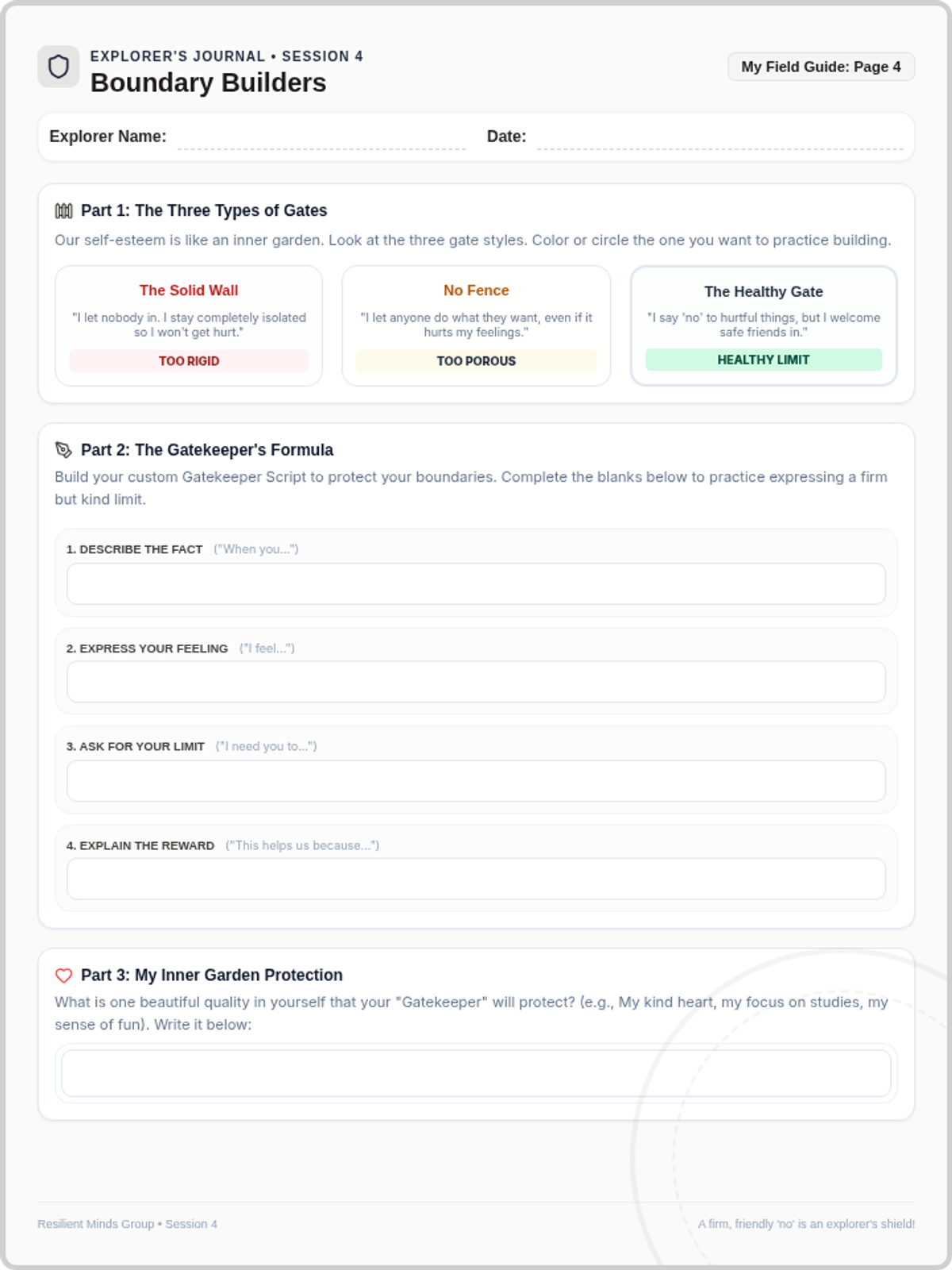
Student journal sheet for Session 4 of the Resilient Minds Group. Focuses on boundaries (the Gatekeeper metaphor) and a structured child-friendly DEAR MAN assertion tool.
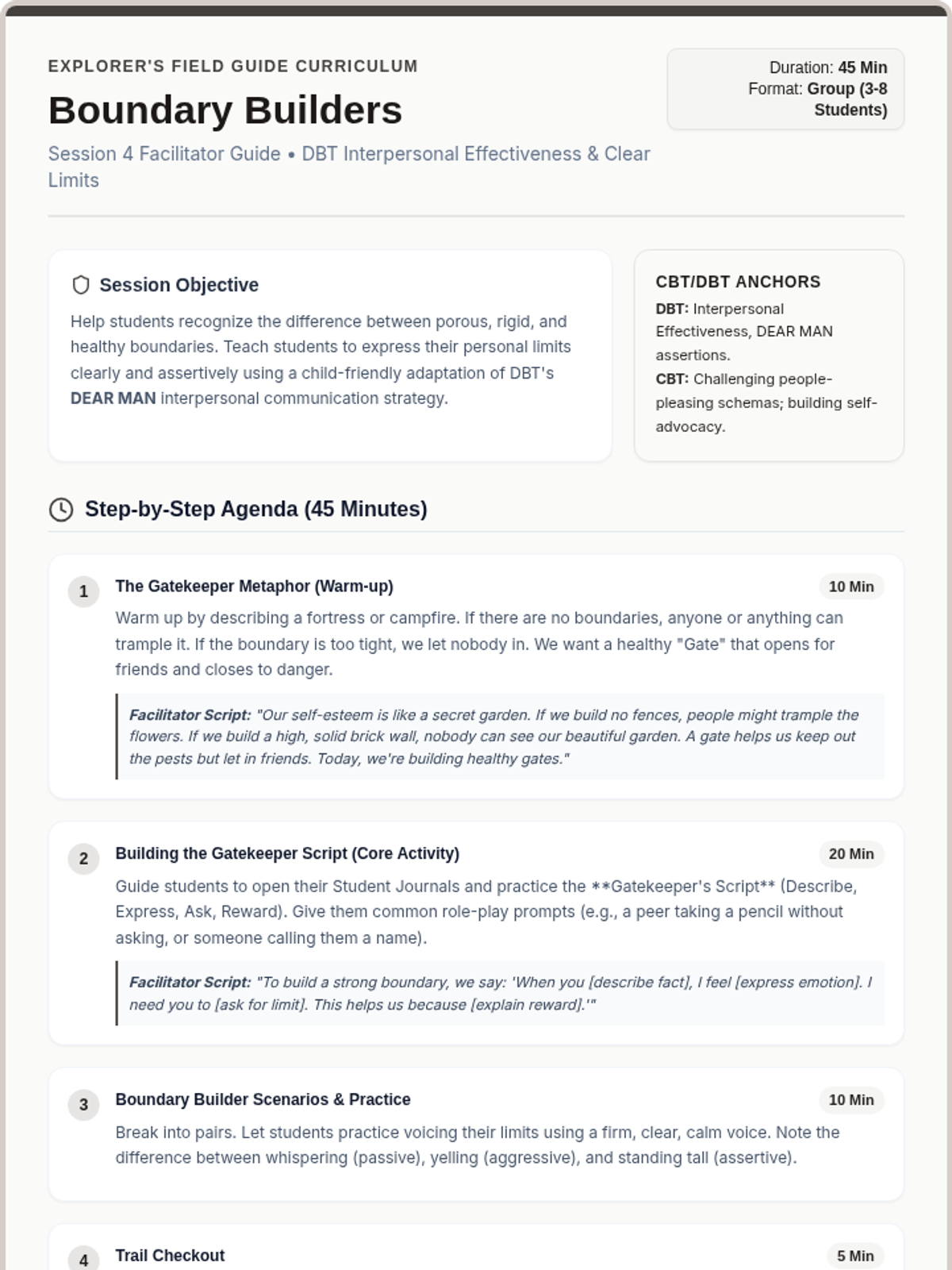
Facilitator guide for Session 4 of the Resilient Minds Group curriculum. Outlines assertive communication, personal limit-setting, and DBT Interpersonal Effectiveness skills (DEAR MAN style) to navigate social situations and foster healthy self-esteem.
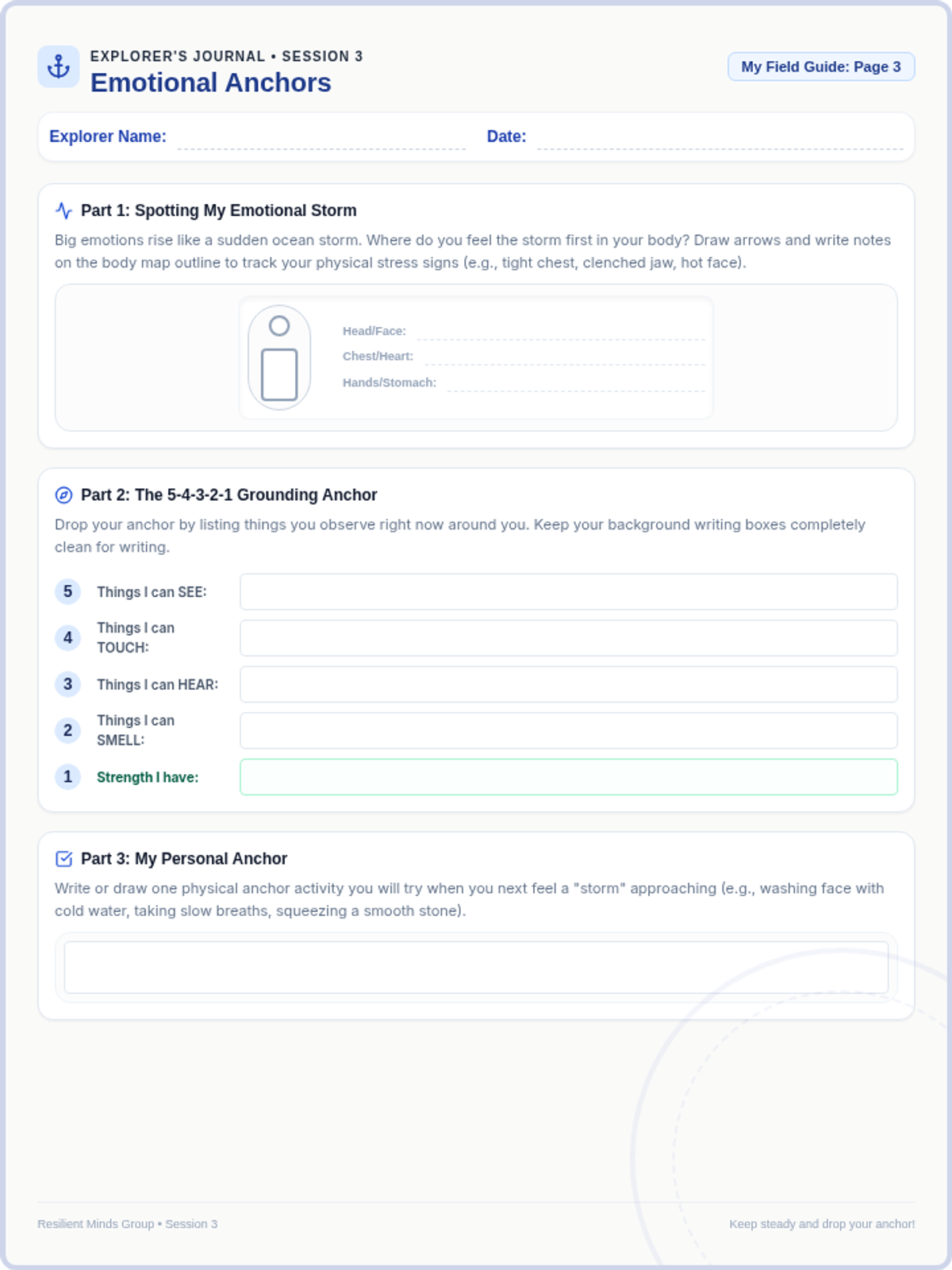
Student journal worksheet for Session 3 of the Resilient Minds Group. Features an emotional storm body mapping activity and a structured 5-4-3-2-1 sensory grounding layout.
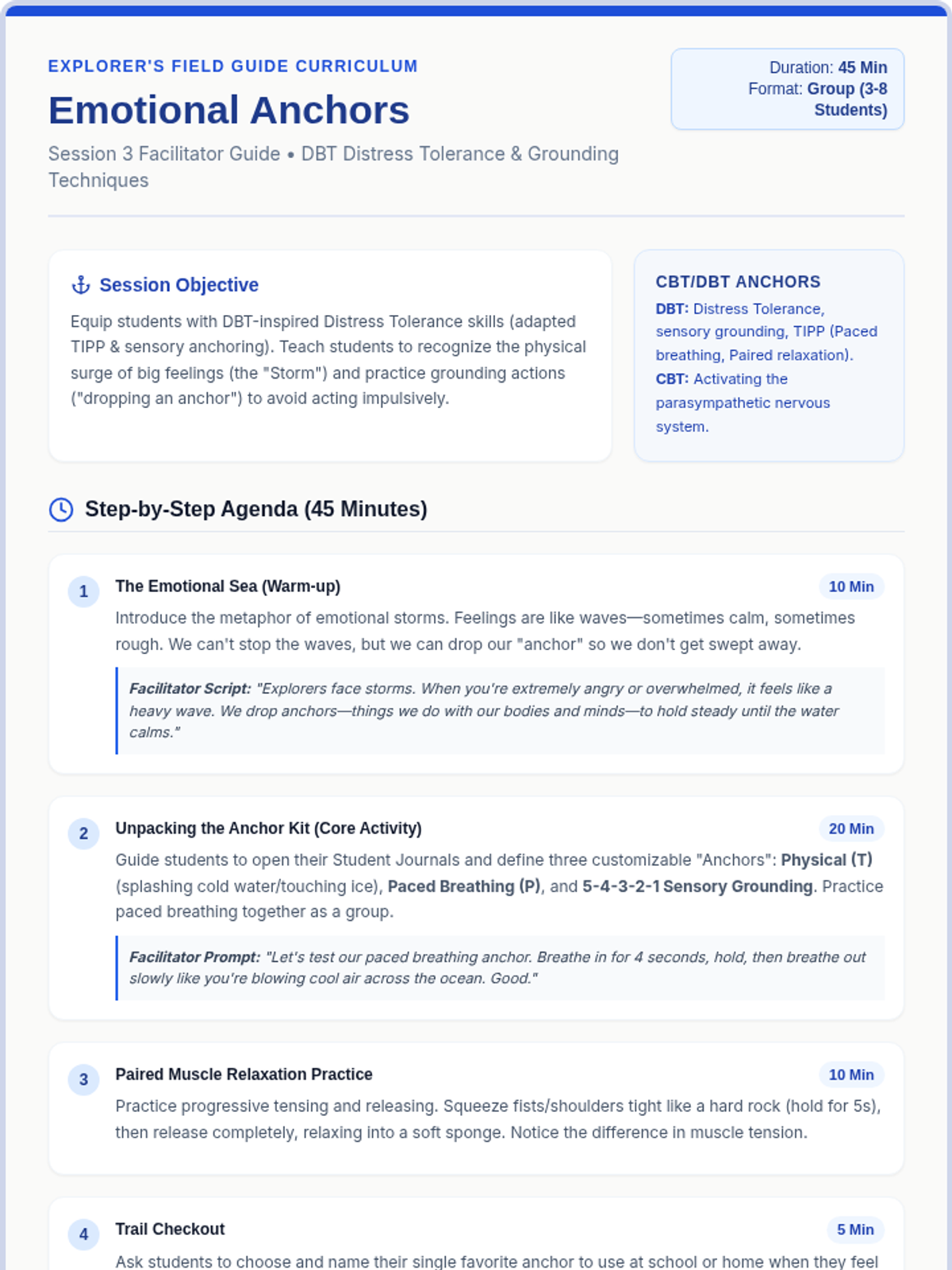
Facilitator guide for Session 3 of the Resilient Minds Group curriculum. Outlines DBT distress tolerance & sensory grounding techniques (TIPP and 5-4-3-2-1 models) with facilitation steps.
A slide deck for the final lesson that synthesizes the PLEASE skills and introduces the Resilience Master Plan, Visual Tracker, and Letter to Self activities.
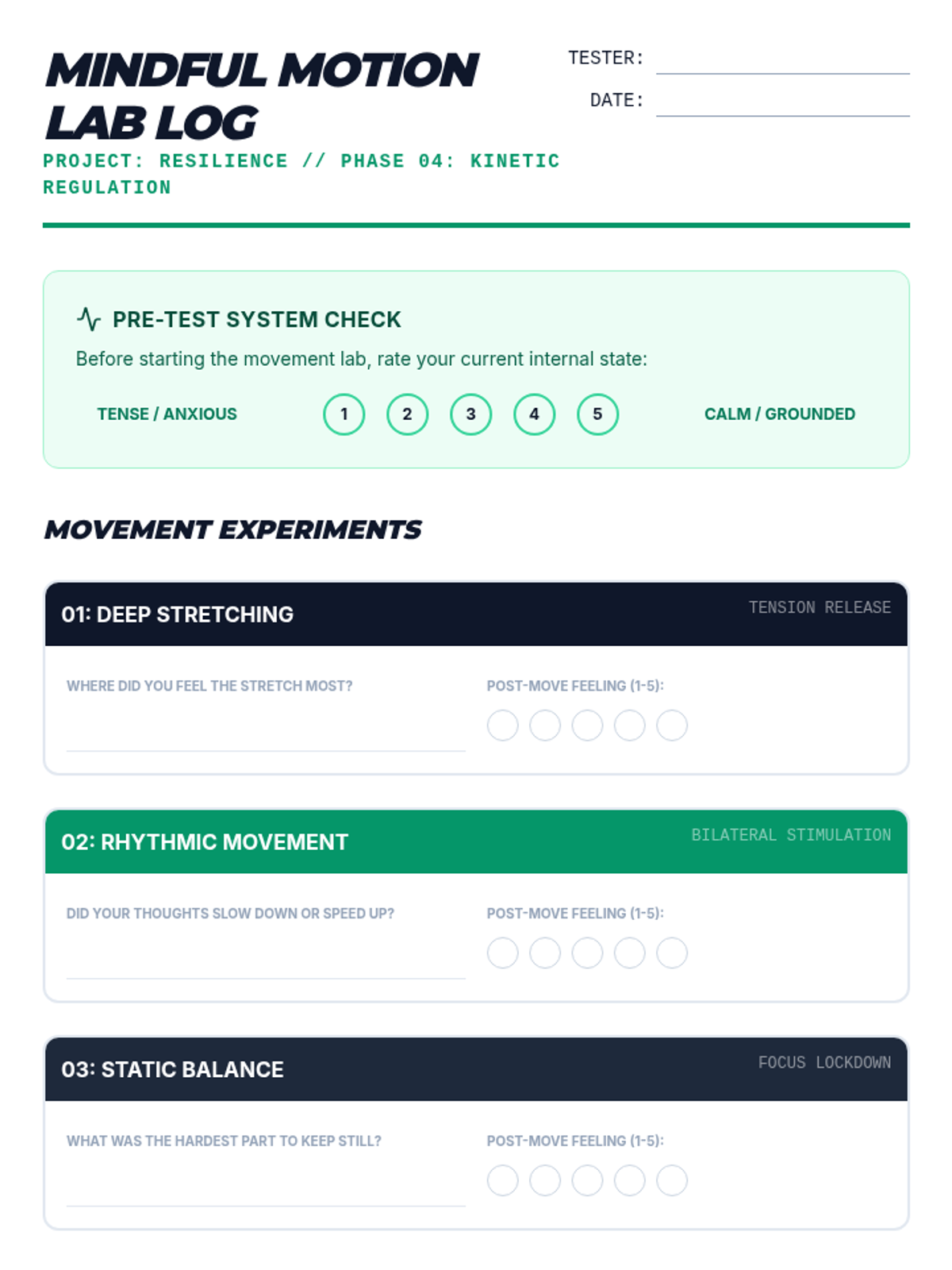
A movement log worksheet where students track their physical and emotional responses to different types of mindful motion.
A slide deck exploring non-competitive movement as a tool for emotional regulation, distinguishing mindful motion from competitive sports.
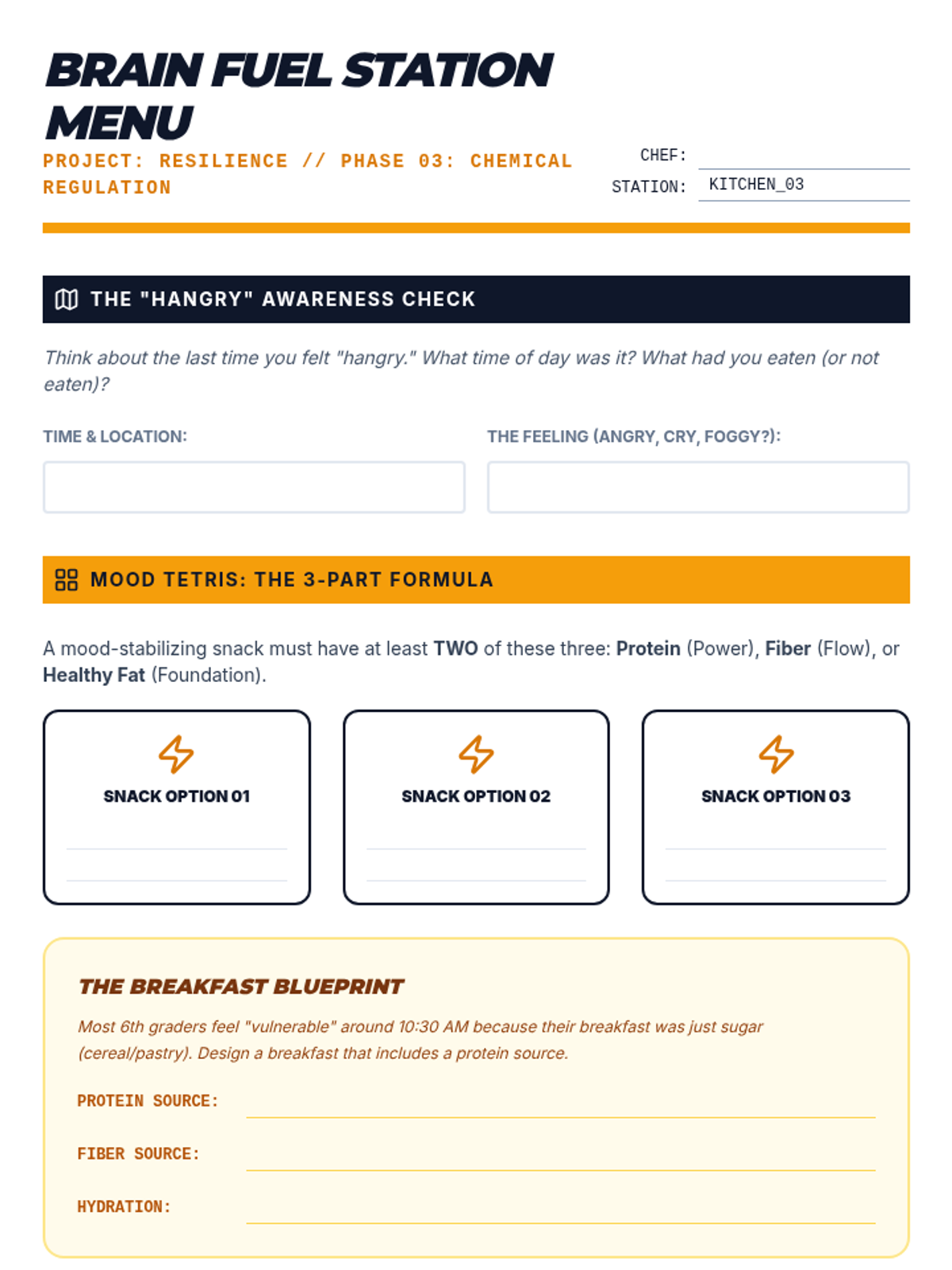
A menu-design worksheet where students plan balanced snacks and meals to prevent mood instability and 'hangry' emotional outbursts.