Stop-and-think strategies, impulse management, and SMART goal setting for personal growth. Develops internal motivation, stress reduction techniques, and resilience through proactive planning and monitoring.
A comprehensive sequence where 8th-grade students act as 'organizational consultants' to diagnose and solve scheduling conflicts and executive functioning challenges through case studies. Students learn root cause analysis, professional self-advocacy, emotional regulation strategies for procrastination, and tool evaluation before creating a final consultancy report.
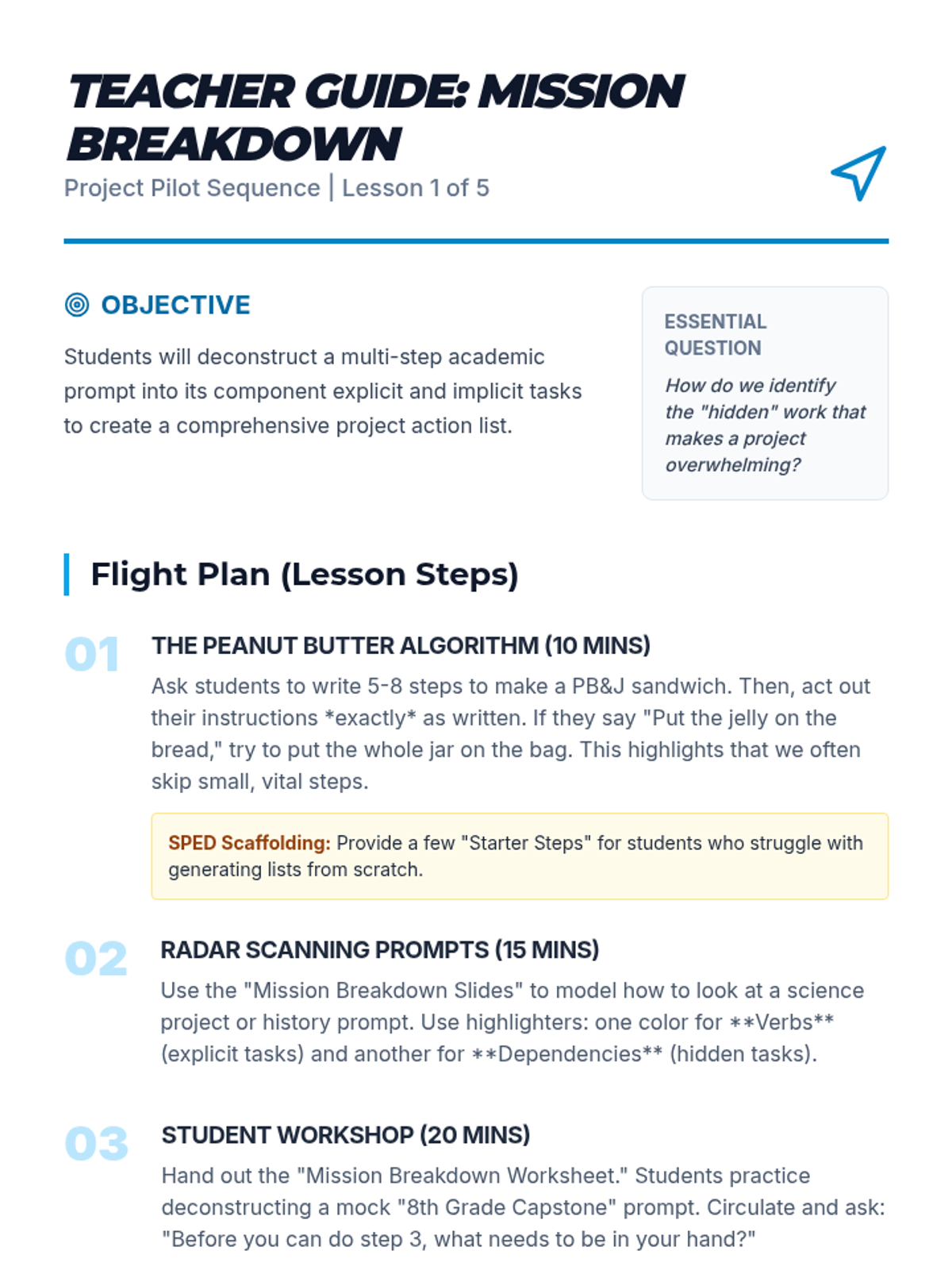
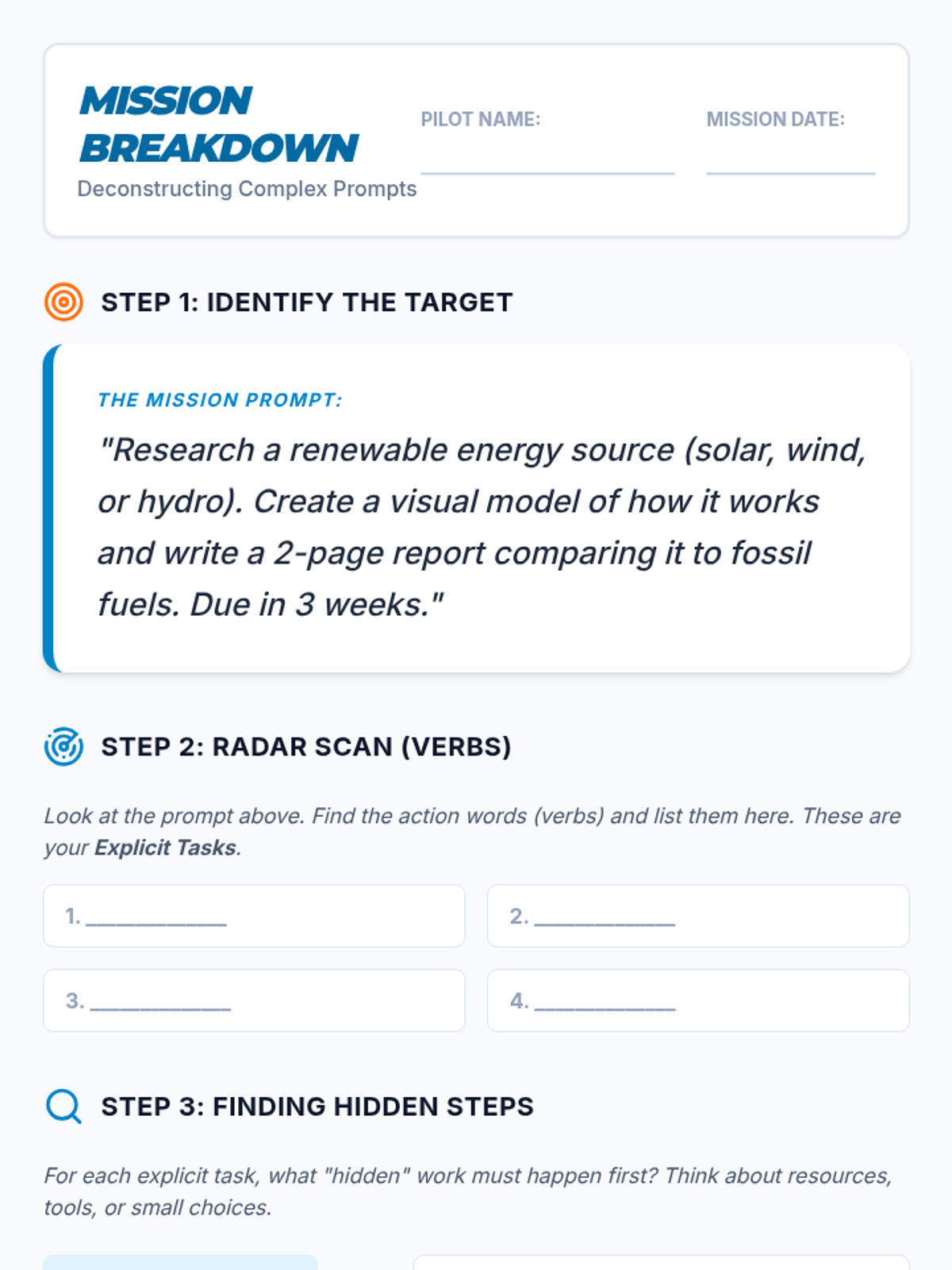
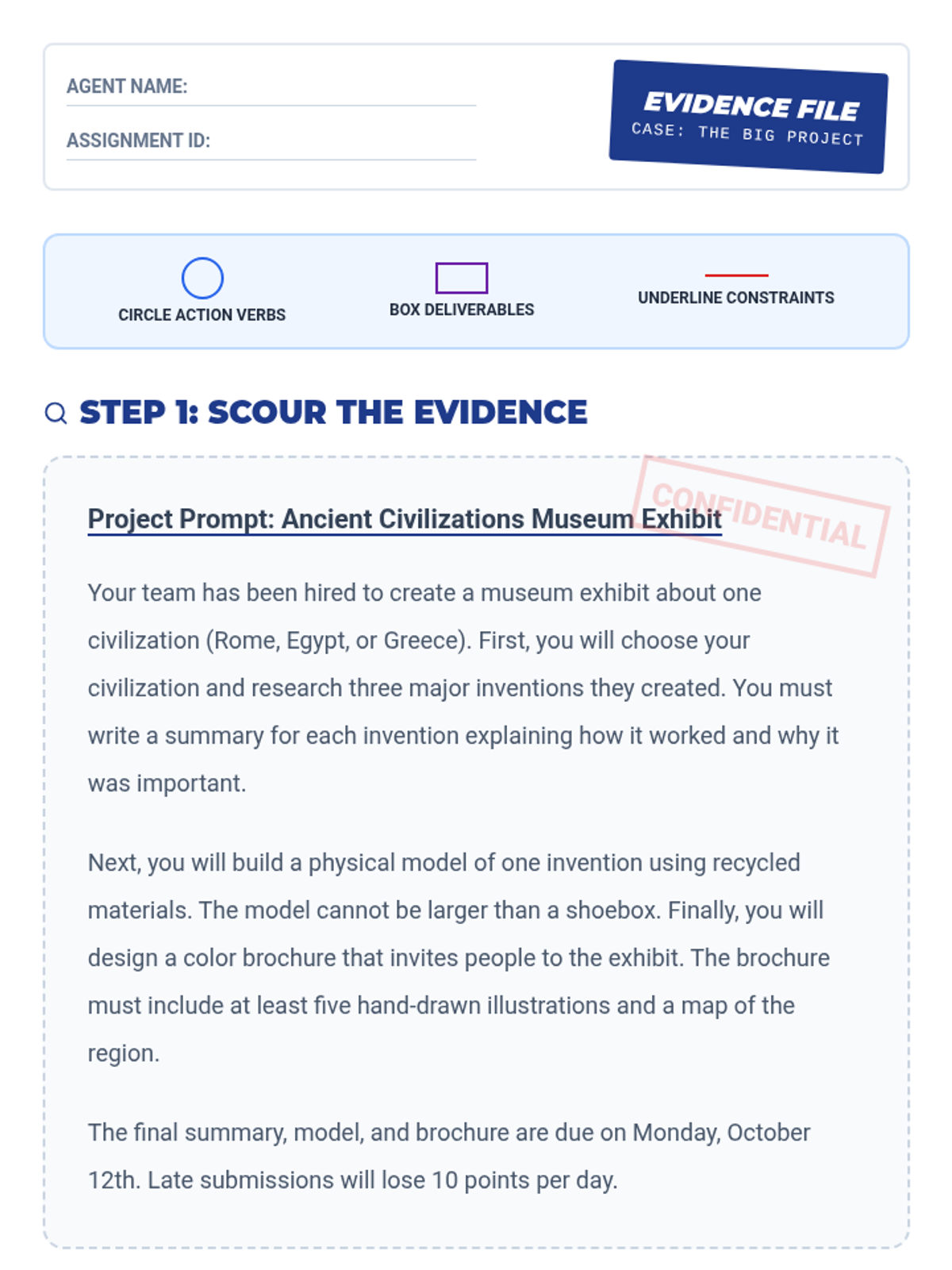
A specialized sequence for 8th-grade students focusing on executive functioning skills related to project management. Students learn to deconstruct complex assignments, plan backwards from deadlines, visualize overlapping tasks using Gantt charts, and adjust plans when setbacks occur.
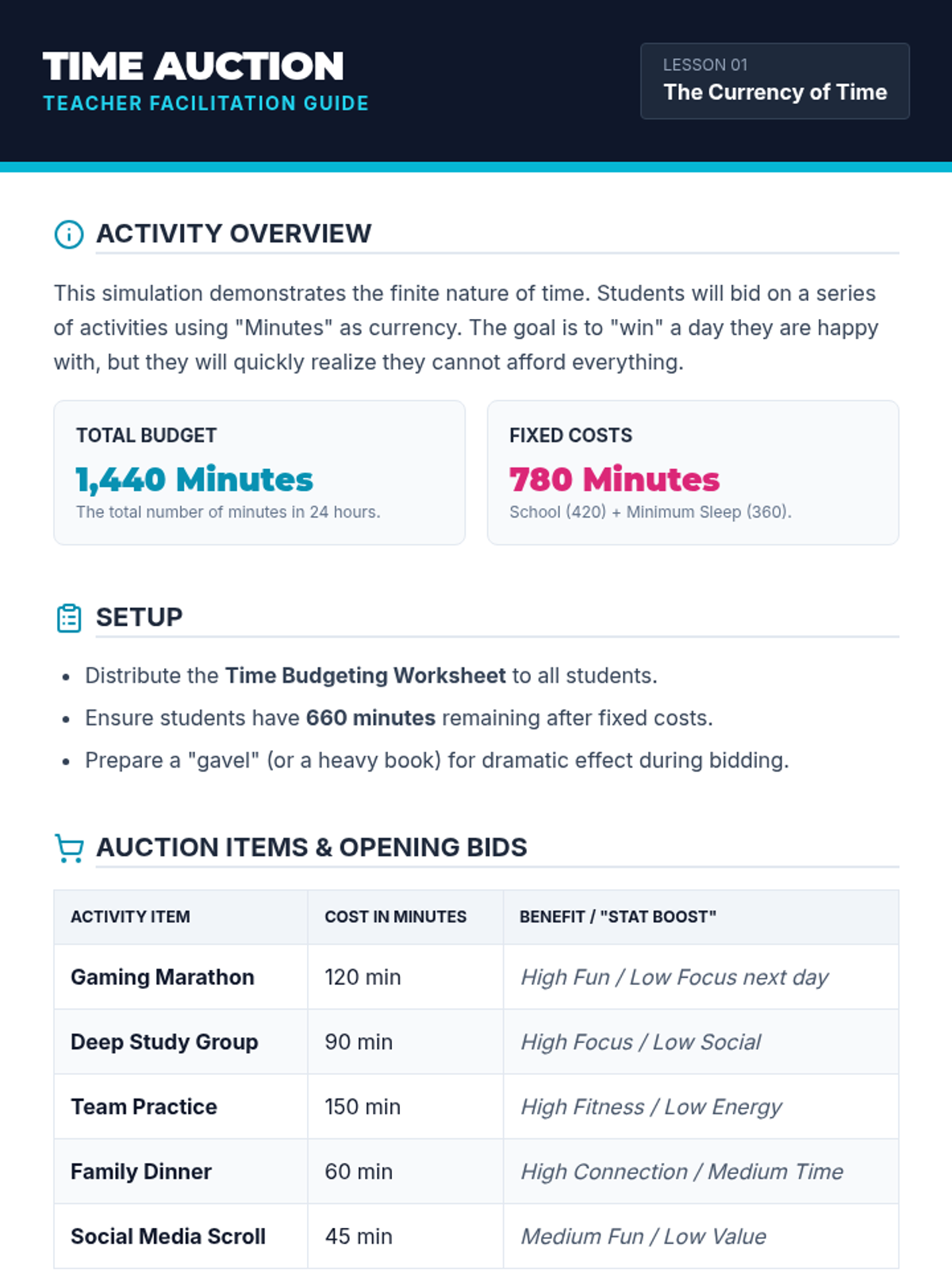
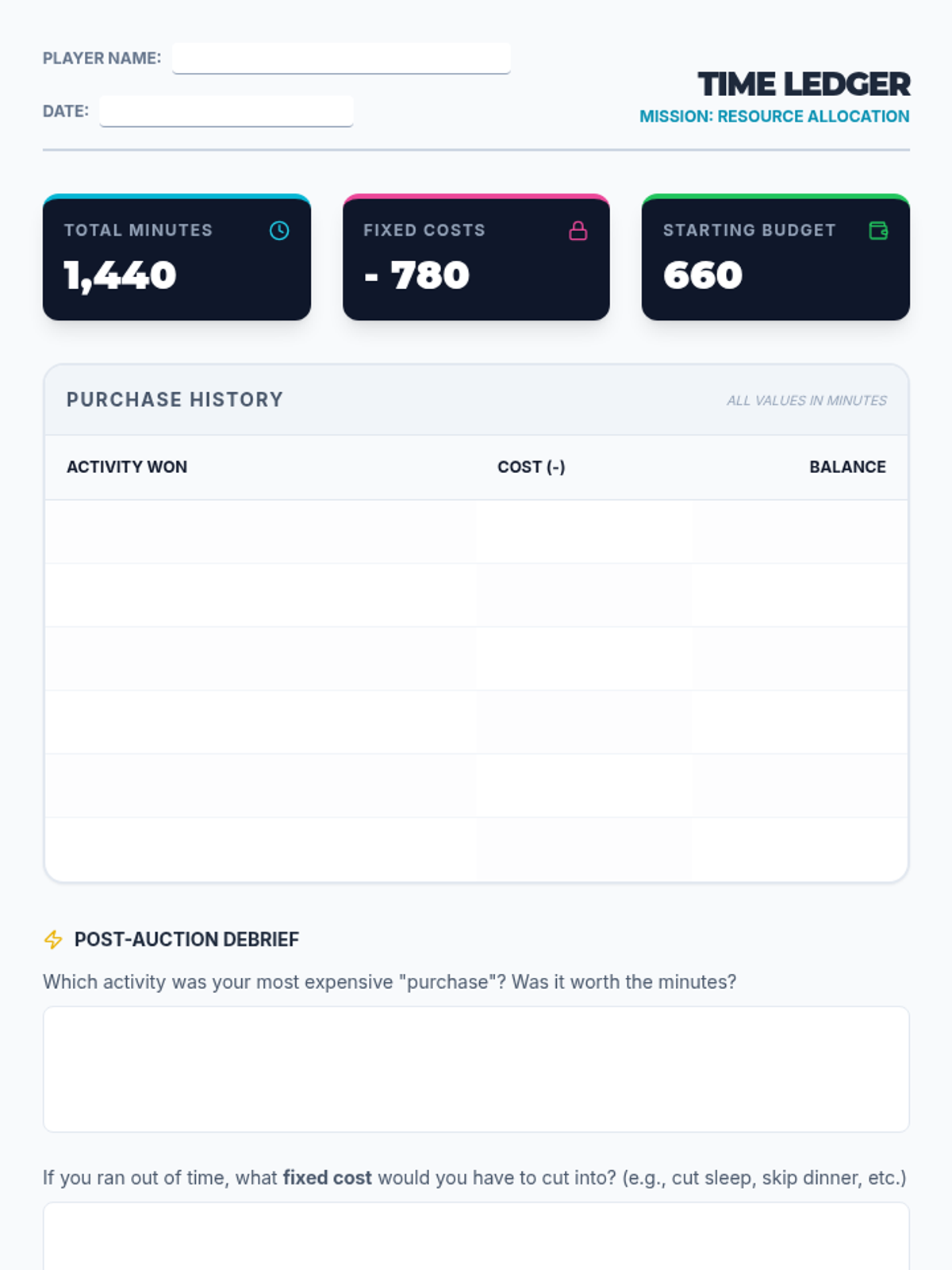
A game-based simulation sequence for 8th-grade students to master time and energy management. Students treat time as a finite currency, navigate trade-offs through opportunity cost simulations, and design a sustainable weekly schedule.
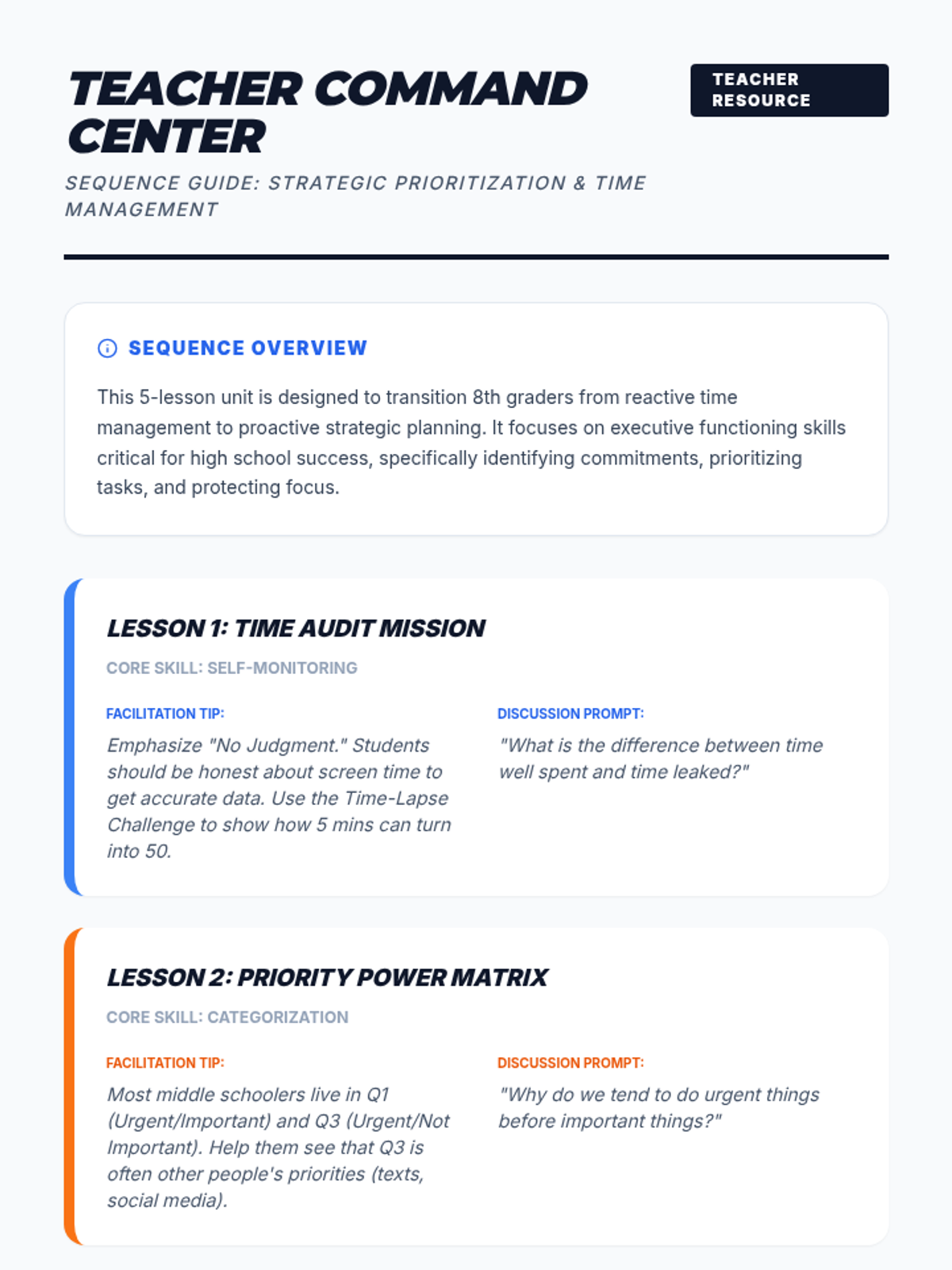
A comprehensive unit for 8th graders to master time management, prioritization using the Eisenhower Matrix, and time-blocking techniques to balance school and life.
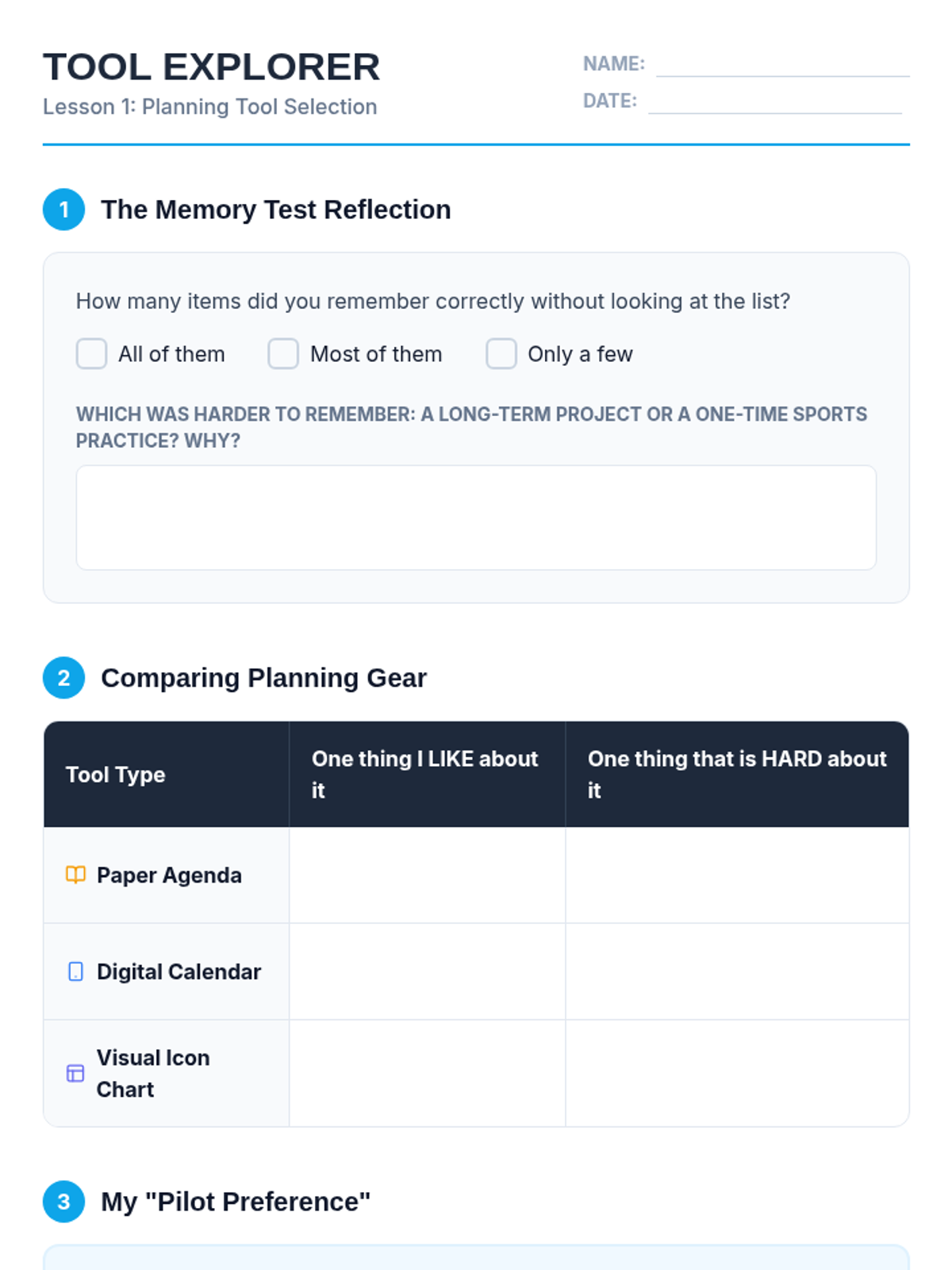
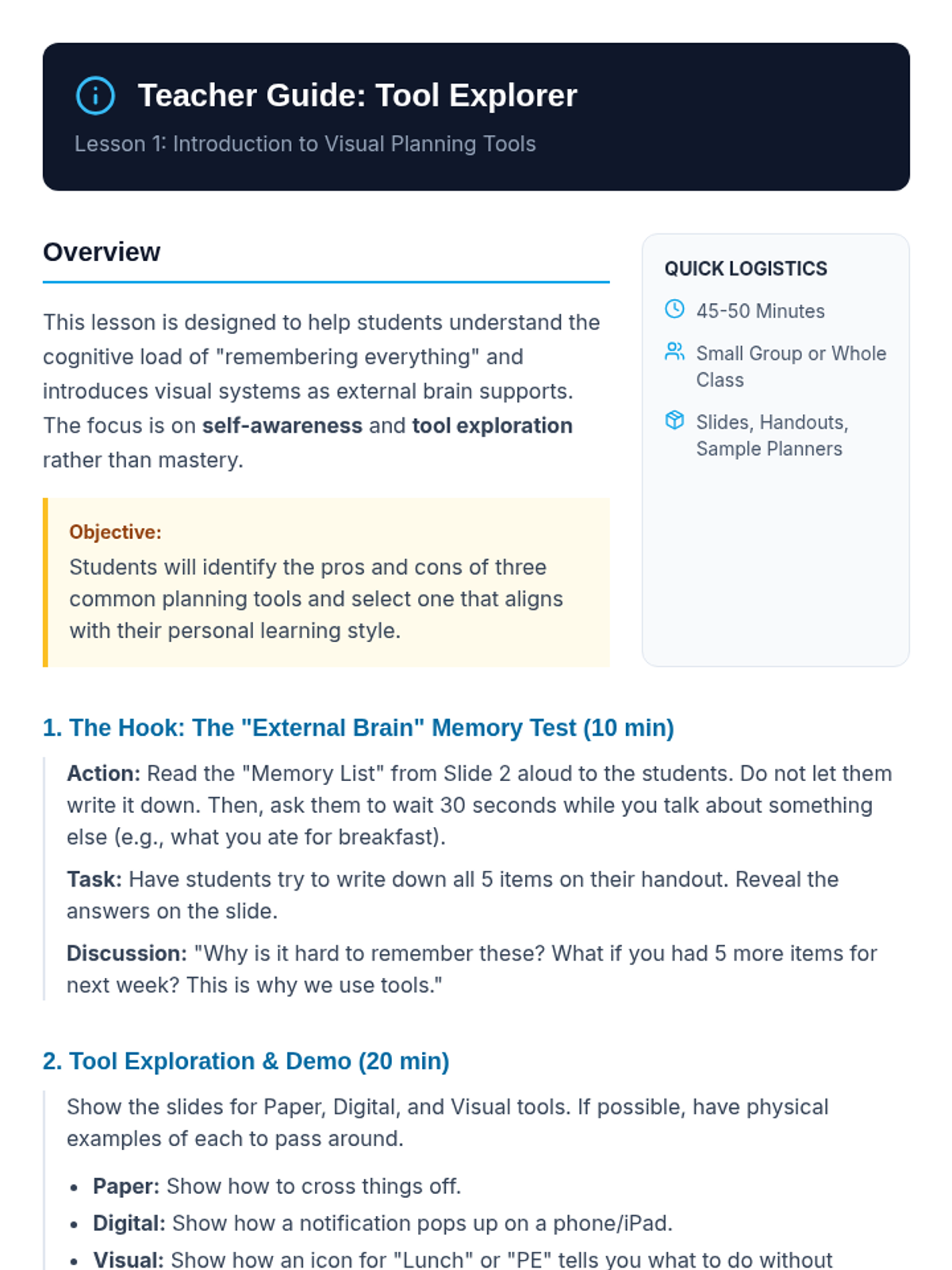
This sequence introduces 6th-grade students to visual planning and time management. Students learn to use different tools, distinguish between fixed and flexible time, and develop routines to maintain a personalized organizational system.
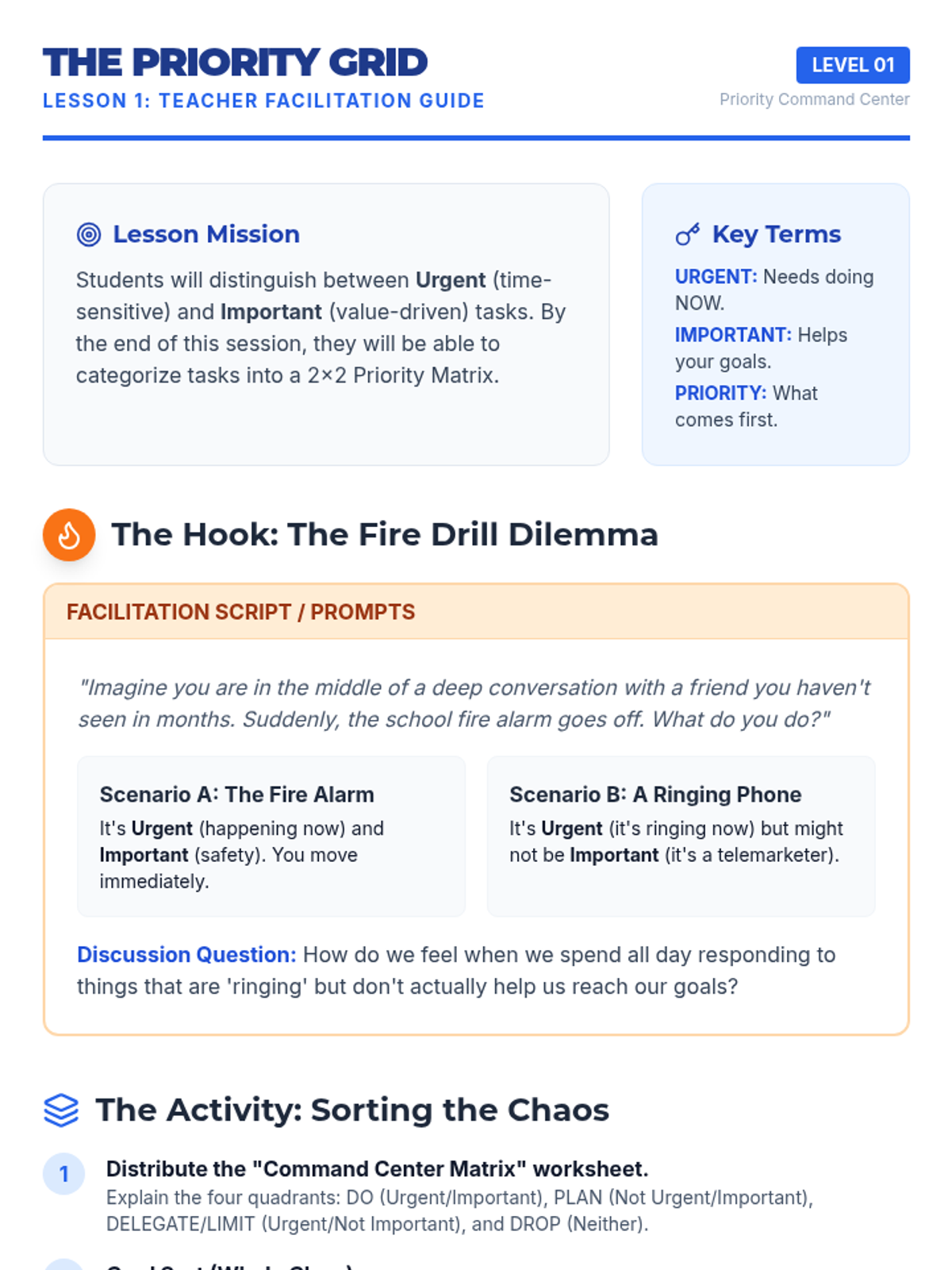
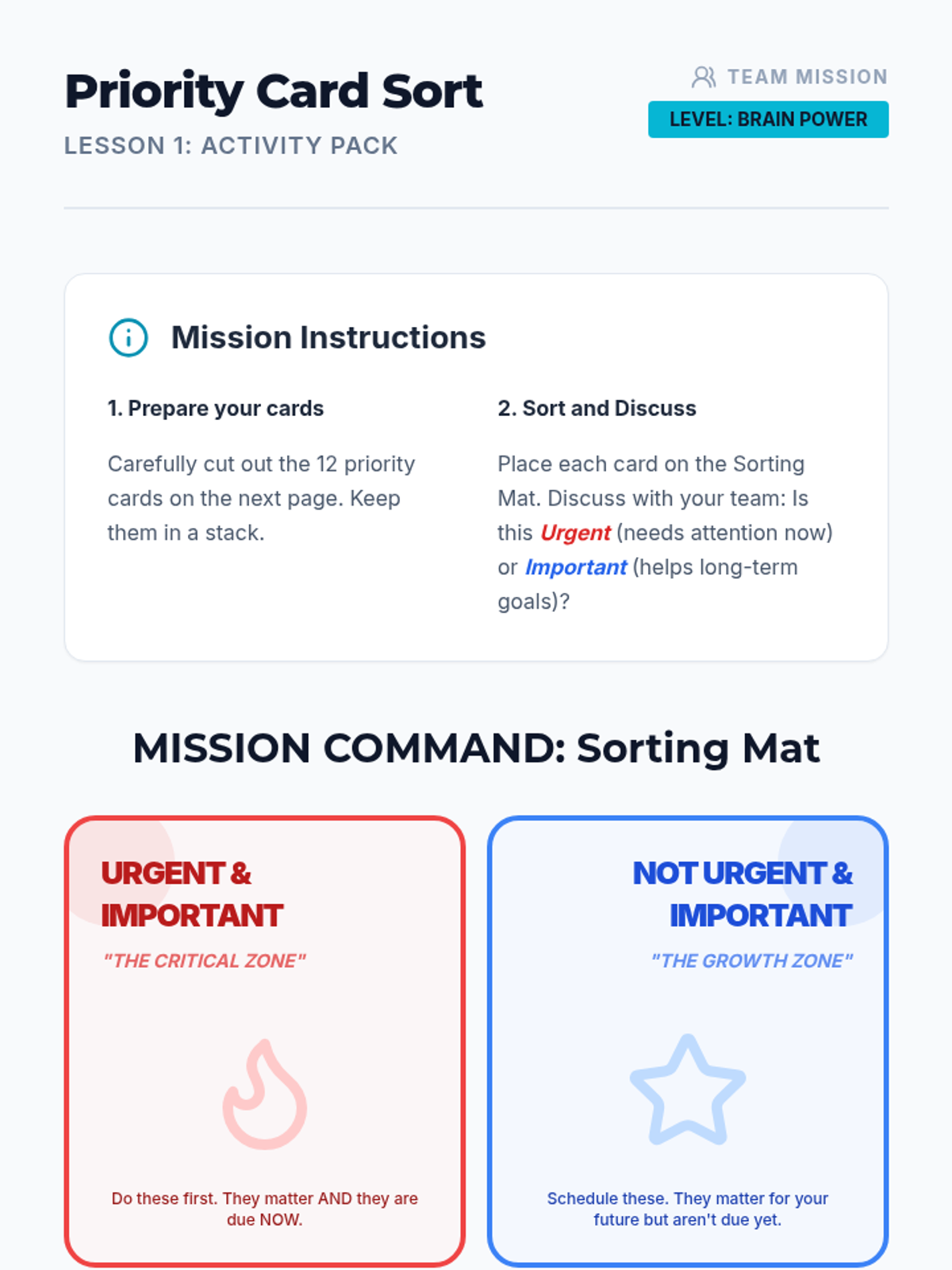
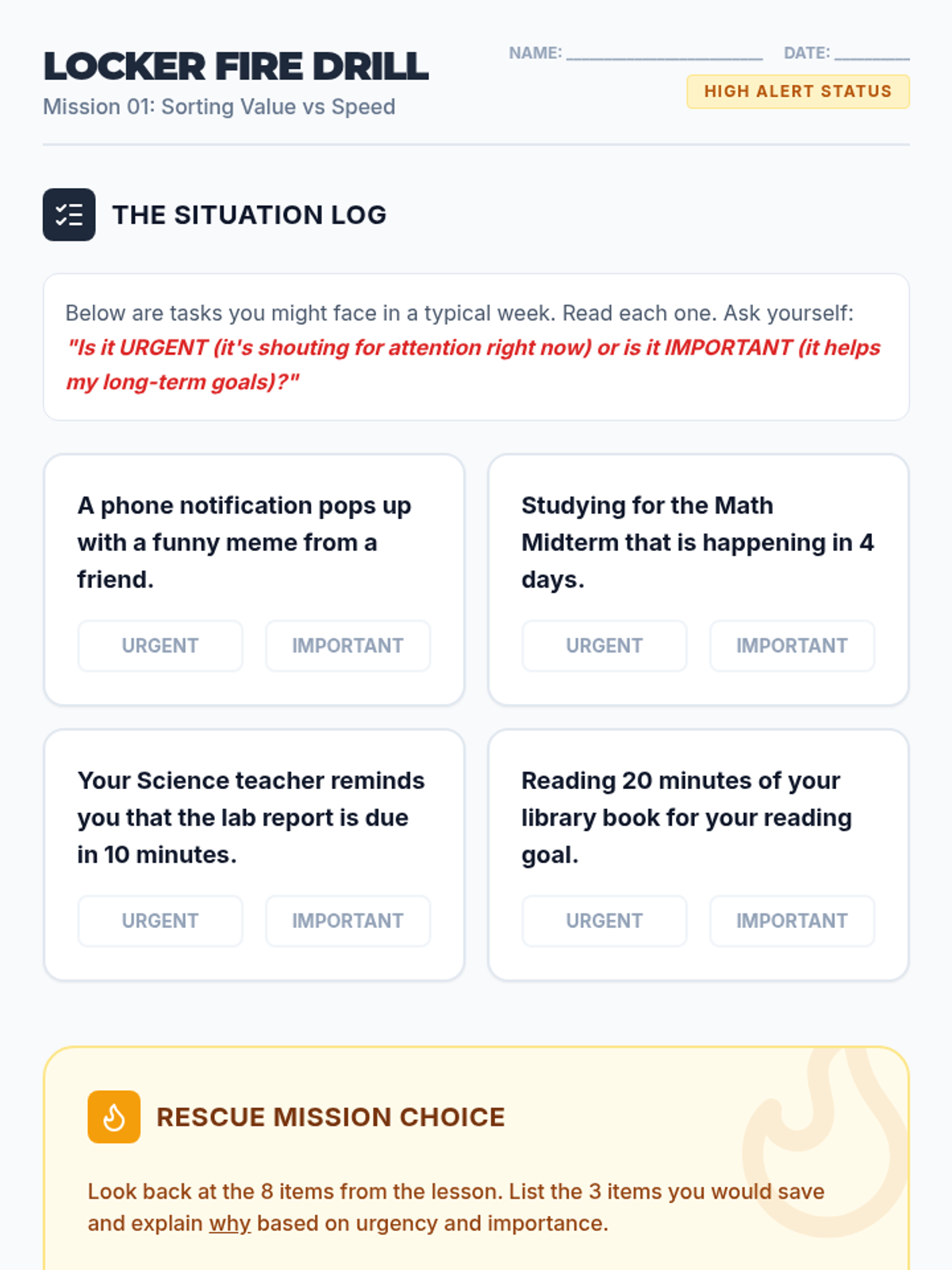
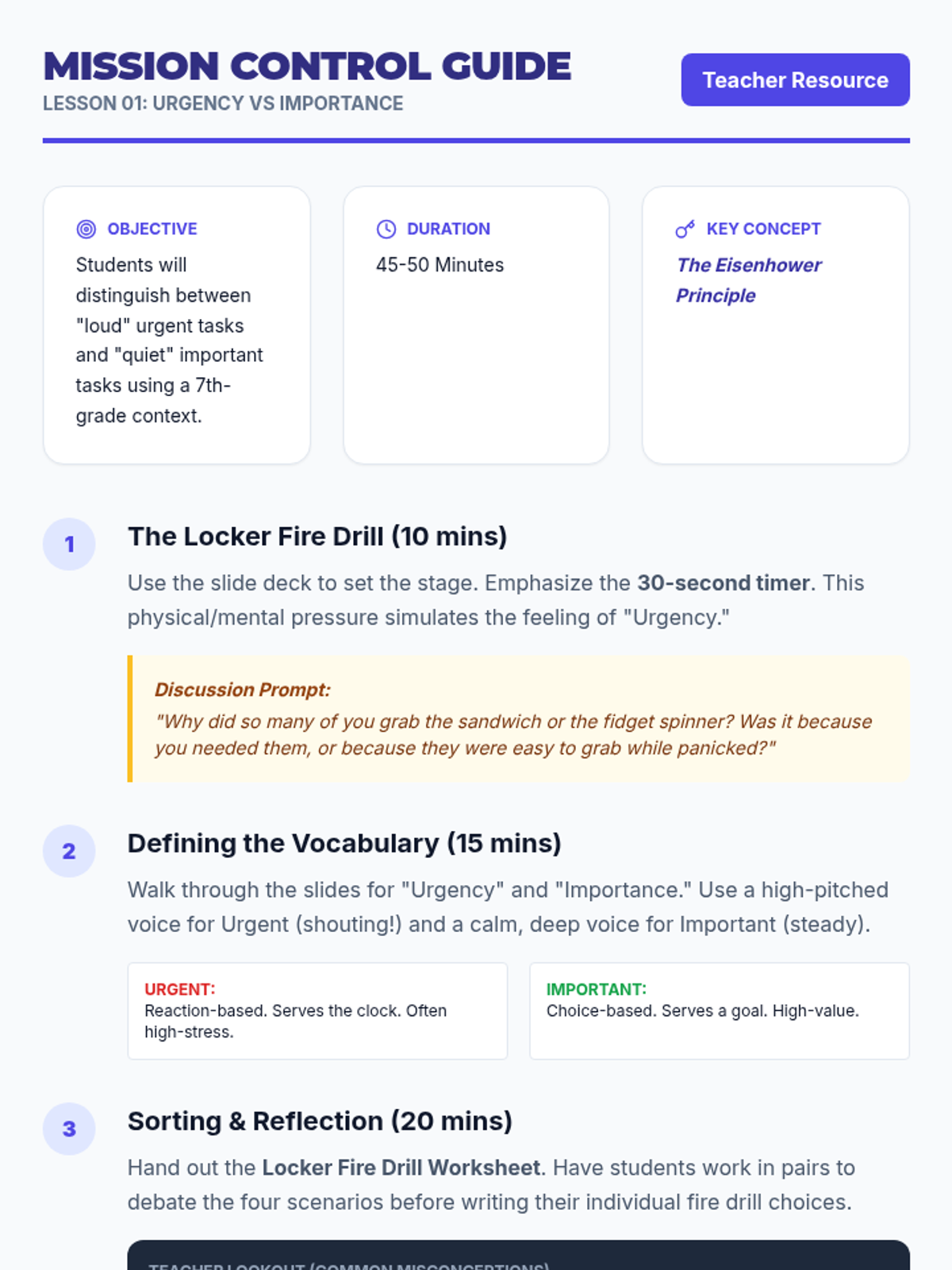
This sequence teaches 6th-grade students how to balance multiple commitments using urgency and importance frameworks. Through game-based simulations and the 'Jar of Rocks' analogy, students develop executive function skills for effective prioritization.
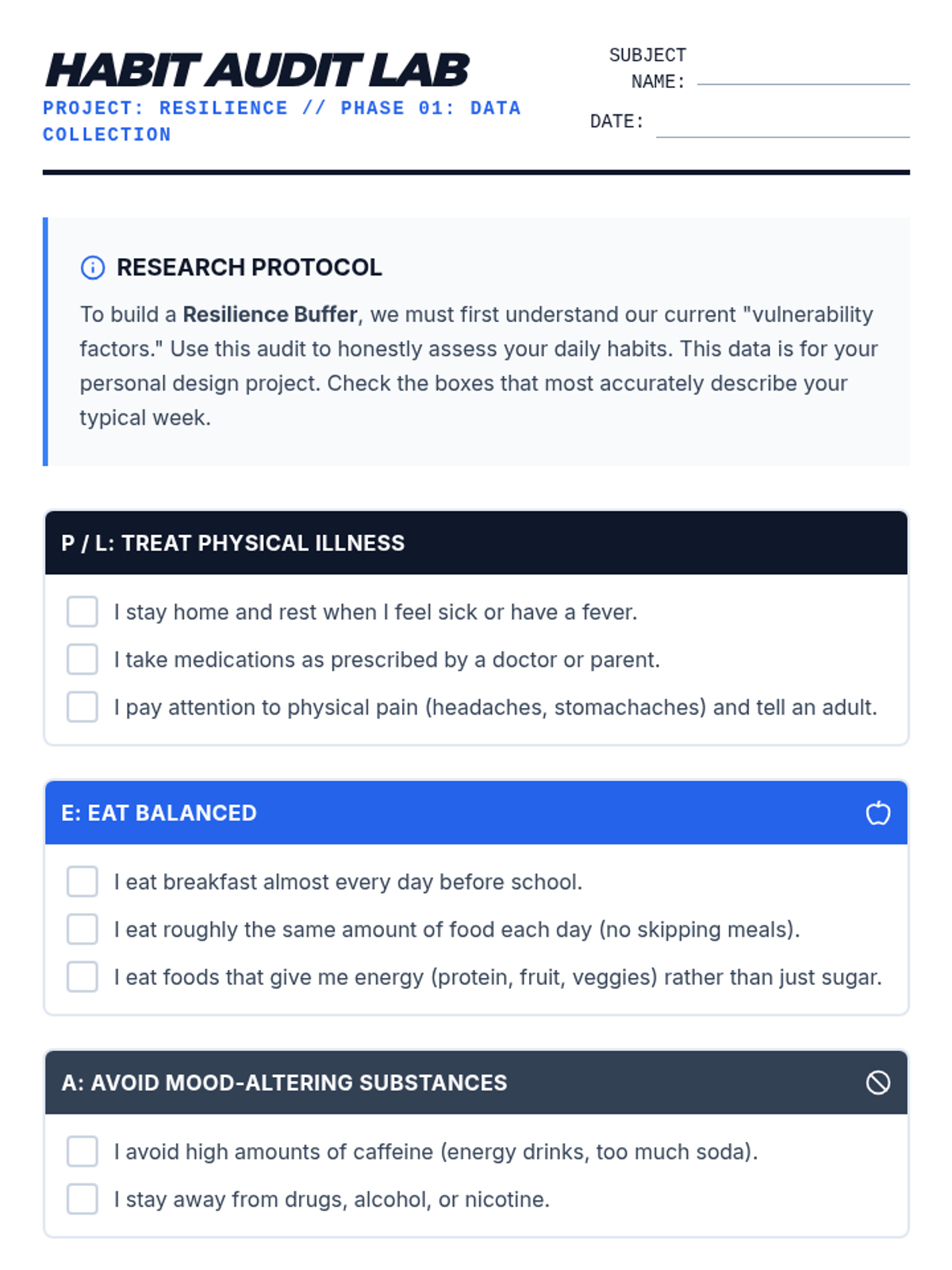
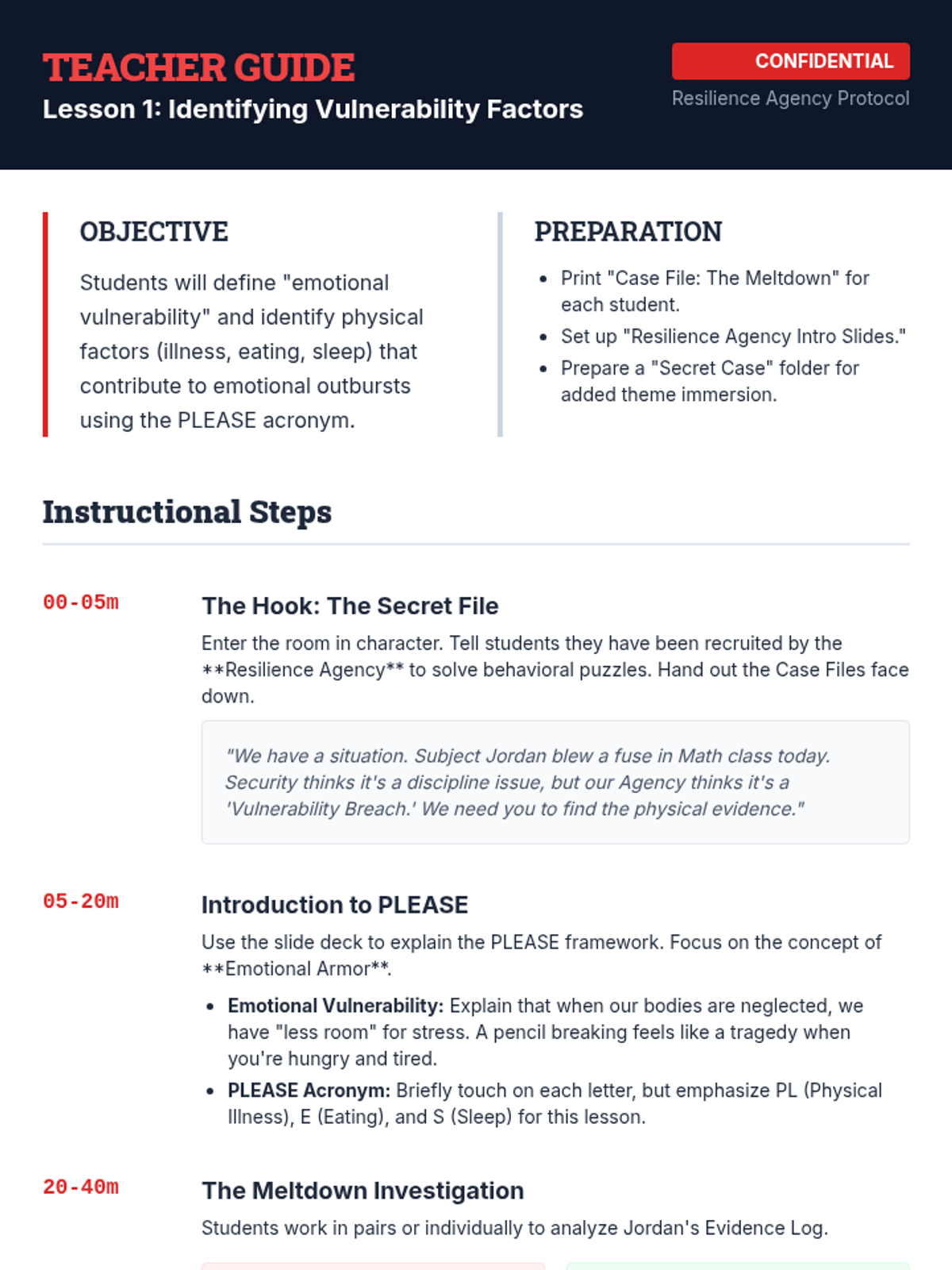
A project-based sequence where 6th-grade students treat their daily routines as a design challenge to reduce emotional vulnerability. Using the DBT PLEASE skills, students audit their habits and design a personalized 'Resilience Routine' for physical and emotional wellness.
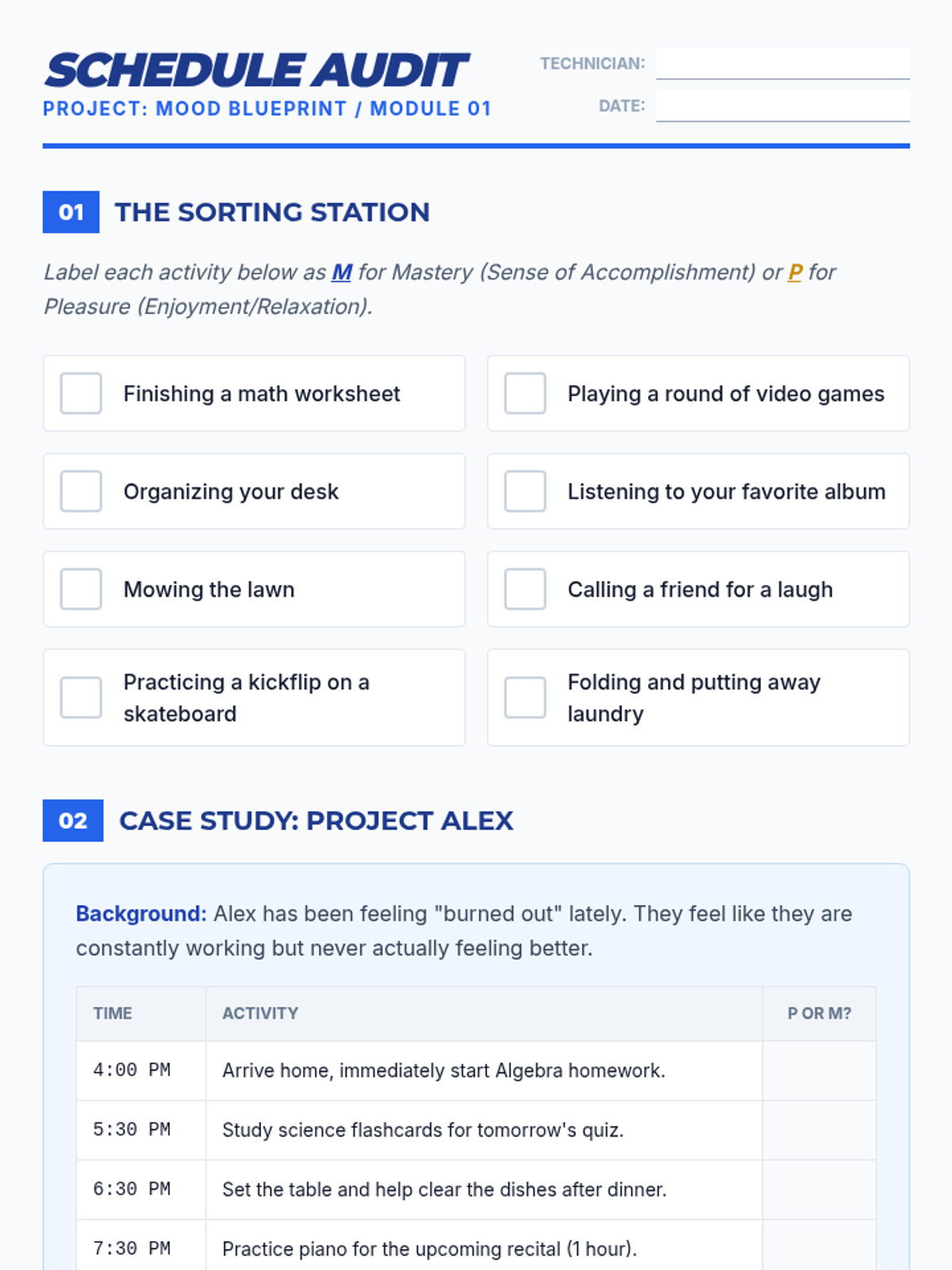
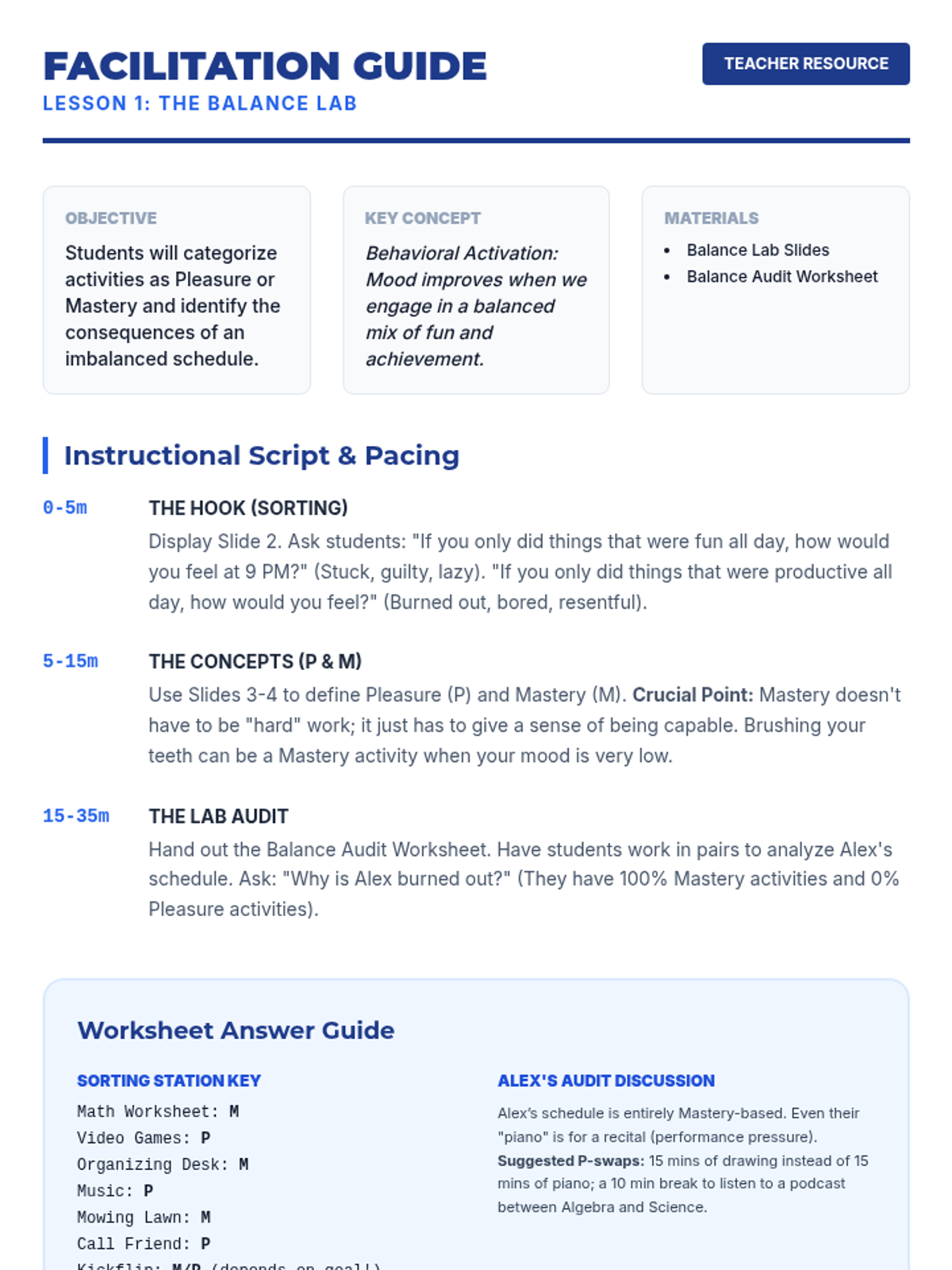
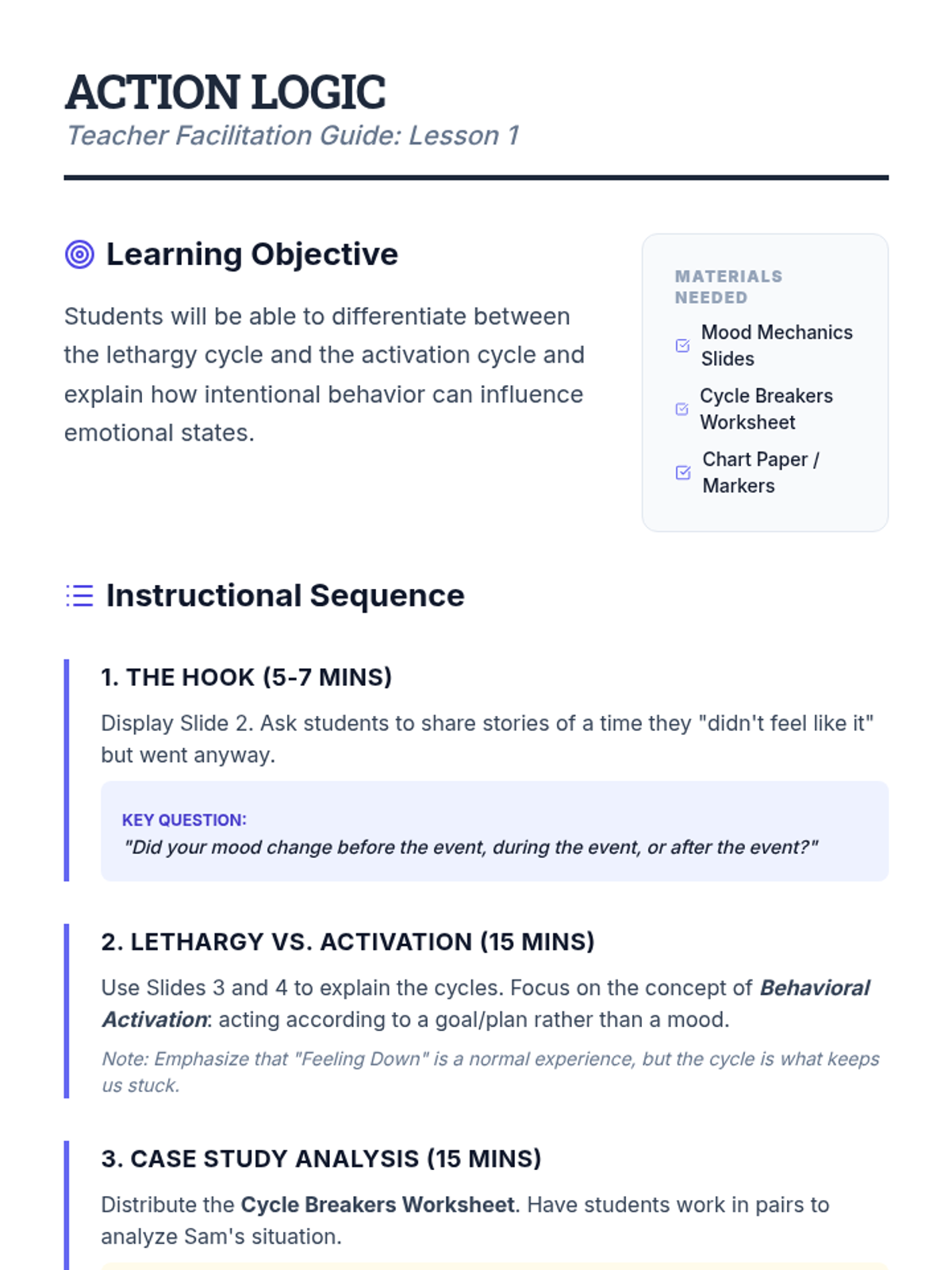
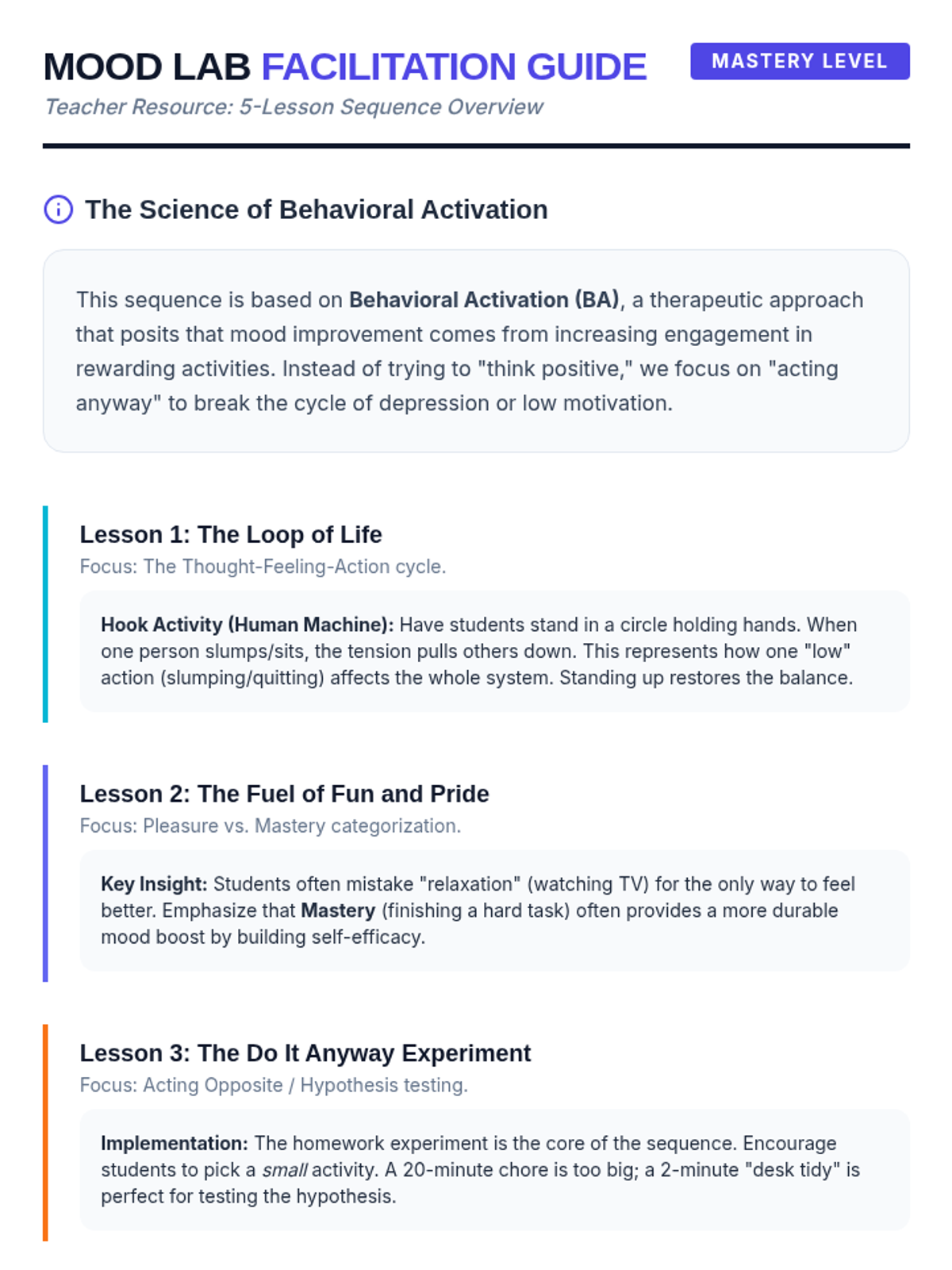
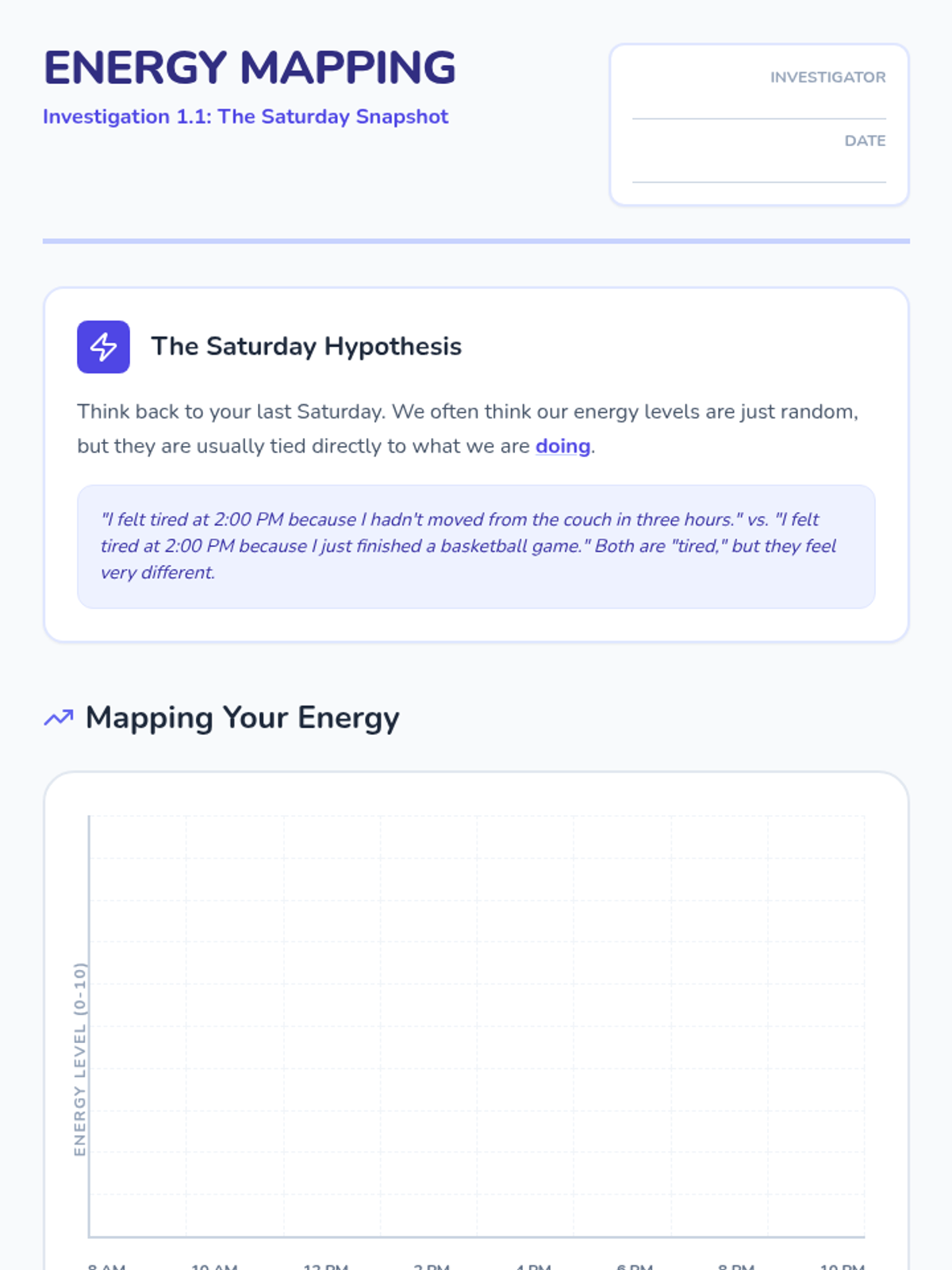
A 5-lesson series for 8th graders to design personalized behavioral activation plans. Students learn to balance pleasure and mastery, create activity menus, set micro-goals, and troubleshoot barriers to build a sustainable mood-boosting routine.
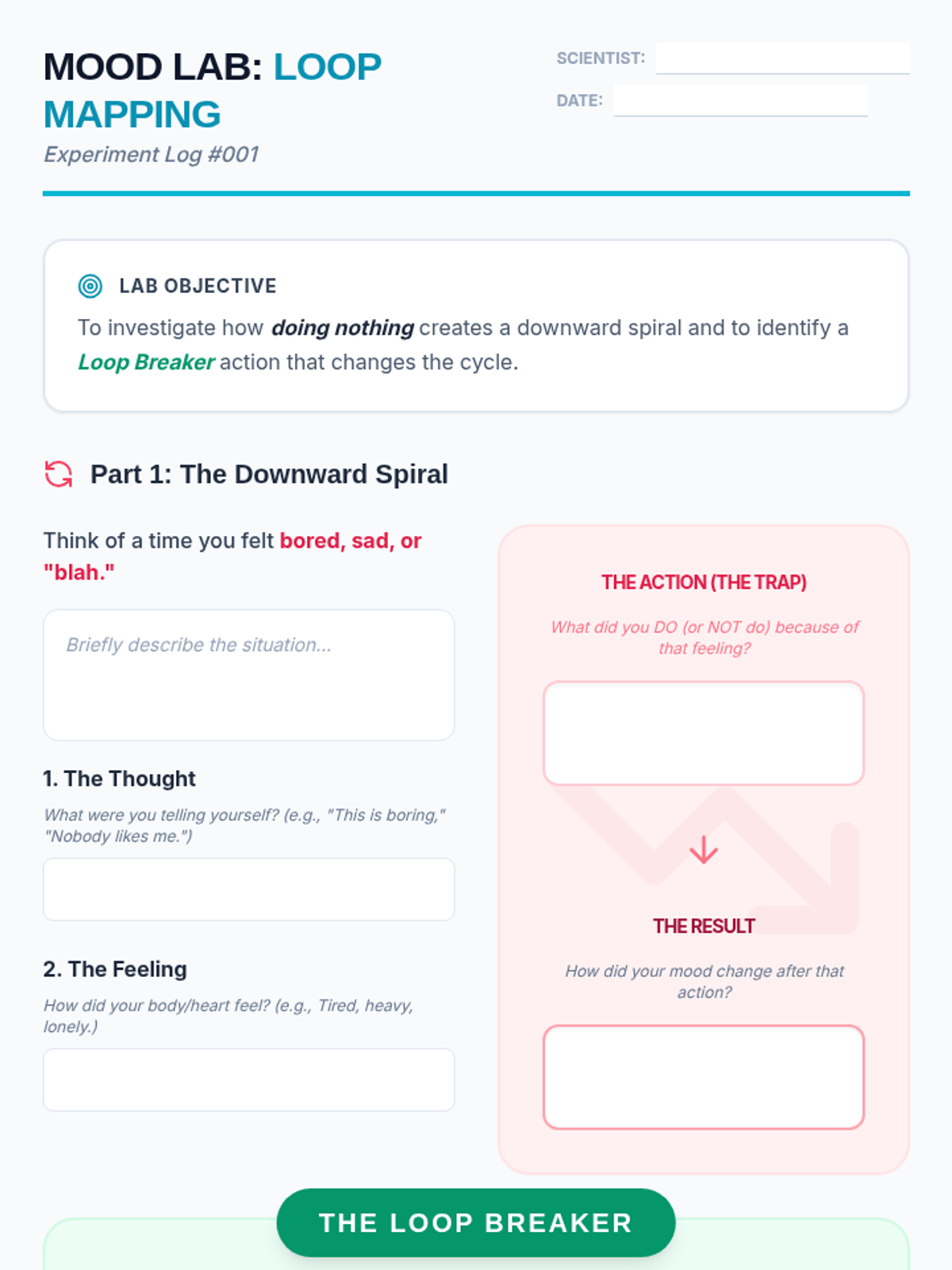
This 7th-grade sequence teaches the principles of behavioral activation, helping students understand how their actions influence their moods. Through self-monitoring, activity categorization, and strategic planning, students develop a toolkit for proactively managing their mental well-being.
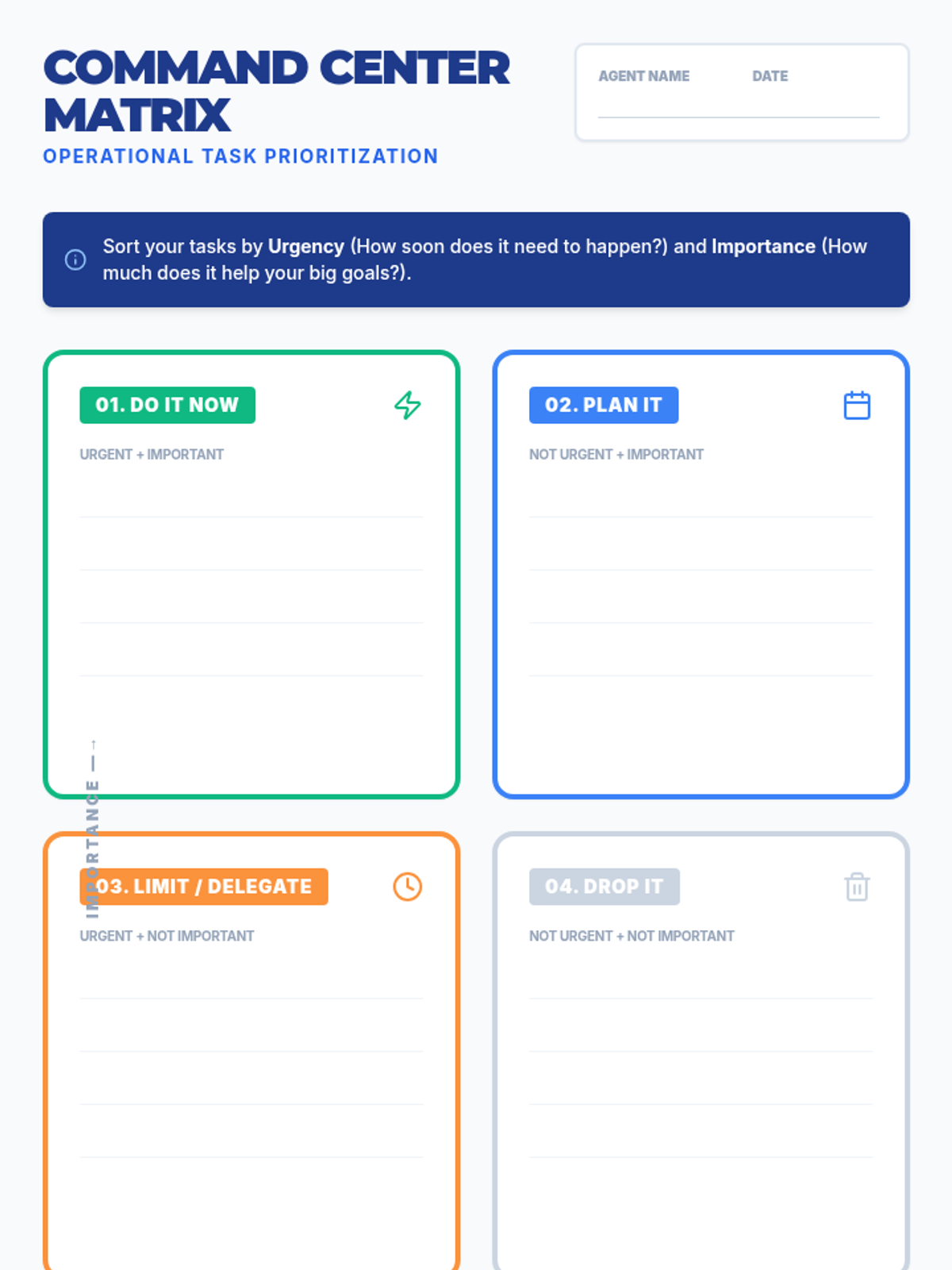
A 5-lesson unit teaching 6th-grade students how to distinguish between urgency and importance using a Decision Matrix (Eisenhower Matrix) to manage their schoolwork and personal life.
A comprehensive executive functioning unit for 7th grade students to master task prioritization using the Eisenhower Matrix. Students move from conceptual understanding to practical, daily application through simulations and personalized planning.
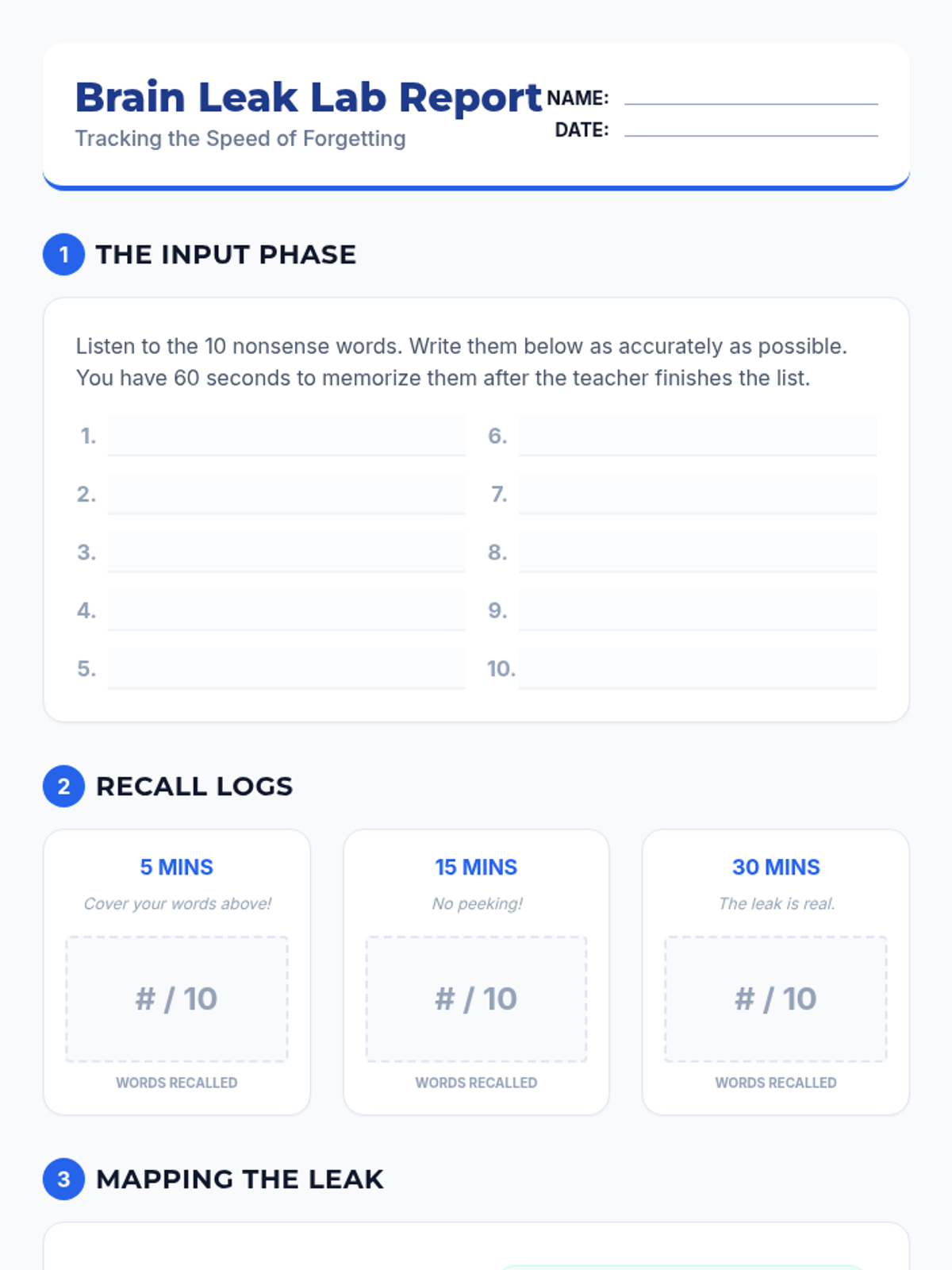
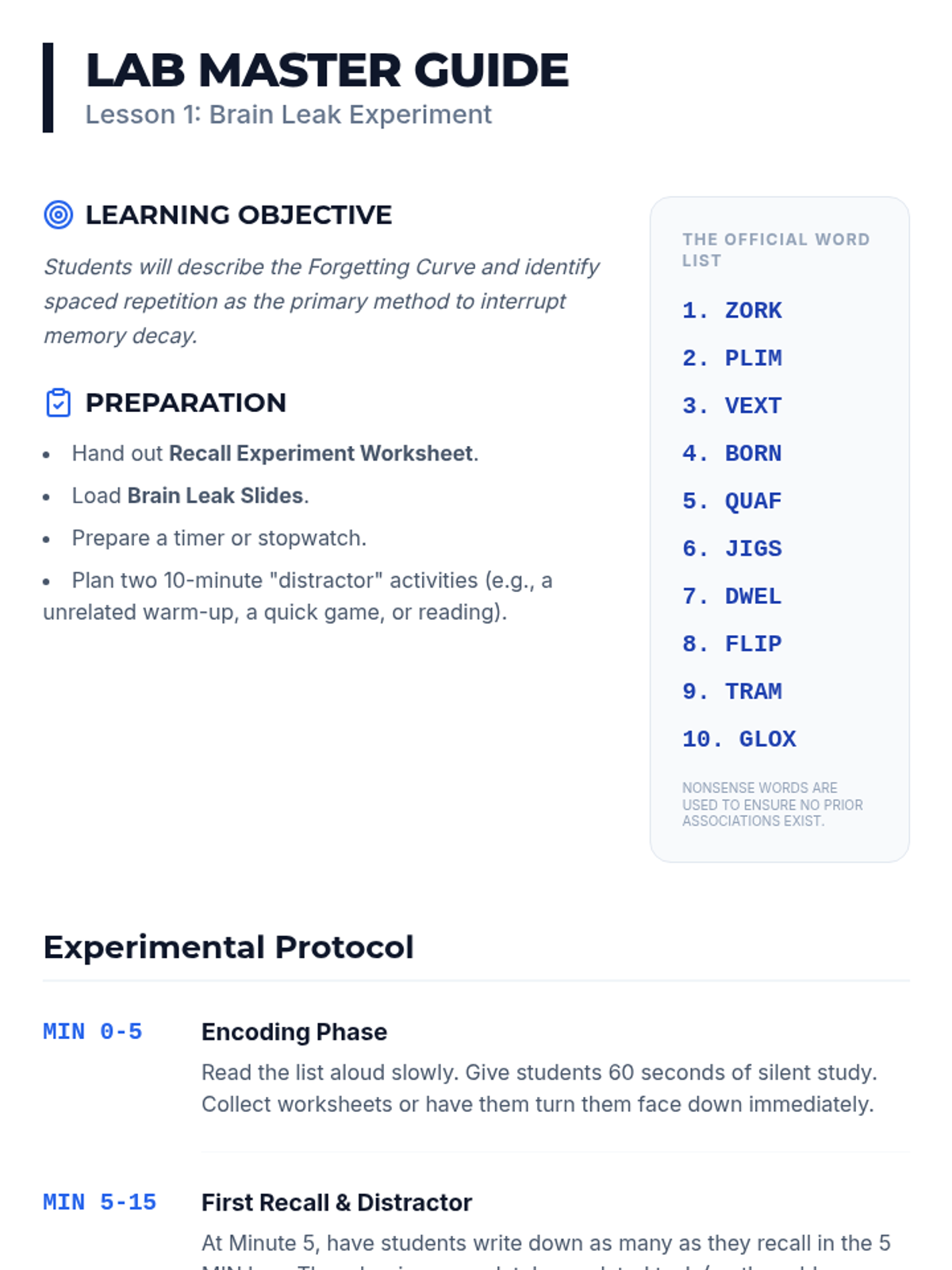
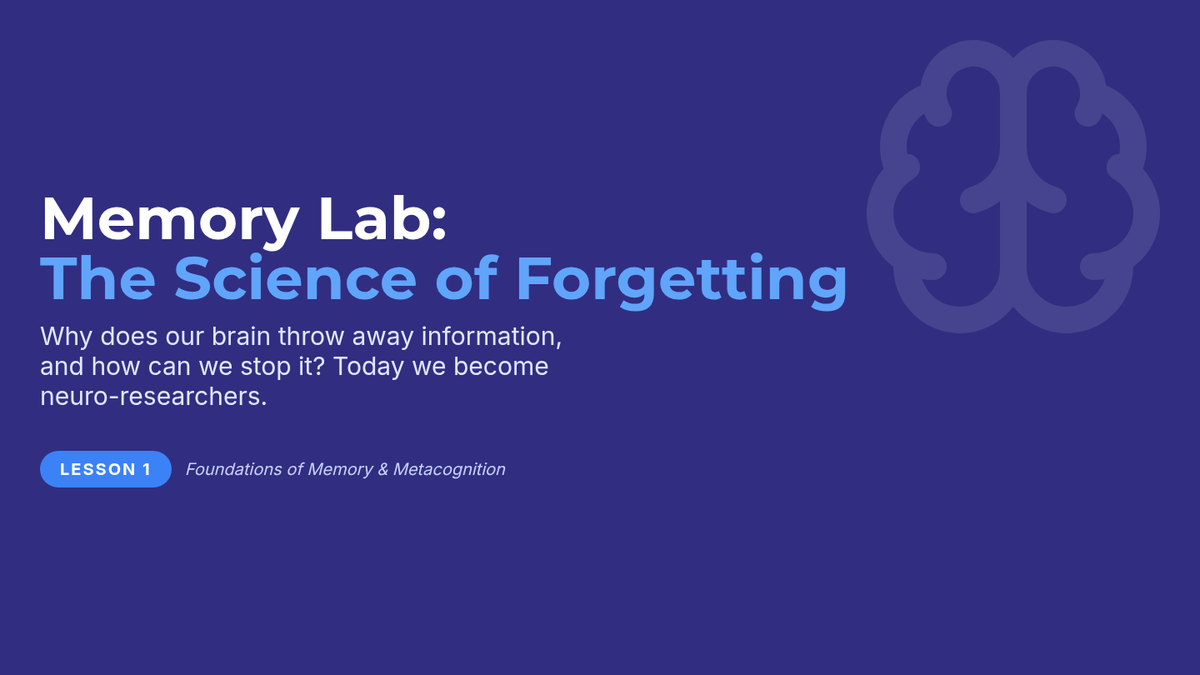
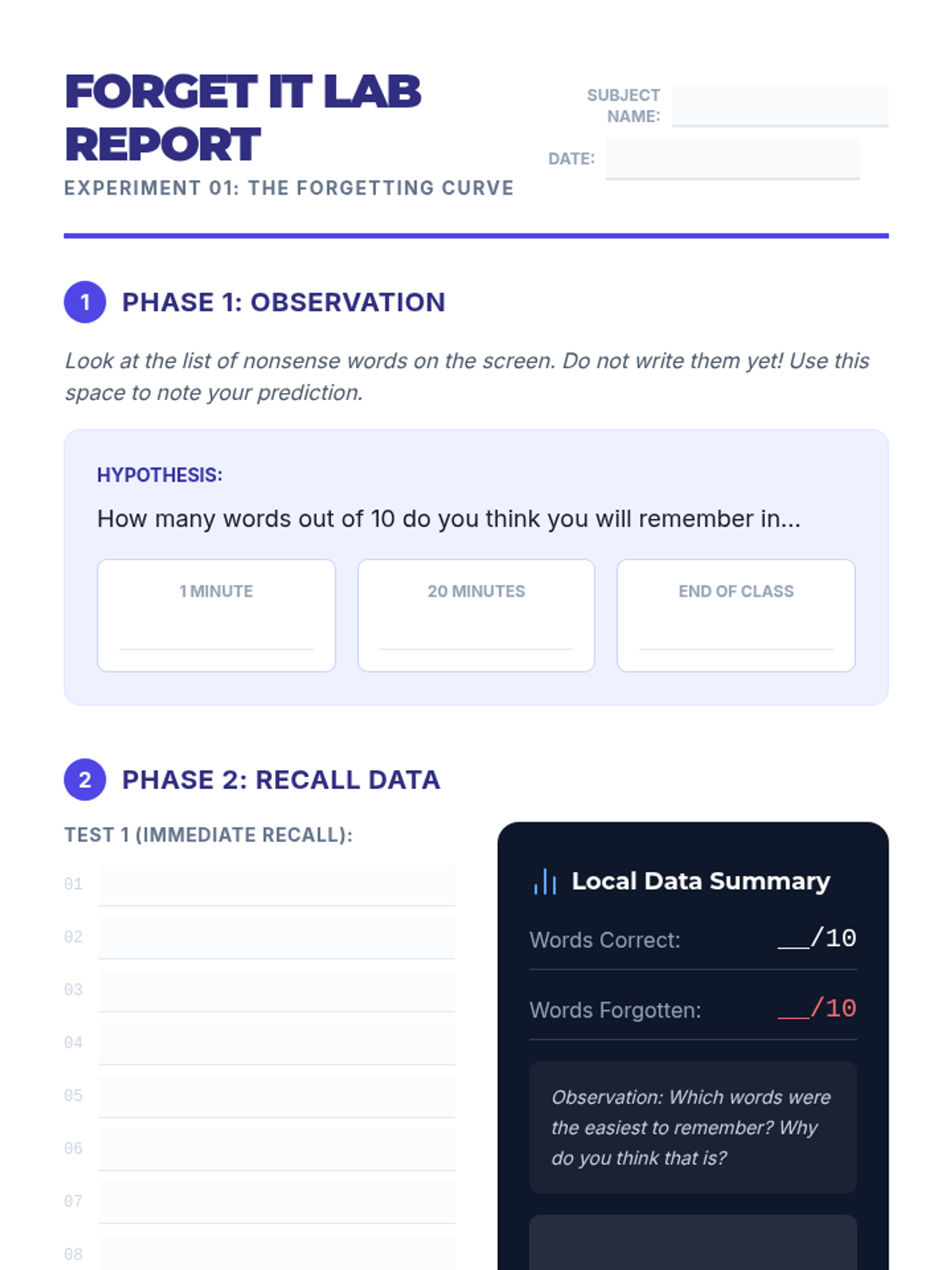
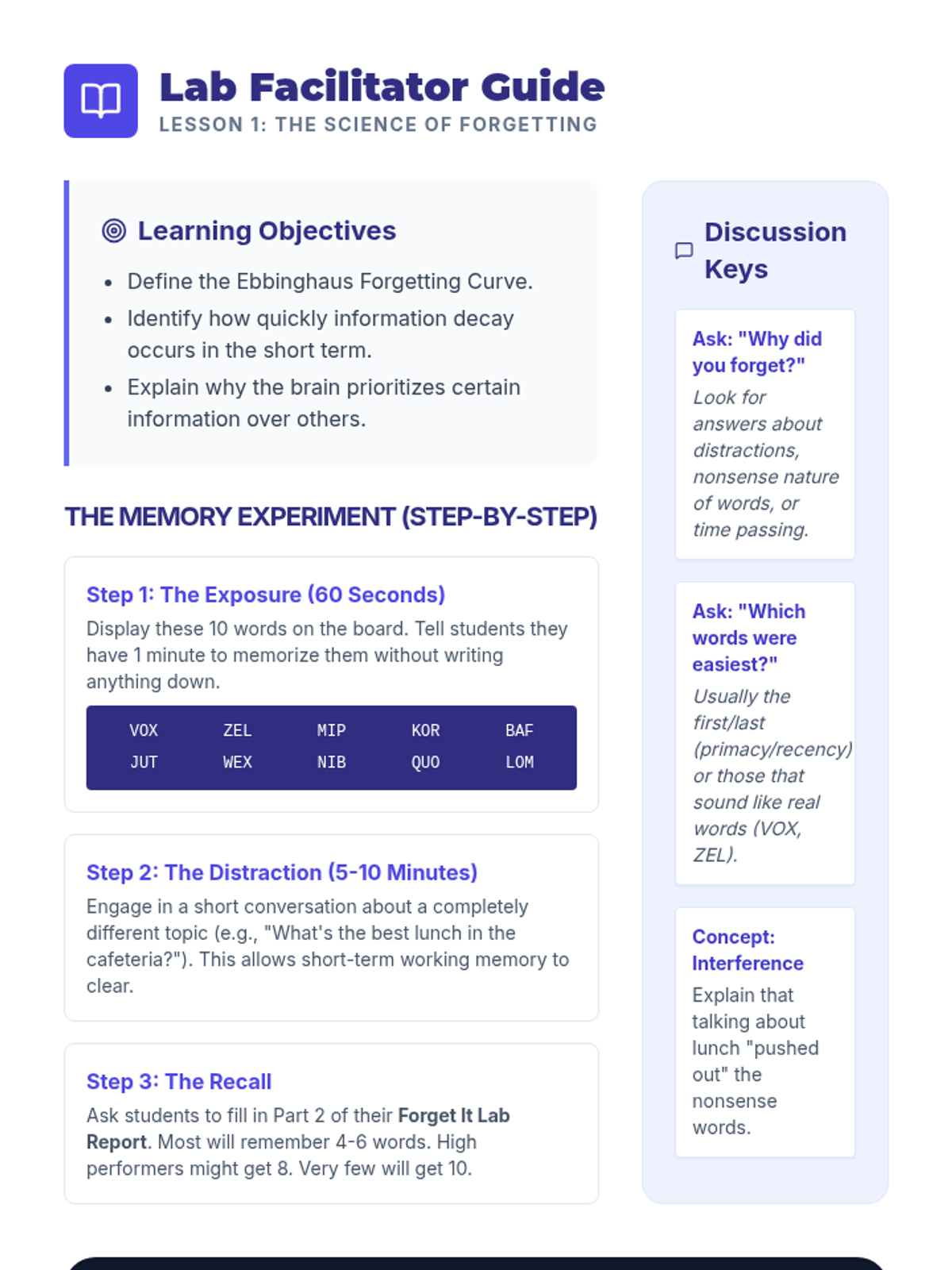
An inquiry-based exploration into the neuroscience of memory, focusing on the Forgetting Curve and how spaced repetition can 'hack' the brain for long-term retention. Students move from understanding memory decay to designing their own efficient study schedules based on biological principles.
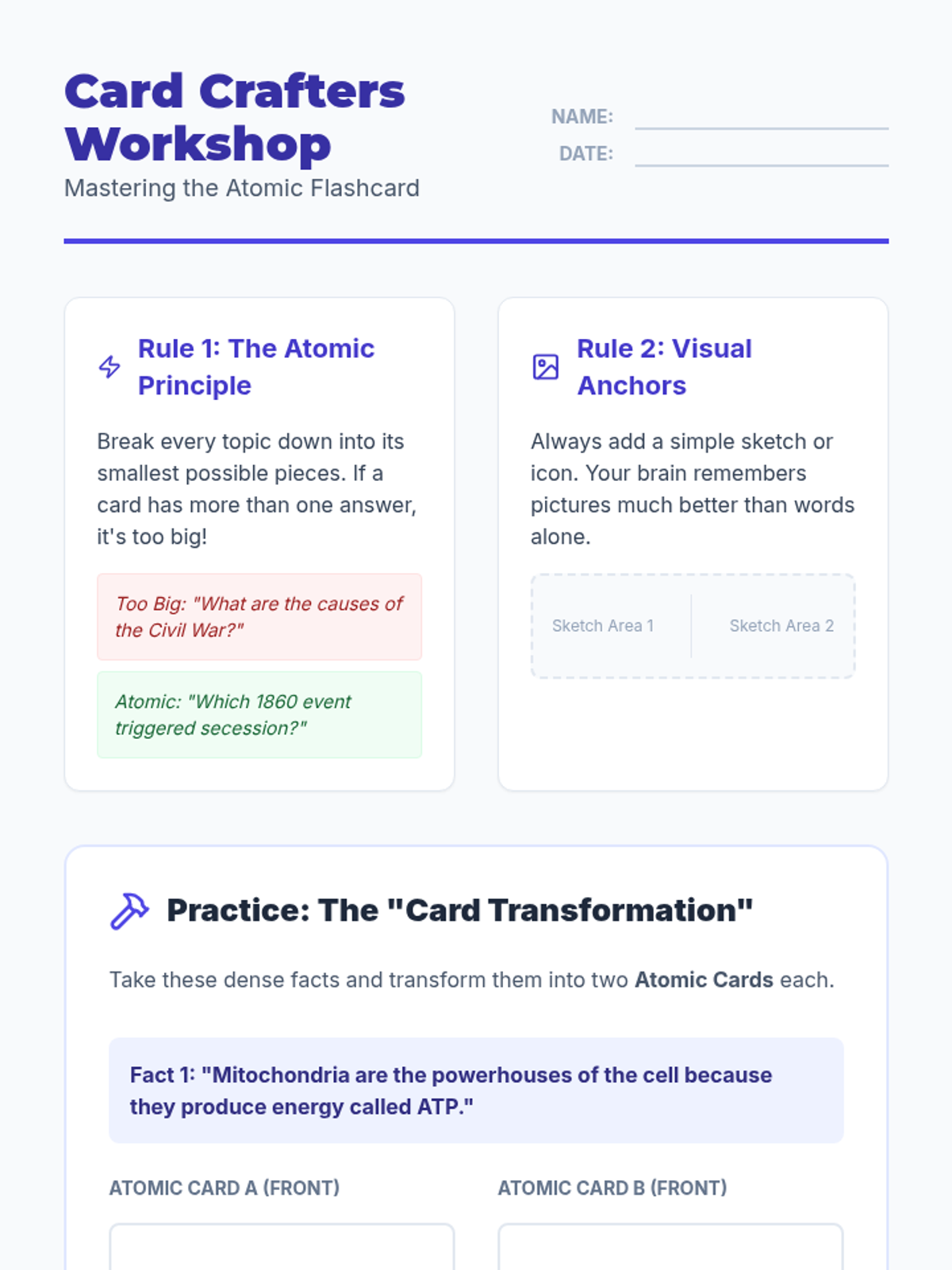
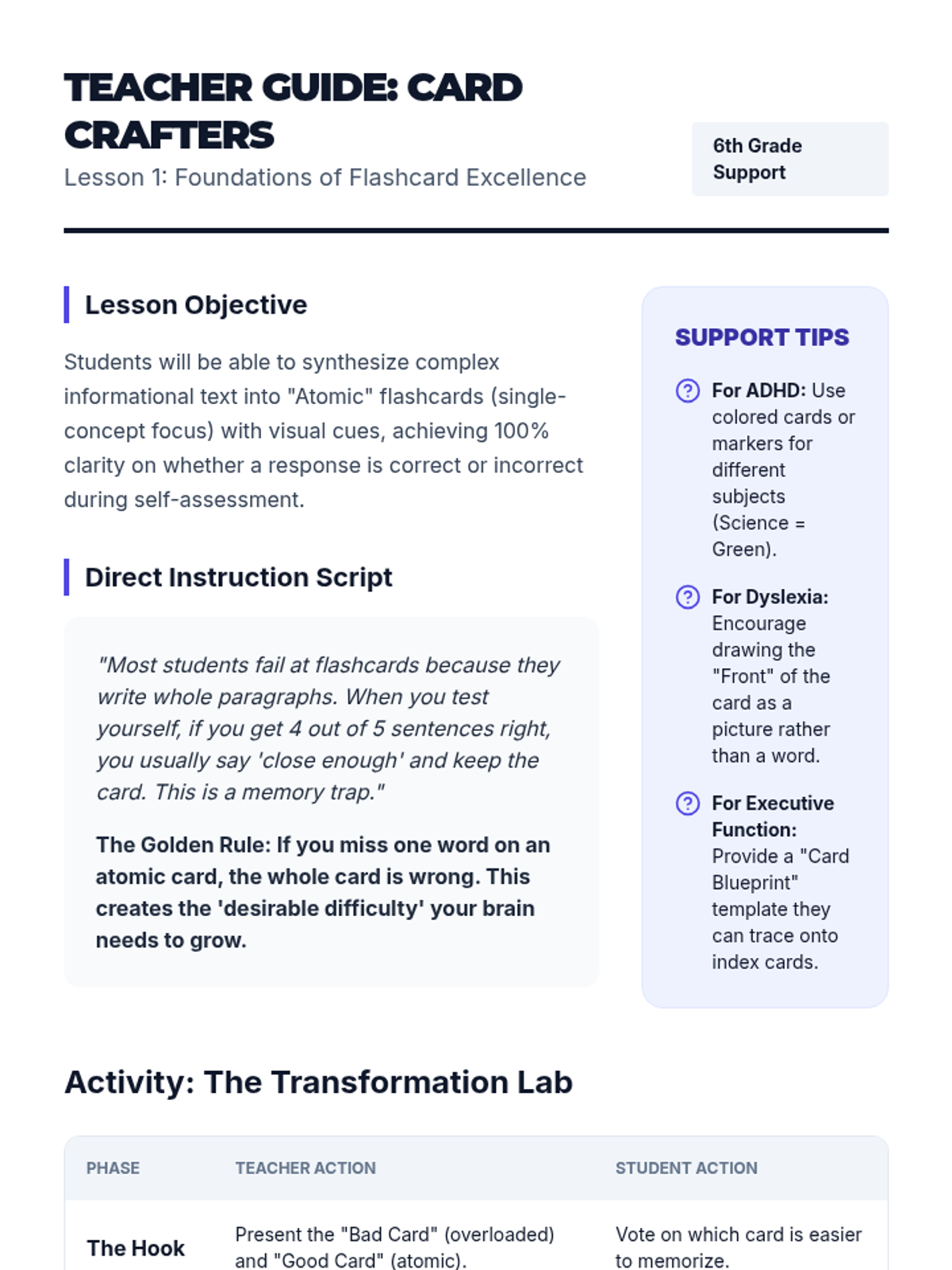
A comprehensive workshop sequence for 6th-grade students to master the Leitner System of spaced repetition. Students learn to create high-quality flashcards, set up a physical multi-box system, and implement a daily sorting routine to move information from short-term to long-term memory.
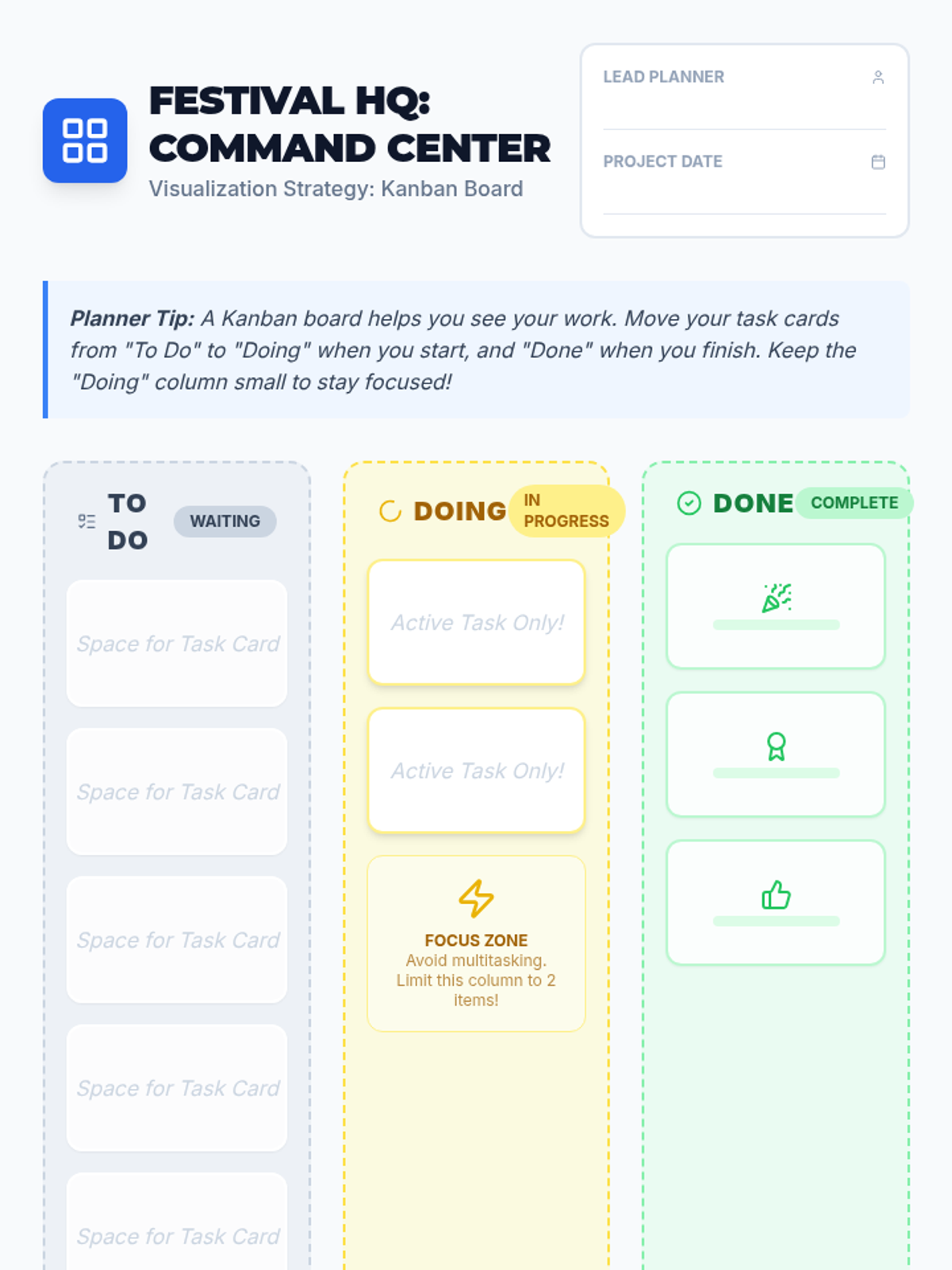
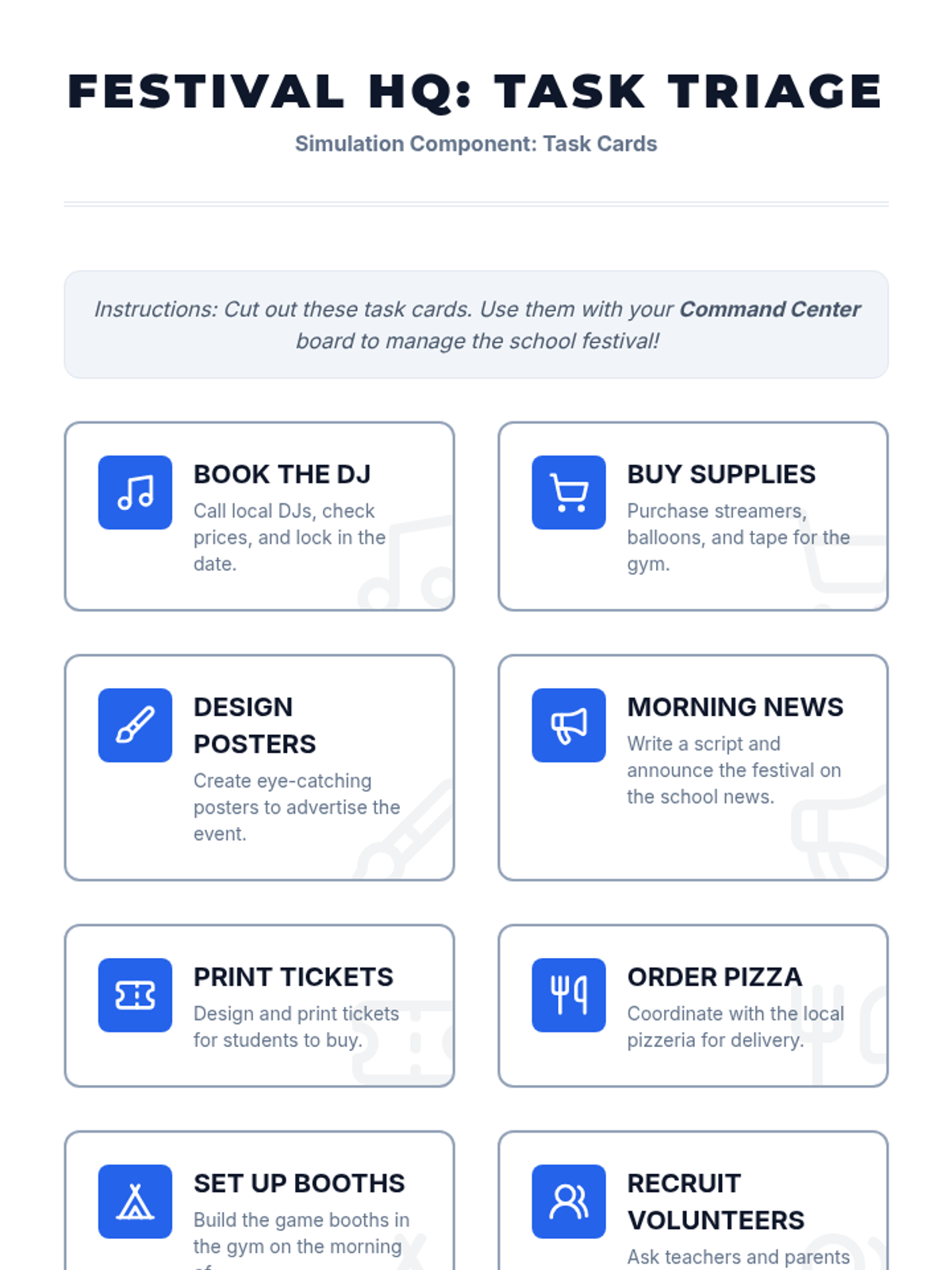
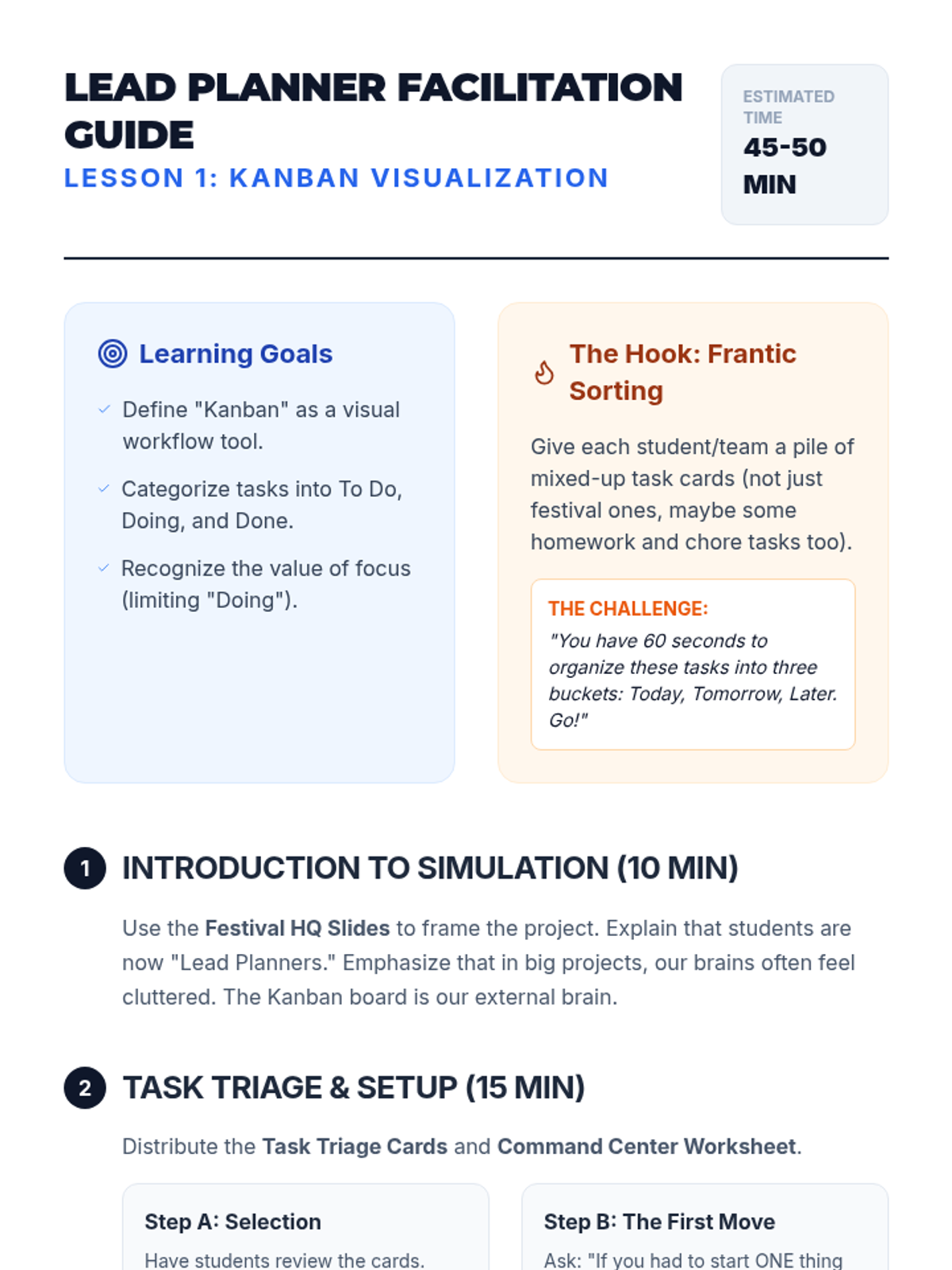
A simulation-based sequence where 6th-grade students act as Event Planners for a school festival to master multi-day project management, workflow visualization, and adaptability.
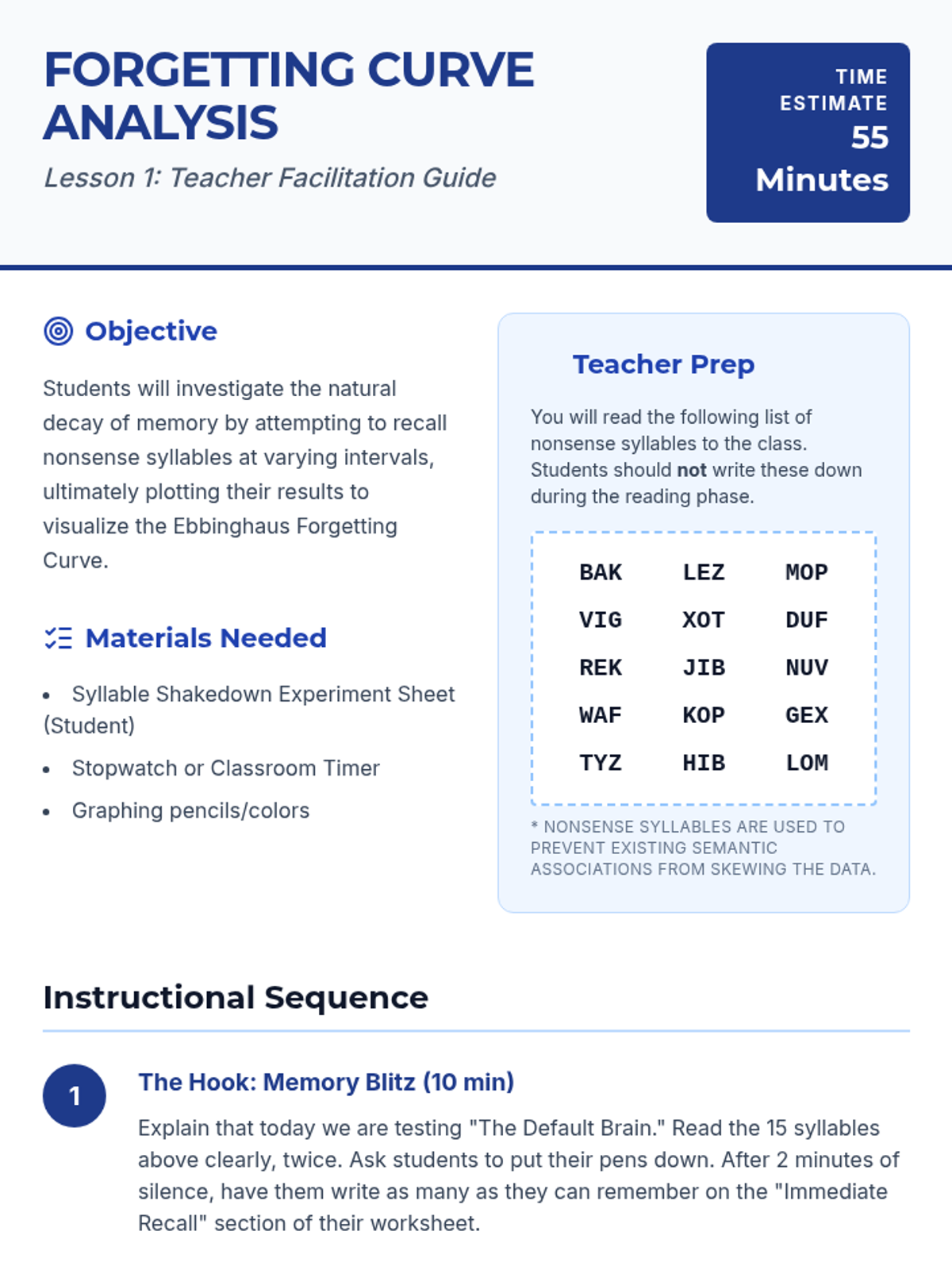
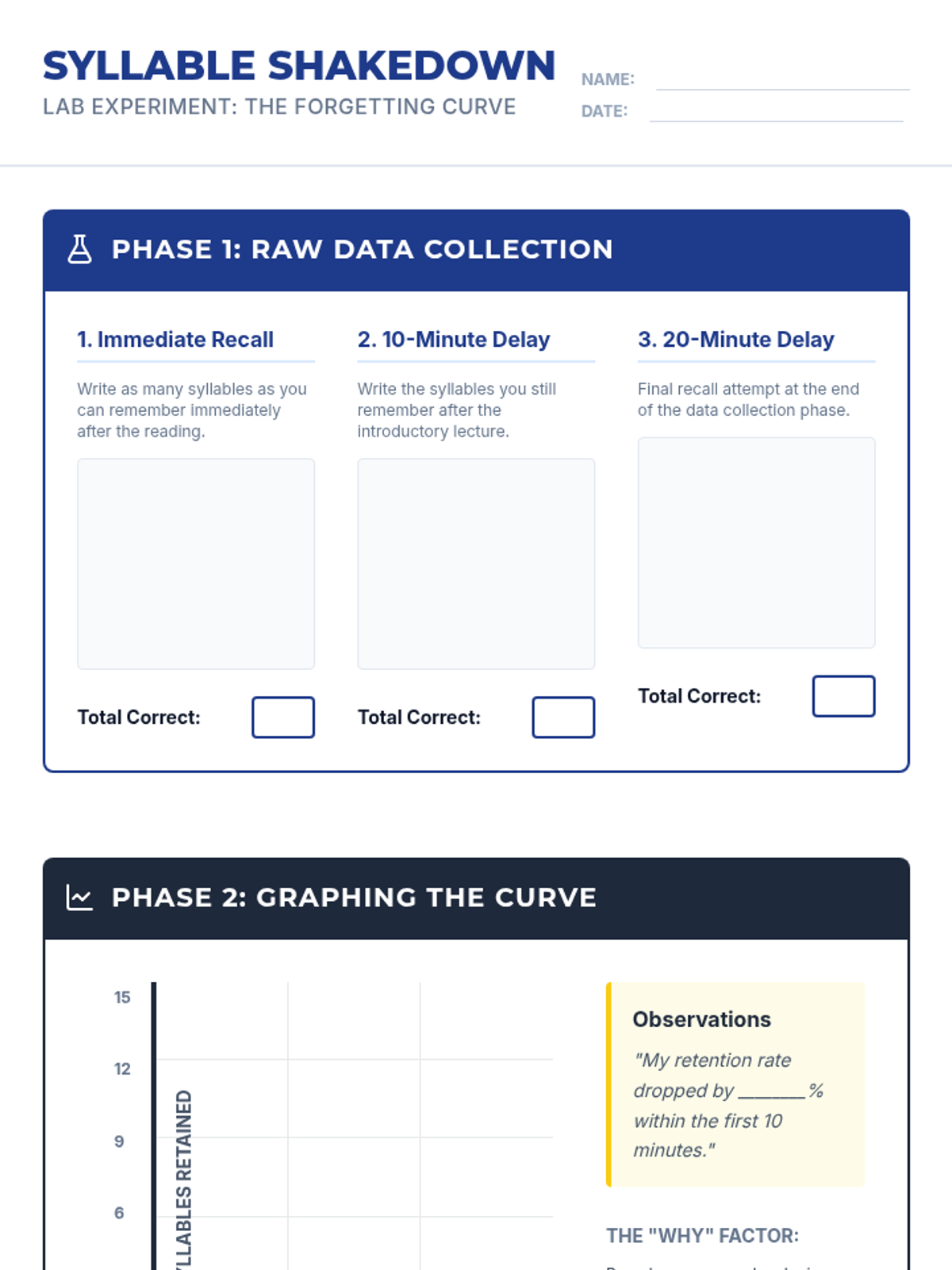
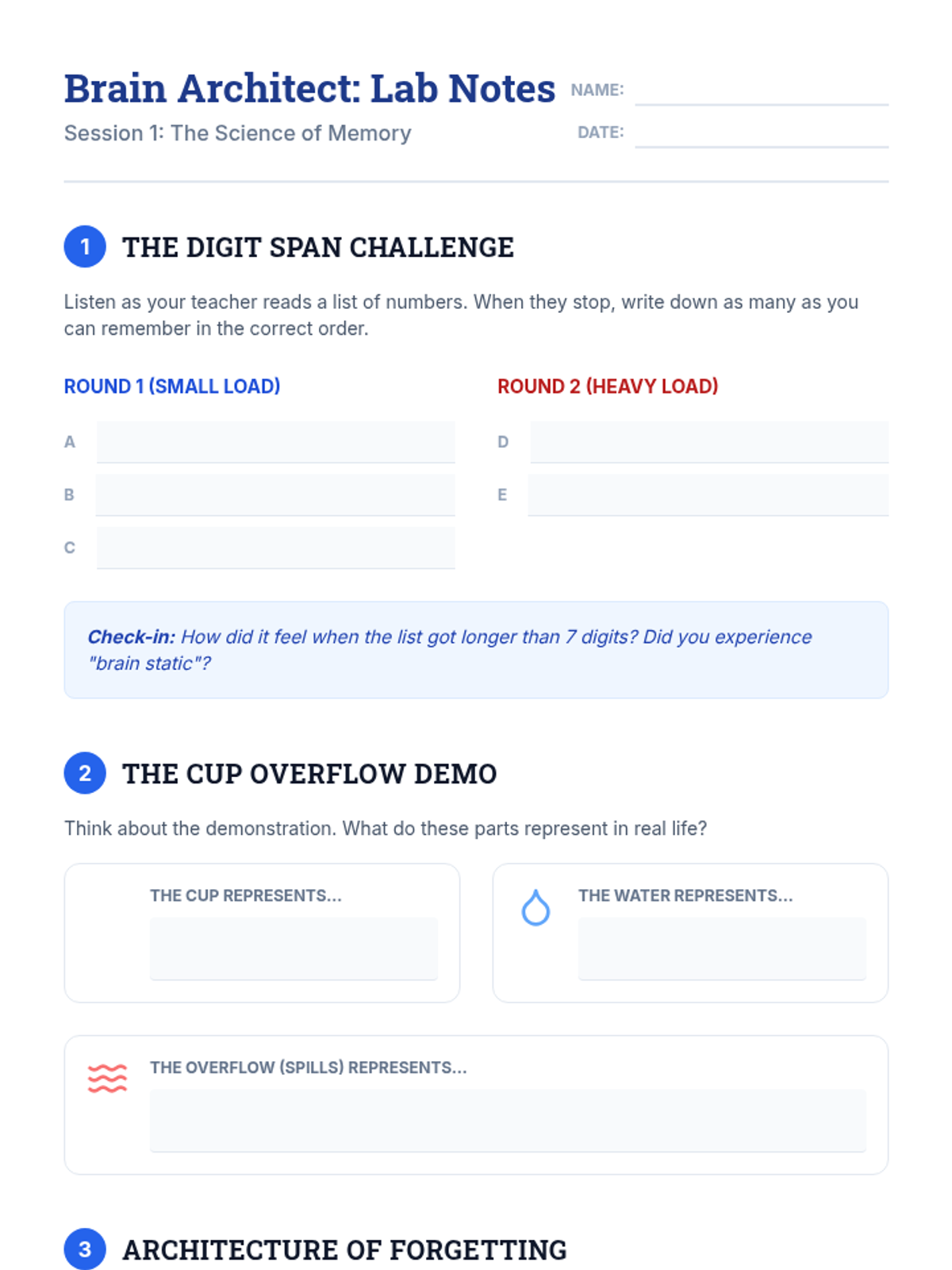
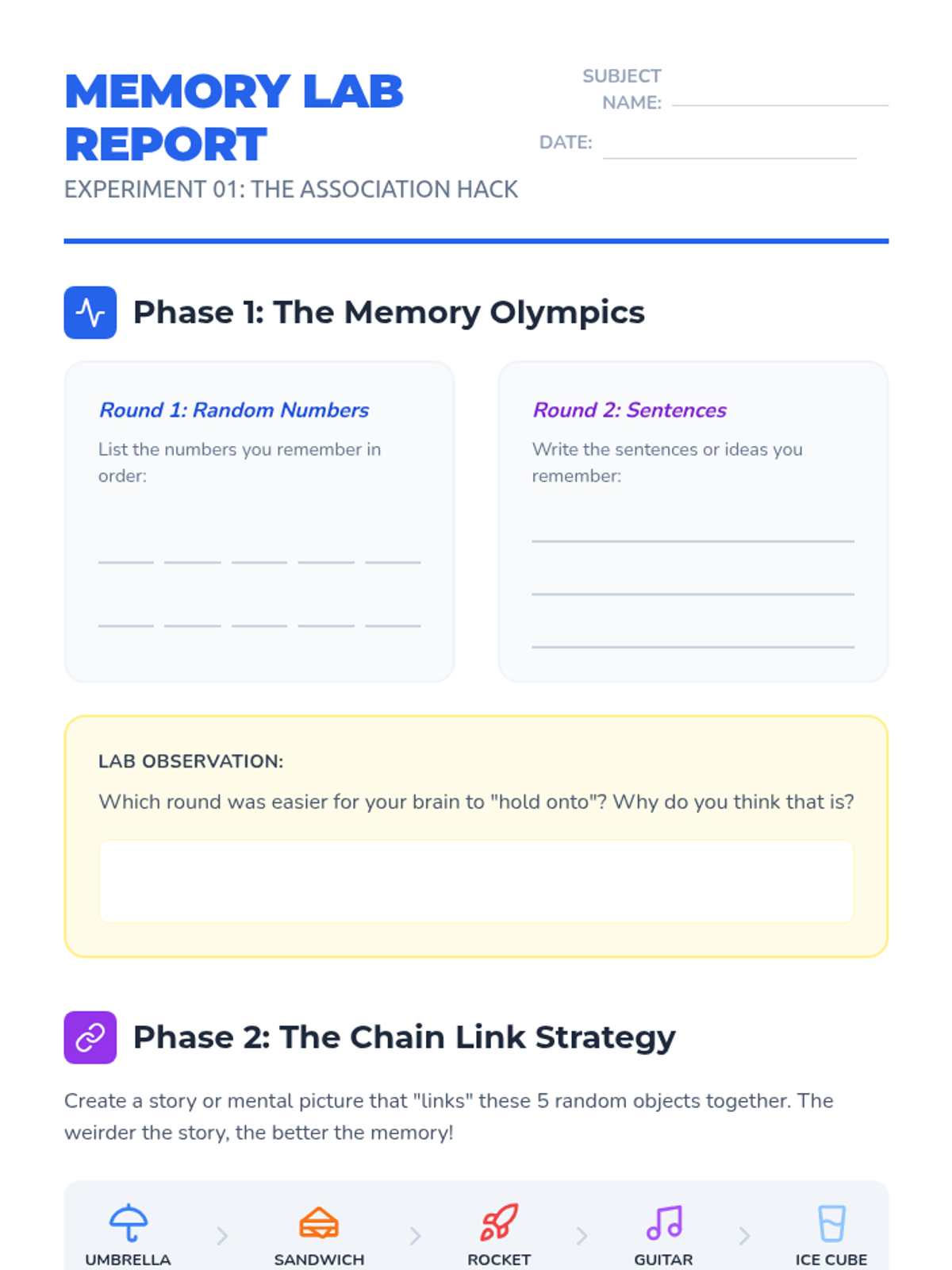
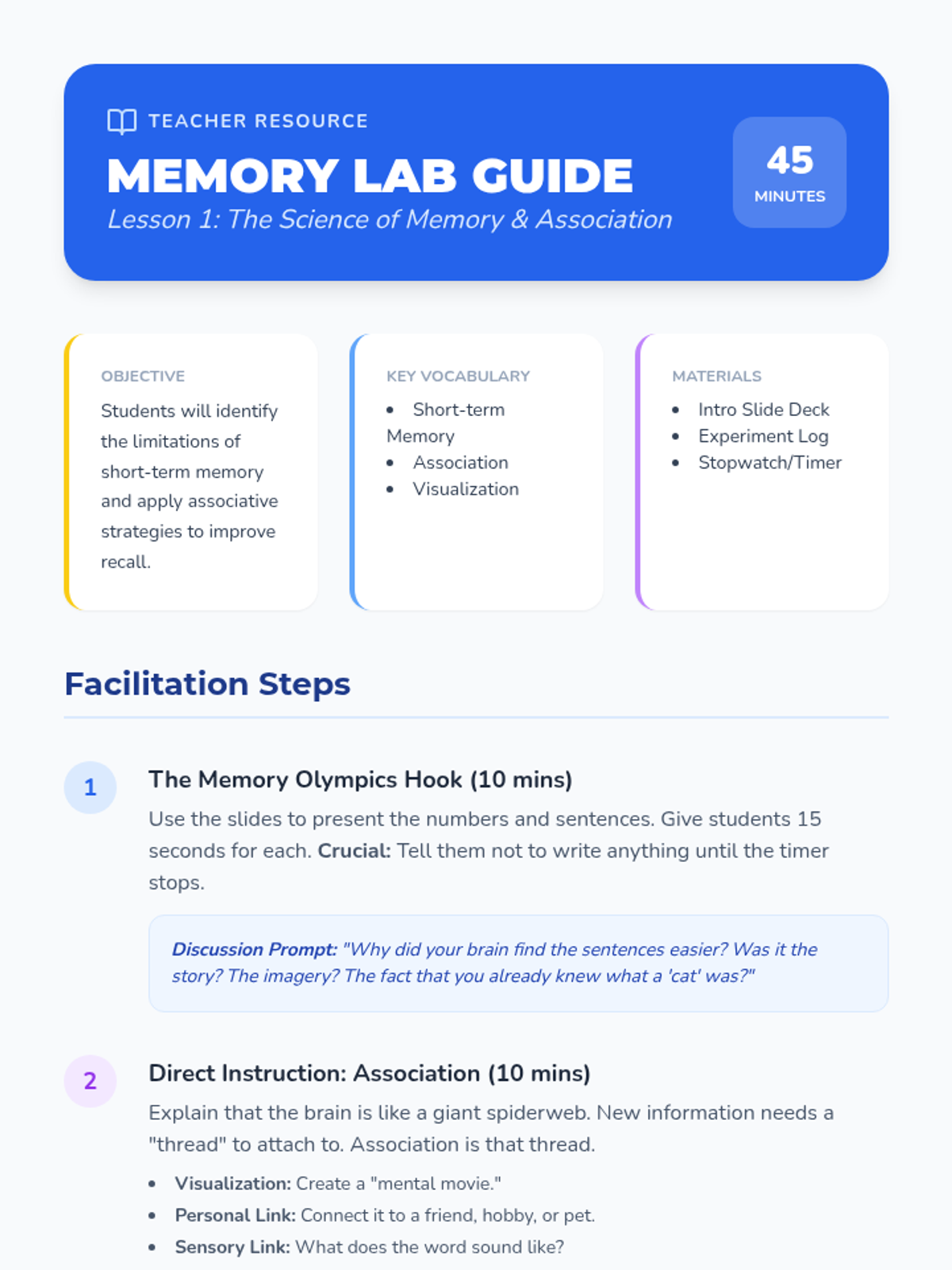
A sequence for 6th-grade students on memory mechanics, the forgetting curve, and the power of spaced repetition to improve retention. Students explore how their brains store information through hands-on simulations, data tracking, and strategic planning.
A 5-lesson unit for 8th-grade students on spaced repetition, backwards planning, and metacognition to improve long-term memory and executive functioning.
This sequence introduces 8th-grade students to the Leitner System of spaced repetition. Students explore the biology of forgetting, learn to design high-quality flashcards, and build a physical three-box system to manage their review schedules effectively.
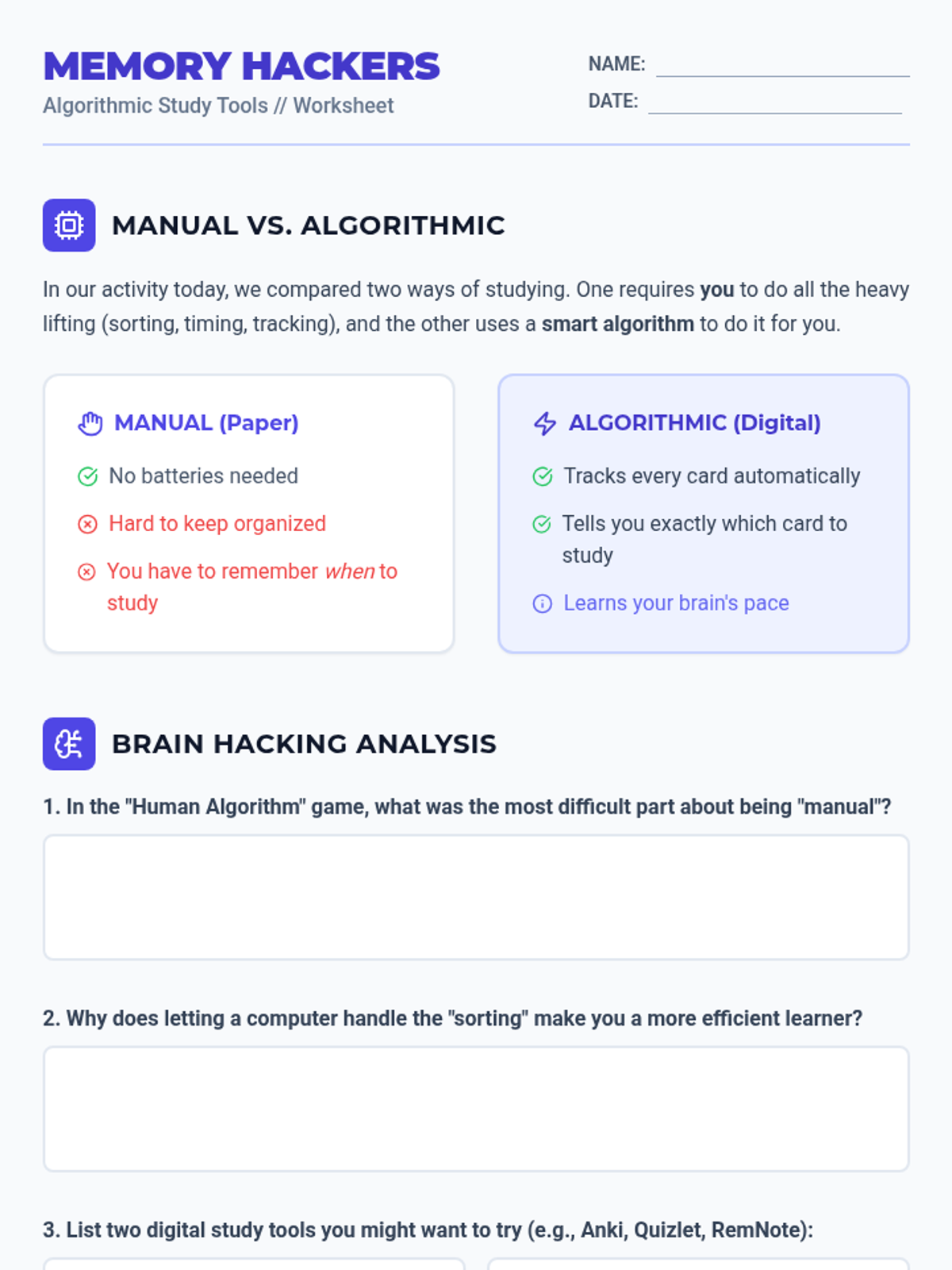
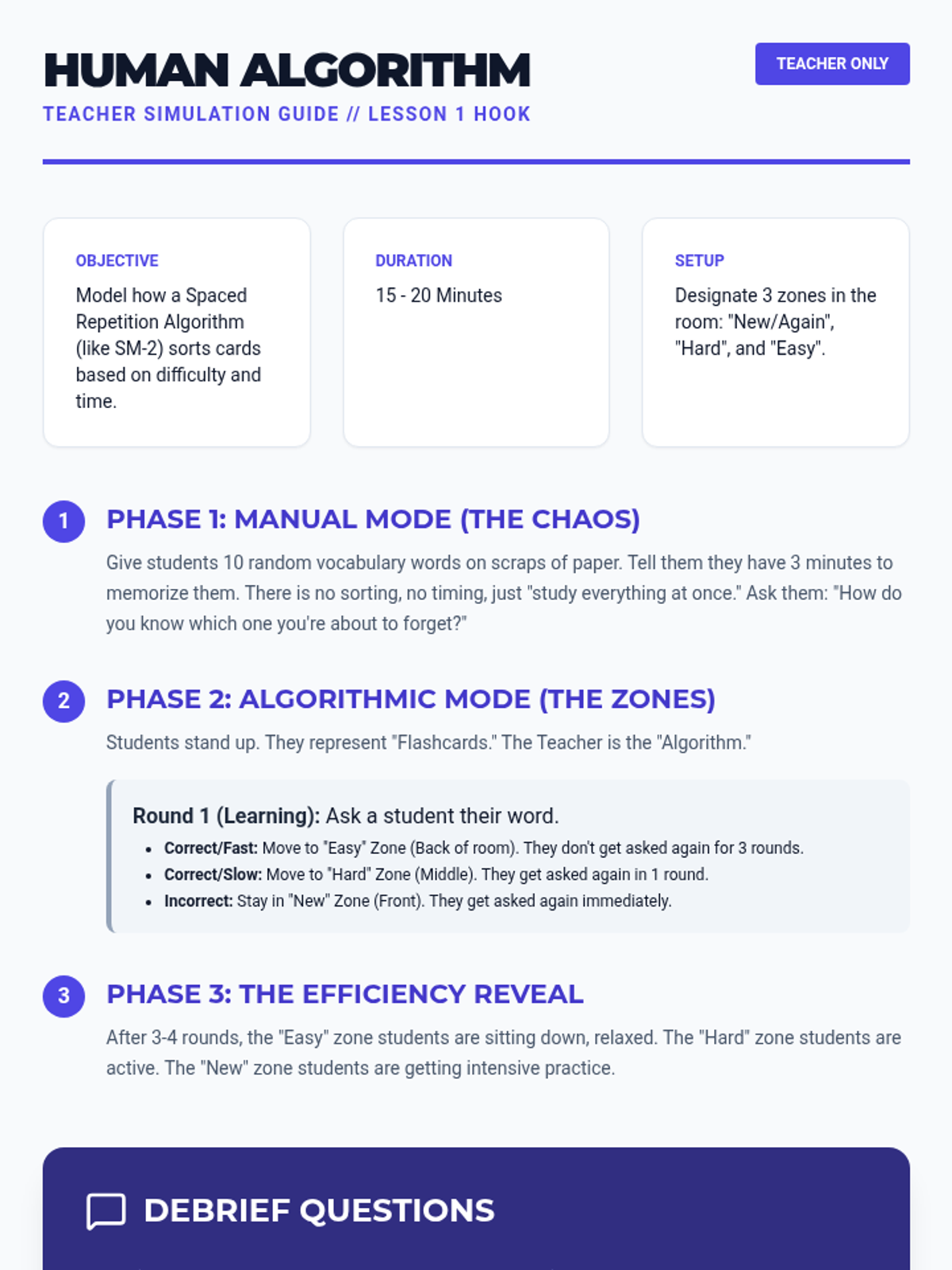
A sequence for 8th-grade students on leveraging digital tools to automate spaced repetition. Students explore algorithmic study platforms, create multimedia decks using dual-coding, interpret mastery data, and build sustainable study routines.
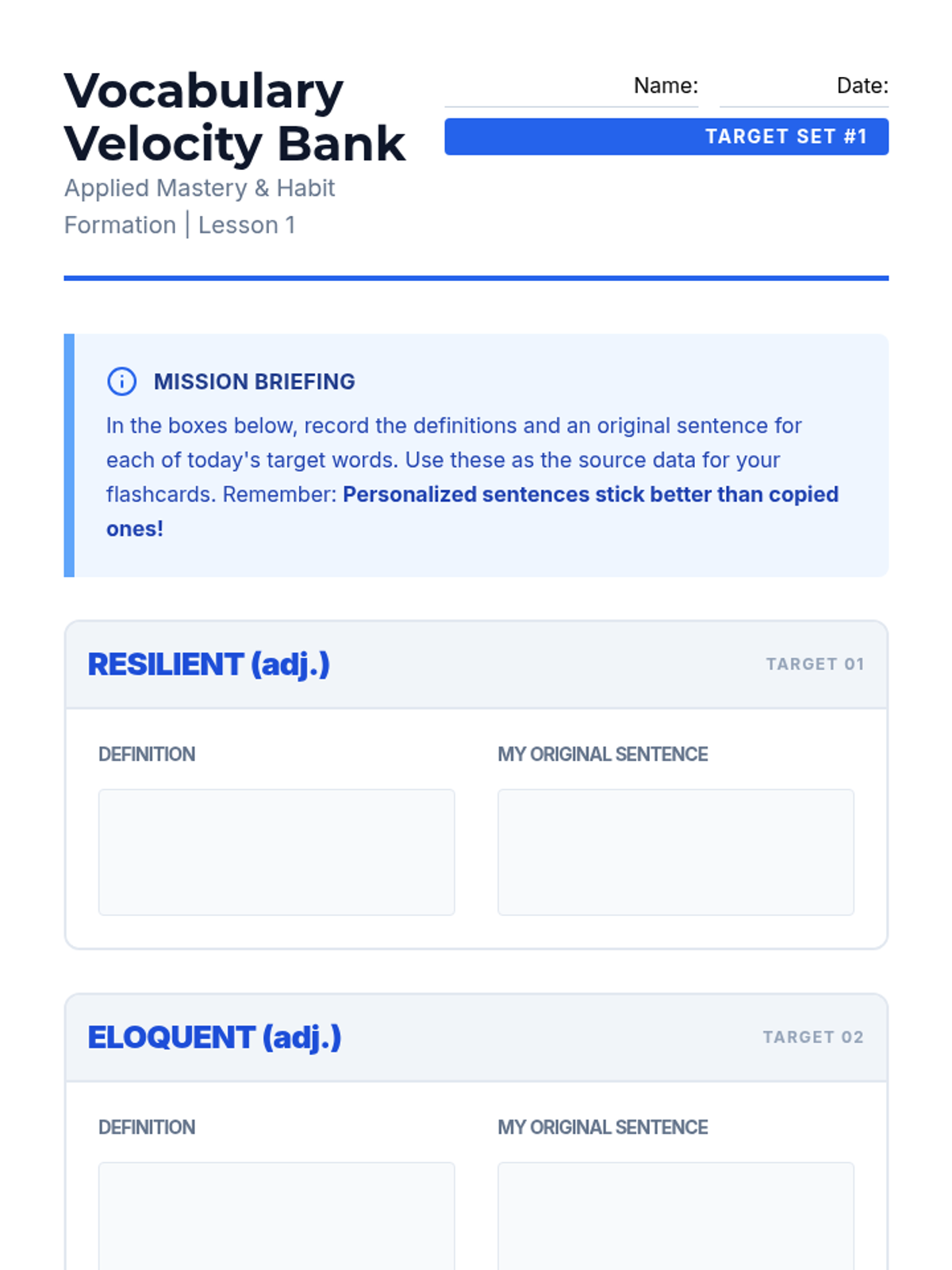
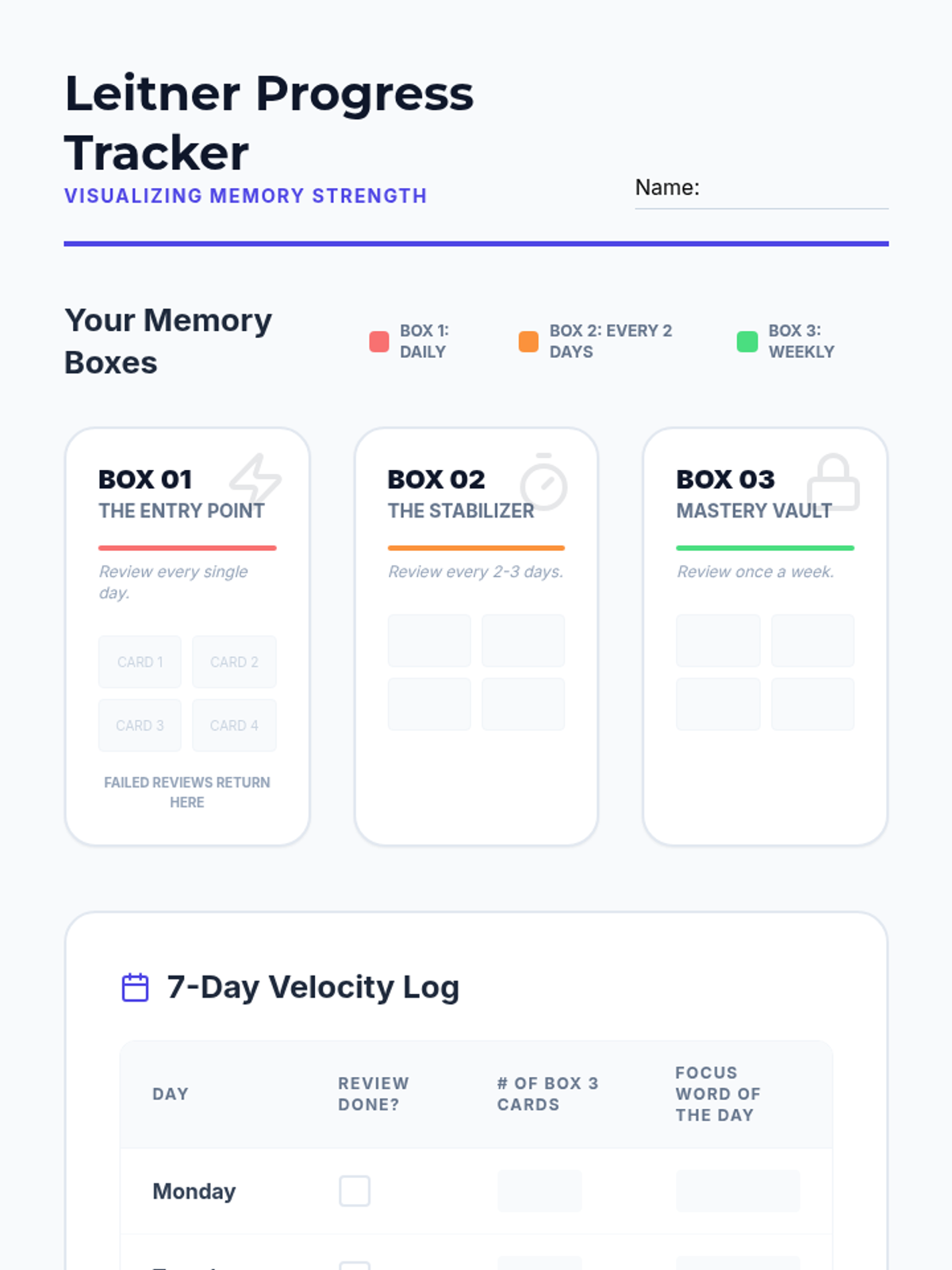
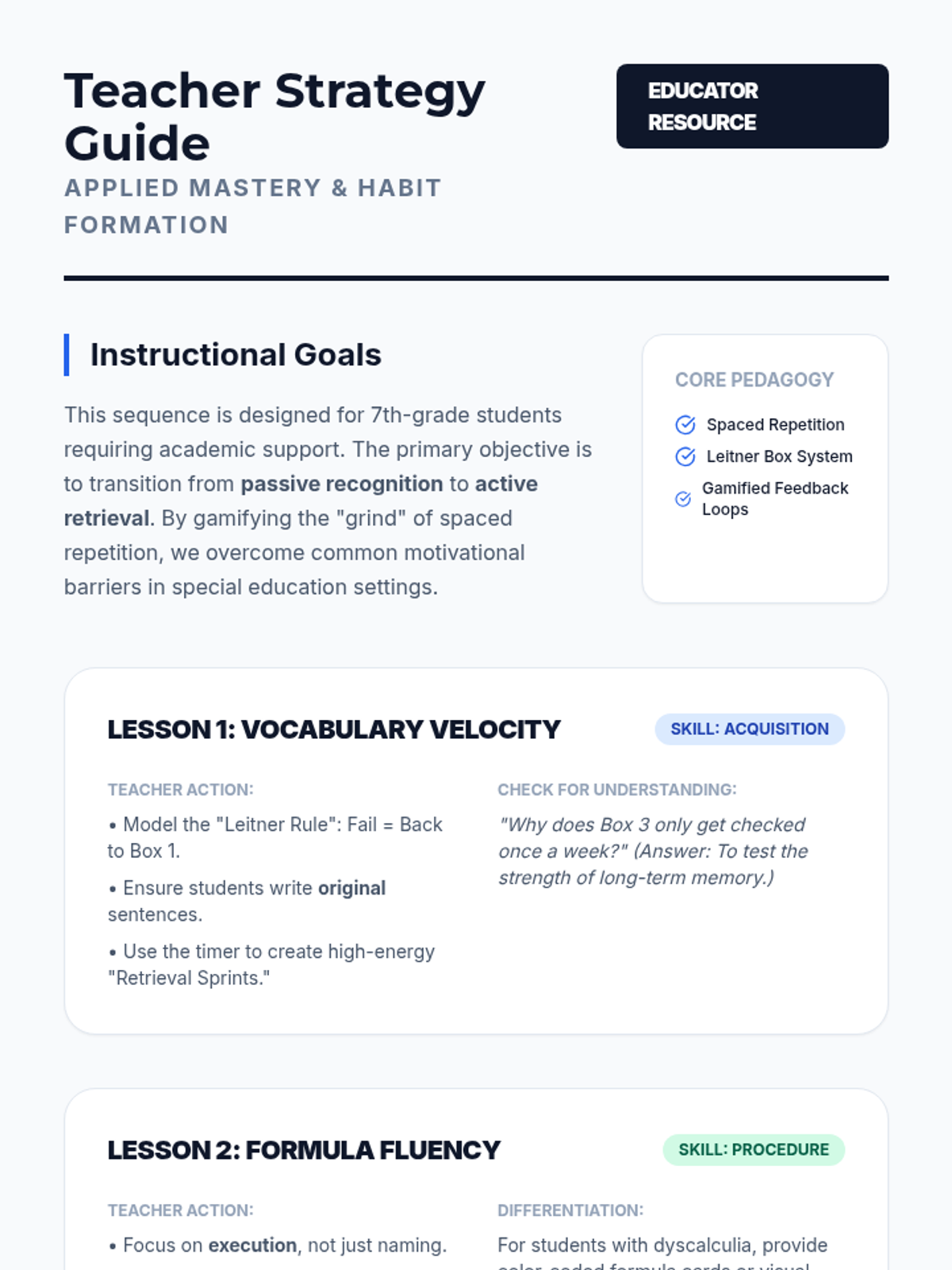
This sequence integrates spaced repetition strategies directly into current academic content, turning the practice into a habit through gamification and mastery tracking. Students apply their systems to vocabulary, math facts, and core concepts relevant to their grade level, helping them visualize their growth over time.
This sequence introduces 7th-grade students to the biological and psychological foundations of memory, specifically focusing on the Ebbinghaus Forgetting Curve and the power of spaced repetition. Students will move from understanding why forgetting happens to developing personalized strategies for long-term retention using active recall and spaced practice.
In this inquiry-driven sequence, students explore behavioral activation, investigating how their actions influence their emotions. They learn to distinguish between pleasure and mastery activities, conduct personal experiments to track mood changes, and create a personalized evidence-based plan for mood regulation.
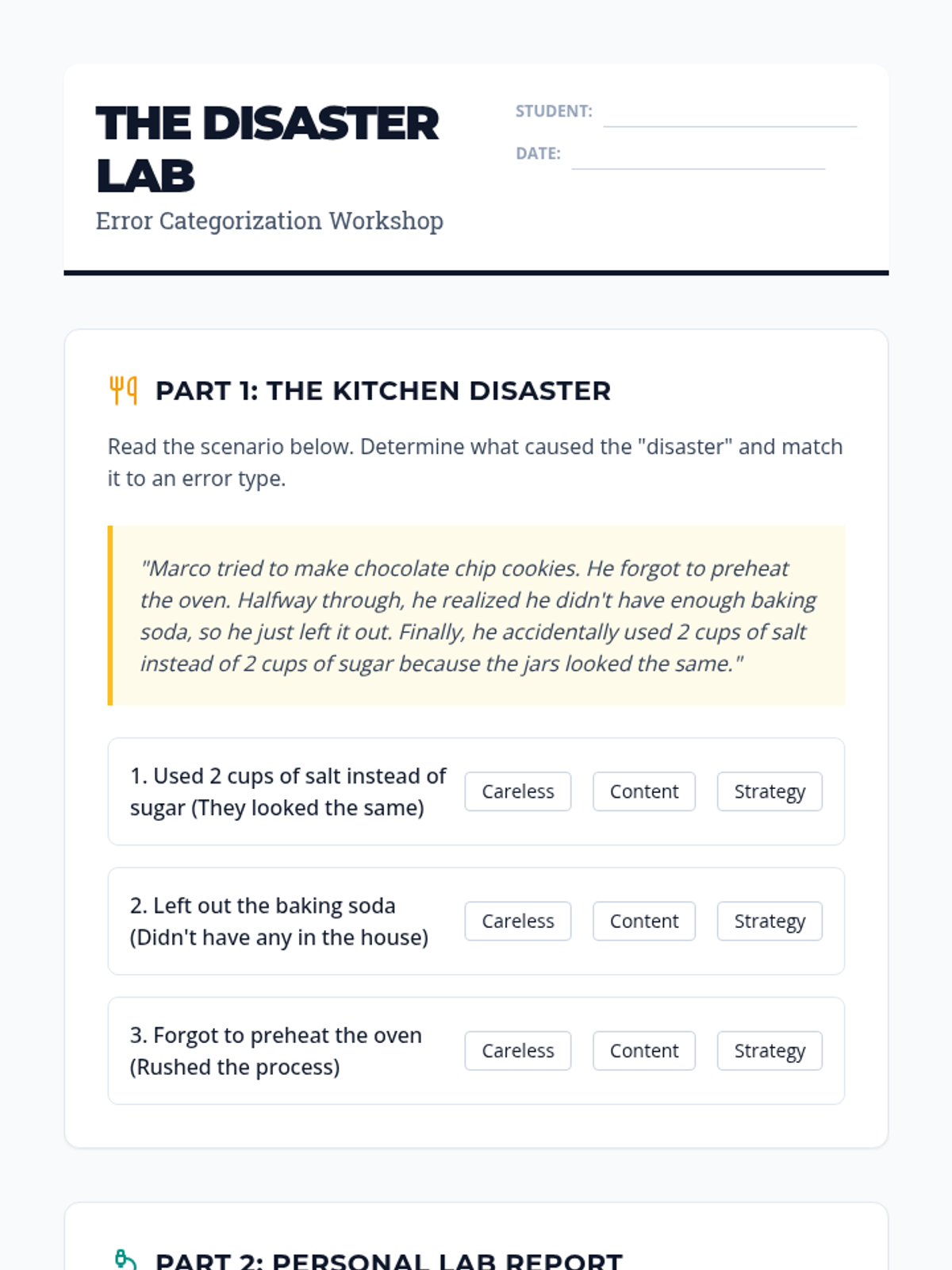
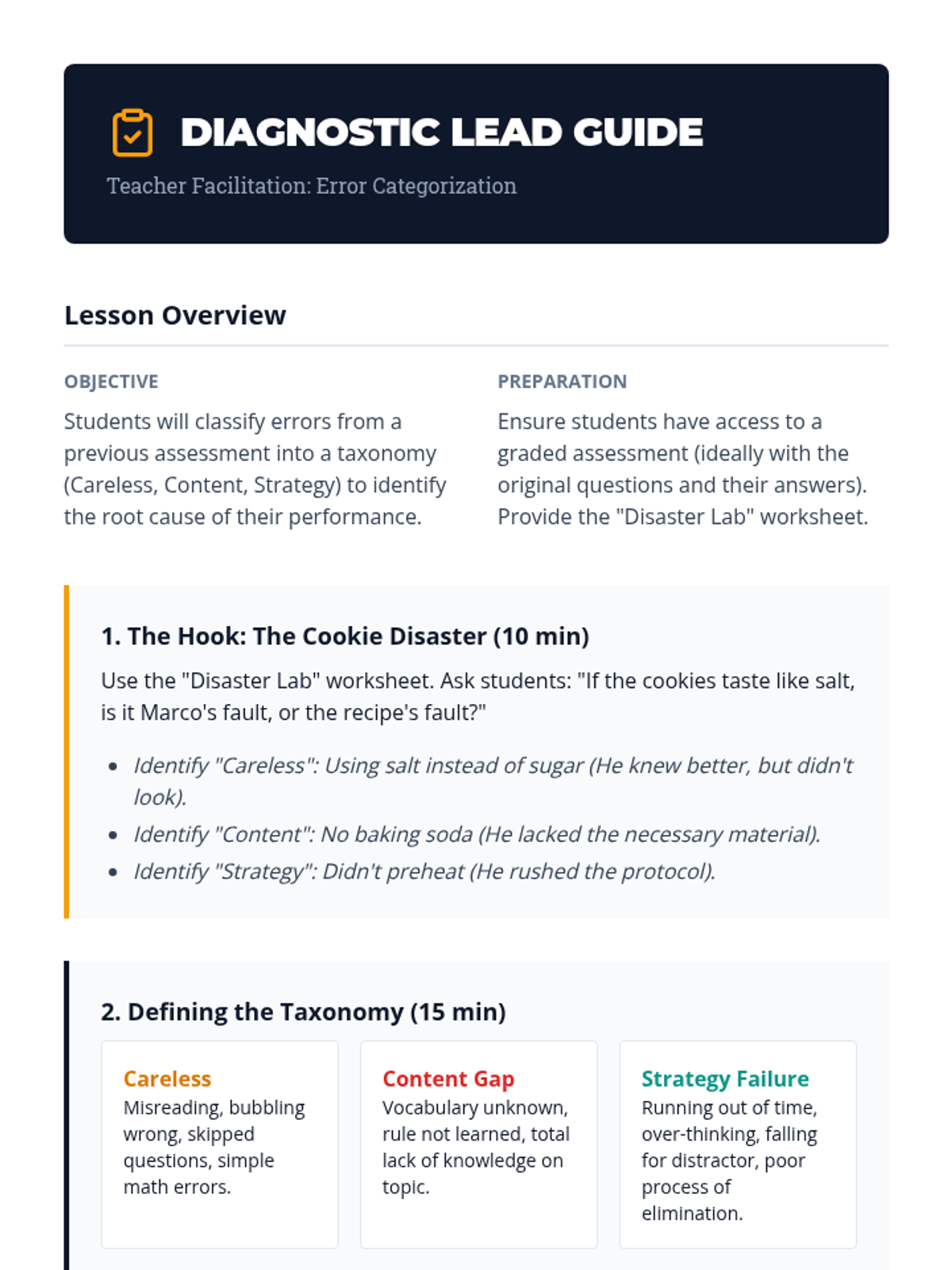
A comprehensive sequence on metacognitive error analysis, teaching students to categorize, analyze, and learn from their mistakes to improve test-taking performance. Students move from simple error classification to deep retrospective correction and personal strategy development.
A comprehensive sequence designed to teach 7th-grade students the science and practice of spaced repetition. Students learn to design effective flashcards, build a physical Leitner Box system, and master the sorting algorithms required for long-term memory retention.
A specialized sequence designed for 6th-grade students to master long-term memory techniques. Students move from understanding why we forget to implementing advanced study systems like the Leitner Box and spaced repetition scheduling.
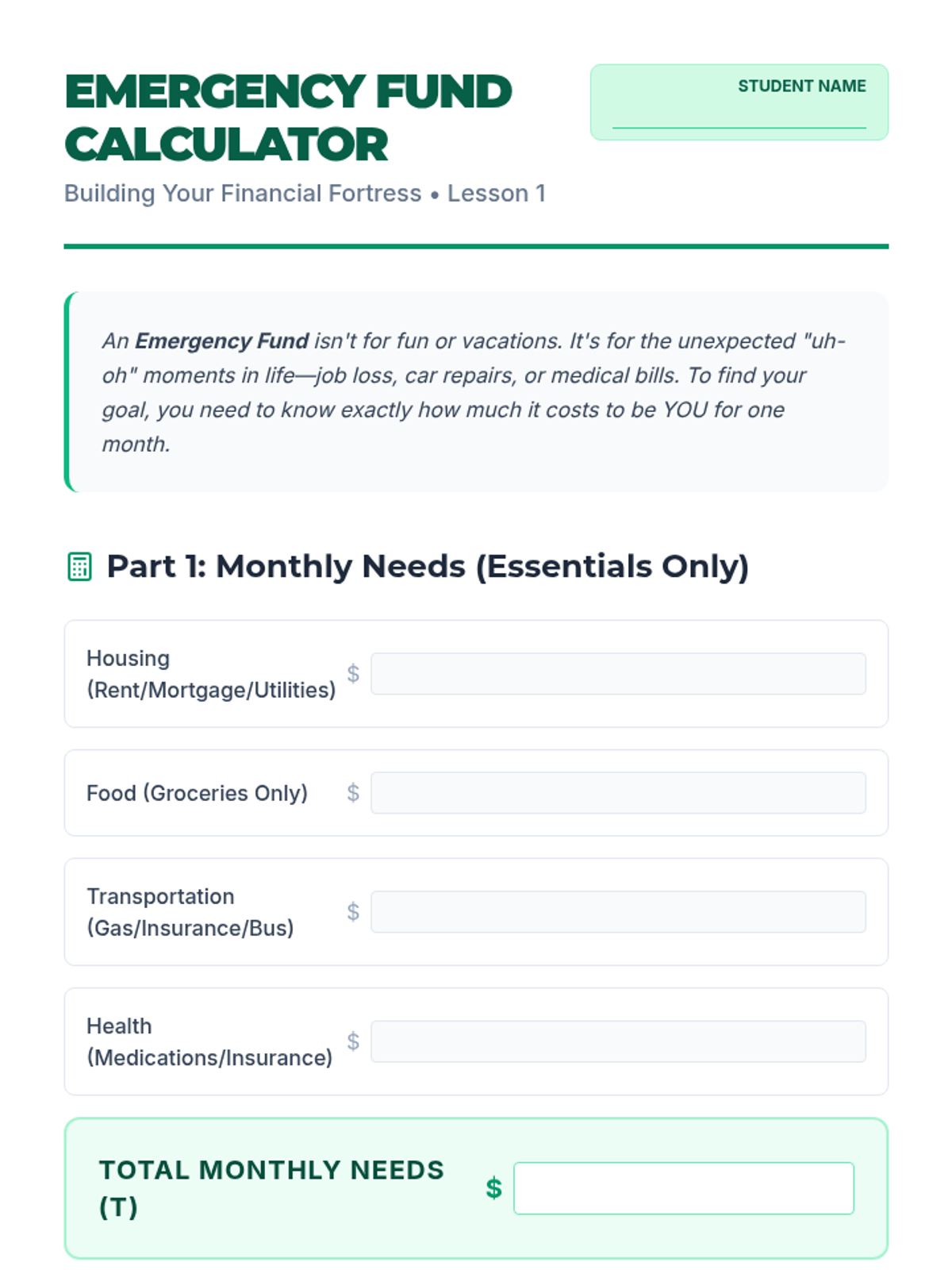
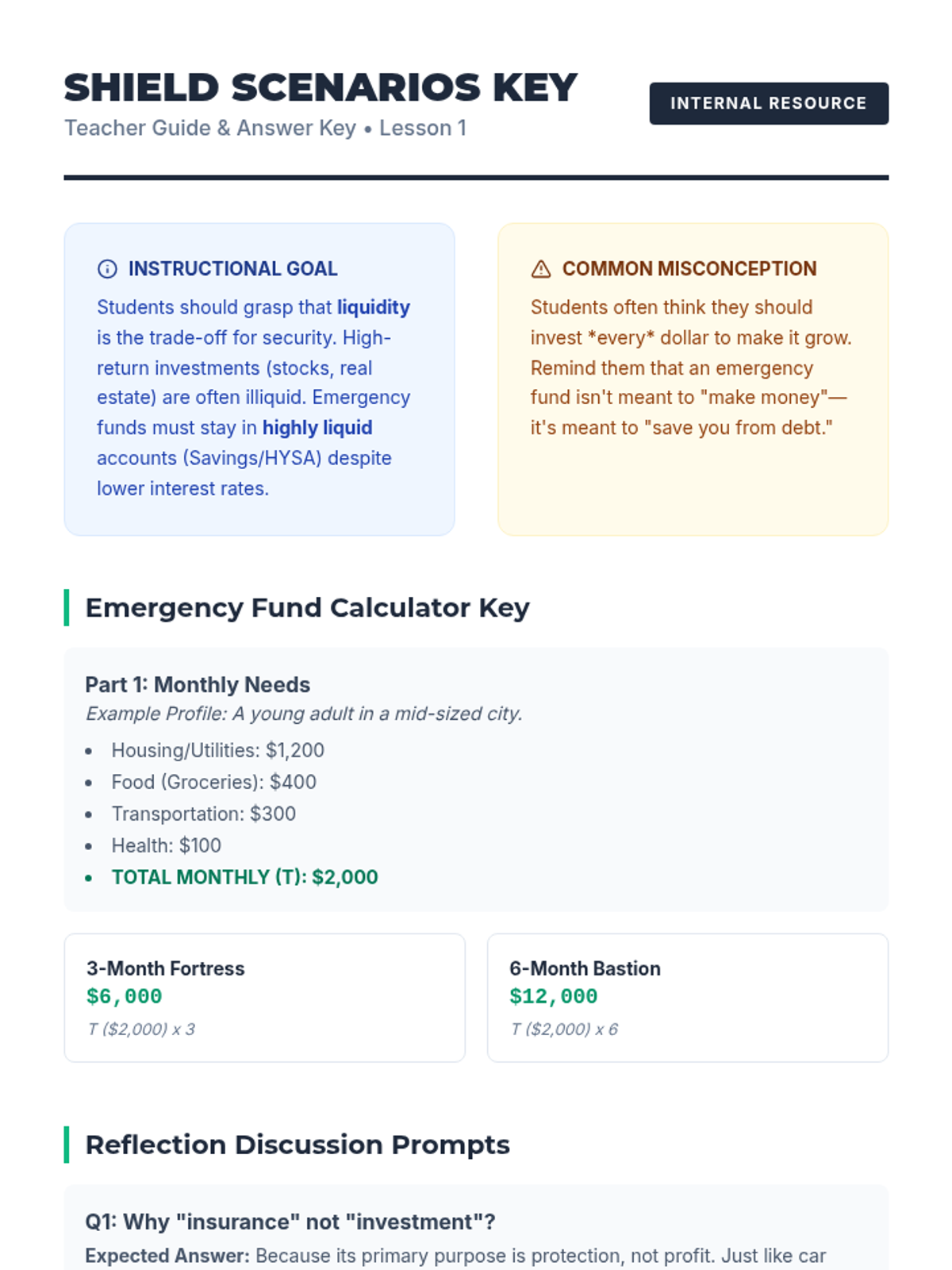
Focusing on the 'defensive' side of wealth management, this sequence teaches 8th-grade students how to build financial stability through emergency funds, liquid assets, and smart savings habits. Students will explore behavioral economics, compare banking products, and simulate financial shocks to understand why stability must precede investment.
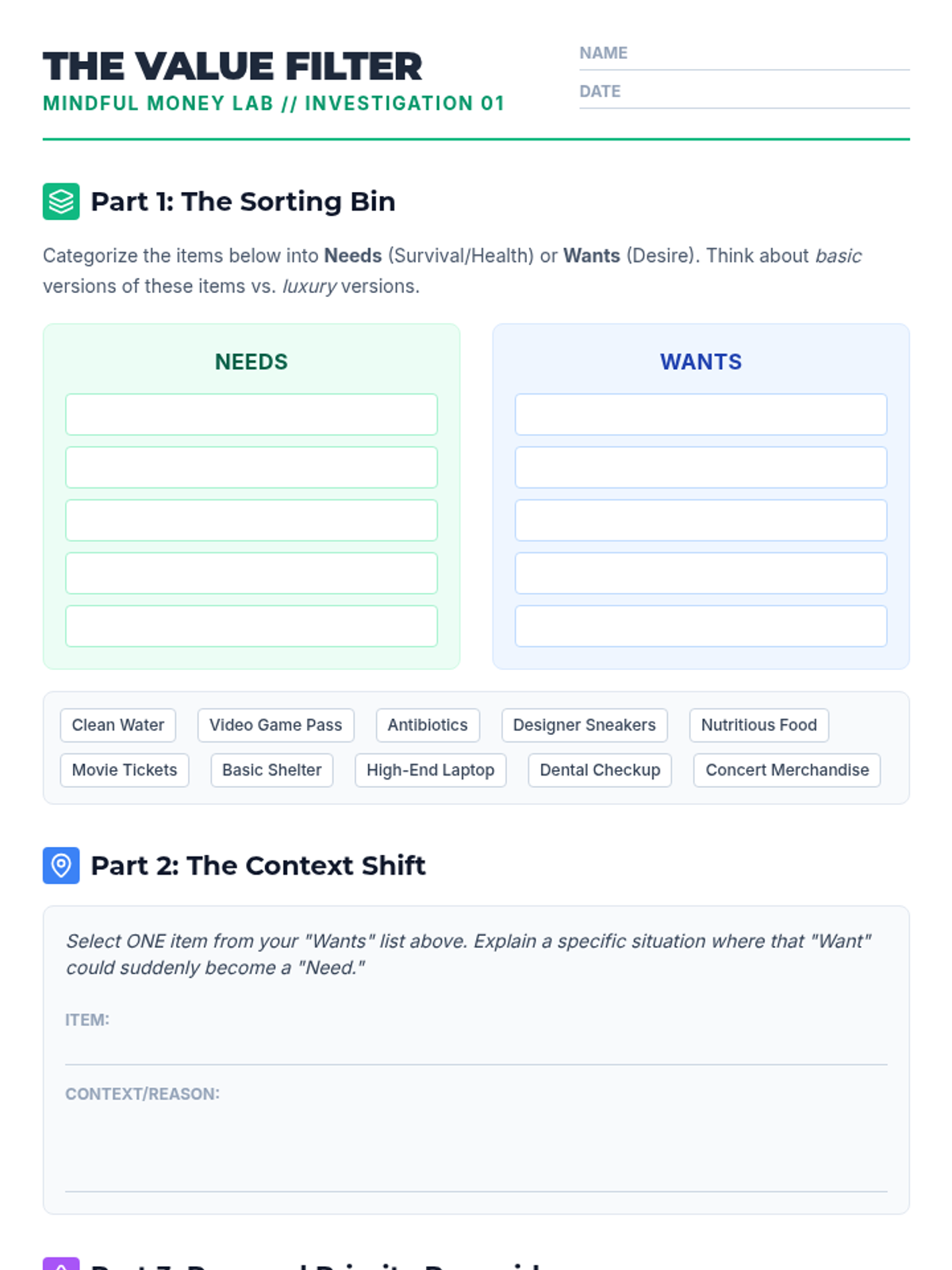
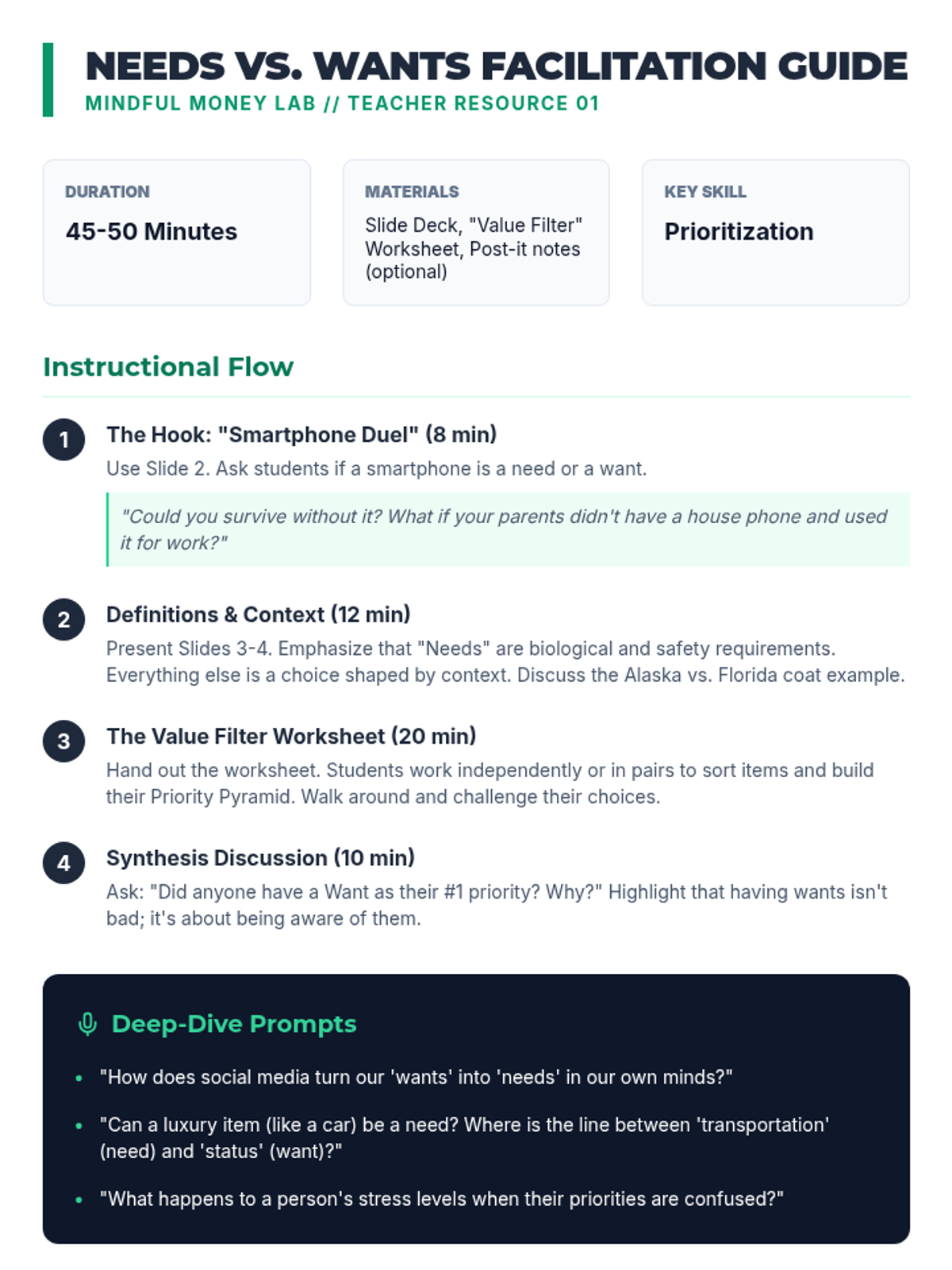
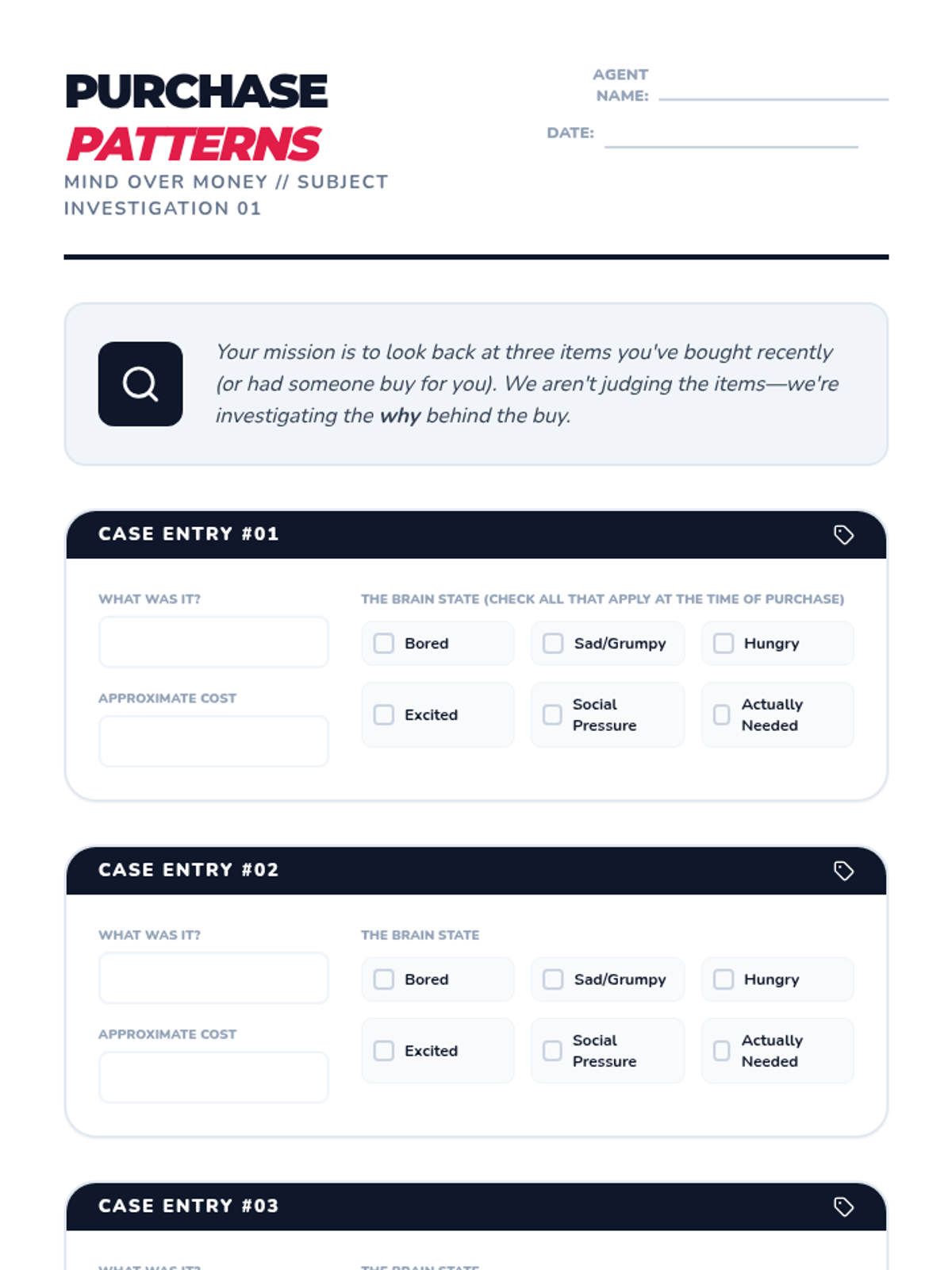
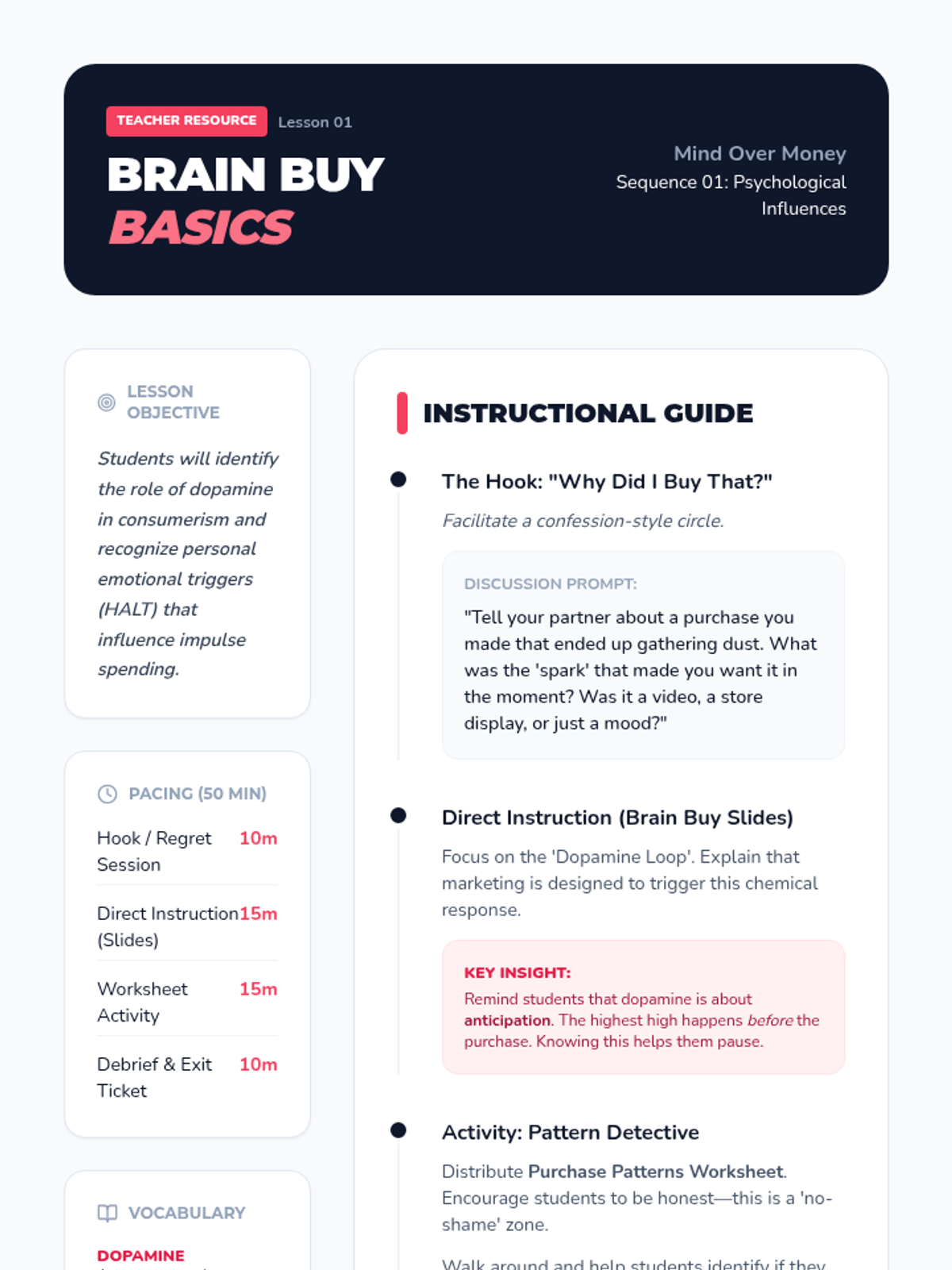
This sequence explores the psychology behind spending, focusing on impulse control, emotional triggers, and the economic concept of opportunity cost. Students move from basic needs/wants categorization to developing a personalized mindful spending plan.
A comprehensive workshop-style sequence exploring the psychology behind consumer habits, focusing on emotional triggers, peer pressure, branding, and environmental impact to help 6th graders develop healthy spending habits.
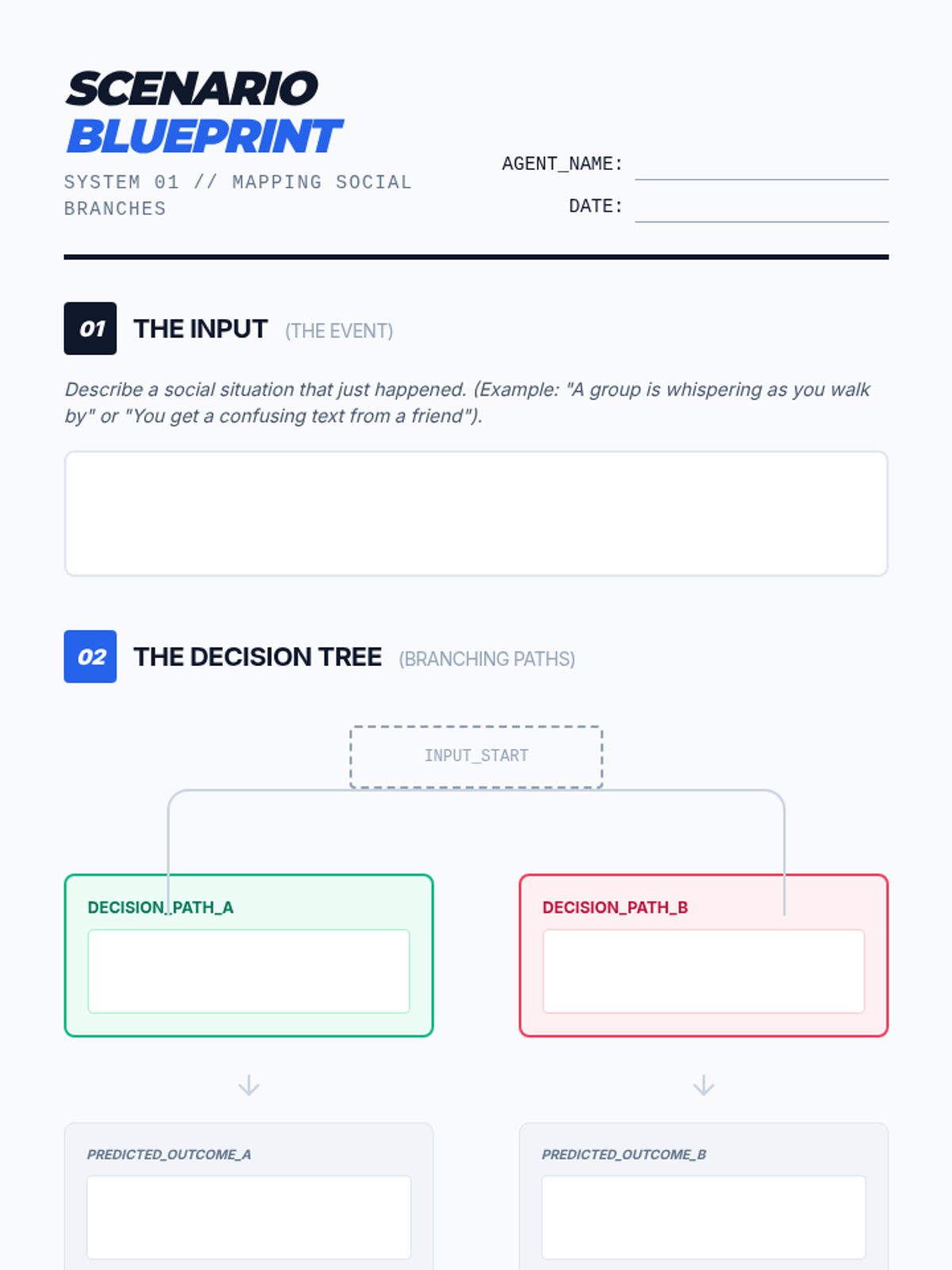
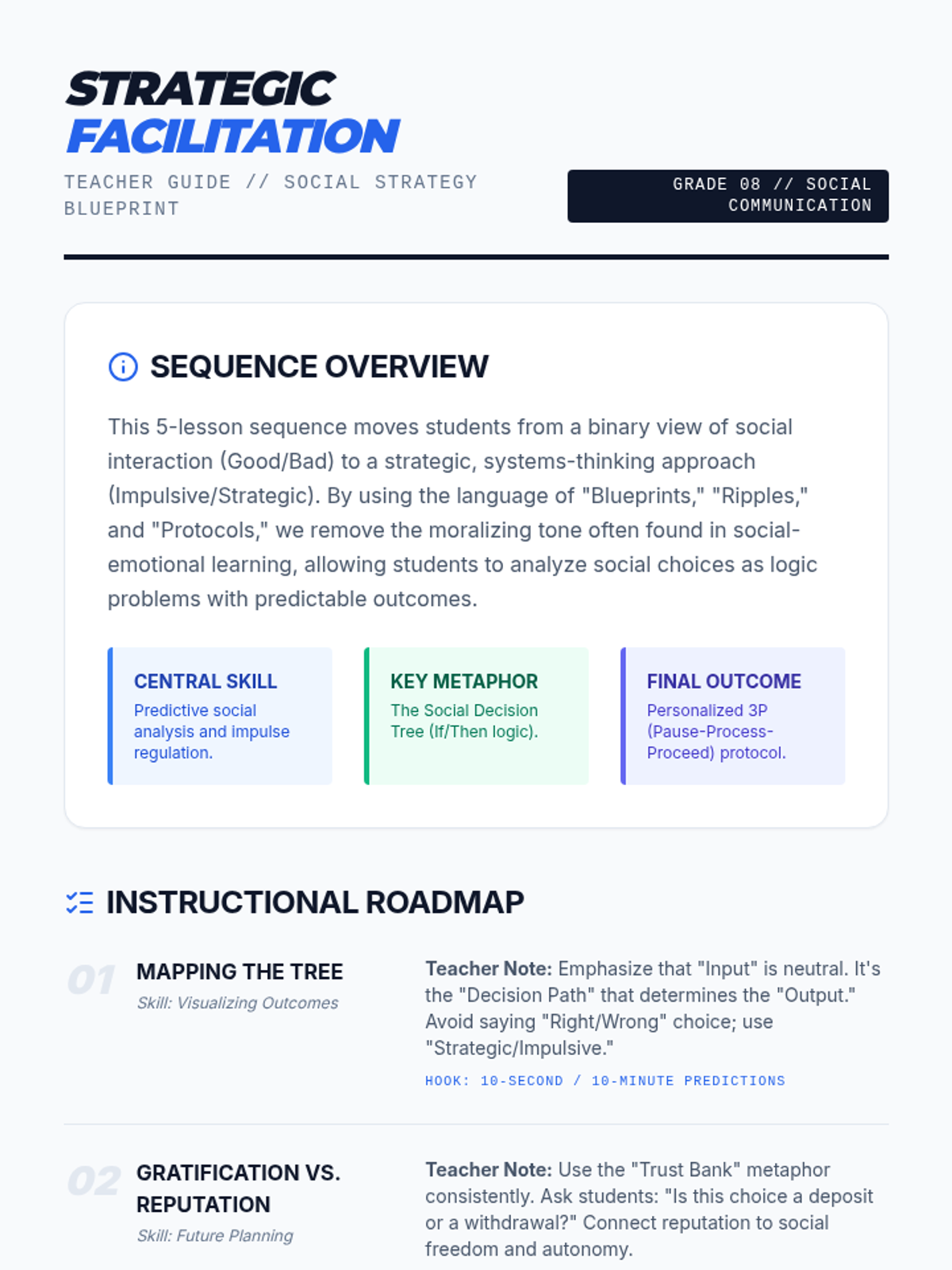
This sequence guides 8th-grade students through the cognitive process of weighing social options. Students learn to map outcomes, distinguish between impulsive and strategic reactions, analyze social ripple effects, and implement a personalized 'Pause-Process-Proceed' framework for real-time decision-making.
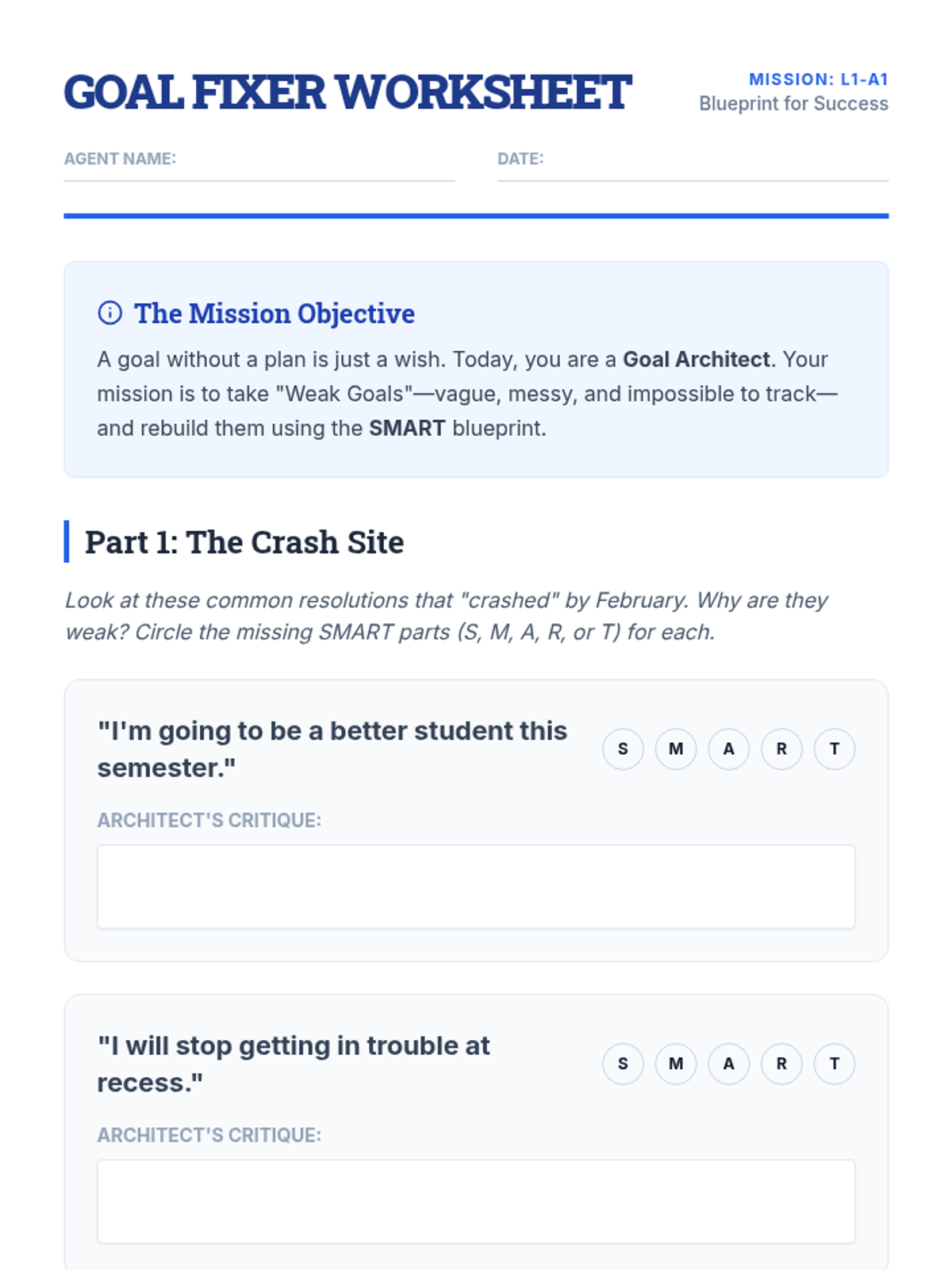
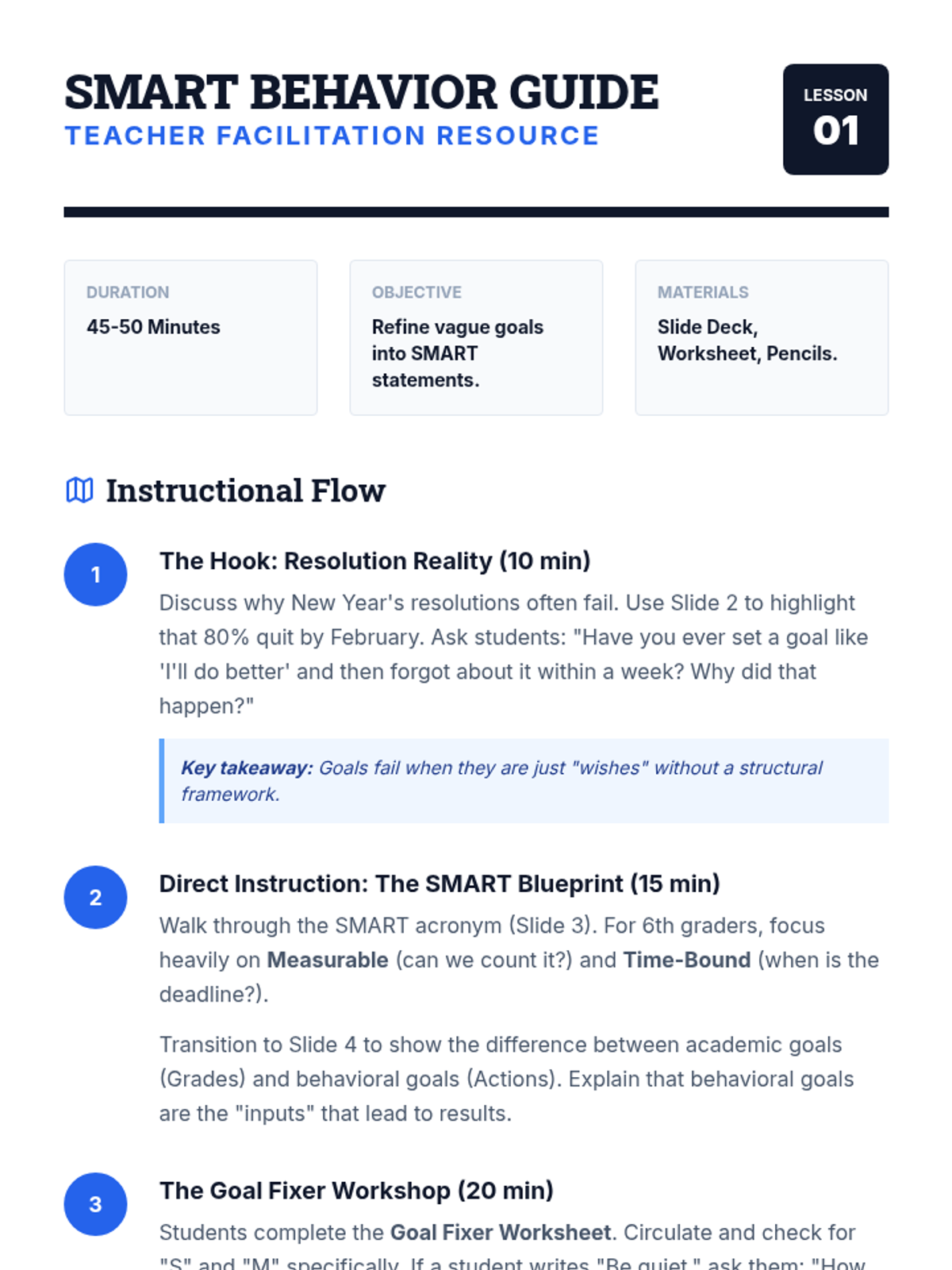
This sequence guides 6th-grade students through the psychological and practical steps of behavior change. They move from understanding SMART goals and motivation types to designing their own behavior contracts and tracking systems, emphasizing self-regulation and iterative growth.
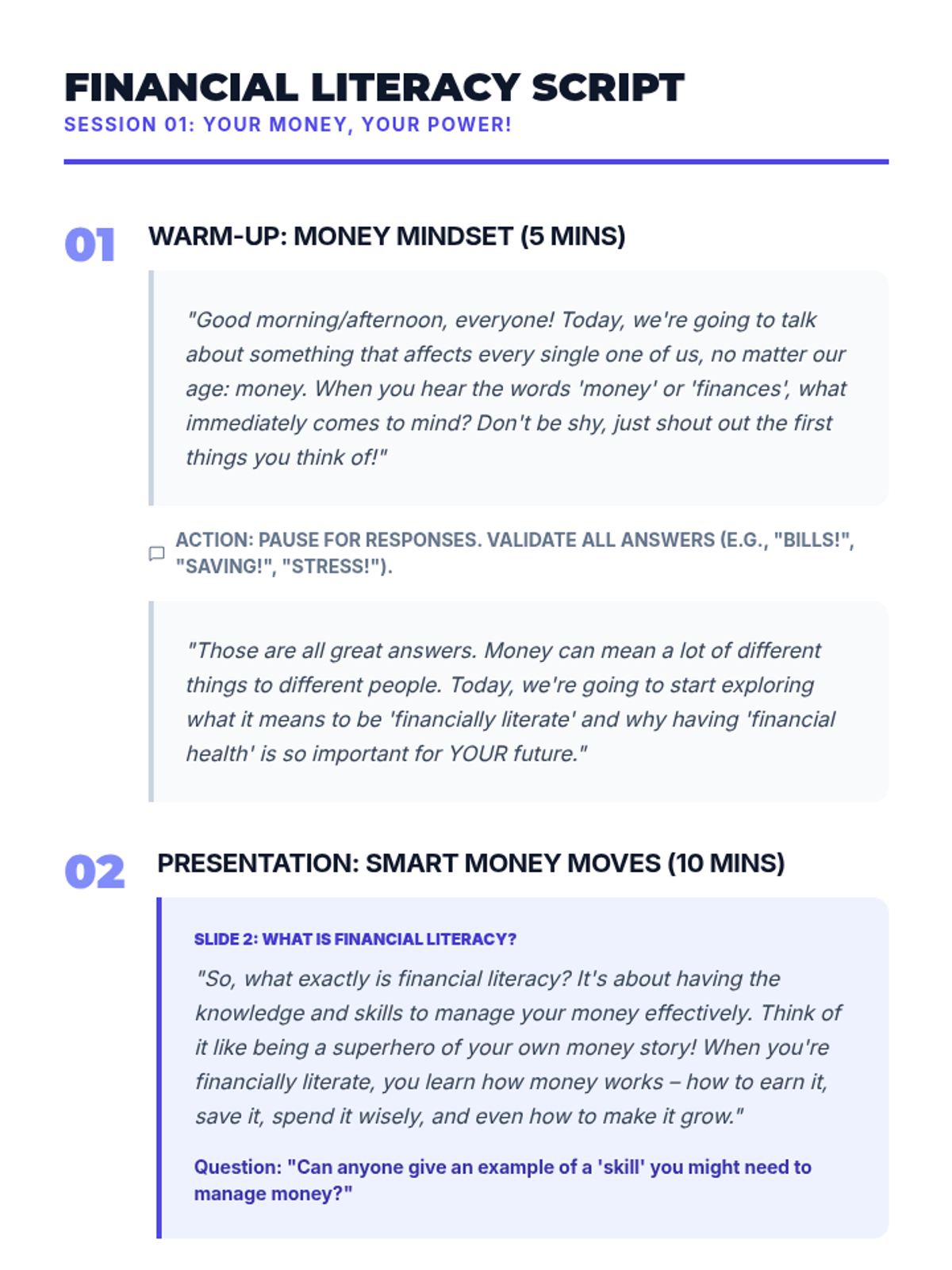
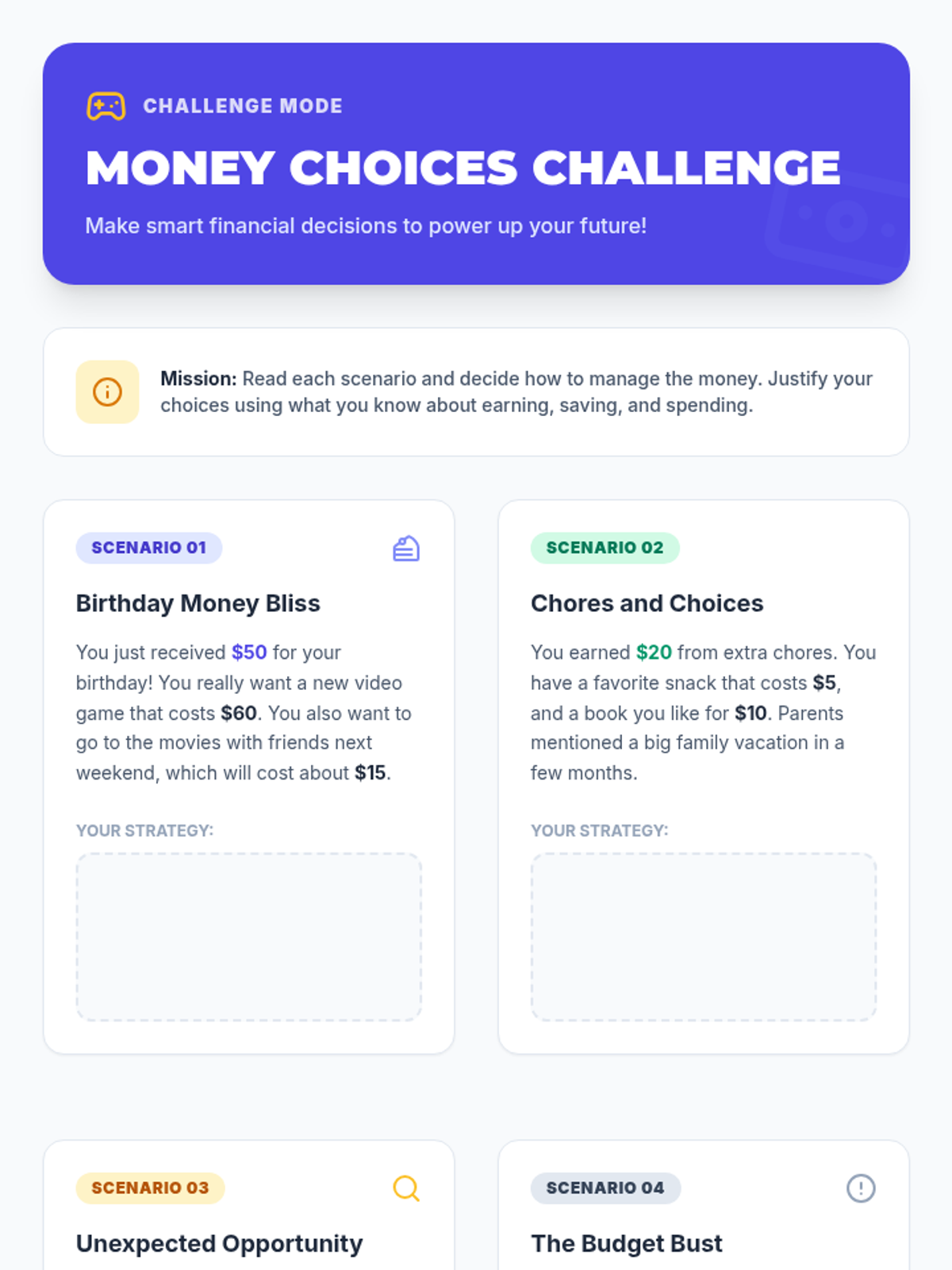
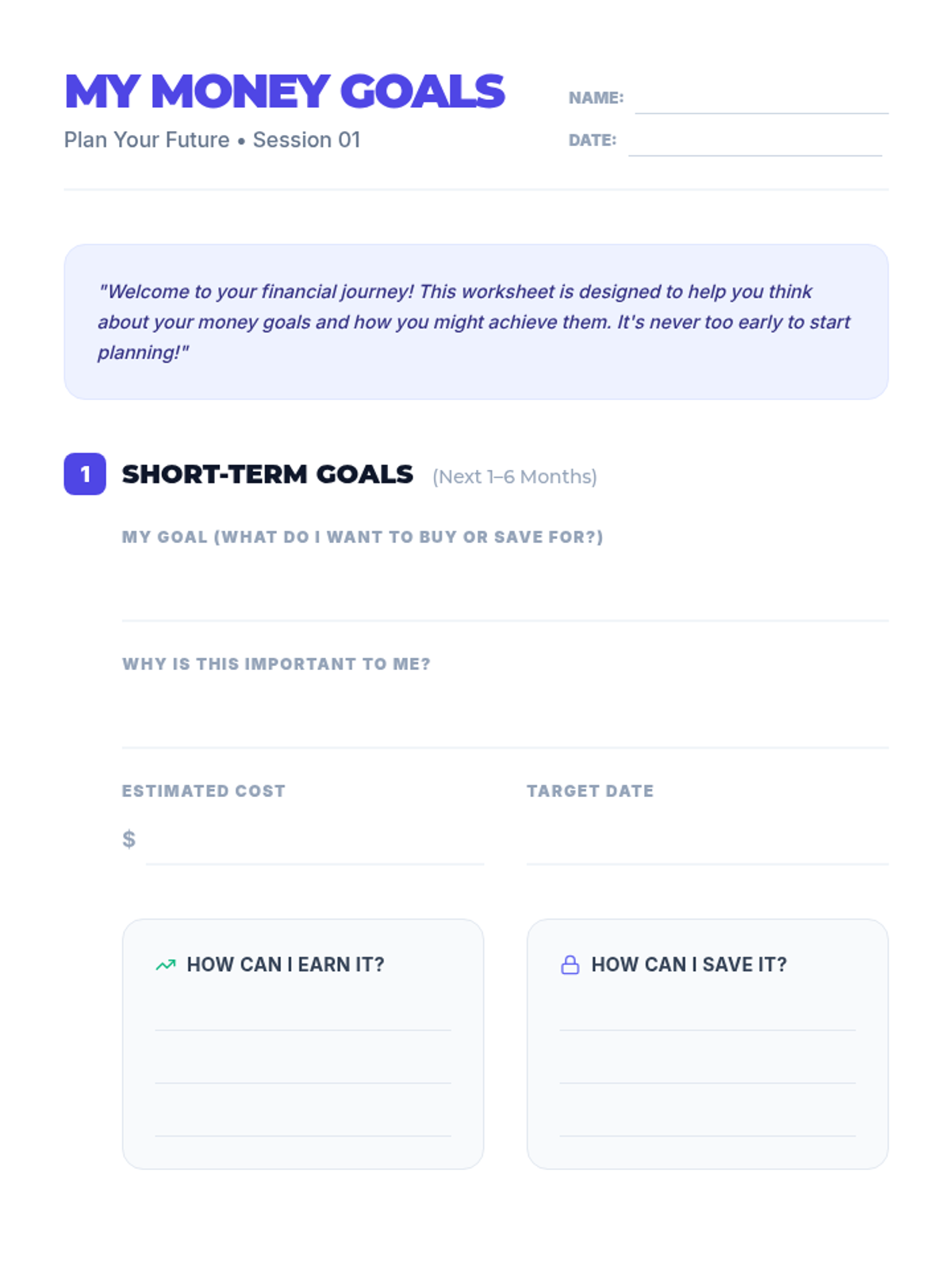
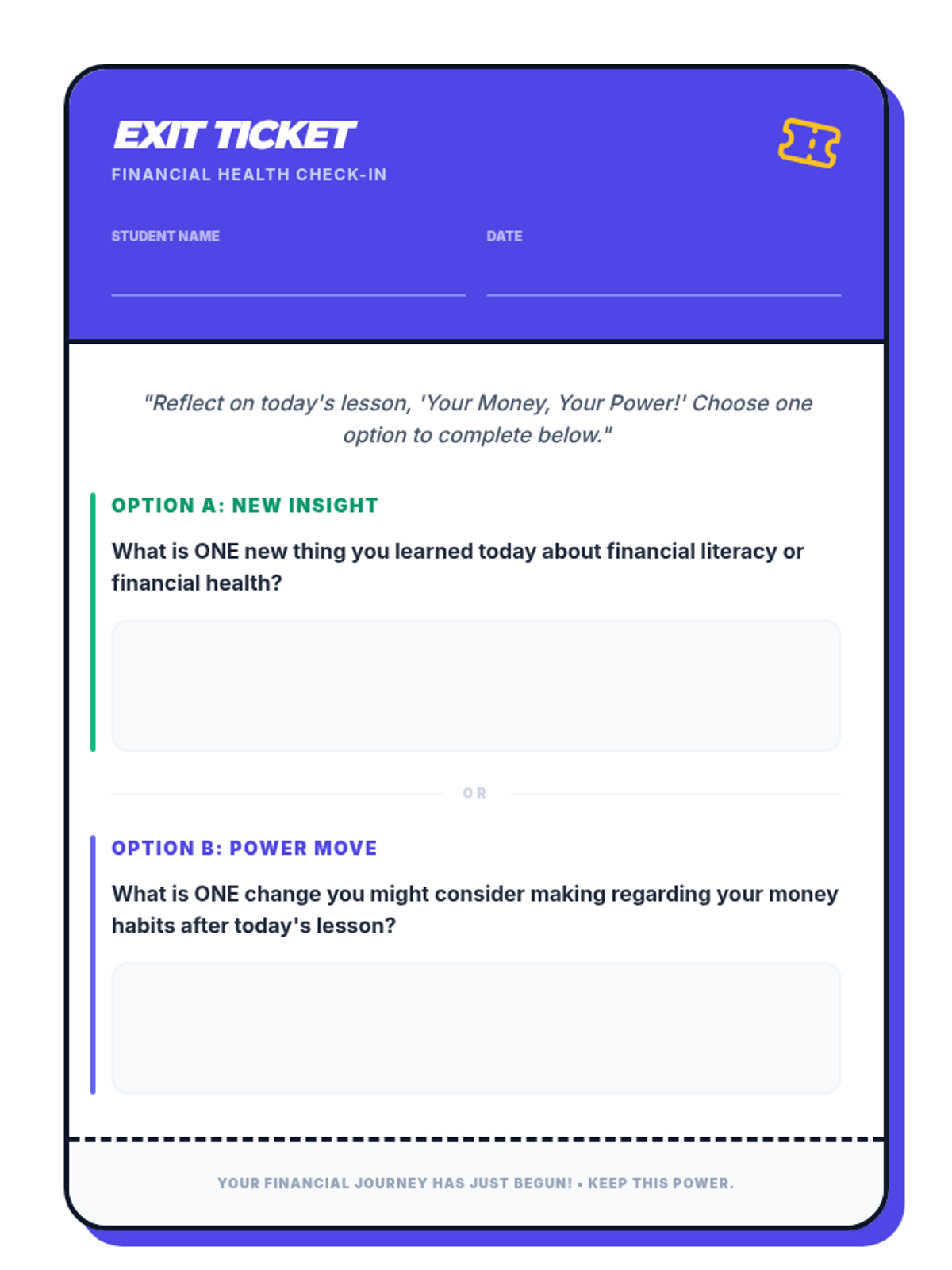
A financial literacy sequence for 8th graders focused on empowerment, financial health, and practical budgeting skills. Students transition from understanding their money mindset to actively managing their finances through budgeting.
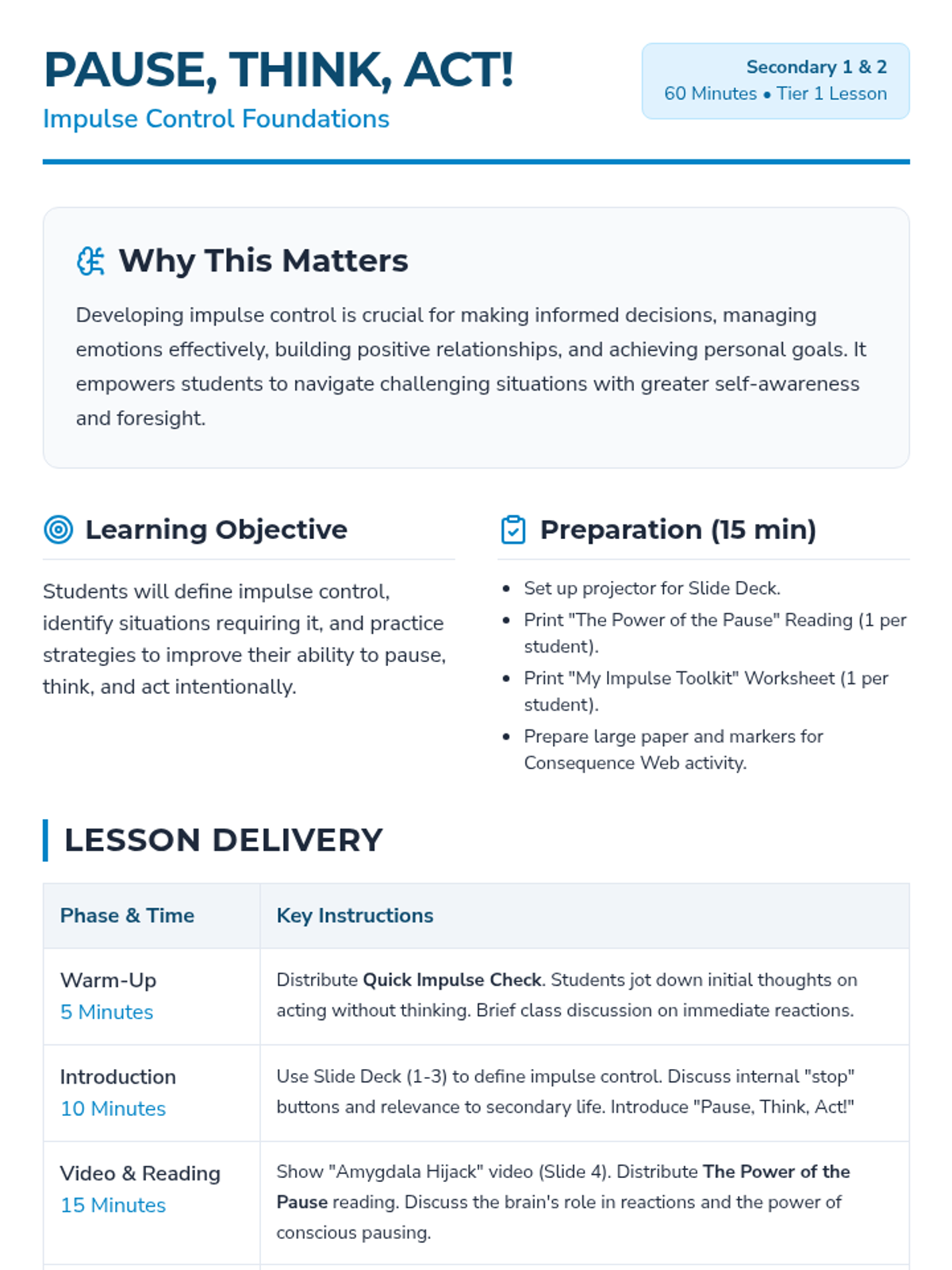
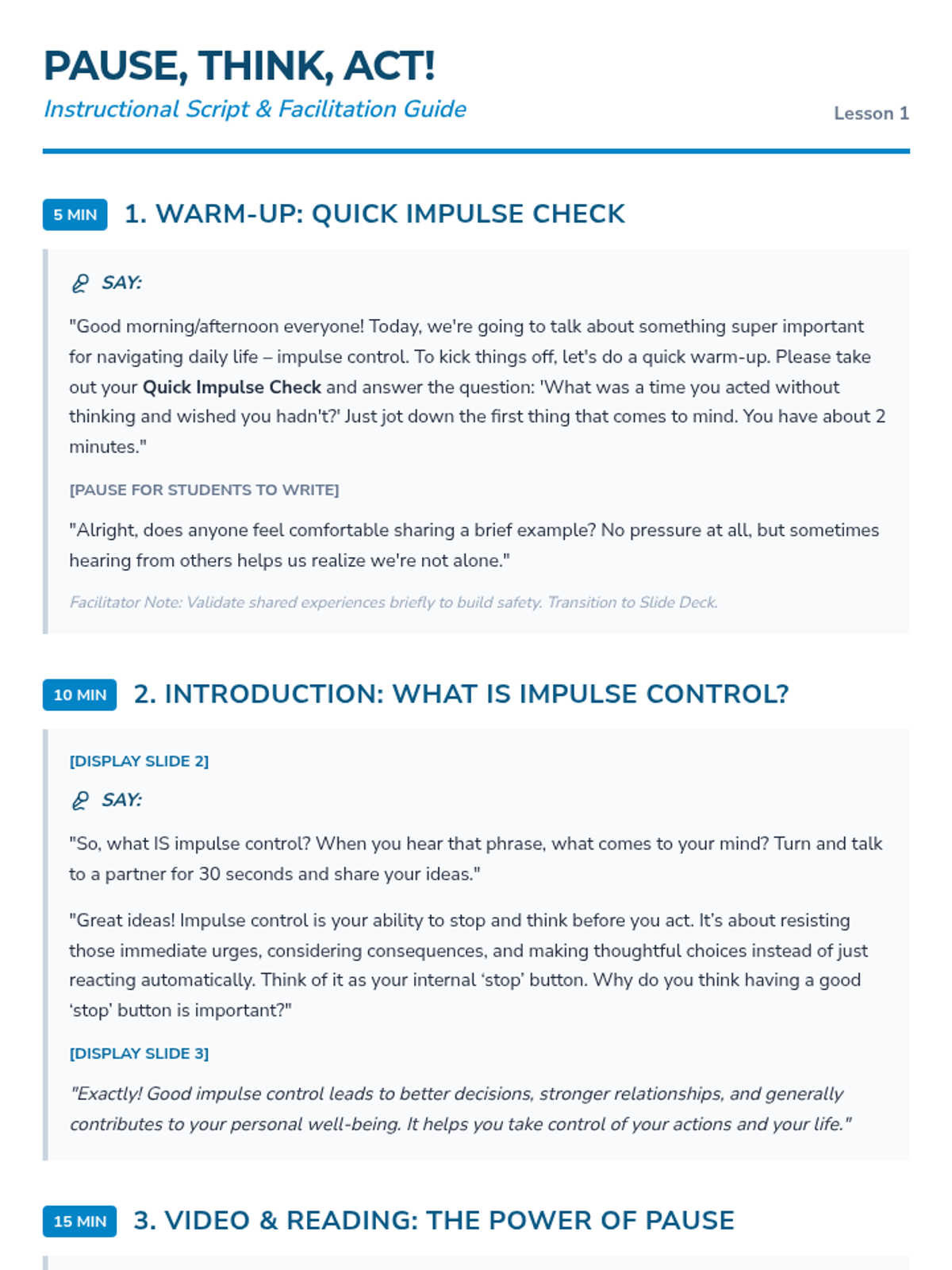
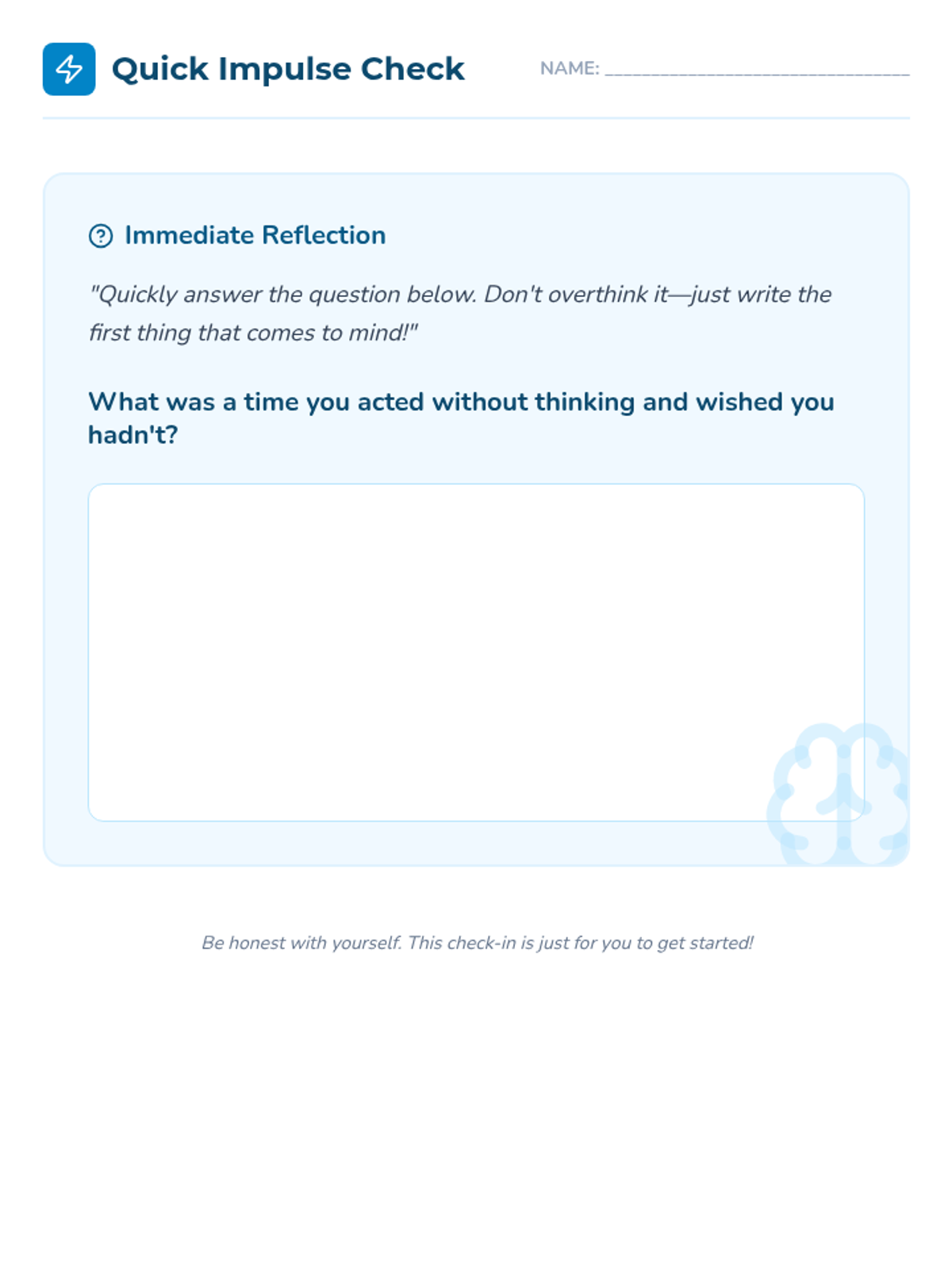
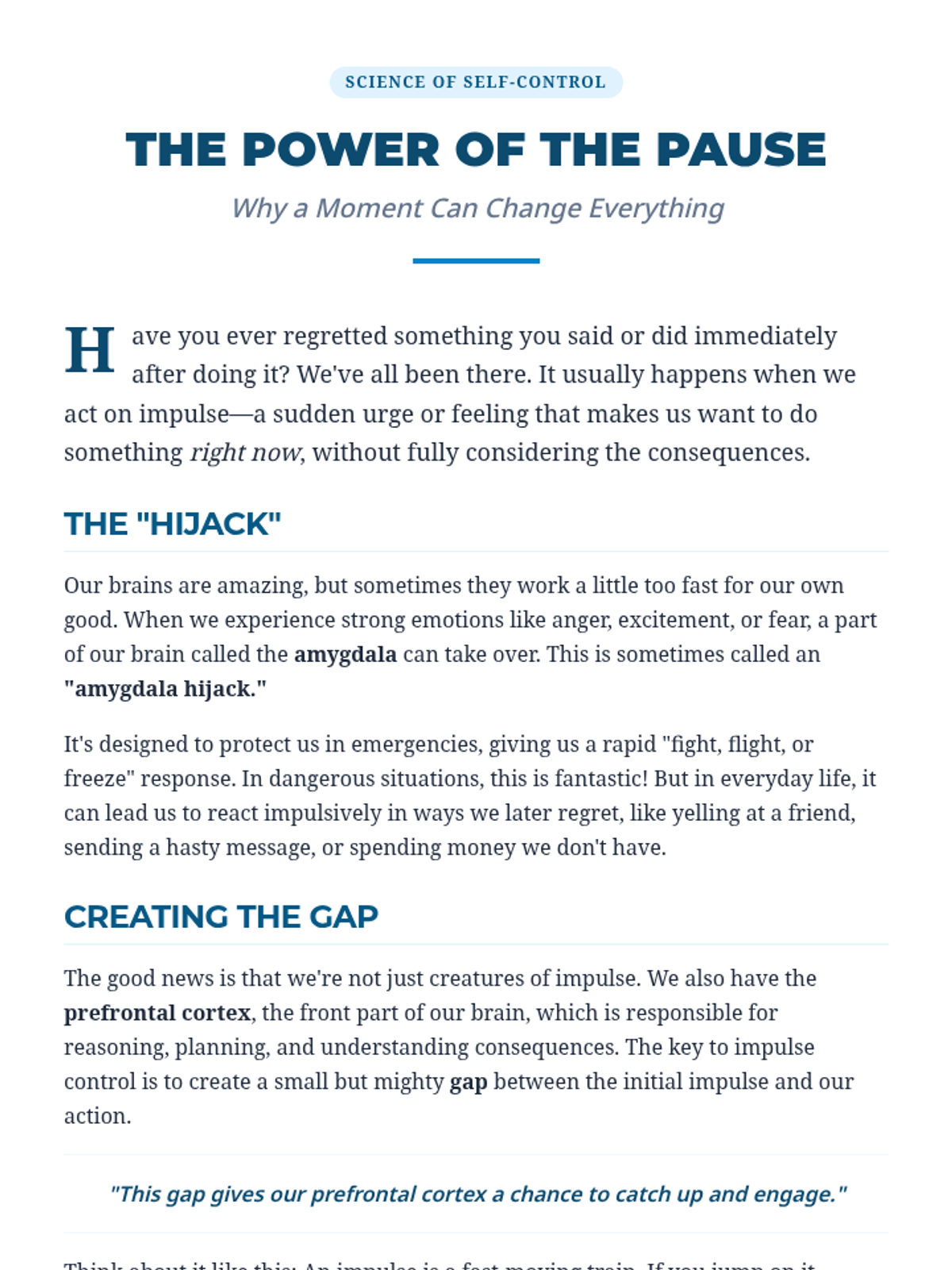
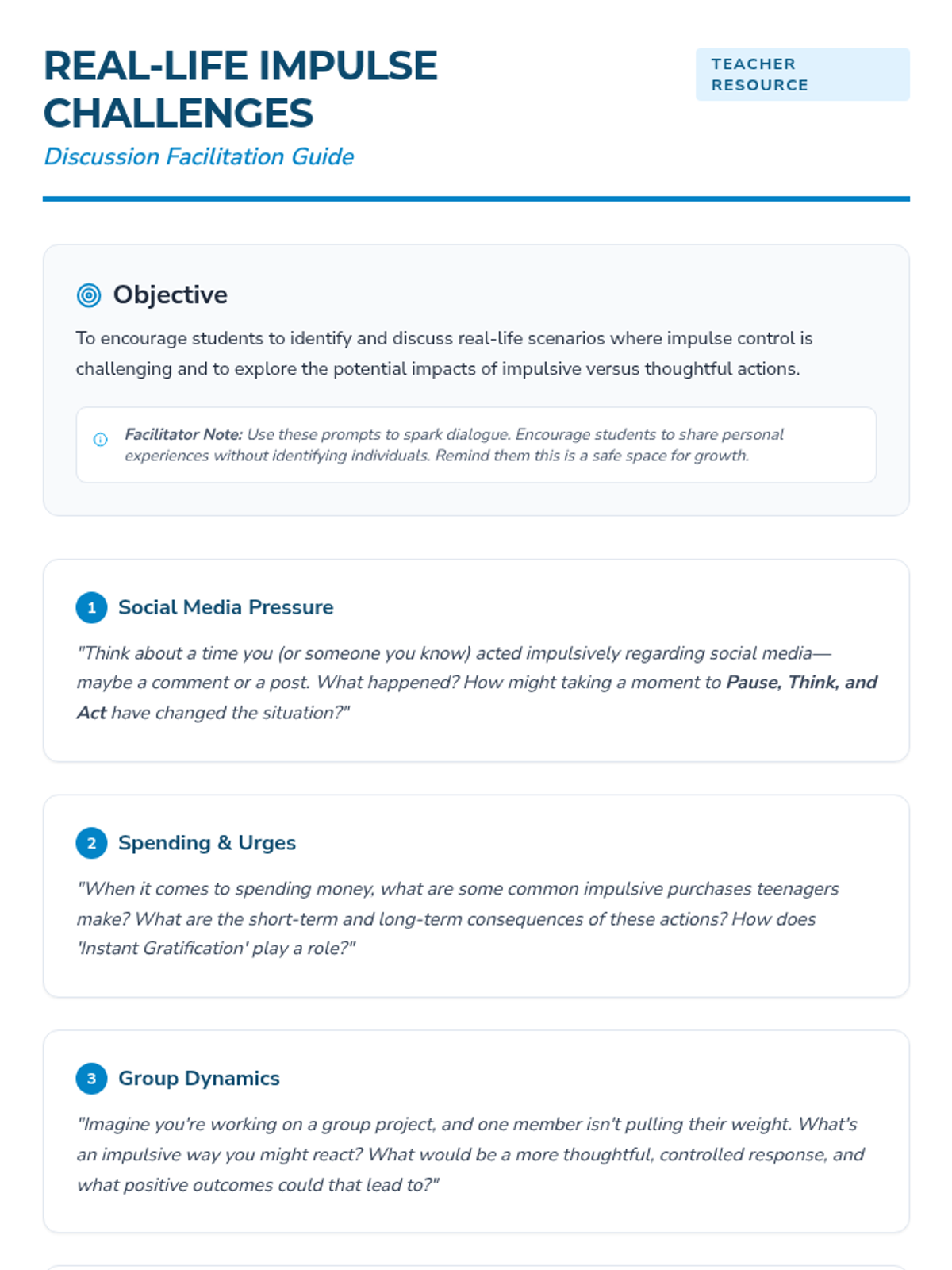
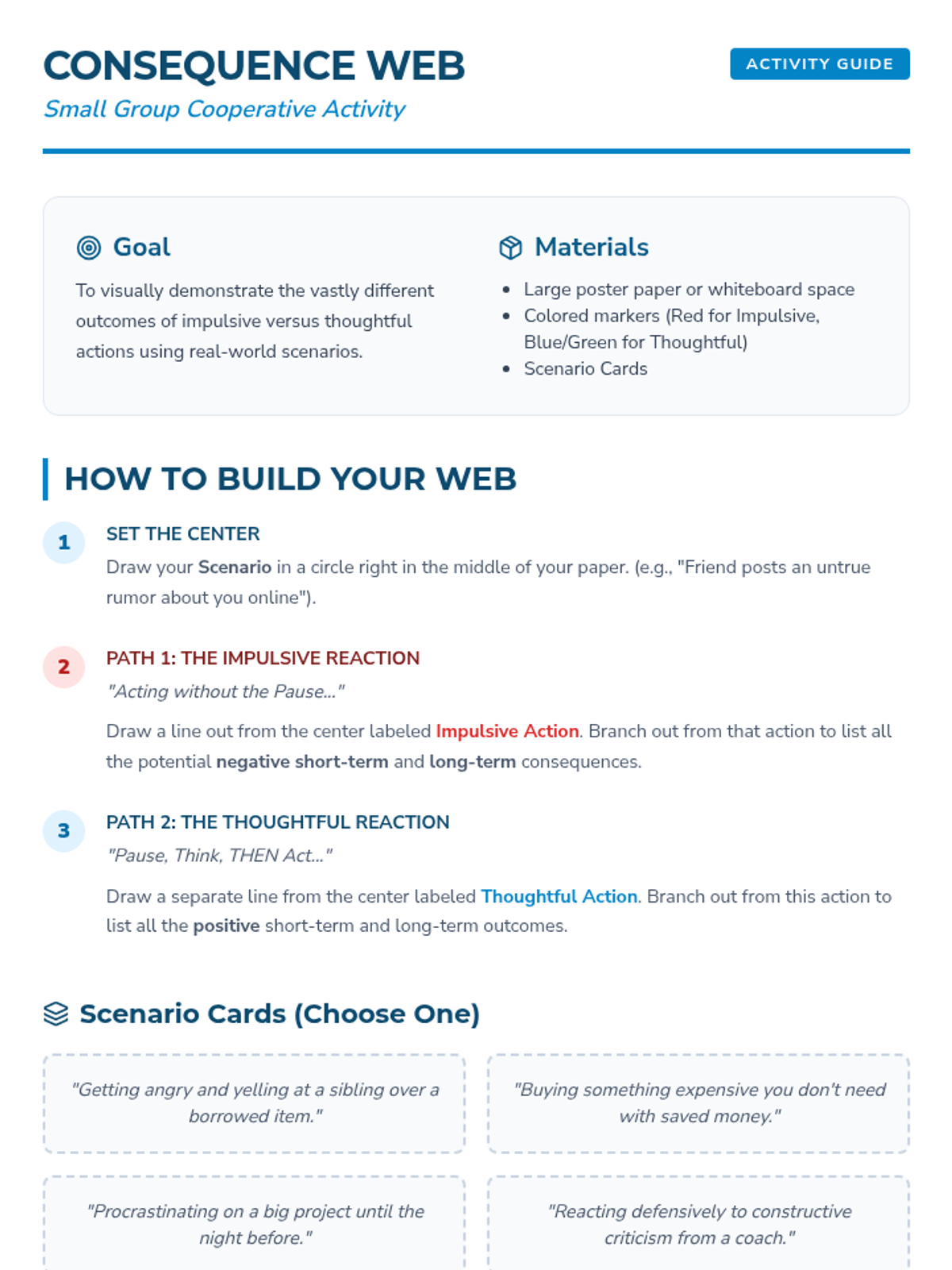
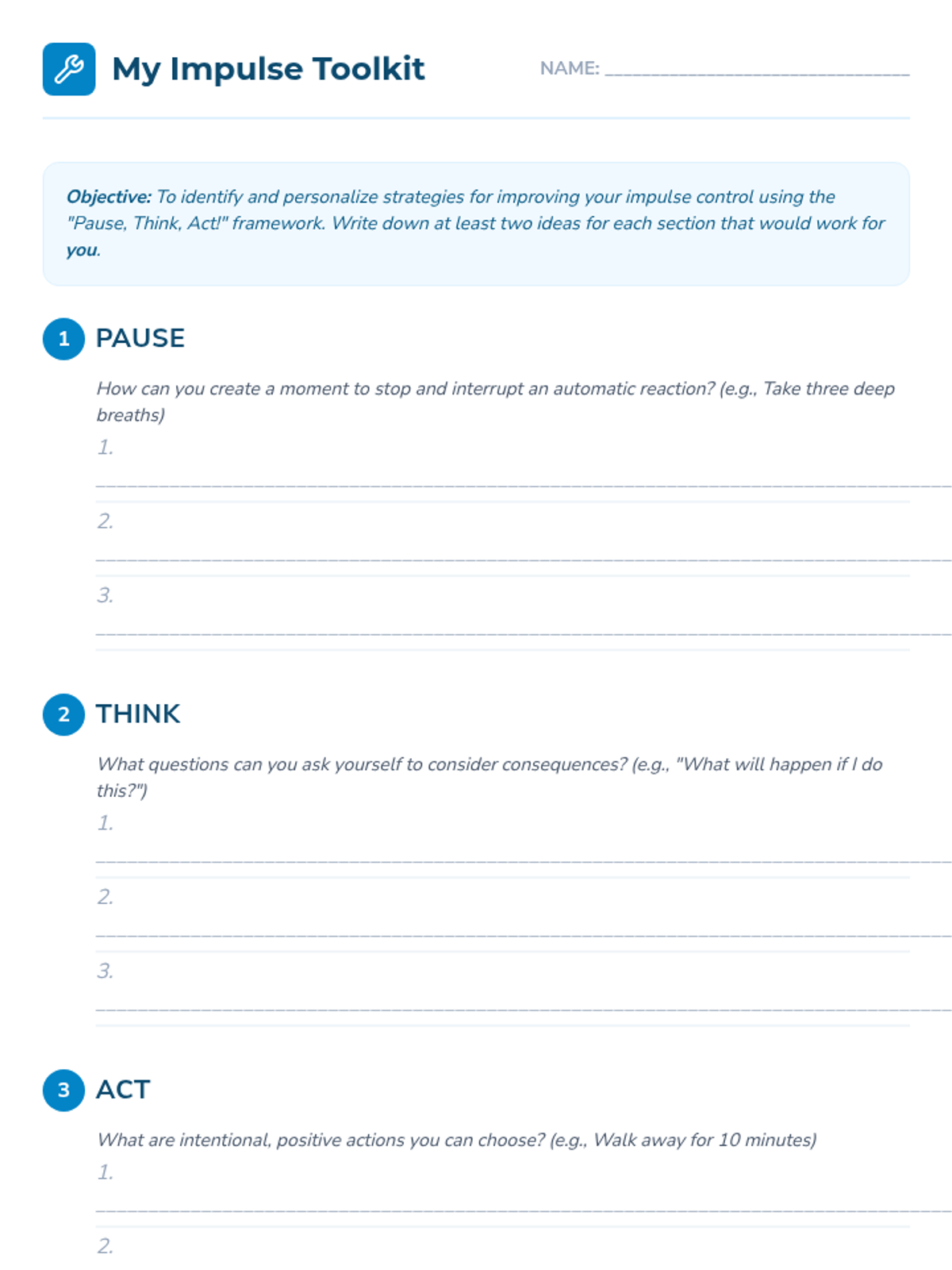
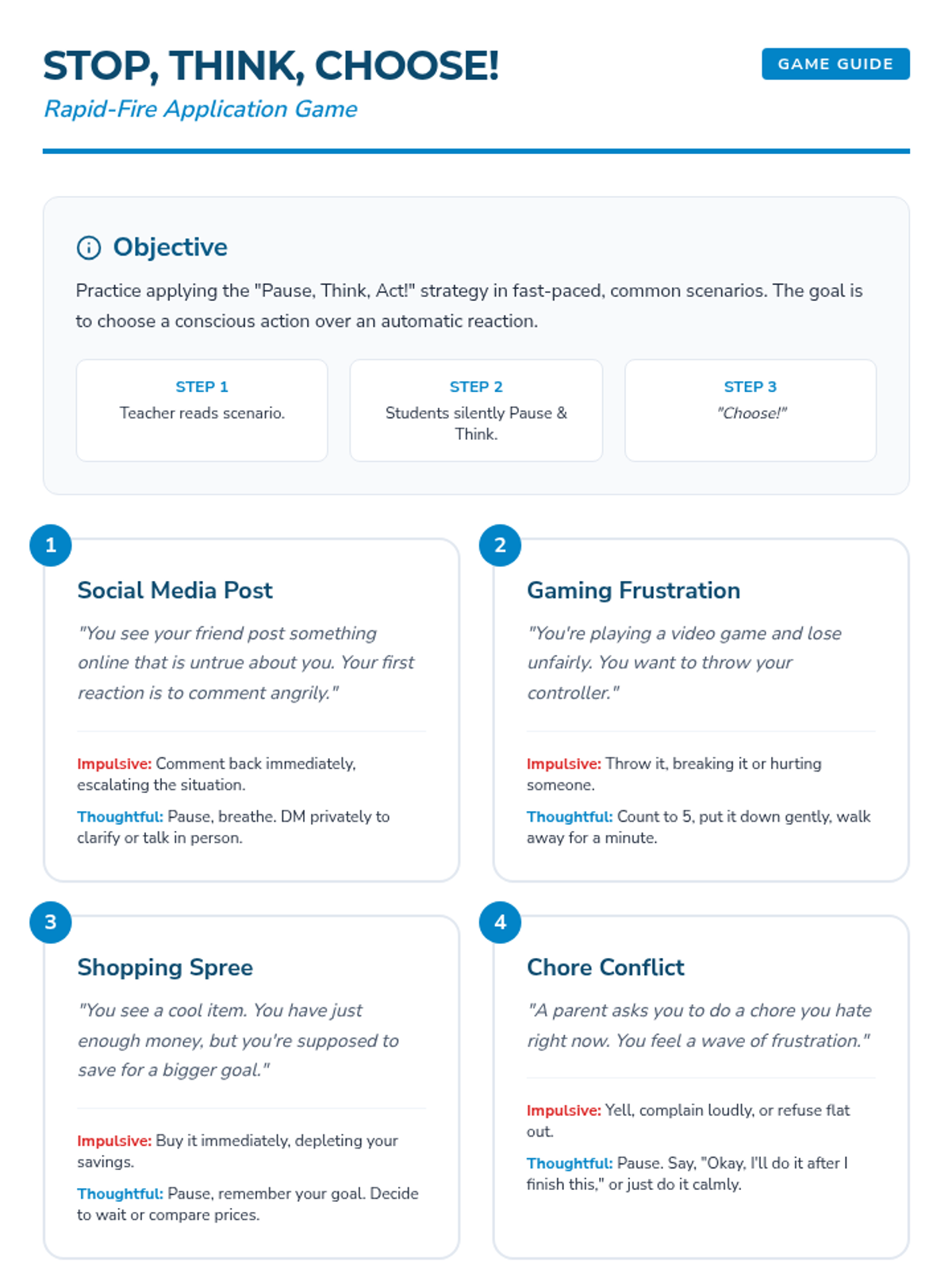
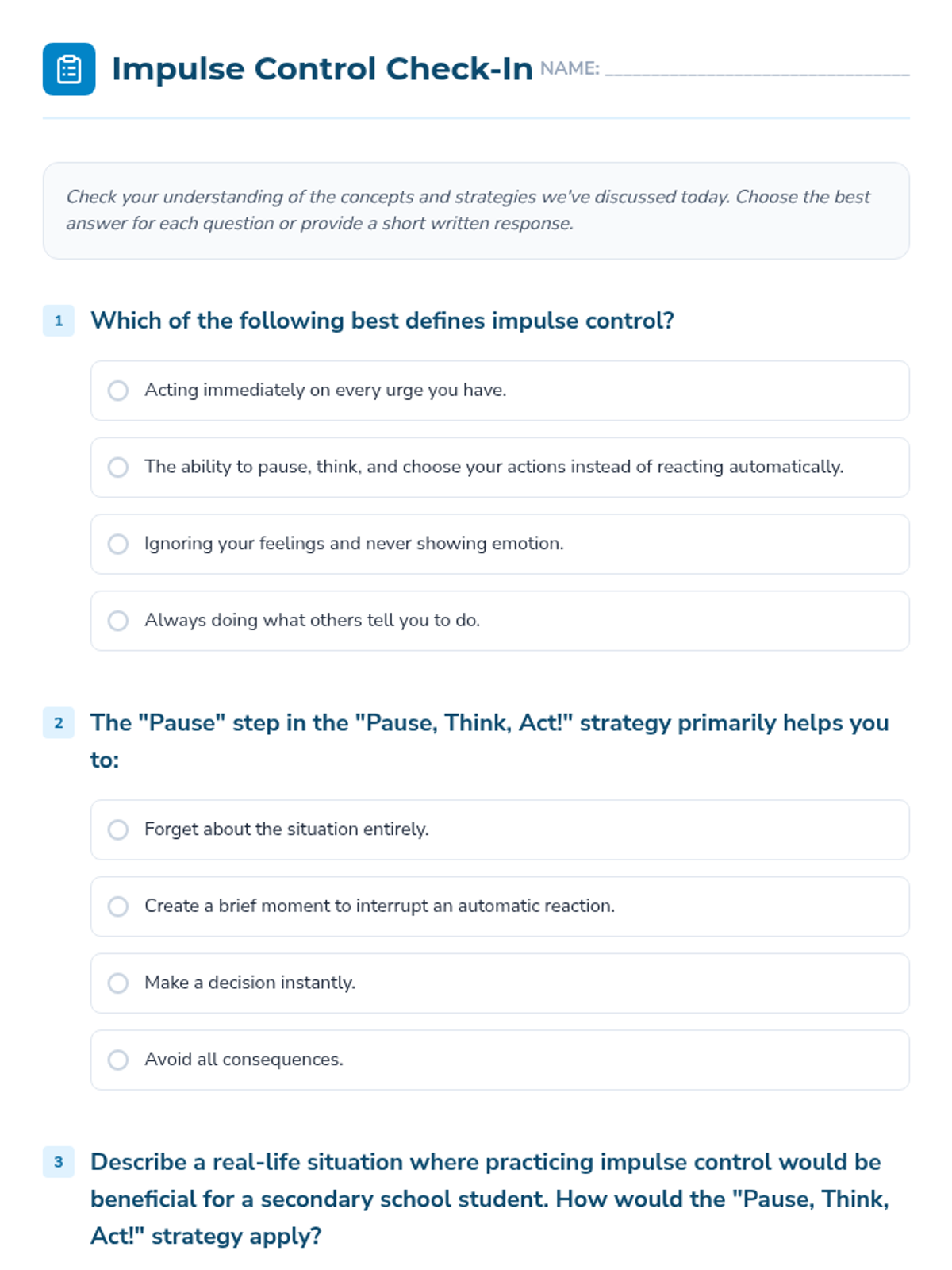
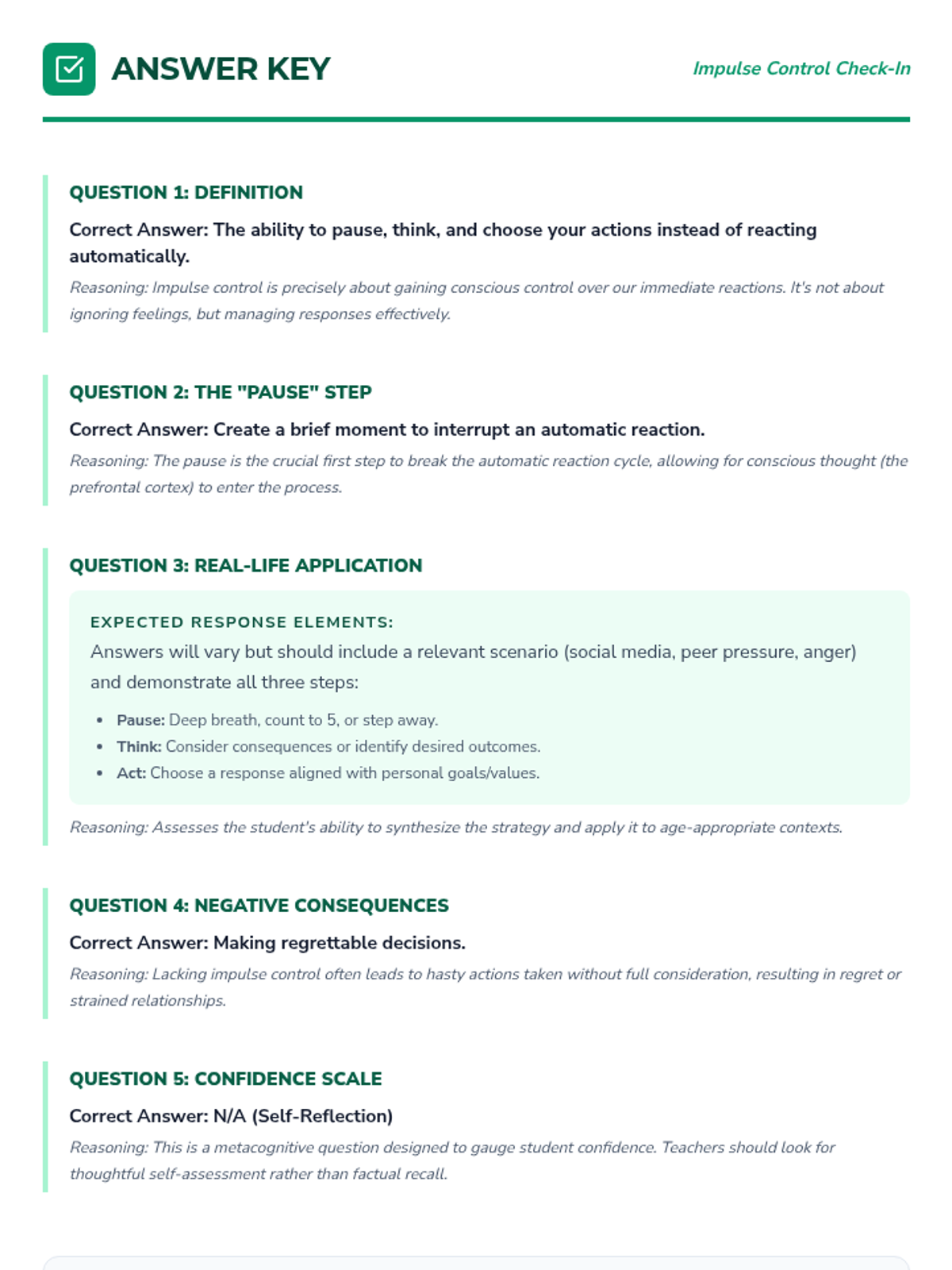
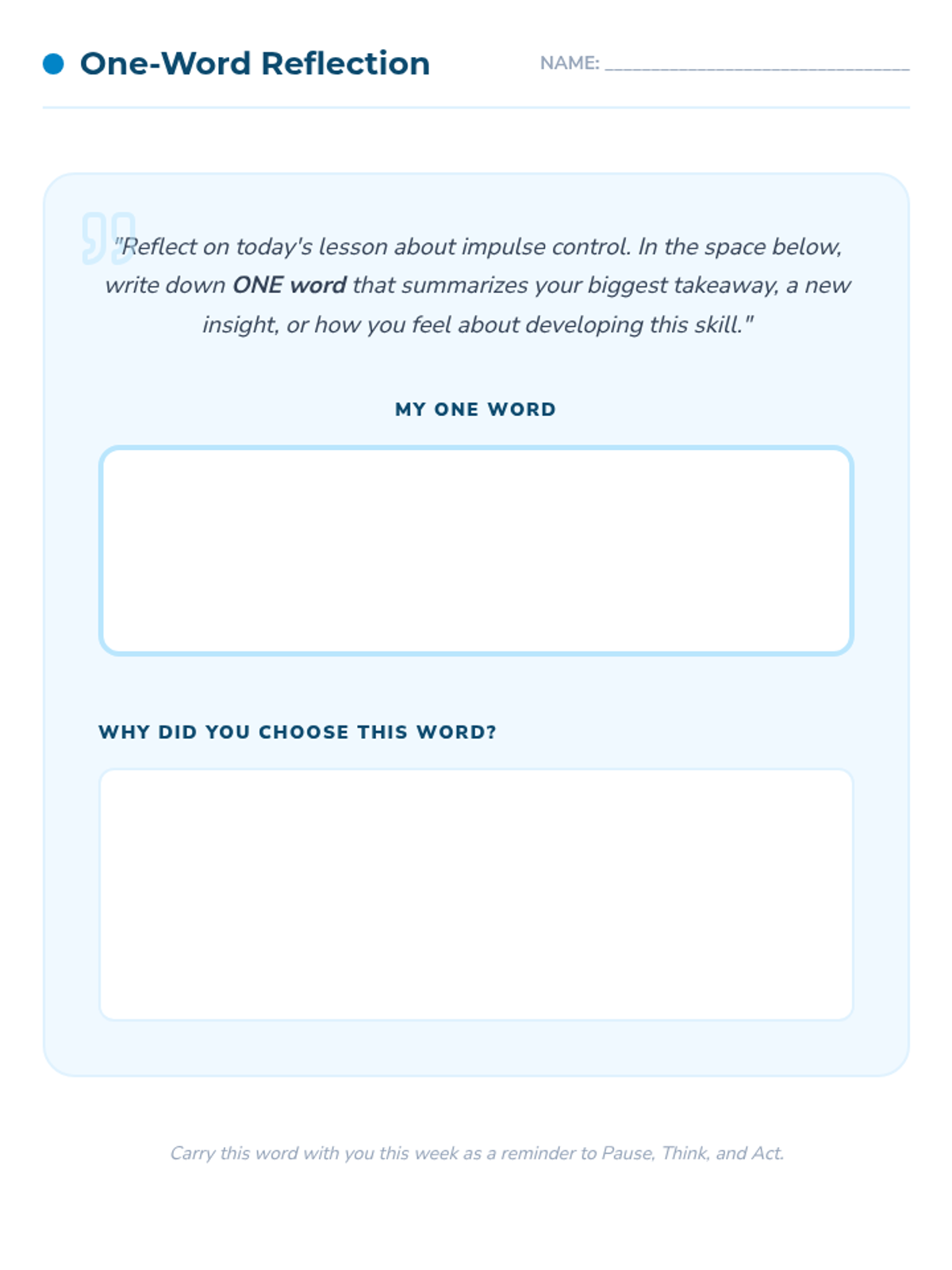
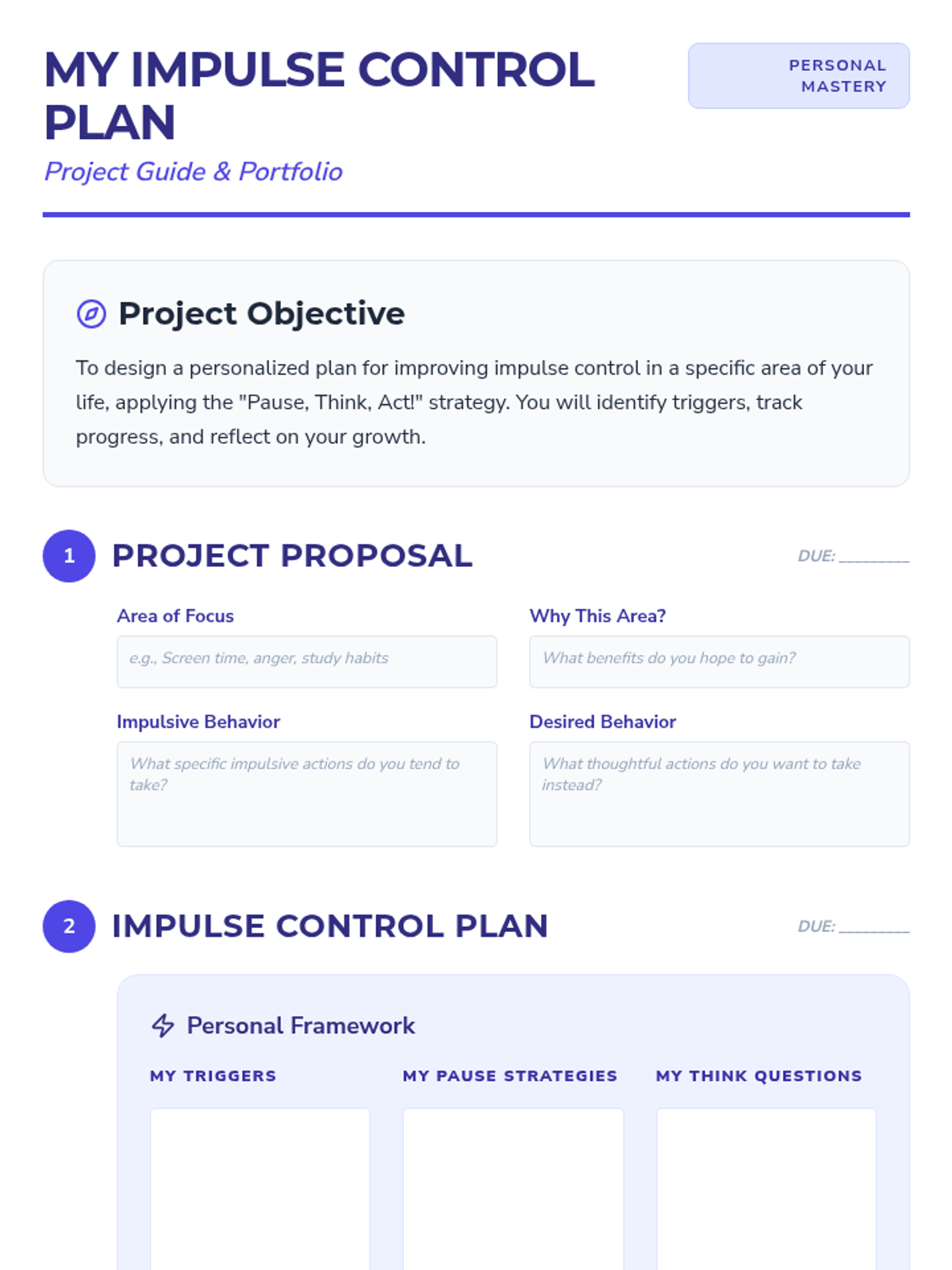
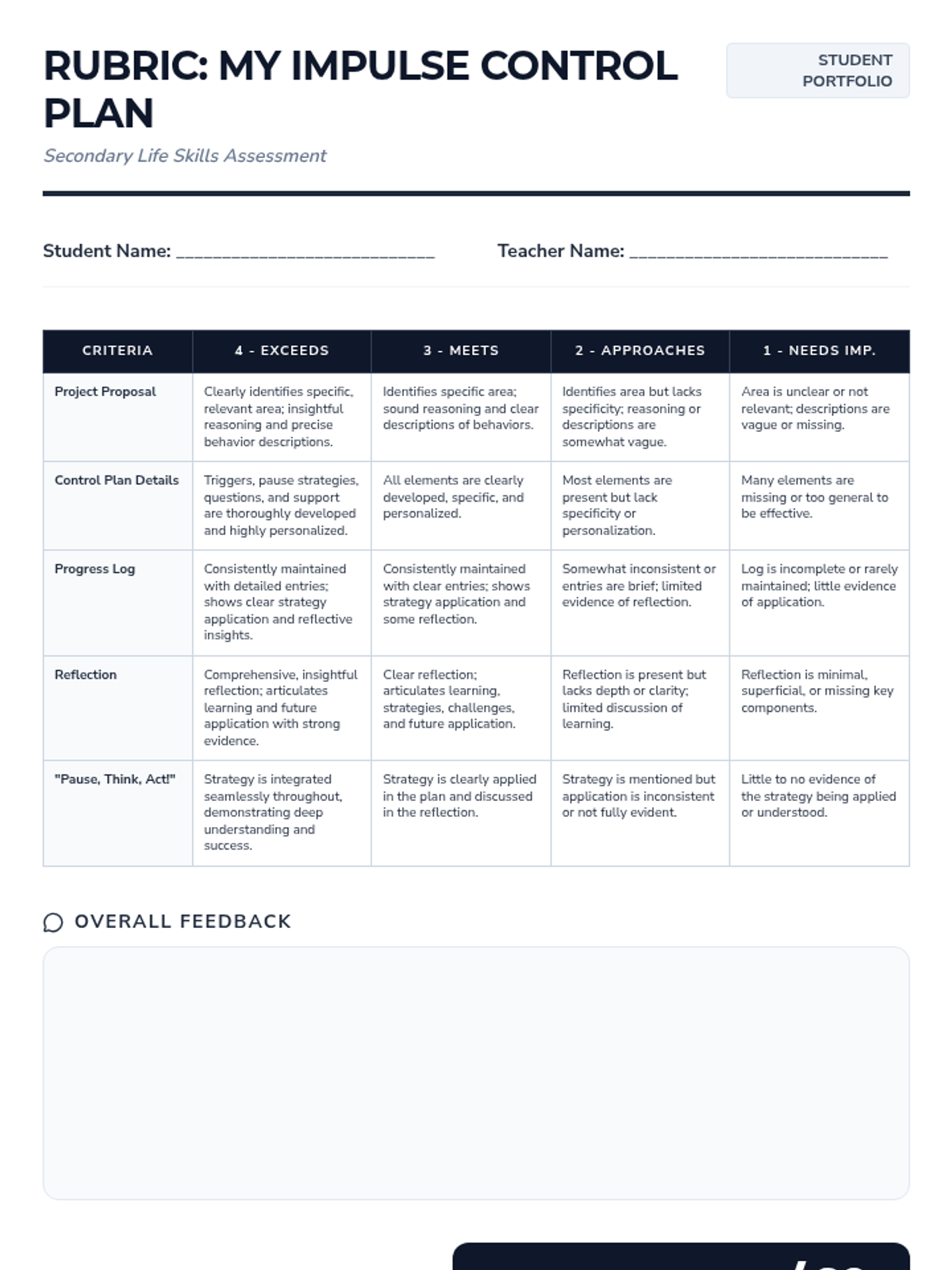
A comprehensive two-part unit for Secondary 1 and 2 students focusing on developing impulse control. Students learn to navigate immediate urges using the 'Pause, Think, Act' and 'Pause, Process, Proceed' frameworks through interactive activities, real-world scenarios, and personal planning.
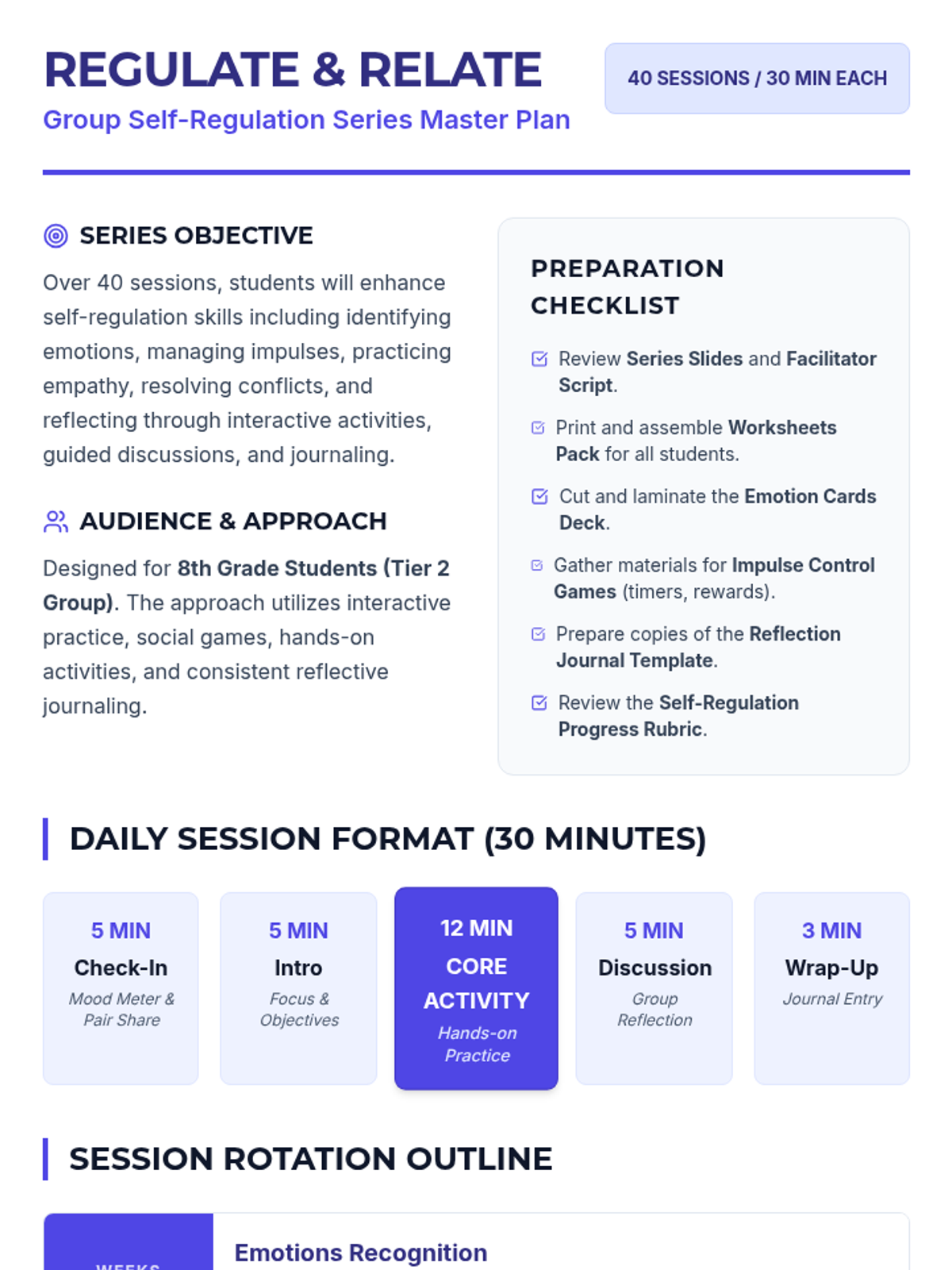
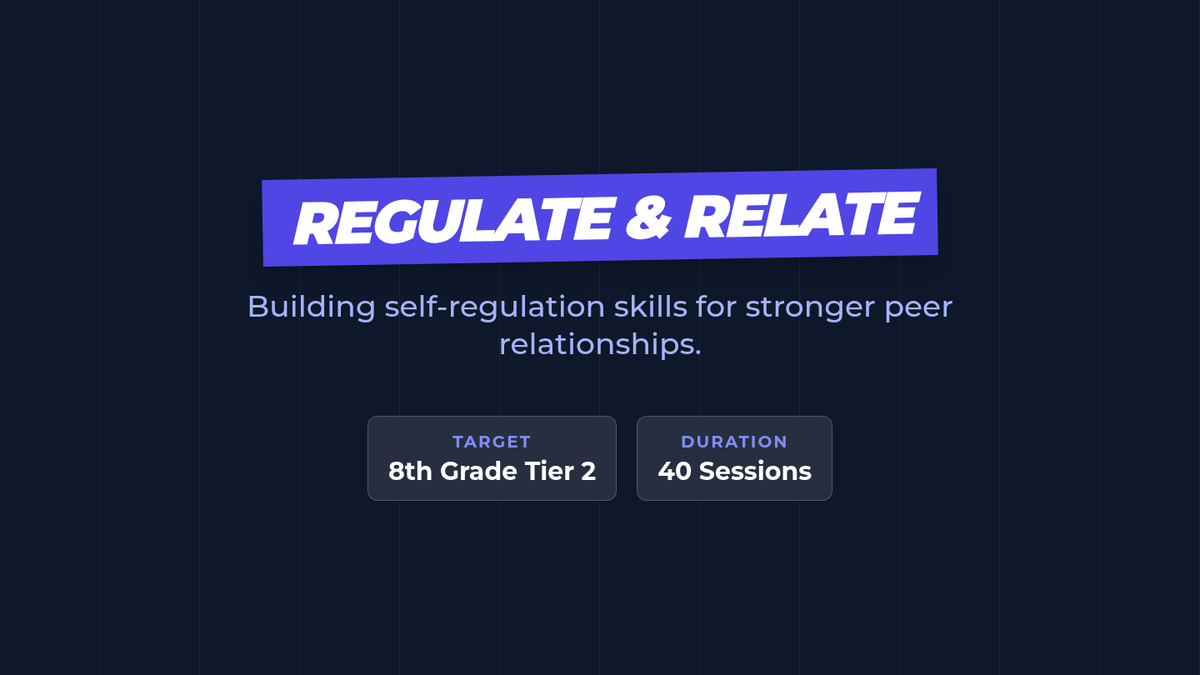
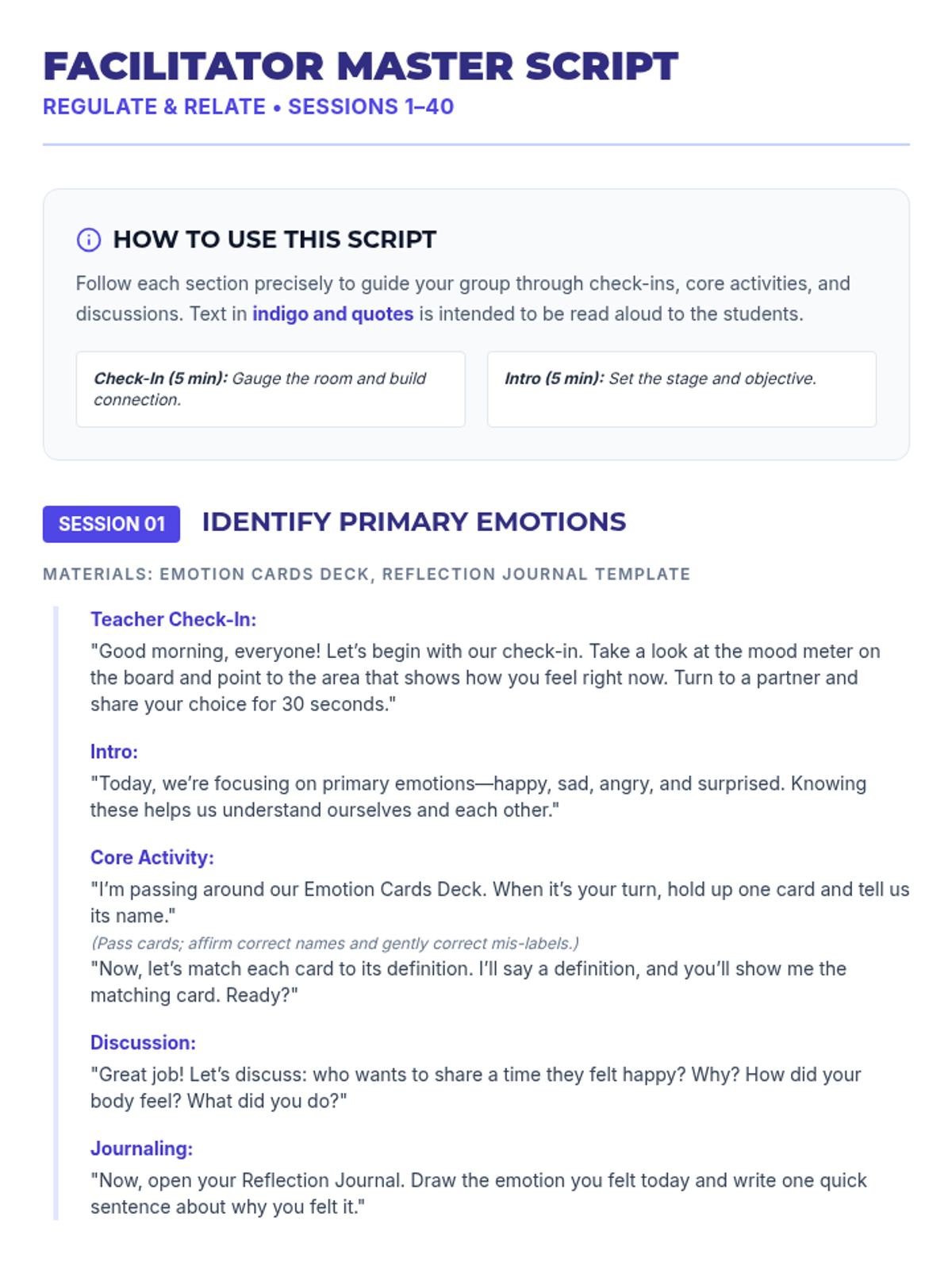
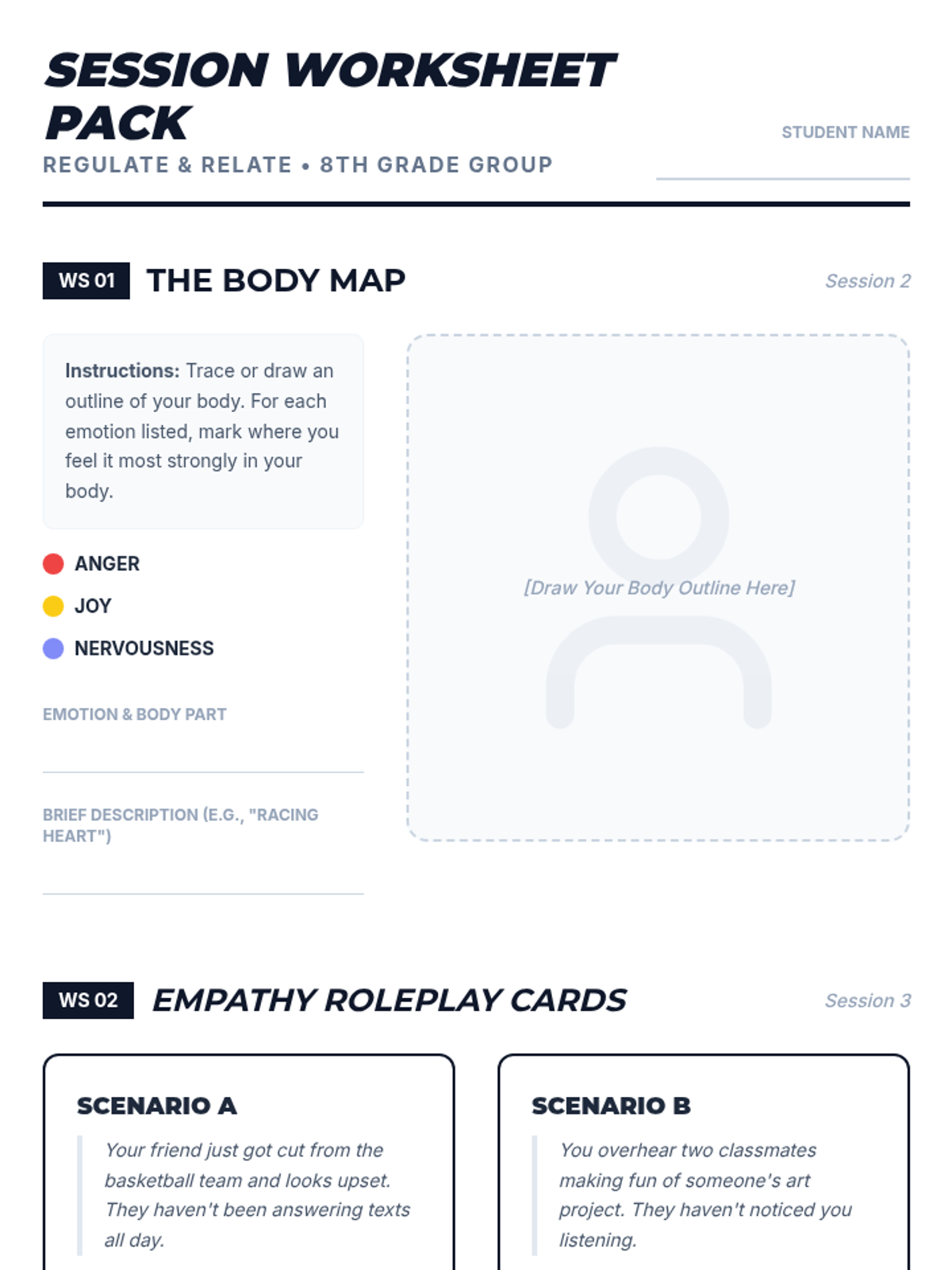
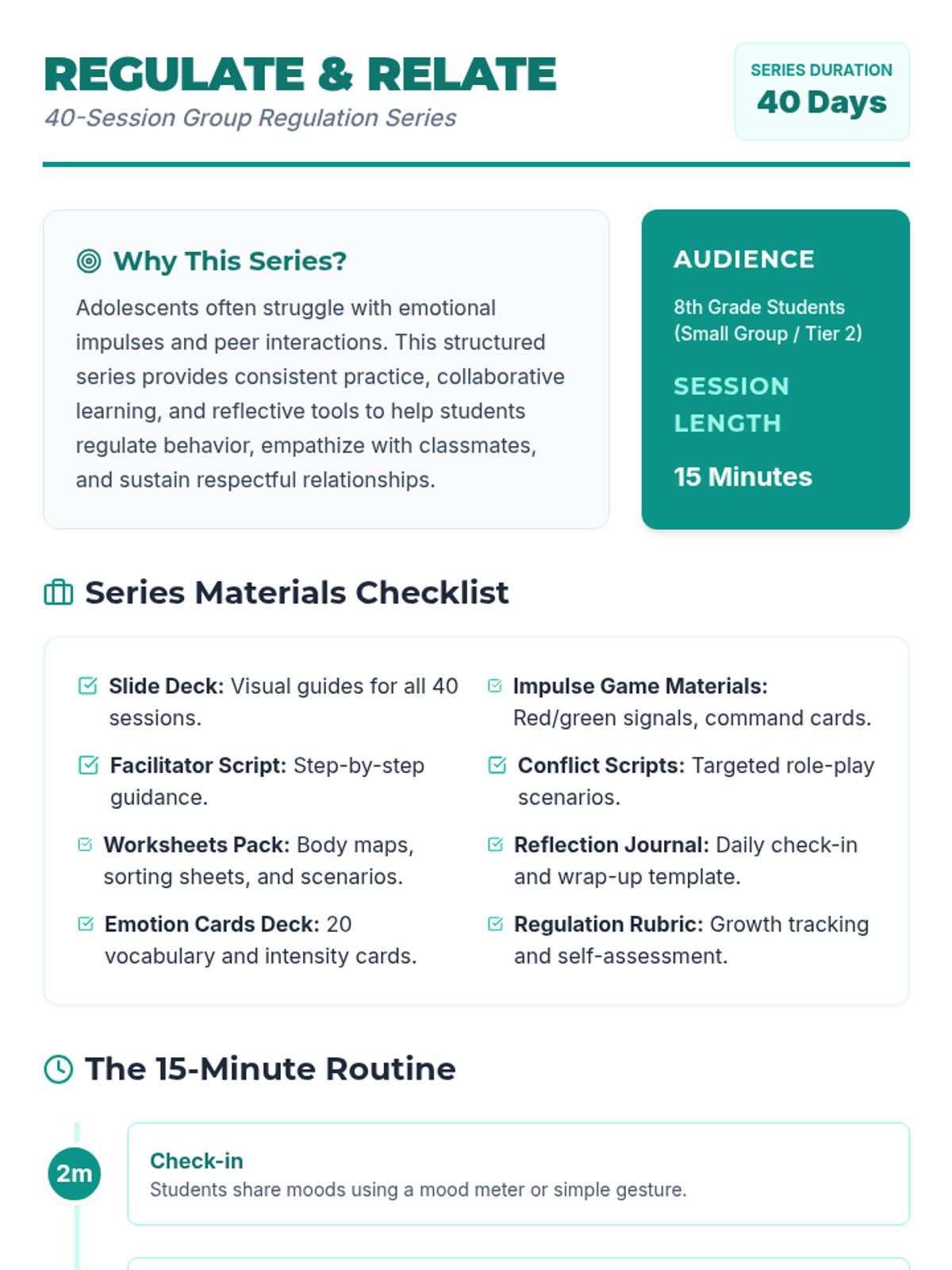
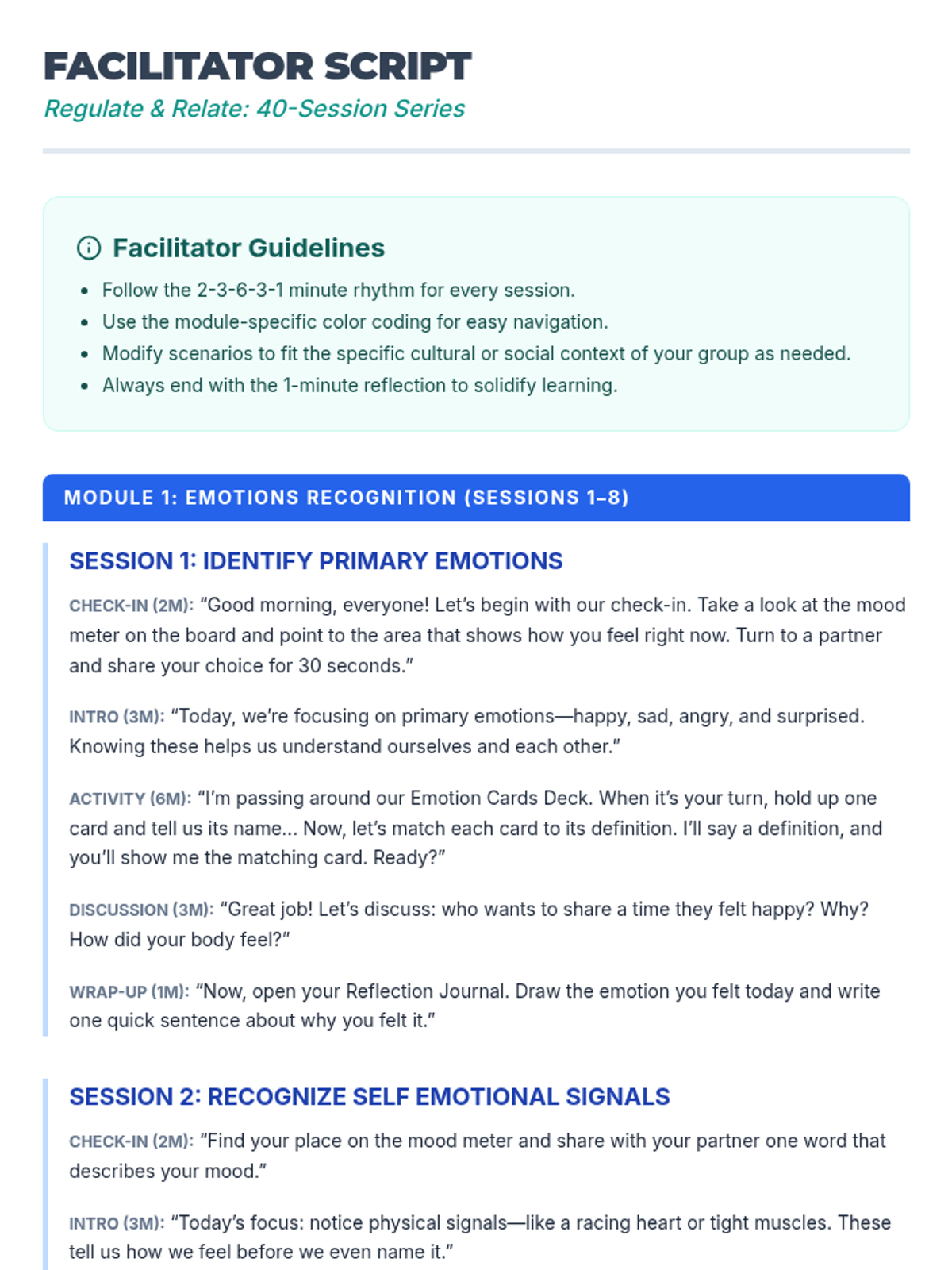
A comprehensive 40-session group series for 8th graders designed to improve self-regulation, emotional intelligence, and peer relationships through interactive practice and reflection.
A 40-session group counseling series for 8th graders designed to build emotional intelligence, impulse control, and conflict resolution skills through short, daily 15-minute interactions.
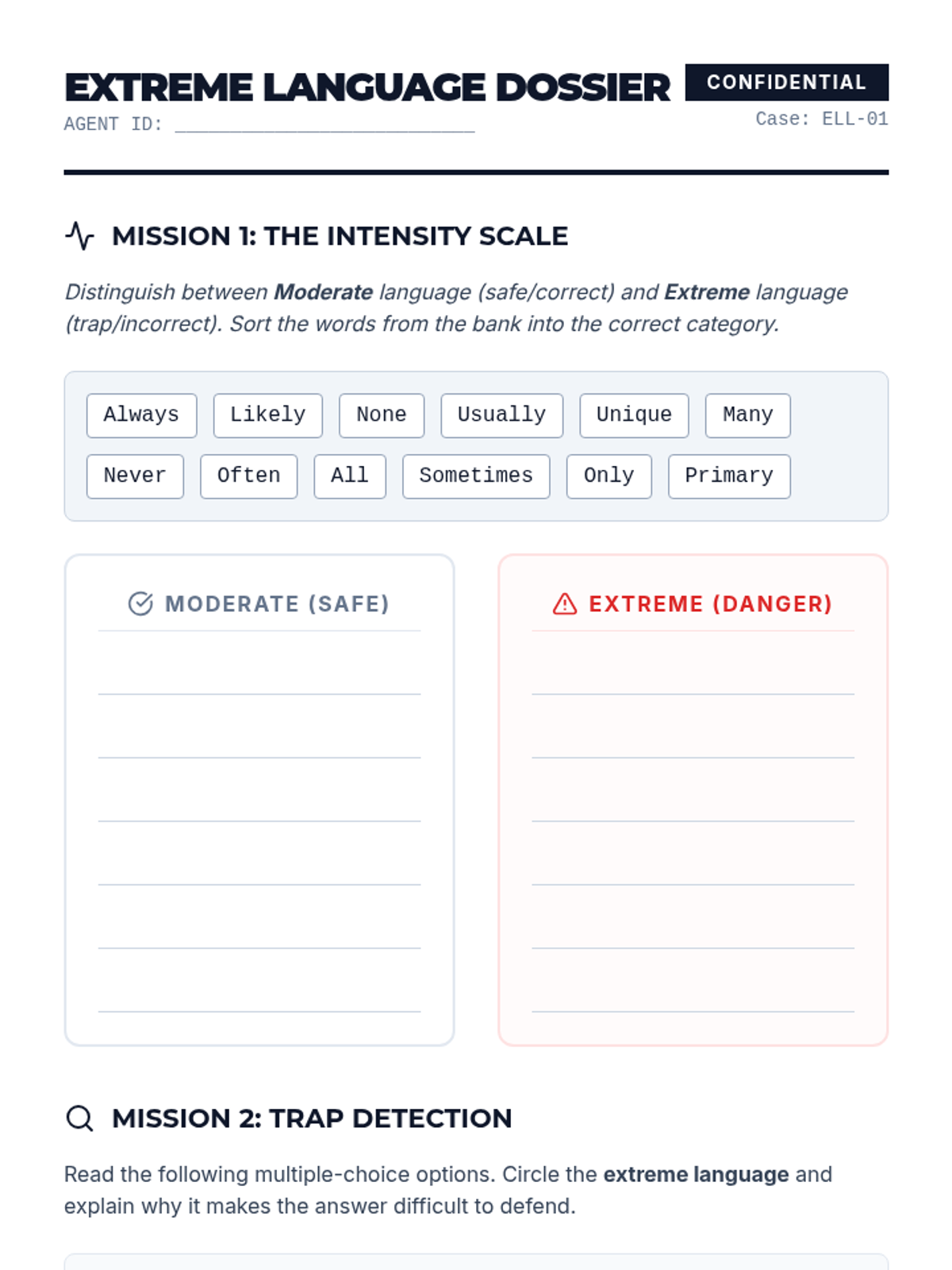
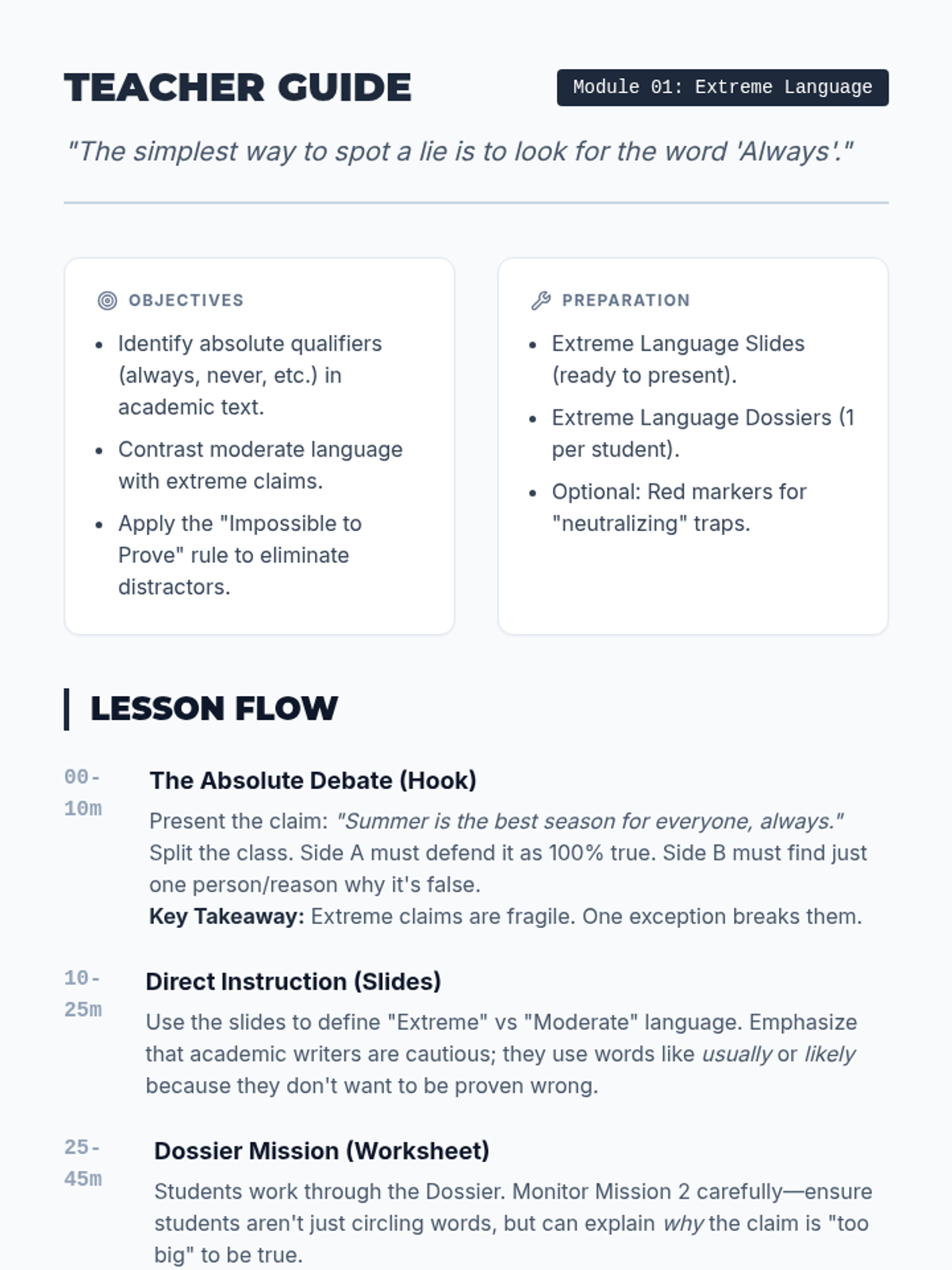
This sequence transforms students into 'Trap Detectives' who can identify and eliminate common distractors in academic tests. Students learn to spot extreme language, half-right traps, and out-of-scope answers through gamified lessons and role-reversal activities.
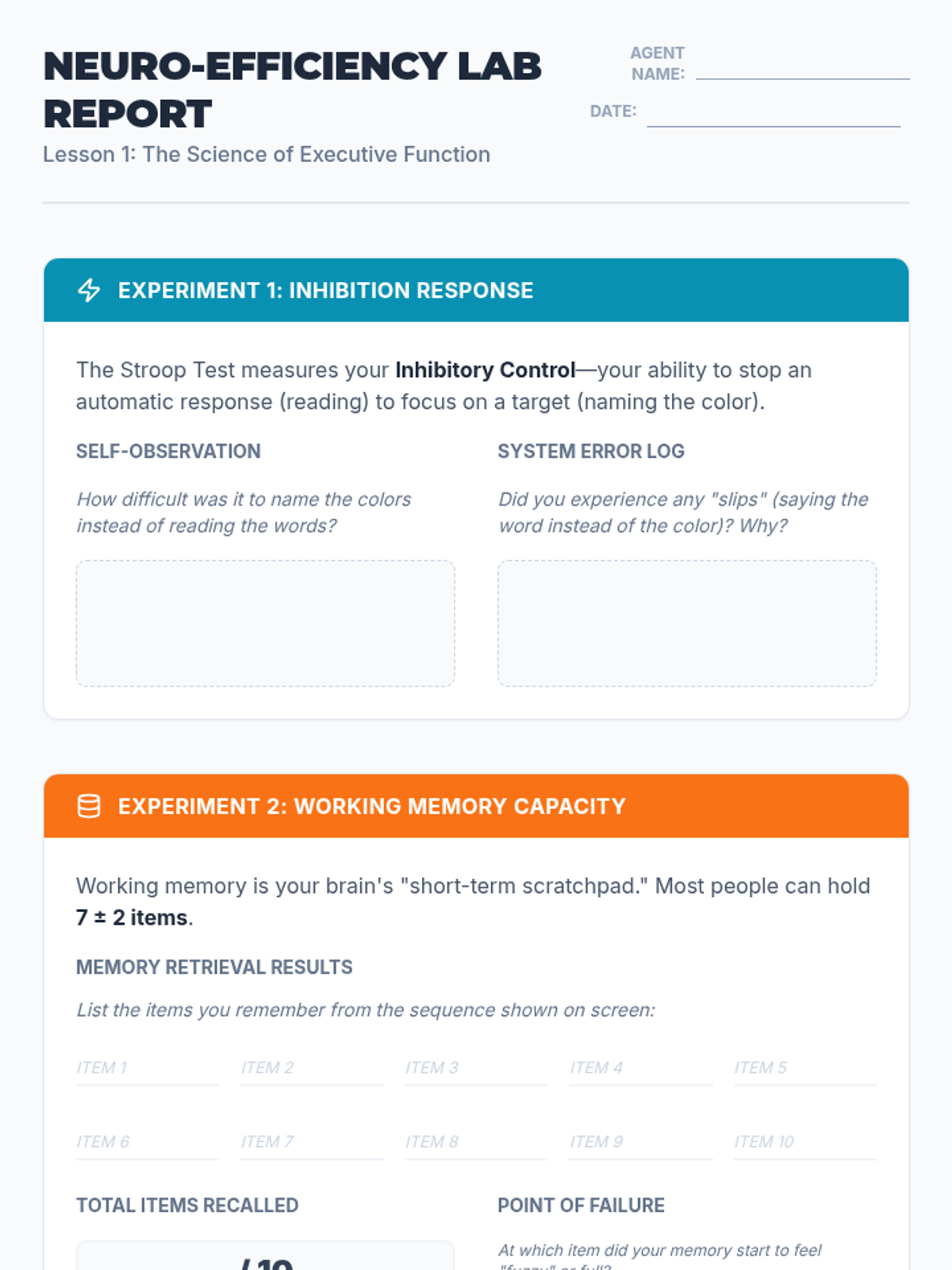
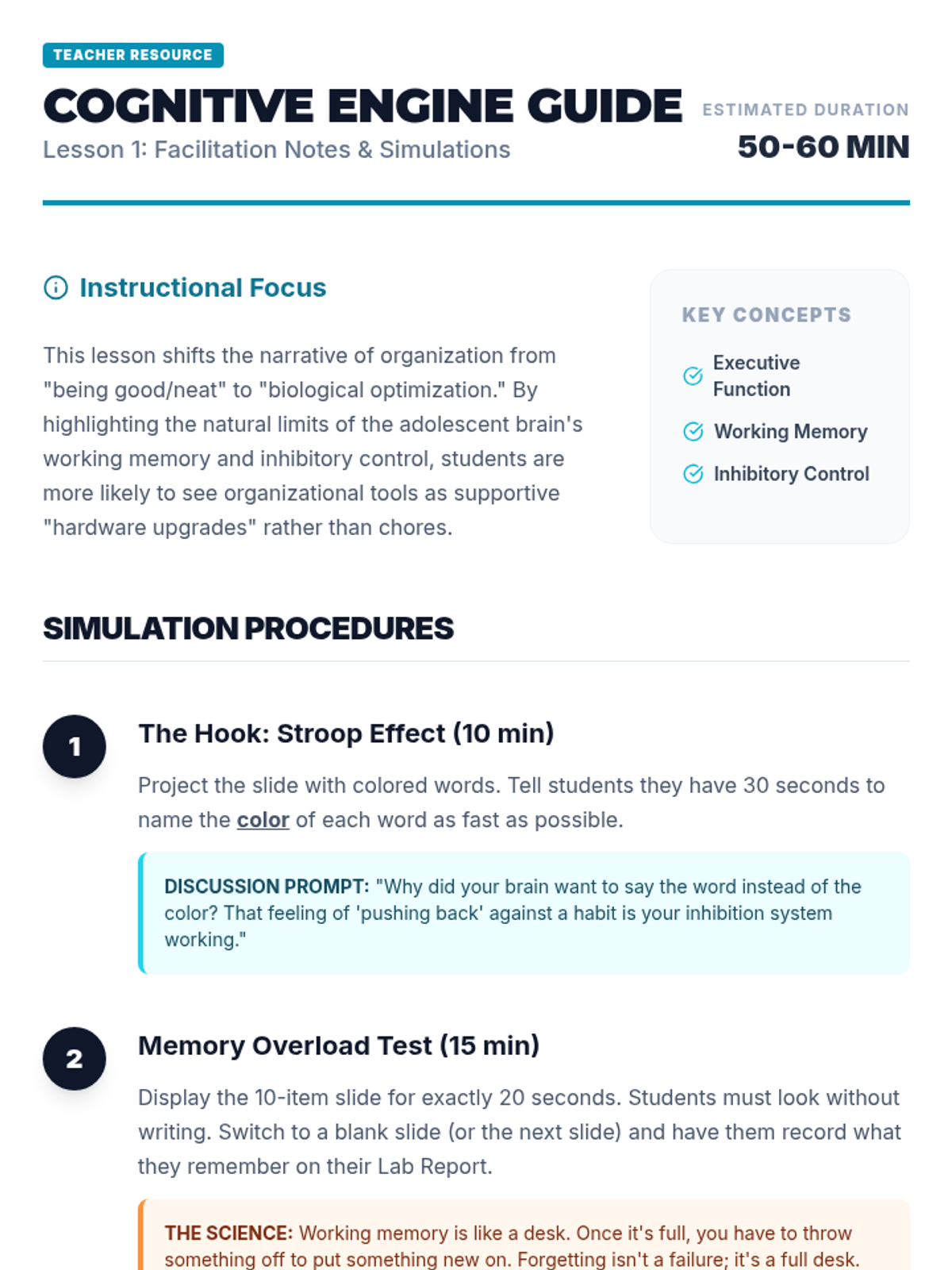
This sequence guides 8th-grade students through the engineering of their physical and digital environments to support executive function. Students move from understanding the neurological 'why' of organization to building a personalized operating manual for their own workflow optimization.
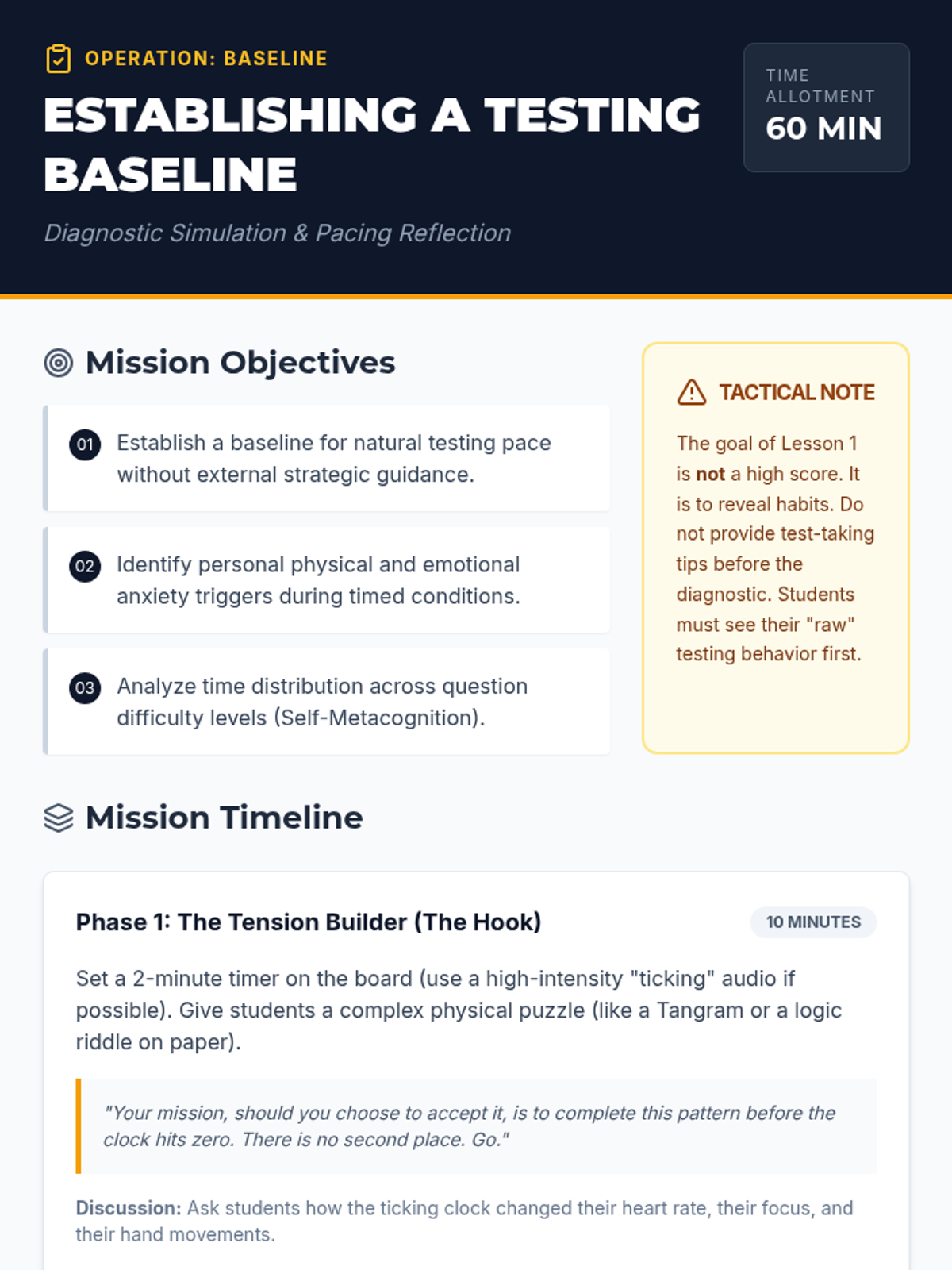
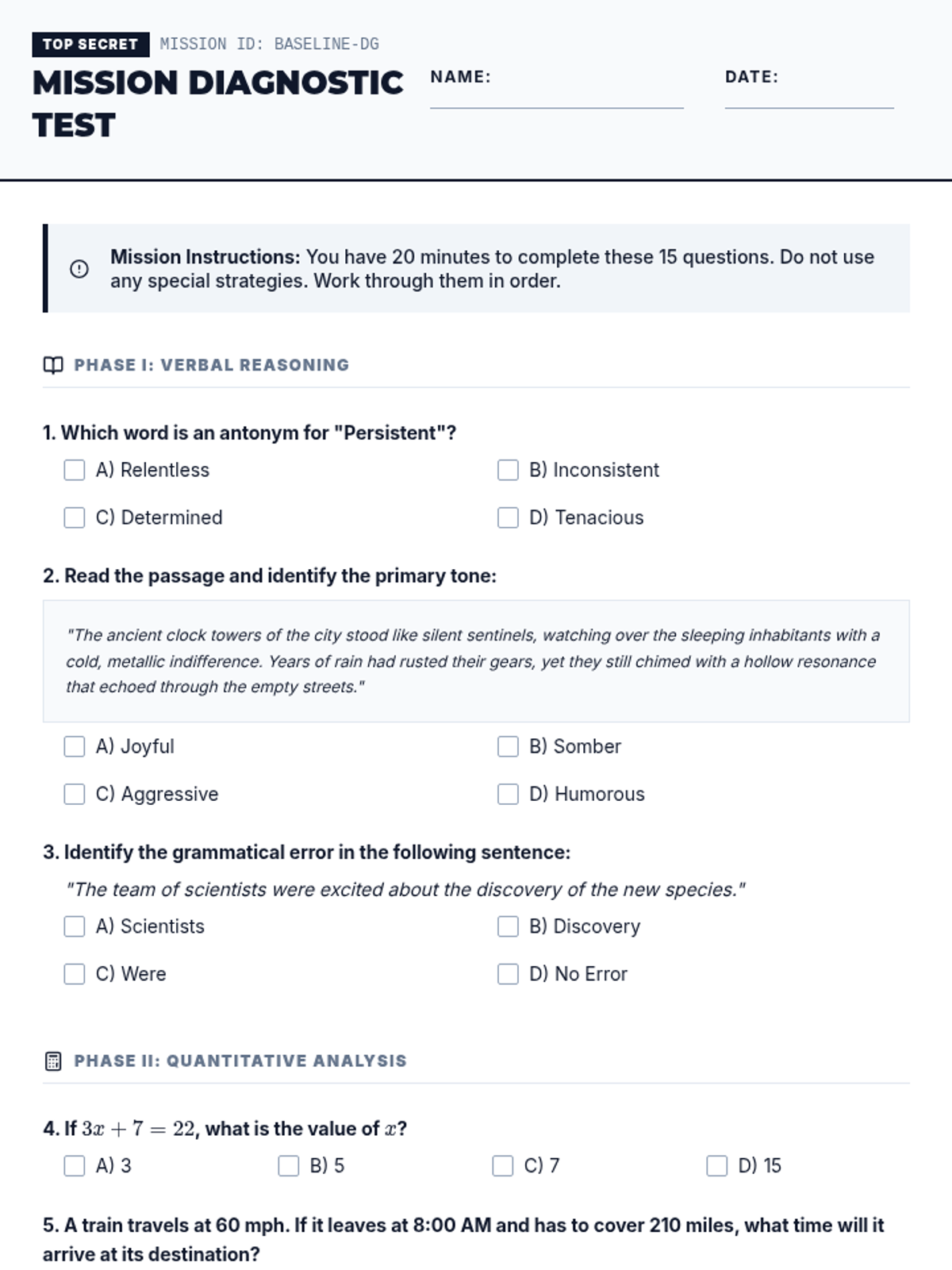
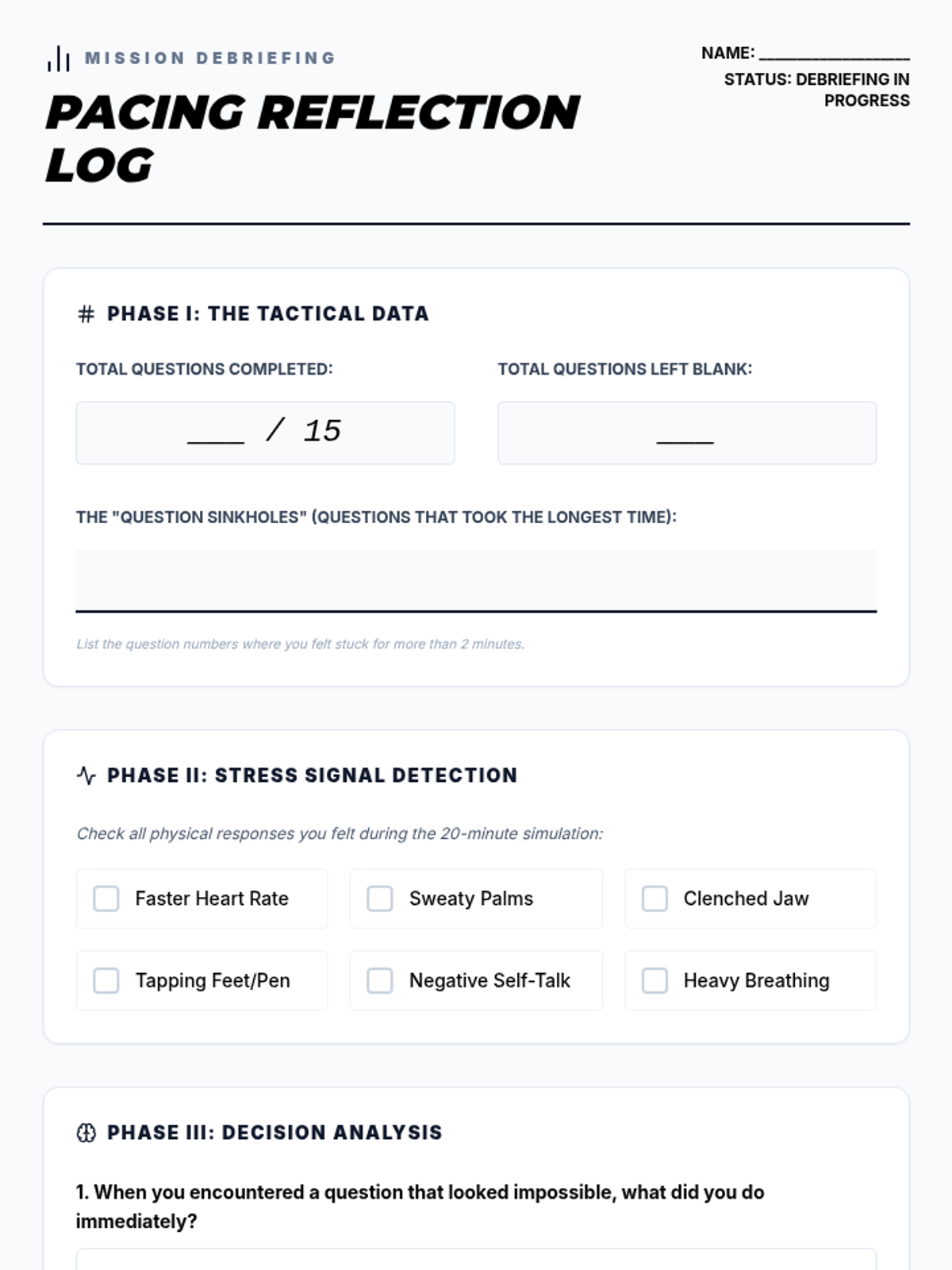
A comprehensive 5-lesson sequence for 8th Grade ESL students focused on the psychological and strategic aspects of timed exams, including pacing, triage, guessing, and stress management.
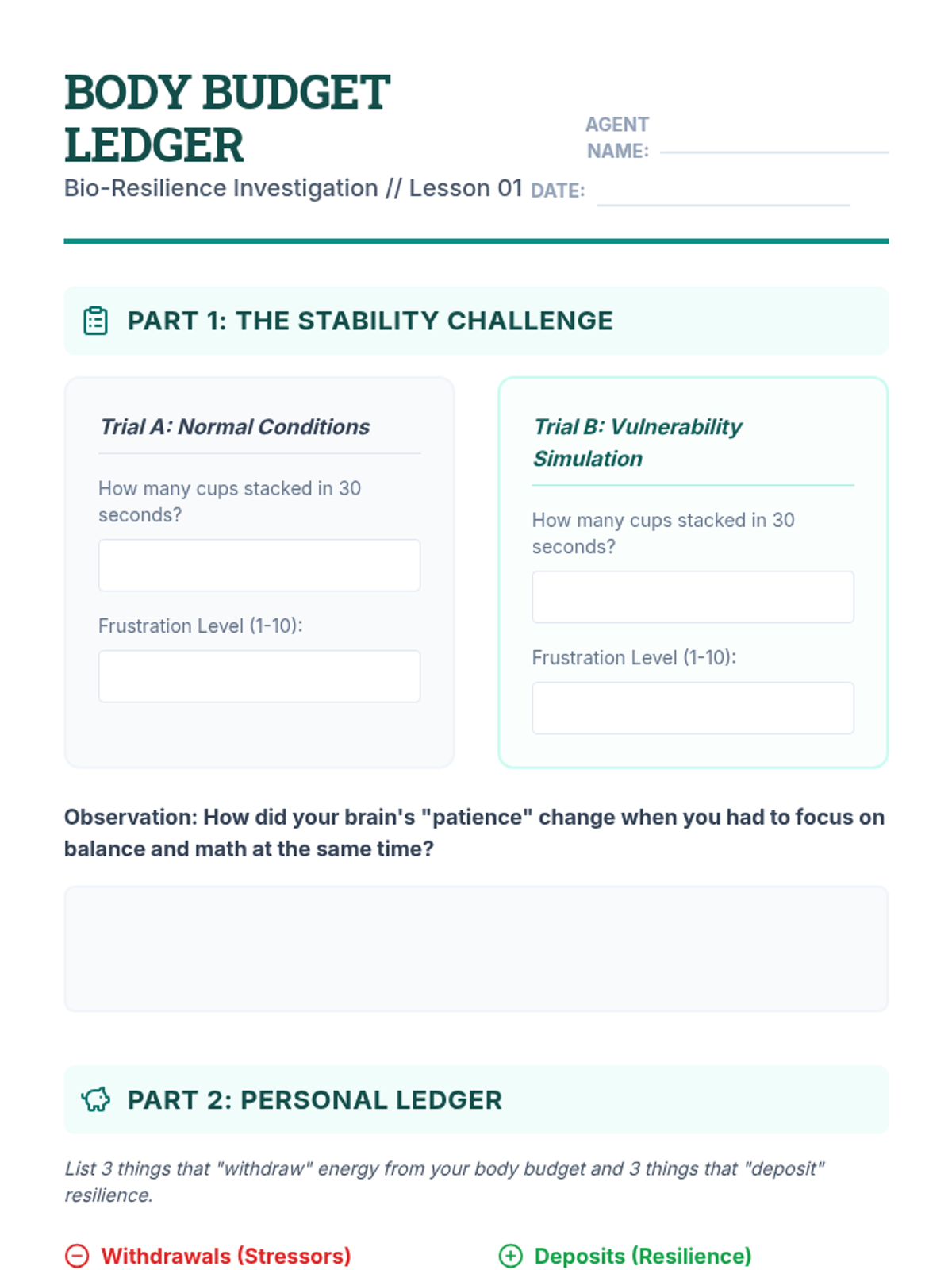
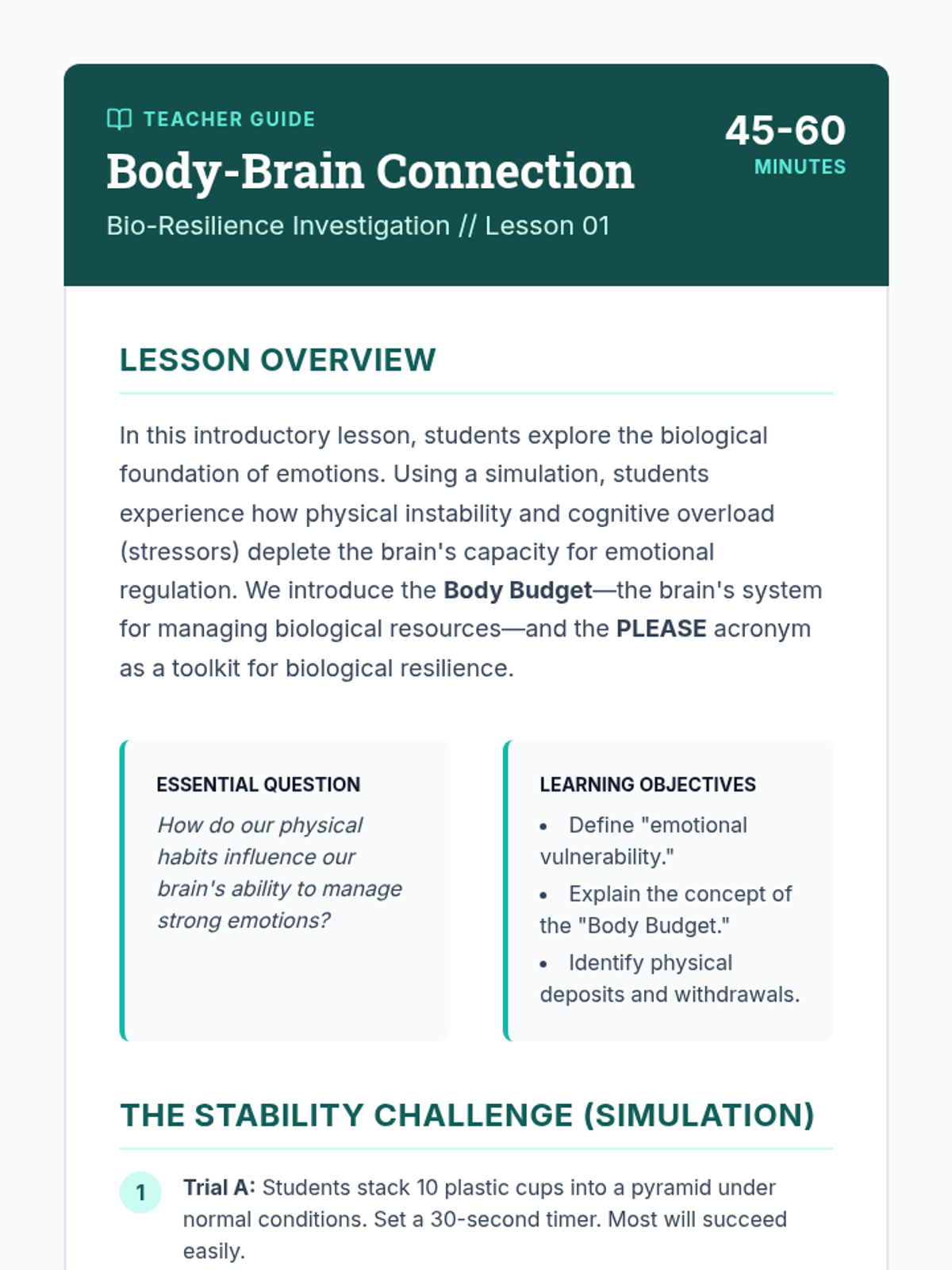
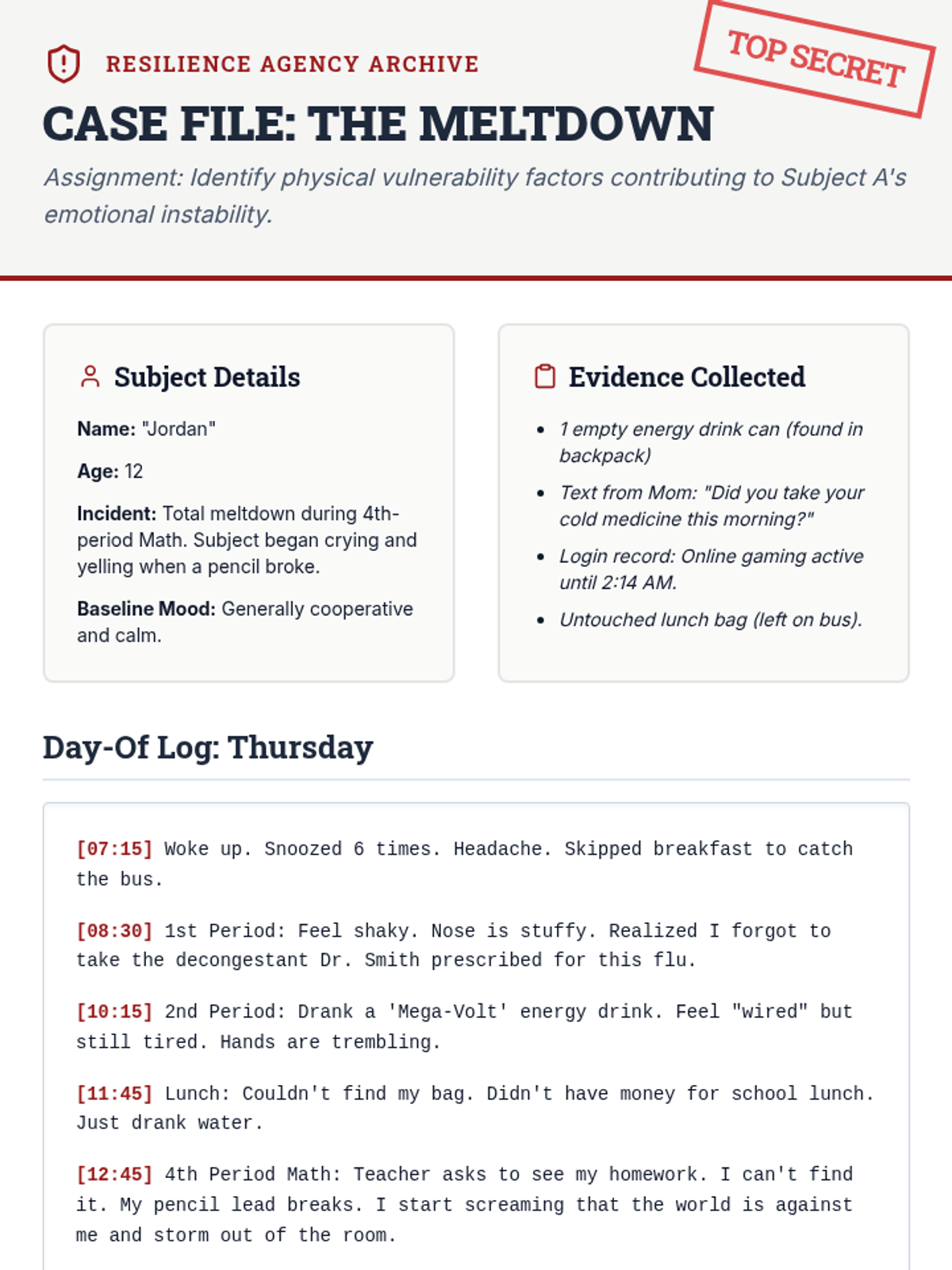
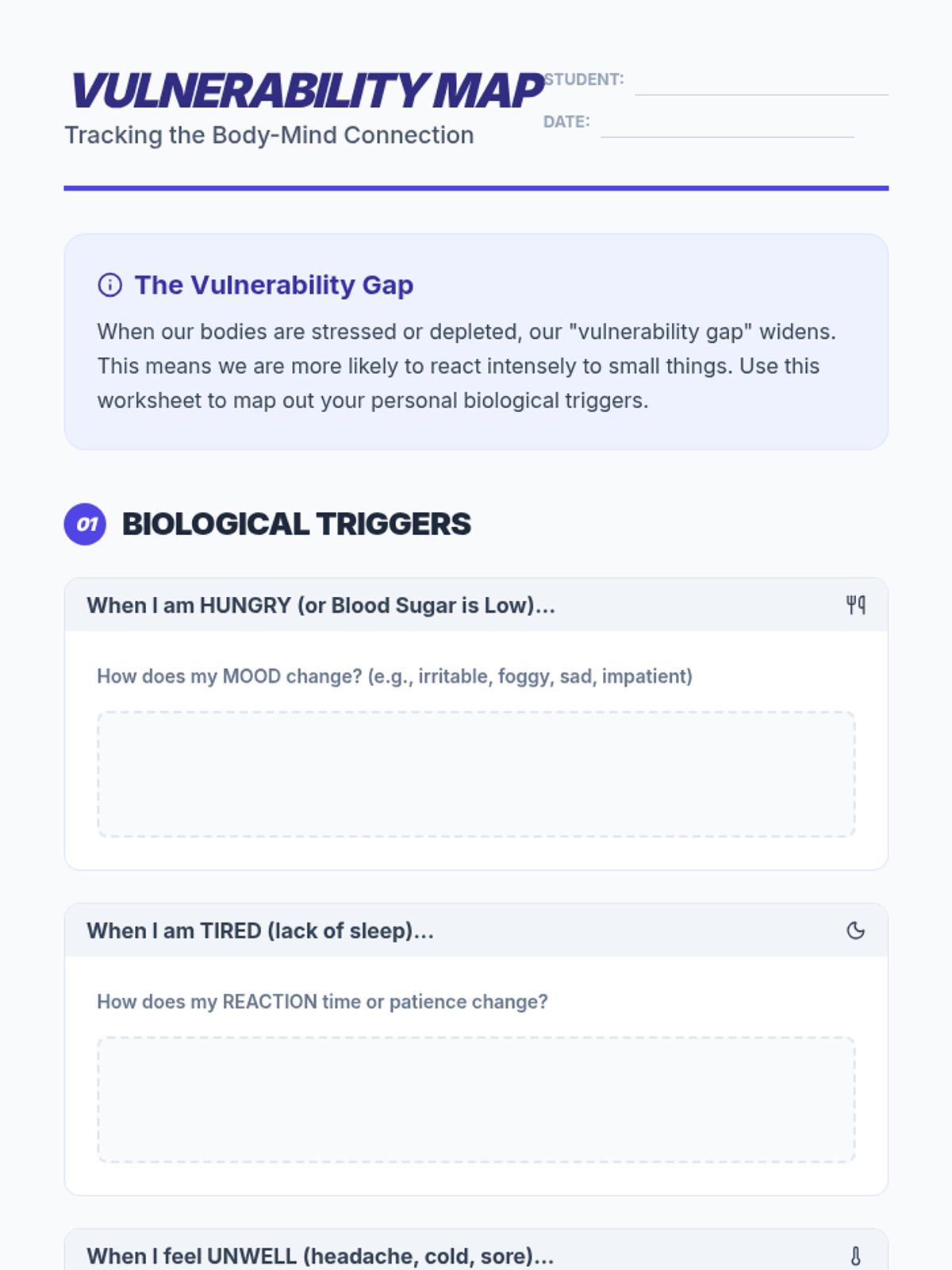
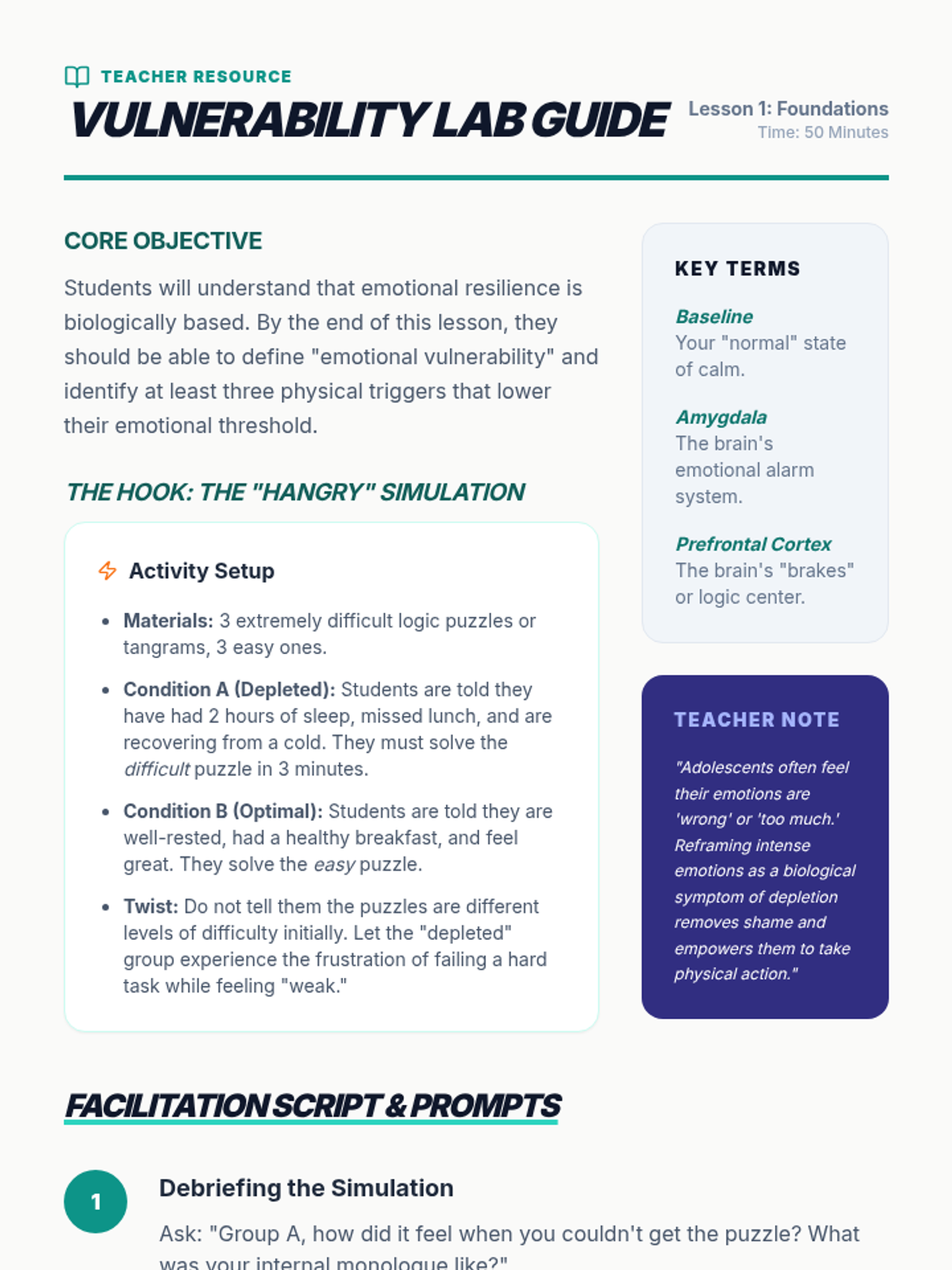
A 5-lesson inquiry into how physical health (the PLEASE skills) creates biological resilience against emotional vulnerability, designed for 6th-grade students.
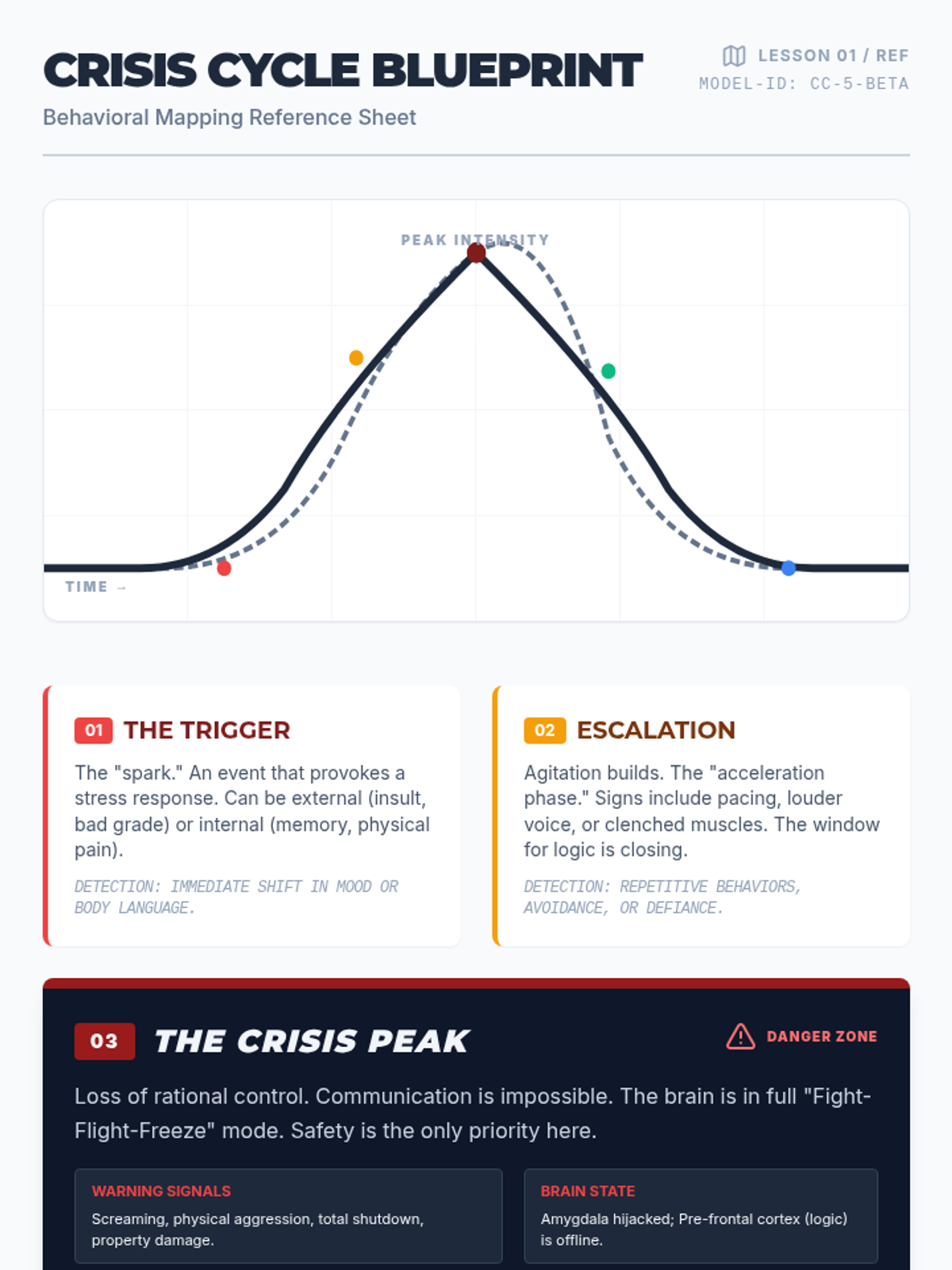
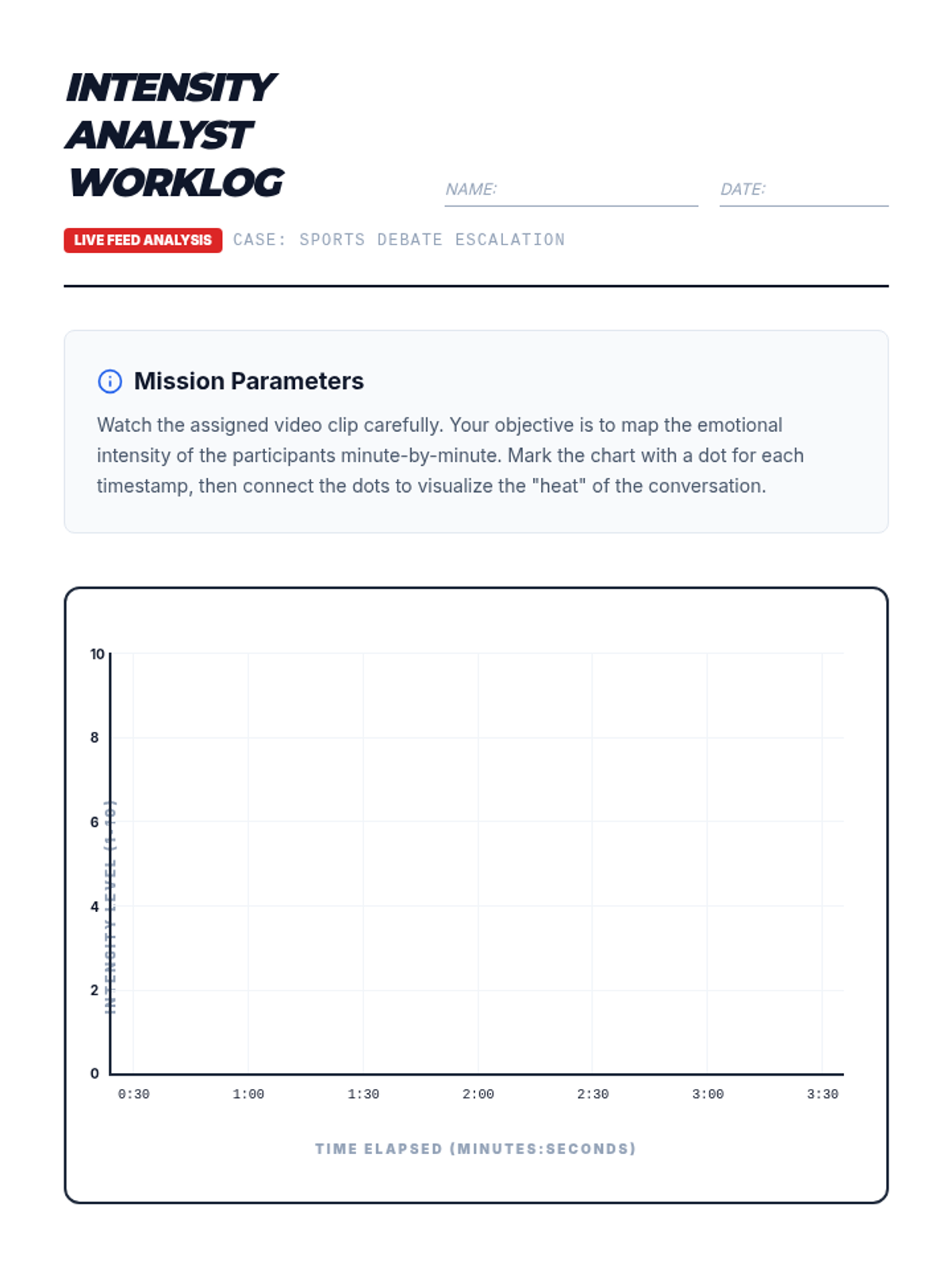
A comprehensive 5-lesson unit on the Crisis Cycle, focusing on identifying triggers, escalation stages, and intervention points through a technical mapping and simulation lens. Students move from theoretical understanding to retroactive detective work to understand behavioral patterns.
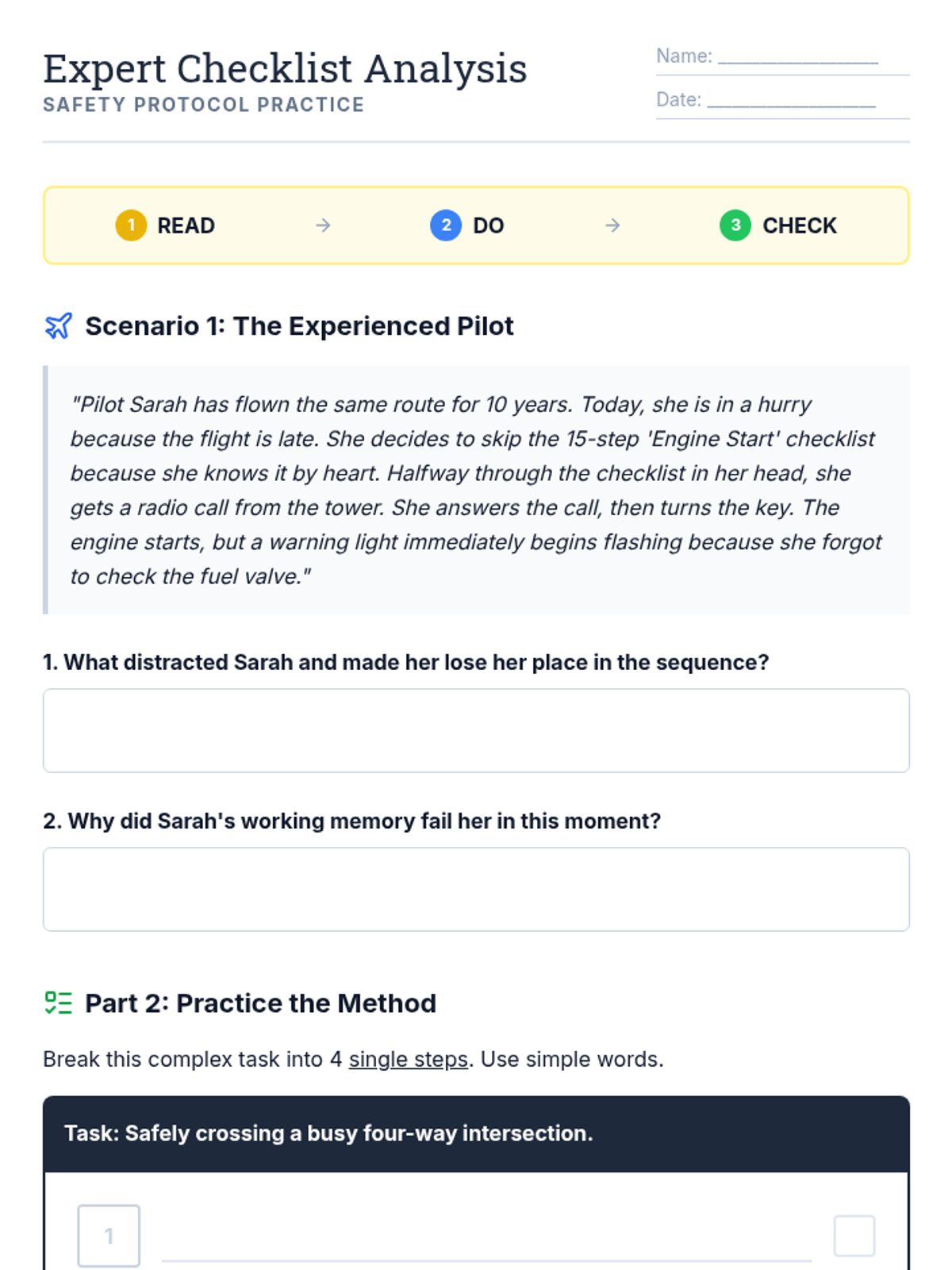
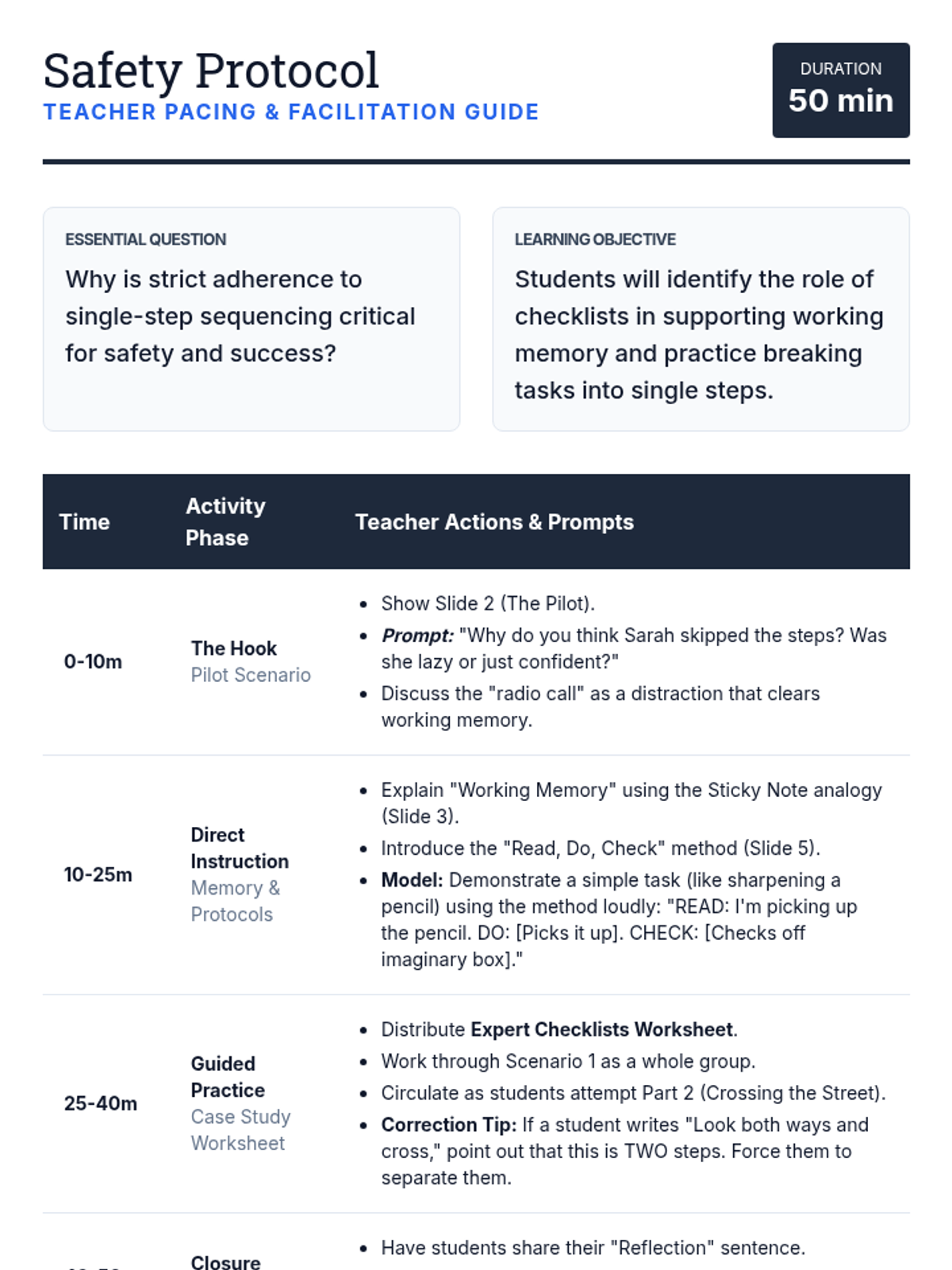
A vocational and life skills sequence for 7th-grade students focusing on working memory through single-step directions. Students explore how strict adherence to sequences ensures safety and success in fields like aviation, cooking, digital security, and emergency response.
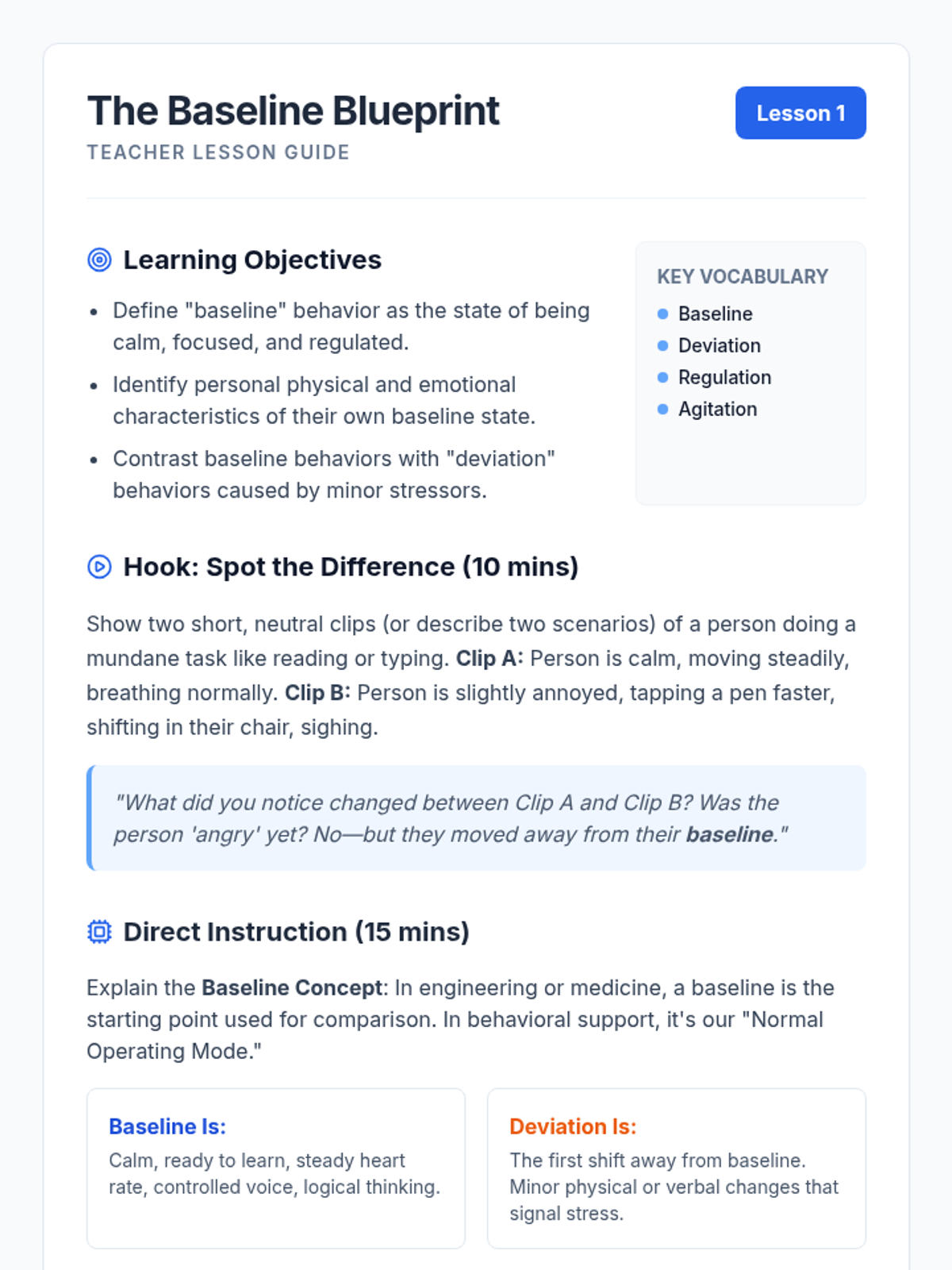
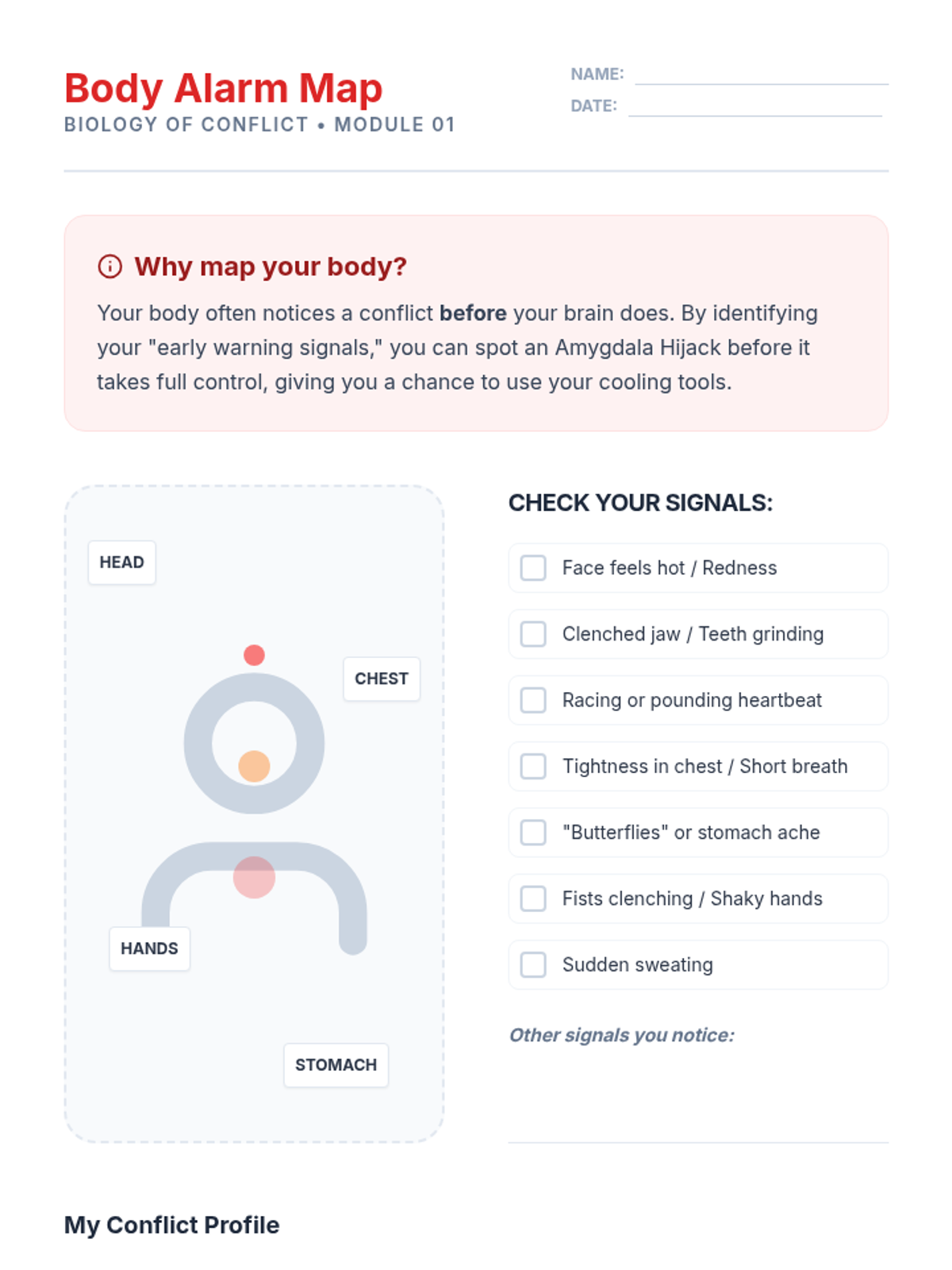
A comprehensive 5-lesson unit for 7th-grade students to identify internal and external signals of emotional escalation. Students move from establishing baseline behaviors to creating a personalized 'Escalation Map' to help them recognize when to engage coping strategies before a crisis occurs.
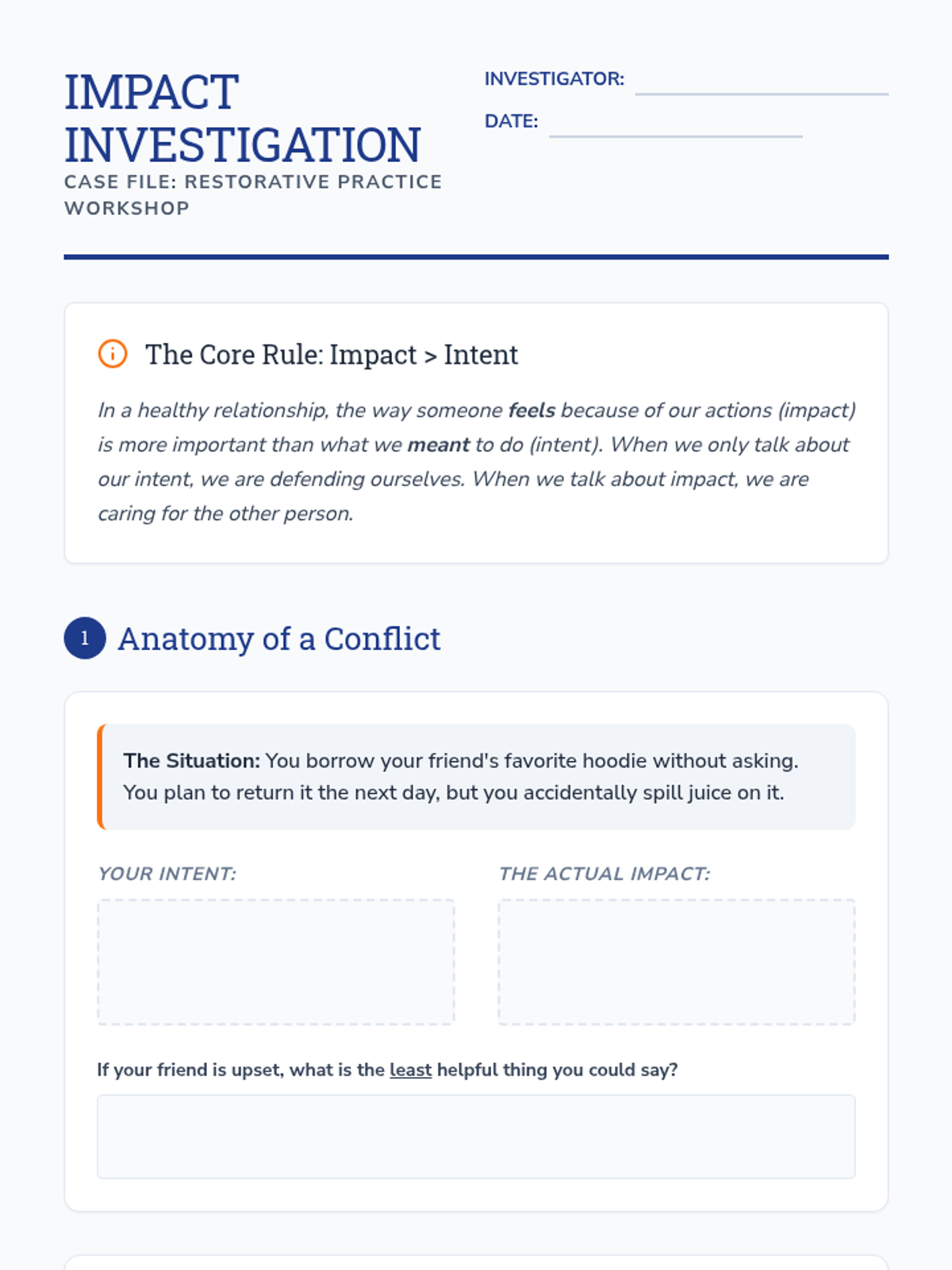
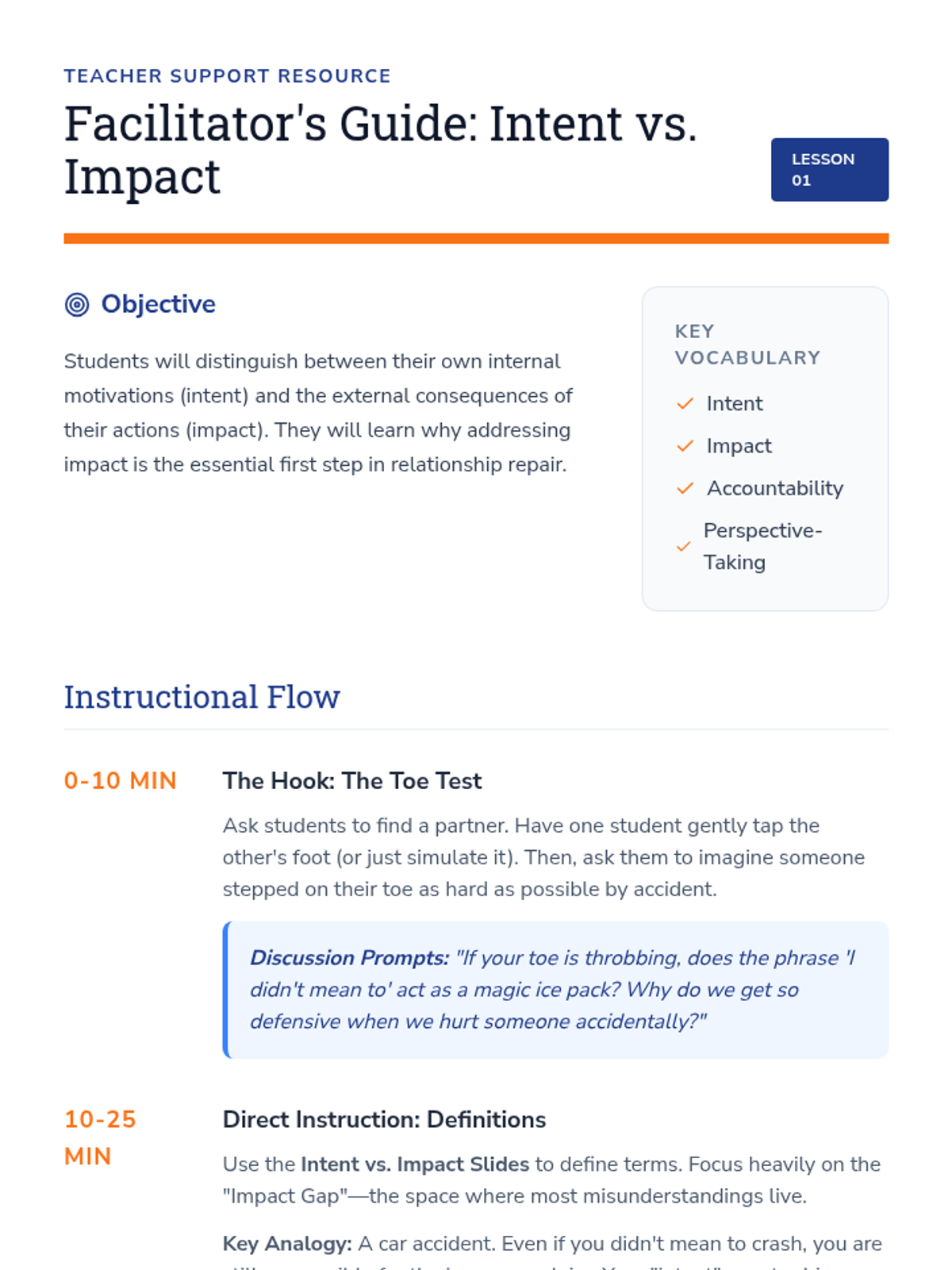
A 5-lesson sequence for 7th grade students focusing on restorative practices, the difference between intent and impact, crafting genuine apologies, and the long-term process of rebuilding trust after conflict.
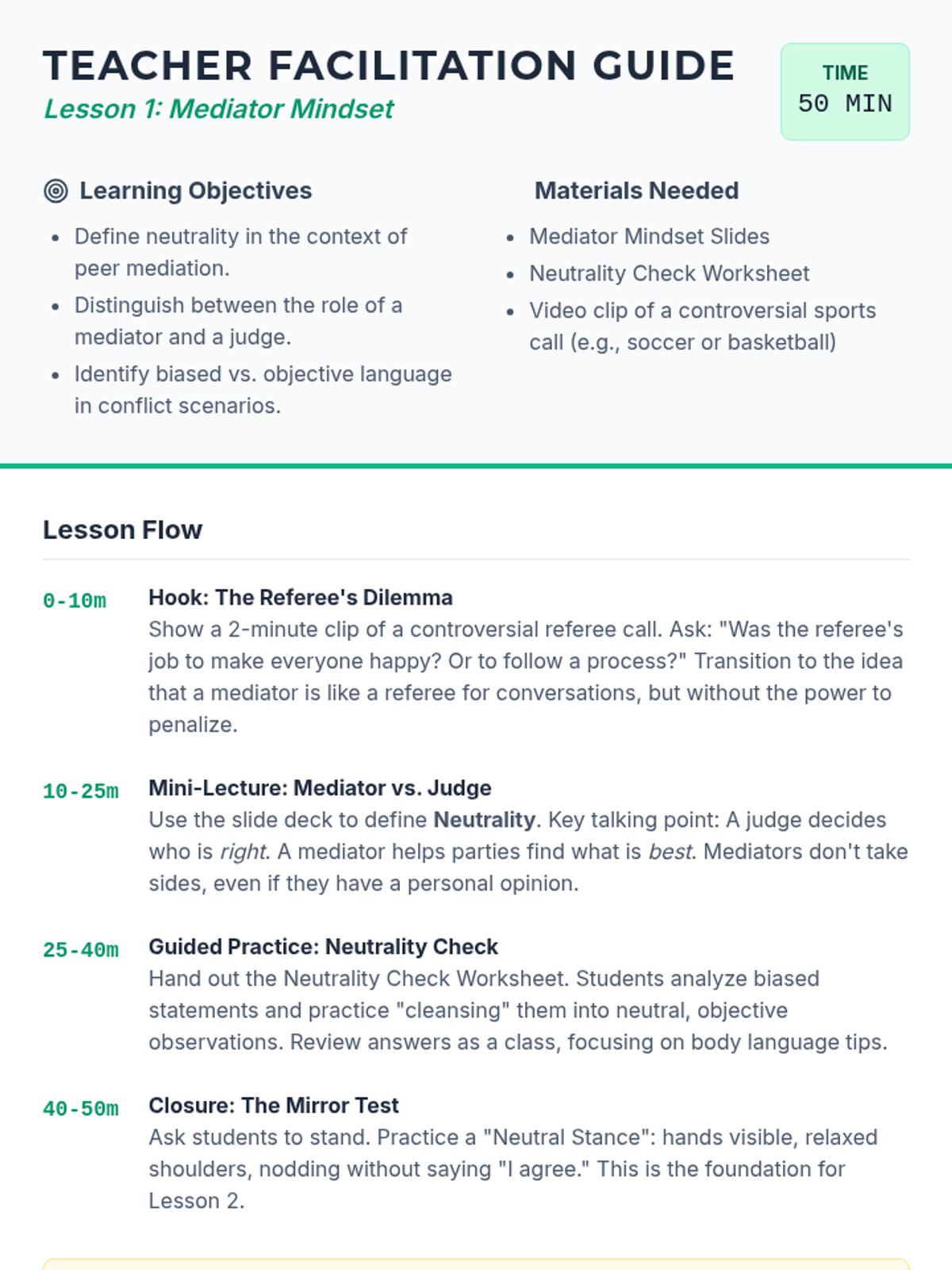
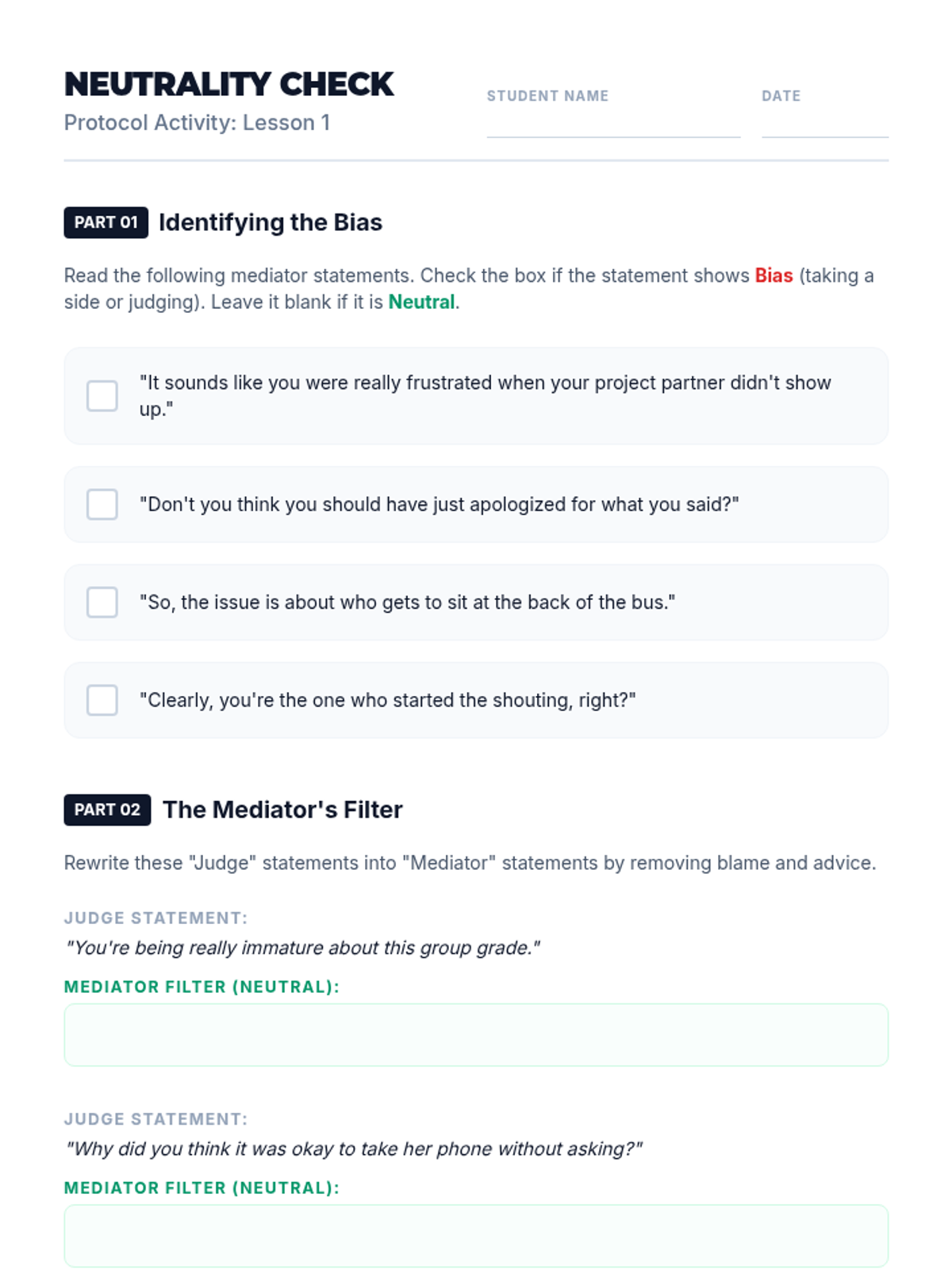
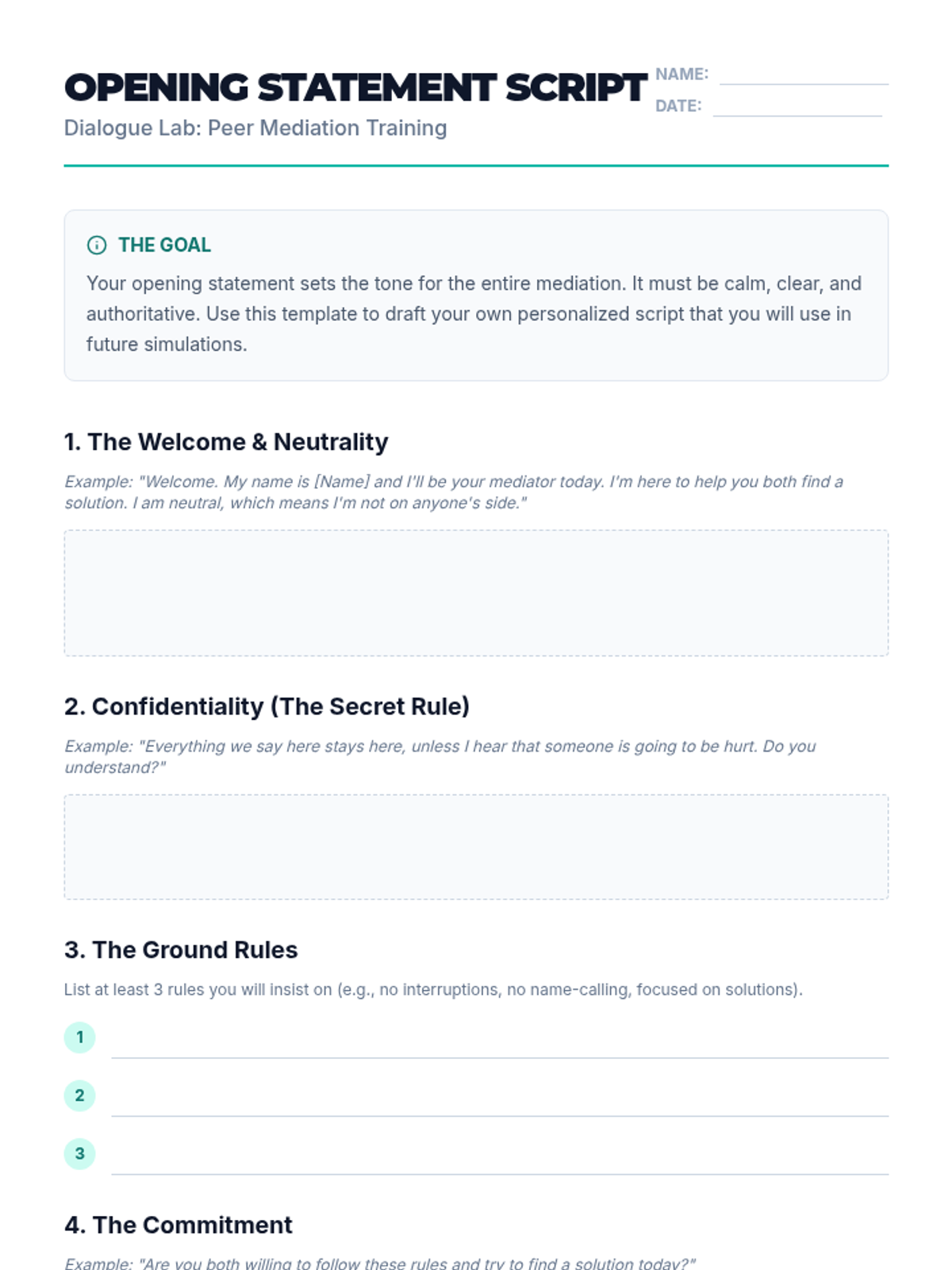
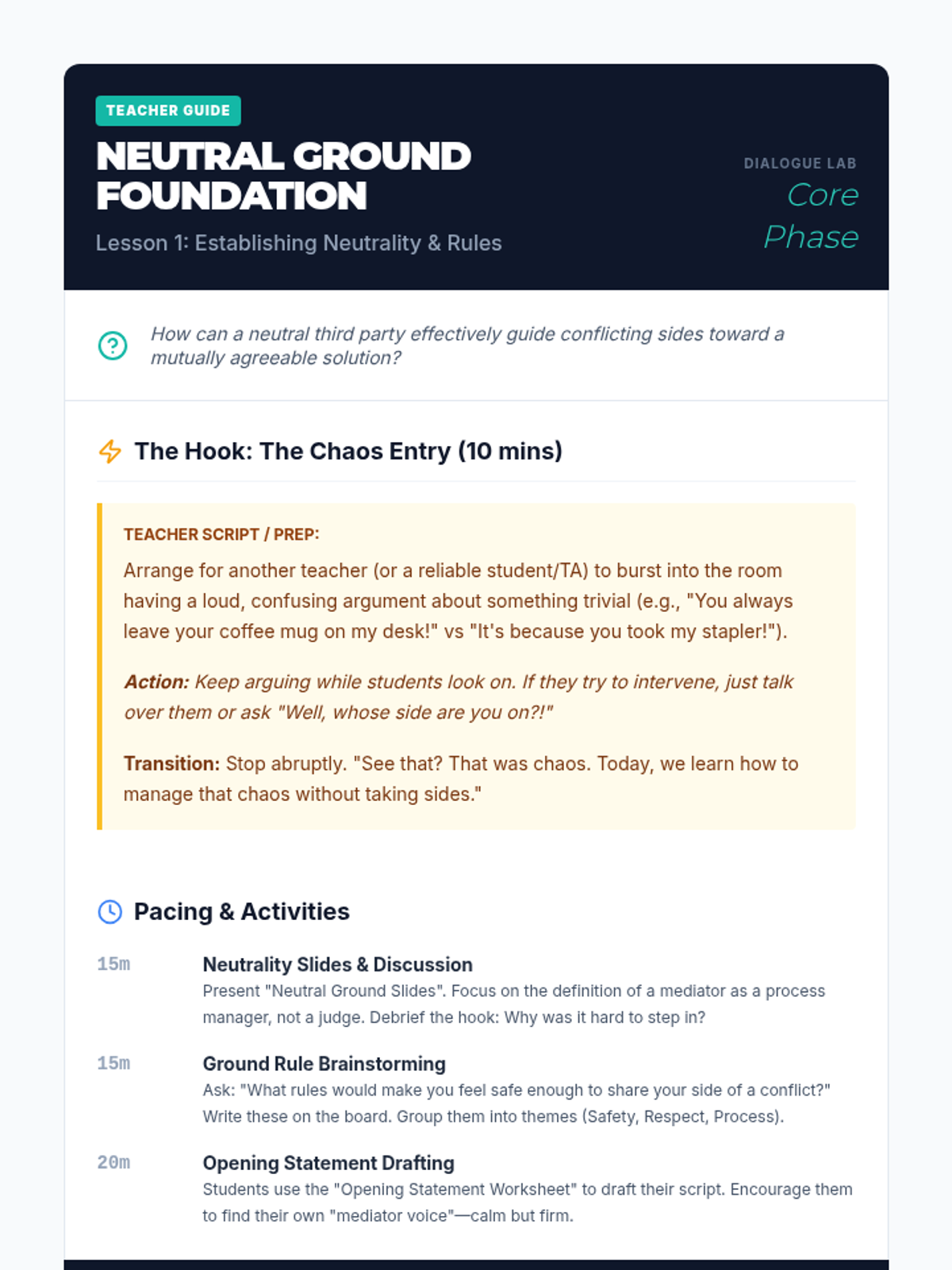
A 5-lesson unit for 7th graders on the formal structure of peer mediation. Students transition from observers to facilitators, learning to maintain neutrality, set ground rules, reframe toxic language, and guide parties toward mutually agreed-upon solutions.
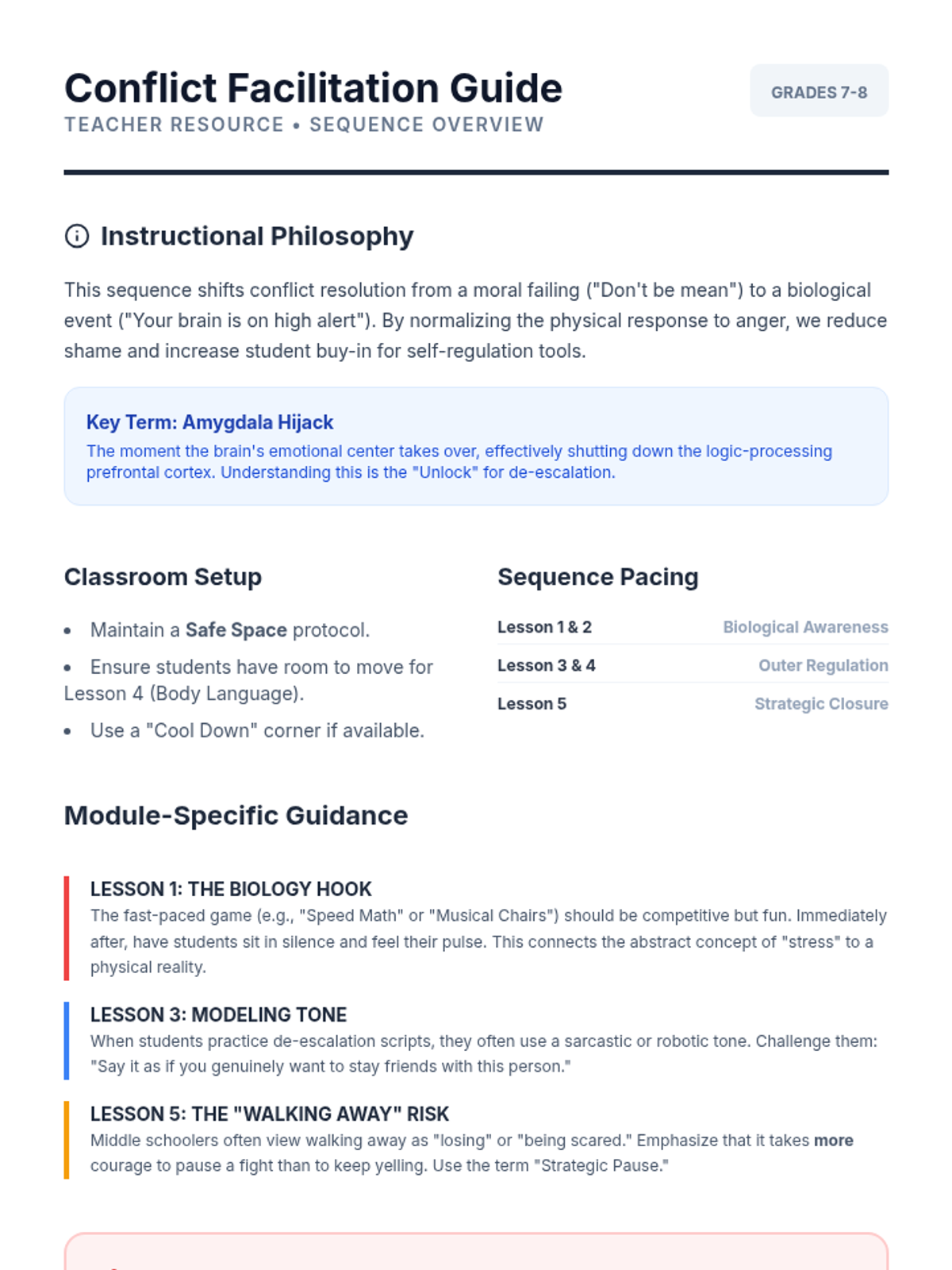
This sequence explores the physiological and psychological aspects of high-conflict situations, providing 7th-grade students with tools for self-regulation, verbal de-escalation, and constructive re-engagement.
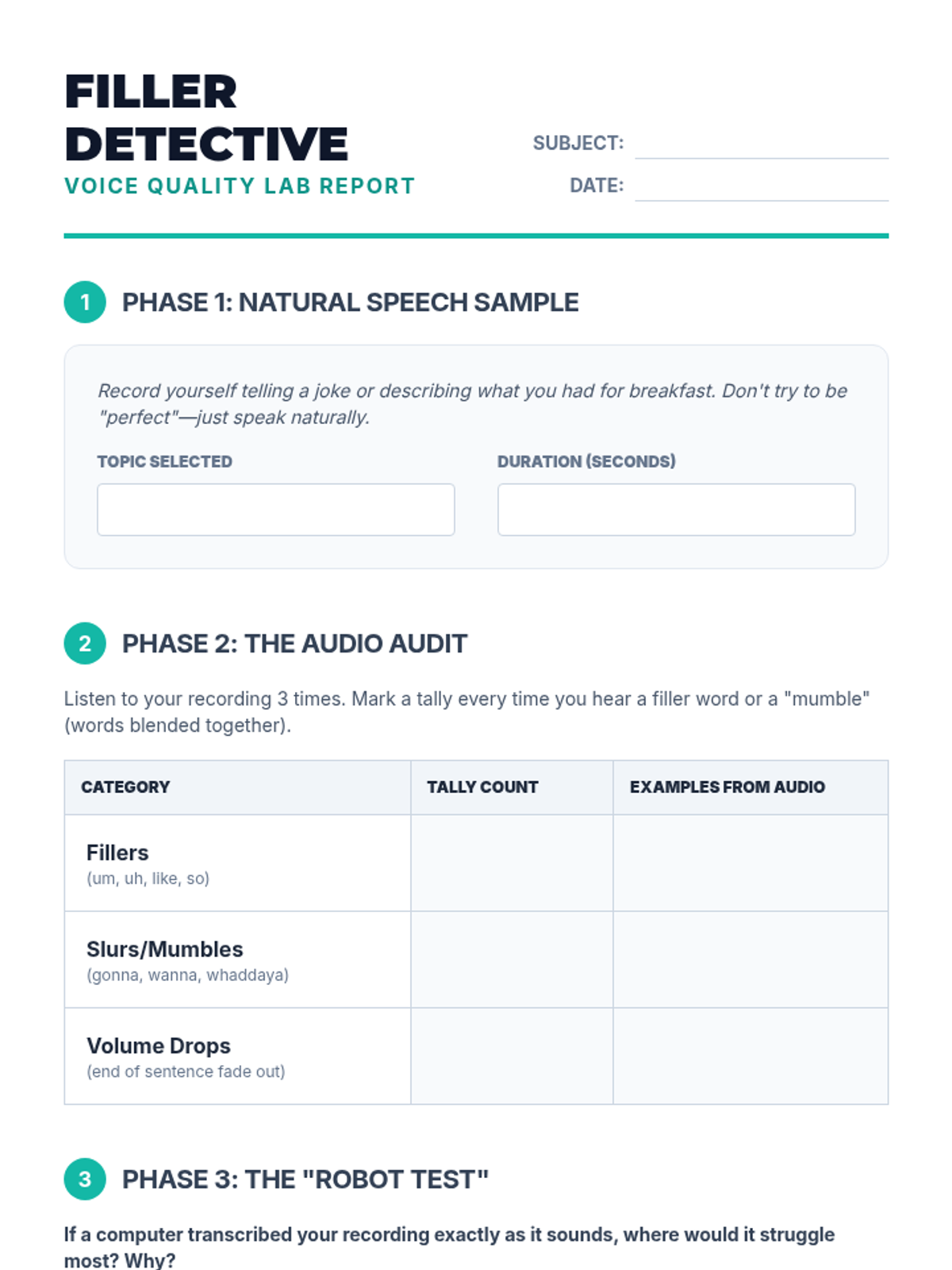
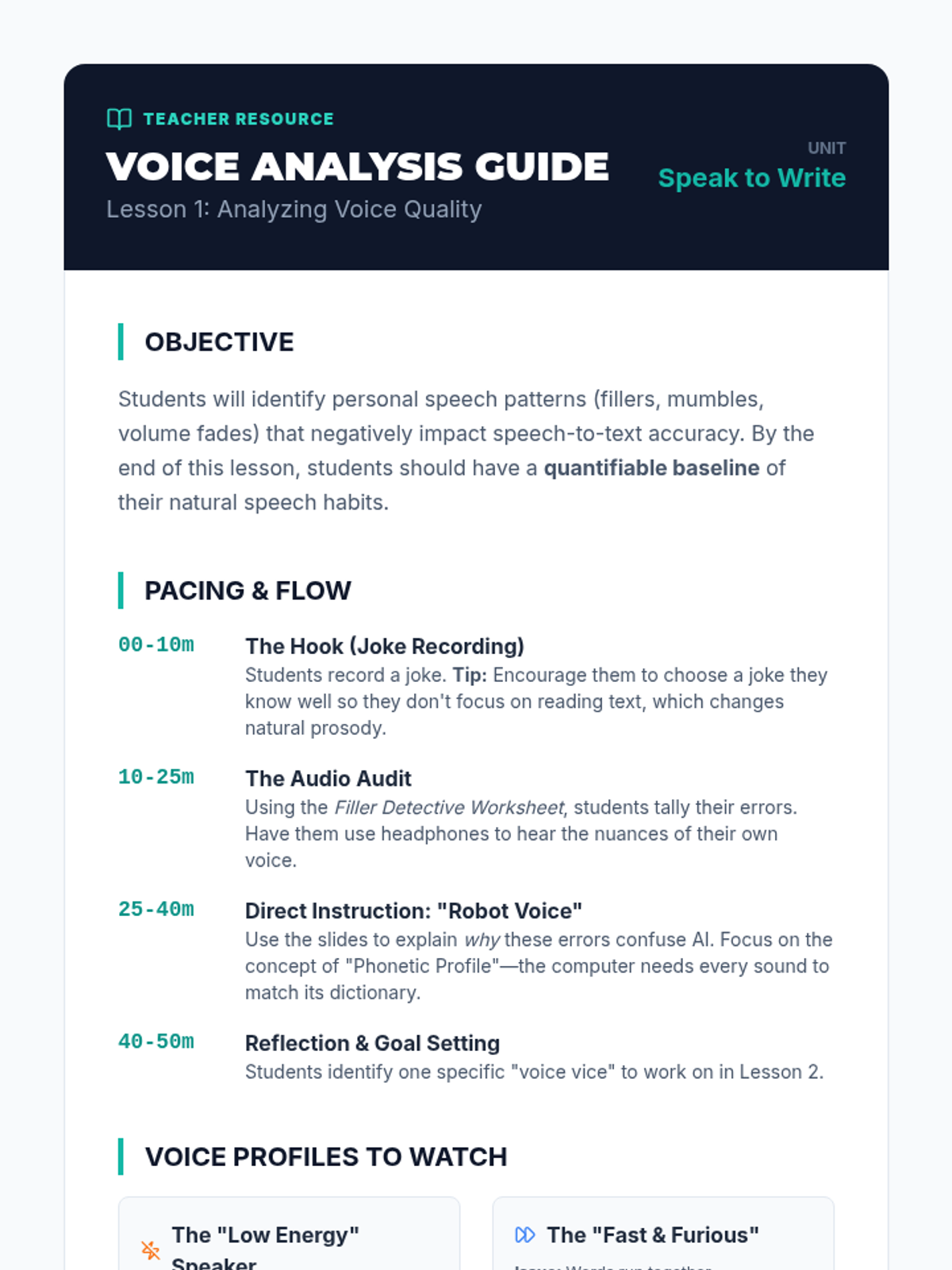
A sequence focused on the cognitive and linguistic aspects of dictation: fluency, pacing, and enunciation. Designed for 8th-grade students to improve speech clarity and mental composition for better speech-to-text accuracy.
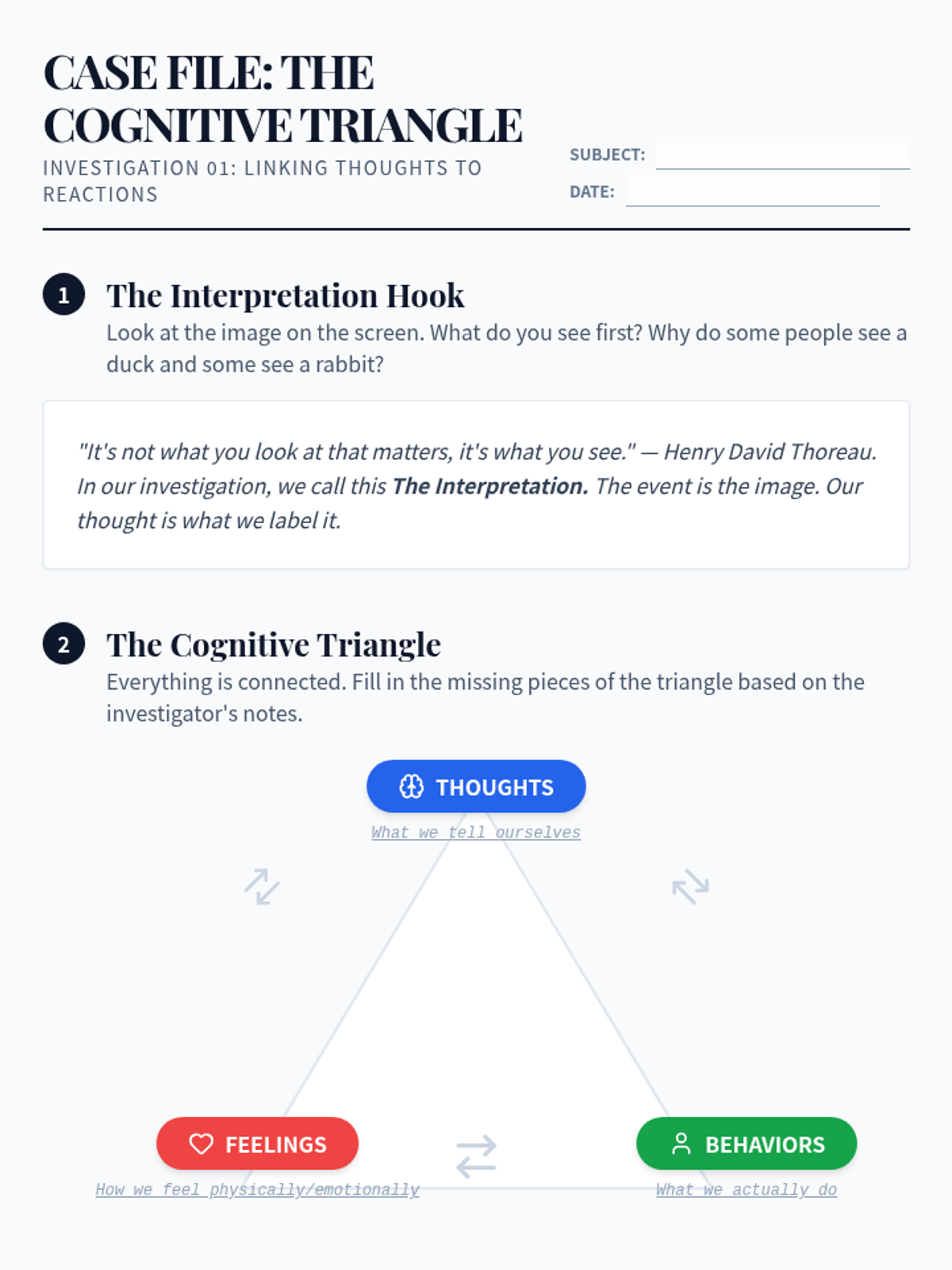
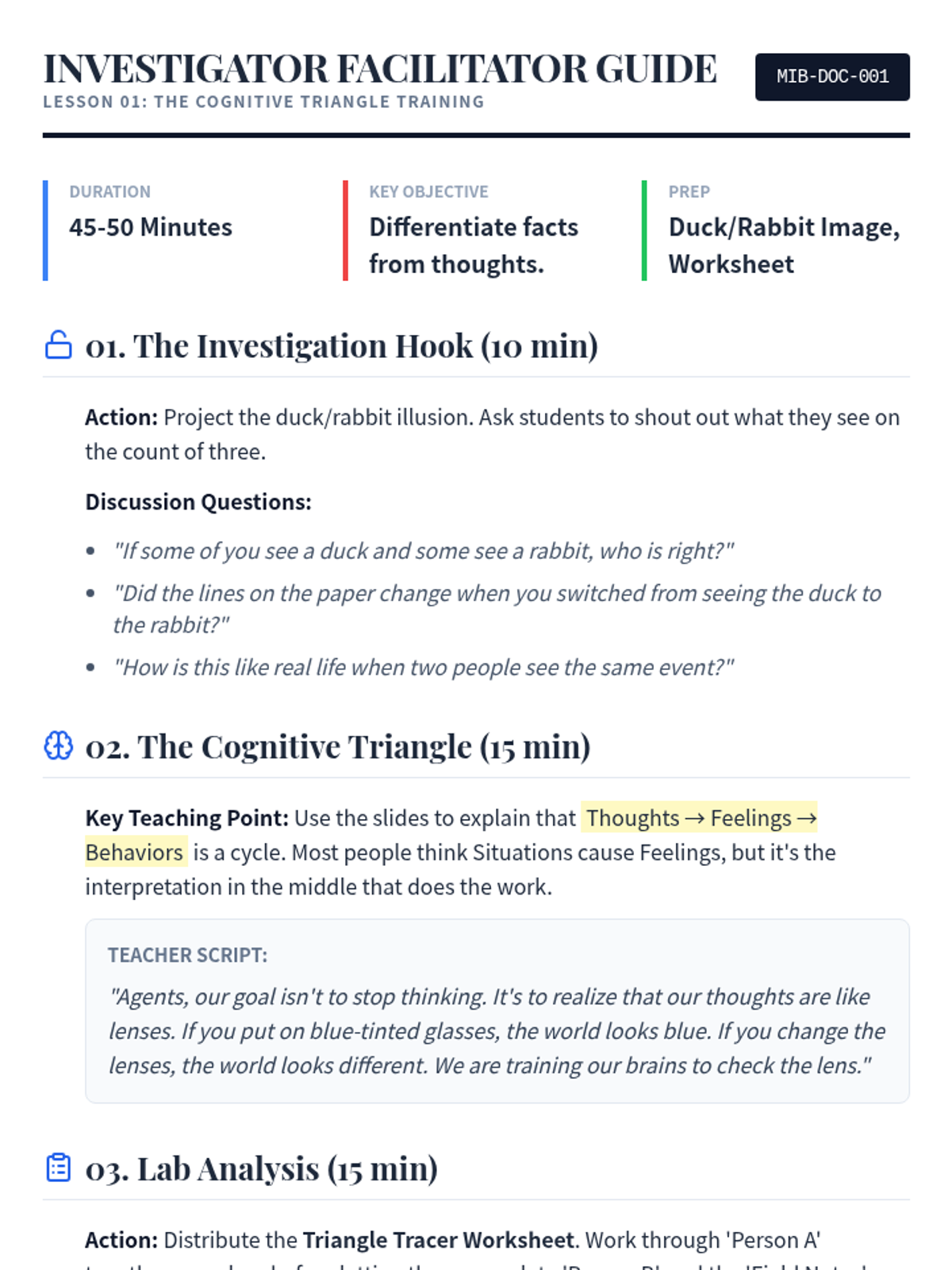
This sequence introduces 7th-grade students to cognitive restructuring through the use of Thought Records. Students will explore the 'Cognitive Triangle,' identify cognitive distortions (ANTs), and learn to evaluate thoughts as hypotheses by examining evidence to generate balanced perspectives and regulate emotional responses.
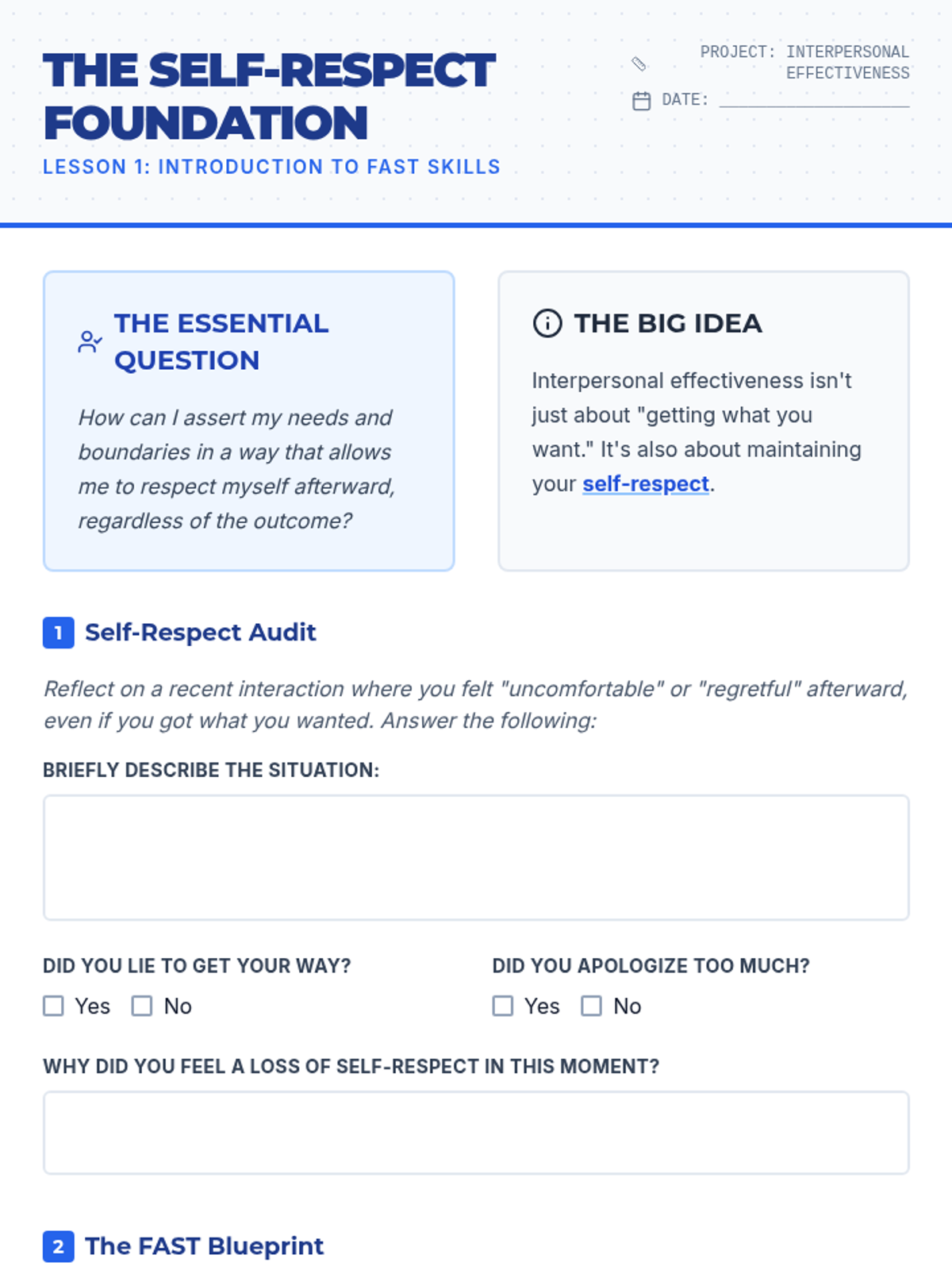
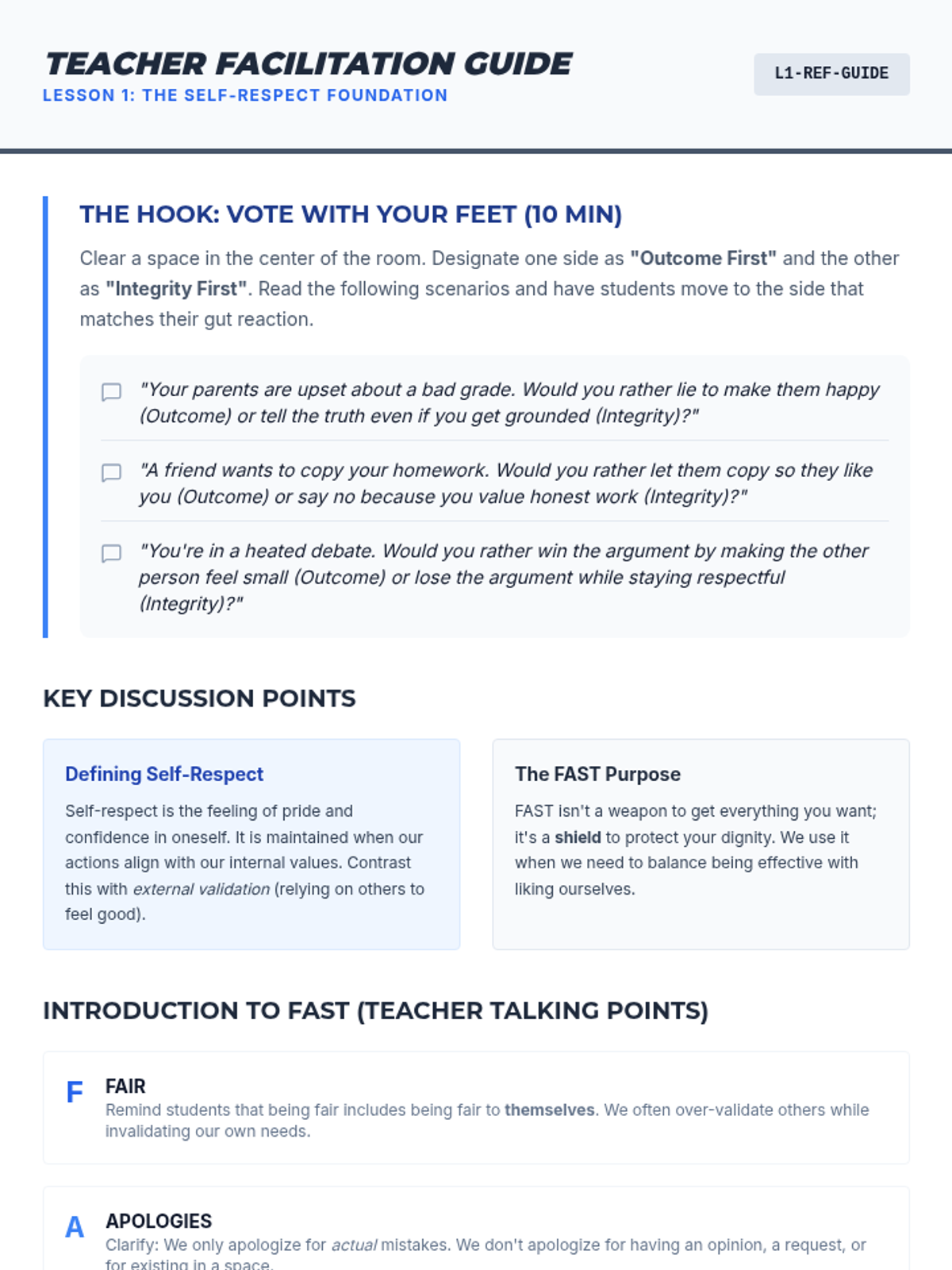
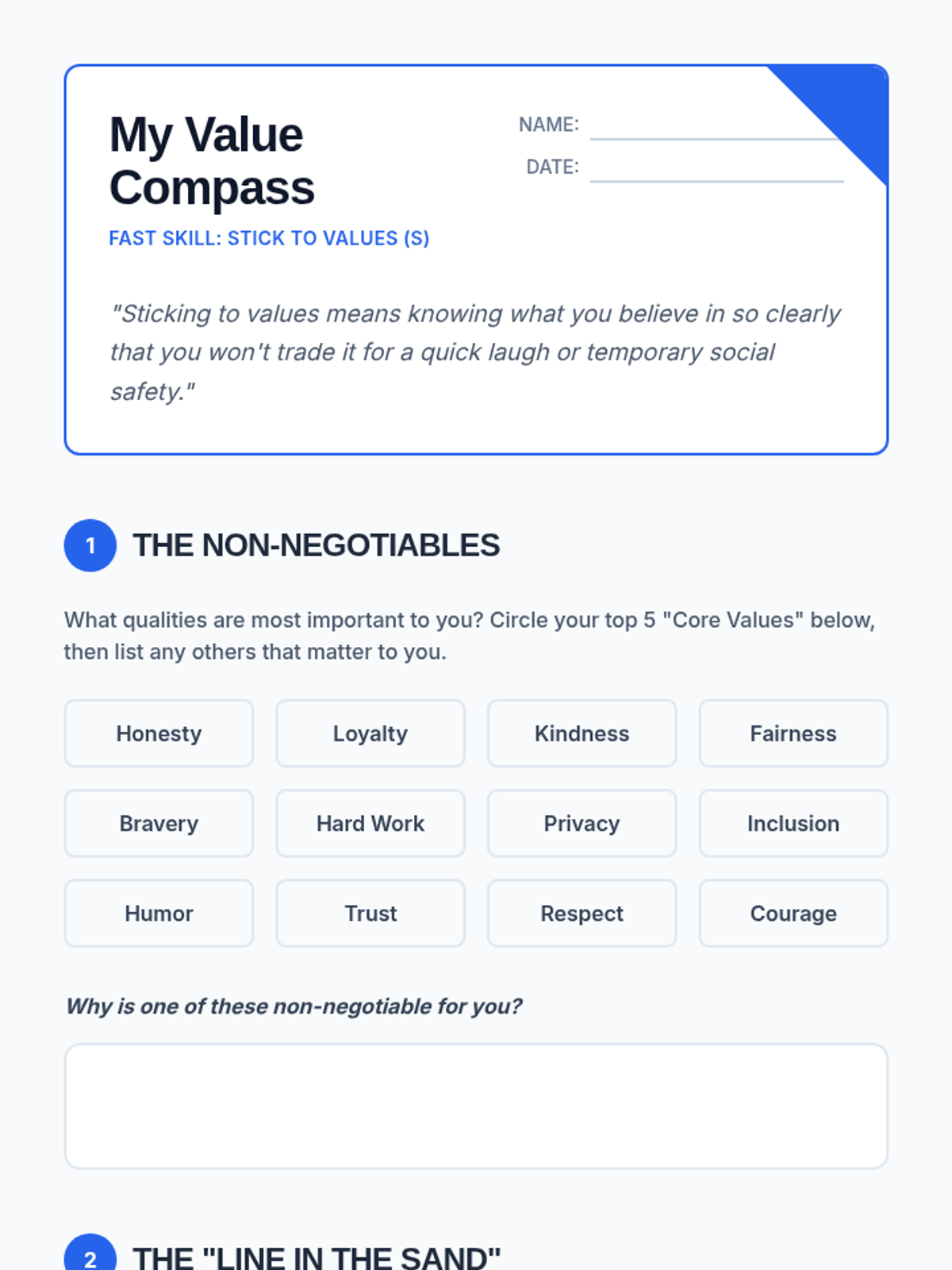
A comprehensive workshop-style sequence for 8th-grade students to master the DBT FAST framework for self-respect. Students move from defining self-respect to practical application through role-play, script-writing, and simulations.
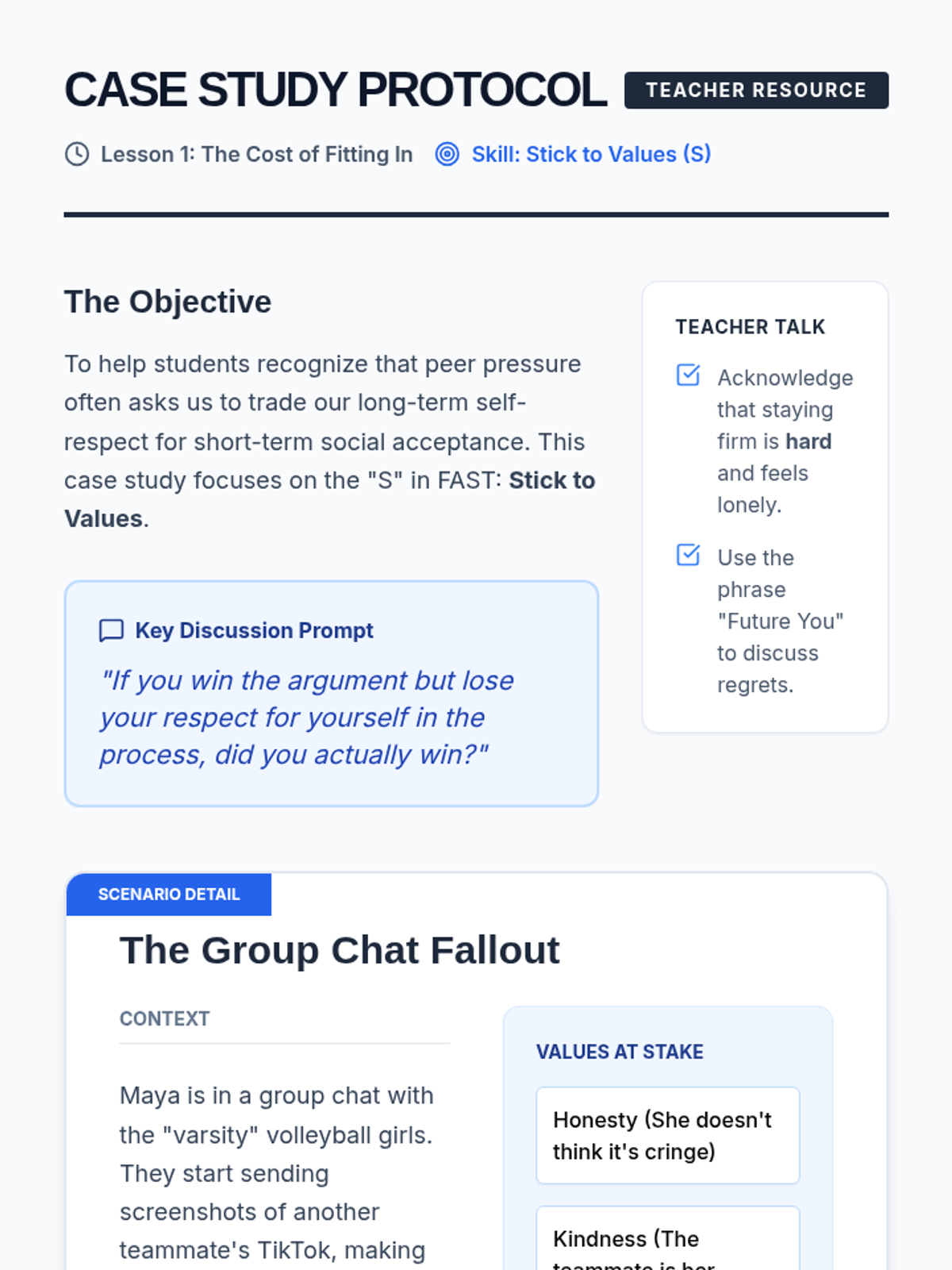
An 8th-grade counseling sequence exploring the FAST skills for self-respect (Fair, No Apologies, Stick to Values, Truthful). Students analyze social pressure, digital authenticity, and conflict resolution through case studies and creative projects.
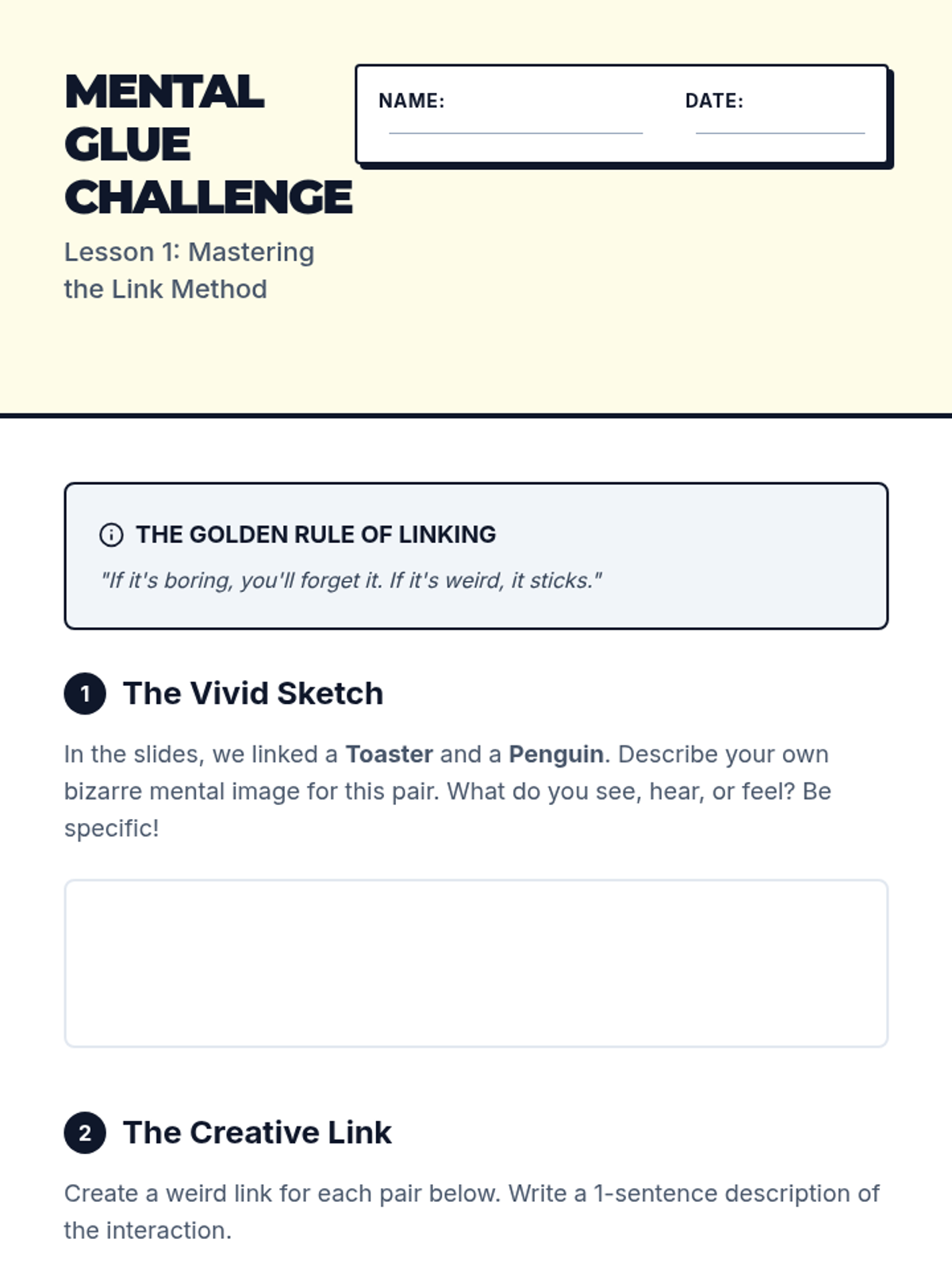
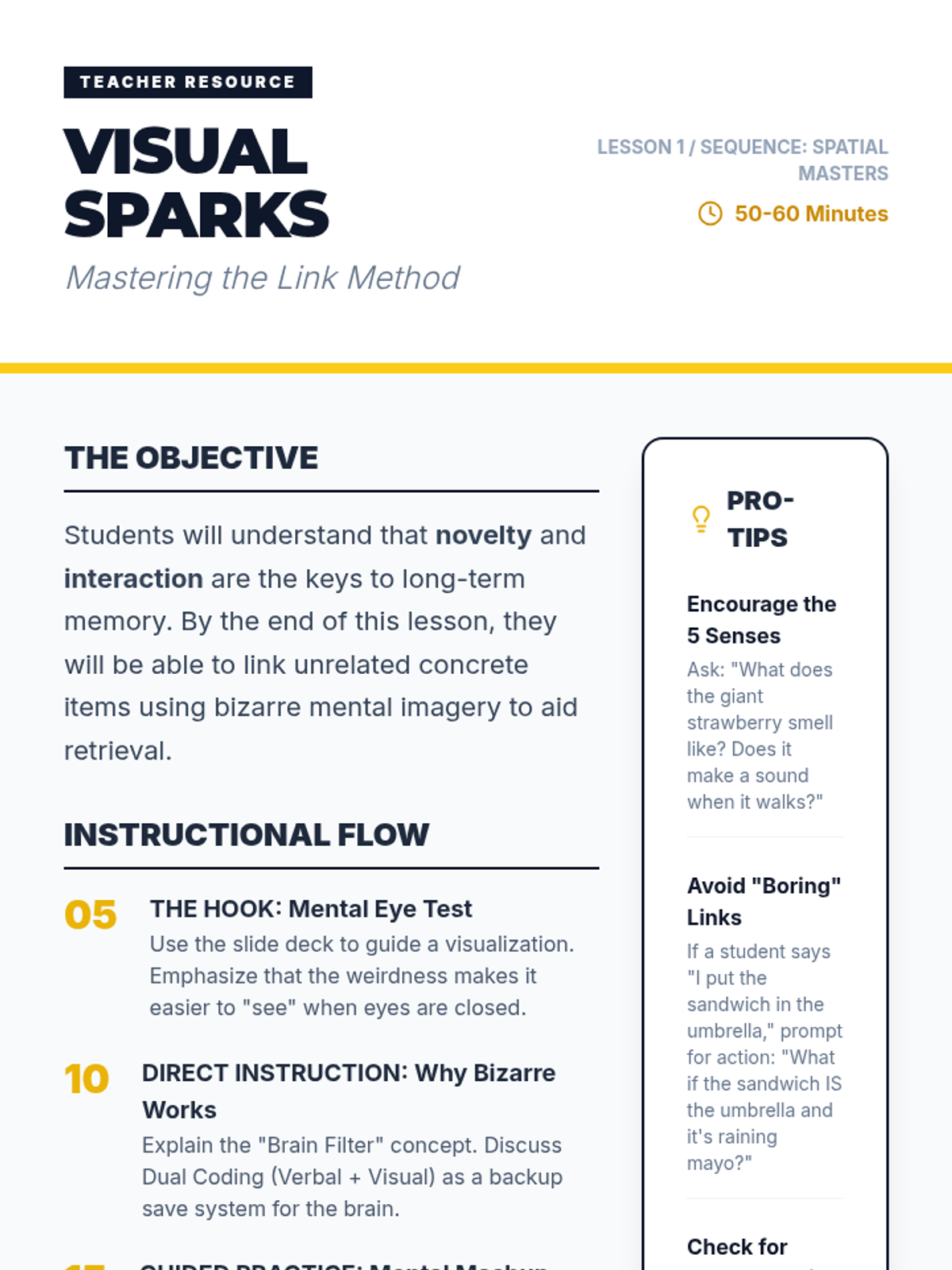
A sequence for 8th-grade students to master visualization and spatial memory techniques, specifically the Method of Loci and Link Method, to enhance working memory and information retrieval.
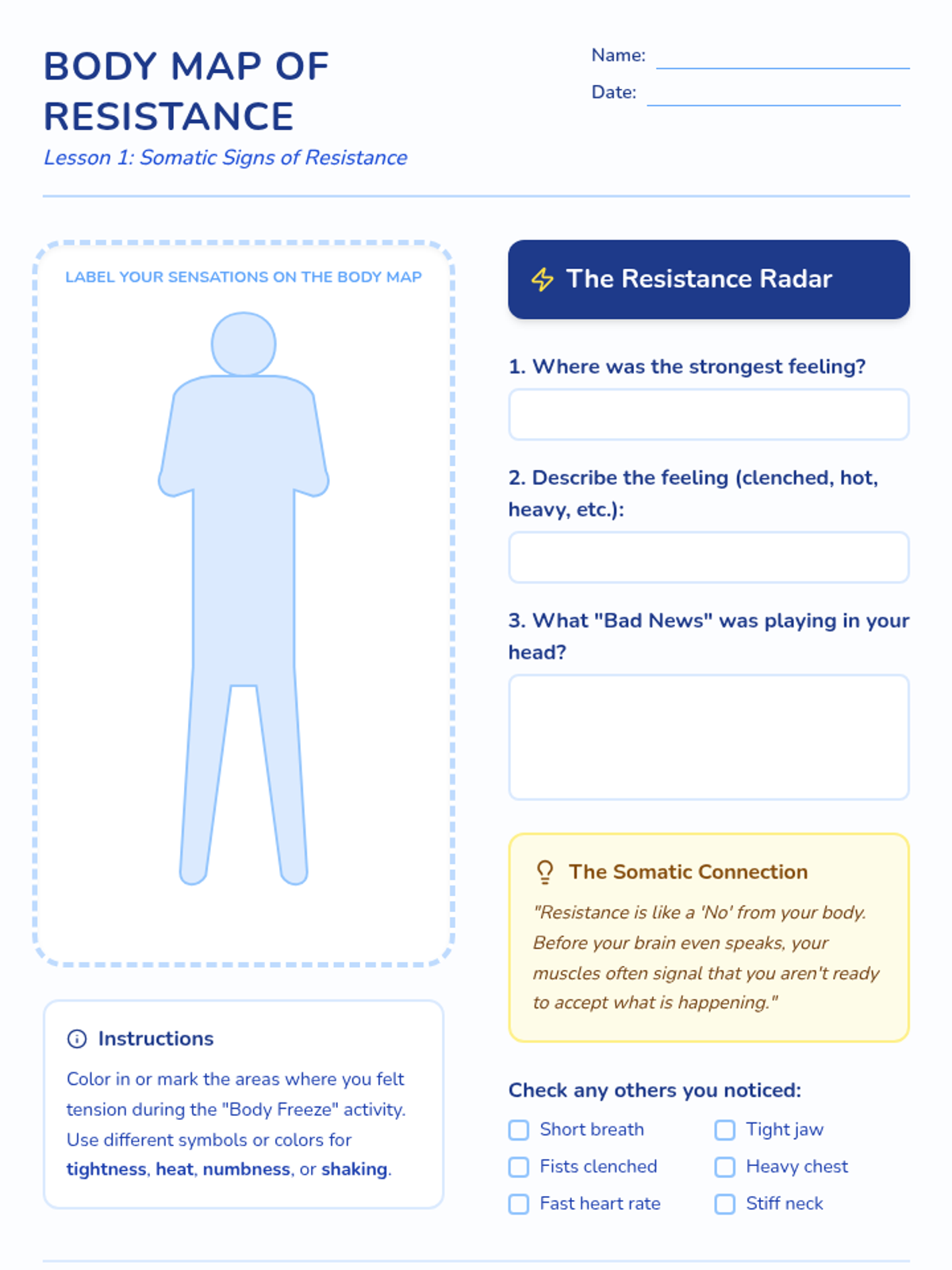
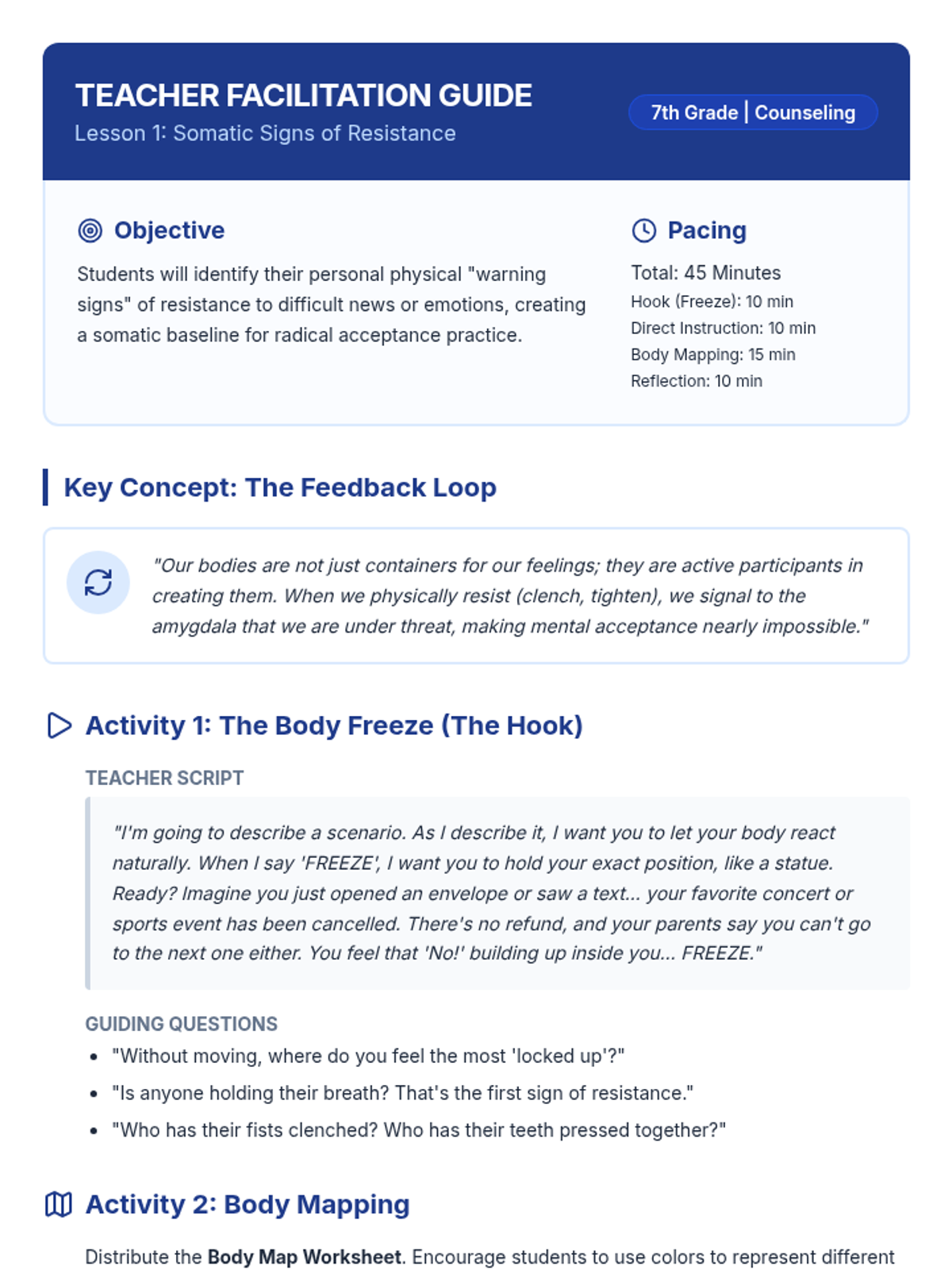
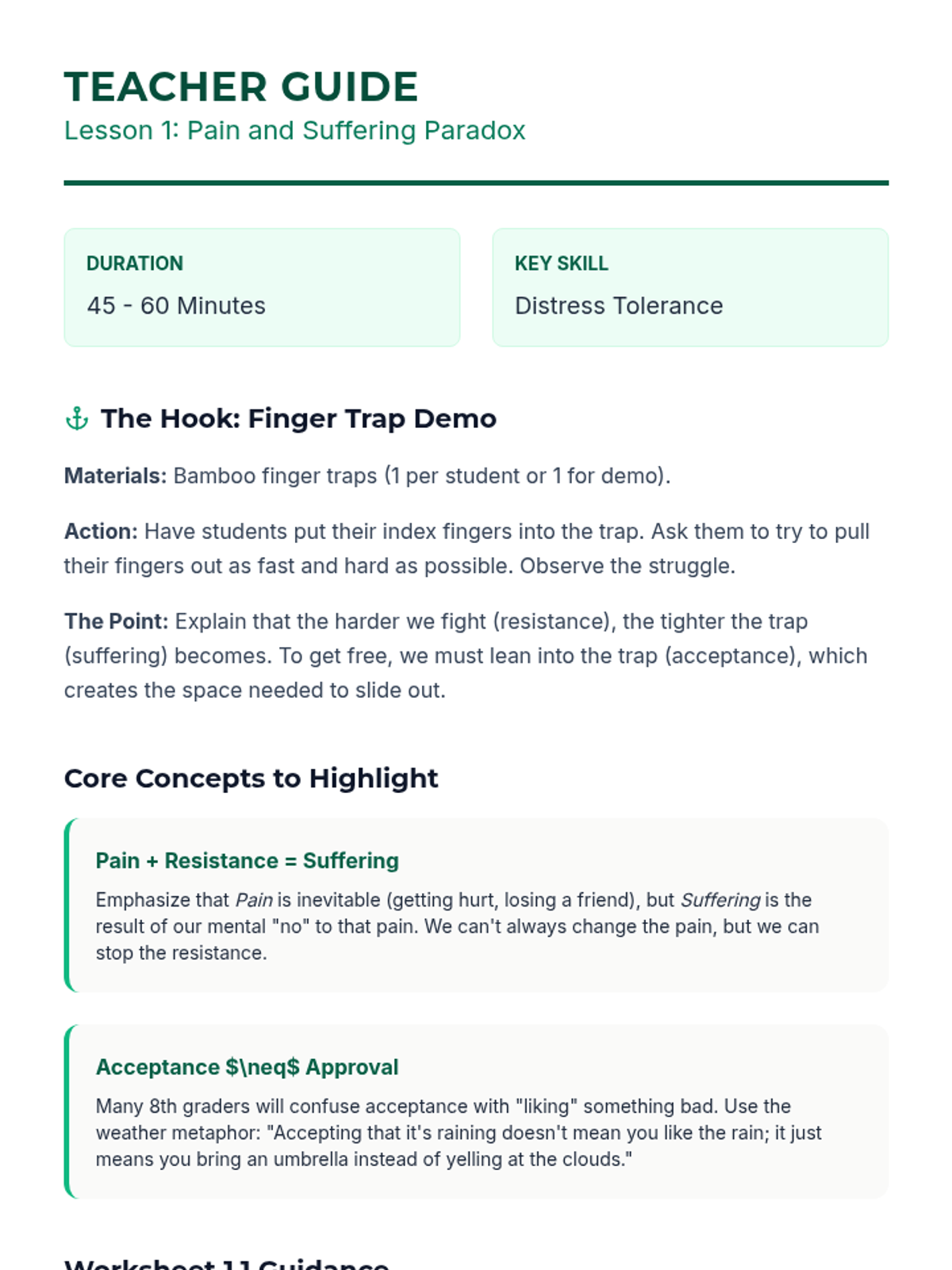
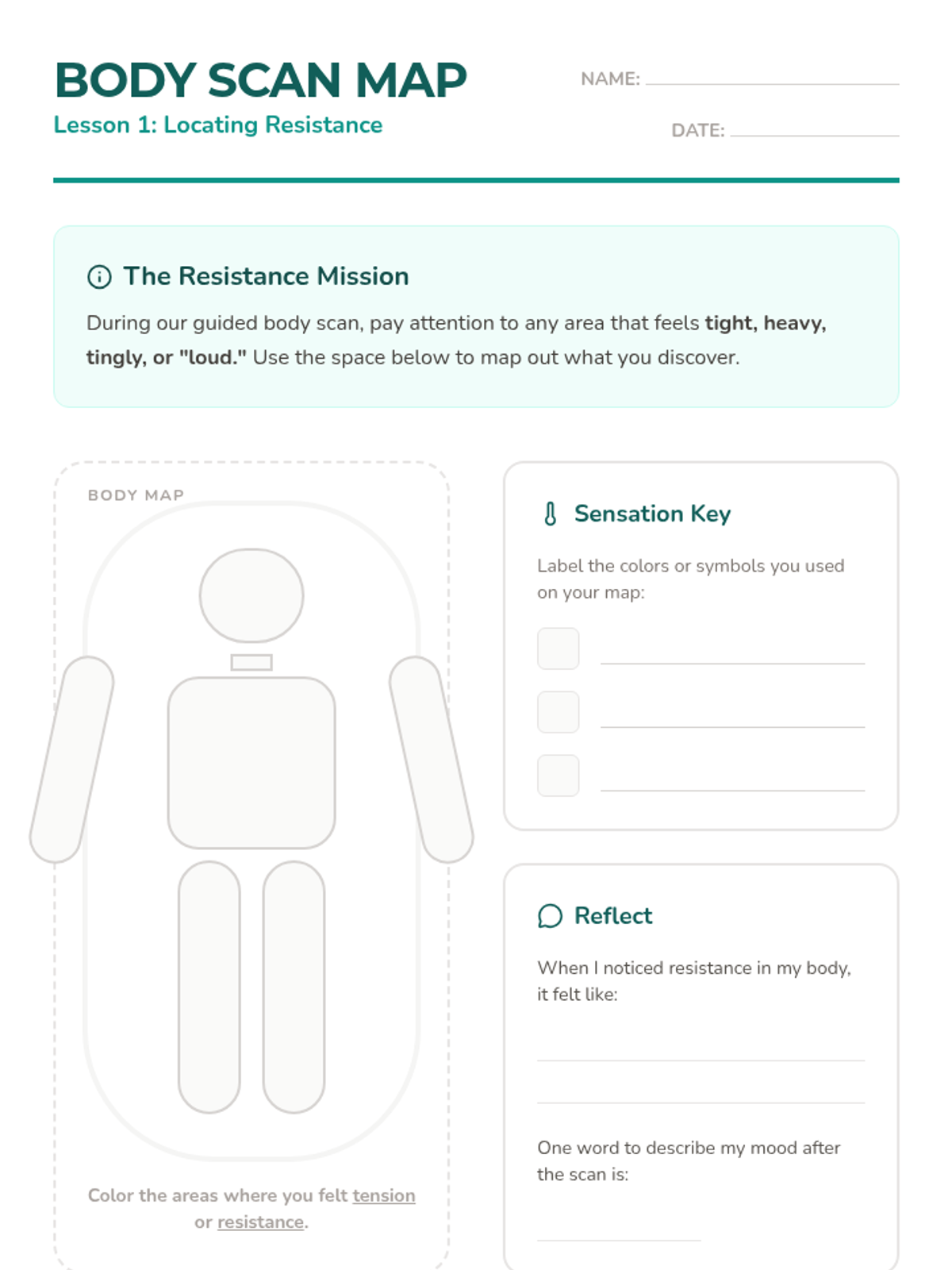
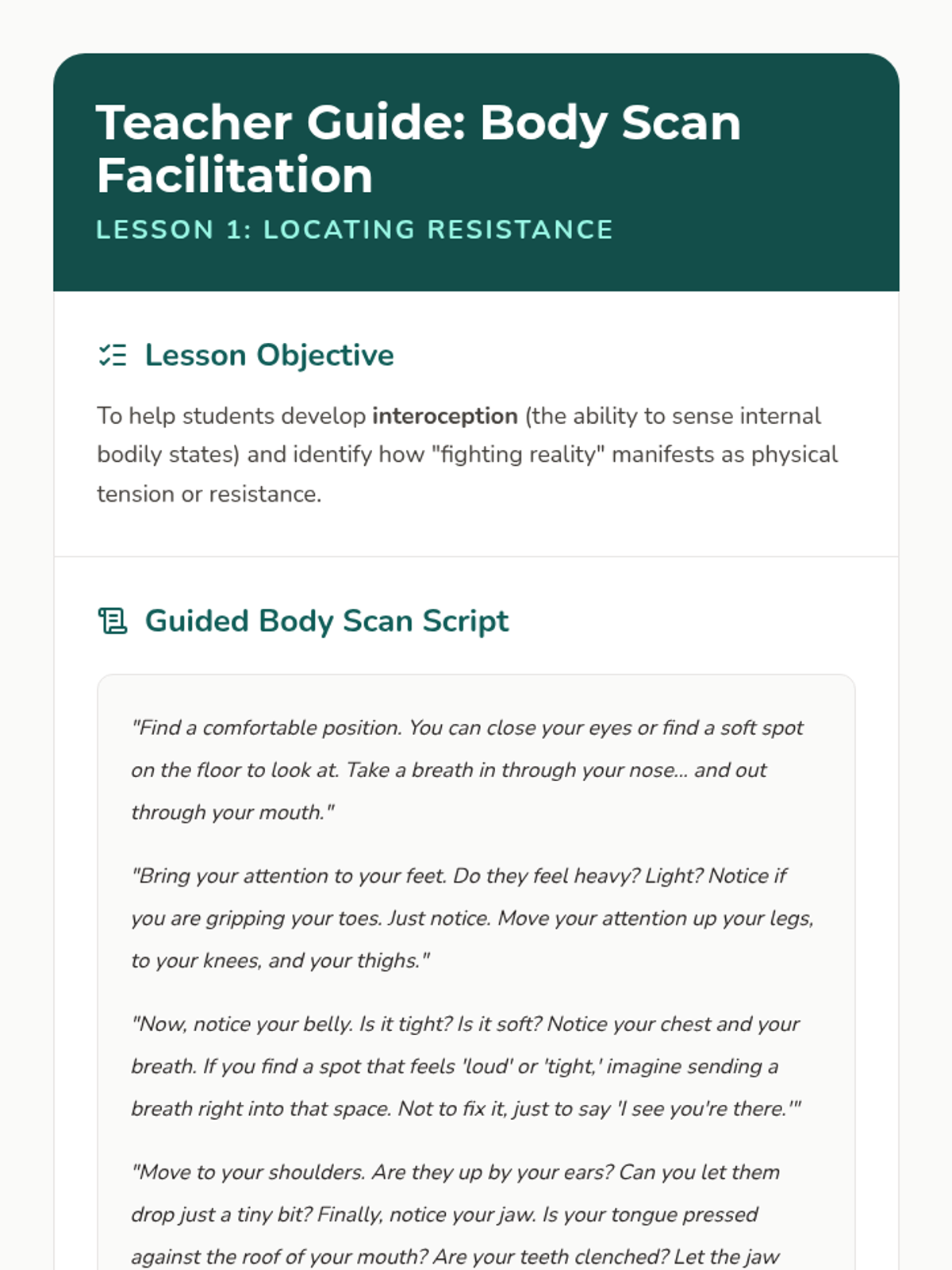
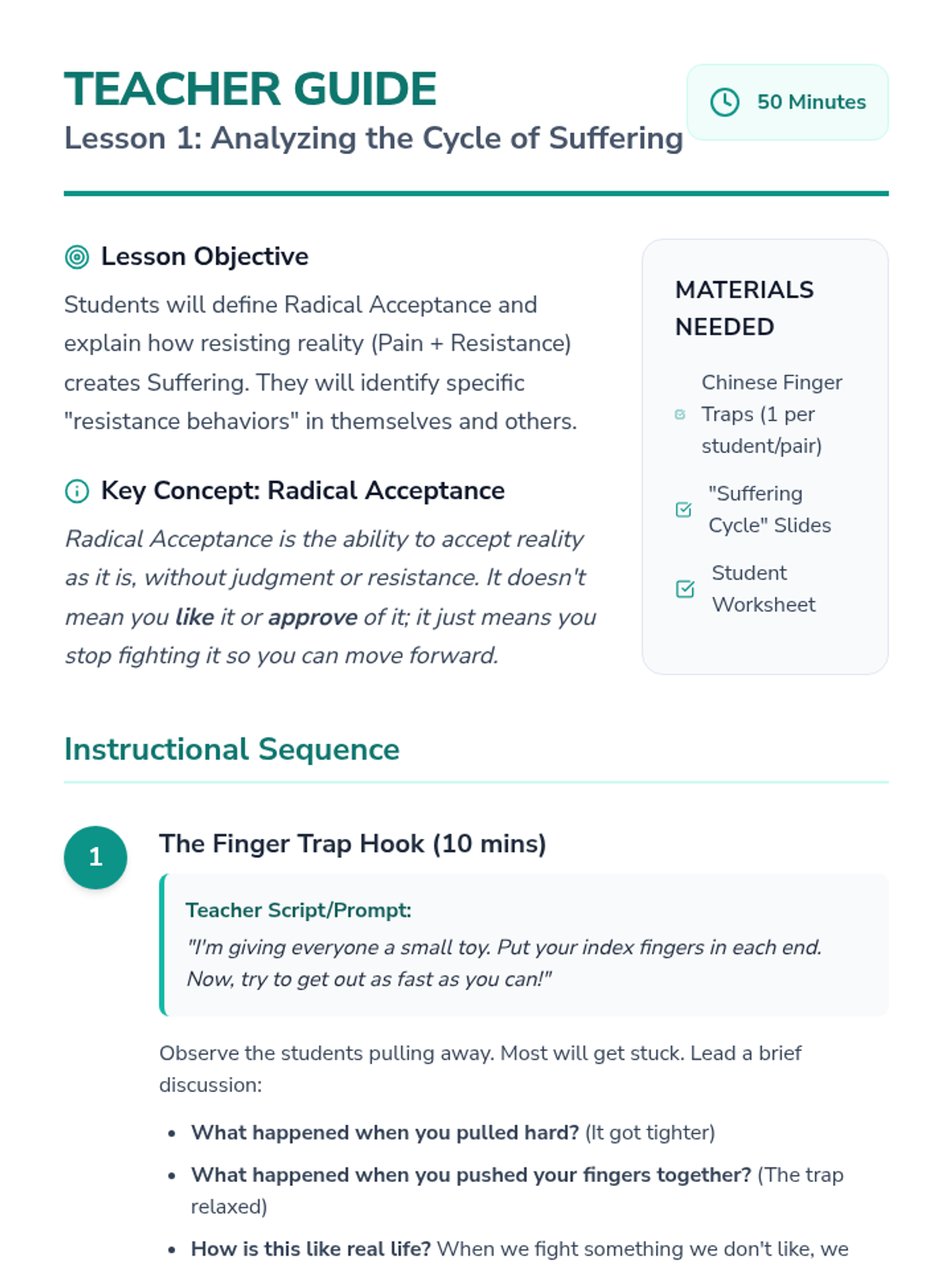
A 5-lesson workshop series focused on the somatic (body-based) connection to radical acceptance. Students learn to identify physical signs of resistance and use specific physiological techniques like Willing Hands and the Half-Smile to influence their emotional state and foster acceptance of difficult situations.
A 5-lesson sequence for 8th graders on Radical Acceptance, focusing on shifting from judgmental language to neutral observation and self-compassion. Students develop skills in identifying 'shoulds', fact-checking emotions, and practicing mindfulness to navigate reality without internal resistance.
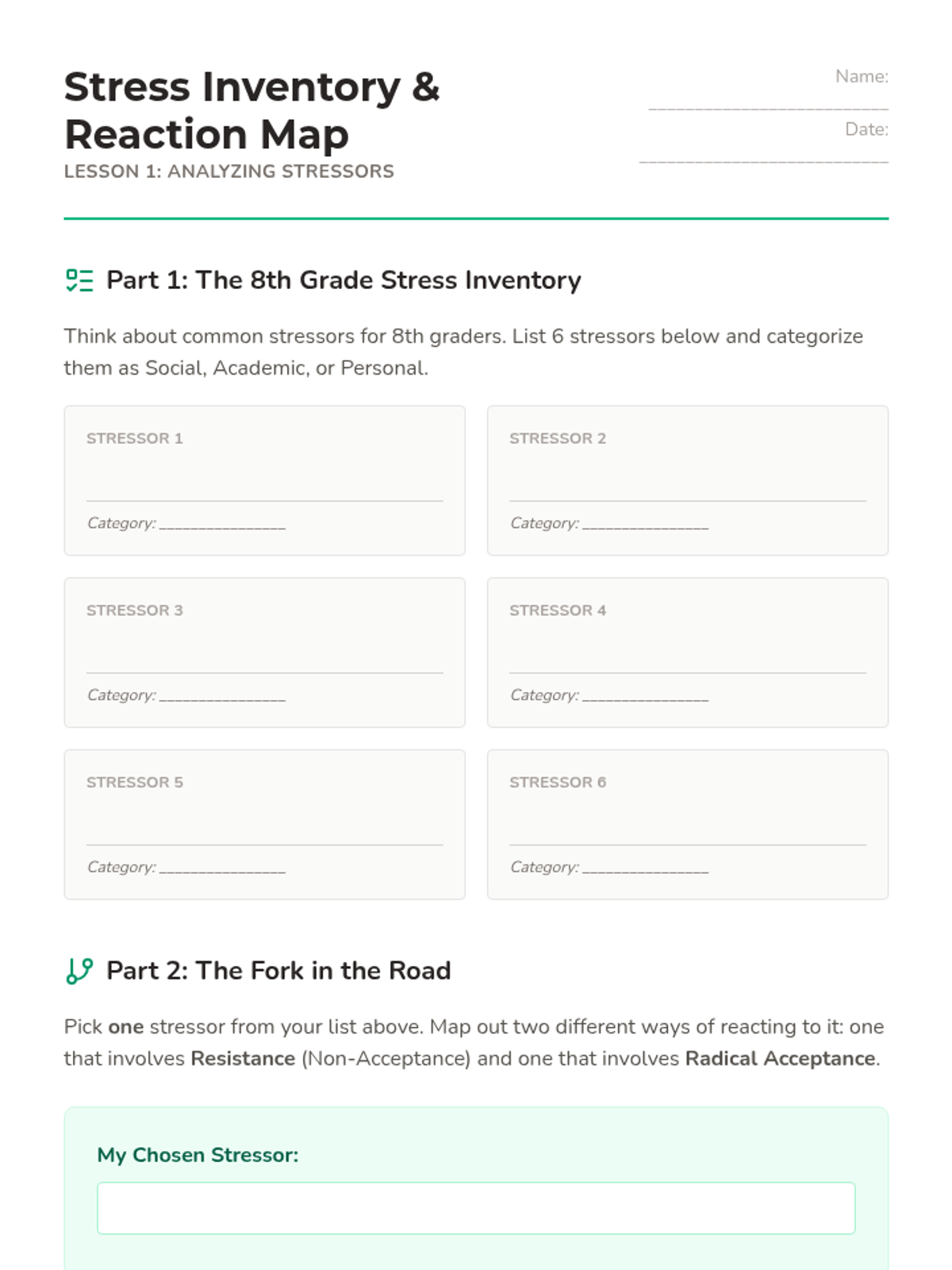
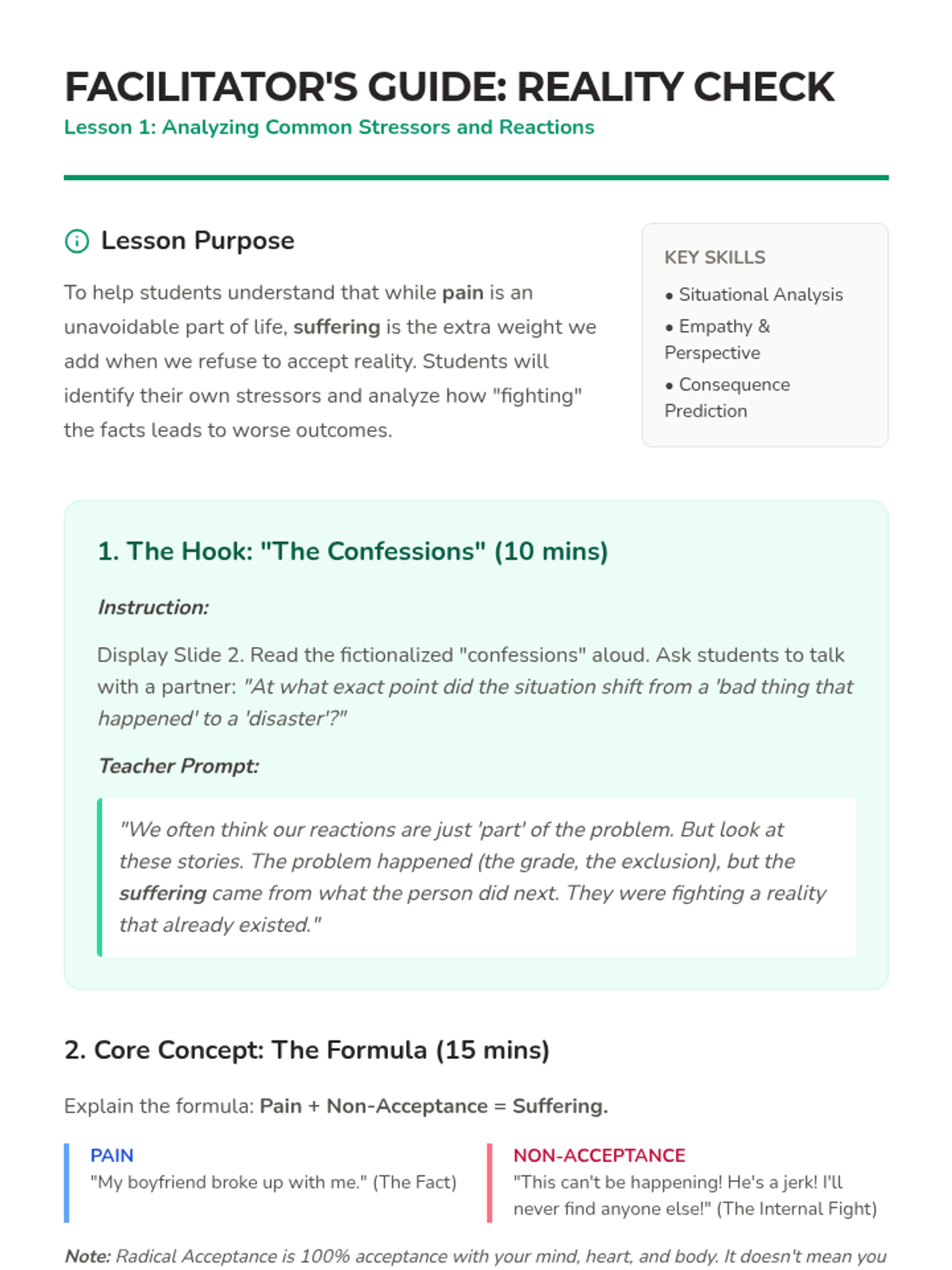
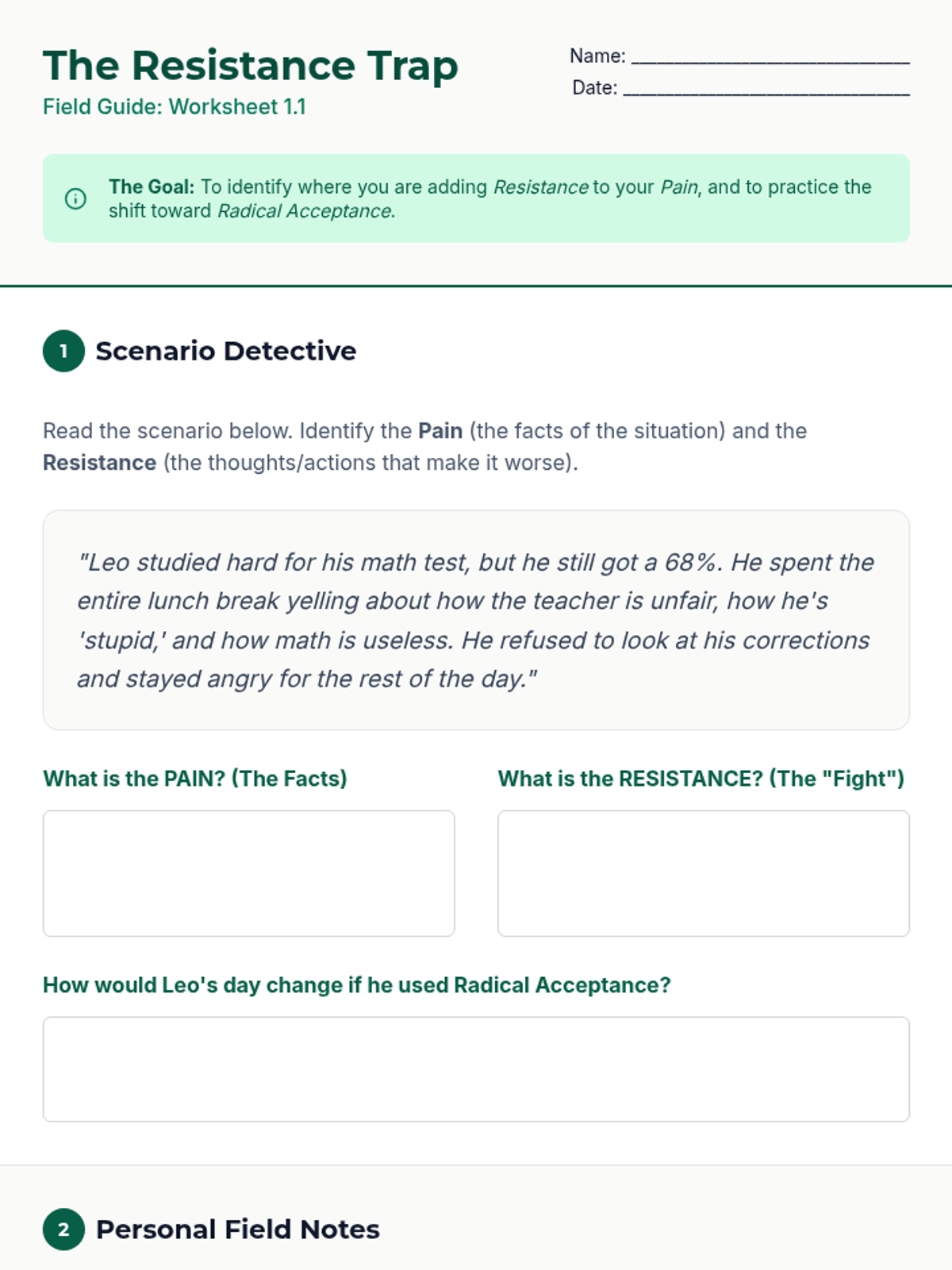
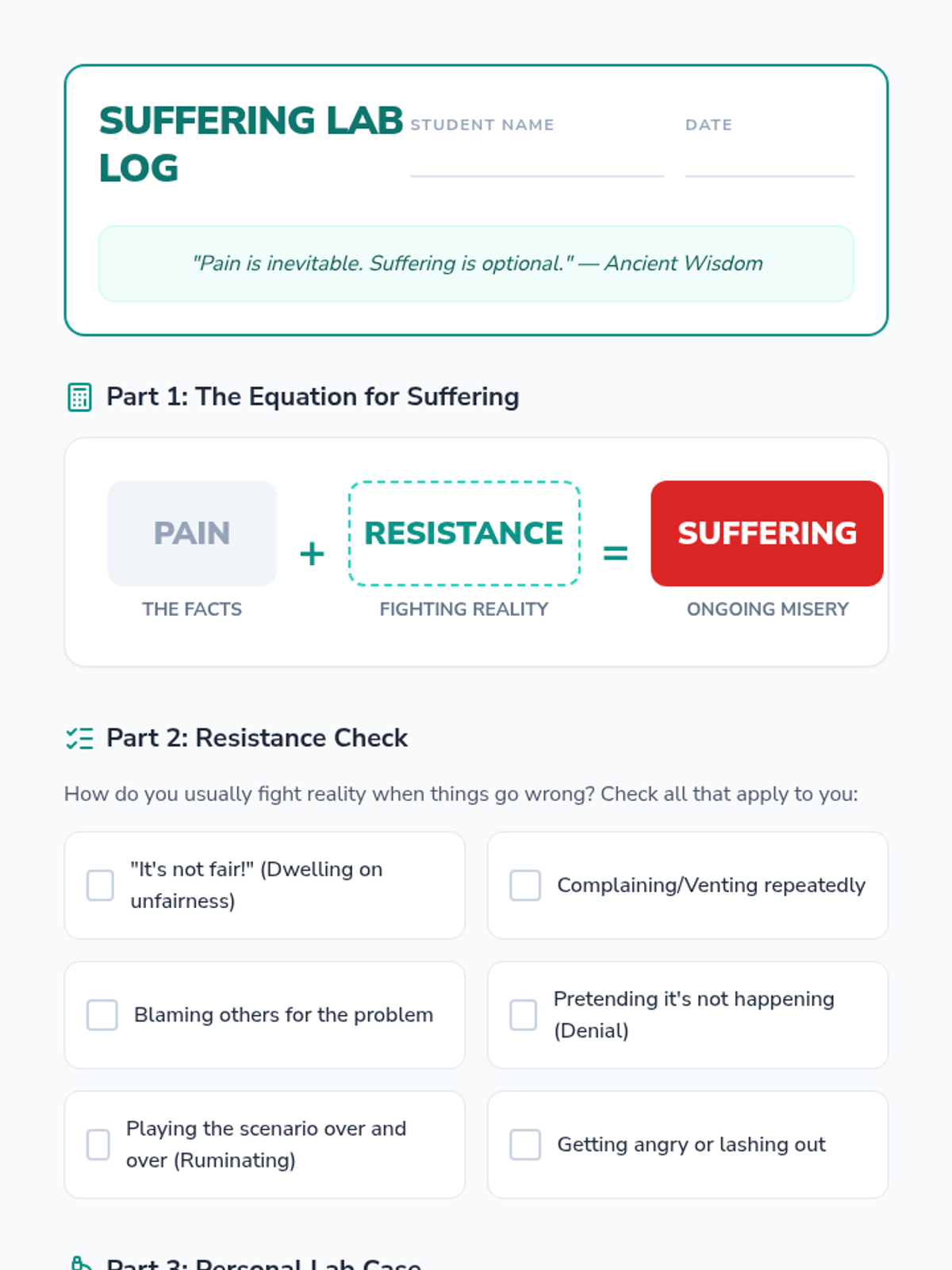
A 5-lesson sequence for 8th-grade students on practicing Radical Acceptance to navigate academic and social stressors. Students learn to distinguish between unavoidable pain and optional suffering, applying proactive 'Cope Ahead' strategies to real-world scenarios.
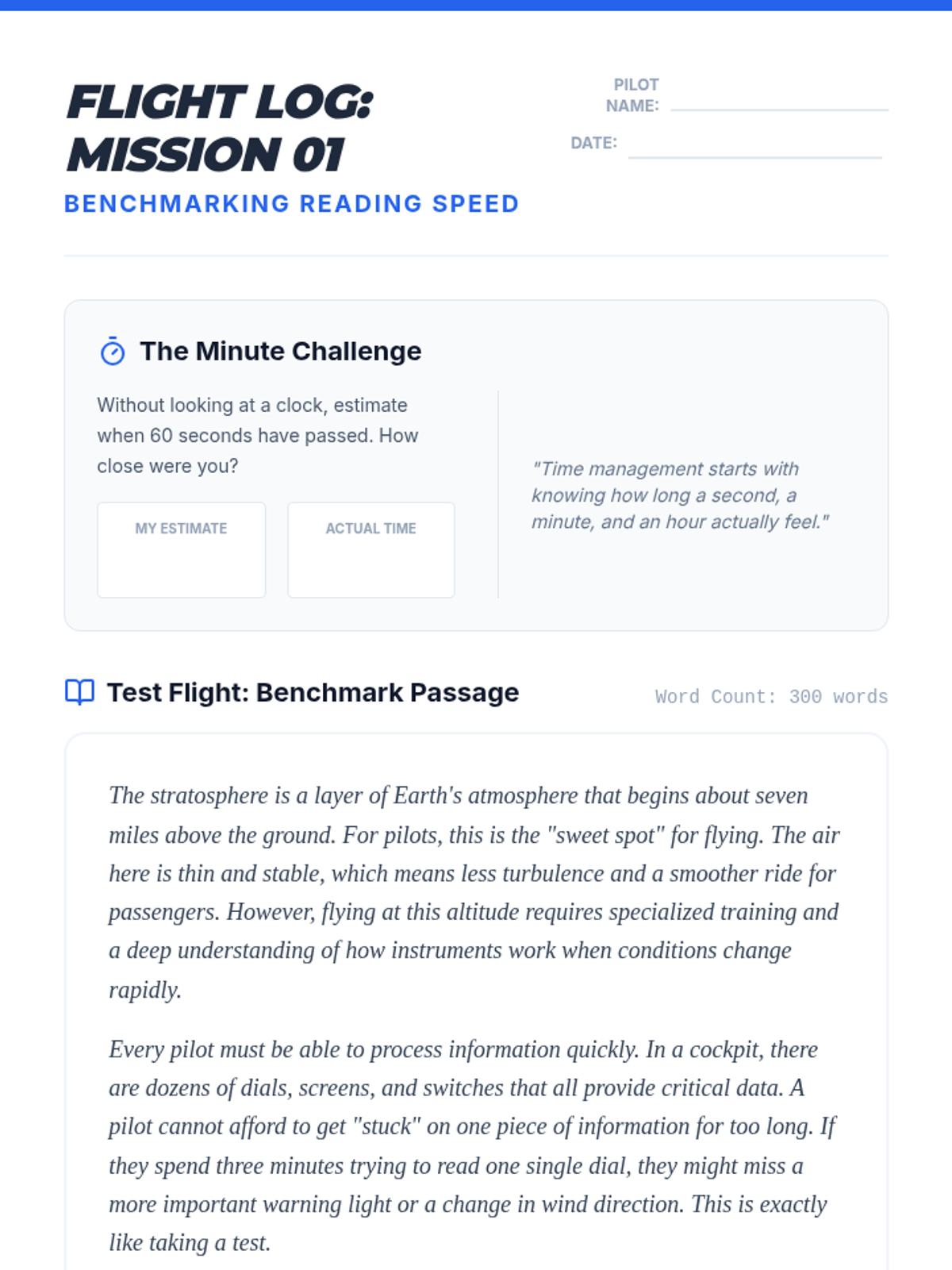
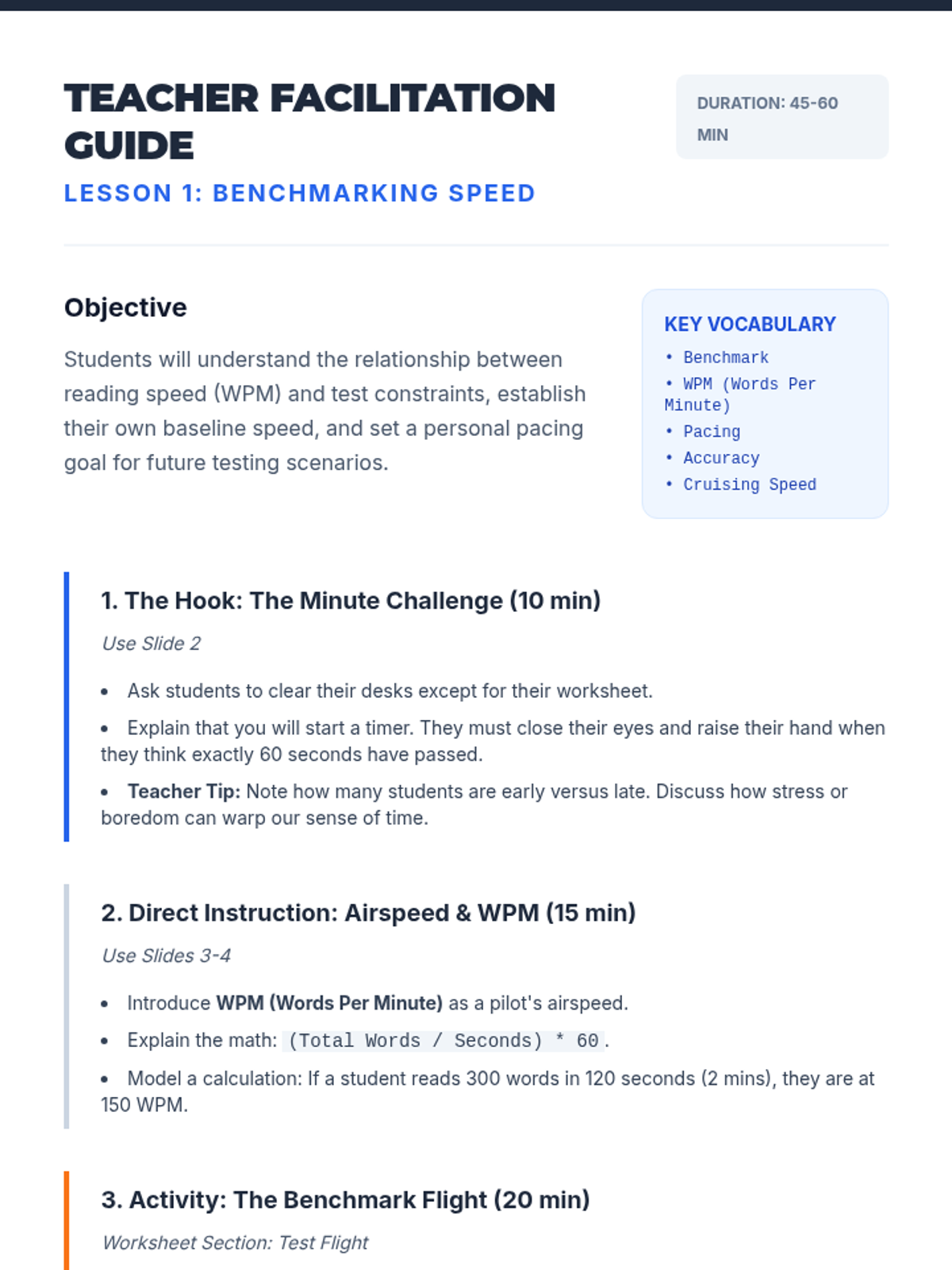
A comprehensive sequence for 7th Grade ESL students focused on developing the executive functioning skills needed for successful test-taking. Students learn to manage time, prioritize questions, annotate for focus, and regulate anxiety through a 'Test Pilot' theme.
A case study-based sequence where 6th-grade students act as 'Resilience Consultants' to analyze how physical self-care (the PLEASE framework) reduces emotional vulnerability and prevents interpersonal conflict.
This 5-lesson sequence for 8th graders explores the DBT-based PLEASE skills to understand the biological foundations of emotional regulation. Students learn how managing physical health—sleep, nutrition, and movement—acts as 'armor' against emotional vulnerability and reactivity.
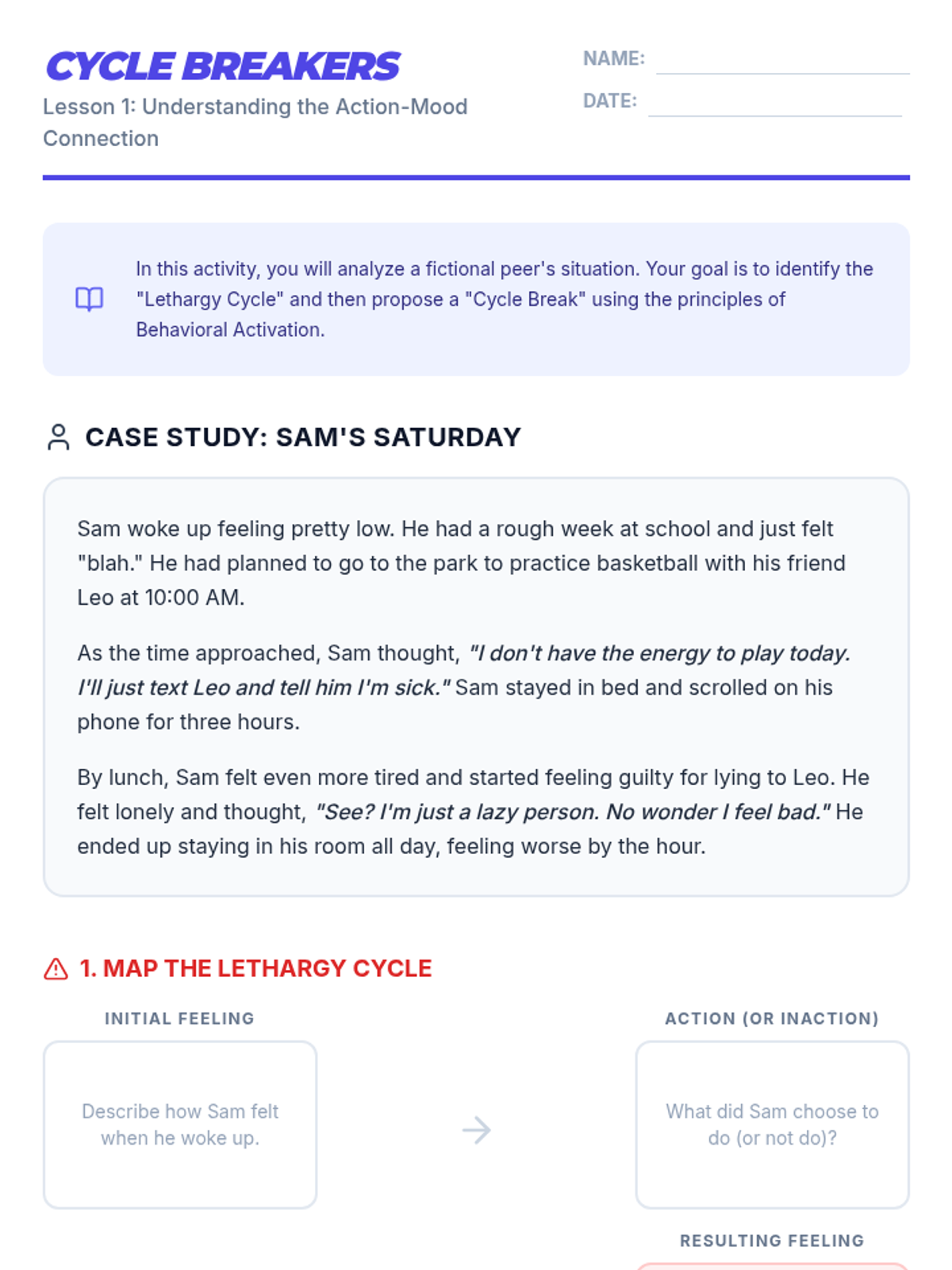
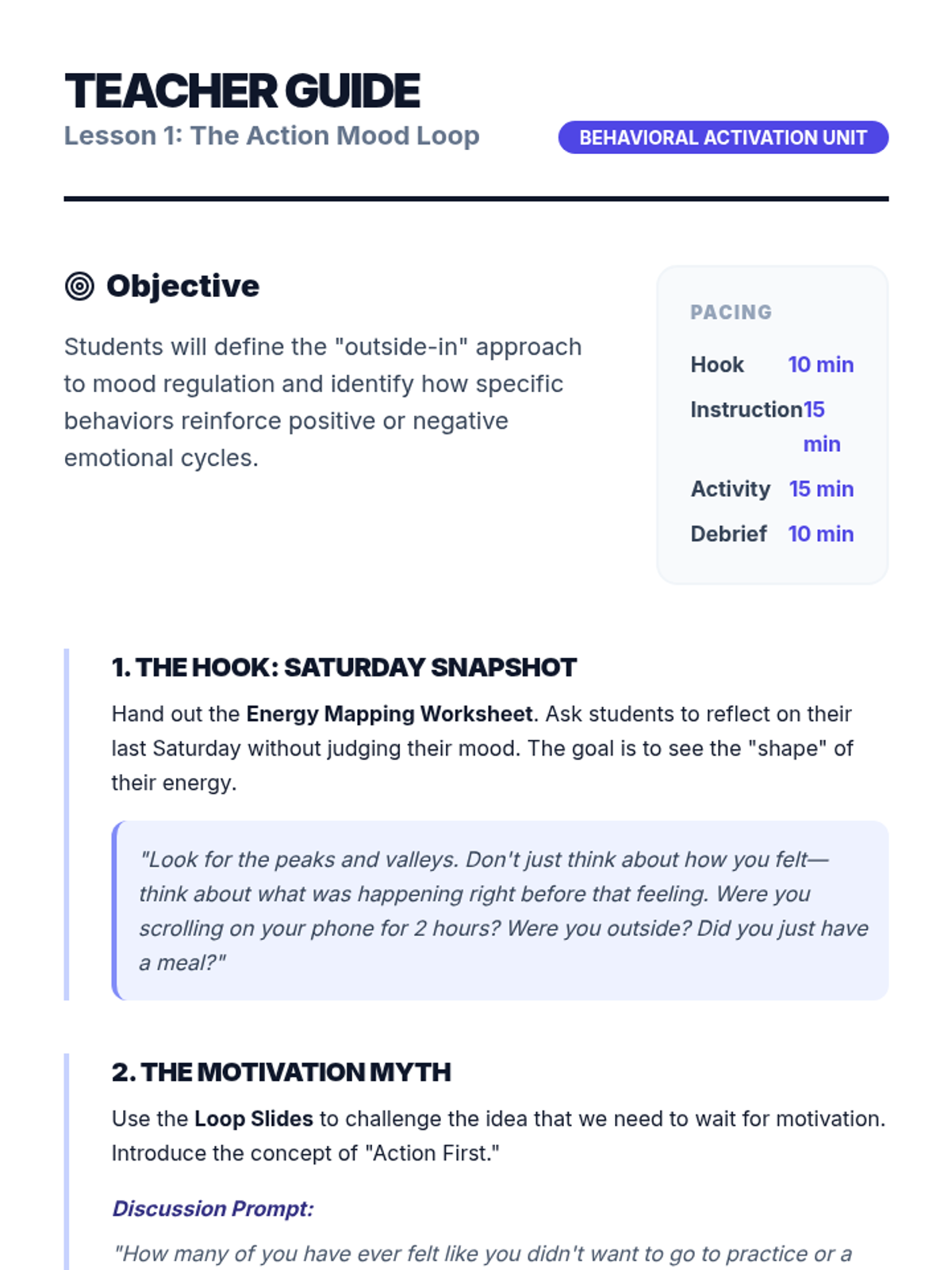
A comprehensive sequence for 8th-grade students on behavioral activation, focusing on the cyclical relationship between actions and mood, habit tracking, and aligning behaviors with personal values.
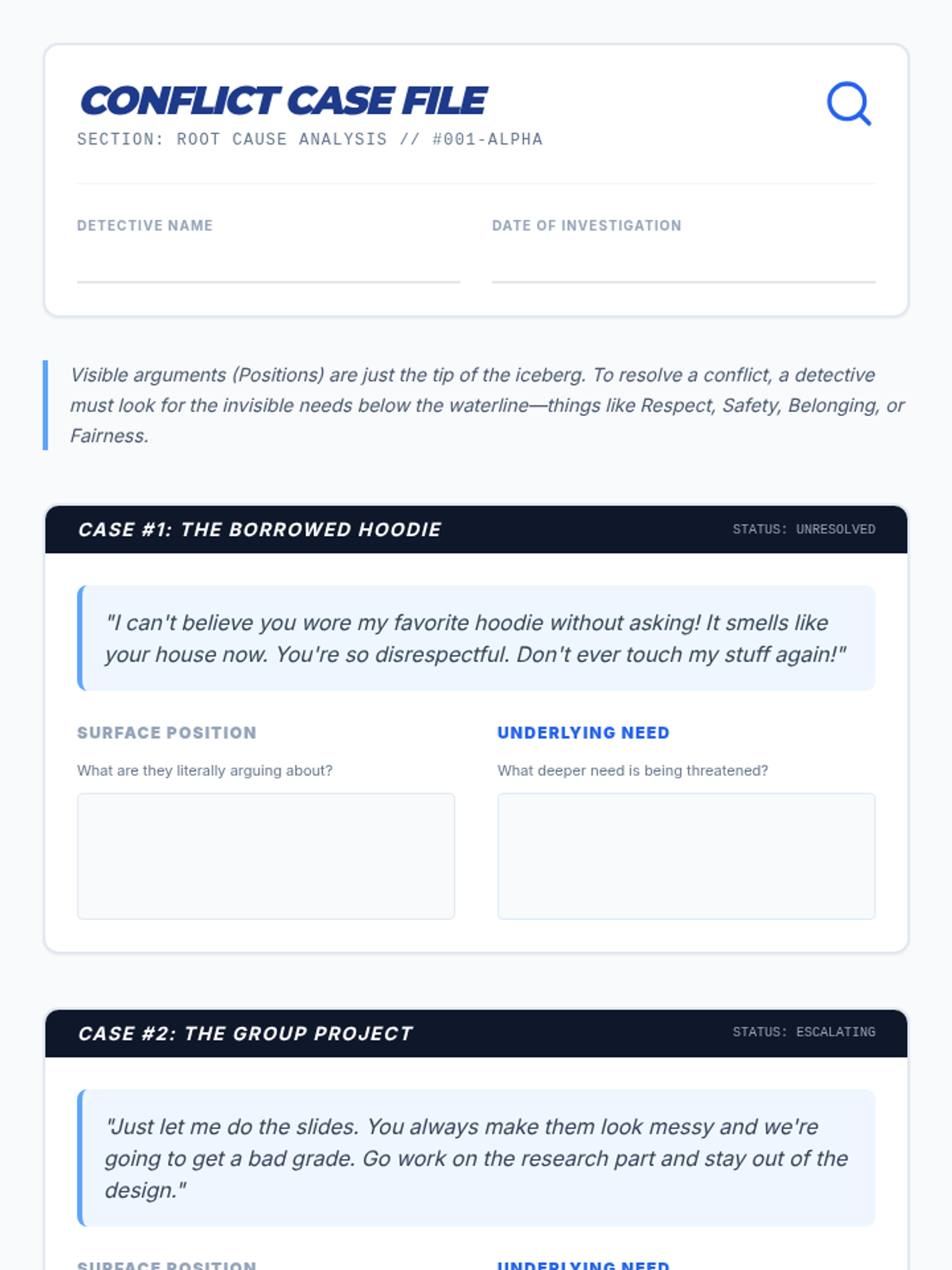
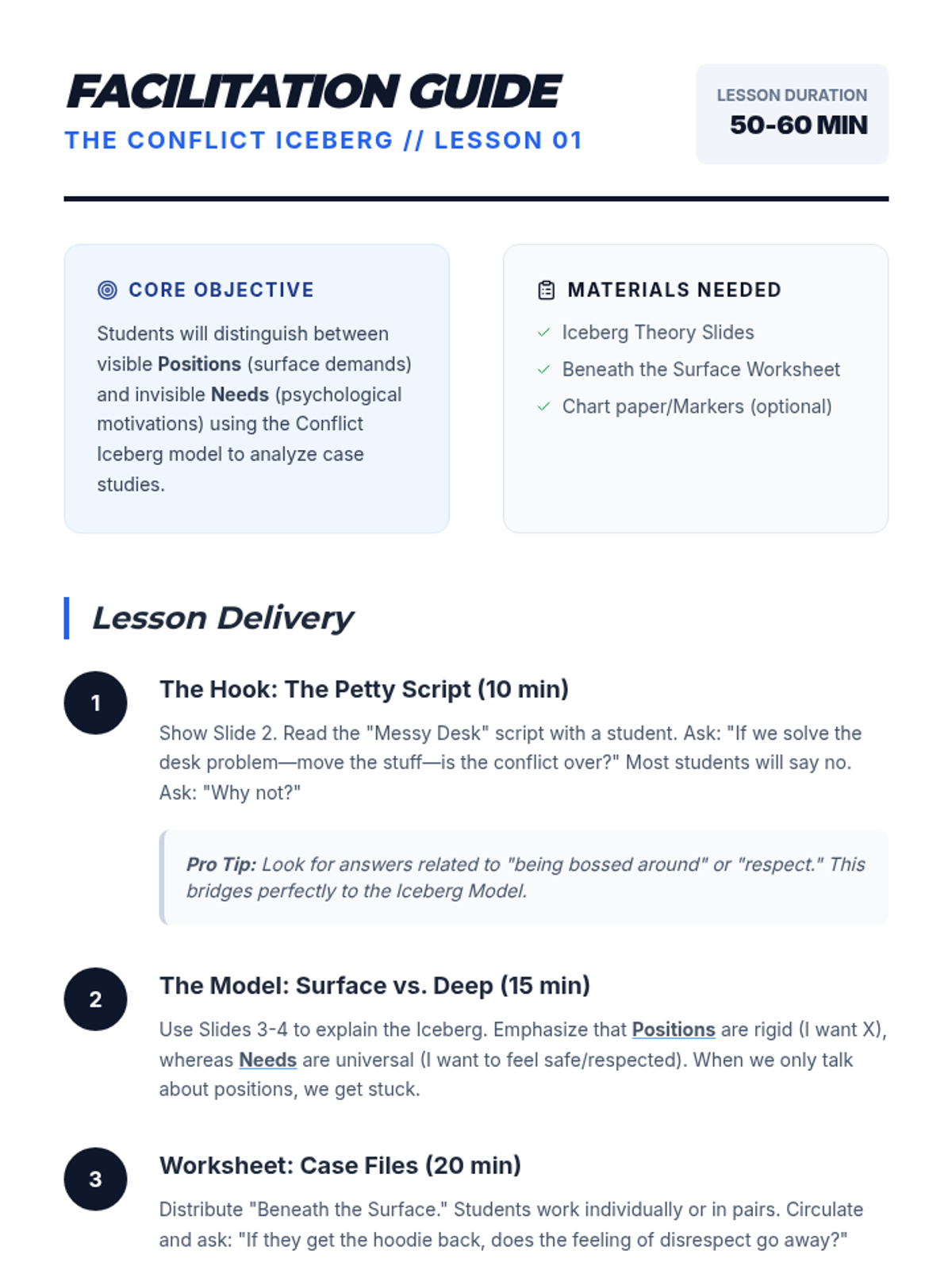
An 8th-grade counseling sequence focused on identifying the psychological root causes of conflict and managing high-arousal emotions using the Conflict Iceberg model and neuroscience-based de-escalation.
A 5-lesson unit for 8th-grade students on the principles and practice of Radical Acceptance, focusing on distress tolerance, cognitive reframing, and physiological regulation to reduce emotional suffering.
This 6th-grade sequence teaches students somatic and mindfulness-based techniques for Radical Acceptance. Students explore how body posture, breathing, and observation can help them stay calm and accept difficult realities rather than fighting them.
This middle school sequence focuses on building distress tolerance through Radical Acceptance. Students move from understanding the 'Cycle of Suffering' to practicing resilience in academic and social scenarios, ultimately learning to pivot from disappointment to proactive problem-solving.
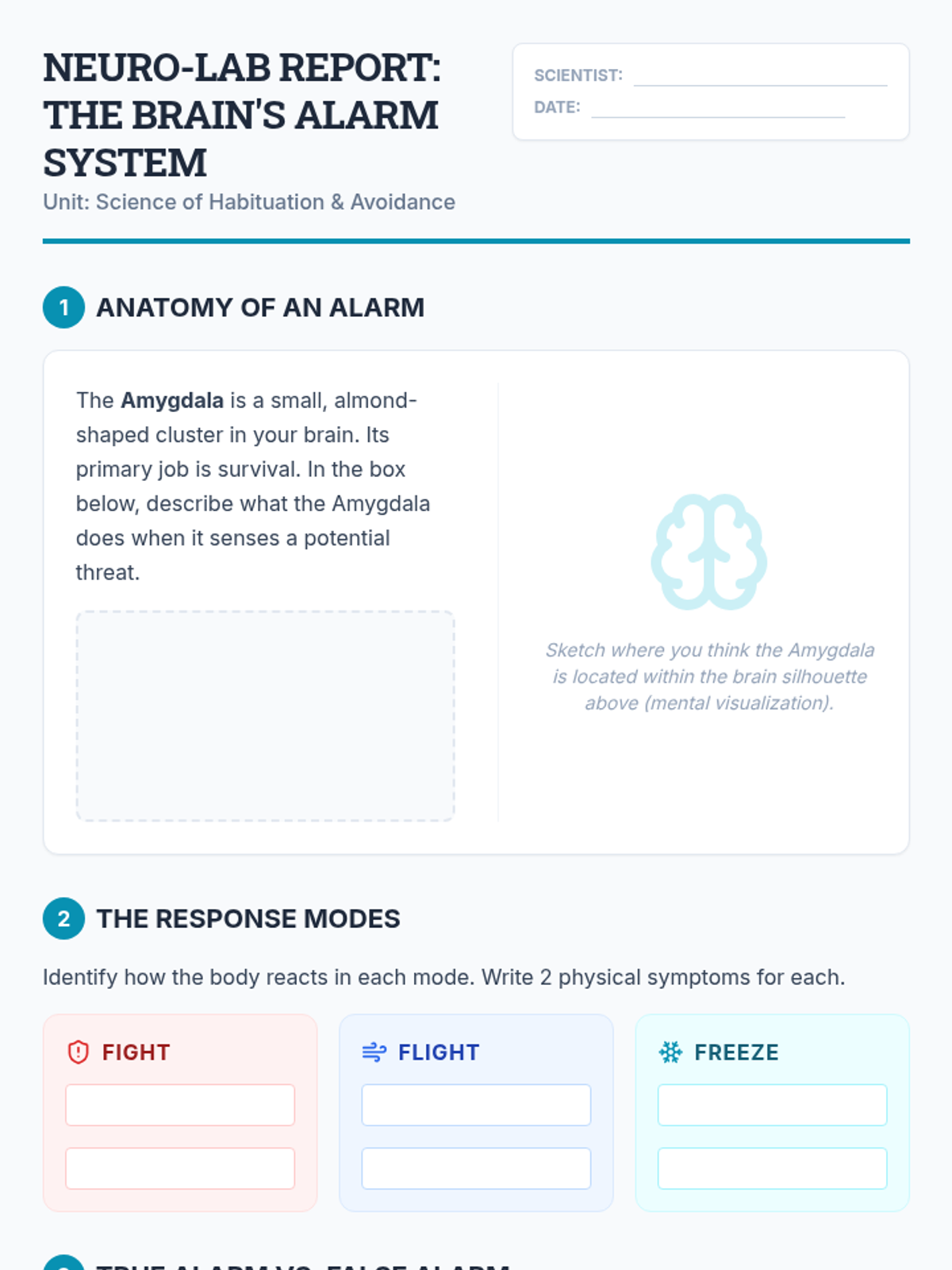
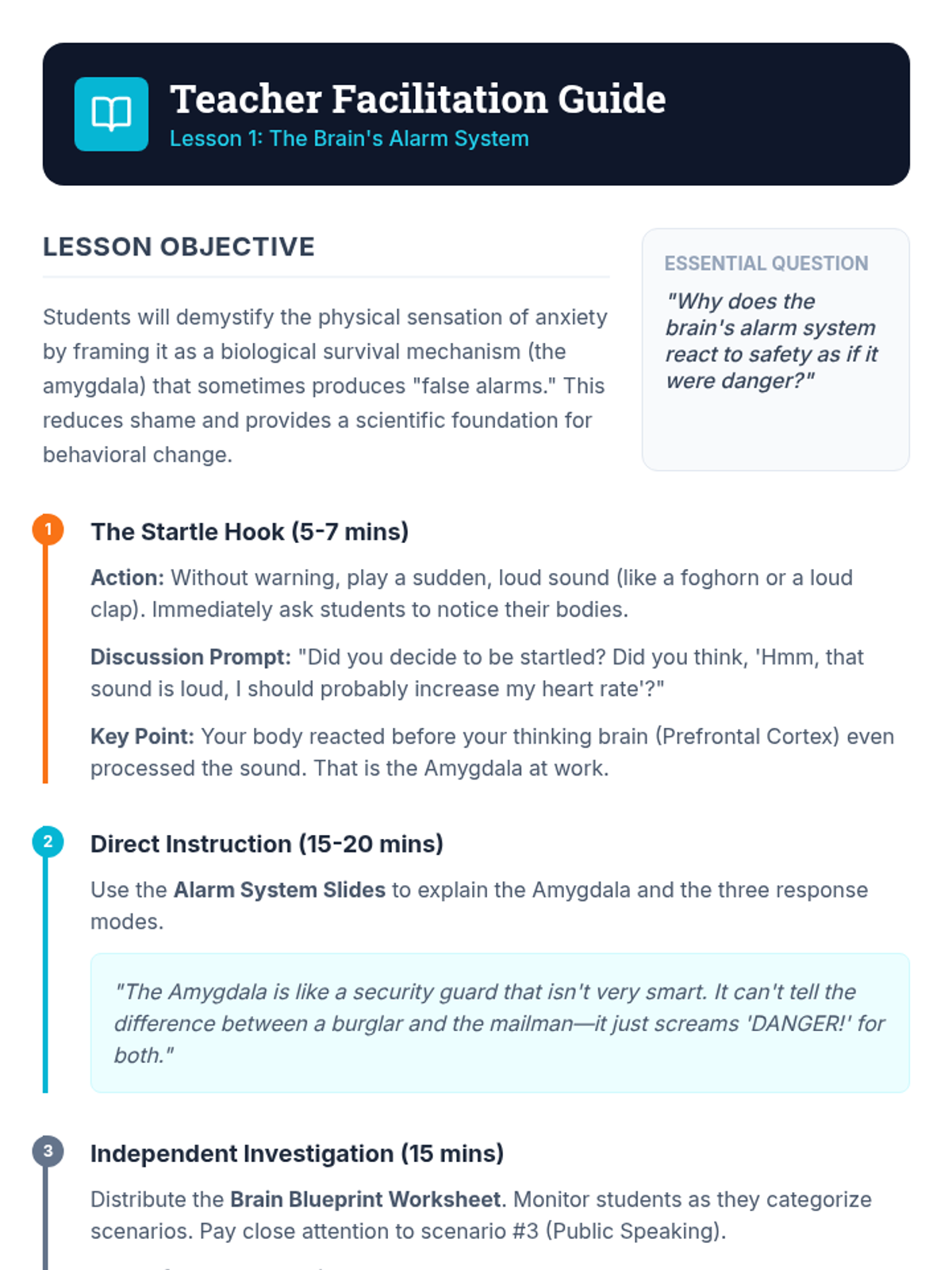
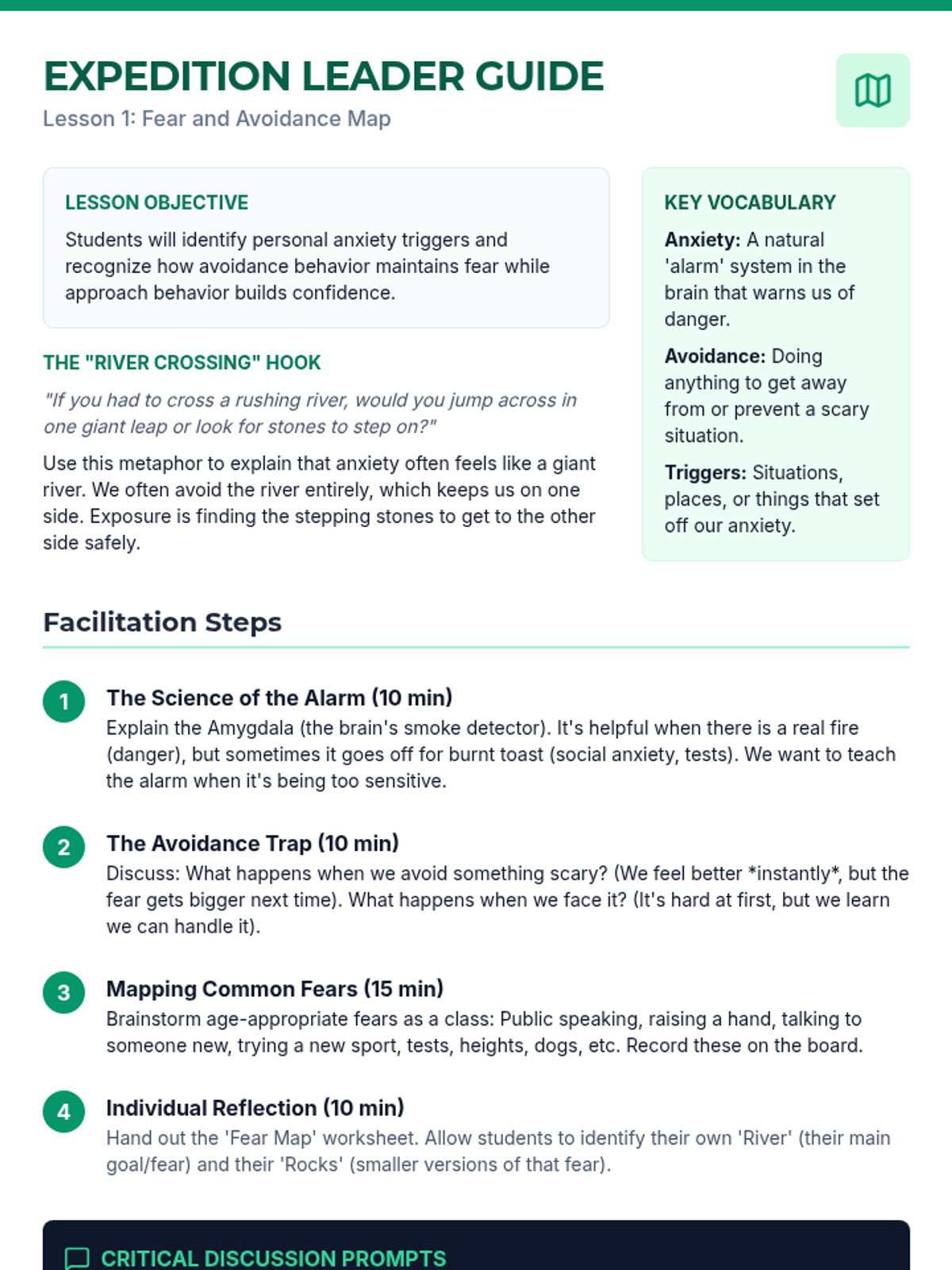
A scientific, inquiry-based exploration of anxiety, the amygdala, and habituation. Students learn how the brain's alarm system works and how to retrain it through evidence-based exposure hierarchies.
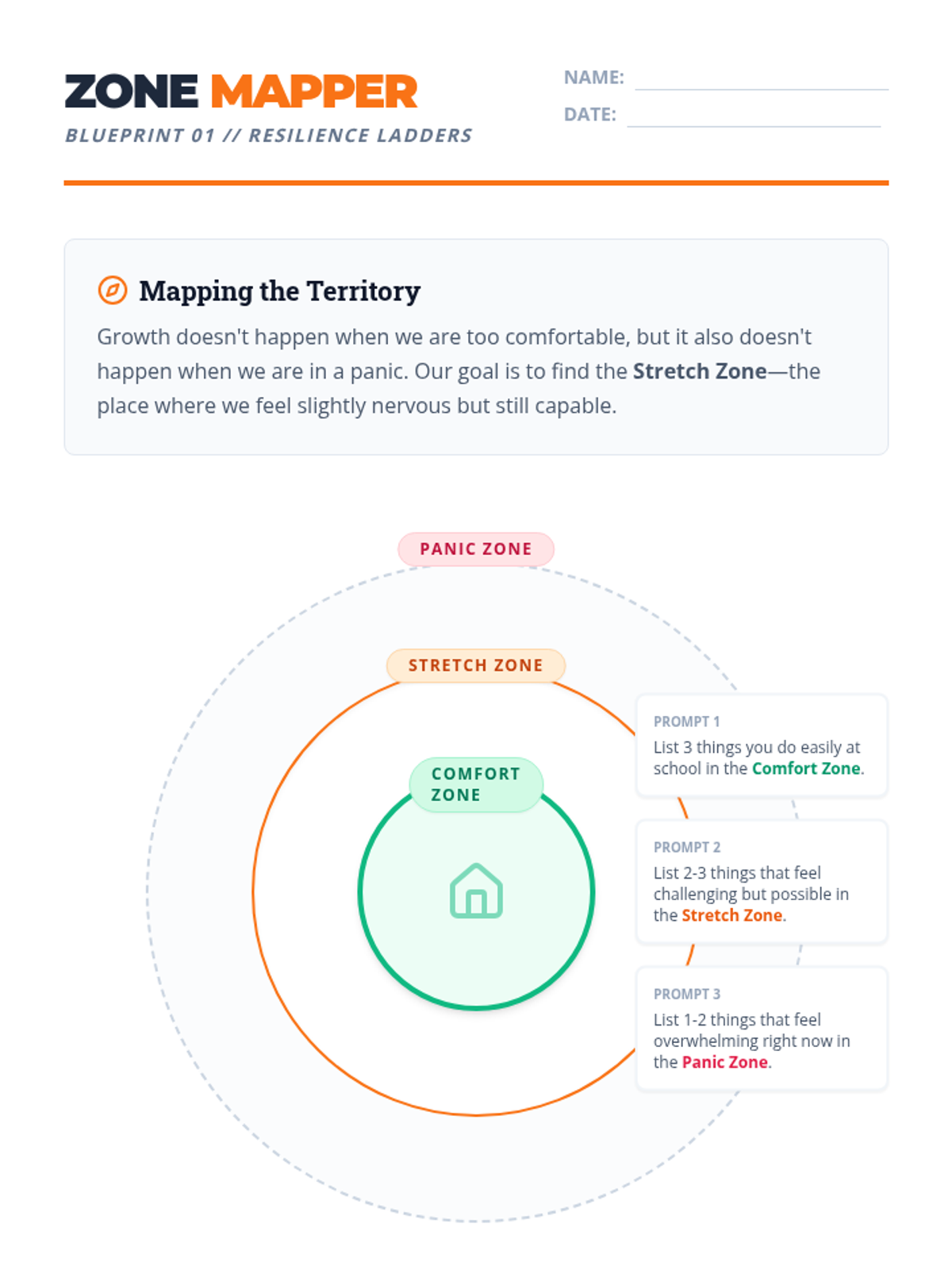
A 5-lesson sequence designed for 8th-grade students to learn the principles of exposure hierarchies for anxiety through a school-focused resilience framework. Students learn to identify their comfort zones, calibrate their internal stress signals, and design step-by-step challenges to expand their confidence.
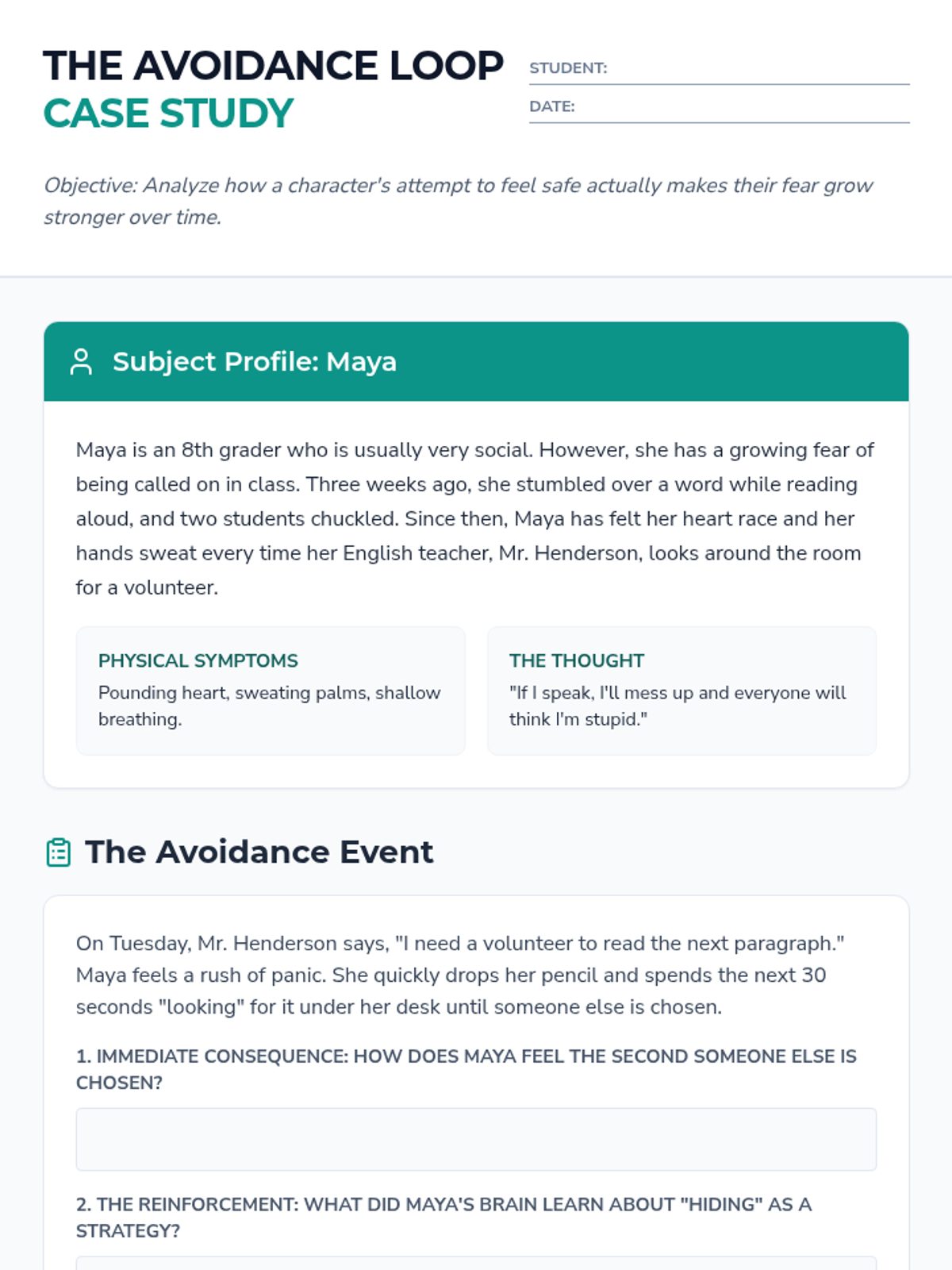
A case-study-driven unit teaching 8th-grade students the mechanics of anxiety, the role of avoidance, and the logic of systematic exposure hierarchies. Students learn to quantify distress using the SUDS scale and design step-by-step plans to overcome hypothetical fears through habituation.
This simulation-heavy sequence trains 8th-grade students to act as neutral peer mediators. Students move from establishing ground rules and neutrality to mastering advanced communication skills like reframing and open-ended questioning, culminating in a full mock mediation of complex social conflicts.
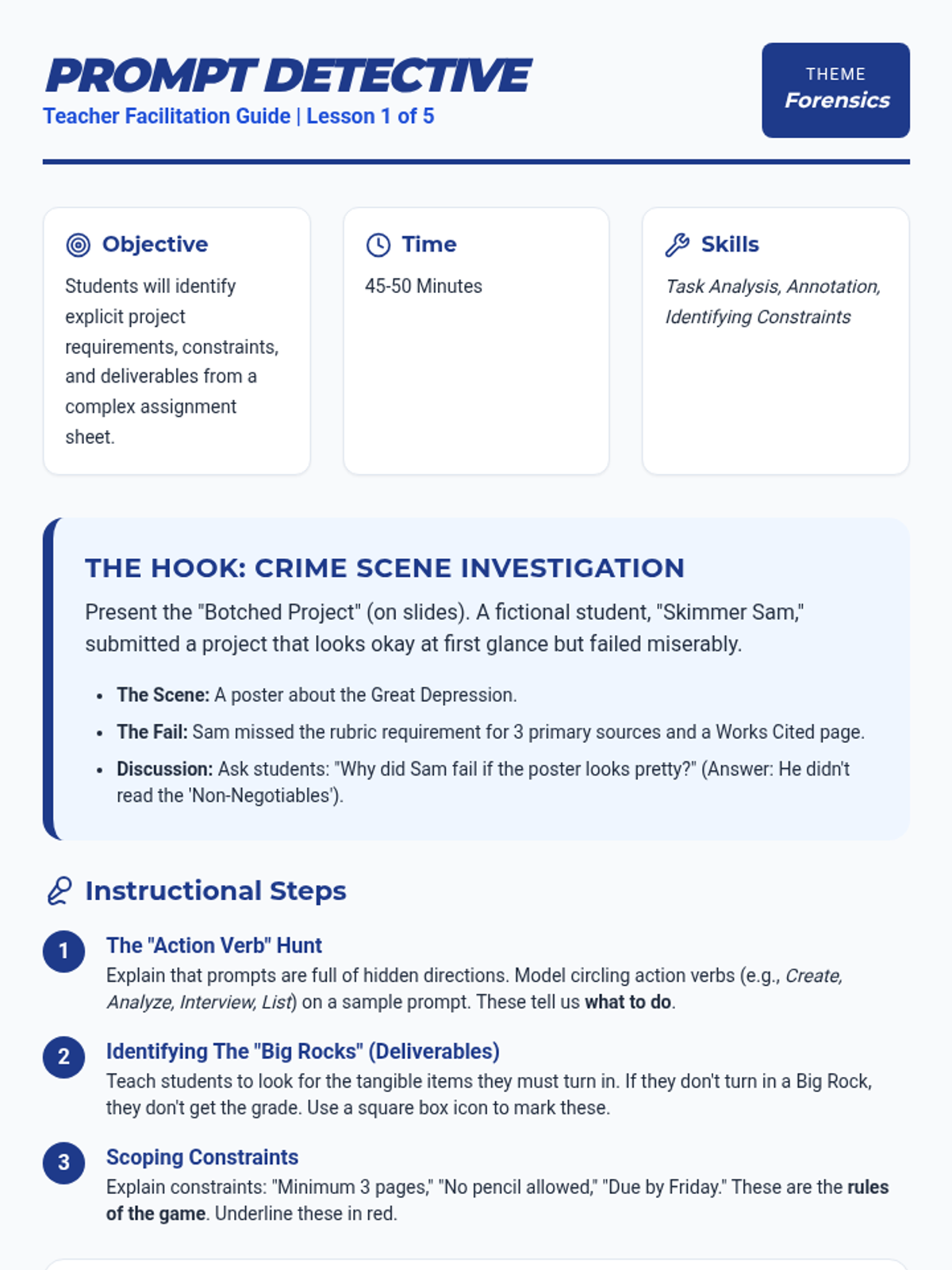
A 5-lesson executive function bootcamp for 7th-grade students, focusing on breaking down complex projects, backwards planning, and visual task management. Students learn to transition from reactive to proactive habits through hands-on activities and visual tracking systems.
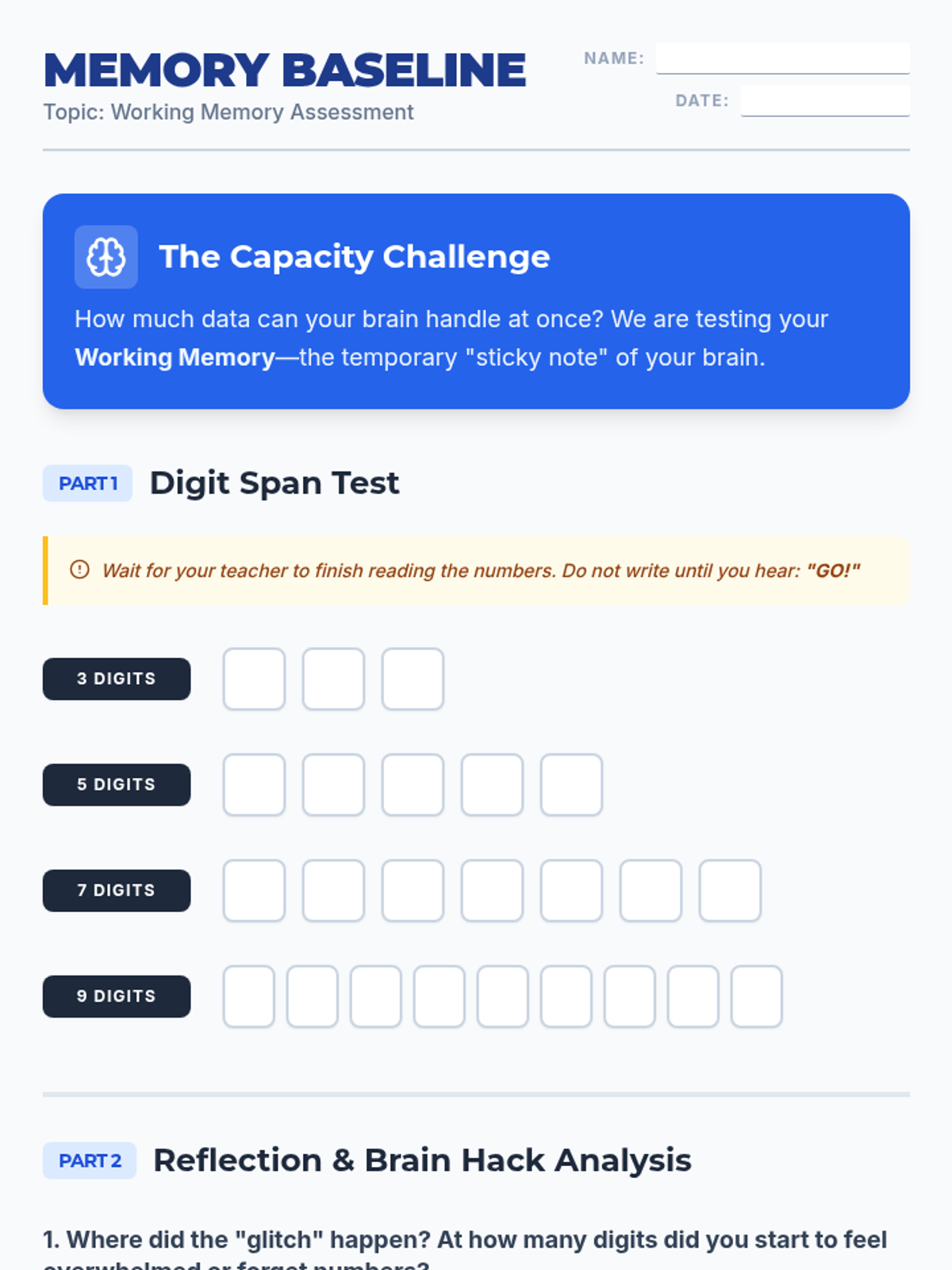
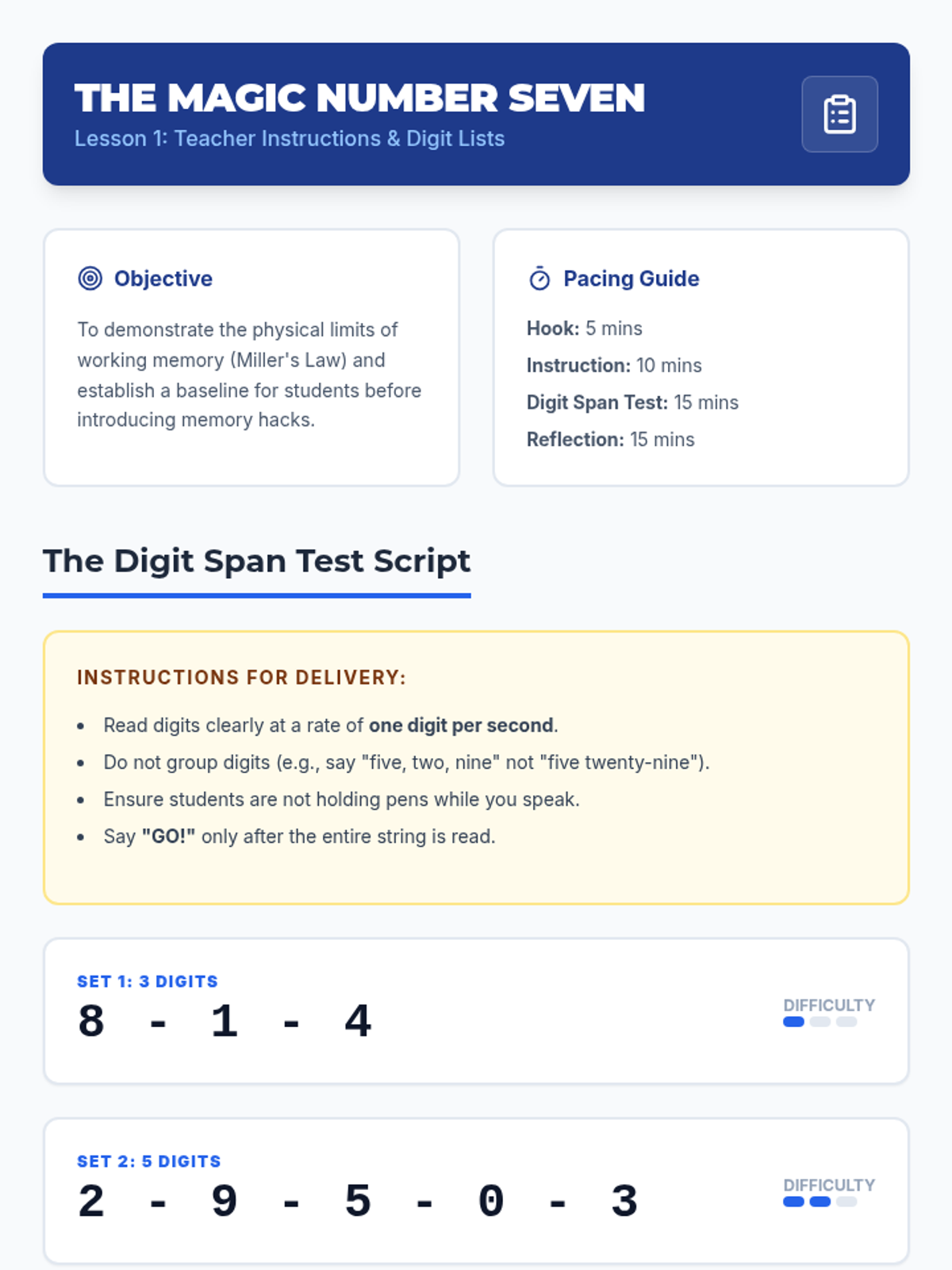
This sequence helps students understand and apply chunking and association strategies to overcome working memory limitations. Through a series of game-based lessons, students will learn to organize data into manageable patterns to increase their cognitive processing capacity.
A comprehensive workshop-style sequence where 6th-grade students learn the mechanics of exposure therapy by creating personalized 'Bravery Ladders.' Students learn to measure distress using the SUDS scale, deconstruct fears into manageable steps, and apply coping strategies to build resilience.
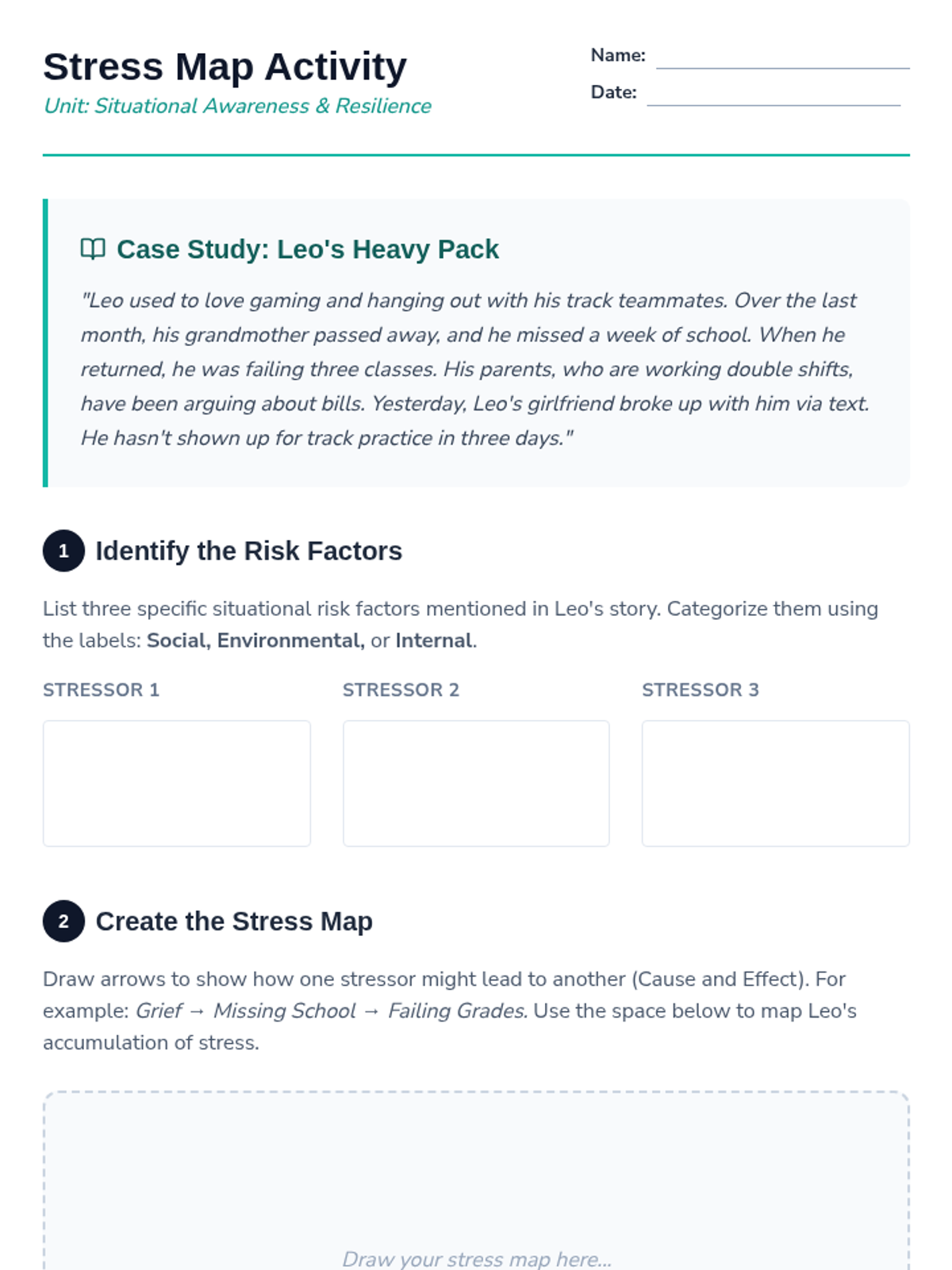
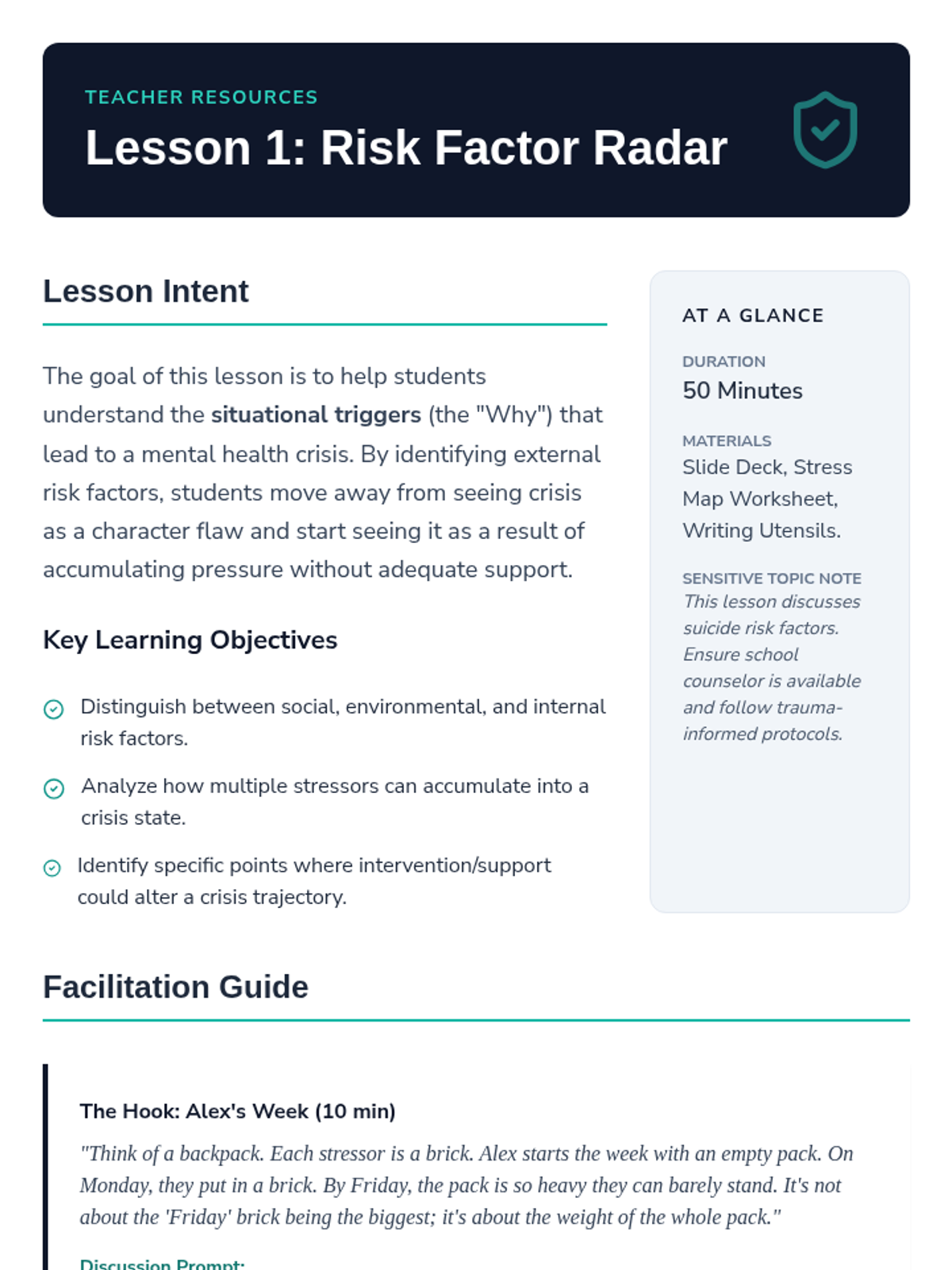
An inquiry-based sequence for 8th graders focusing on identifying situational triggers for mental health crises and building resilience through healthy coping strategies and protective factors.
This sequence shifts focus from the design of the study guide to its utility, emphasizing active recall and self-testing strategies to help students distinguish between familiarity and actual mastery of material.
A project-based unit where students act as organization consultants to evaluate, redesign, and implement efficient physical systems in their classroom. Students learn systems thinking, visual communication, and the psychology of environmental design to create a more functional learning space.
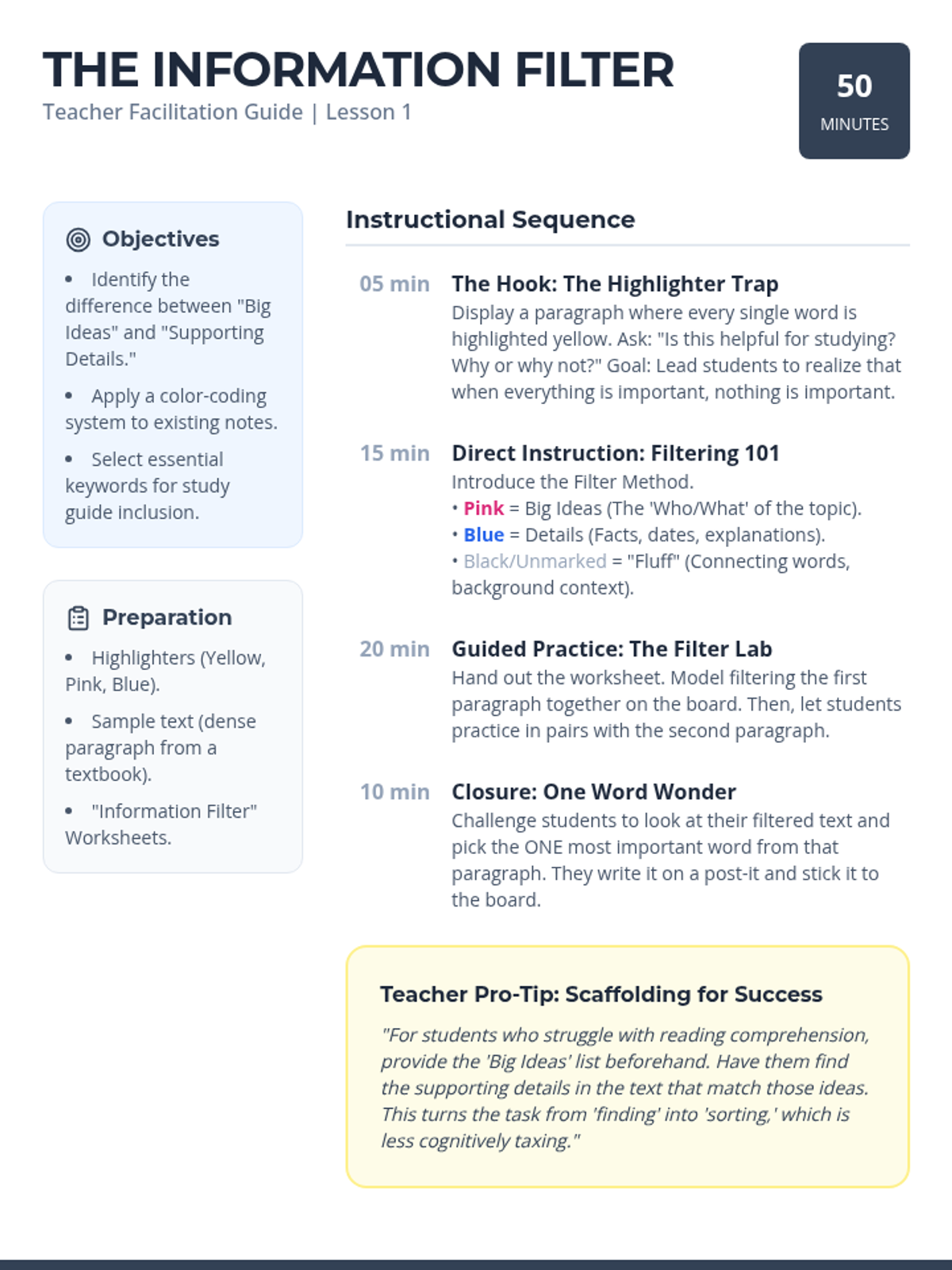
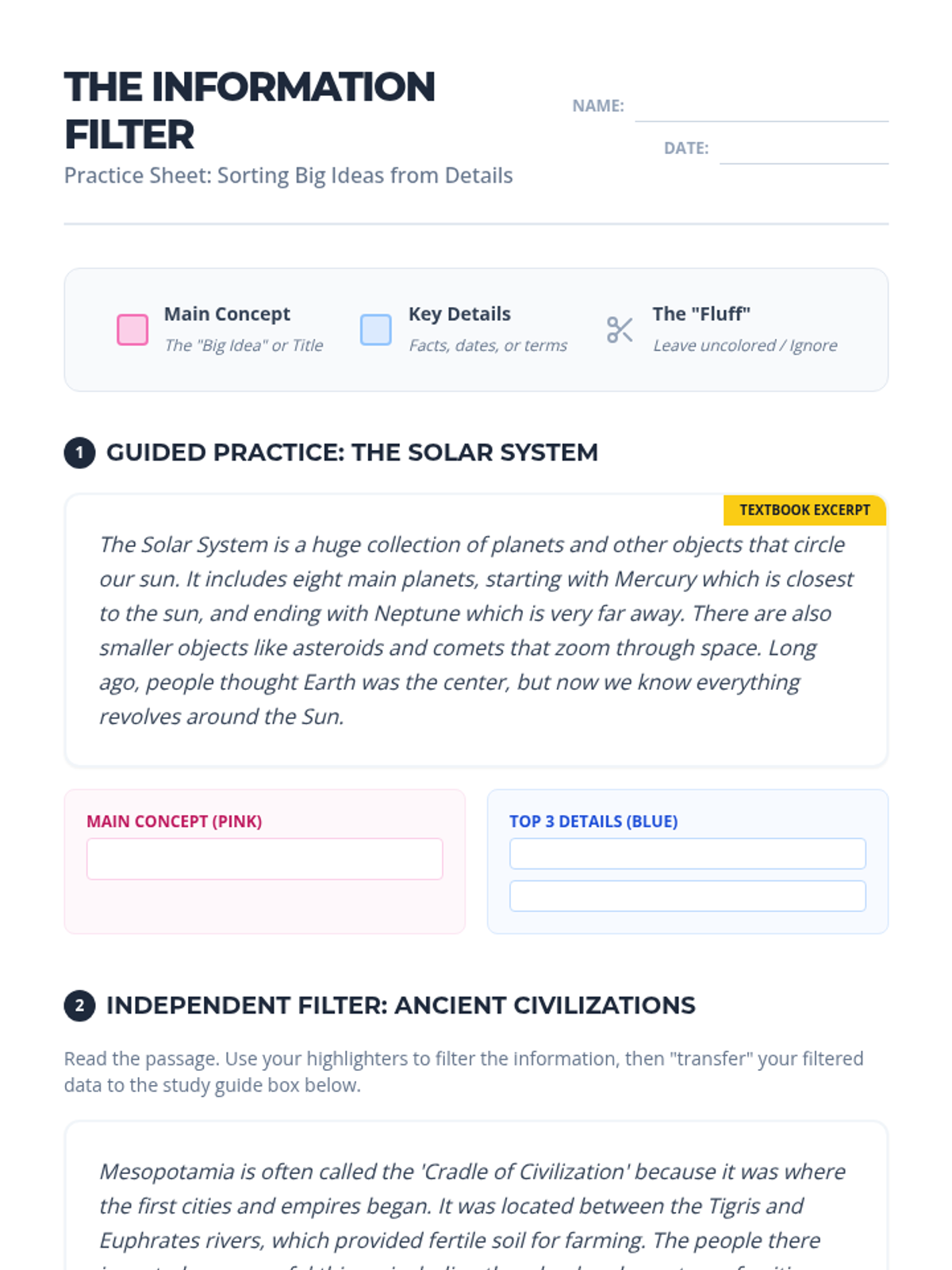
A structured 5-lesson sequence designed to transition 7th-grade students from passive review to active study guide creation. Using a multisensory workshop model, students learn to filter information, use graphic organizers, create mnemonics, and design interactive tools for personalized learning.
A project-based unit where students act as systems analysts, using cause-and-effect and problem-solution graphic organizers to investigate real-world community issues and propose evidence-based solutions.
A metacognitive sequence for 8th-grade students to explore, test, and select personalized mnemonic strategies to support working memory and academic success.
A sequence designed to empower 6th-grade students to take ownership of their progress through the creation and maintenance of a Goal Portfolio. Students learn physical and digital organization, data tracking, and how to present their growth to others.
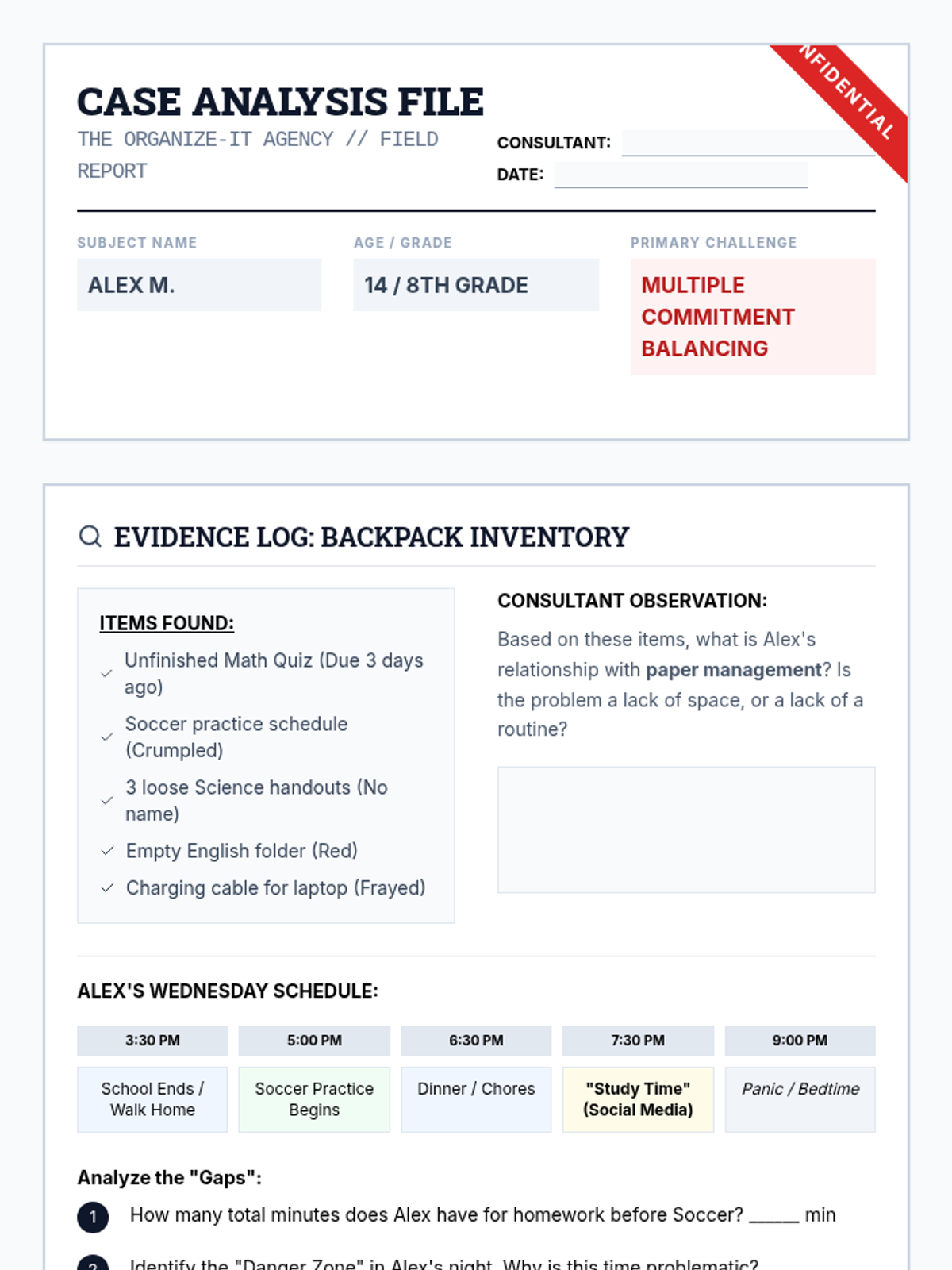
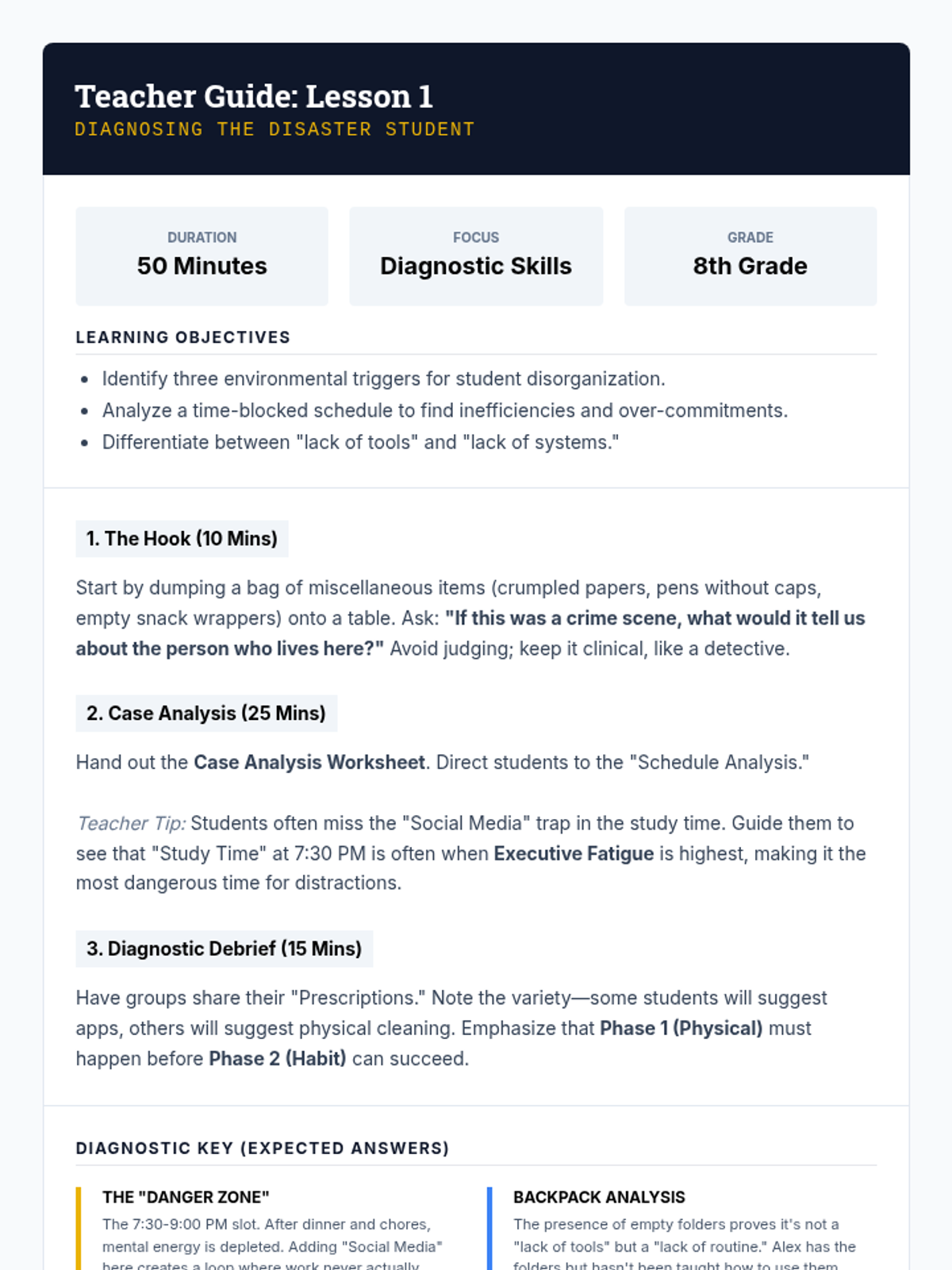
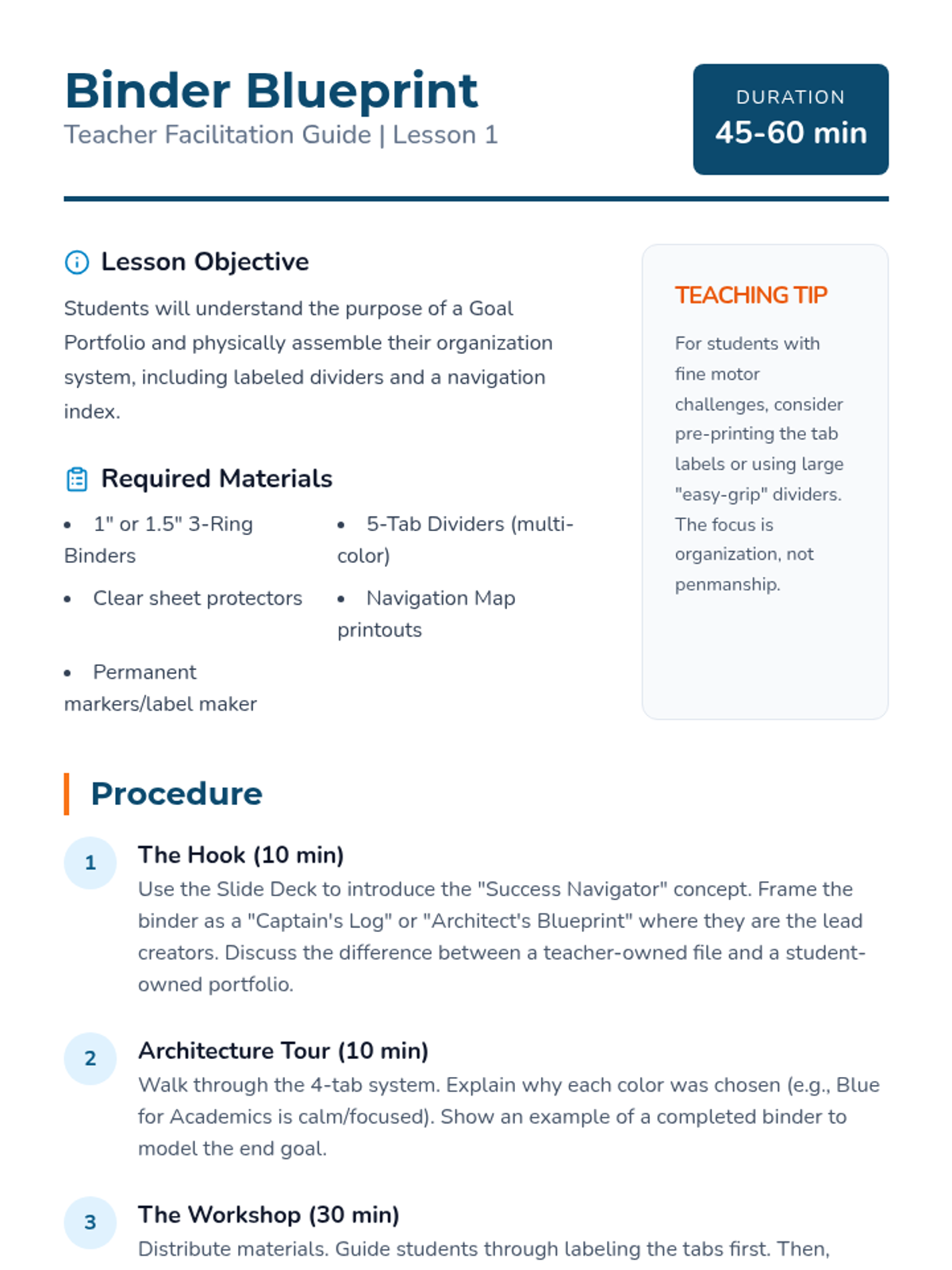
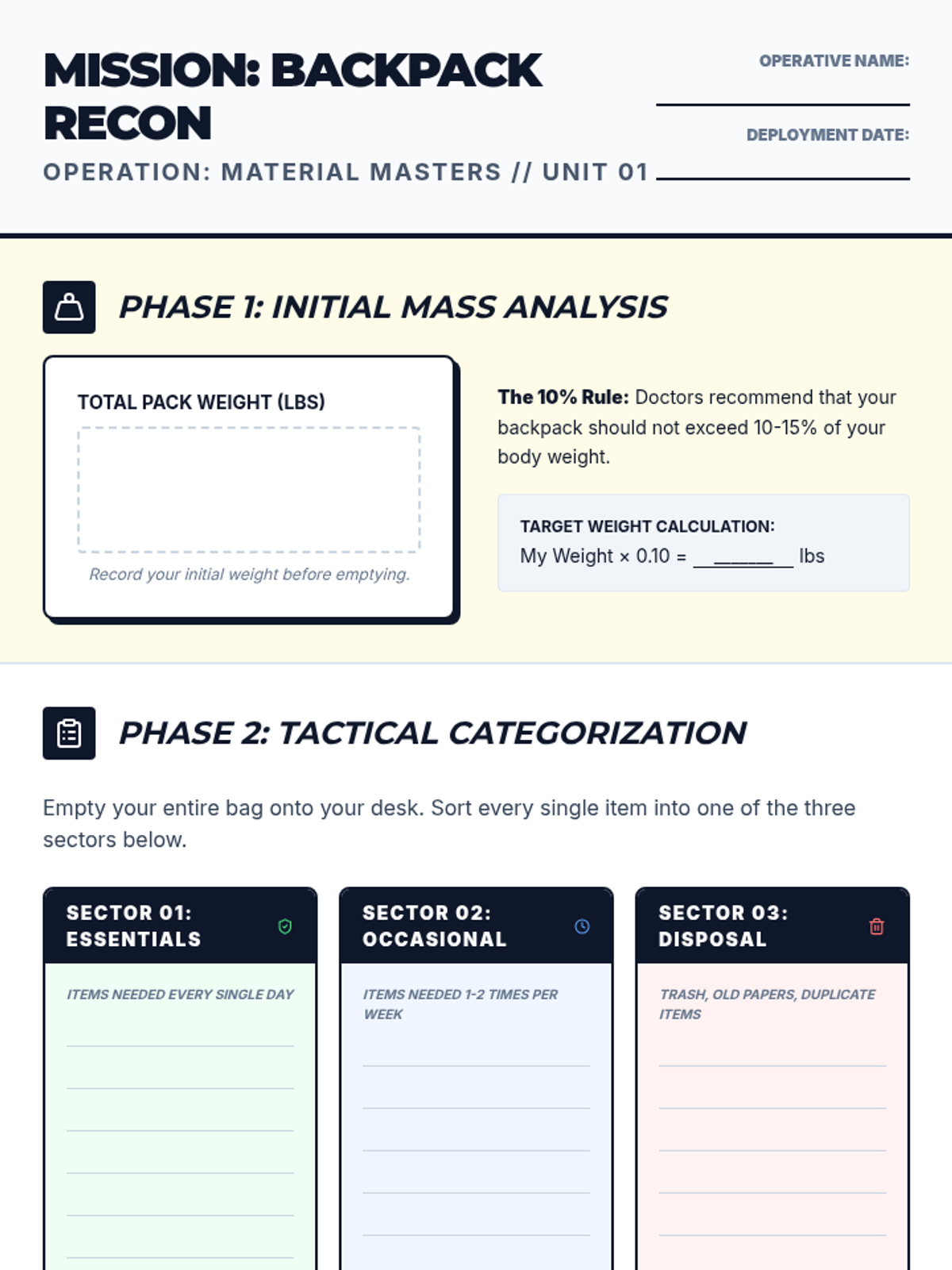
This sequence focuses on the fundamental skills of organizing personal academic materials, specifically backpacks and binder systems. Students begin by auditing their current organizational state, identifying pain points, and move through color-coding, binder architecture, labeling, and establishing daily routines.
A comprehensive unit for 6th-grade students focused on cognitive strategies, mnemonic devices, and gamification to enhance study habits and information retention. Students move from understanding the science of memory to creating their own interactive review games.