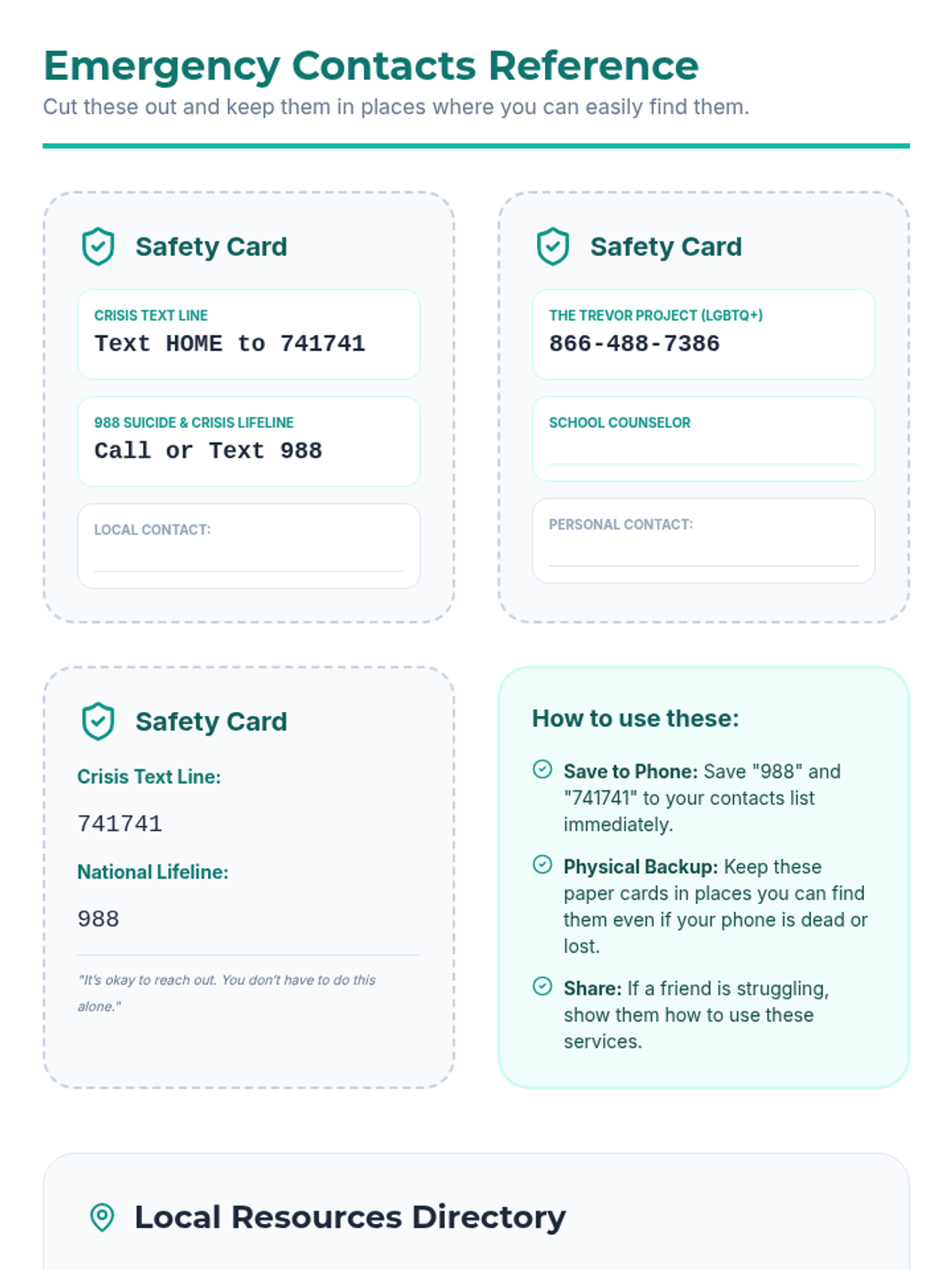
Identifies mental health crises and suicide warning signs while developing personal safety plans and grounding techniques. Equips users with peer gatekeeper skills and direct pathways to professional crisis resources and hotlines.
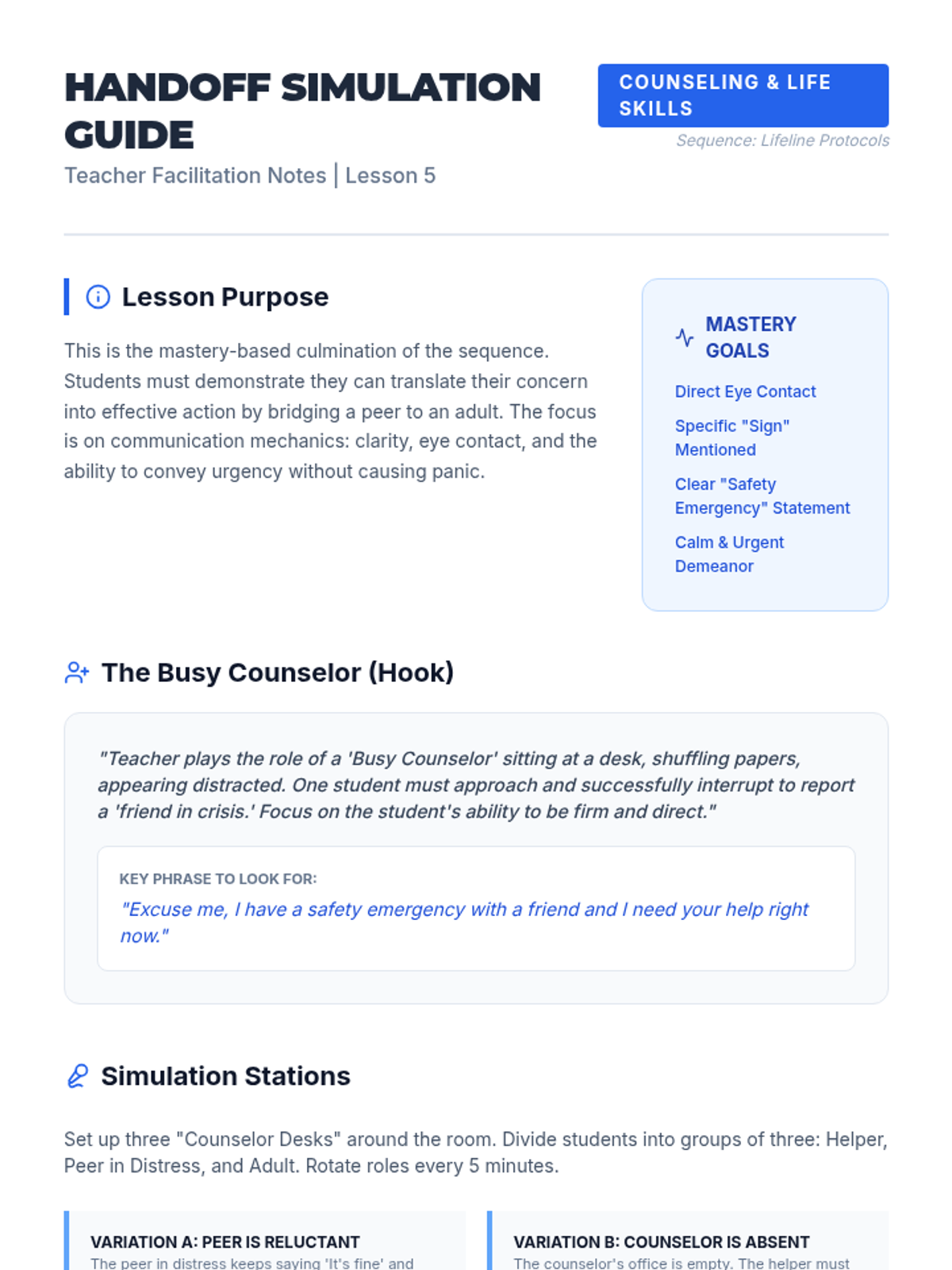
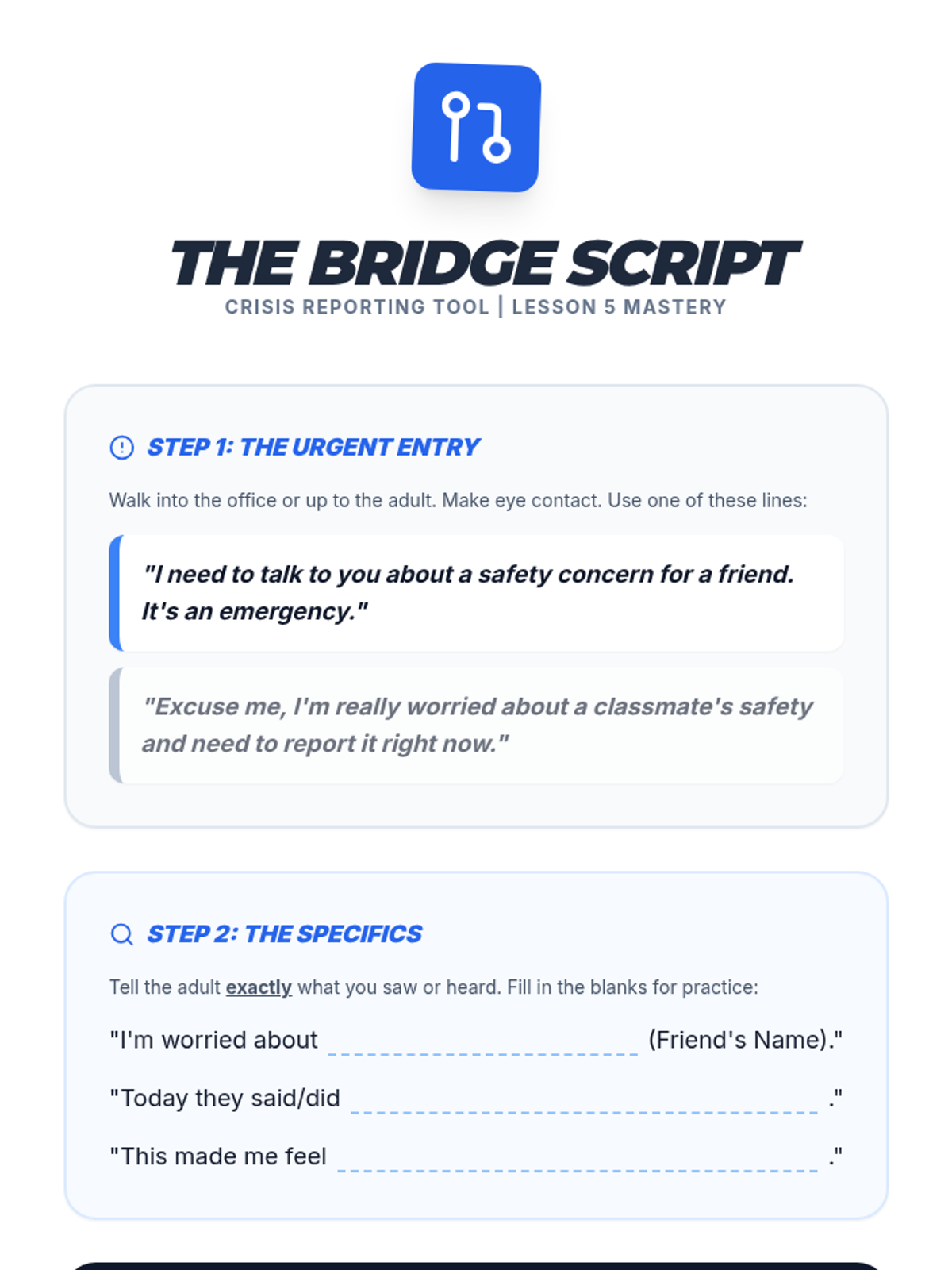
Students participate in simulations where they practice the 'handoff'—bridging a peer in distress to a professional. The focus is on clear, urgent communication with school counselors and administrators.
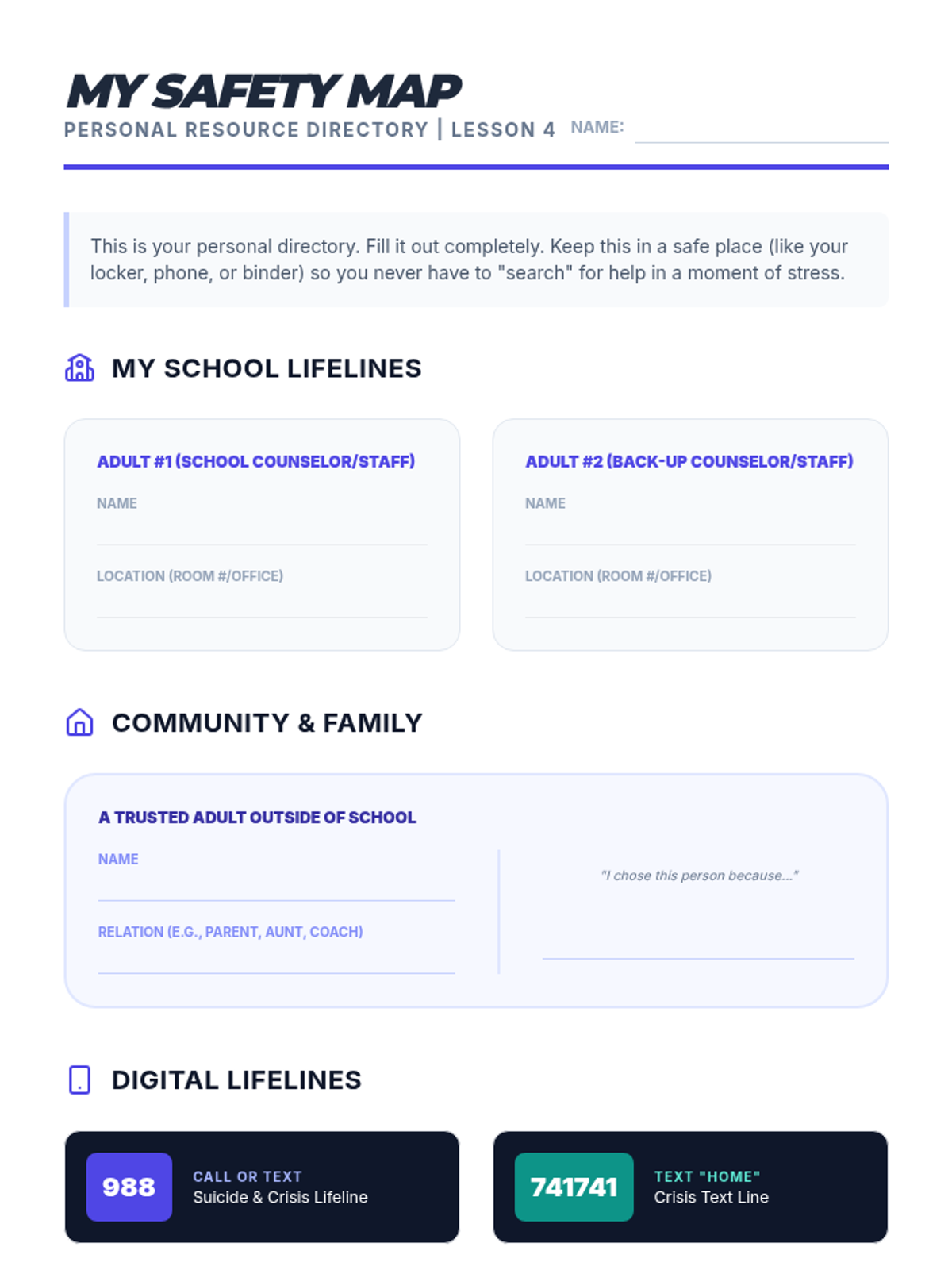
Students map out specific trusted adults in their school and community and research local crisis resources. This ensures they have a concrete plan of who to turn to when a crisis is identified.
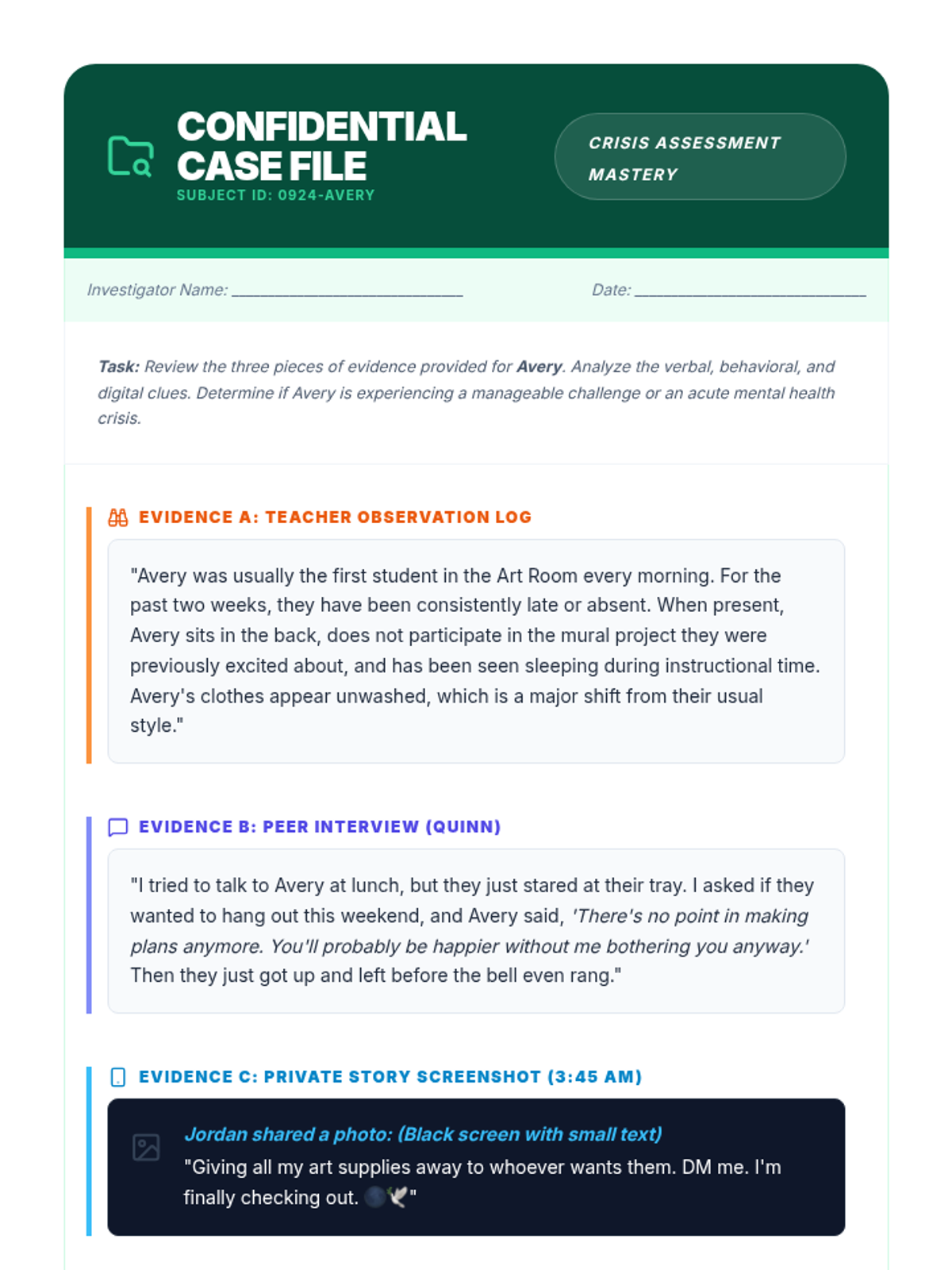
A culminating lesson where students synthesize various indicators (verbal, behavioral, digital) to assess complex case files and determine if adult intervention is necessary.
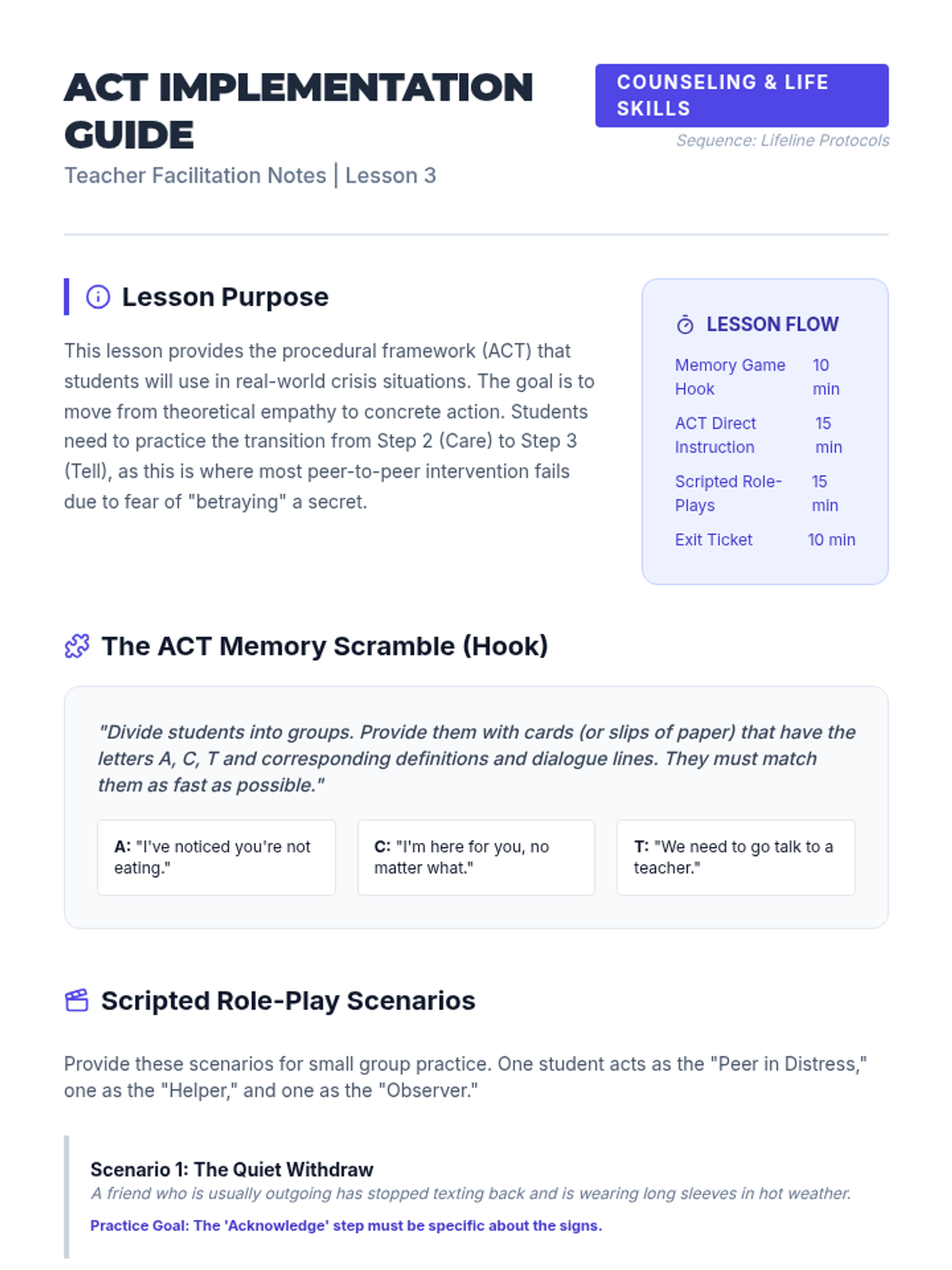
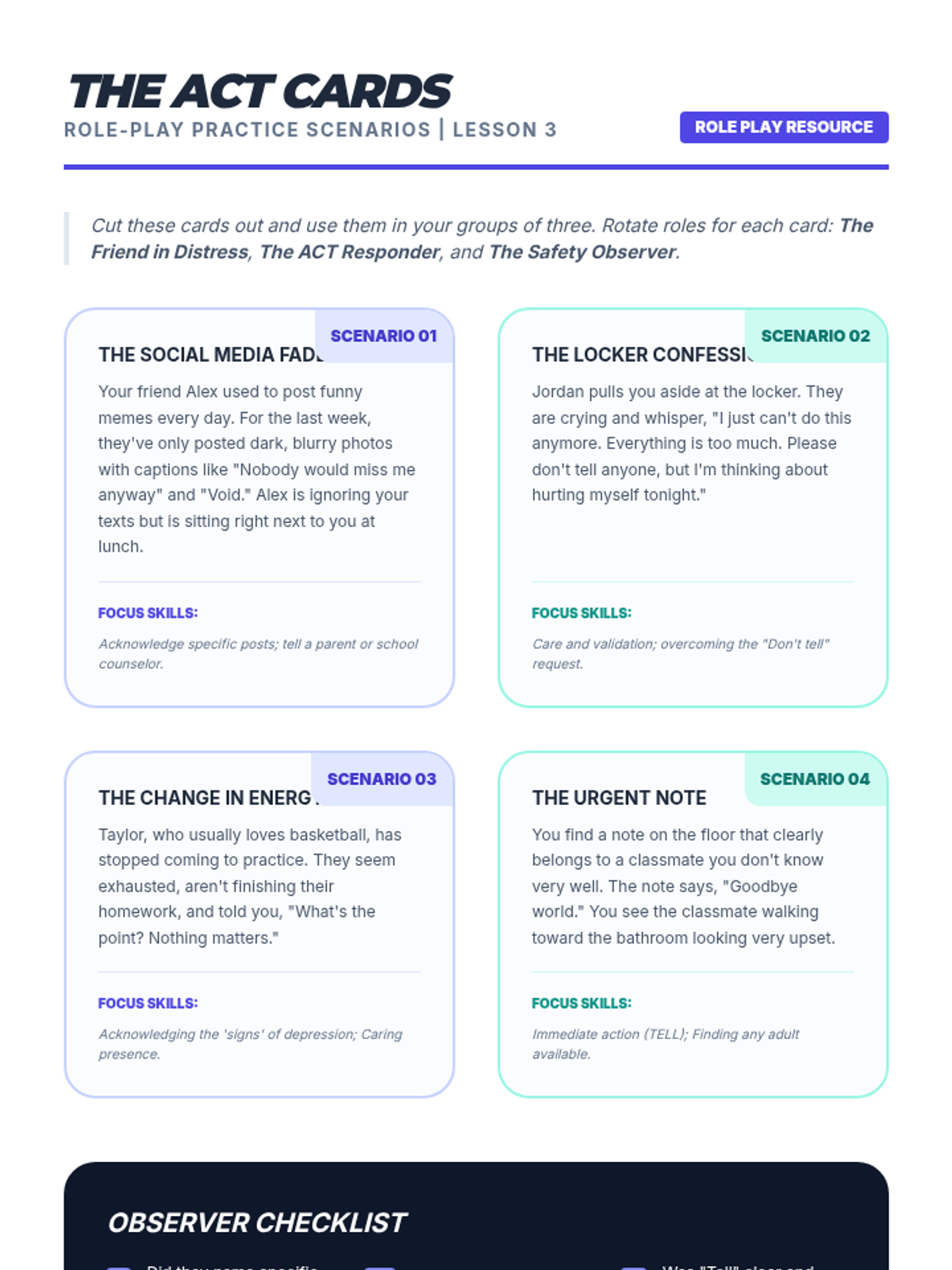
Students learn the ACT framework (Acknowledge, Care, Tell) as a standard protocol for crisis response. Through role-plays, they practice moving from identifying signs to connecting a peer with an adult.
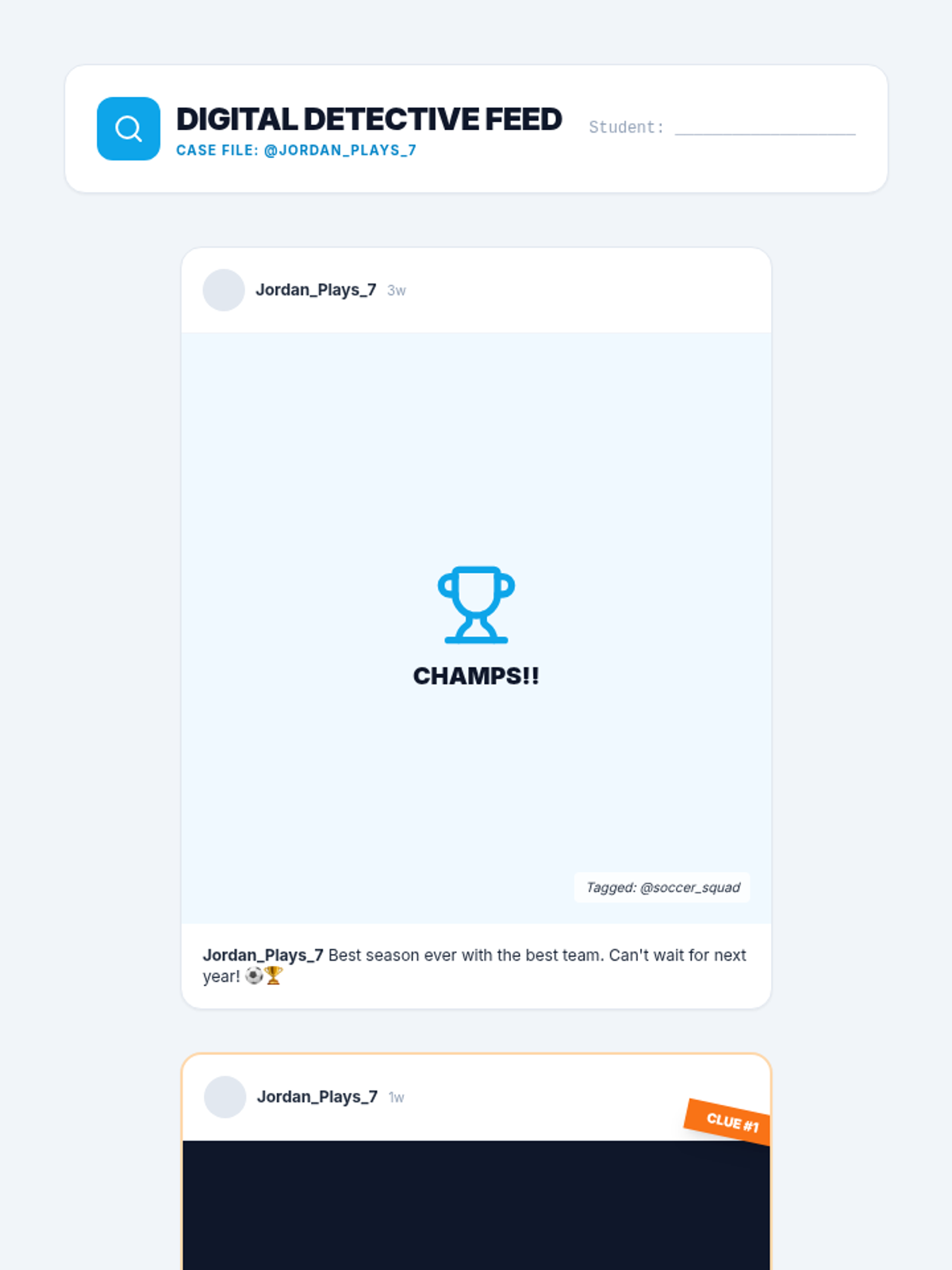
Translates crisis recognition to the digital world. Students analyze mock social media profiles to identify concerning posts, images, and captions that signal a need for support.
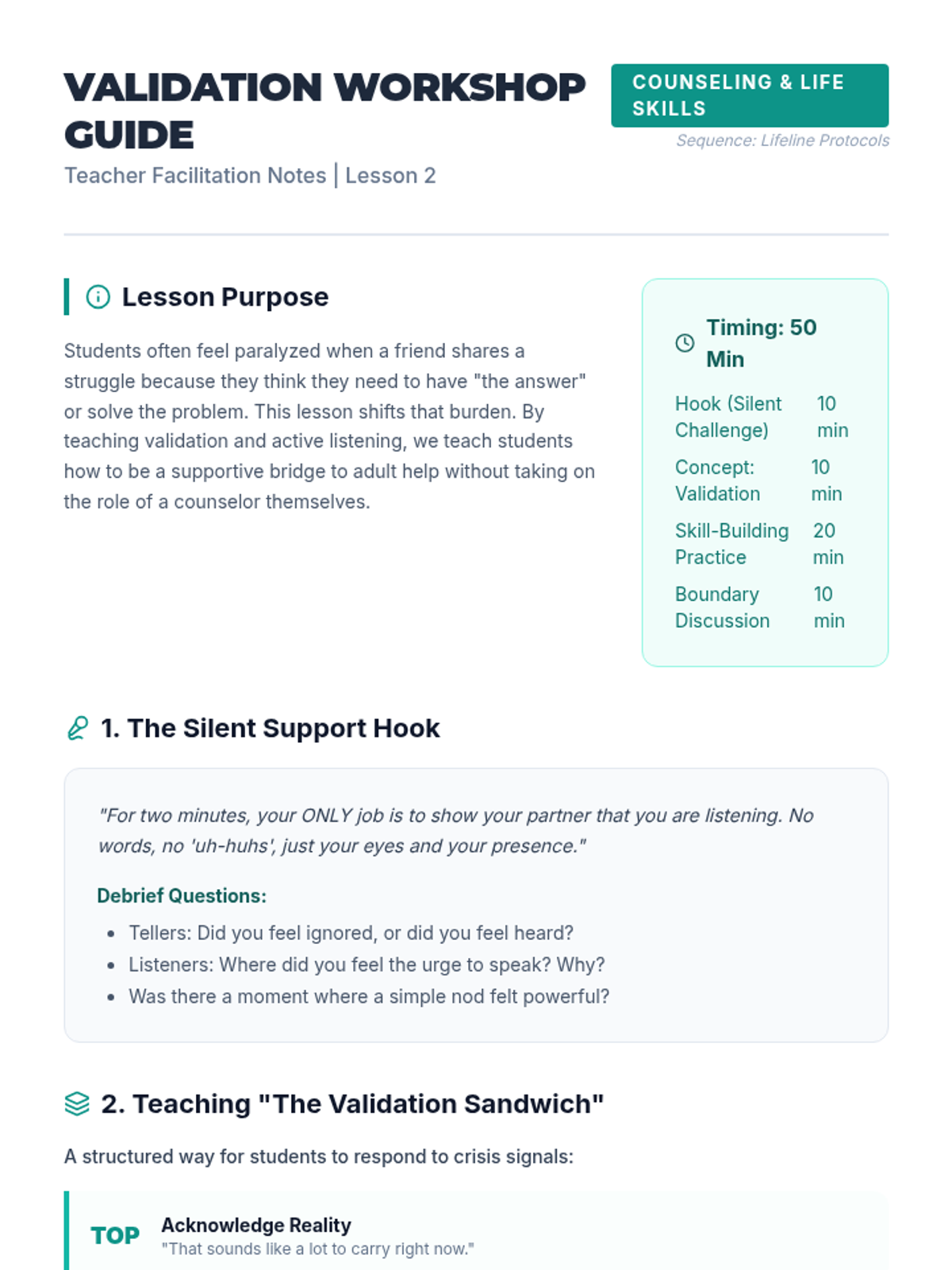
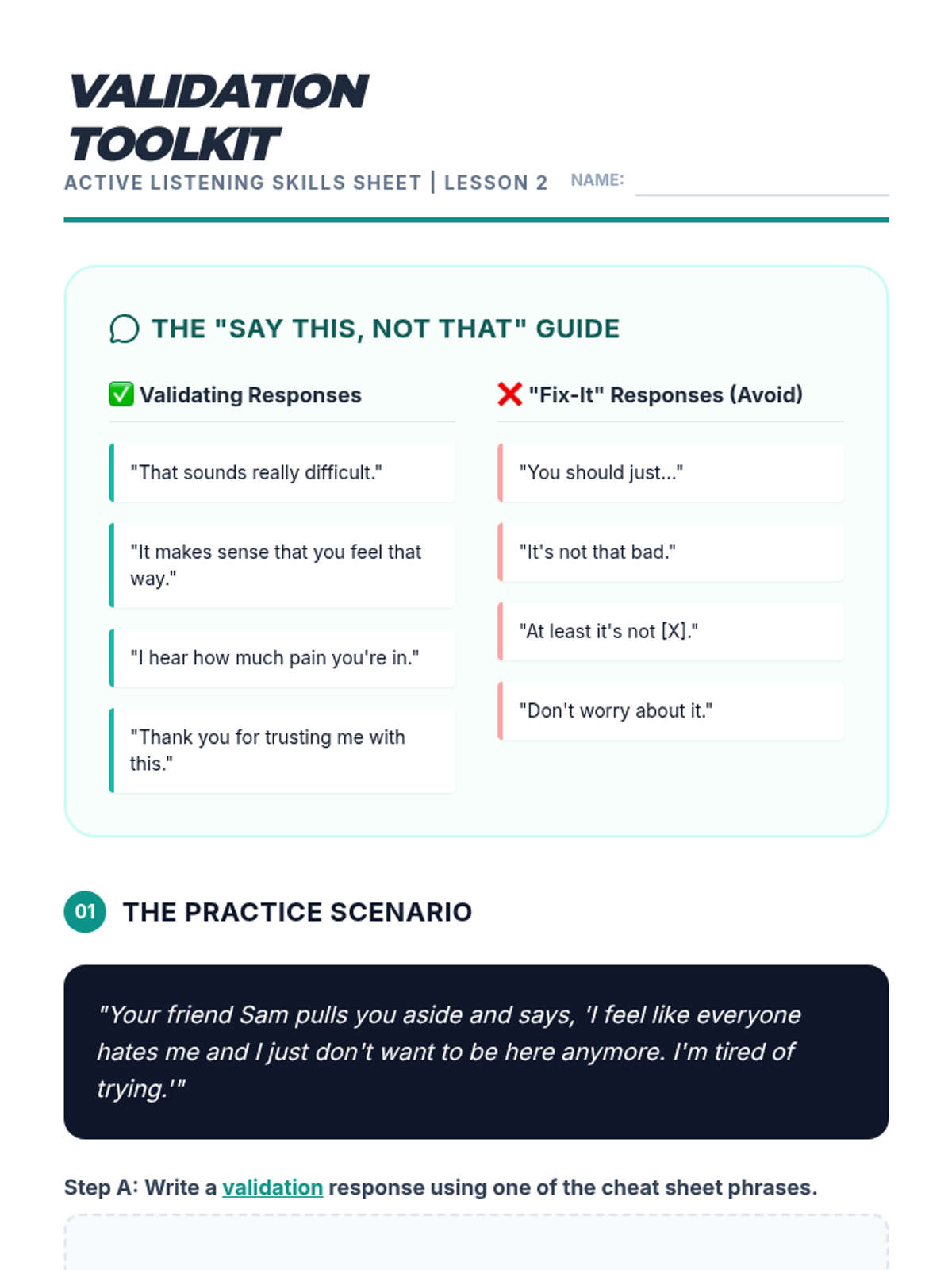
This workshop focuses on active listening and validation techniques. Students learn to support peers by validating feelings without attempting to 'fix' the problem or provide therapy, maintaining healthy boundaries.
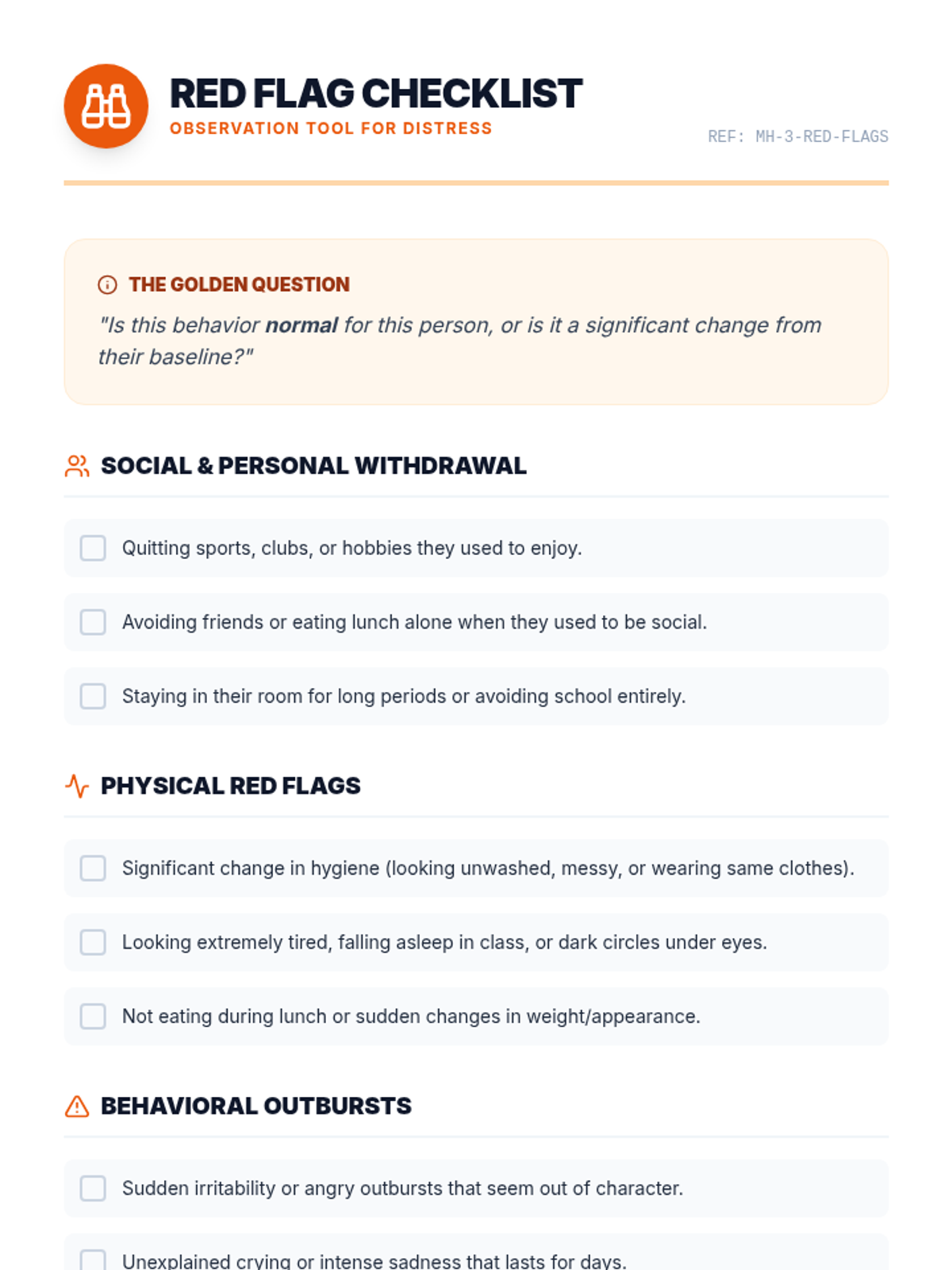
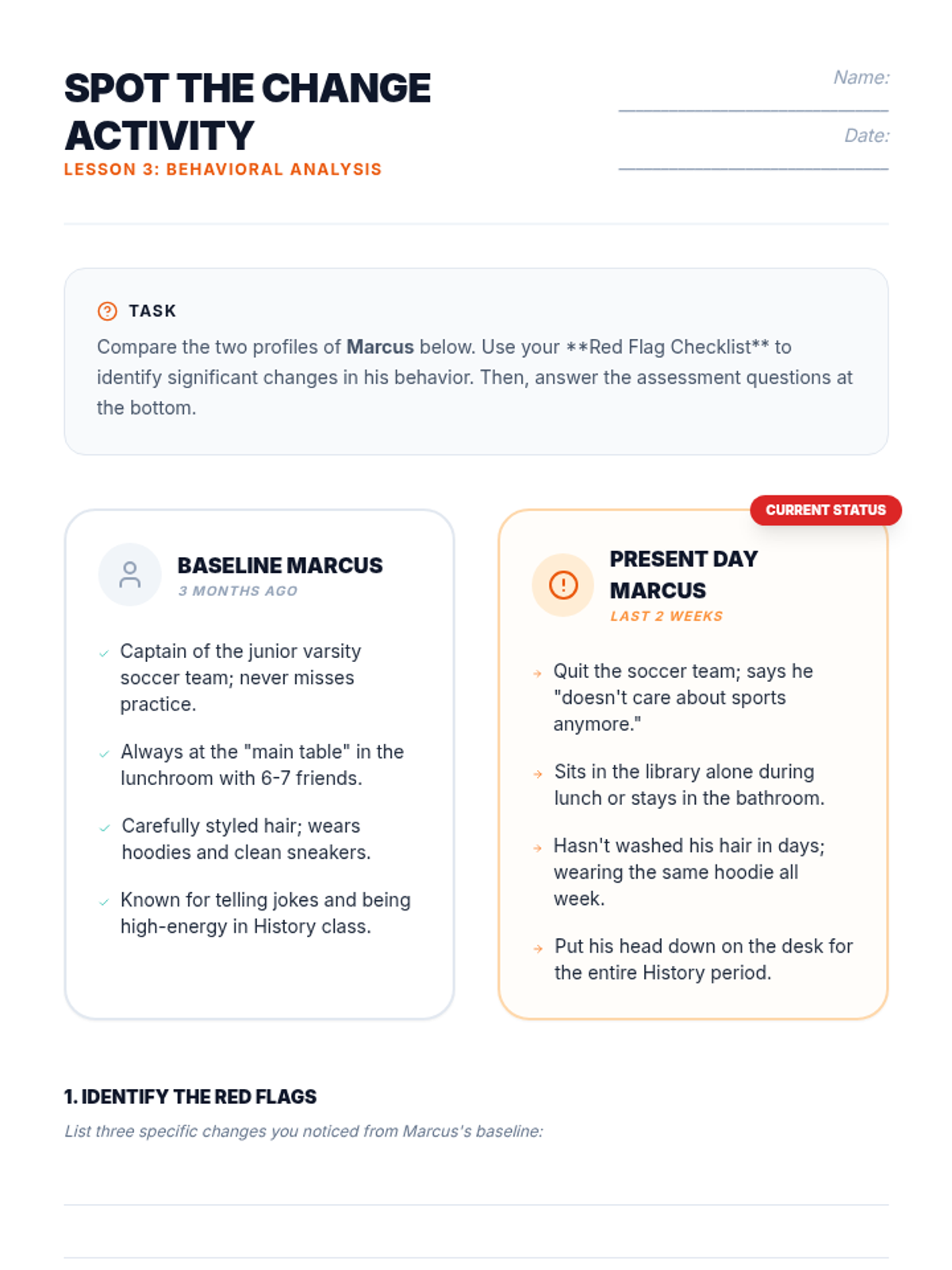
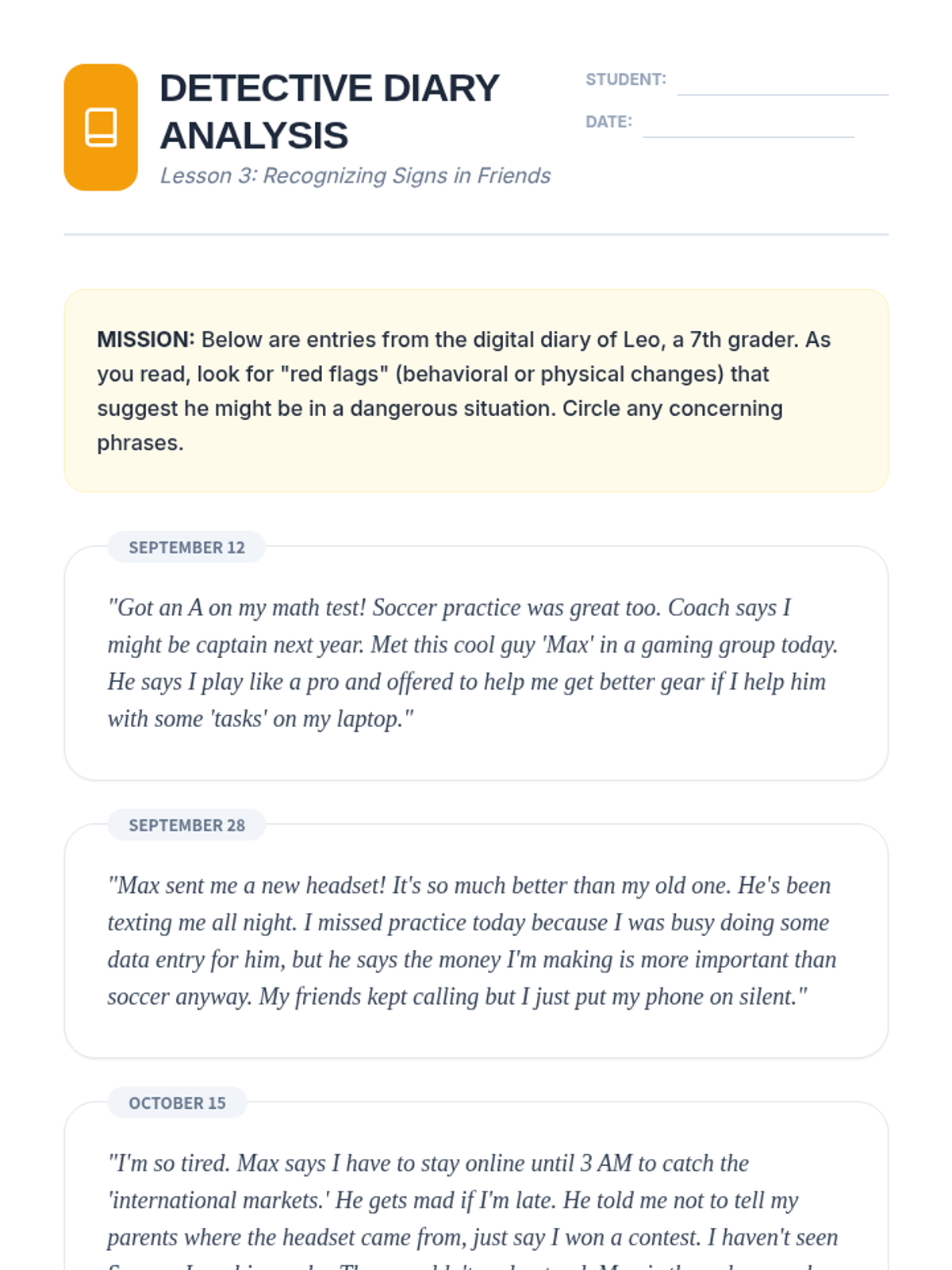
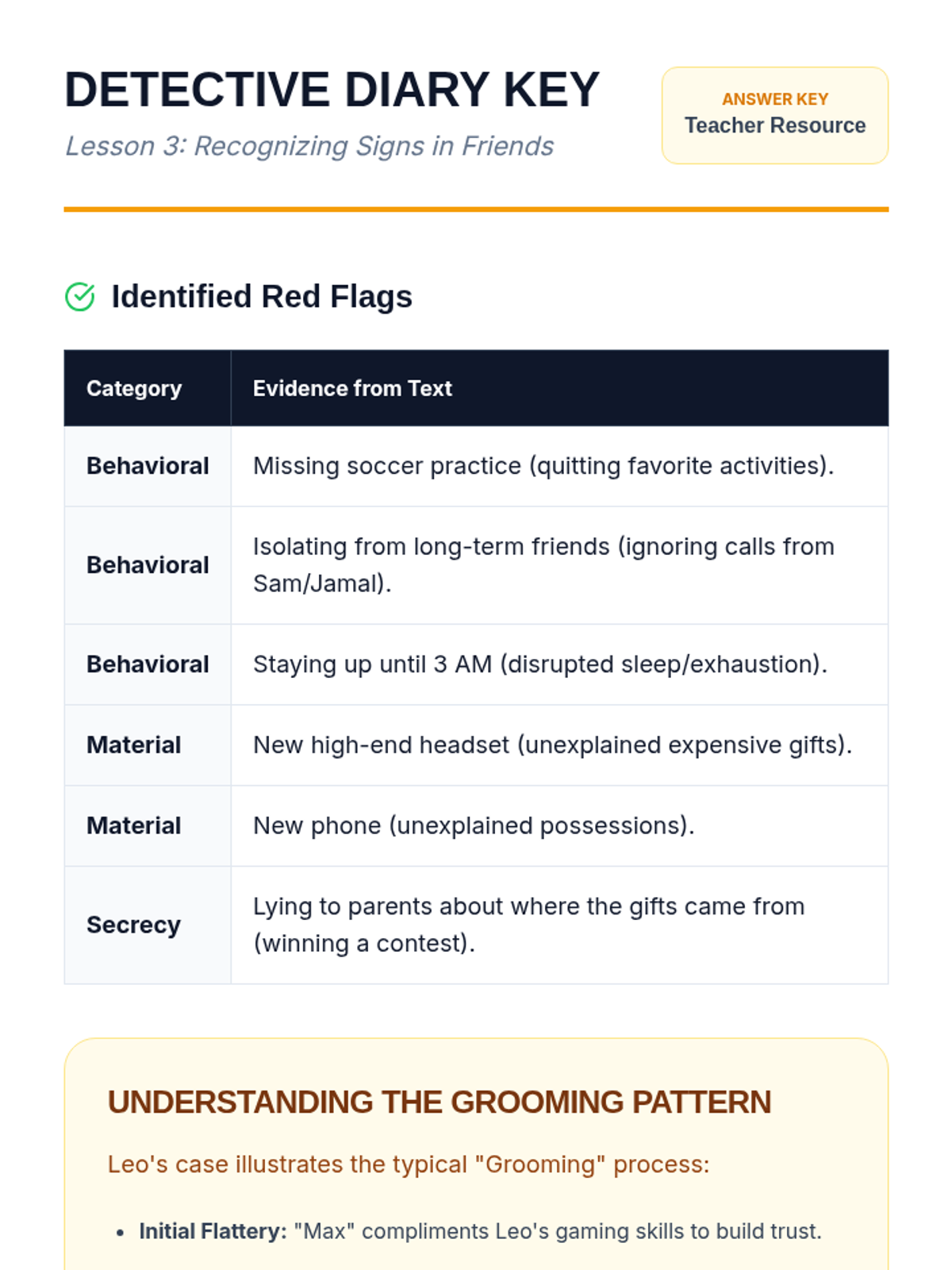
Students explore non-verbal red flags, including withdrawal and changes in baseline behavior. They use checklists to analyze patterns of physical and social shifts in fictional characters.
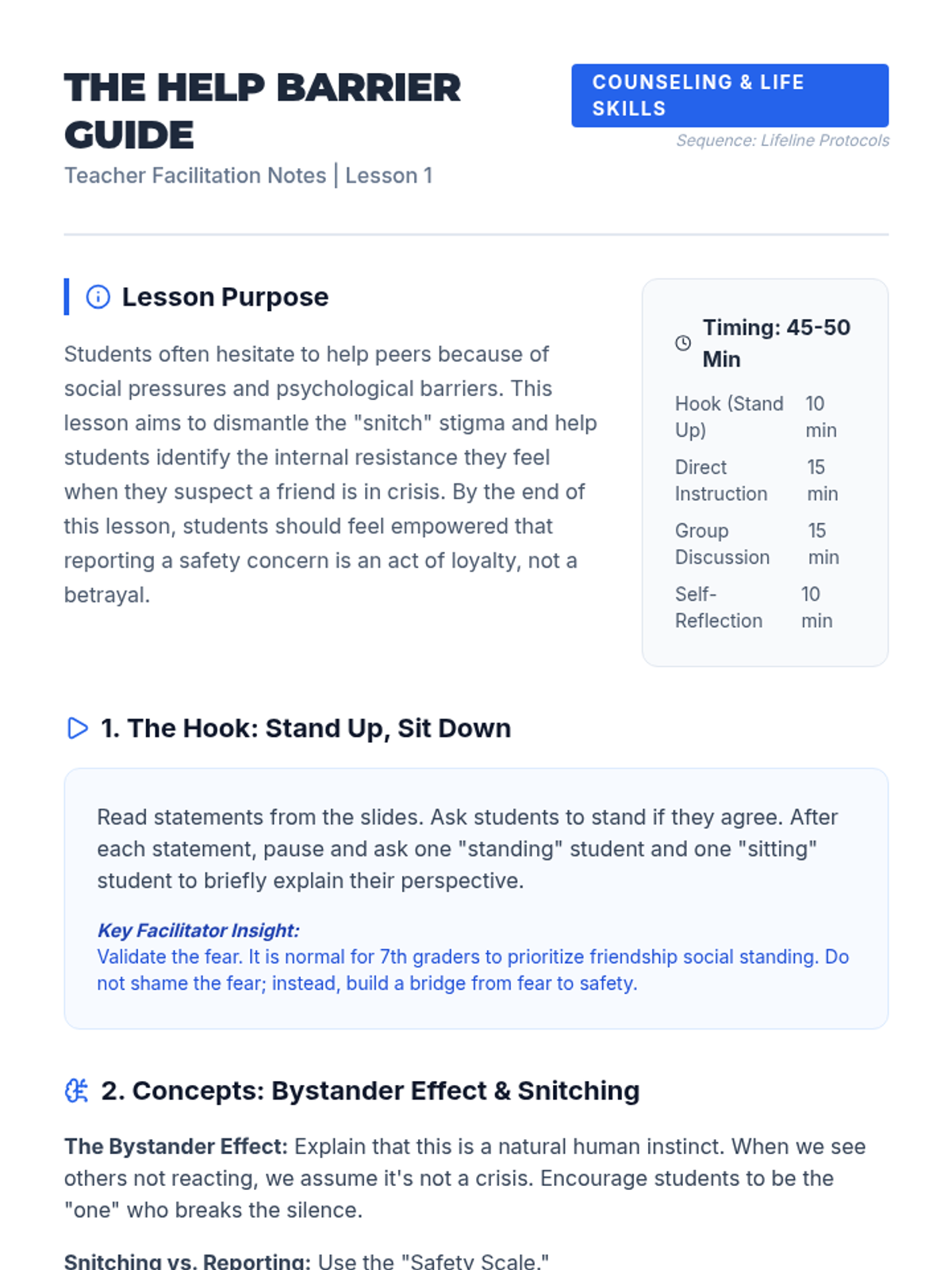
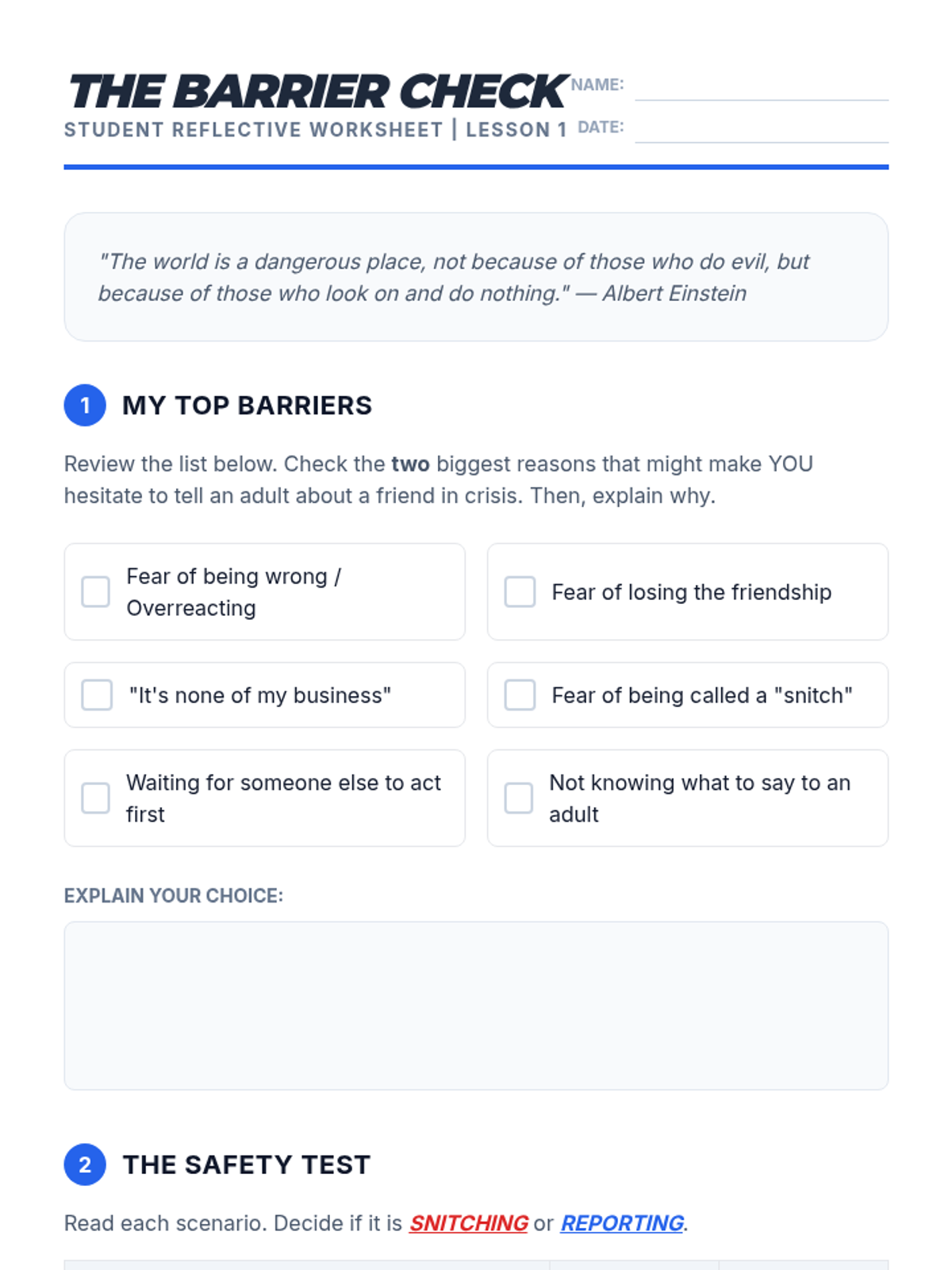
Students explore the 'Bystander Effect' and common fears that prevent peers from speaking up, such as fear of losing a friendship or being wrong. The goal is to build confidence in the decision to act and distinguish 'snitching' from 'reporting.'
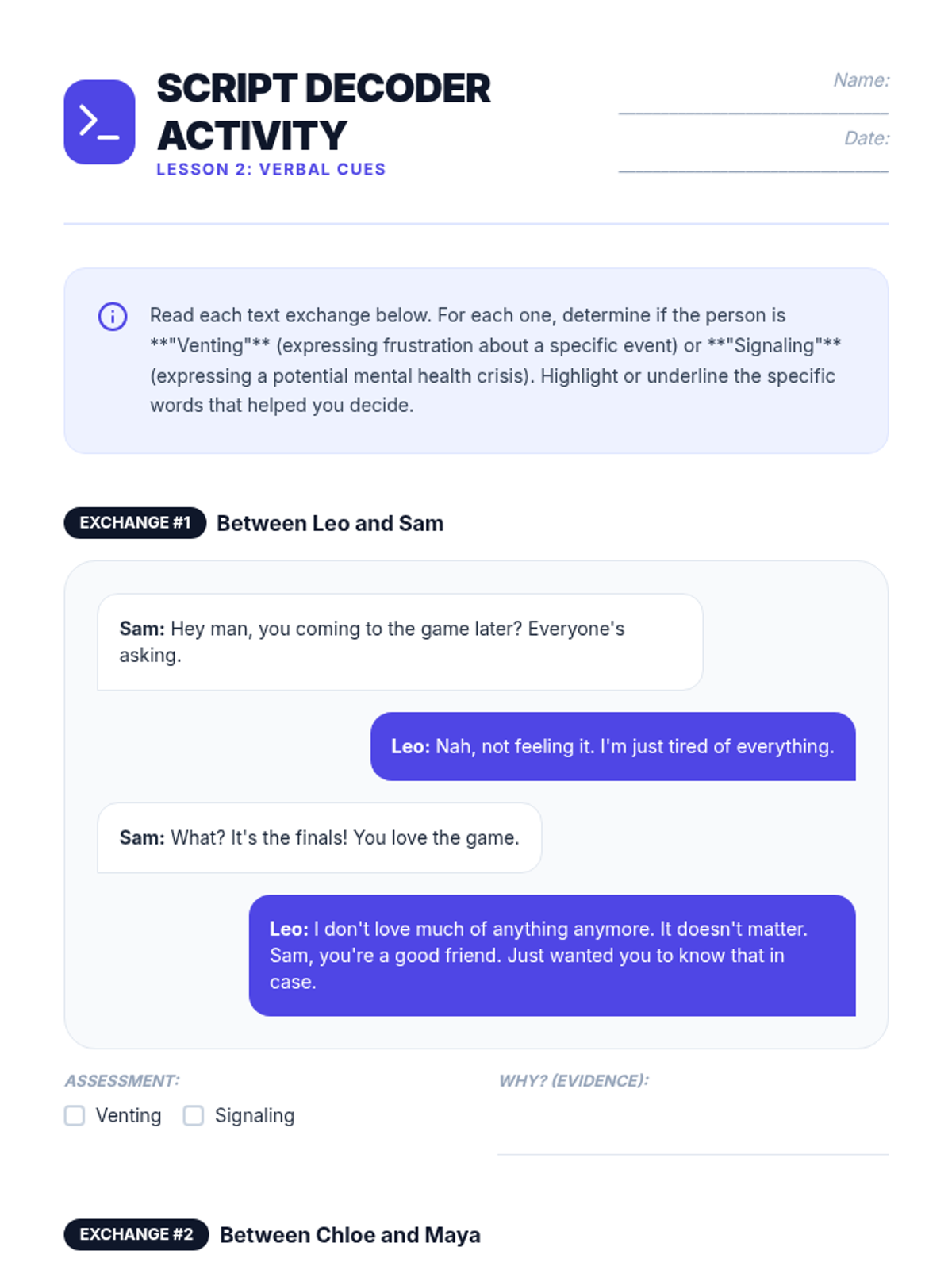
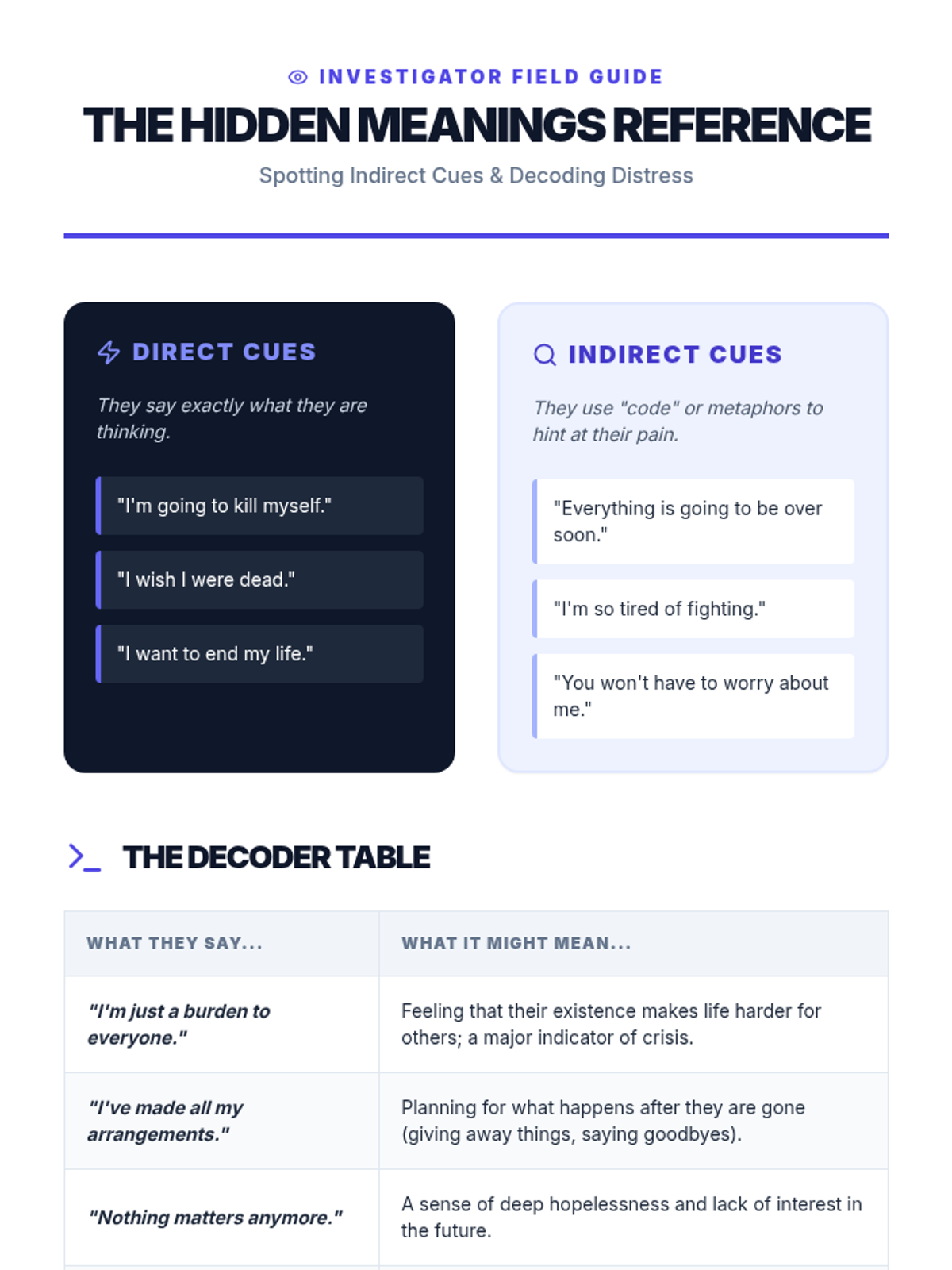
Focuses on identifying direct and indirect verbal indicators of distress. Students practice analyzing dialogue and text messages to recognize when a peer might be asking for help.
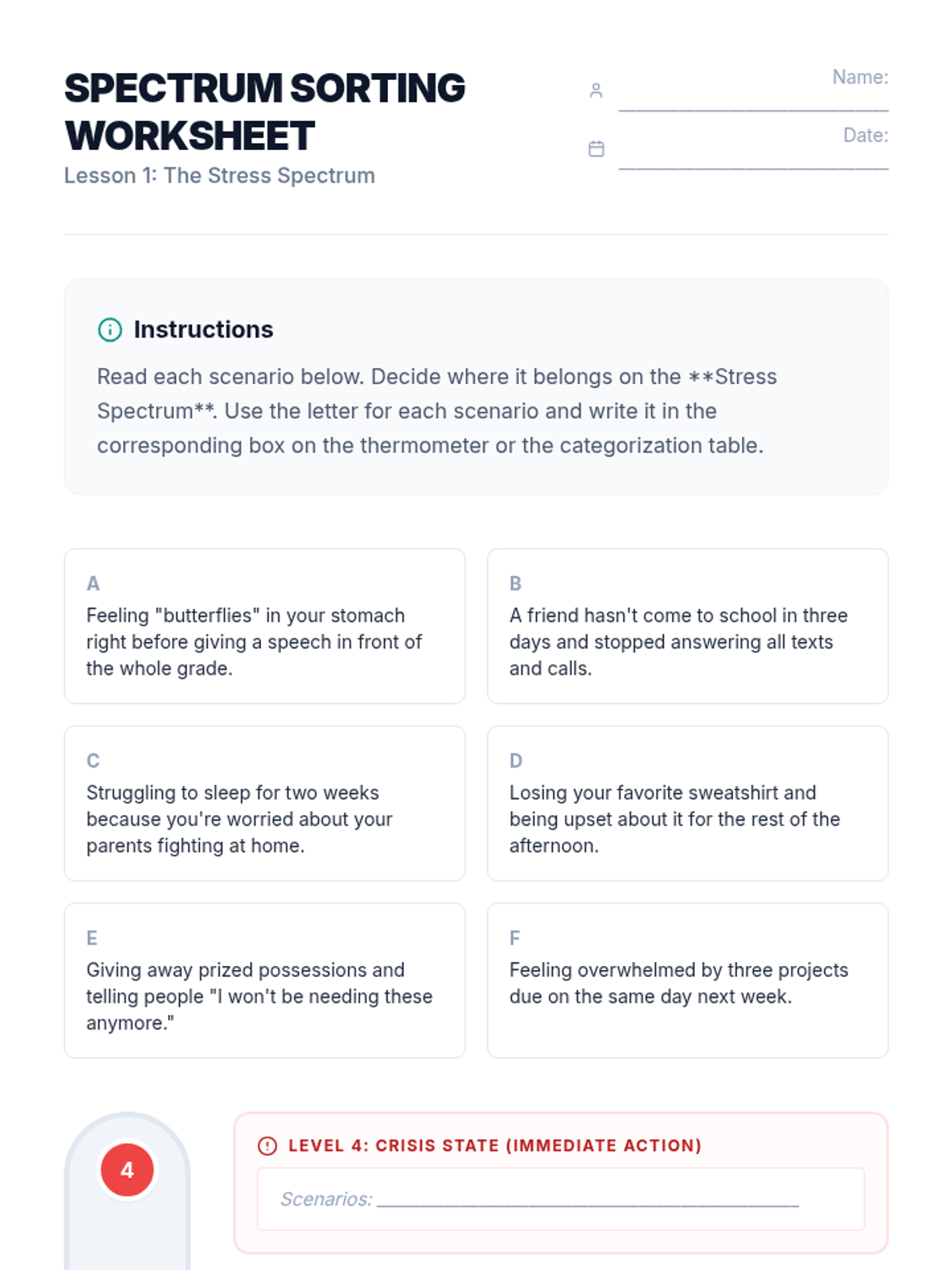
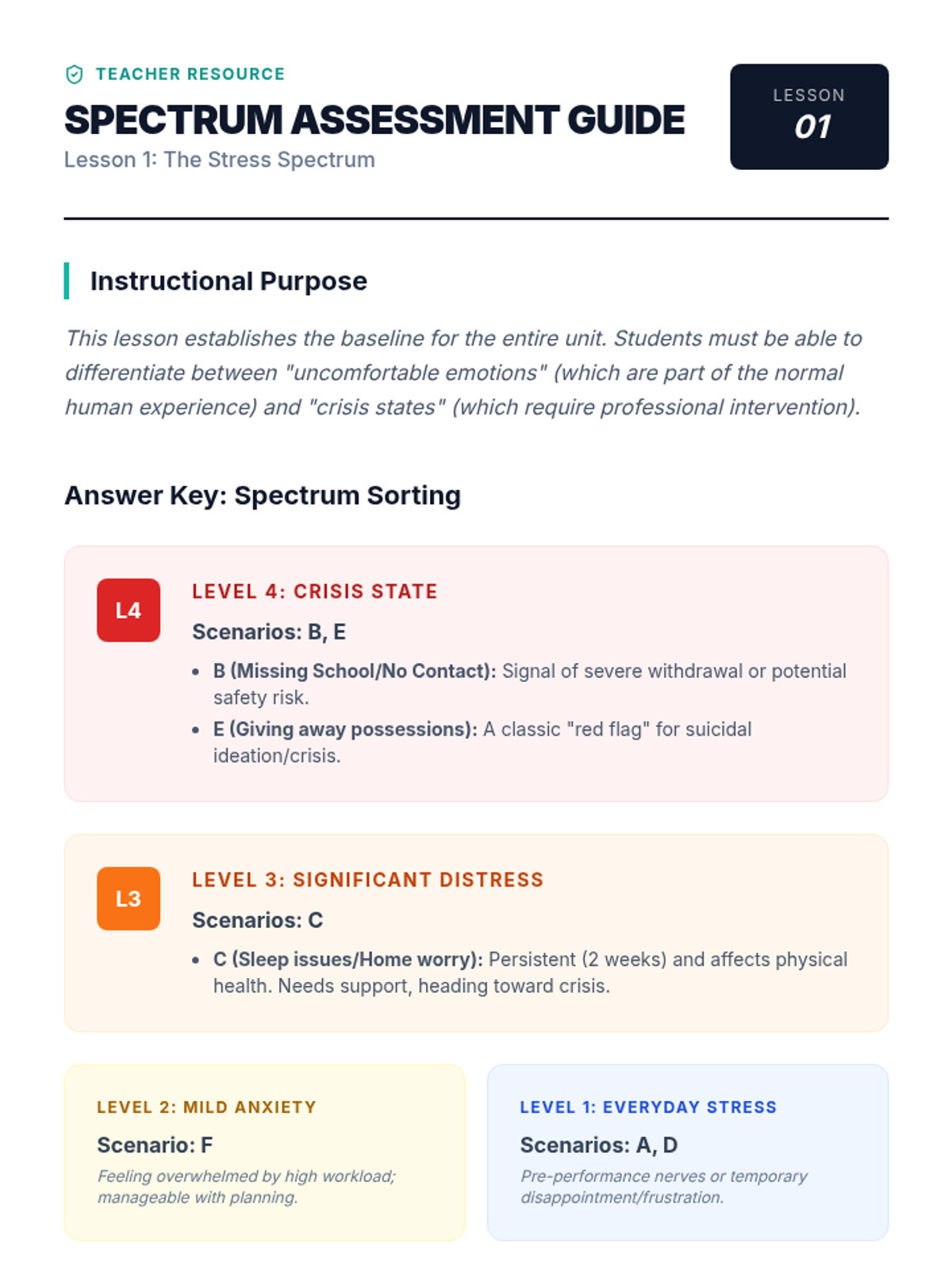
Students define and categorize mental health states using a stress thermometer. They learn the key differences between daily stress, manageable anxiety, and acute mental health crises.
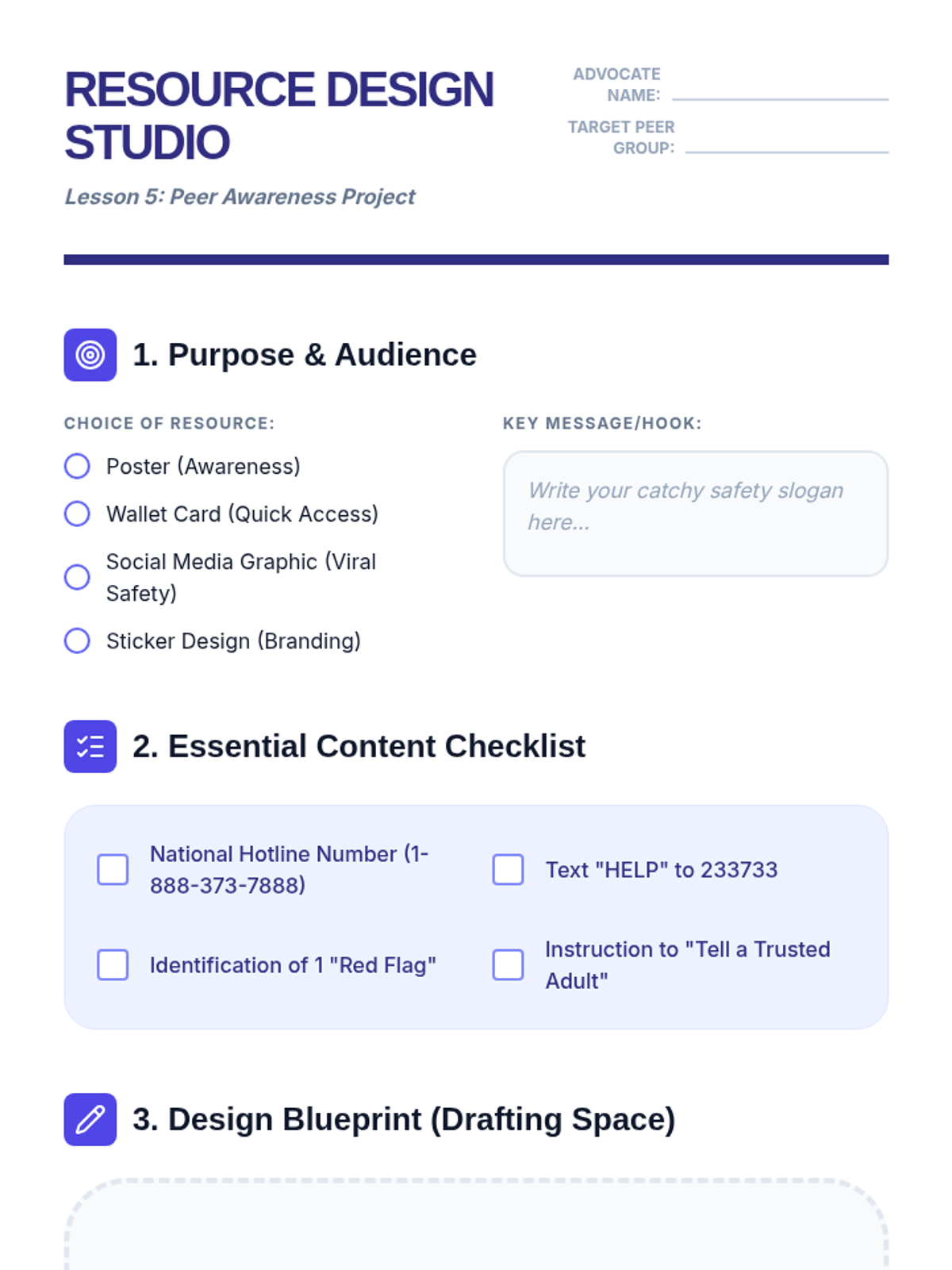
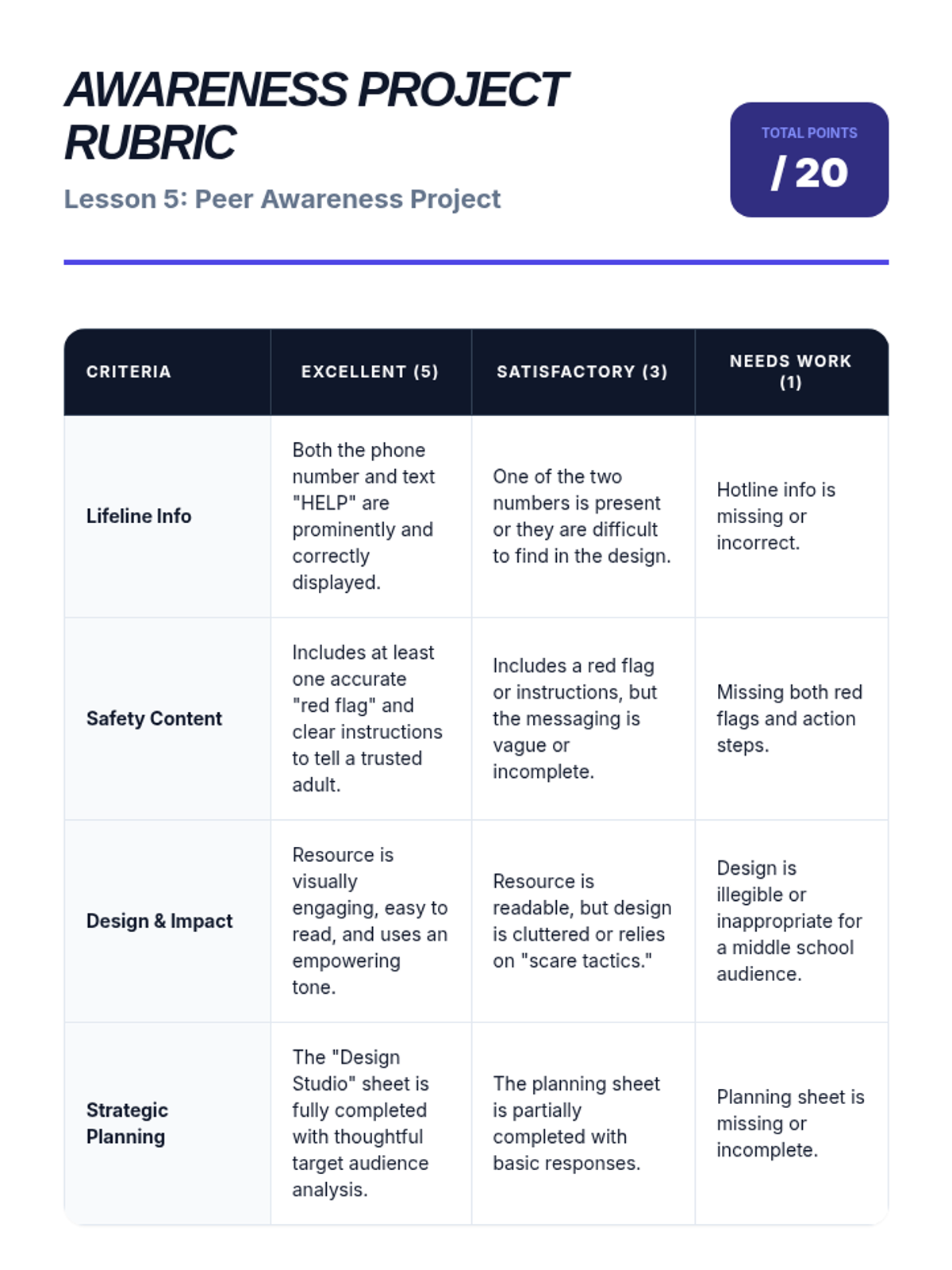
Students apply their knowledge by designing awareness materials for their peers, focusing on empowering information and resource sharing.
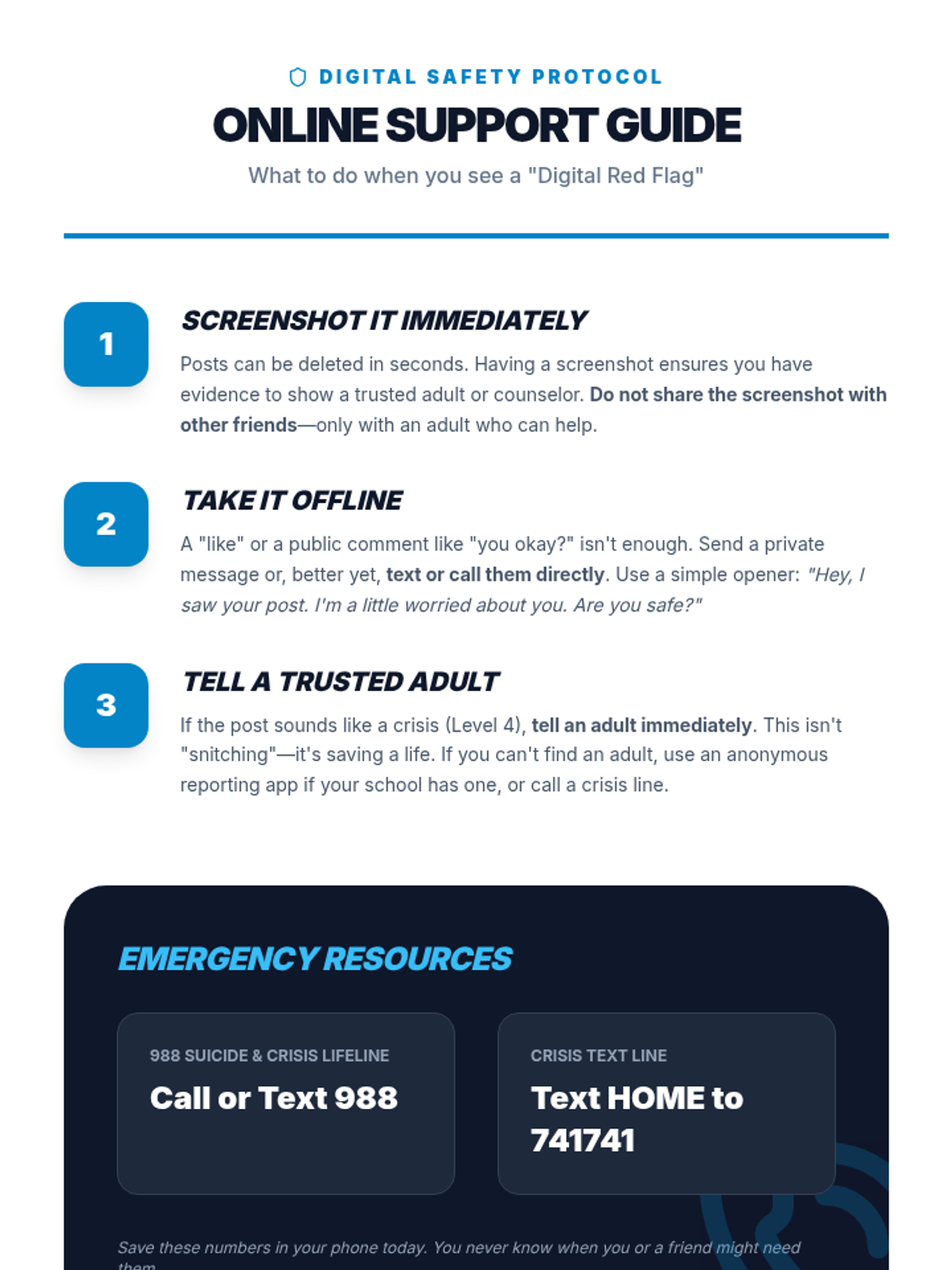
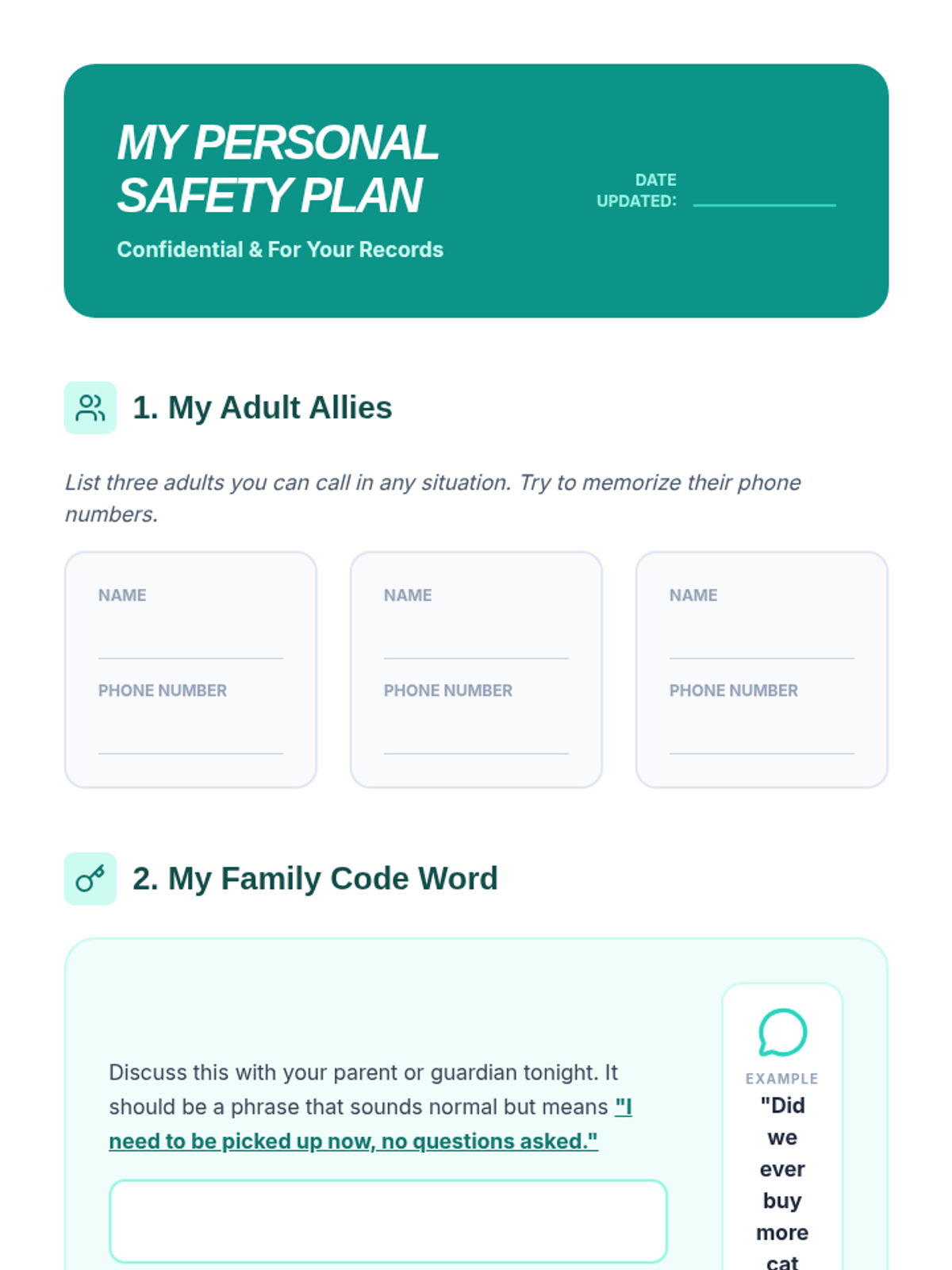
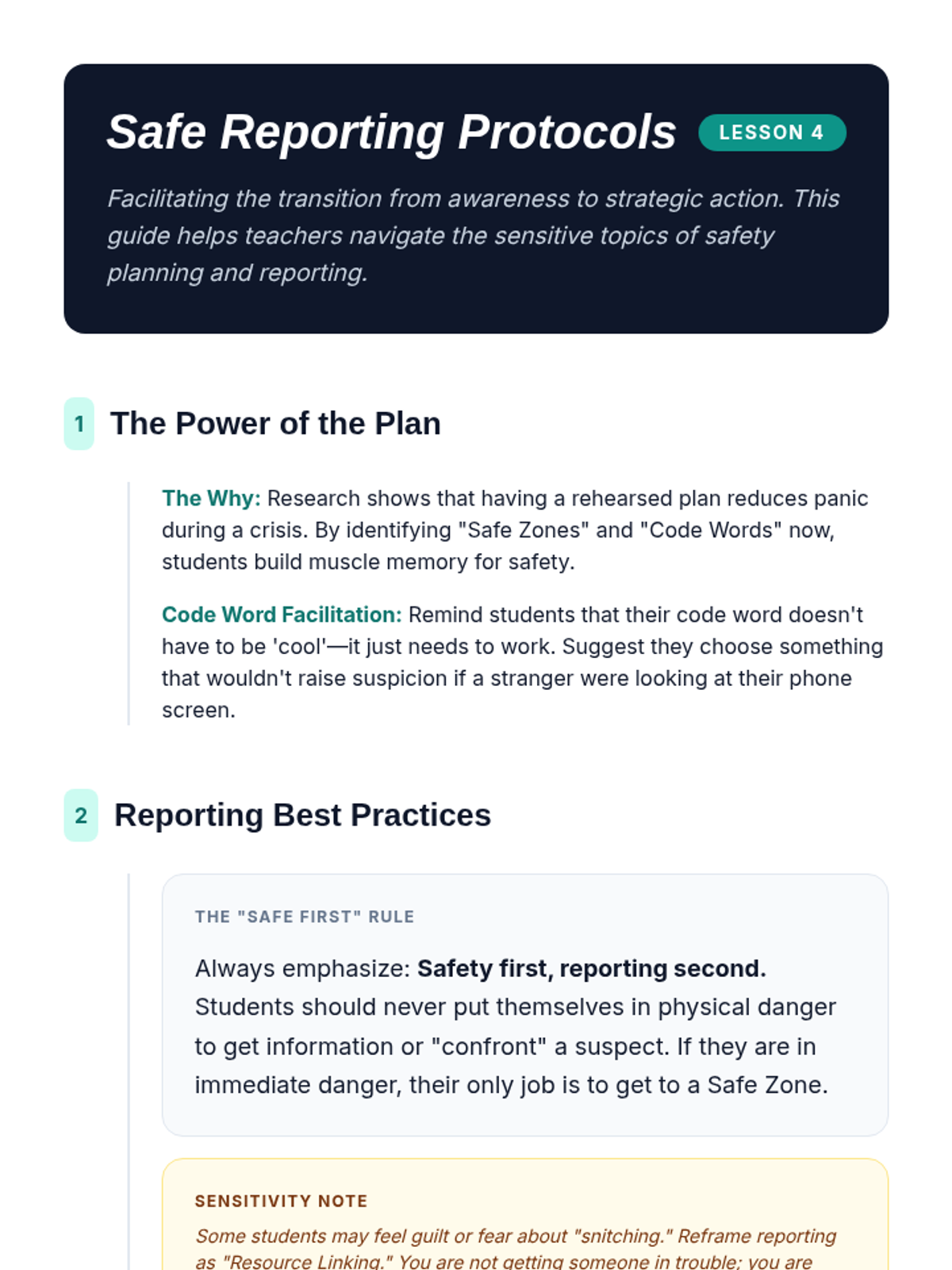
Students develop concrete reporting strategies and create a personal safety plan, including family code words and emergency contact memorization.
Focusing on bystander intervention, students learn to recognize behavioral and physical indicators of trafficking in peers and practice approaching adults with concerns.
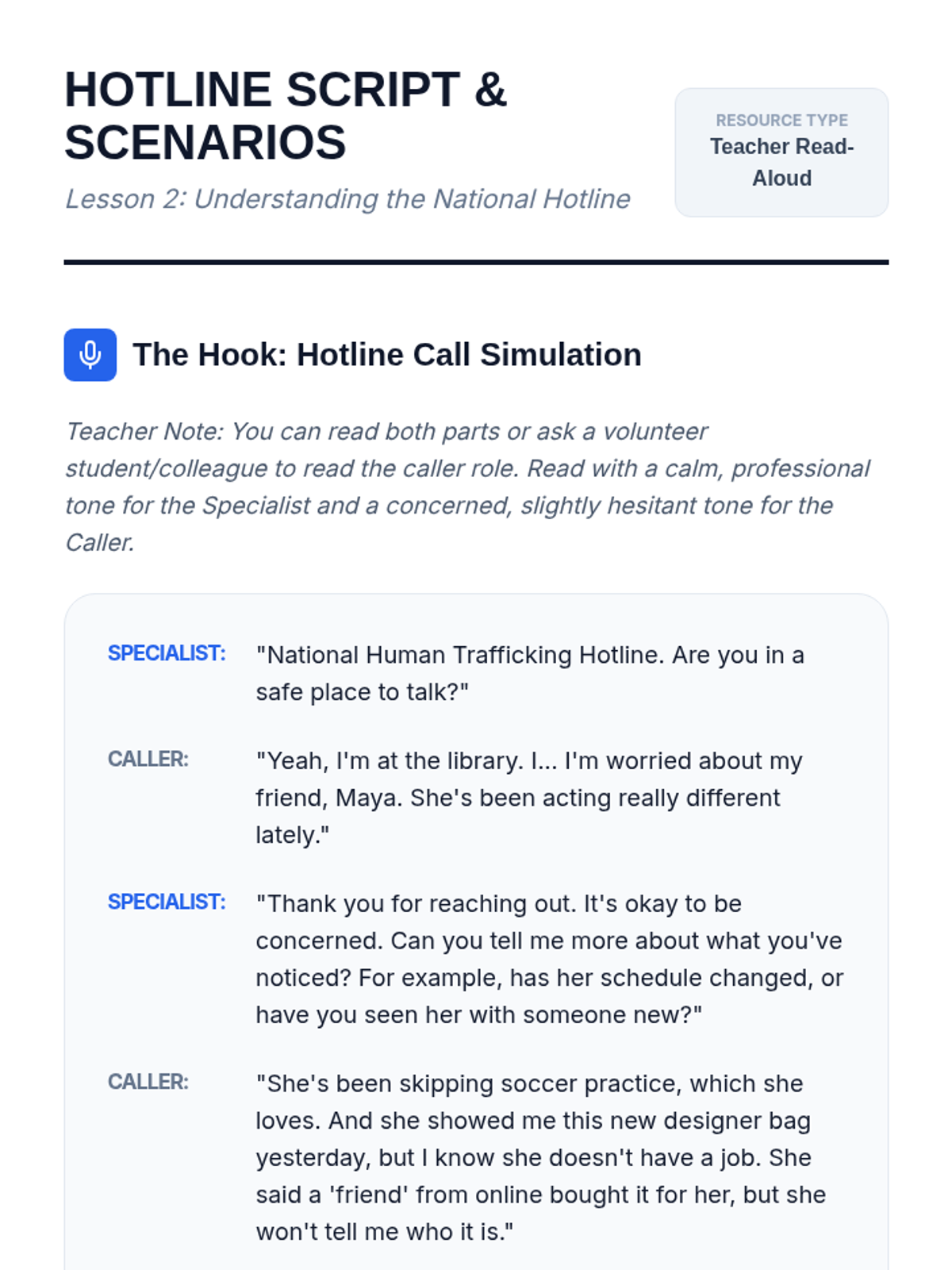
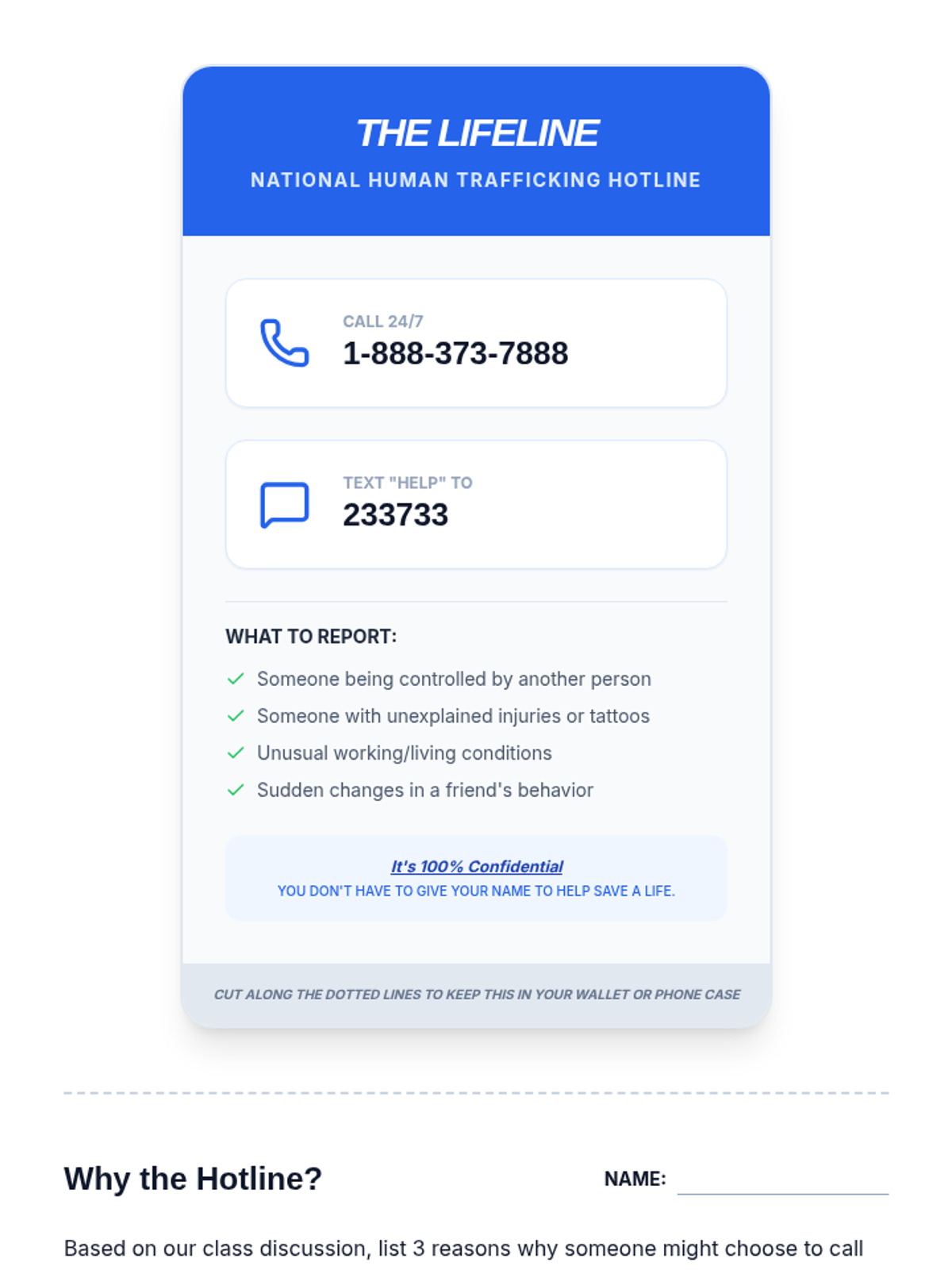
Students explore the National Human Trafficking Hotline, learning how to distinguish between immediate emergency calls and reporting tips or seeking resources.
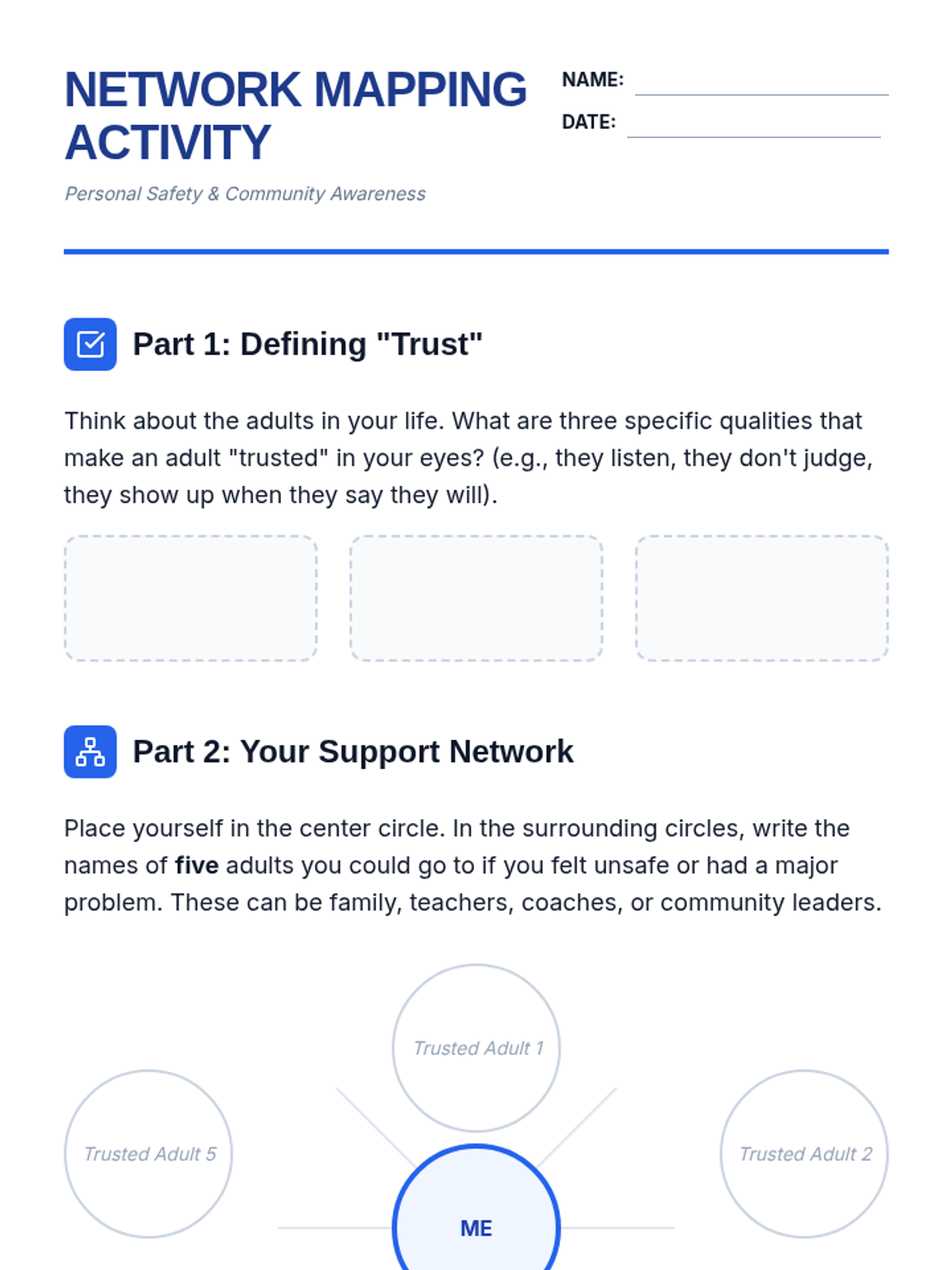
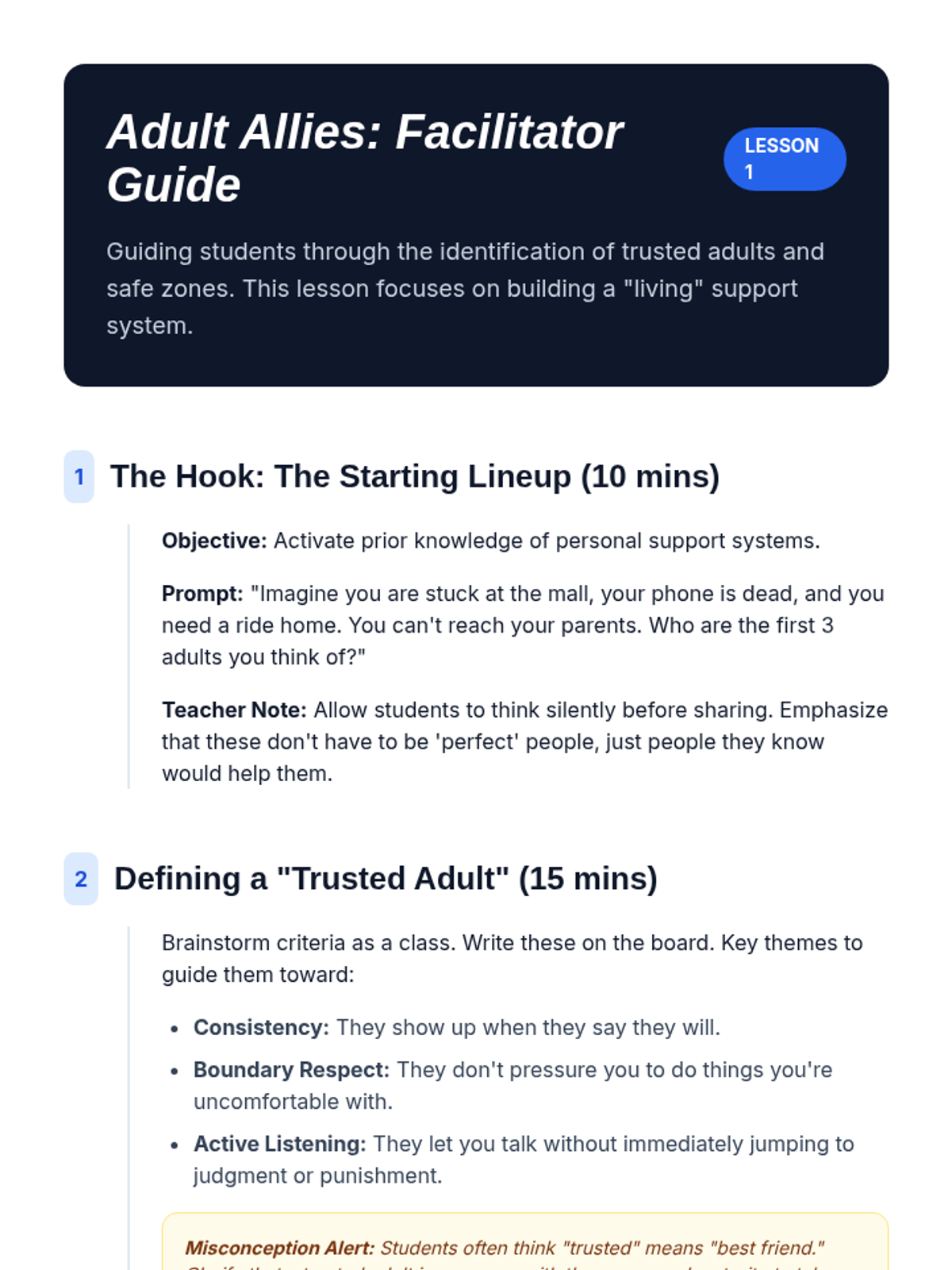
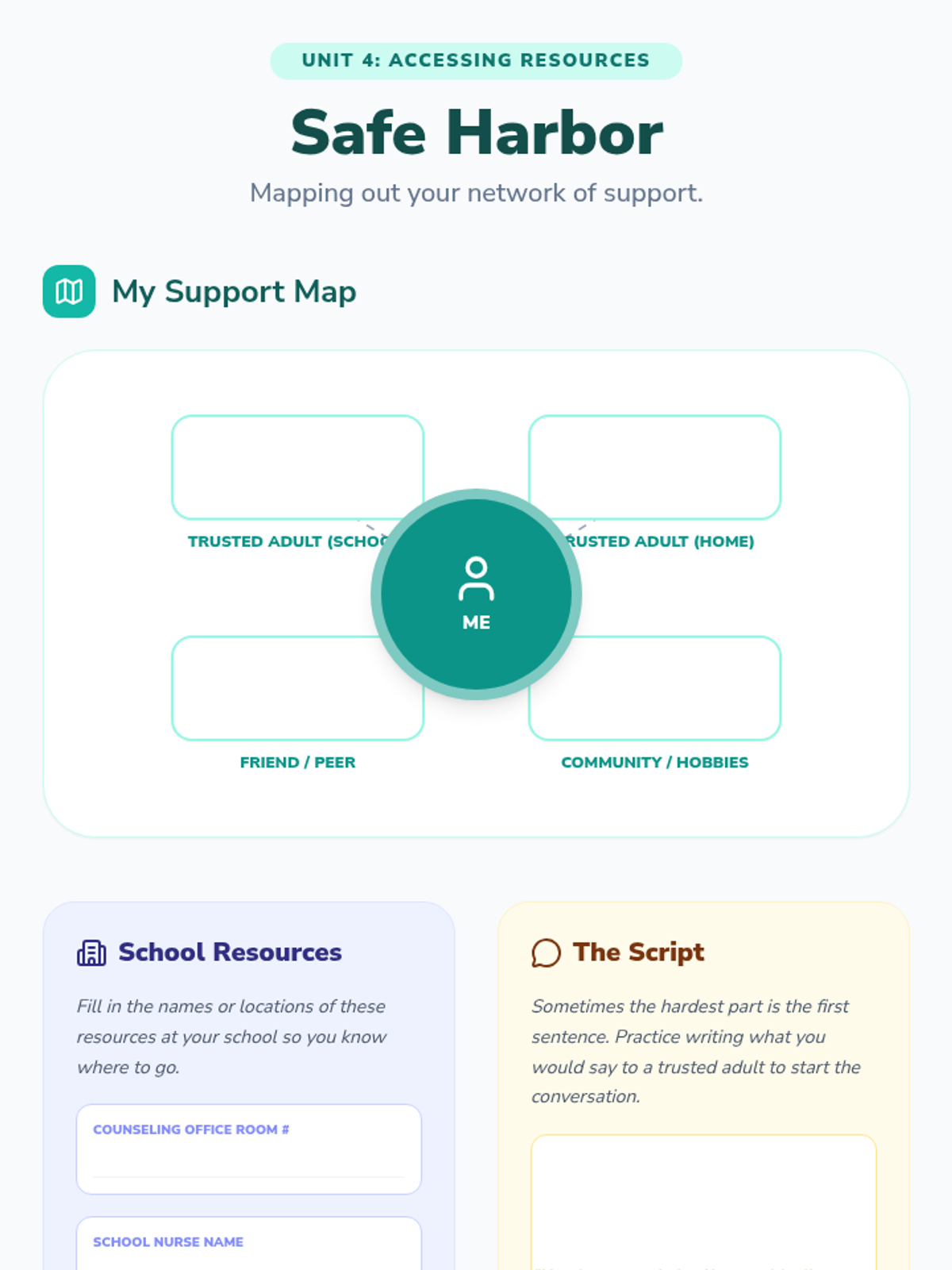
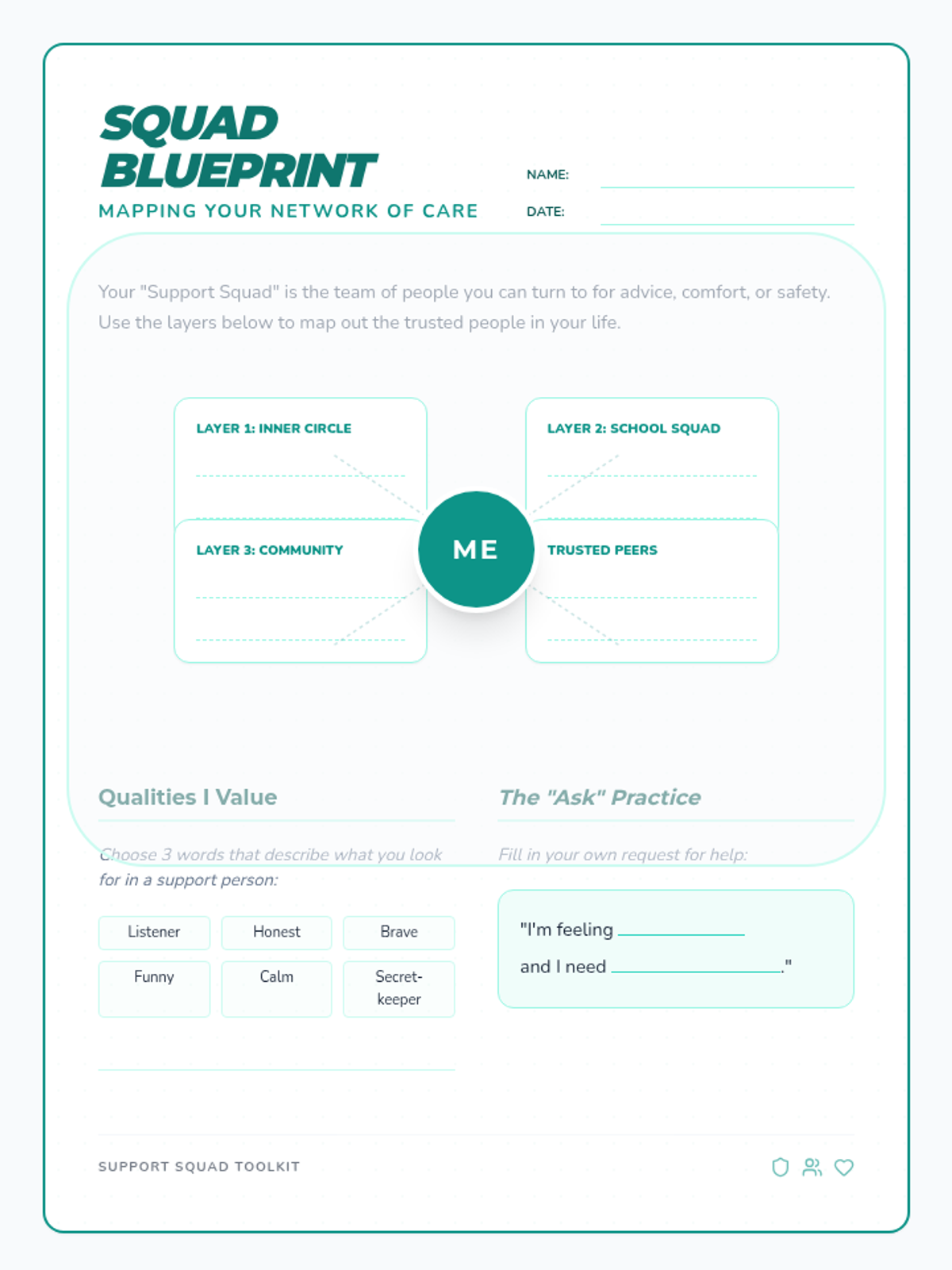
Students identify the characteristics of trusted adults and map their personal support networks while defining community safe zones like fire stations and libraries.
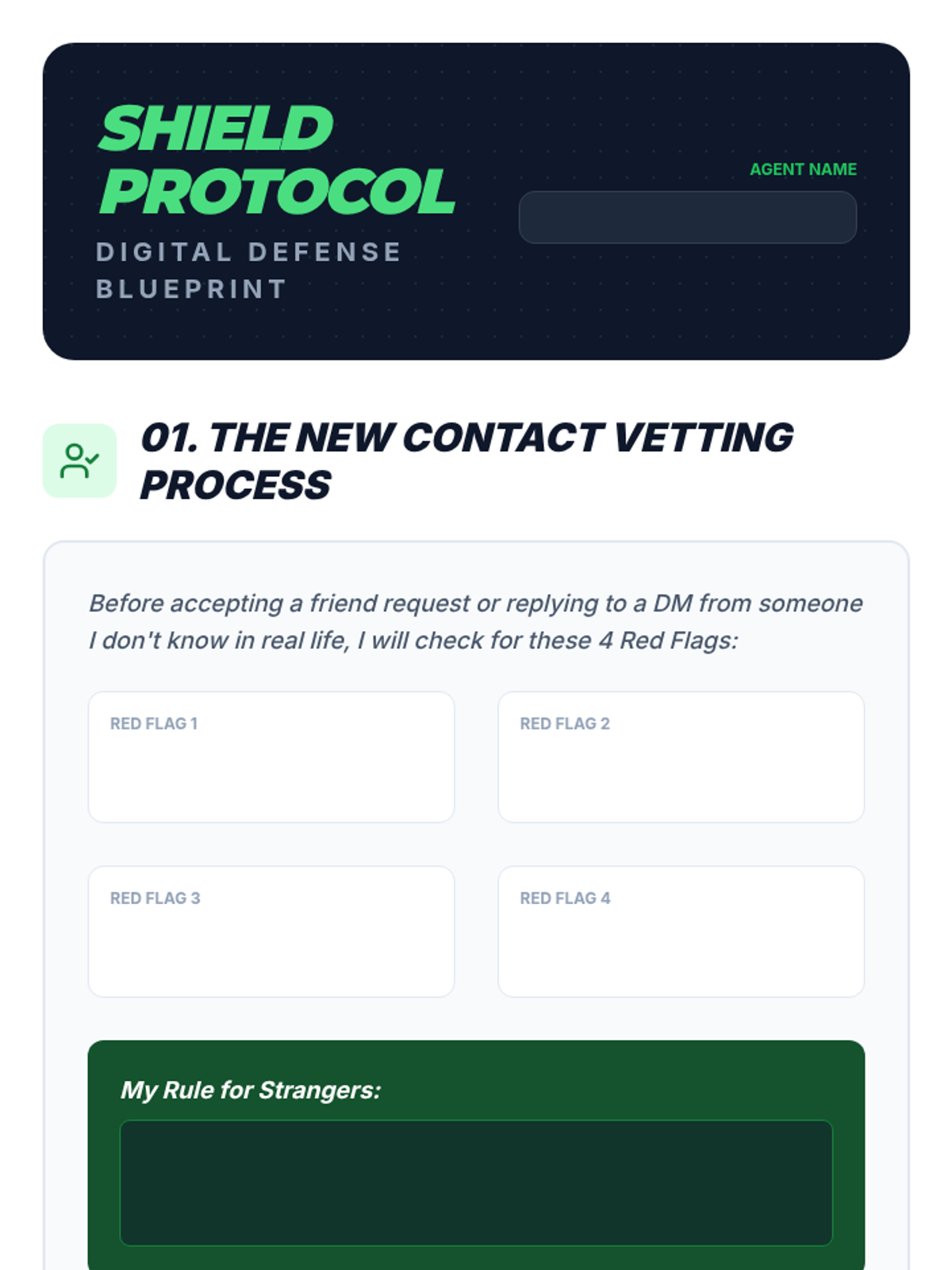
Students synthesize their learning into a personal digital defense strategy and master the 'Stop, Block, and Tell' protocol.
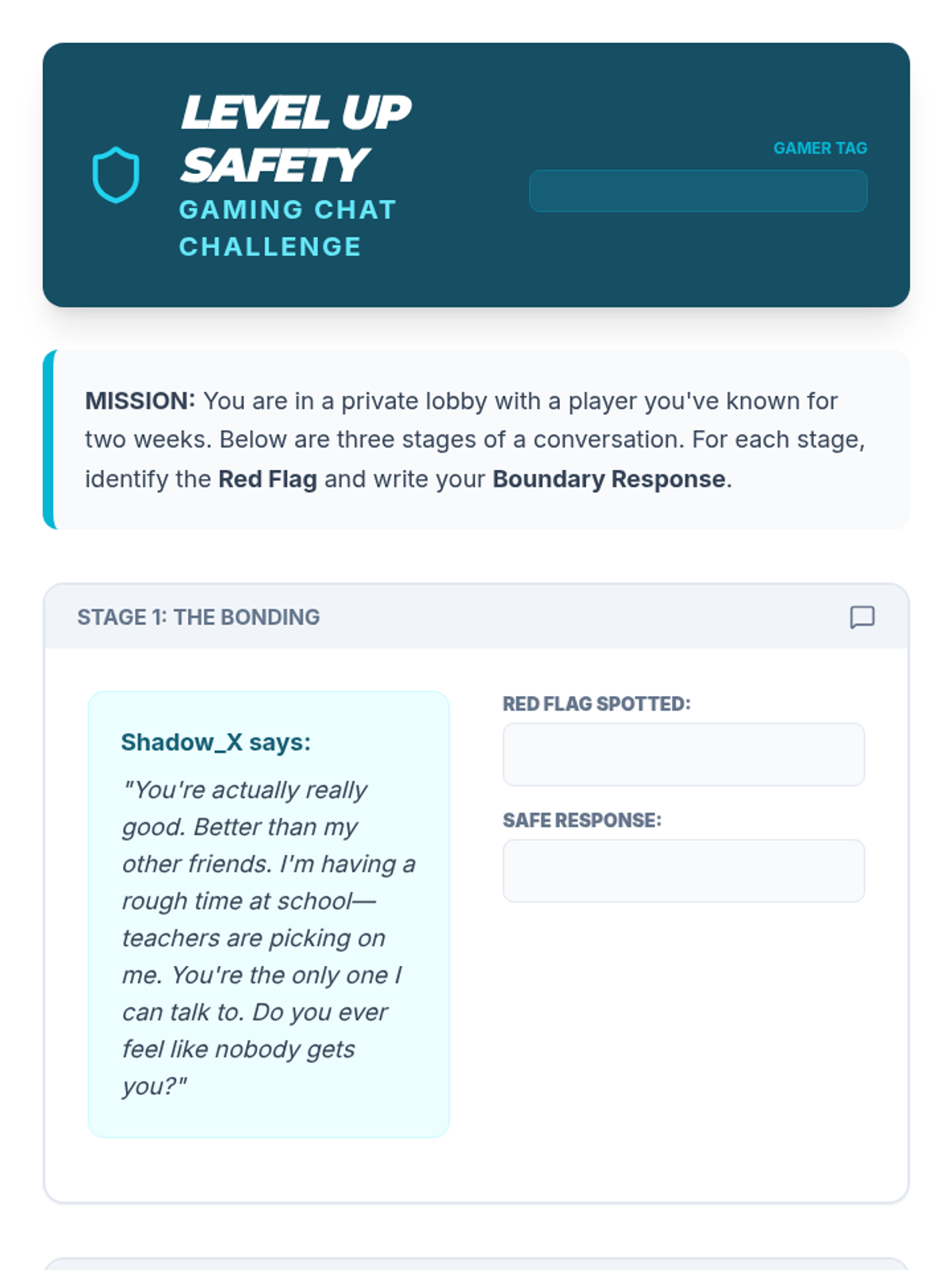
Focusing on gaming environments, students practice setting boundaries and identifying grooming behaviors in chat rooms.
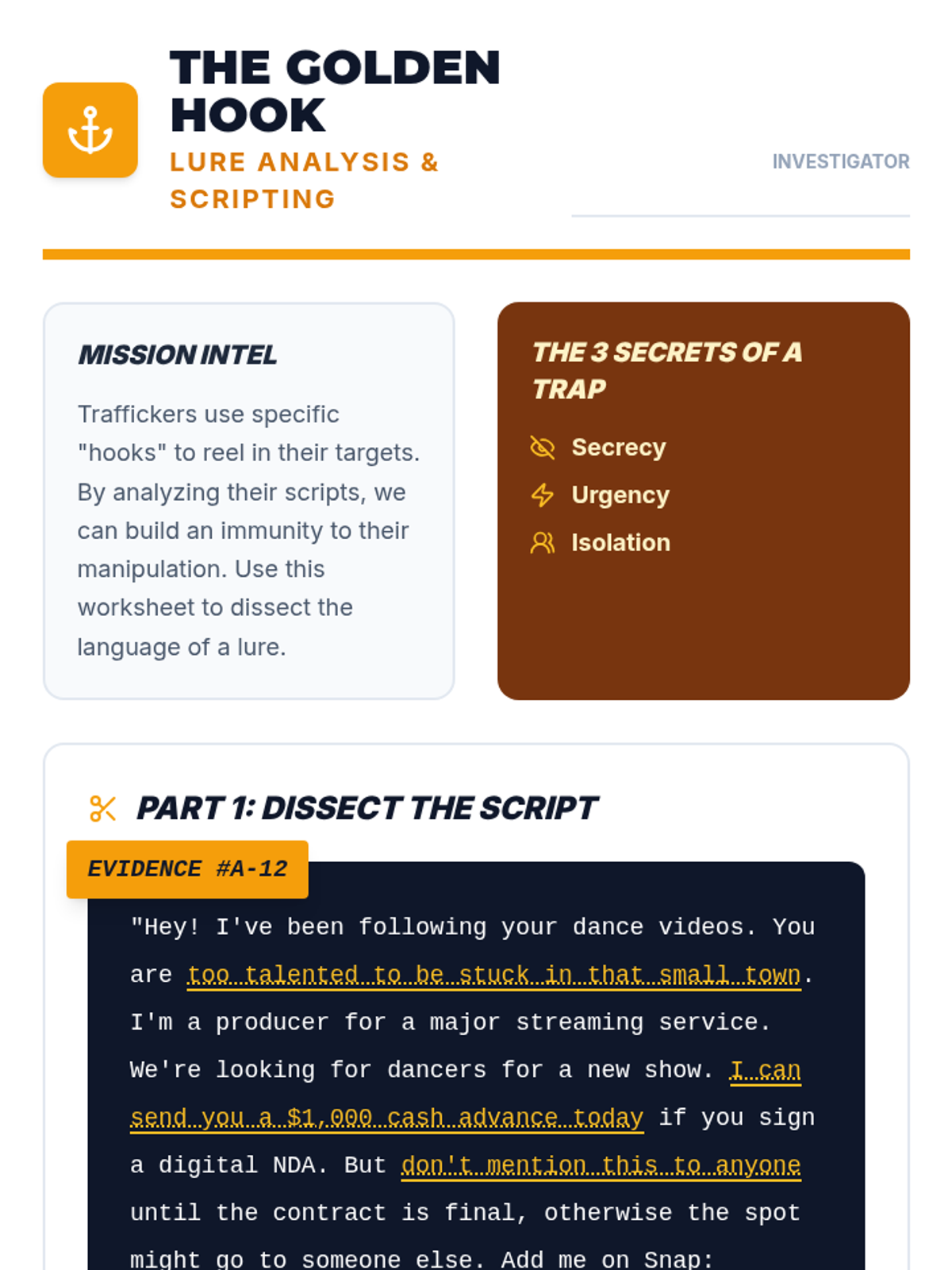
This lesson analyzes common 'hooks'—such as modeling offers or financial incentives—to understand how manipulators use flattery and greed.
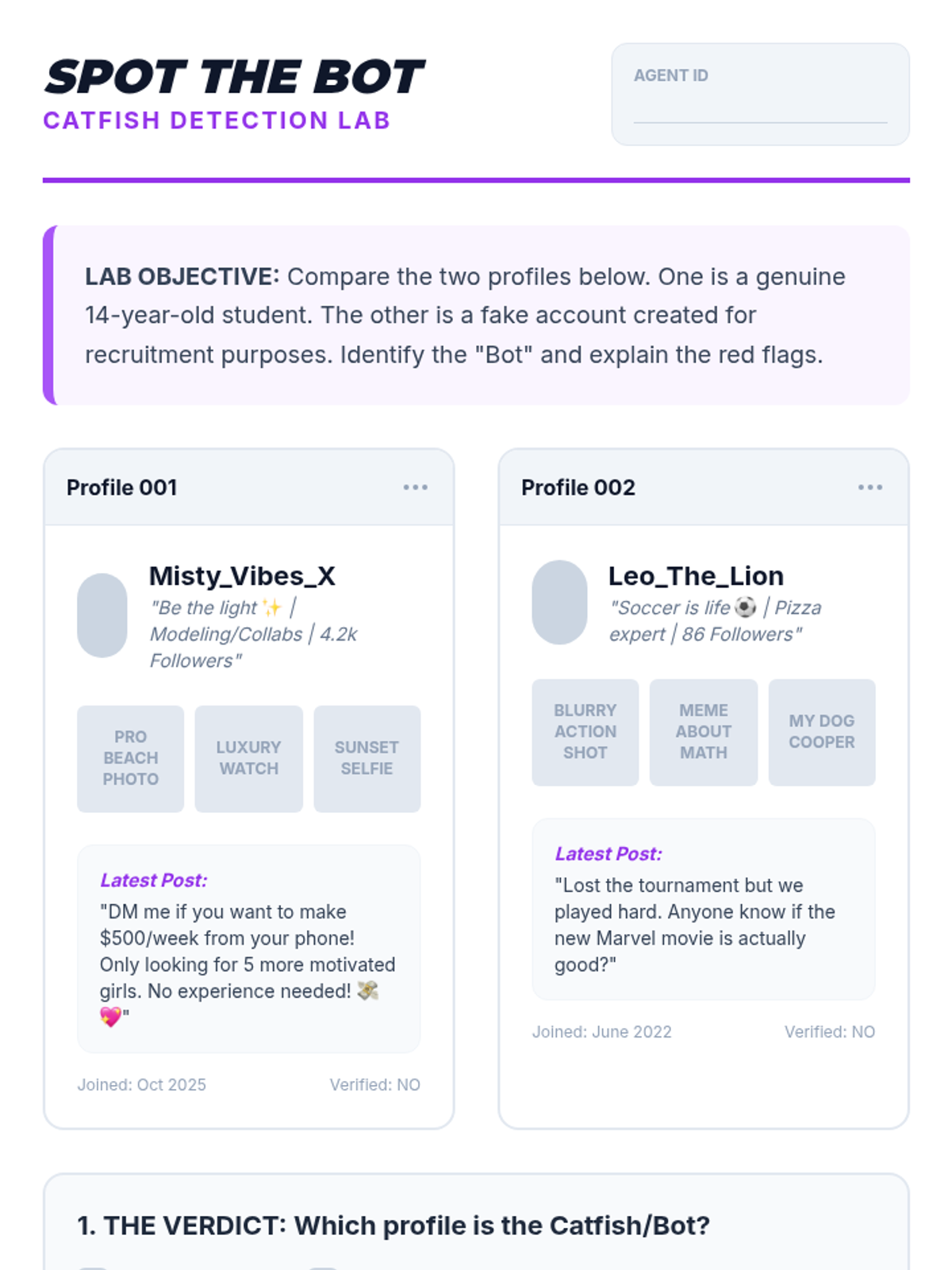
Learners develop the skills to spot inconsistencies in fake profiles and recognize the signs of catfishing used in recruitment attempts.
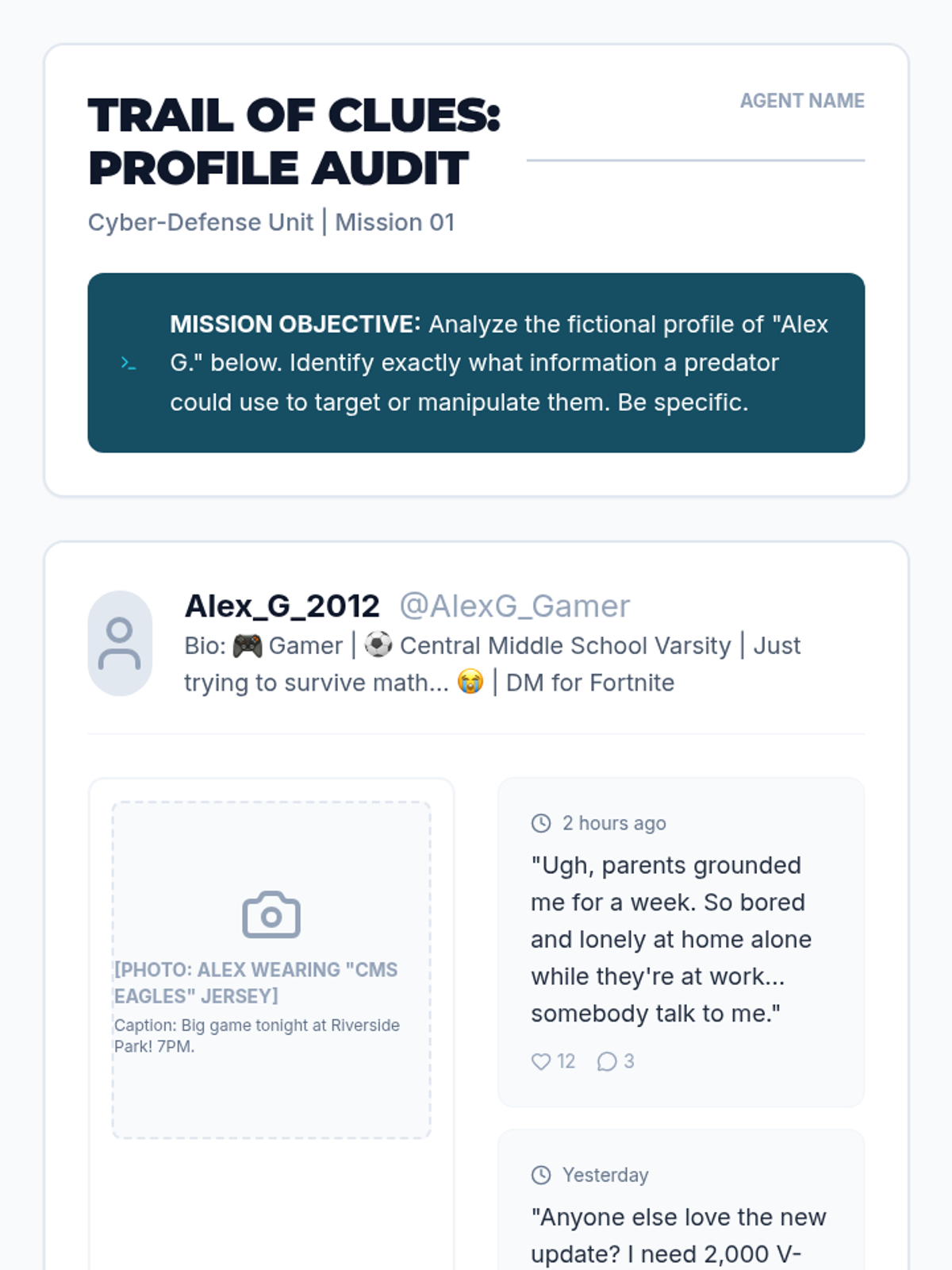
Students audit social media profiles to understand how predators use public digital footprints to target and build rapport with youth.
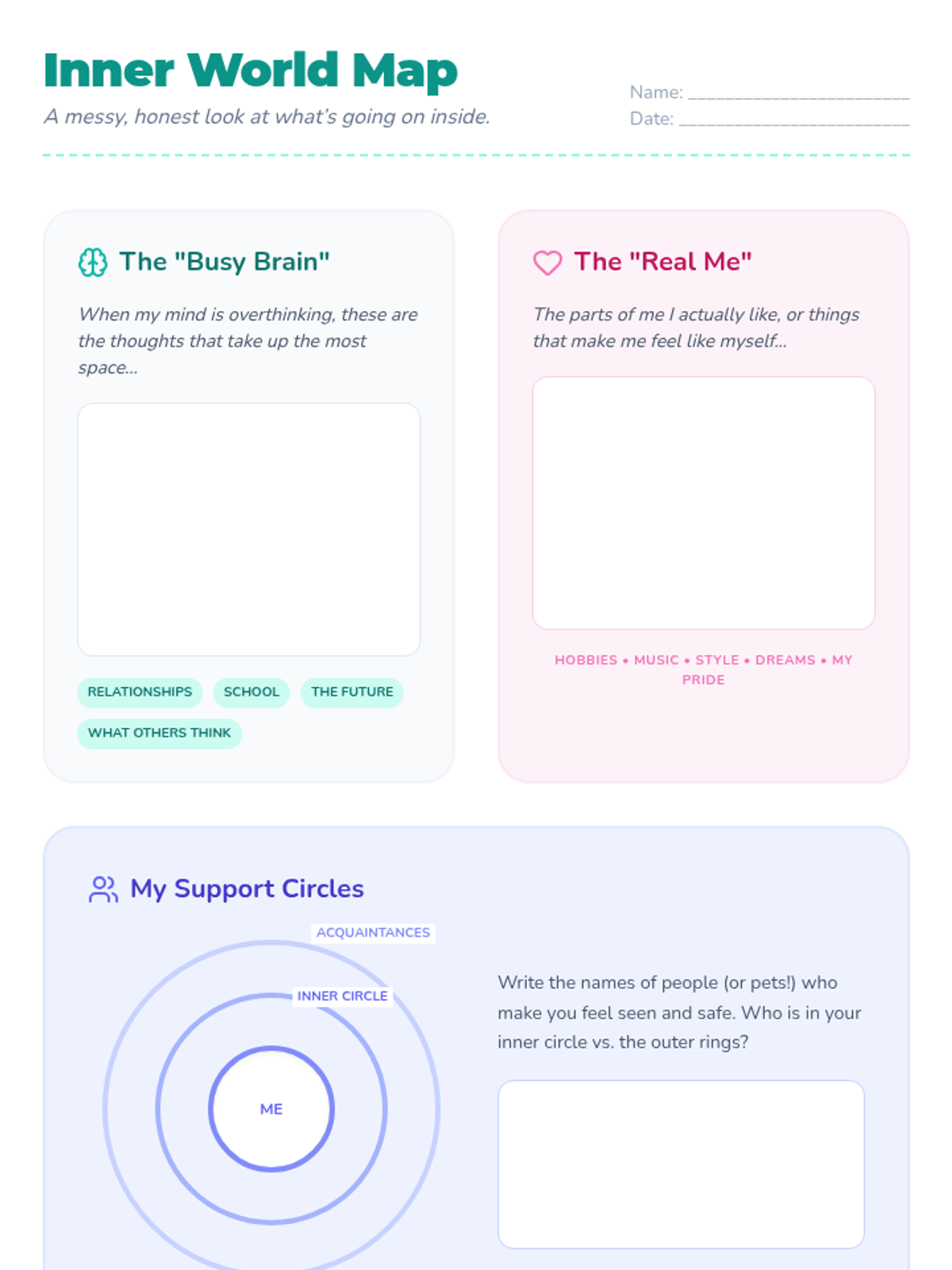
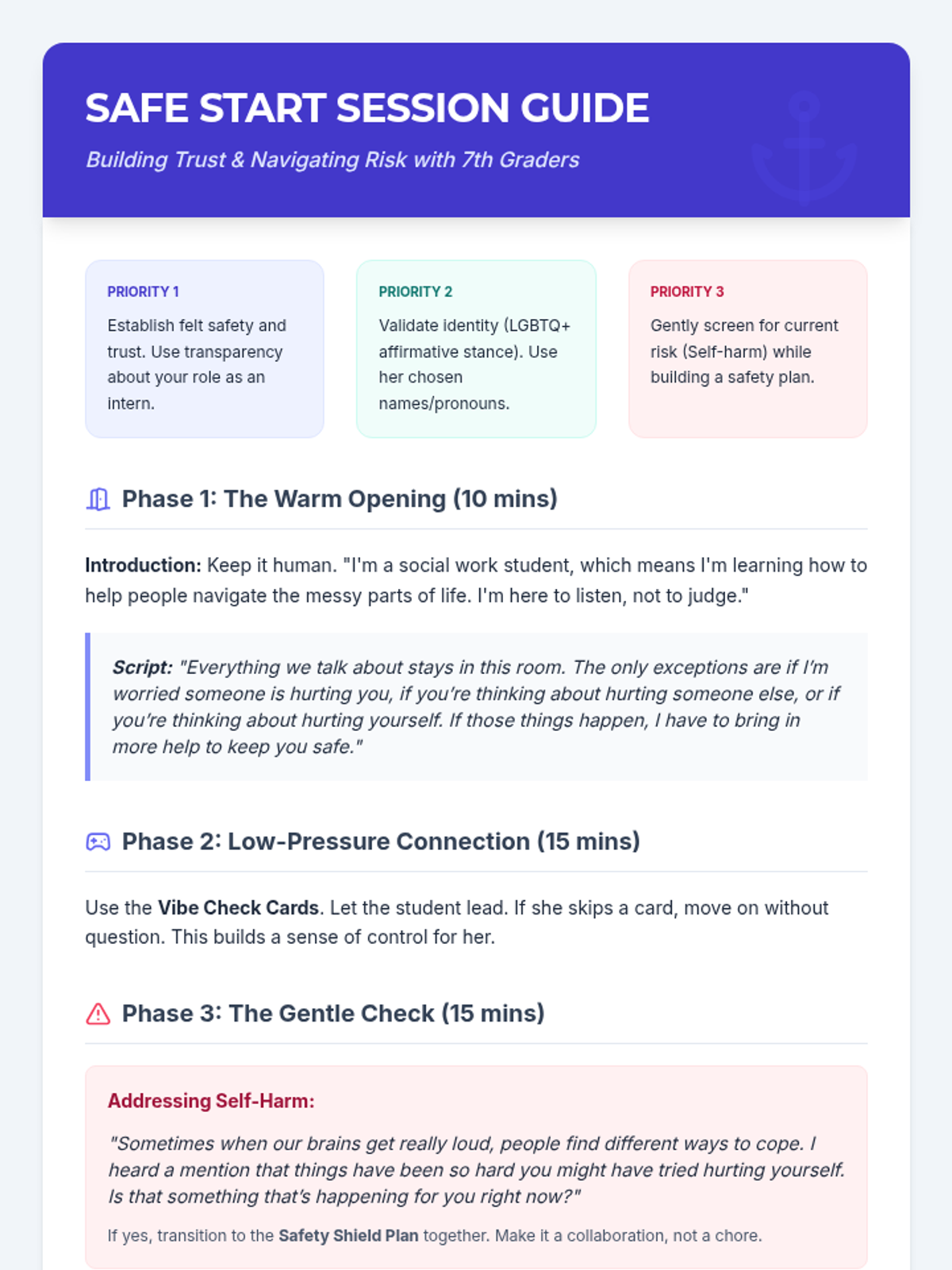
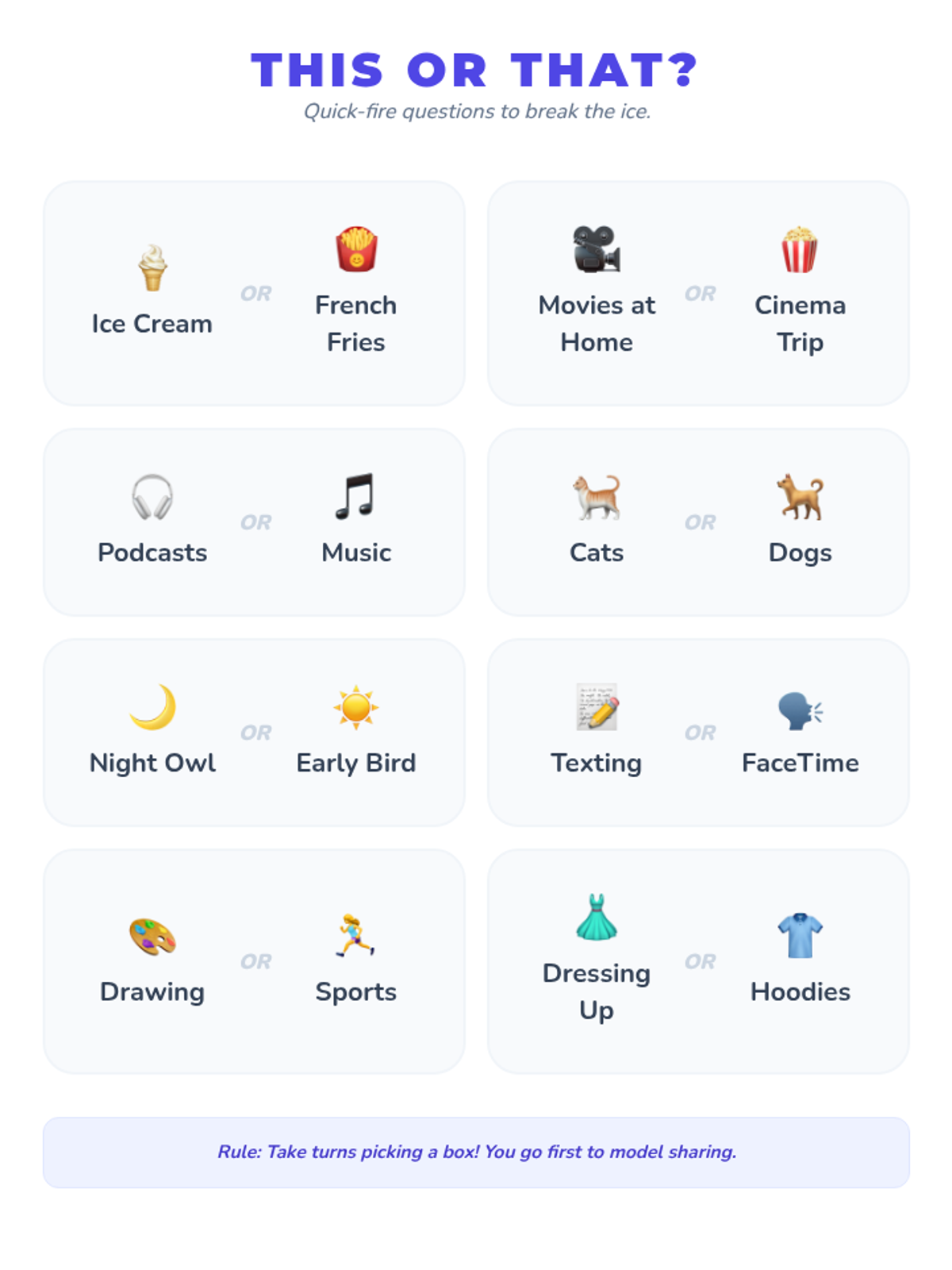
A set of first-session materials for a 7th-grade counseling student, focused on rapport building, identity exploration, and safety planning.
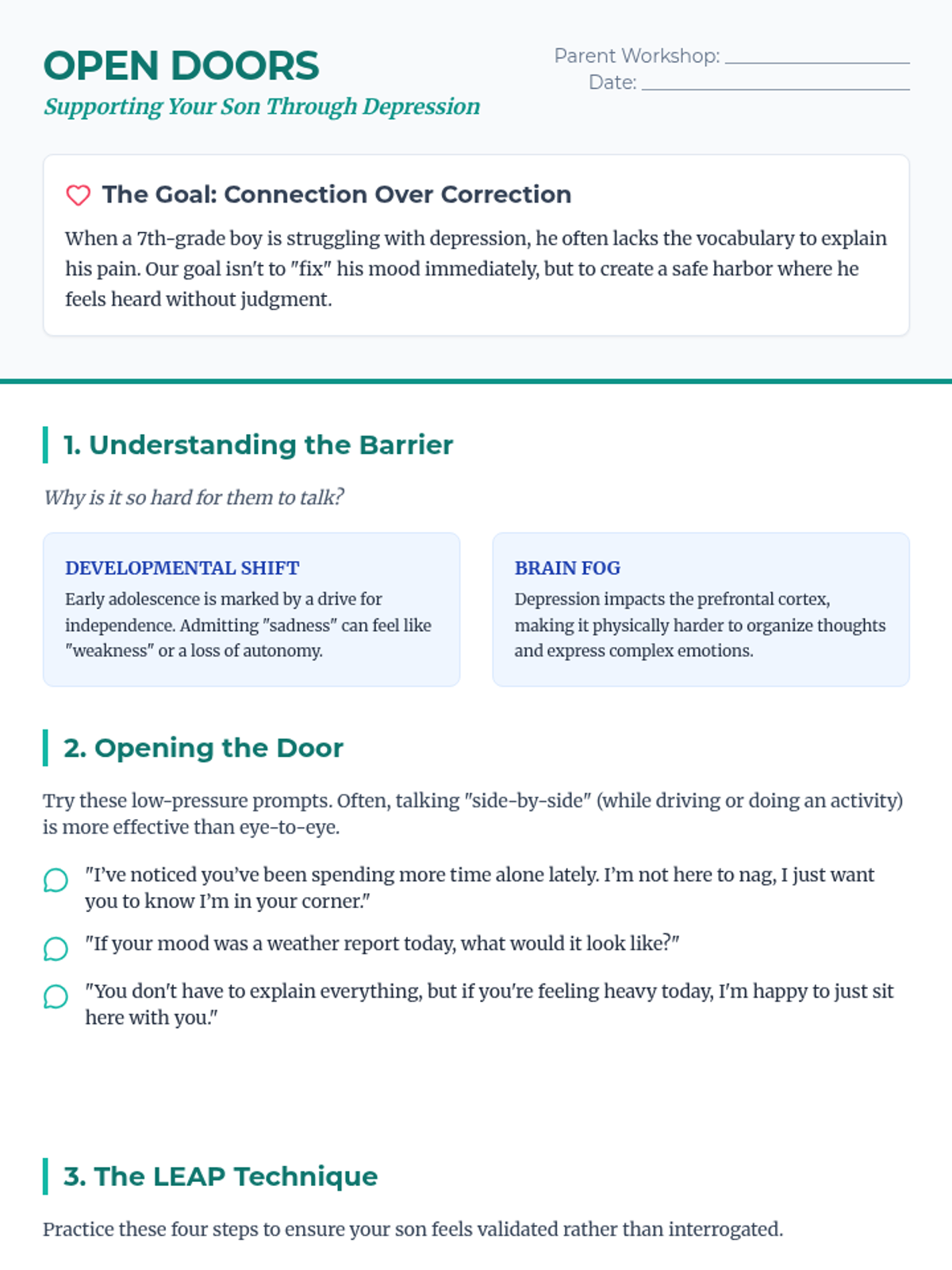
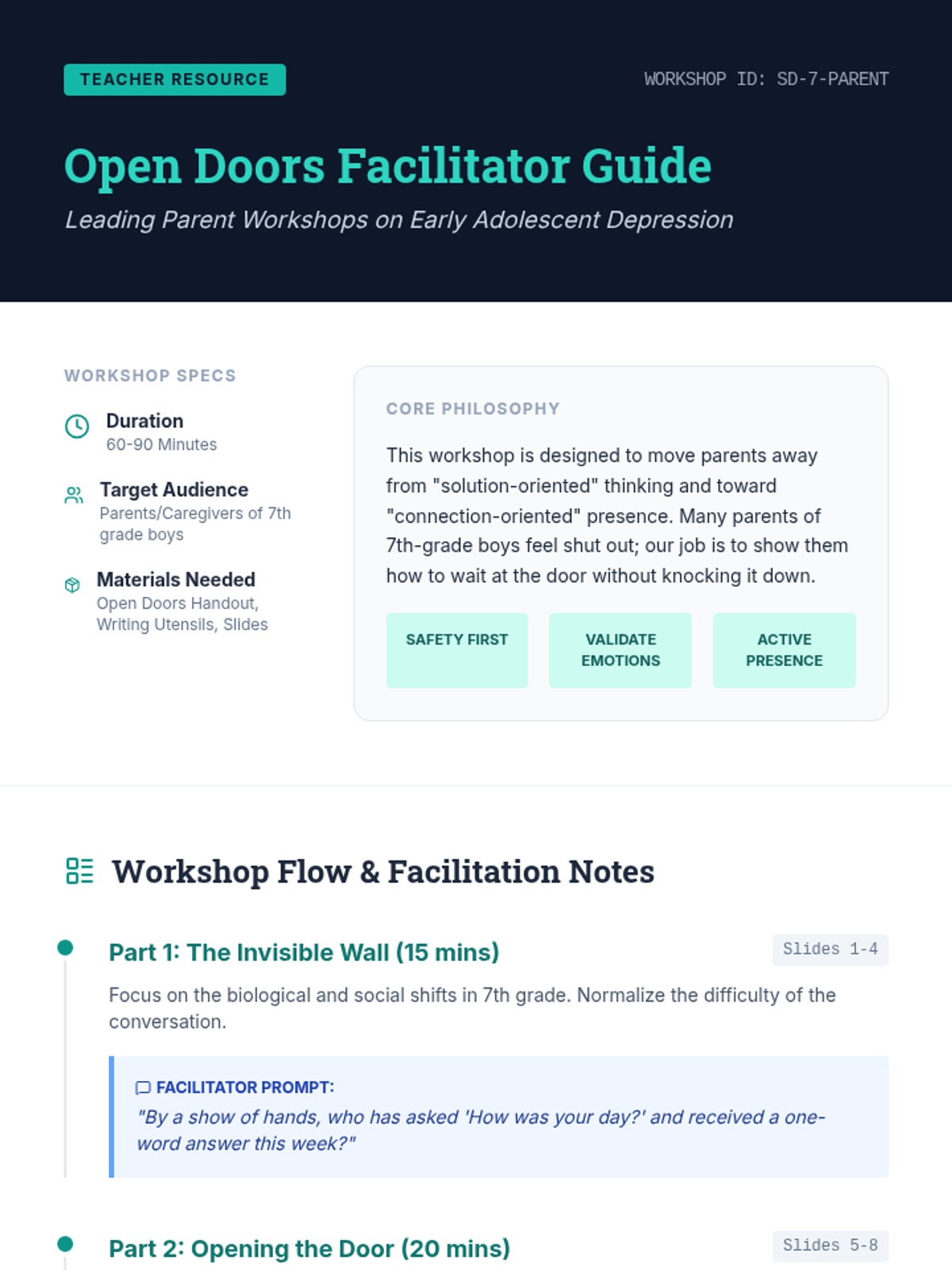
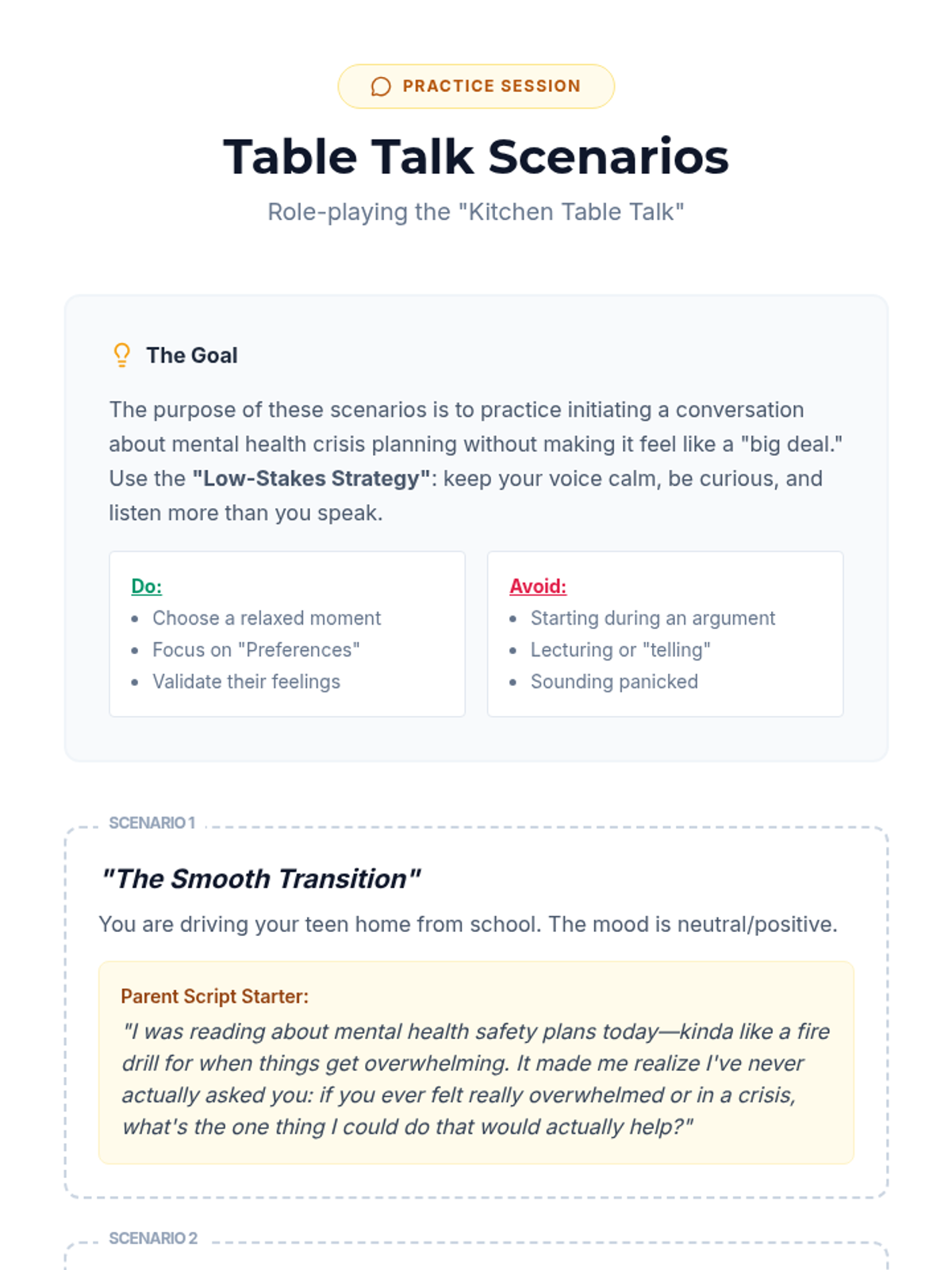
A workshop designed to help parents navigate sensitive conversations with their 7th-grade sons about depression, focusing on empathy, active listening, and building trust.
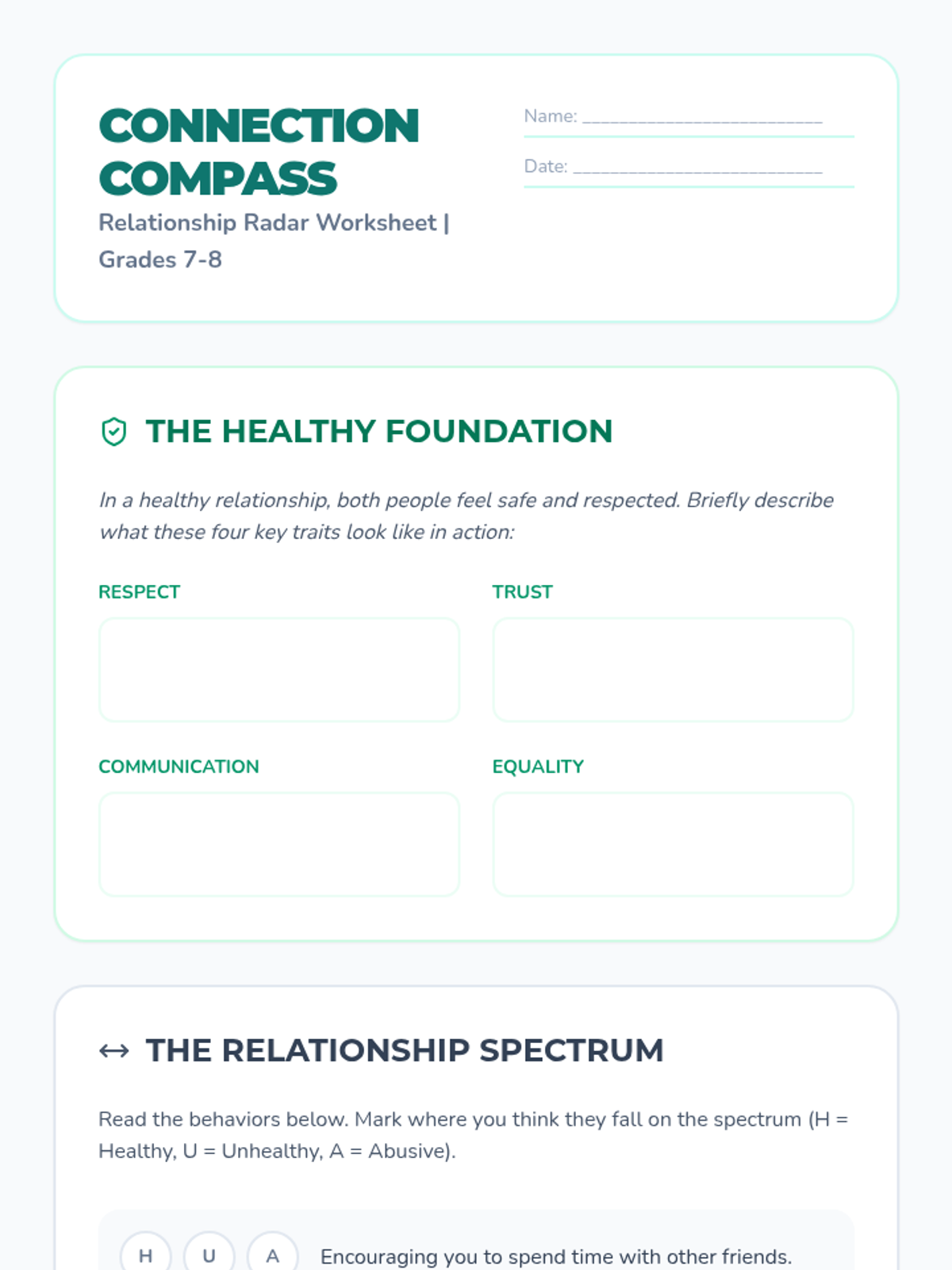
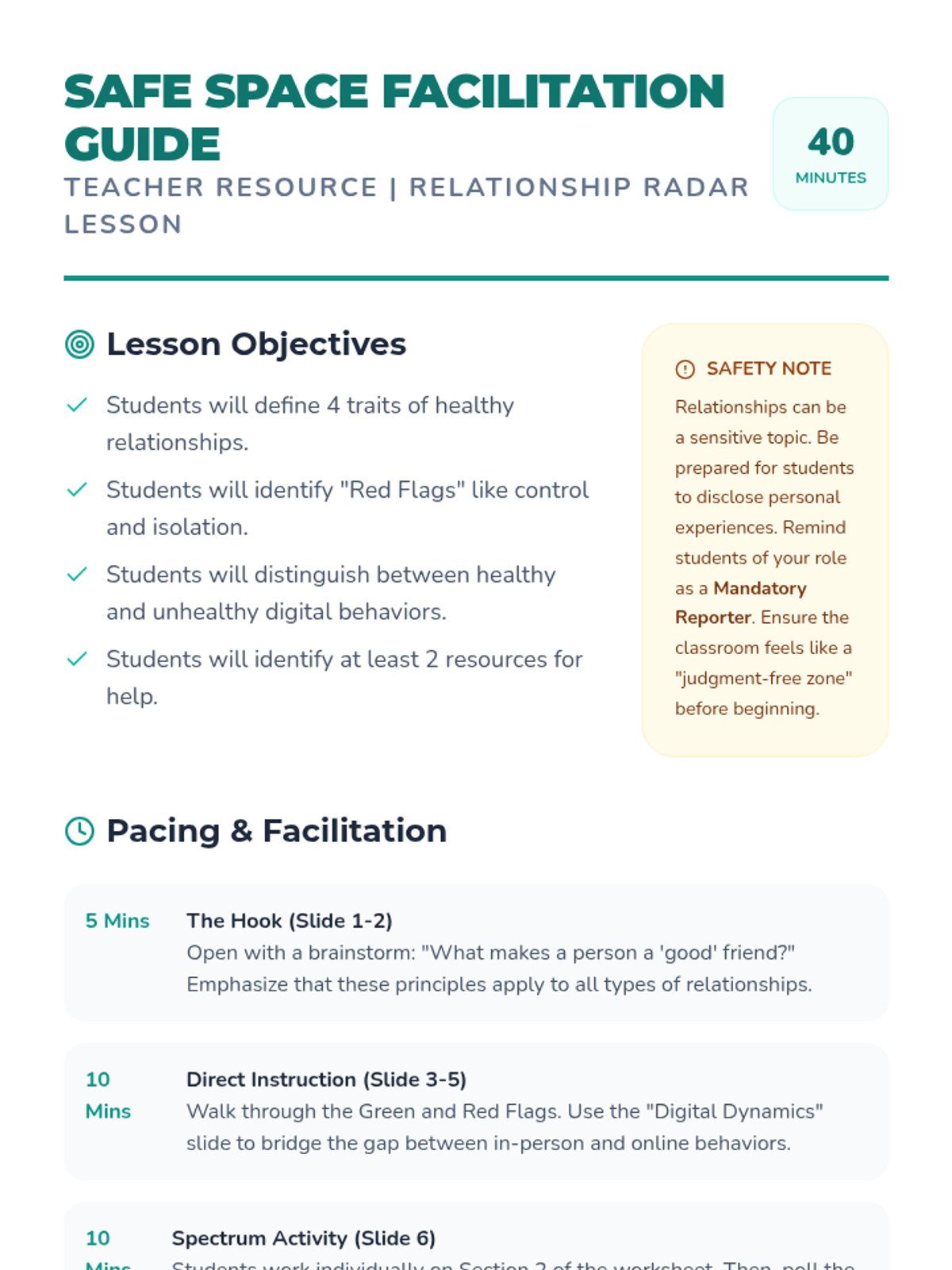
A 40-minute Social-Emotional Learning lesson for grades 7-8 focused on identifying healthy and unhealthy relationship patterns. Students explore the characteristics of respect and trust, recognize red flags like control and isolation, and discuss the nuances of digital-age relationships.
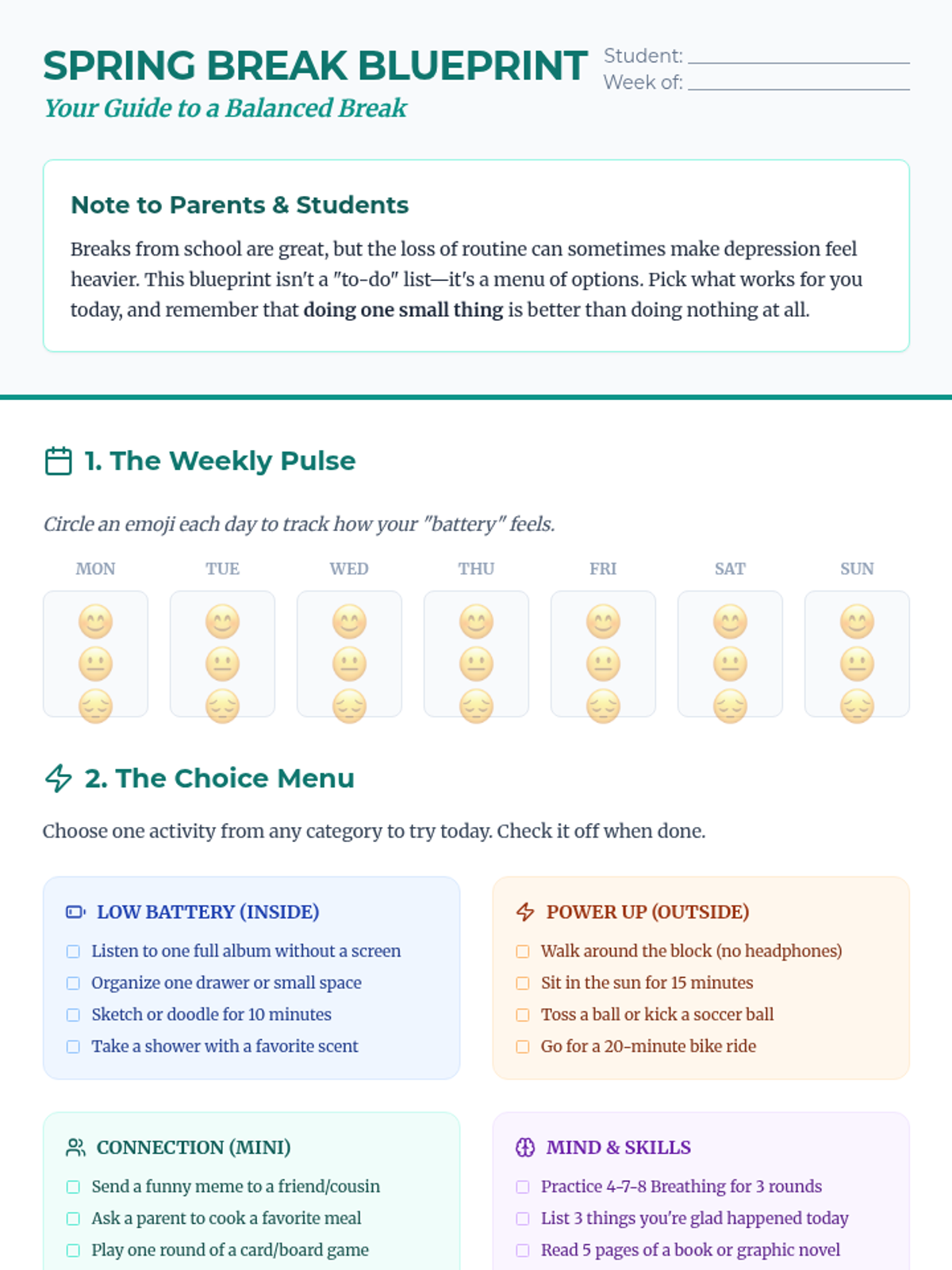
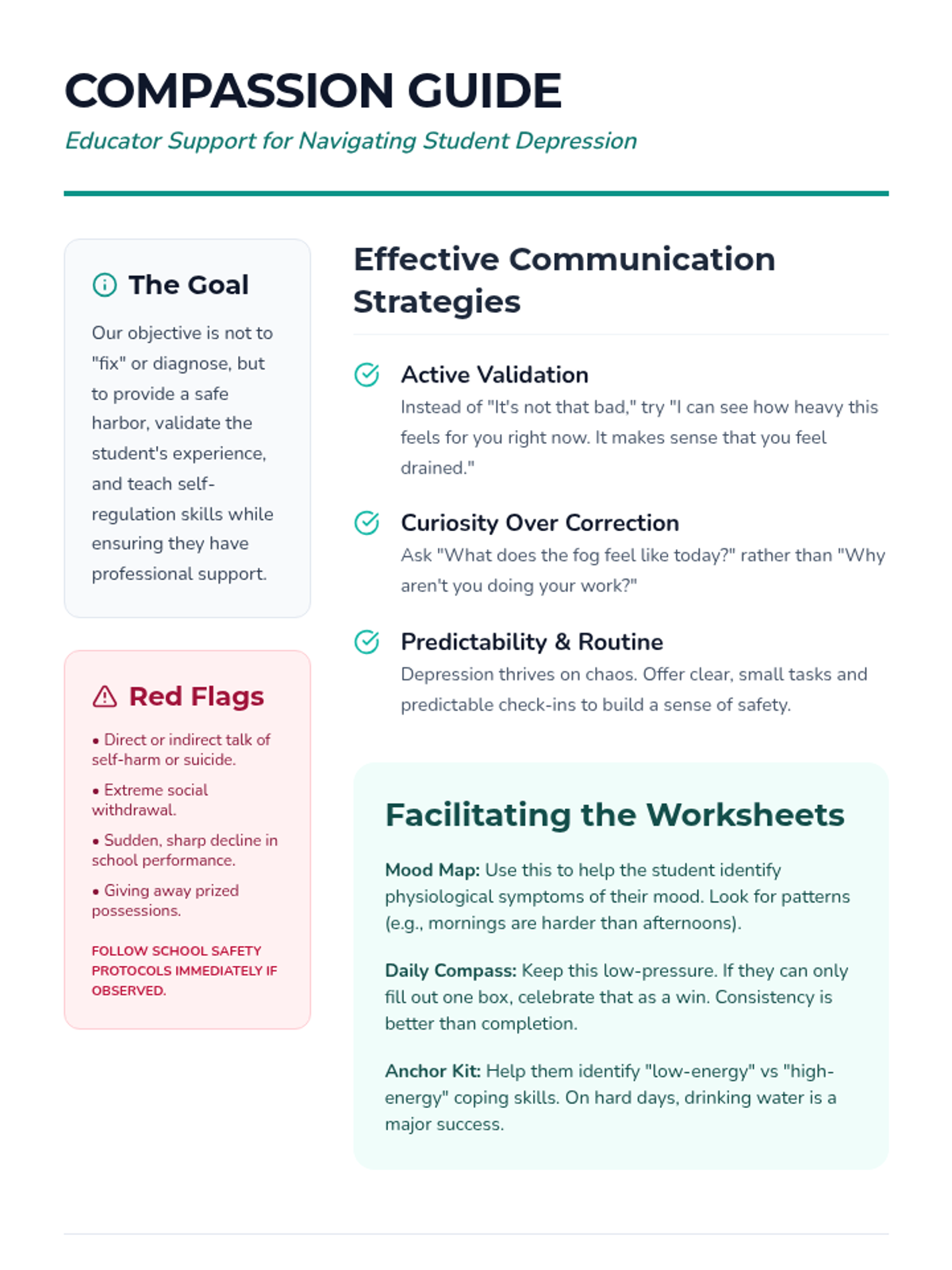
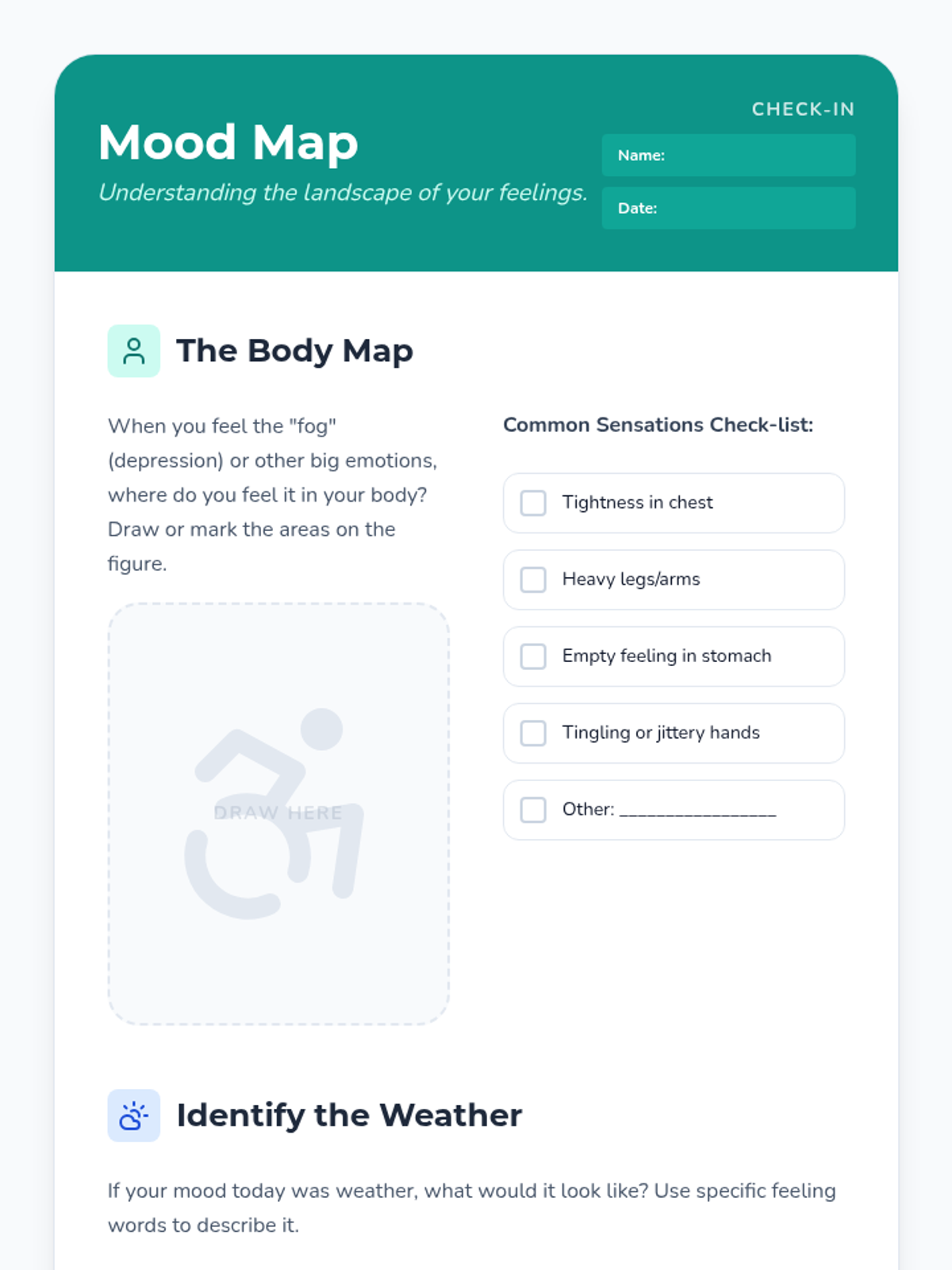
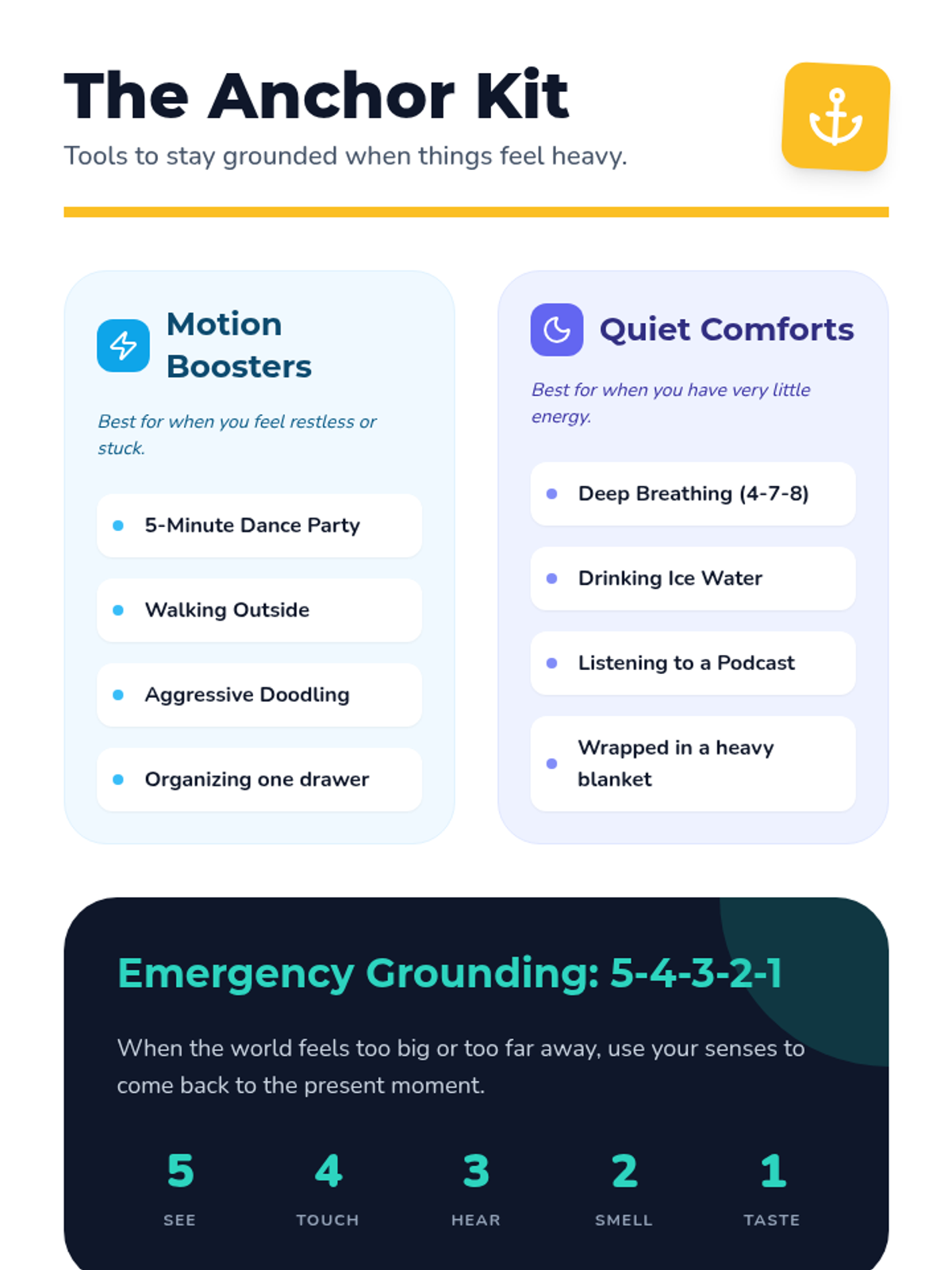
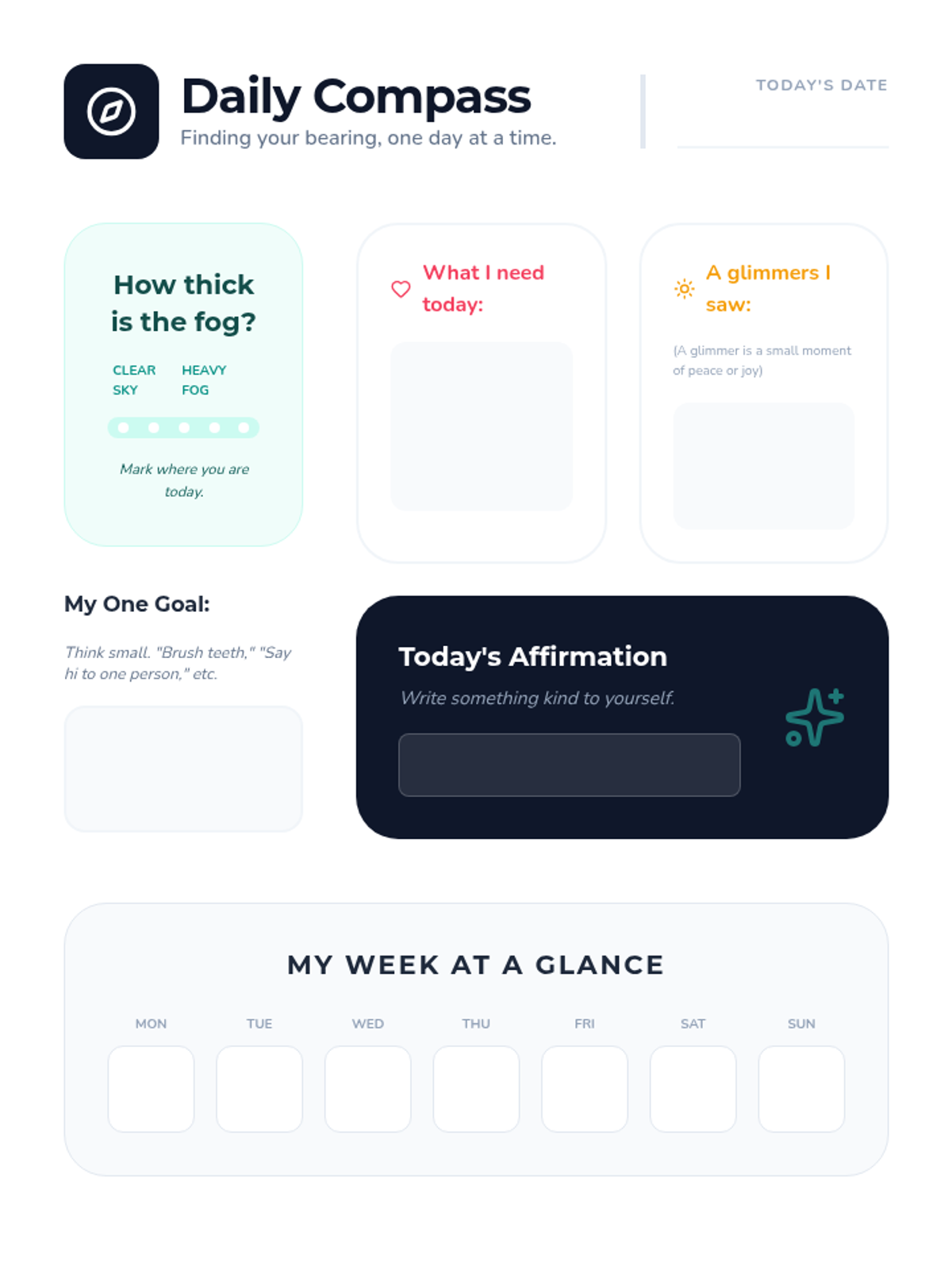
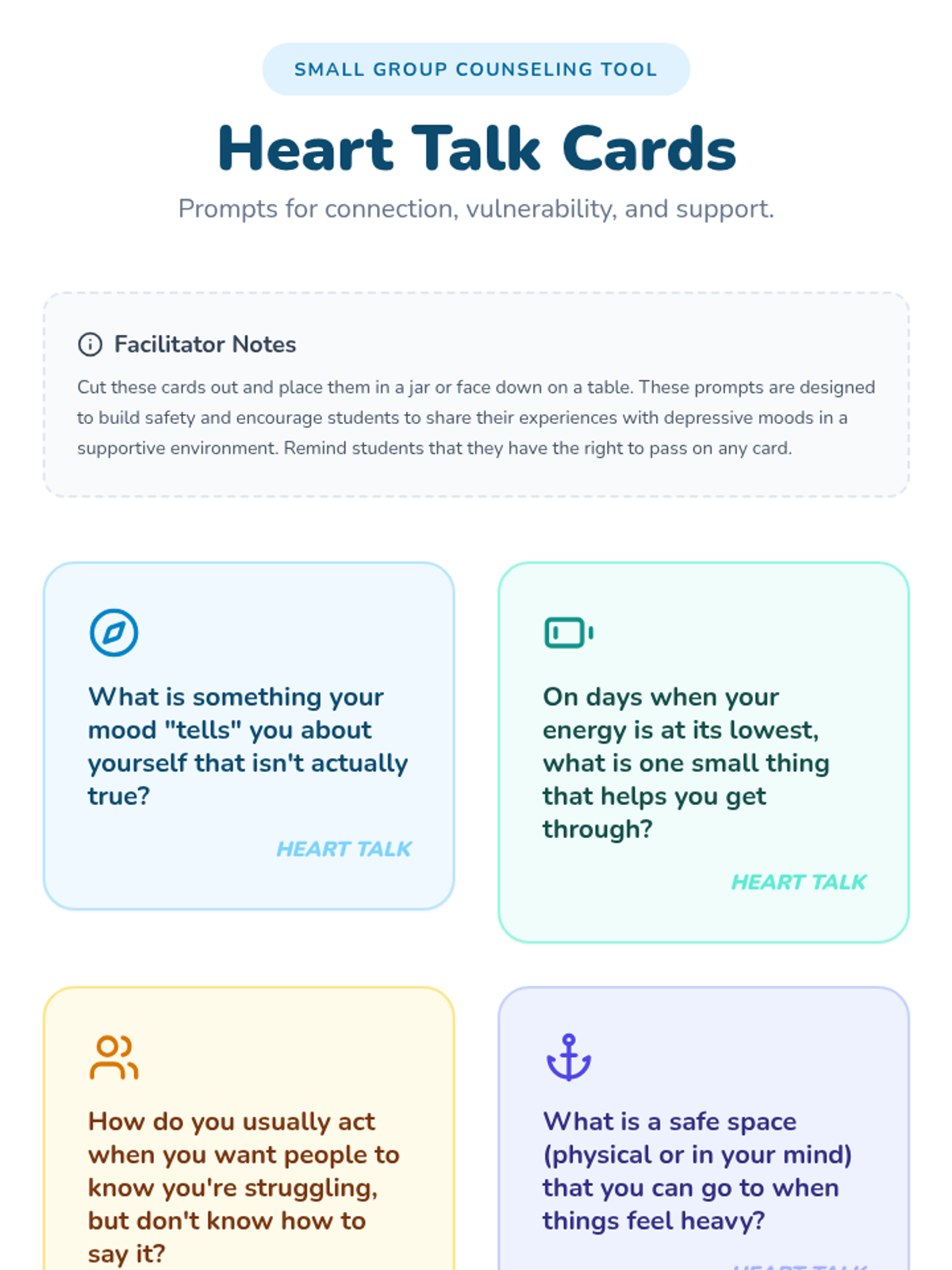
A supportive lesson for 7th-grade students to understand depression, identify emotions, and build a toolkit of coping strategies and self-care practices.
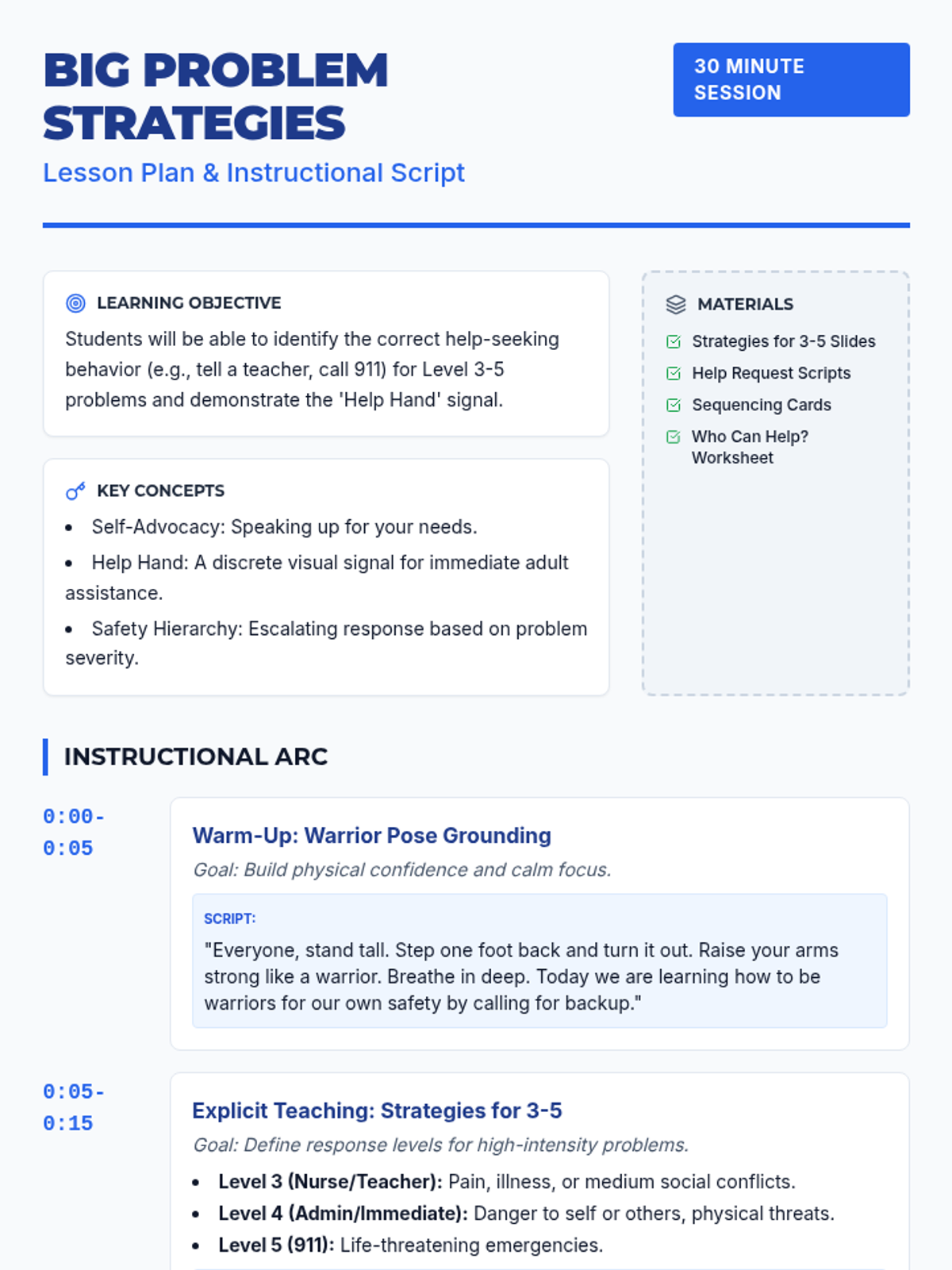
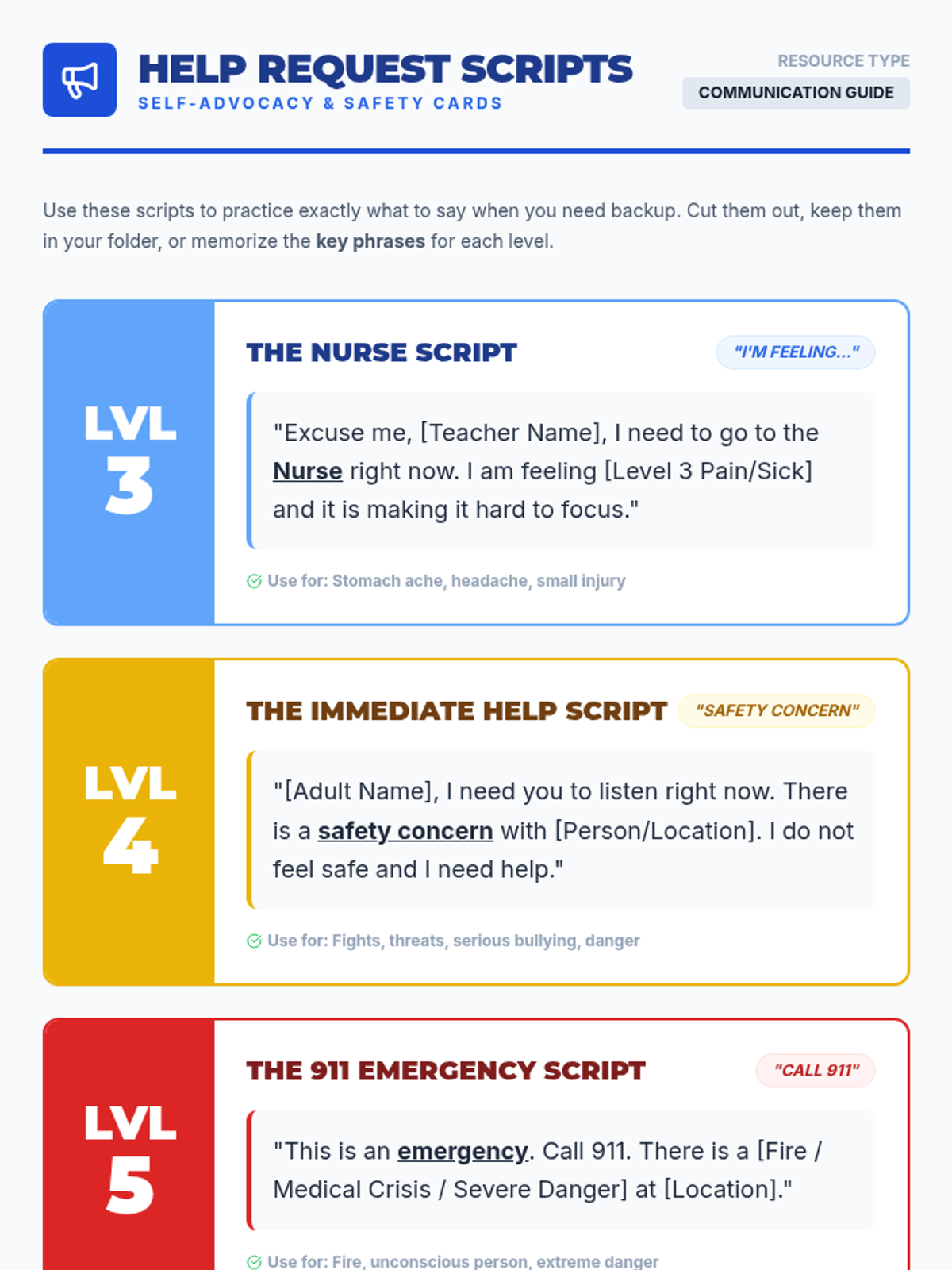
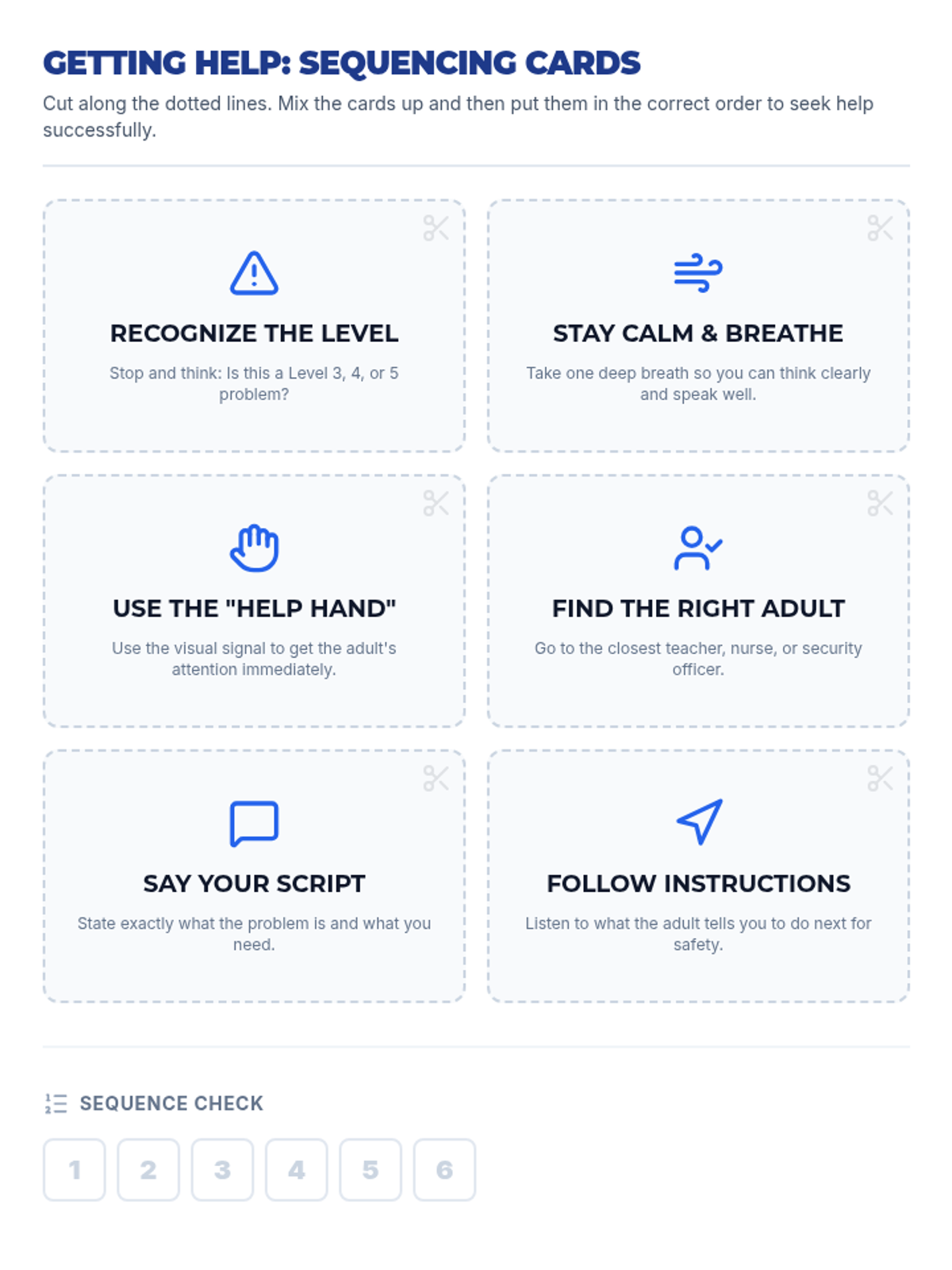
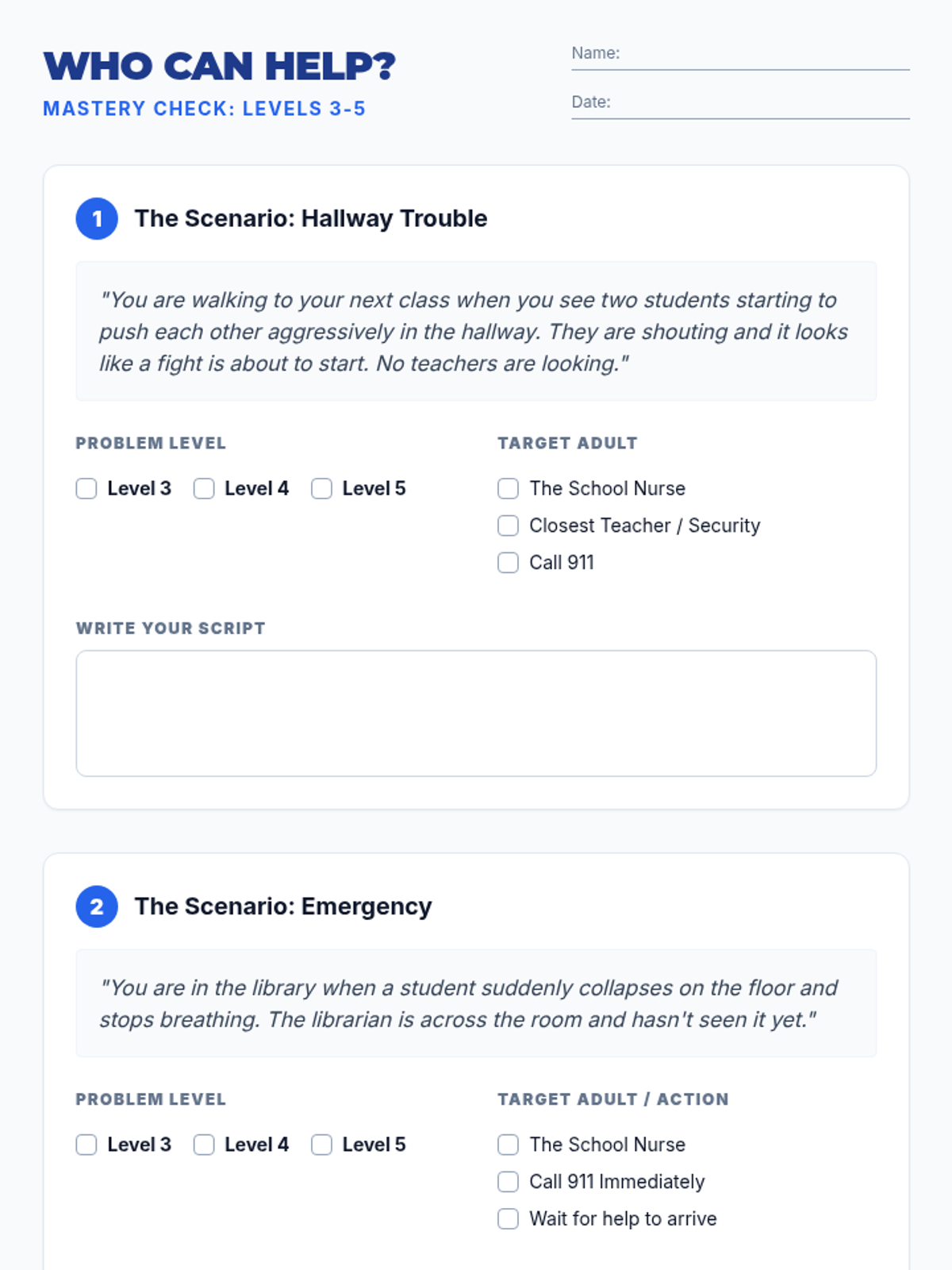
A 30-minute life skills lesson focused on identifying and executing help-seeking strategies for high-intensity (Level 3-5) problems, including using the 'Help Hand' signal and scripts for different emergency levels.
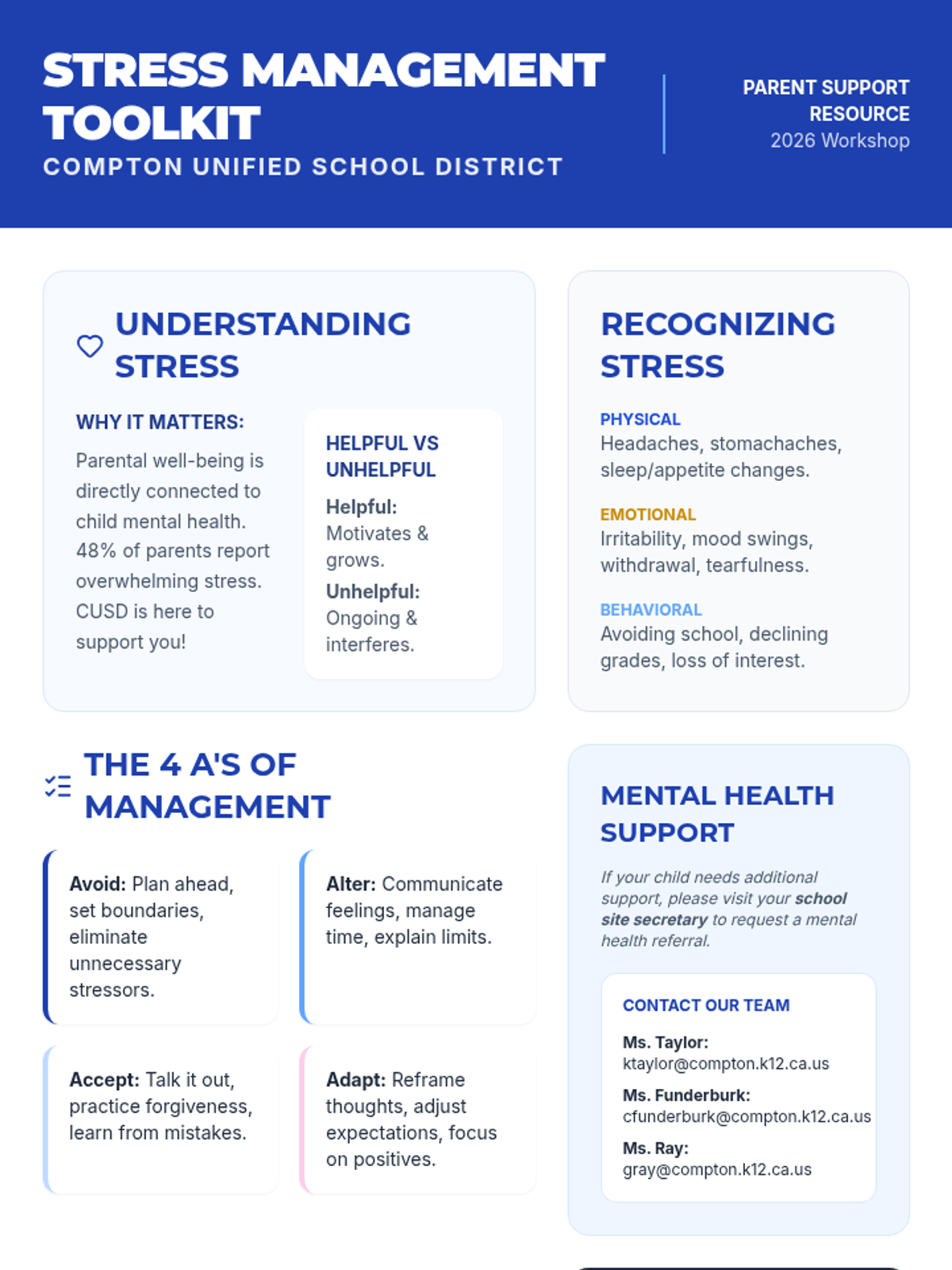
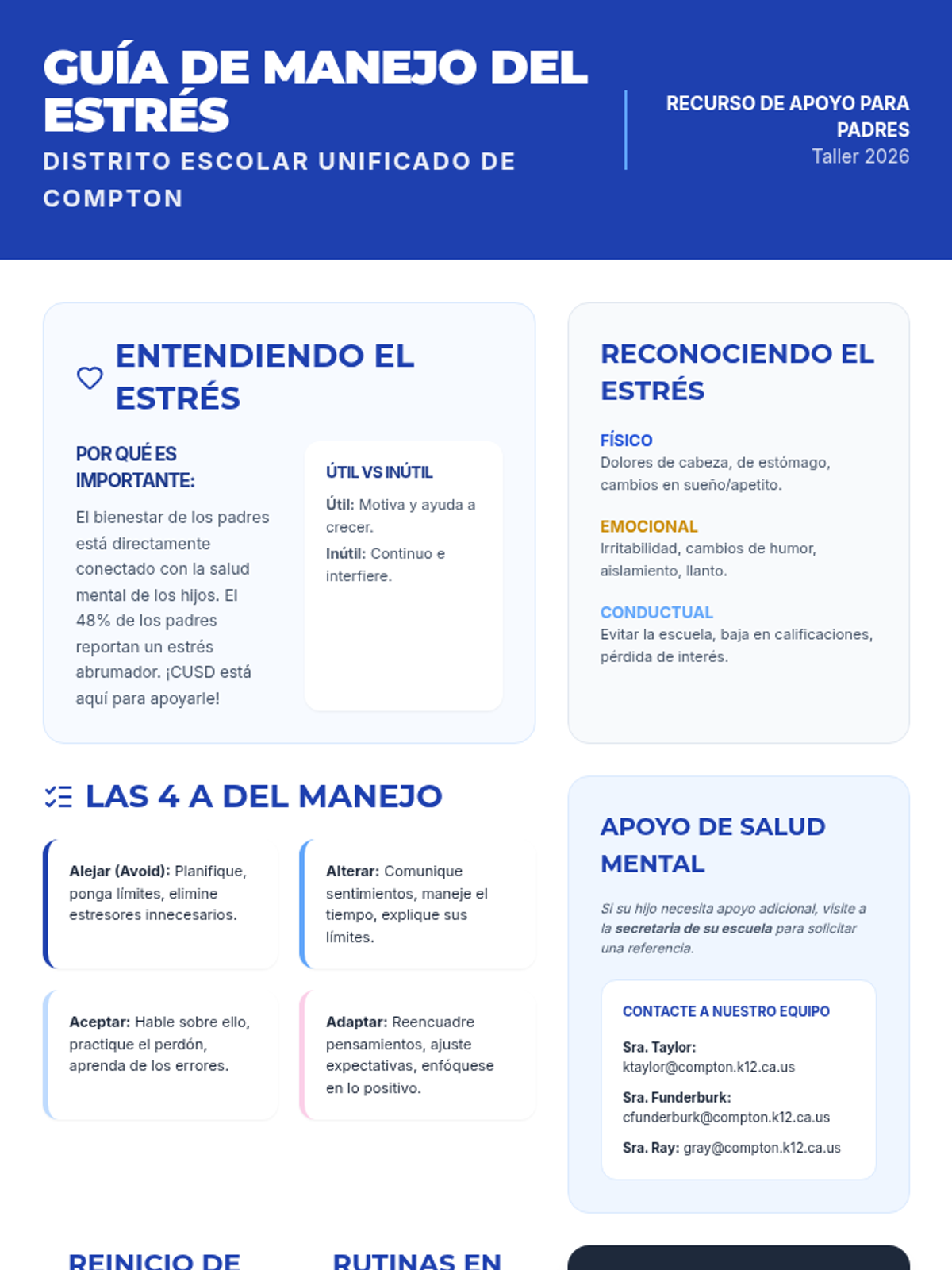
This lesson provides parents and caregivers with tools to distinguish between helpful and harmful stress, apply the 4 A's of stress management, and practice relaxation techniques with their children.
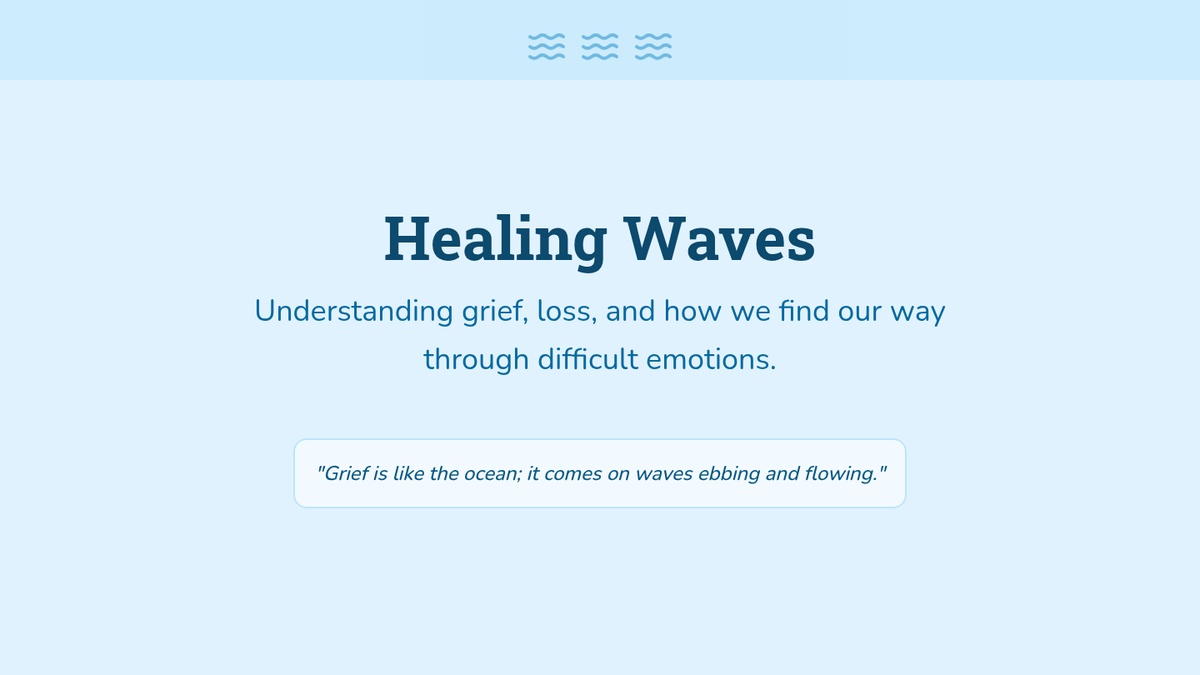
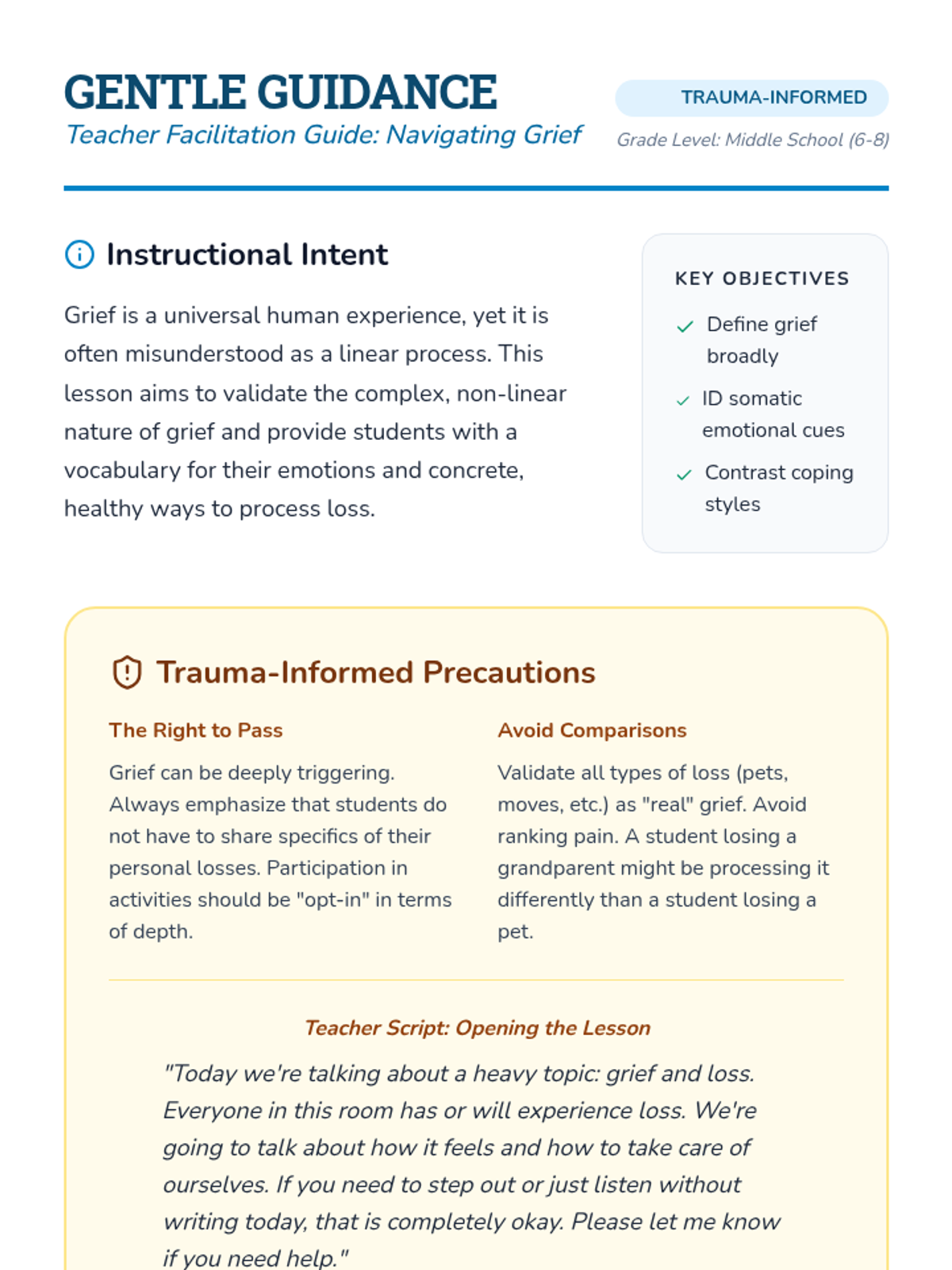
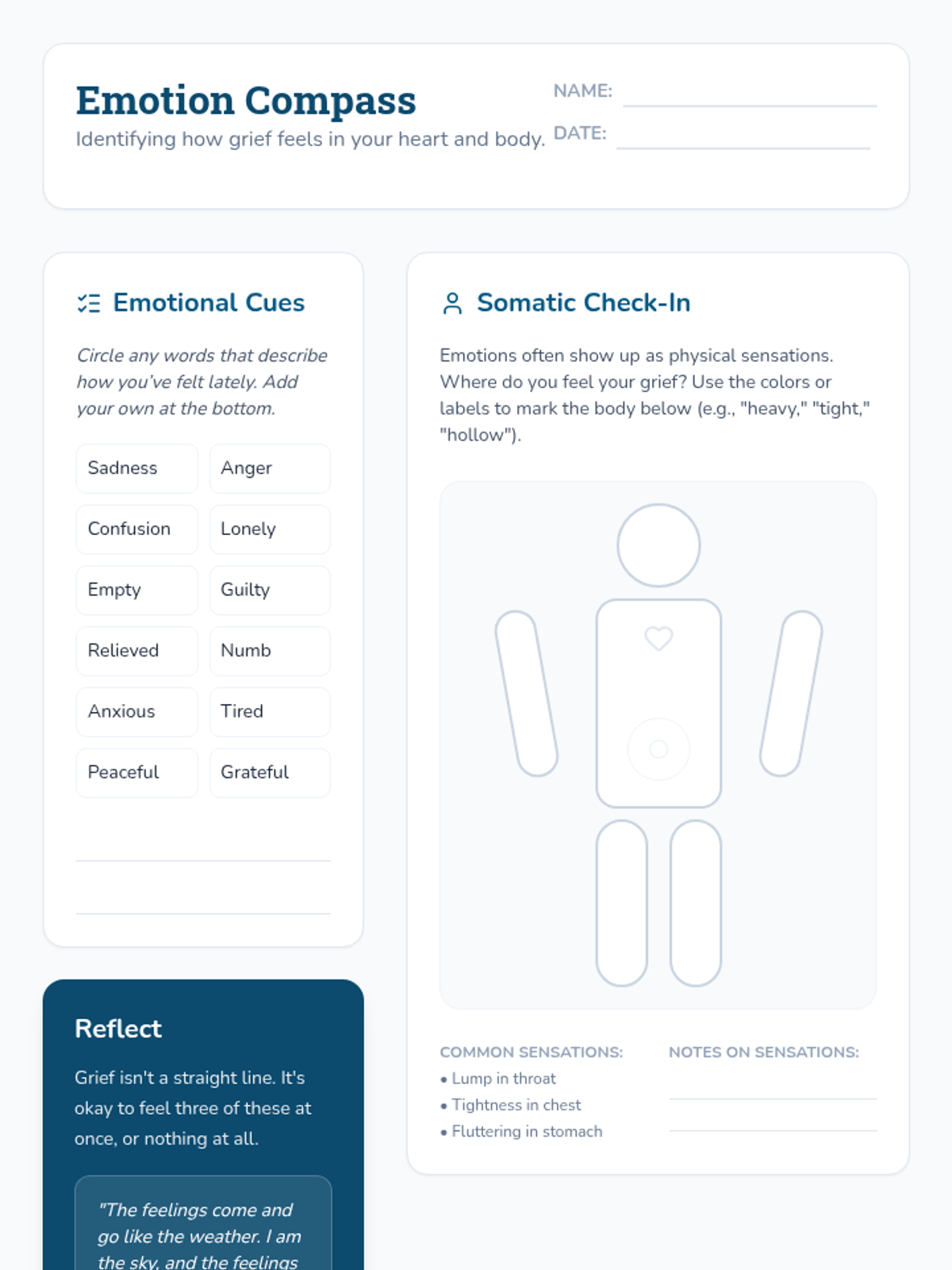
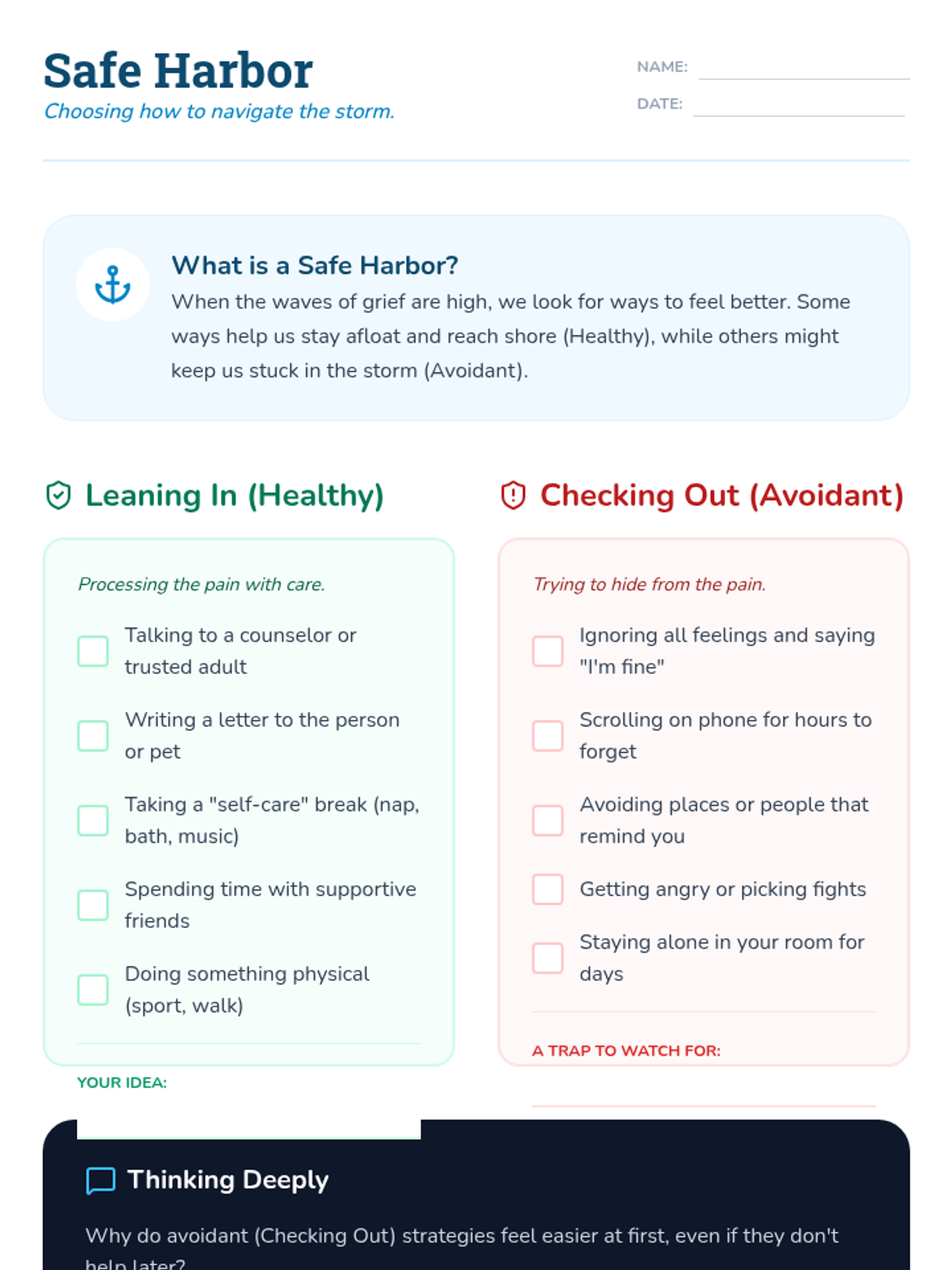
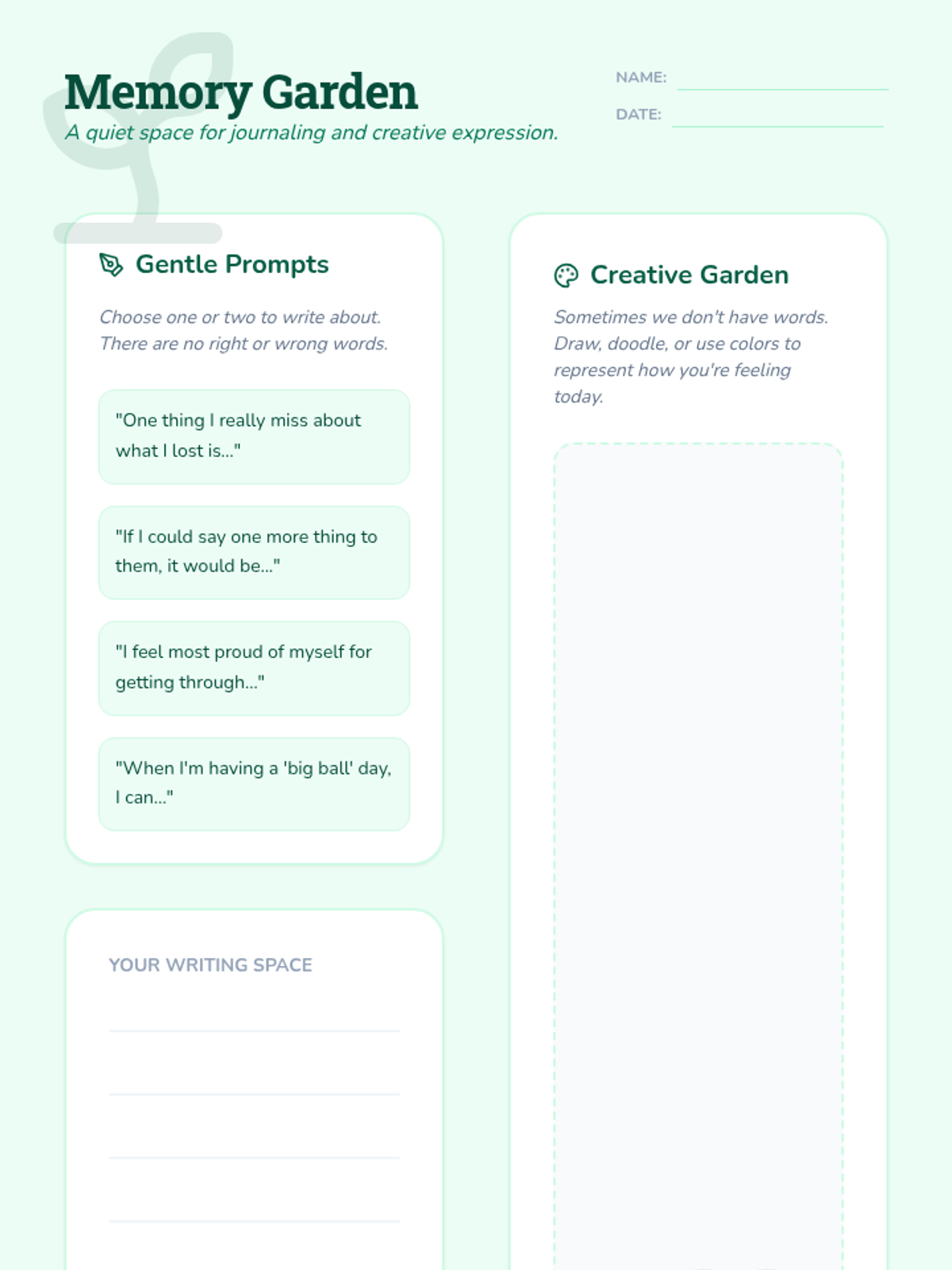
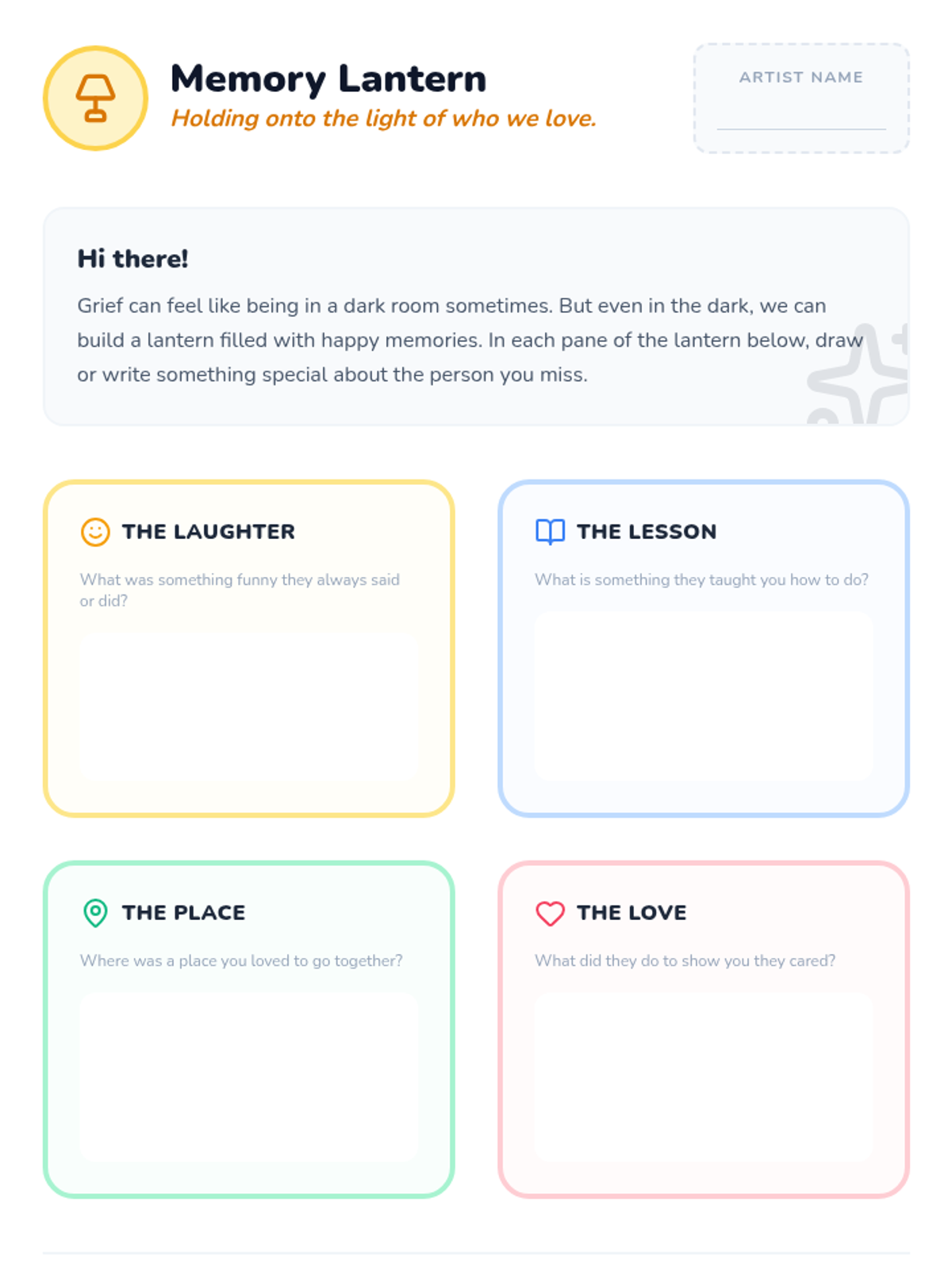
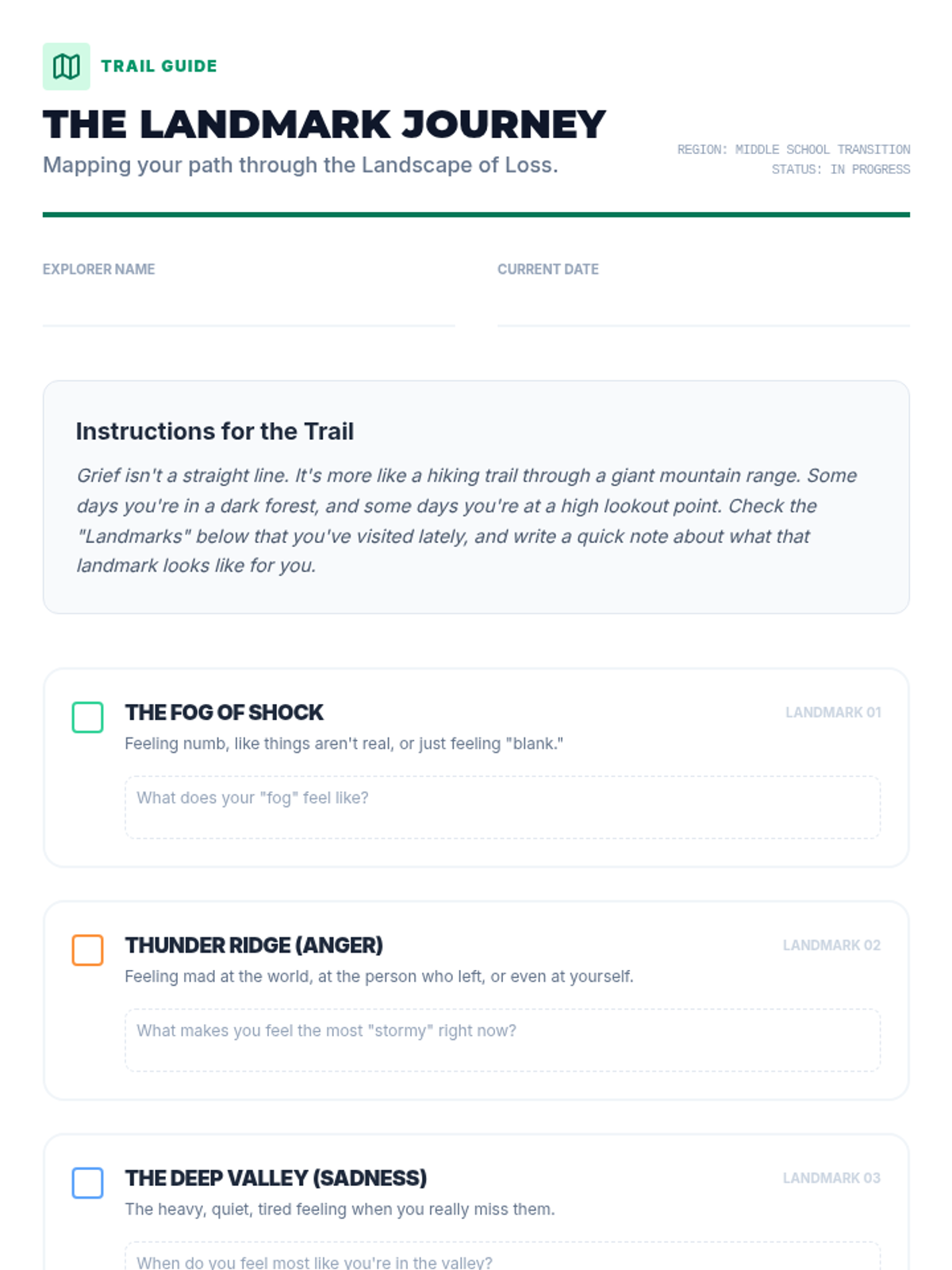
A trauma-informed SEL lesson designed to help middle schoolers understand grief as a natural process, identify complex emotions, and develop healthy coping strategies through creative expression and discussion.
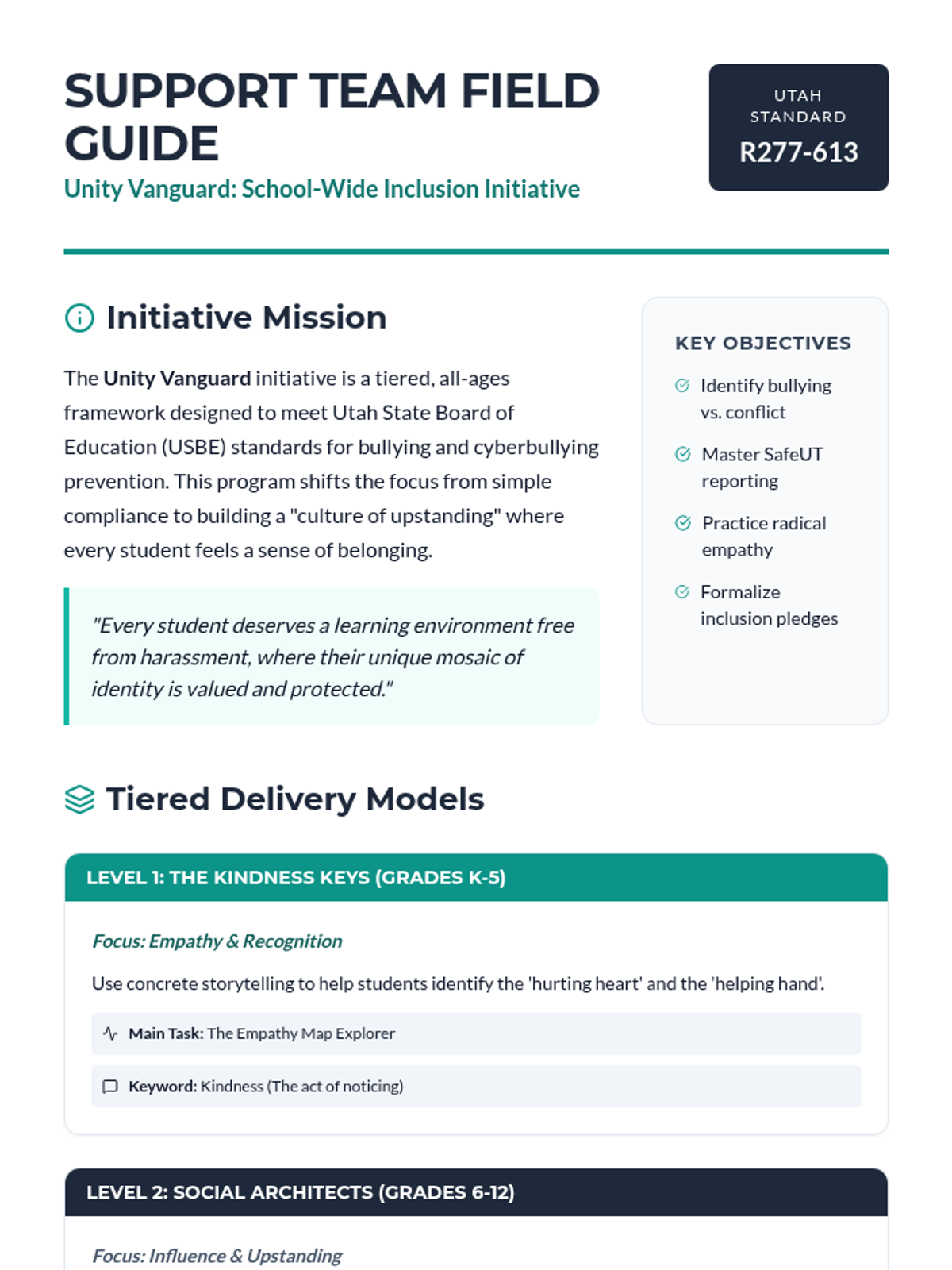
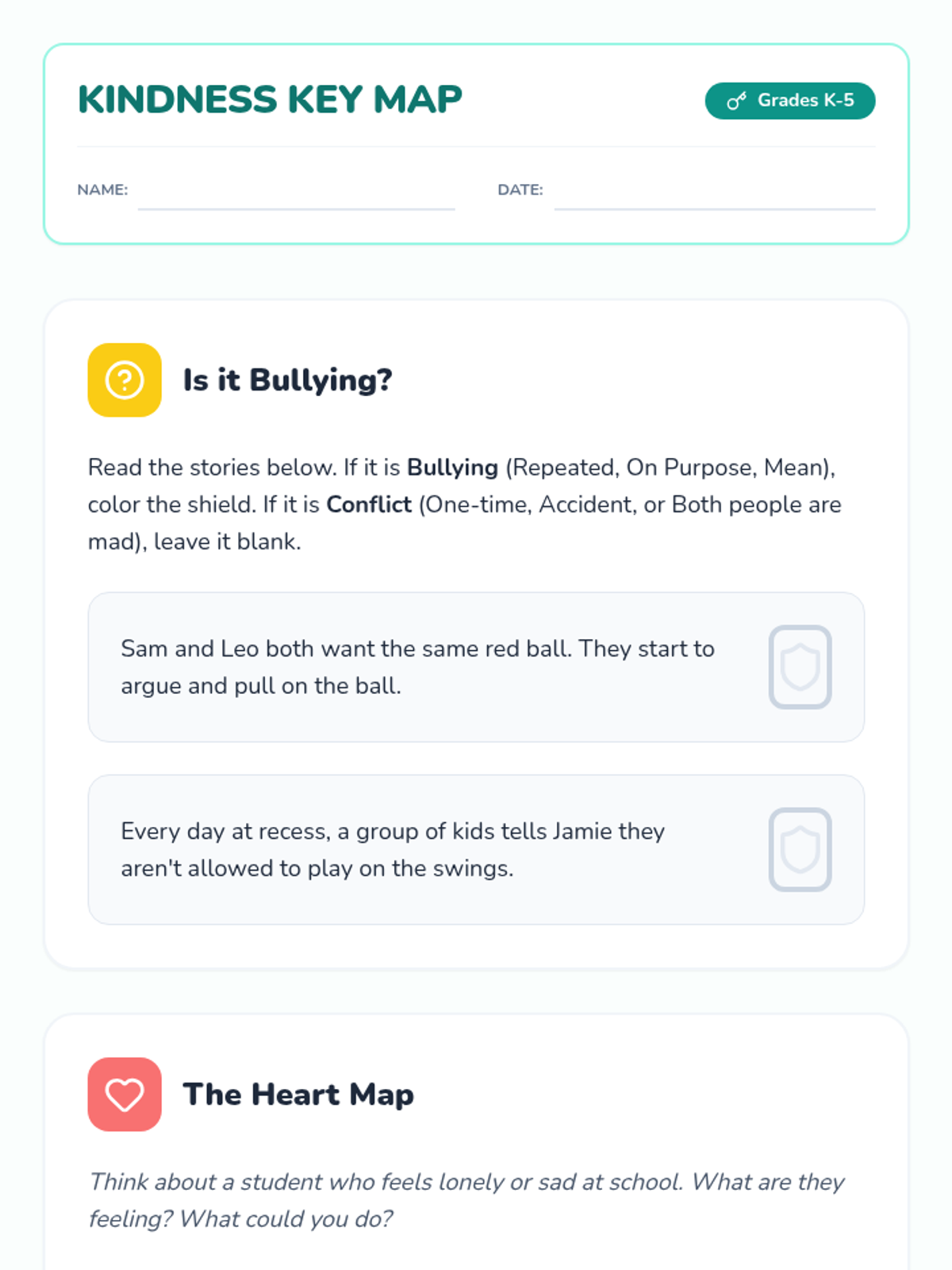
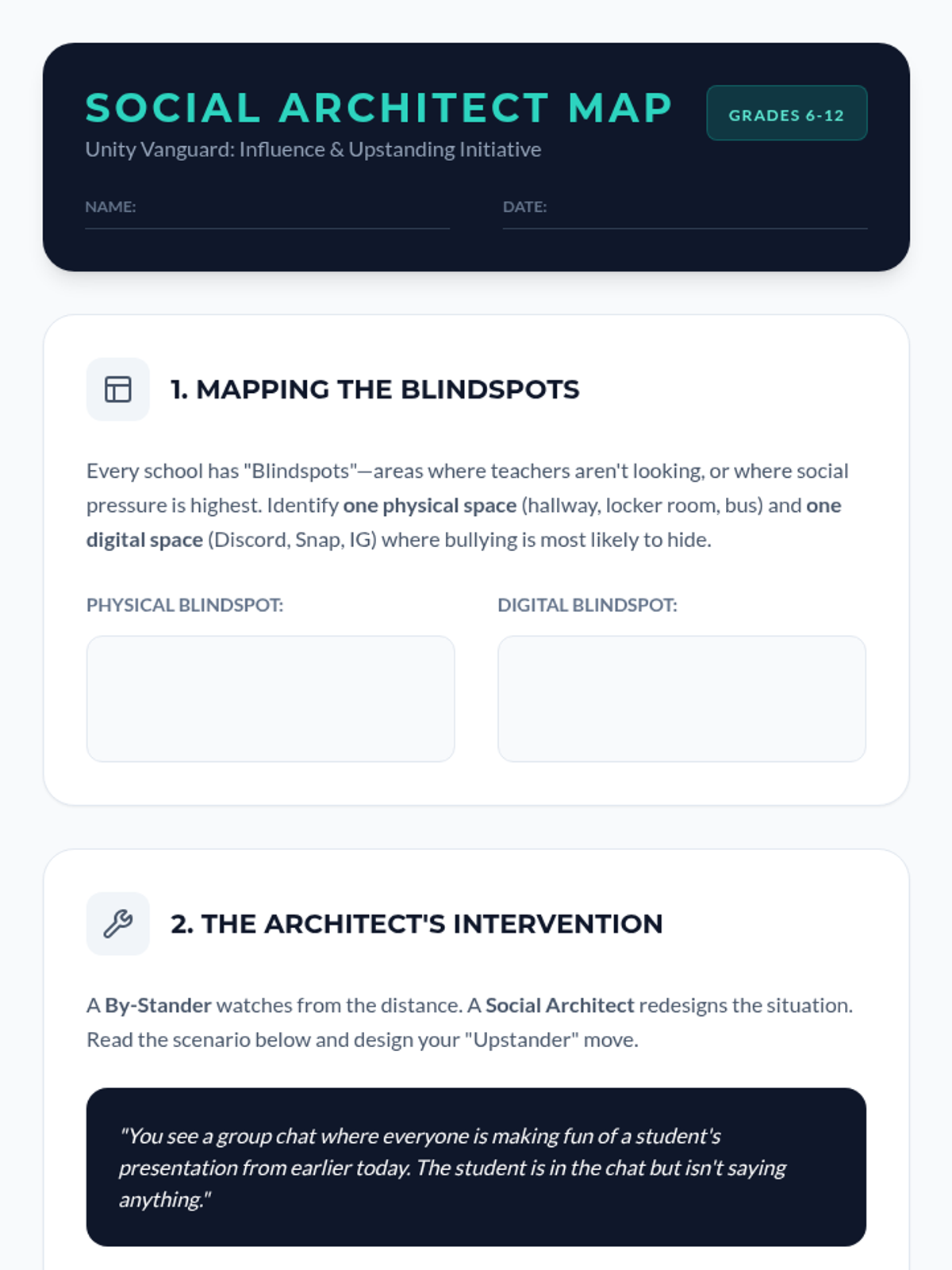
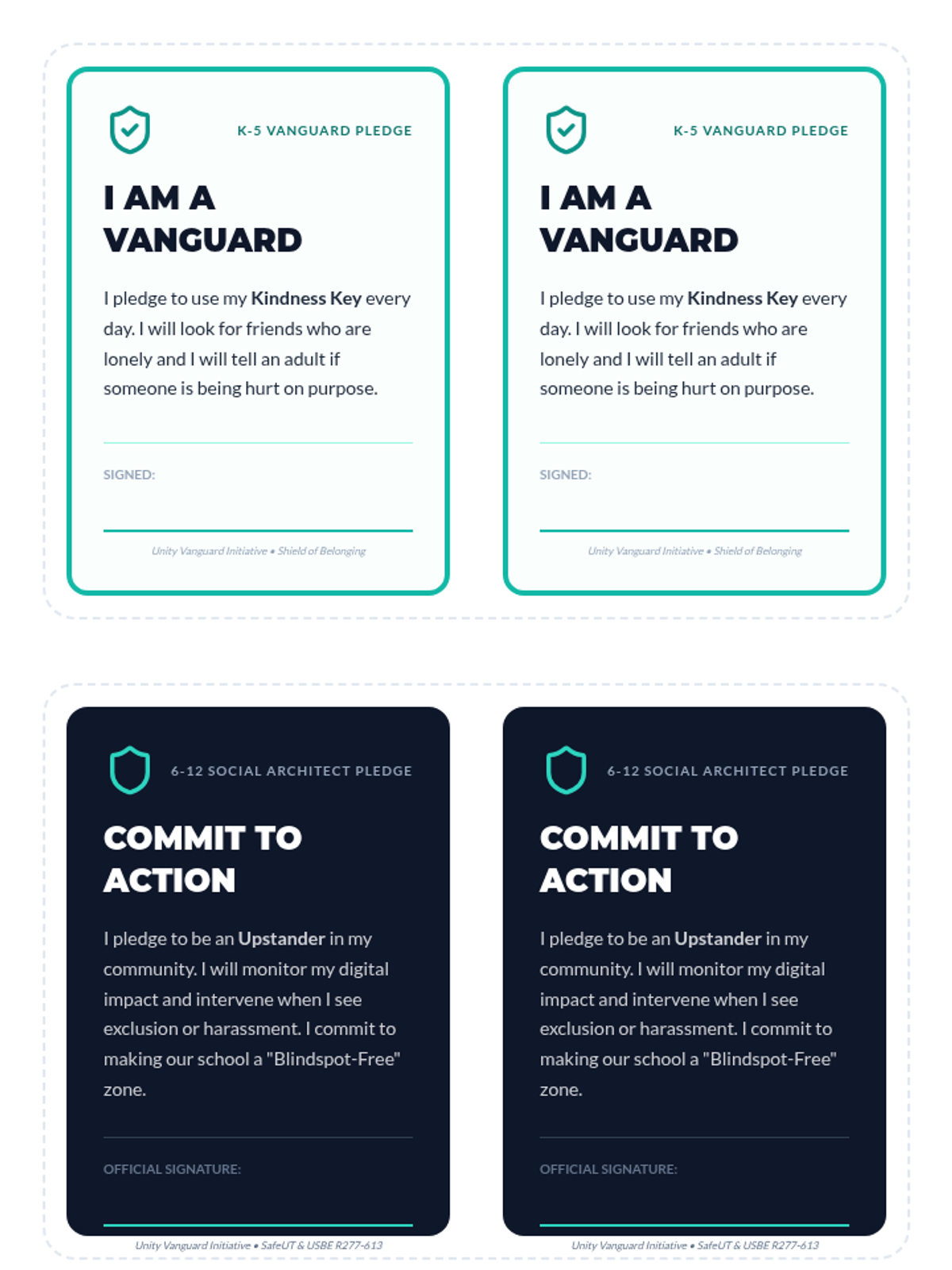
A school-wide initiative focused on identifying bullying behaviors, practicing empathy, and committing to an inclusive school culture through shared pledges. Includes tiered activities for K-12 students.
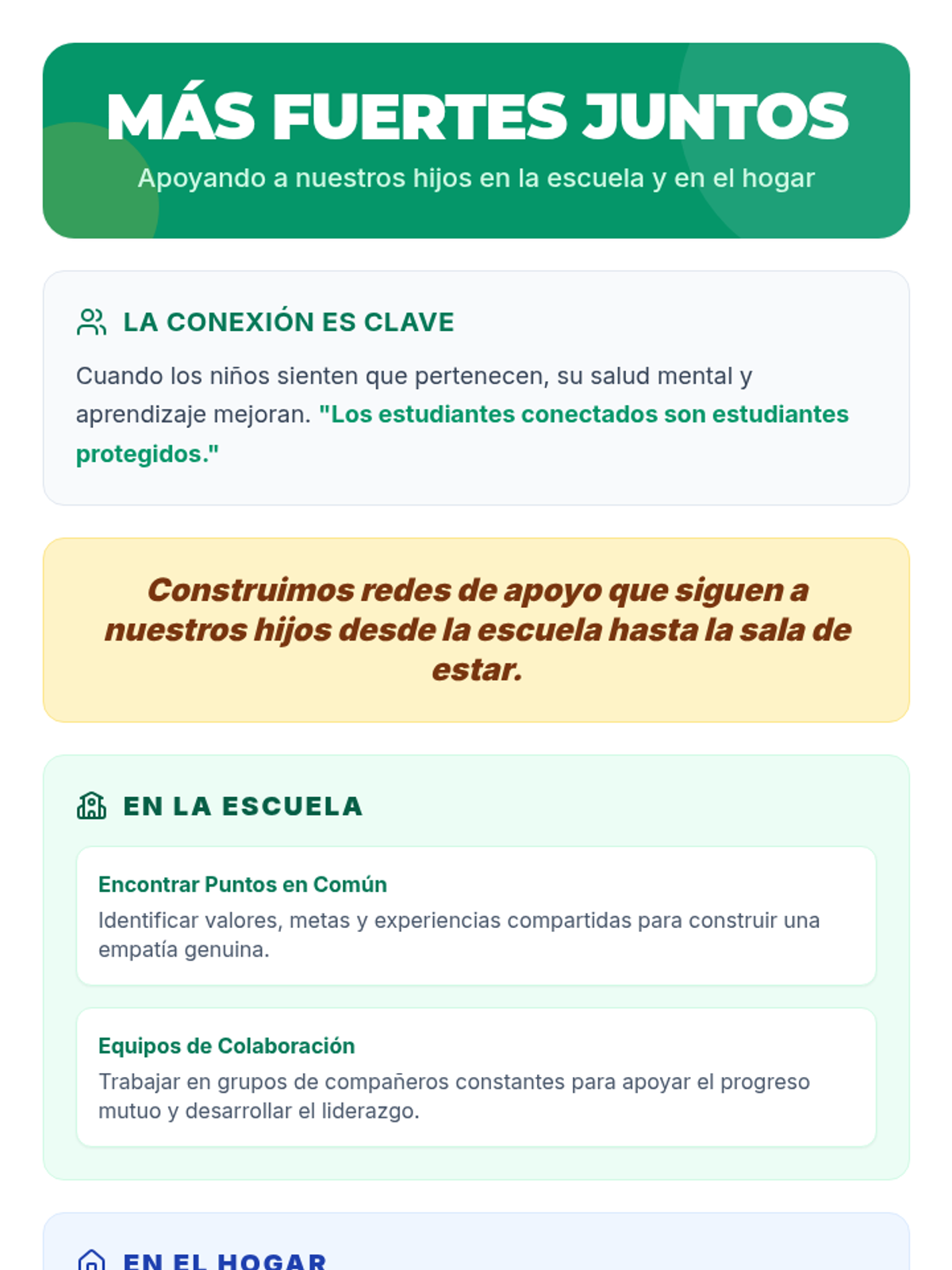
A comprehensive workshop for parents focused on building student connection, accountability, and relationship skills using the Move This World framework.
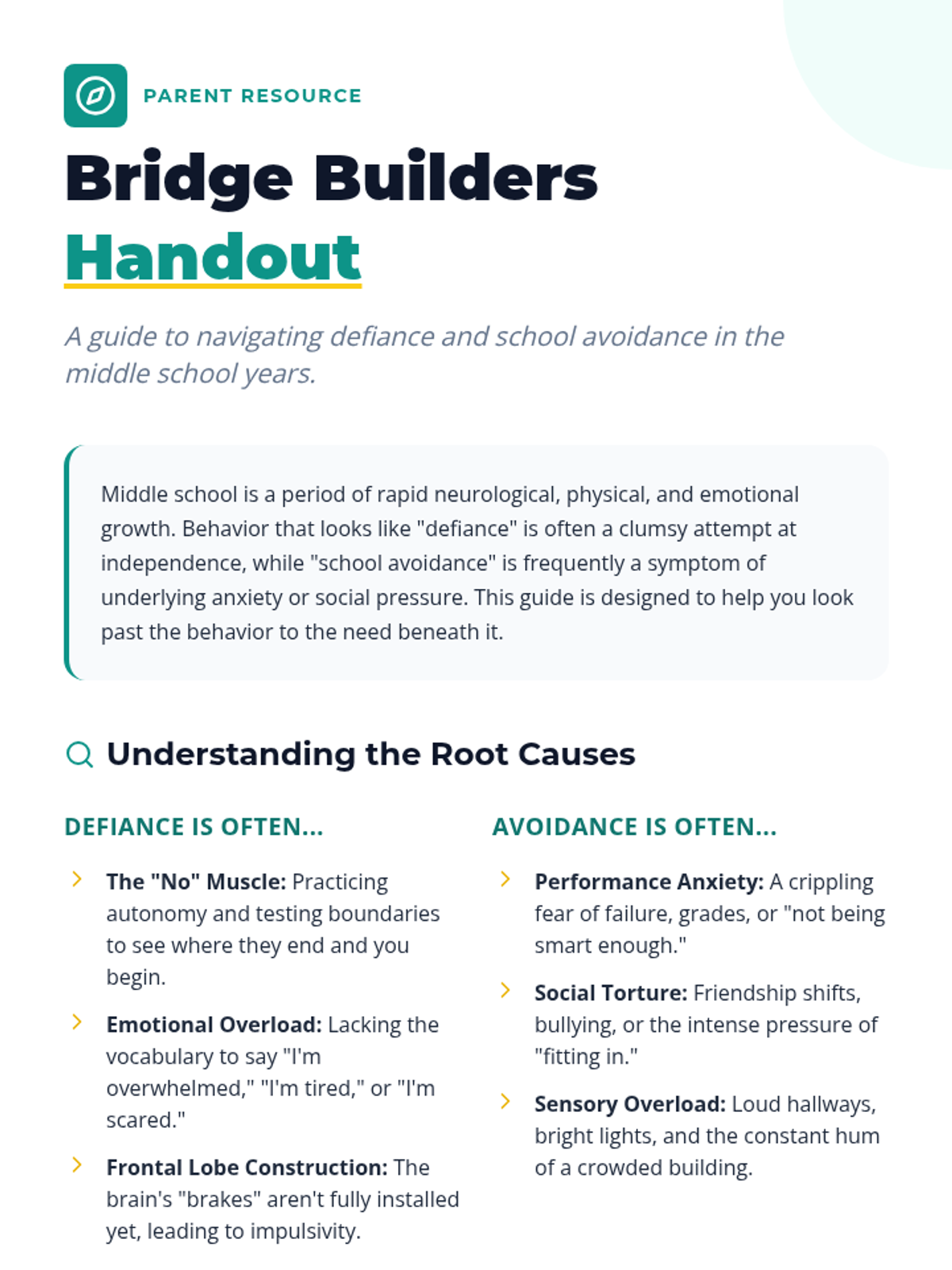
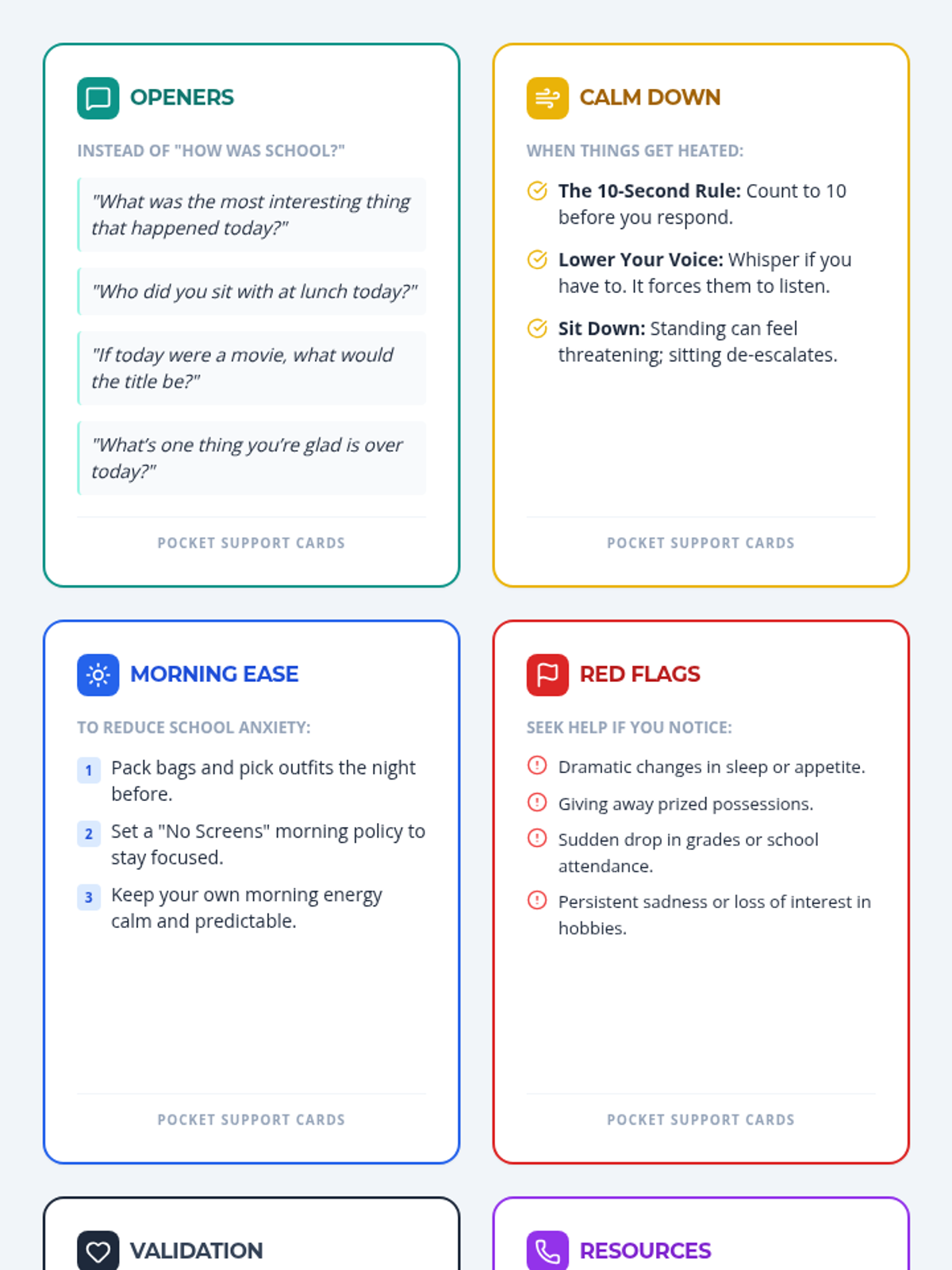
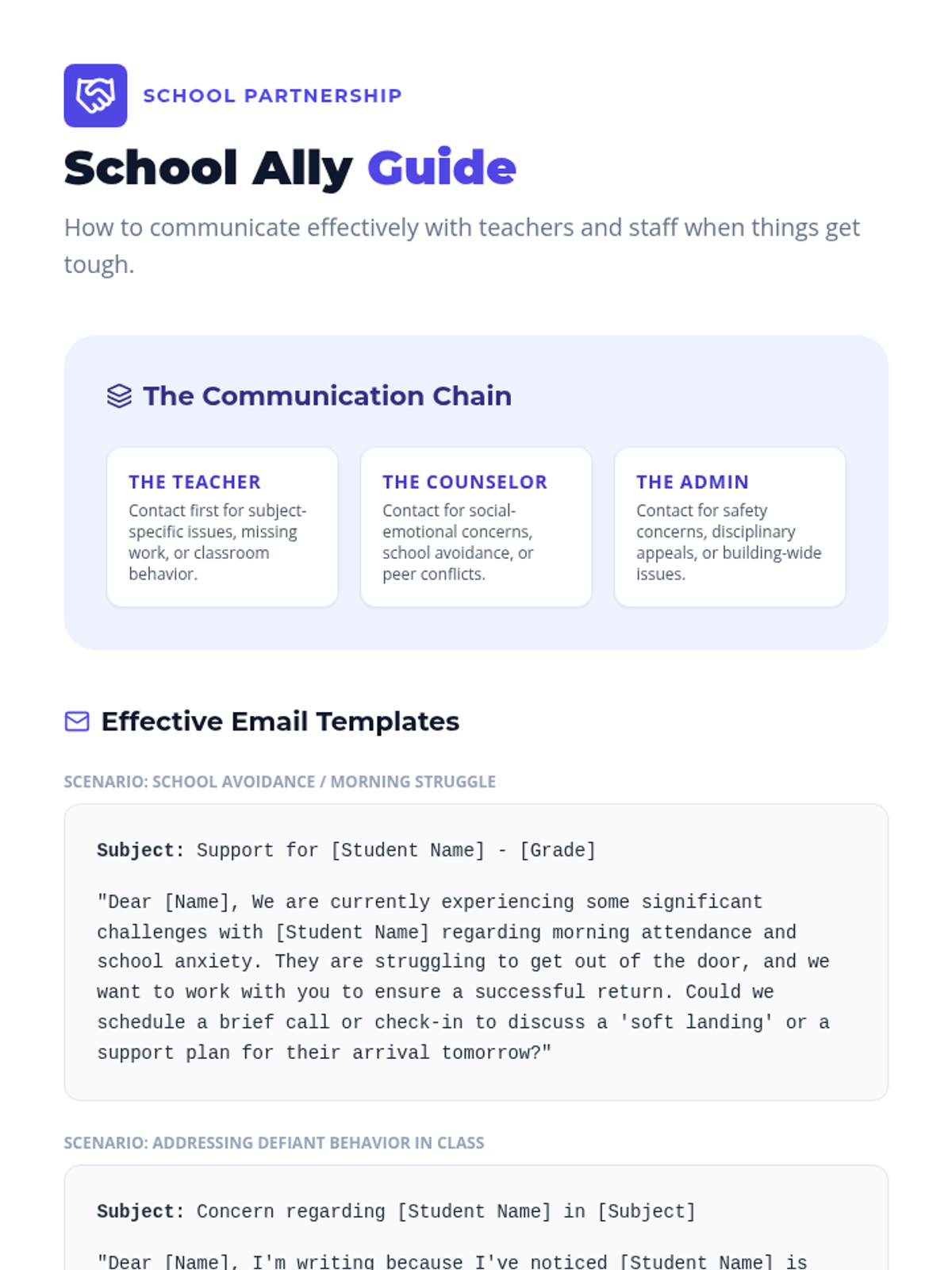
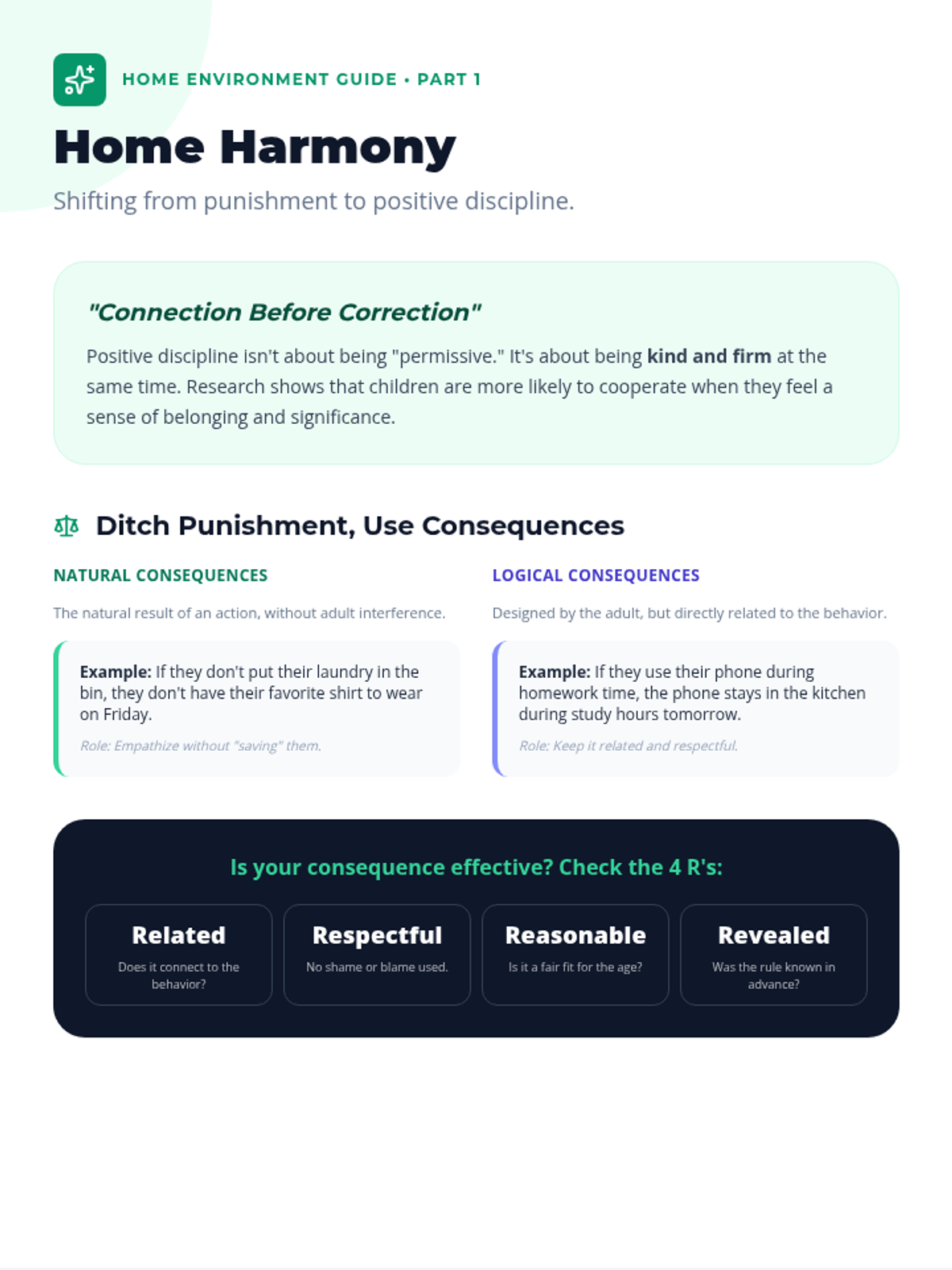
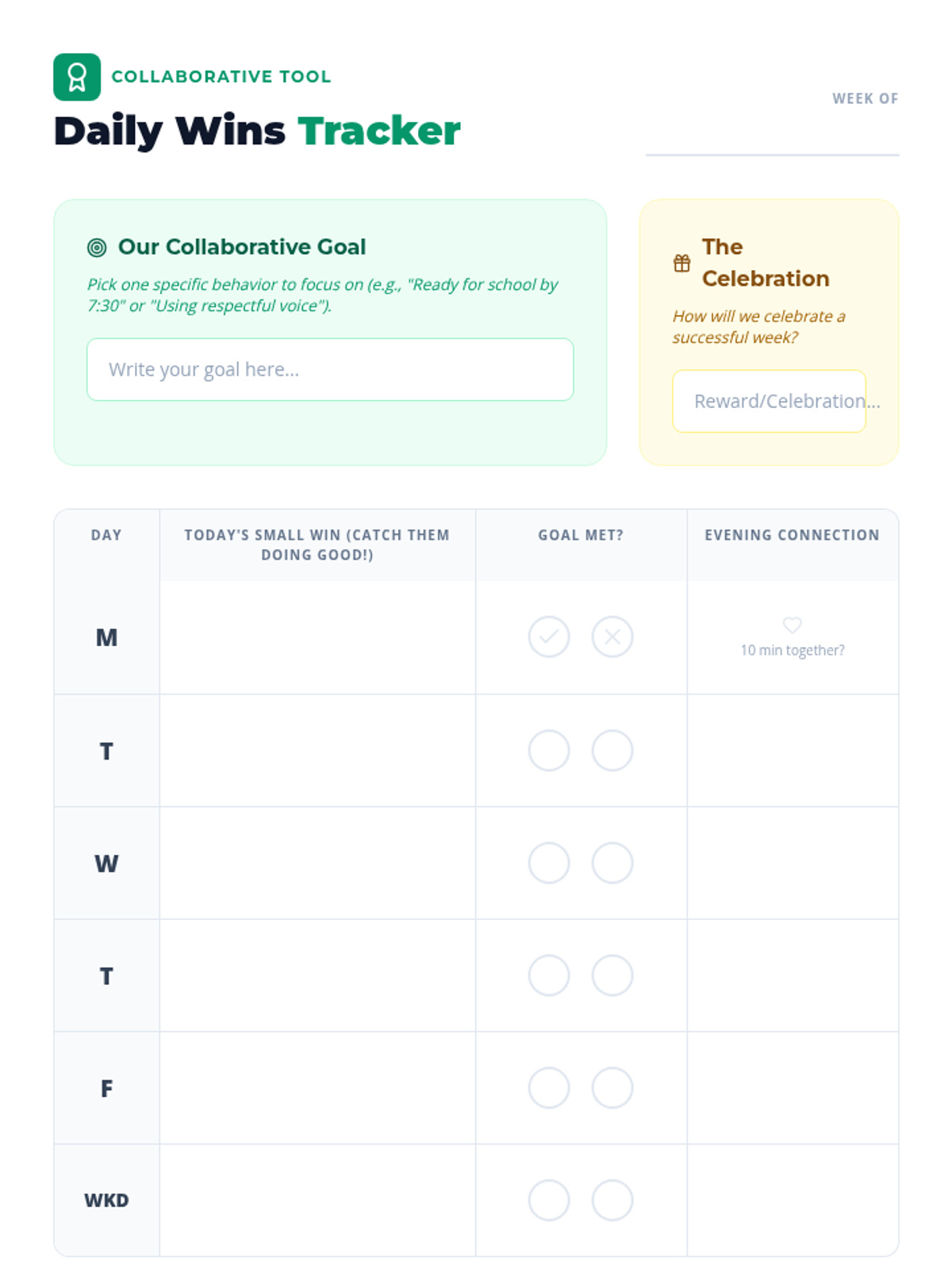
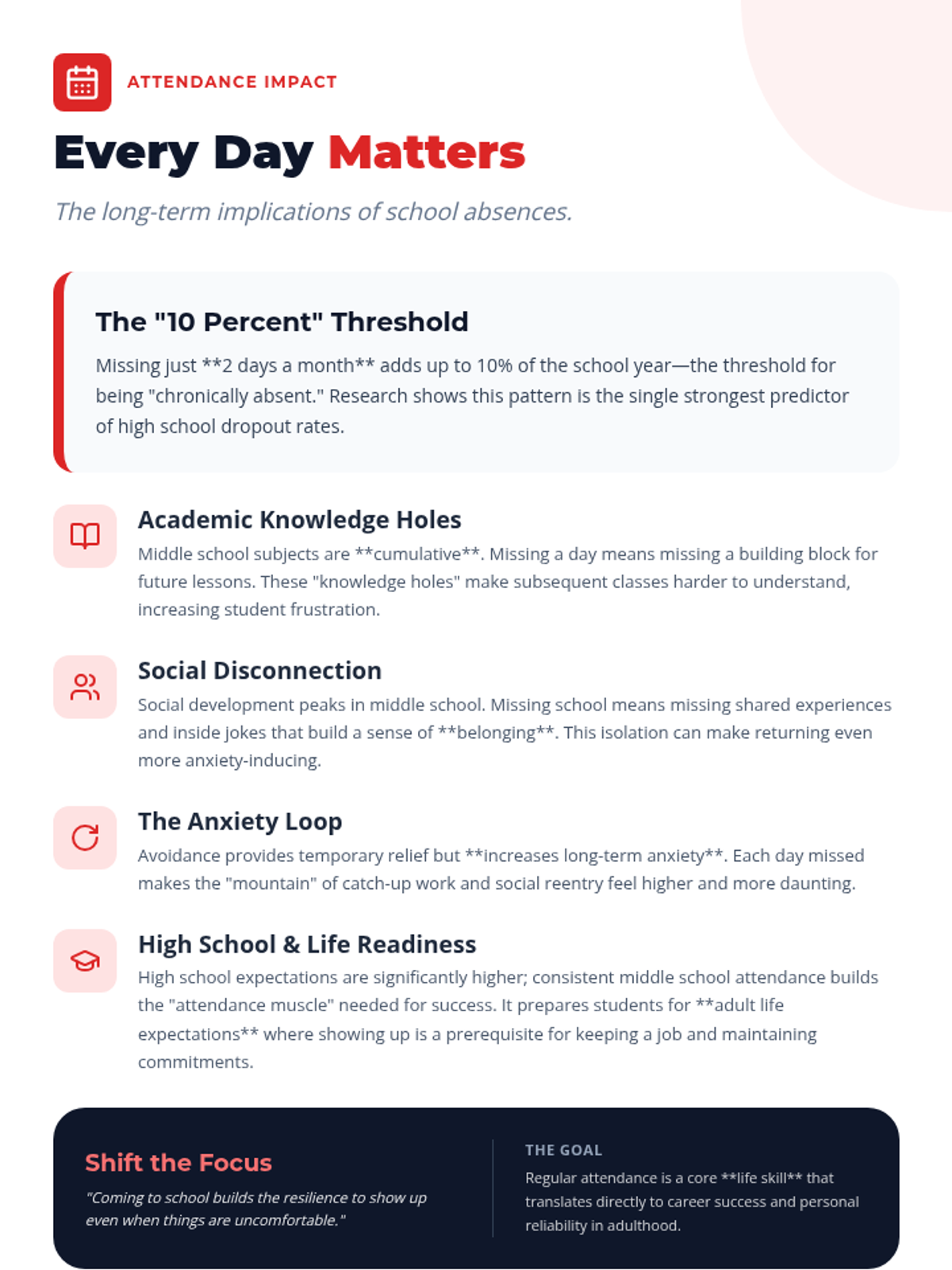
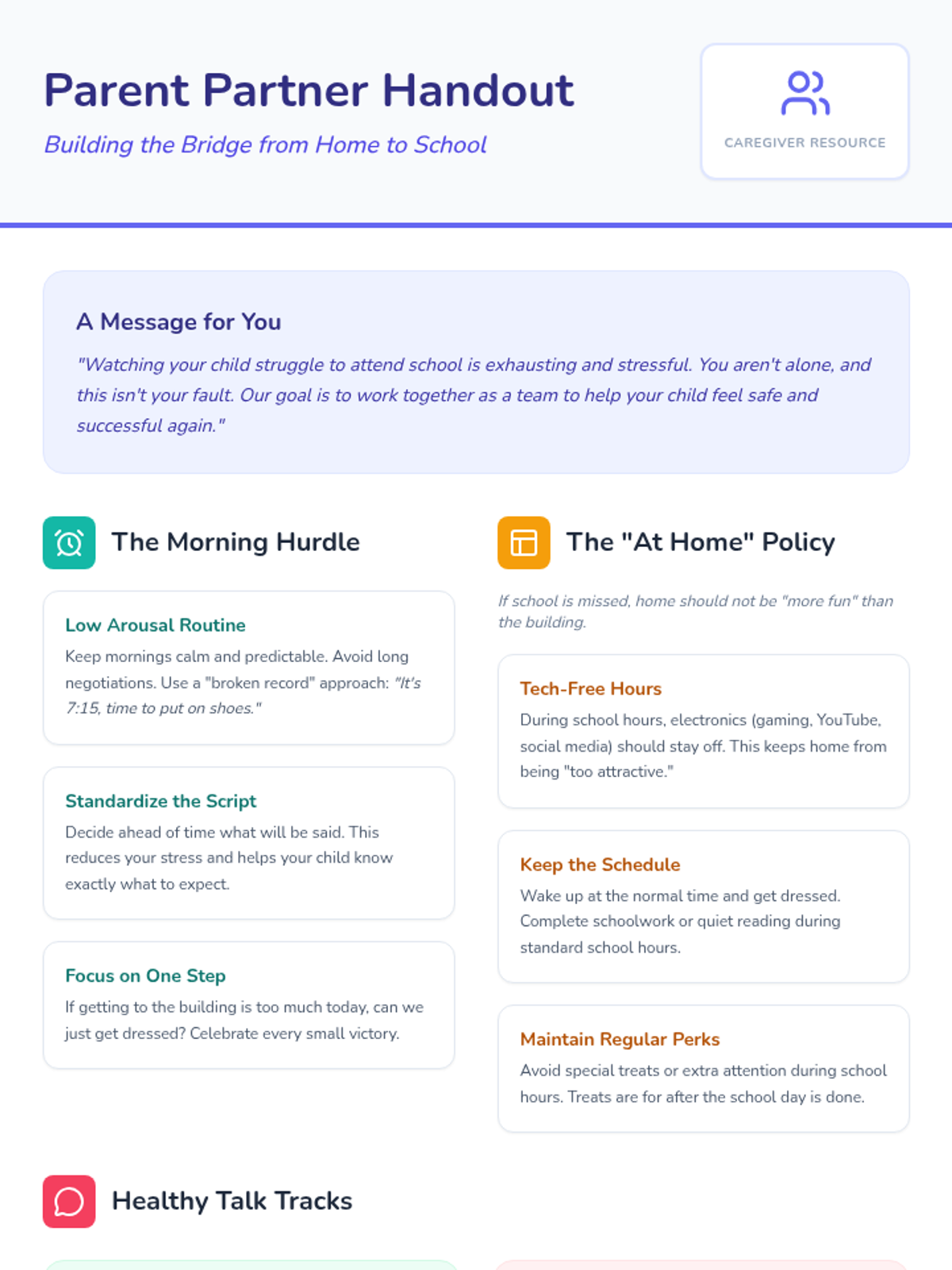
A collection of resources for parents of middle schoolers to navigate defiance and school avoidance with empathy and effective strategies.
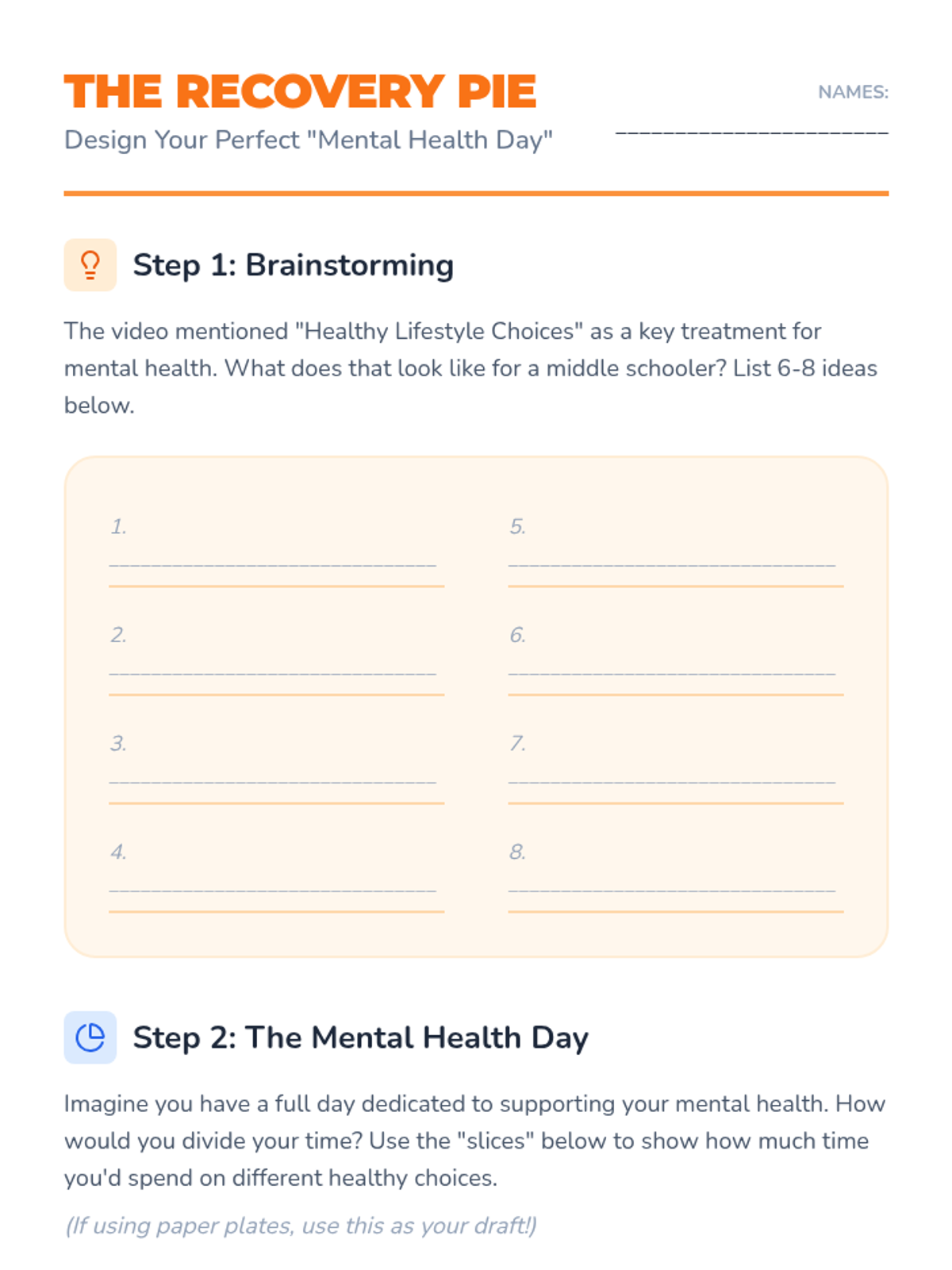
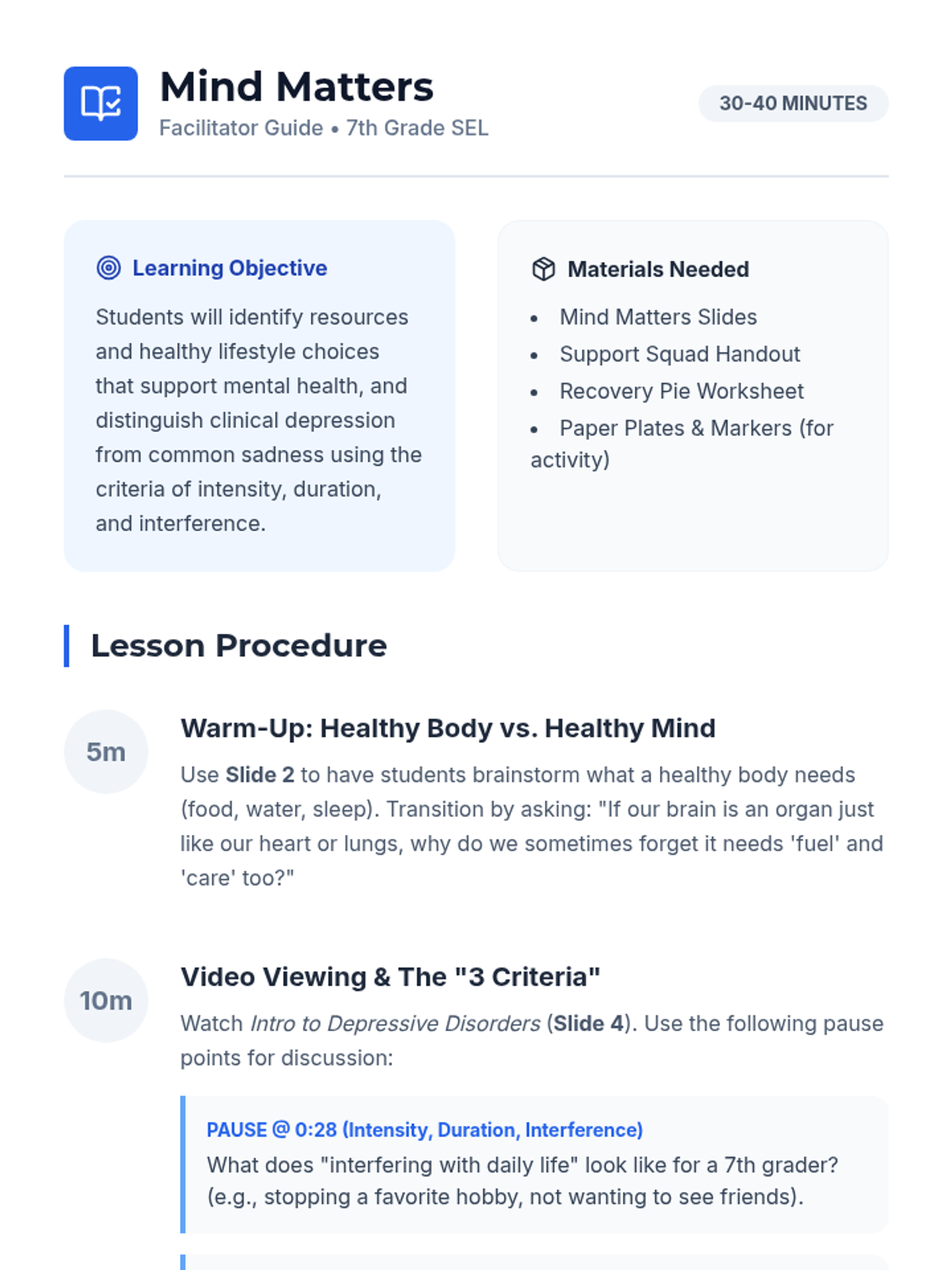
A 7th-grade SEL lesson focused on identifying symptoms of depression, understanding treatment options, and brainstorming healthy lifestyle choices that support mental health.
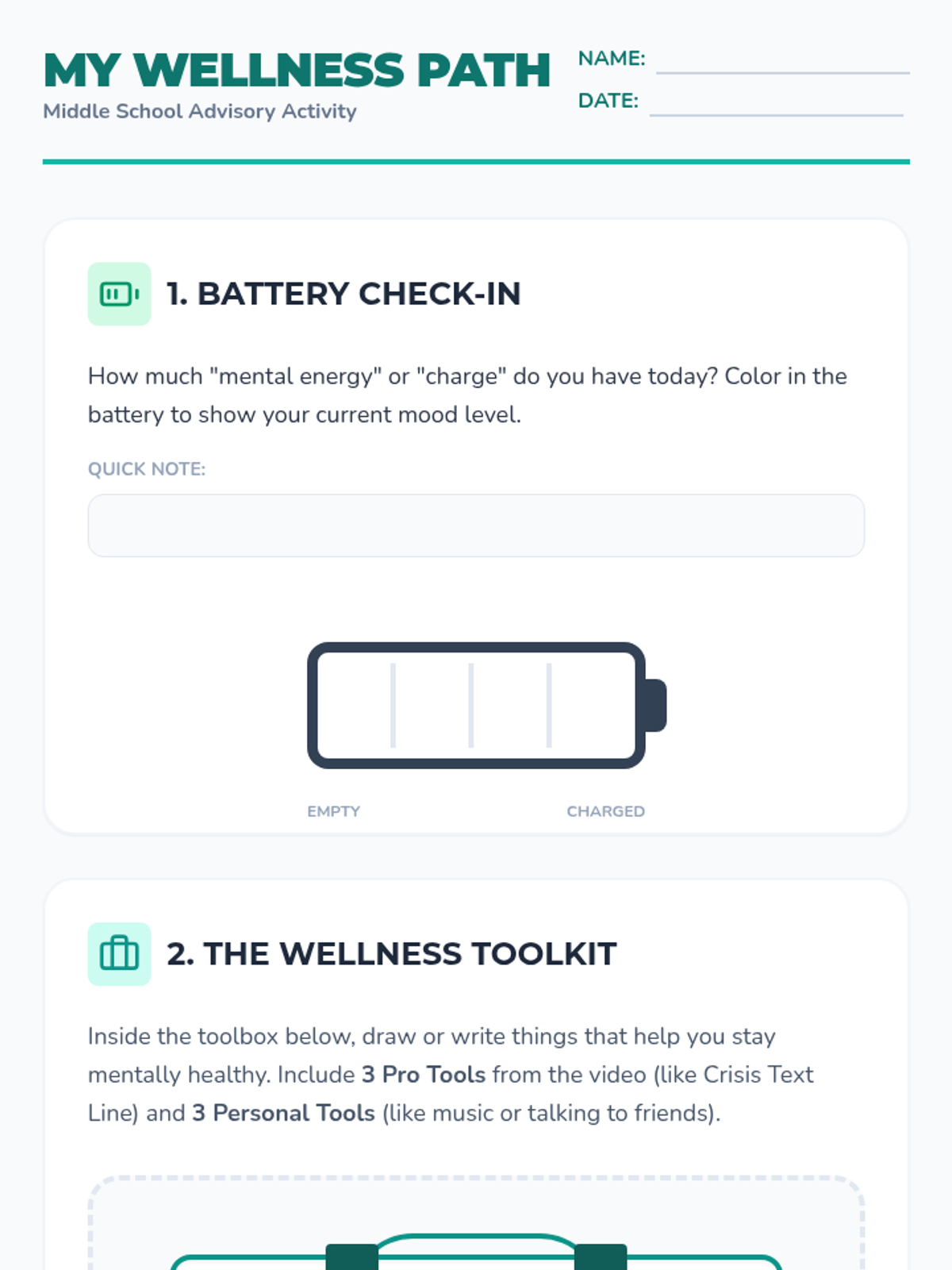
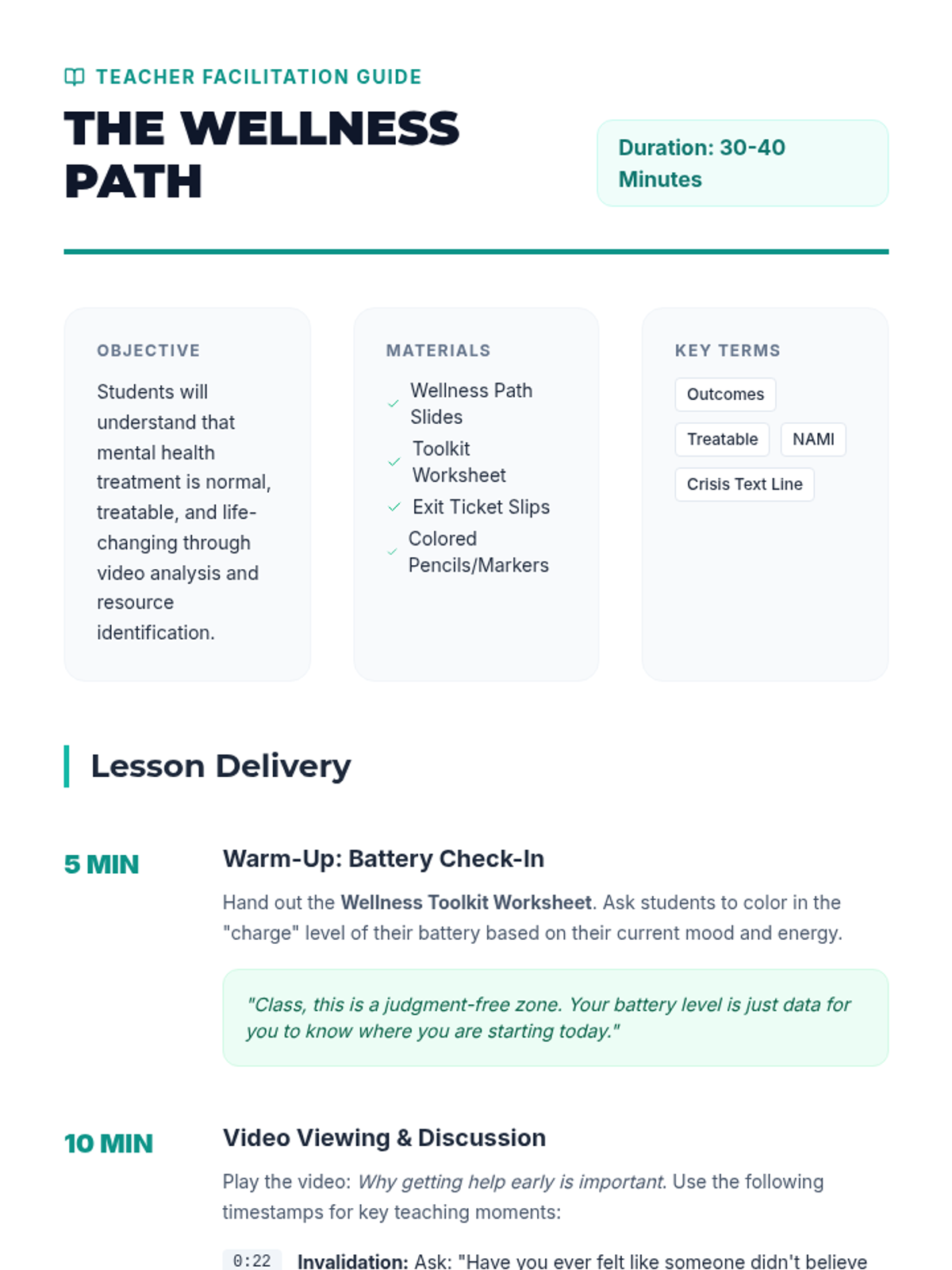
Students will understand that mental health treatment is normal and life-changing through a video analysis and a creative 'wellness toolkit' activity.
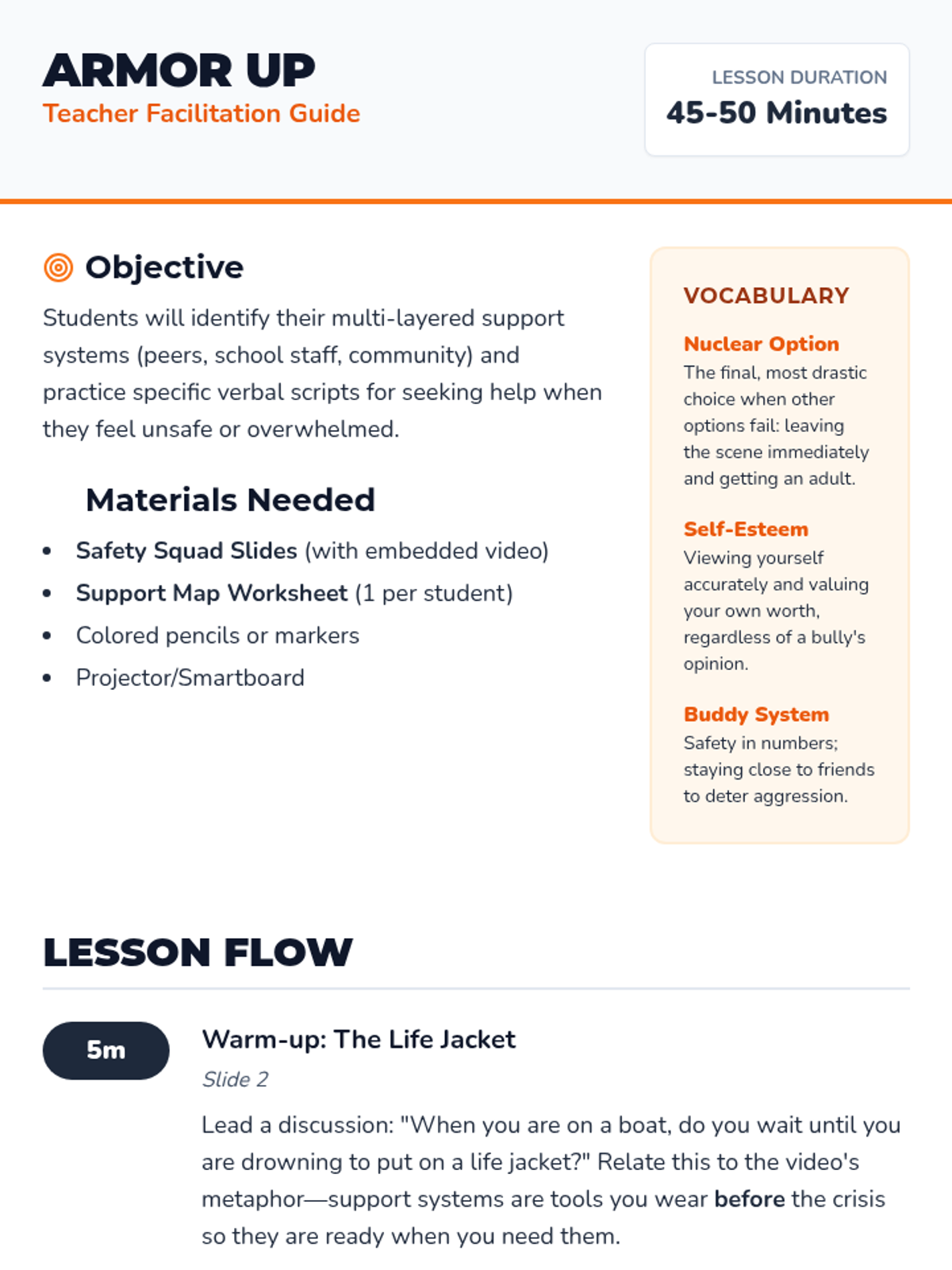
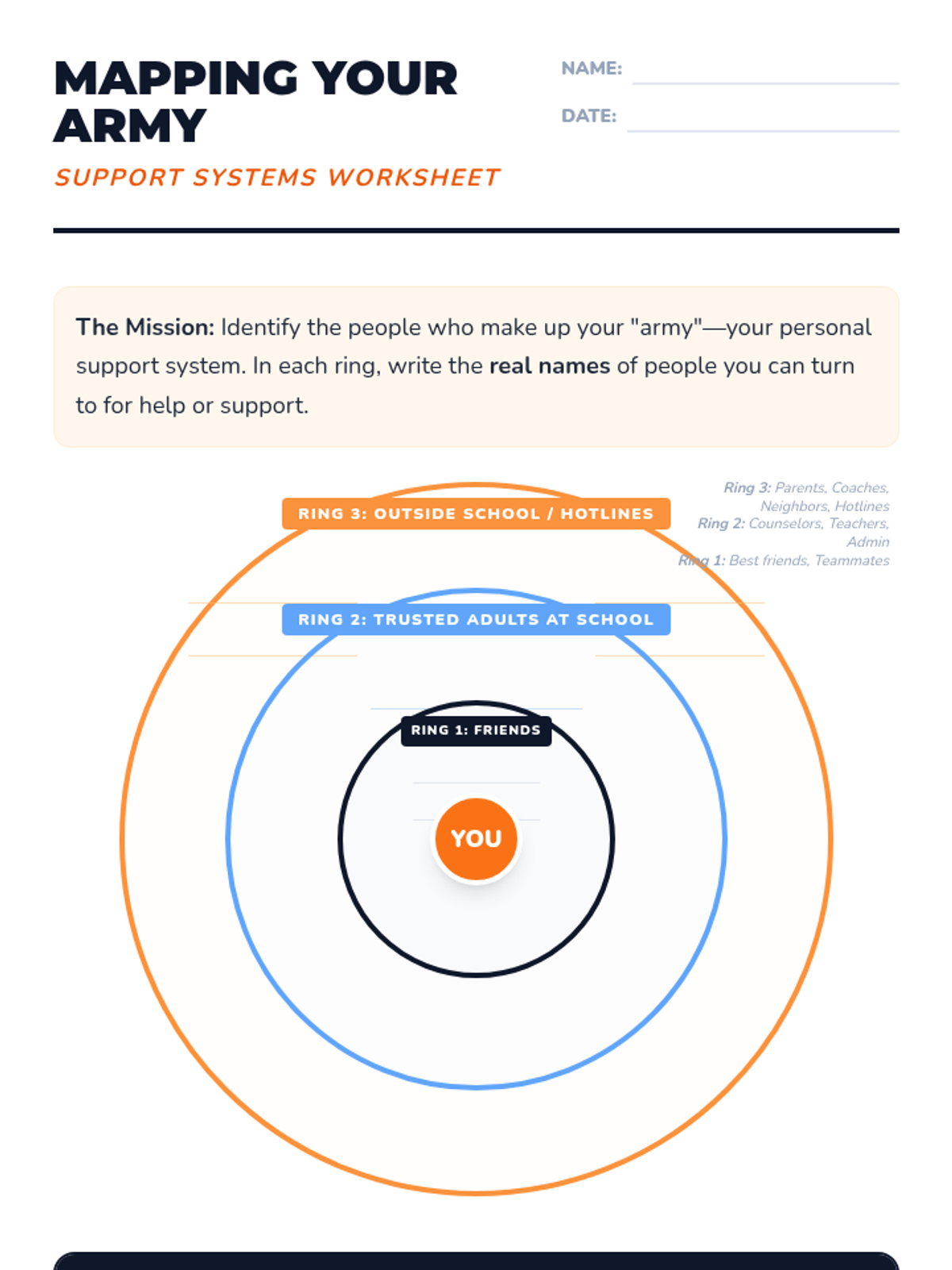
A lesson focused on identifying personal support systems and practicing specific scripts for seeking help during bullying or unsafe situations. Students create a visual map of their "army" and role-play the "nuclear option" for immediate intervention.
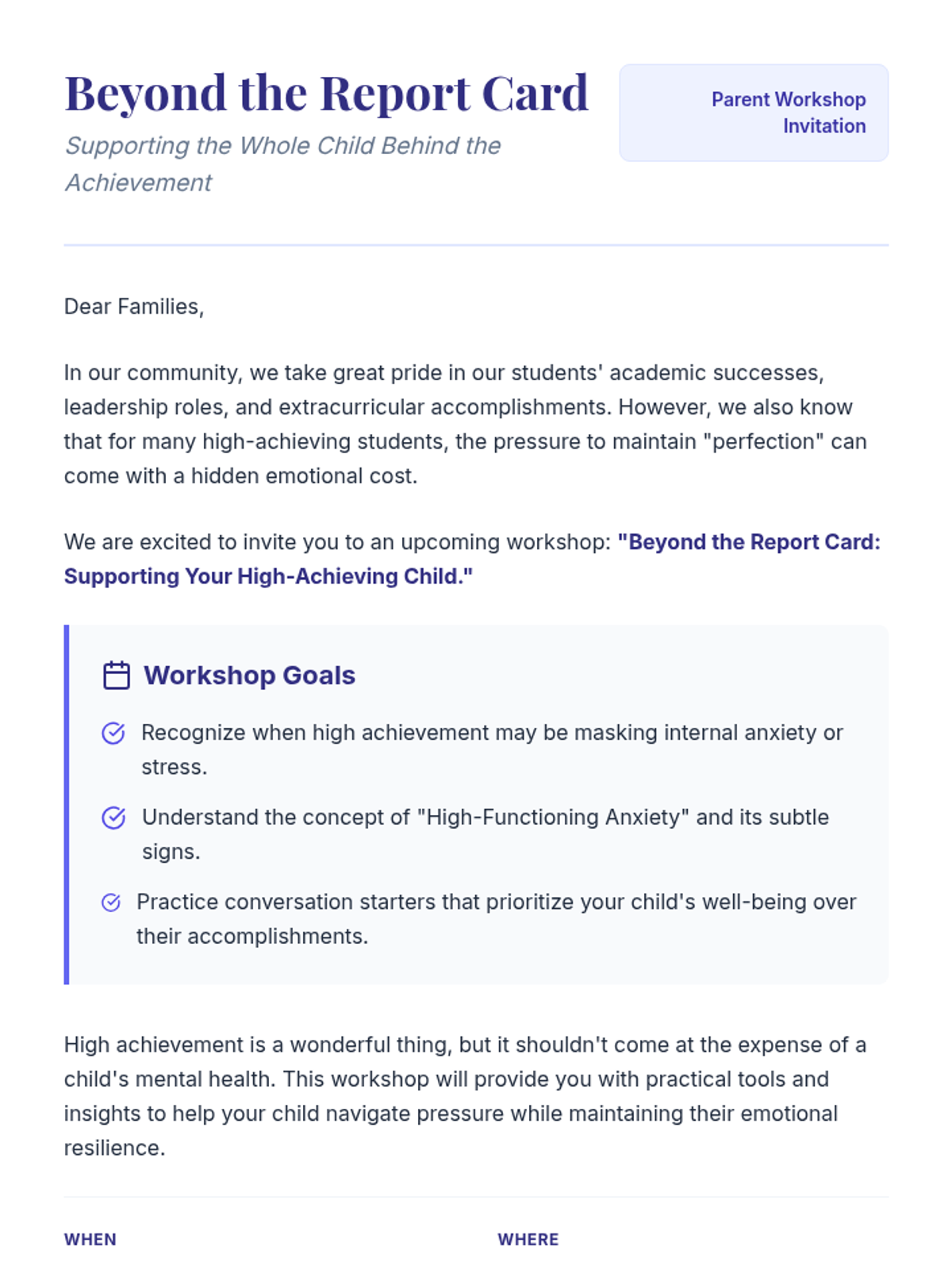
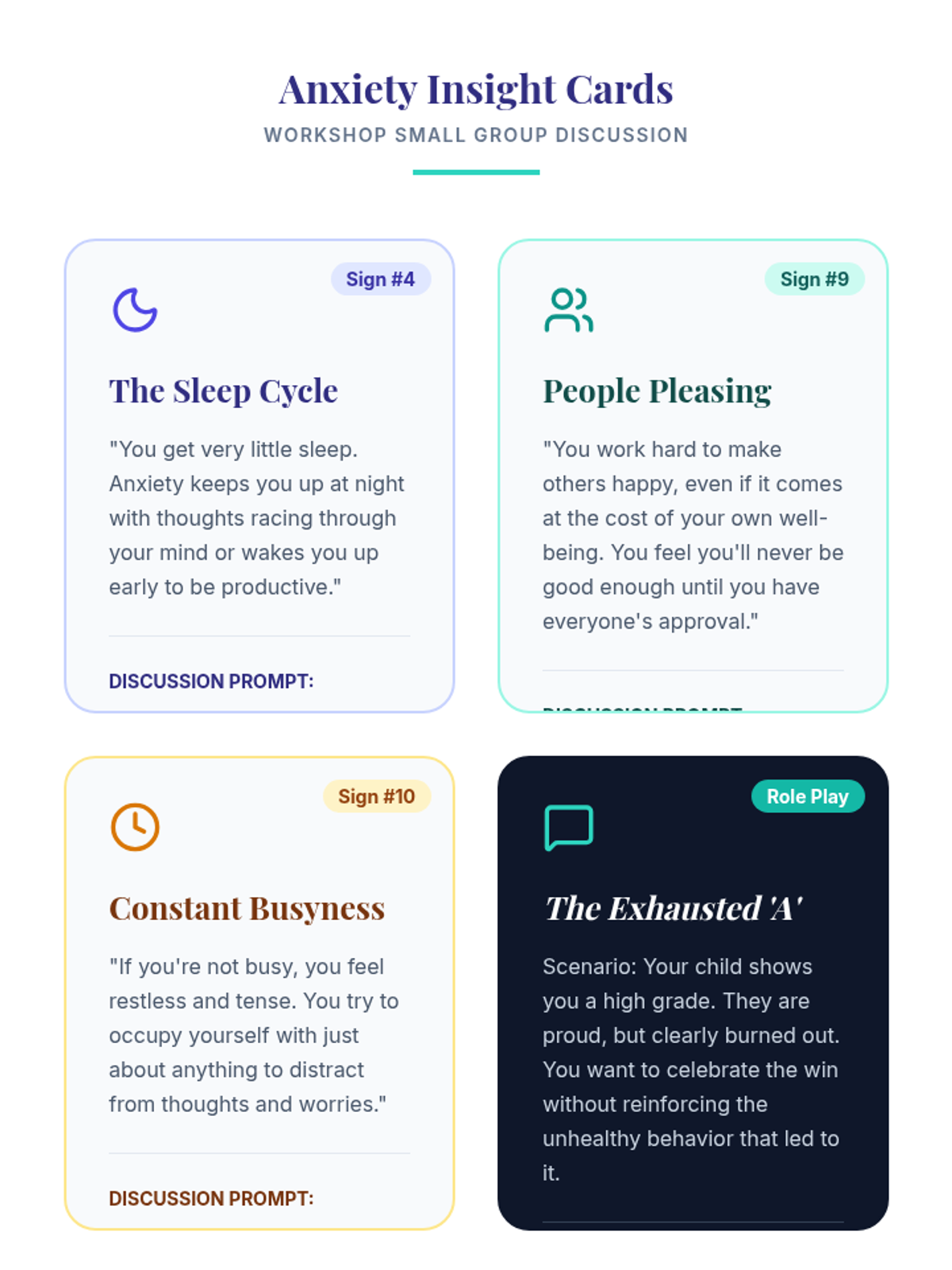
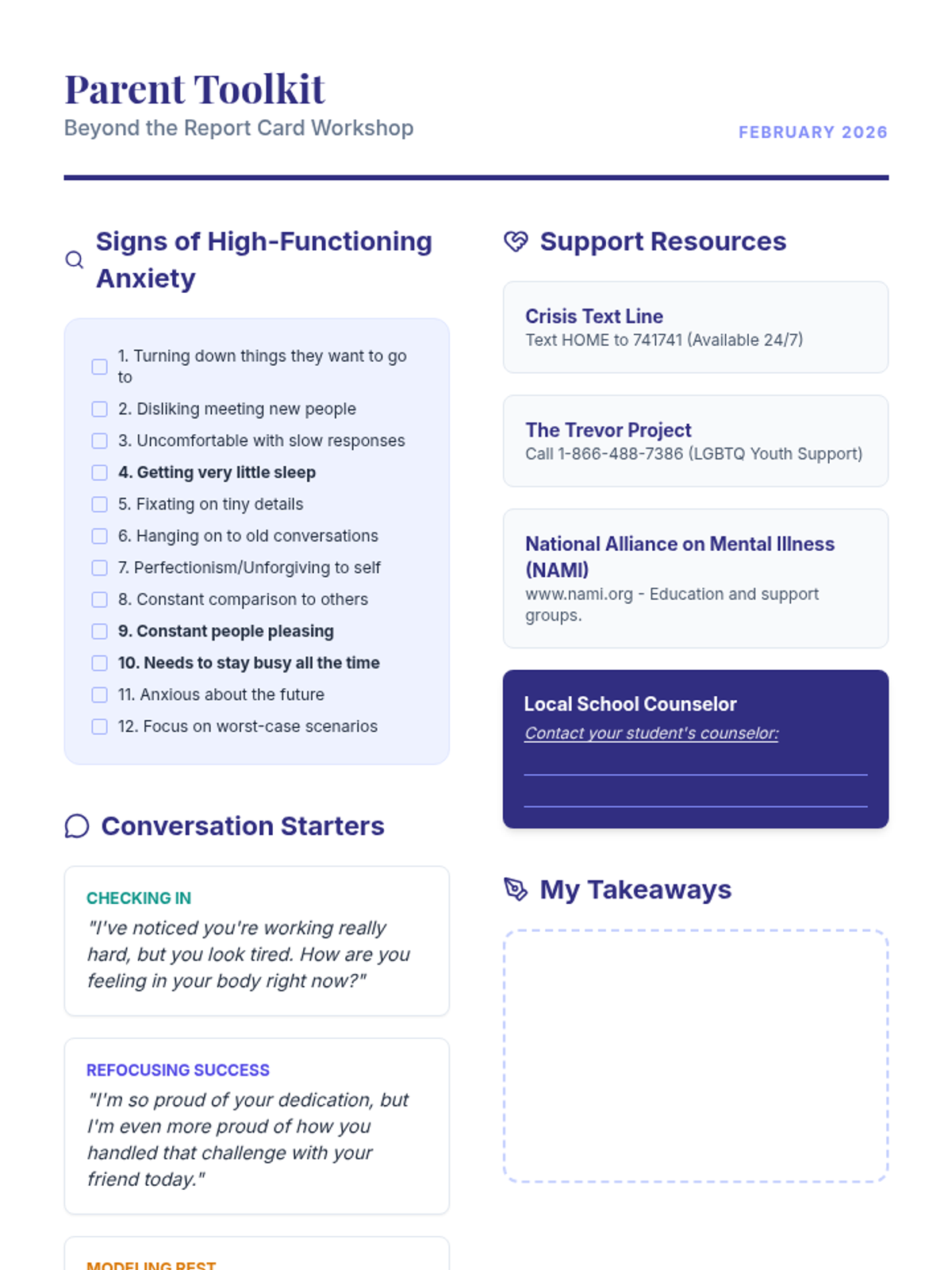
A focused workshop for parents to recognize that high grades can sometimes mask internal struggles, featuring video analysis and role-play to improve parent-child dialogue.
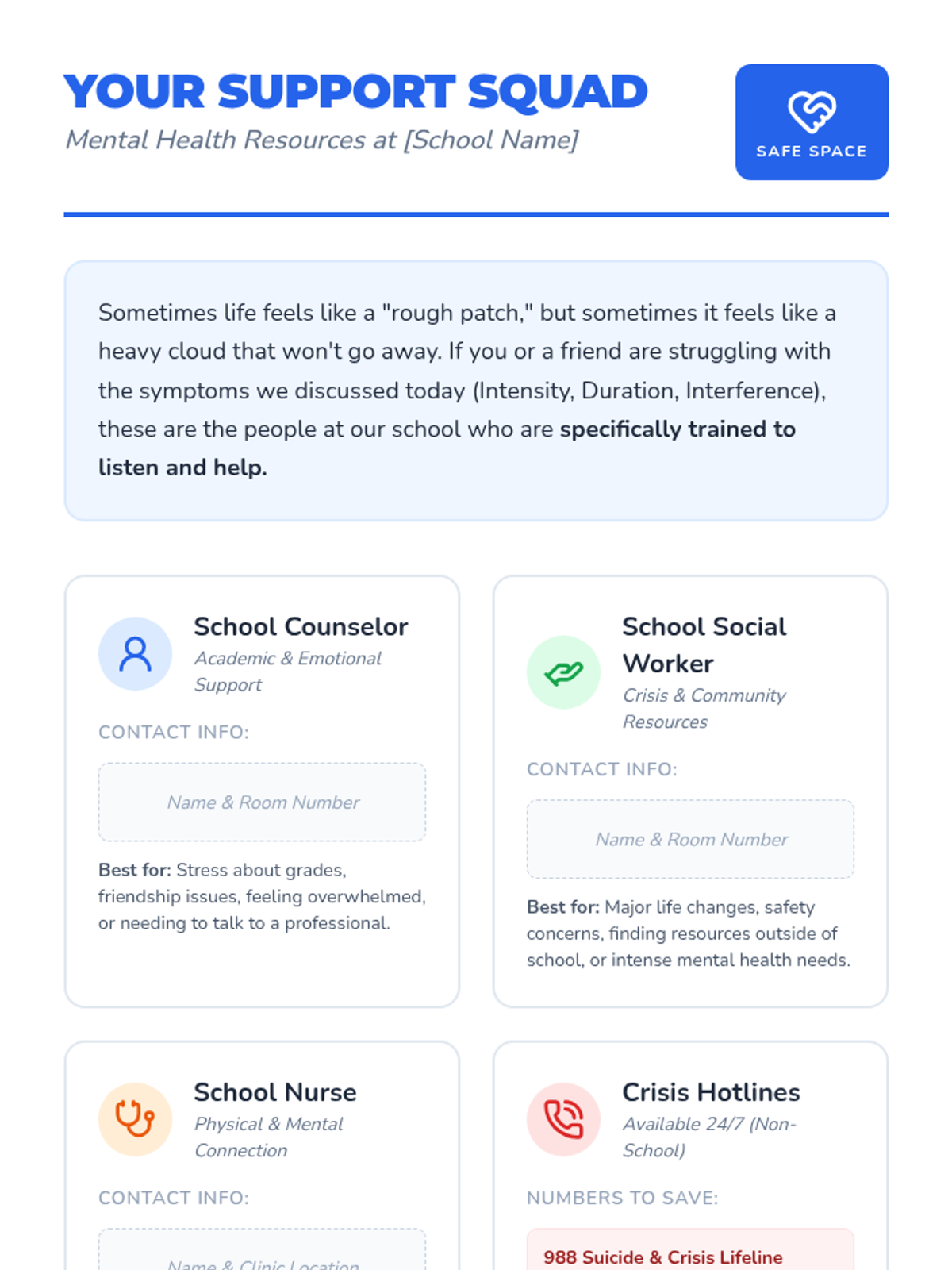
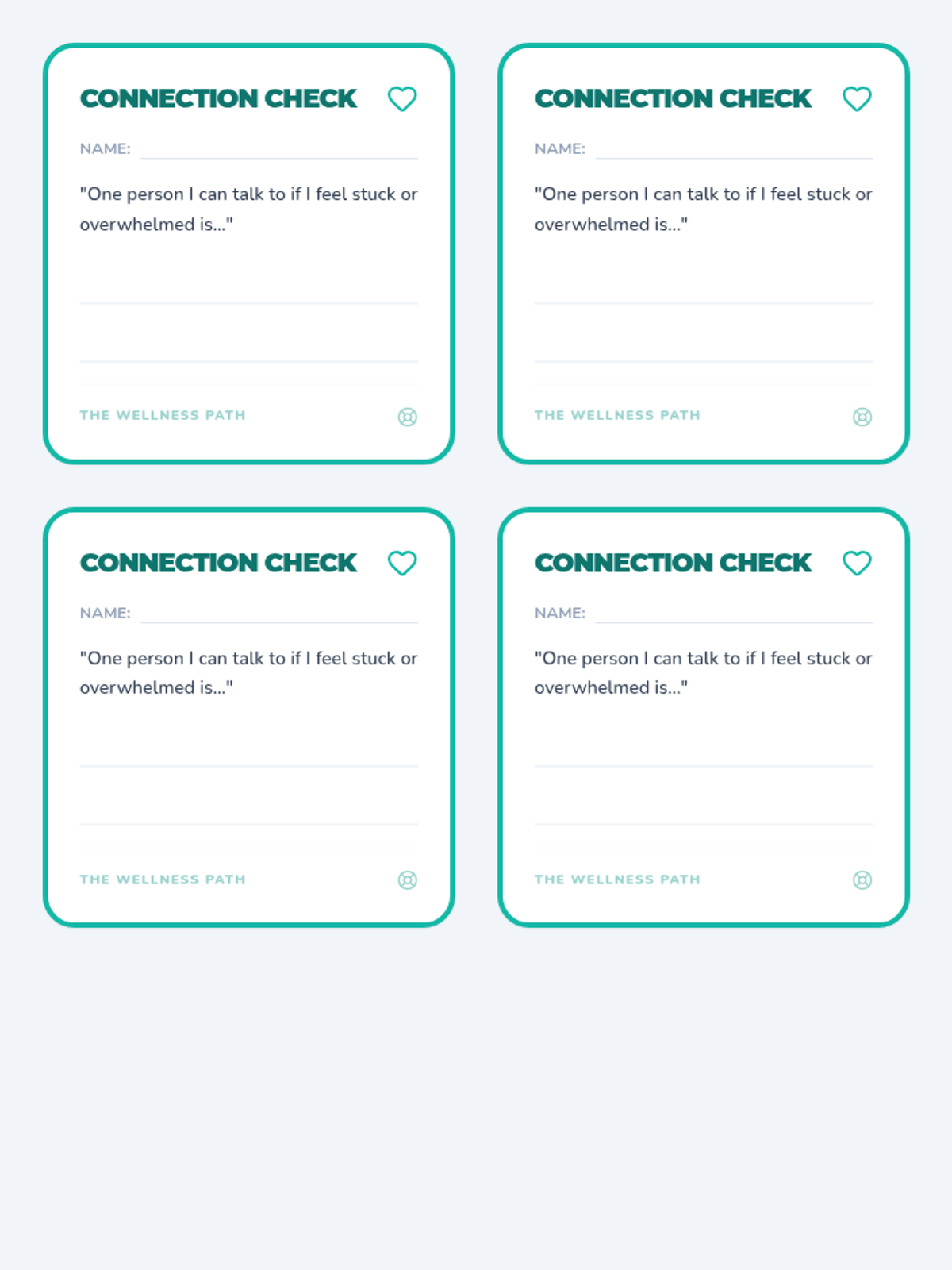
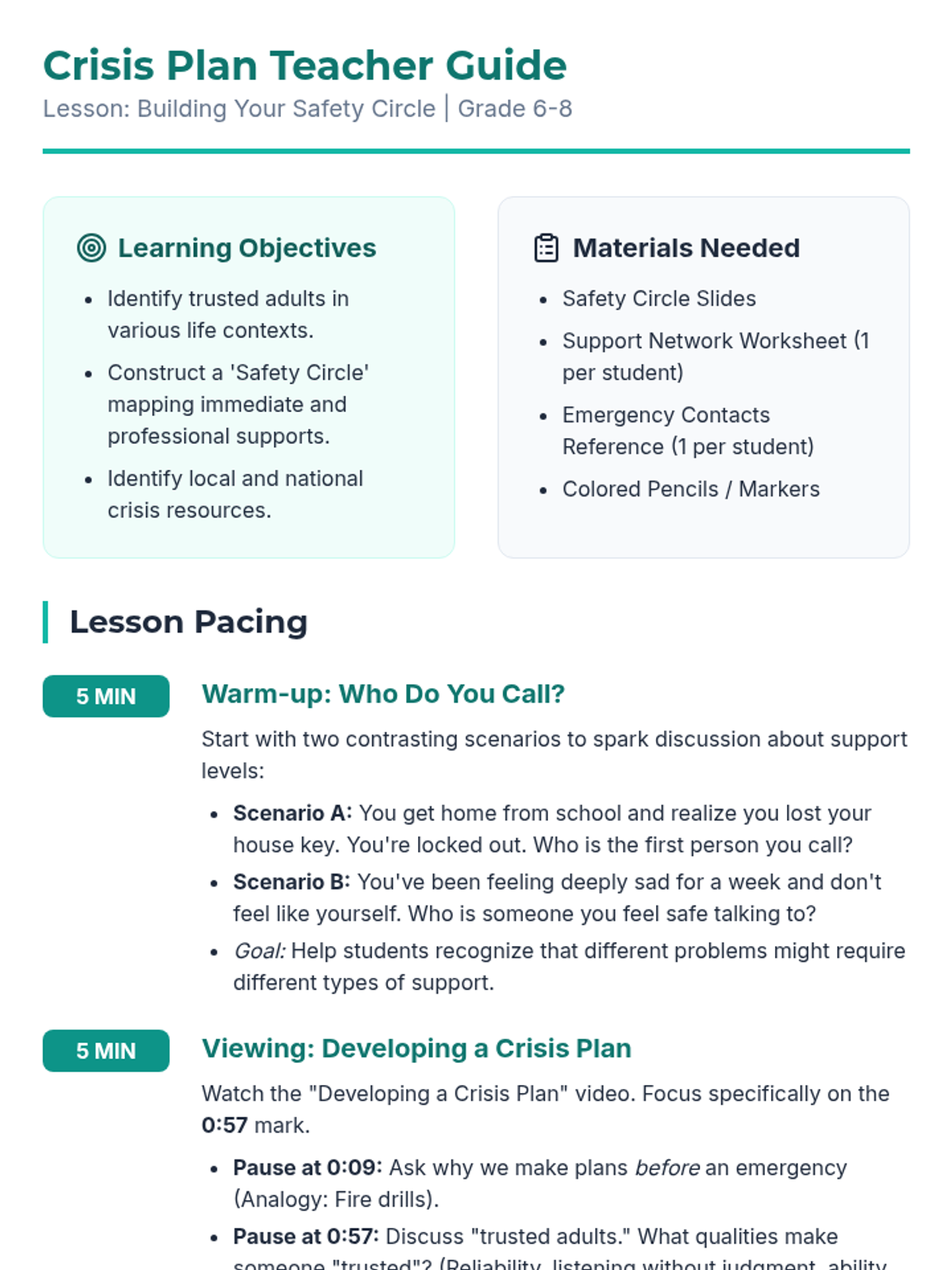
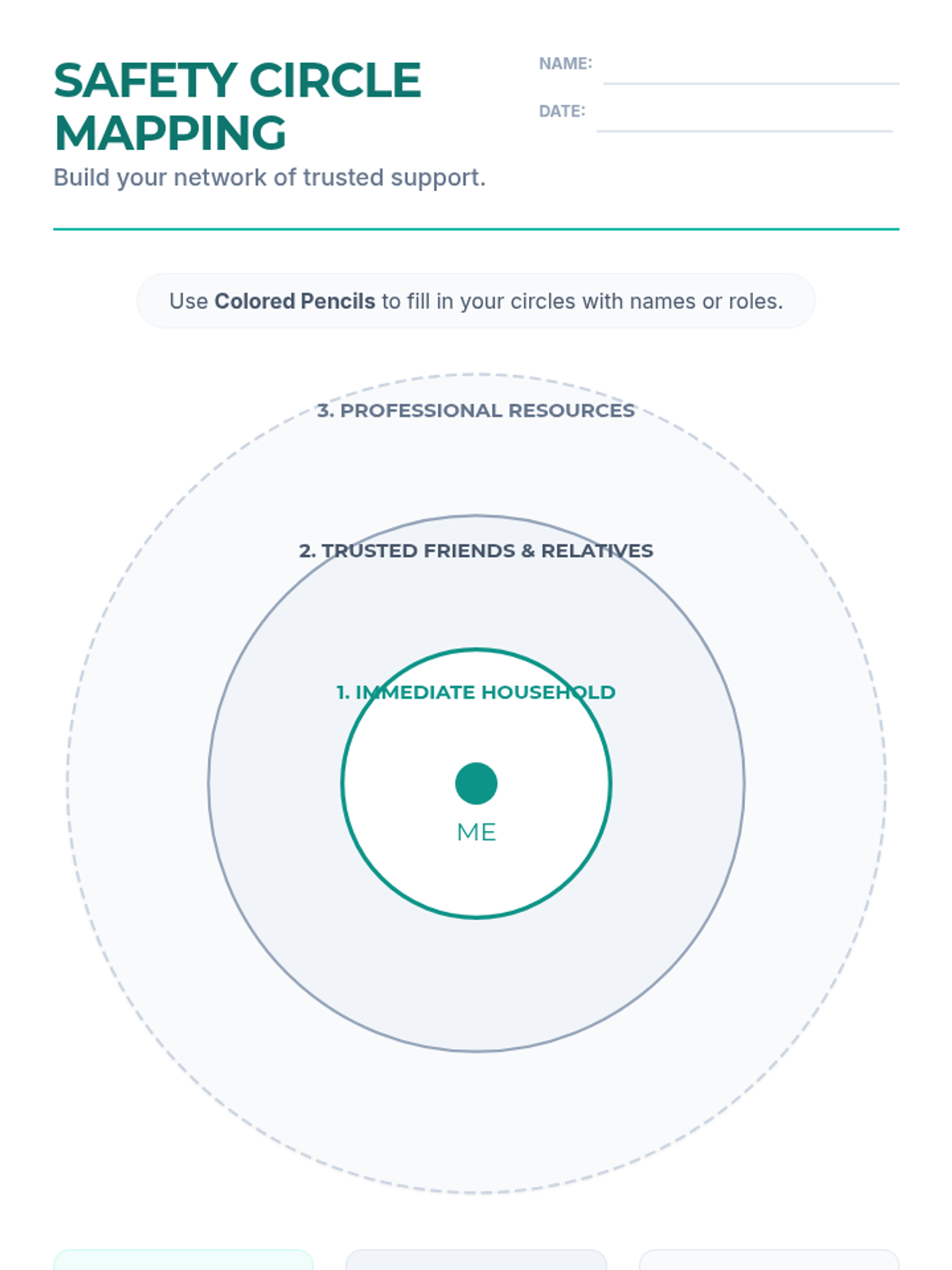
A lesson for middle schoolers to identify trusted adults and create a proactive mental health safety circle, including crisis resources and personal contact mapping.
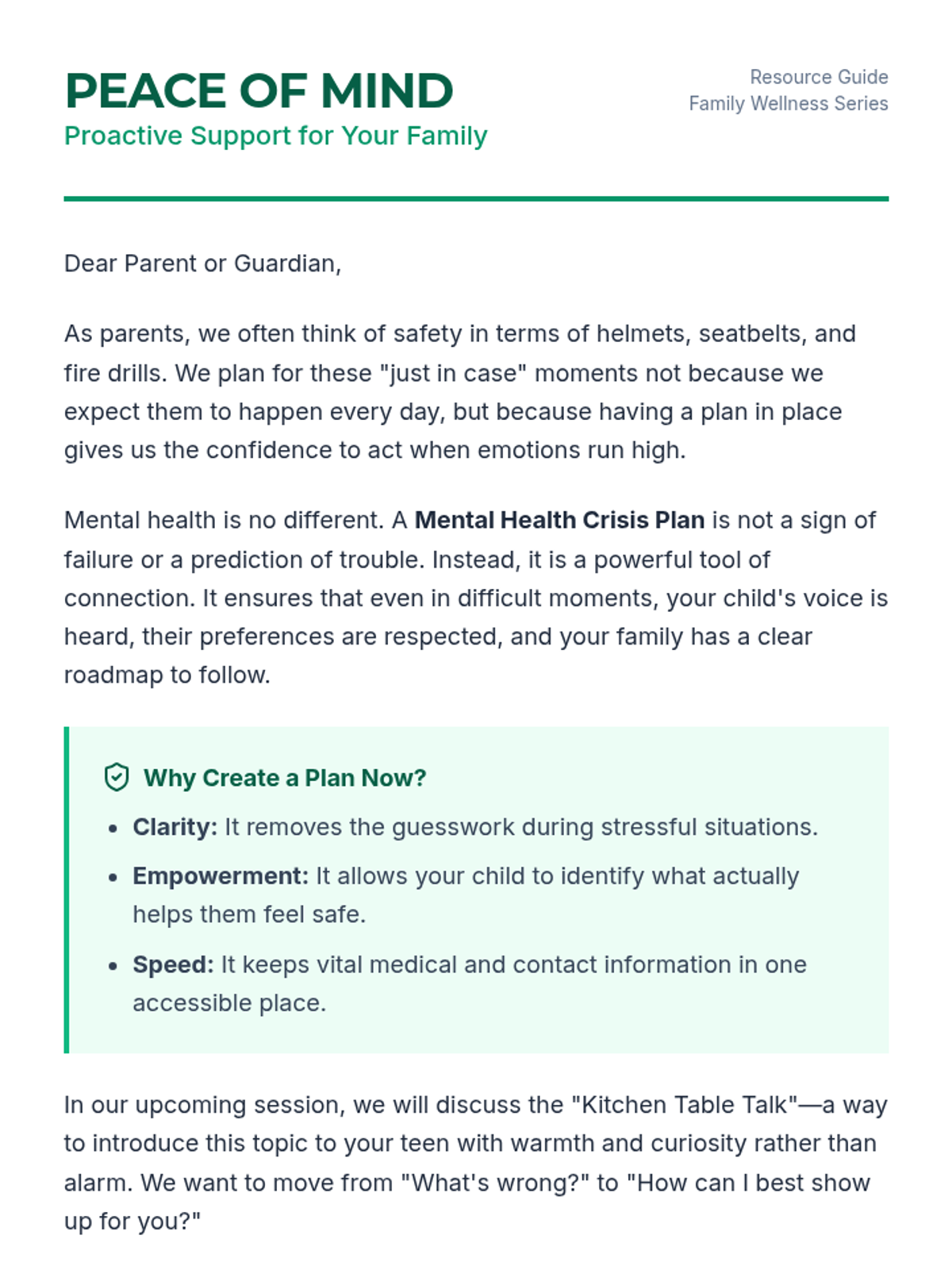
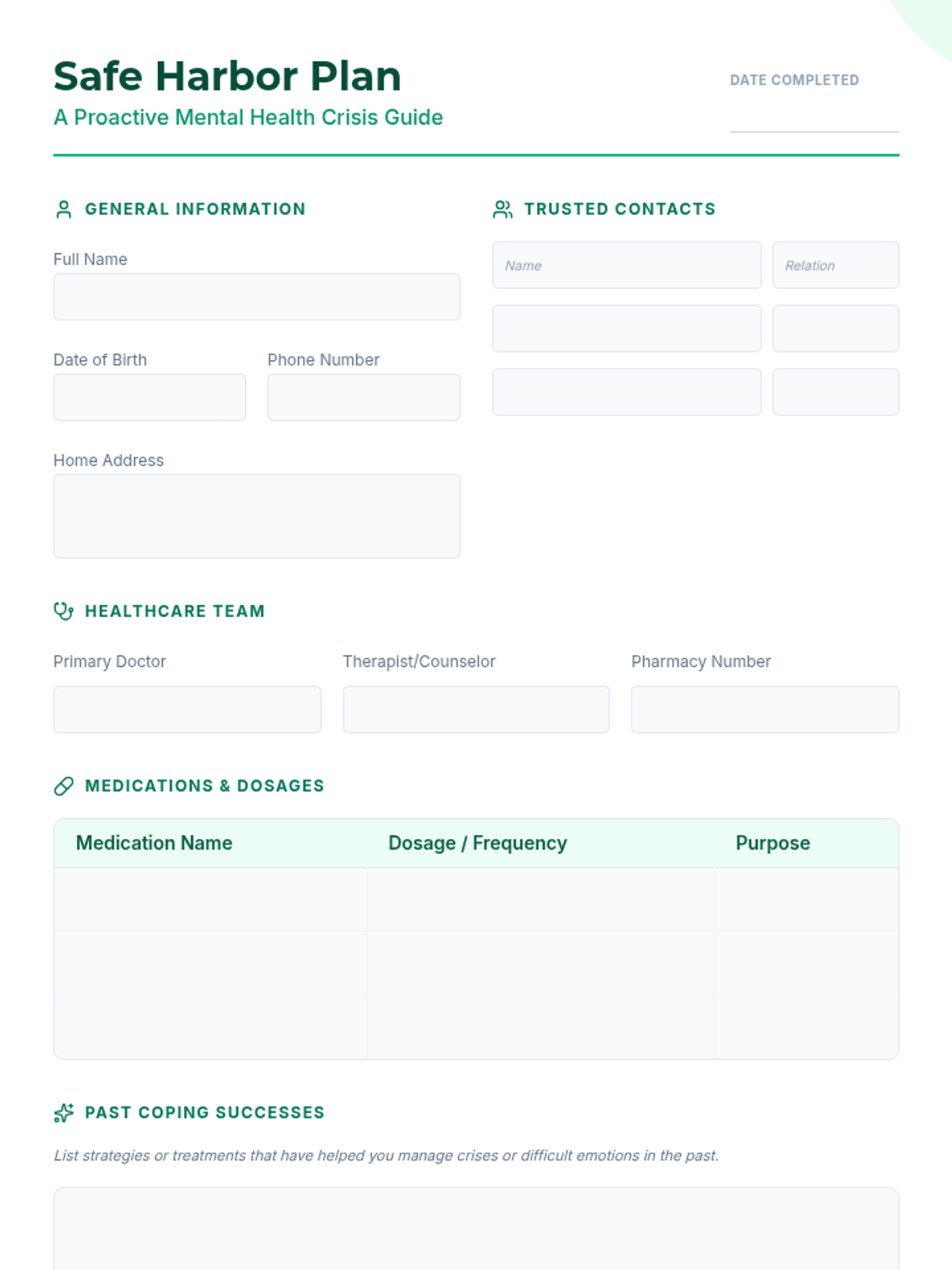
A guide for parents and guardians on how to proactively support their child's mental health through the creation of a crisis plan, emphasizing open communication and early preparation.
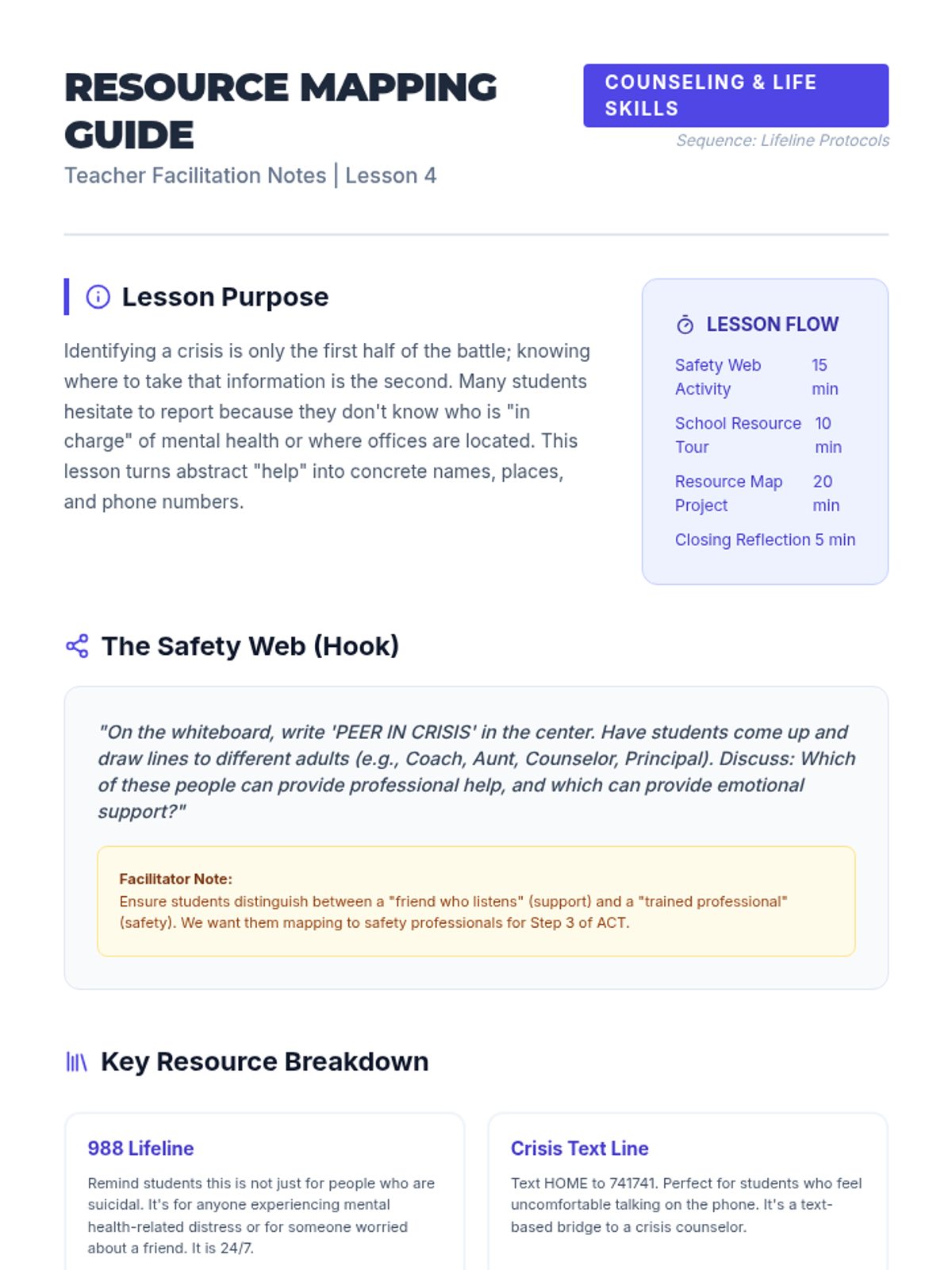
Teaches students how to identify trusted adults and navigate school and community mental health resources.
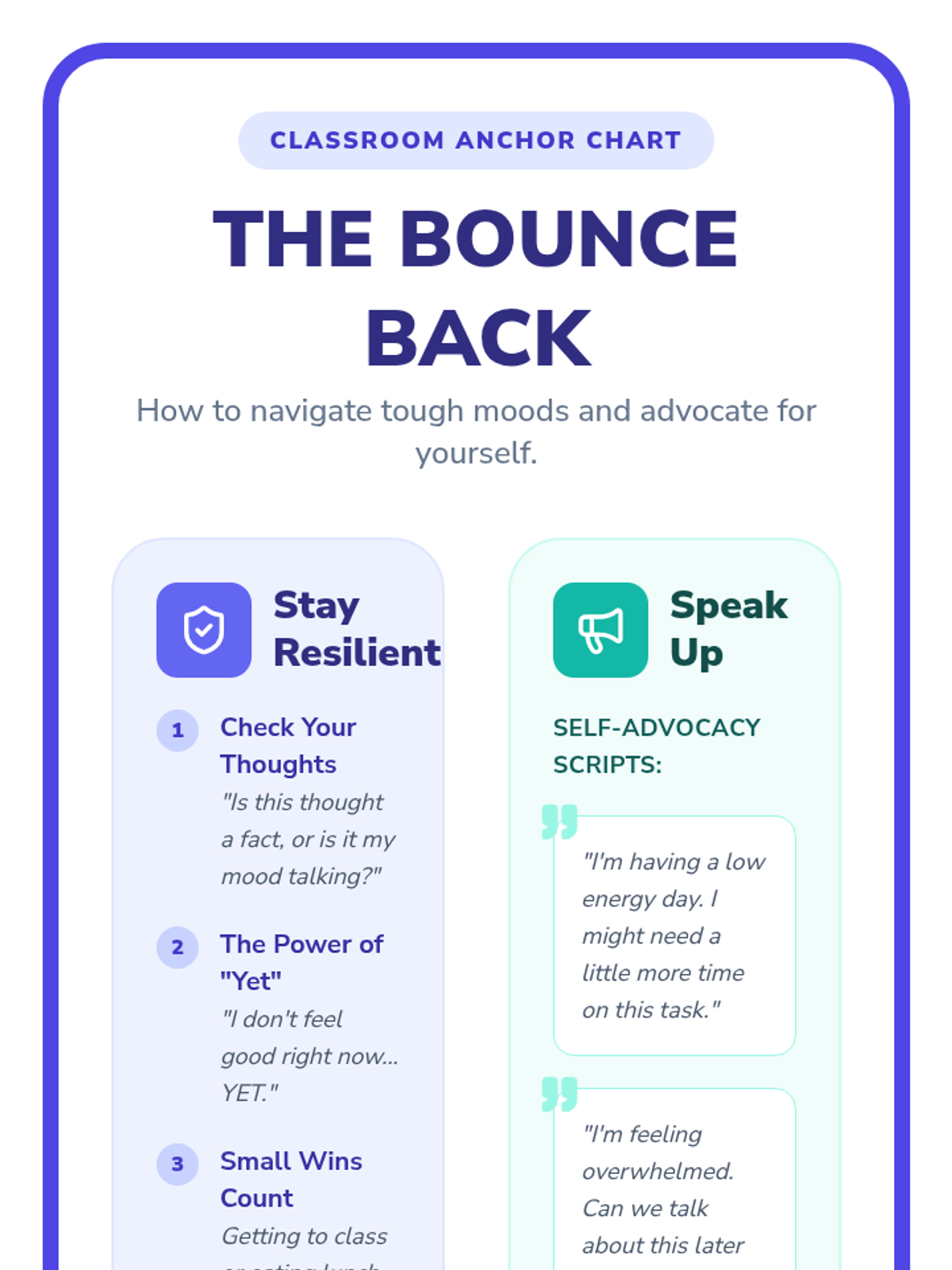
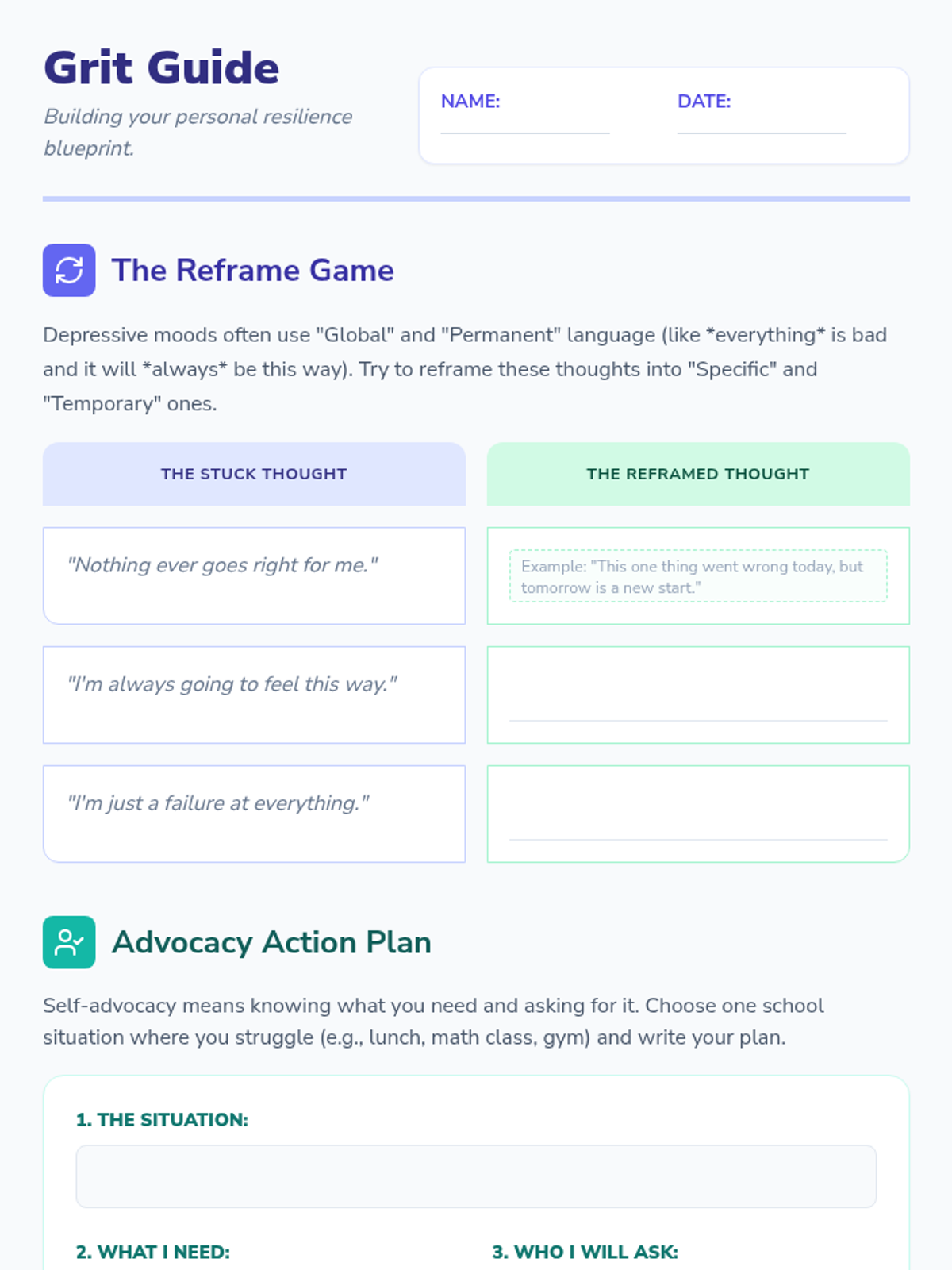
Focuses on building psychological resilience and learning how to advocate for one's own mental health needs.
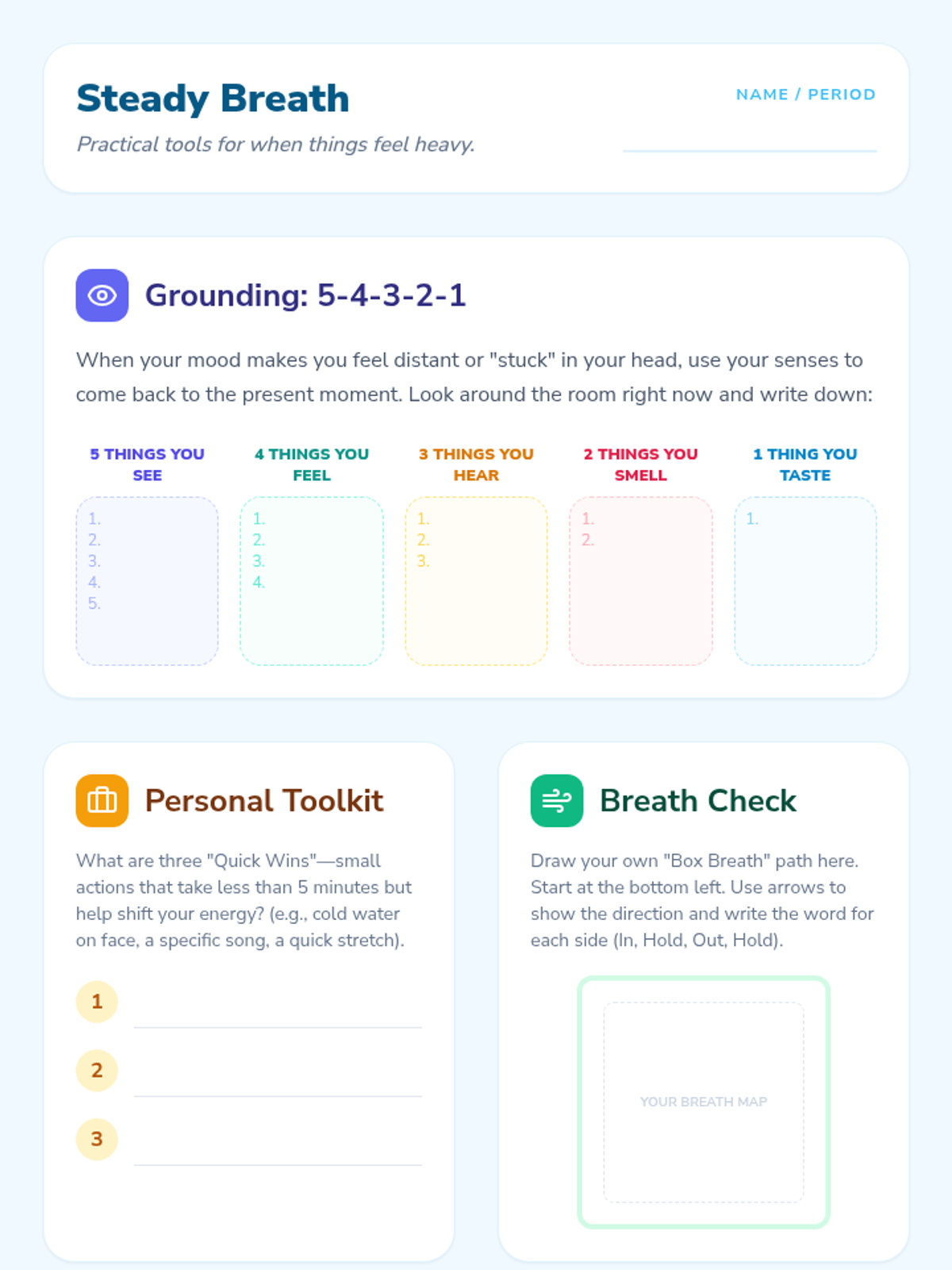
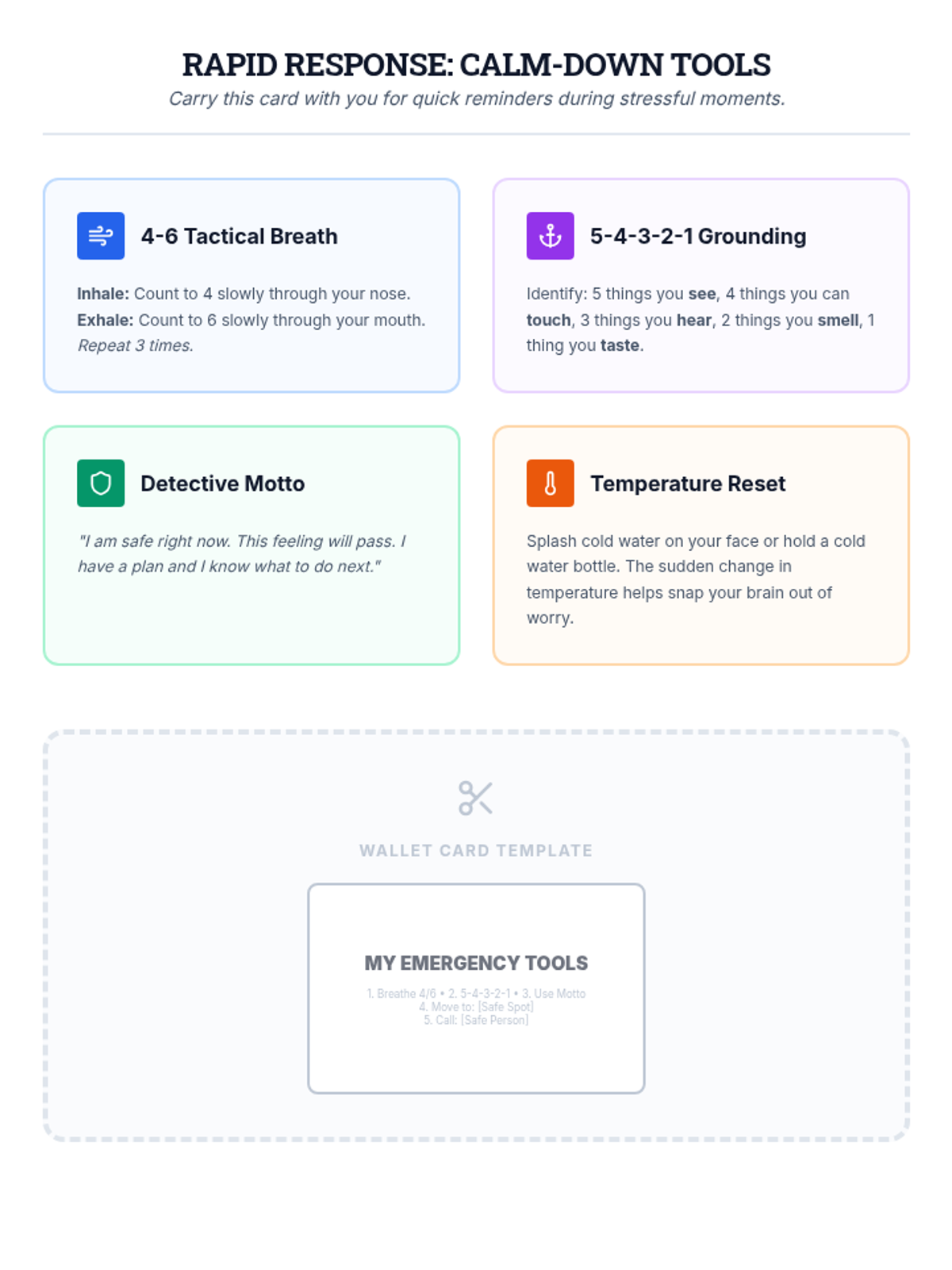
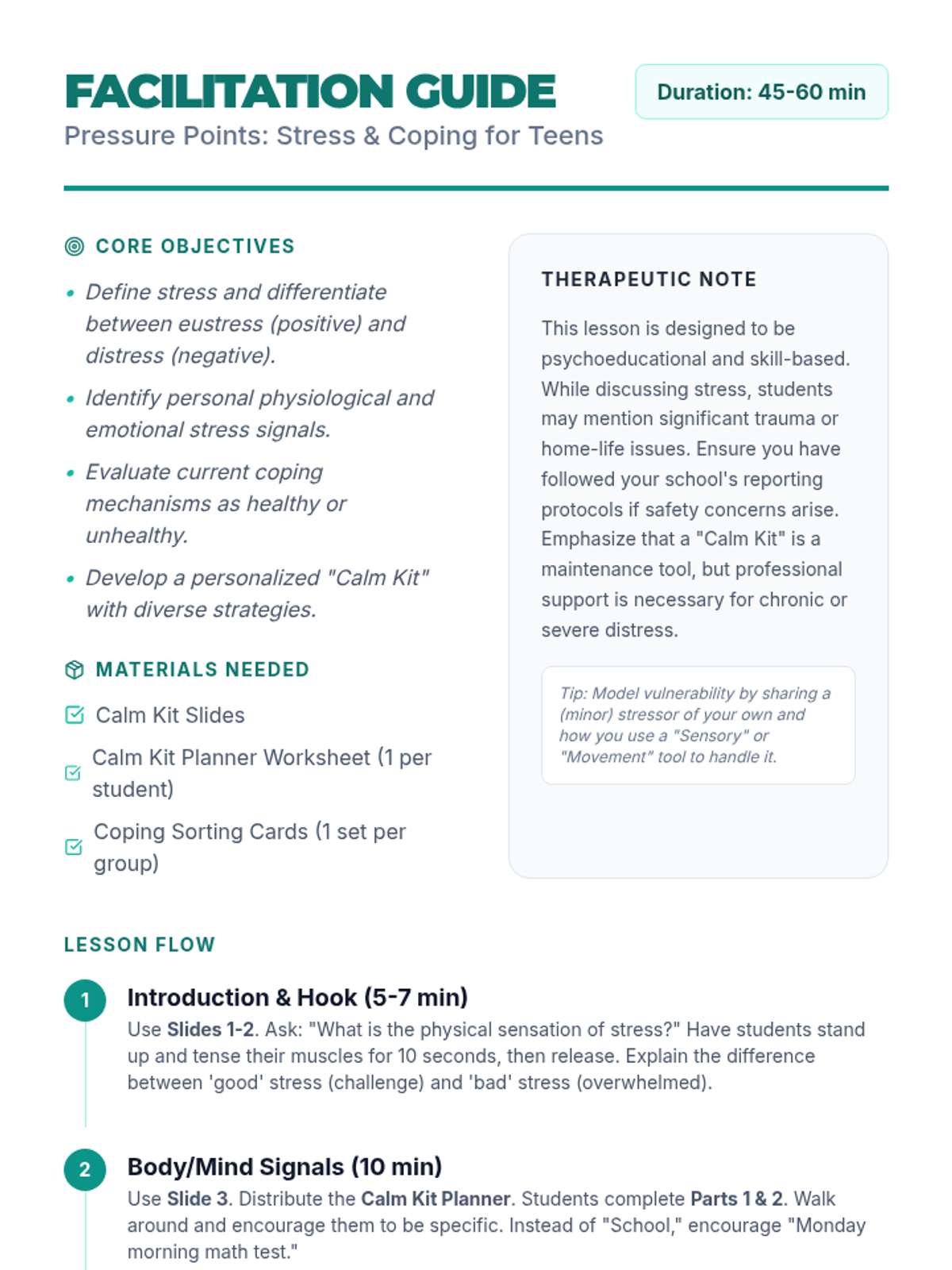
Introduces stress management, mindfulness, and practical coping strategies for difficult moments.
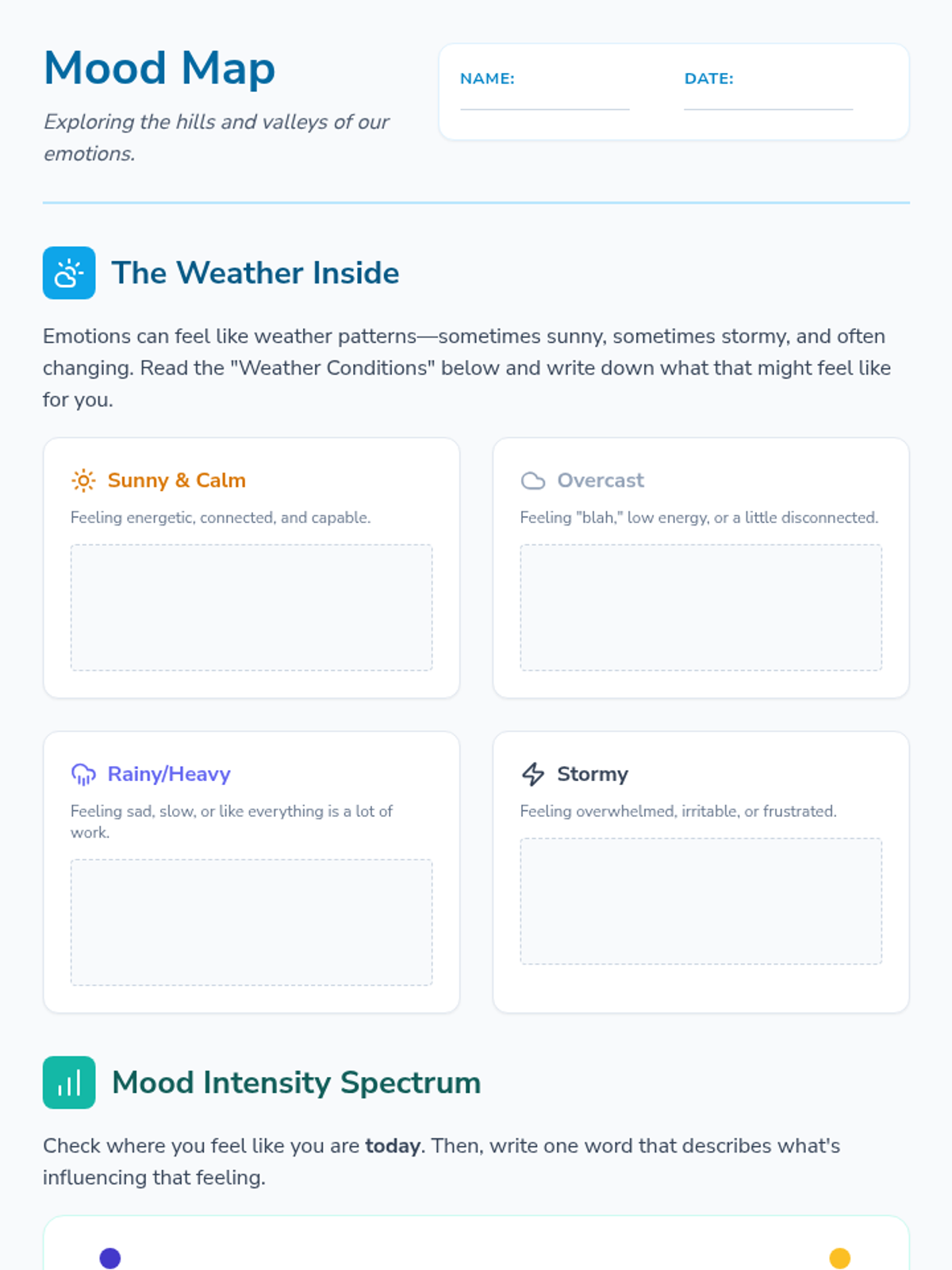
Focuses on identifying complex emotions, understanding mood regulation, and building emotional vocabulary.
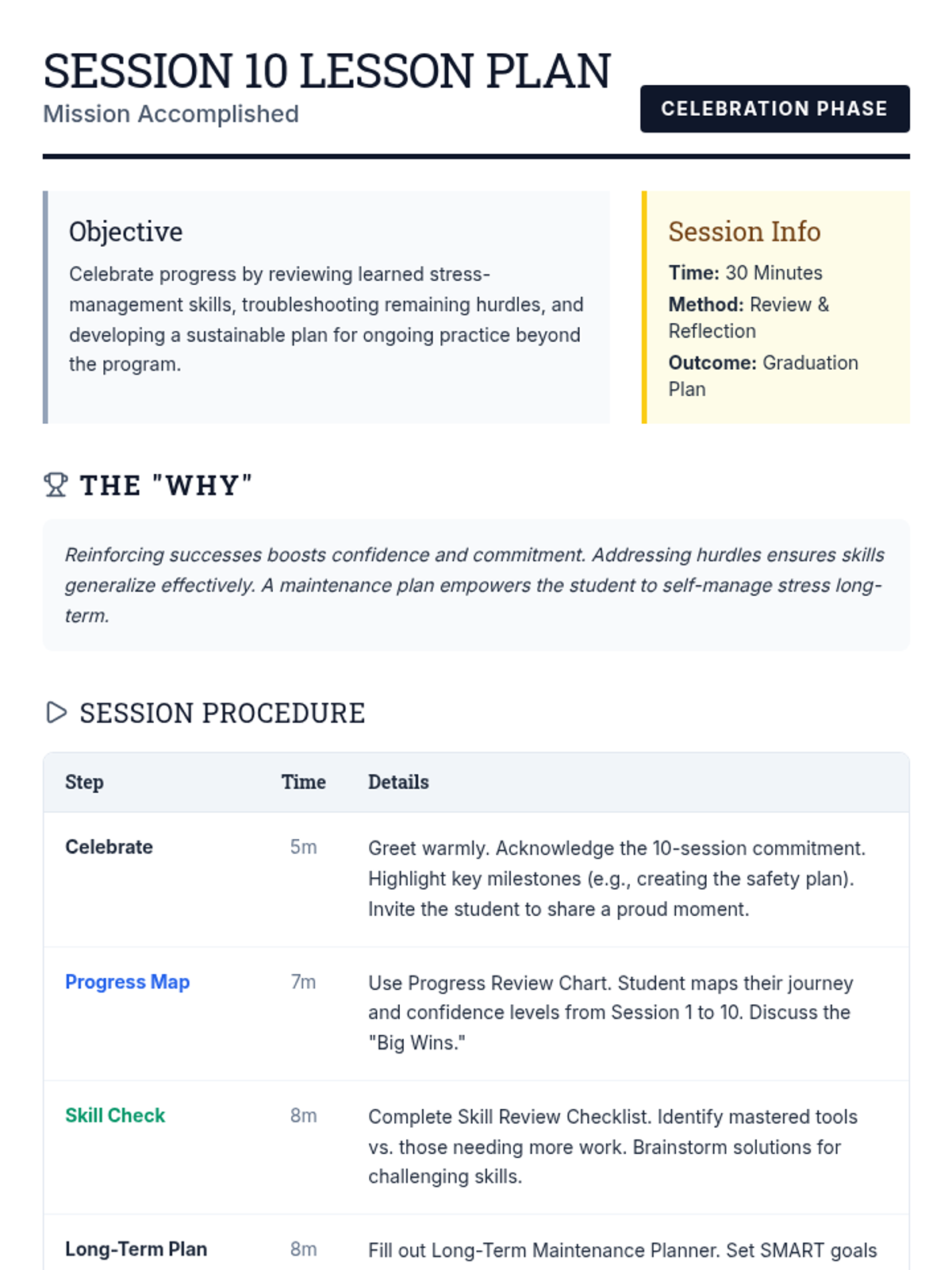
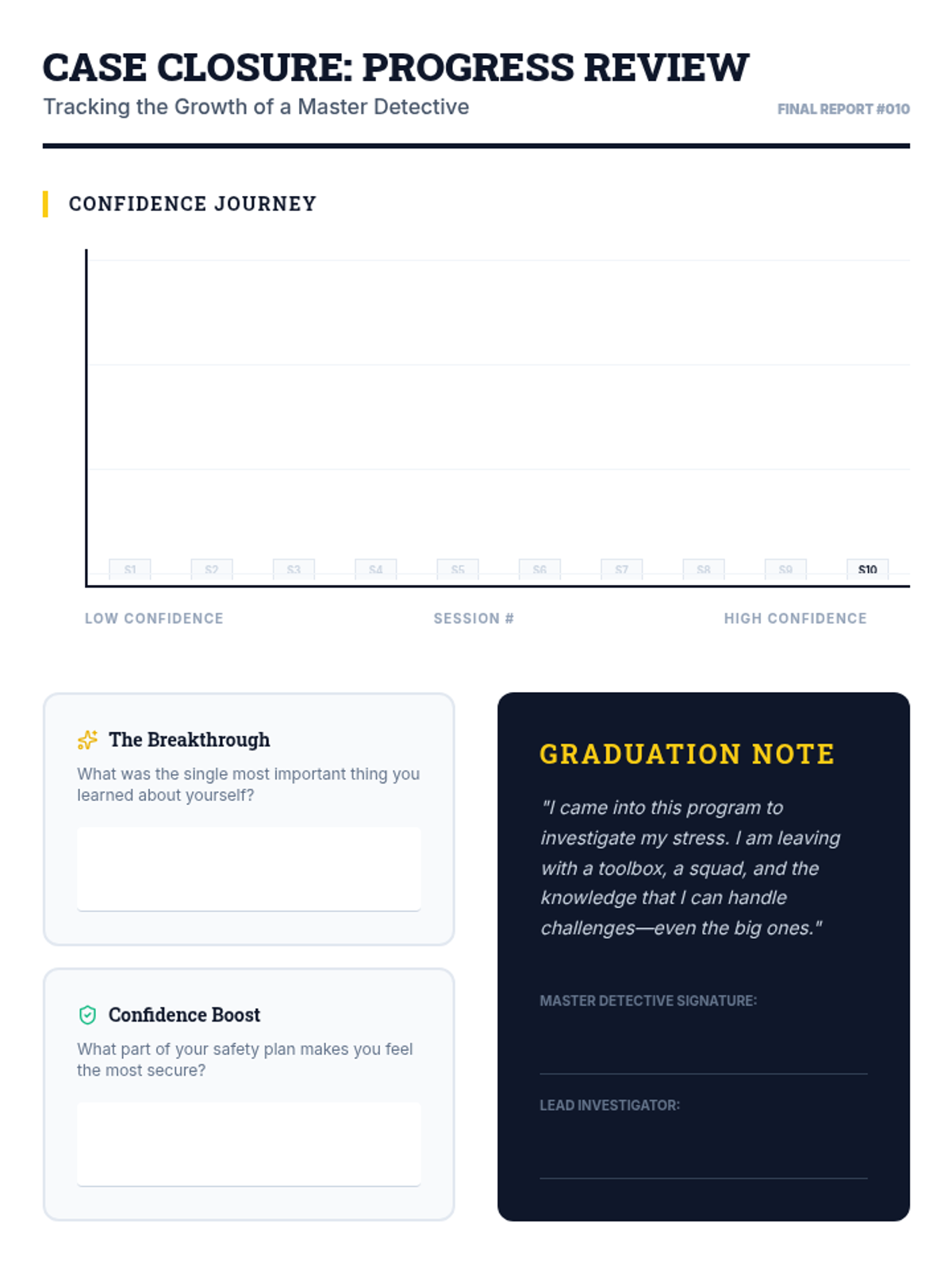
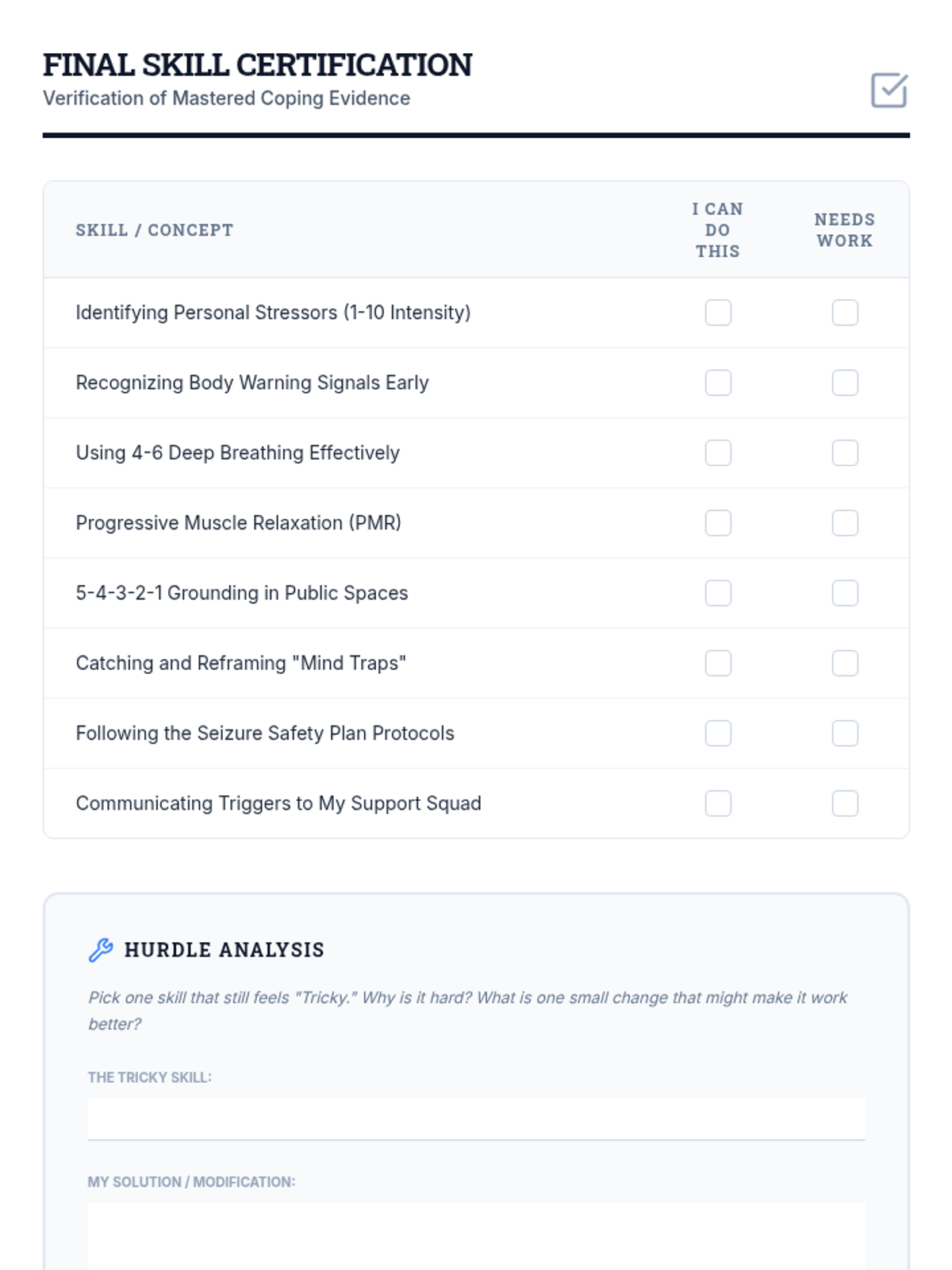
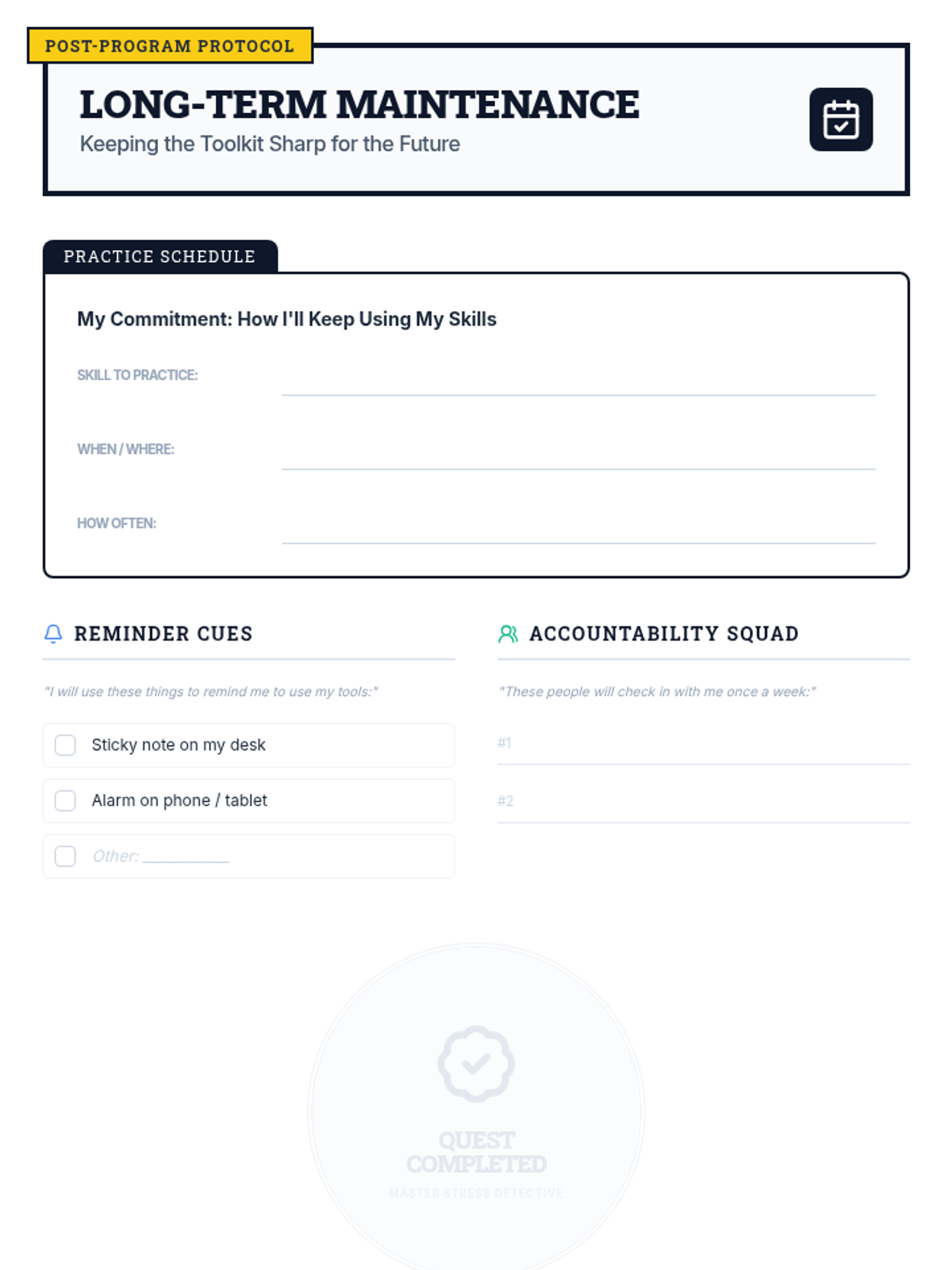
Celebrate the student’s progress by reviewing all learned stress-management skills, troubleshooting any challenges encountered, and developing a sustainable plan for ongoing practice beyond the program.
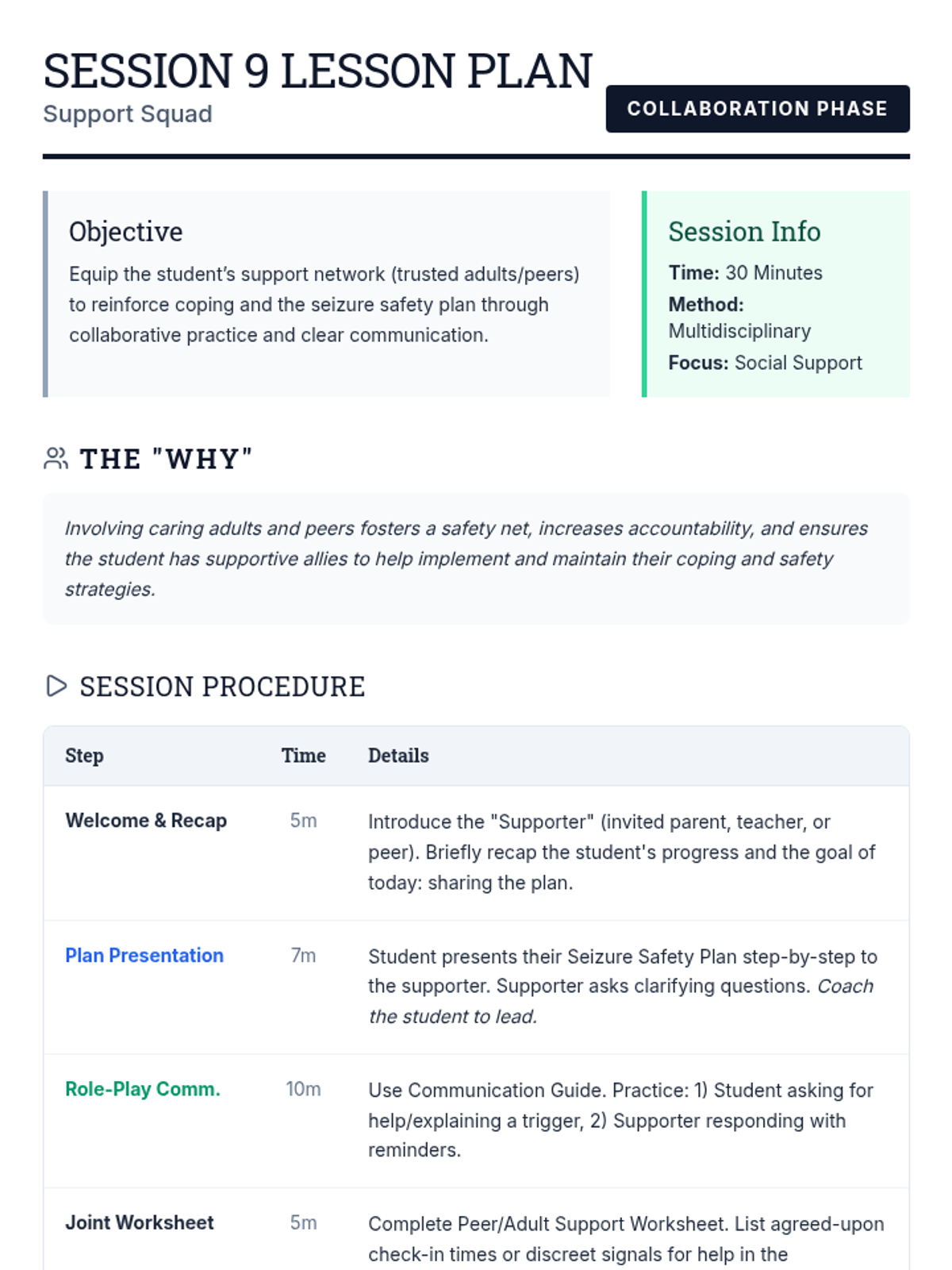
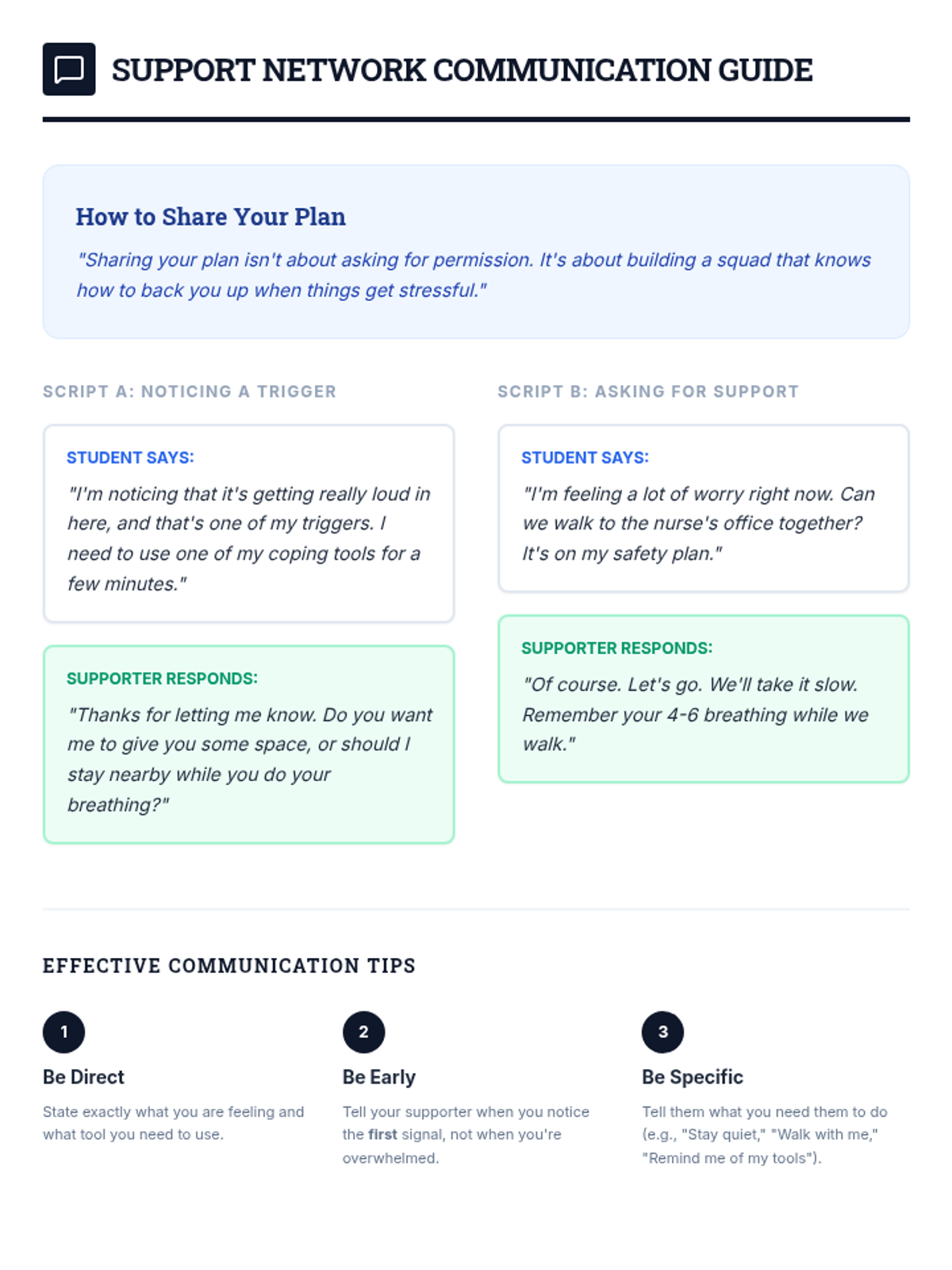
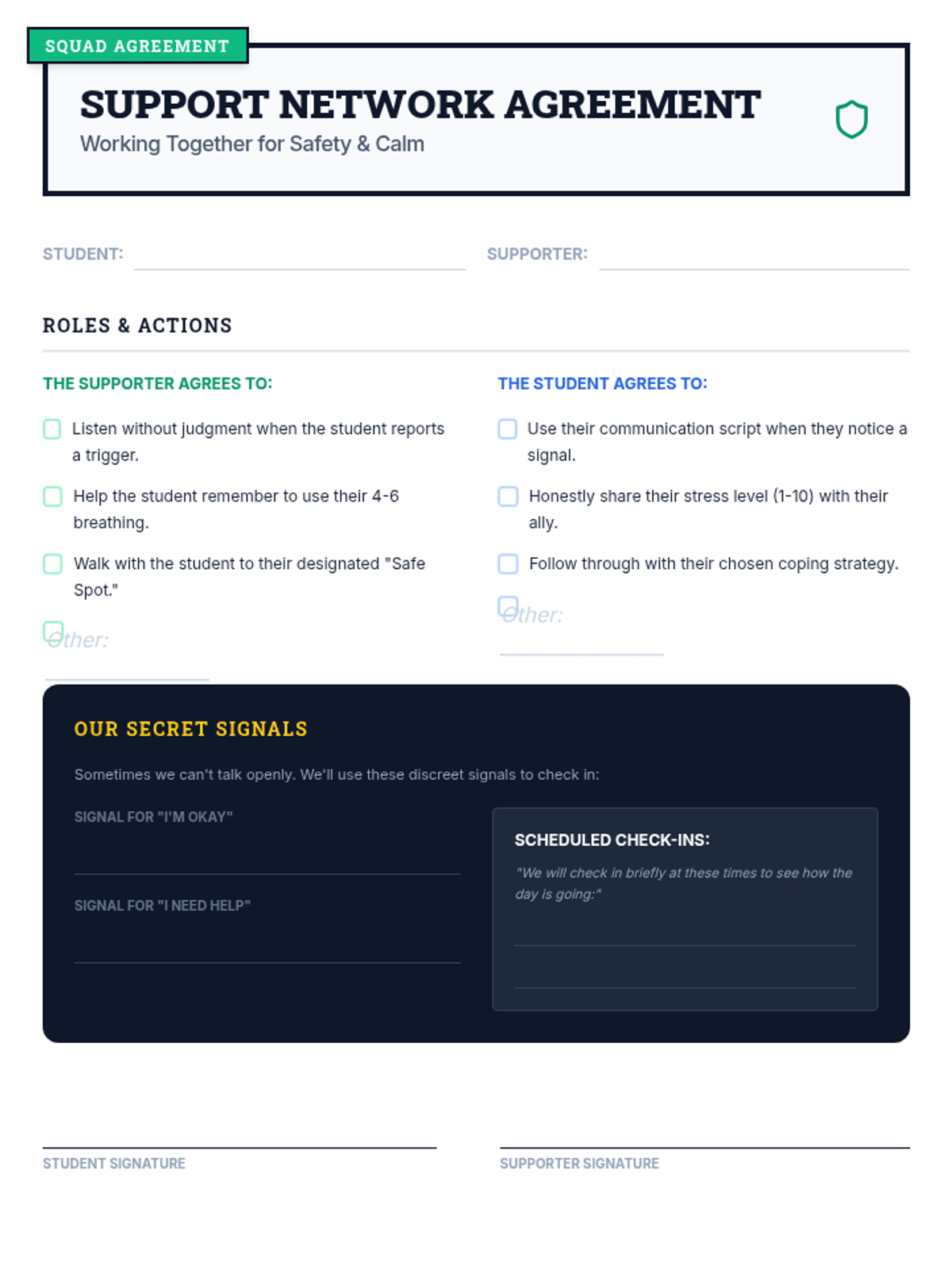
Involving caring adults and peers fosters a safety net, increases accountability, and ensures the student has supportive allies to help implement and maintain their coping and safety strategies.
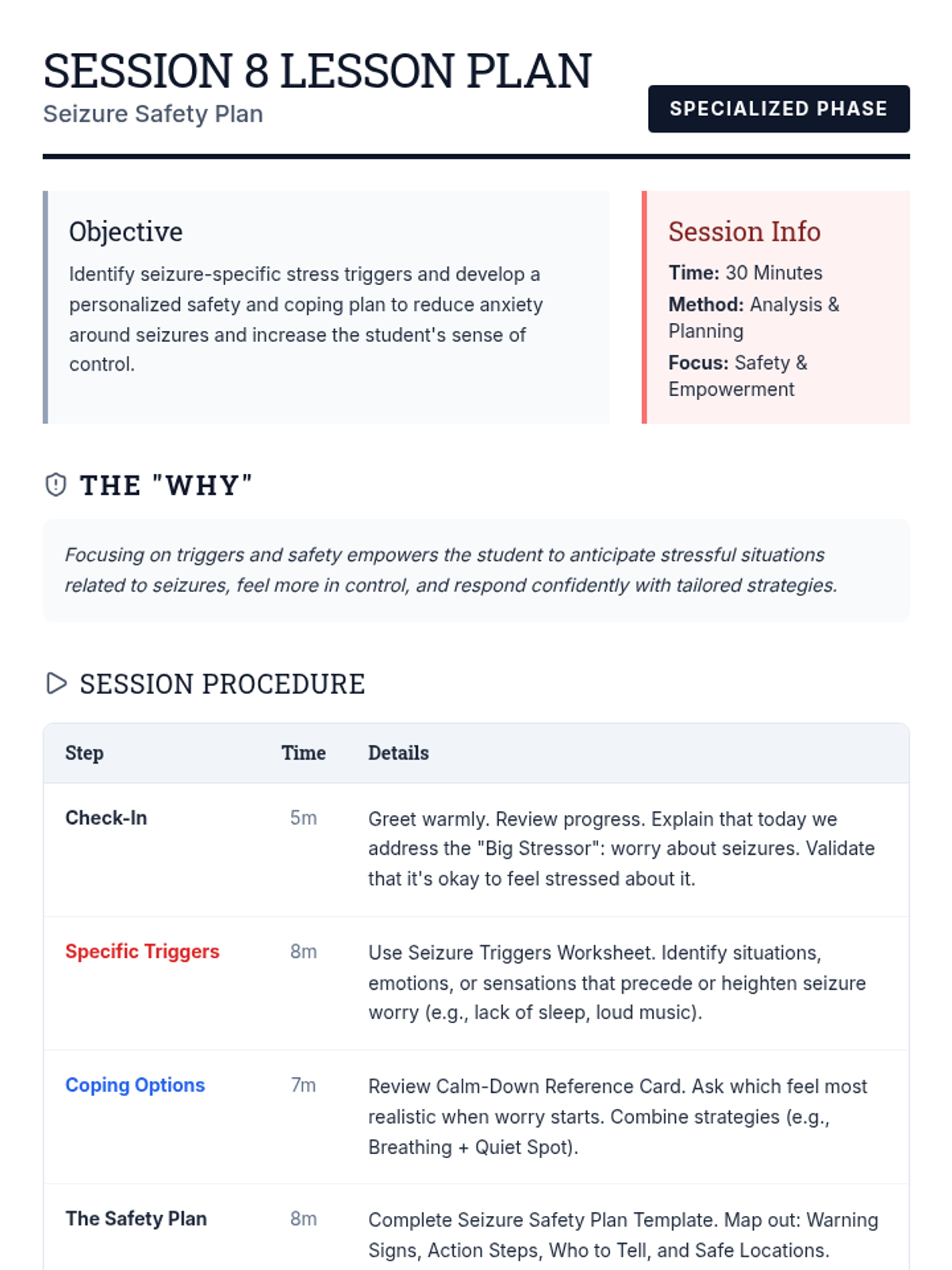
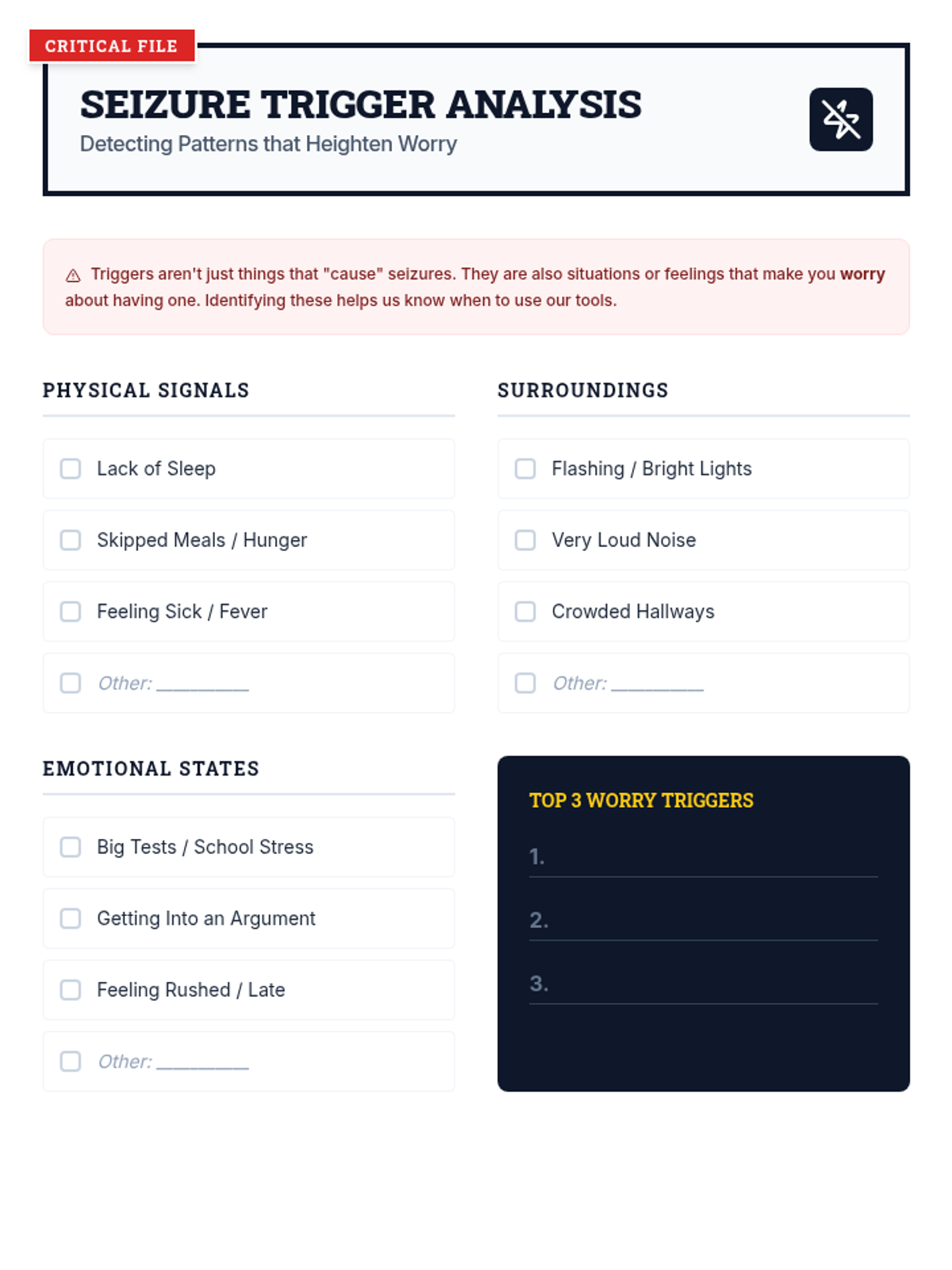
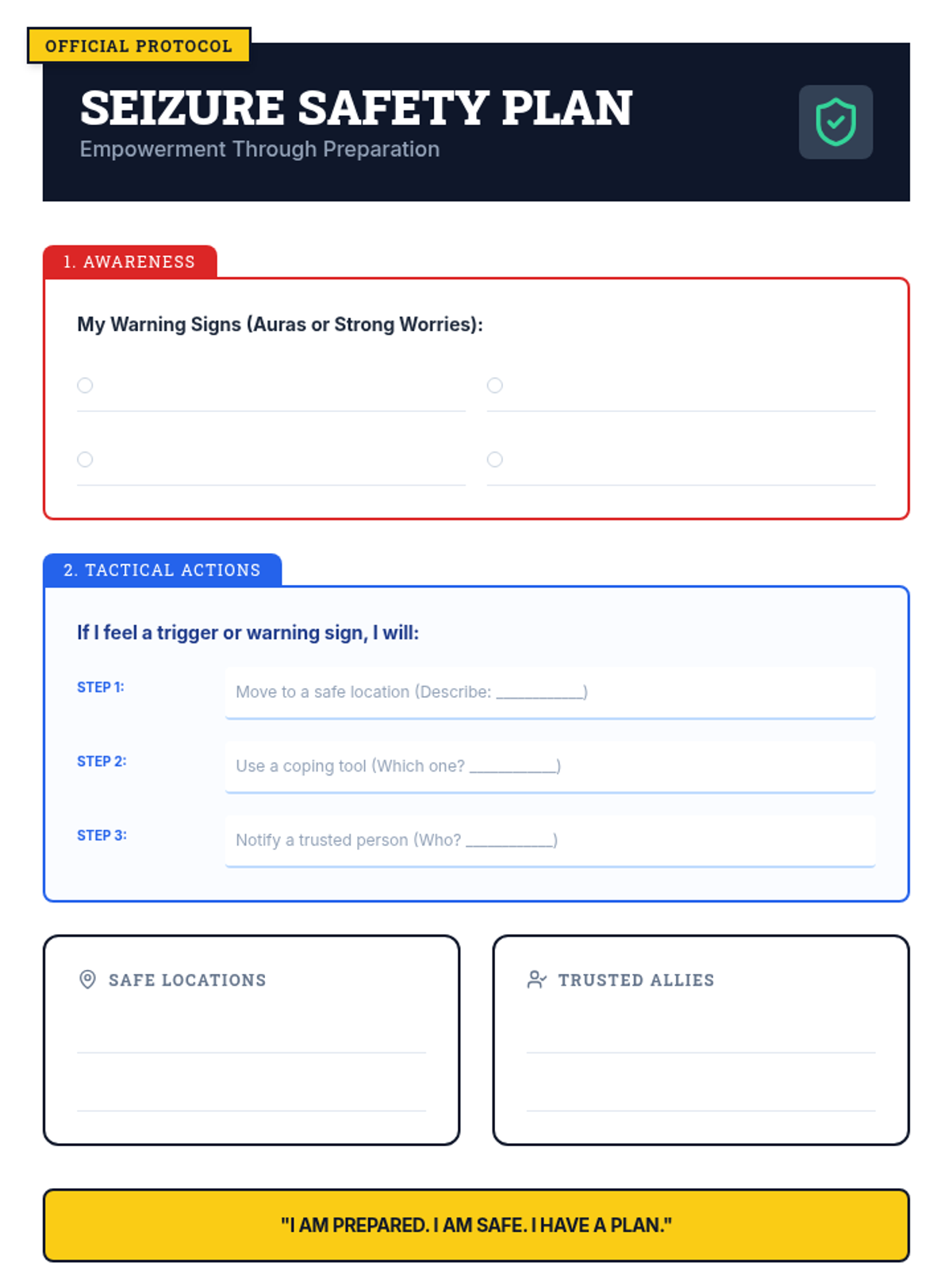
Focusing on triggers and safety empowers the student to anticipate stressful situations related to seizures, feel more in control, and respond confidently with tailored strategies.
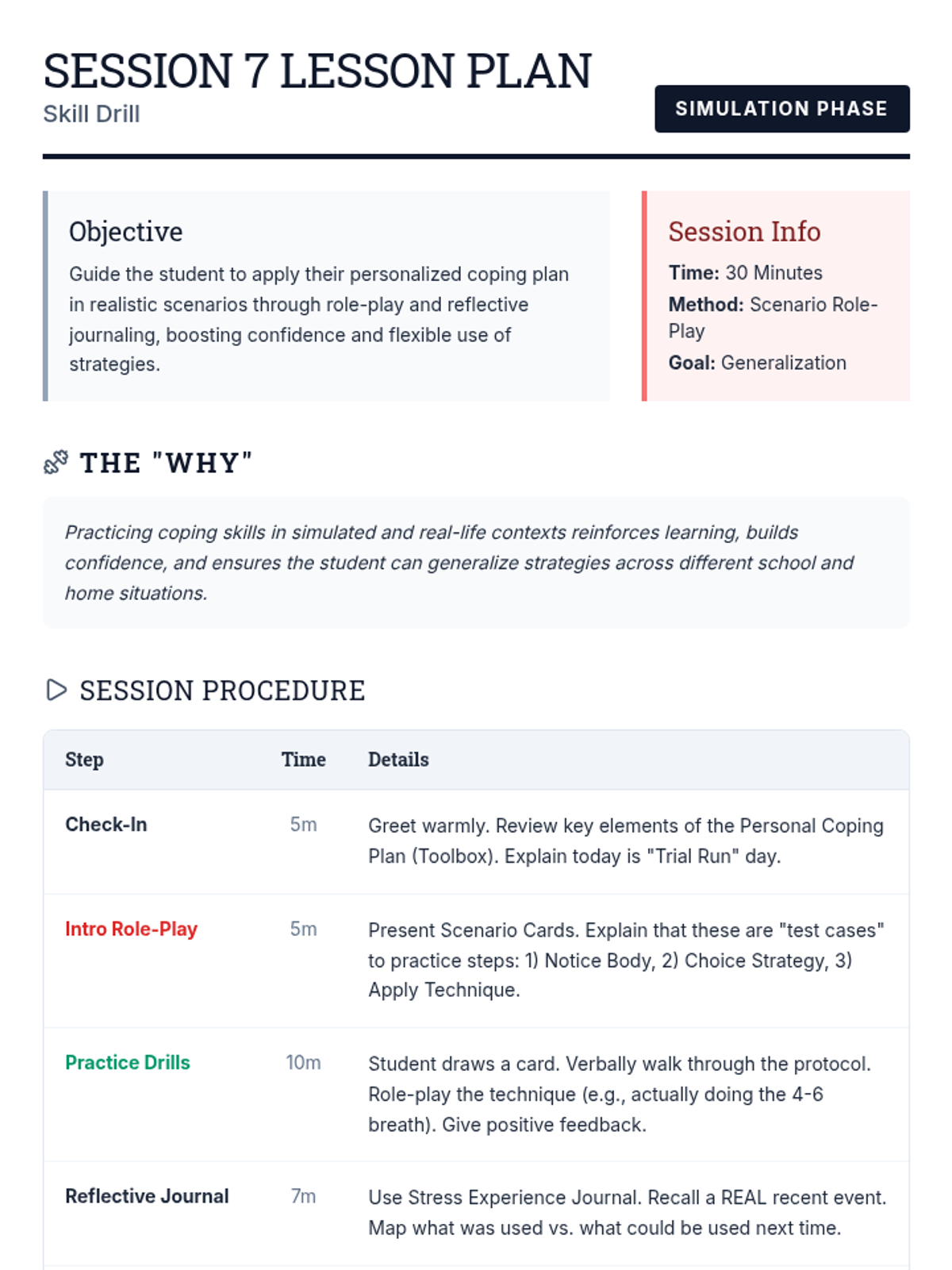
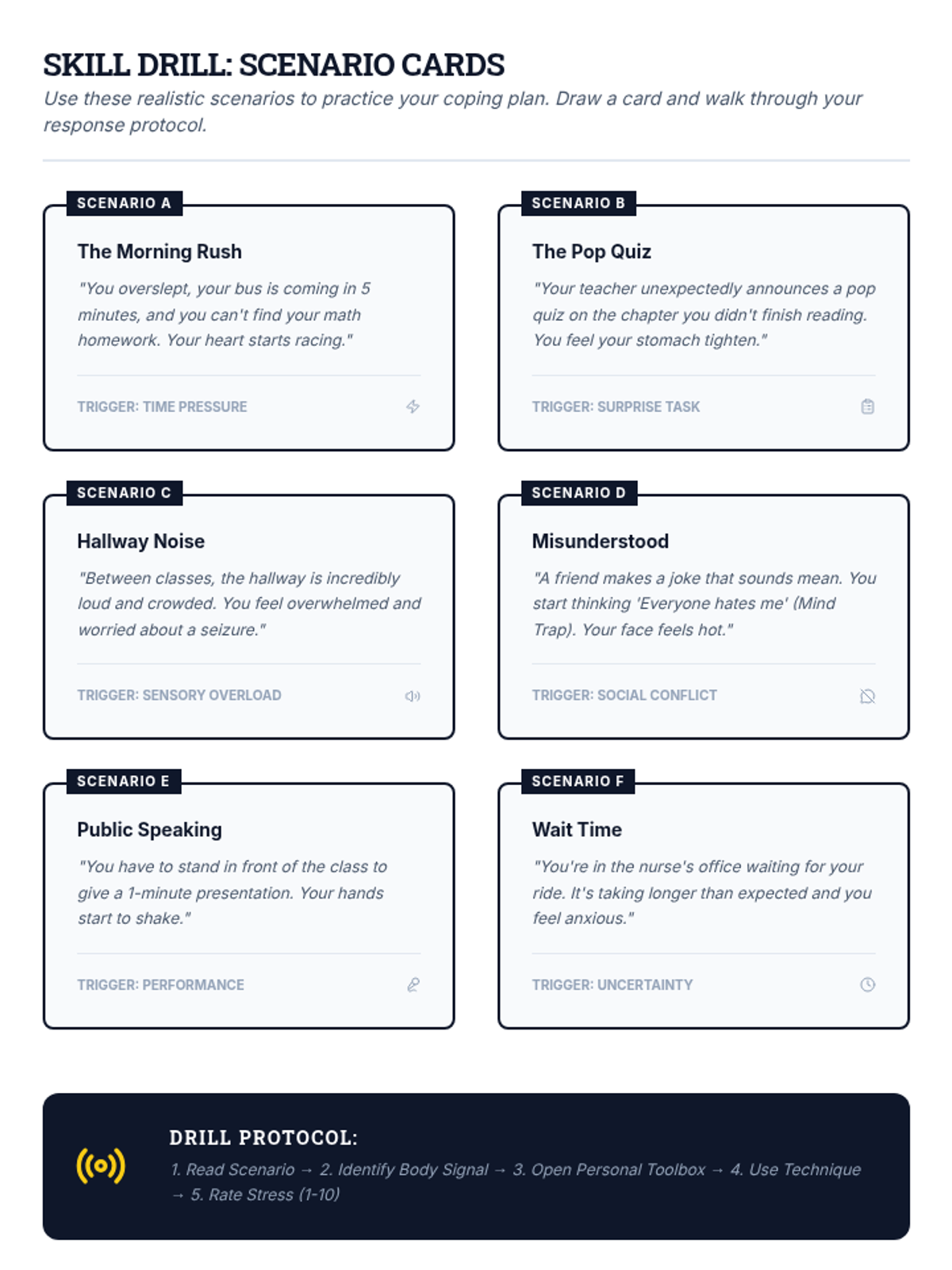
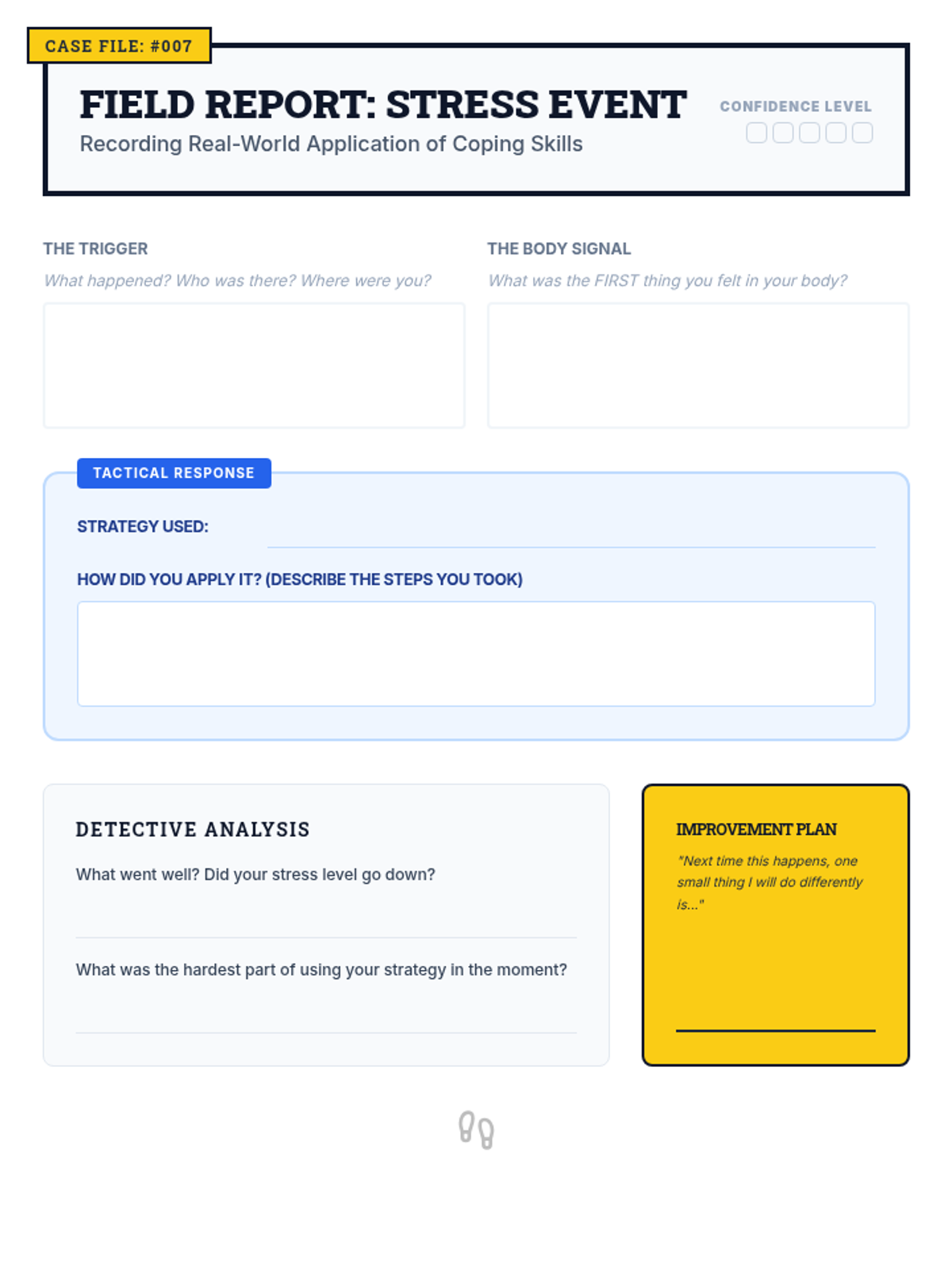
Practicing coping skills in simulated and real-life contexts reinforces learning, builds confidence, and ensures the student can generalize strategies across situations.
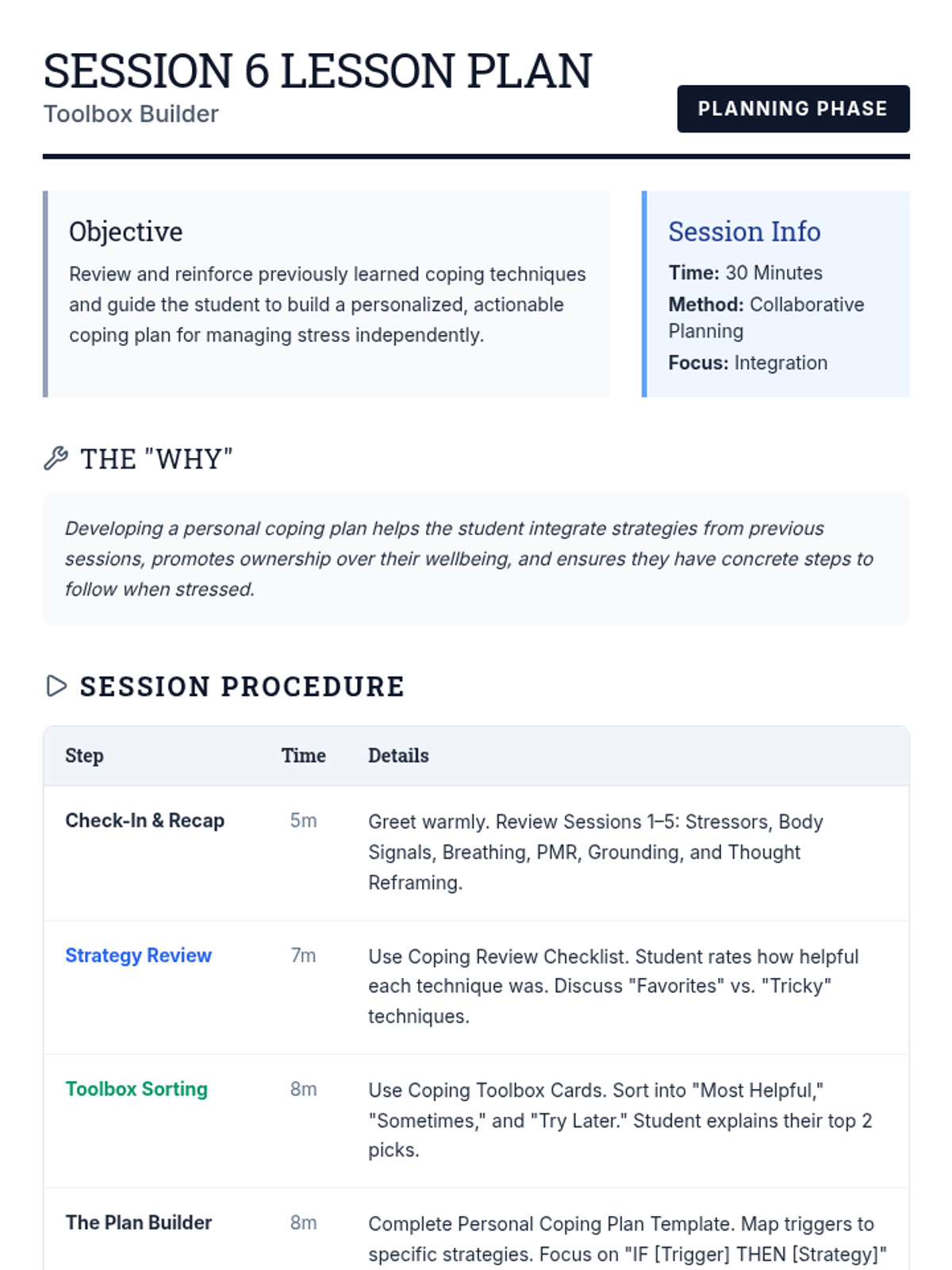
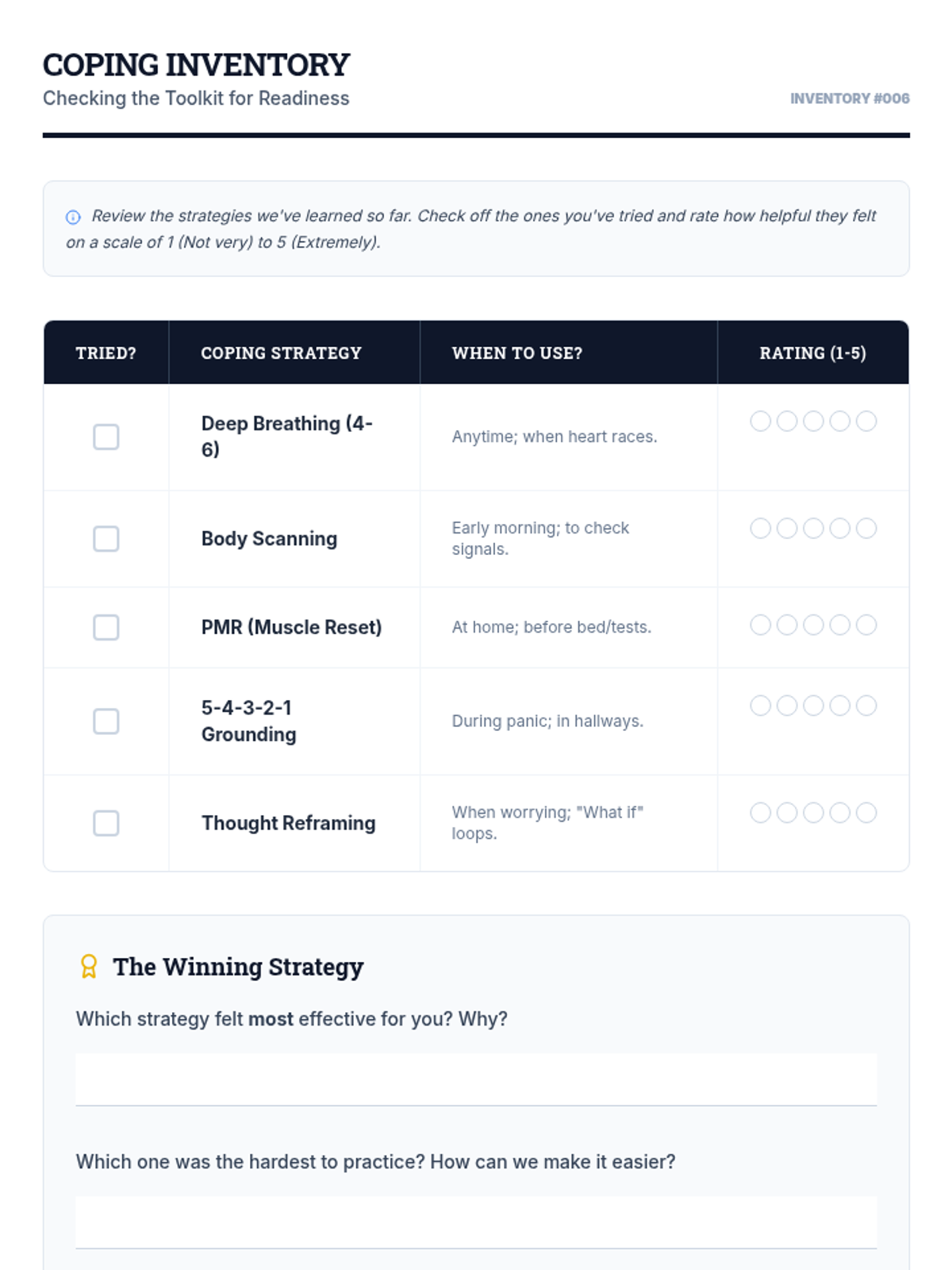
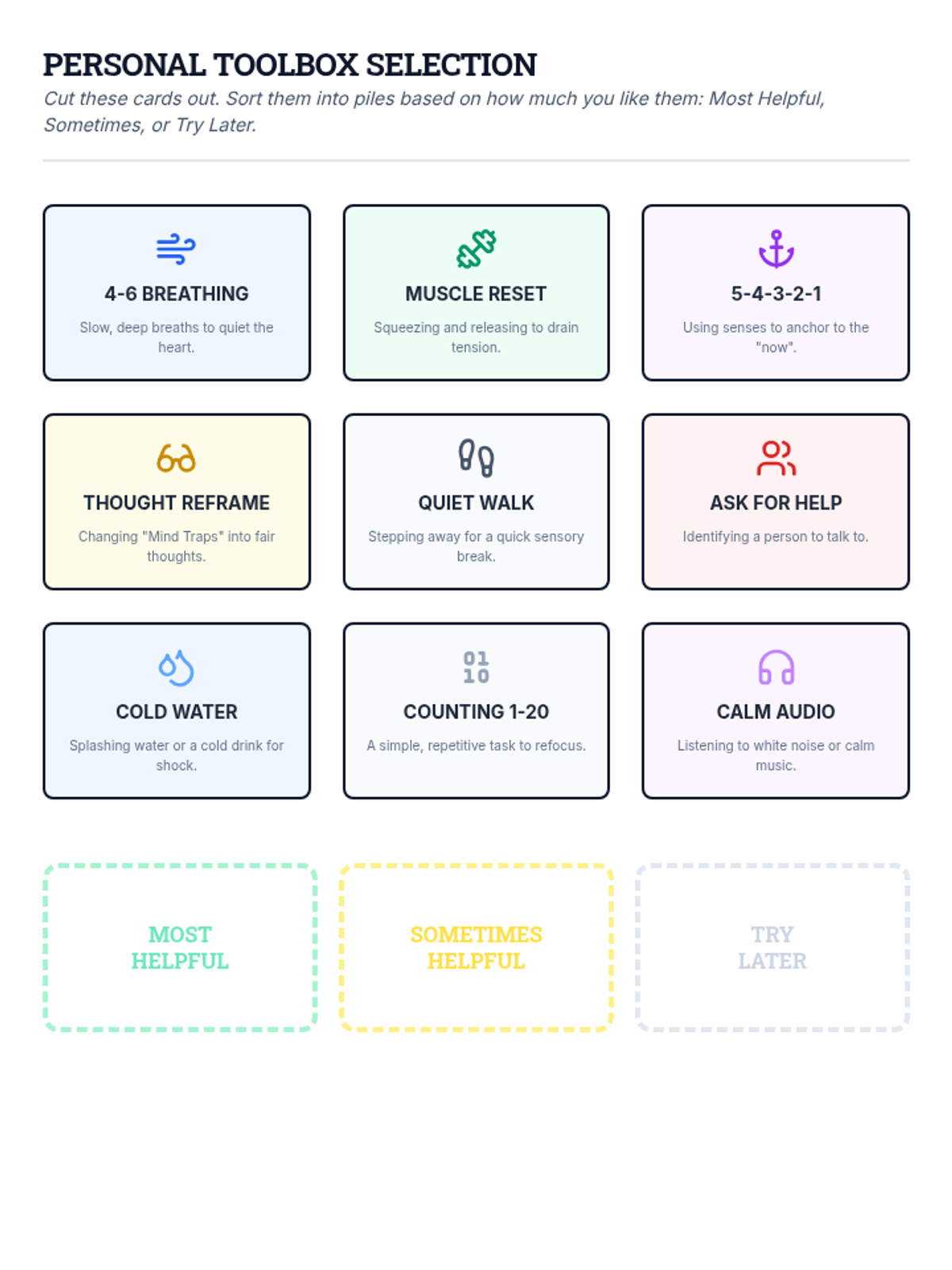
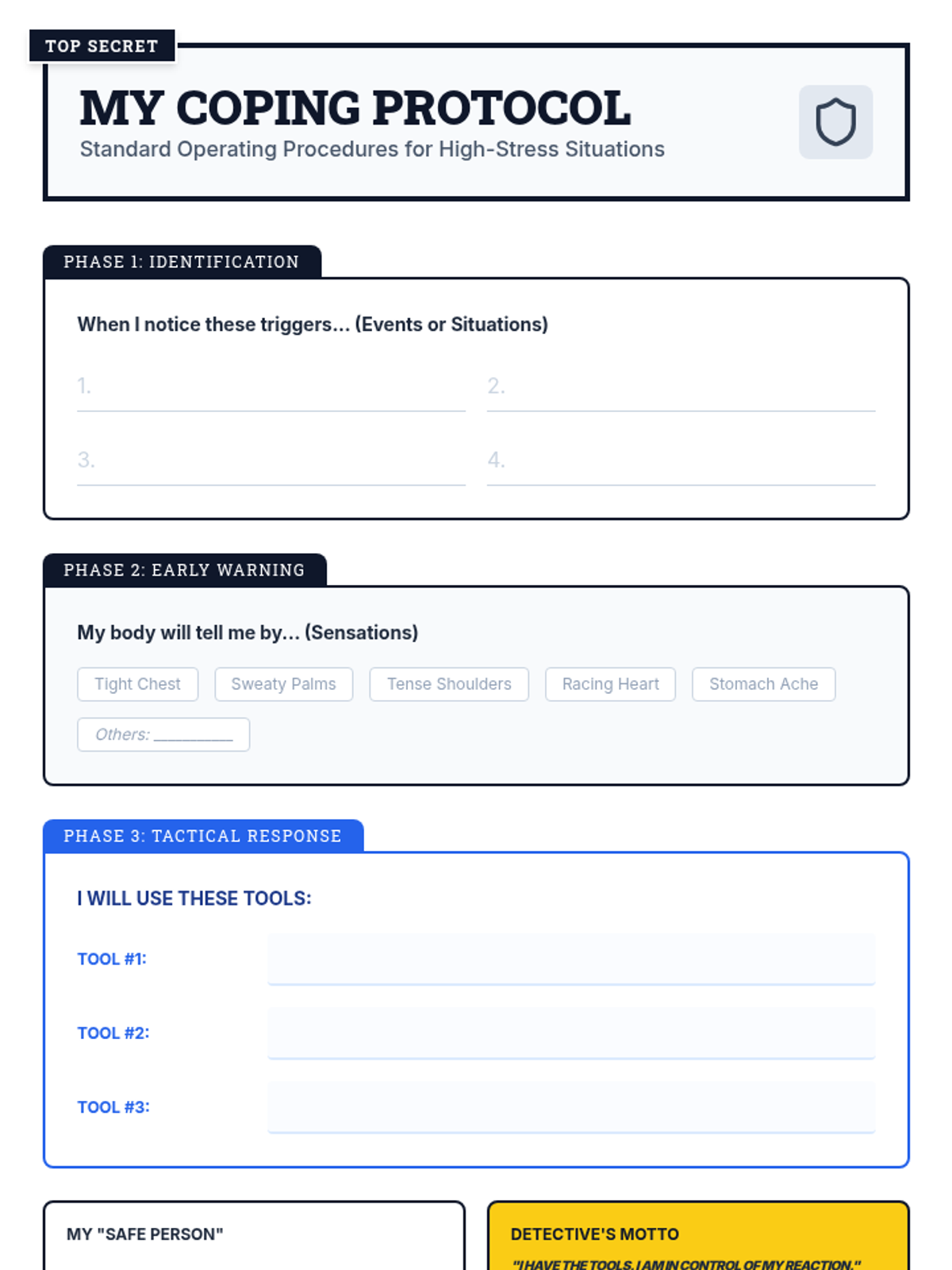
Developing a personal coping plan helps the student integrate strategies, promotes ownership, and ensures they have concrete steps to follow when stressed.
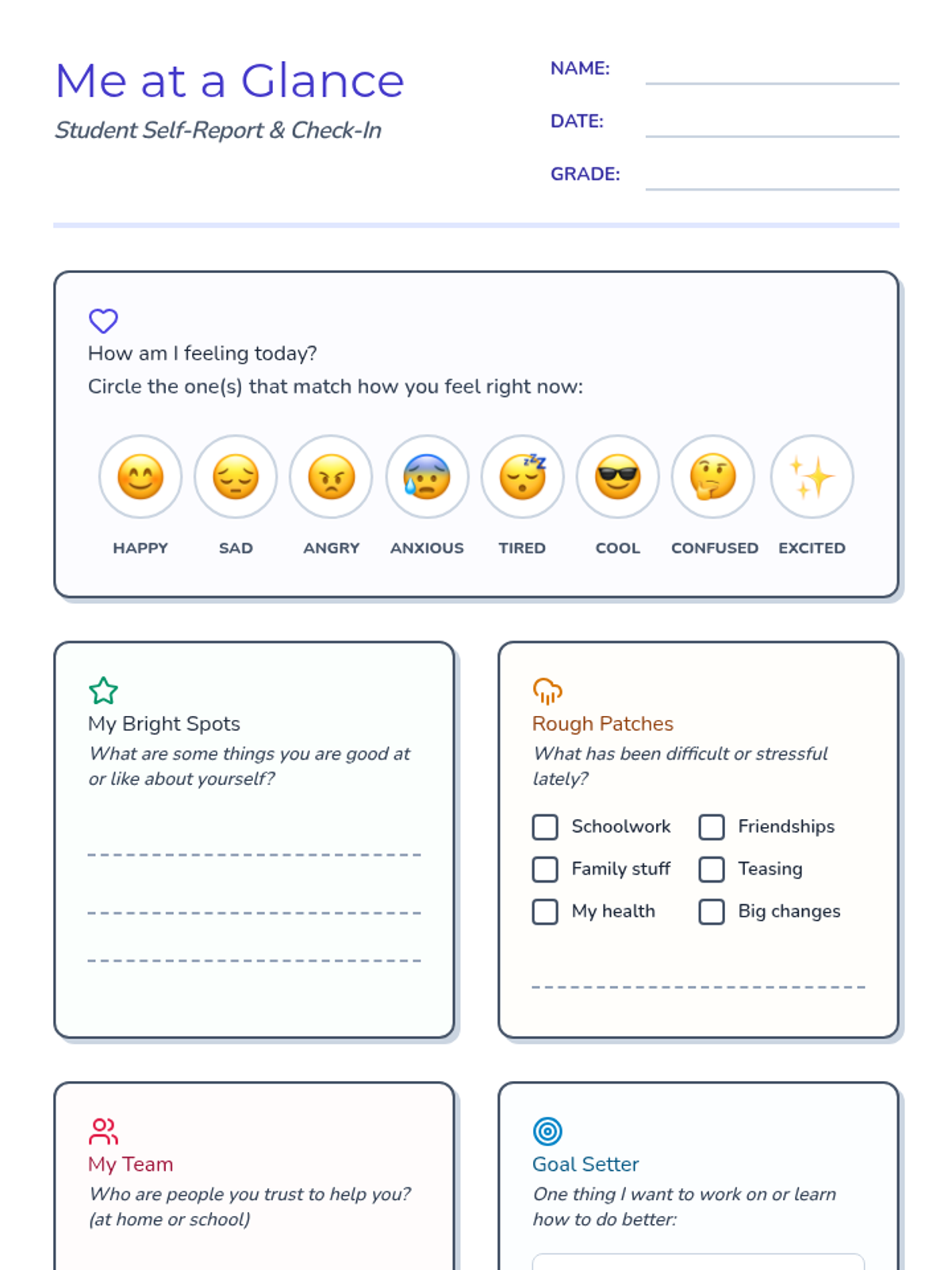
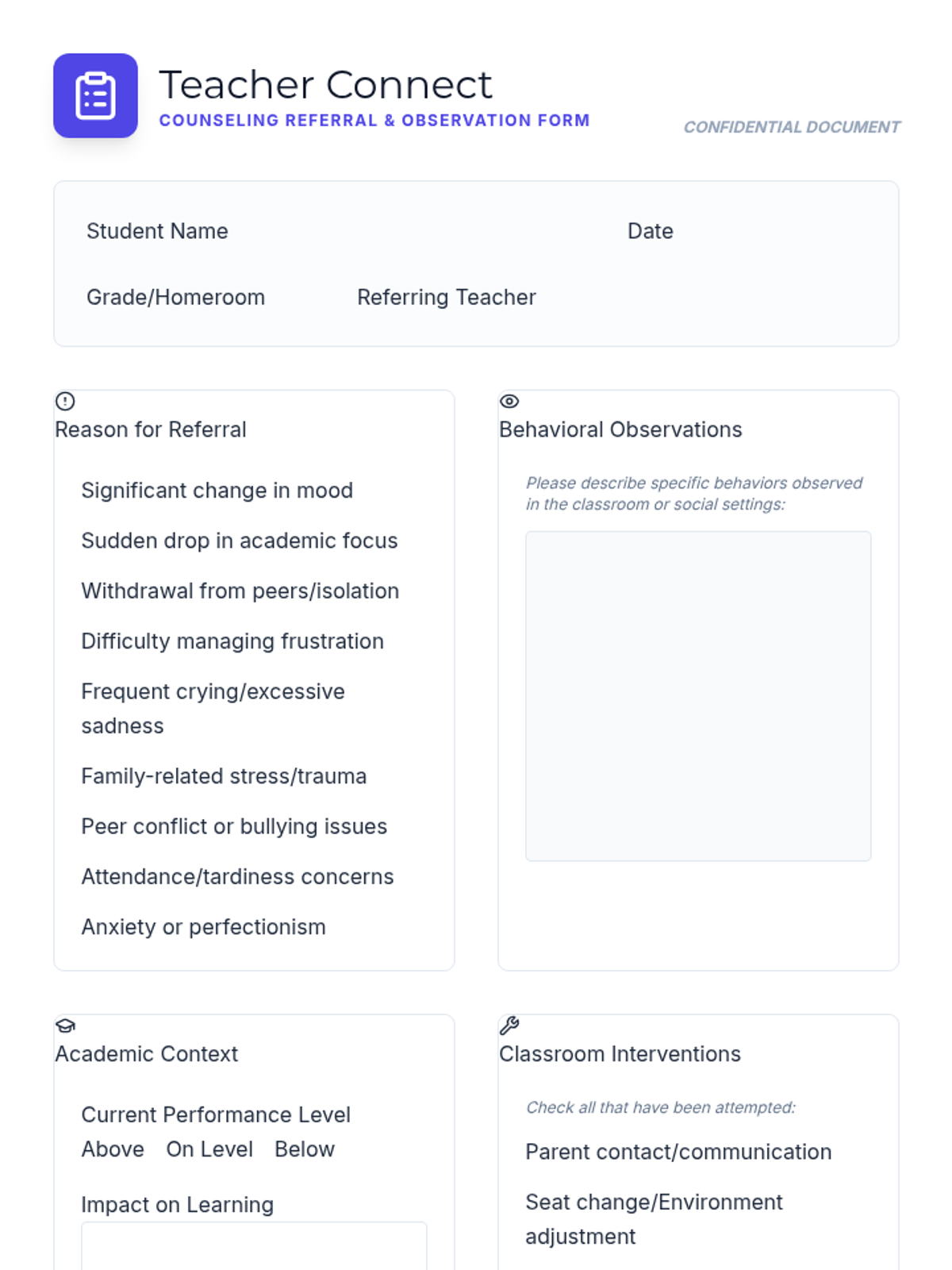
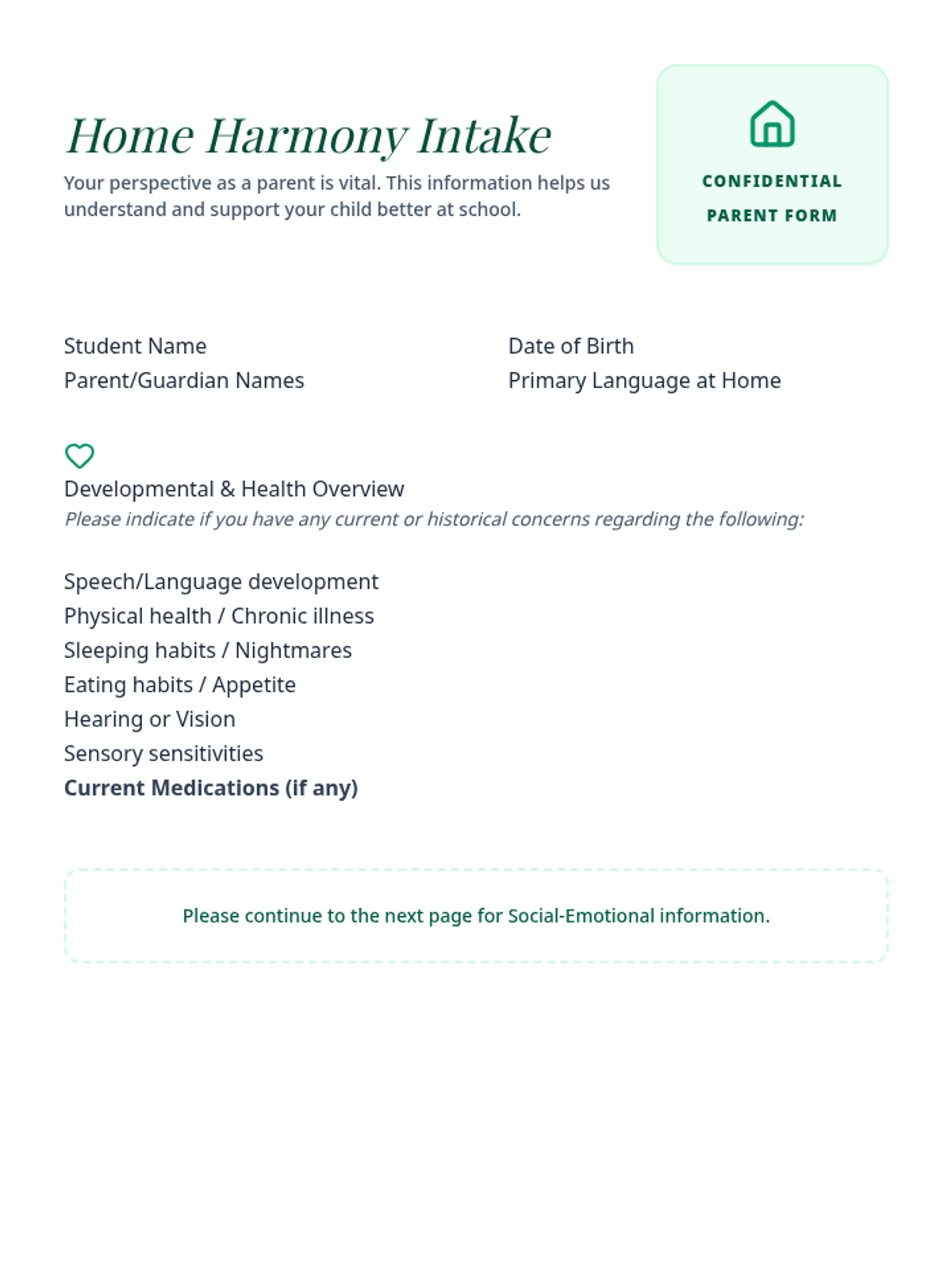
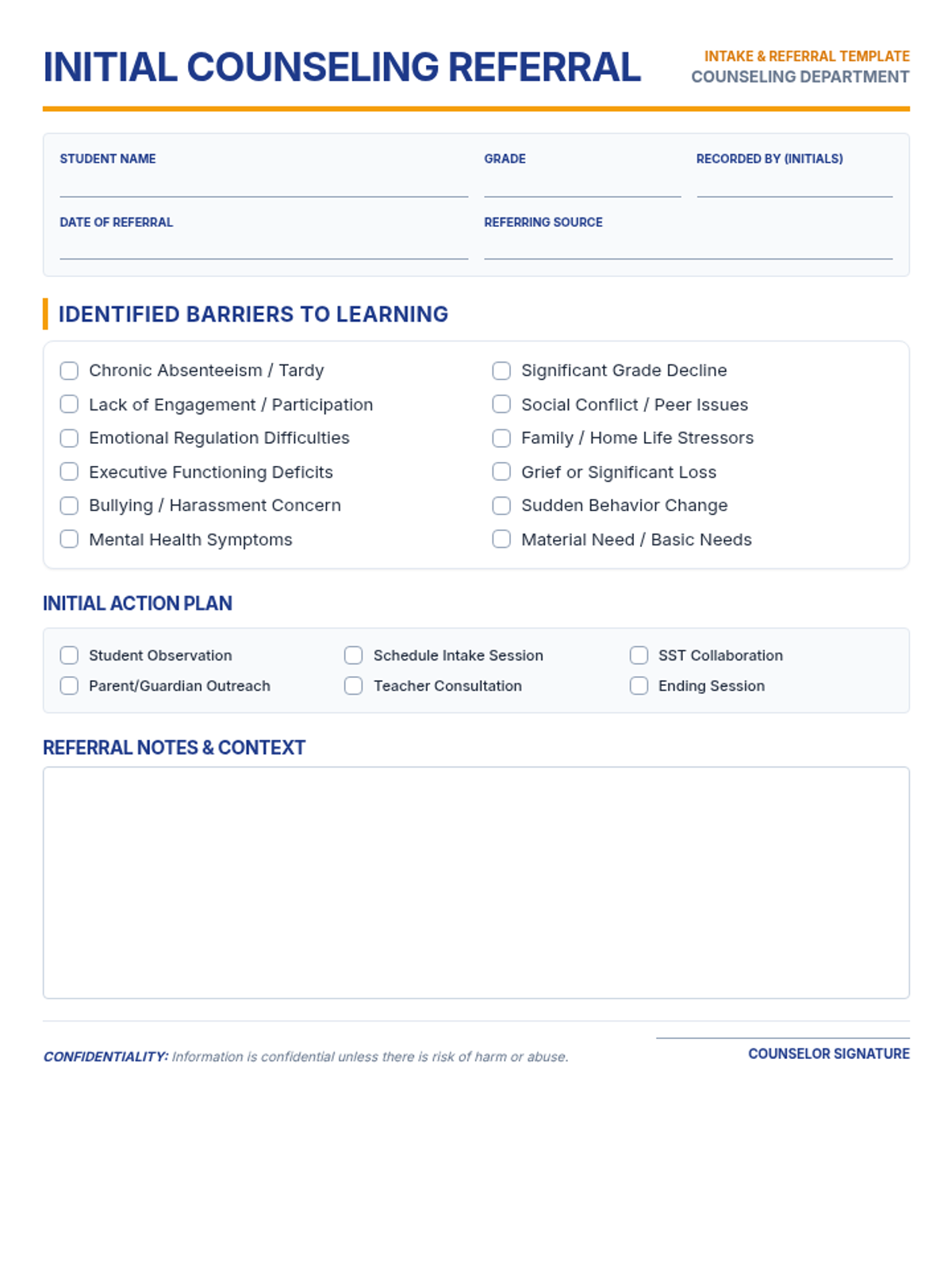
A collection of intake and referral forms for school counseling programs, focused on building a holistic understanding of a student's social-emotional needs through student, teacher, and parent perspectives.
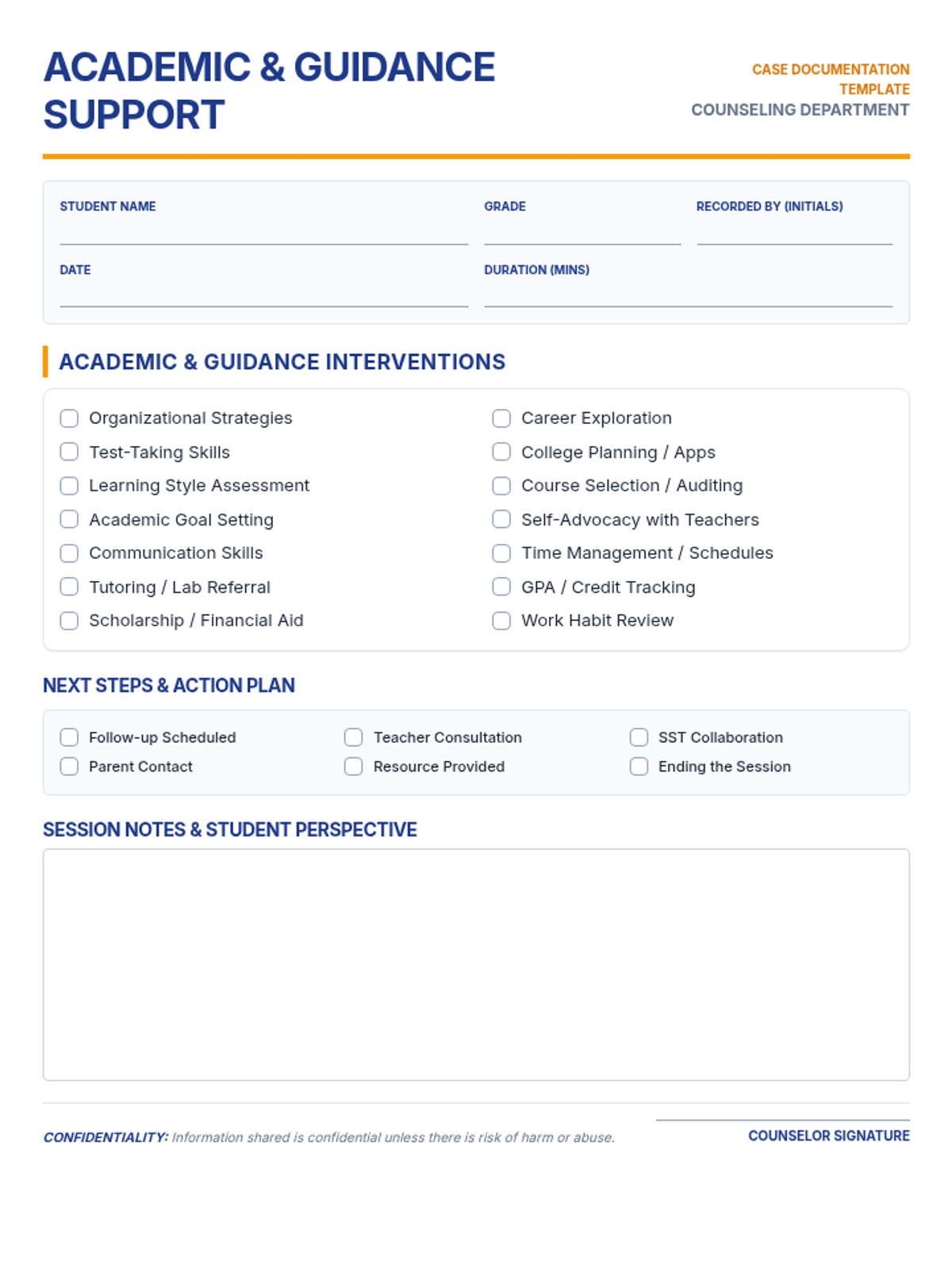
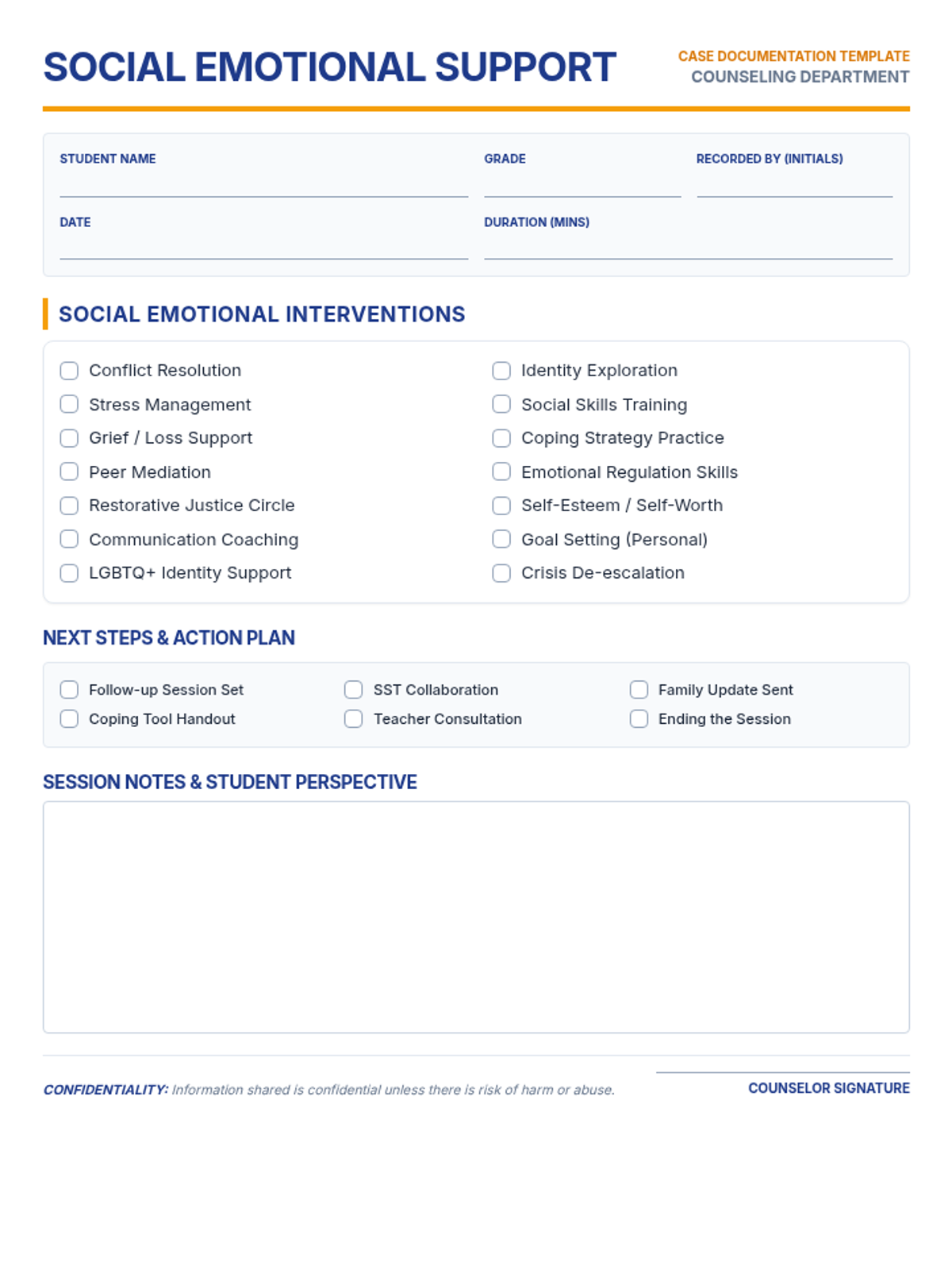
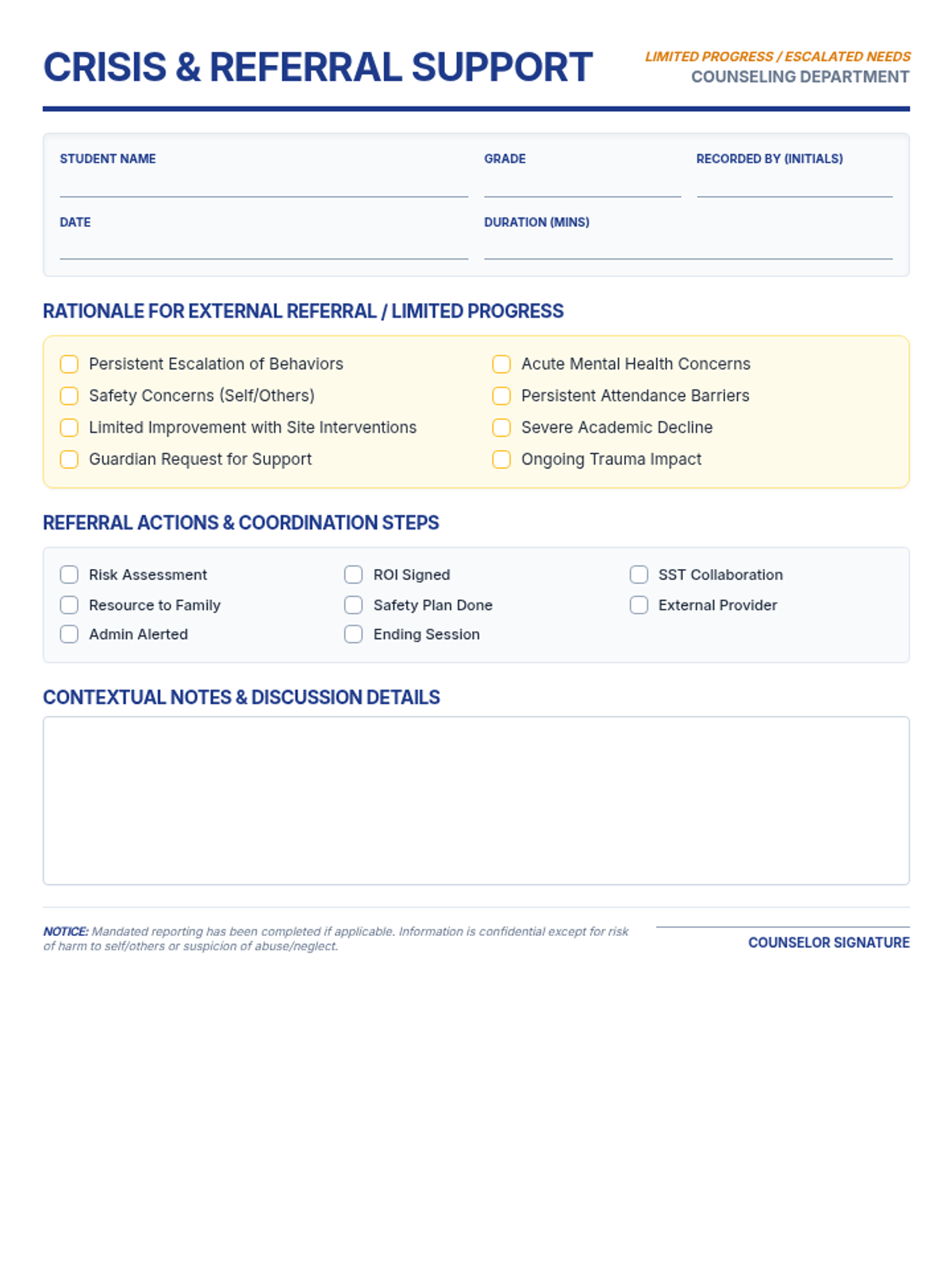
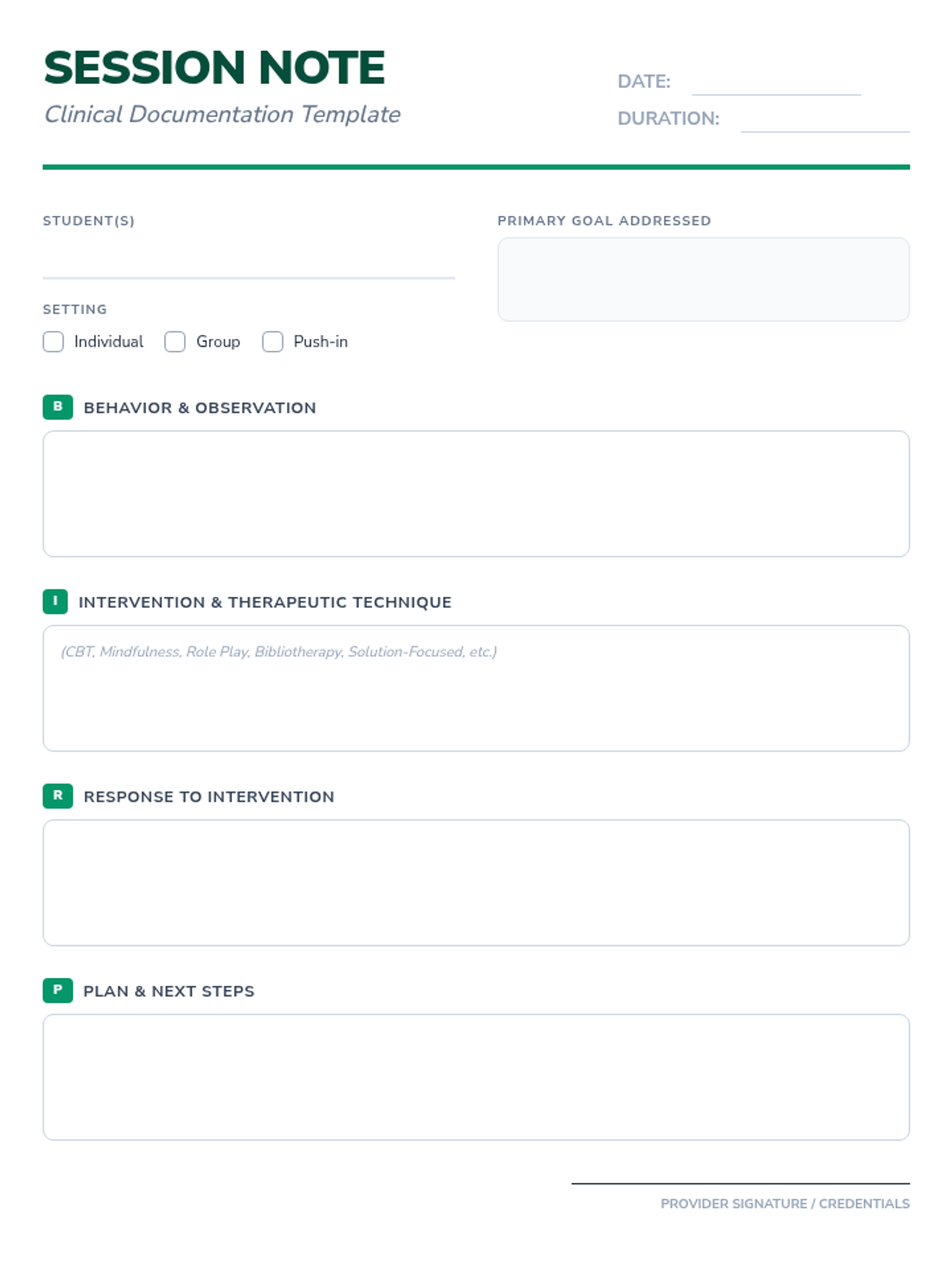
A suite of professional case note templates for school counselors, designed for efficiency and clarity in documenting student support sessions. These templates follow a blue and gold theme and utilize best-practice intervention checklists.
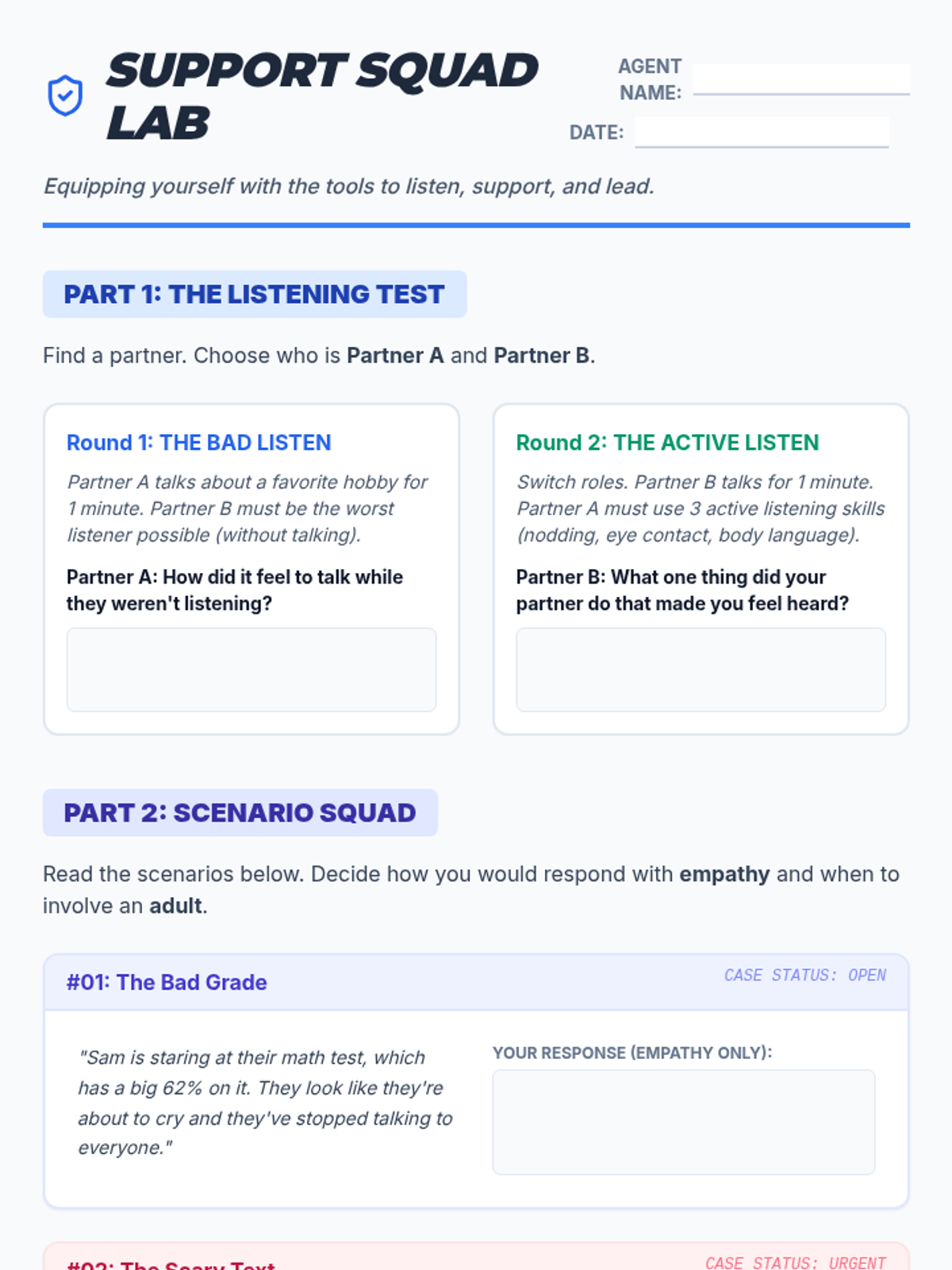
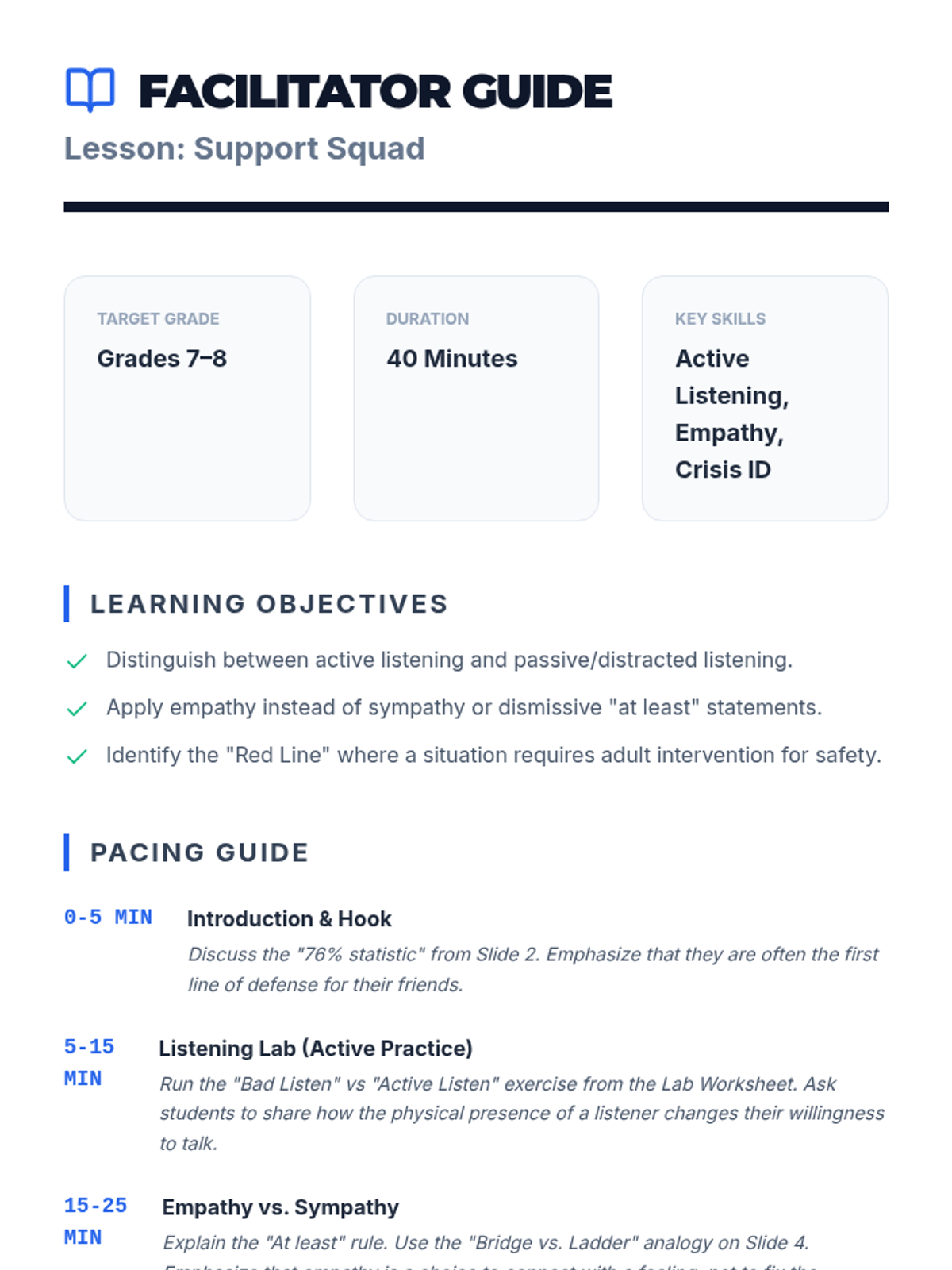
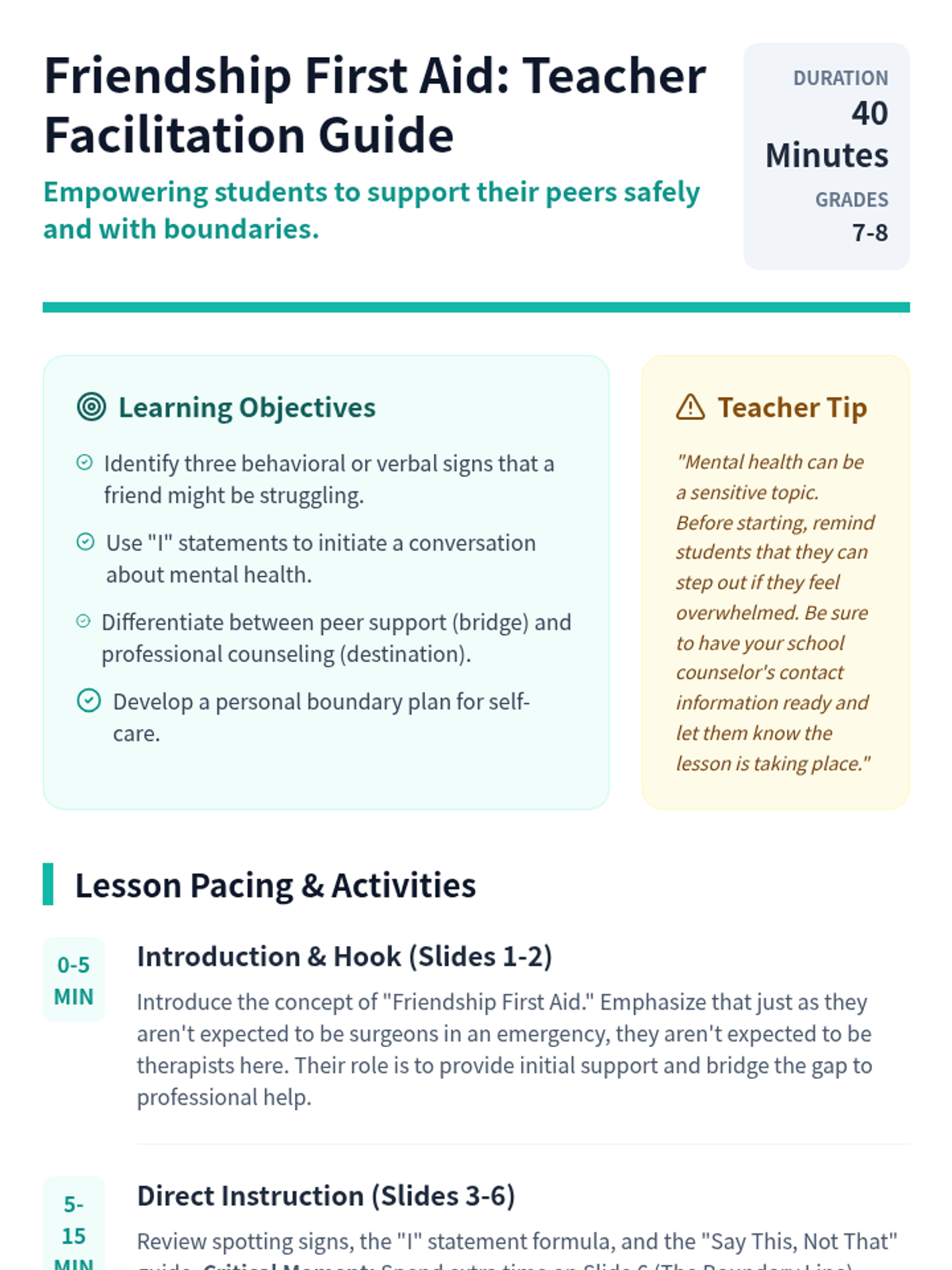
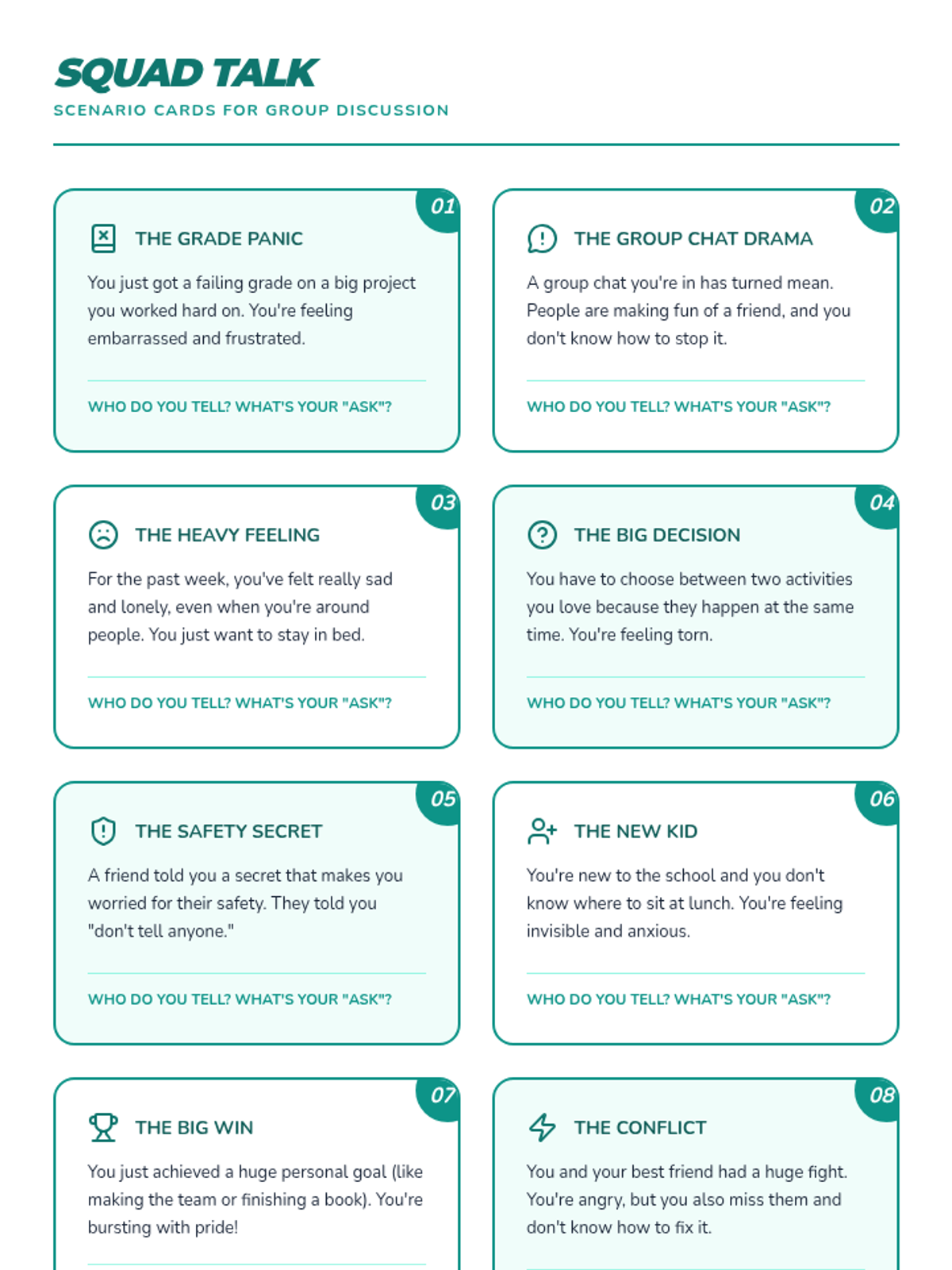
A 40-minute interactive lesson for middle schoolers to build practical peer support skills, focusing on active listening, empathy, and knowing when to seek adult help.
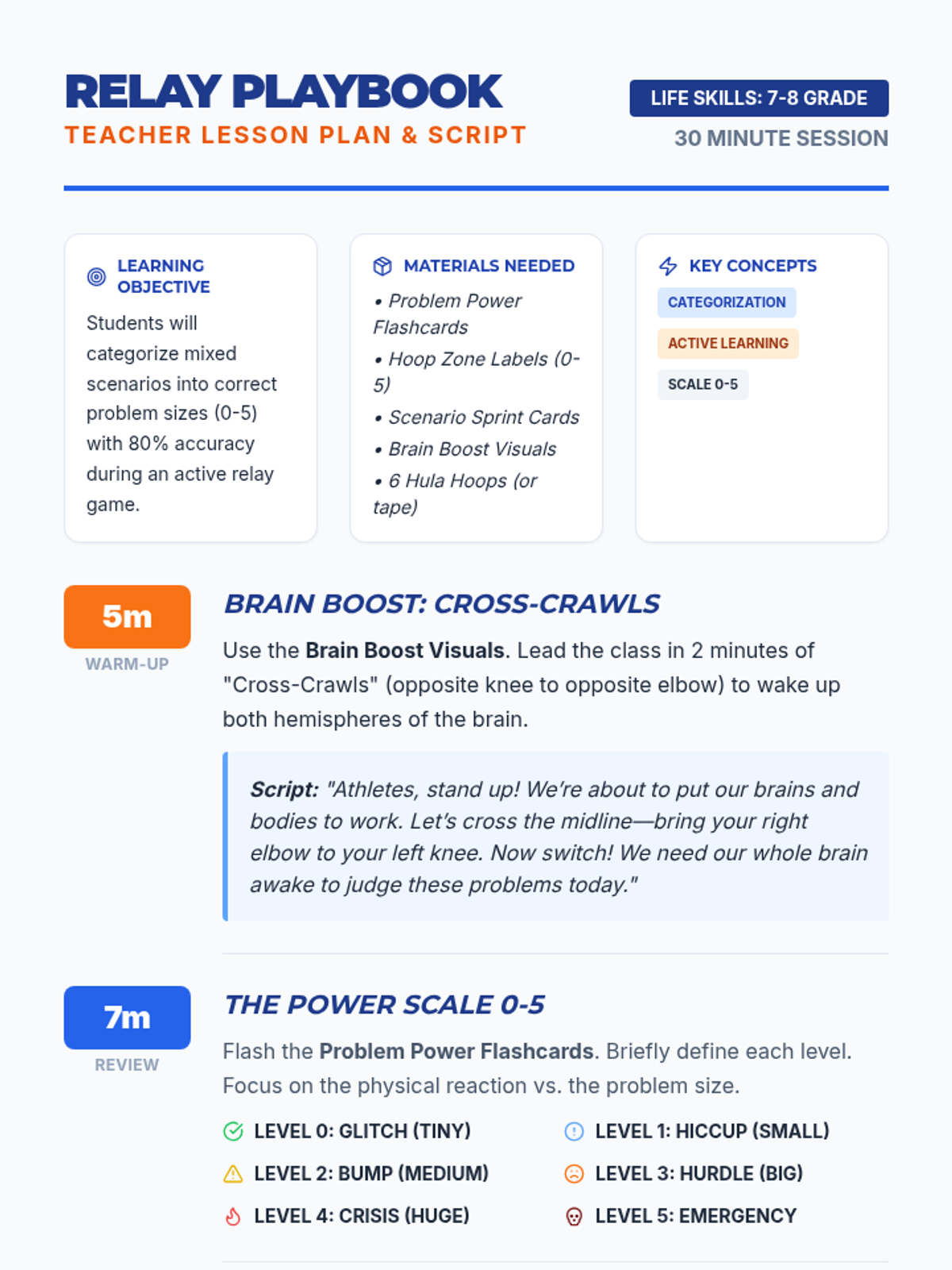
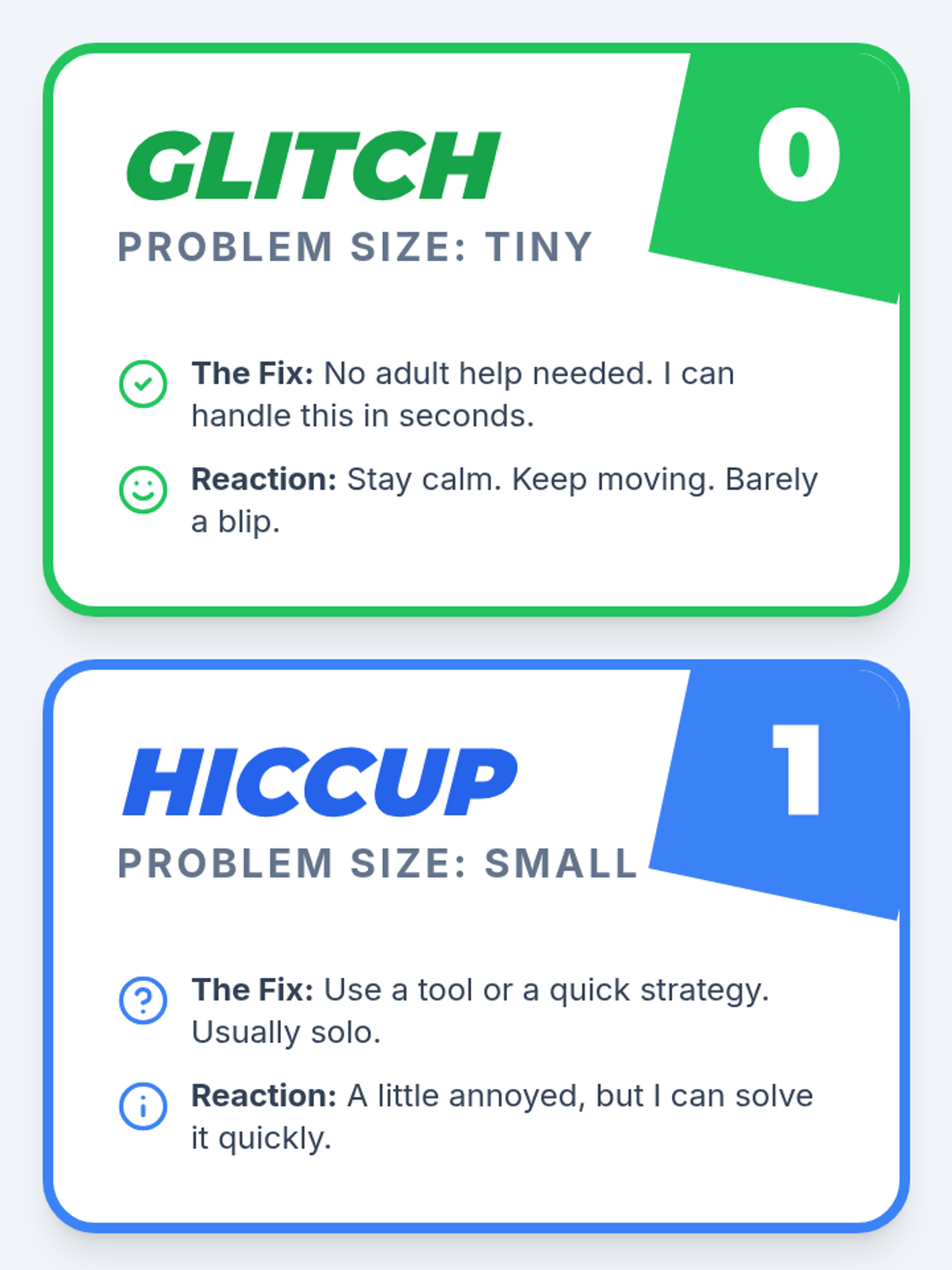
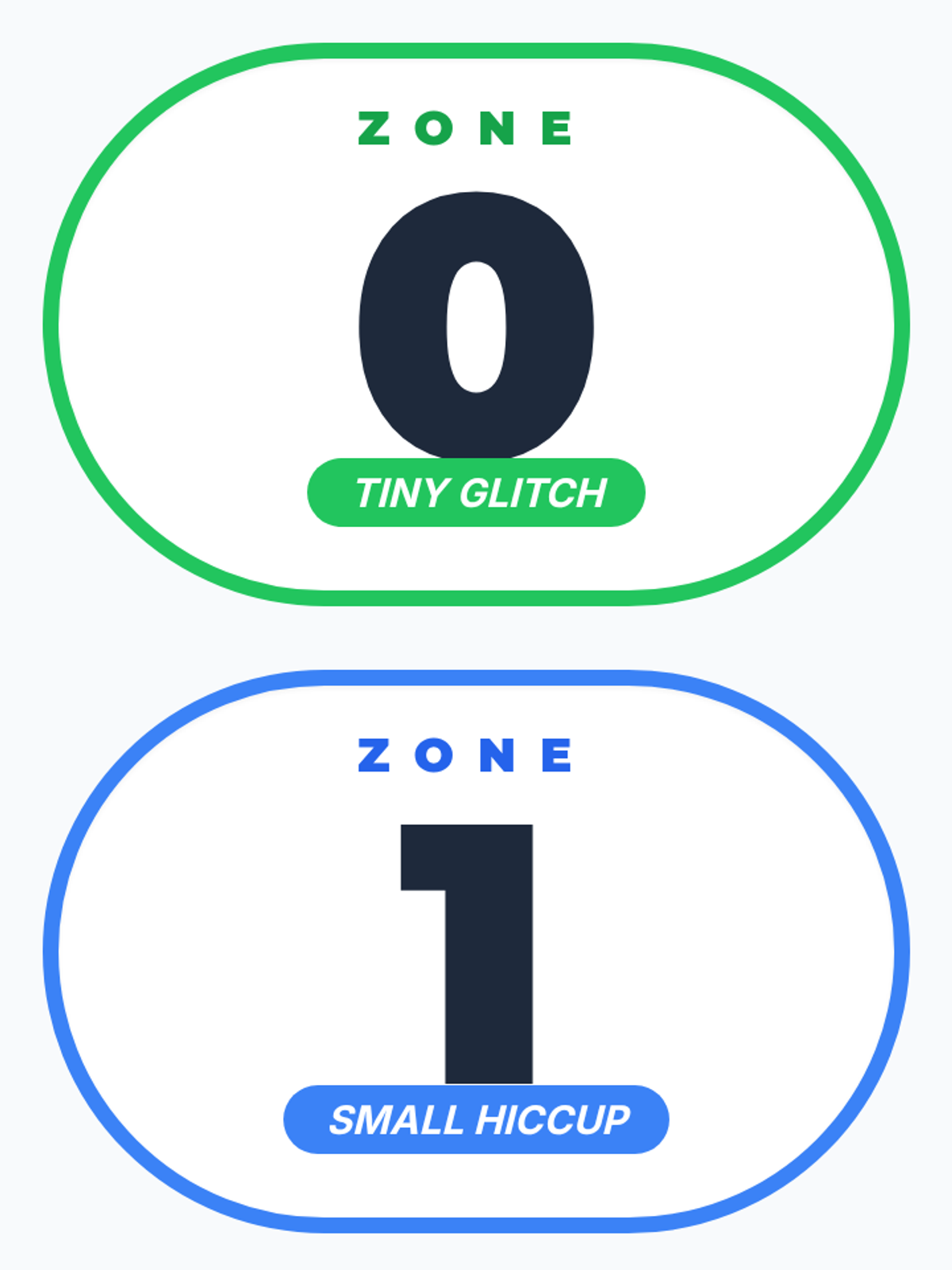
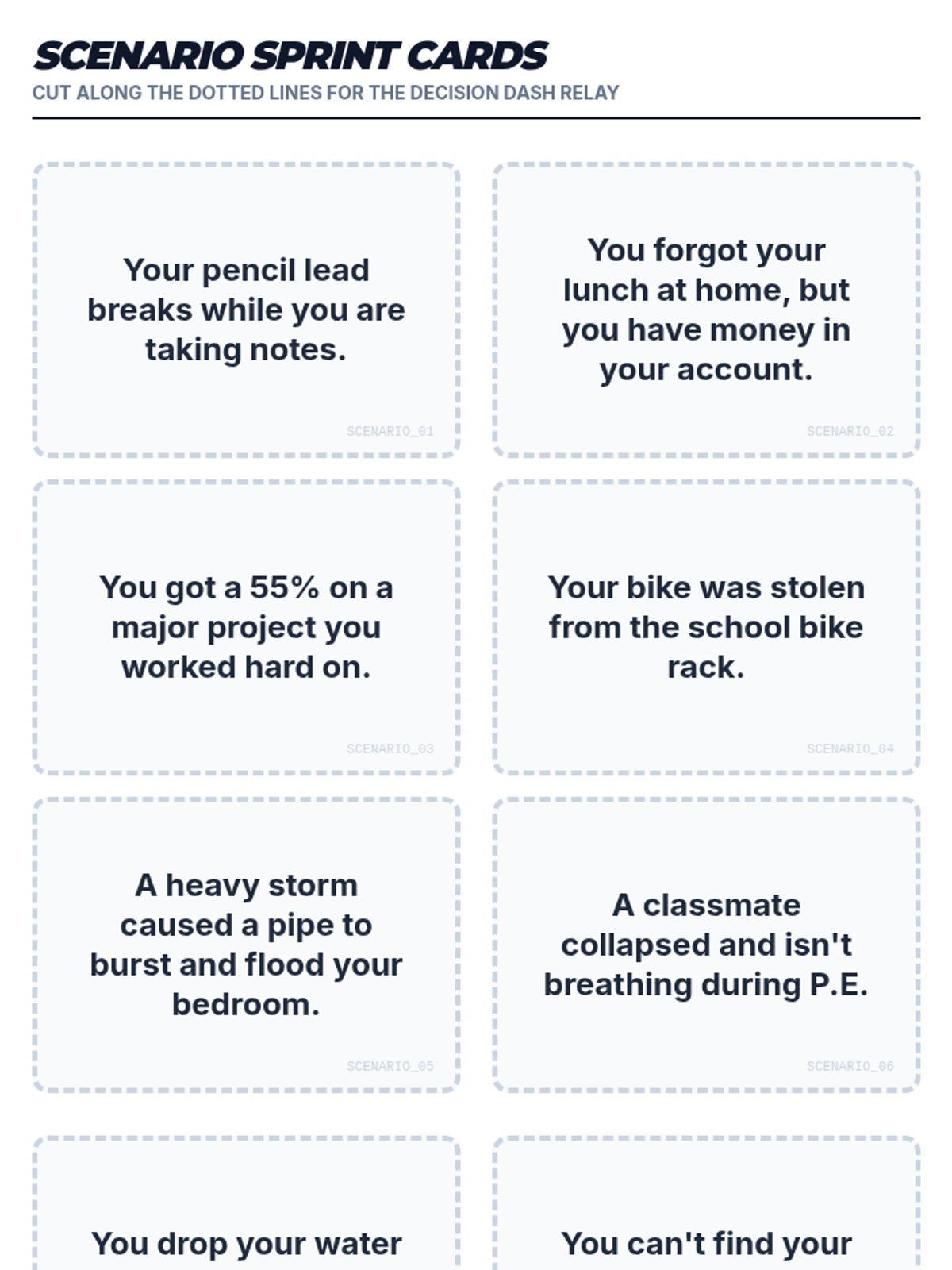
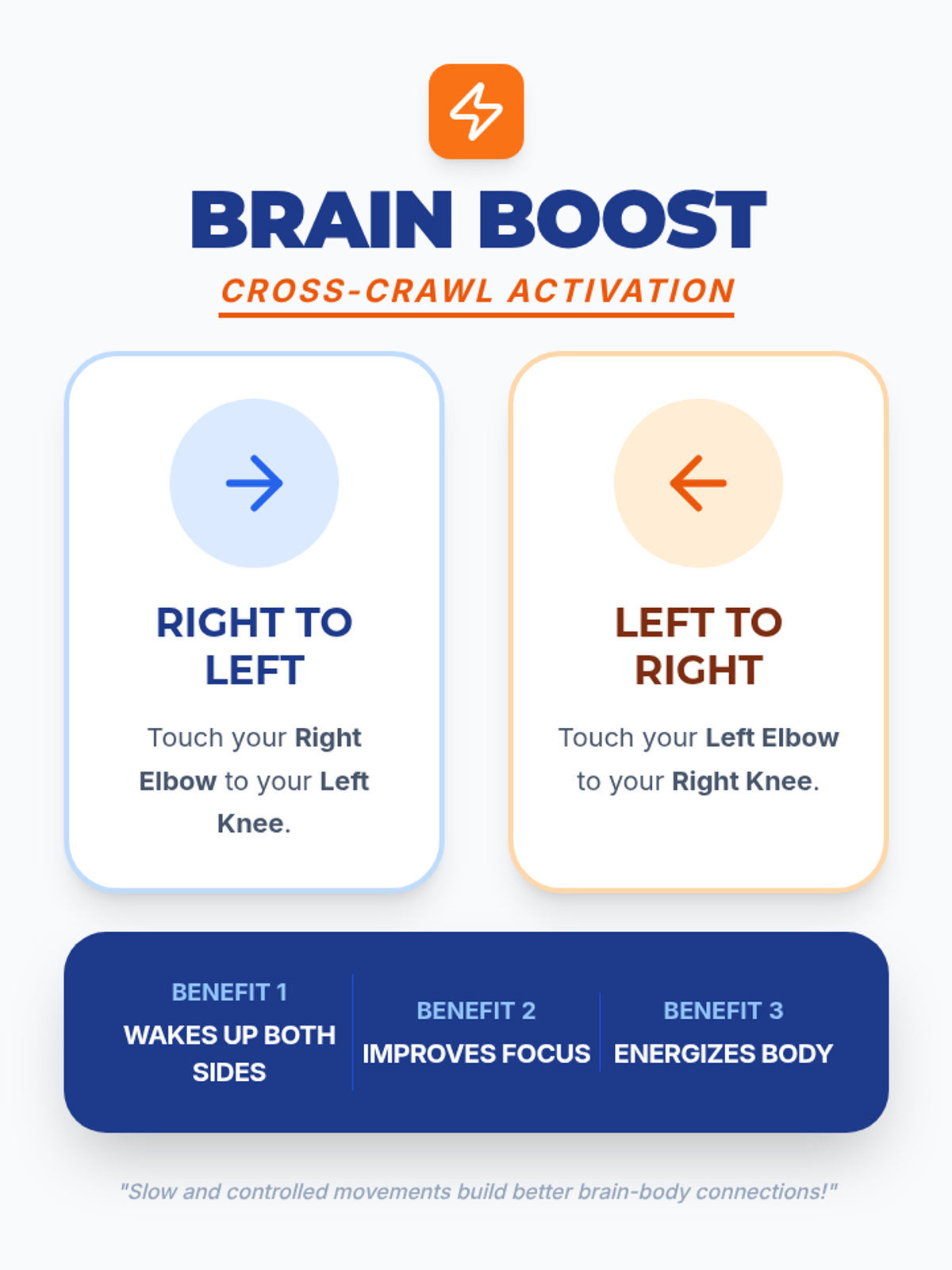
An energetic, active learning lesson where students categorize scenarios into problem sizes 0-5 through a team relay race. Includes a movement-based warm-up, explicit review of problem scales, and a high-energy sorting game.
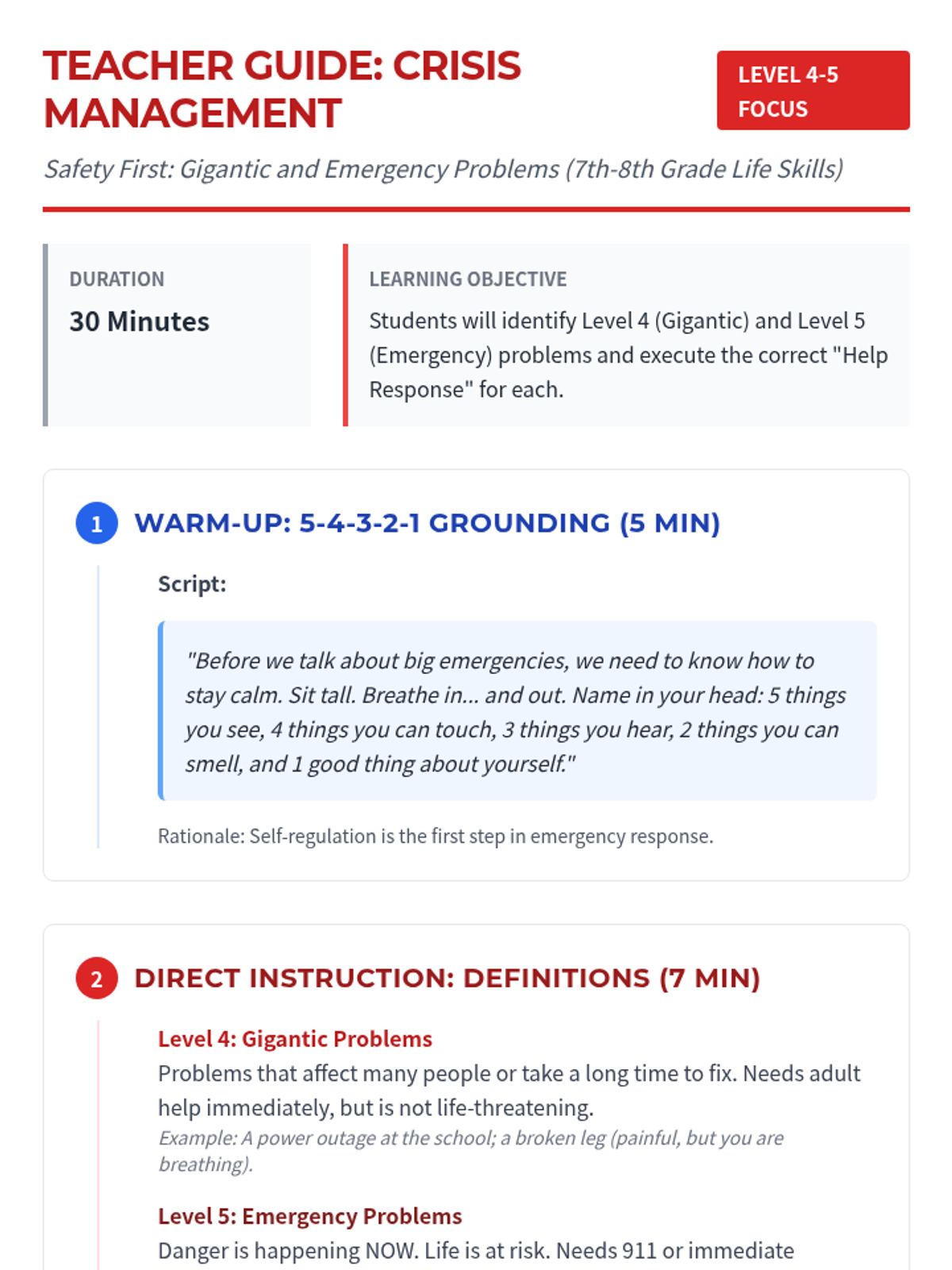
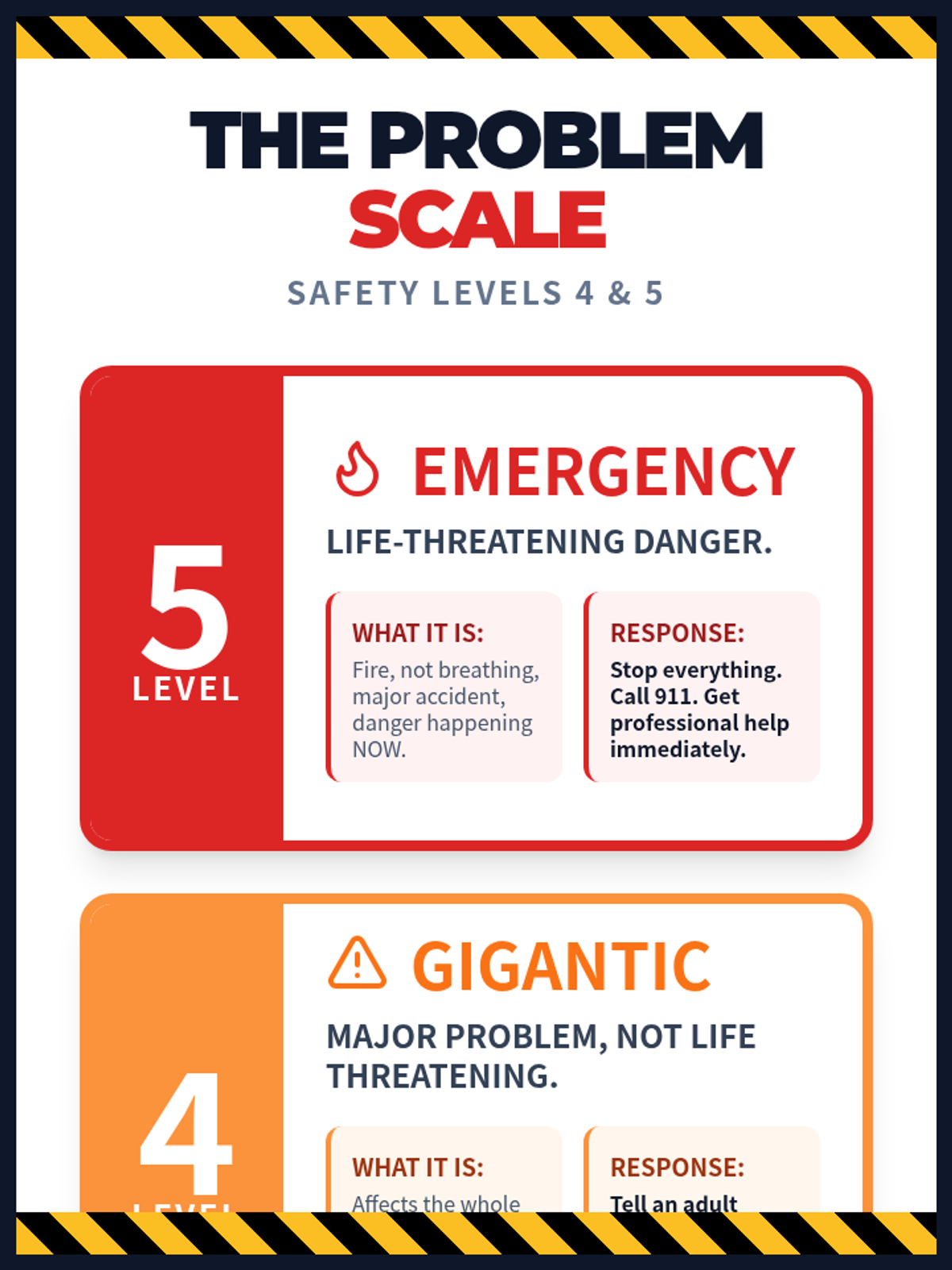
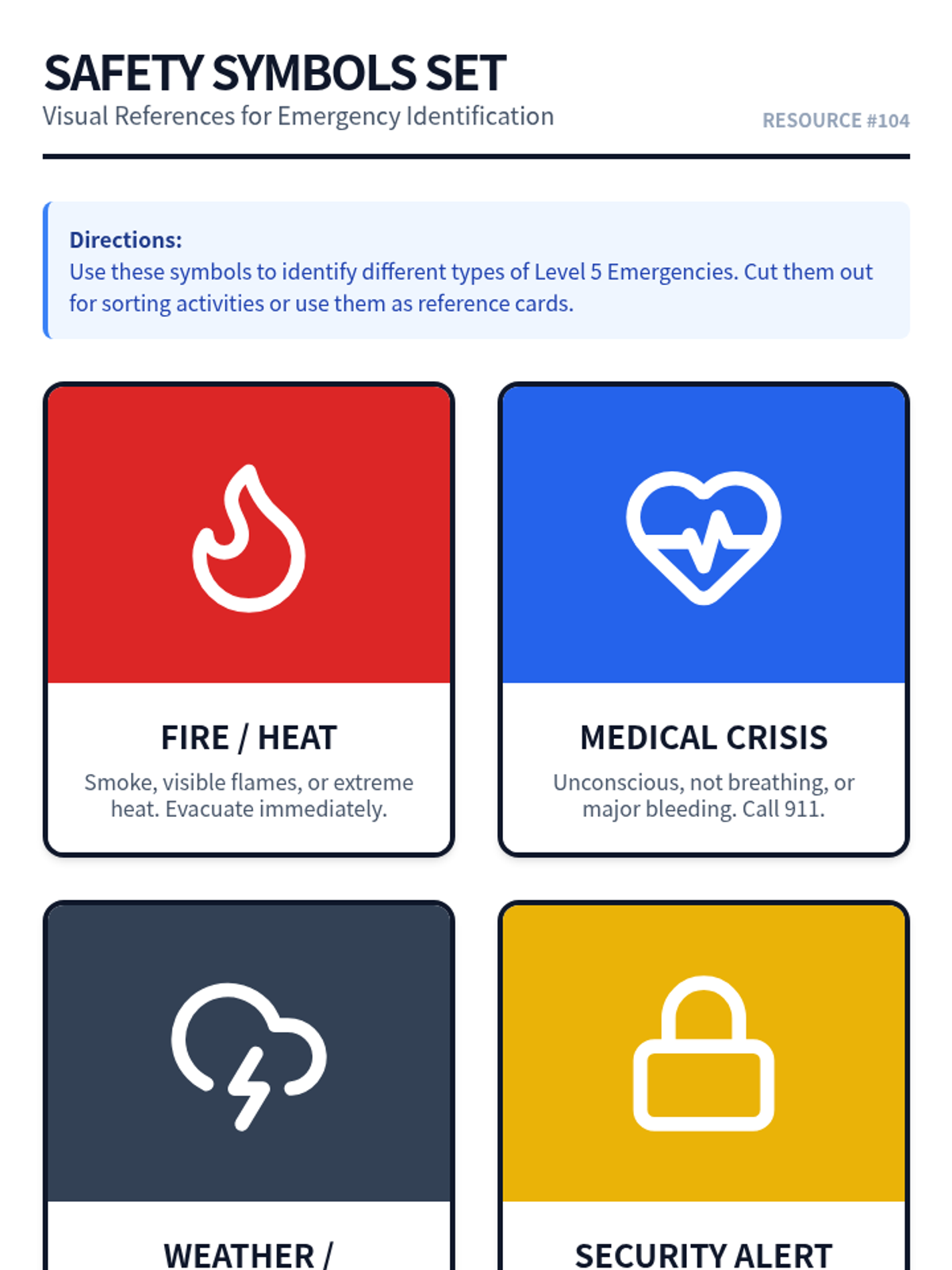
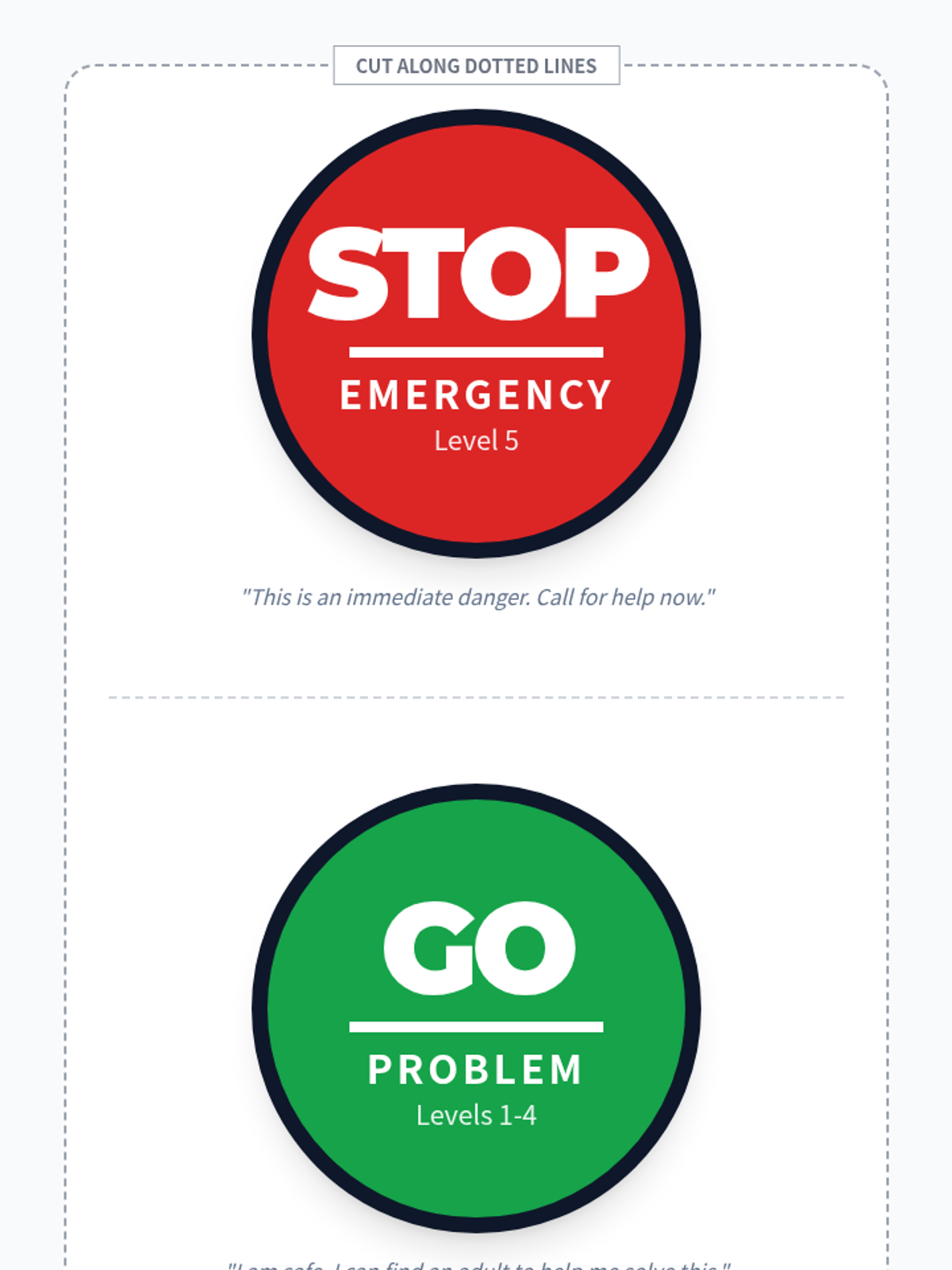
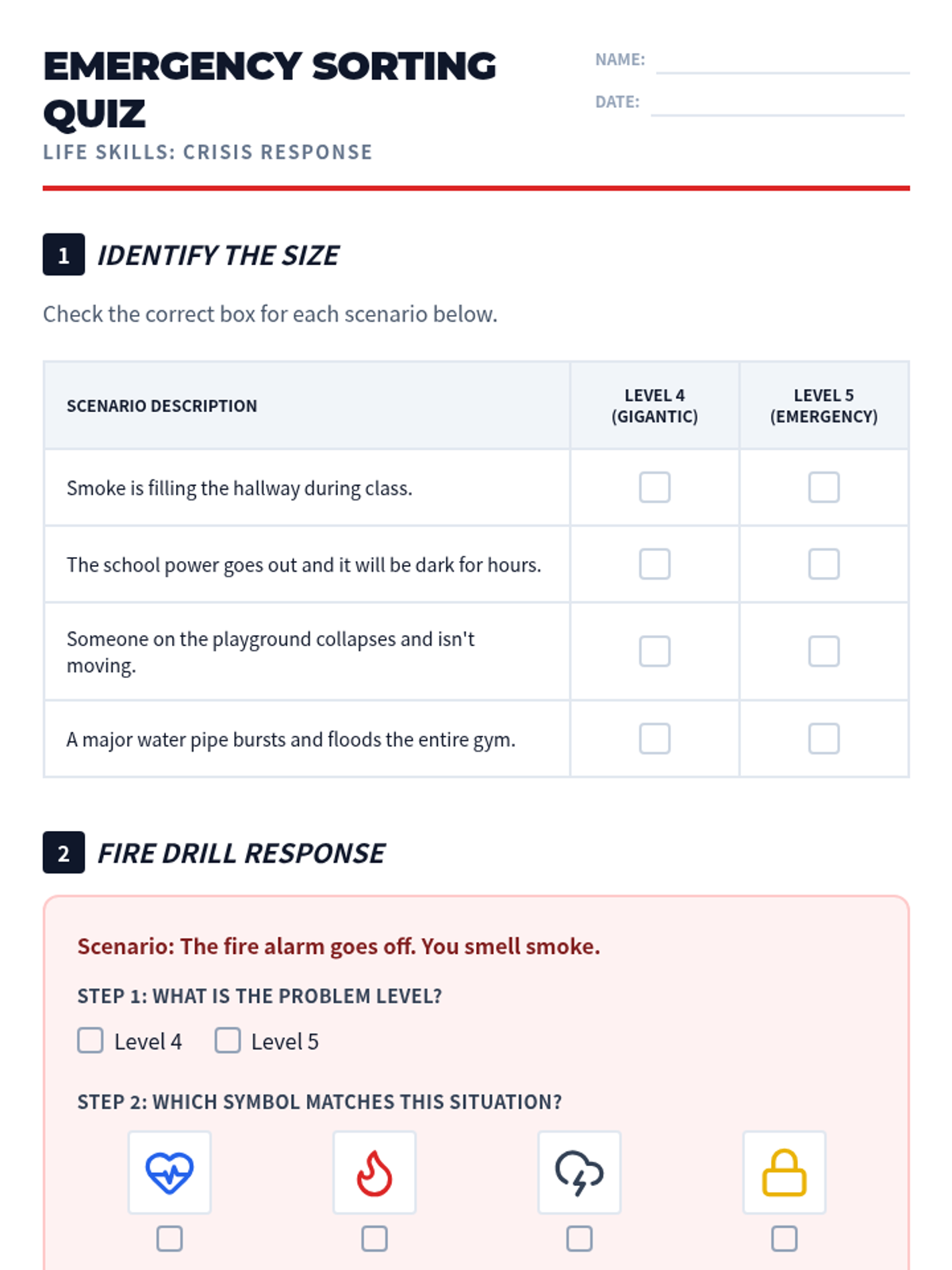
A 30-minute life skills lesson for middle schoolers on distinguishing between major crises (Level 4) and immediate life-threatening emergencies (Level 5), emphasizing when and how to get help.
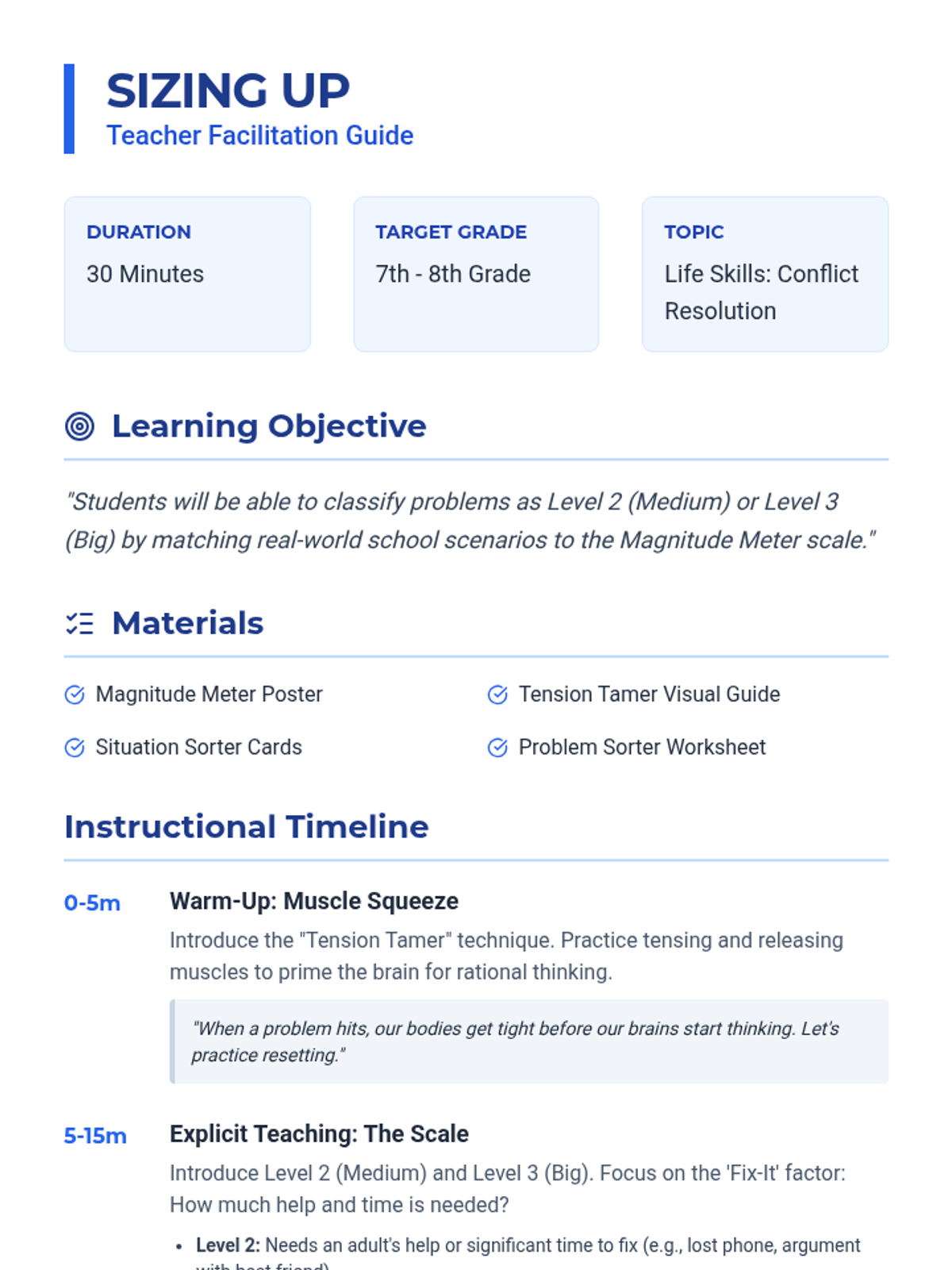
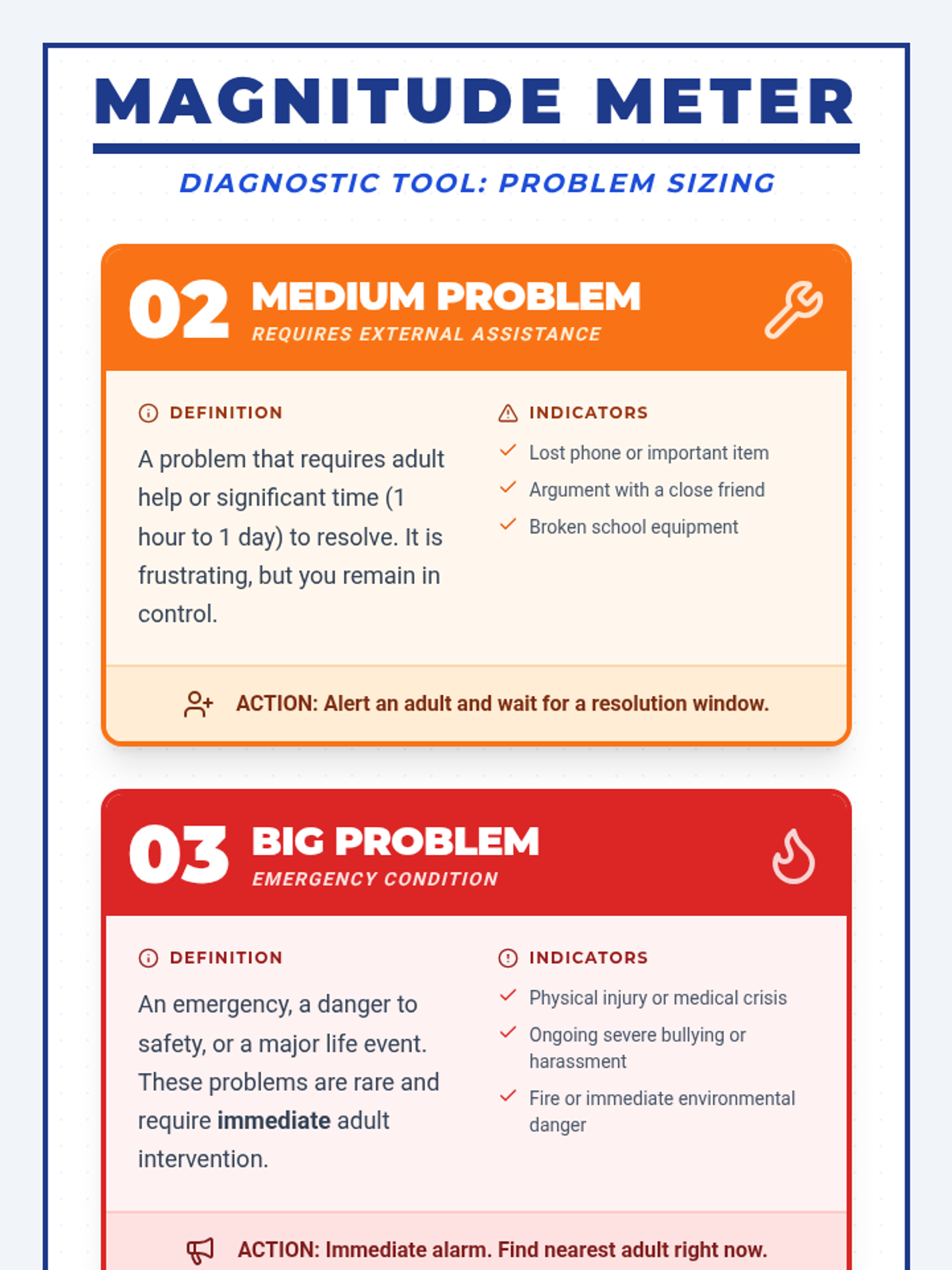
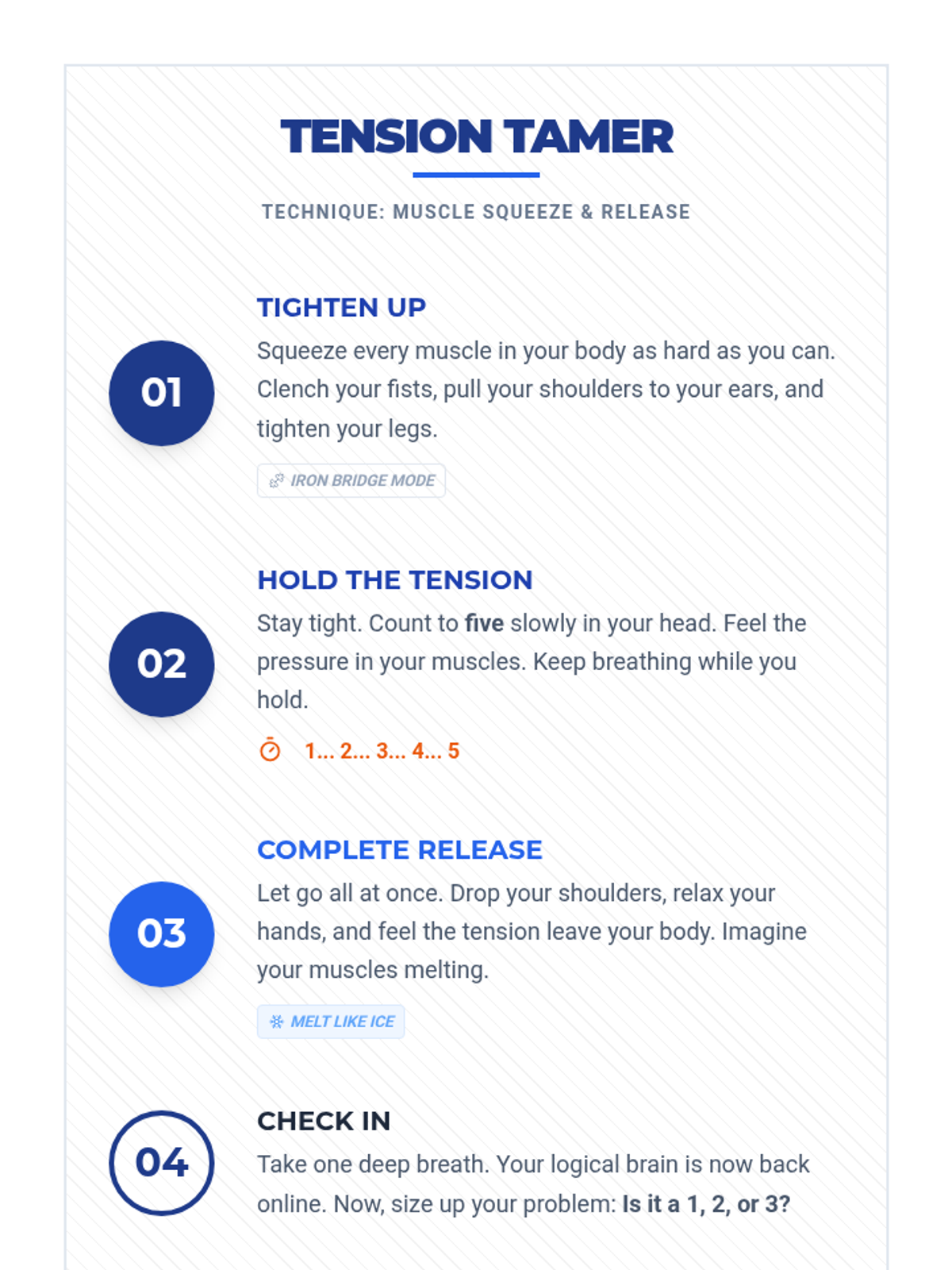
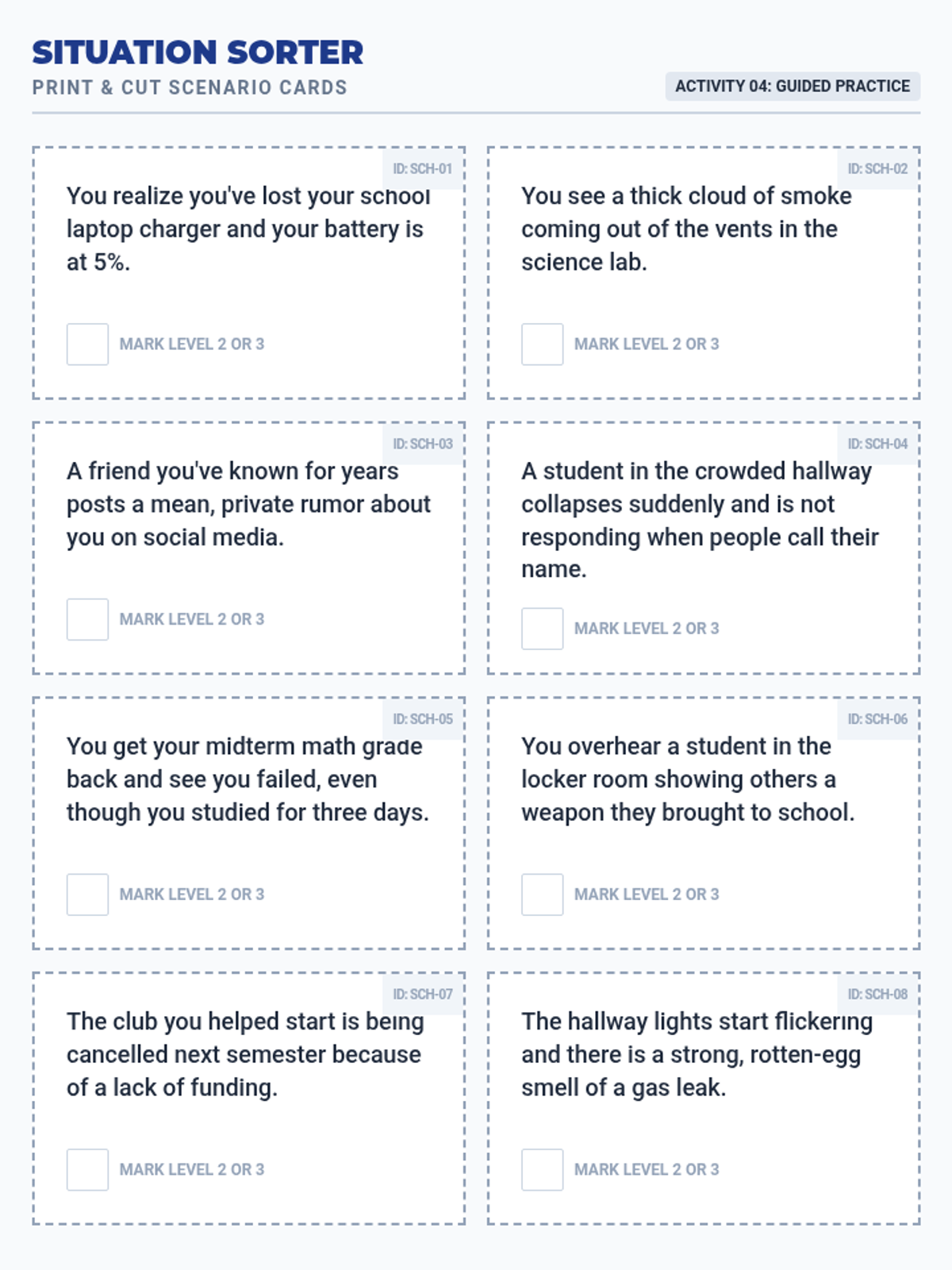
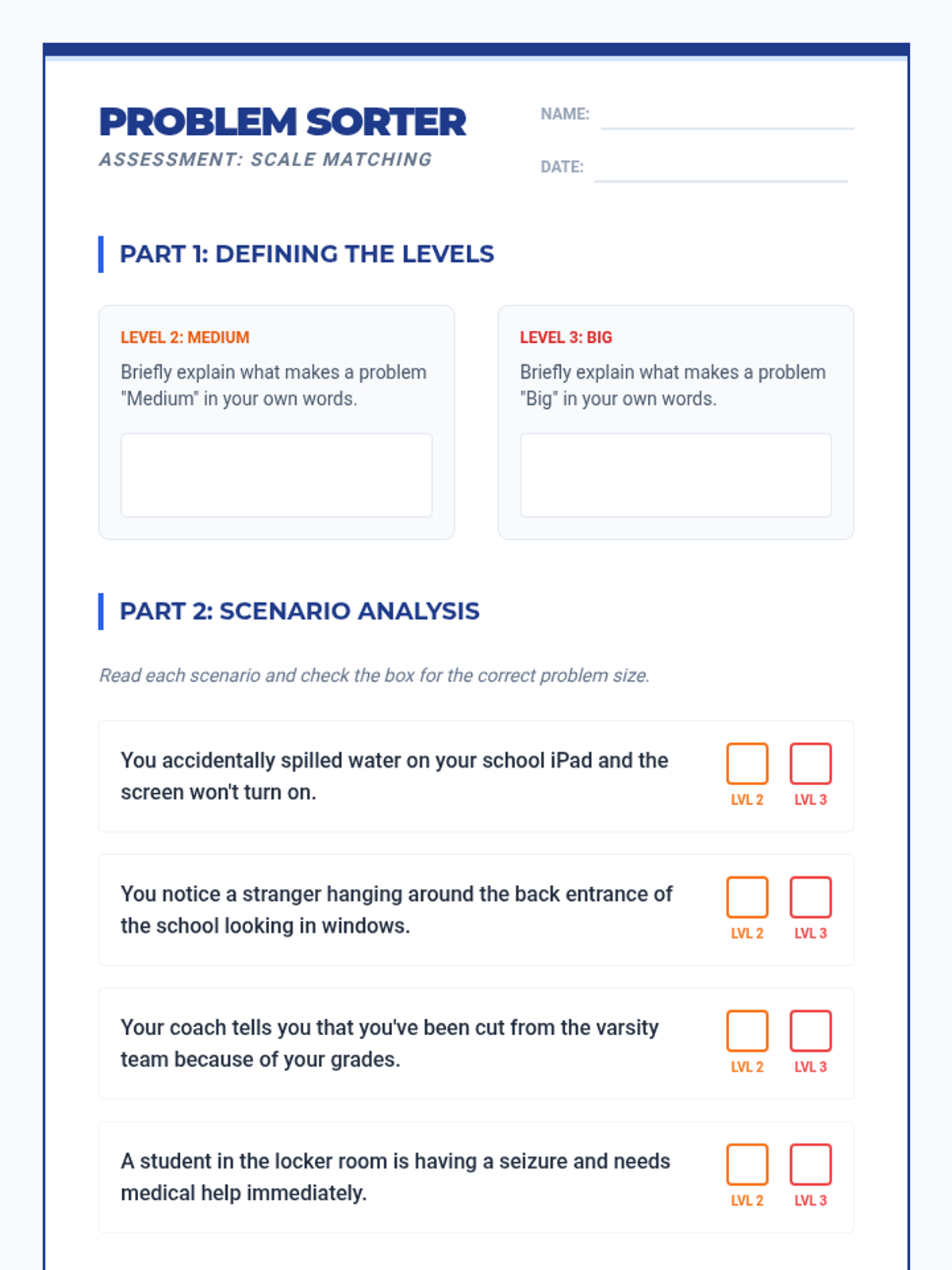
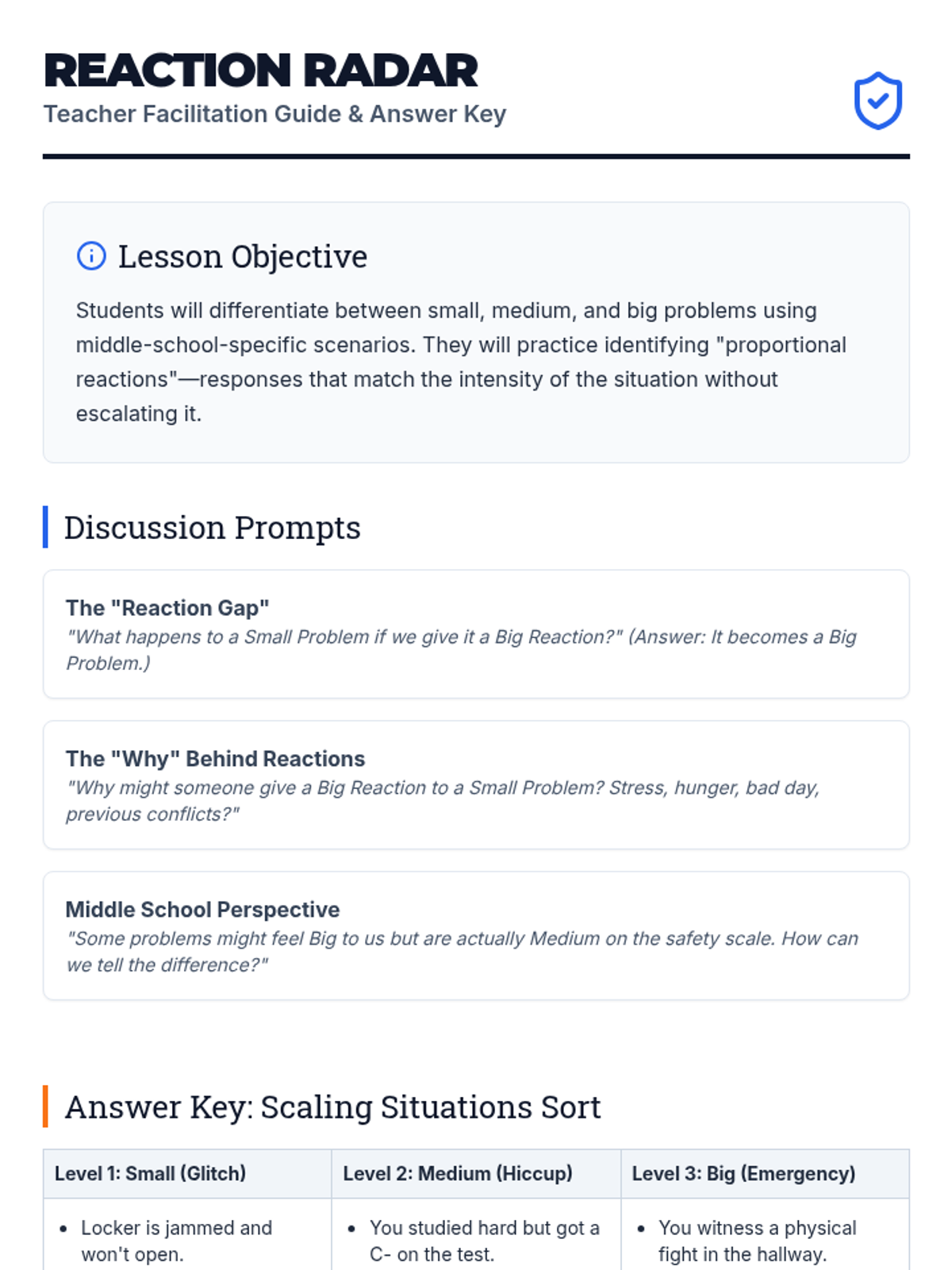
A Life Skills lesson for middle schoolers to differentiate between medium and big problems, focusing on emotional regulation and appropriate response levels.
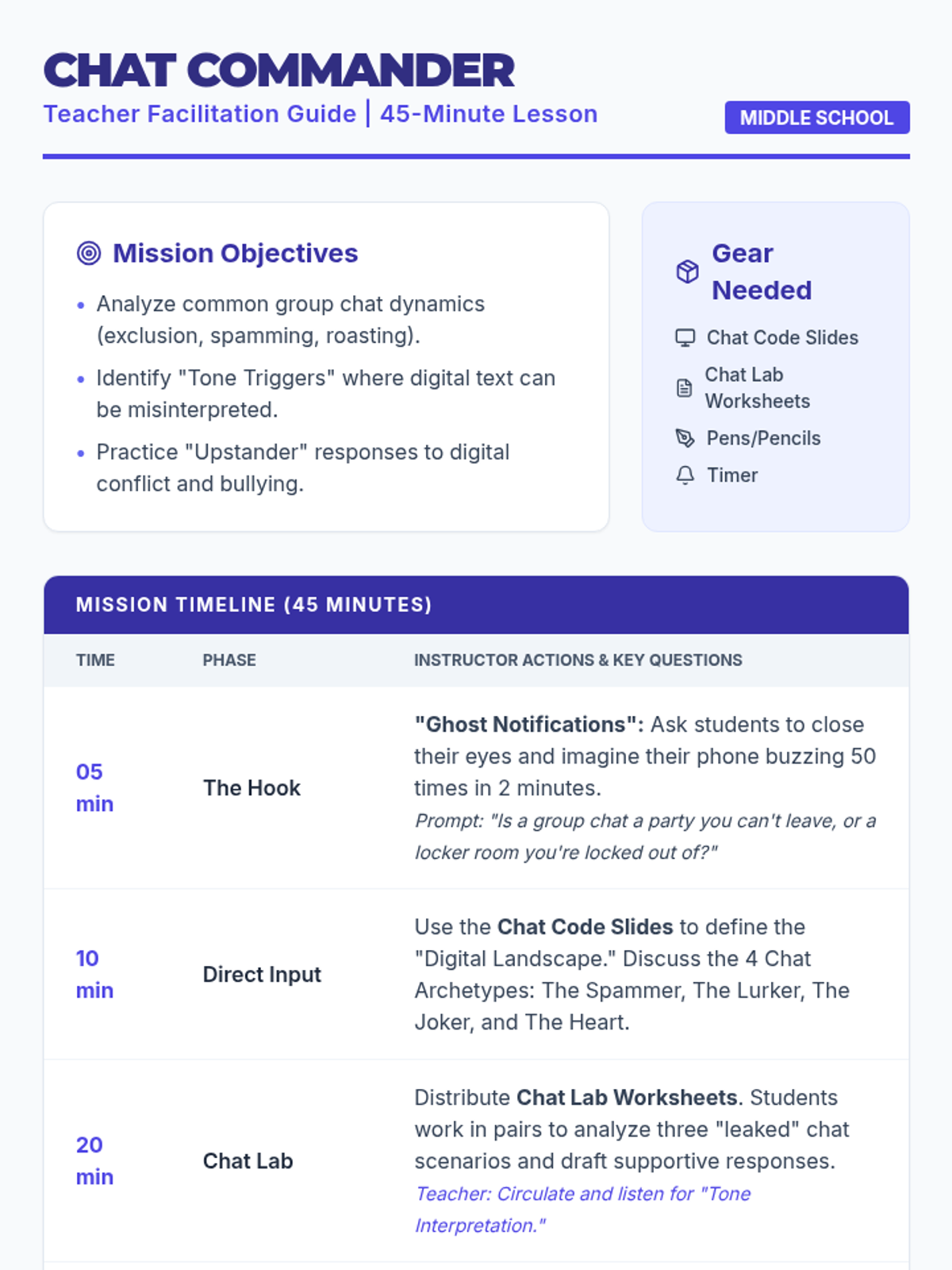
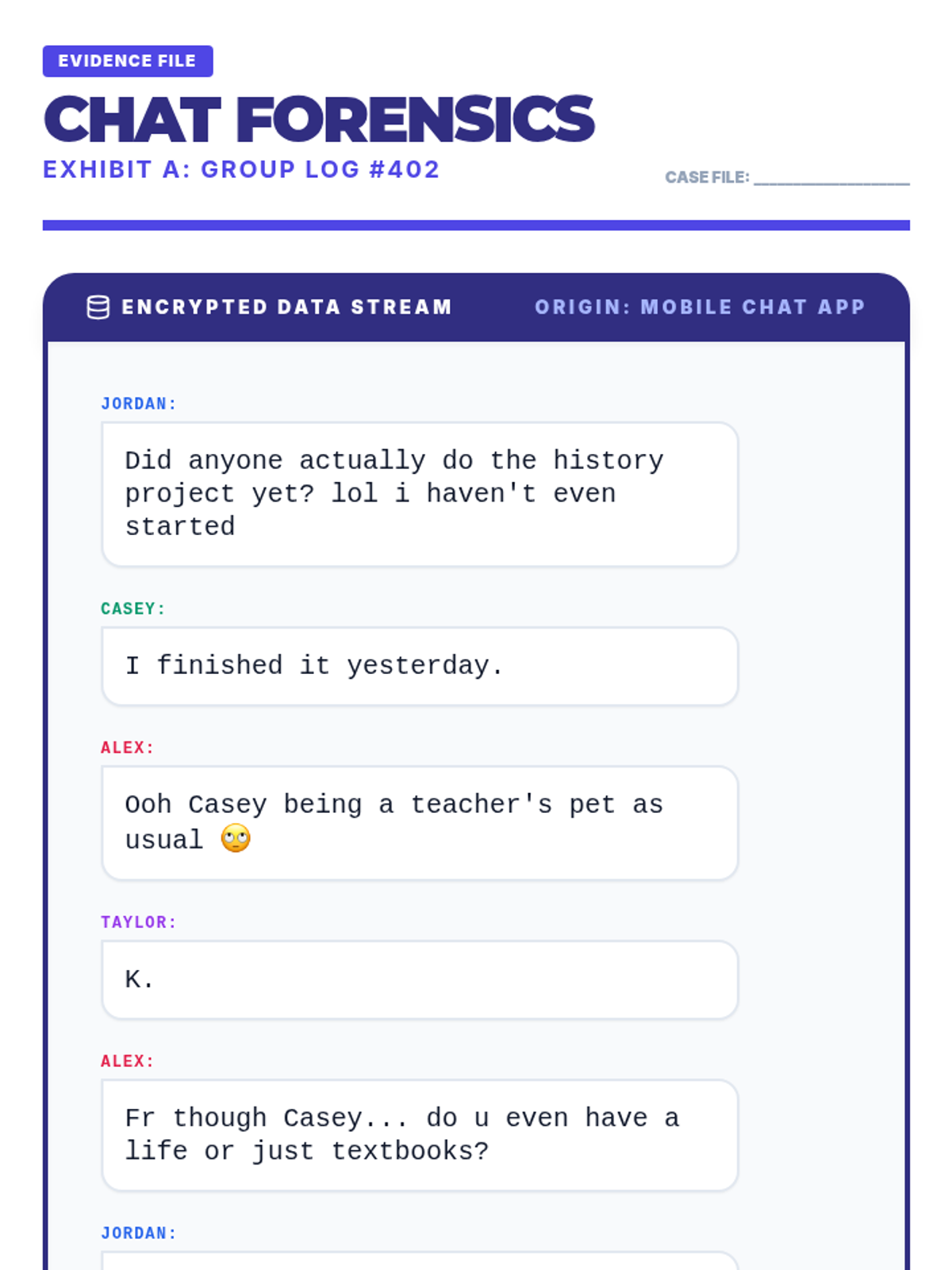
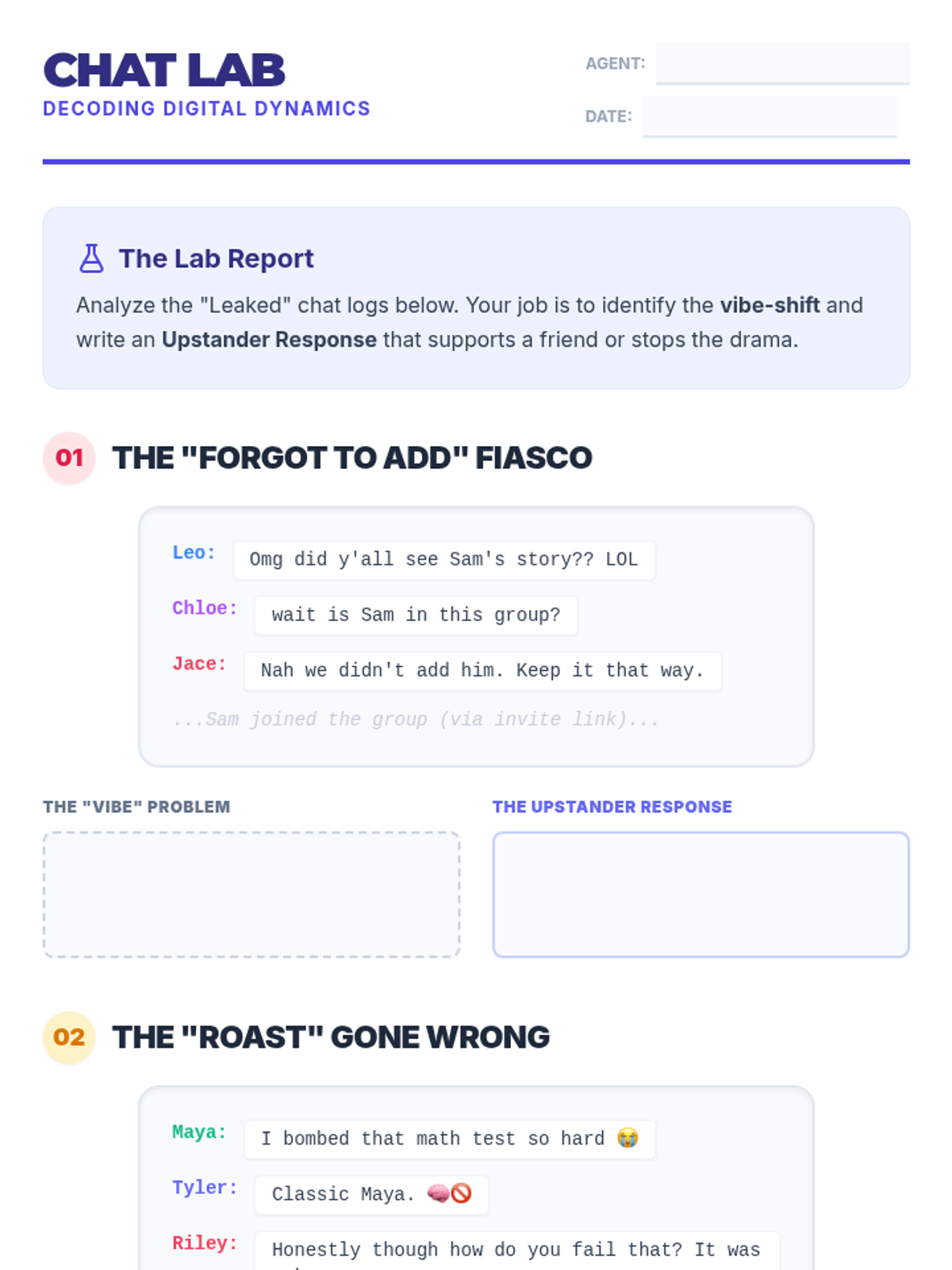
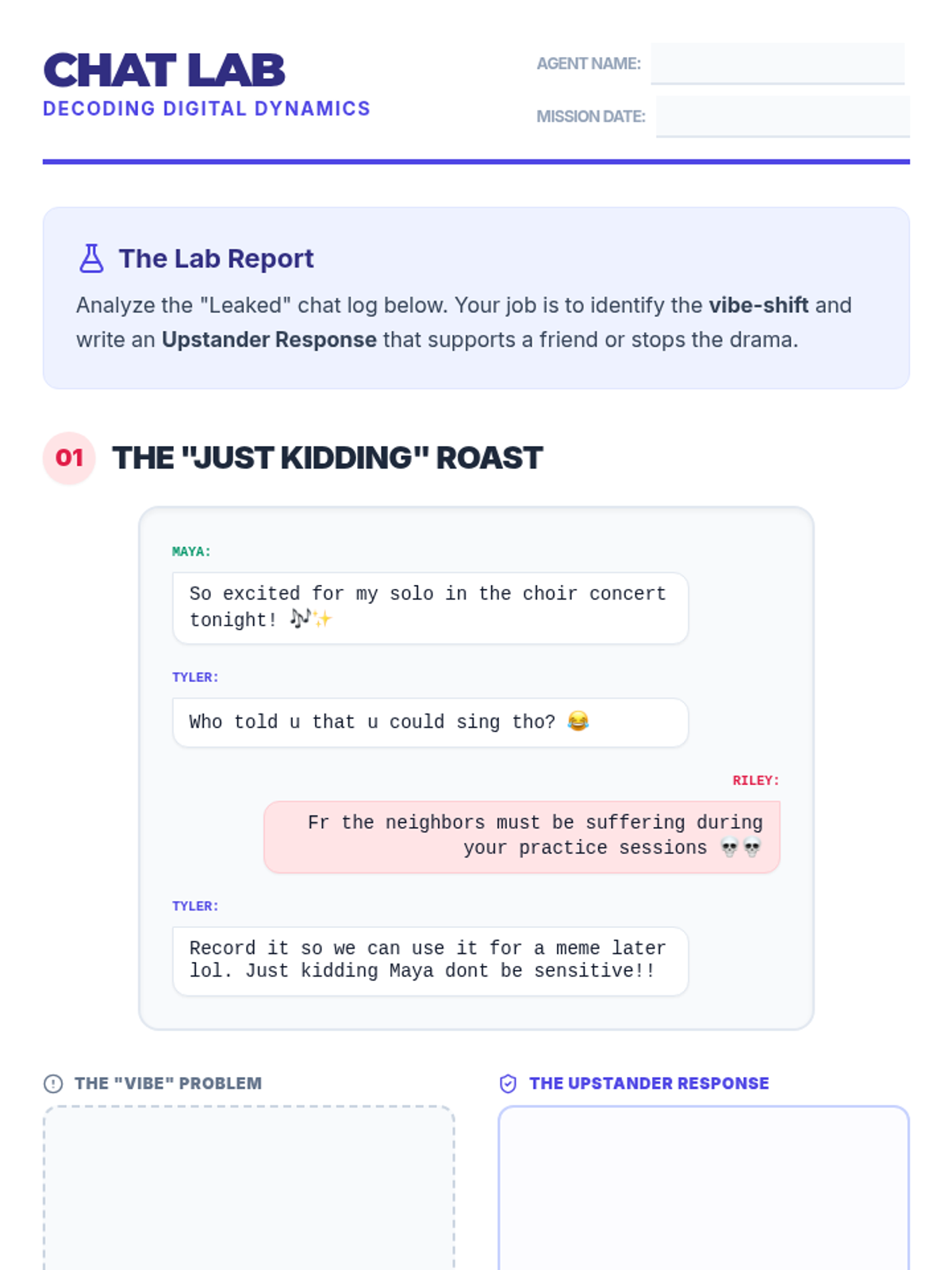
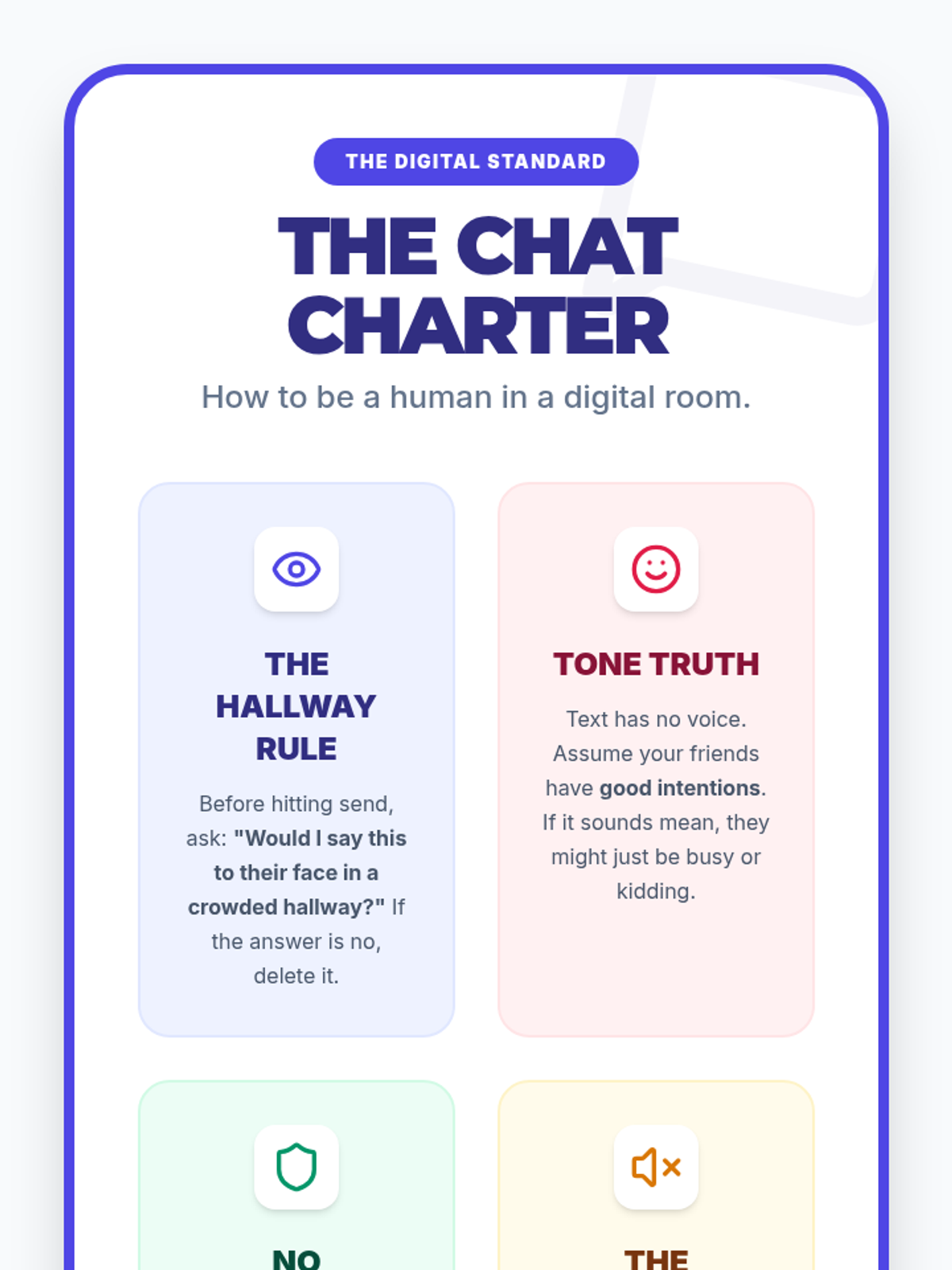
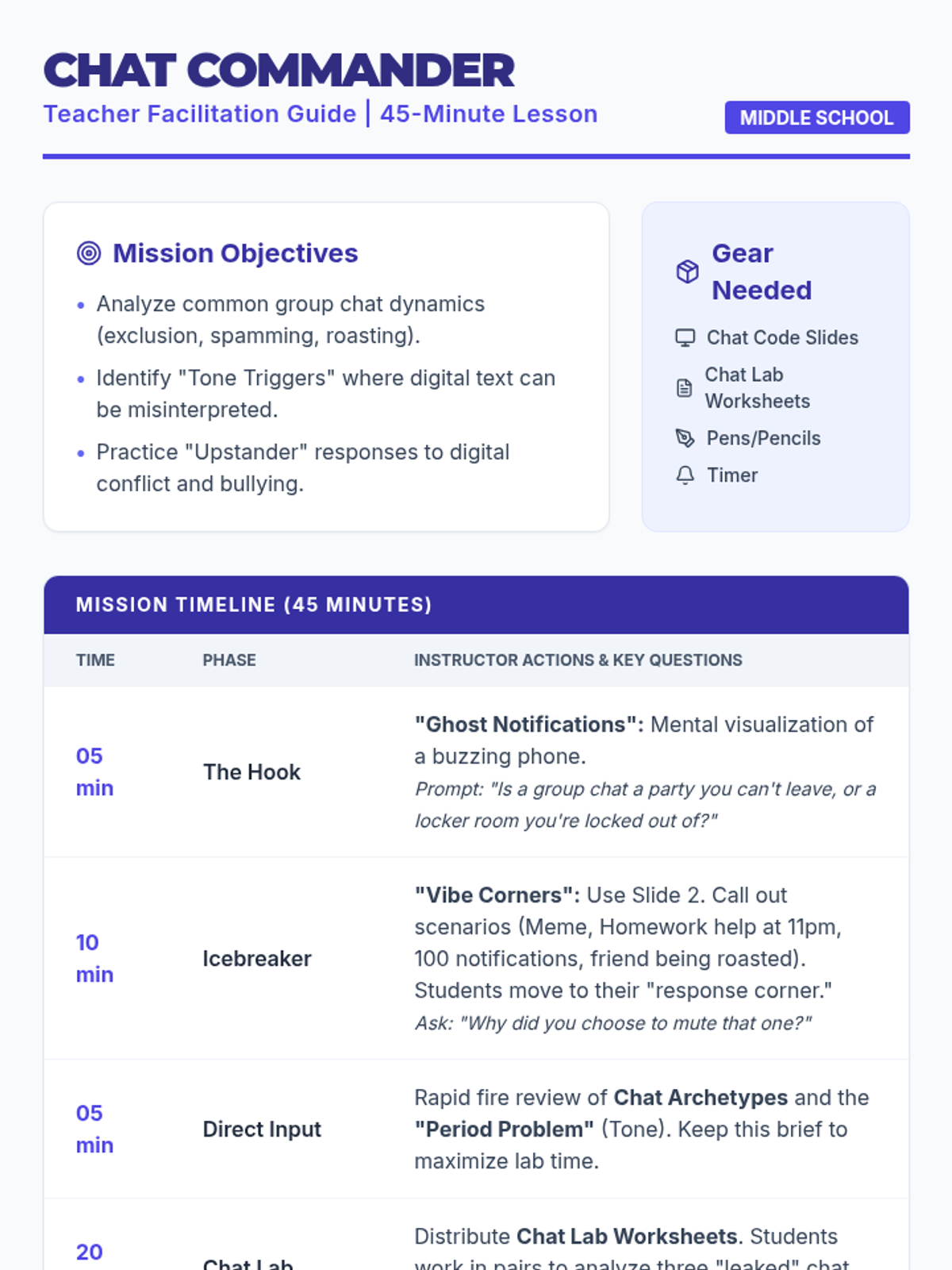
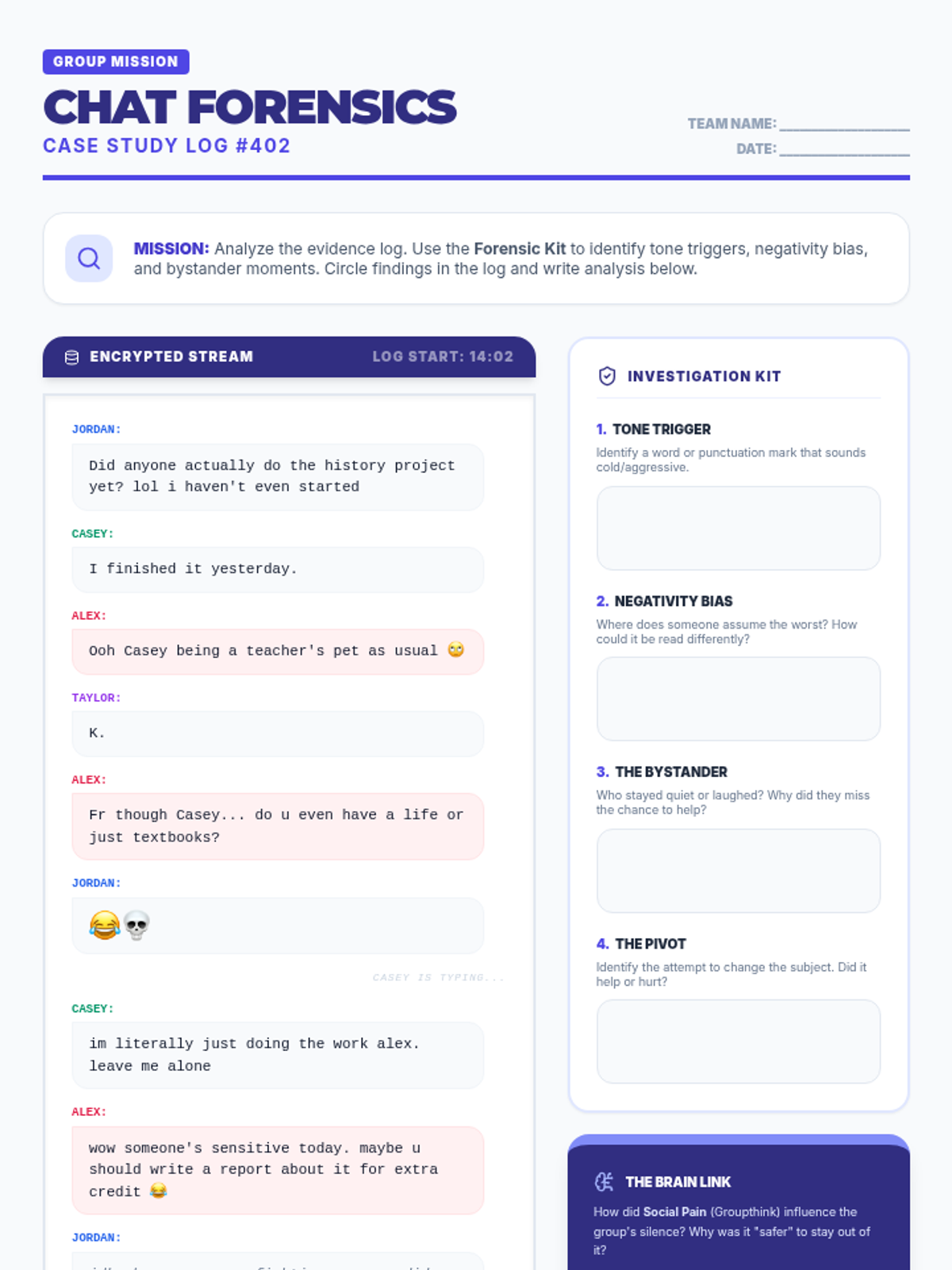
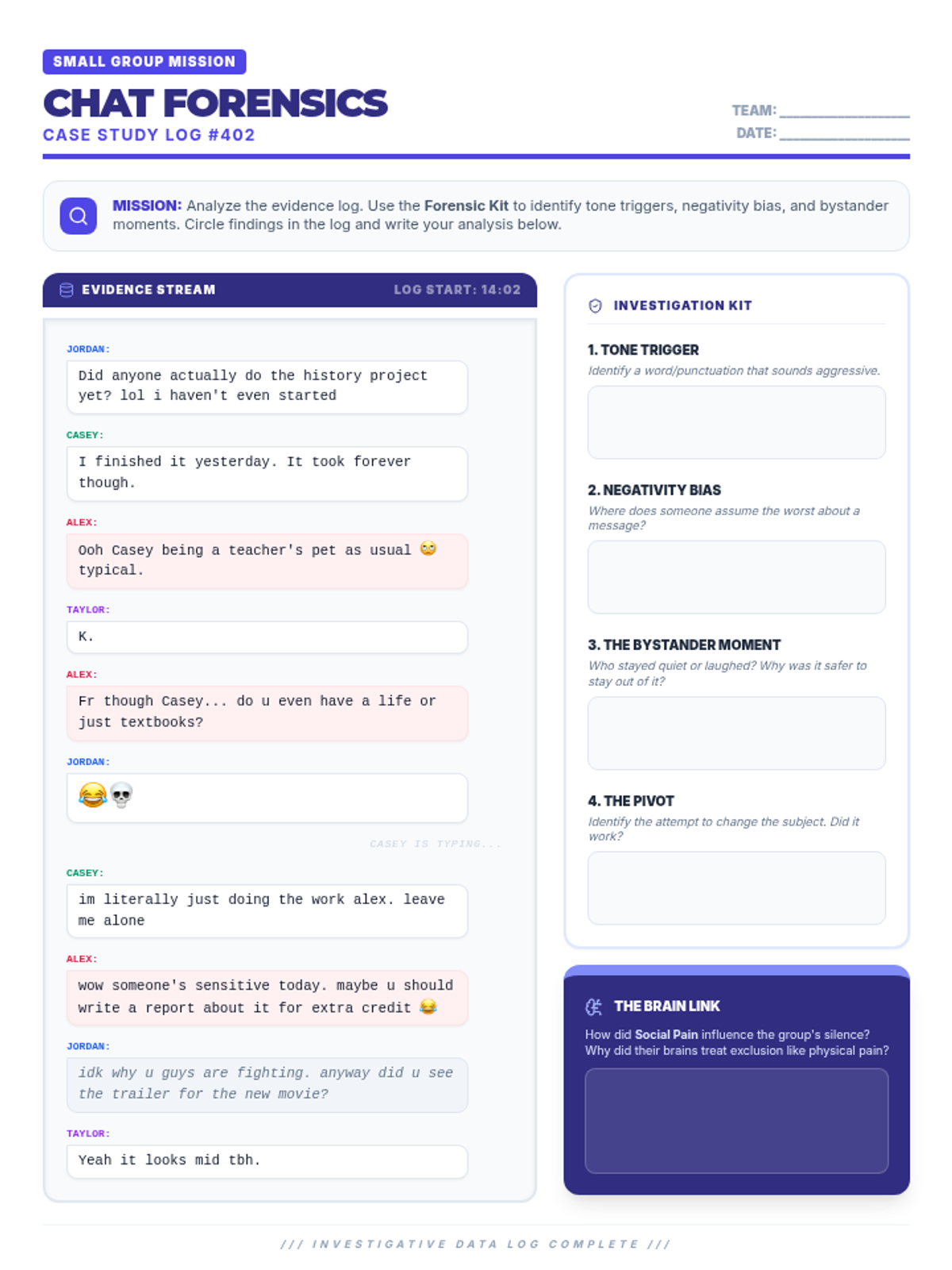
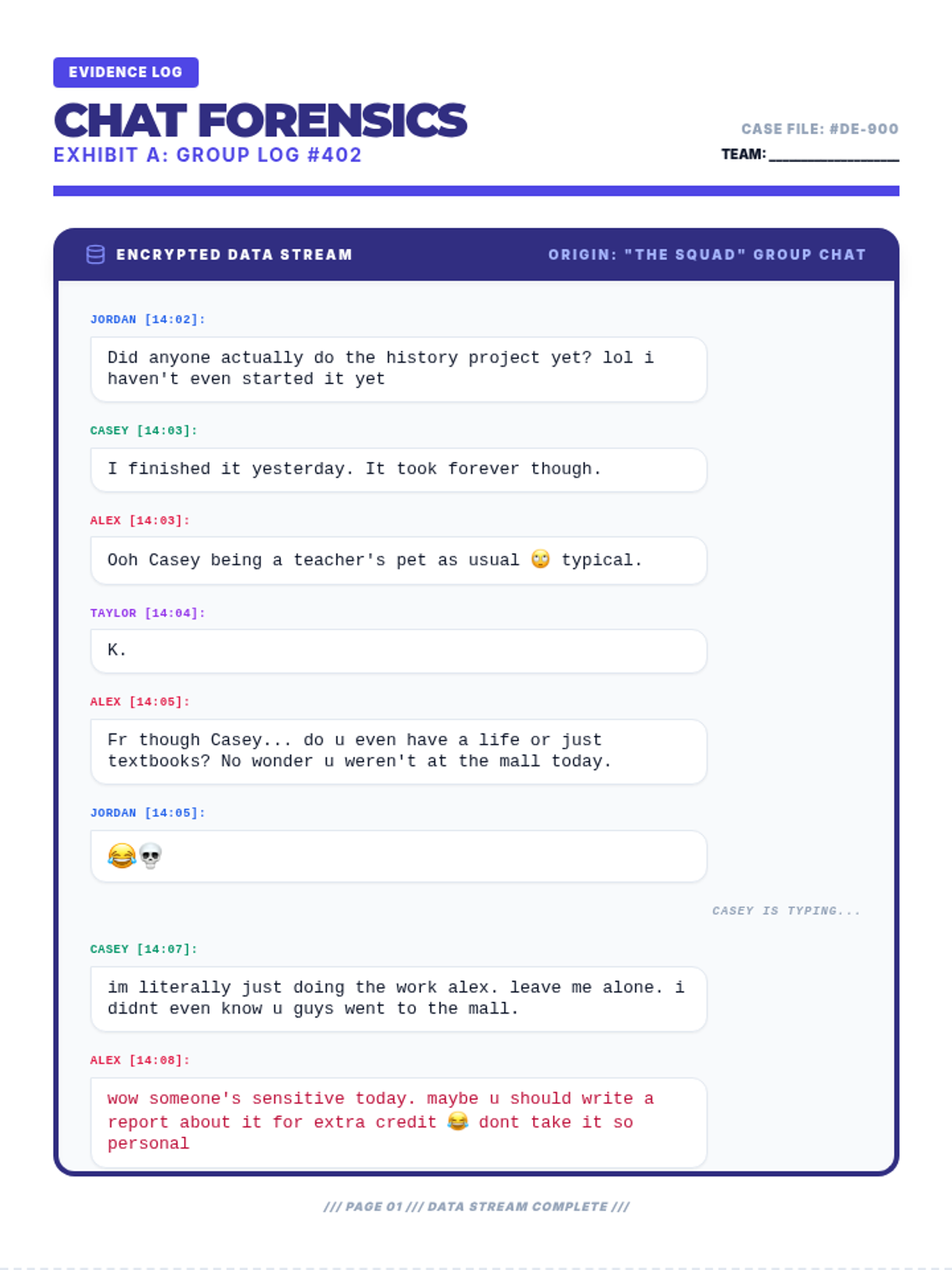
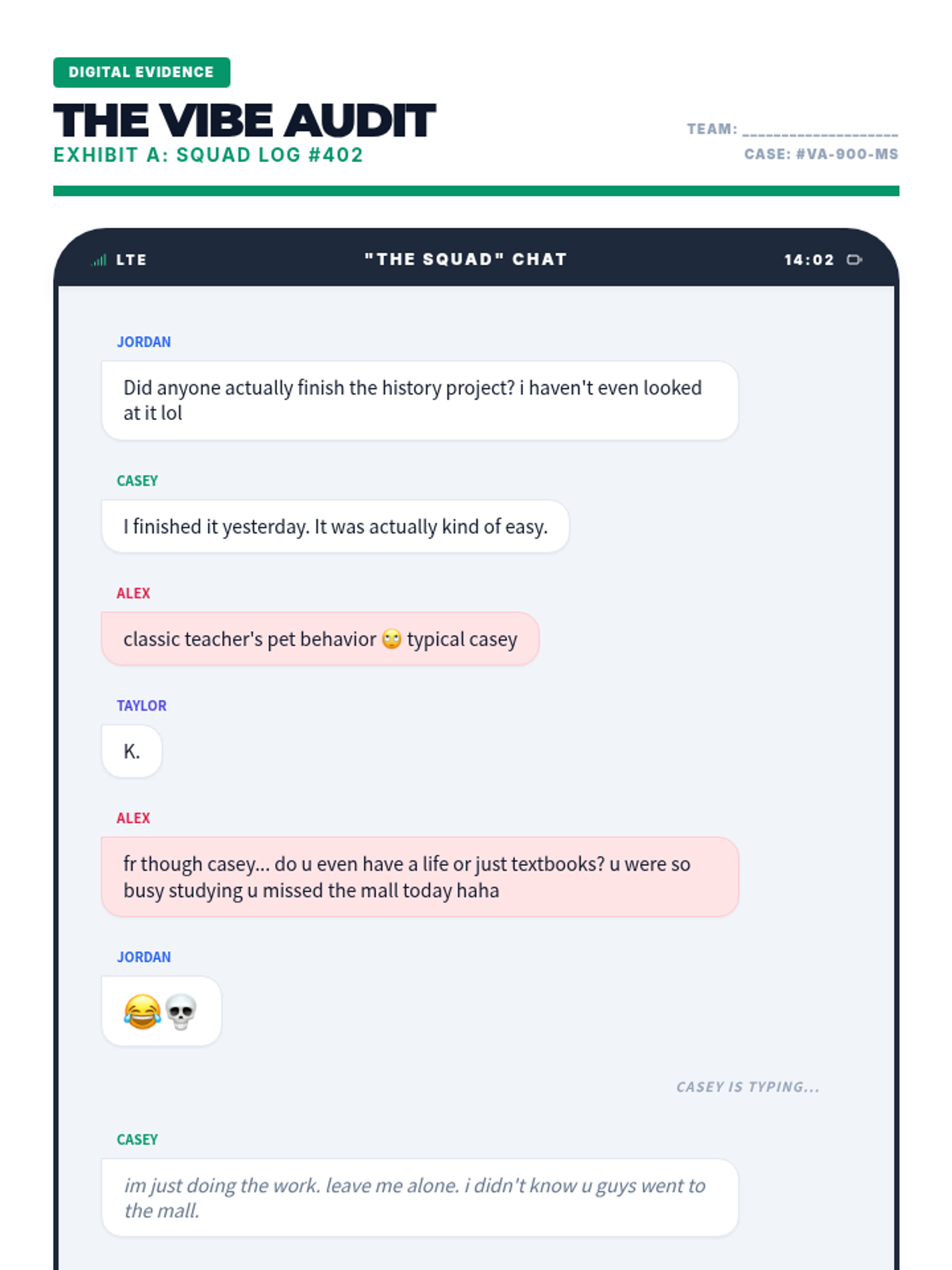
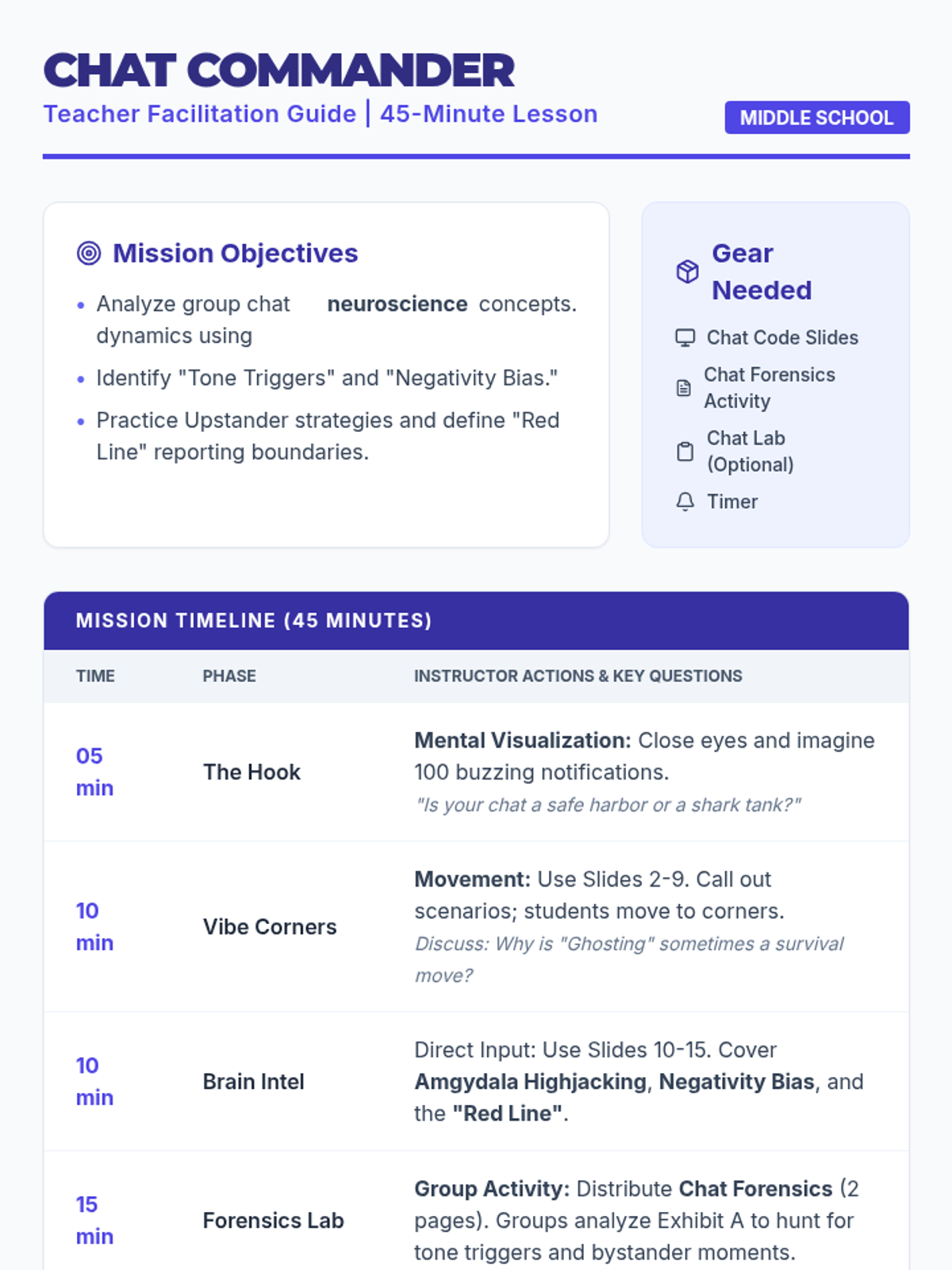
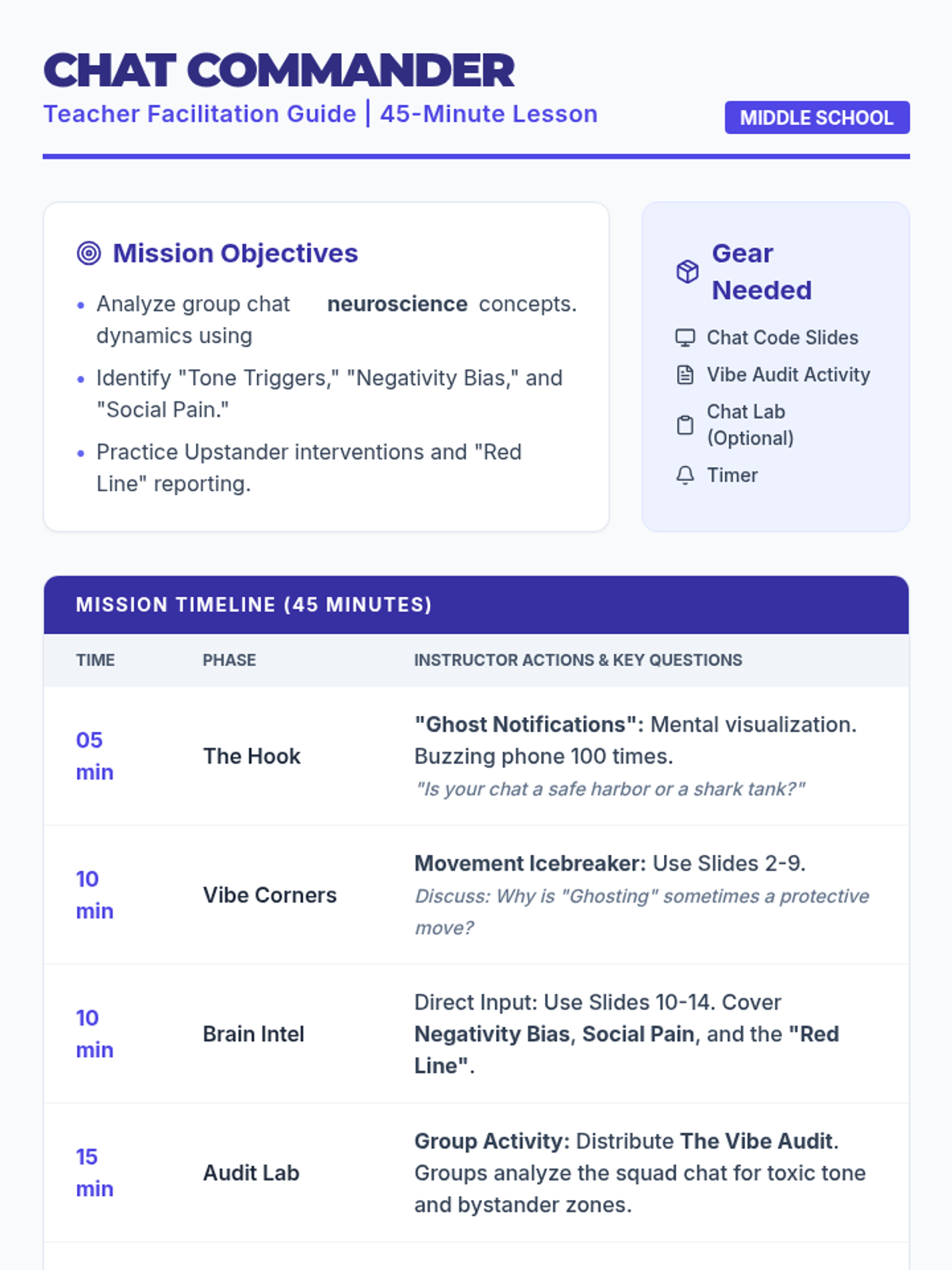
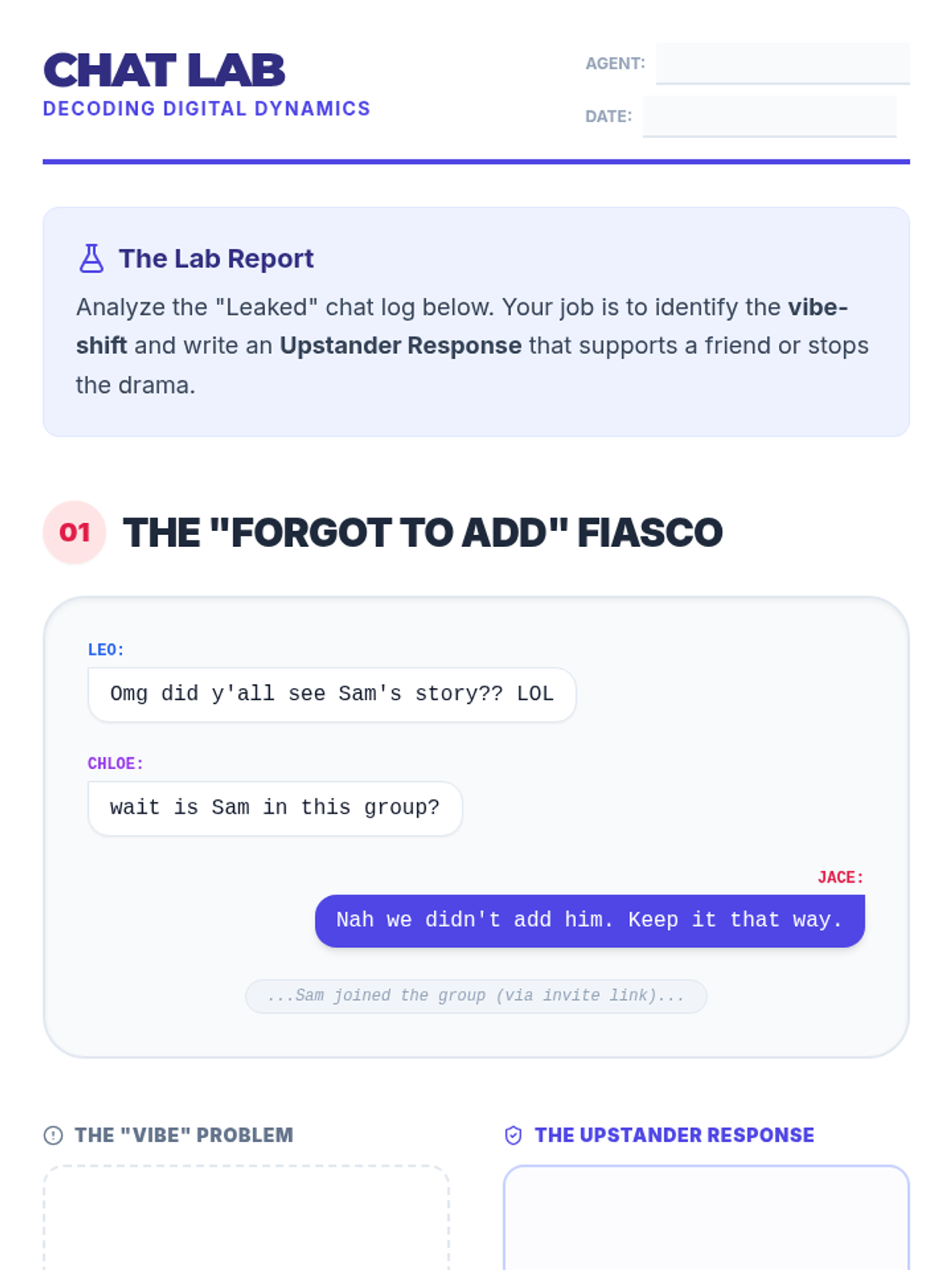
A 45-minute lesson designed for middle schoolers to navigate the social complexities of group chats, focusing on digital empathy, tone interpretation, and being a supportive 'upstander' in digital spaces.
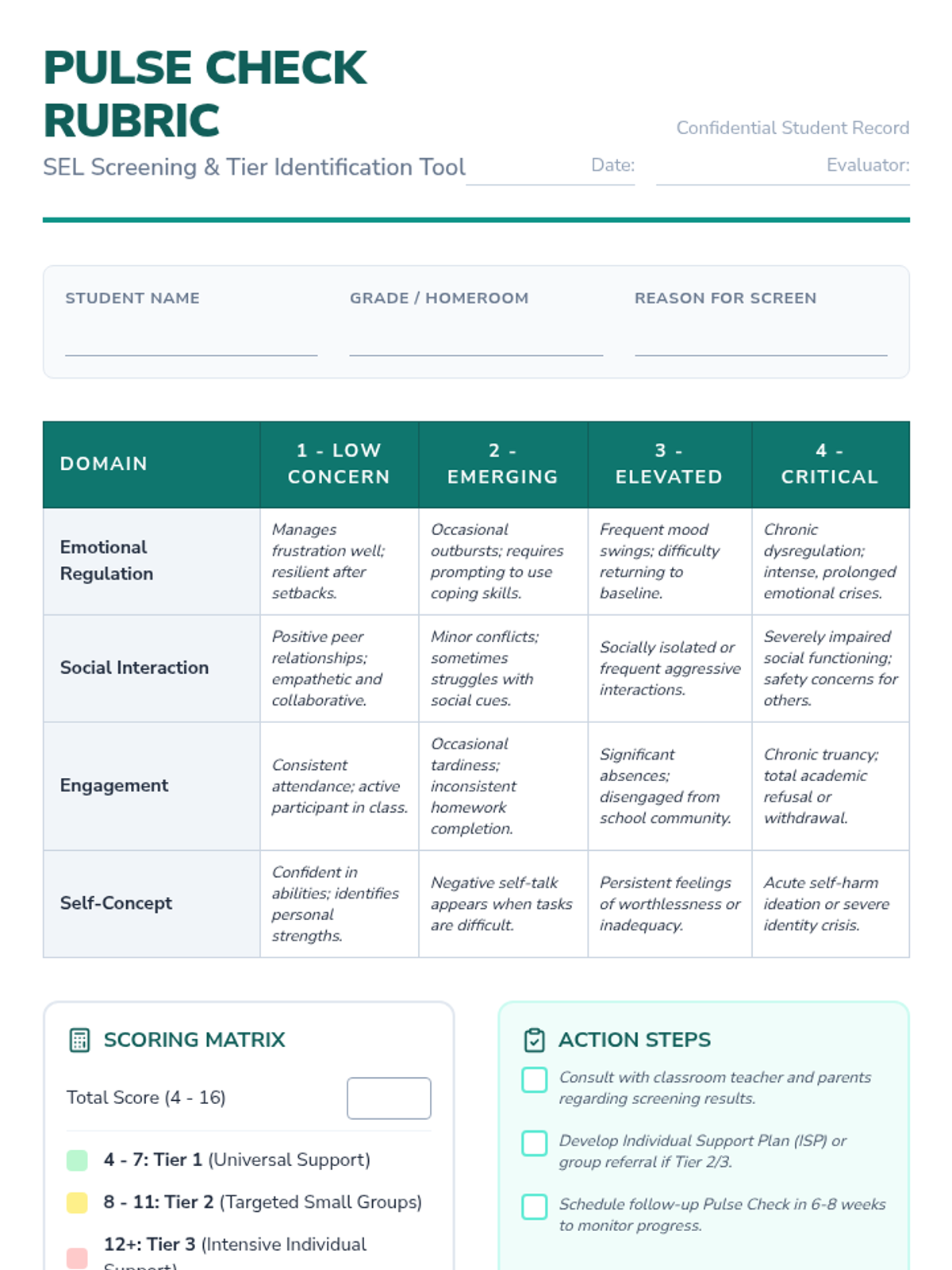
A comprehensive set of tools for school social workers to screen, monitor, and support students' social-emotional needs through structured rubrics and student-facing trackers.
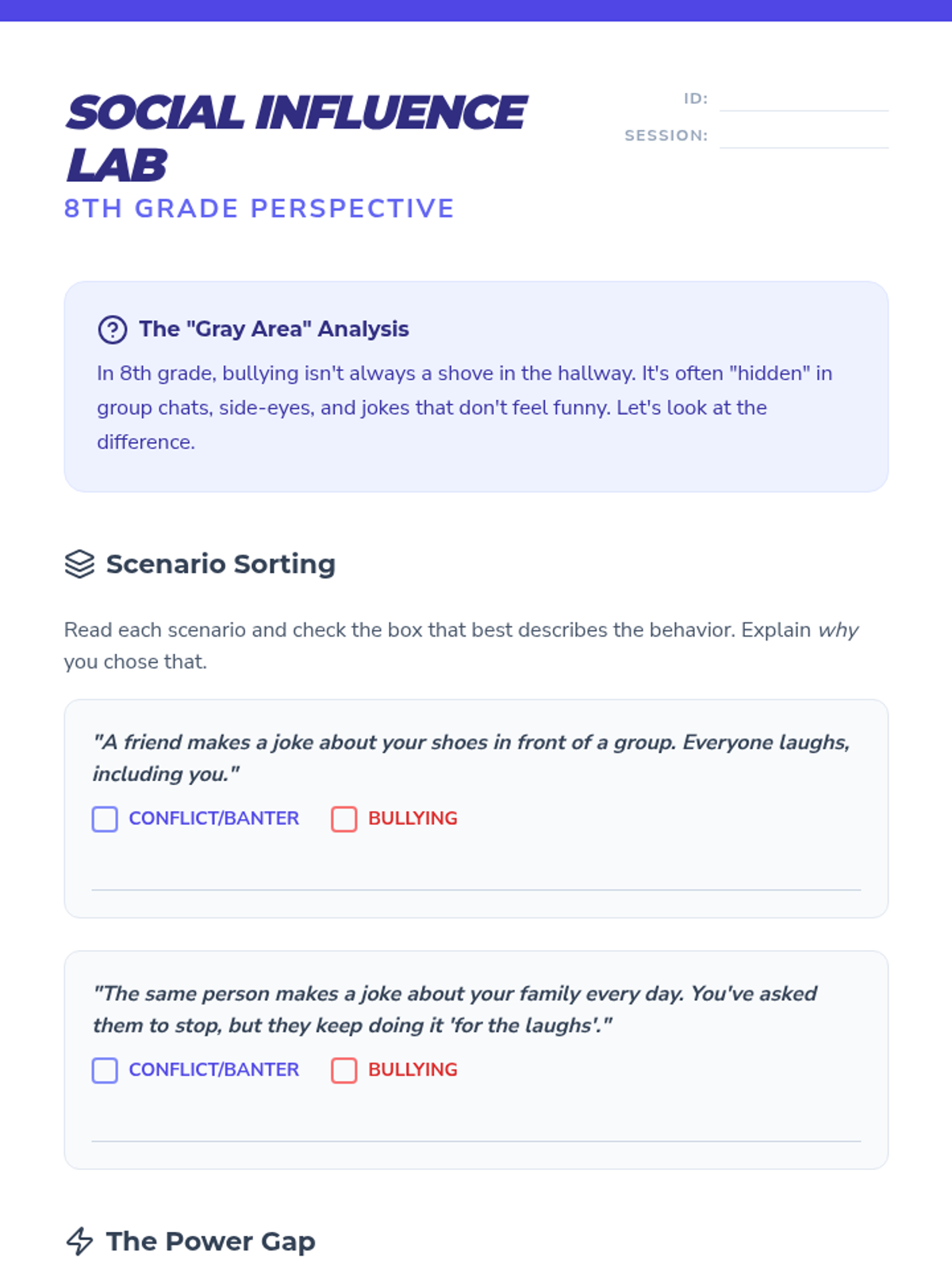
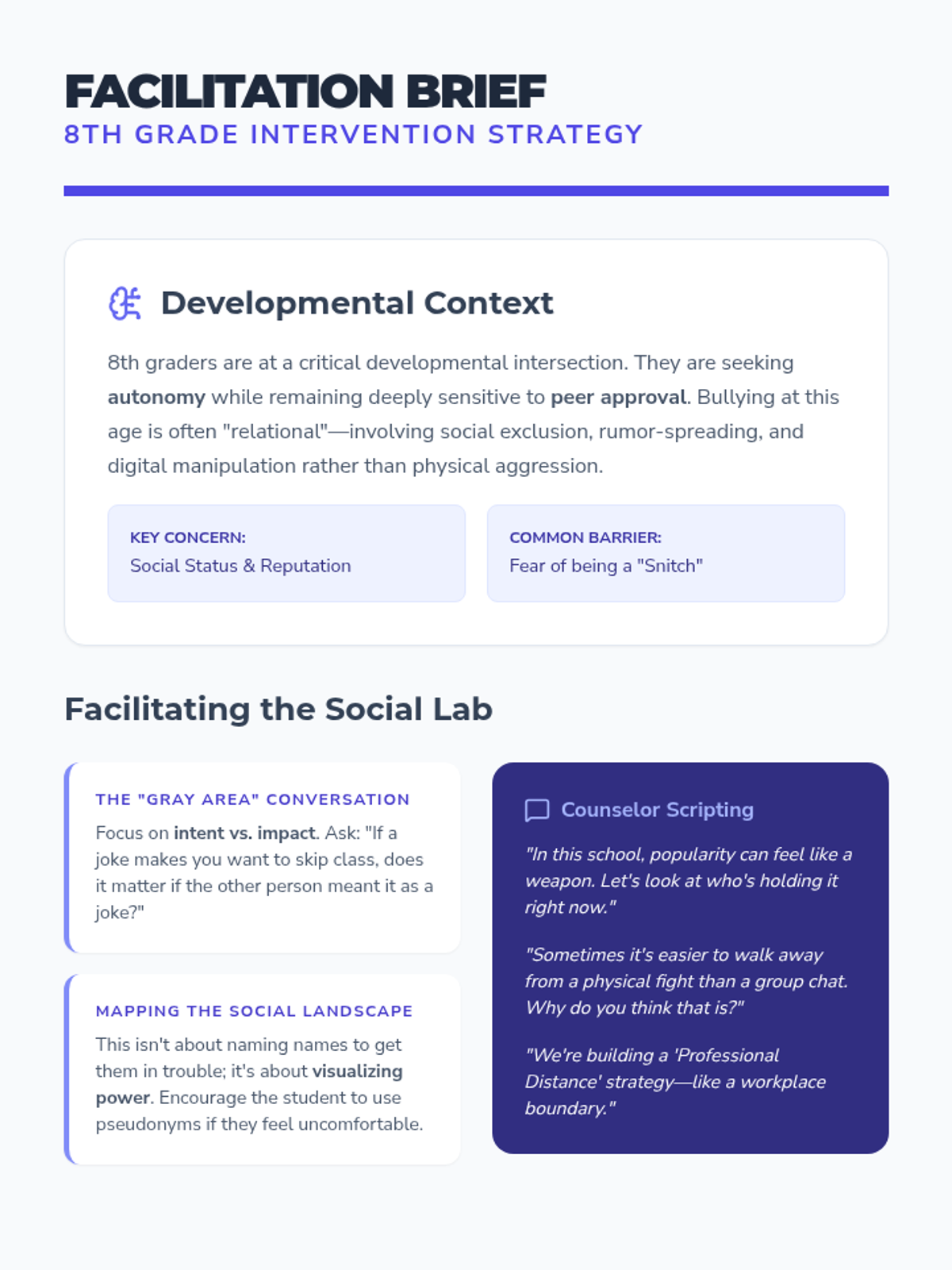
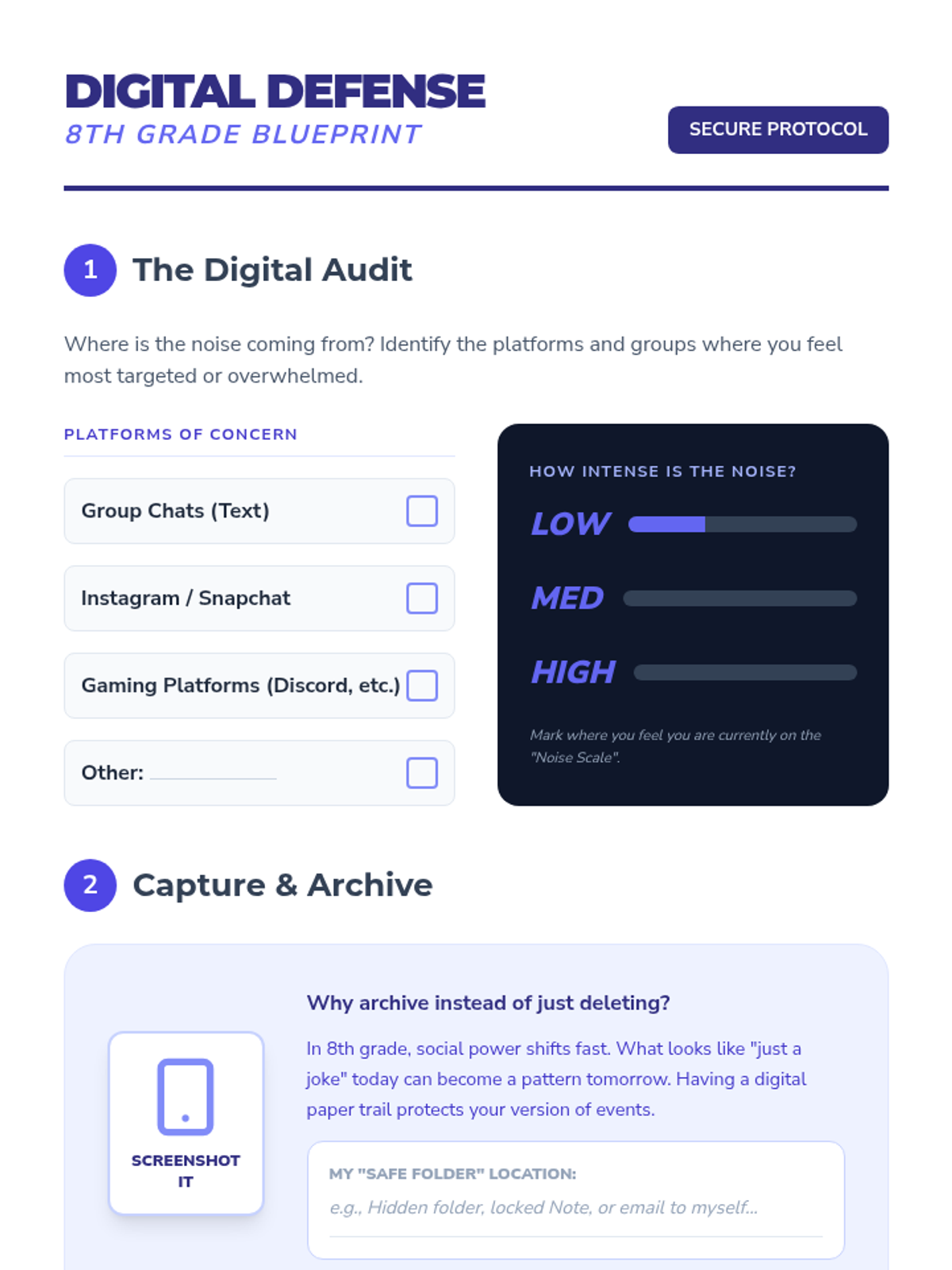
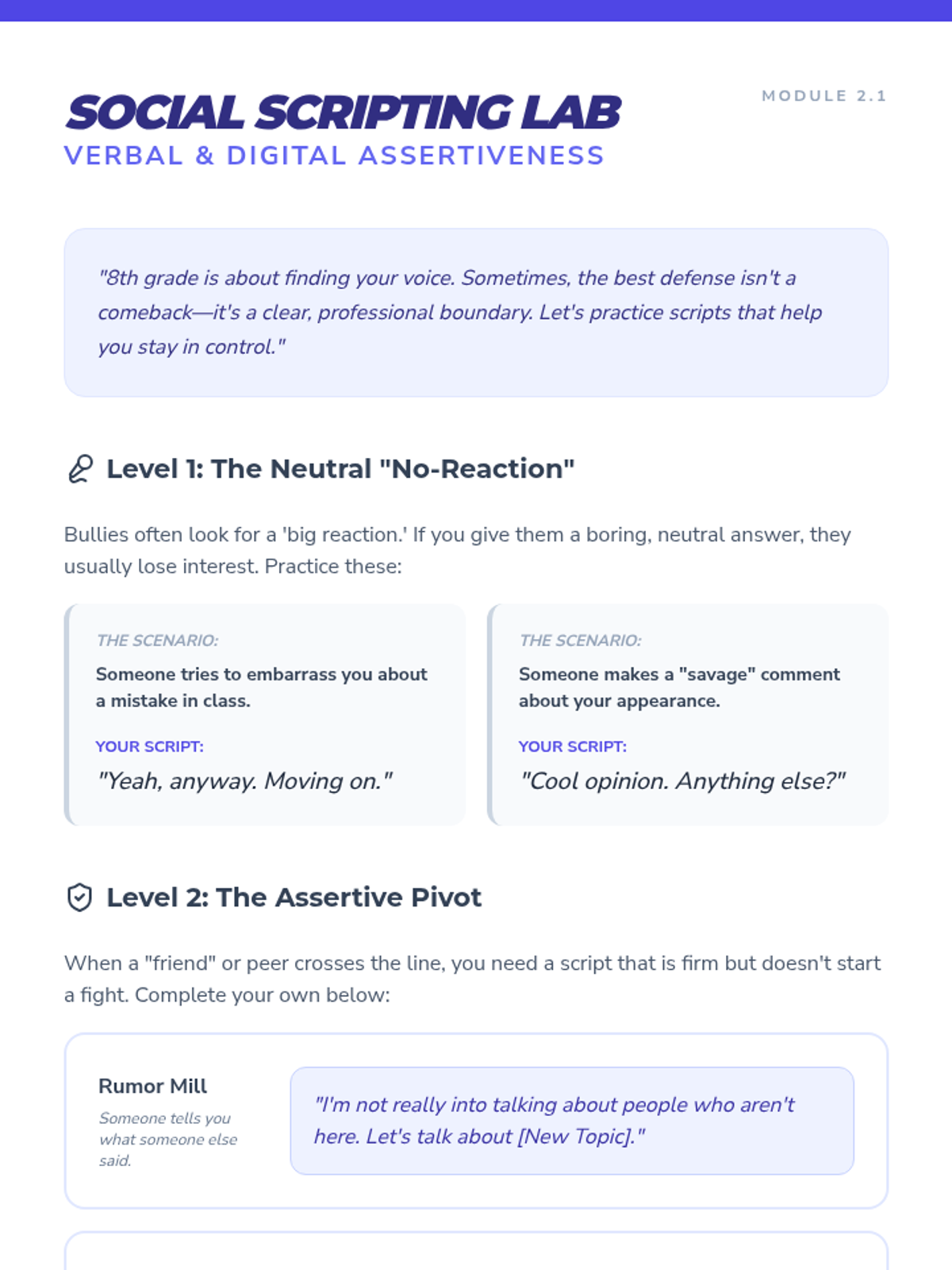
A specialized one-on-one intervention for 8th graders that tackles the nuances of middle school social power, digital harassment, and the 'gray areas' between joking and bullying.
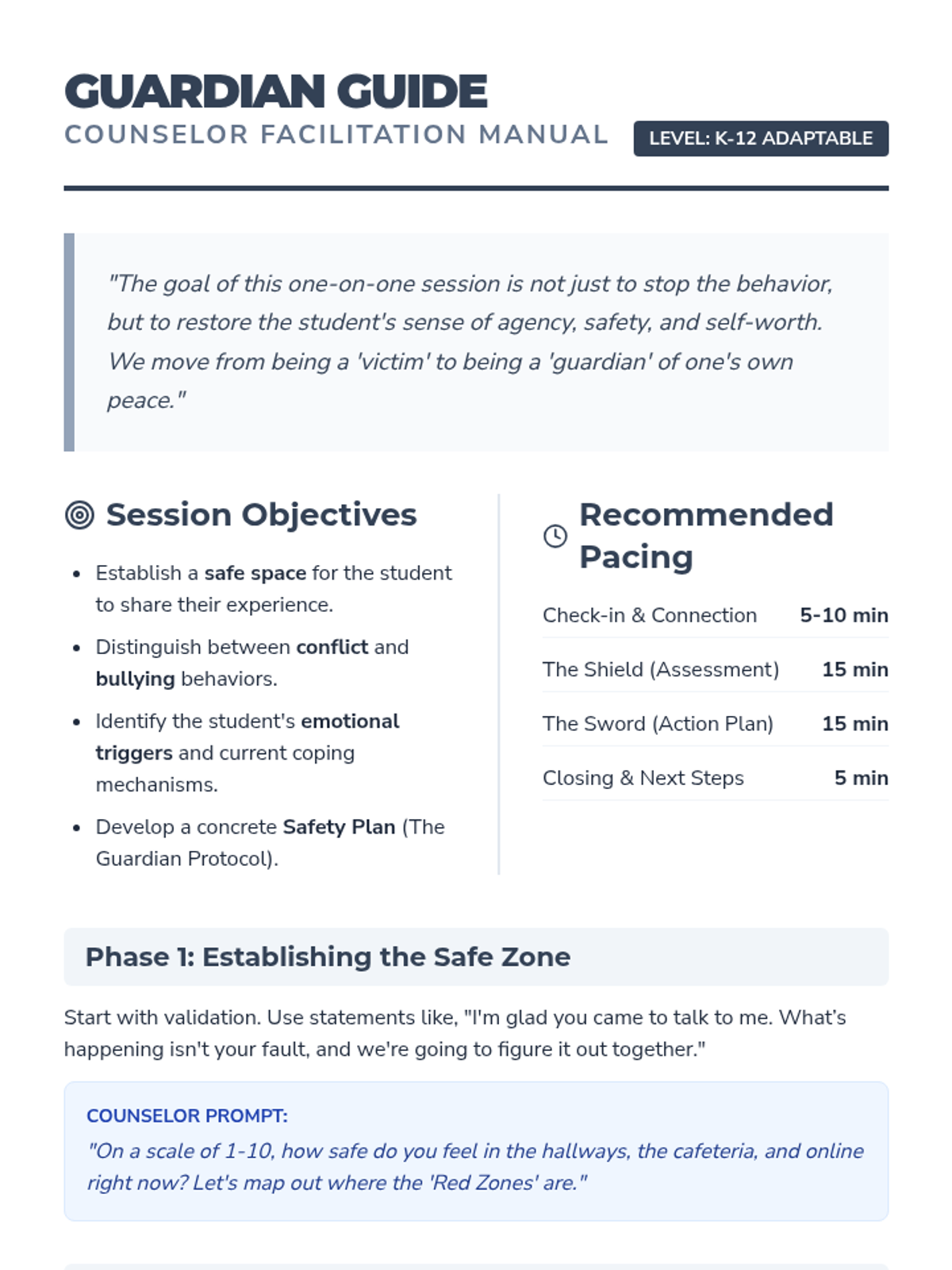
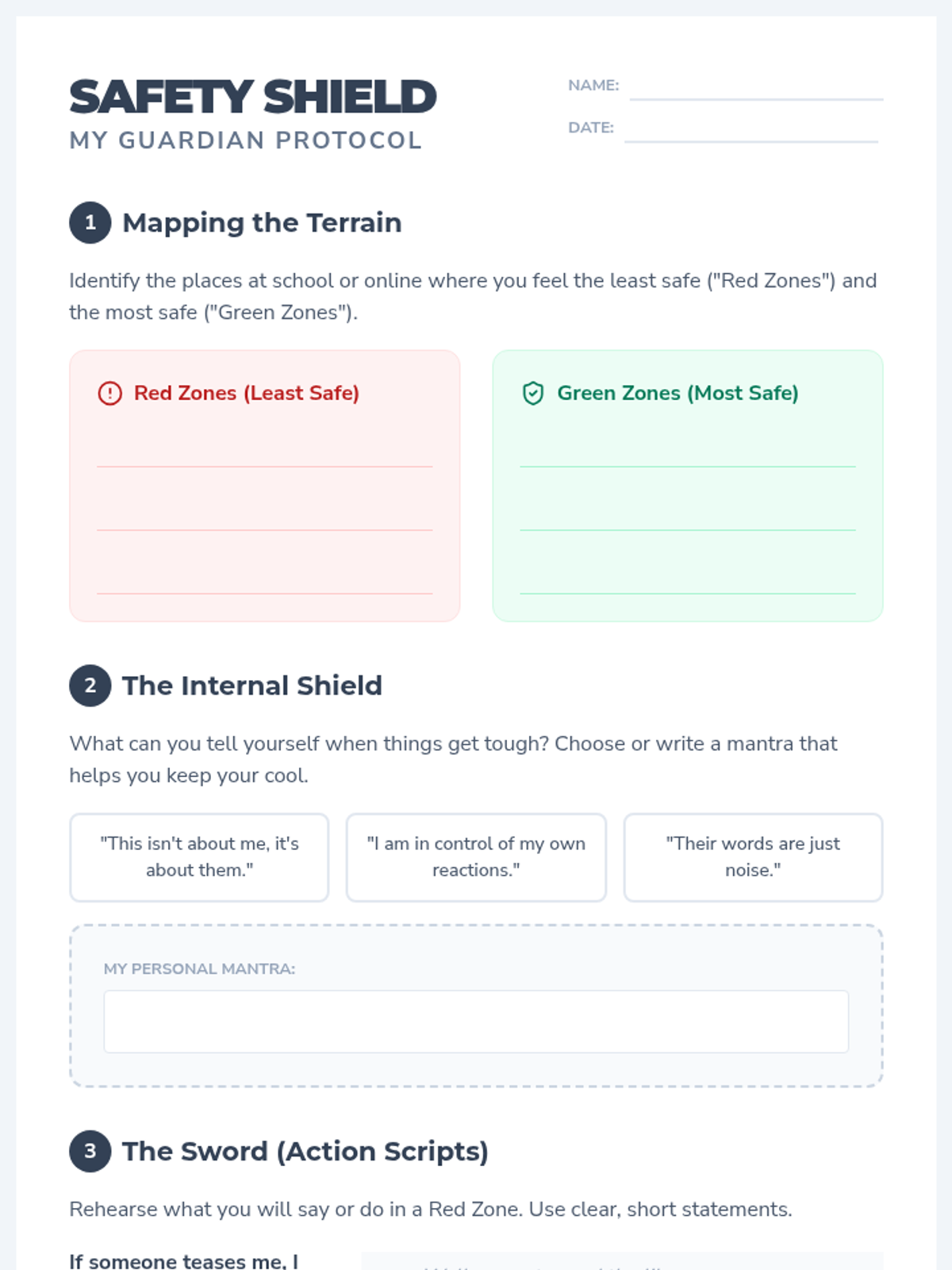
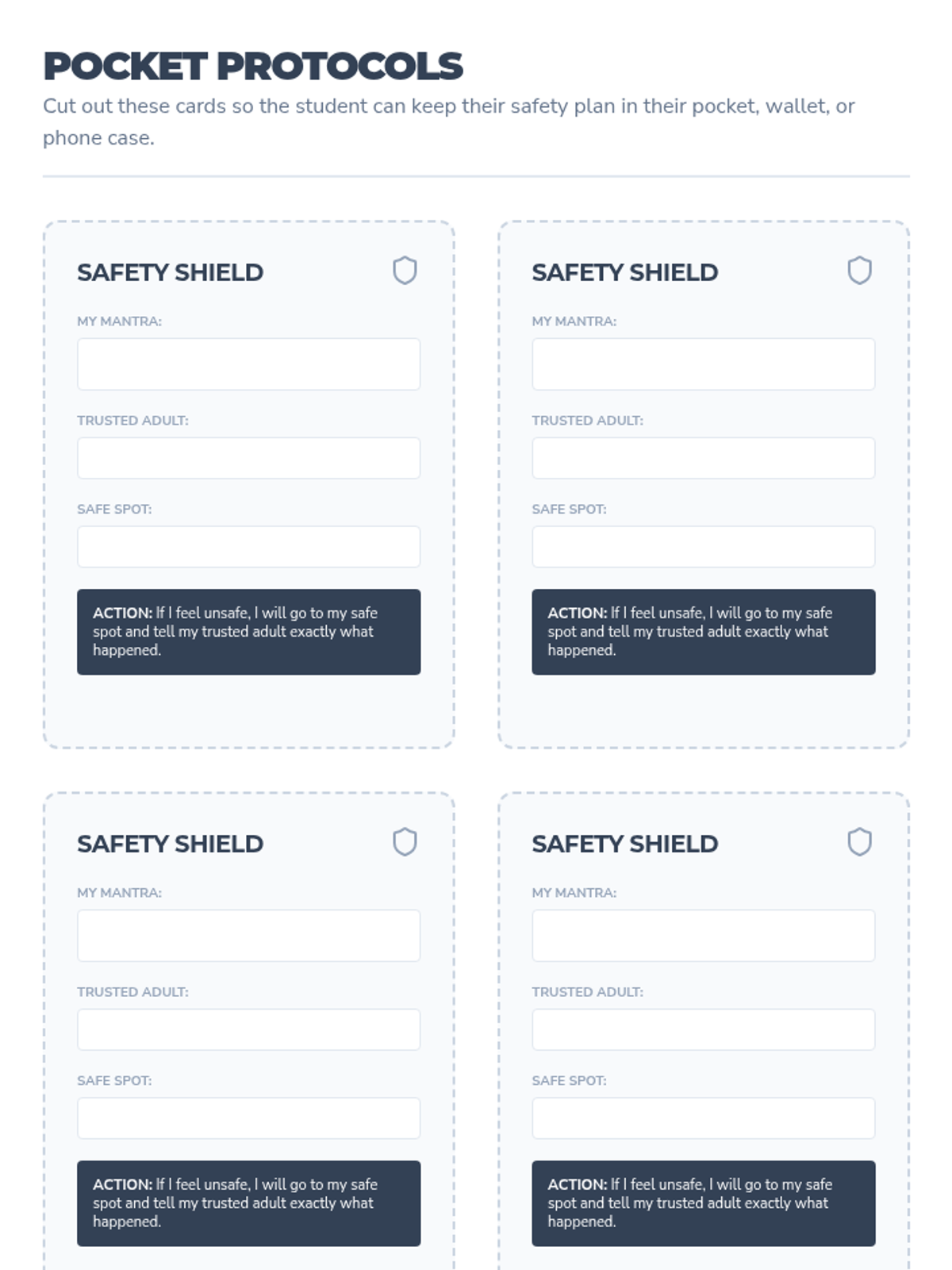
A comprehensive one-on-one intervention framework designed for school counselors and social workers to support students impacted by bullying. This lesson focuses on identifying bullying behaviors, building emotional resilience, and establishing concrete safety plans.
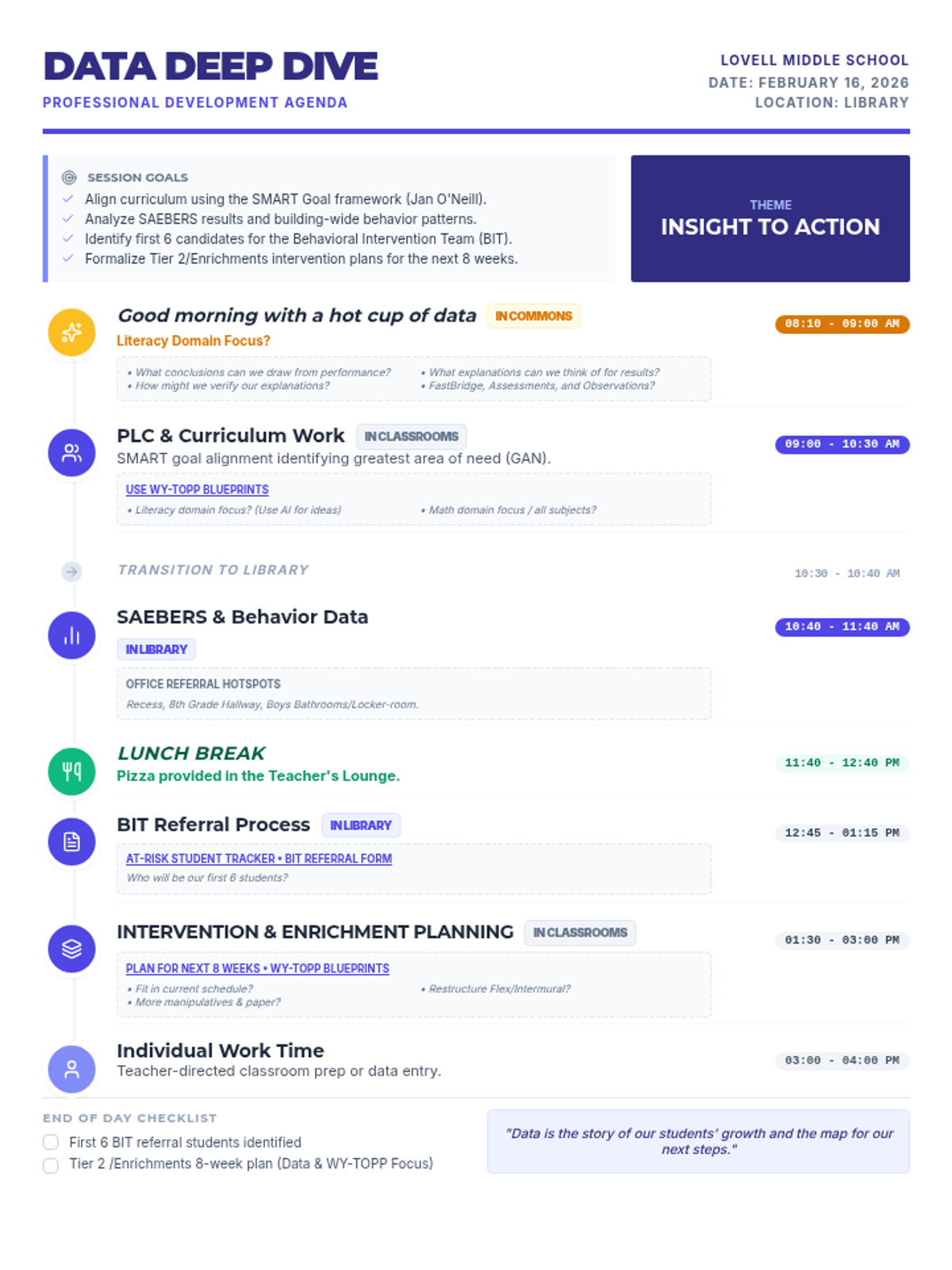
A professional development session focused on analyzing behavior data, social-emotional screening results, and developing intervention plans. Teachers will collaborate in PLCs and grade-level teams to create data-driven enrichment and support strategies.
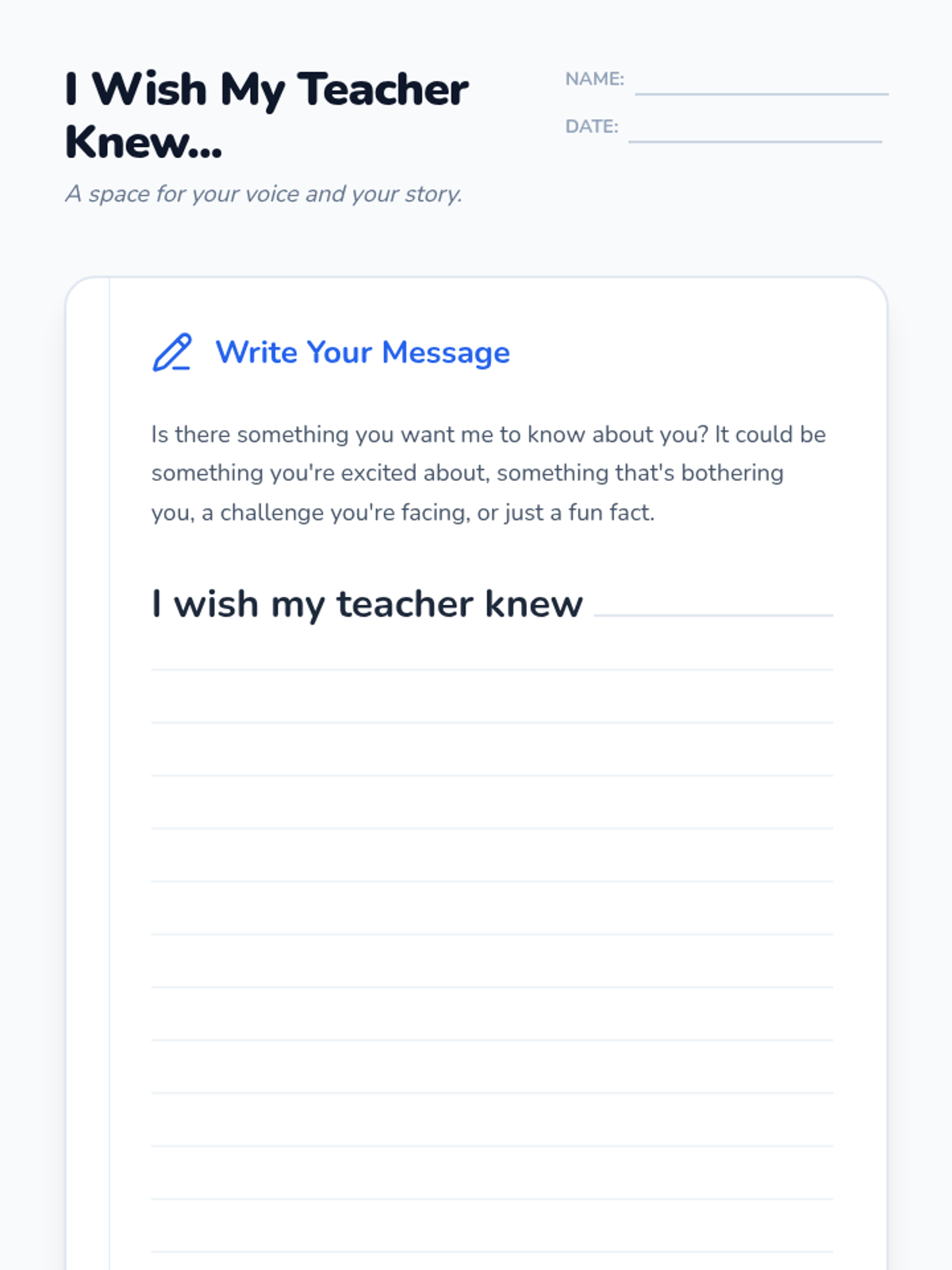
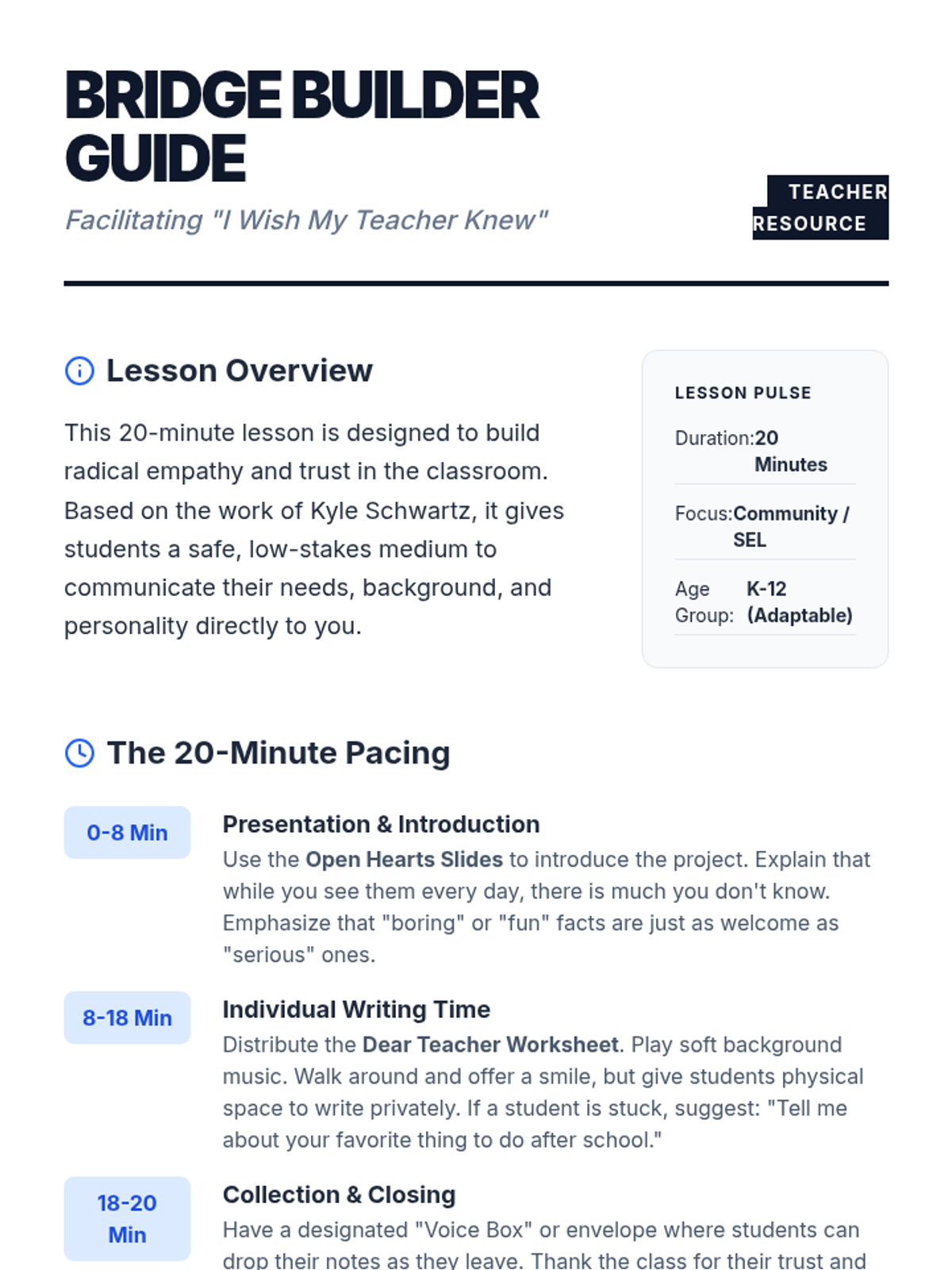
A short, impactful community-building lesson based on the "I Wish My Teacher Knew" project. Students share personal insights, needs, or stories with their teacher to build trust, empathy, and a stronger classroom community.
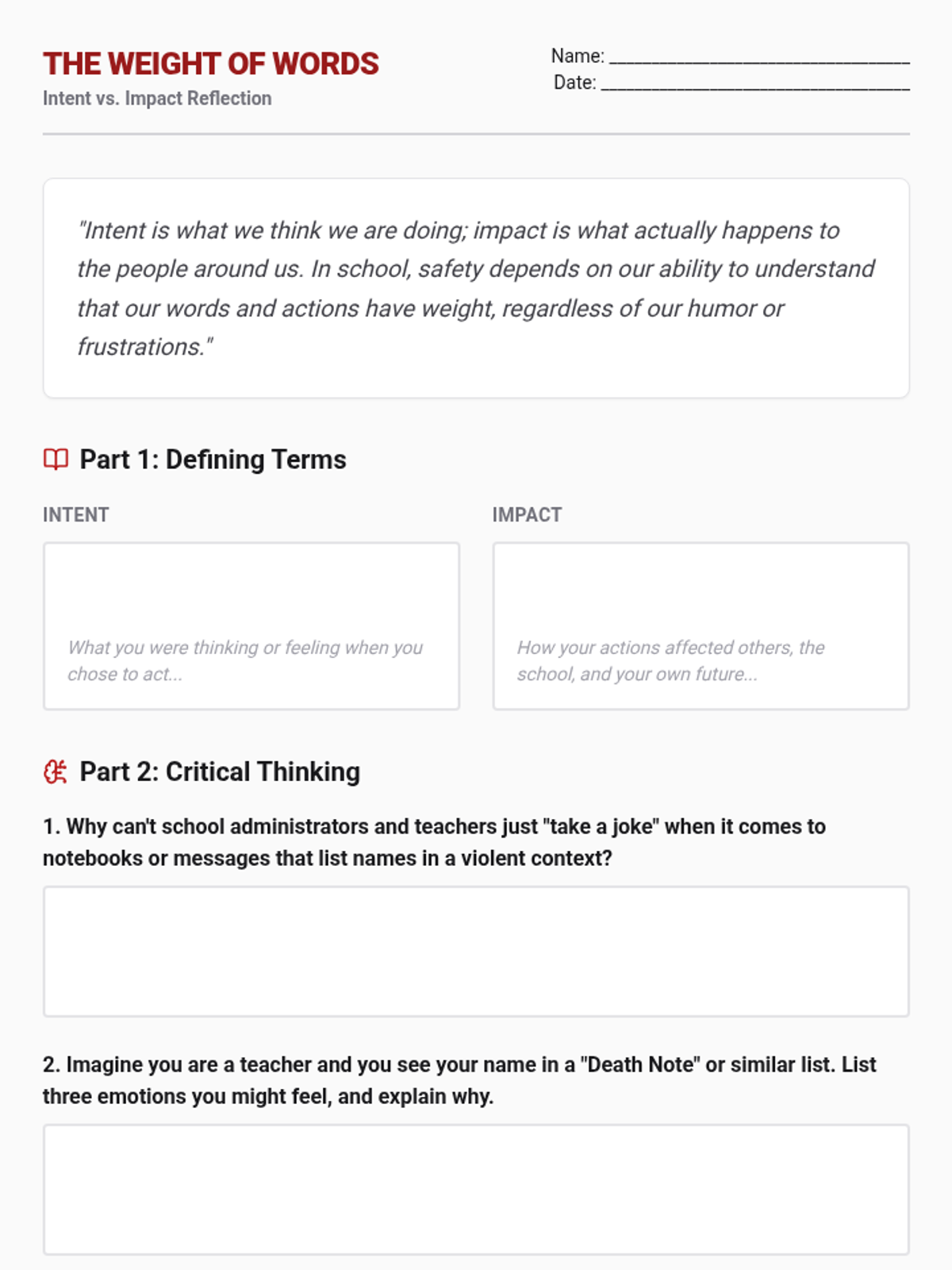
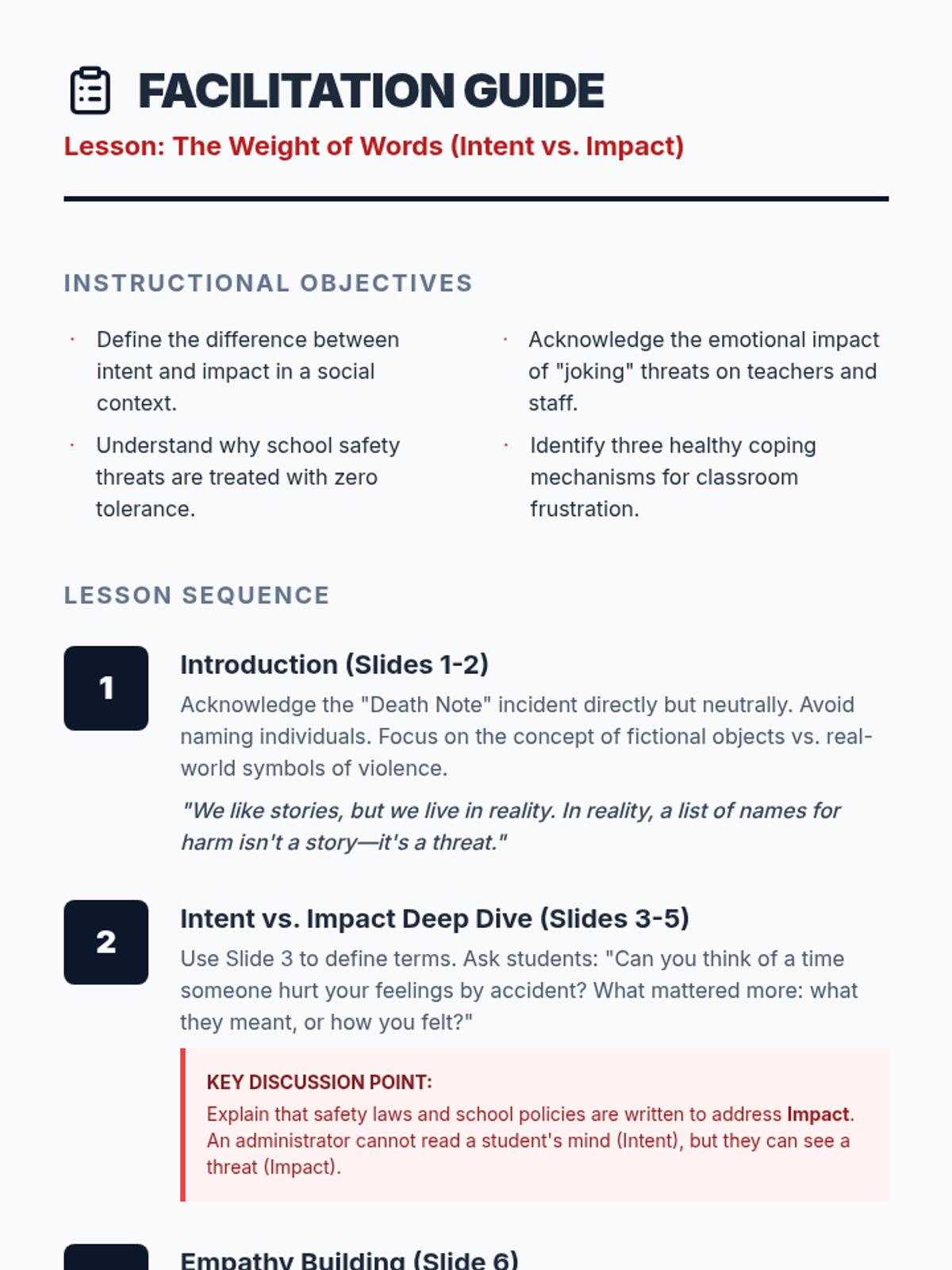
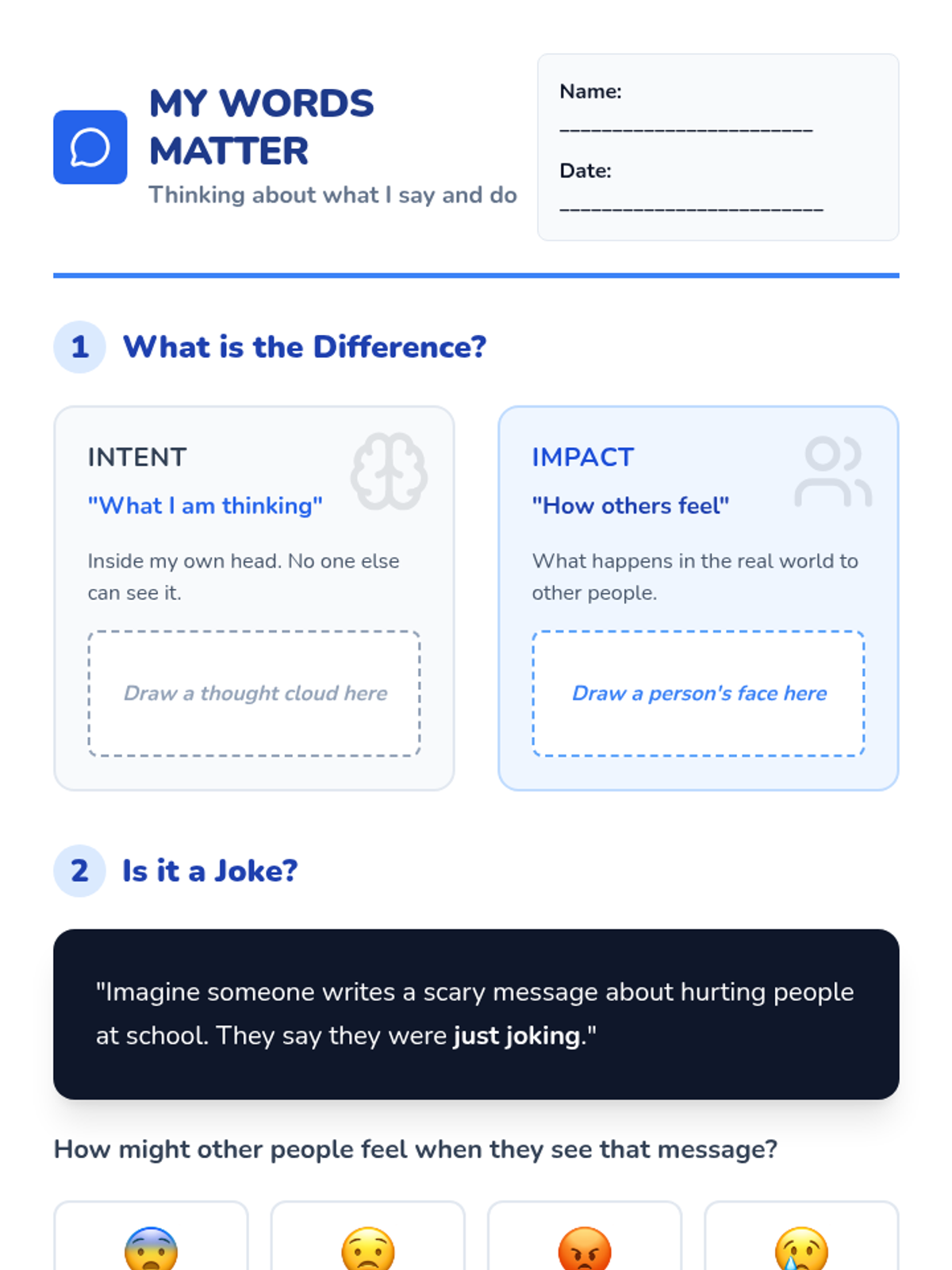
A psychoeducation lesson focusing on the critical difference between intent and impact in communication, exploring how words can affect school safety and community trust.
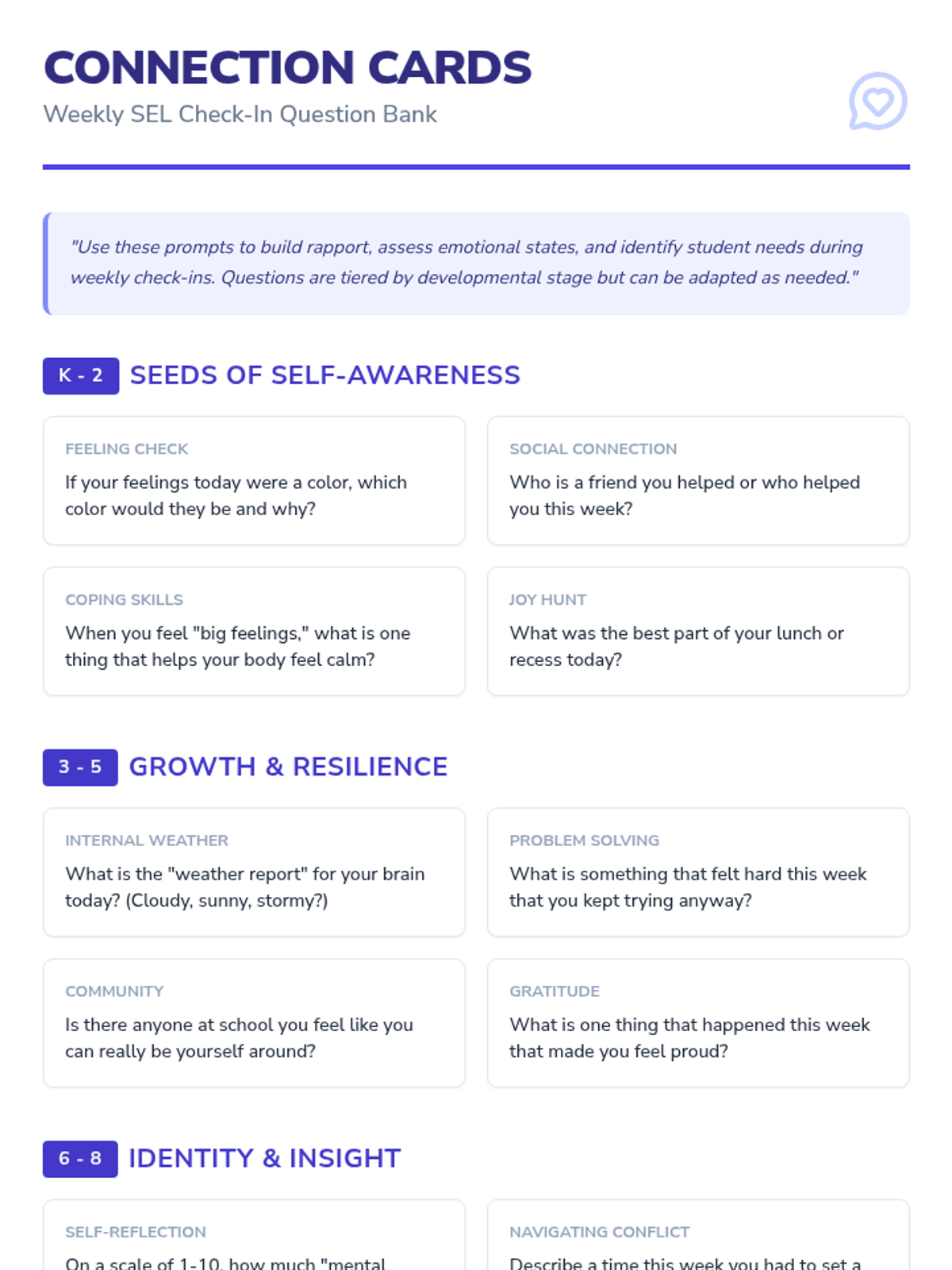
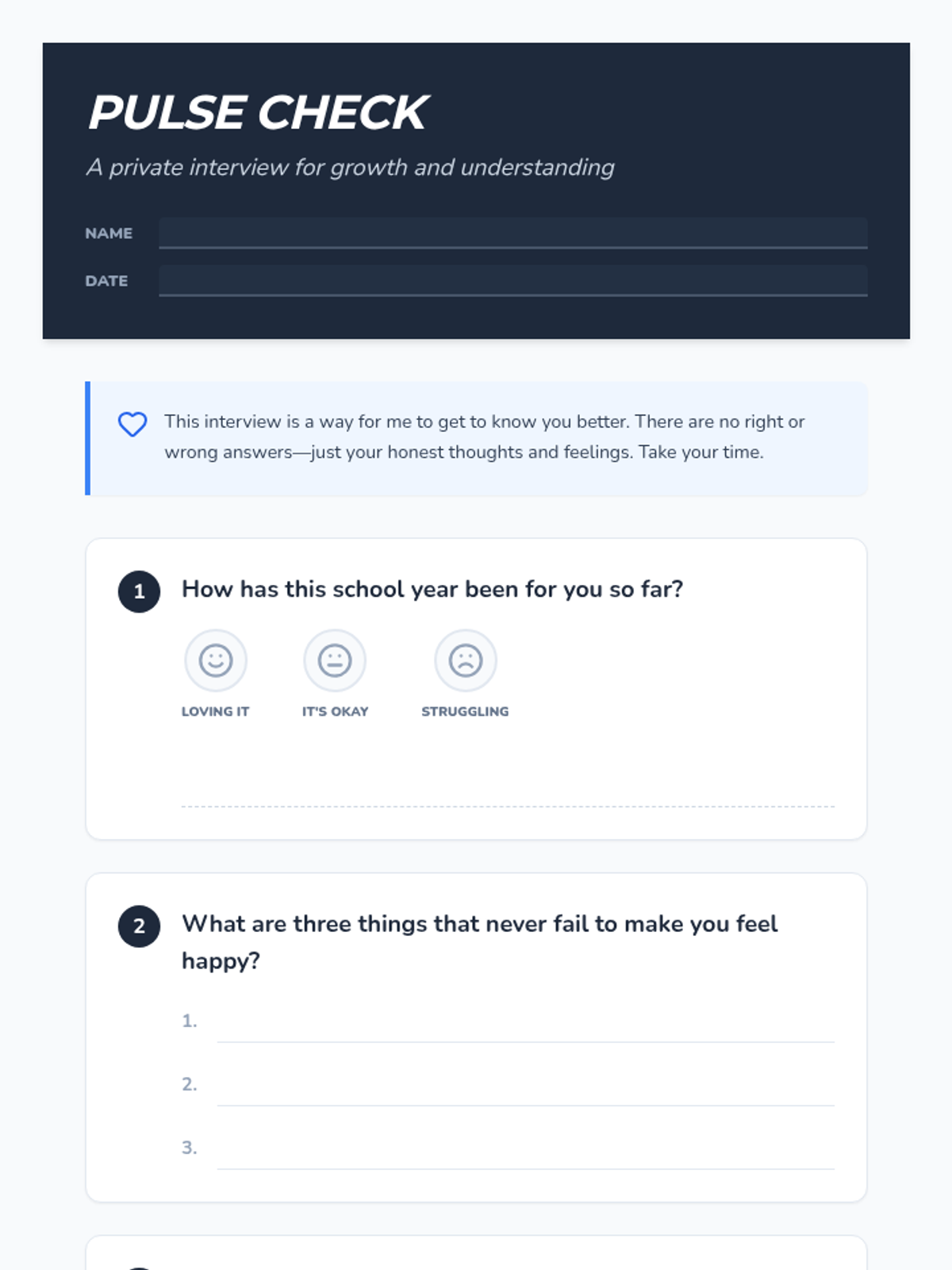
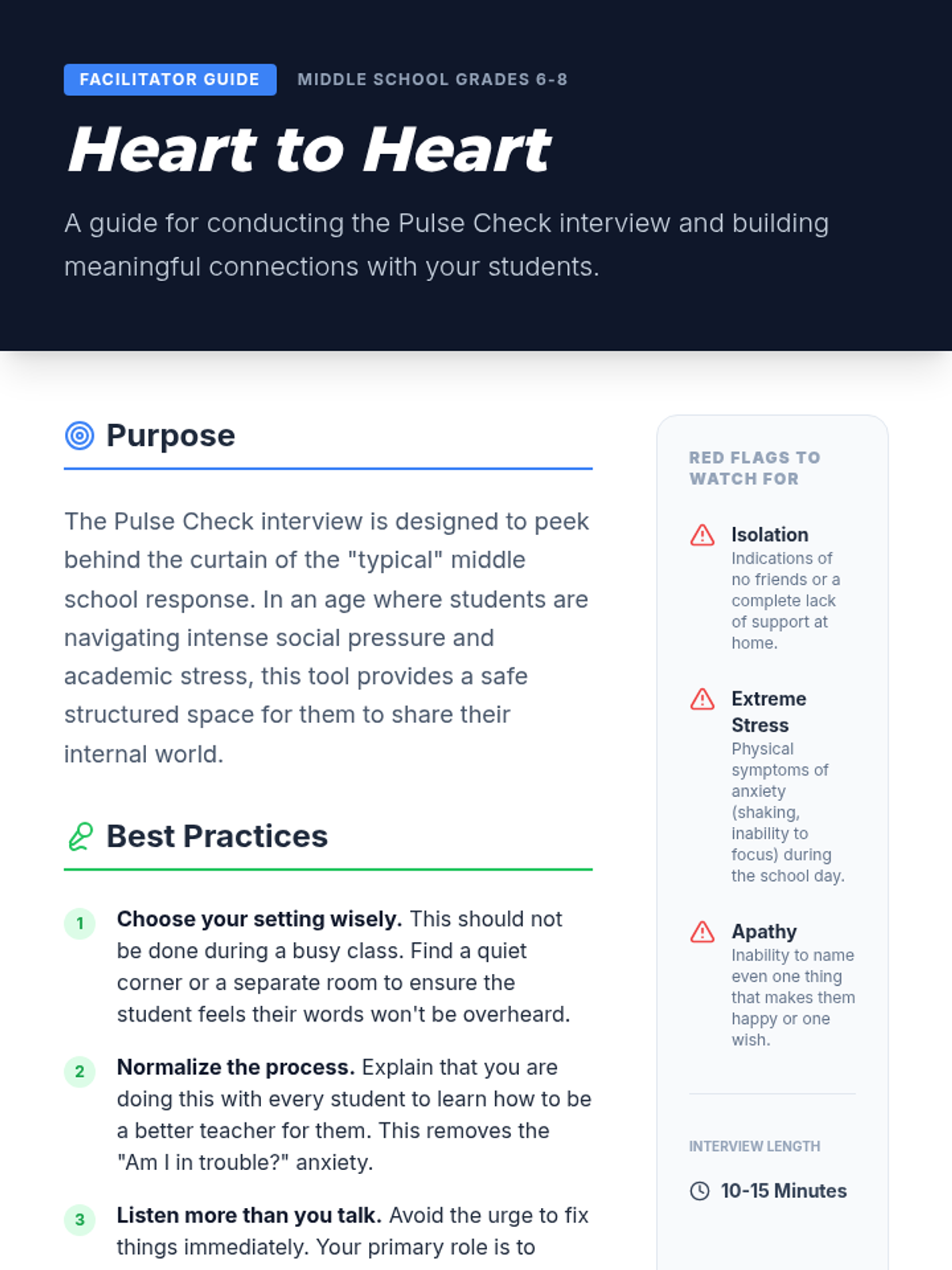
A set of resources designed to help educators understand their students' social-emotional well-being, goals, and school experiences through direct interviewing and reflection.
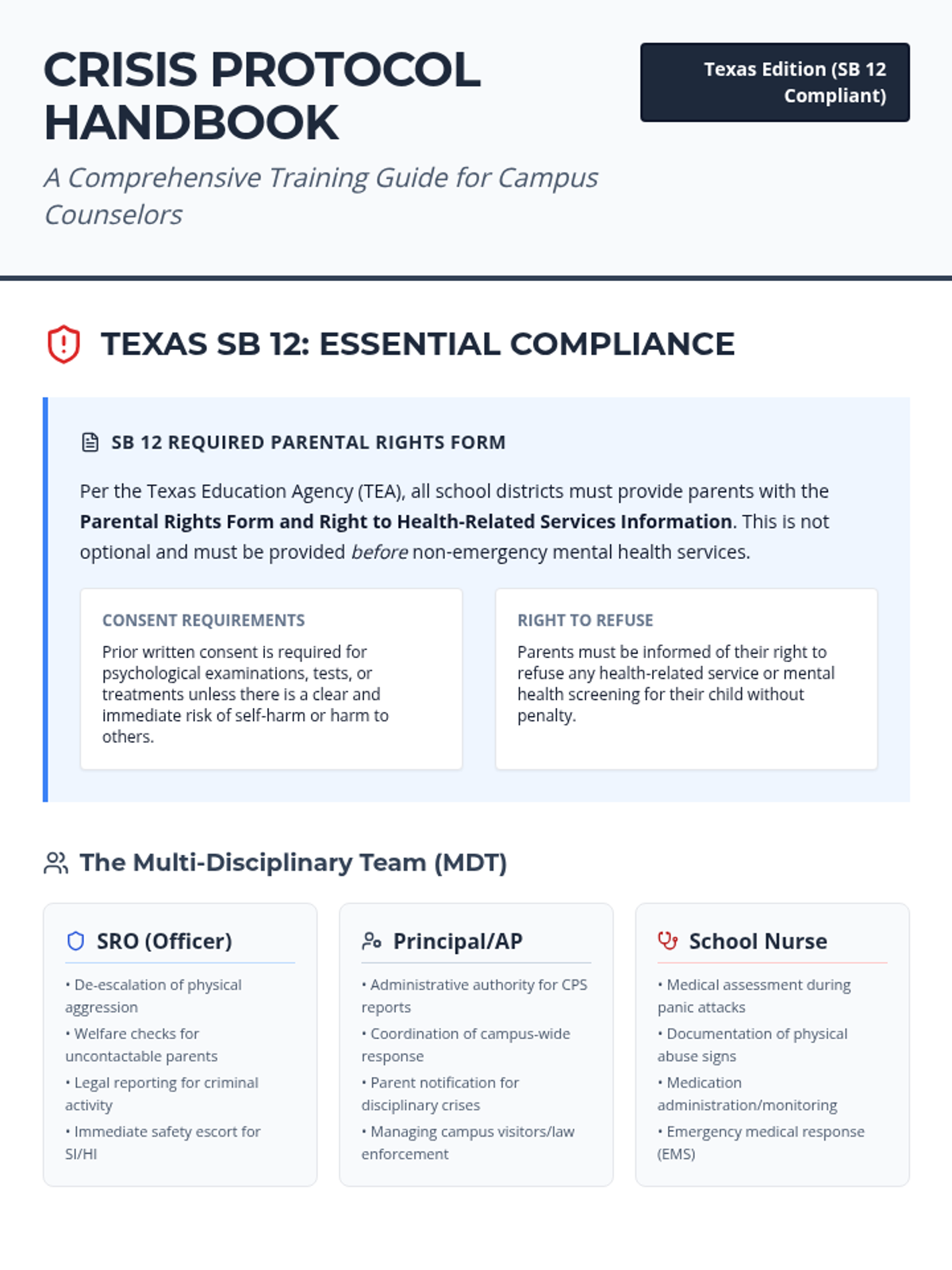
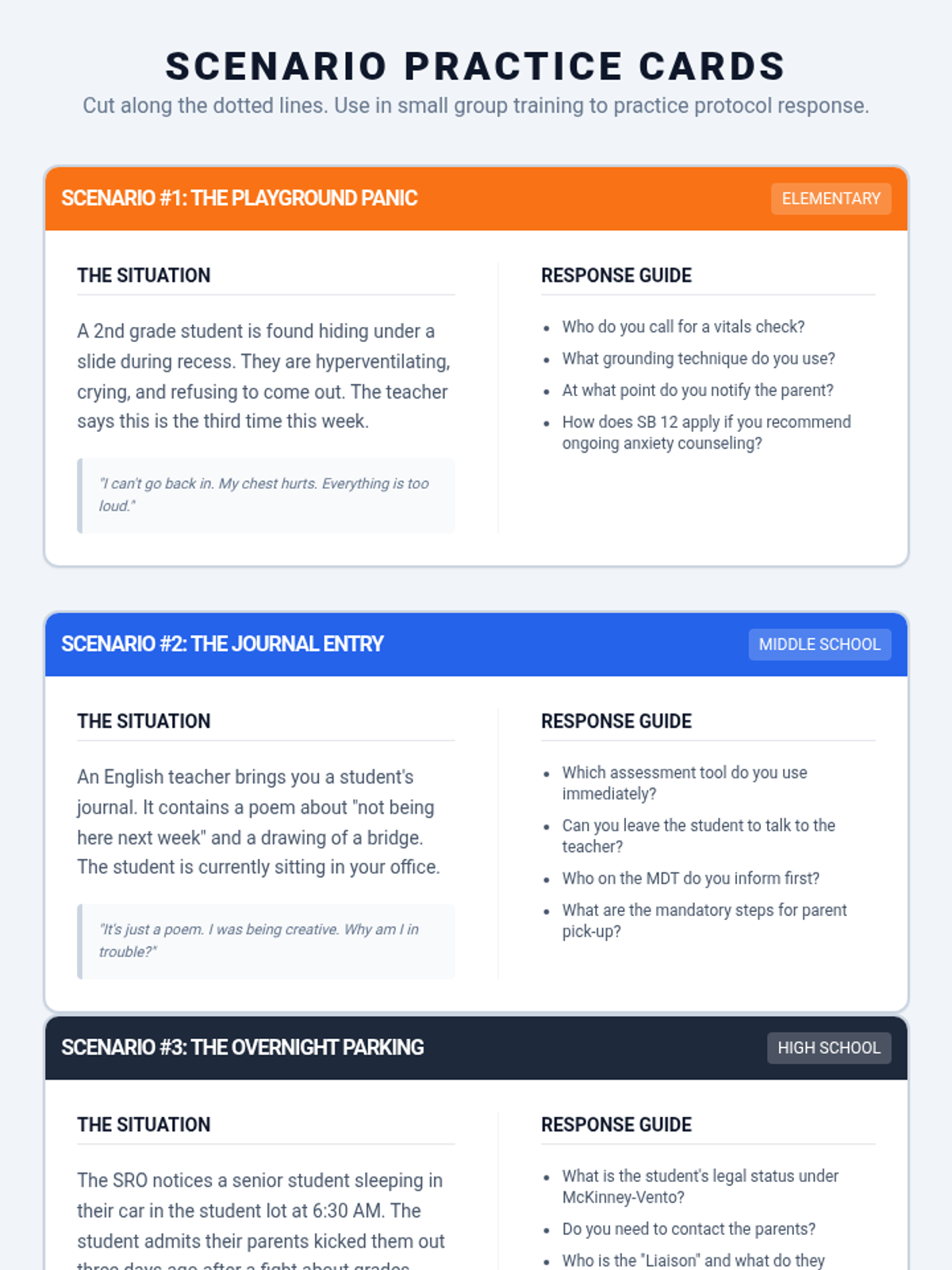
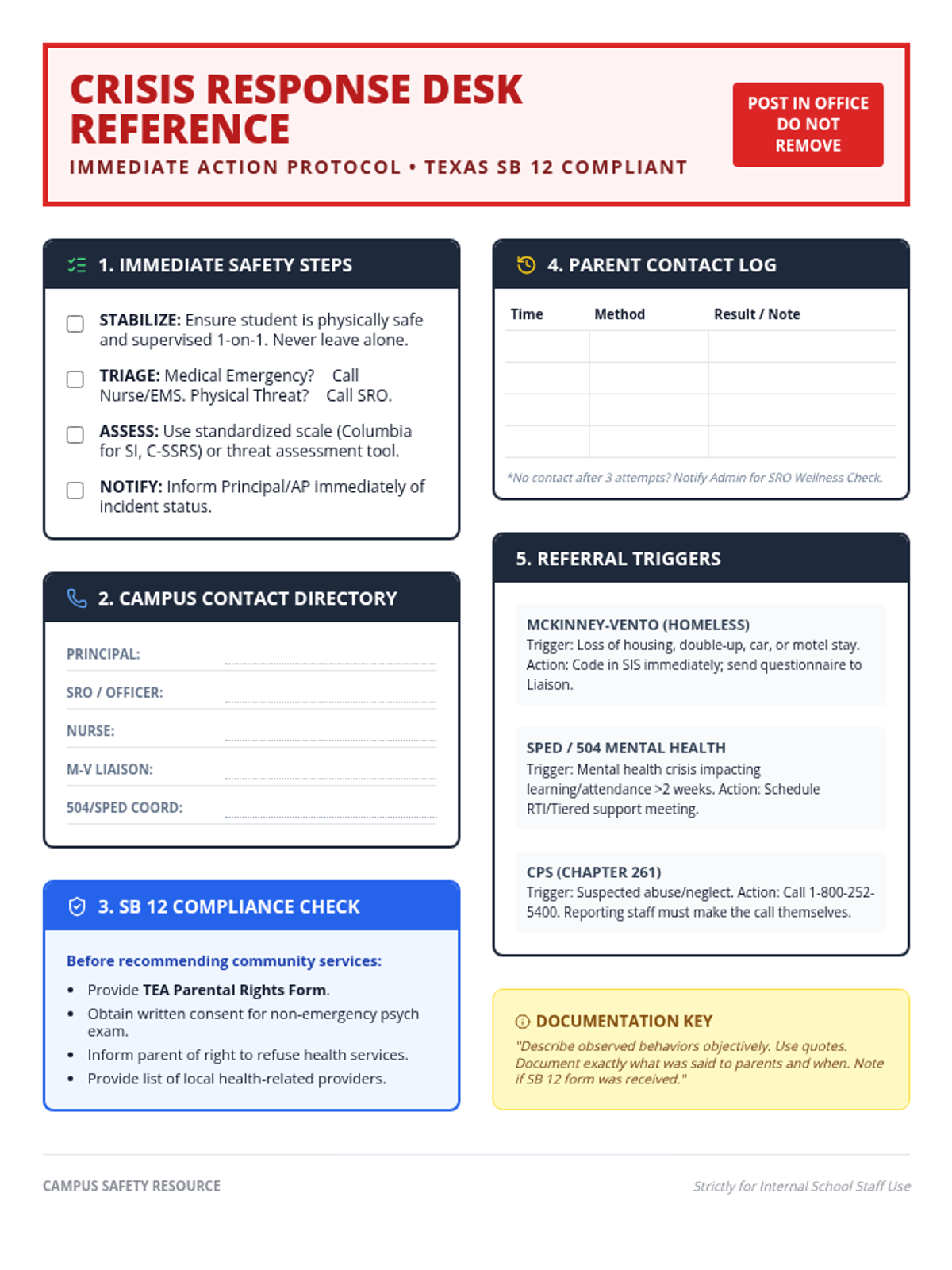
A comprehensive training resource for school counselors on managing campus crises, including scenarios tailored to different grade levels and guidance on collaborating with administration, law enforcement, and medical staff while adhering to Texas SB 12.
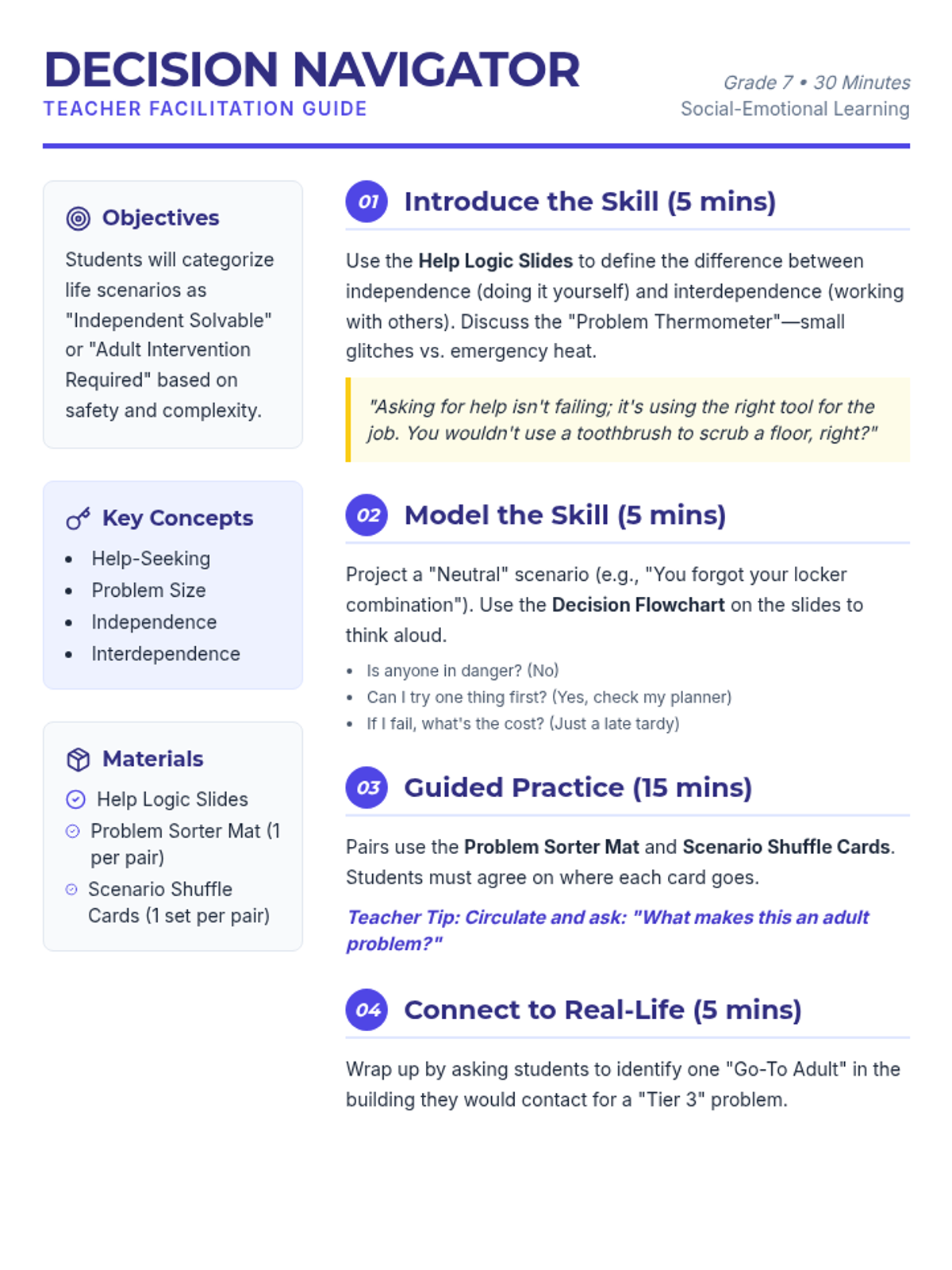
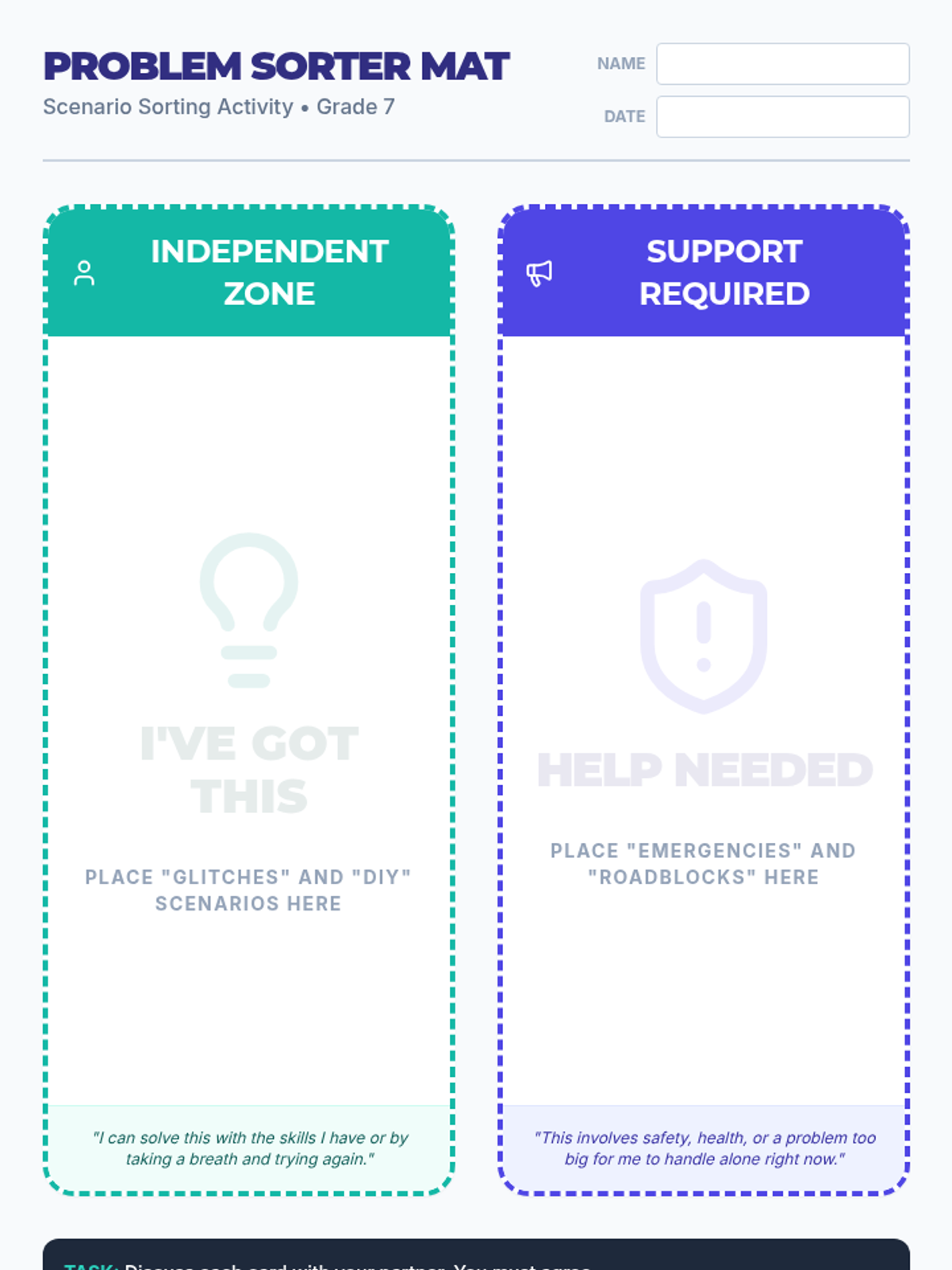
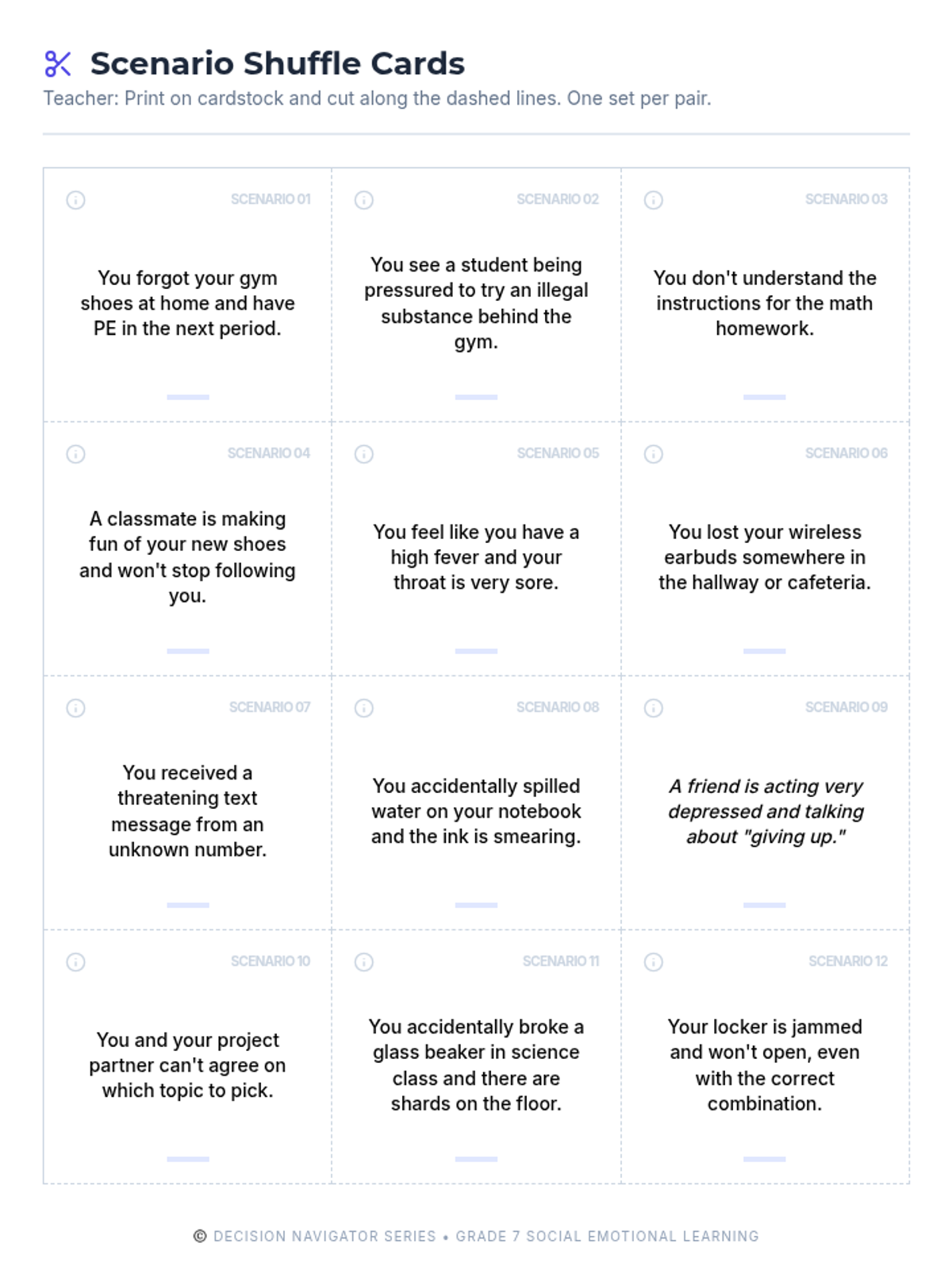
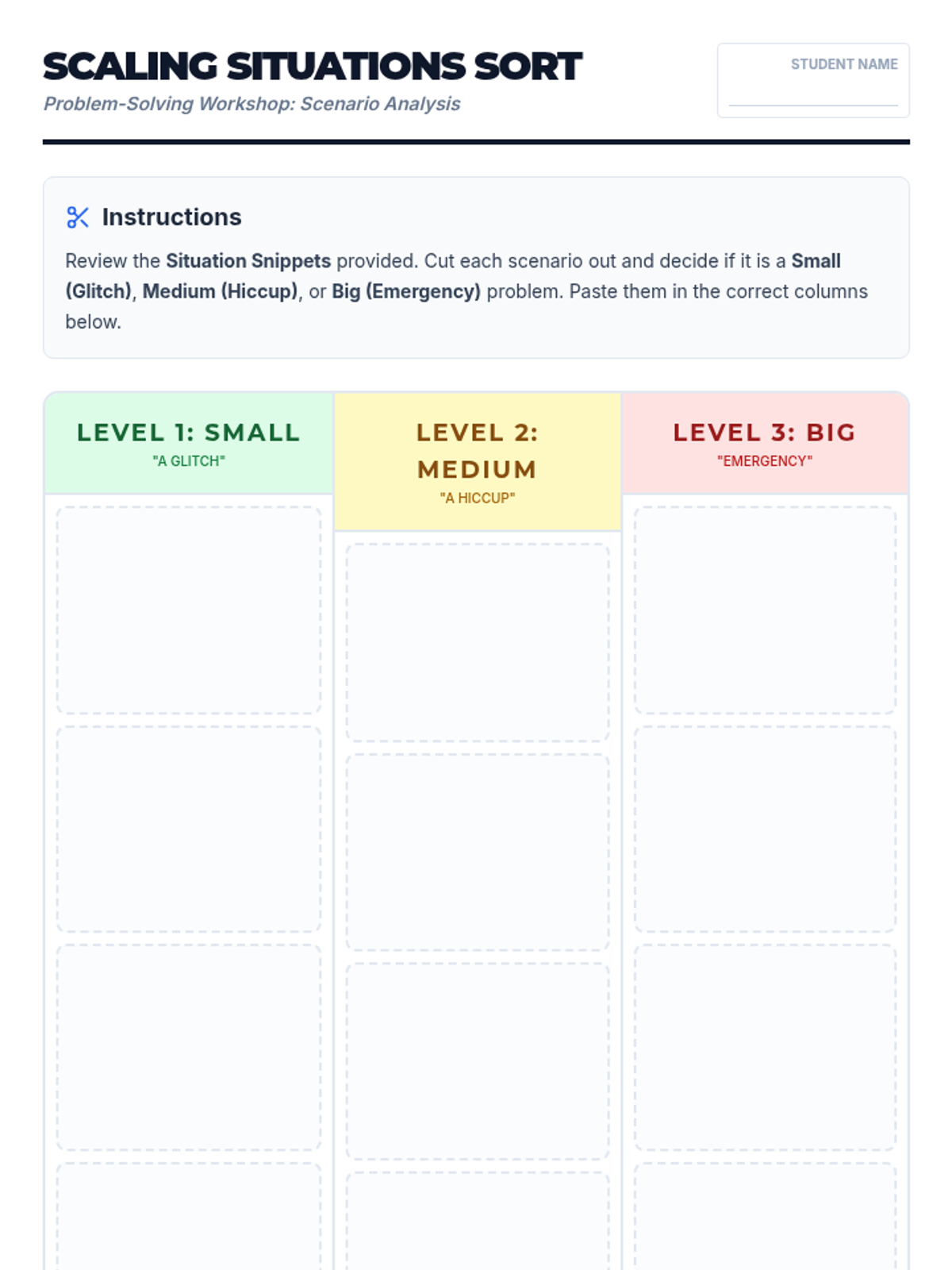
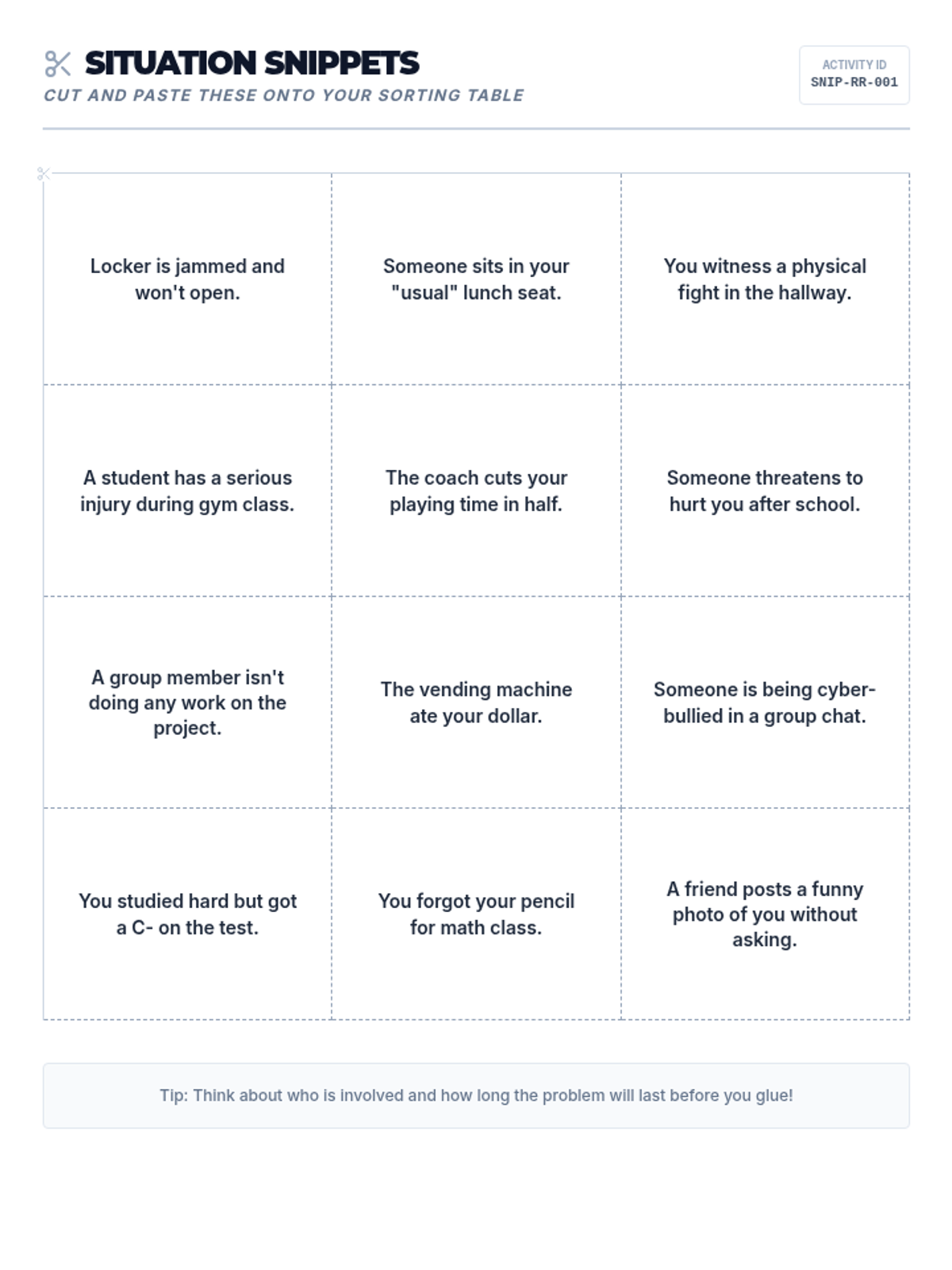
A 30-minute lesson for 7th graders to help them distinguish between problems they can handle independently and situations that require adult intervention through scenario sorting and discussion.
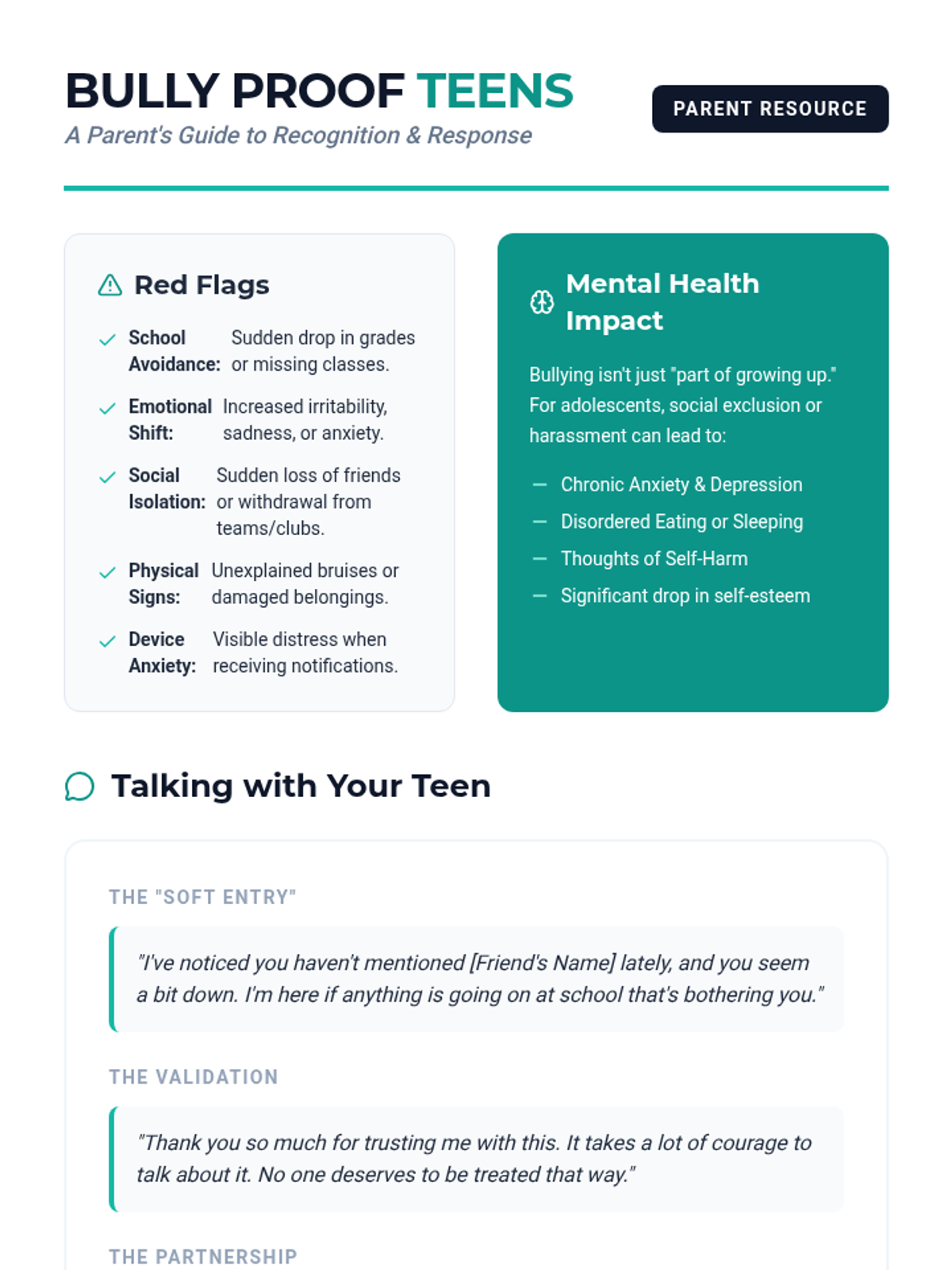
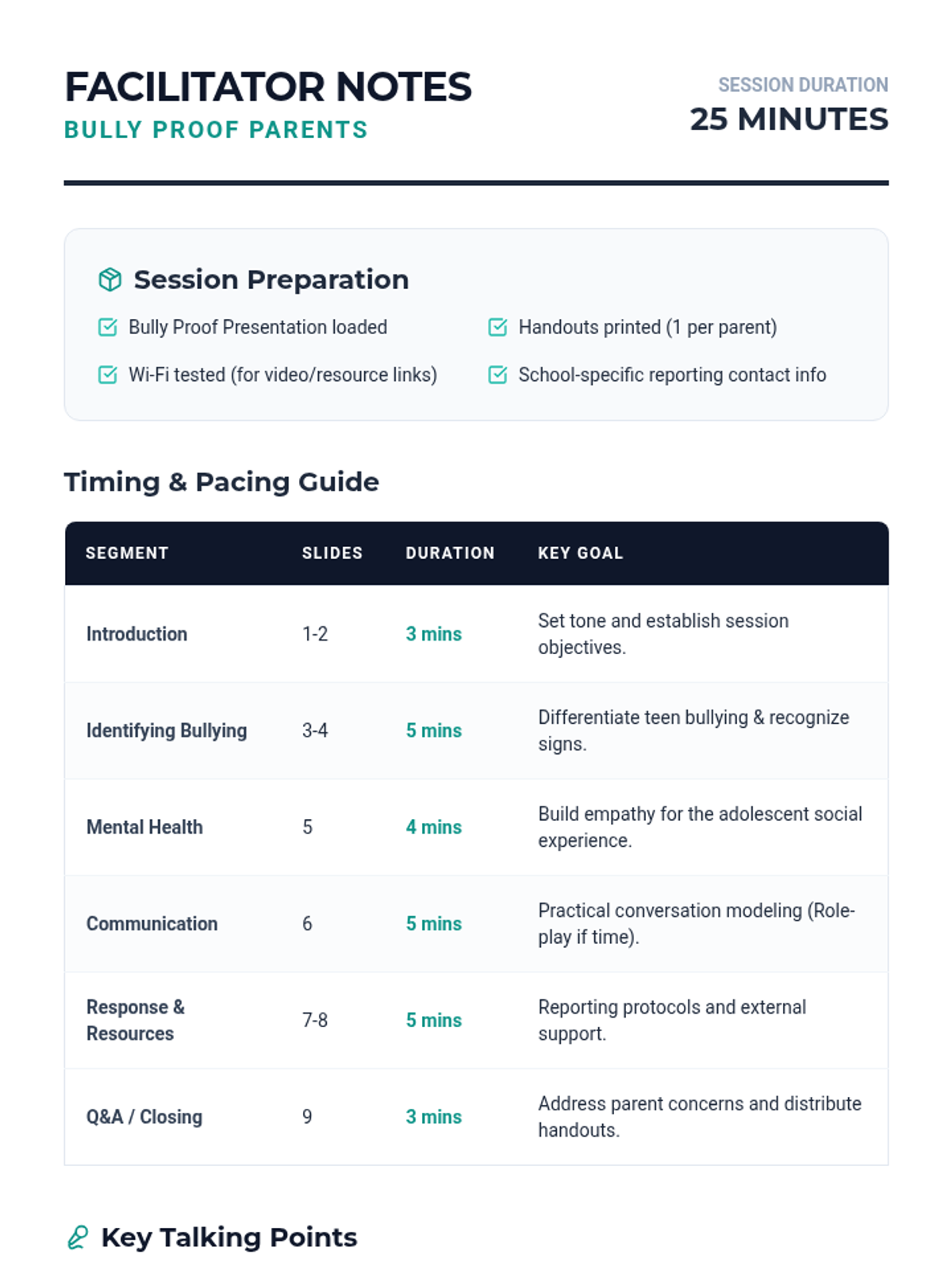
A 25-minute parent education session focused on identifying bullying in adolescents, understanding its mental health impact, and providing actionable communication and intervention strategies.
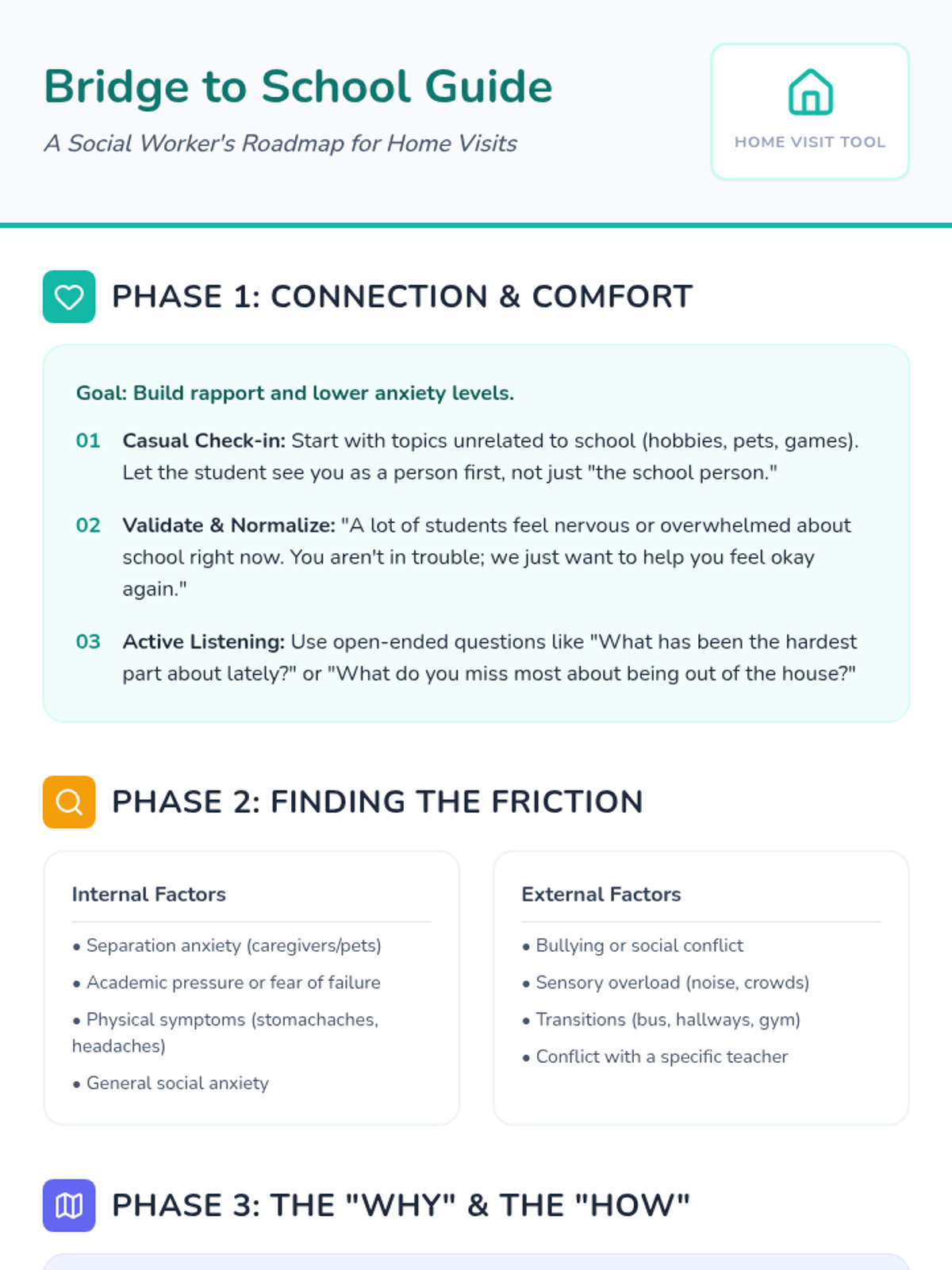
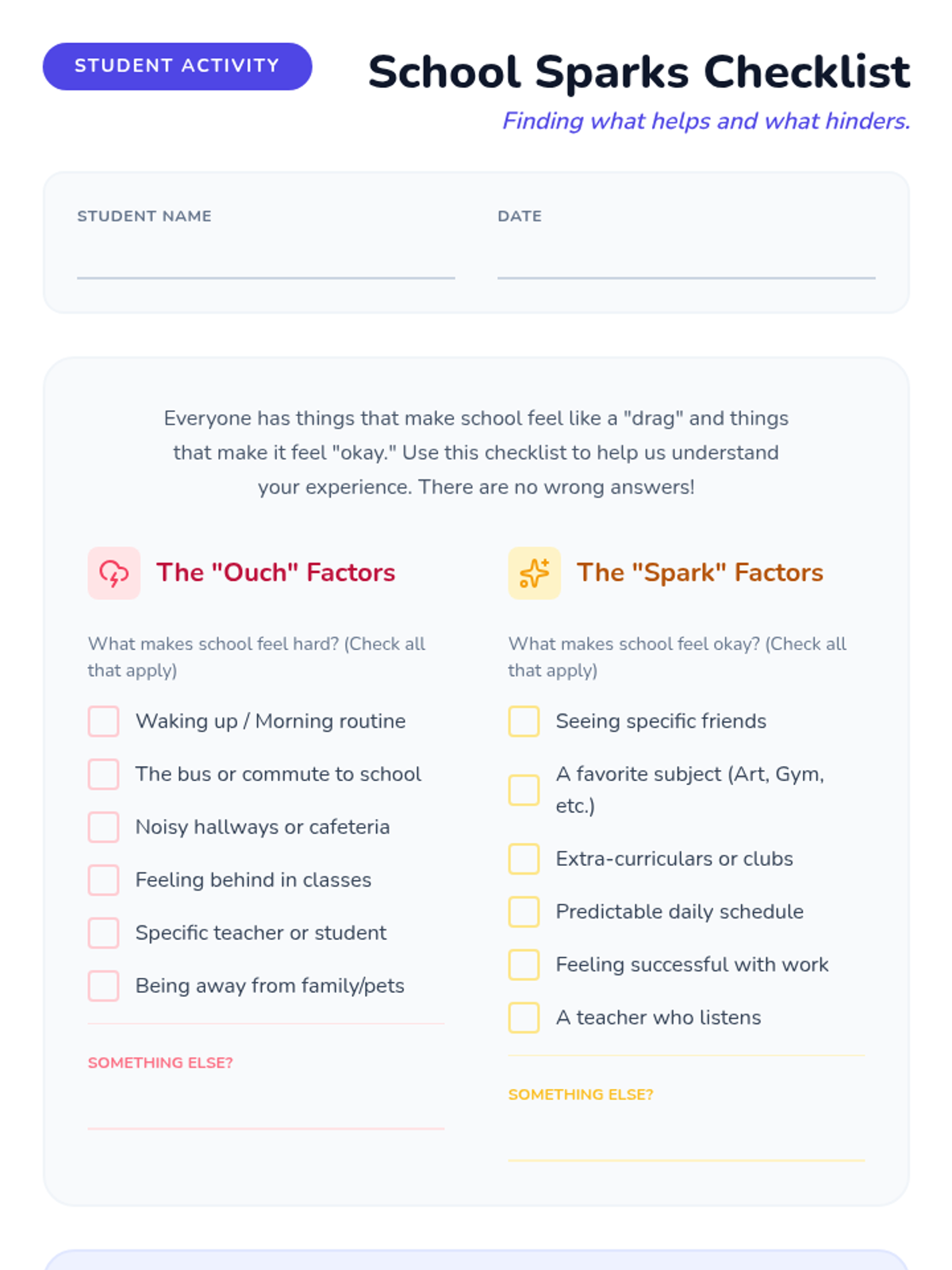
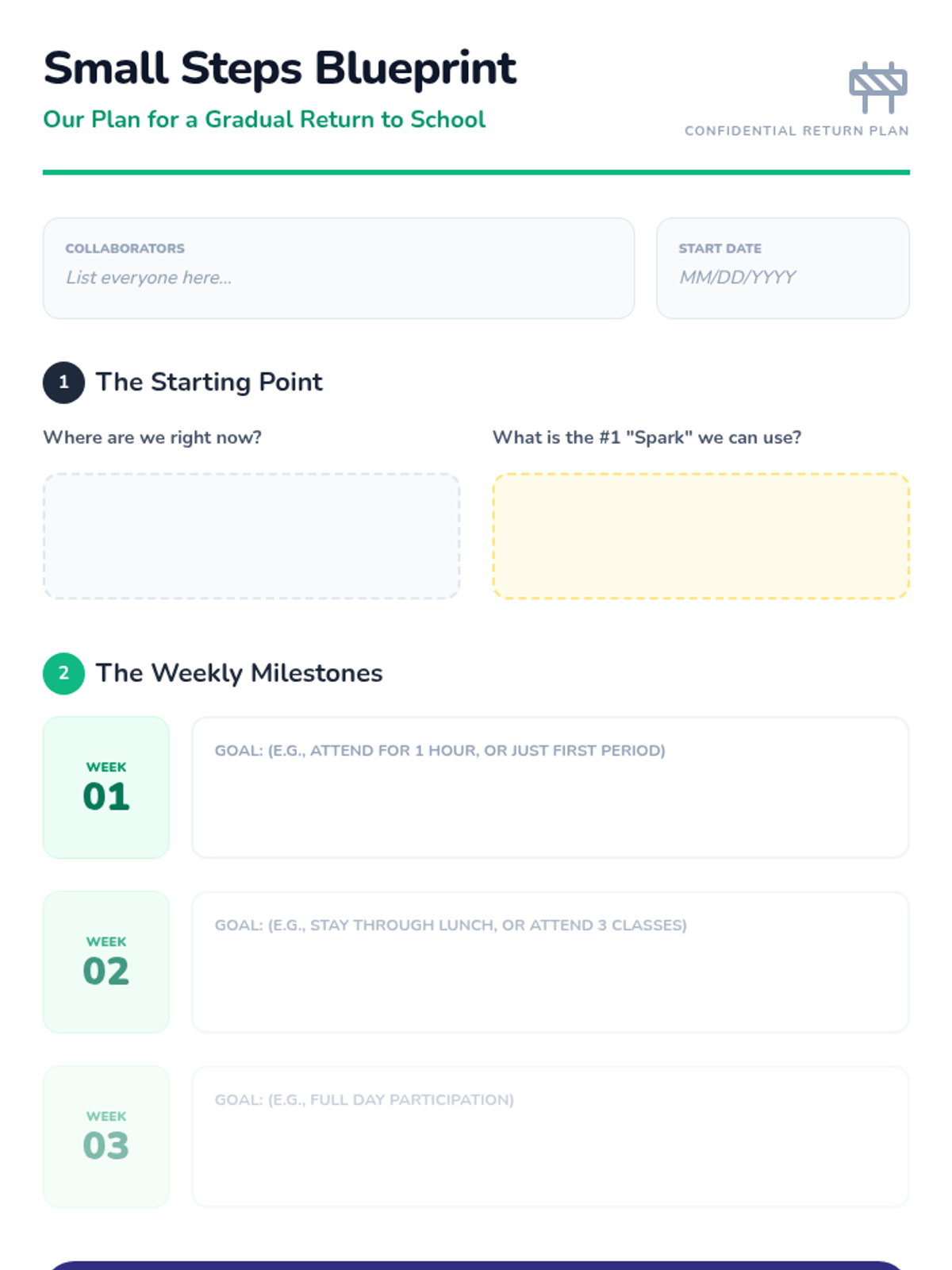
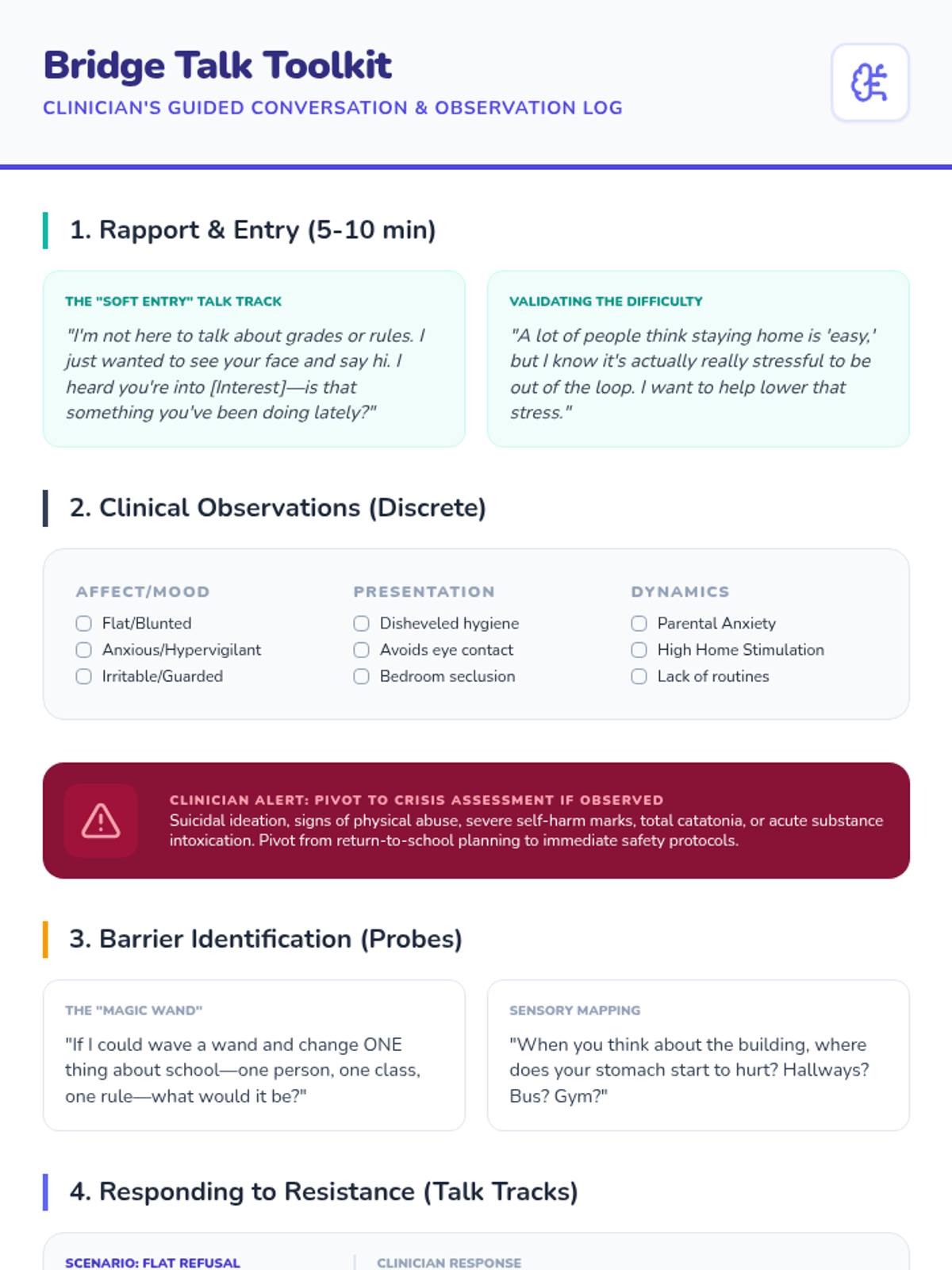
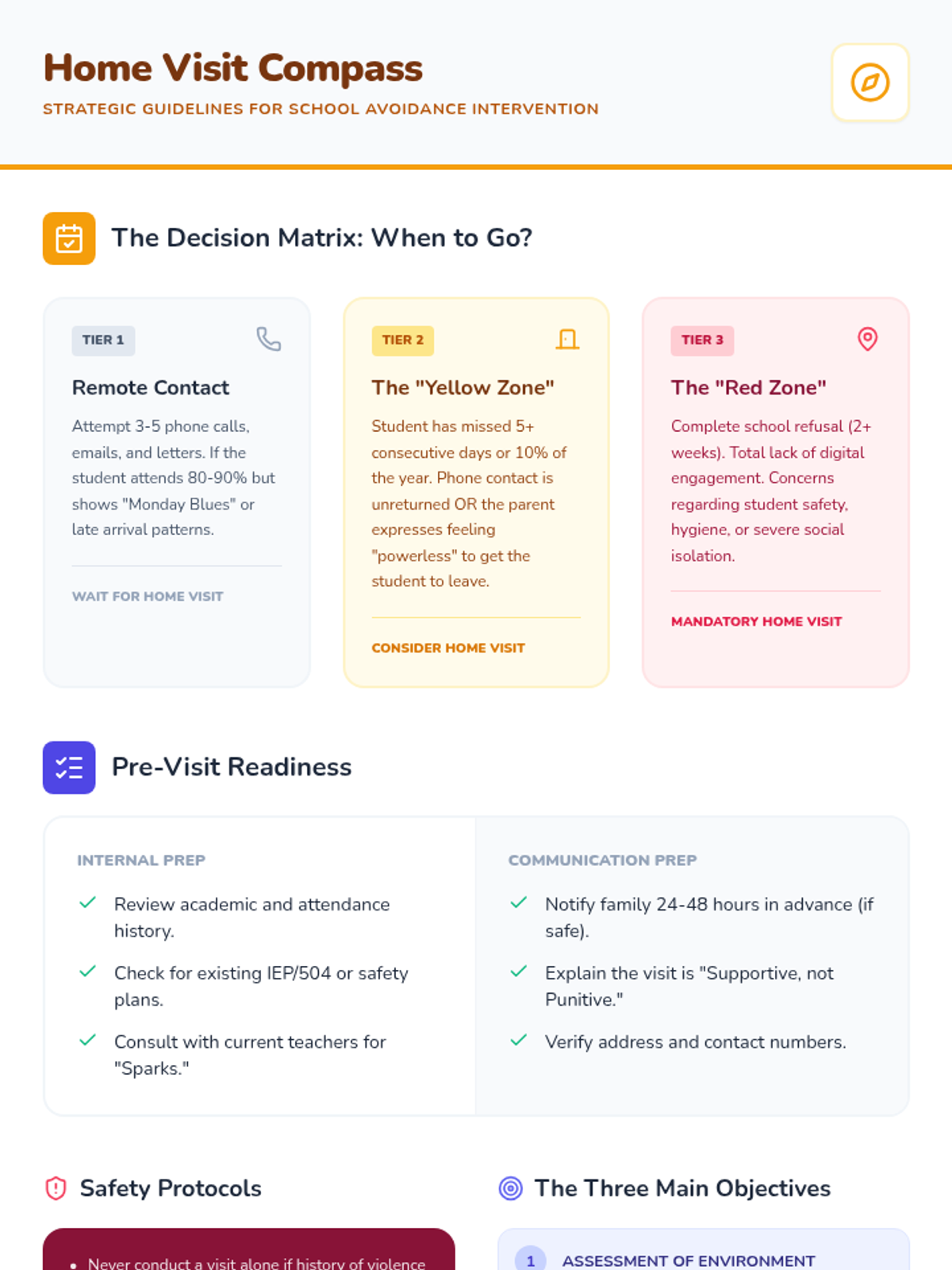
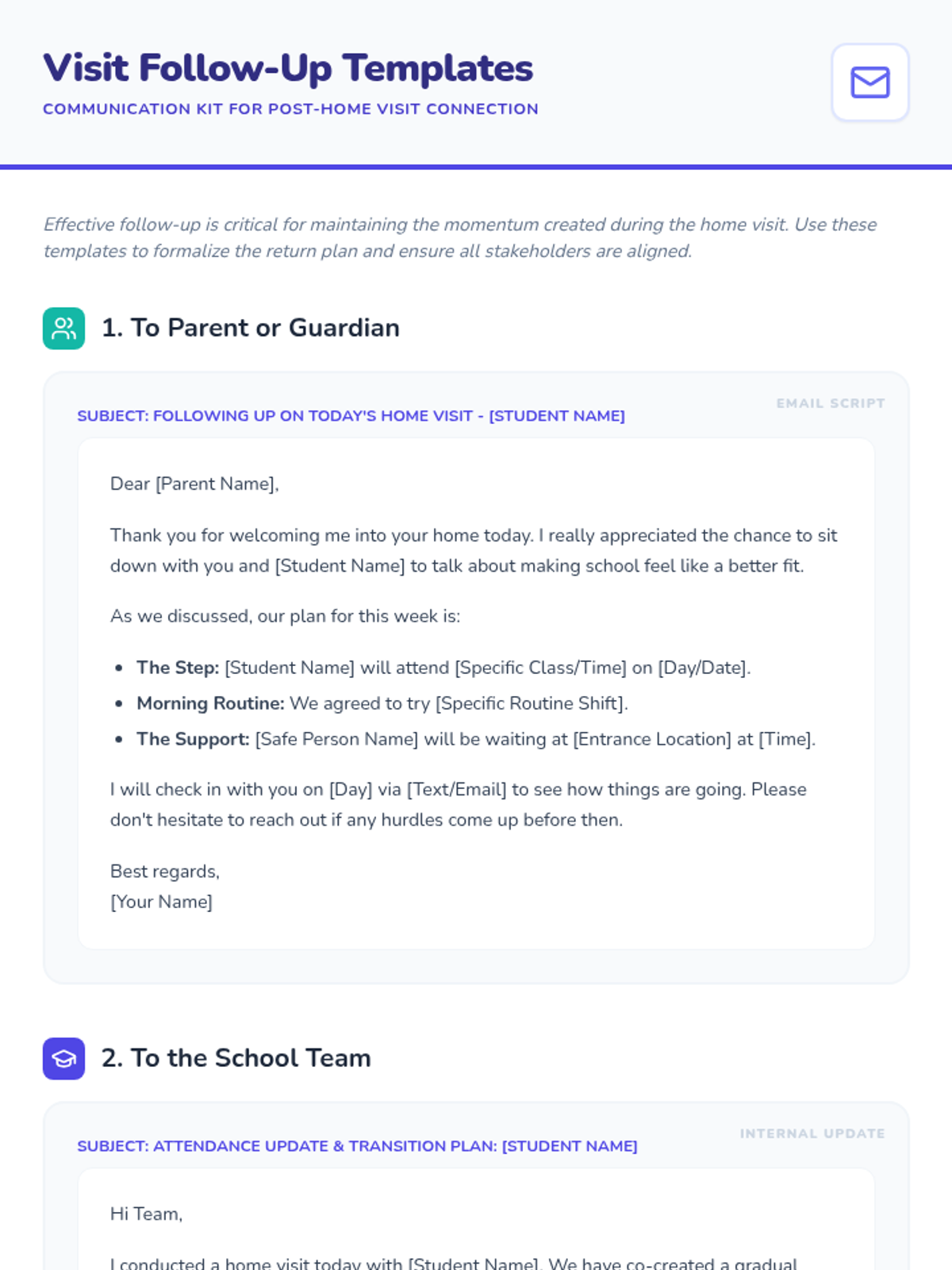
A comprehensive home visit framework designed for social workers to support students experiencing school avoidance. This lesson focuses on building trust, identifying specific barriers to attendance, and co-creating a gradual return plan with the student and family.
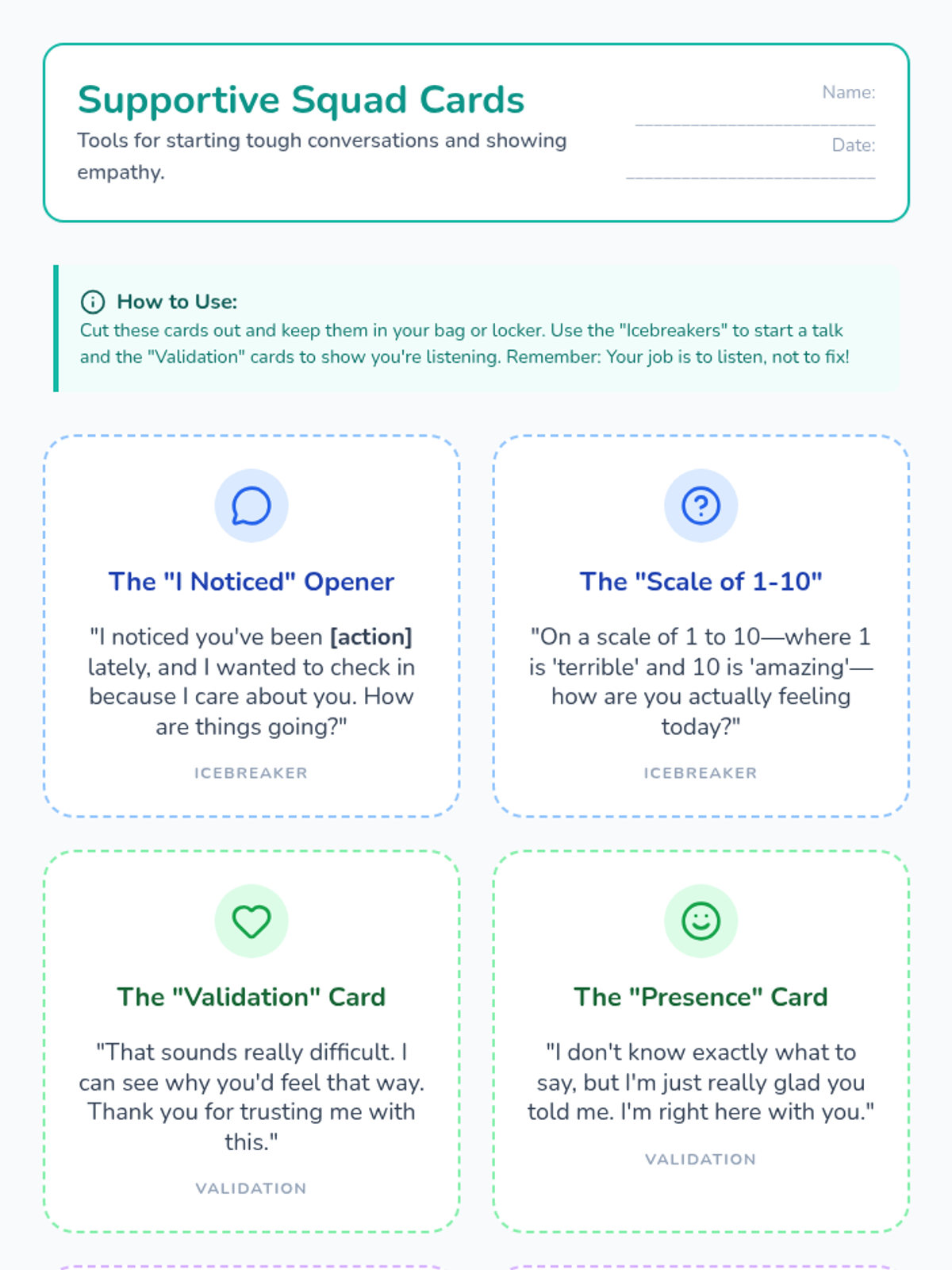
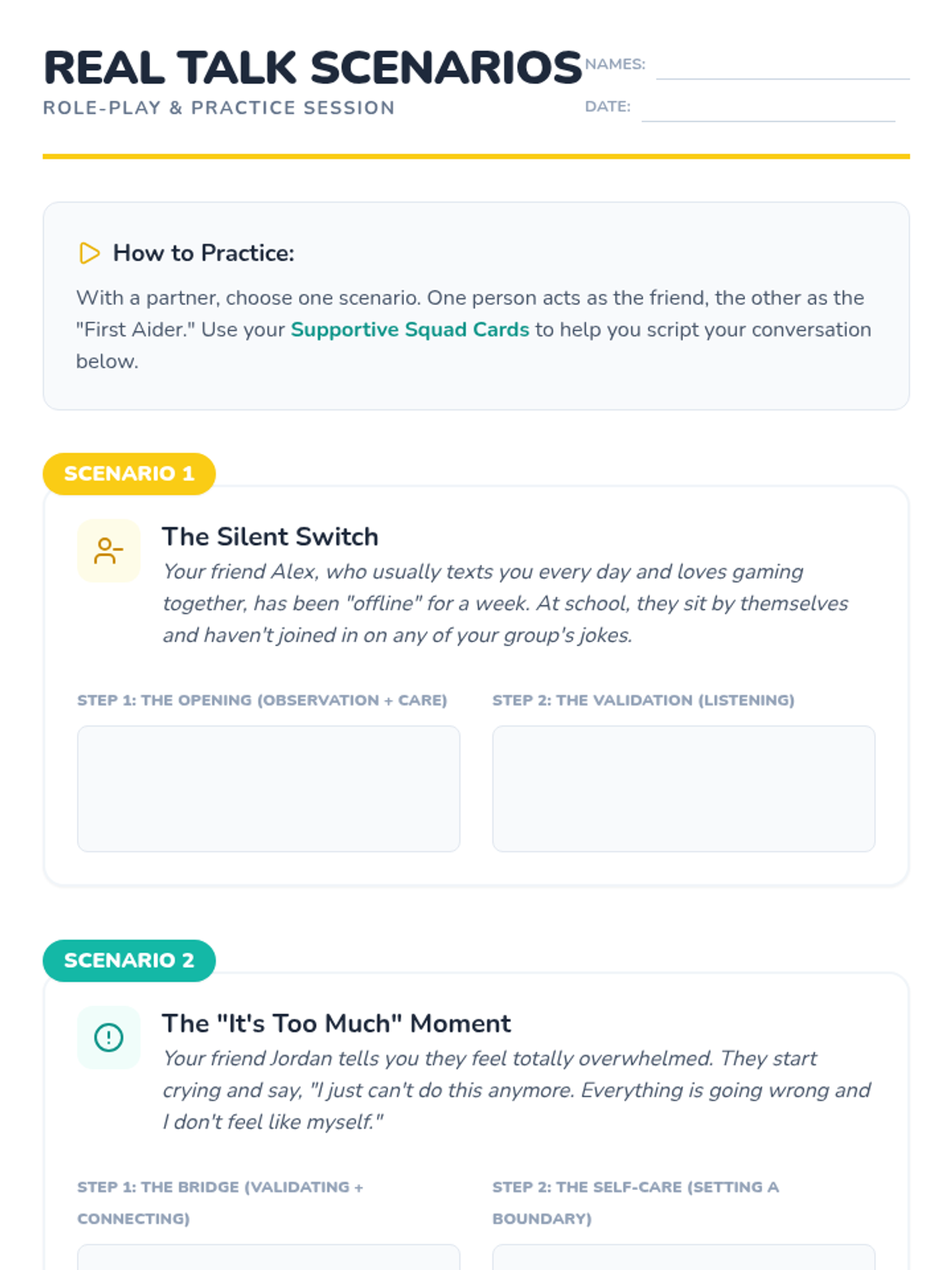
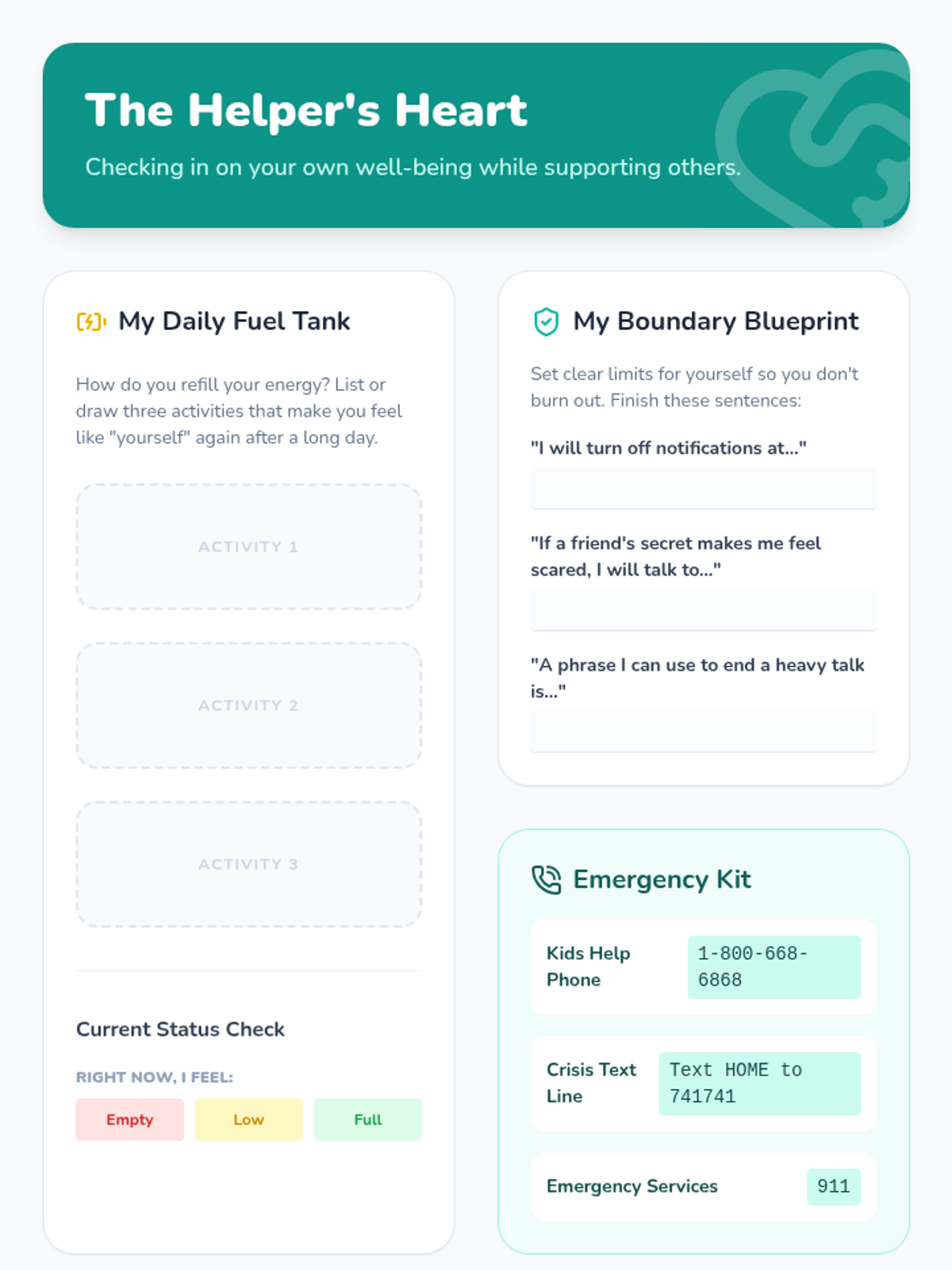
A practical, boundary-focused lesson for middle schoolers on supporting friends with mental health challenges, emphasizing active listening, recognizing limits, and connecting to professional help.
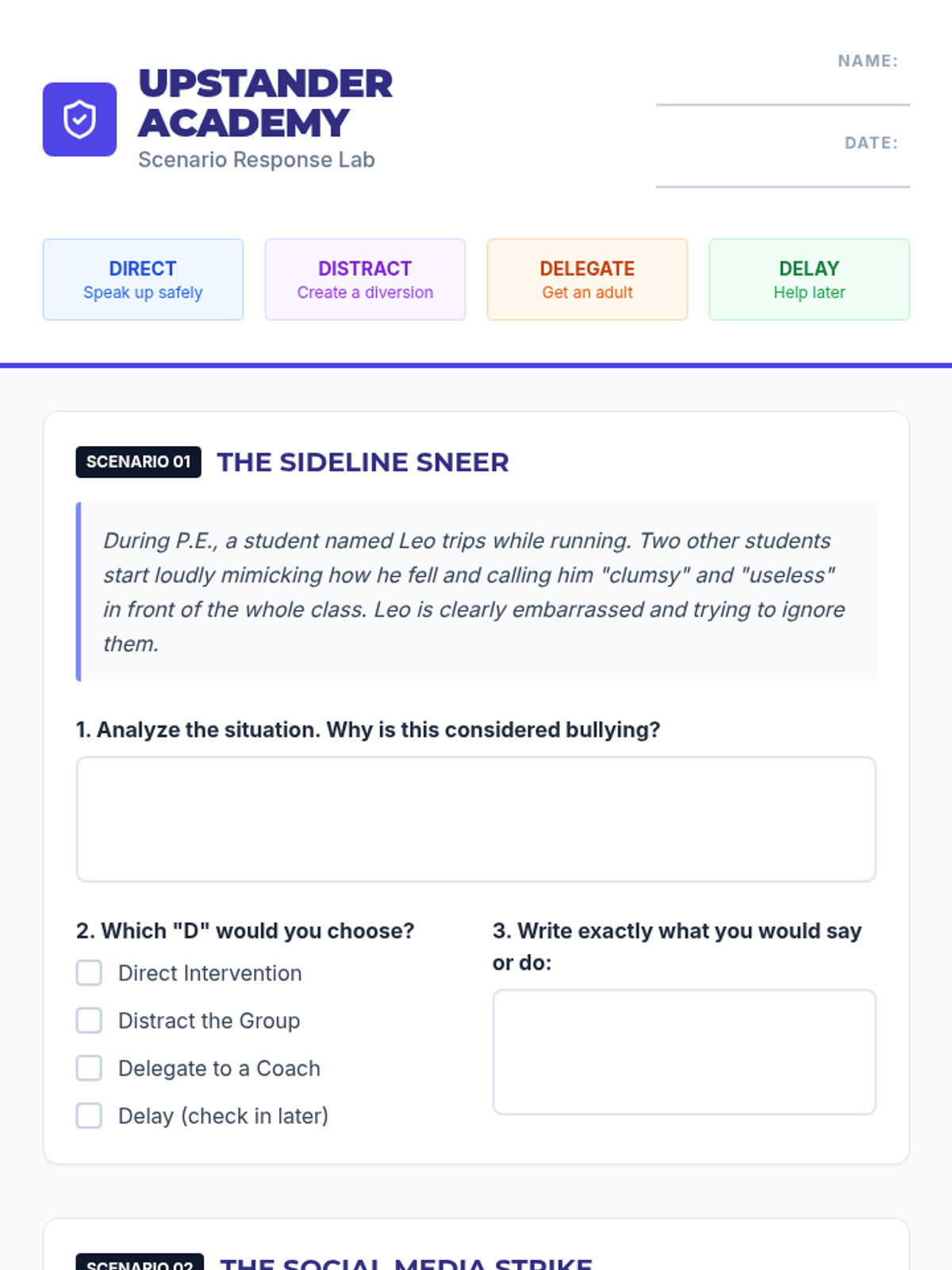
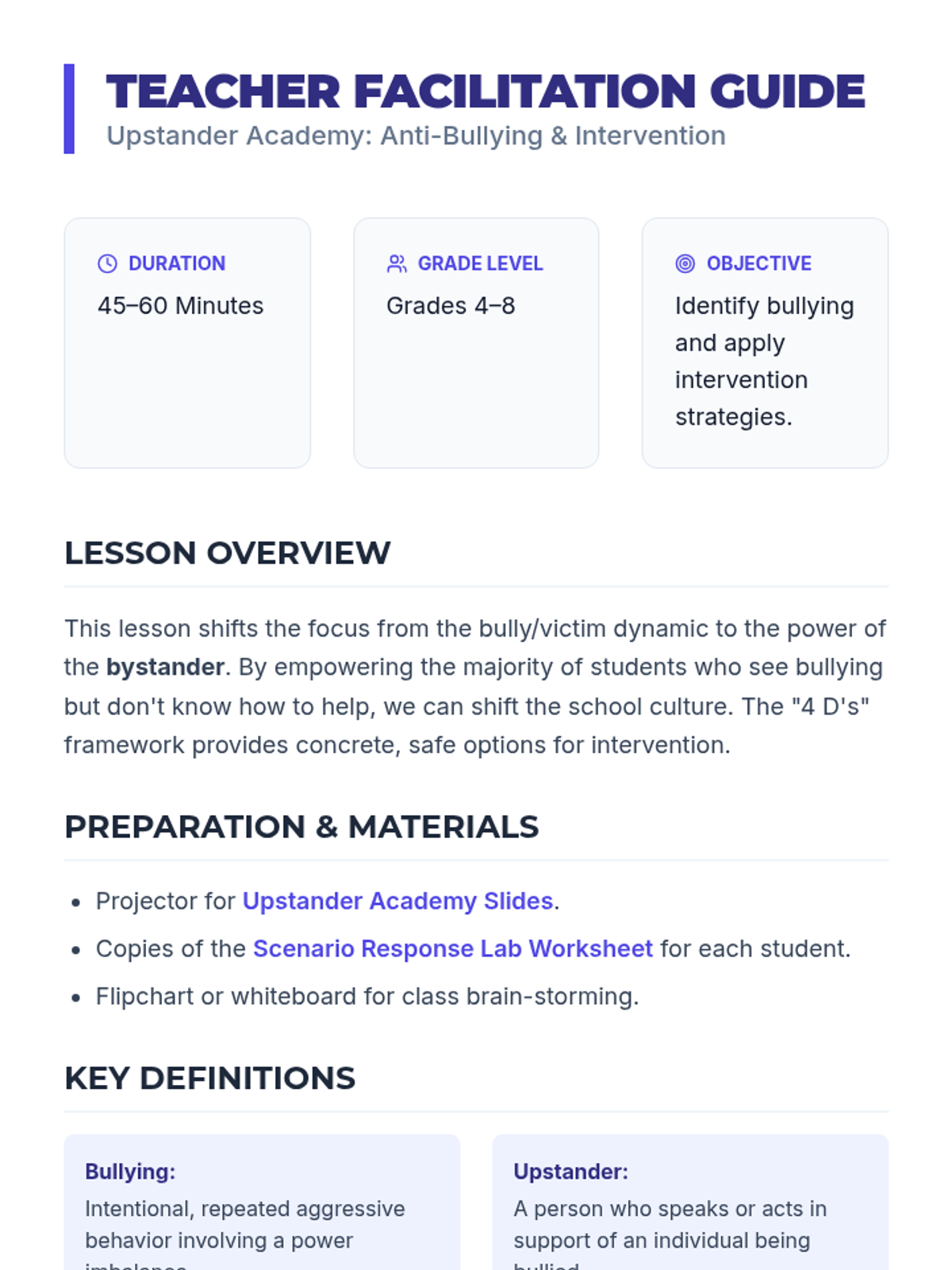
An empowering lesson designed for students in grades 4-8, focusing on identifying bullying behaviors, understanding the power of the bystander, and learning practical, safe strategies to become an 'upstander'.
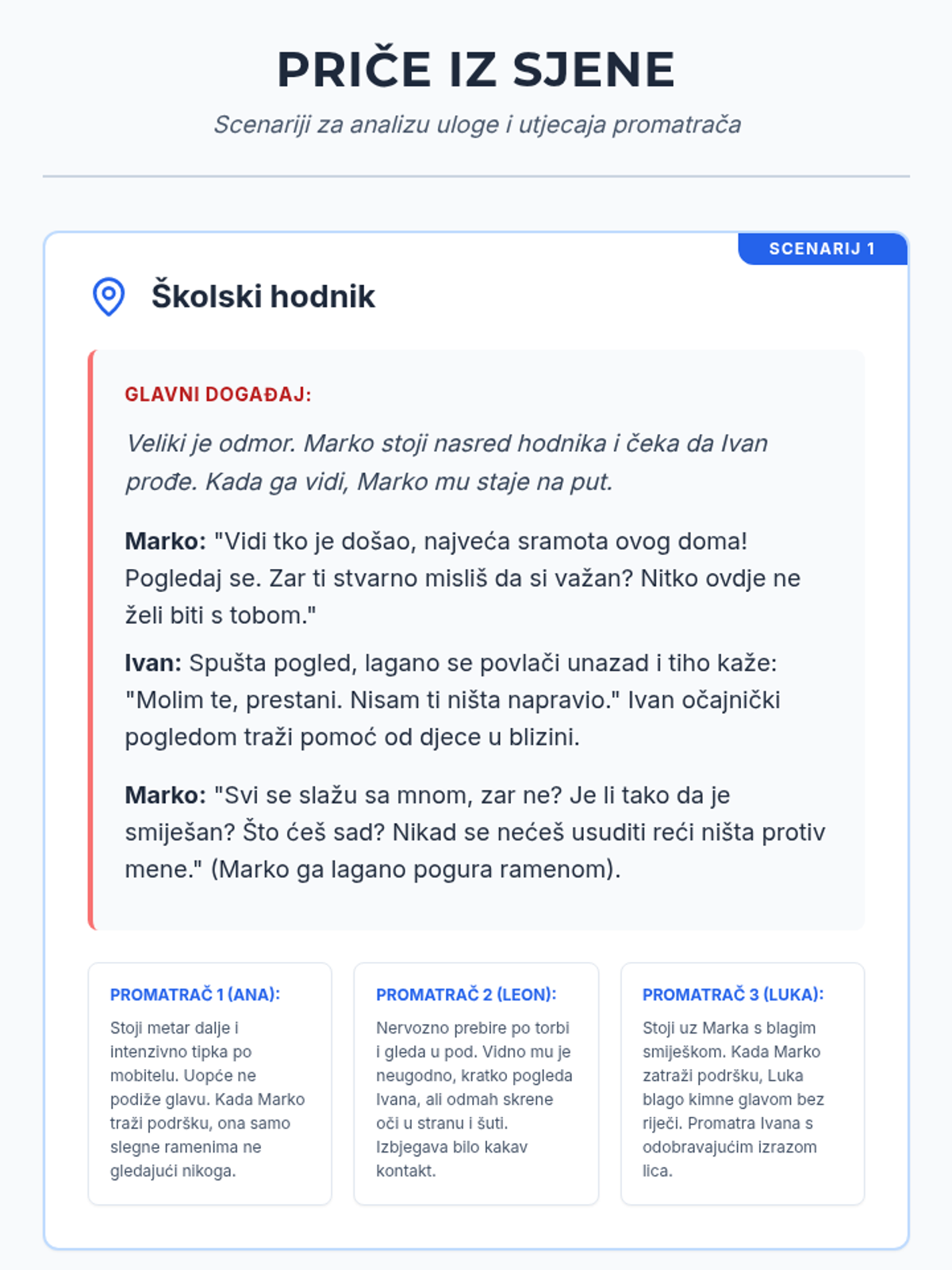
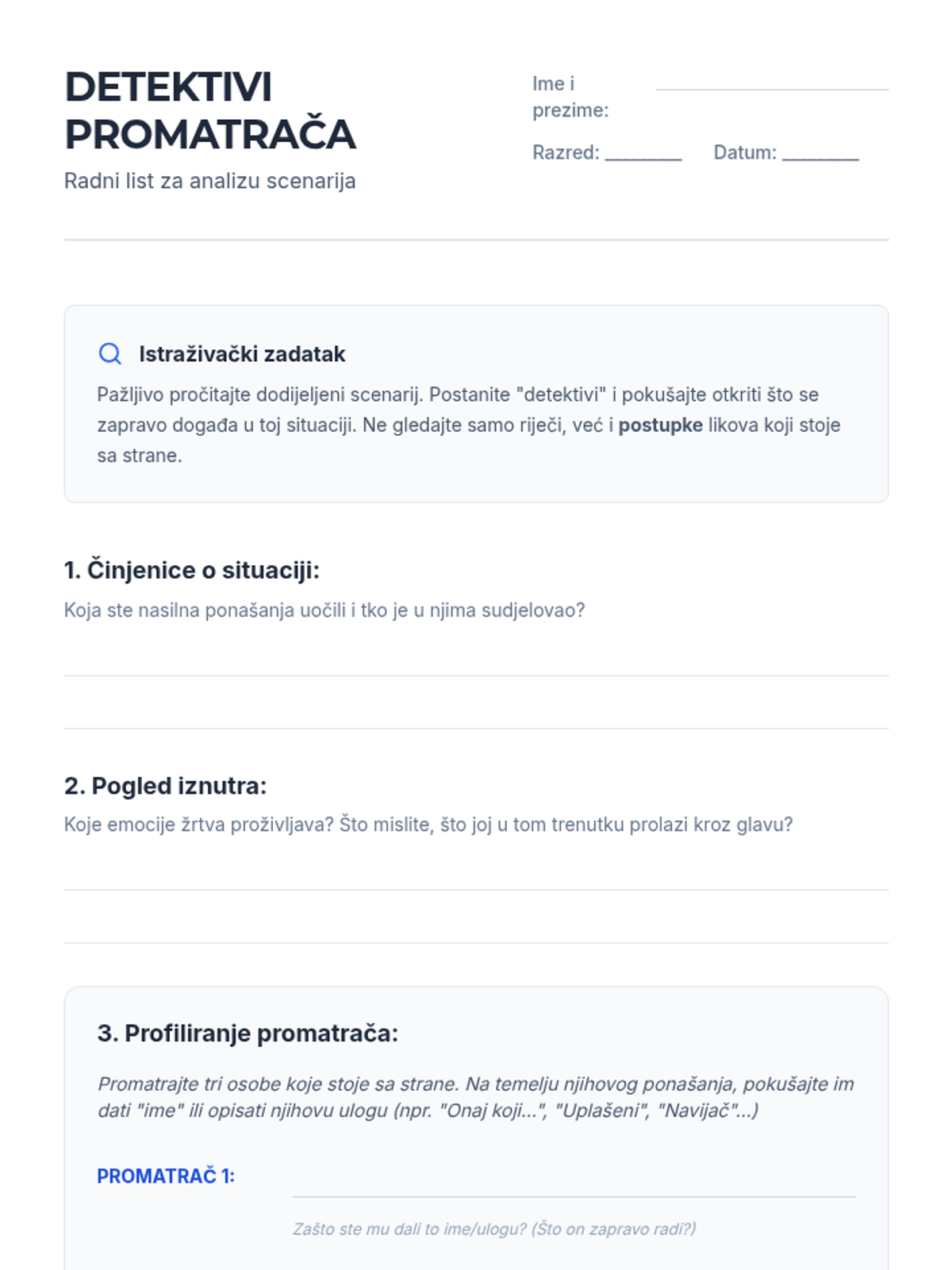
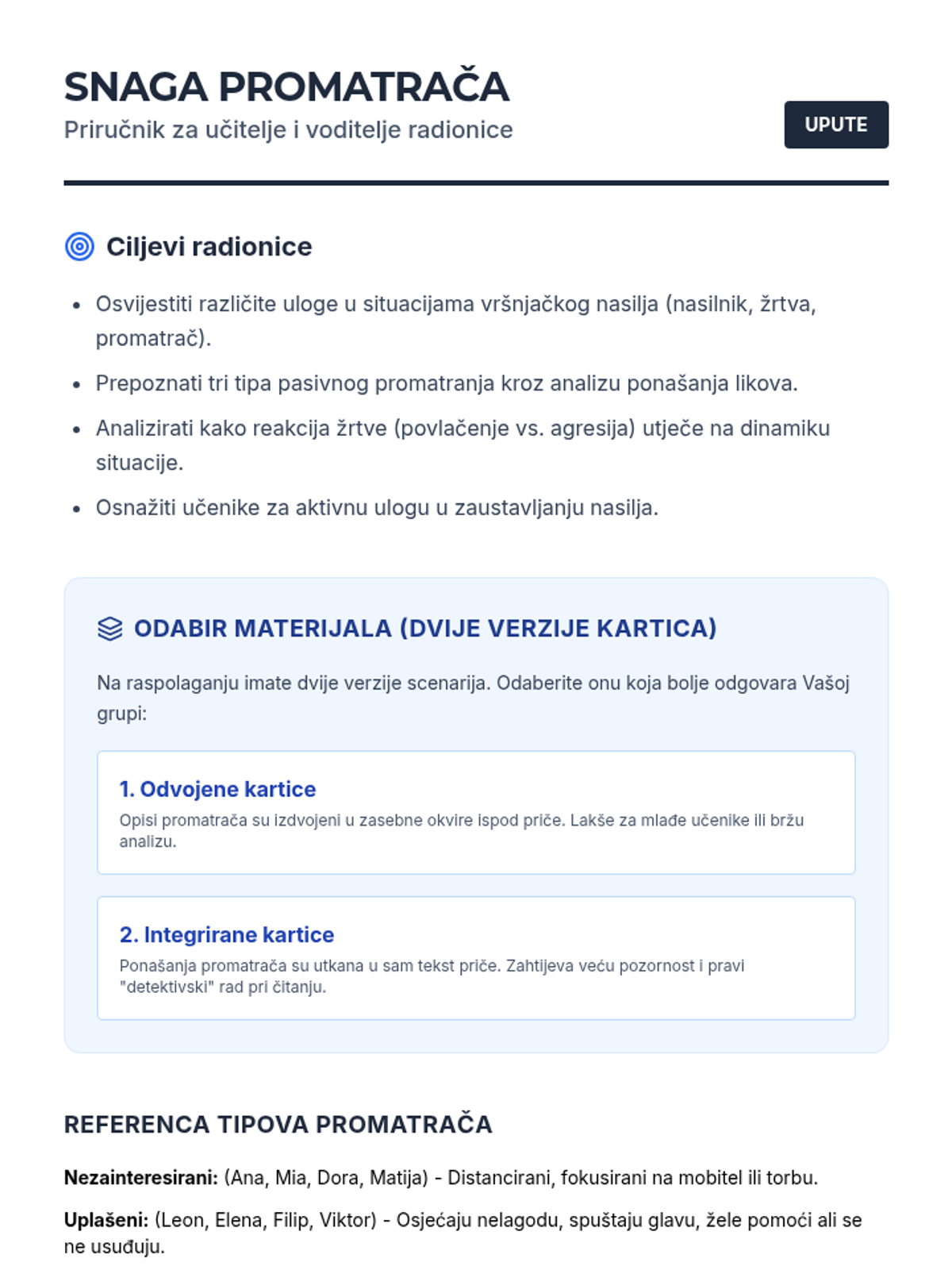
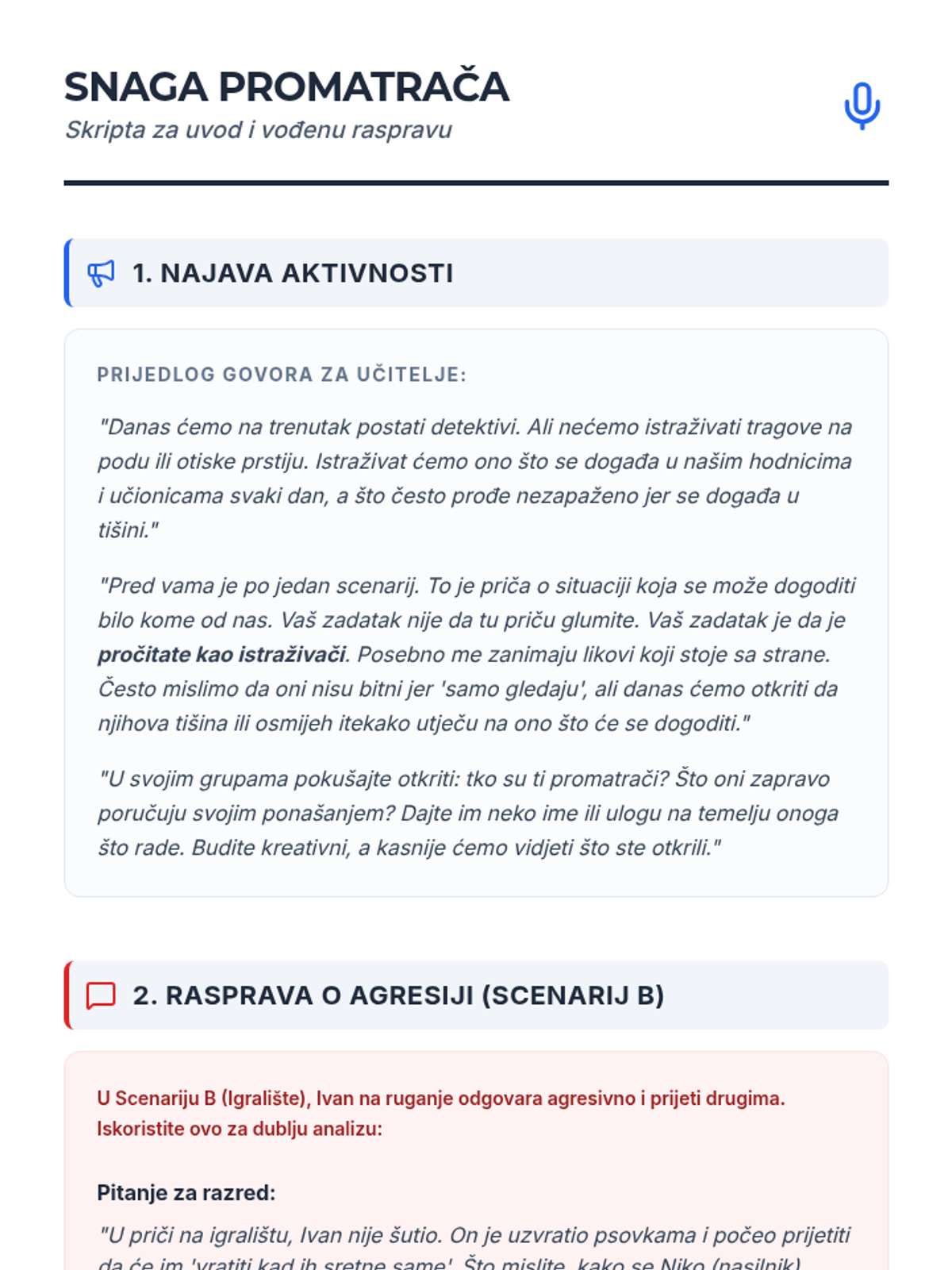
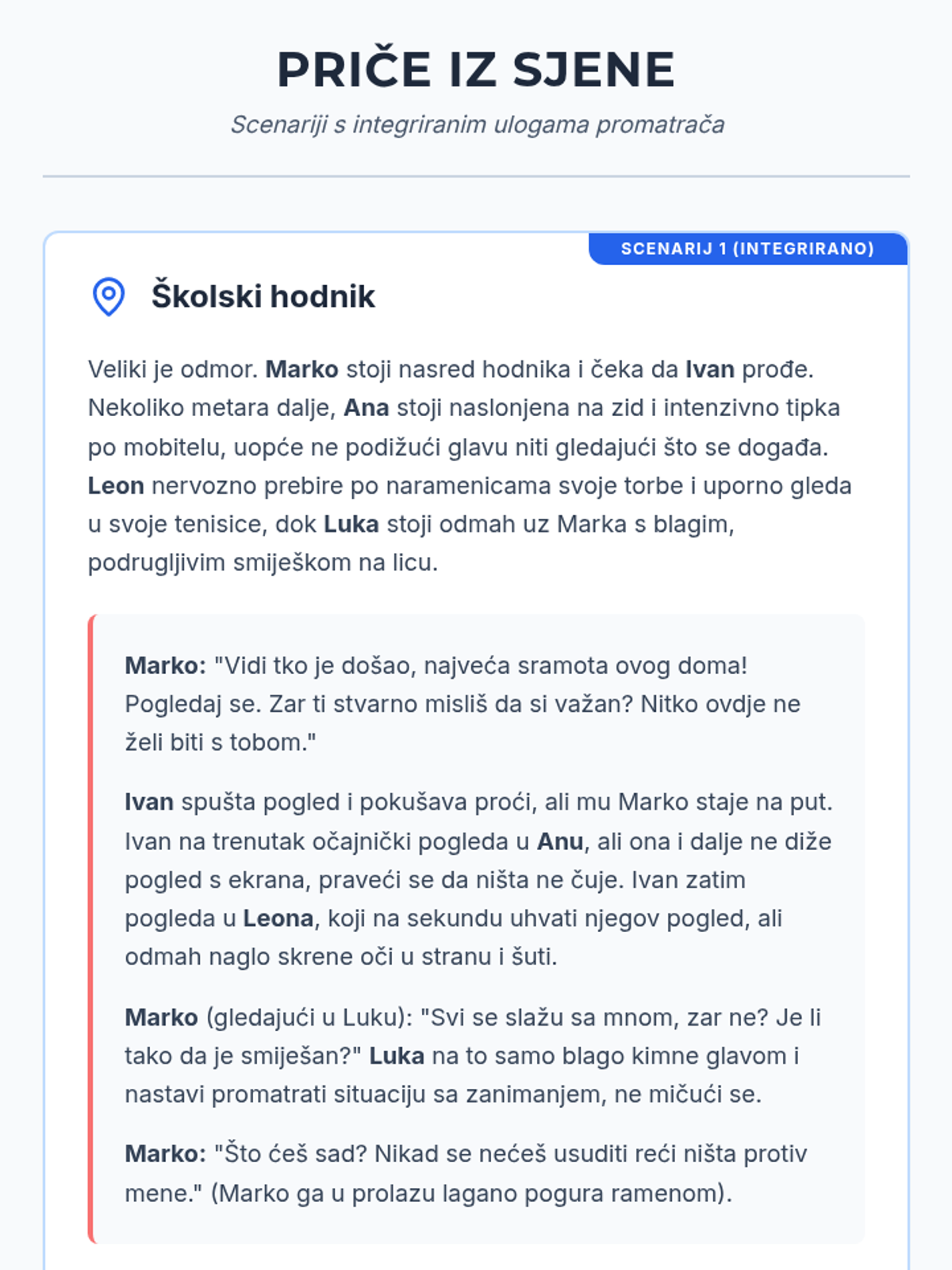
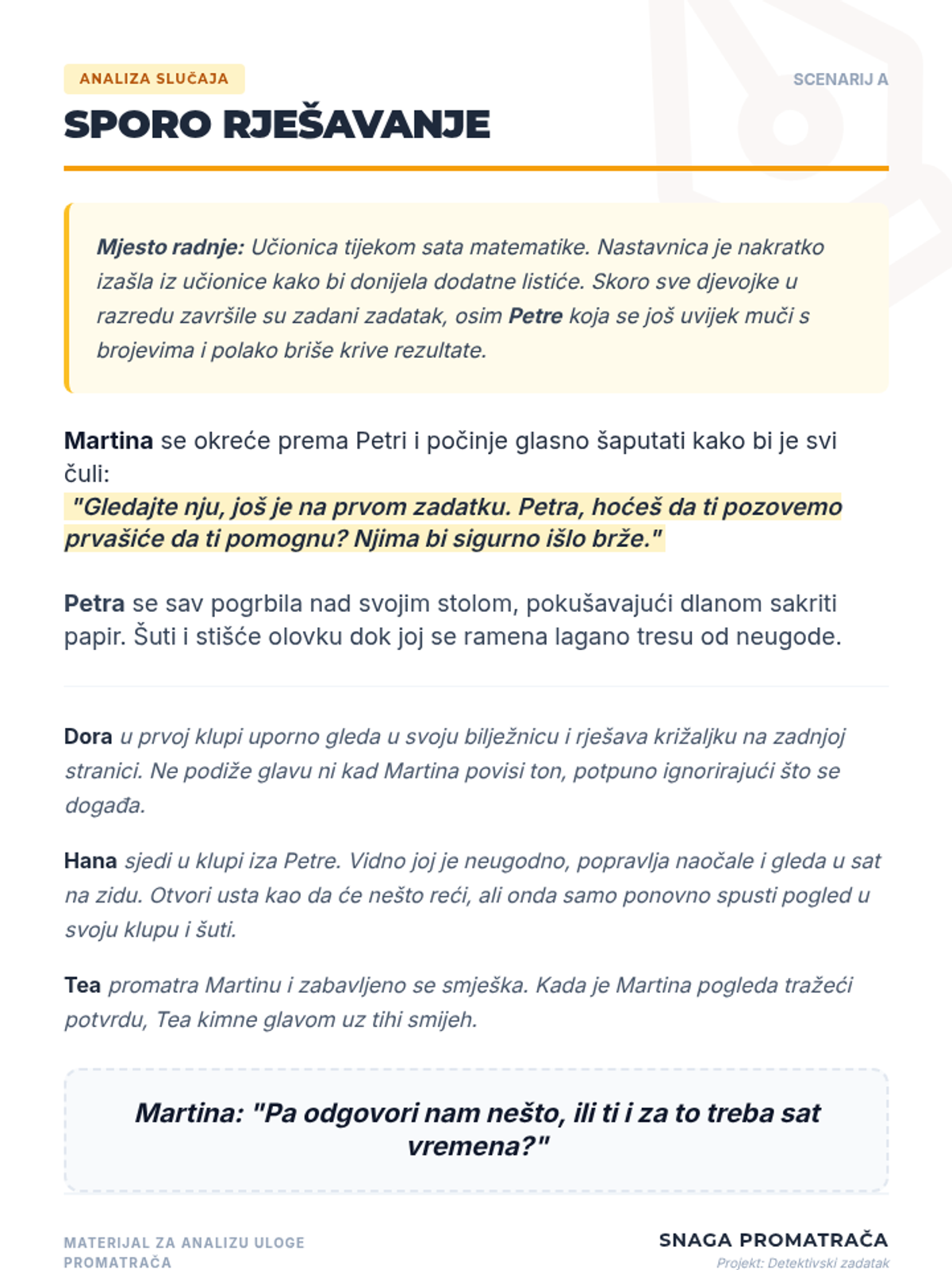
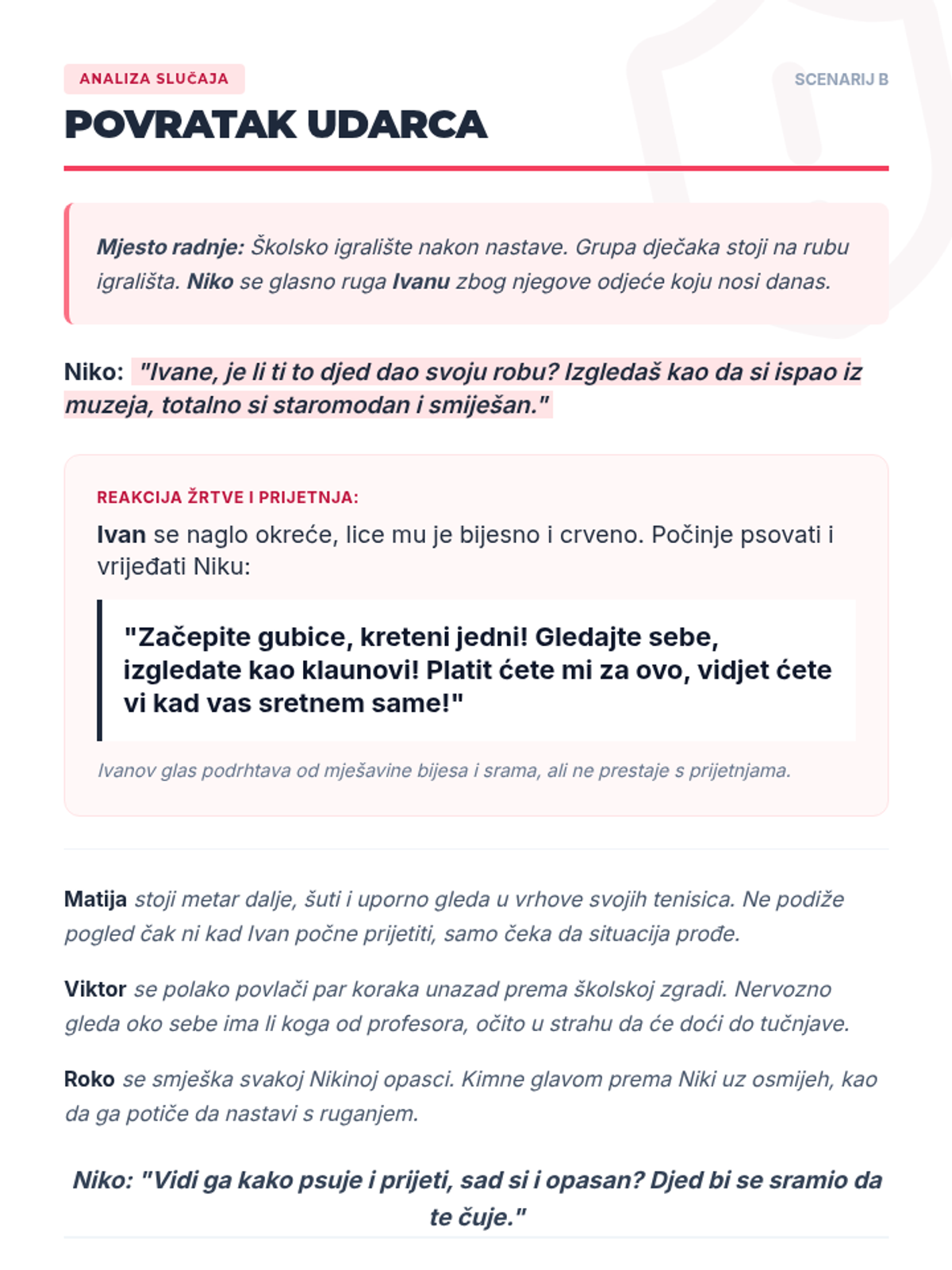
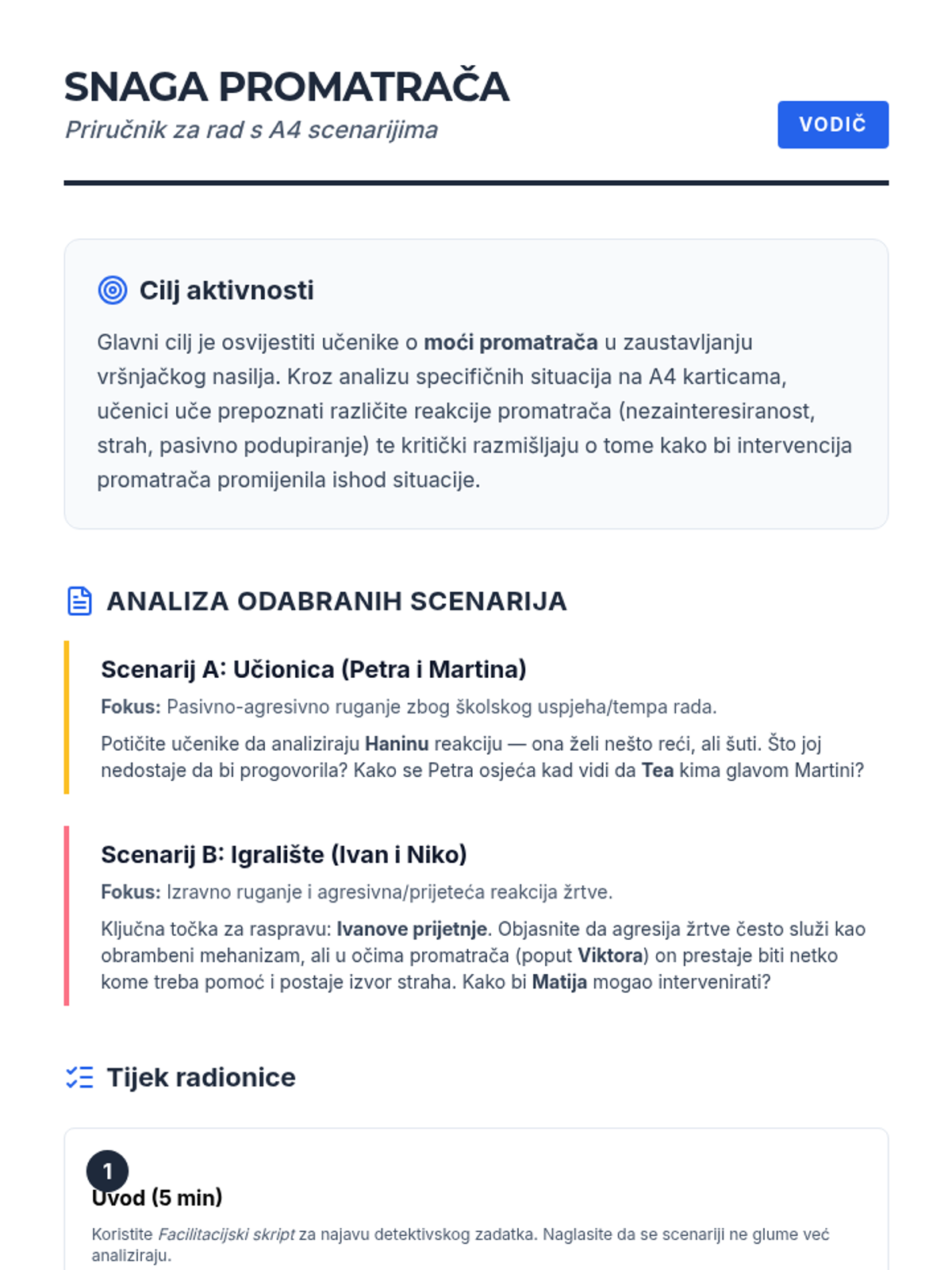
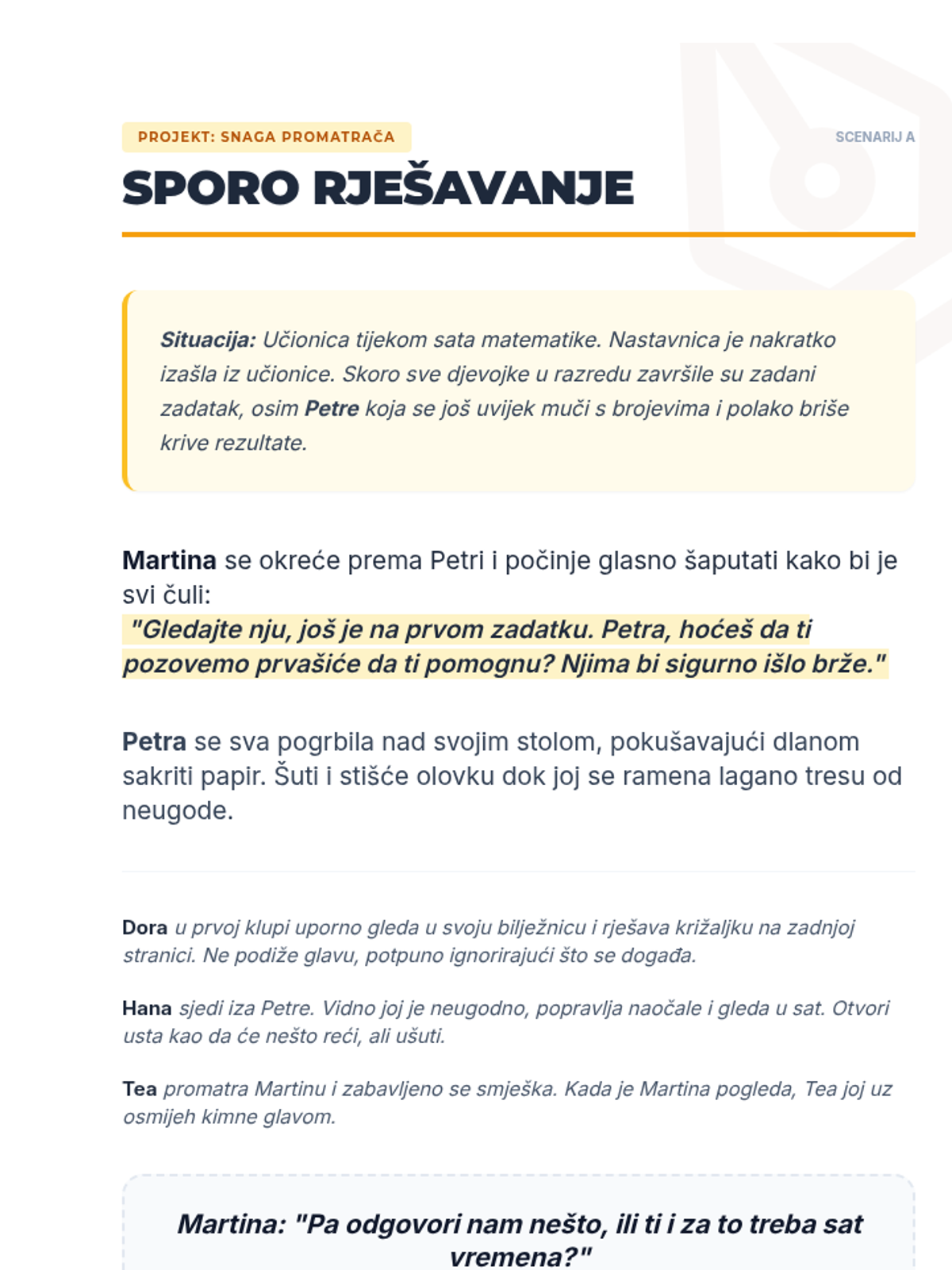
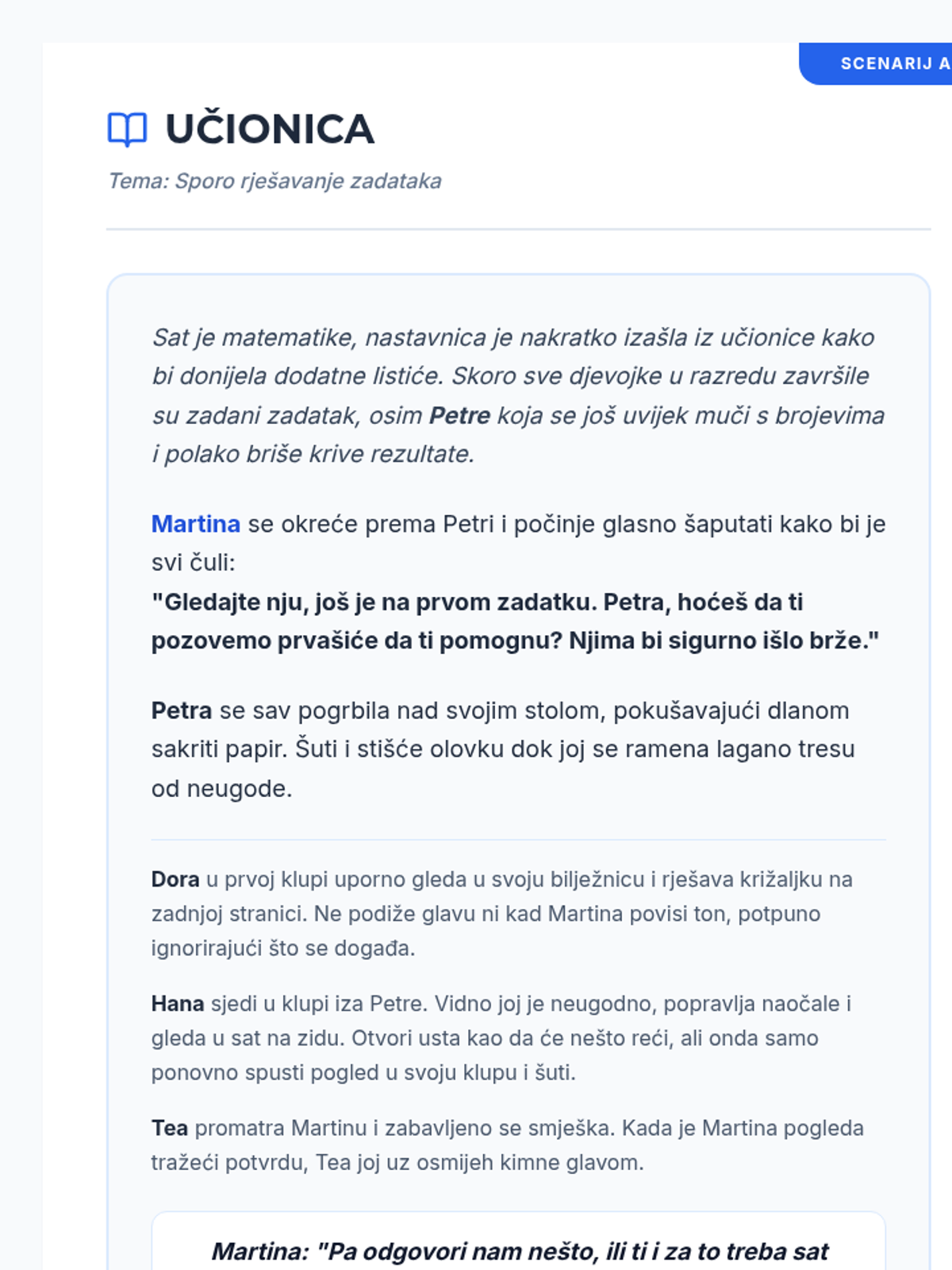
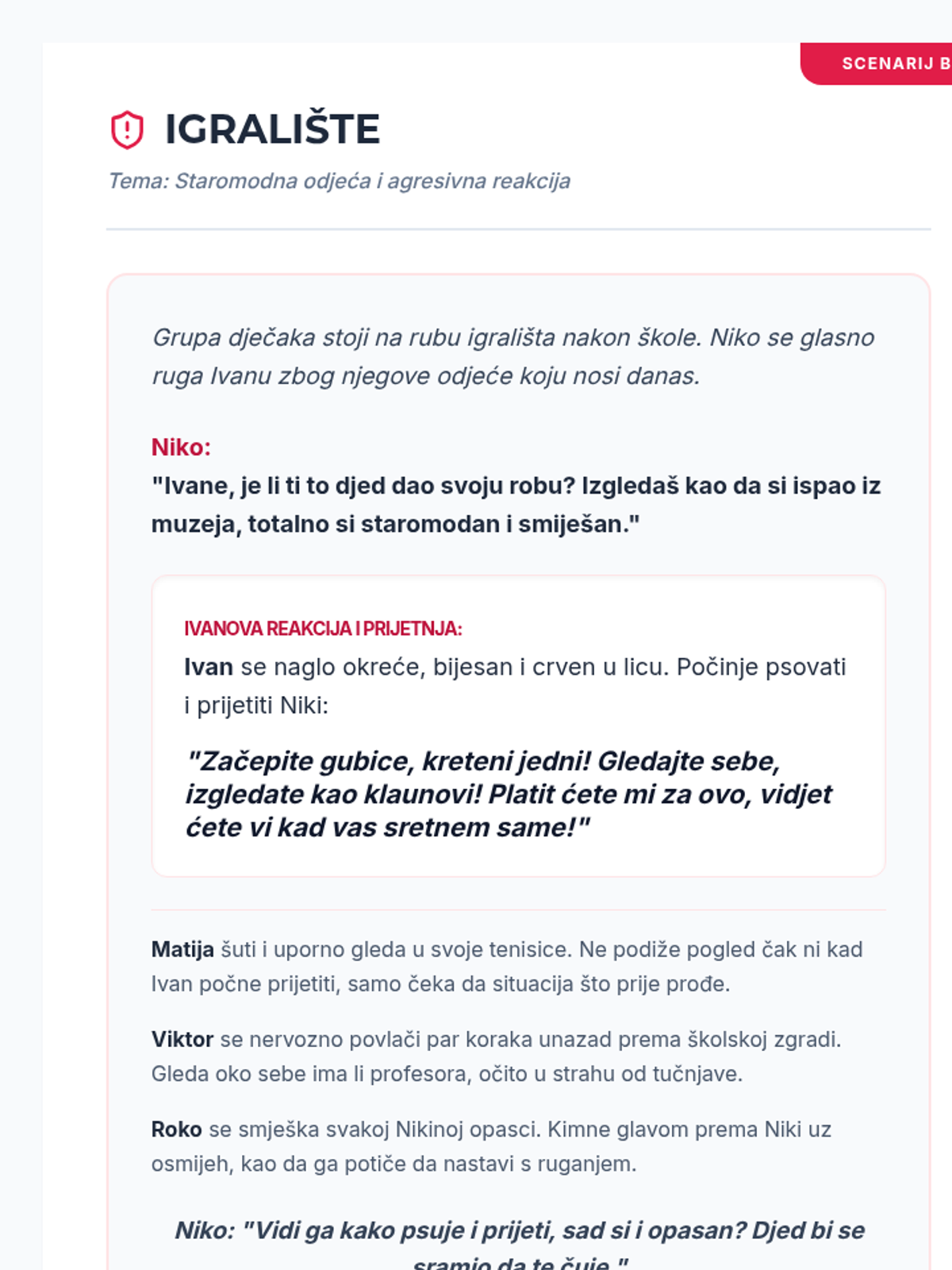
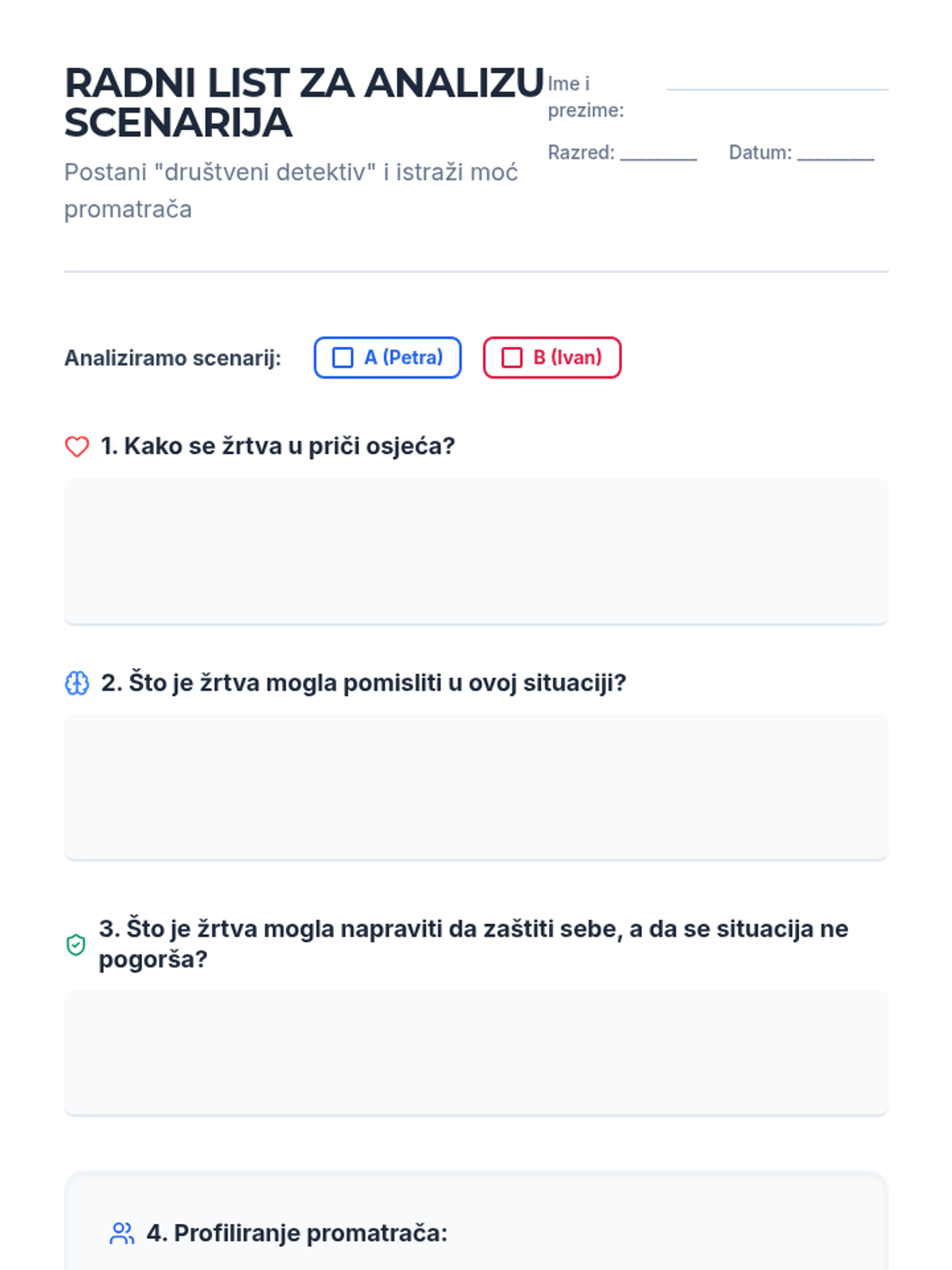
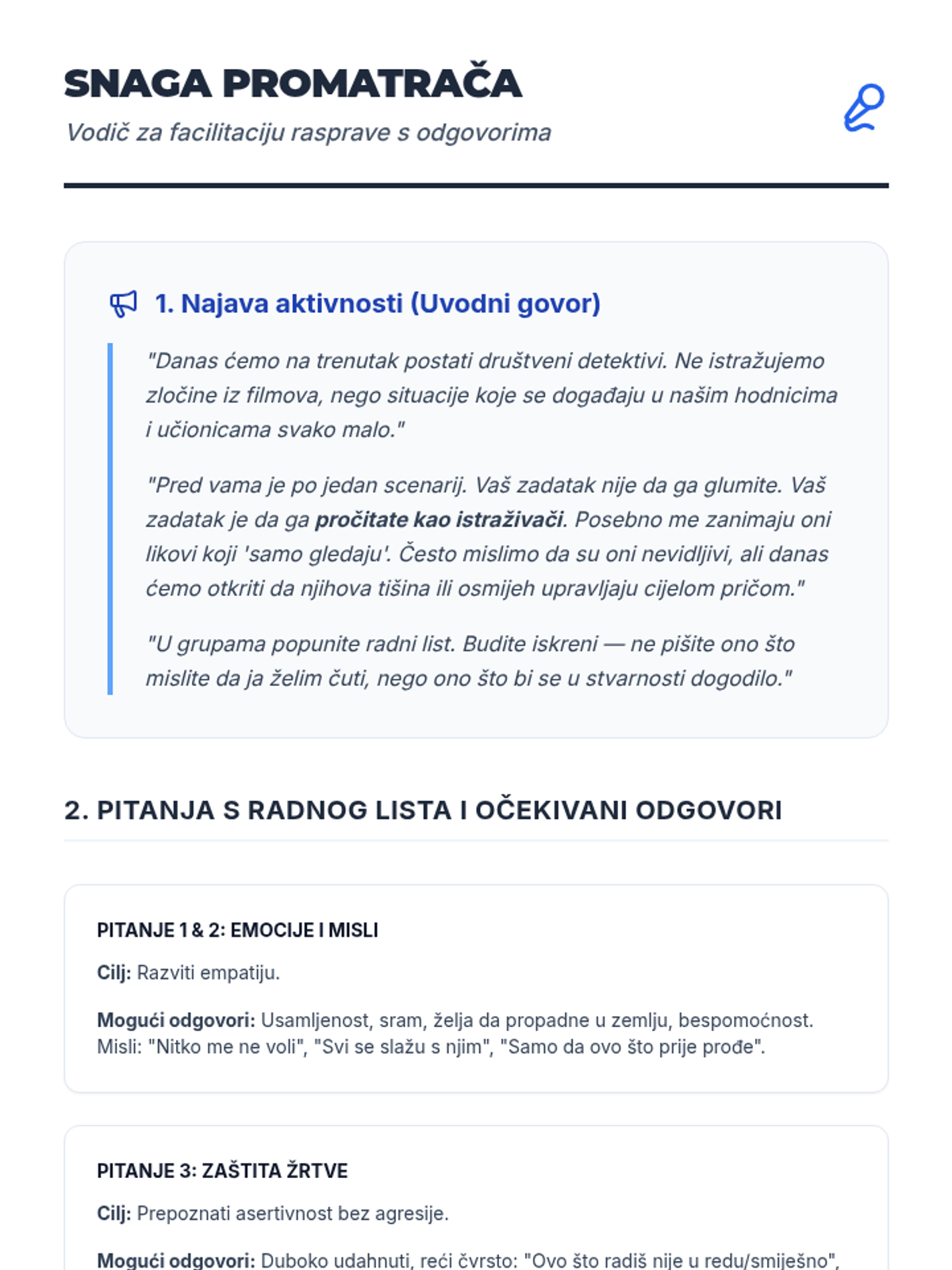
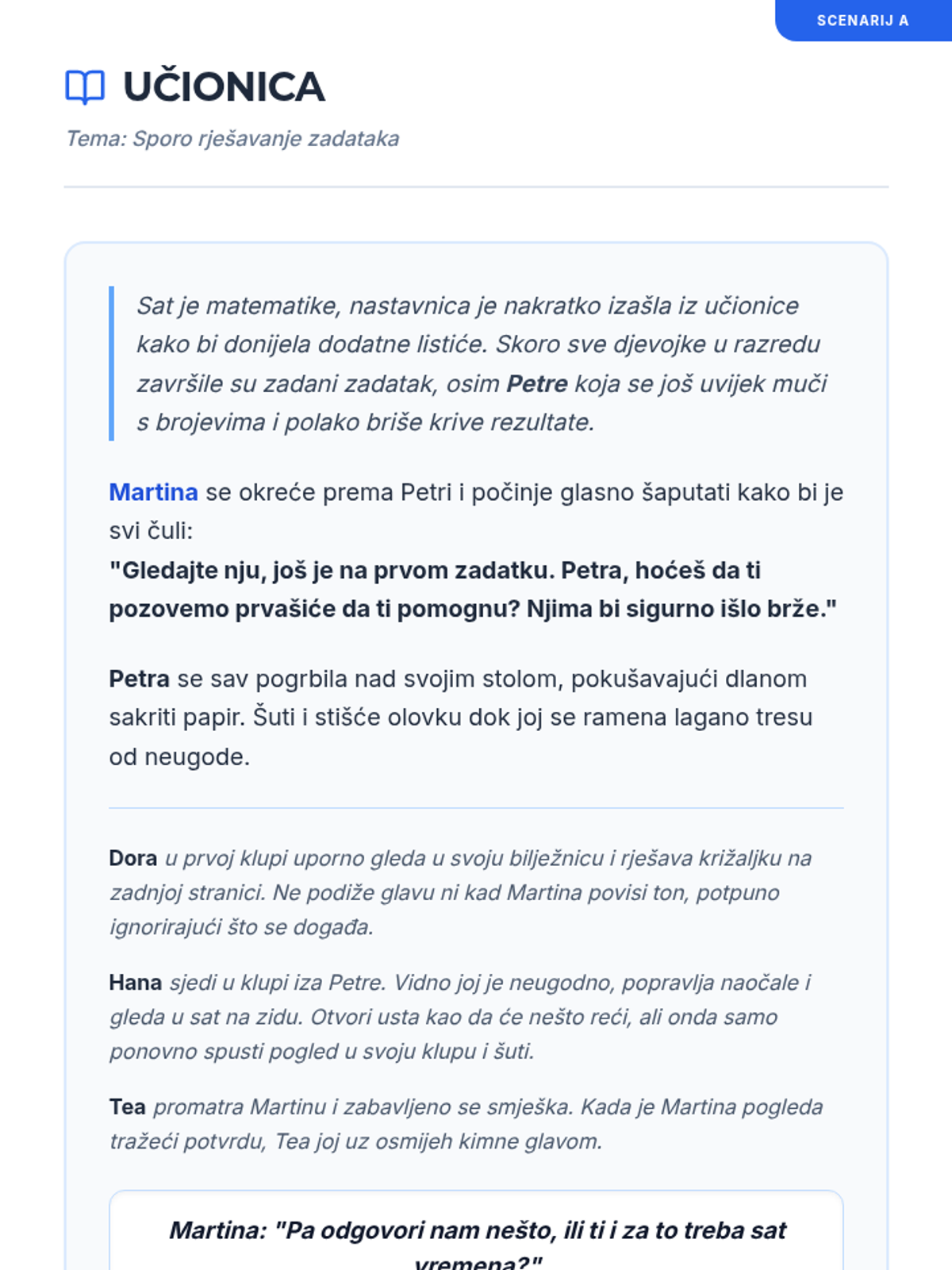
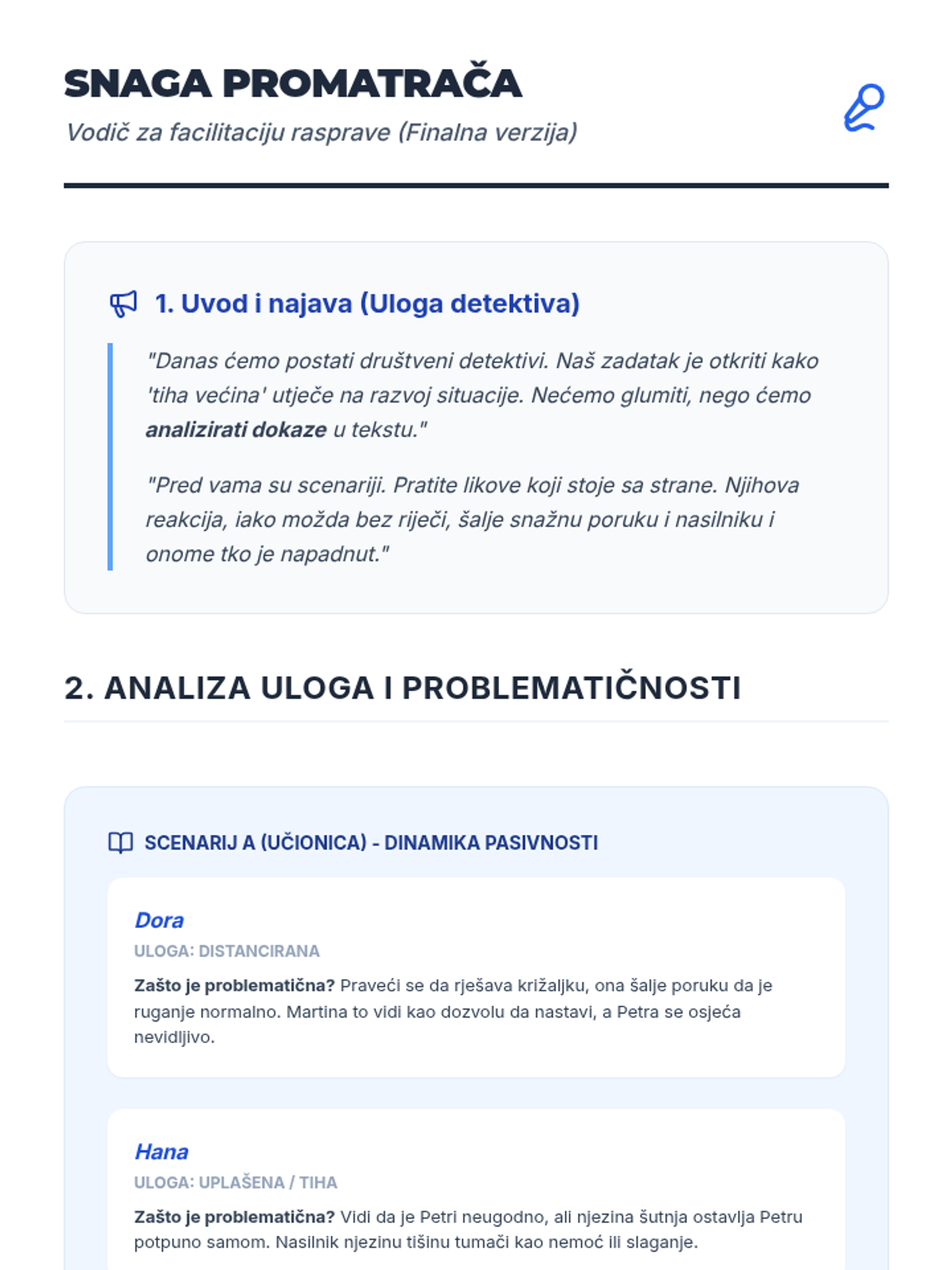
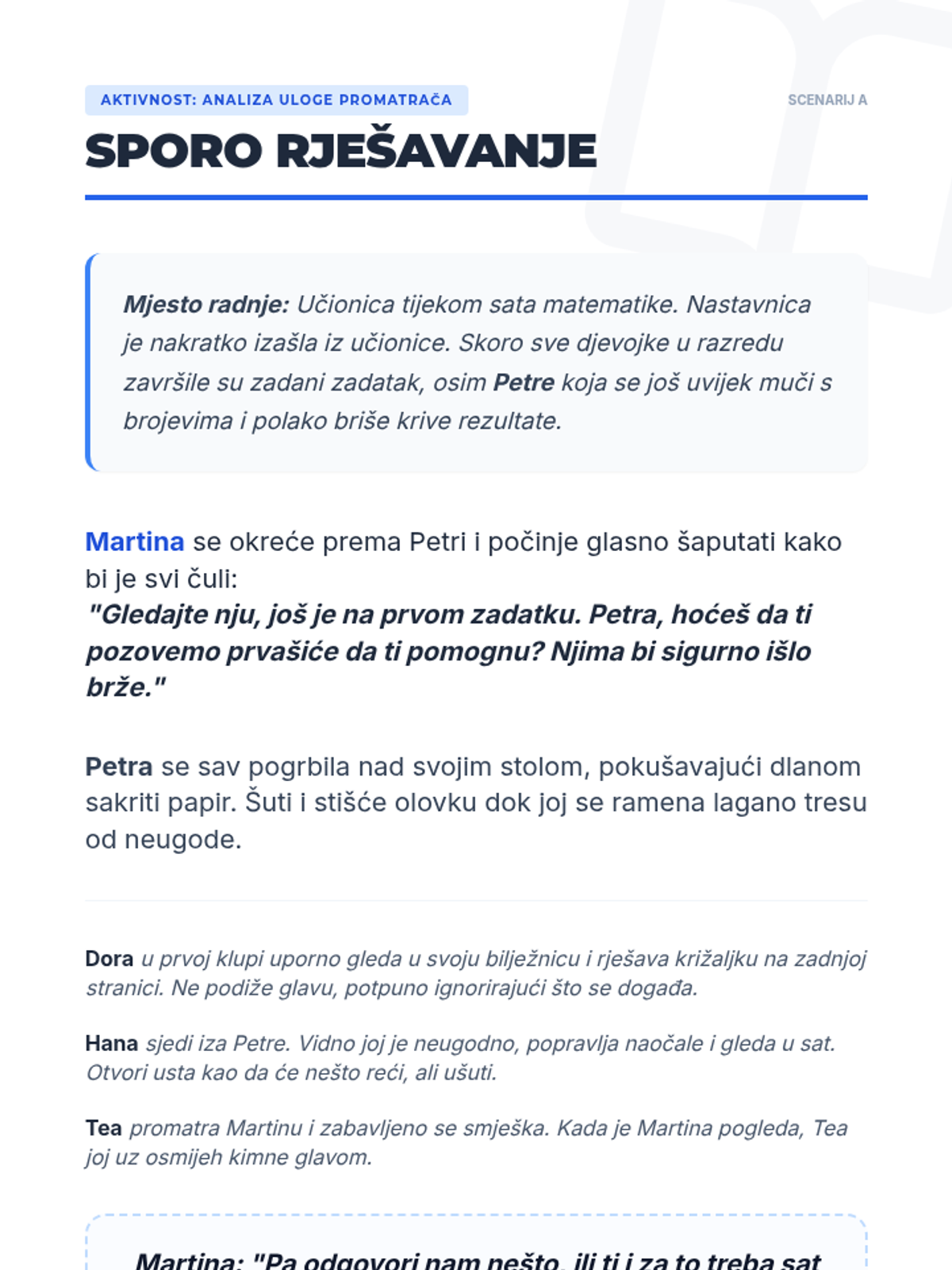
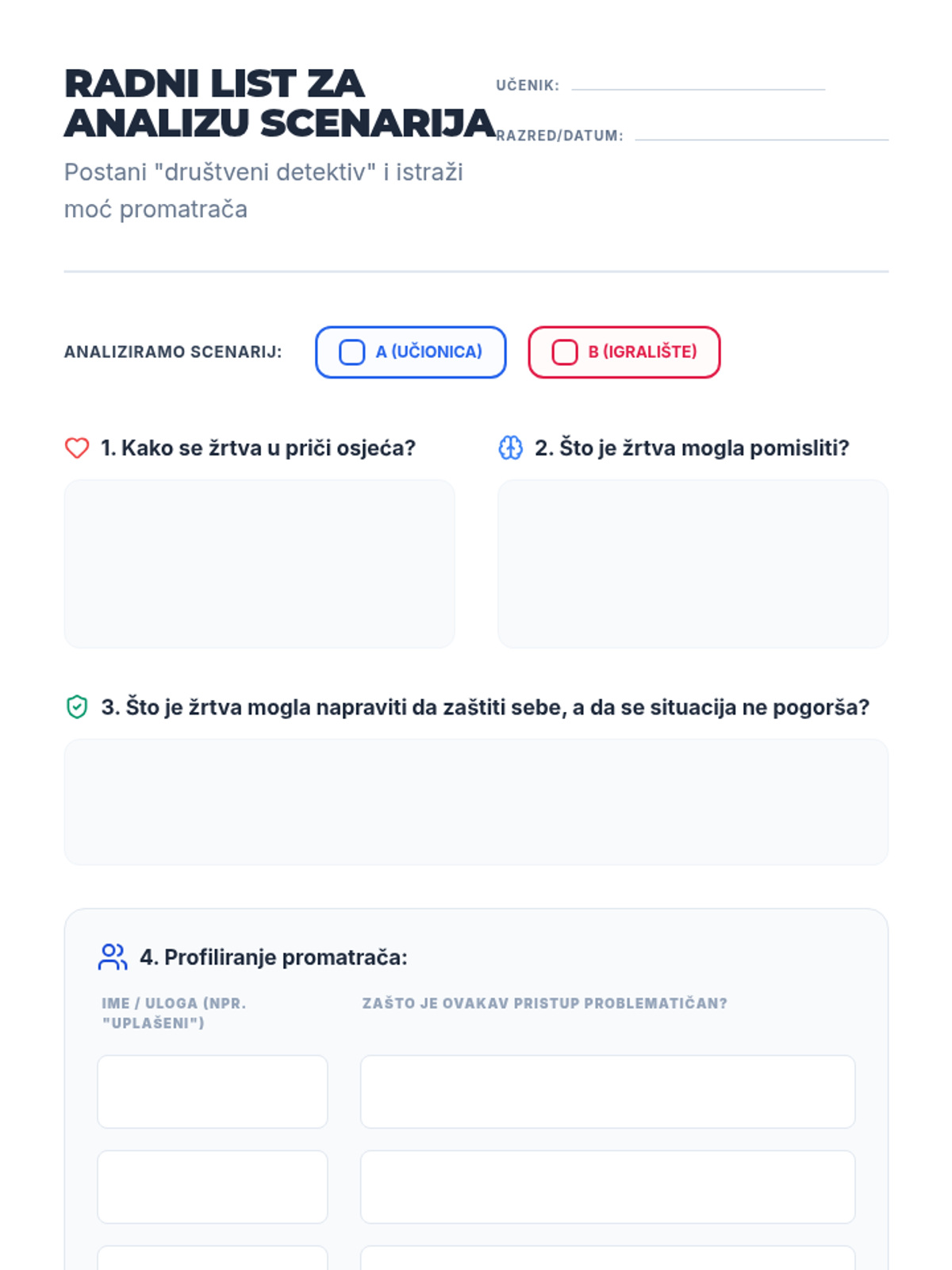
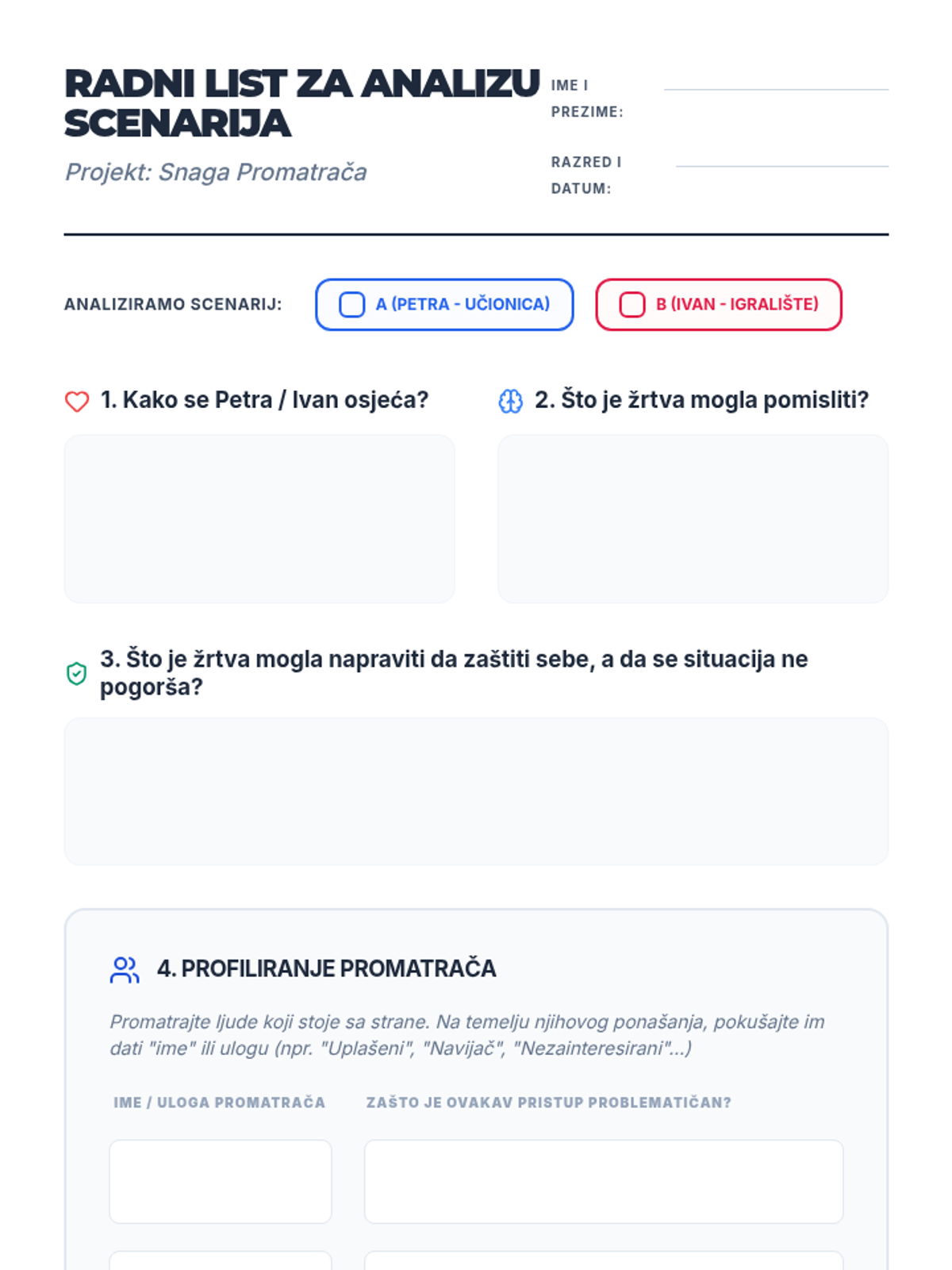
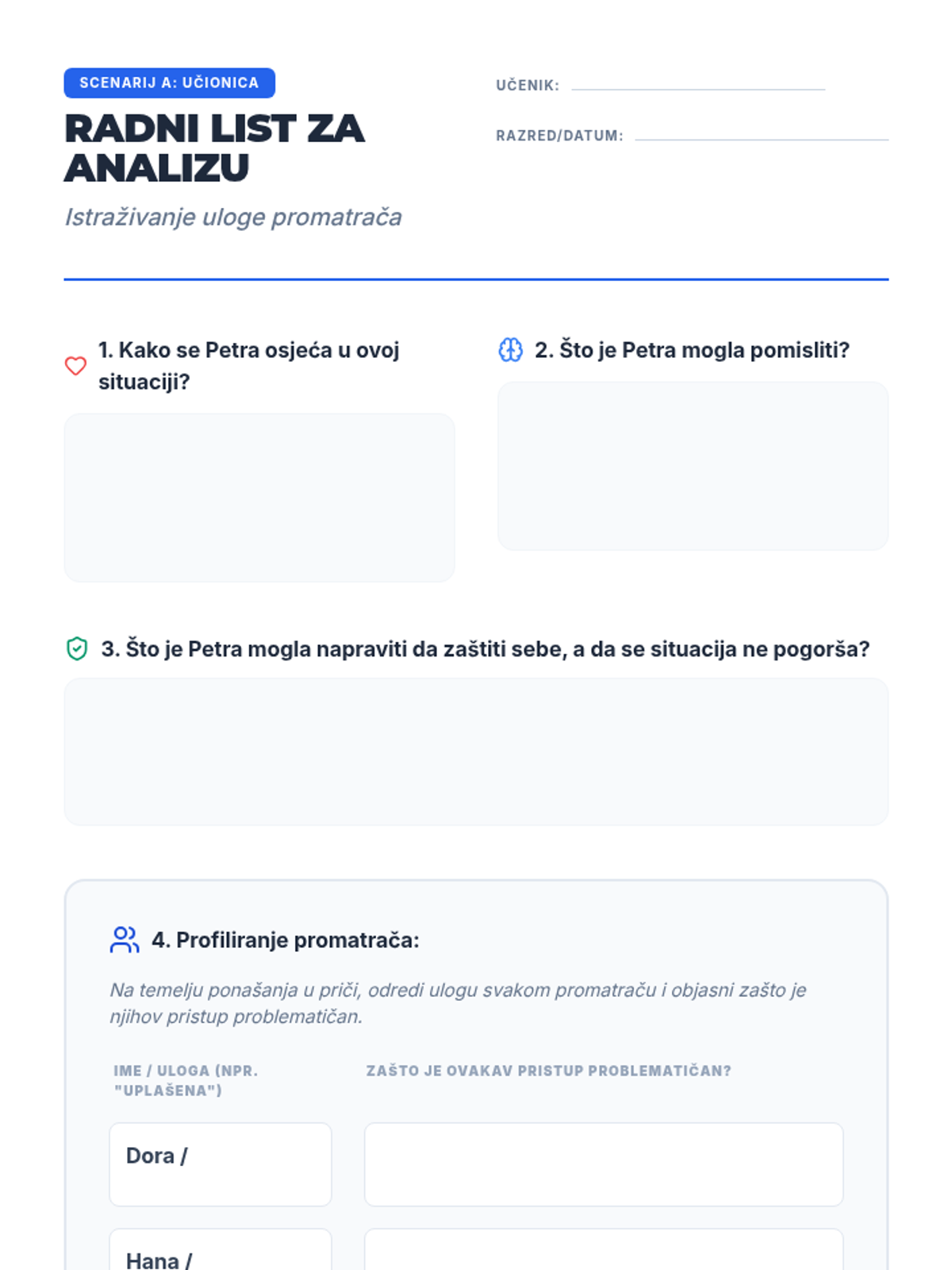
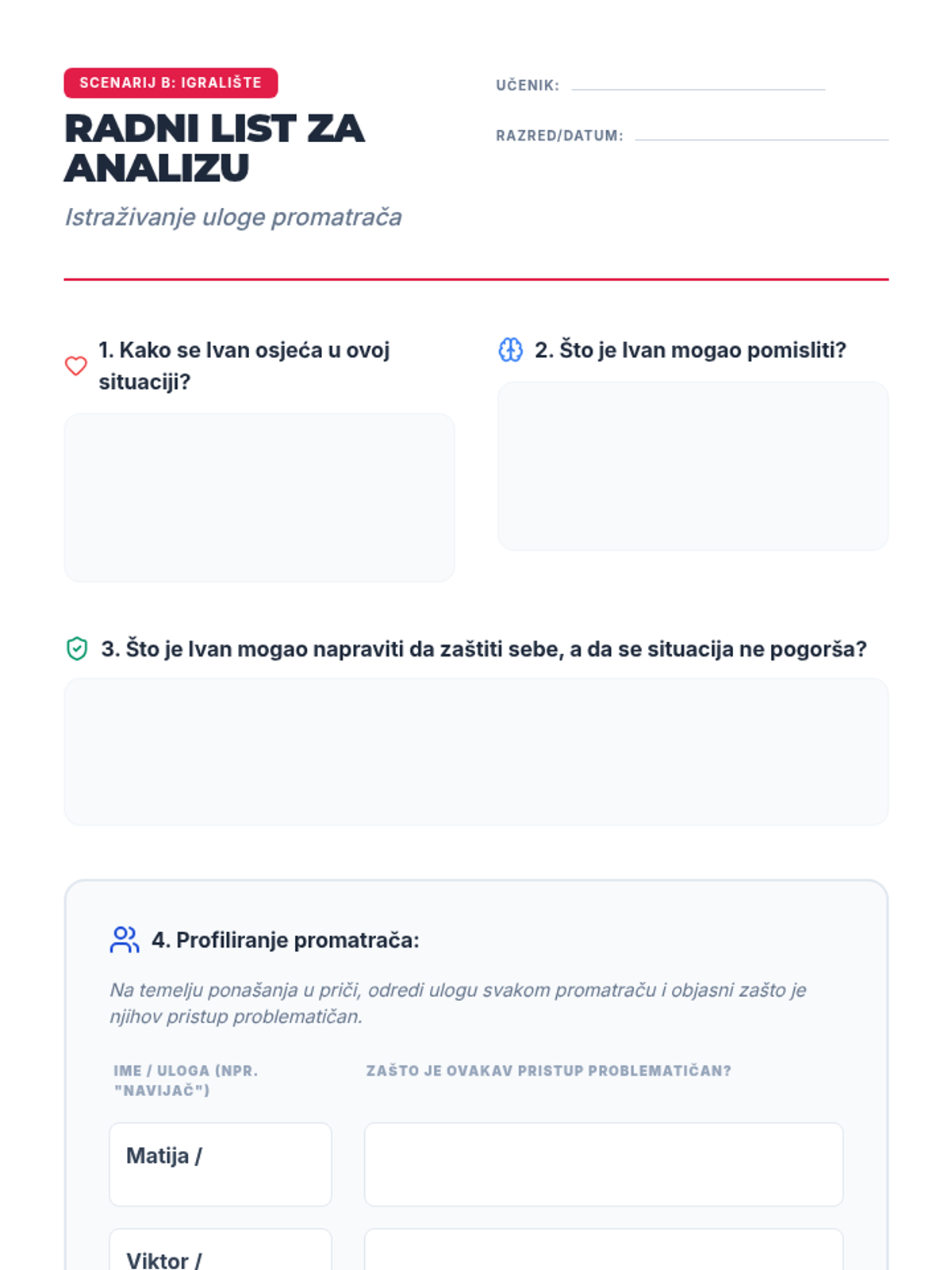
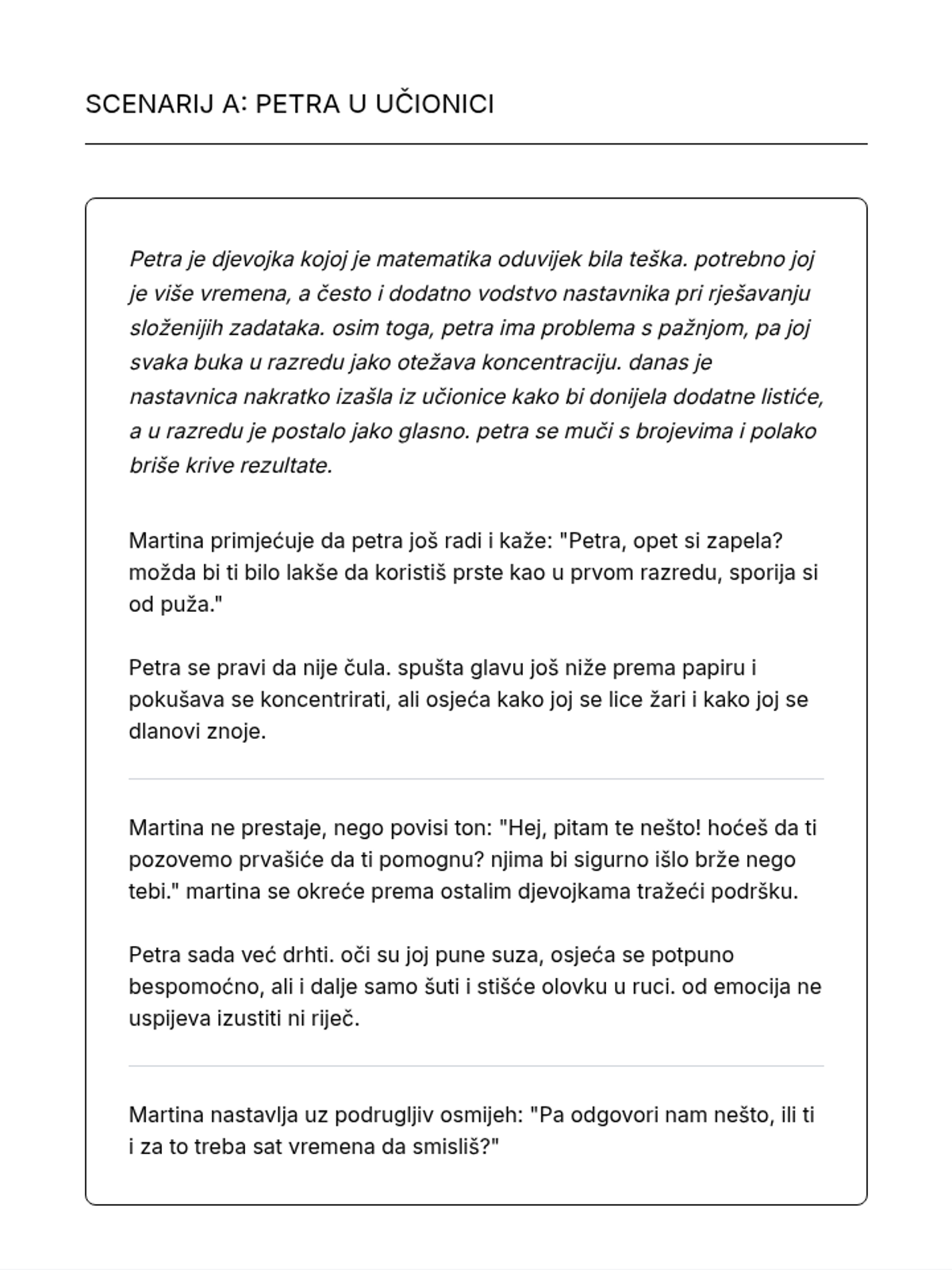
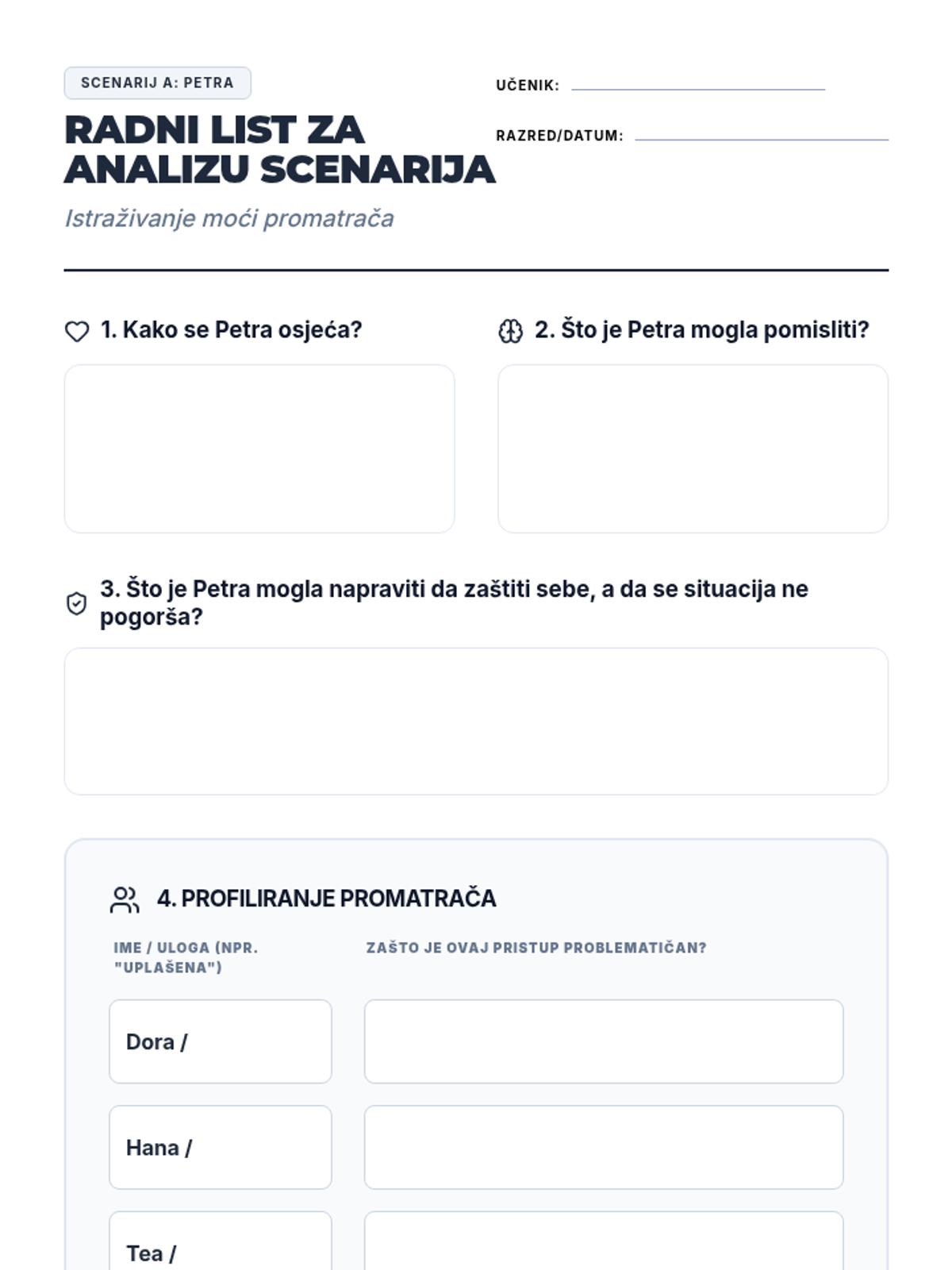
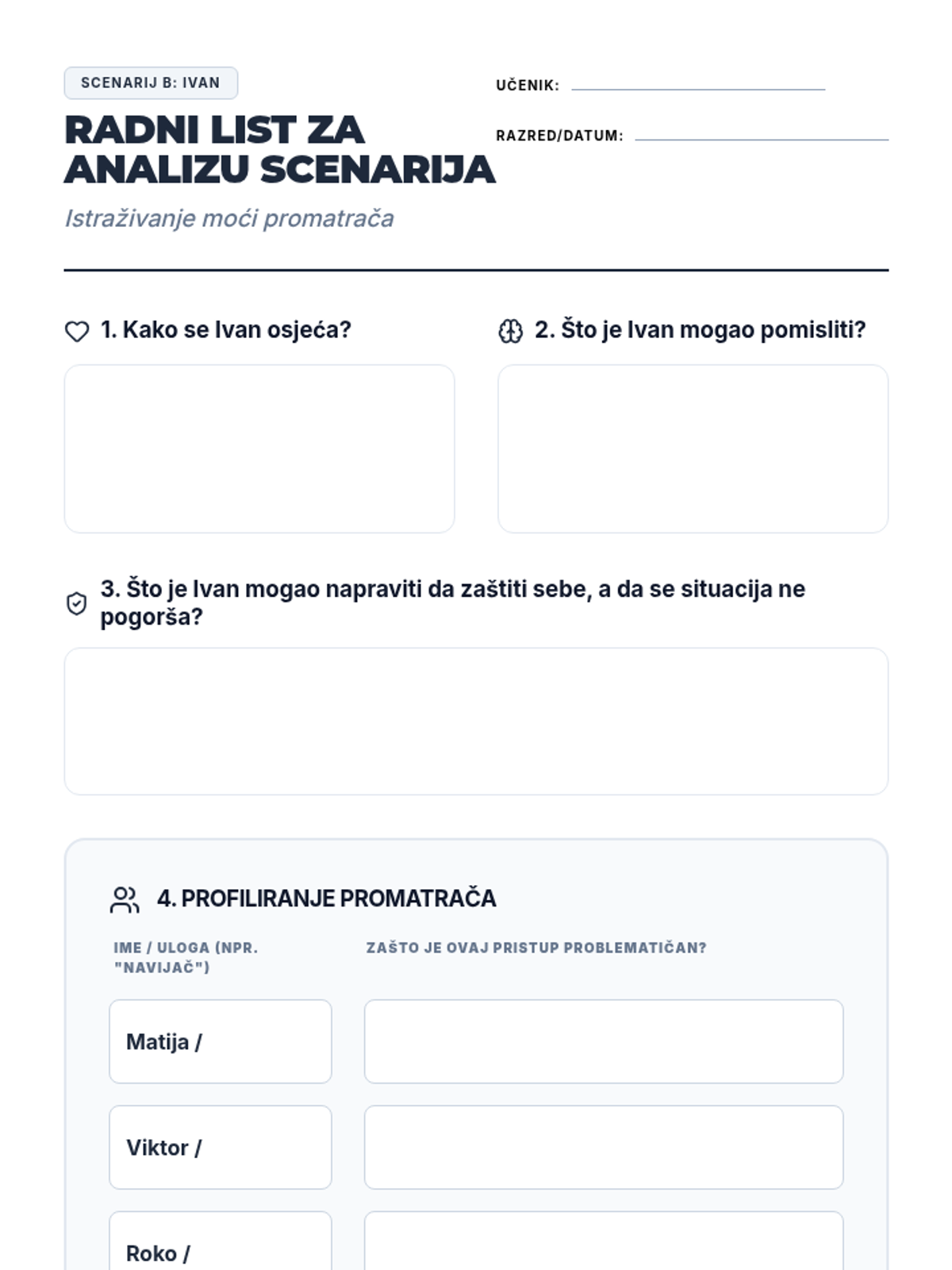
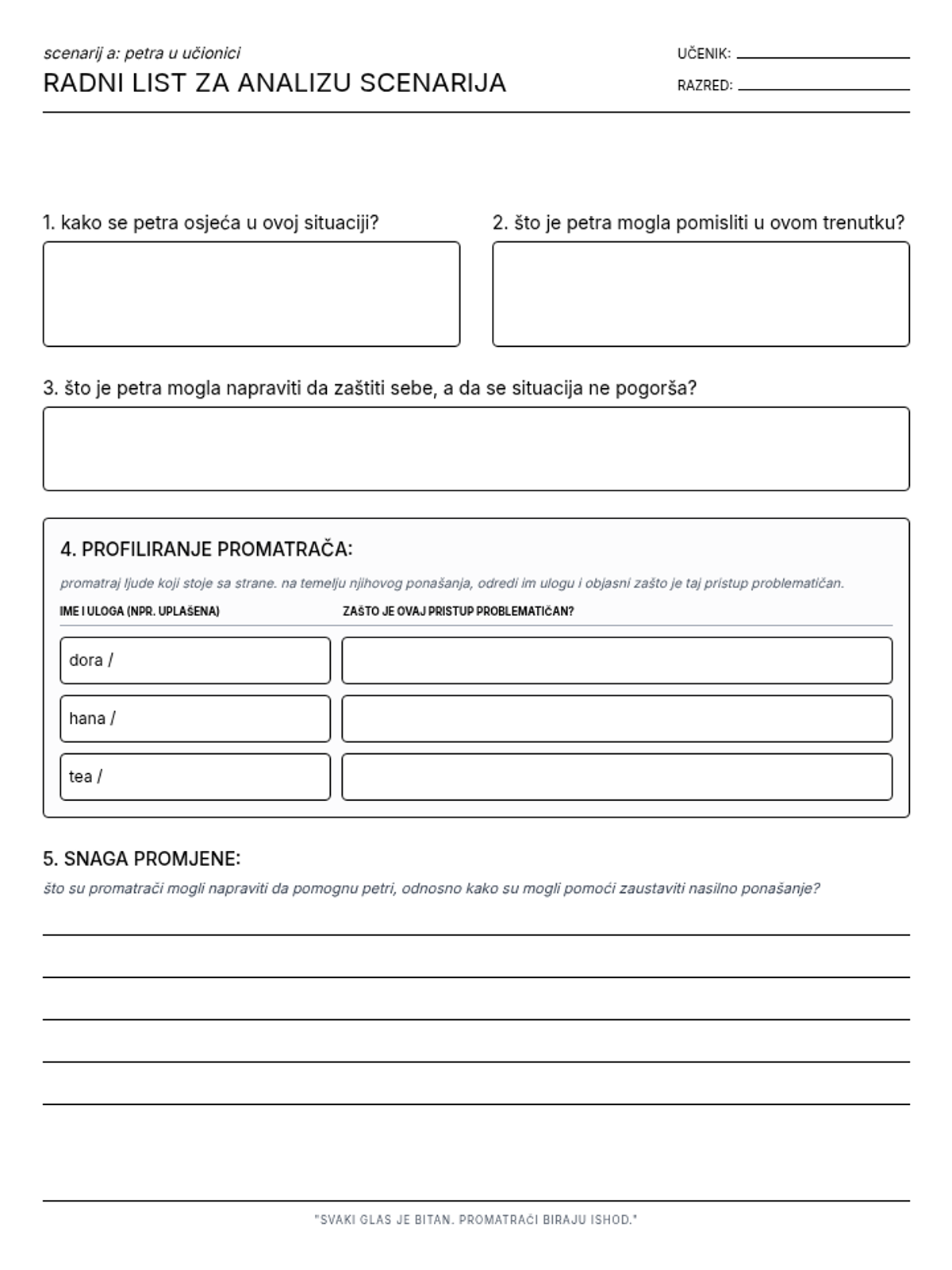
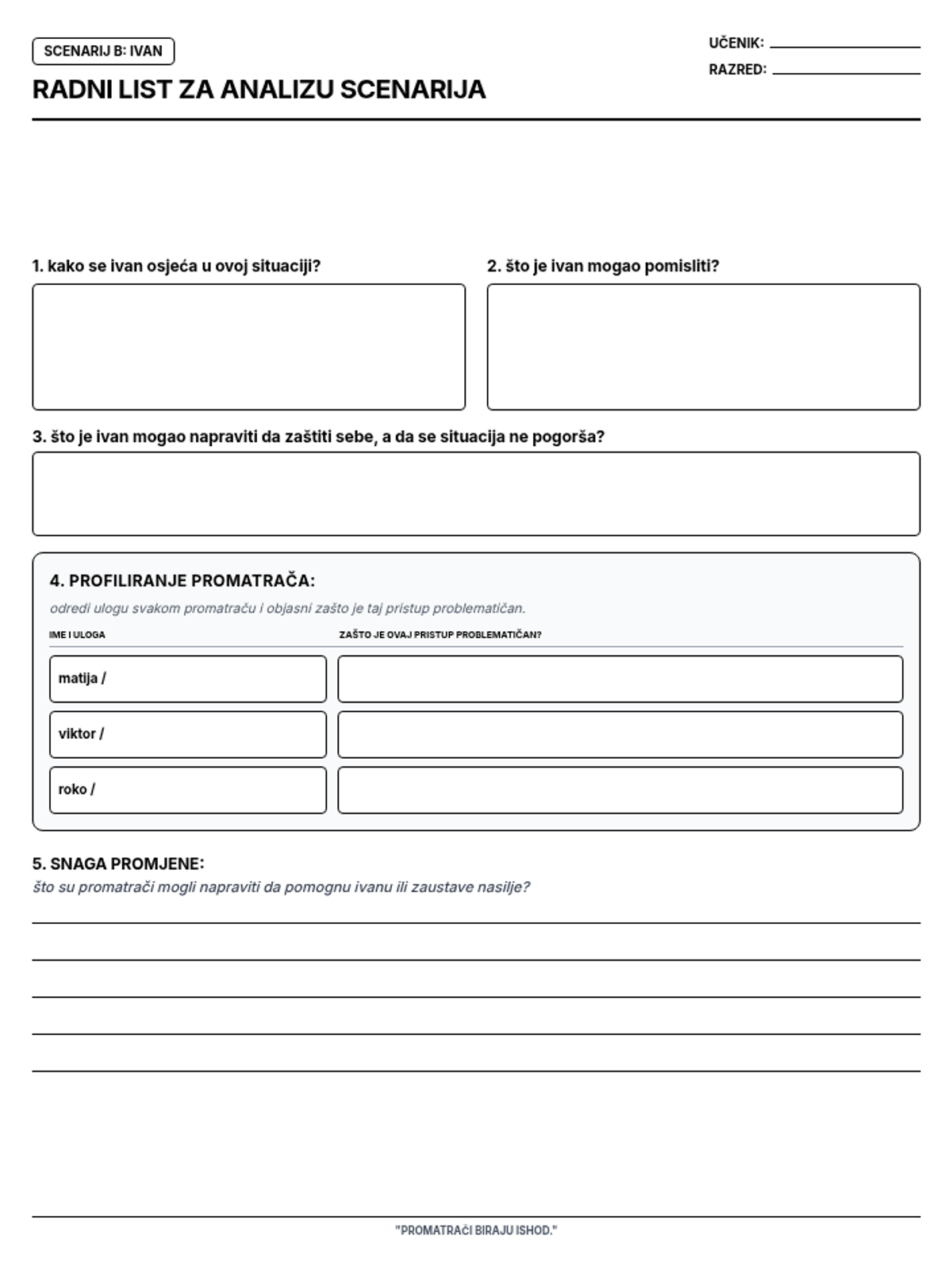
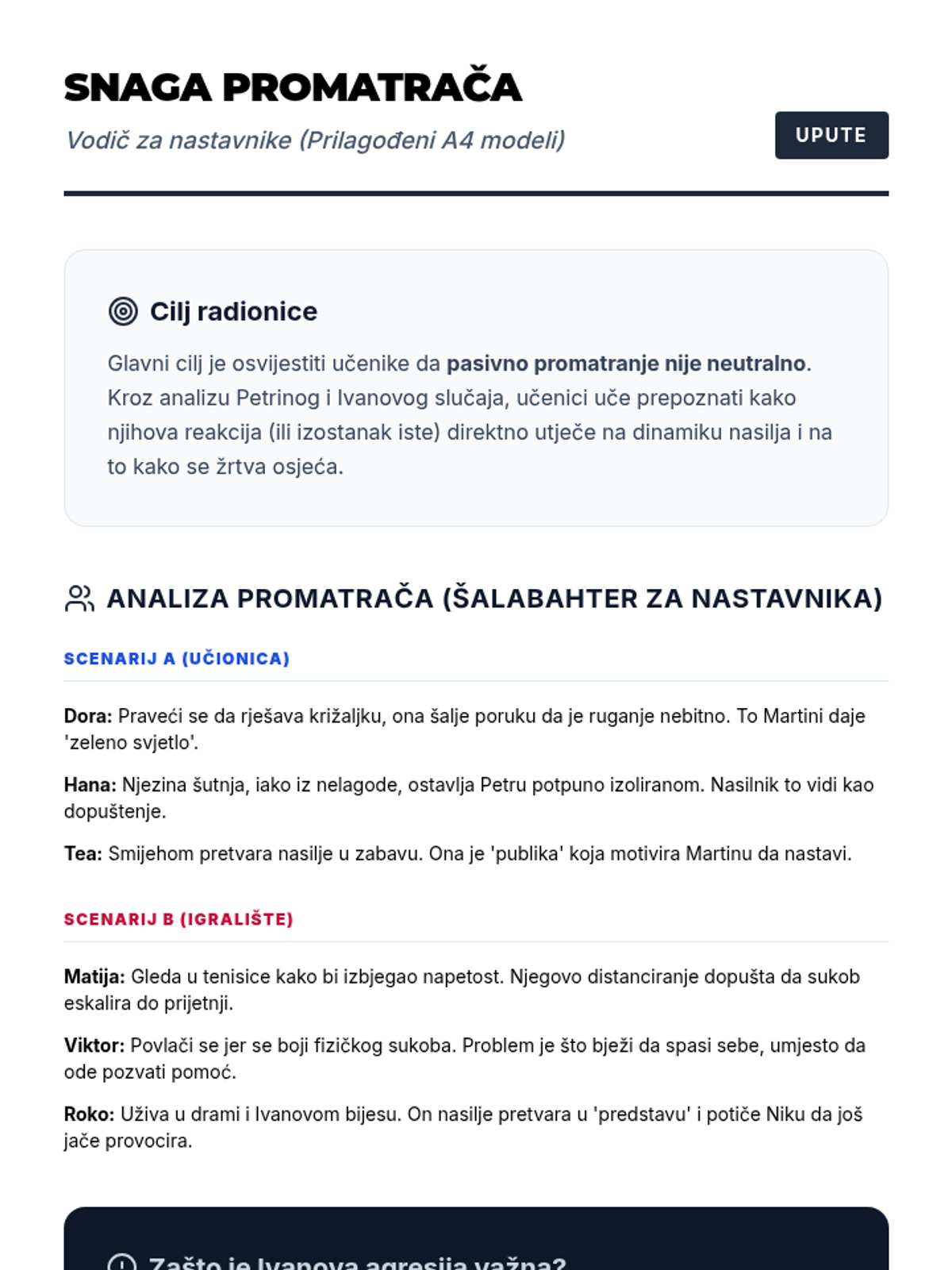
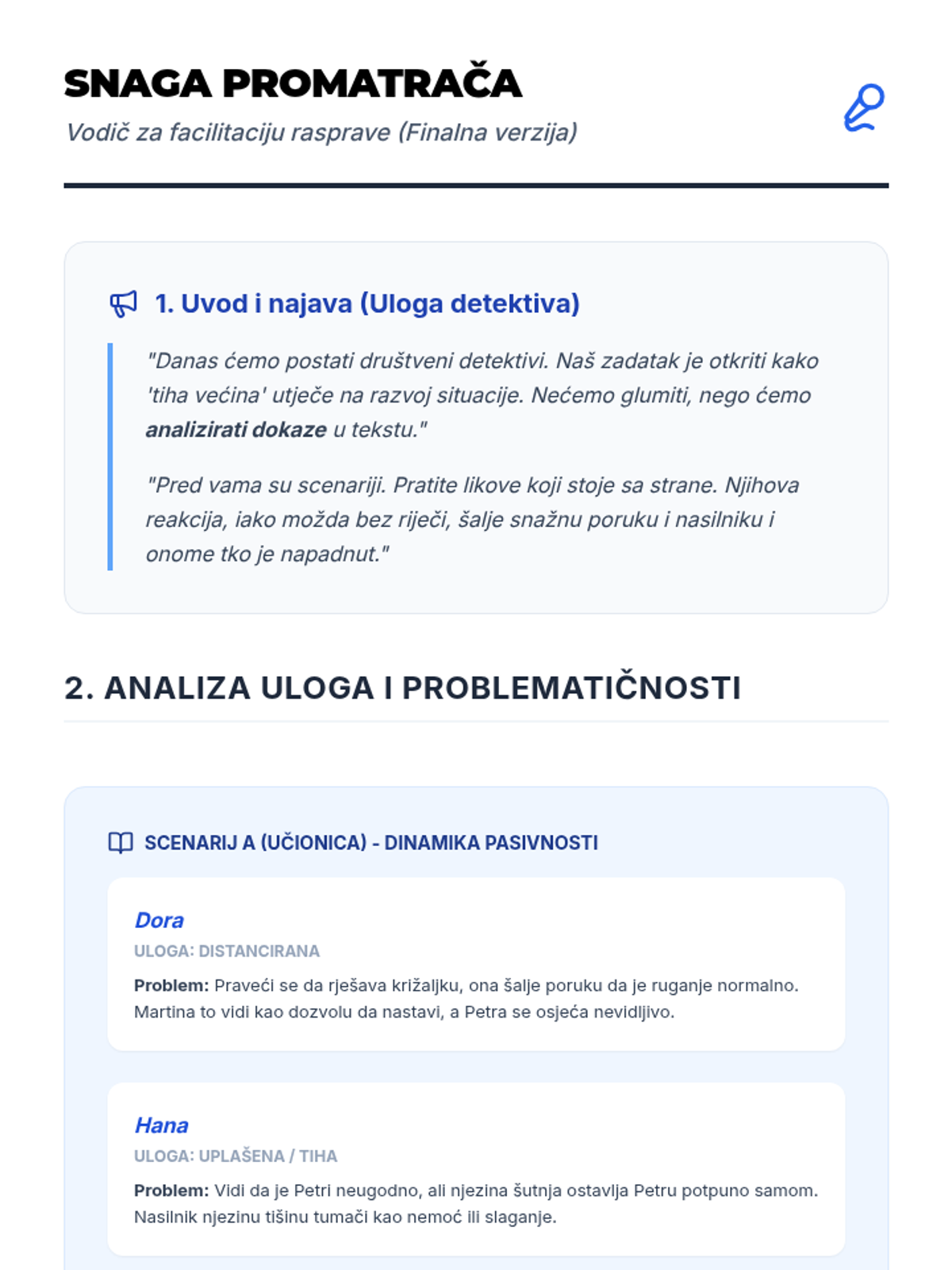
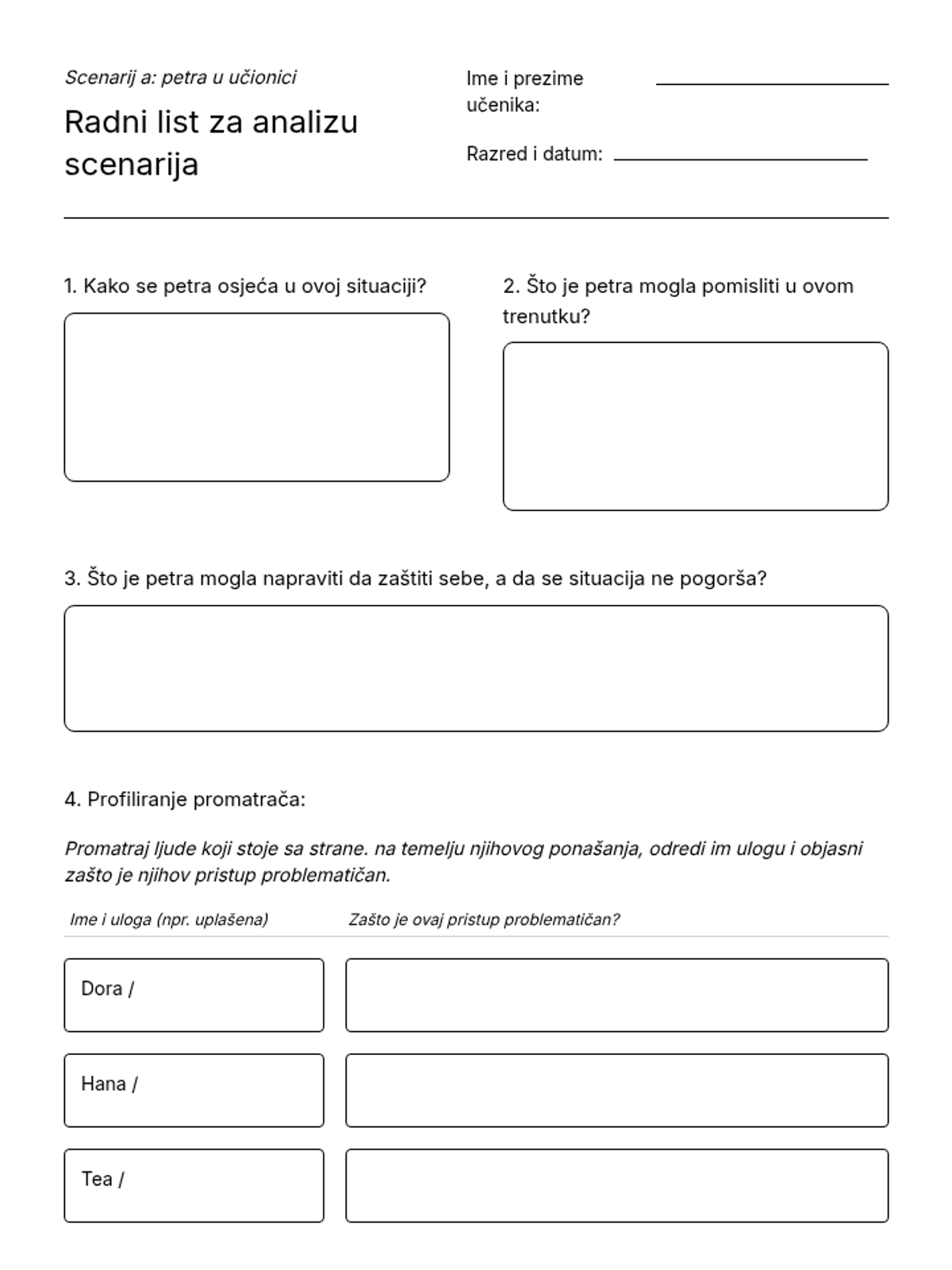
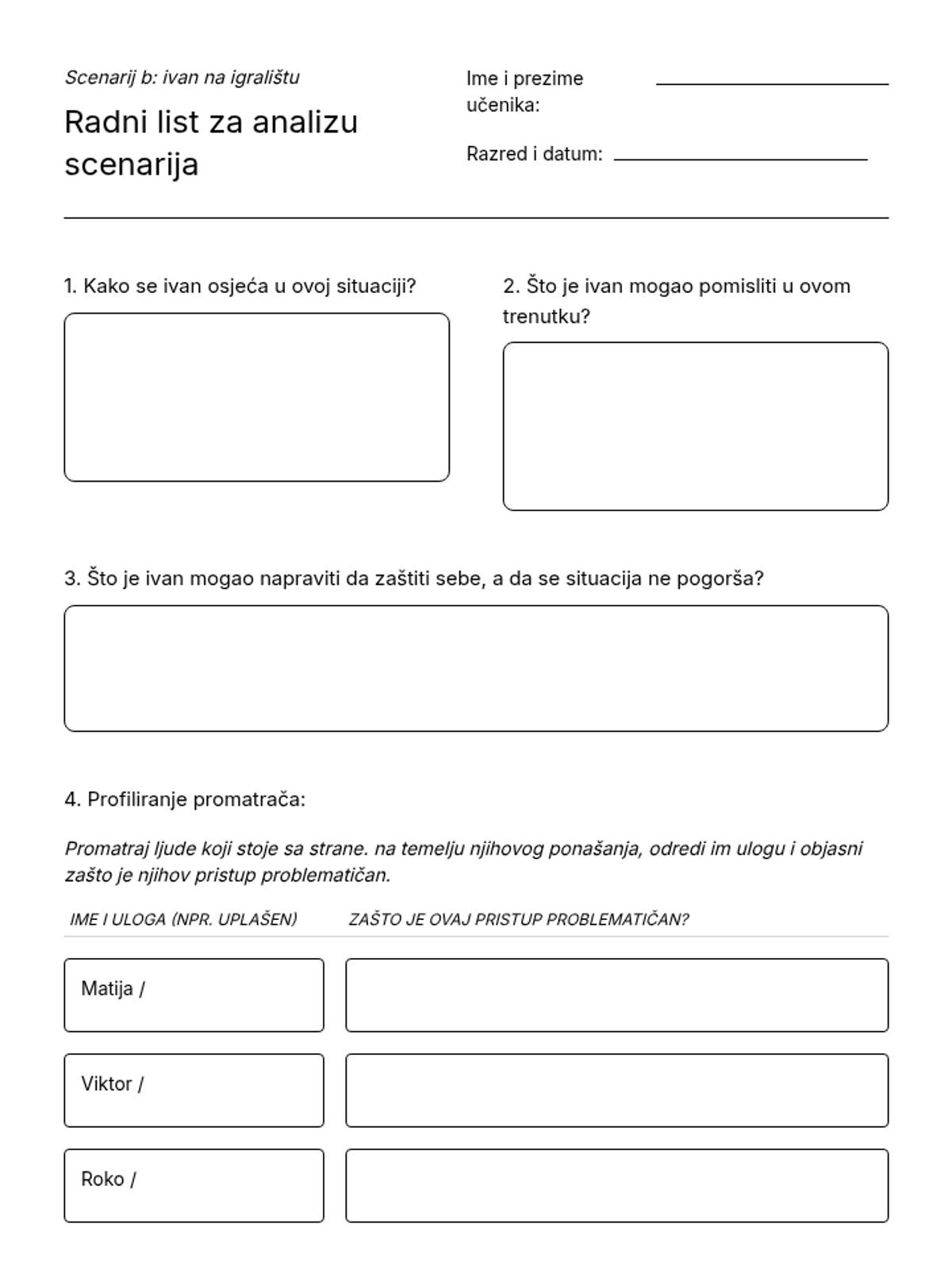
Ova lekcija usmjerena je na osvještavanje uloge promatrača u situacijama vršnjačkog nasilja kroz analizu pisanih scenarija i kritičko razmišljanje o mogućim intervencijama.
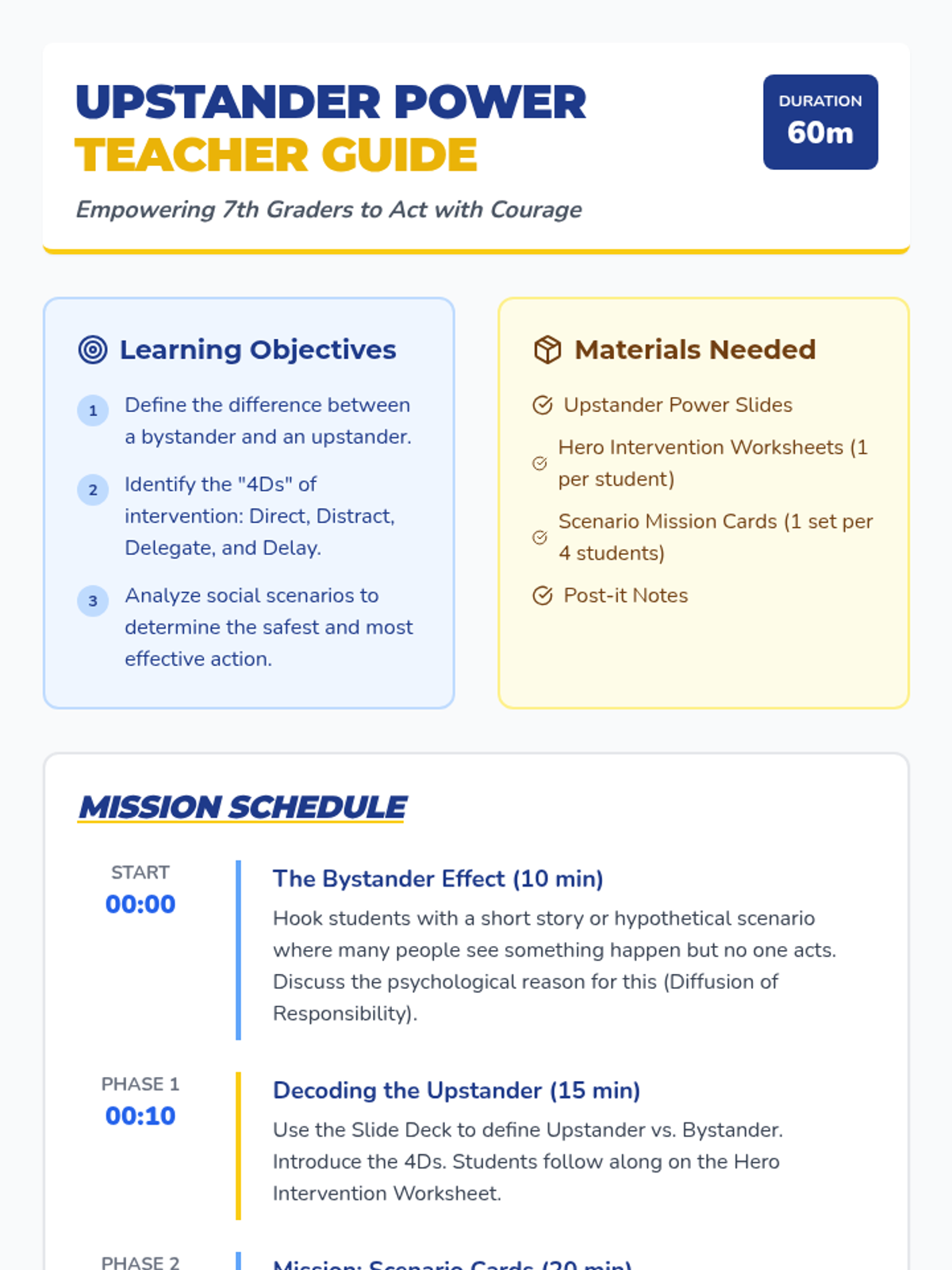
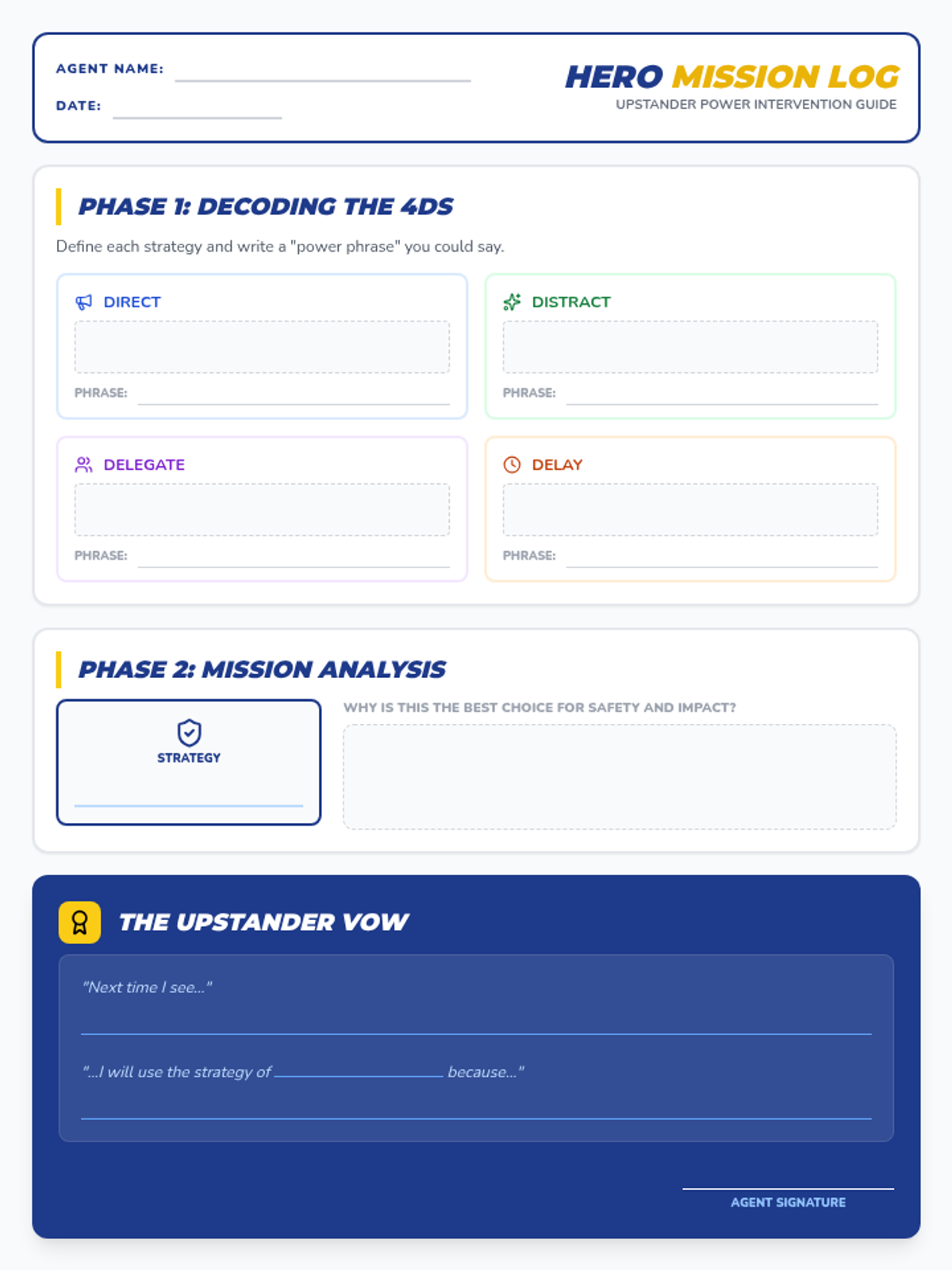
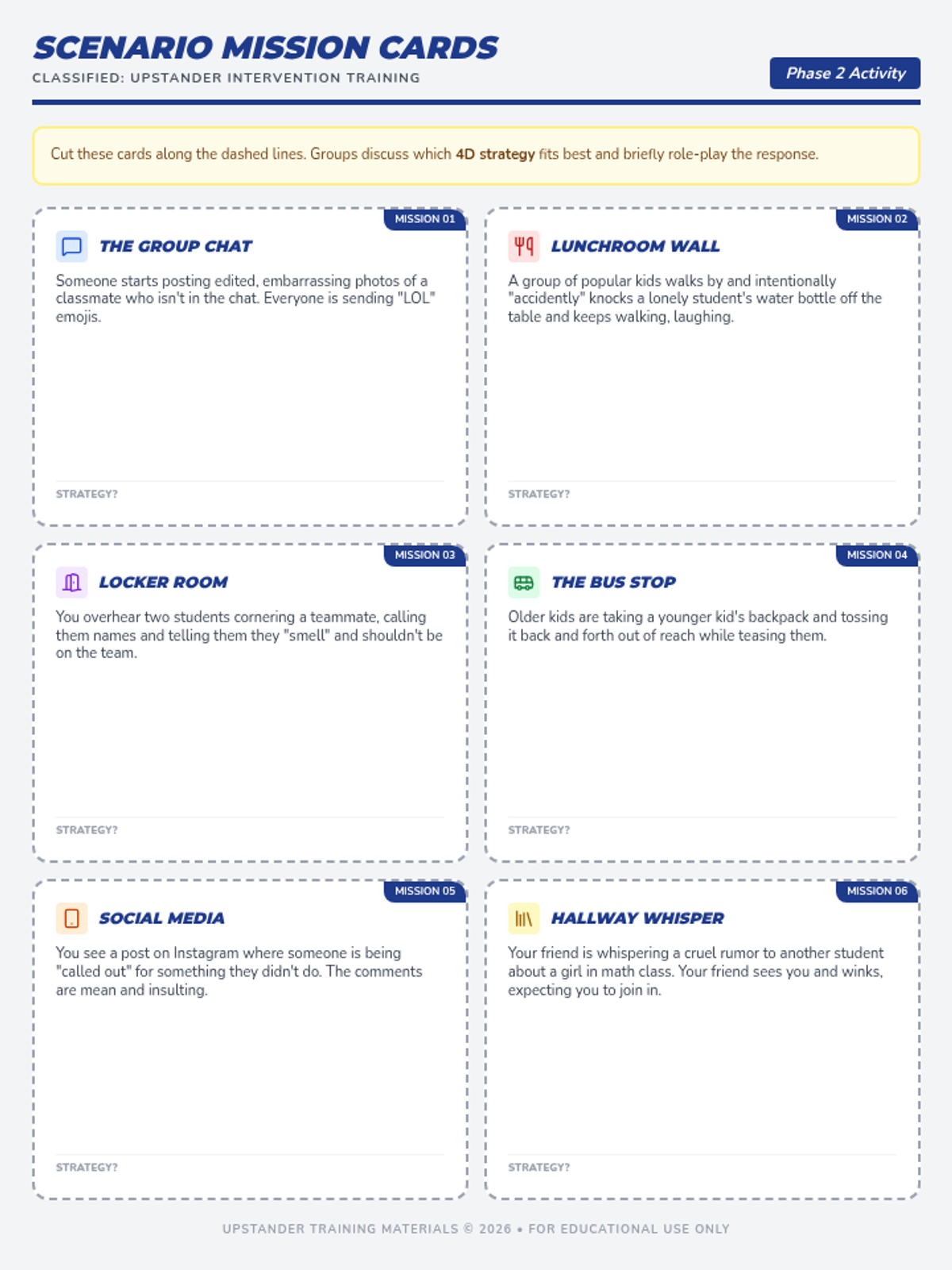
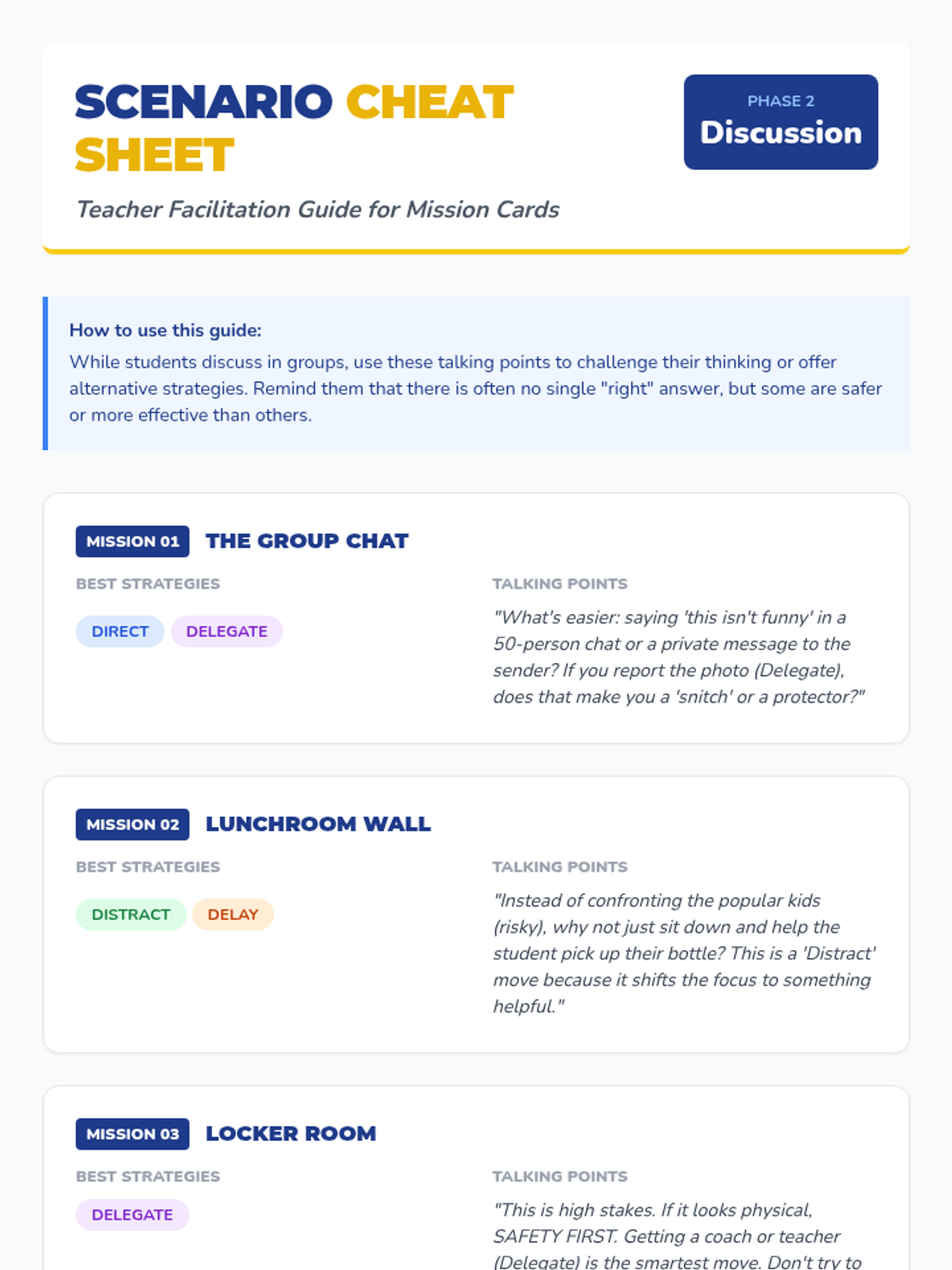
This lesson empowers 7th graders to move from passive bystanders to active upstanders. Students will learn the 4Ds of intervention, analyze the impact of their choices in social situations, and develop practical skills for building a supportive school culture.
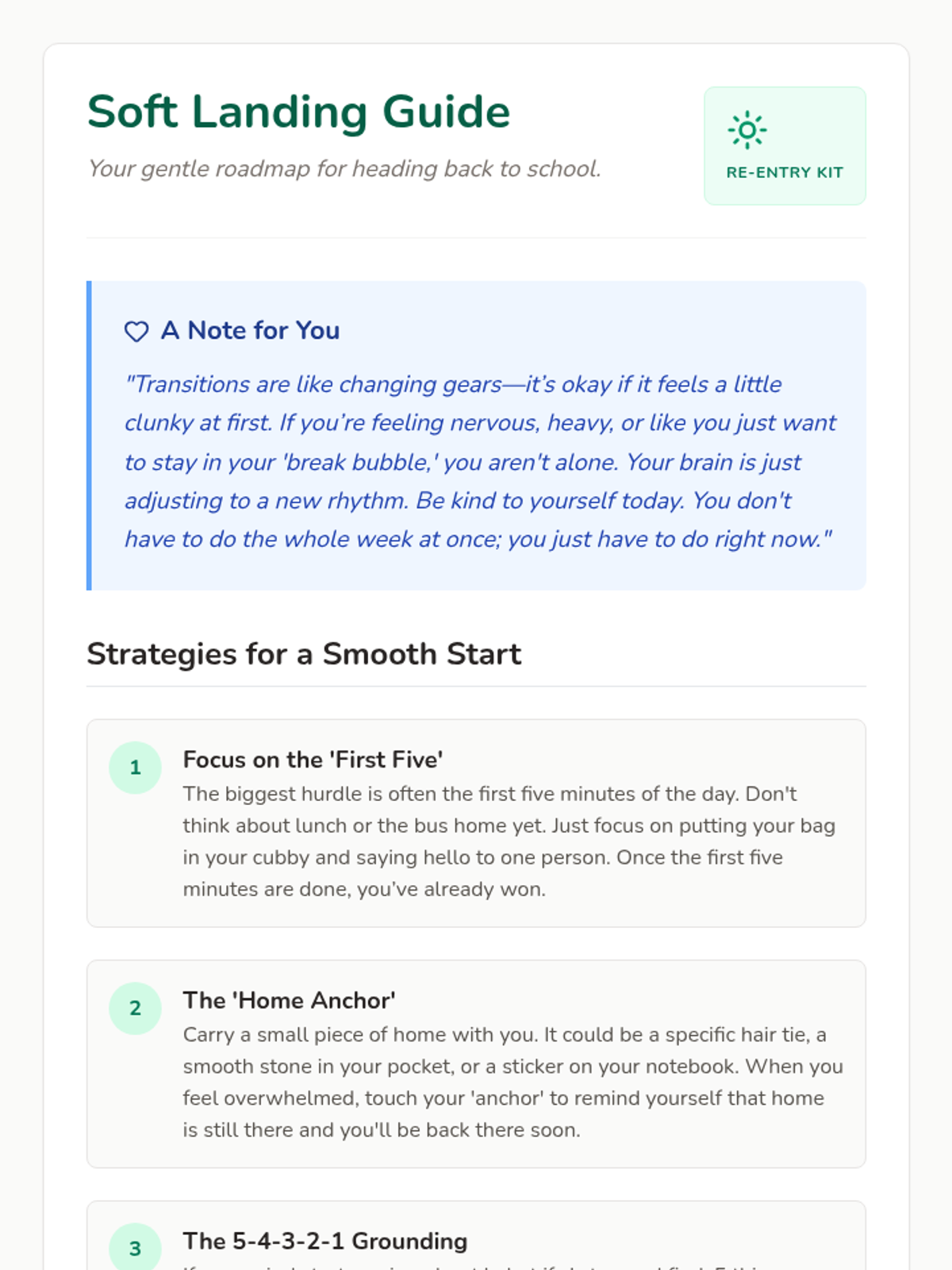
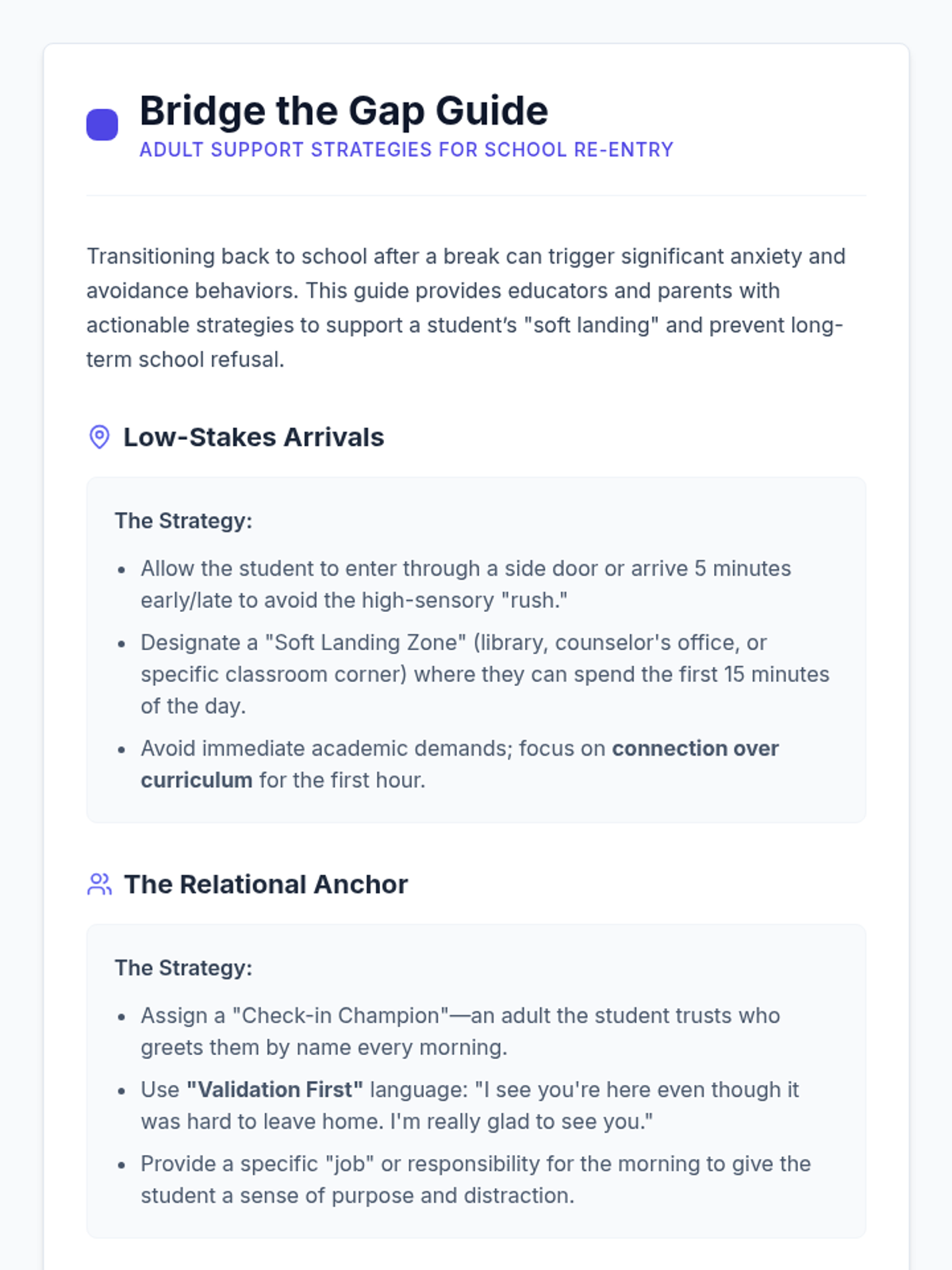
A supportive lesson focused on easing school-re-entry anxiety and providing concrete strategies for students transitioning back after a break.
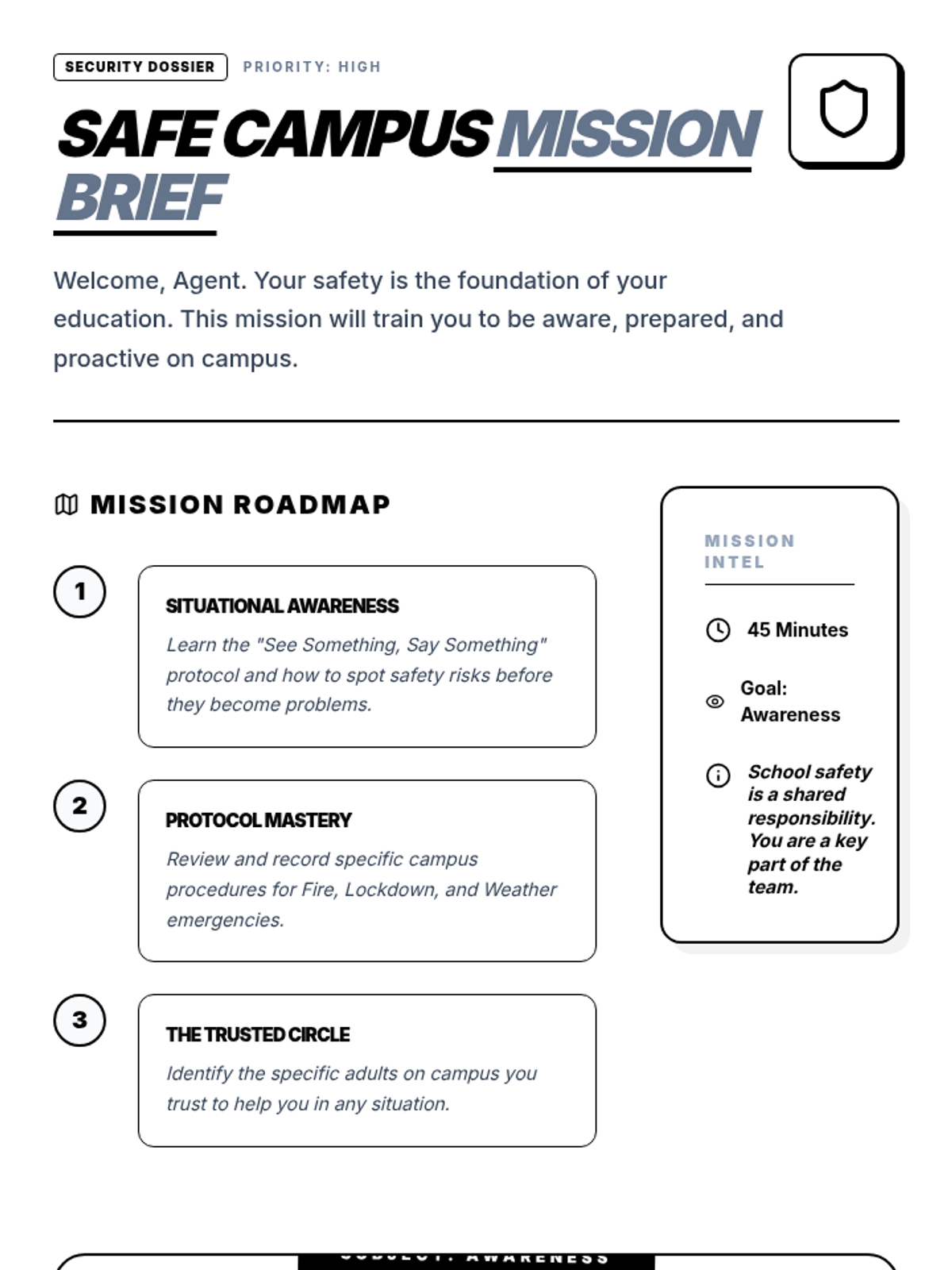
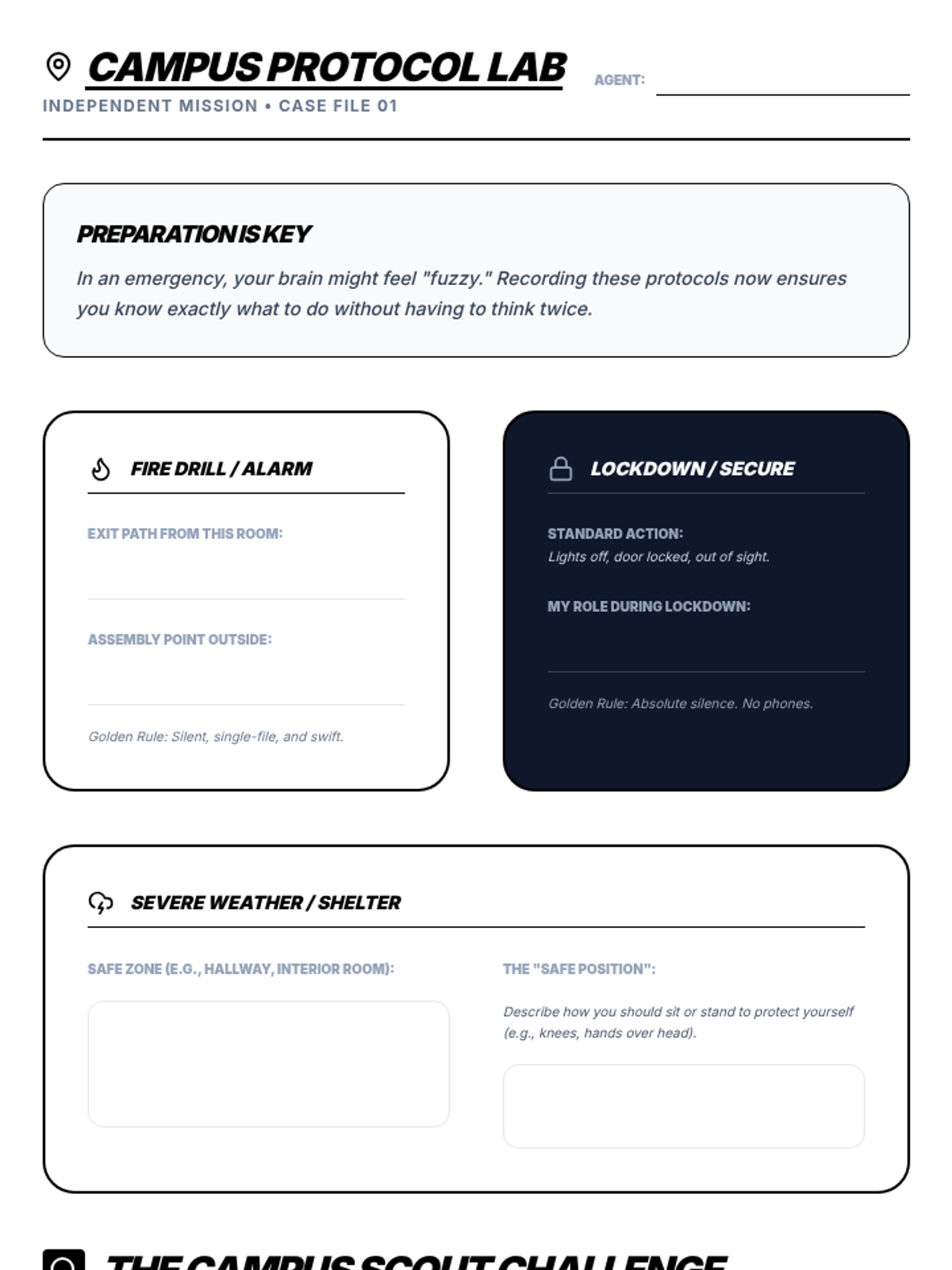
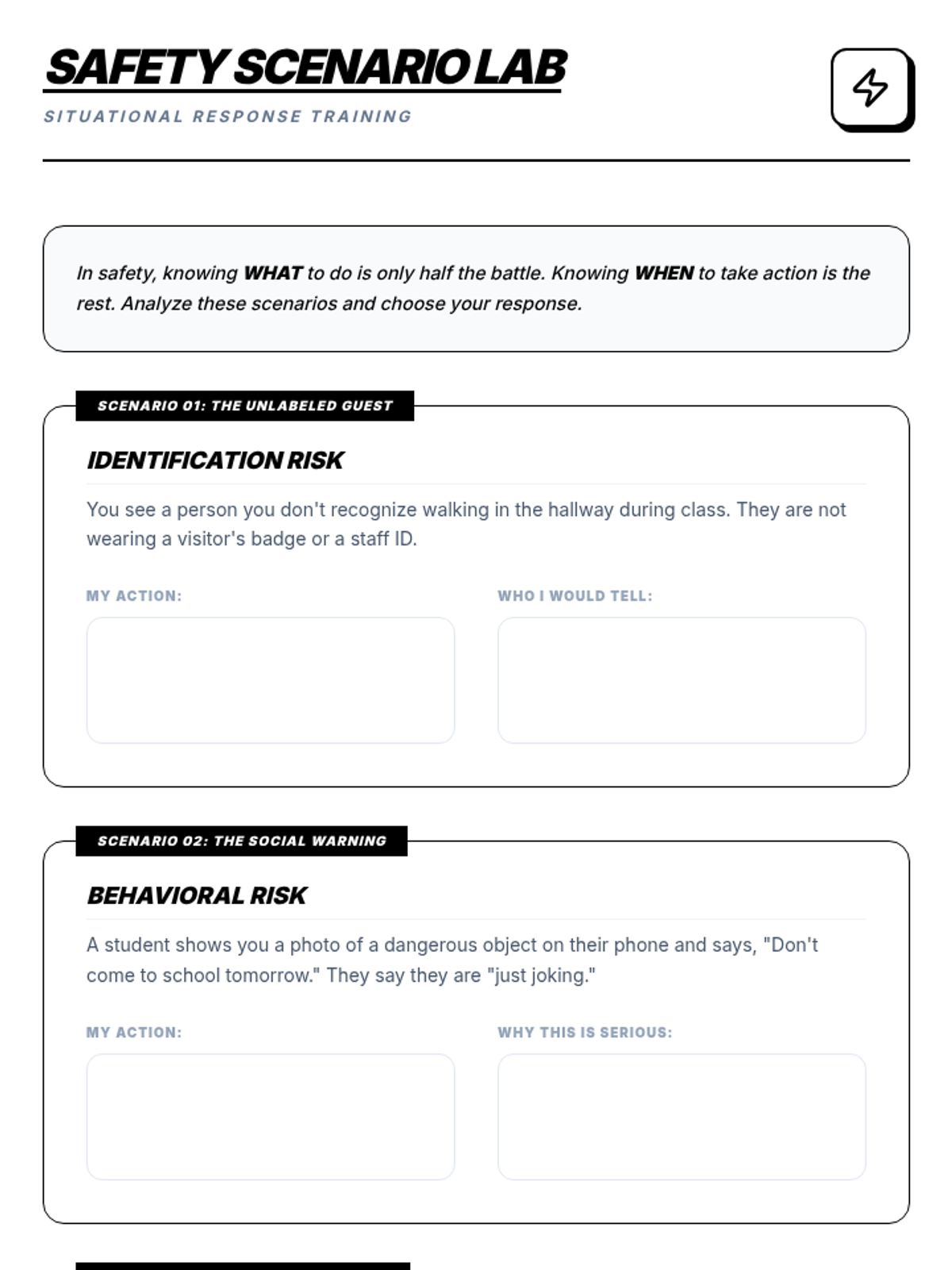
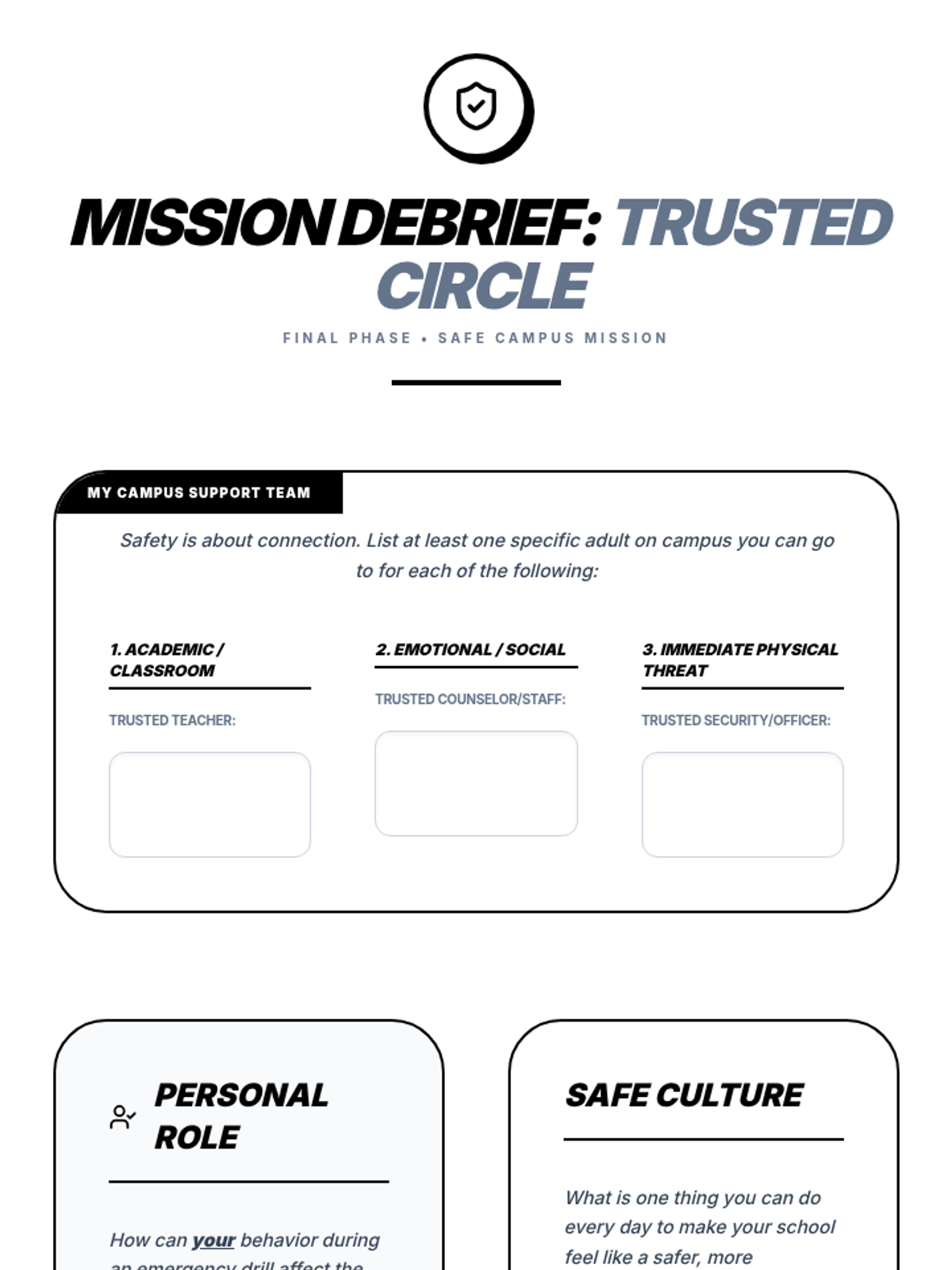
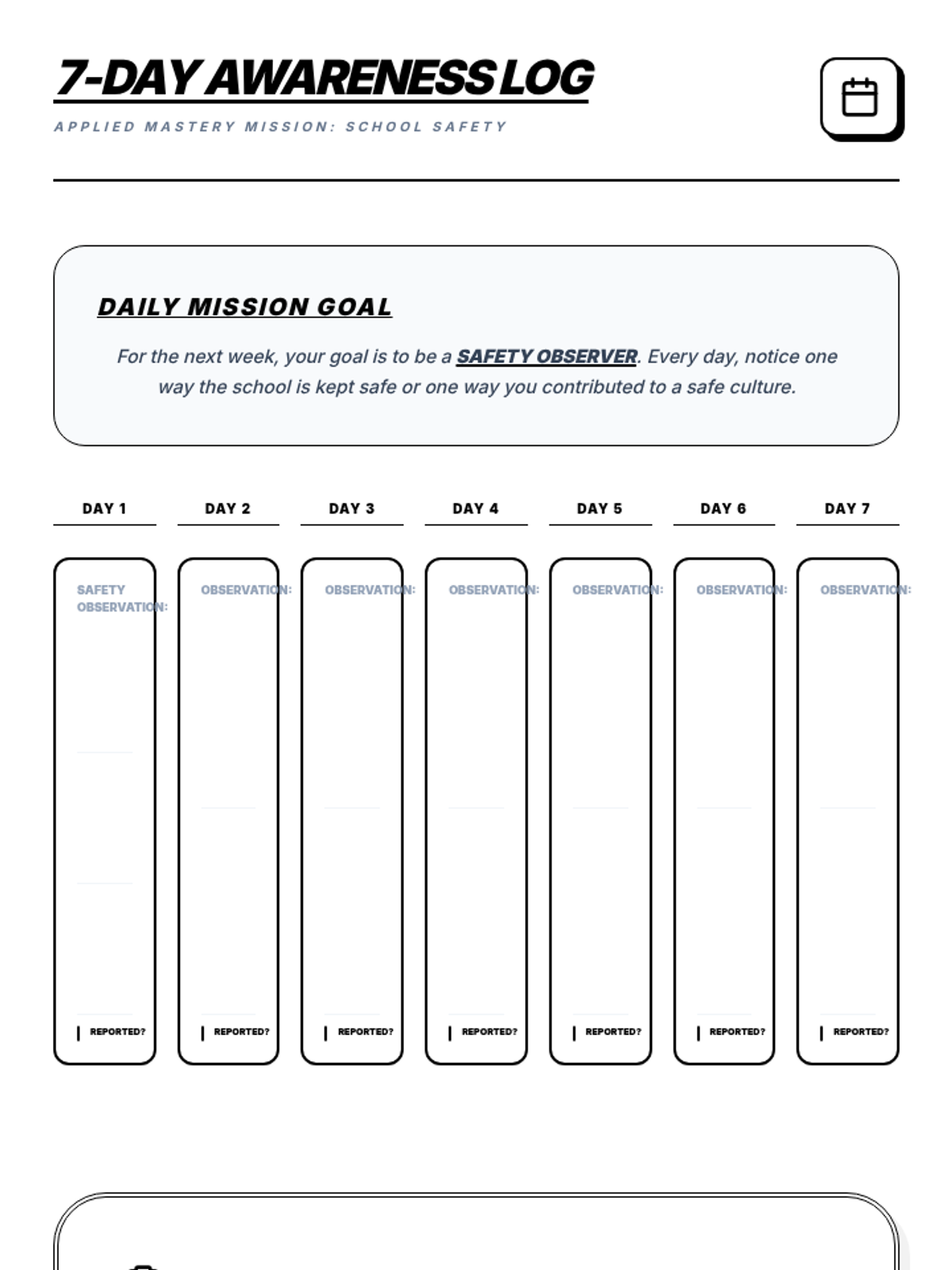
An independent mission for middle schoolers to develop situational awareness, learn campus safety protocols, and identify trusted adults for emergency communication.
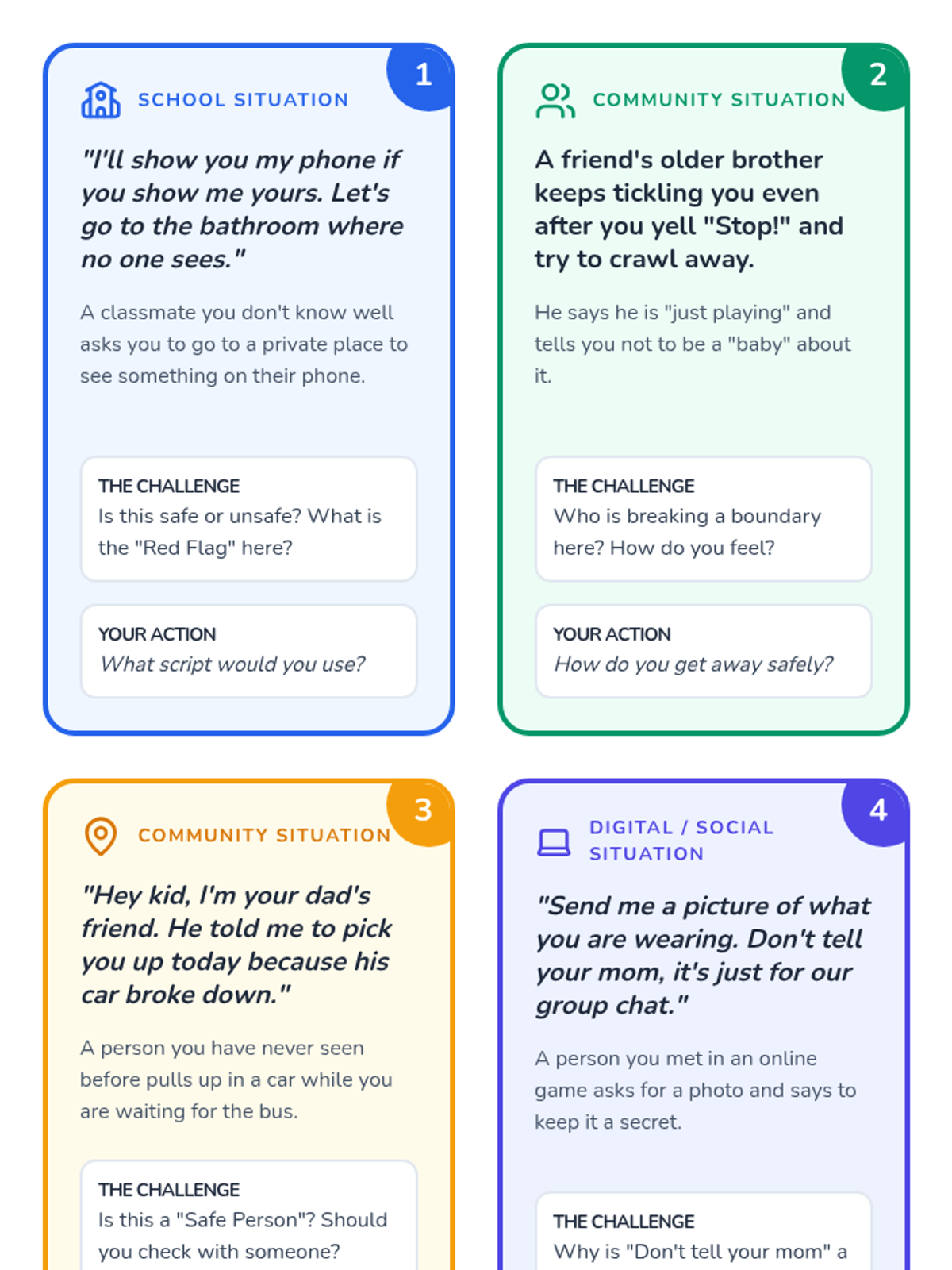
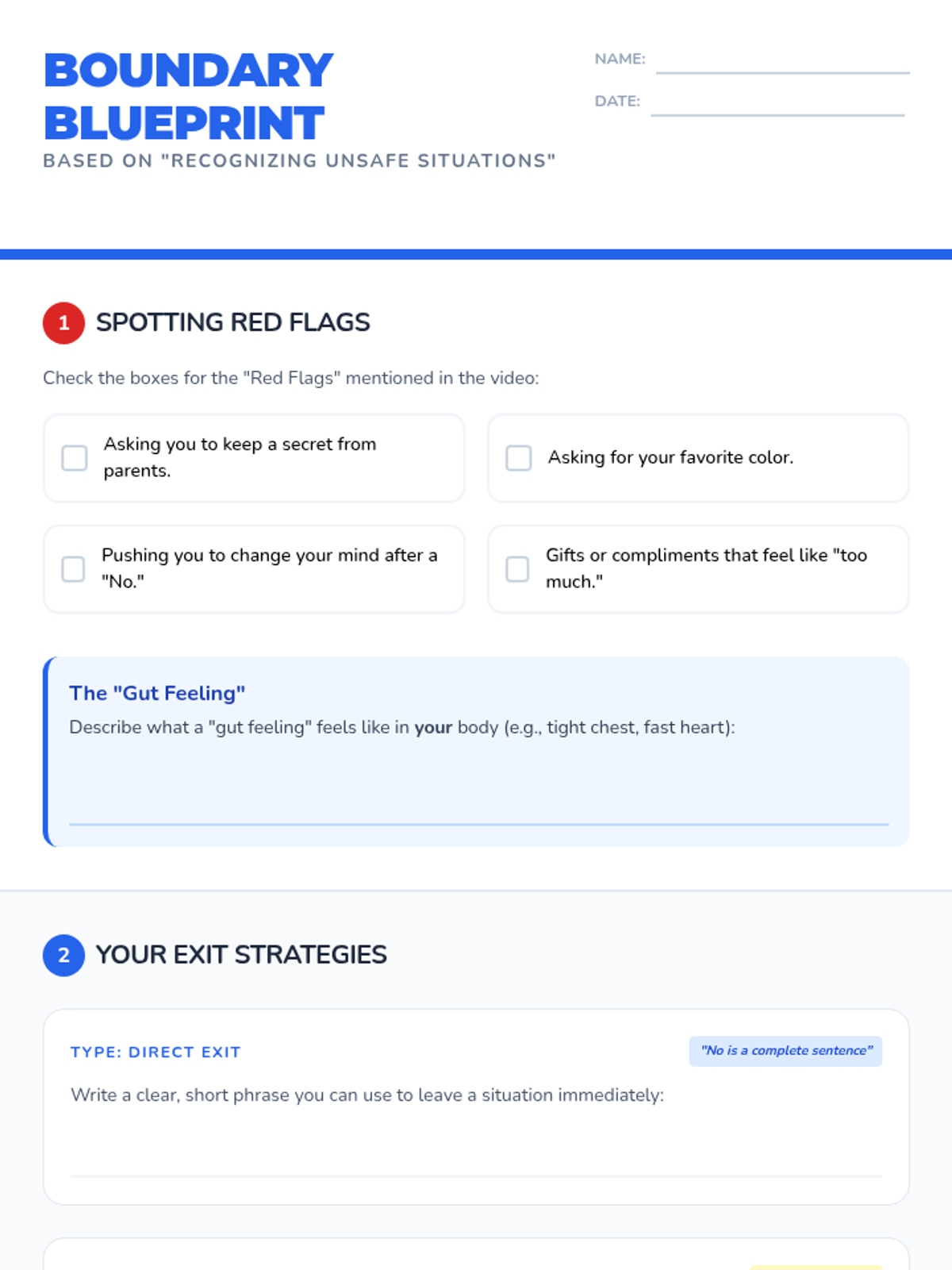
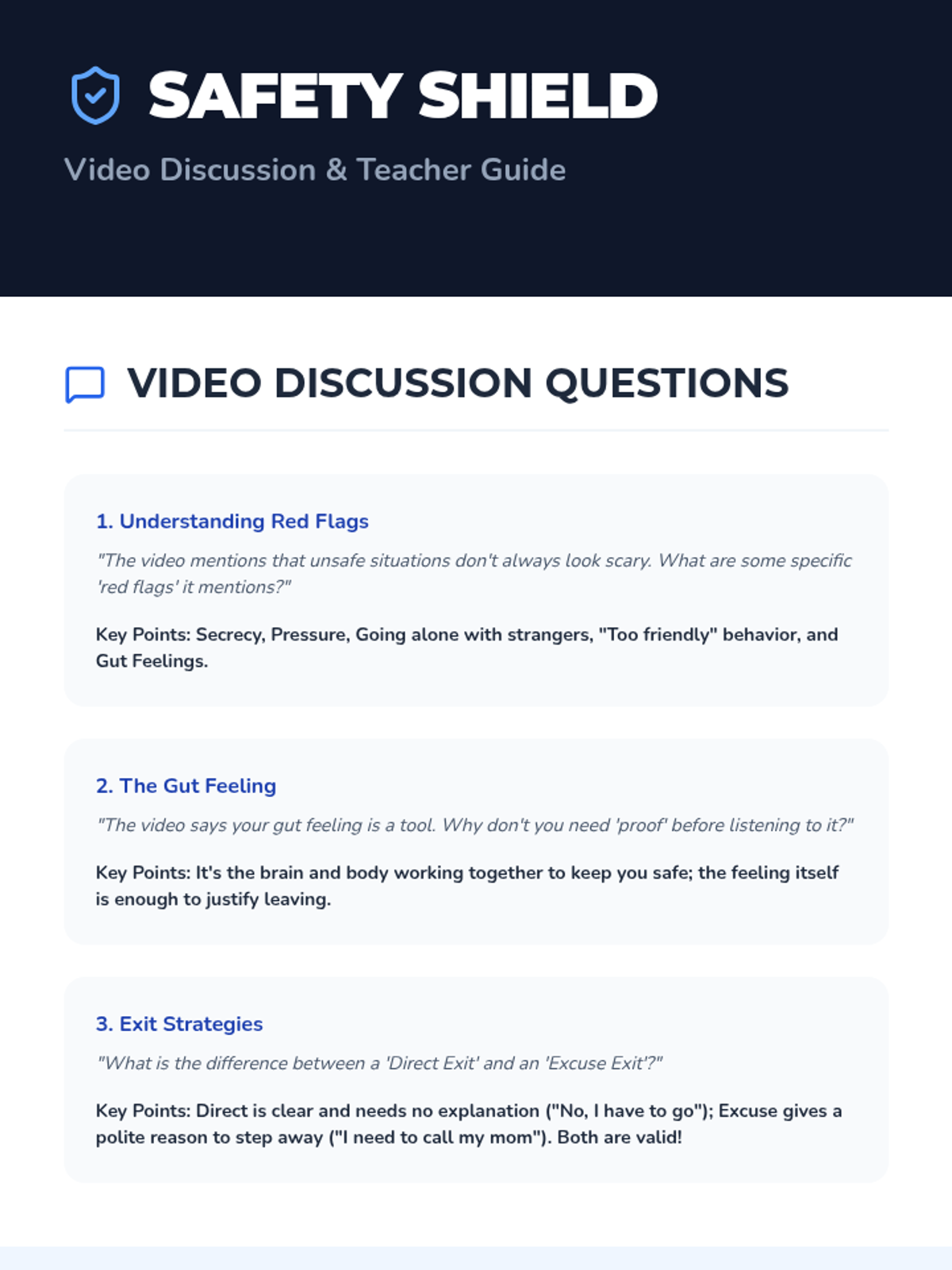
A comprehensive lesson on identifying unsafe social situations, setting physical and emotional boundaries with peers, and practicing assertive communication across school and community settings.
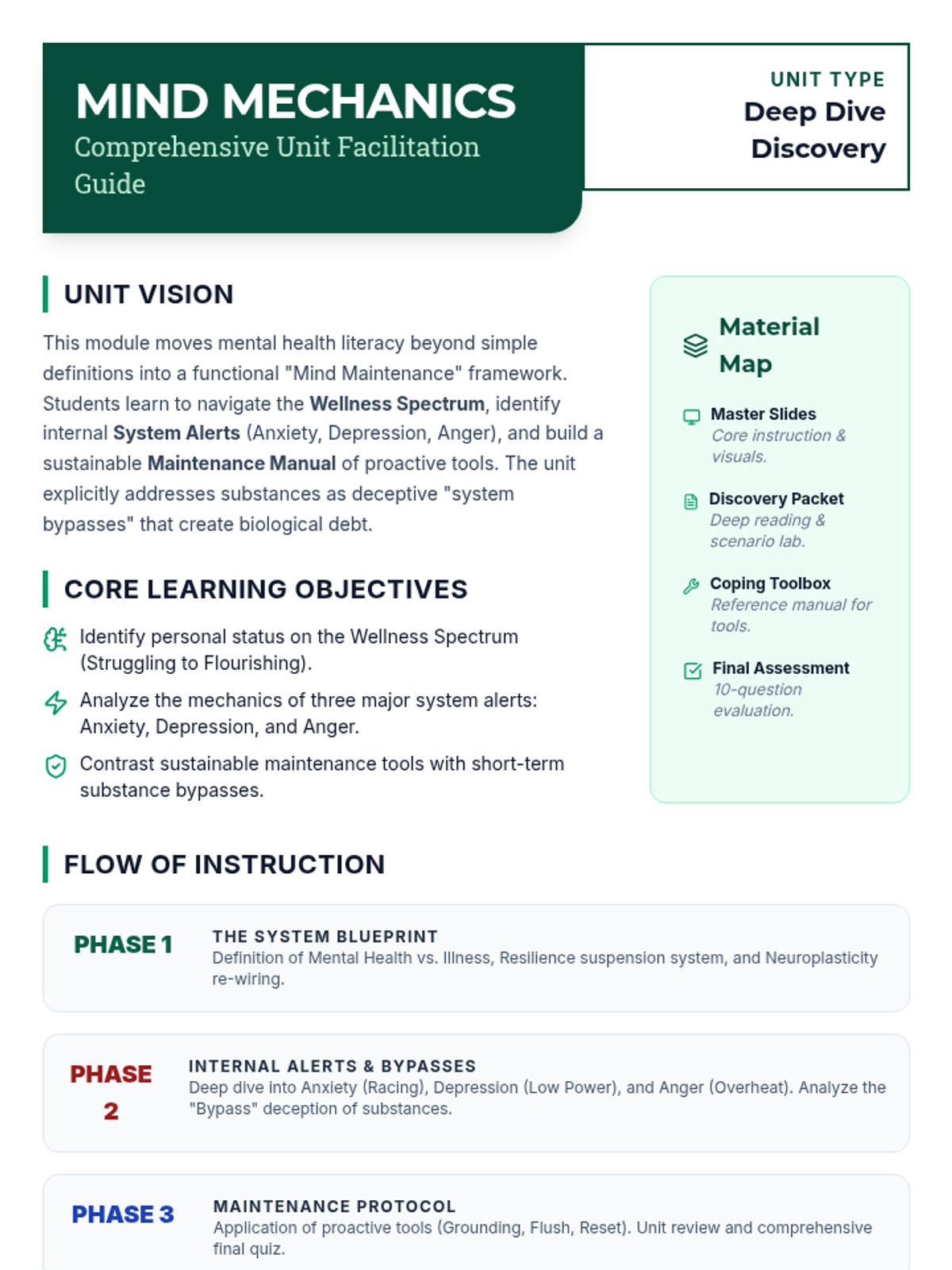
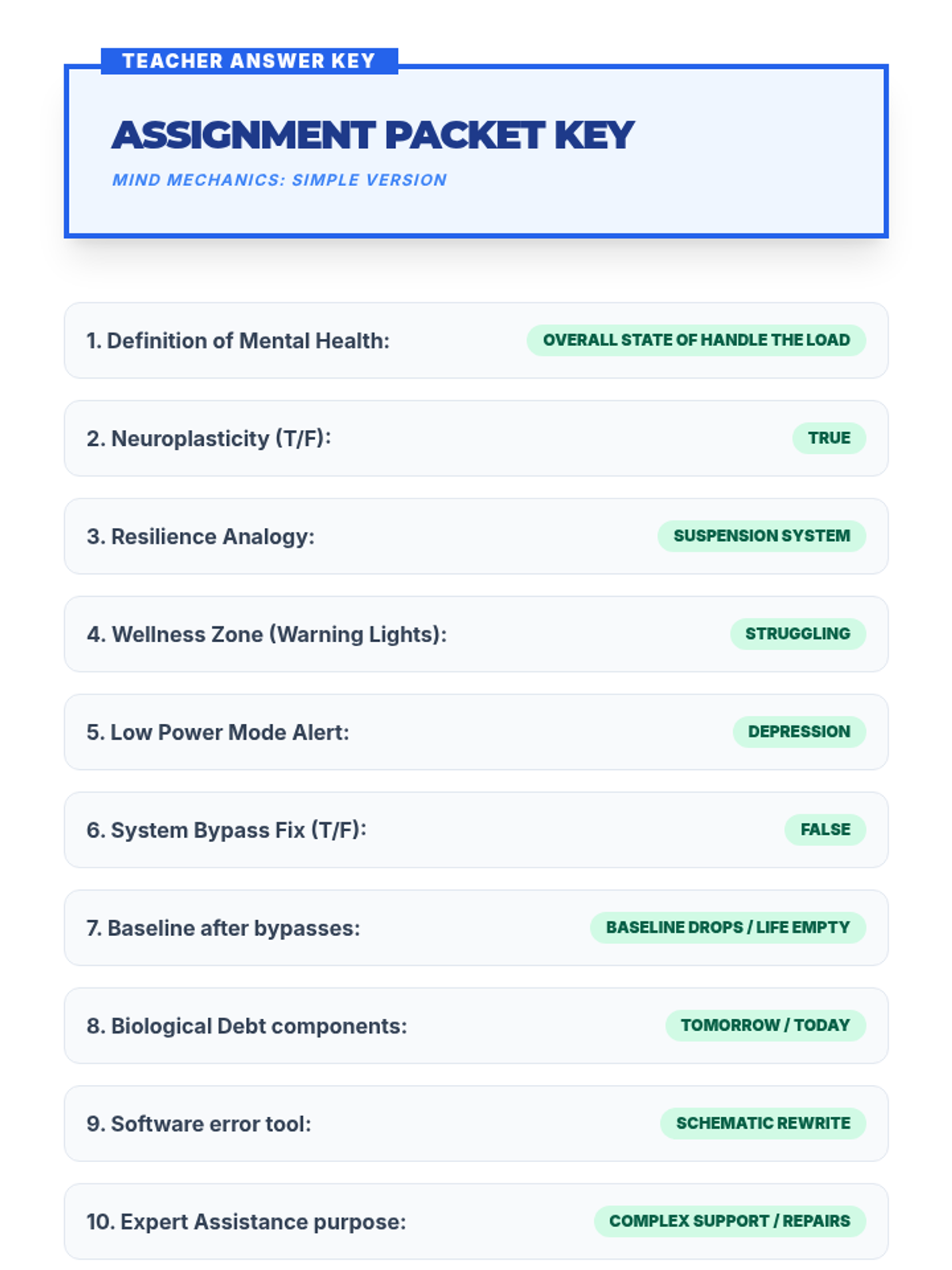
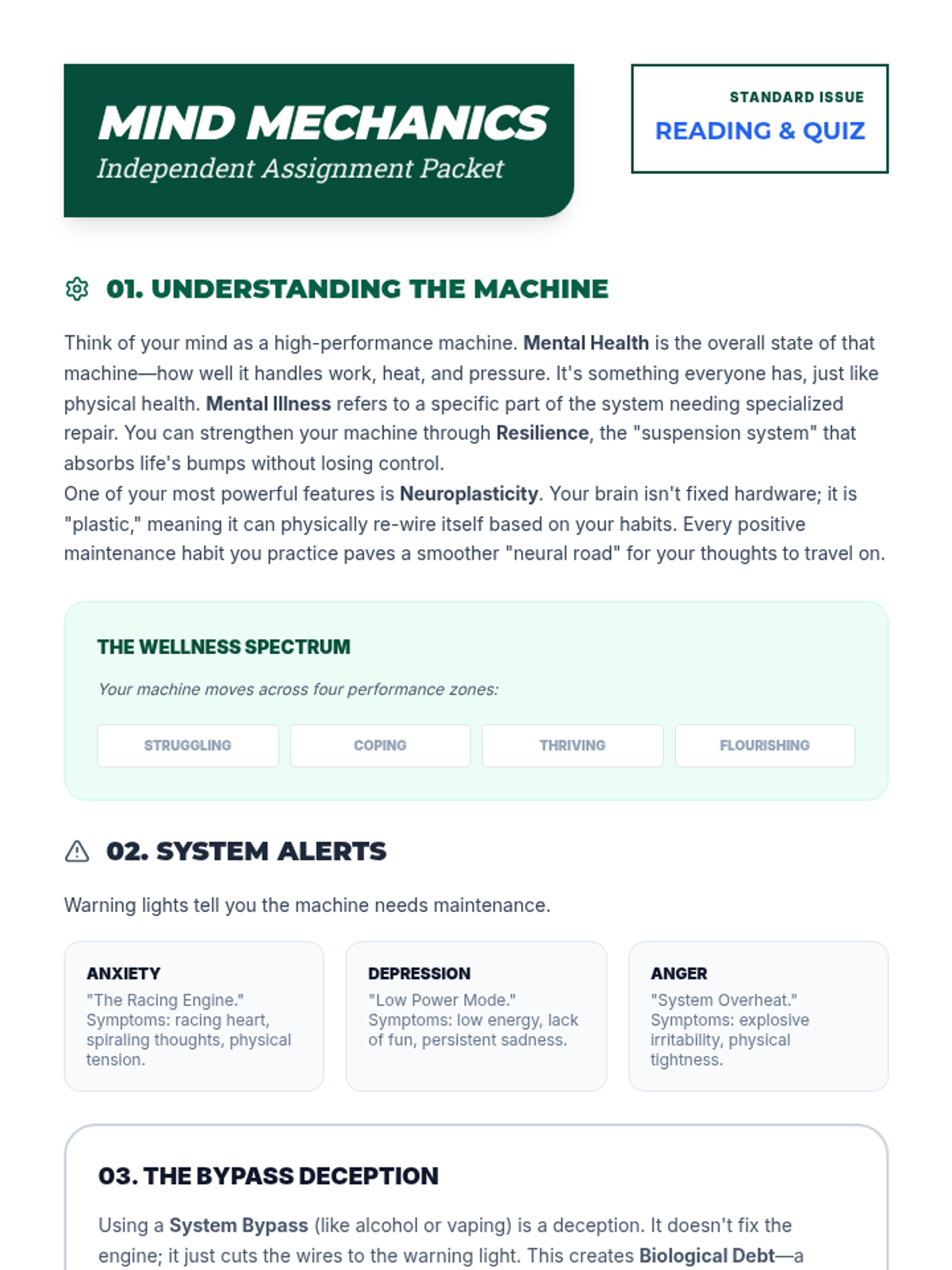
A comprehensive, in-depth unit on mental health literacy, identifying system alerts (Anxiety, Depression, Anger), and building a proactive coping toolkit. Includes detailed reading, scenario analysis, and a 10-question final assessment.
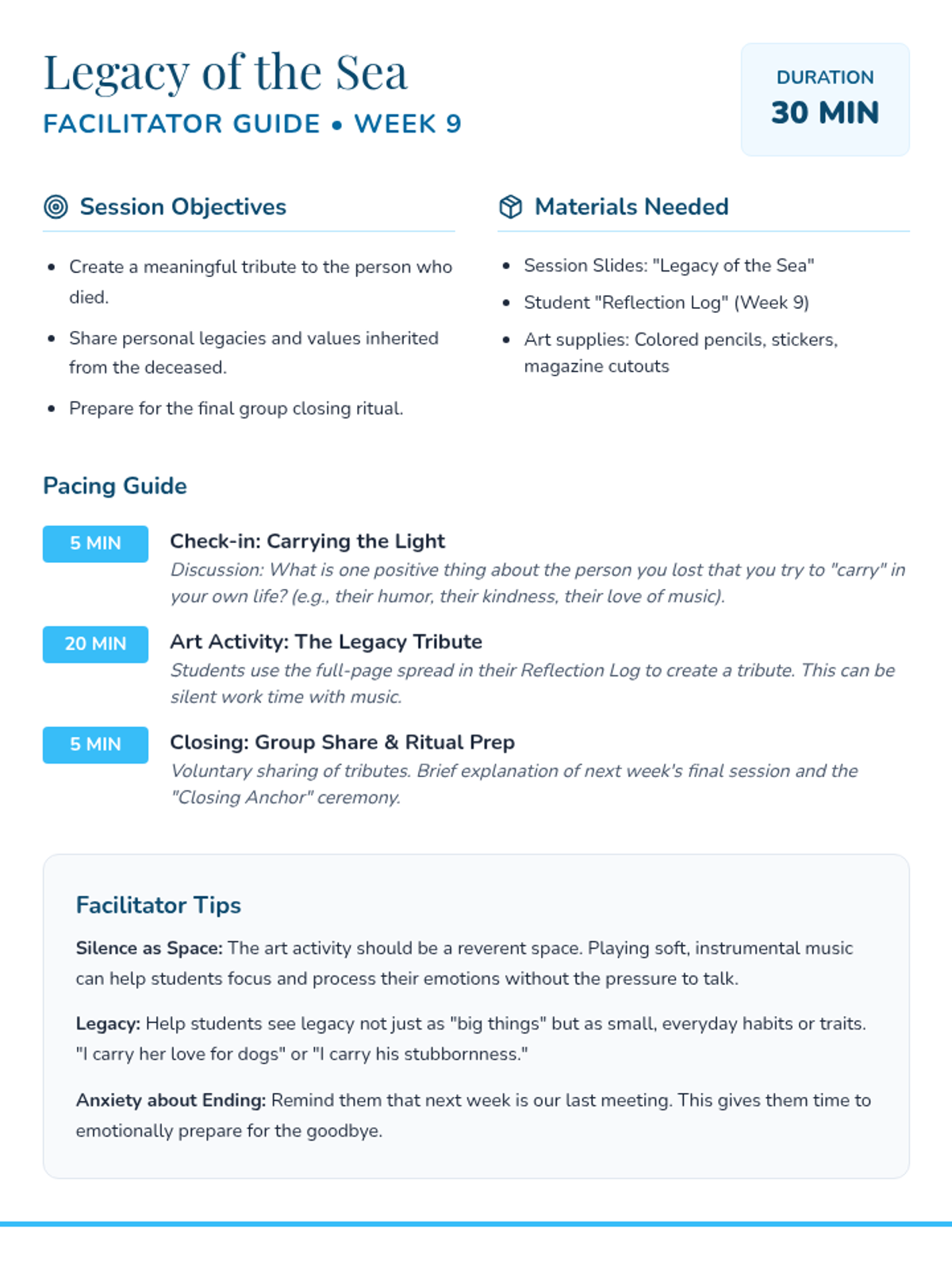
Creating meaningful ways to honor the person who died and maintaining their legacy.
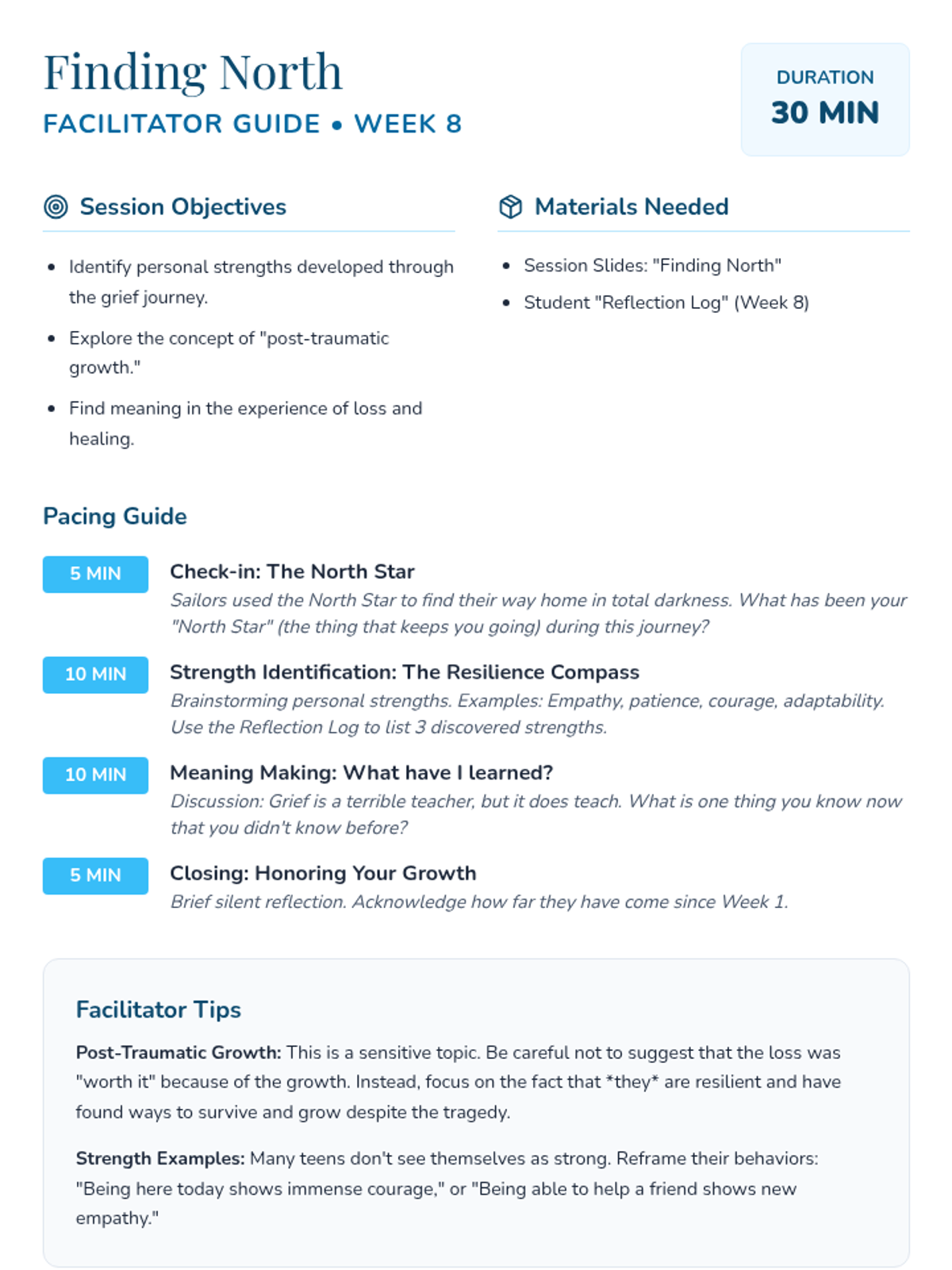
Identifying personal growth, strengths, and finding meaning in the journey toward healing.
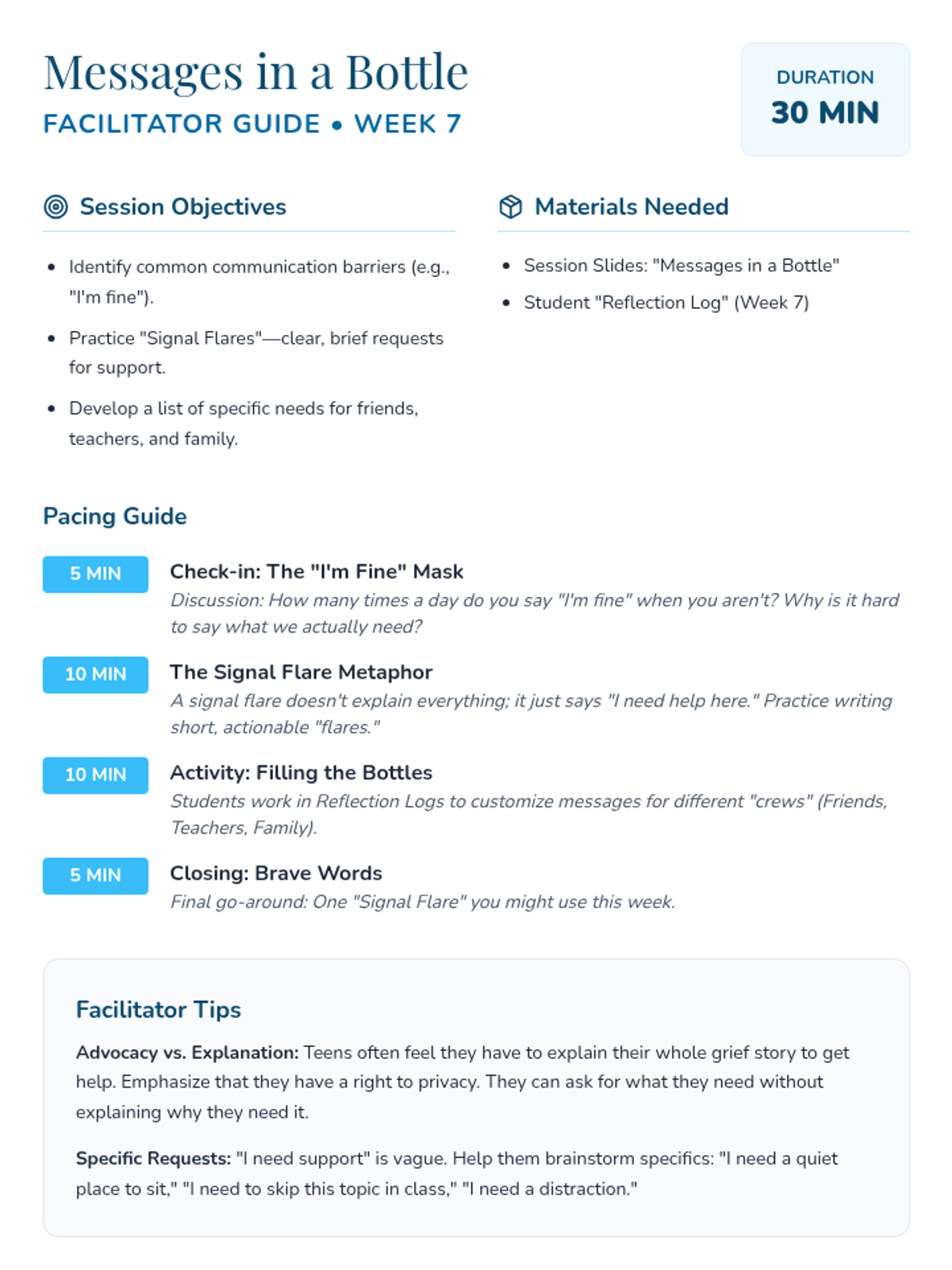
Developing self-advocacy and communication skills to share needs with friends, family, and teachers.
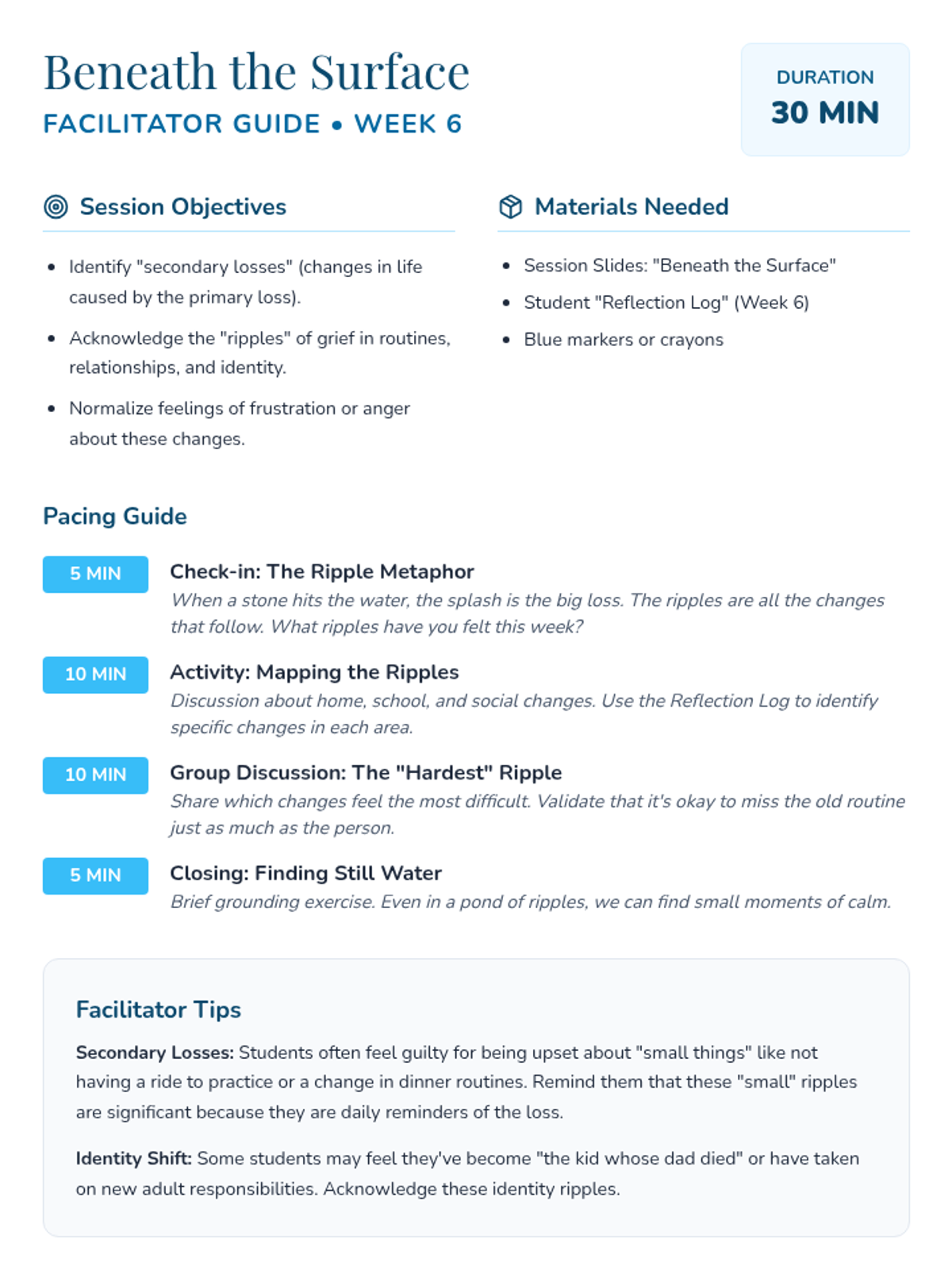
Exploring secondary losses and the 'ripples' of grief that affect daily life, routines, and relationships.
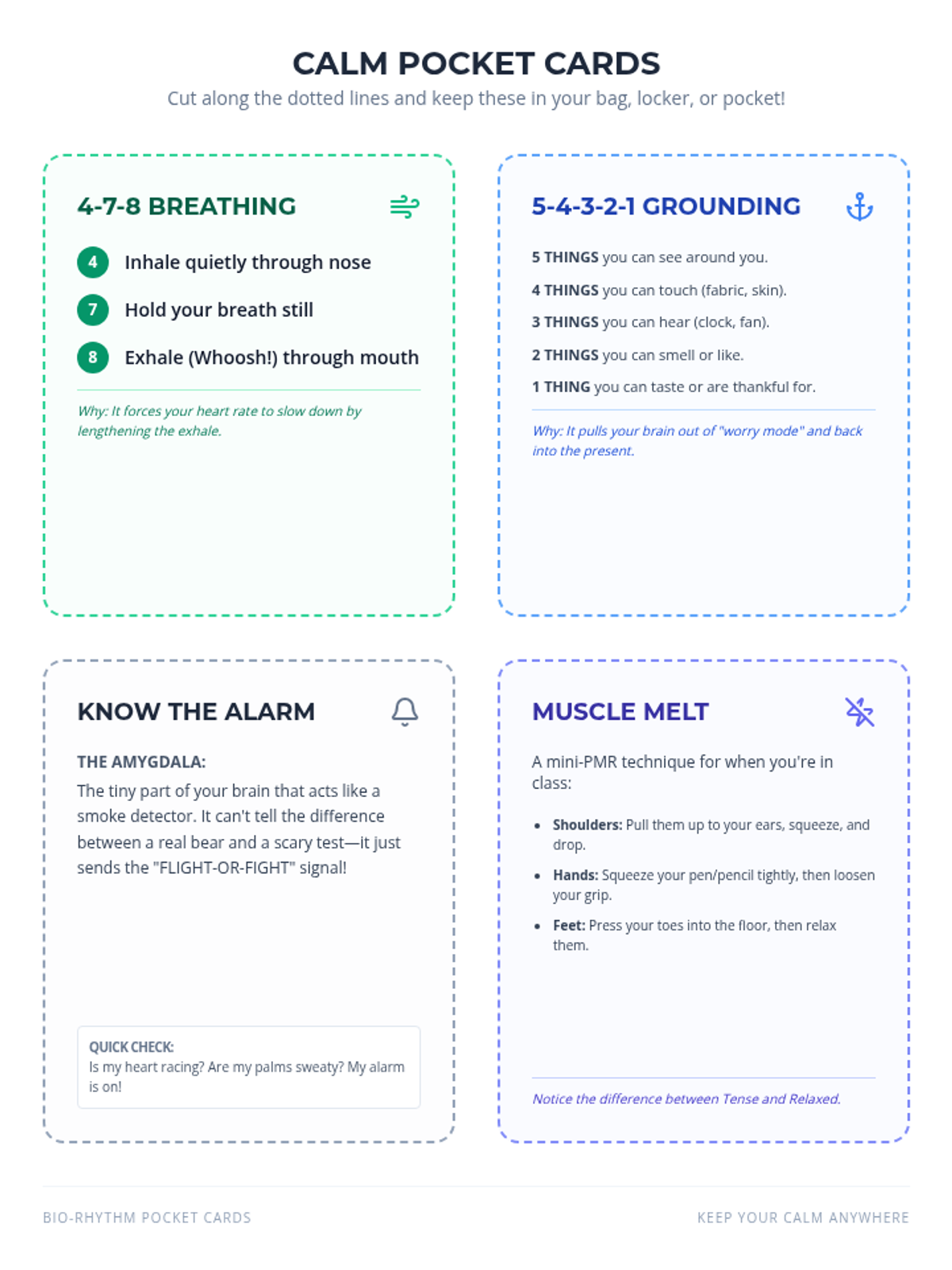
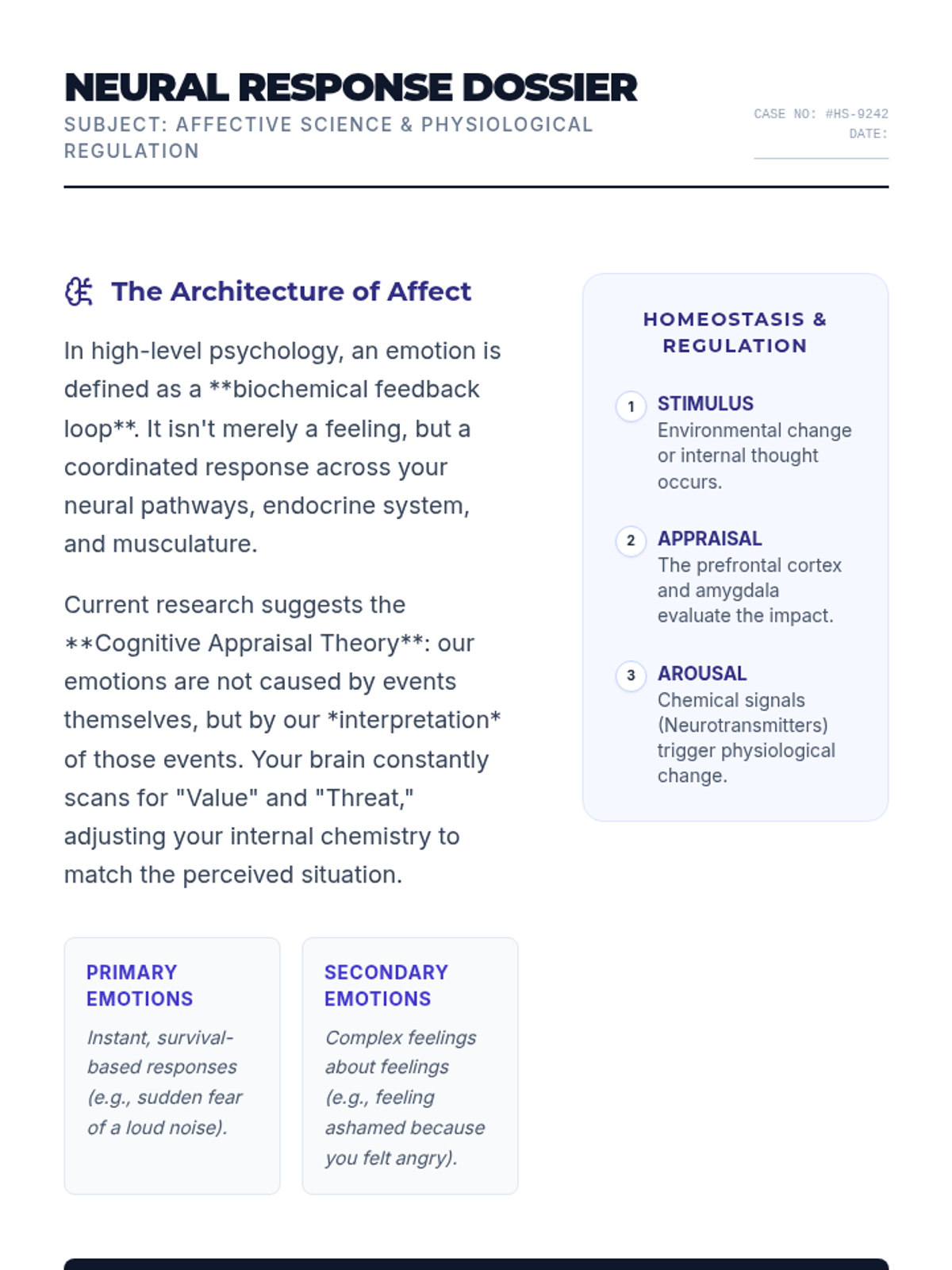
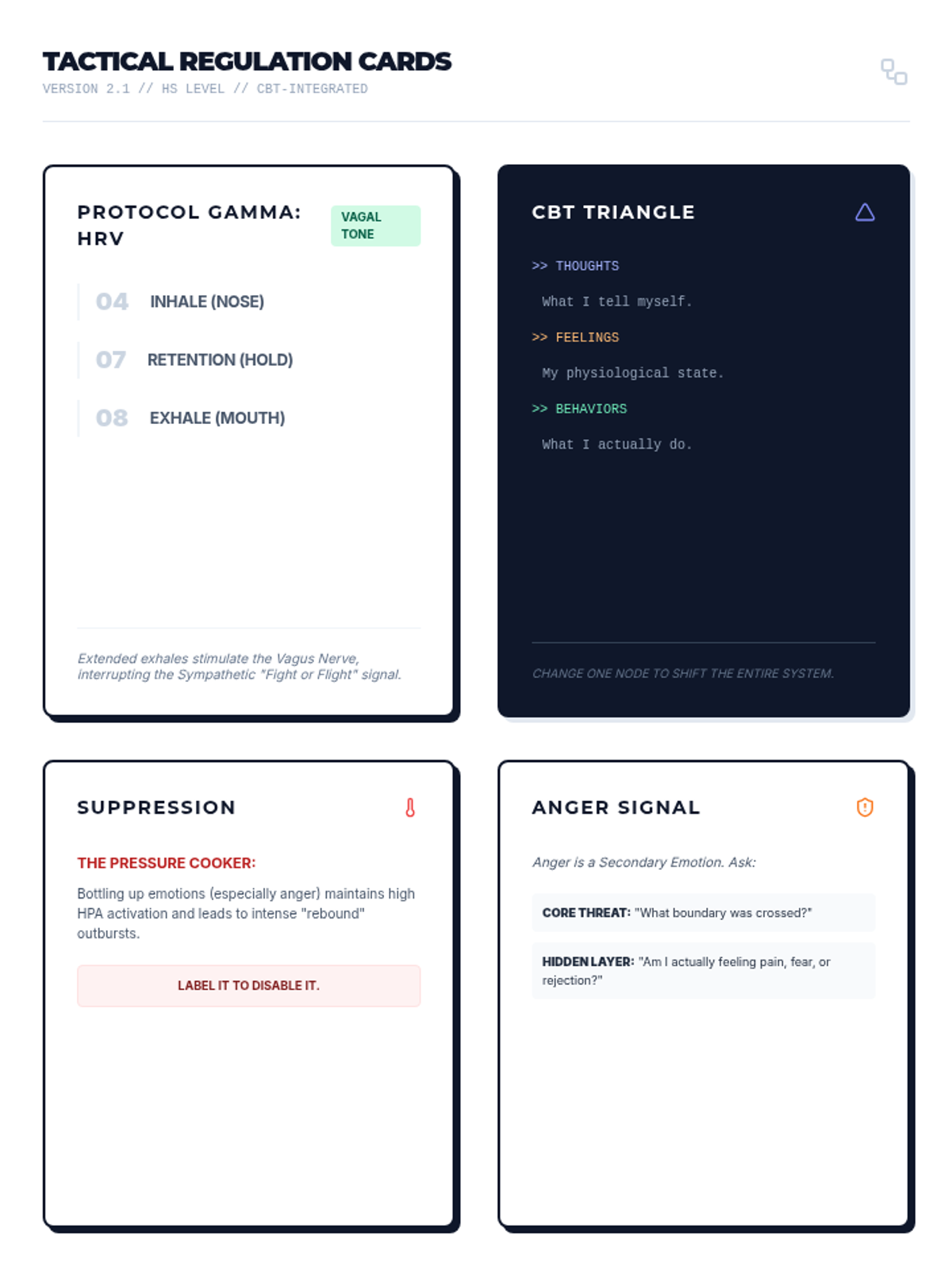
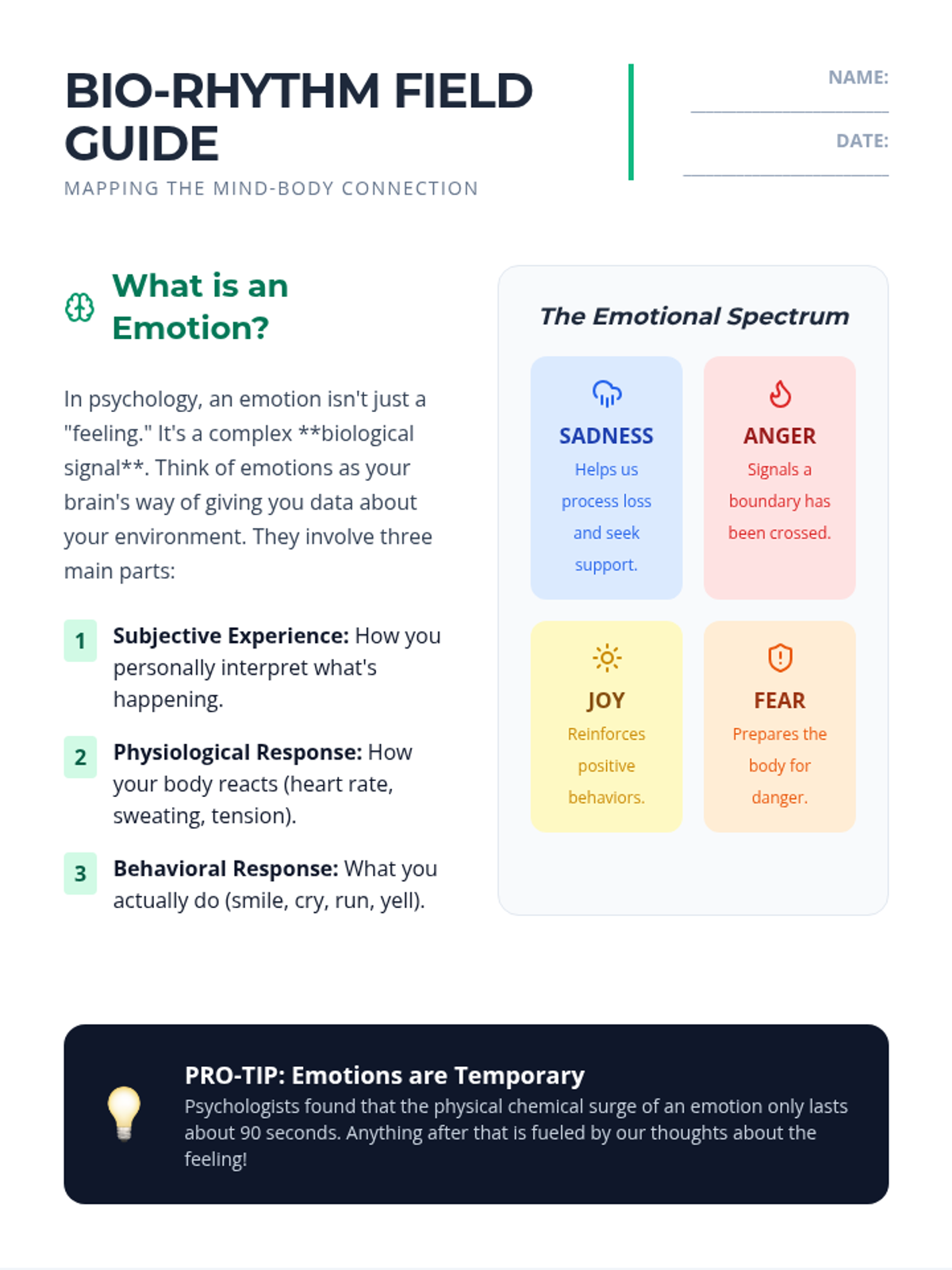
A comprehensive exploration of the psychology of emotions and the physiological impact of stress, featuring a multi-page informational guide and portable coping skill cards for middle school students.
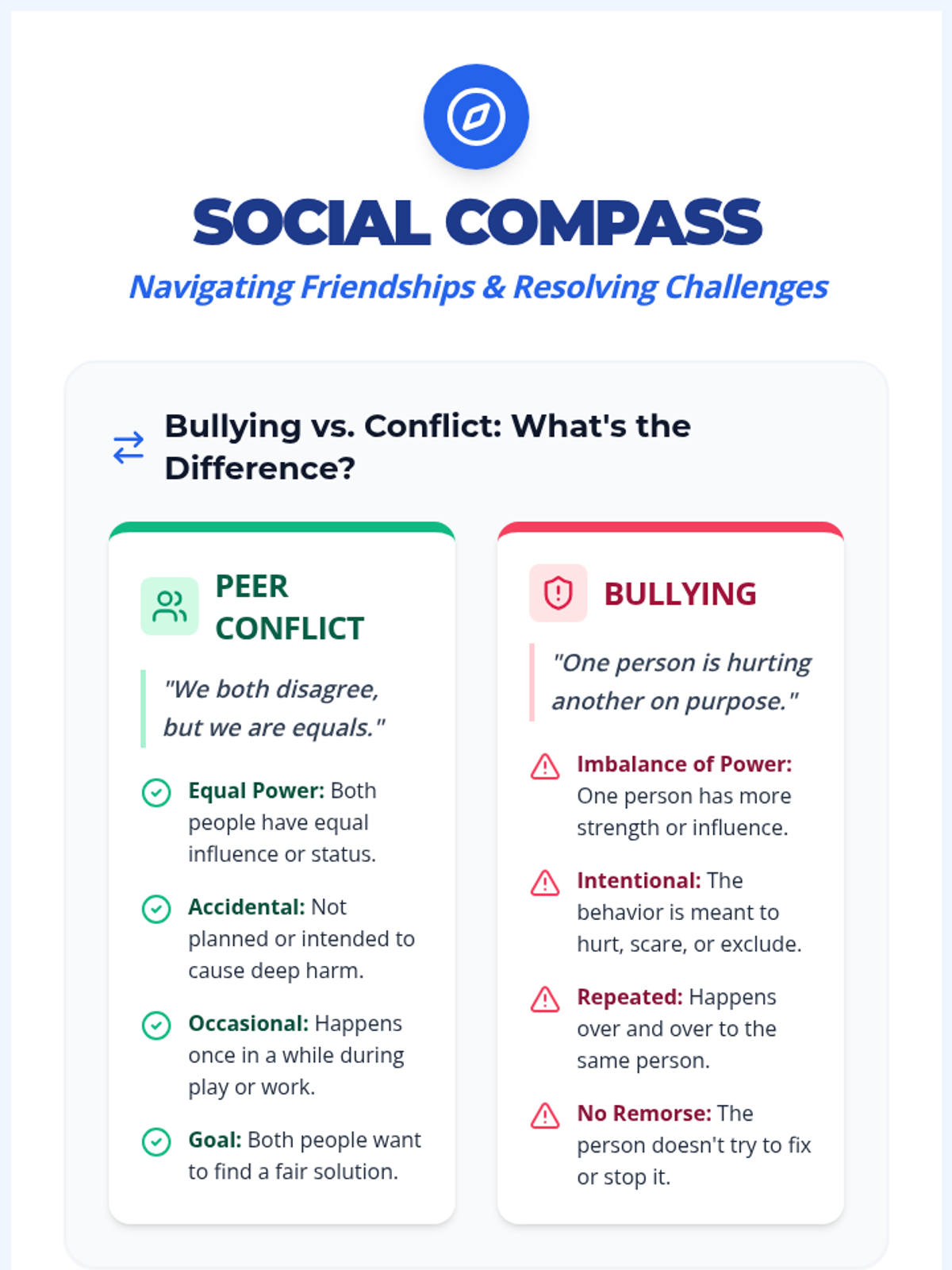
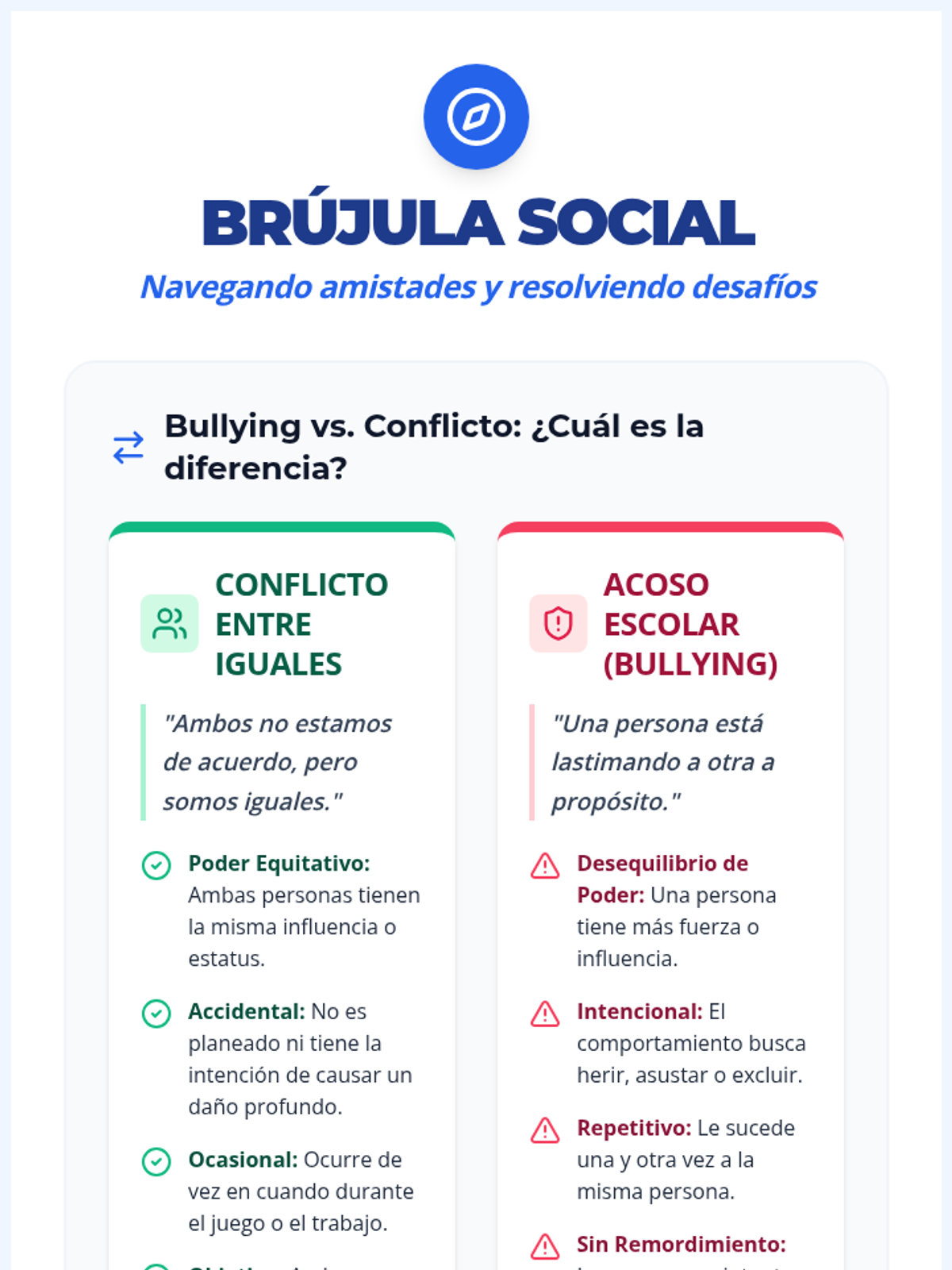
A set of resources designed to help parents and students distinguish between peer conflict and bullying, providing clear action plans for resolution and support.
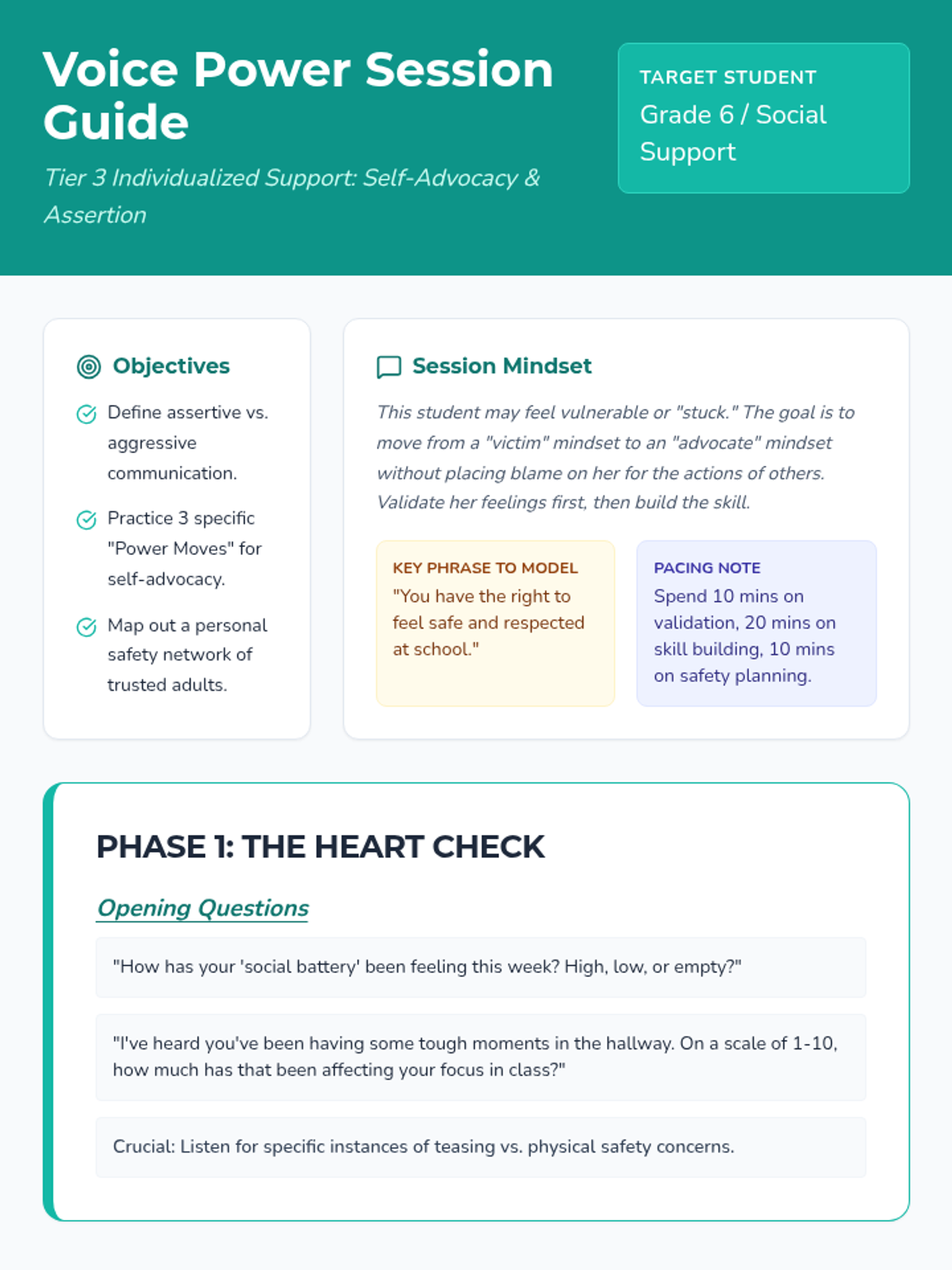
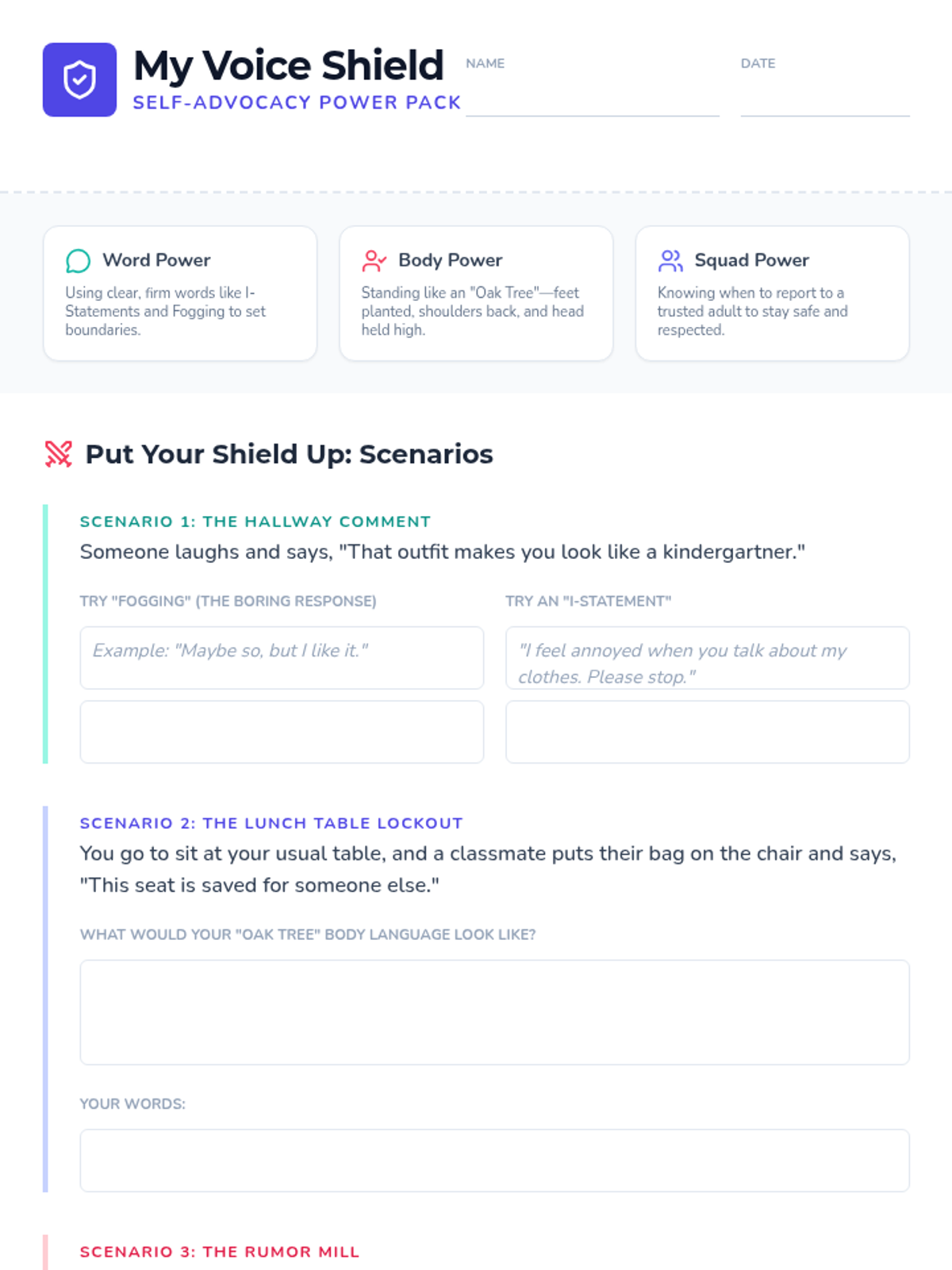
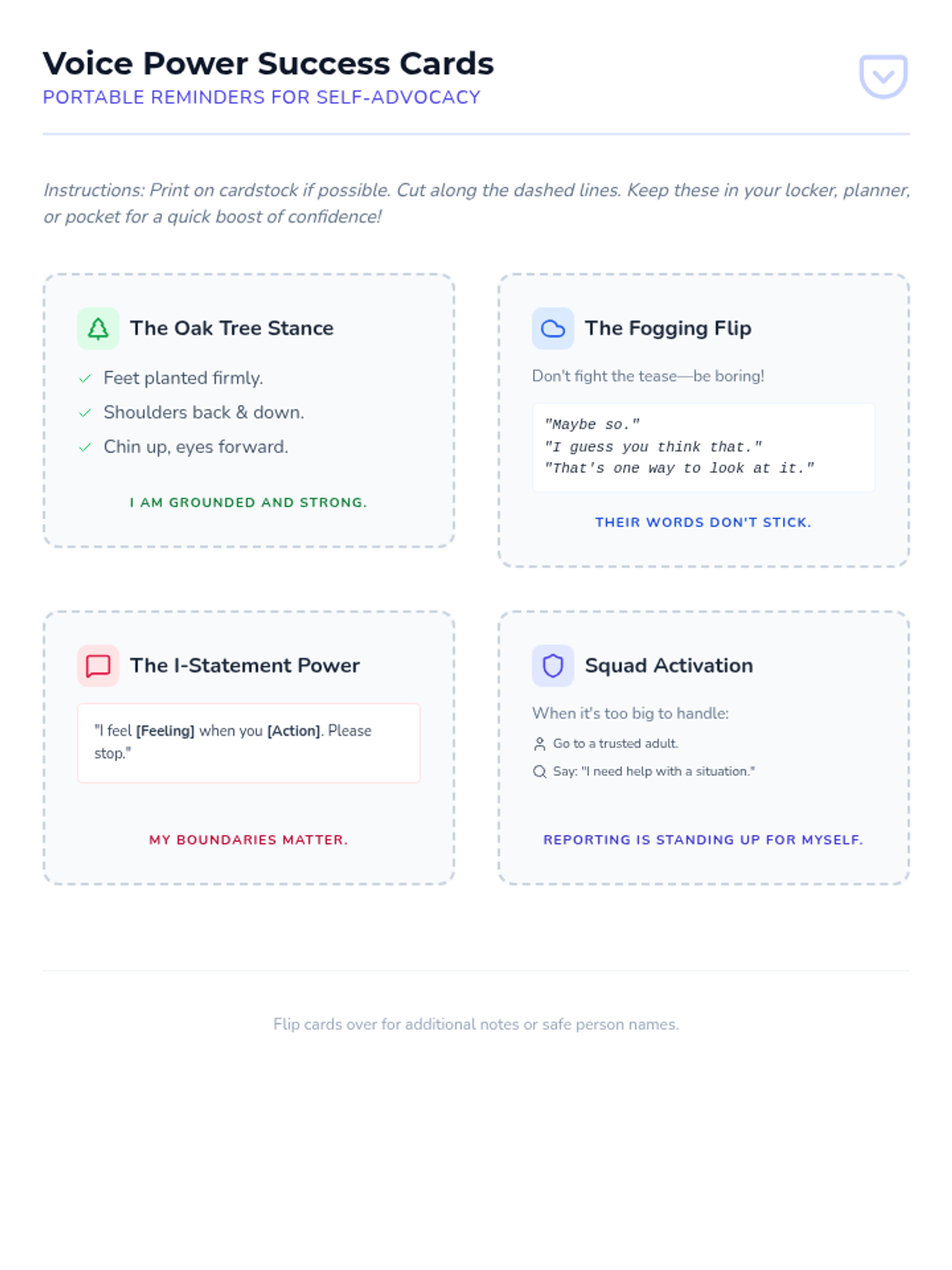
A Tier 3 intensive counseling lesson designed to empower students with assertive communication skills and self-advocacy strategies to navigate social conflict and bullying.
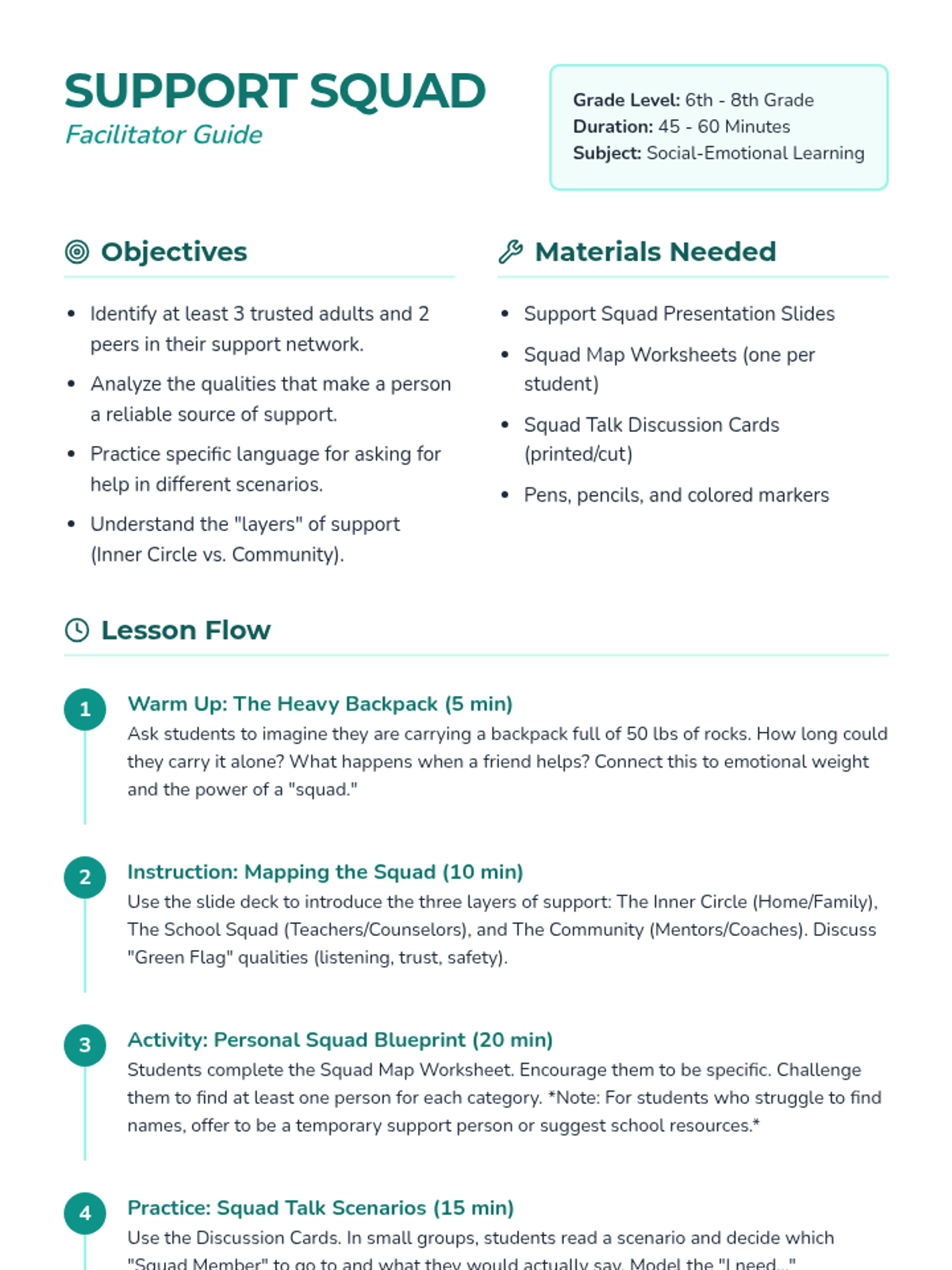
A comprehensive lesson for middle schoolers to identify their personal support network, evaluate the qualities of trusted individuals, and practice seeking help effectively.
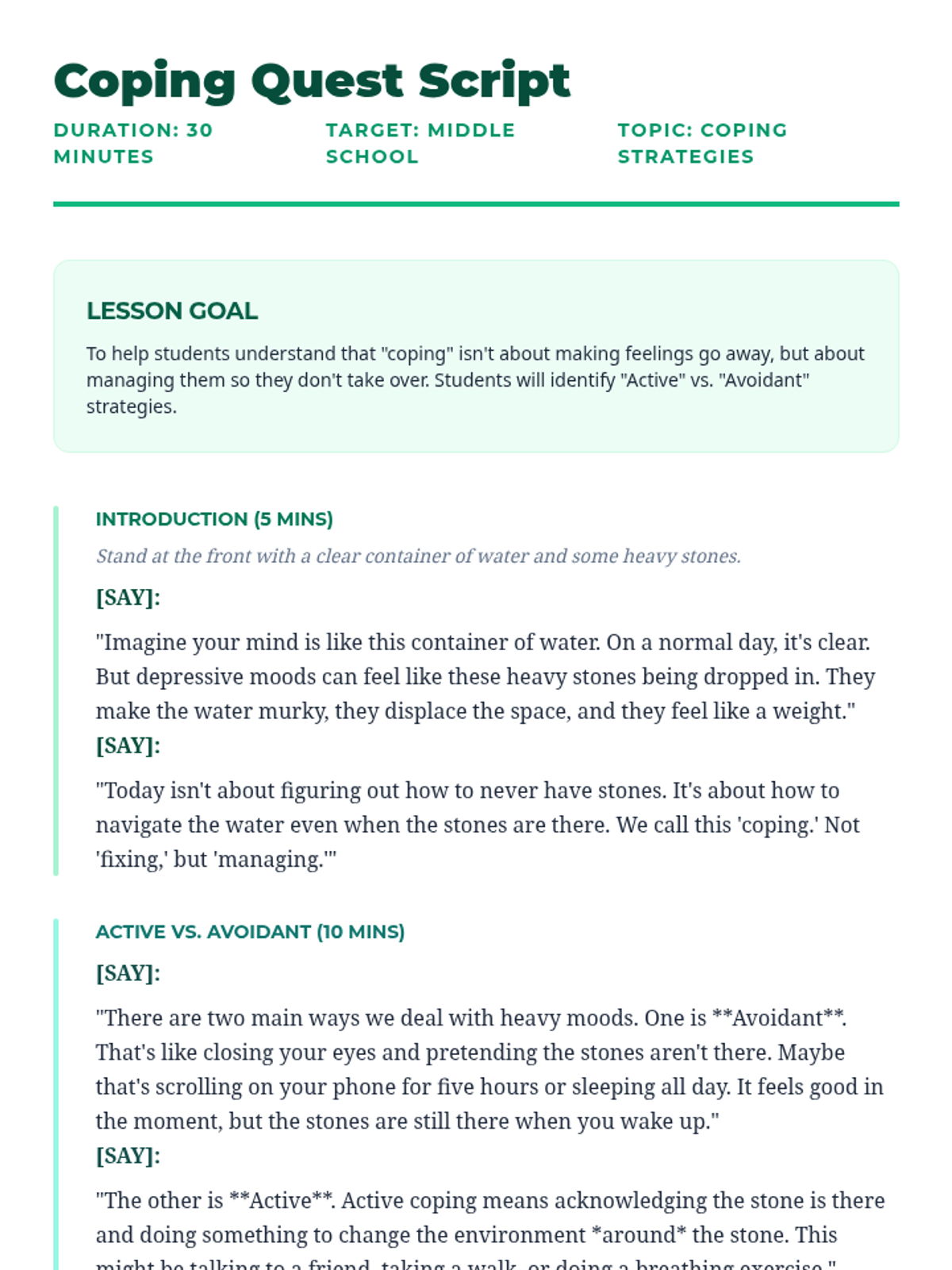
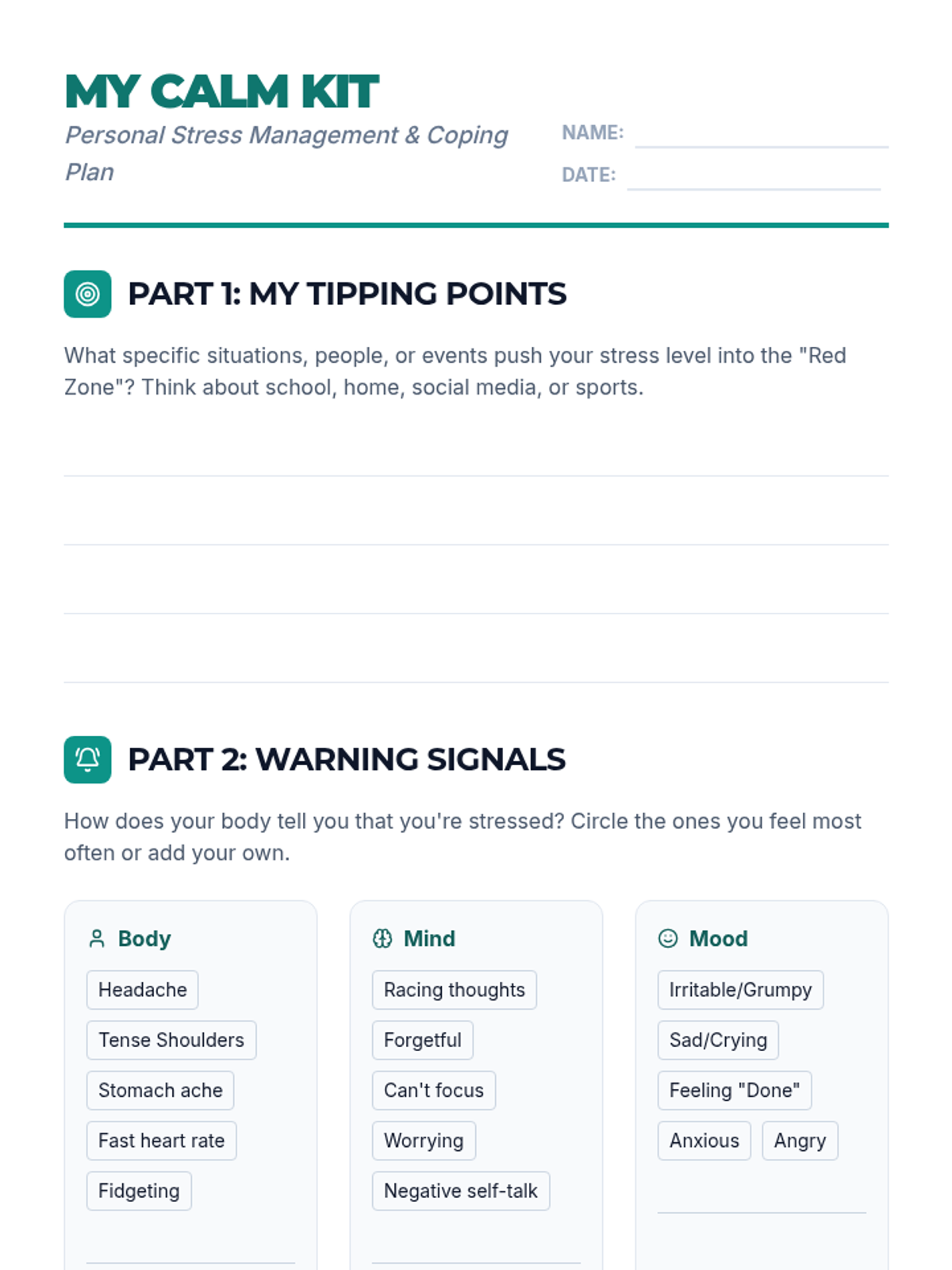
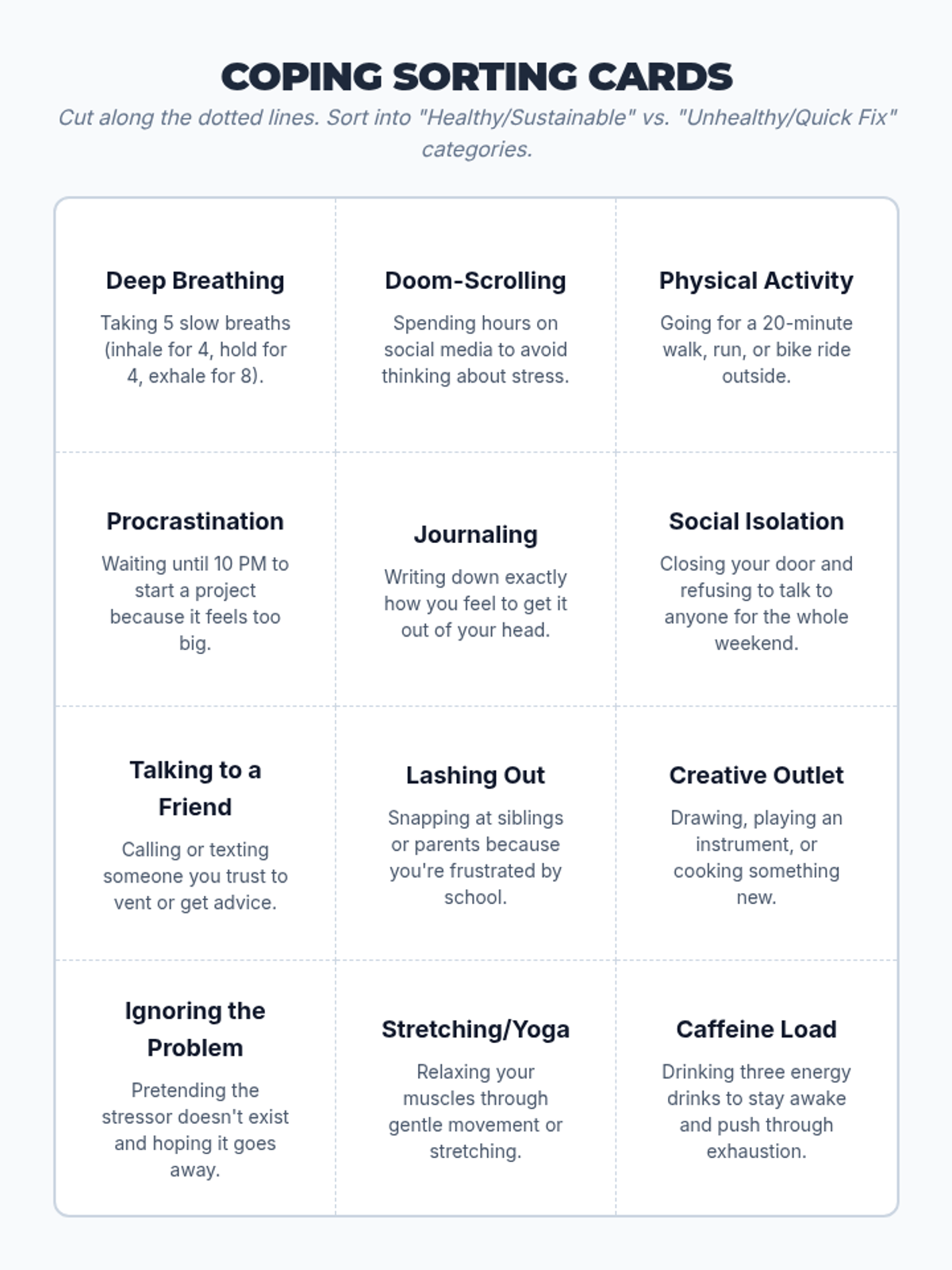
A comprehensive lesson for middle or high school students focused on identifying stress triggers, distinguishing between healthy and unhealthy coping mechanisms, and building a personalized 'Coping Toolkit' for emotional regulation.
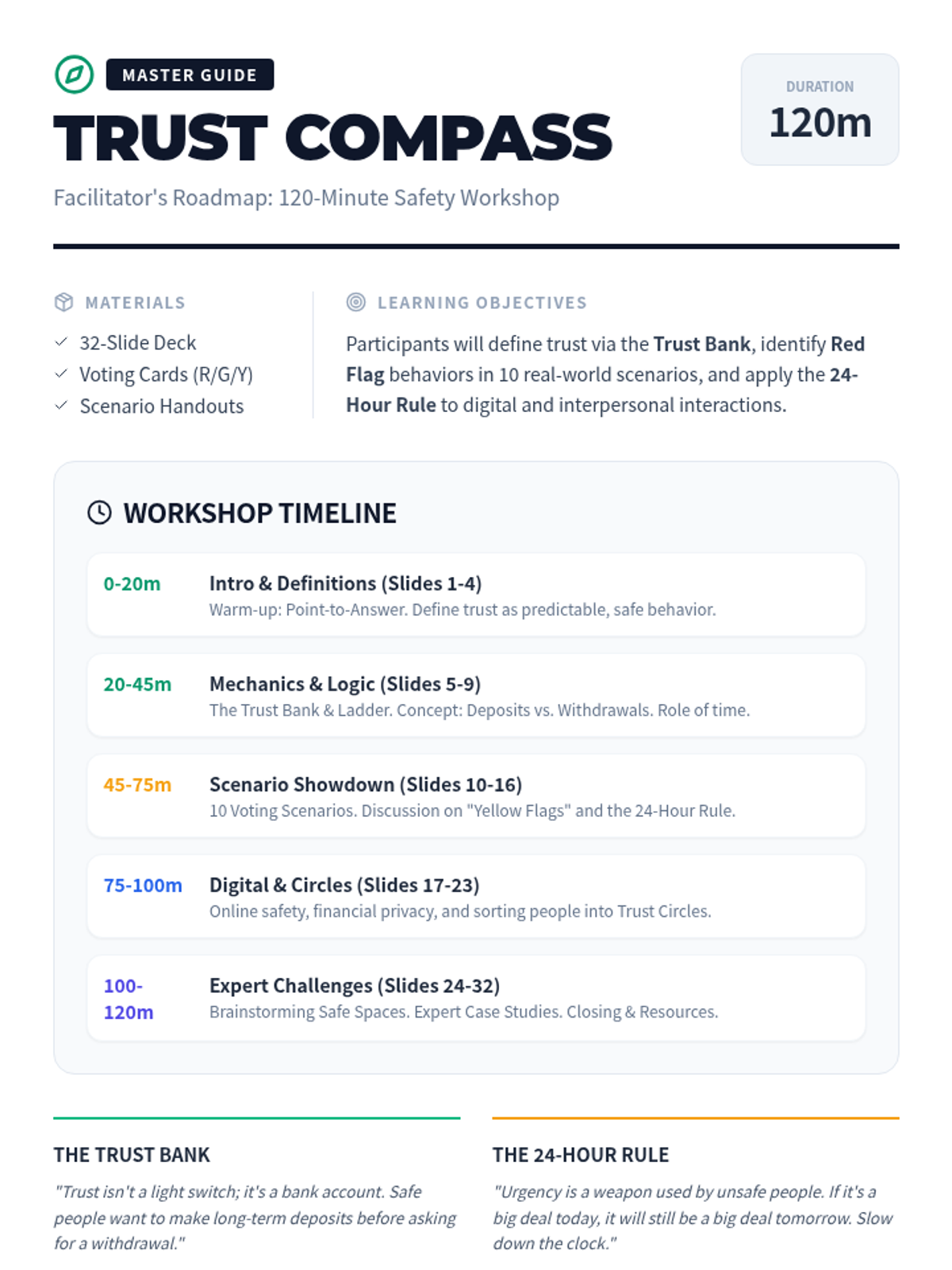
A comprehensive lesson designed to help participants identify safe versus unsafe behaviors, recognize red flags in relationships and online interactions, and develop a plan for seeking help when unsure.
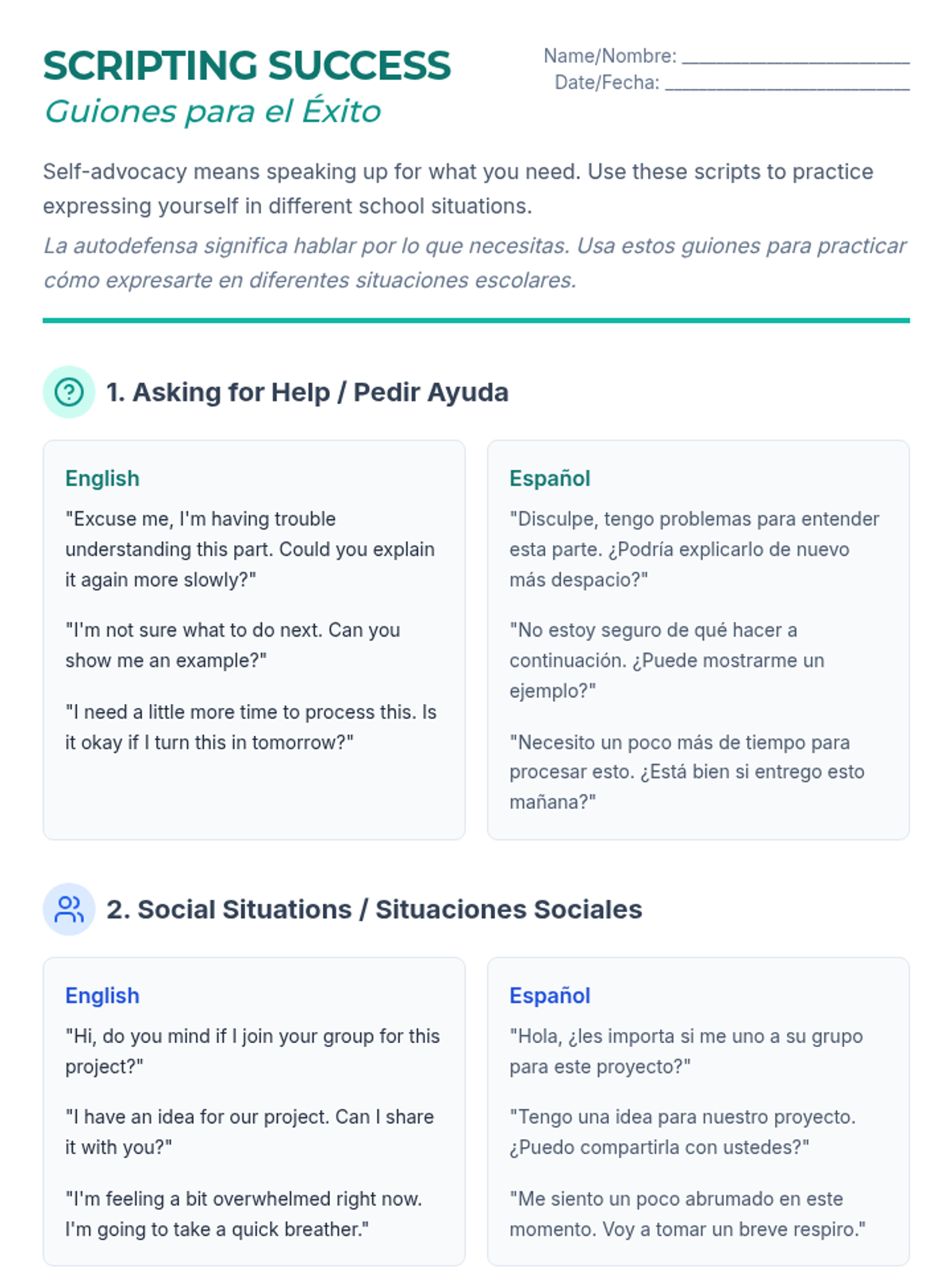
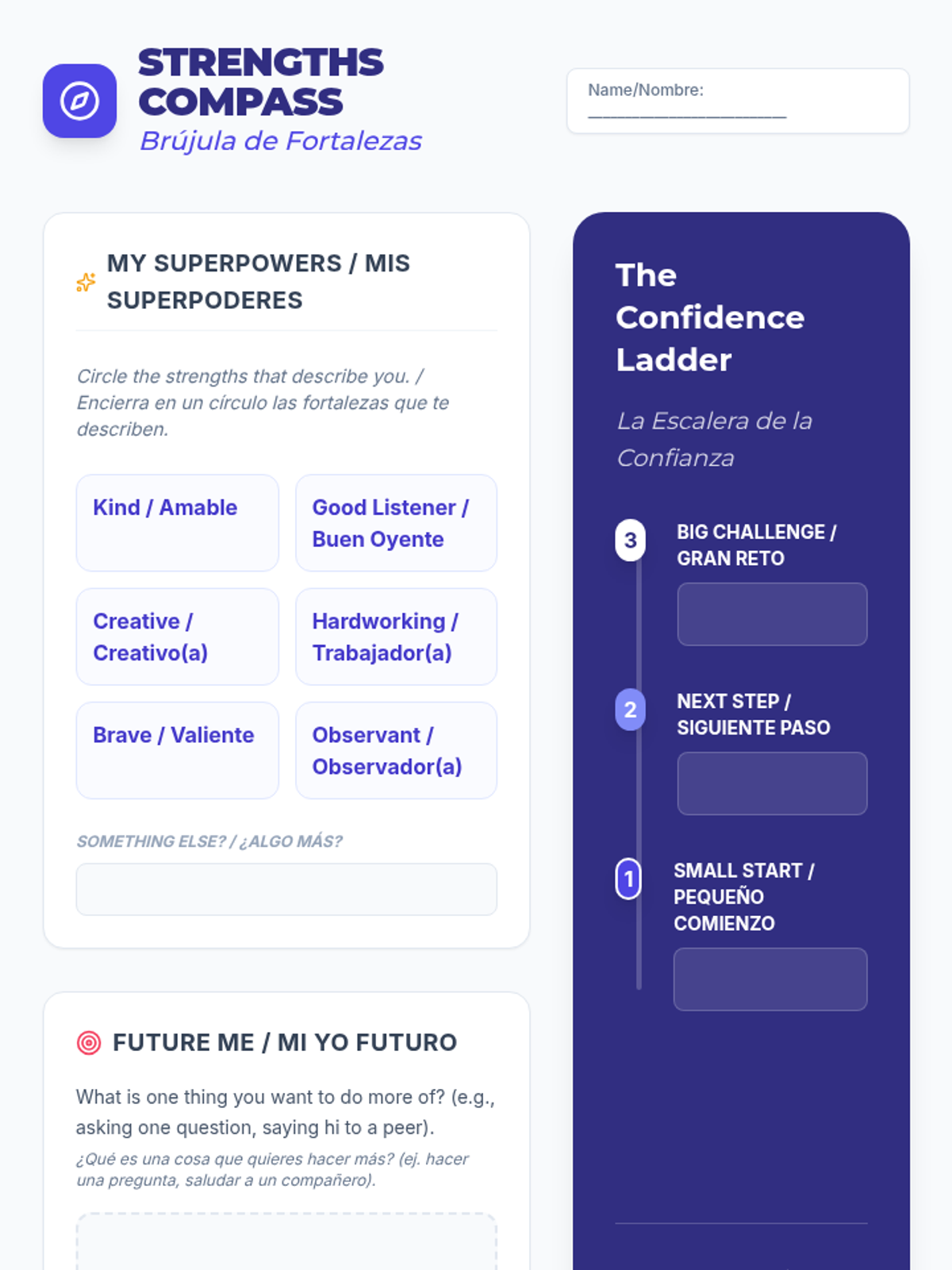
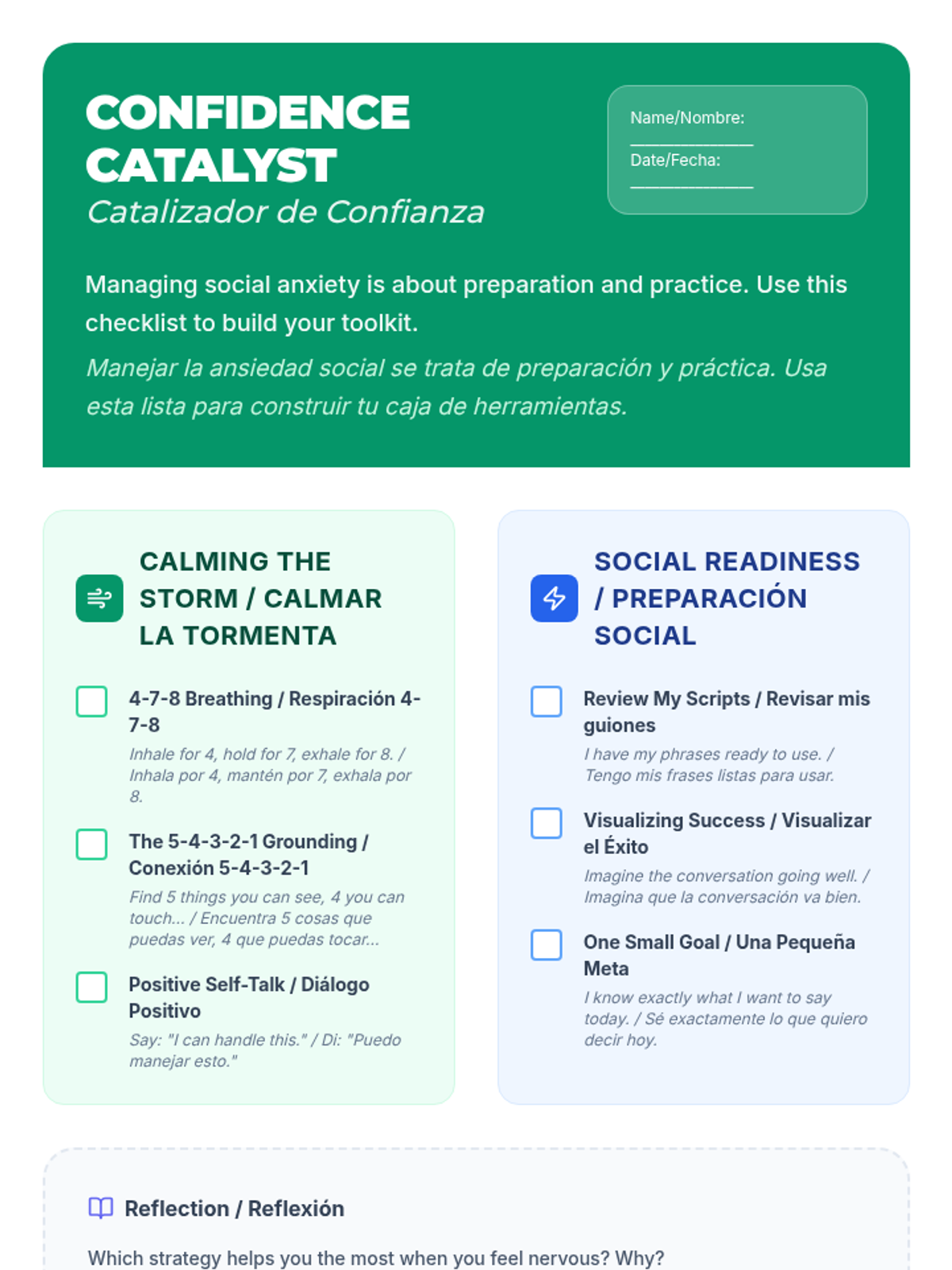
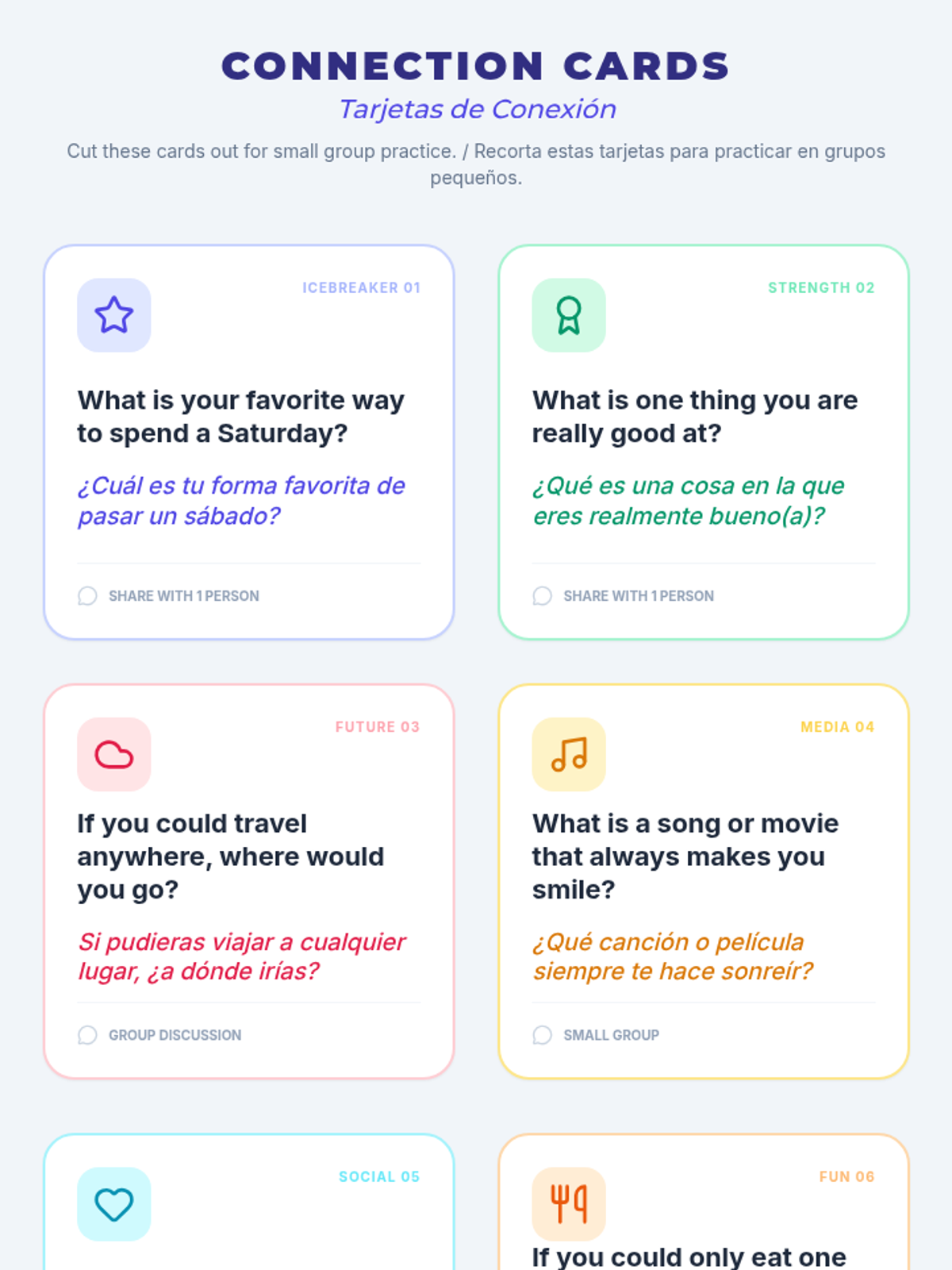
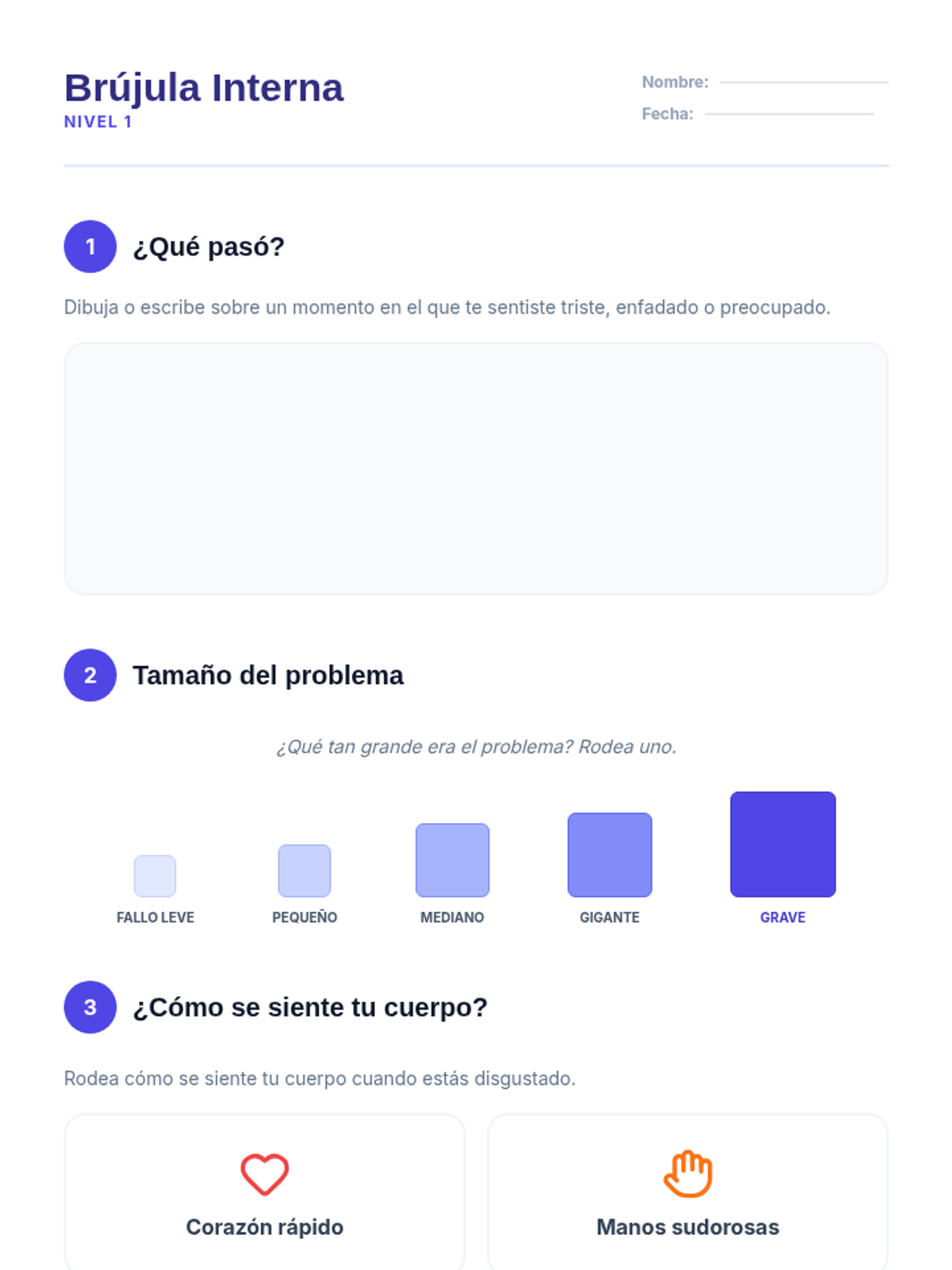
A collection of bilingual resources designed to help a shy Spanish-speaking student identify personal strengths, manage social anxiety, and practice self-advocacy through structured scripts and visual goals.
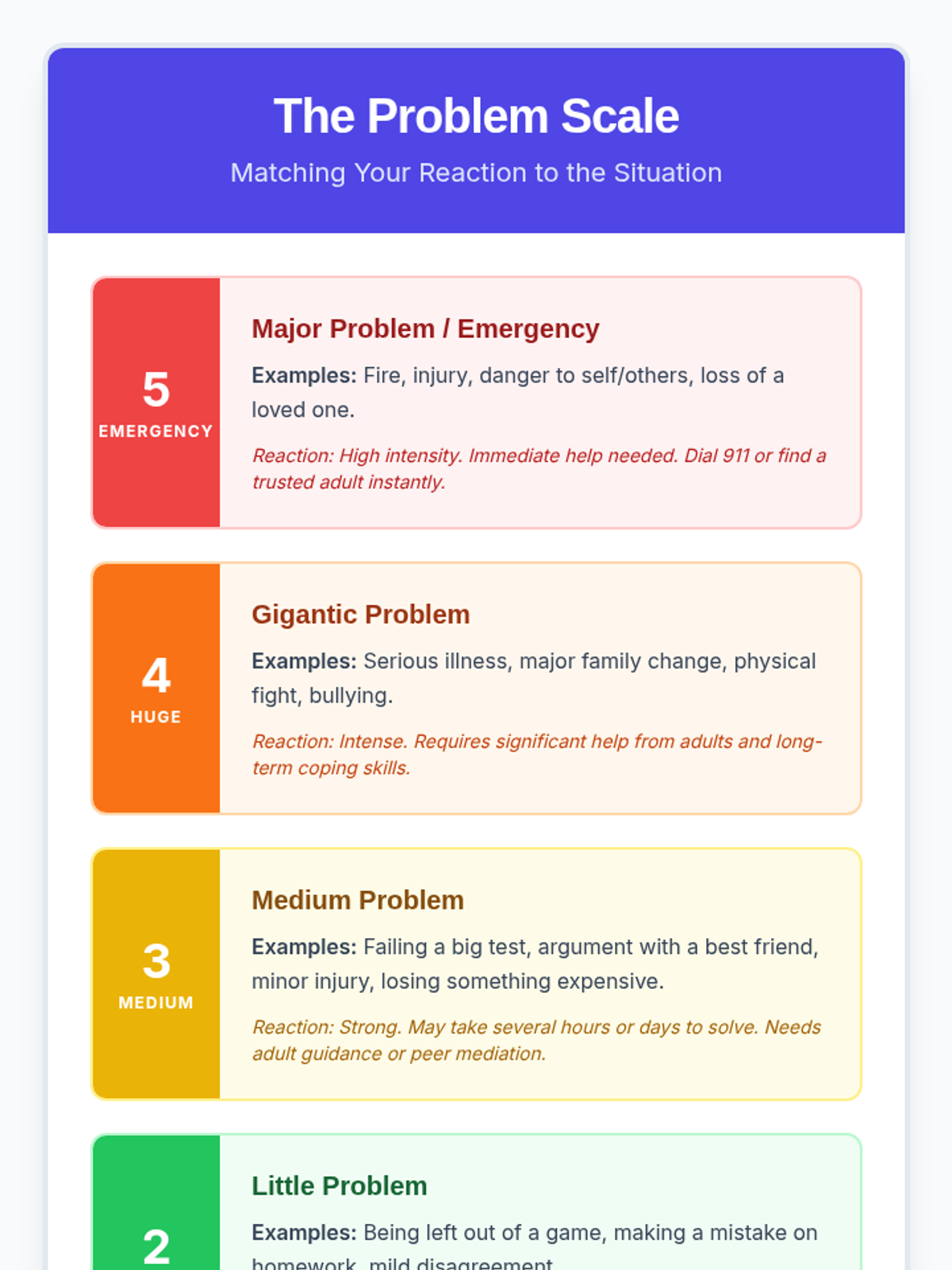
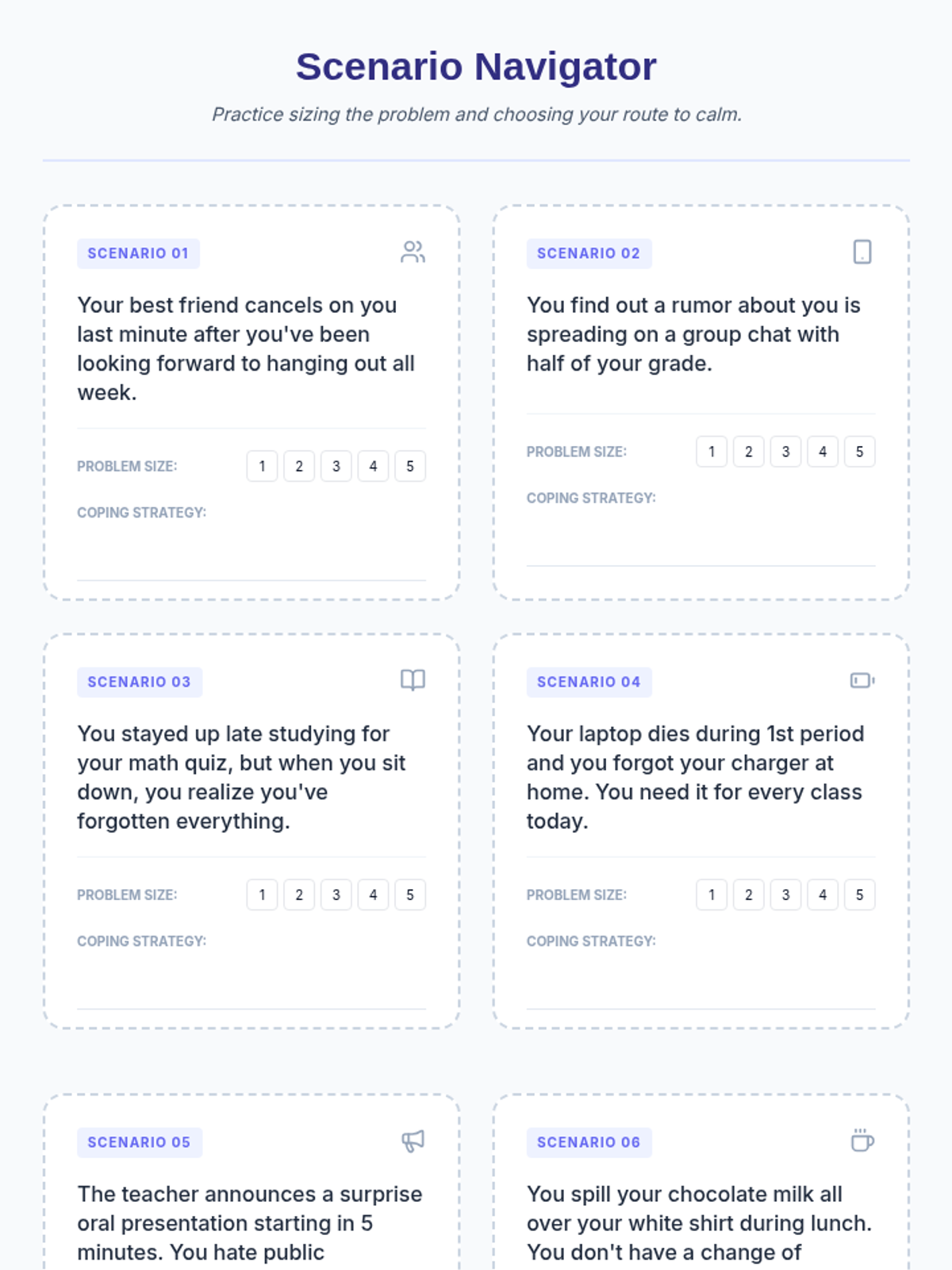
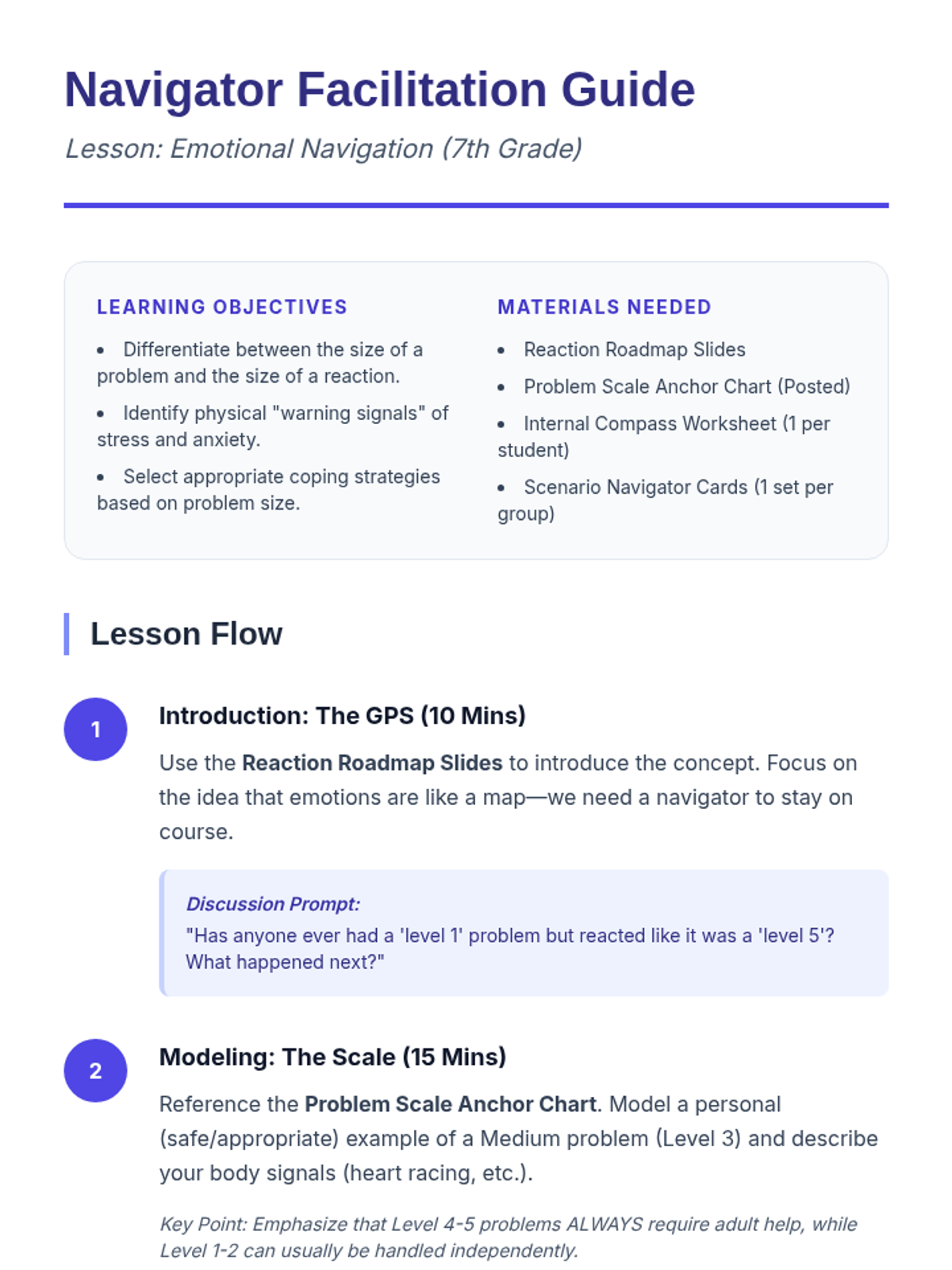
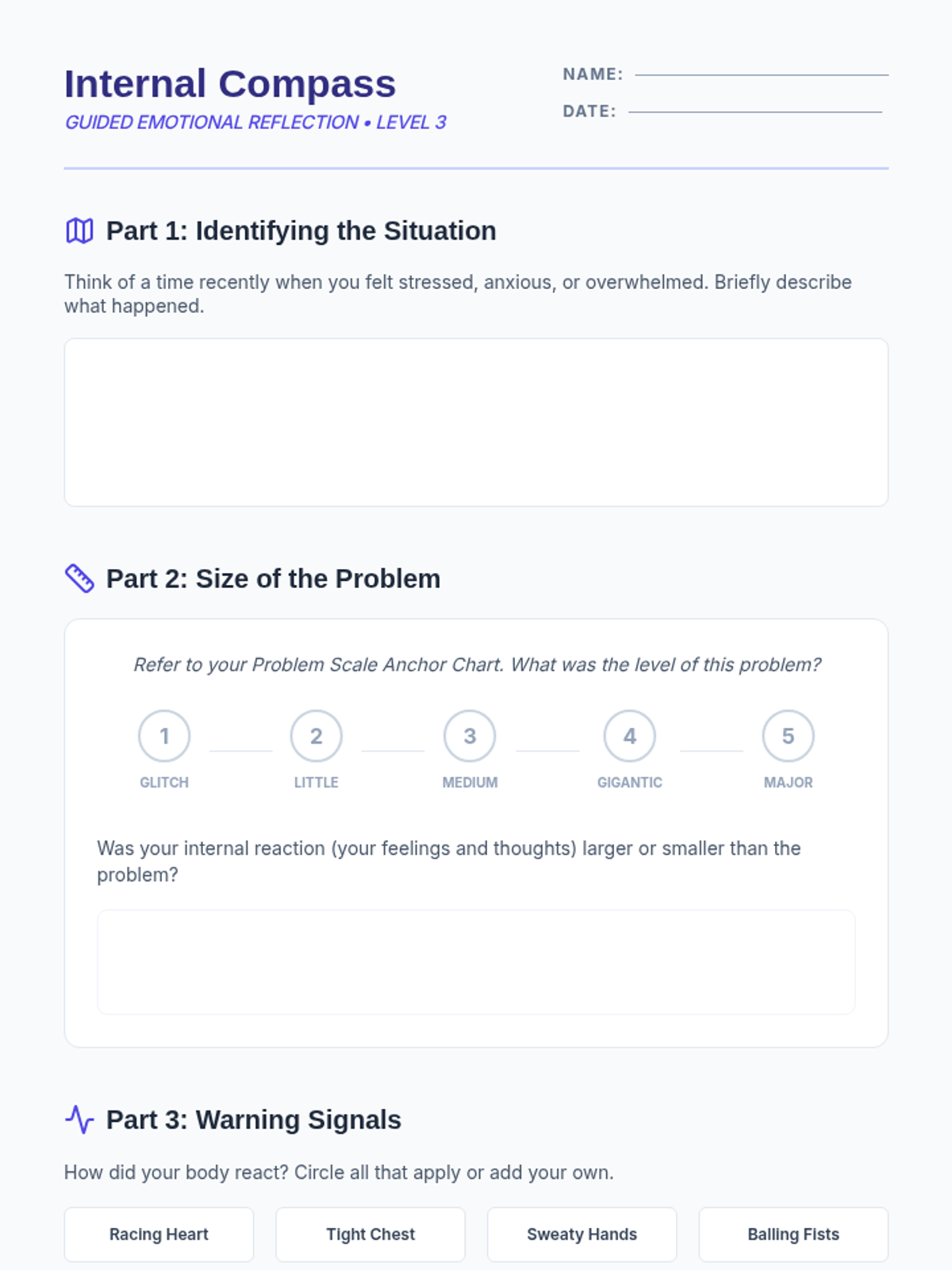
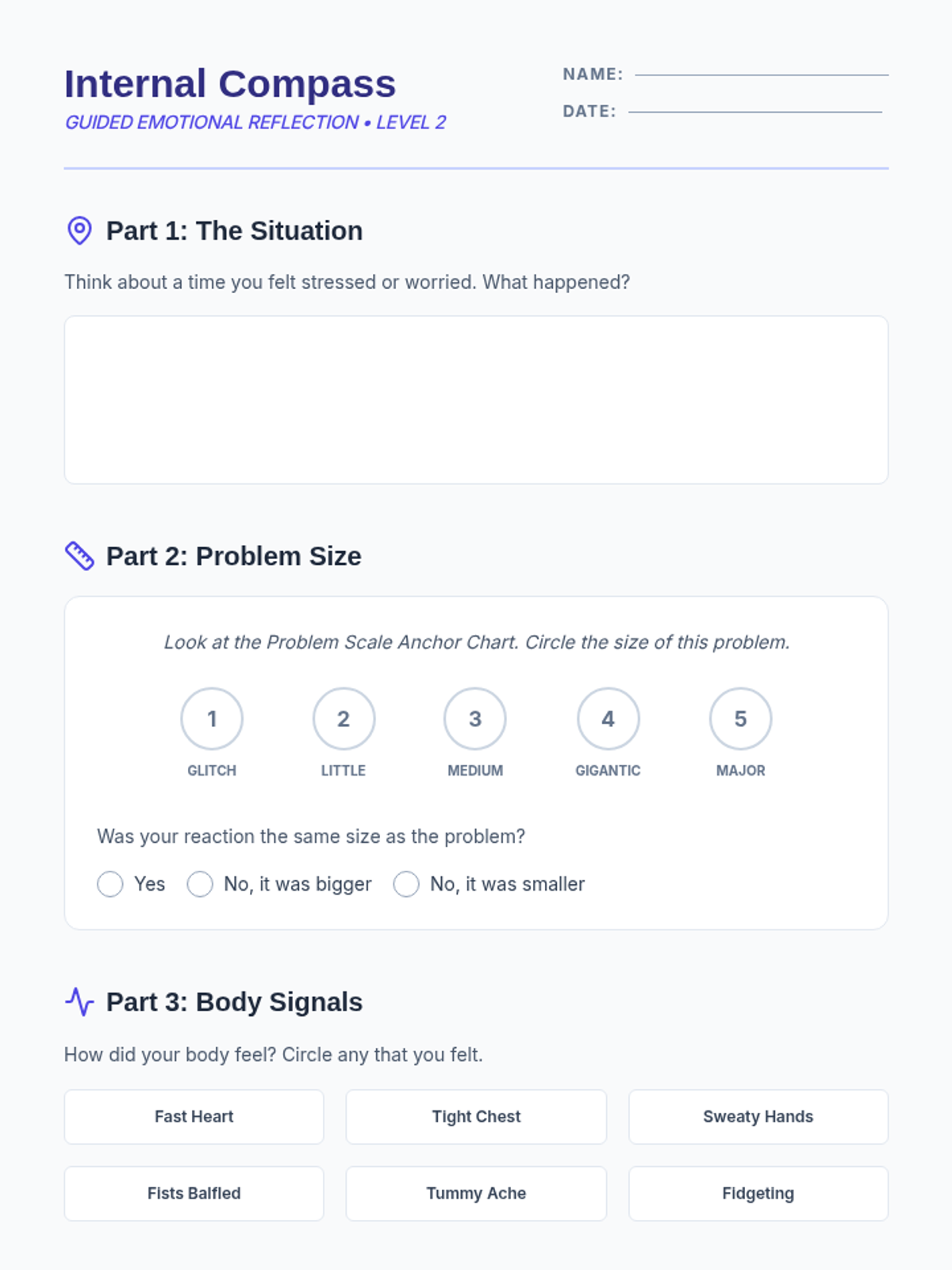
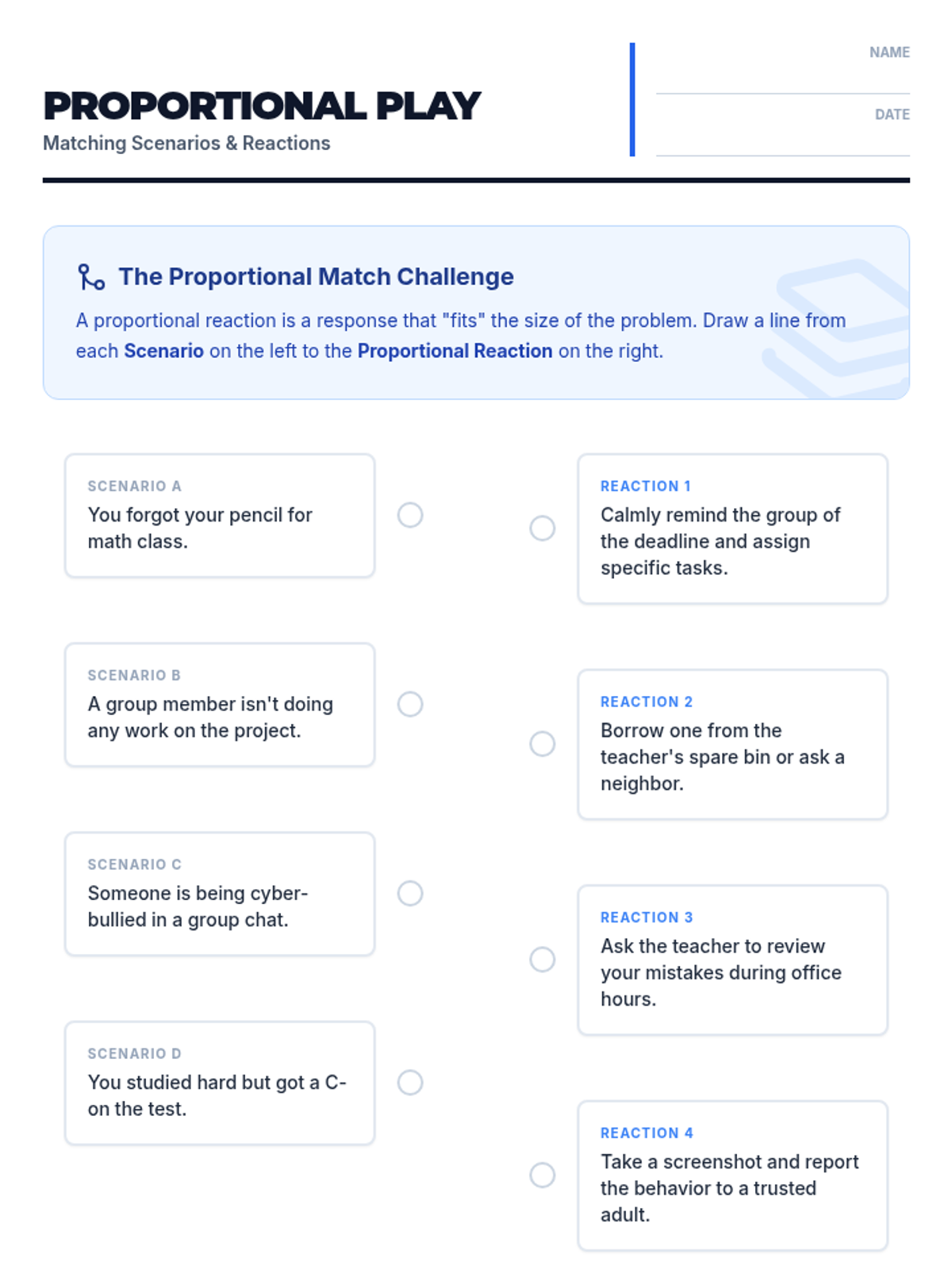
A lesson designed for 7th graders to identify the 'size' of their problems, match their emotional reactions accordingly, and build a toolkit of coping strategies for anxiety and stress.
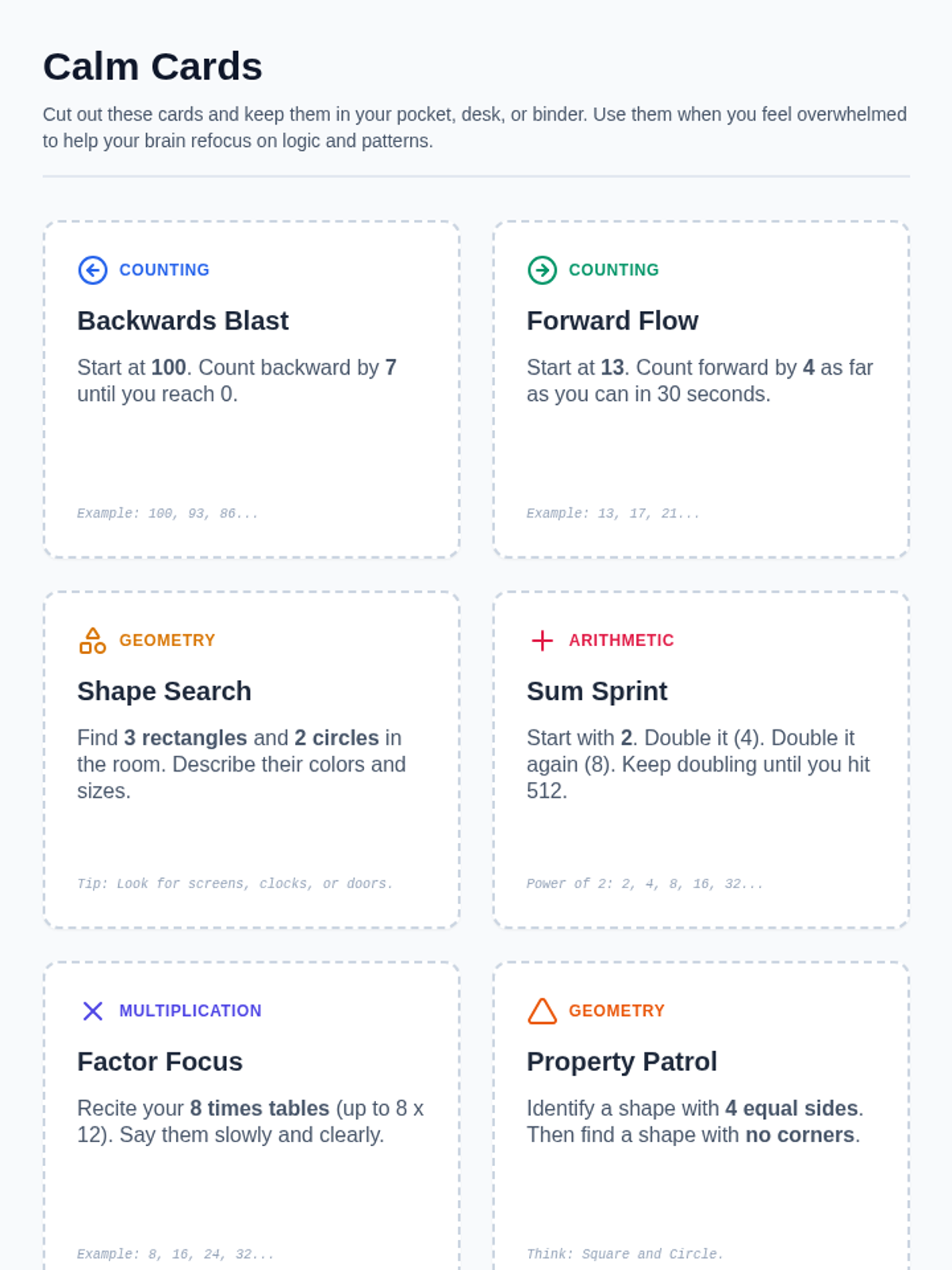
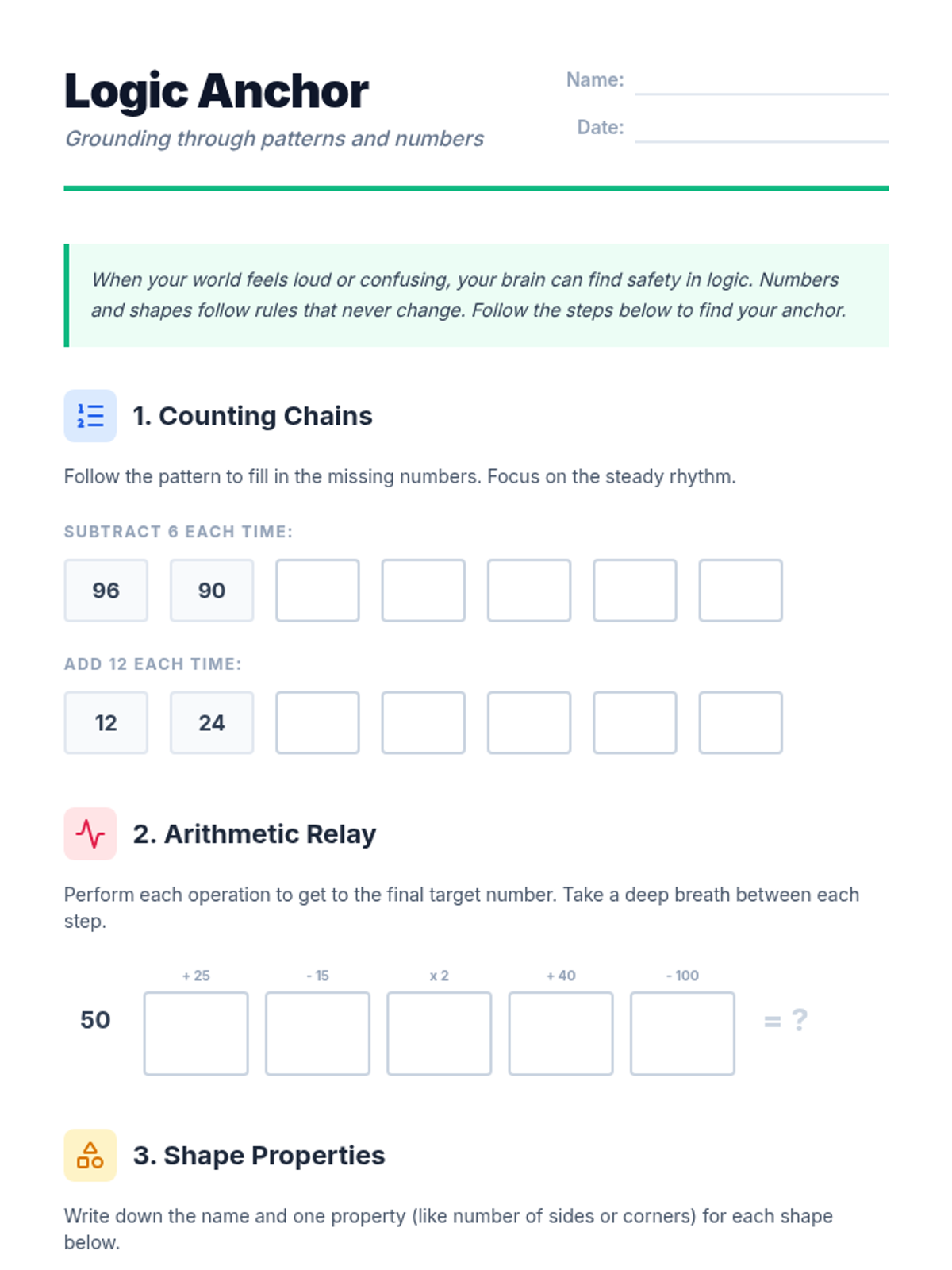
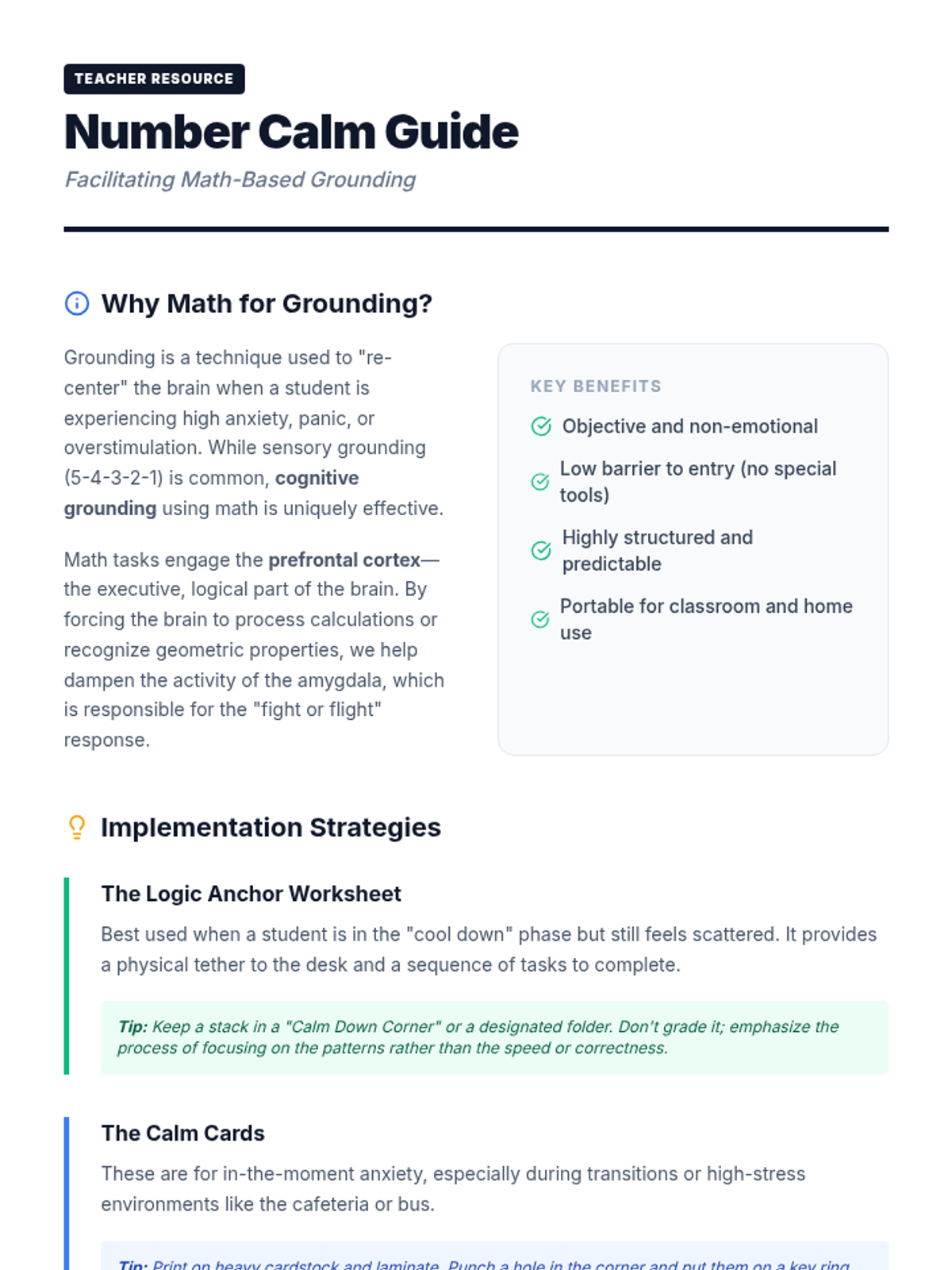
This lesson introduces math-based grounding techniques to help students manage anxiety or overstimulation by engaging the logical side of the brain. It includes portable prompt cards and structured worksheets featuring counting, arithmetic, and geometry challenges.
Specialized resources for supporting children and adolescents, focusing on age-appropriate explanations and creative memory-keeping.
A social-emotional learning lesson designed to help middle school students categorize the size of their problems and match them with proportional reactions. Students will explore social, academic, and extracurricular scenarios to develop self-regulation skills.
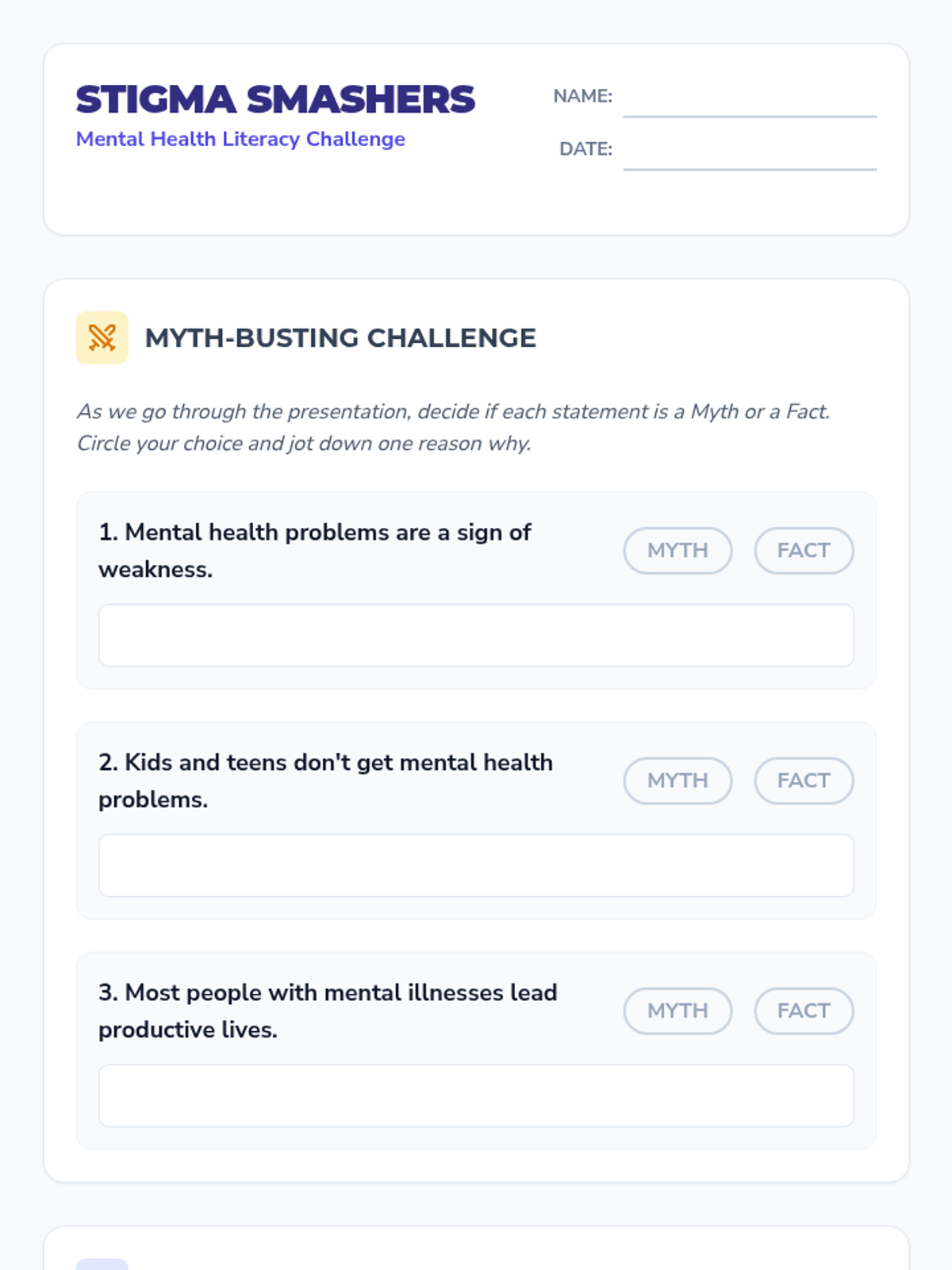
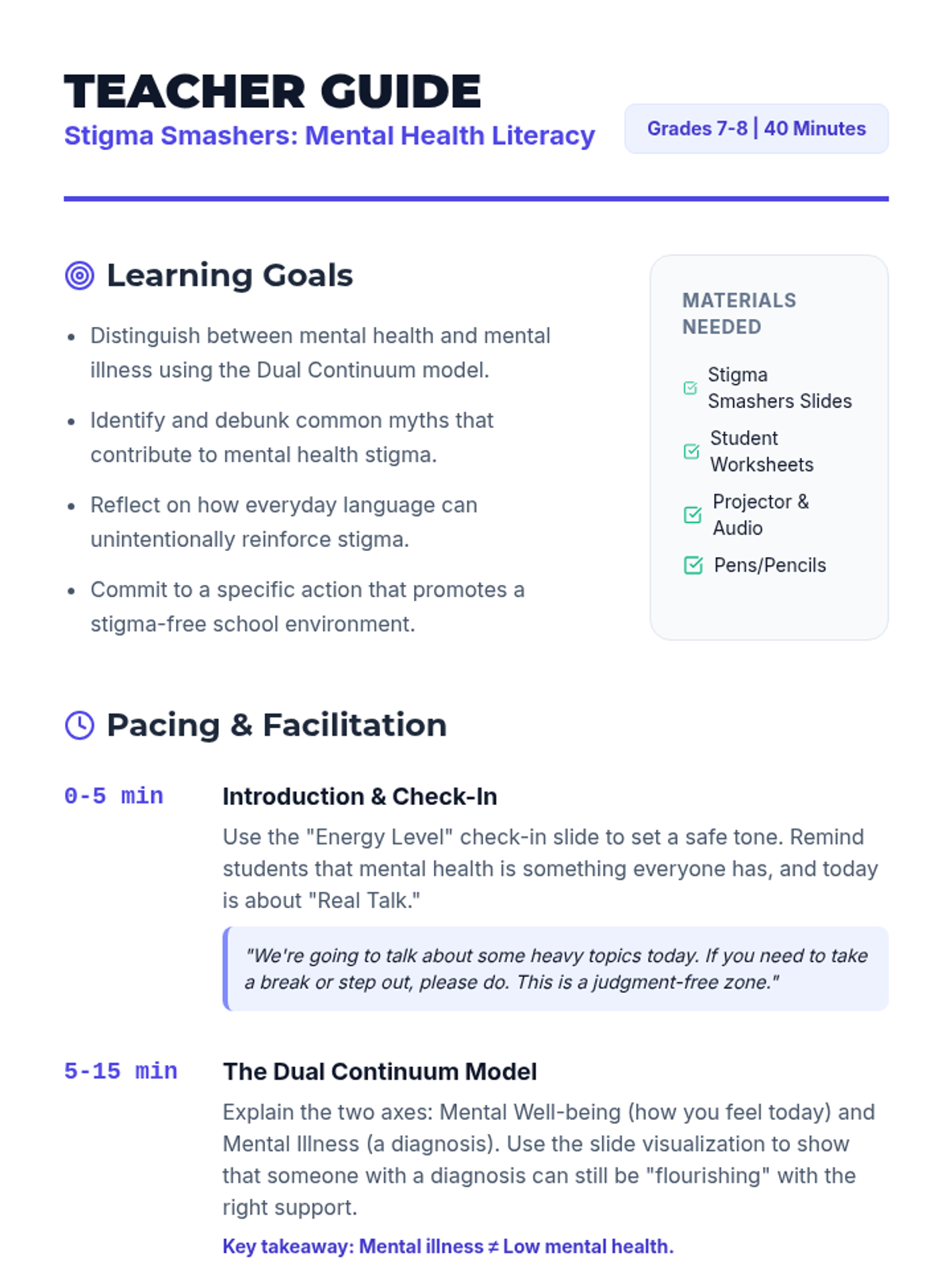
A 40-minute lesson for grades 7-8 focused on mental health literacy, the Dual Continuum model, debunking common myths, and taking active steps to reduce stigma in the school community. Aligned with School Mental Health Ontario frameworks.
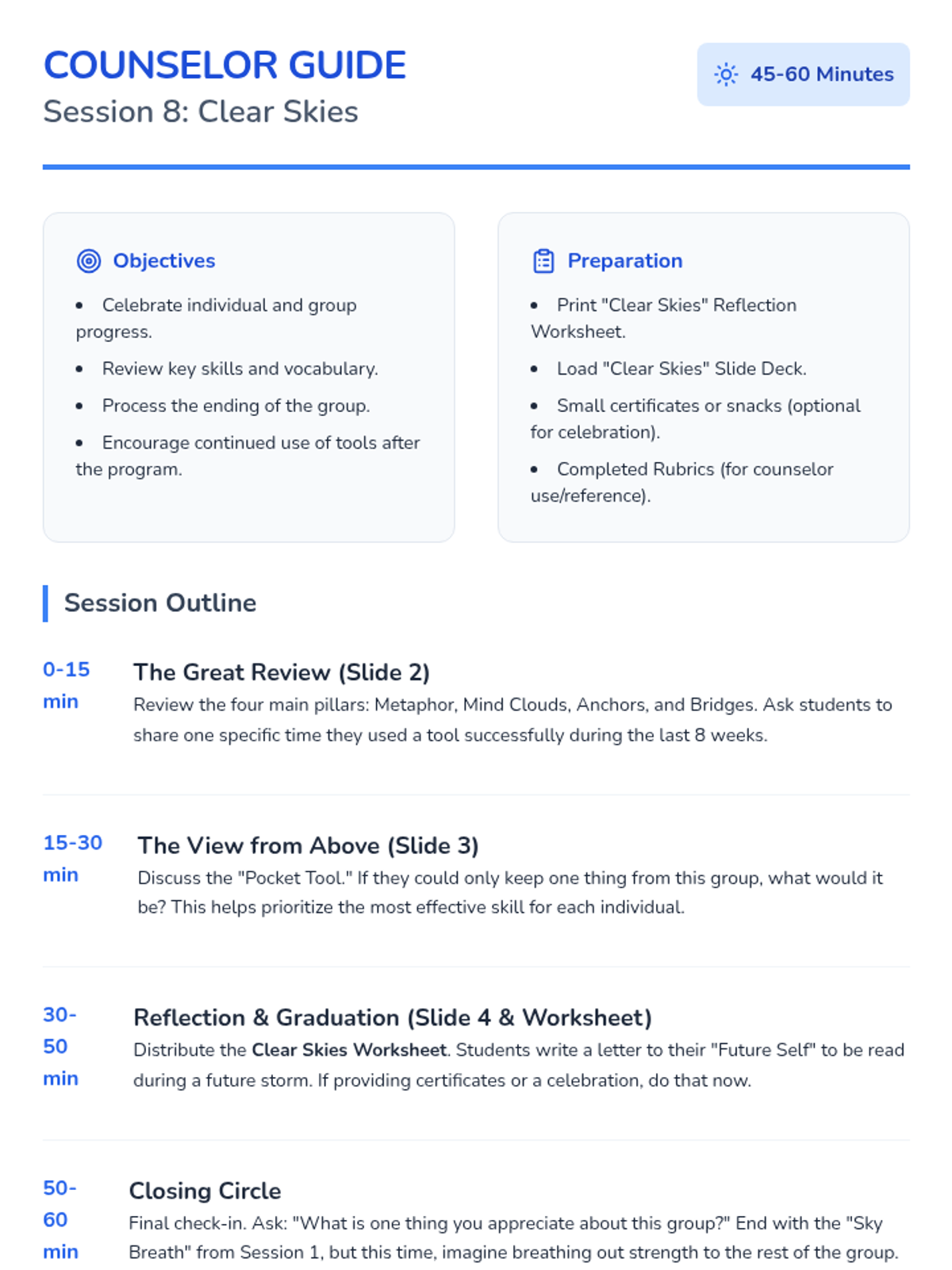
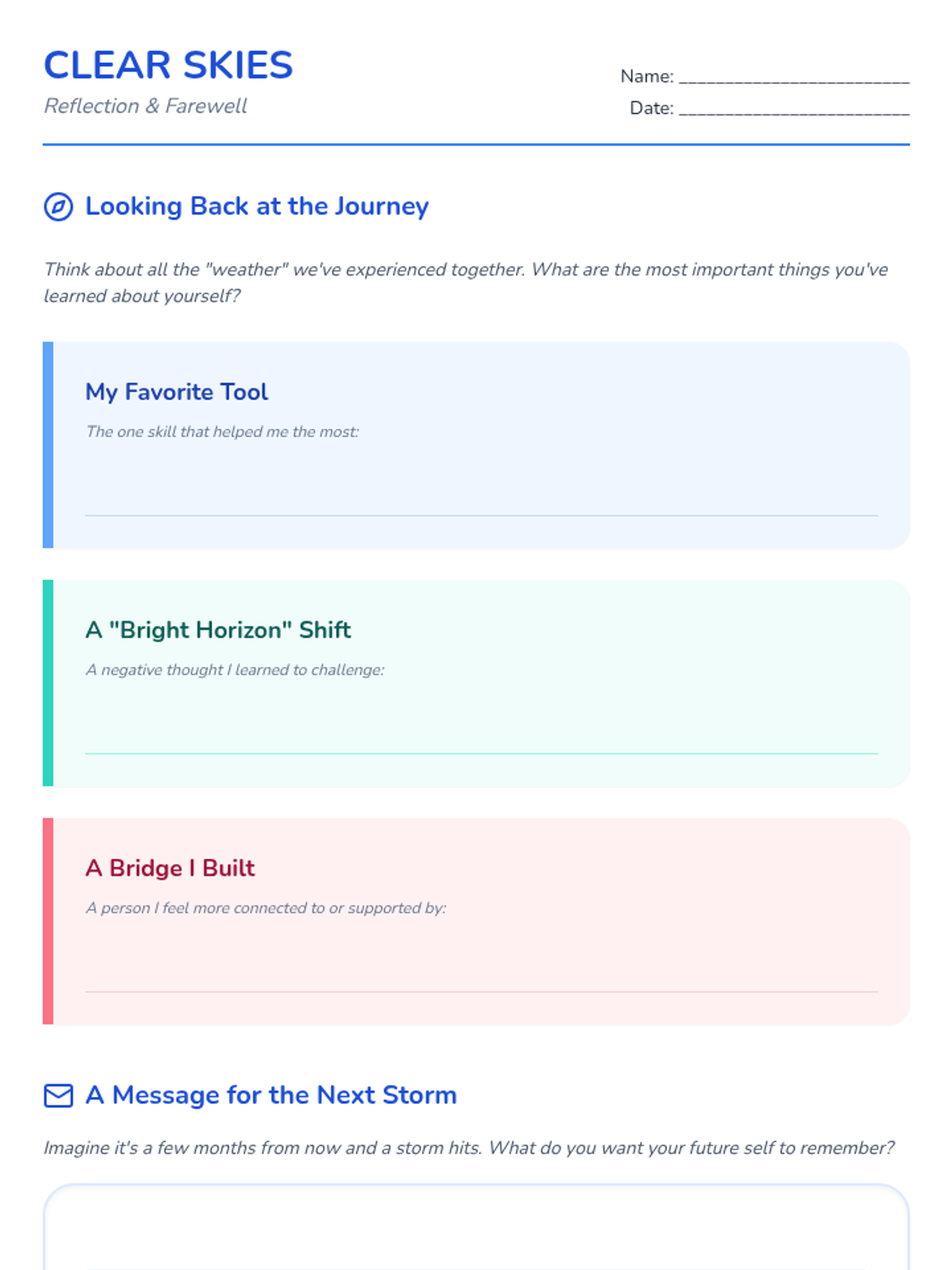
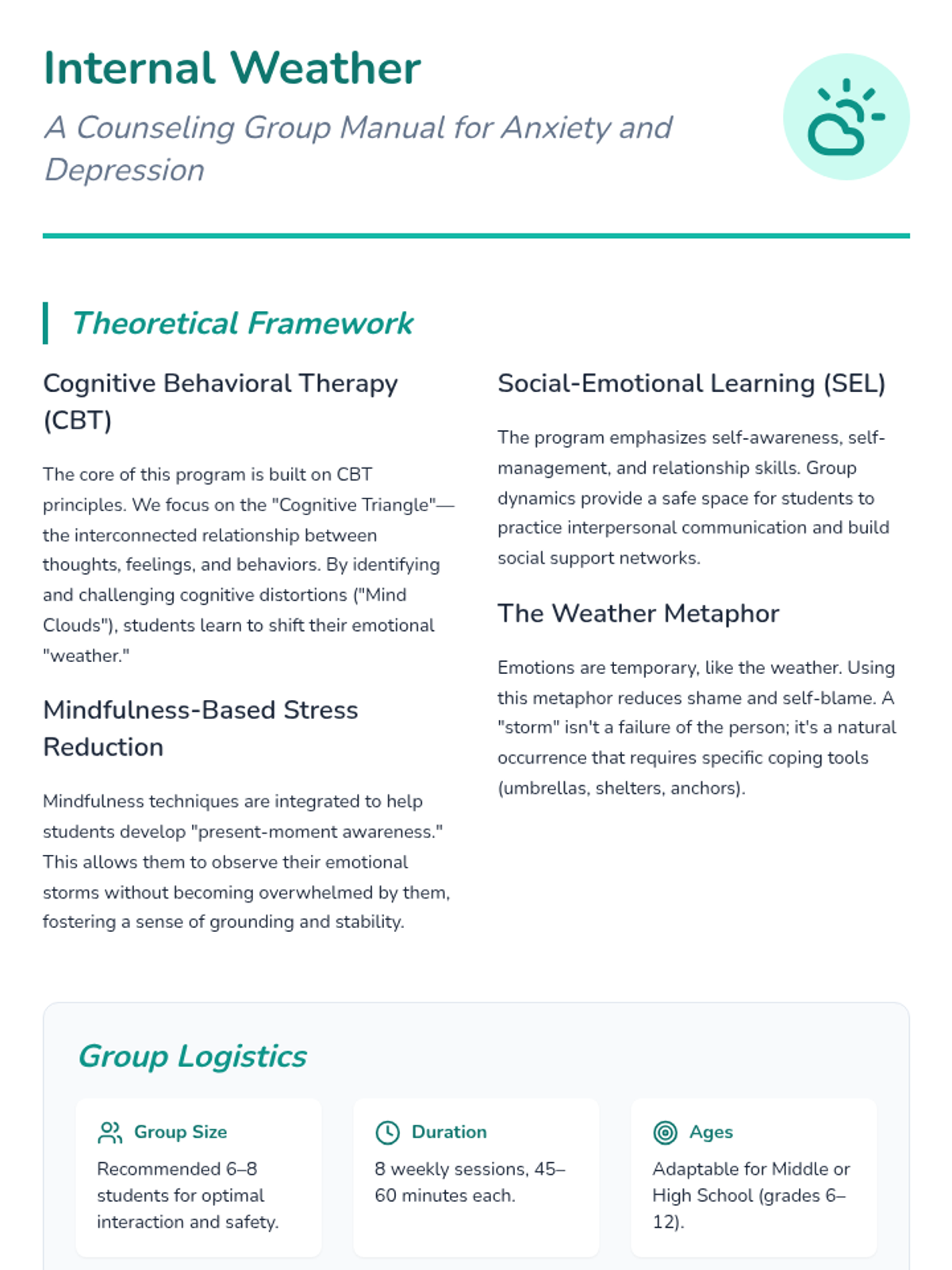
Concluding the group, celebrating progress, and preparing for life after the sessions.
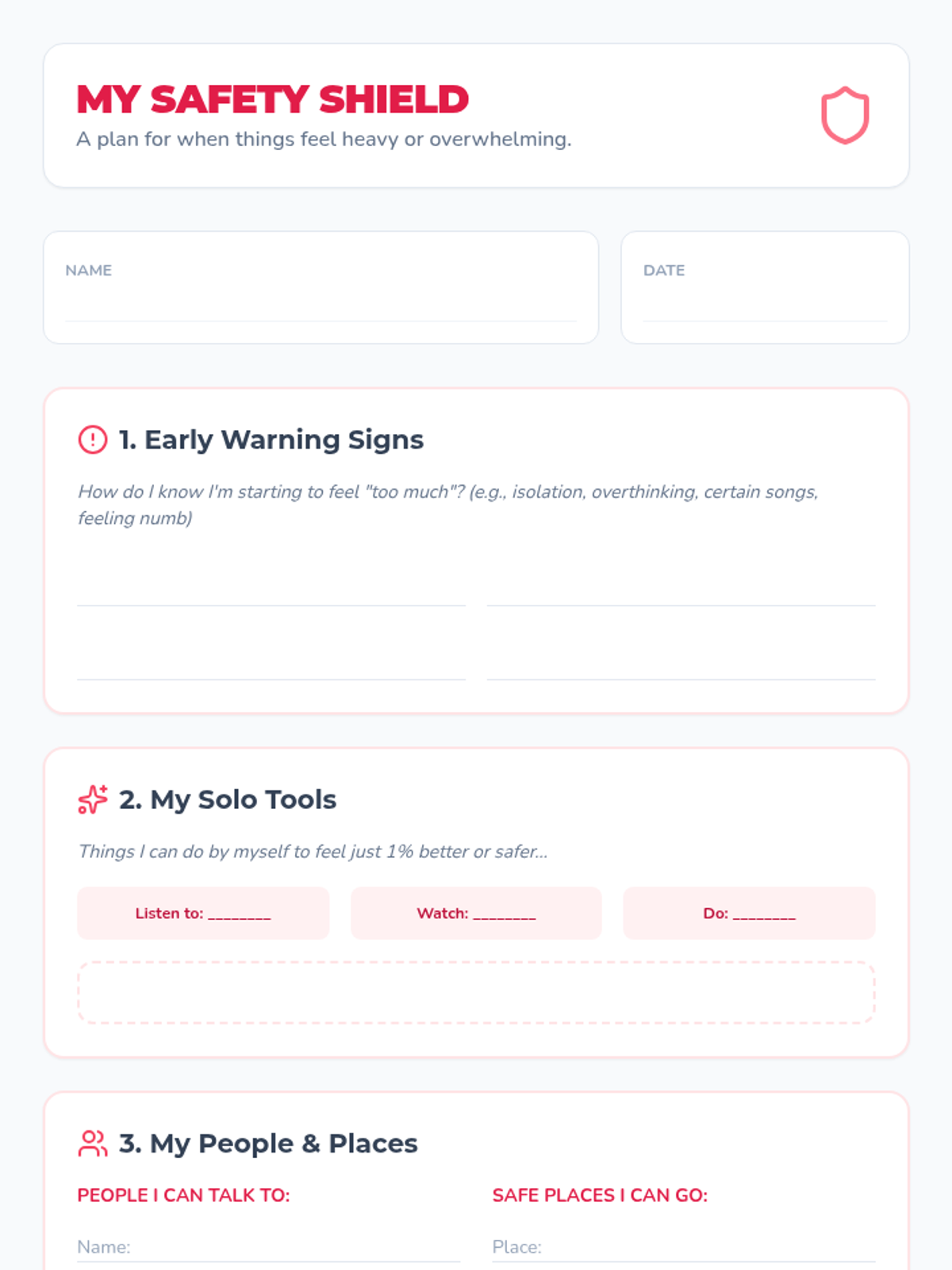
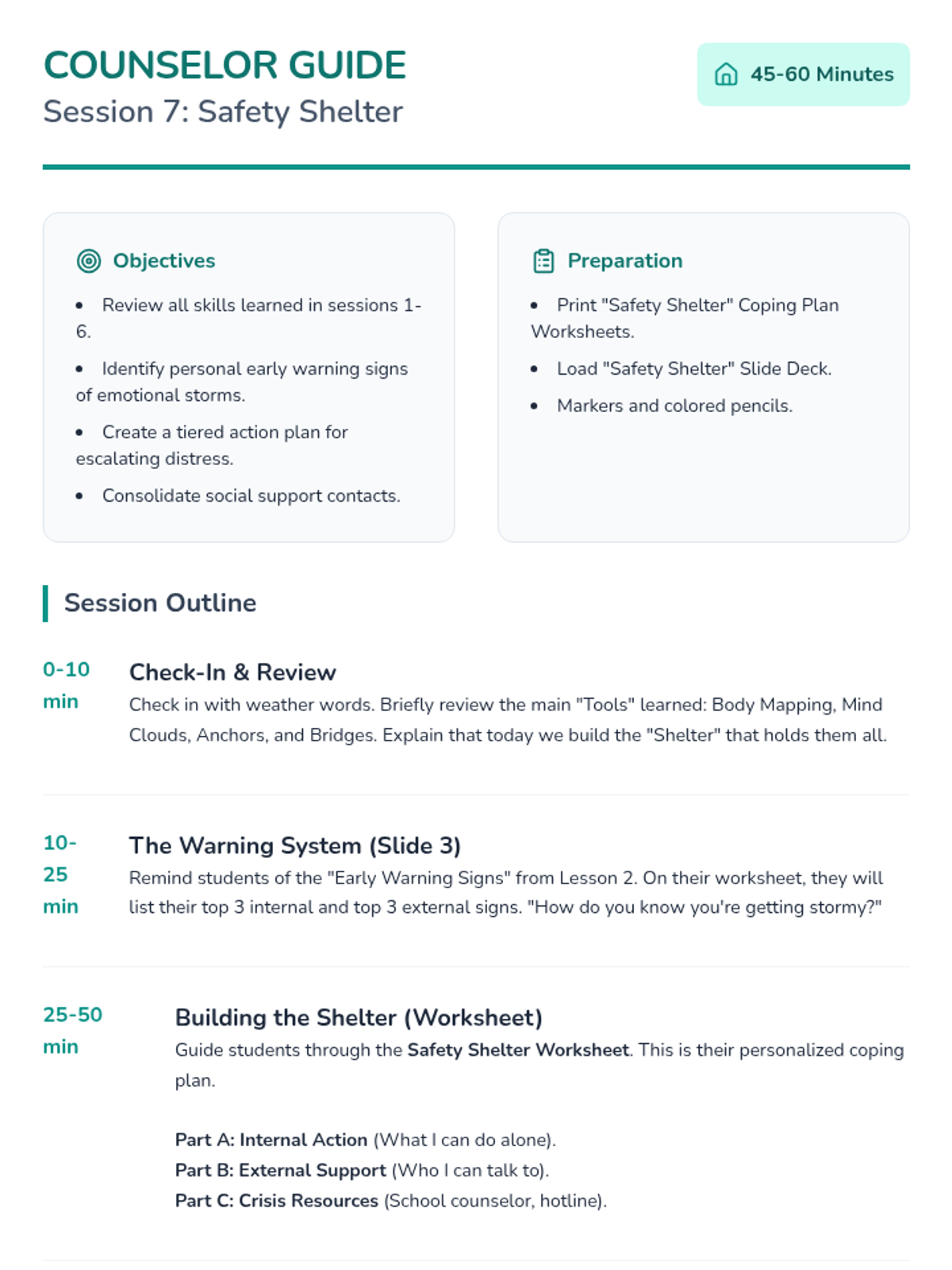
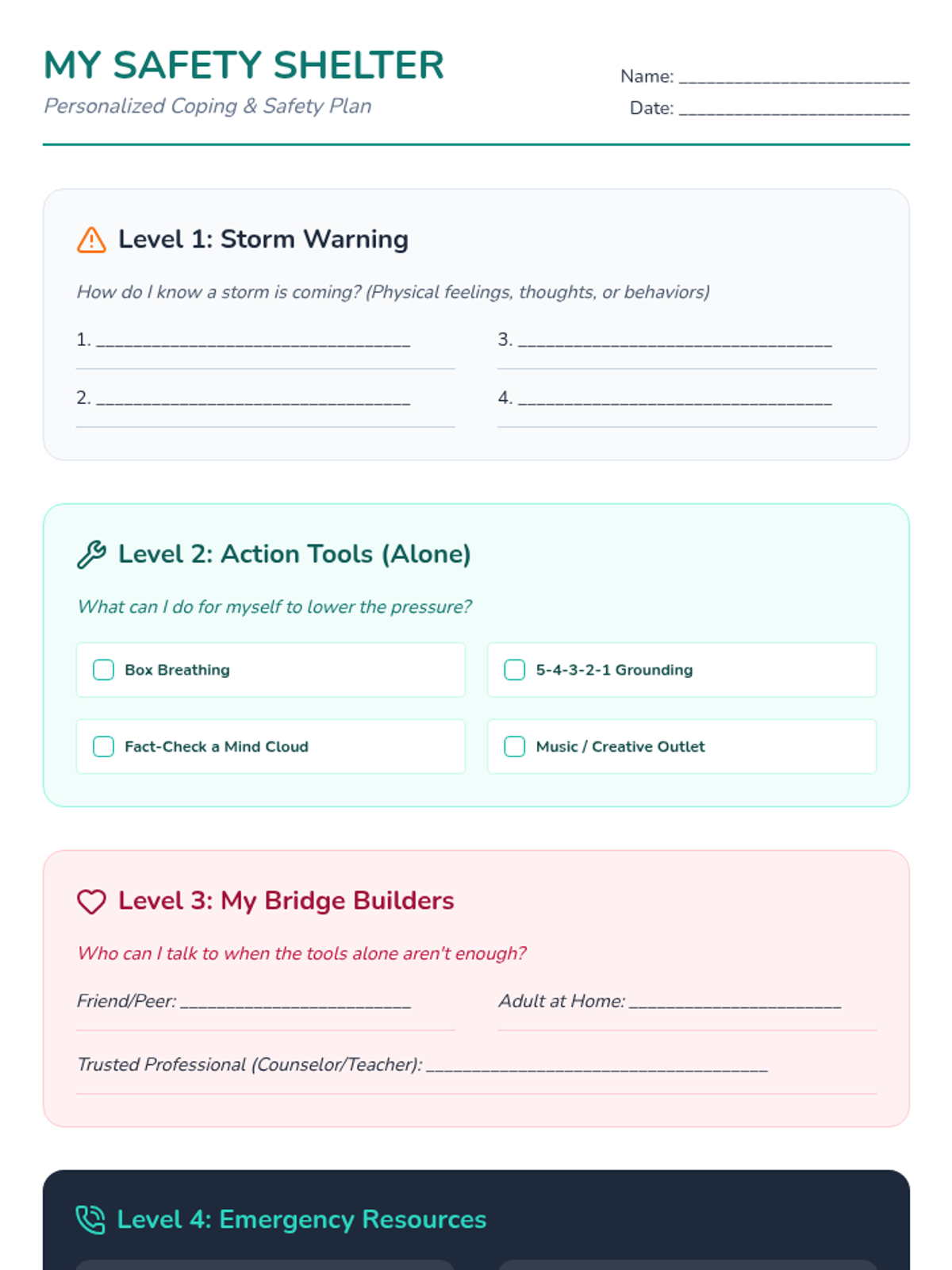
Creating a personalized coping plan and "safety shelter" for managing future emotional challenges.
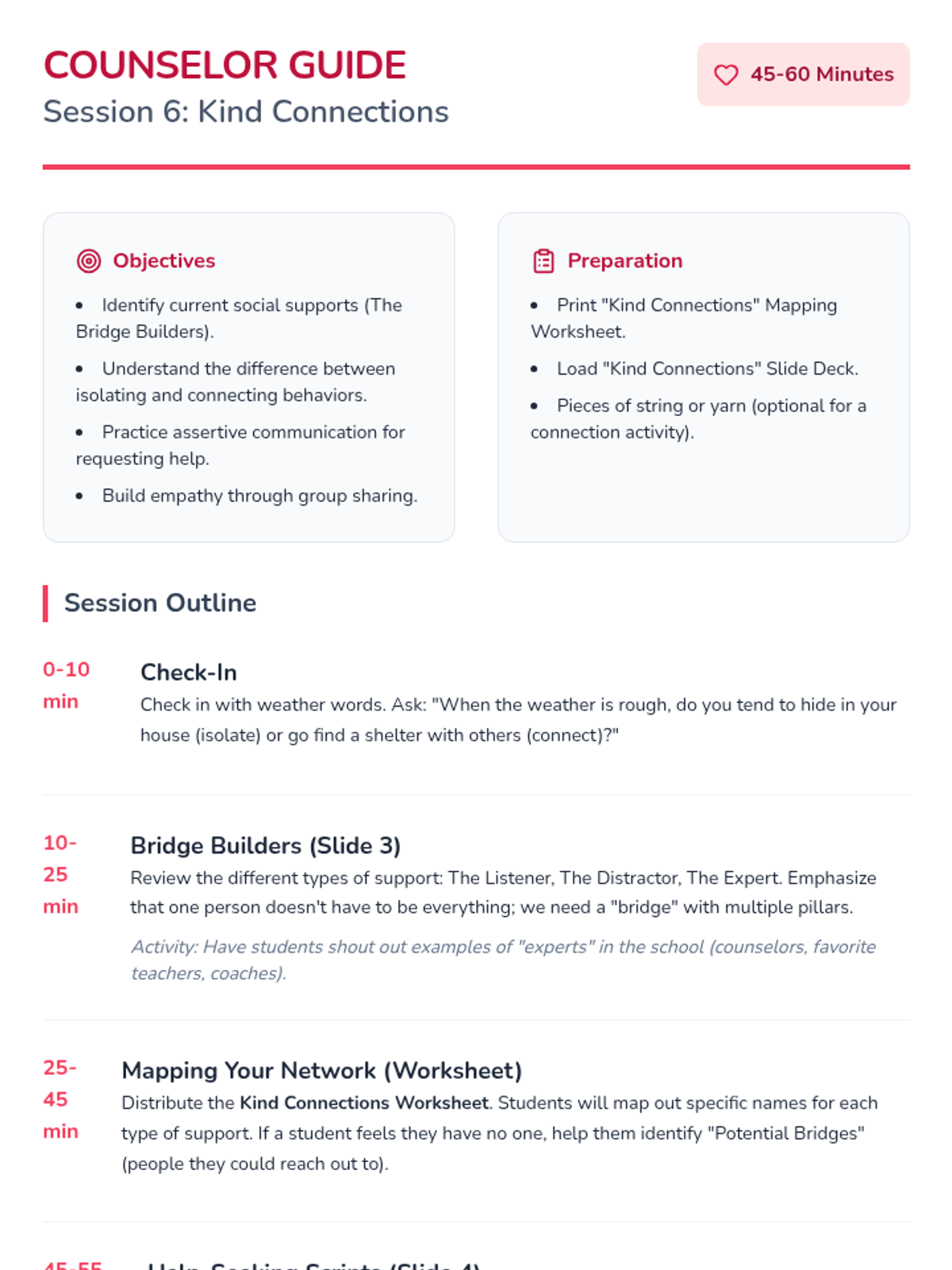
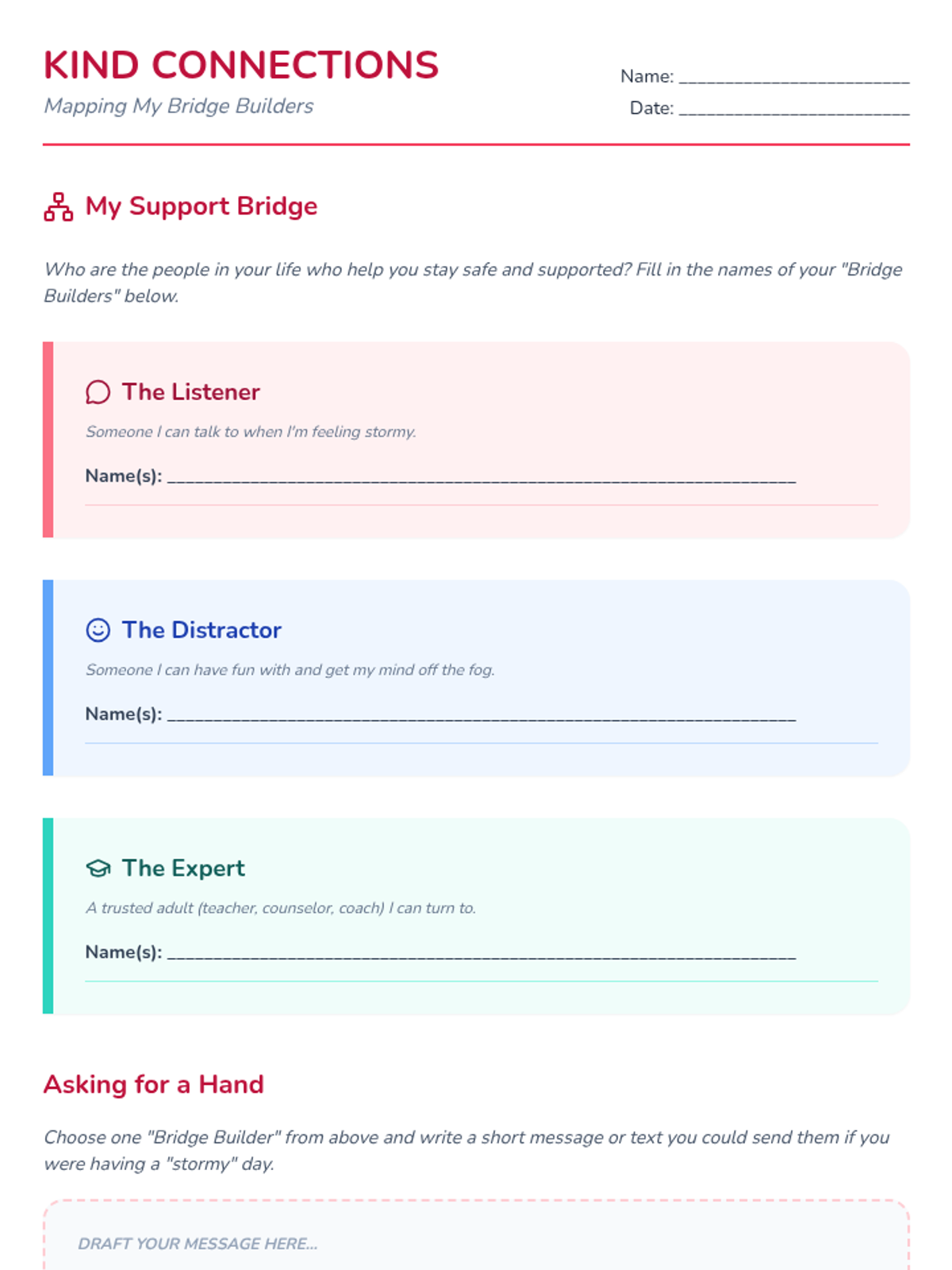
Developing interpersonal skills and identifying social supports to build a reliable safety net.
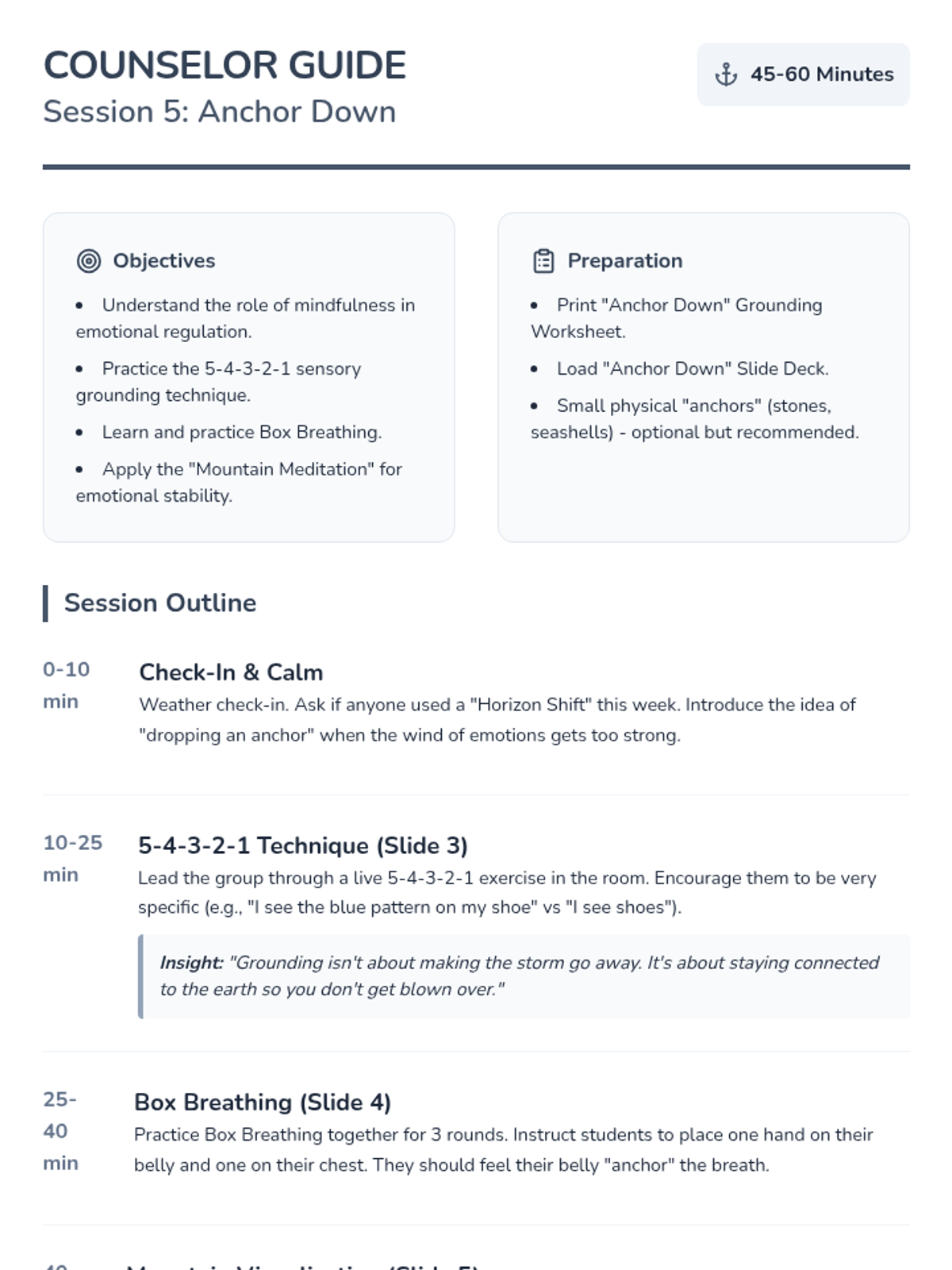
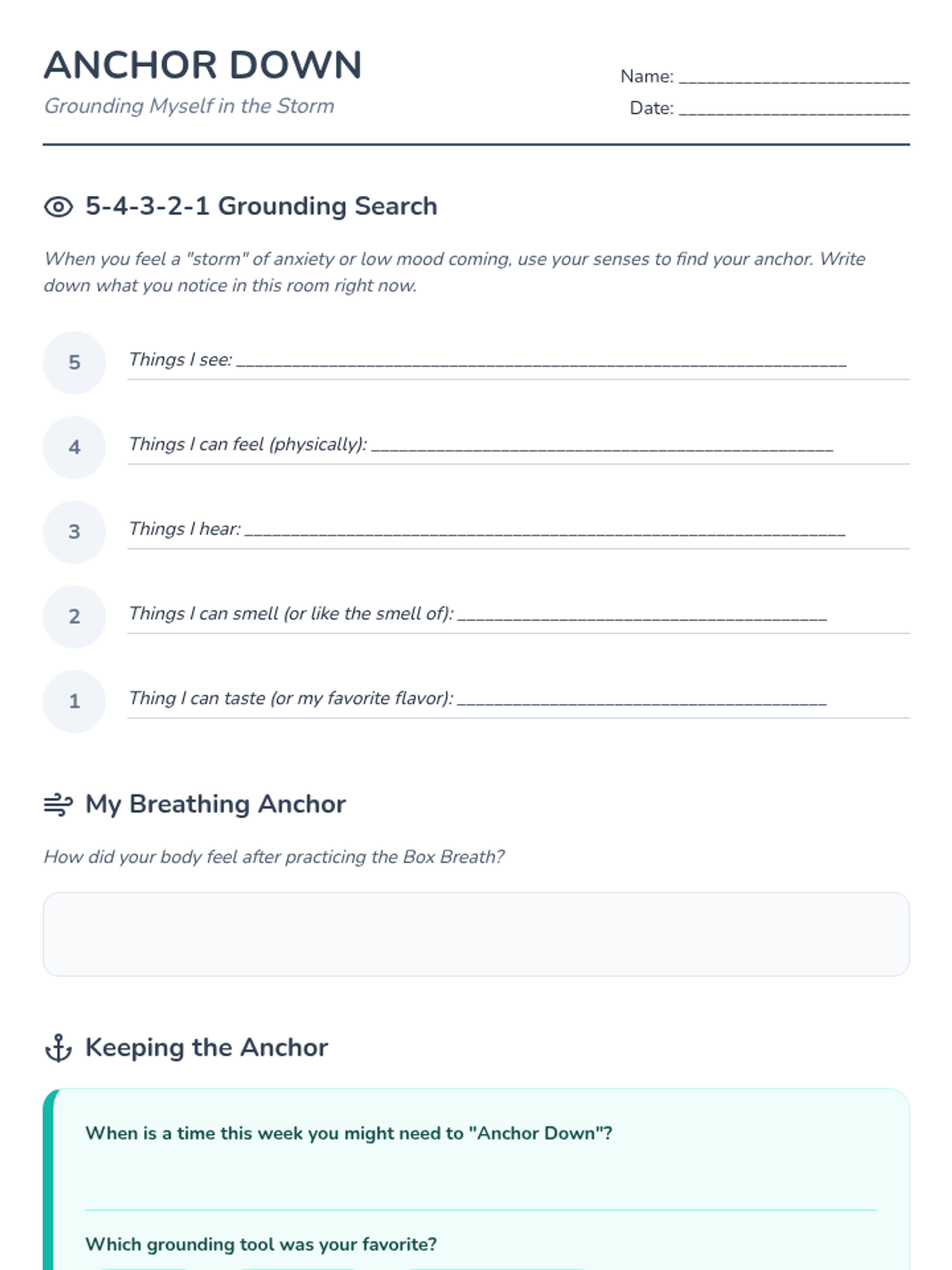
Focusing on mindfulness and grounding techniques to stay present and calm during periods of high stress.
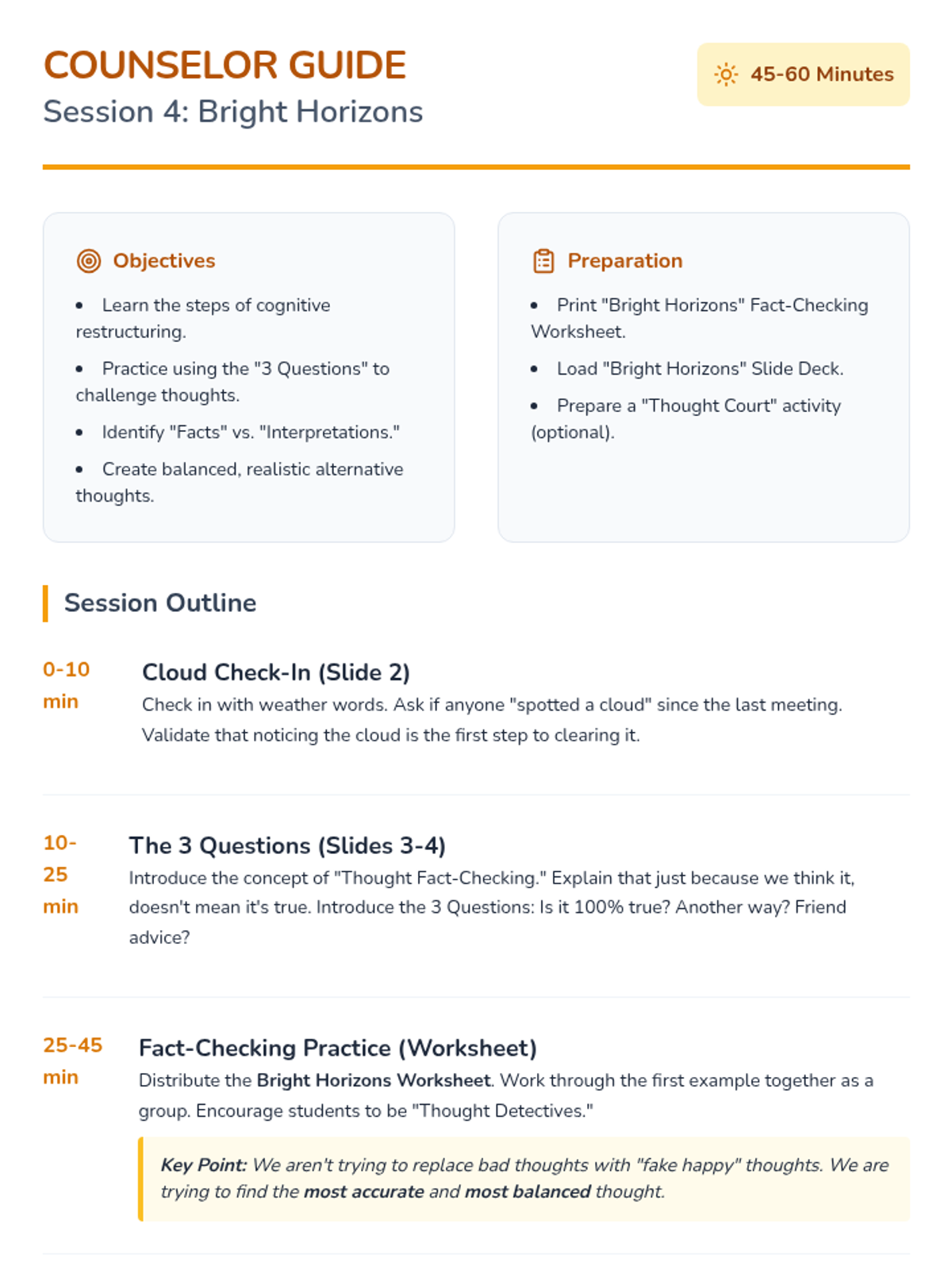
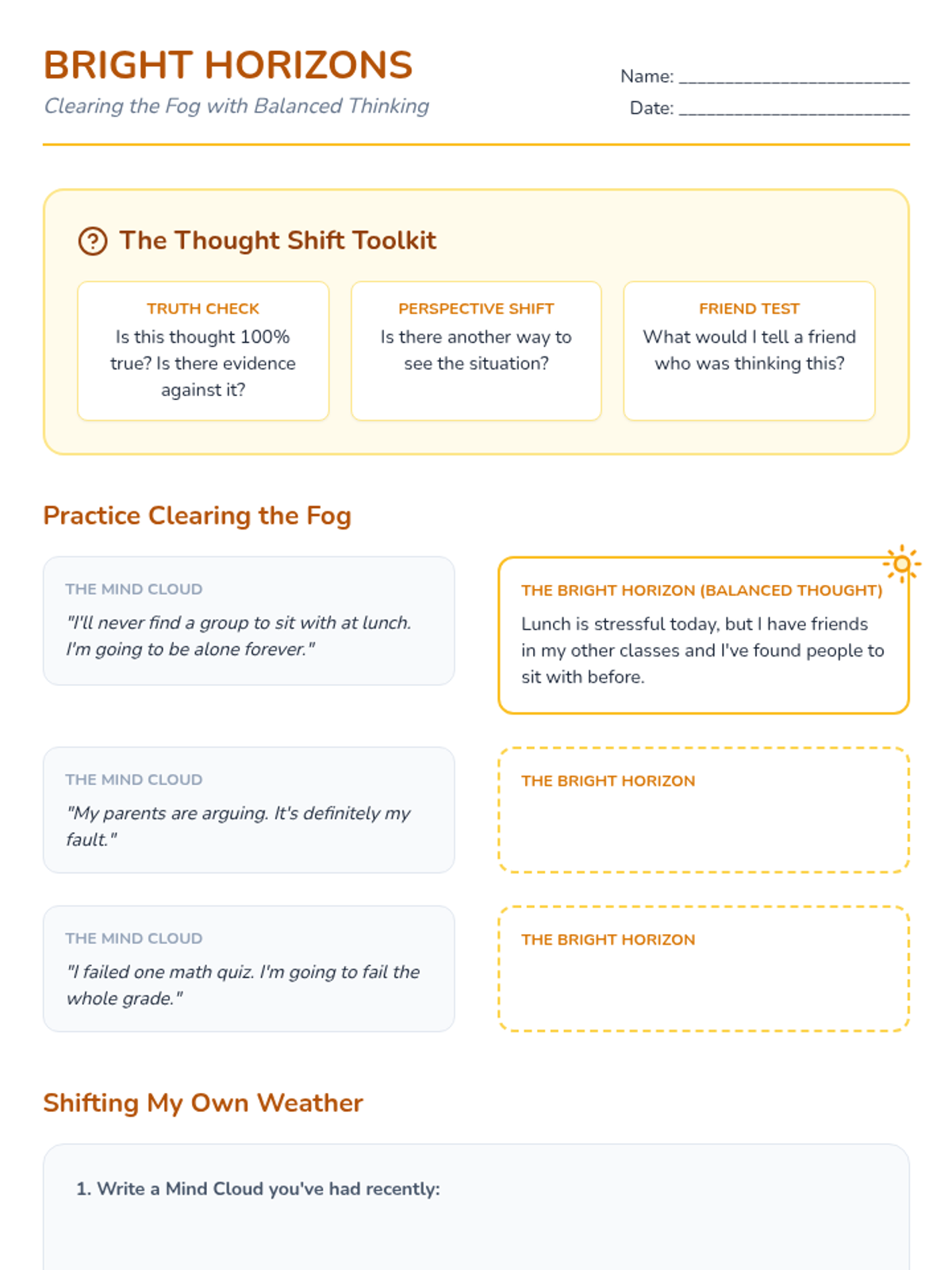
Teaching cognitive restructuring techniques to challenge distorted thoughts and find more balanced perspectives.
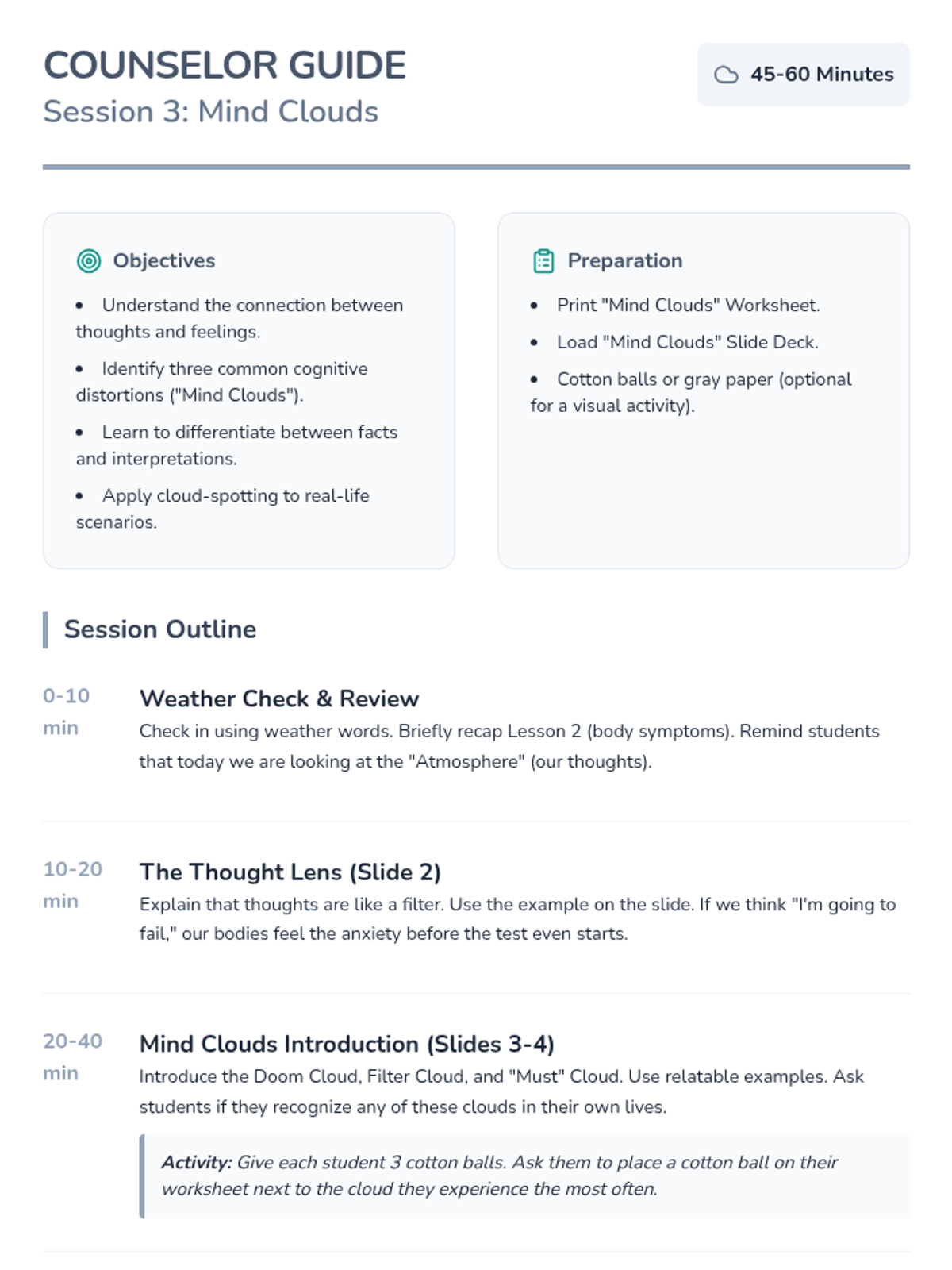
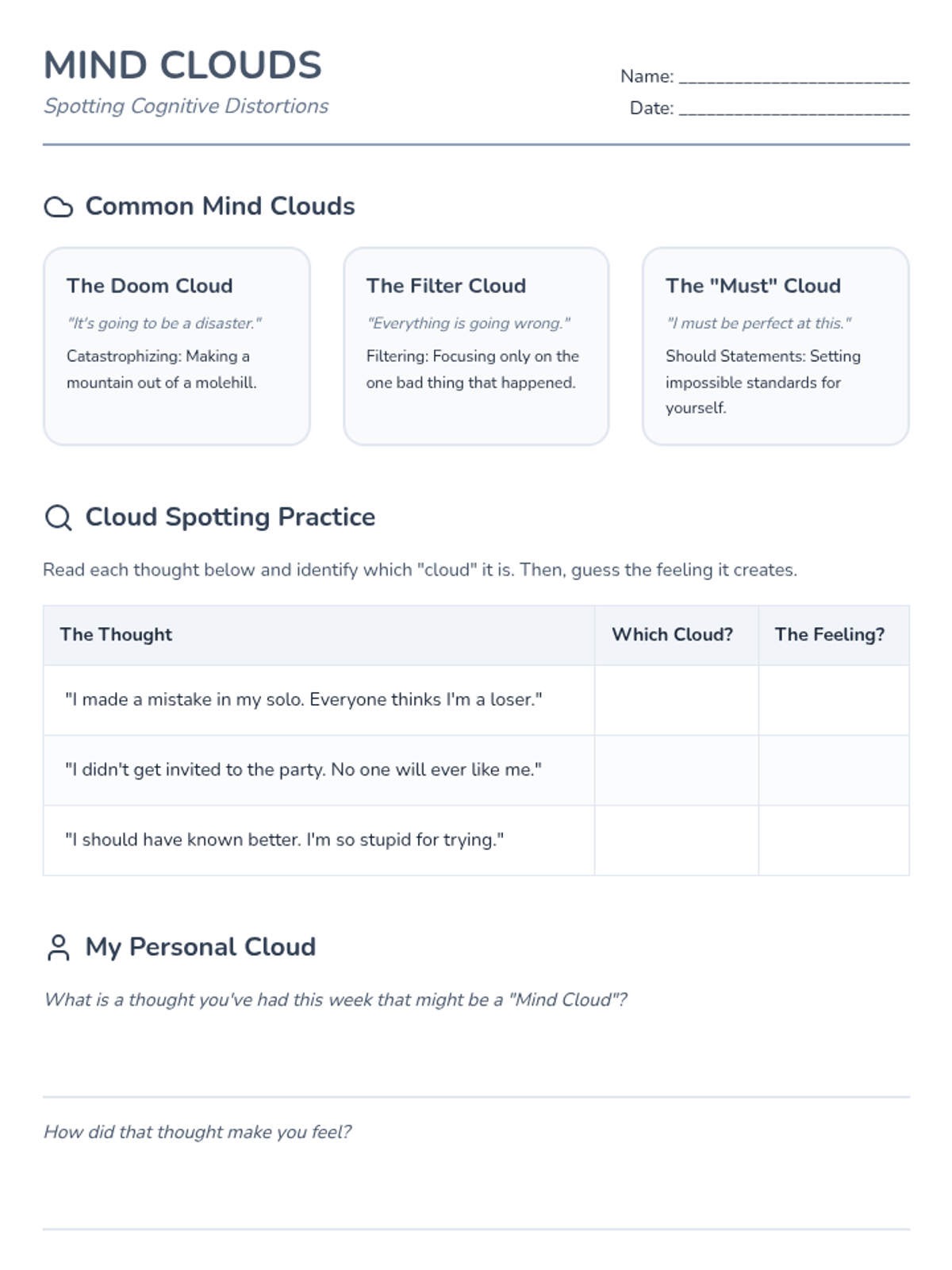
Introducing cognitive distortions and how negative thought patterns cloud our perception of reality.
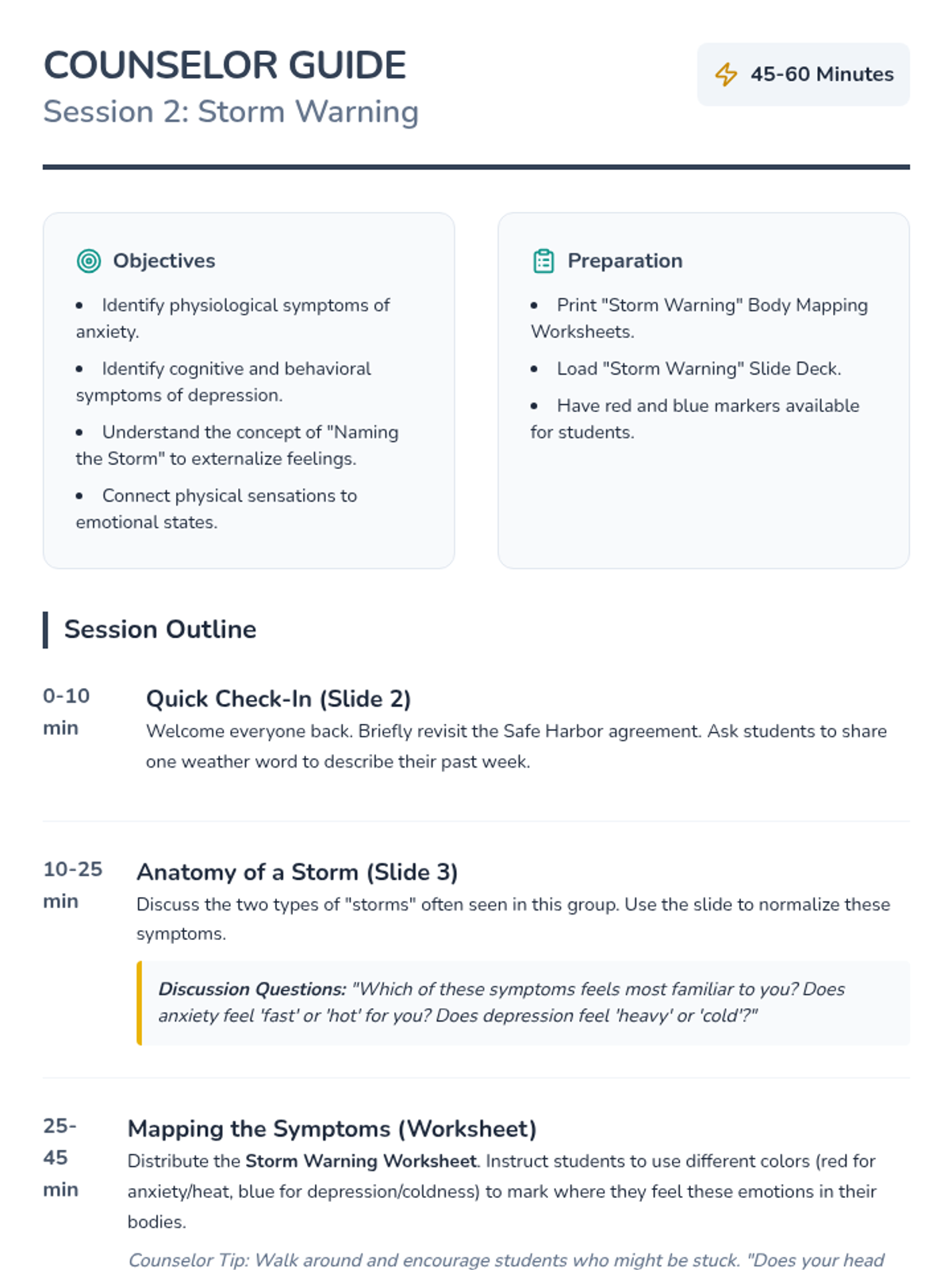
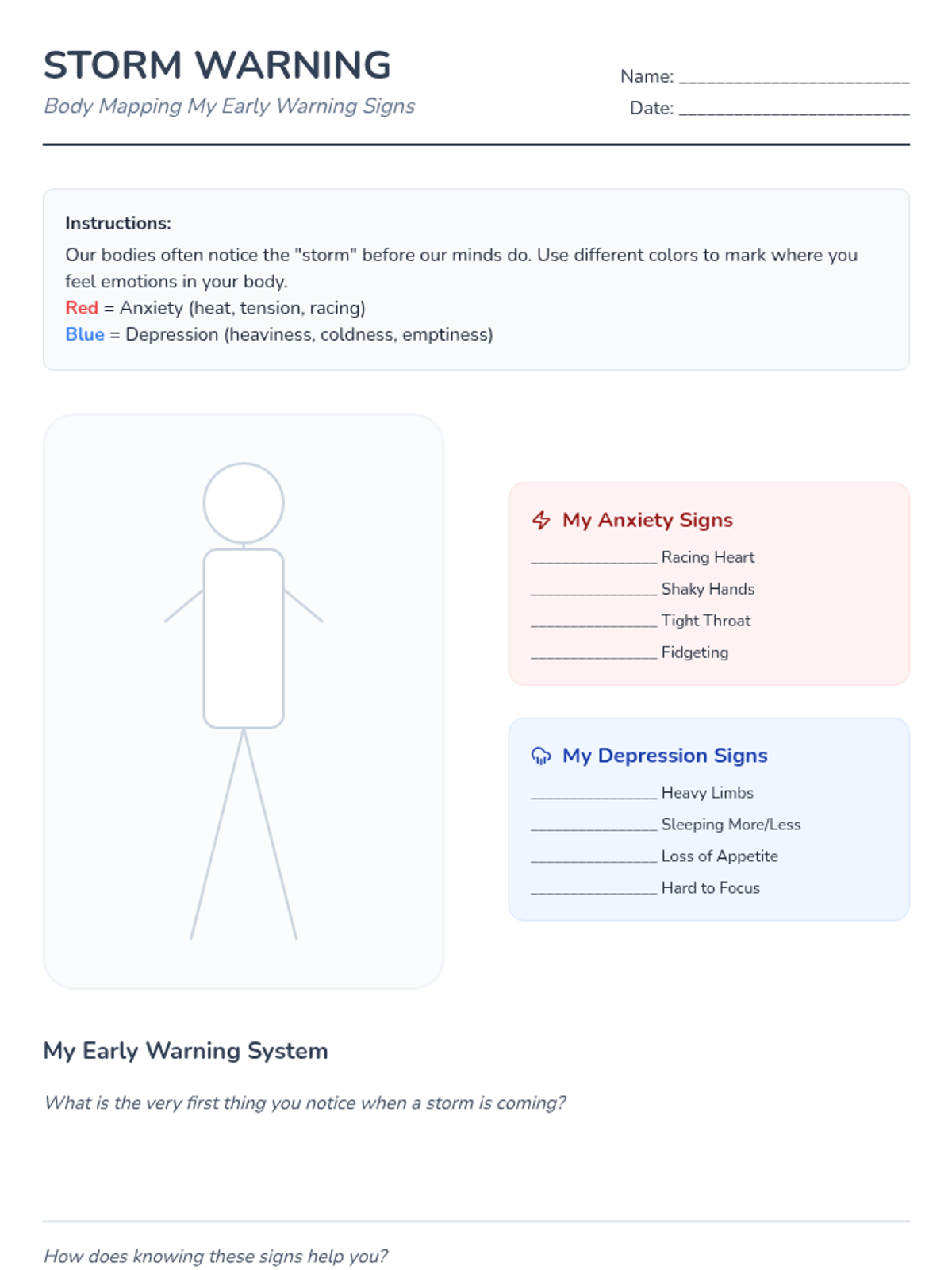
Identifying the physical and emotional symptoms of anxiety and depression and how they manifest as "internal storms."
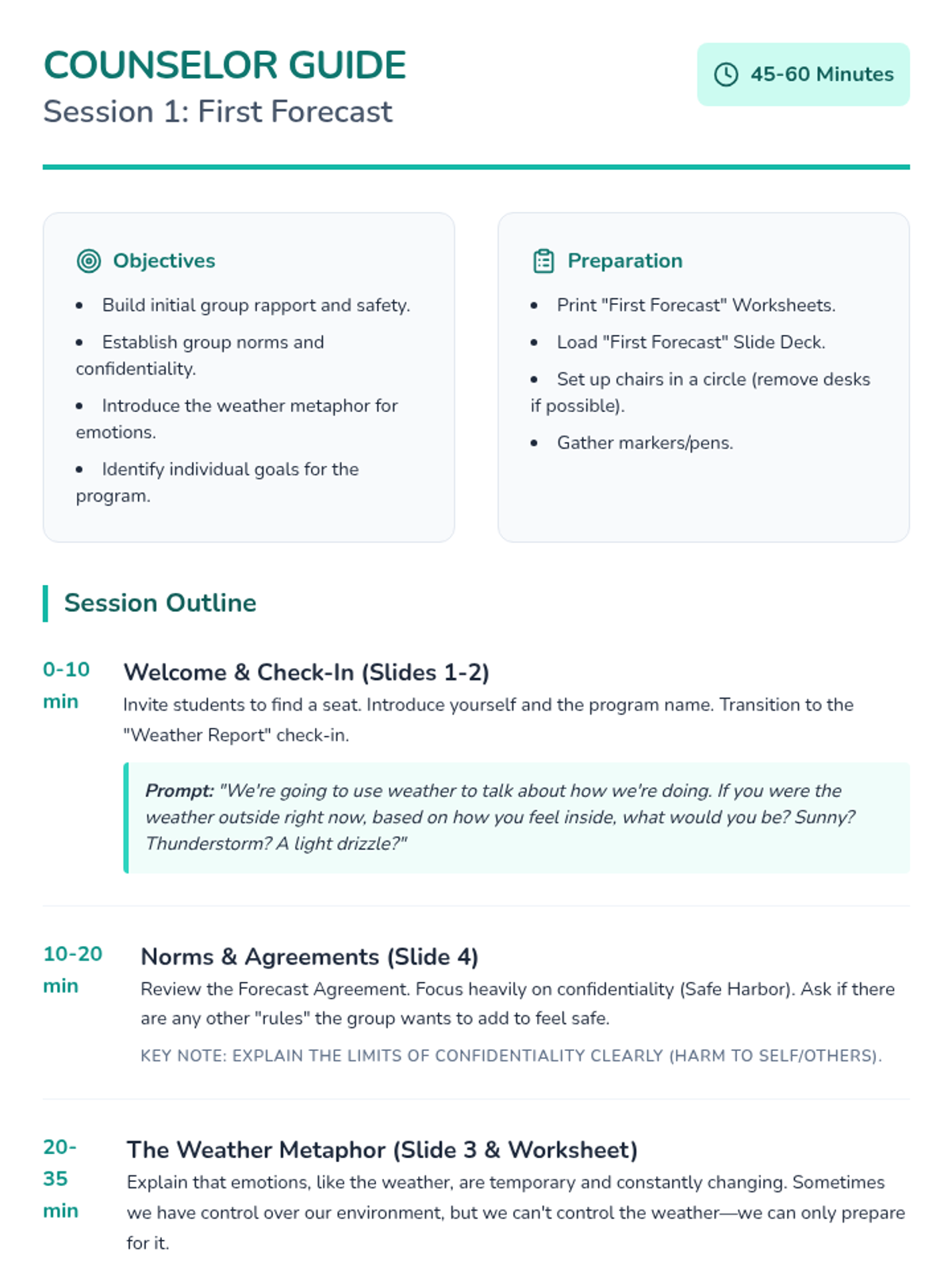
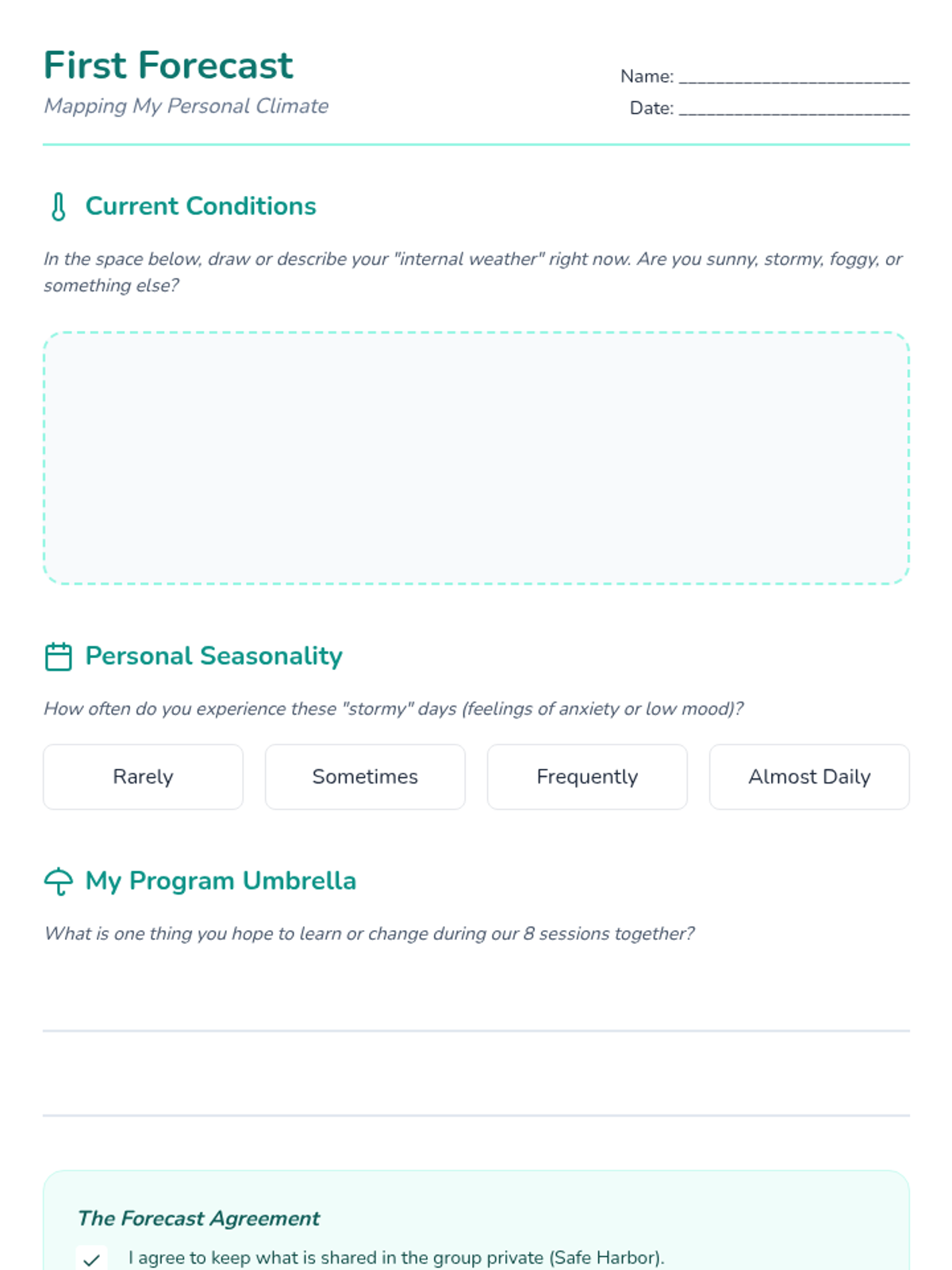
Introduction to the group, establishing safety and norms, and introducing the weather metaphor for emotions.