Mindful breathing and body scan meditation techniques integrated with daily self-care routines. Develops strategies for balancing life demands and advocating for personal wellness needs.
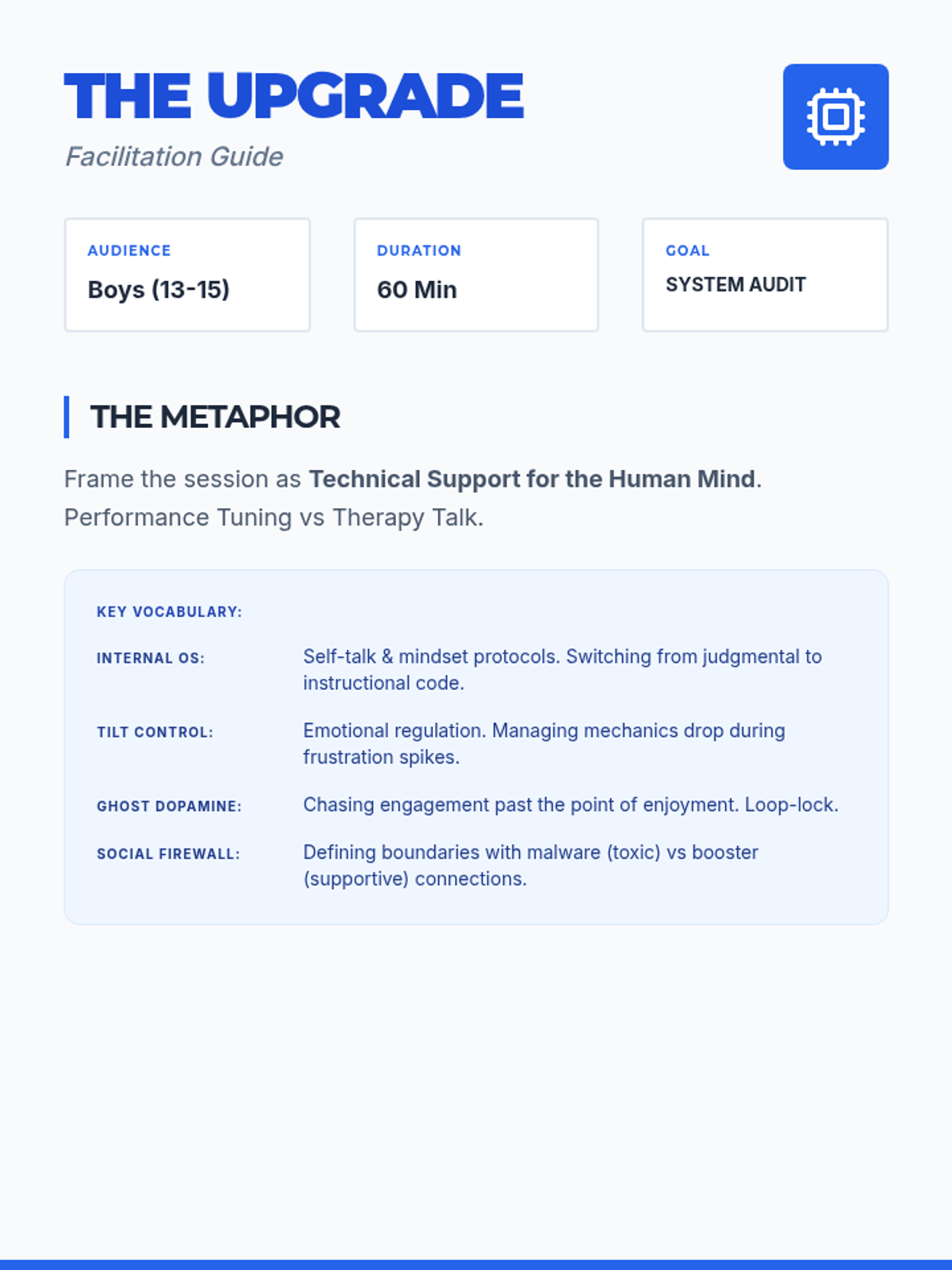
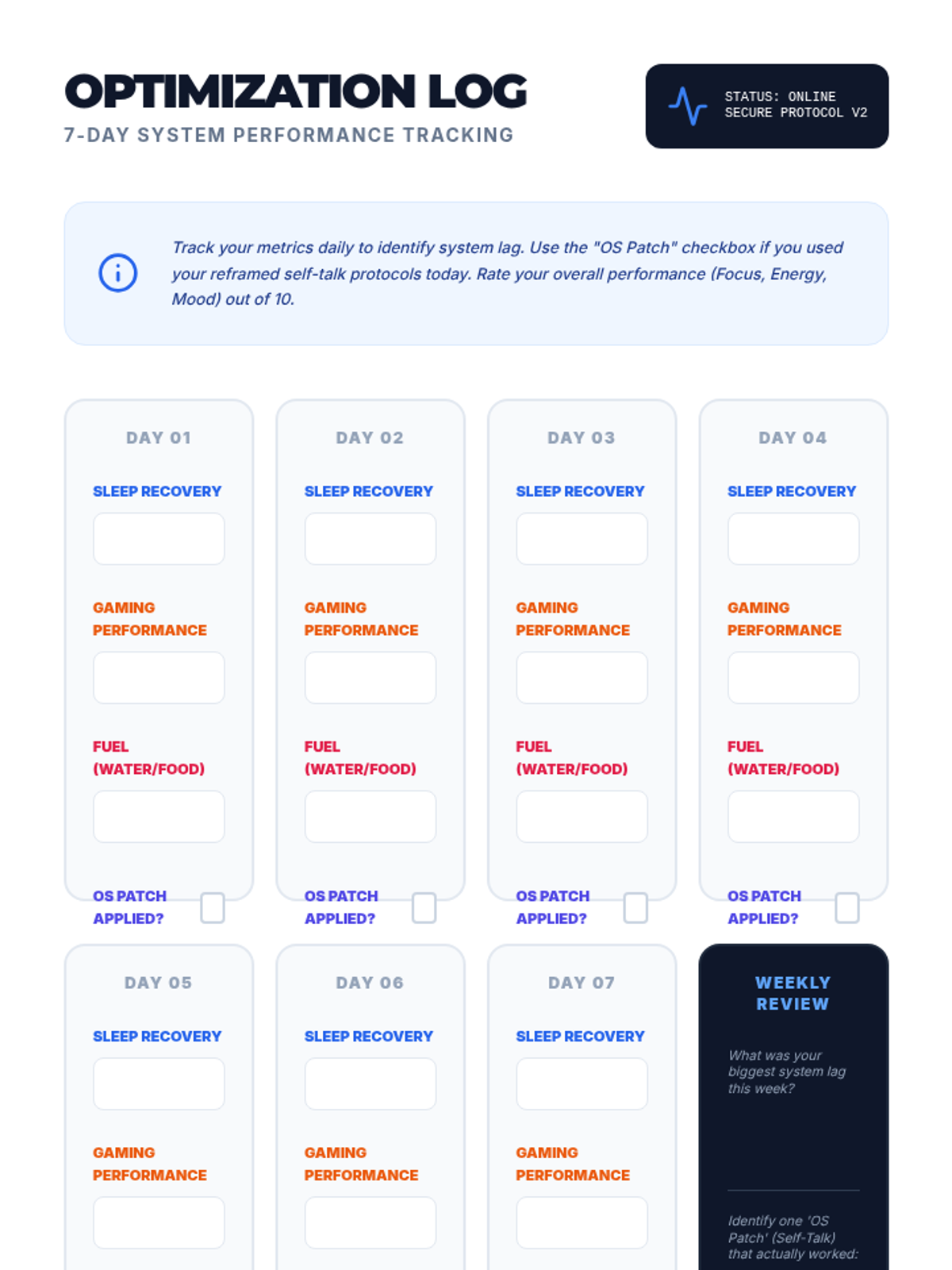
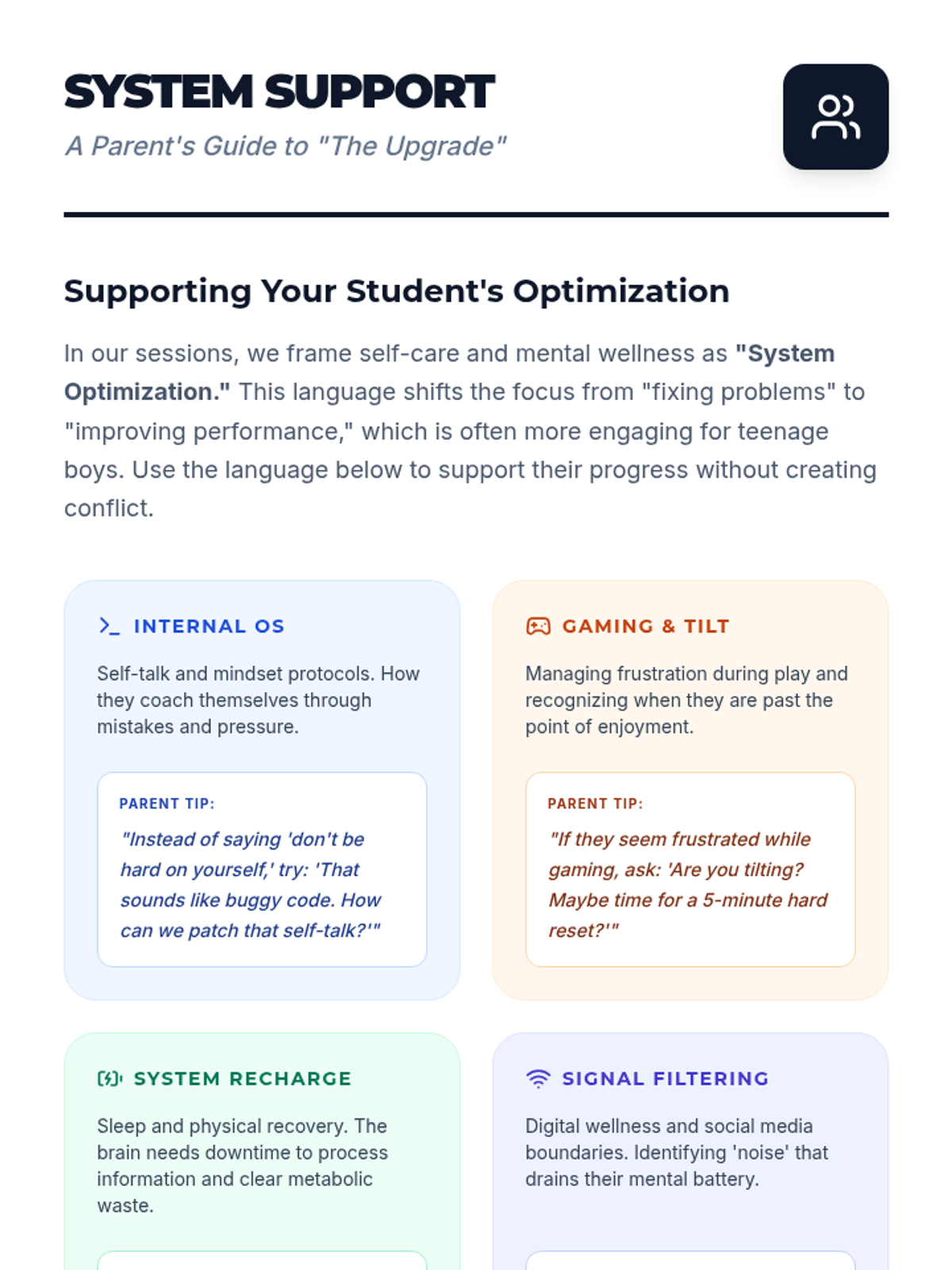
A specialized individual counseling lesson designed for teenage boys, framing self-care and positive self-talk as 'system optimization' for peak performance in digital and physical life.
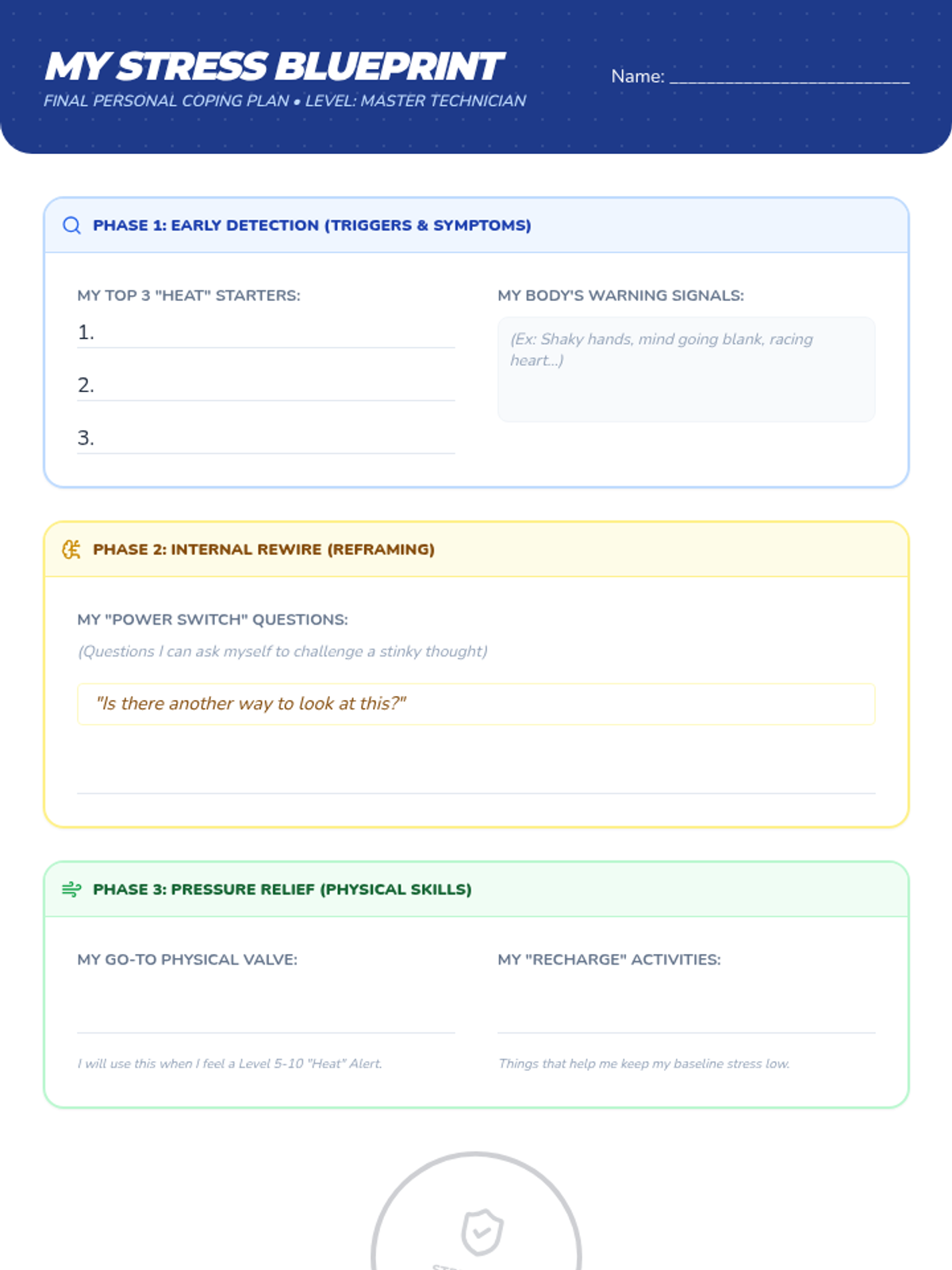
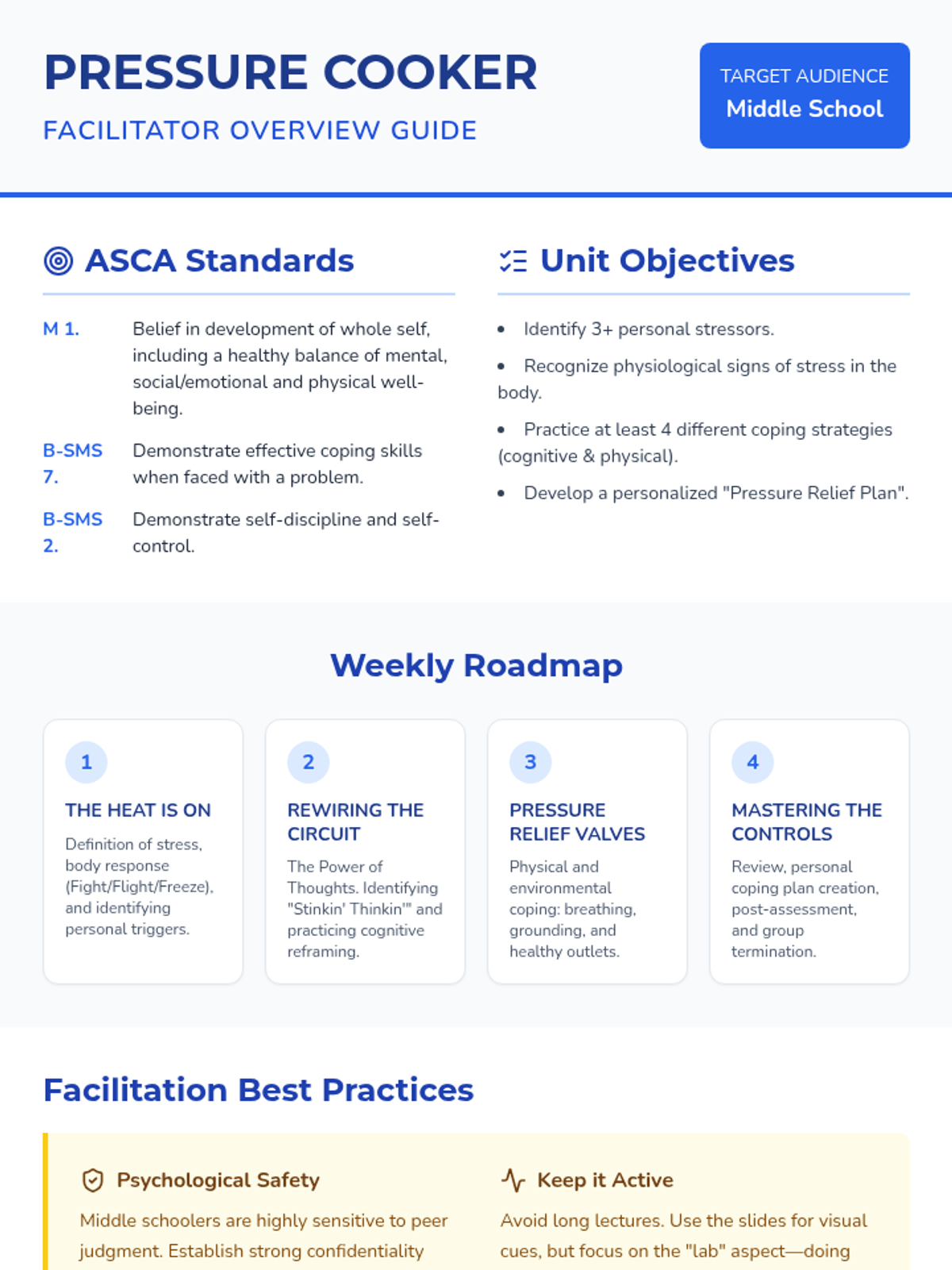
Students synthesize their learning by creating a personal coping plan and reflecting on their growth throughout the group.
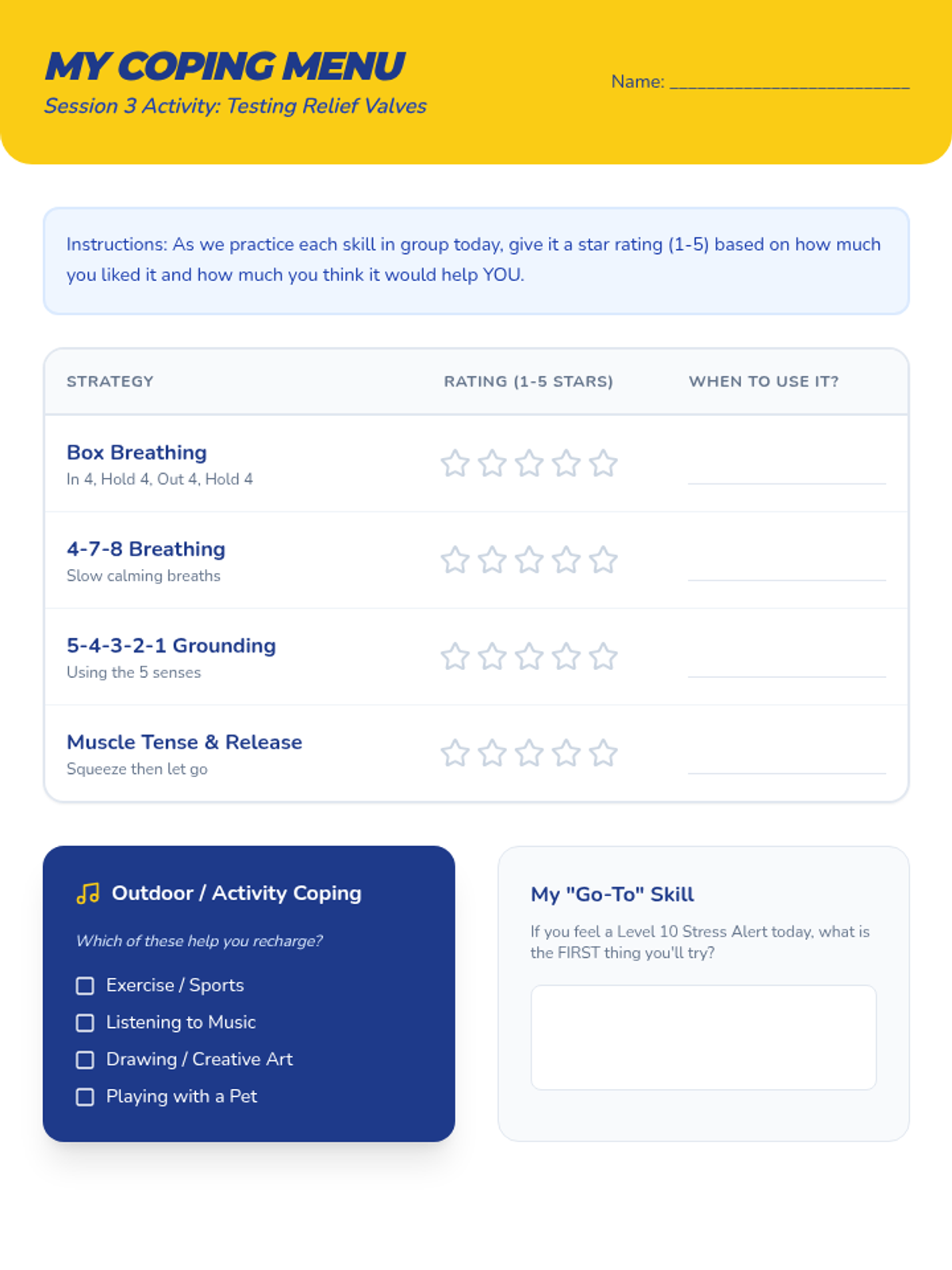
Introduces physical and environmental coping strategies, including deep breathing, grounding techniques, and healthy lifestyle habits.
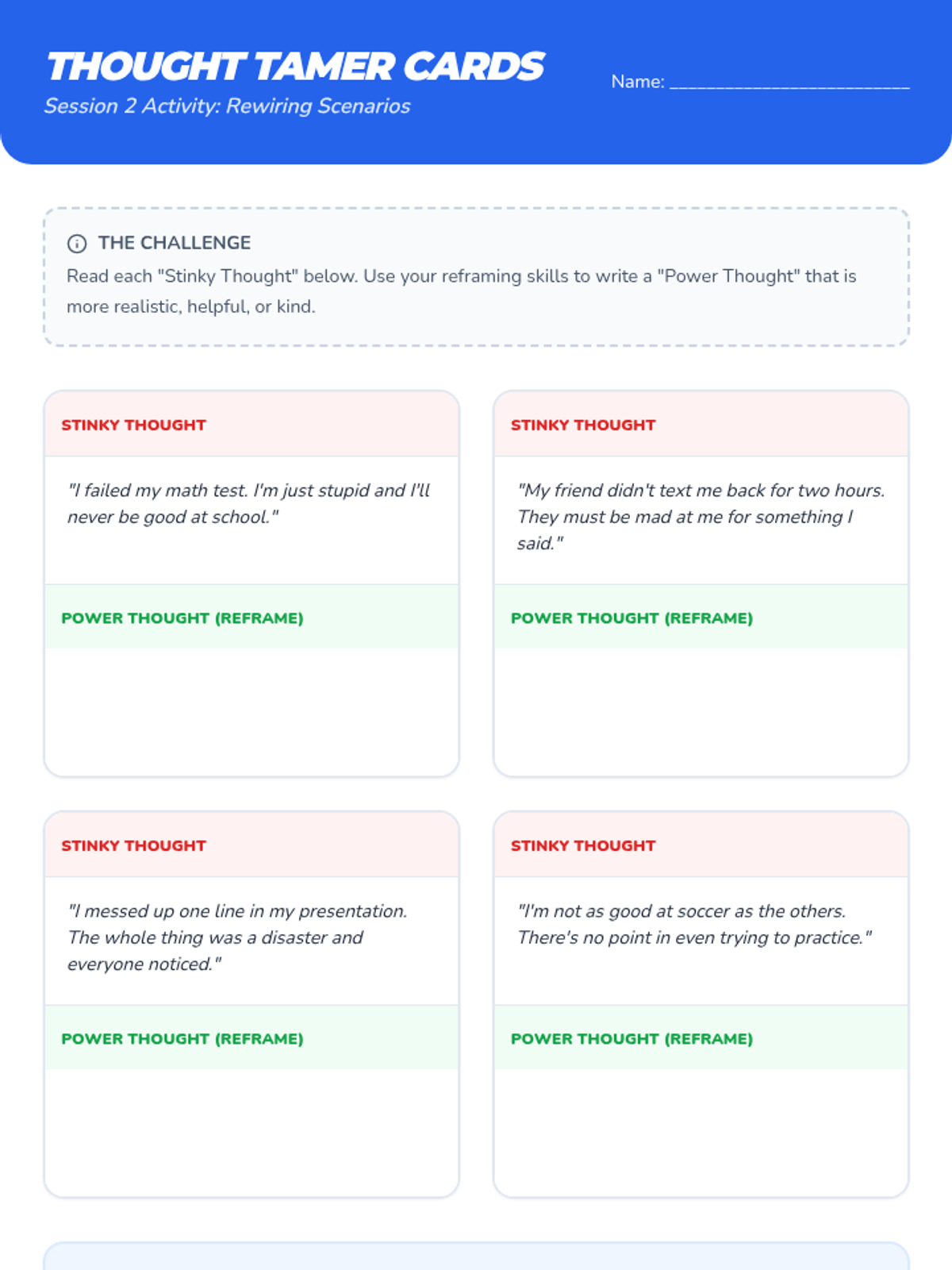
Focuses on the connection between thoughts and feelings, teaching students how to challenge negative self-talk and reframe stressful situations.
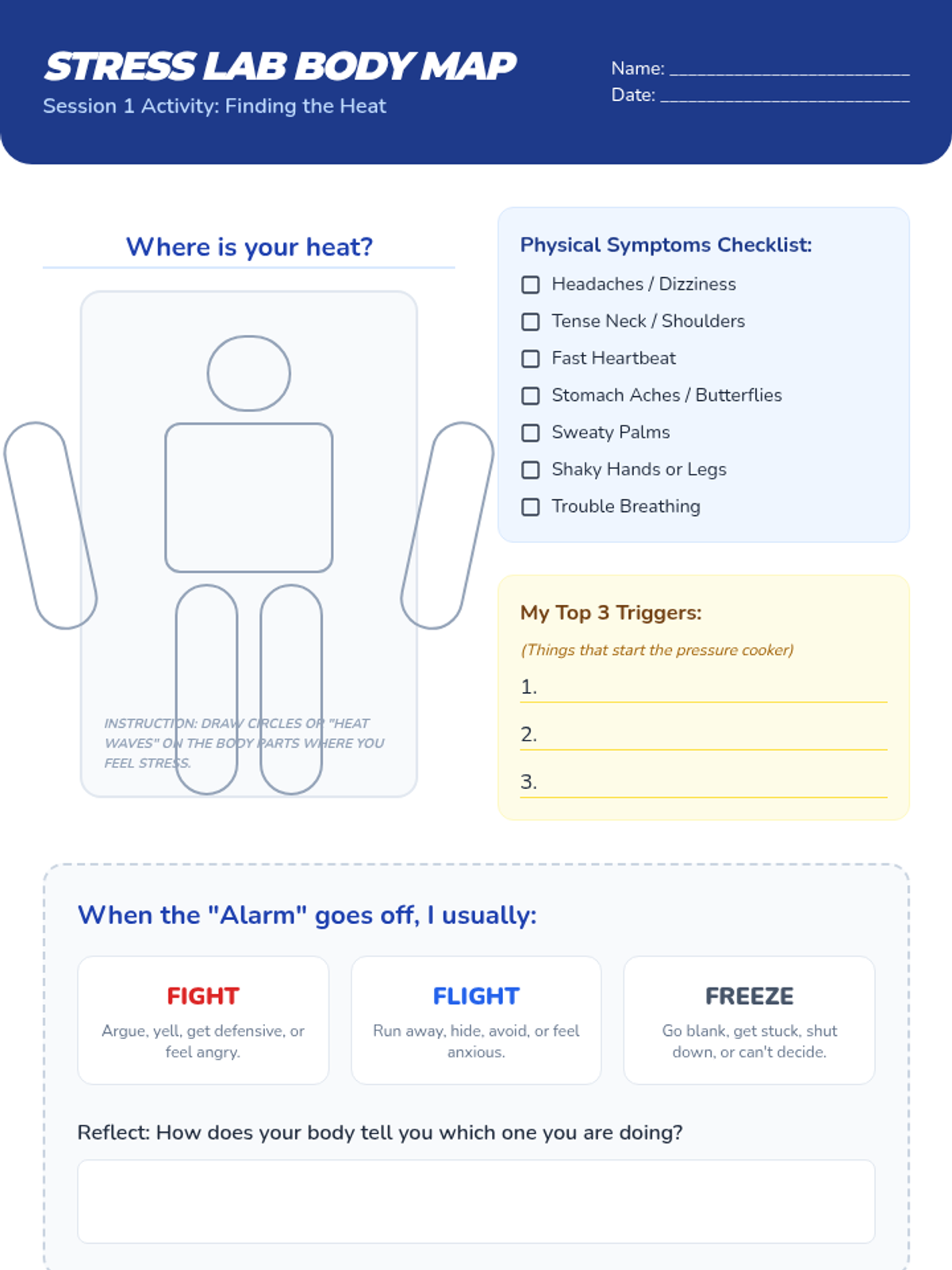
Students will define stress, identify their personal 'stress triggers', and learn how their bodies react to pressure.
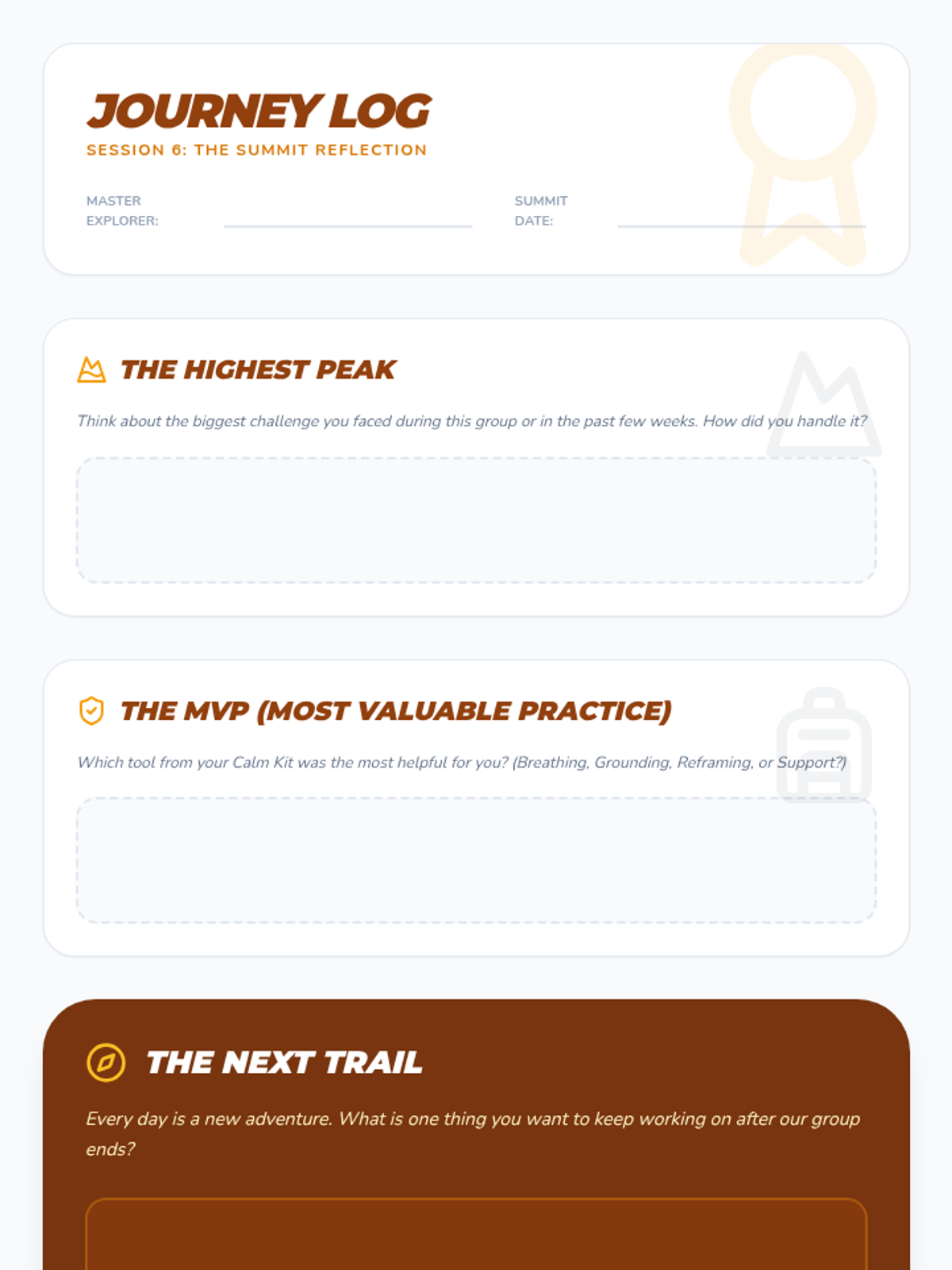
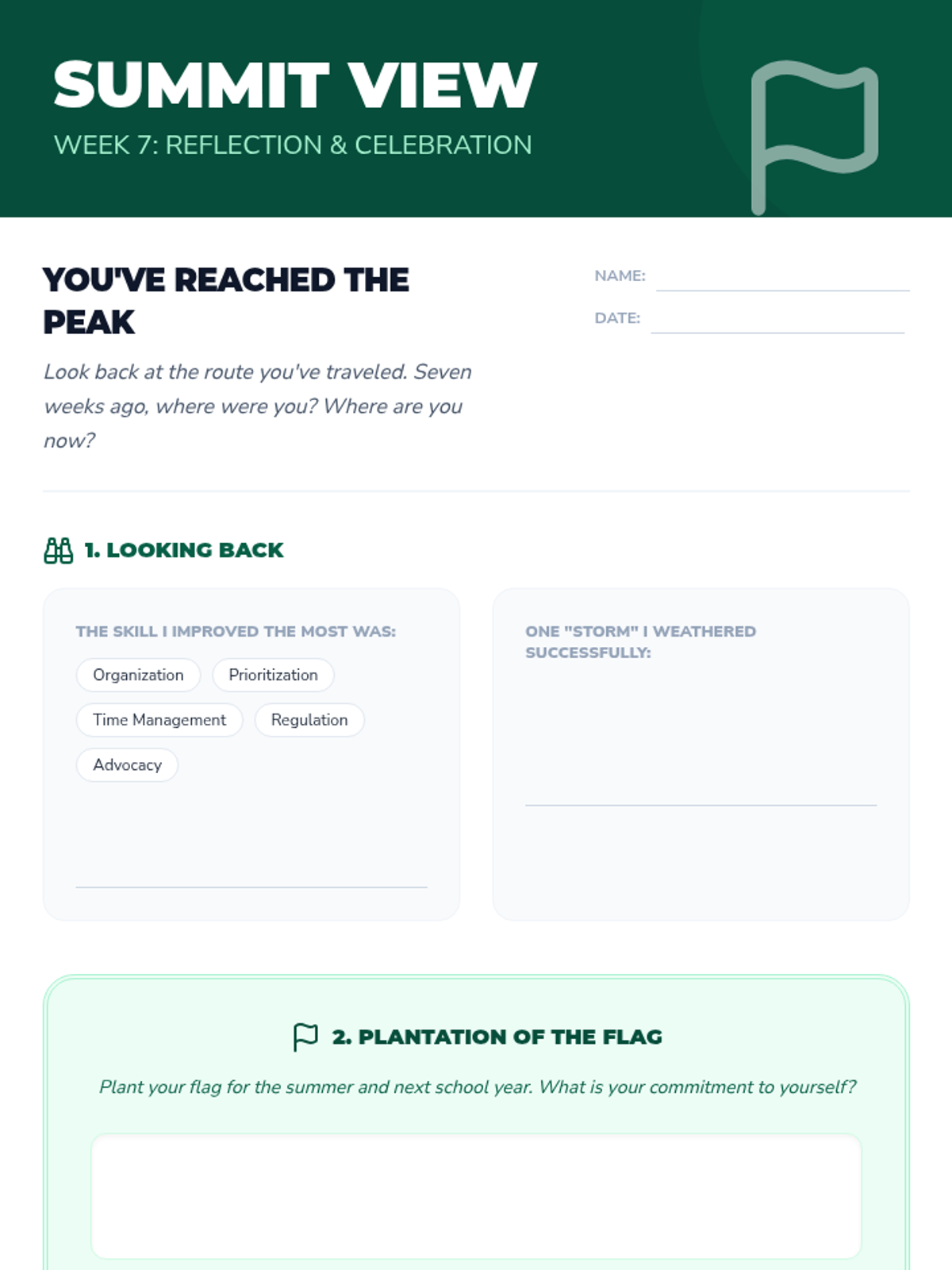
Final reflection, celebration of growth, and planning for the journey ahead.
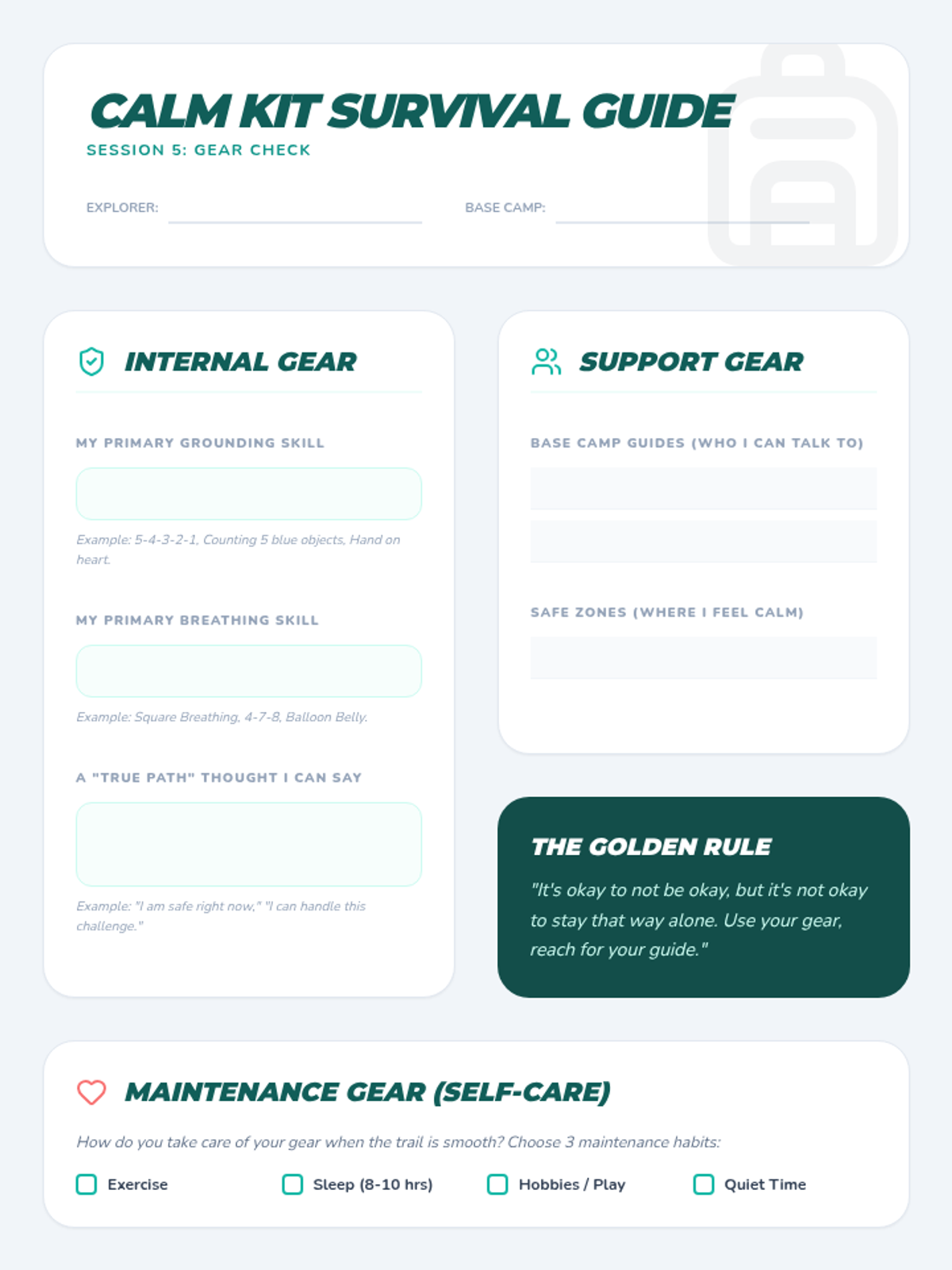
Reviewing various coping skills and creating a personalized 'Survival Kit' for future use.
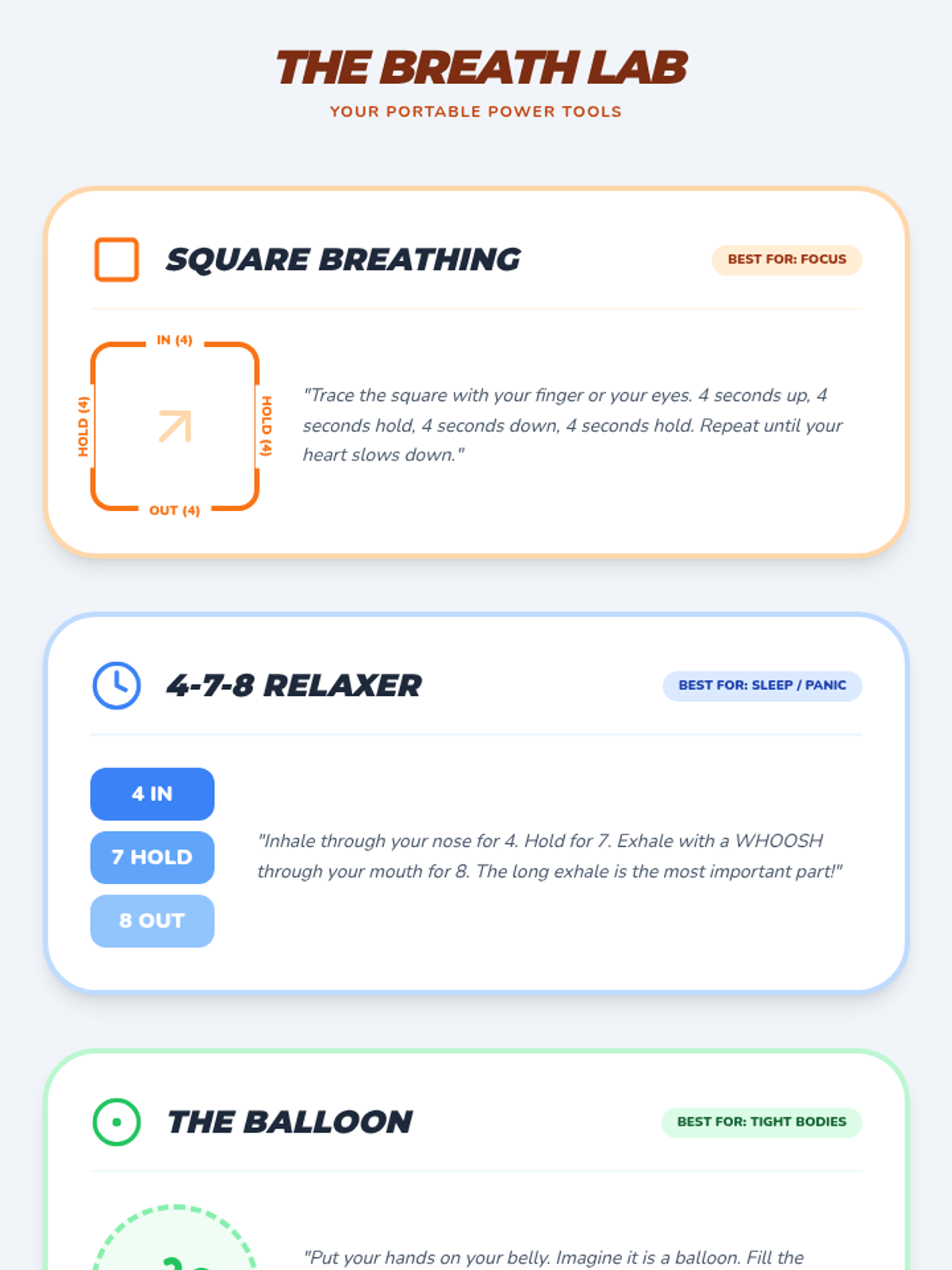
Focusing on the power of breath and mindfulness as internal tools for regulation.
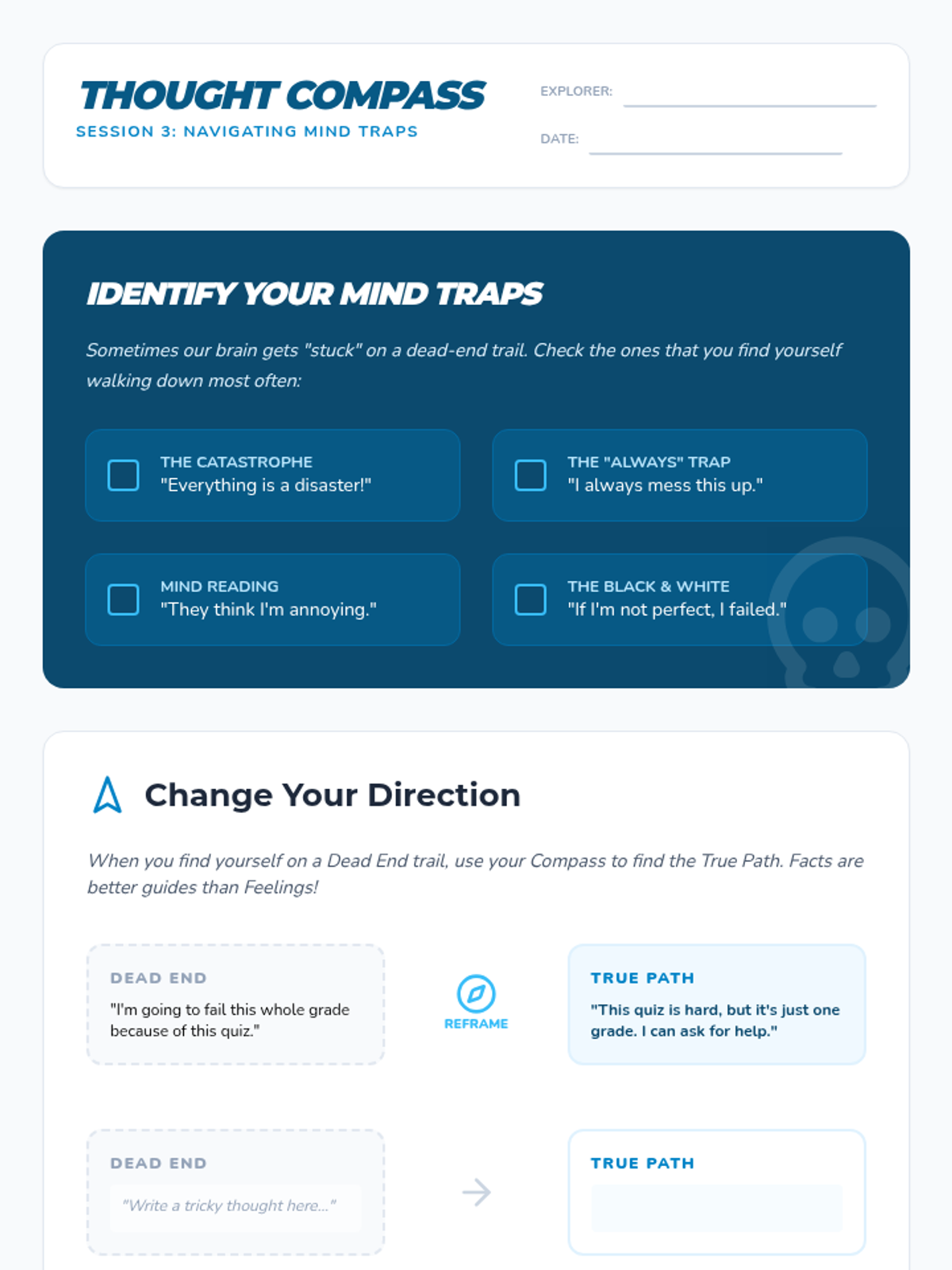
Identifying cognitive distortions or 'tricky trails' and learning to reframe thoughts using a 'Thought Compass'.
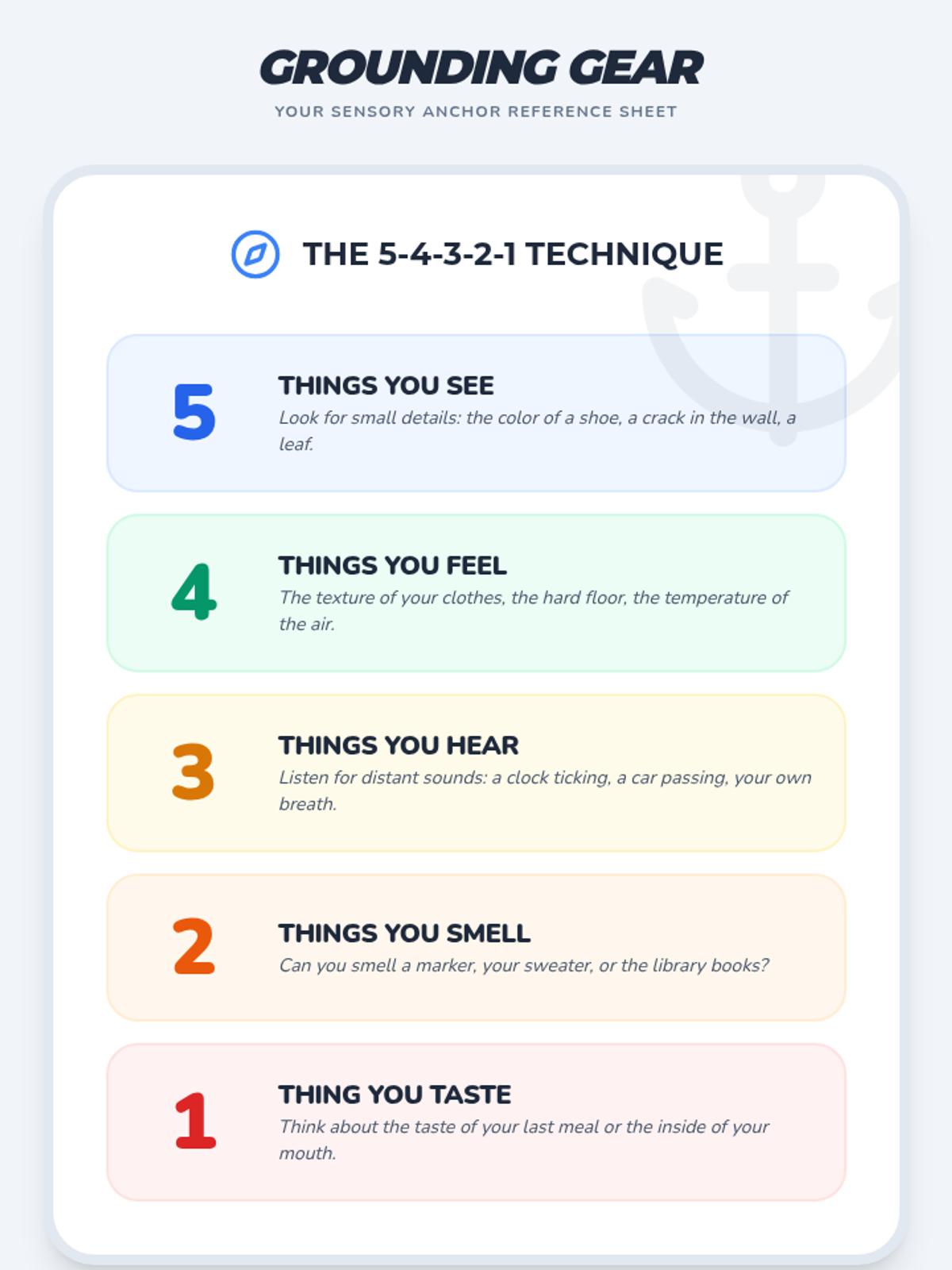
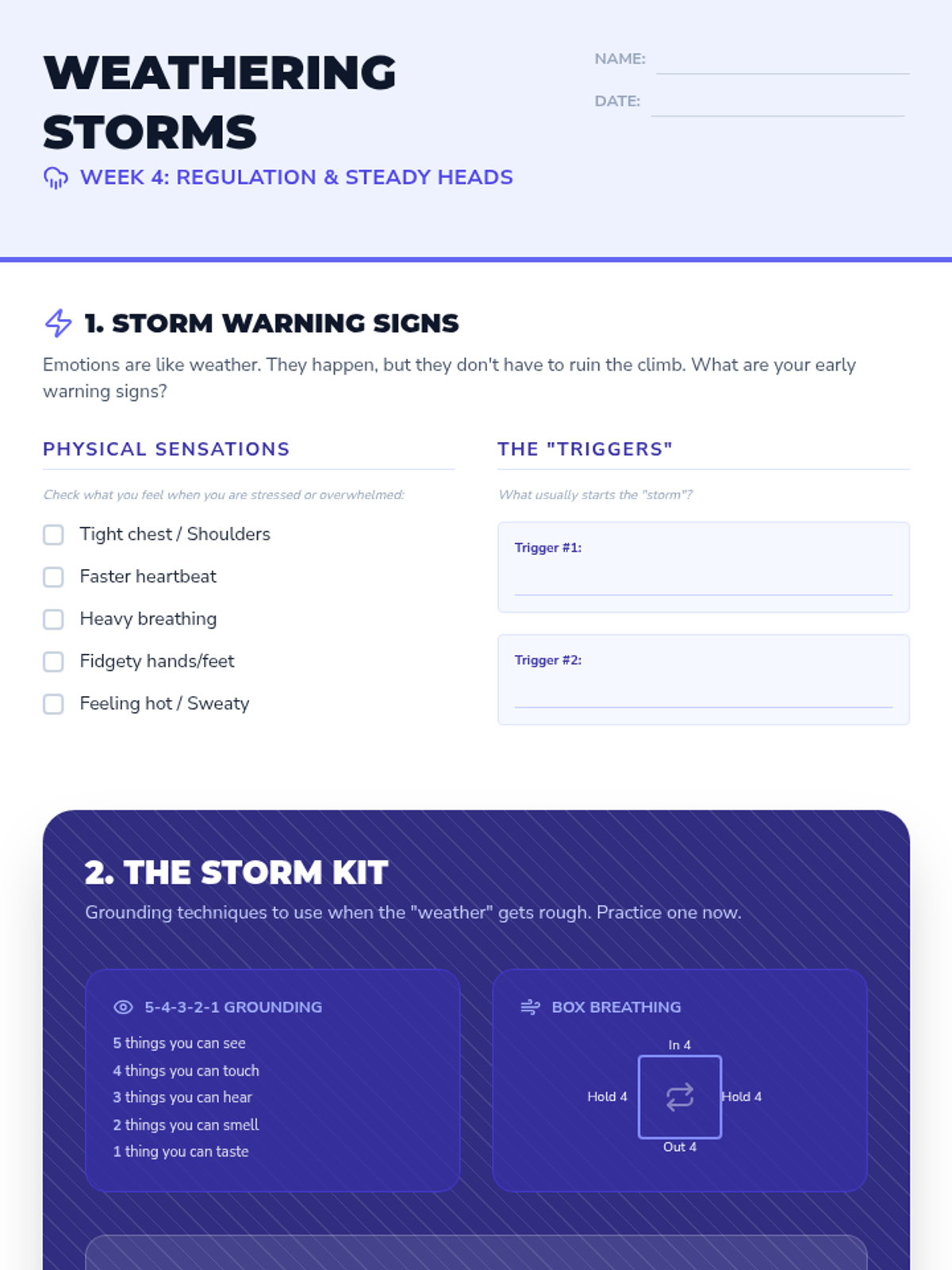
Understanding the physical 'alarm system' of the body and learning grounding techniques to stay present during 'storms'.
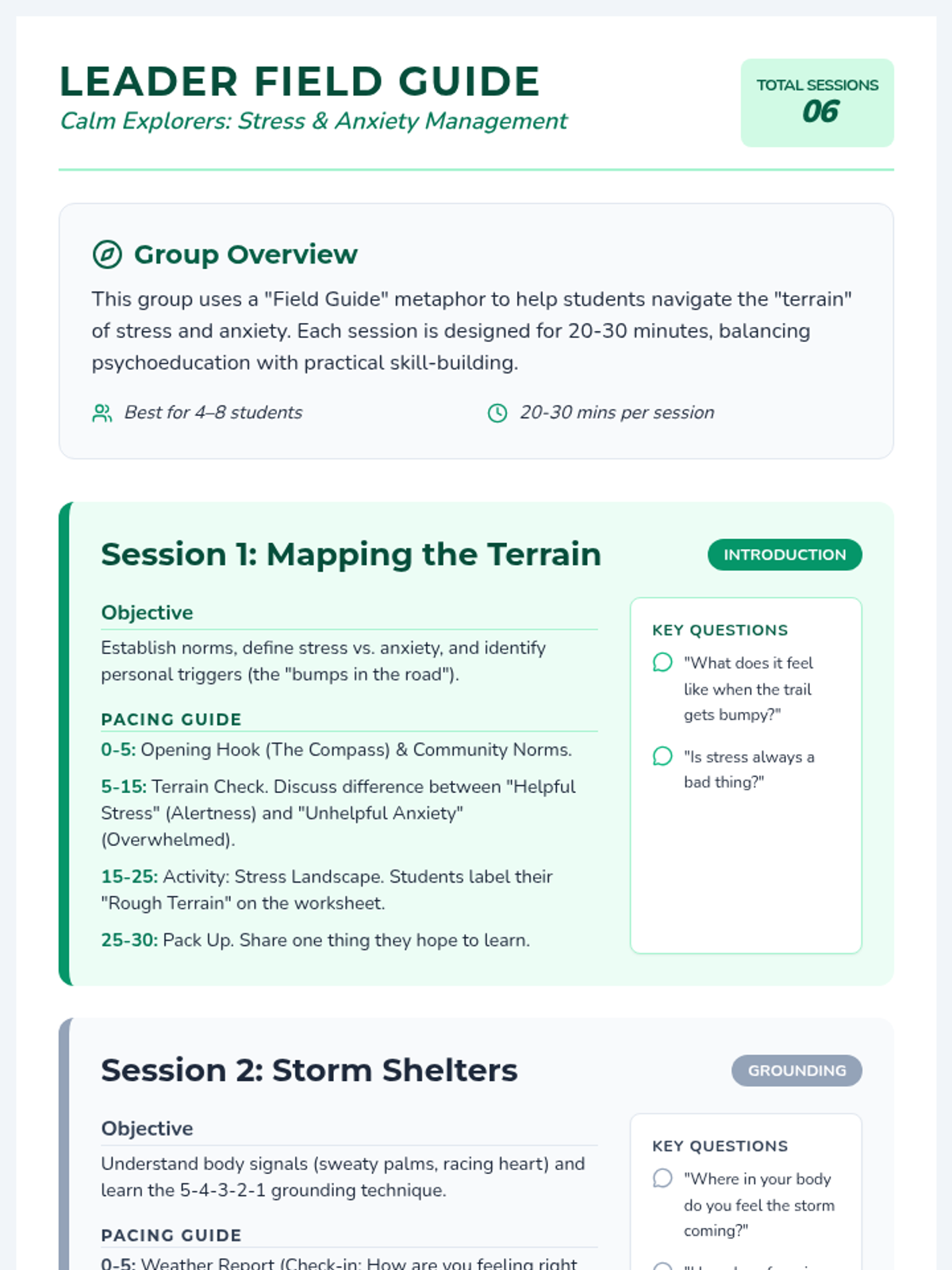
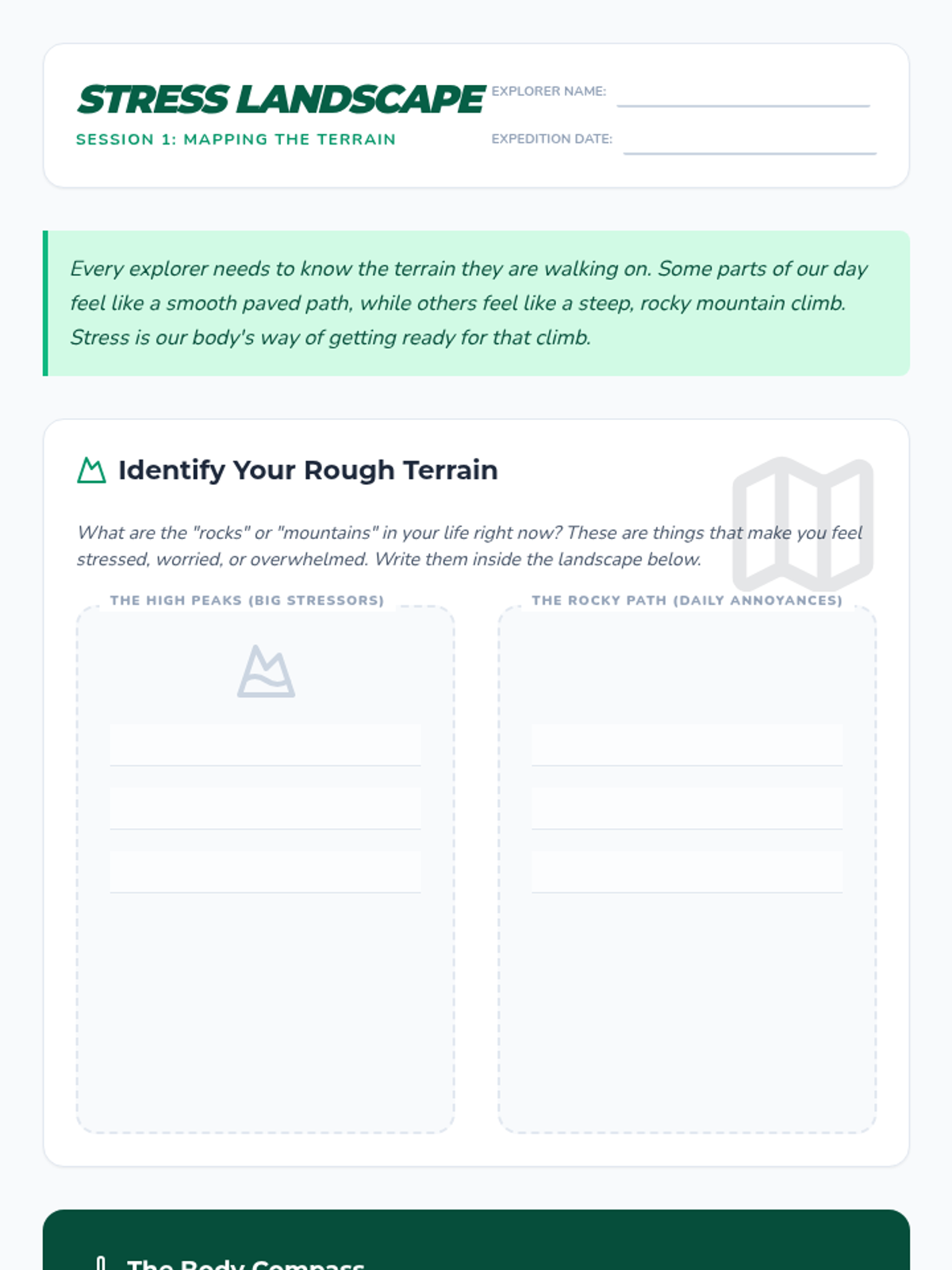
Introduction to the group, establishing norms, and identifying individual stress triggers using the 'Stress Landscape' metaphor.
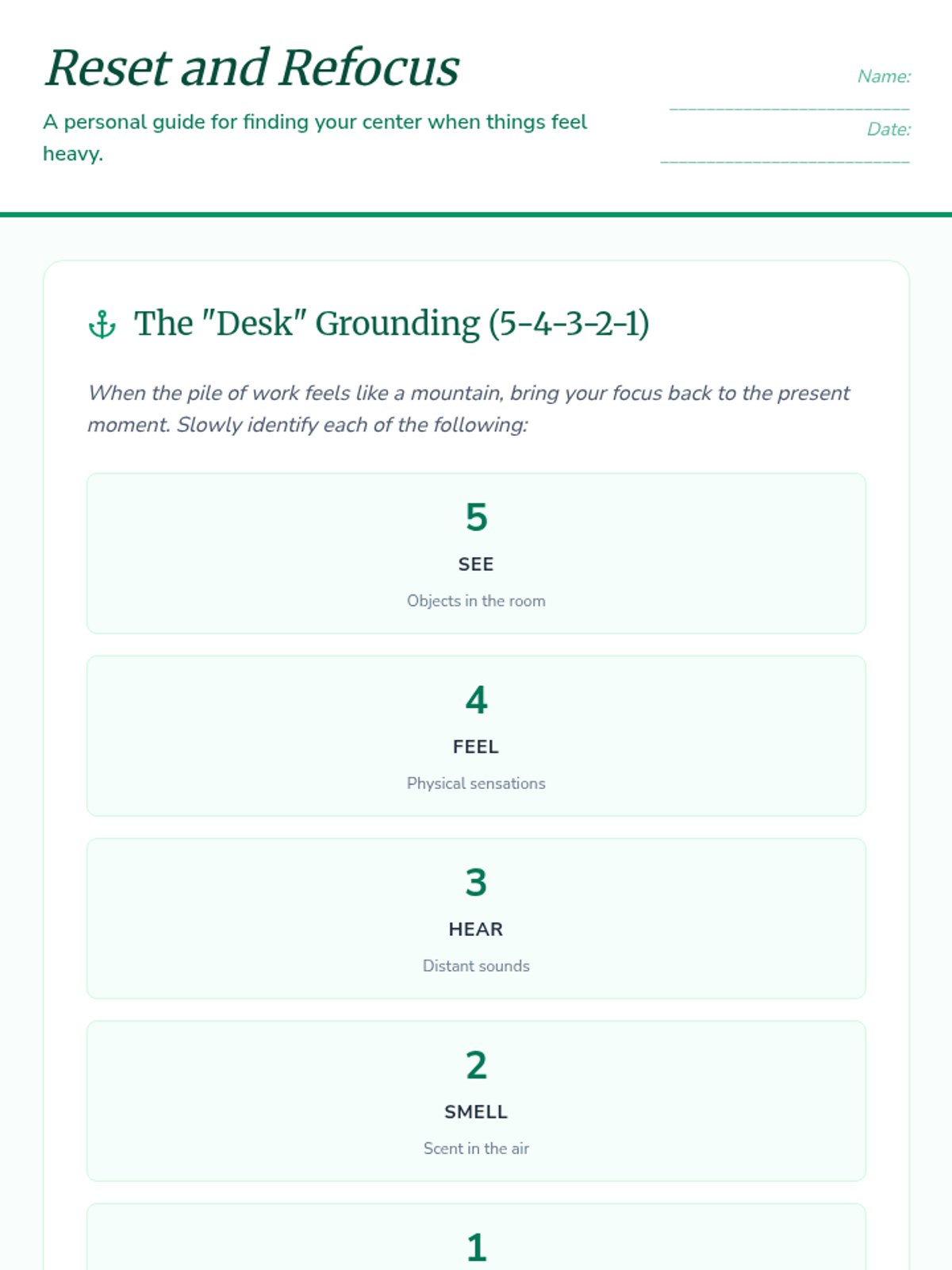
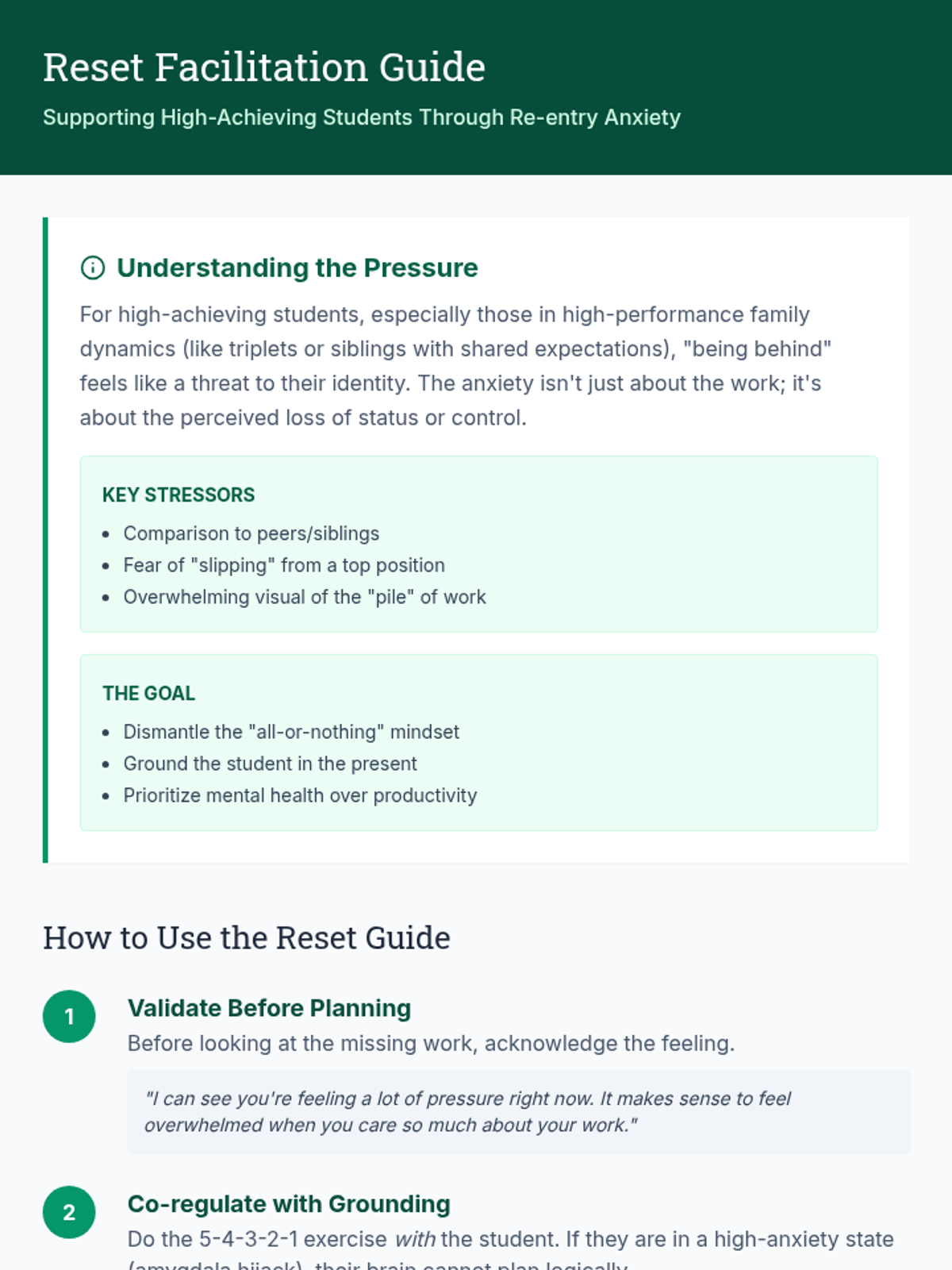
A collection of resources designed to help high-achieving students manage academic anxiety and re-entry stress through mindfulness and grounding.
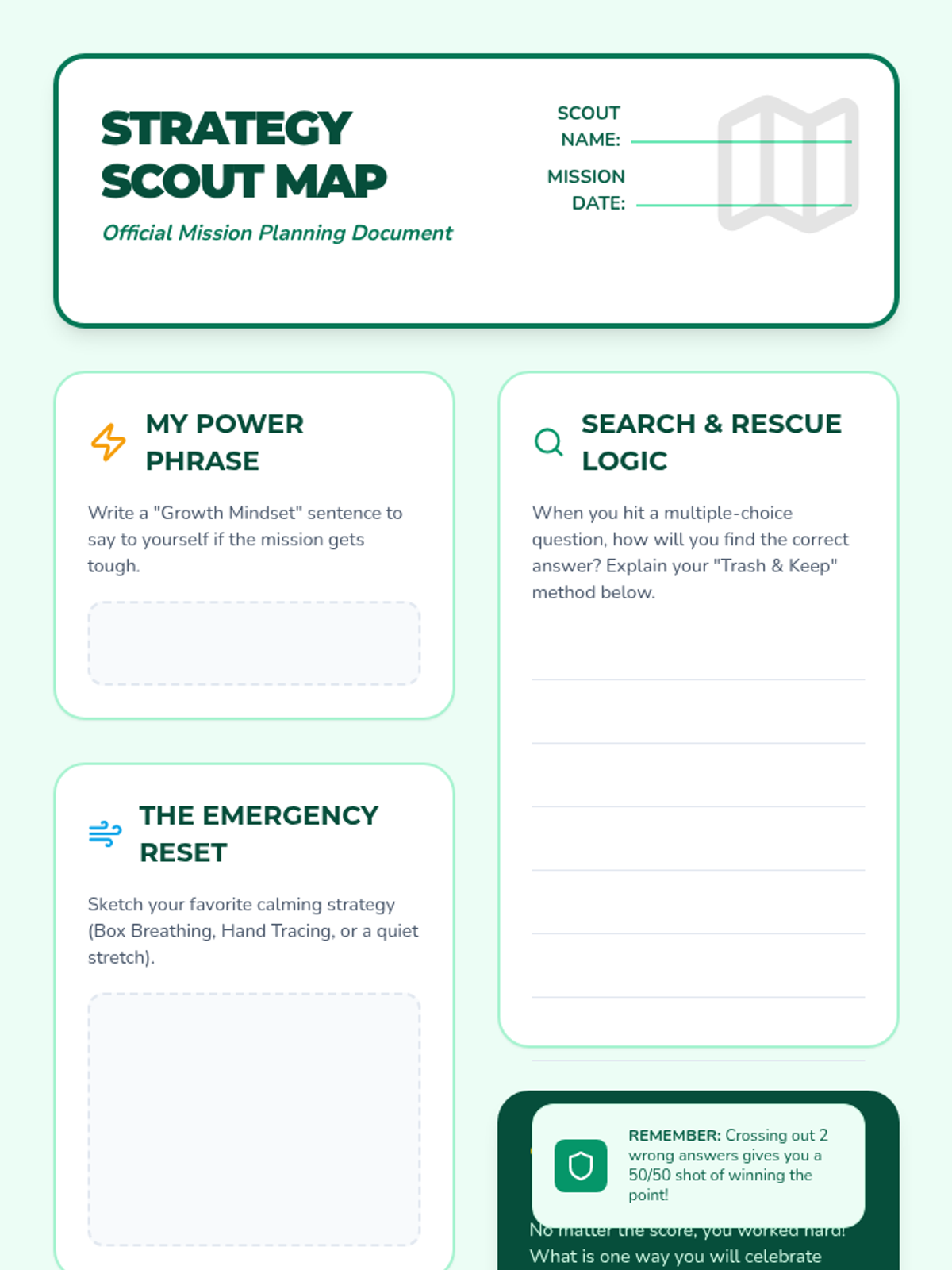
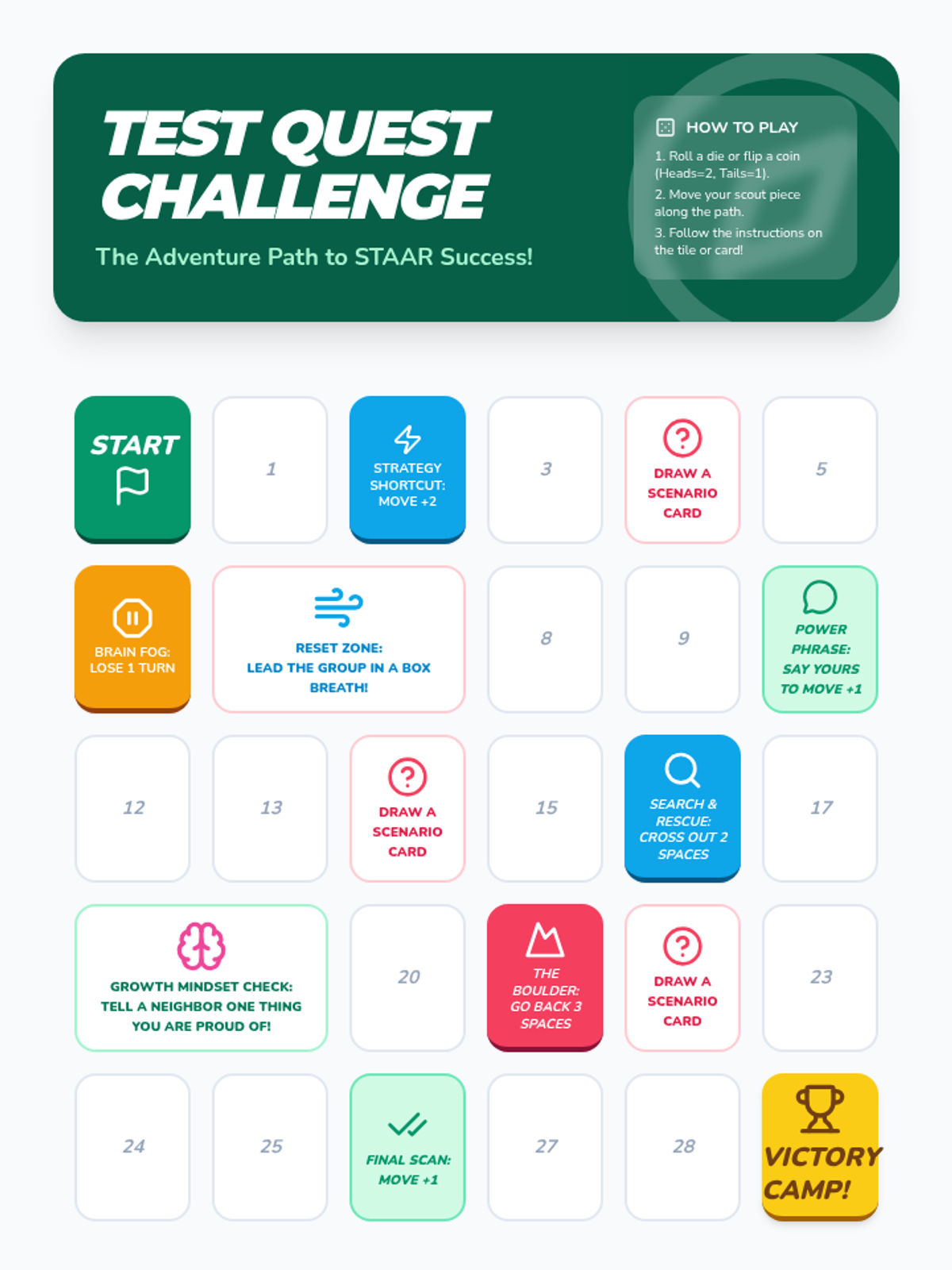
A comprehensive lesson designed to equip students with social-emotional strategies and practical techniques for tackling the STAAR test with confidence and focus.
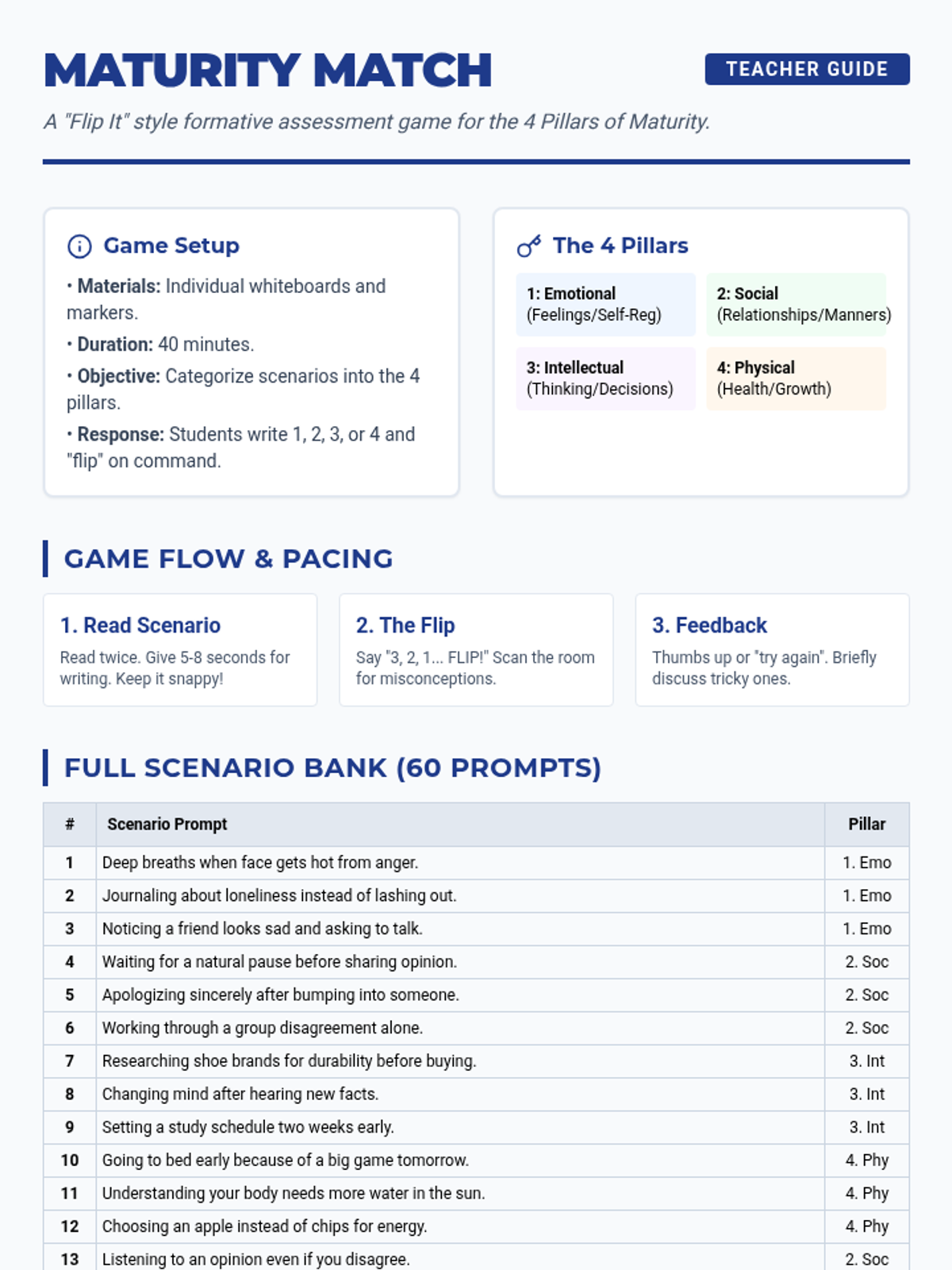
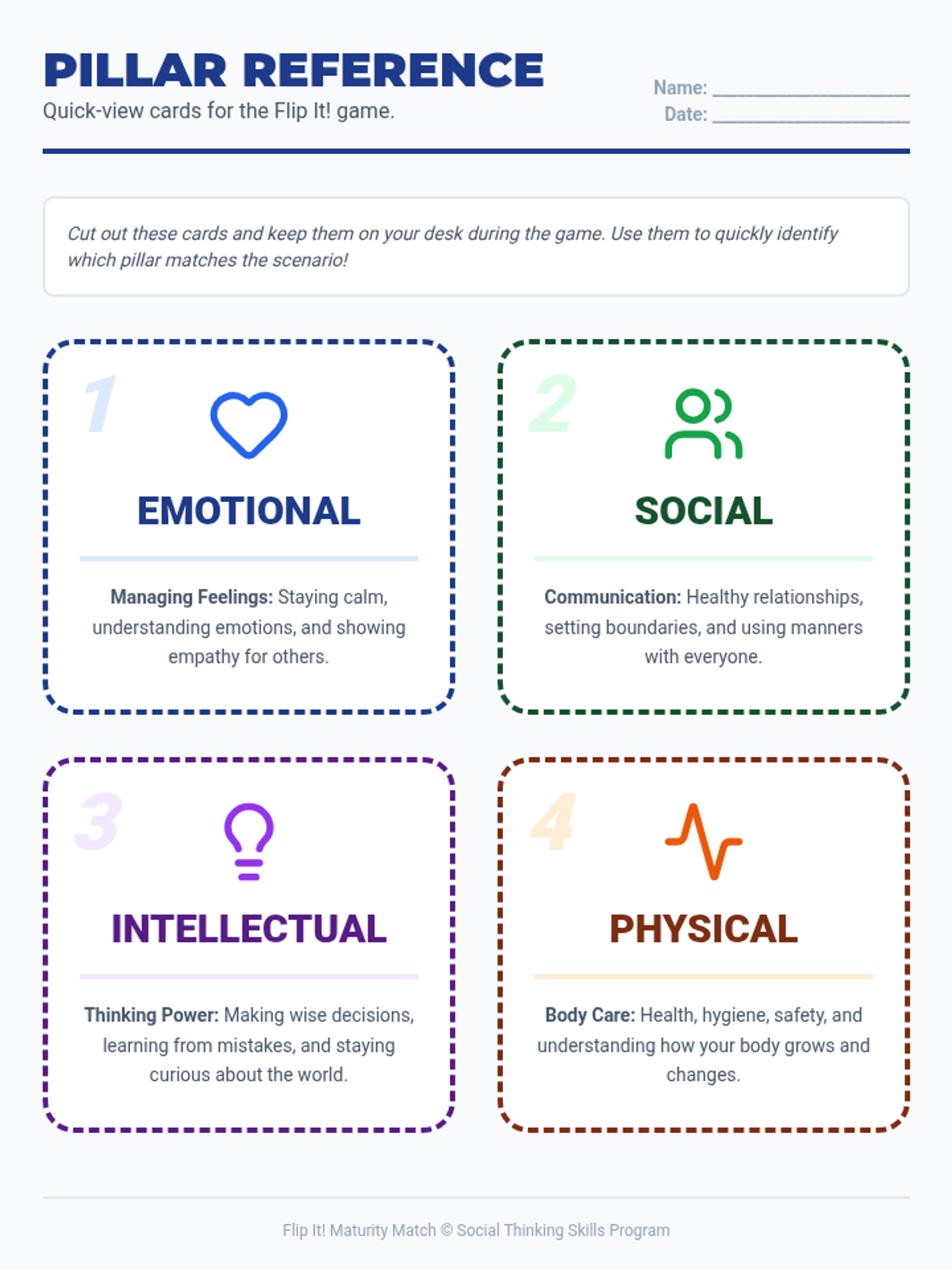
A fast-paced formative assessment game where students identify the four pillars of maturity through real-world scenarios. Includes a visual slide deck, a bank of 60 scenarios for the teacher, and reference cards for students.
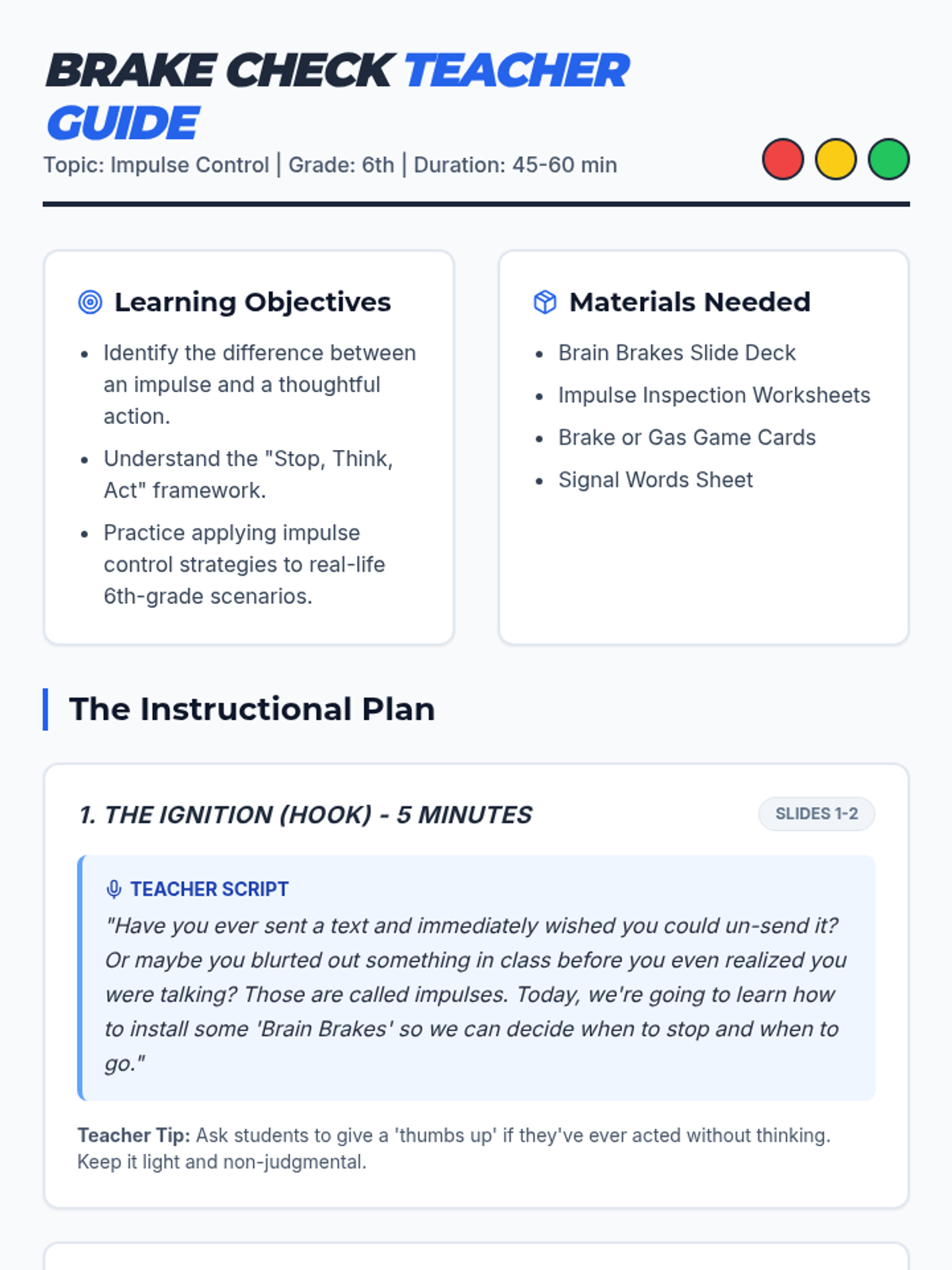
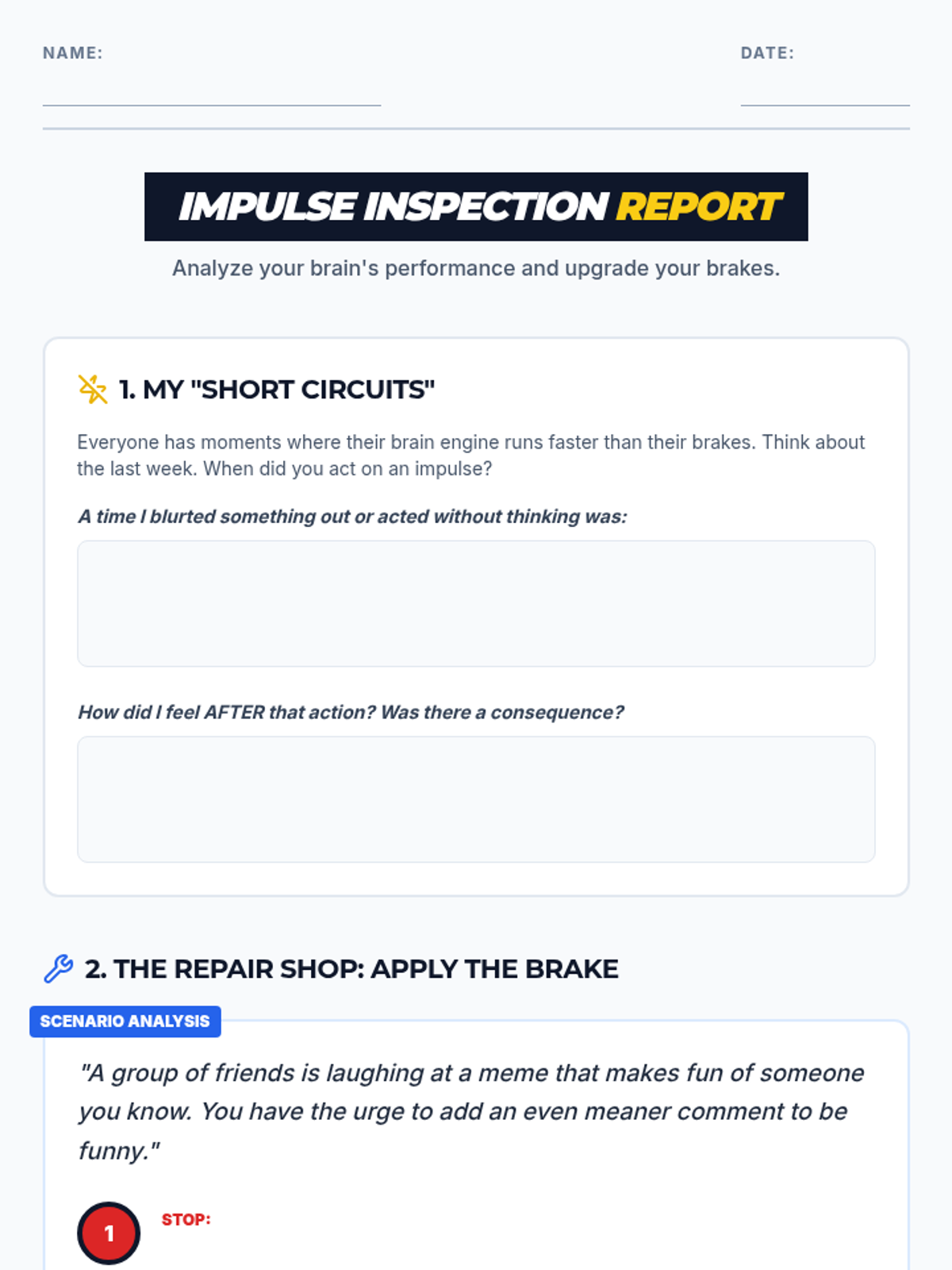
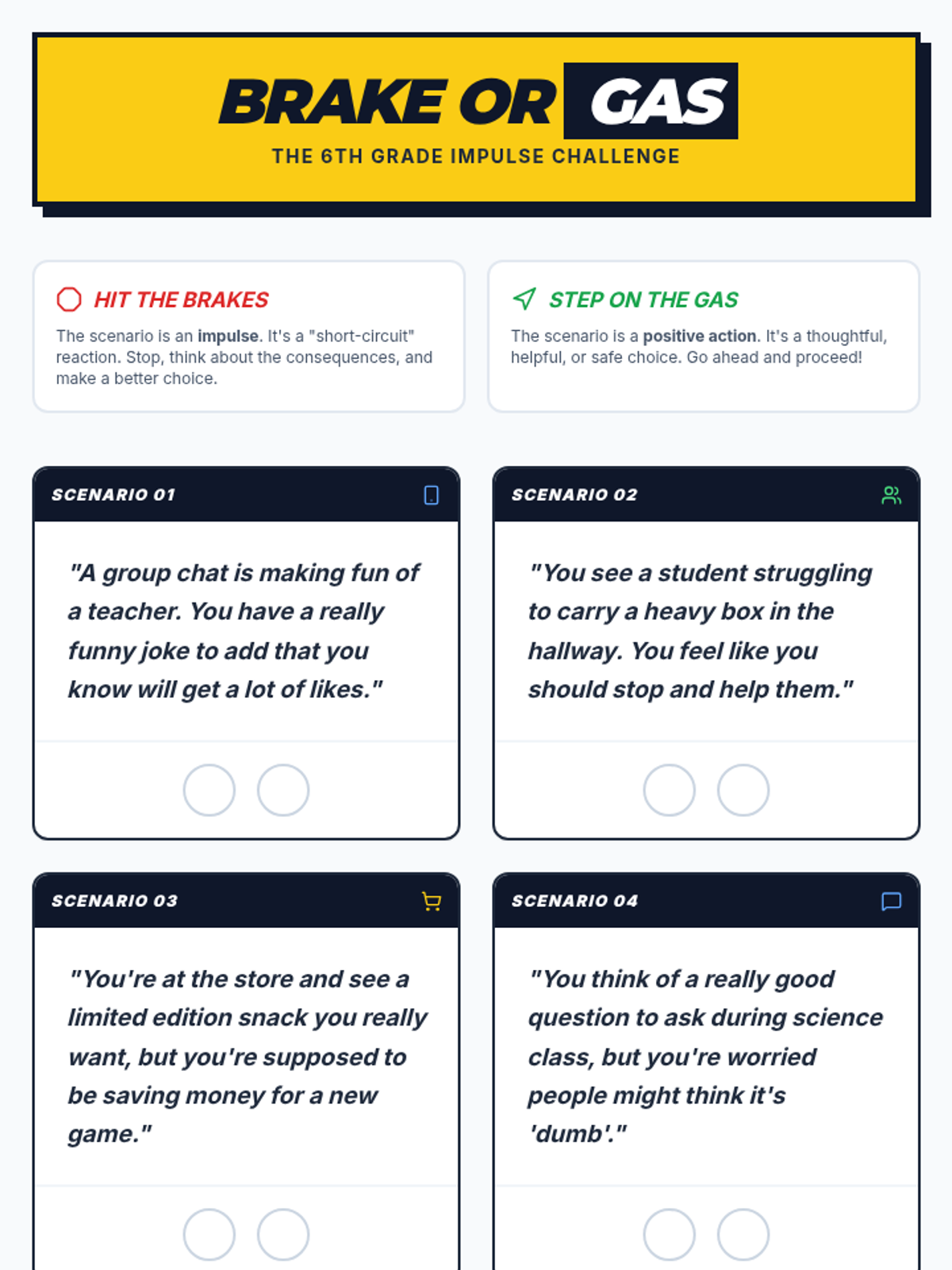
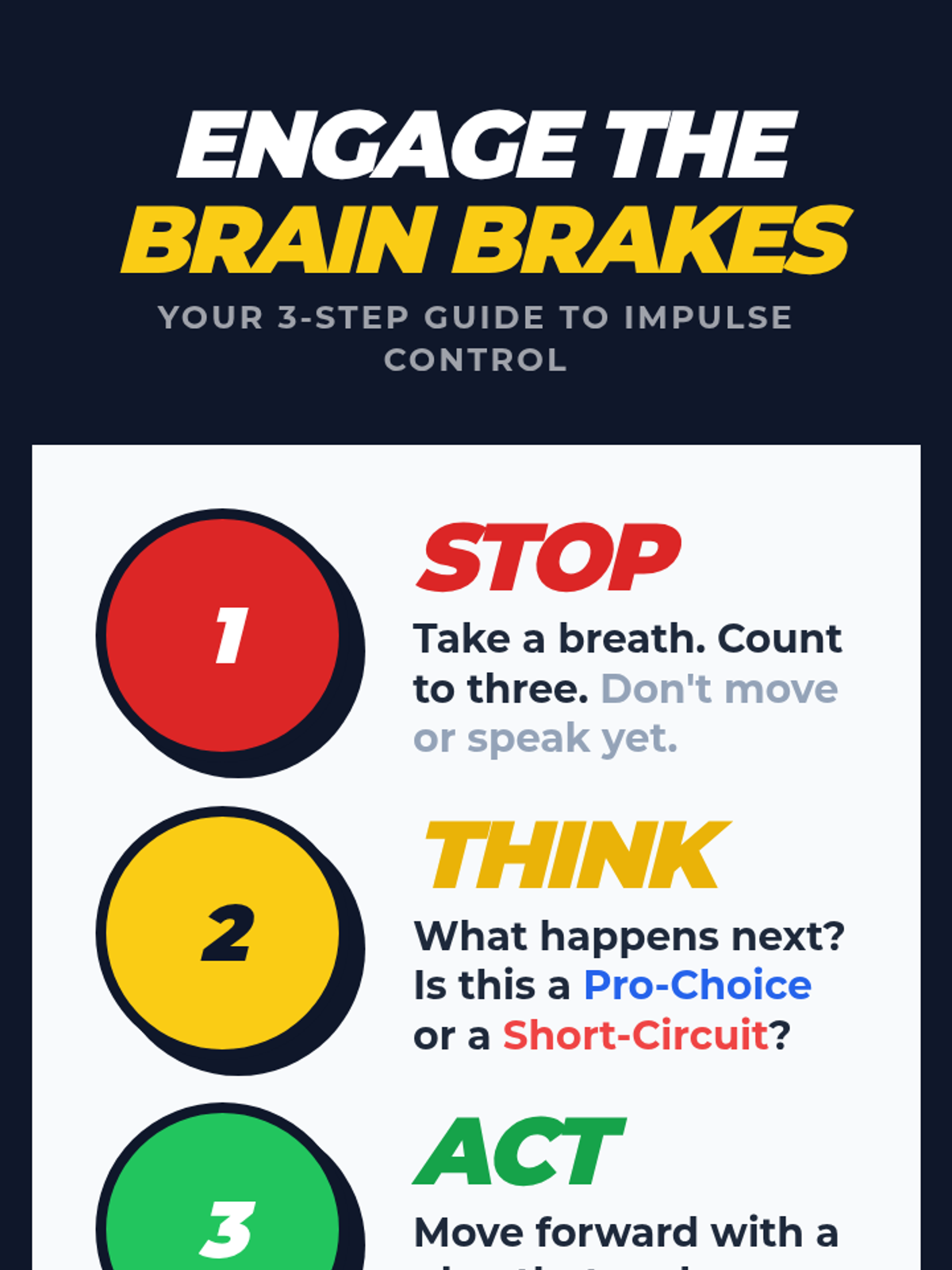
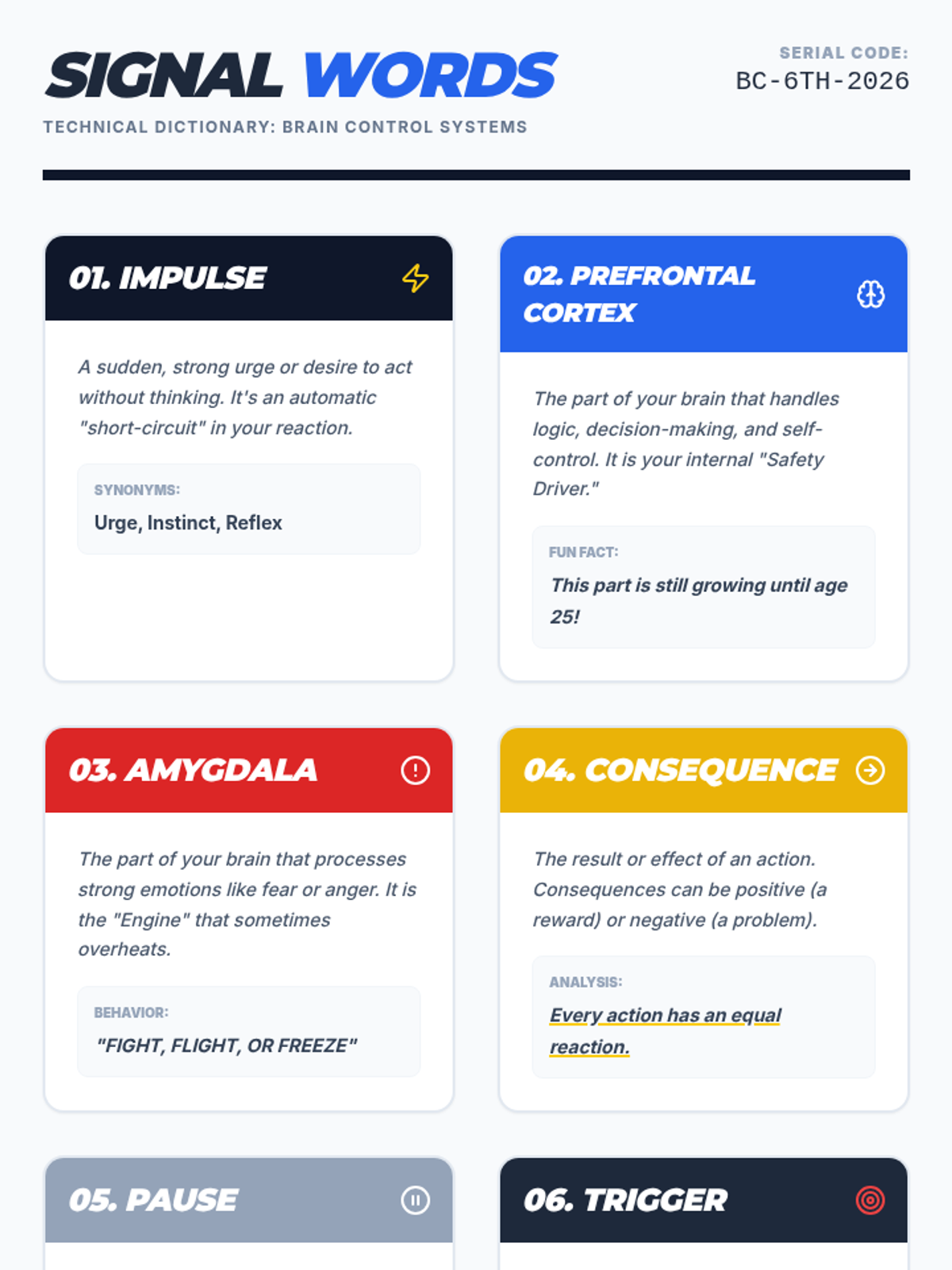
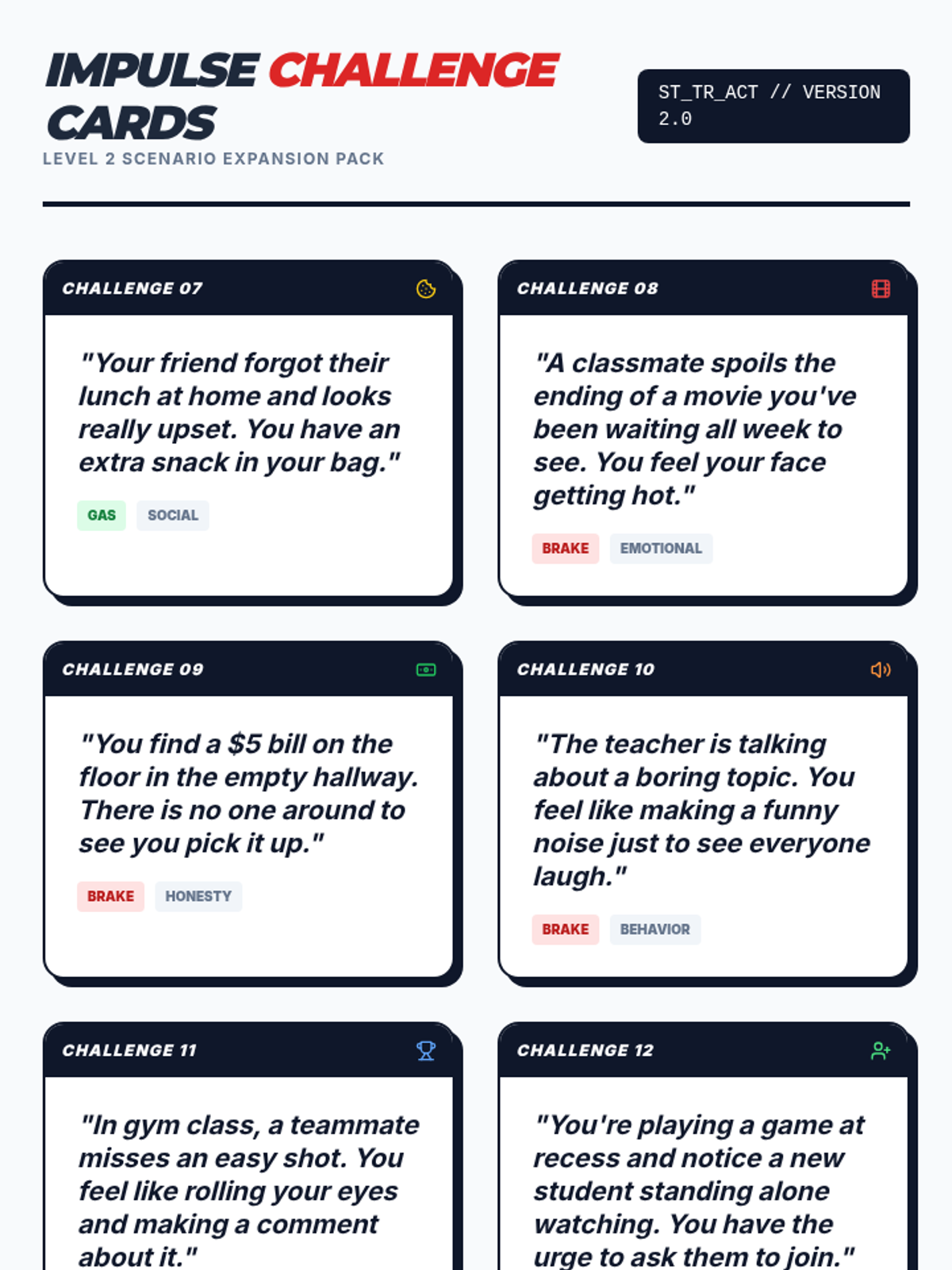
A comprehensive lesson for 6th graders on impulse control, teaching the 'Stop, Think, Act' method through interactive scenarios and reflection.
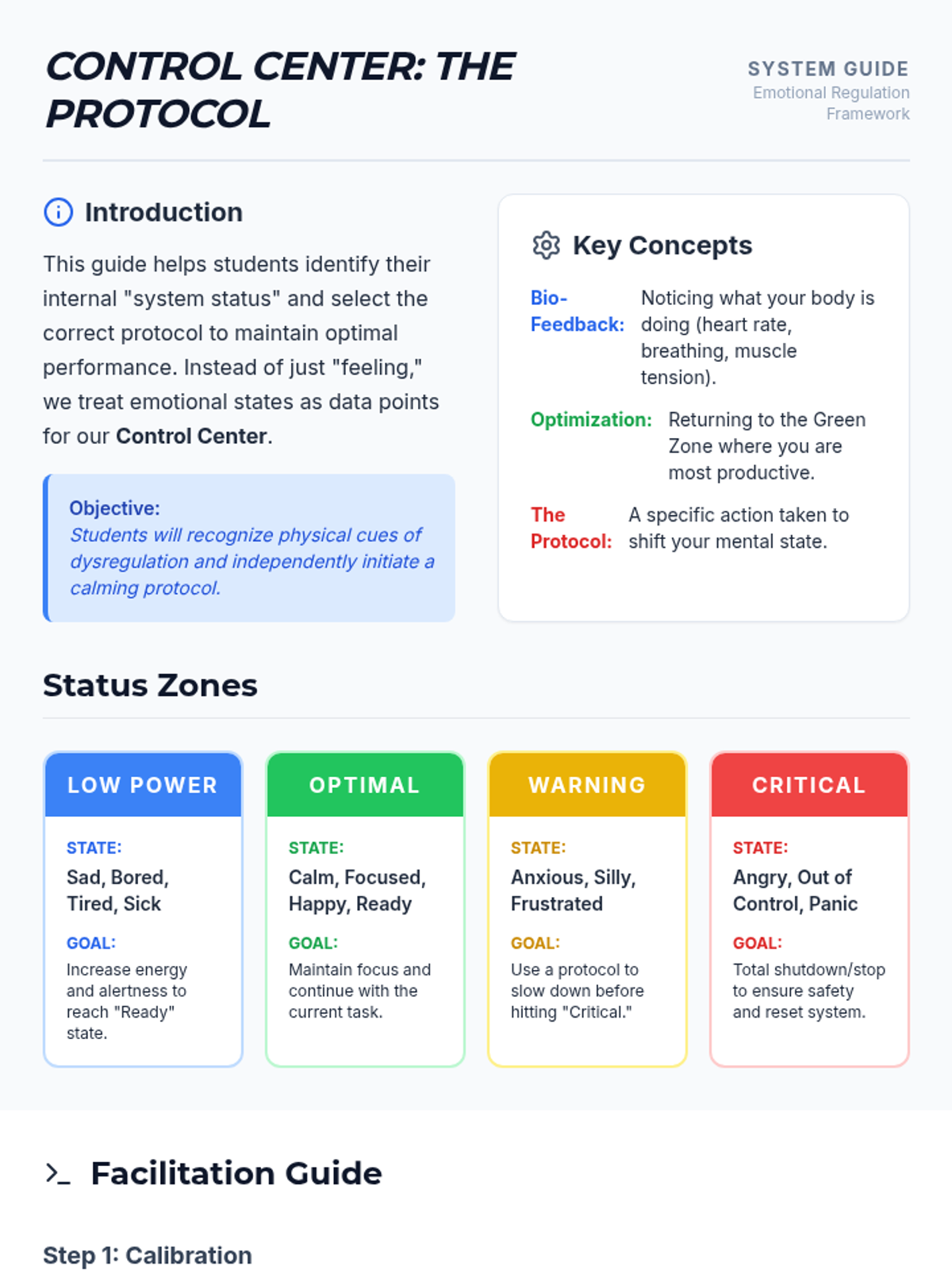
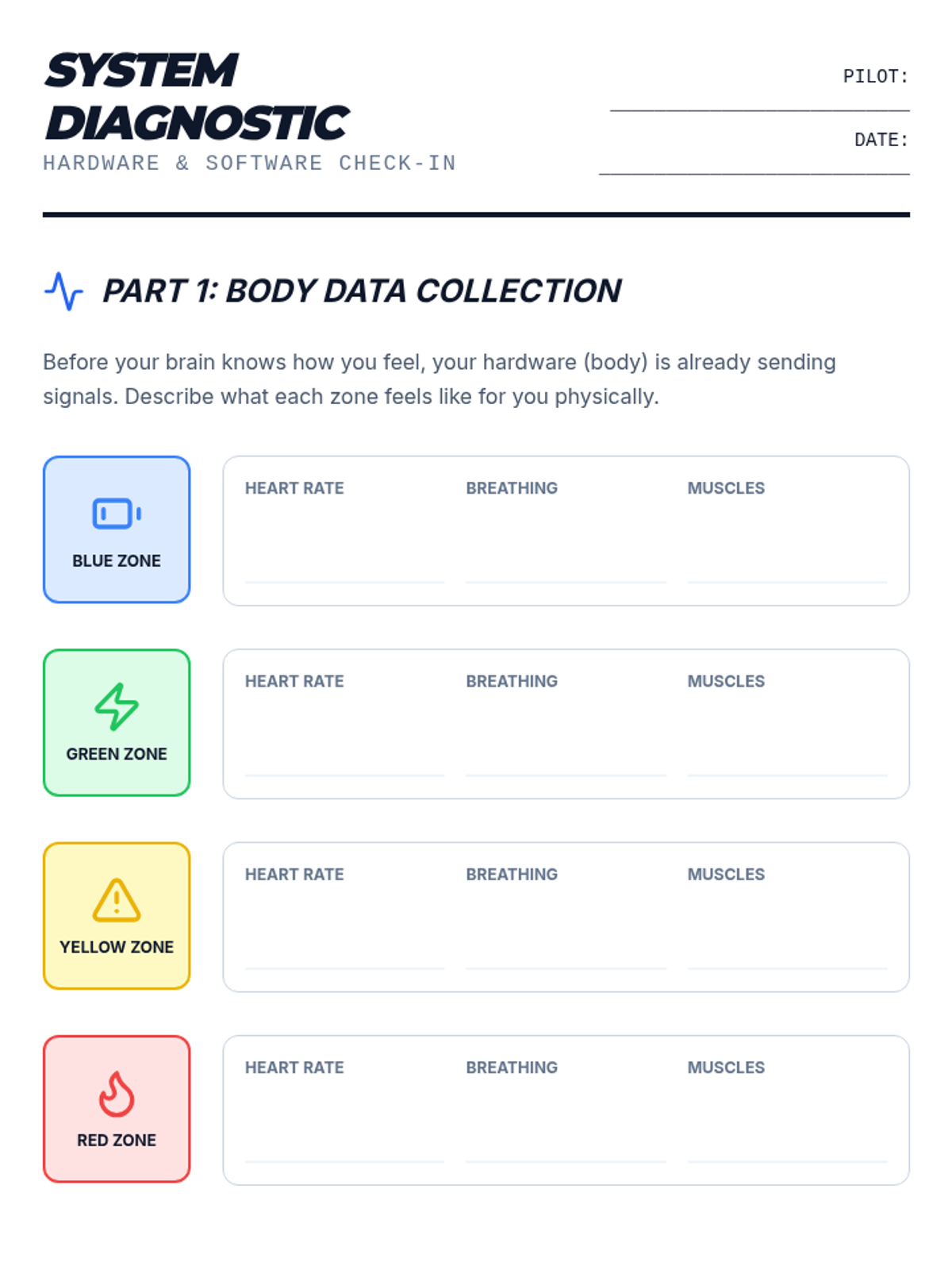
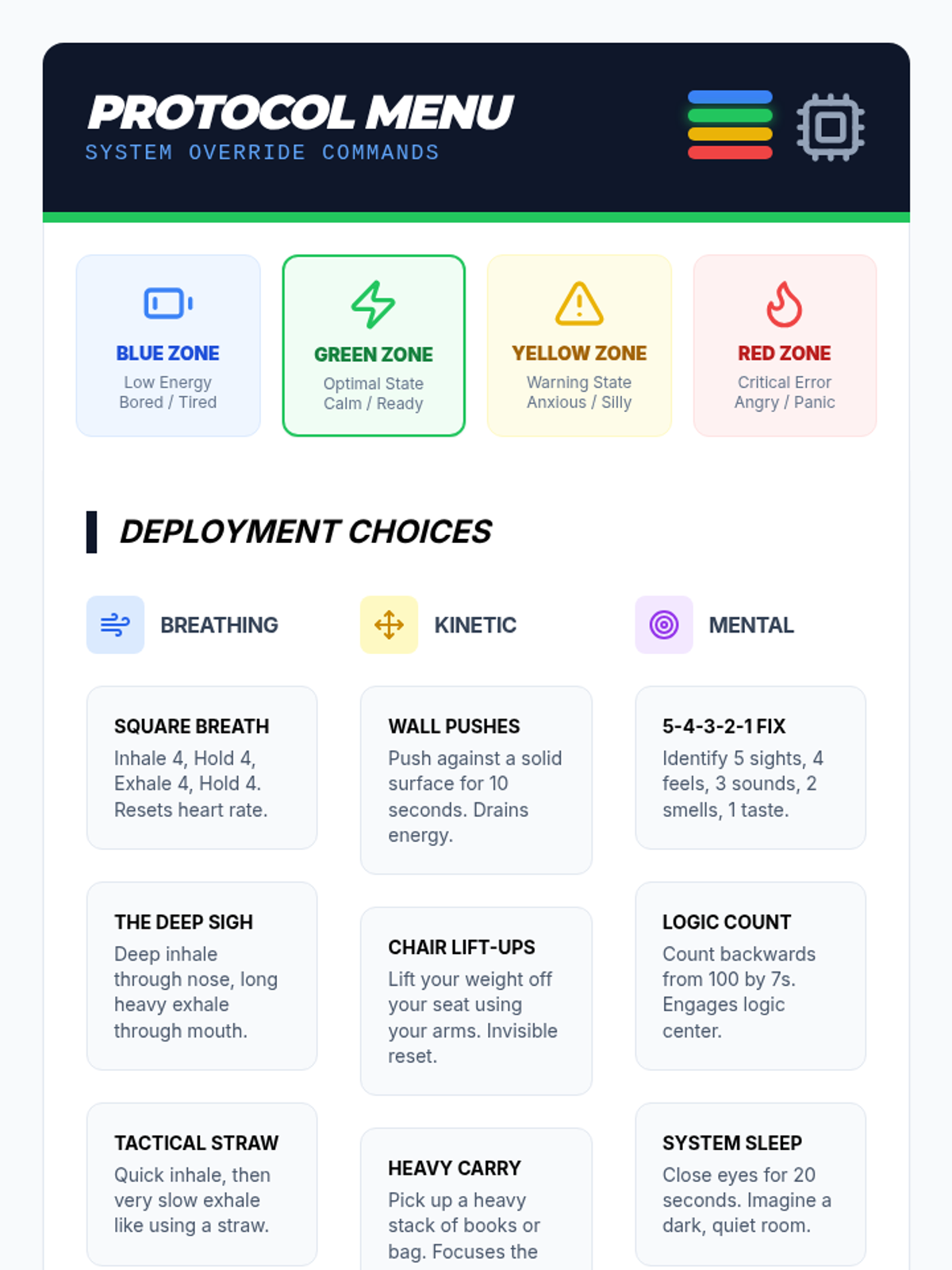
A lesson designed for middle school students to identify emotional states and deploy self-initiated regulation strategies using a modern 'system dashboard' metaphor.
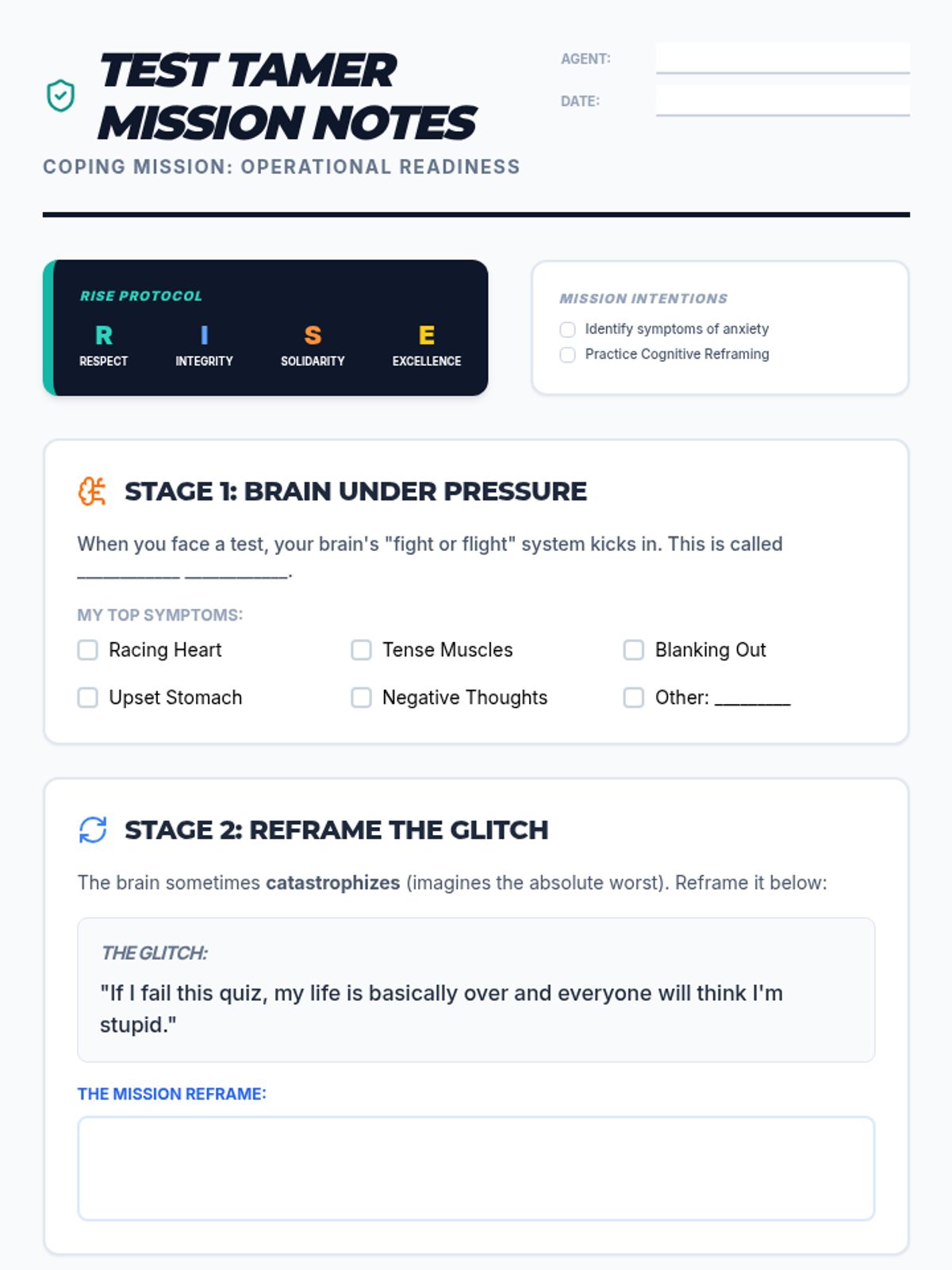
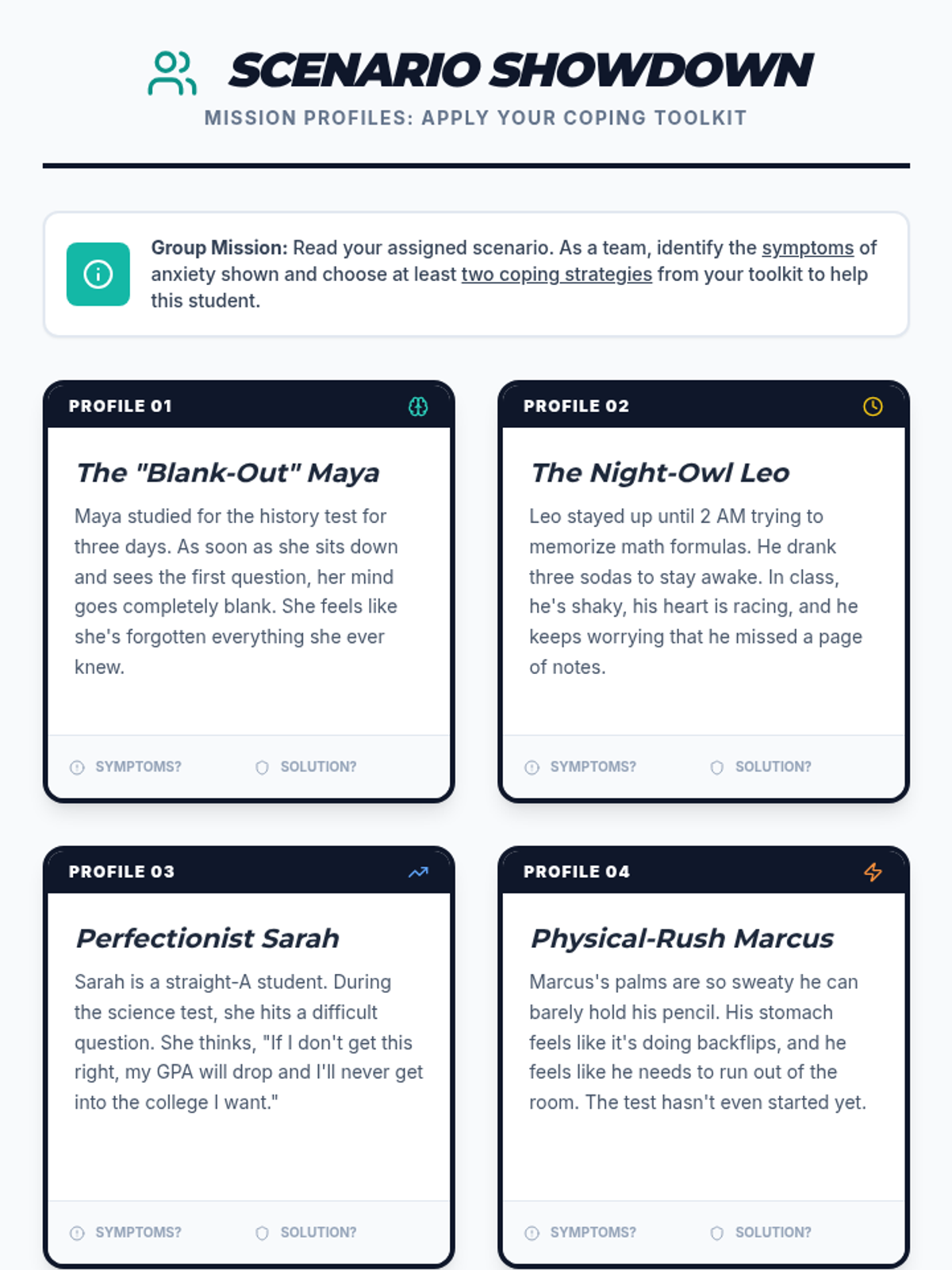
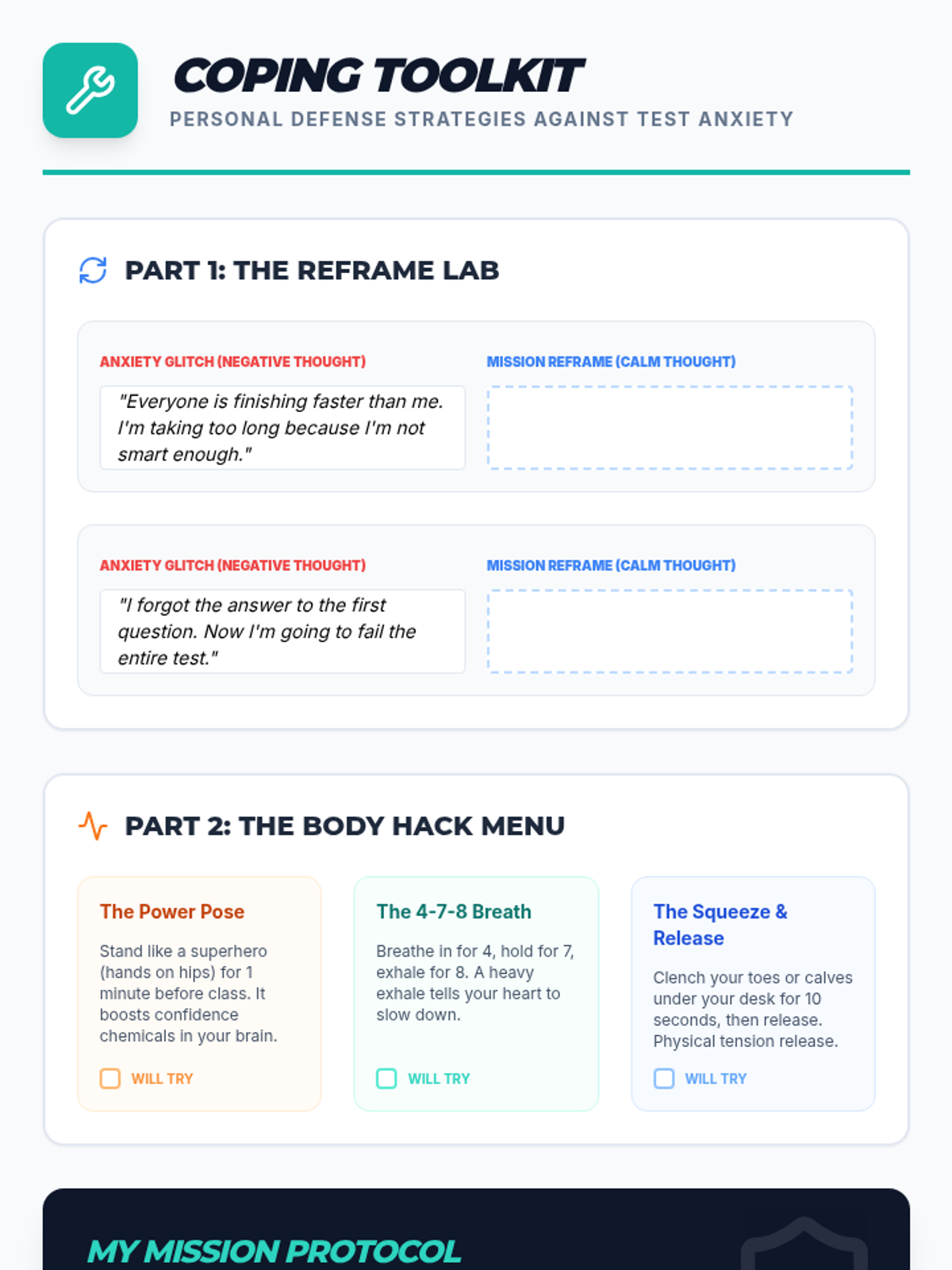
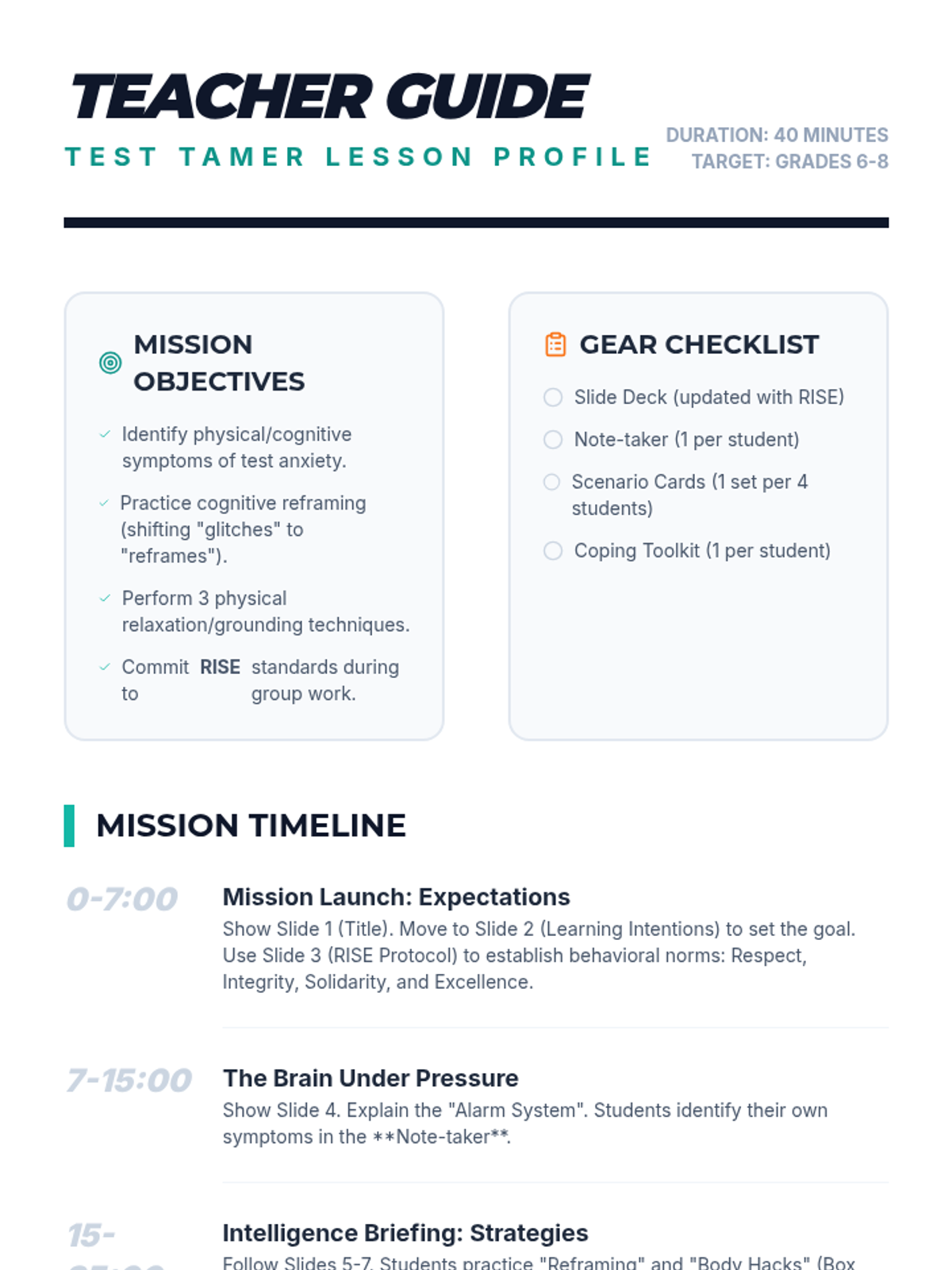
A comprehensive 40-minute lesson designed to help middle schoolers recognize test anxiety and build a toolkit of cognitive, physical, and mindfulness-based coping strategies.
Reviewing accomplishments, celebrating growth, and planning for continued success beyond the program.
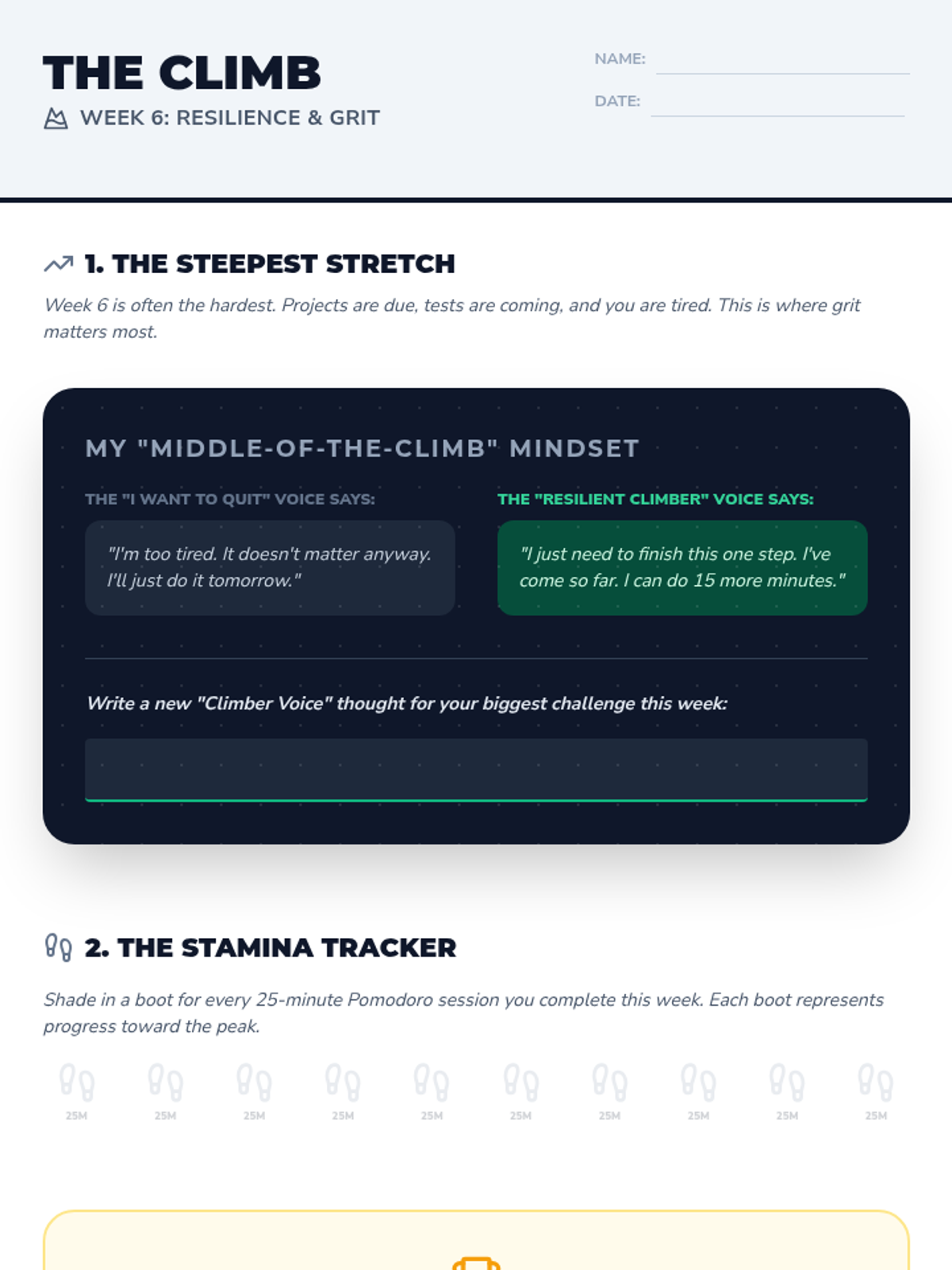
Developing mental resilience and grit to push through the most demanding academic period of the term.
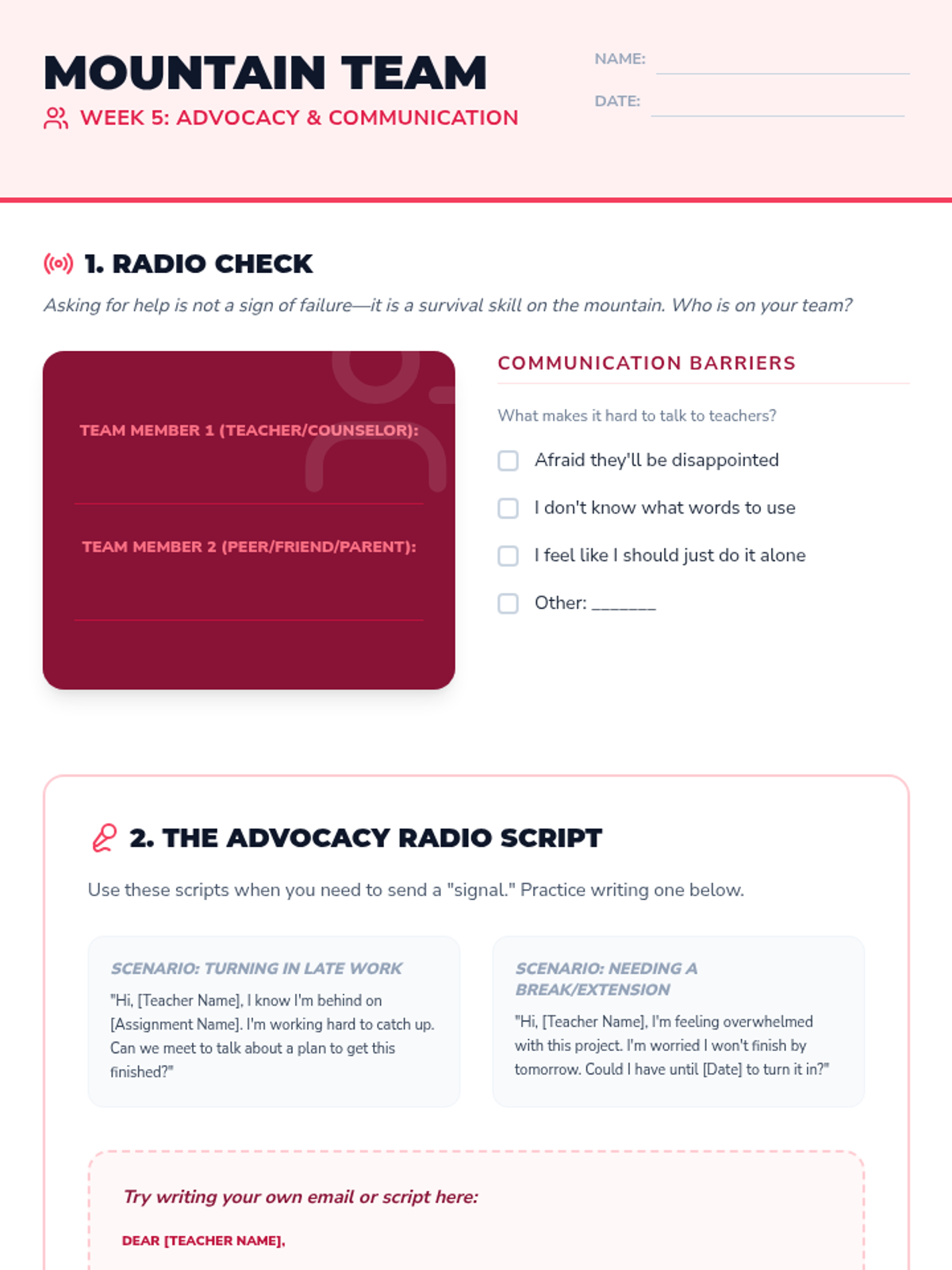
Focuses on building effective communication with teachers and peers to advocate for needs and seek support.
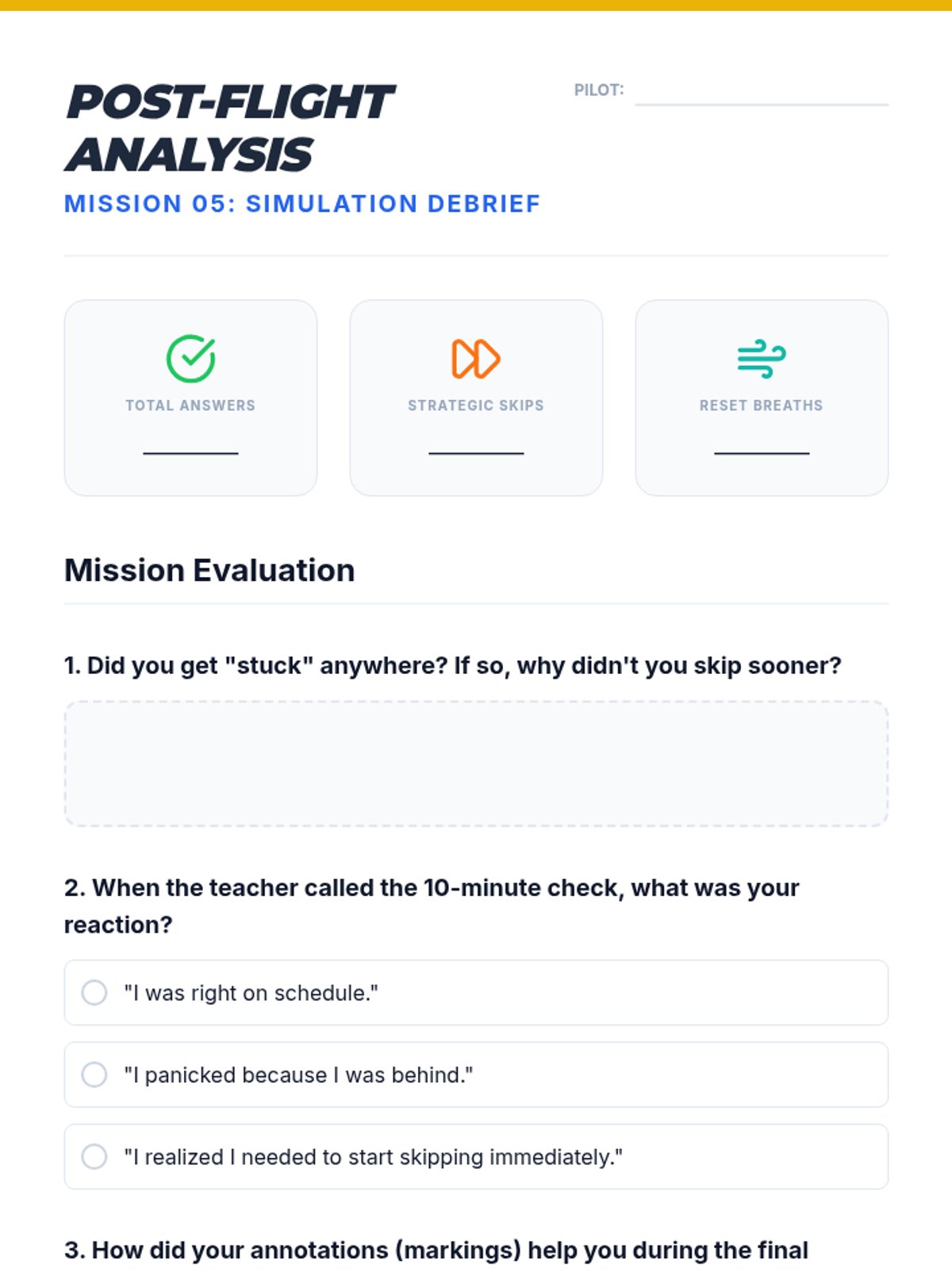
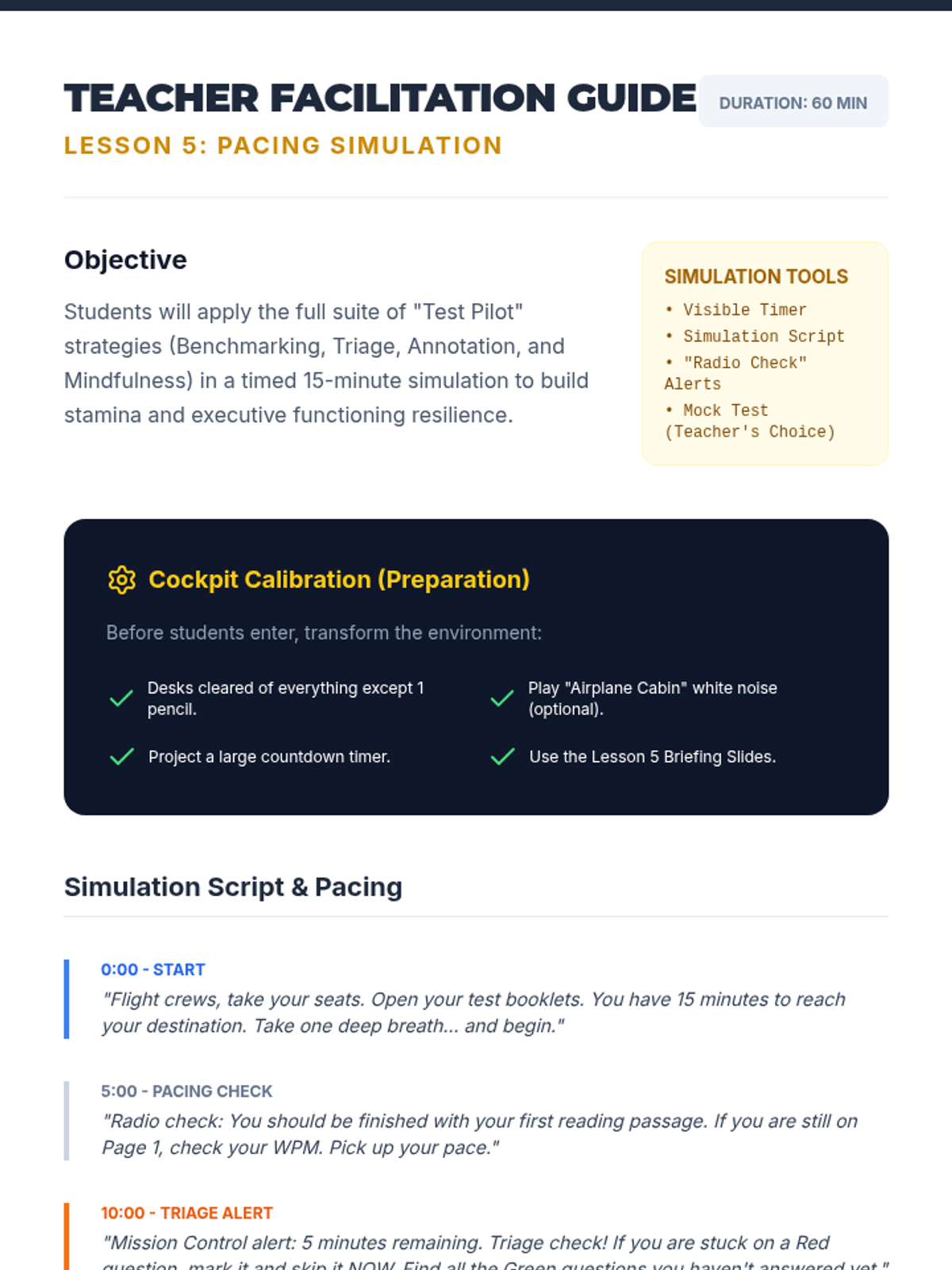
A cumulative simulation where students apply time management and emotional regulation skills in a timed testing environment, followed by a reflective debrief.
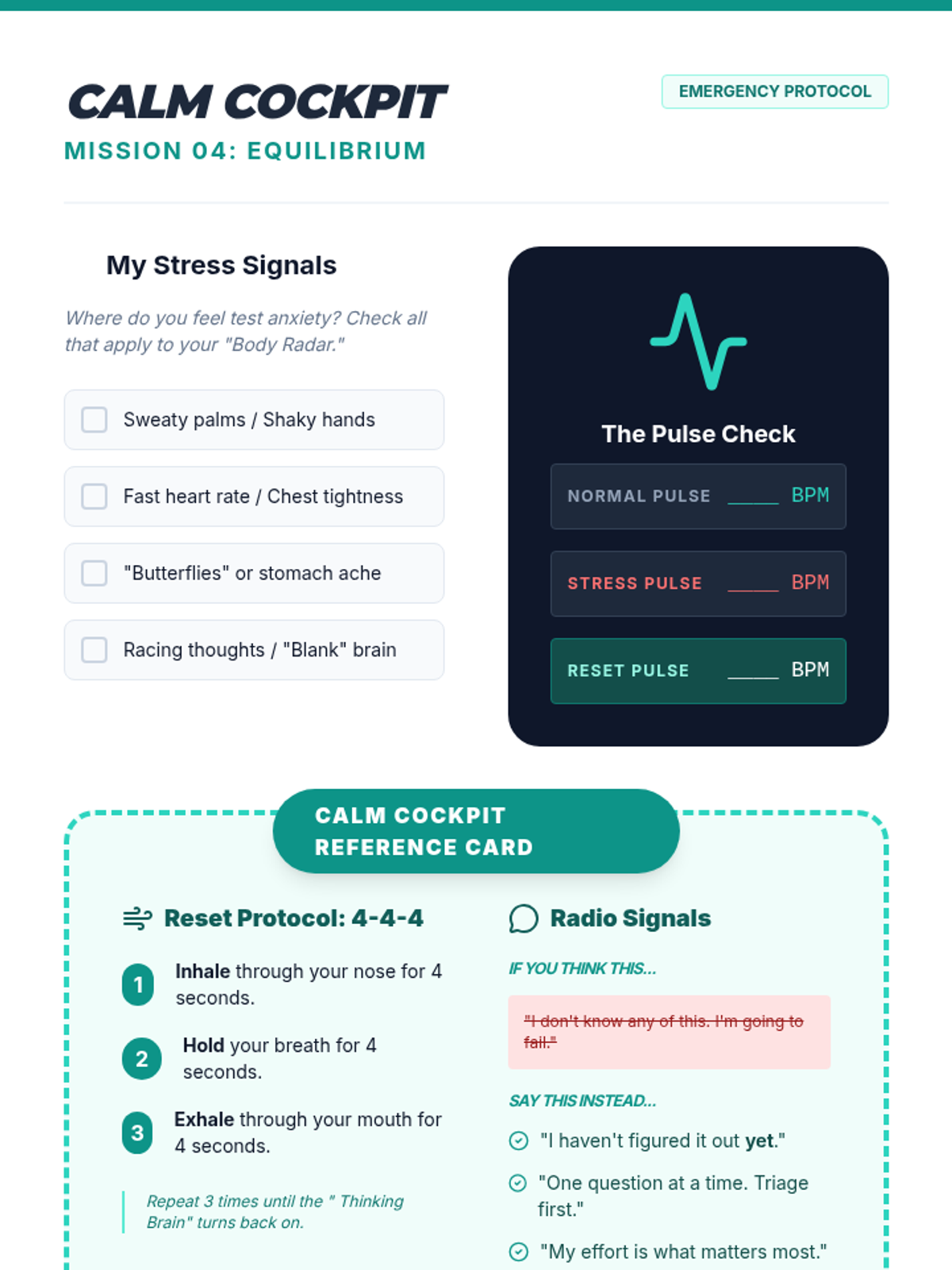
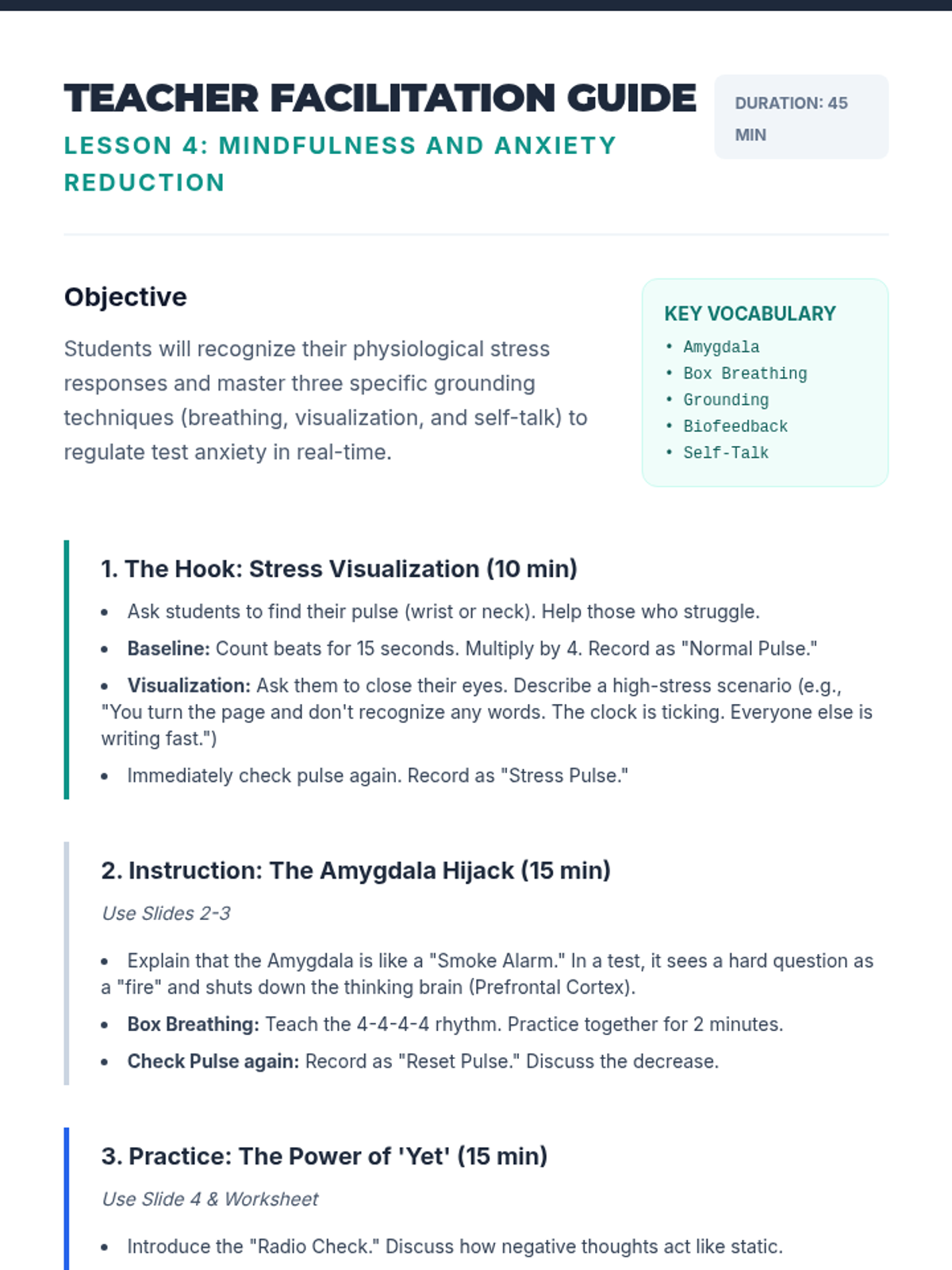
Exploring the physical and mental effects of test anxiety and learning grounding techniques to stay calm and focused during high-stakes moments.
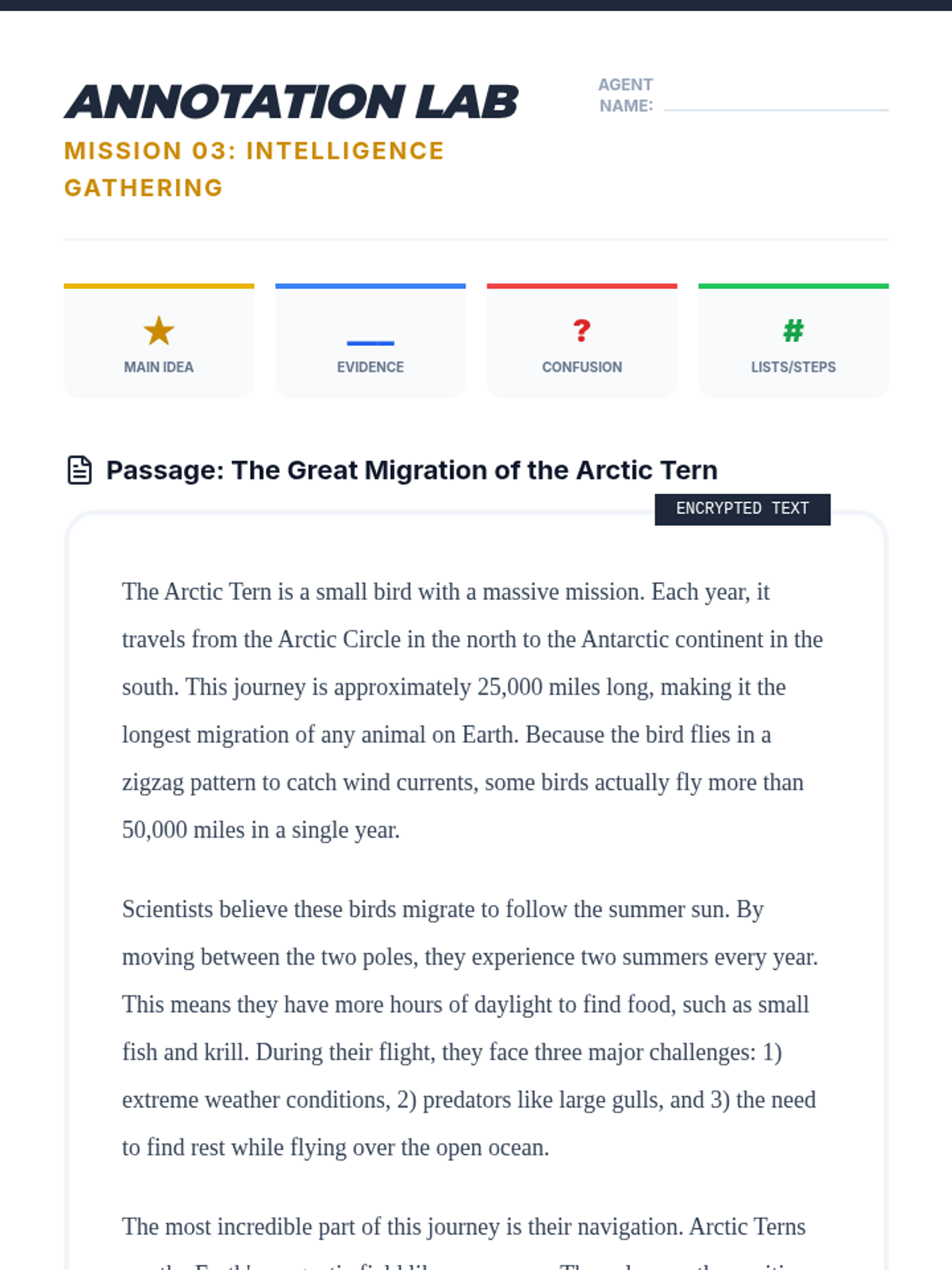
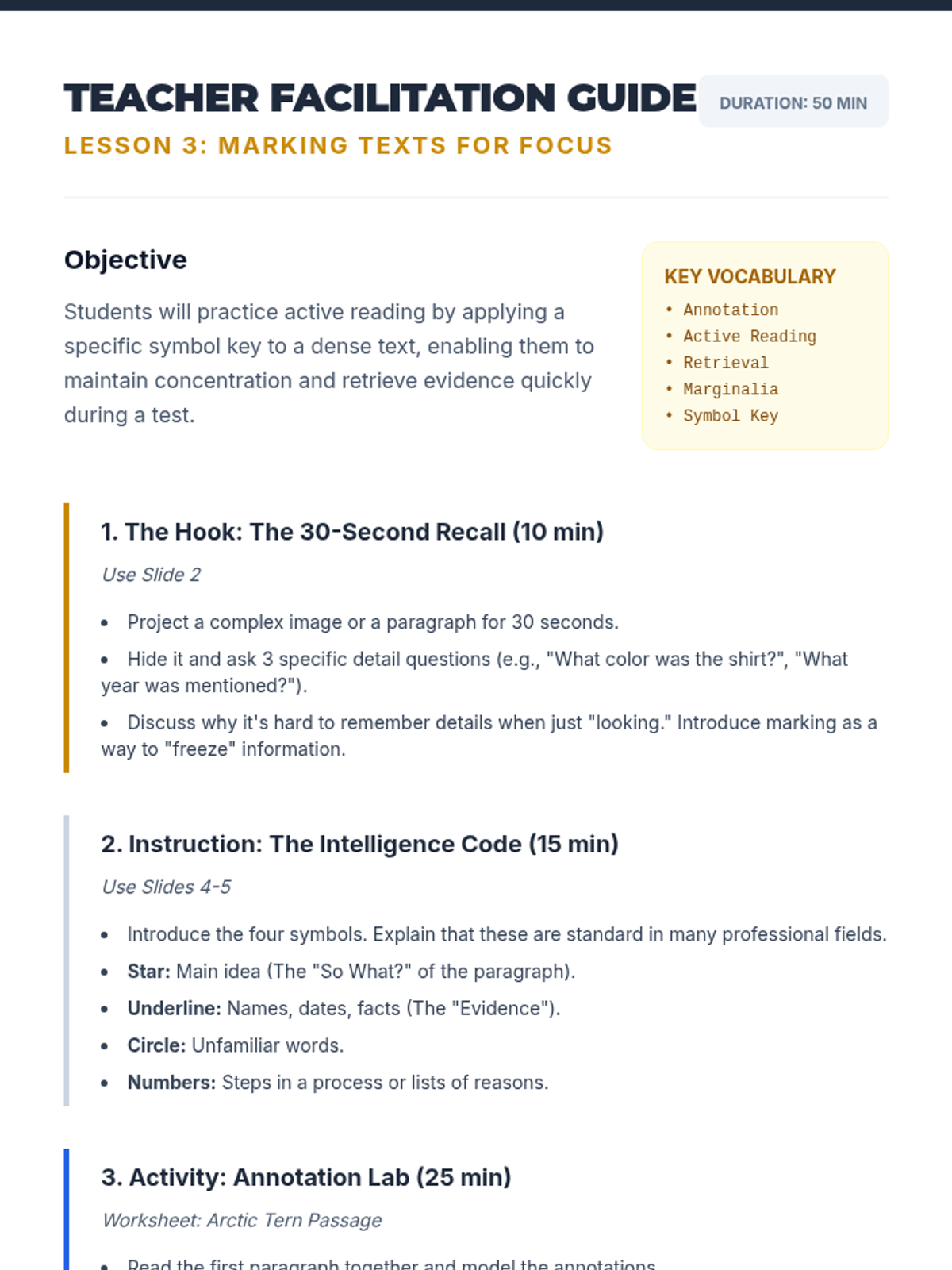
Active reading strategies for testing, focusing on specific annotation systems that help maintain focus and allow for quick evidence retrieval.
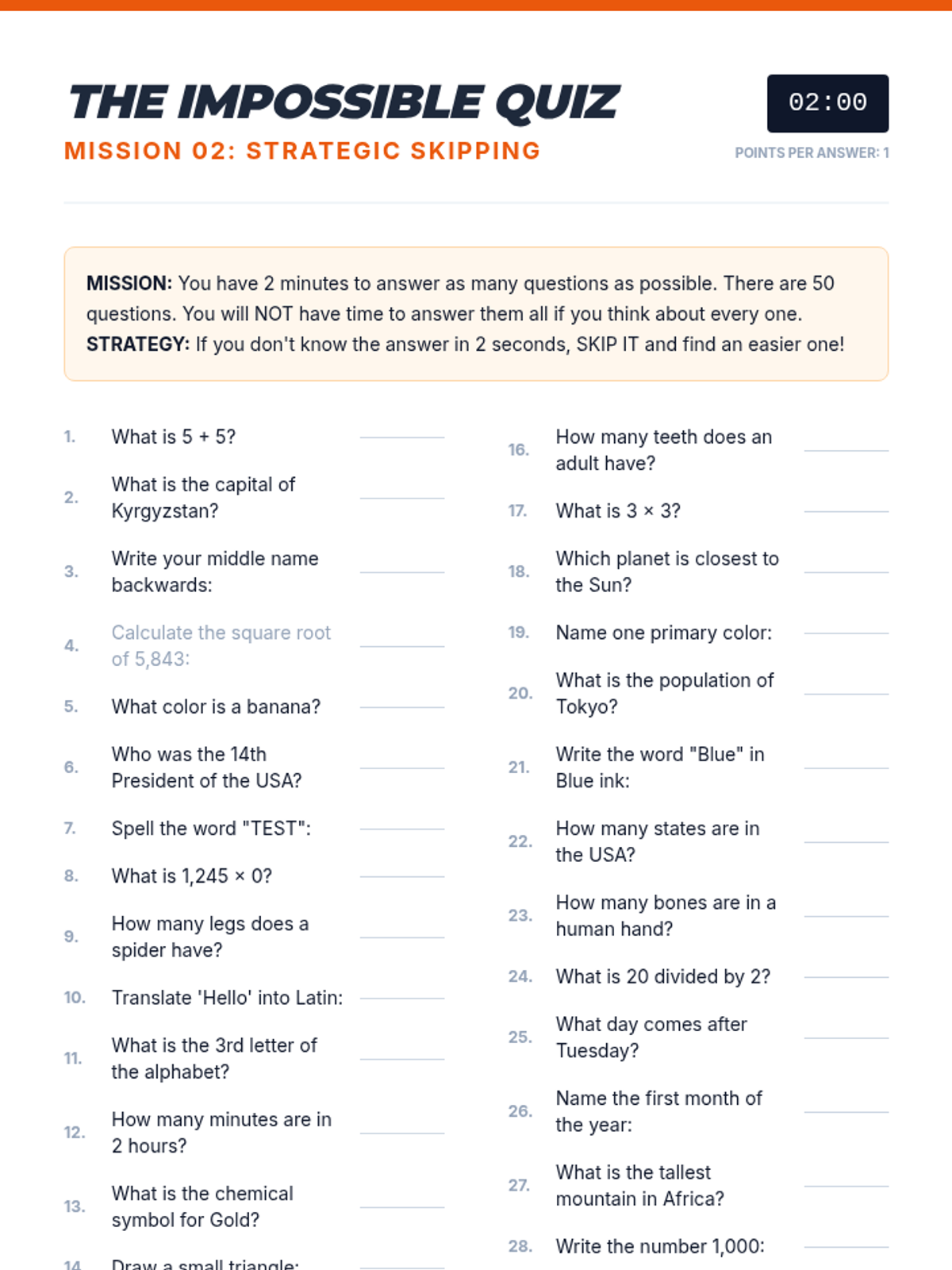
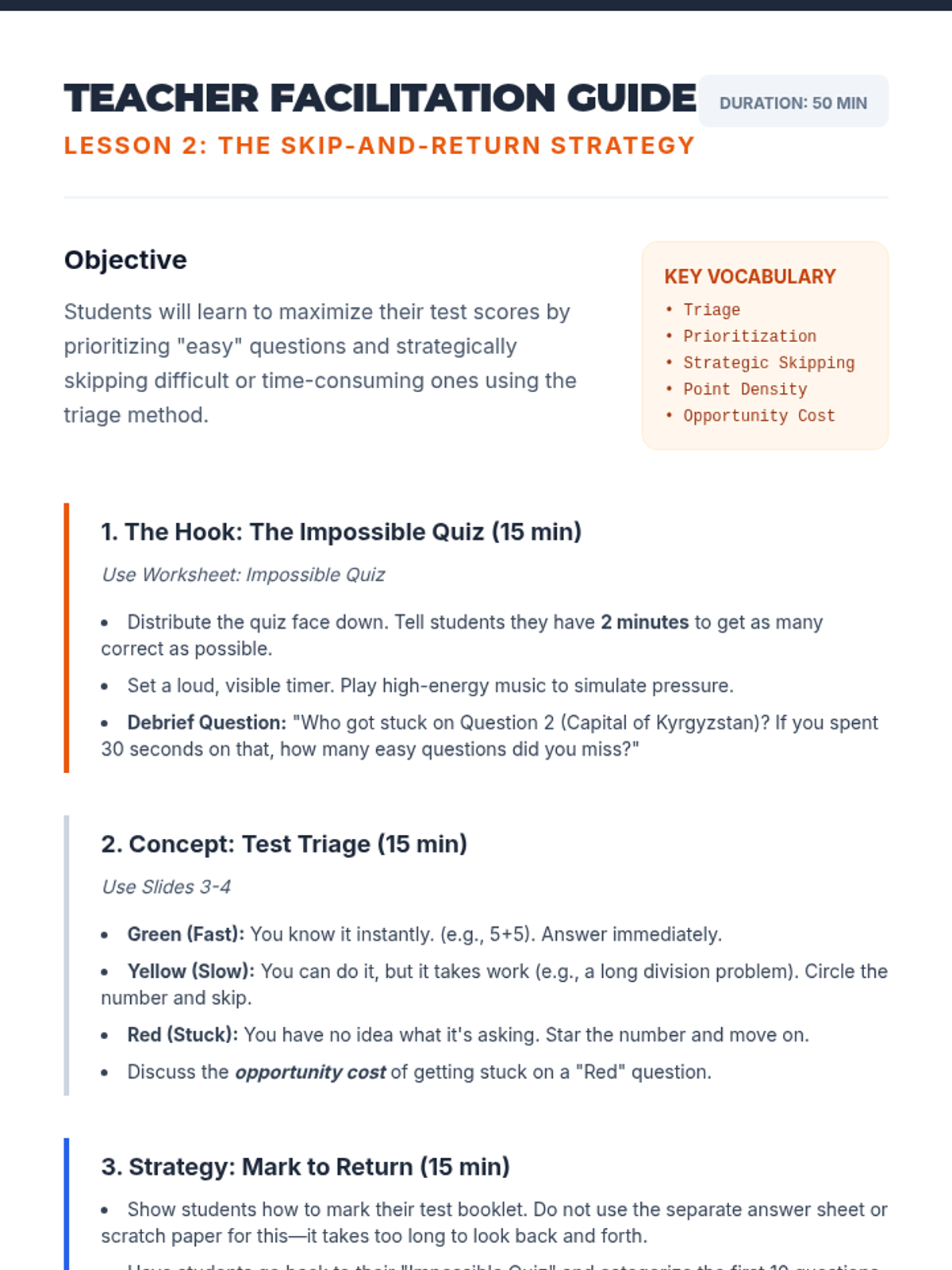
Students learn the 'triage' method for tests, identifying which questions to answer immediately and which to 'skip and return' to maximize points.
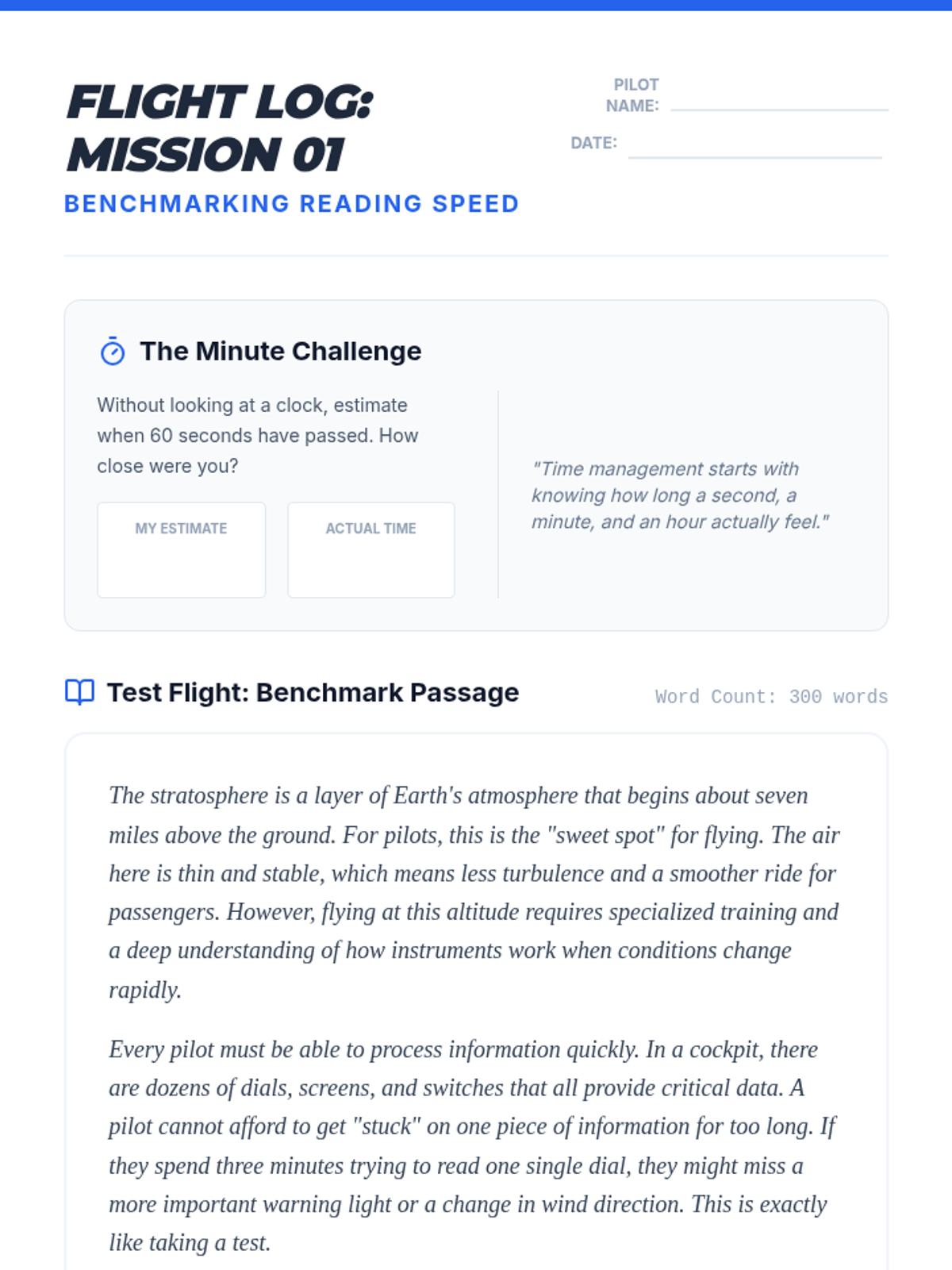
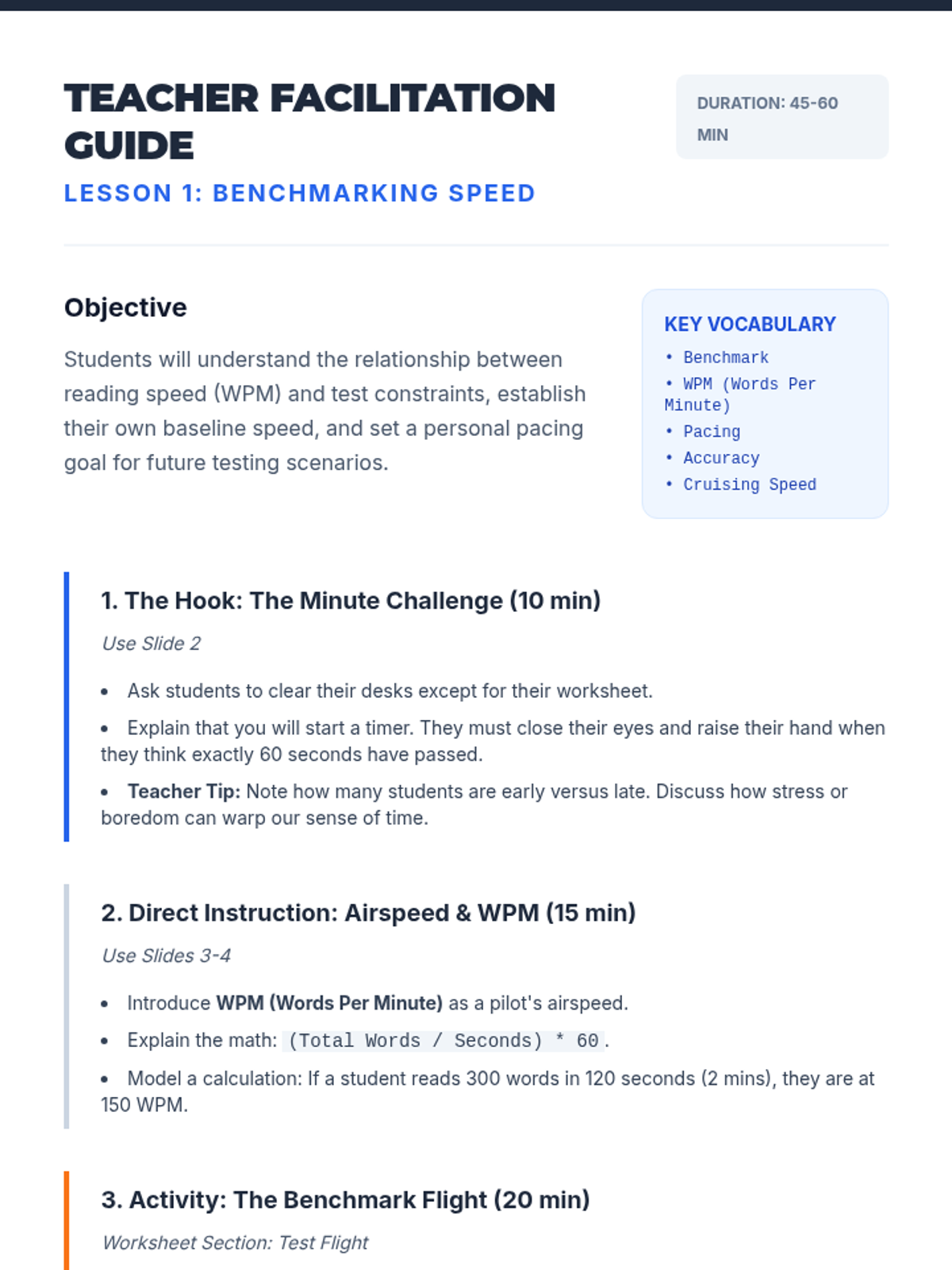
Students establish a baseline for their reading speed and understand how it relates to test time constraints. They learn to calculate Words Per Minute (WPM) and set realistic pacing goals.
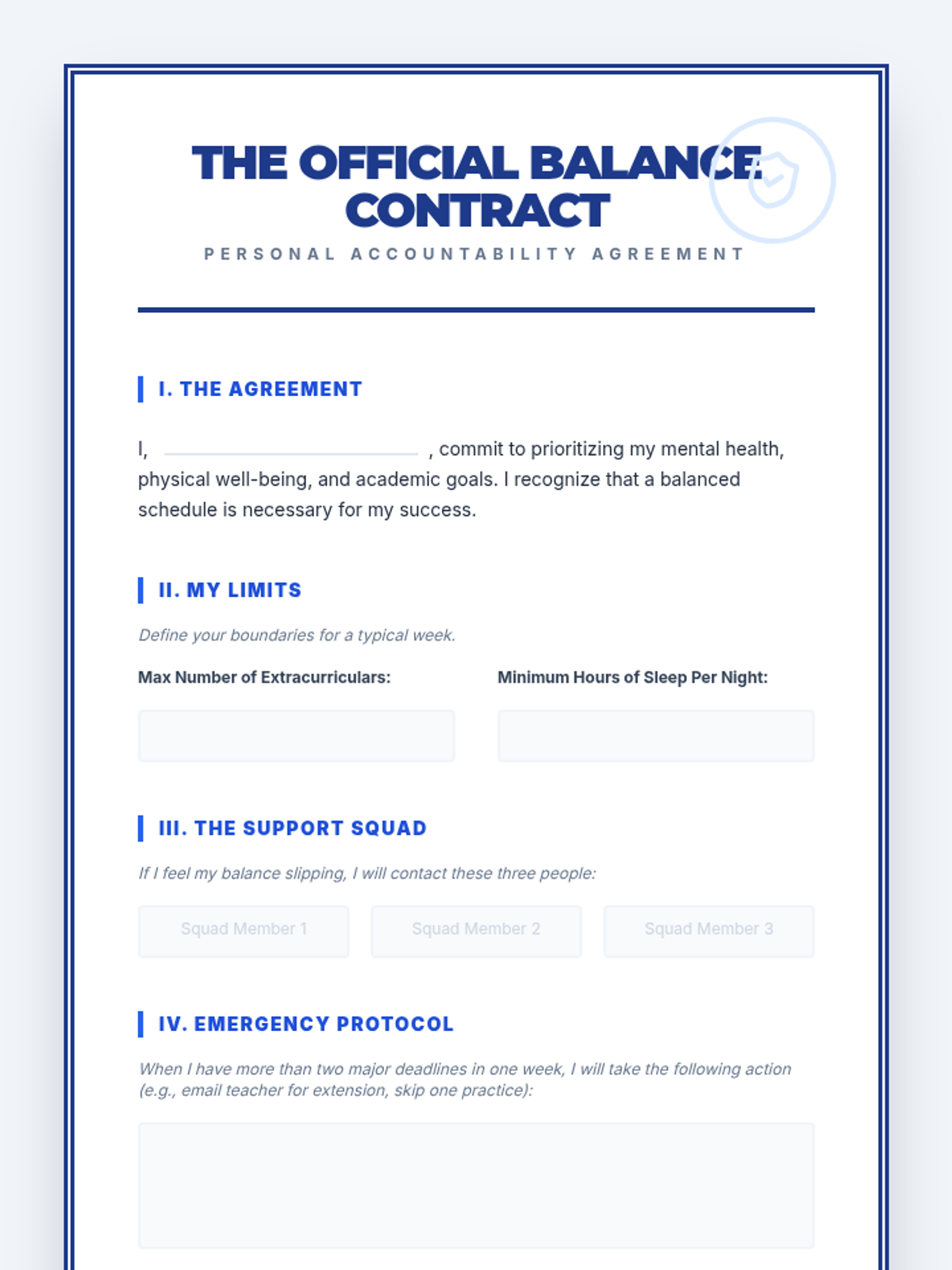
Students create a personal 'Balance Contract' to outline their limits and establish a protocol for managing future stress.
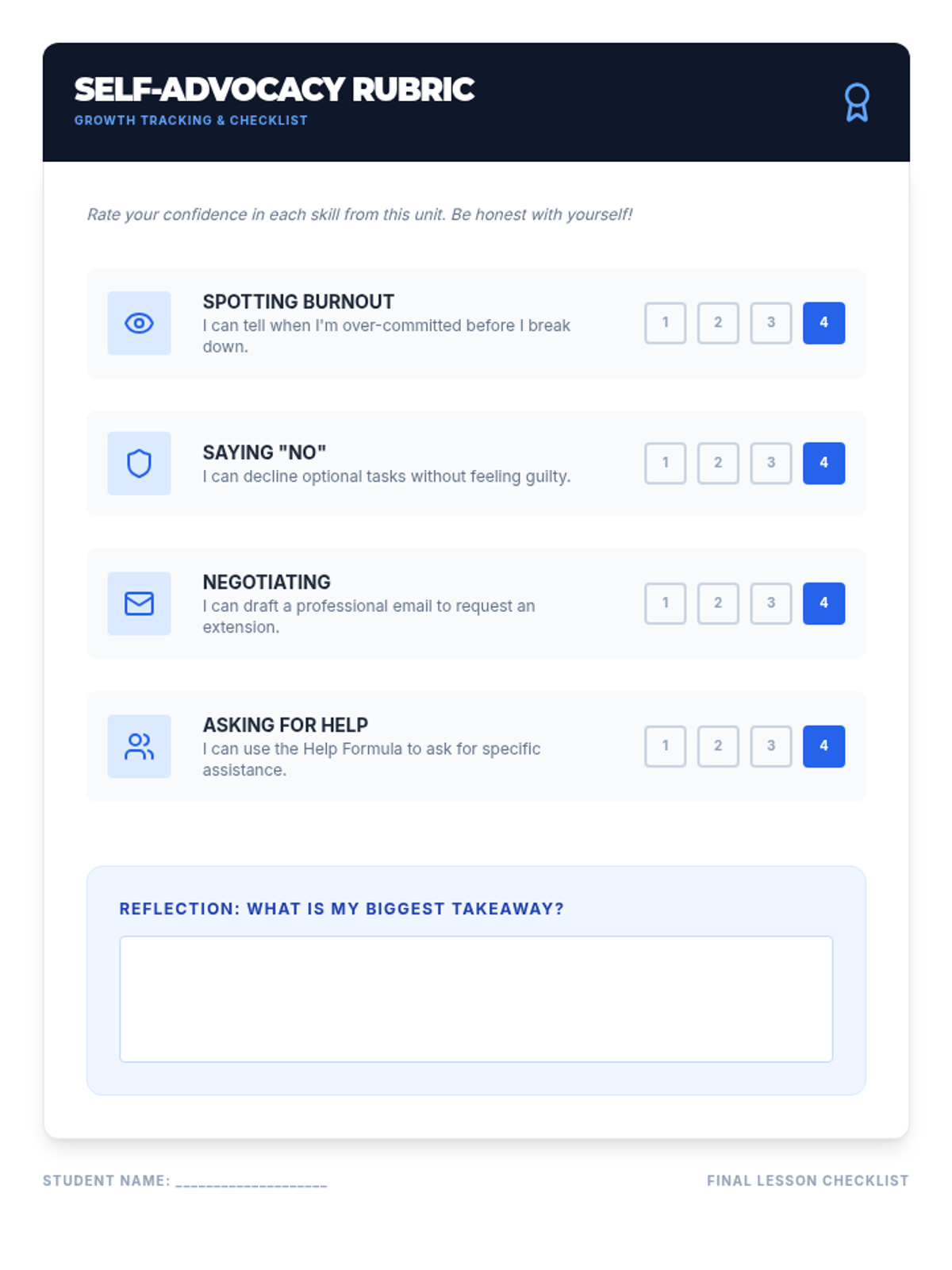
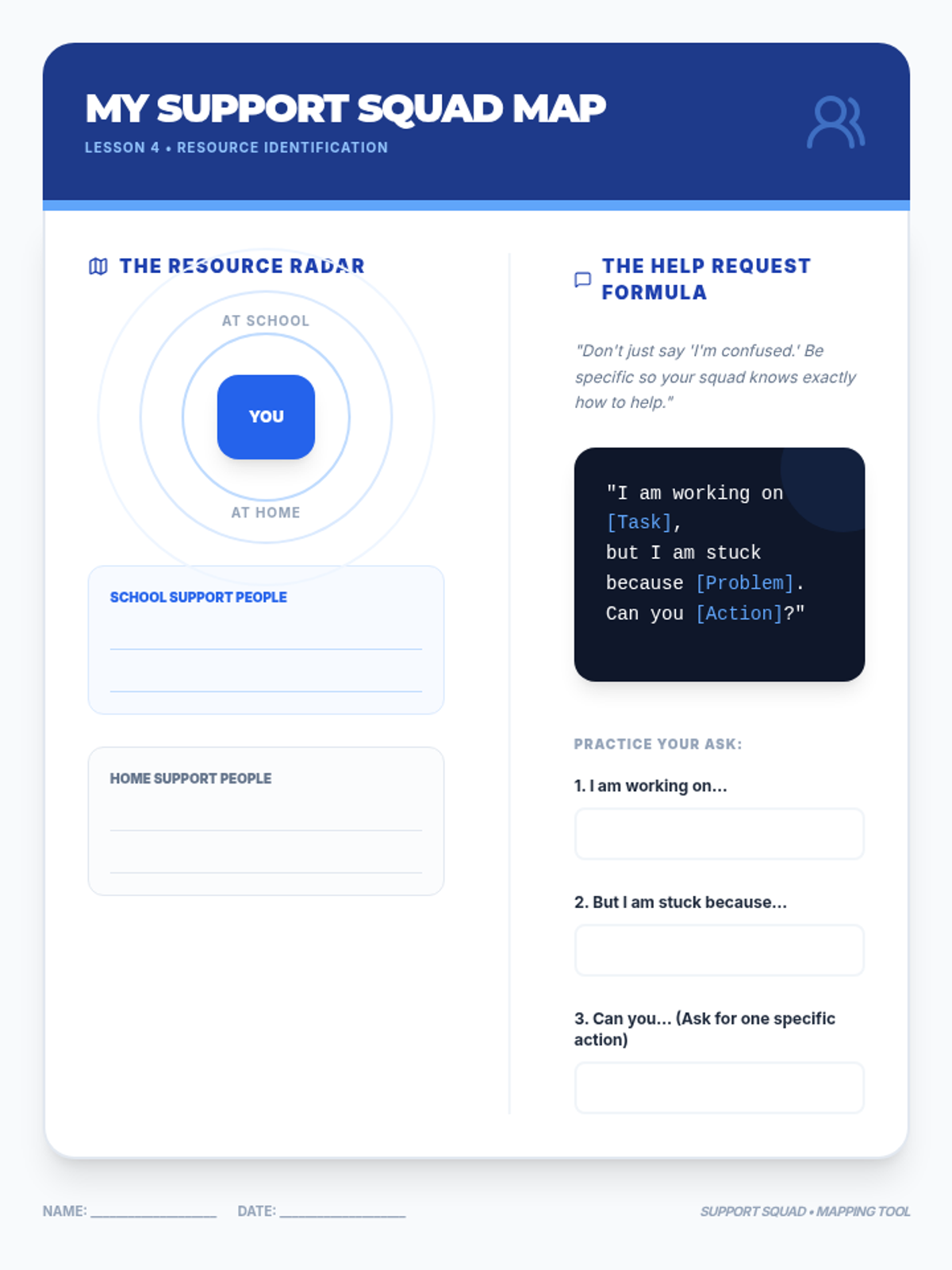
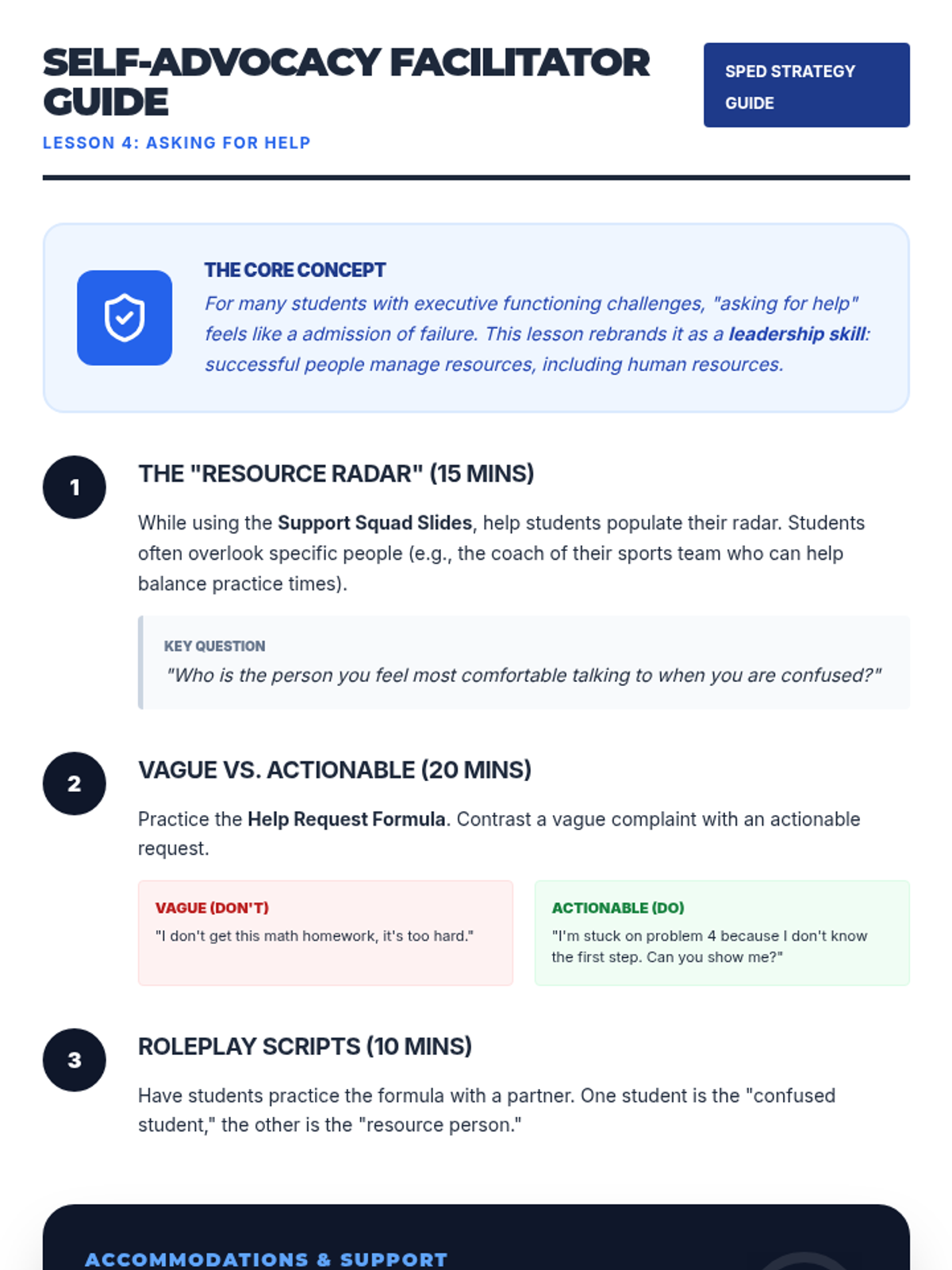
Students identify their support network and practice making specific, actionable requests for assistance.
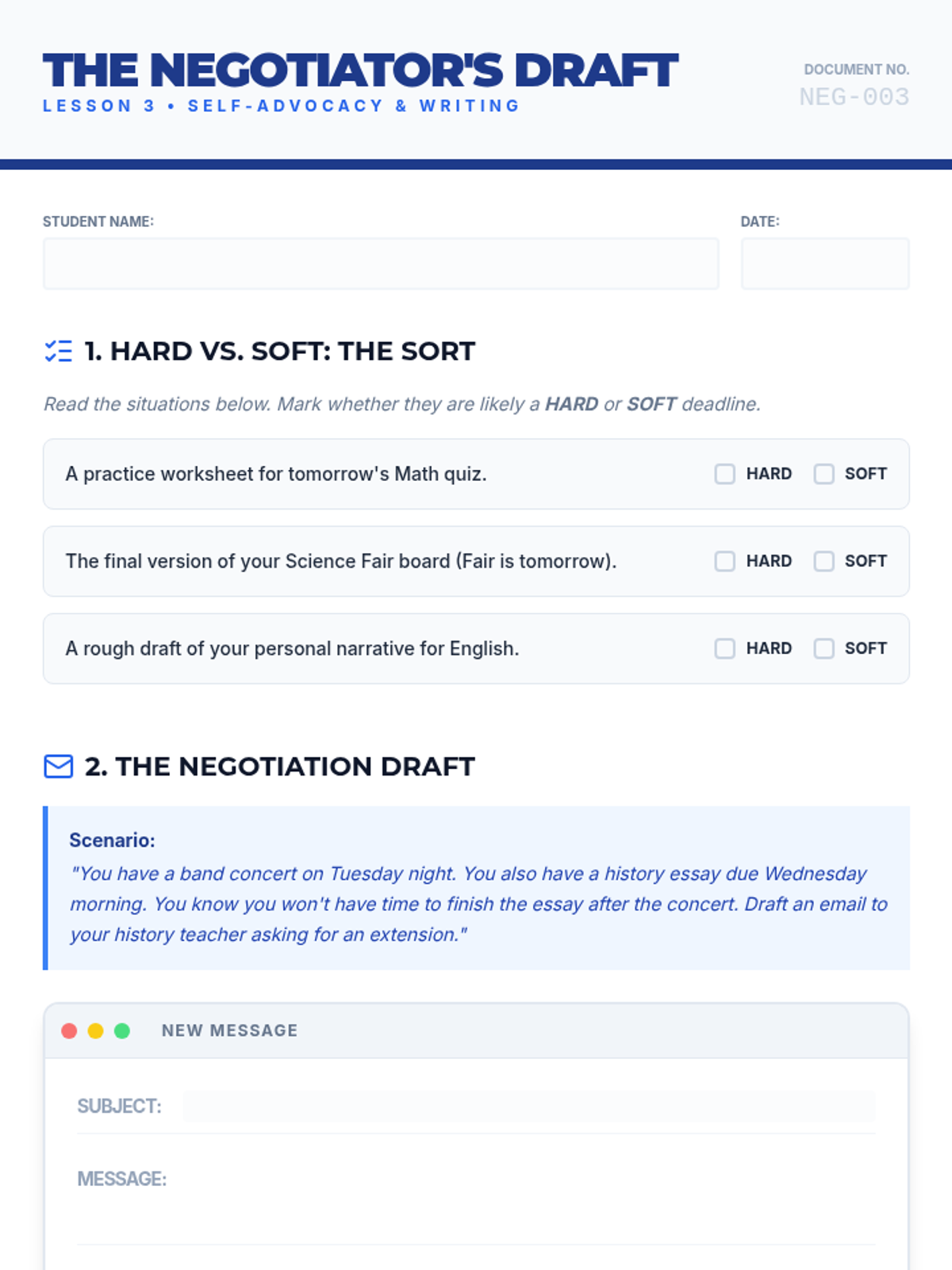
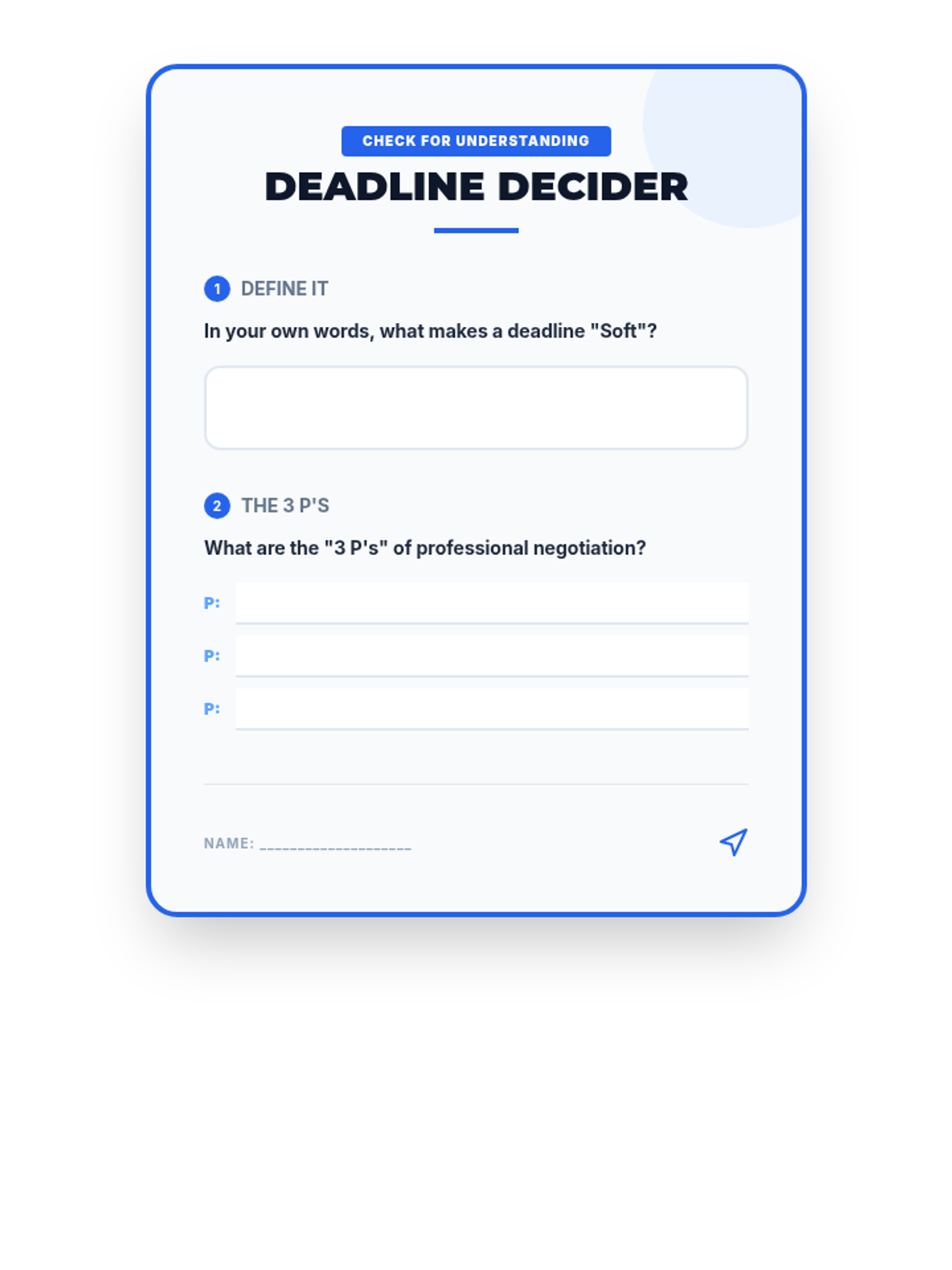
Students learn to differentiate between hard and soft deadlines and practice professional email communication to negotiate alternatives.
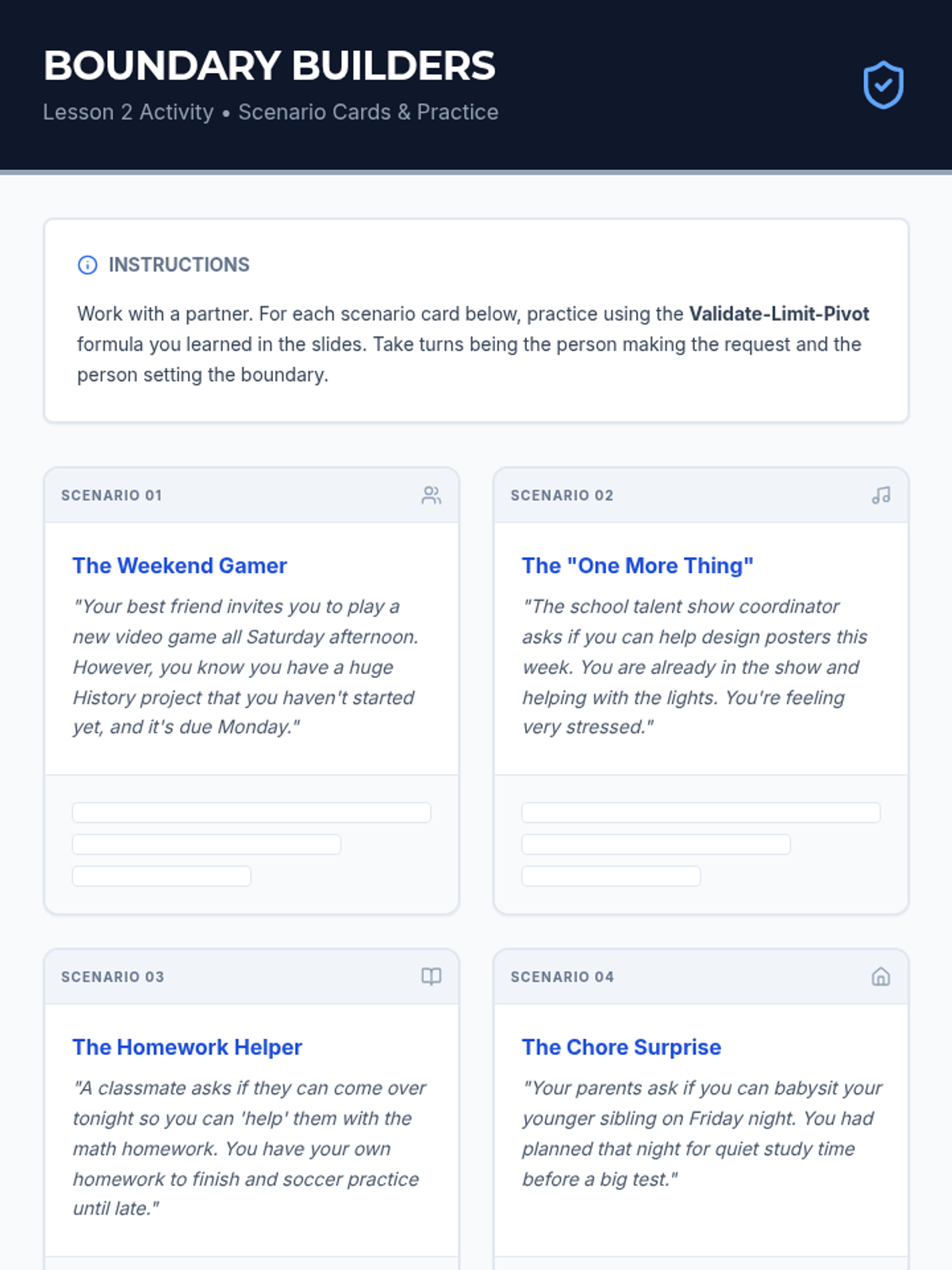
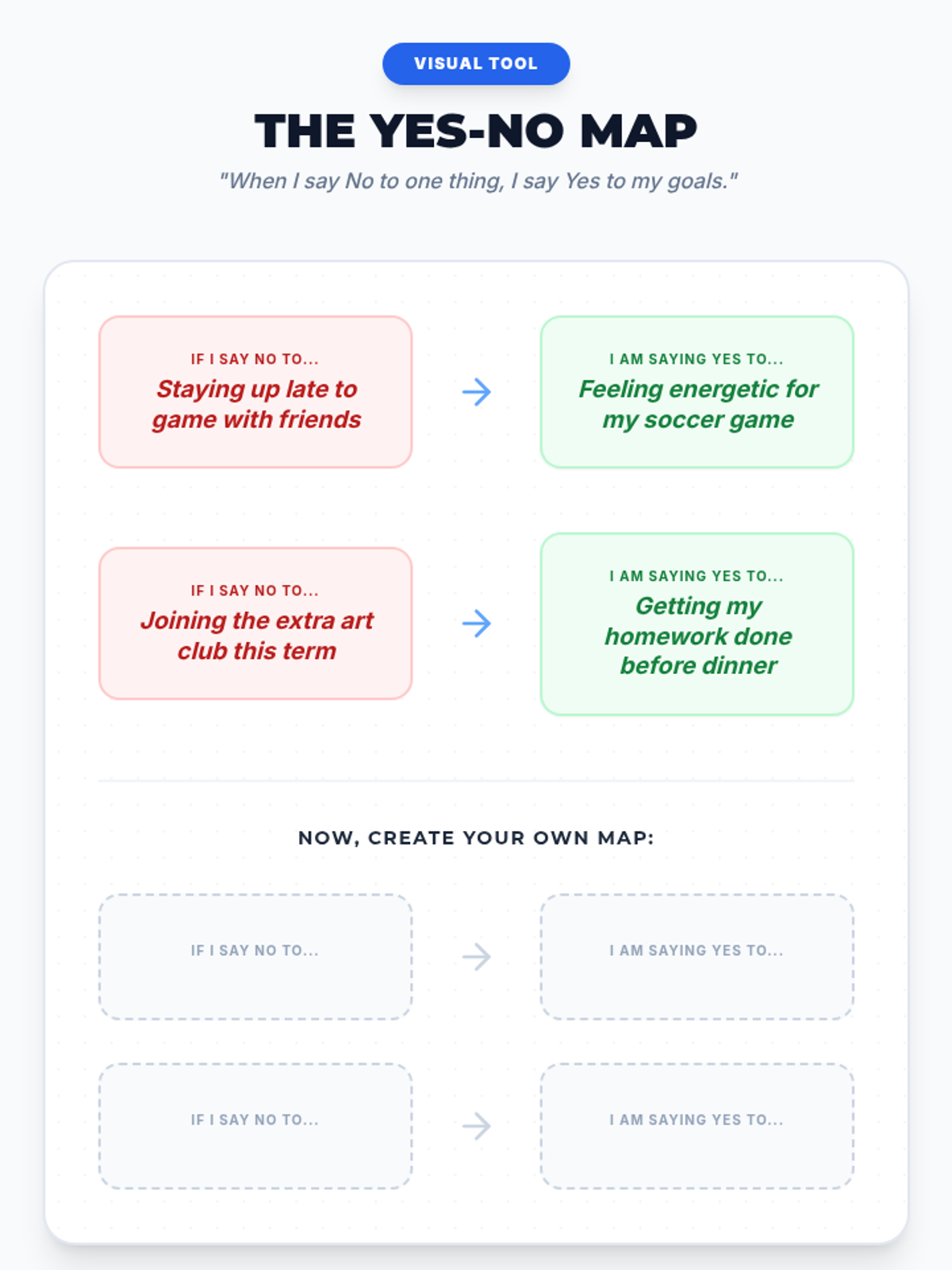
Students practice scripts for declining optional commitments politely but firmly, learning that every 'no' is a 'yes' to their own well-being.
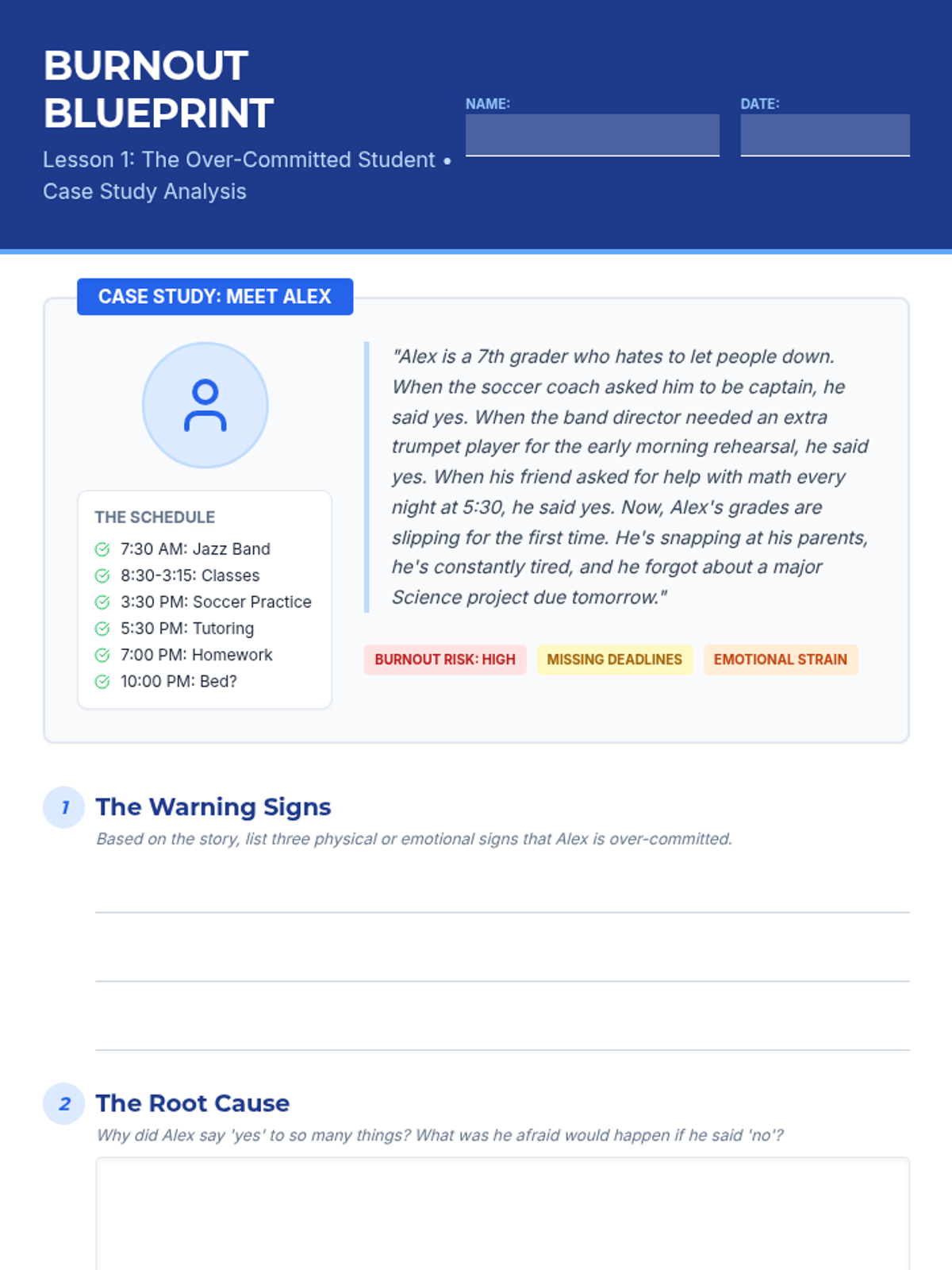
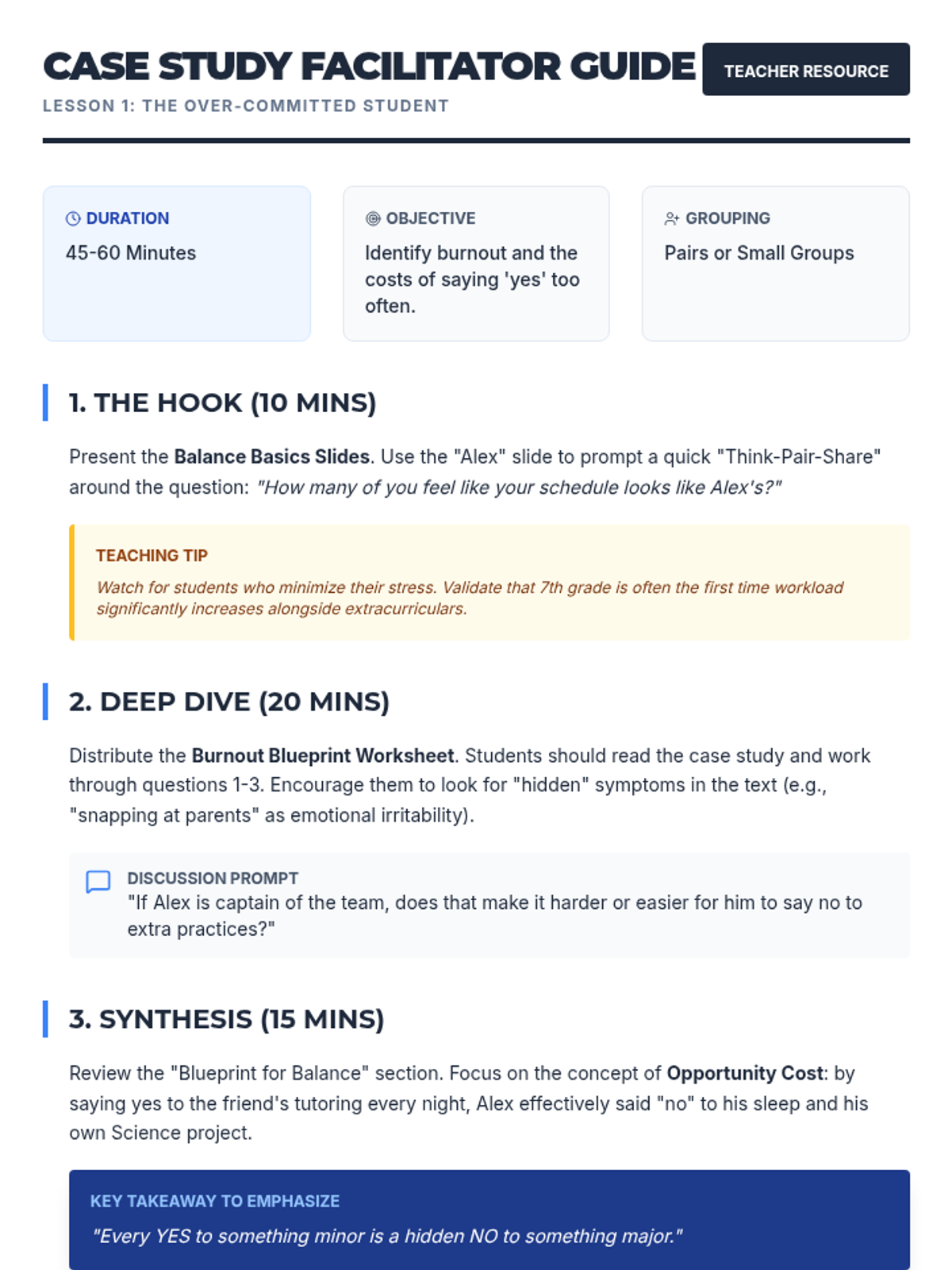
Students analyze case studies of 'over-committed' individuals to identify warning signs of burnout and the consequences of poor boundary setting.
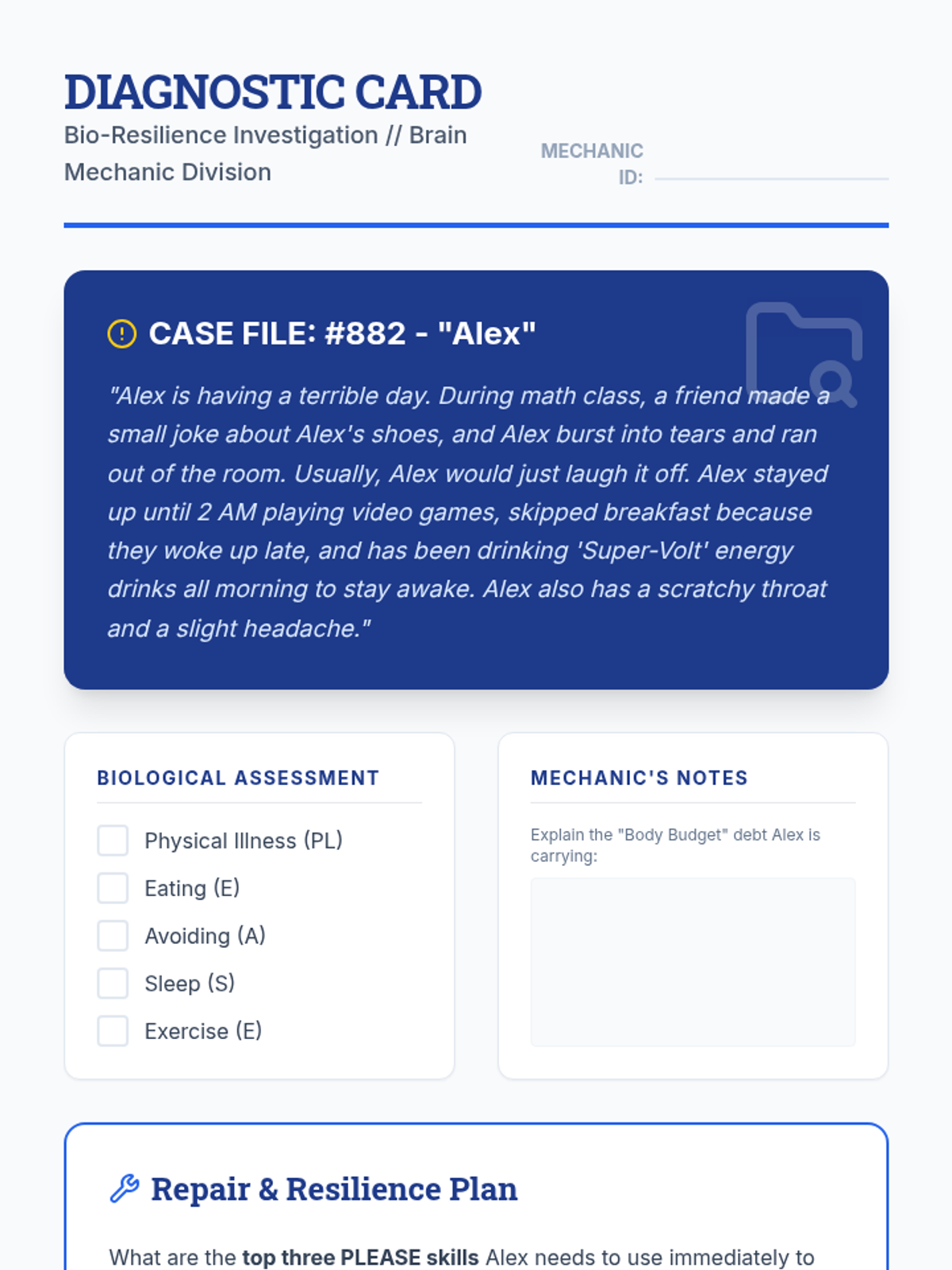
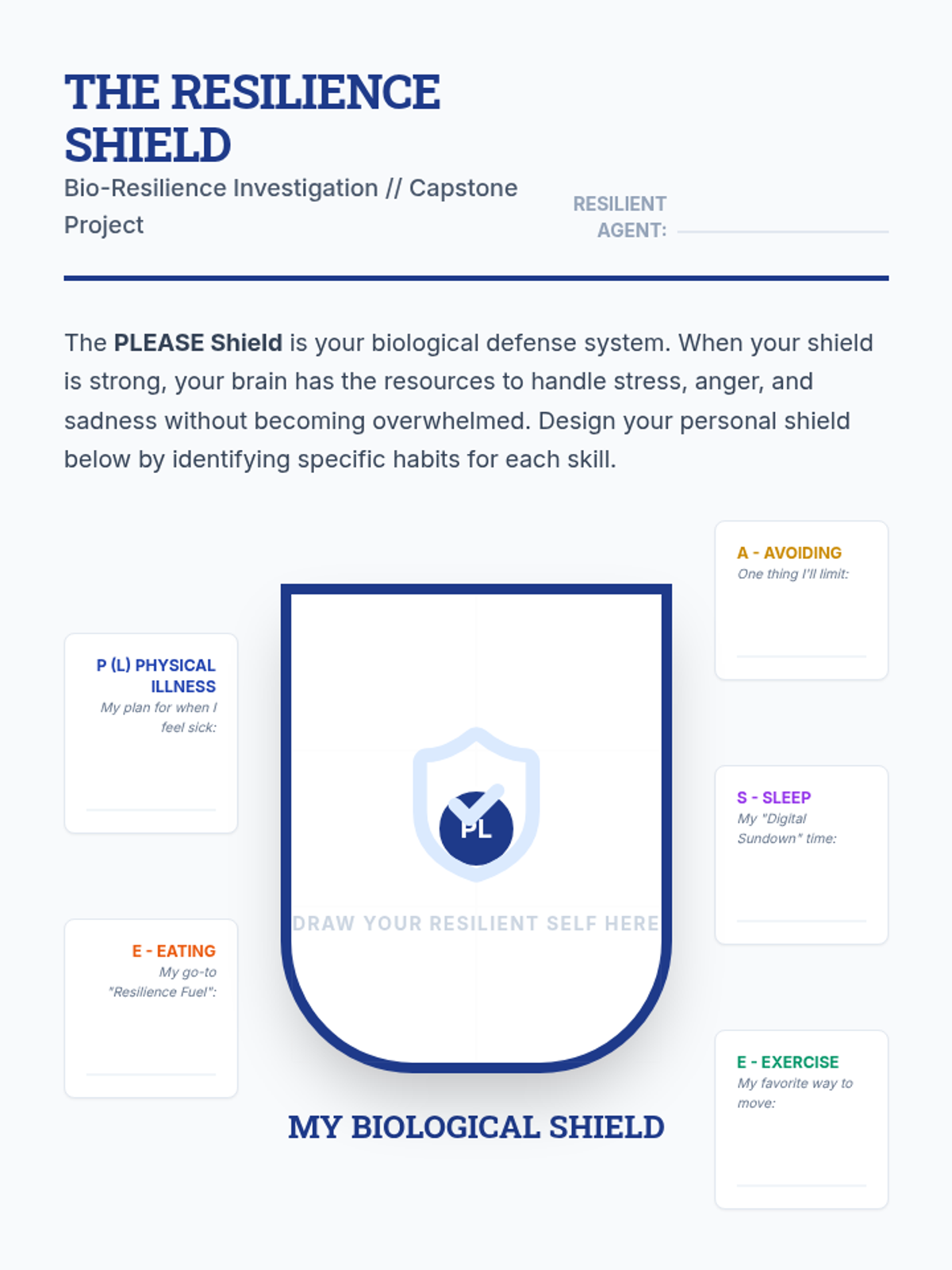
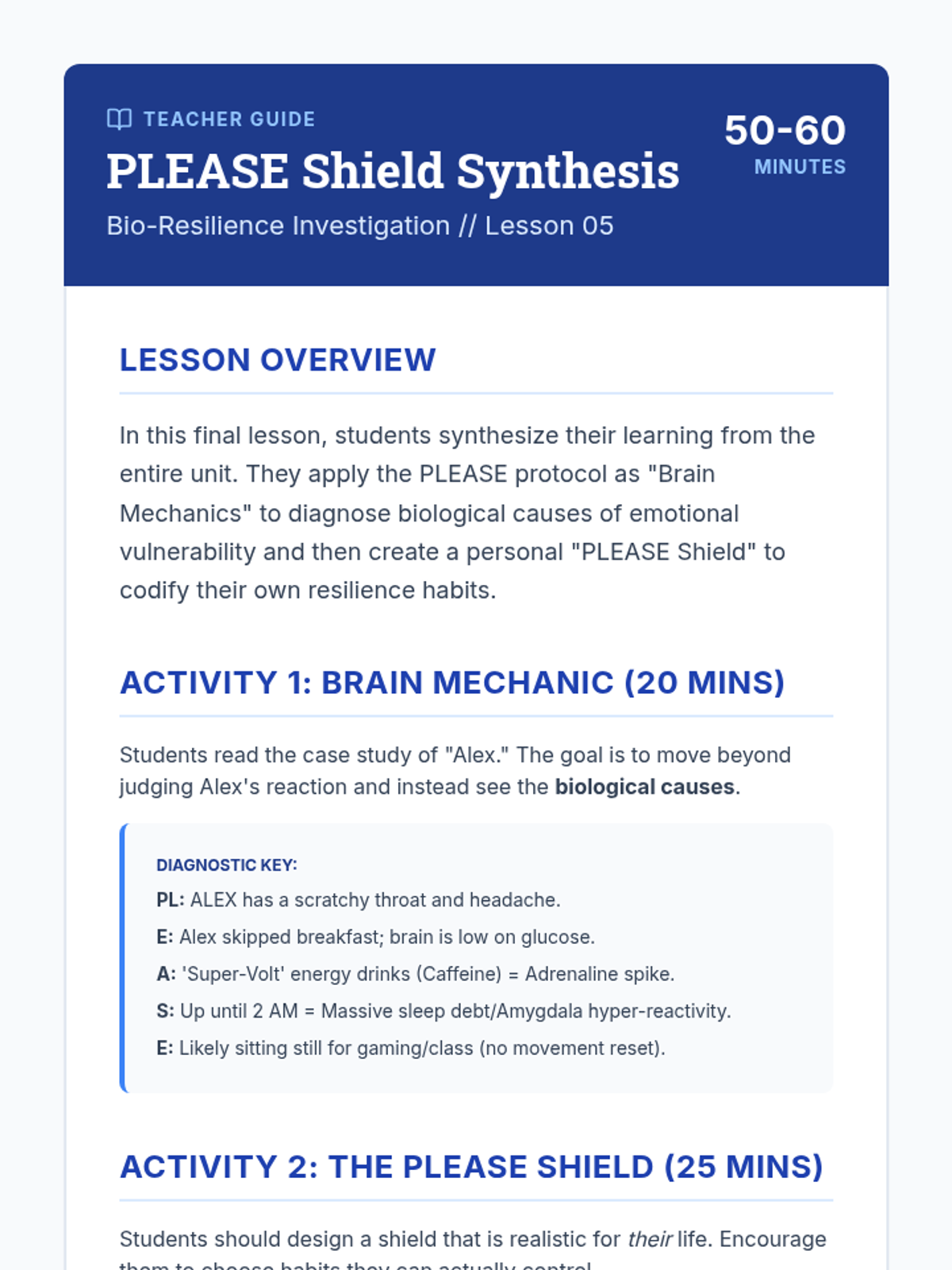
Students bring together all elements of the PLEASE protocol to create a scientific diagram and act as 'Brain Mechanics' to diagnose emotional vulnerability in fictional scenarios.
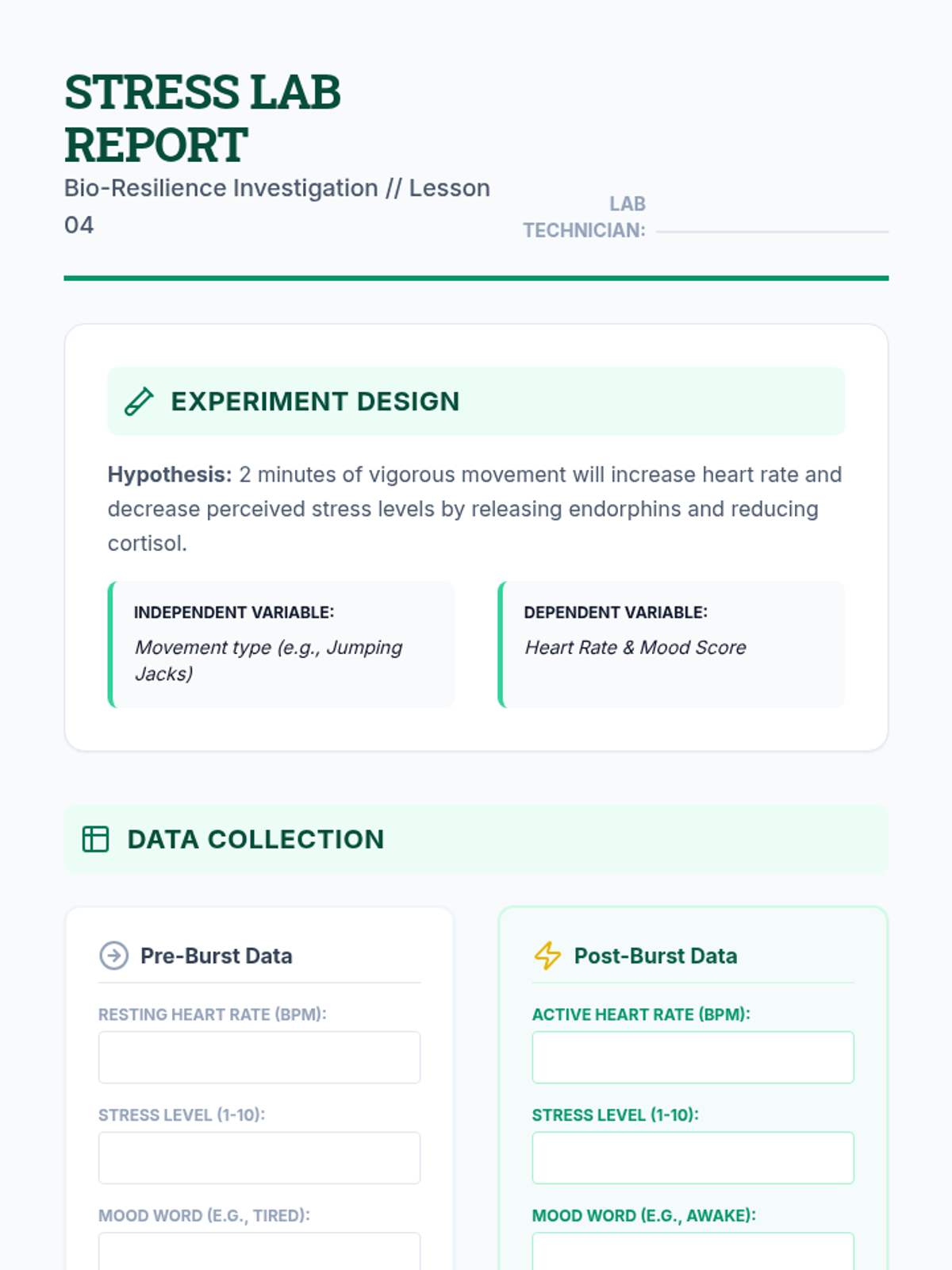
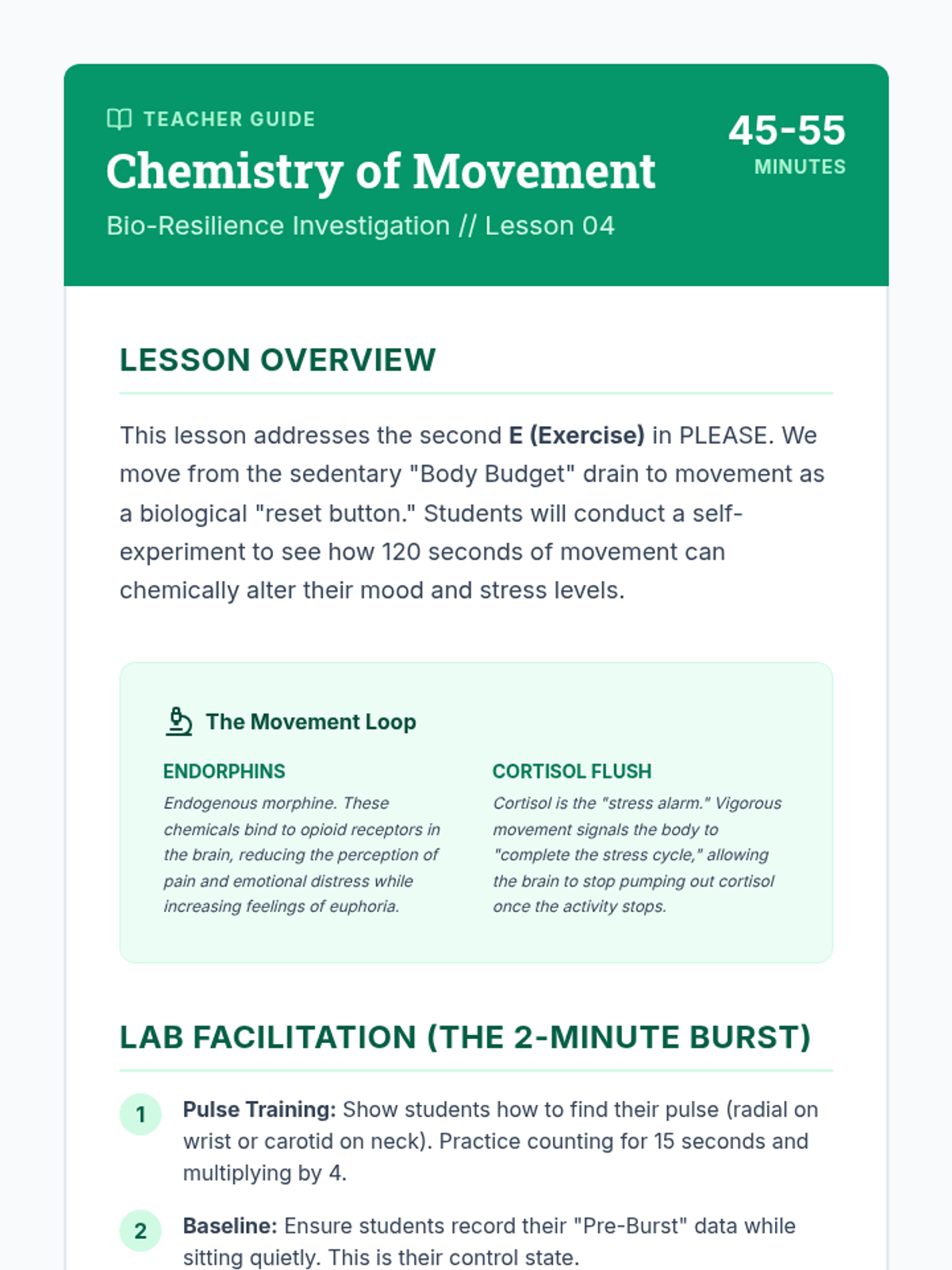
Students investigate the neurochemistry of exercise, specifically how movement releases endorphins and reduces cortisol. They test short bursts of activity to measure immediate changes in perceived stress levels.
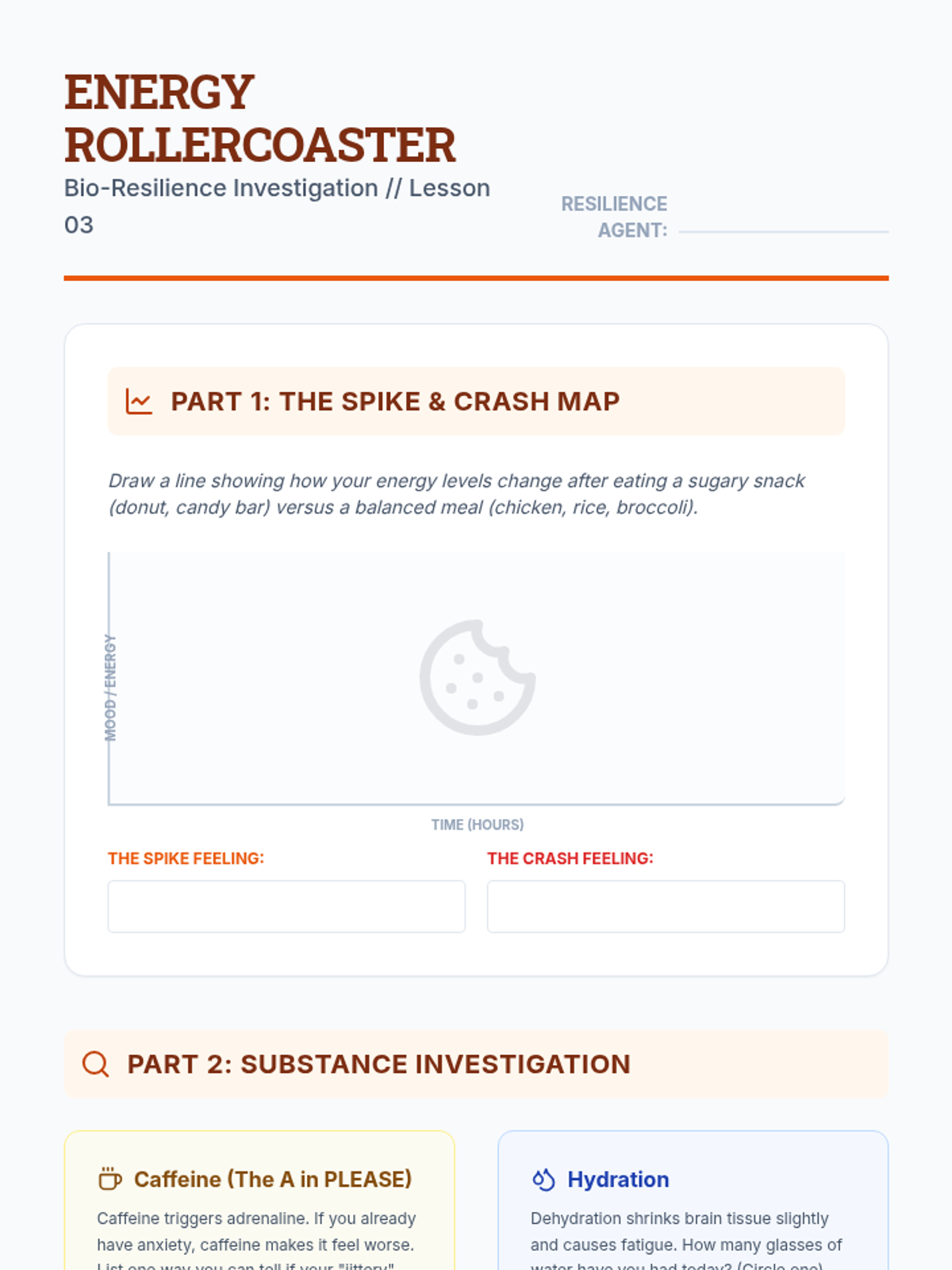
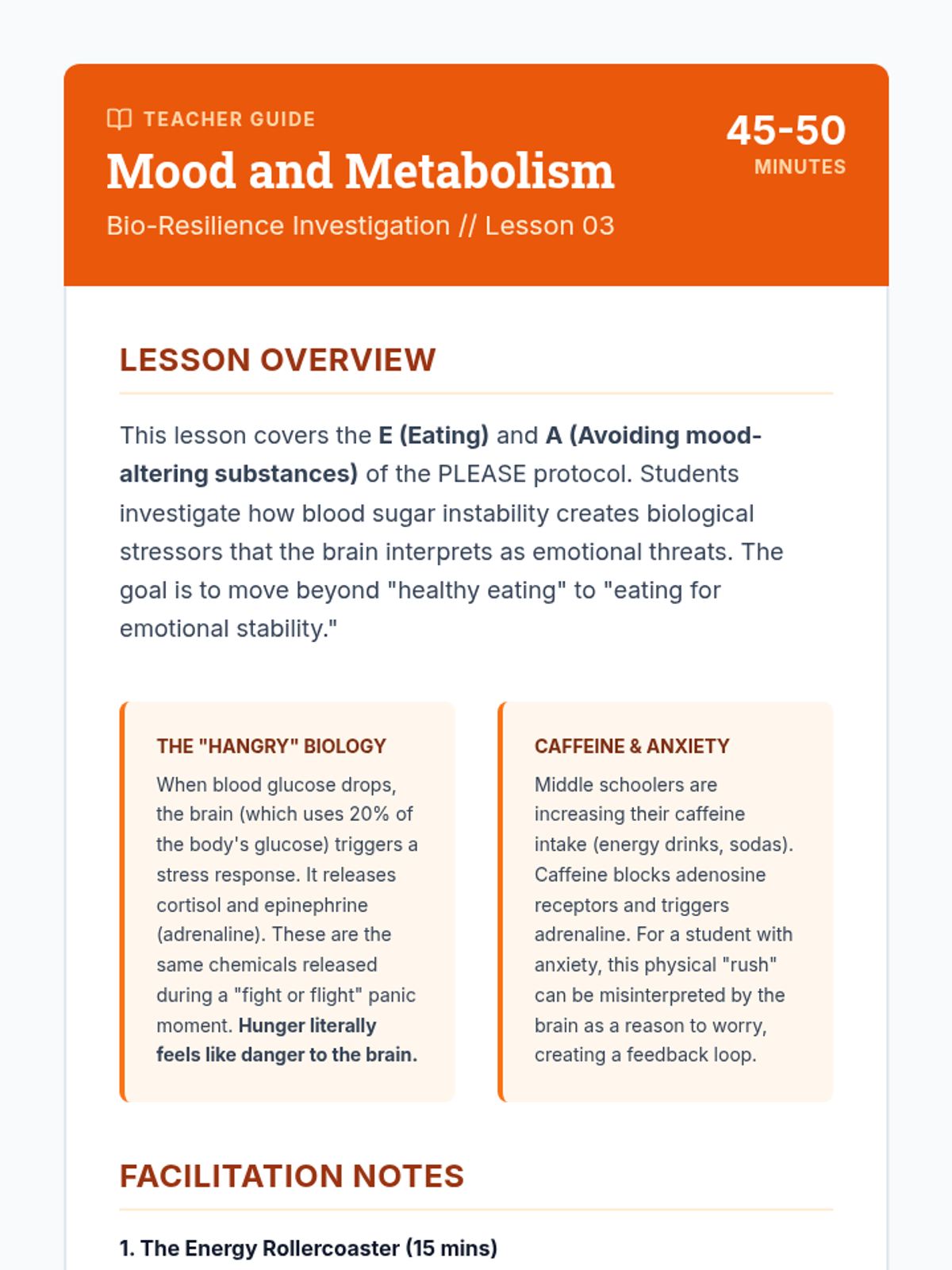
Focusing on the 'E' (Eating) and 'A' (Avoiding) parts of PLEASE, students explore how blood sugar spikes and caffeine crashes mimic anxiety and irritability.
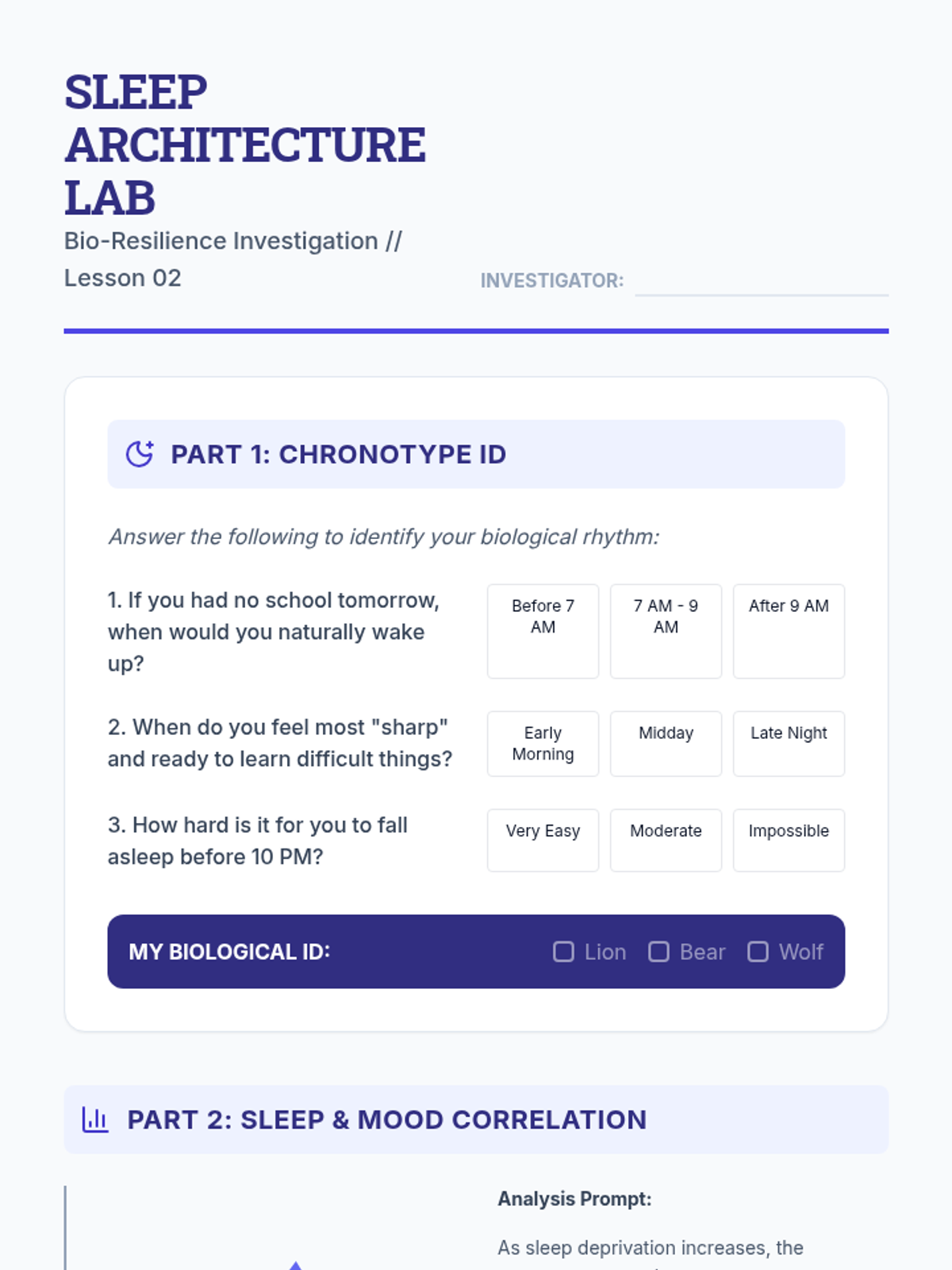
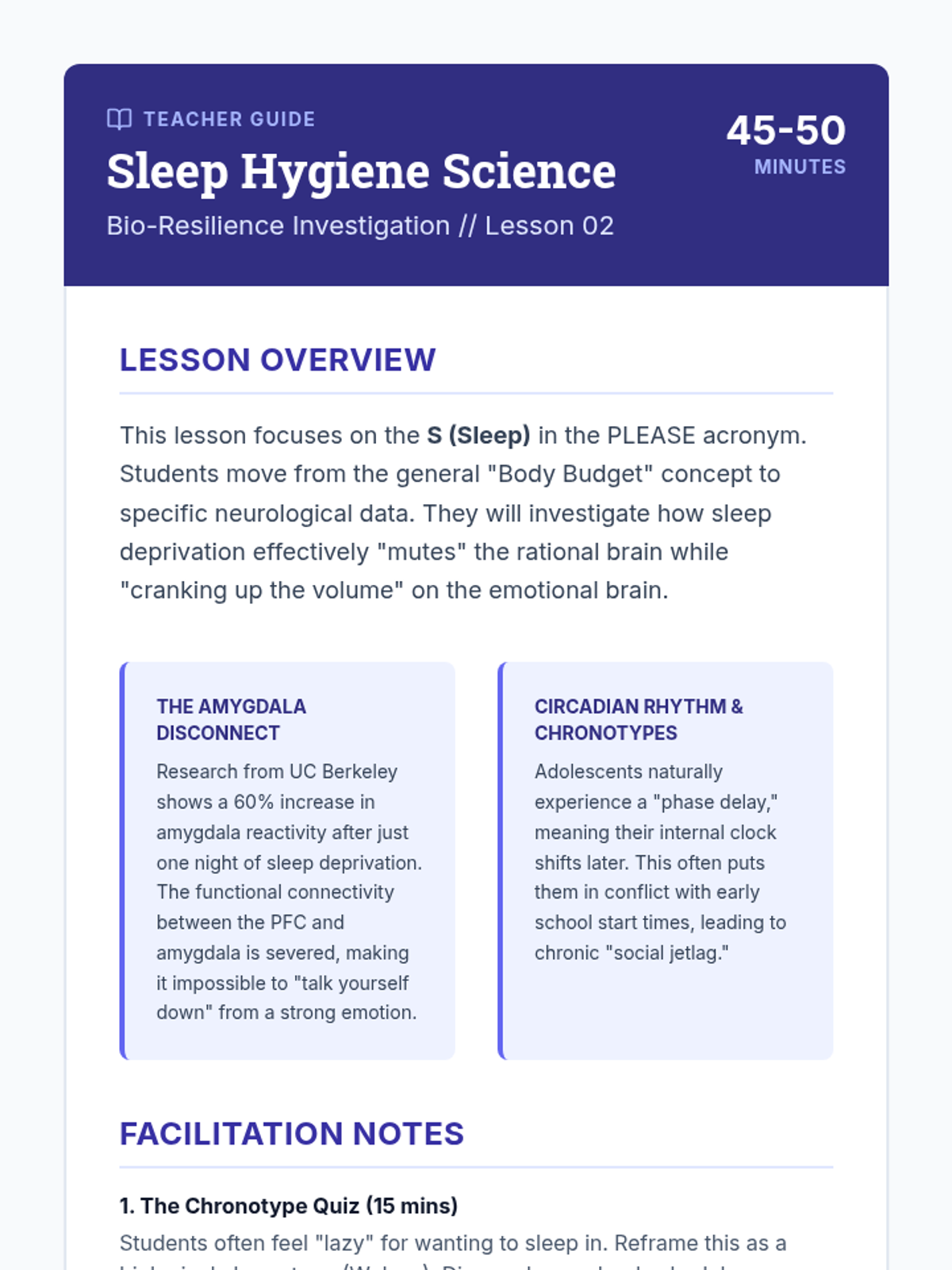
Students research the effects of sleep deprivation on the brain's emotional centers and analyze the biological necessity of sleep for resilience.
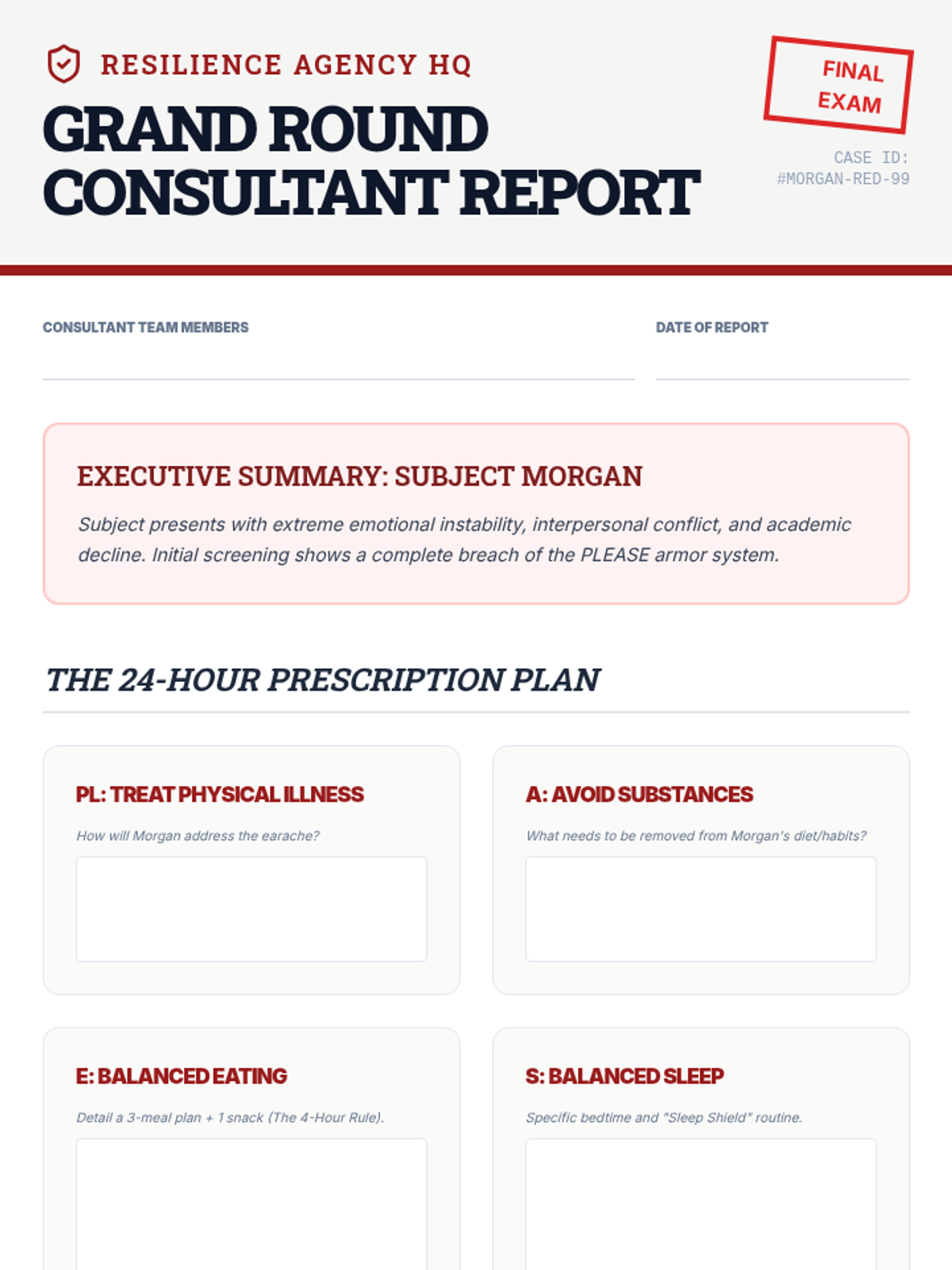
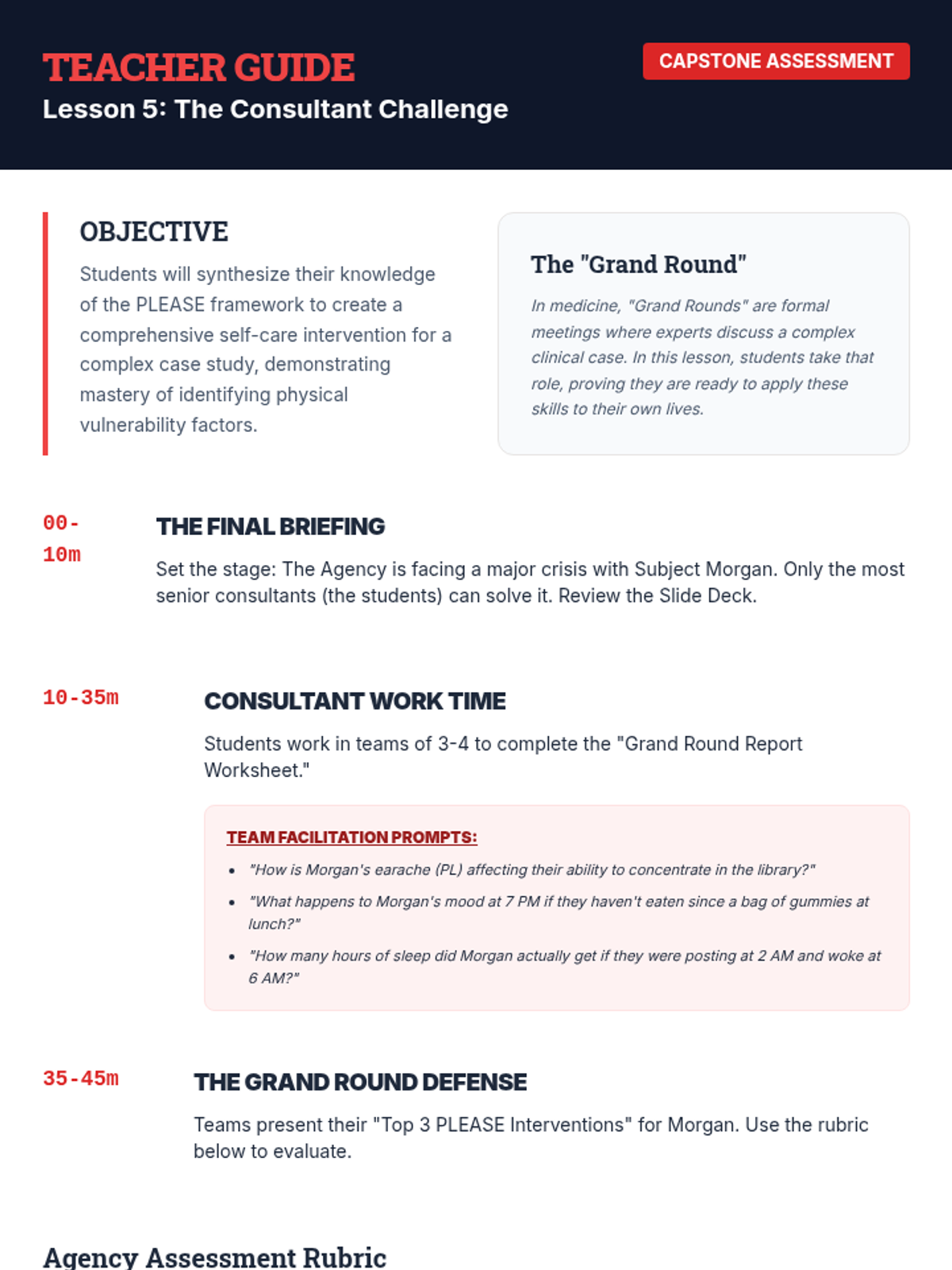
In a final 'Grand Round' challenge, student teams create a comprehensive PLEASE prescription for a complex behavioral case.
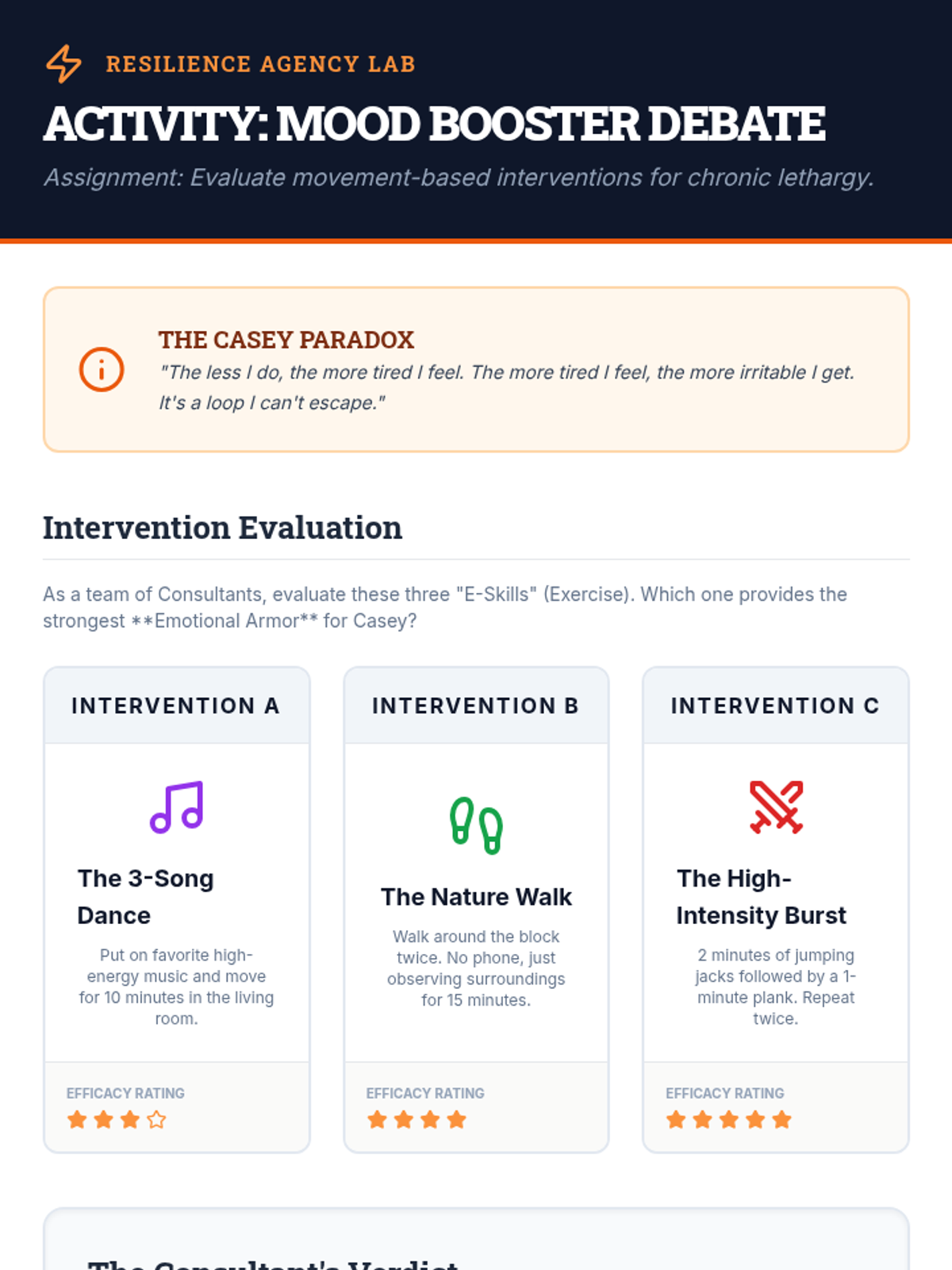
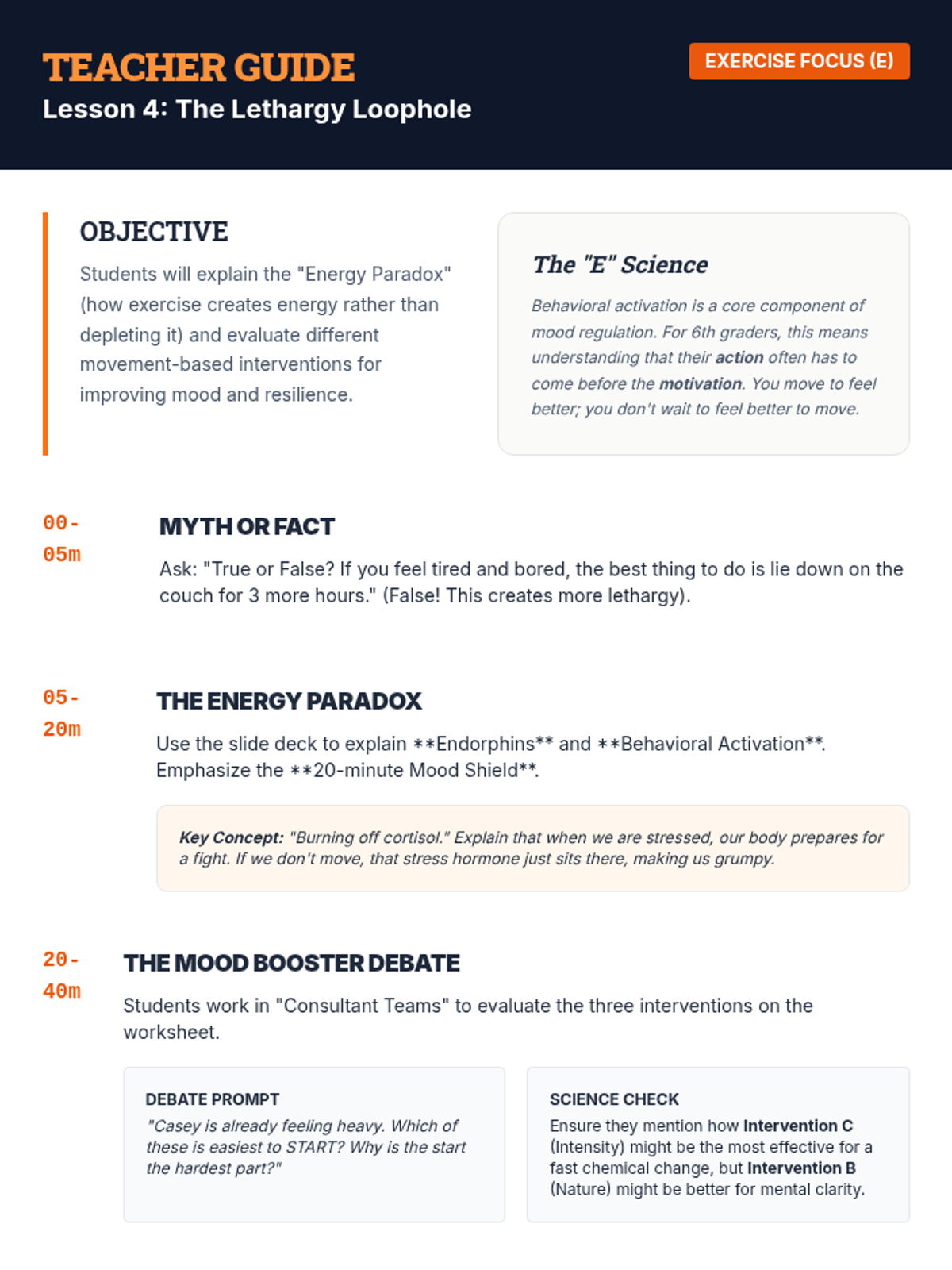
Students explore the energy paradox—how exercise boosts mood—and debate the effectiveness of movement-based interventions.
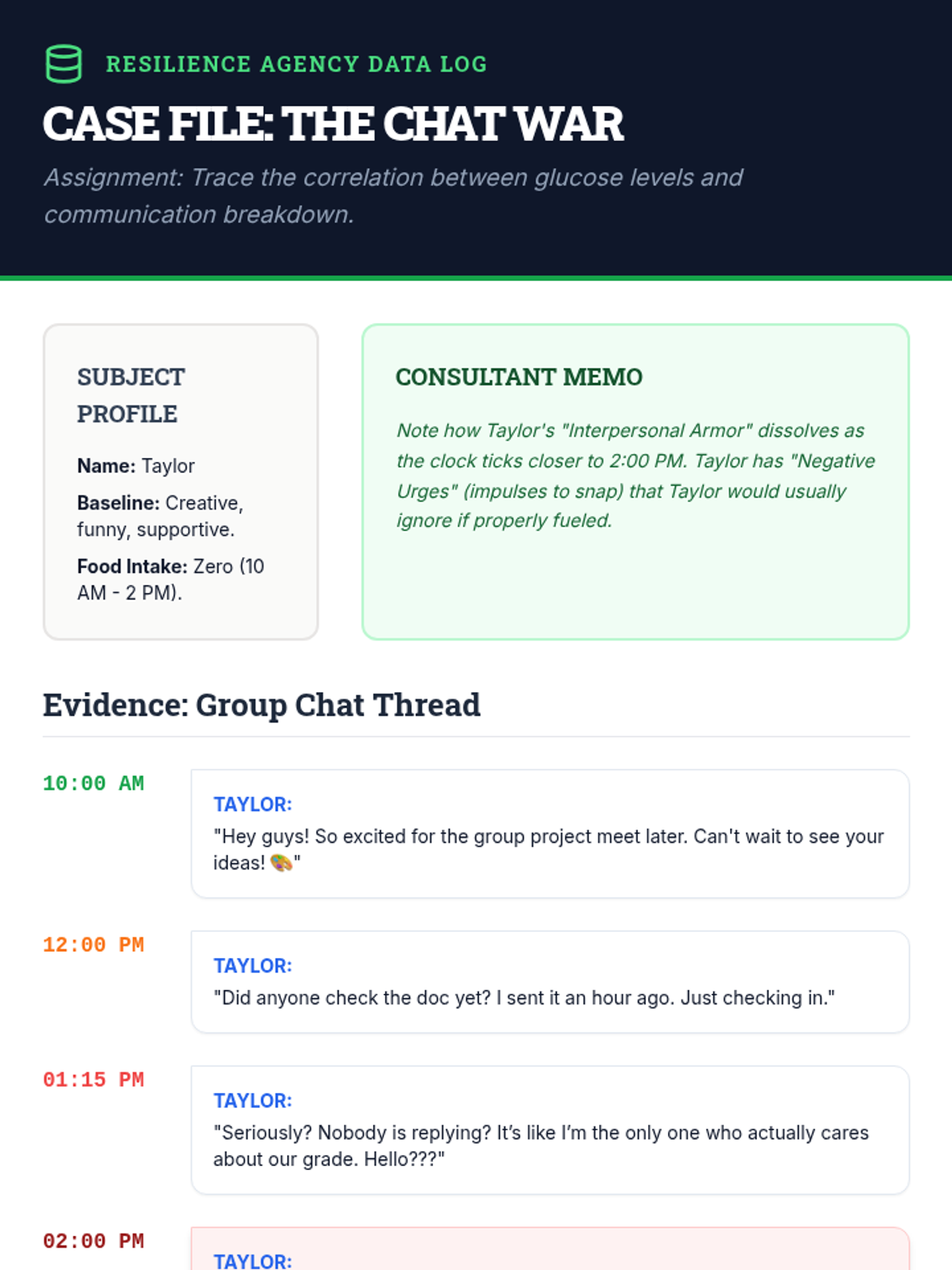
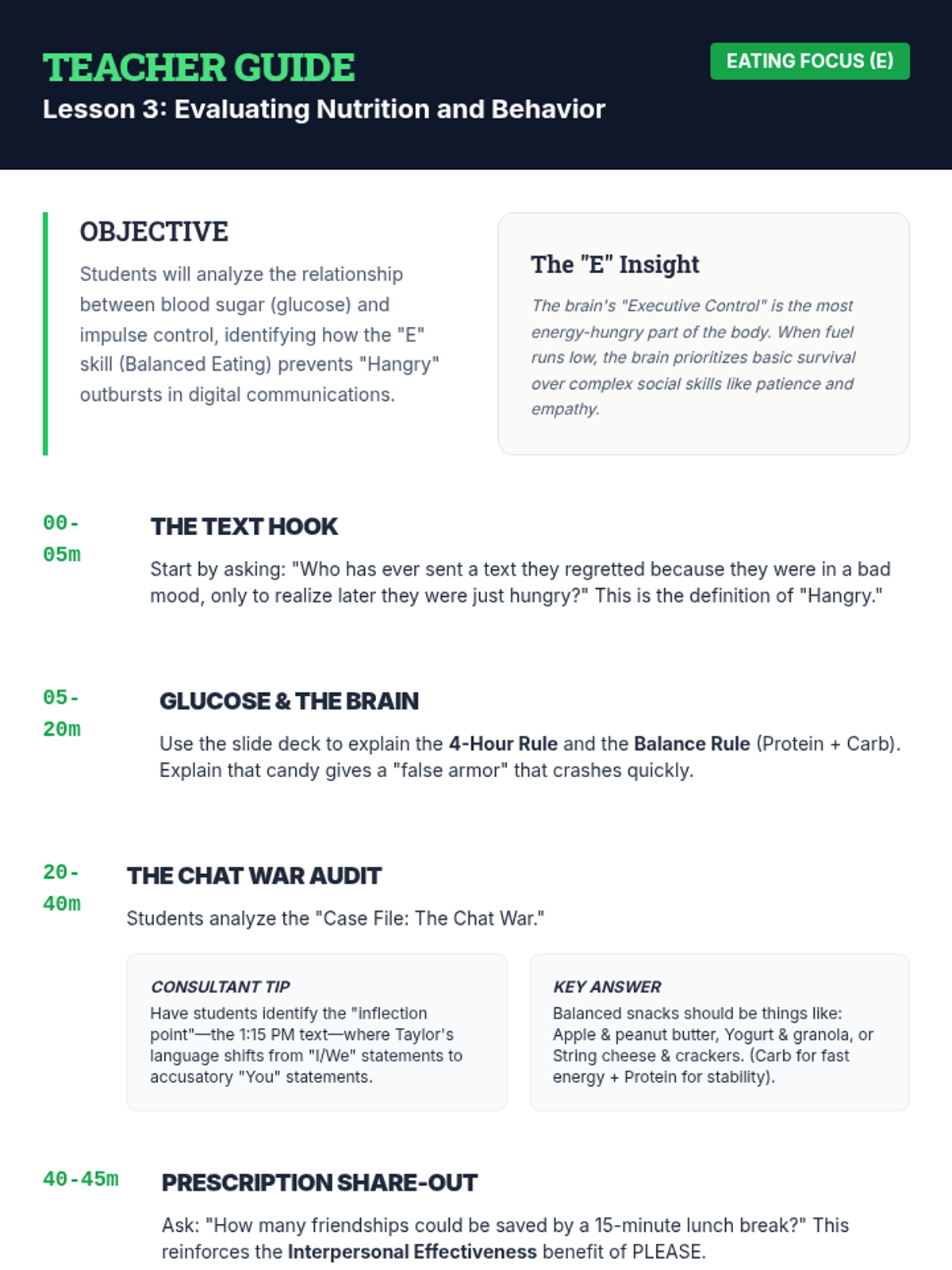
Students map the connection between blood sugar, meal timing, and emotional regulation through a text message timeline.
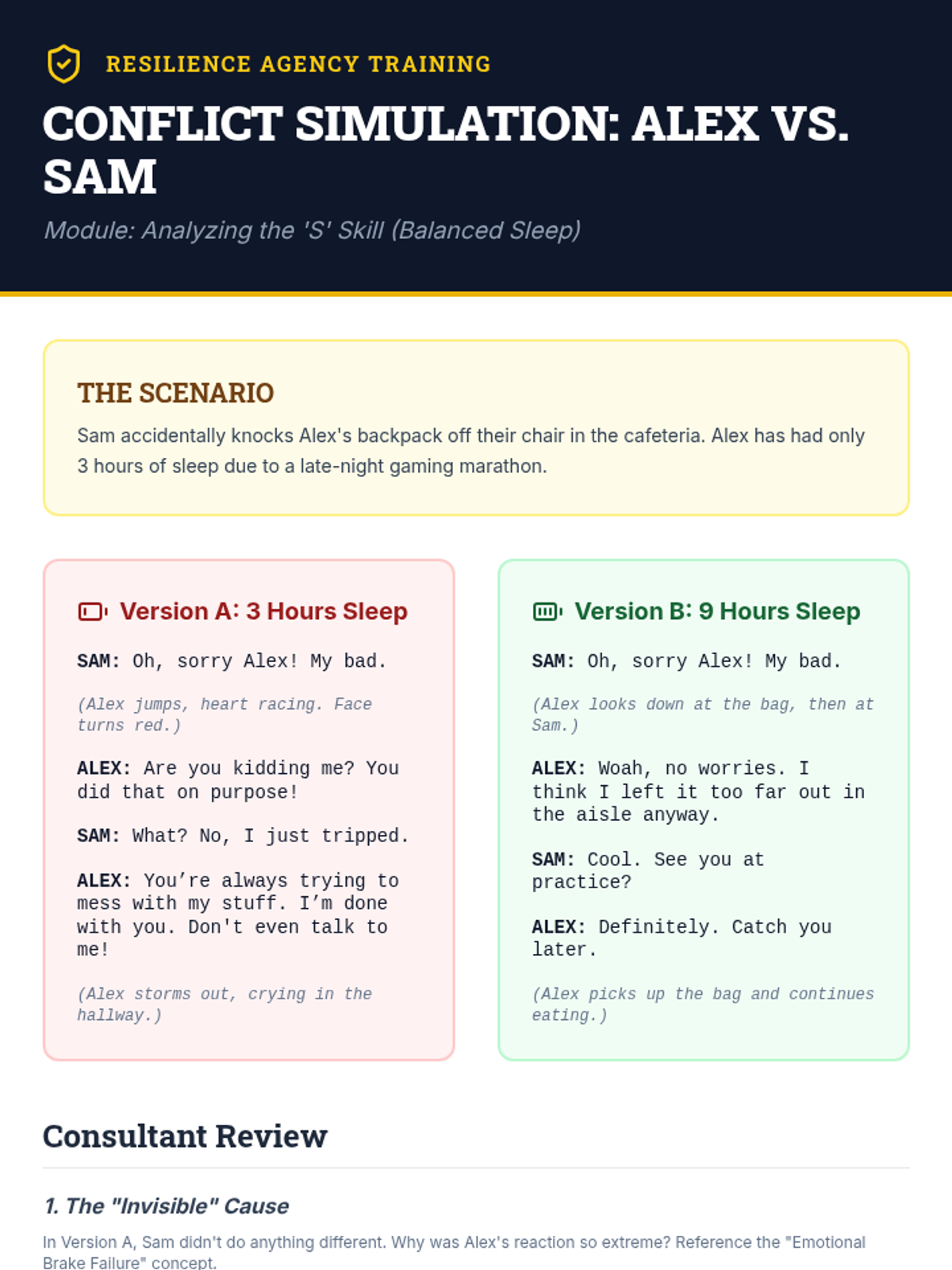
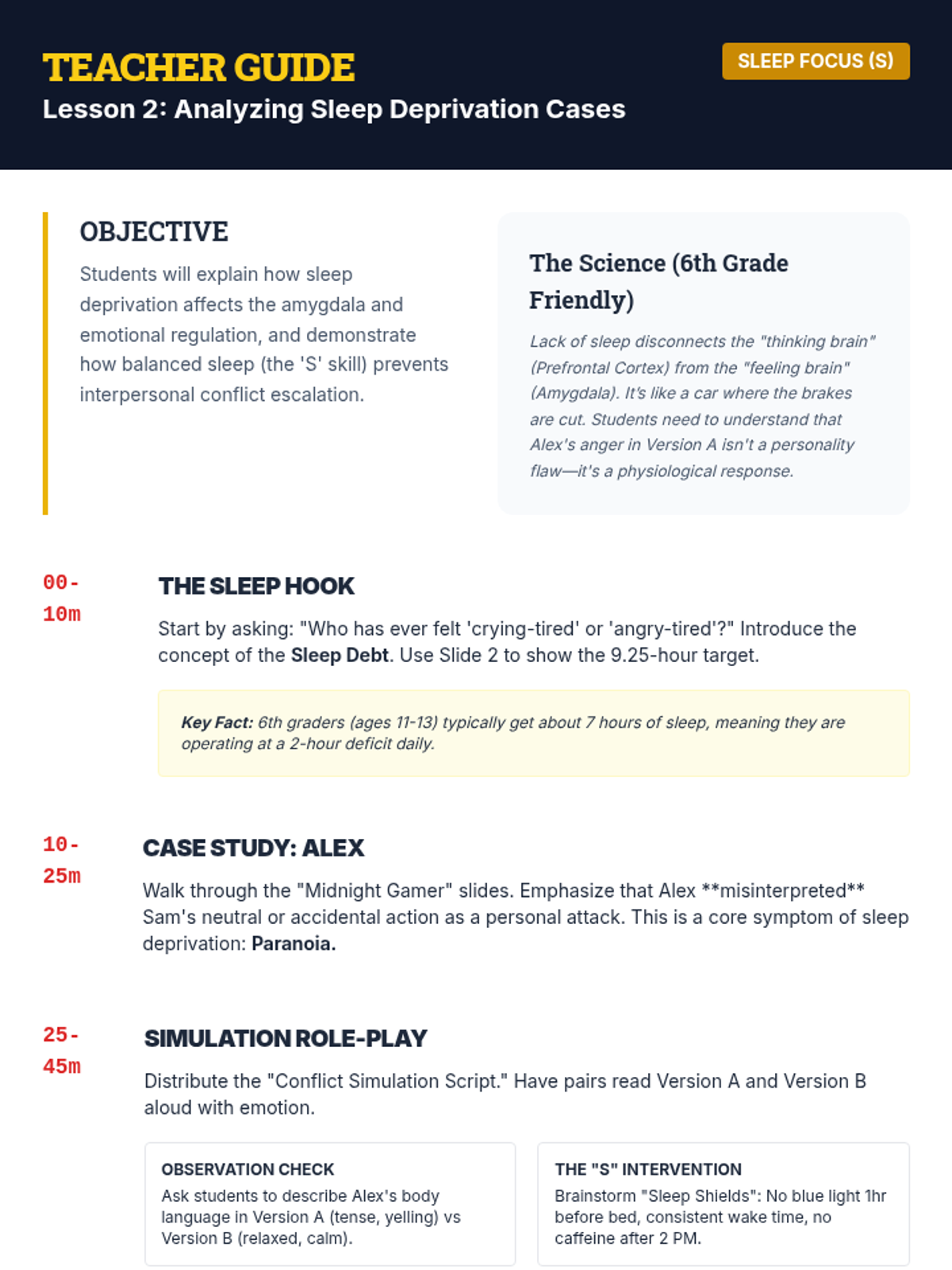
Students examine how sleep deprivation impacts mood and role-play conflict resolution with and without proper rest.
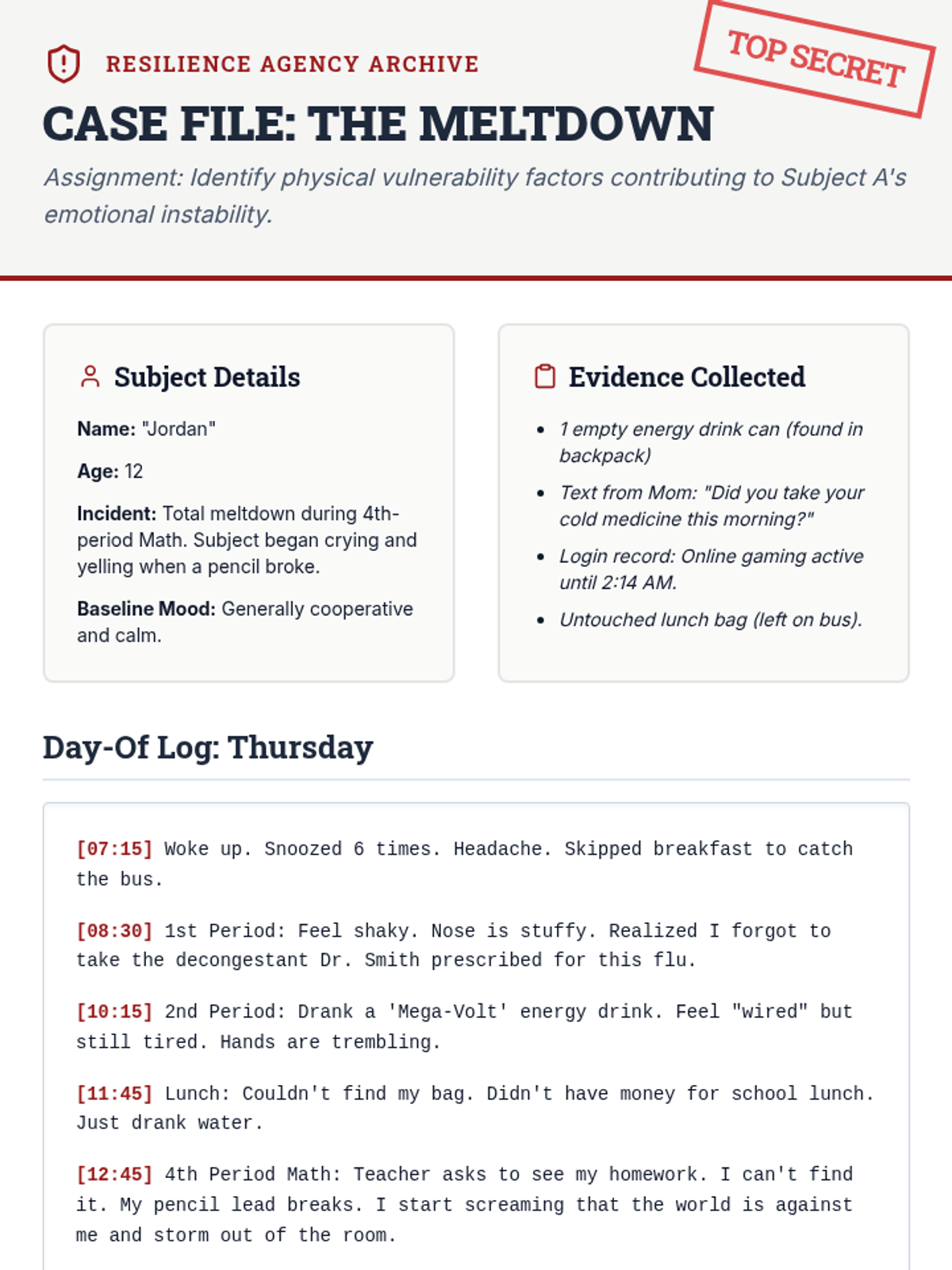
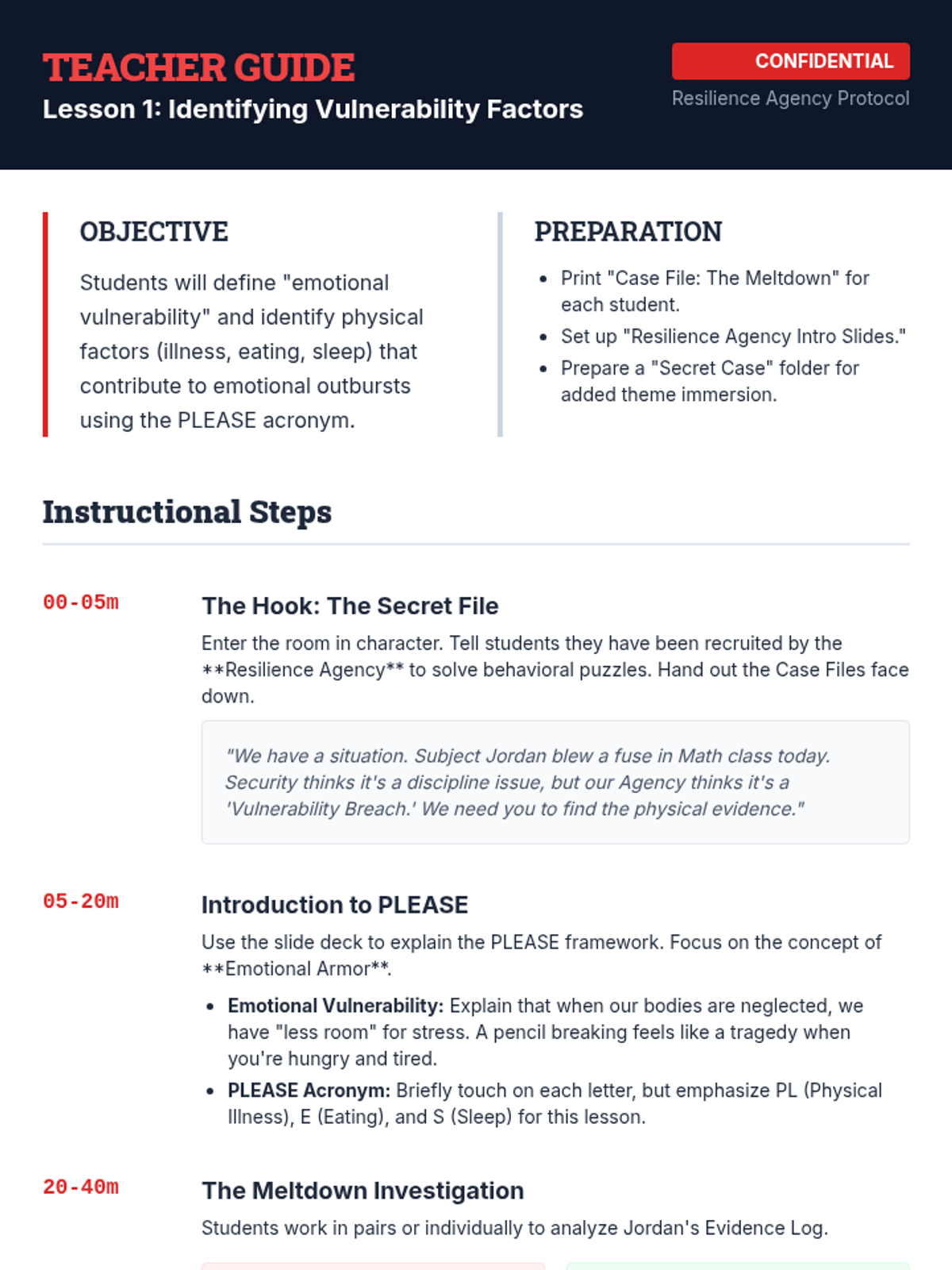
Students are introduced to the PLEASE framework and use evidence from a character's daily log to identify physical vulnerability factors.
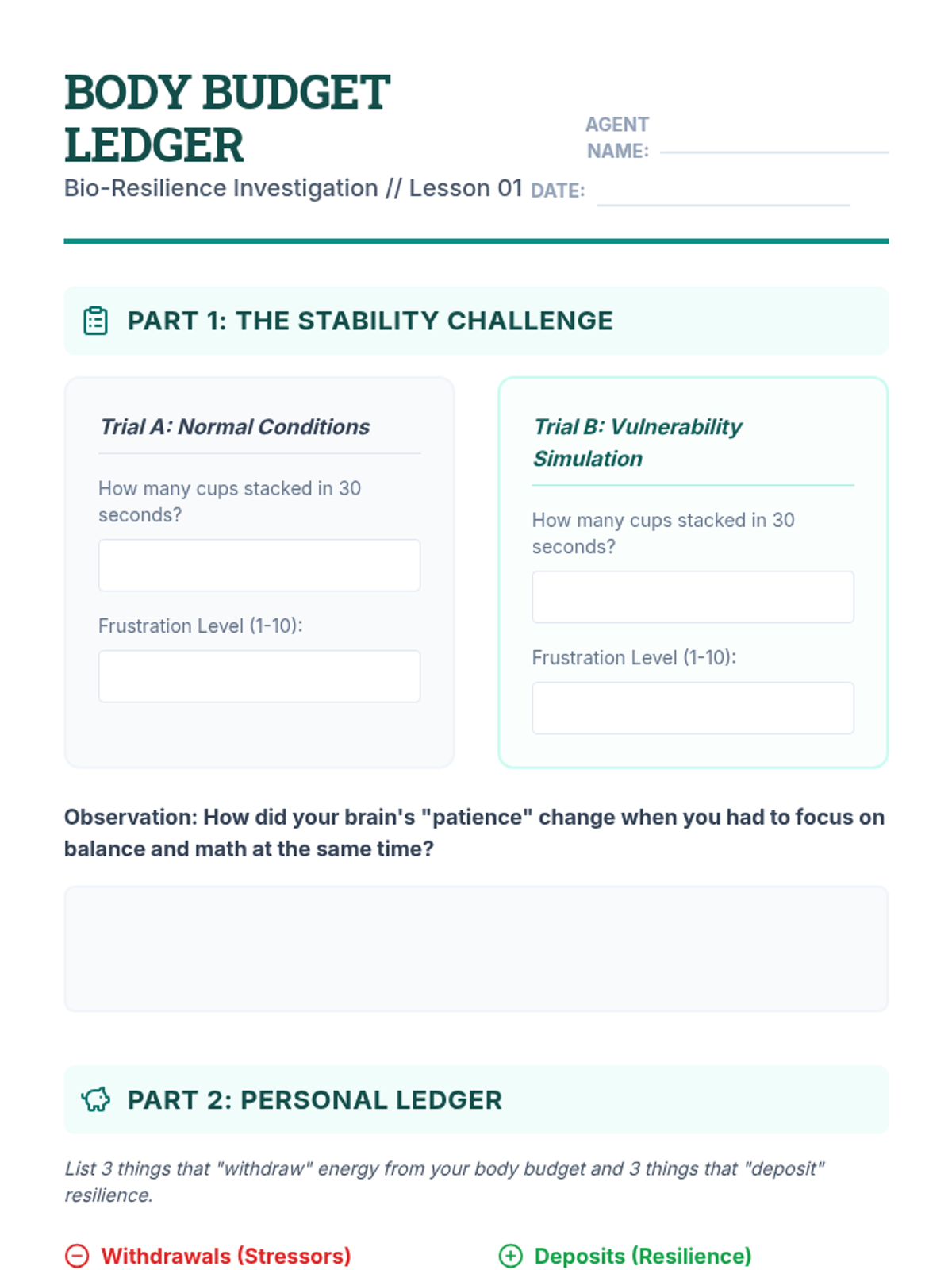
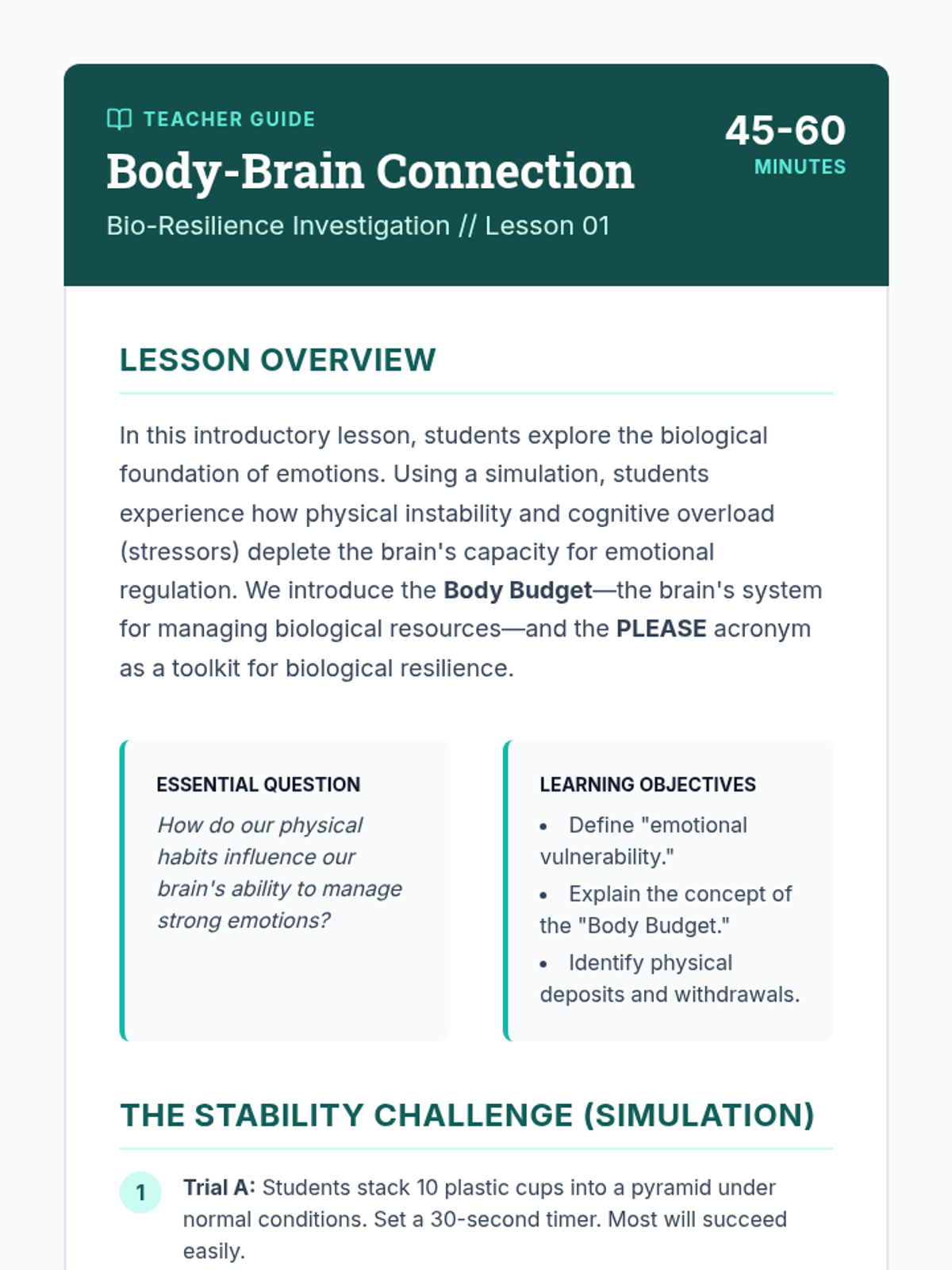
Students explore the concept of the 'Body Budget' and how physical stressors lead to emotional vulnerability through a simulation.
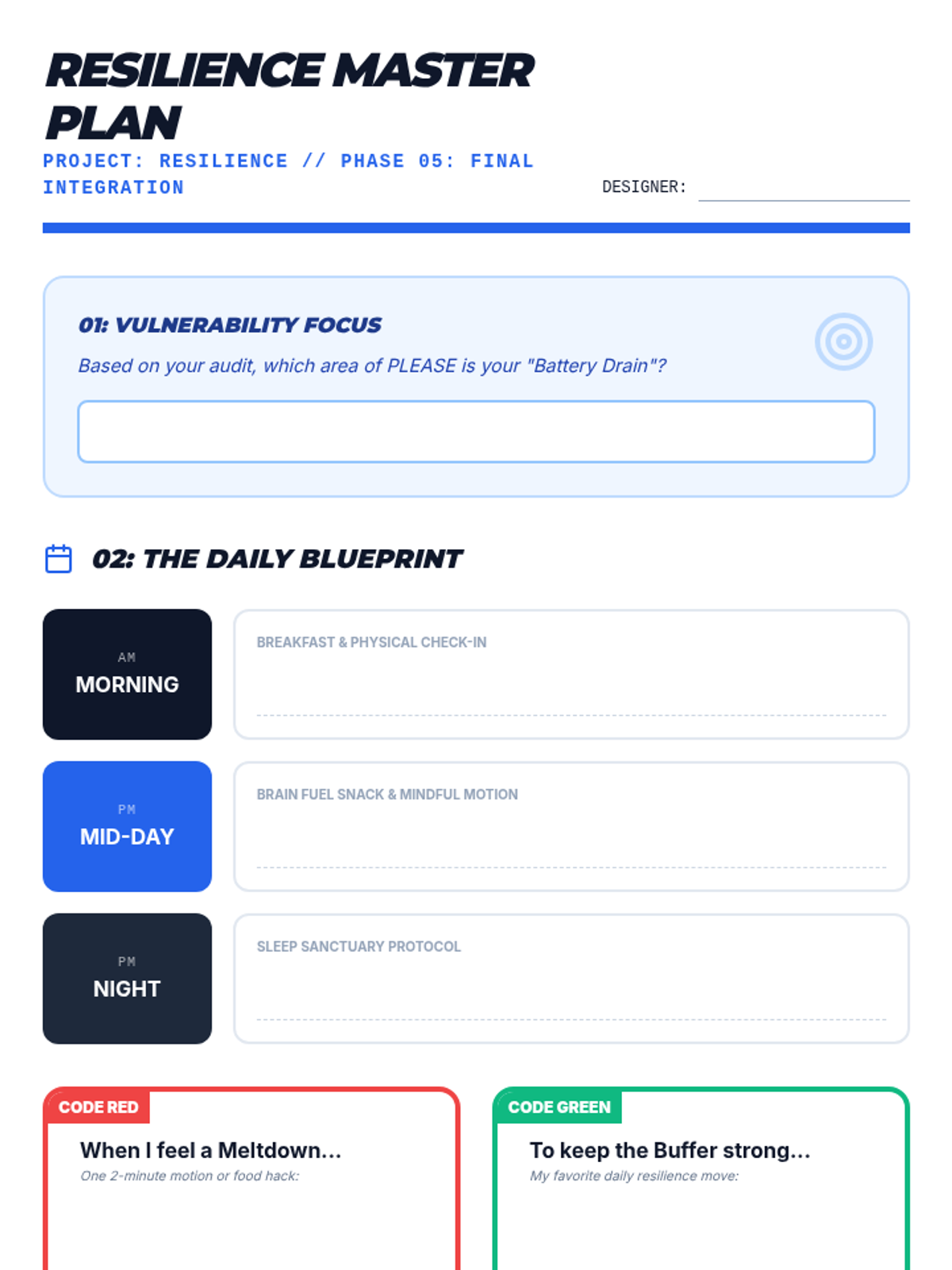
Students synthesize their learning into a final Resilience Routine and visual tracker, writing a letter to their future selves.
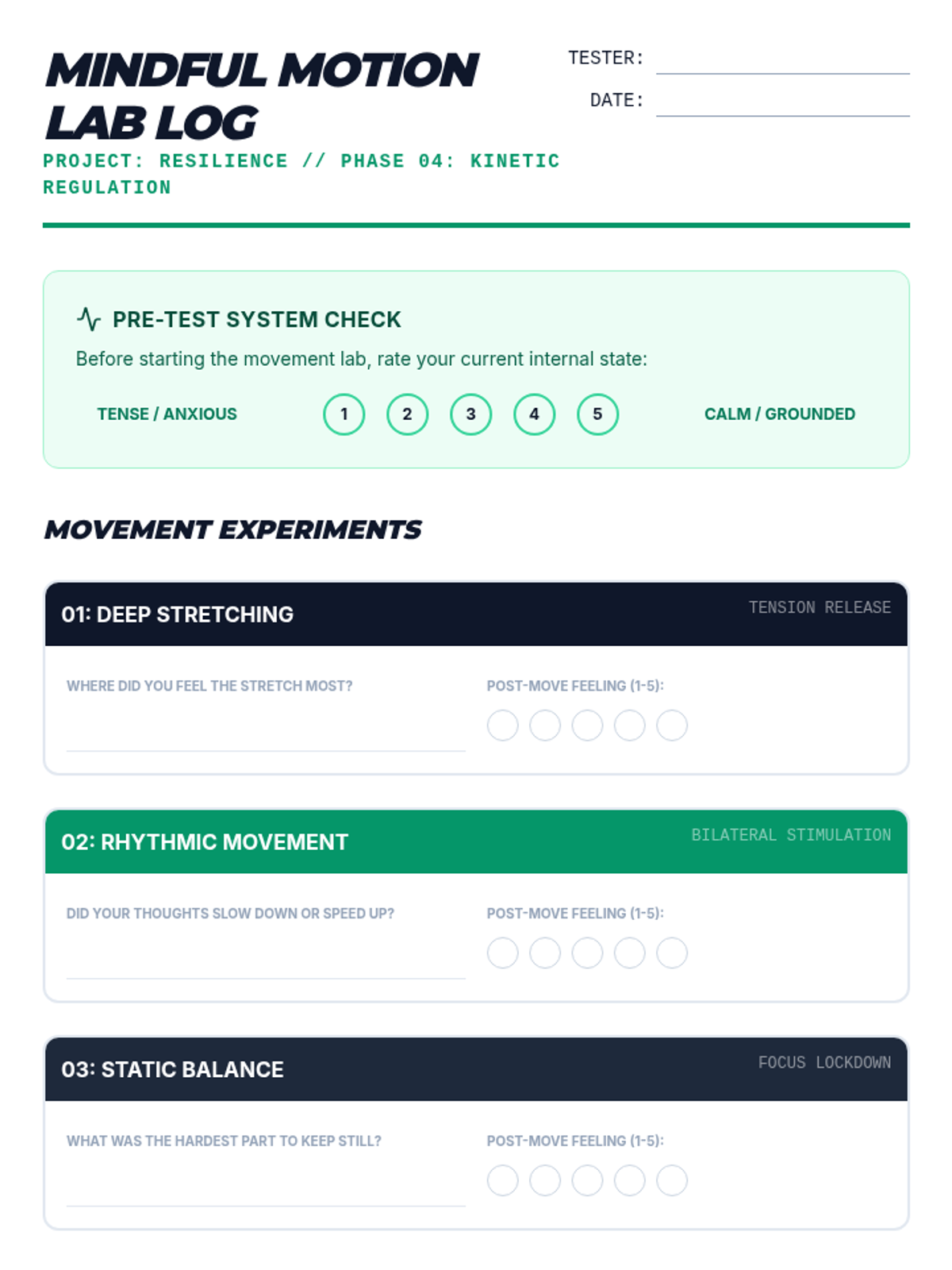
Students explore non-competitive movement as a tool for mindfulness and grounding, distinguishing it from competitive sports.
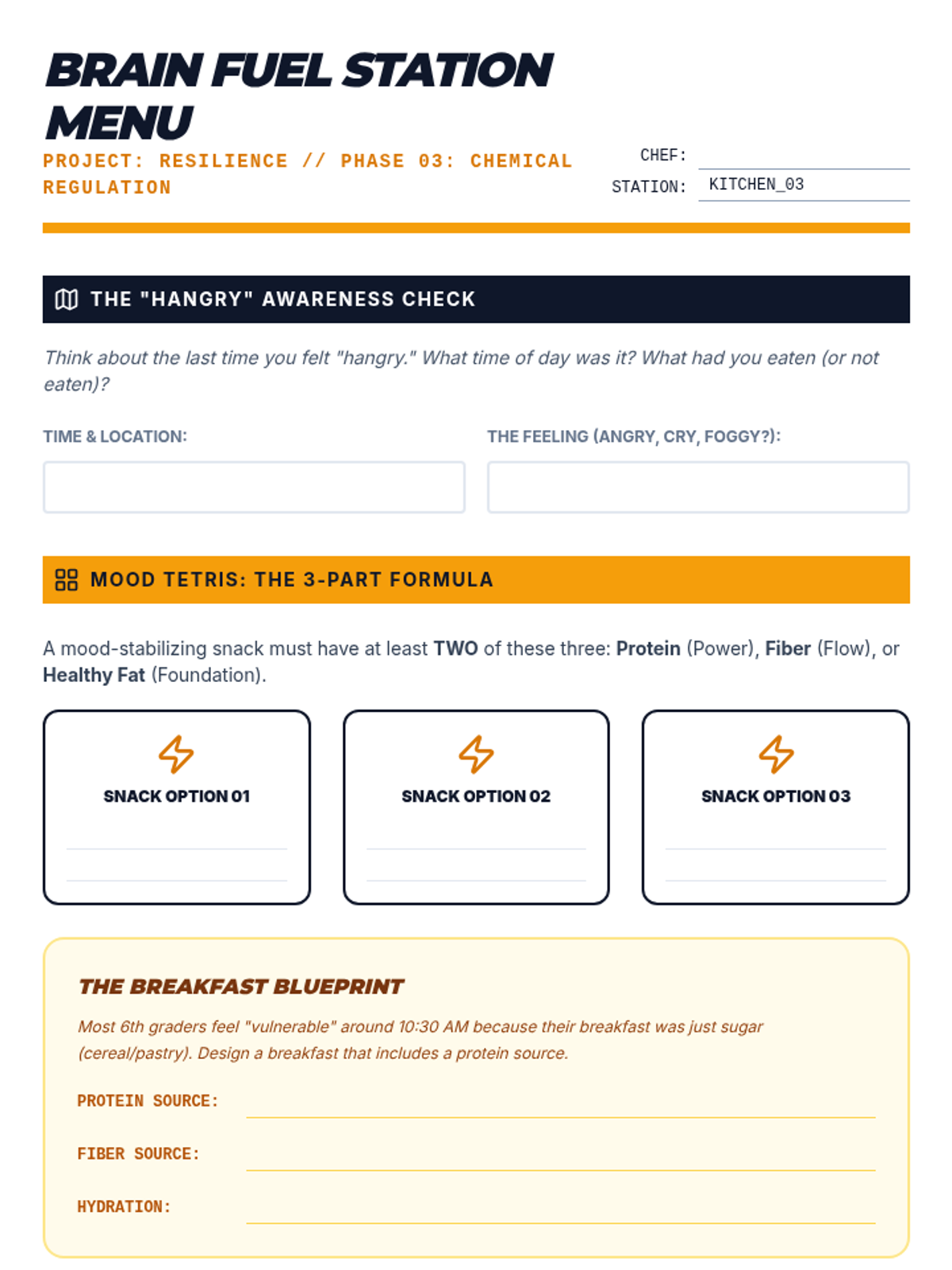
Students learn about the connection between nutrition and mood, creating a menu of balanced snacks to prevent 'hangry' emotional outbursts.
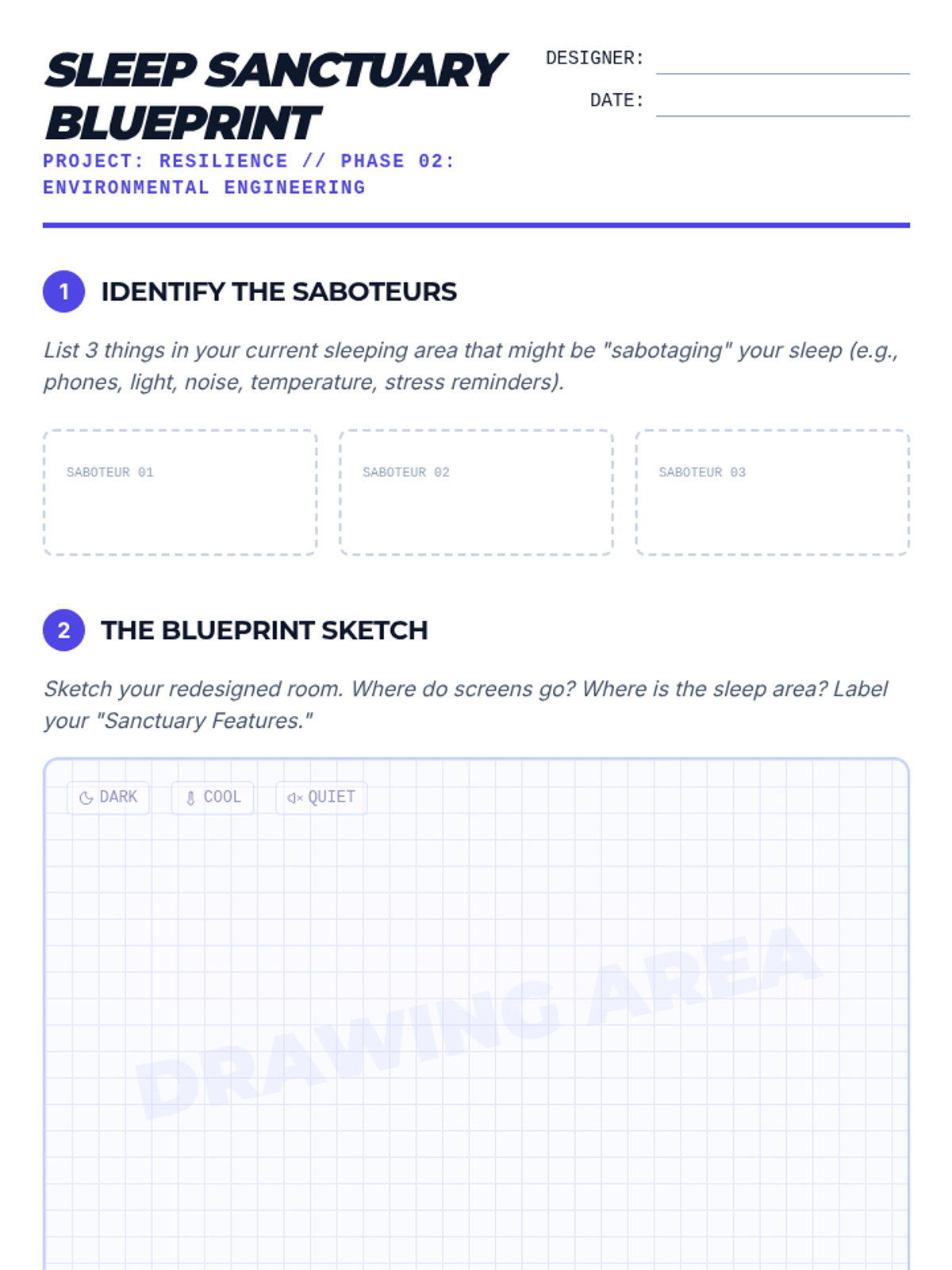
Students explore sleep hygiene principles and redesign a hypothetical bedroom environment for optimal rest and emotional regulation.
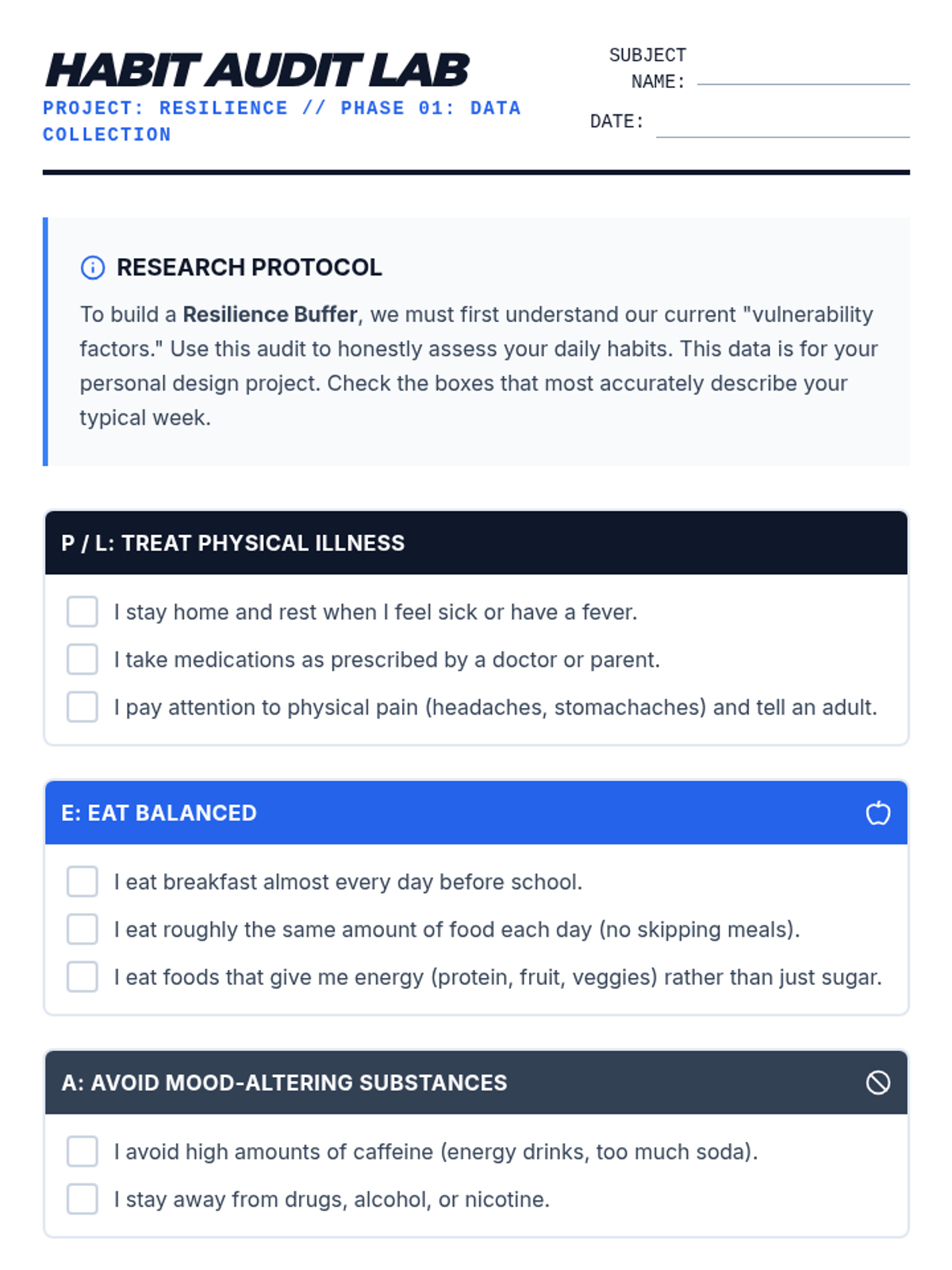
Students introduce the PLEASE acronym and use a self-assessment tool to track current behaviors, identifying a primary vulnerability area to focus on.
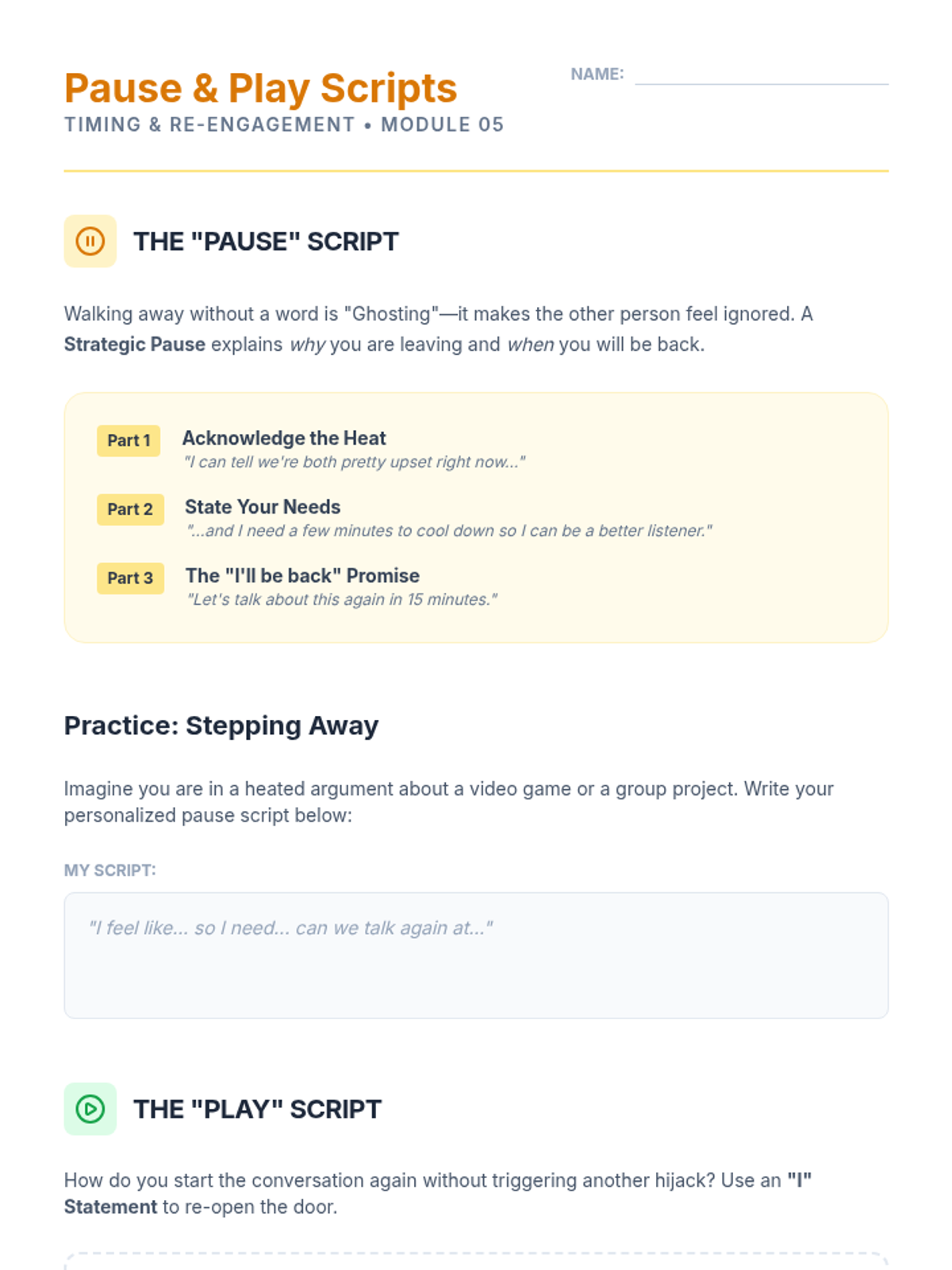
Students learn to assess when a conflict is too heated to solve and practice scripts for stepping away and re-initiating the conversation later.
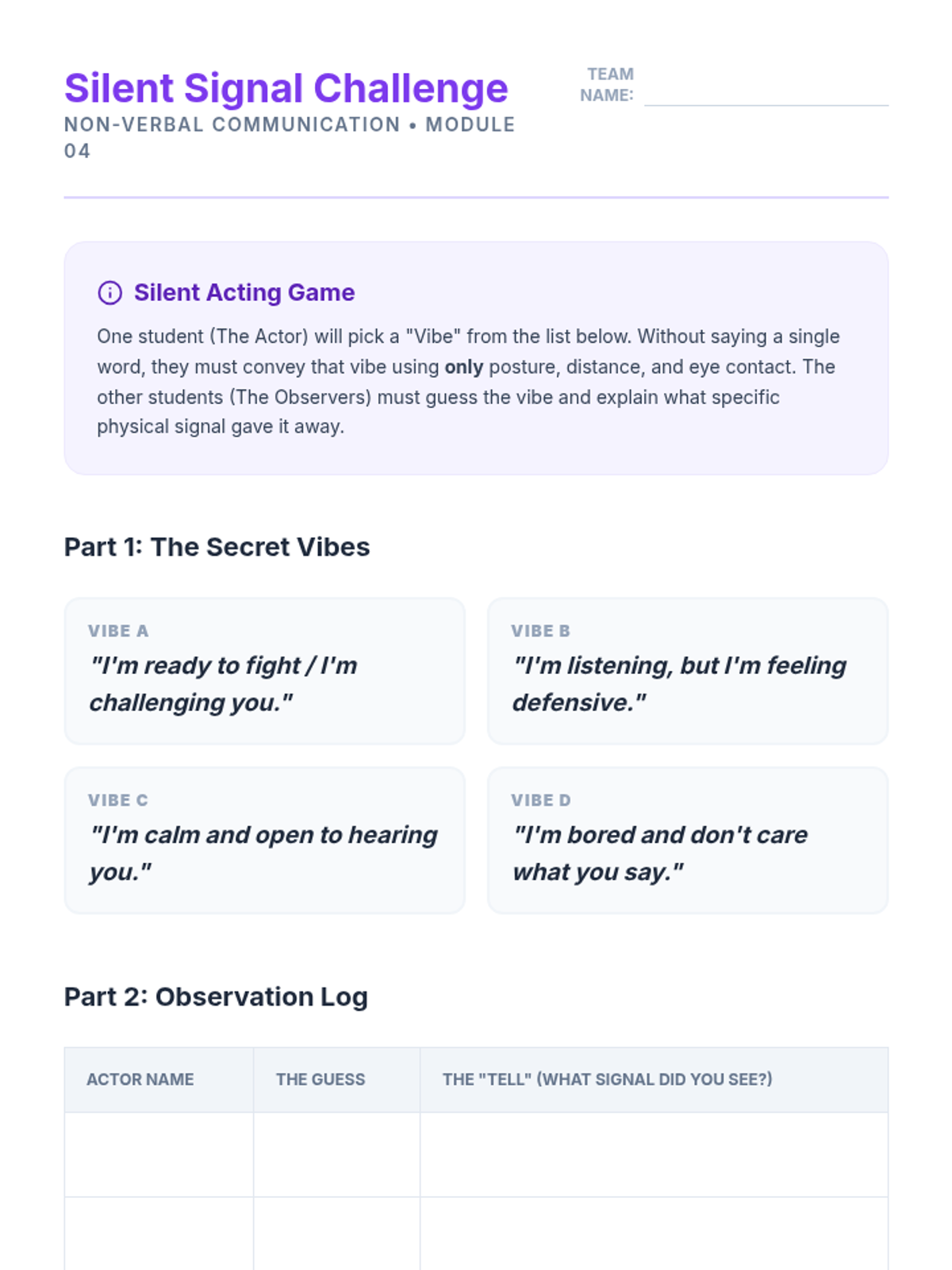
Students examine how body language, proximity, and eye contact can be perceived as threatening or calming during tense interactions.
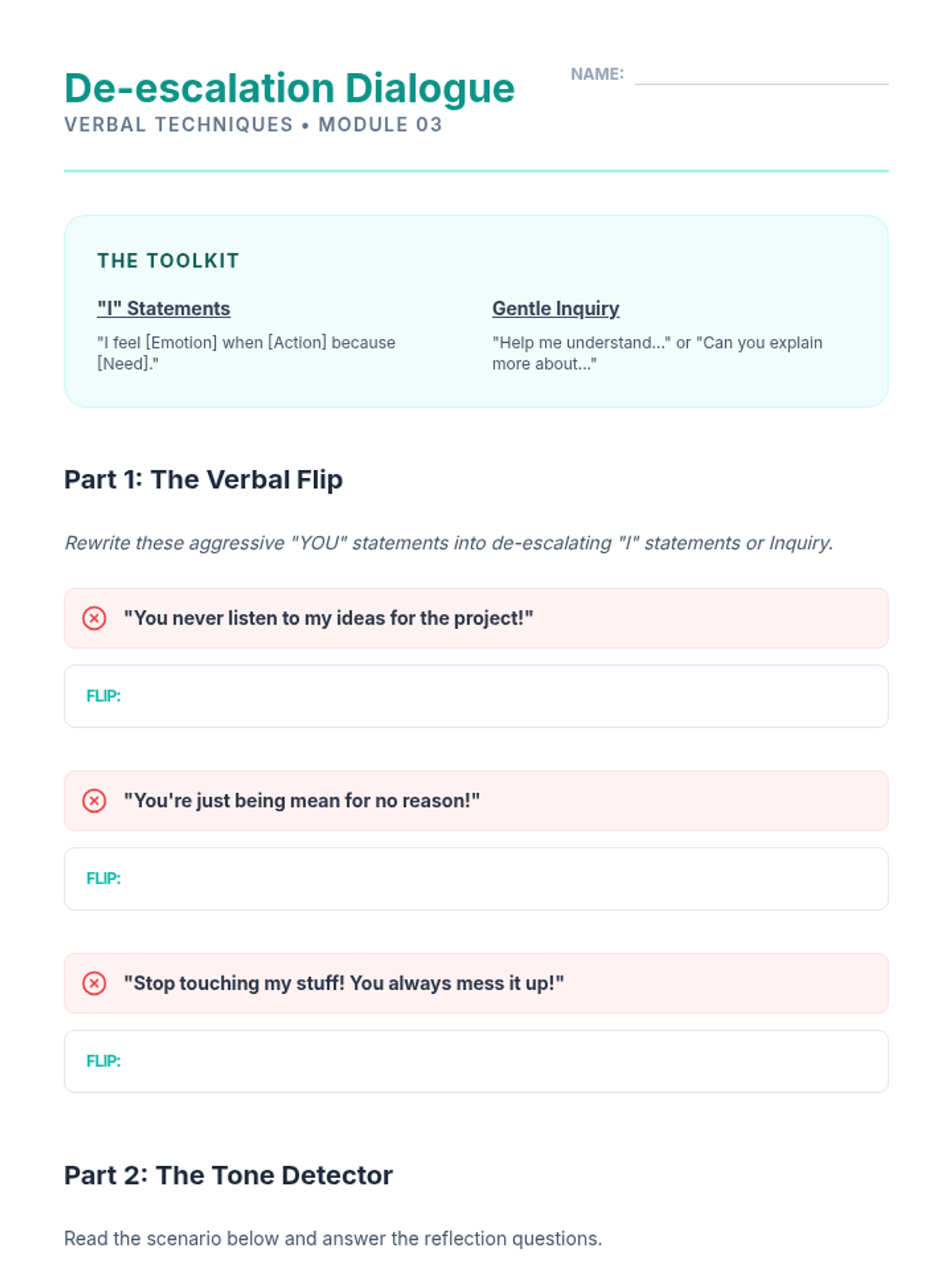
Students study specific phrases and tone adjustments that reduce defensiveness in others, contrasting 'you' statements with gentle inquiry.
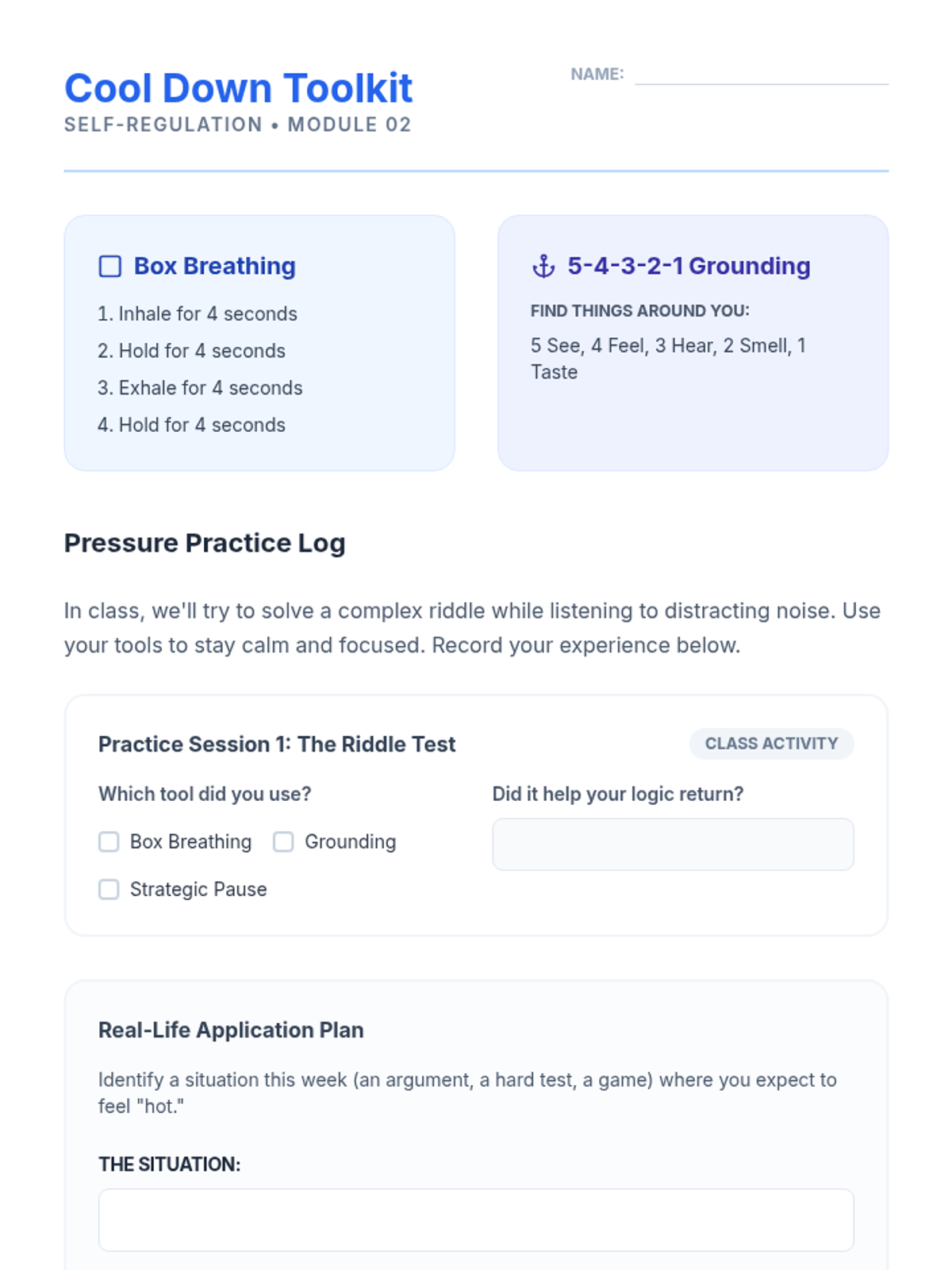
This lesson introduces immediate coping mechanisms for 'cooling down' before responding, including breathing techniques and grounding exercises.
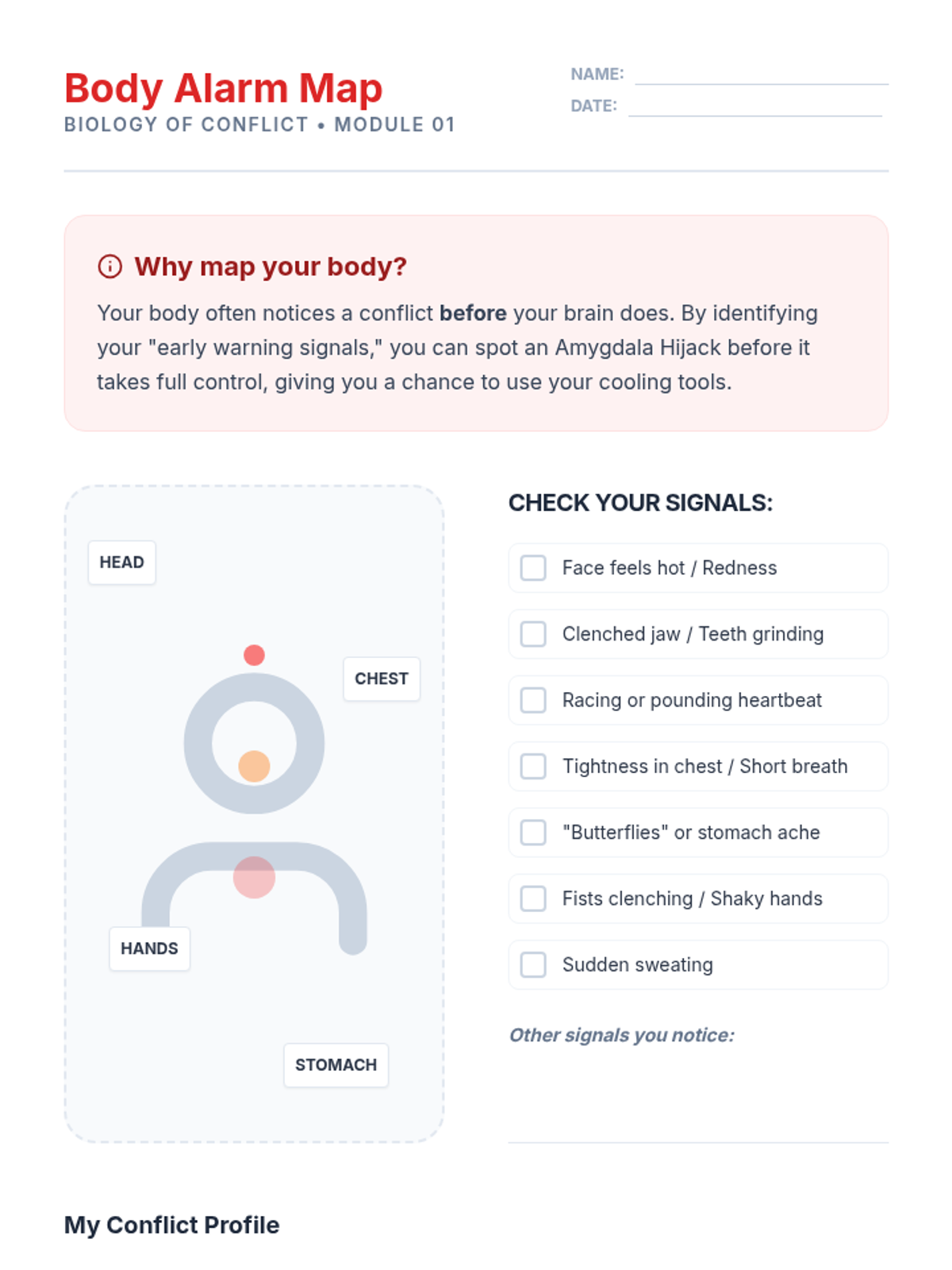
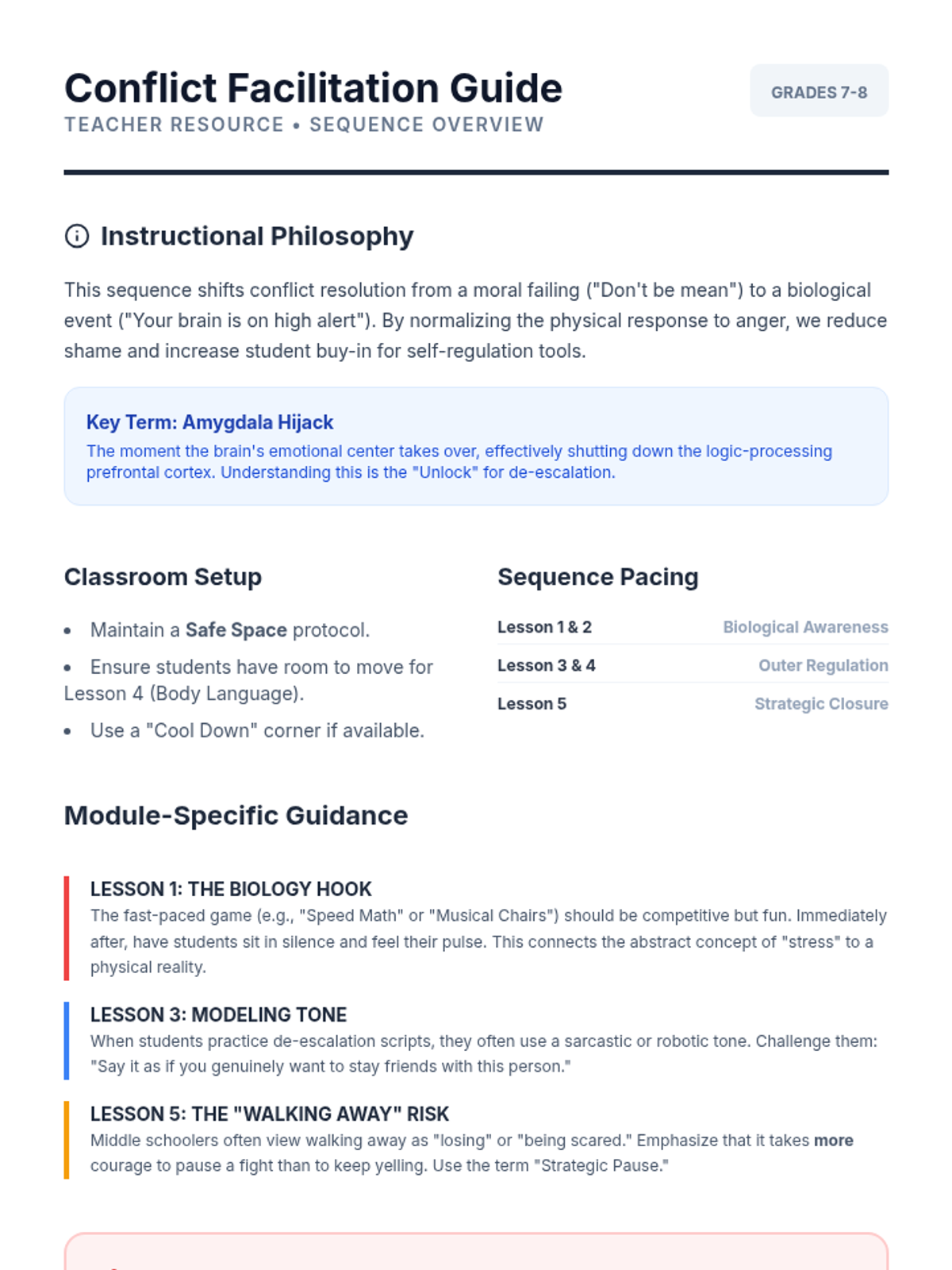
Students learn about the amygdala hijack and the physical signs of anger, mapping out their own physiological cues that signal a high-conflict state.
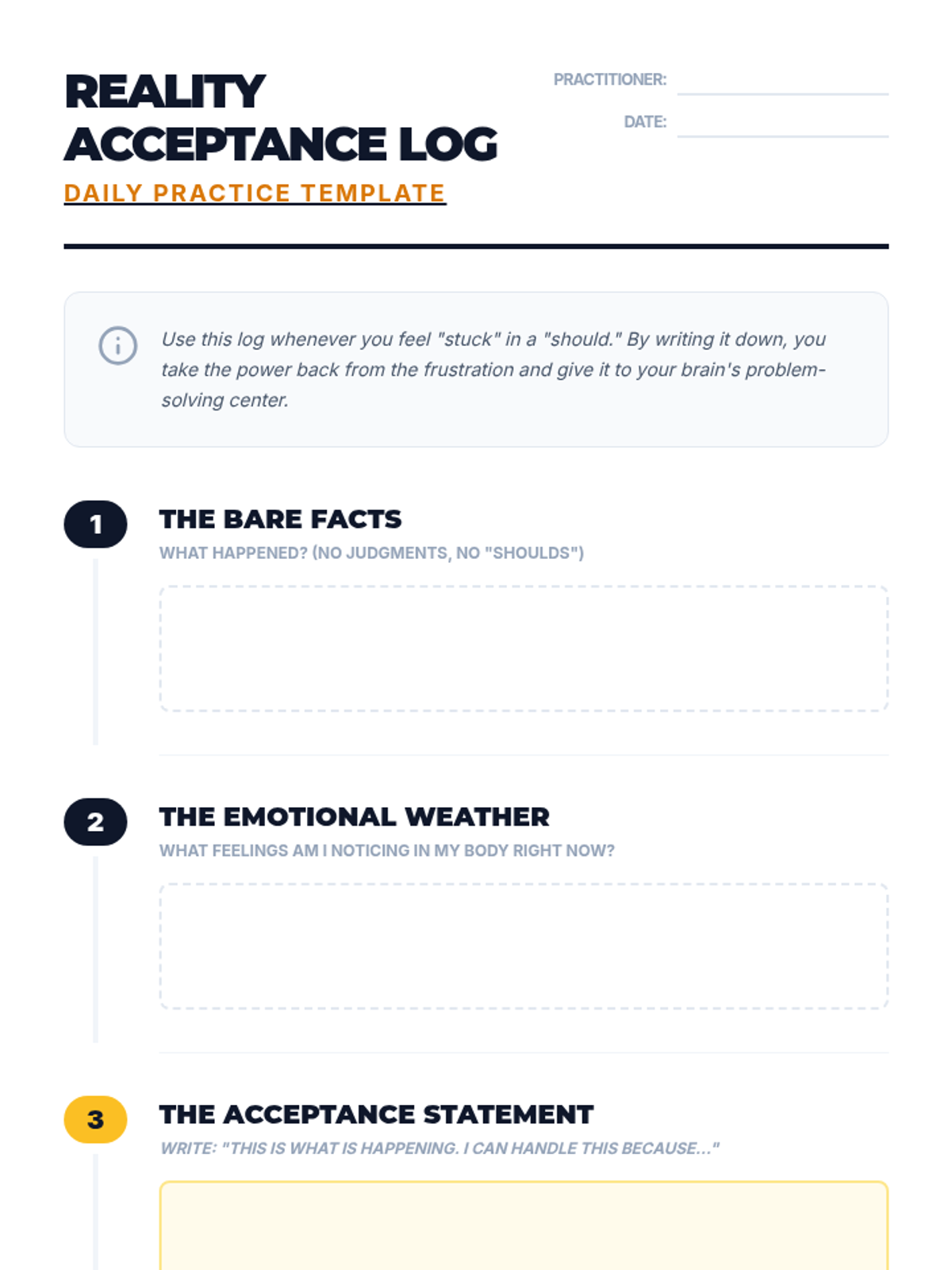
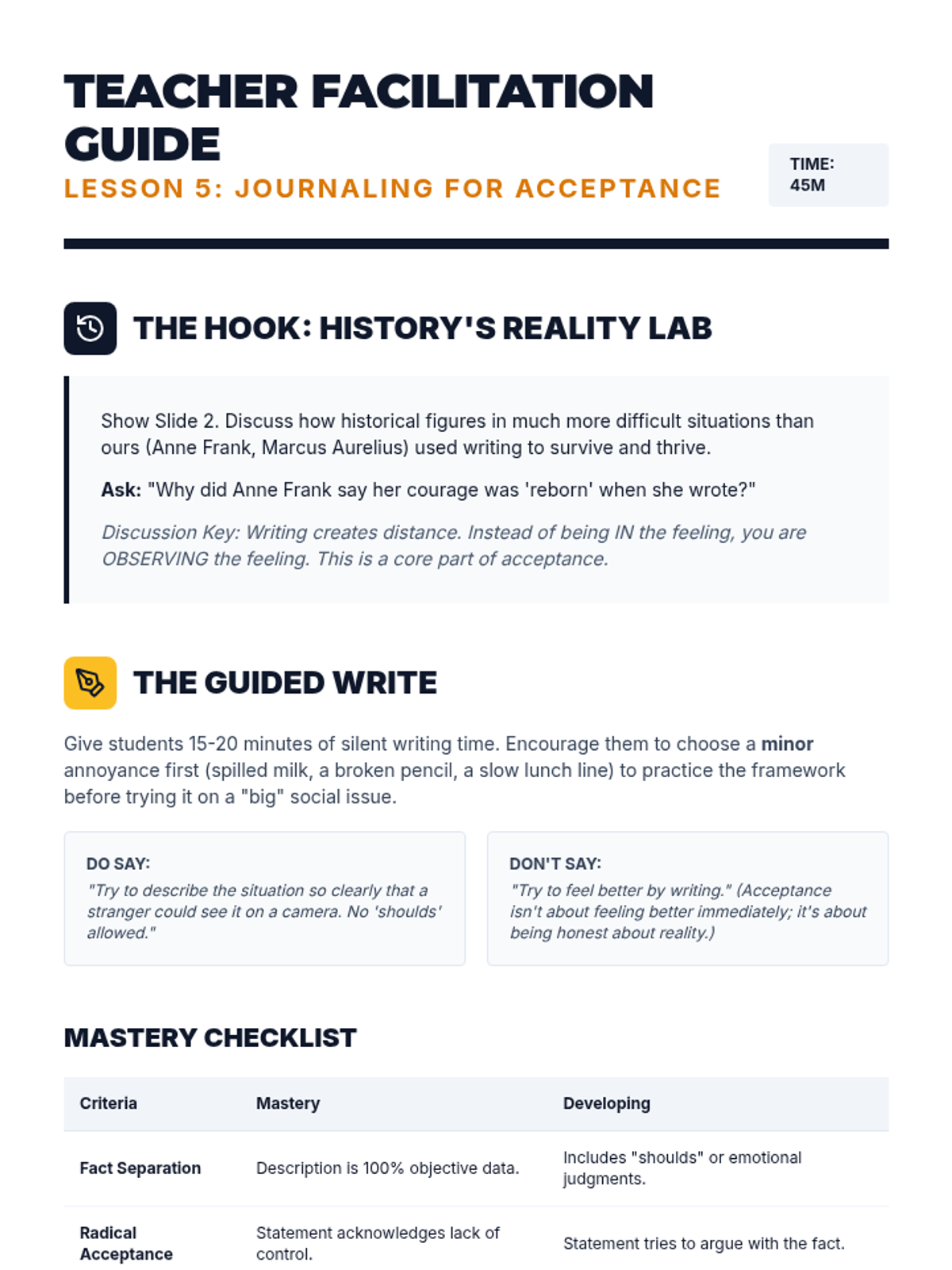
Students synthesize their learning into a structured journaling practice. They reflect on current annoyances using an acceptance-focused writing framework.
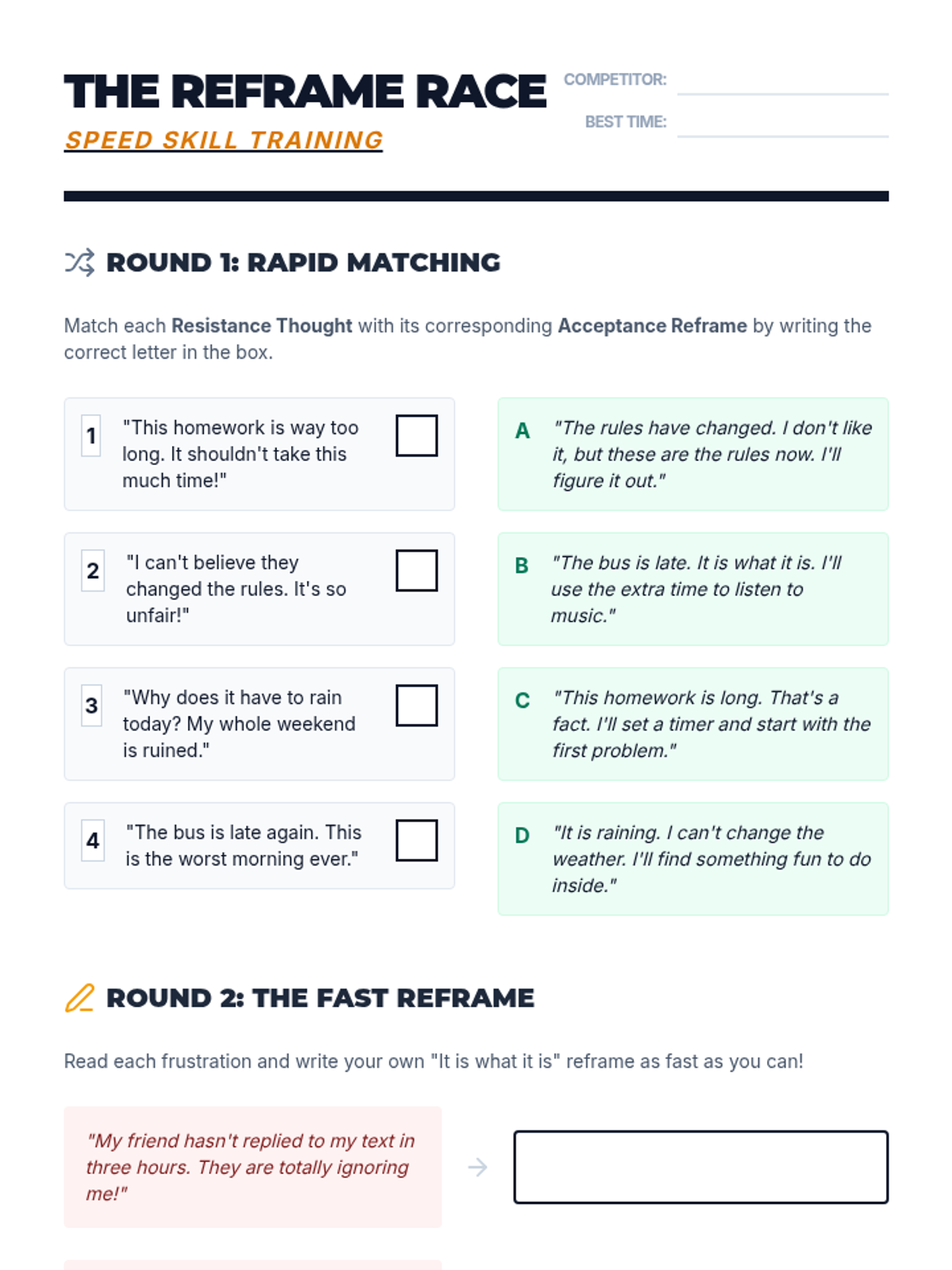
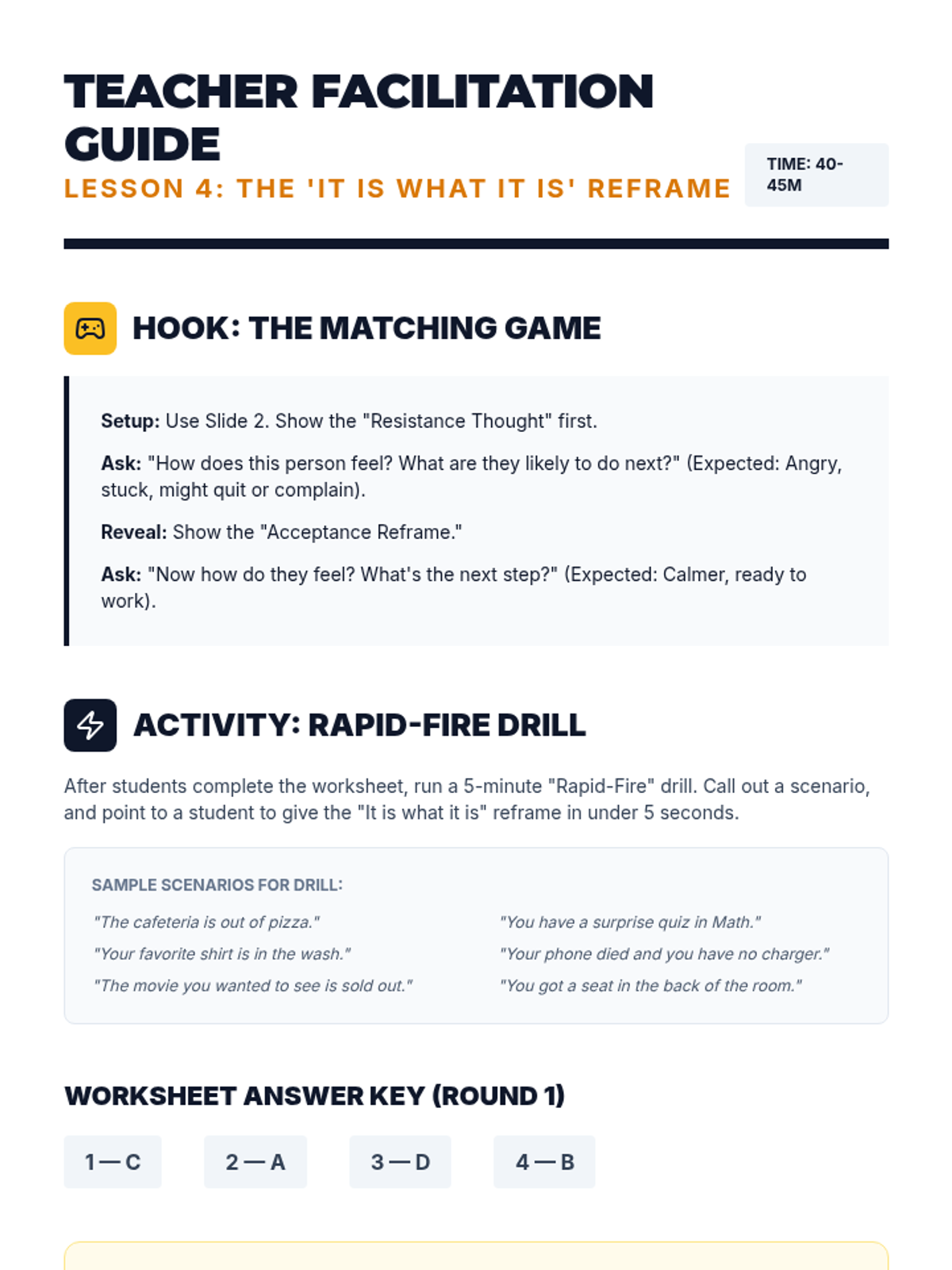
Students build fluency in replacing resistance with the 'It is what it is' reframe. They participate in rapid-fire exercises to strengthen their reframing skills.
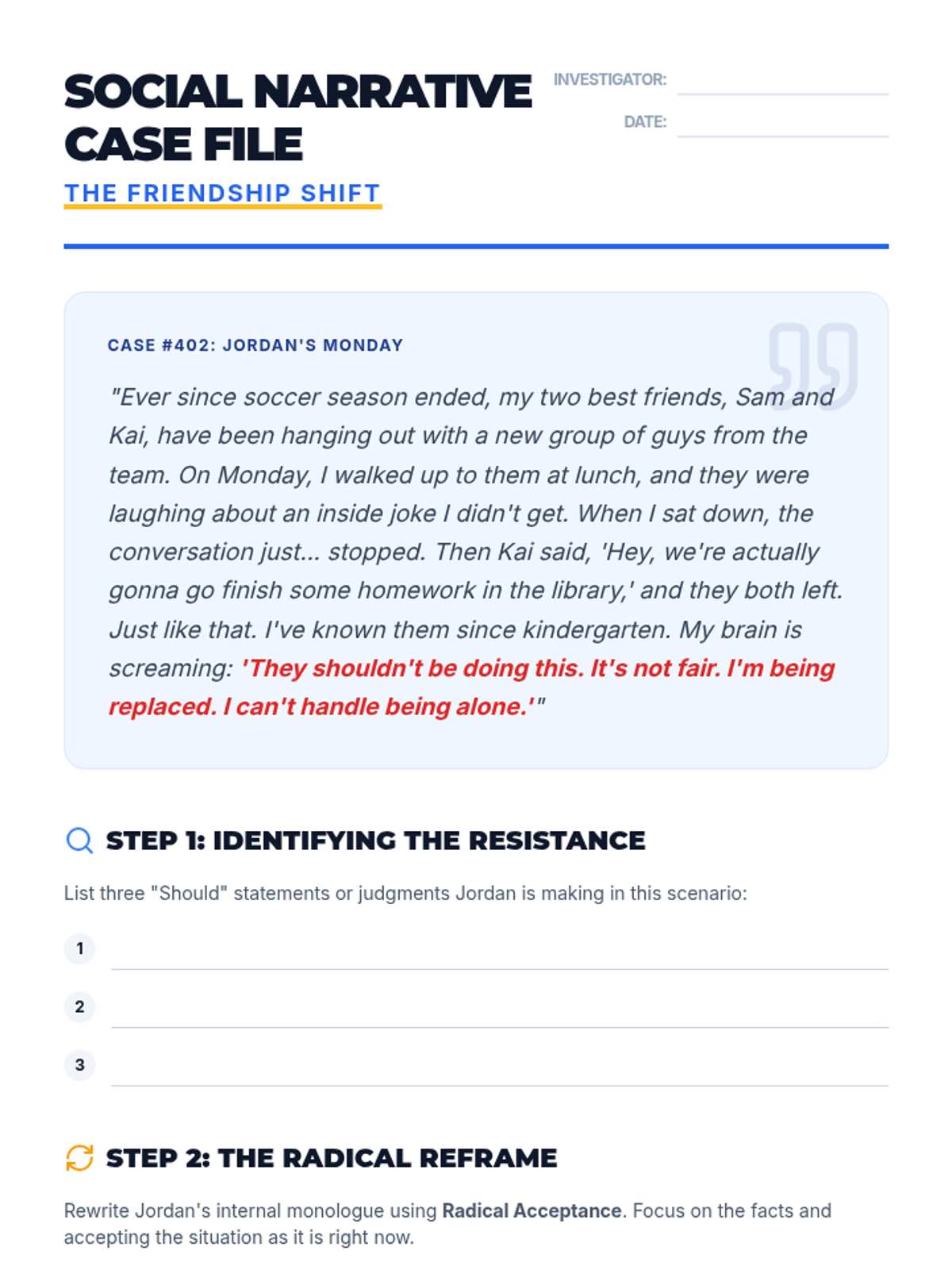
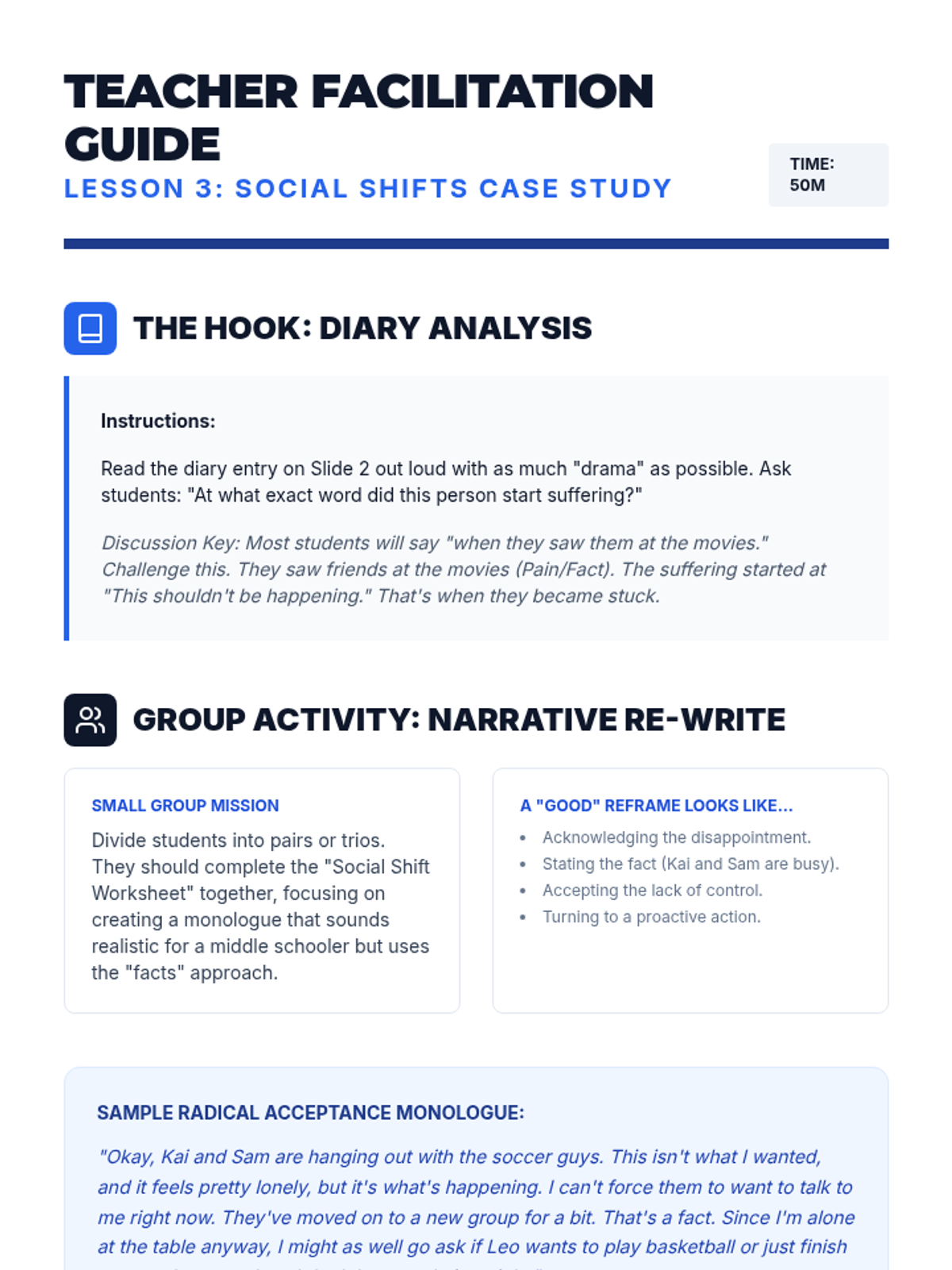
Using a narrative about shifting social groups, students apply radical acceptance to social changes. They rewrite internal monologues to move from resistance to acceptance.
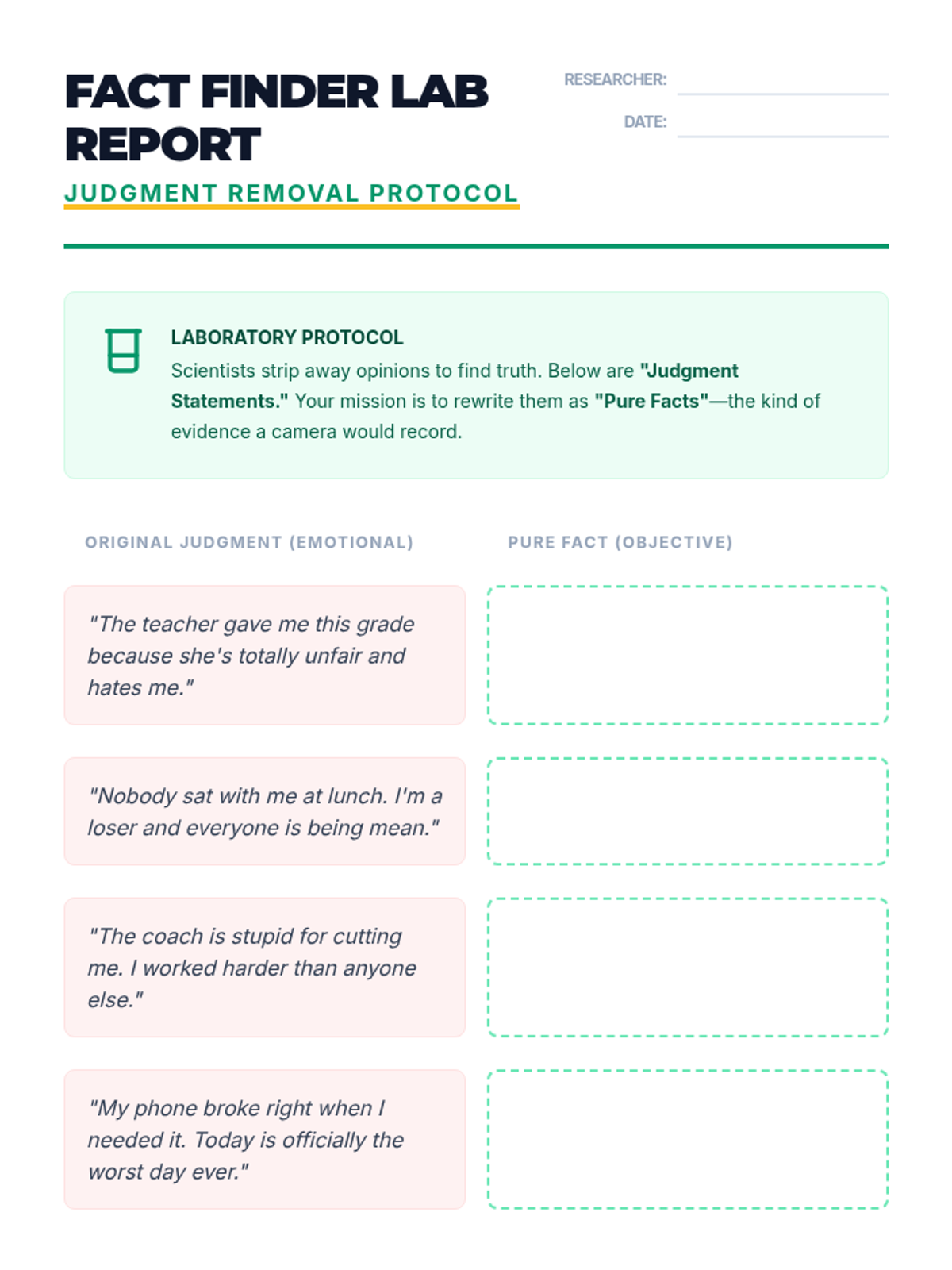
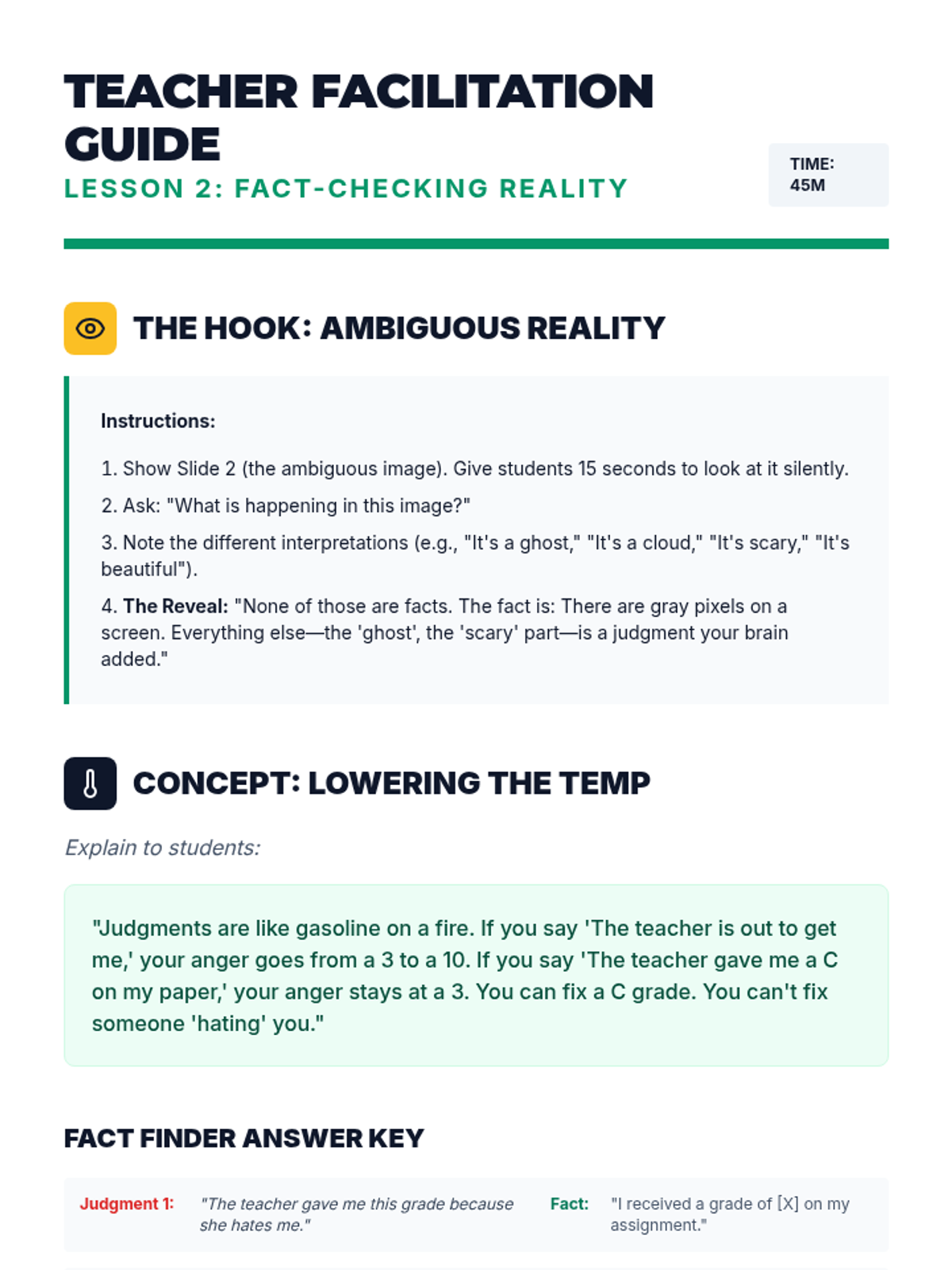
Students learn to separate emotional judgments from objective facts. They practice stripping away interpretations to see the bare reality of a situation.
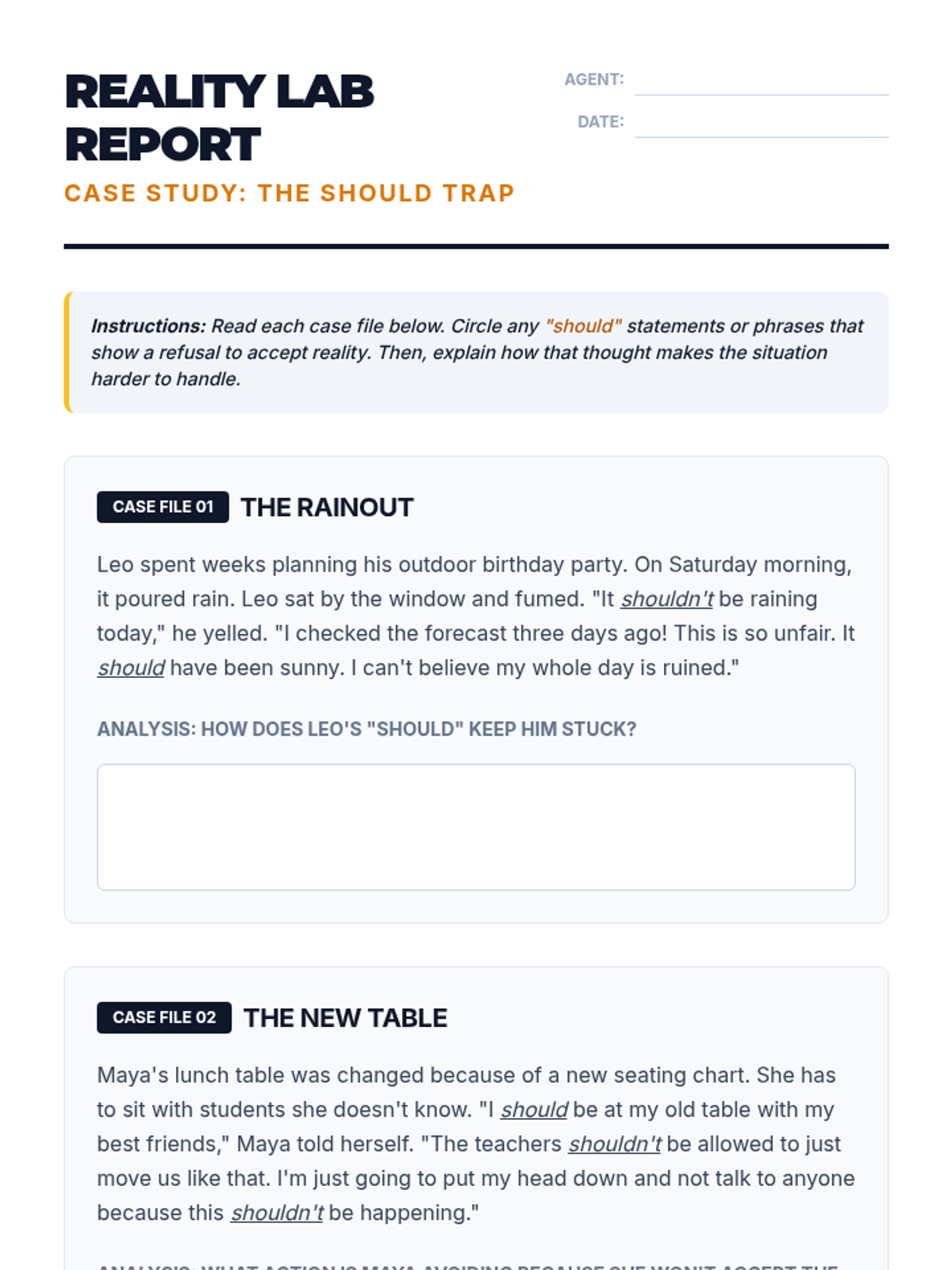
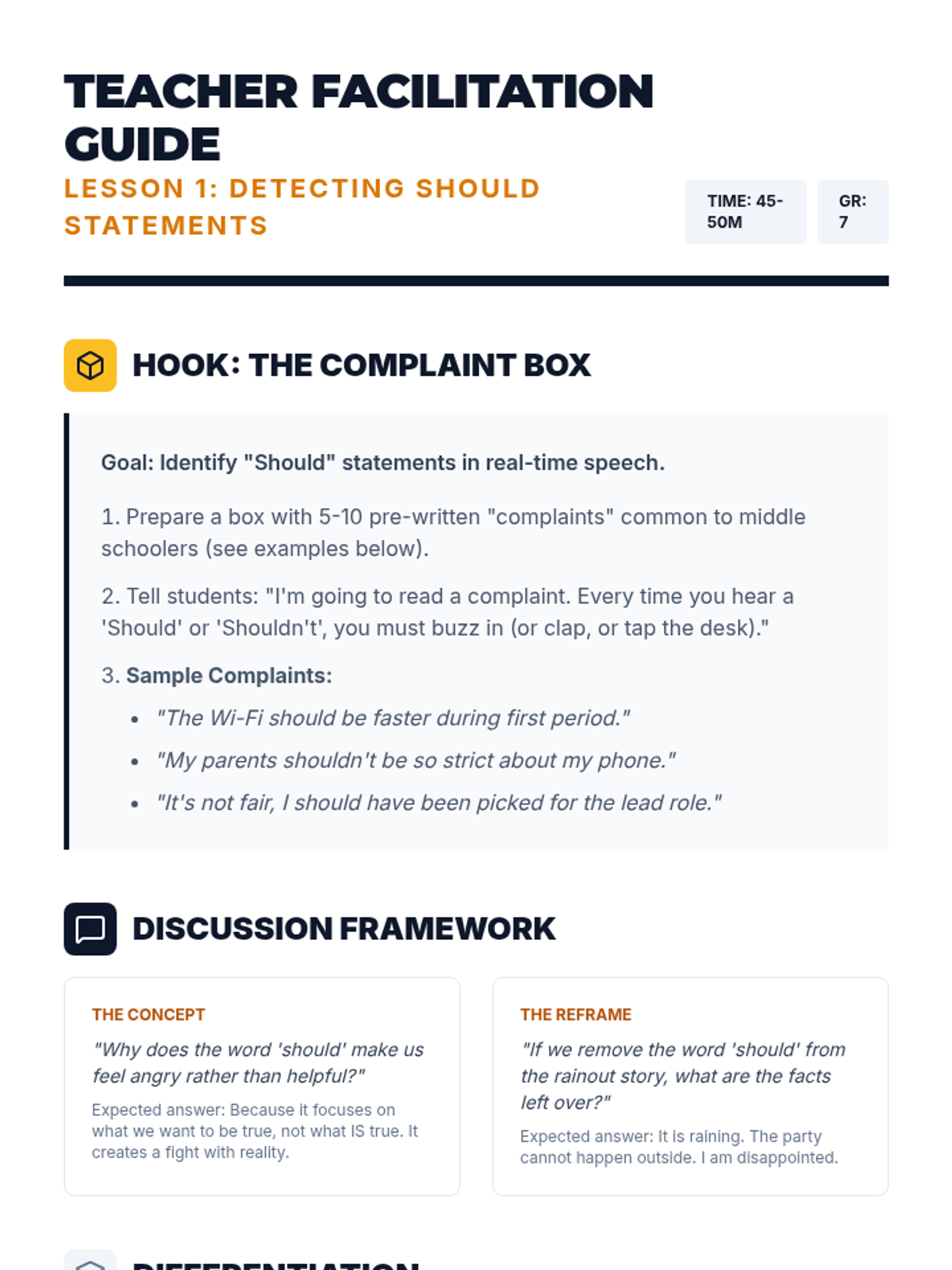
Students analyze how the word 'should' indicates a refusal to accept reality and fuels anger. They identify these statements in common scenarios and discuss their impact.
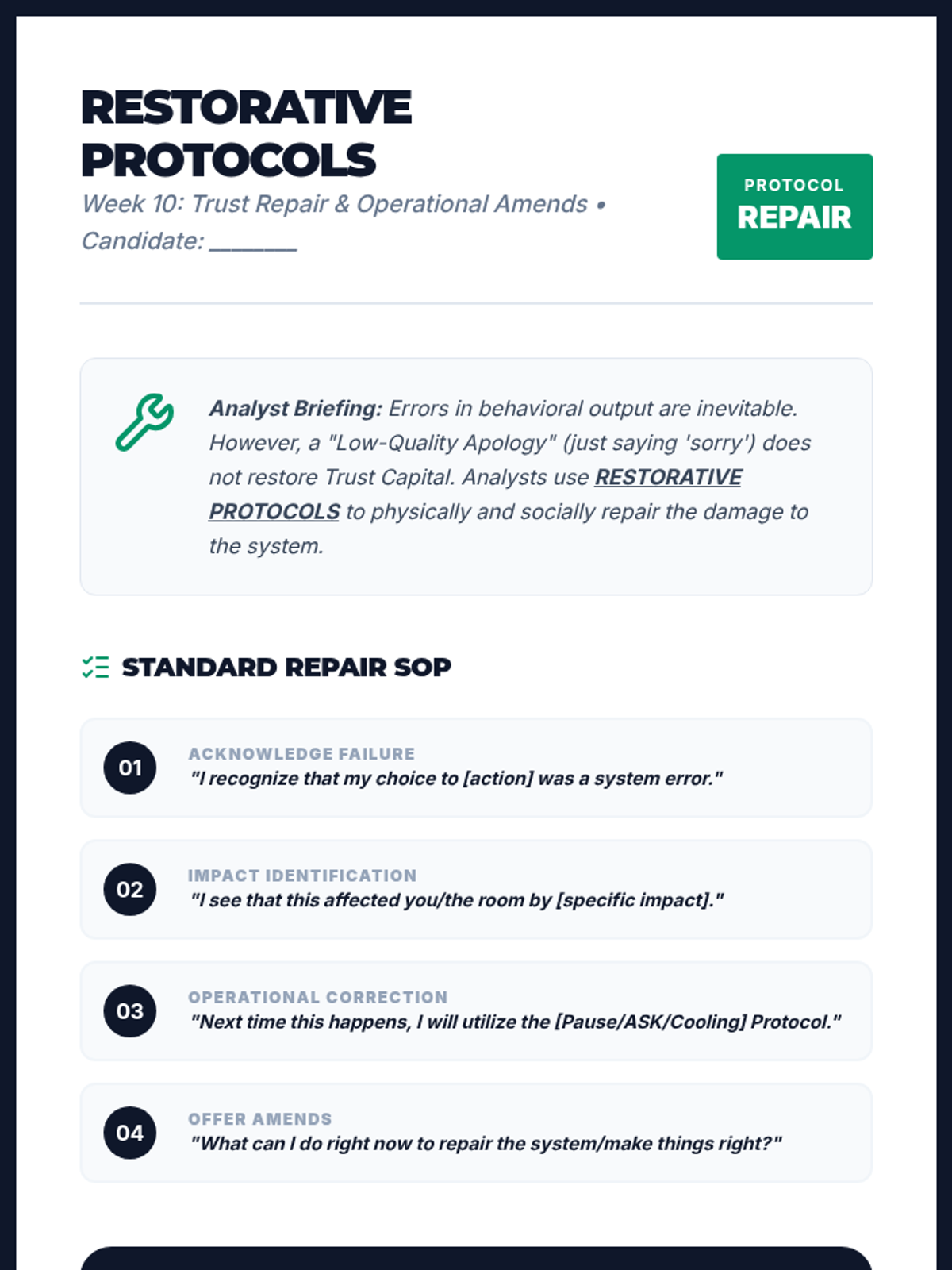
The final three weeks focus on making amends, setting future goals, and celebrating the progress made throughout the Social Detective program.
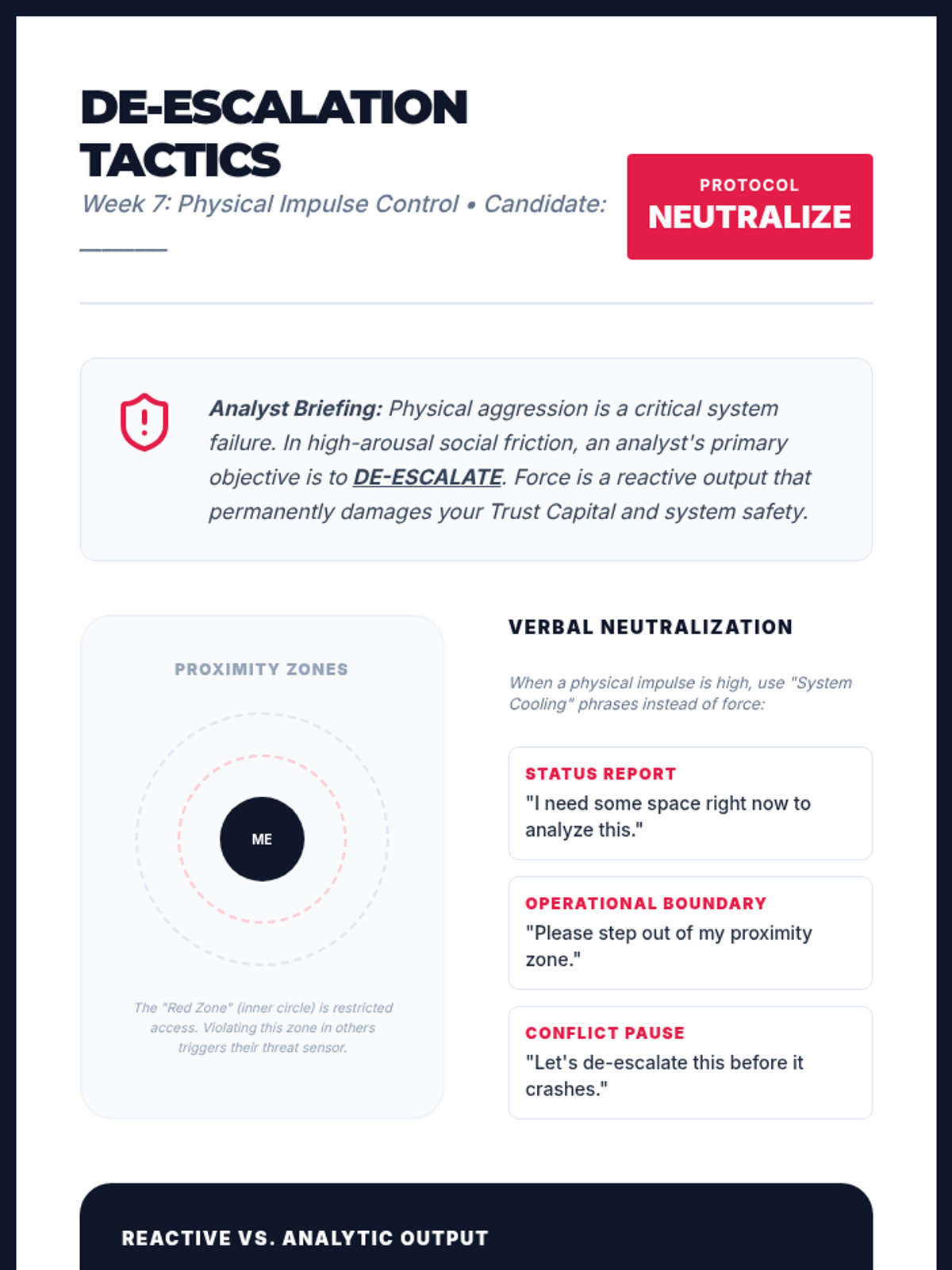
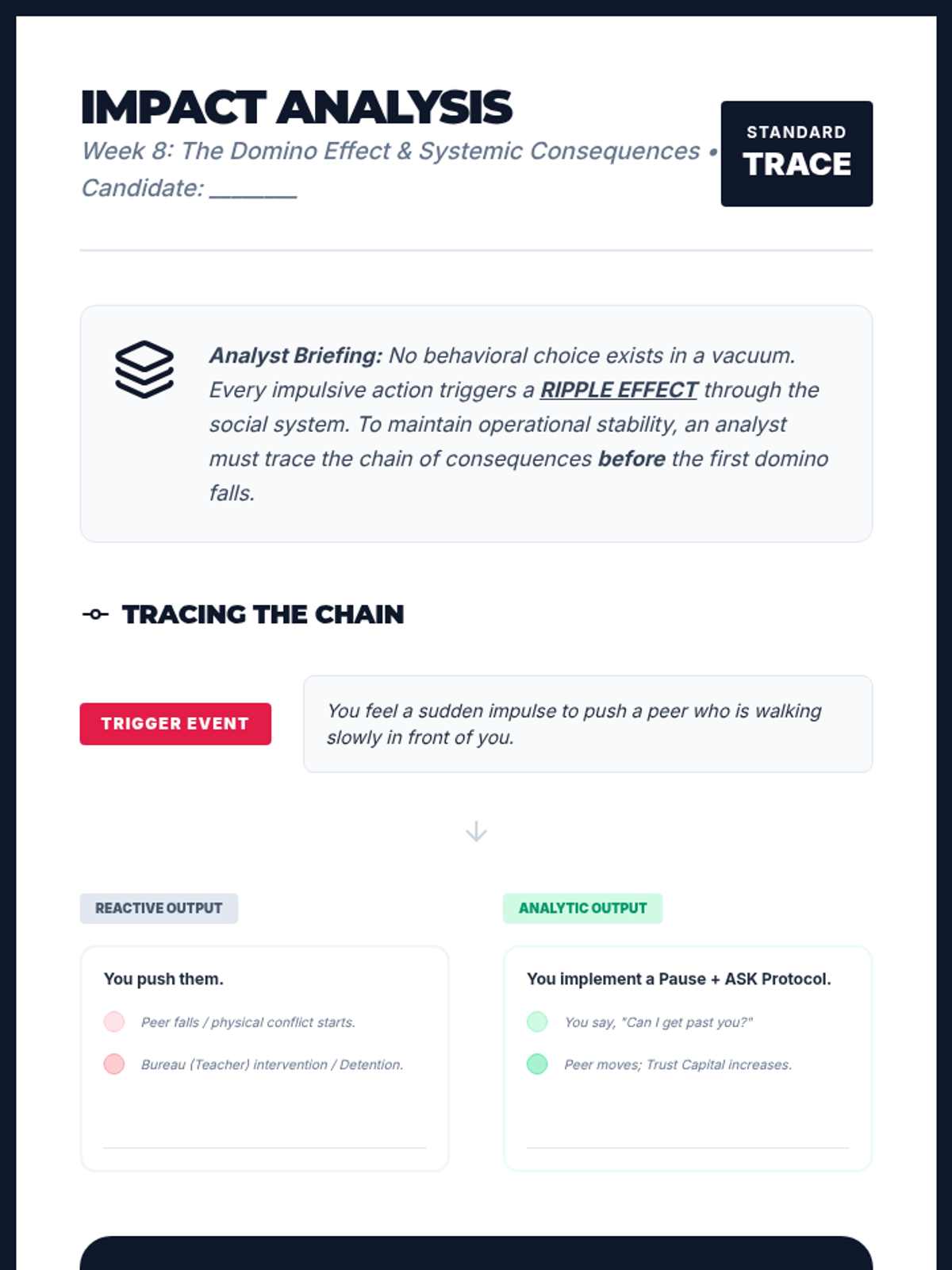
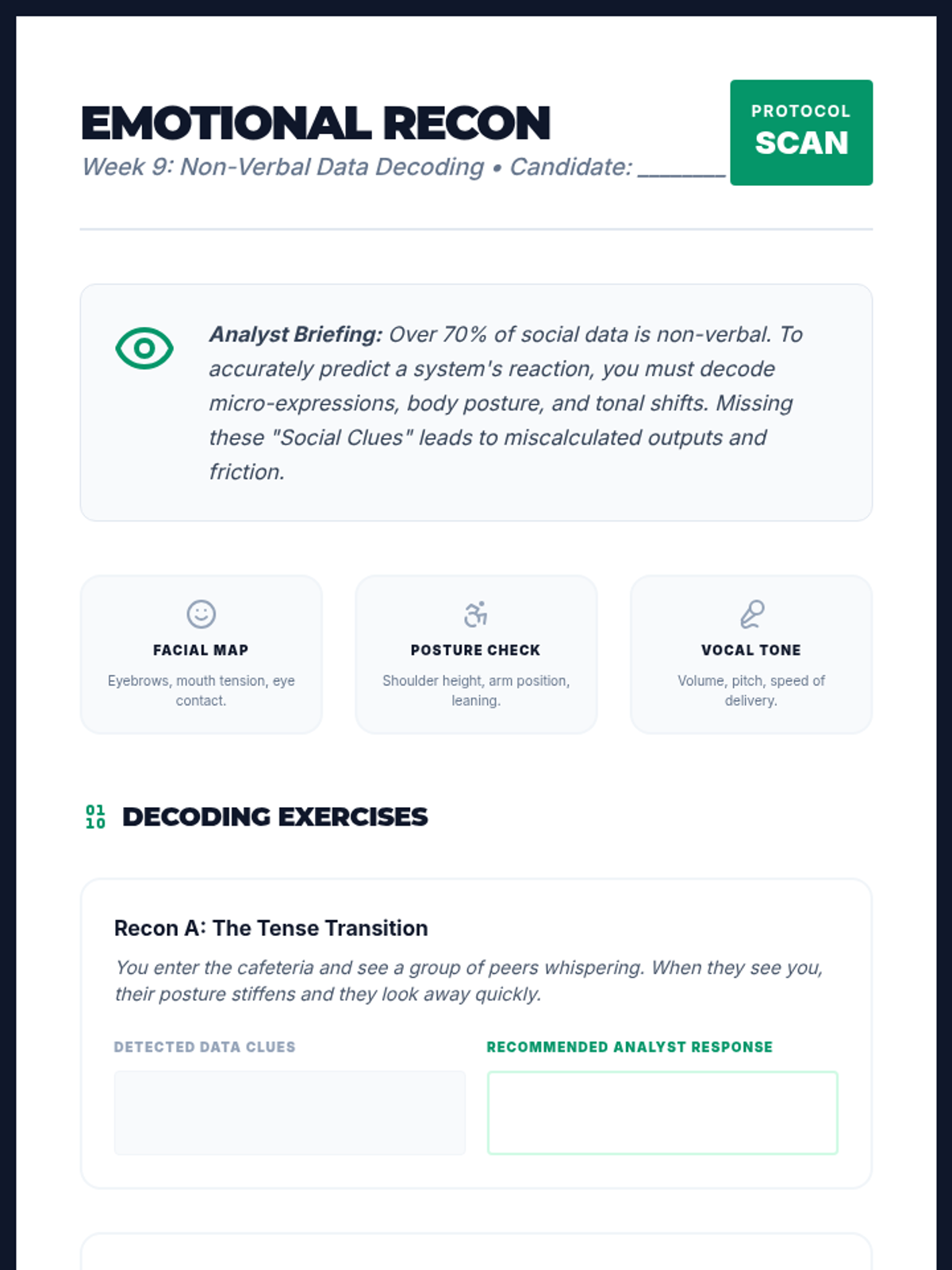
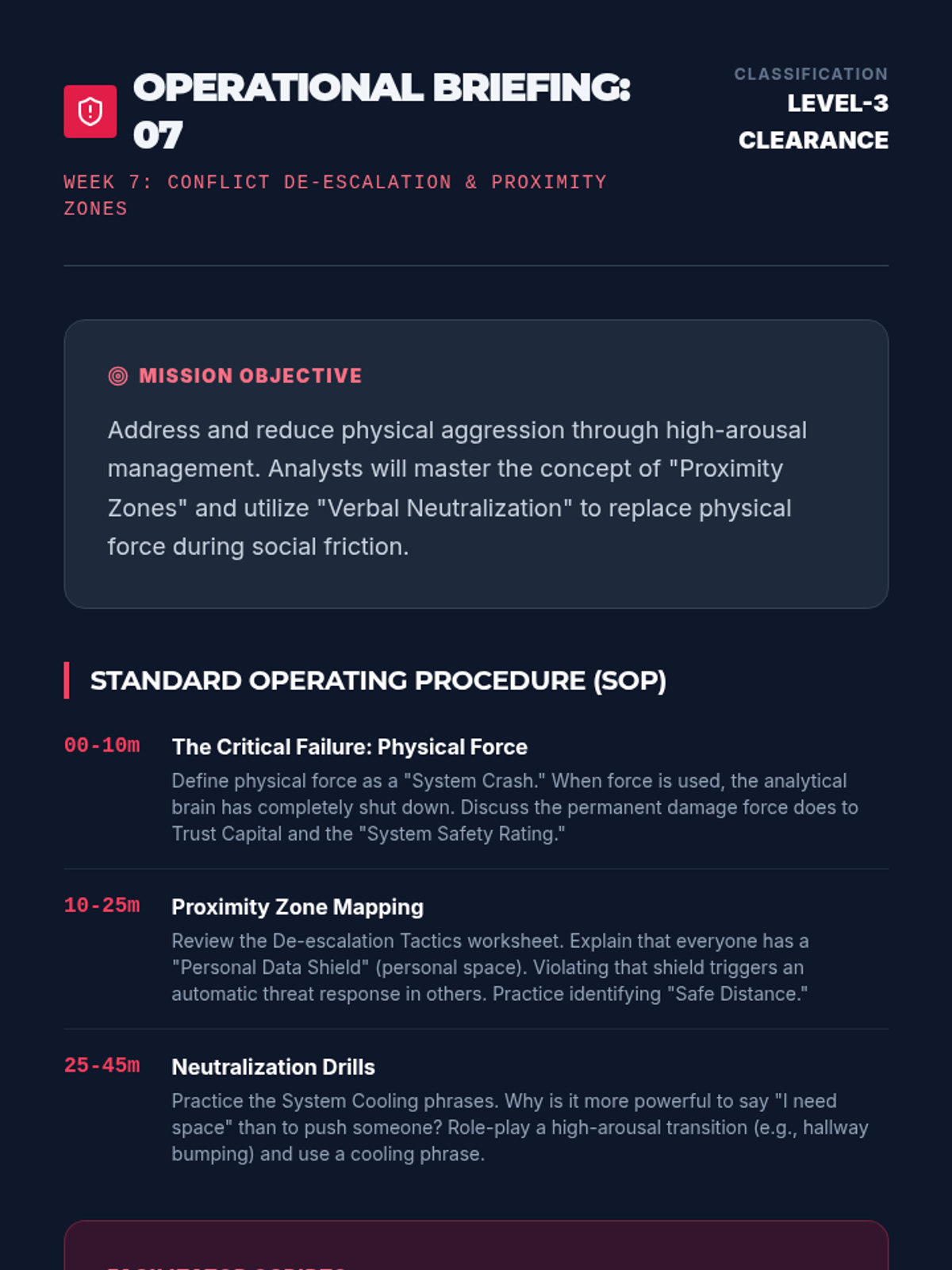
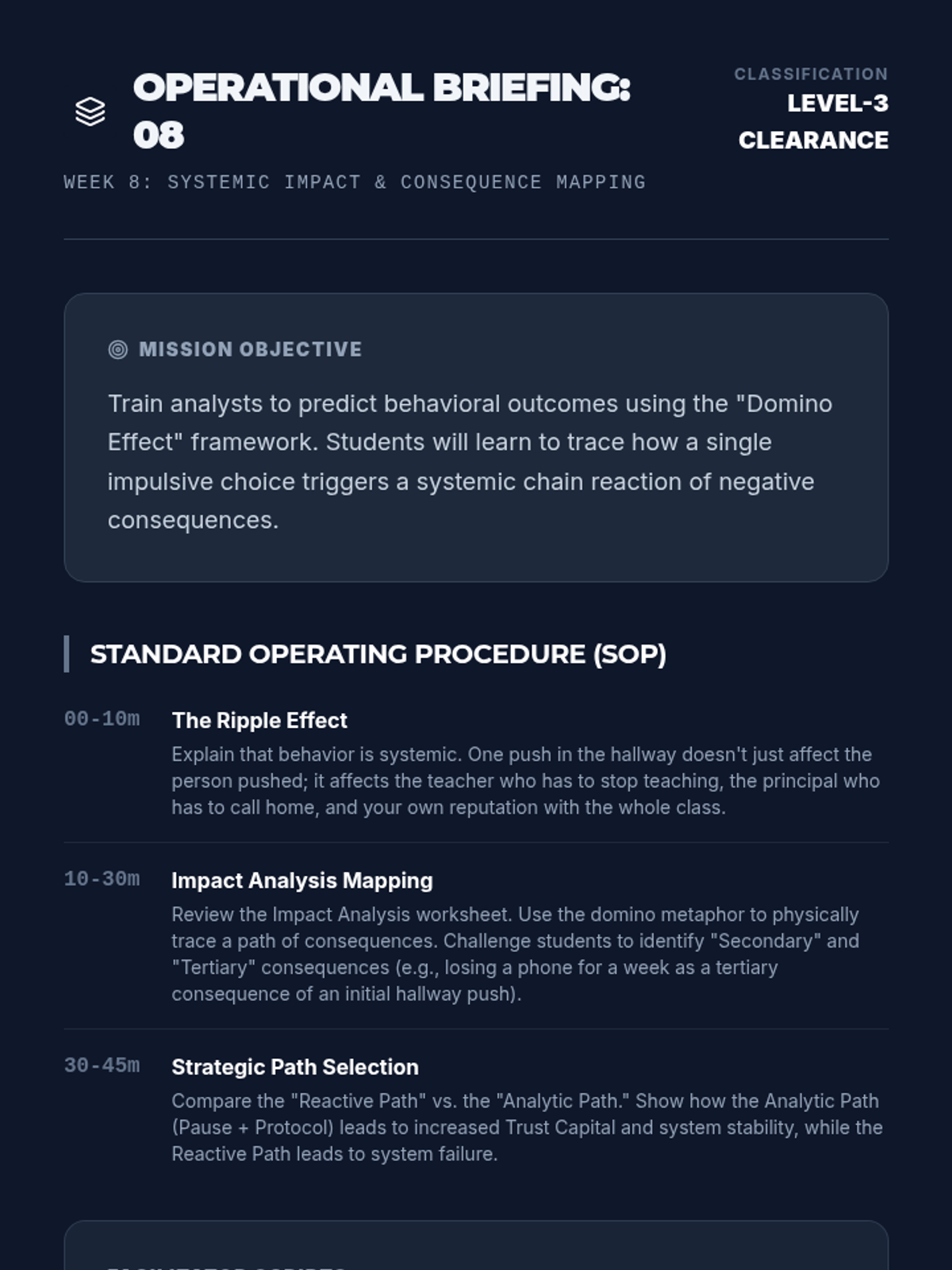
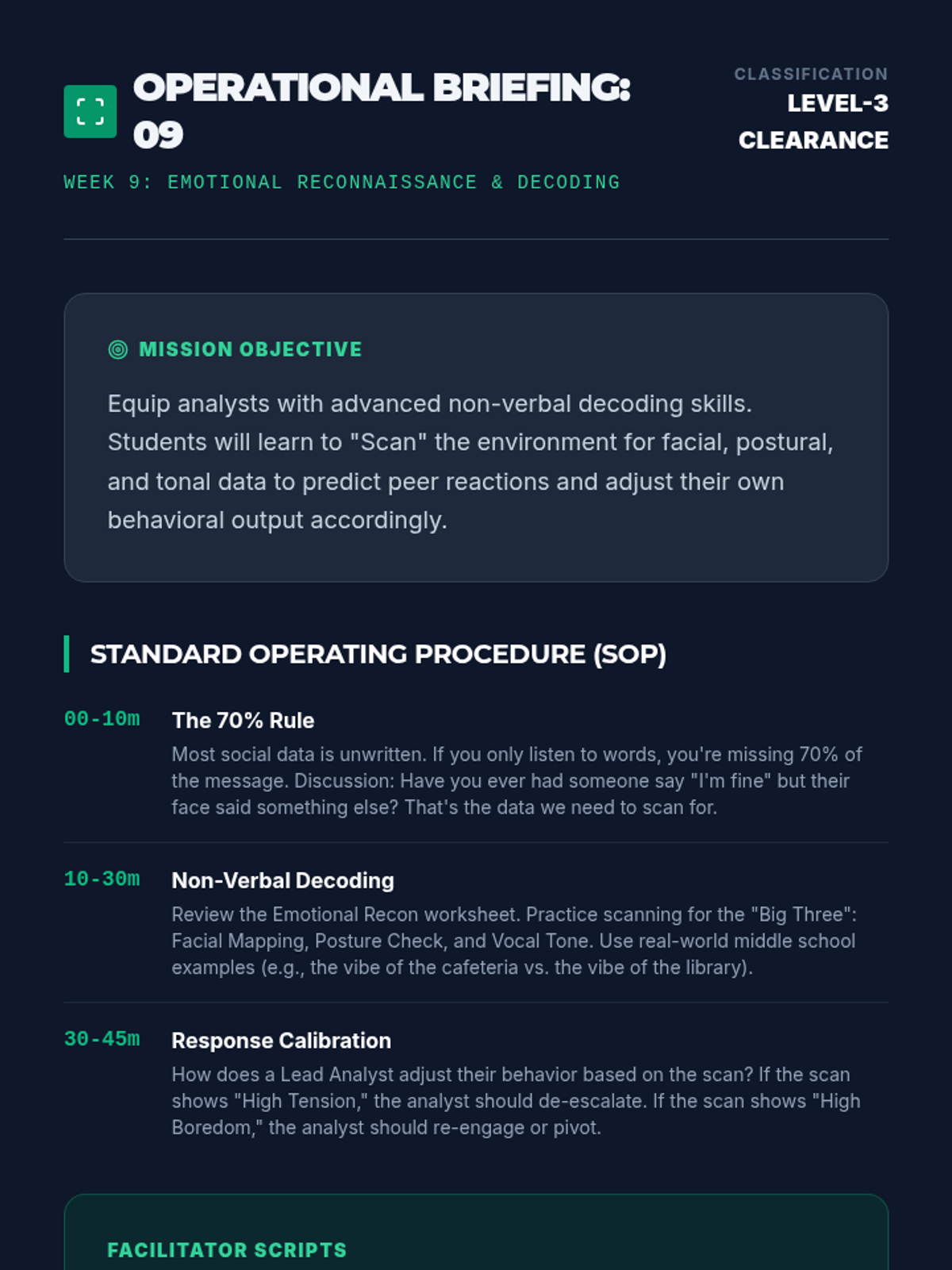
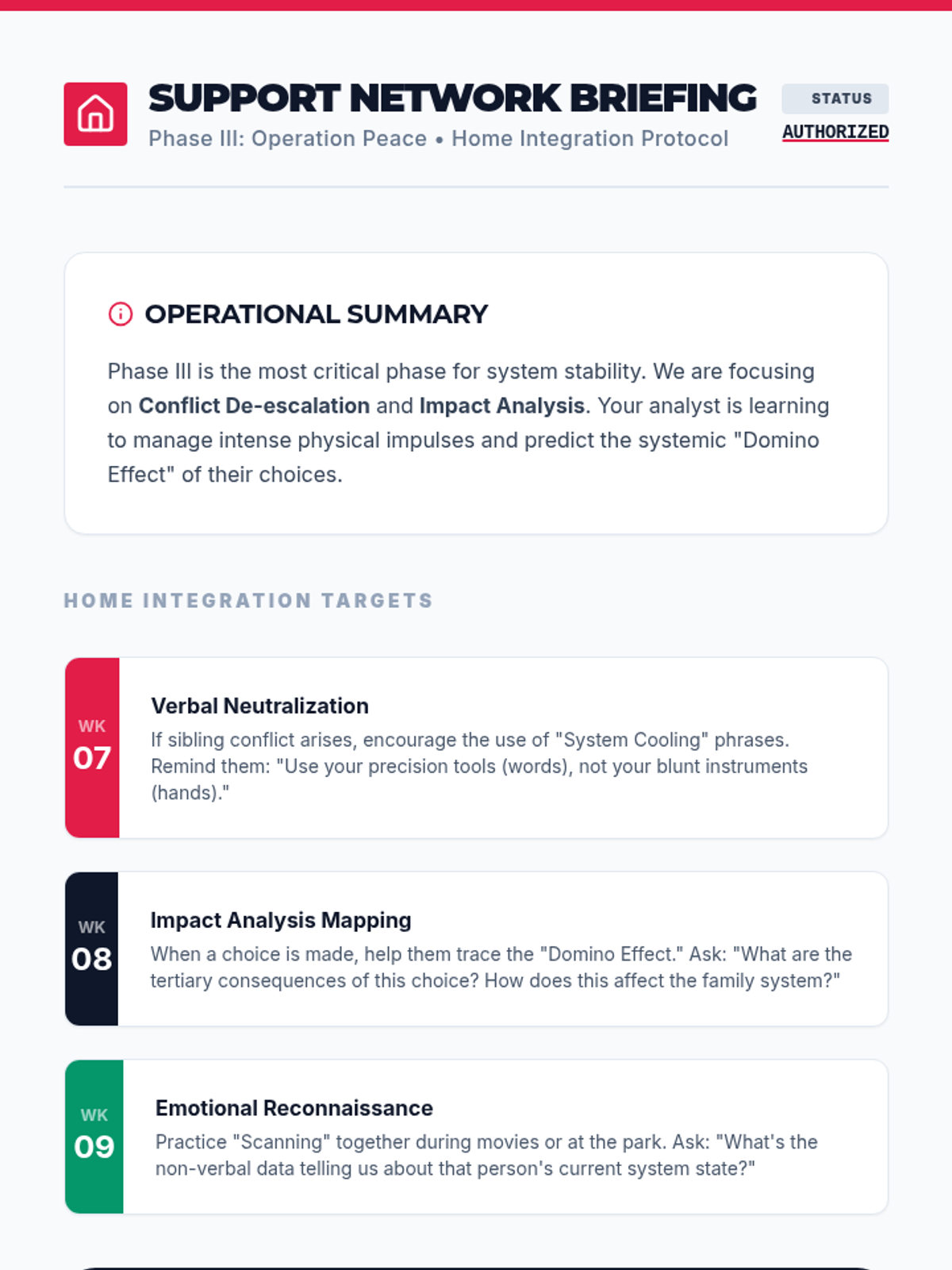
Weeks 7-9 address physical aggression, understanding consequences, and deep-diving into reading social clues to build empathy.
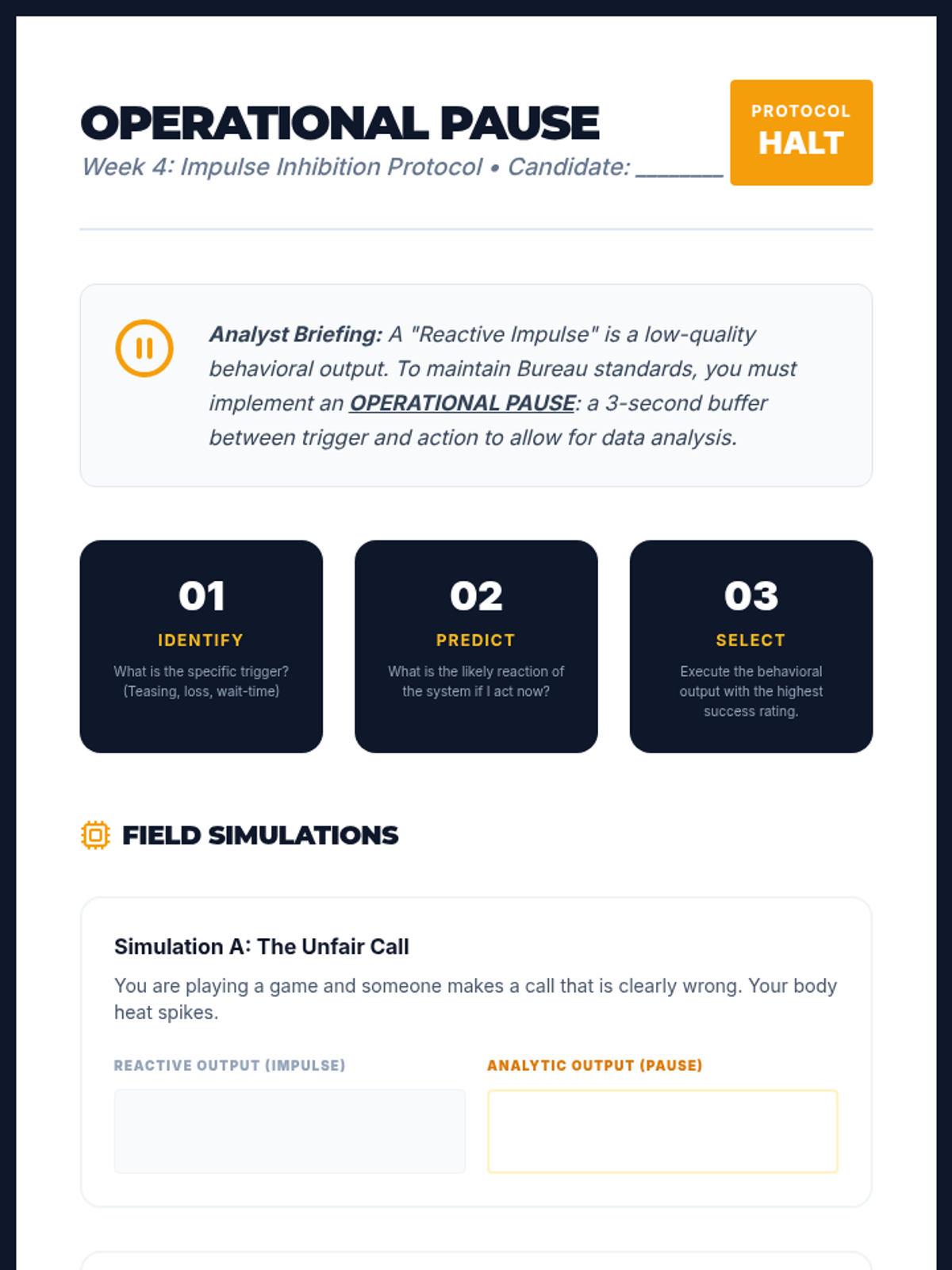
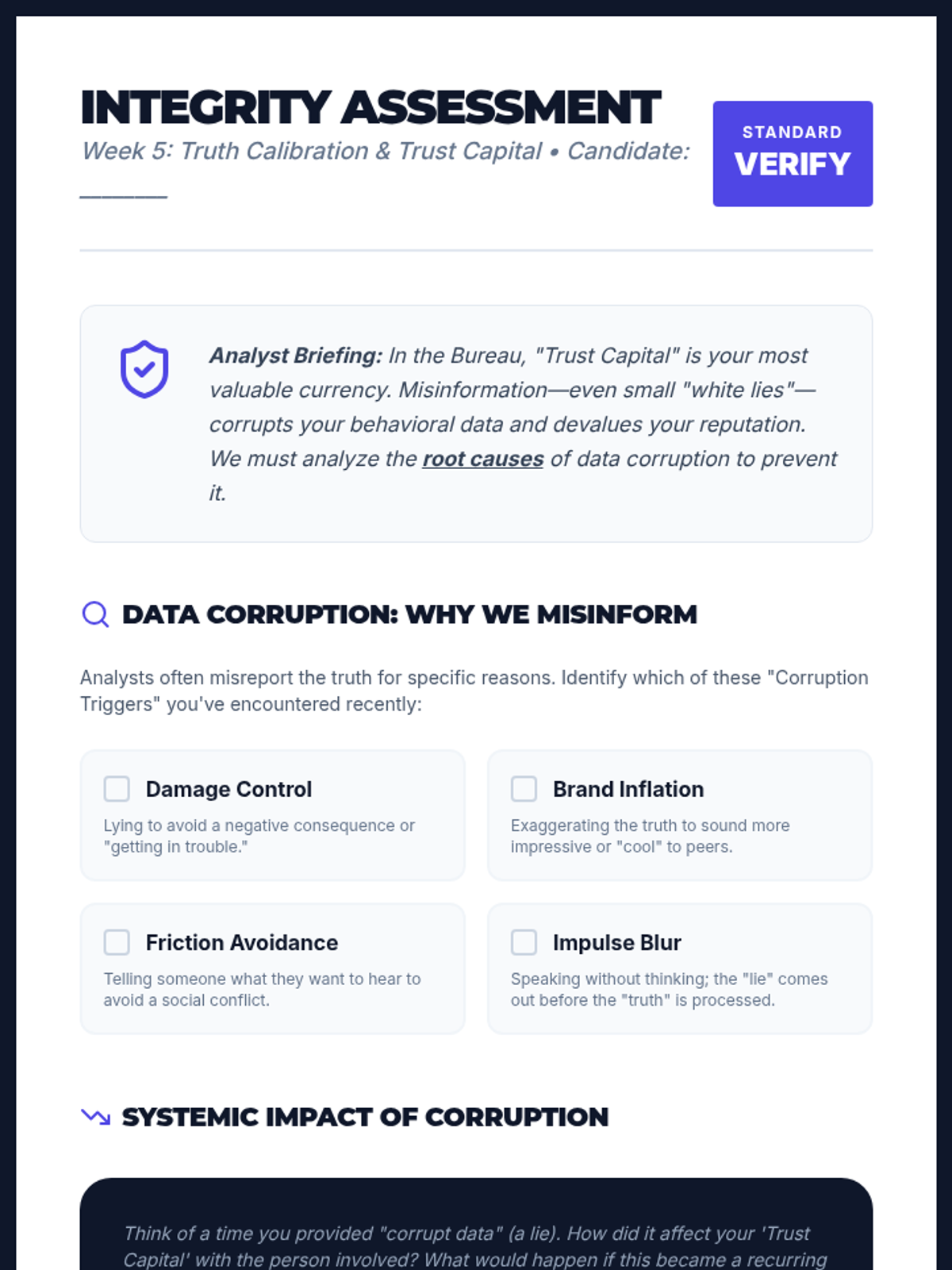
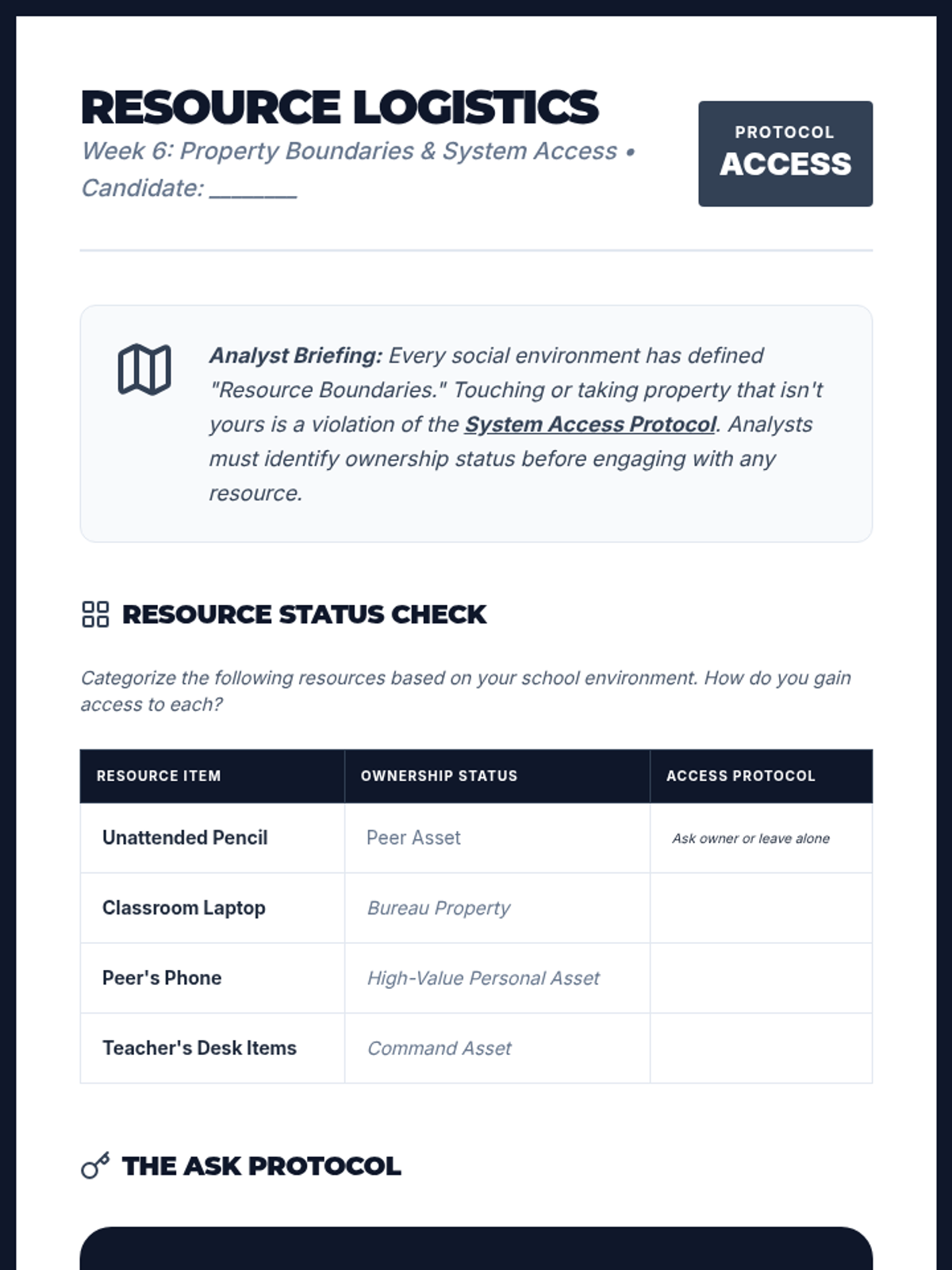
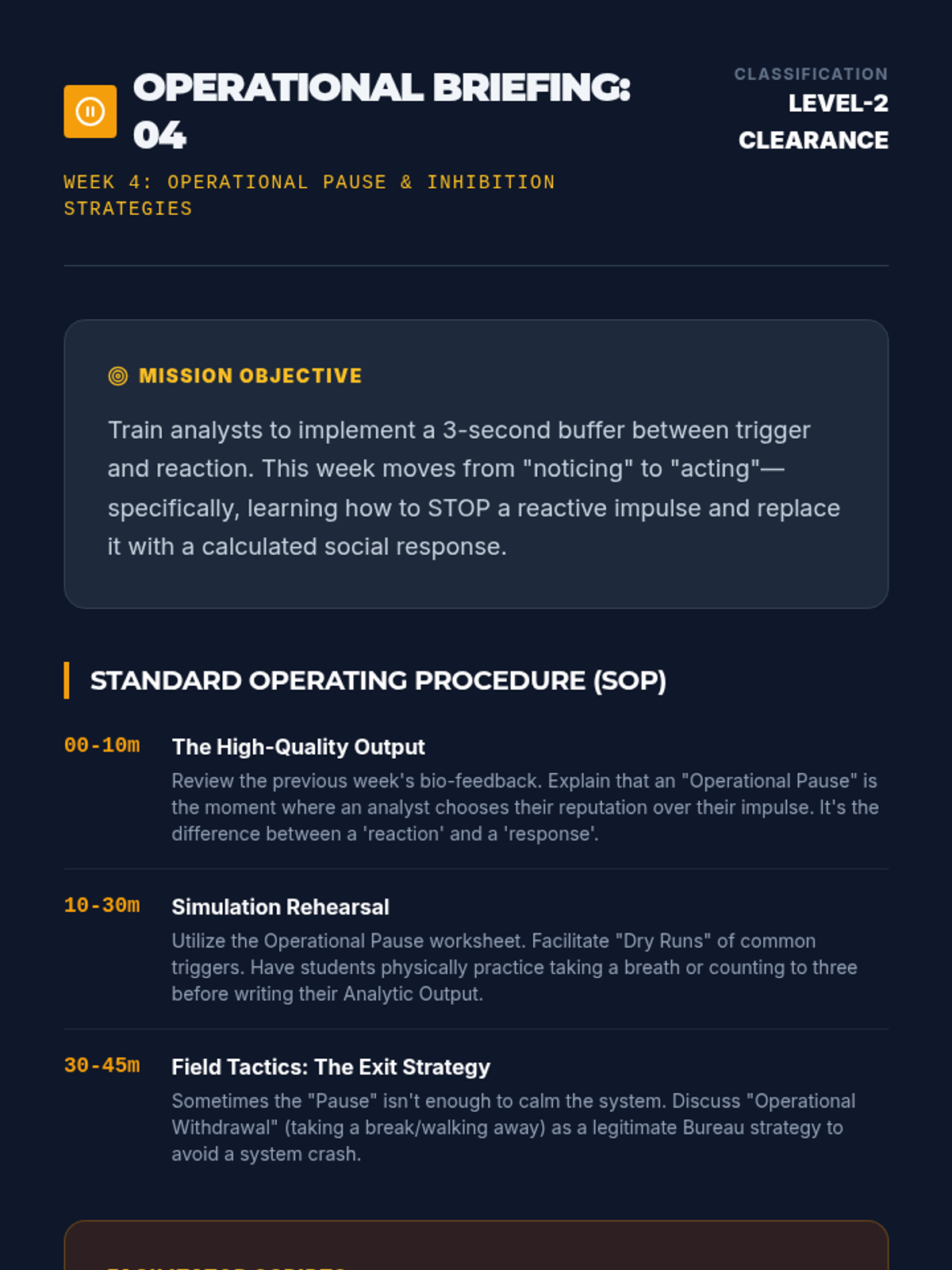
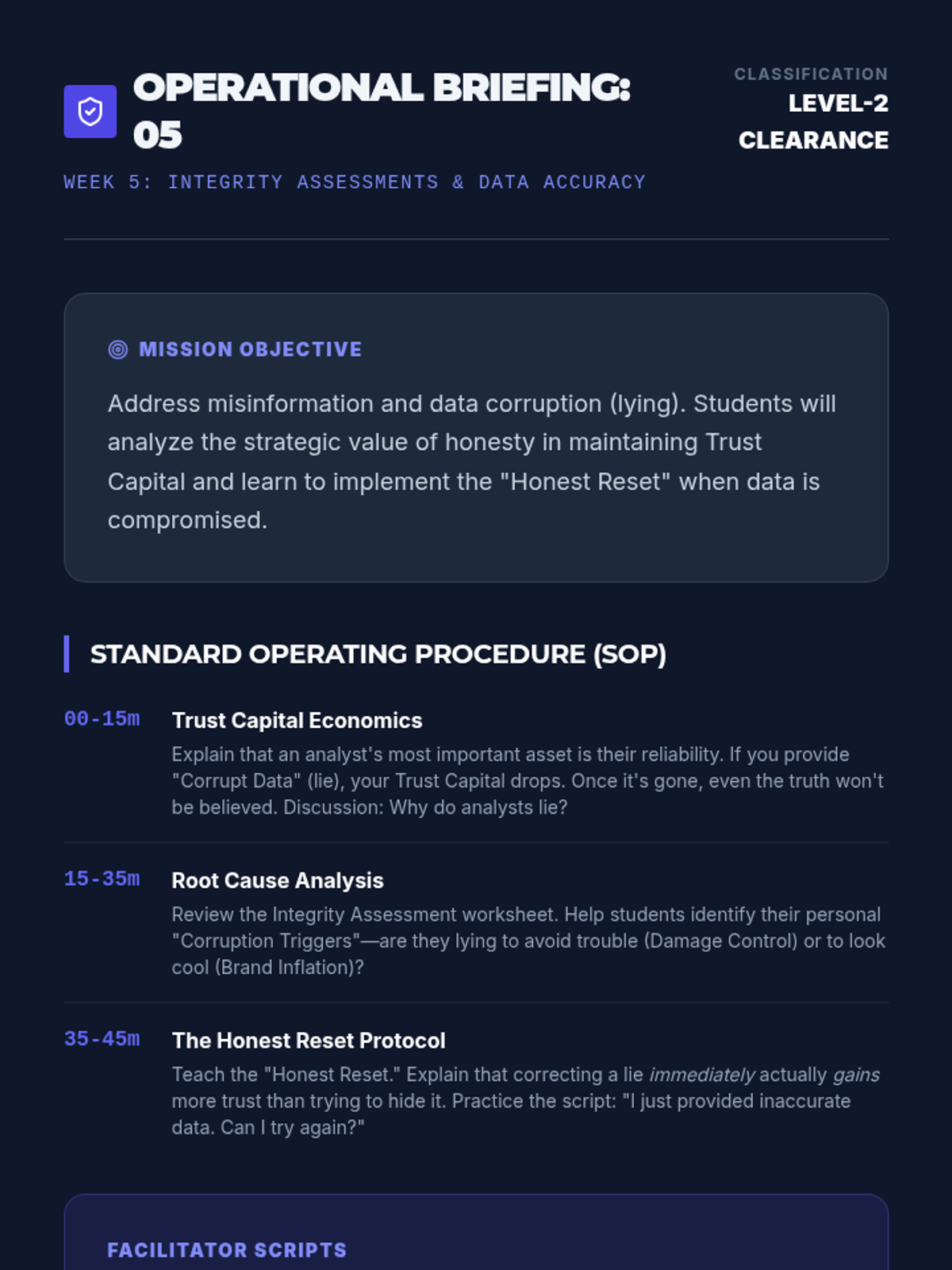
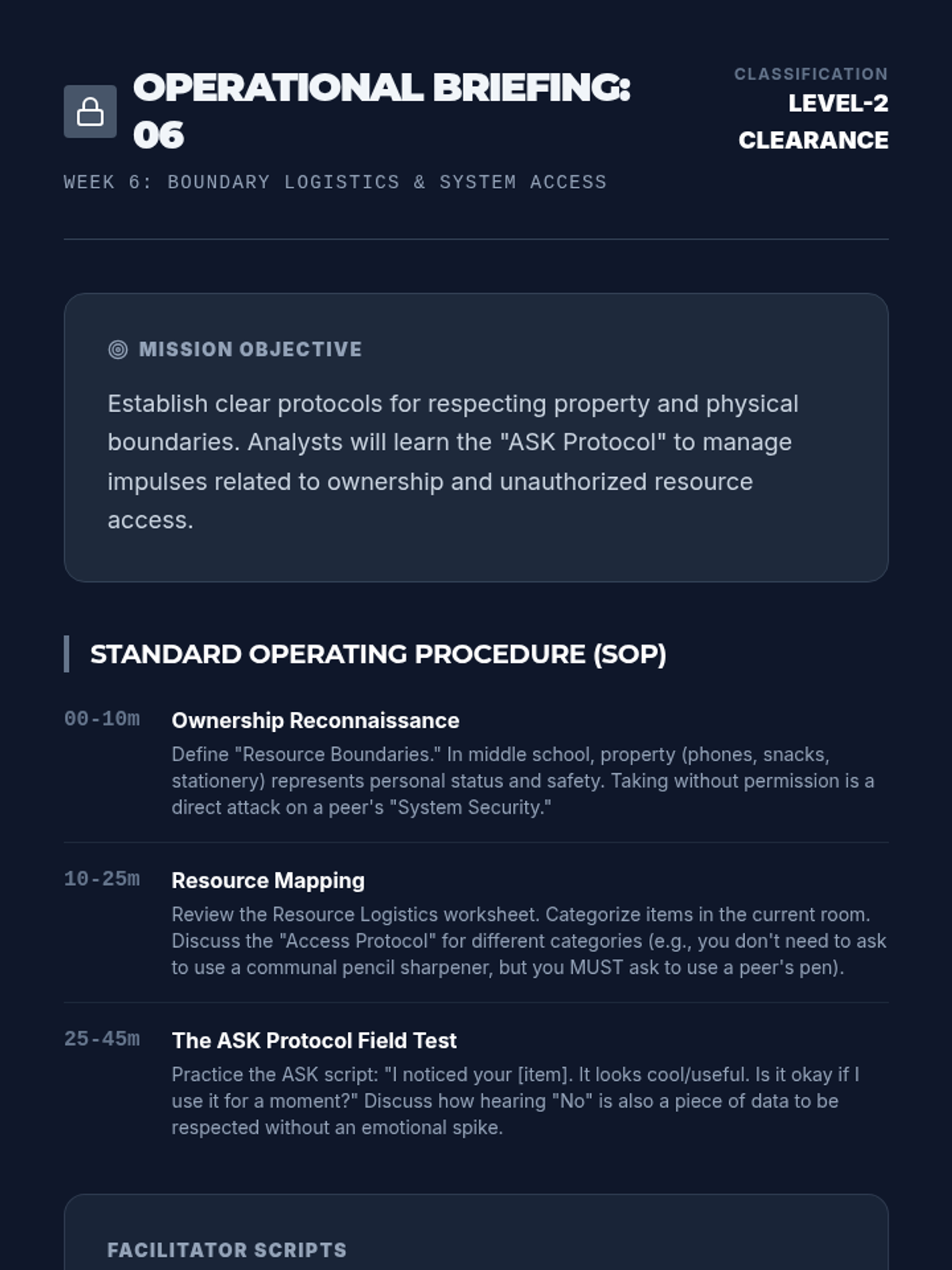
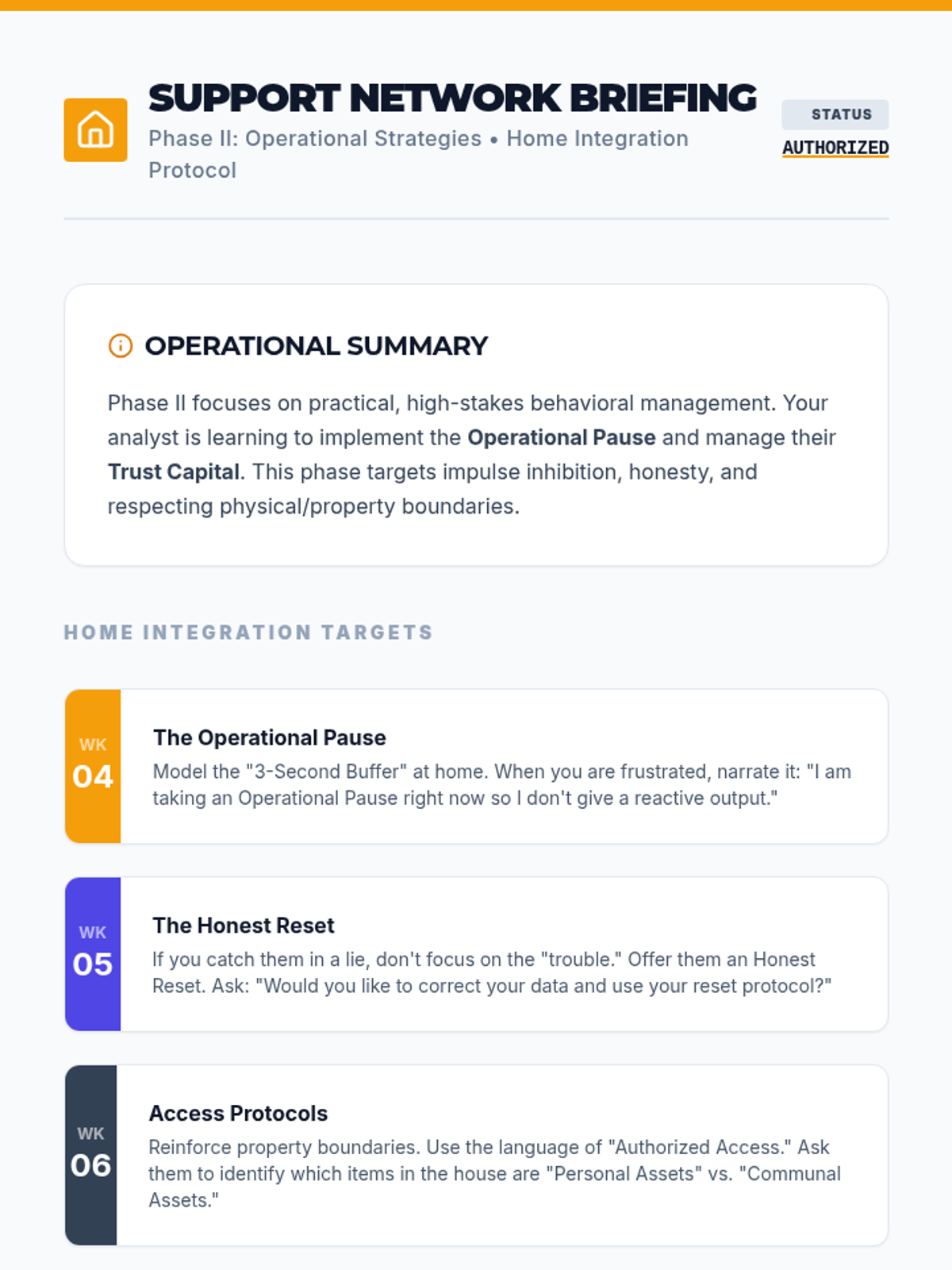
Weeks 4-6 of the intervention, focusing on practical impulse control strategies like the 'Pause Button' and addressing specific behaviors like lying and respecting property.
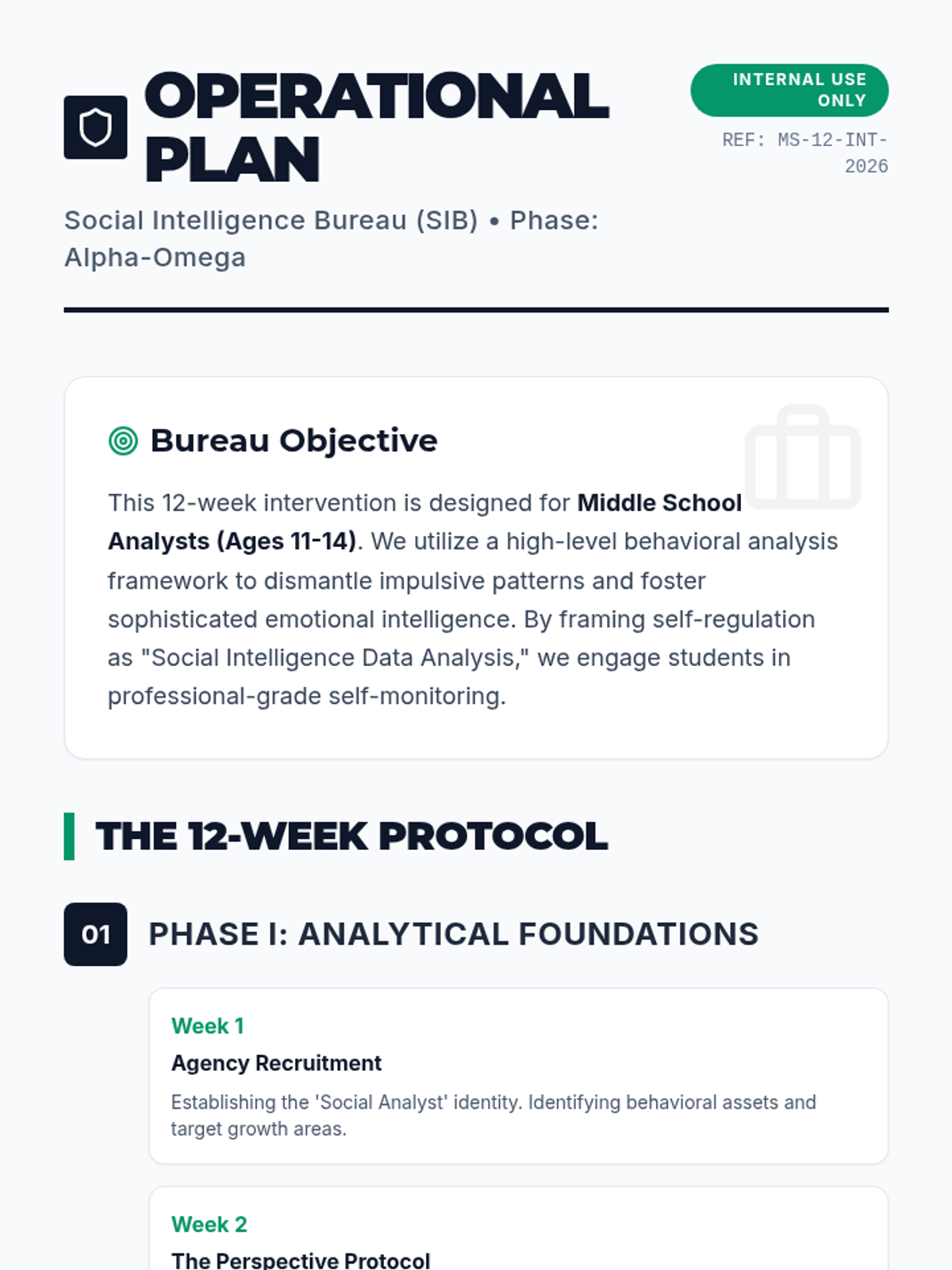
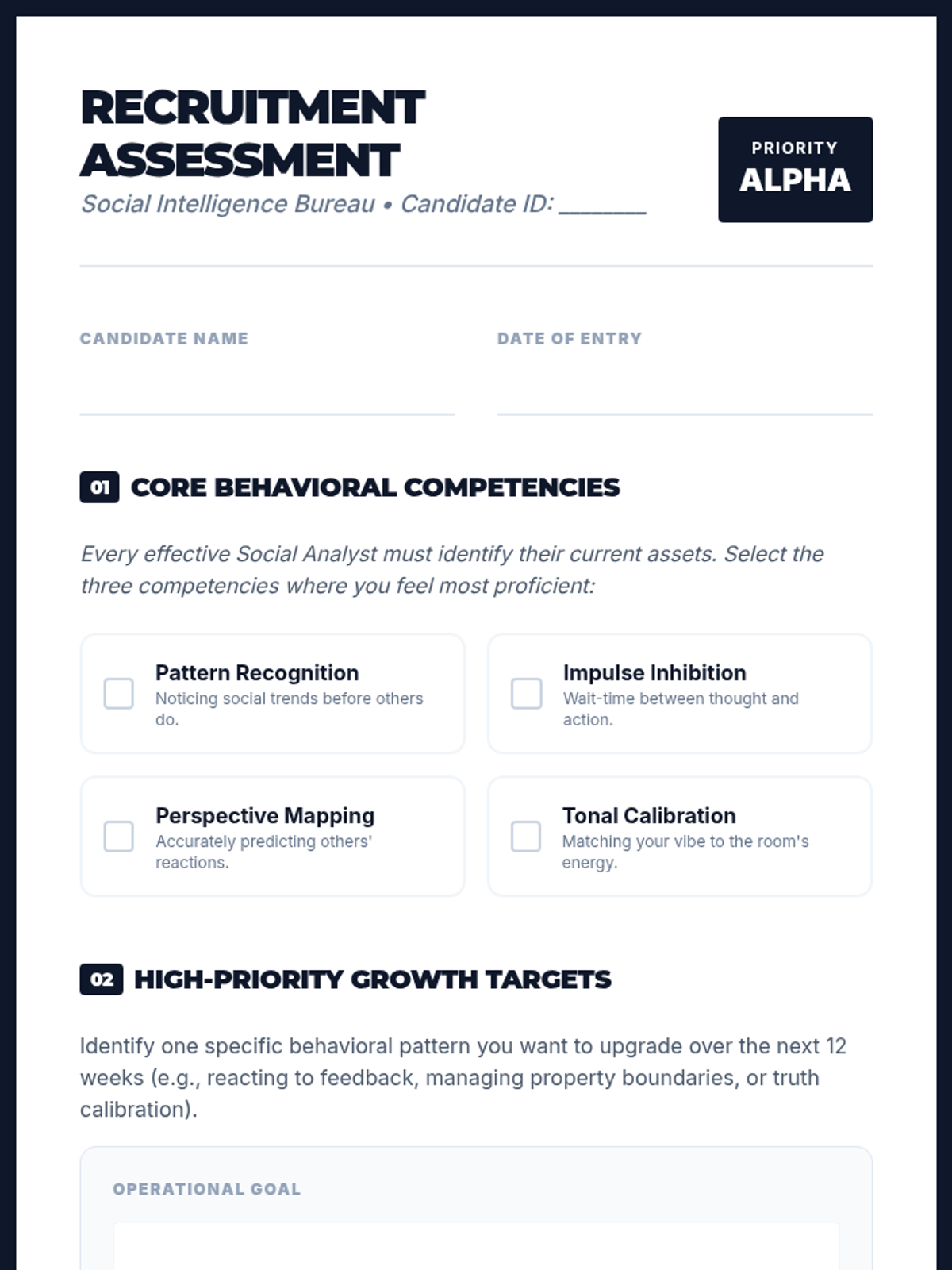
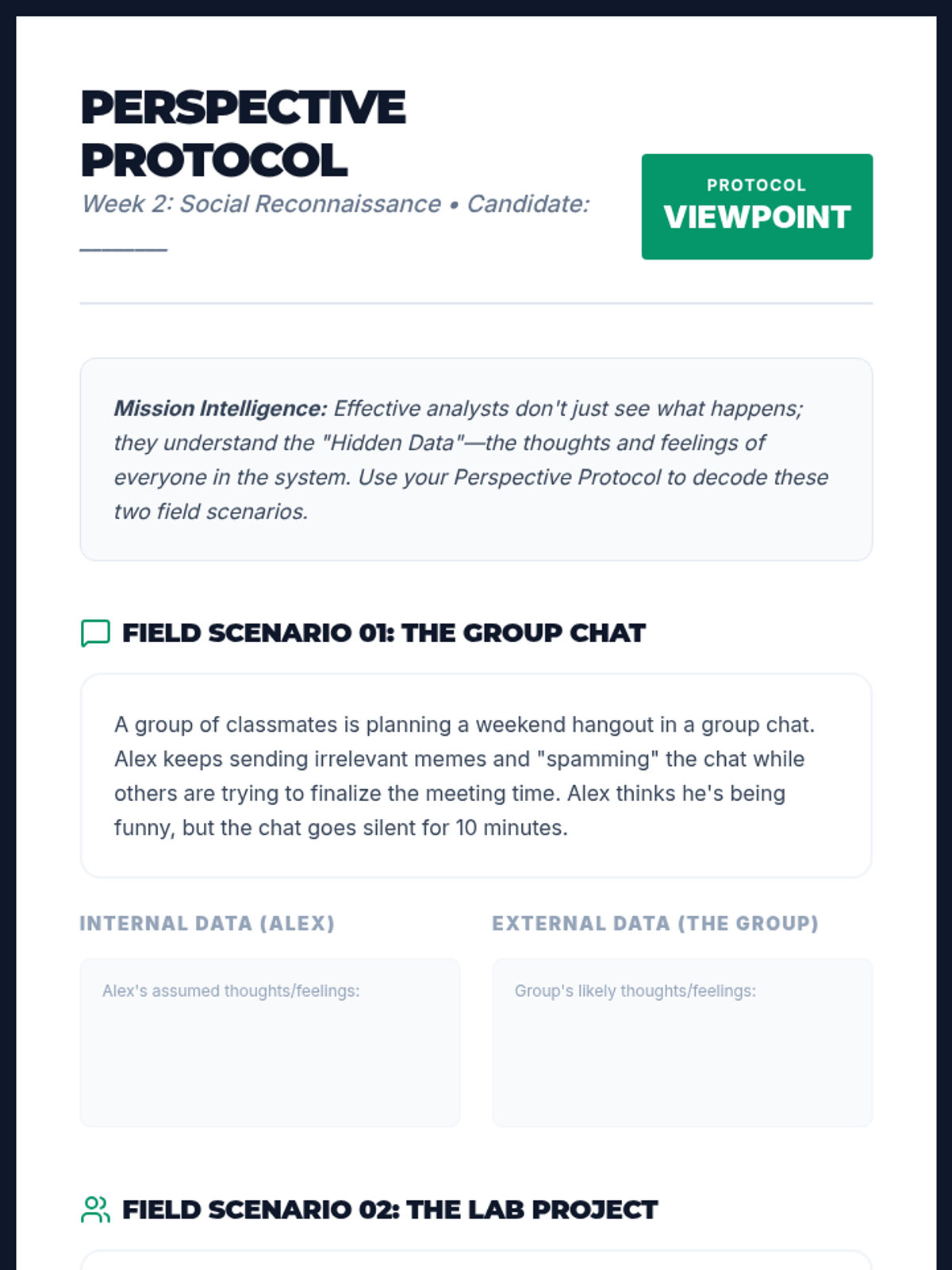
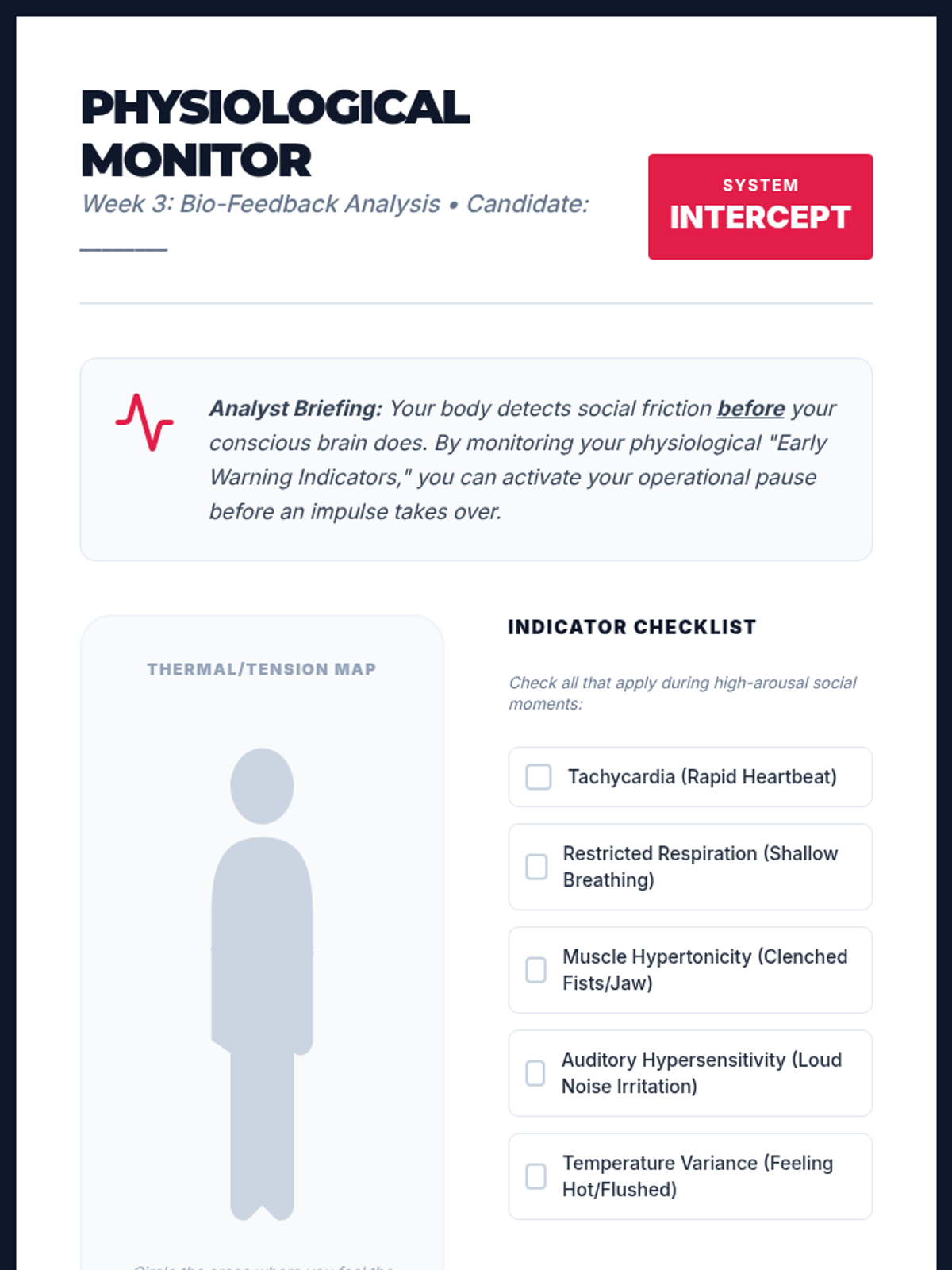
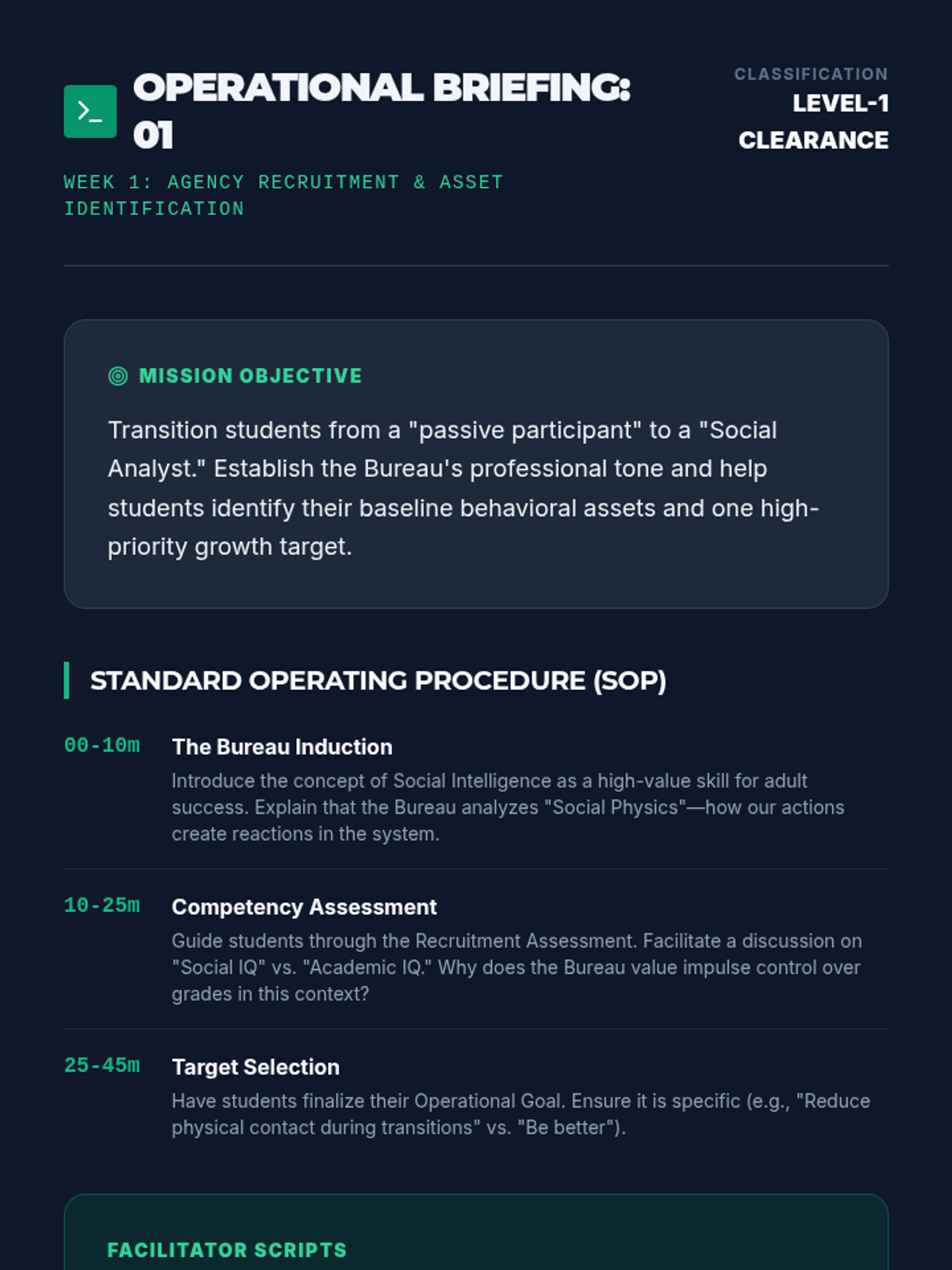
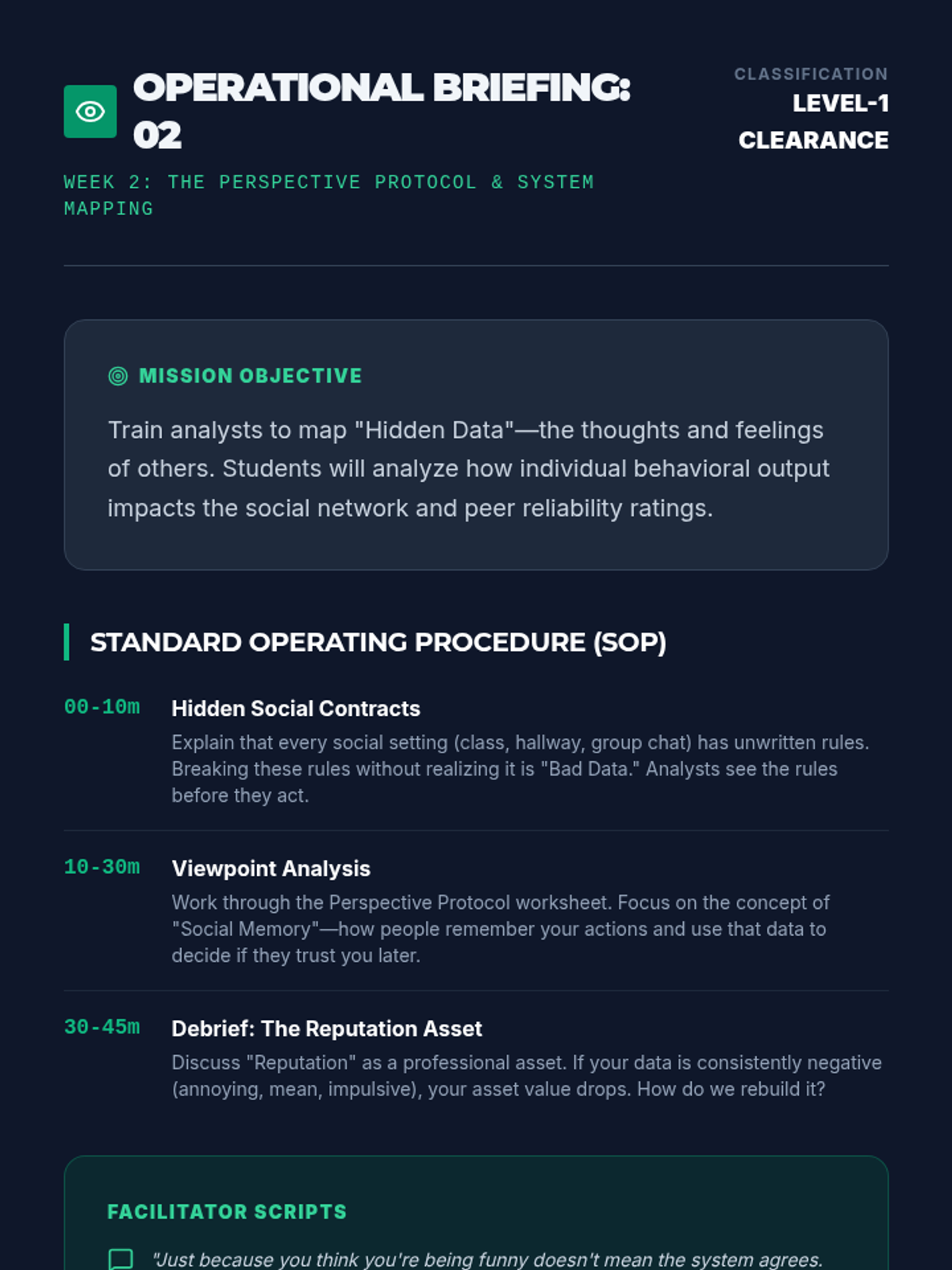
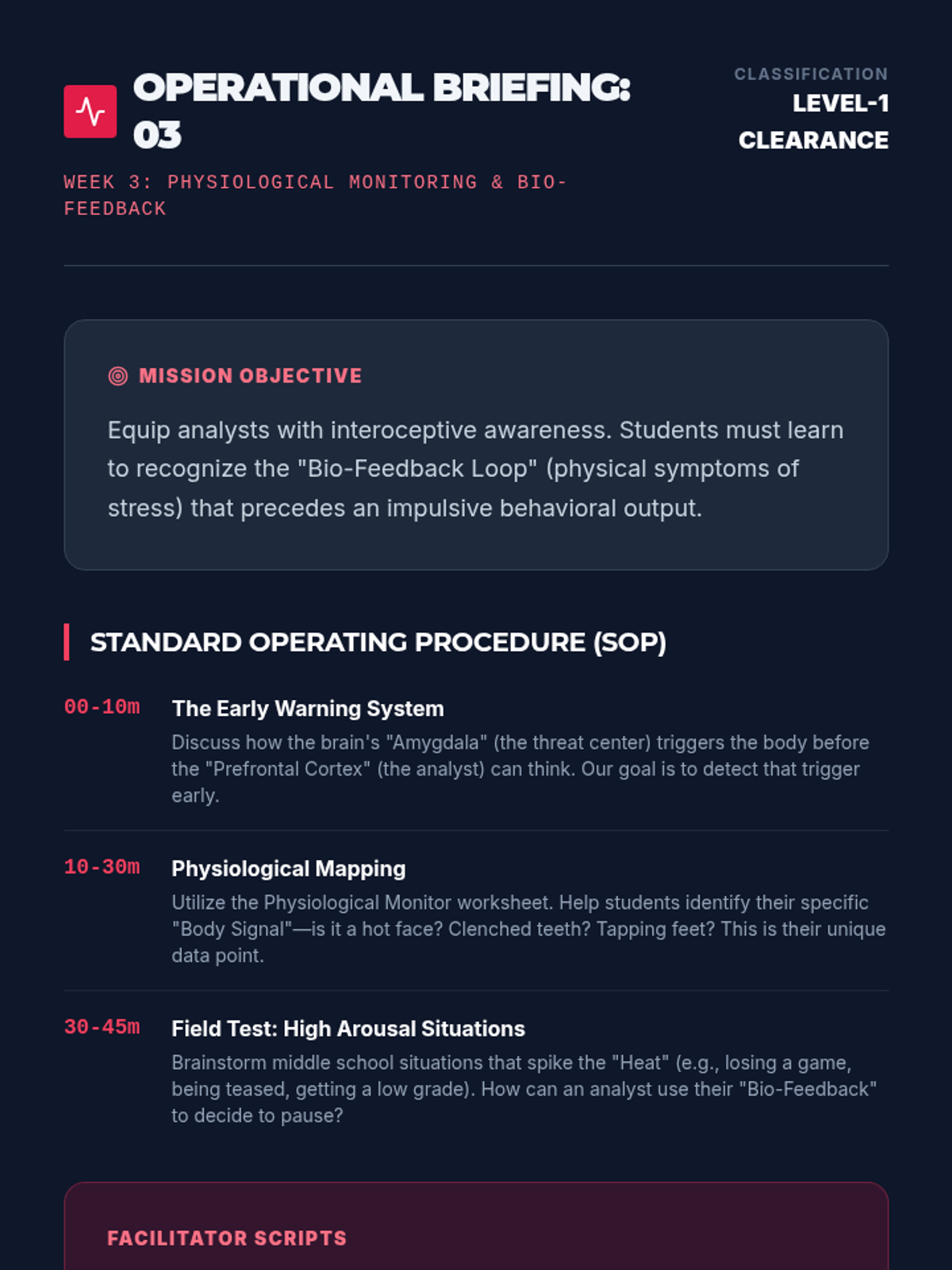
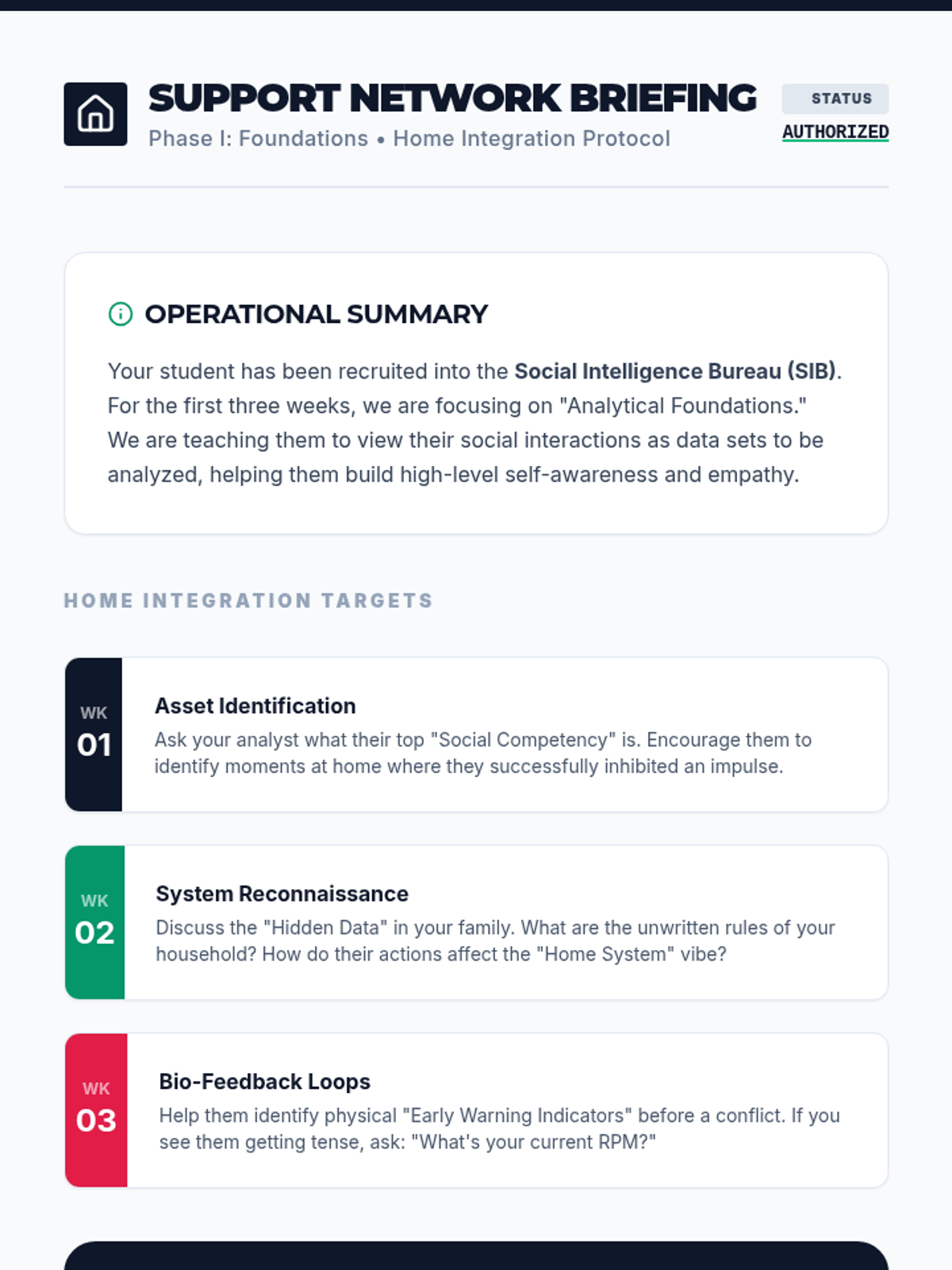
The first three weeks focus on building high-level self-awareness and understanding the core concepts of social perspective-taking and physiological self-monitoring.
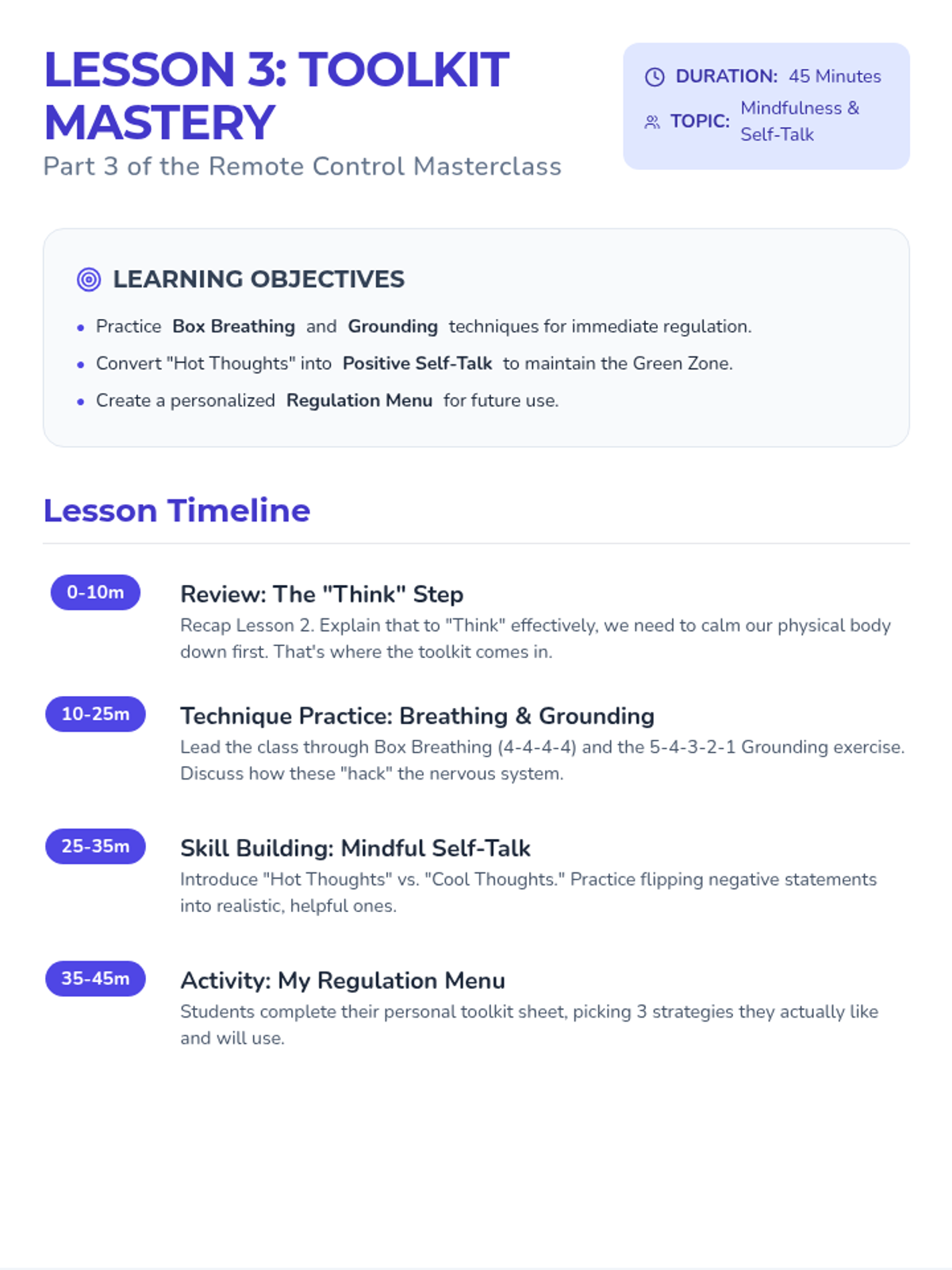
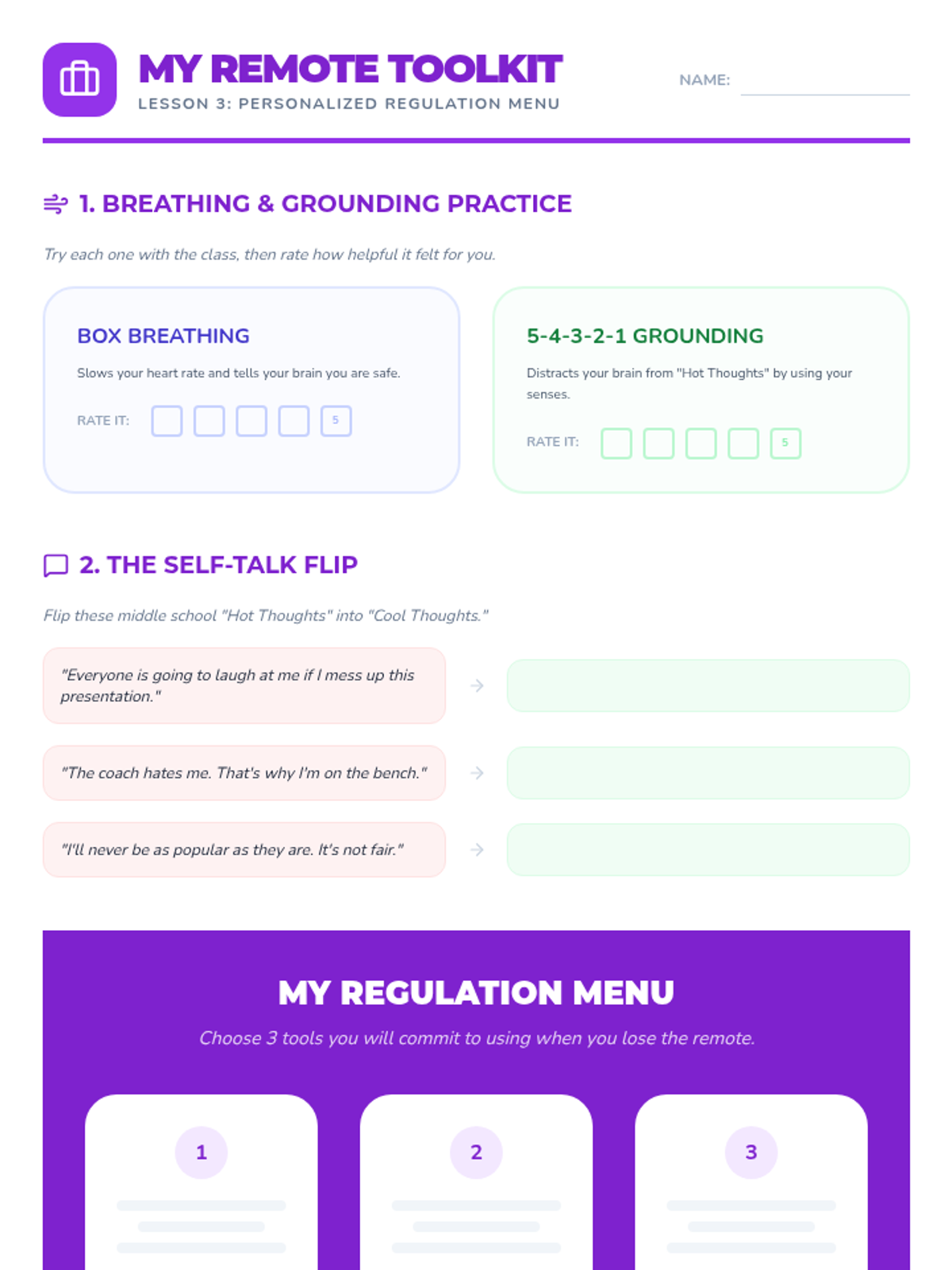
The third lesson in the Remote Control sequence, focusing on building a personal toolkit of mindfulness, breathing, and positive self-talk strategies.
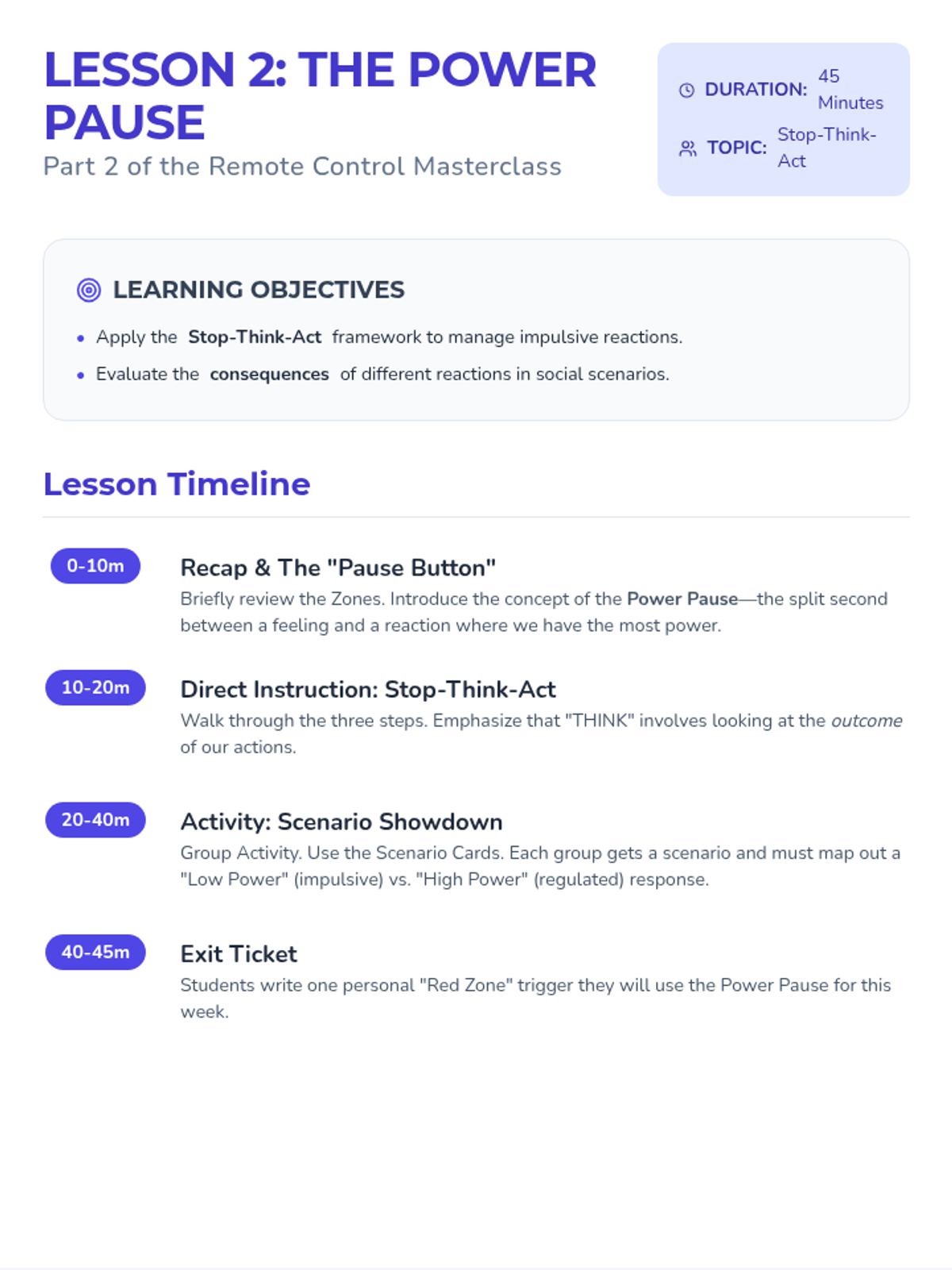
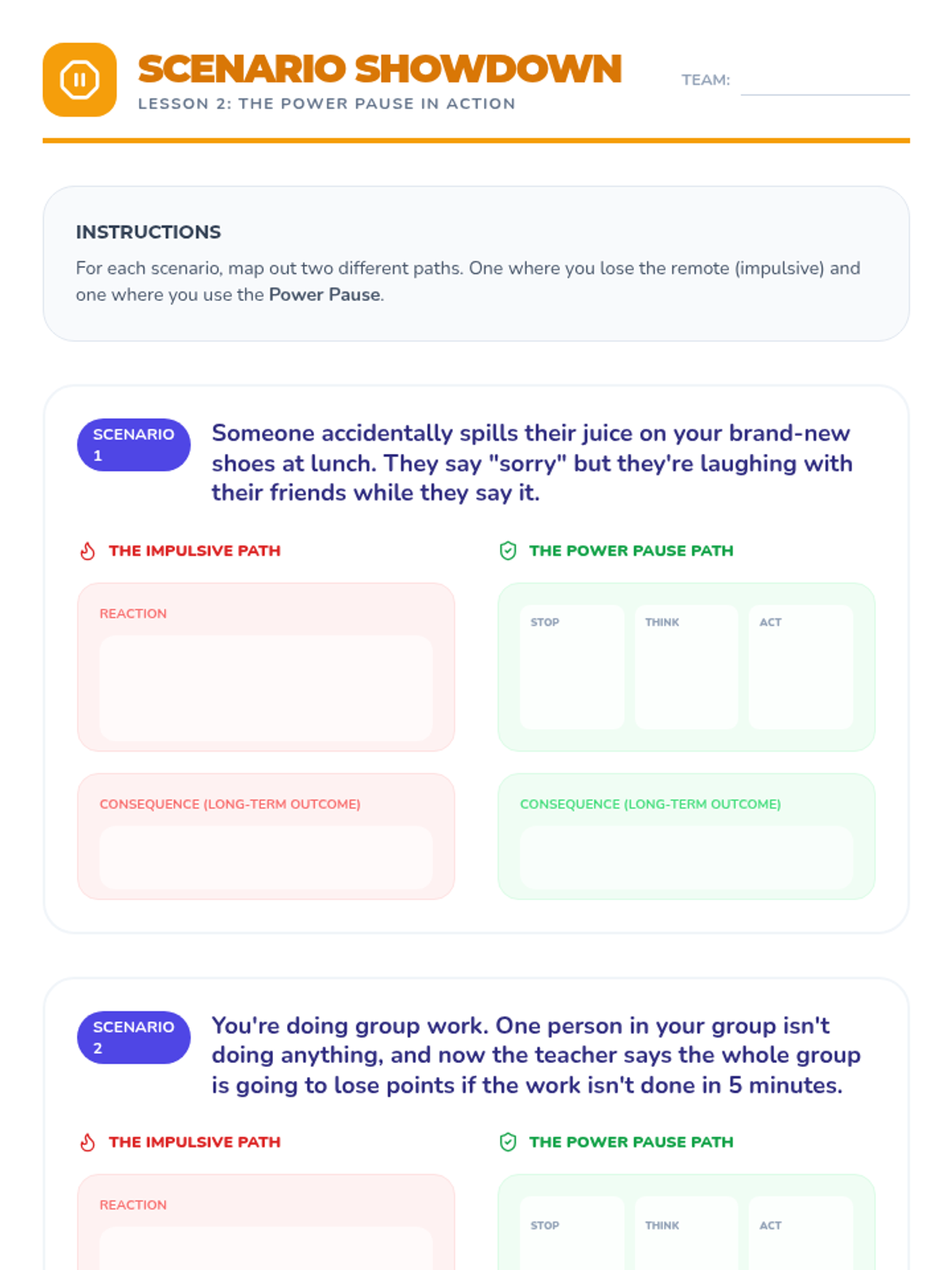
The second lesson in the Remote Control sequence, focusing on the Stop-Think-Act framework and applying it to real-life middle school scenarios.
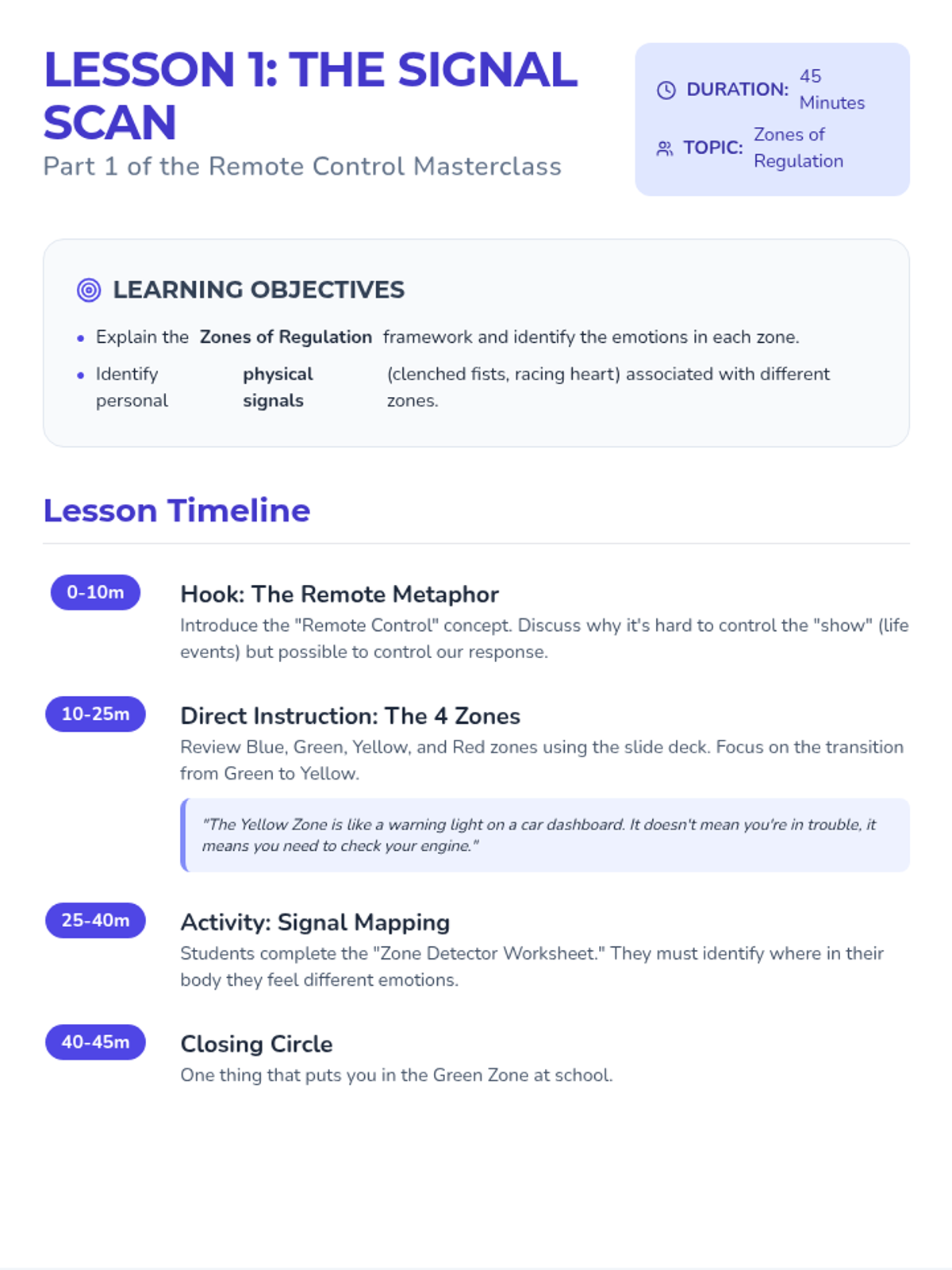
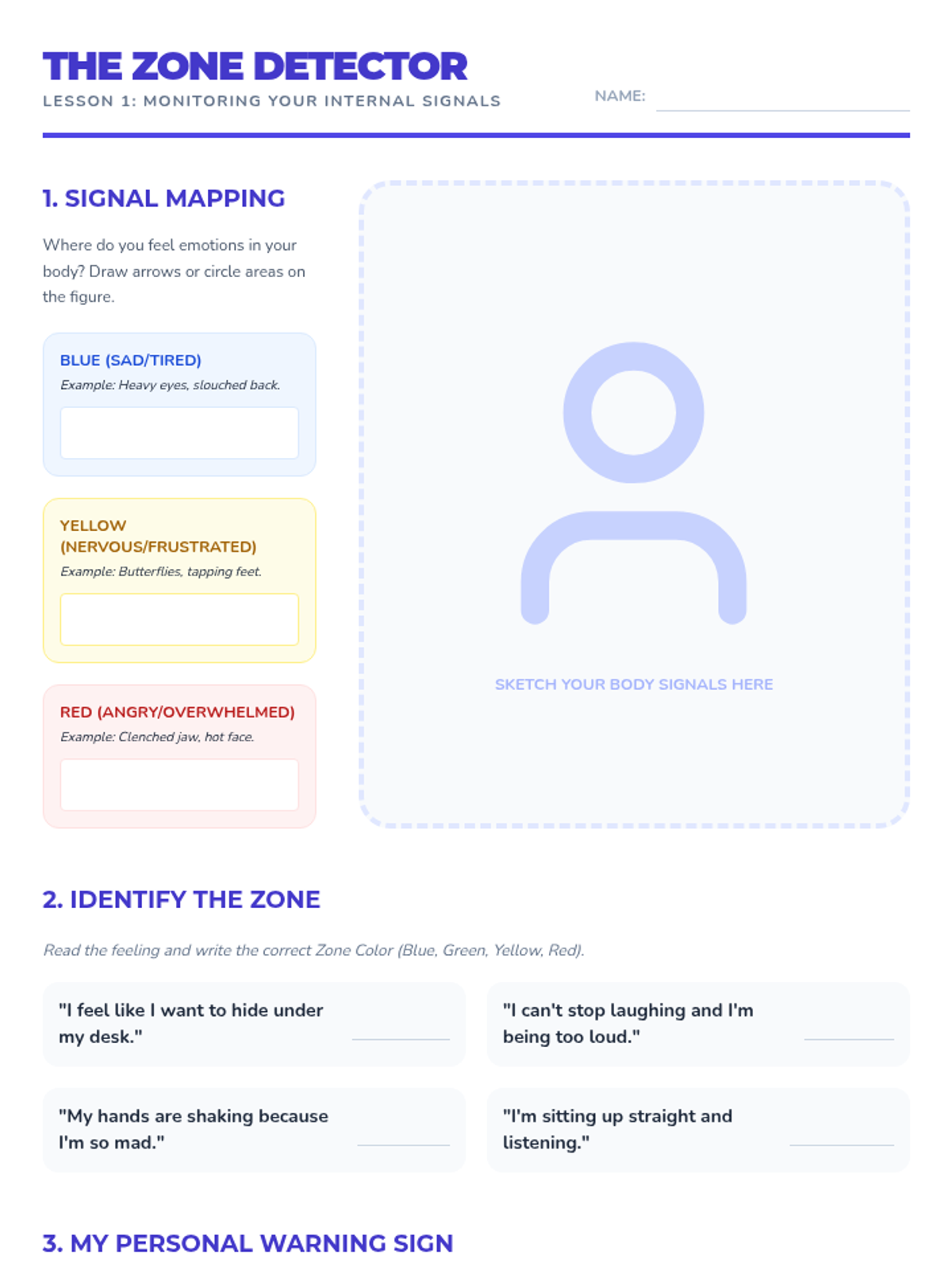
The first lesson in the Remote Control sequence, focusing on identifying emotional states using the Zones of Regulation and recognizing physical signals.
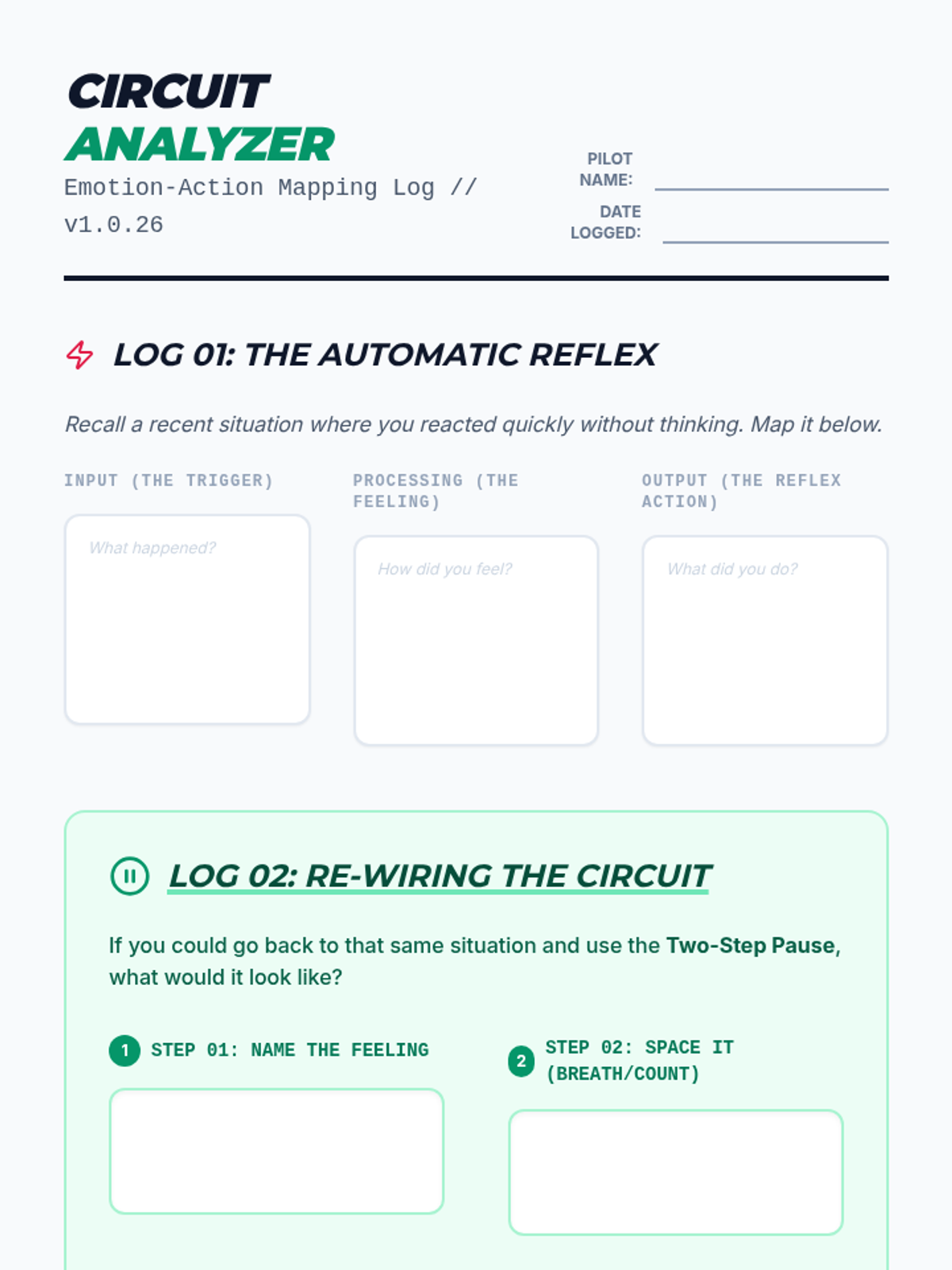
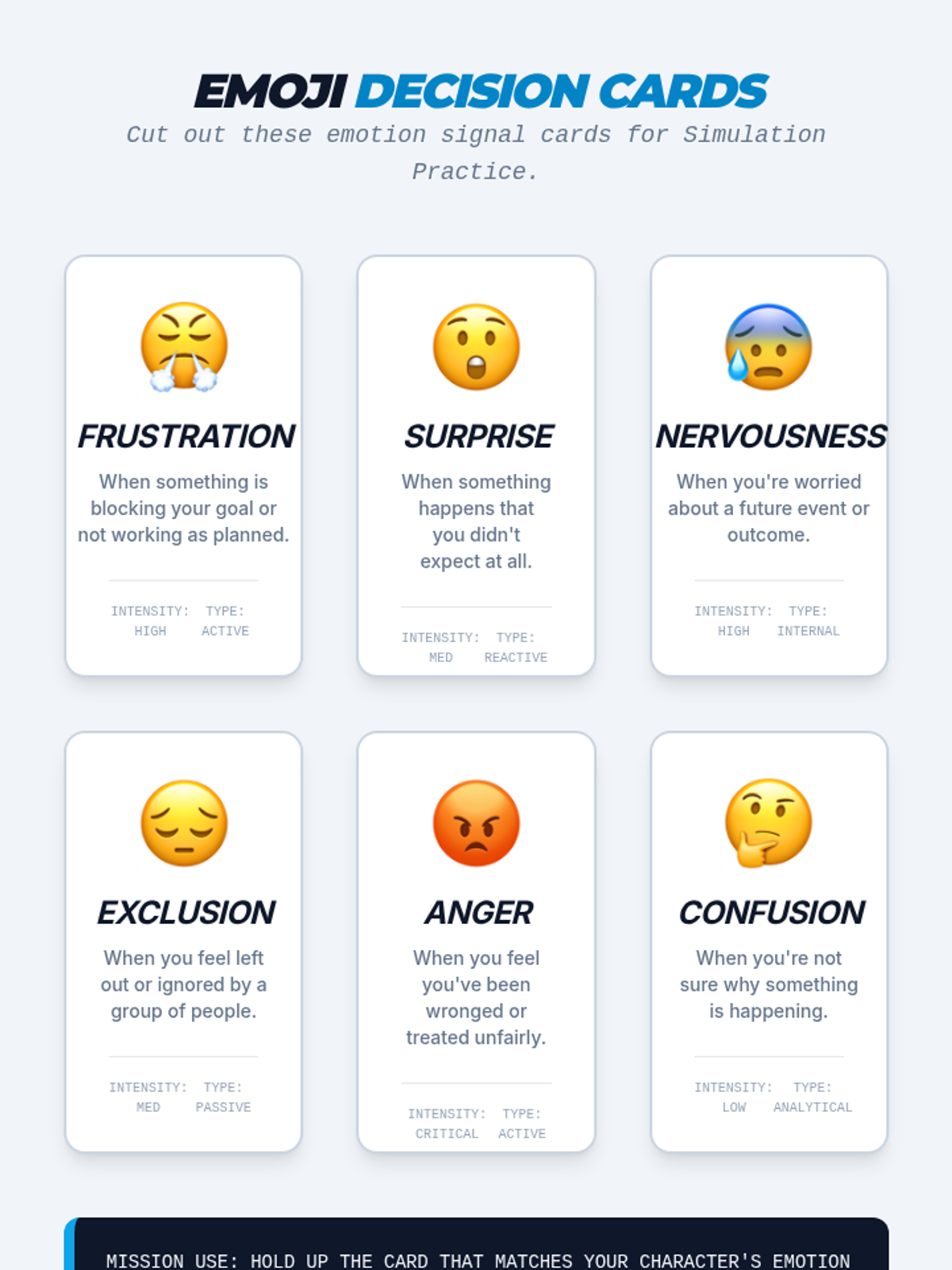
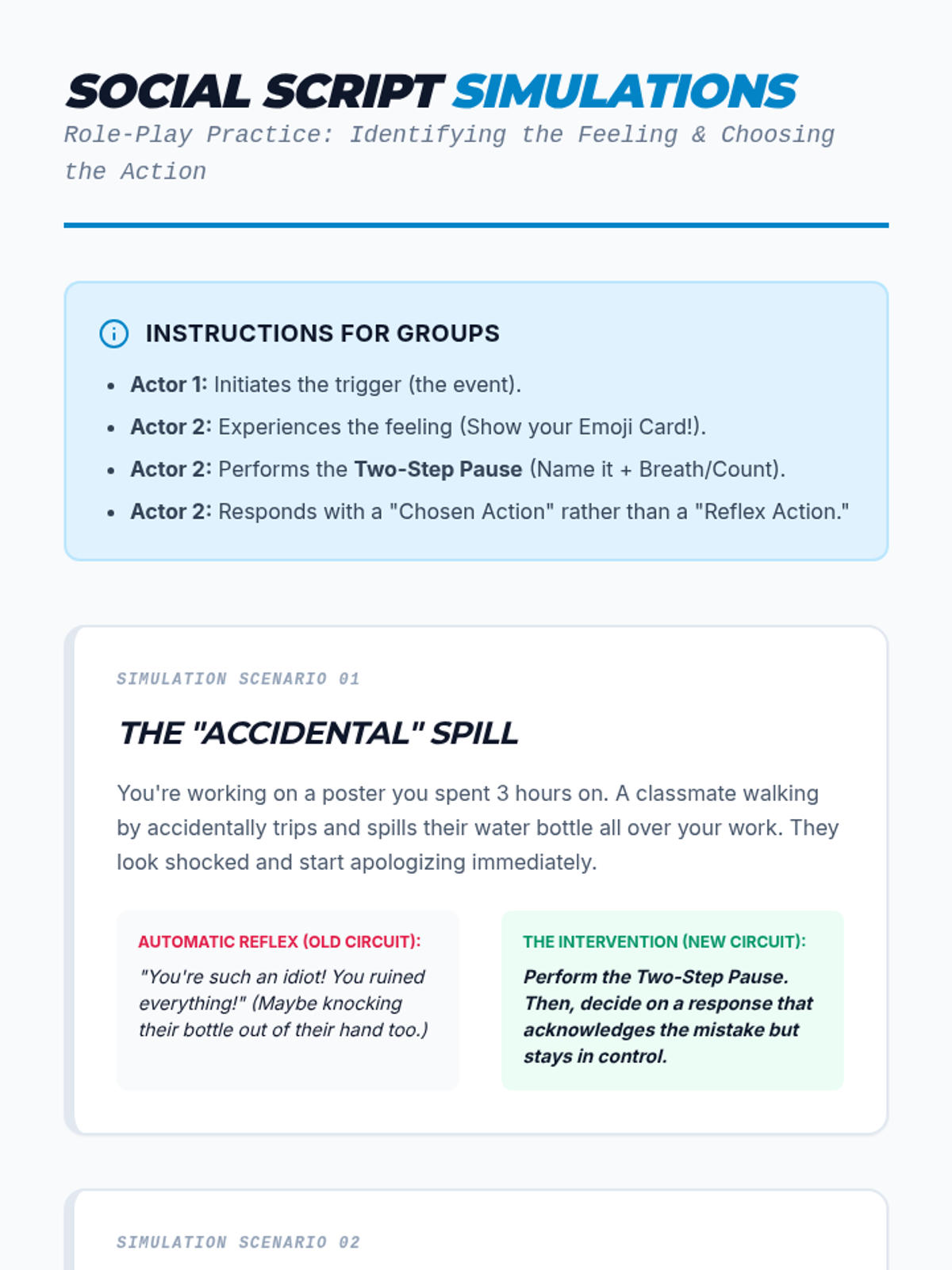
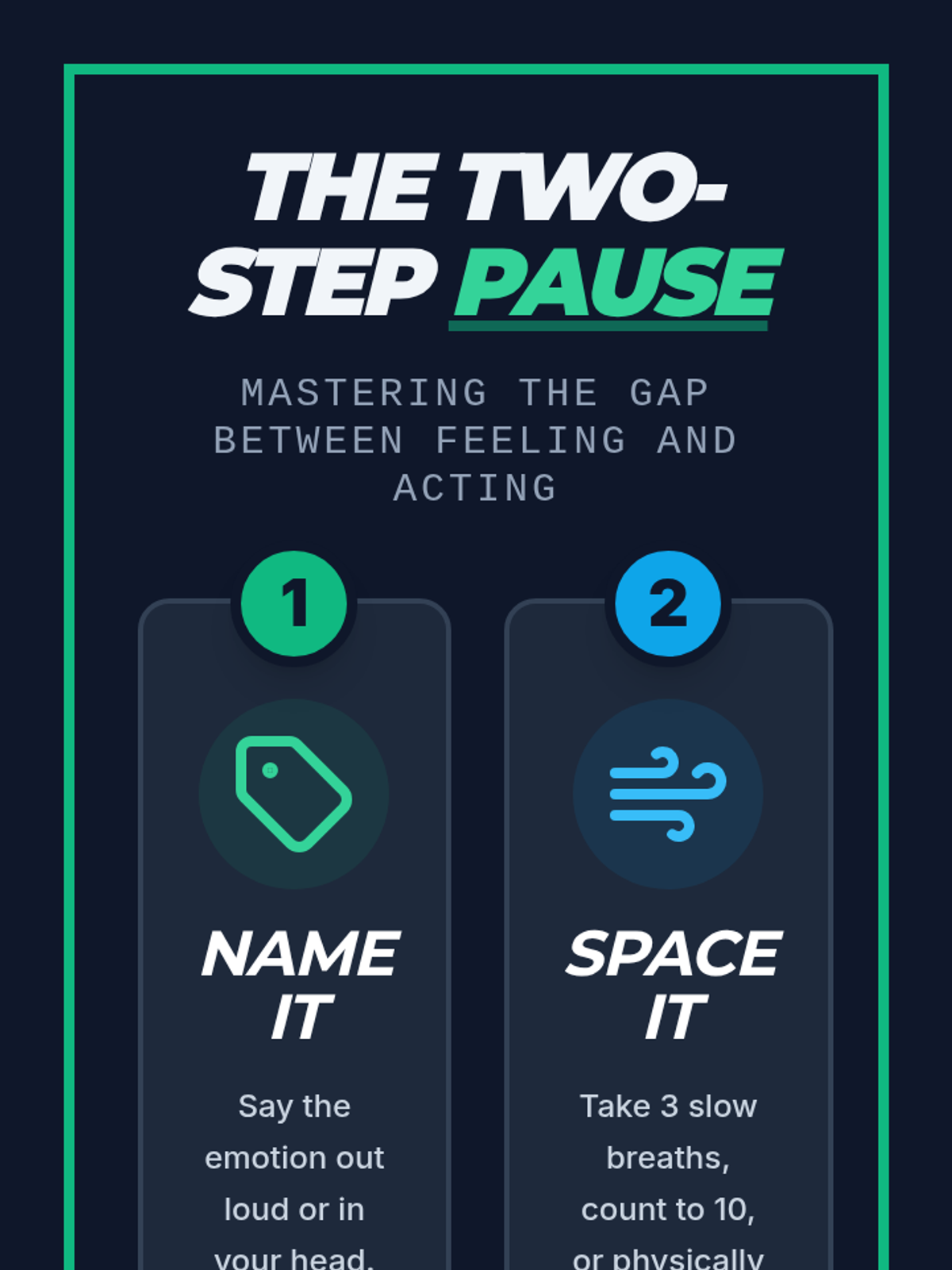
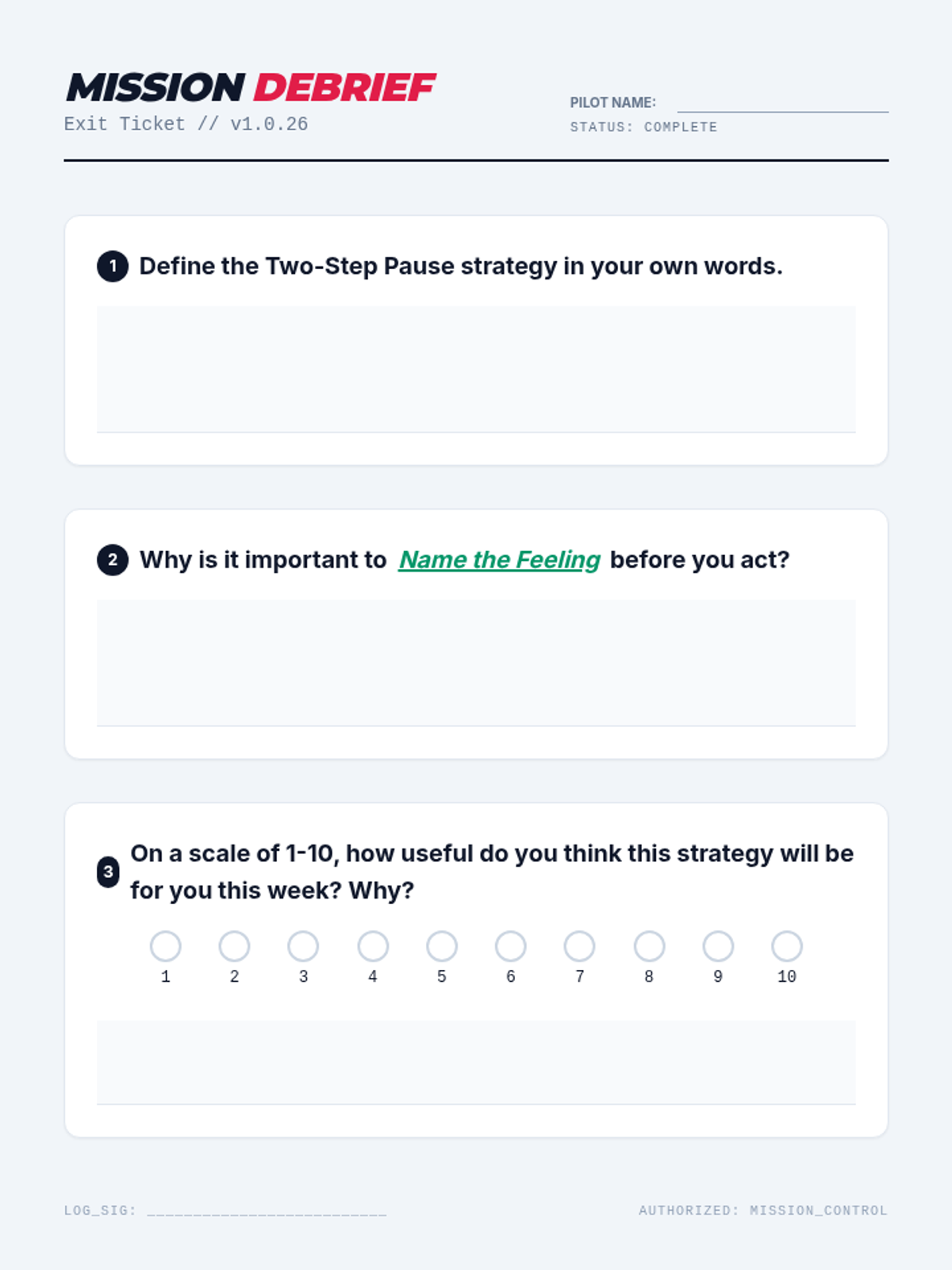
A social-emotional learning lesson for 7th graders that explores the connection between emotions and behaviors, introducing a practical 'pause' strategy to improve self-regulation.
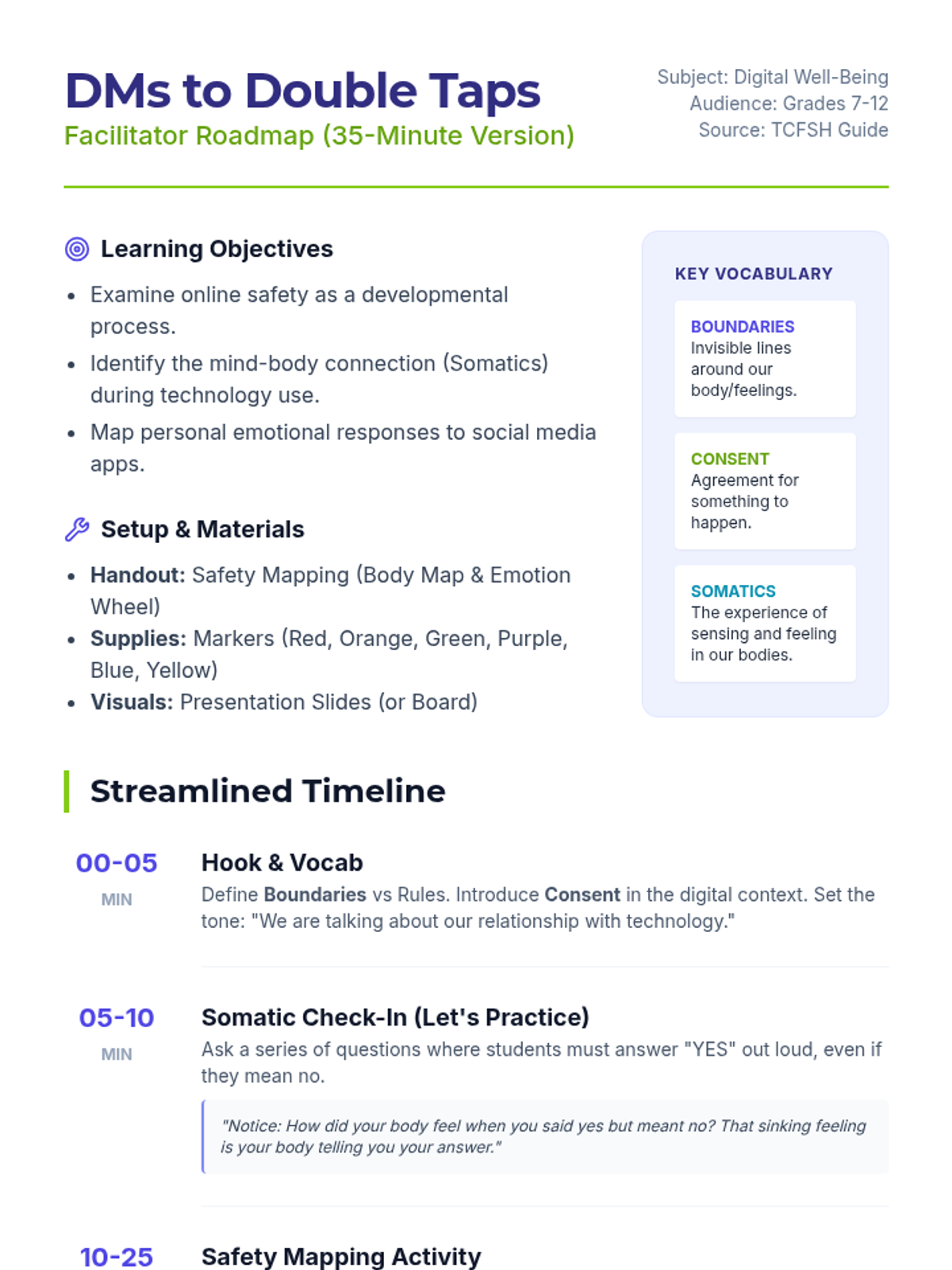
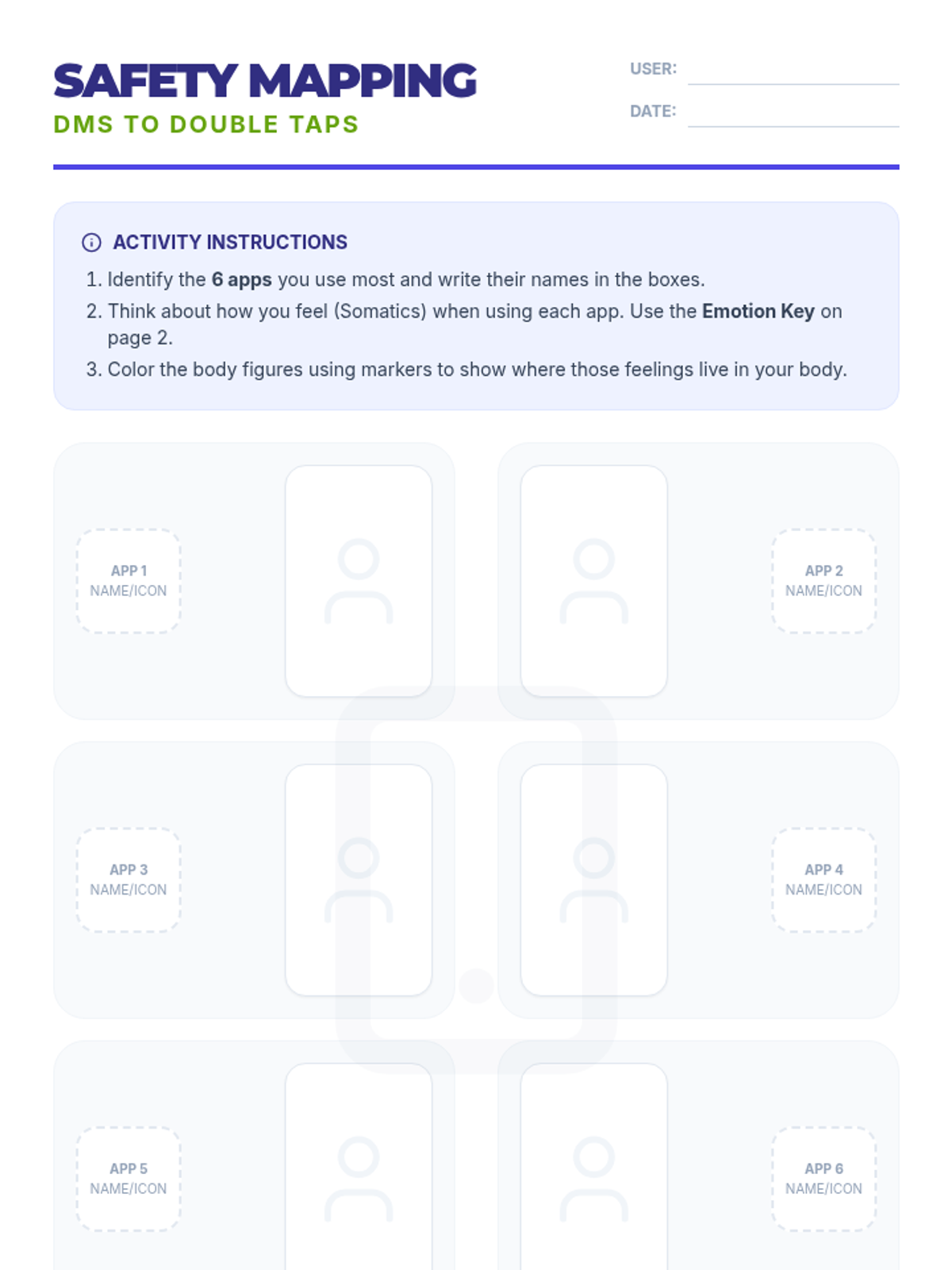
A 35-minute interactive session exploring the mind-body connection with social media. Students use somatic mapping to identify emotional triggers in their most-used apps and learn strategies for digital safety based on the TCFSH 'DMs to Double Taps' guide.
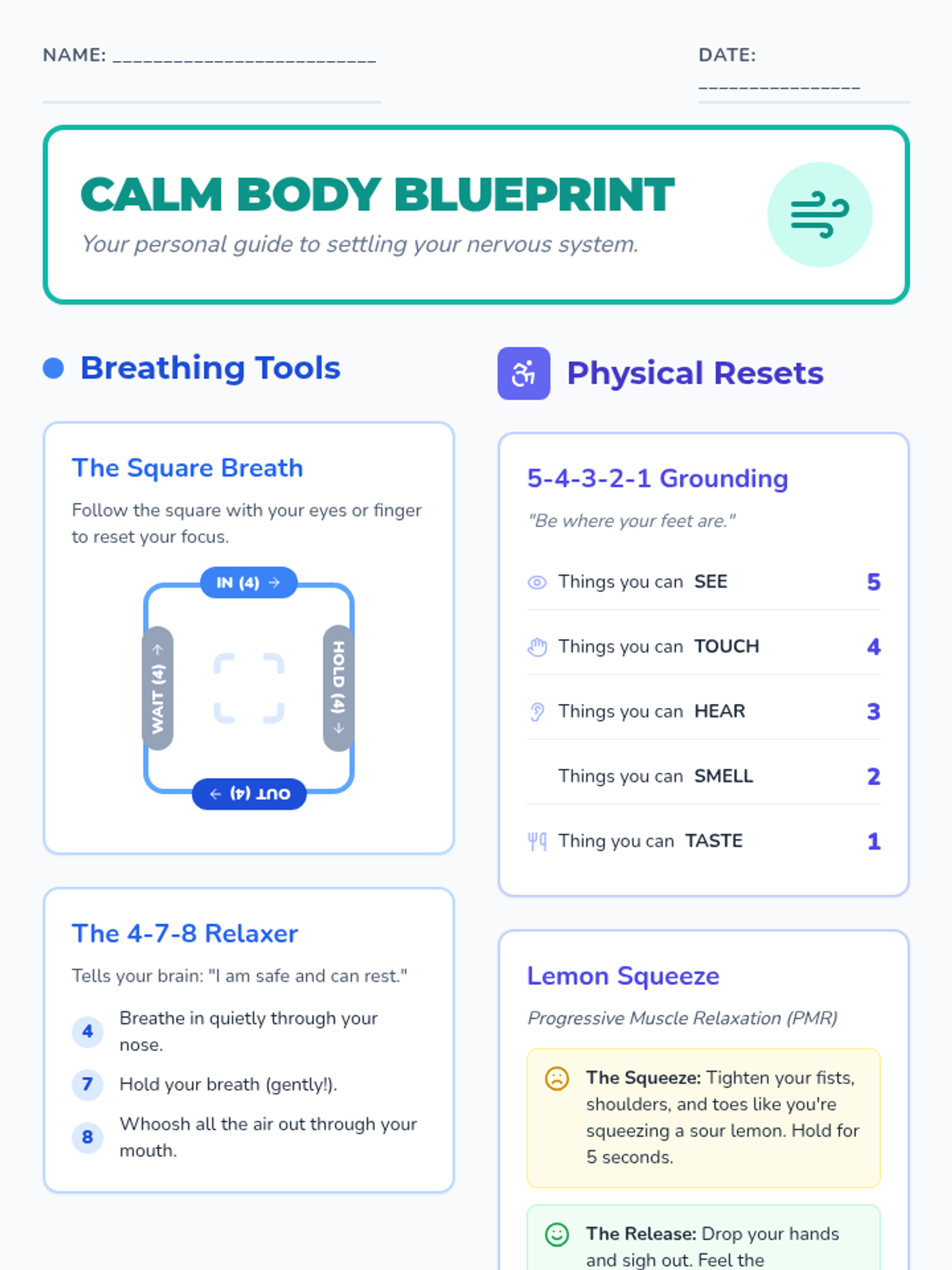
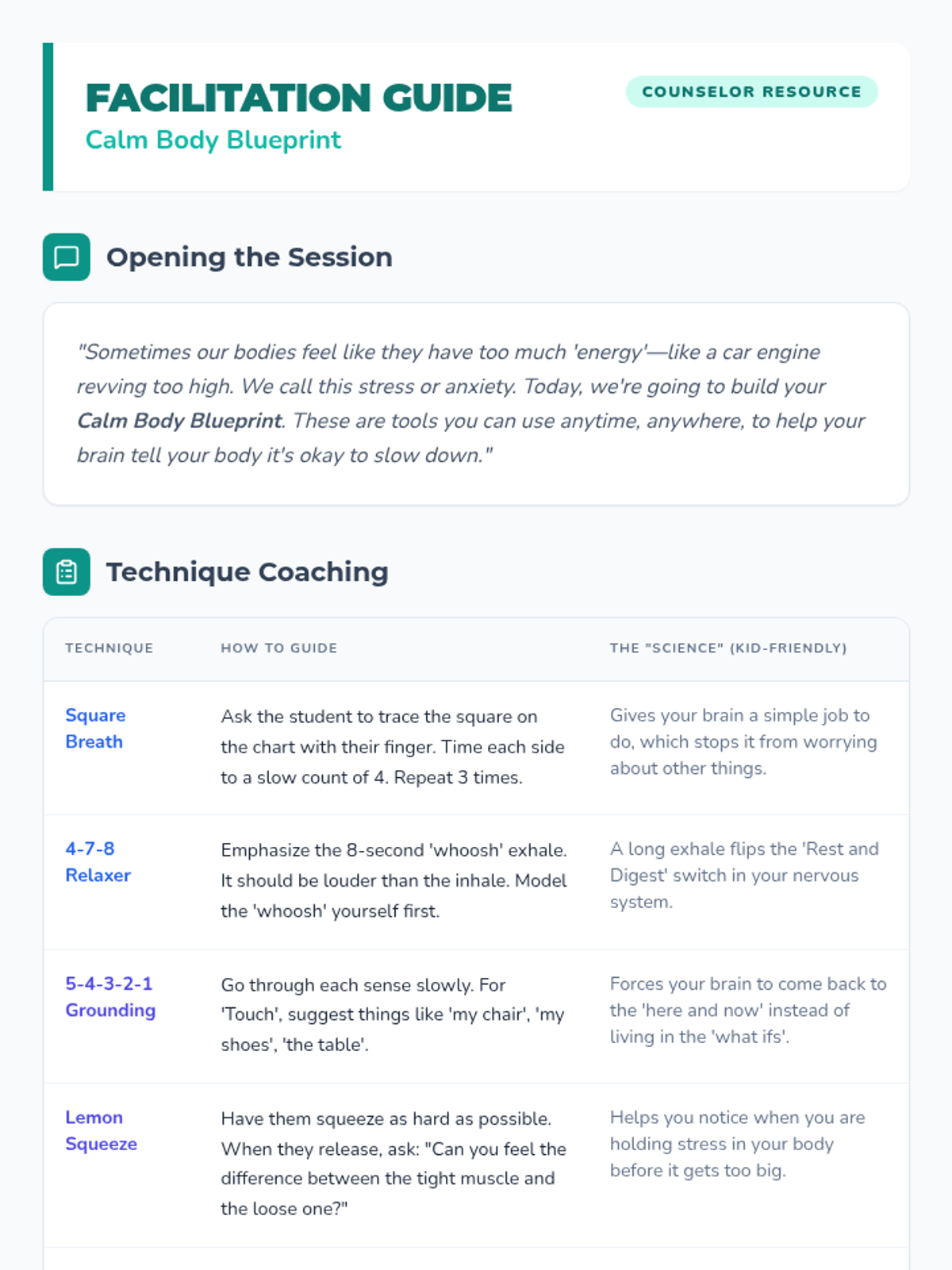
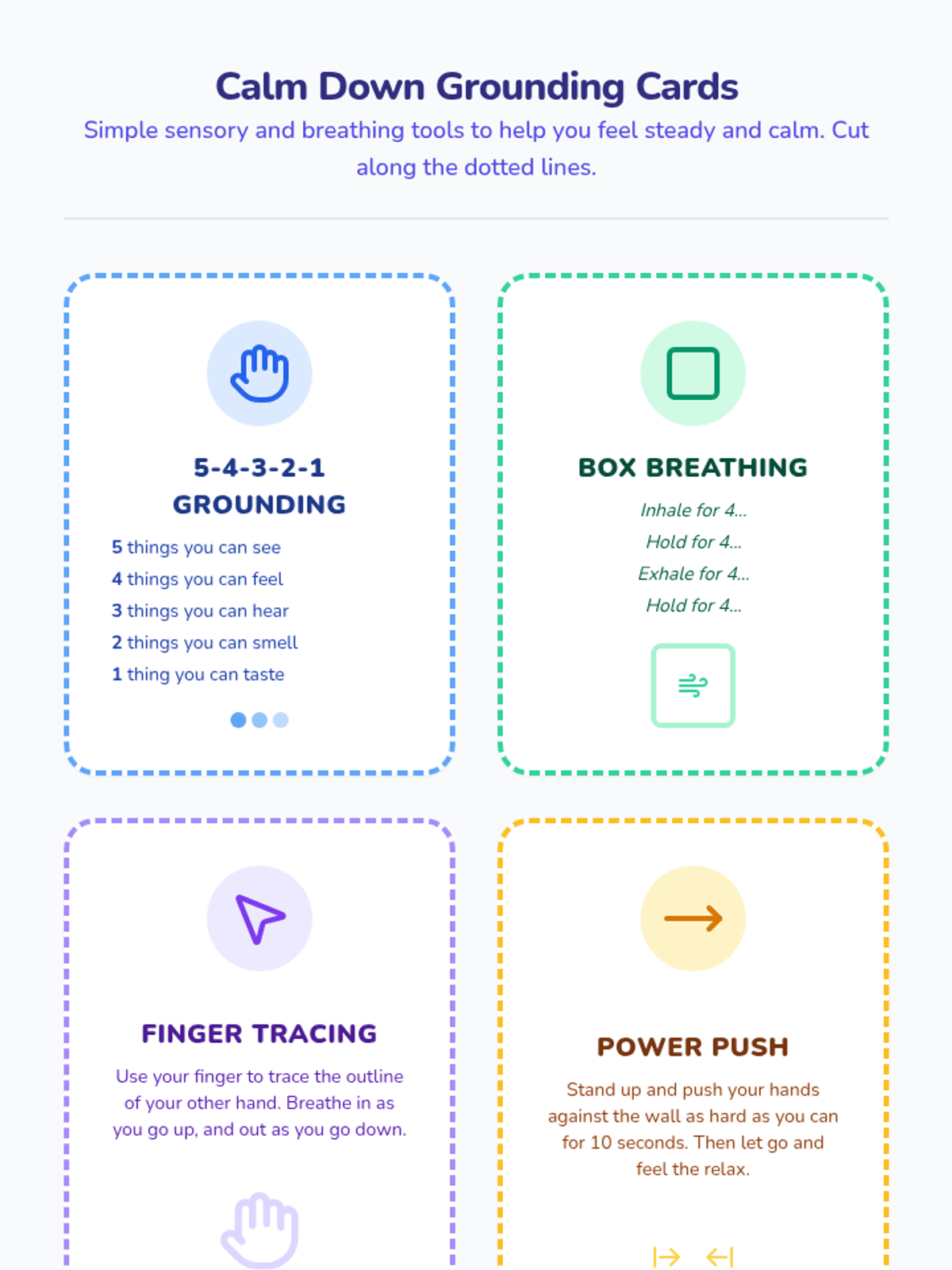
A lesson on physical and breathing techniques for stress management, designed for individual counseling sessions. It includes an anchor chart for the student and a facilitation guide for the counselor.
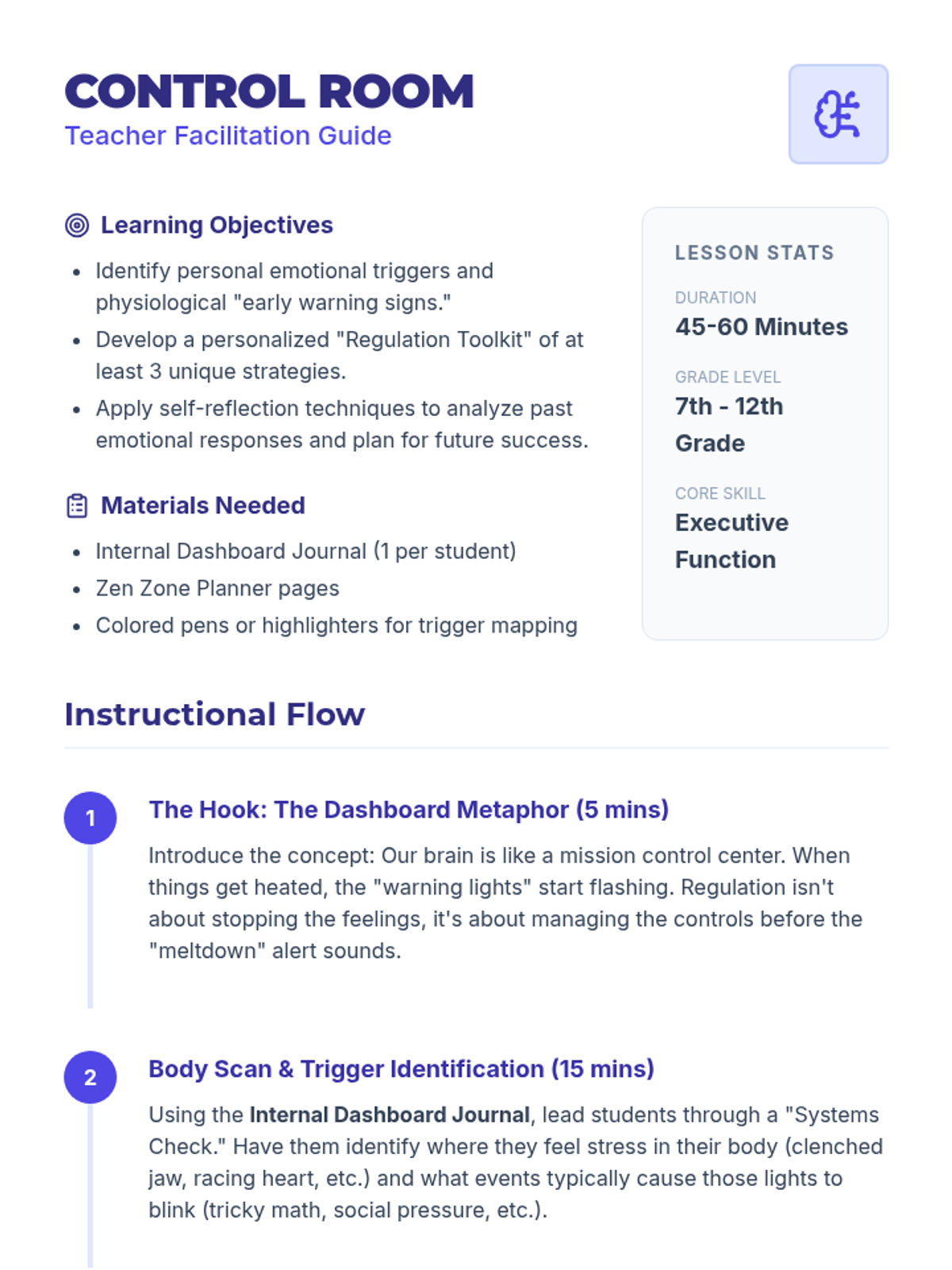
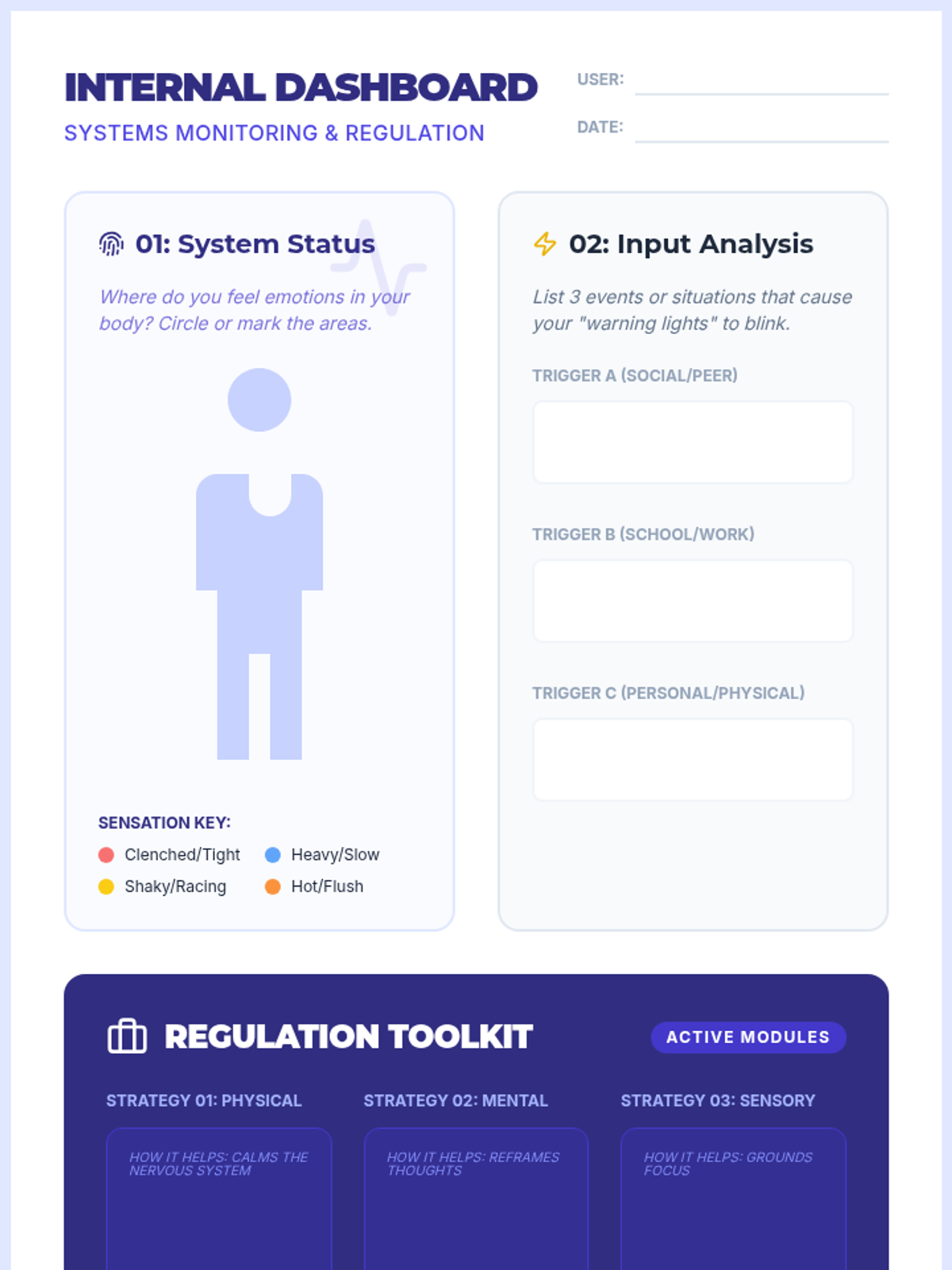
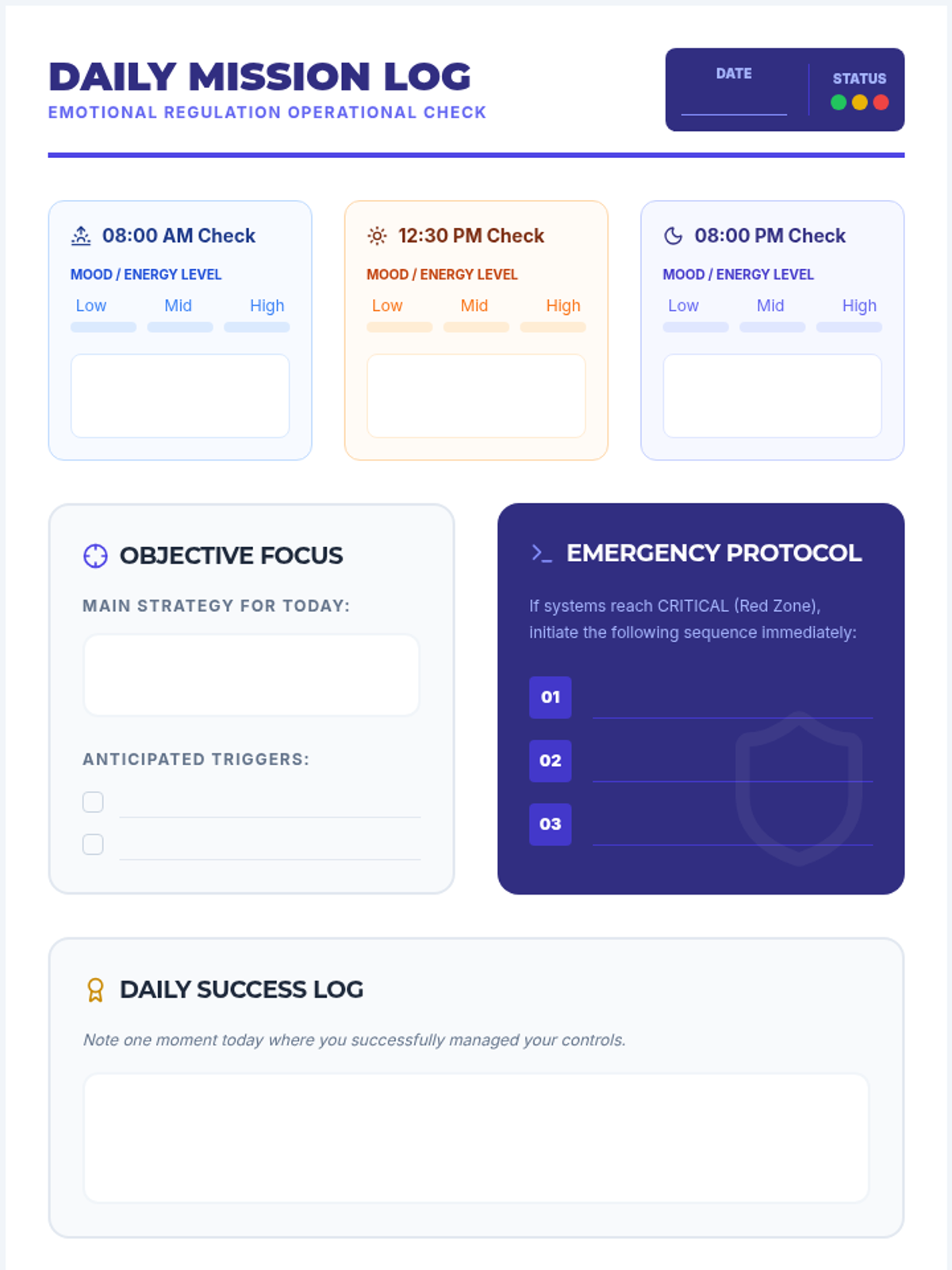
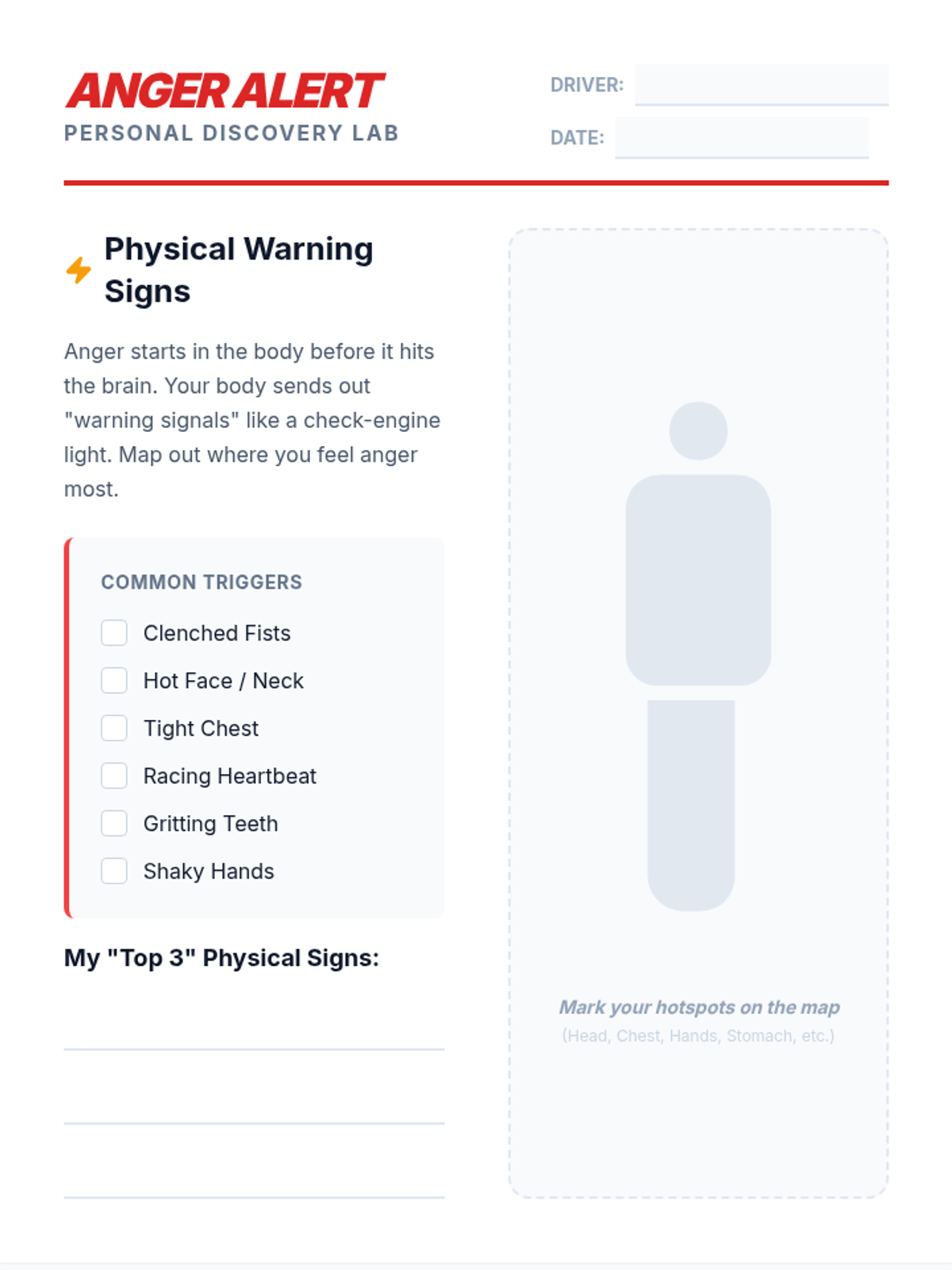
A comprehensive lesson designed to help teens understand their emotional triggers, recognize physical warning signs, and build a personalized toolkit of regulation strategies through guided reflection and daily planning.
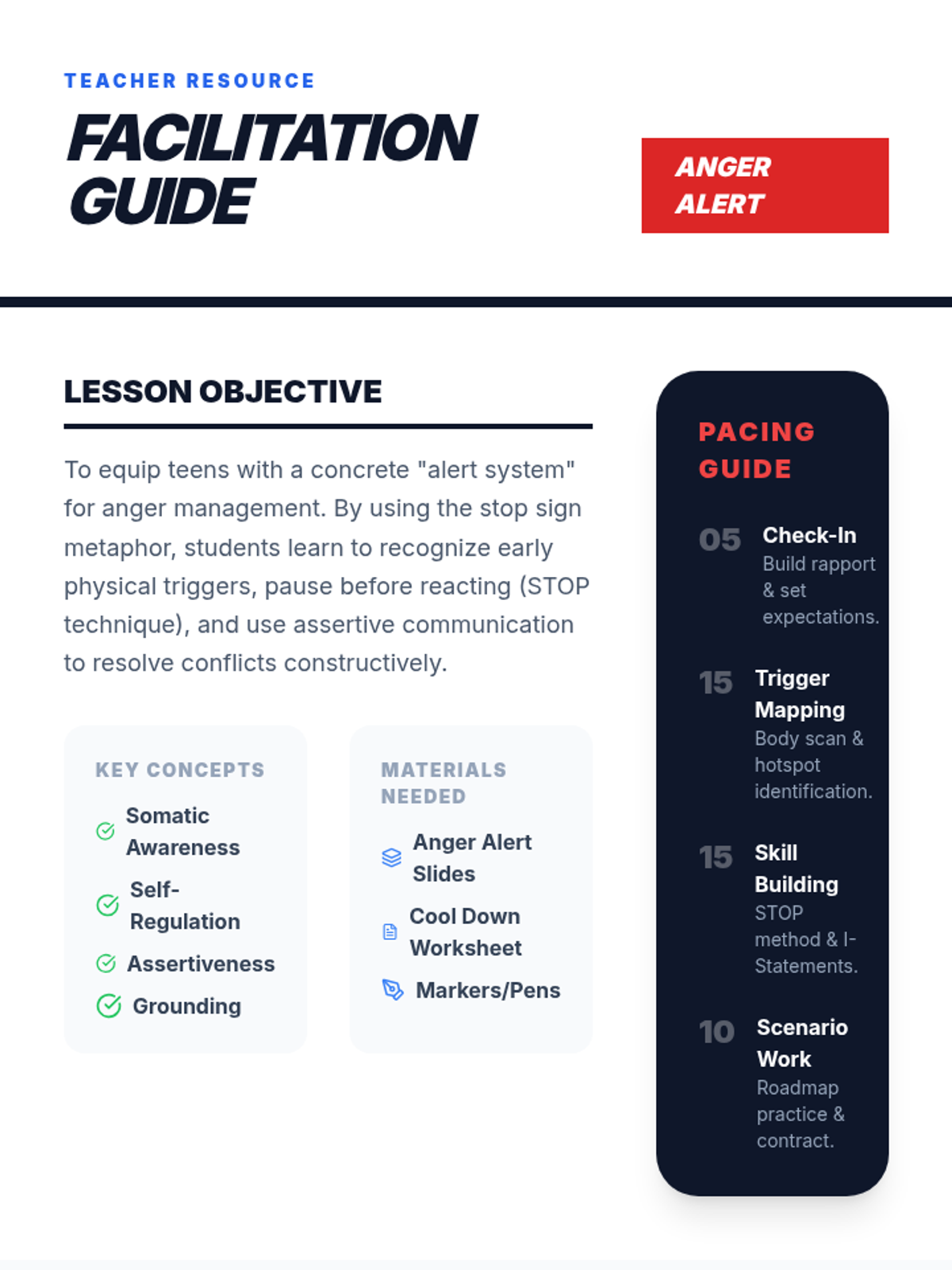
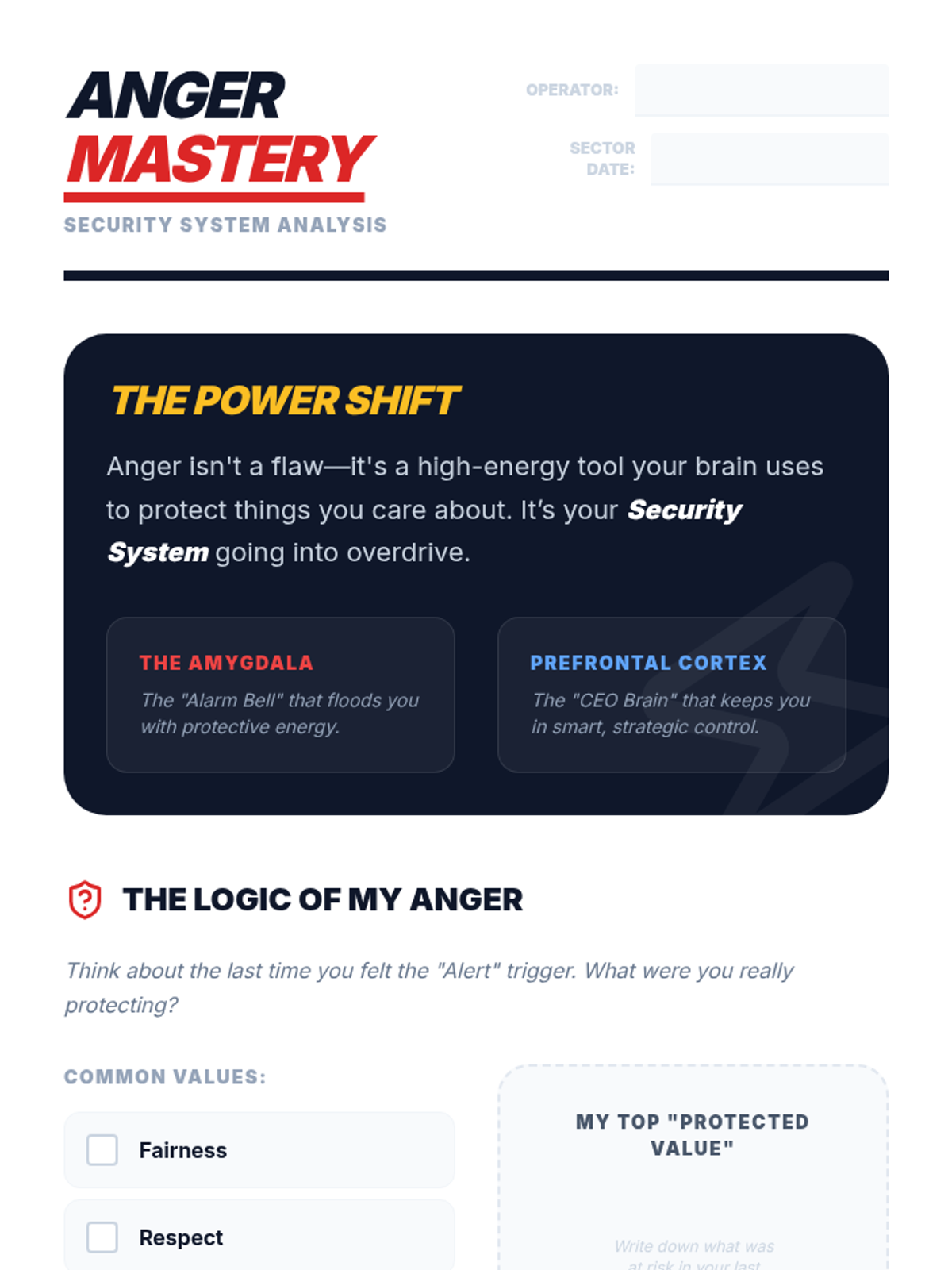
A targeted individual counseling lesson for teens focusing on the 'Stop Sign' approach to anger management. Students learn to recognize physical triggers and apply assertive communication and grounding techniques.
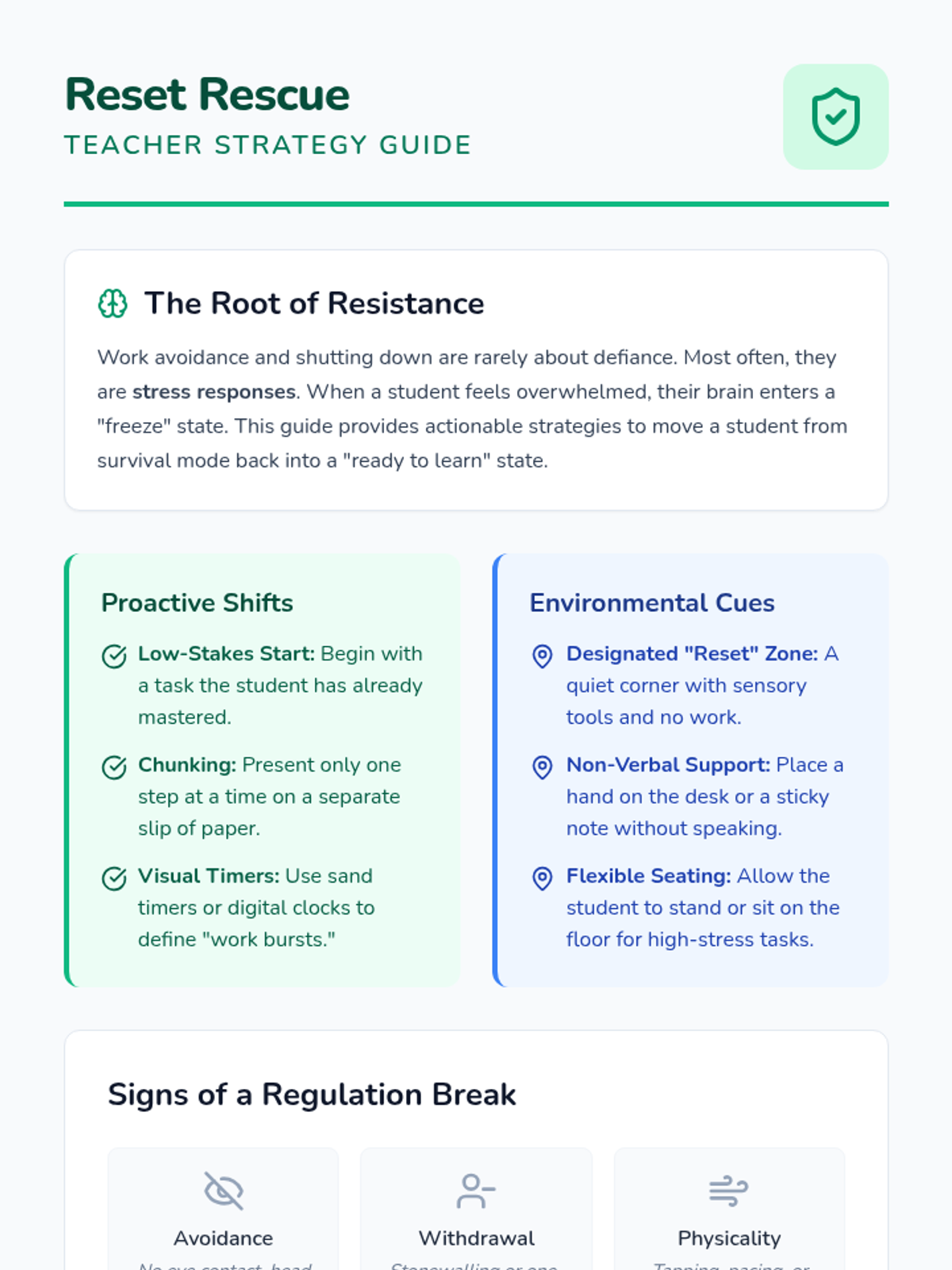
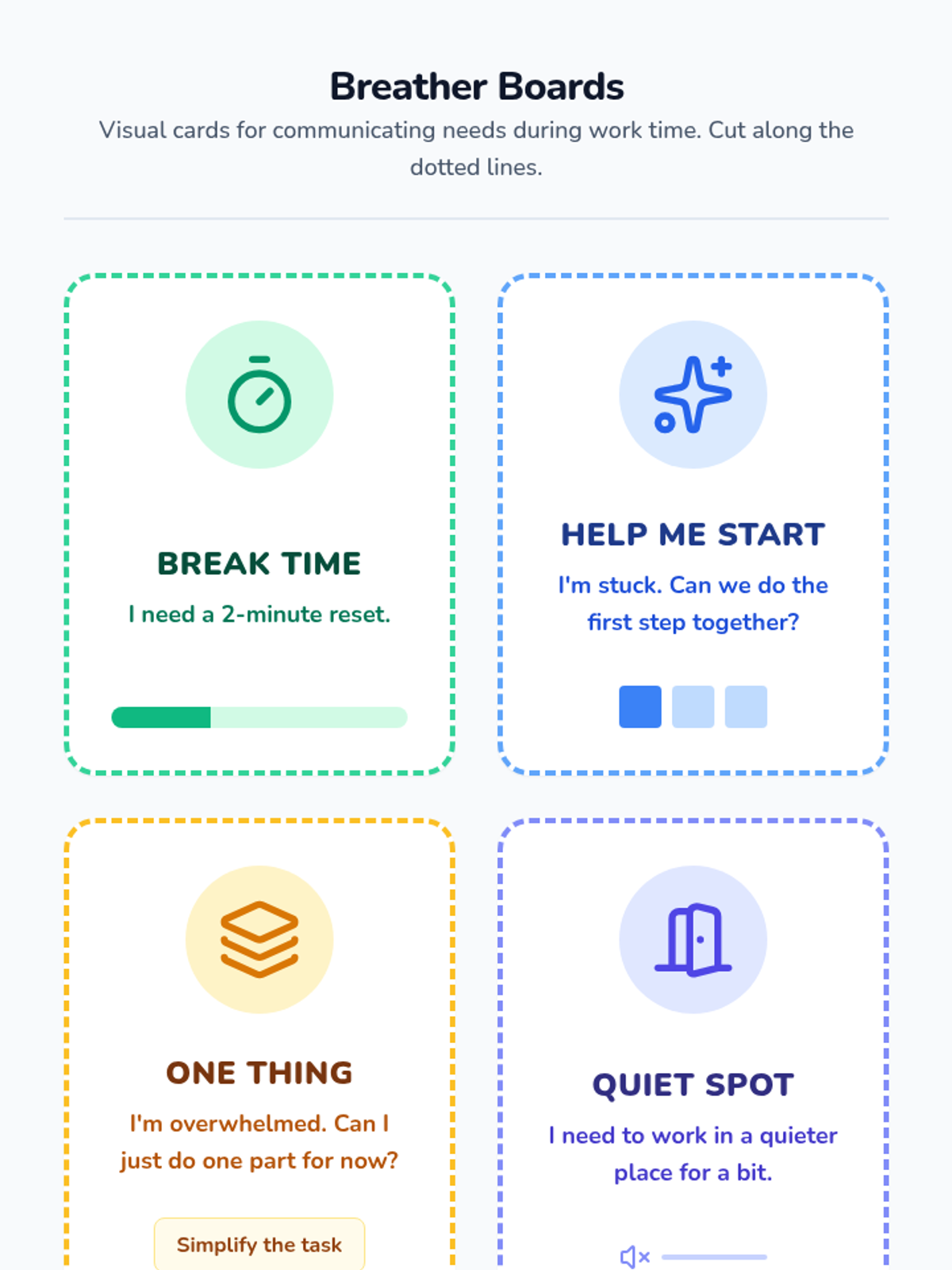
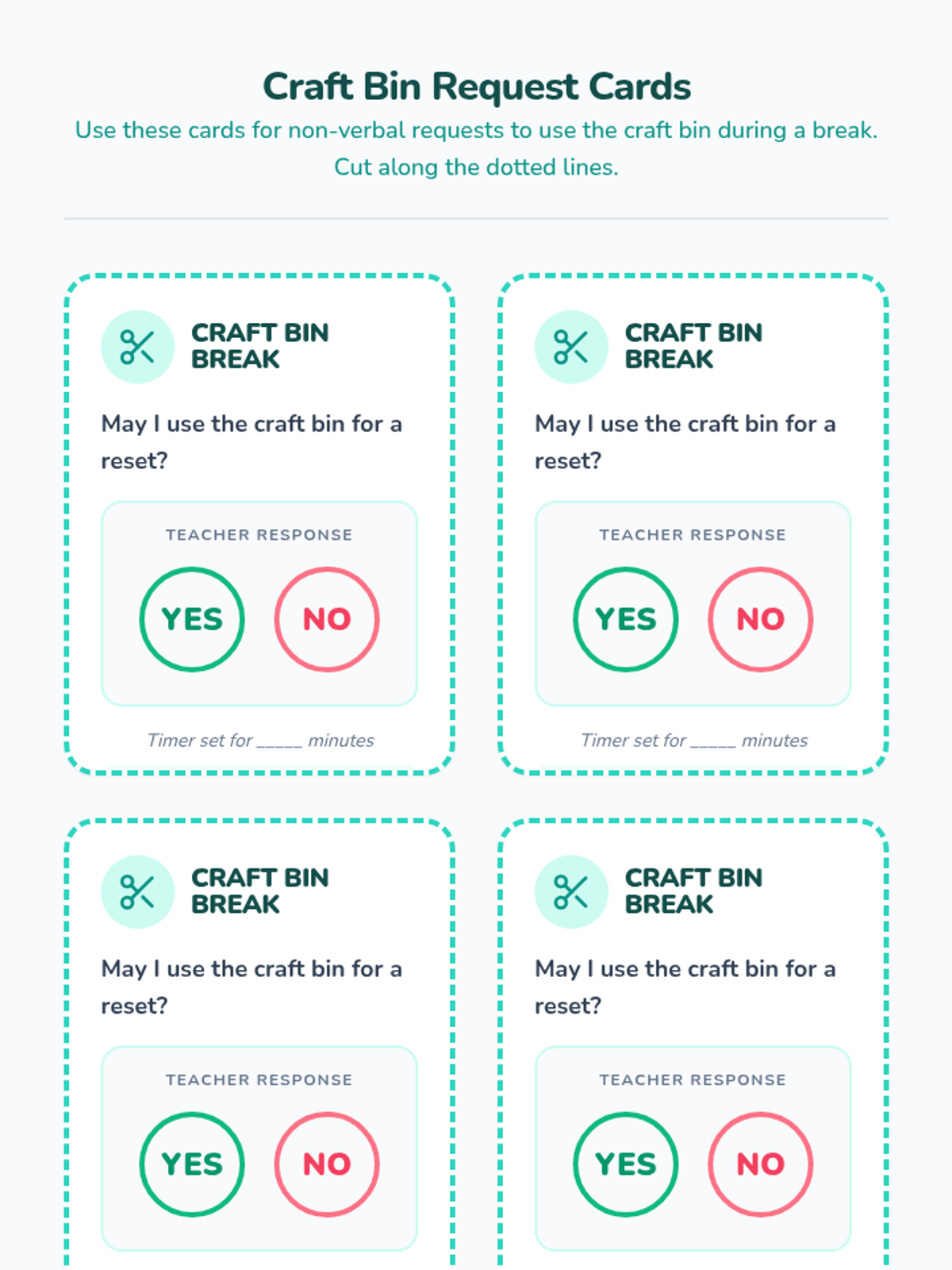
A comprehensive set of tools for teachers to support students experiencing work avoidance or shutting down, focusing on emotional regulation and proactive intervention.
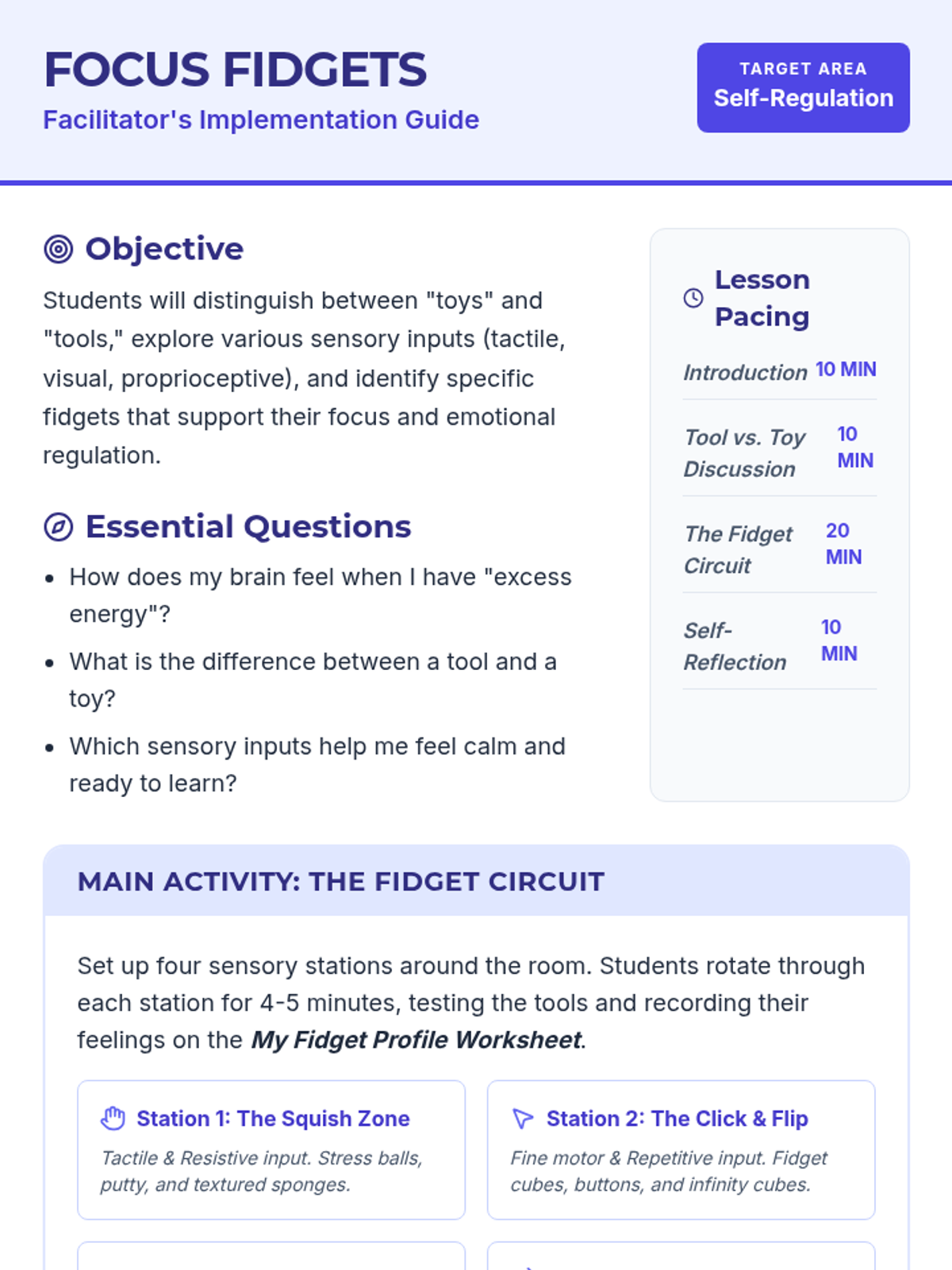
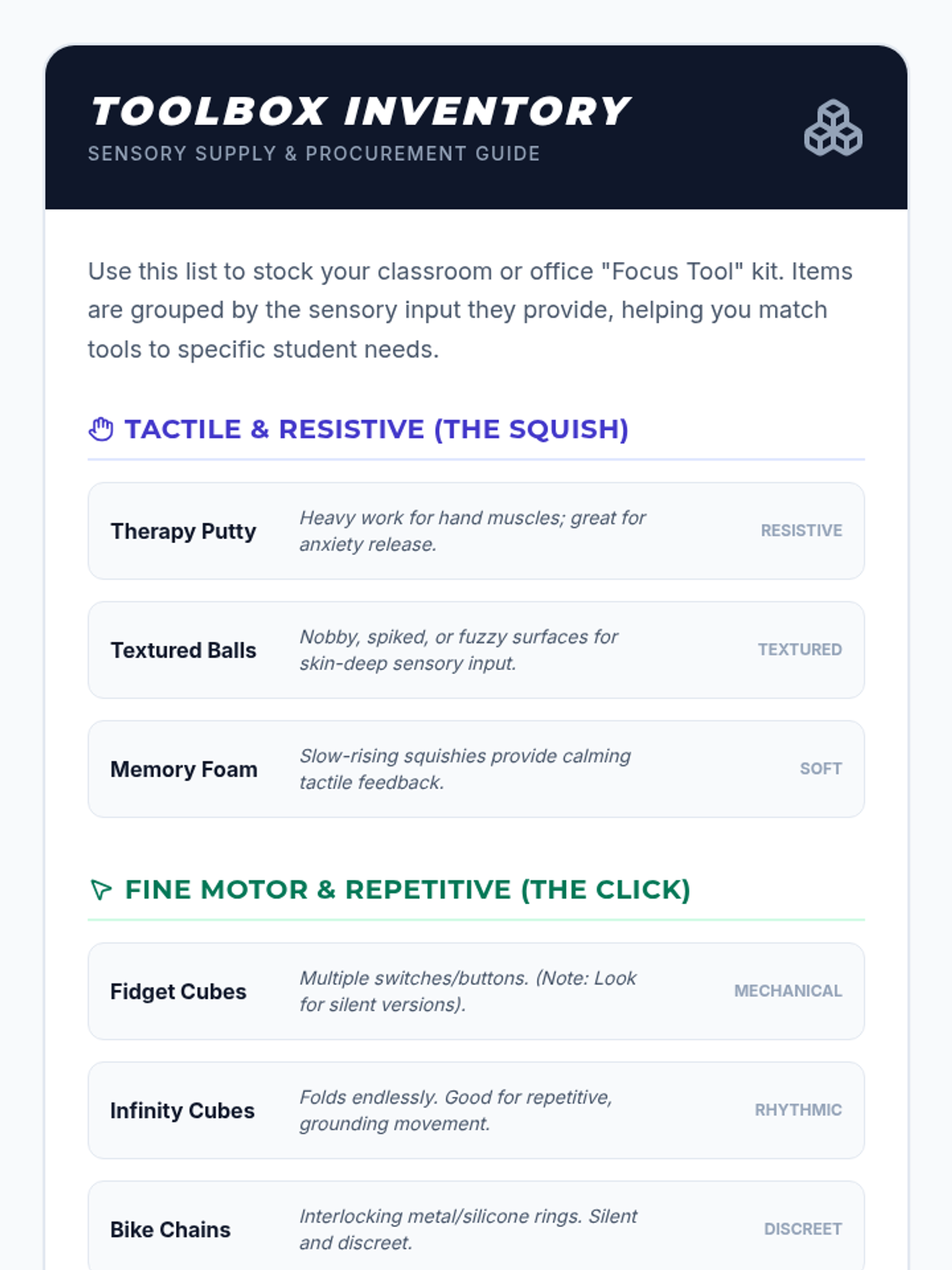
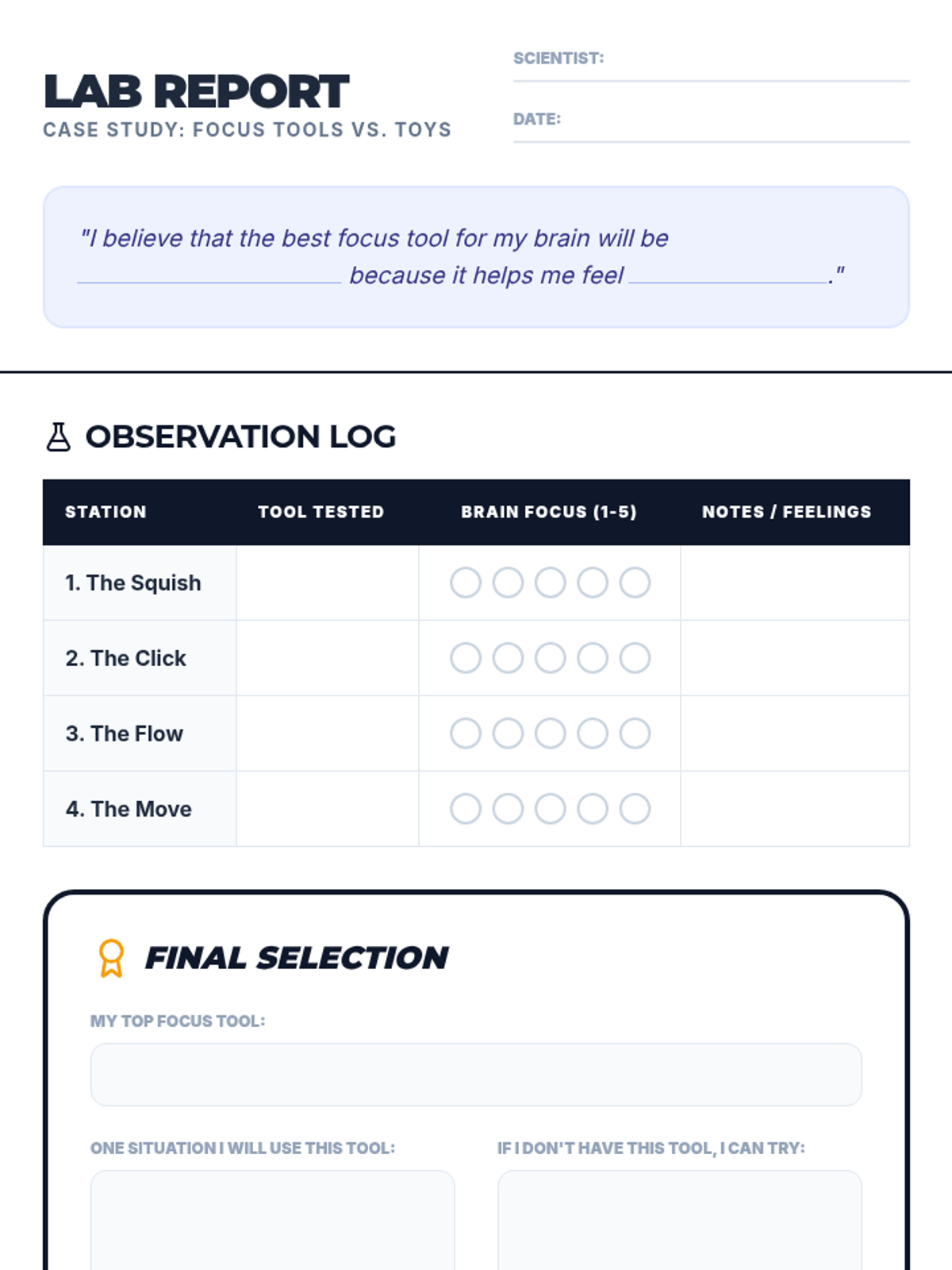
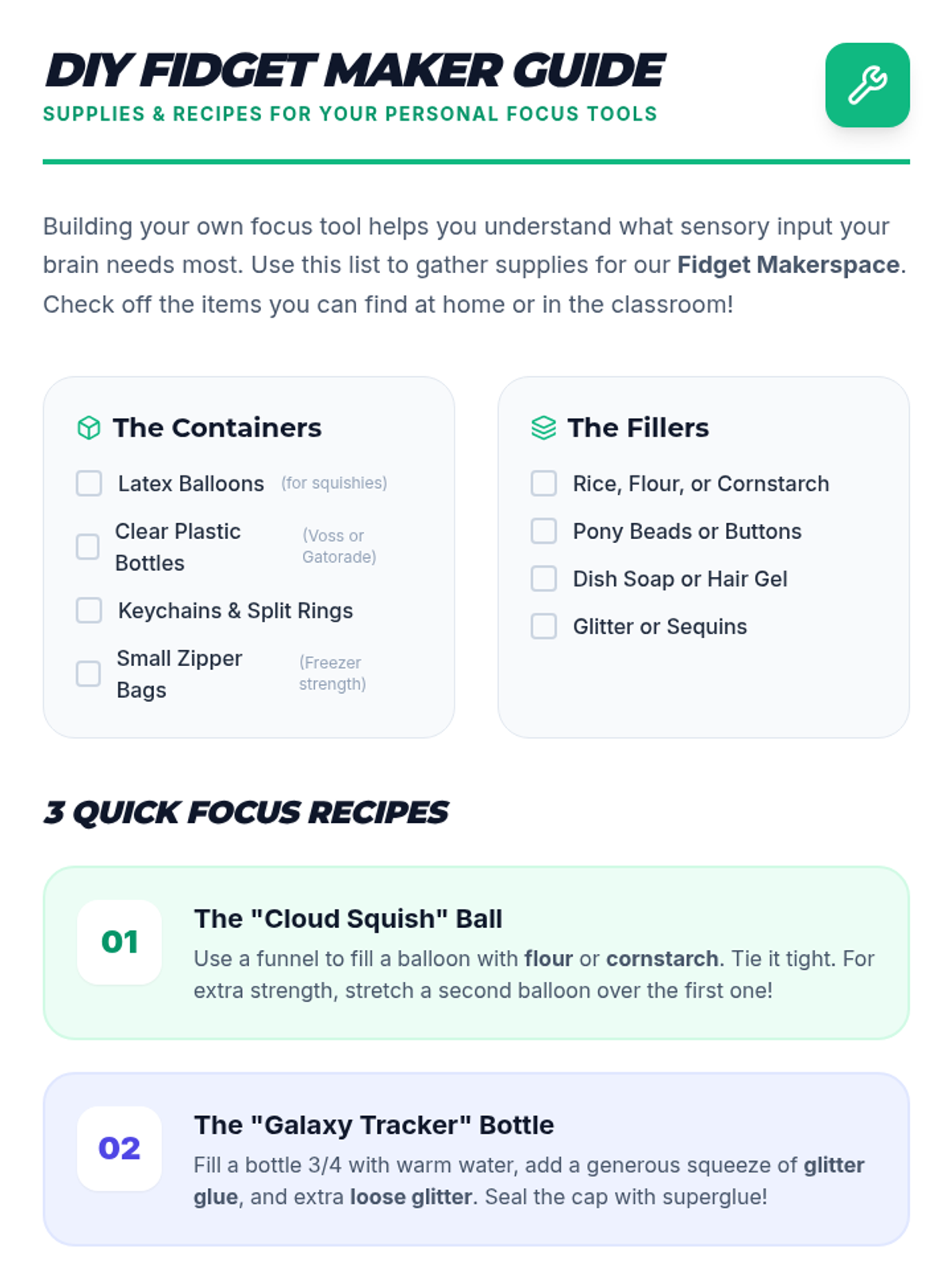
A hands-on lesson designed to help students identify and use fidget toys as effective self-regulation tools. Students will explore different sensory inputs and determine which 'focus tools' work best for their individual needs.
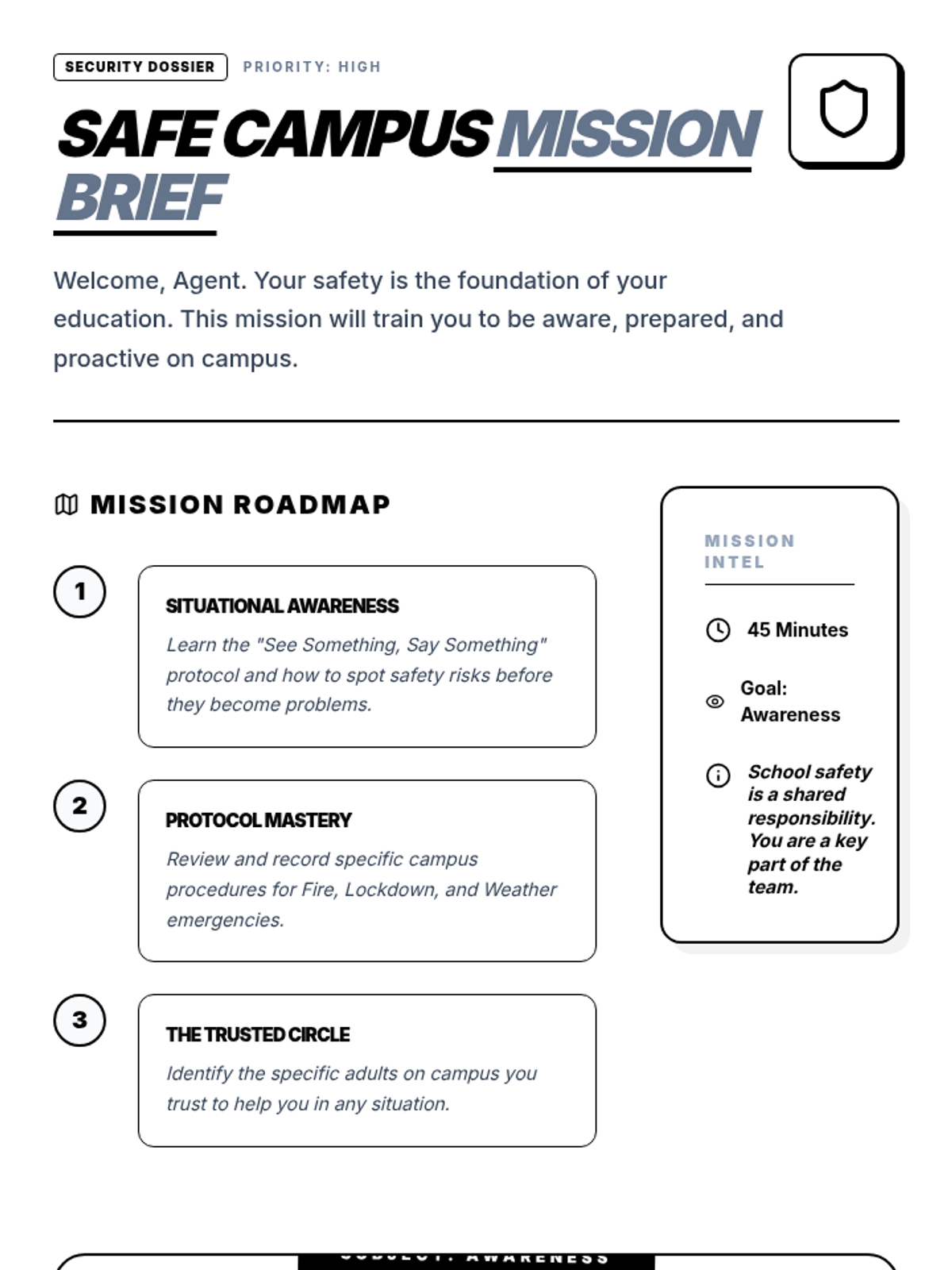
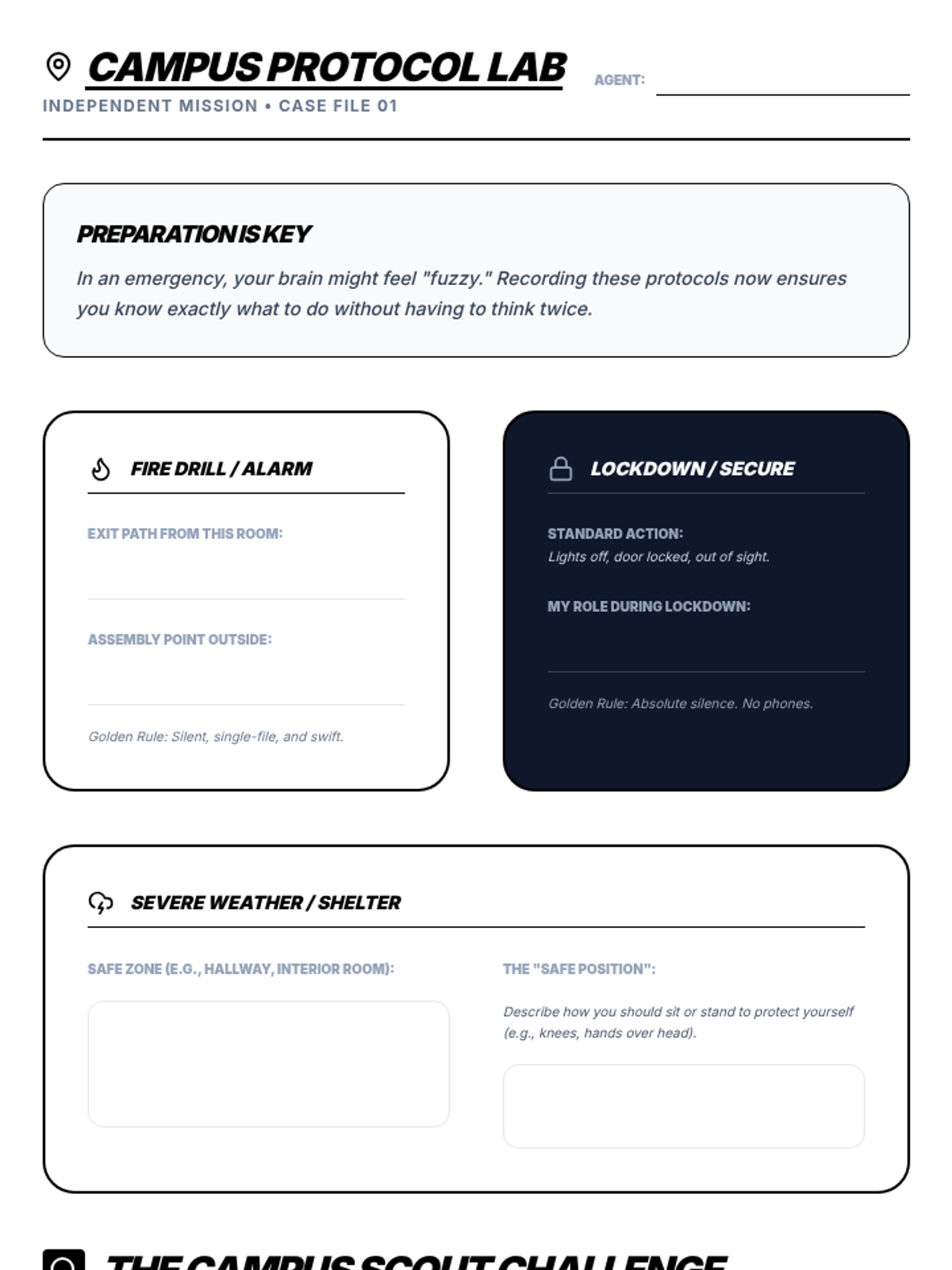
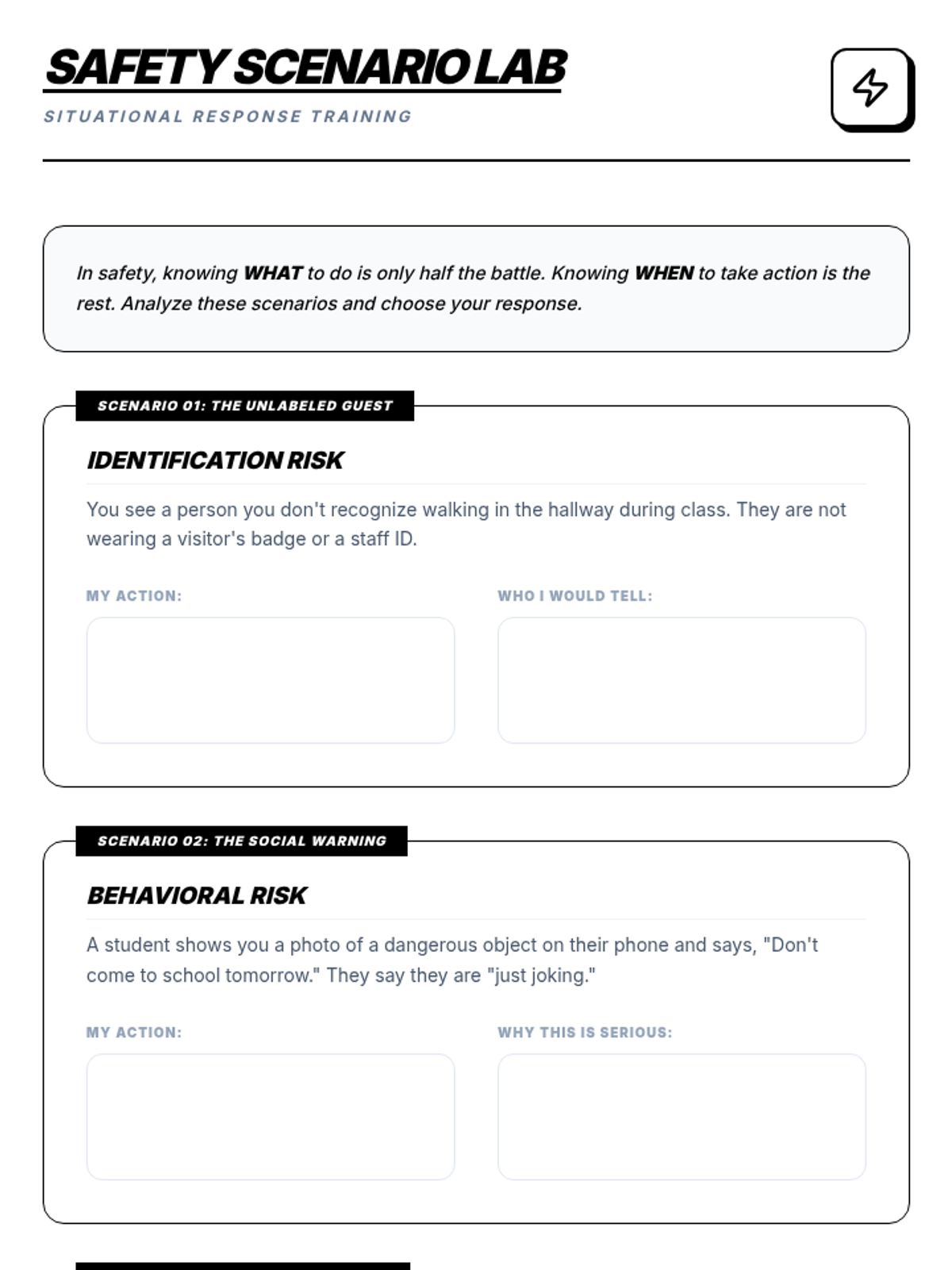
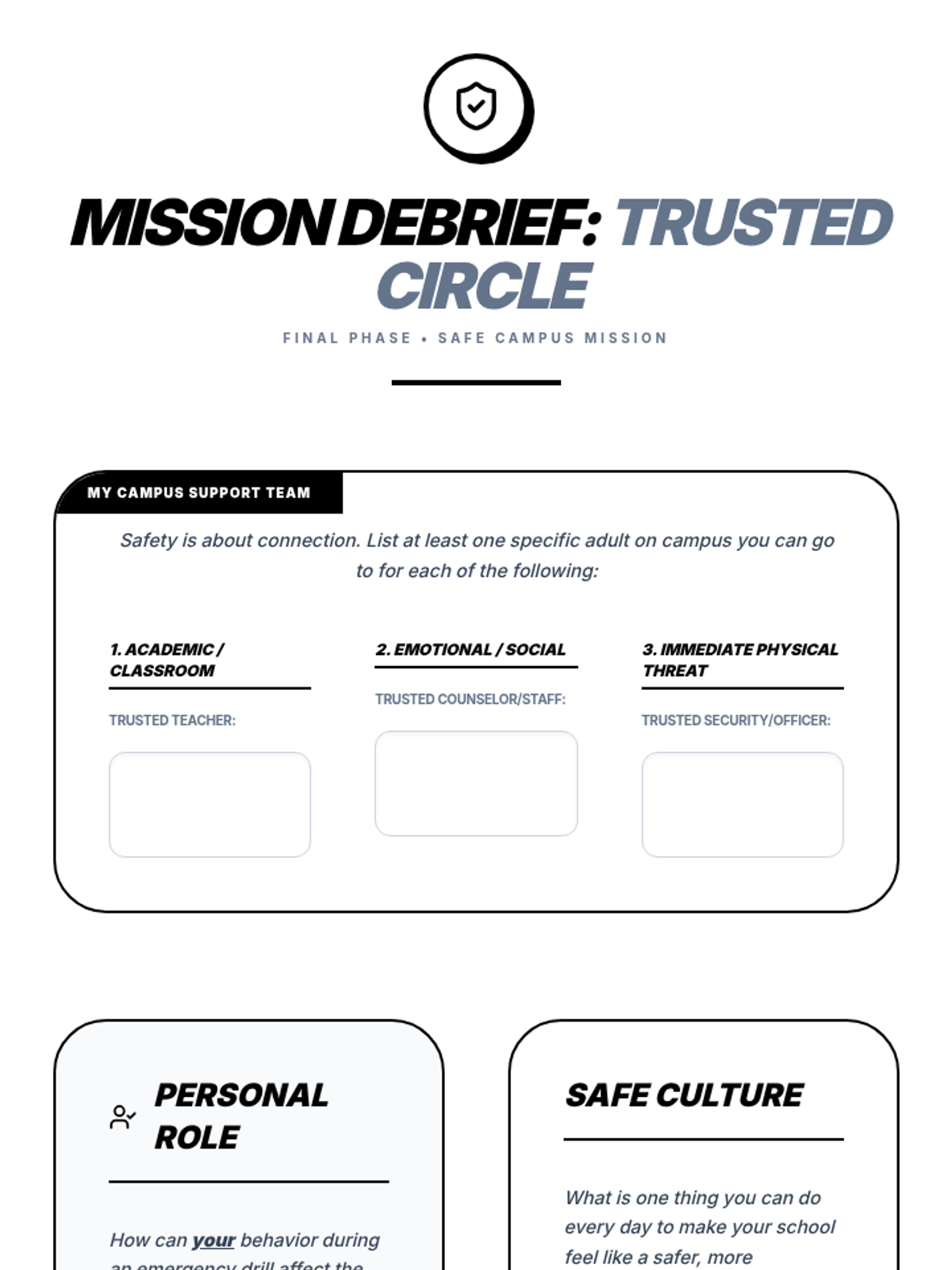
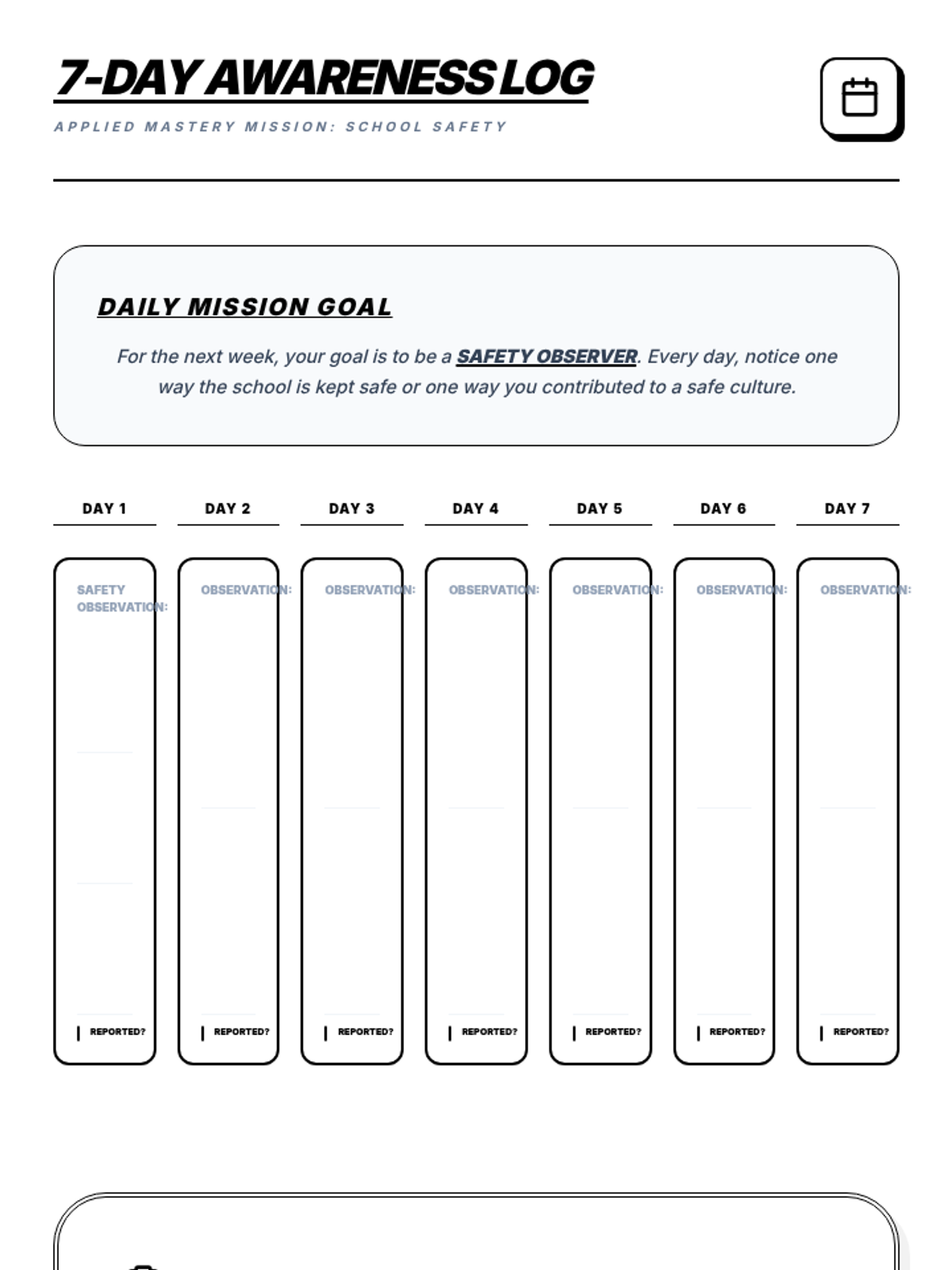
An independent mission for middle schoolers to develop situational awareness, learn campus safety protocols, and identify trusted adults for emergency communication.
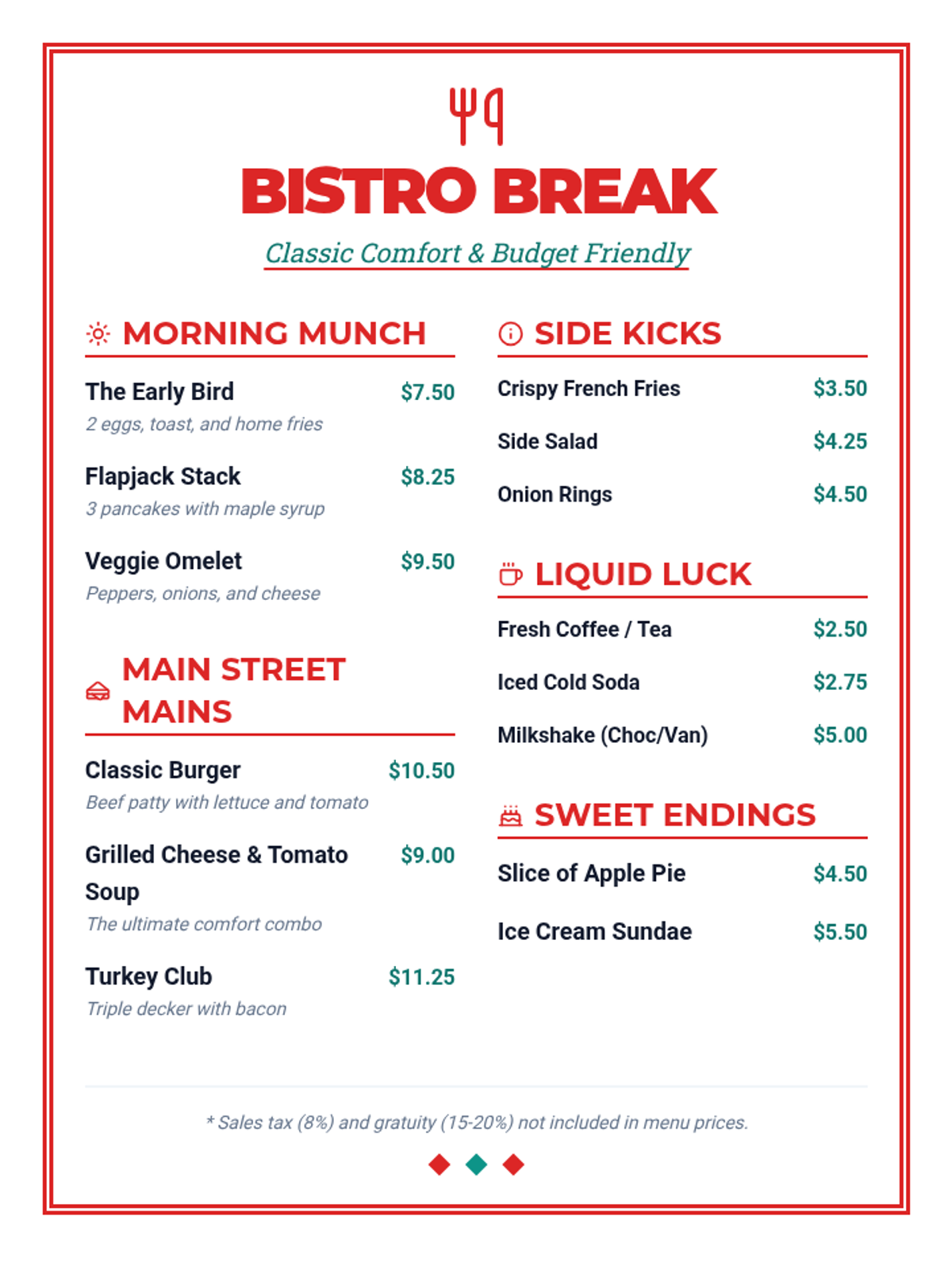
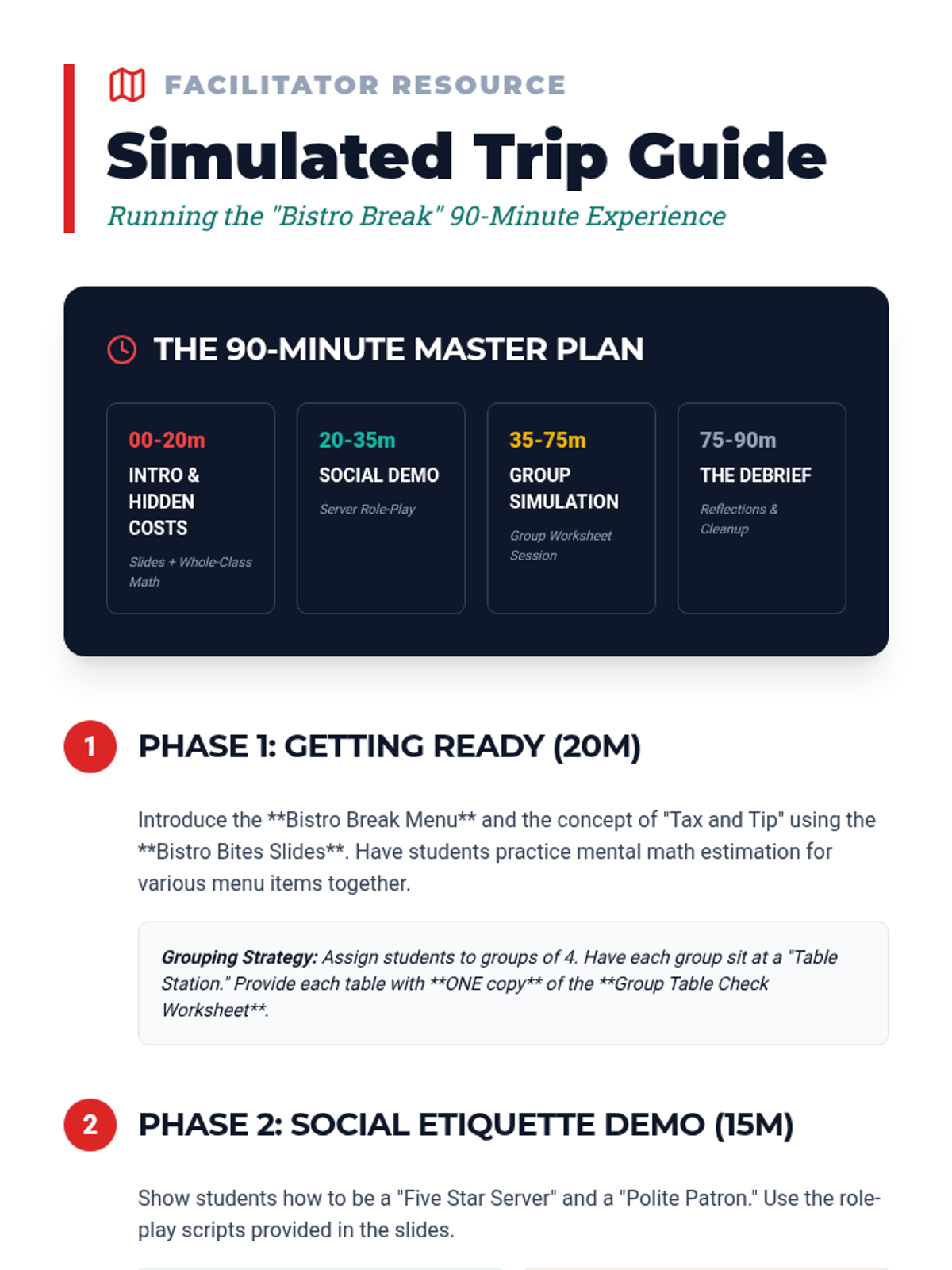
A functional skills lesson focused on navigating a restaurant experience on a budget, covering menu reading, budget planning, social etiquette, and group check splitting.
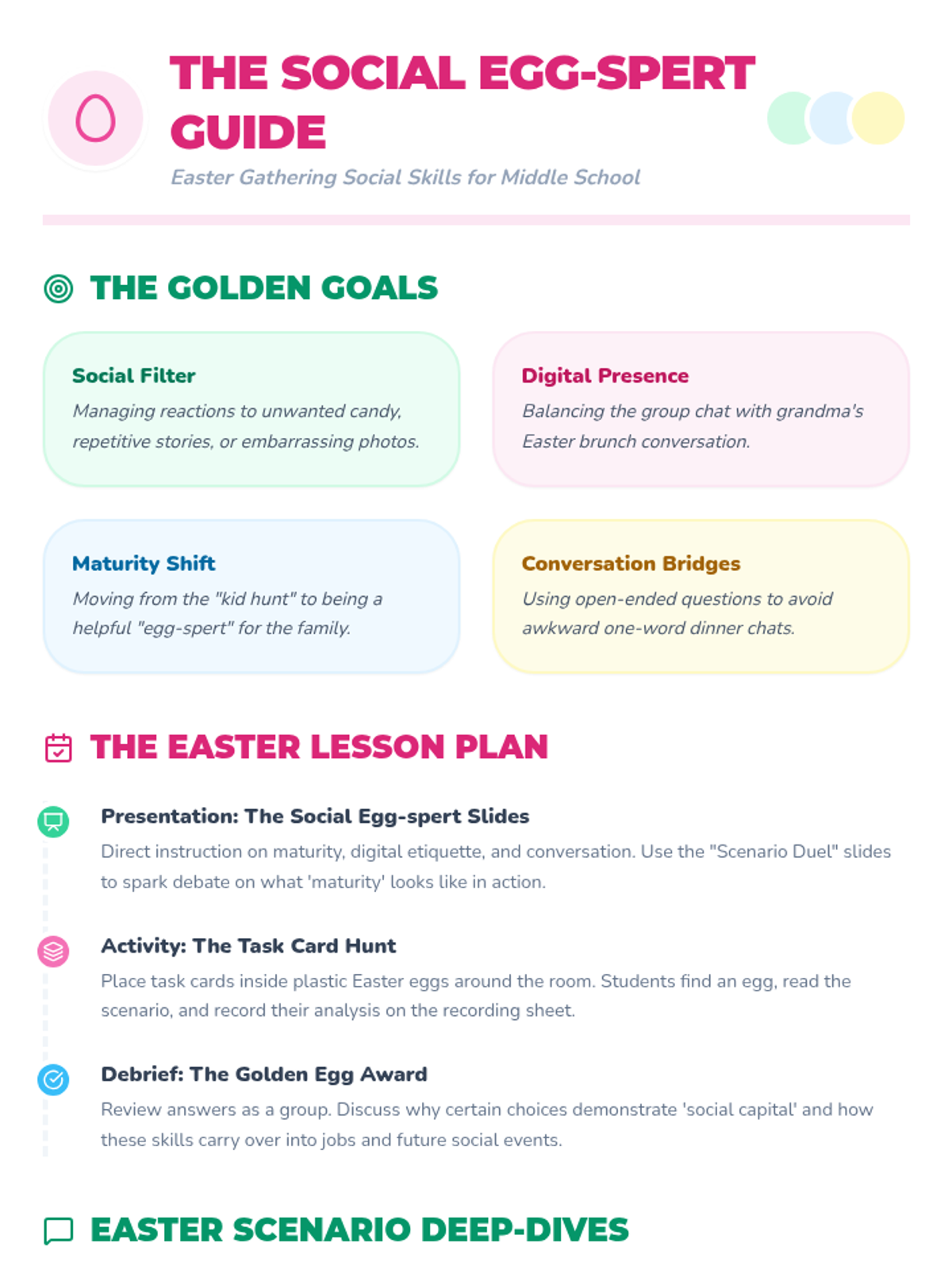
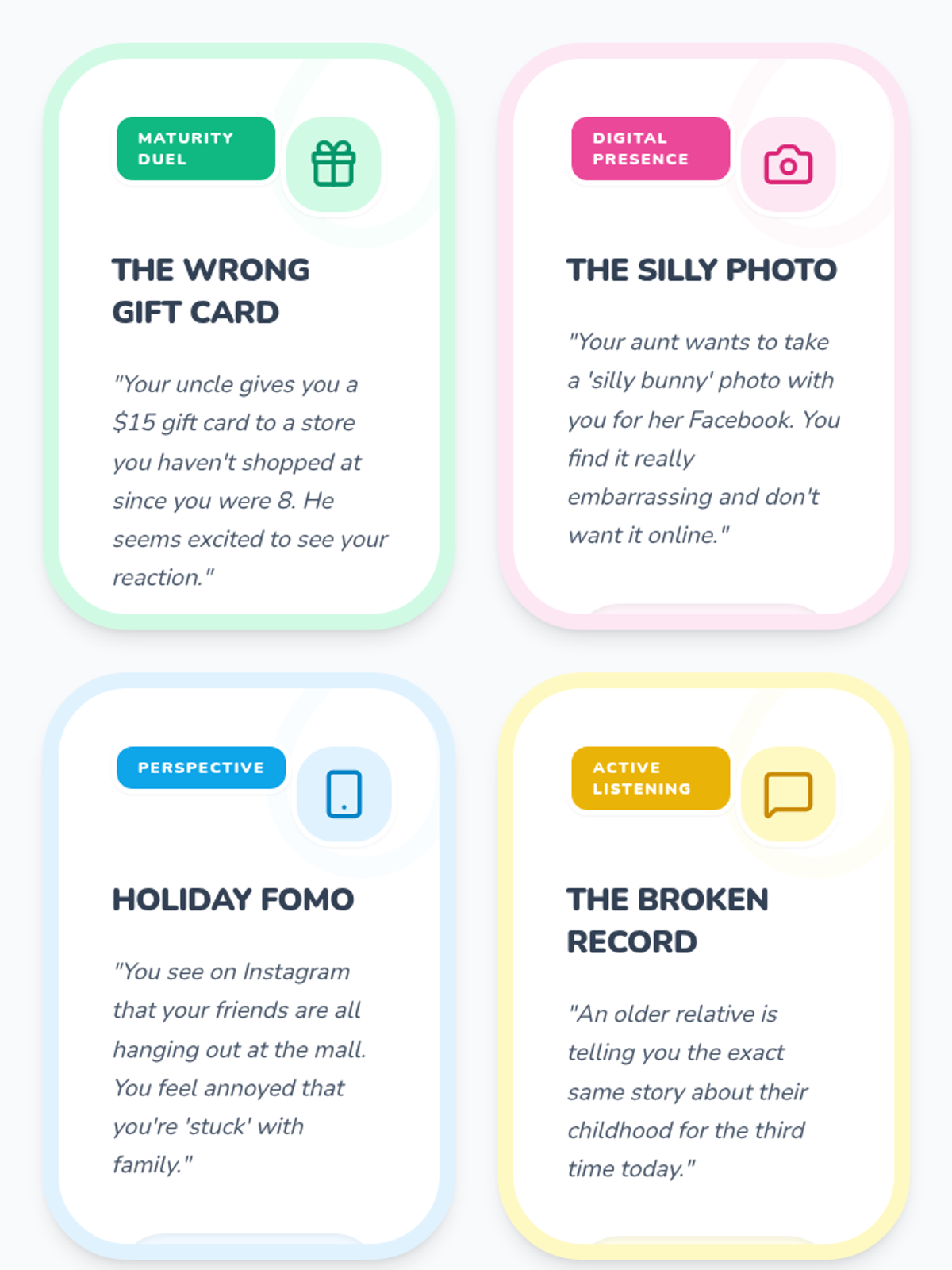
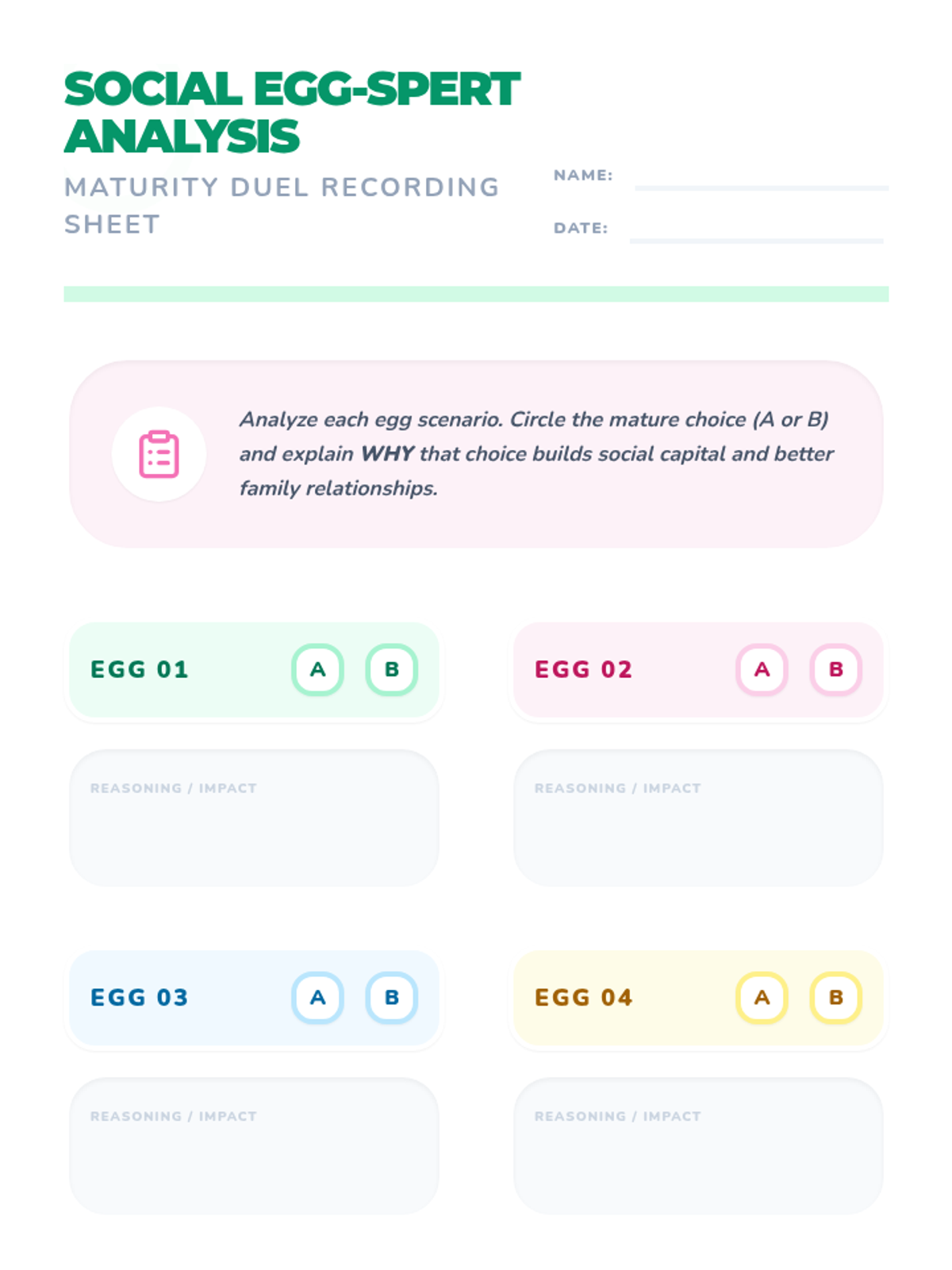
A social skills lesson focused on navigating common holiday situations like family gatherings, egg hunts, and conversations using an Easter theme. Includes interactive slides for group discussion and printable task cards for practice.
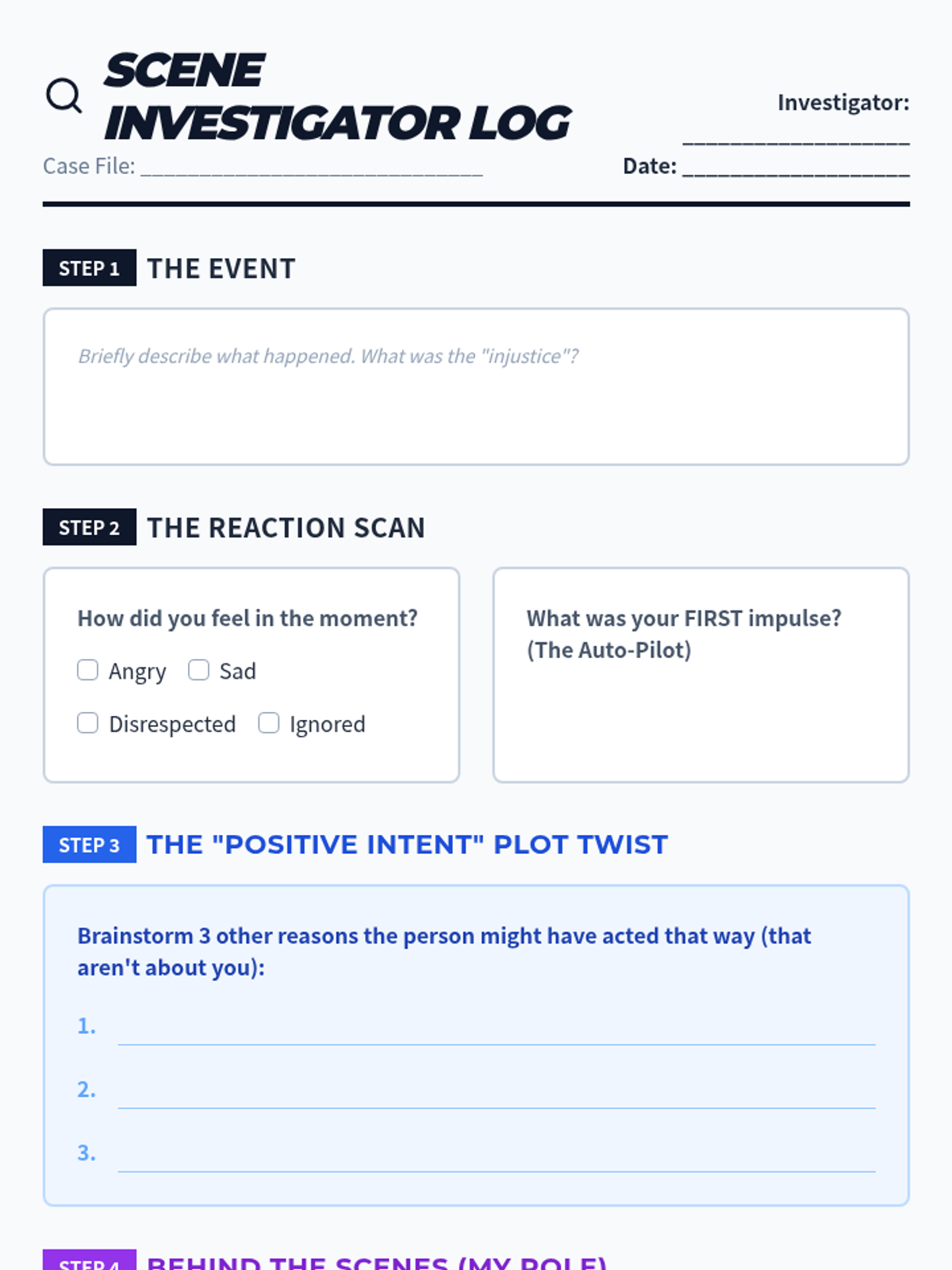
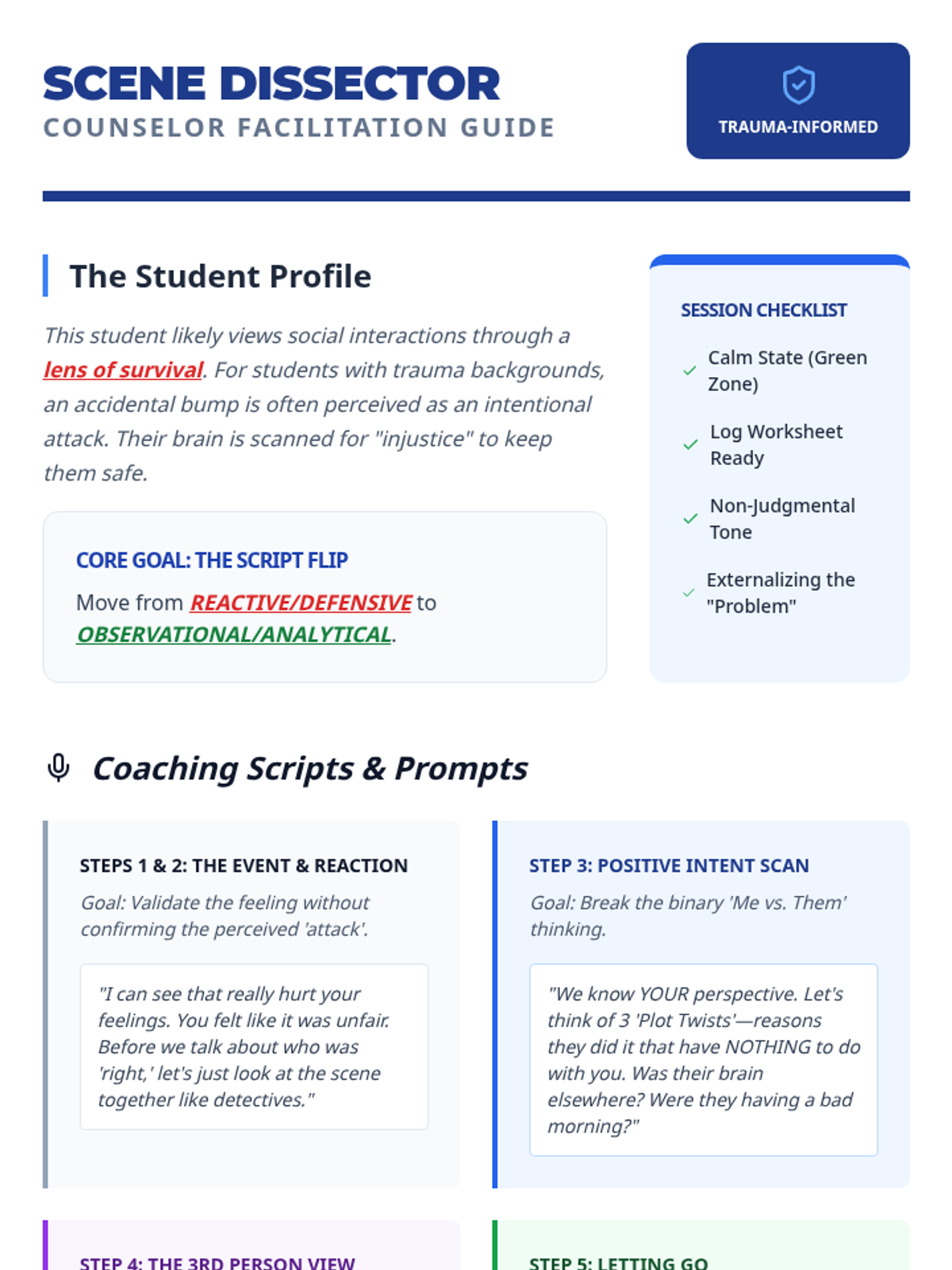
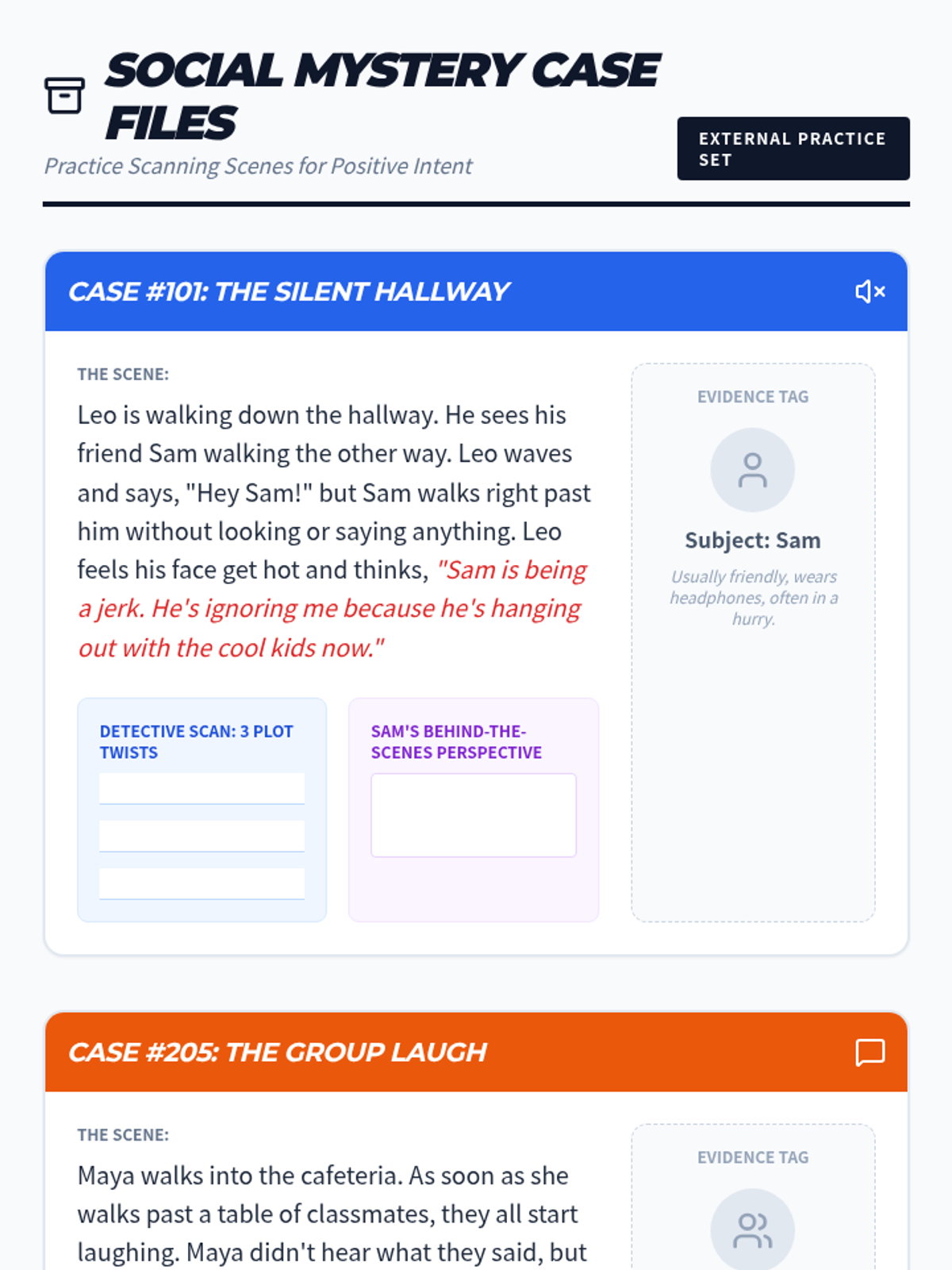
A social-emotional learning lesson designed for students with trauma backgrounds and impulse control challenges. It focuses on 'Scene Scanning'—assuming positive intent and dissecting social interactions through a detective-style lens to improve perspective-taking and reduce reactivity.
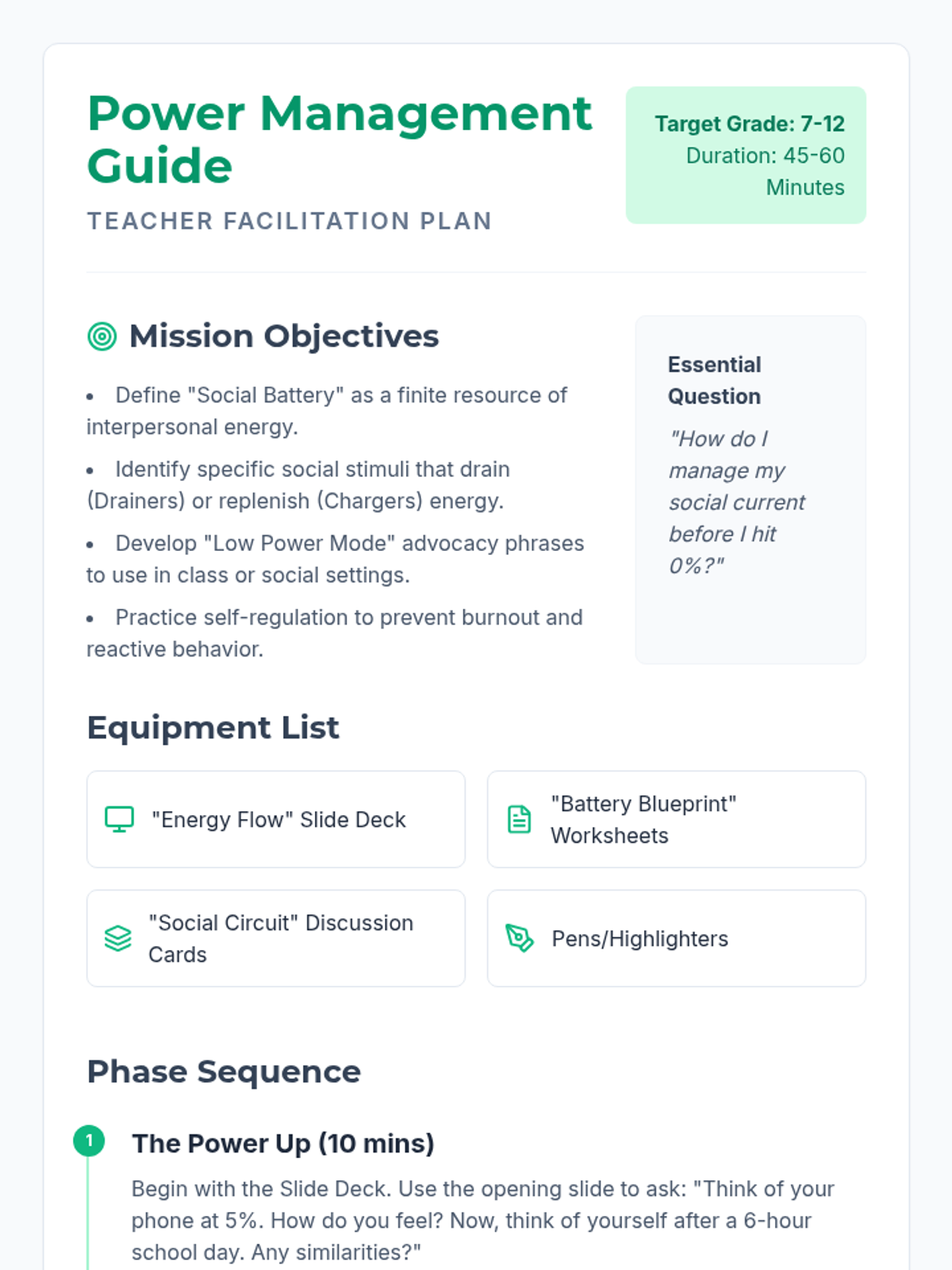
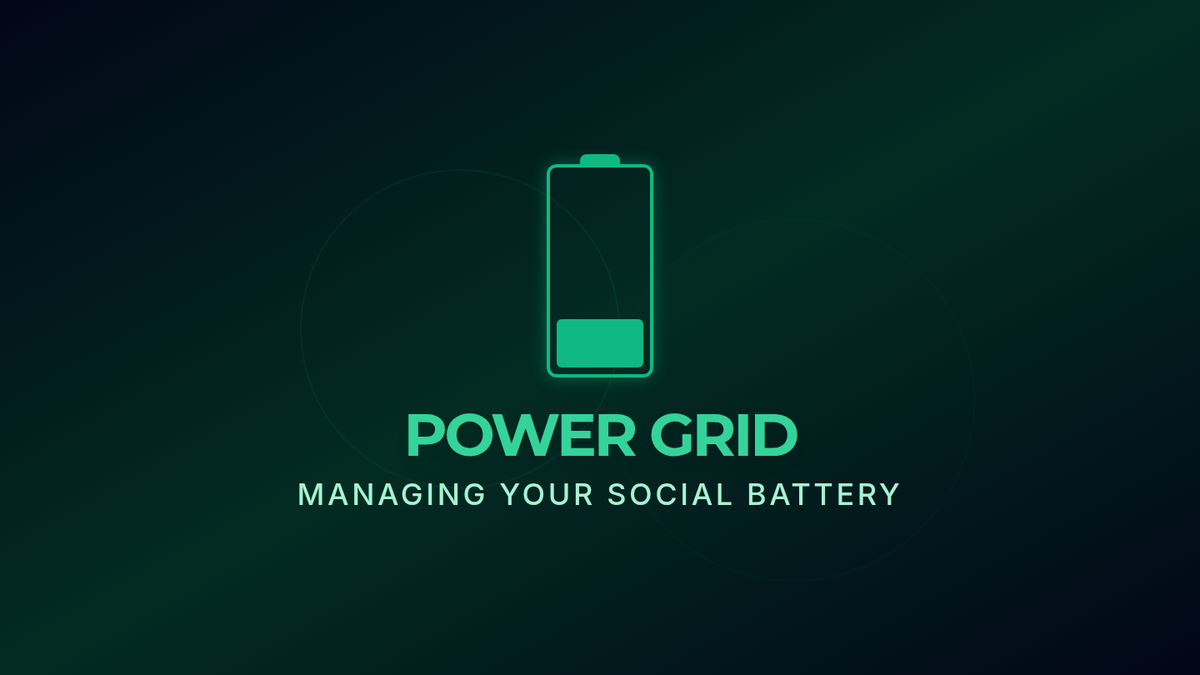
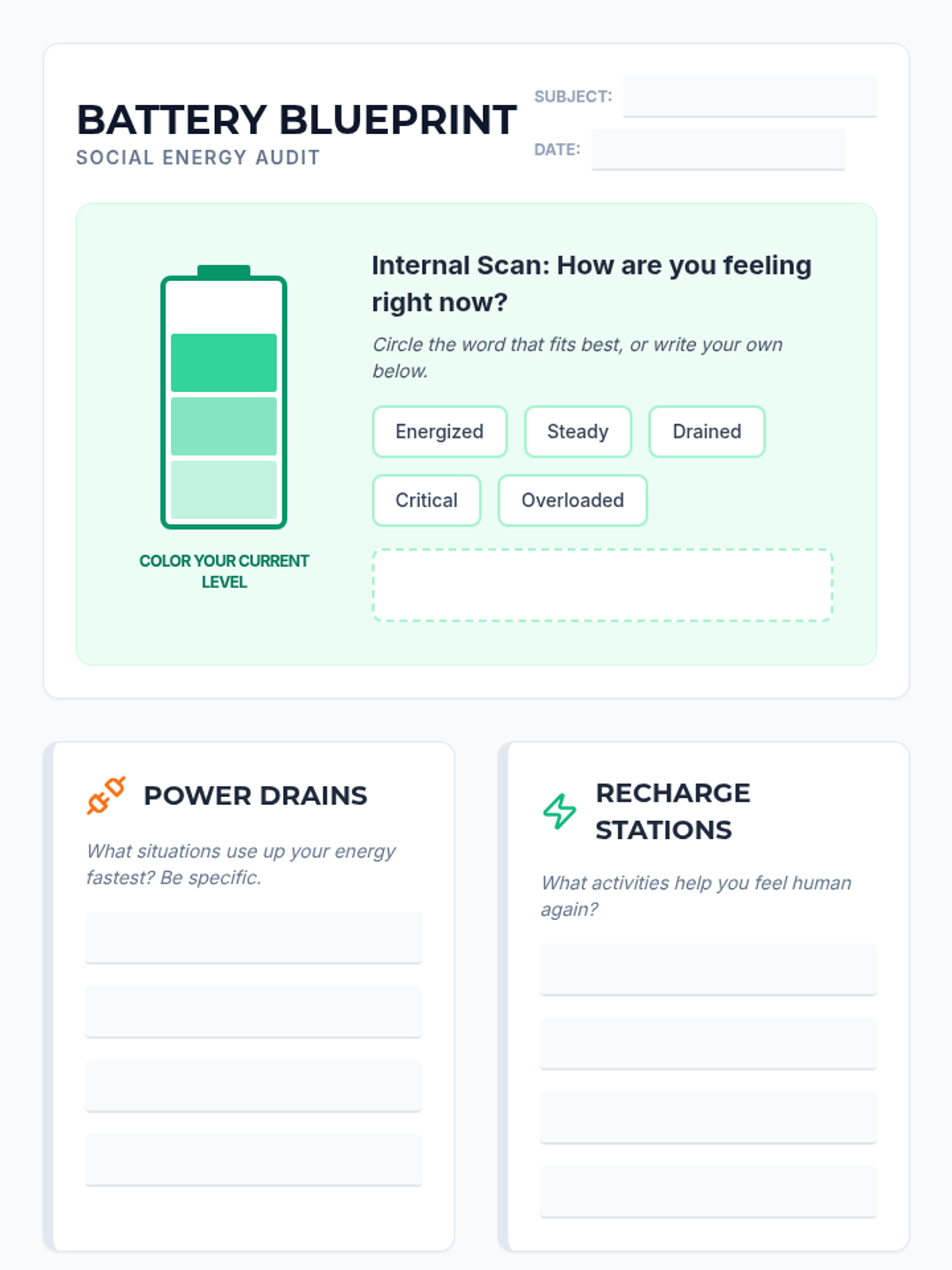
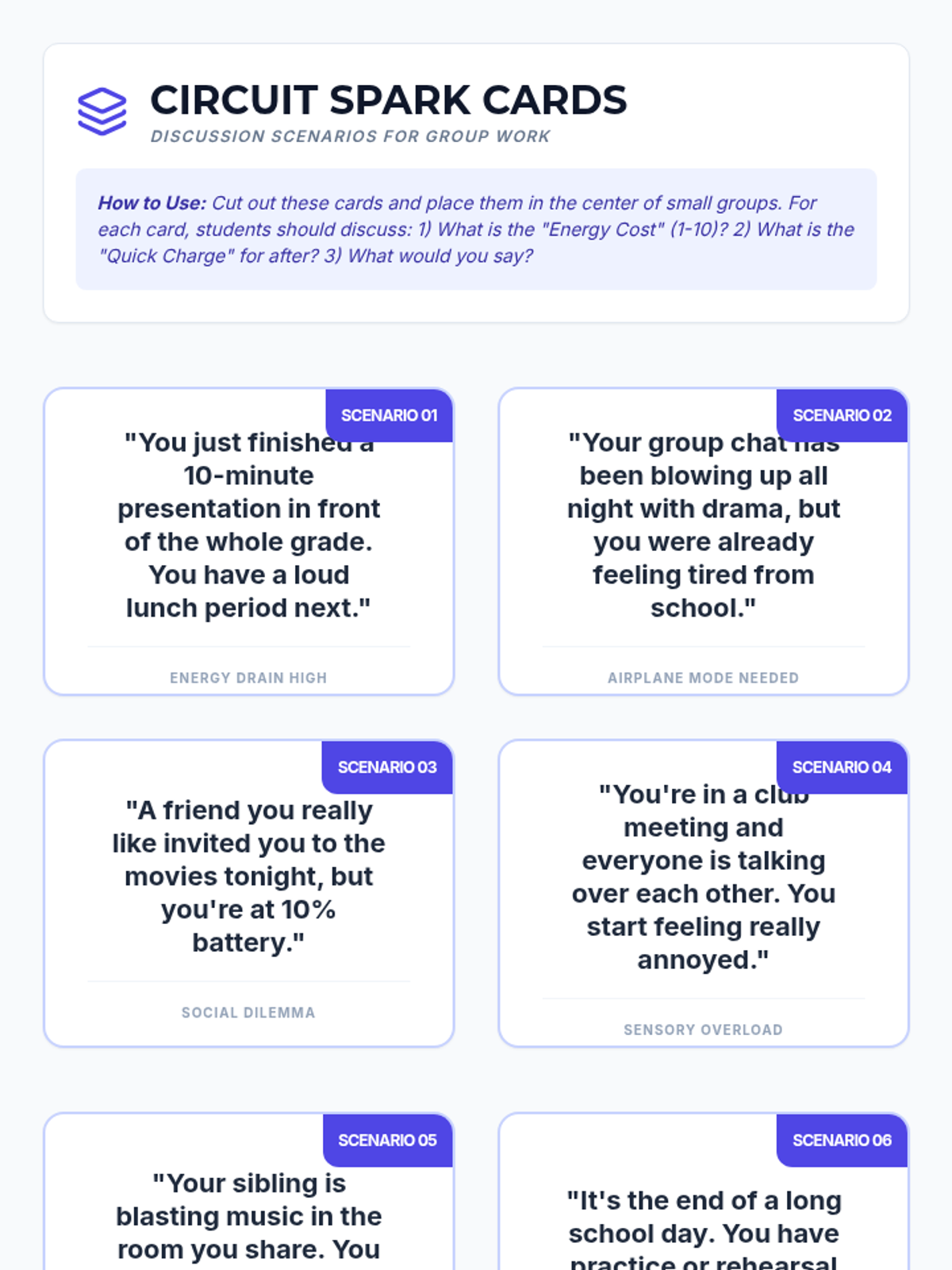
A comprehensive lesson for teens to visualize their social energy as a battery, identifying personal 'drainers' and 'chargers' to develop self-regulation and burnout prevention strategies.
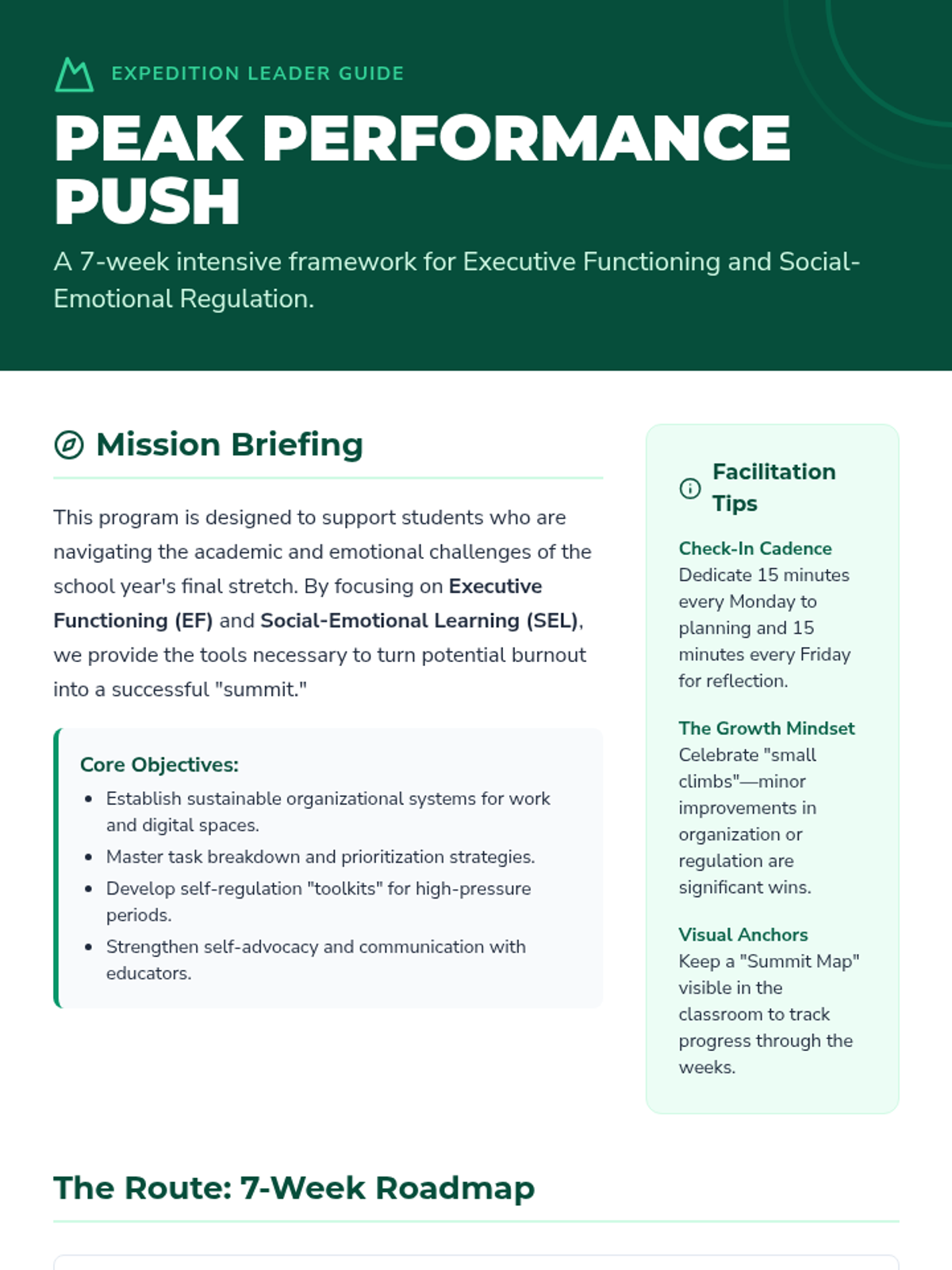
Identification of emotional triggers and the development of a 'toolbox' of regulation strategies for when things get difficult.
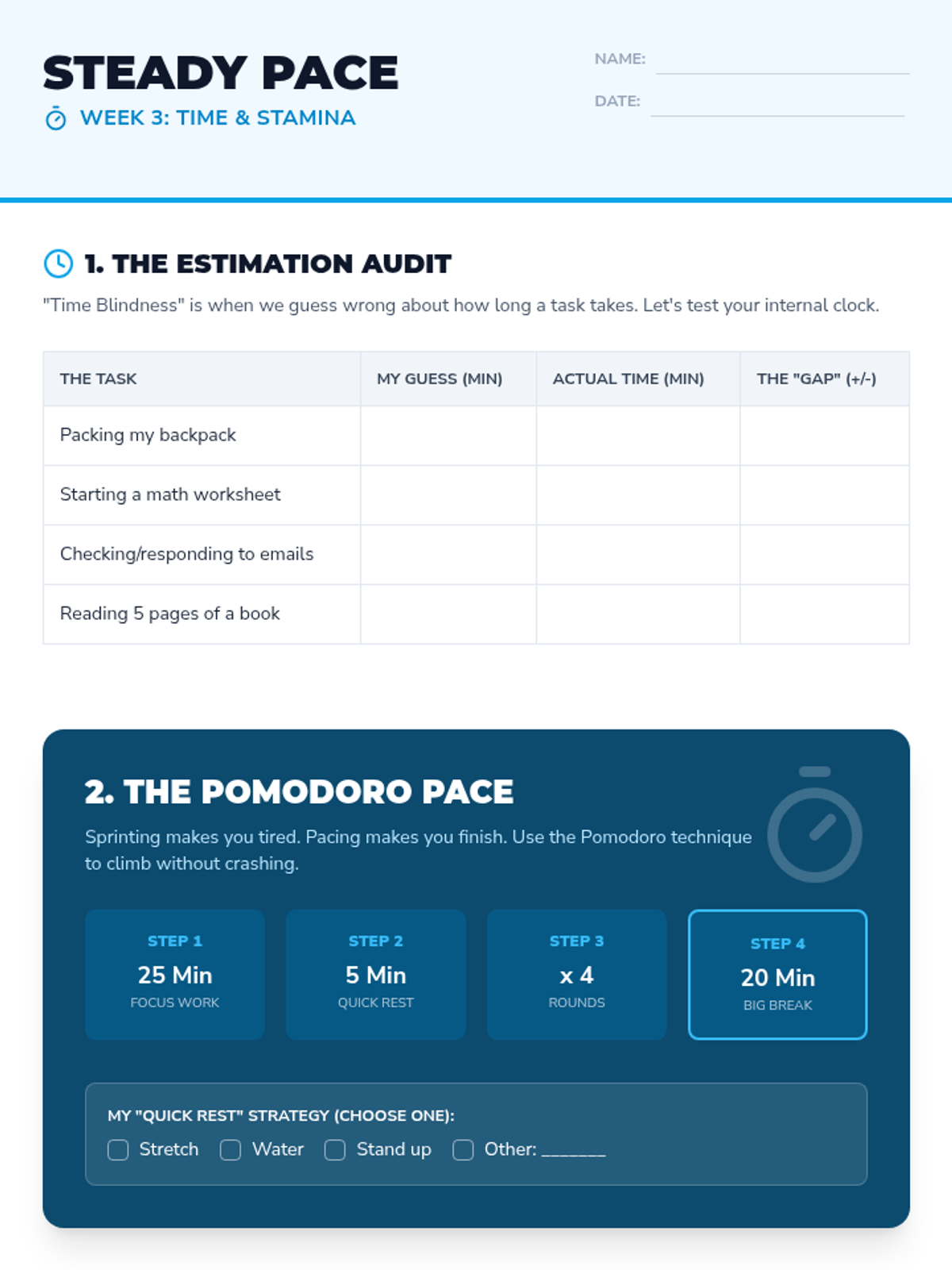
Teaching students how to estimate time for tasks and build a sustainable weekly schedule.
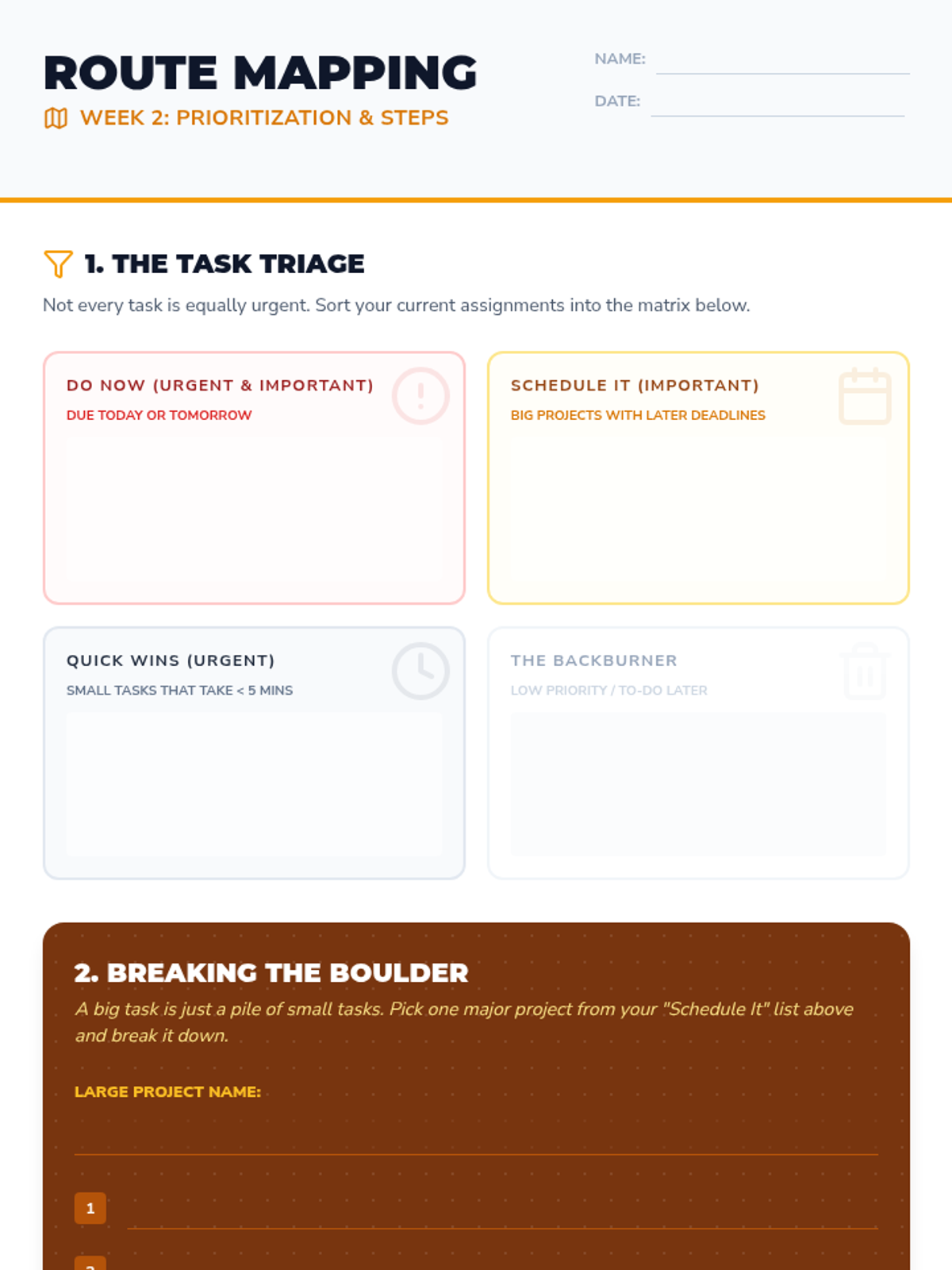
Focuses on breaking down large tasks into smaller, manageable steps and prioritizing work based on deadlines and importance.
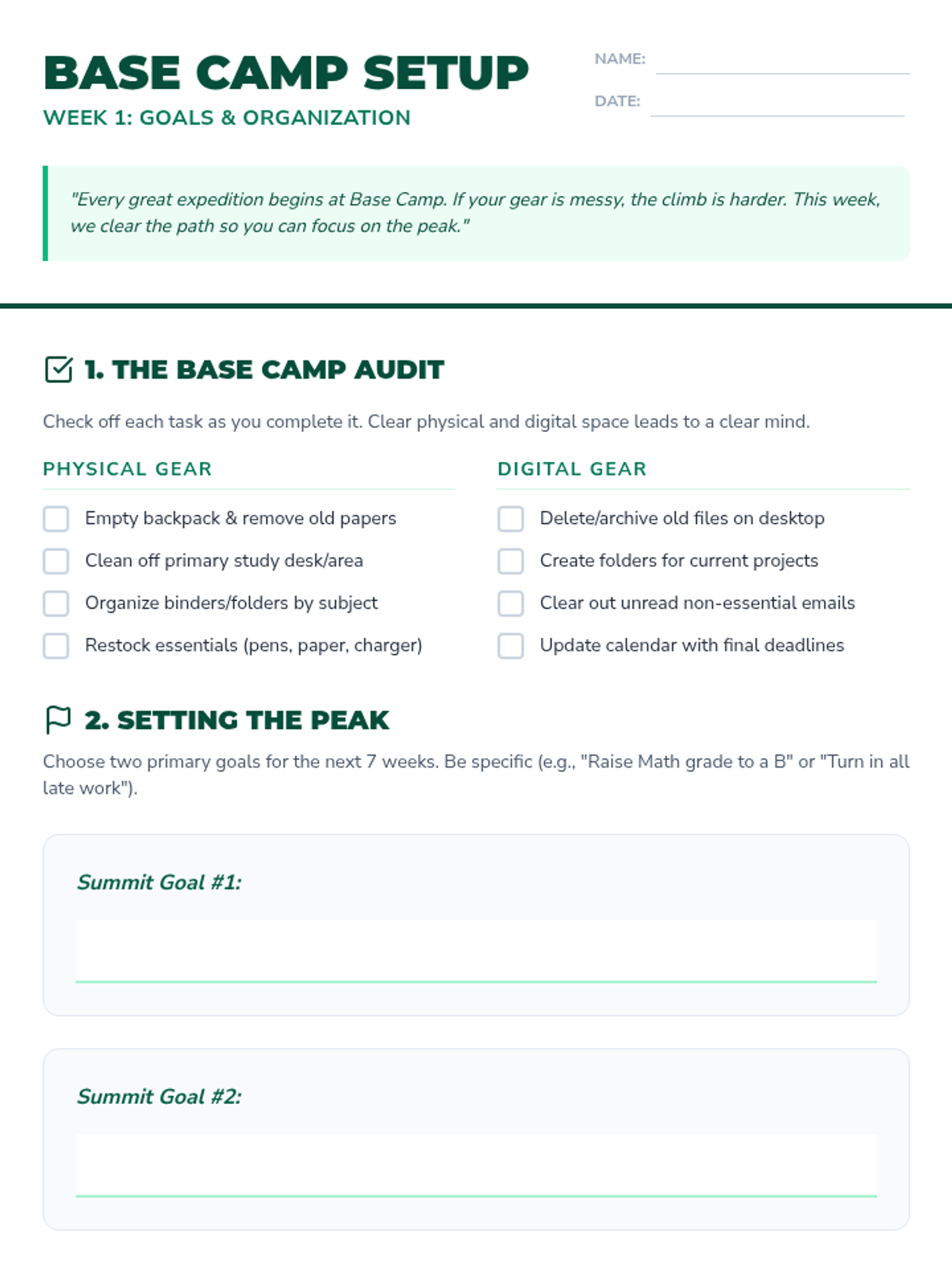
Students will organize their physical workspace, digital files, and set primary academic goals for the final 7 weeks.
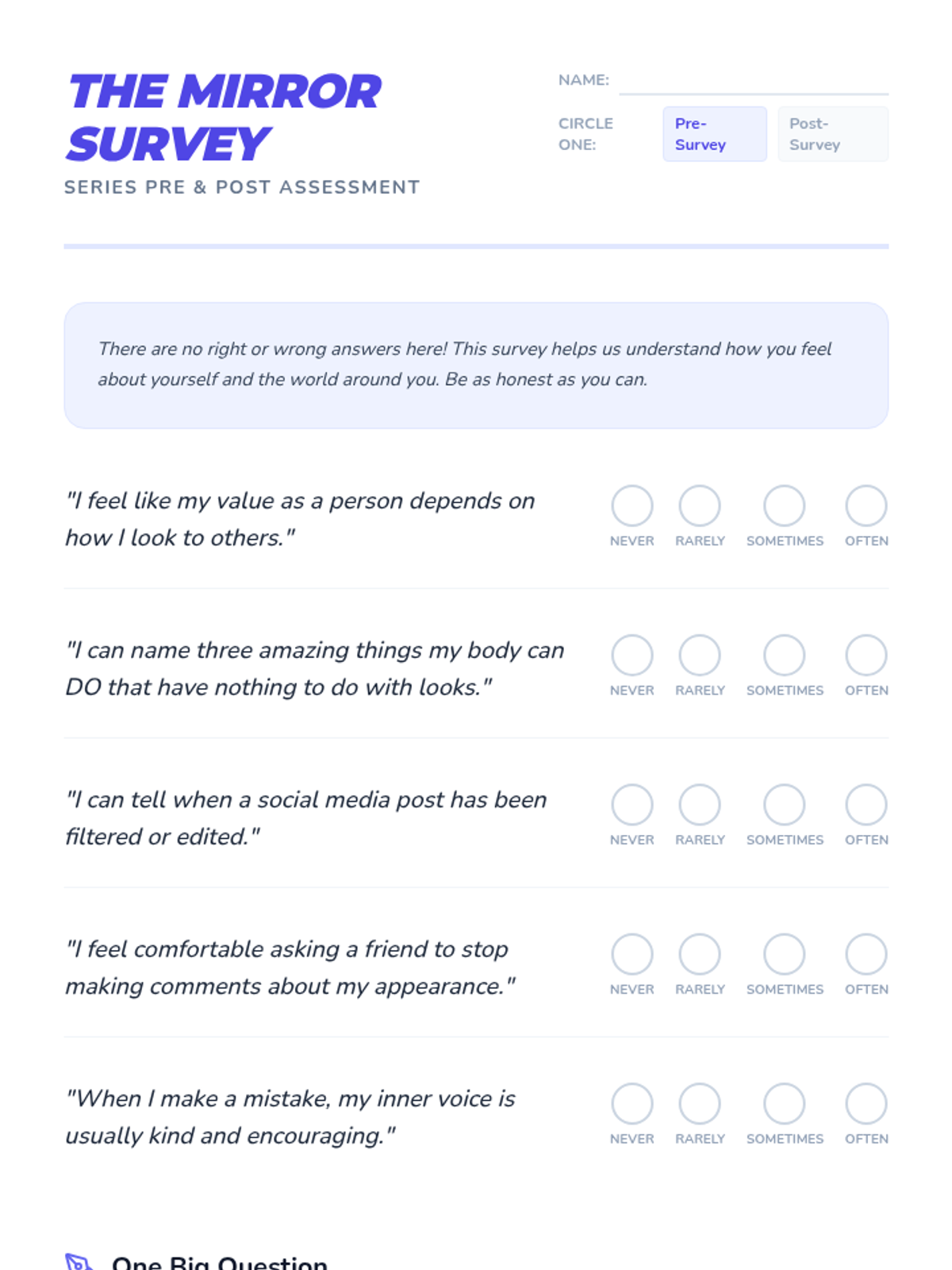
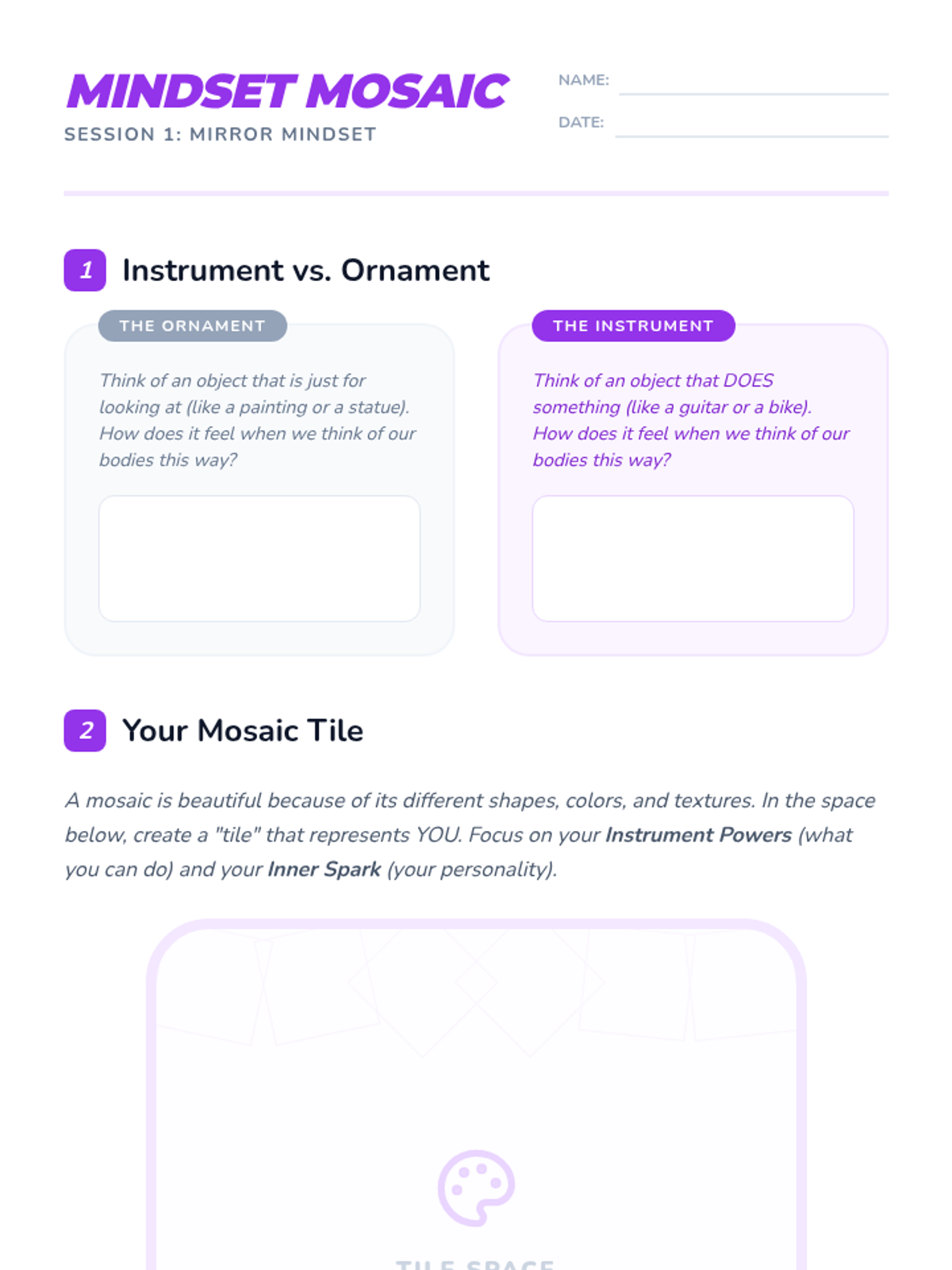
An overview of body diversity, neutrality, and media literacy, shifting focus from ornaments to instruments.