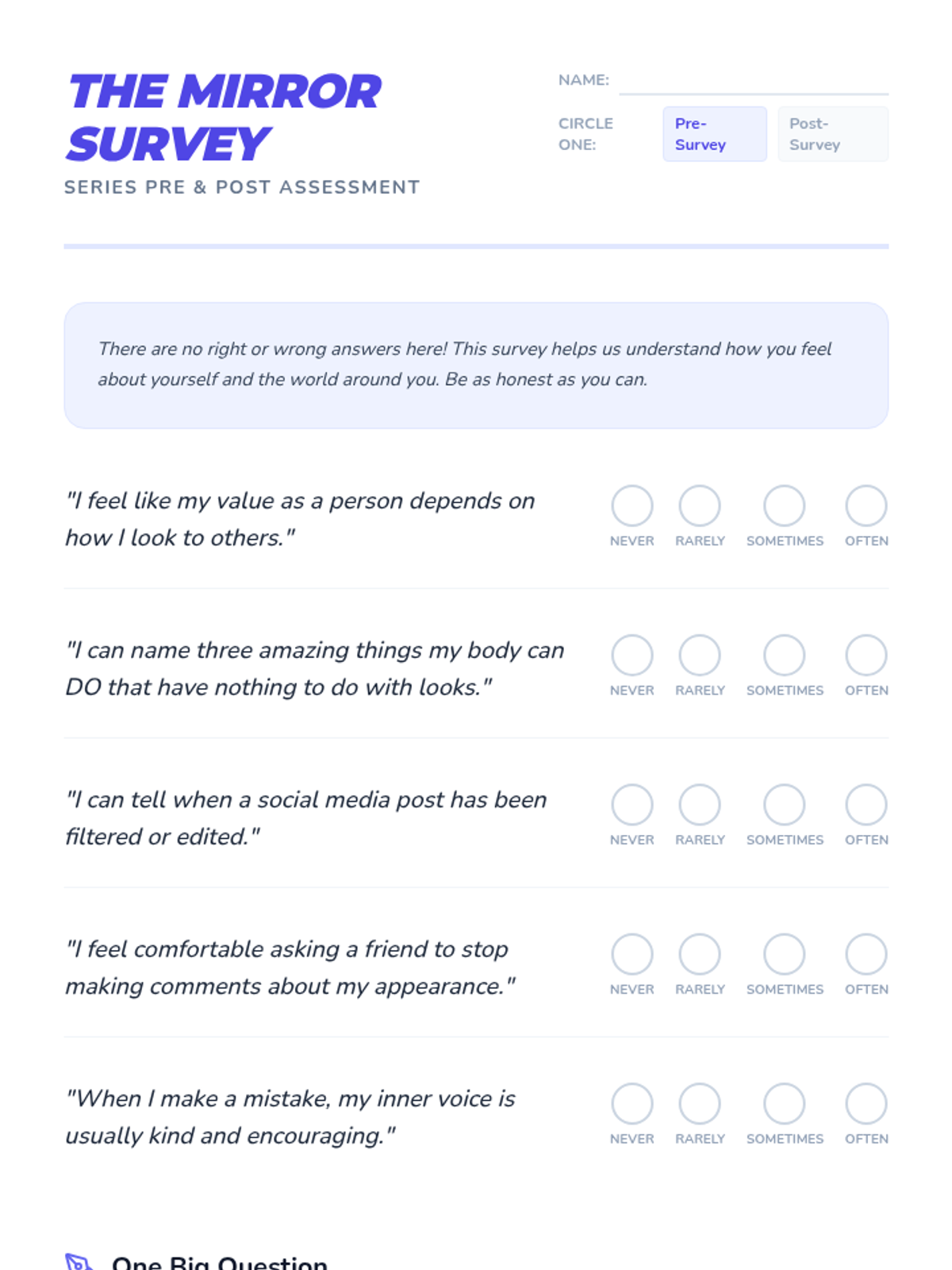
Emotion recognition ranging from basic feelings to complex nuances and mixed states. Strengthens accurate self-assessment through identity exploration, strength identification, and values-based decision making.
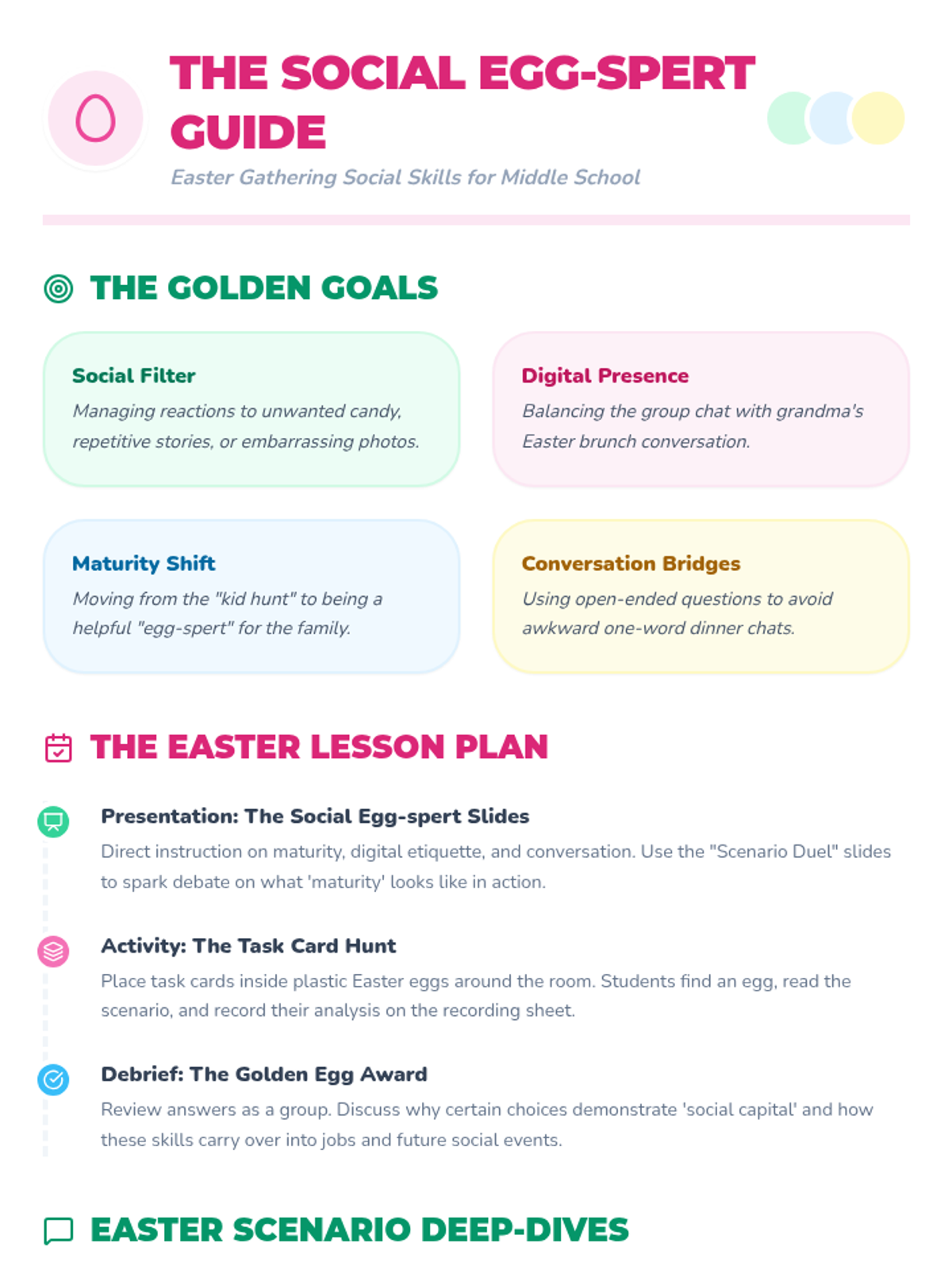
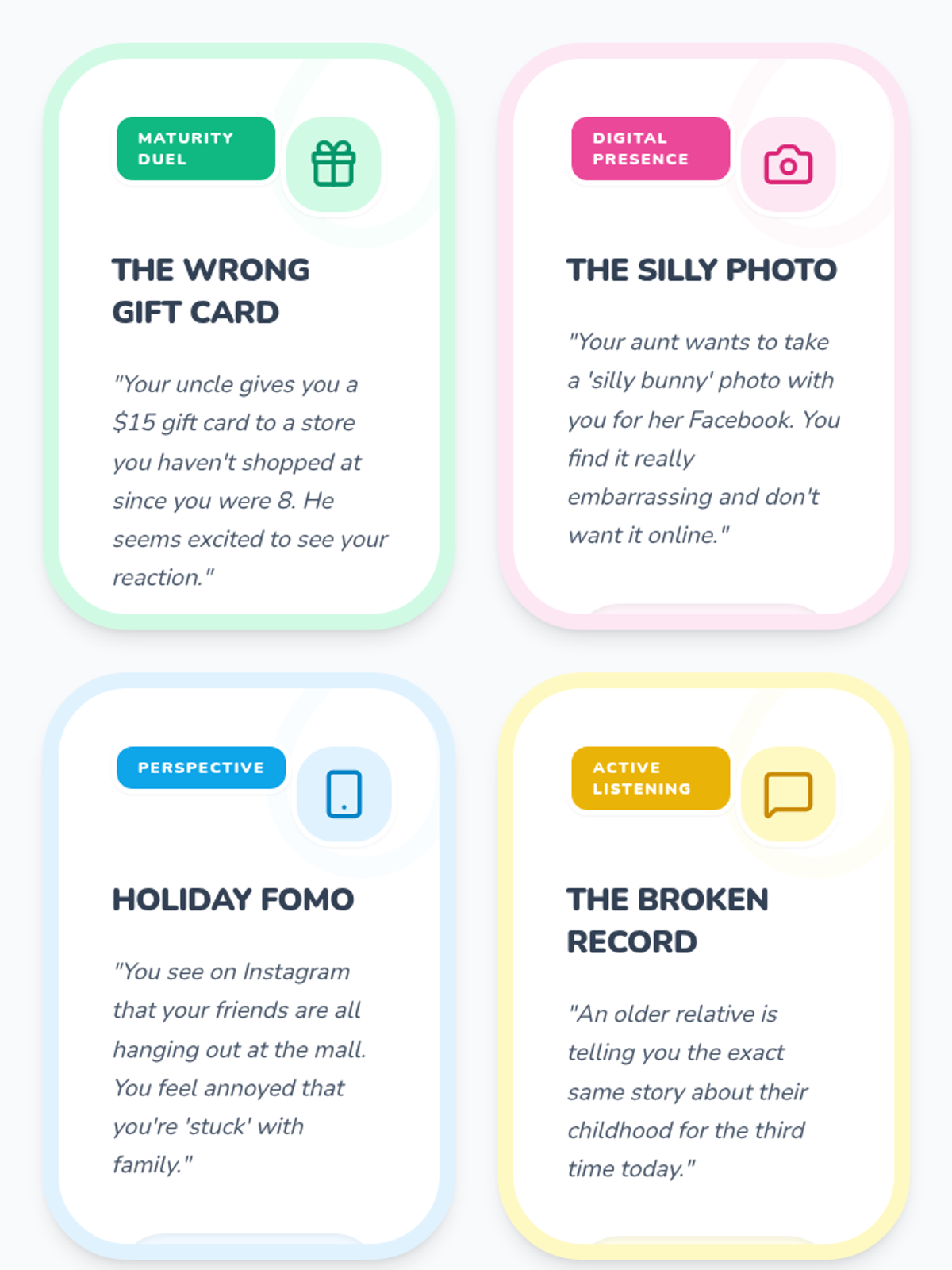
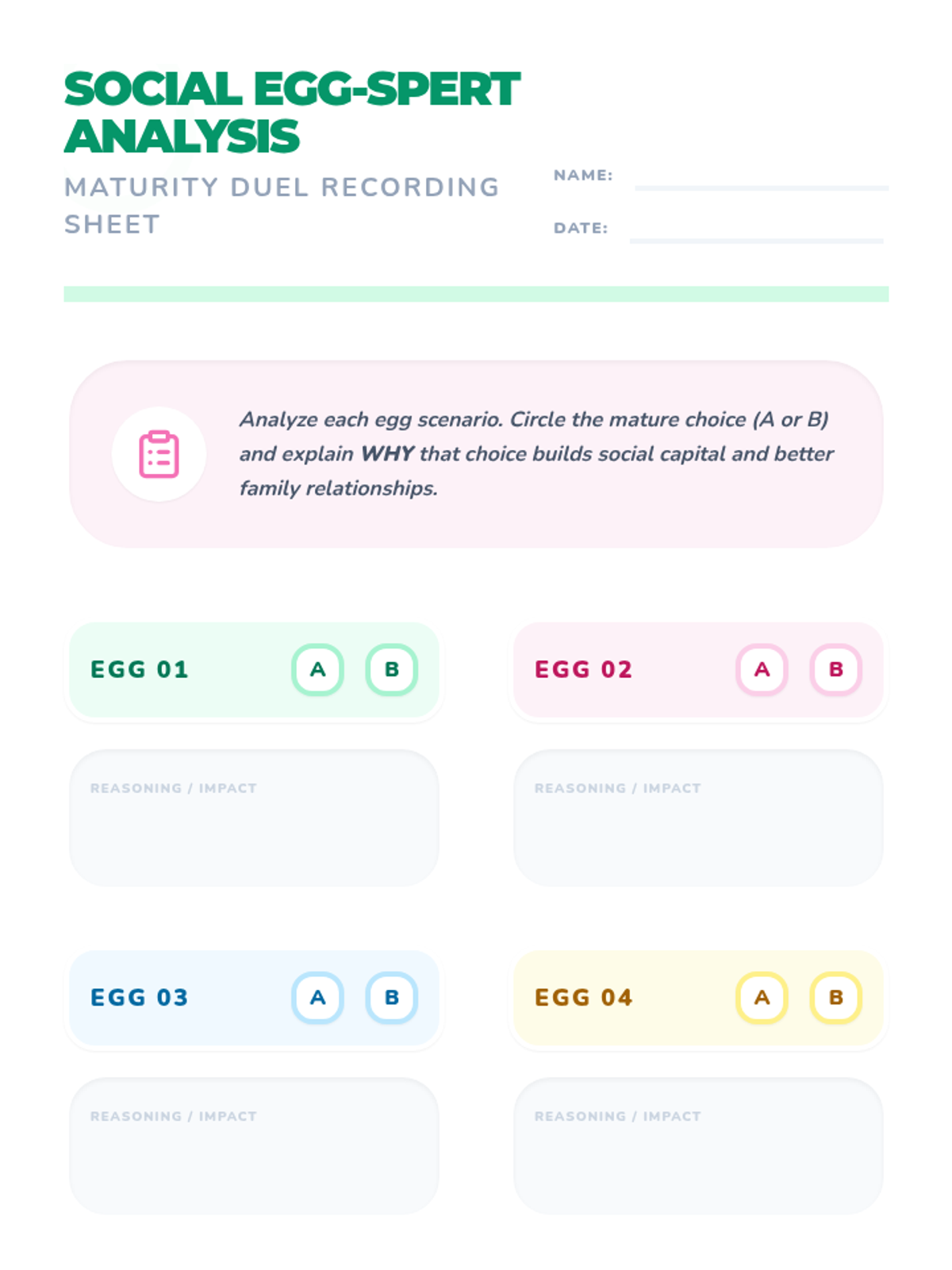
A social skills lesson focused on navigating common holiday situations like family gatherings, egg hunts, and conversations using an Easter theme. Includes interactive slides for group discussion and printable task cards for practice.
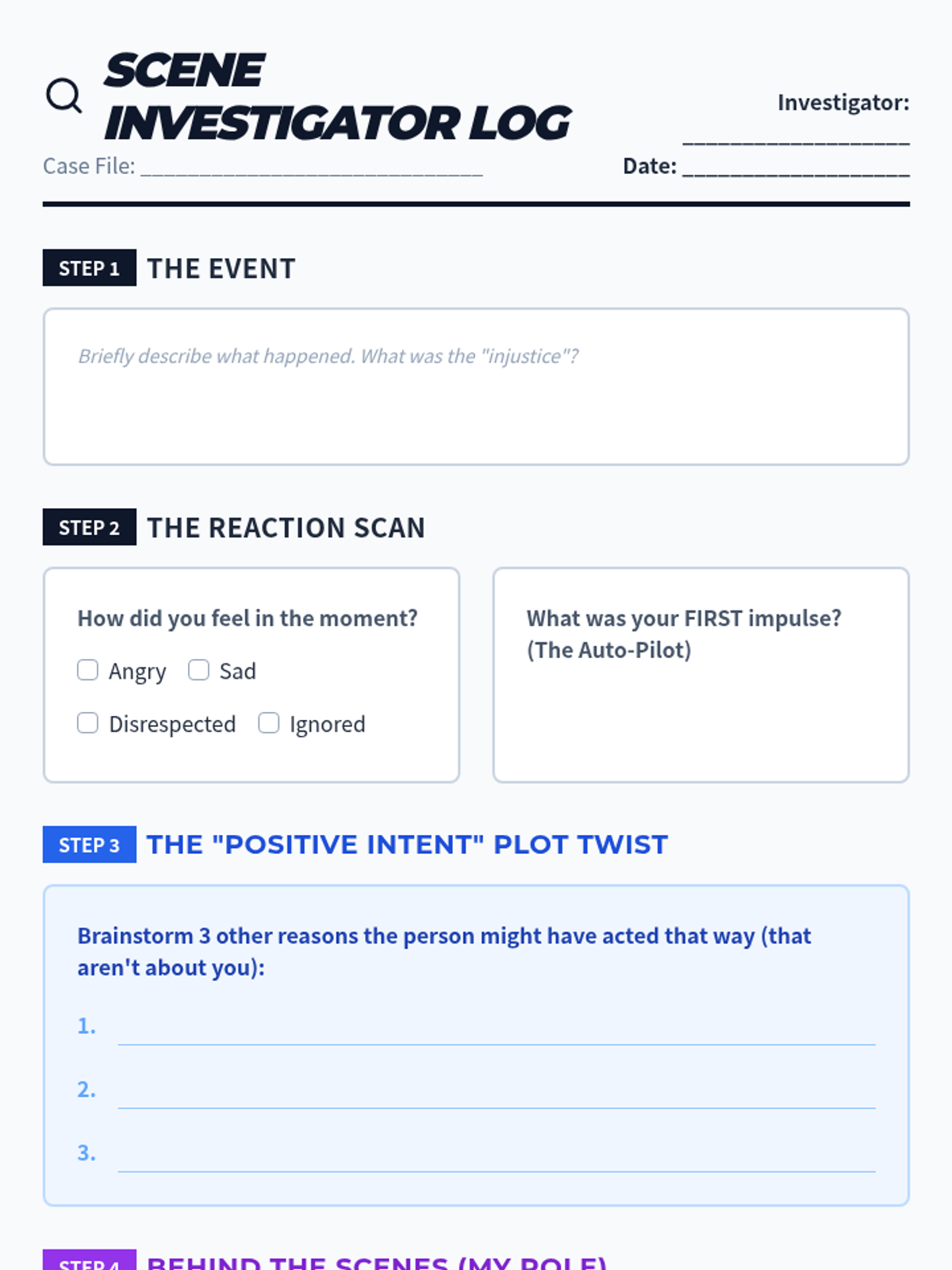
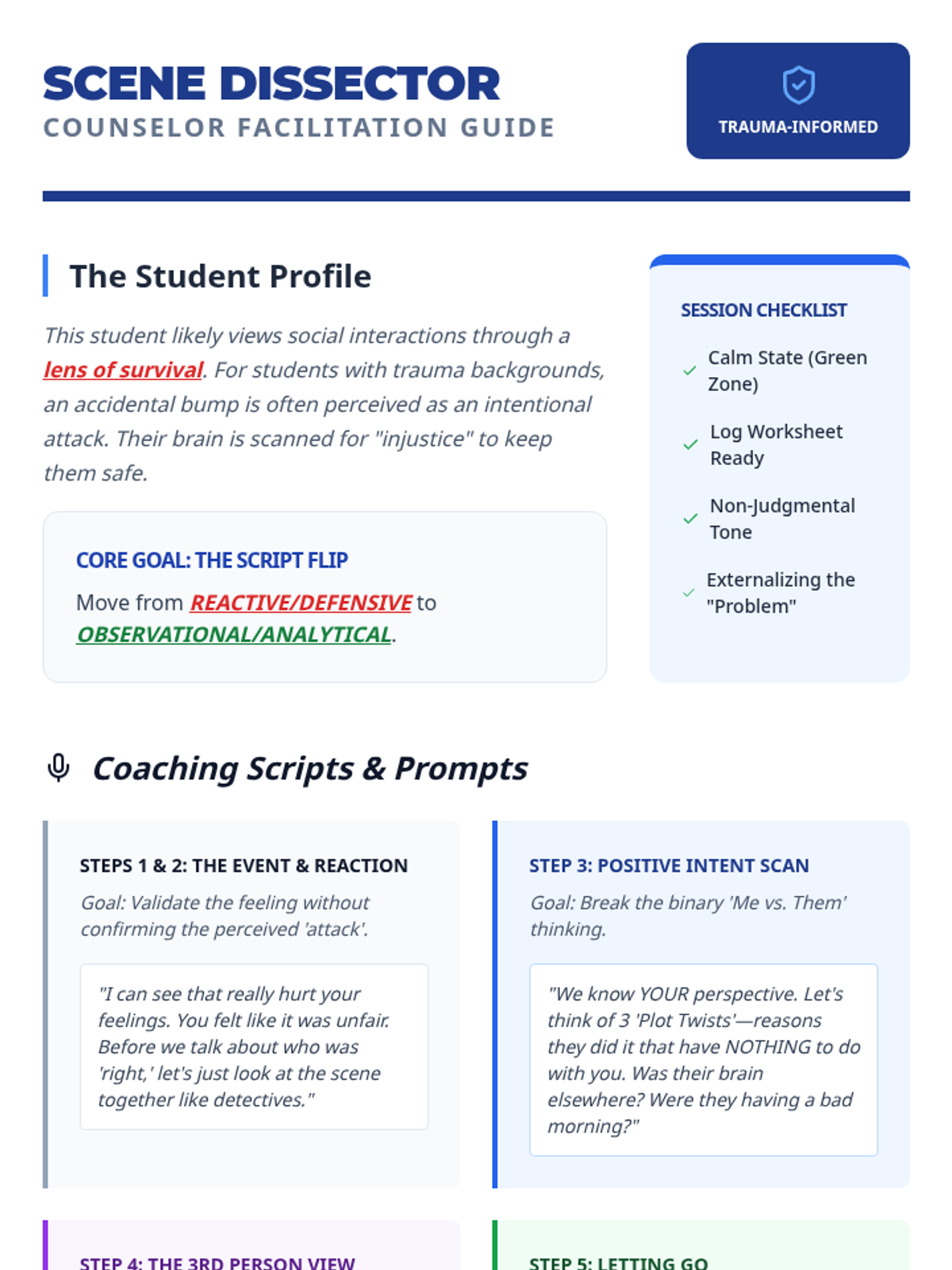
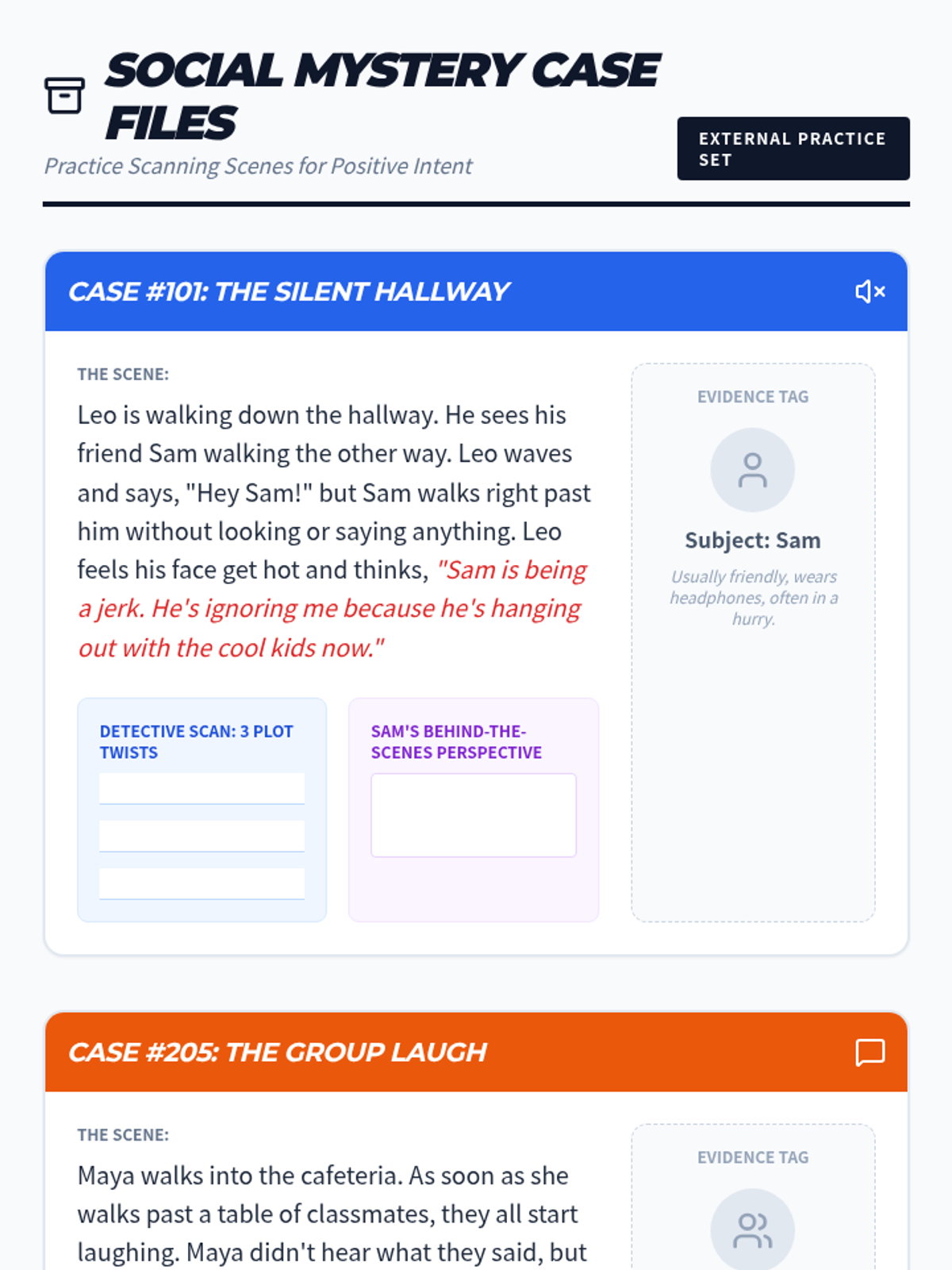
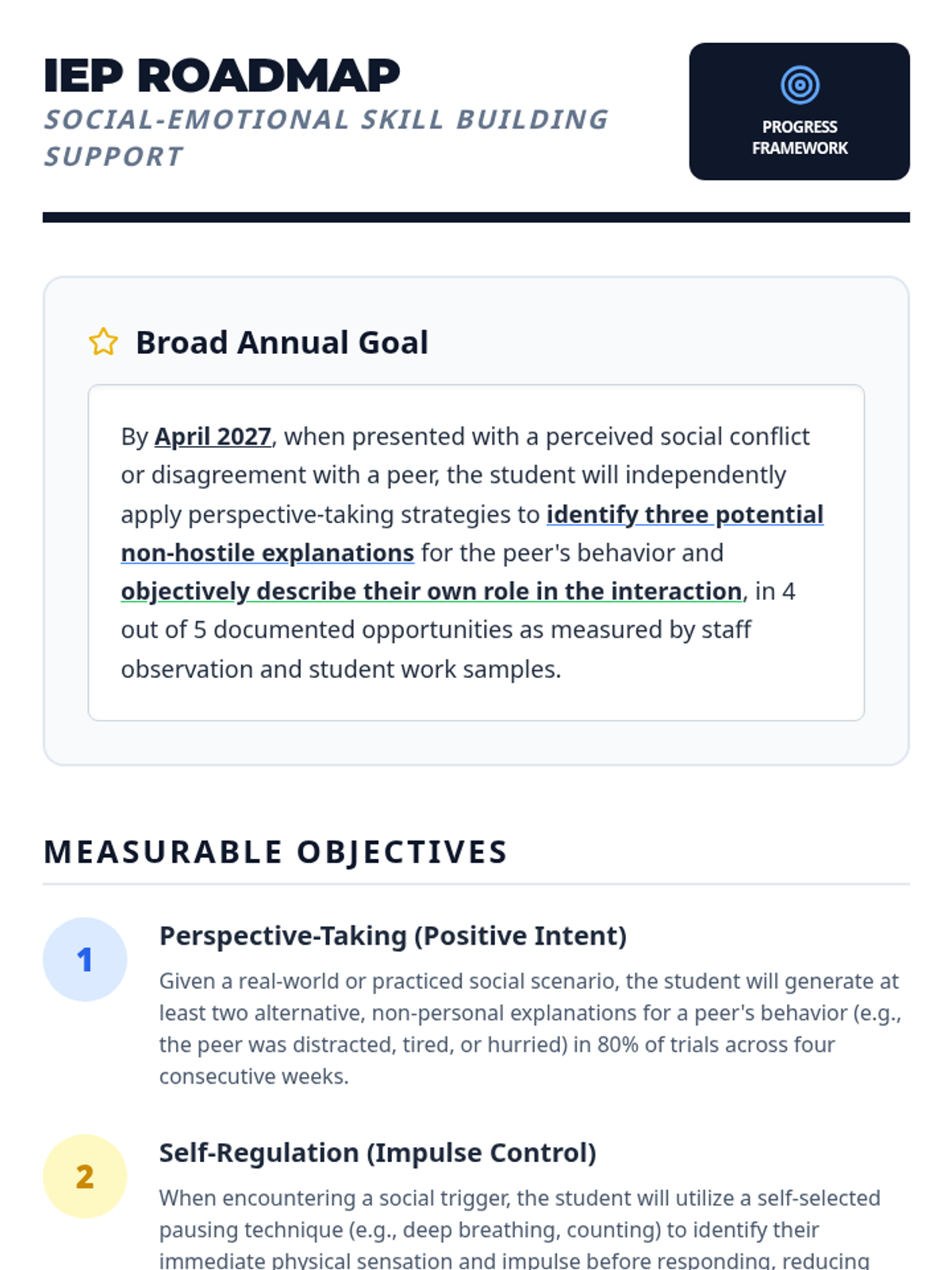
A social-emotional learning lesson designed for students with trauma backgrounds and impulse control challenges. It focuses on 'Scene Scanning'—assuming positive intent and dissecting social interactions through a detective-style lens to improve perspective-taking and reduce reactivity.
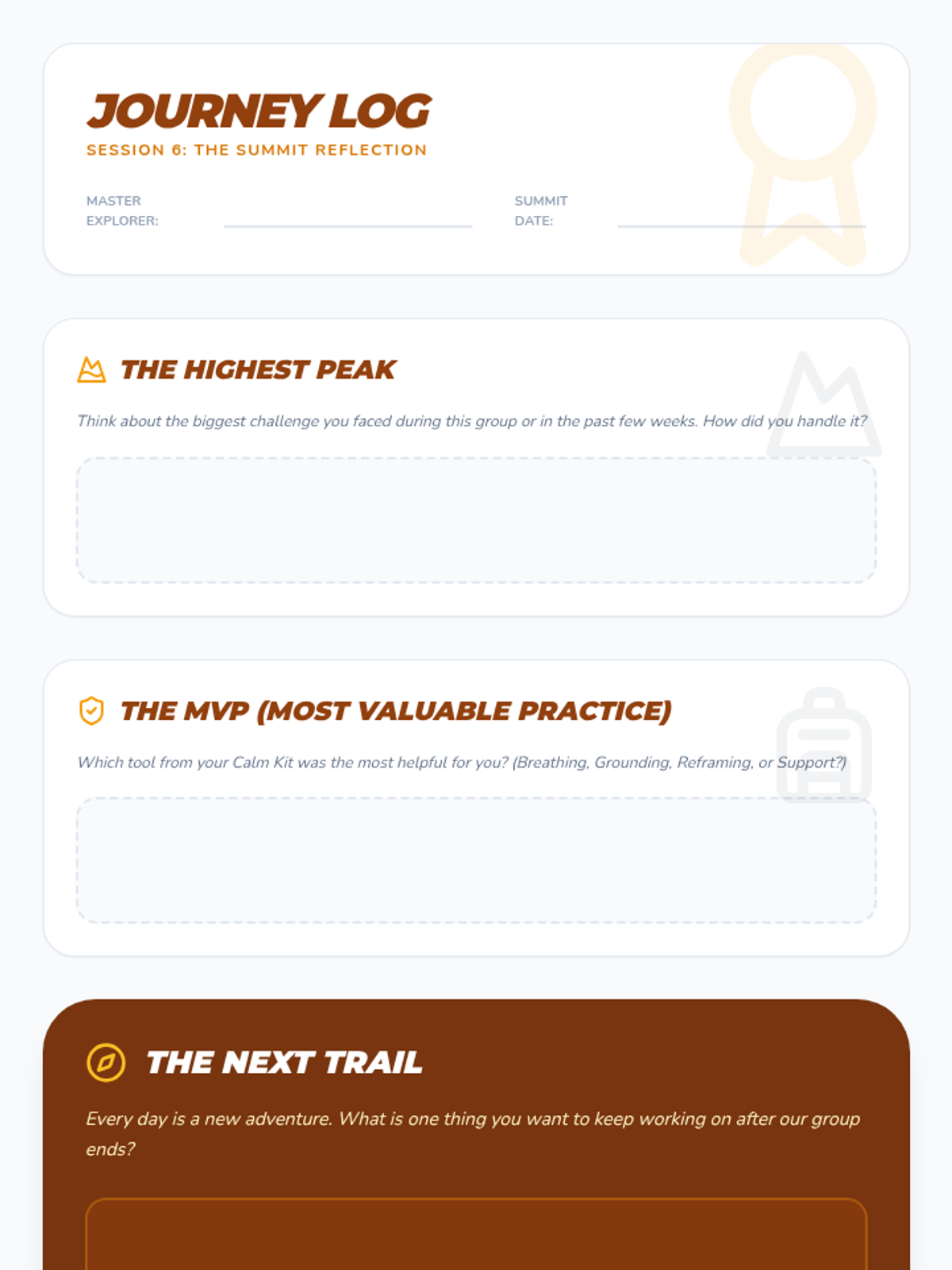
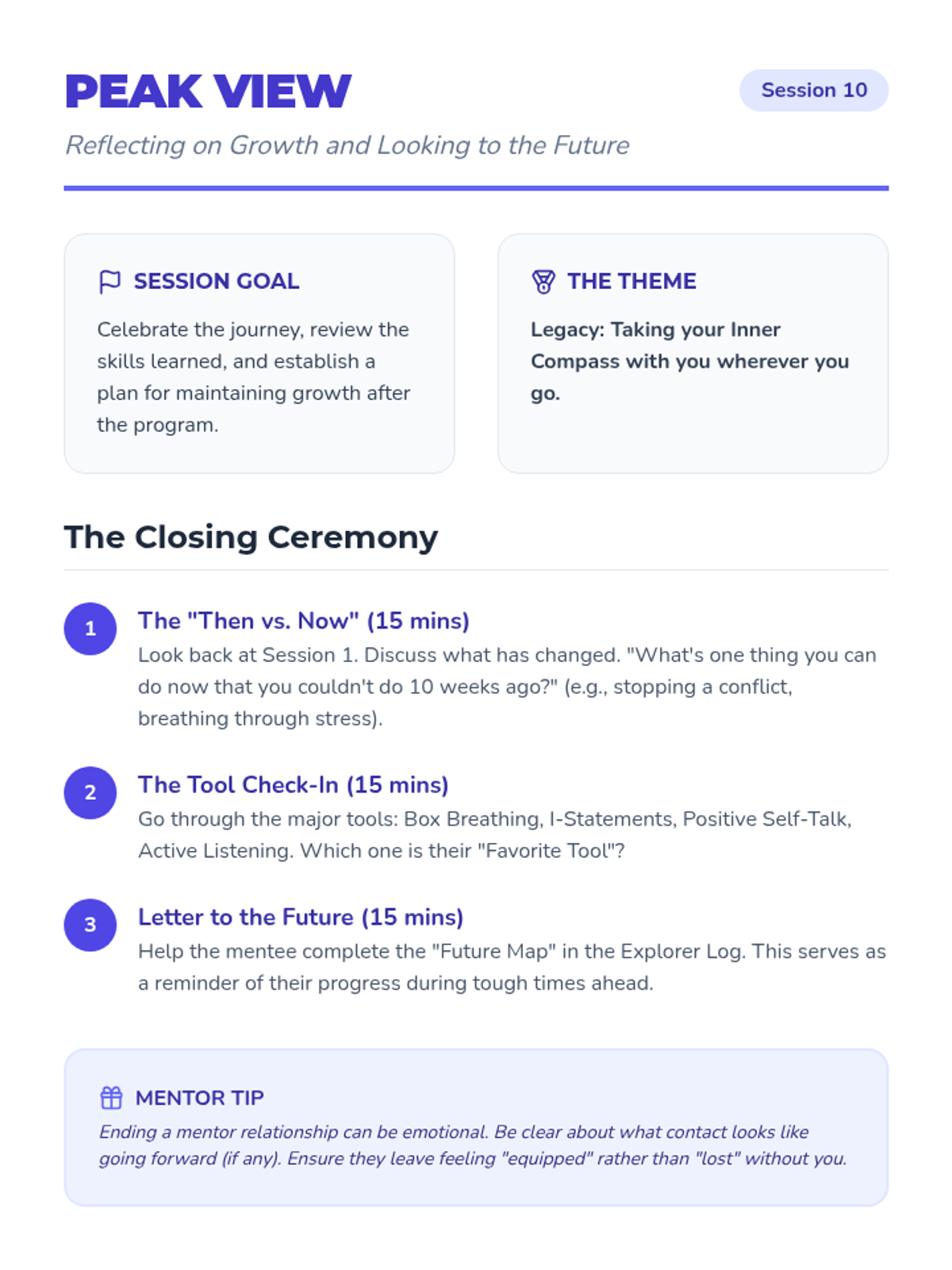
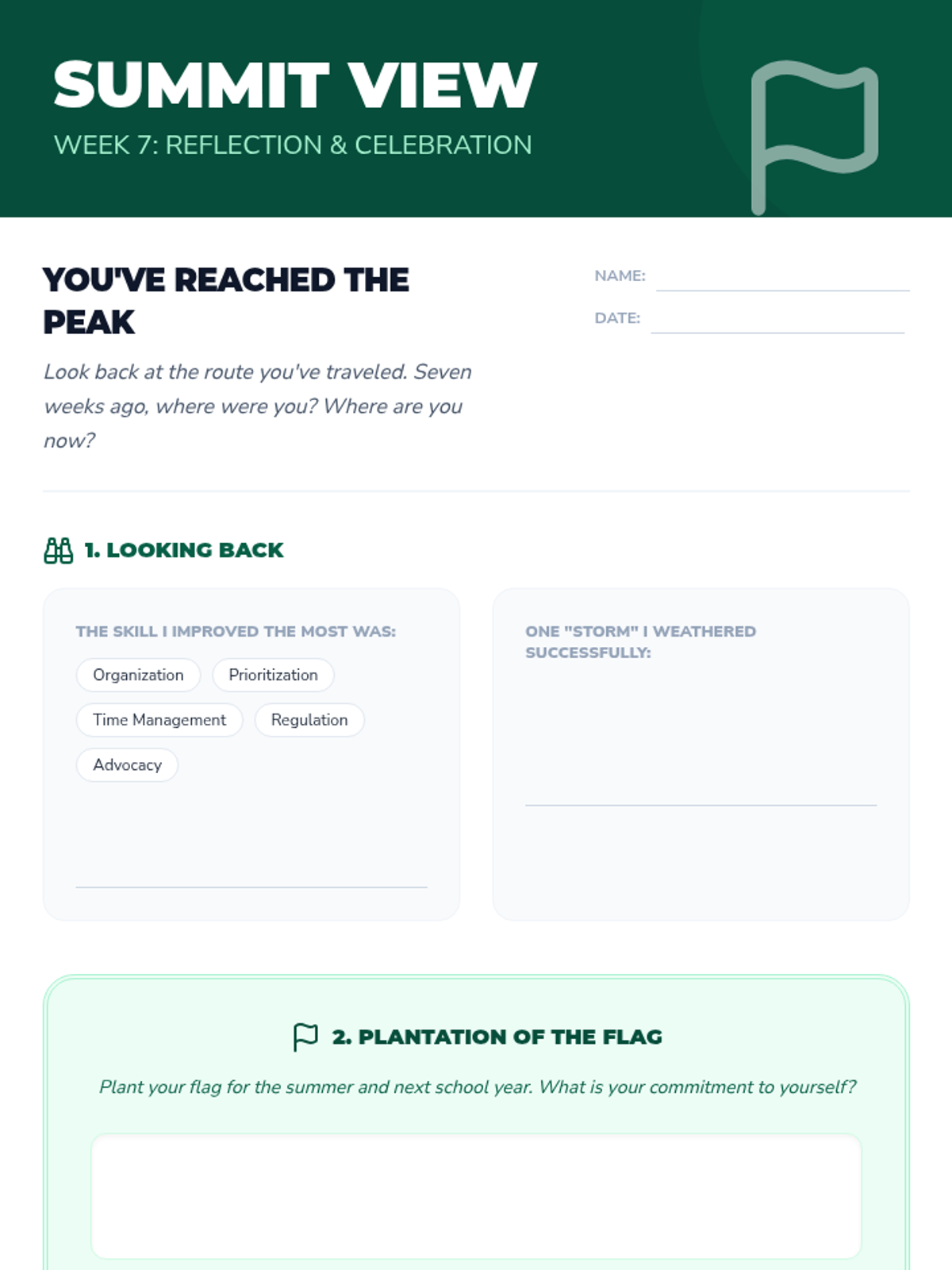
Final reflection, celebration of growth, and planning for the journey ahead.
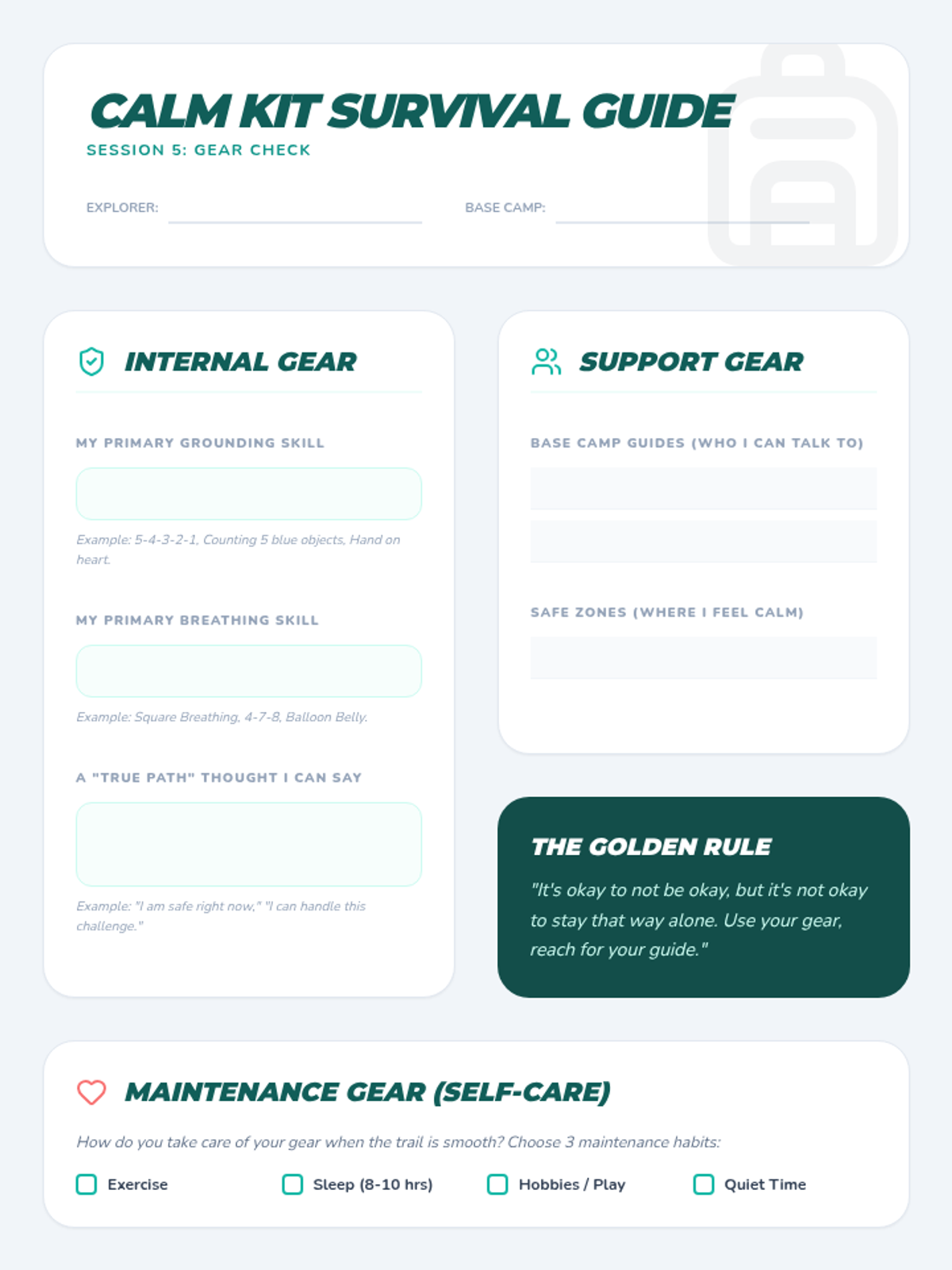
Reviewing various coping skills and creating a personalized 'Survival Kit' for future use.
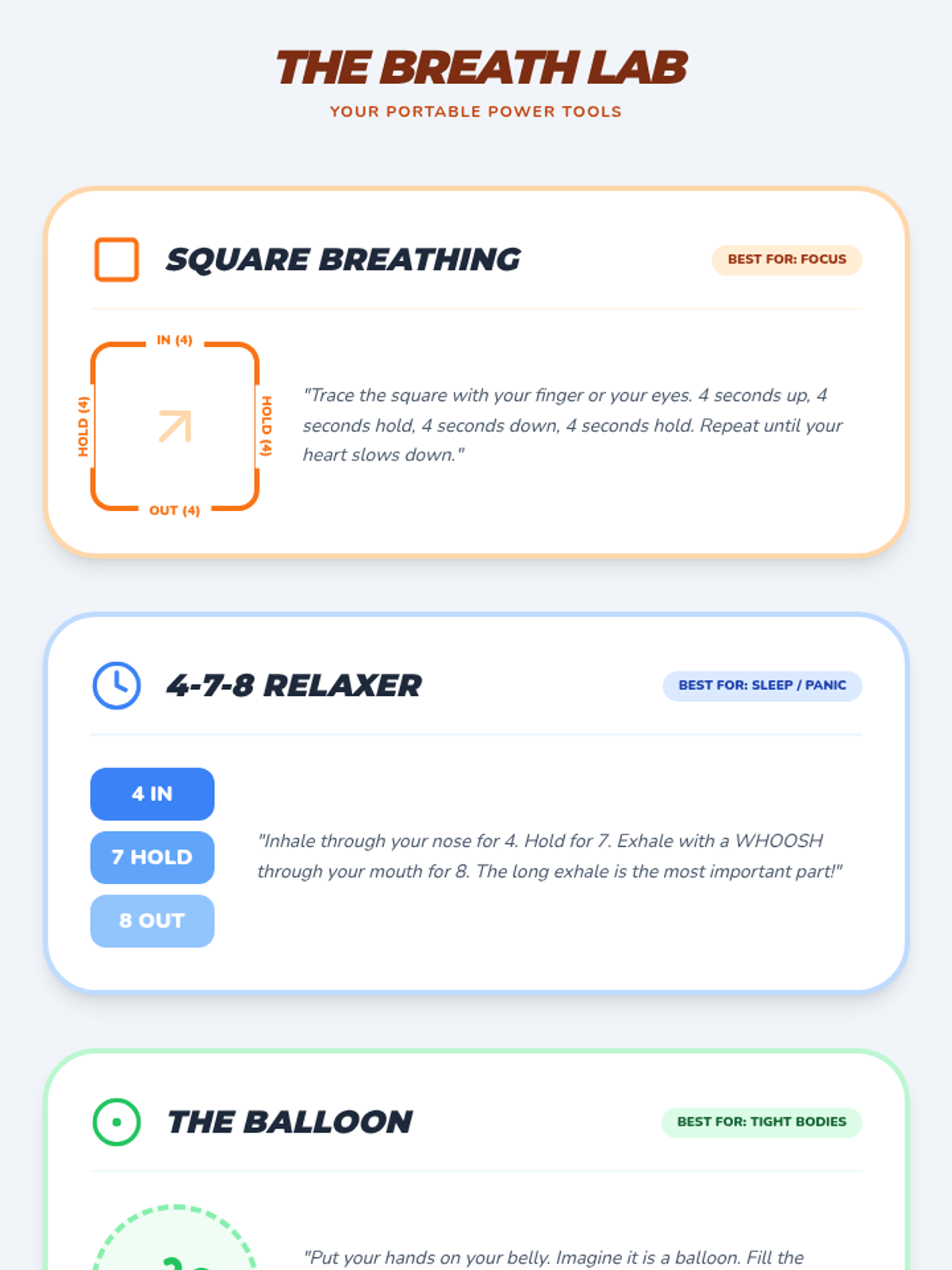
Focusing on the power of breath and mindfulness as internal tools for regulation.
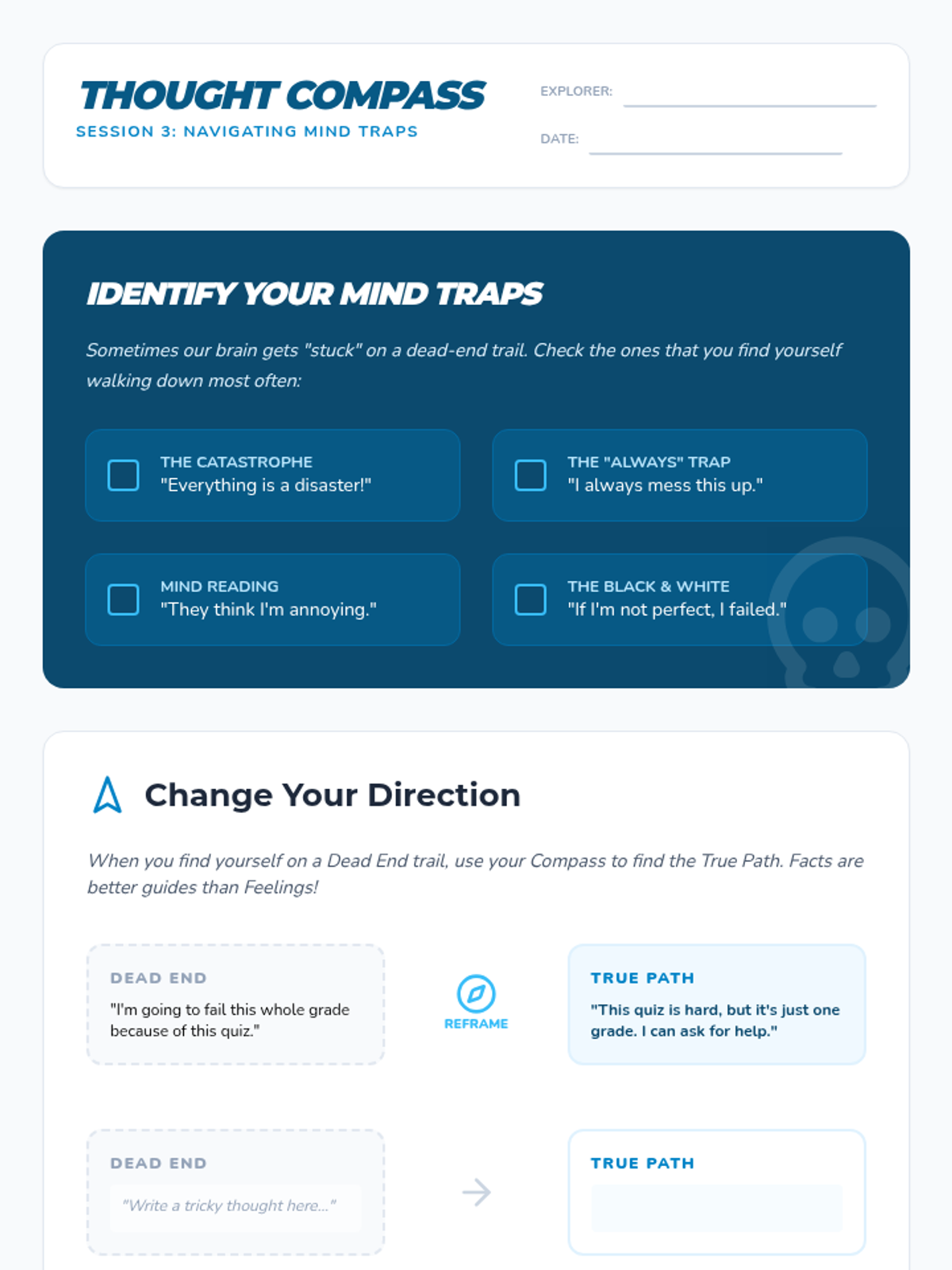
Identifying cognitive distortions or 'tricky trails' and learning to reframe thoughts using a 'Thought Compass'.
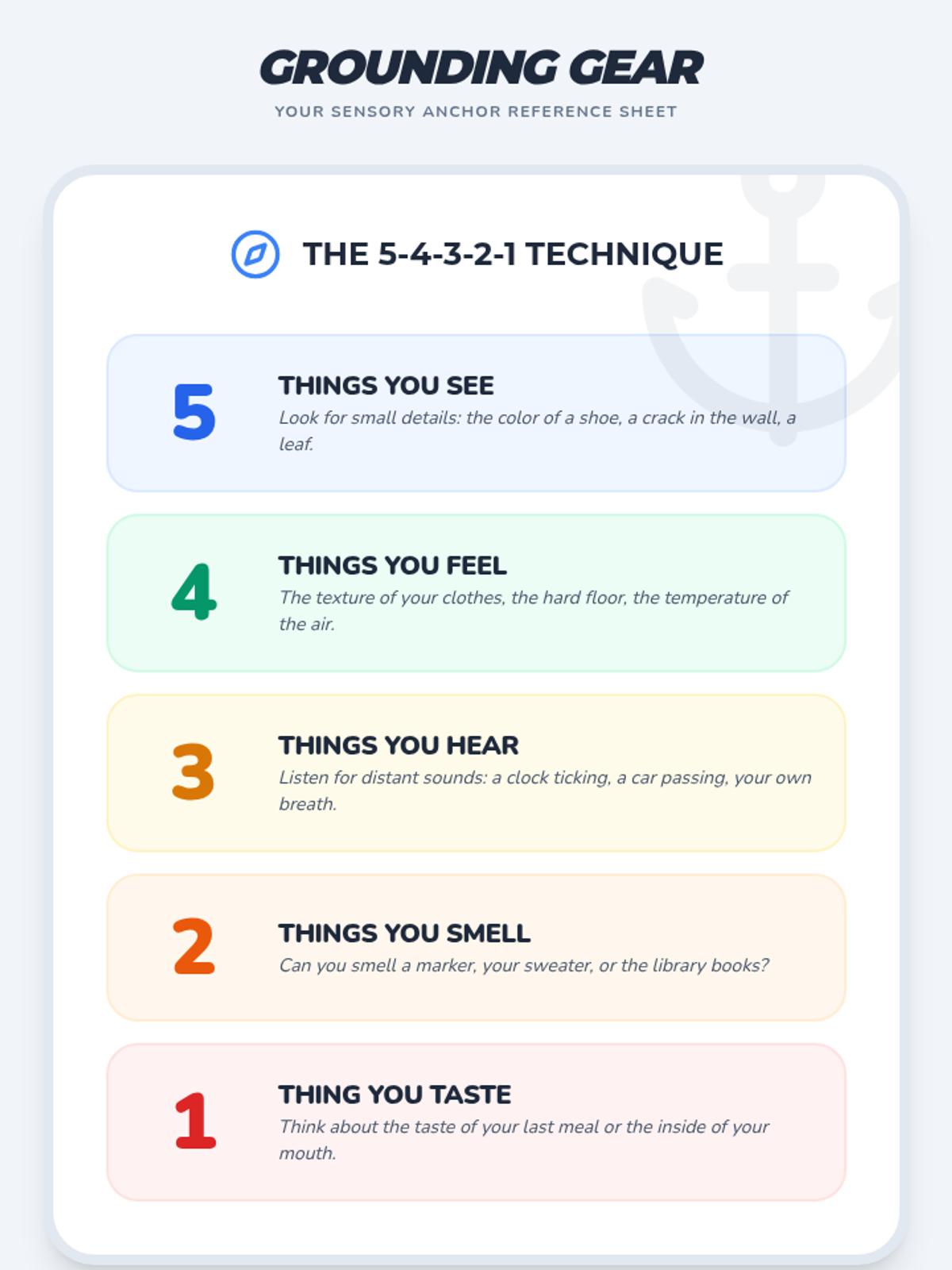
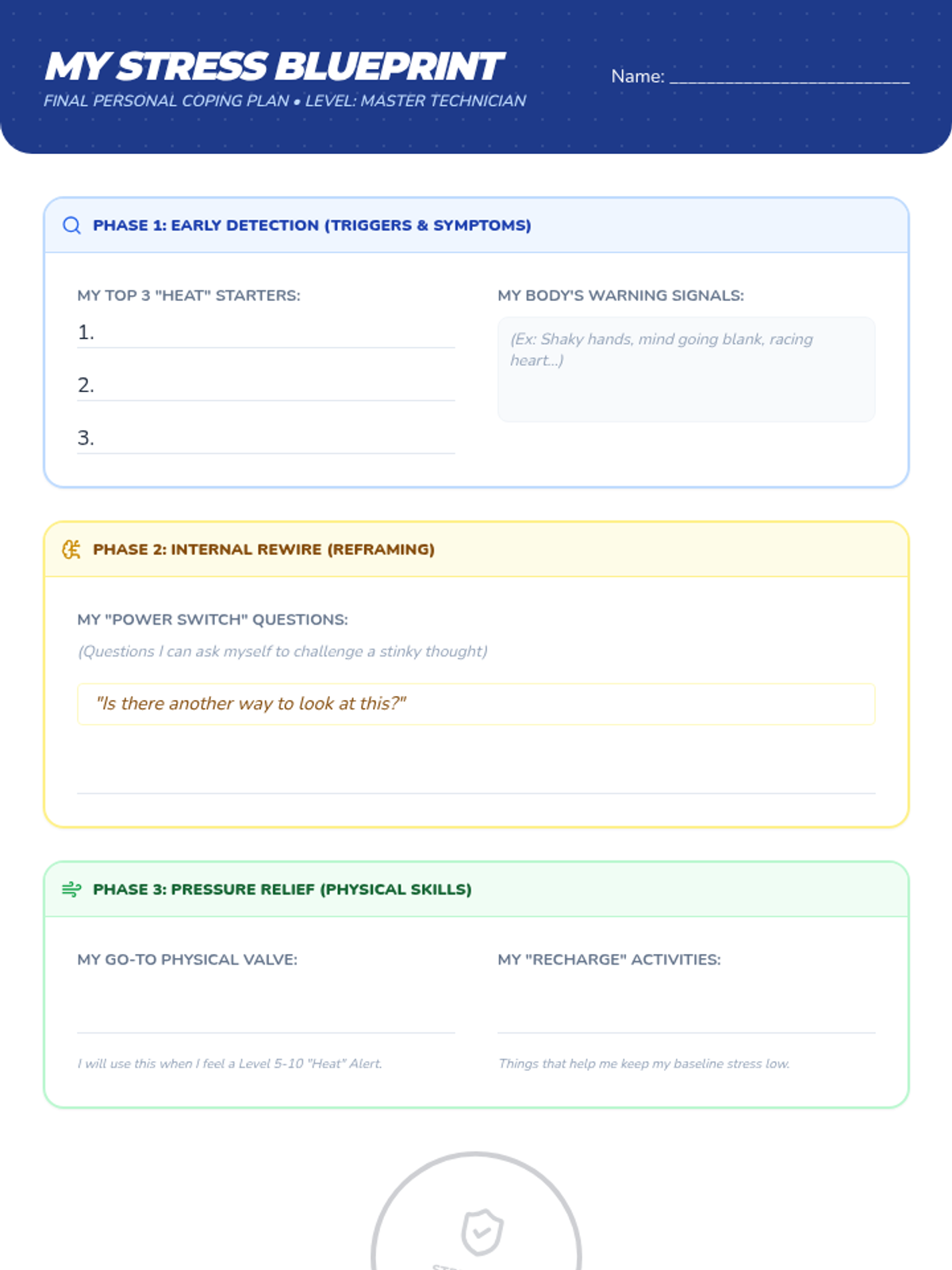
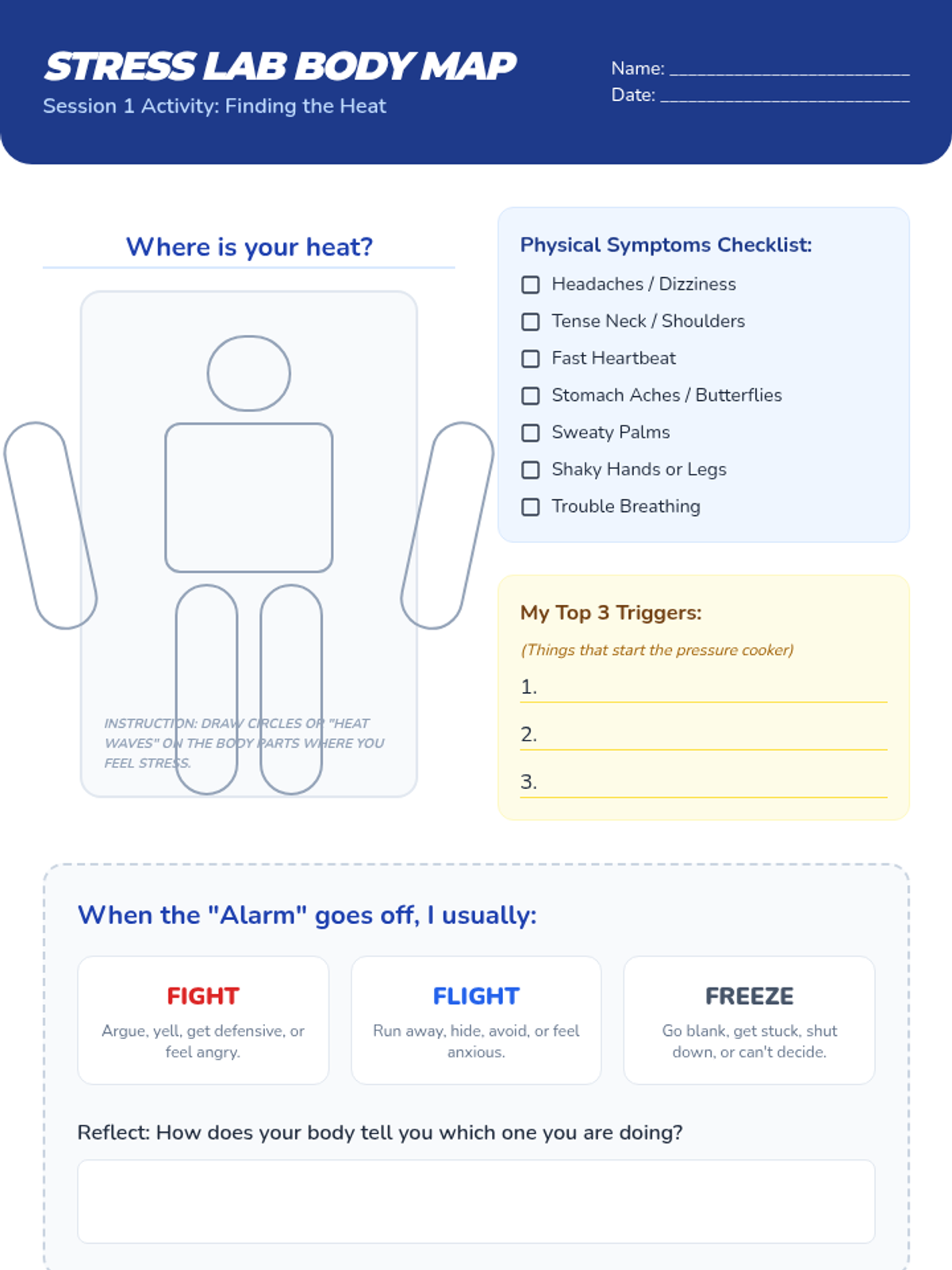
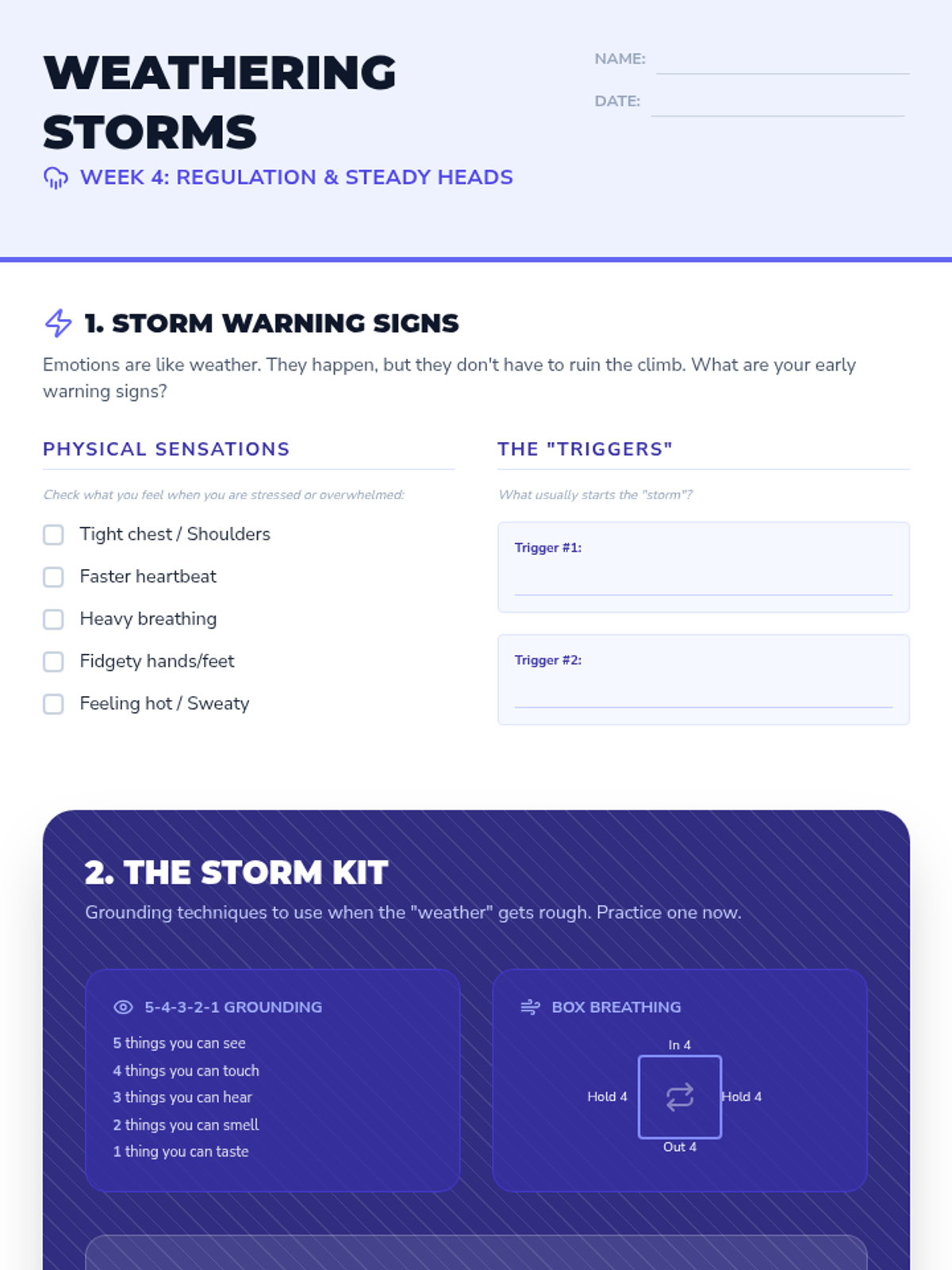
Understanding the physical 'alarm system' of the body and learning grounding techniques to stay present during 'storms'.
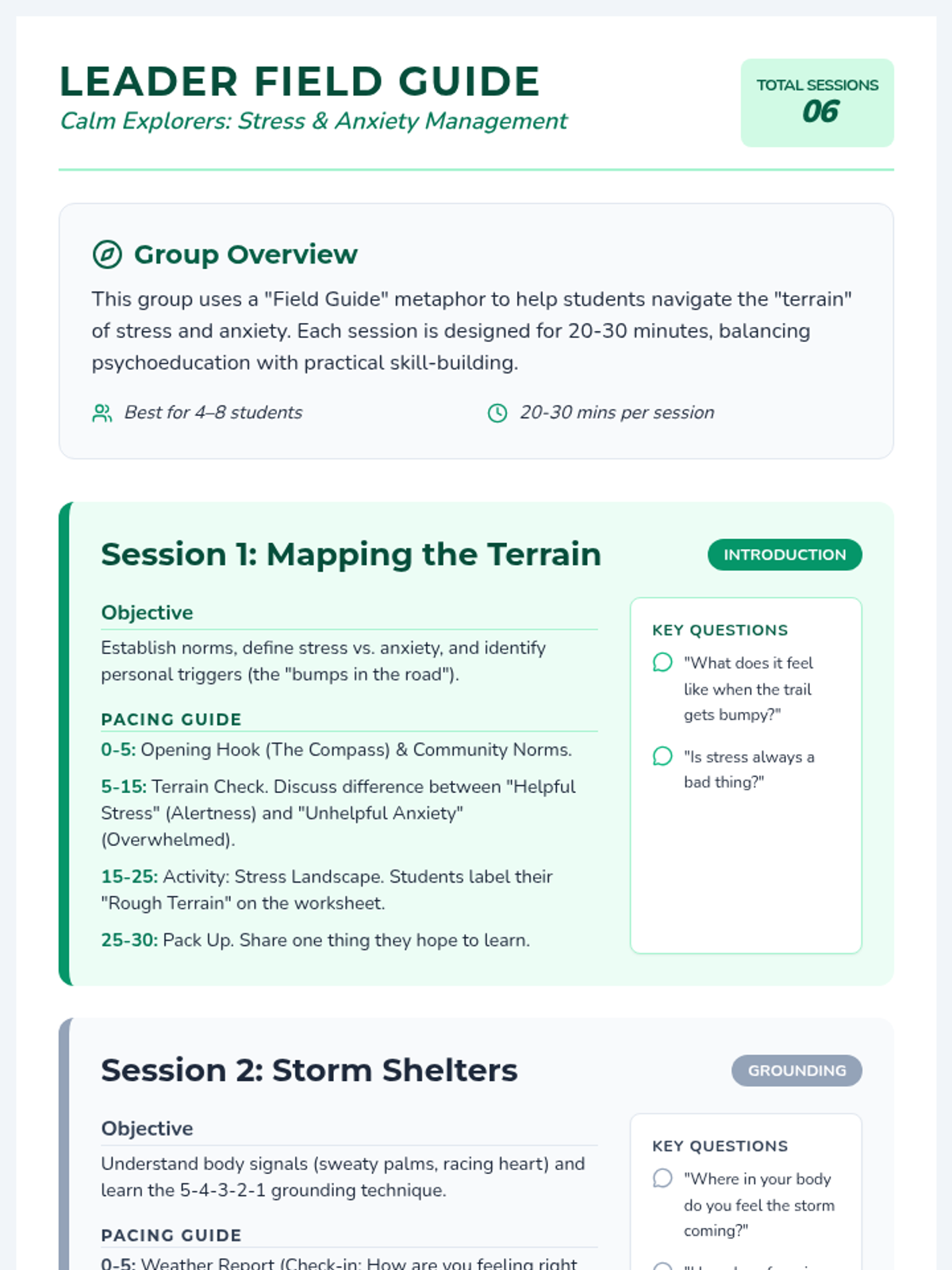
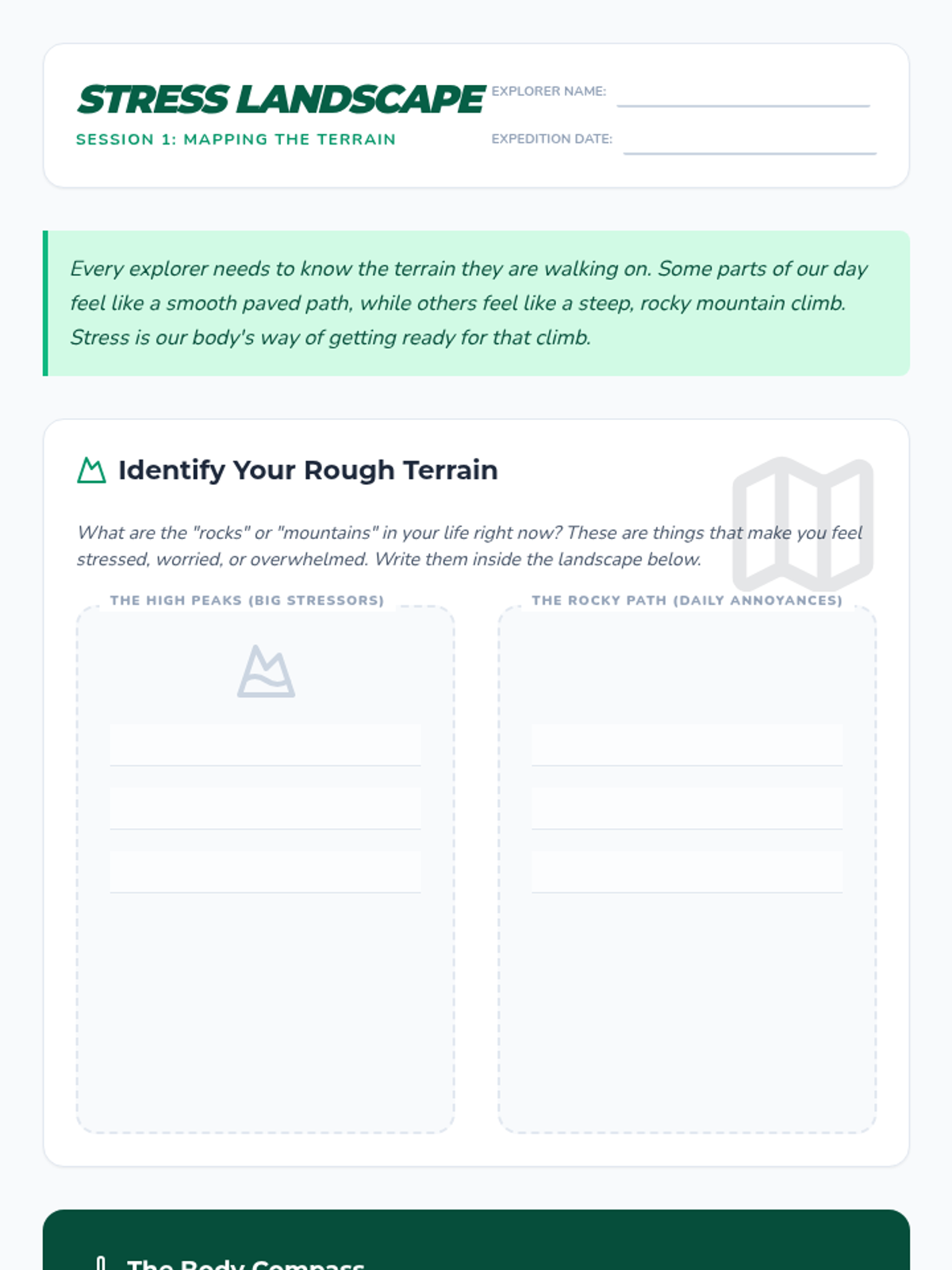
Introduction to the group, establishing norms, and identifying individual stress triggers using the 'Stress Landscape' metaphor.
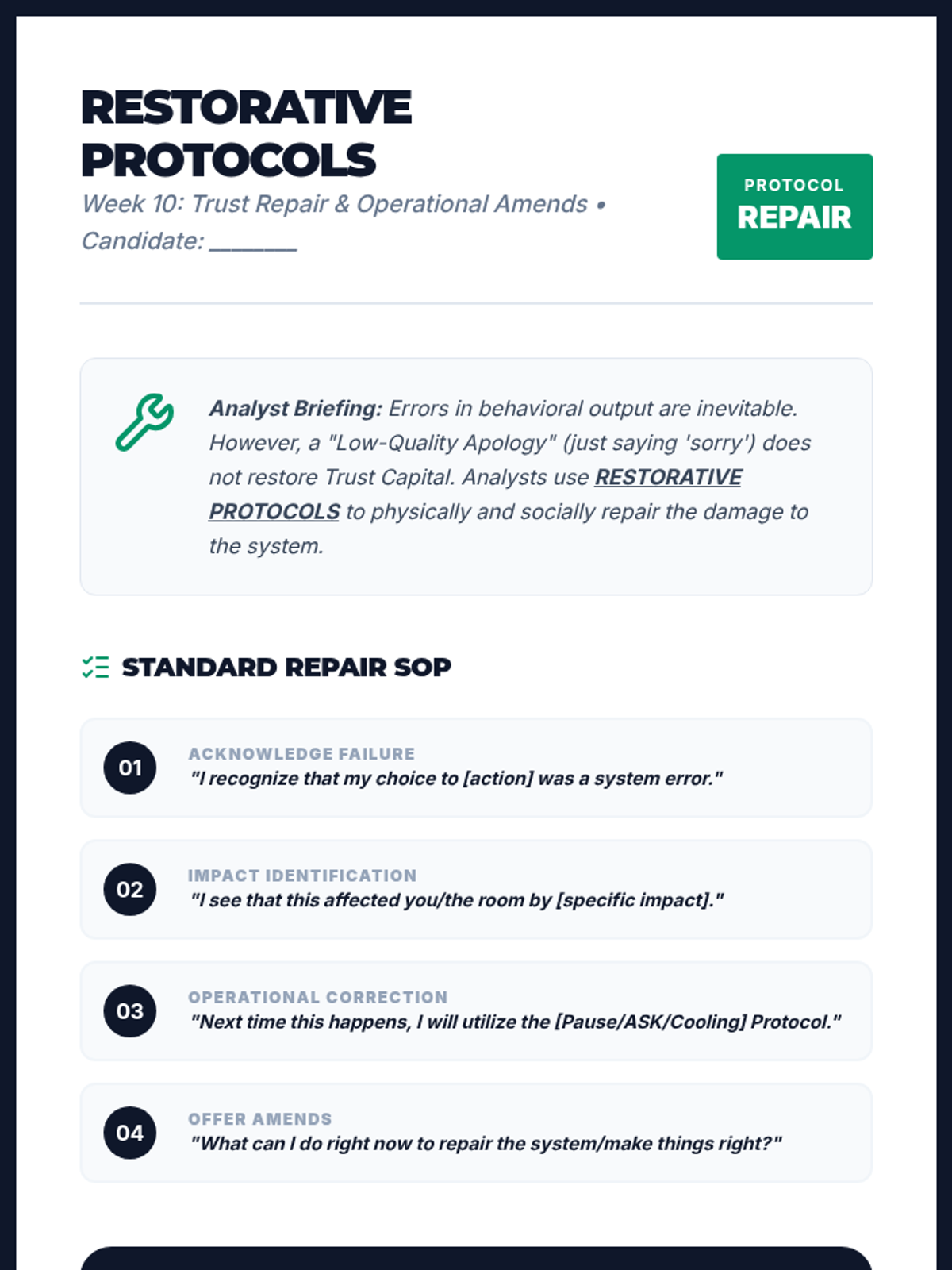
The final three weeks focus on making amends, setting future goals, and celebrating the progress made throughout the Social Detective program.
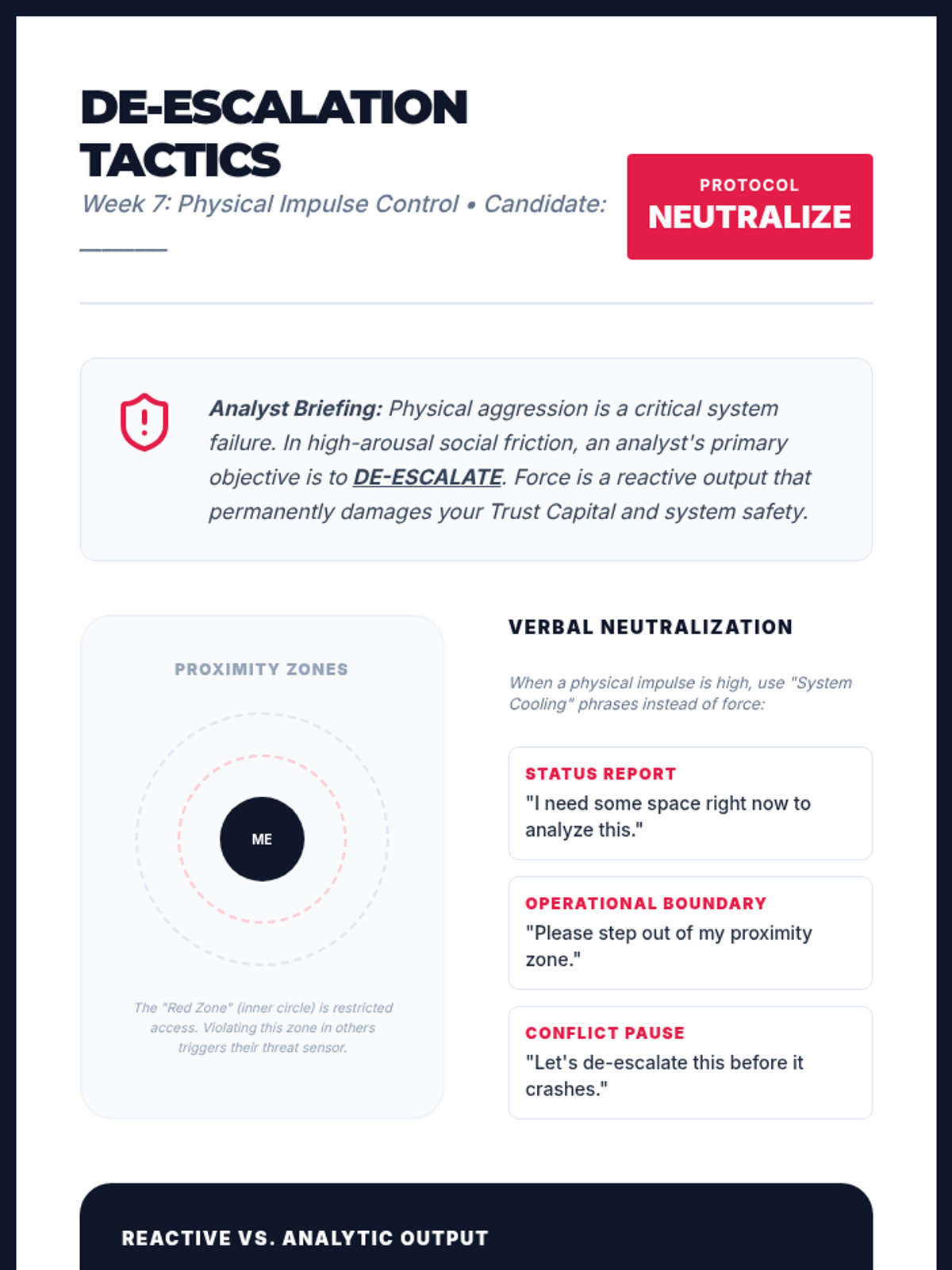
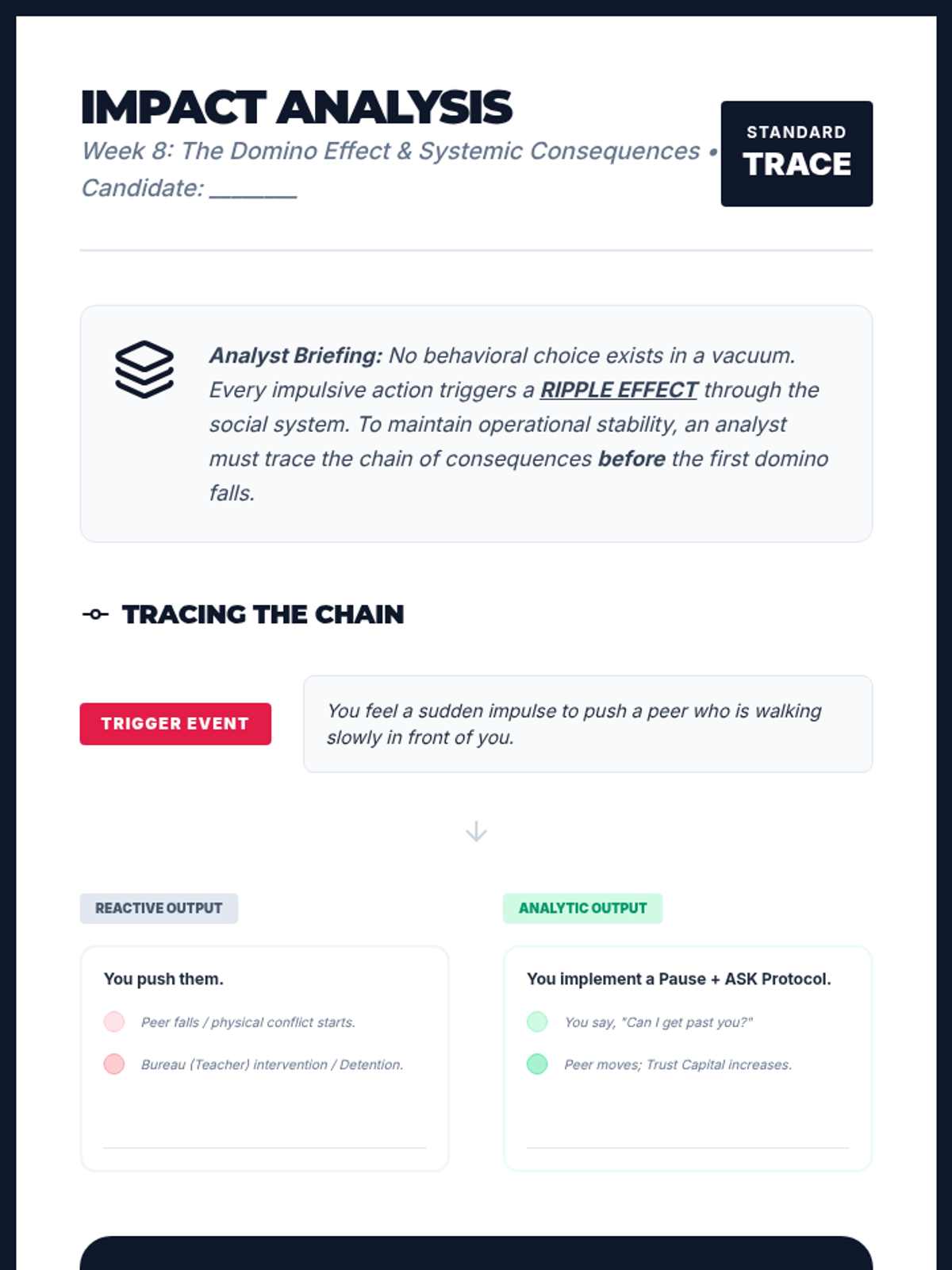
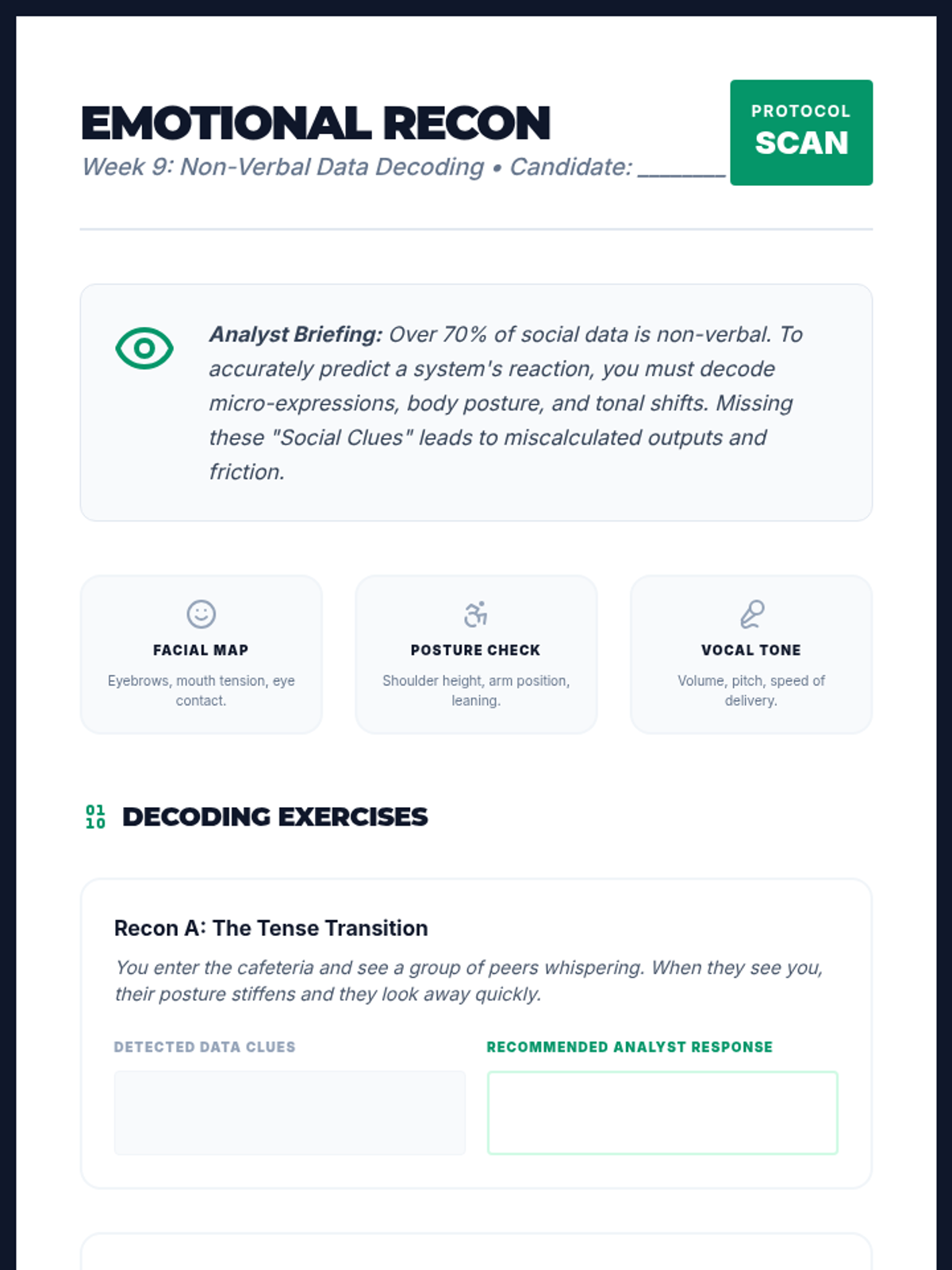
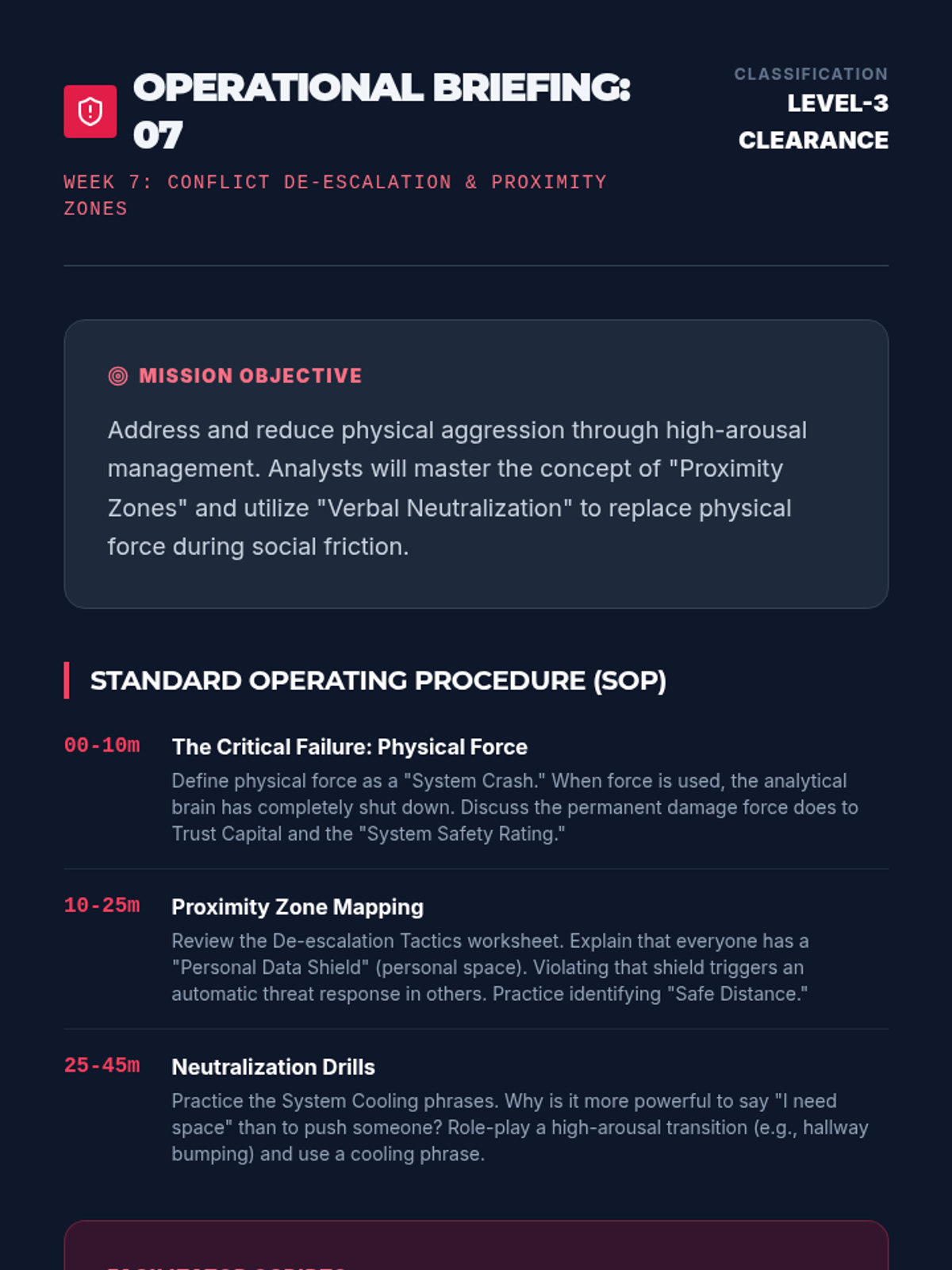
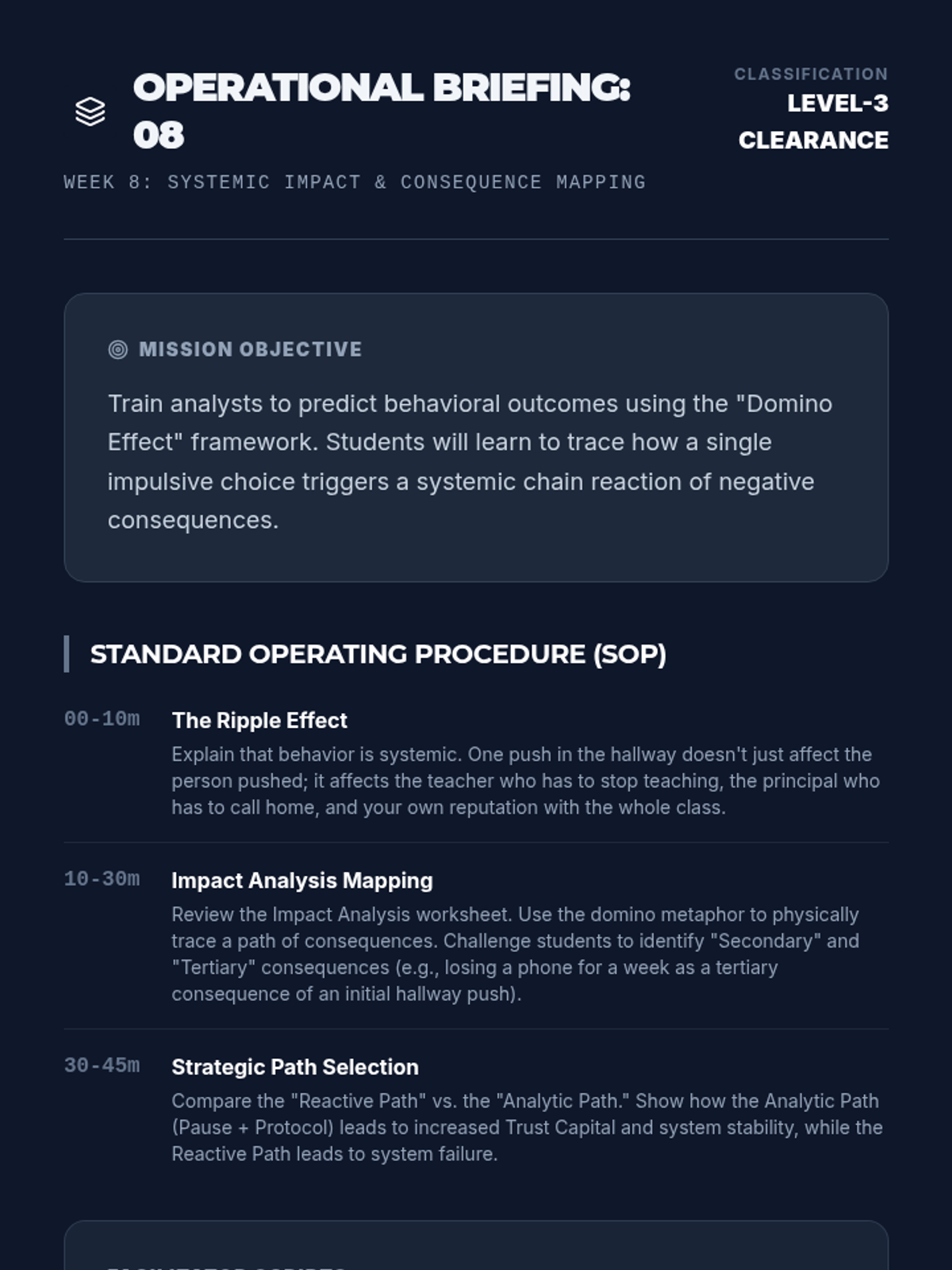
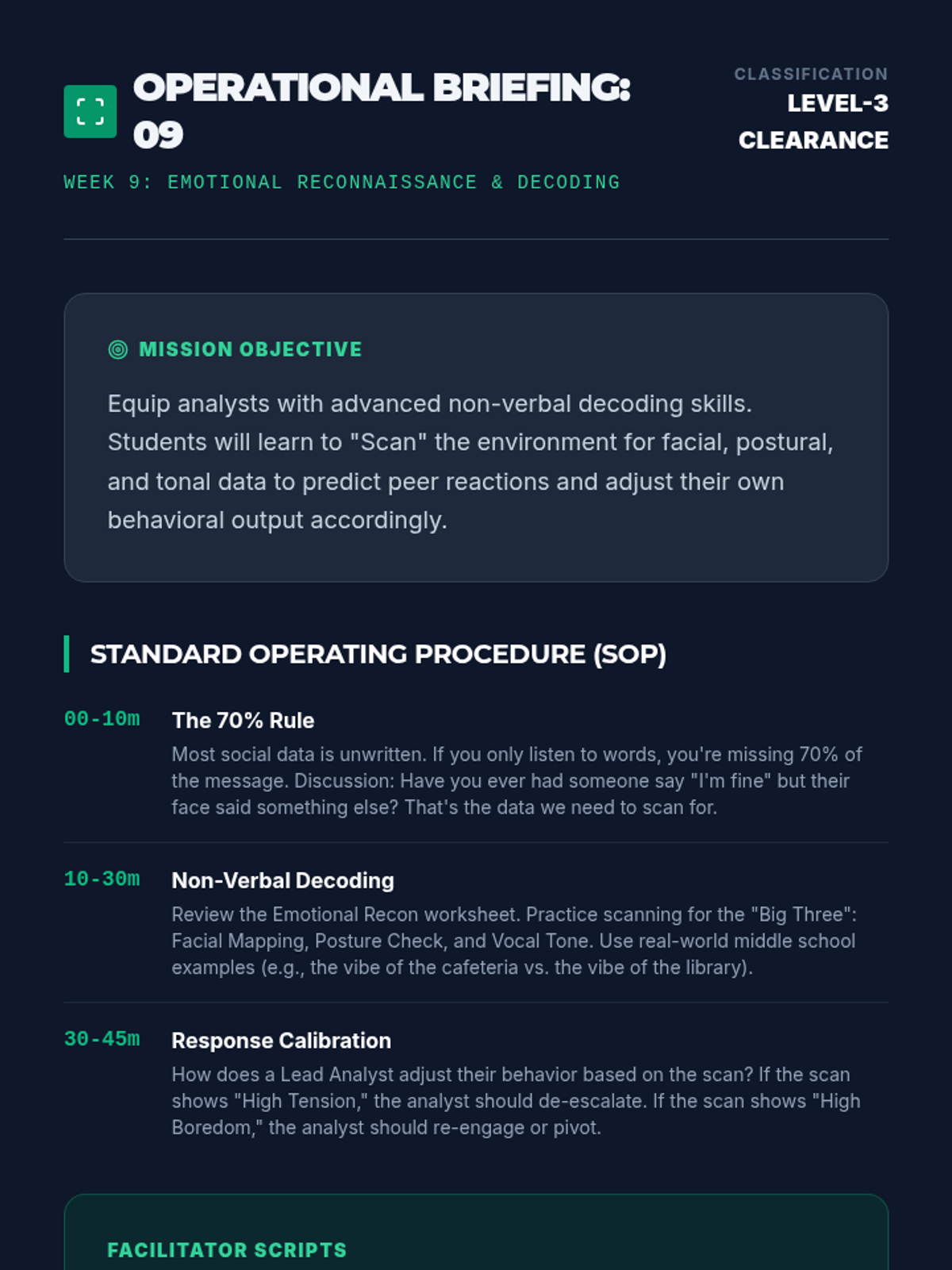
Weeks 7-9 address physical aggression, understanding consequences, and deep-diving into reading social clues to build empathy.
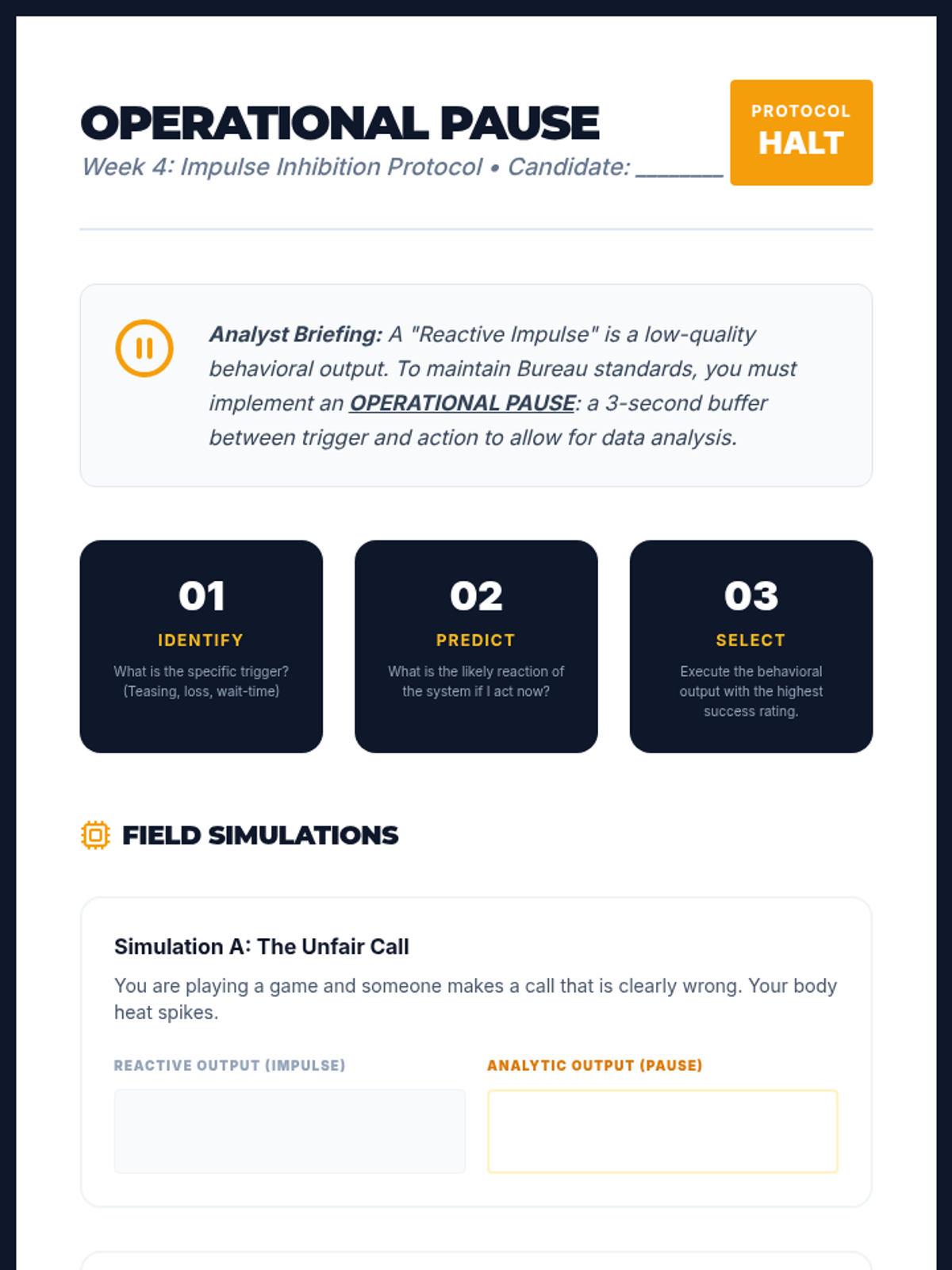
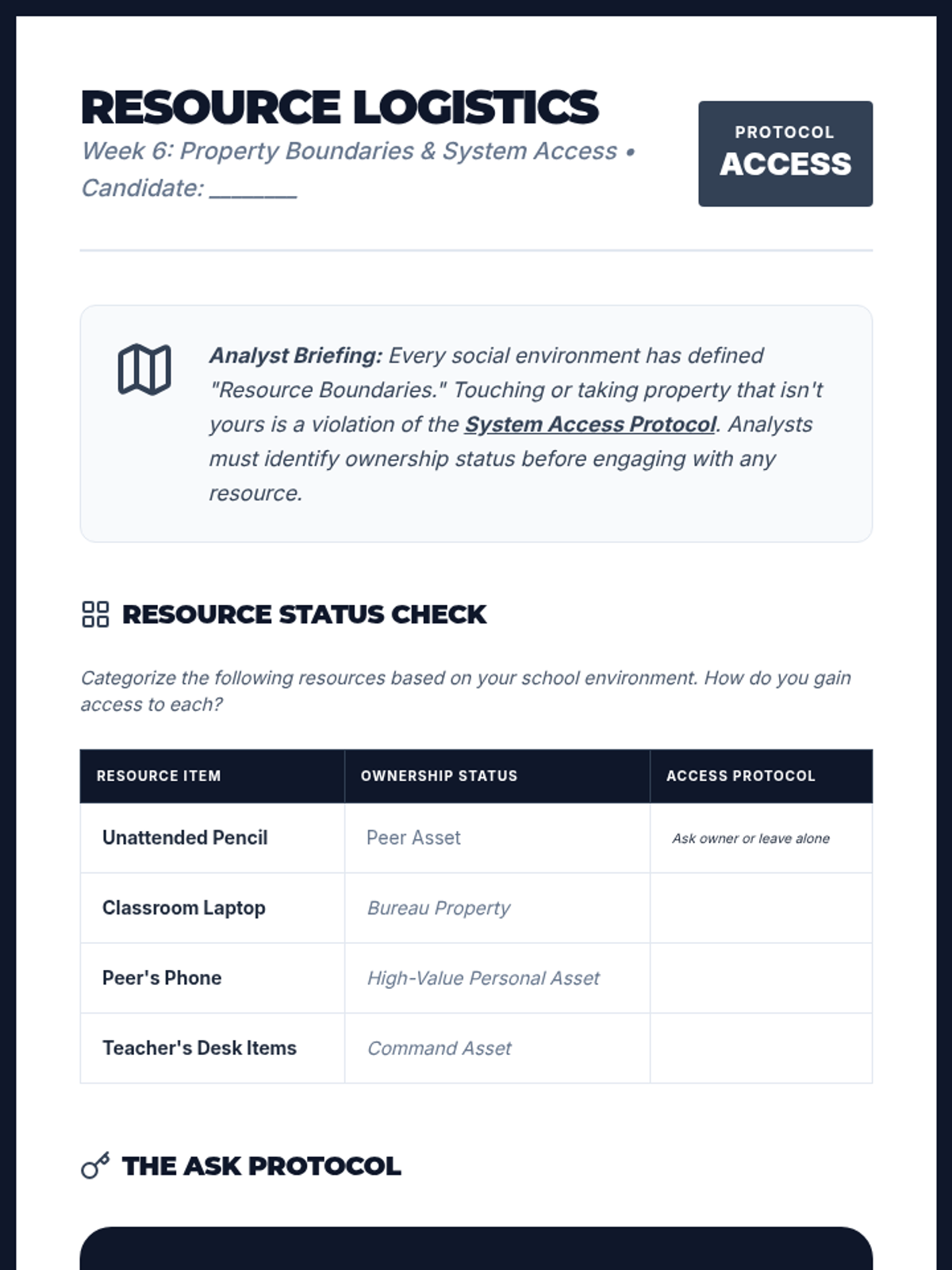
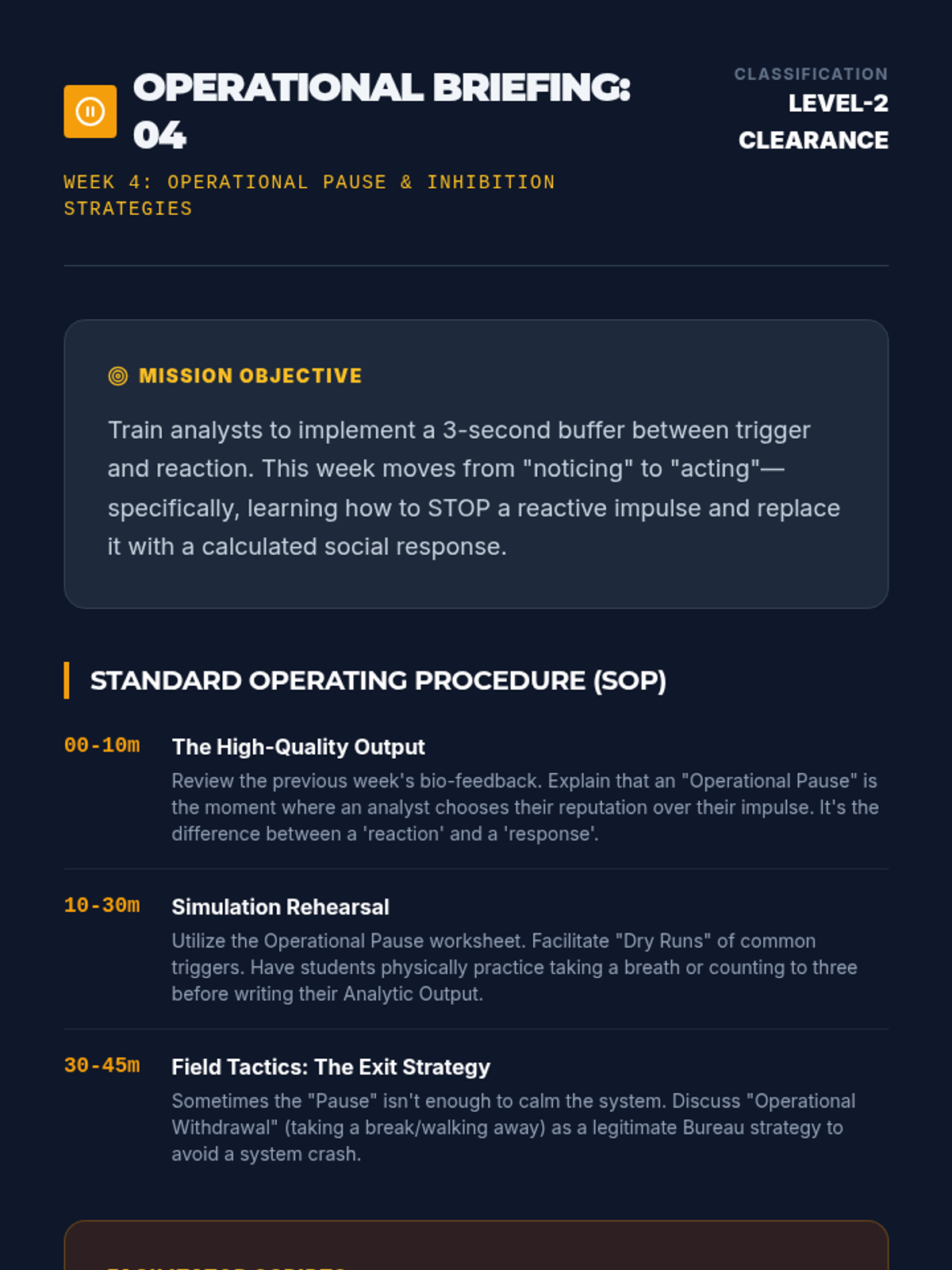
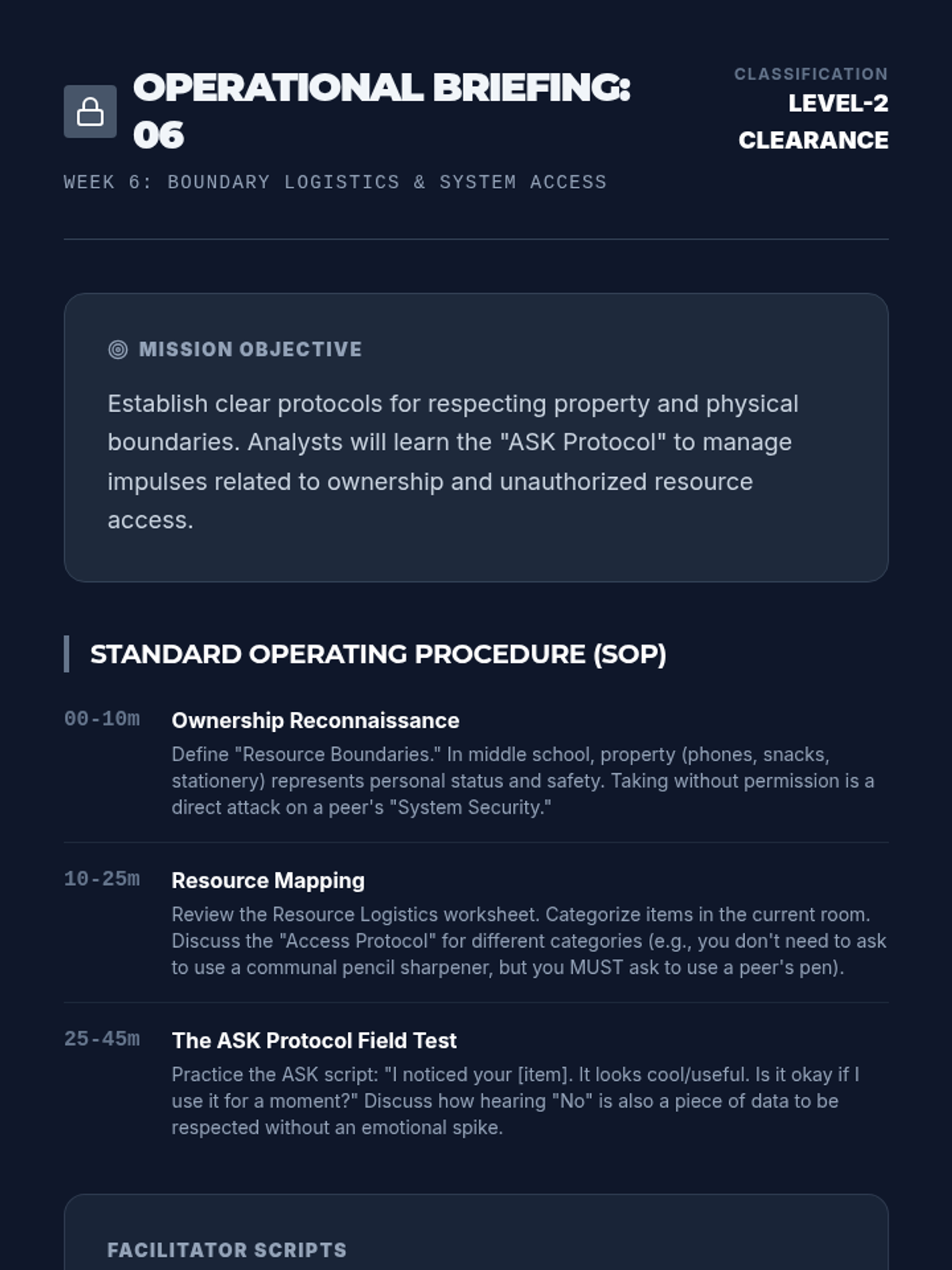
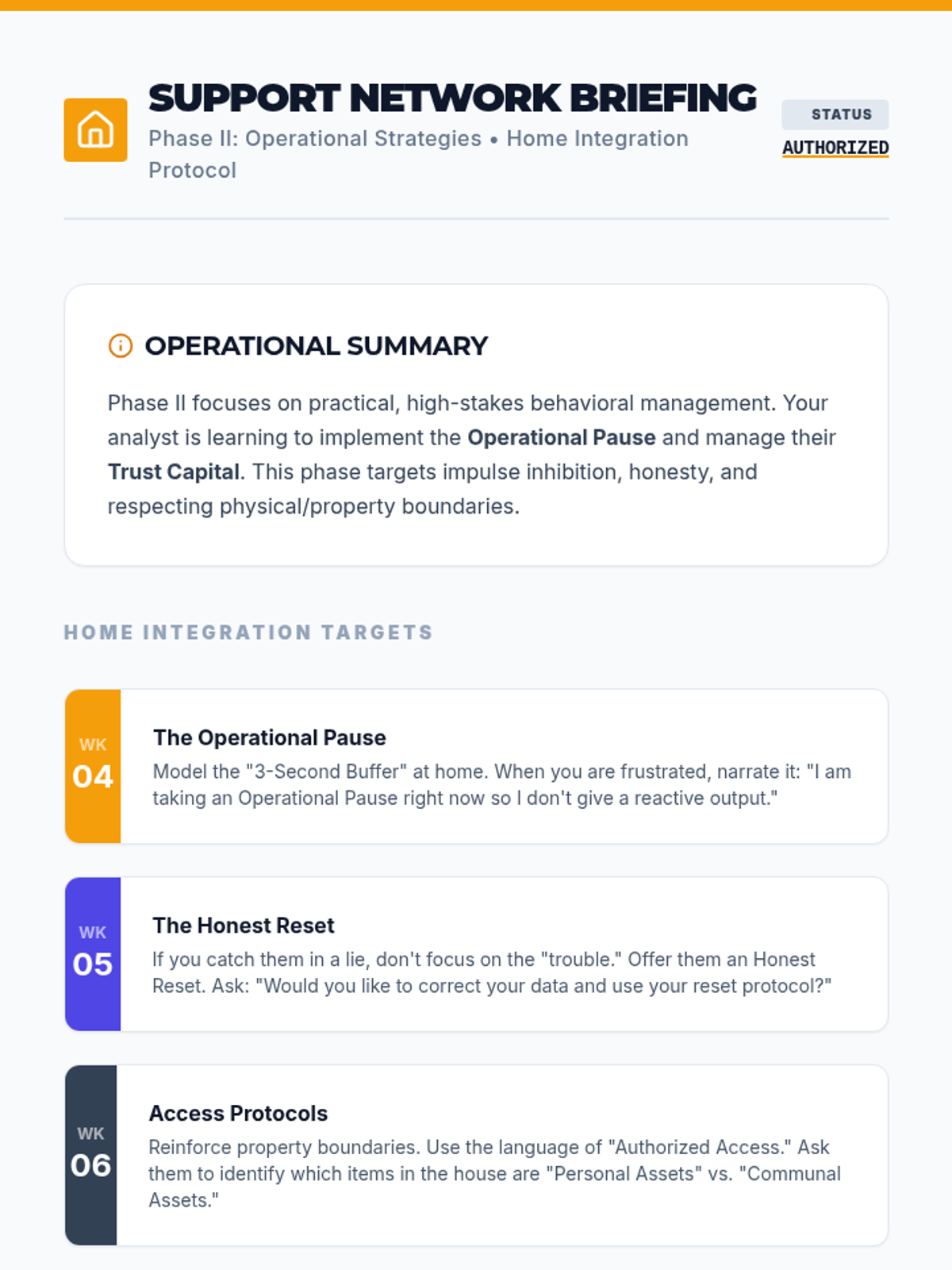
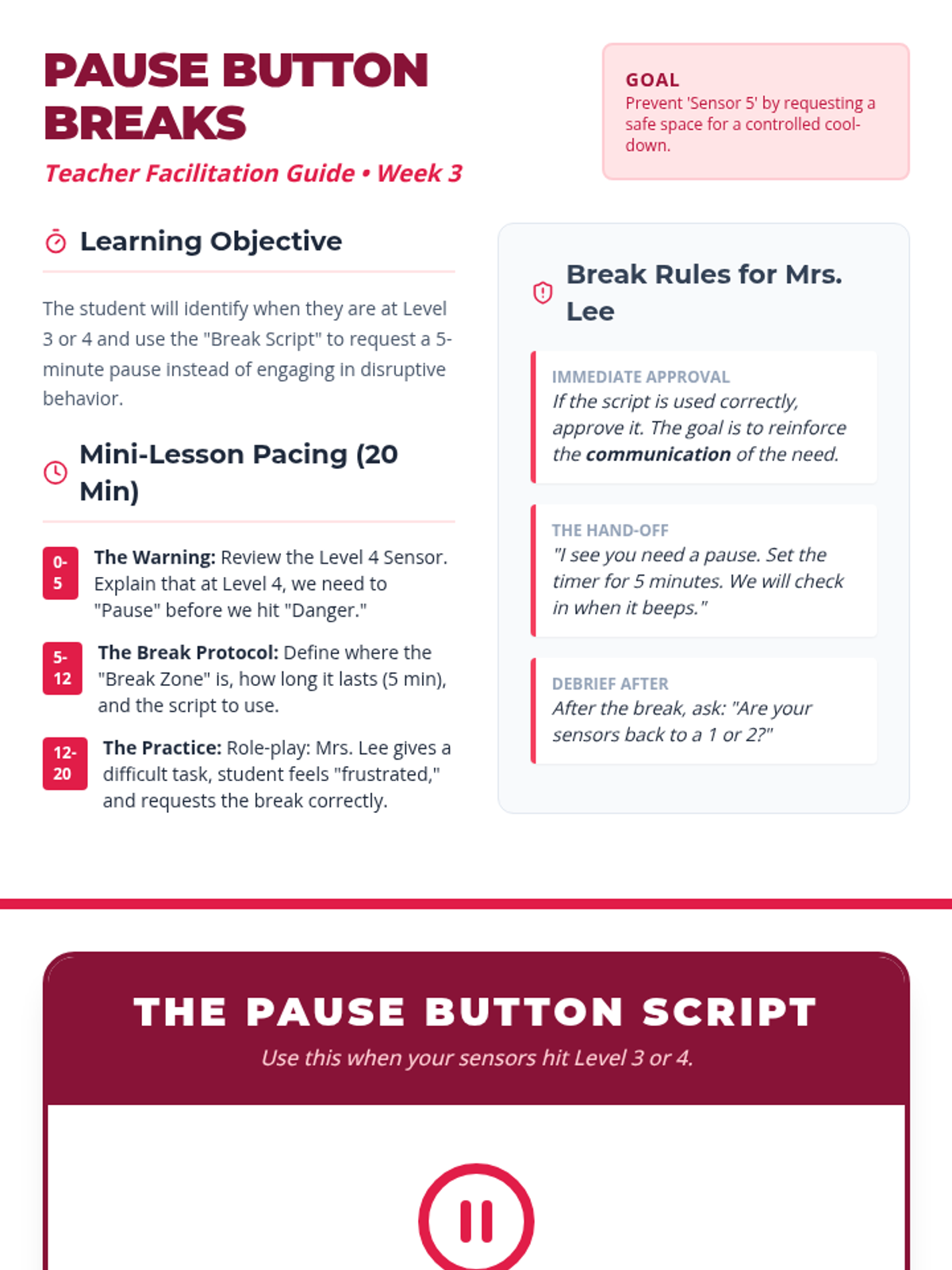
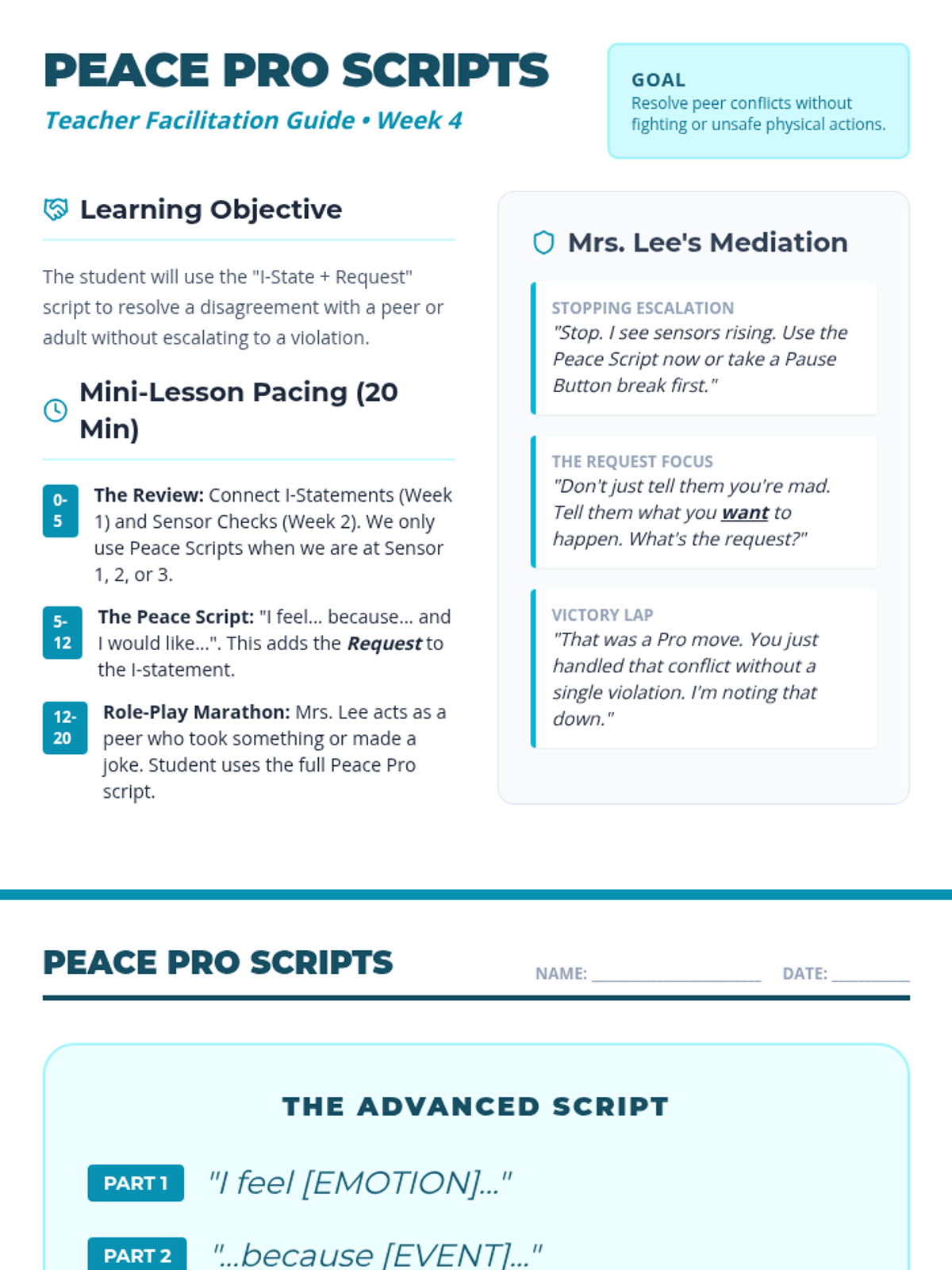
Weeks 4-6 of the intervention, focusing on practical impulse control strategies like the 'Pause Button' and addressing specific behaviors like lying and respecting property.
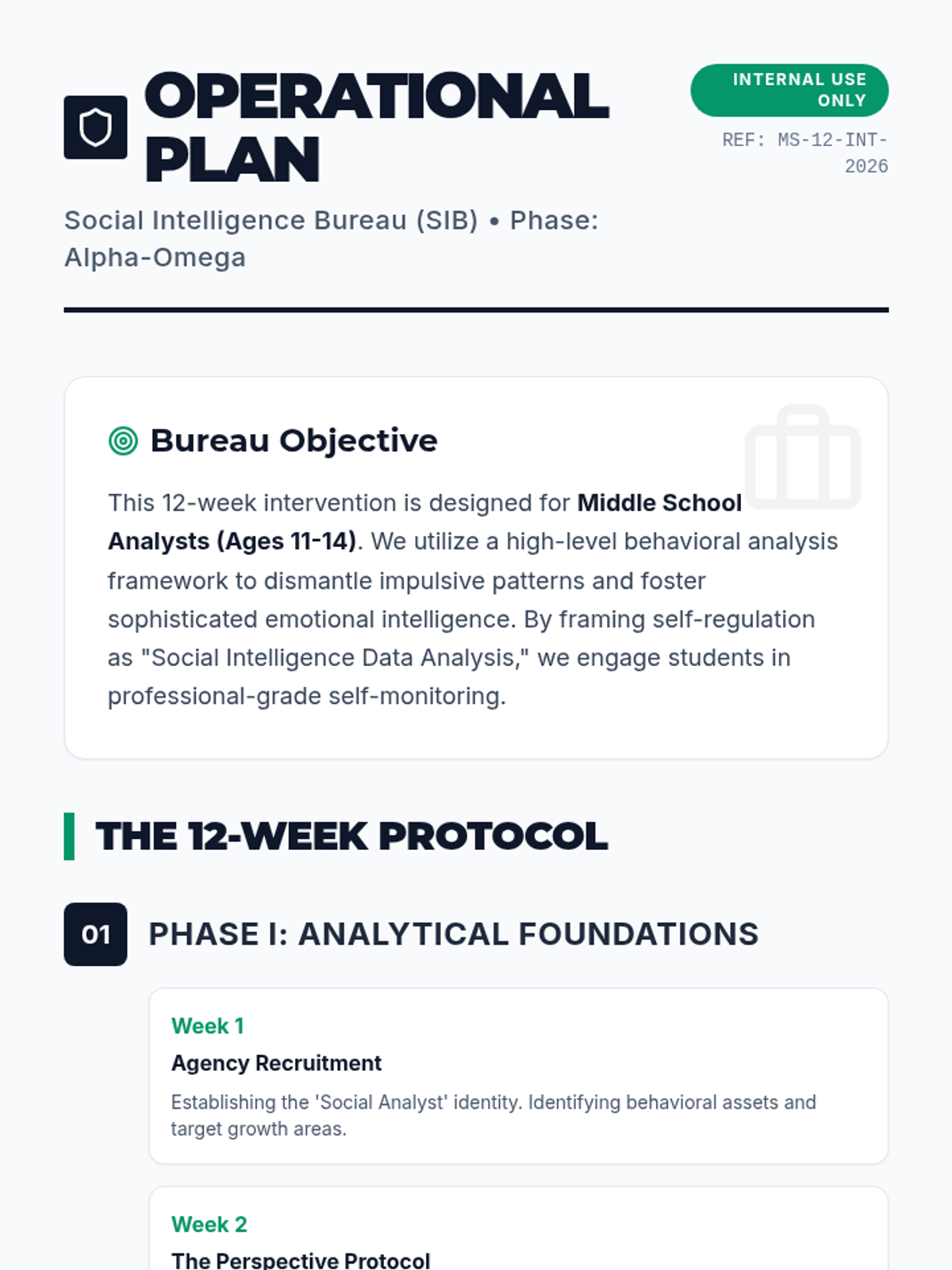
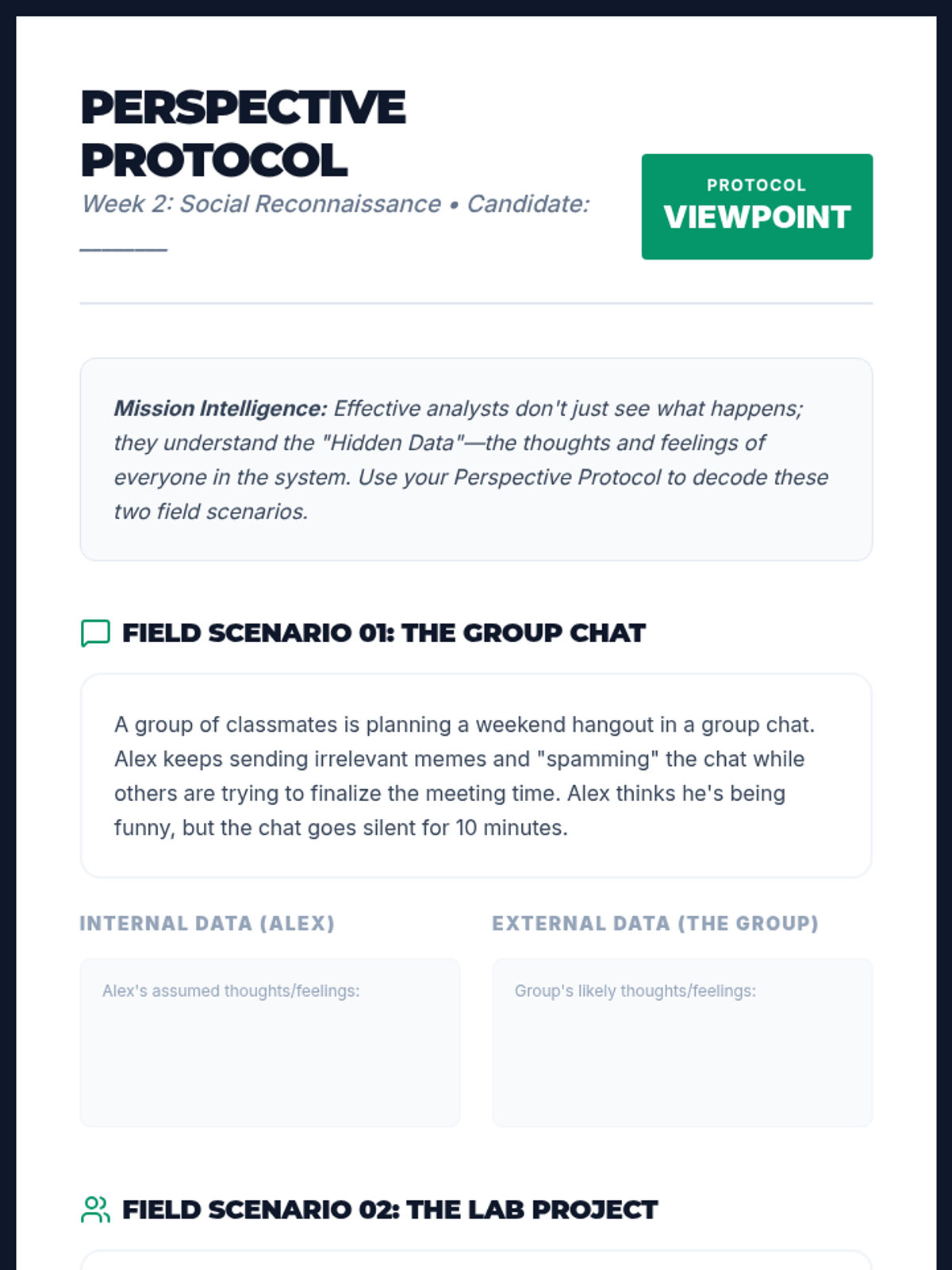
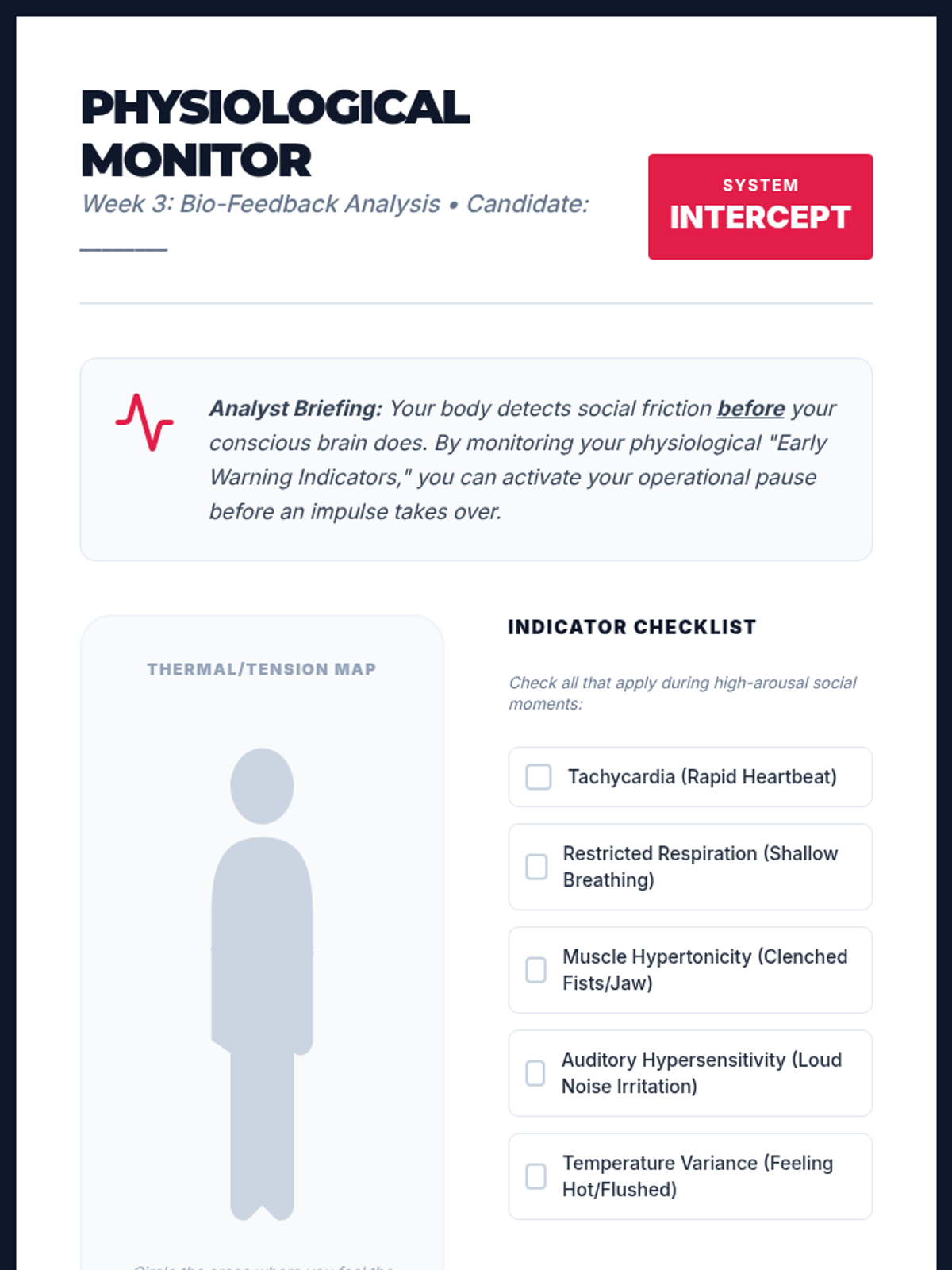
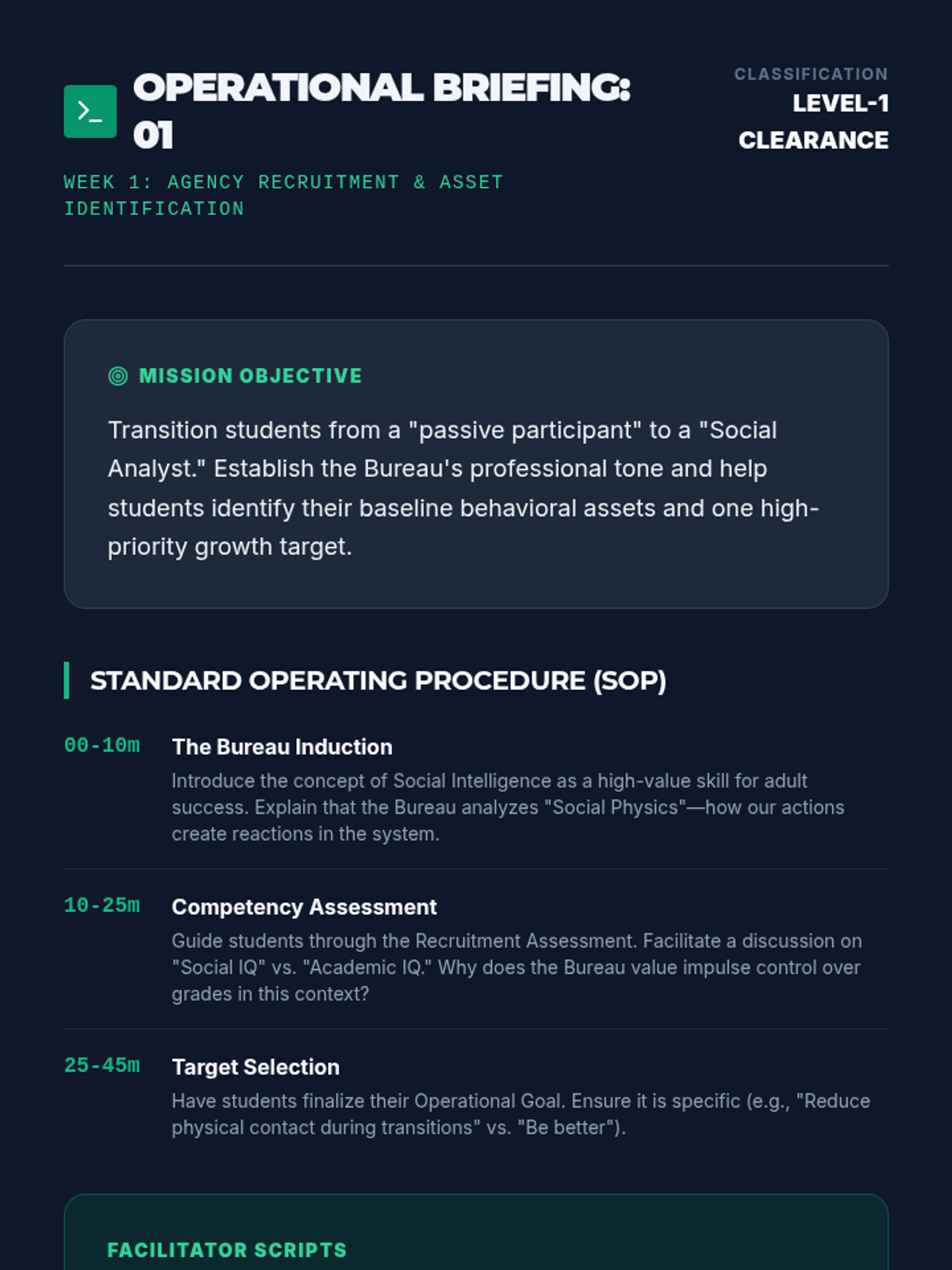
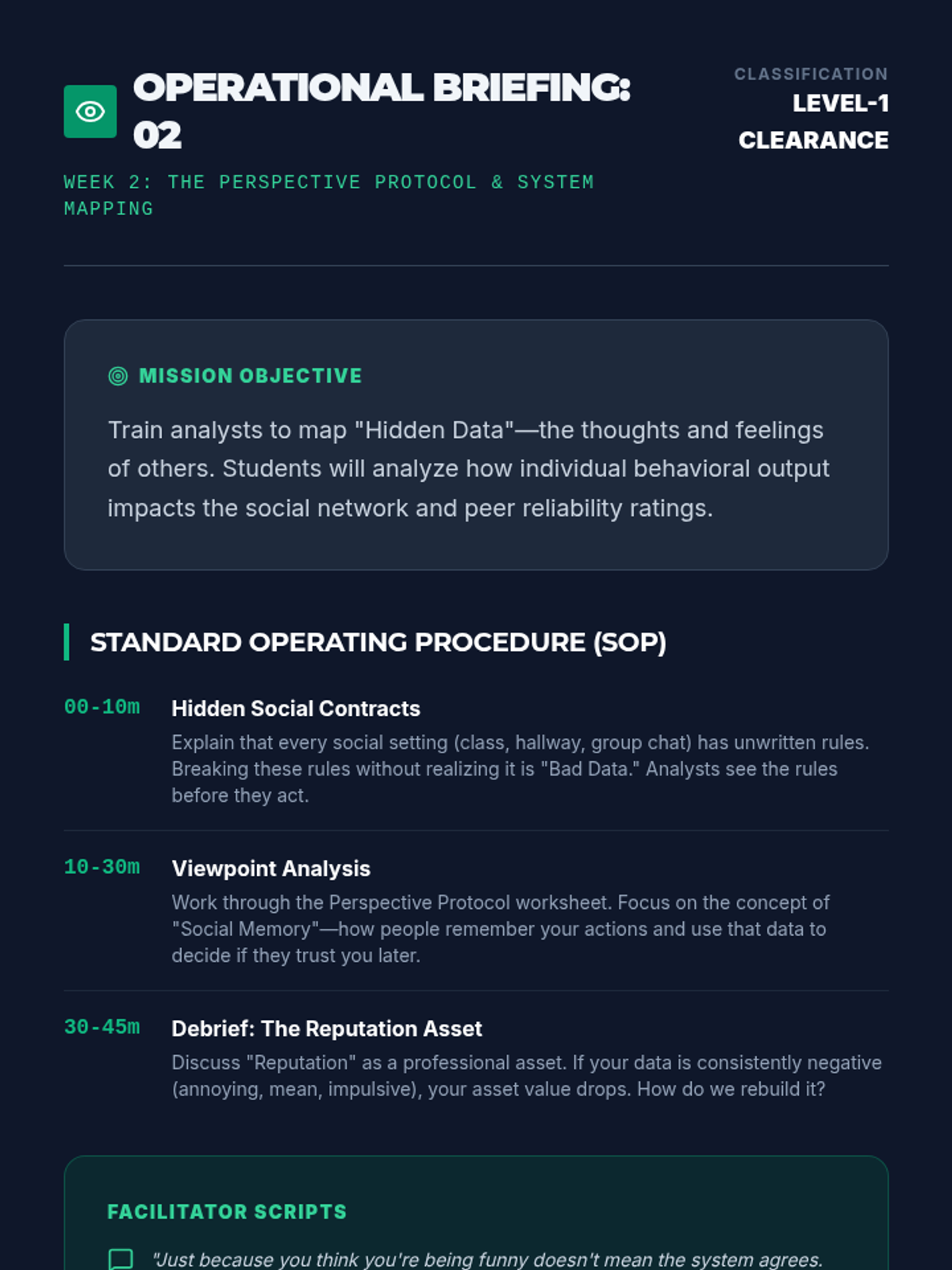
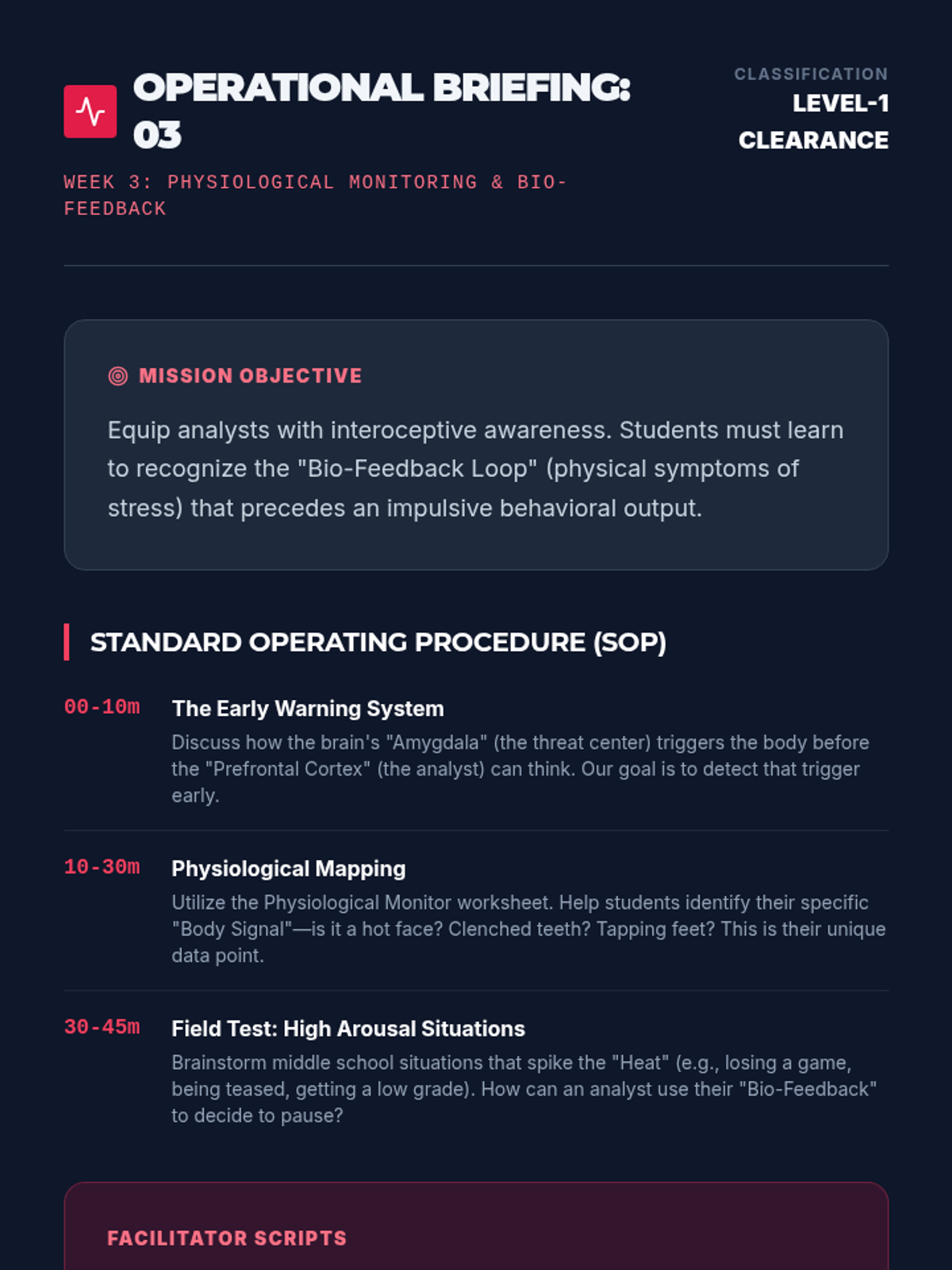
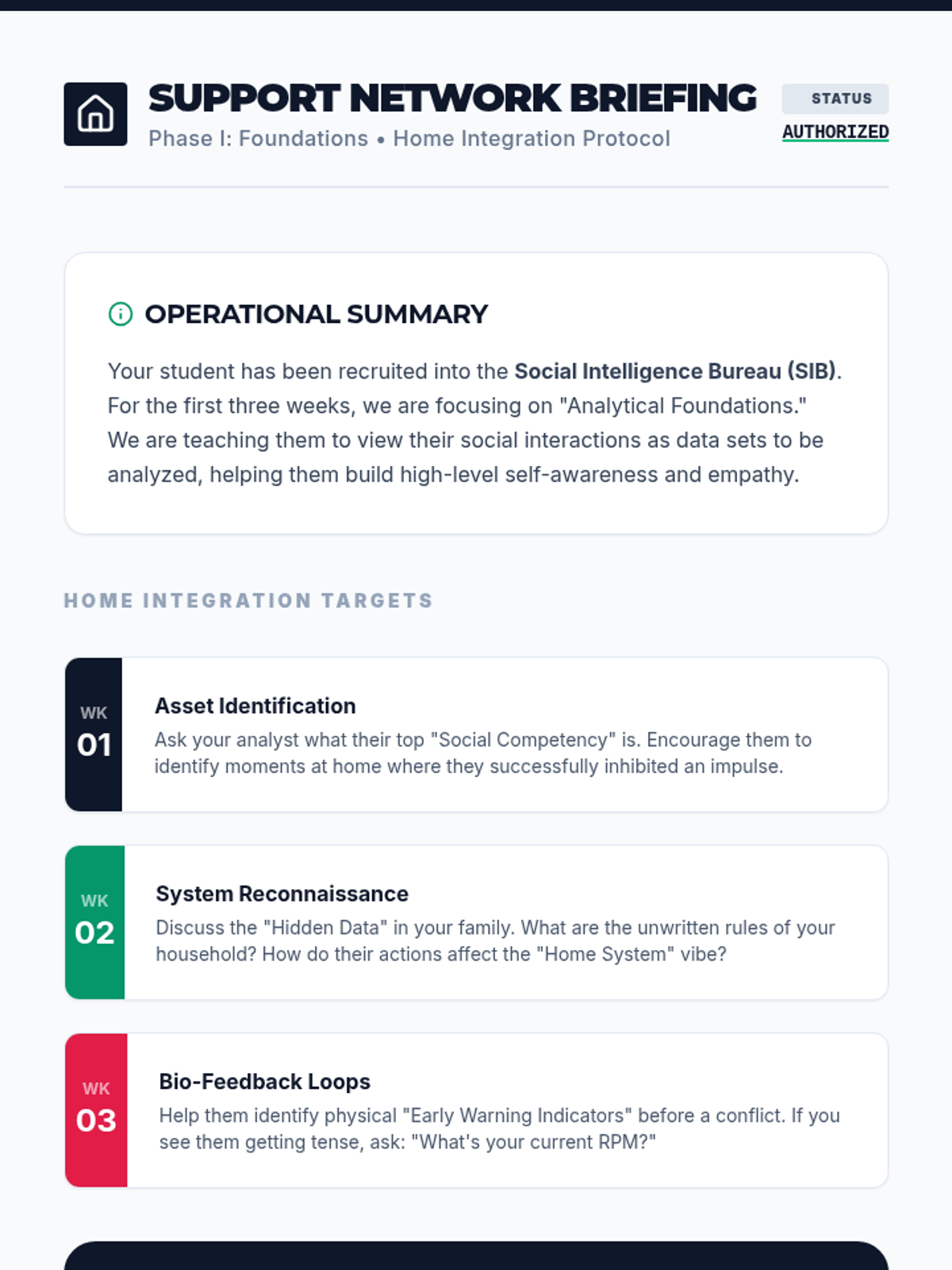
The first three weeks focus on building high-level self-awareness and understanding the core concepts of social perspective-taking and physiological self-monitoring.
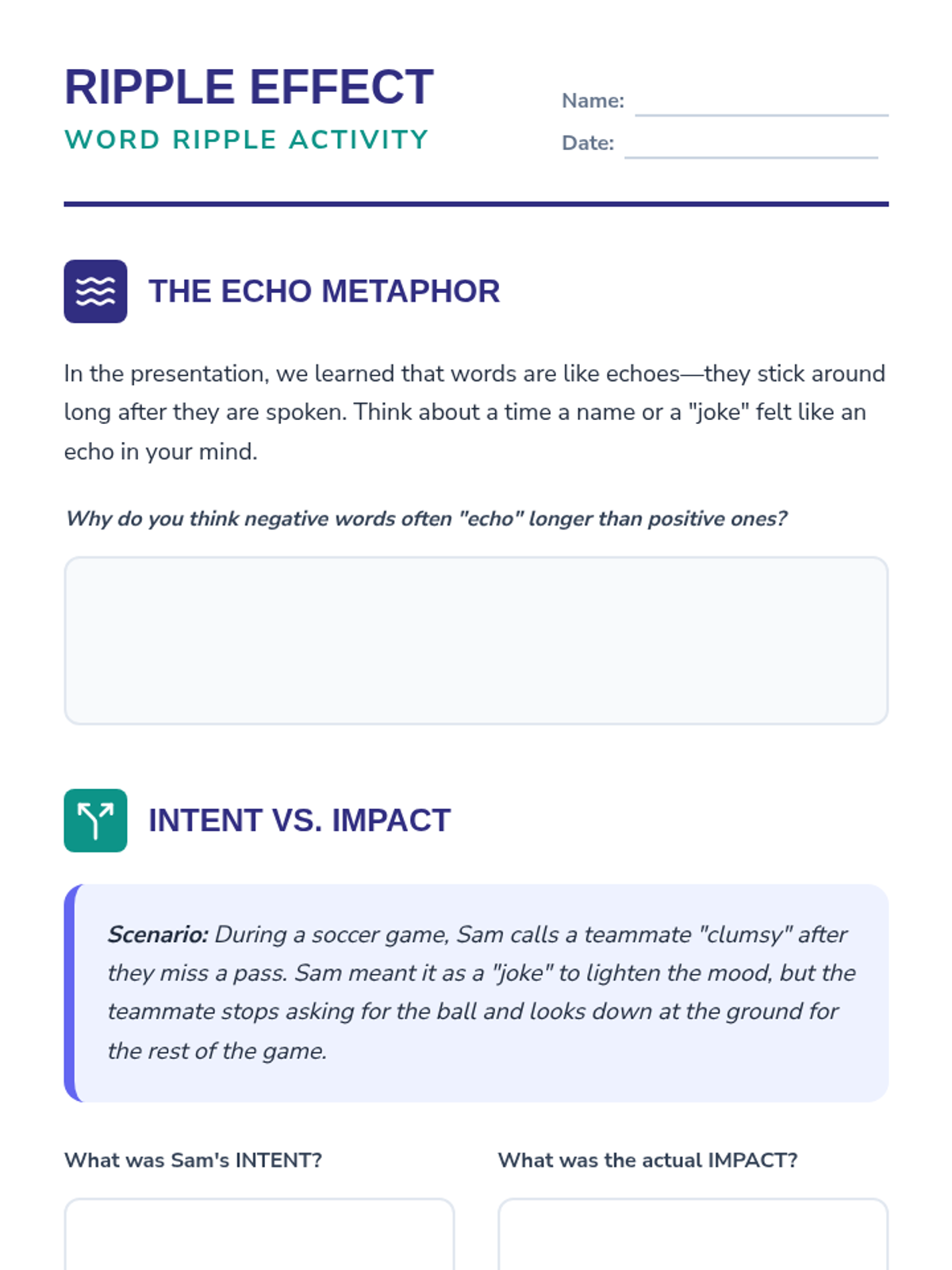
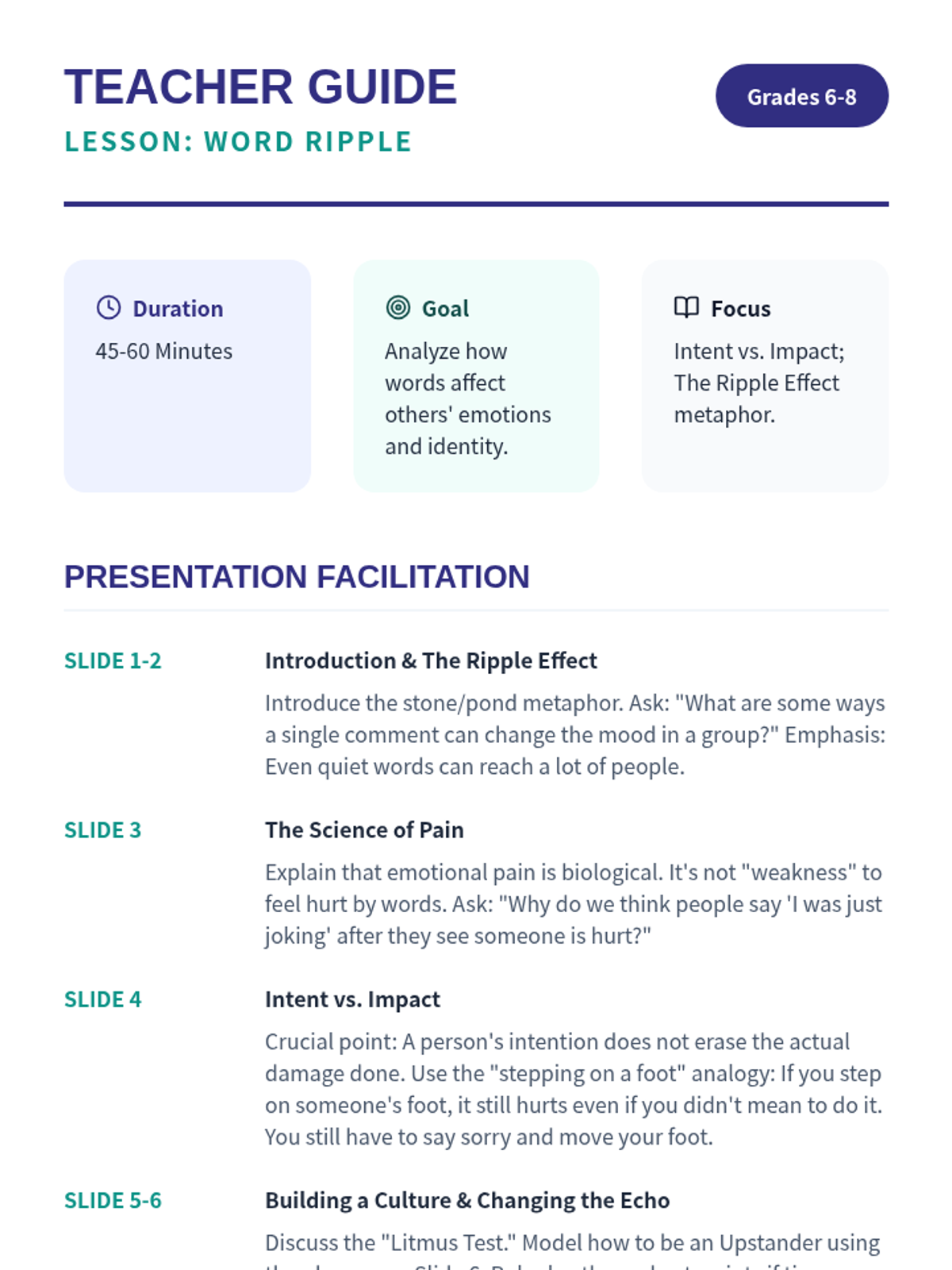
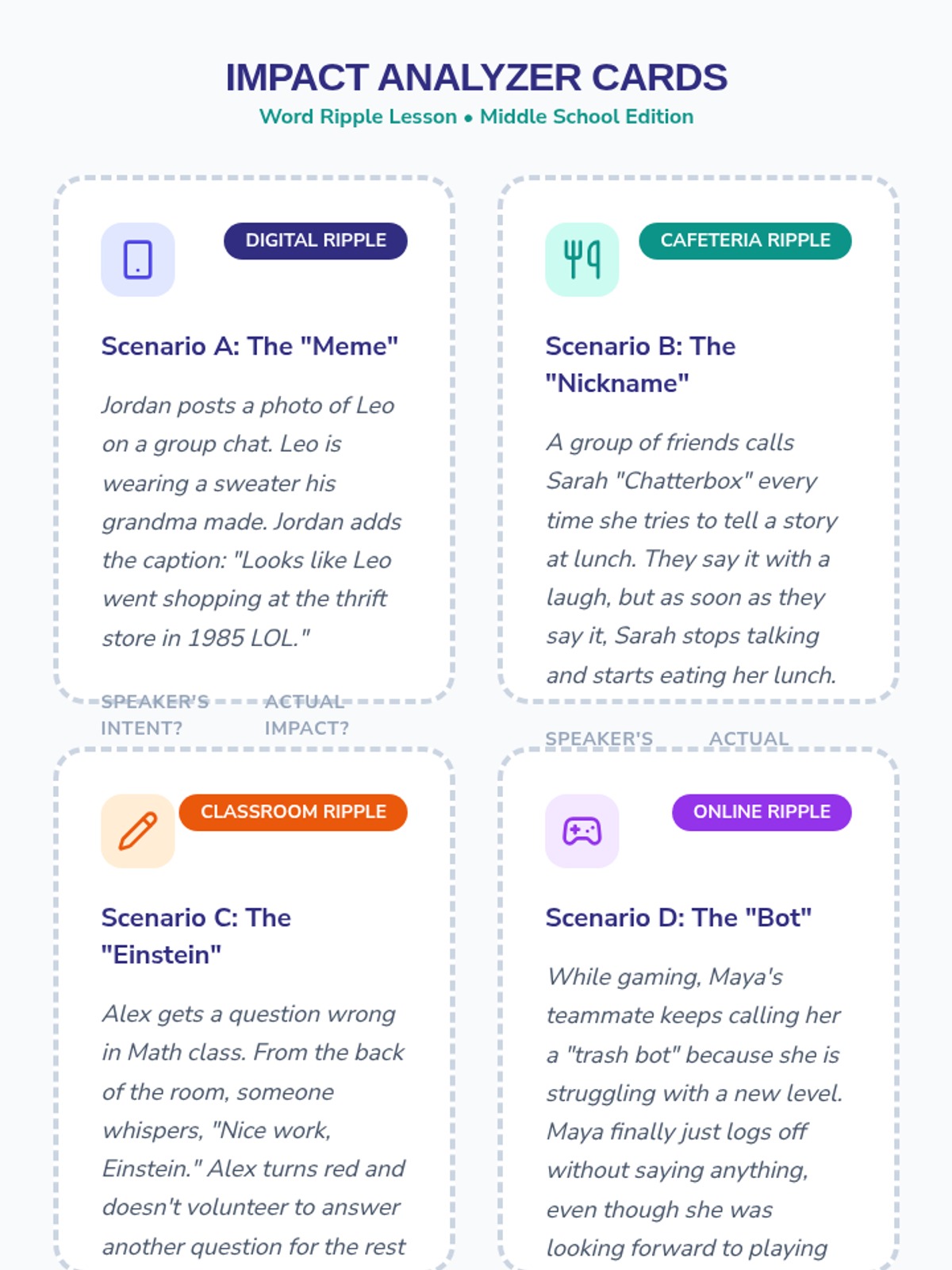
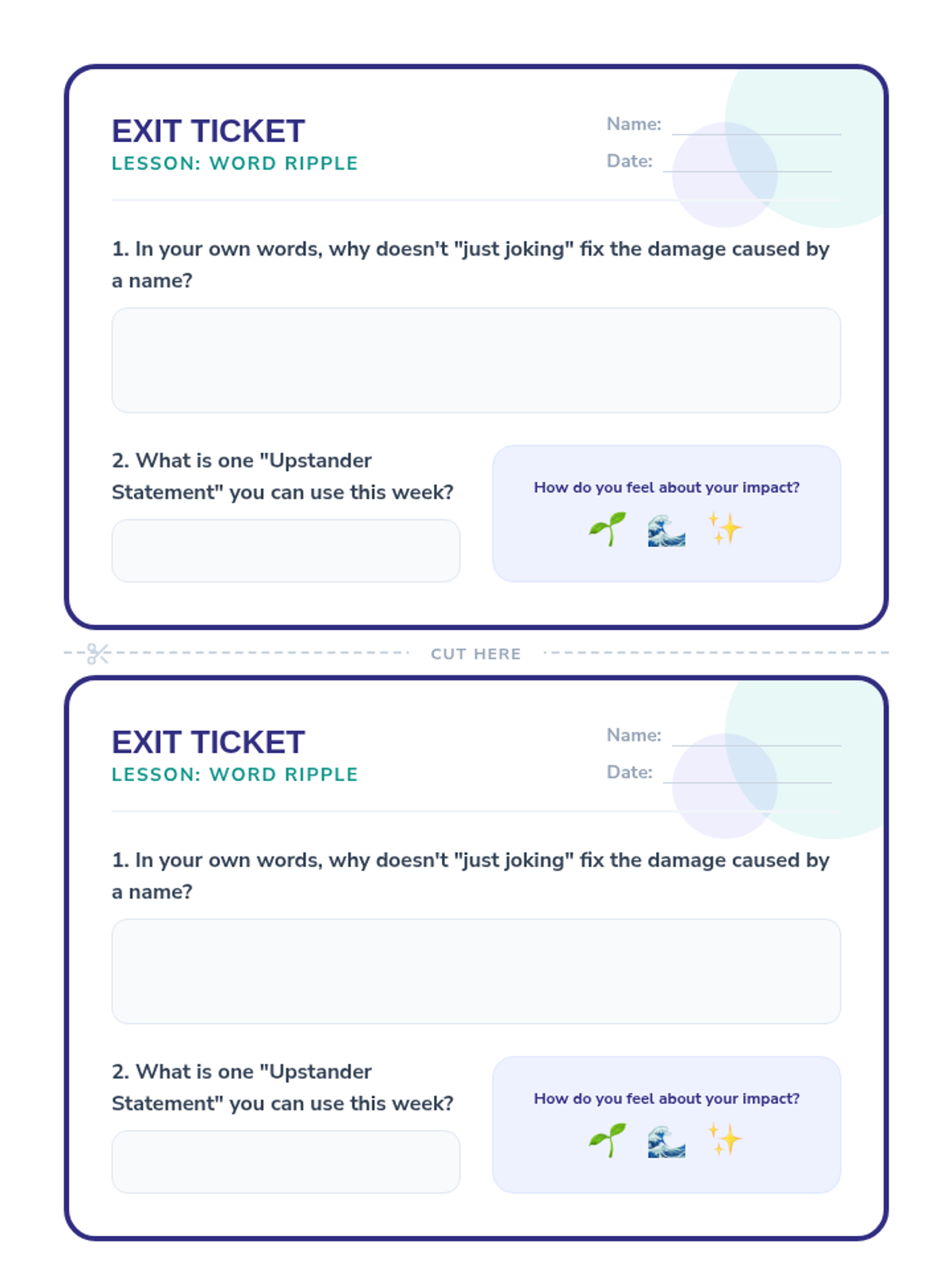
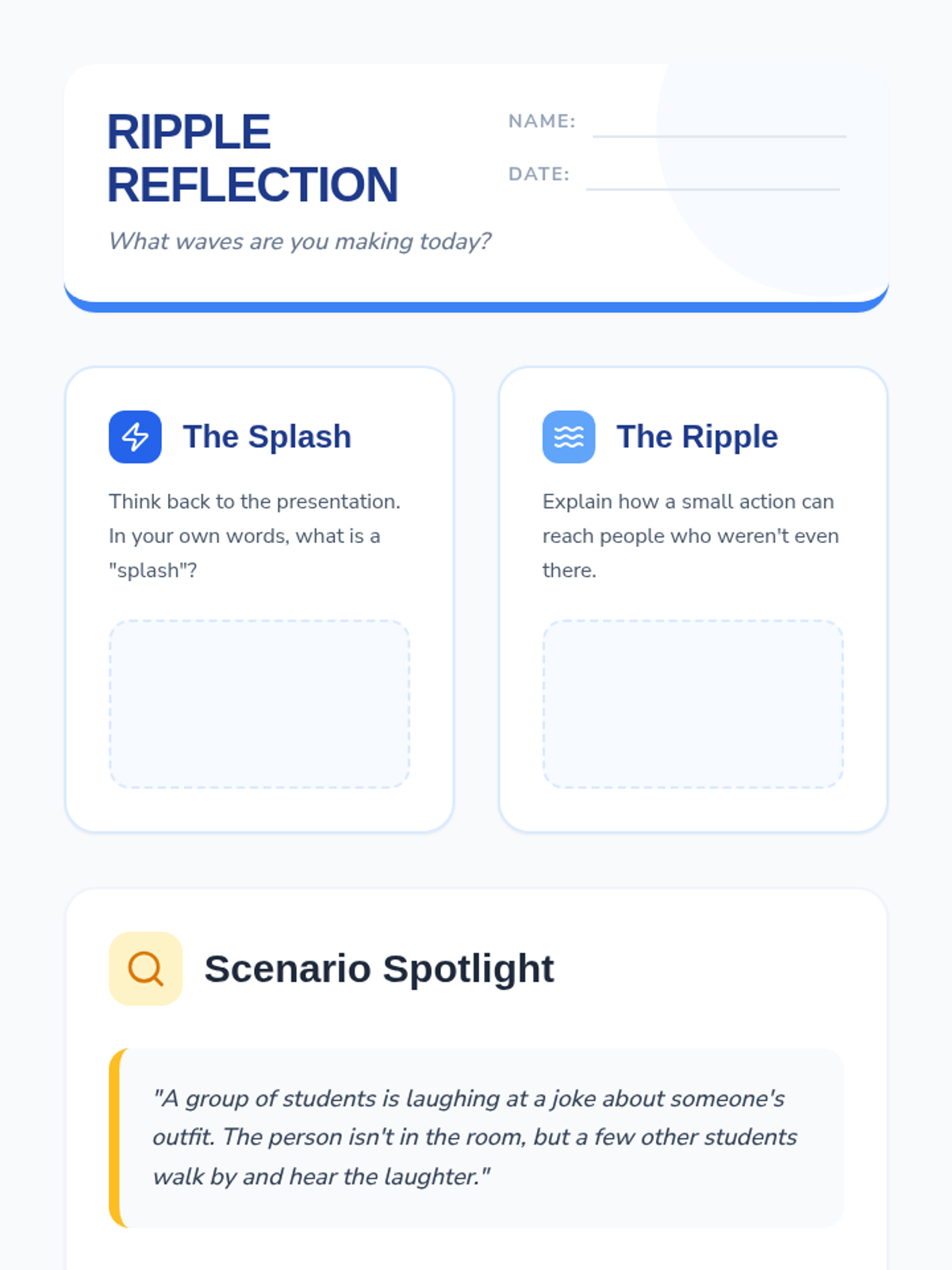
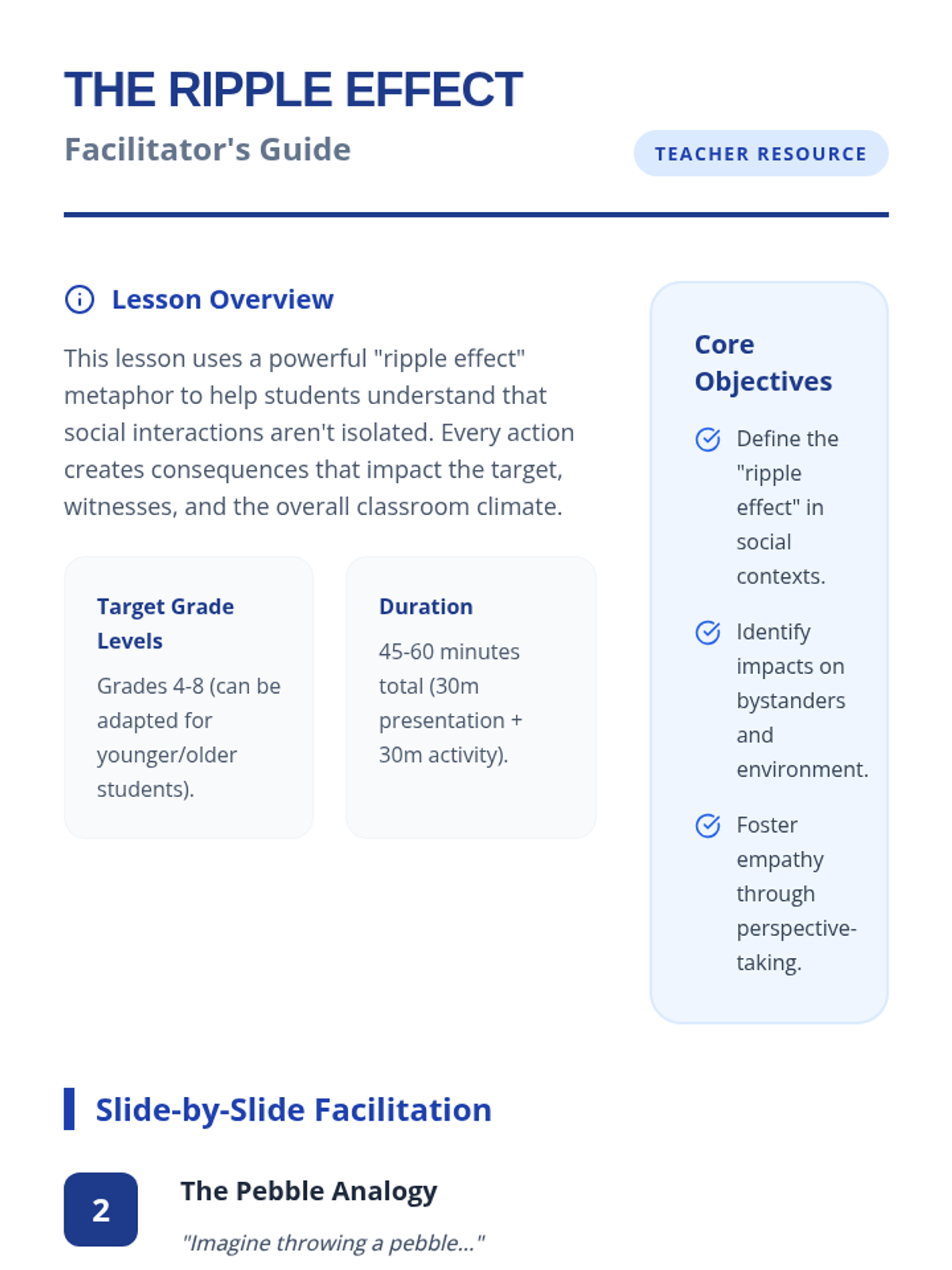
A lesson exploring the social and emotional consequences of name-calling, focusing on the difference between intent and impact through the metaphor of a ripple effect.
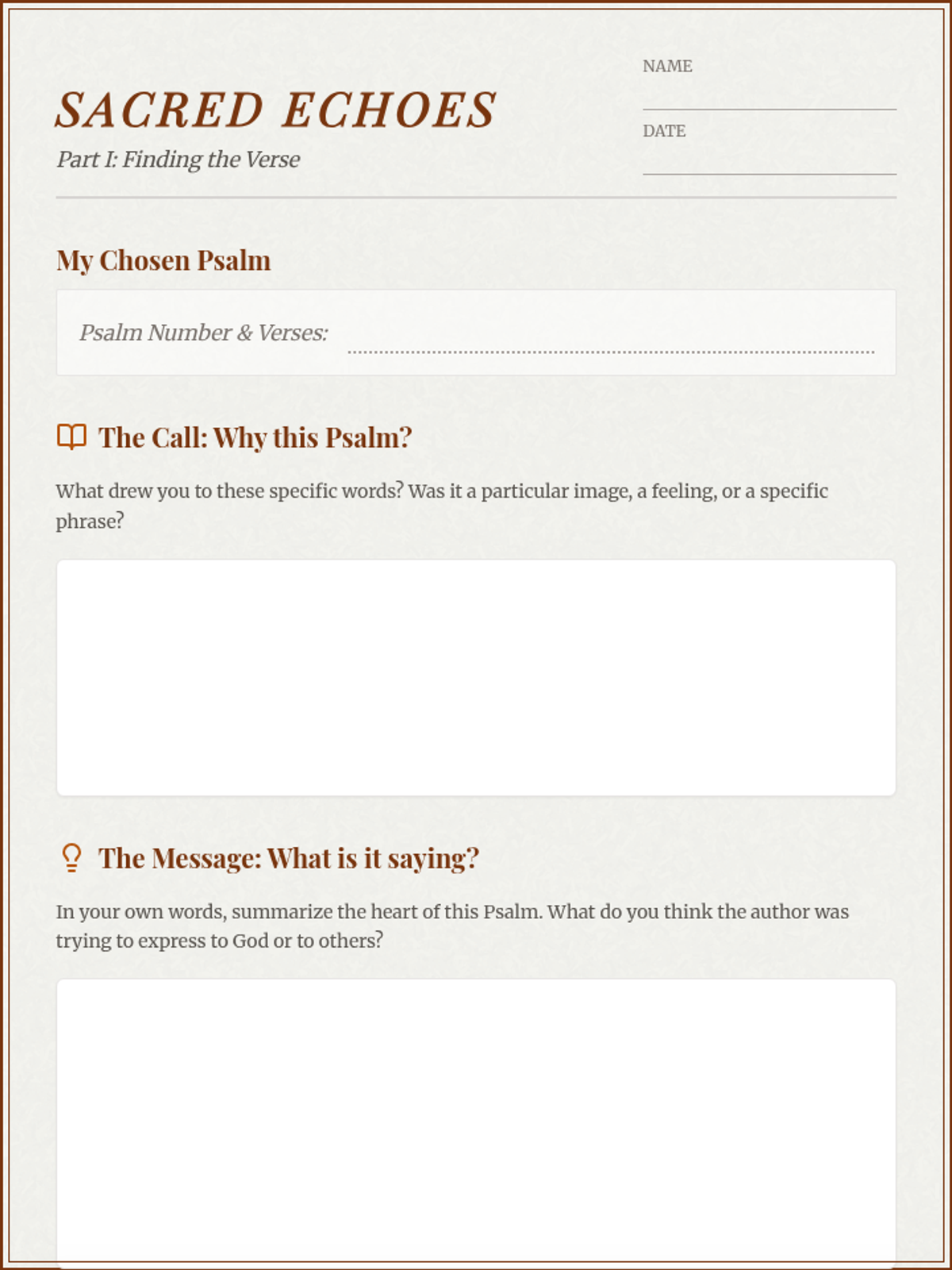
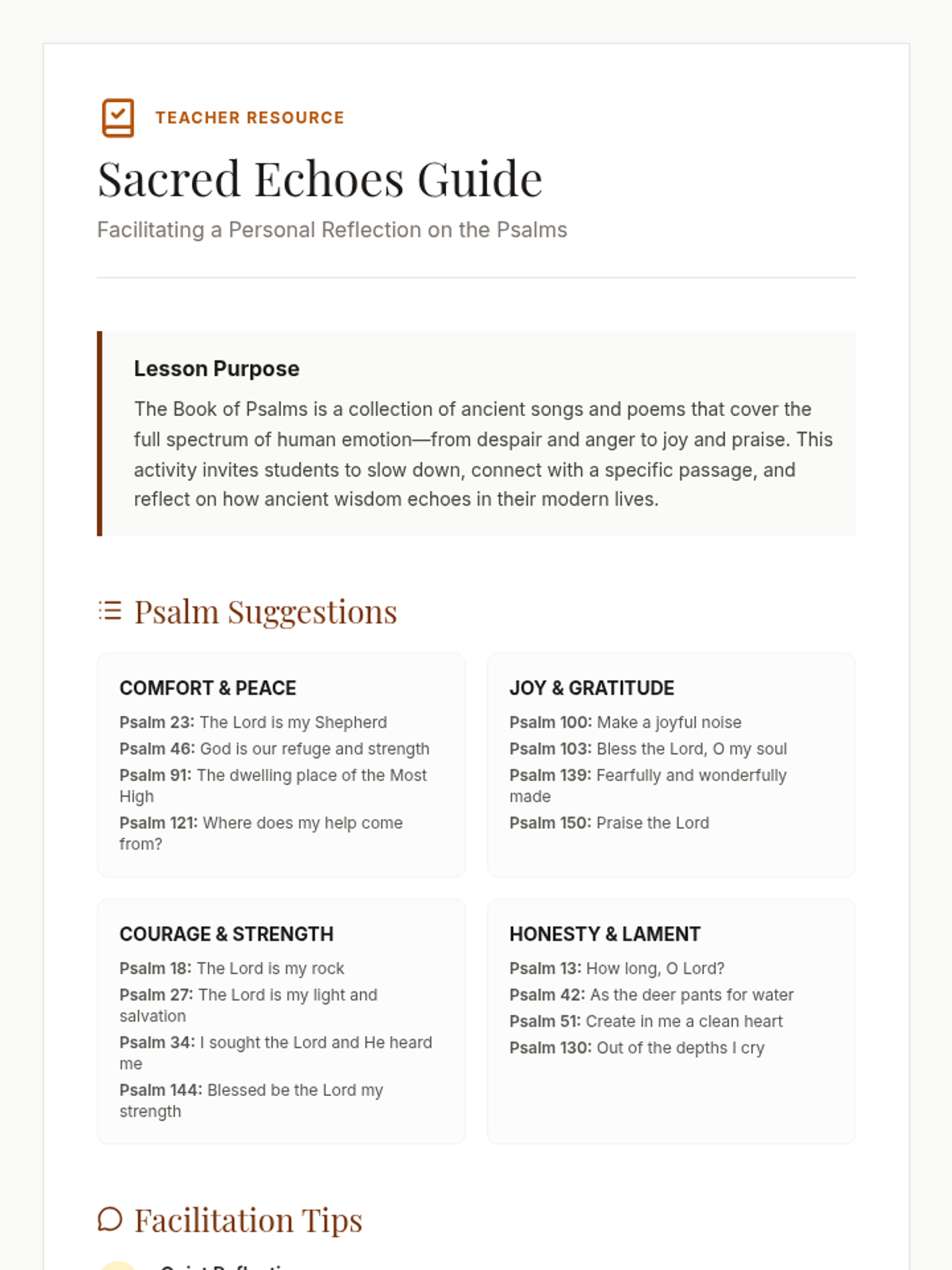
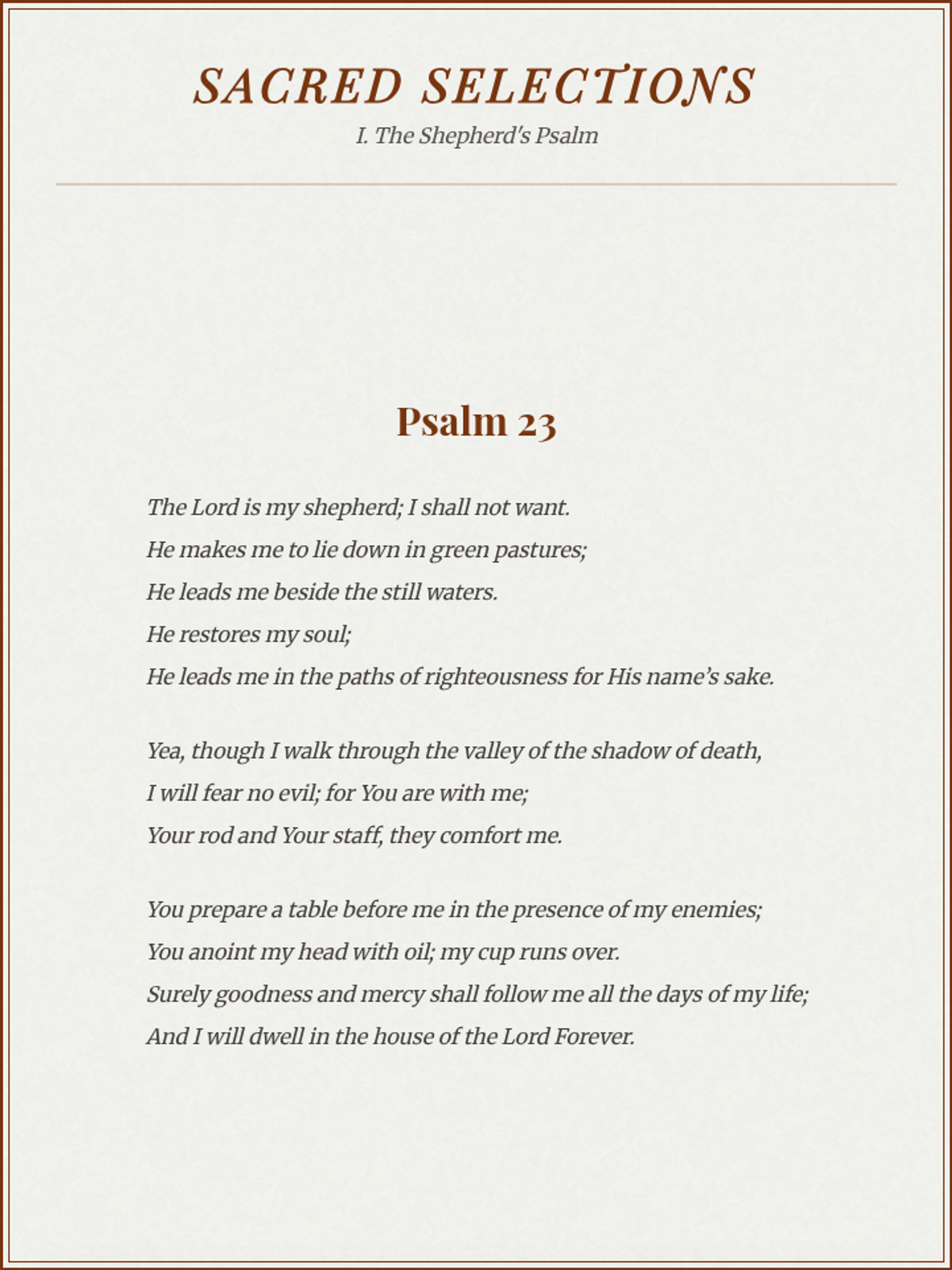
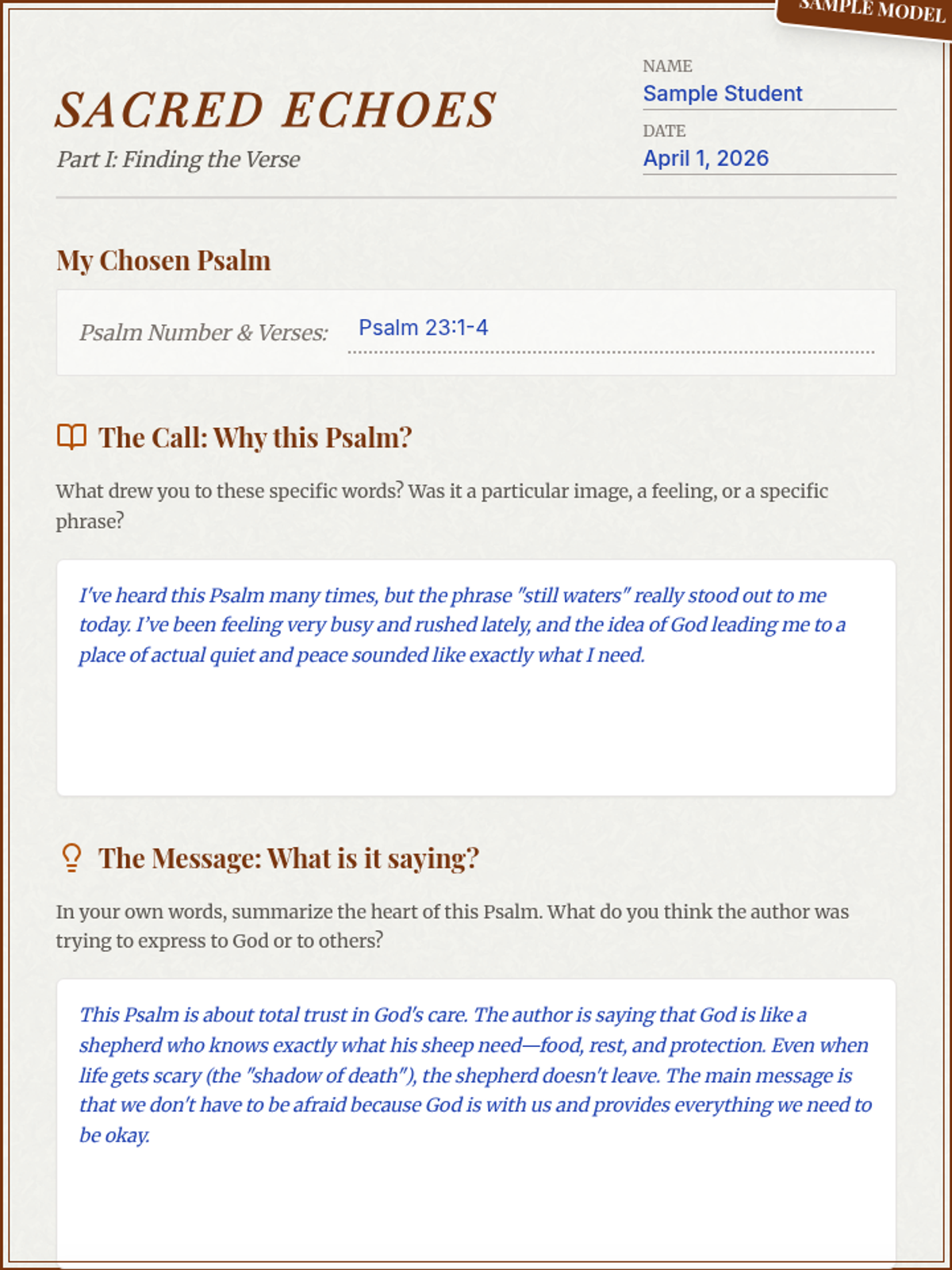
A reflective lesson where students explore the poetic beauty and personal significance of the Psalms, choosing a specific passage to analyze and connect with their own lives.
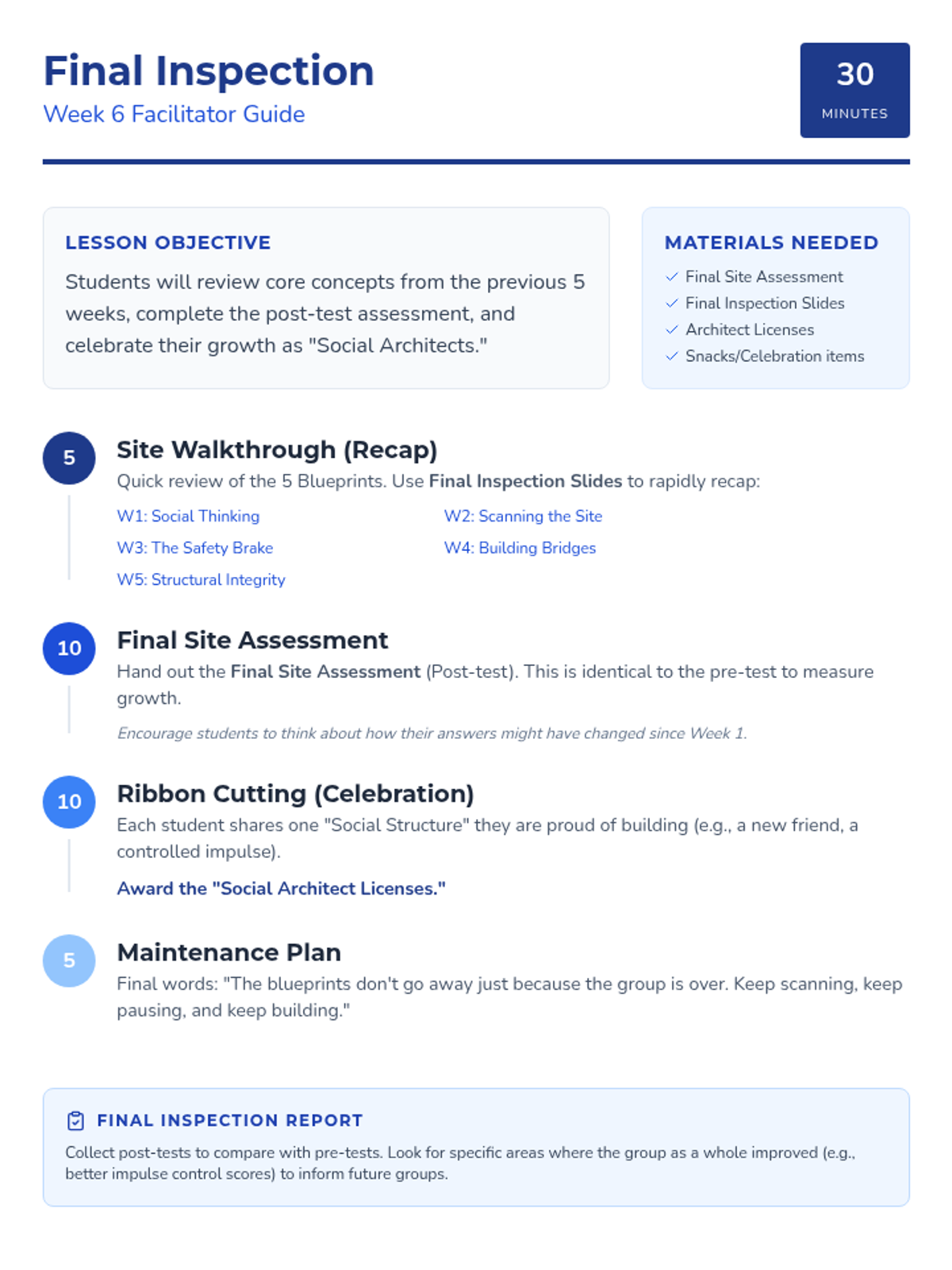
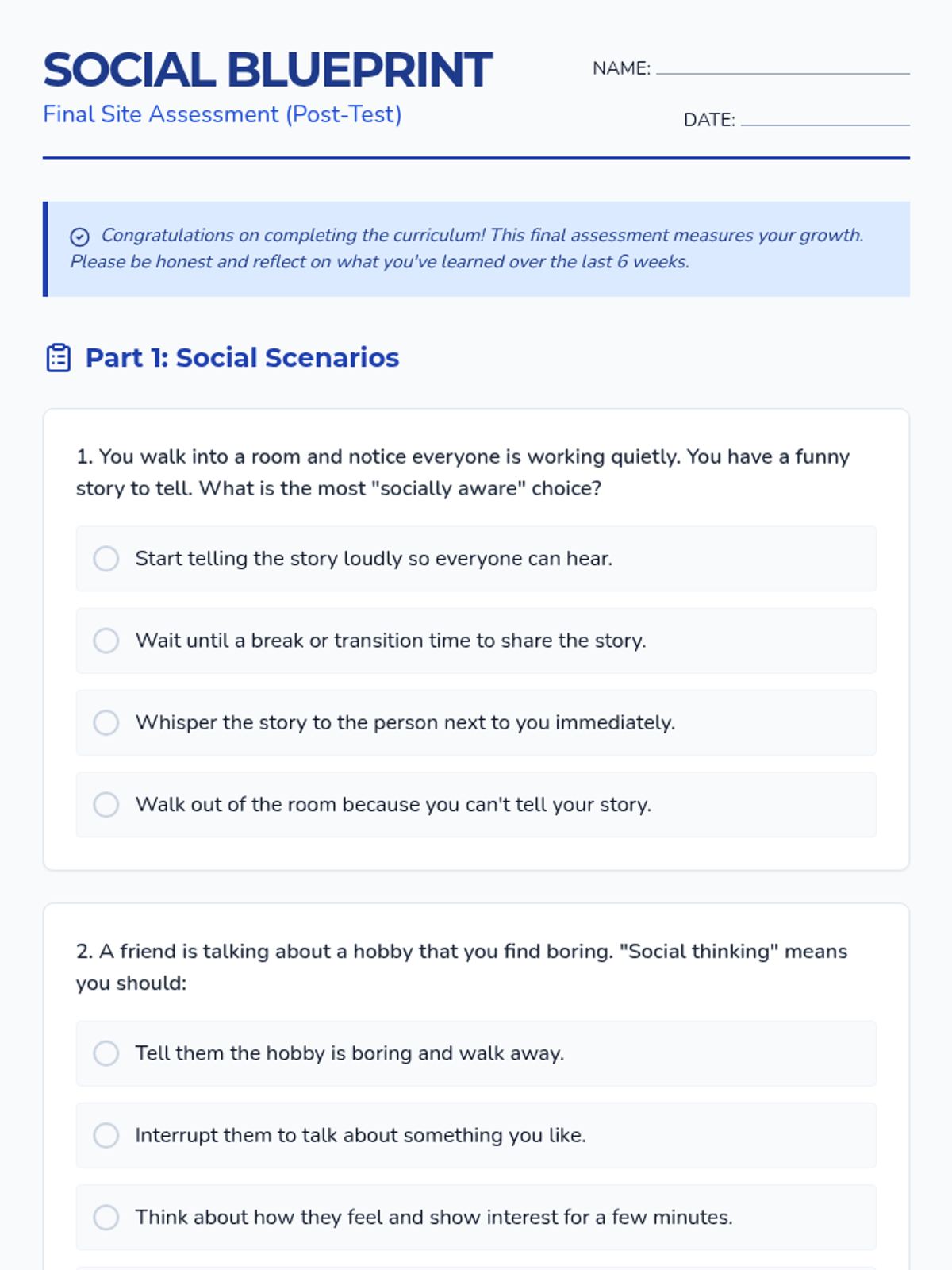
Final review of core concepts, post-test administration, and a group celebration of social growth.
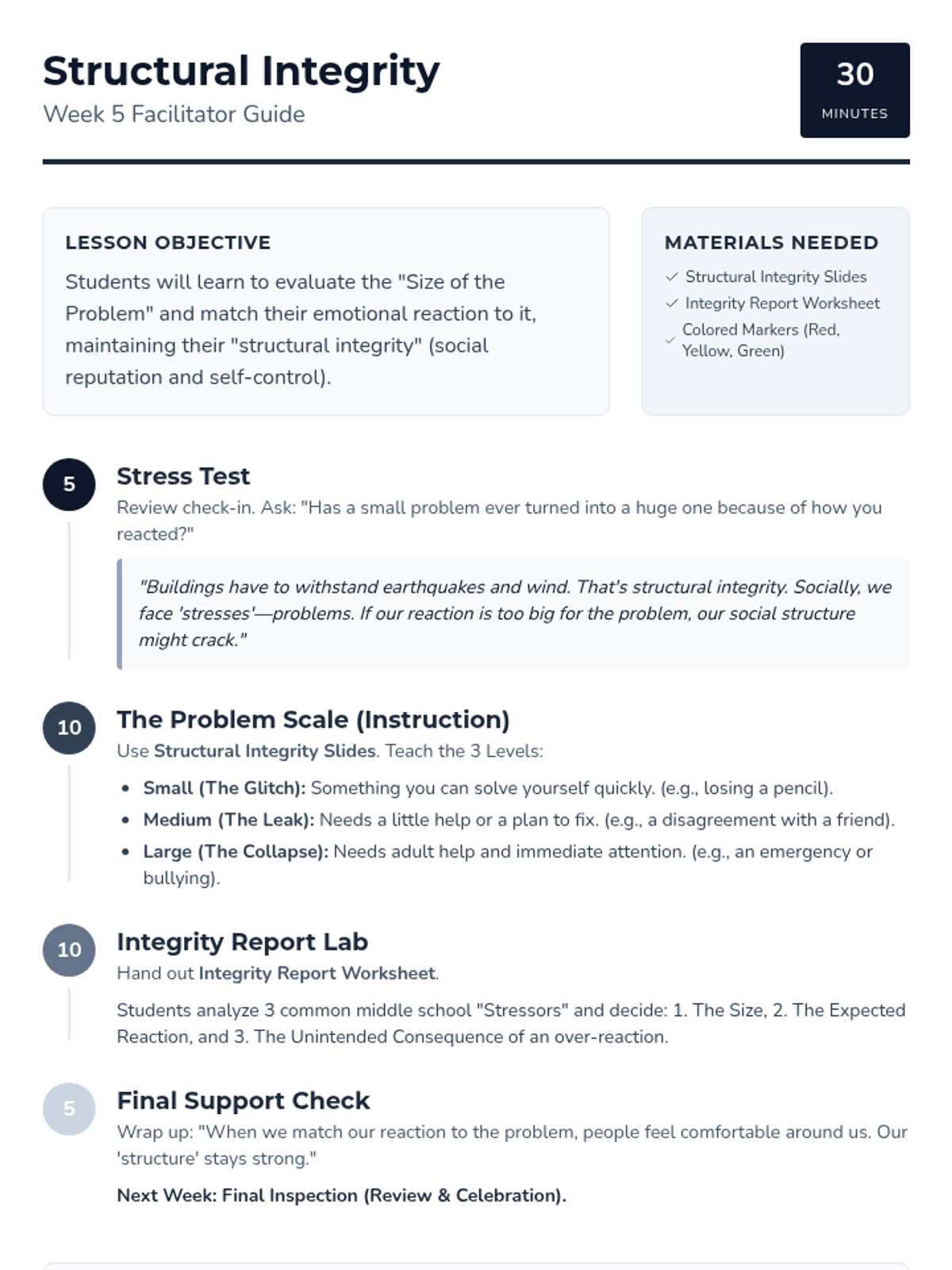
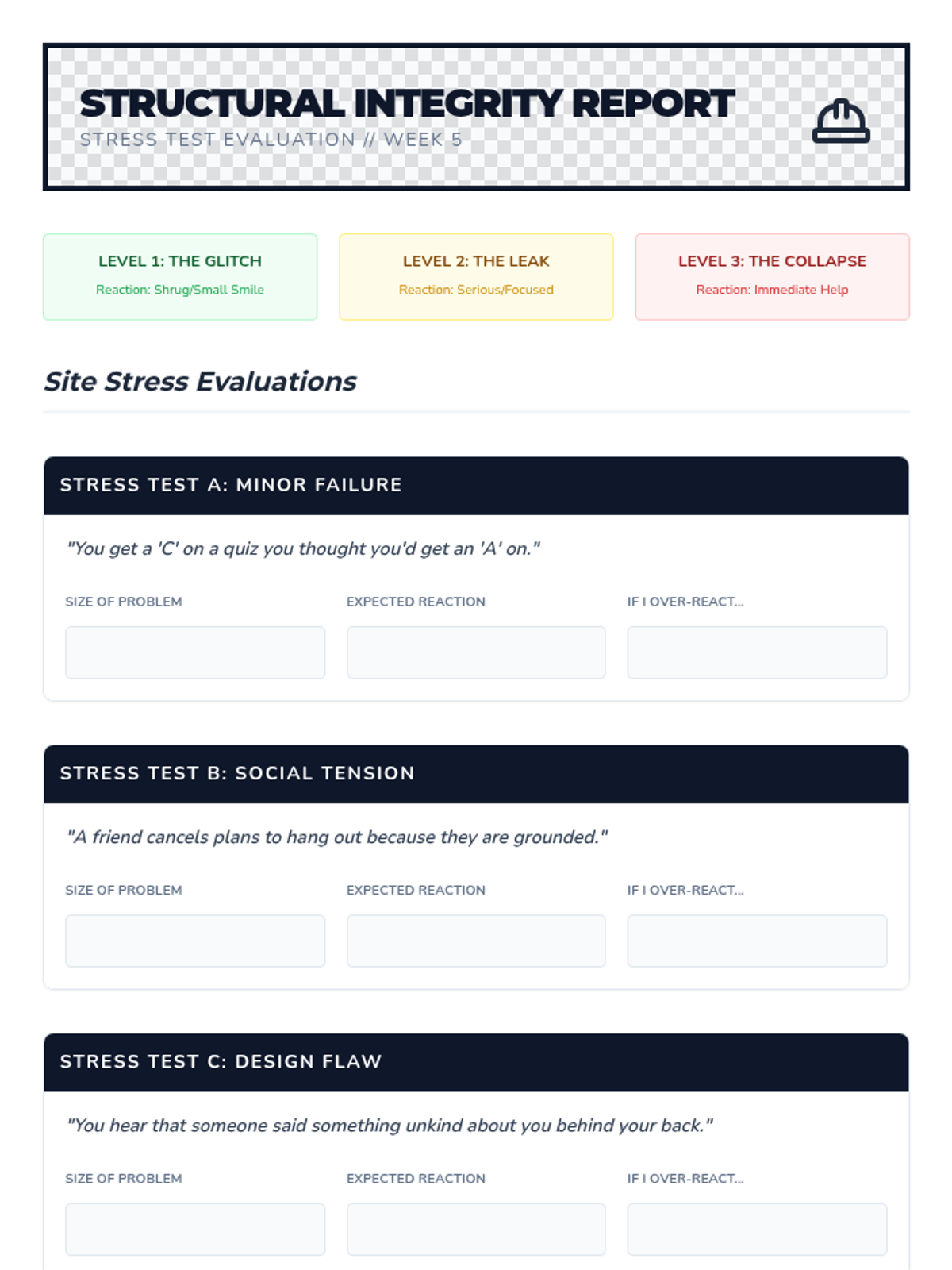
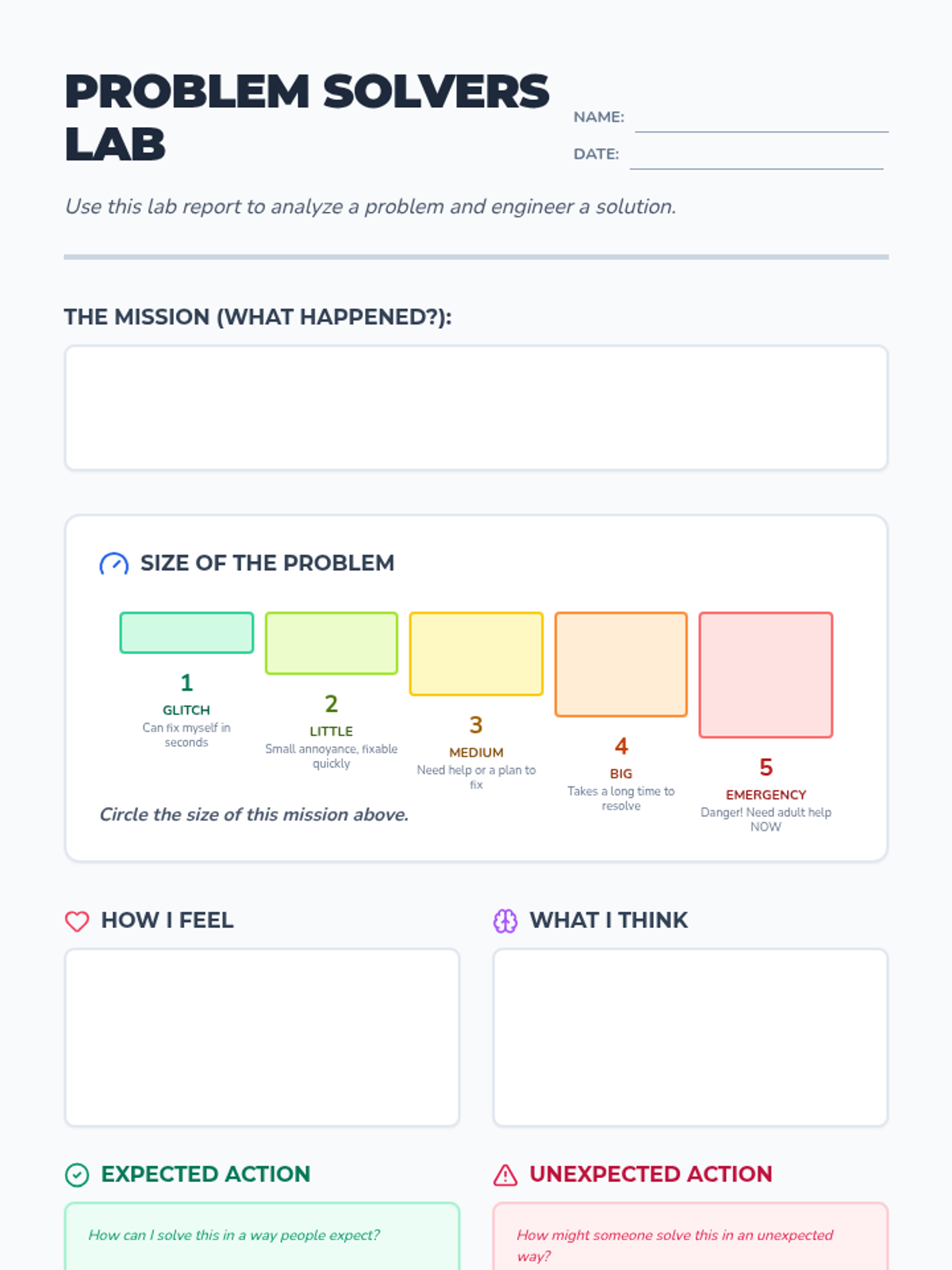
Applying social thinking to problem-solving, focusing on the 'Size of the Problem' and matching reactions accordingly.
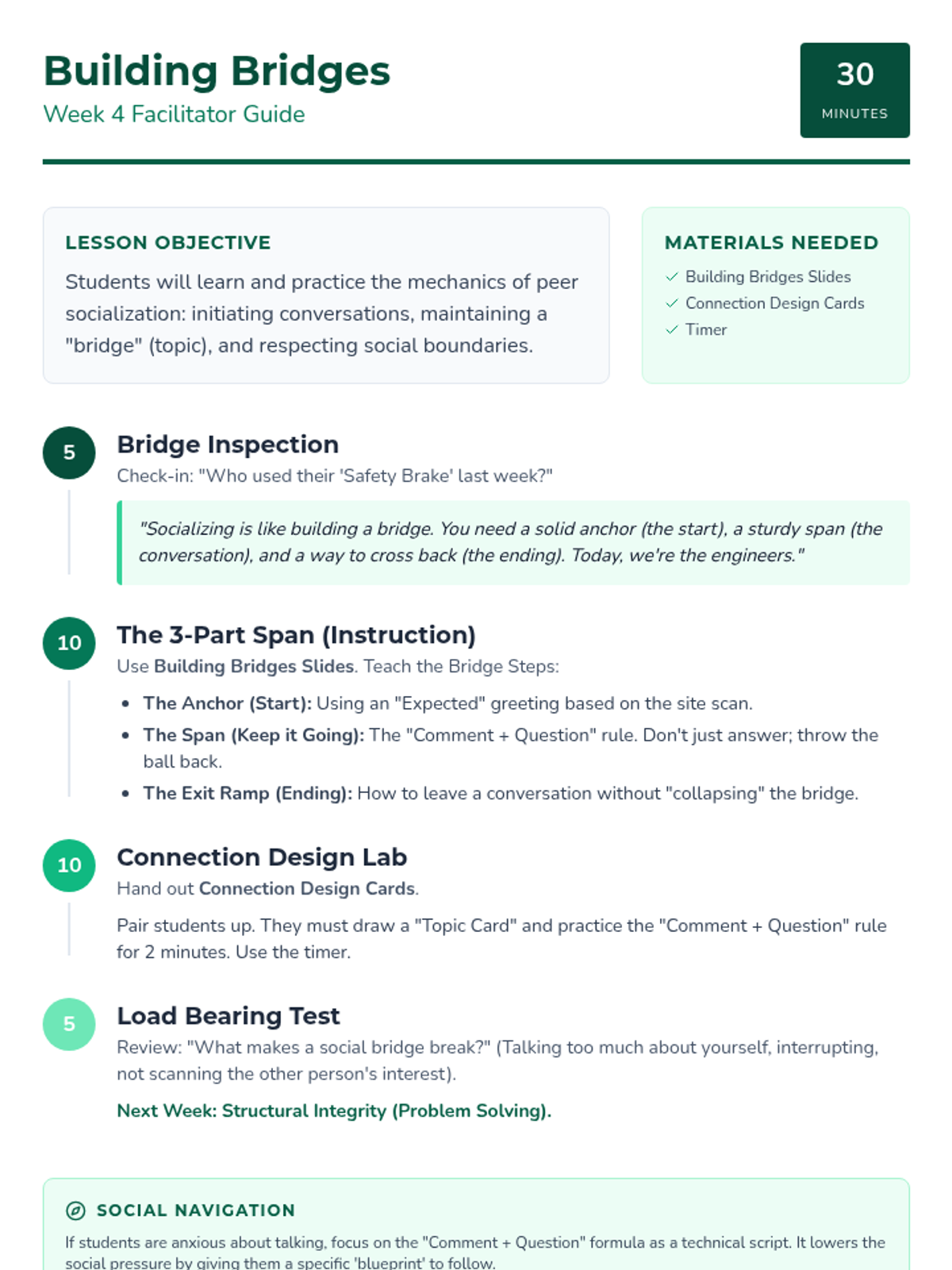
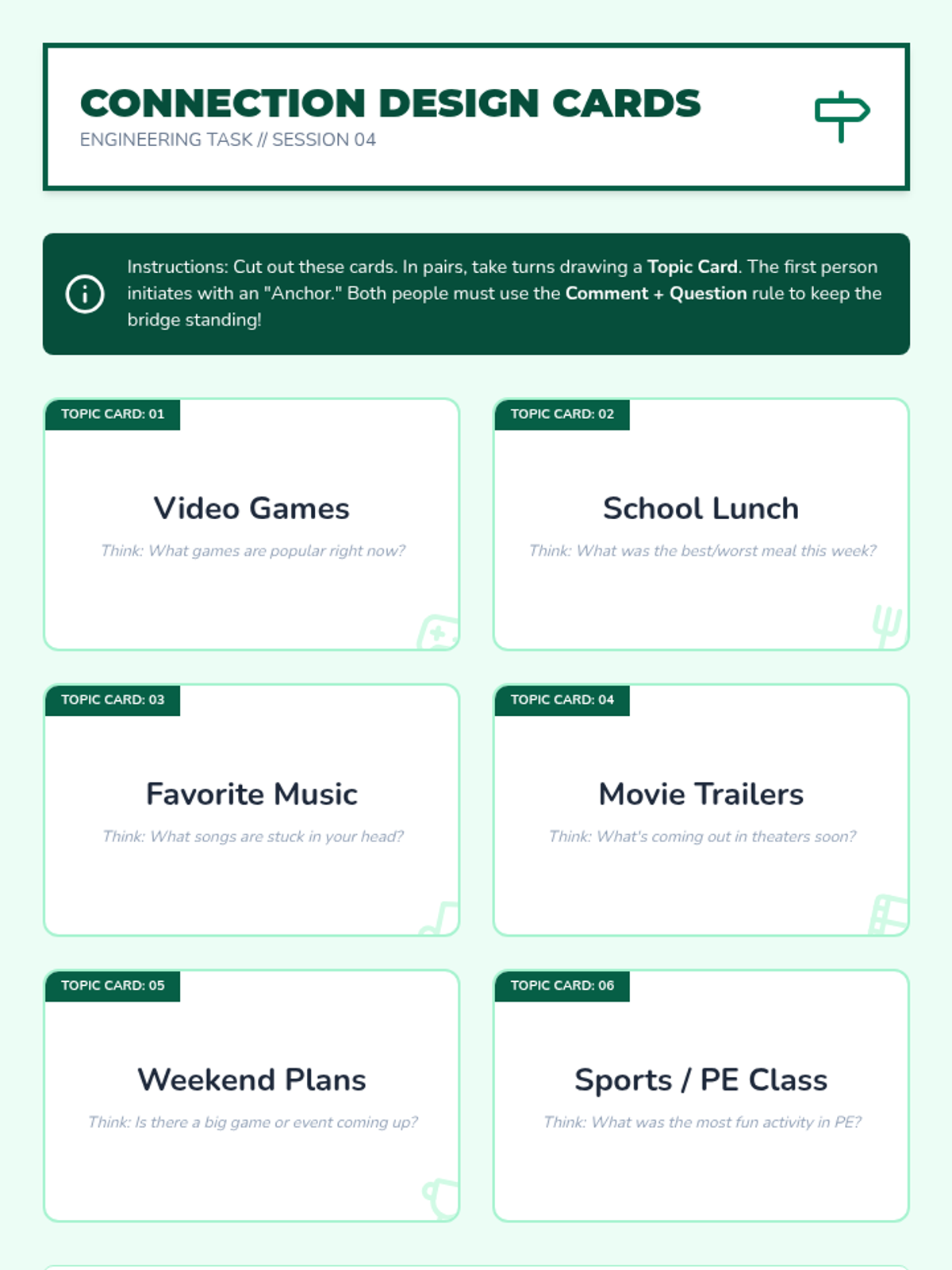
Practicing appropriate peer socialization skills, including starting conversations, maintaining topics, and recognizing social boundaries.
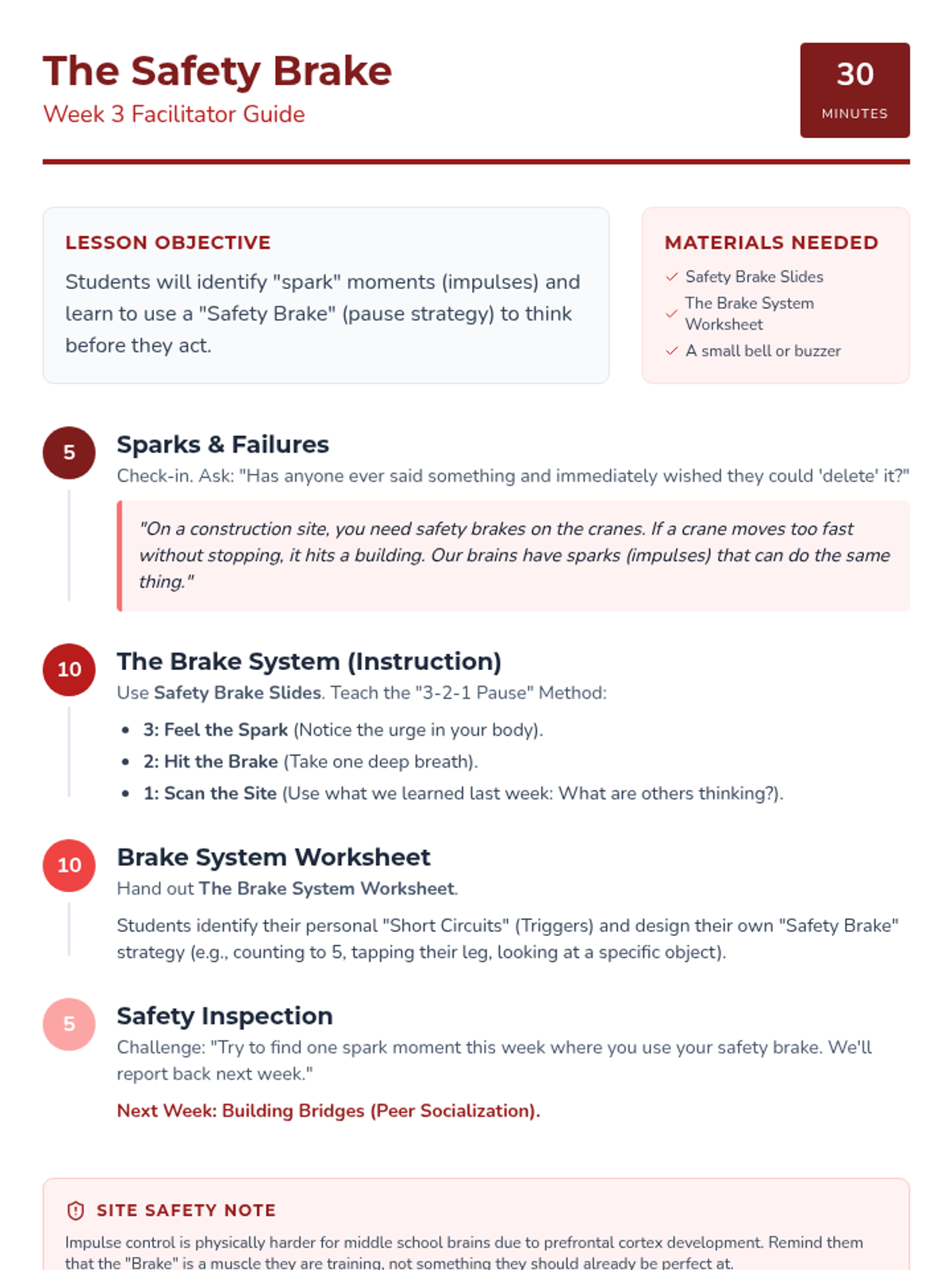
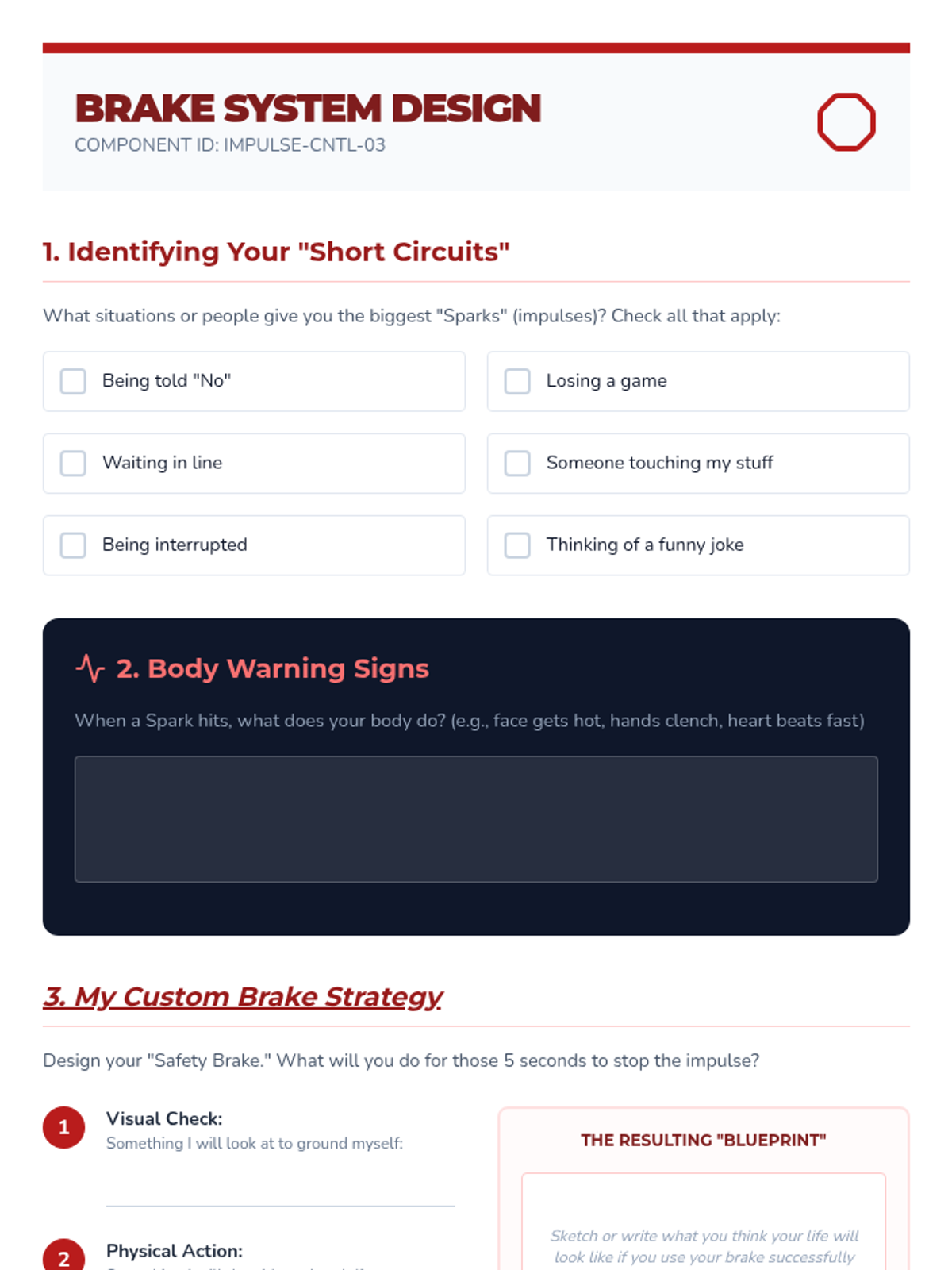
Focusing on impulse control, teaching students to identify 'spark' moments and use strategies to pause before acting.
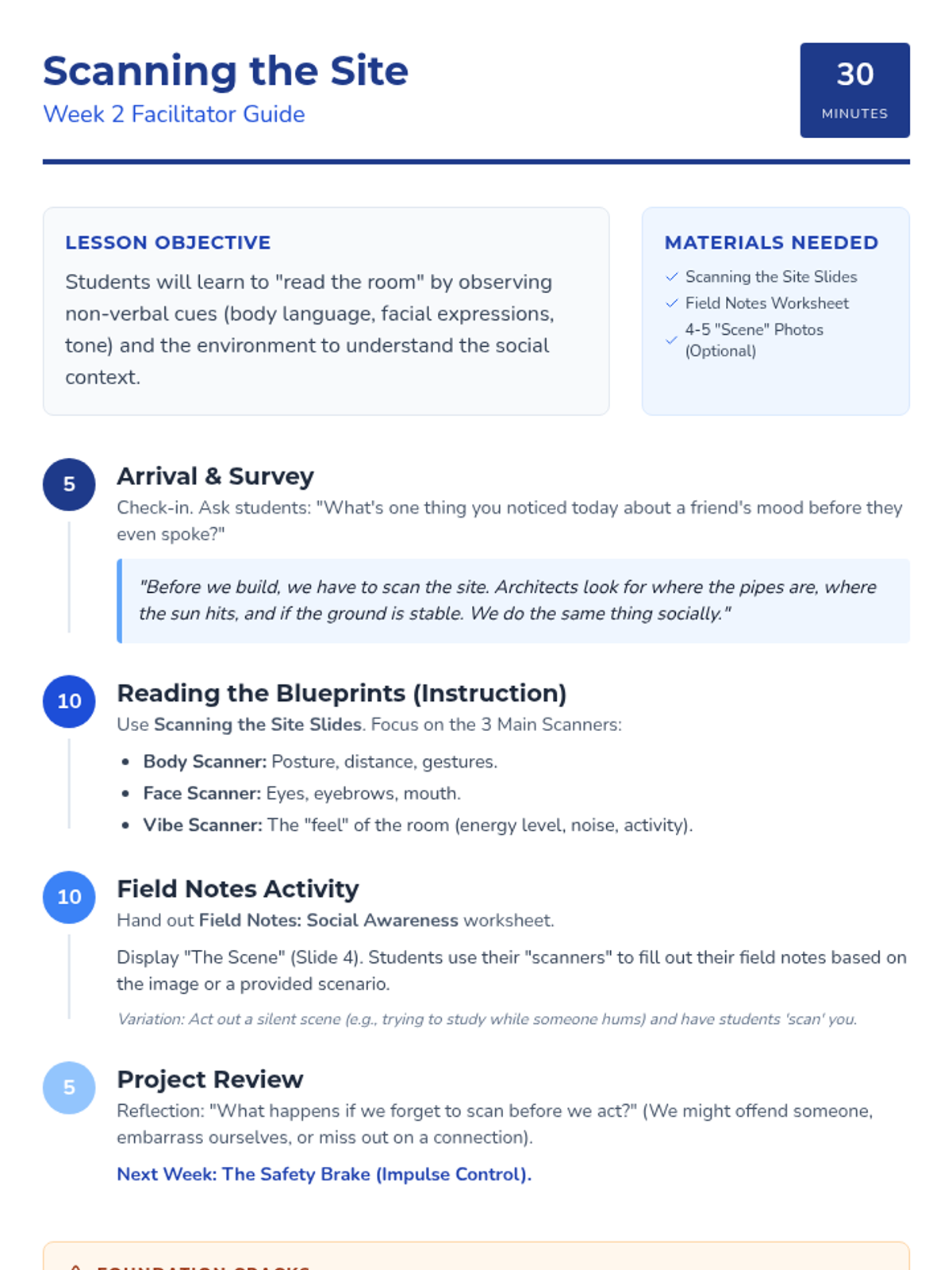
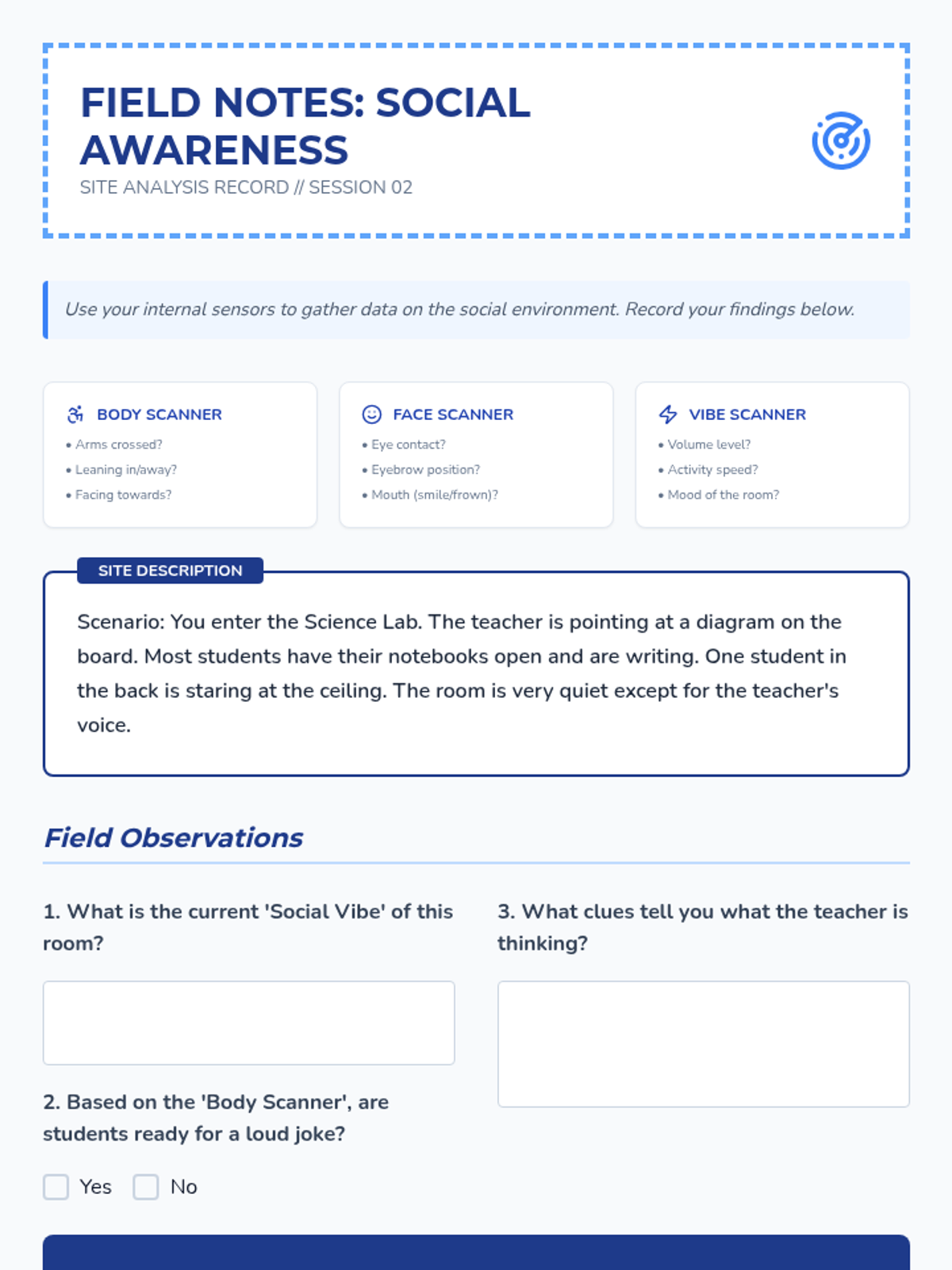
Developing social awareness by learning how to 'read the room' and interpret non-verbal cues like body language and tone of voice.
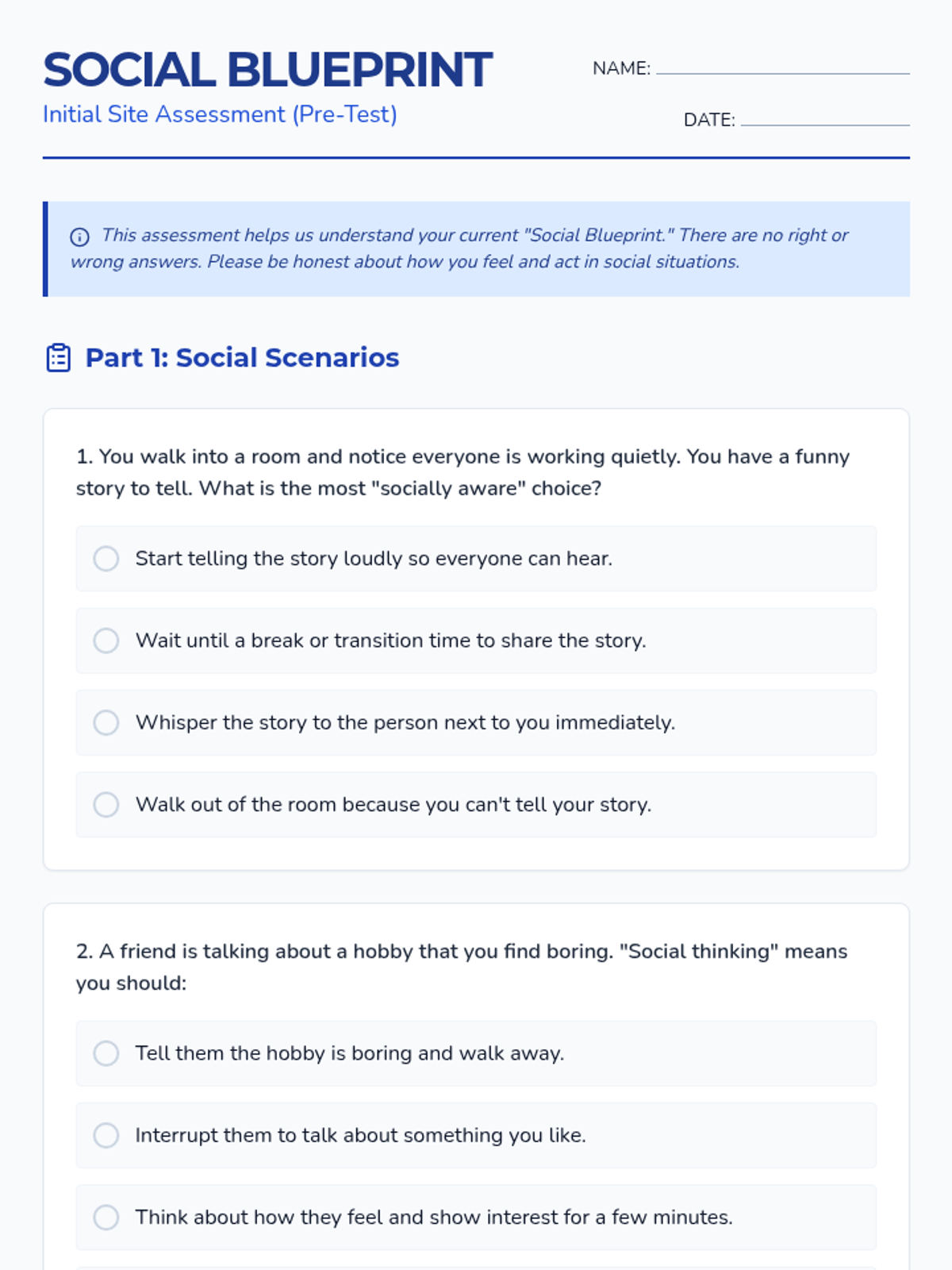
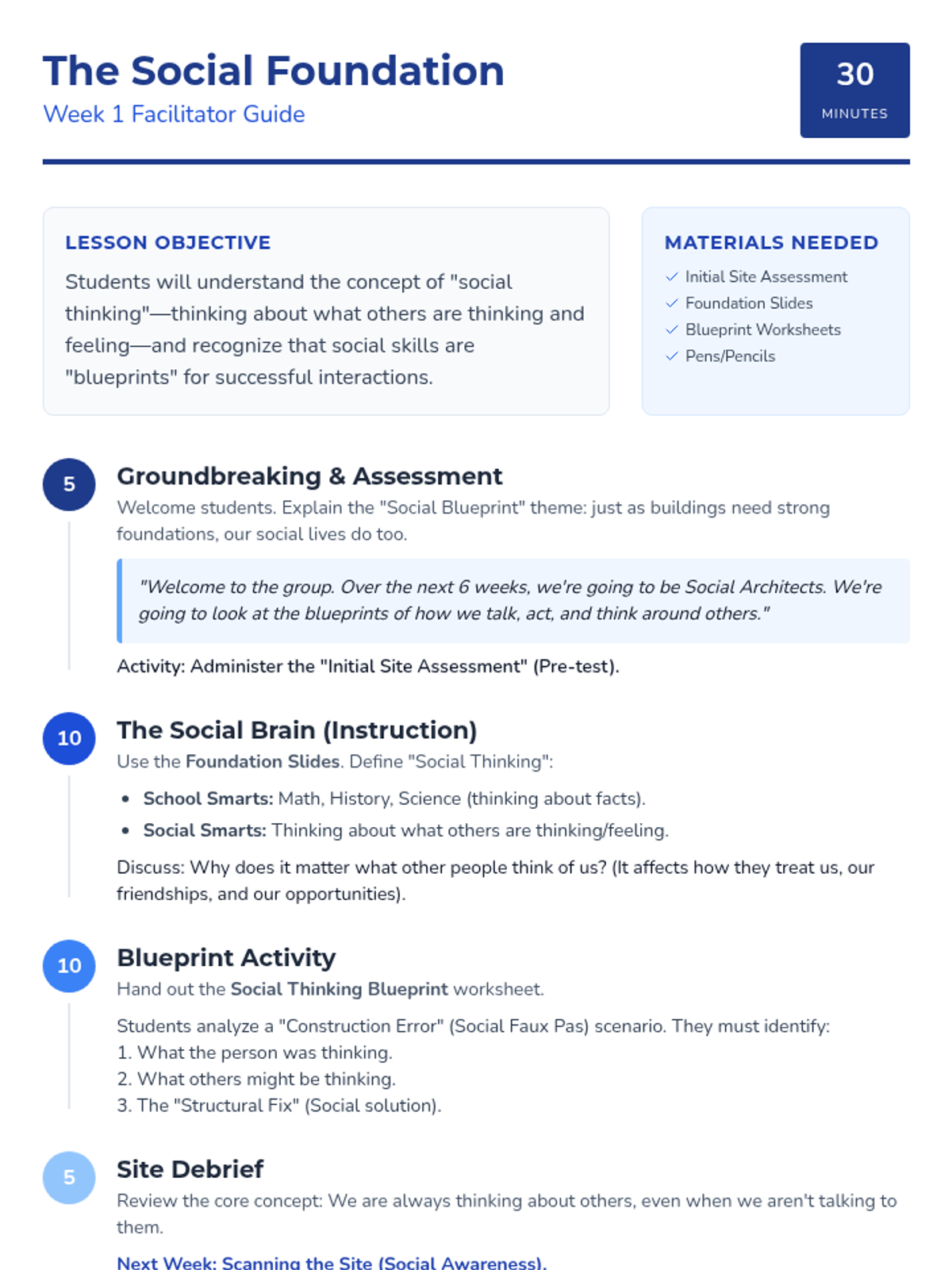
Introduction to the group, pre-test administration, and exploring the concept of social thinking—thinking about what others are thinking and feeling.
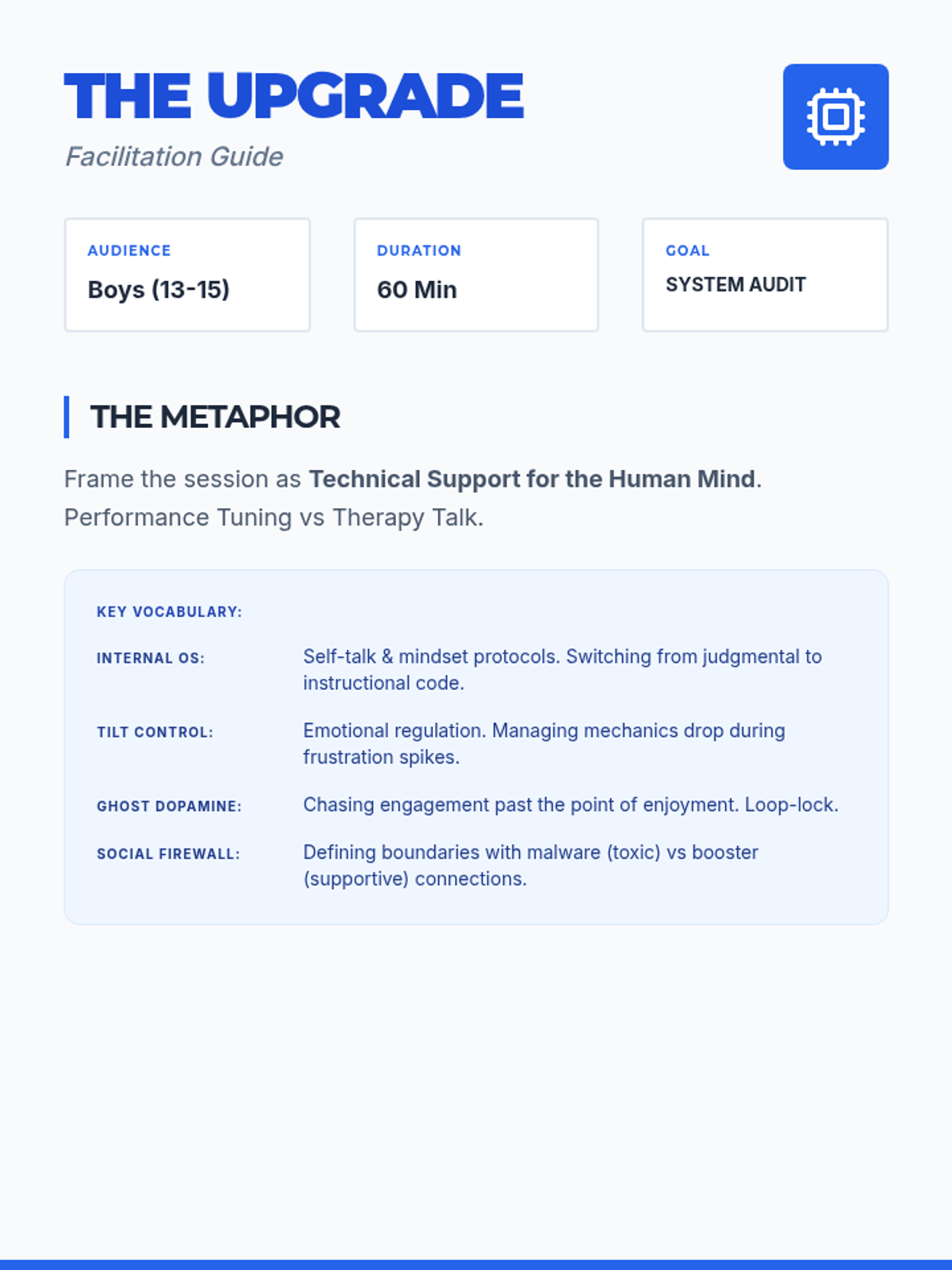
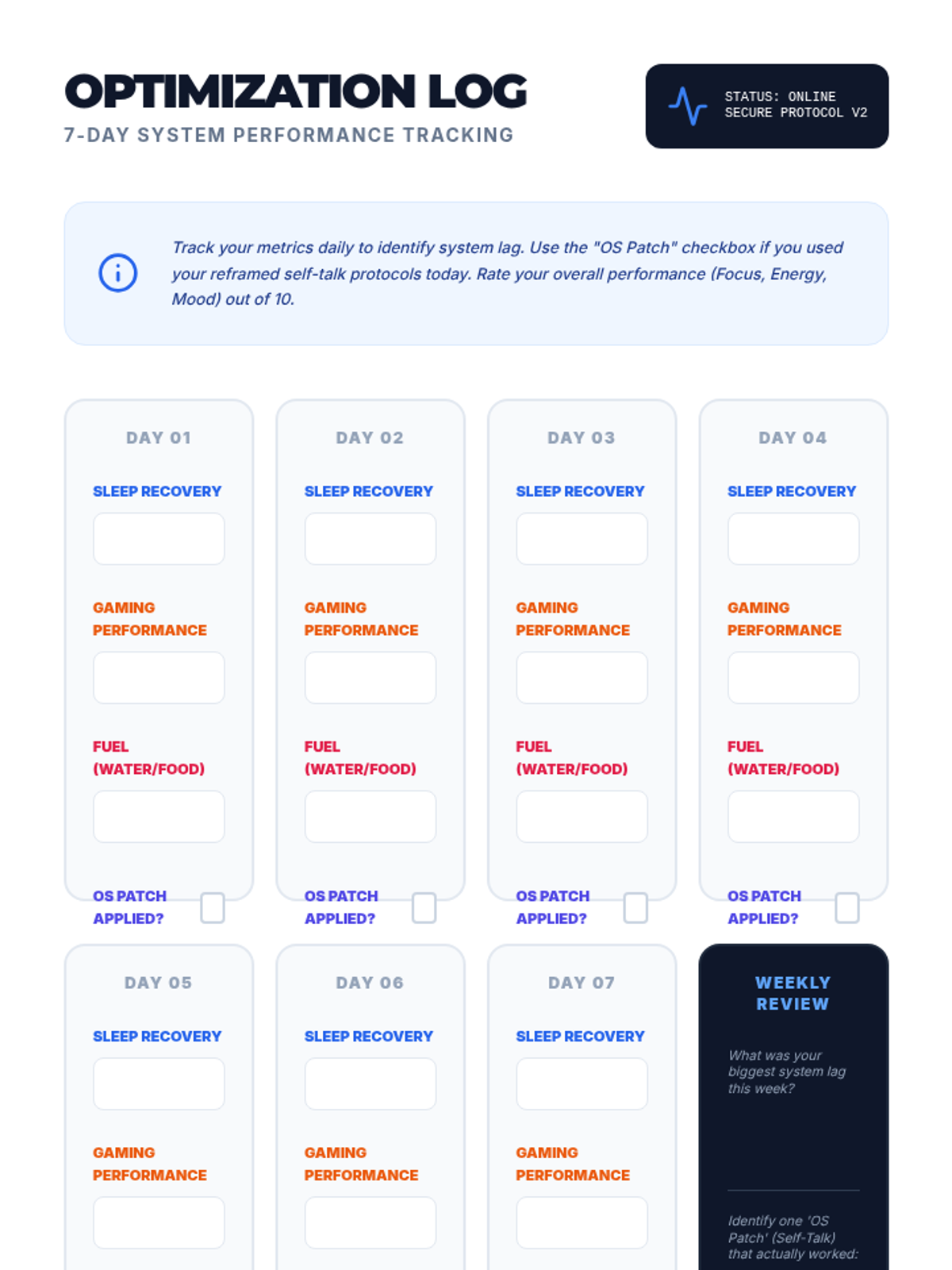
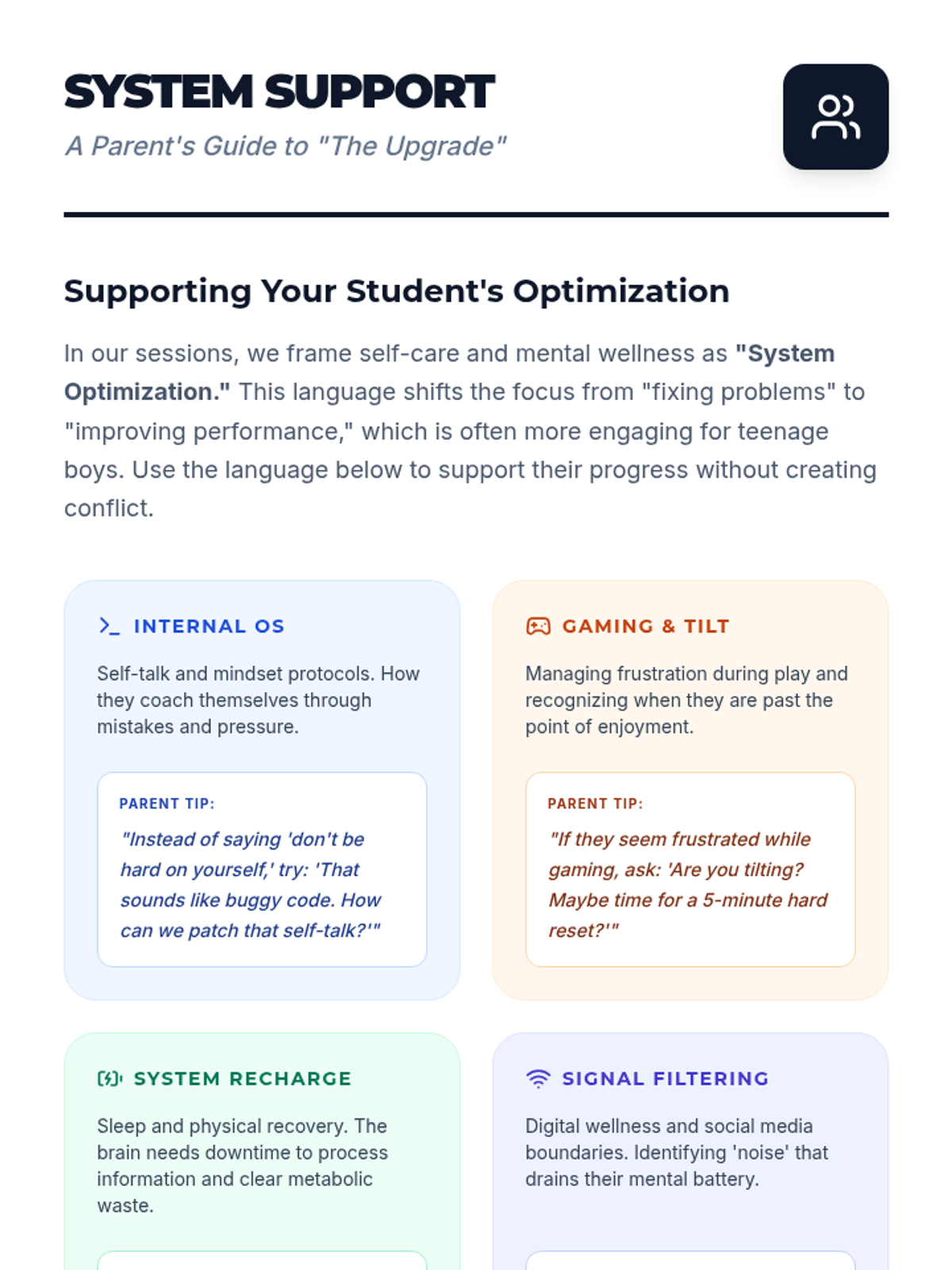
A specialized individual counseling lesson designed for teenage boys, framing self-care and positive self-talk as 'system optimization' for peak performance in digital and physical life.
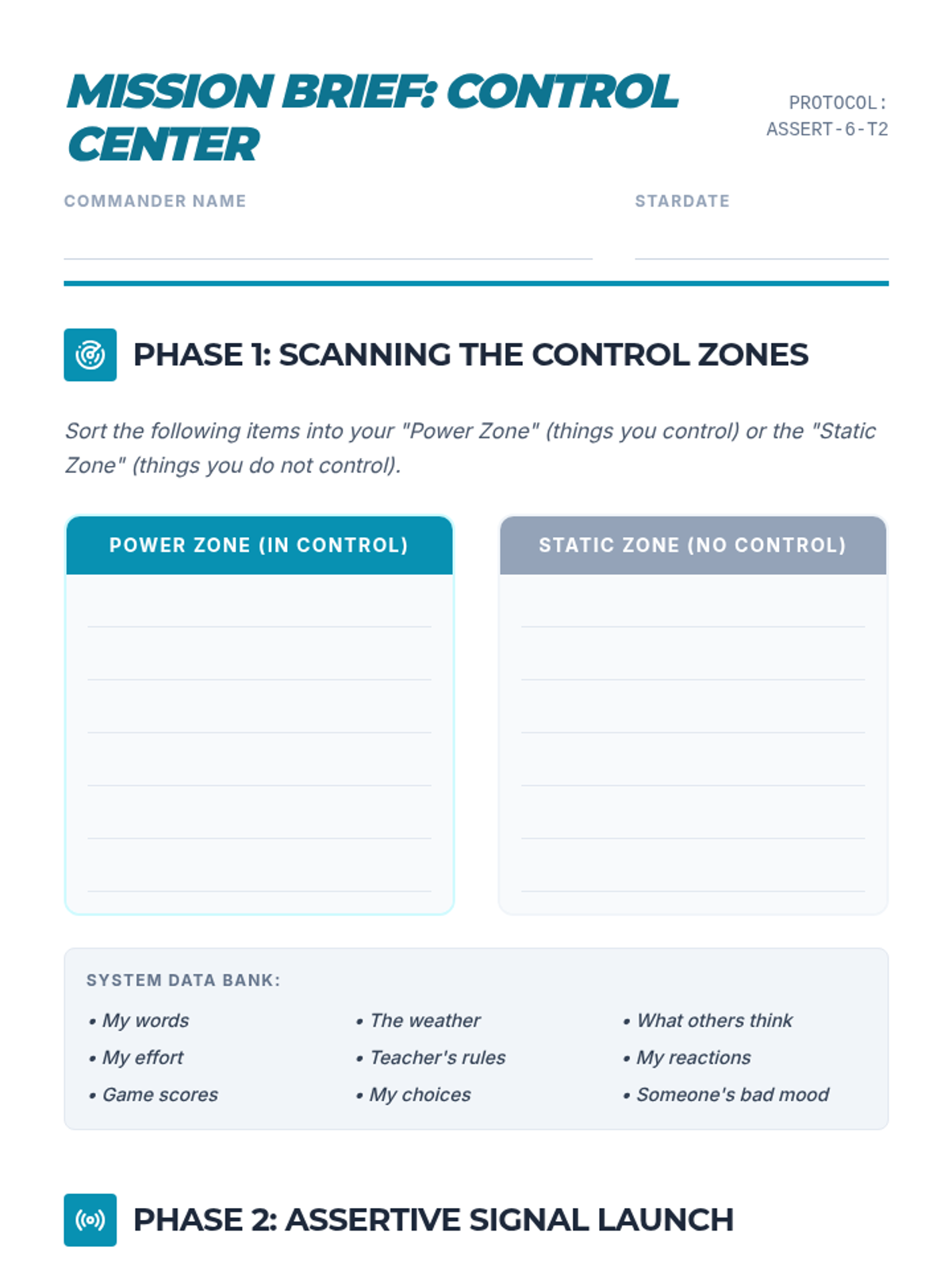
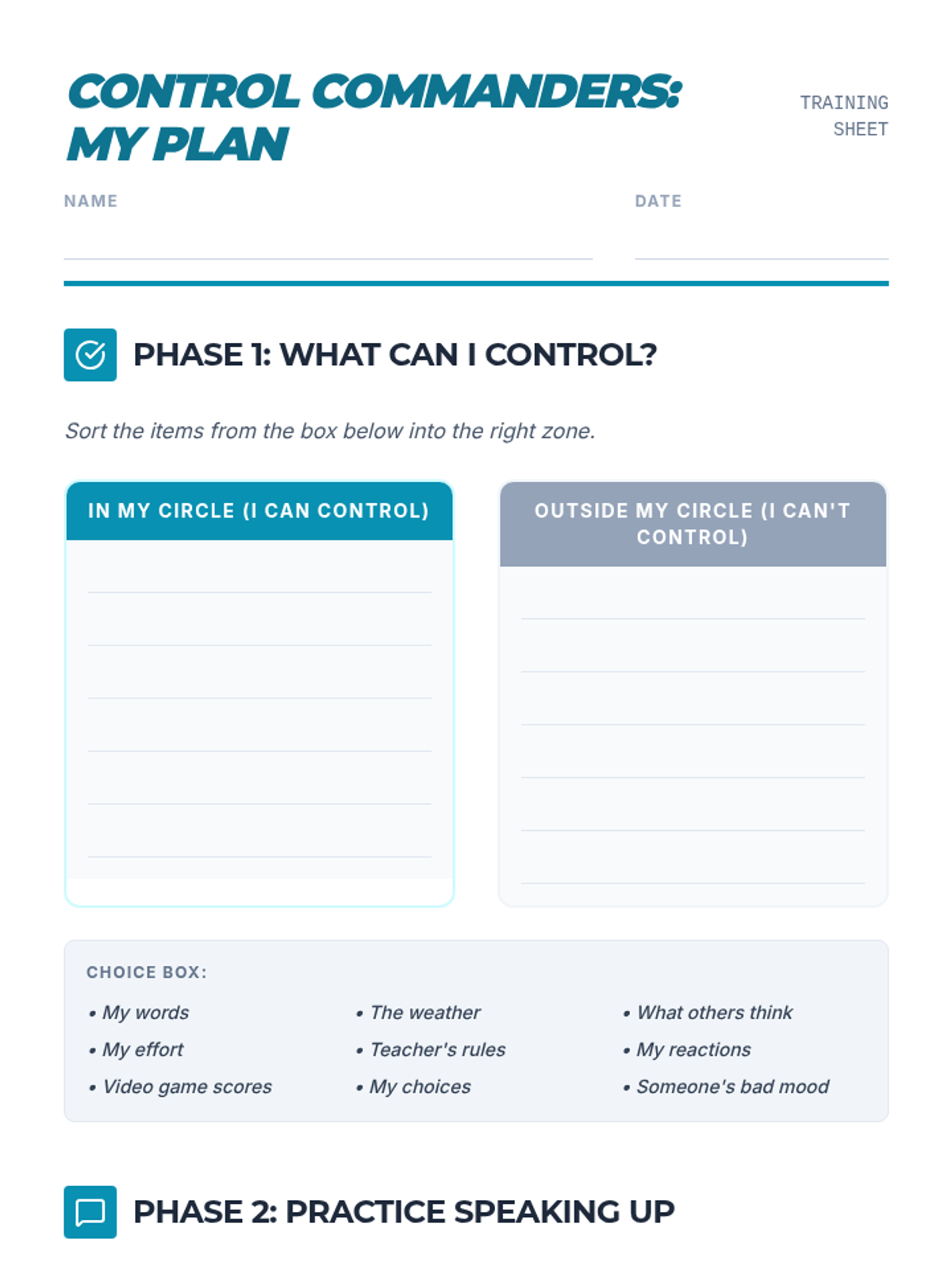
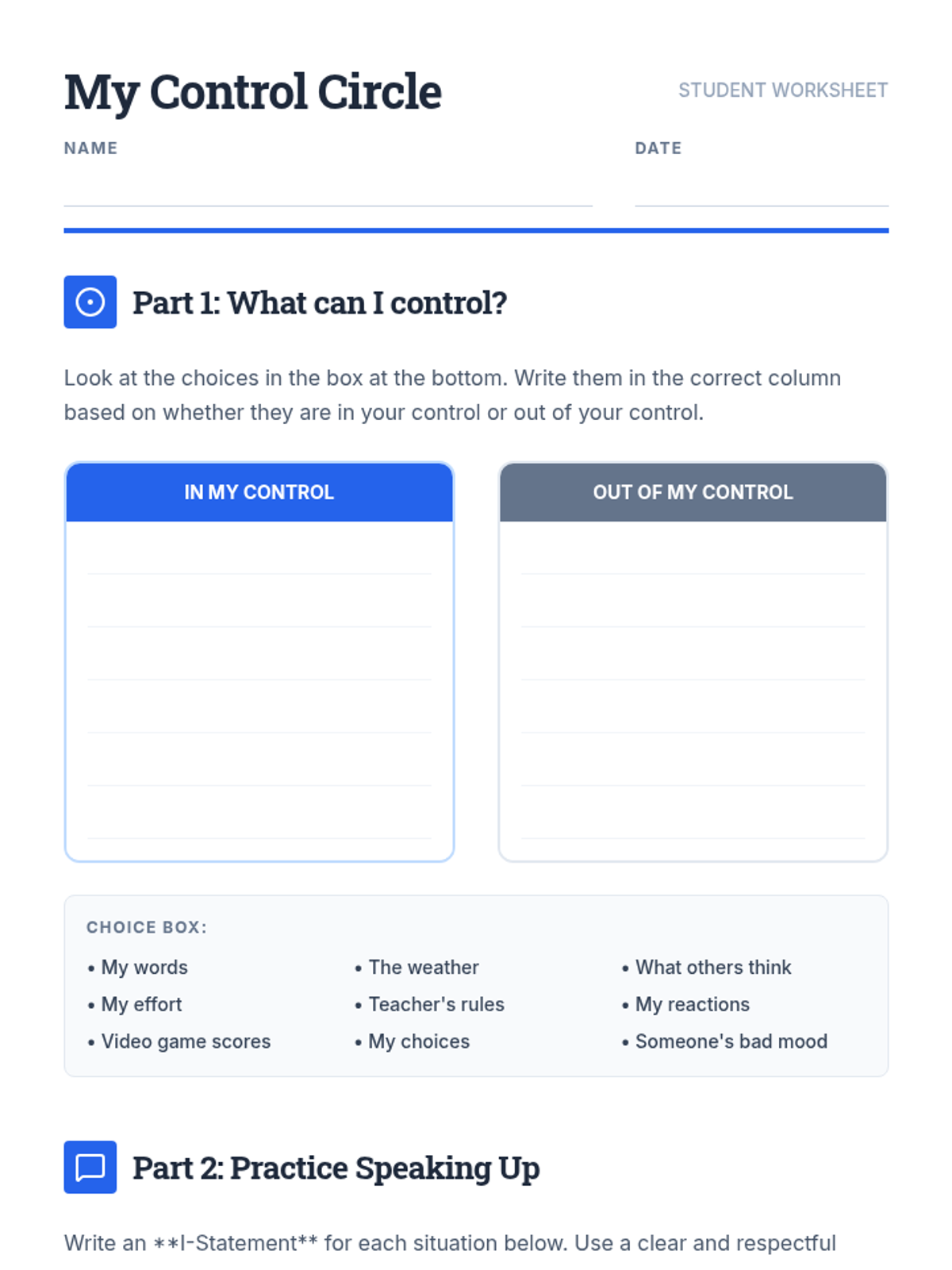
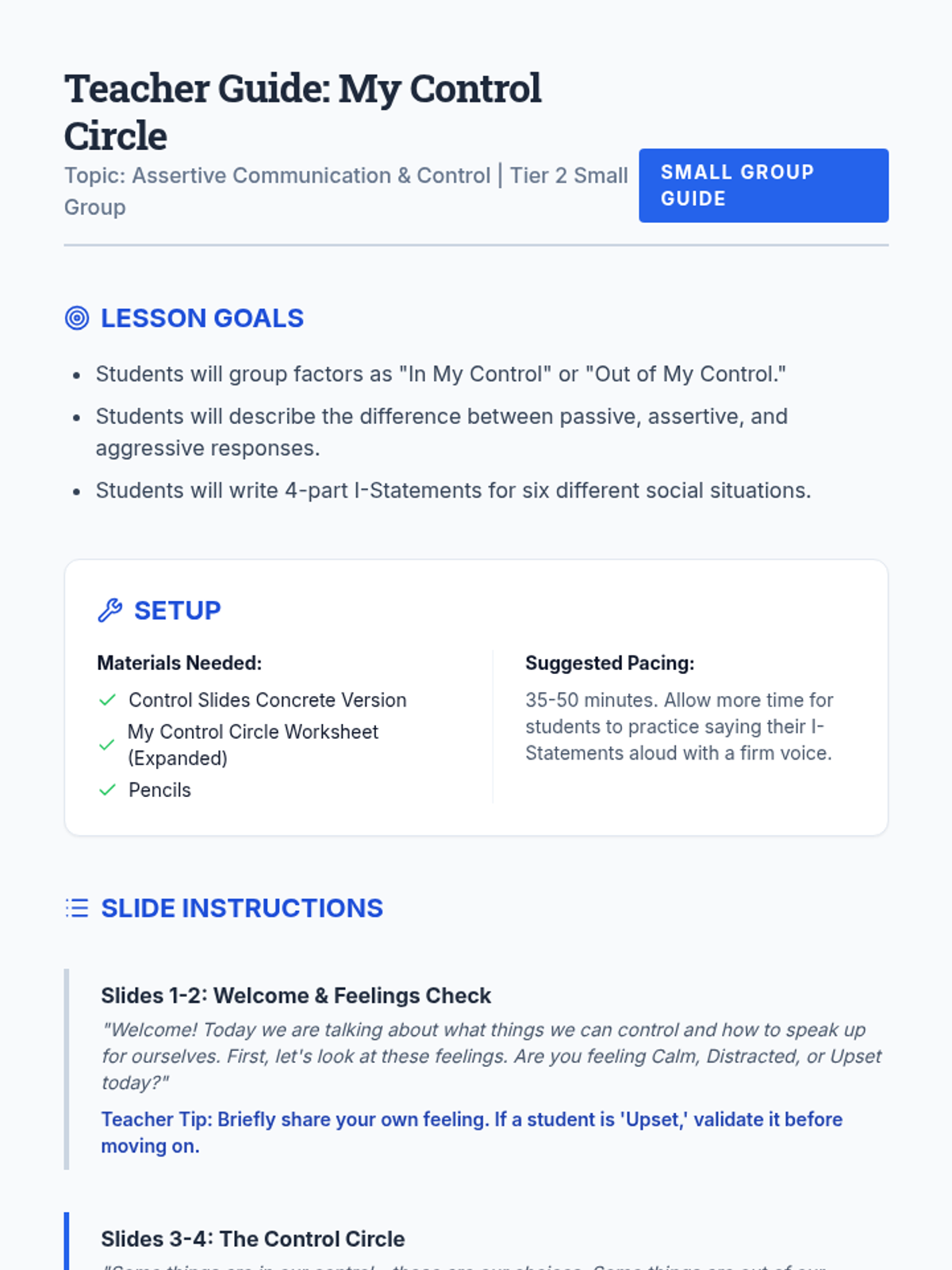
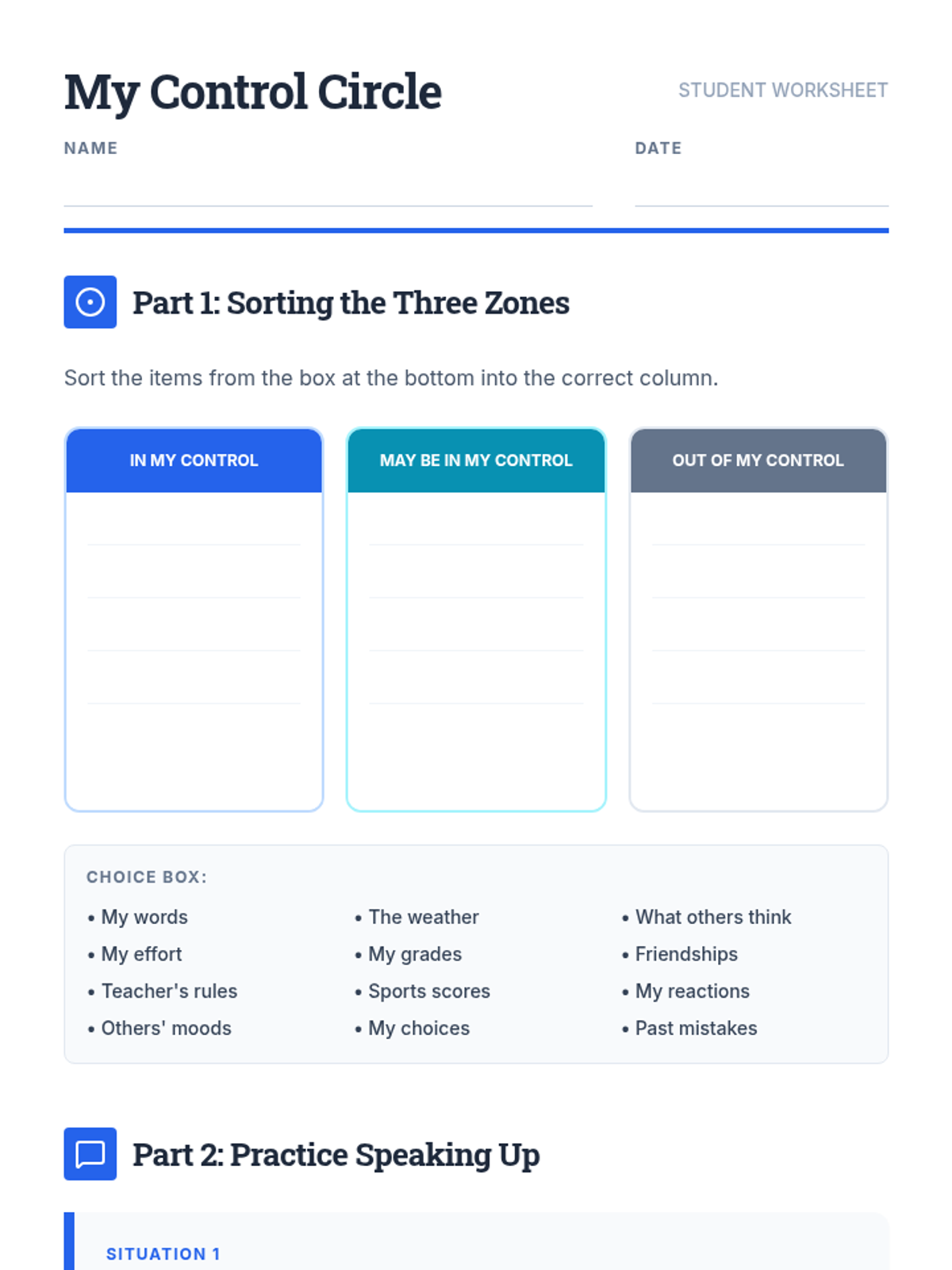
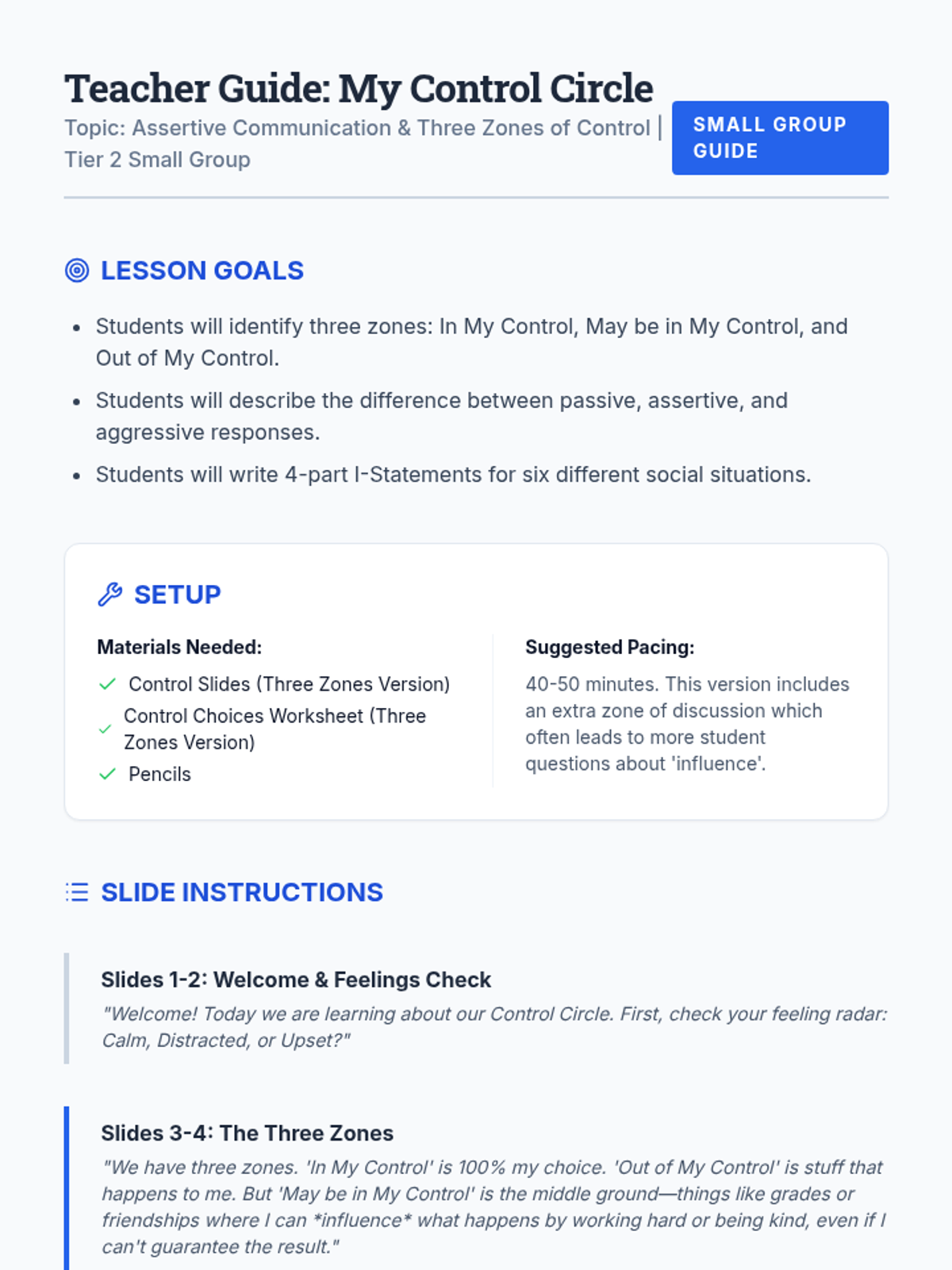
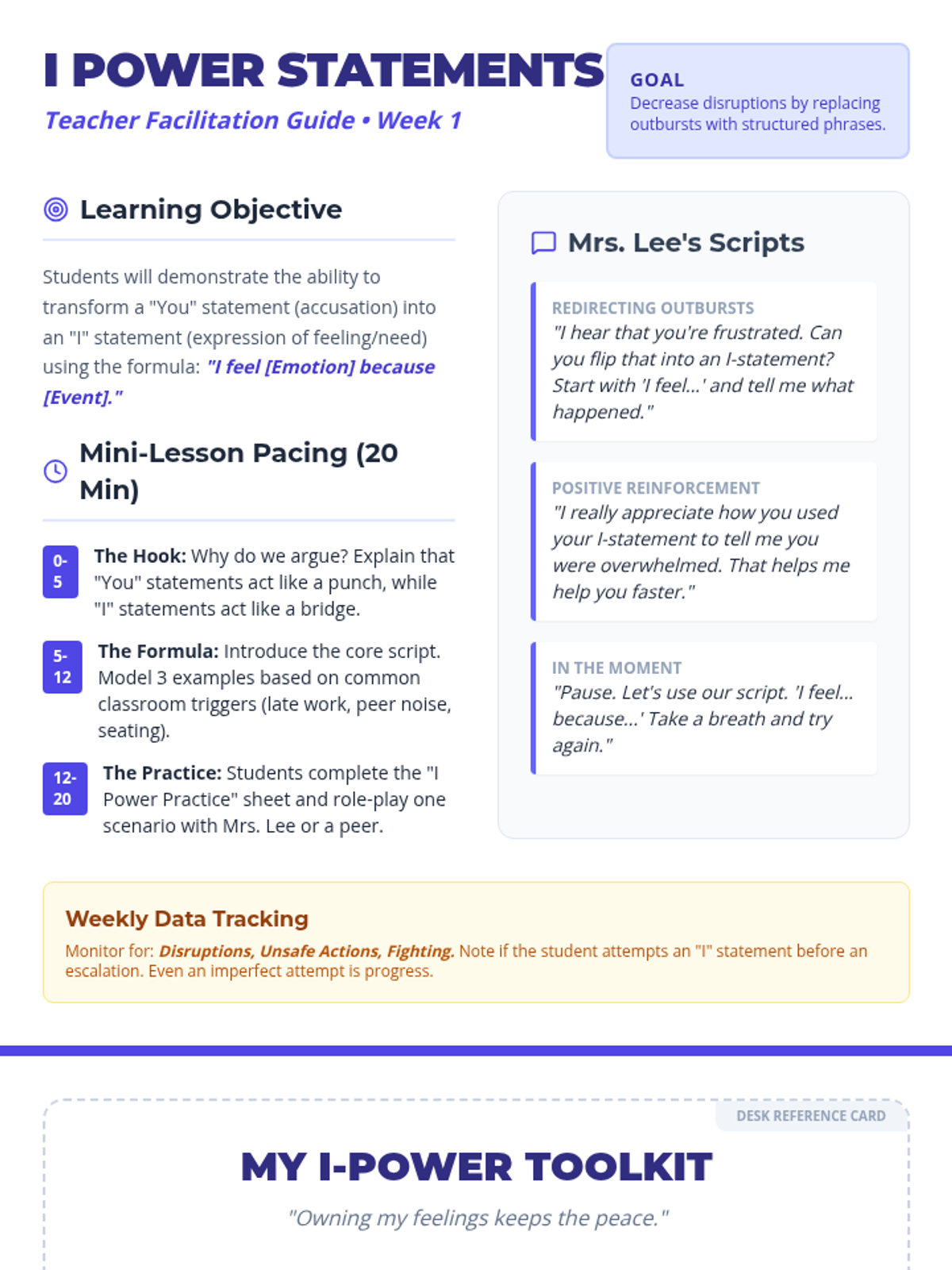
A social-emotional learning lesson for Tier 2 small groups focusing on identifying spheres of control and practicing assertive I-Statements in social scenarios.
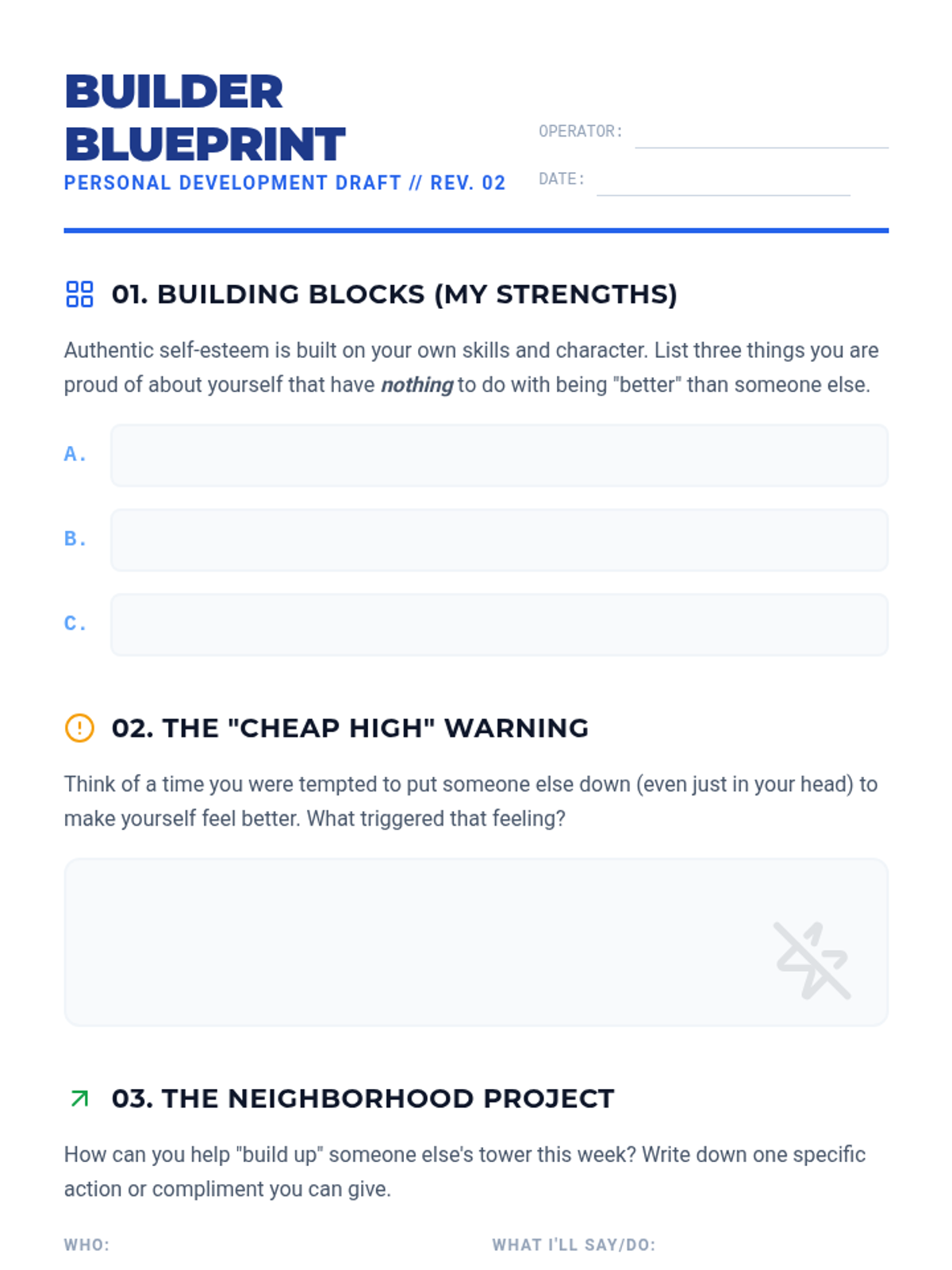
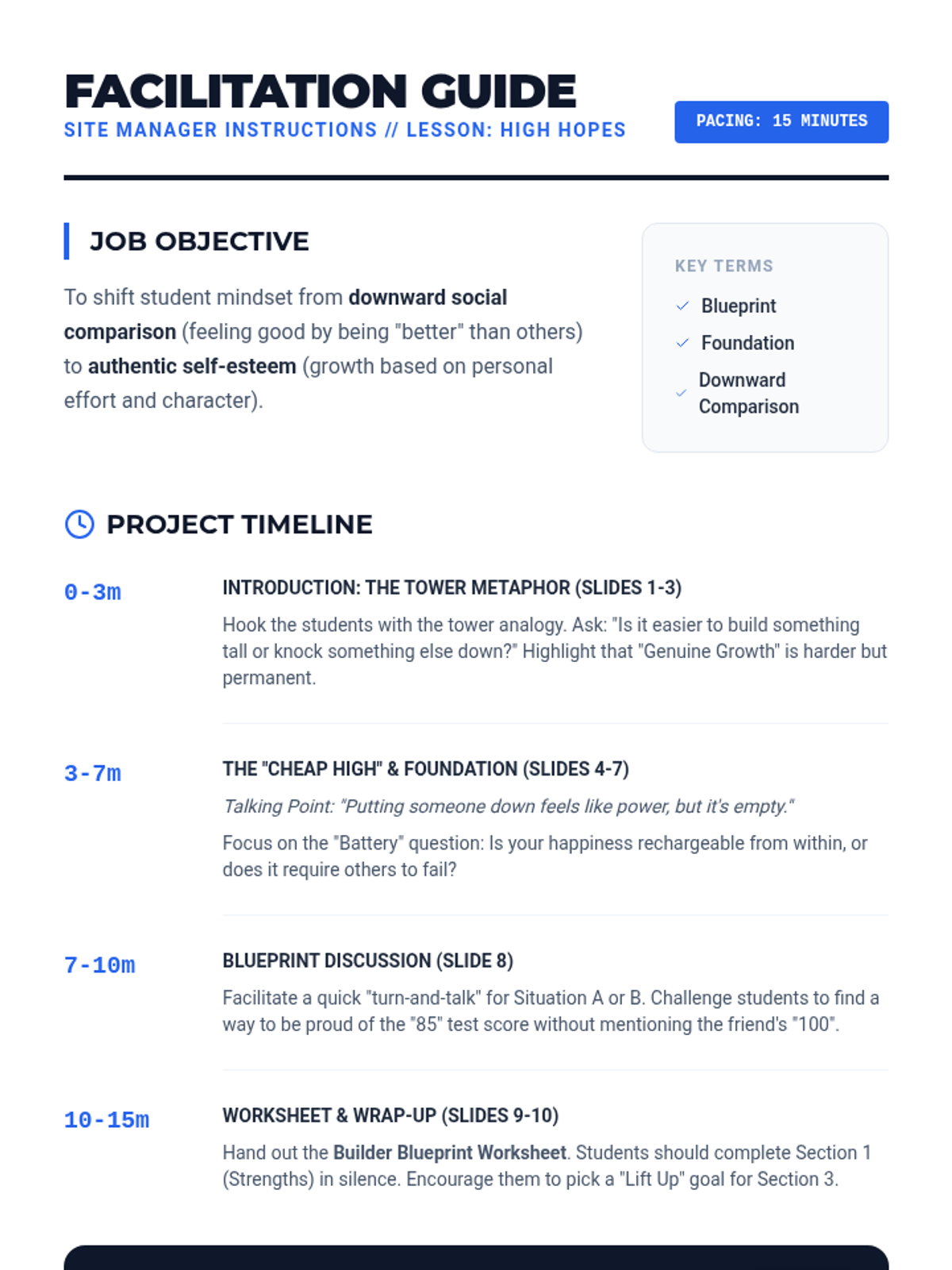
A 15-minute lesson exploring the pitfalls of 'downward social comparison' and how to build authentic self-esteem without diminishing others. Students will learn that true confidence comes from personal growth rather than putting others down.
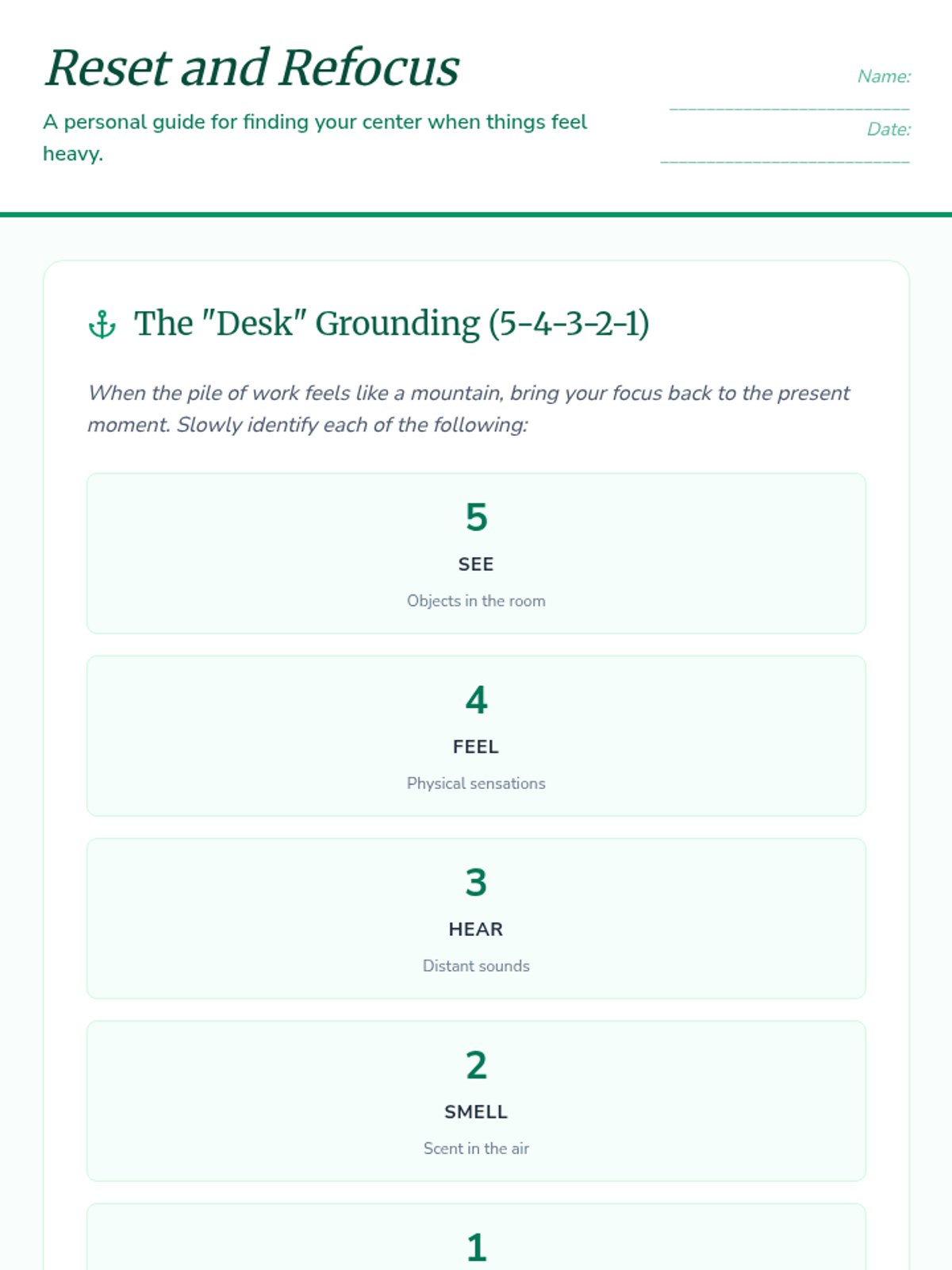
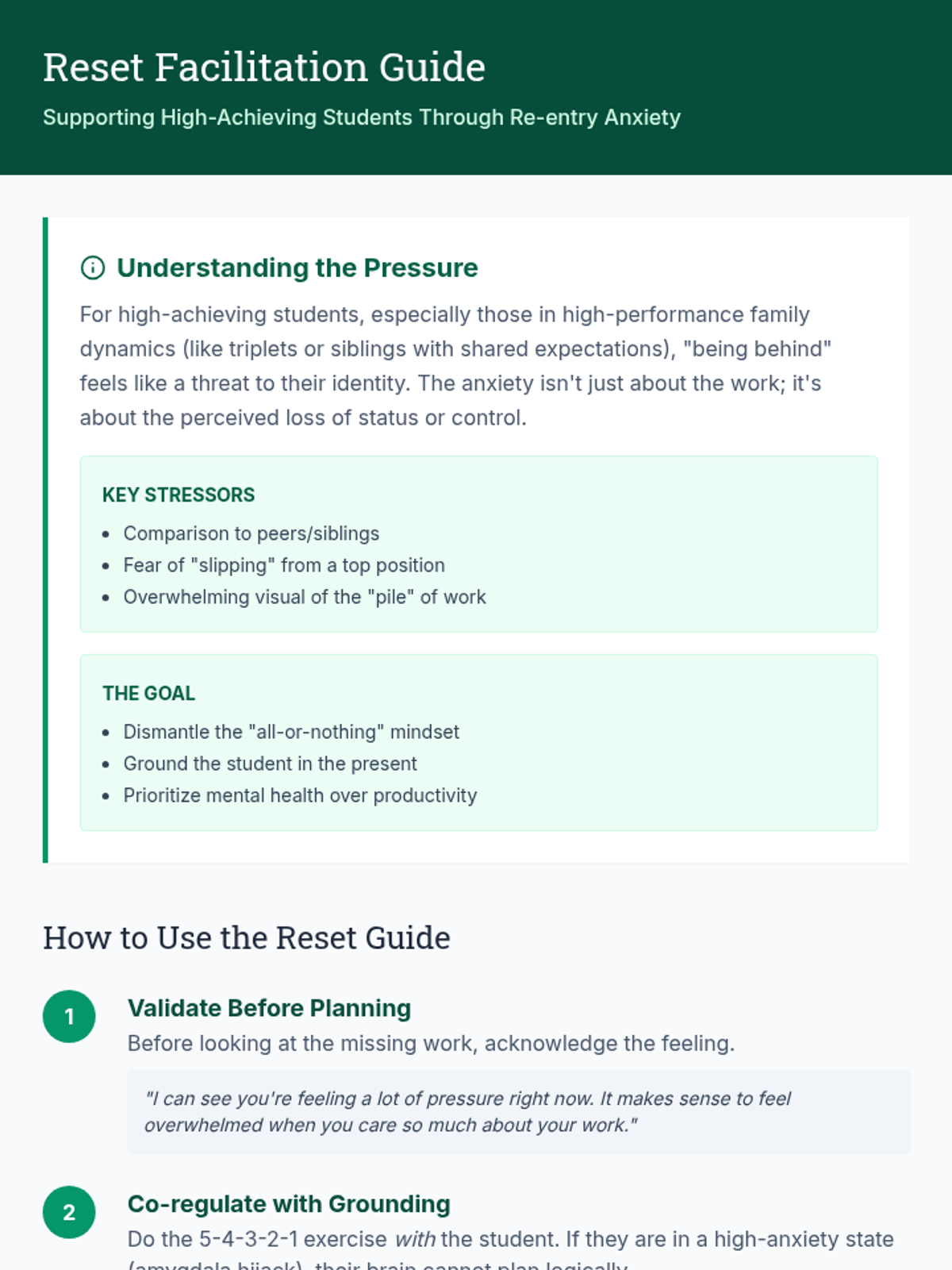
A collection of resources designed to help high-achieving students manage academic anxiety and re-entry stress through mindfulness and grounding.
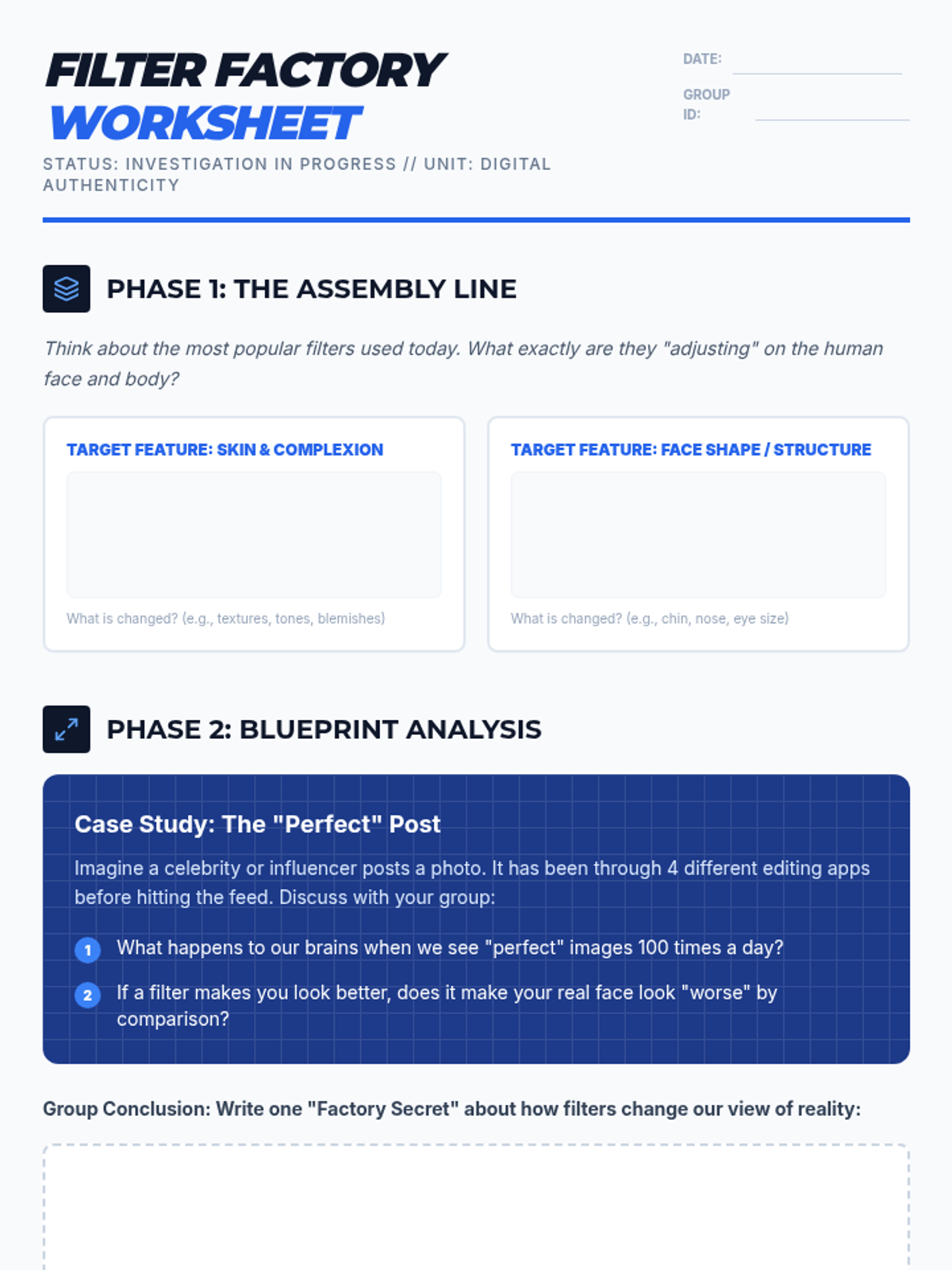
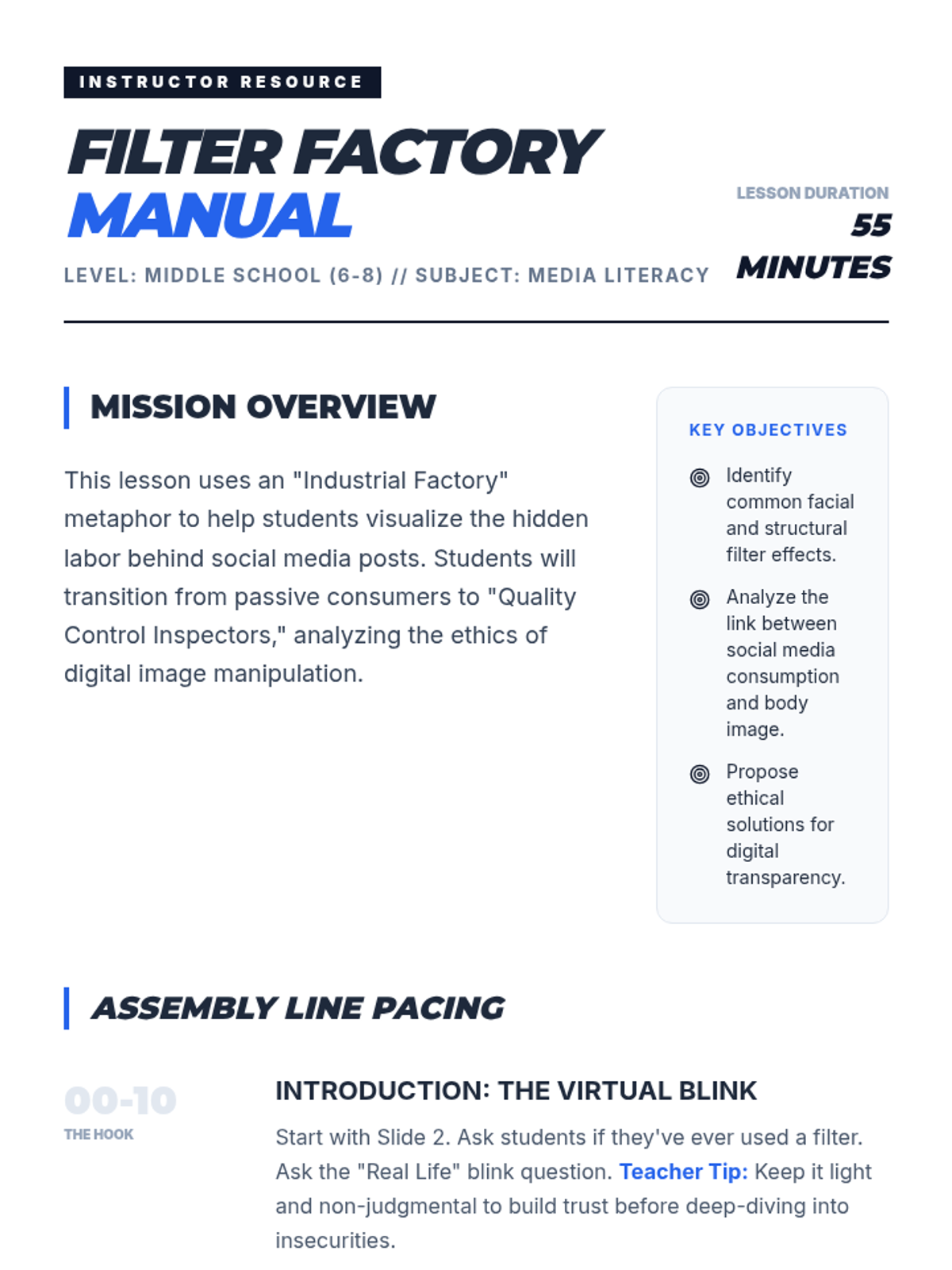
A middle school lesson exploring the impact of social media filters on body image and digital authenticity. Students analyze how images are manipulated and discuss the psychological effects of the 'Filter Factory'.
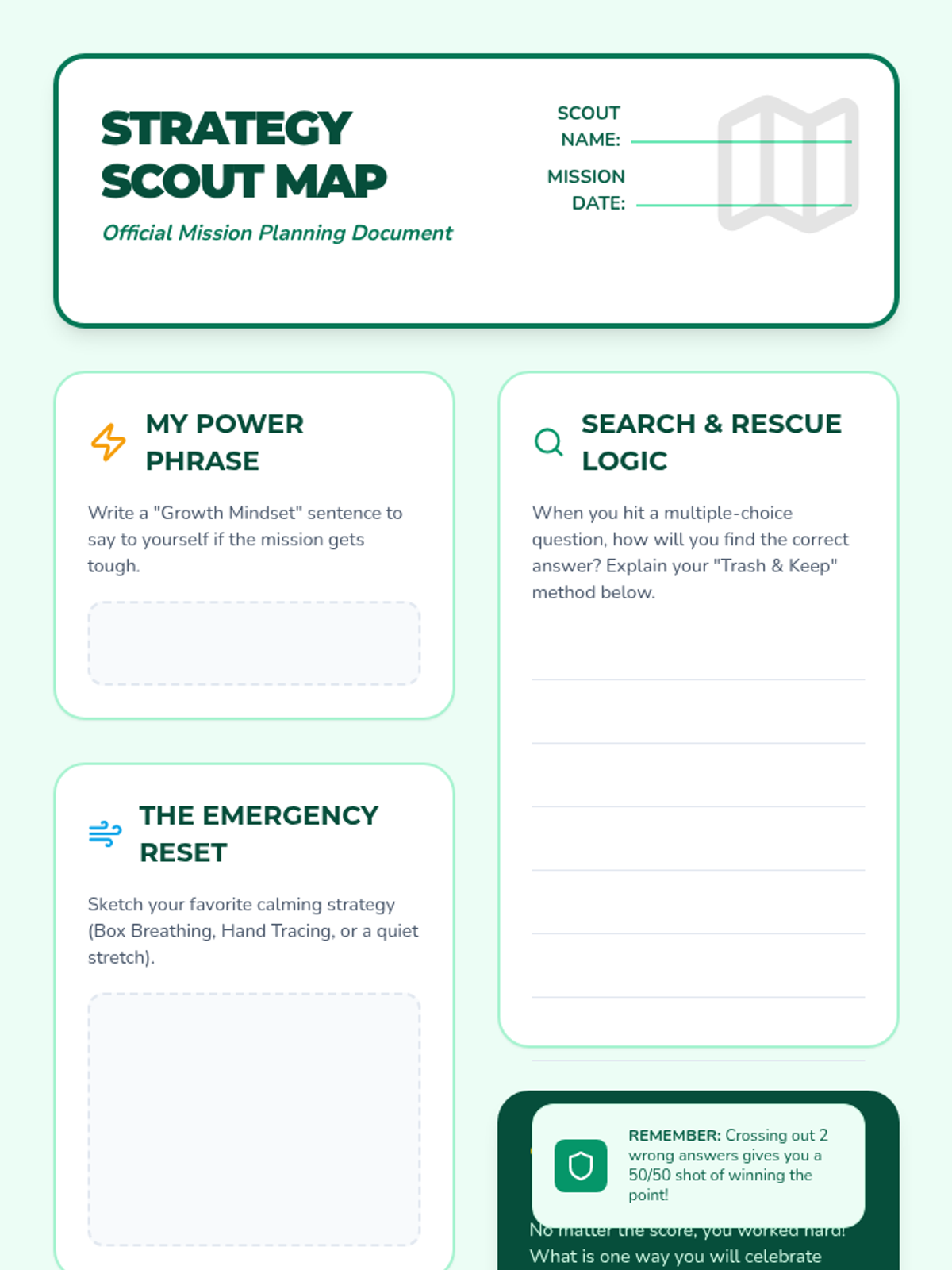
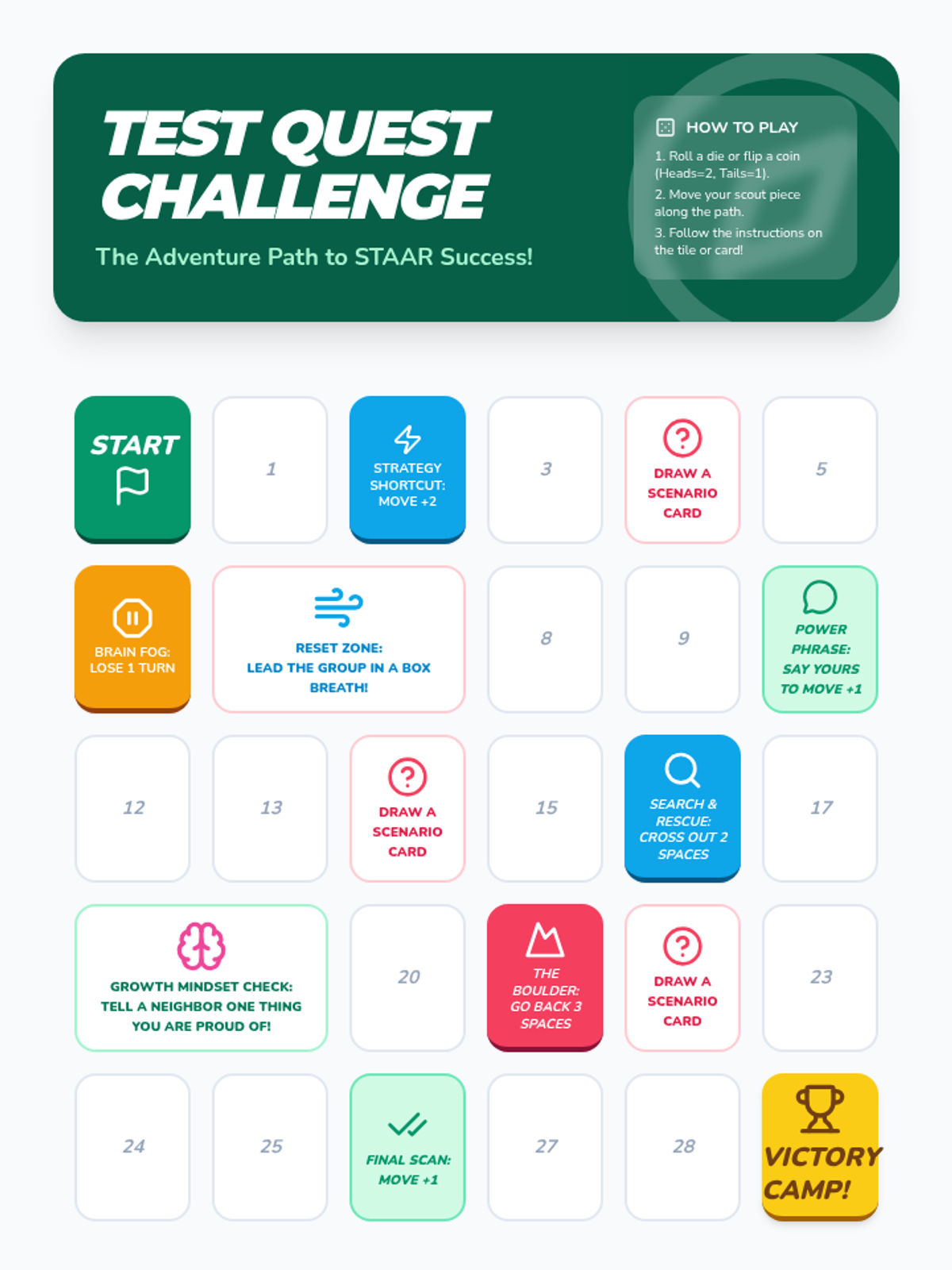
A comprehensive lesson designed to equip students with social-emotional strategies and practical techniques for tackling the STAAR test with confidence and focus.
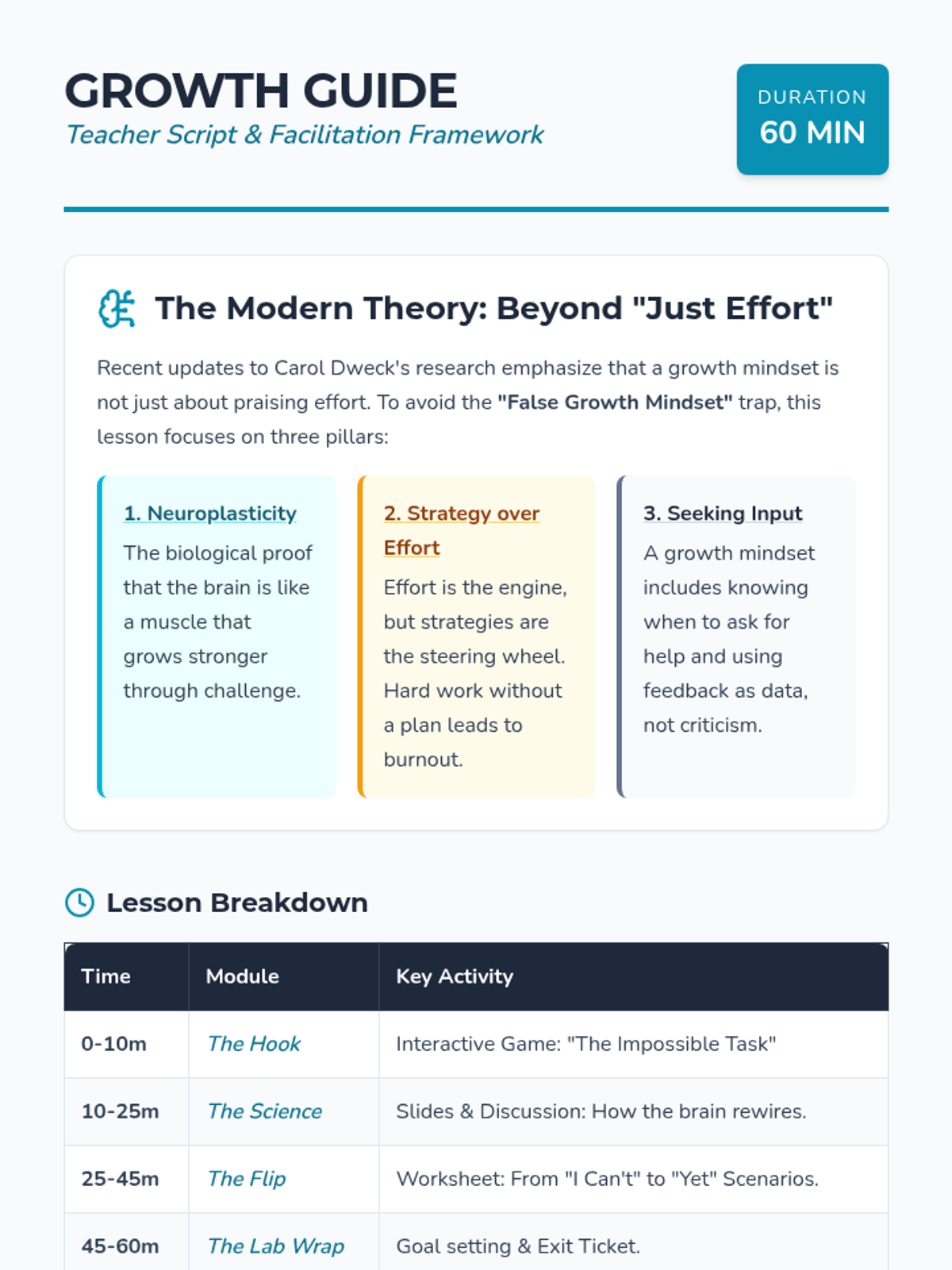
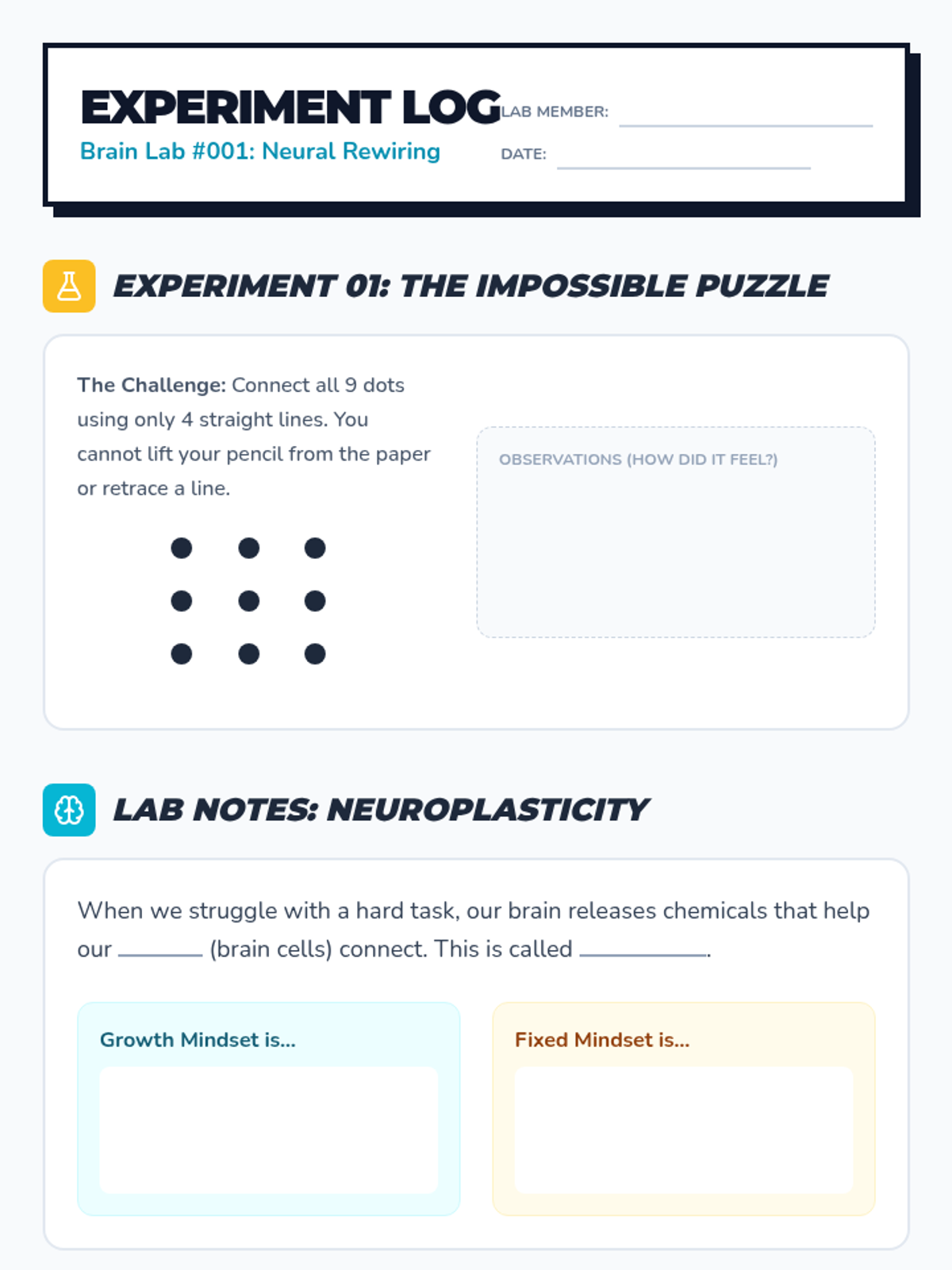
A comprehensive 60-minute session designed to introduce students to the science of neuroplasticity and the practical application of a growth mindset through interactive games, discussion, and reflective work.
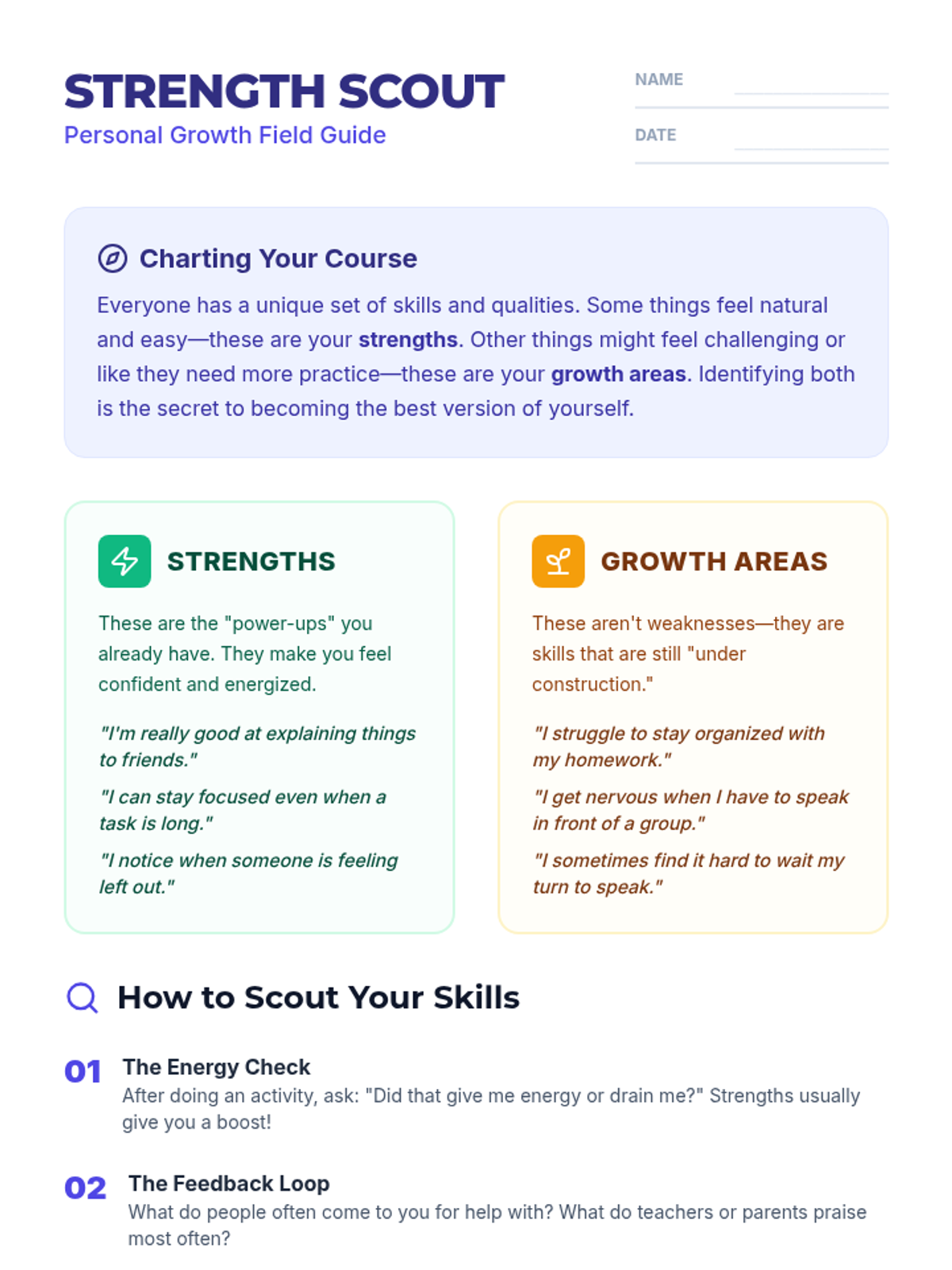
A lesson focused on helping students identify their personal strengths and areas for future development through self-reflection and scenario-based analysis.
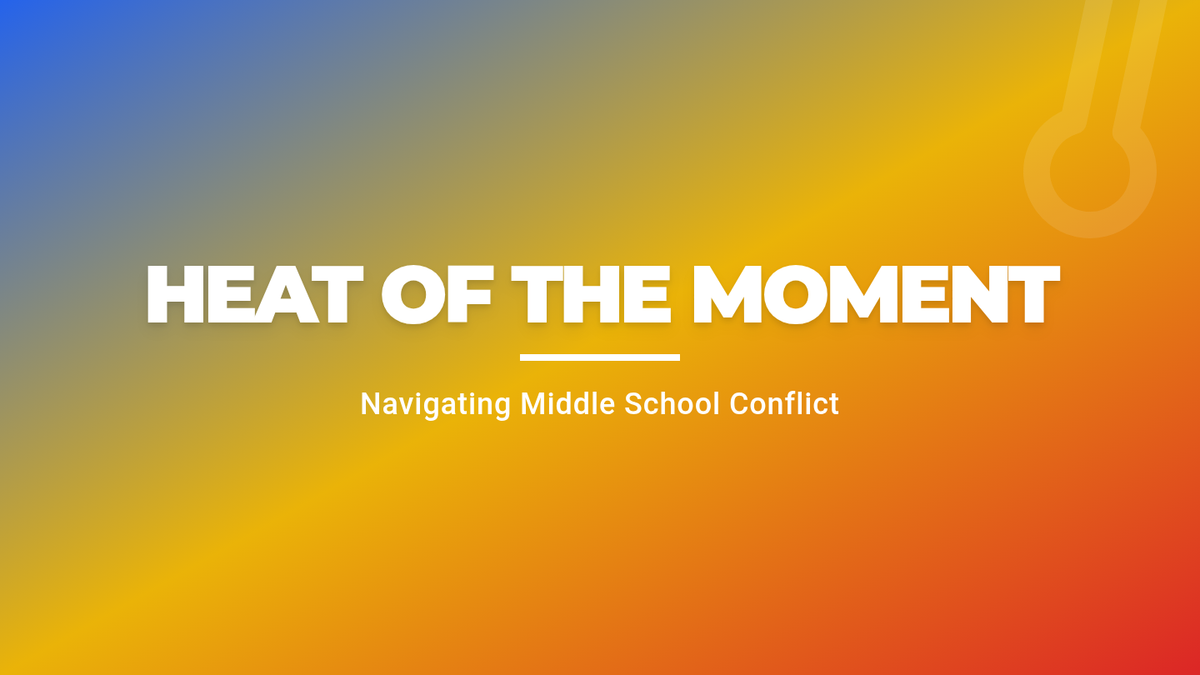
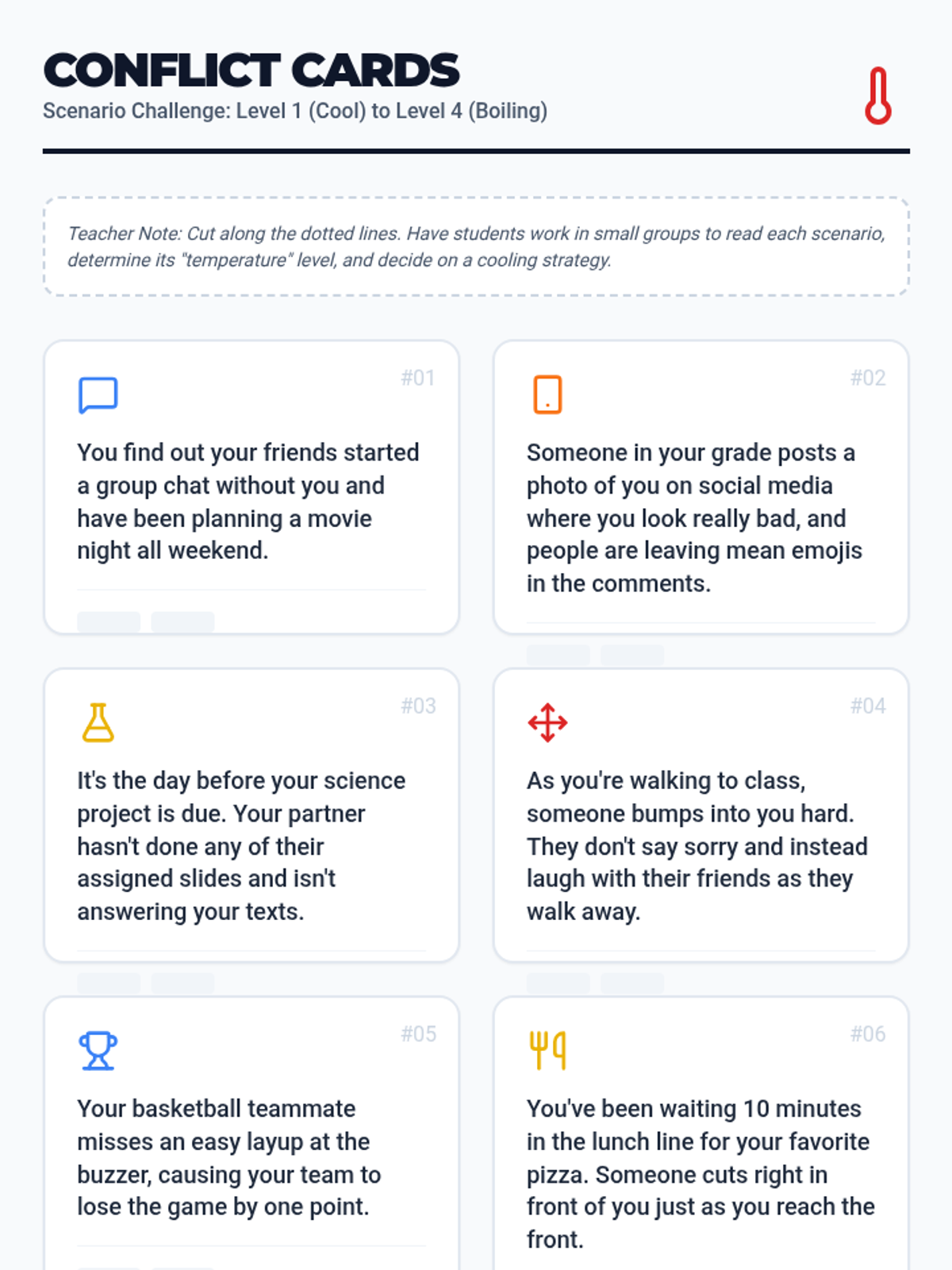
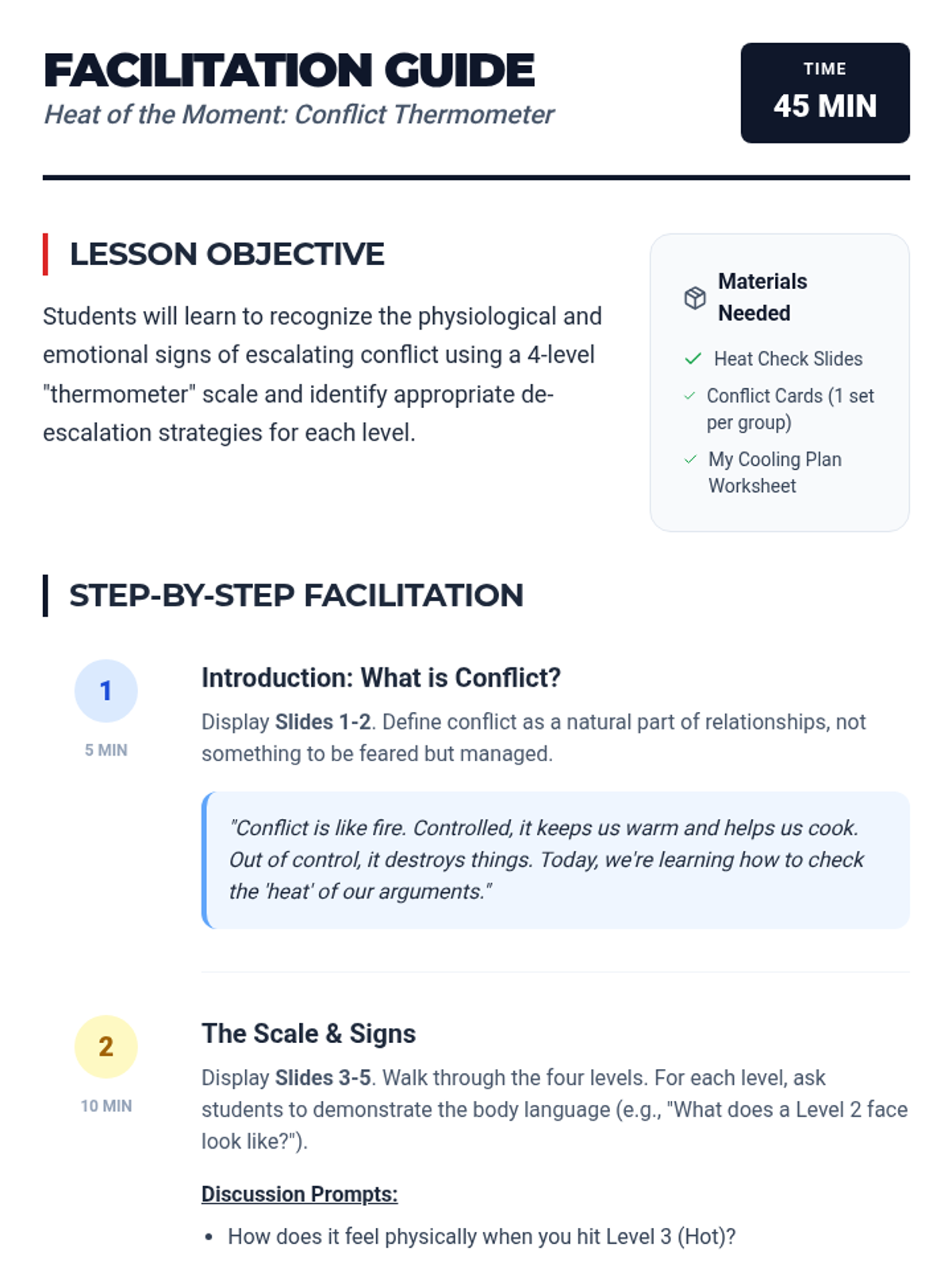
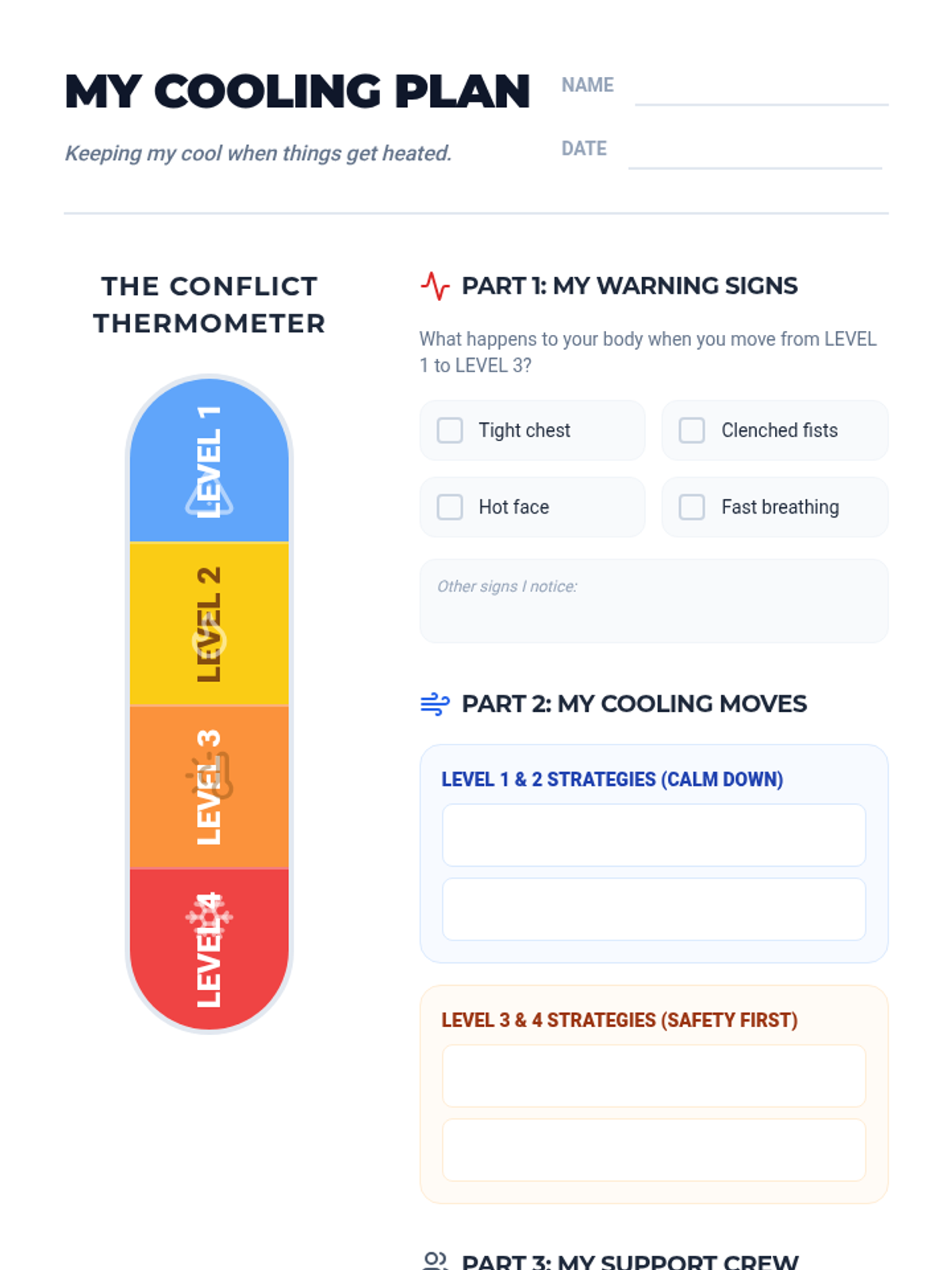
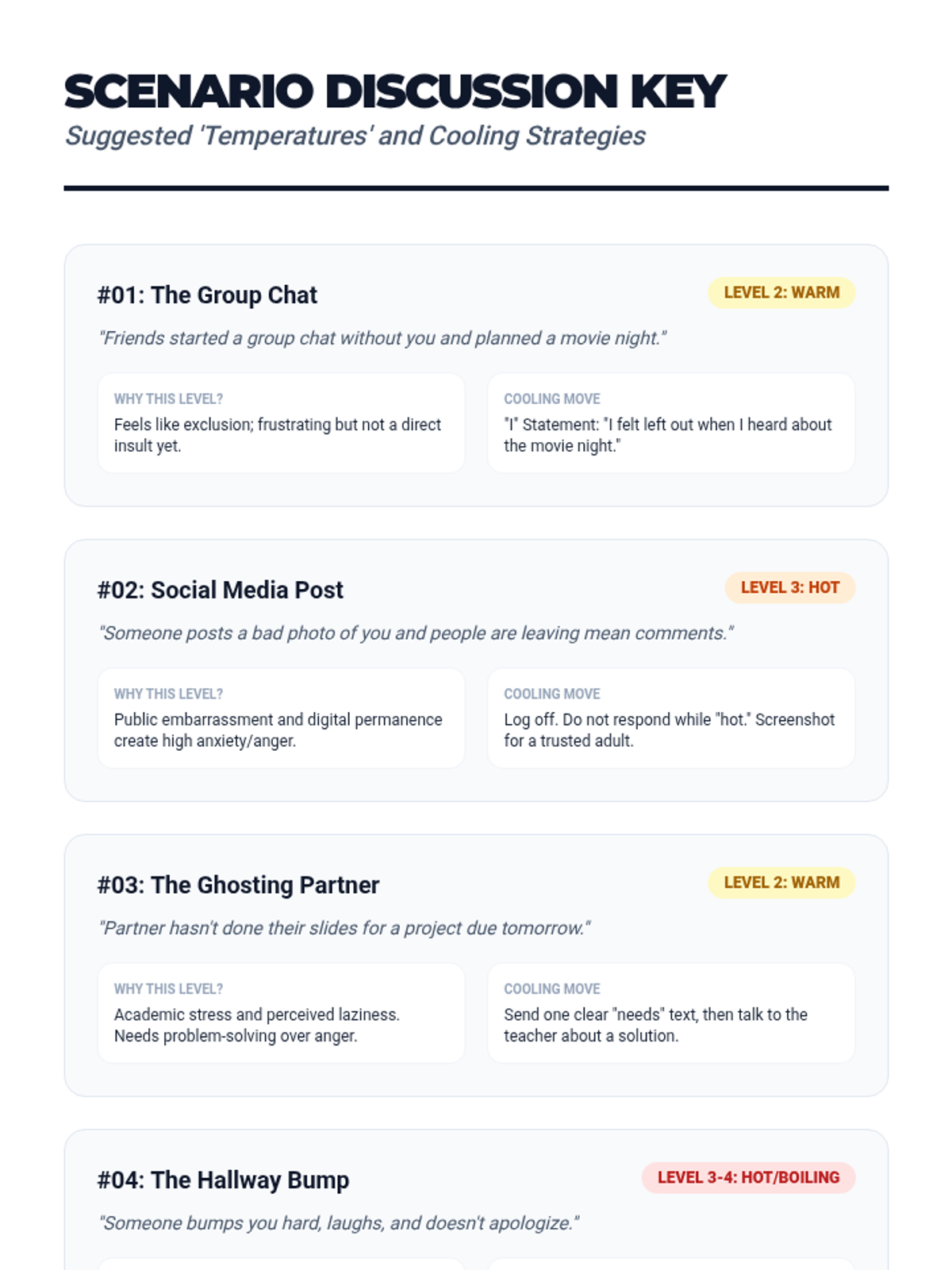
A lesson for middle schoolers to identify the intensity of conflicts using a 'Conflict Thermometer' and learn appropriate de-escalation strategies for different 'temperatures'. Students will analyze real-world scenarios to practice emotional regulation and conflict resolution.
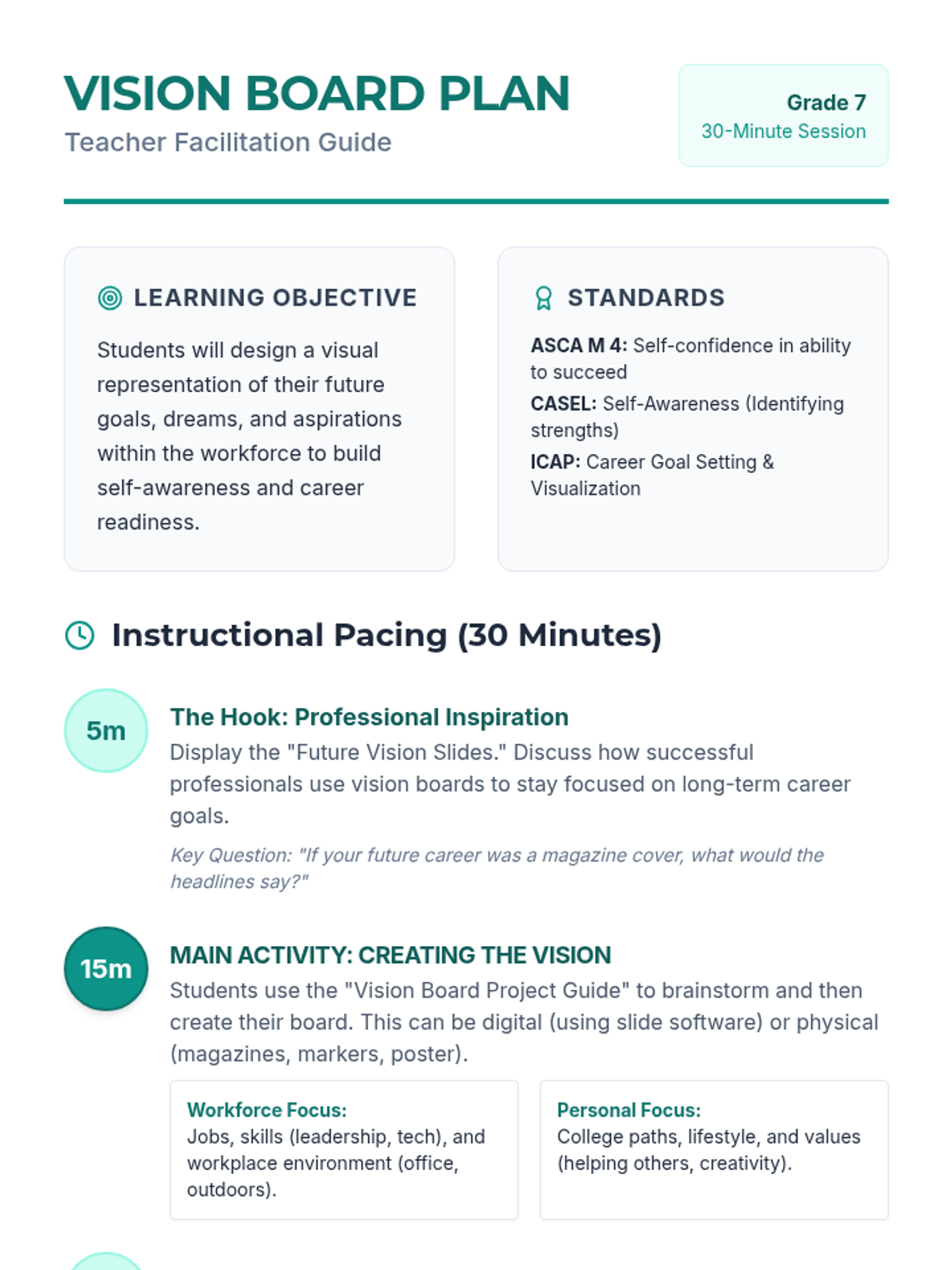
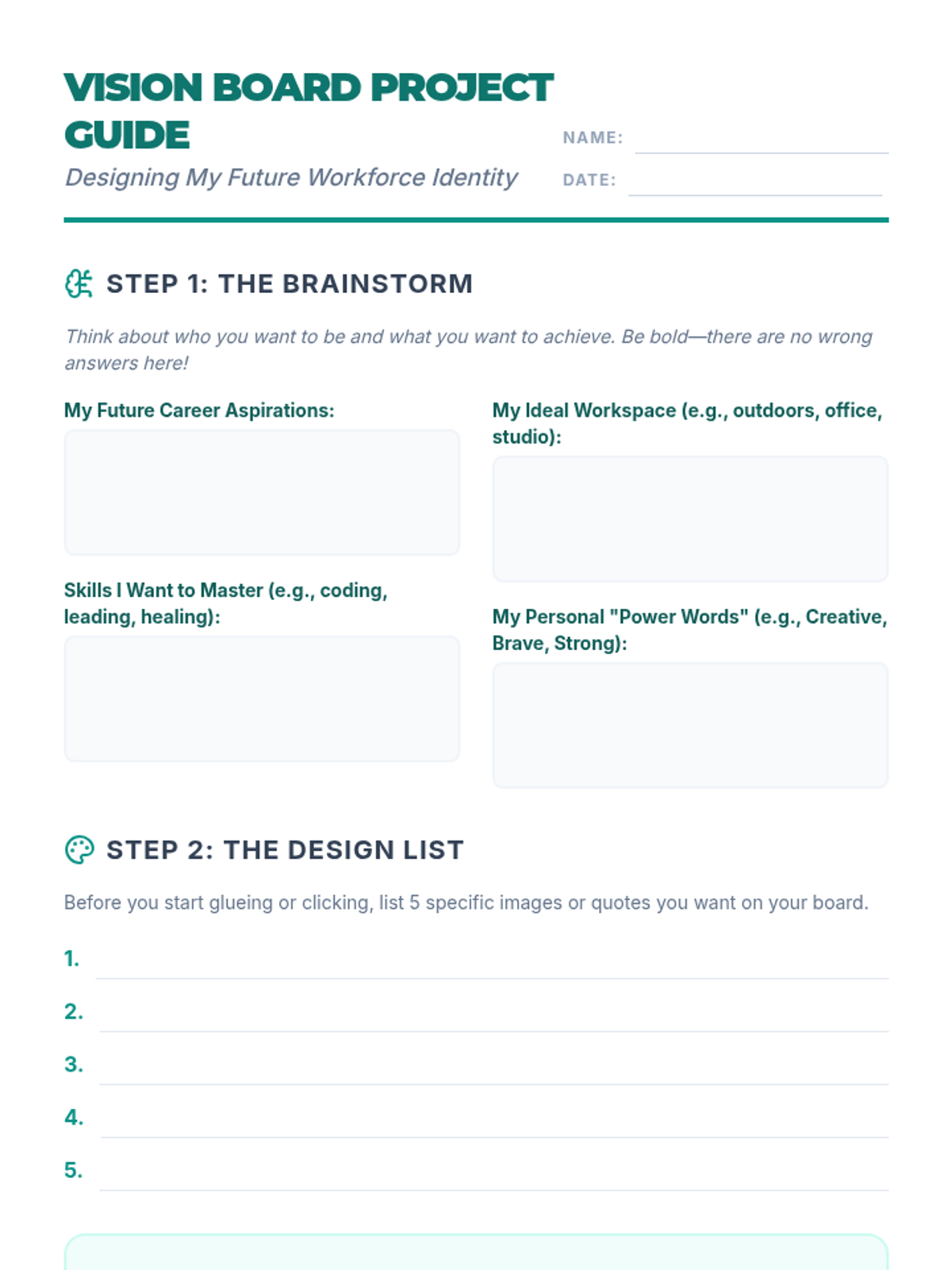
Students explore their workforce aspirations through the creation of a vision board, focusing on goal visualization and self-awareness for their ICAP portfolios.
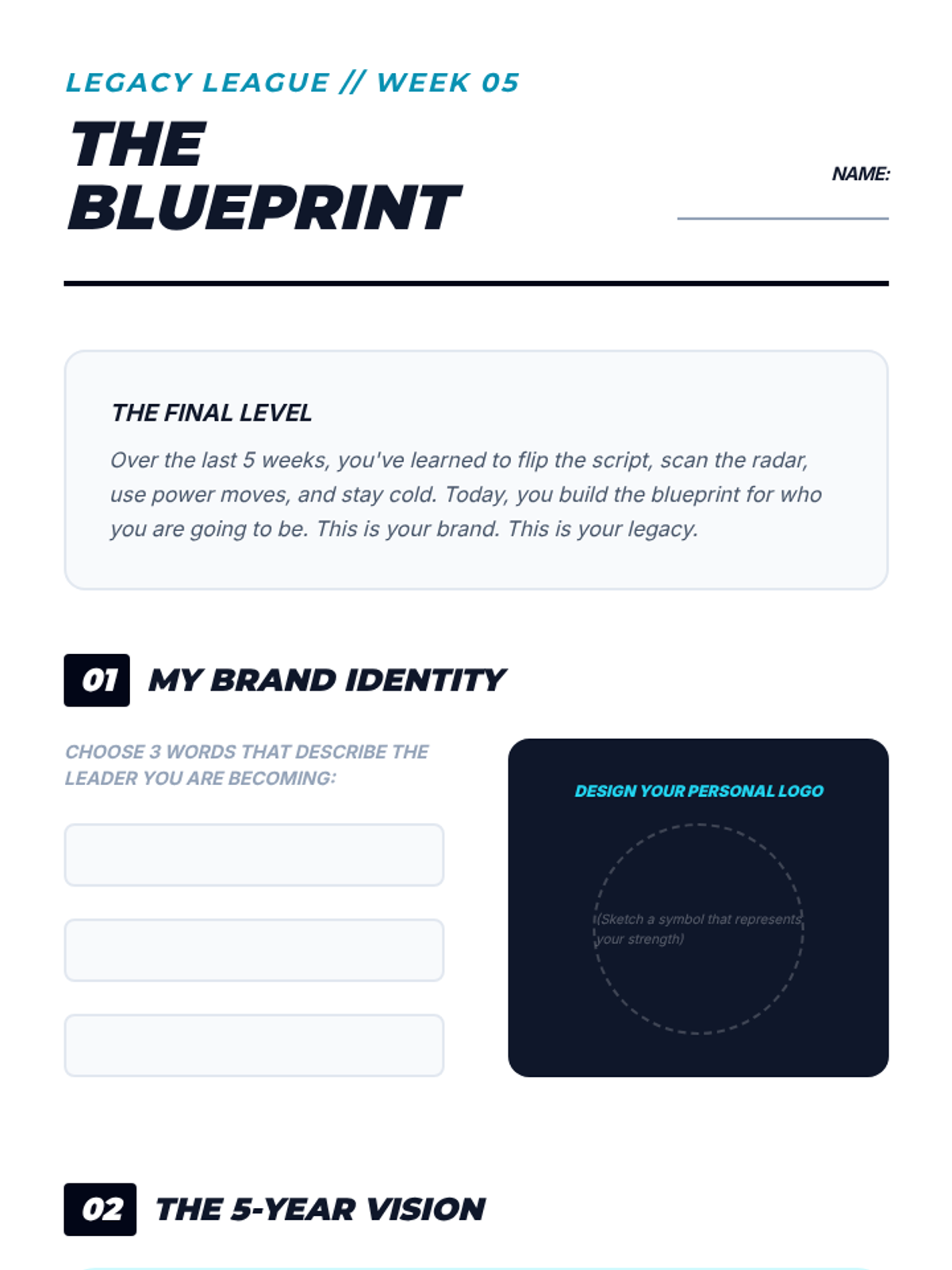
Creating a personal brand and a plan for how students want to be remembered by their community and peers.
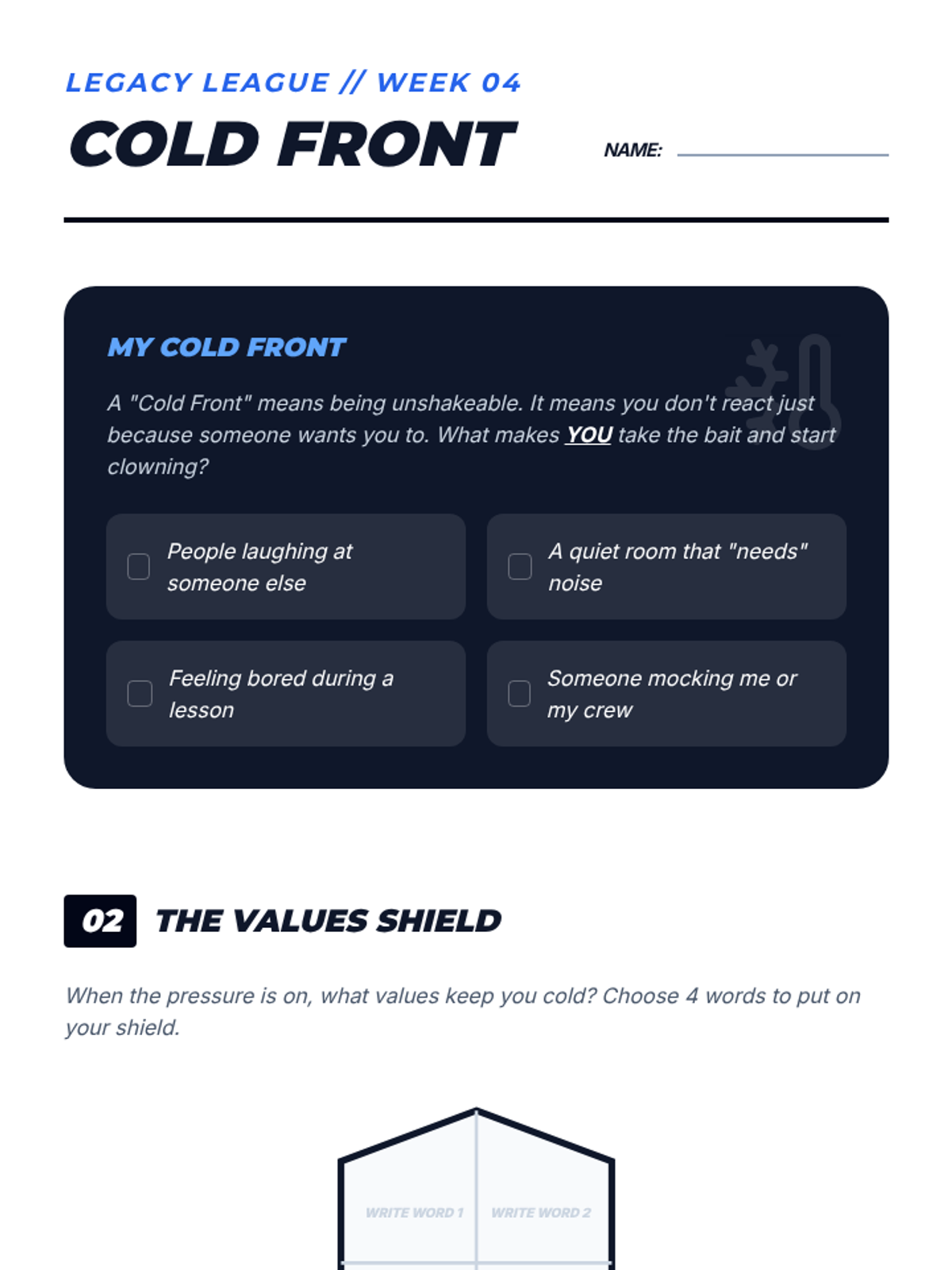
Building the strength to resist the urge to perform for others and maintaining a leader's mindset under pressure.
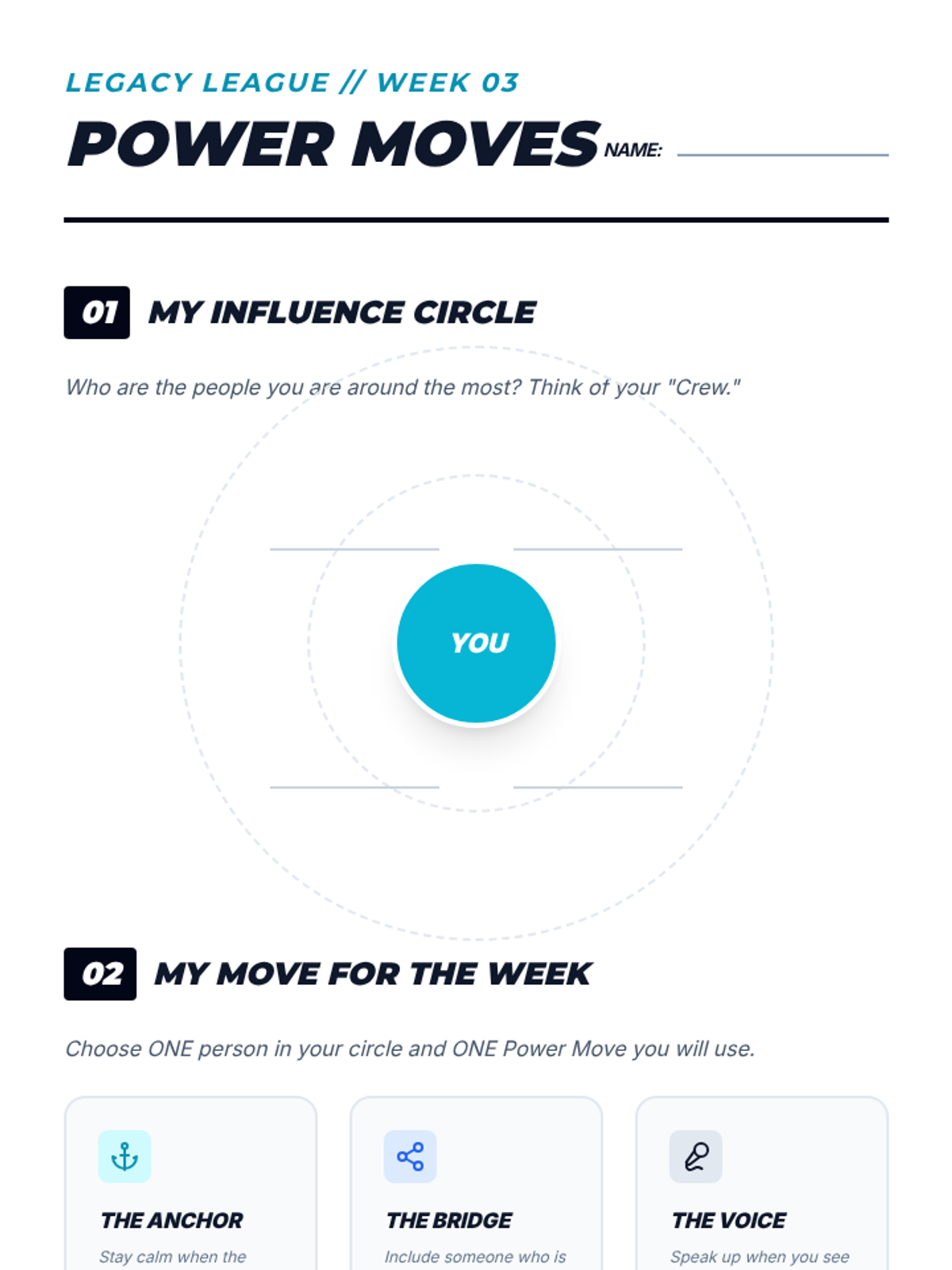
Exploring positive influence and how to lead peers without needing to be the center of attention.
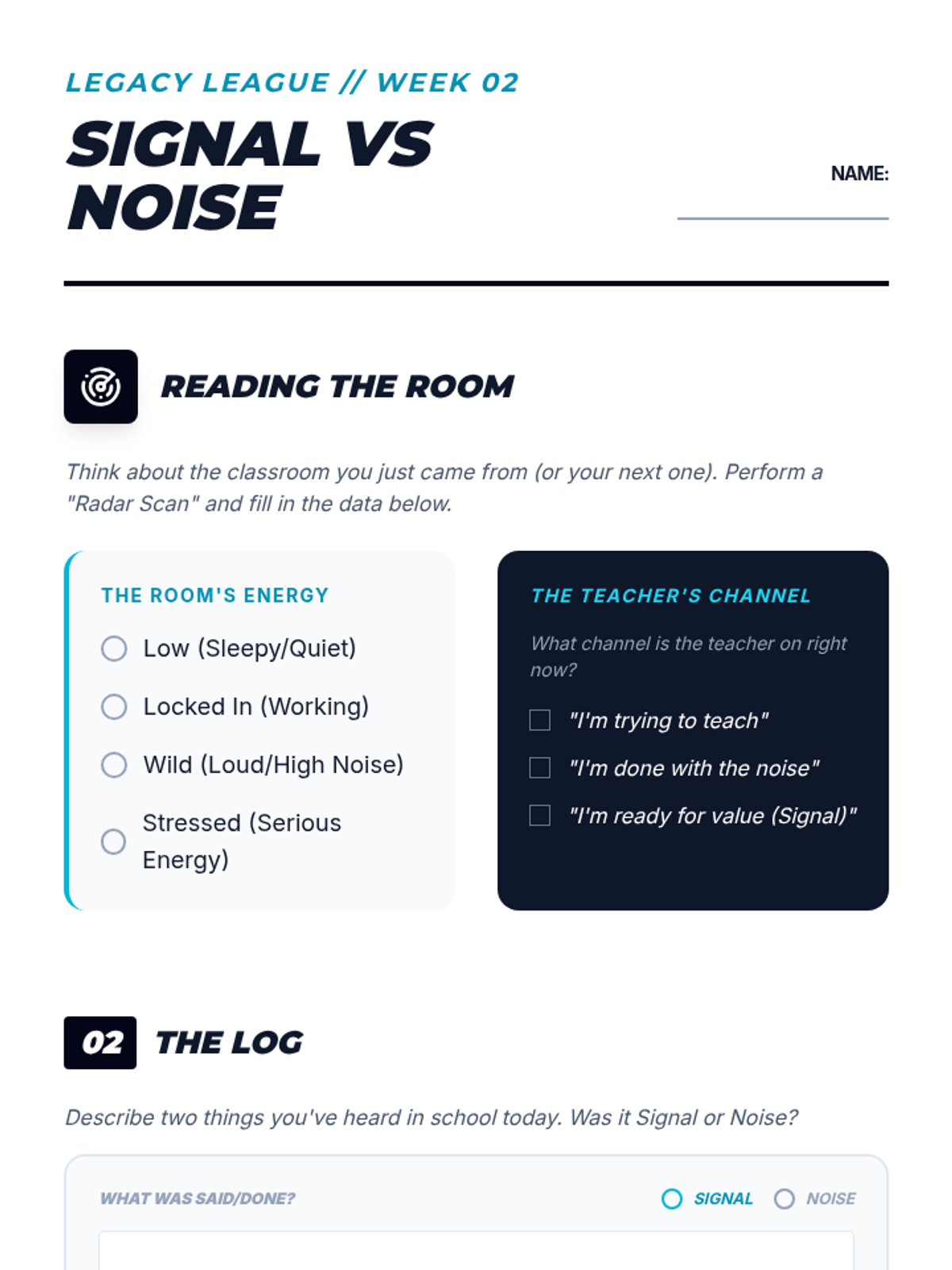
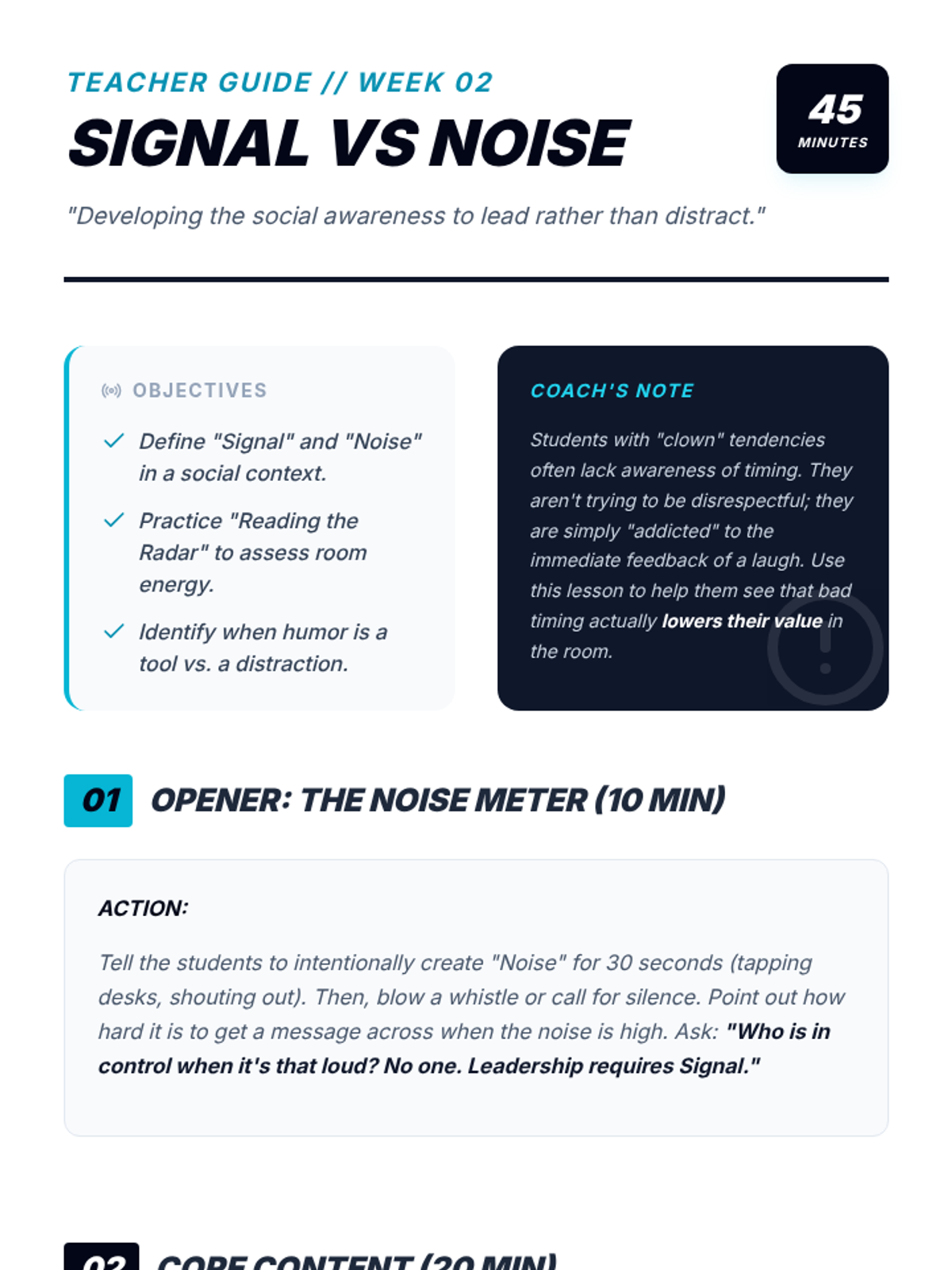
Developing social awareness and 'reading the room.' Learning to identify when humor is a tool and when it's a distraction.
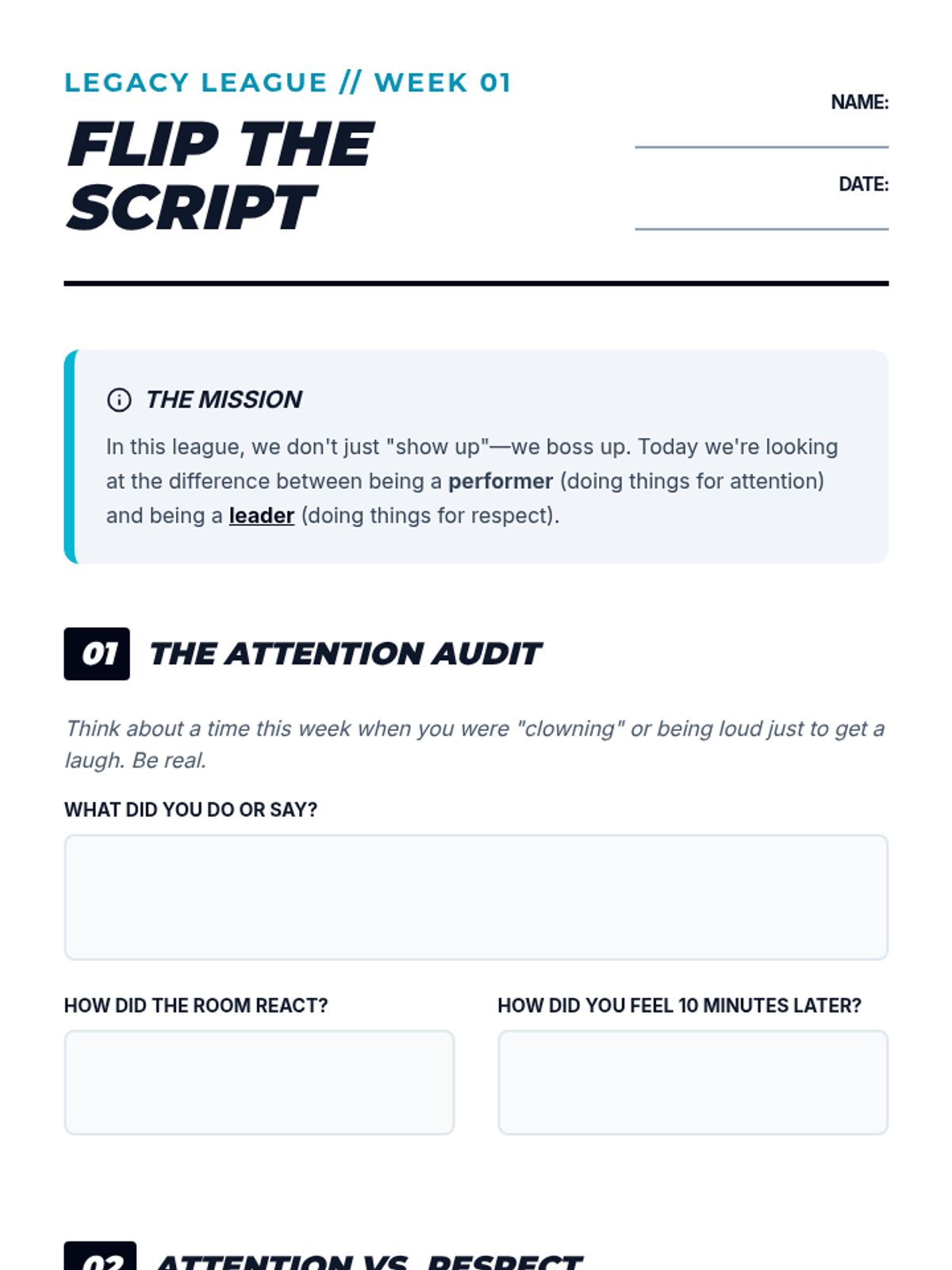
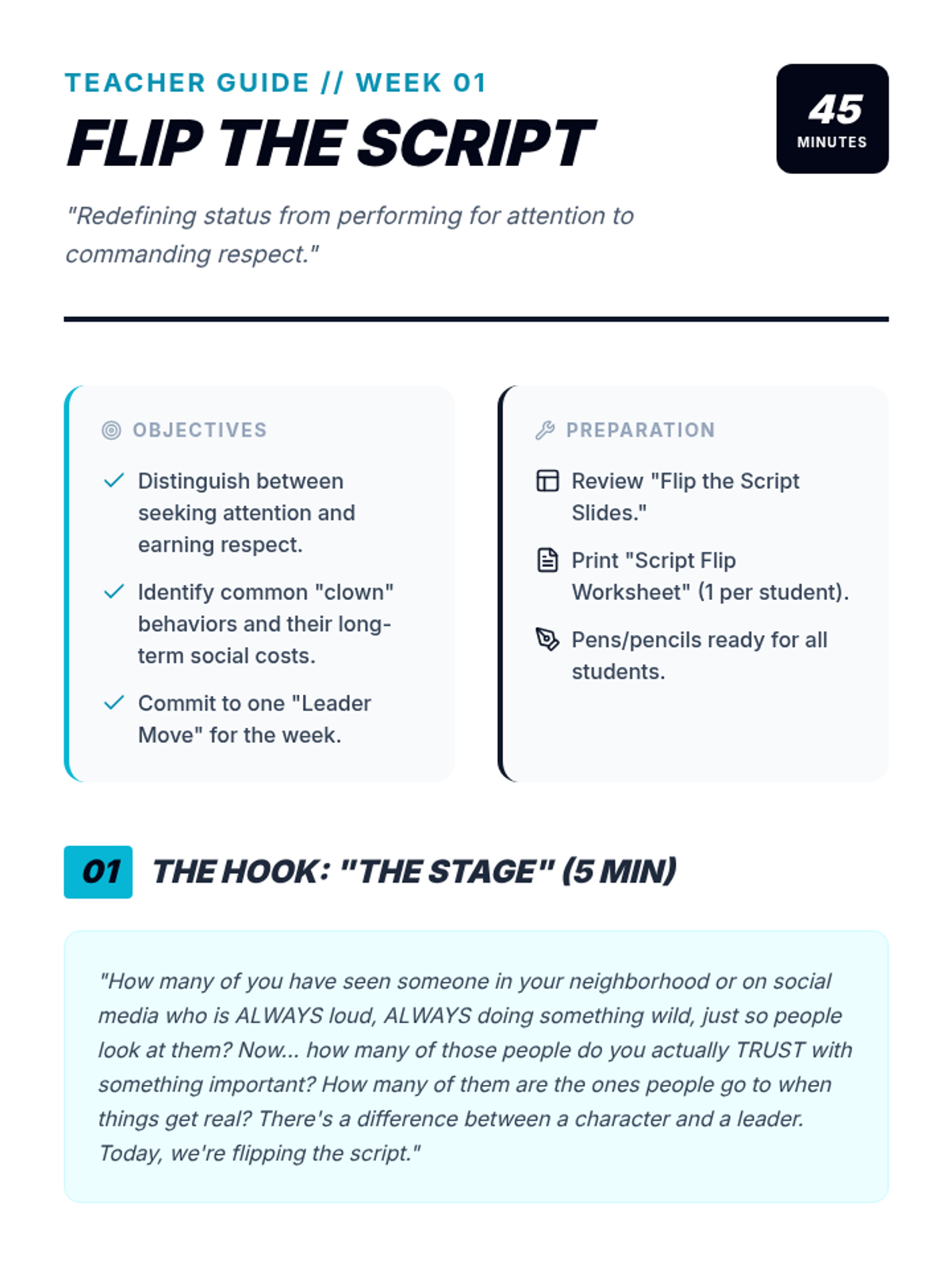
Redefining the difference between 'Attention' and 'Respect.' Students analyze how their behavior affects their status and influence.
A final reflection session to celebrate growth, review skills learned, and set long-term goals for the future.
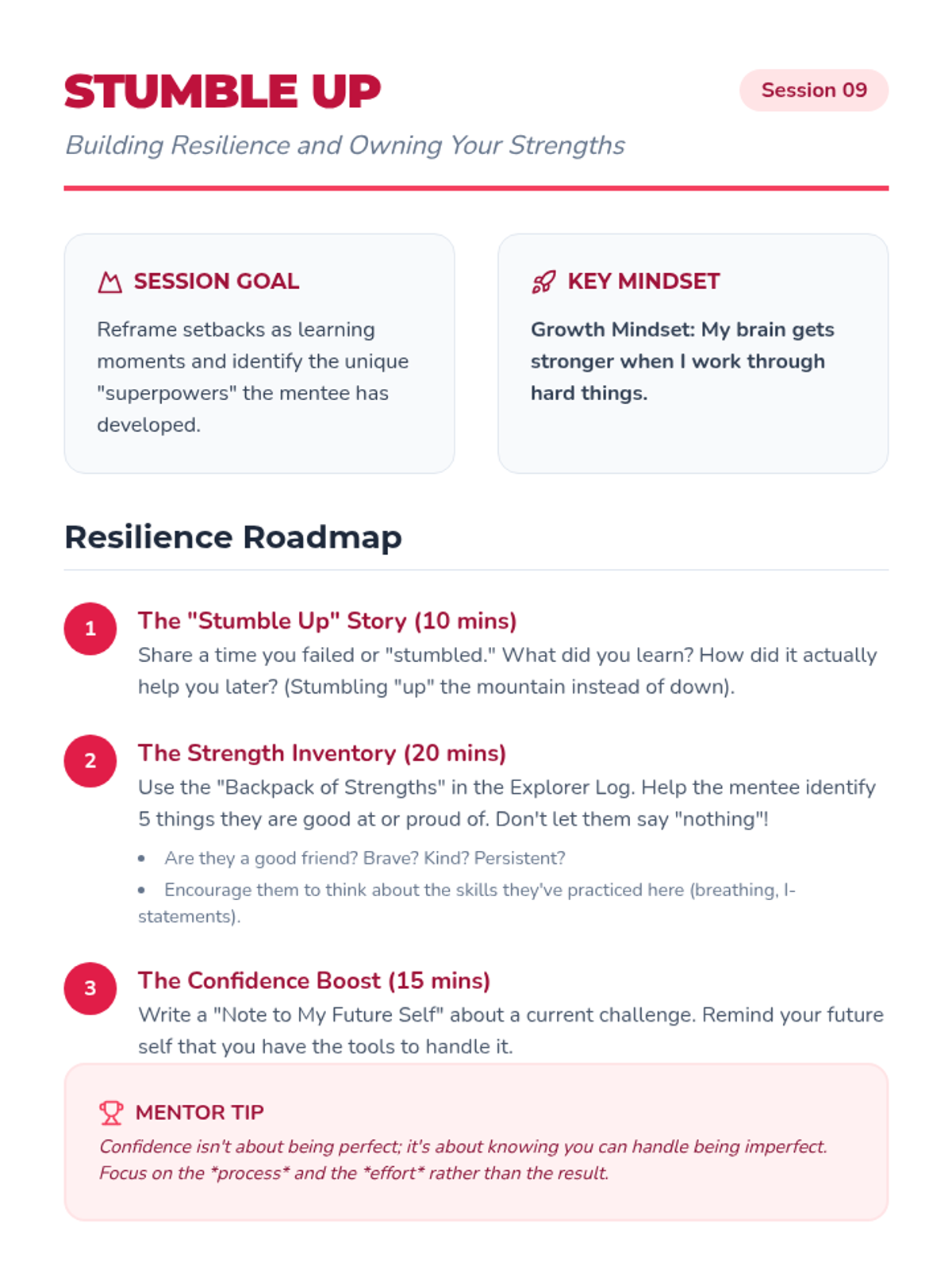
Focuses on building resilience by reframing setbacks as learning opportunities and recognizing personal strengths.
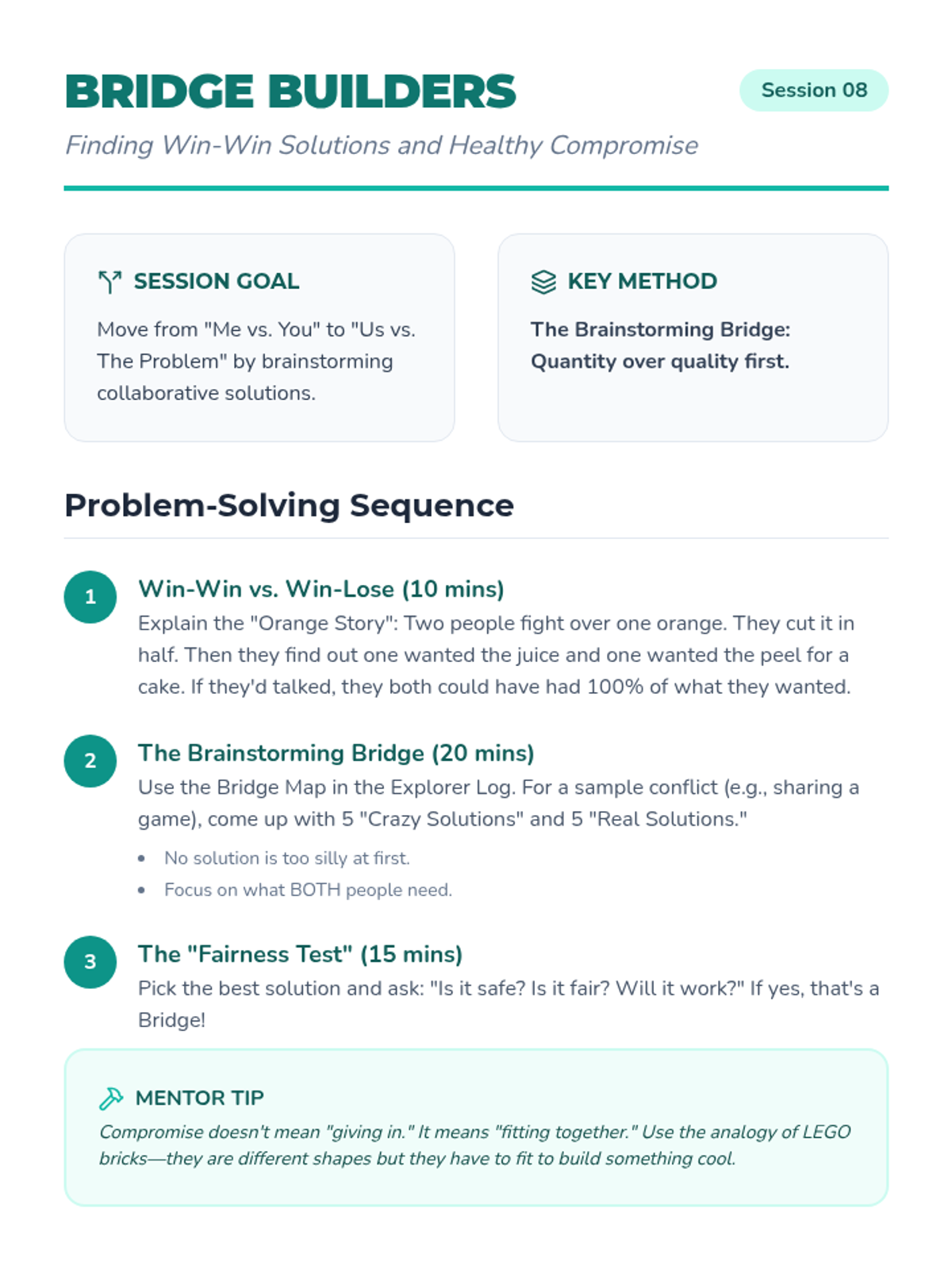
Provides a step-by-step framework for finding win-win solutions and compromising when interests clash.
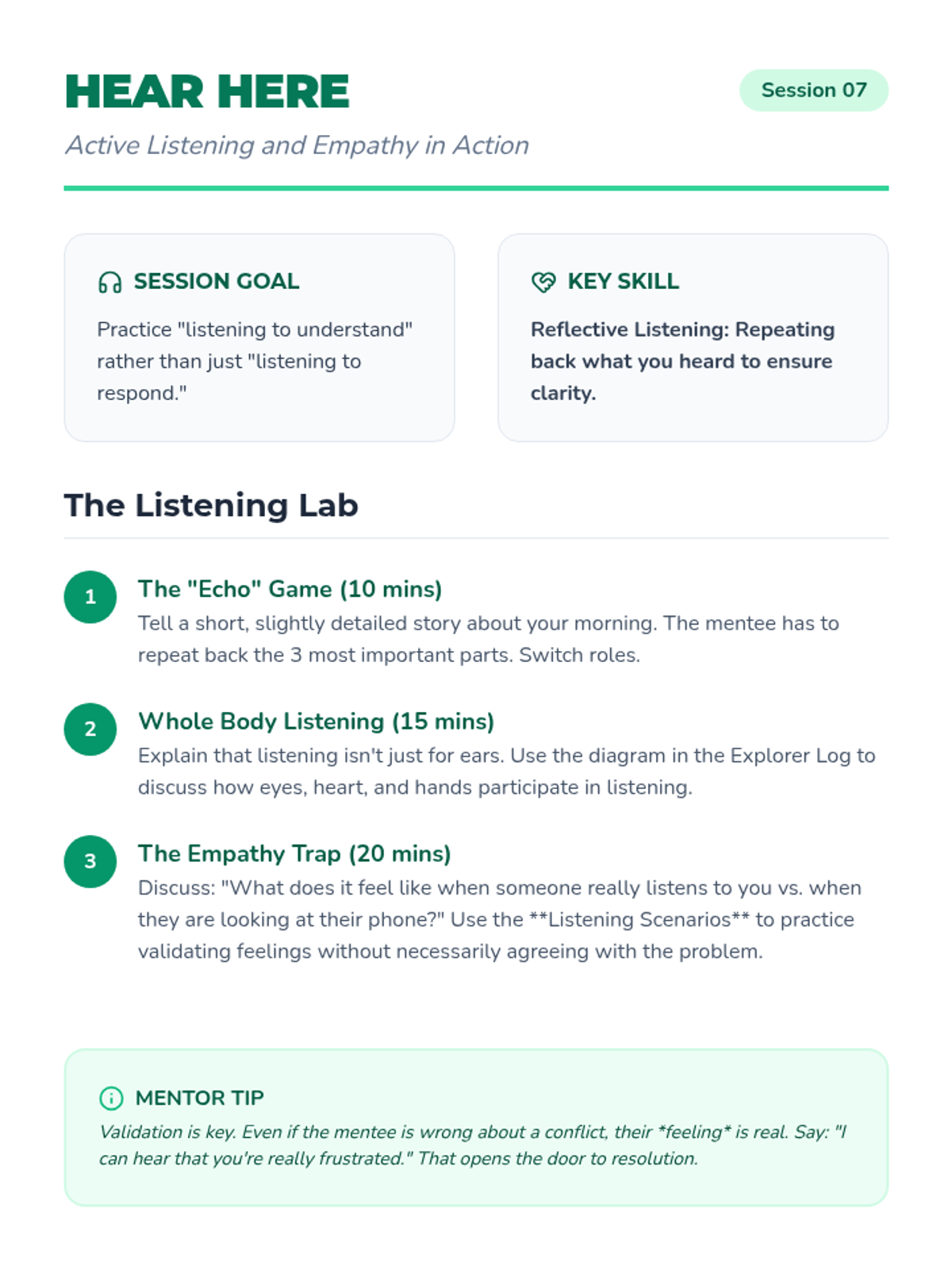
Develops active listening skills, emphasizing empathy and understanding the other person's perspective during a dispute.
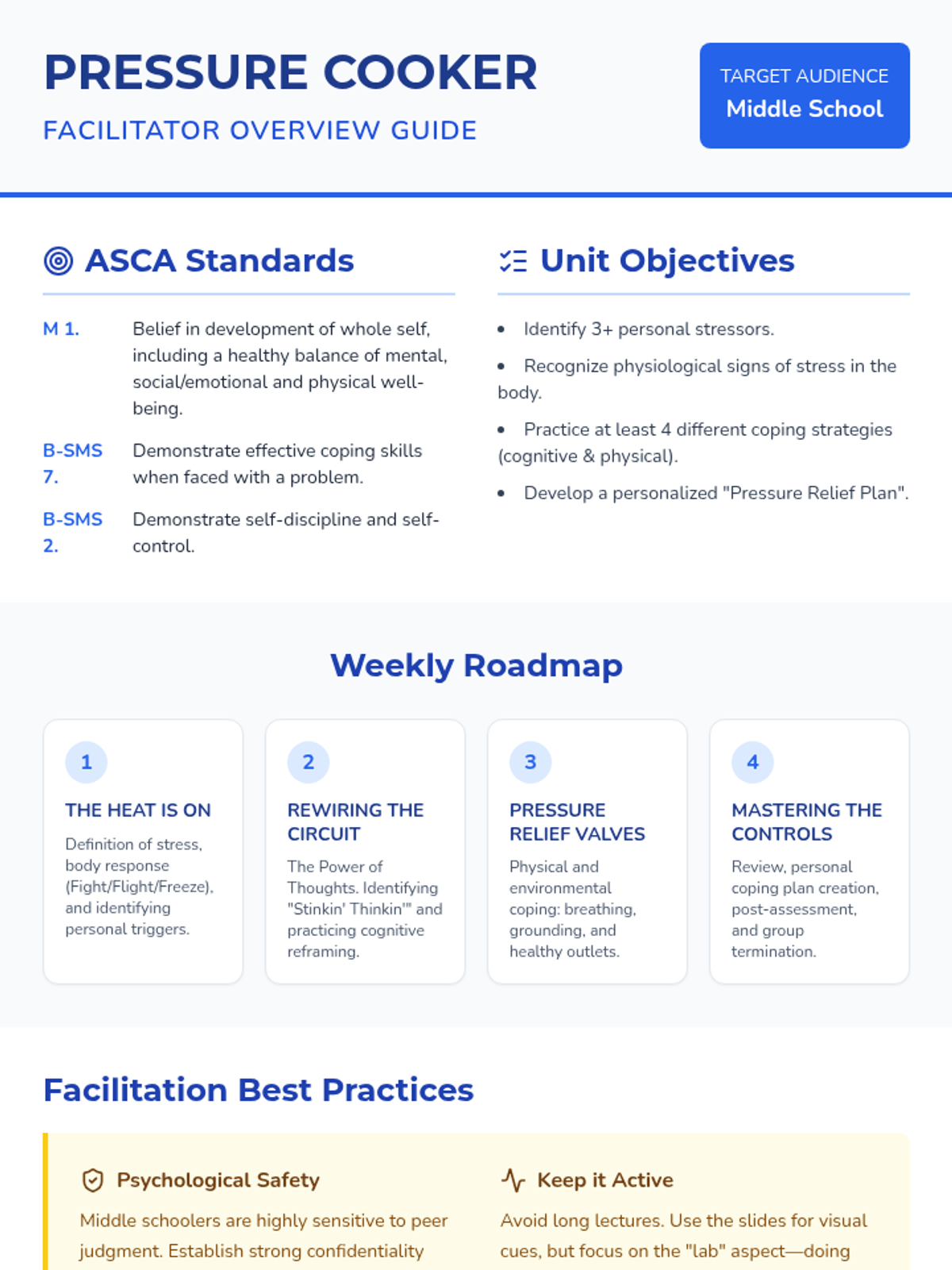
Students synthesize their learning by creating a personal coping plan and reflecting on their growth throughout the group.
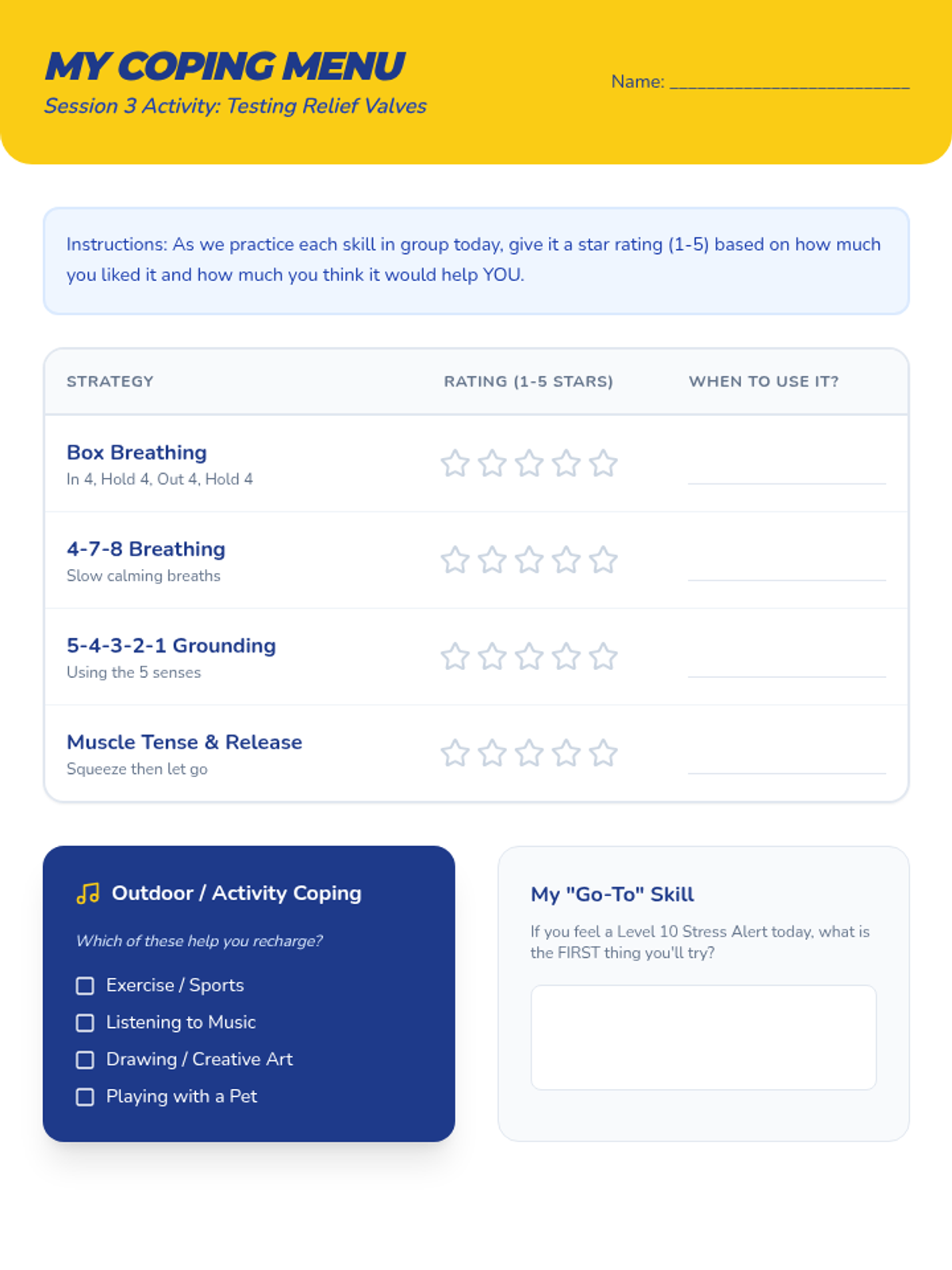
Introduces physical and environmental coping strategies, including deep breathing, grounding techniques, and healthy lifestyle habits.
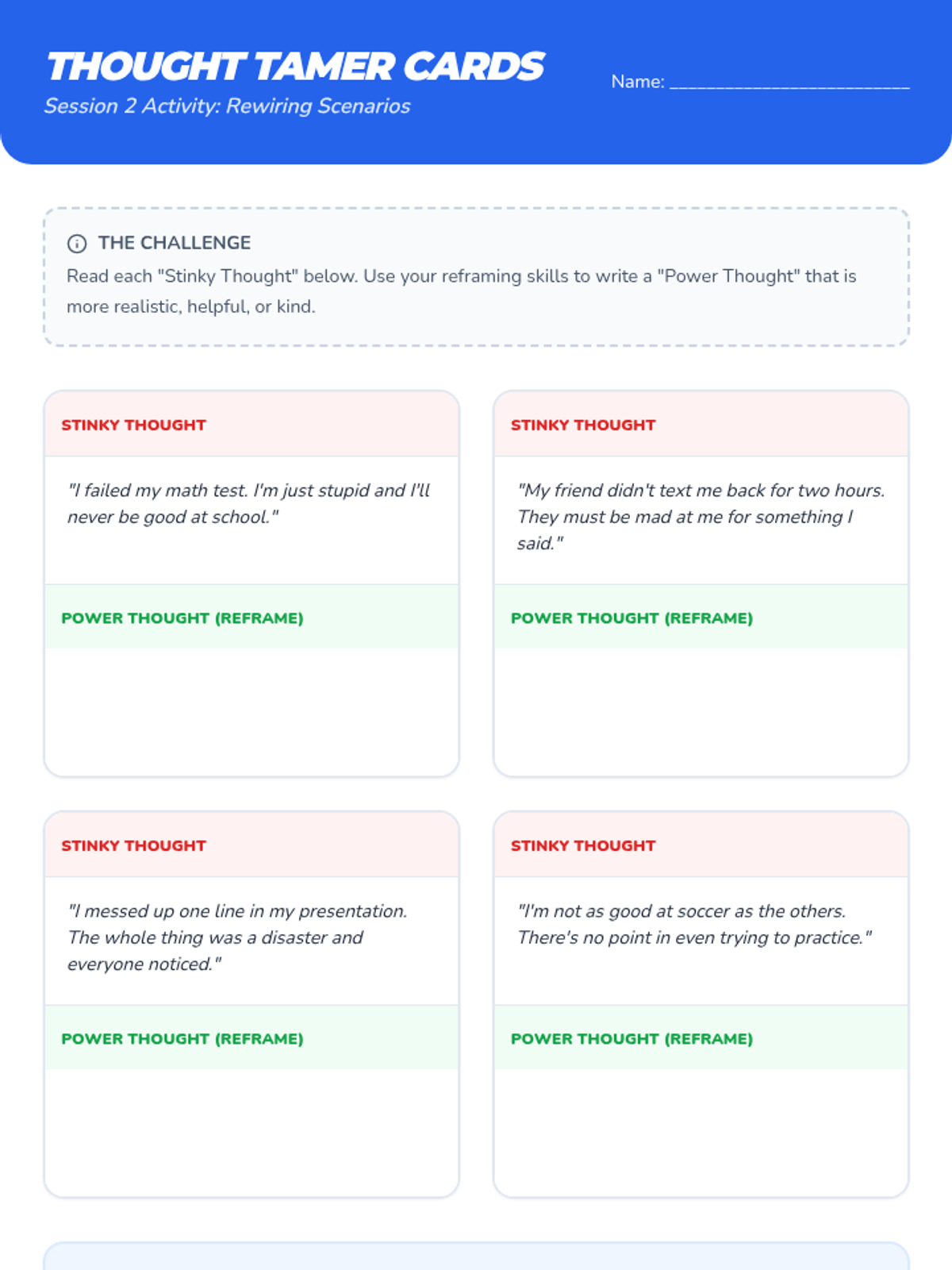
Focuses on the connection between thoughts and feelings, teaching students how to challenge negative self-talk and reframe stressful situations.
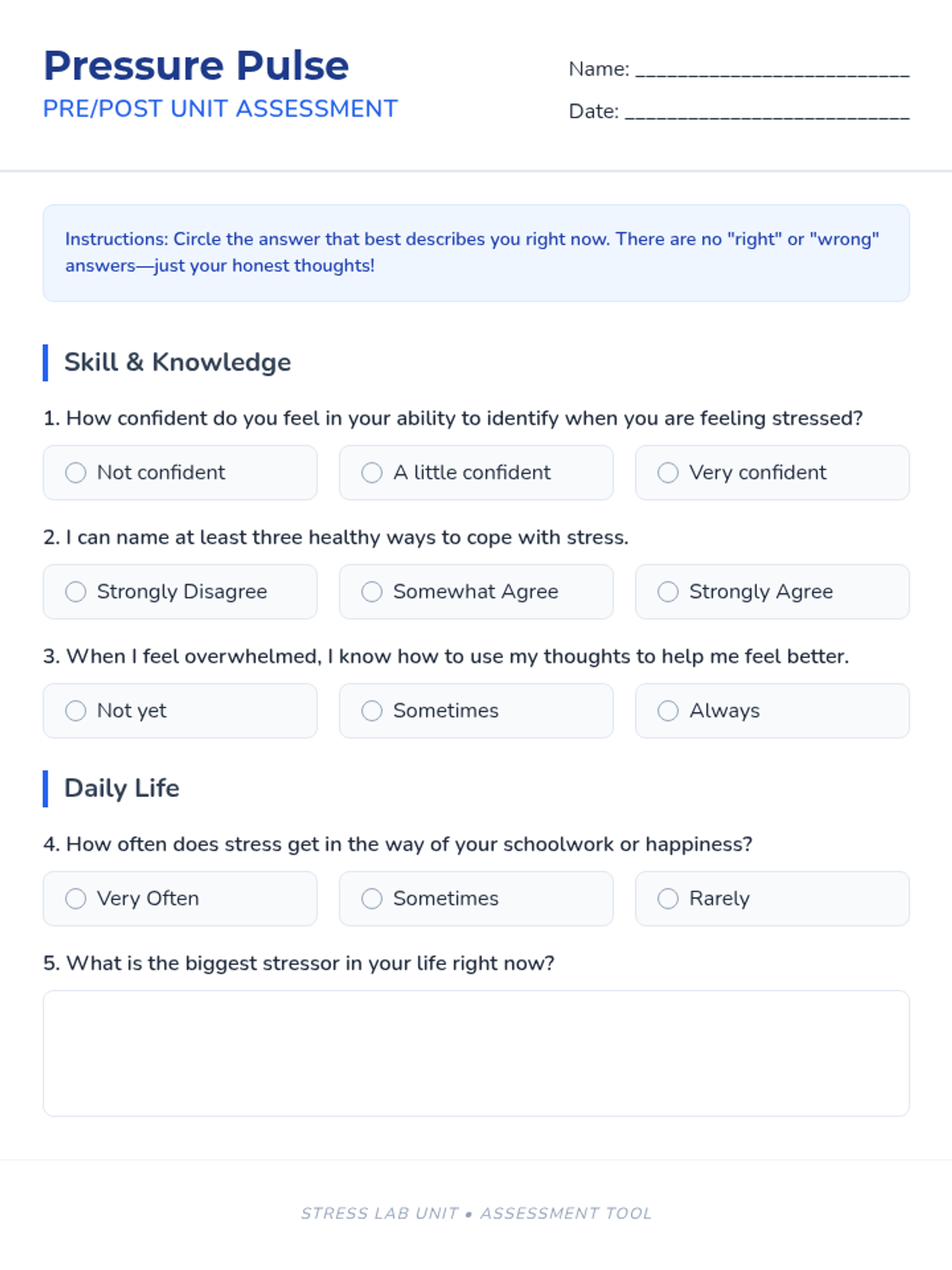
Students will define stress, identify their personal 'stress triggers', and learn how their bodies react to pressure.
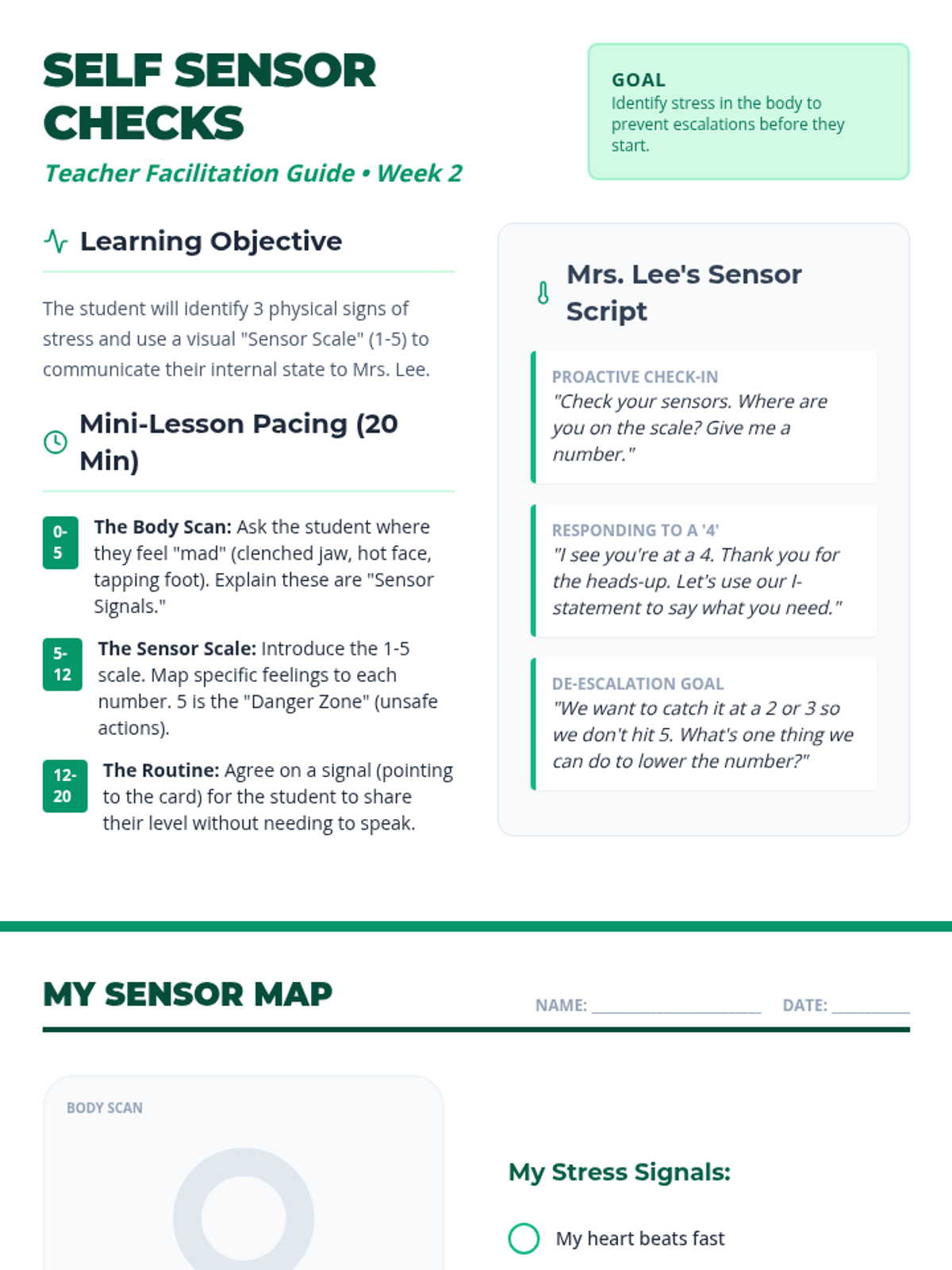
This lesson focuses on identifying internal emotional states and using visual check-ins to monitor stress levels before they lead to disruptions.
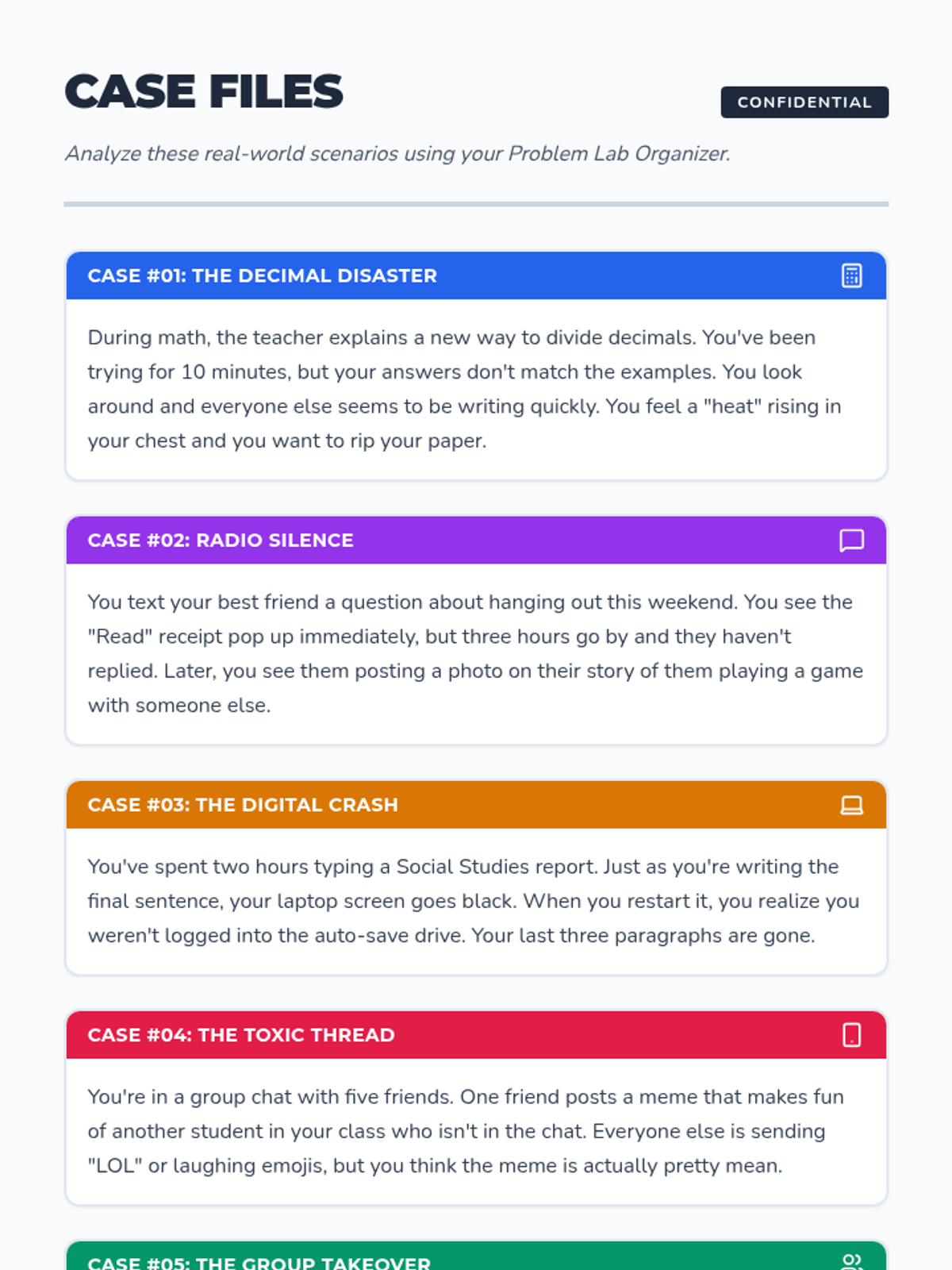
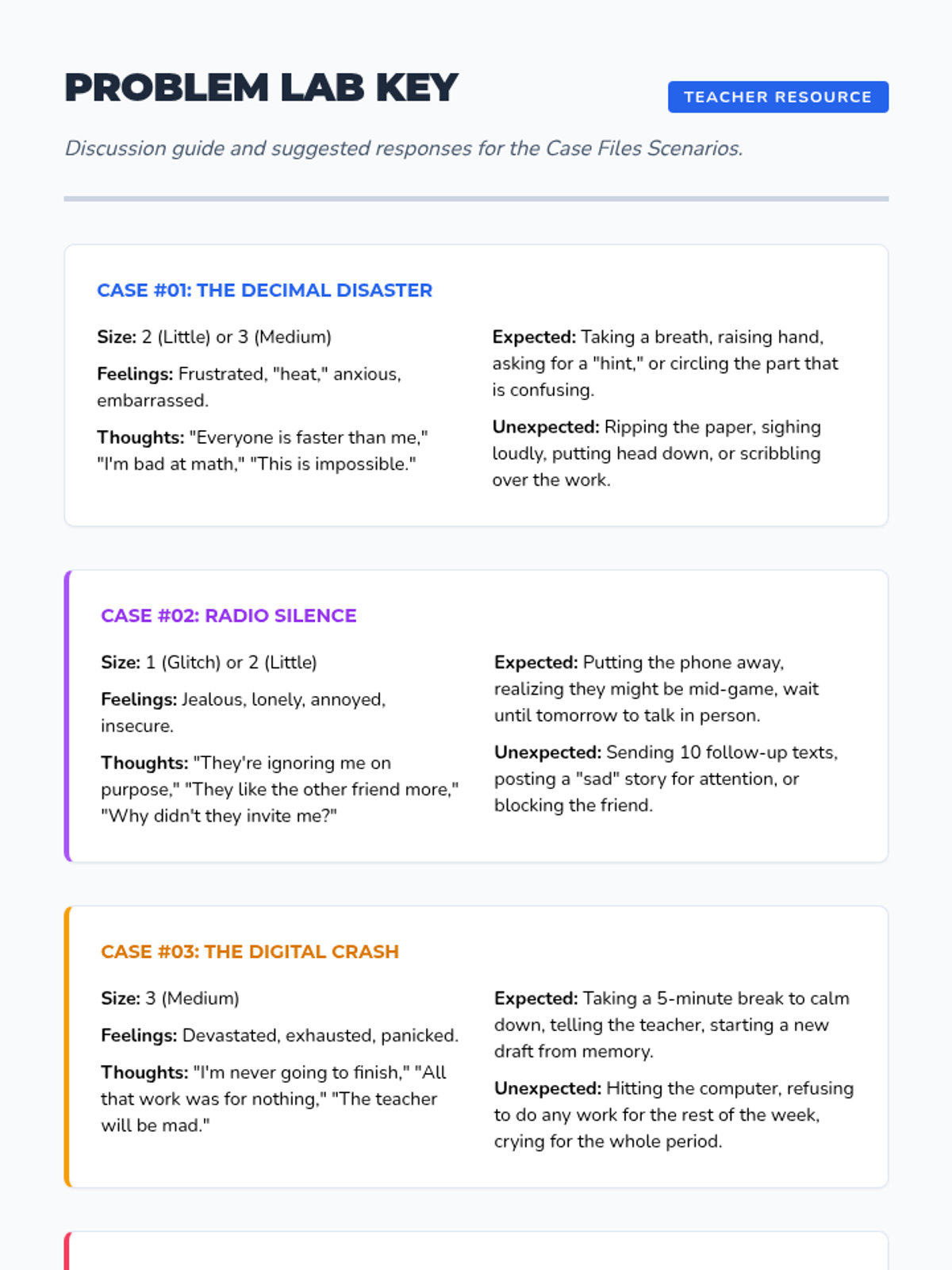
A social-emotional learning lesson focusing on the Size of the Problem framework, CBT thought-feeling connections, and Social Thinking concepts of expected vs. unexpected behaviors. Students analyze classroom and digital scenarios to build self-regulation and problem-solving skills.
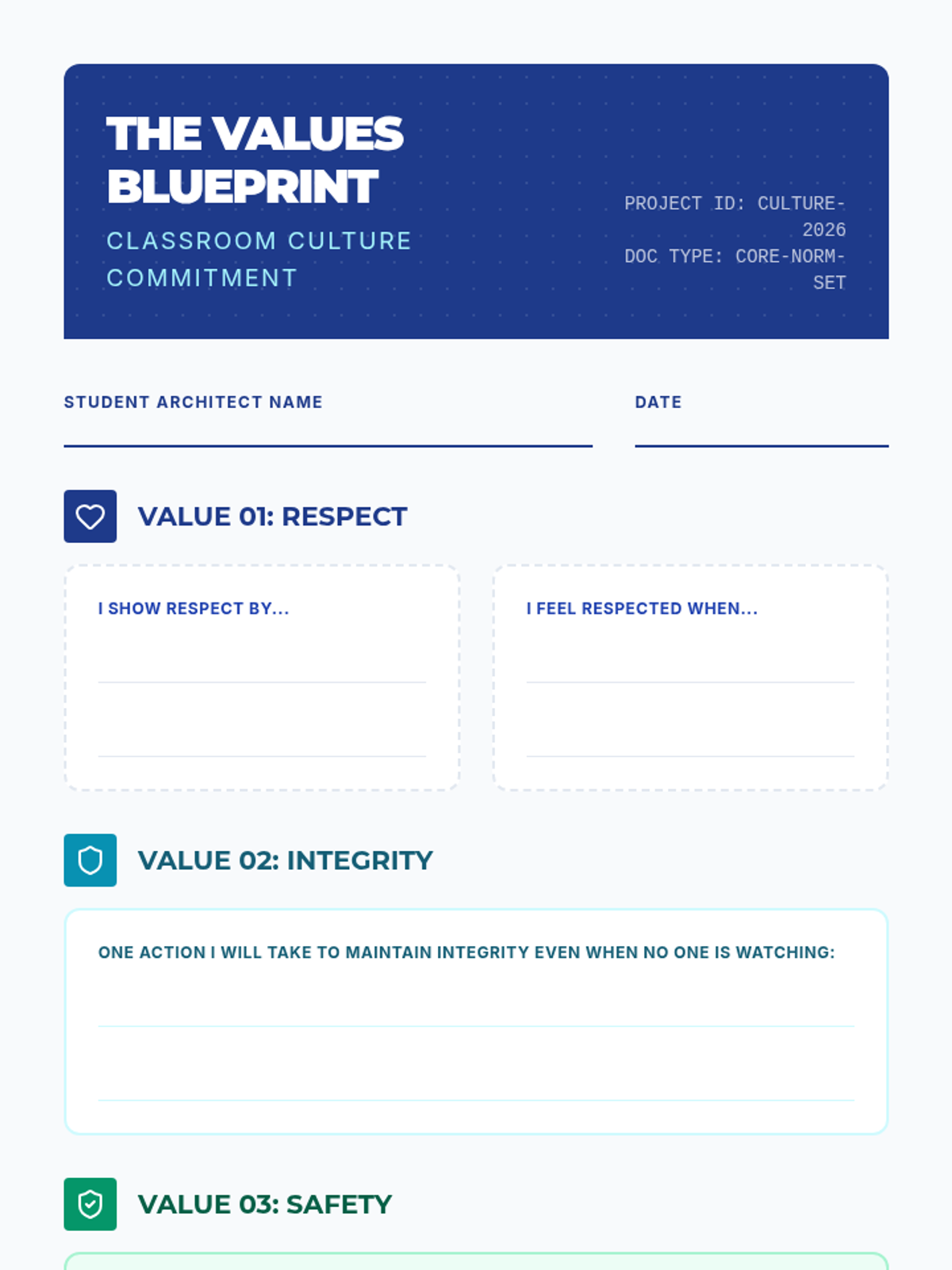
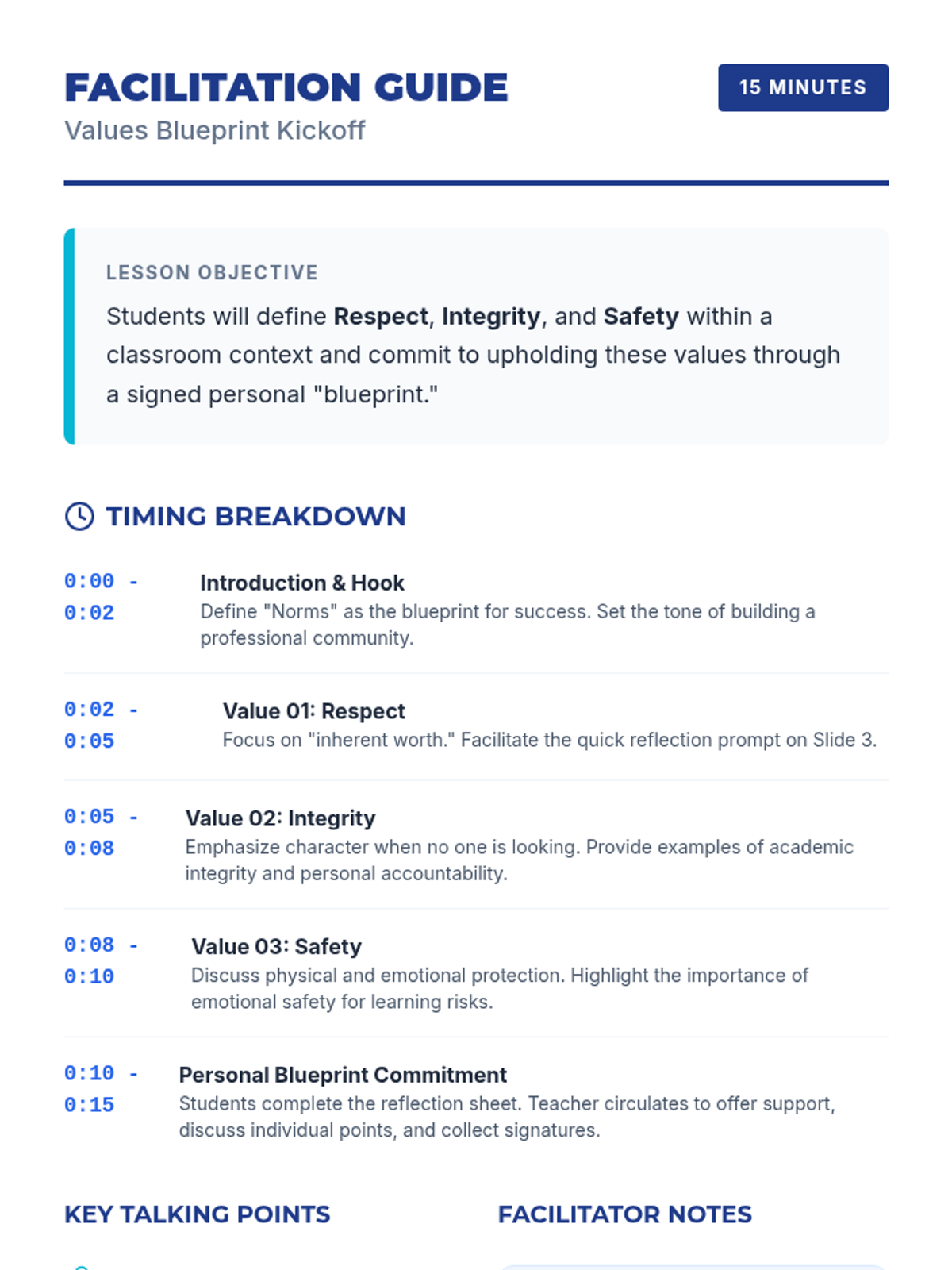
A concise 15-minute introduction to classroom norms centered on the core values of Respect, Integrity, and Safety. Students will define these values and commit to a shared culture of success.
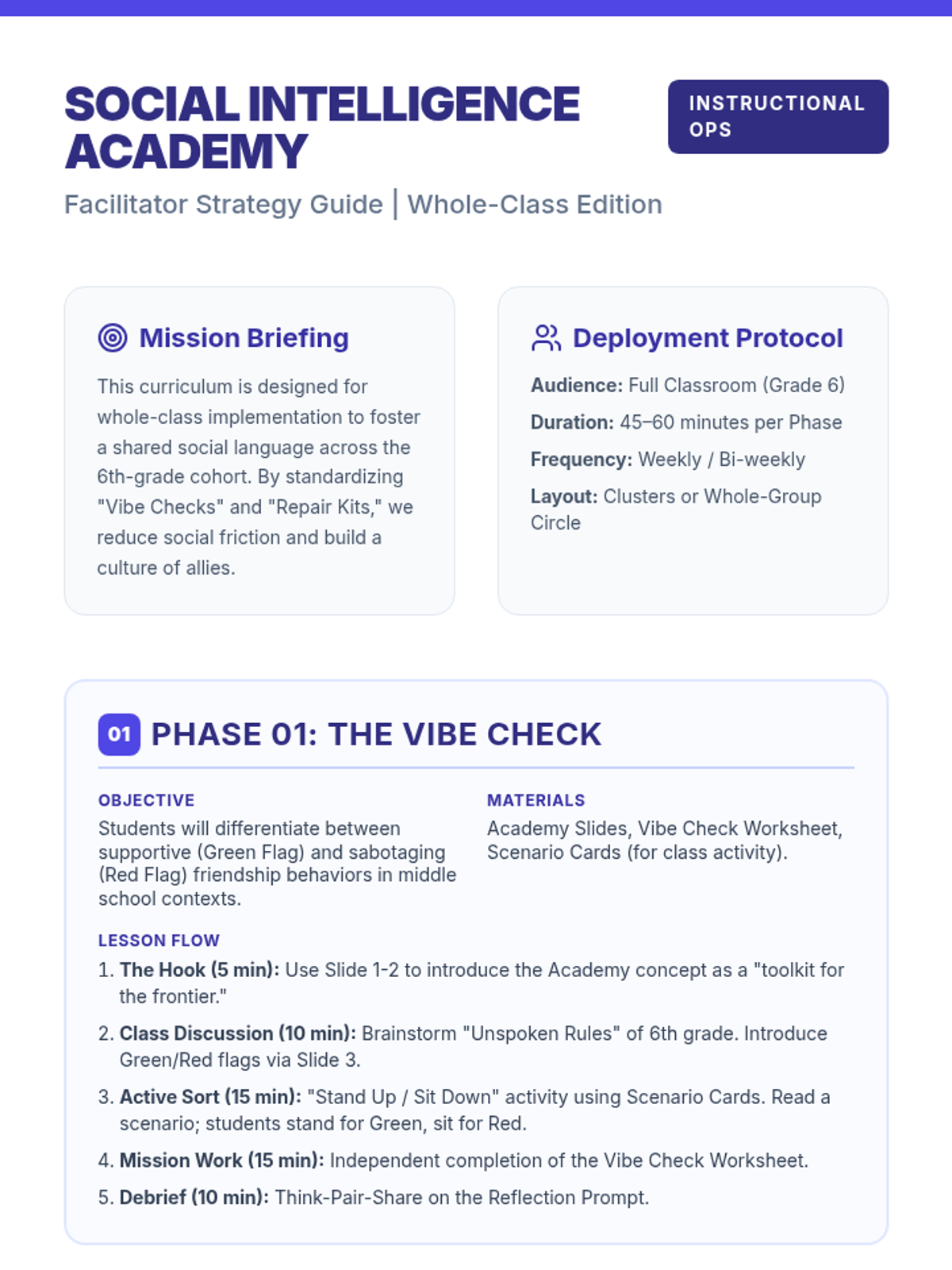
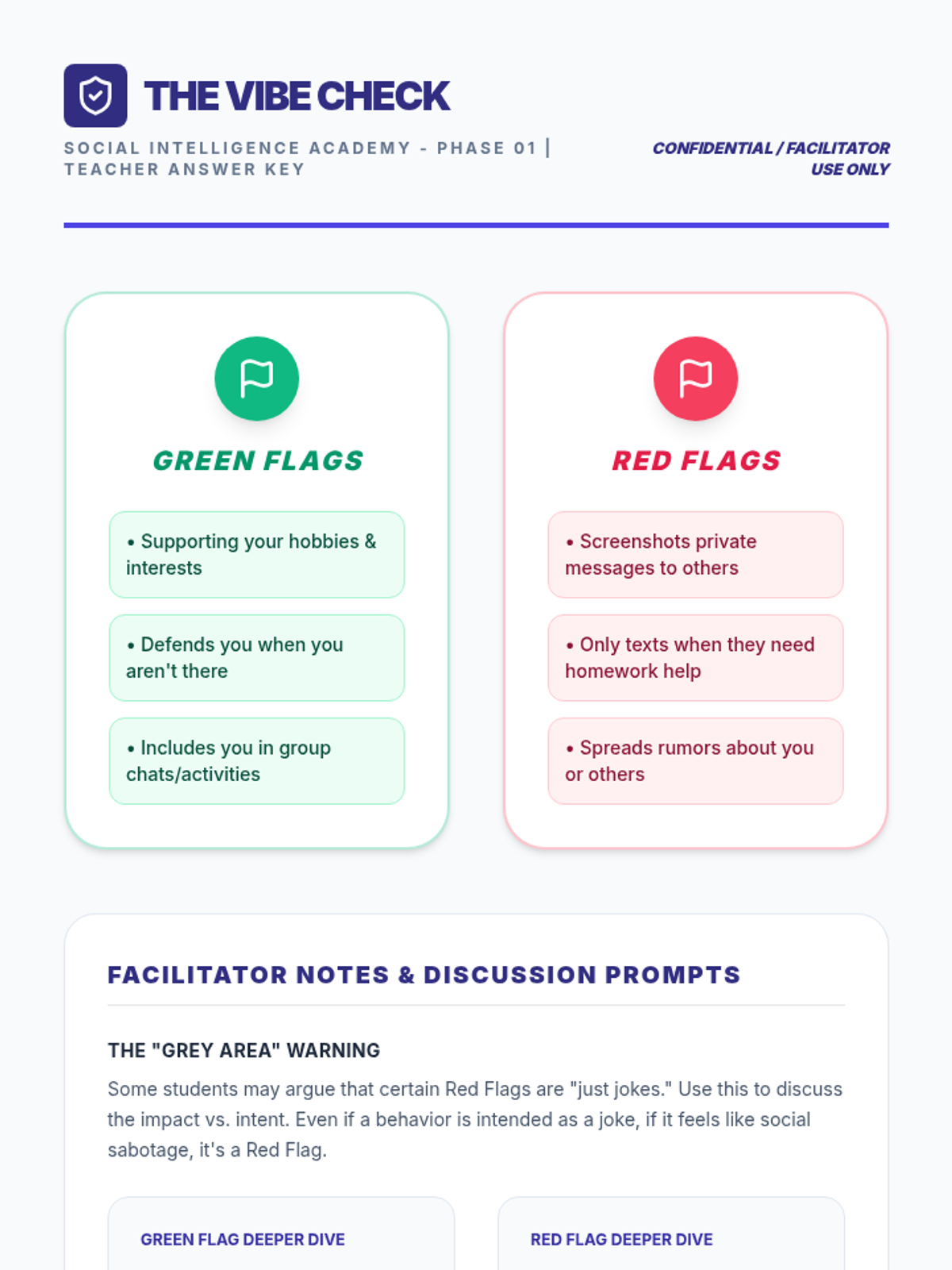
Introduces the Social Intelligence Academy and explores "Vibe Checks"—the criteria for healthy, high-functioning middle school friendships.
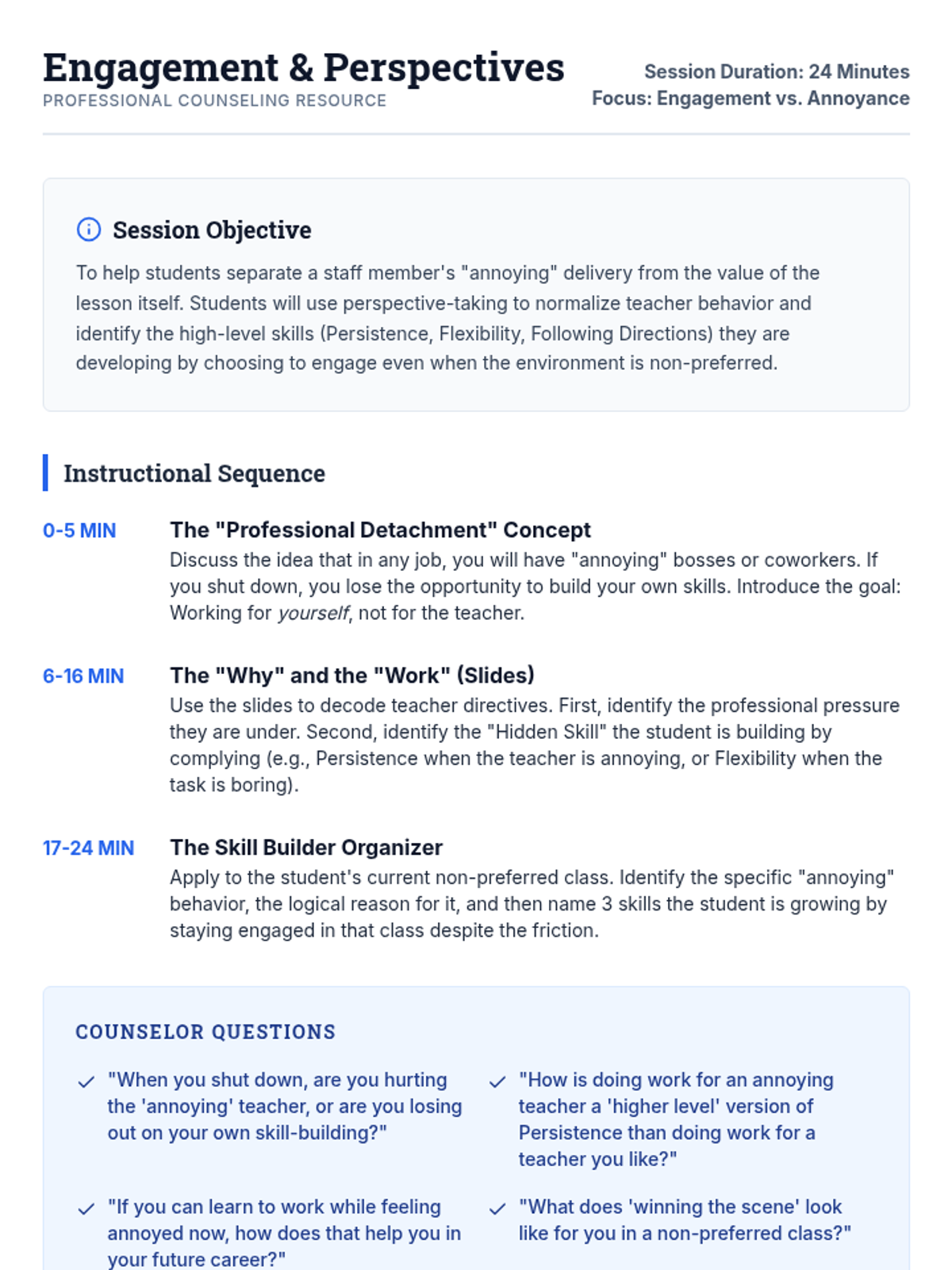
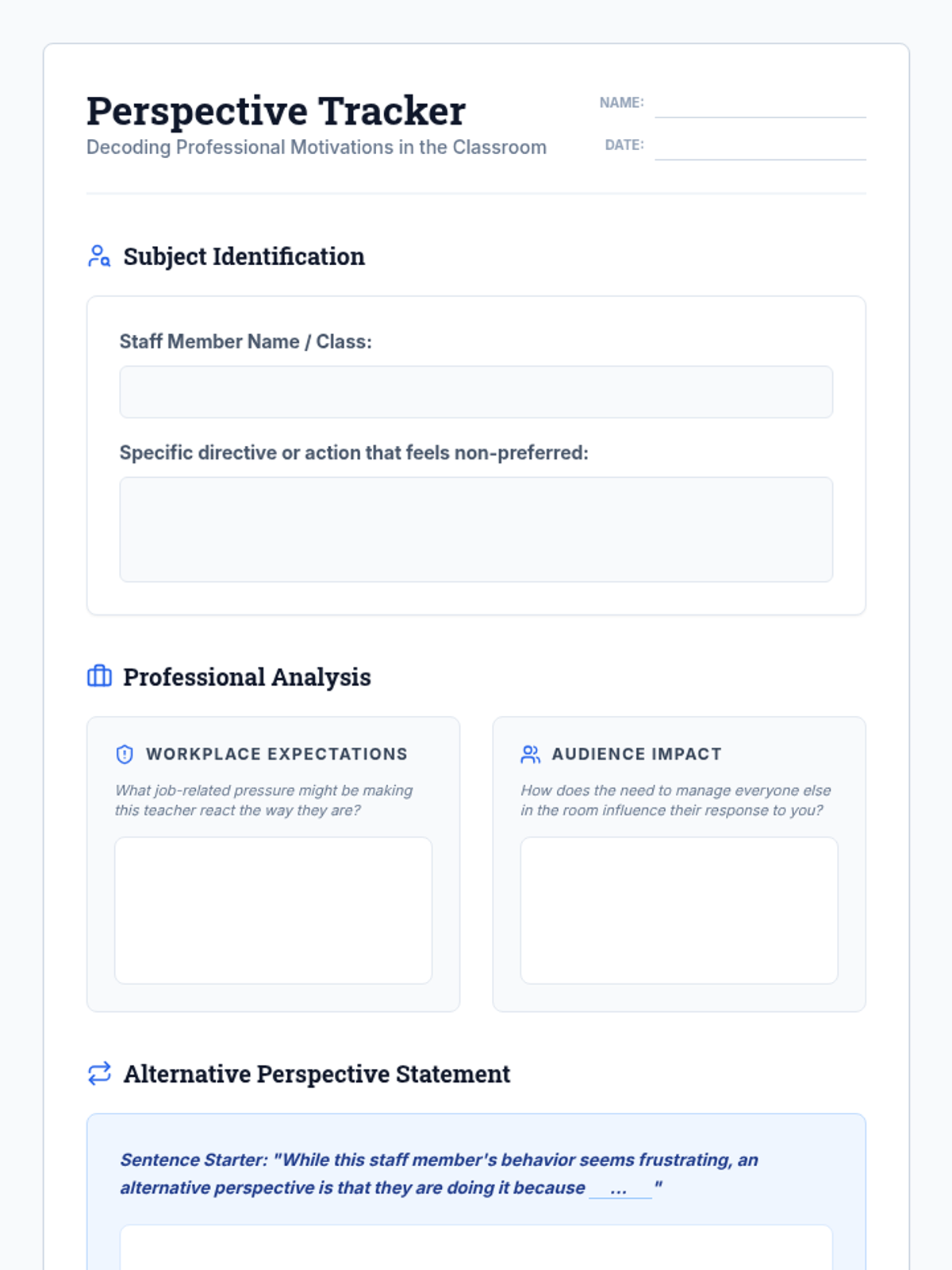
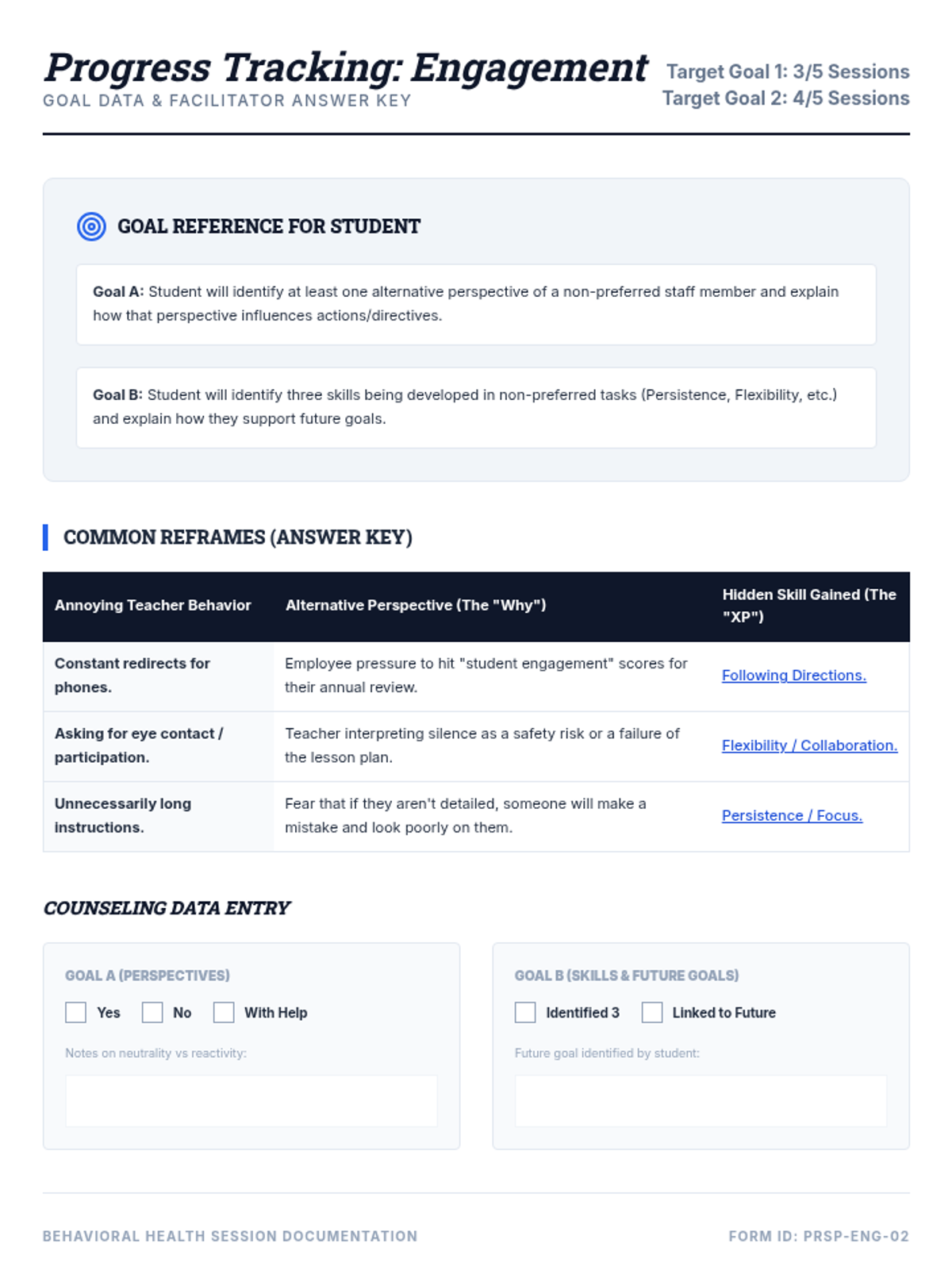
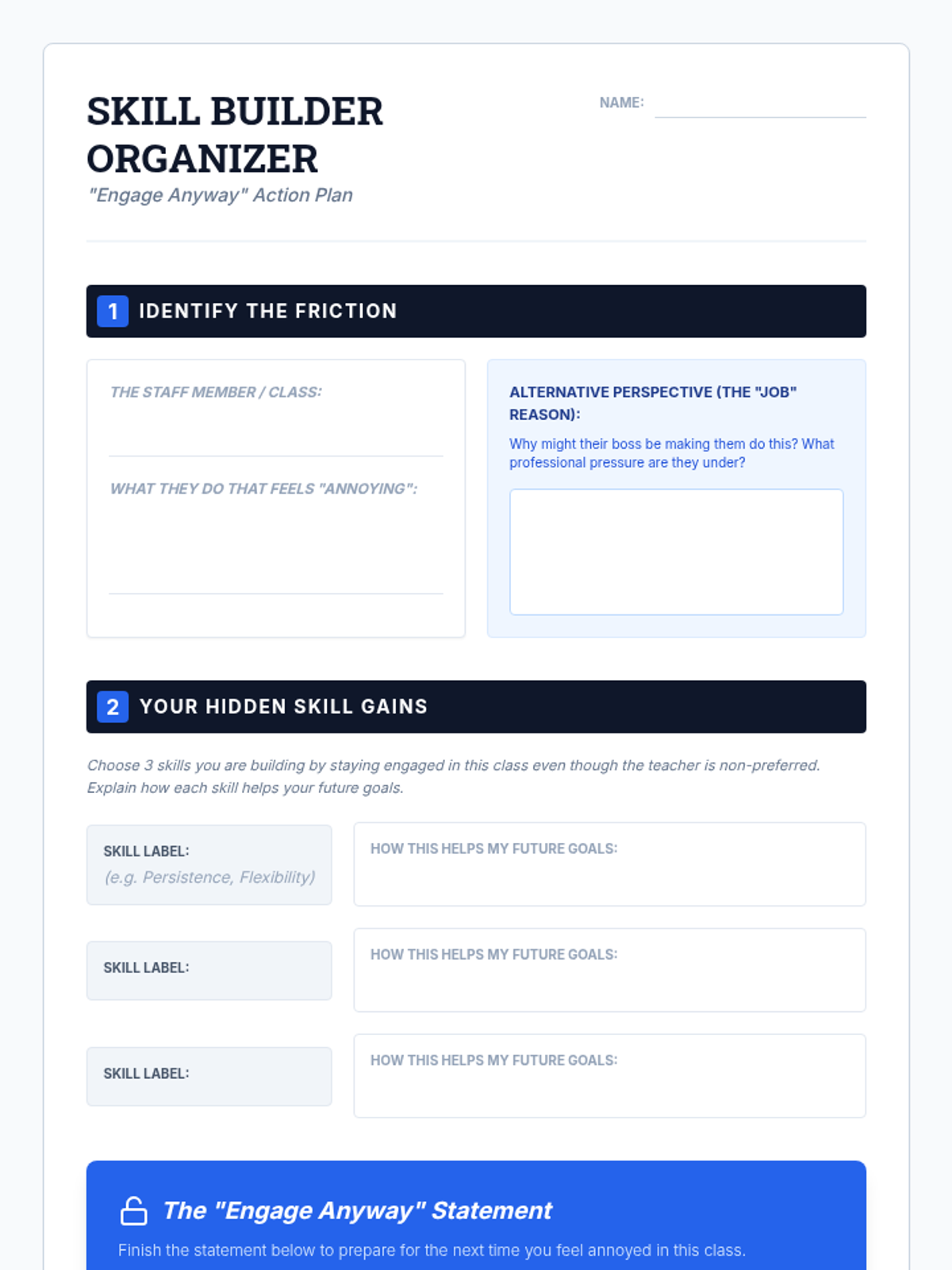
A 24-minute counseling session focused on social perspective-taking, specifically helping students identify the underlying motivations and professional pressures that influence staff member actions and directives.
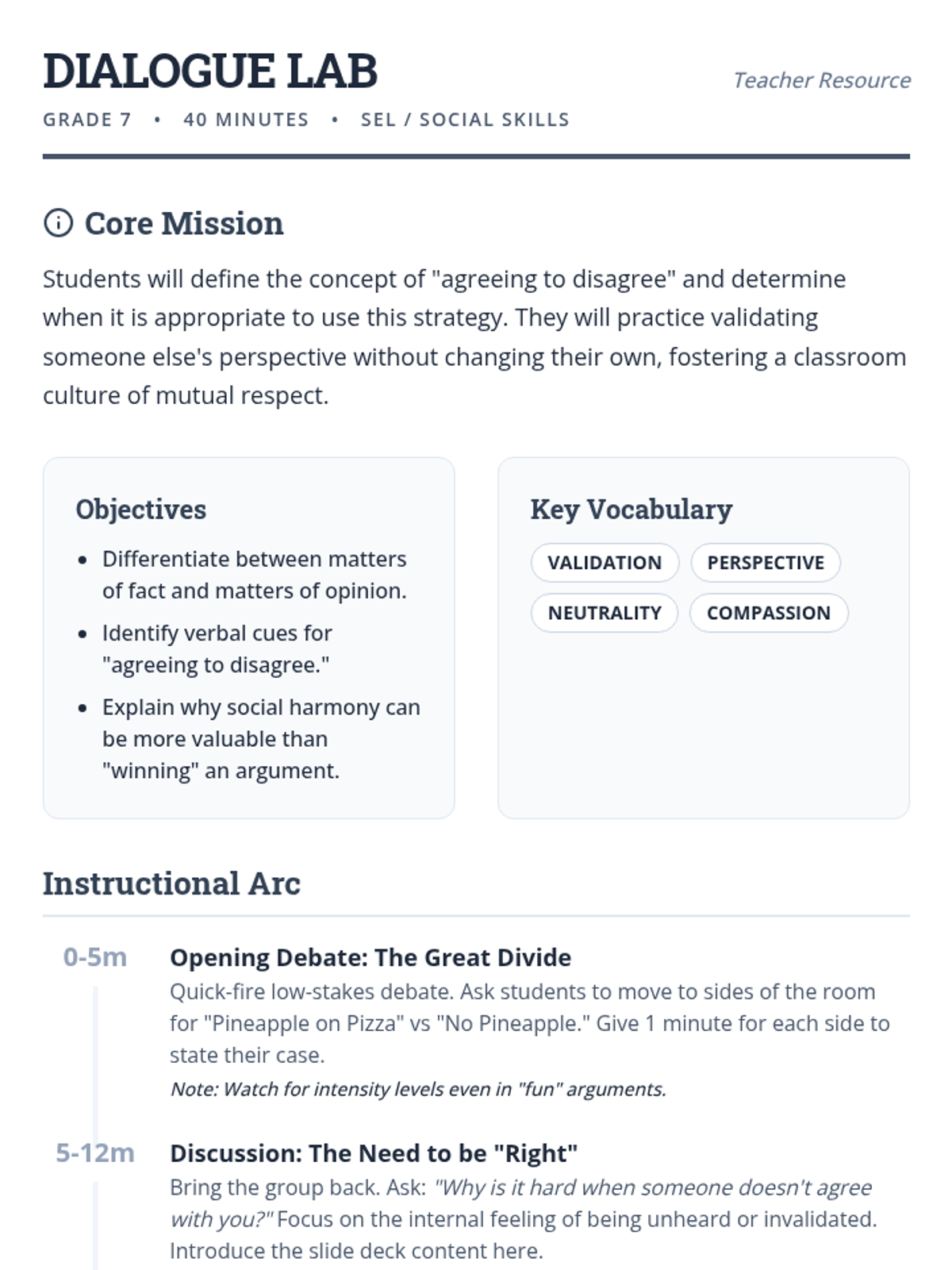
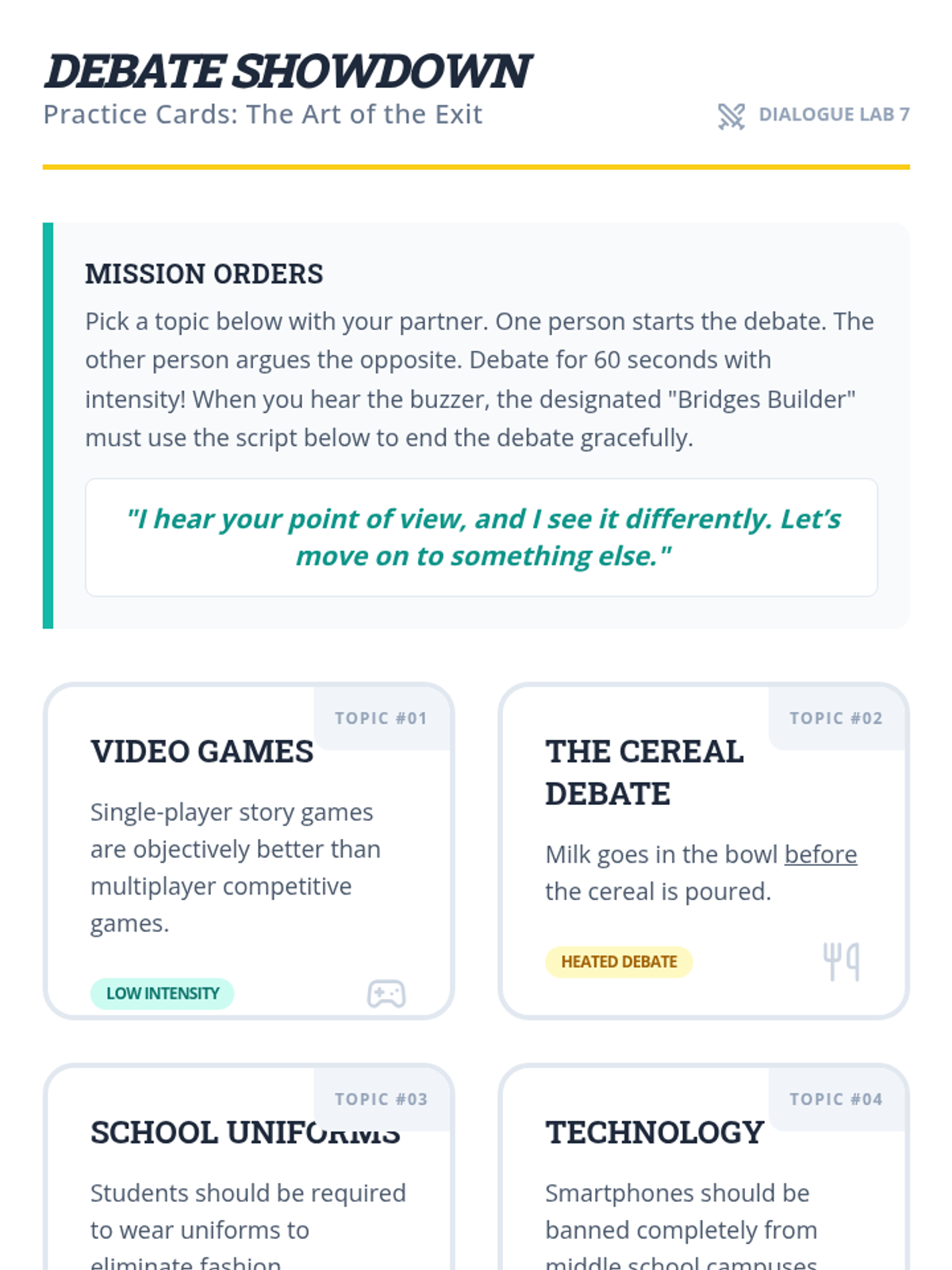
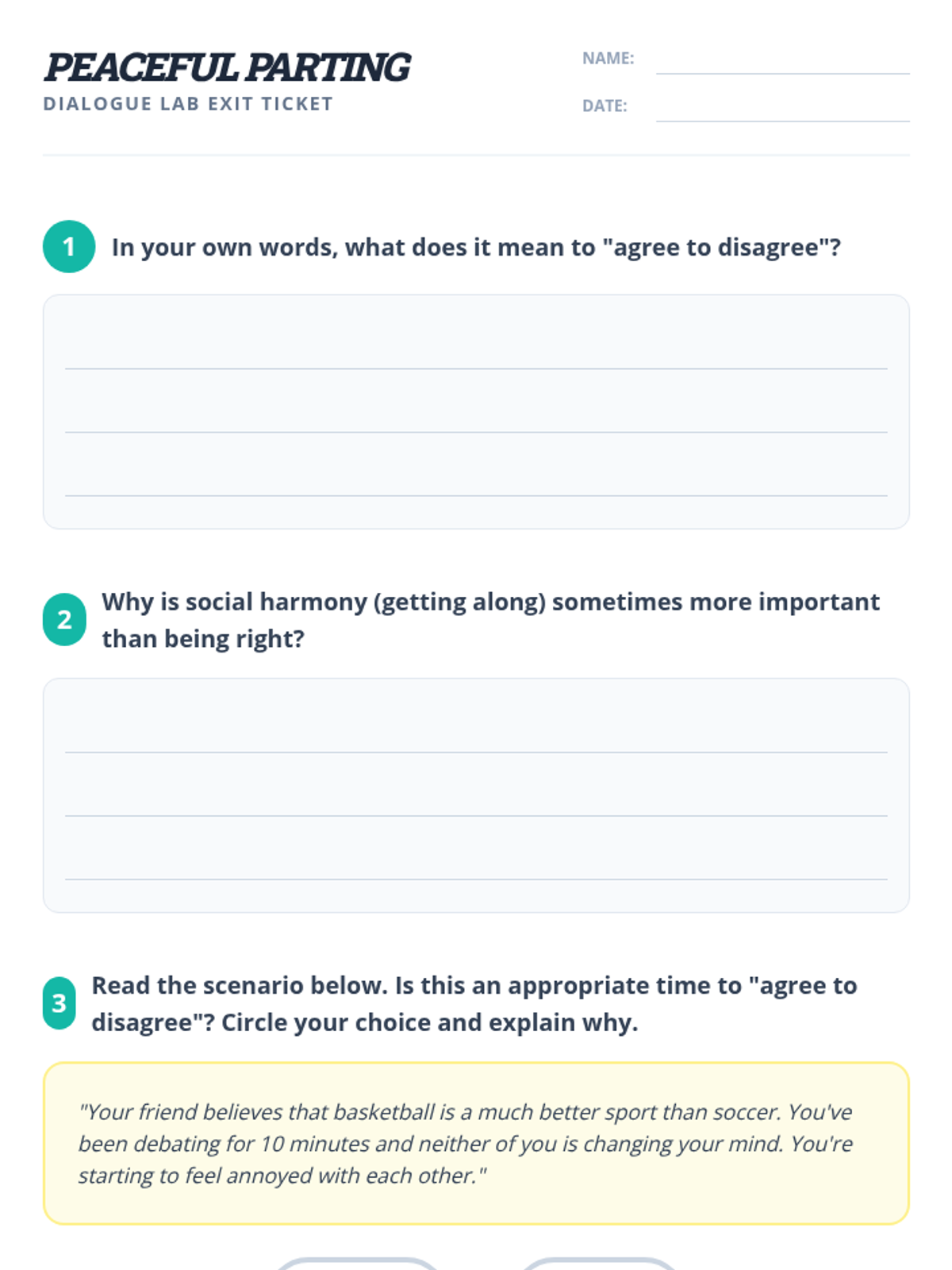
A 40-minute social-emotional learning lesson for 7th graders focused on the concept of 'agreeing to disagree.' Students explore how to maintain respect and social harmony even when perspectives clash, distinguishing between matters of opinion and matters of safety or core values.
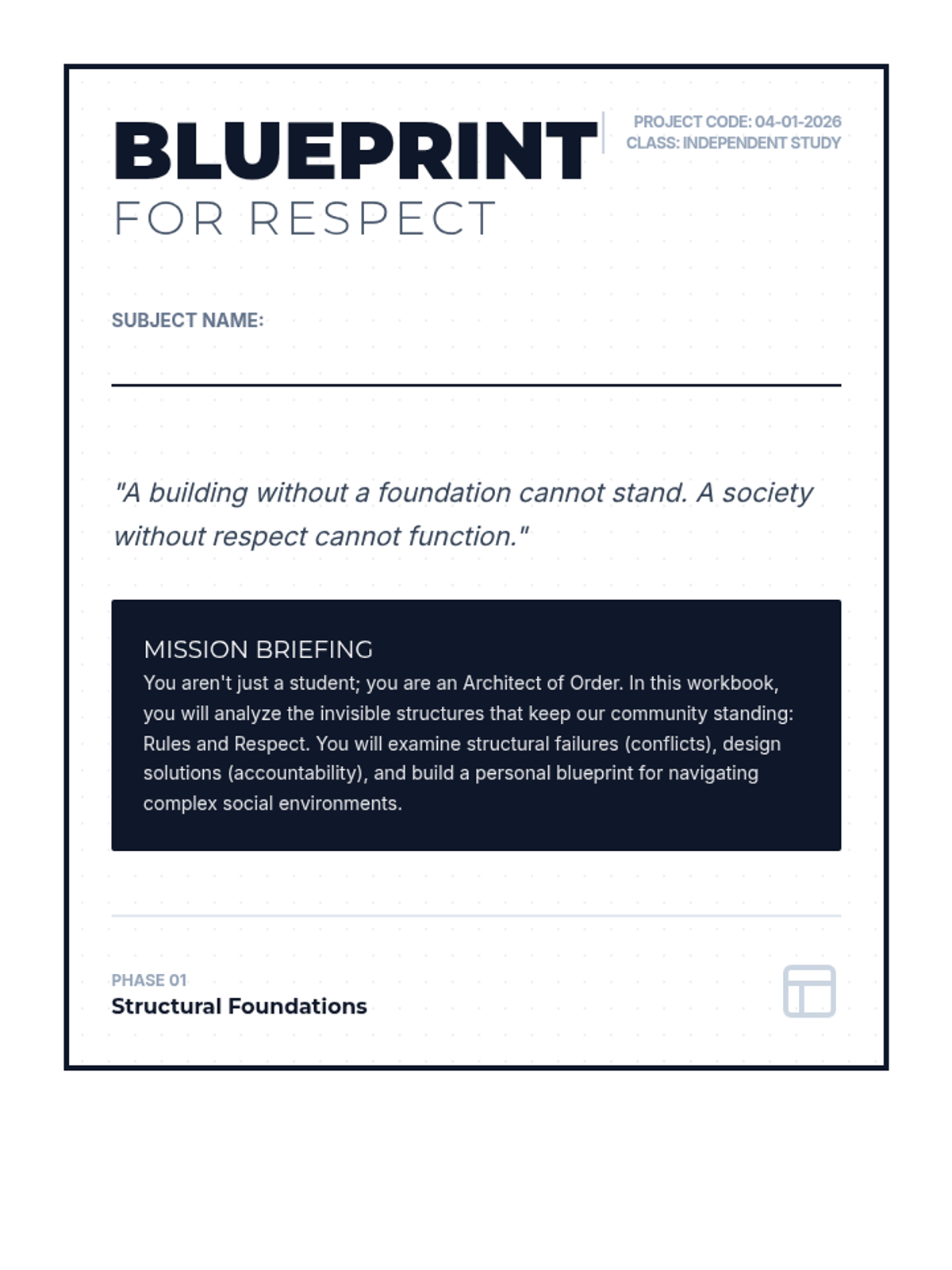
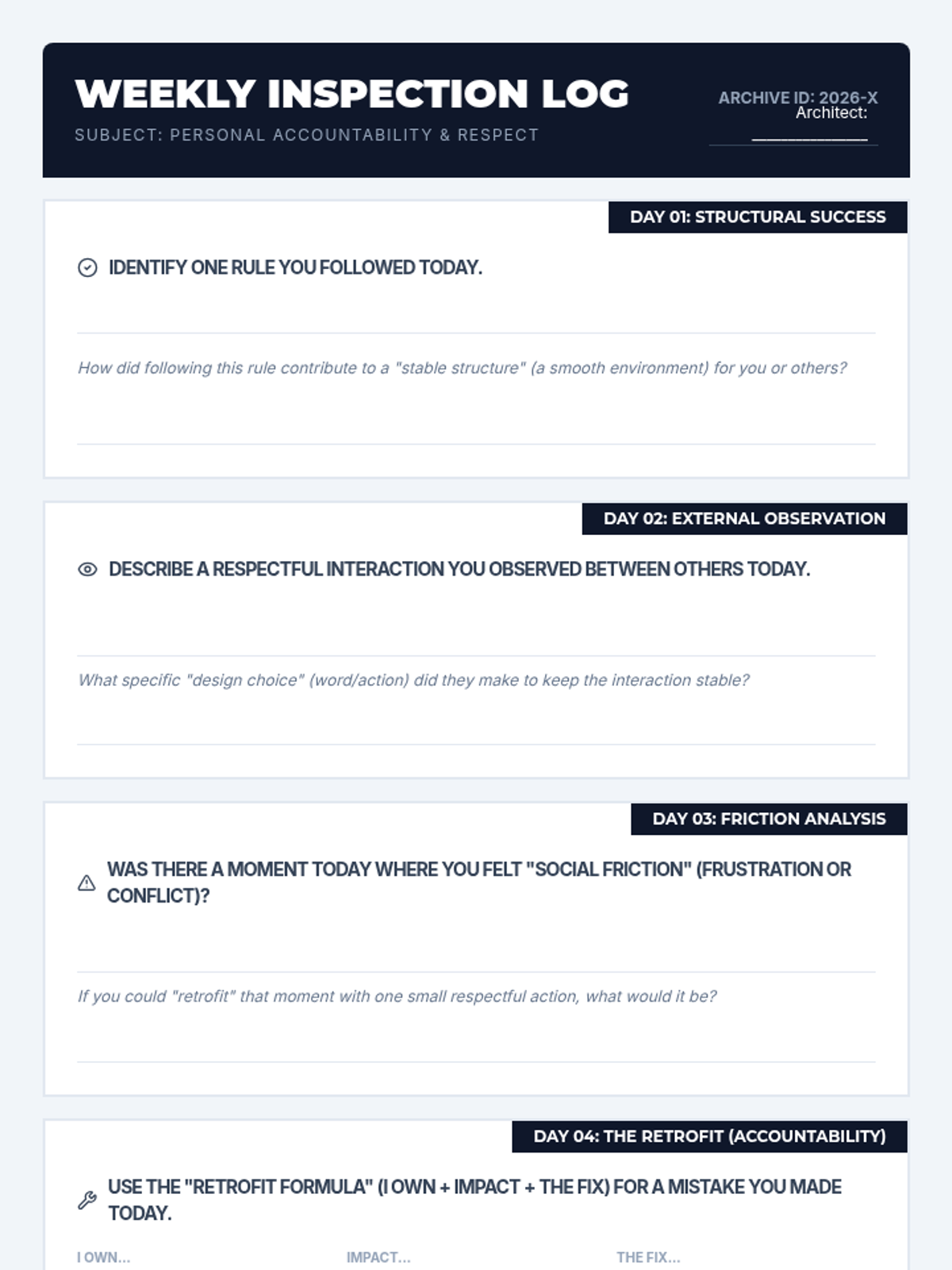
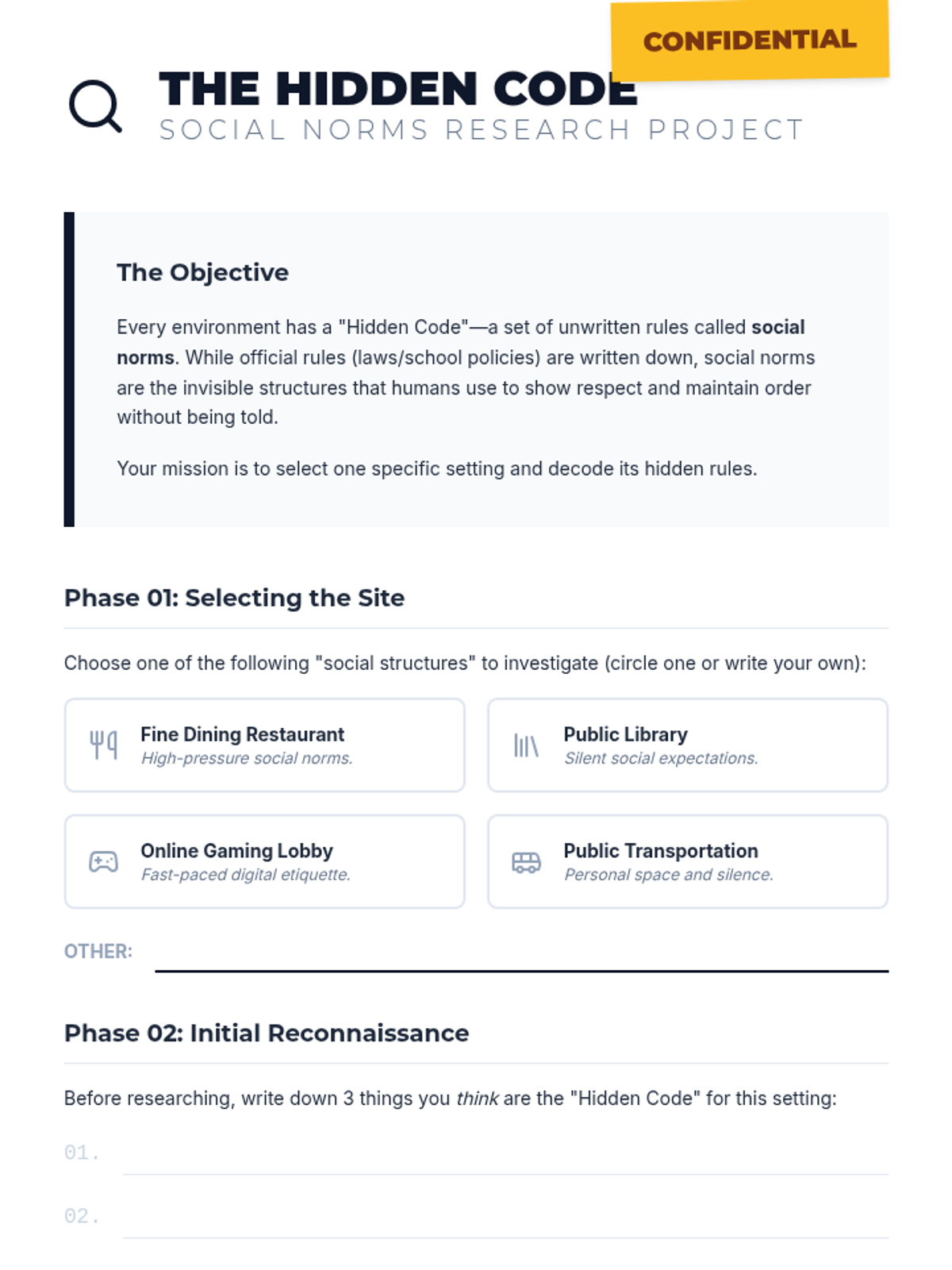
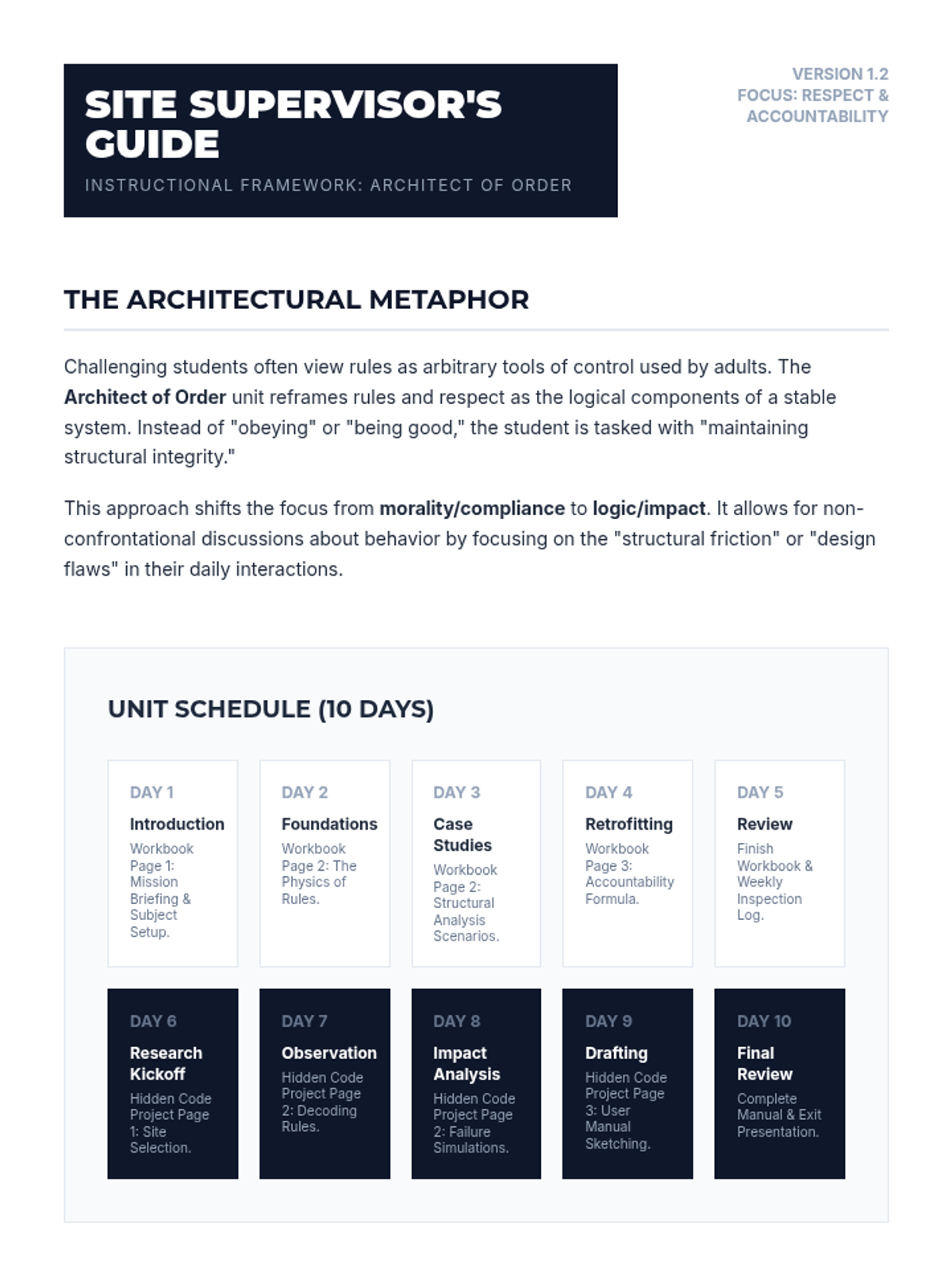
A comprehensive independent study unit for students to explore the logical foundations of respect, rules, and personal accountability through an architectural lens.
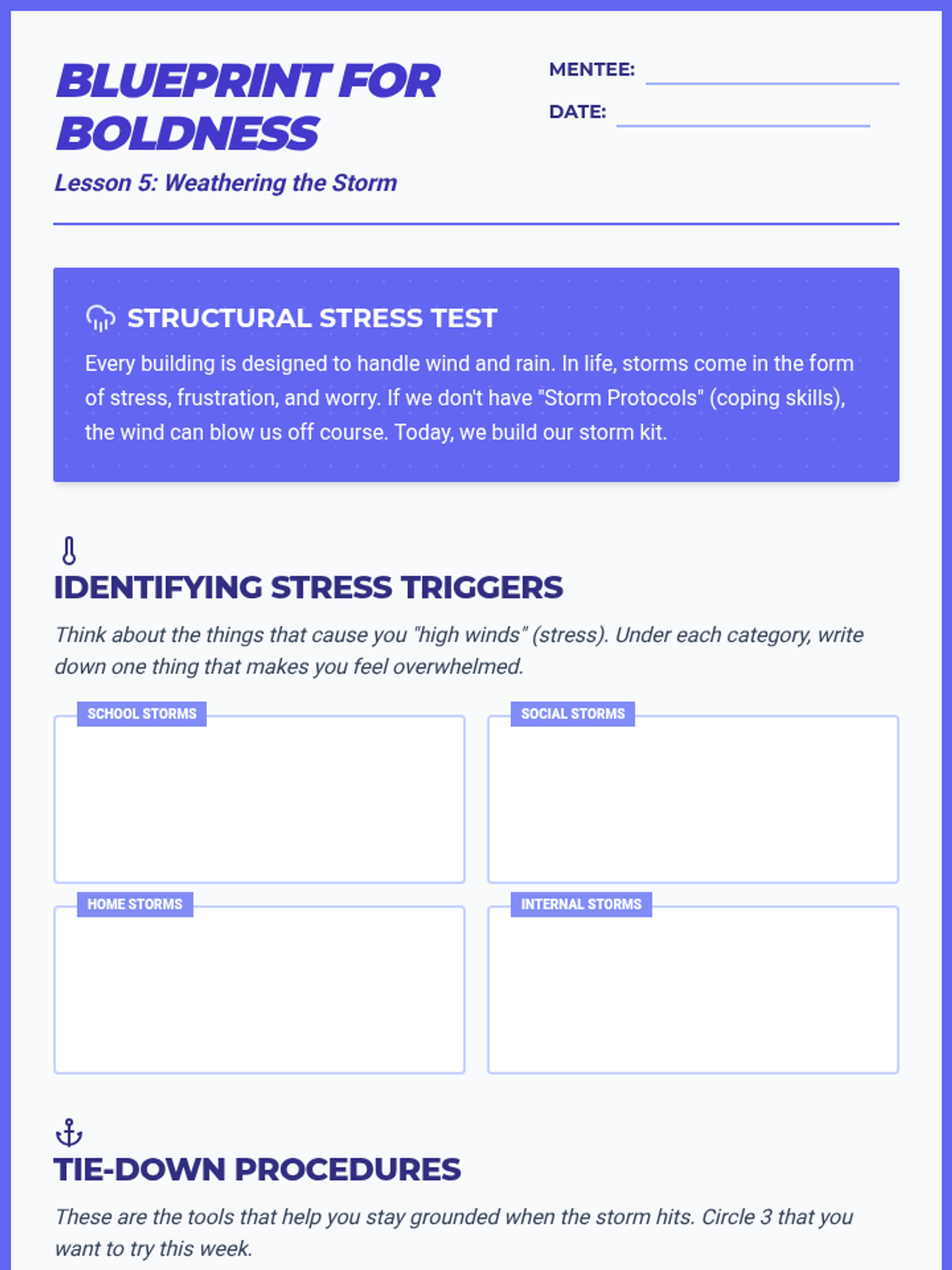
Equip the mentee with tools to manage stress and frustration during high-pressure situations.
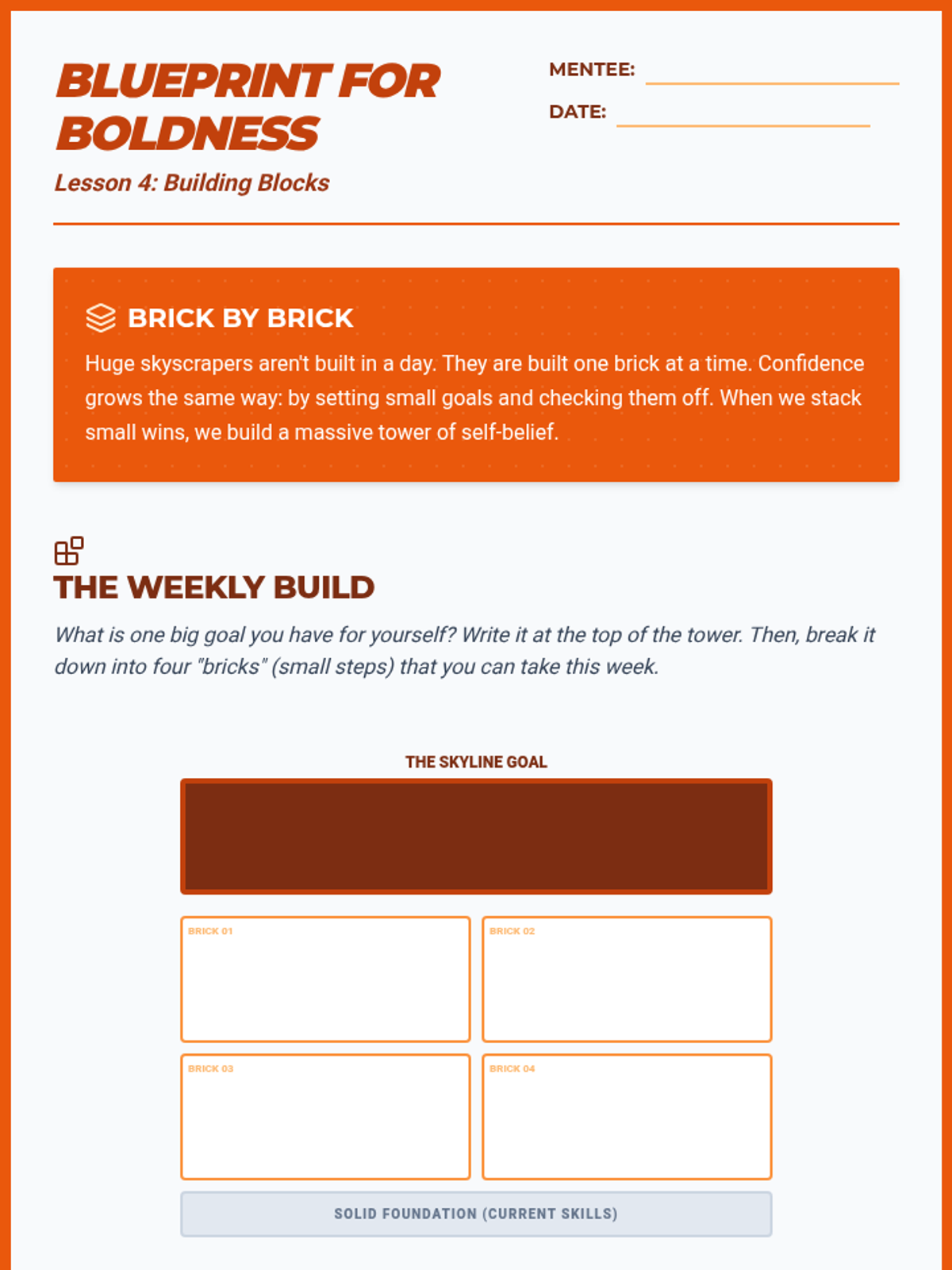
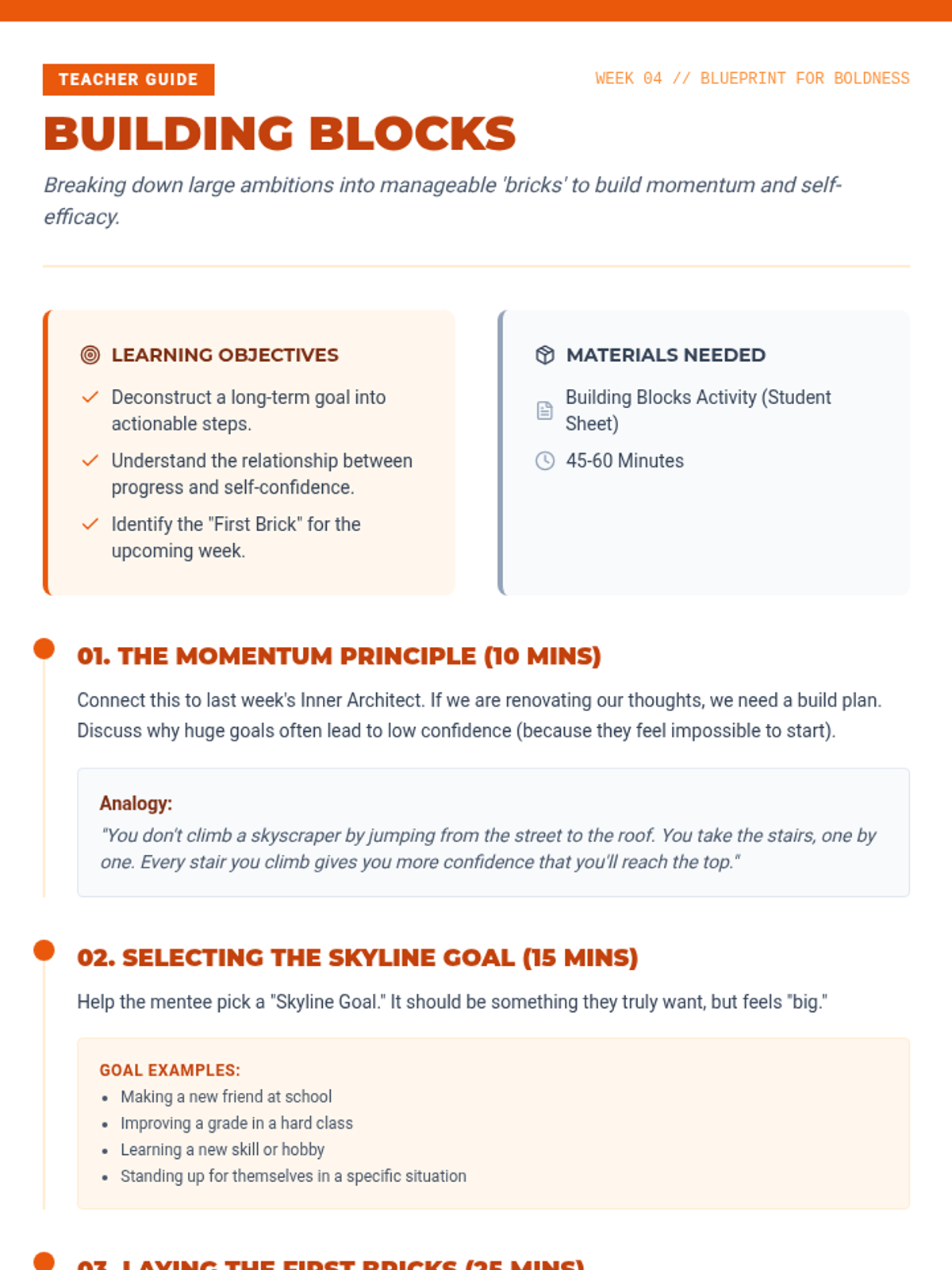
Break down large ambitions into manageable 'bricks' to build momentum and self-efficacy.
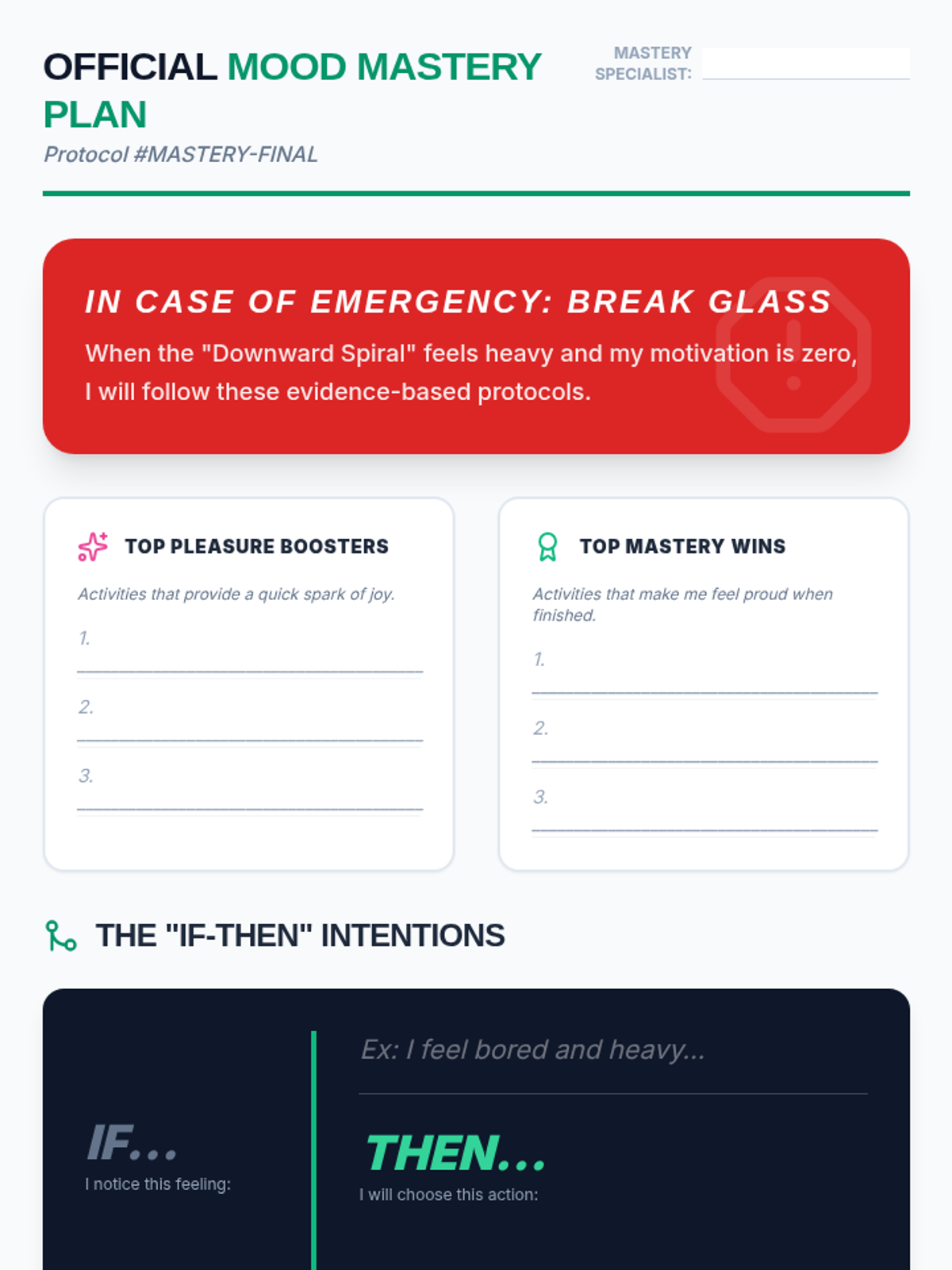
Synthesizing their learning, students create a 'Break the Glass' emergency plan for days when they feel low or anxious. They select their most effective pleasure and mastery activities and write specific implementation intentions (If I feel X, then I will do Y).
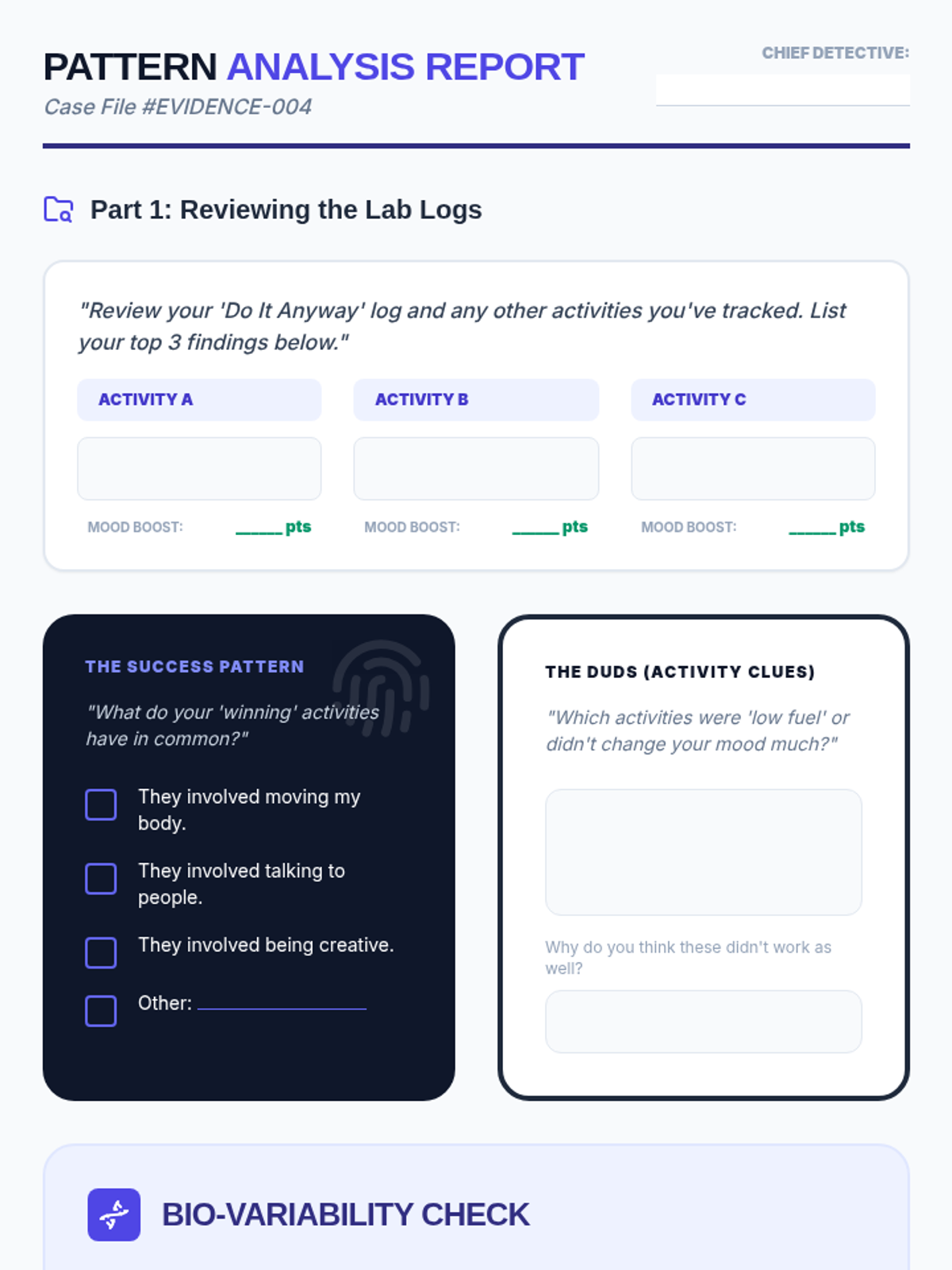
Students review the results of their personal experiments or case study data to identify patterns in how specific activities impact mood. They discuss the variability of results (what works for one person may not work for another) and begin curating their personal 'top hits' for mood improvement.
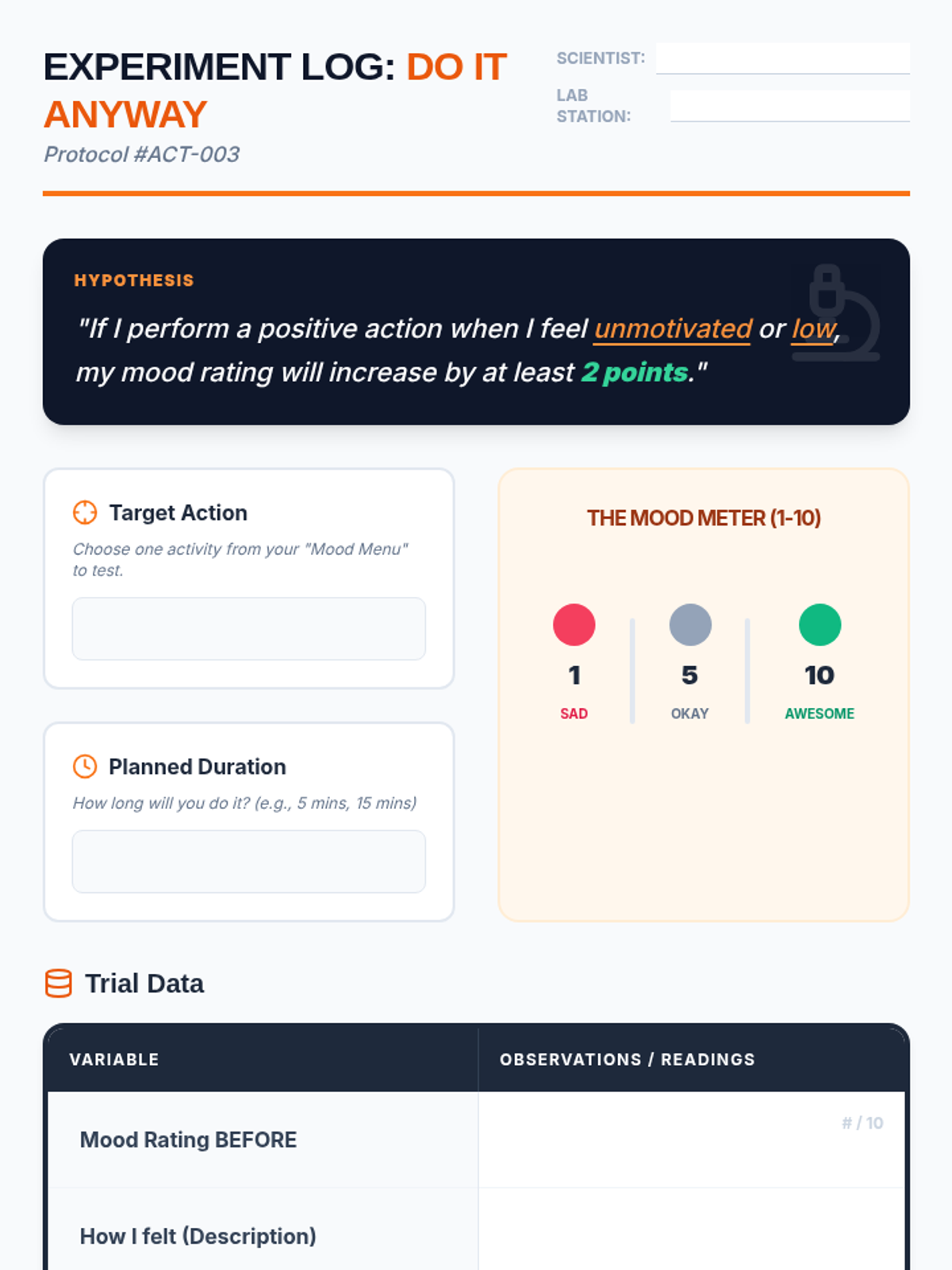
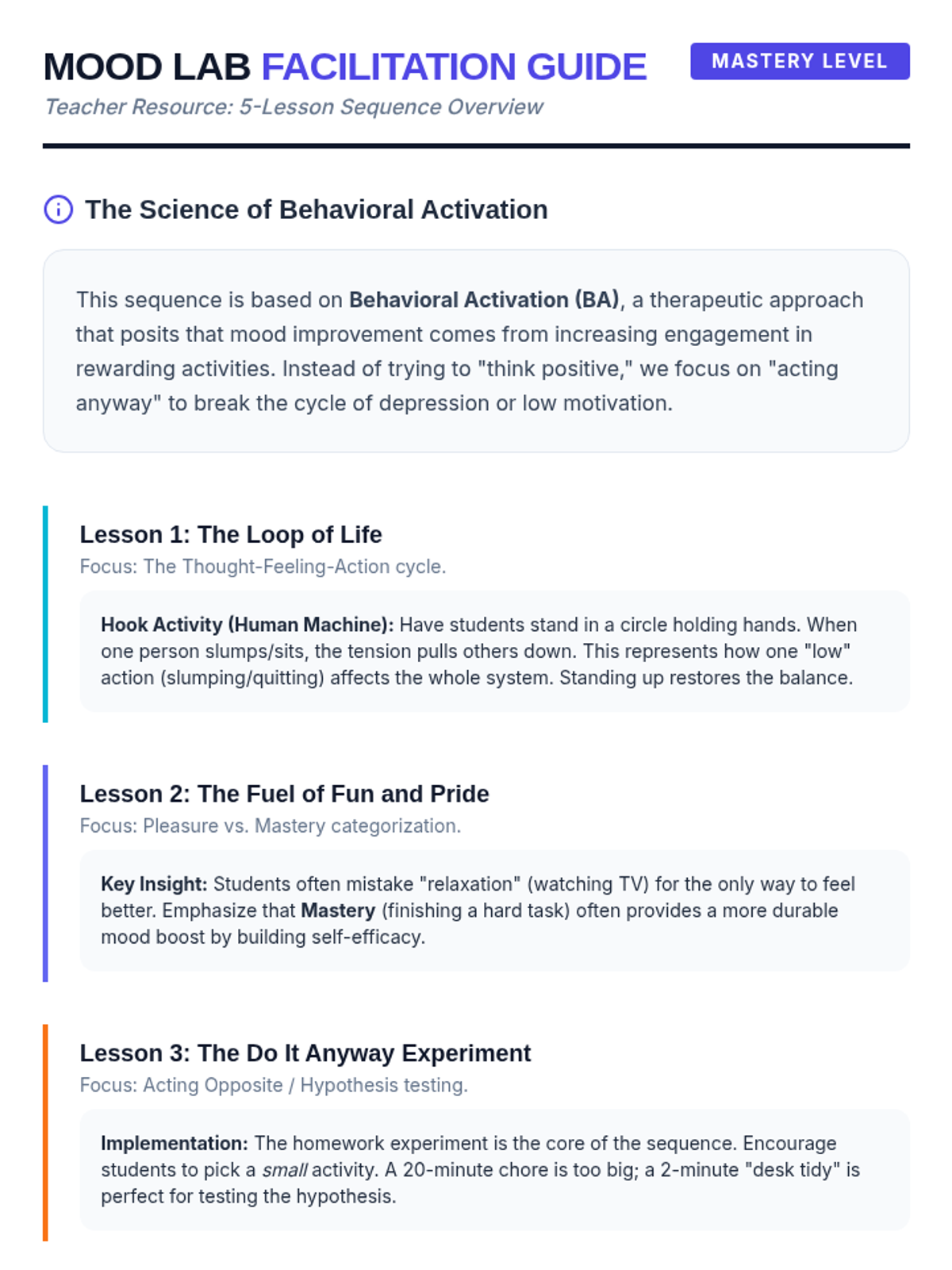
This lesson introduces the concept of 'acting opposite' to an emotion. Students design a short experiment to test the hypothesis that engaging in a positive activity—even when they don't feel like it—can improve their mood rating on a 1-10 scale. They prepare a data collection sheet for a homework experiment.
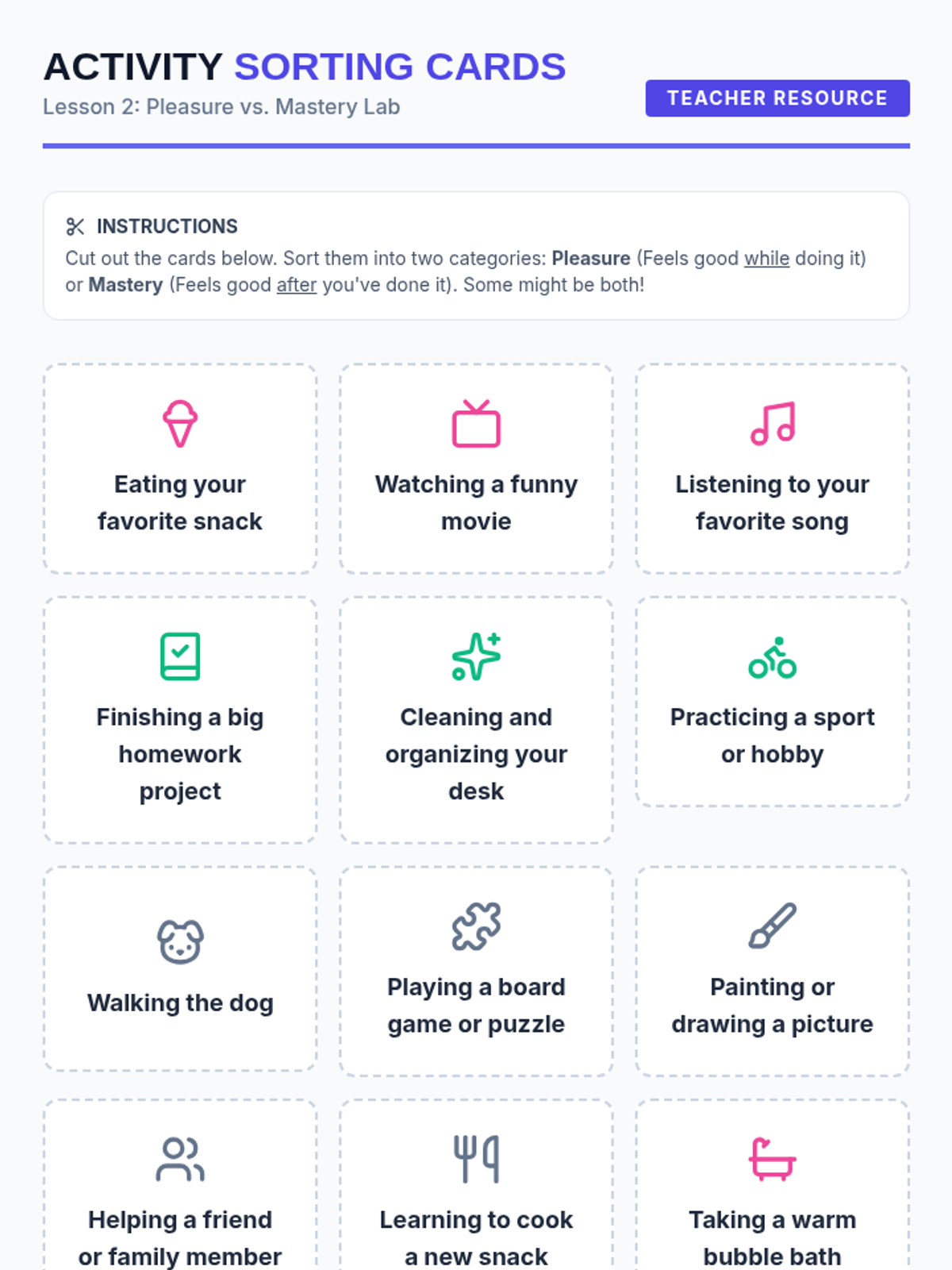
Students distinguish between activities that feel good in the moment (Pleasure) and those that make us feel accomplished (Mastery). Through a sorting workshop, they brainstorm examples for both categories, understanding that a balanced diet of experiences includes both fun and achievement.
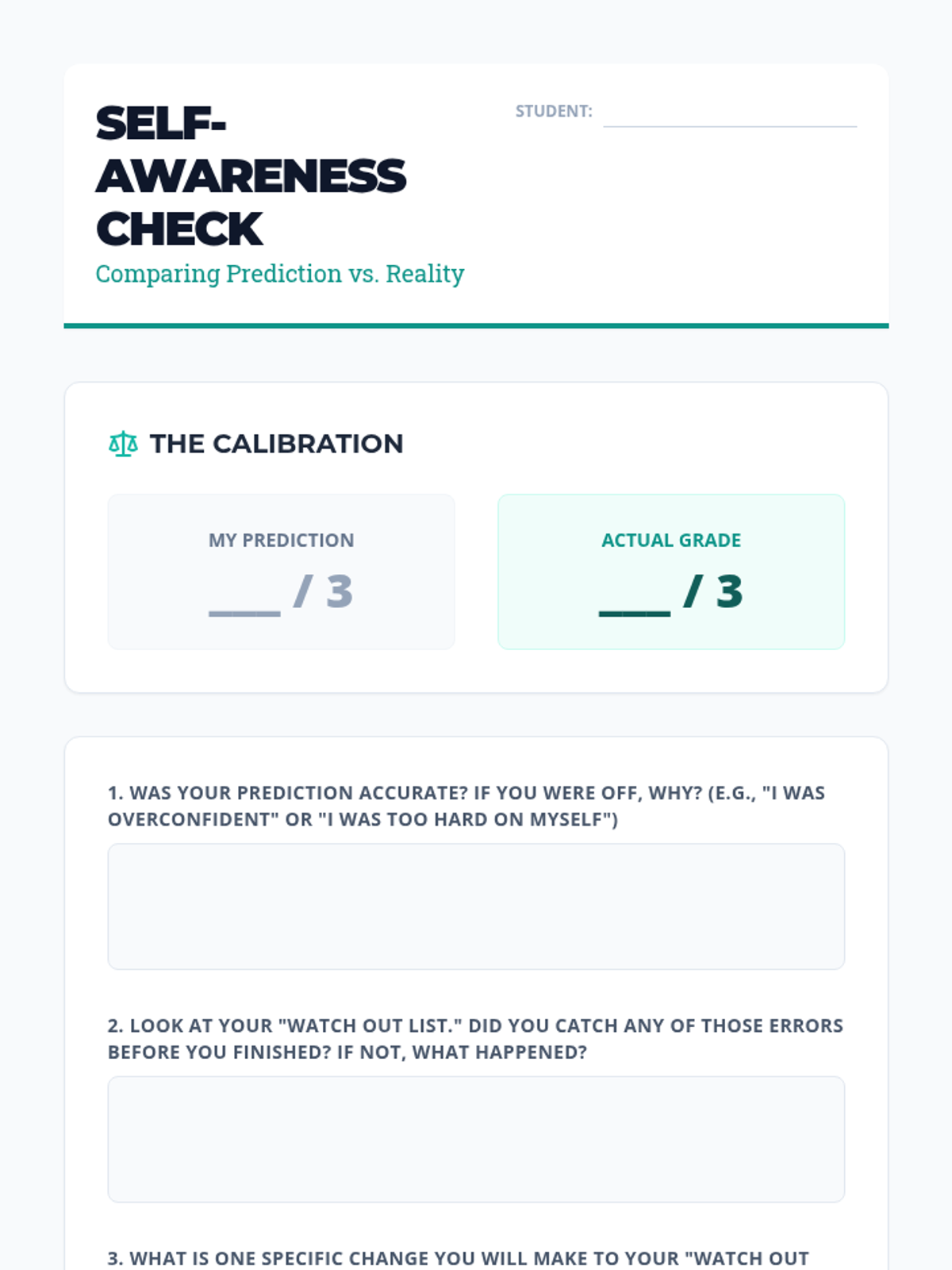
Students take a short assessment and immediately apply their error analysis protocol. They verify if their 'Watch Out' list helped them avoid previous habitual mistakes.
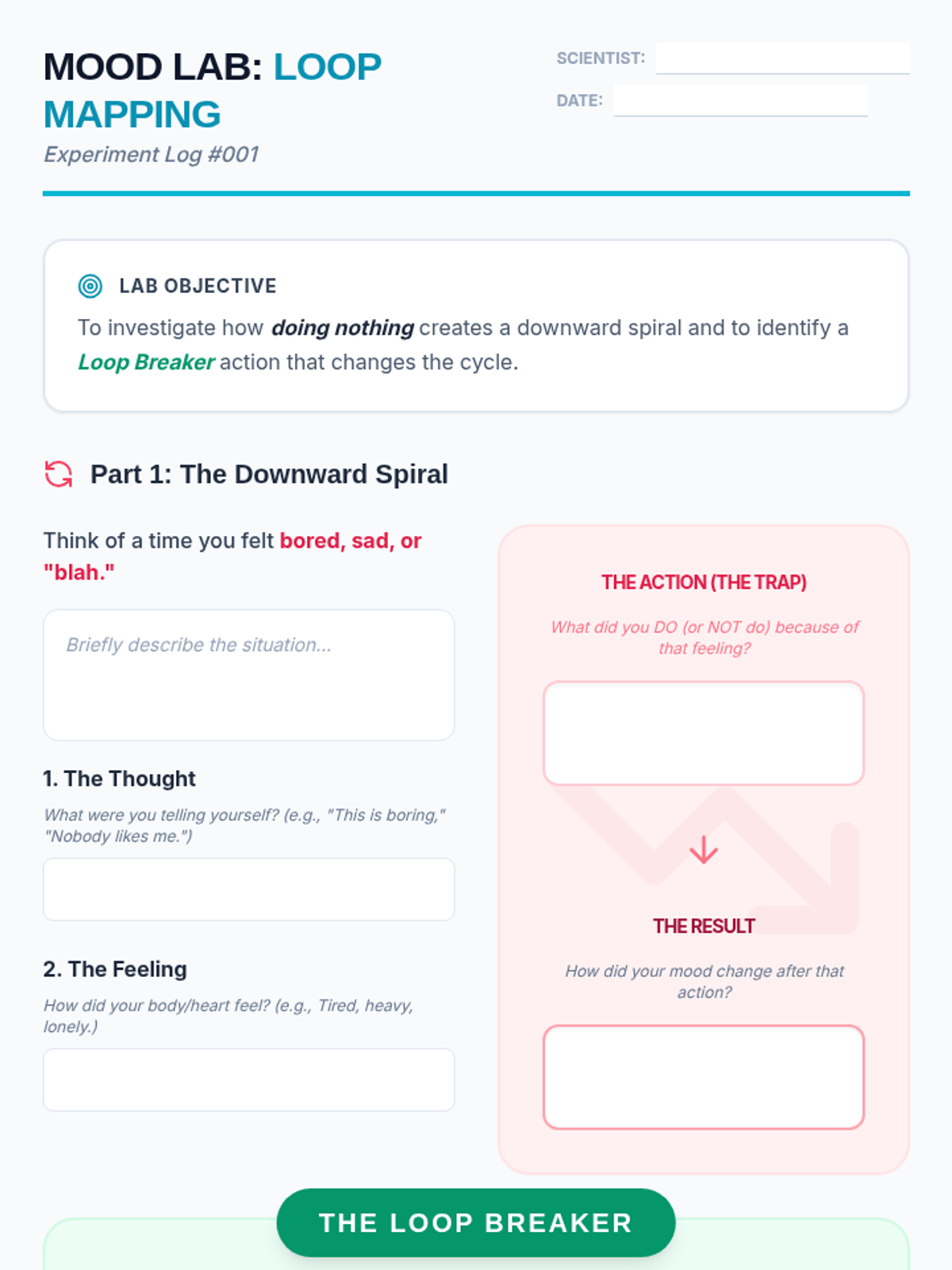
Students participate in a discussion and mapping activity to visualize the cycle between thoughts, feelings, and behaviors. They identify how doing nothing often leads to feeling worse (the downward spiral) and how small actions can reverse this.
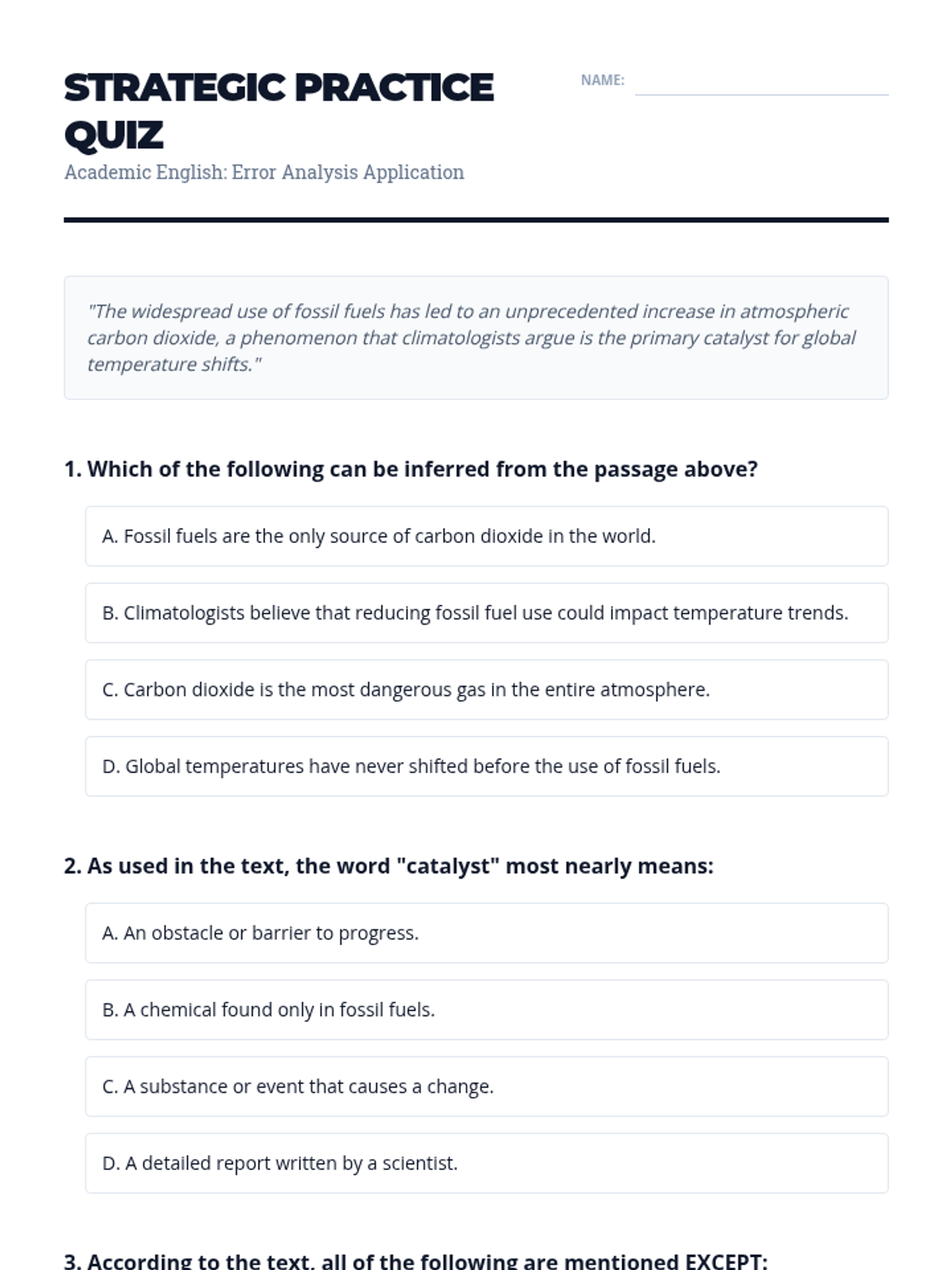
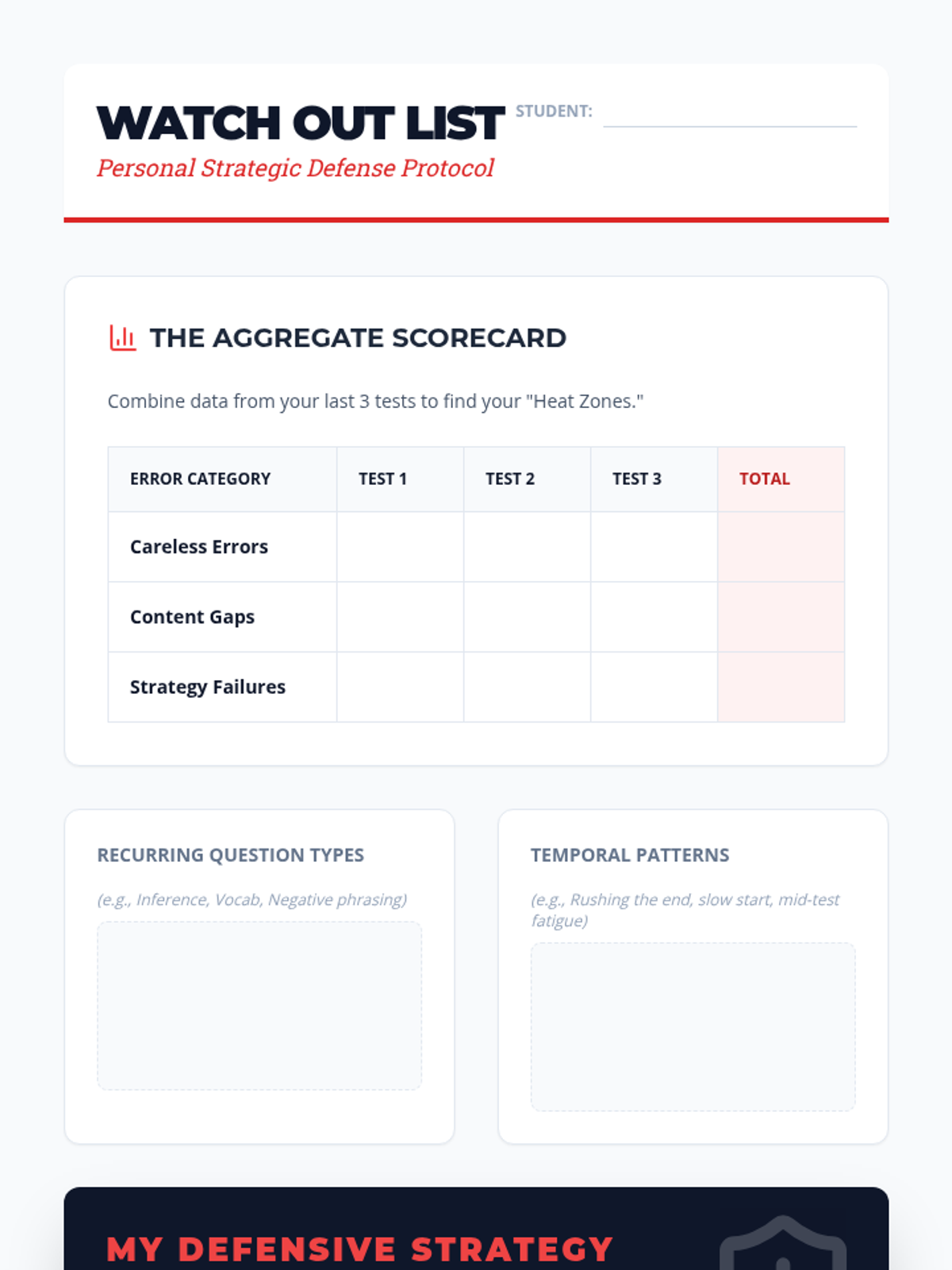
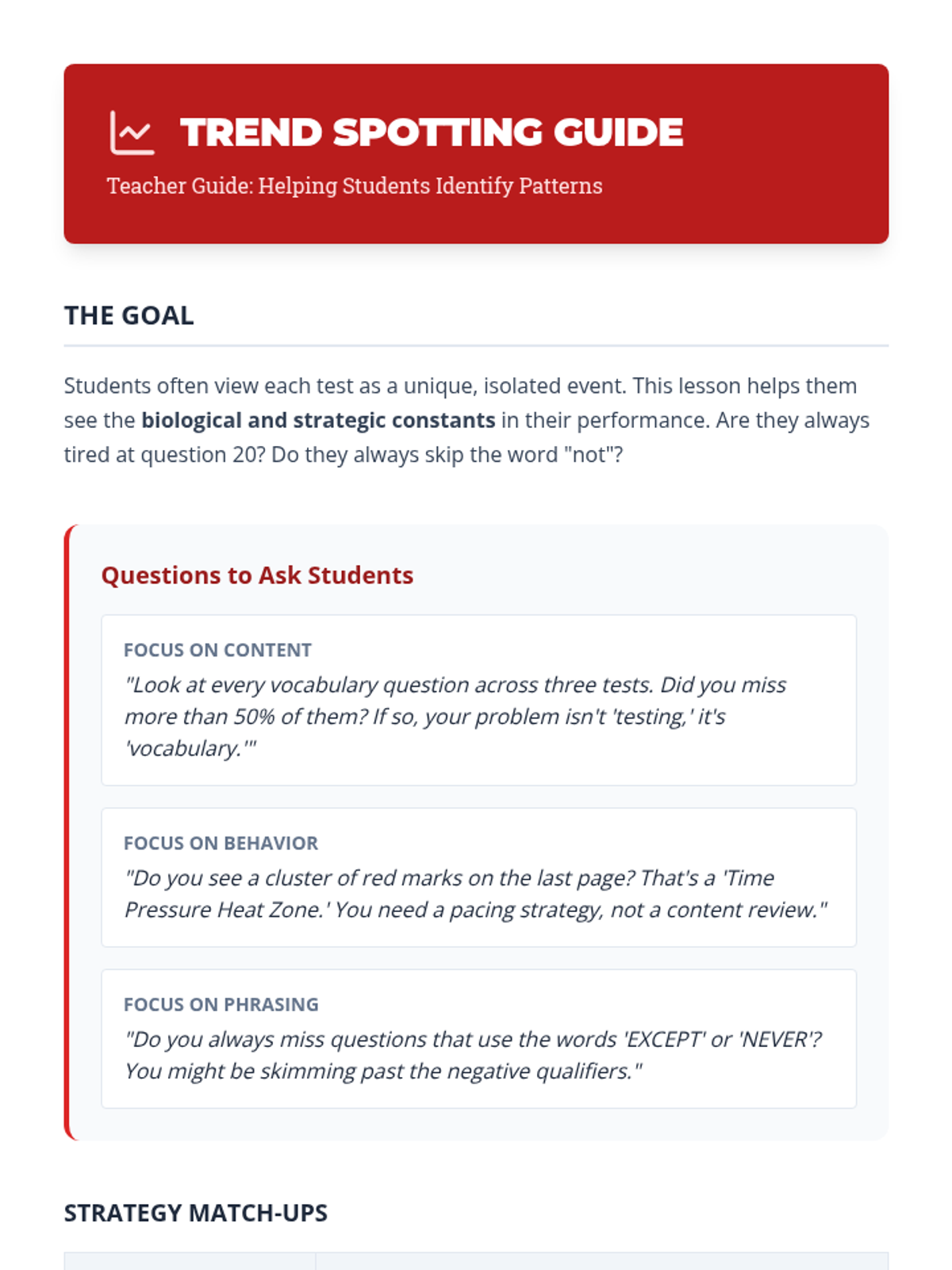
Students aggregate their error data to find personal patterns (e.g., 'I always miss inference questions' or 'I rush the last 5 minutes'). They create a personal 'Watch Out' list for future exams.
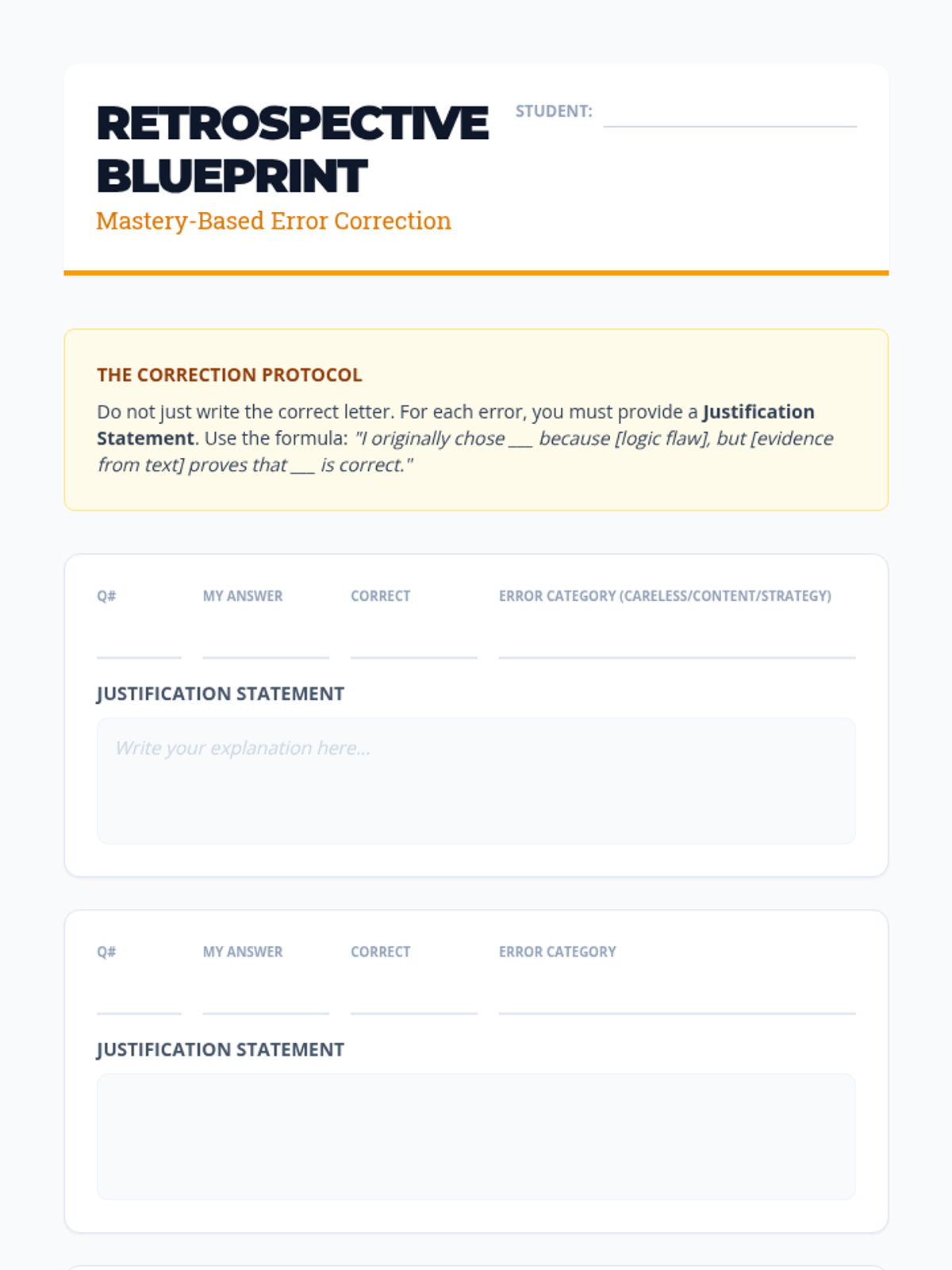
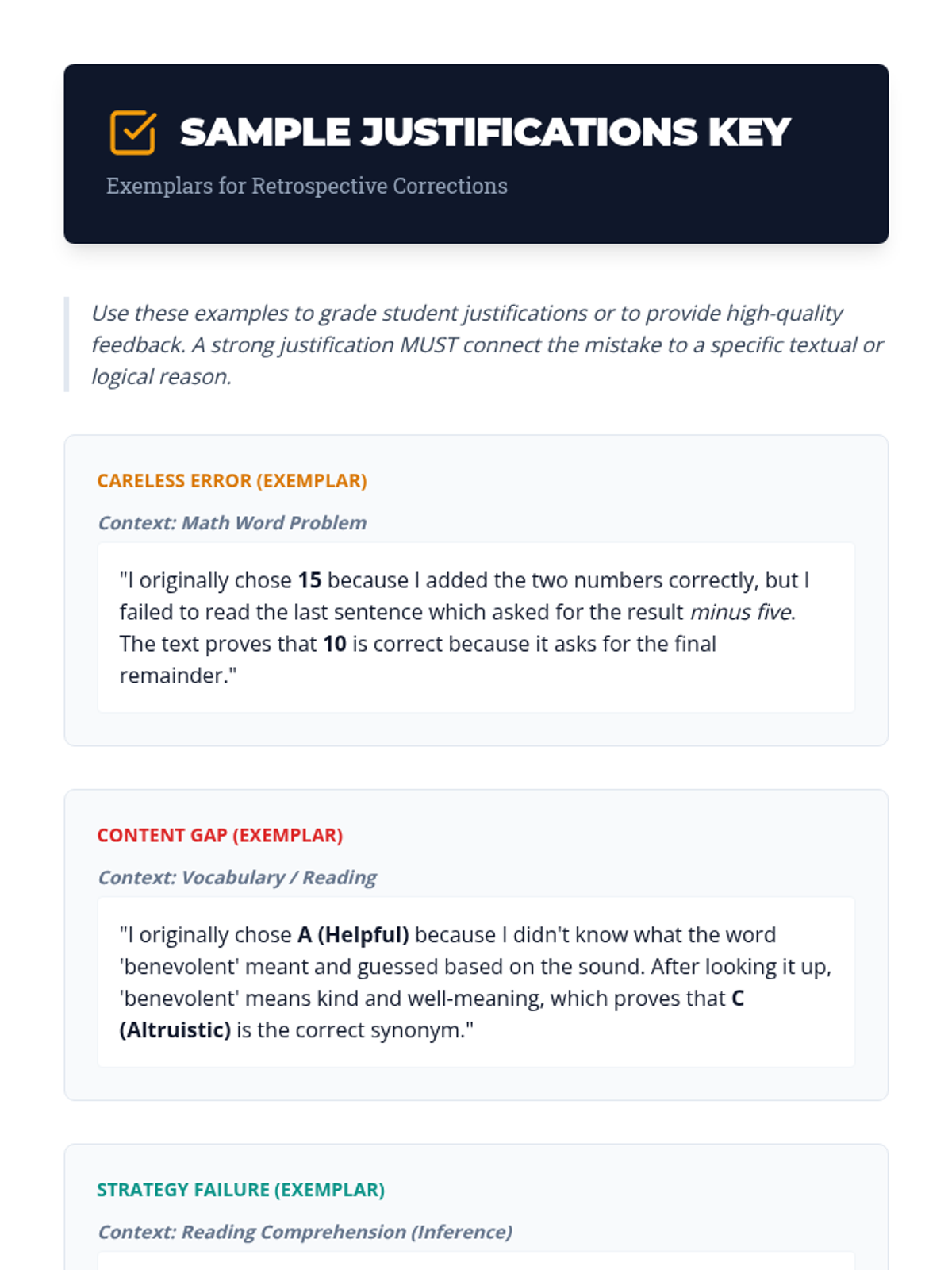
Instead of just marking correct answers, students must write a sentence explaining *why* their original answer was wrong and *why* the new answer is right. This ensures deep processing of the error.
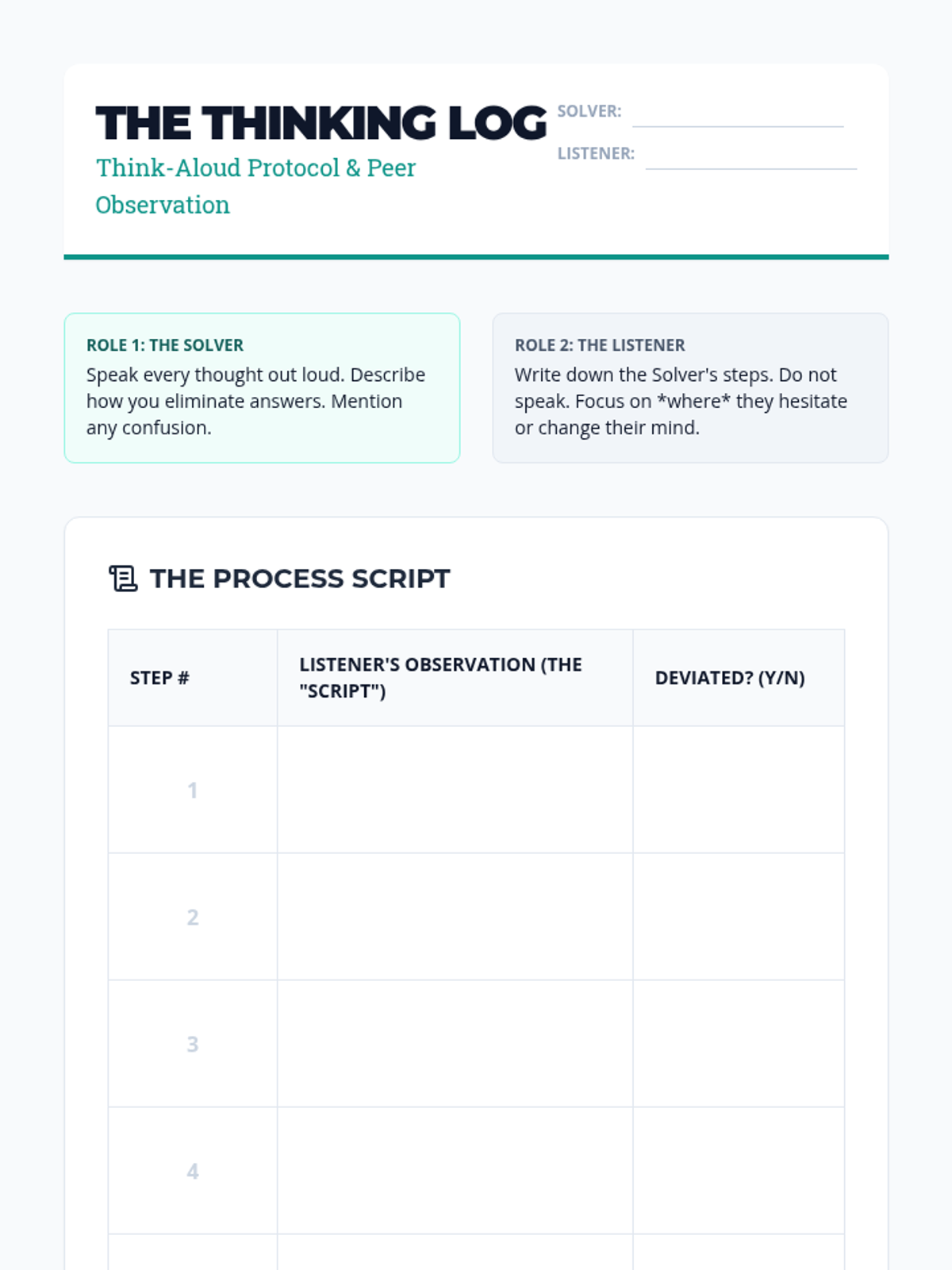
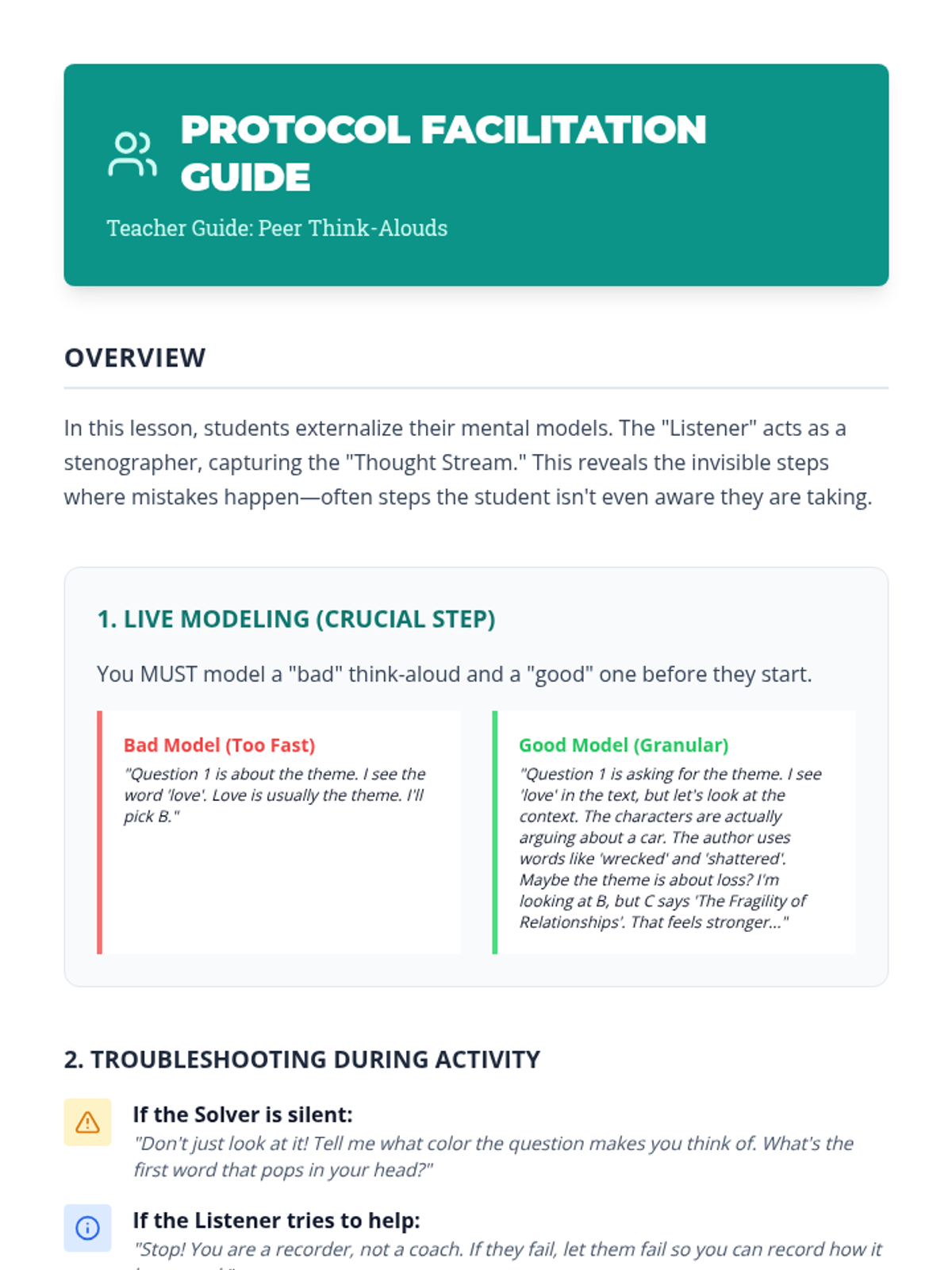
Working in pairs, students vocalize their thinking process while solving a problem while a partner records their steps. They analyze these recordings to identify where their logic deviated from the correct path.
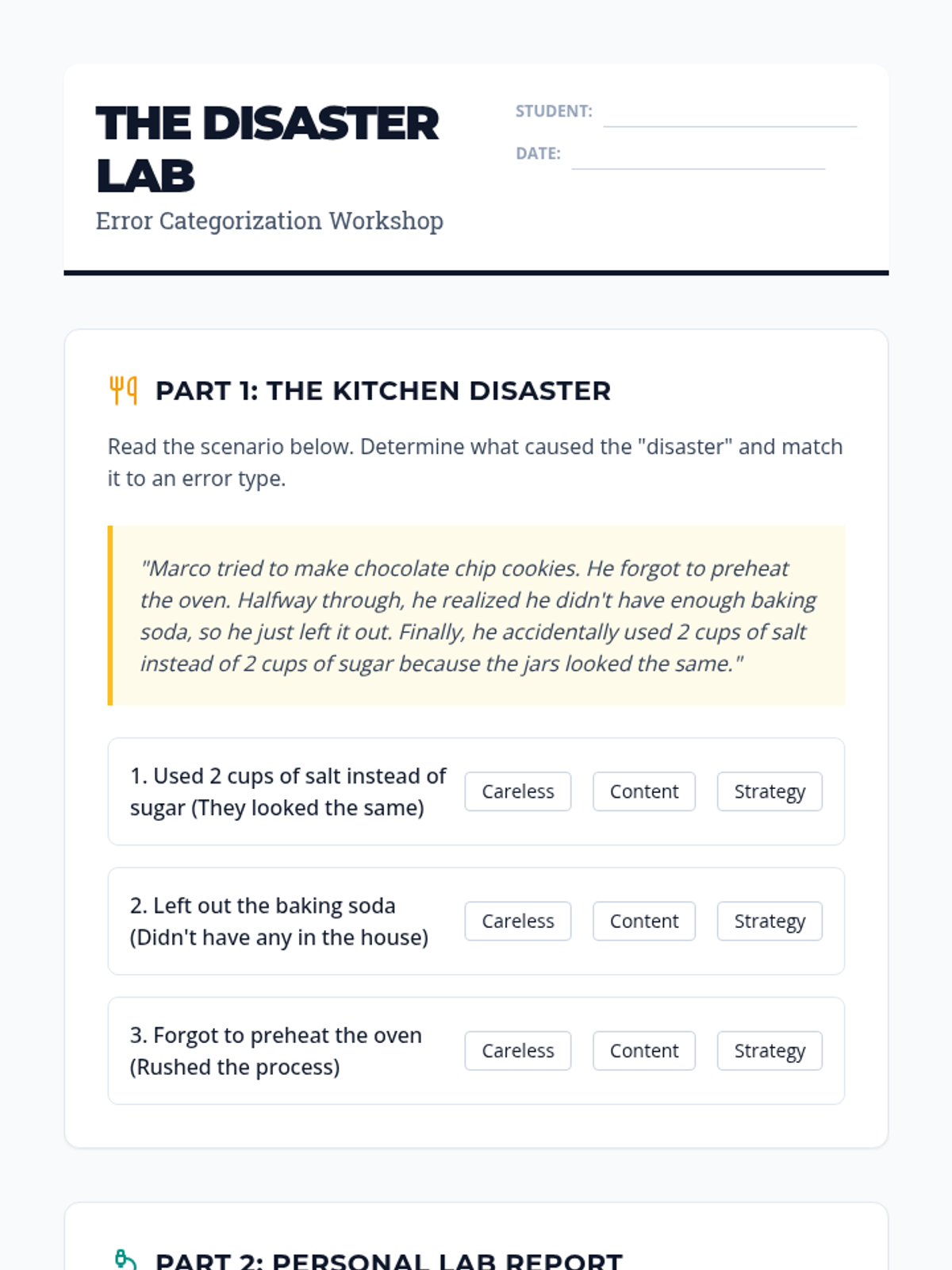
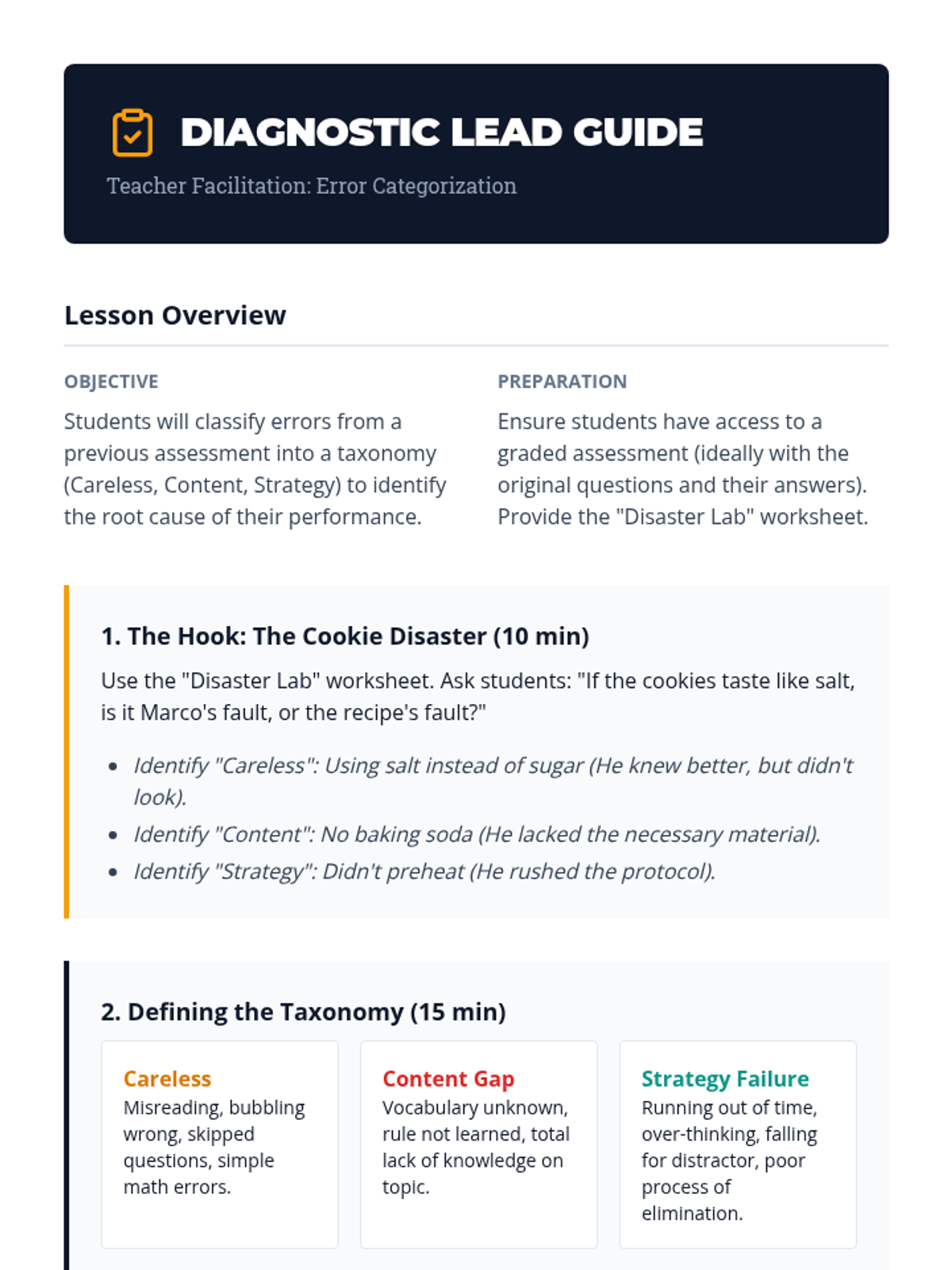
Students review a past assessment and categorize every incorrect answer as a 'Careless Error,' 'Content Gap,' or 'Strategy Failure.' This taxonomy helps them understand that not all mistakes are created equal.
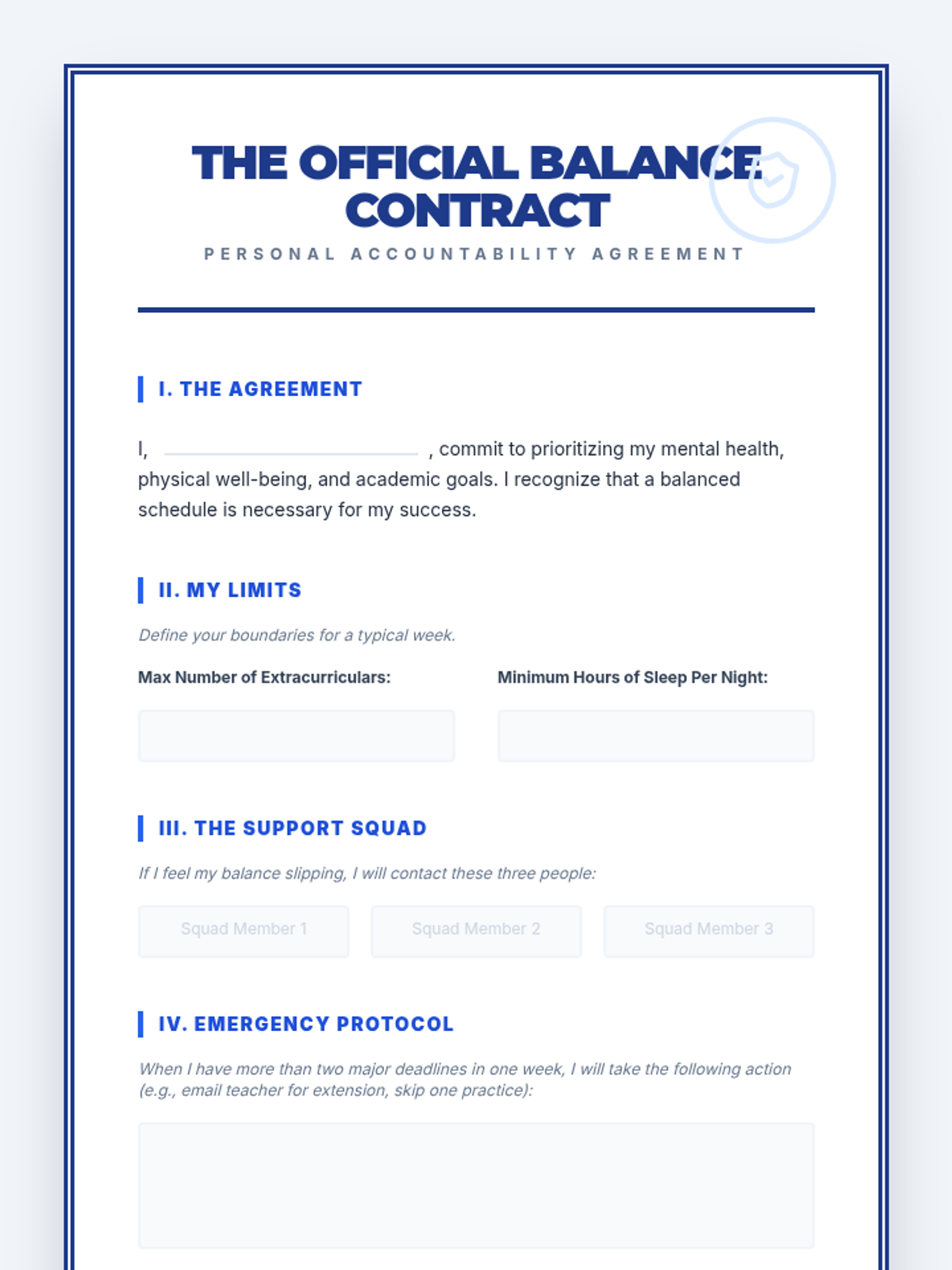
Students create a personal 'Balance Contract' to outline their limits and establish a protocol for managing future stress.
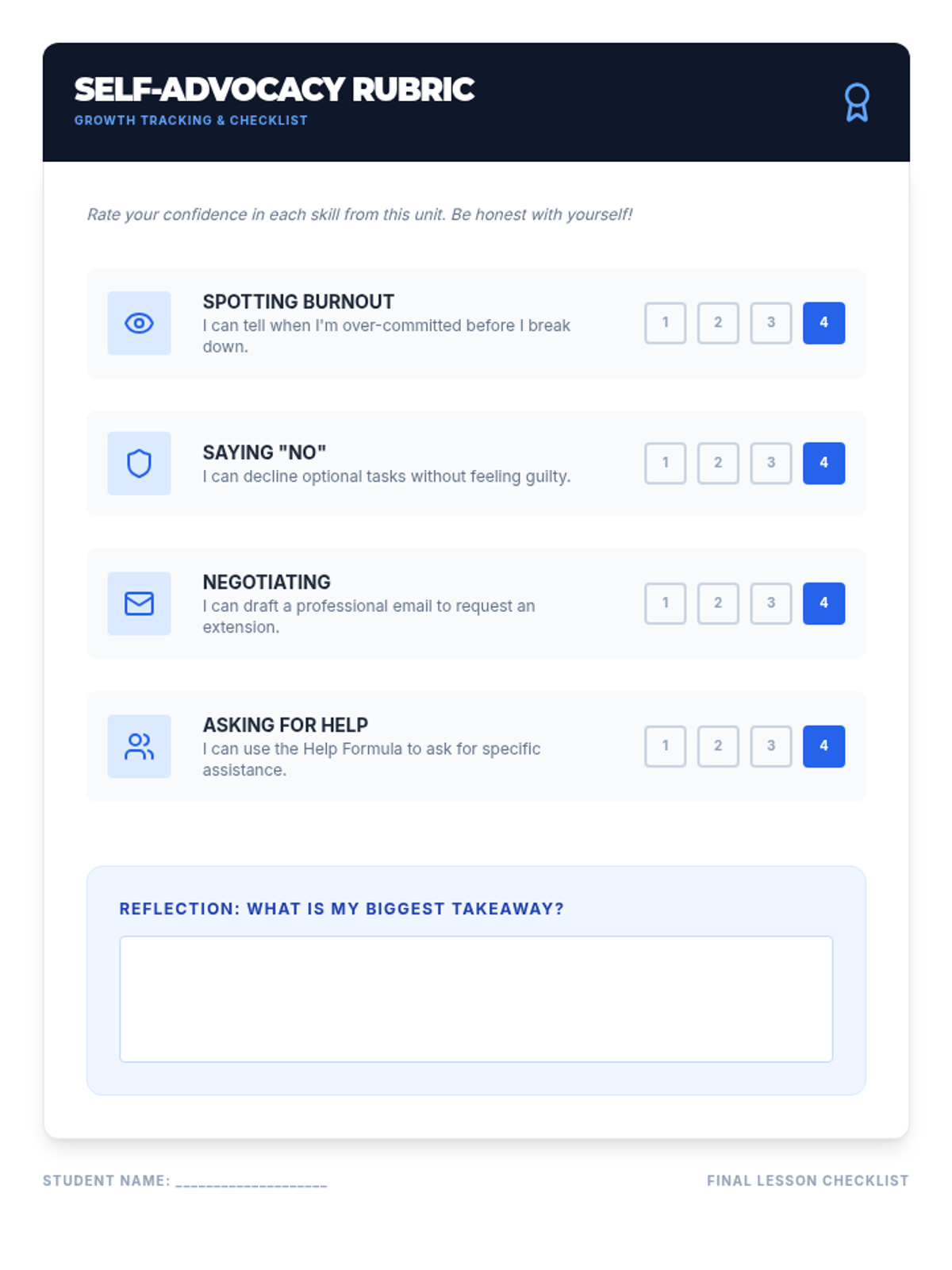
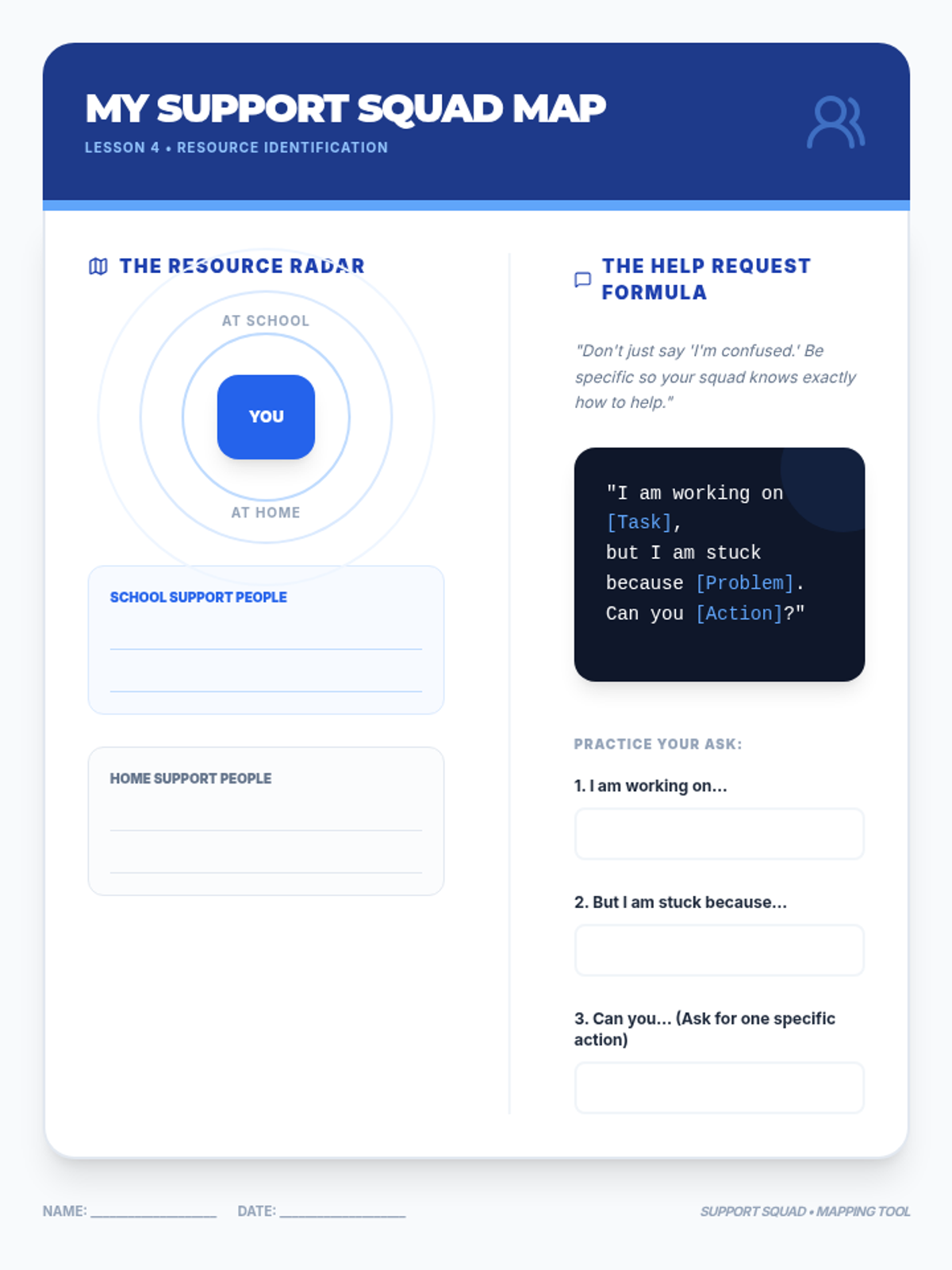
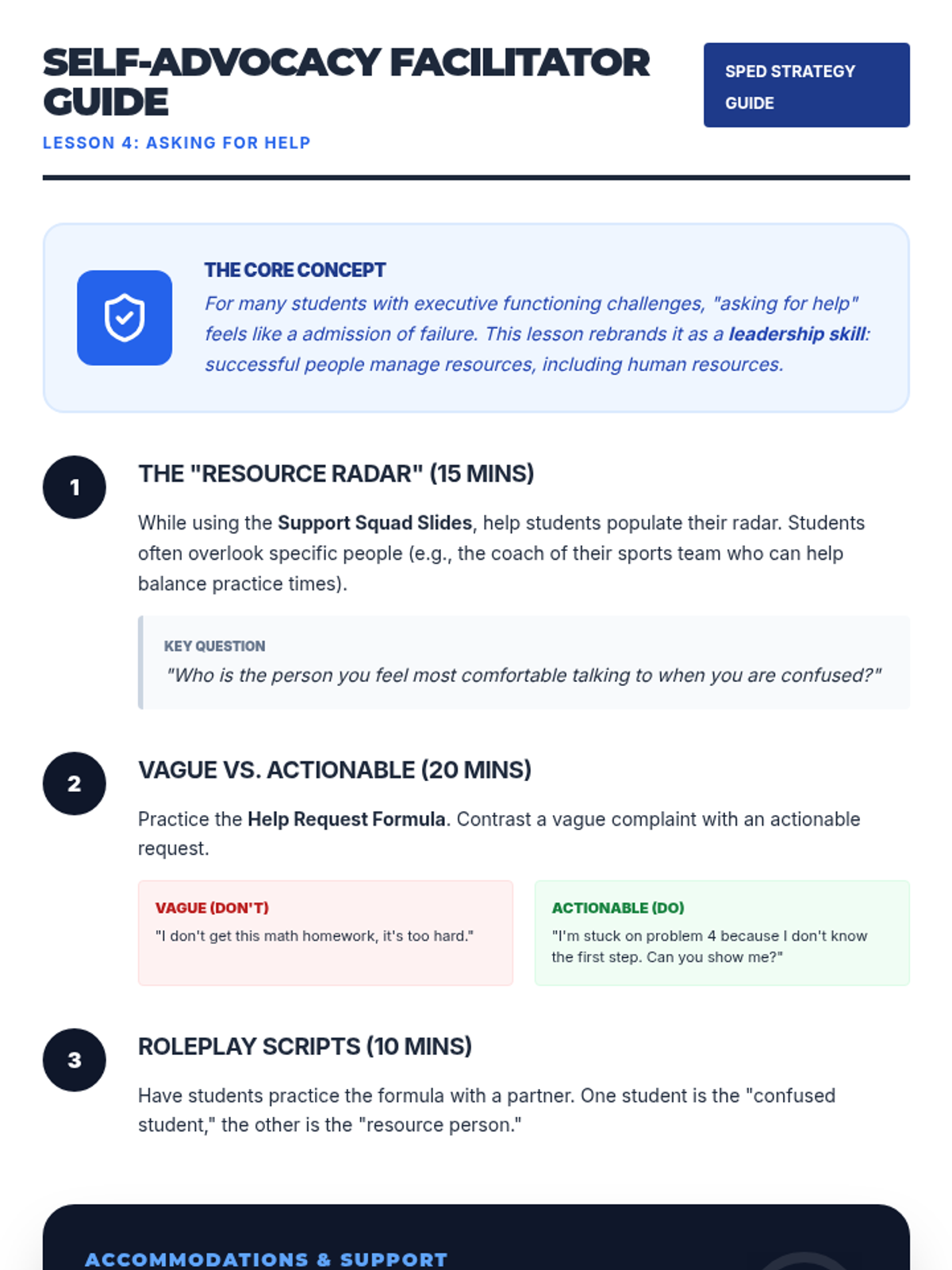
Students identify their support network and practice making specific, actionable requests for assistance.
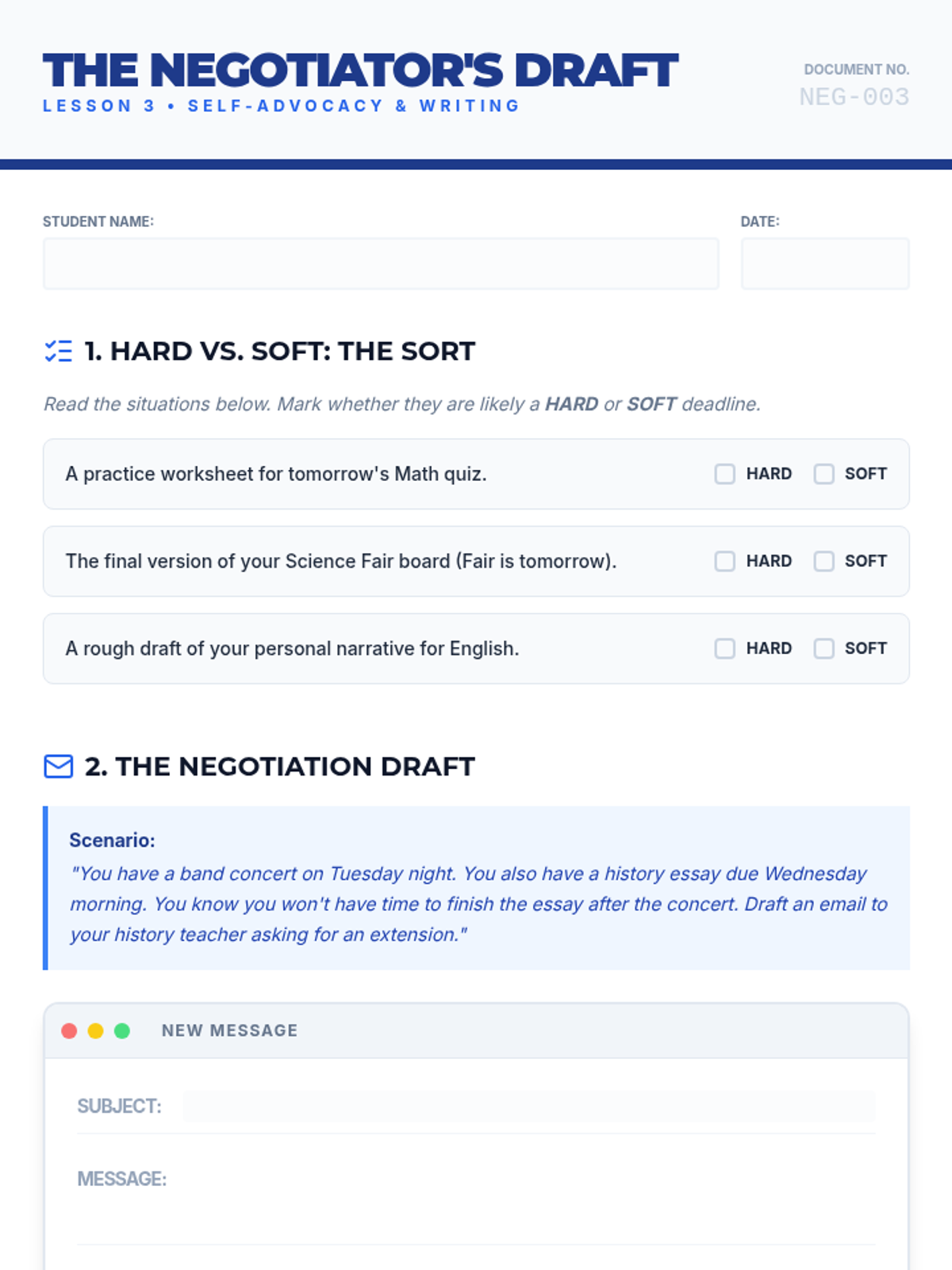
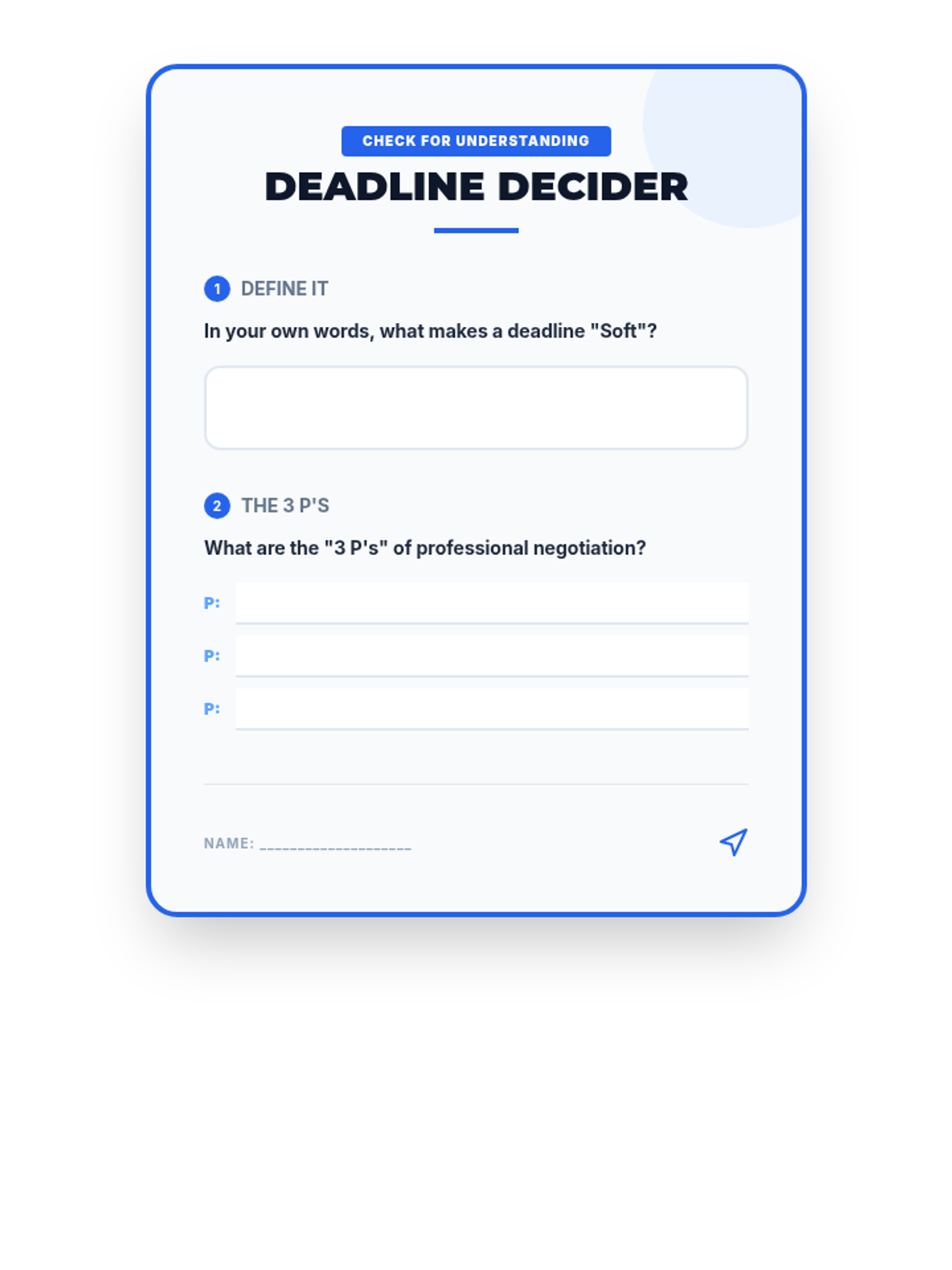
Students learn to differentiate between hard and soft deadlines and practice professional email communication to negotiate alternatives.
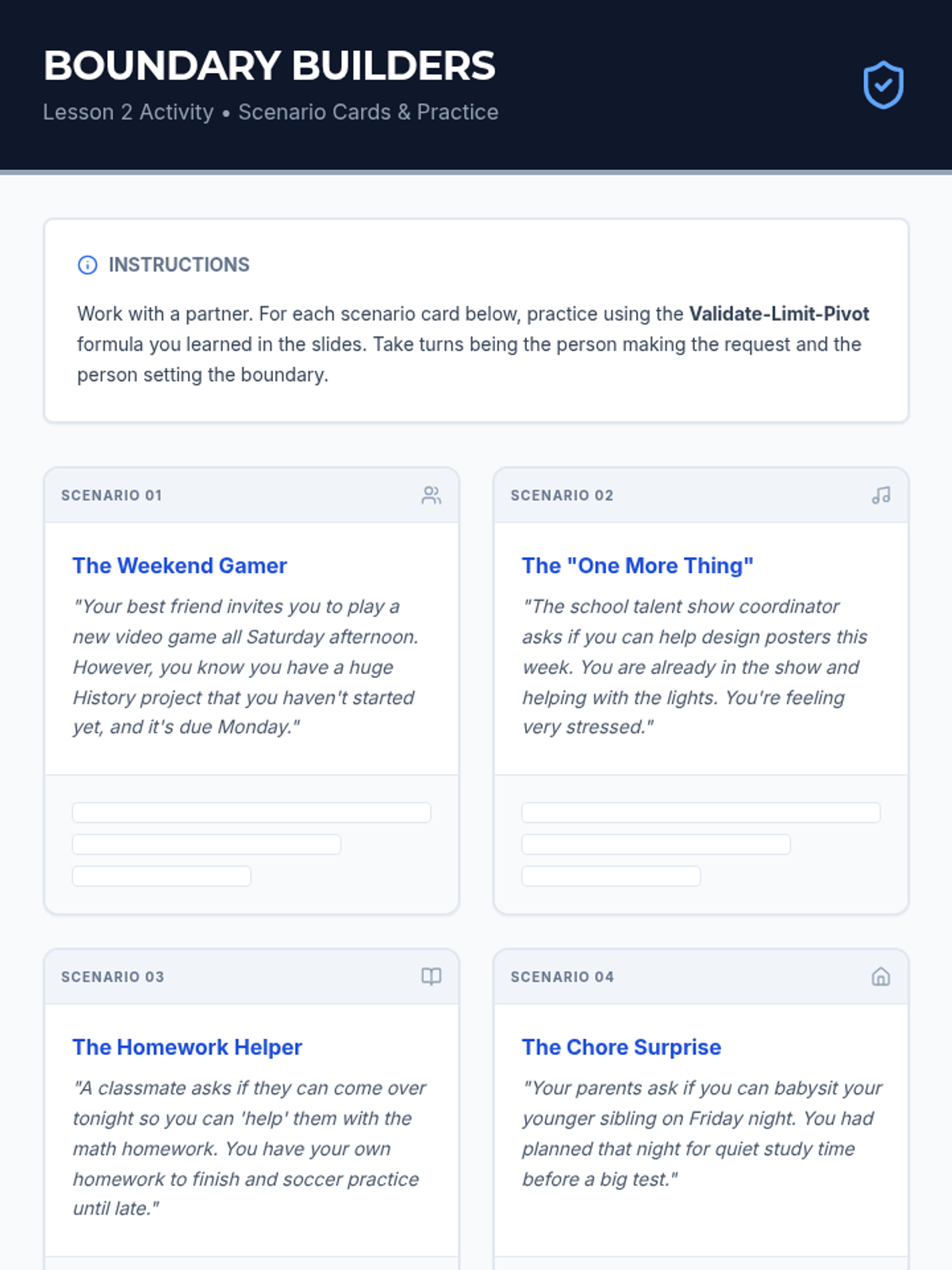
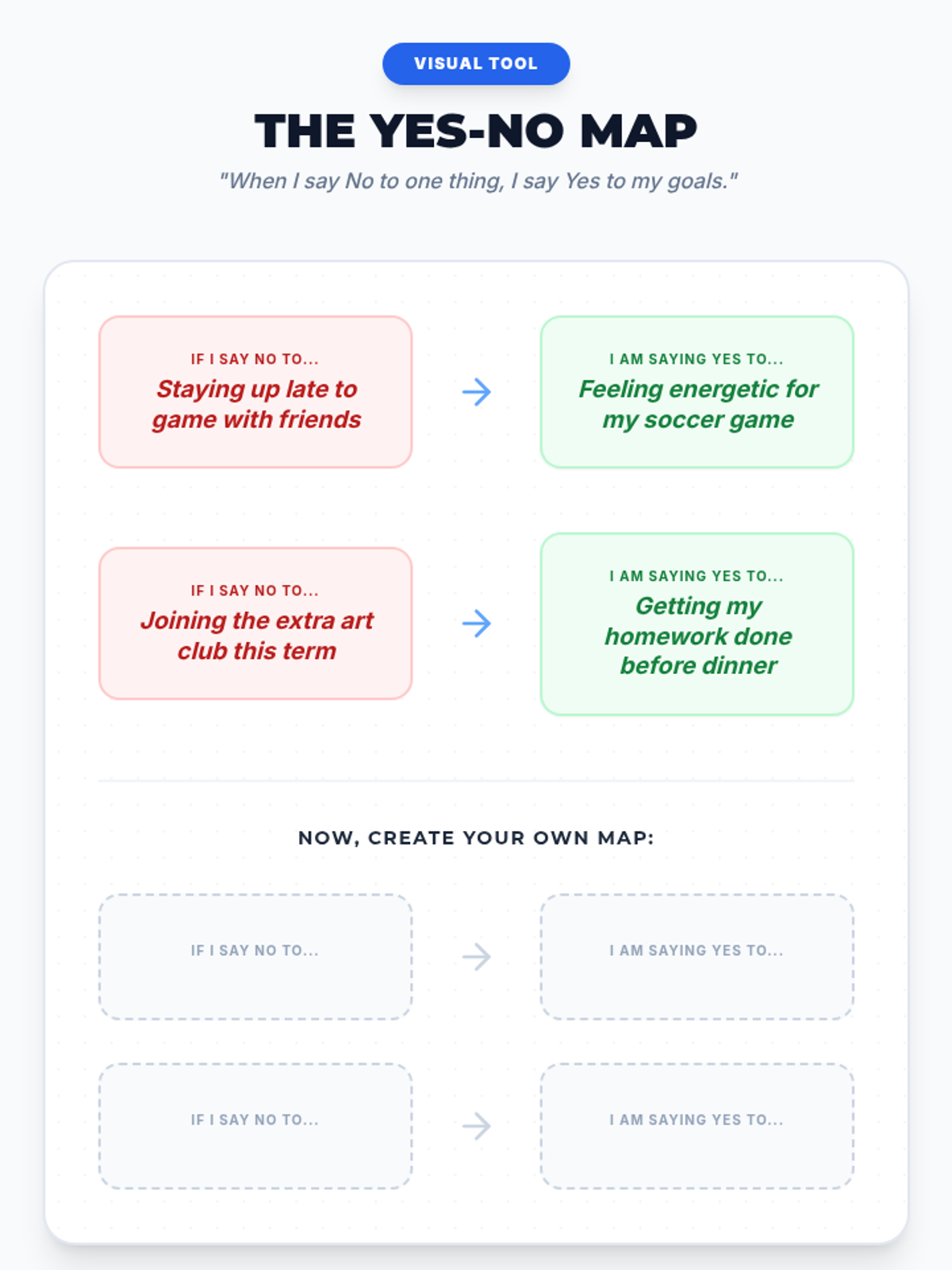
Students practice scripts for declining optional commitments politely but firmly, learning that every 'no' is a 'yes' to their own well-being.
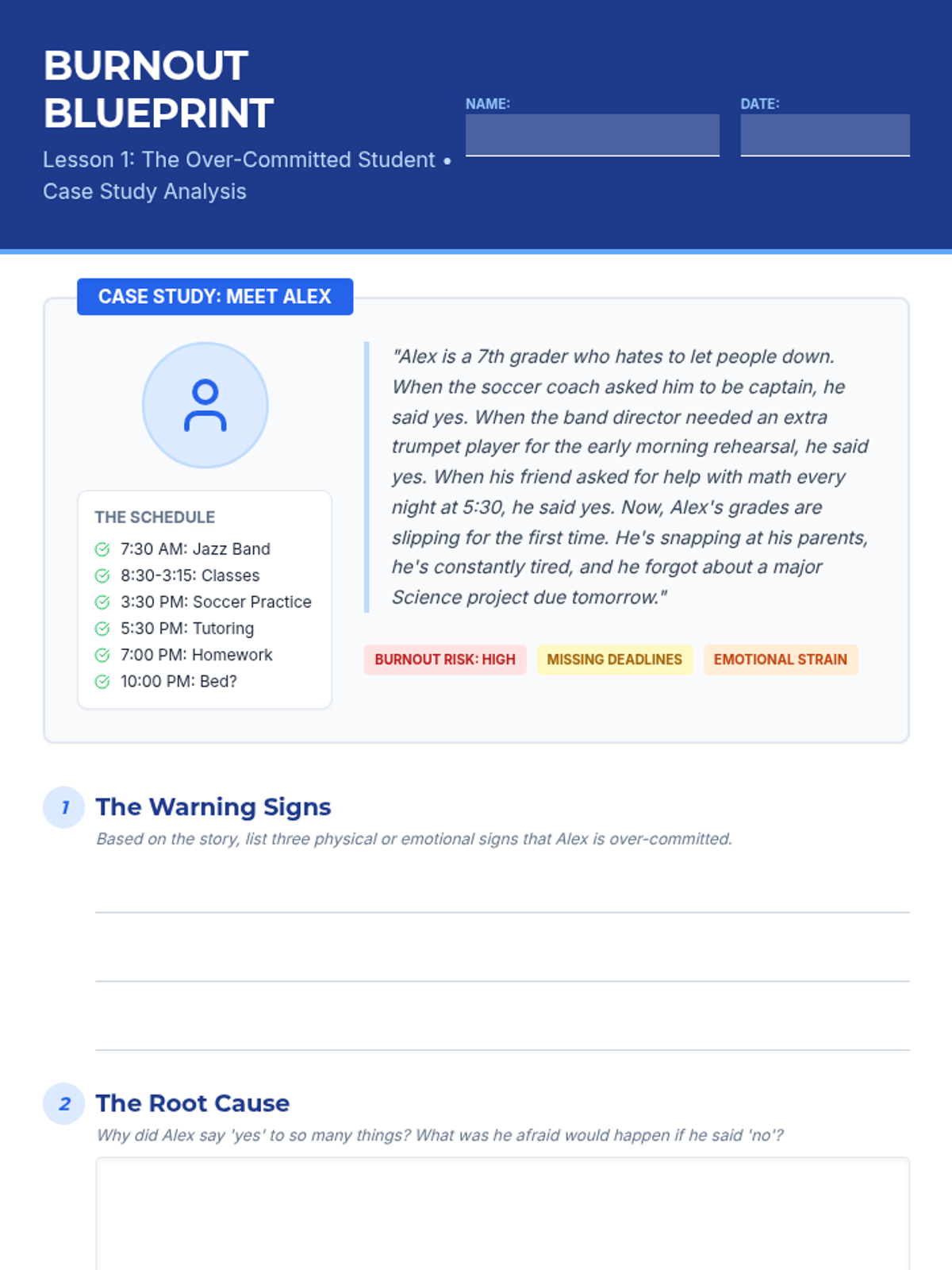
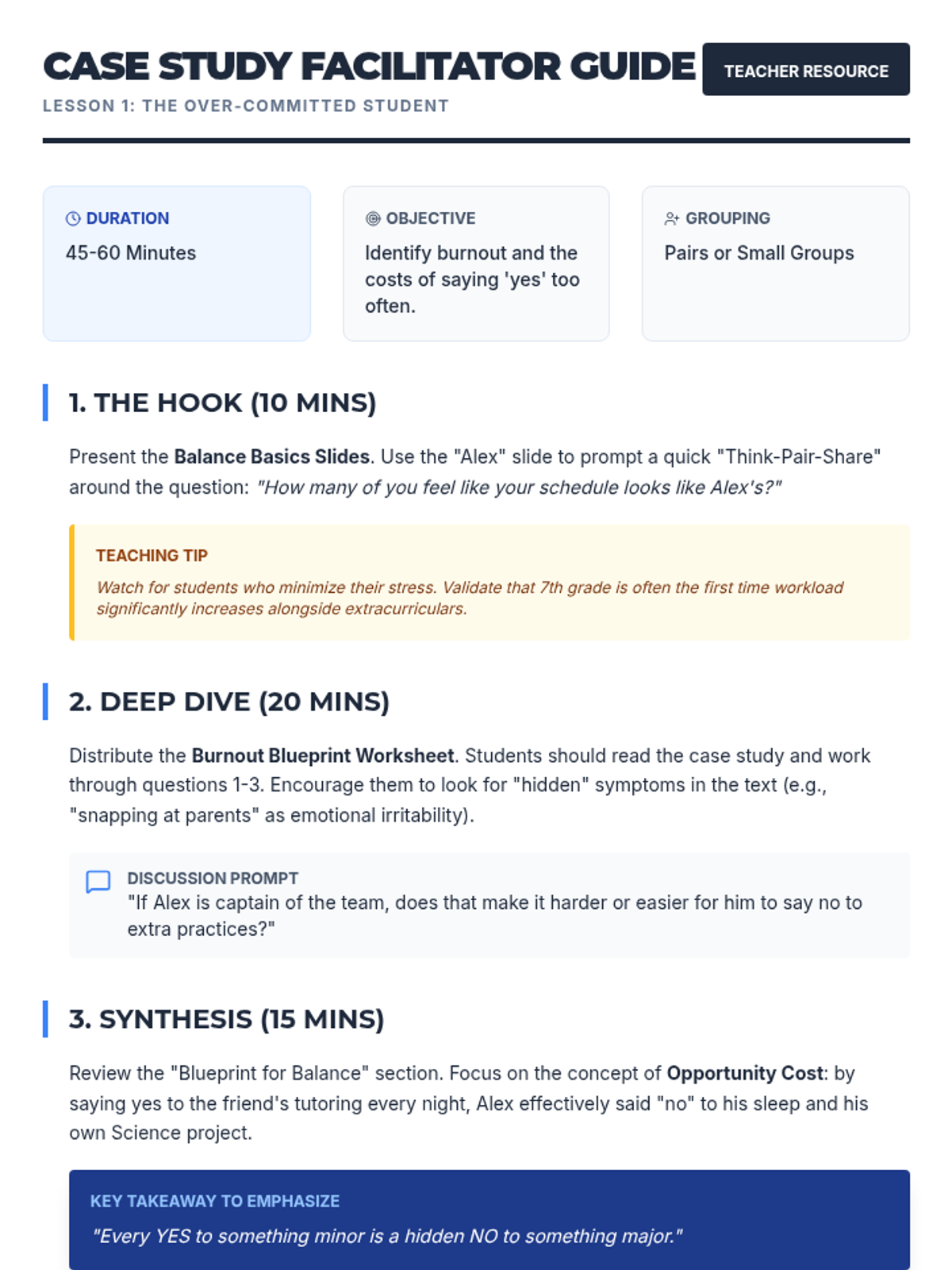
Students analyze case studies of 'over-committed' individuals to identify warning signs of burnout and the consequences of poor boundary setting.
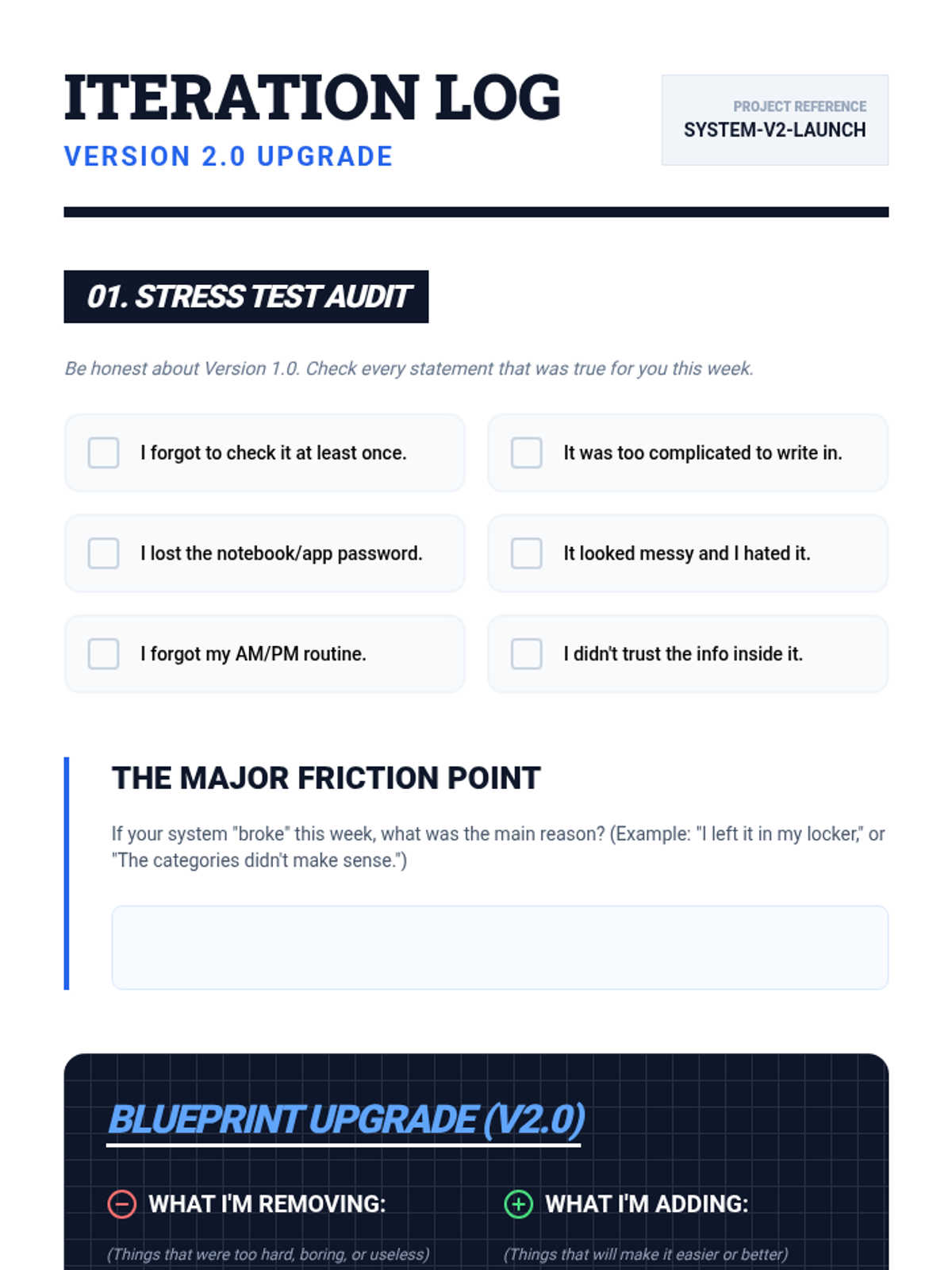
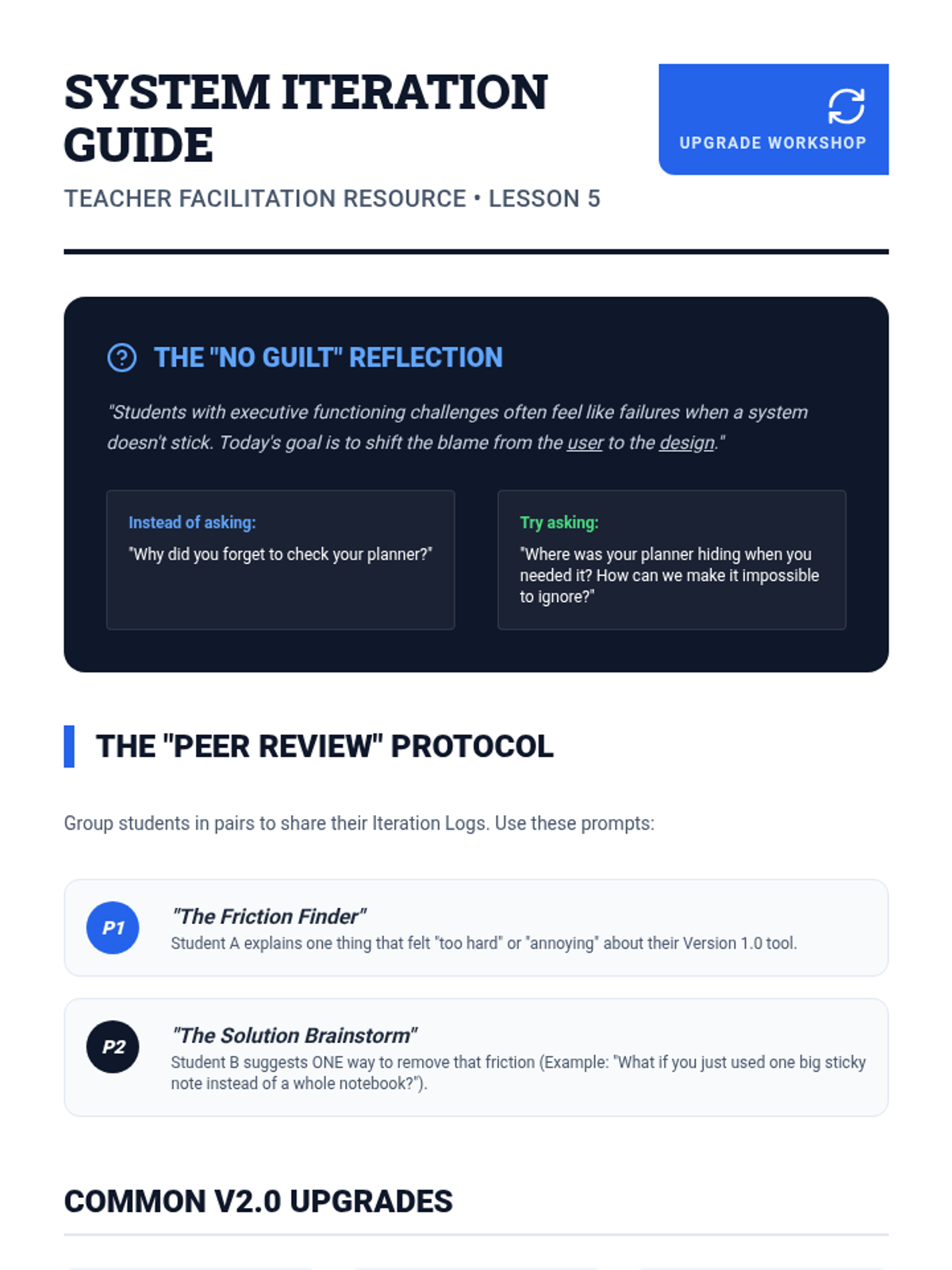
Students evaluate the effectiveness of their systems after initial use, troubleshooting obstacles and iterating on their designs for better long-term adherence.
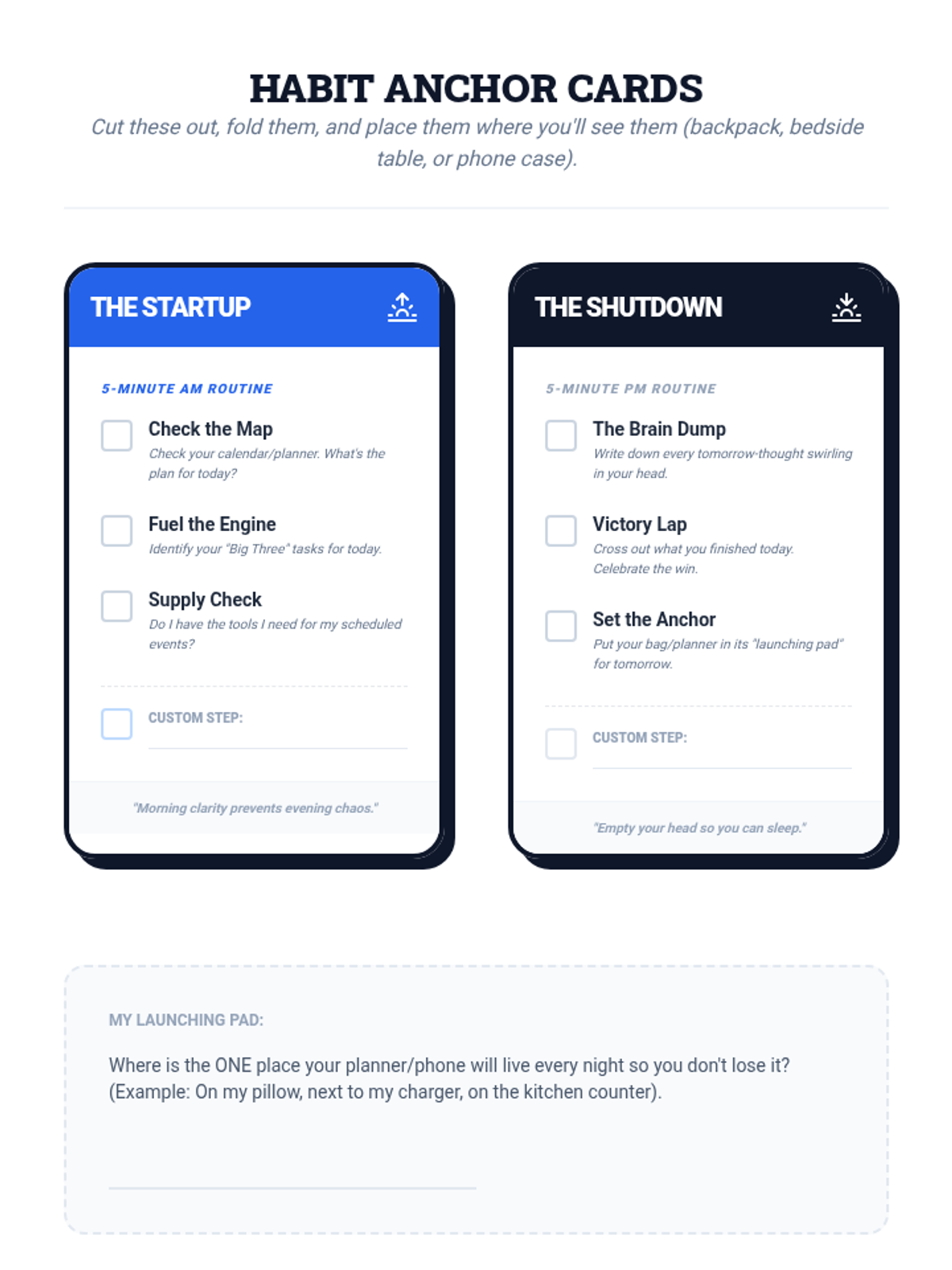
Students develop startup and shutdown routines to ensure their organizational tools stay functional and integrated into their daily lives.
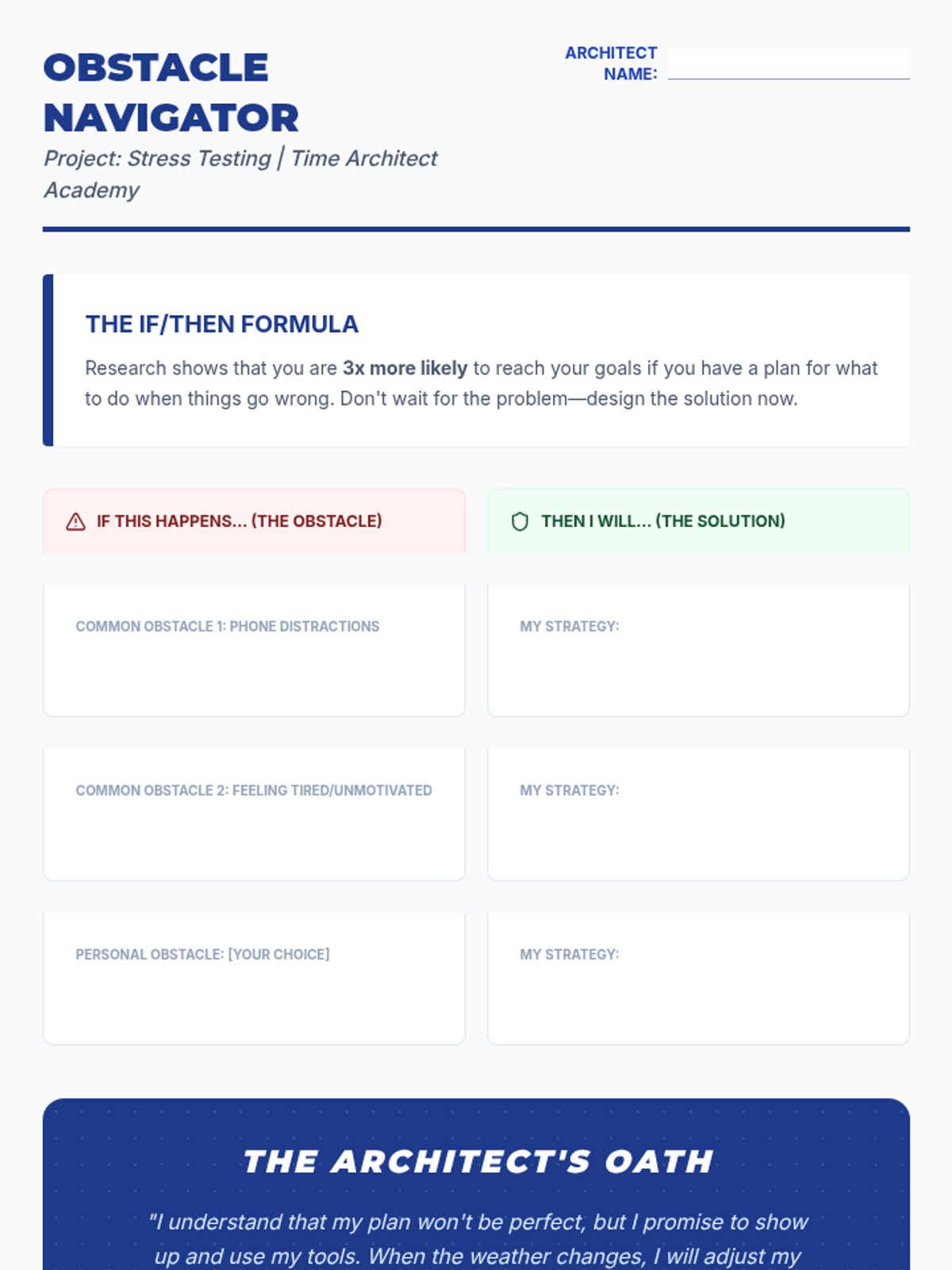
Students review their plans against potential obstacles and refine them using 'If/Then' planning, concluding with a commitment to try the system.
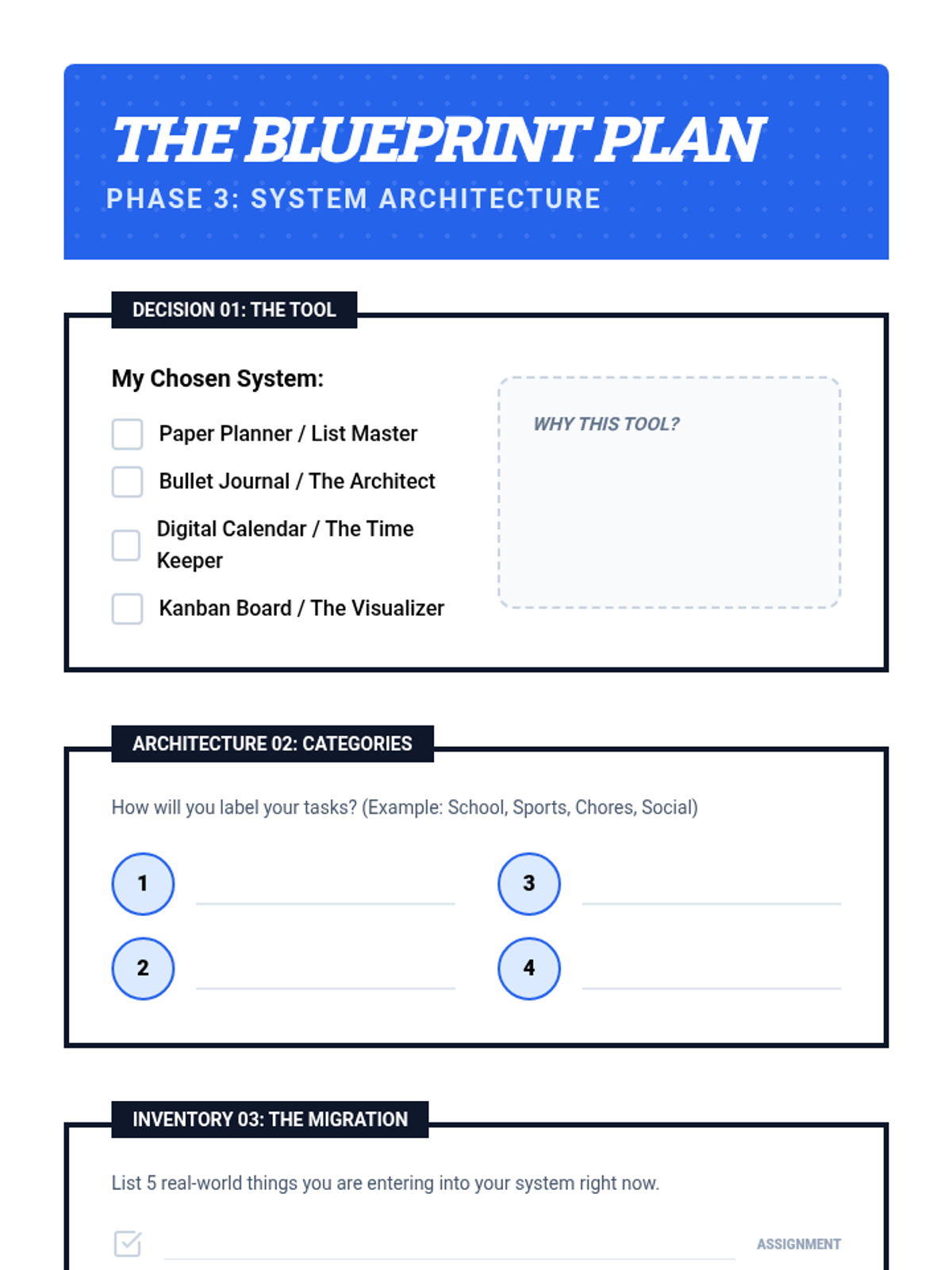
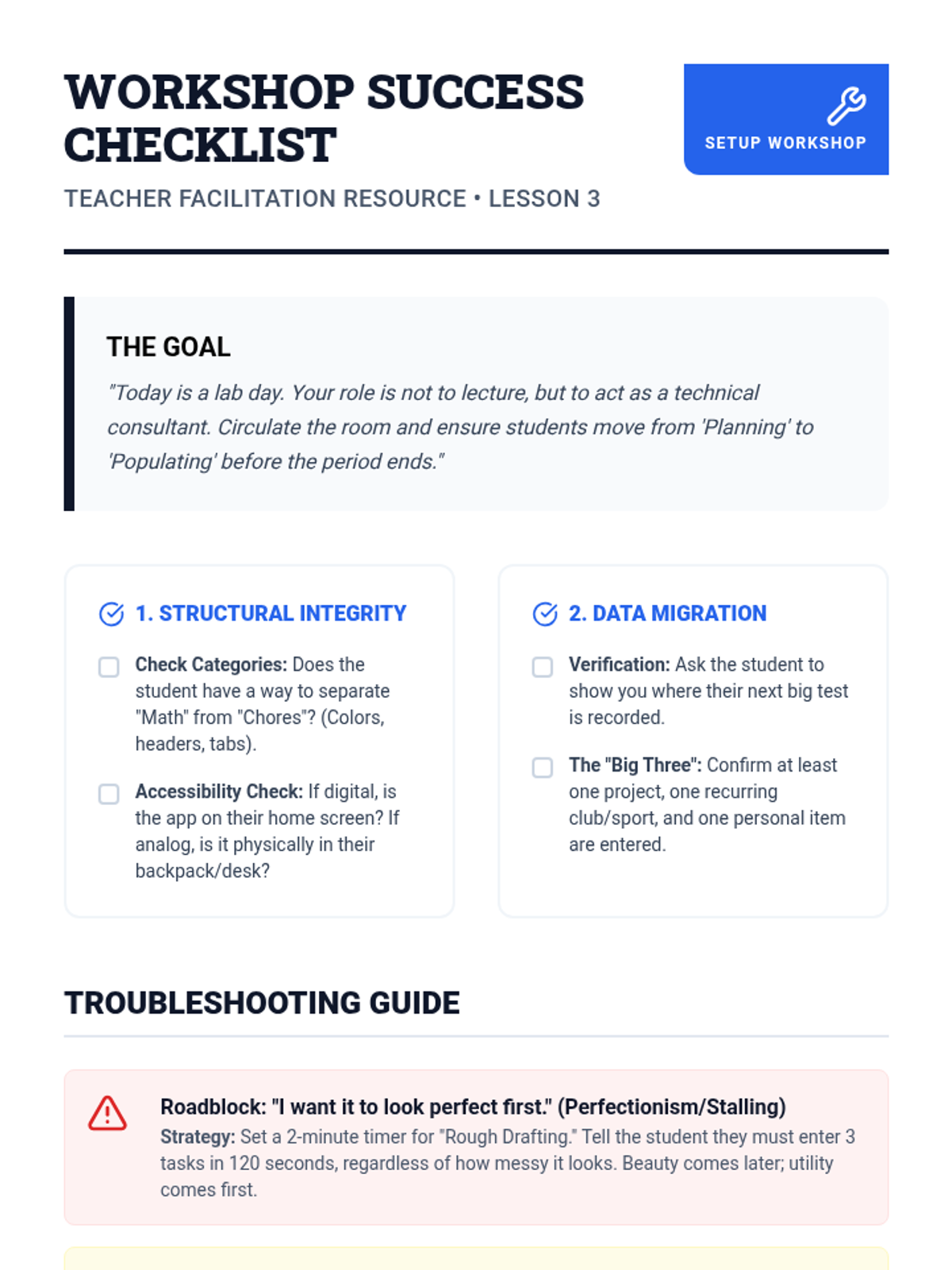
A hands-on workshop where students select their preferred tool and begin the physical or digital setup using real-world assignments and commitments.
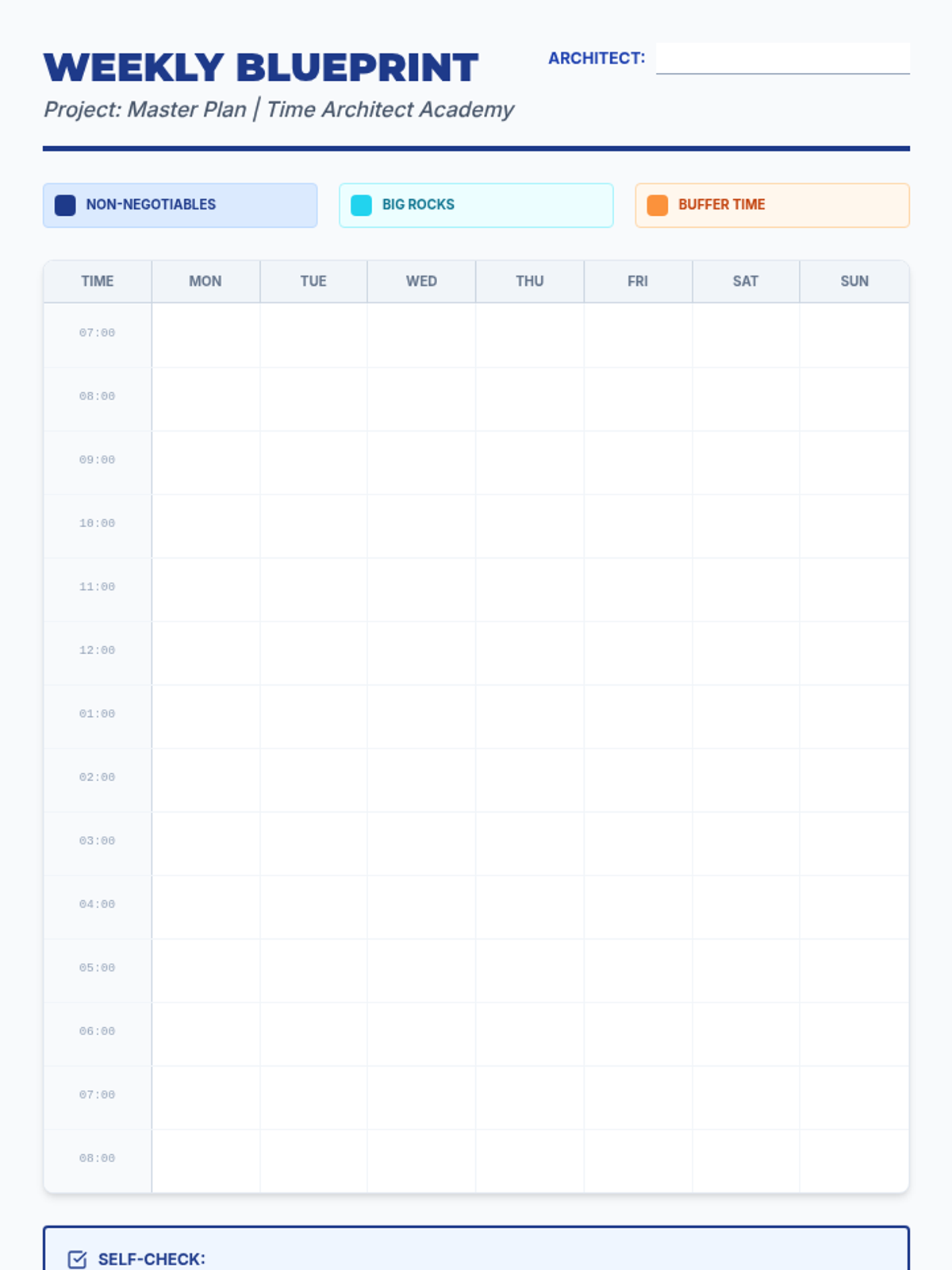
Students apply the Matrix and Big Rocks concepts to create a realistic schedule for the coming week, including buffer times and breaks.
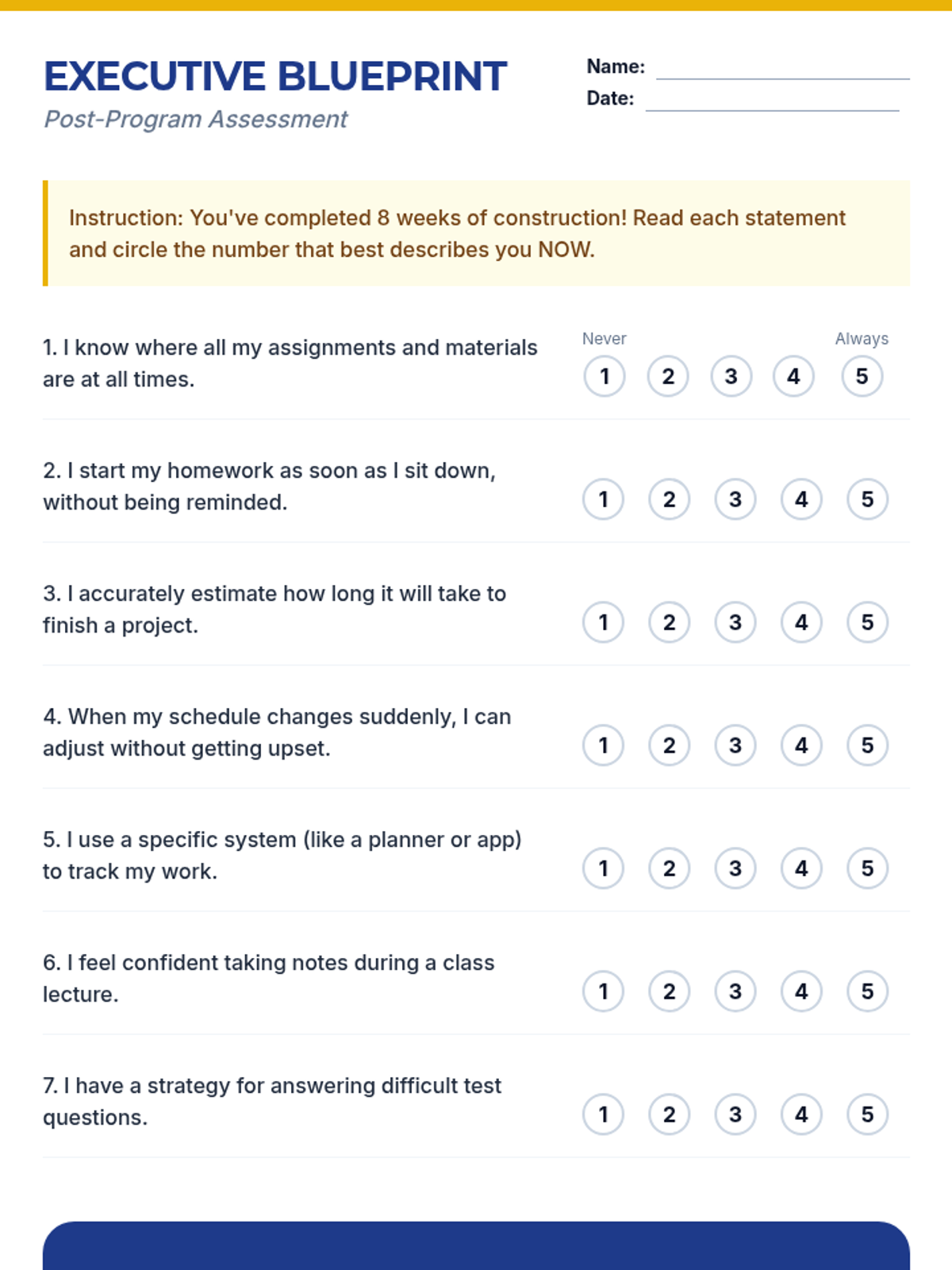
Program review, celebration of growth, and completion of the EF Post-Test.
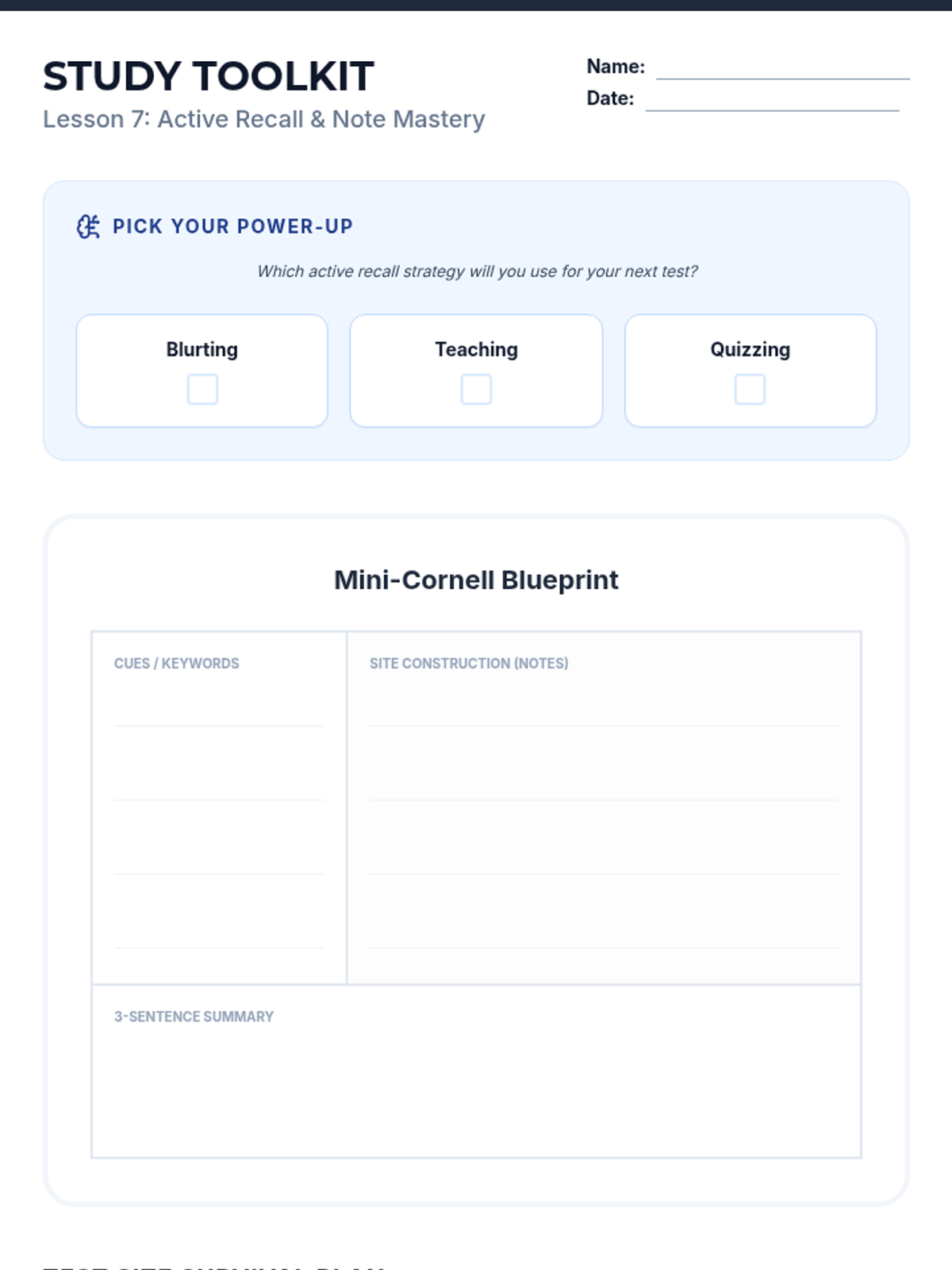
Instruction on effective note-taking and test-taking strategies tailored for middle school.
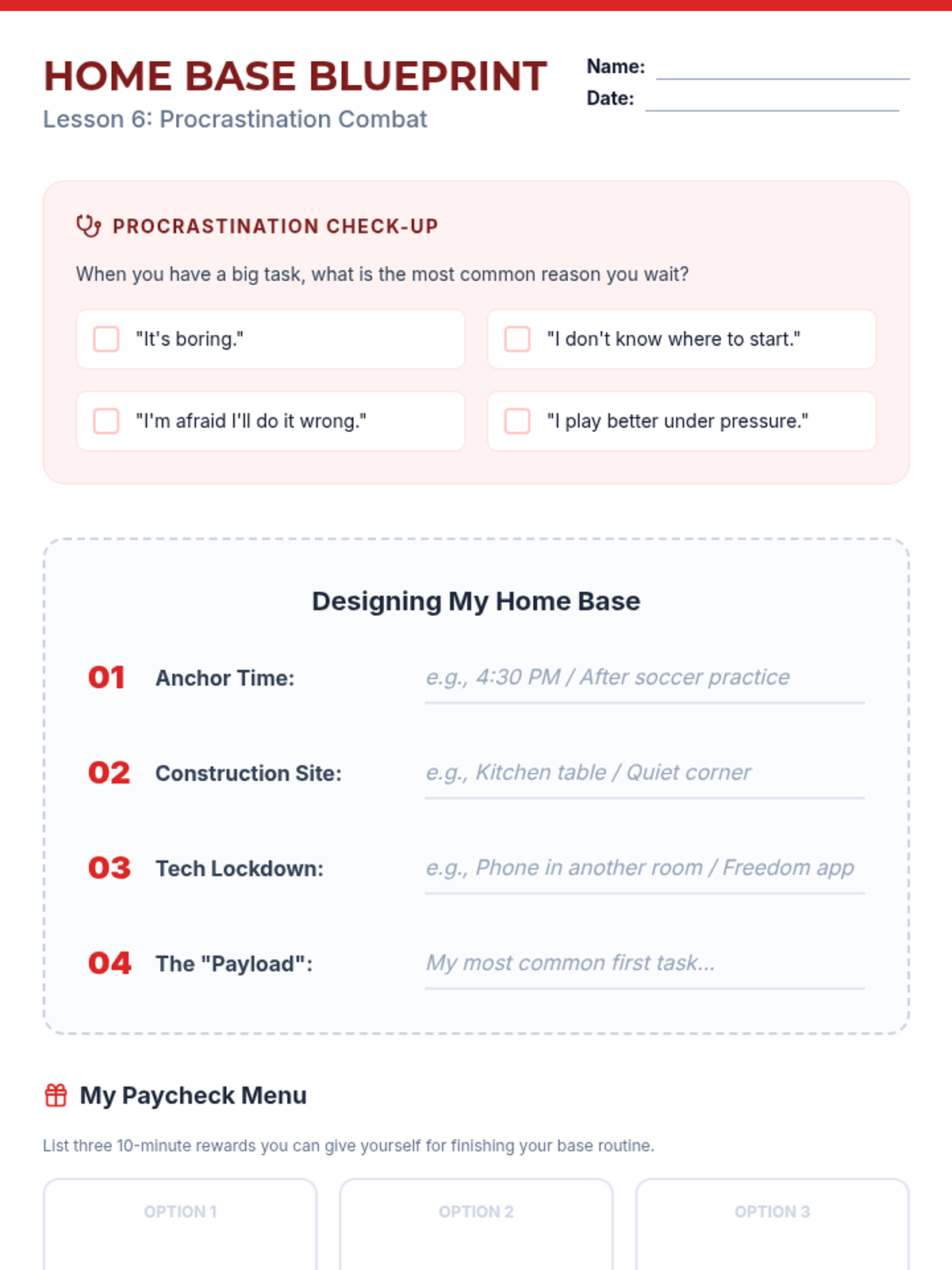
Practical strategies to defeat procrastination and streamline homework routines.
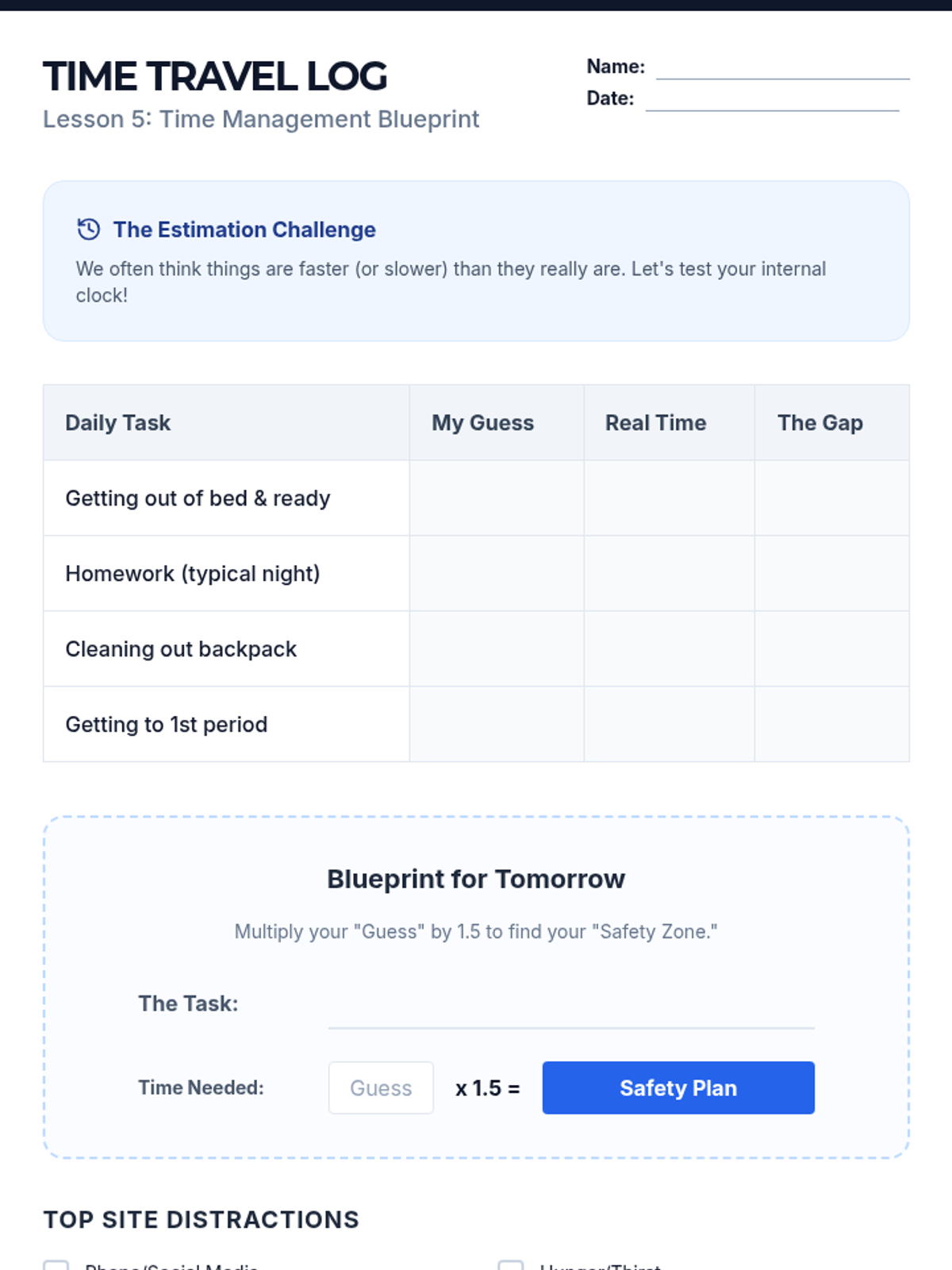
Building an awareness of time and learning how to estimate how long tasks actually take.
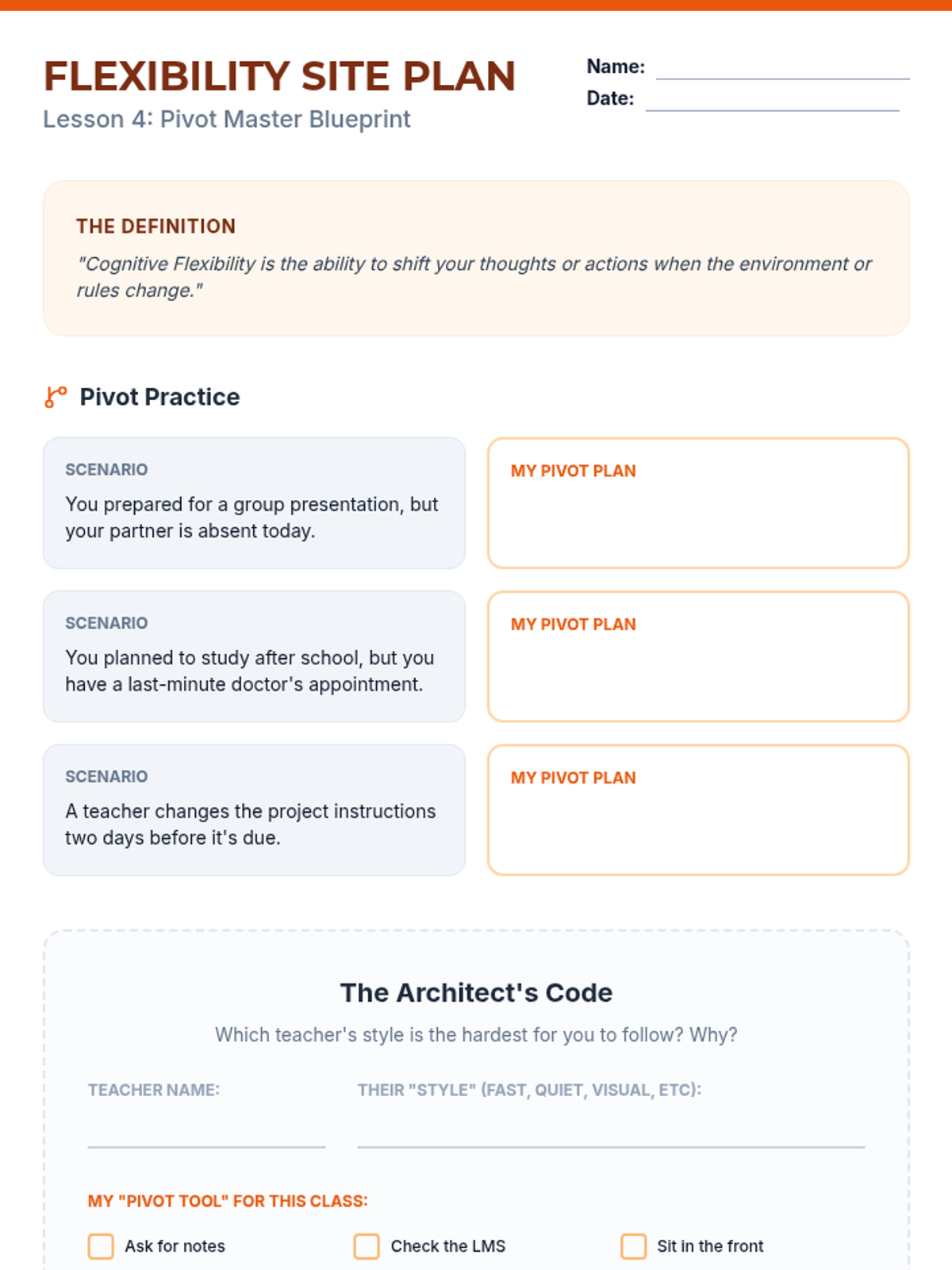
Developing cognitive flexibility to handle changes in schedules and different teaching styles.
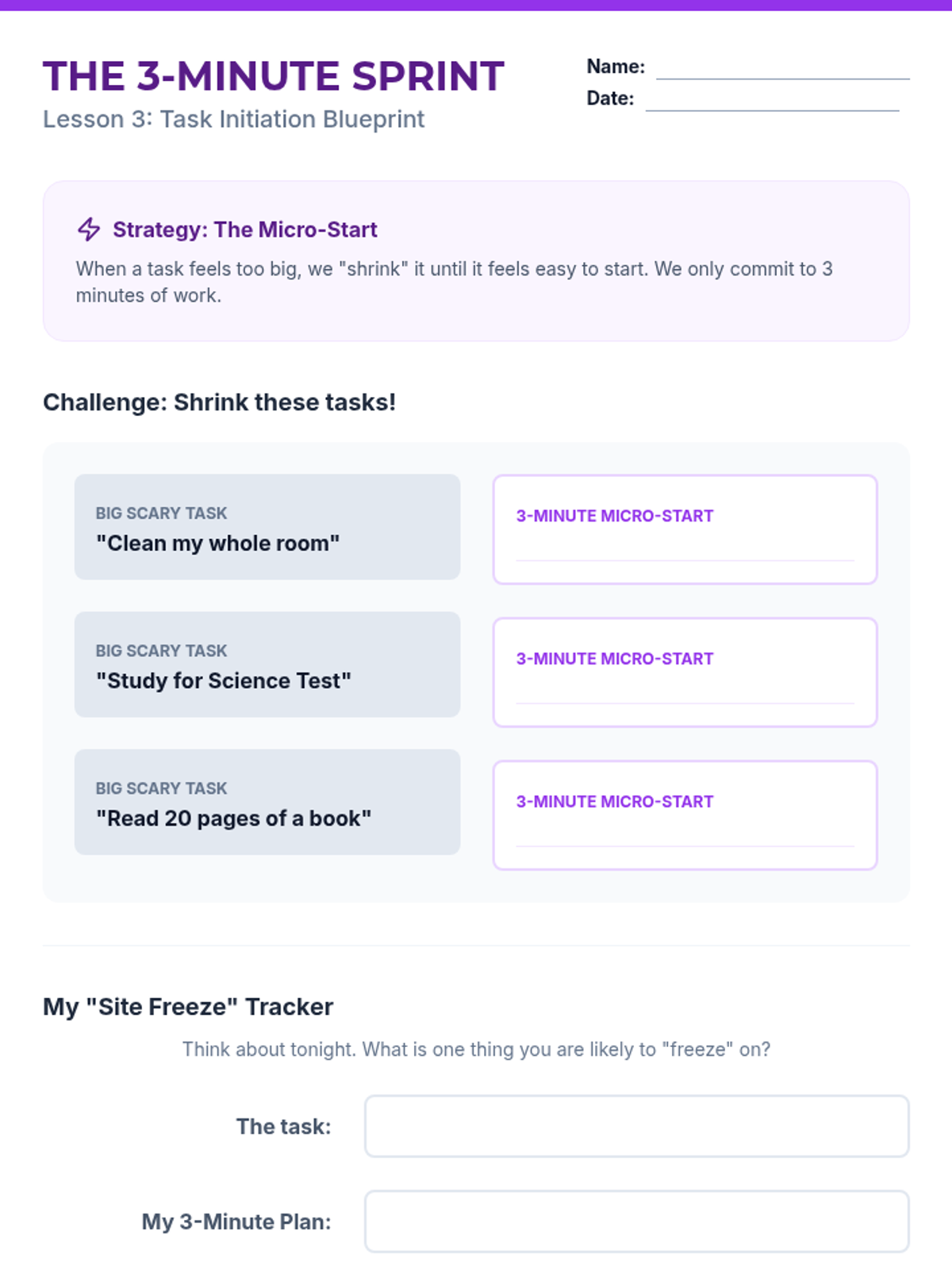
Strategies for overcoming the 'freeze' and getting started on difficult tasks immediately.
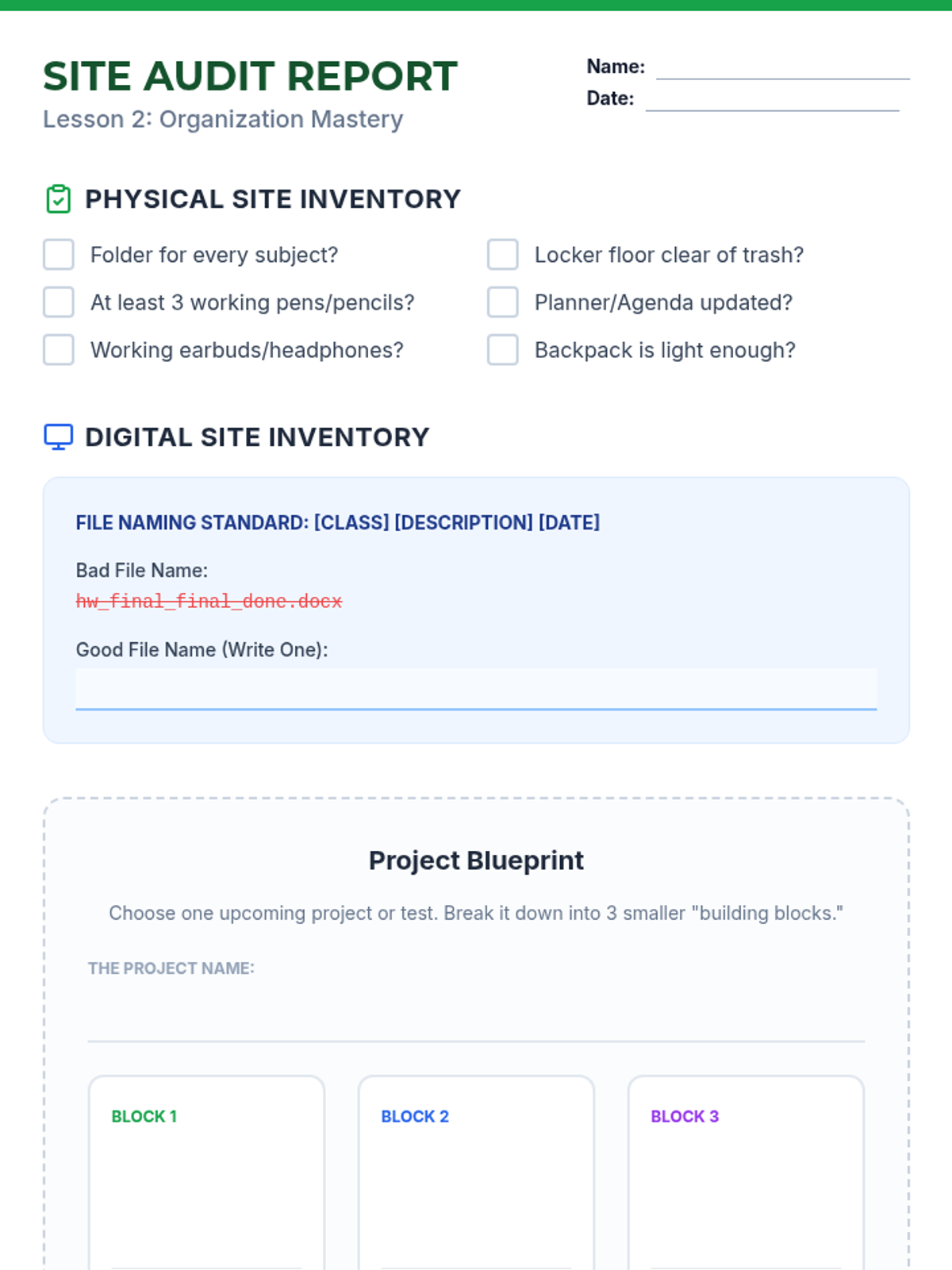
Focuses on organization of physical and digital spaces and long-term project planning.
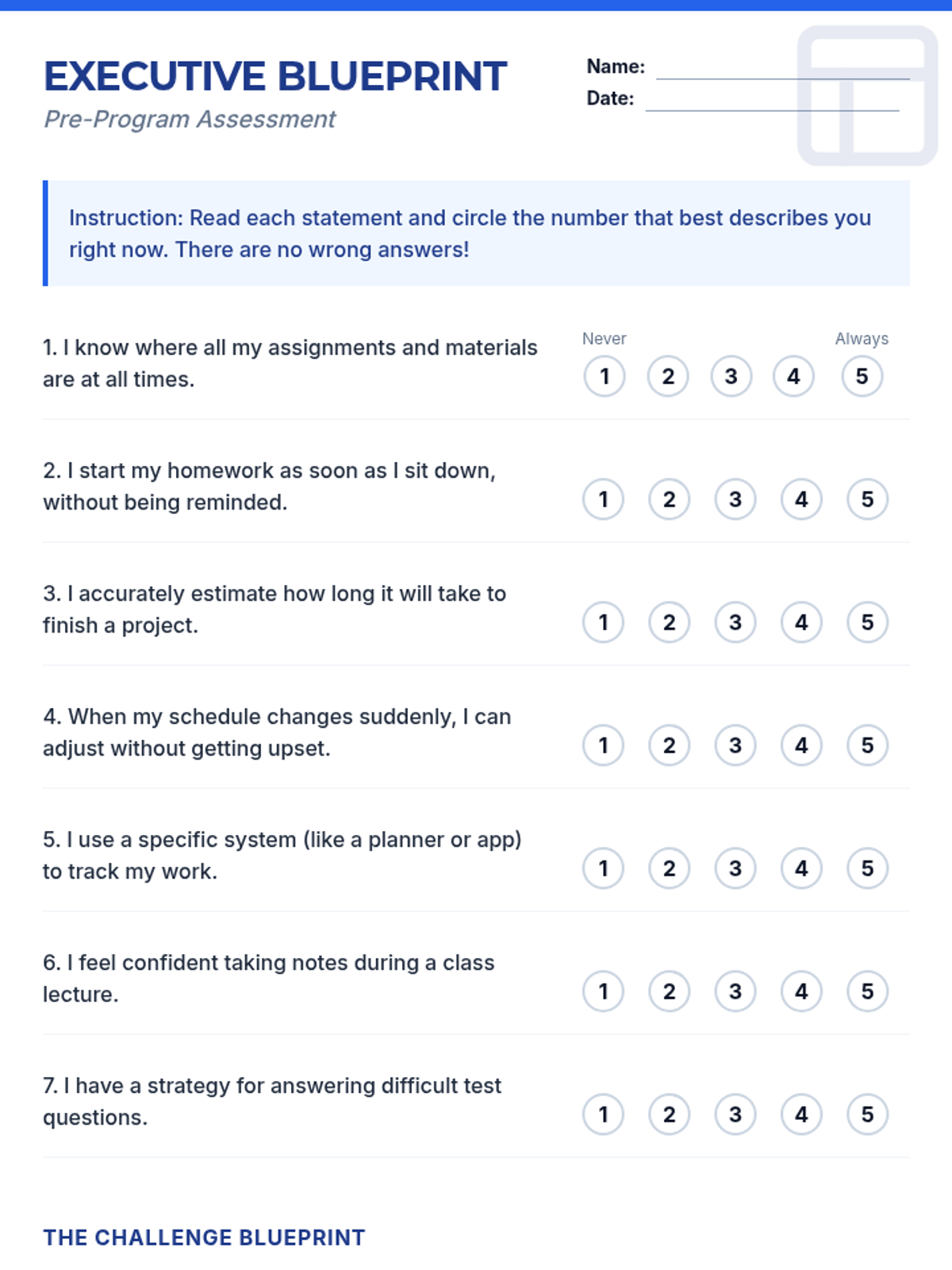
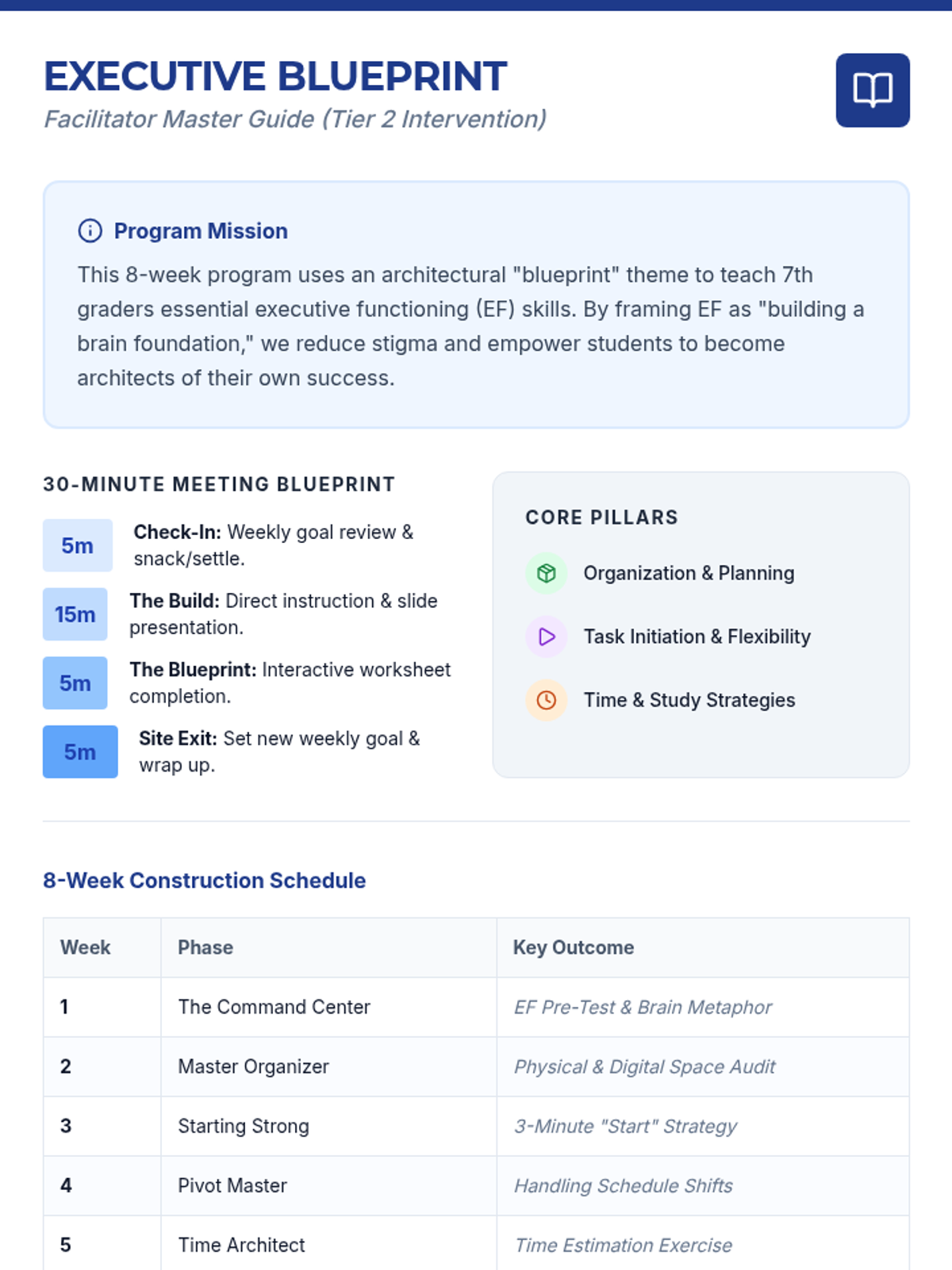
Introduction to the brain's "Command Center," establishing group norms, and completing the EF Pre-Test.
A presentation-focused lesson where students learn about the social consequences of their actions through the 'ripple effect' metaphor and then present these concepts to their peers to build a culture of empathy.
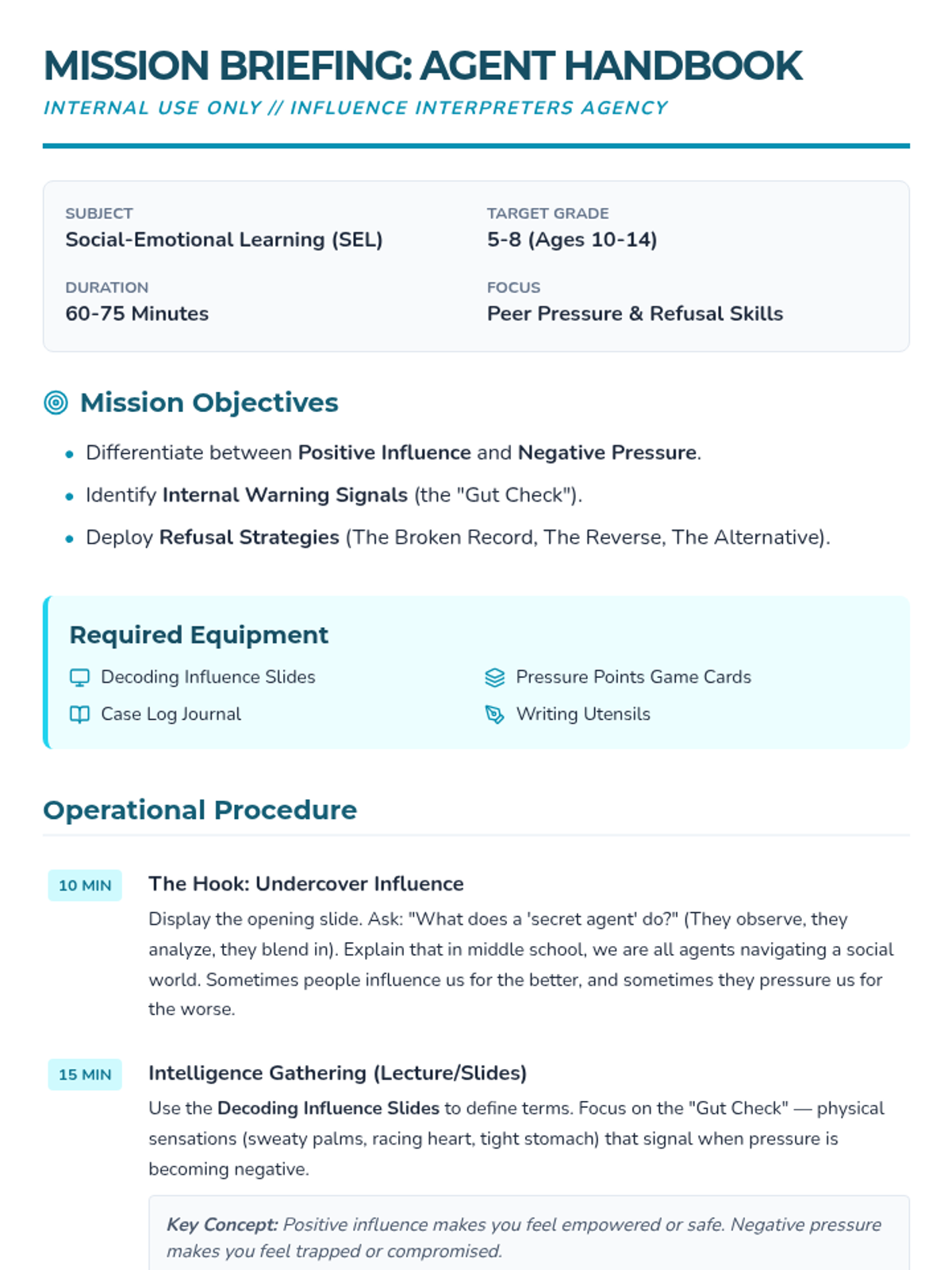
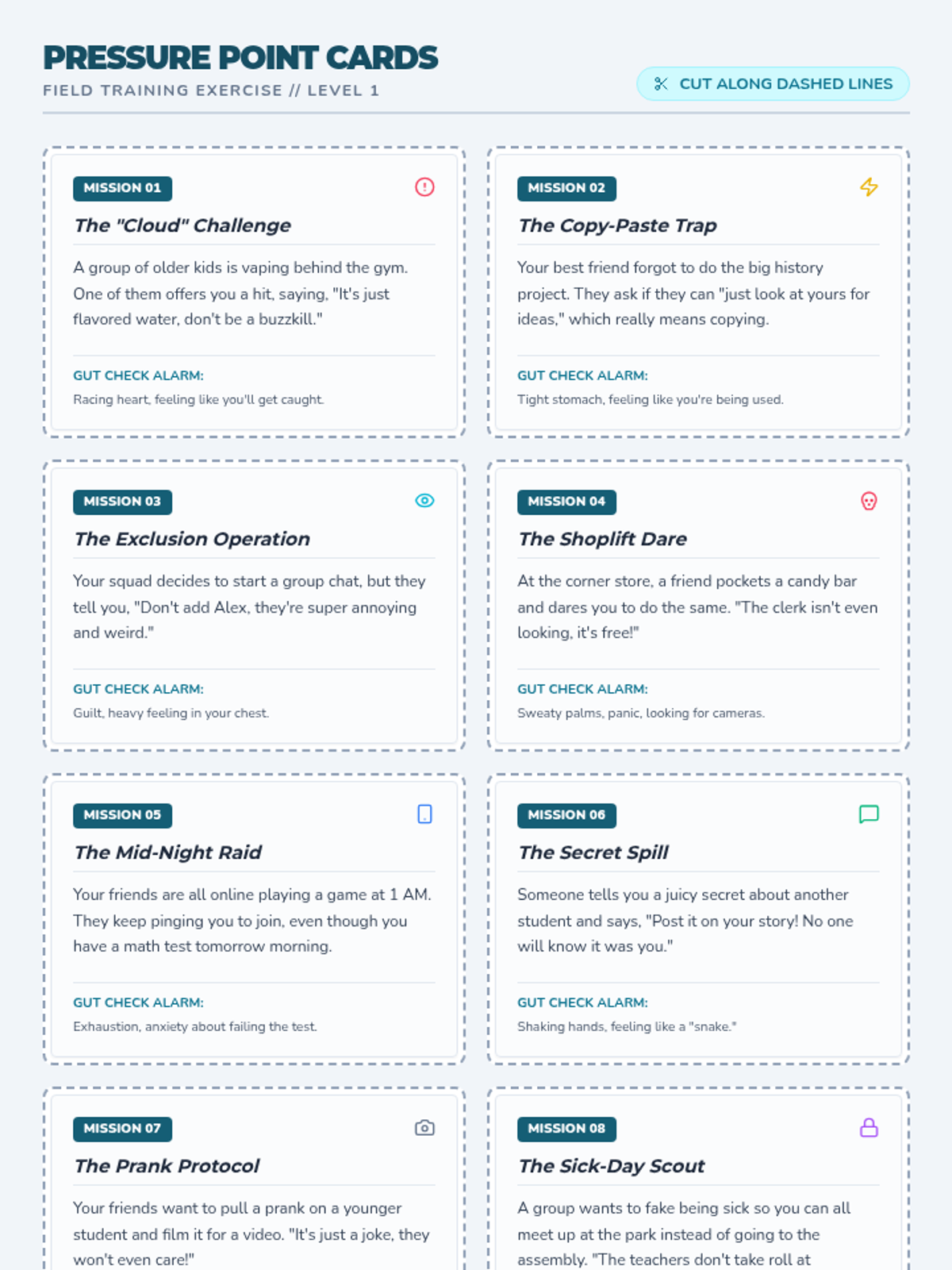
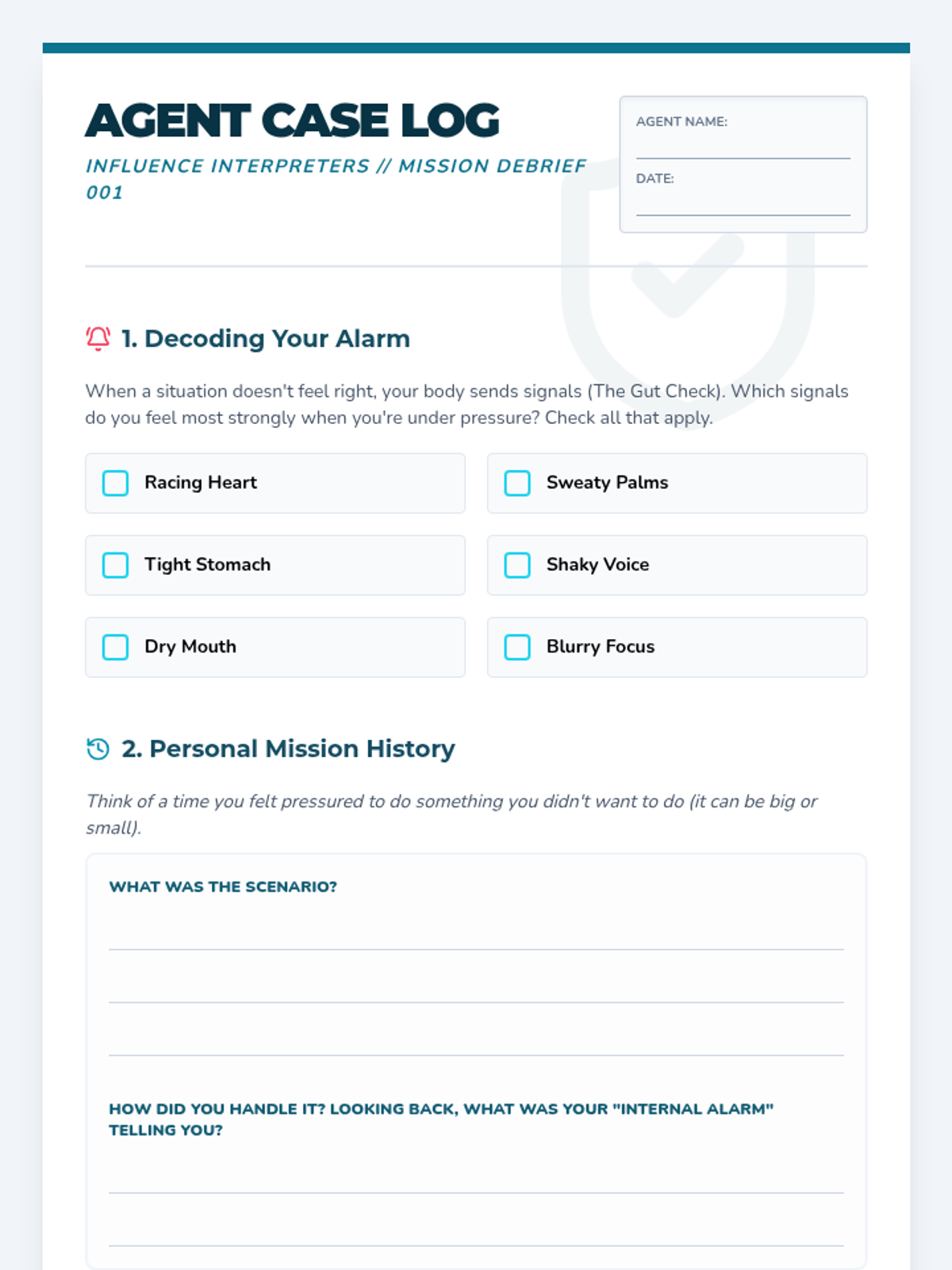
A comprehensive lesson for grades 5-8 focusing on identifying peer pressure, understanding internal cues, and practicing refusal strategies through a 'secret agent' decoding theme.
Reviewing accomplishments, celebrating growth, and planning for continued success beyond the program.
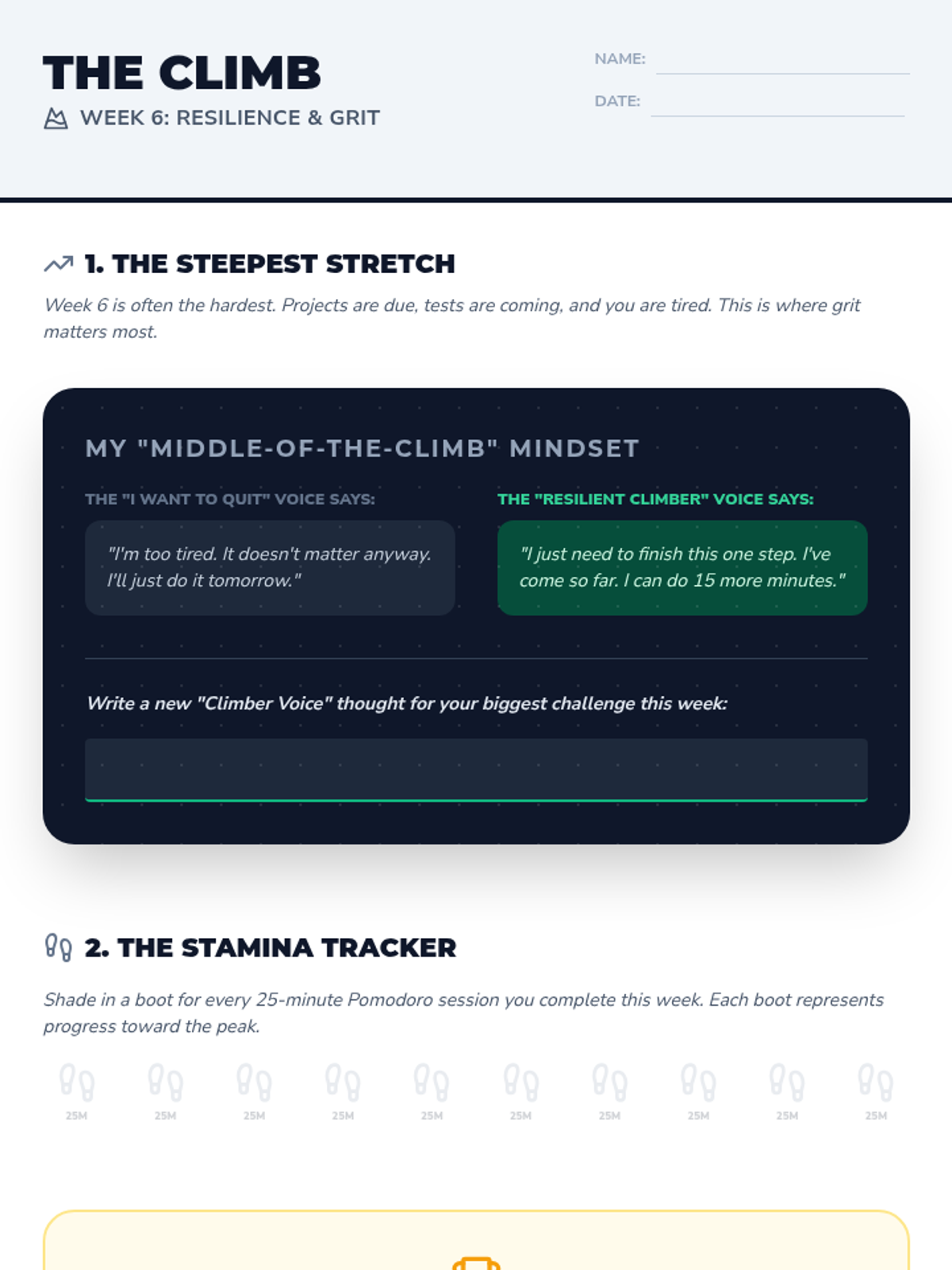
Developing mental resilience and grit to push through the most demanding academic period of the term.
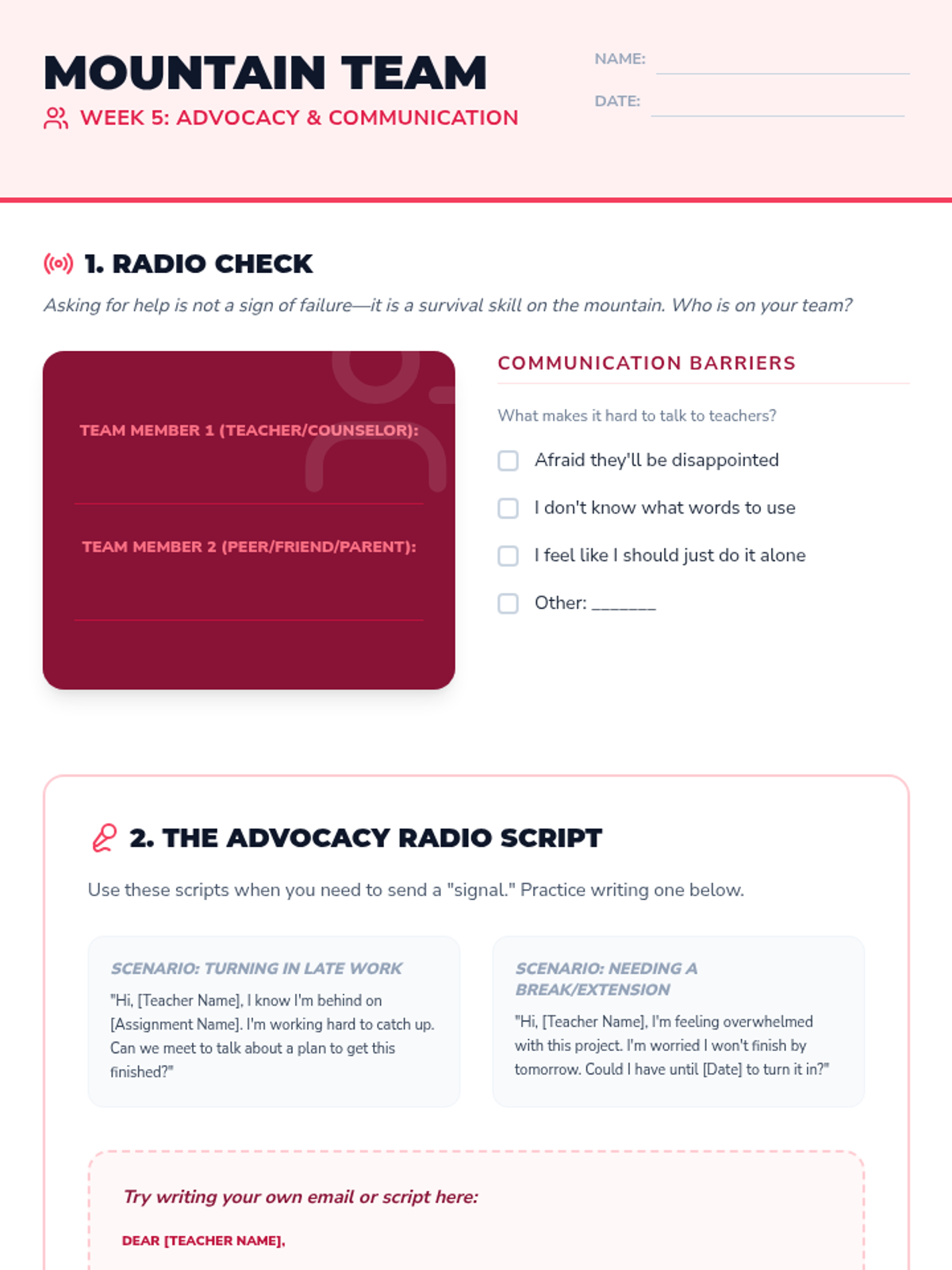
Focuses on building effective communication with teachers and peers to advocate for needs and seek support.
Identification of emotional triggers and the development of a 'toolbox' of regulation strategies for when things get difficult.
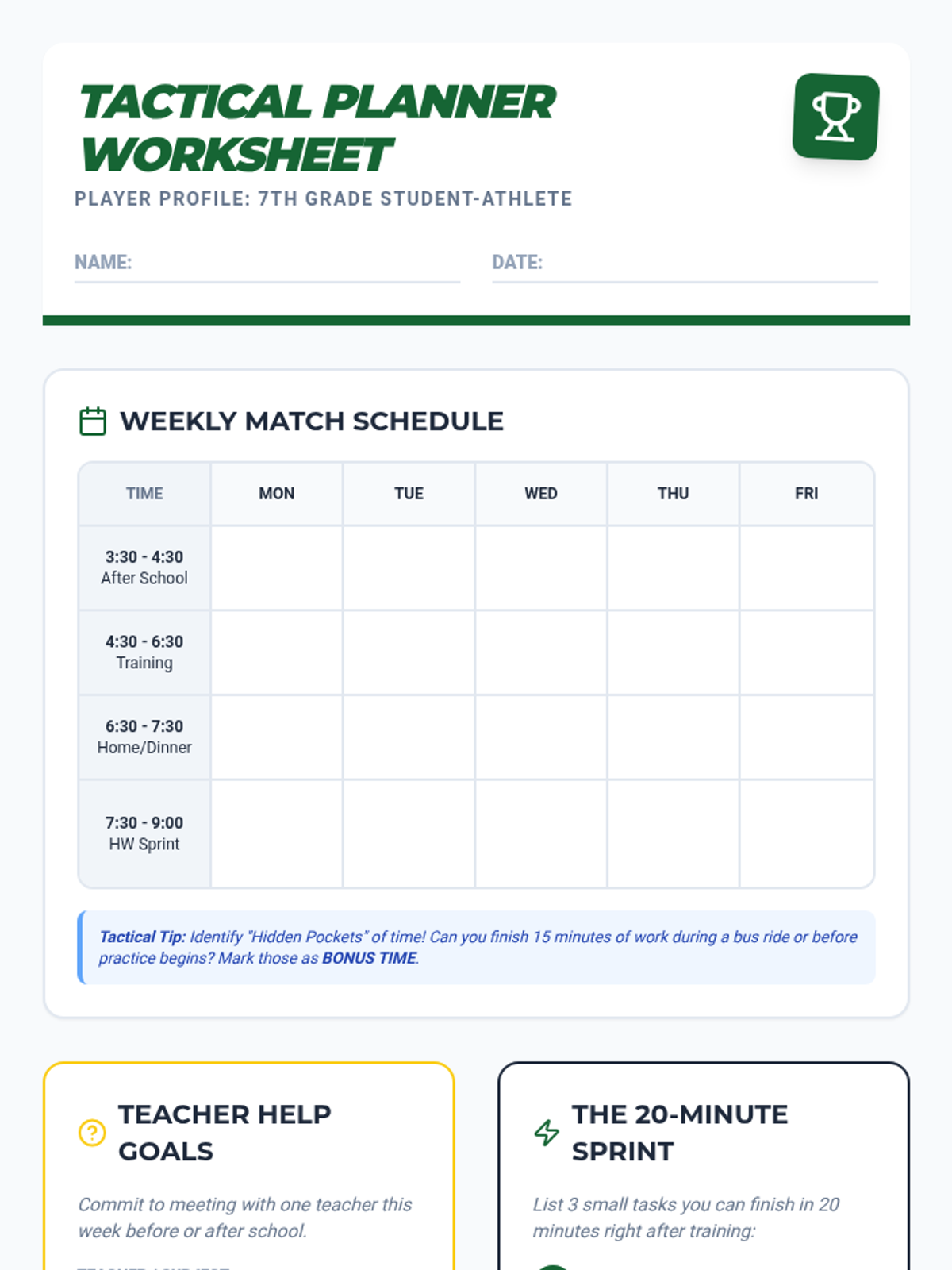
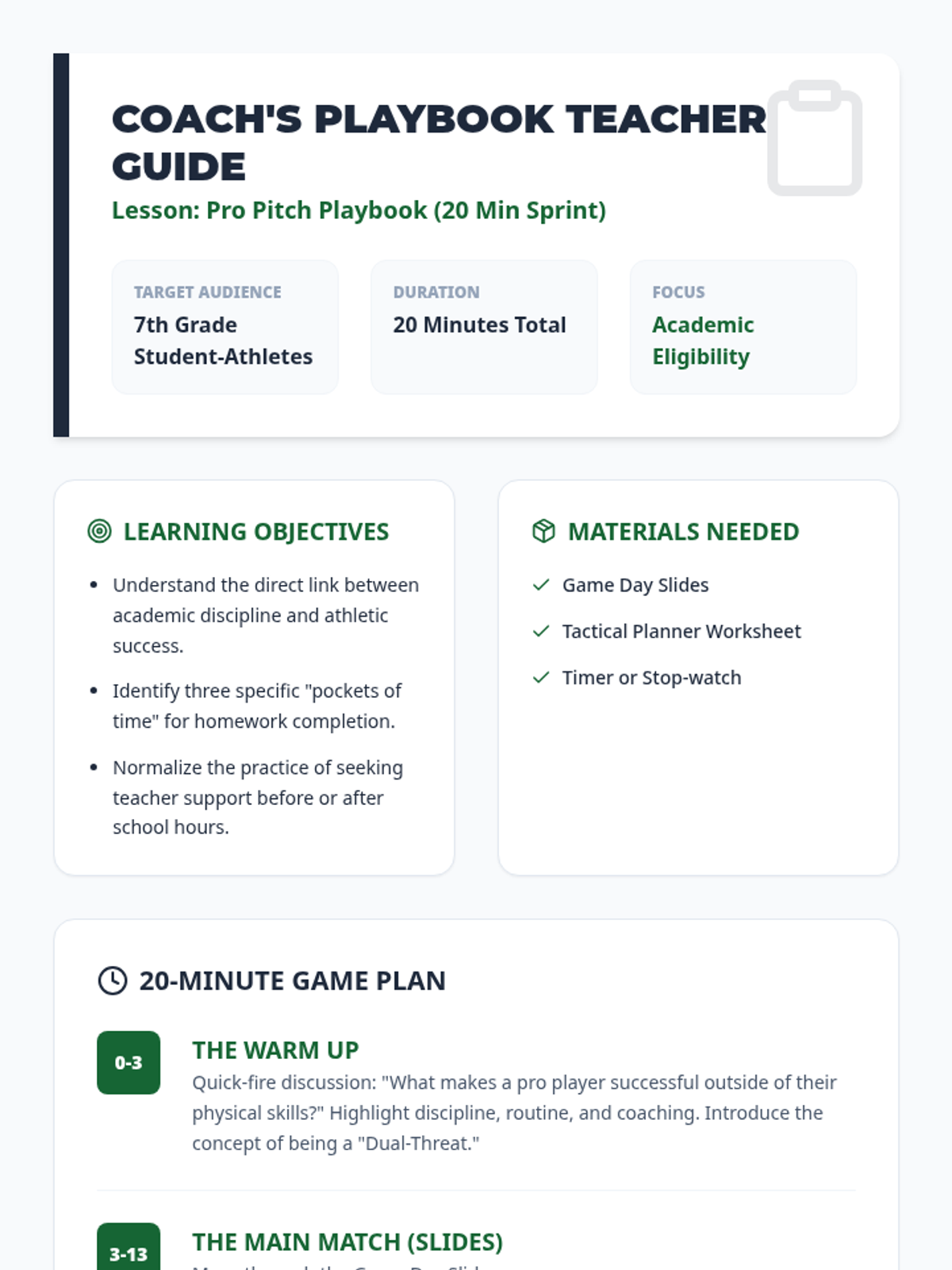
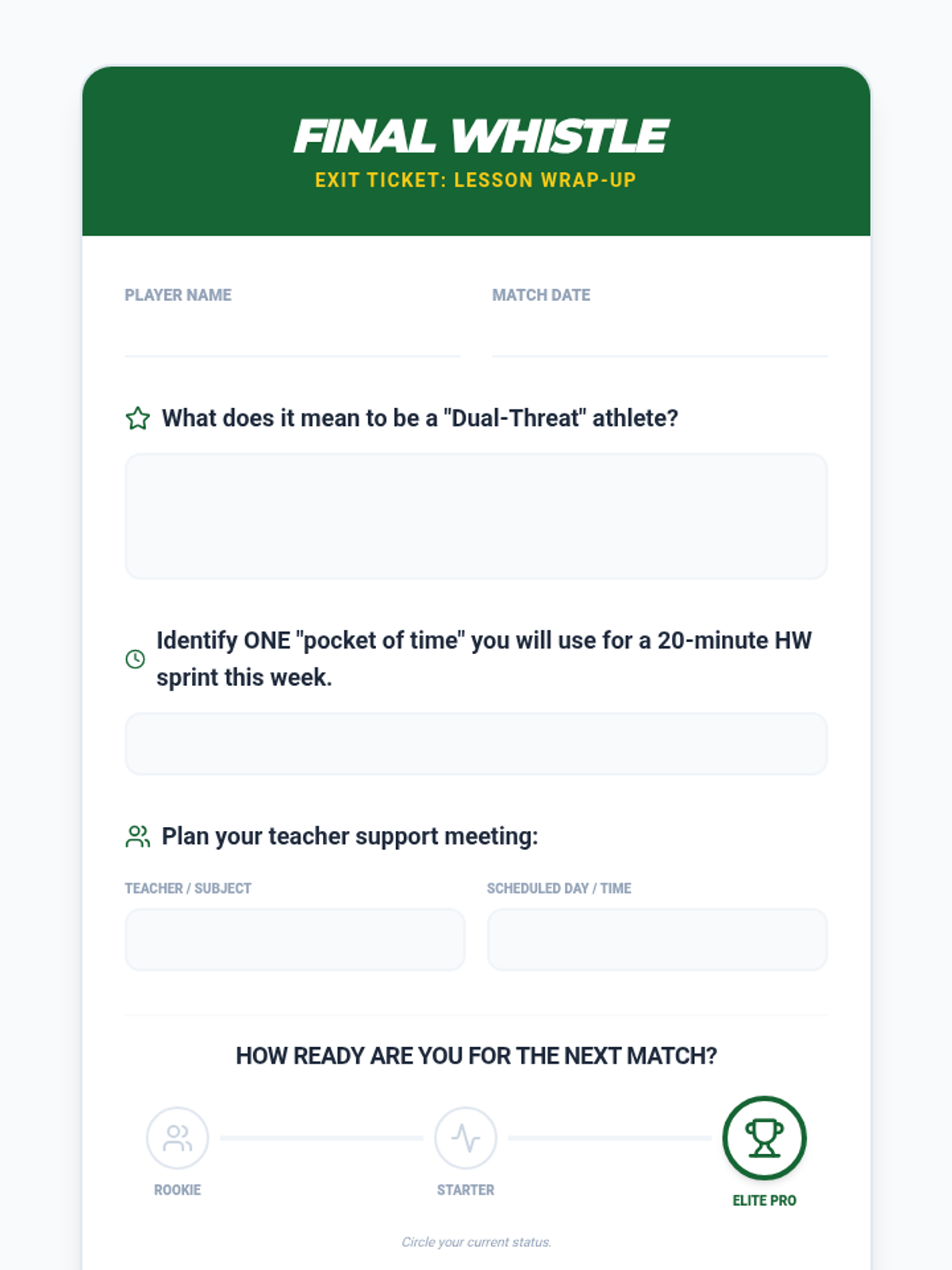
A fast-paced, soccer-themed lesson designed to help student-athletes master their schedule, prioritize homework, and utilize teacher support to maintain academic eligibility and success.
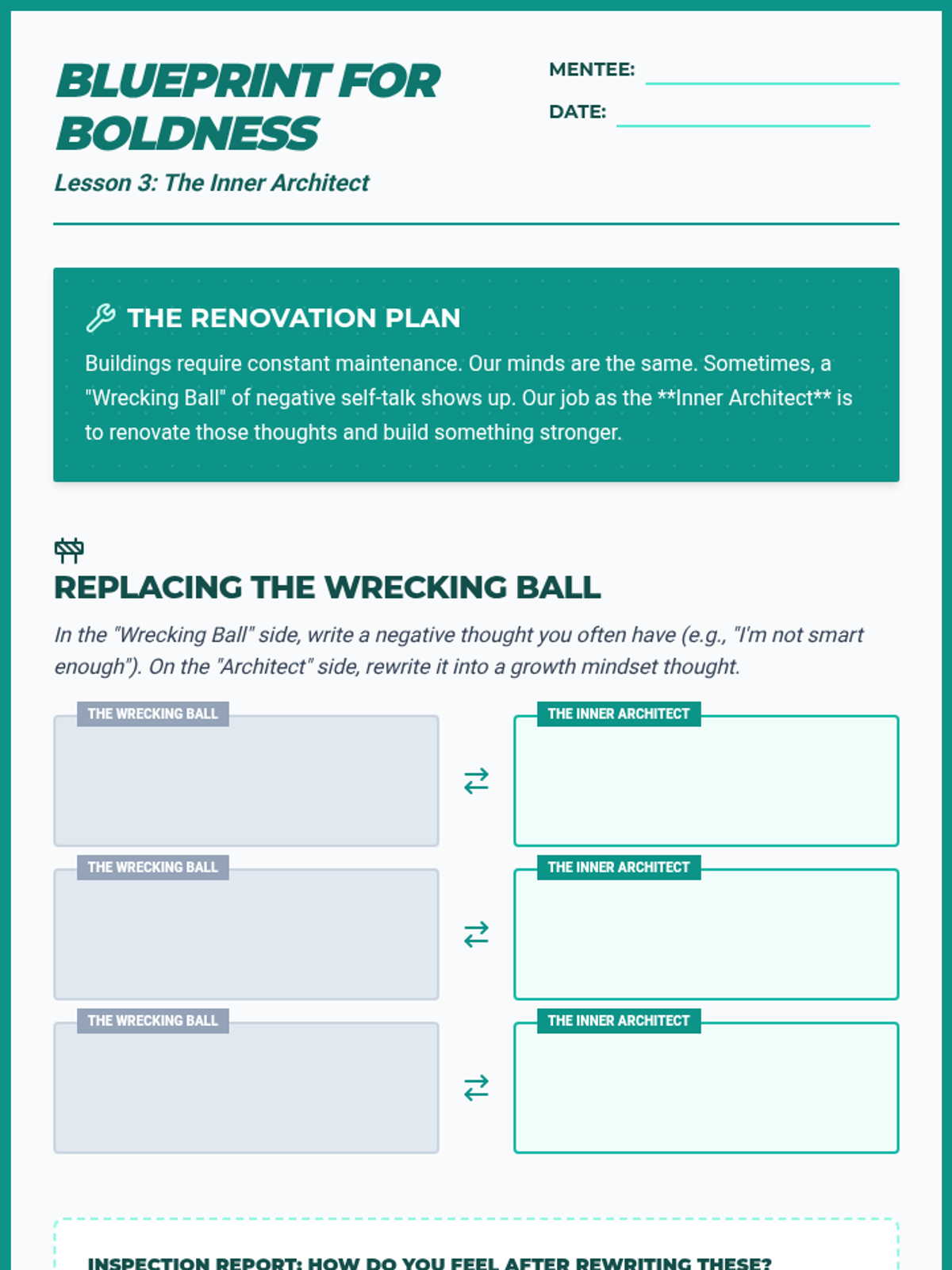
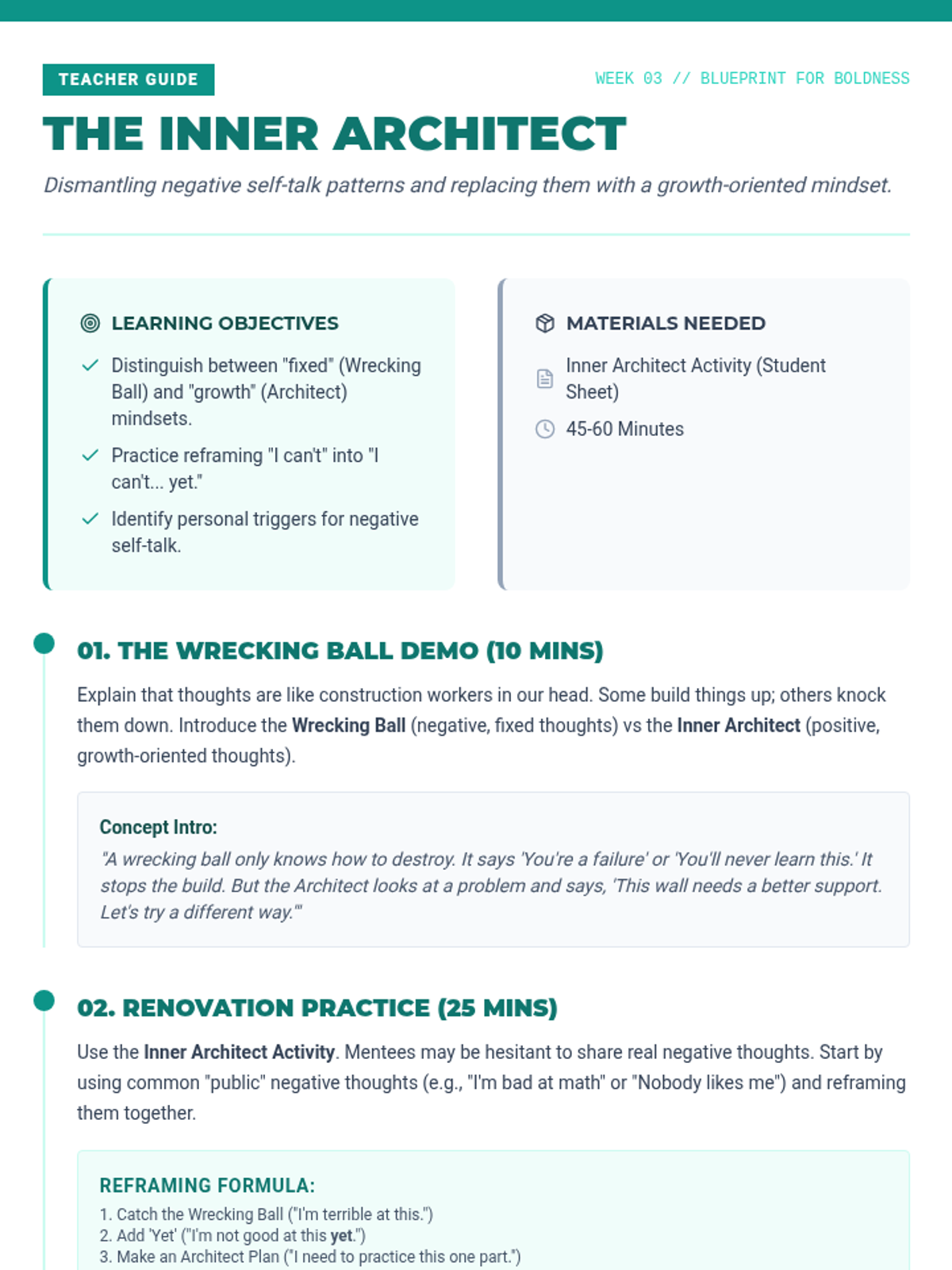
Identify and dismantle negative self-talk patterns, replacing them with a growth-oriented 'Architect' mindset.
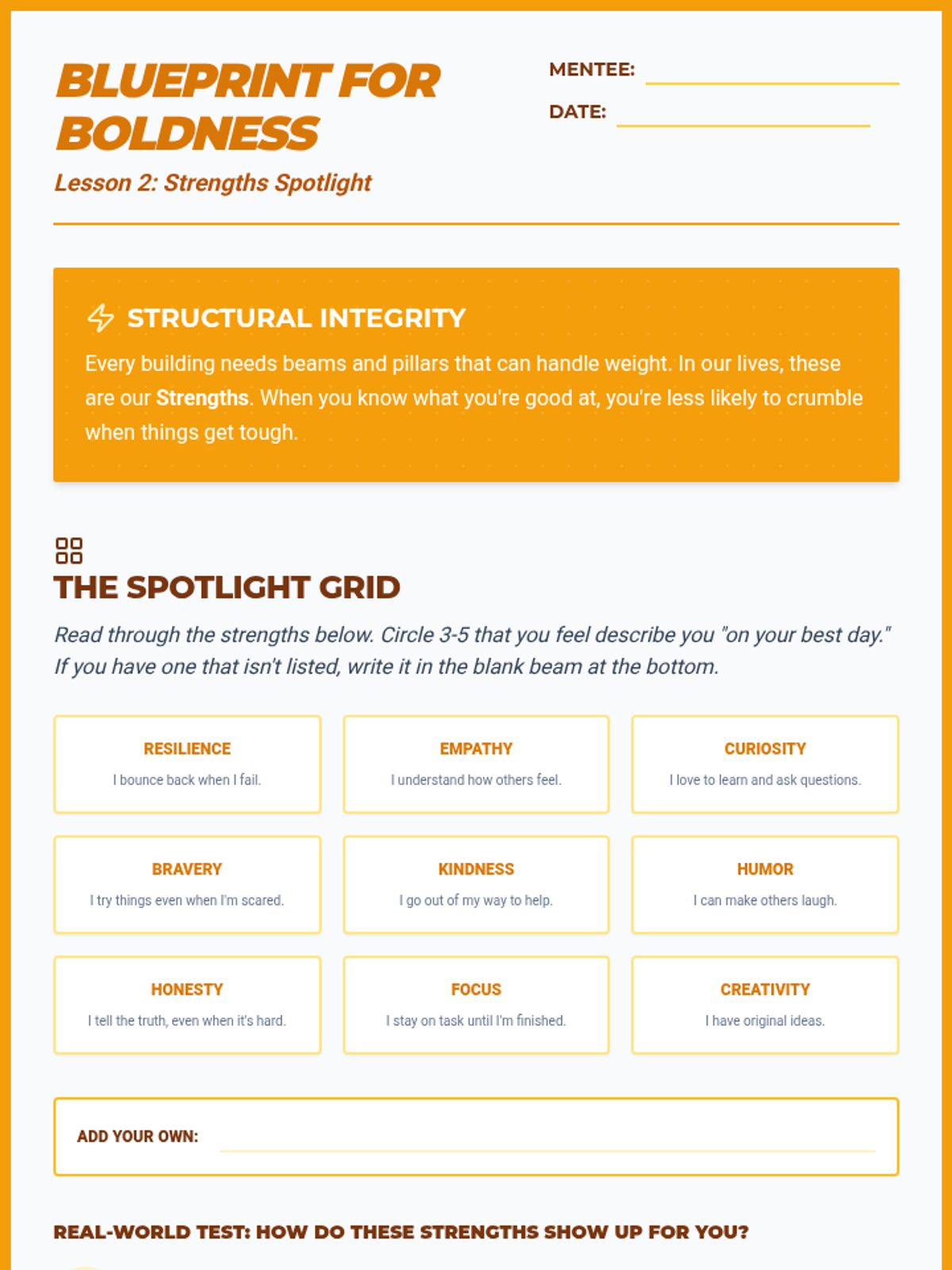
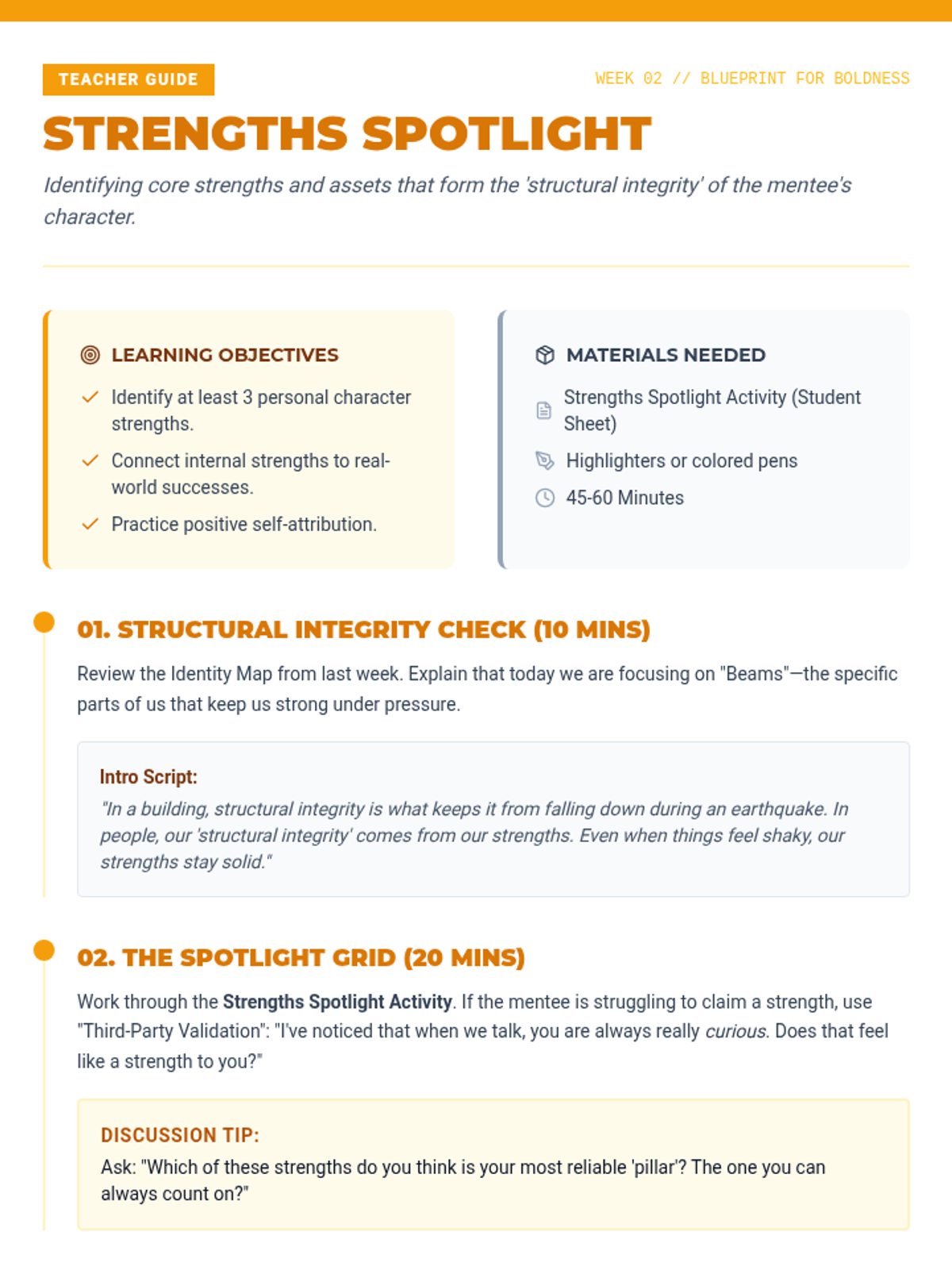
Identify core strengths and assets that form the 'structural integrity' of the mentee's character.
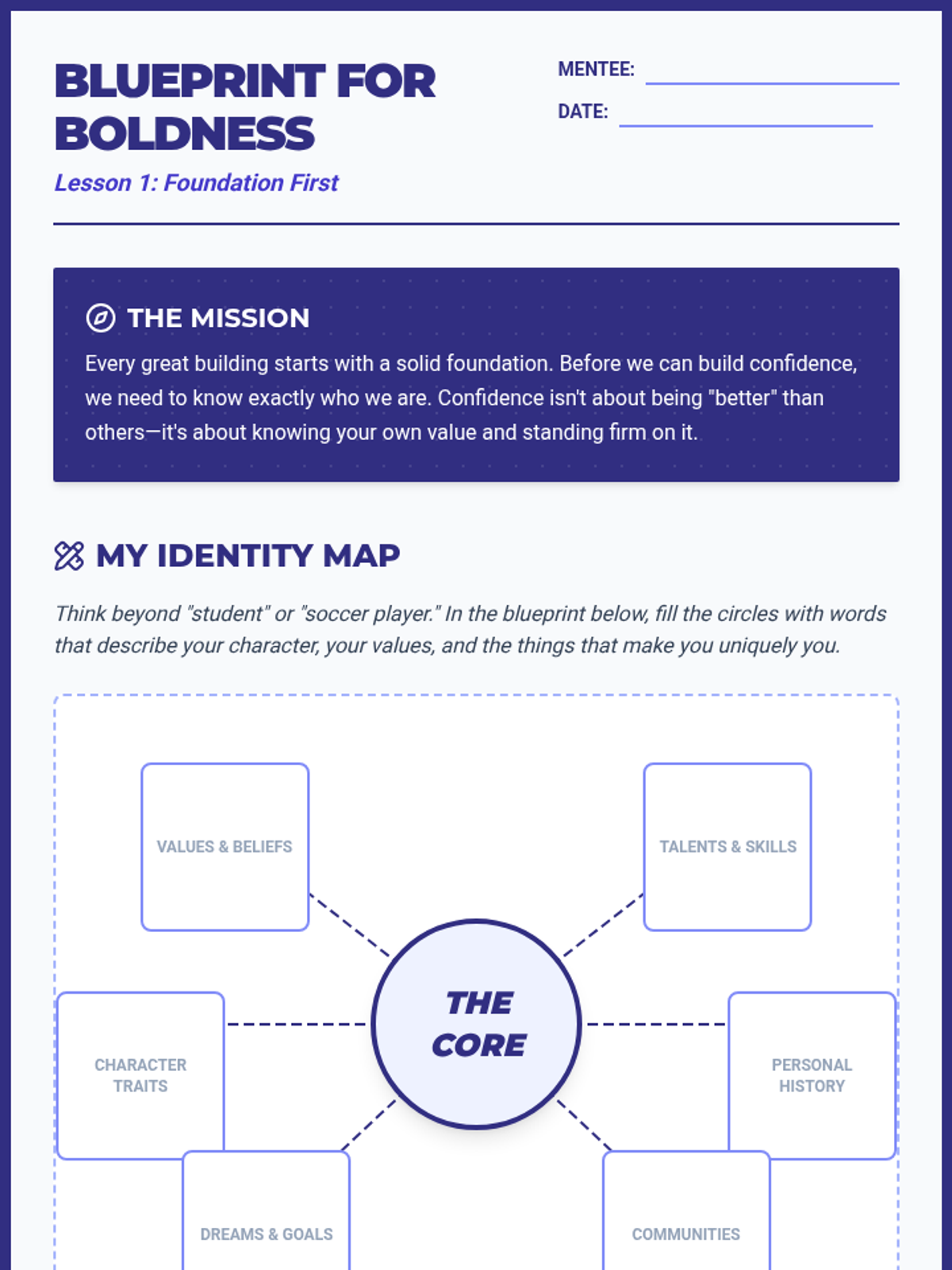
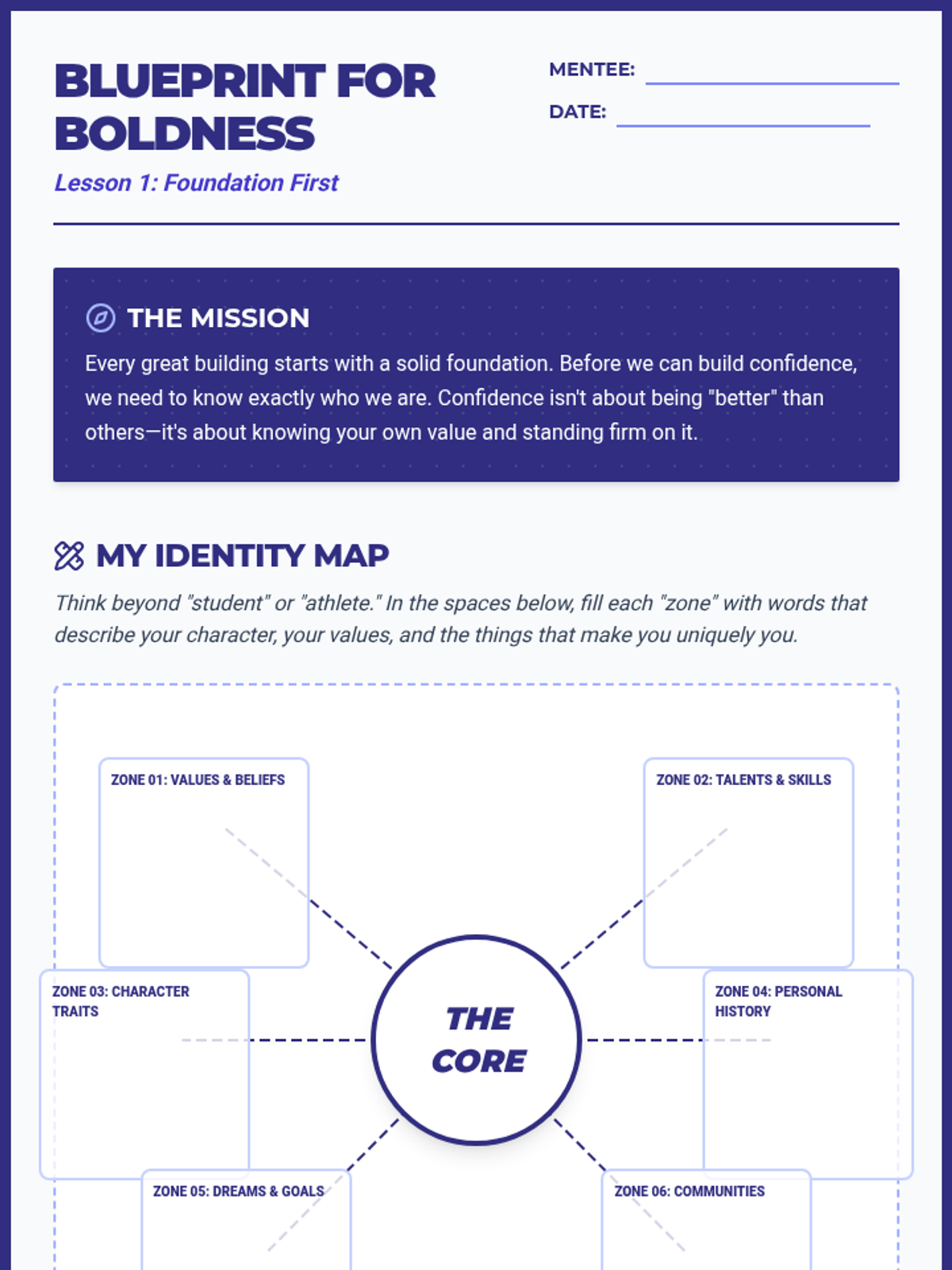
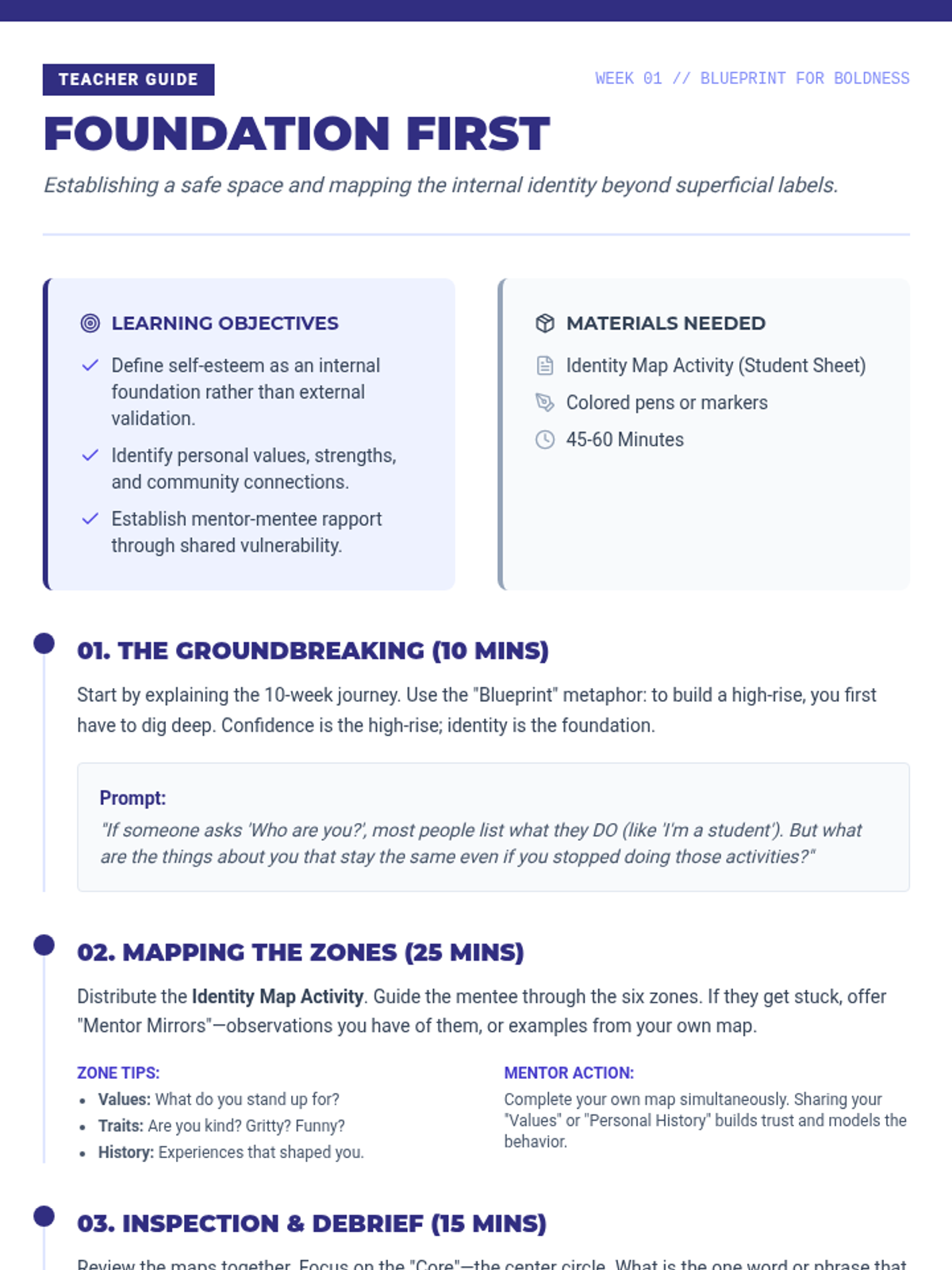
Establish a safe space and help the mentee map their internal identity beyond superficial labels.
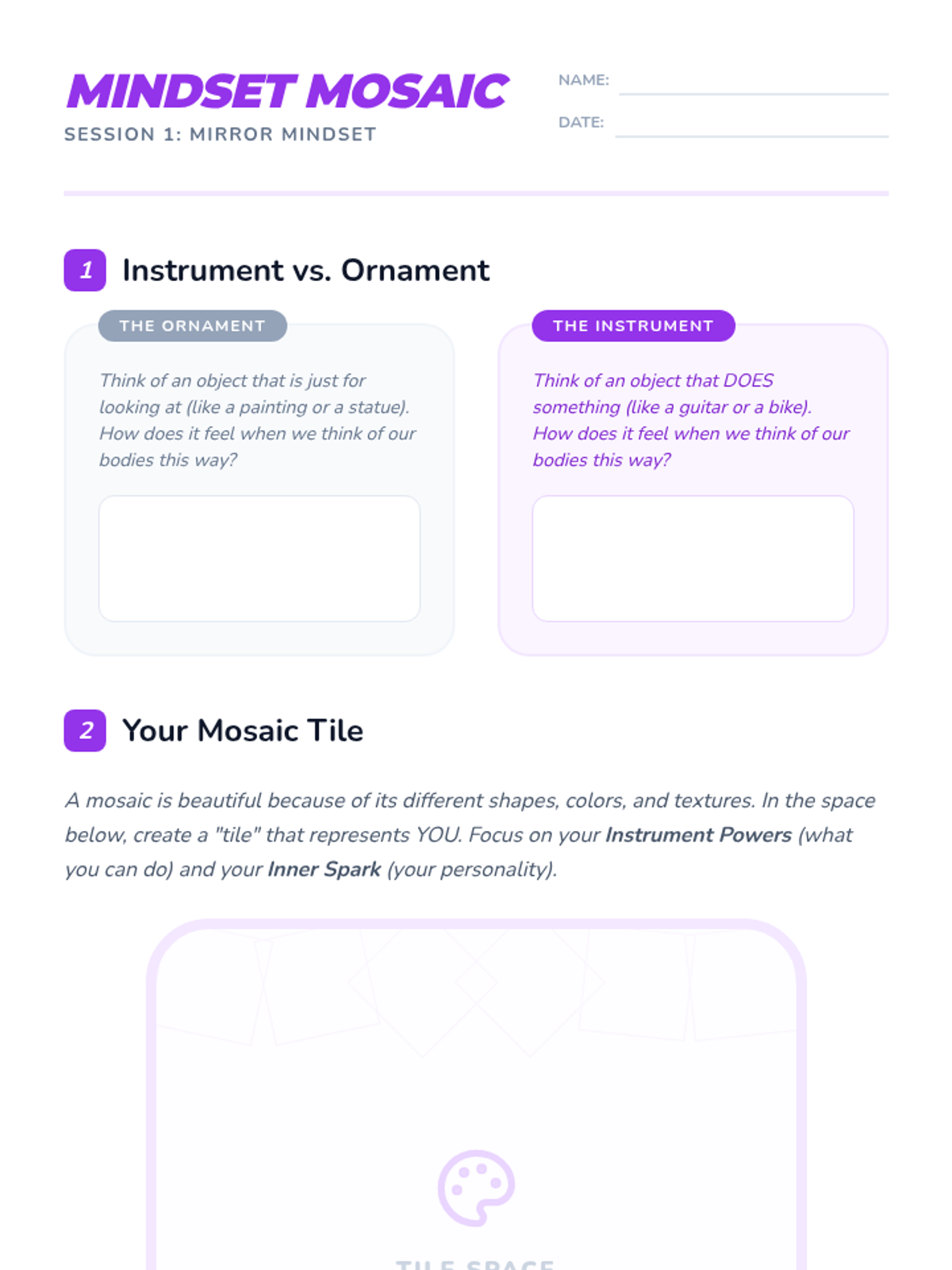
An overview of body diversity, neutrality, and media literacy, shifting focus from ornaments to instruments.
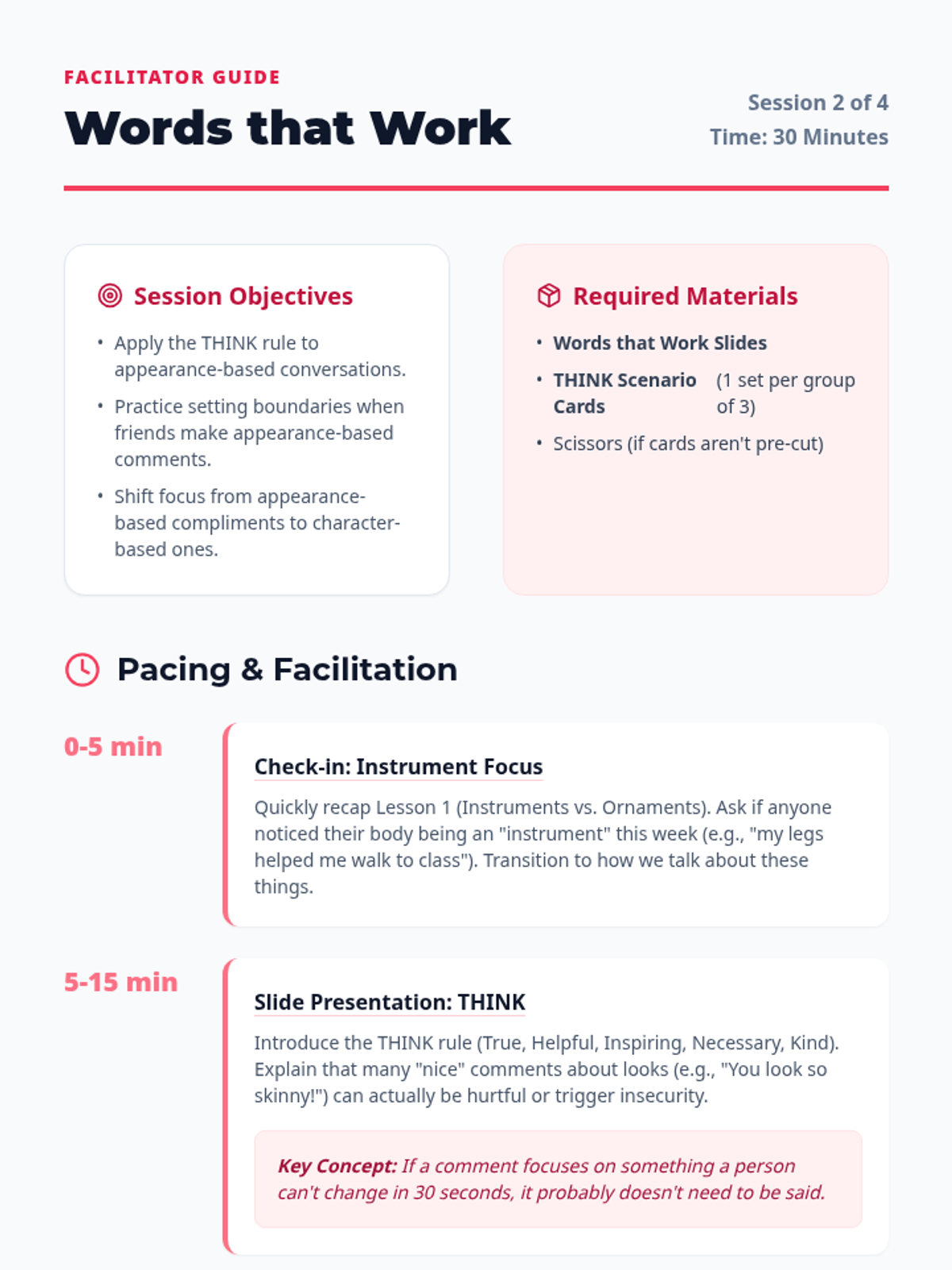
Focusing on interpersonal communication, the THINK rule, setting boundaries, and positive social interactions.
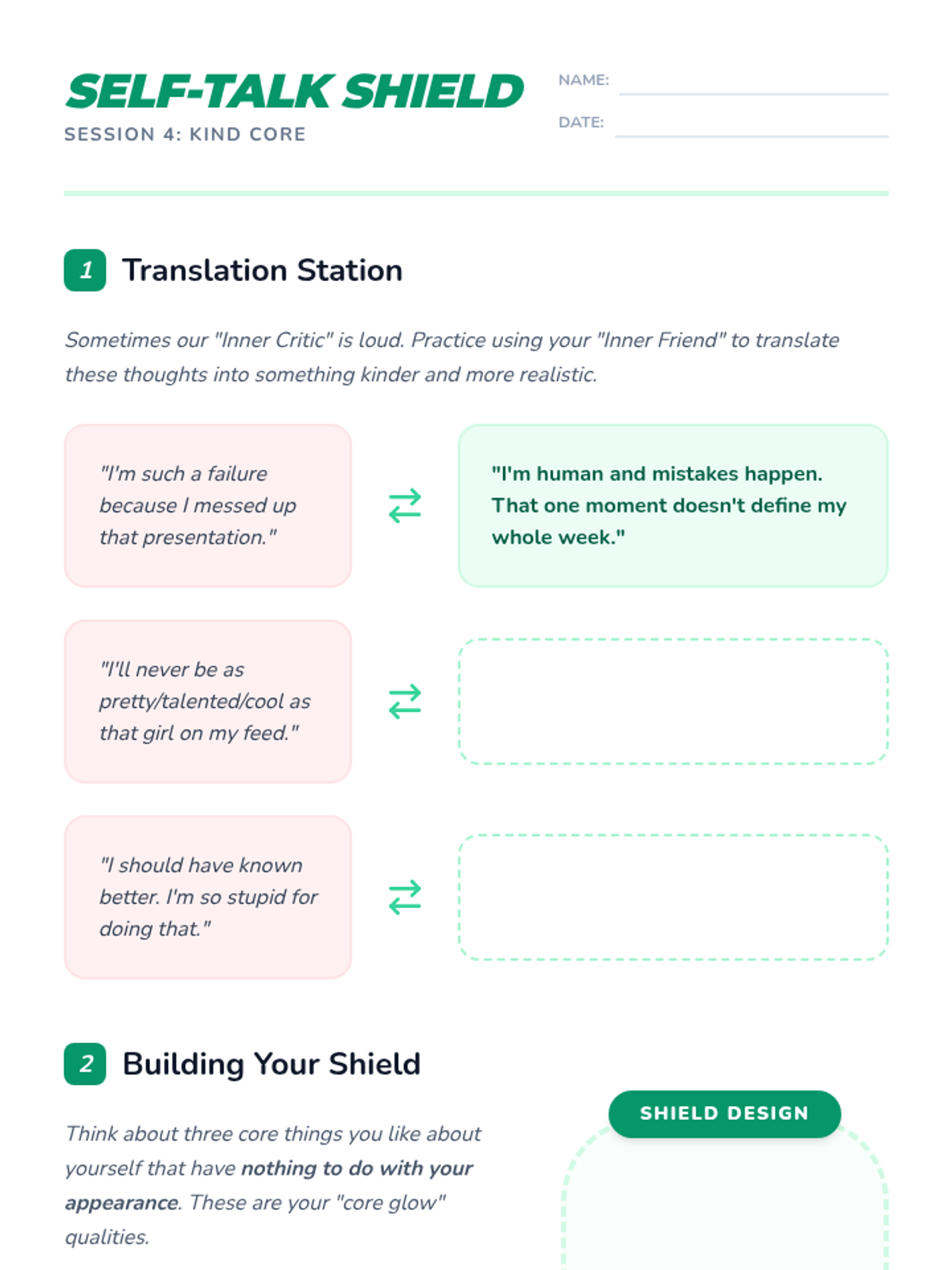
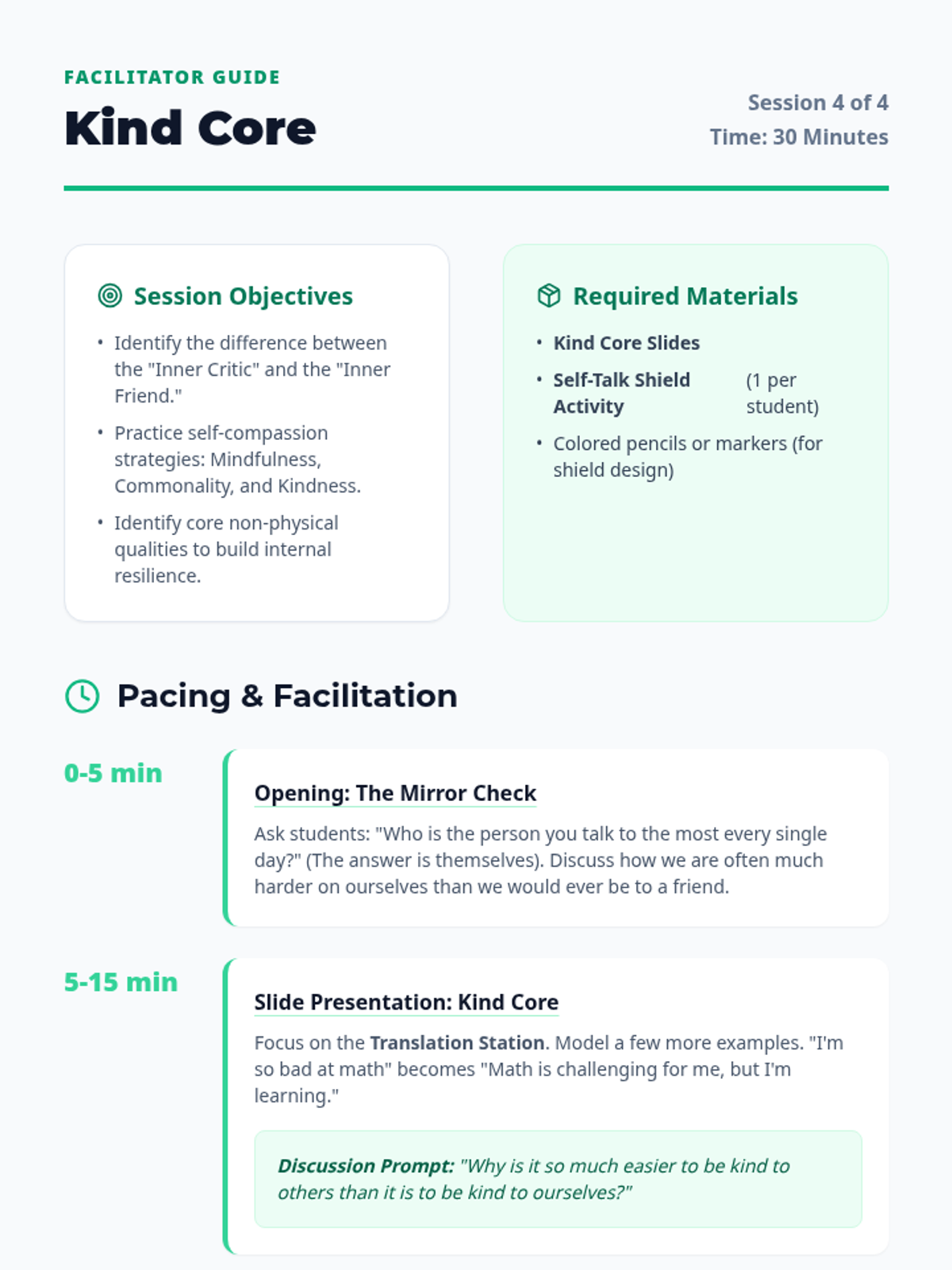
Focusing on building a kinder inner dialogue, transitioning from a self-critical voice to a self-compassionate one, and developing resilience through positive self-talk.
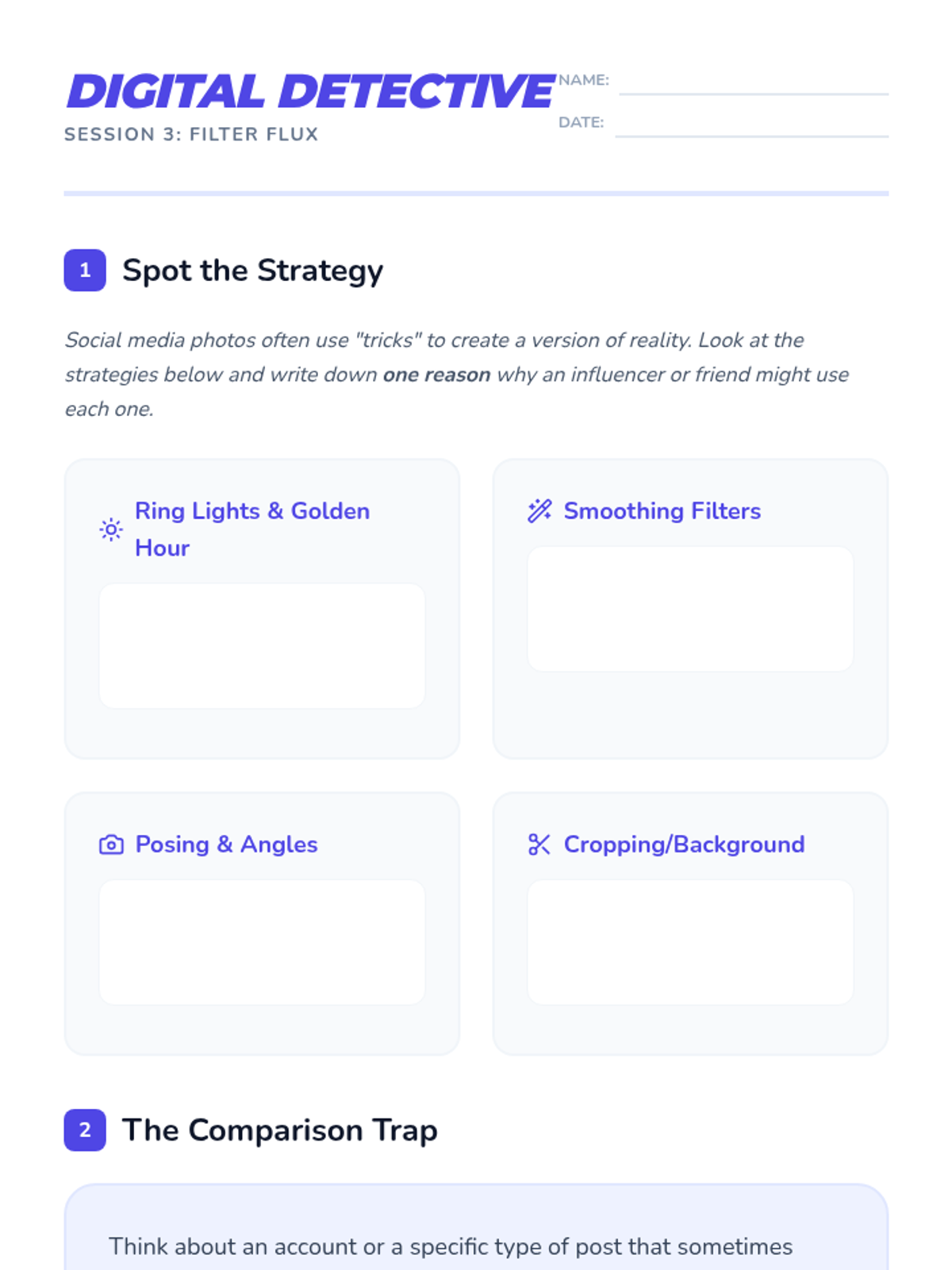
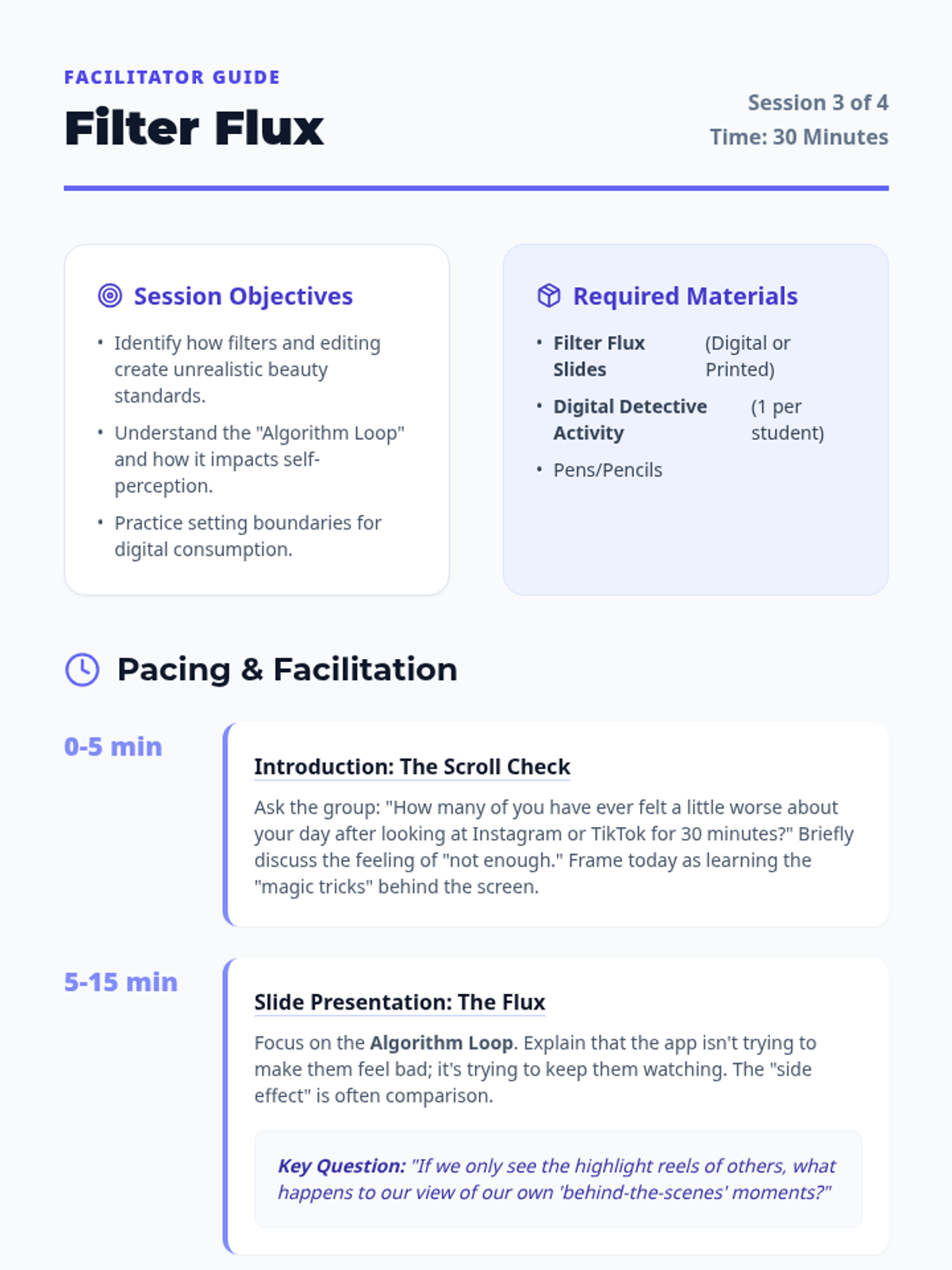
Exploring the world of social media, filters, and algorithms to understand how digital spaces influence our self-perception and how to navigate them authentically.
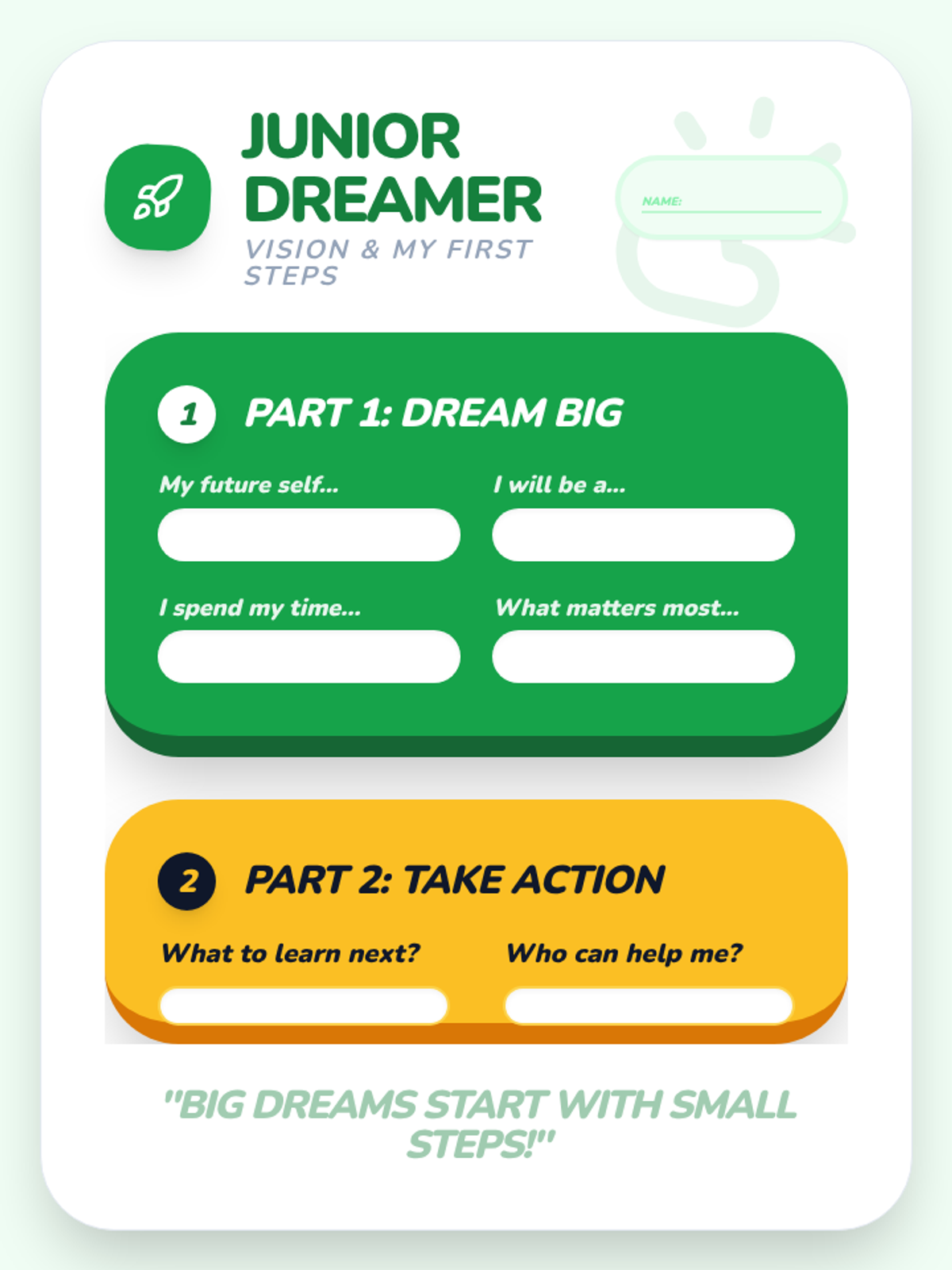
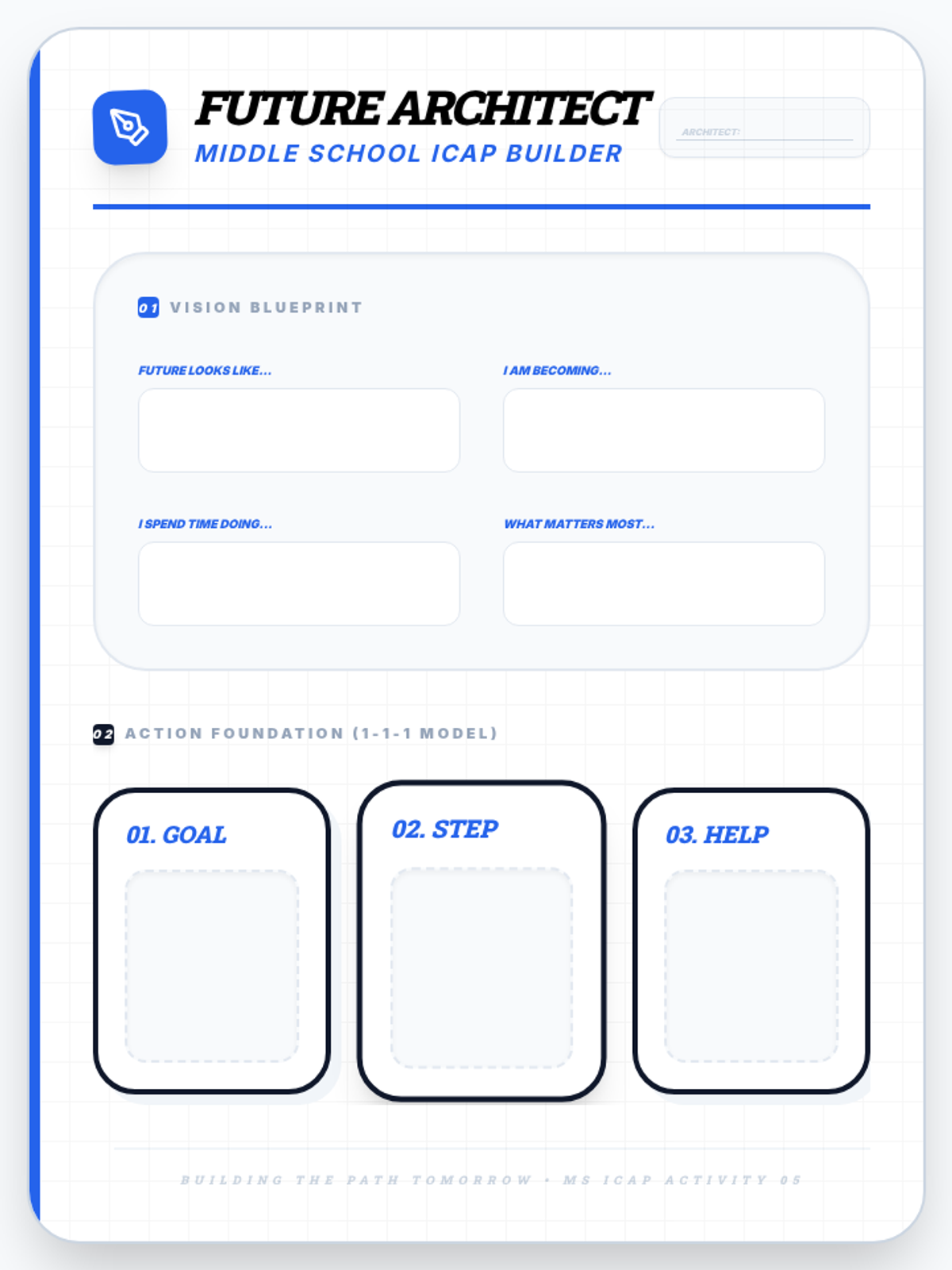
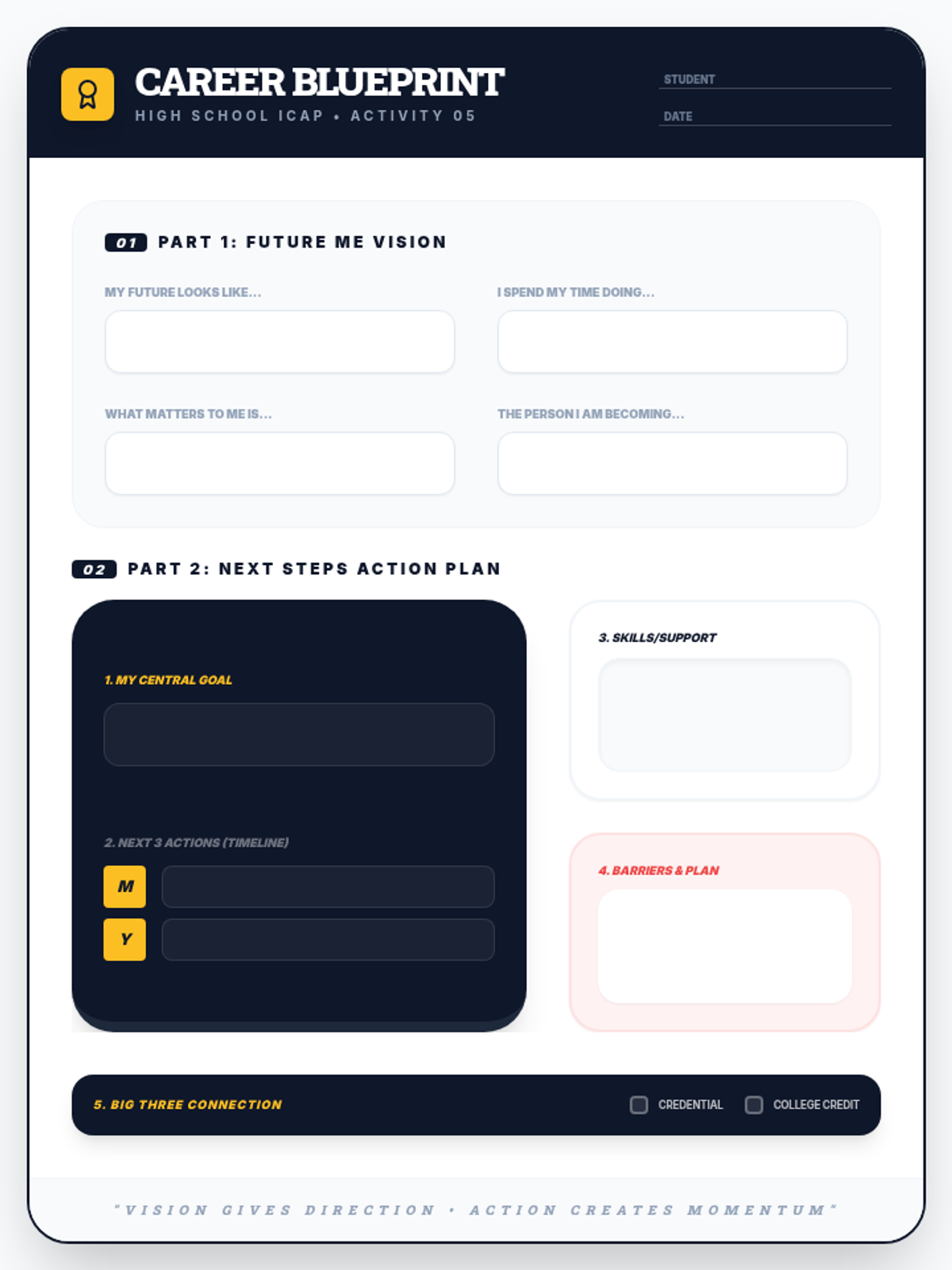
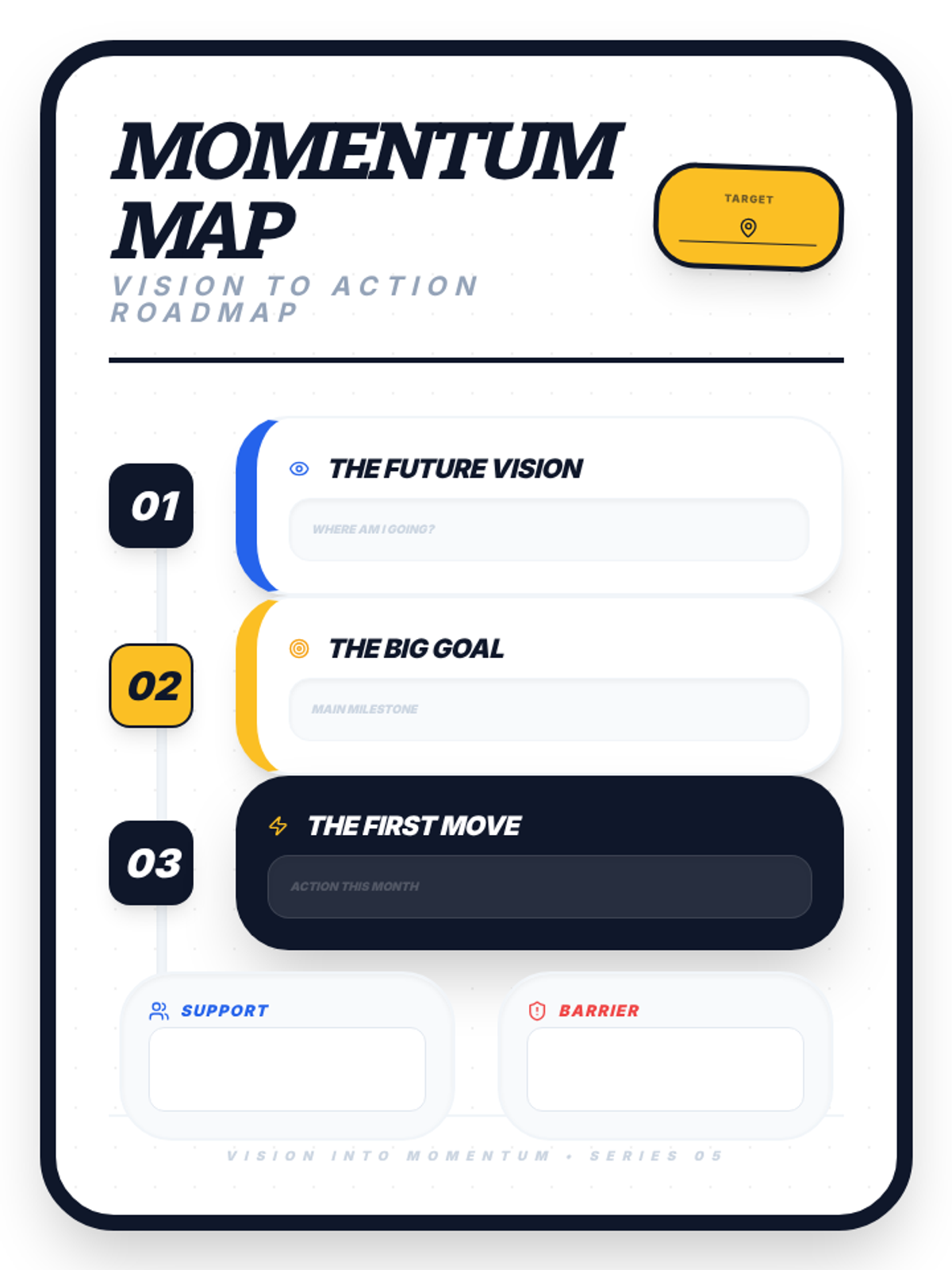
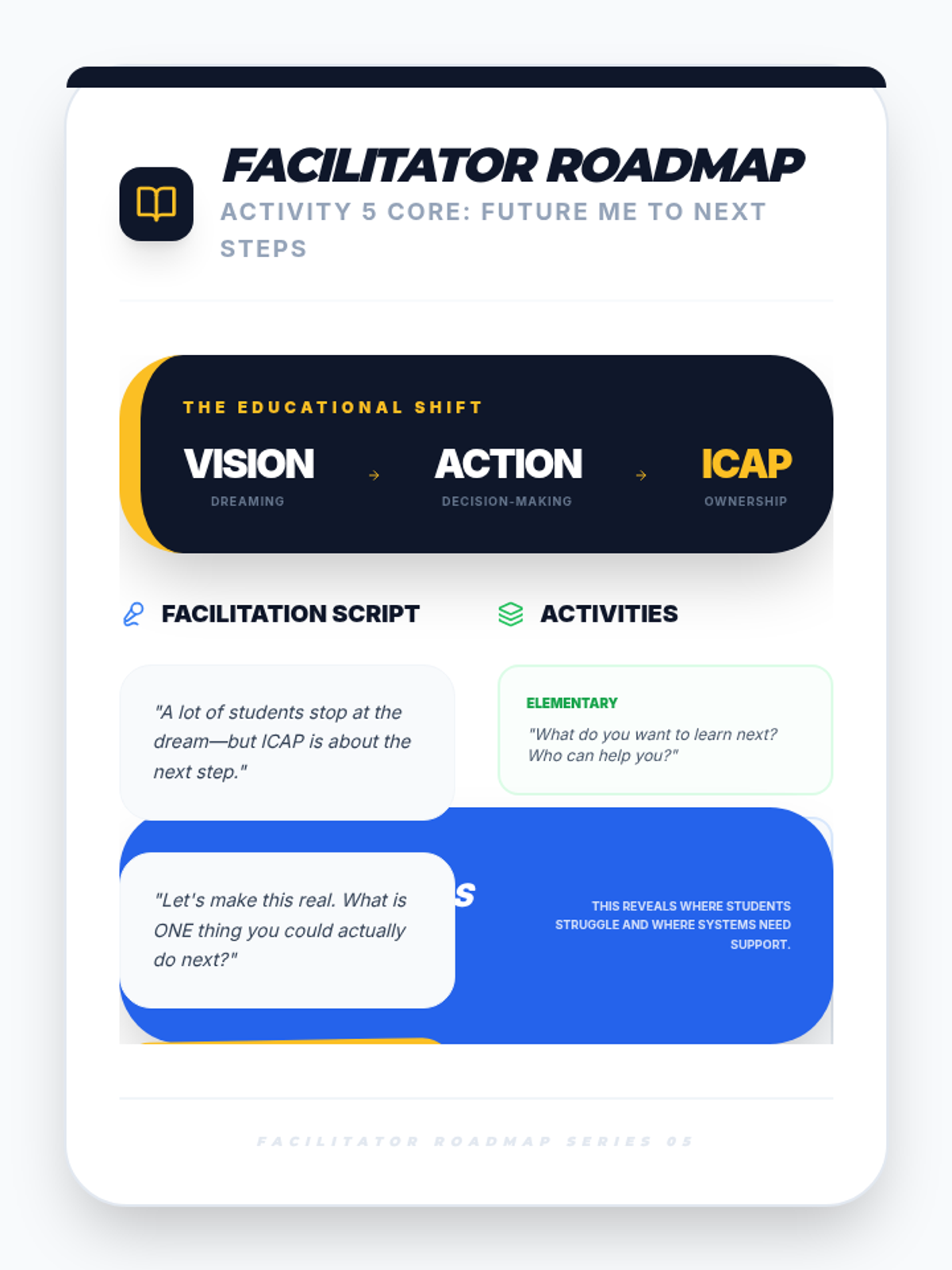
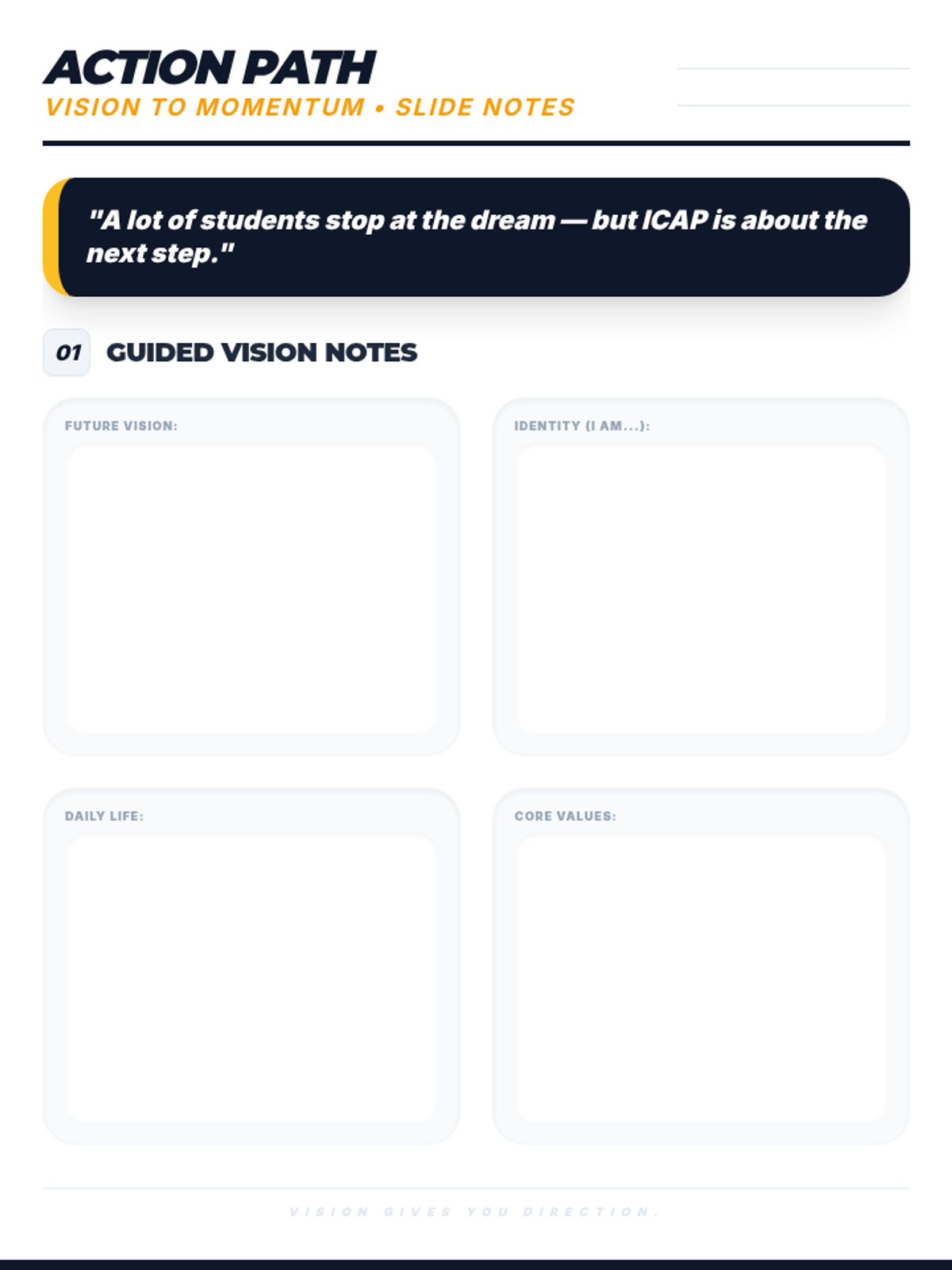
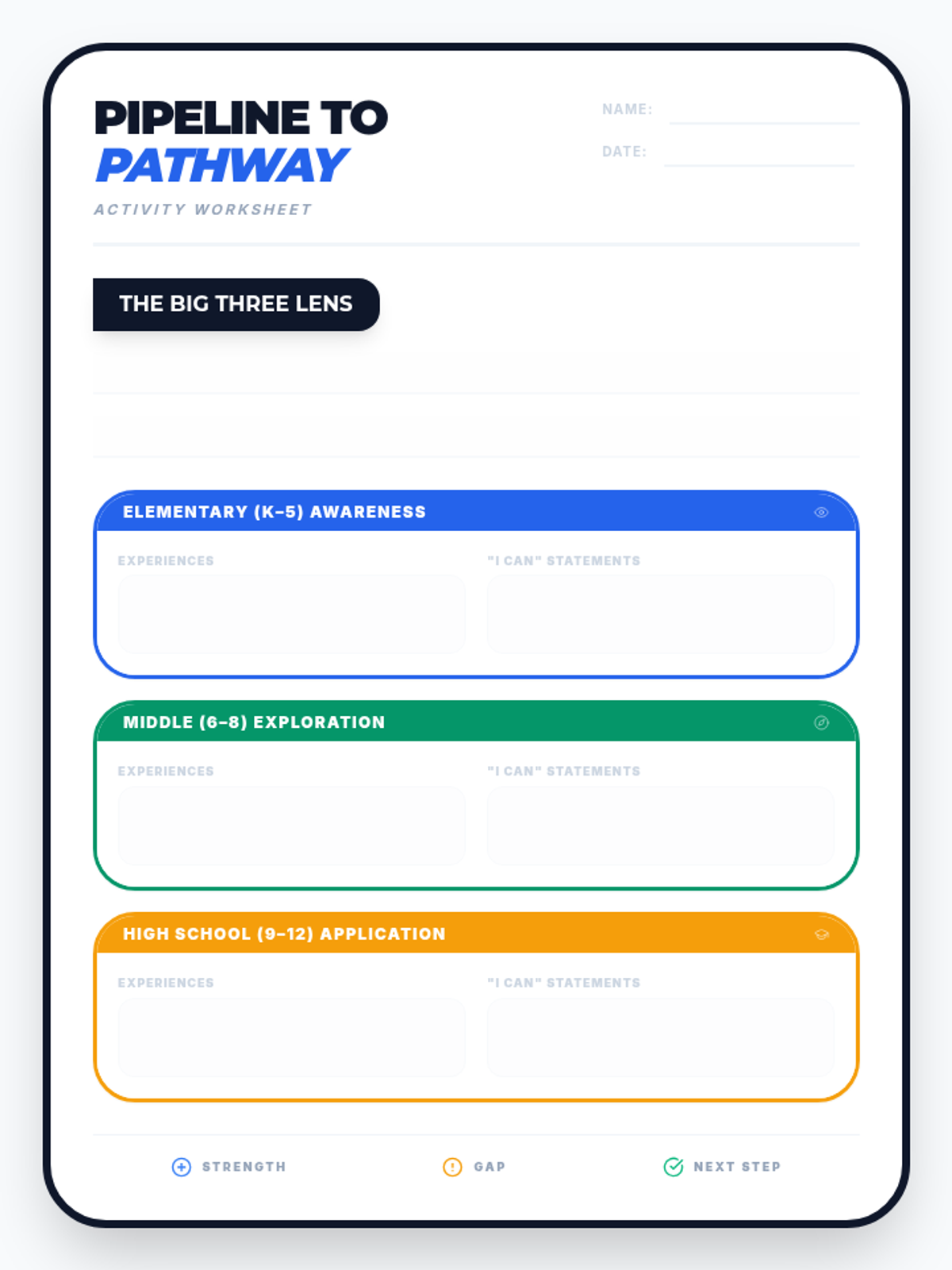
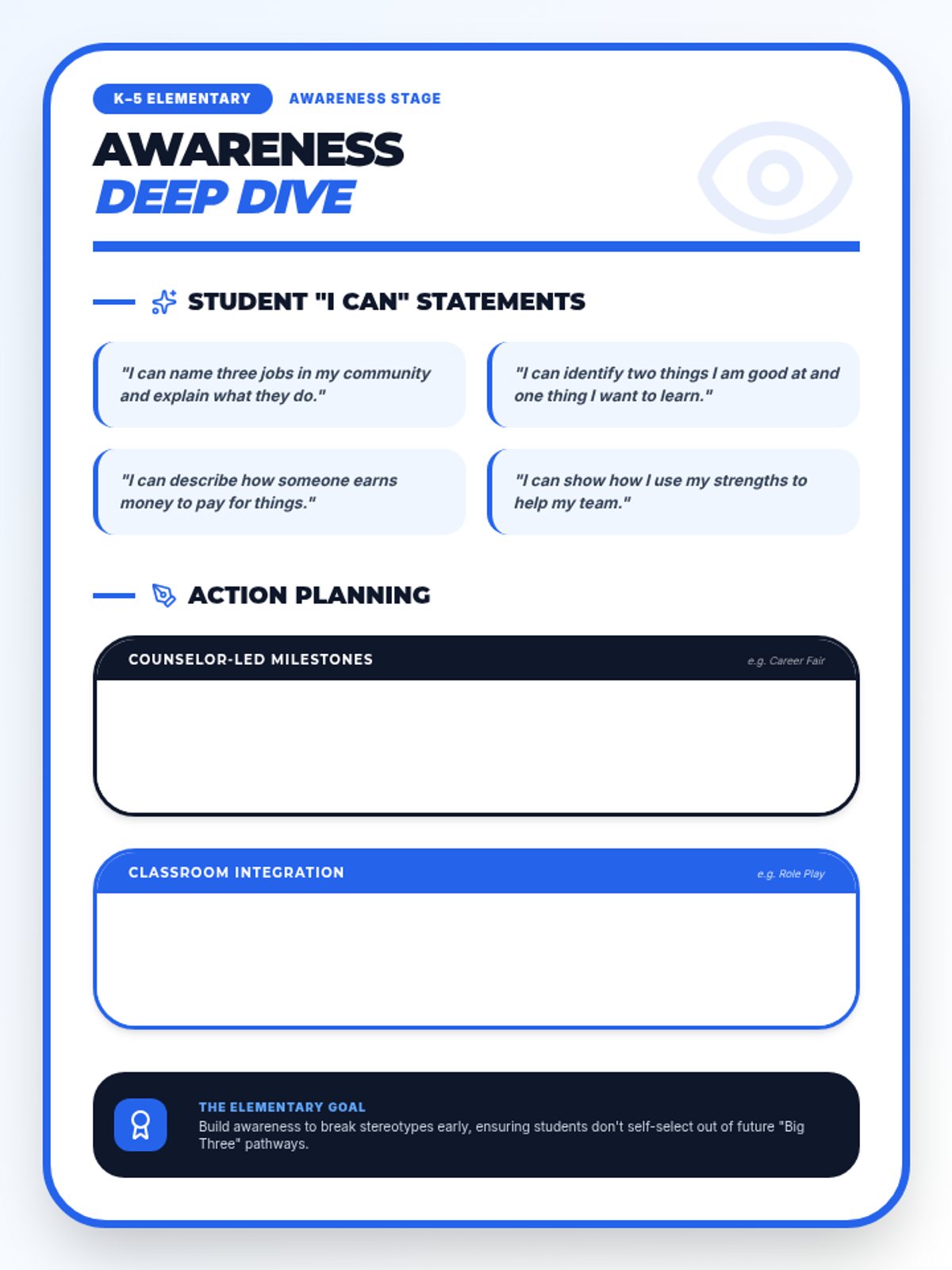
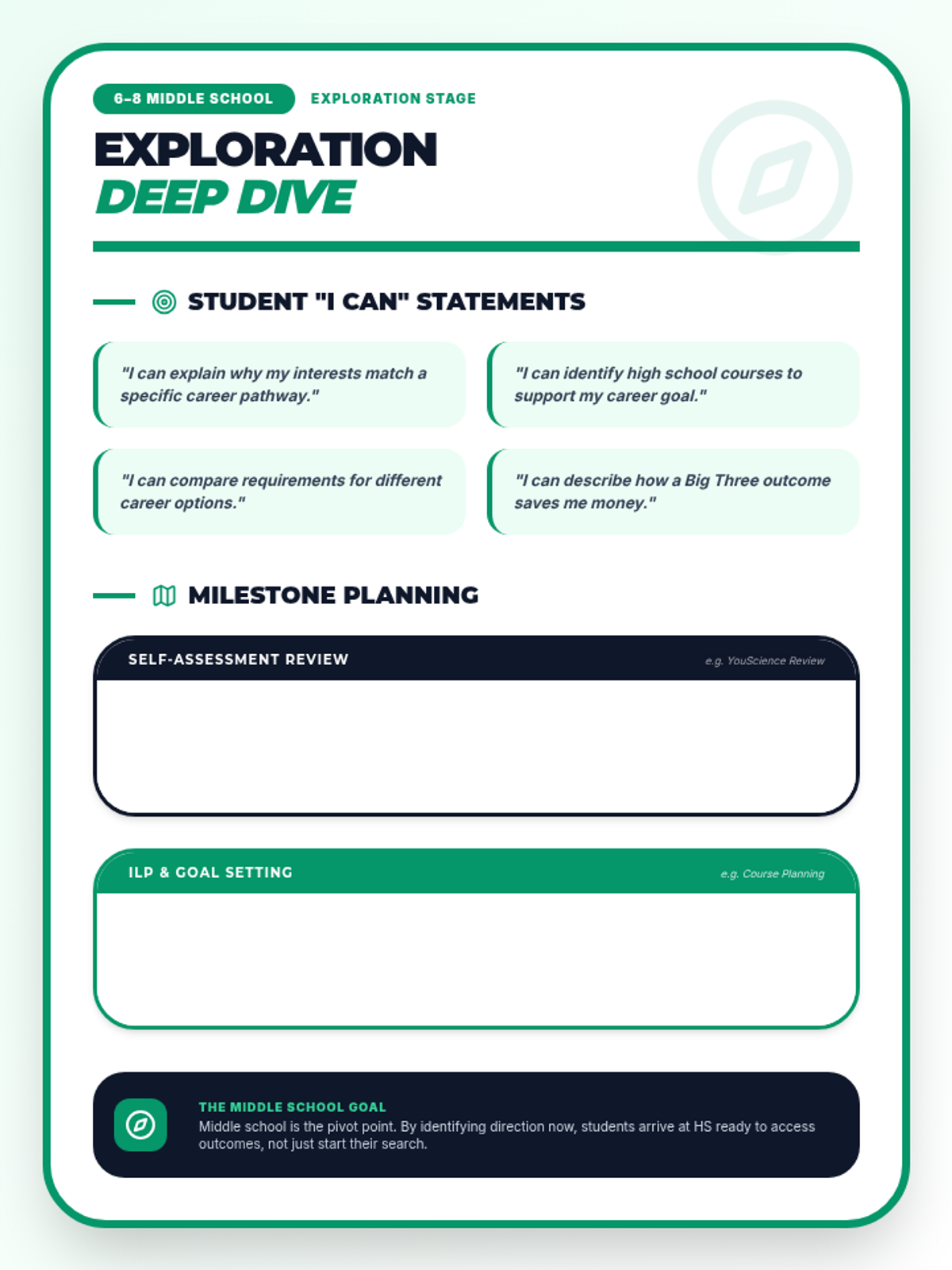
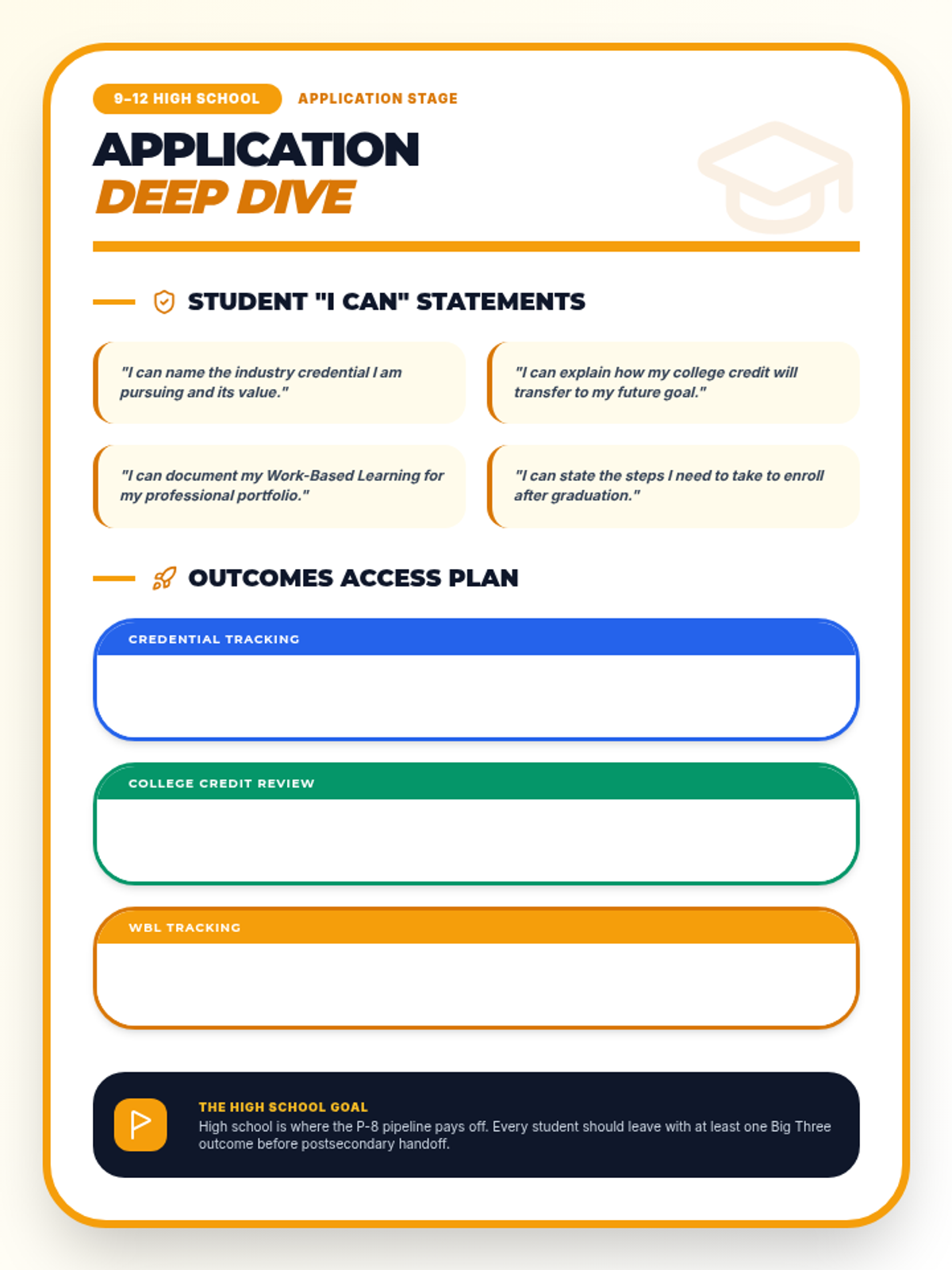
A transition-focused lesson that moves students from personal vision to concrete action steps through the ICAP framework, tailored for Elementary, Middle, and High School levels.
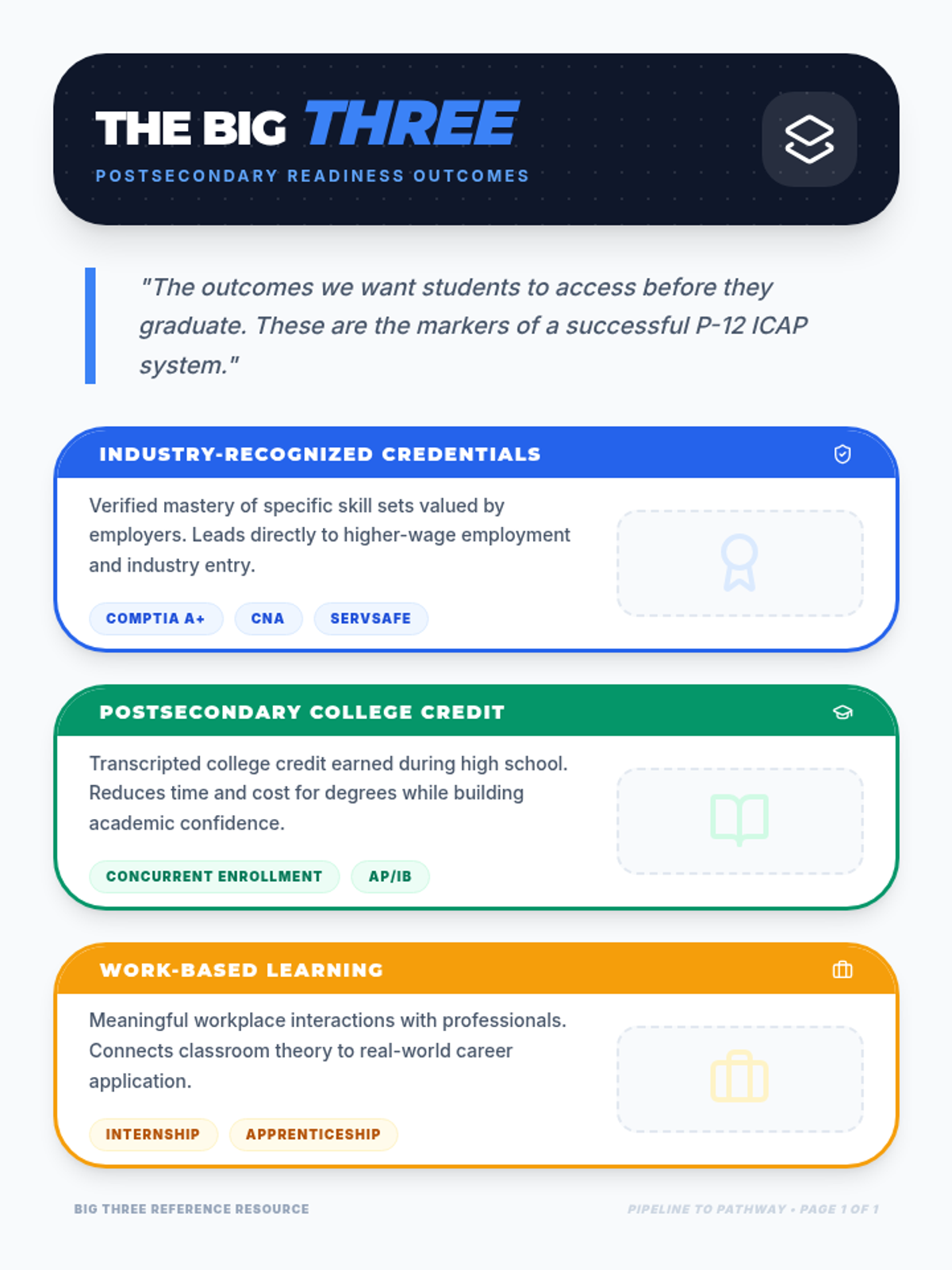
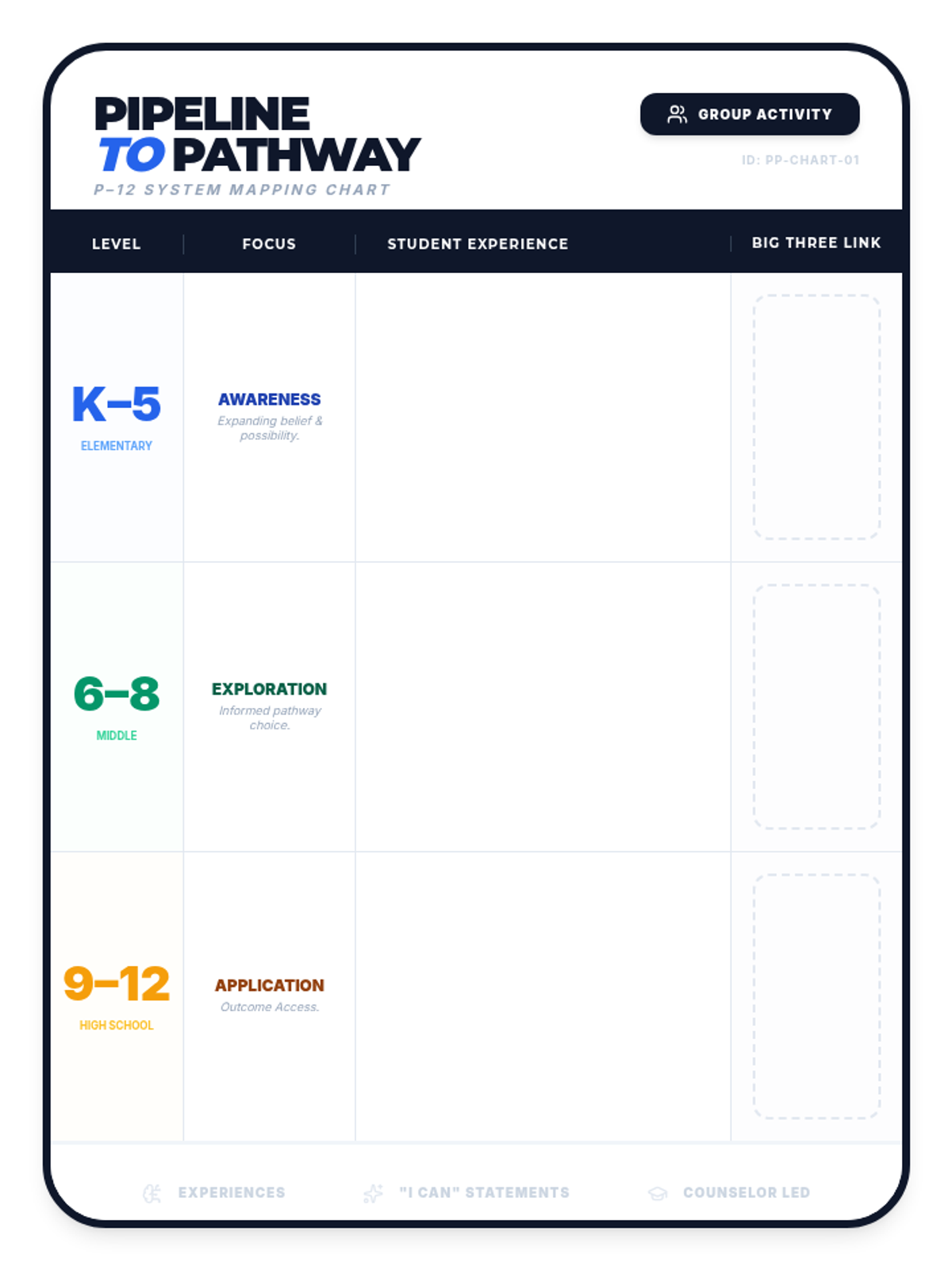
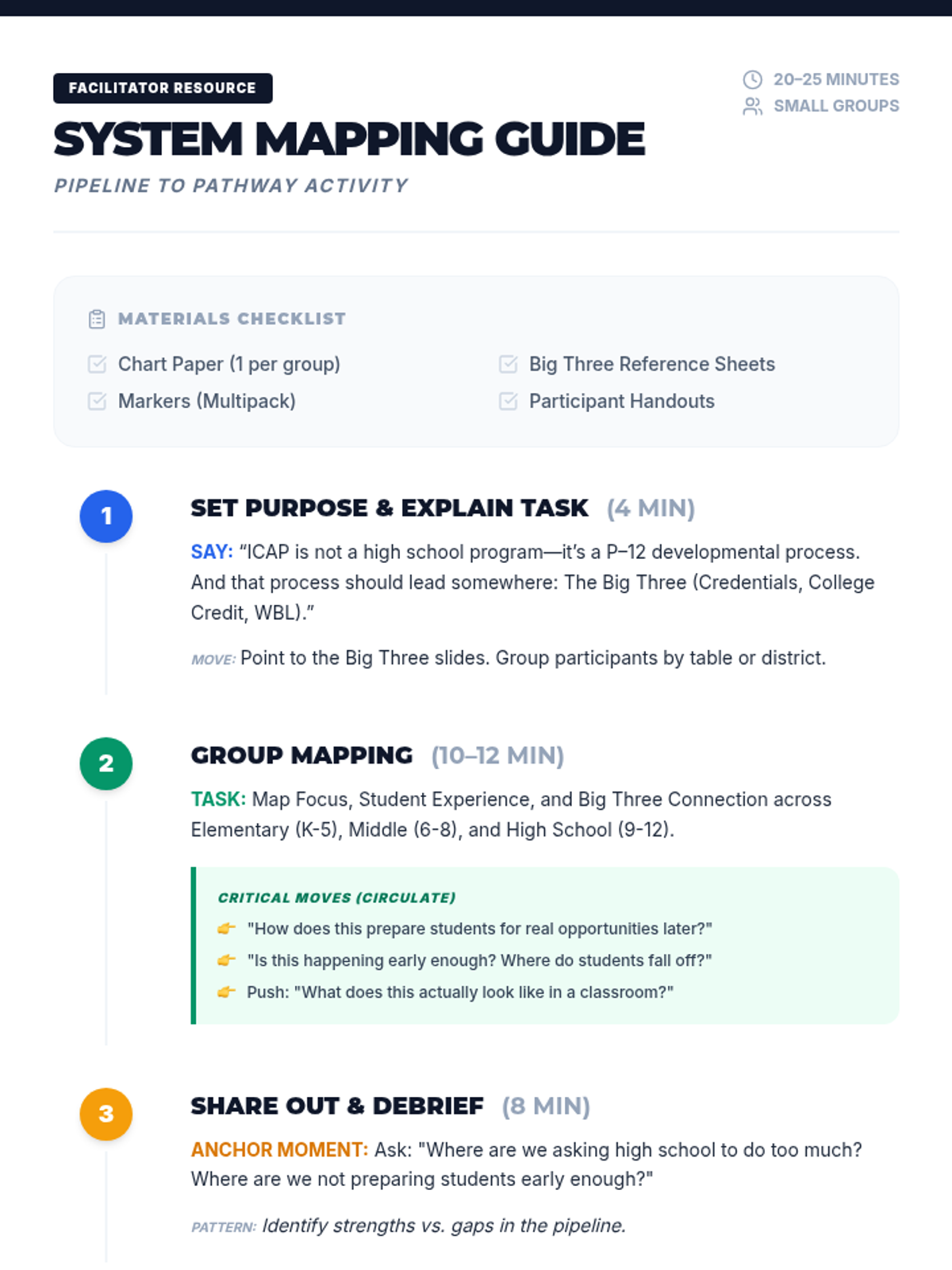
A collaborative workshop session where educators map out the developmental stages of a student's journey from elementary awareness to high school application and outcome access.