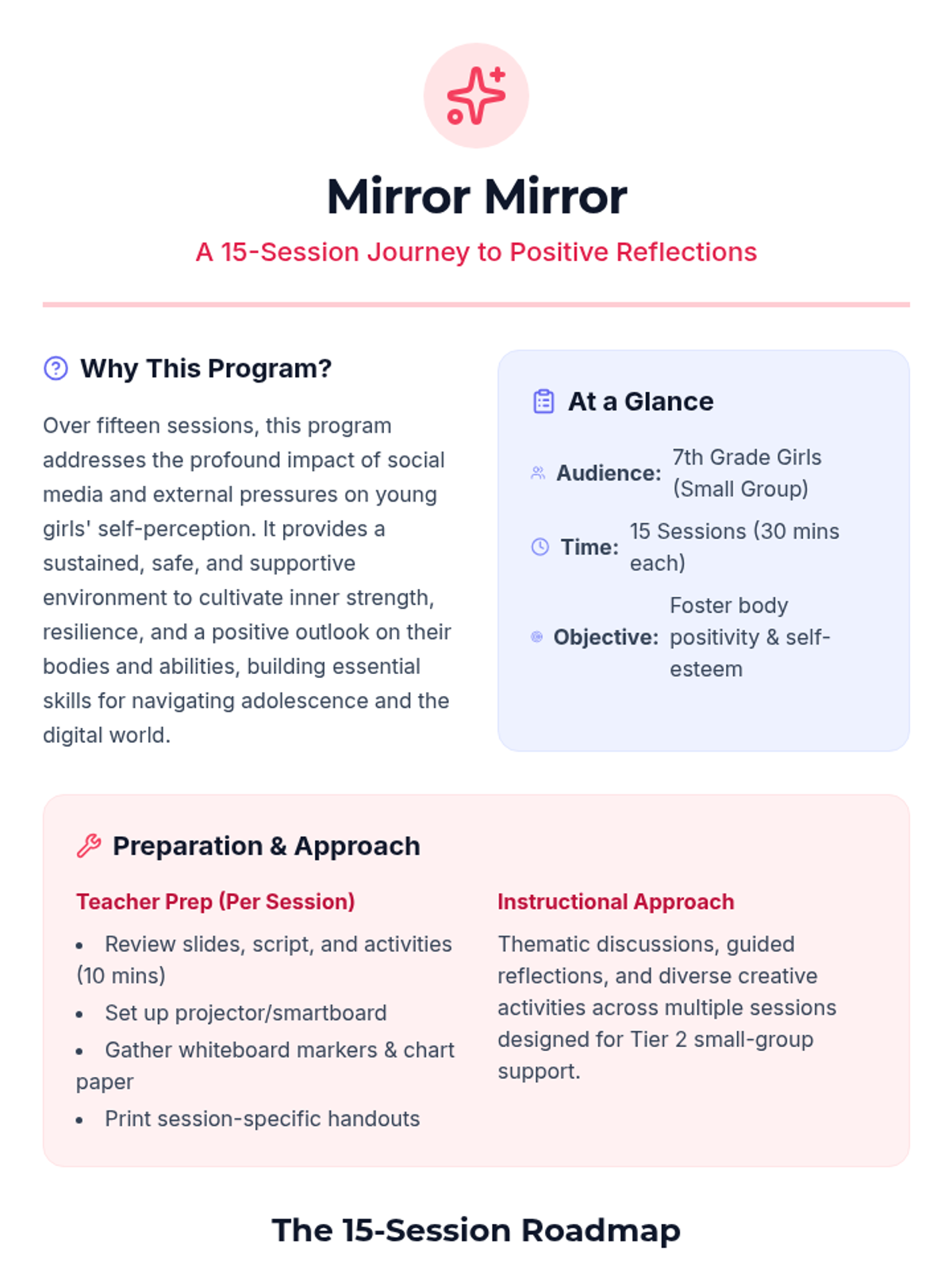
Empathetic skill development through emotion recognition, cultural diversity appreciation, and bias confrontation. Targets multi-perspective analysis to support respectful interactions and complex social responses.
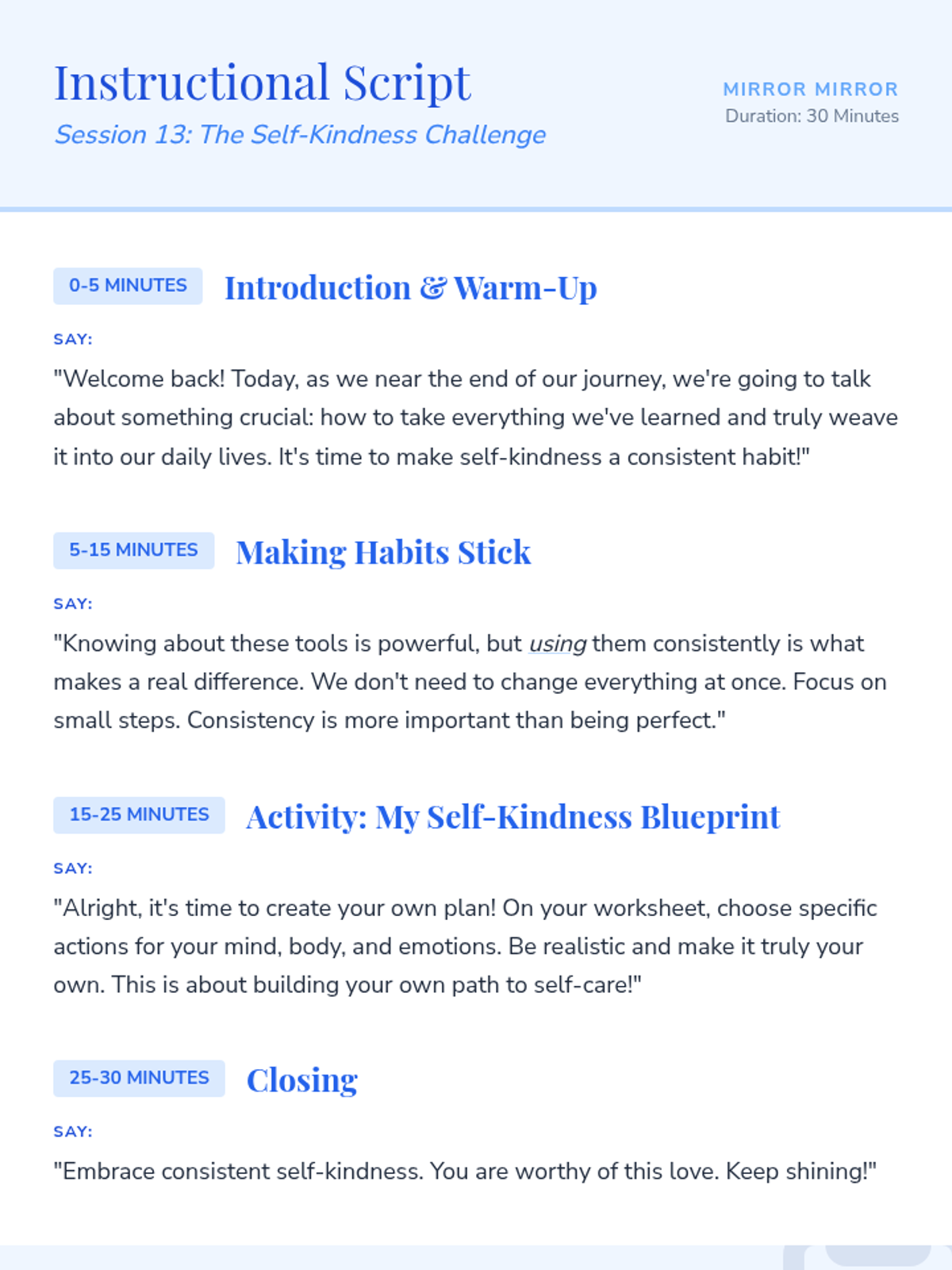
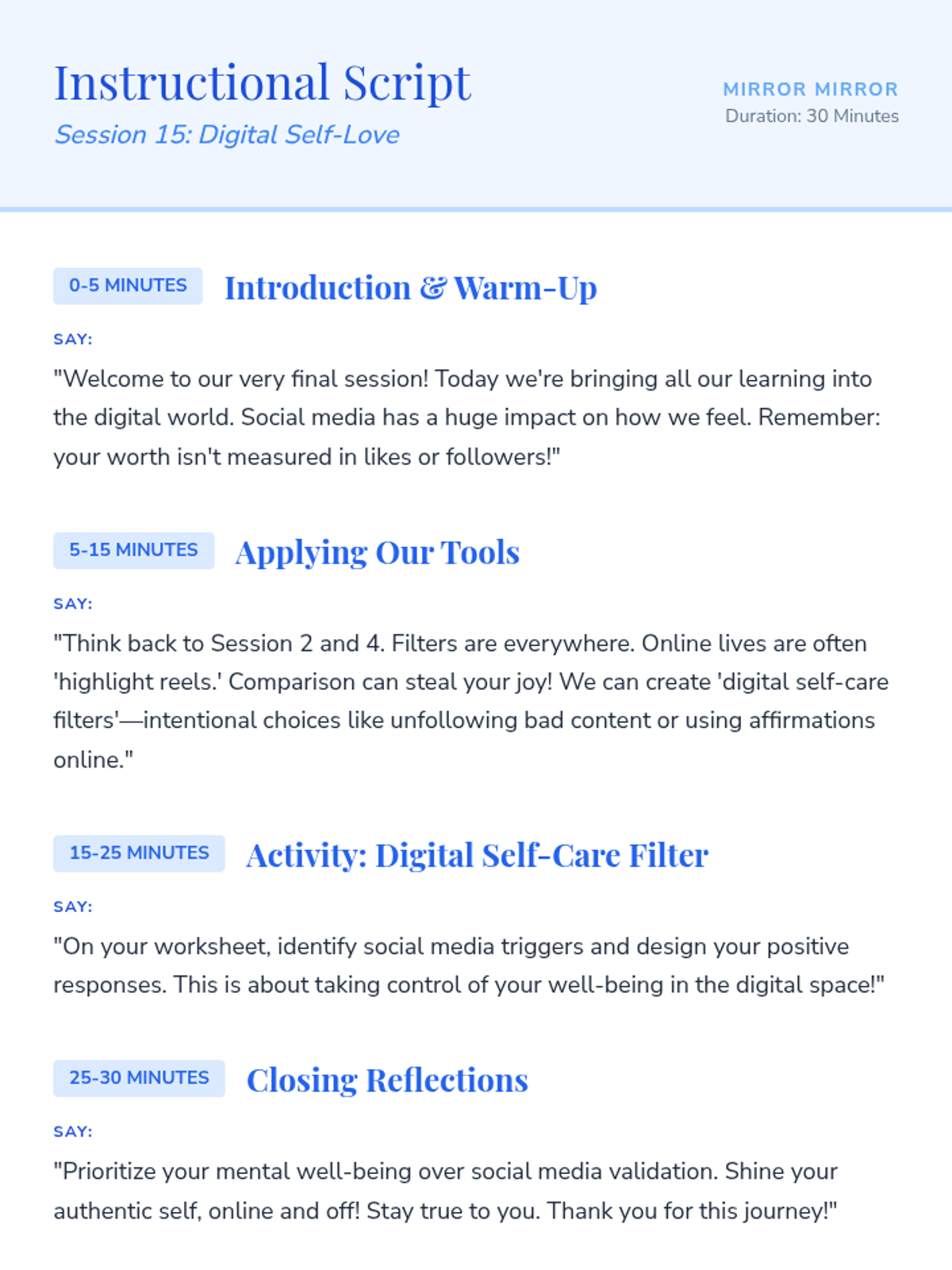
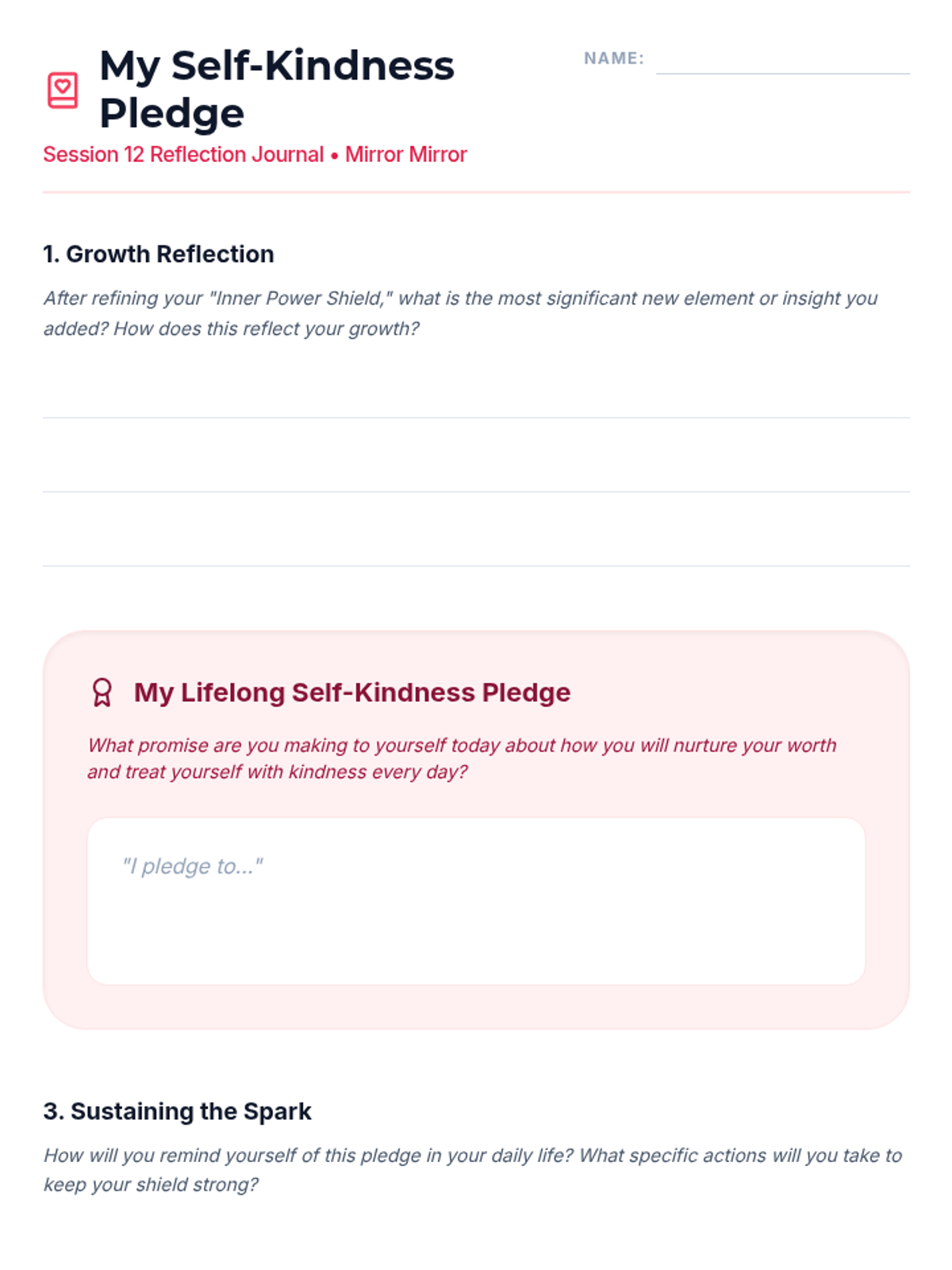
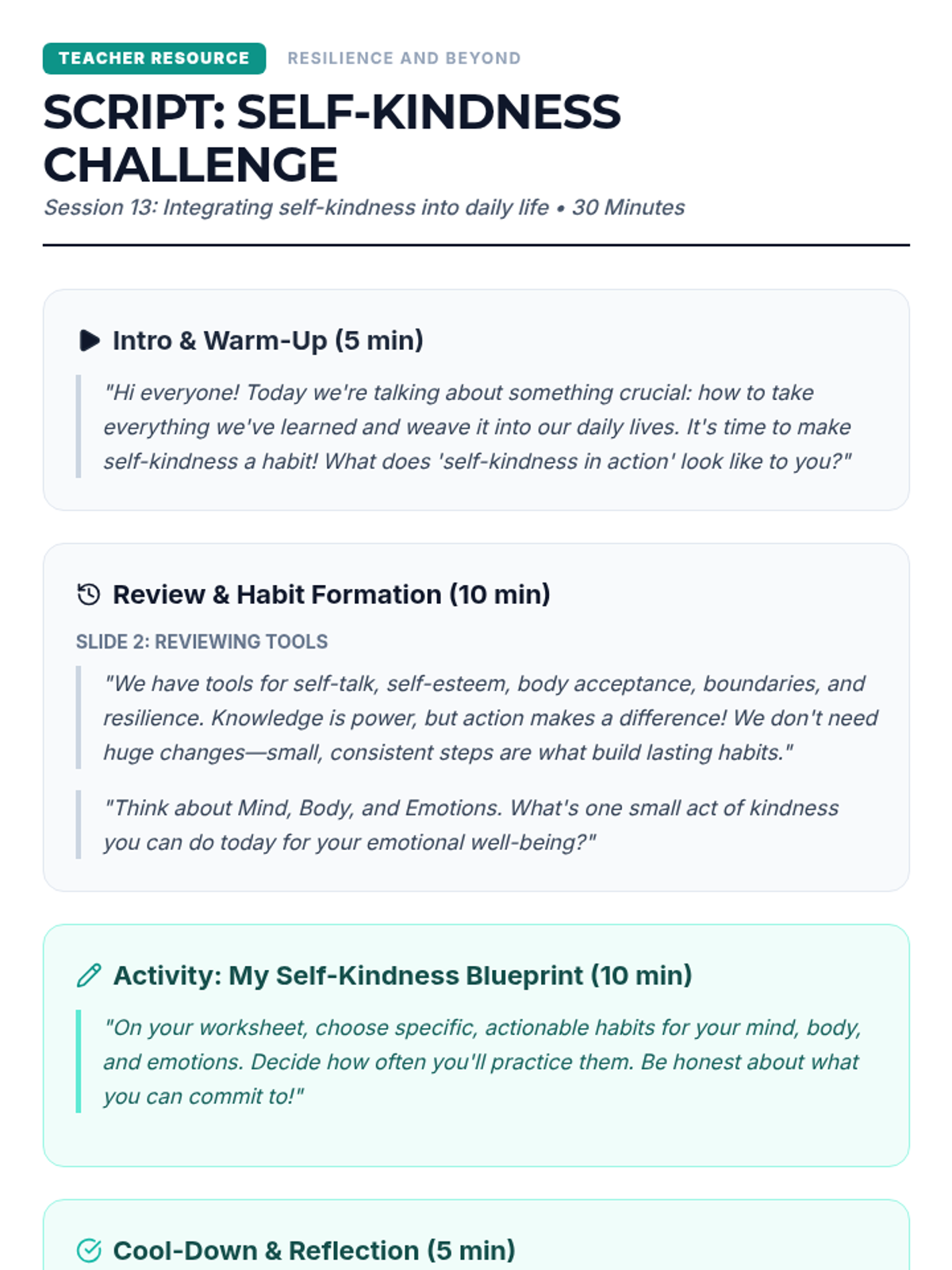
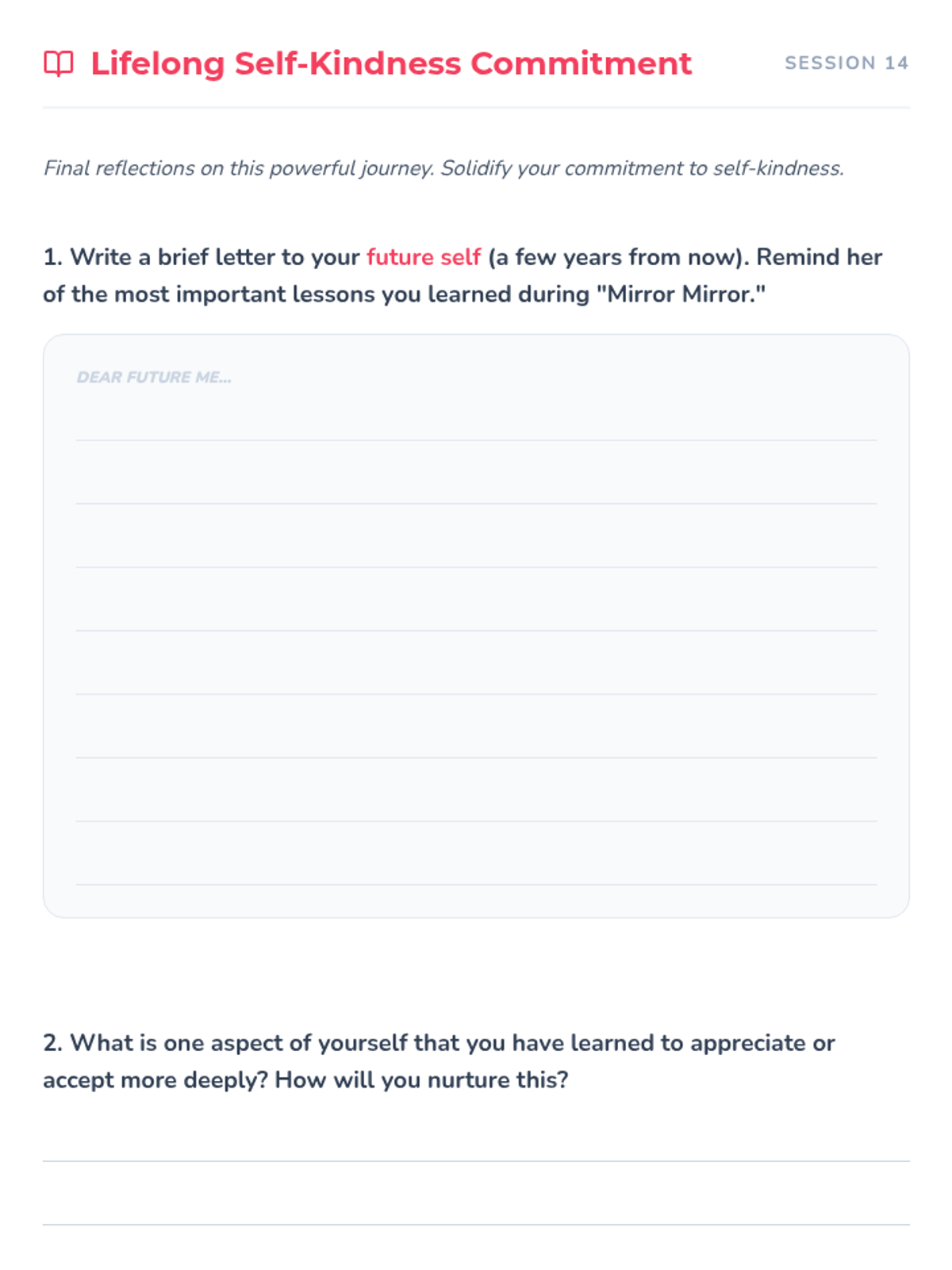
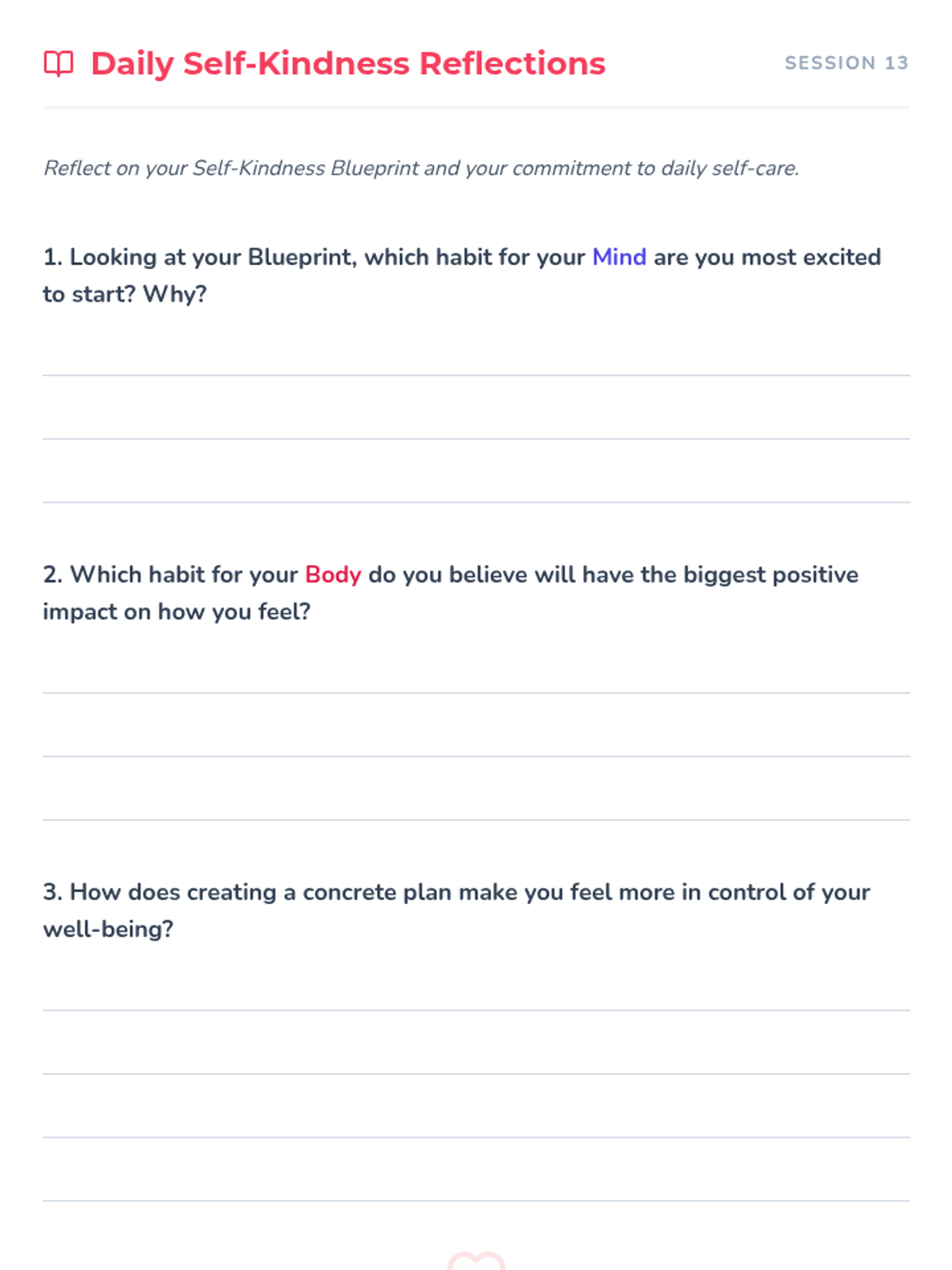
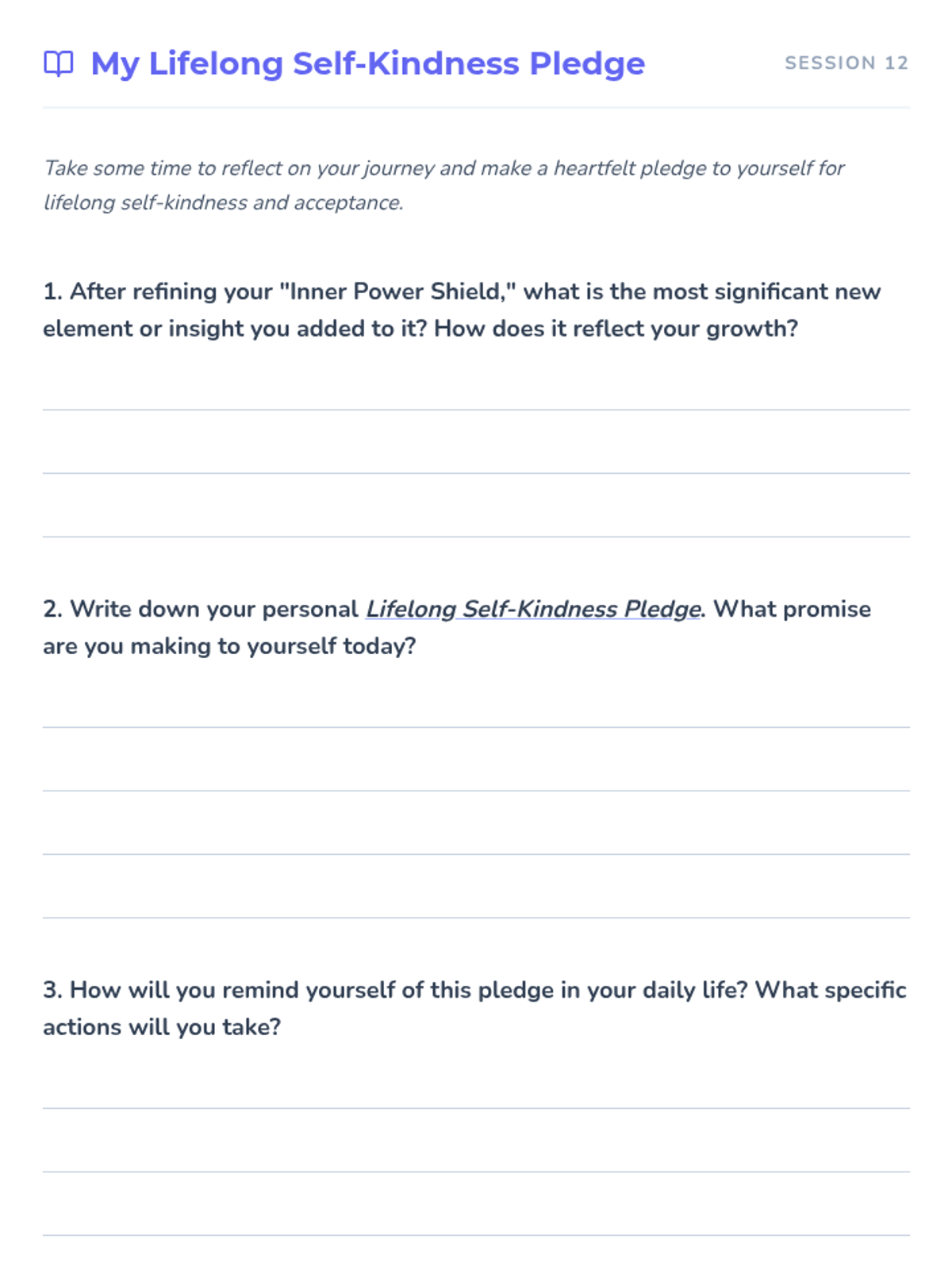
Focusing on practical application of self-kindness, positive self-talk, and body appreciation into daily habits. Building digital self-love and making a shared commitment to lifelong growth.
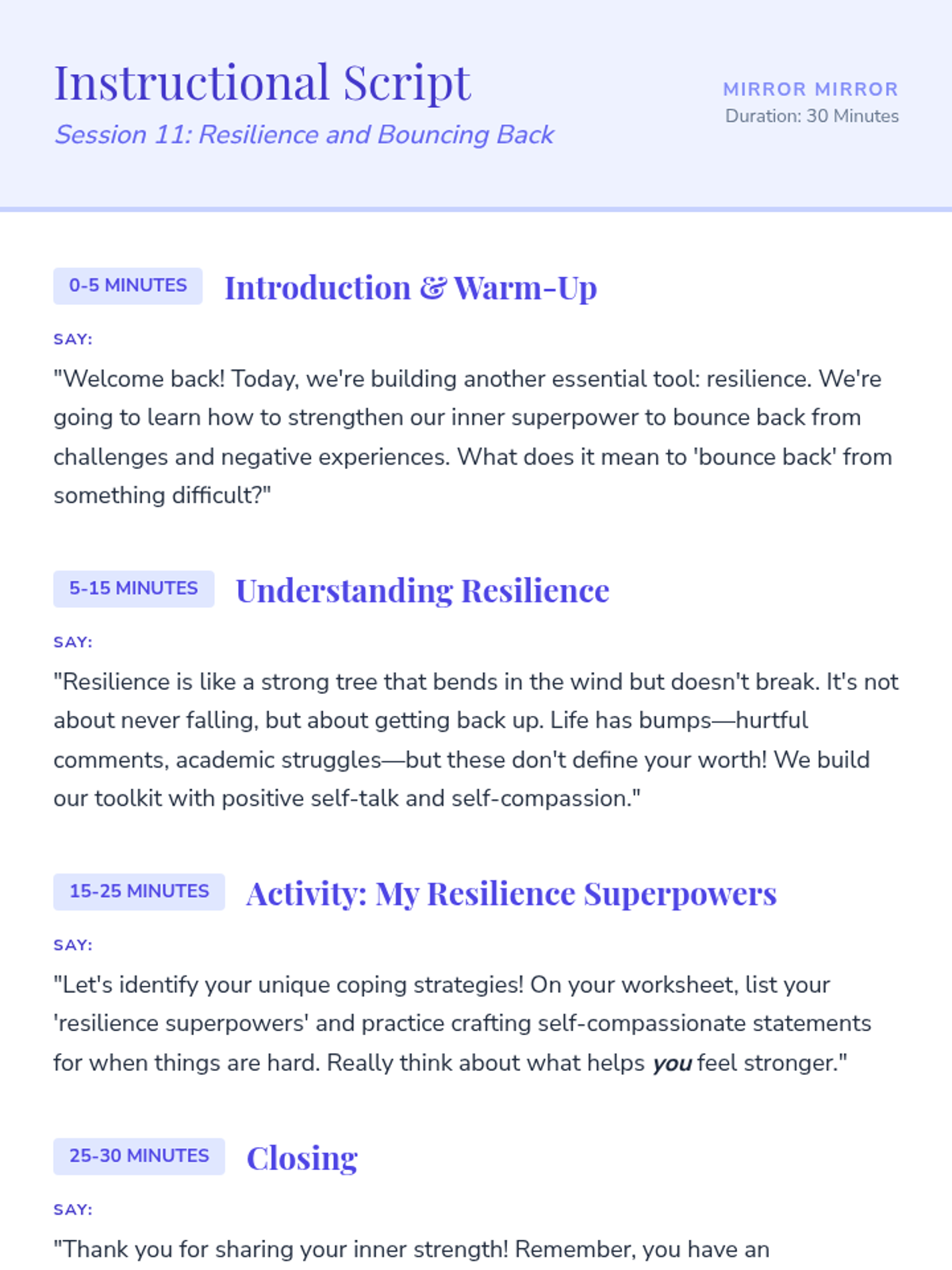
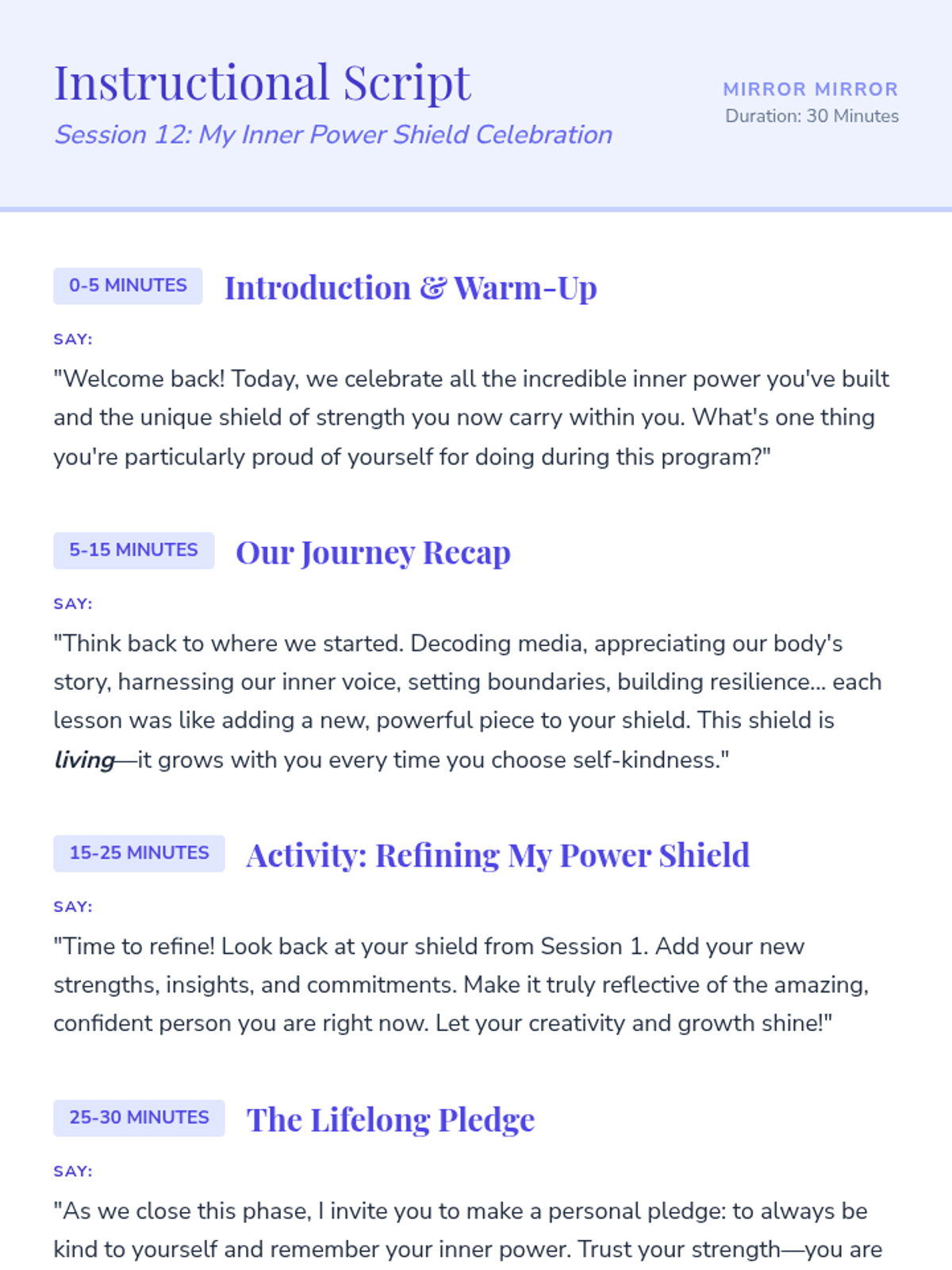
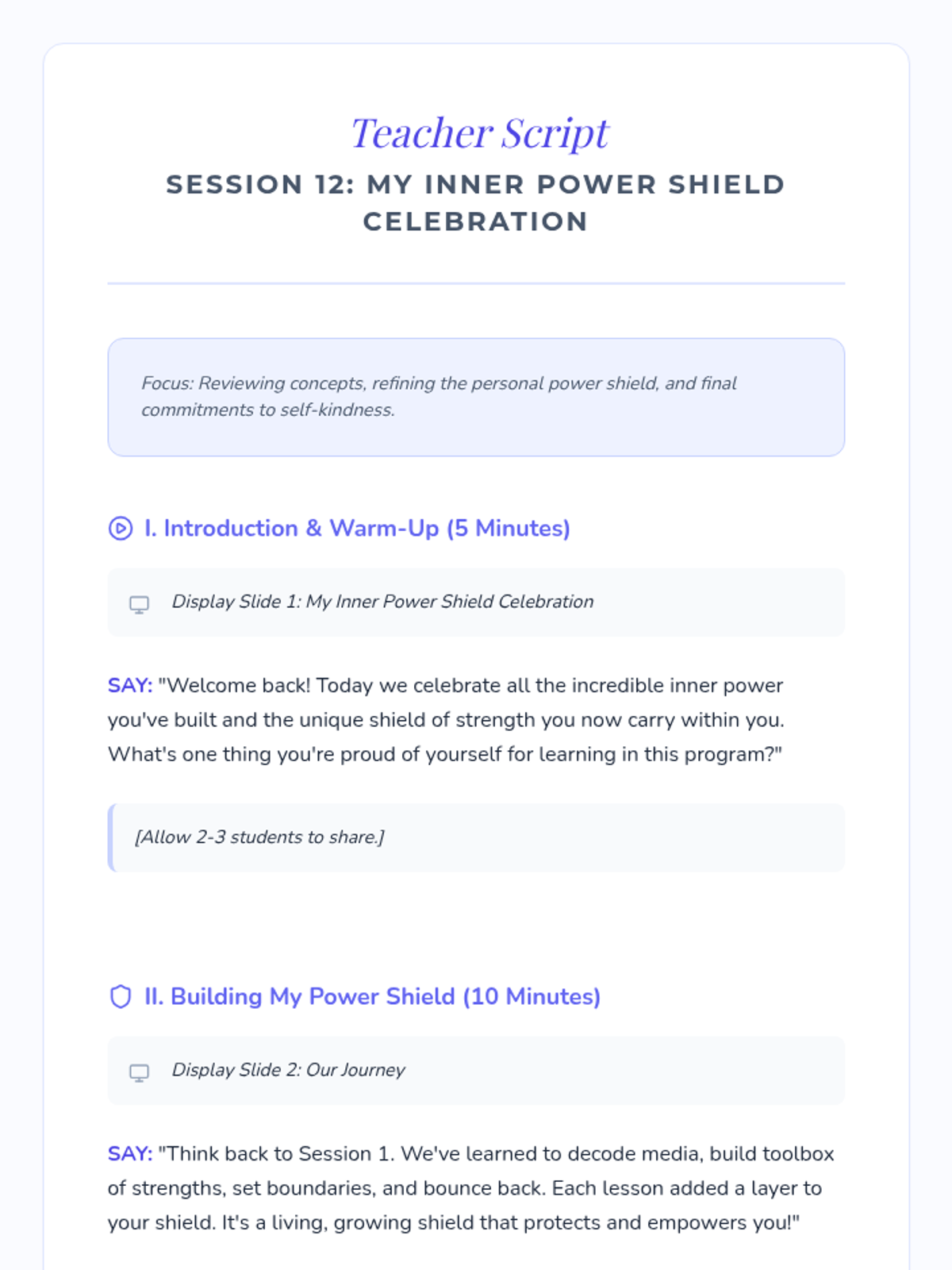
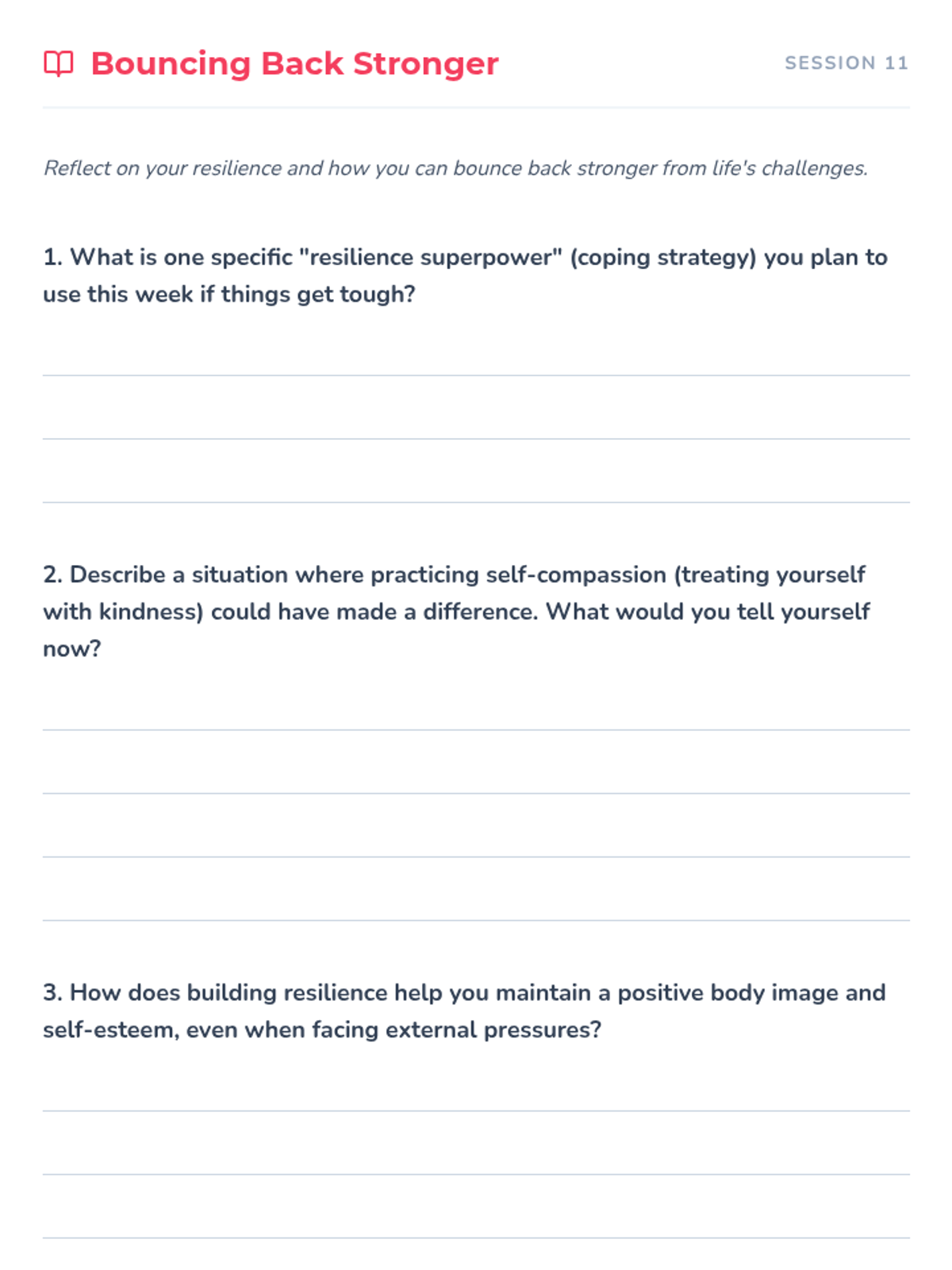
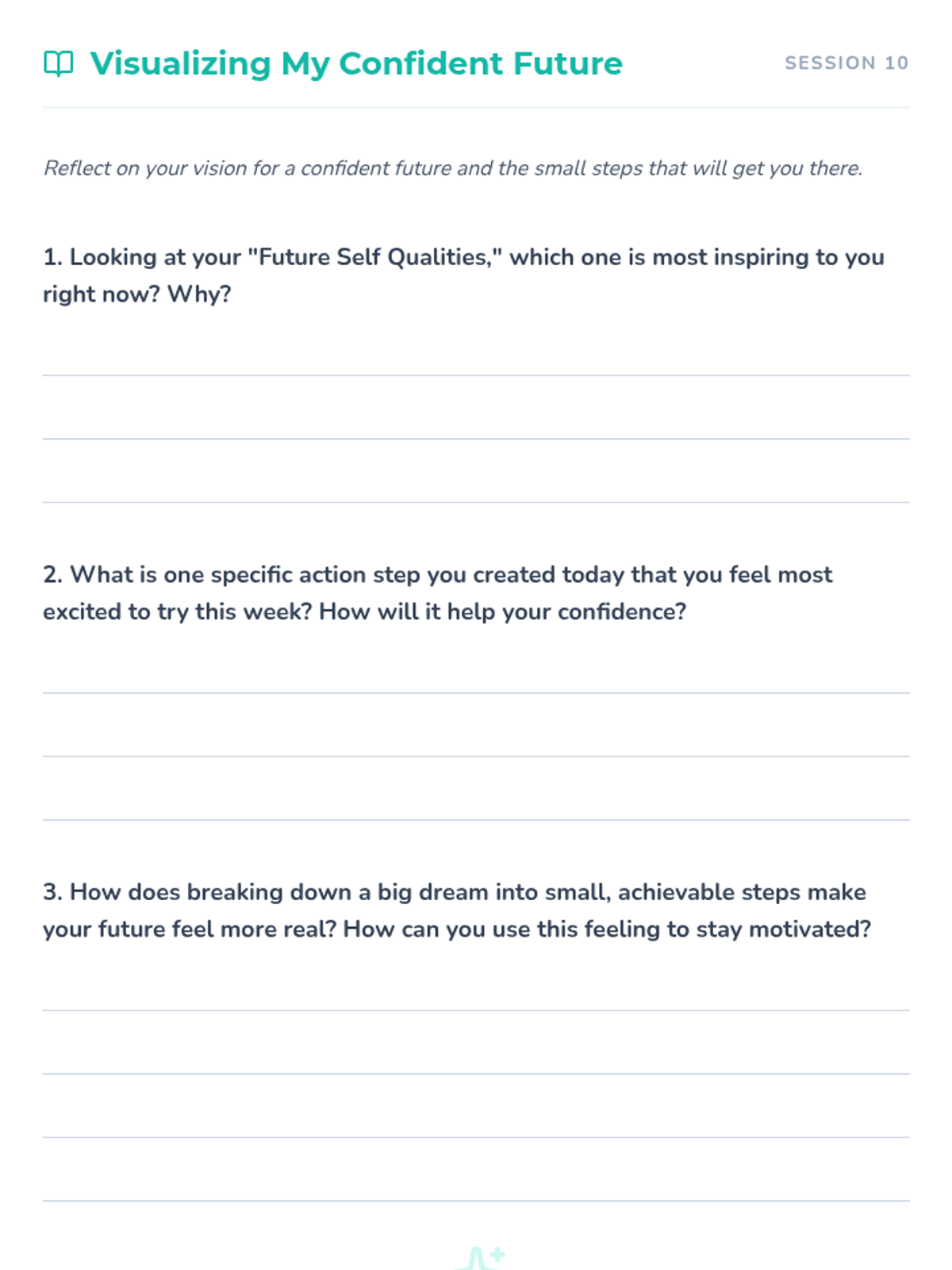
Visualizing a positive future, building resilience to bounce back from setbacks, and celebrating the refined power shield.
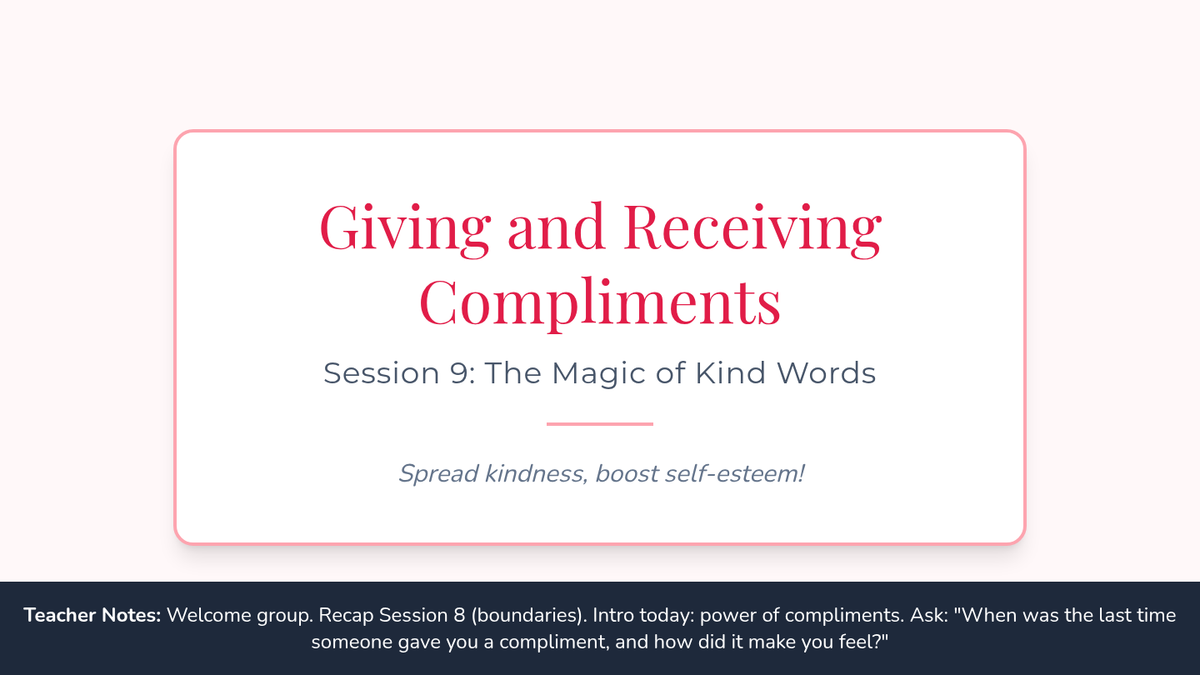
Practicing reframing negative thoughts, setting boundaries to protect energy, and learning to give and receive genuine positive feedback.
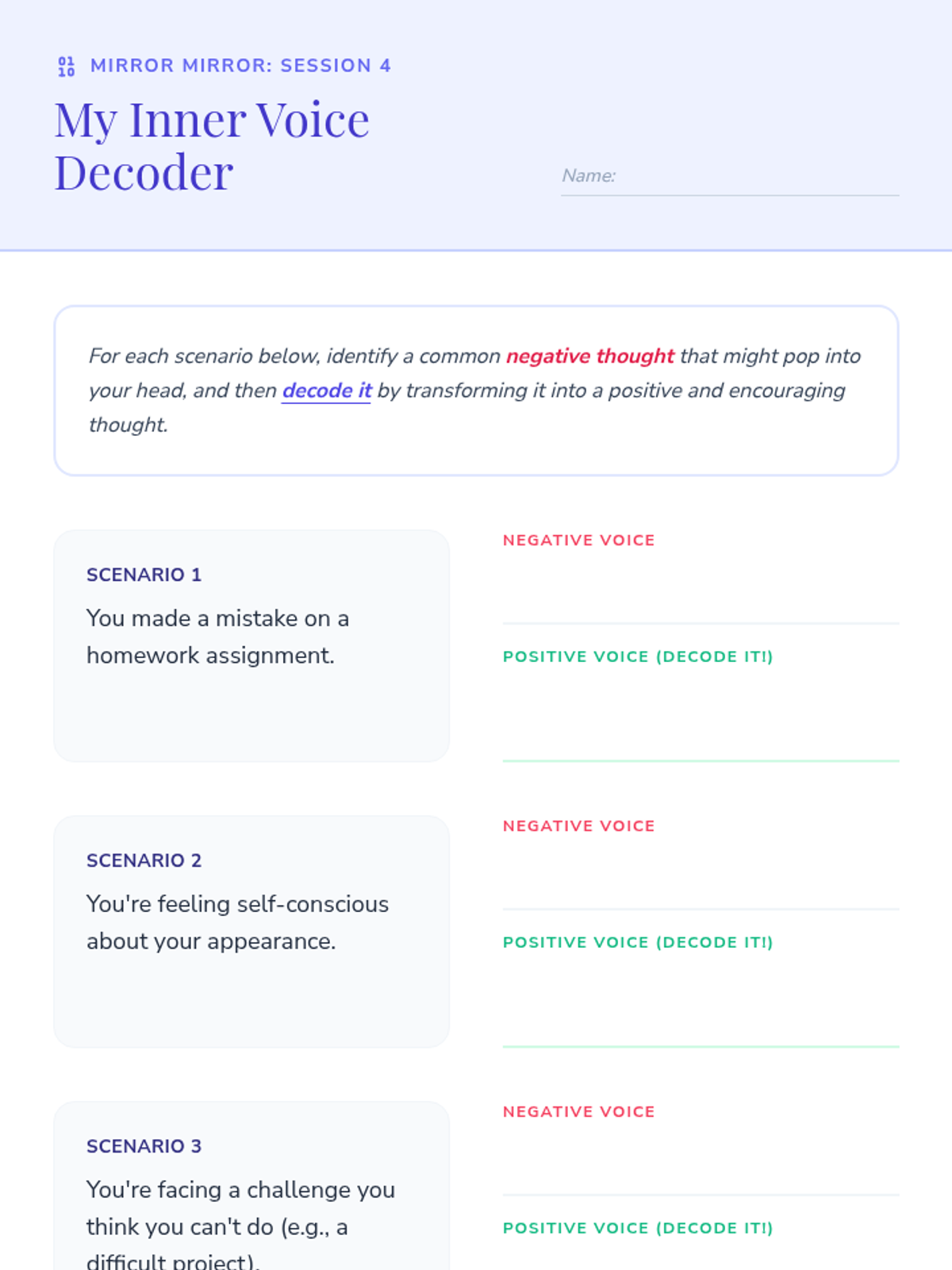
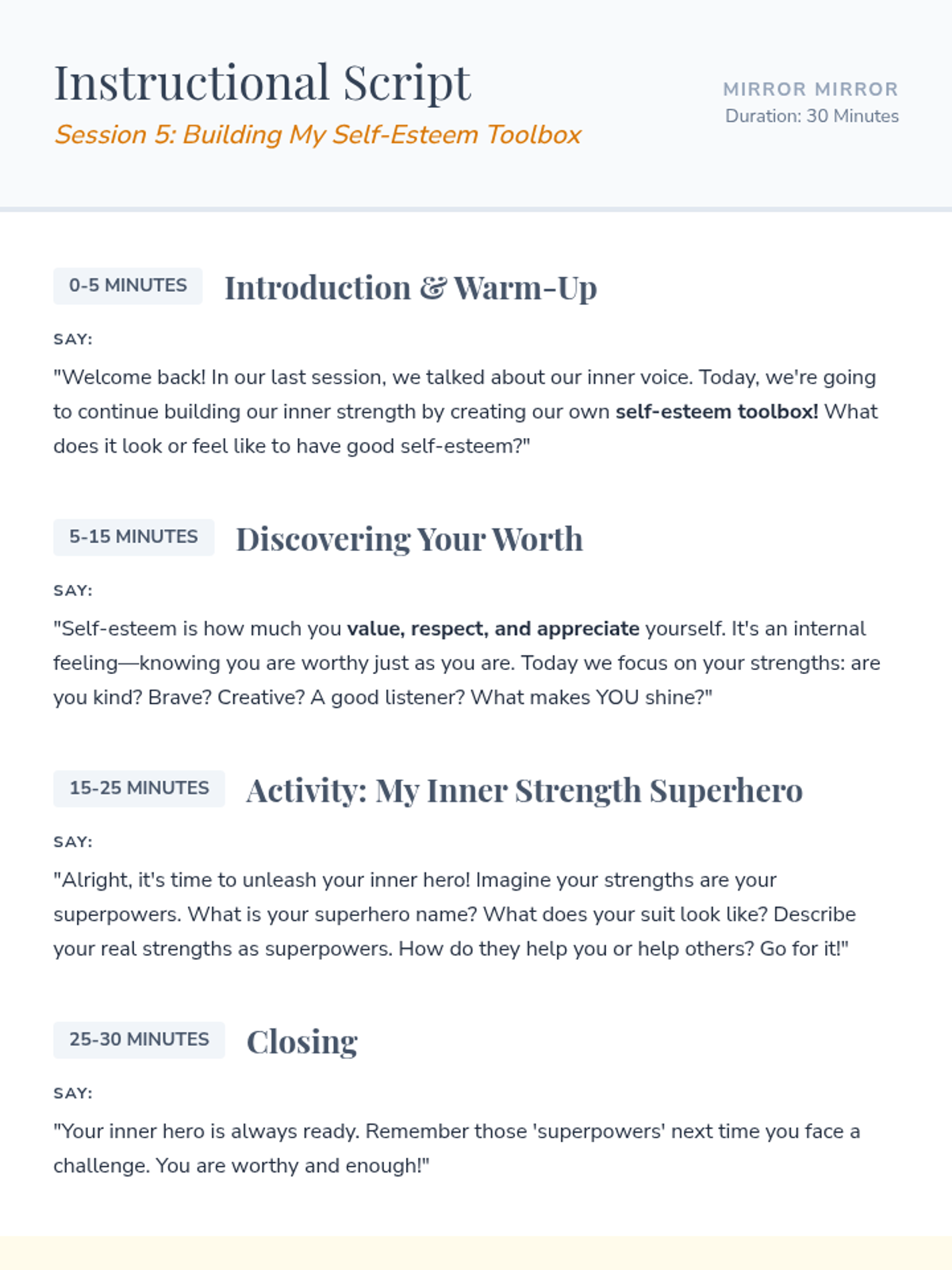
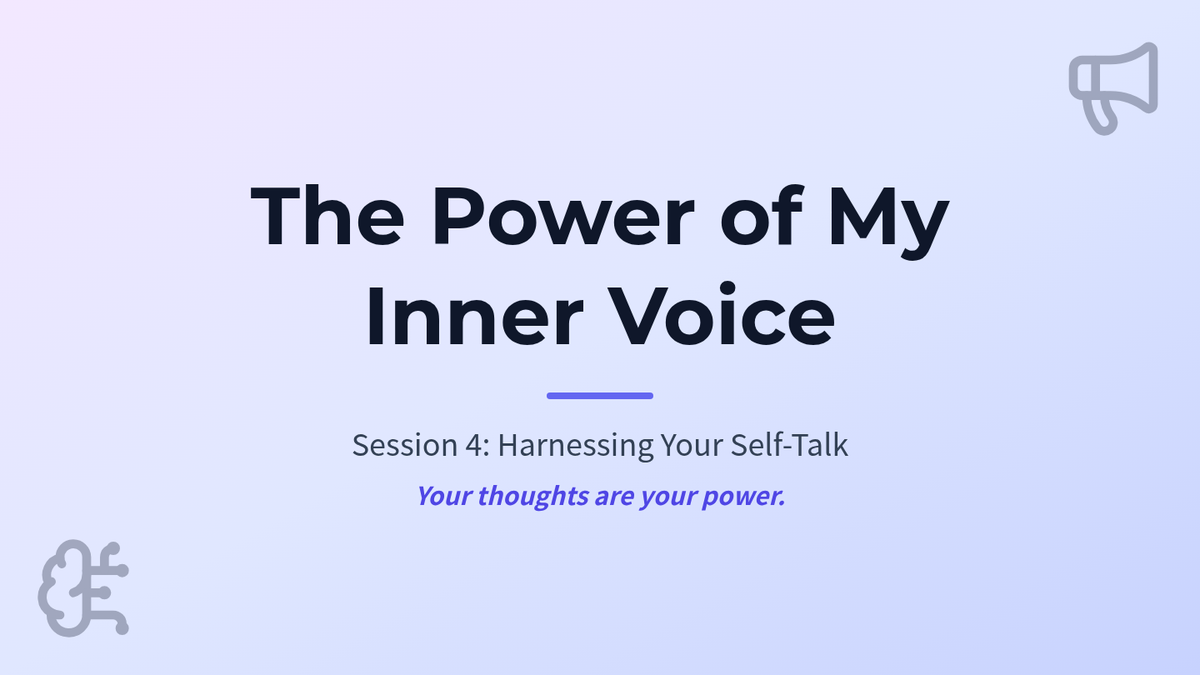
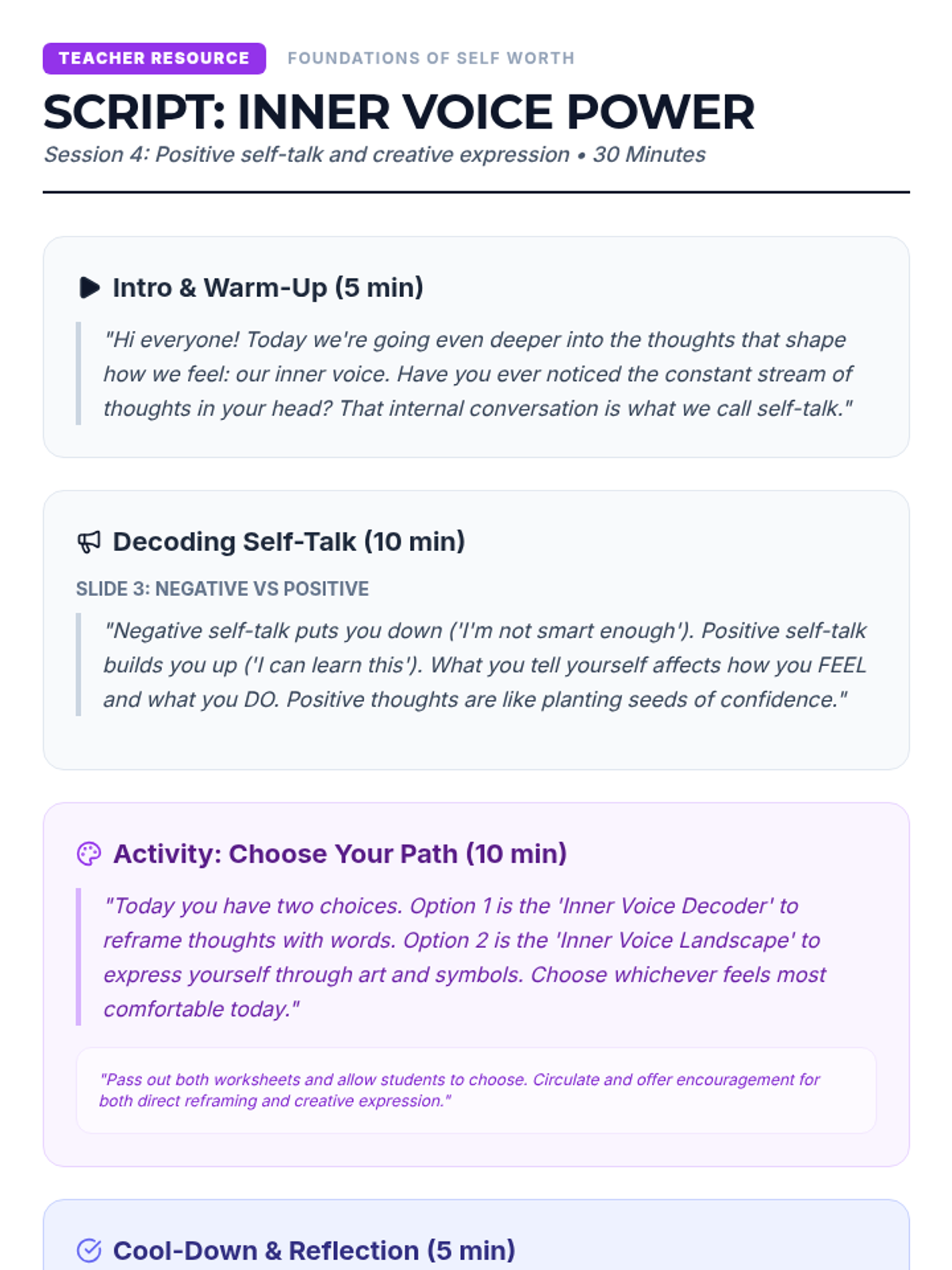
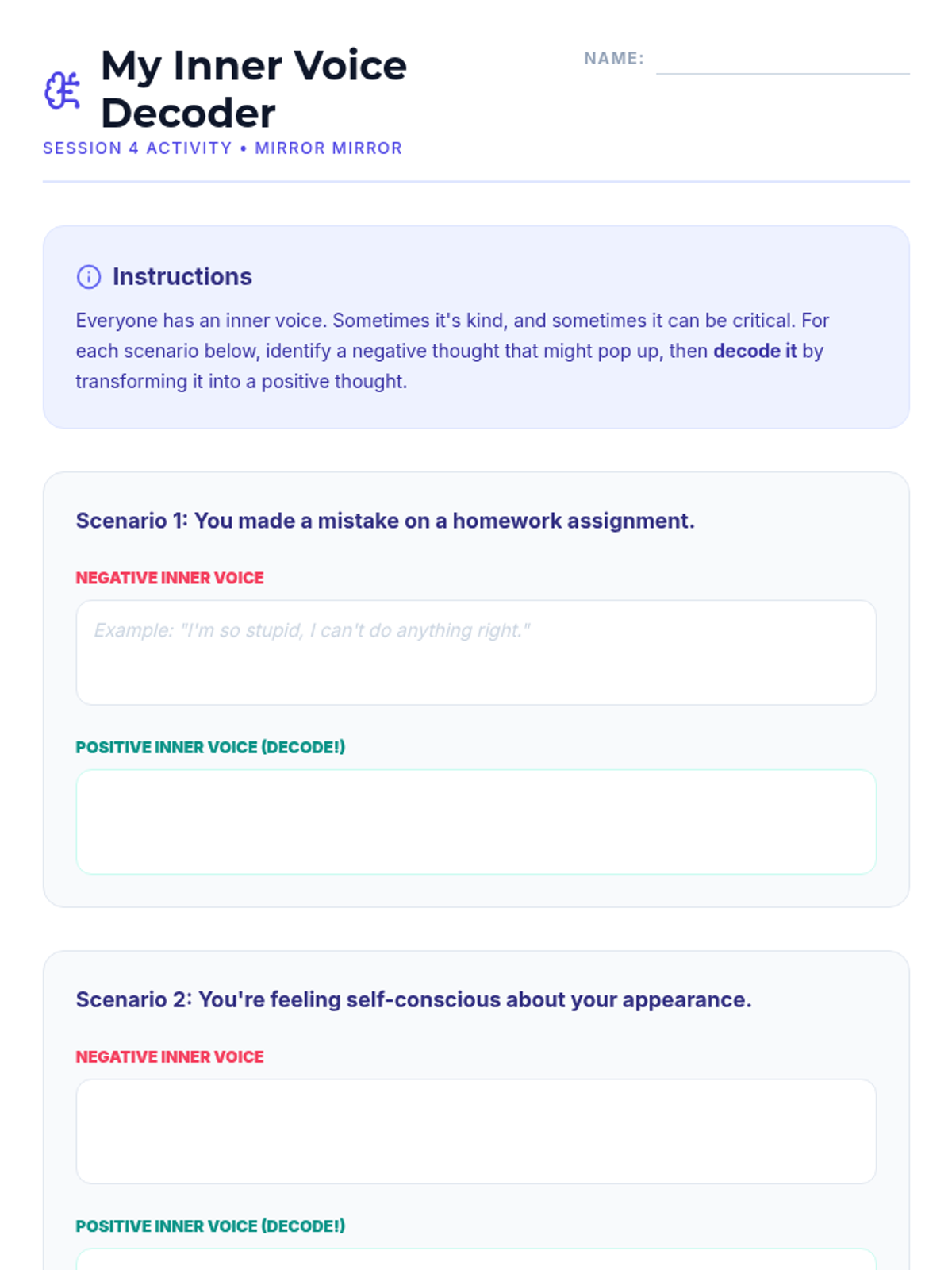
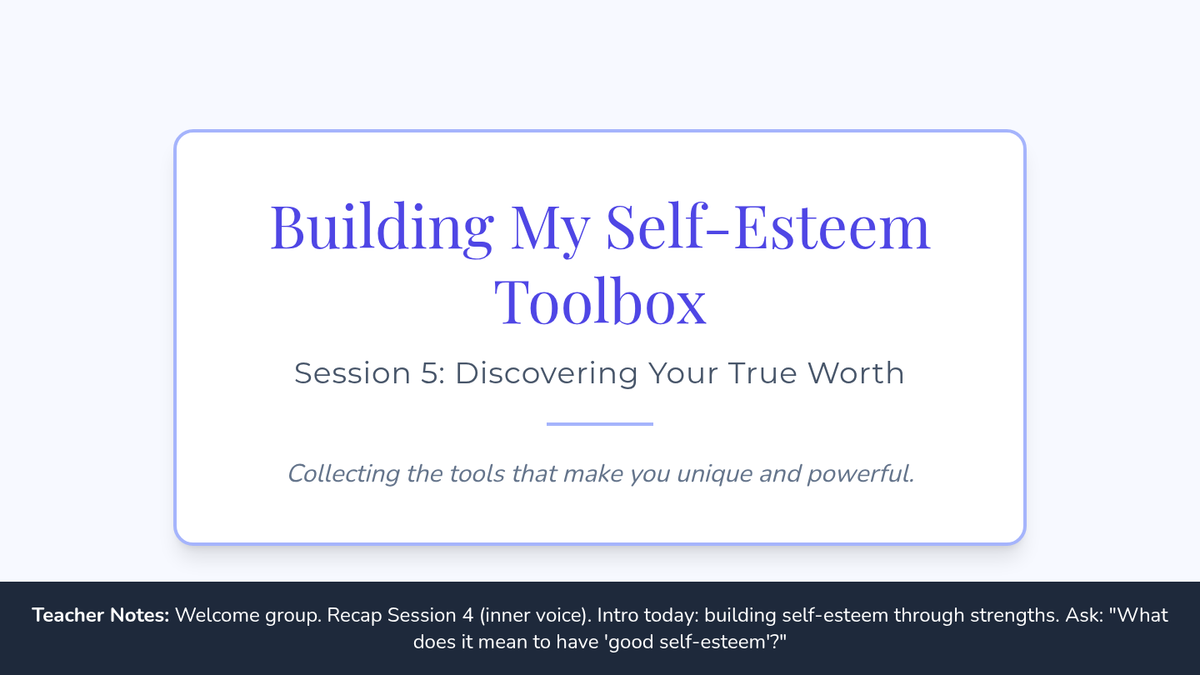
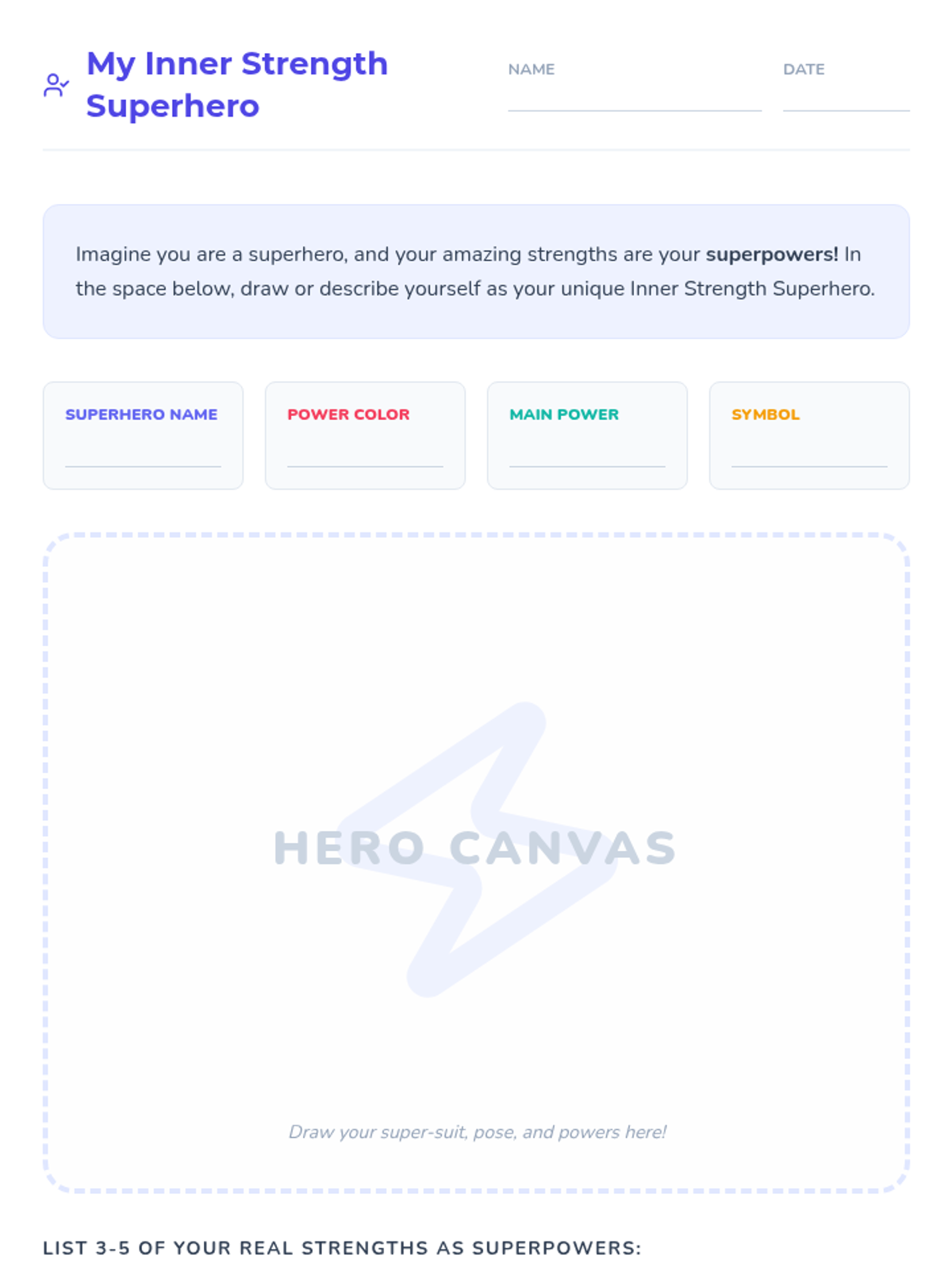
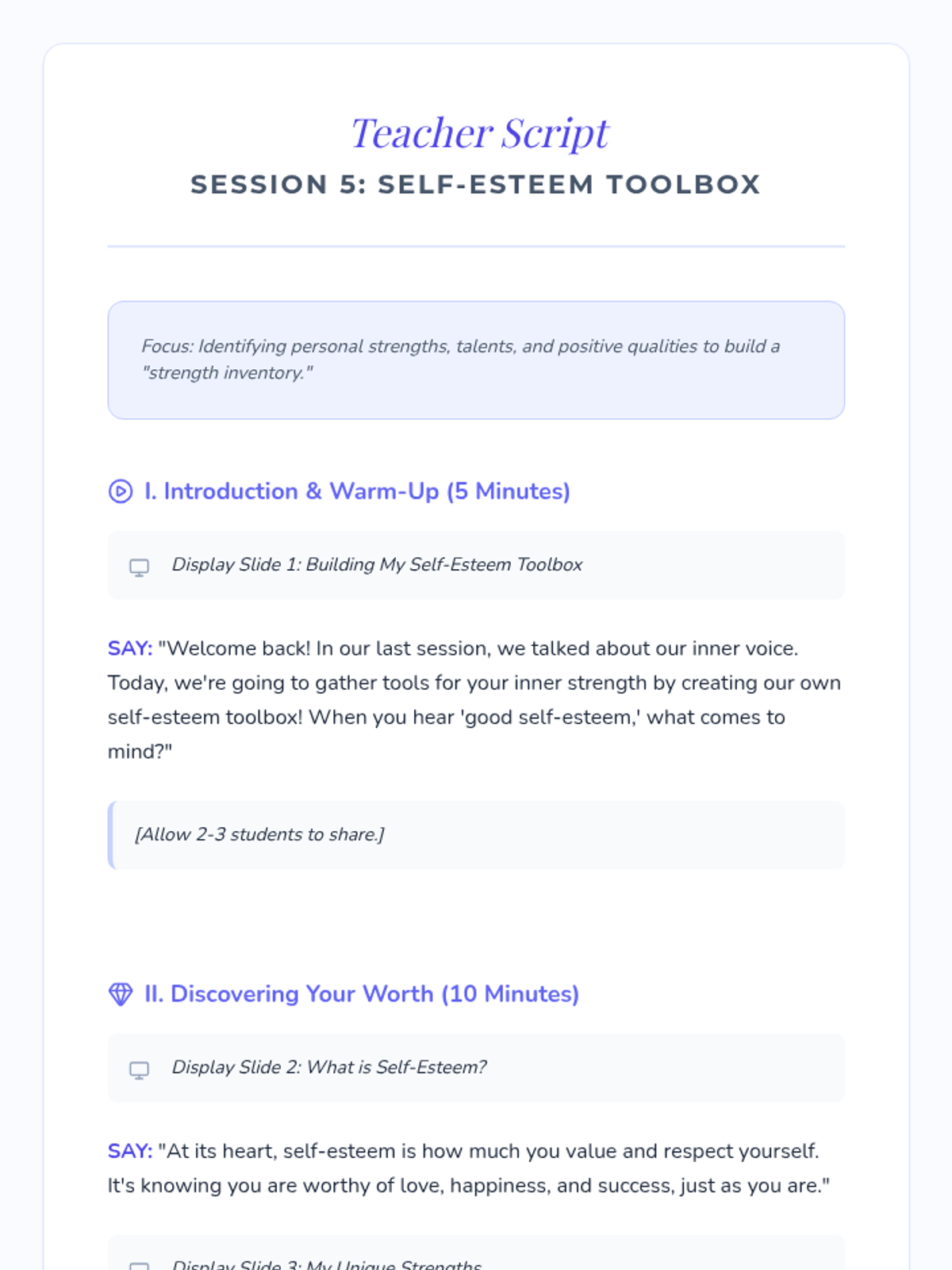
Focusing on identifying and reframing self-talk, building a toolbox of personal strengths, and celebrating uniqueness and body acceptance.
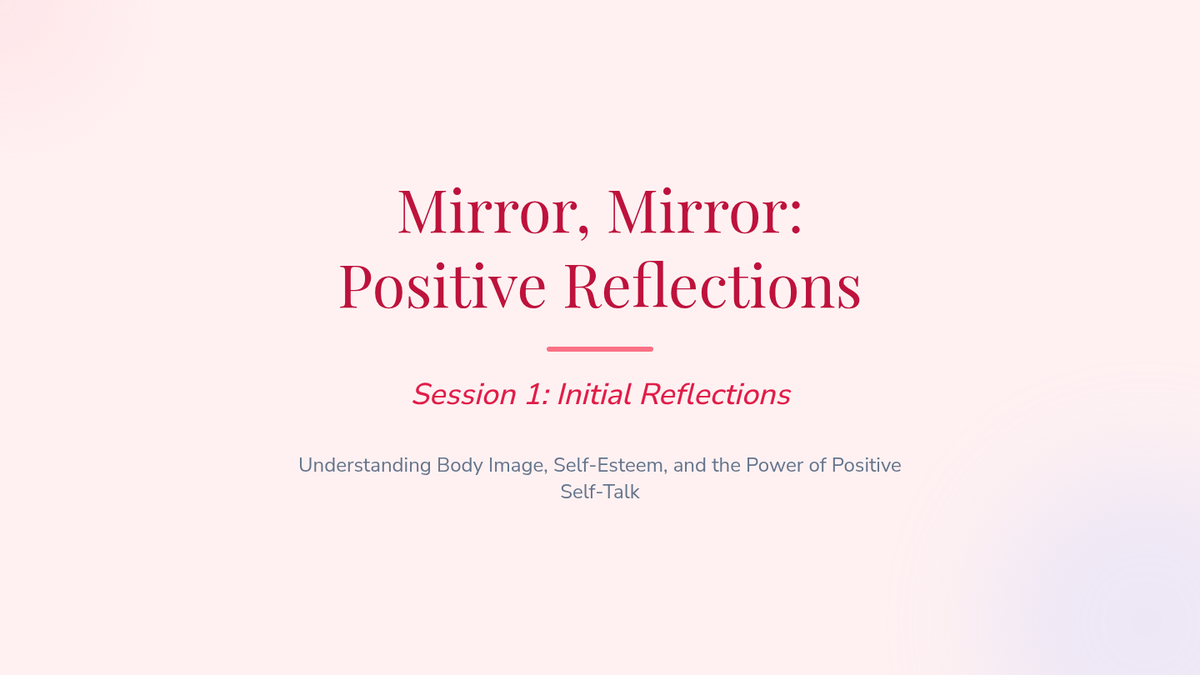
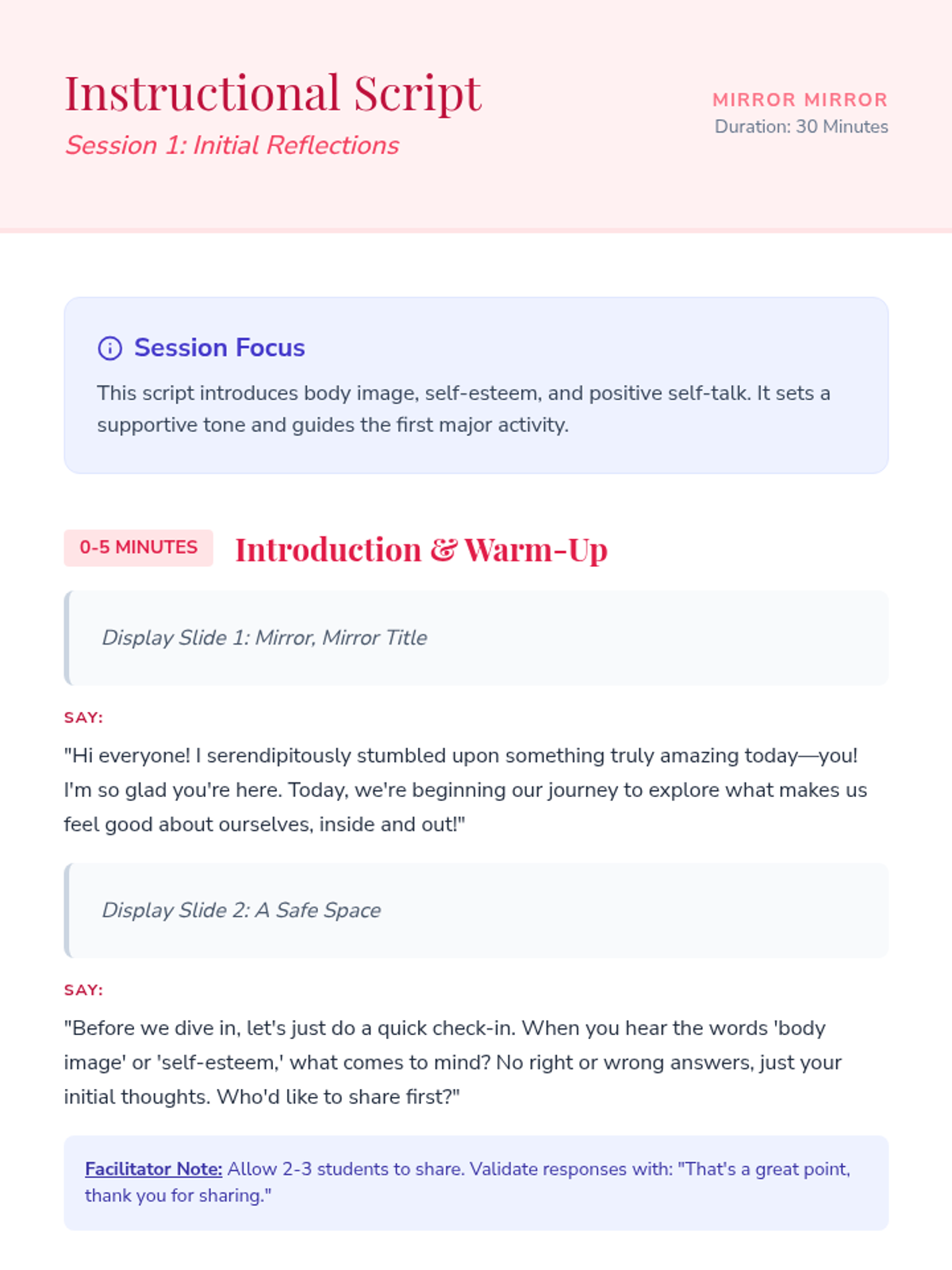
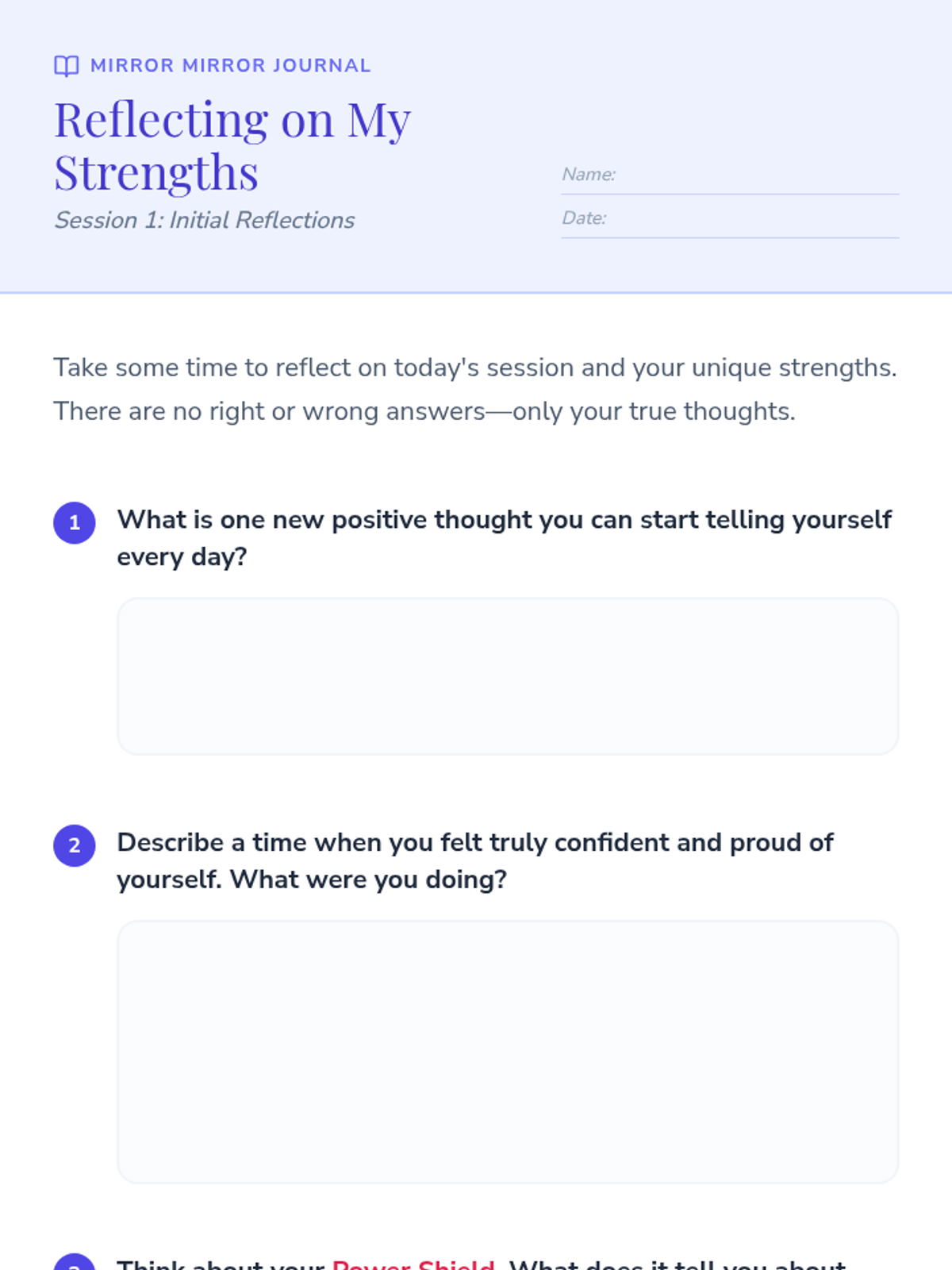
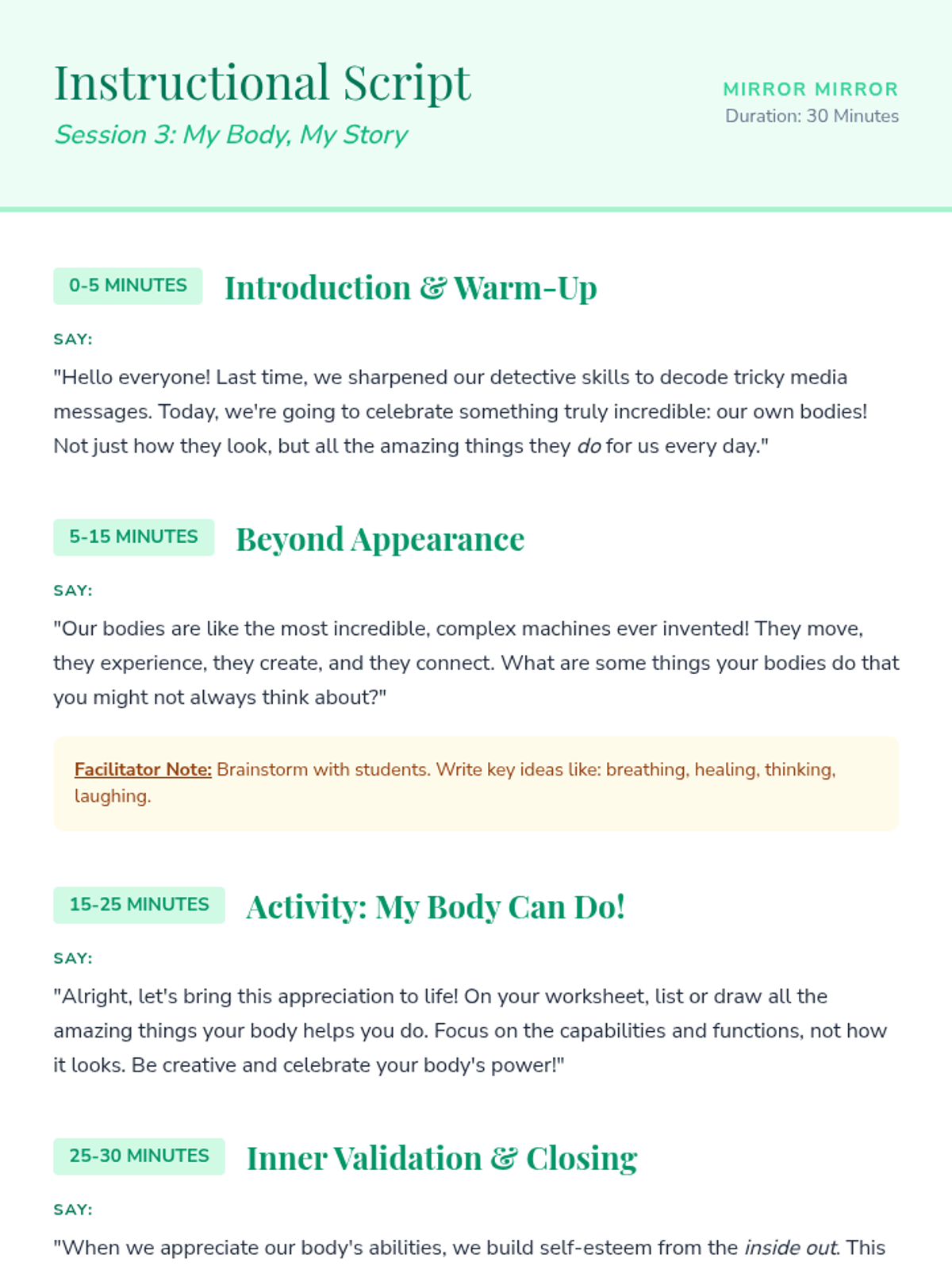
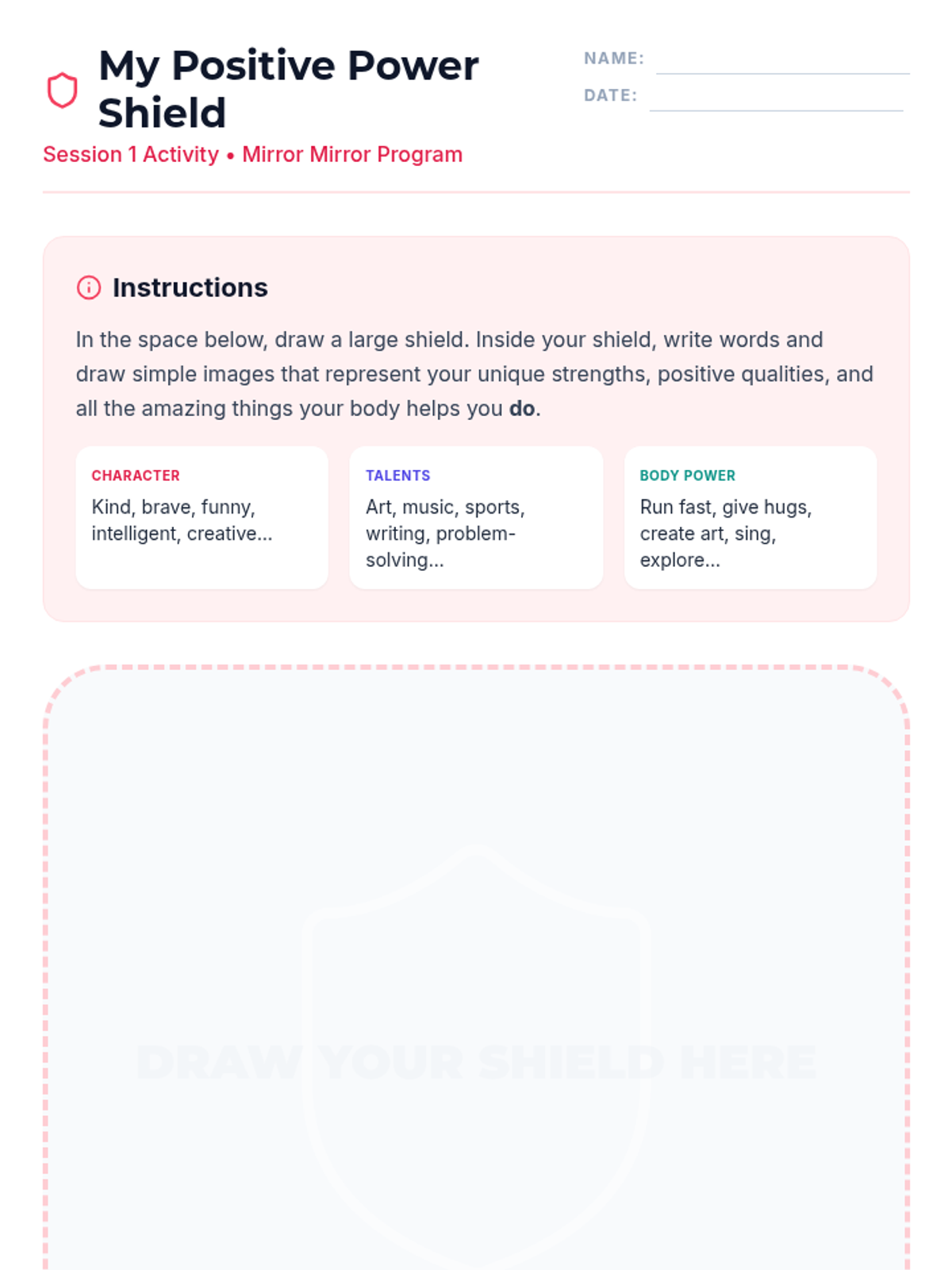
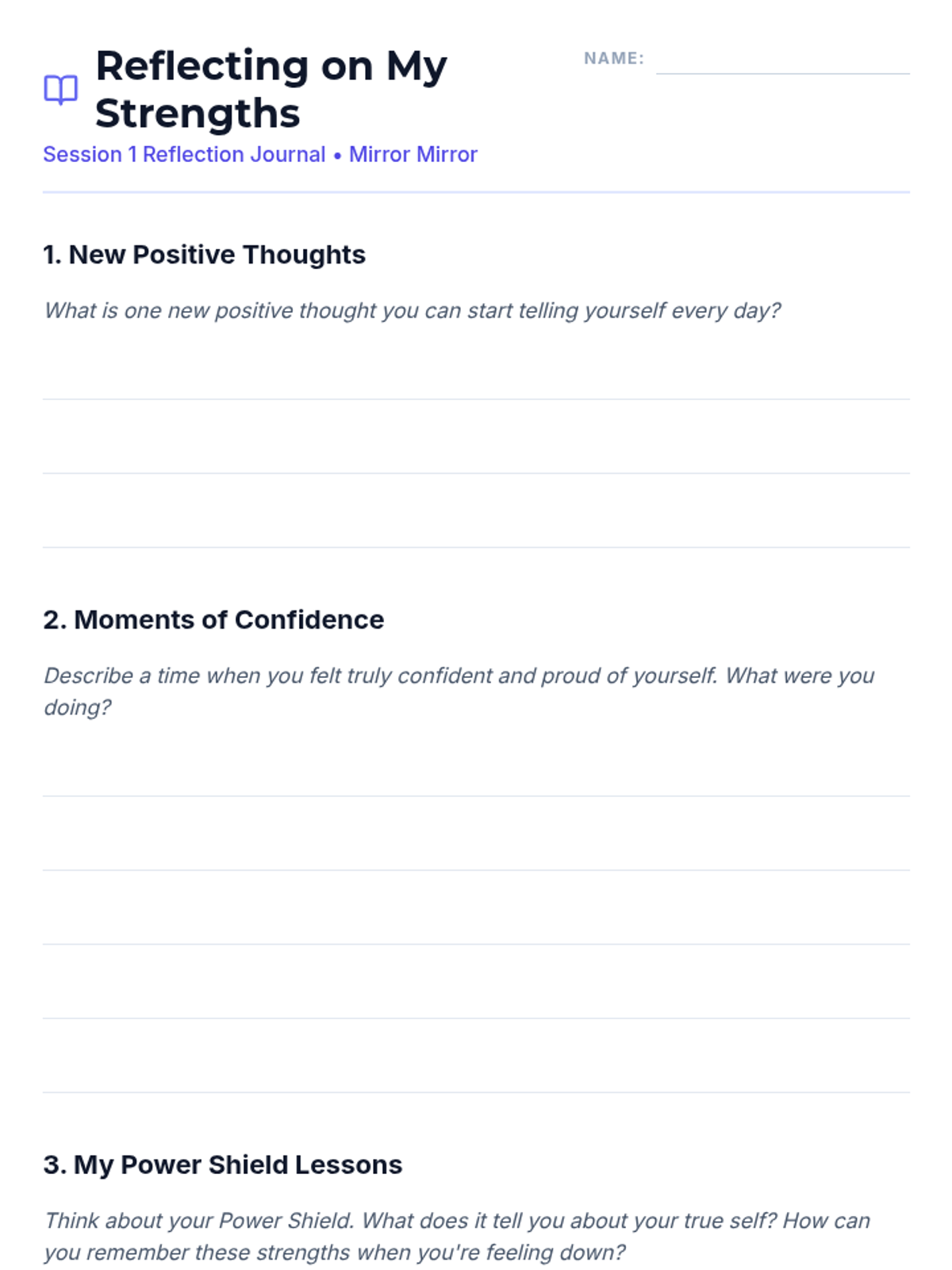
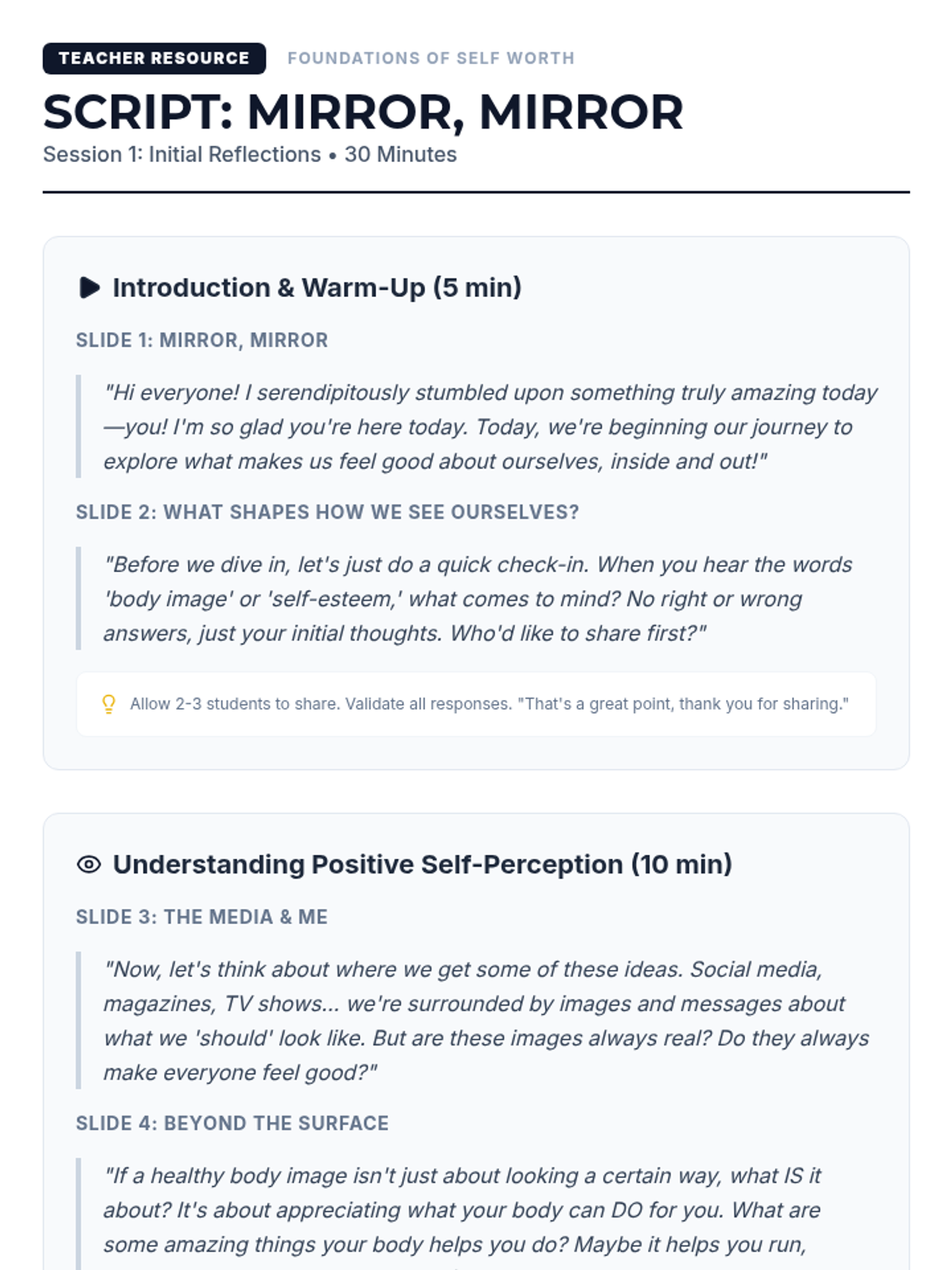
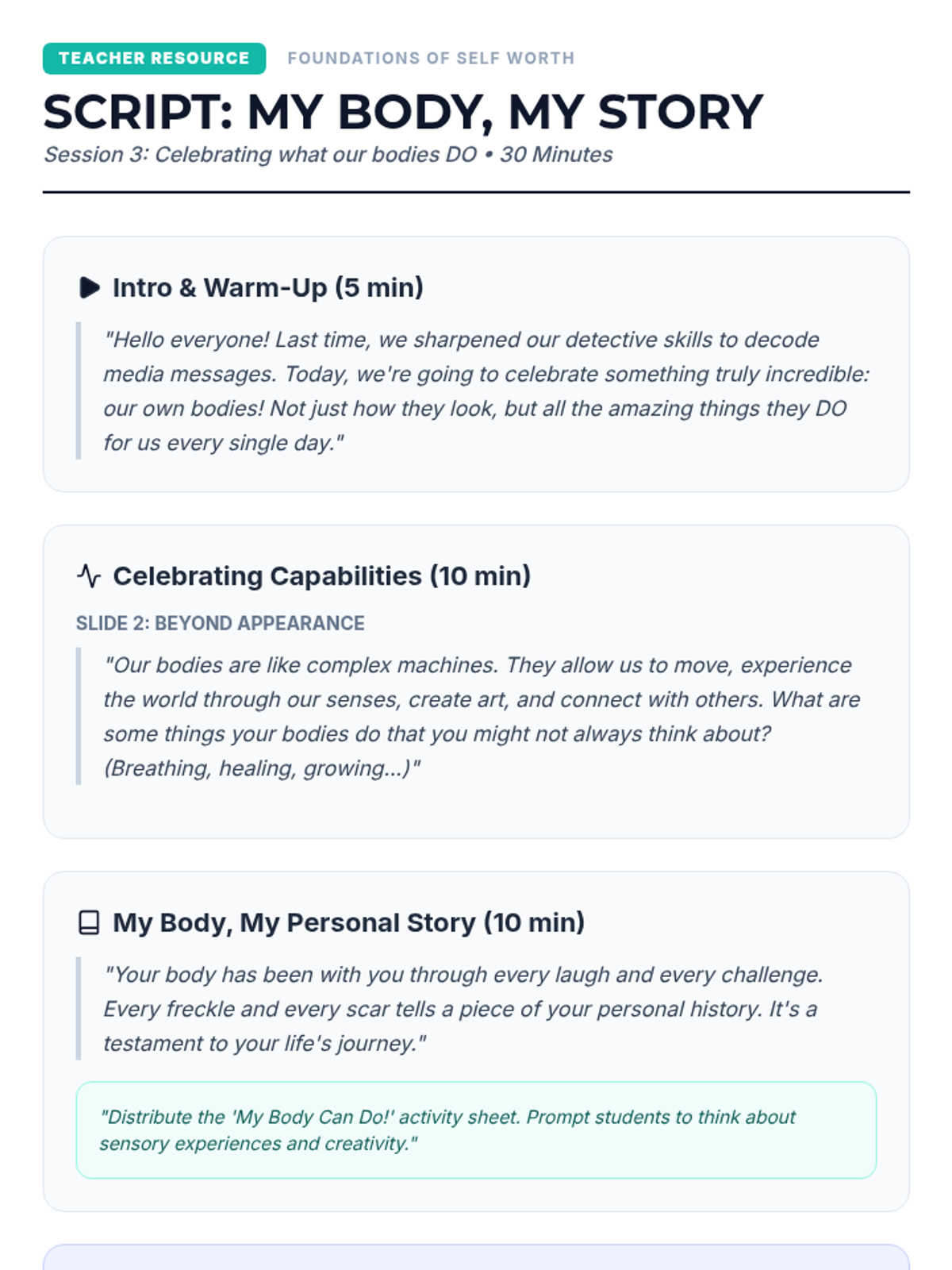
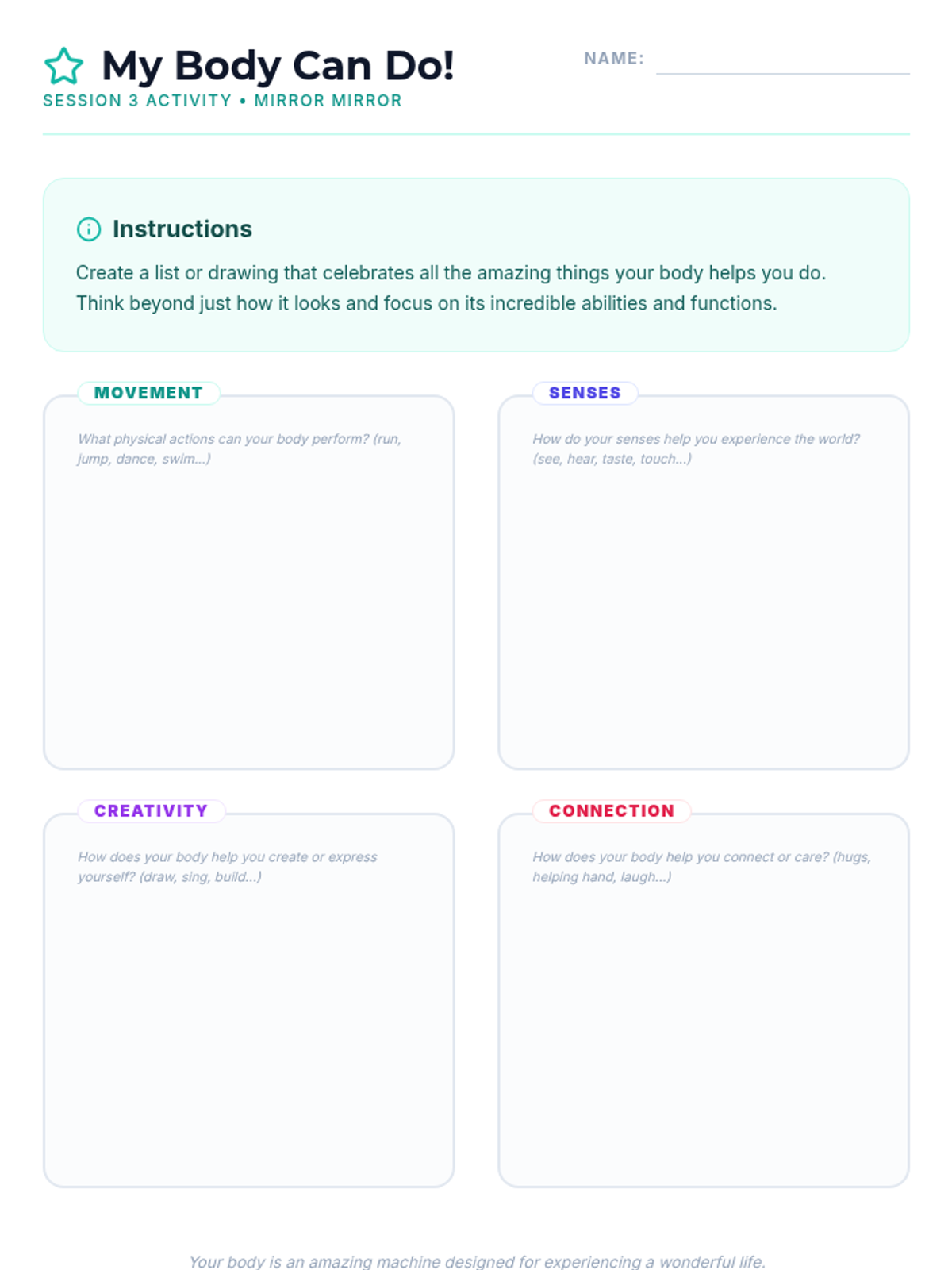
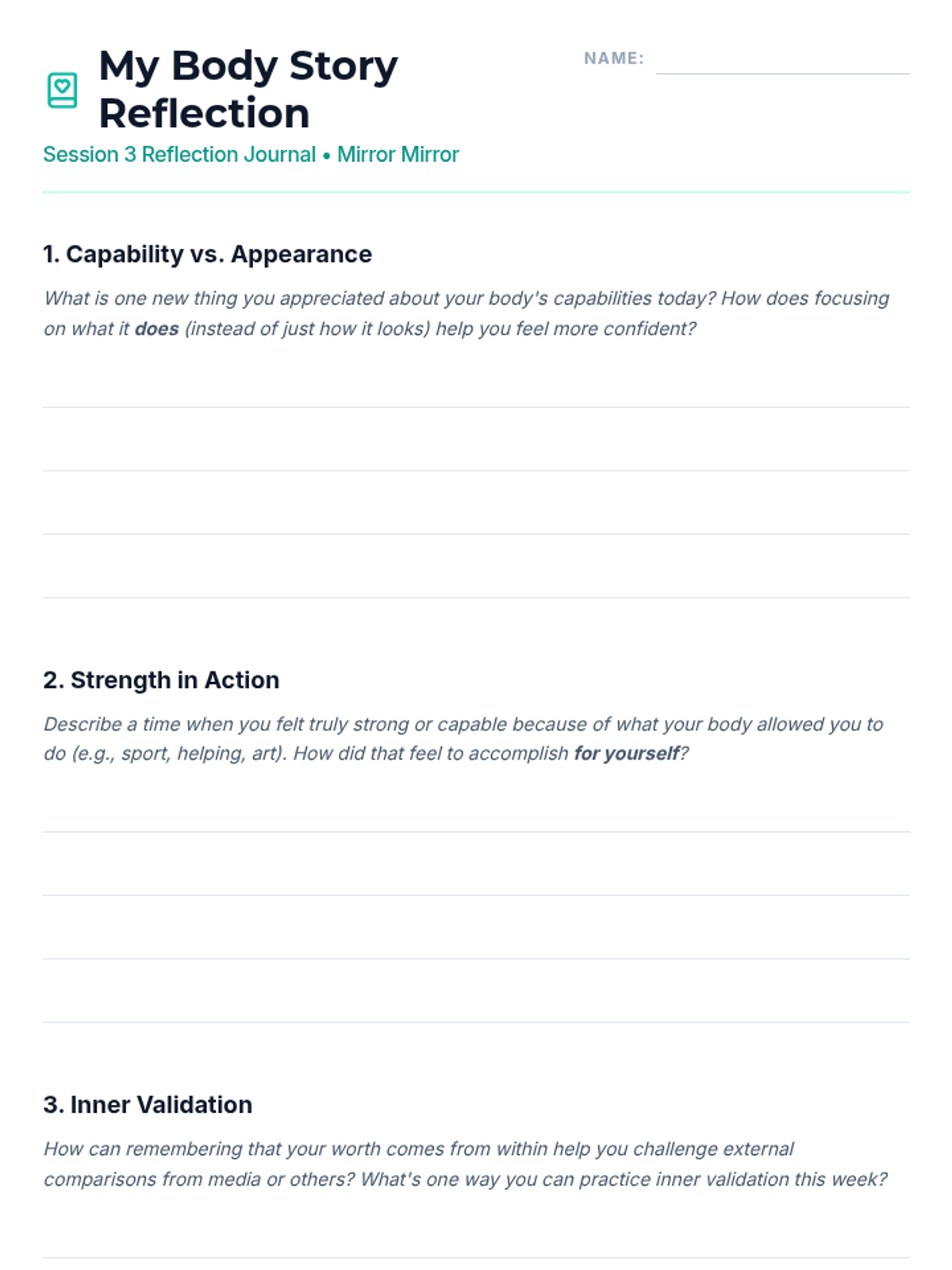
Initial exploration of body image and self-esteem, critically analyzing media messages, and celebrating the body's story and physical capabilities.
Final sessions addressing resilience, habit-forming self-kindness, collective empowerment, and digital self-love.
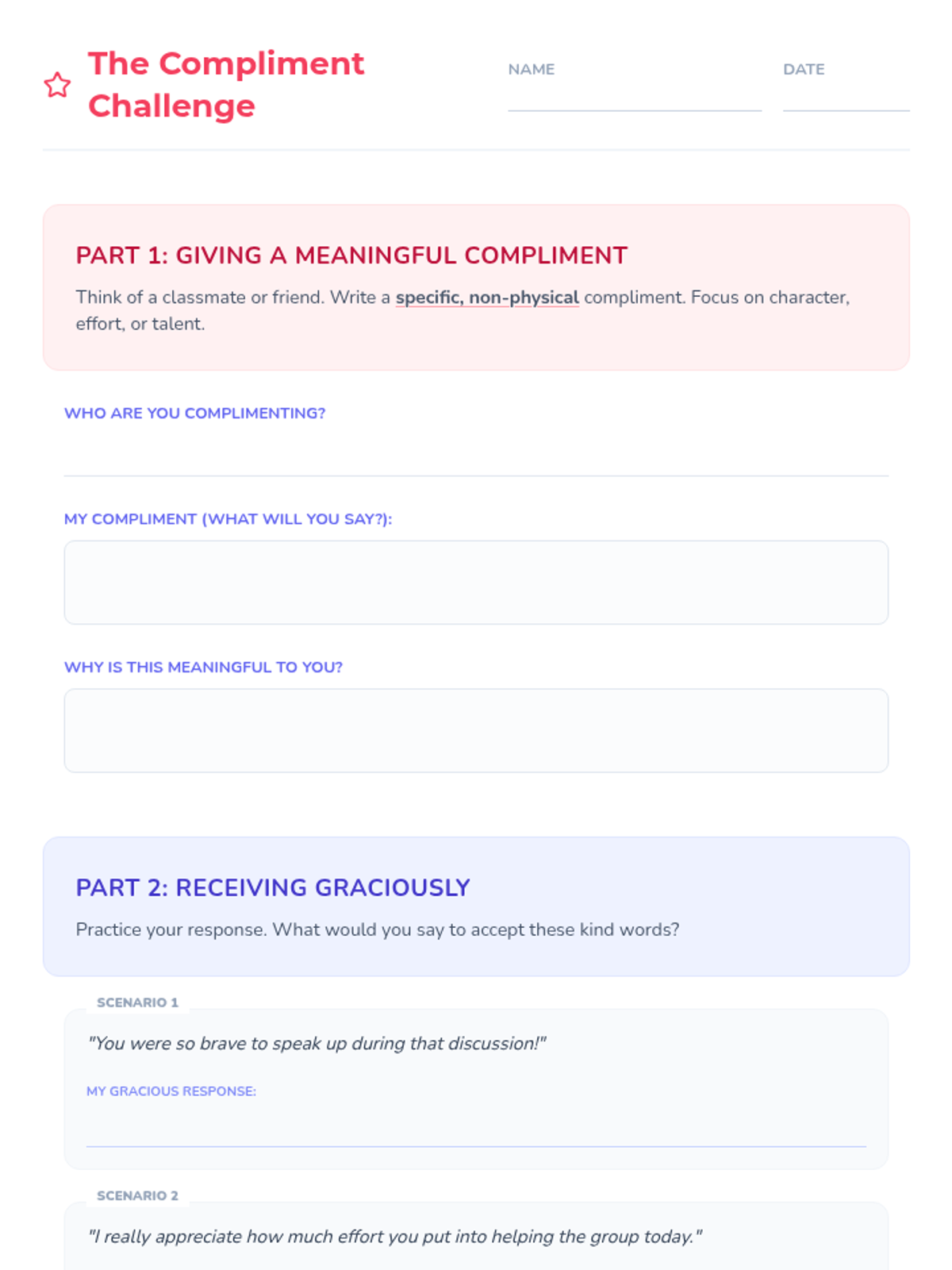
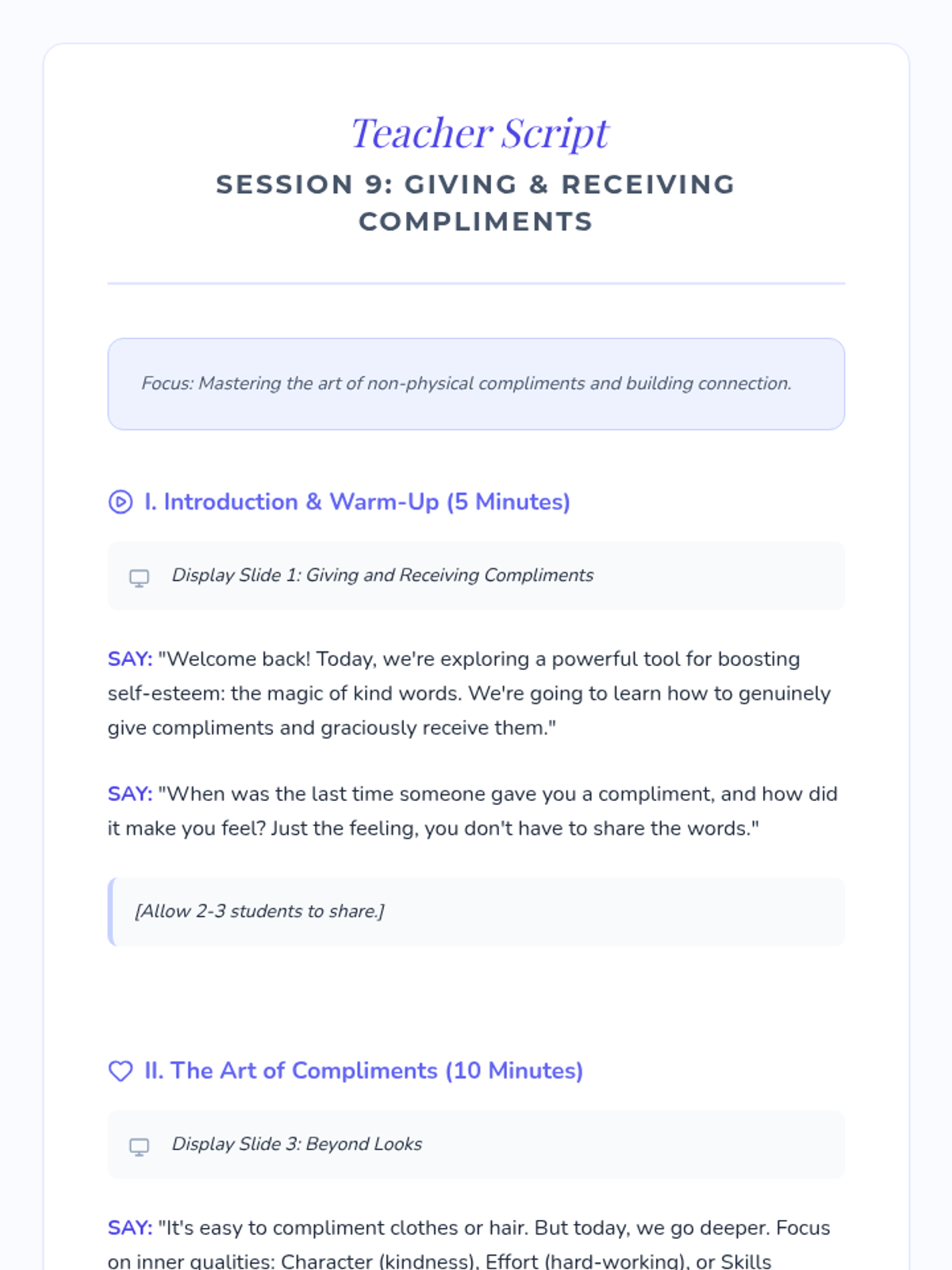
Intermediate sessions focusing on uniqueness, self-kindness, setting boundaries, the art of compliments, and visualizing a confident future.
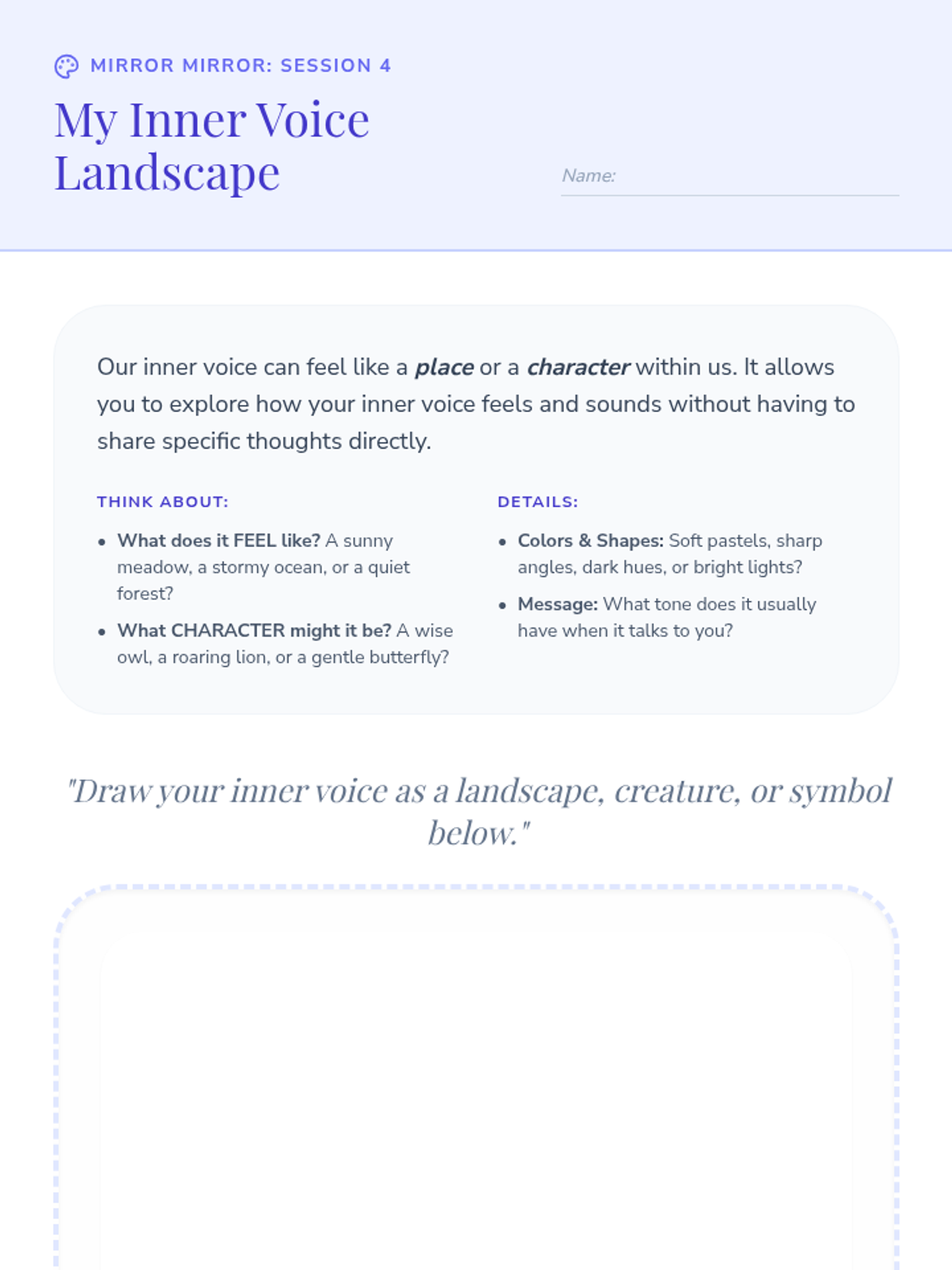
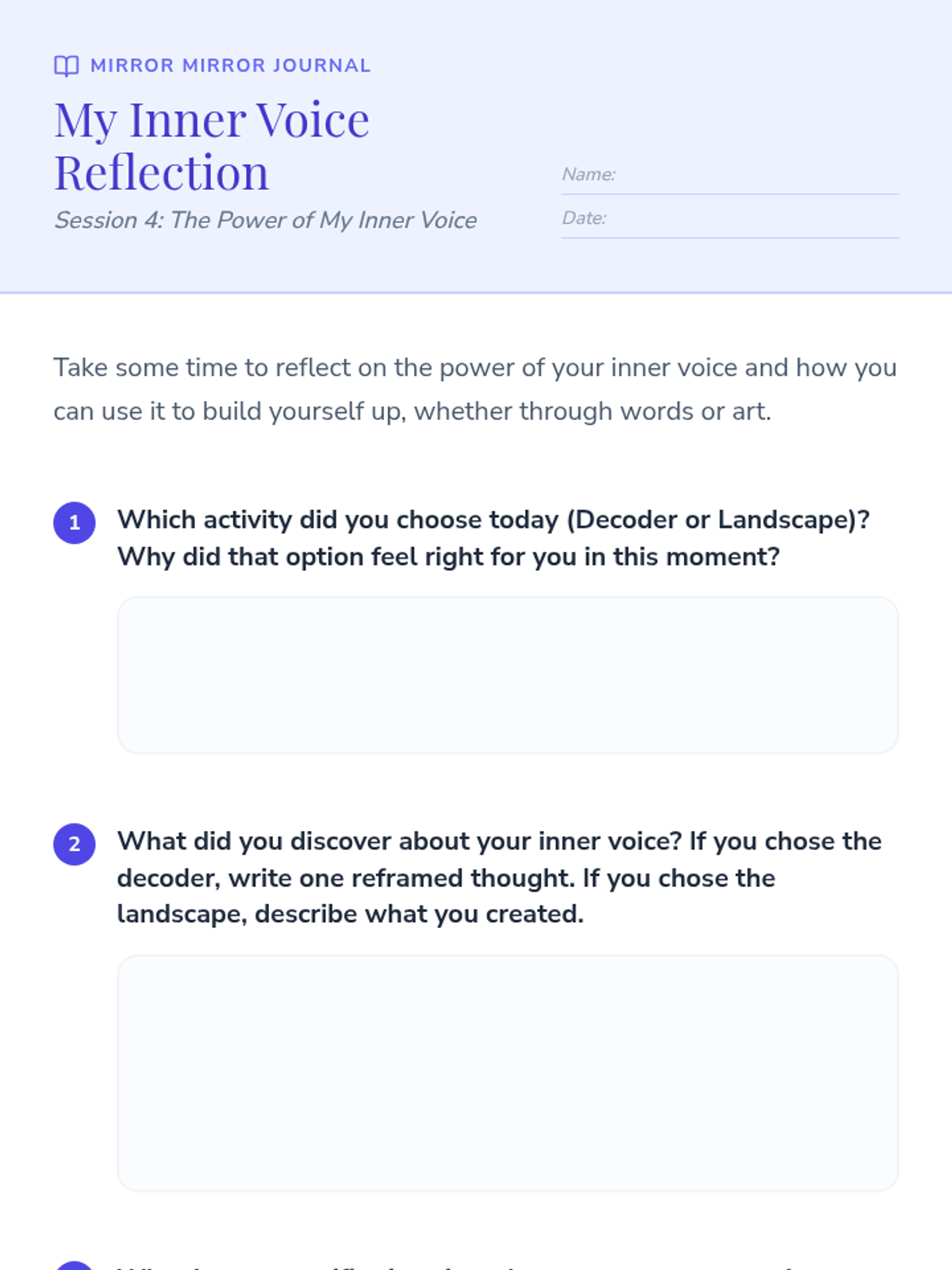
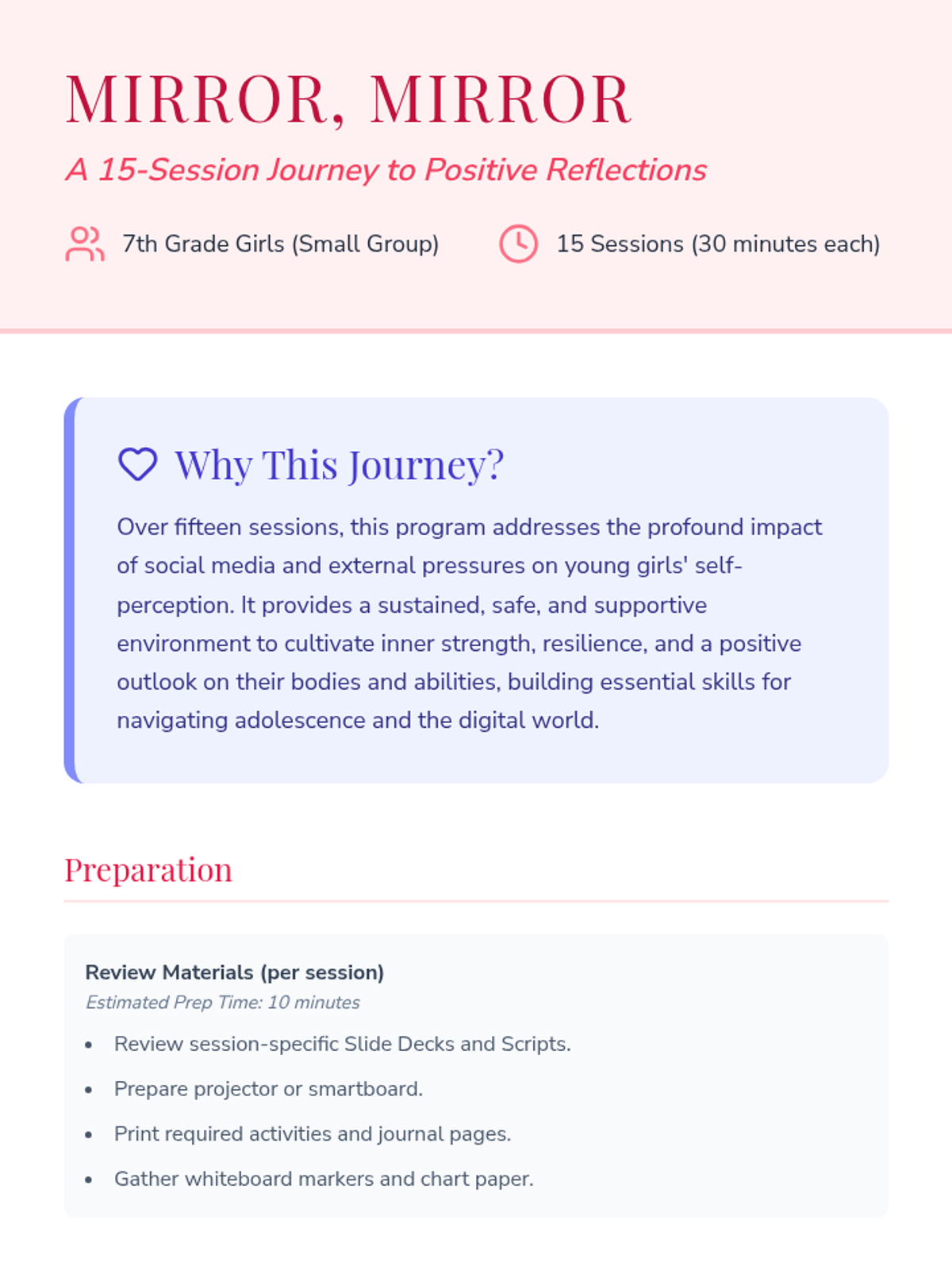
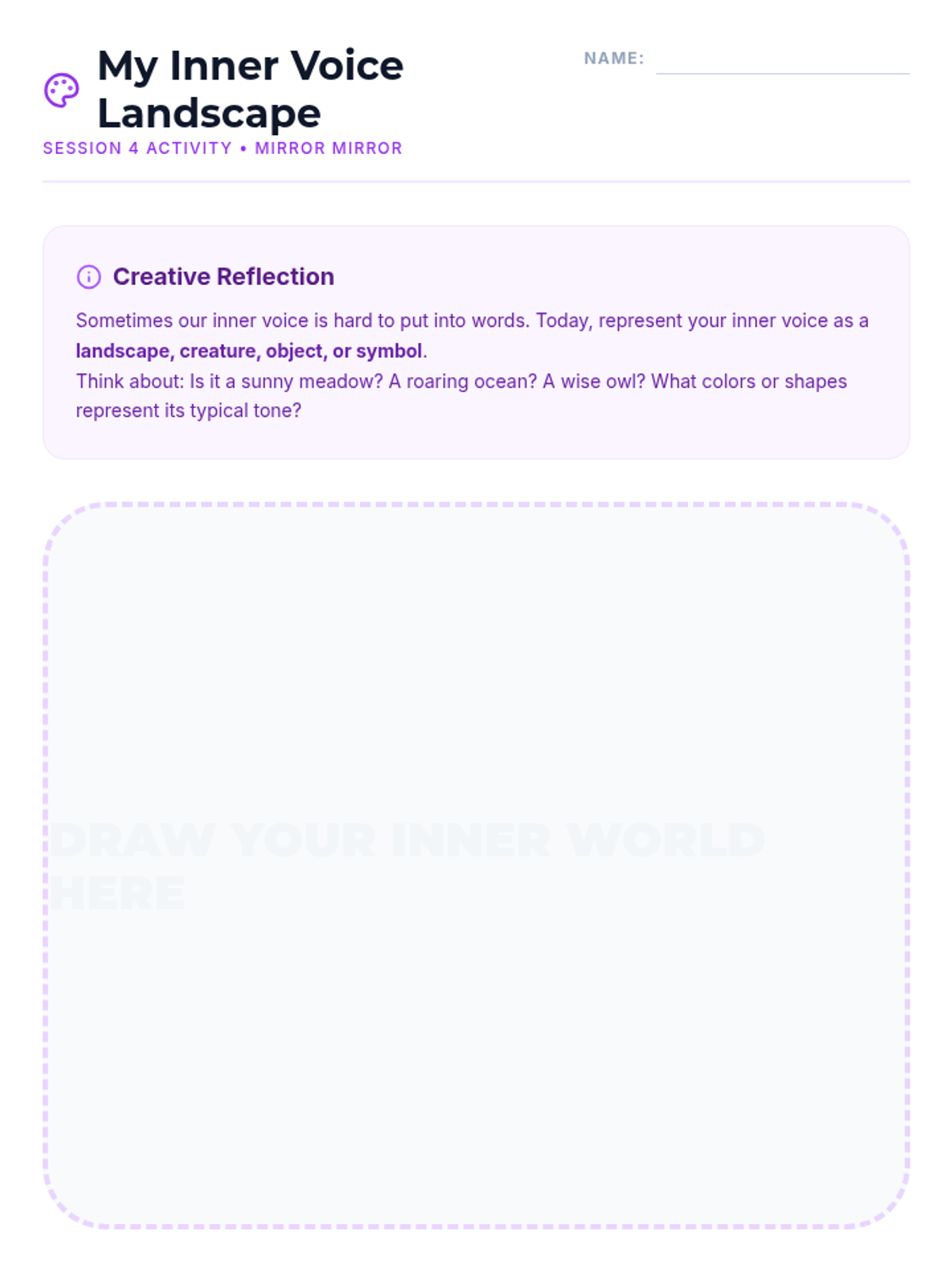
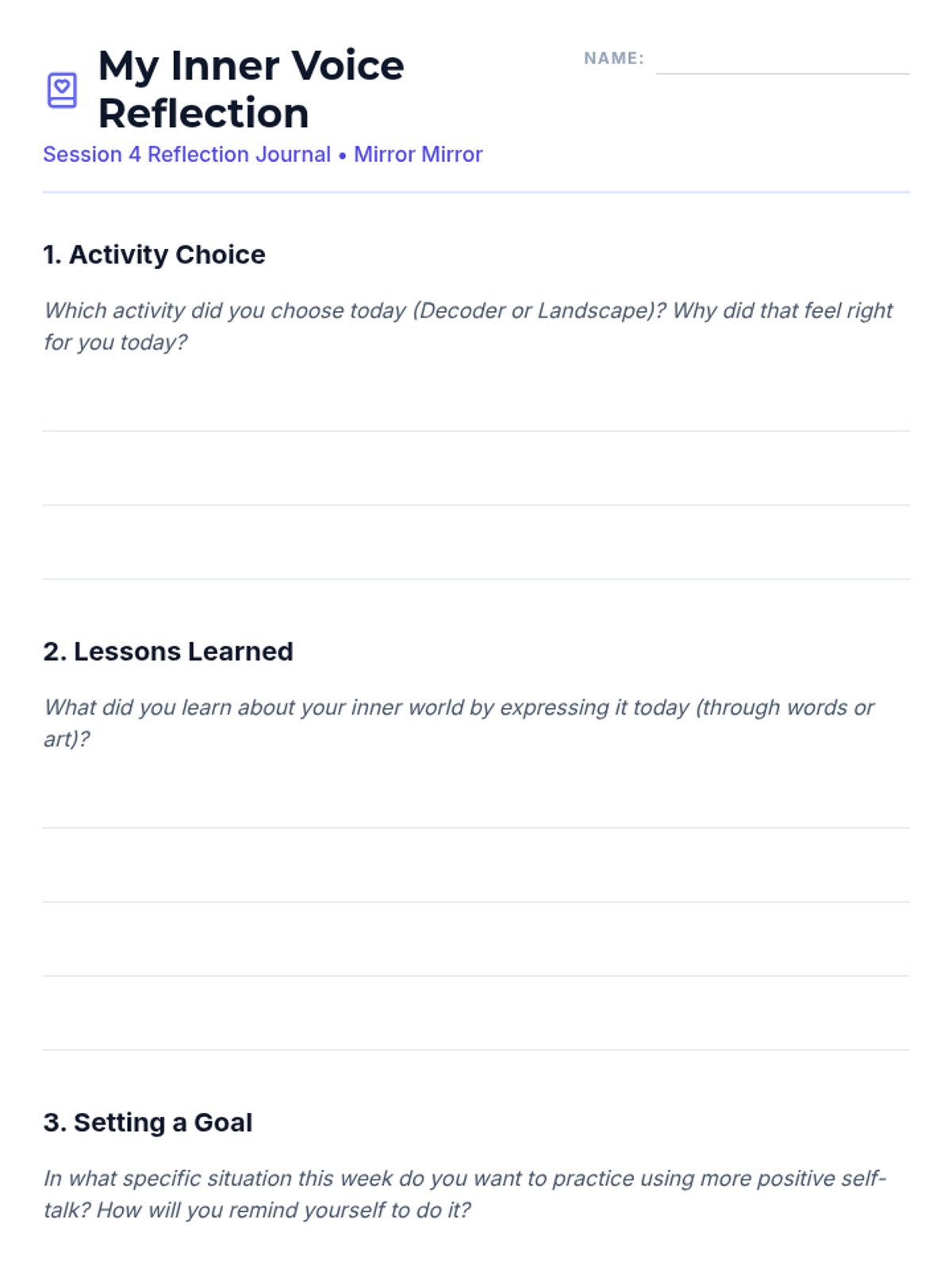
Introductory sessions covering initial reflections, media decoding, body stories, the inner voice, and building a self-esteem toolbox.
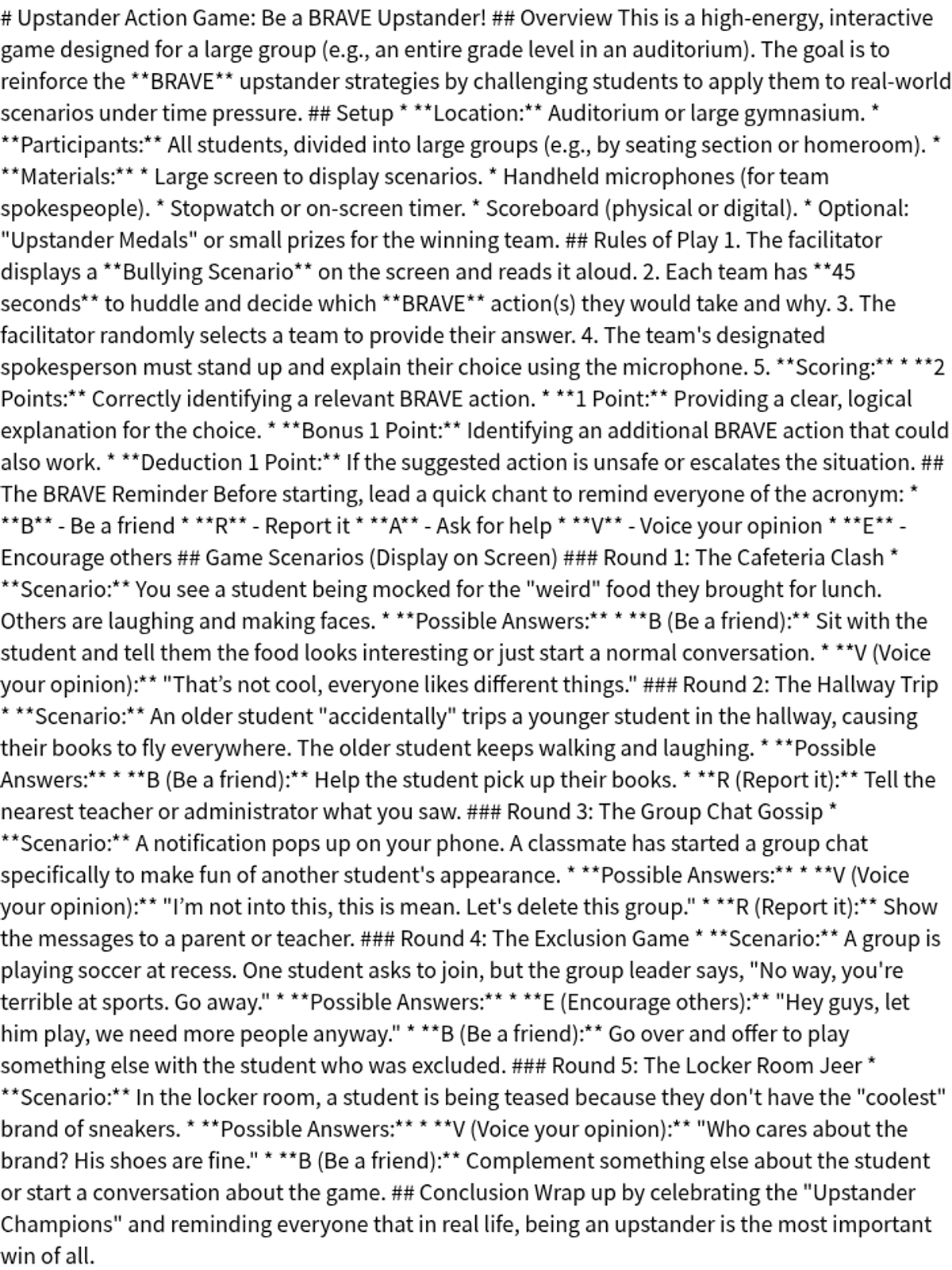
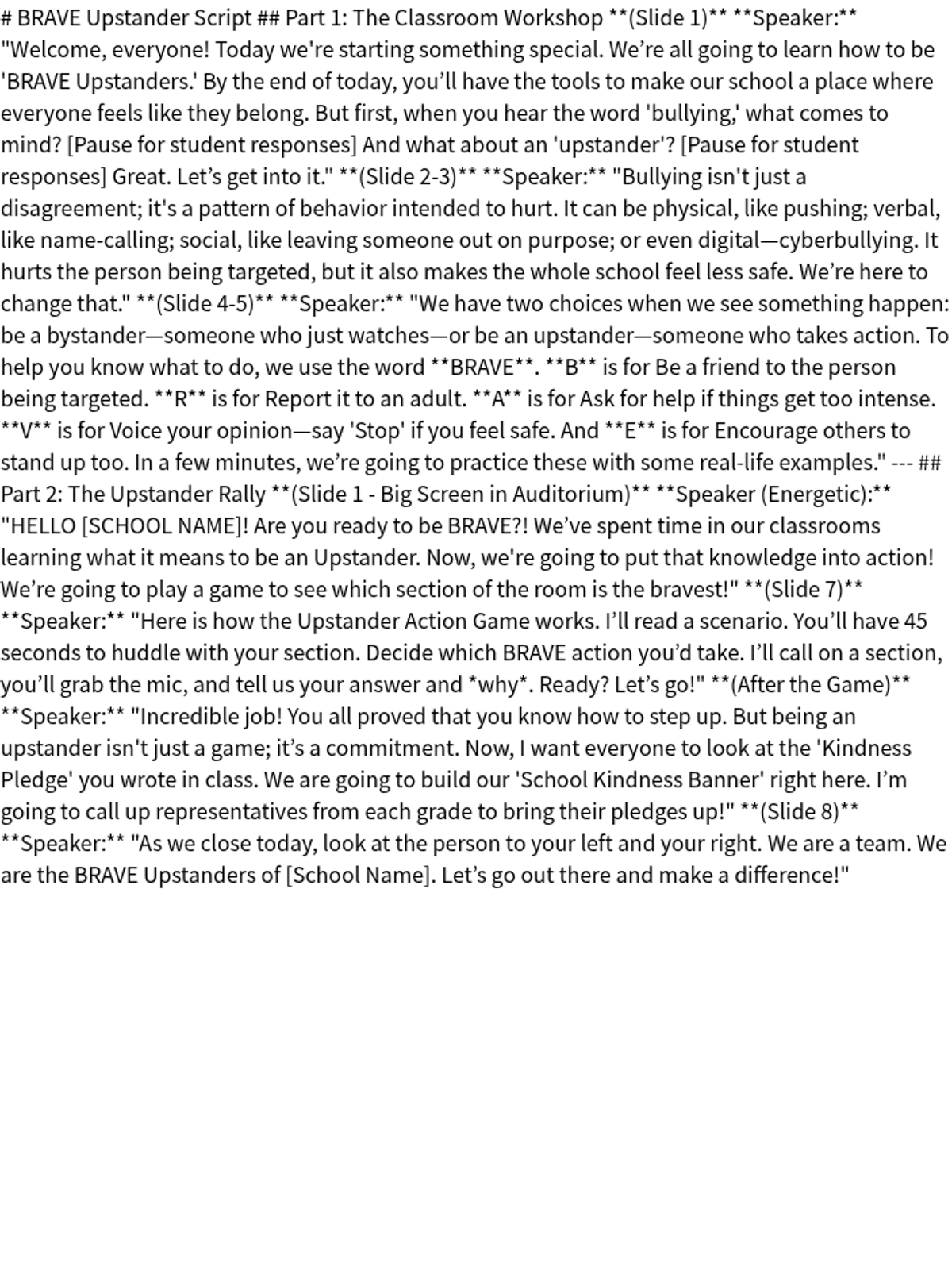
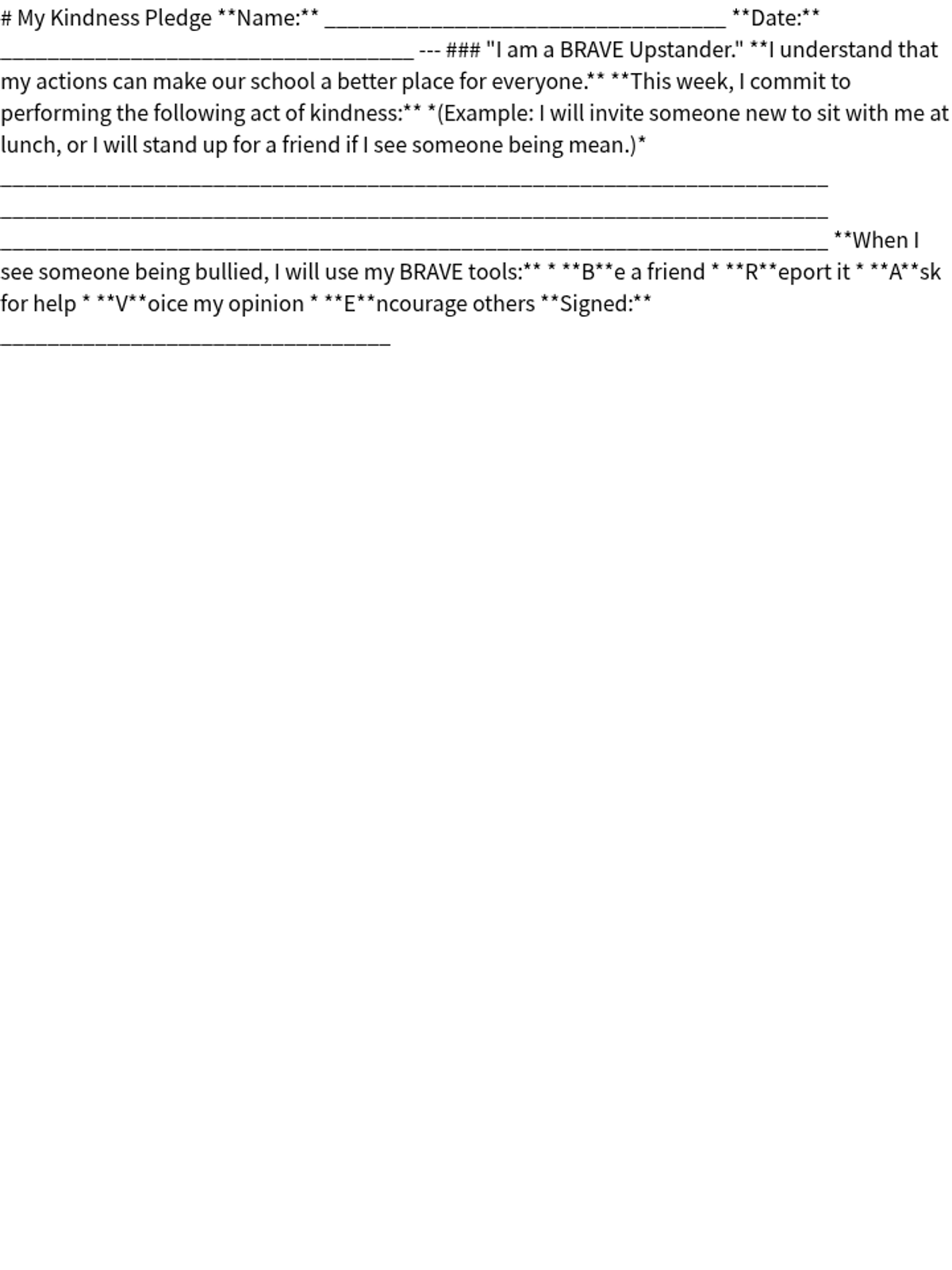
A 45-minute high-energy assembly featuring a team-based competition and a community pledge ceremony.
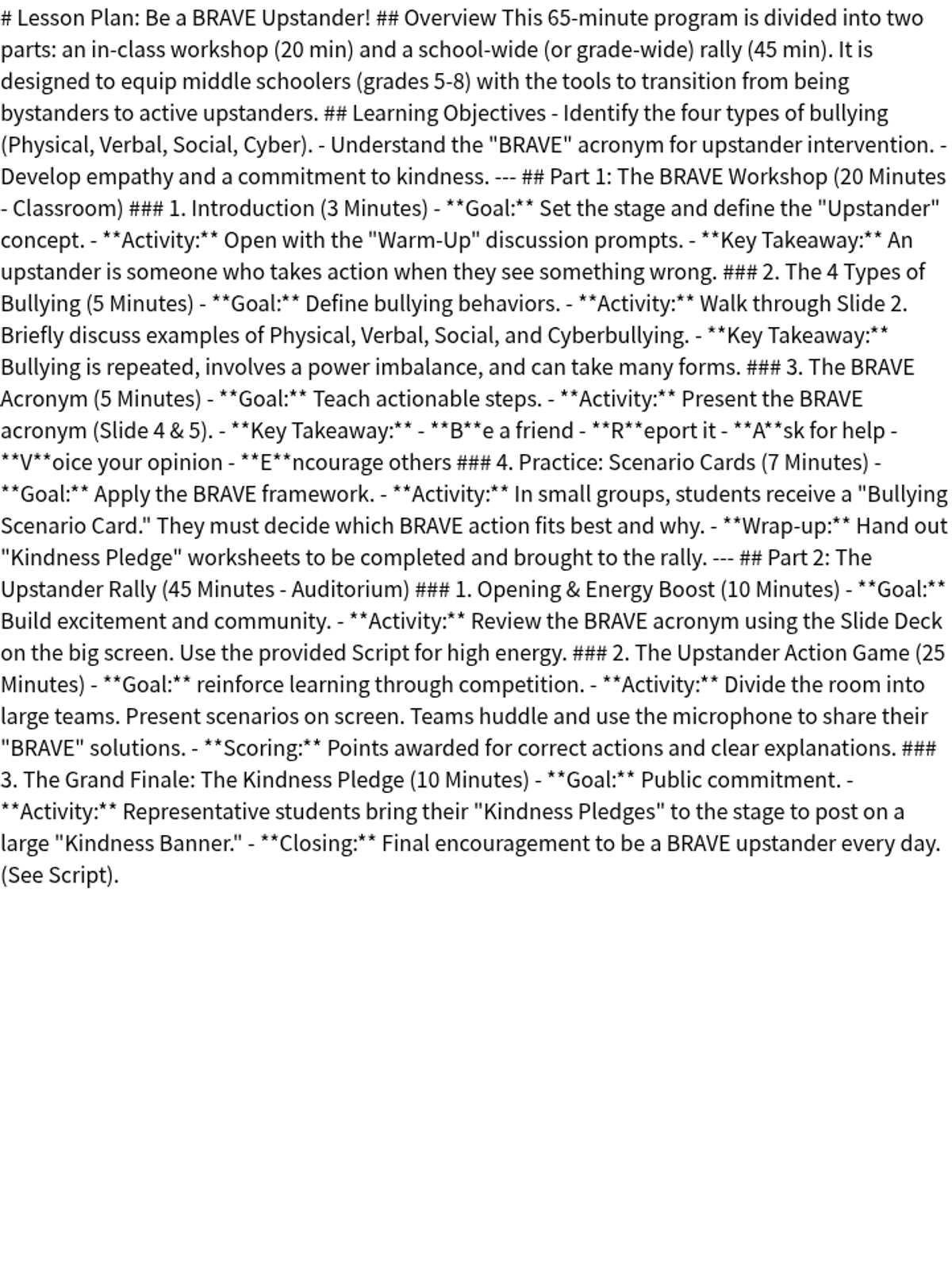
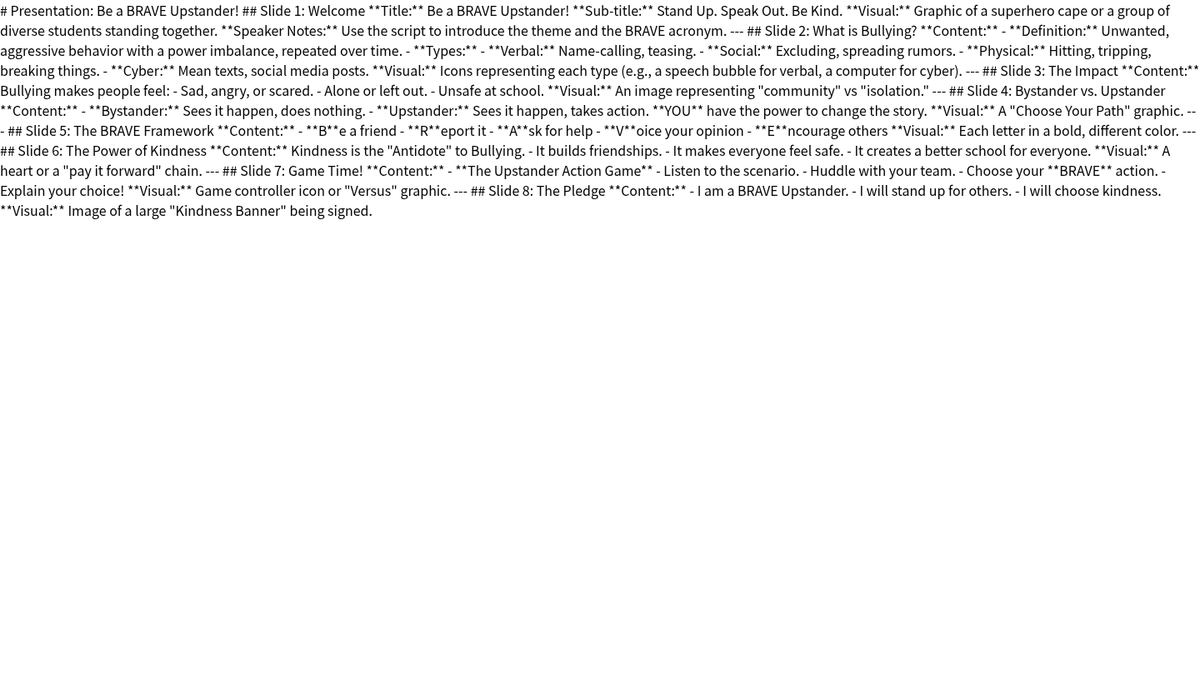
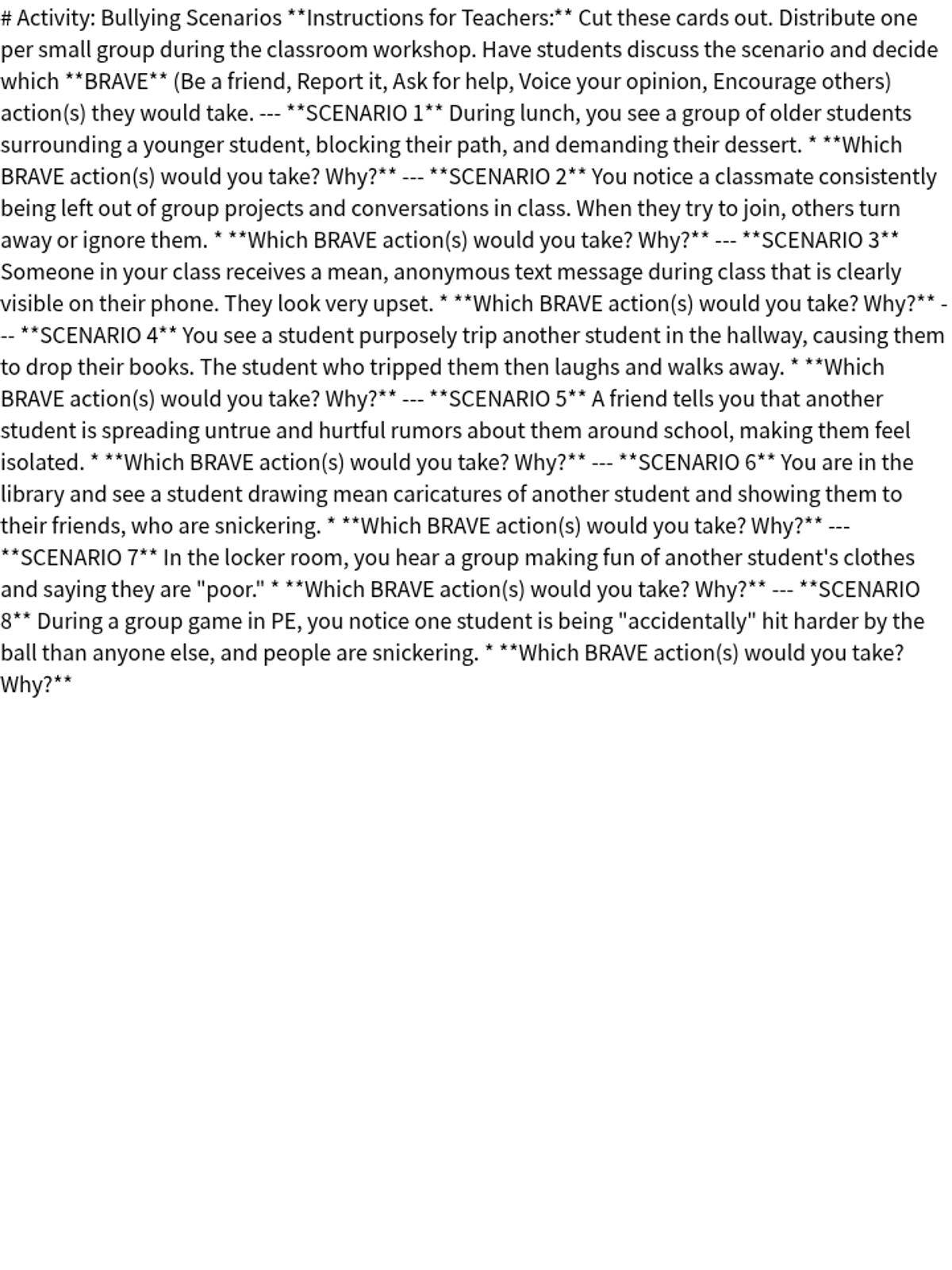
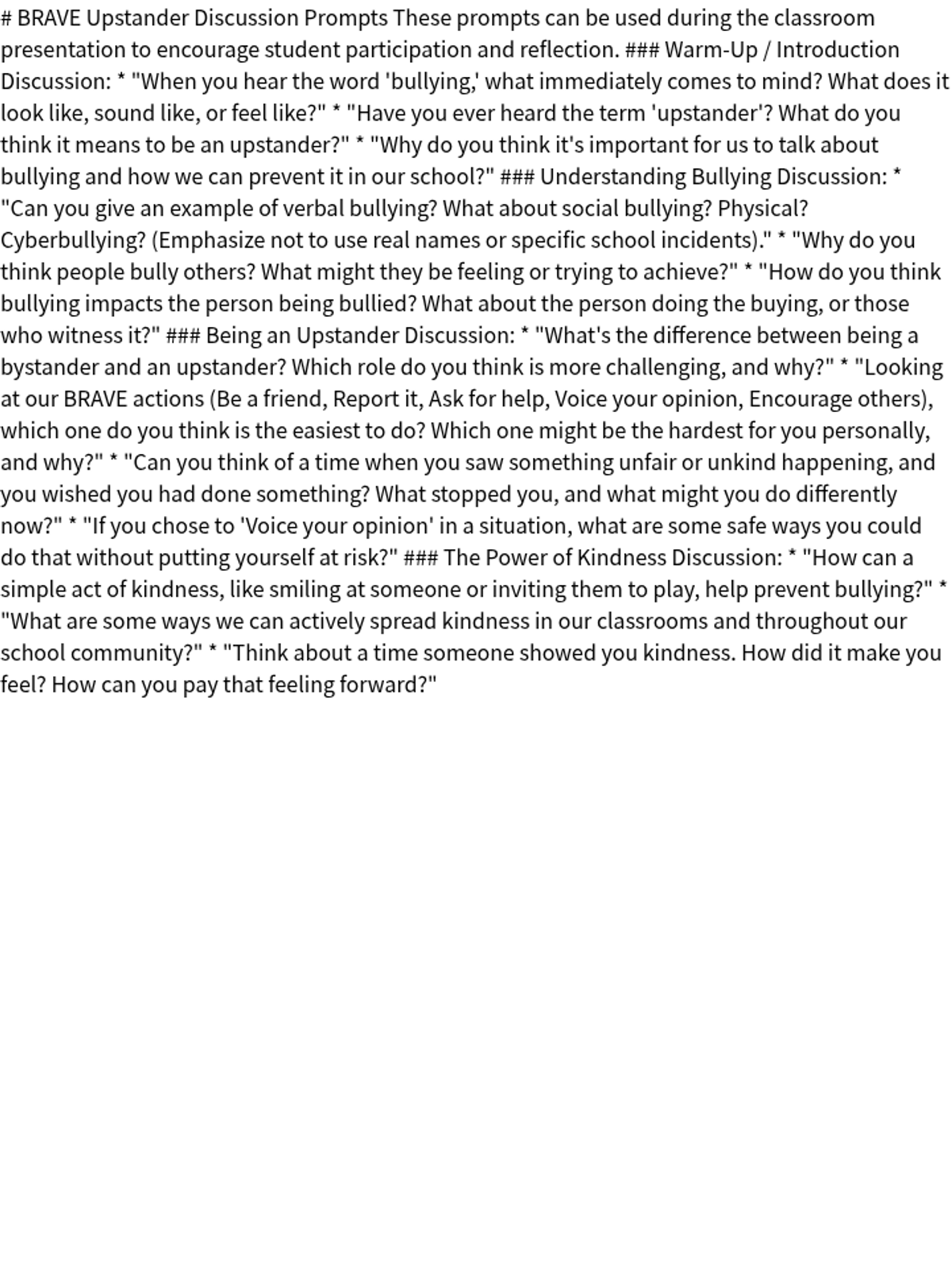
A 20-minute classroom session focusing on defining bullying, introducing the BRAVE acronym, and practicing scenarios.
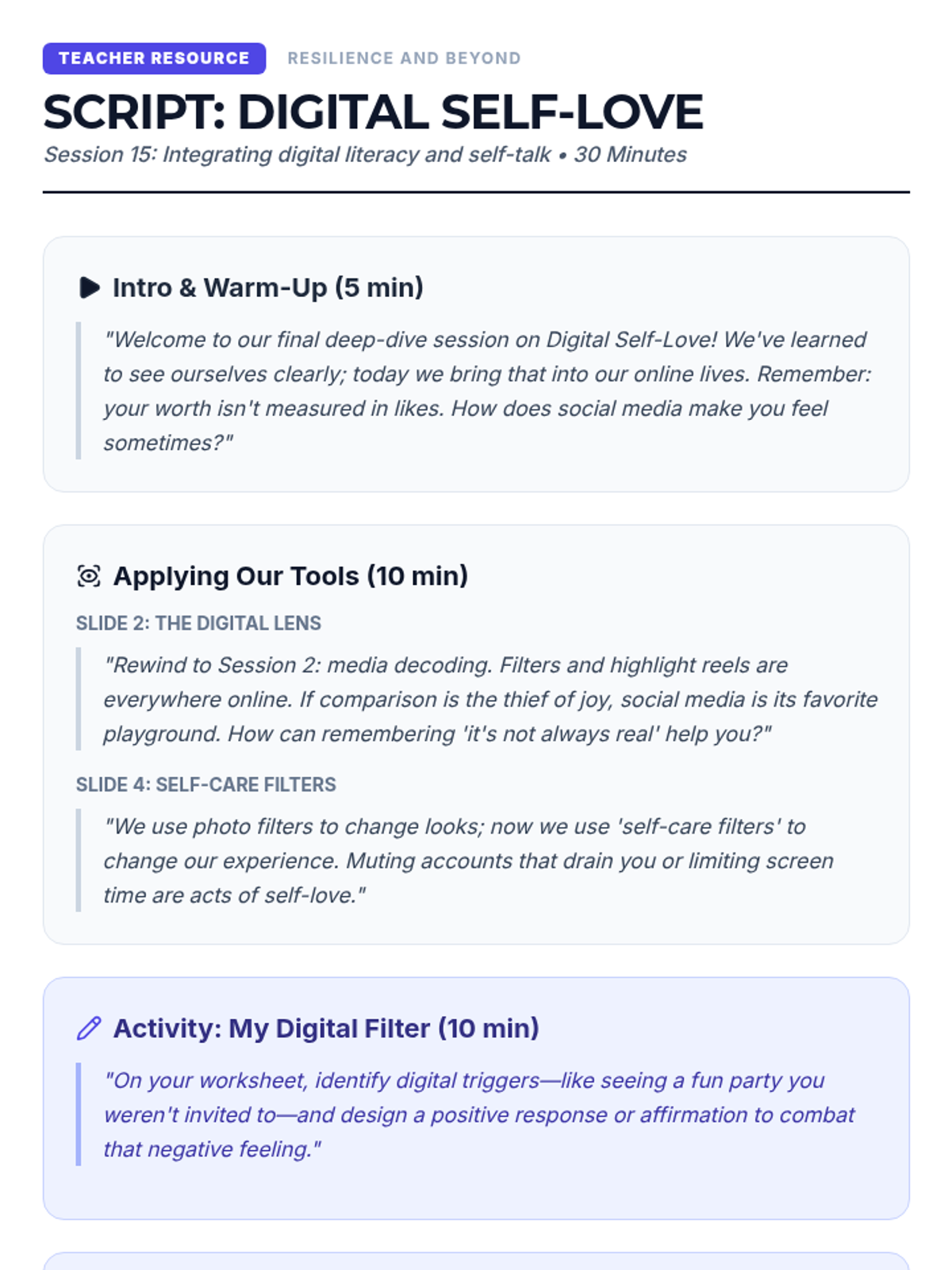
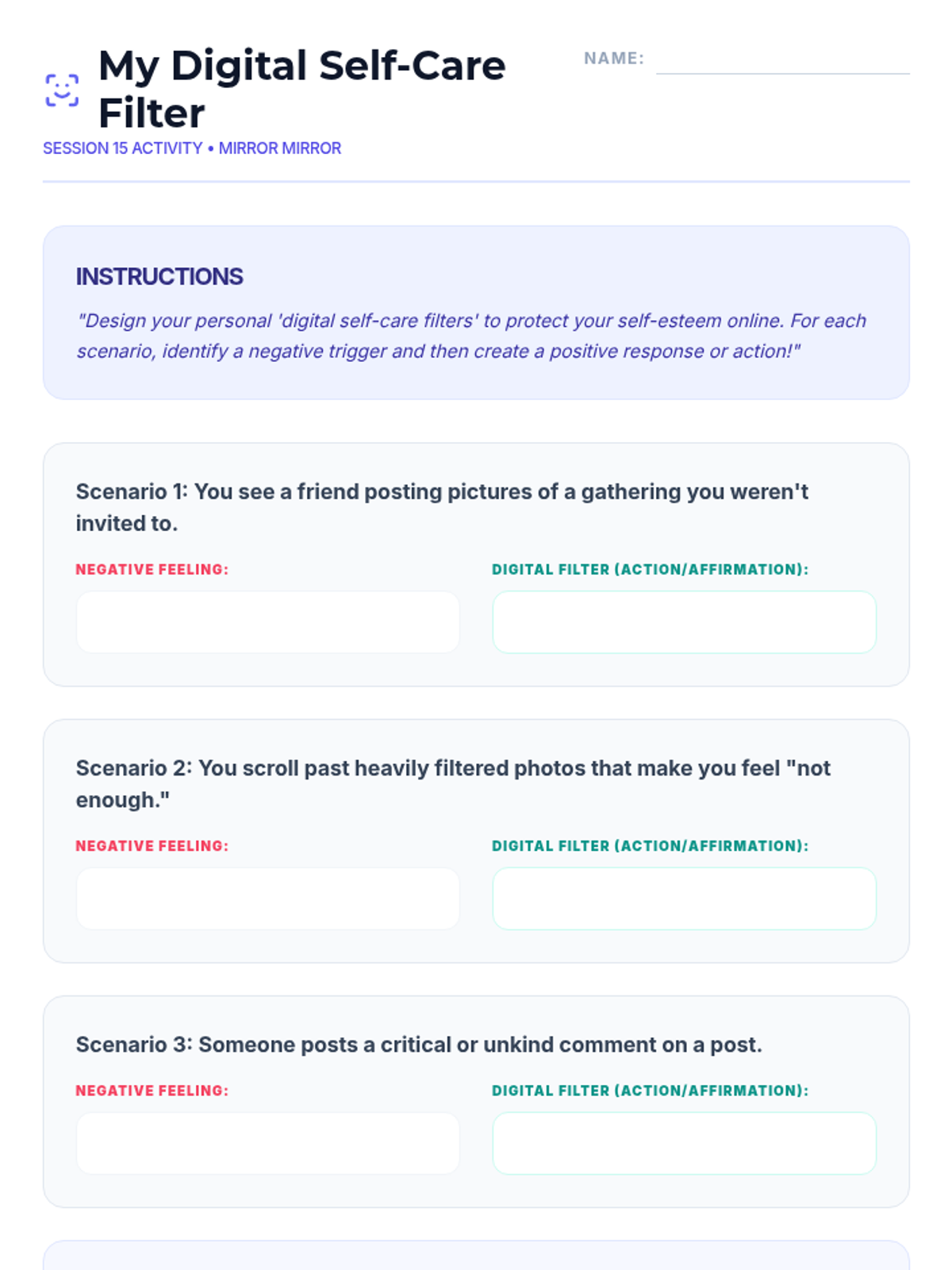
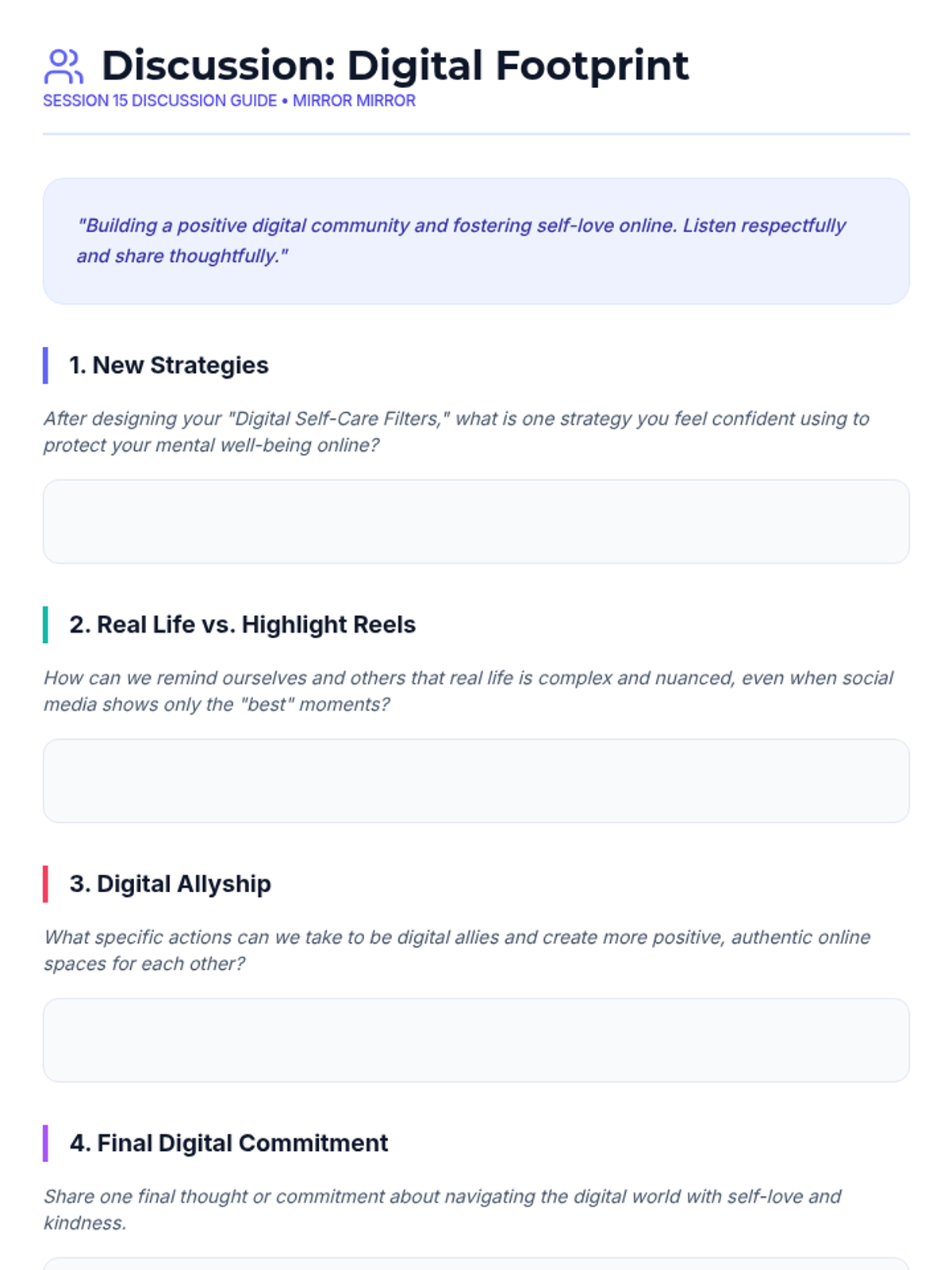
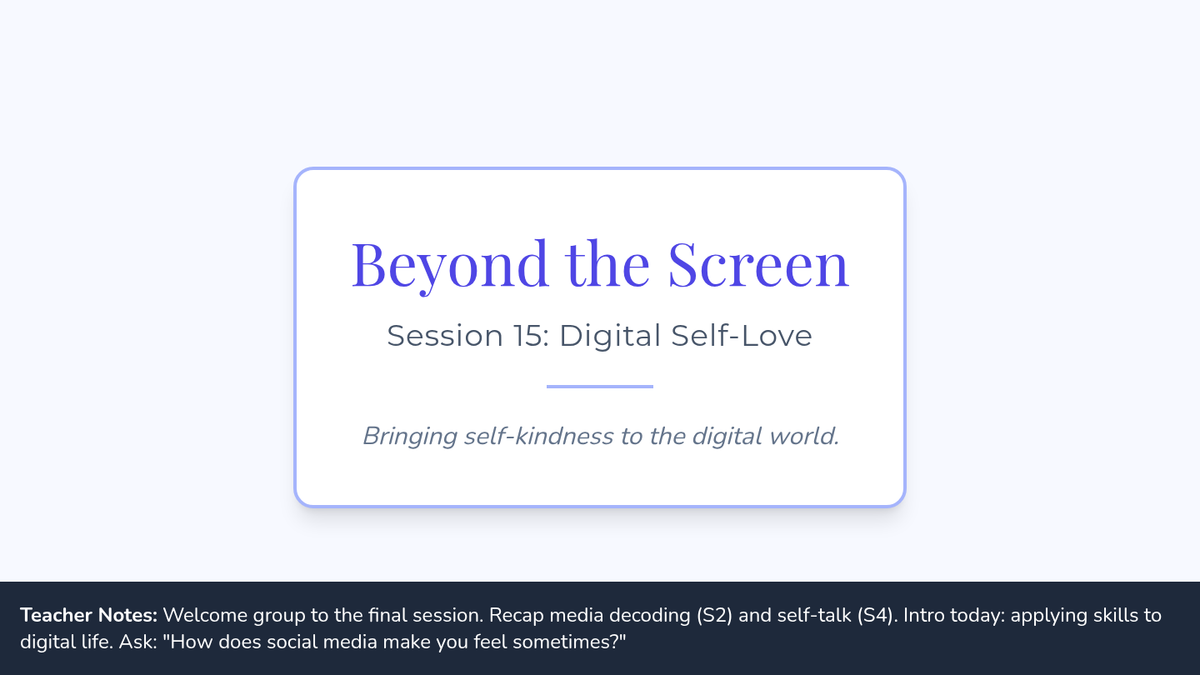
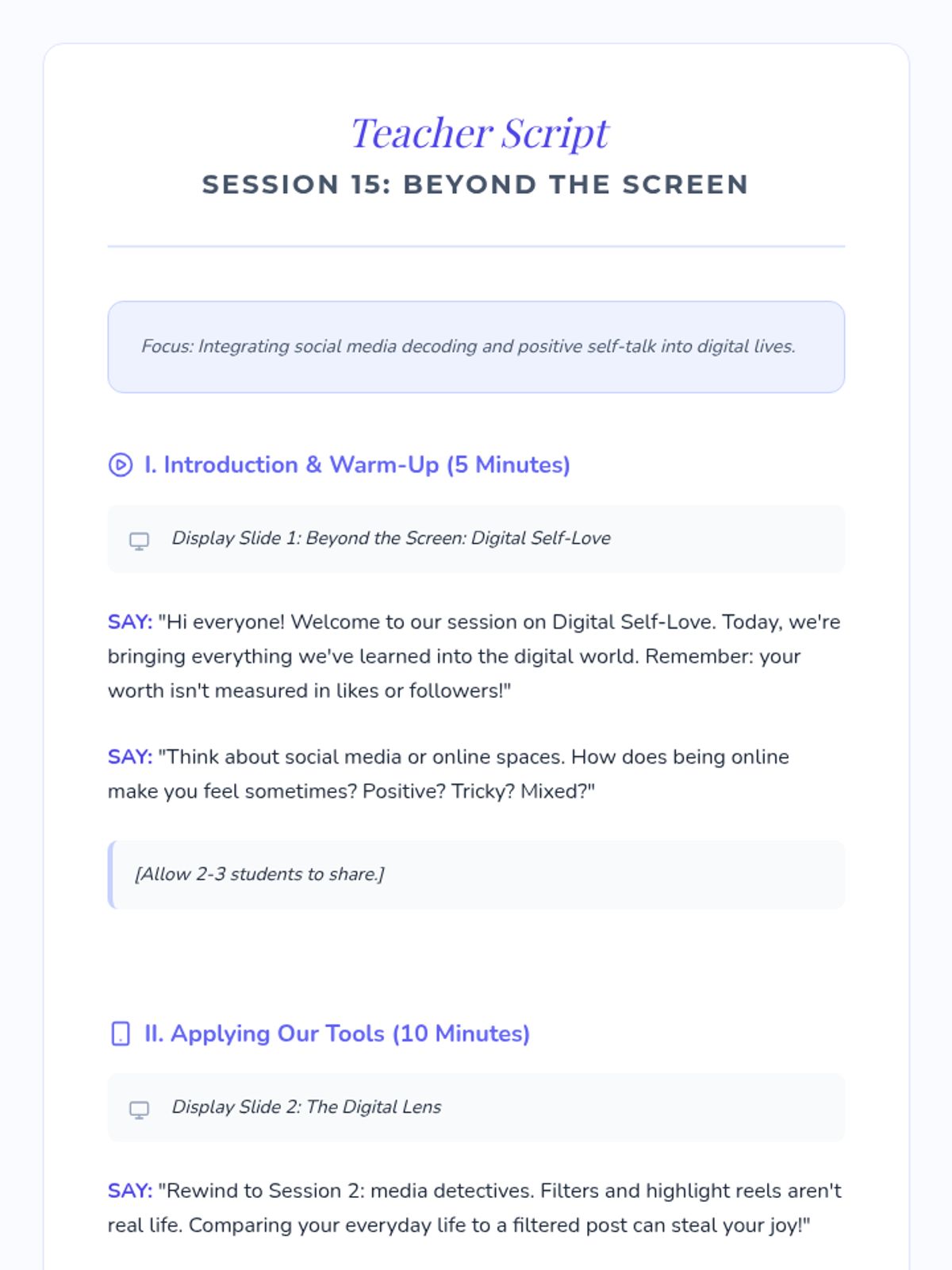
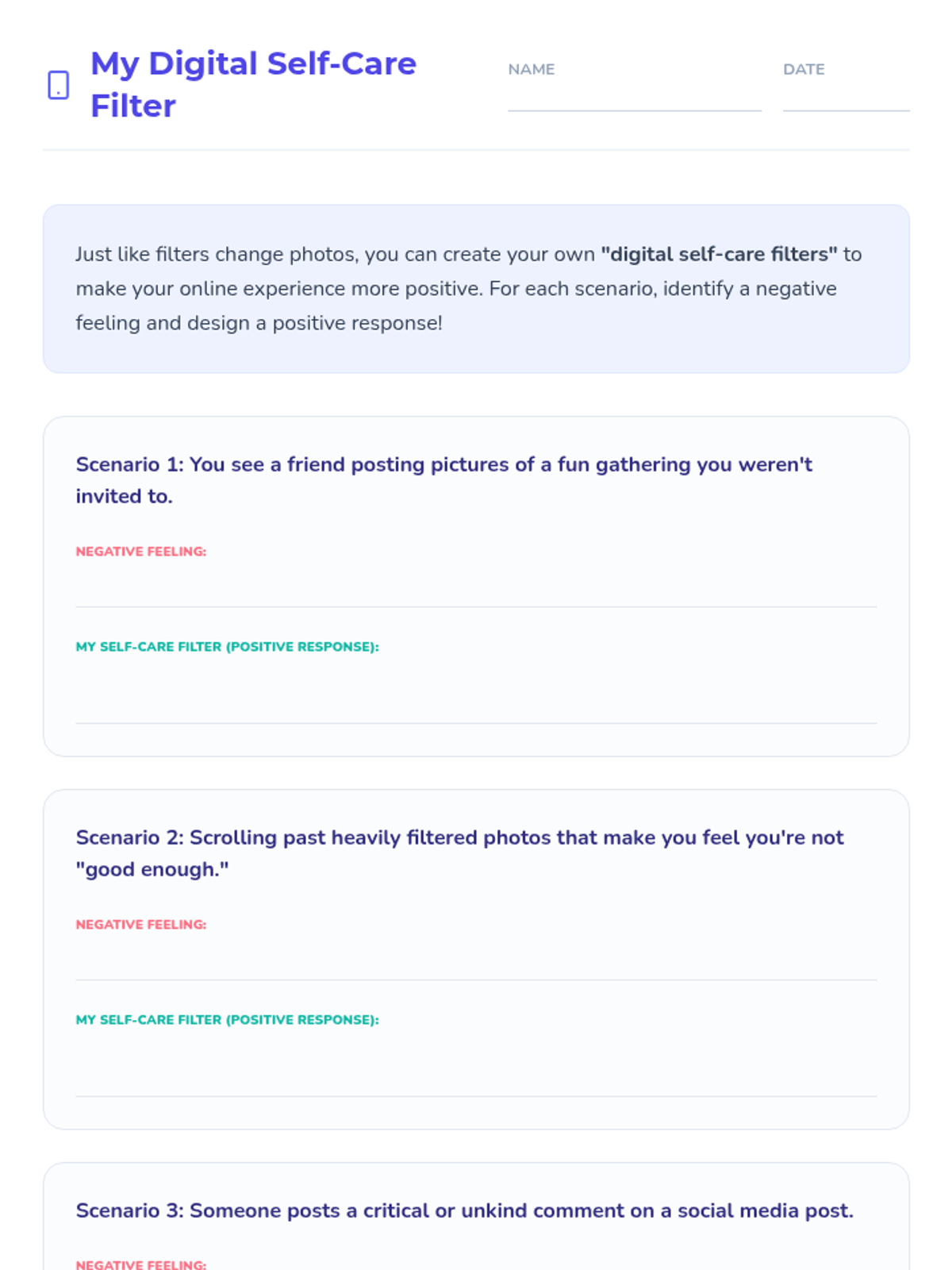
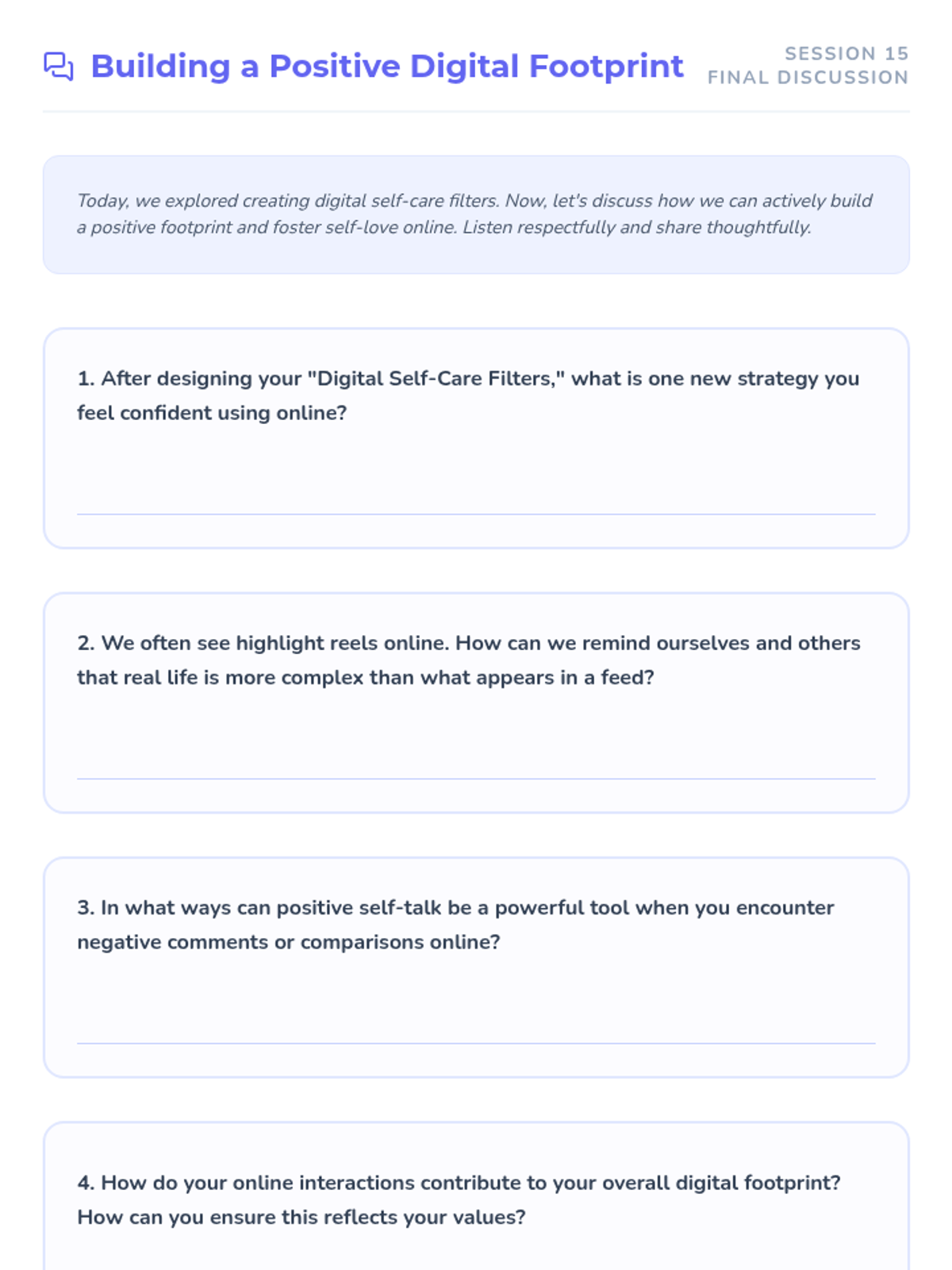
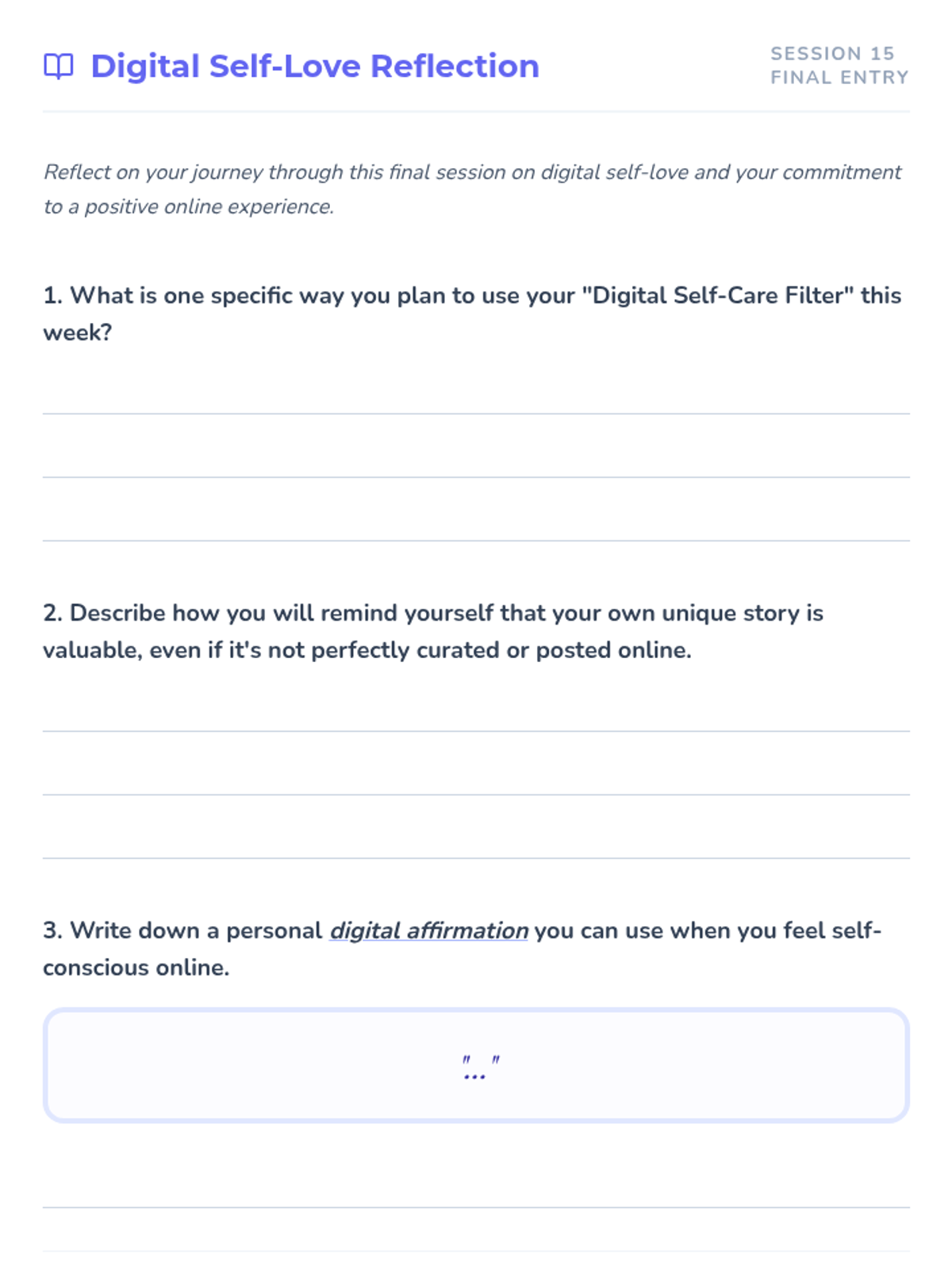
Applying media decoding and positive self-talk to social media and digital spaces.
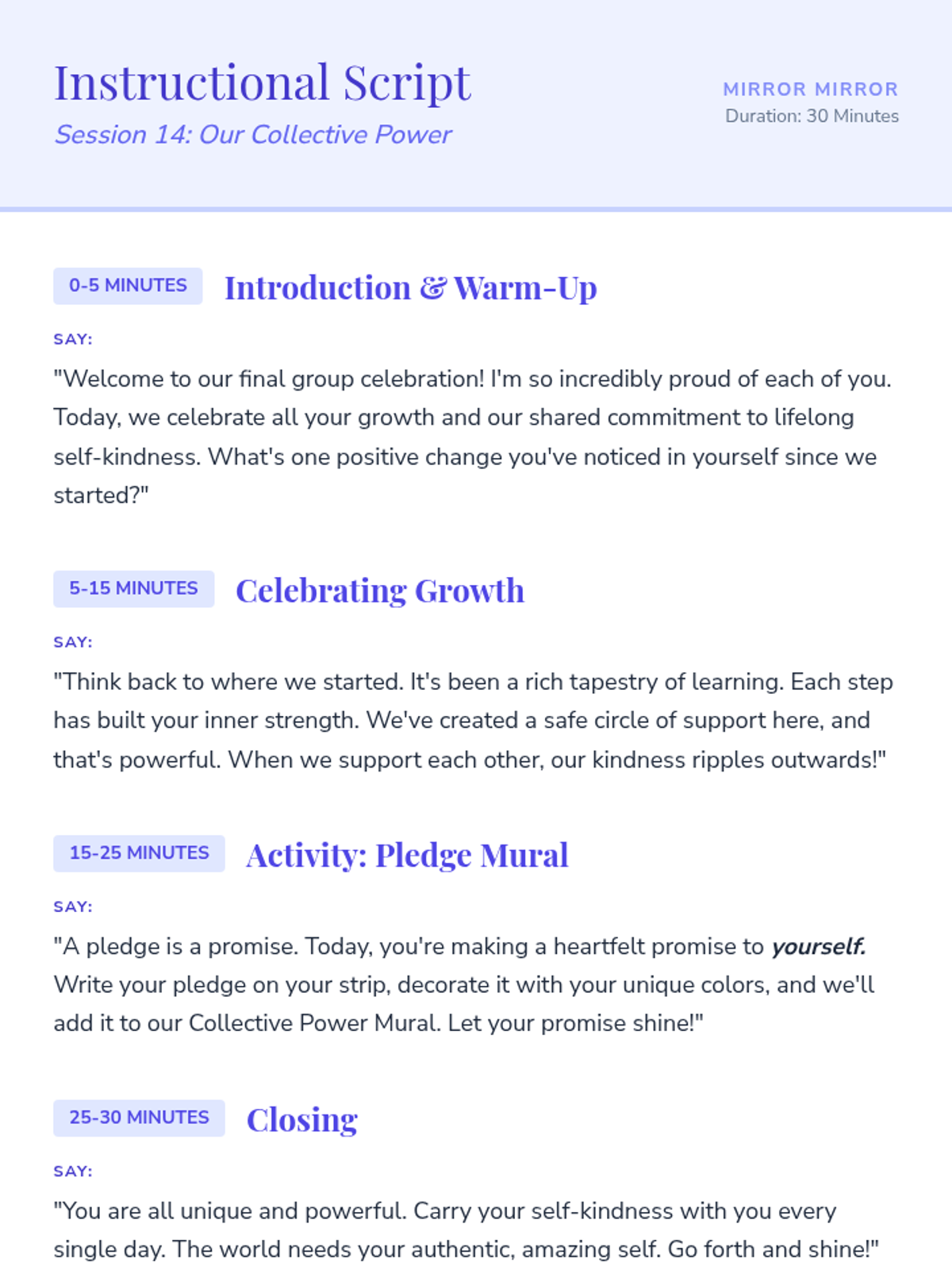
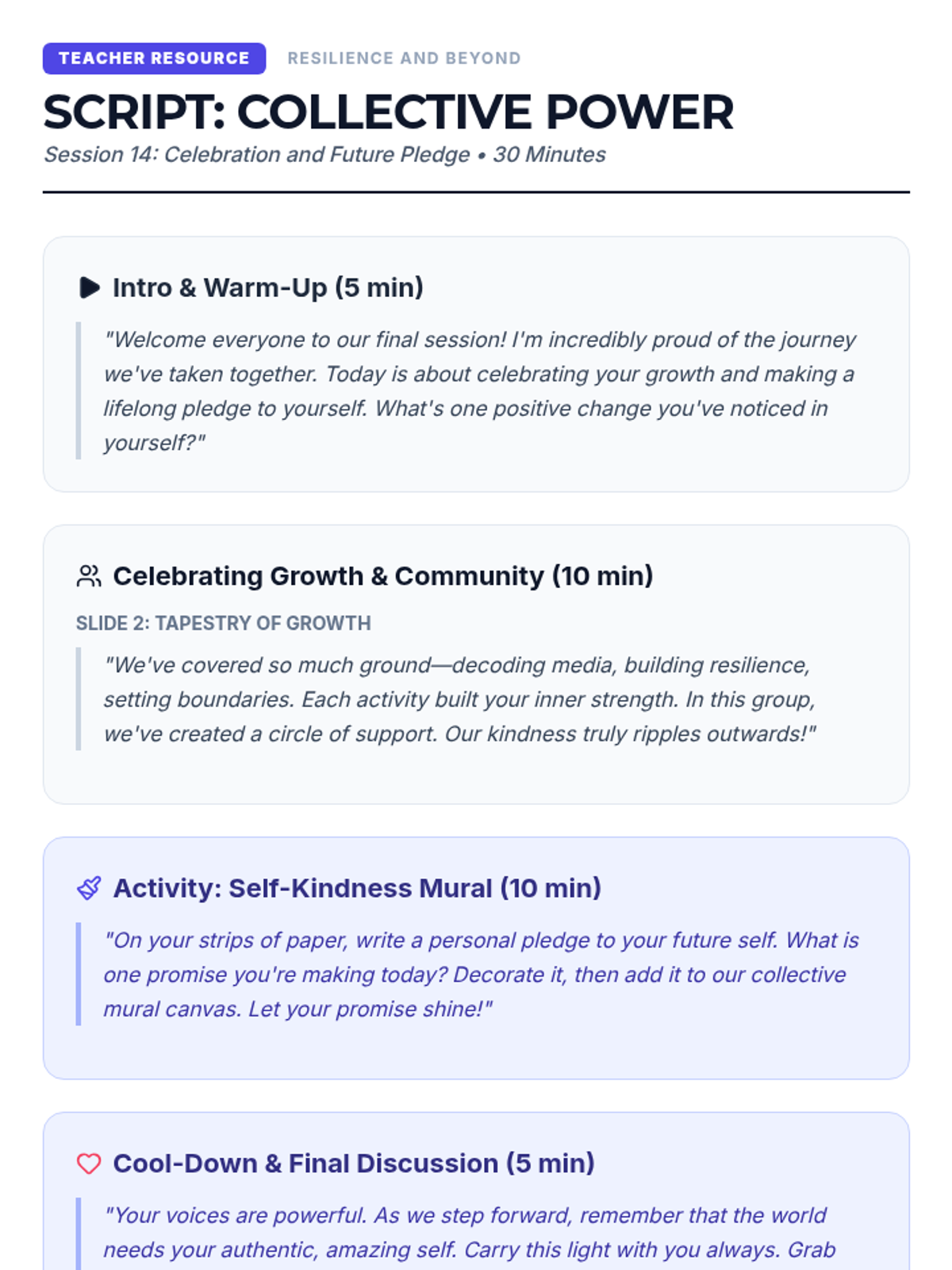
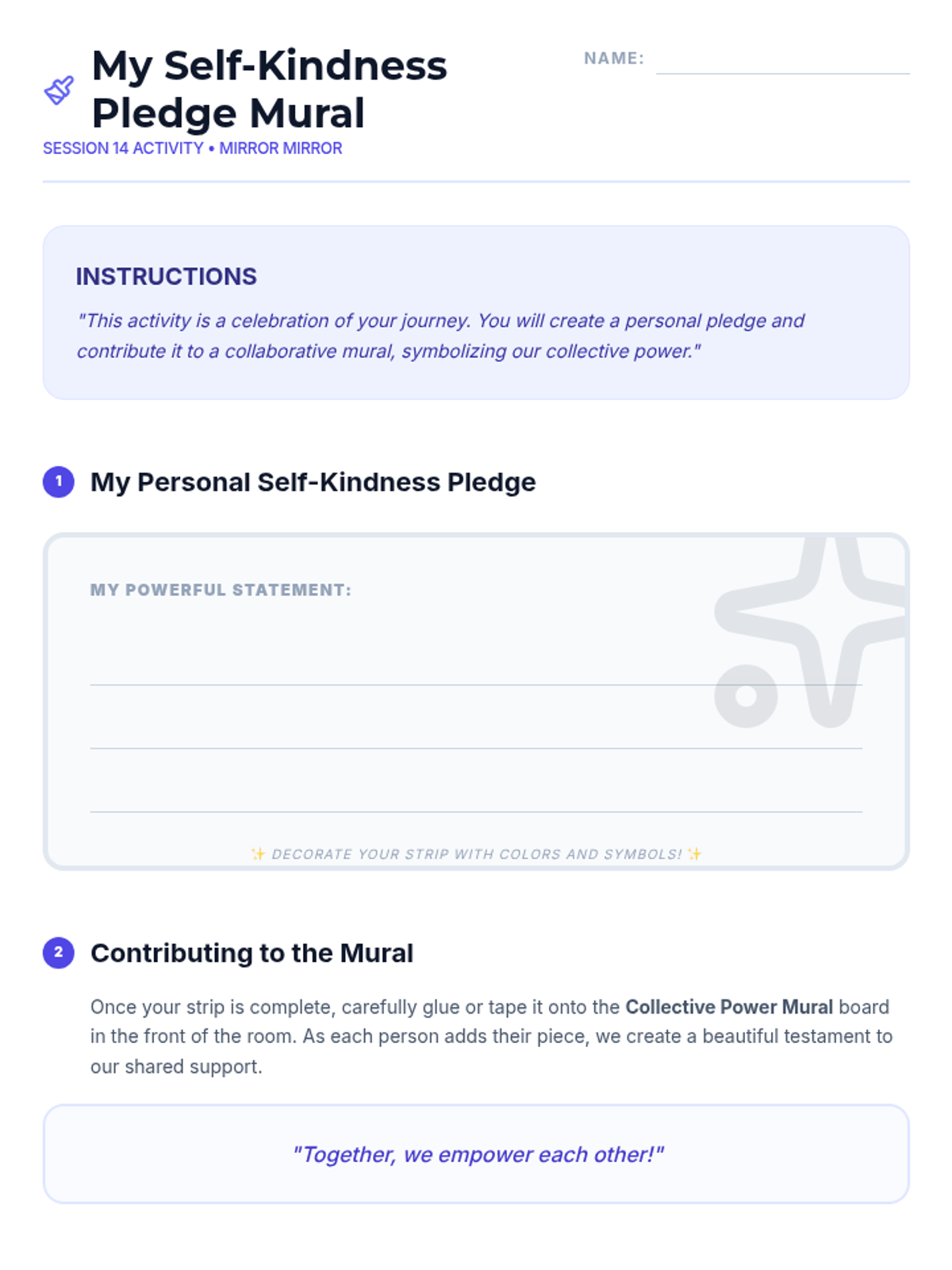
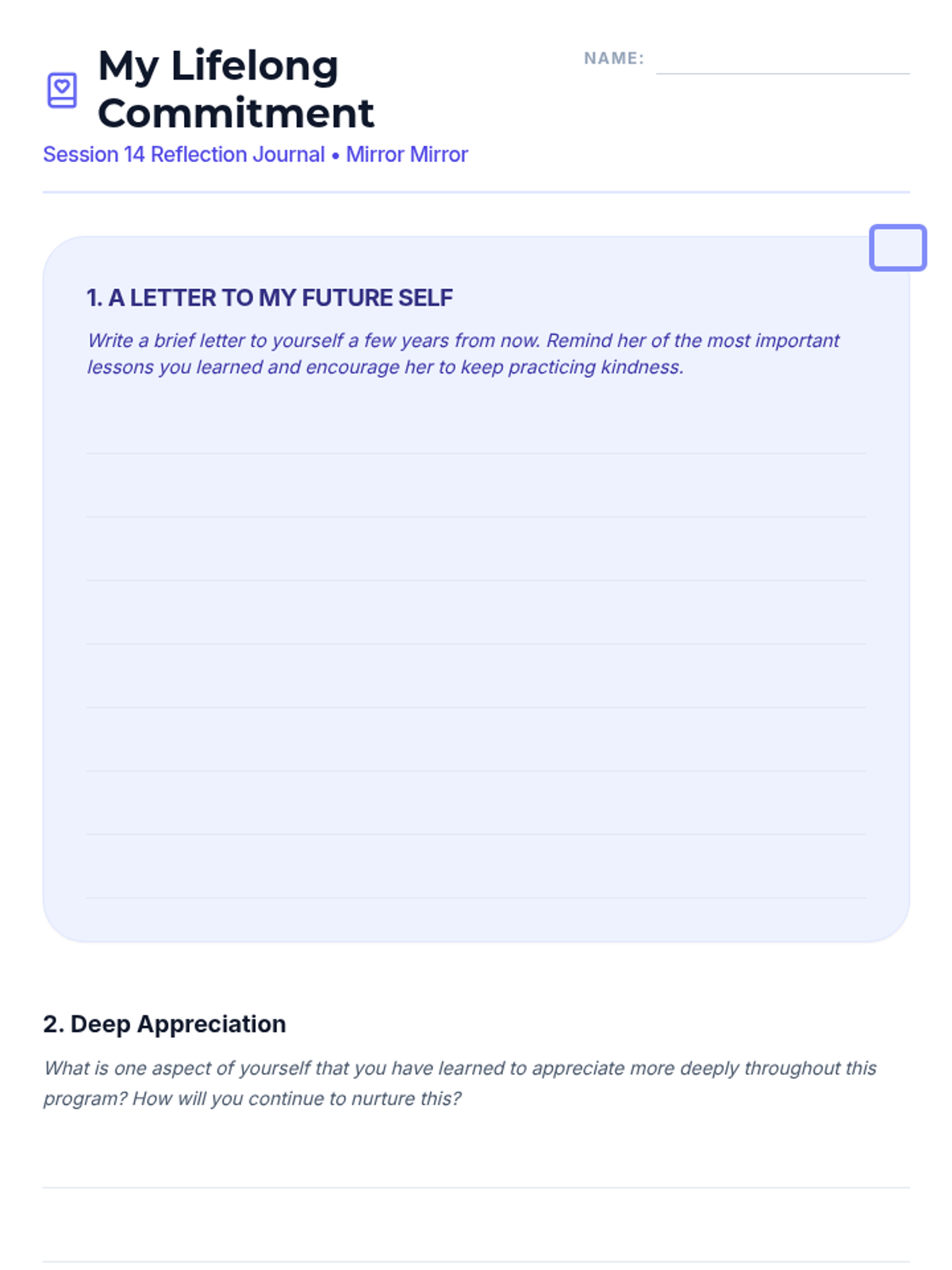
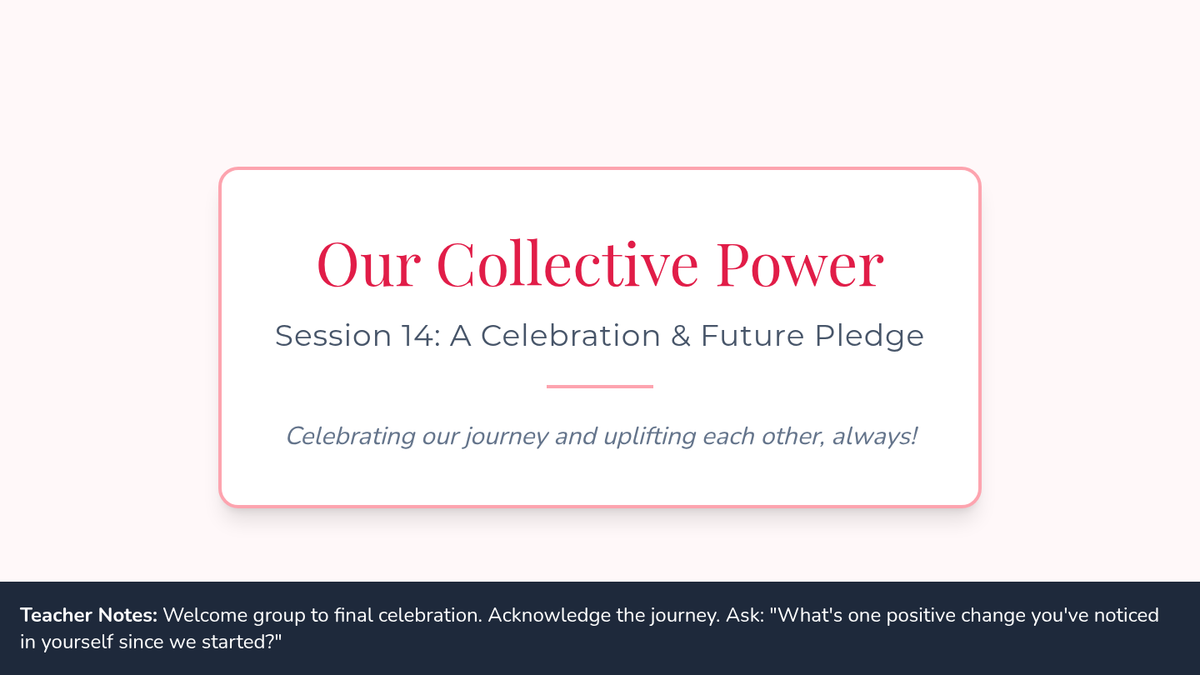
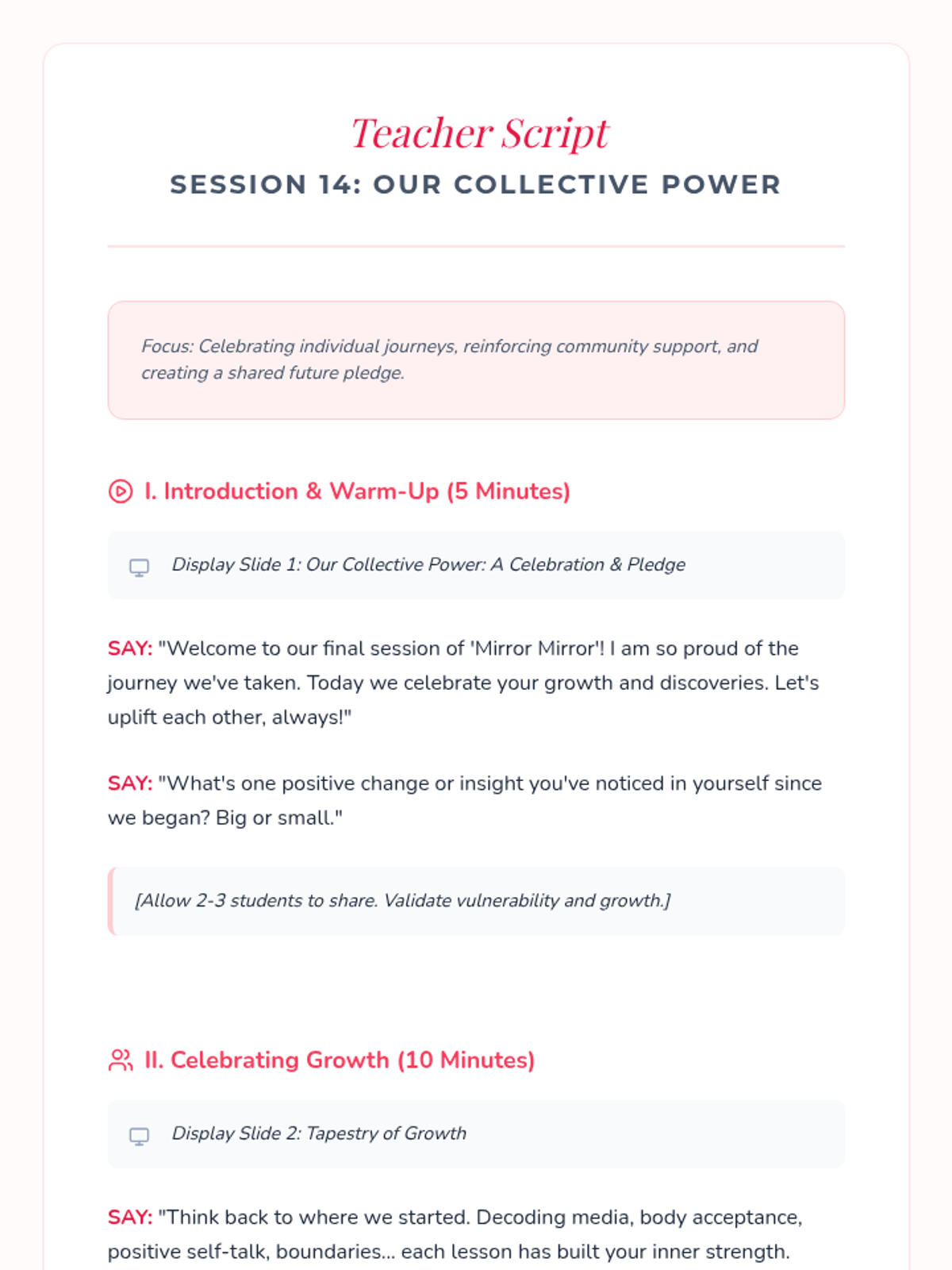
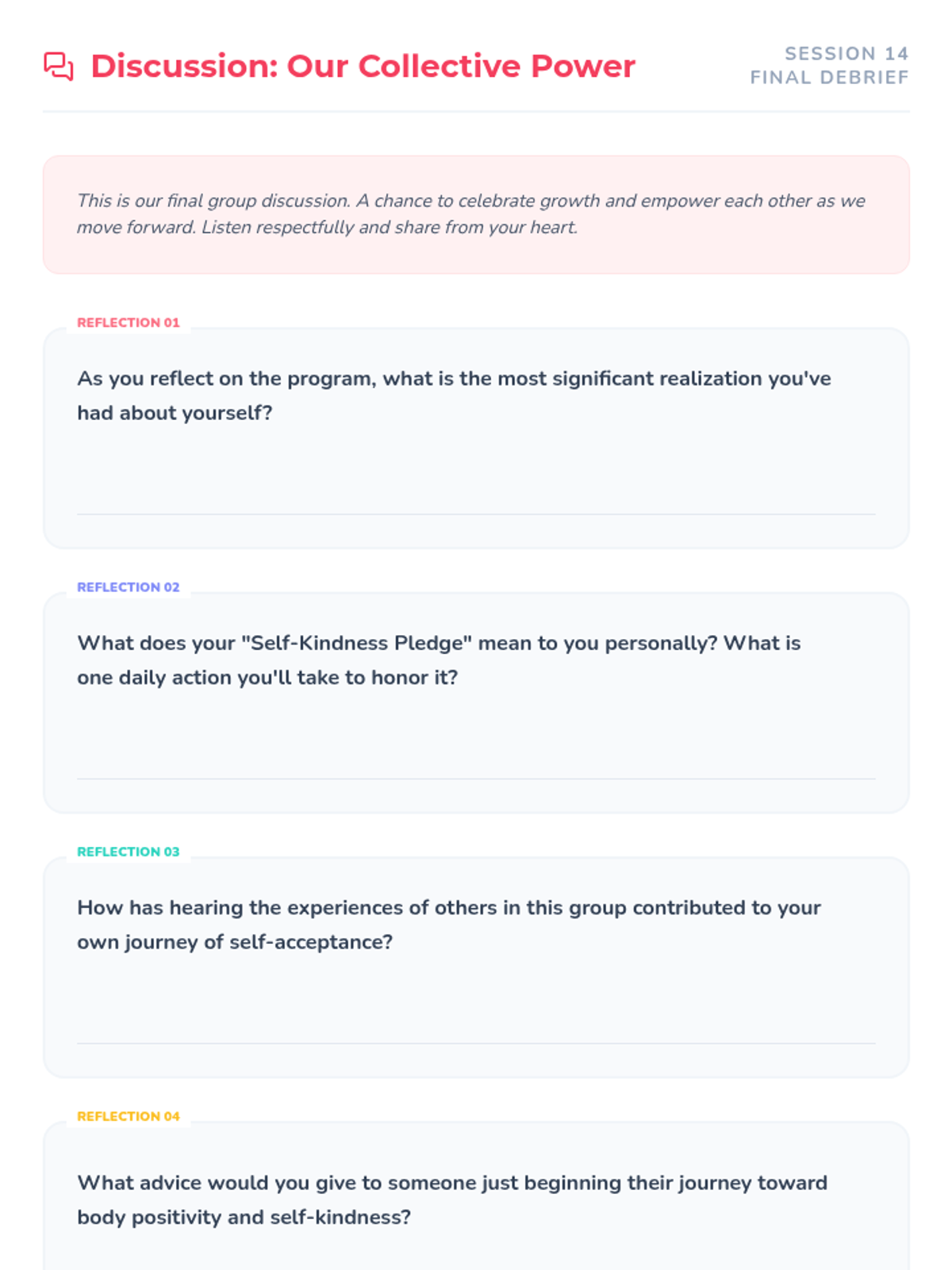
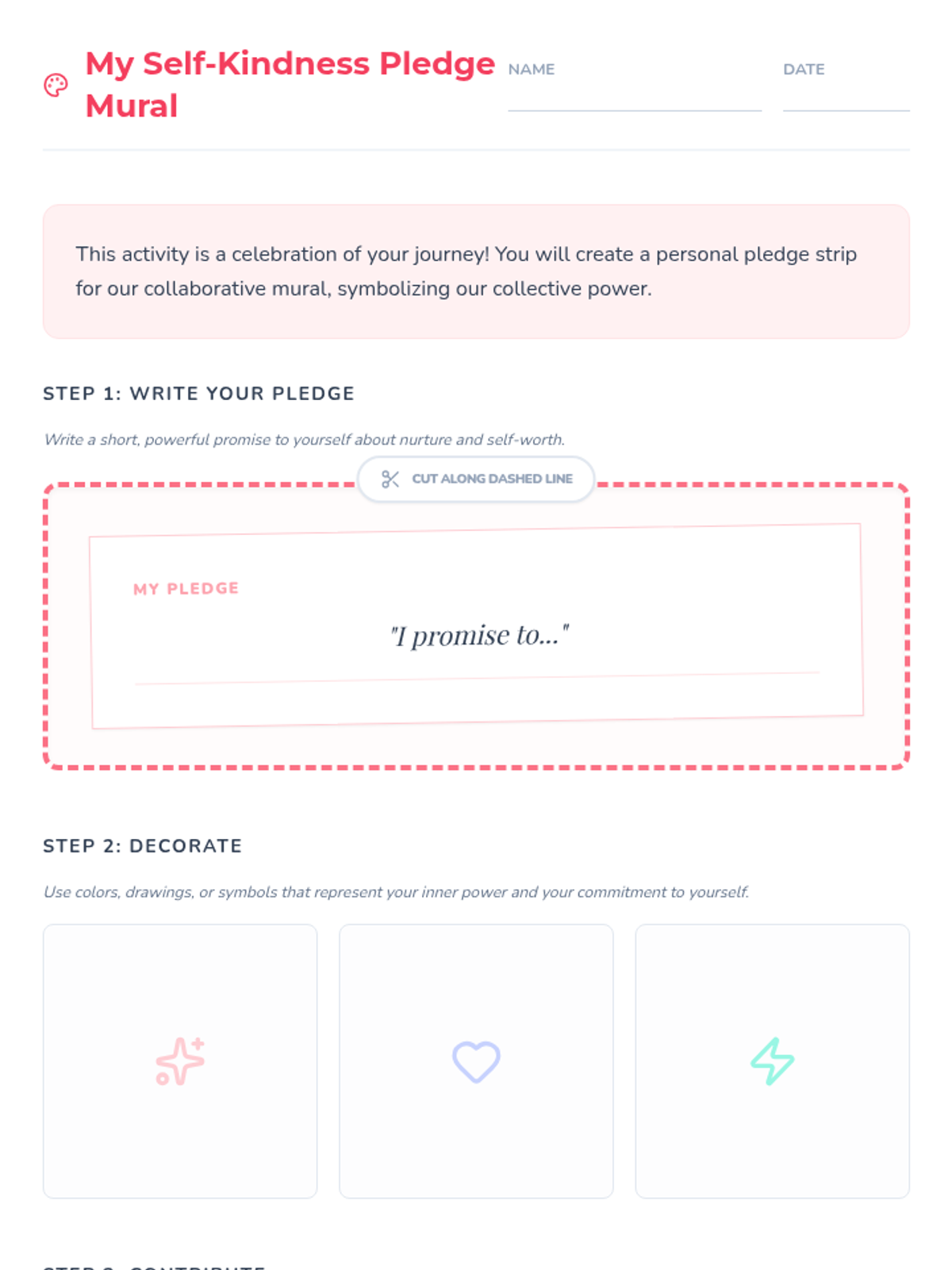
Celebrating collective growth and making a shared future pledge.
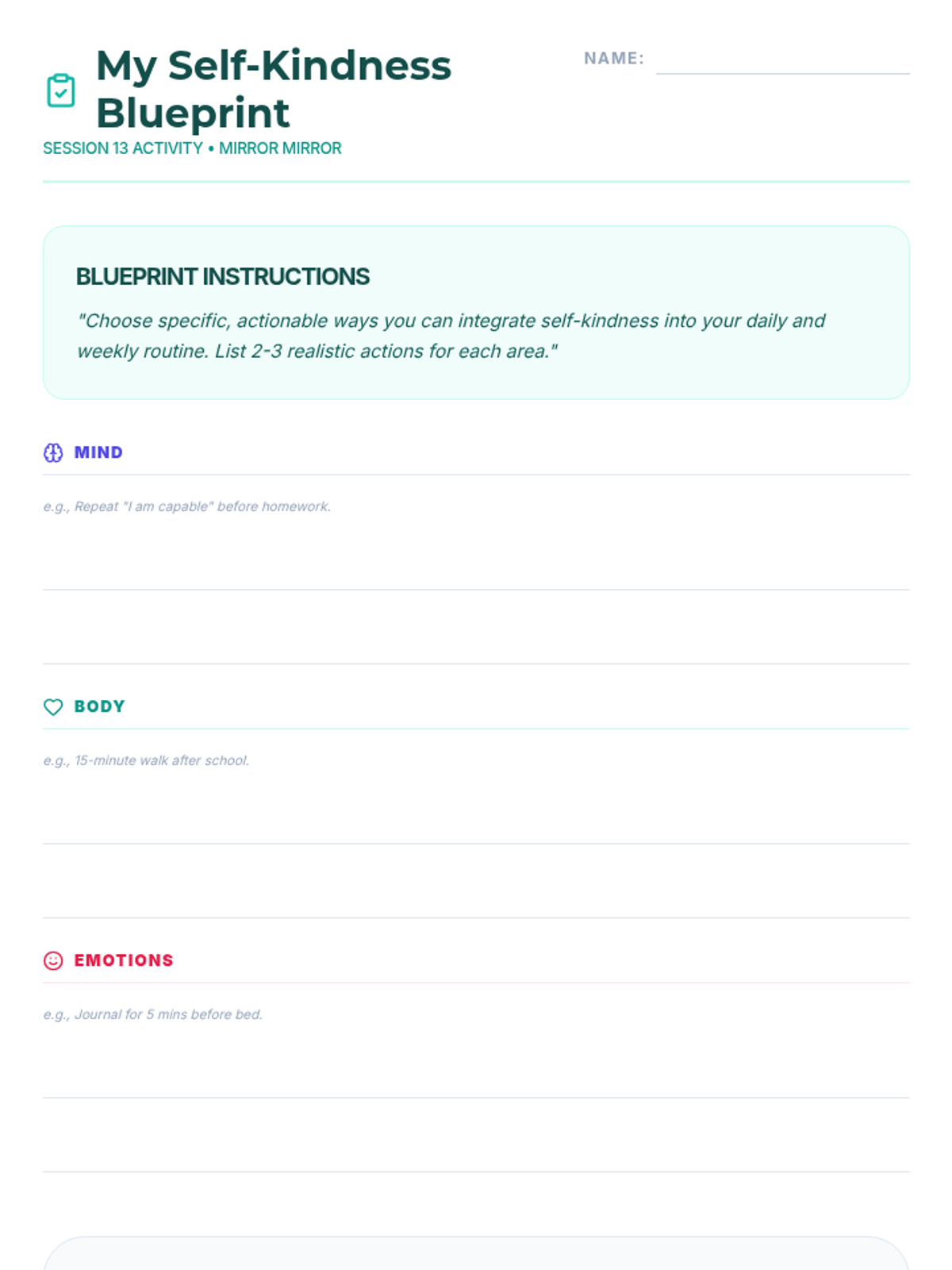
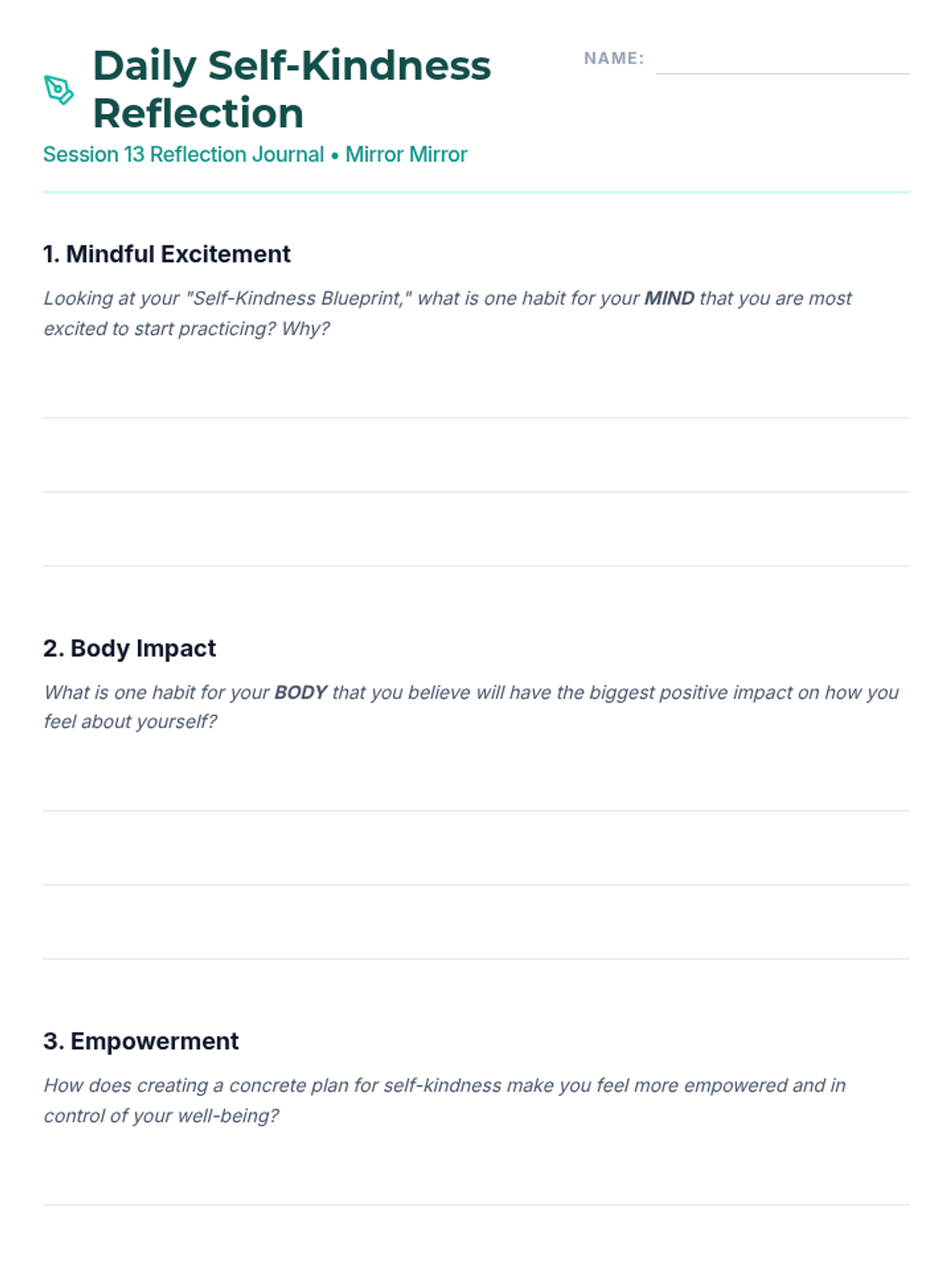
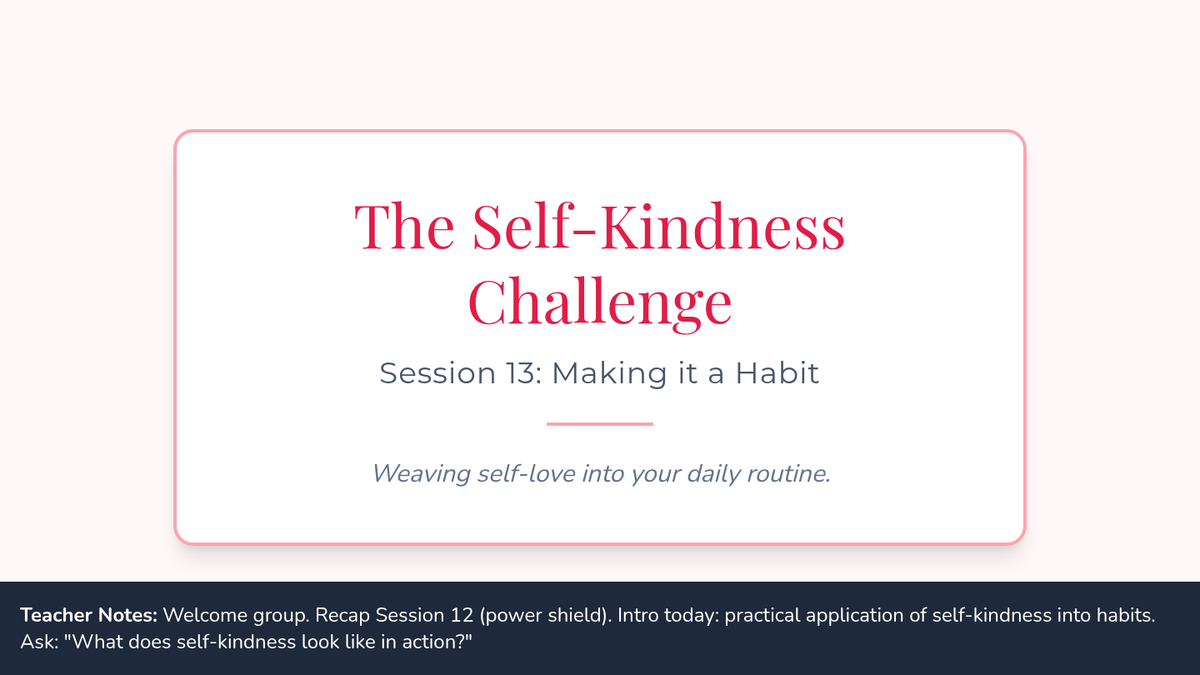
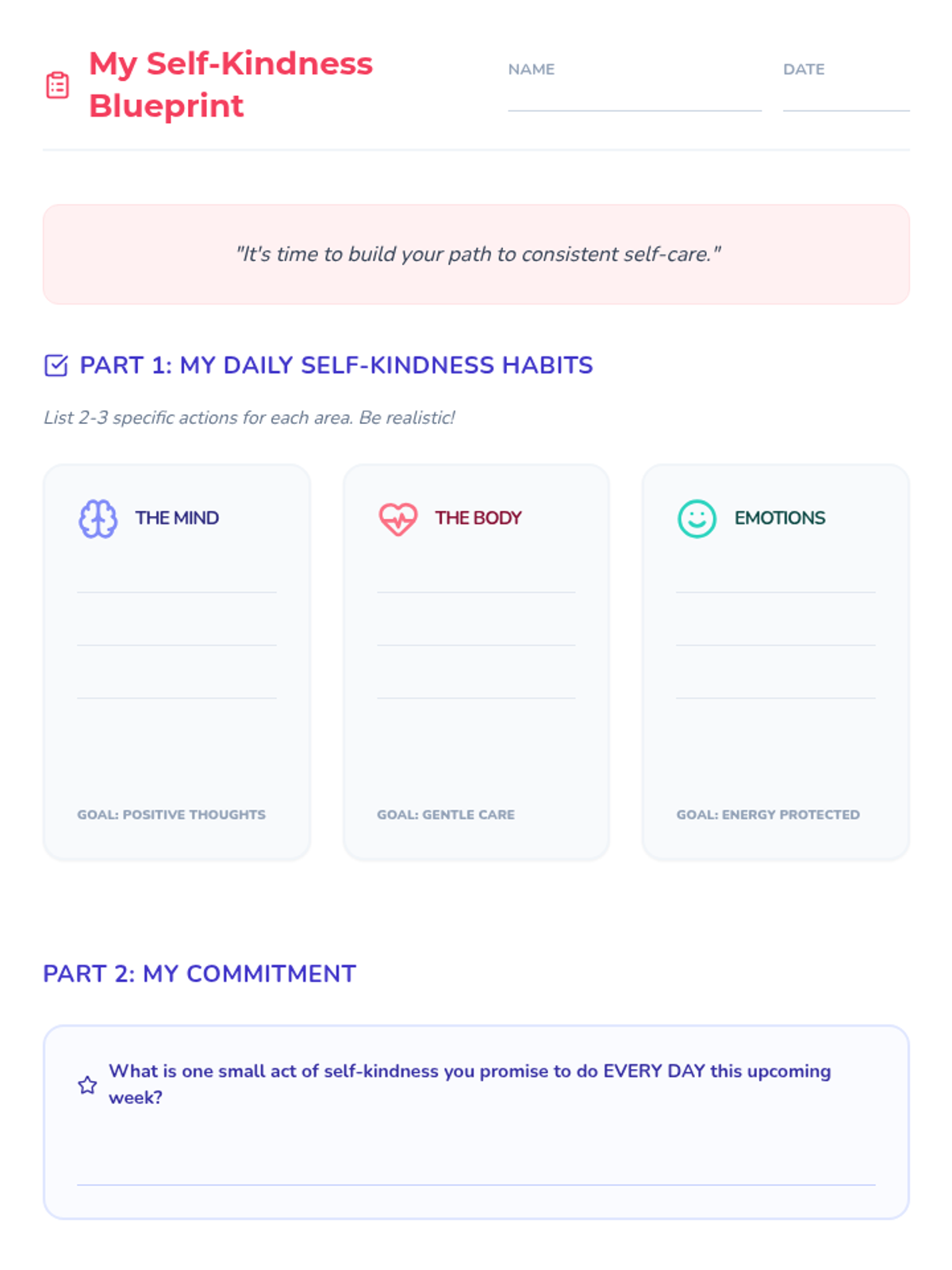
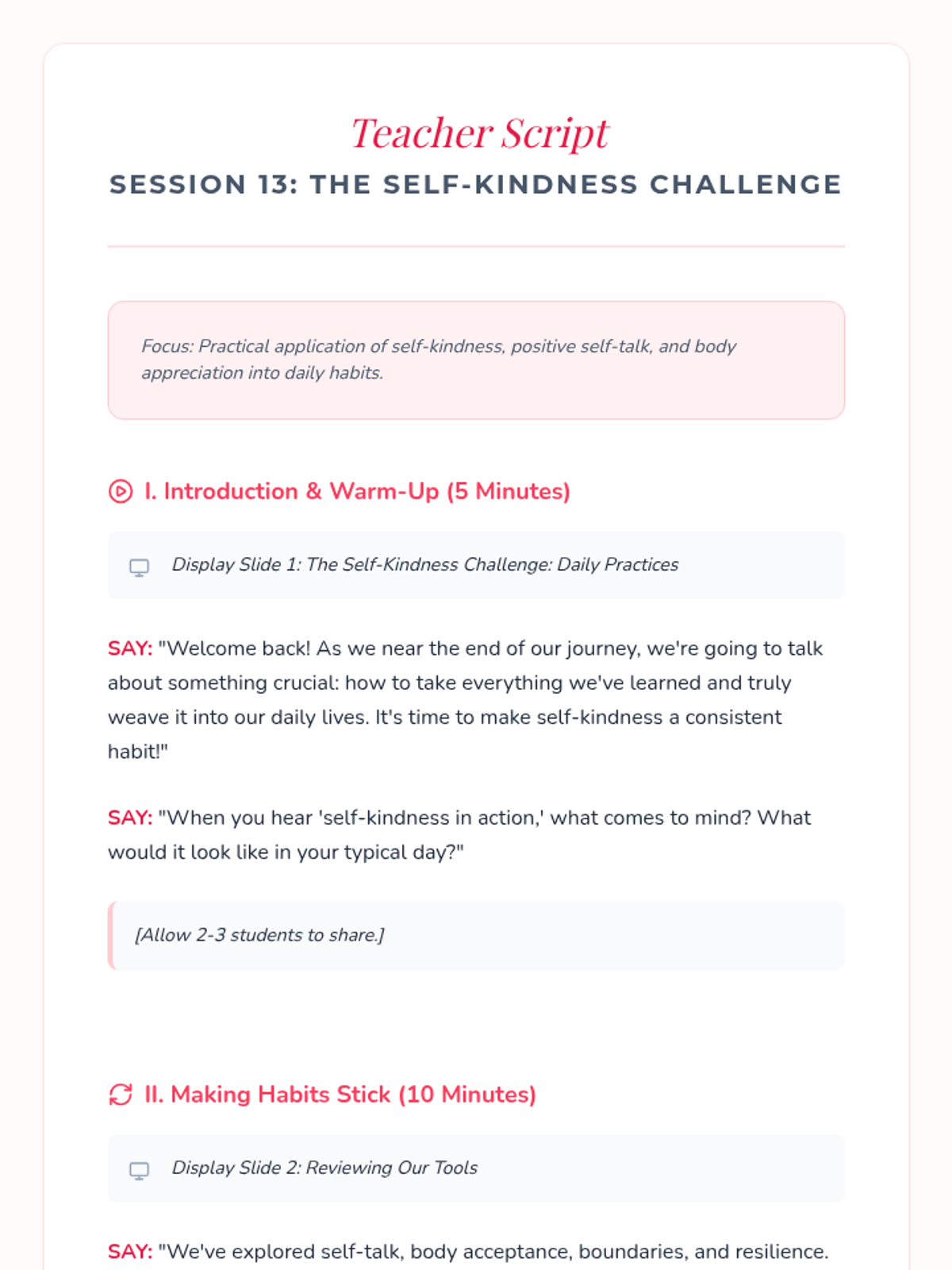
Integrating self-kindness habits and body appreciation into daily routines.
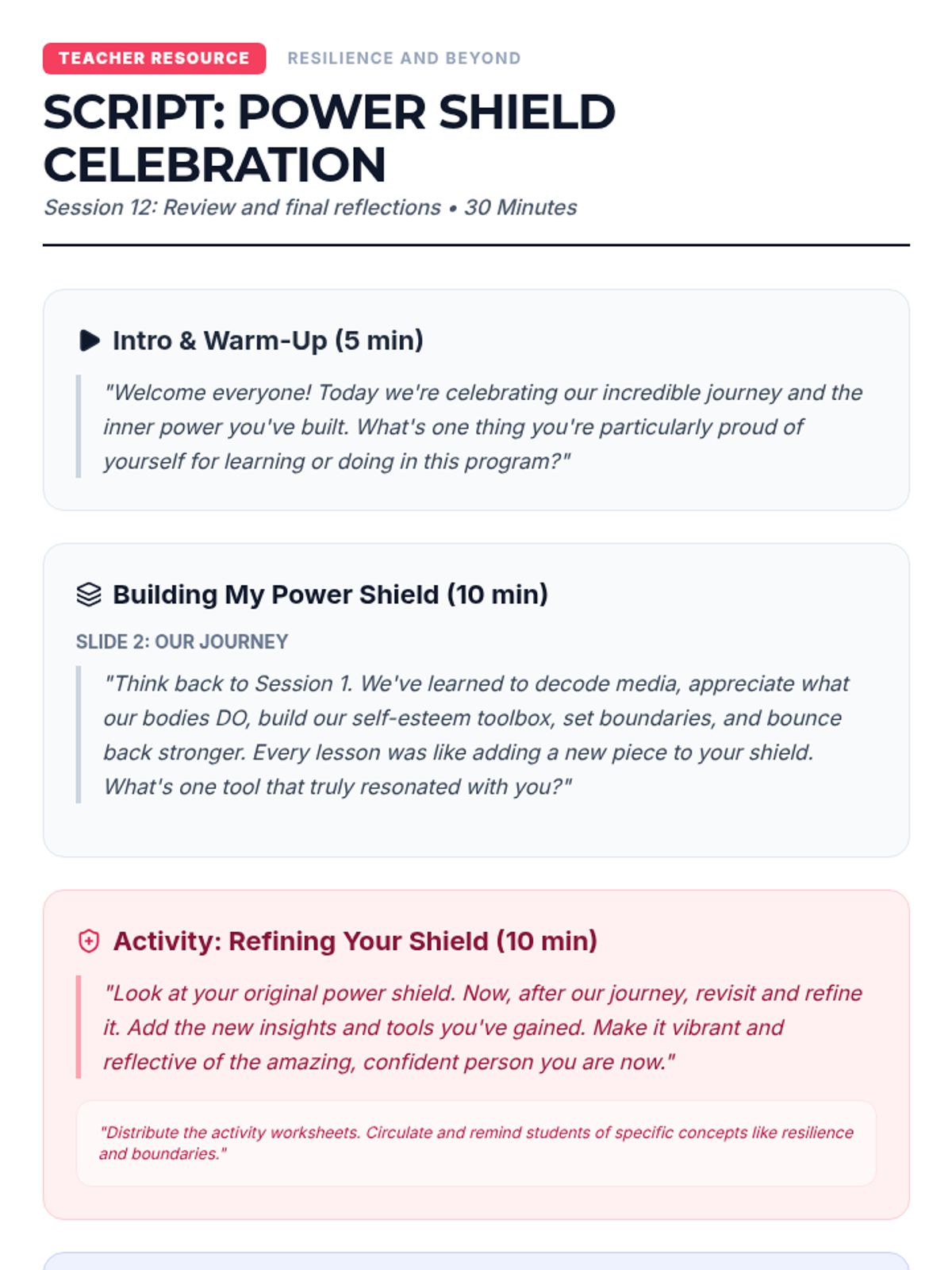
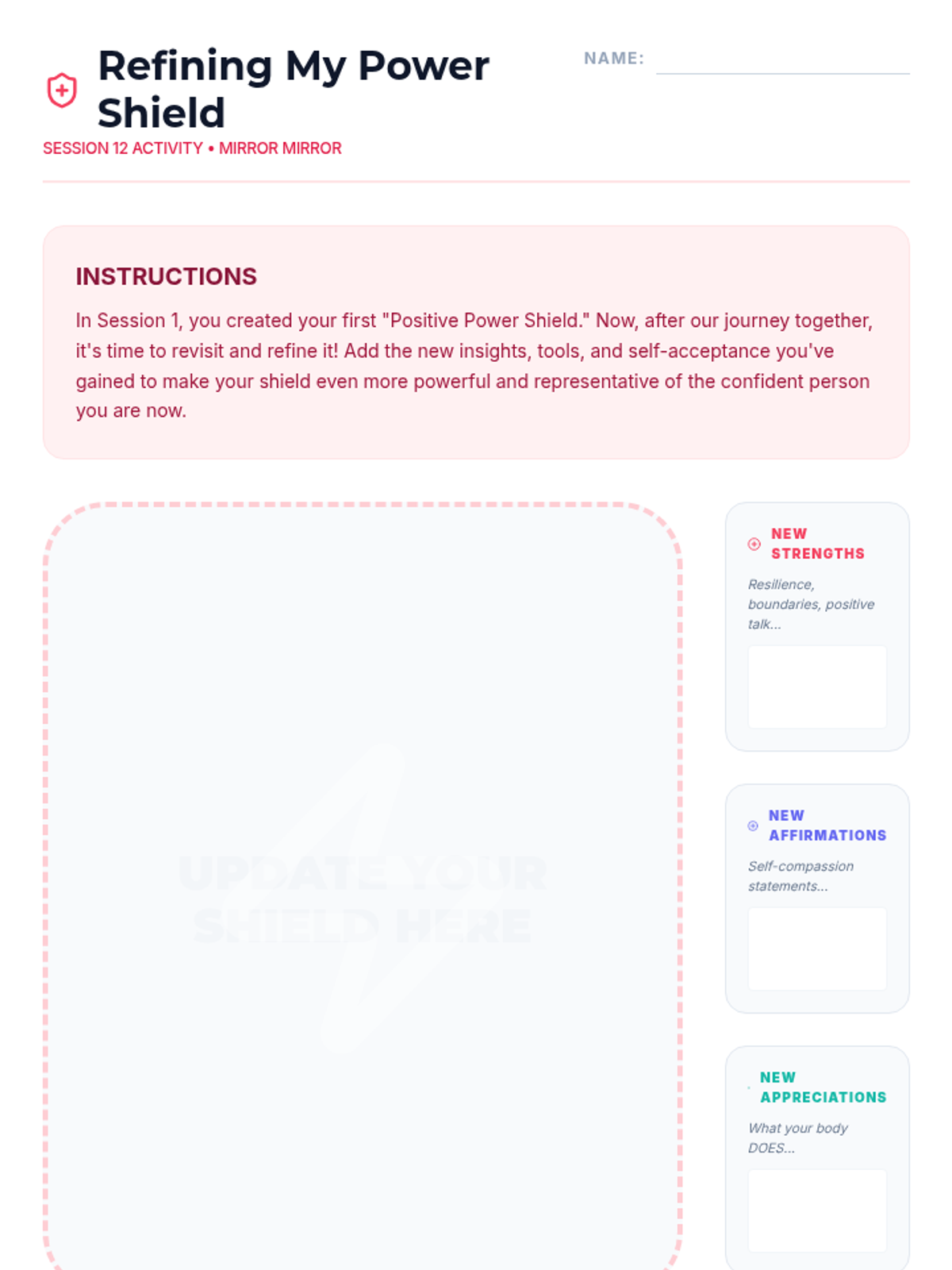
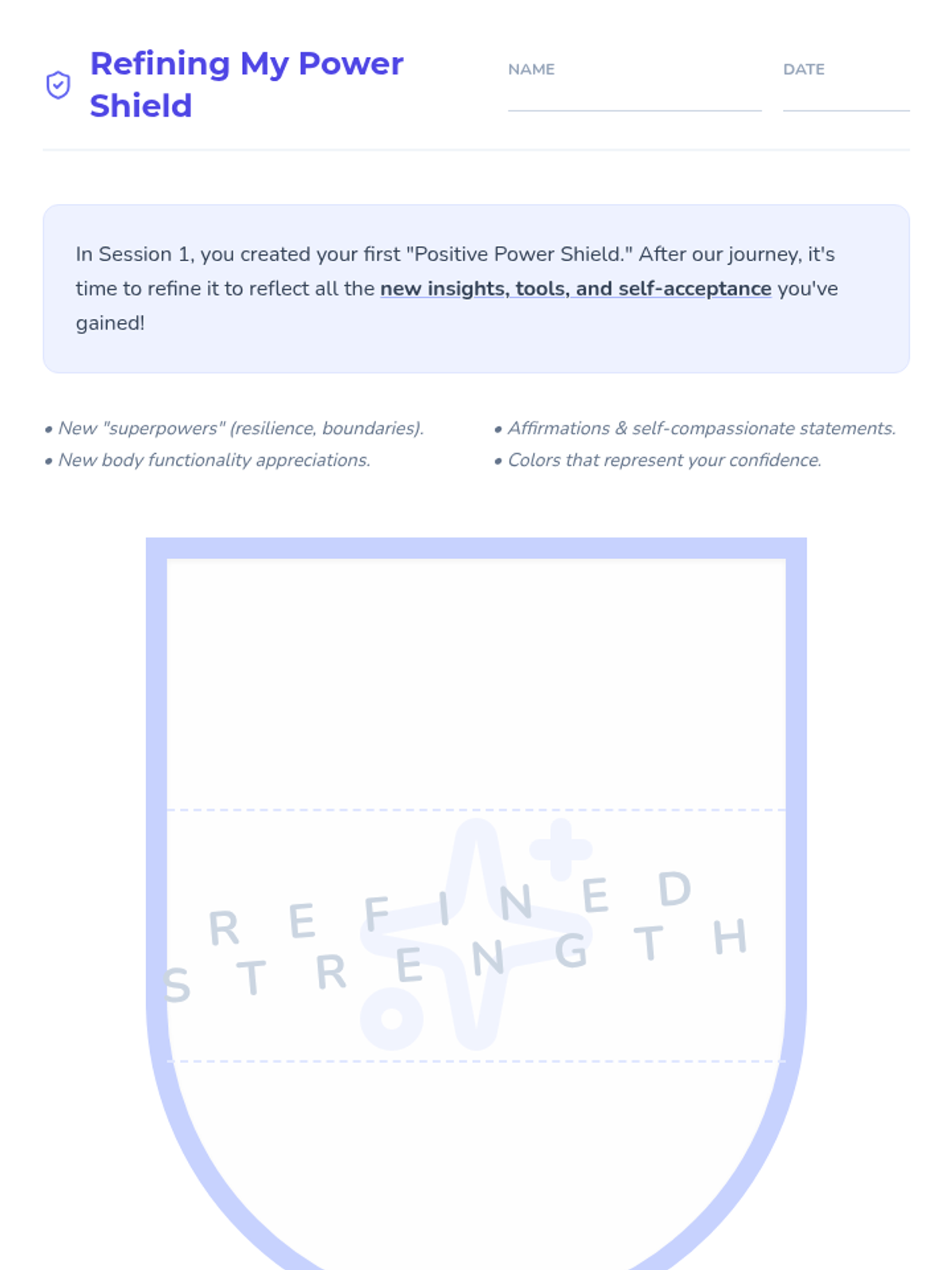
Reviewing program concepts and refining the personal Power Shield.
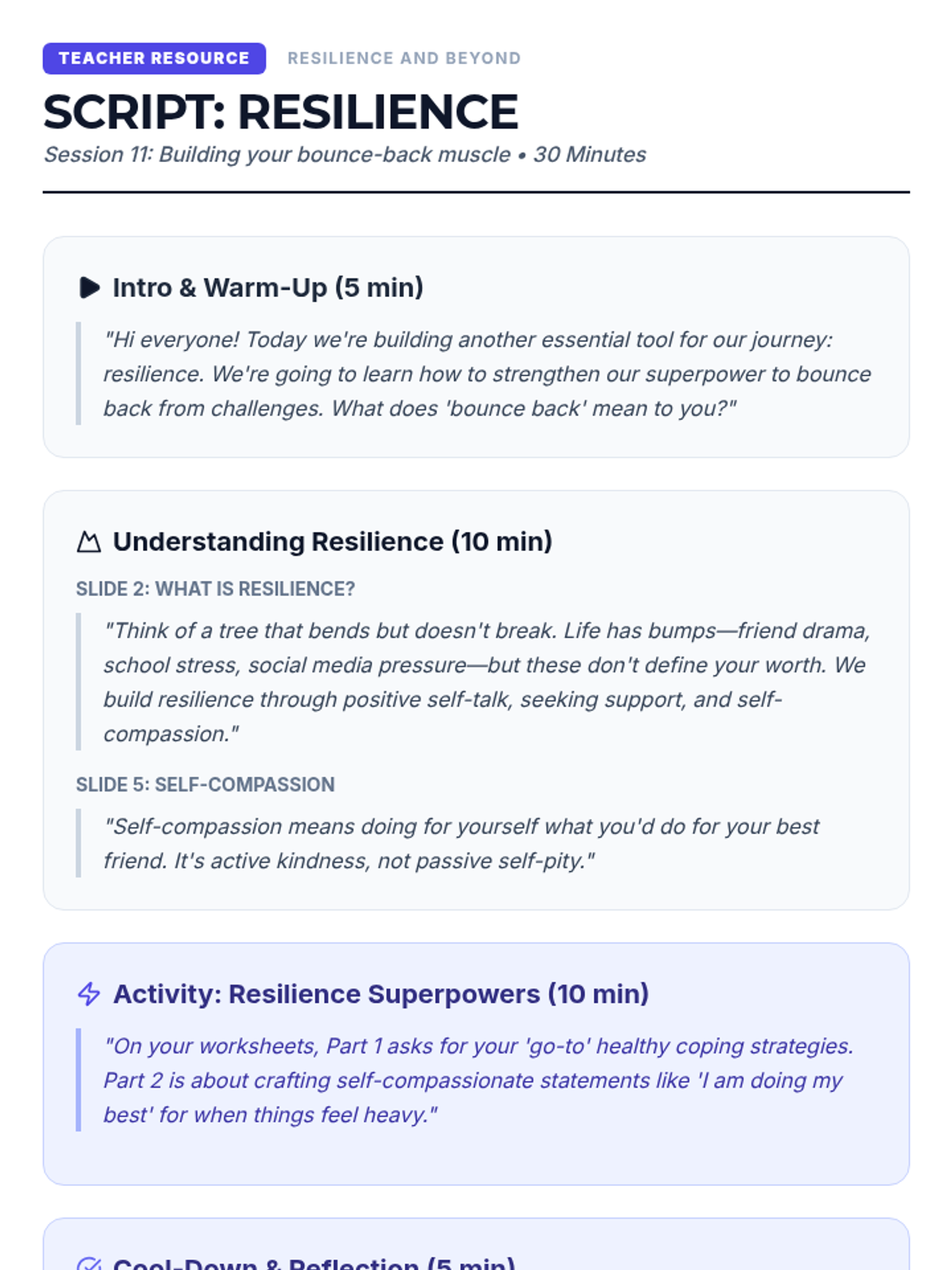
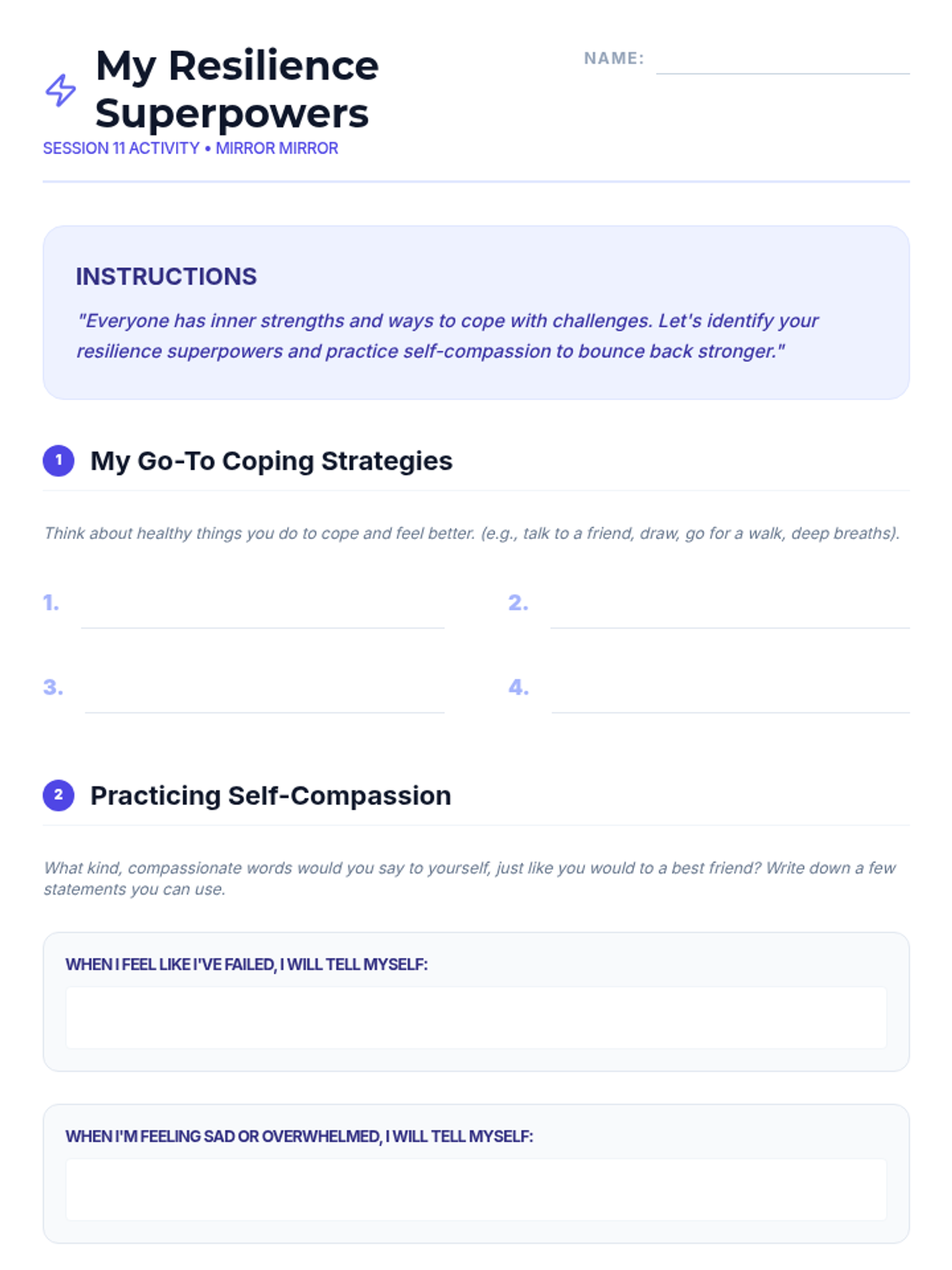
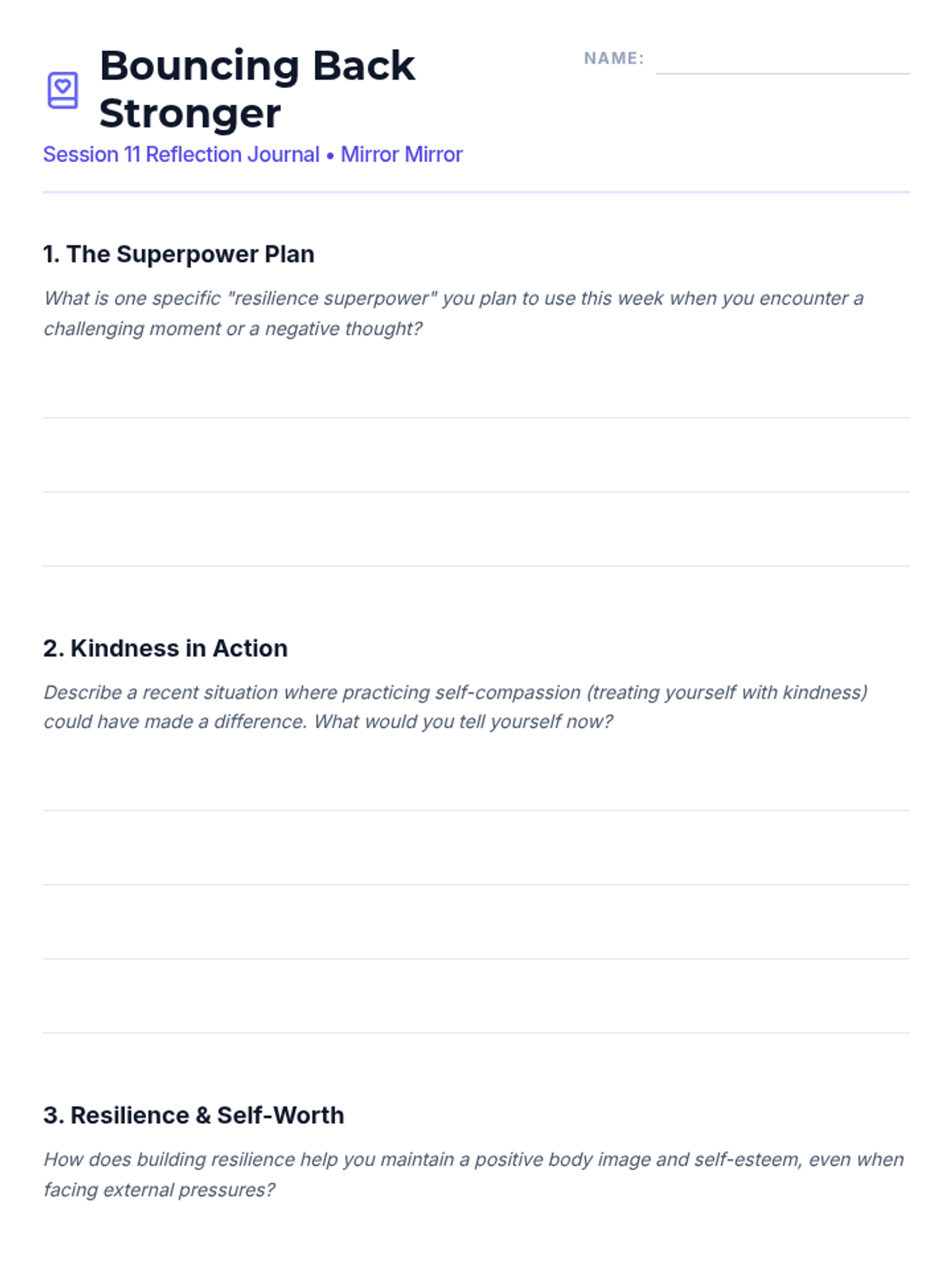
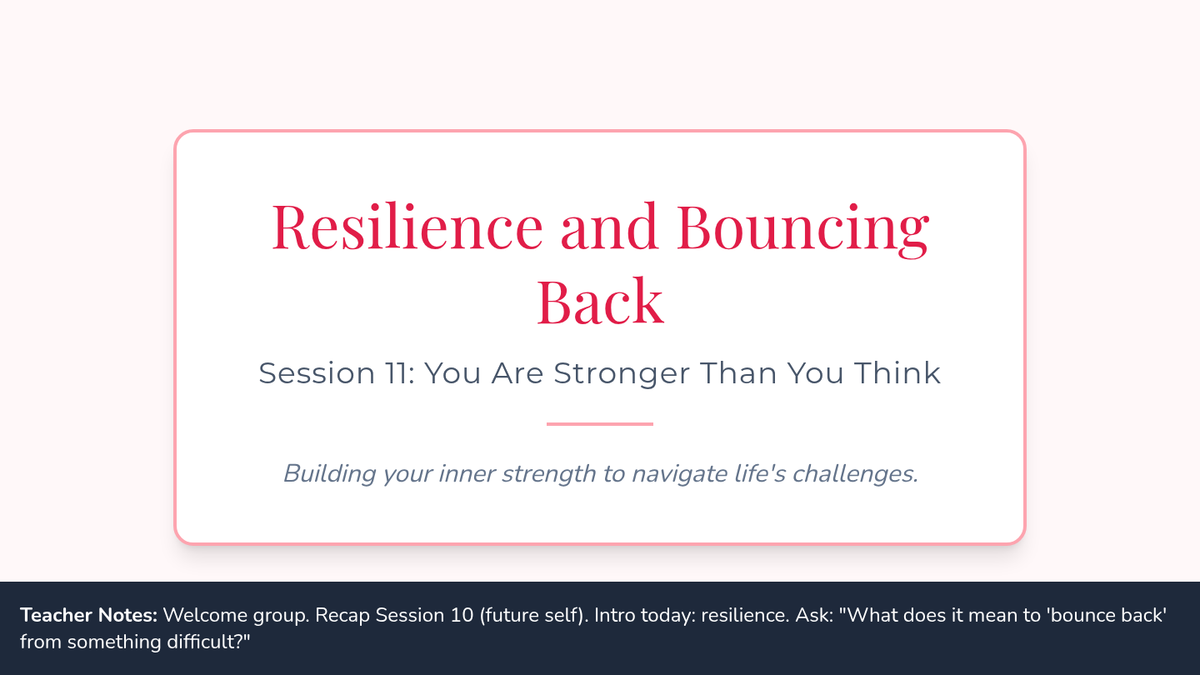
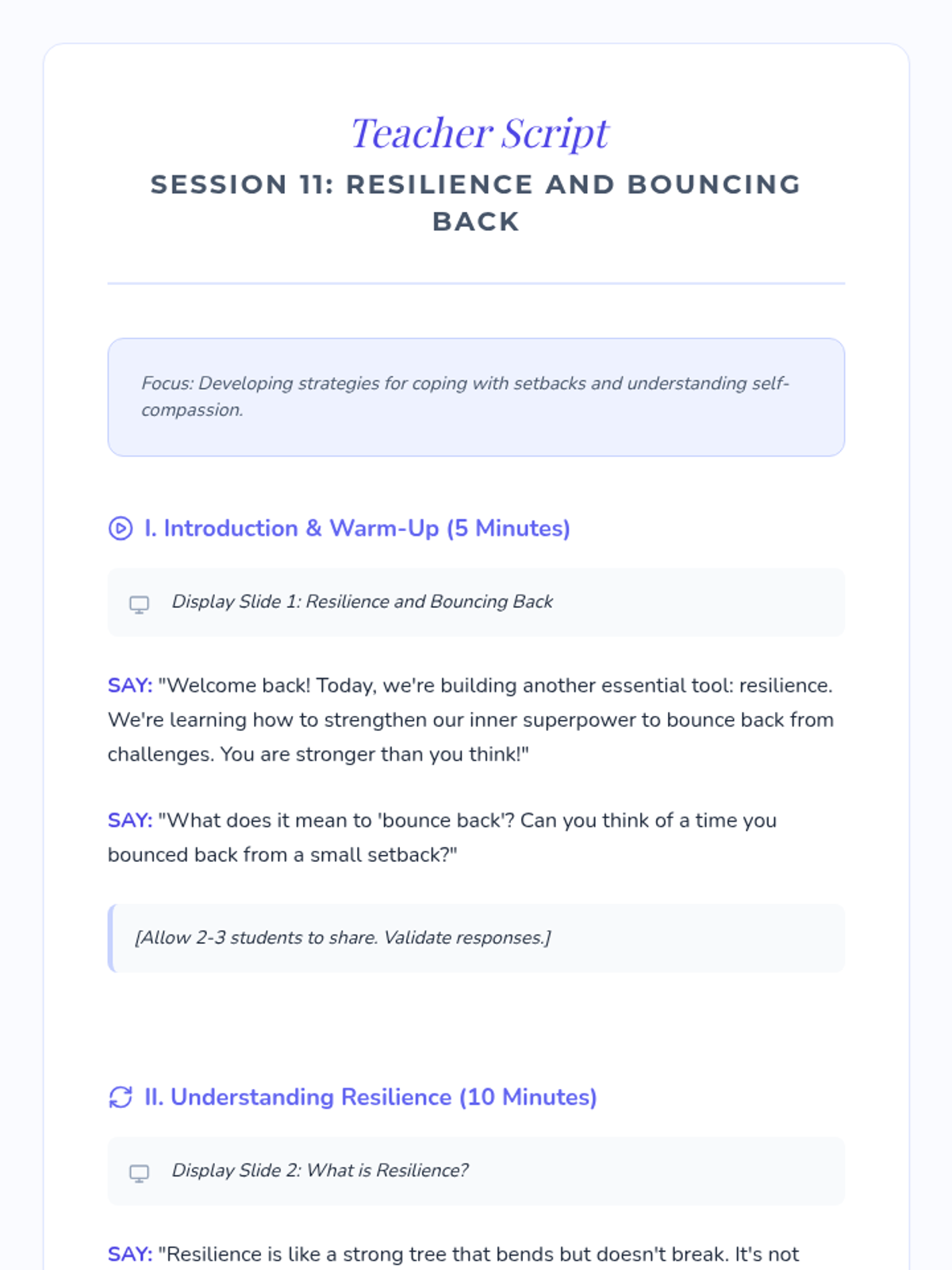
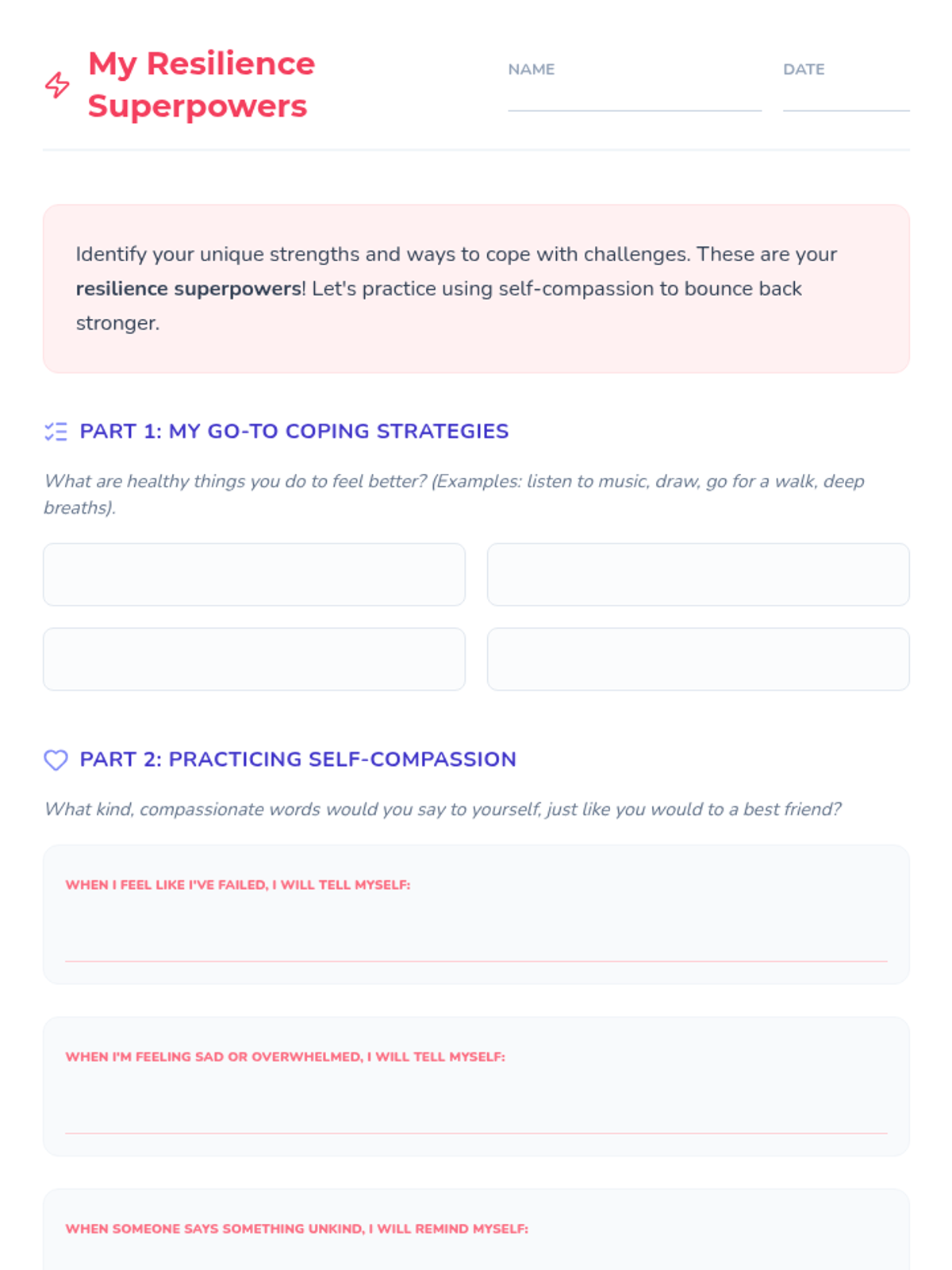
Developing strategies to cope with setbacks and practicing self-compassion.
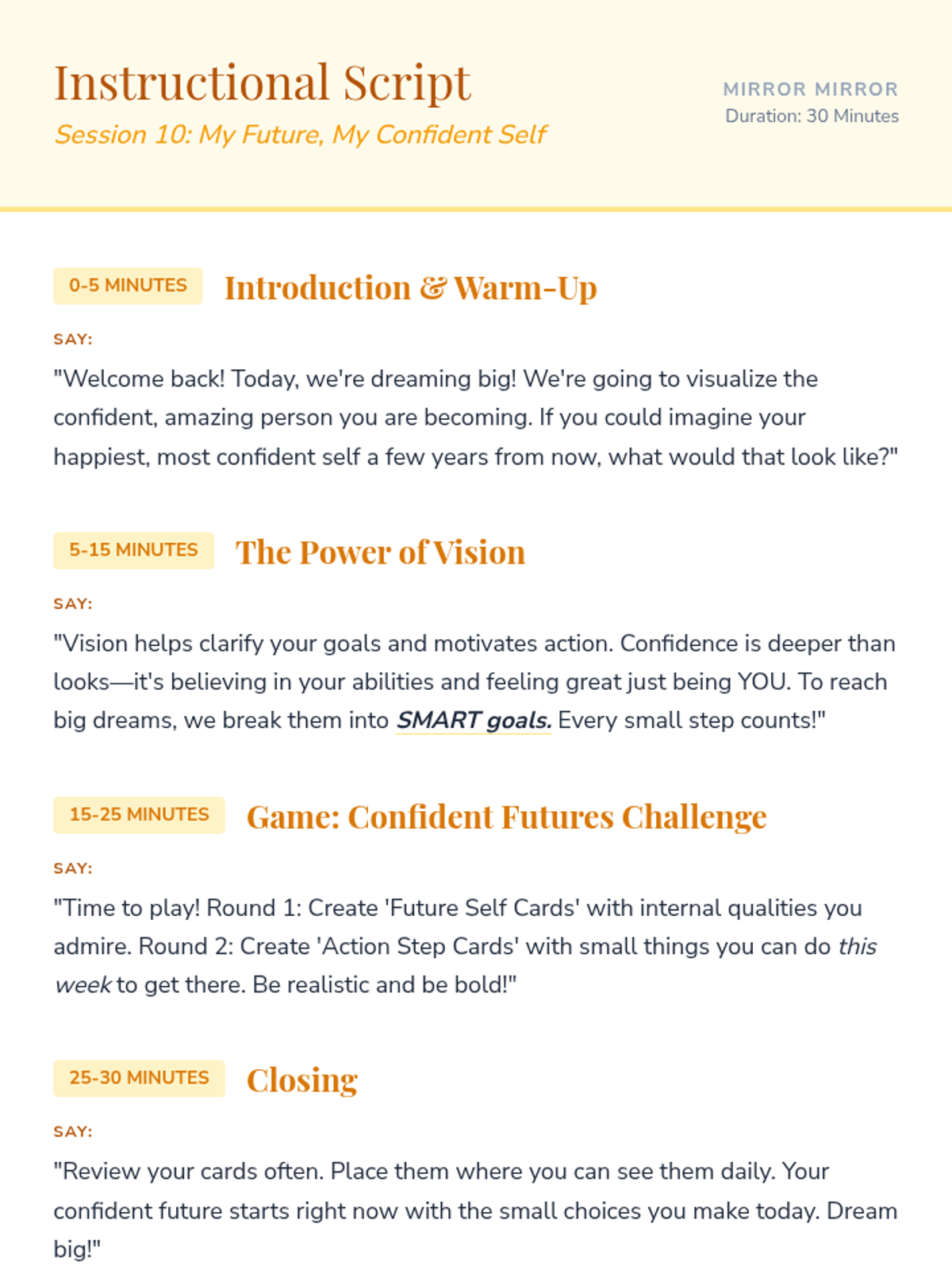
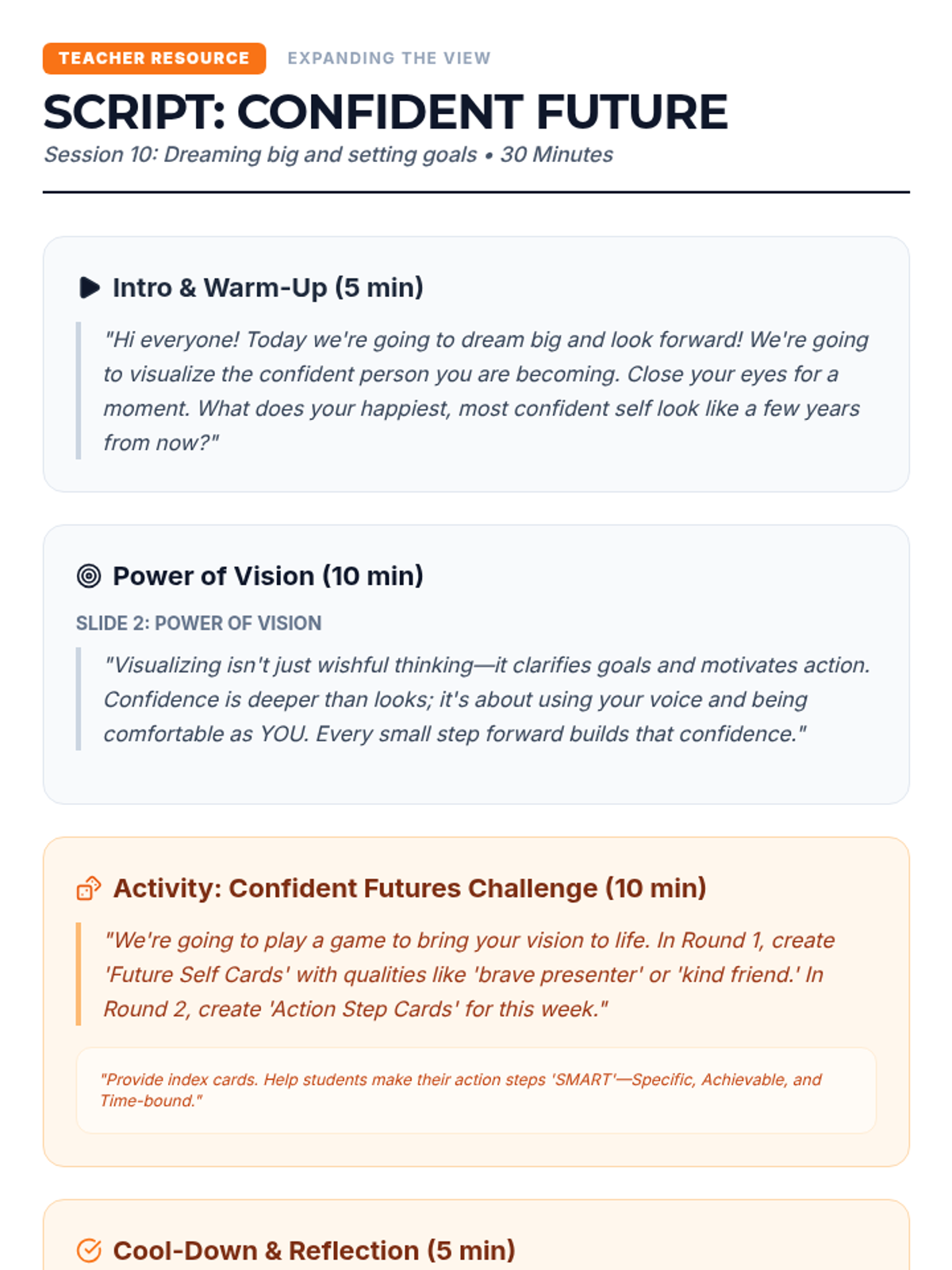
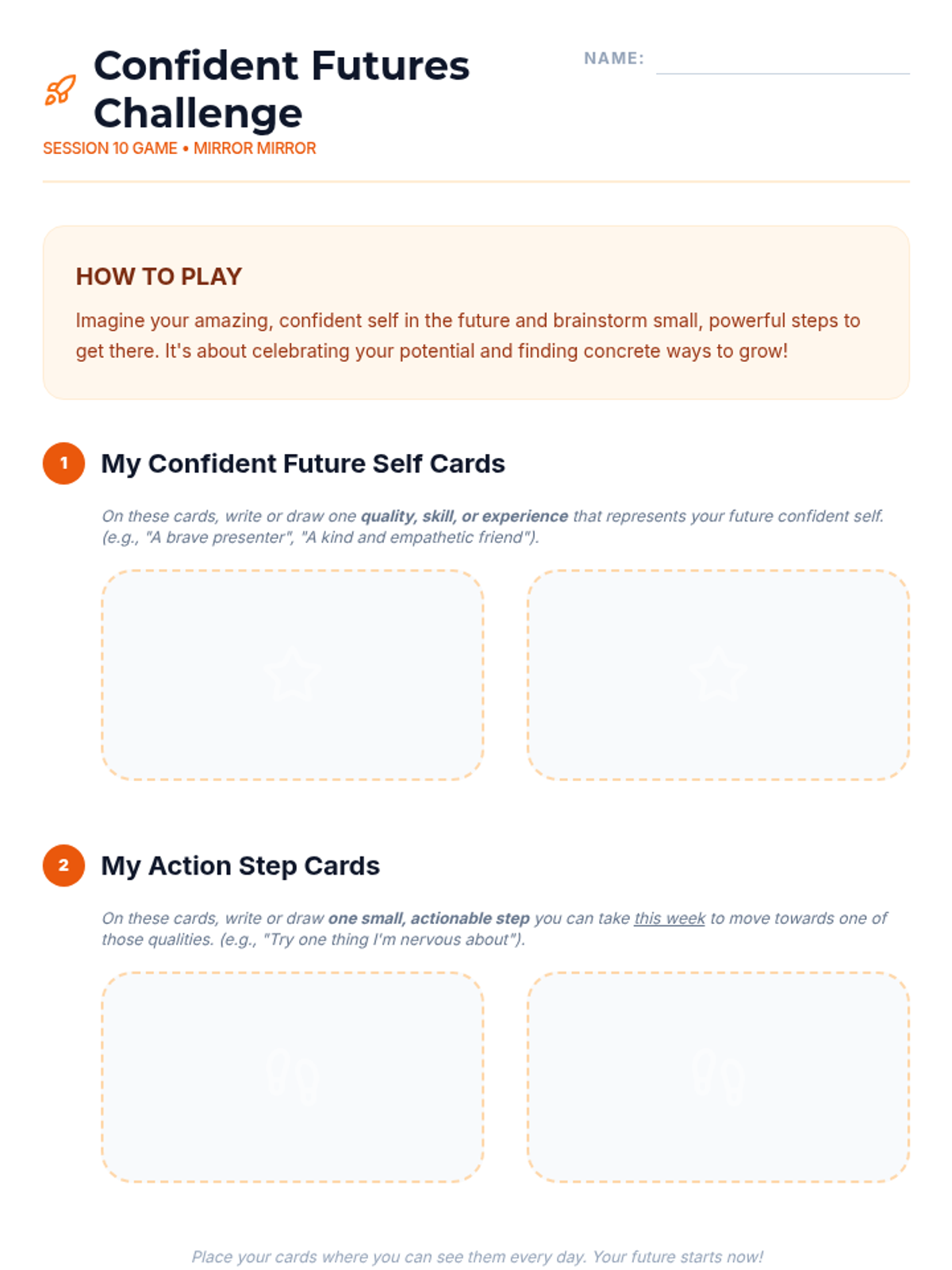
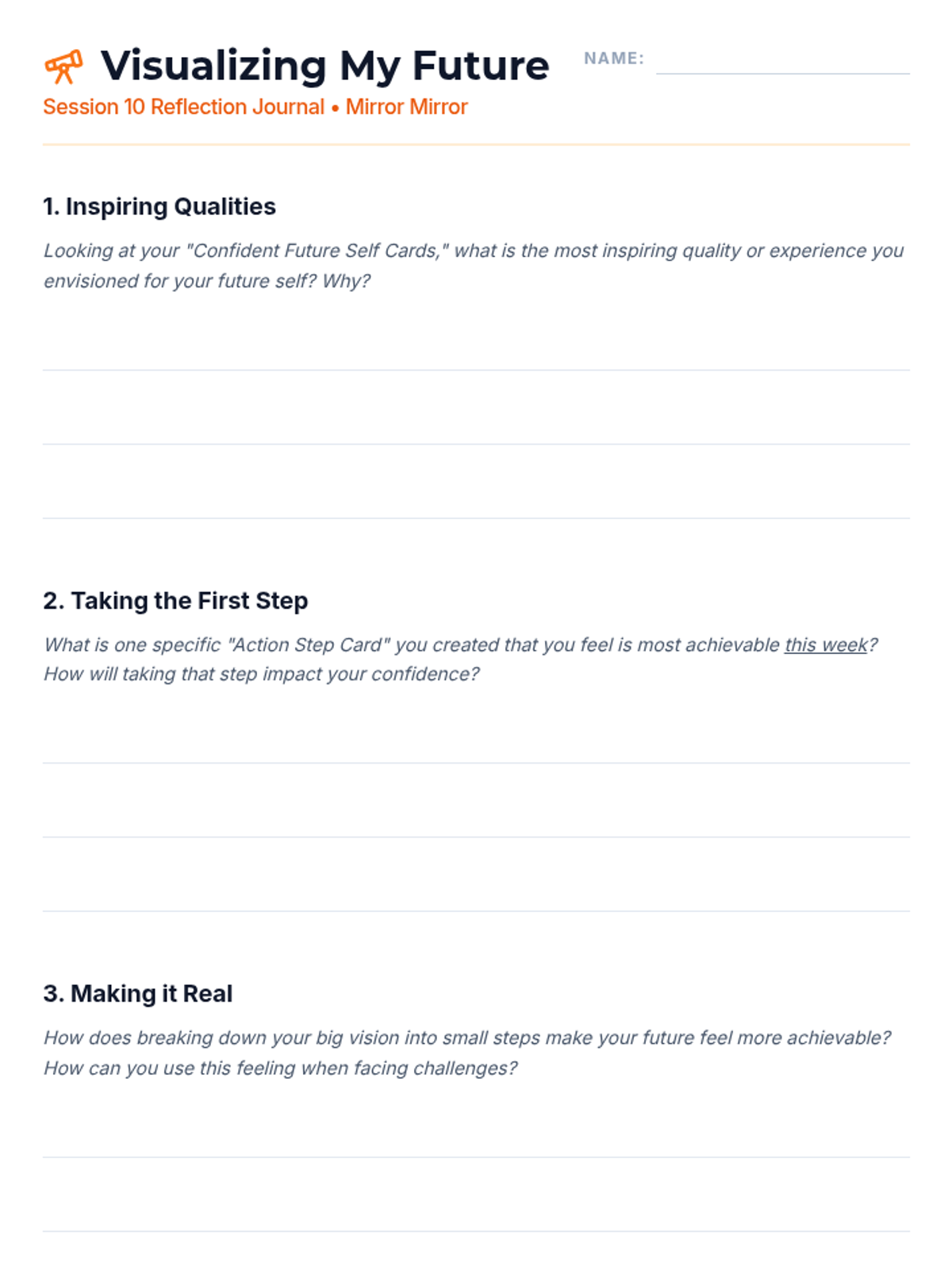
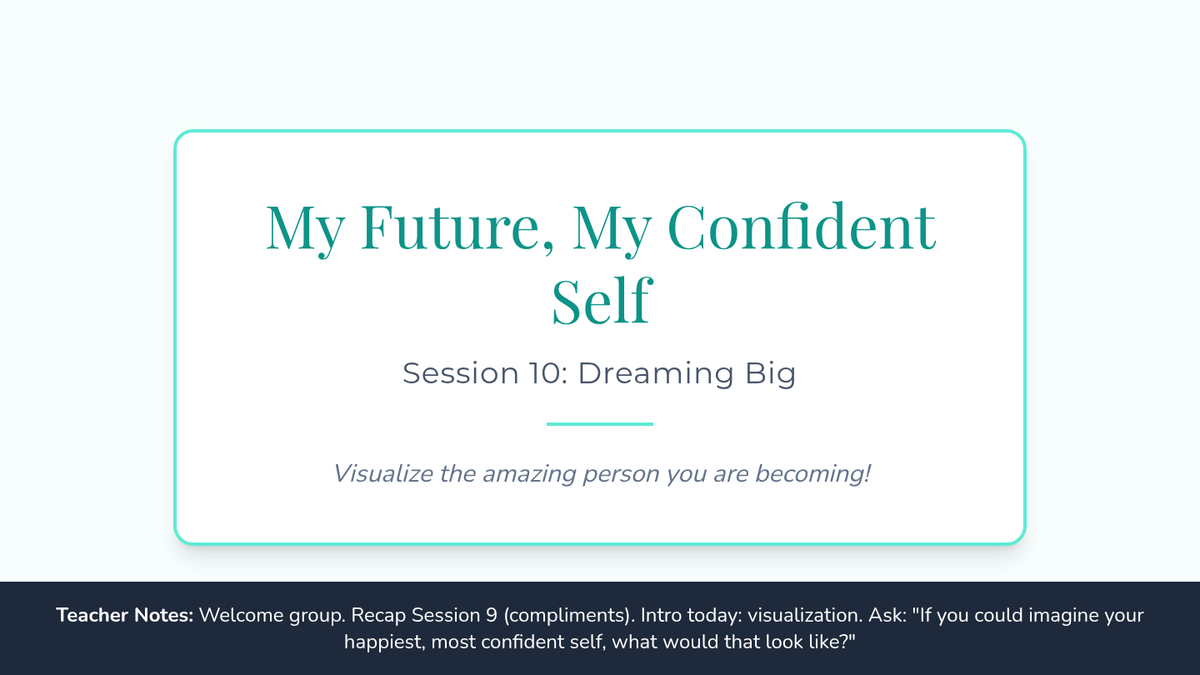
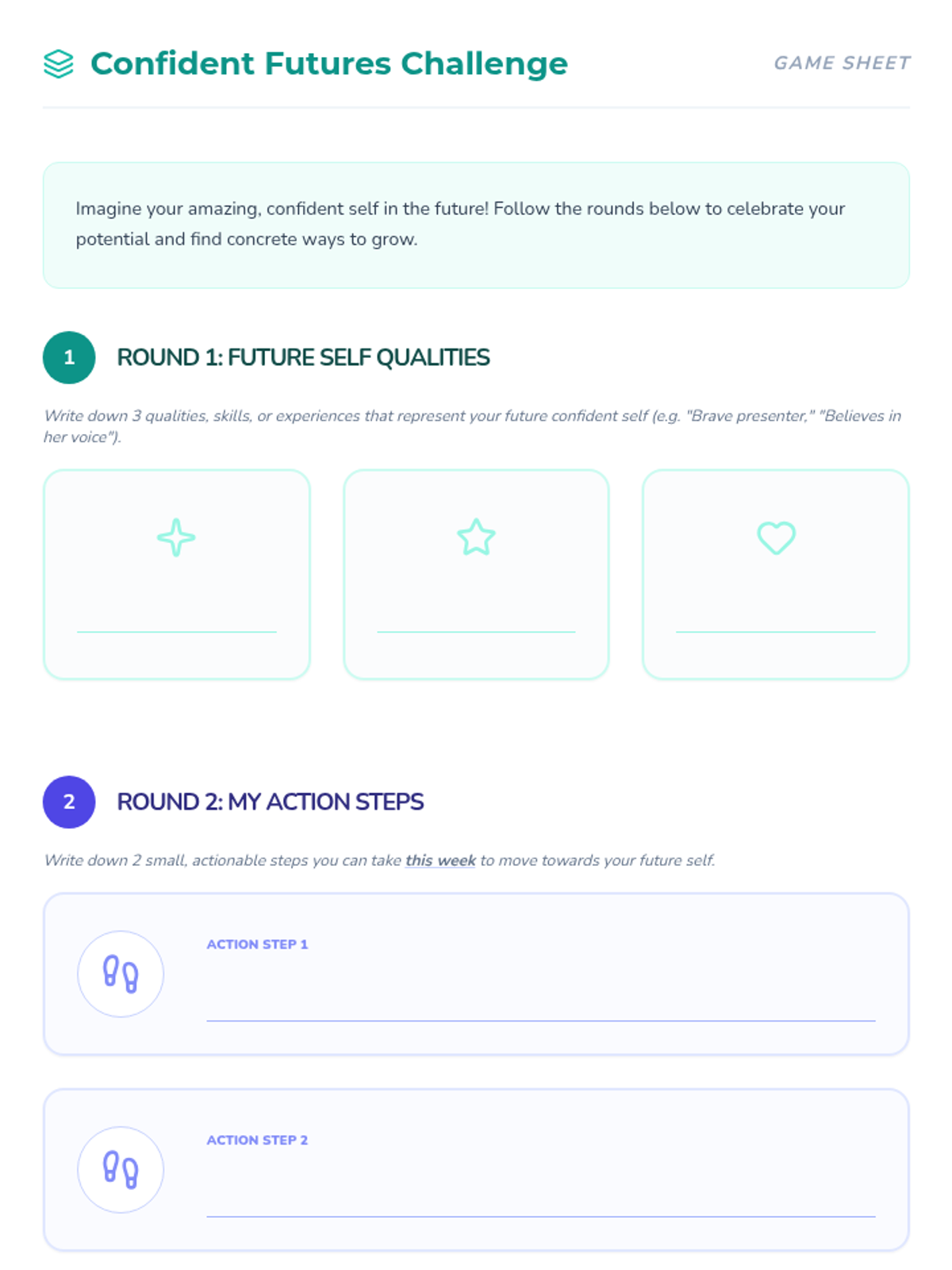
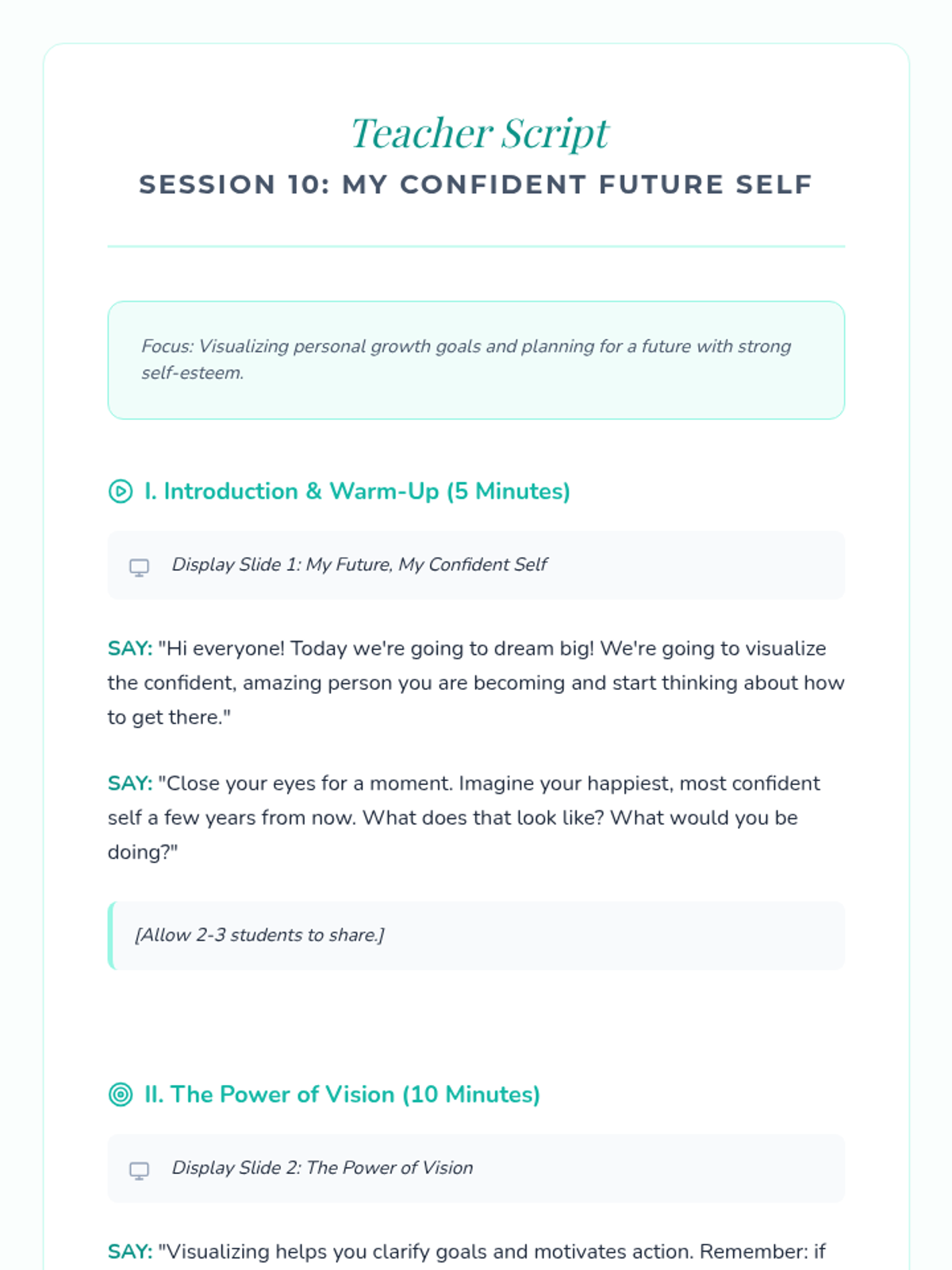
Visualizing a confident future self and setting actionable personal growth goals.
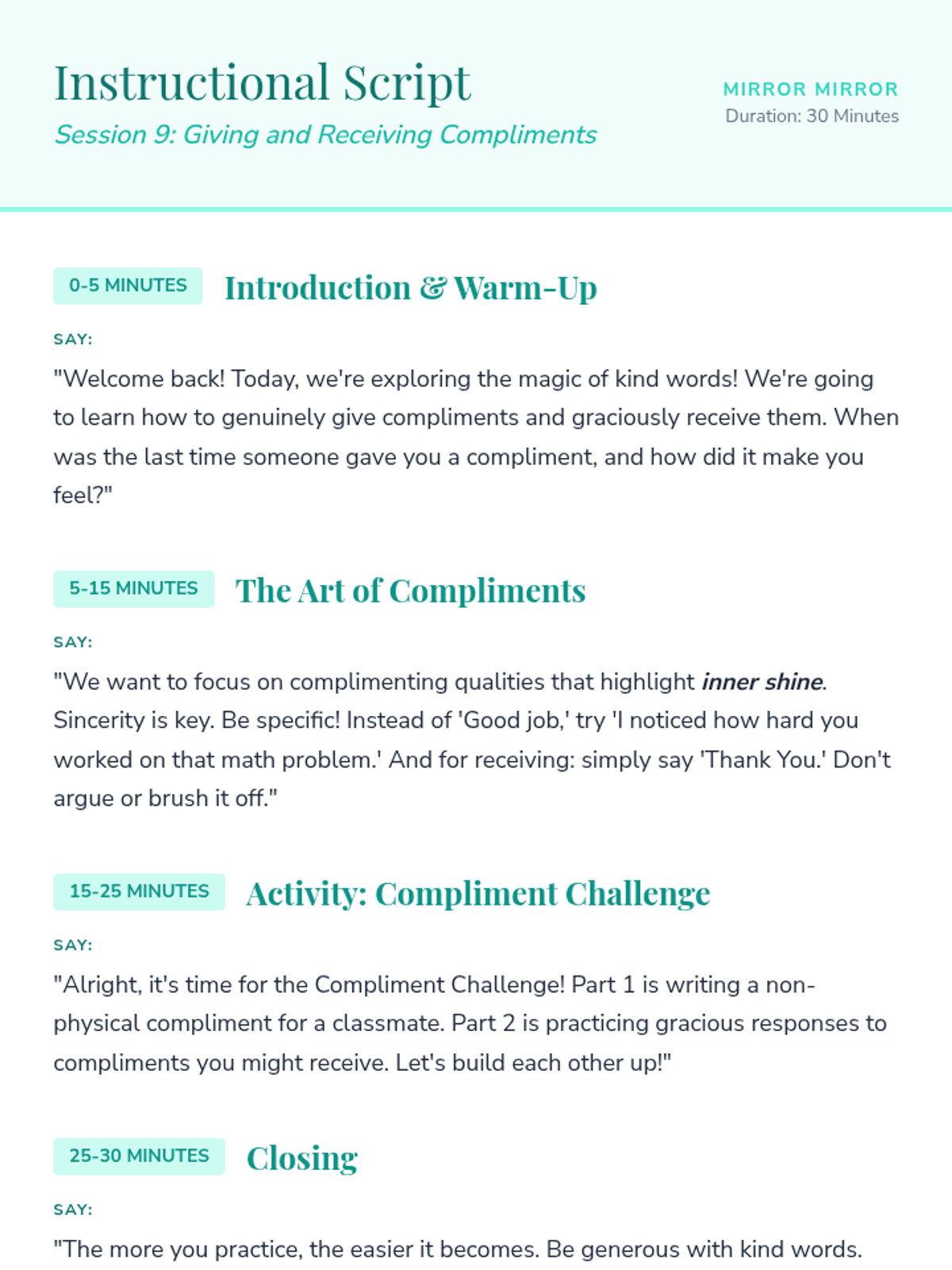
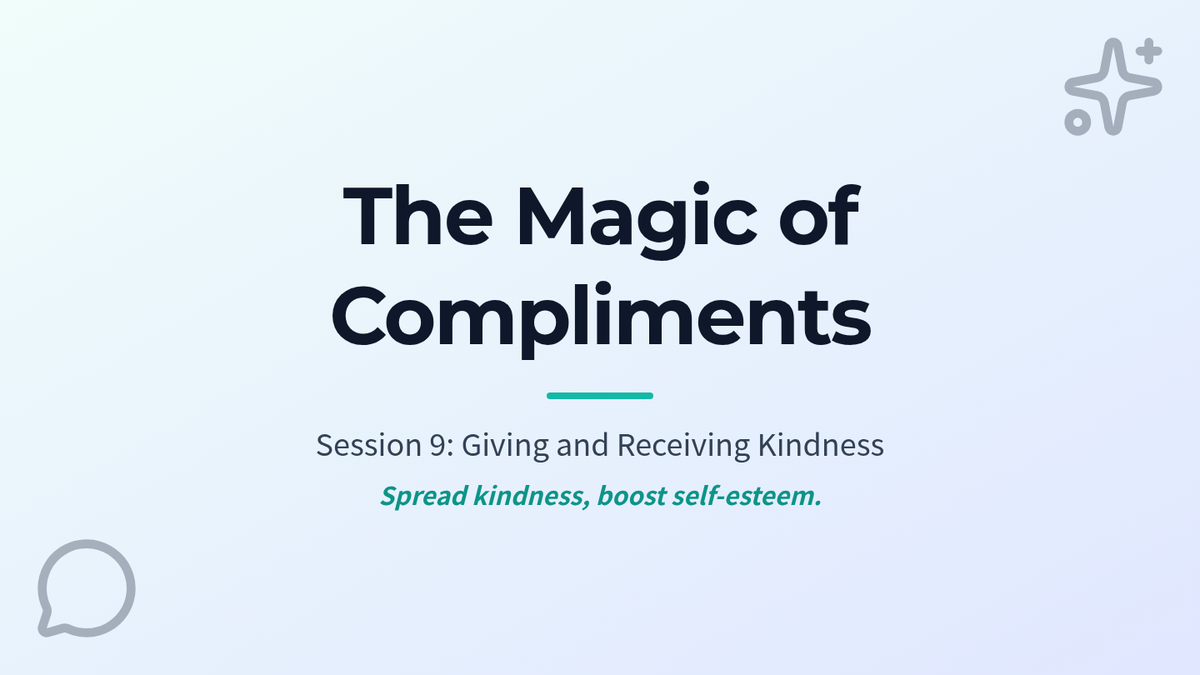
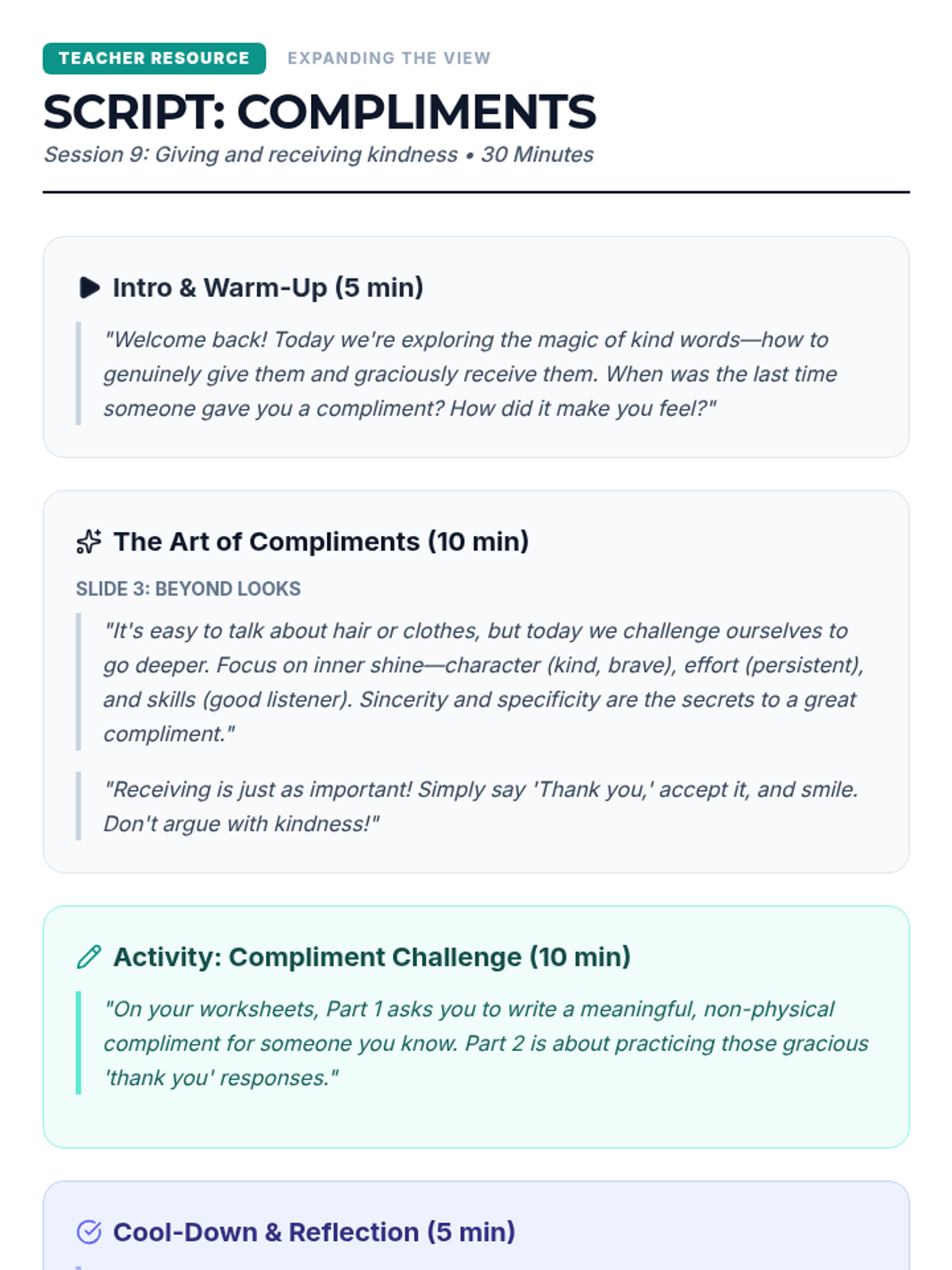
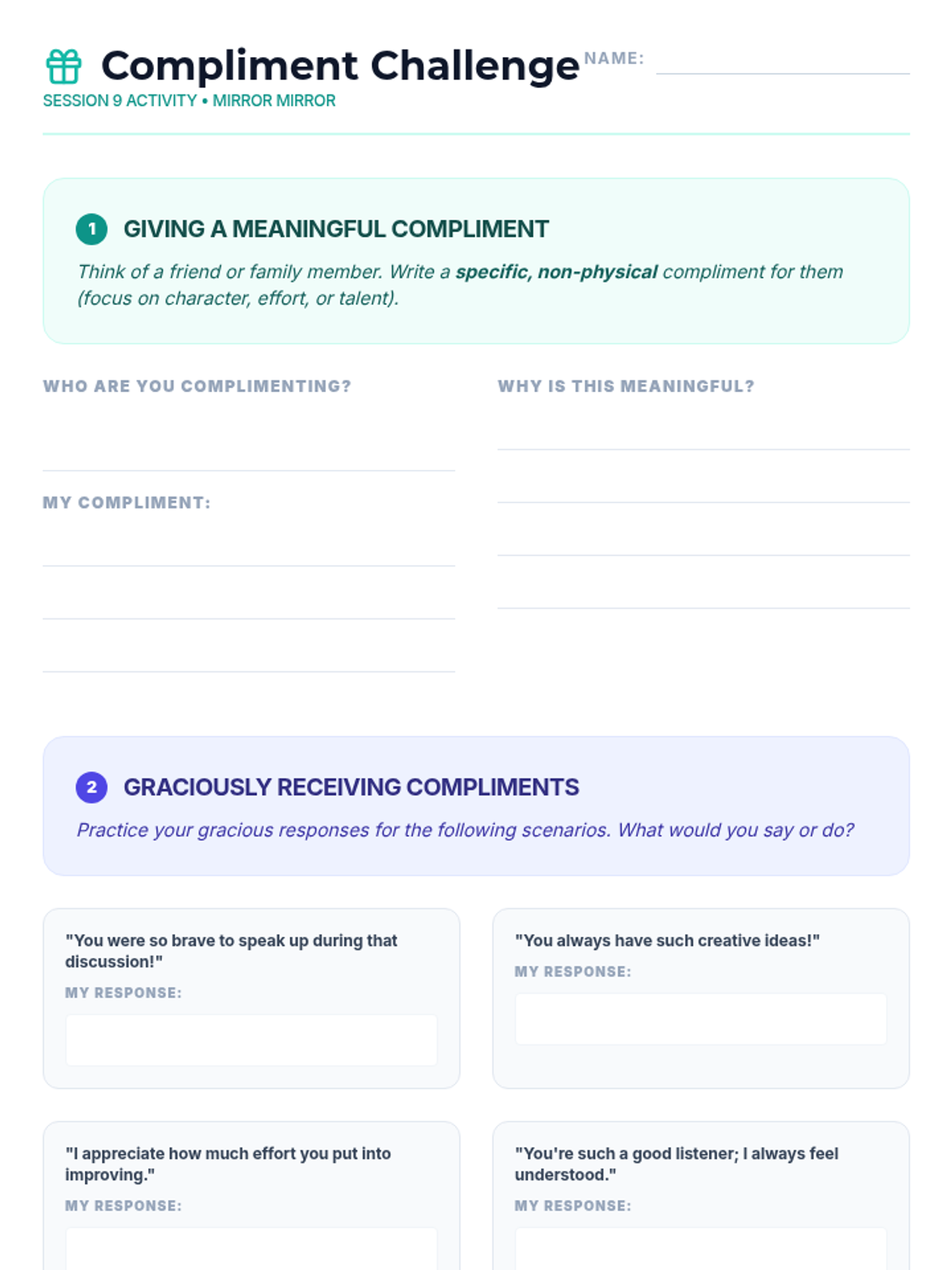
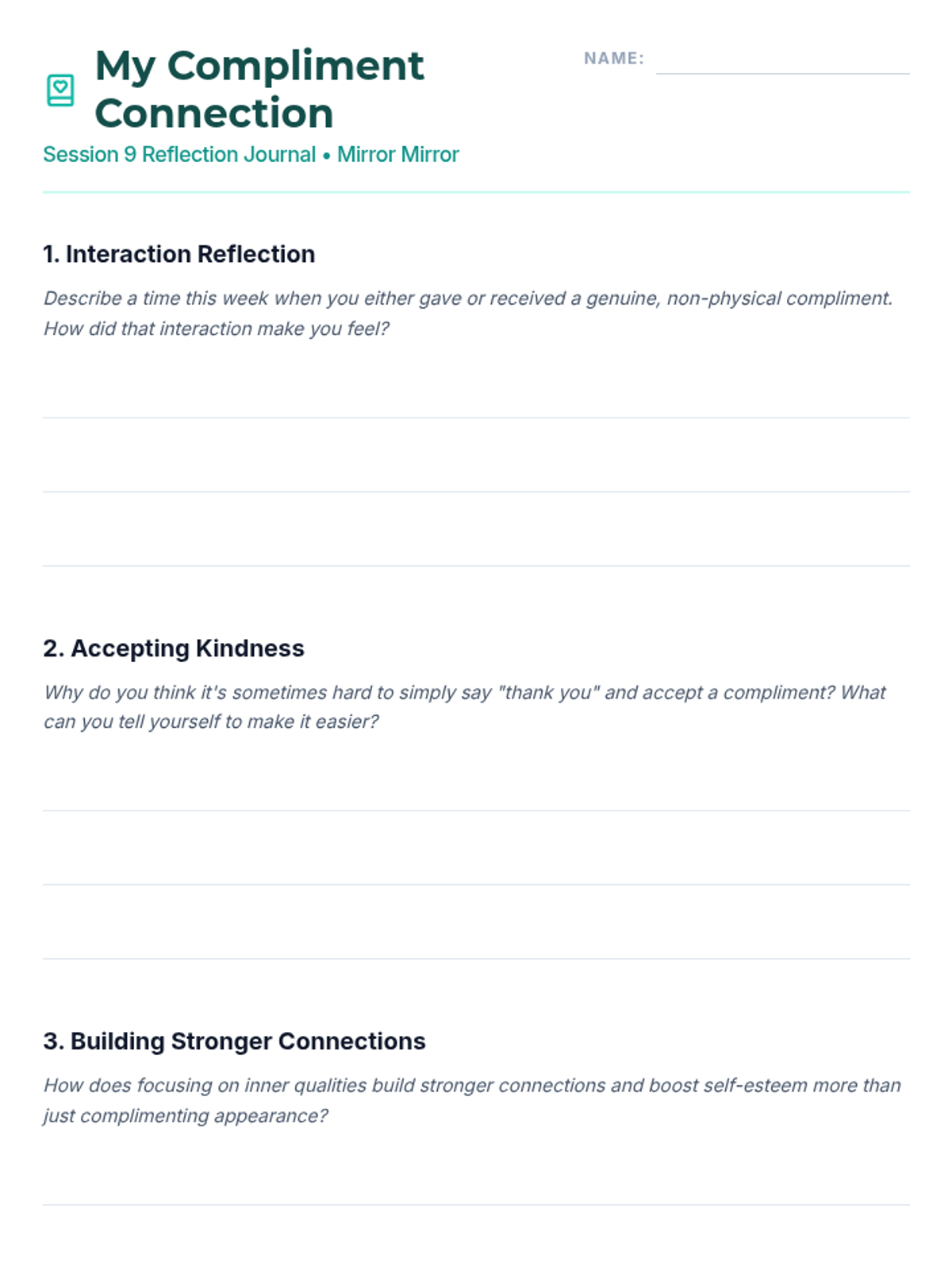
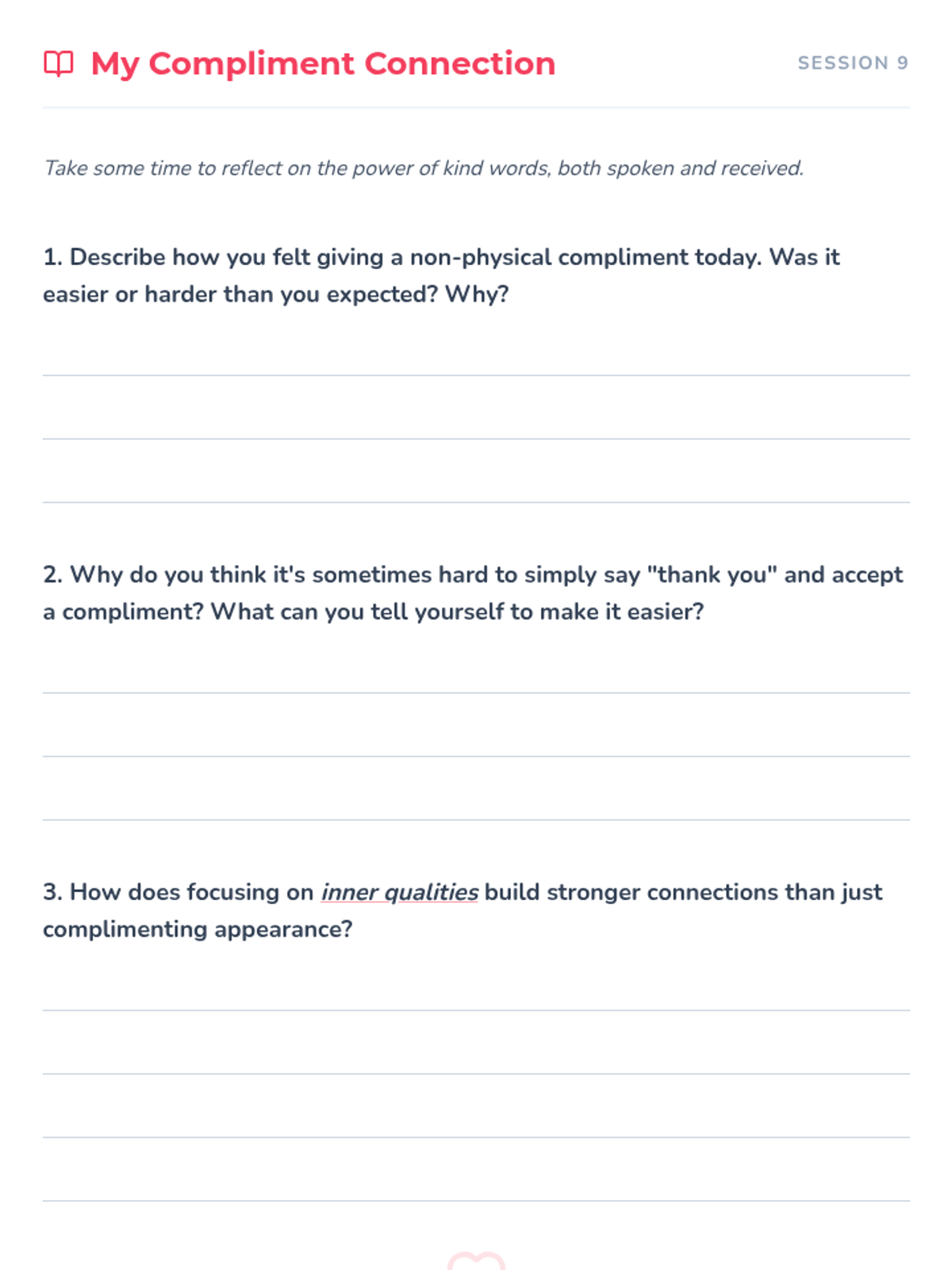
Mastering the art of genuinely giving and graciously receiving compliments.
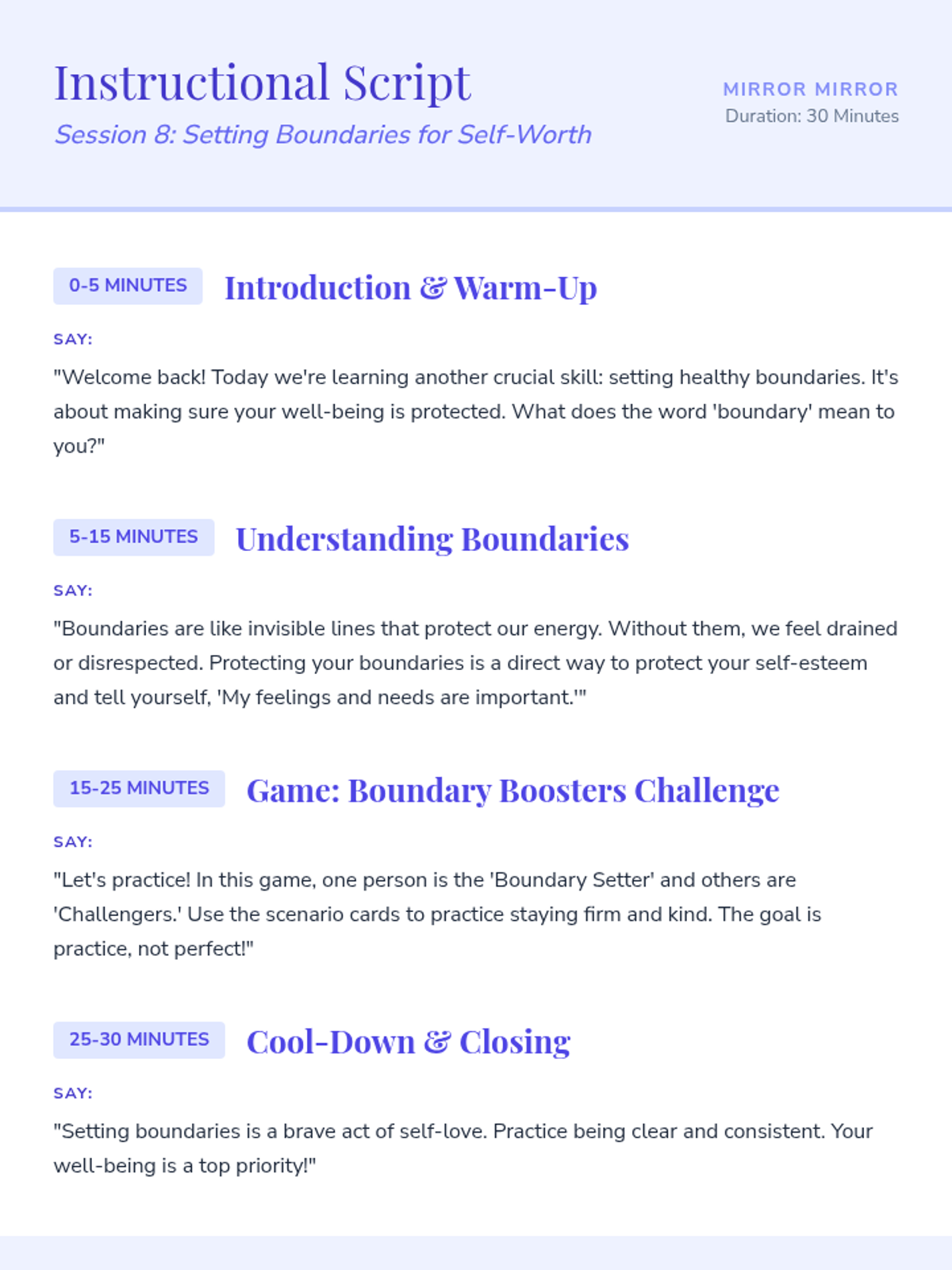
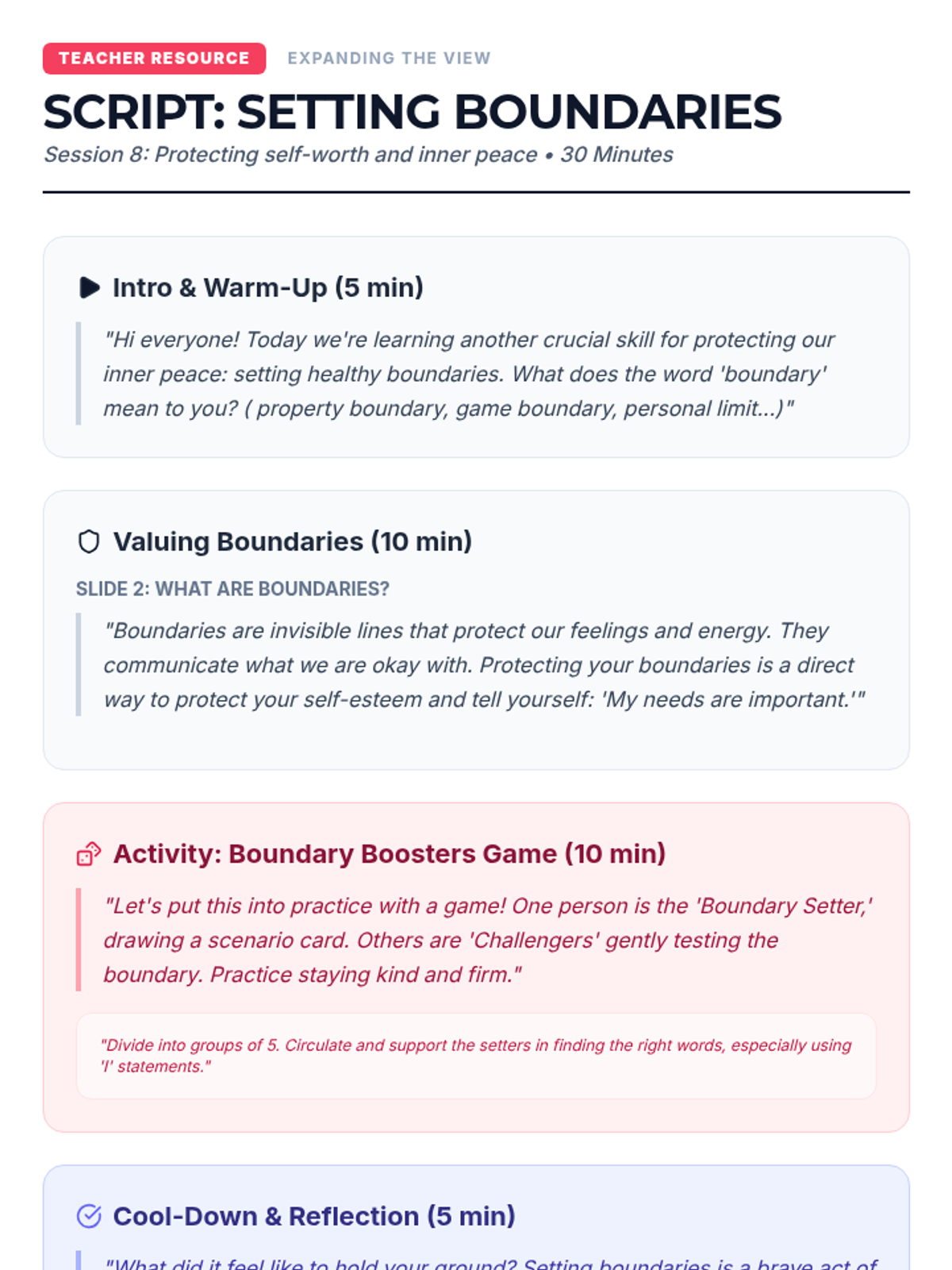
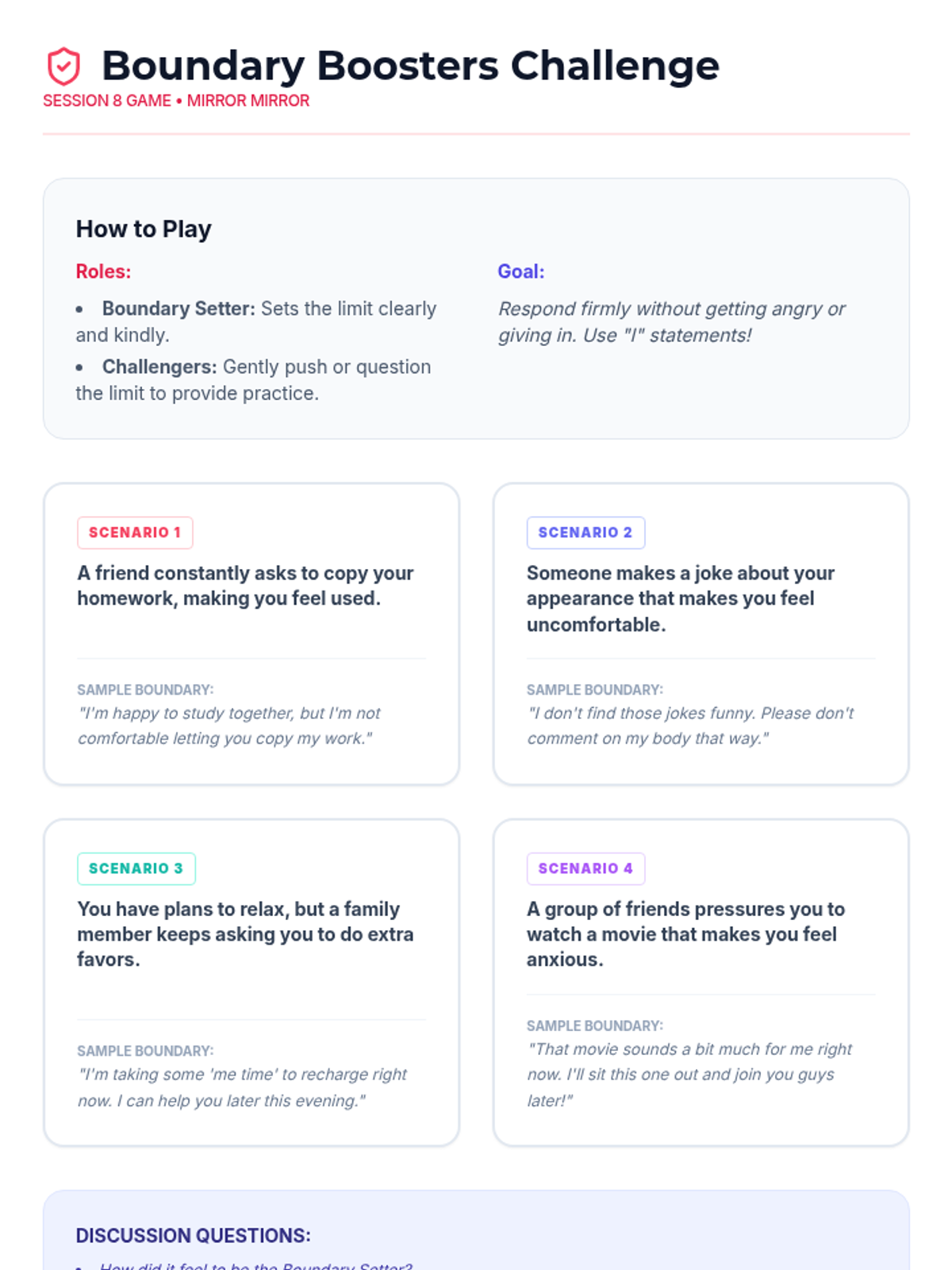
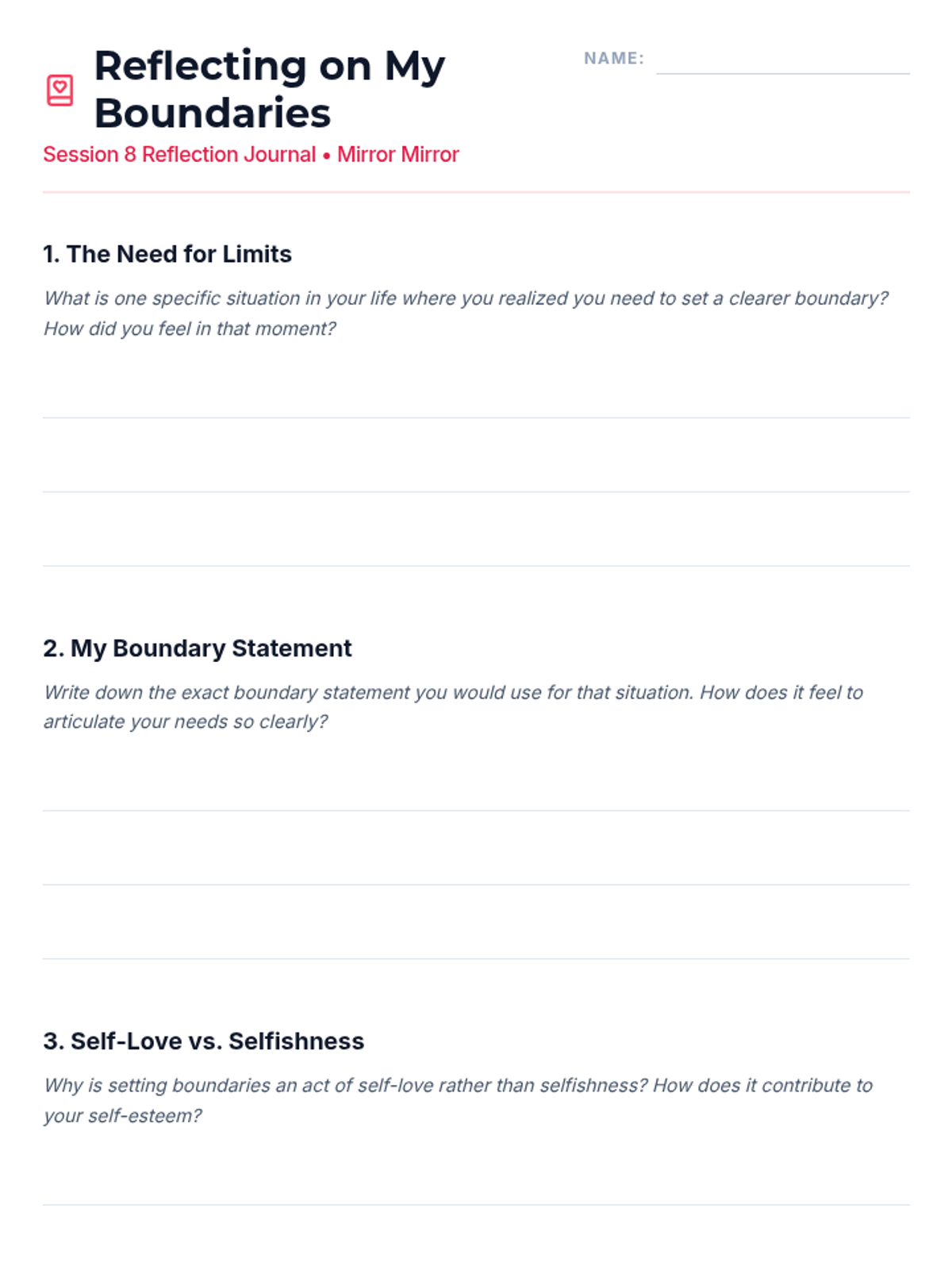
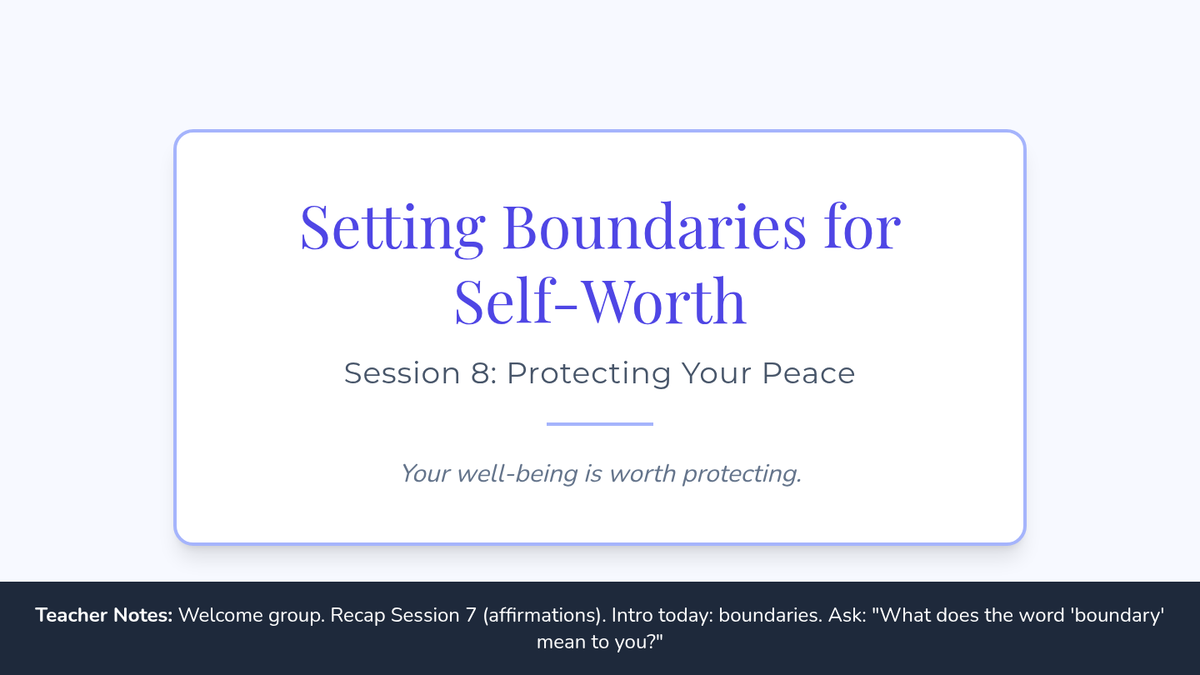
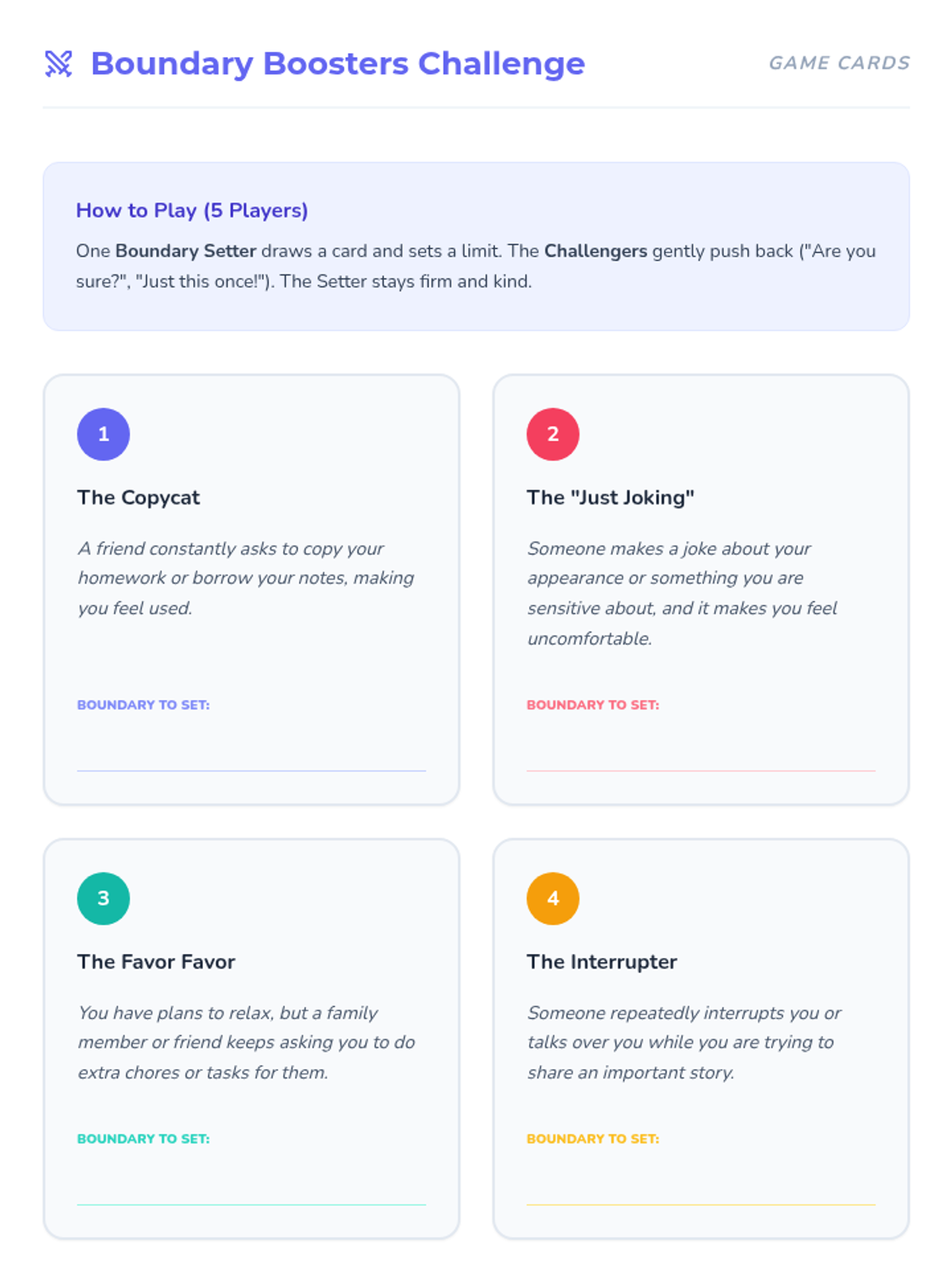
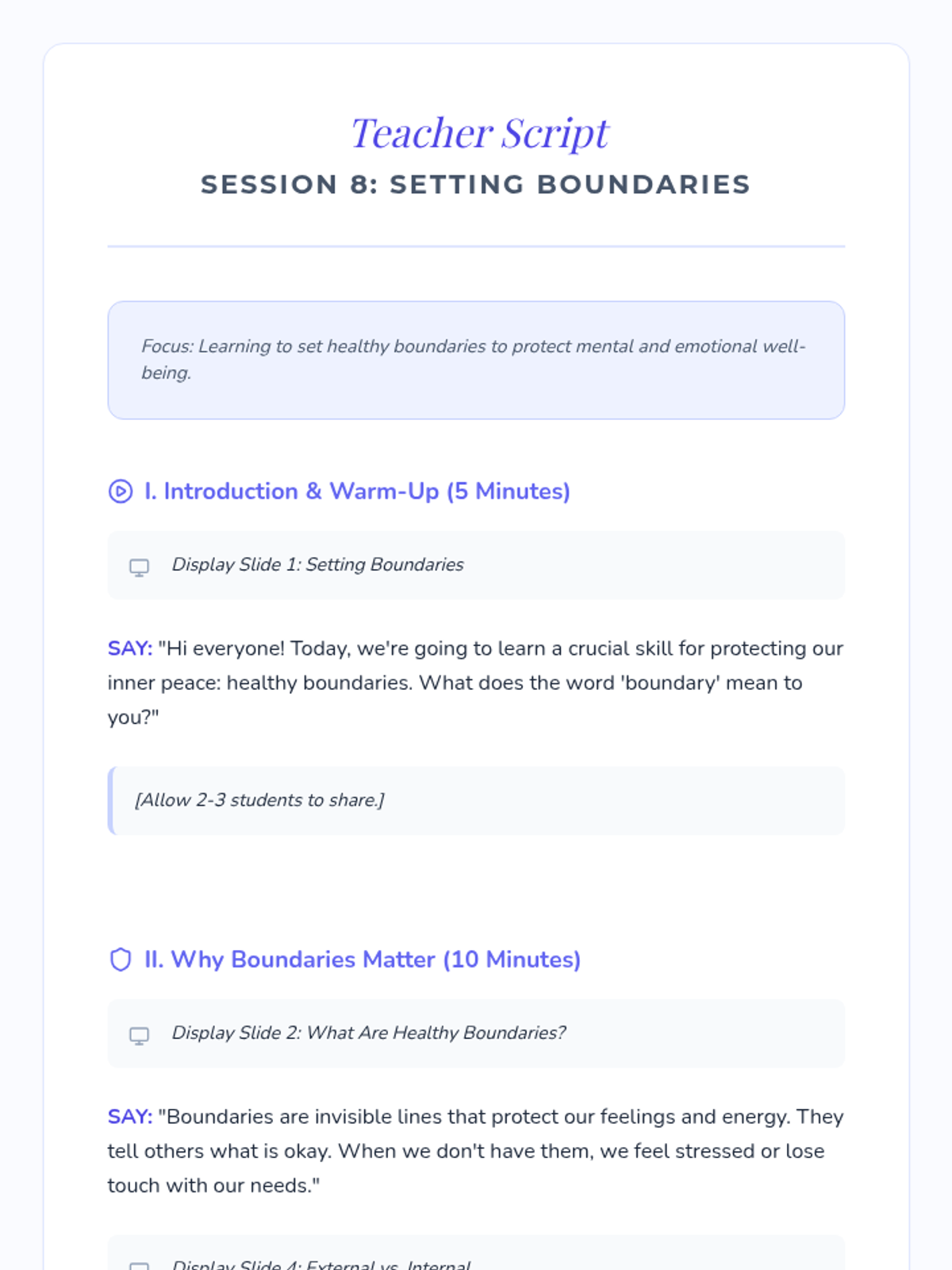
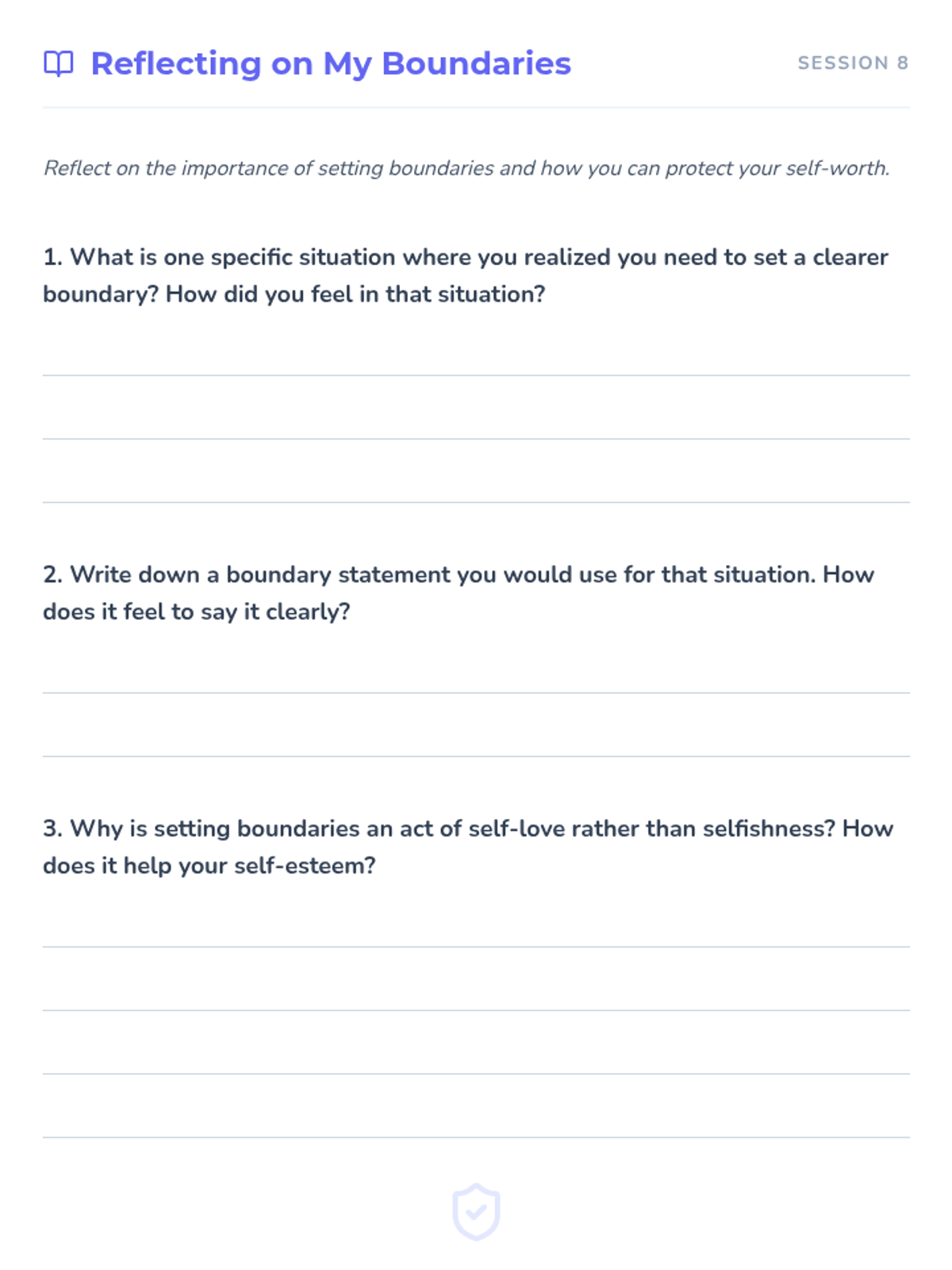
Learning to set healthy boundaries to protect mental and emotional well-being.
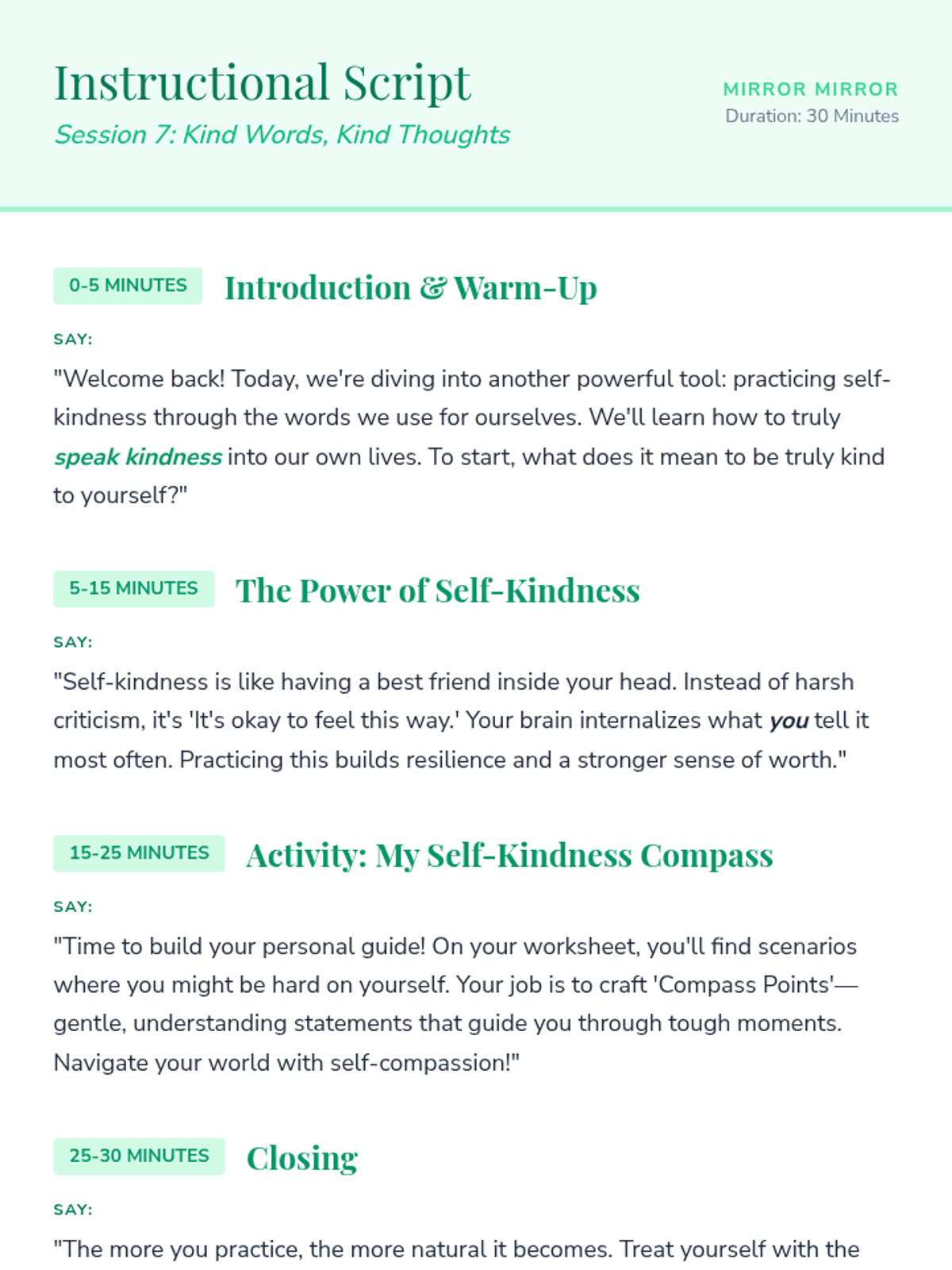
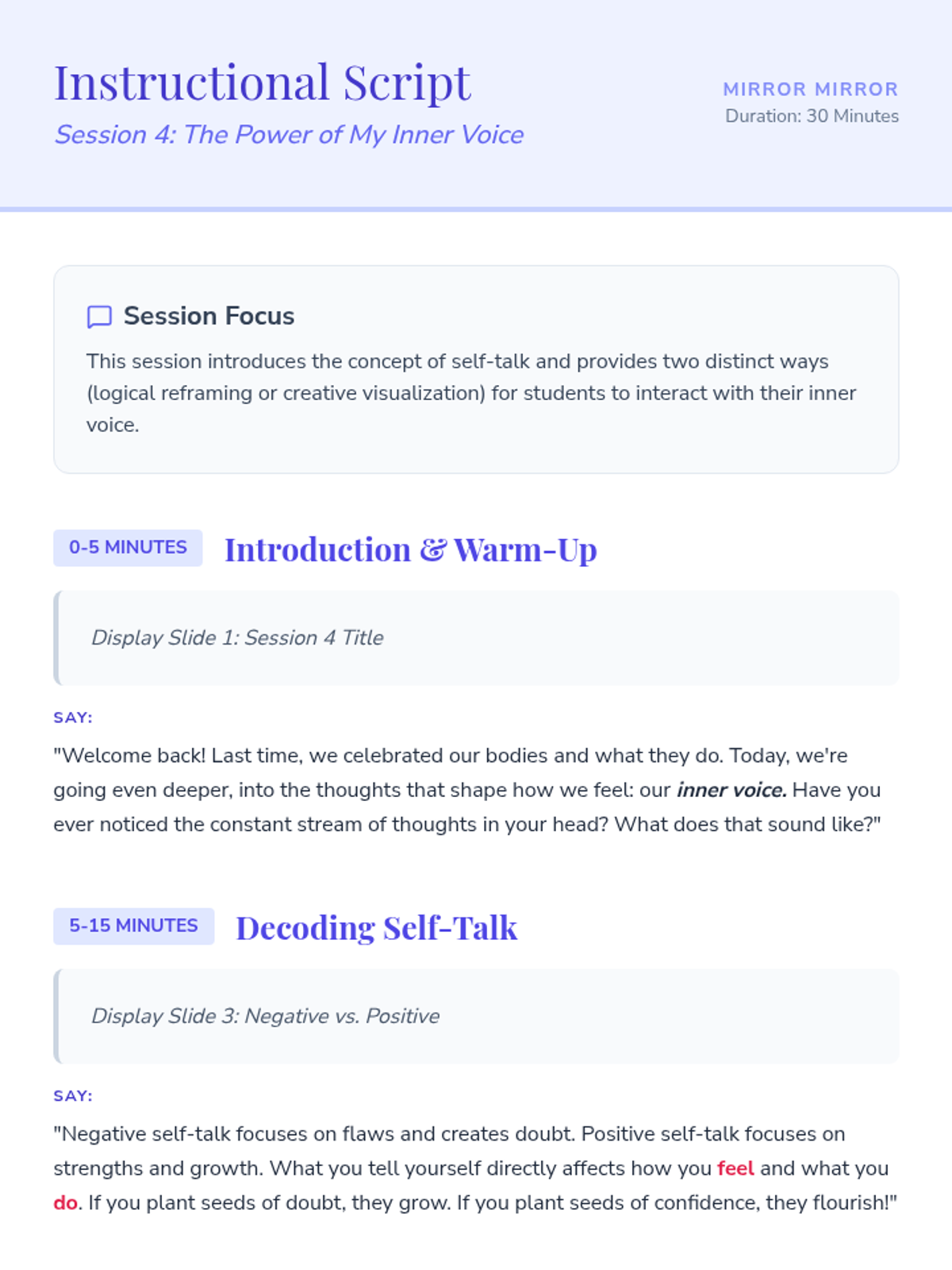
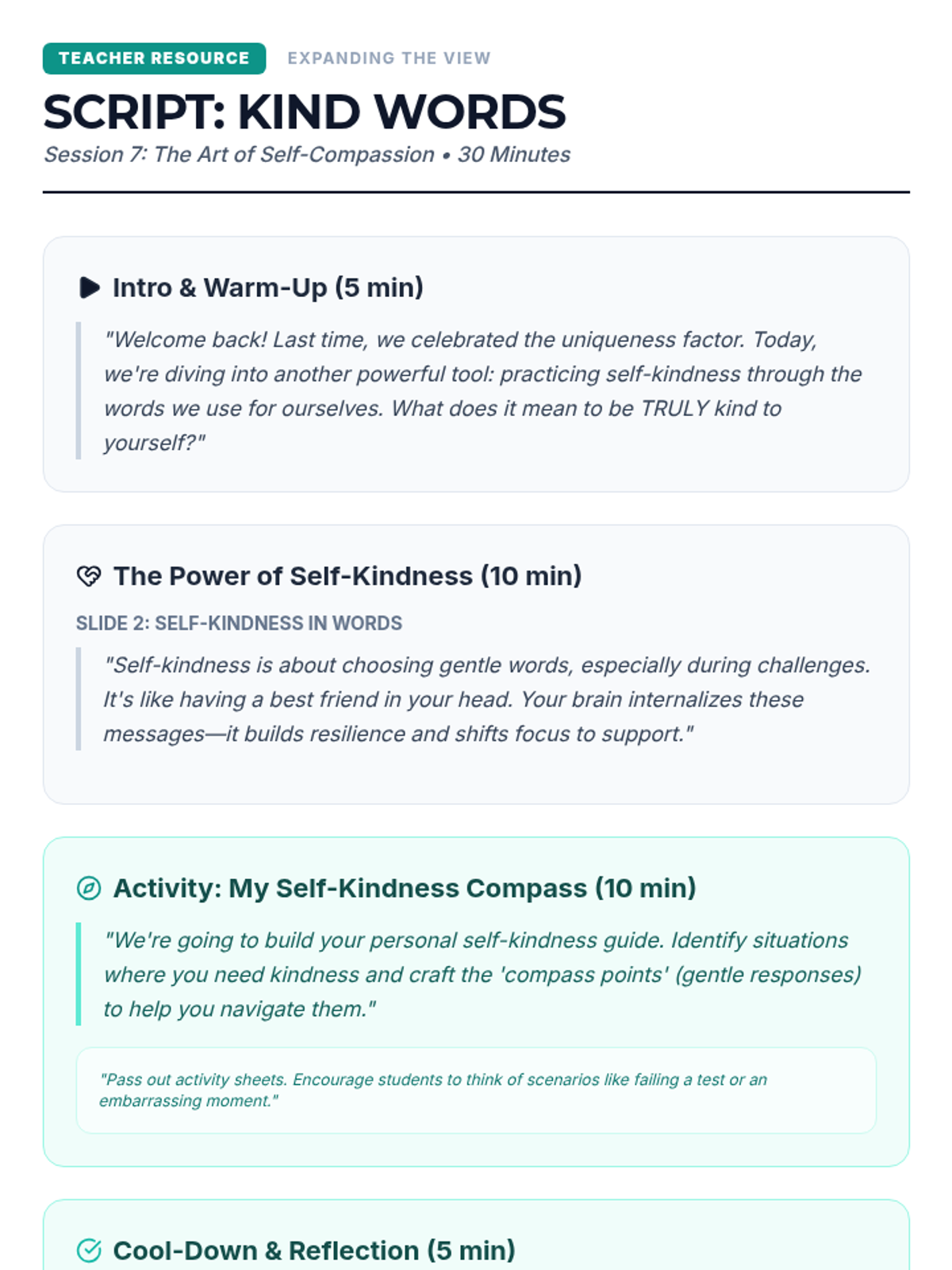
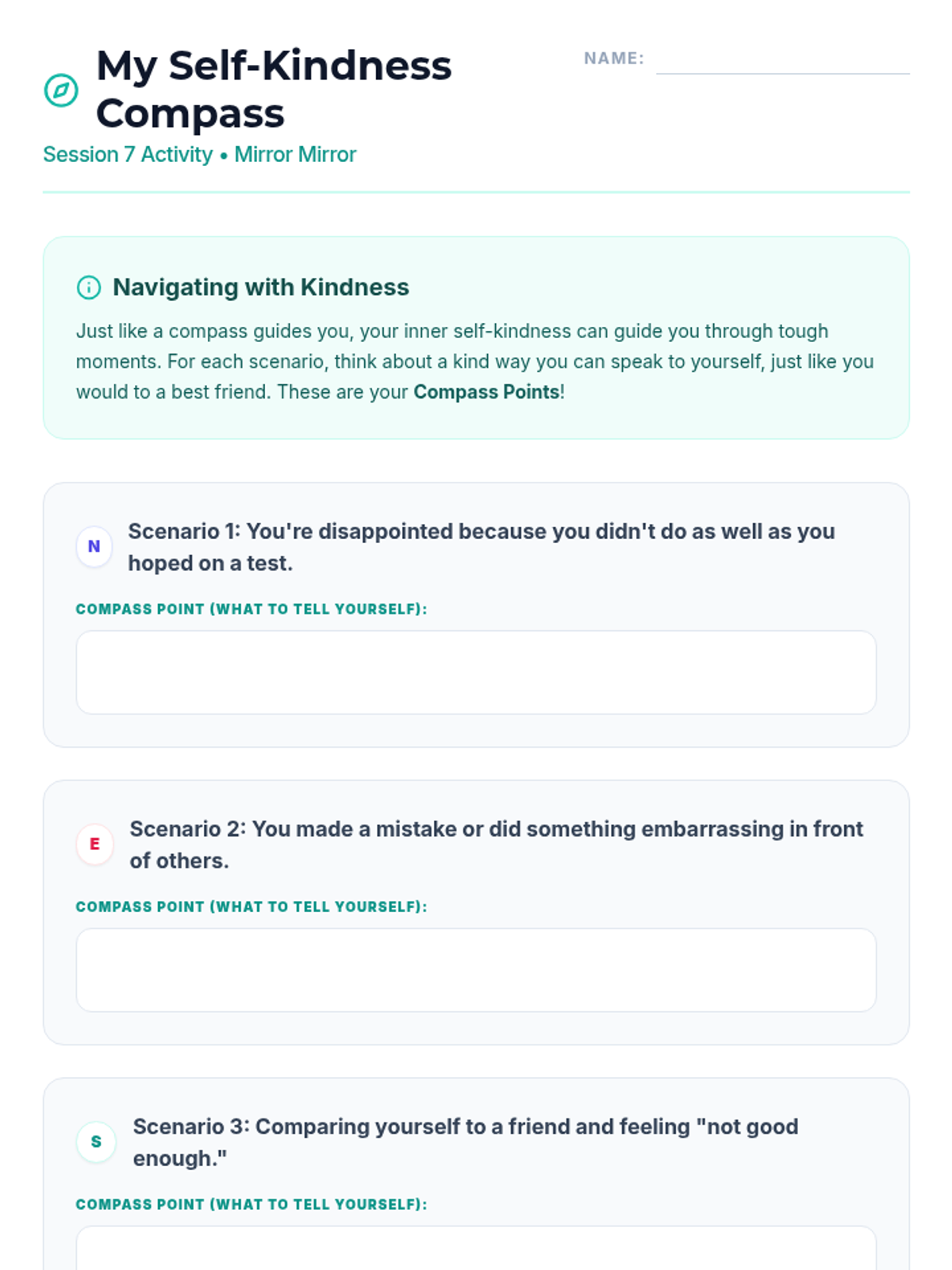
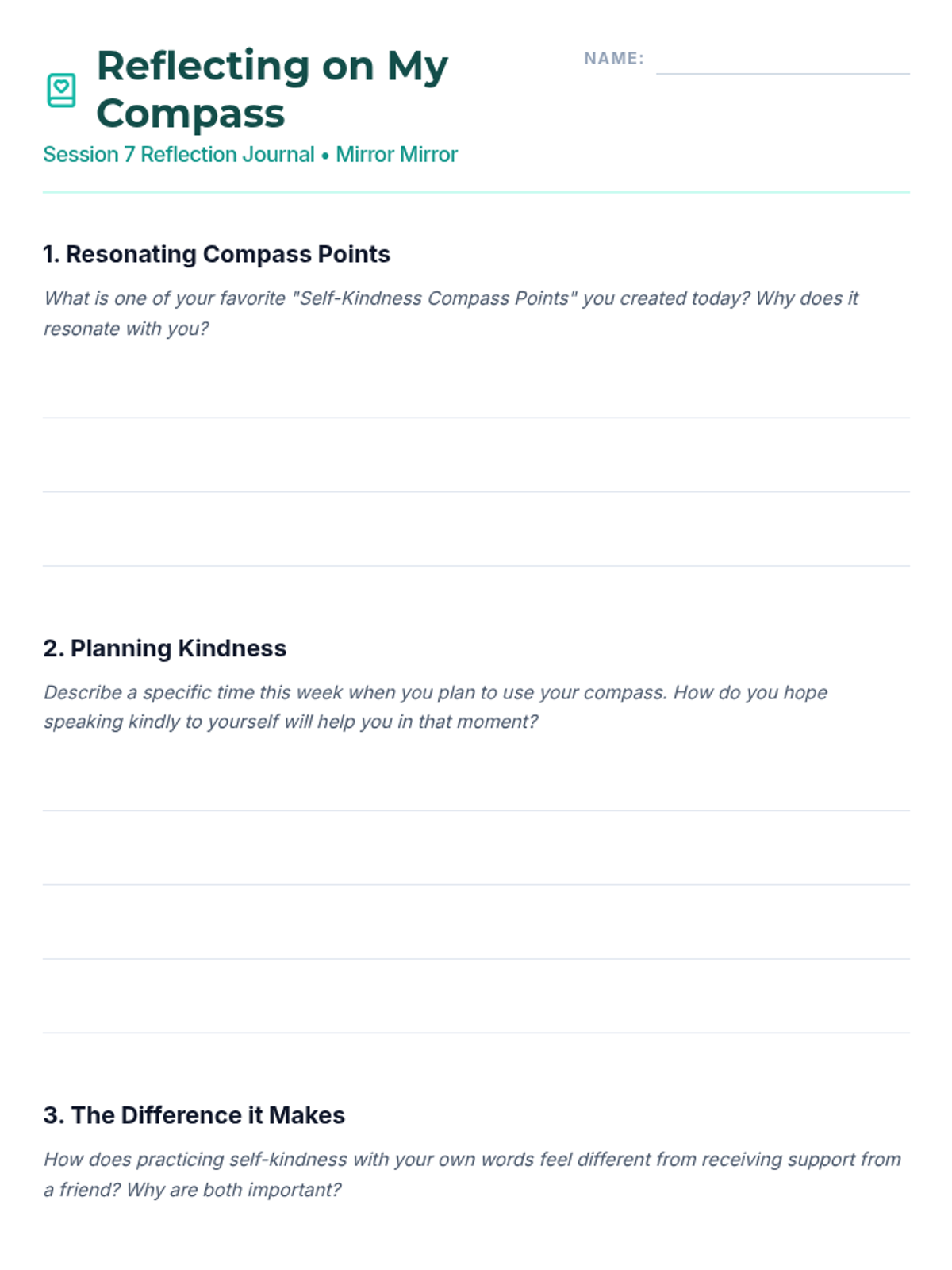
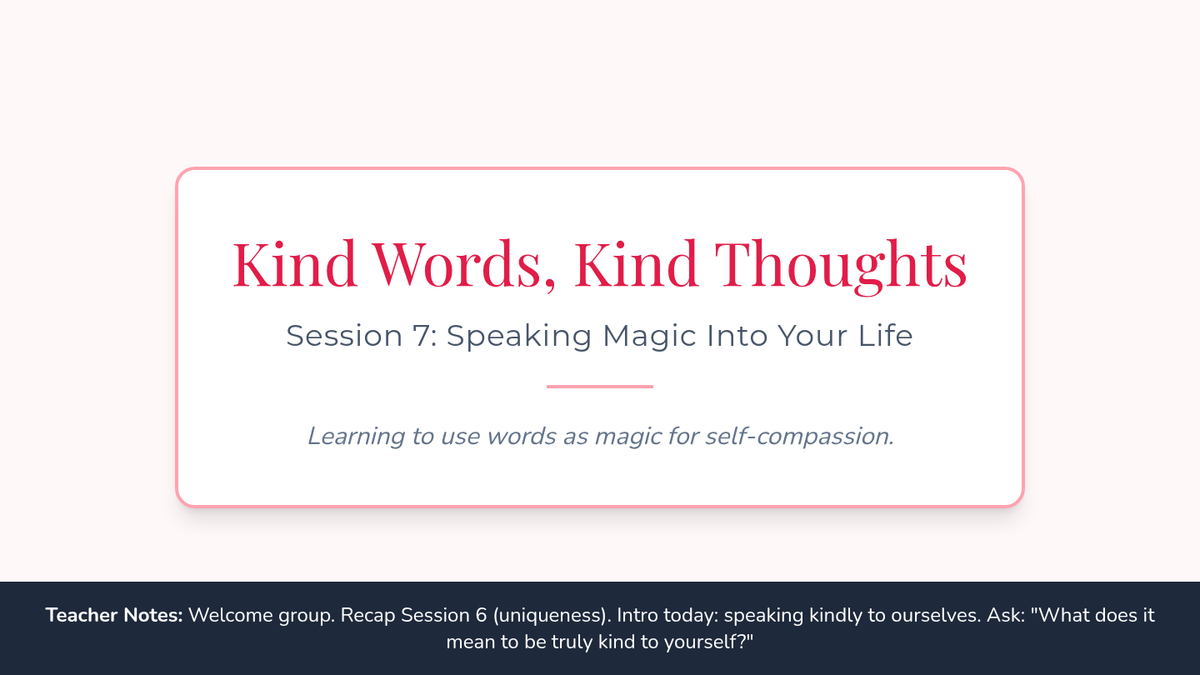
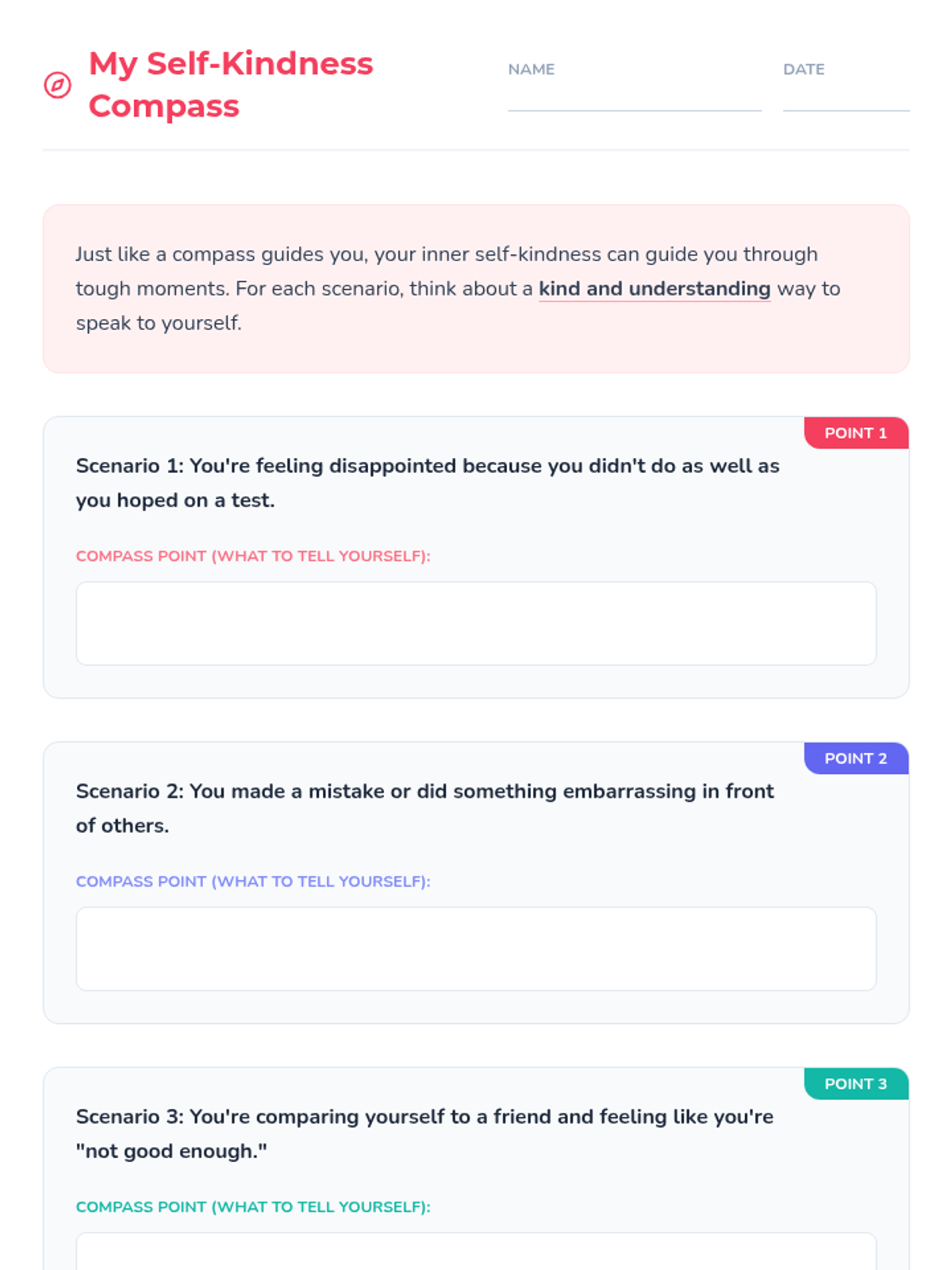
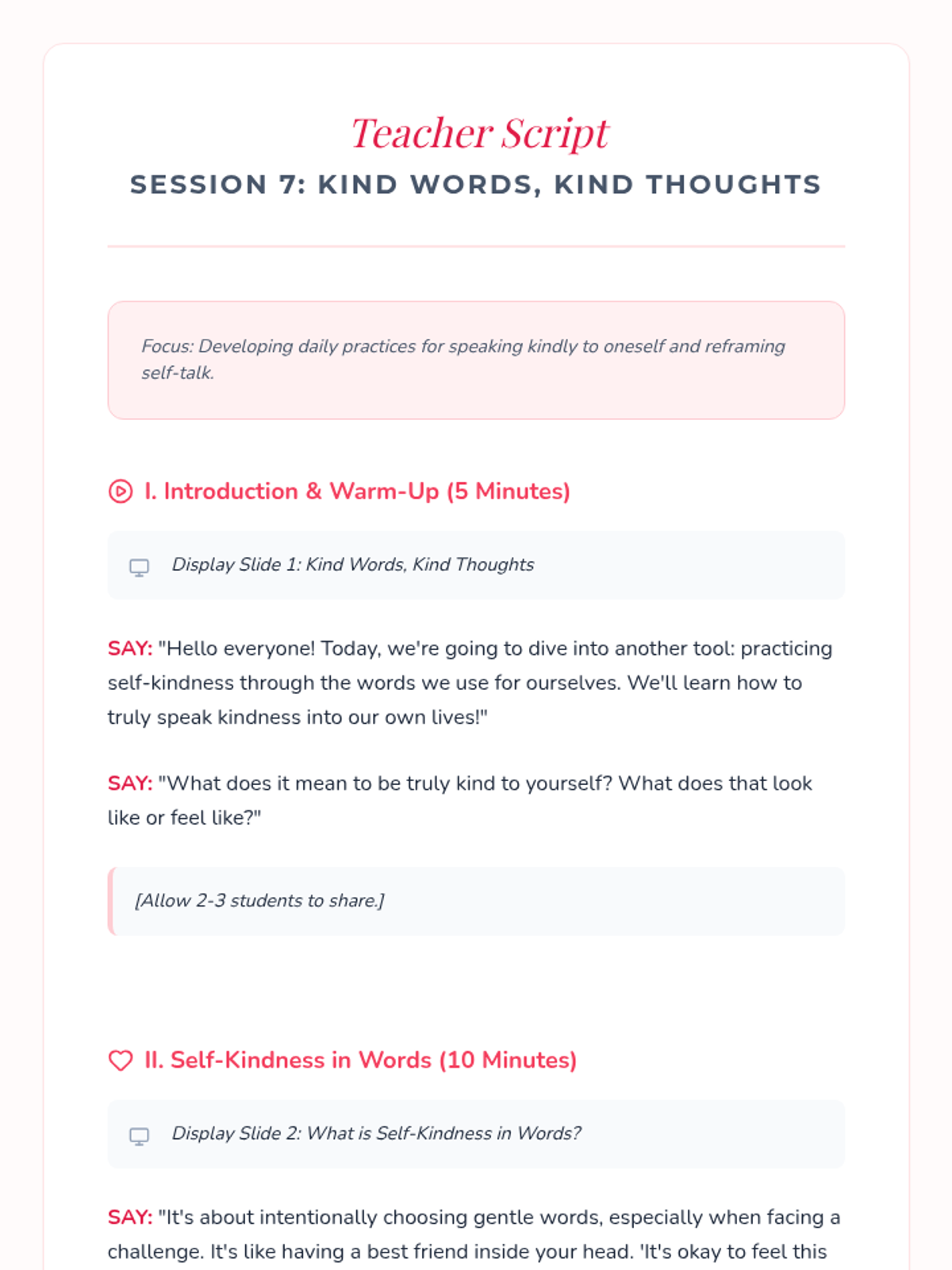
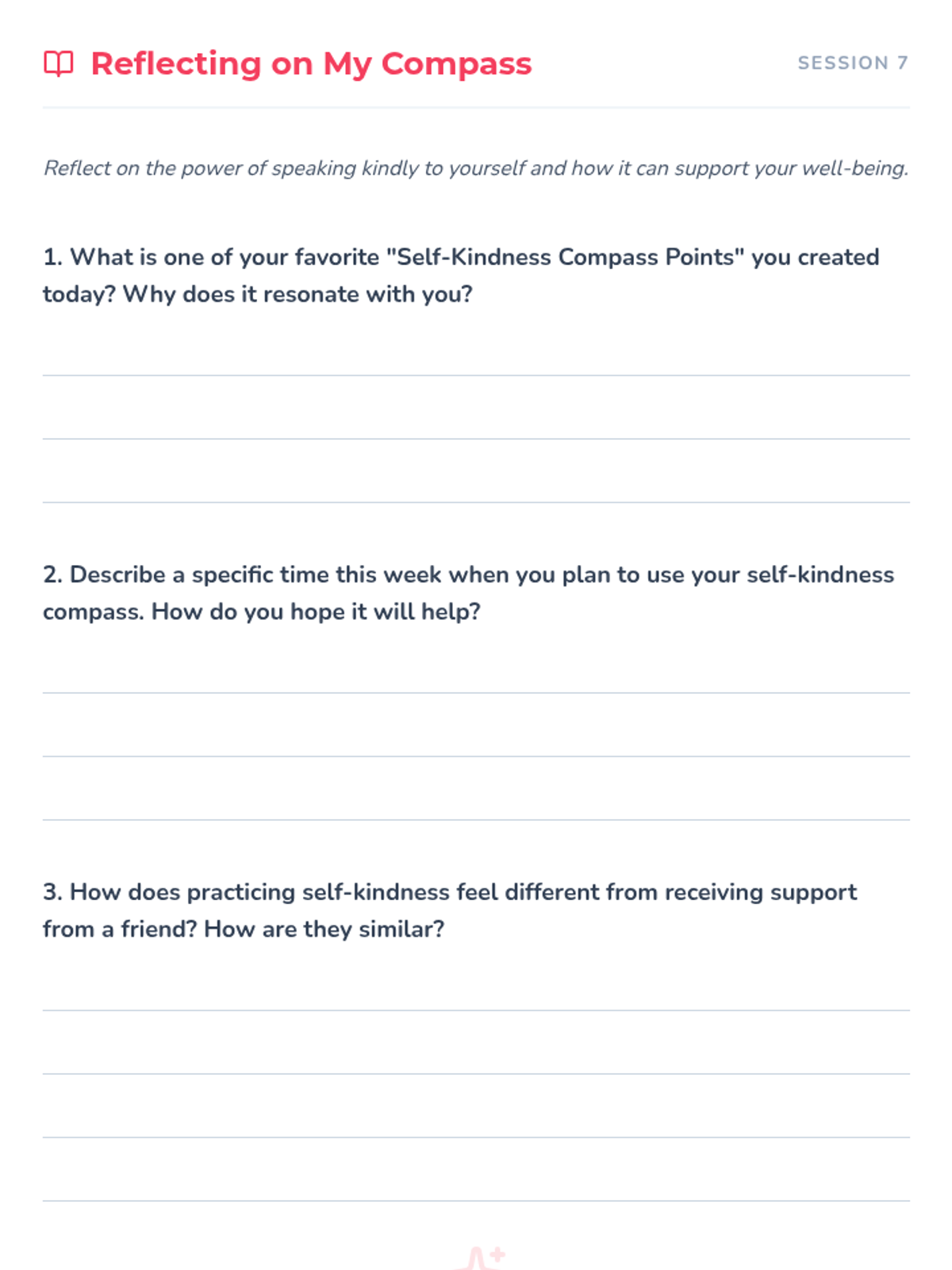
Reframing negative thoughts and developing daily practices for self-kindness.
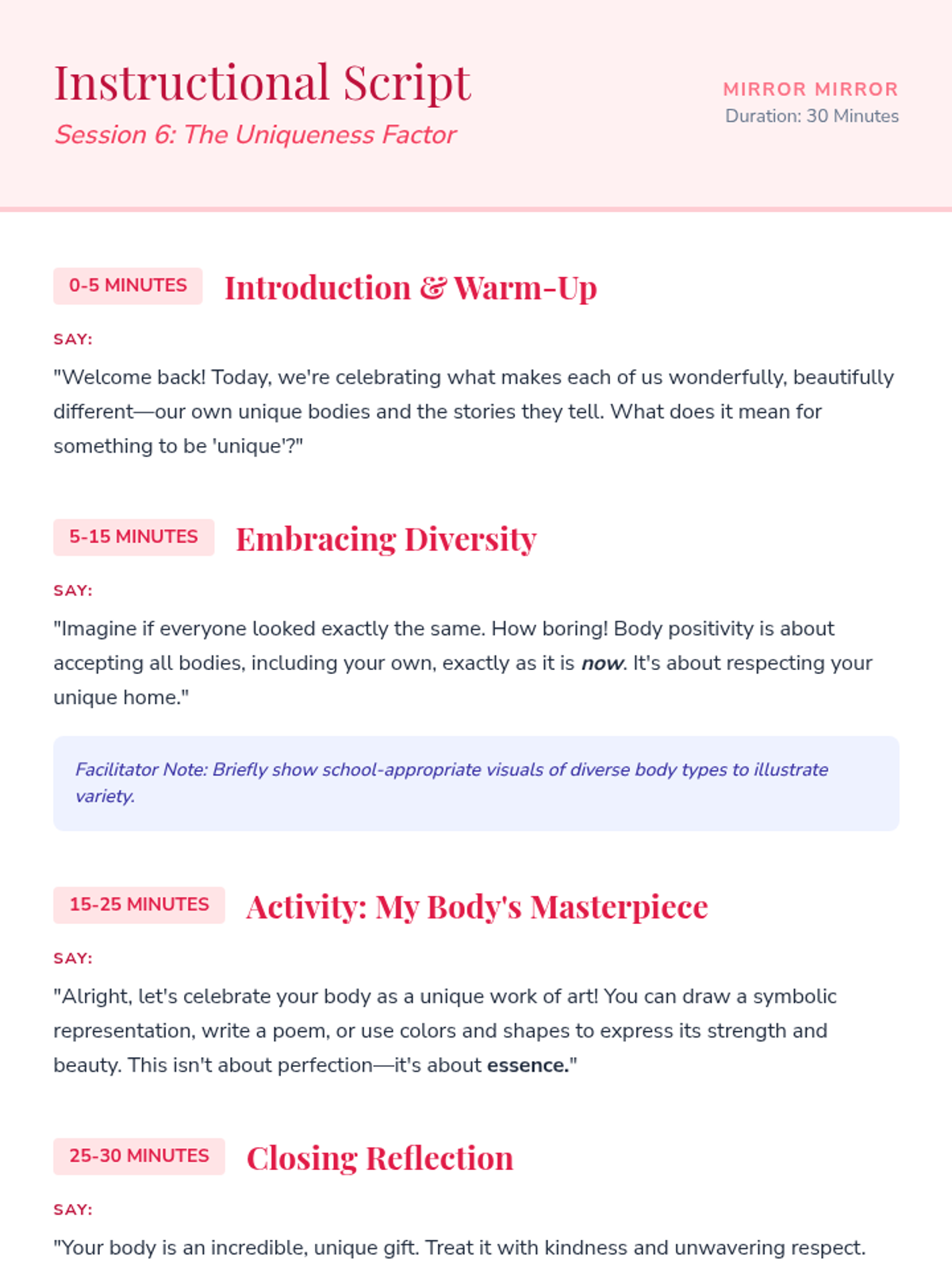
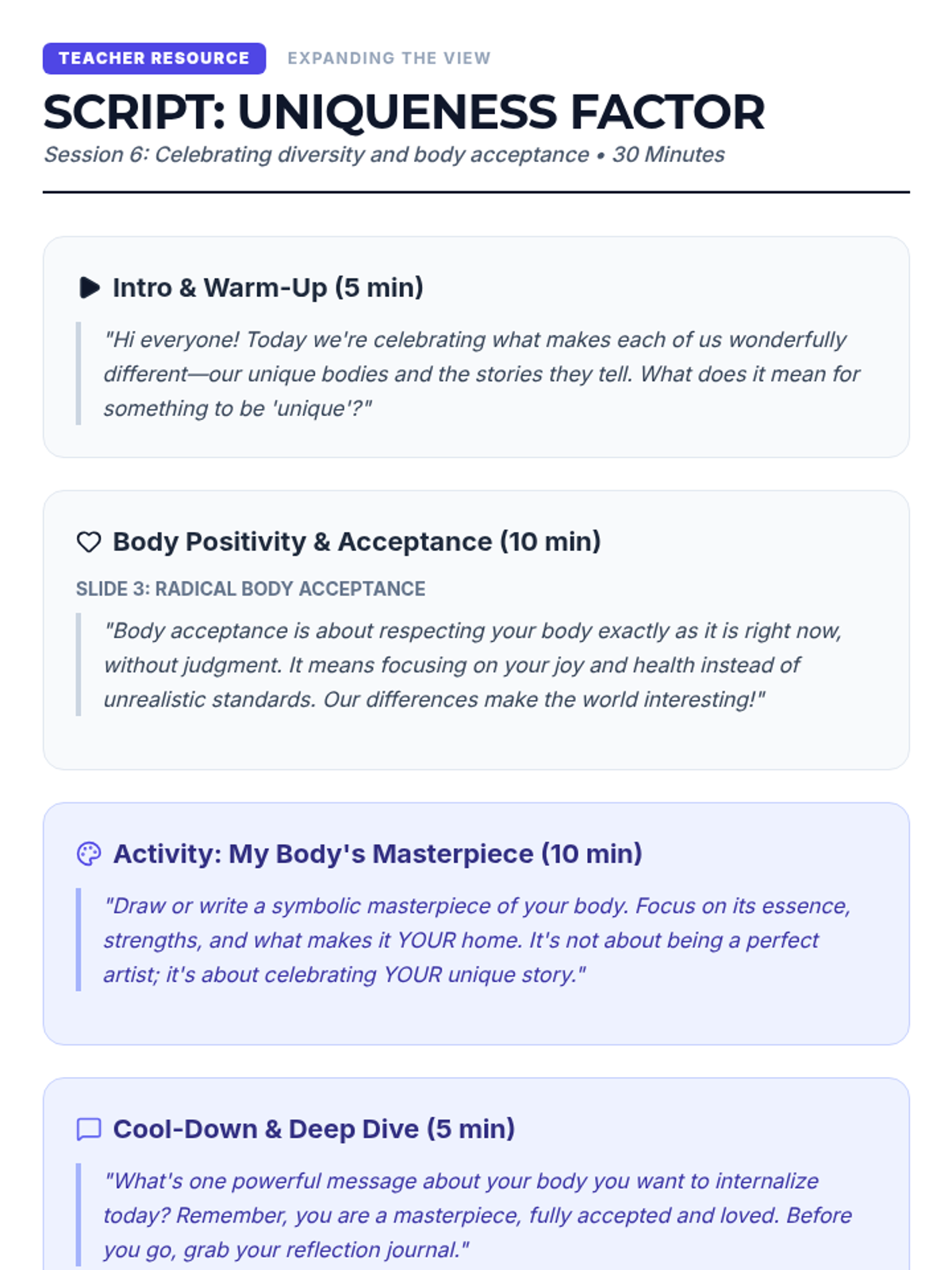
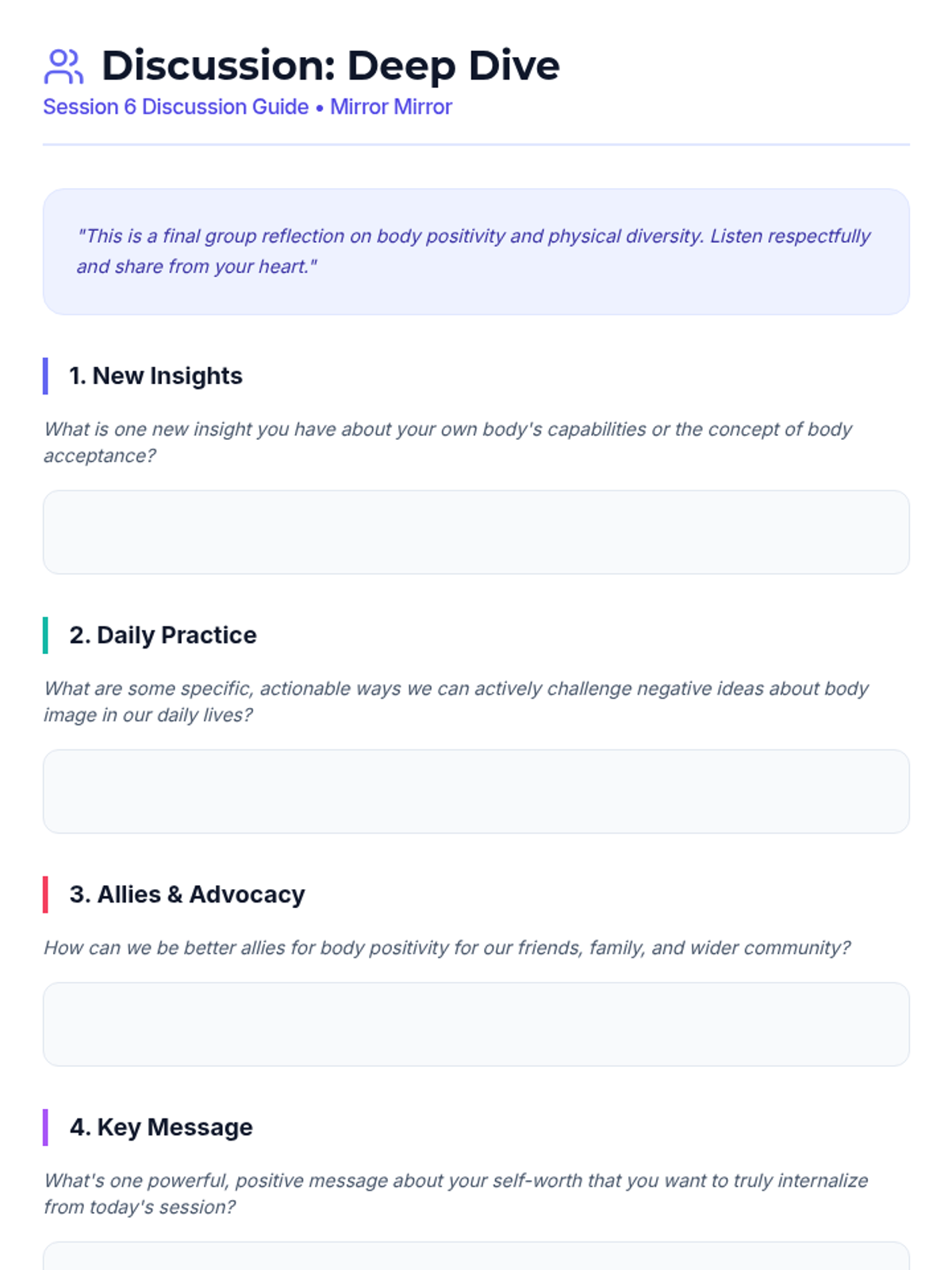
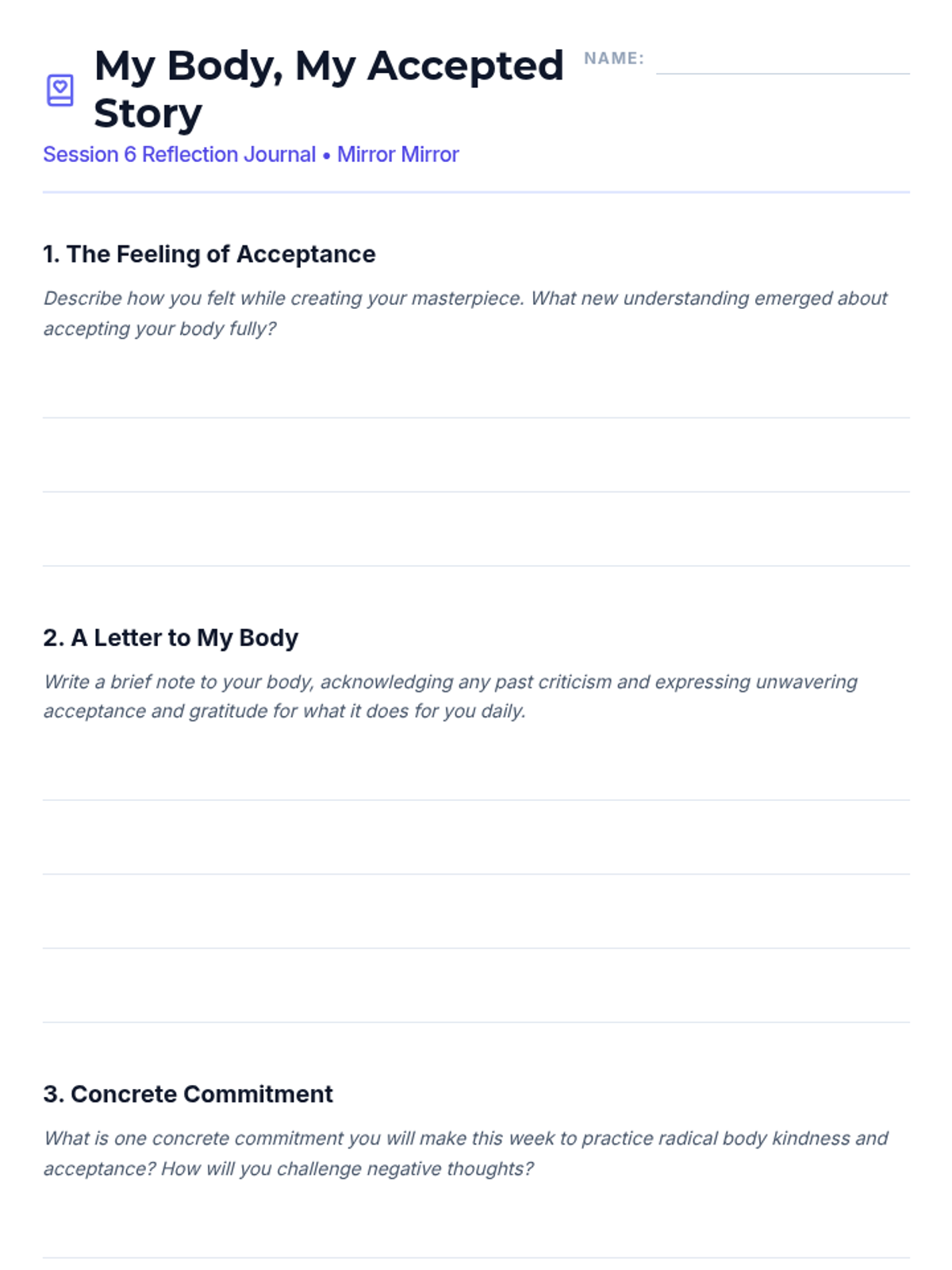
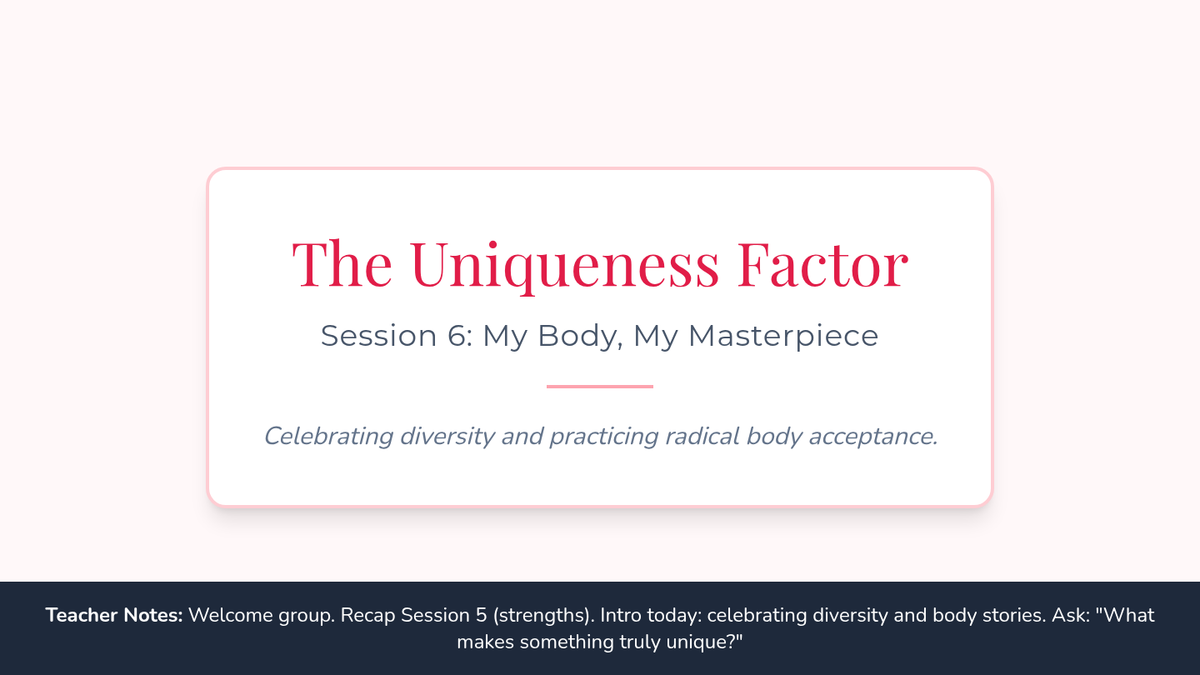
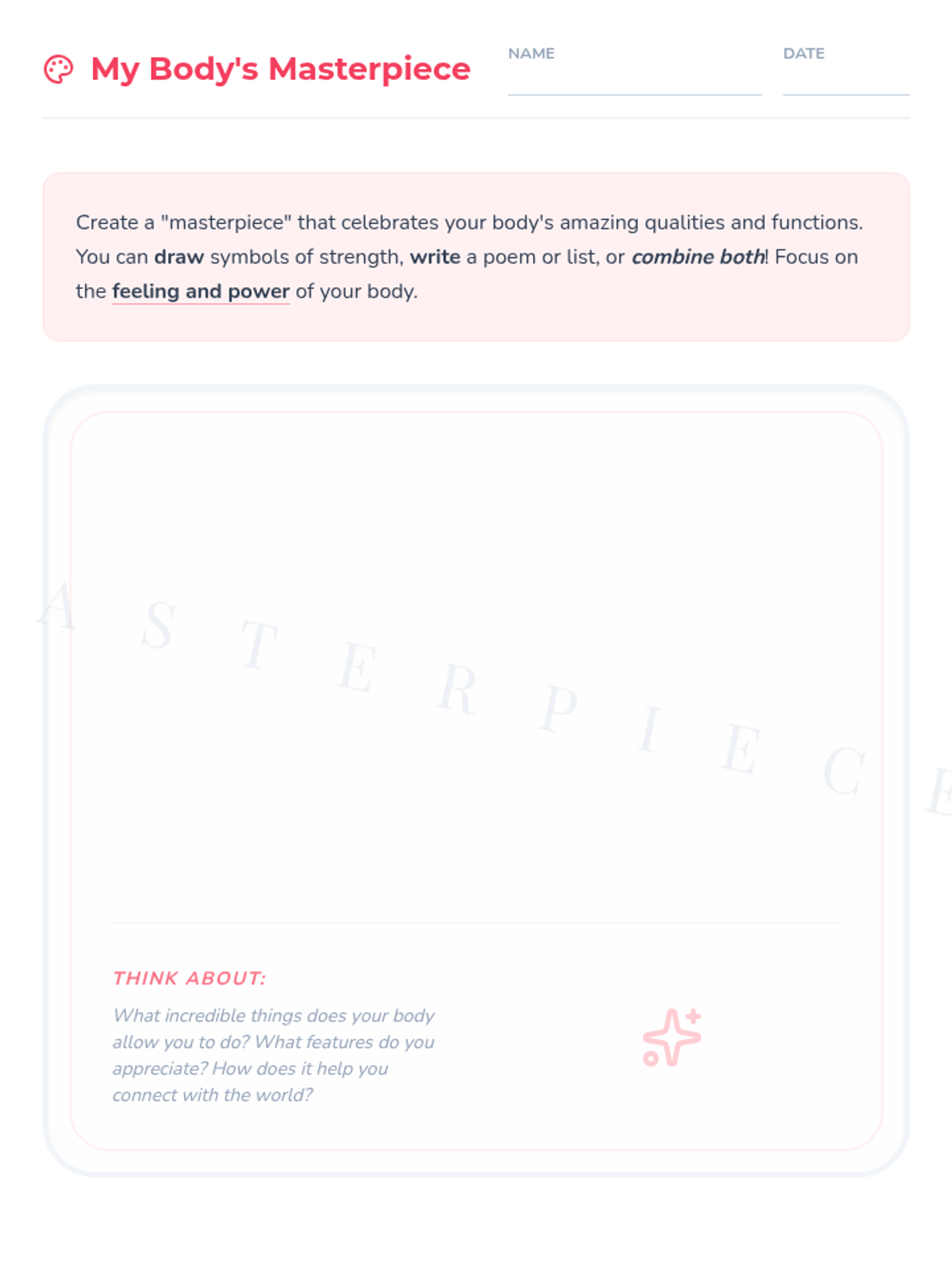
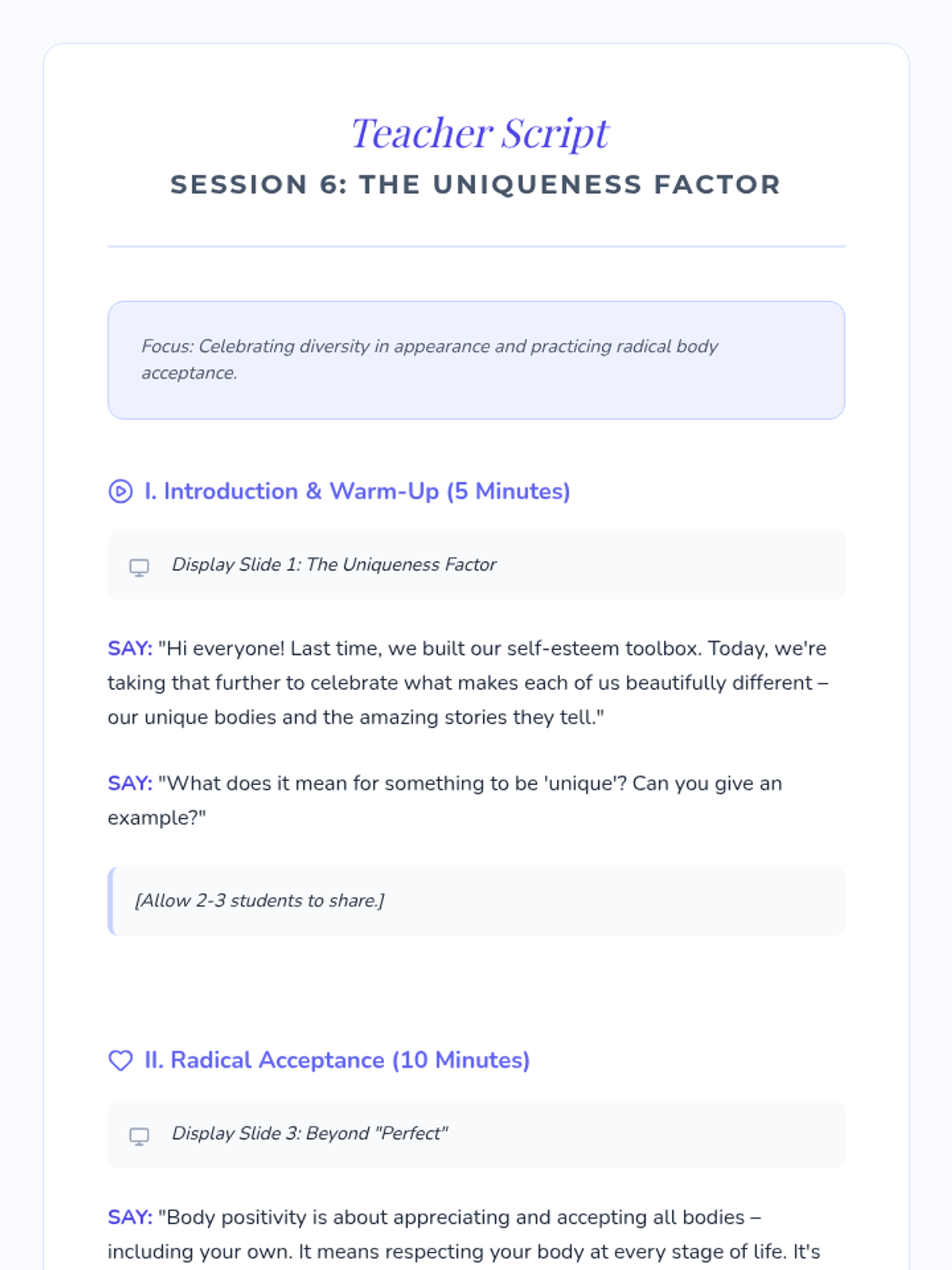
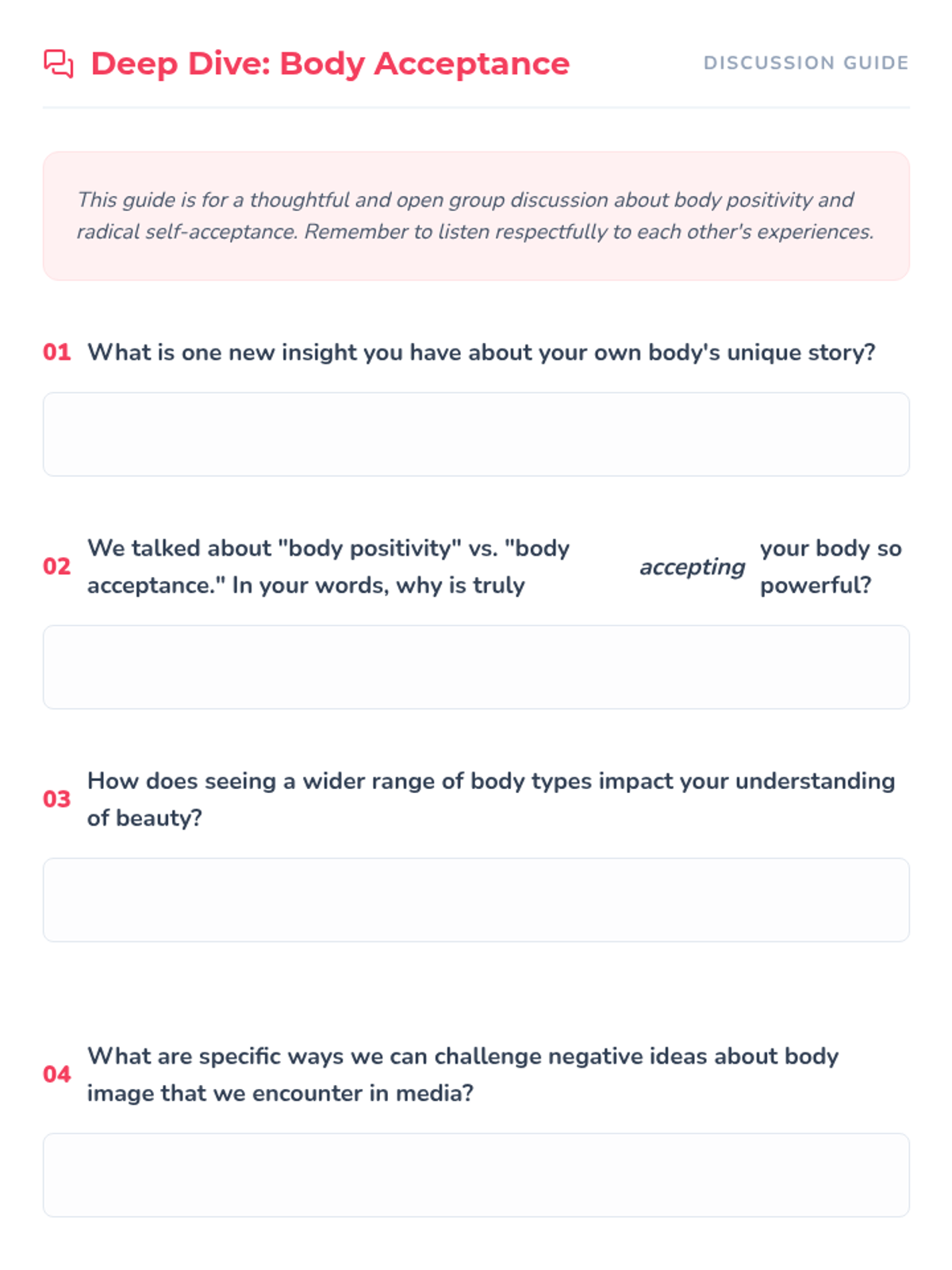
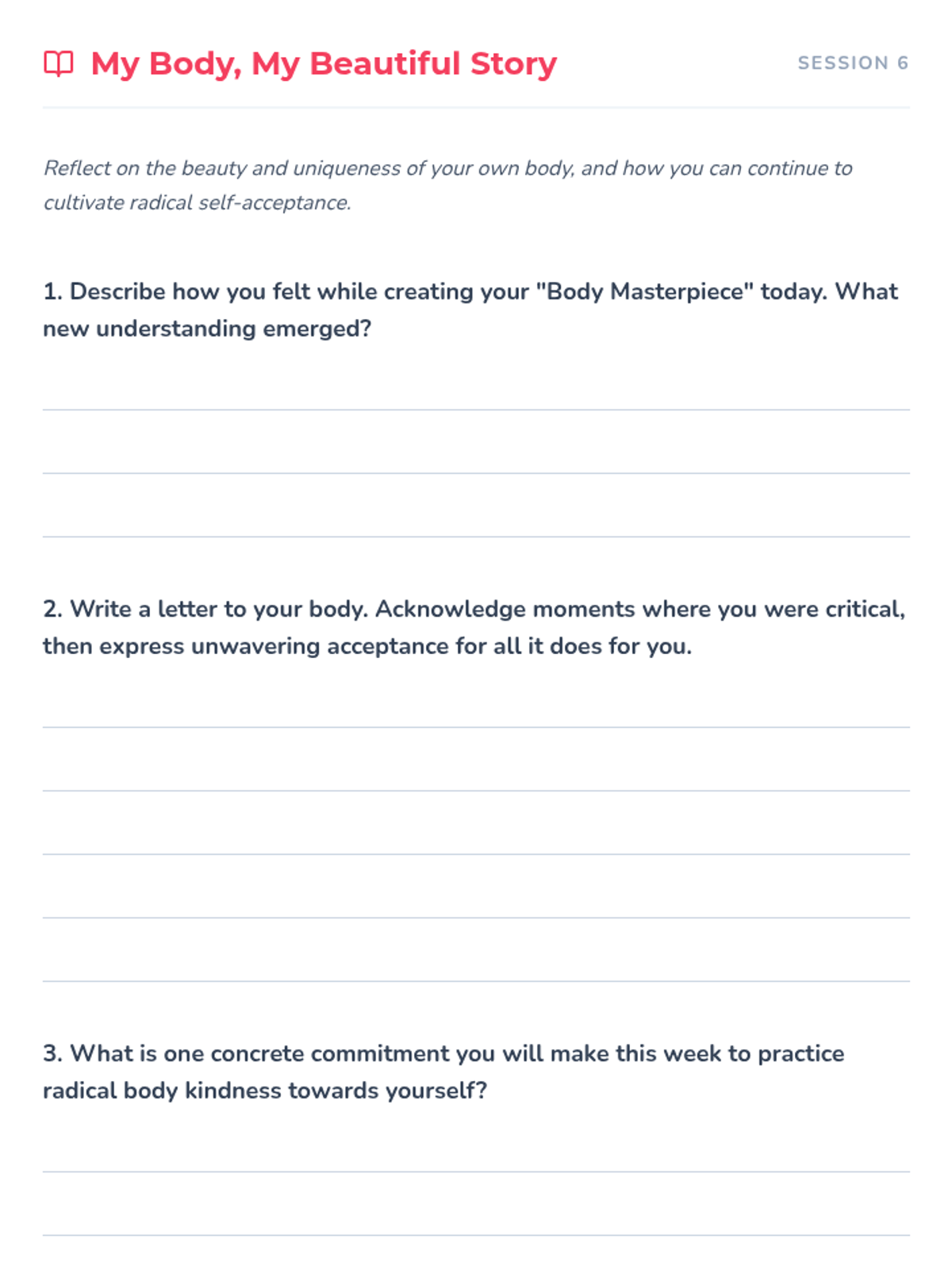
Celebrating diversity in appearance and practicing radical body acceptance.
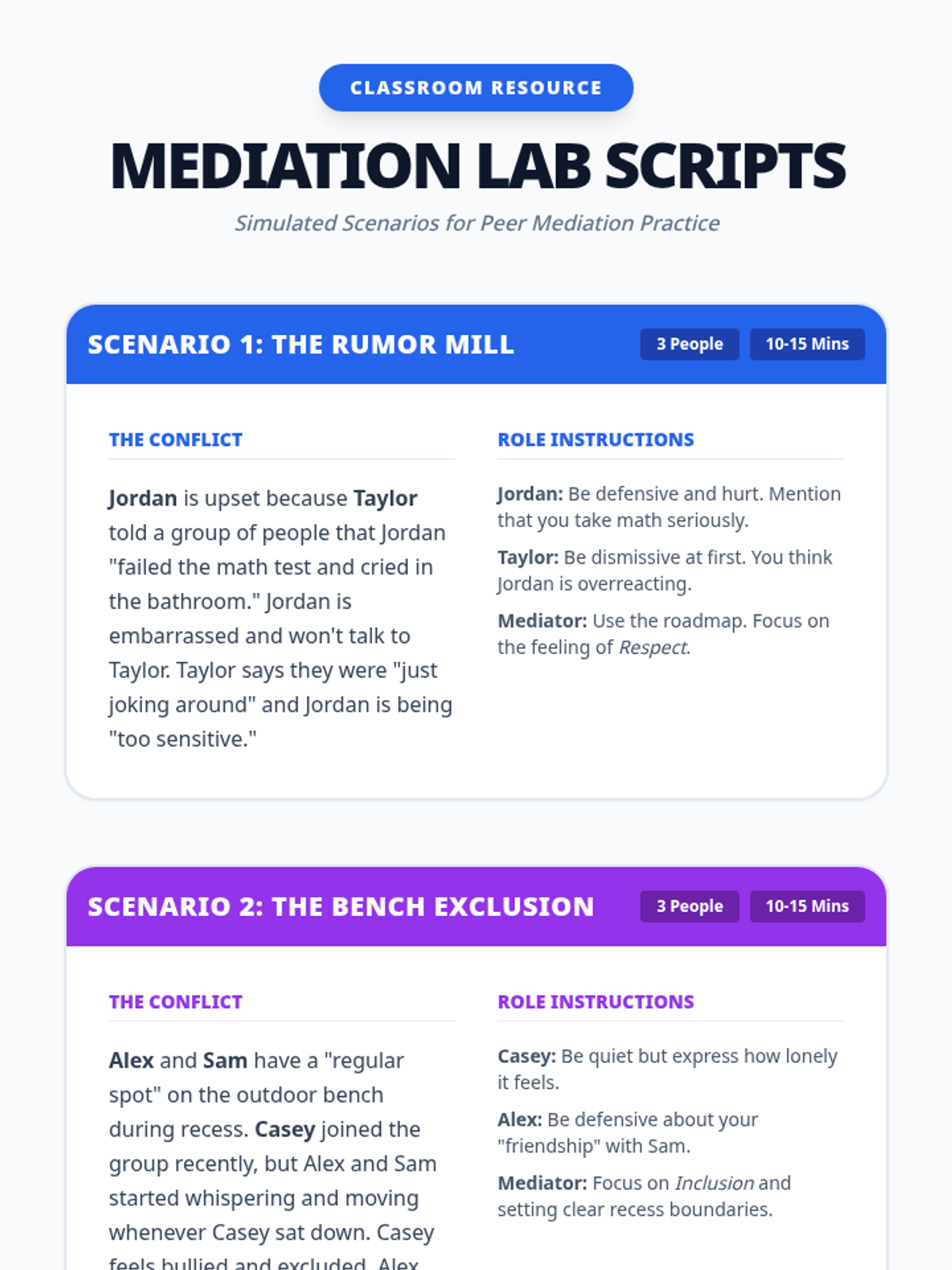
Students engage in full-cycle mock mediations. Groups rotate roles between disputants and mediators, using scripts based on real-life 6th-grade problems (e.g., rumor spreading, exclusion).
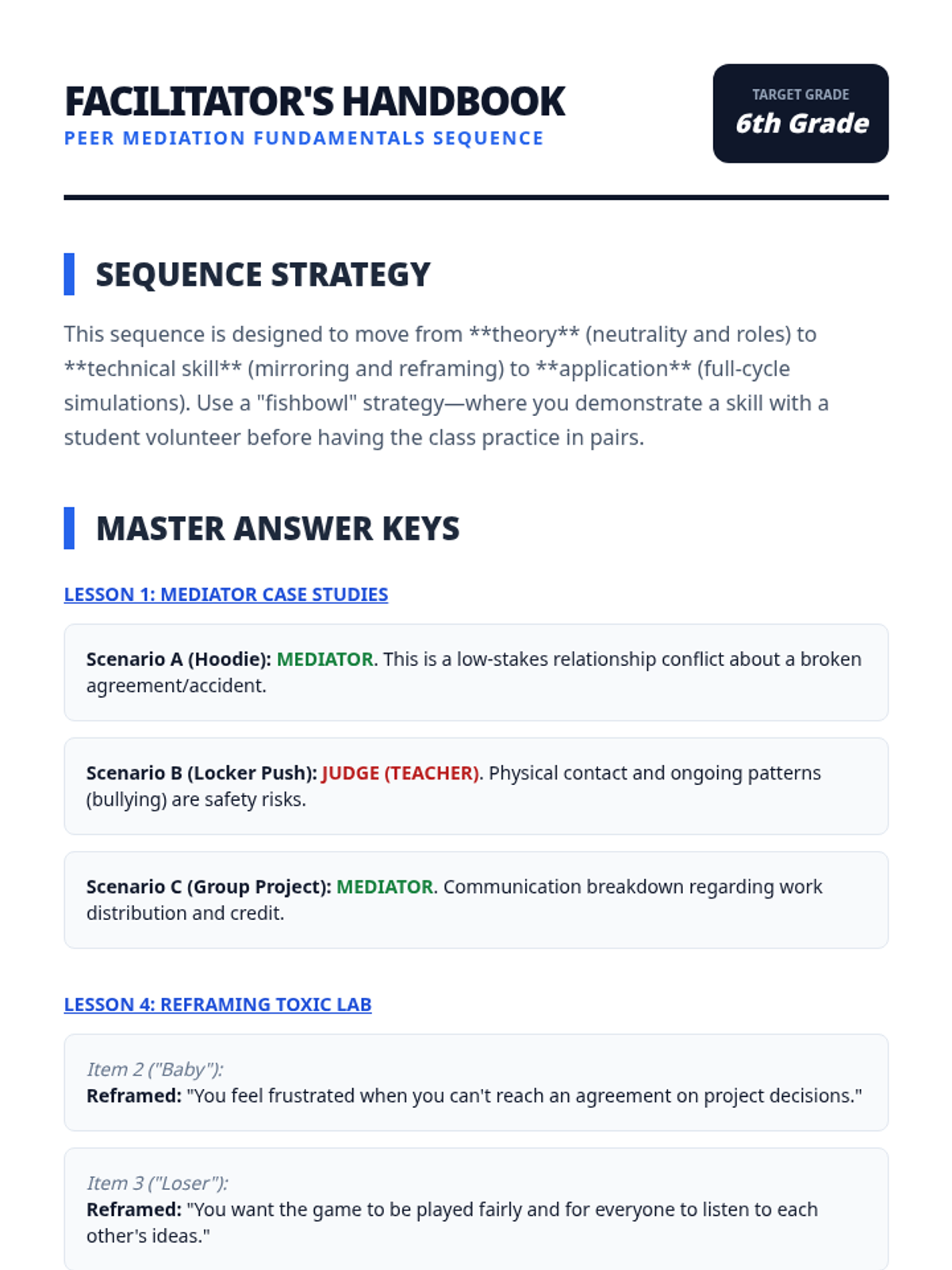
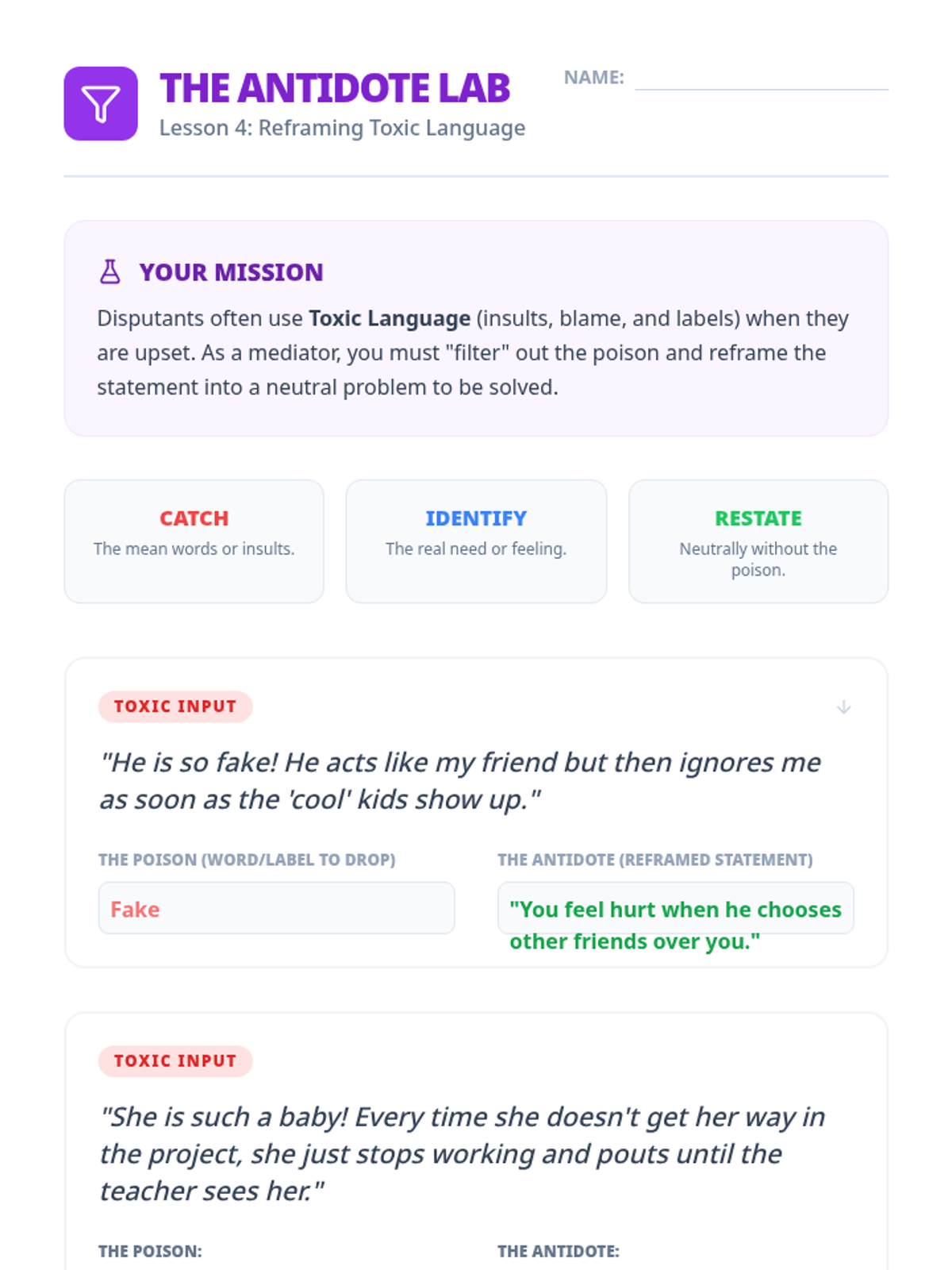
Students learn to 'catch' toxic or inflammatory language used by disputants and reframe it into neutral problem statements. This advanced skill prevents the mediation from turning into a shouting match.
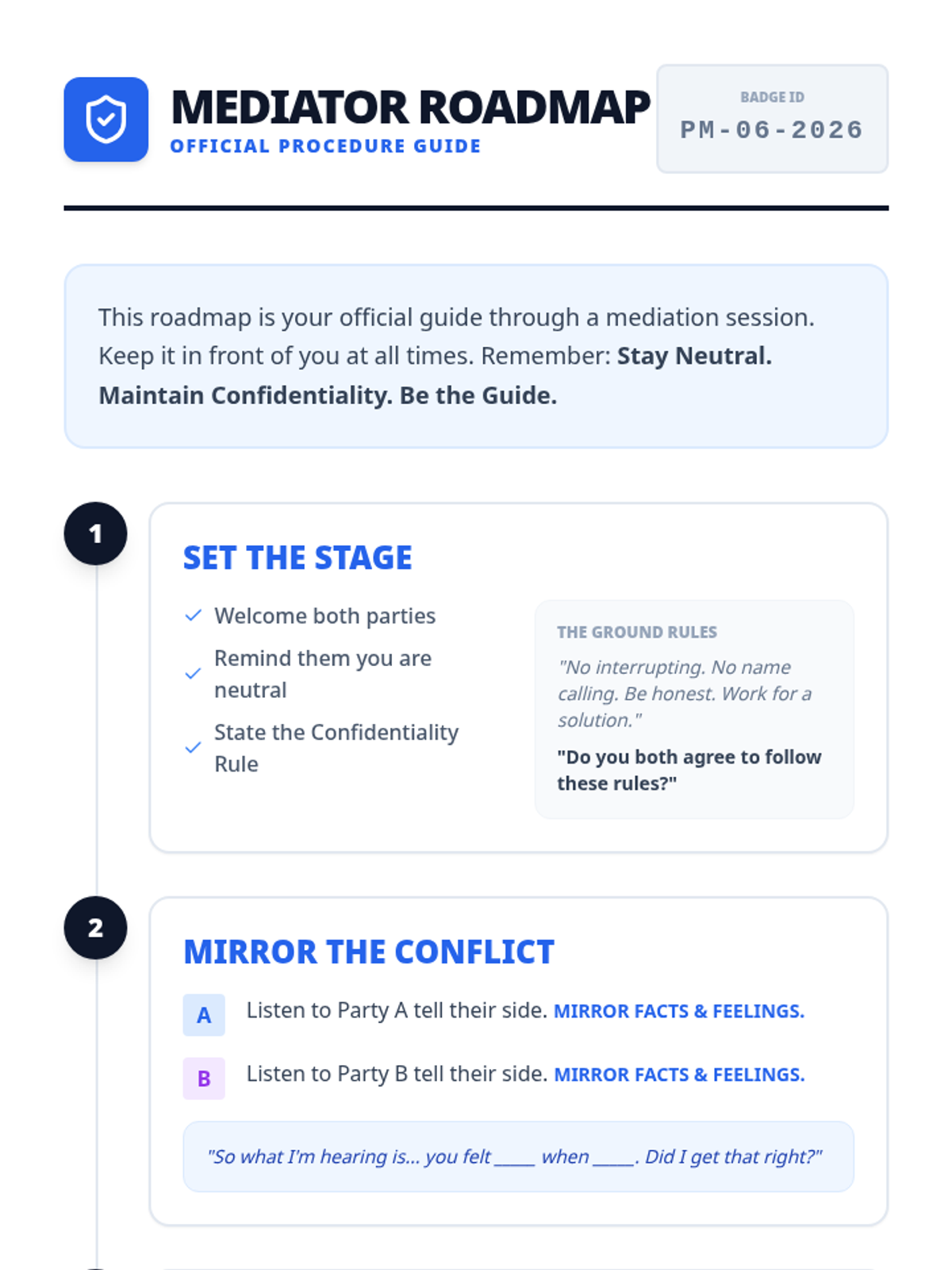
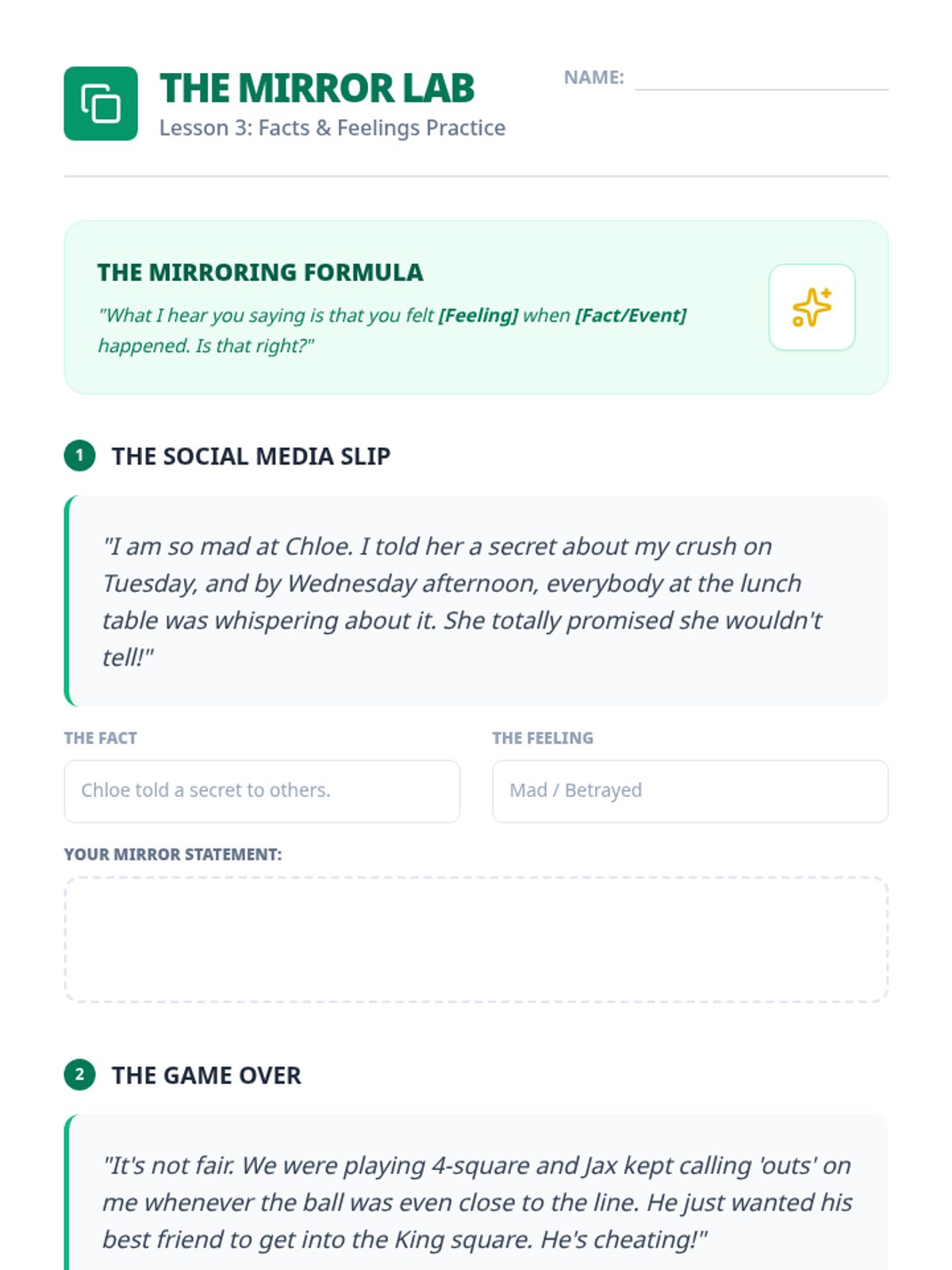
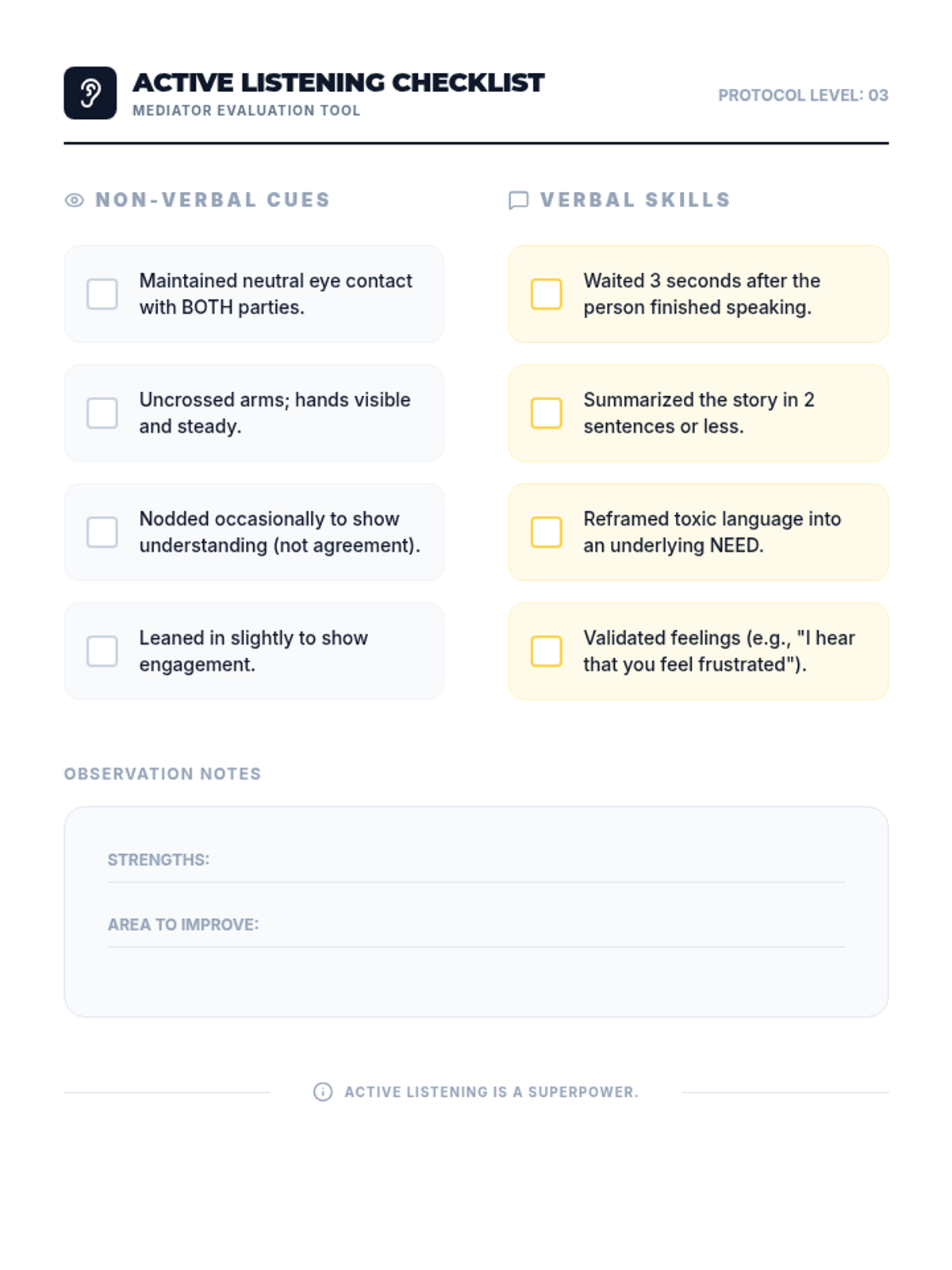
This lesson focuses on the mediator's primary tool: mirroring (reflecting back what was heard). Students practice listening to a complaint and summarizing it neutrally to ensure the speaker feels heard.
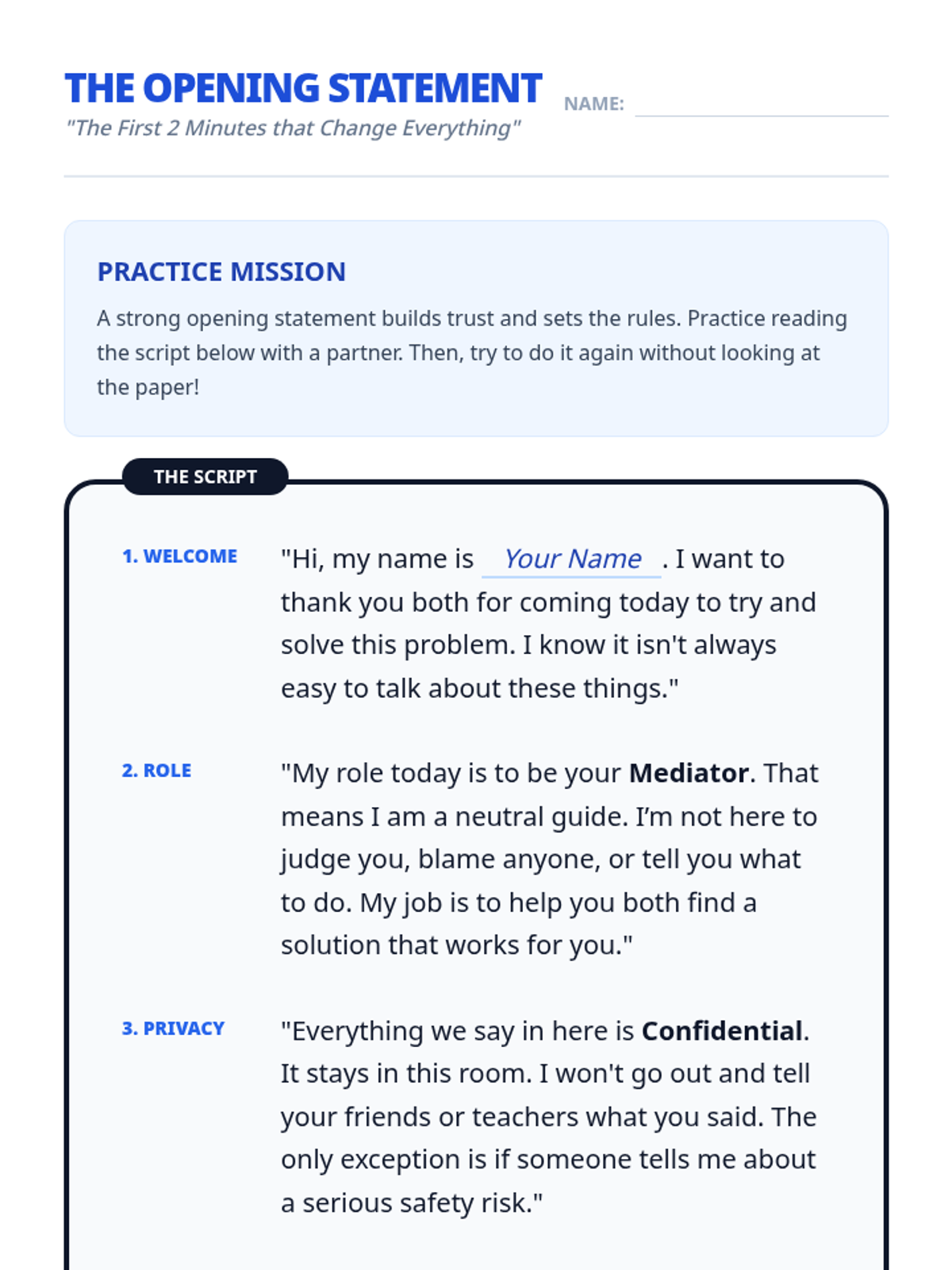
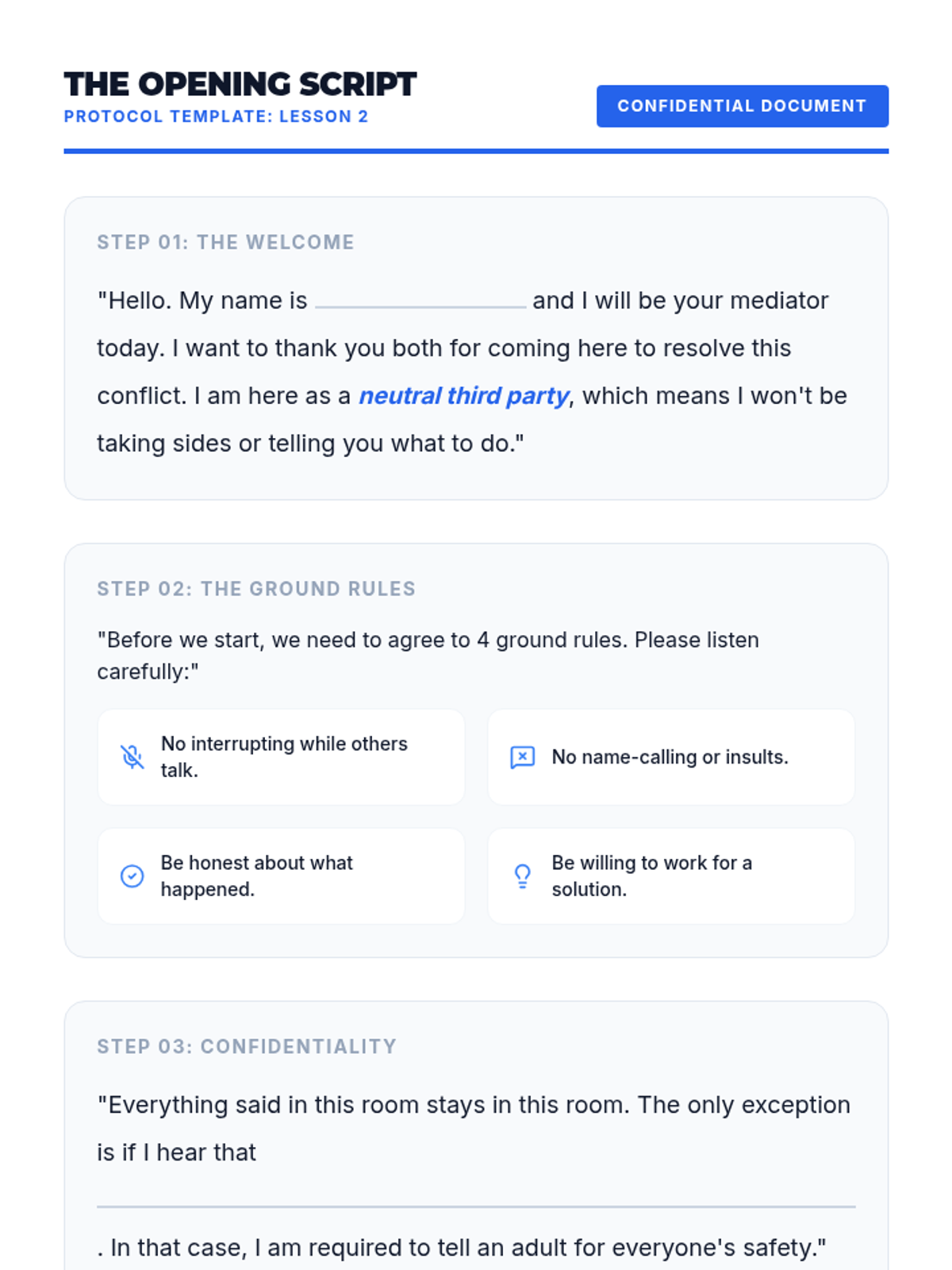
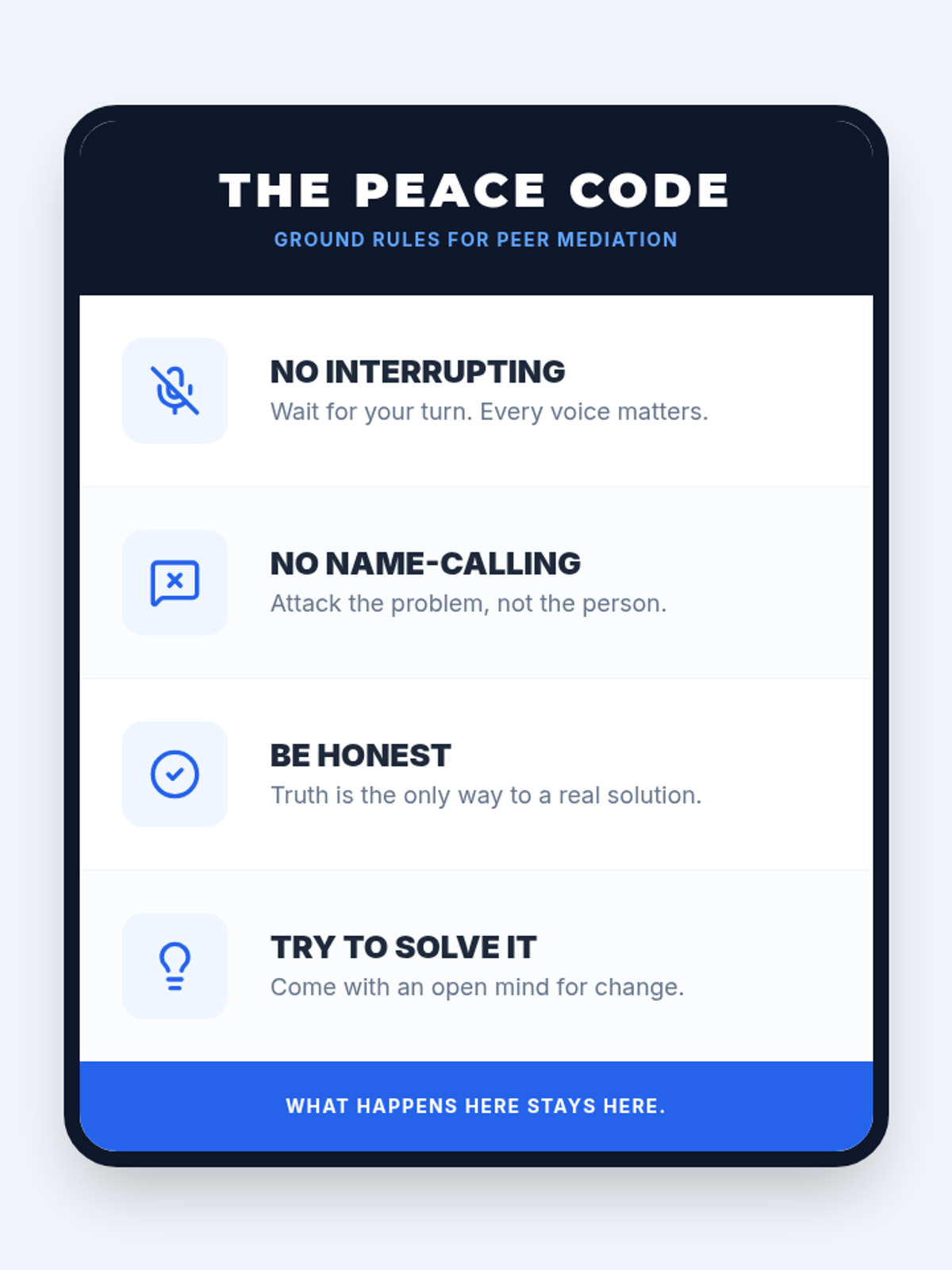
Learners practice the opening statement of a mediation: welcoming parties, explaining the process, and establishing rules like 'no interrupting' and 'no name-calling.'
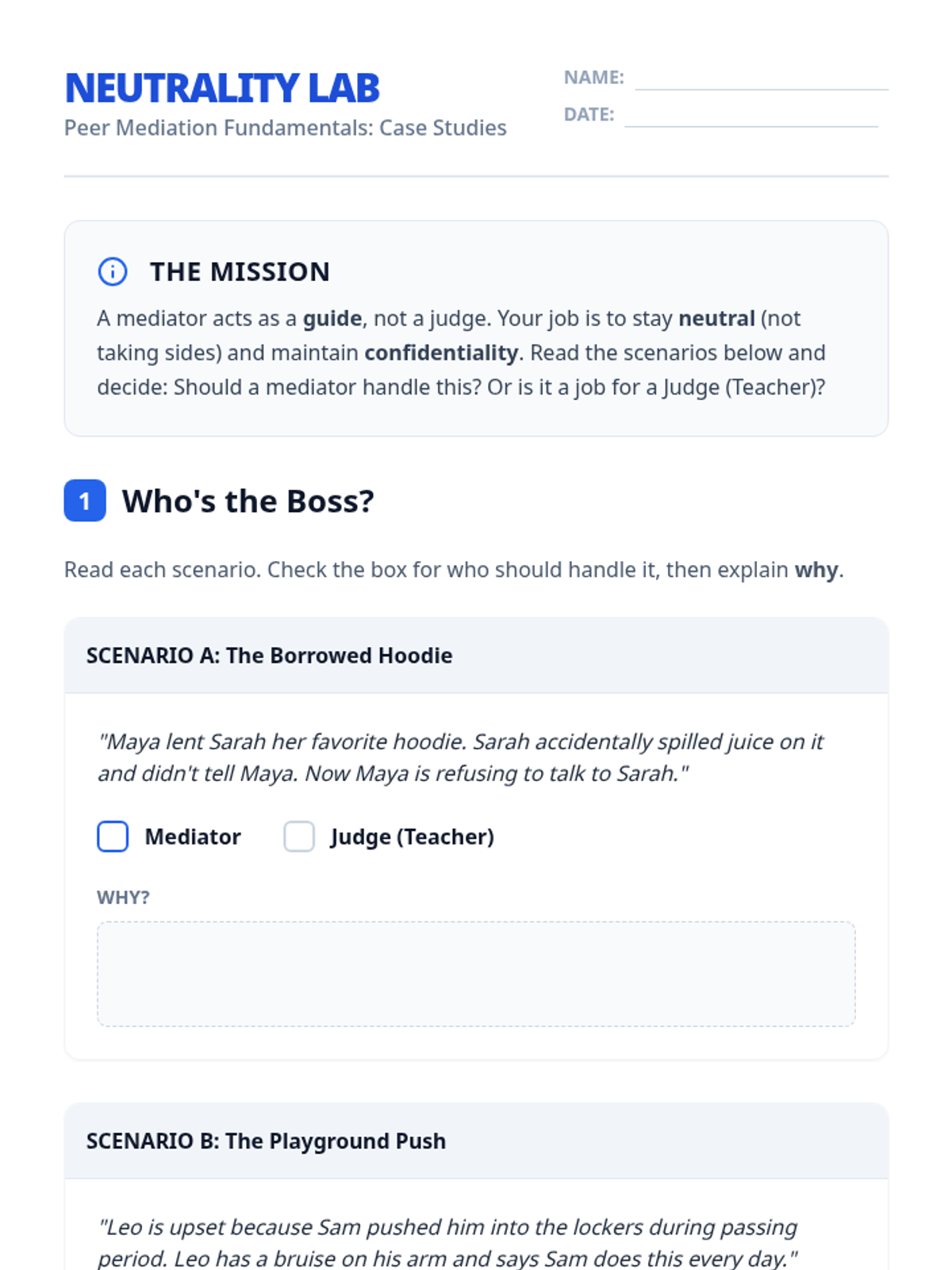
Students define what a mediator is (a guide, not a judge) and the core principle of neutrality. They discuss confidentiality and identify when a conflict is too dangerous for peer mediation (e.g., bullying or violence).
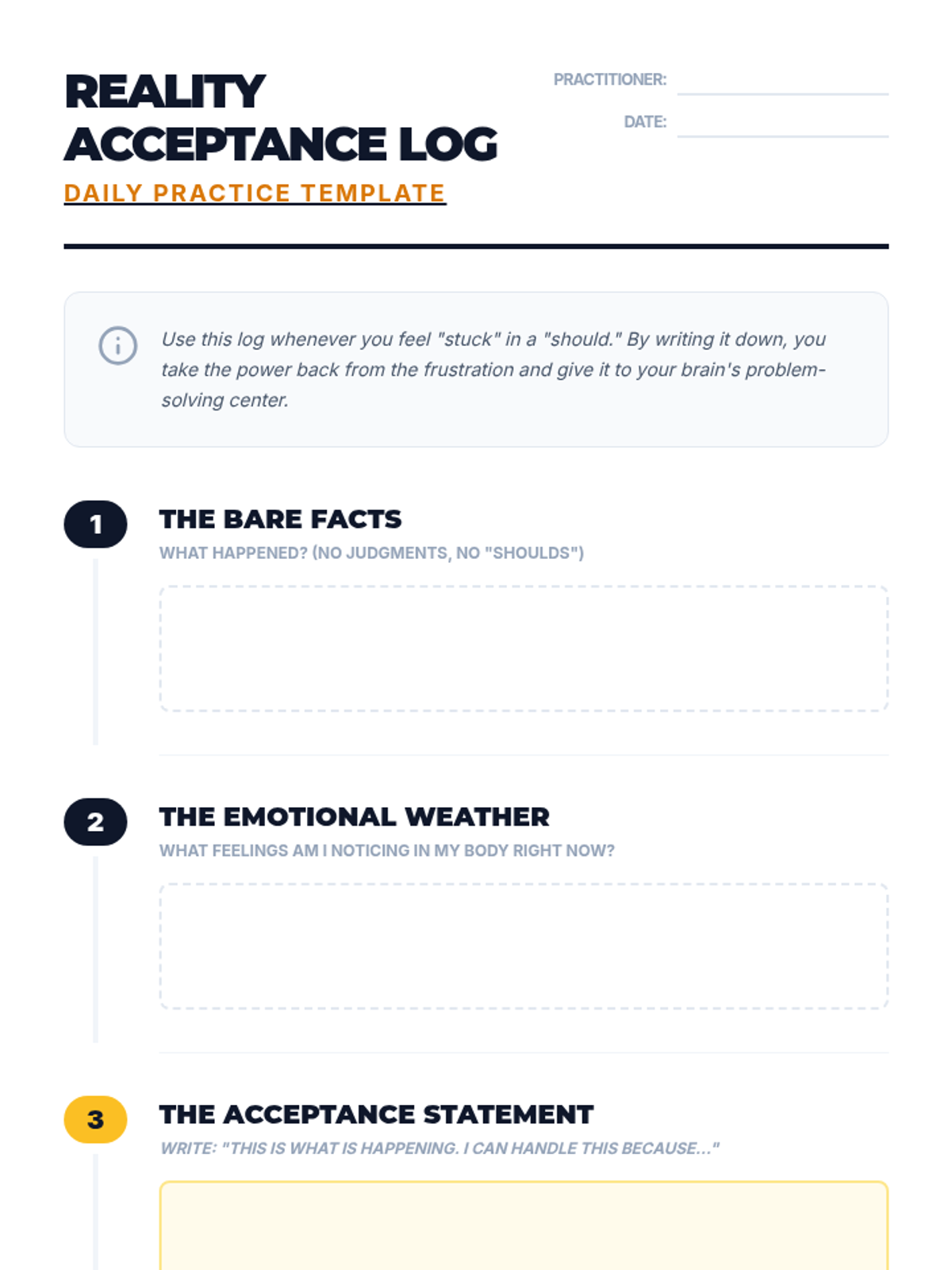
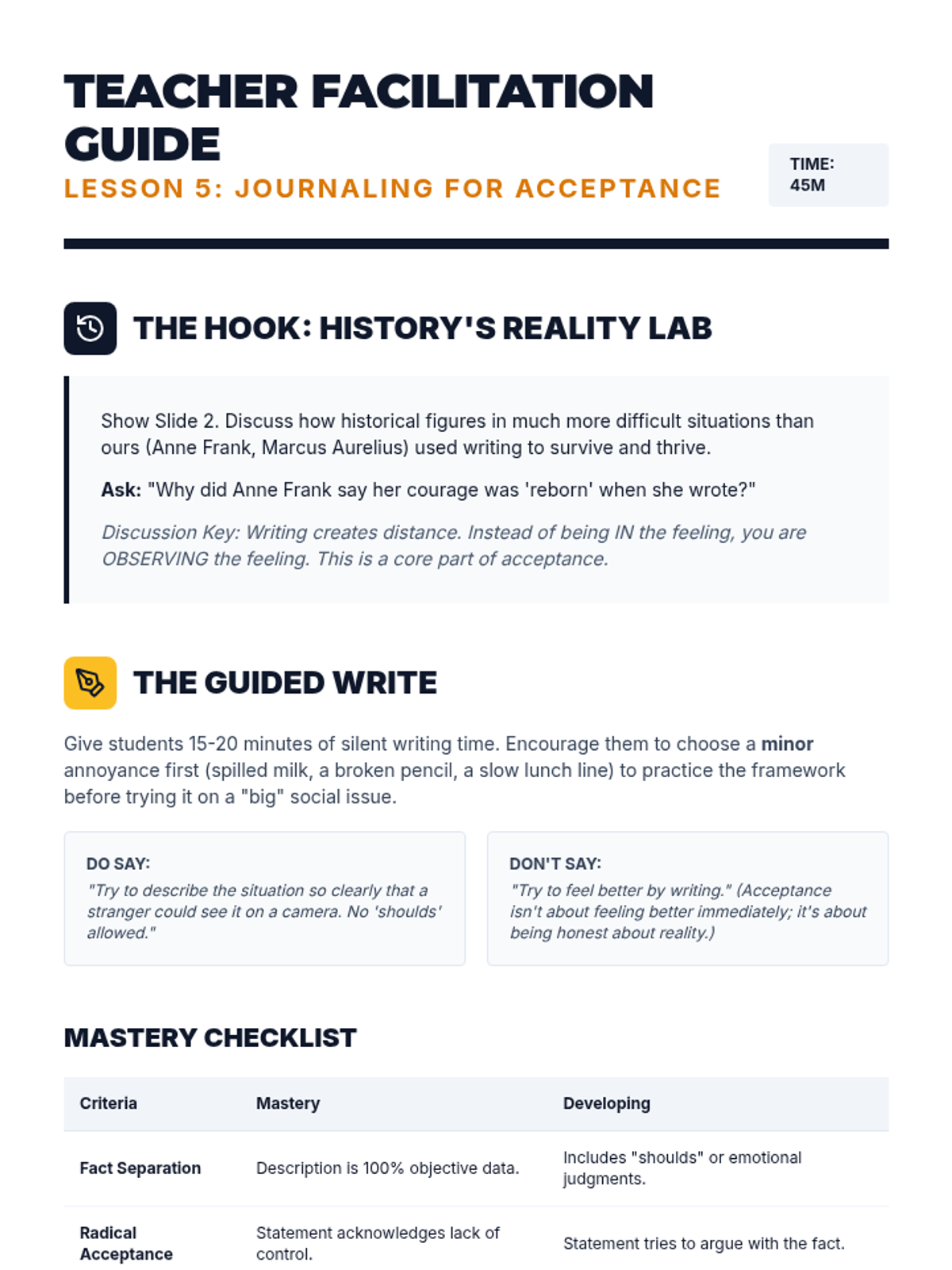
Students synthesize their learning into a structured journaling practice. They reflect on current annoyances using an acceptance-focused writing framework.
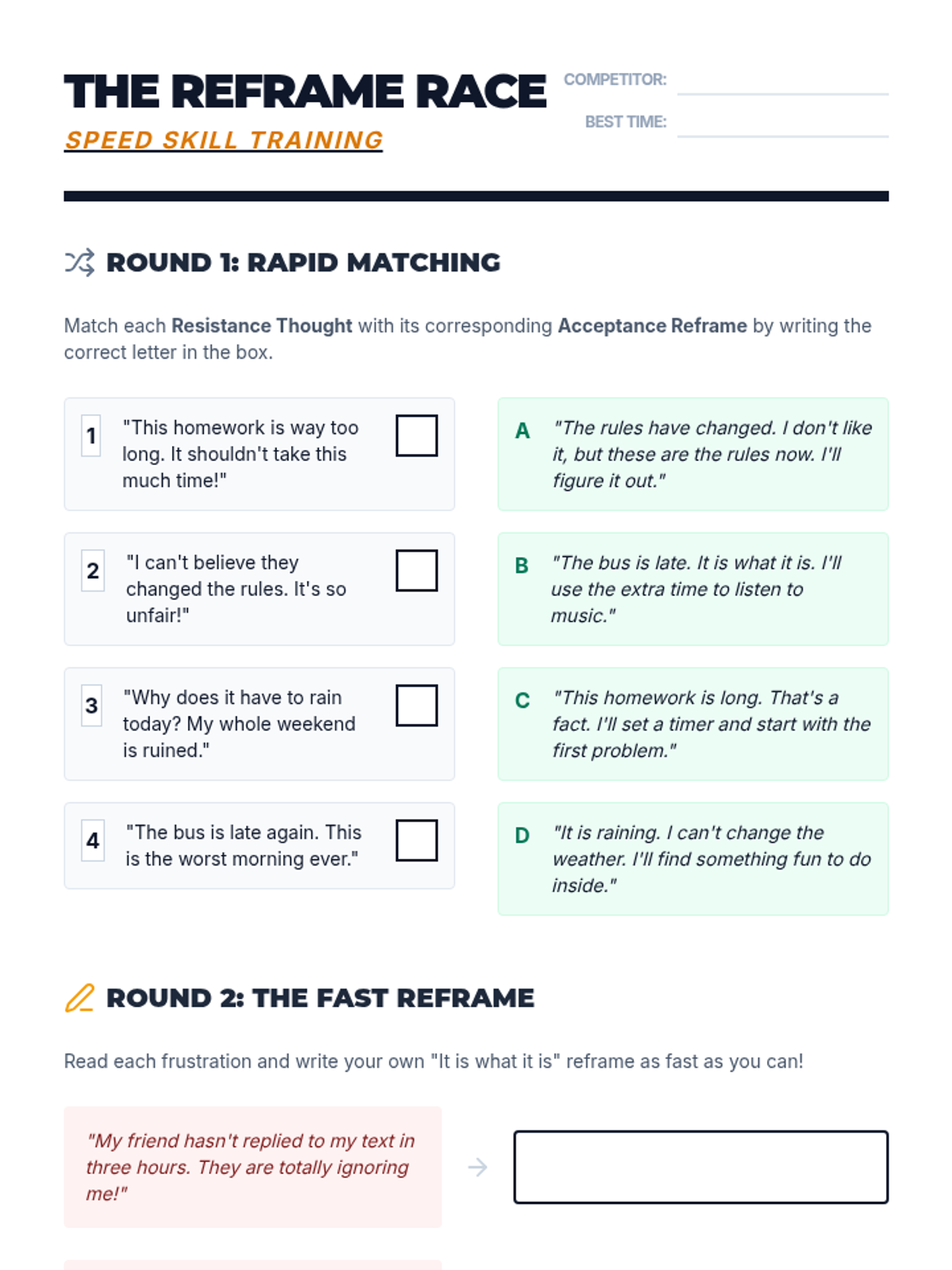
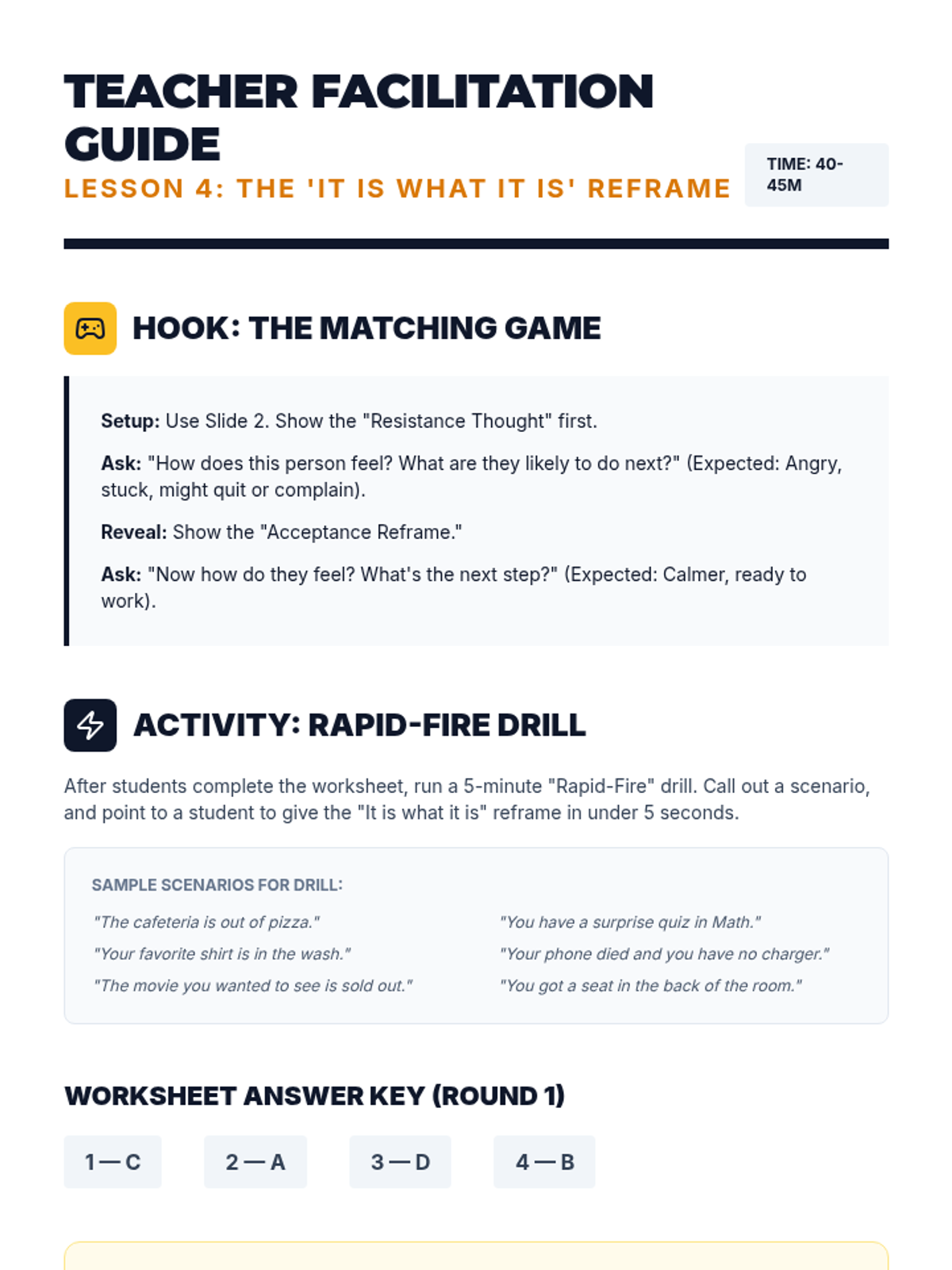
Students build fluency in replacing resistance with the 'It is what it is' reframe. They participate in rapid-fire exercises to strengthen their reframing skills.
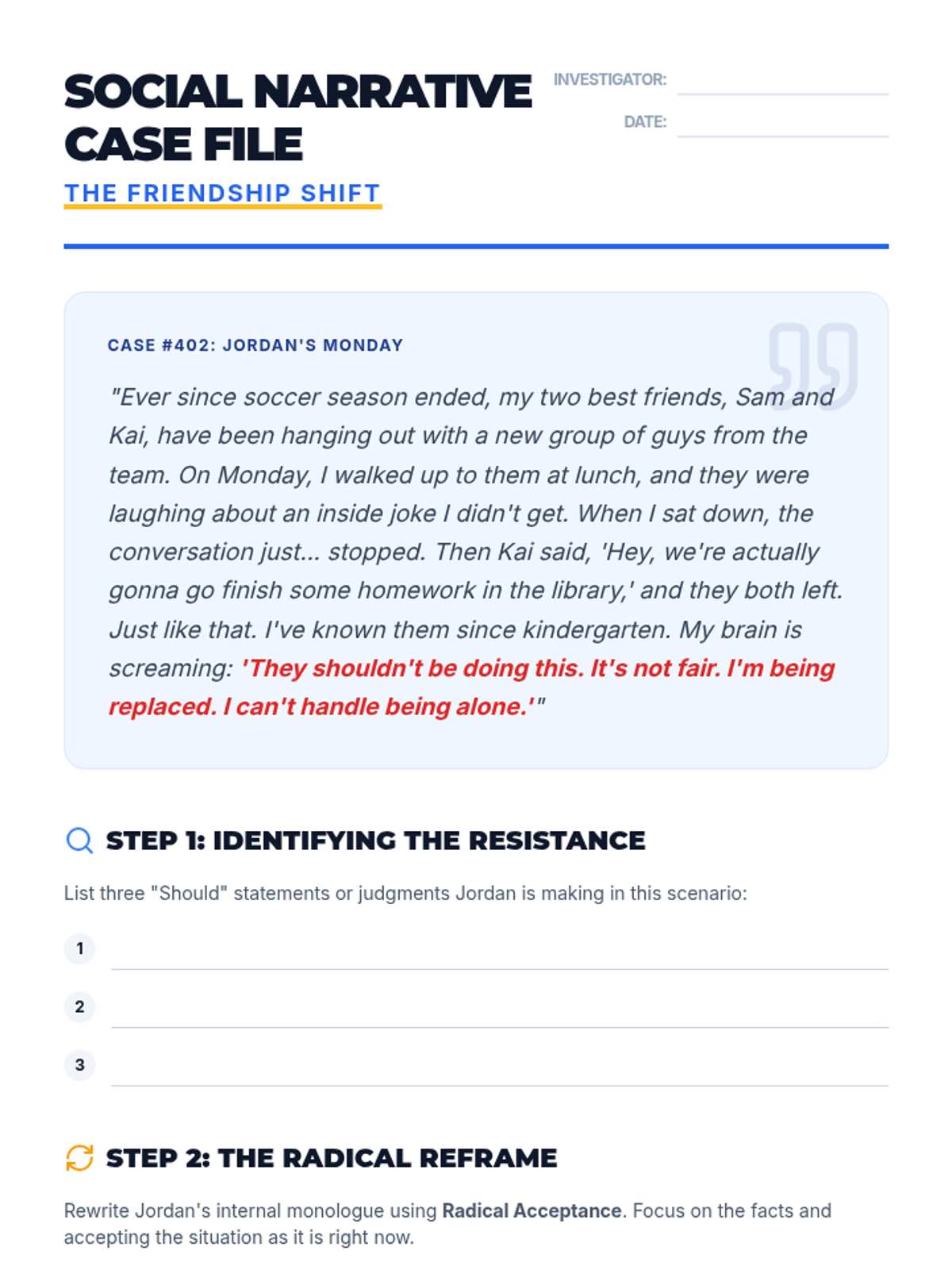
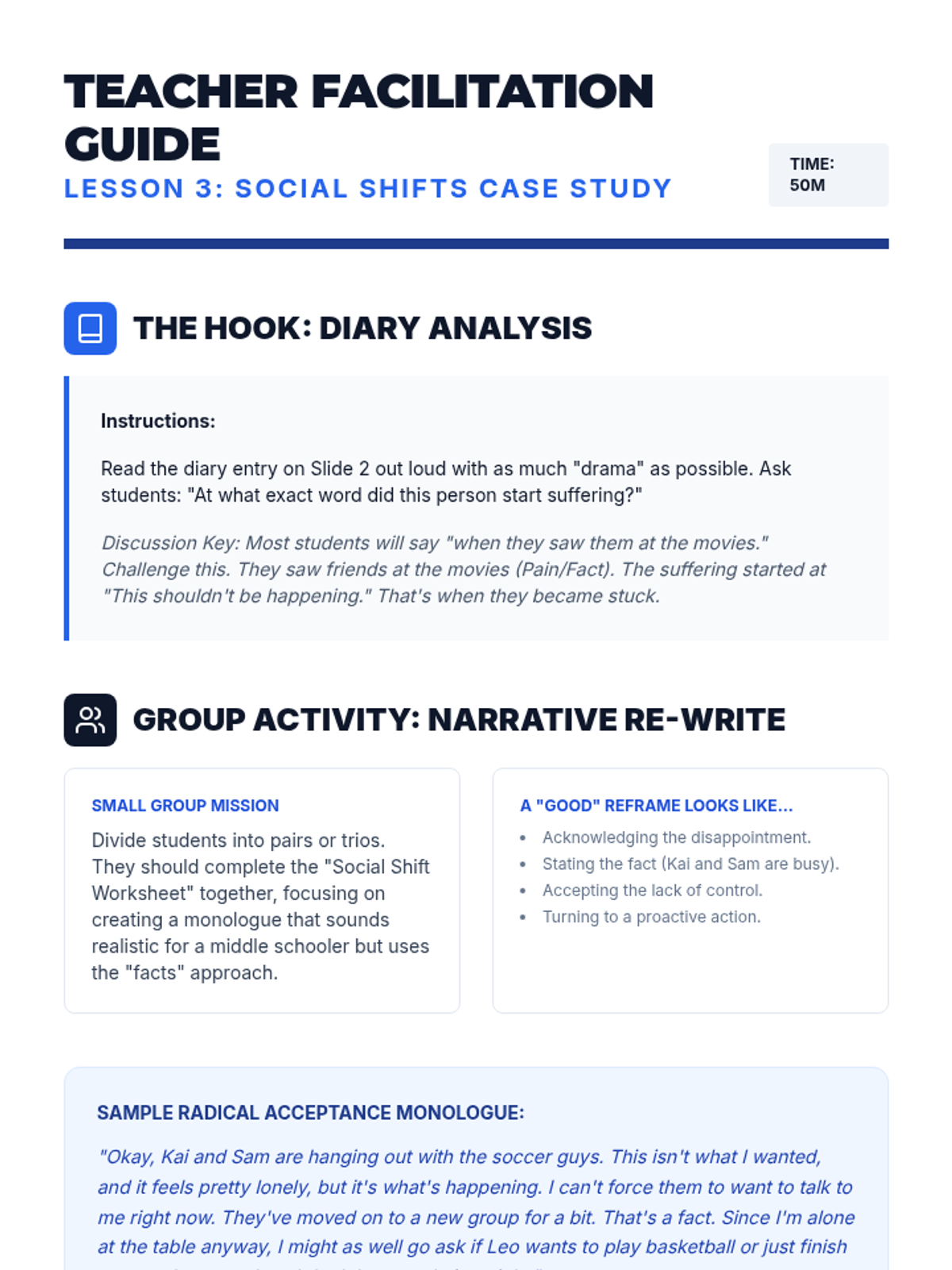
Using a narrative about shifting social groups, students apply radical acceptance to social changes. They rewrite internal monologues to move from resistance to acceptance.
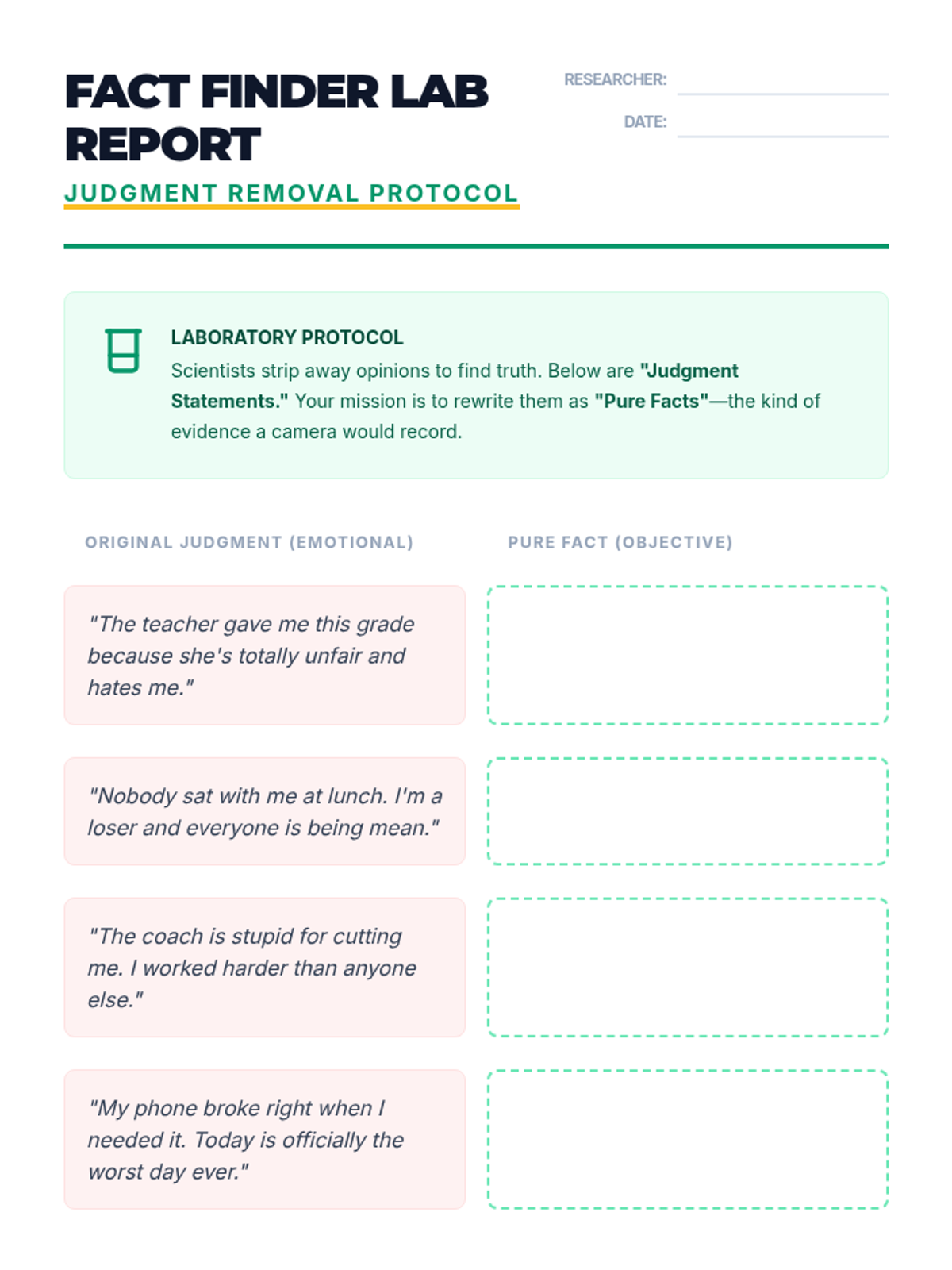
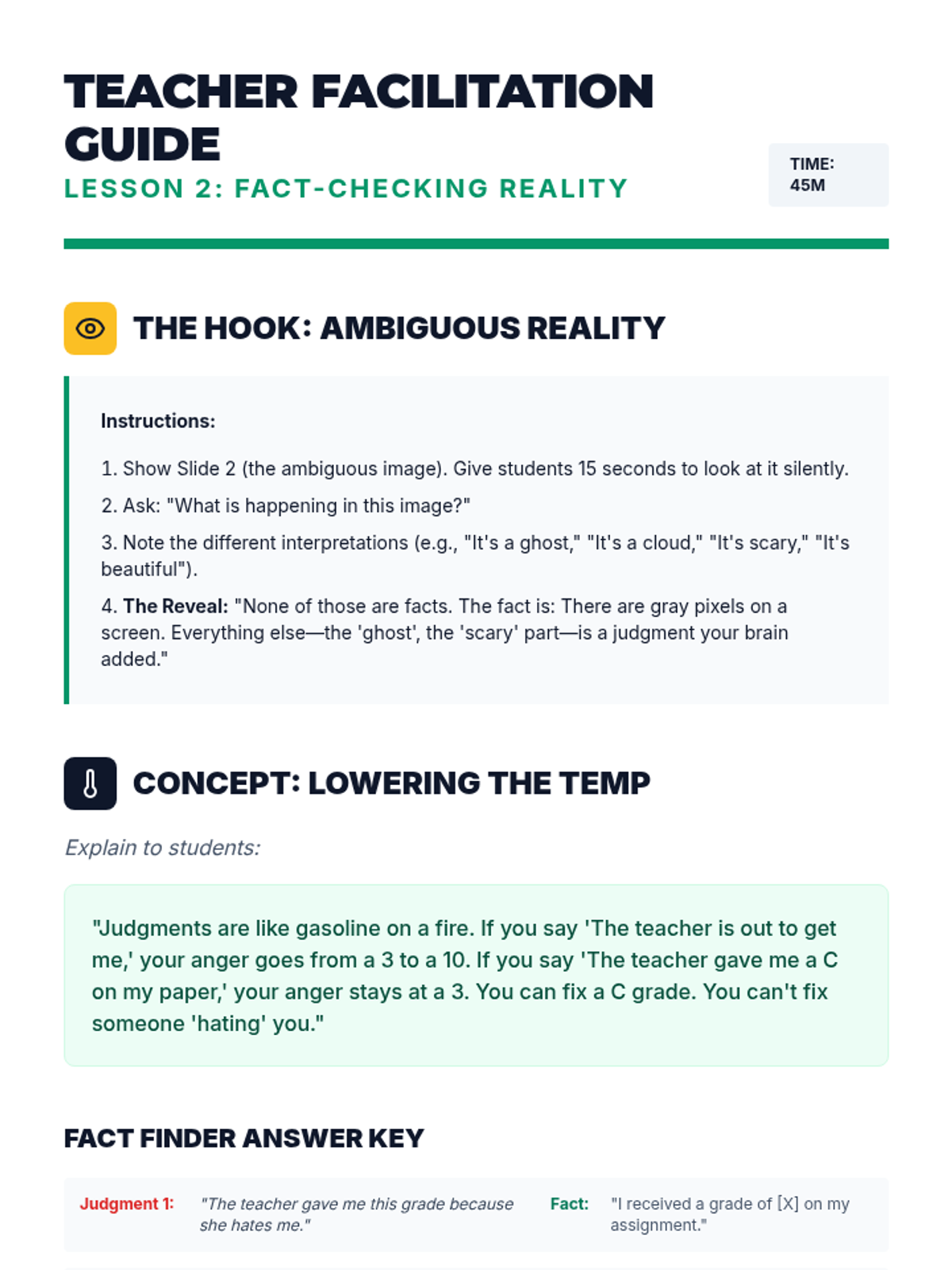
Students learn to separate emotional judgments from objective facts. They practice stripping away interpretations to see the bare reality of a situation.
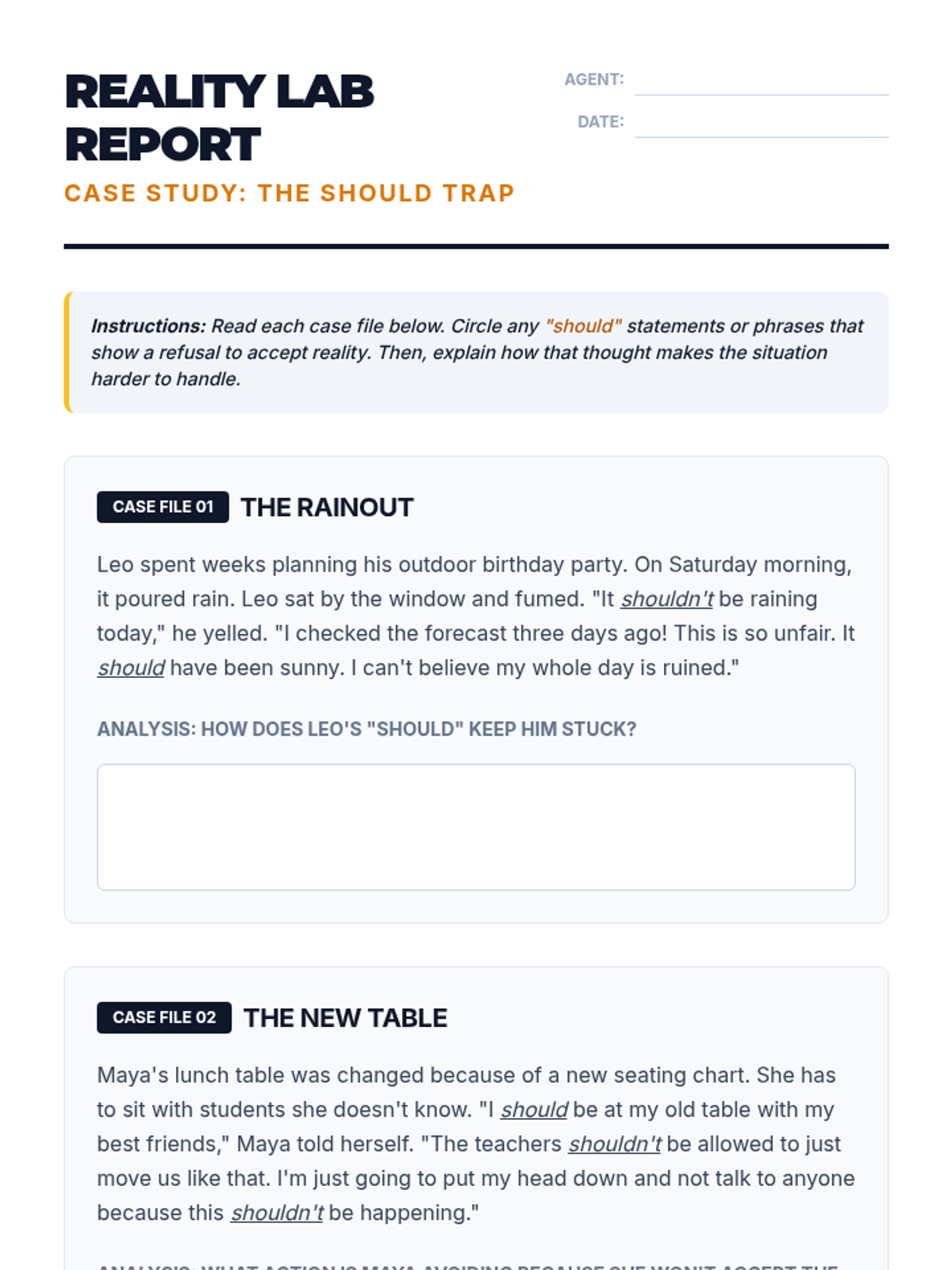
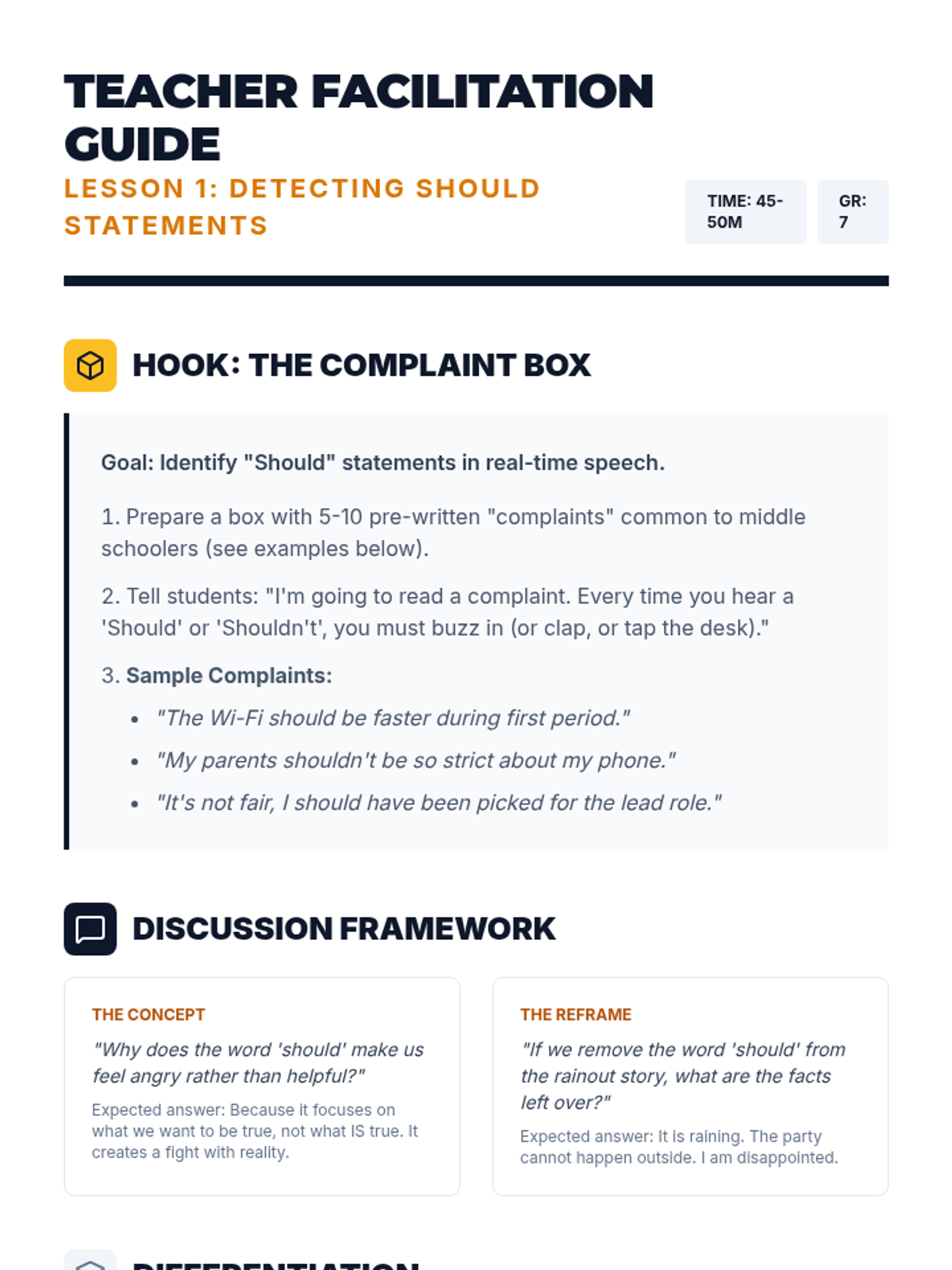
Students analyze how the word 'should' indicates a refusal to accept reality and fuels anger. They identify these statements in common scenarios and discuss their impact.
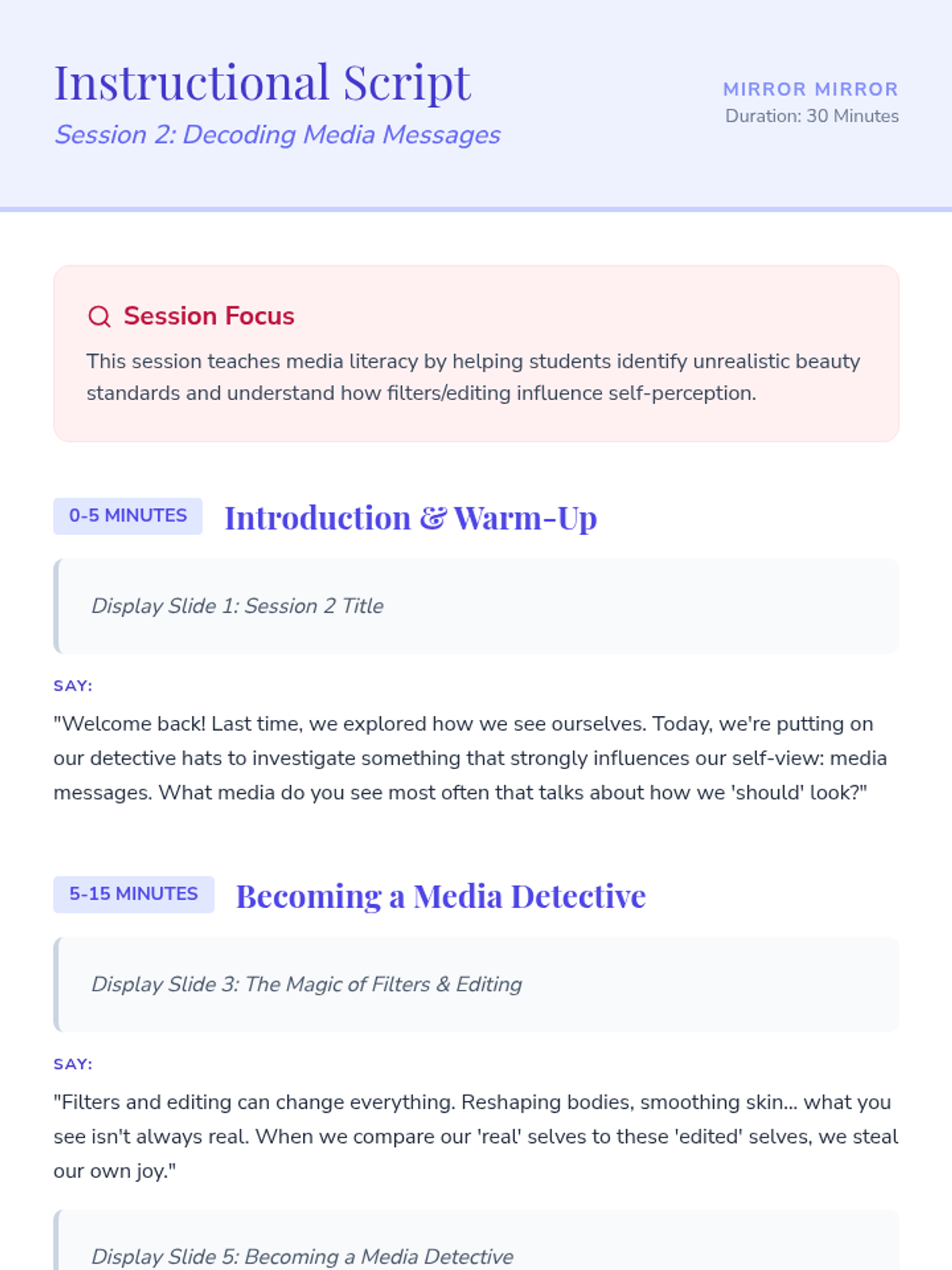
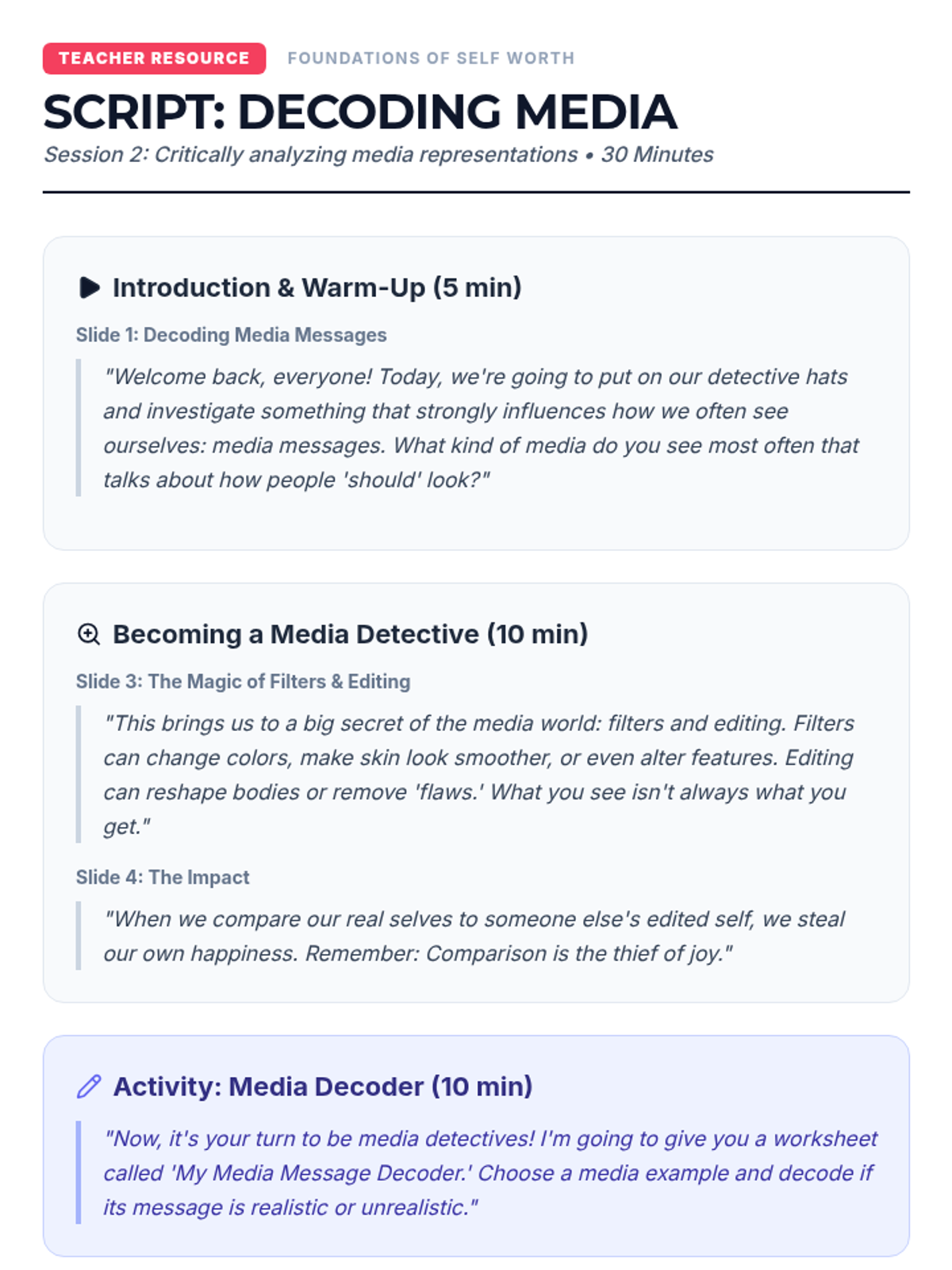
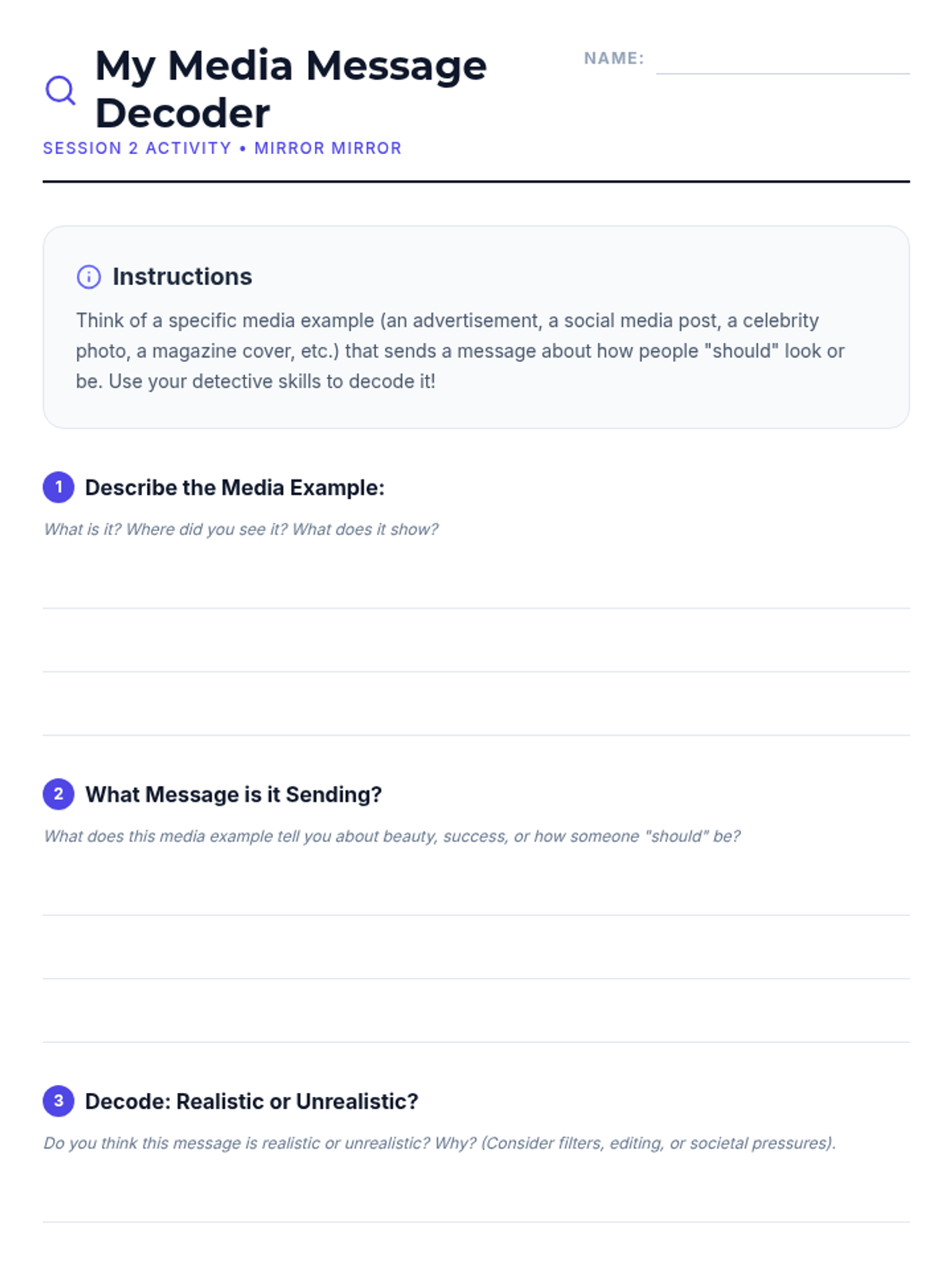
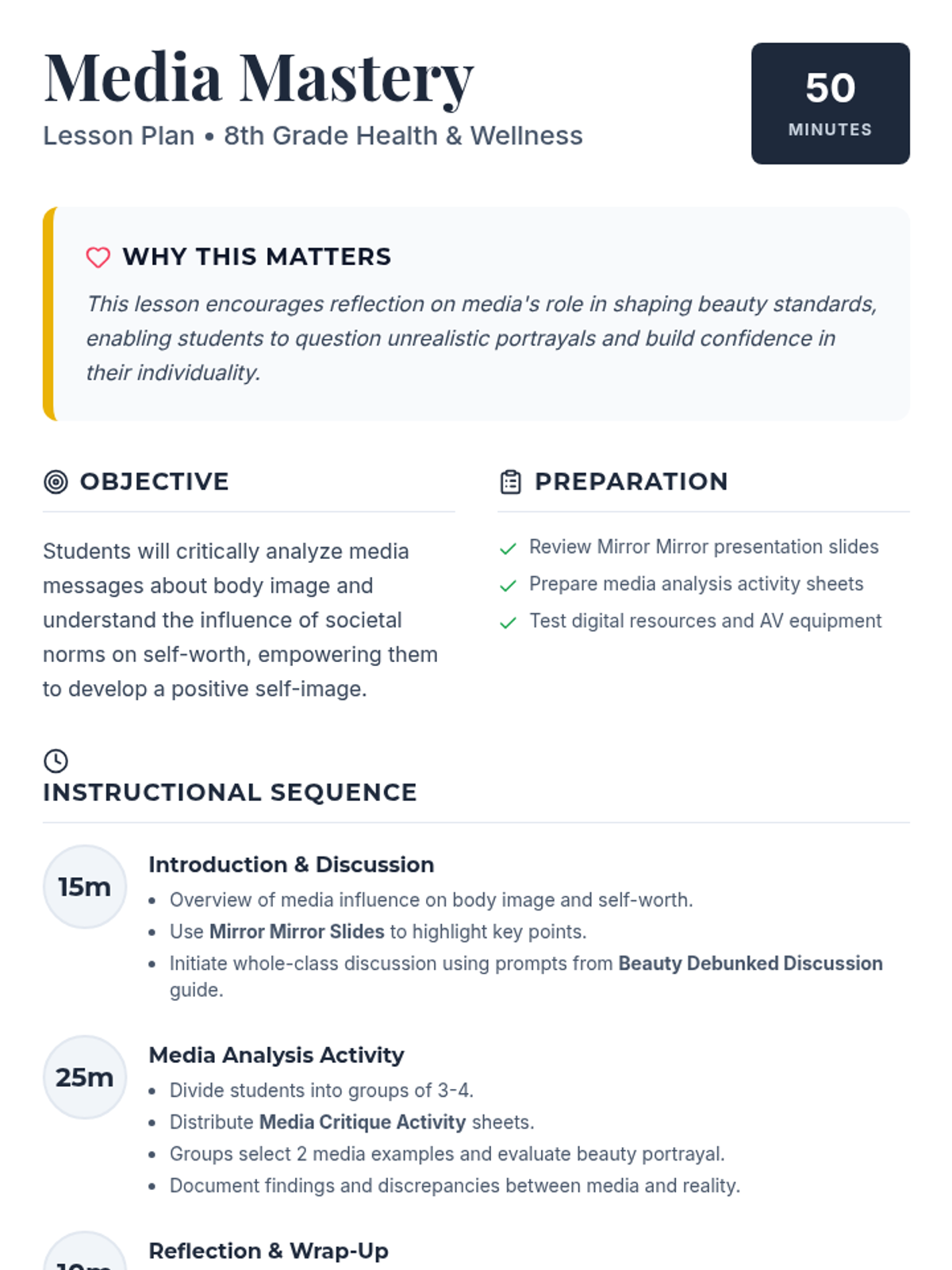
A lesson empowering students to critically analyze media's role in shaping beauty standards and develop a positive self-image through interactive analysis and discussion.
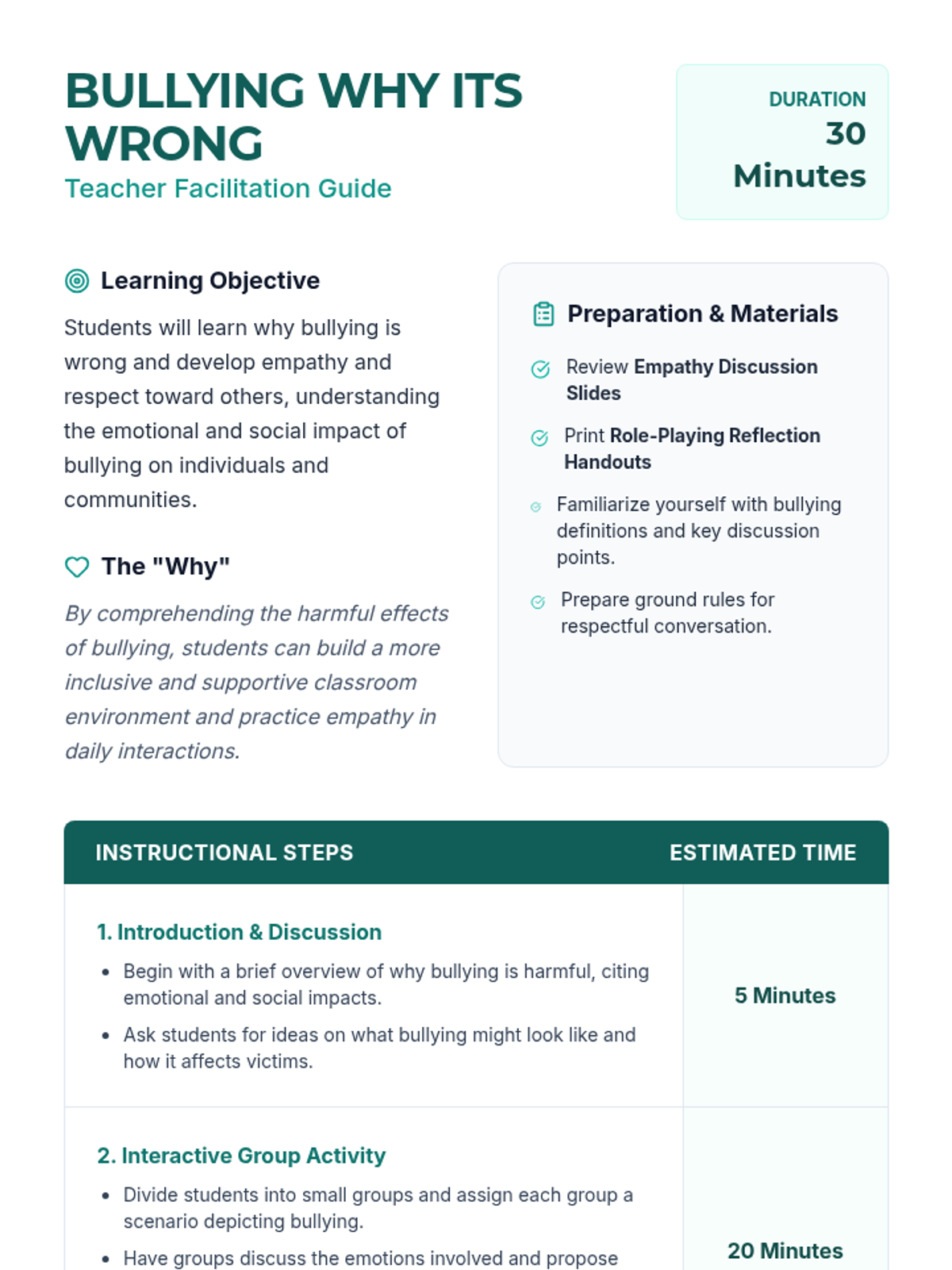
A 30-minute Tier 1 classroom lesson for 7th graders that explores the harmful impacts of bullying through empathy-building and role-playing activities.
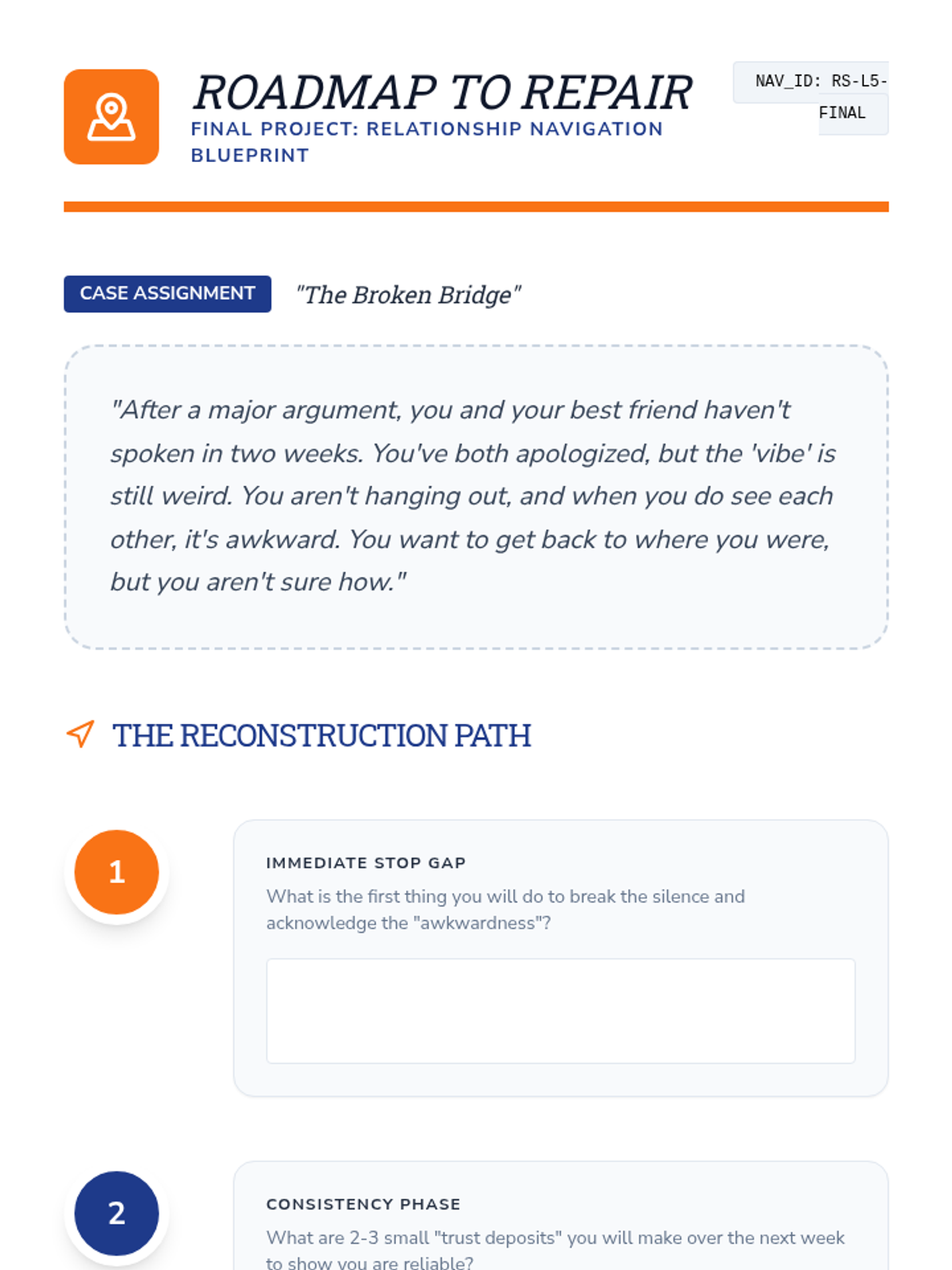
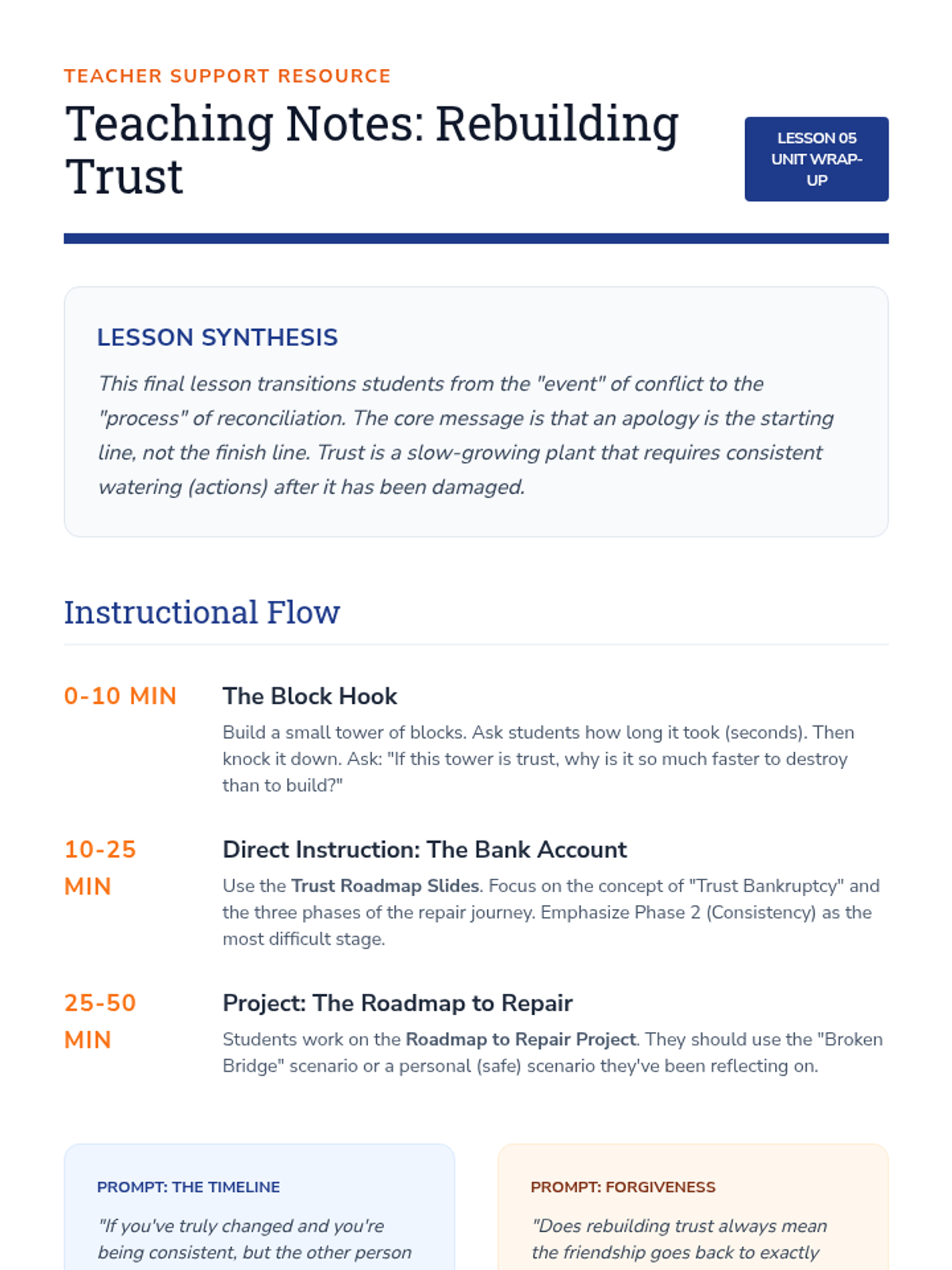
Students learn that trust is built slowly over time and create a 'Roadmap to Repair' outlining consistent actions needed to re-establish a friendship.
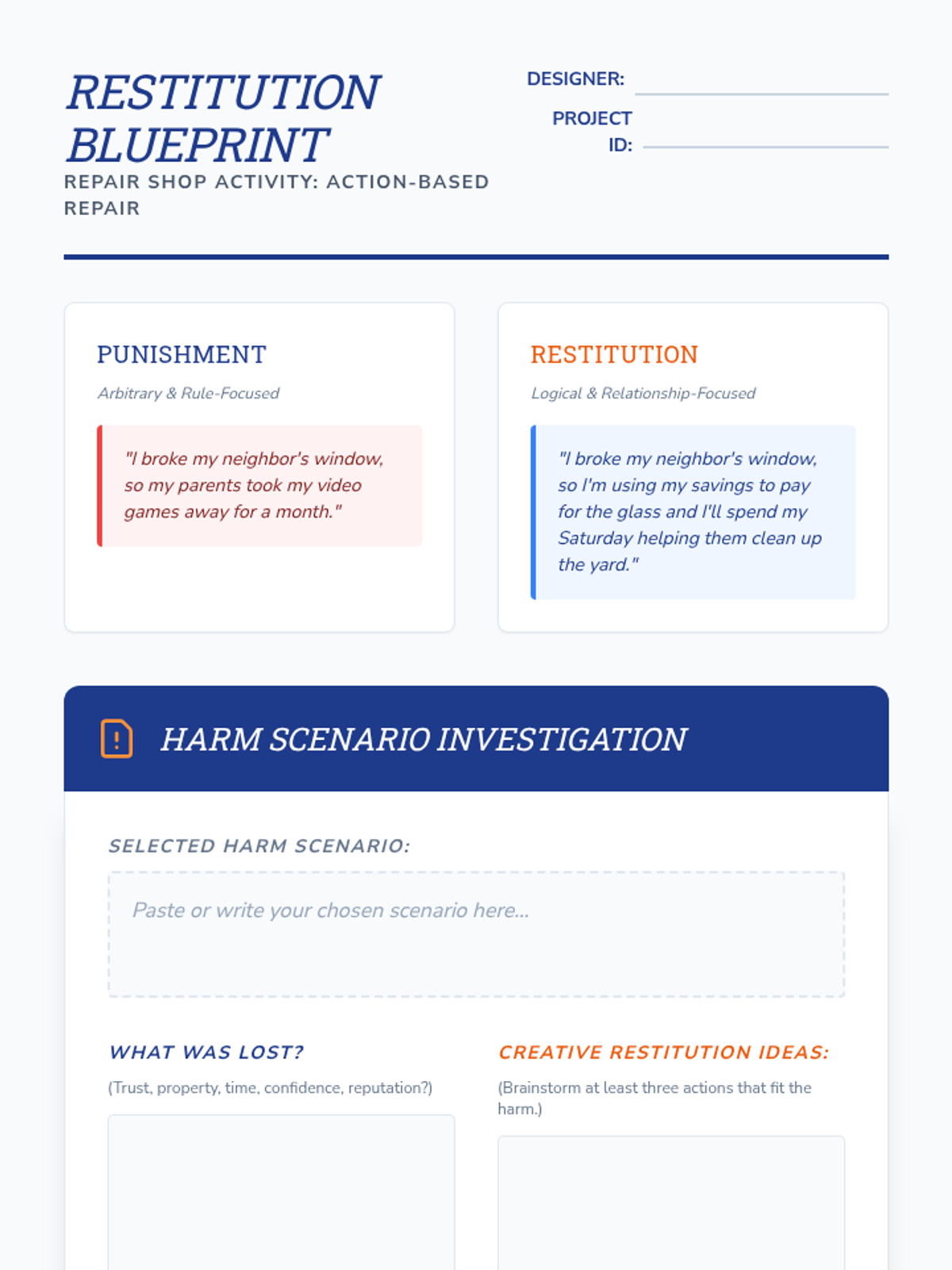
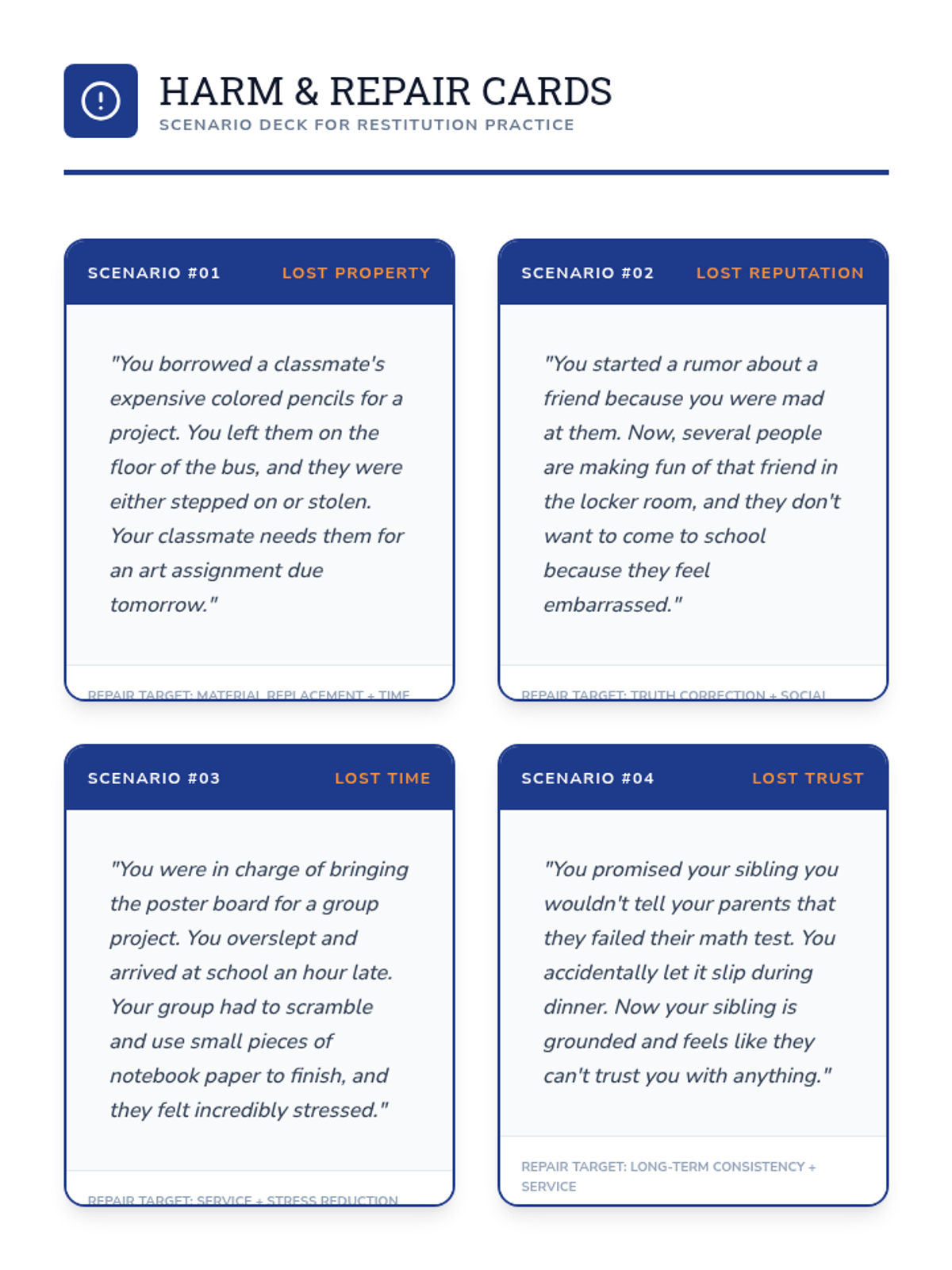
This lesson moves beyond words to action, brainstorming creative ways to 'make it right' or offer restitution relevant to the harm caused.
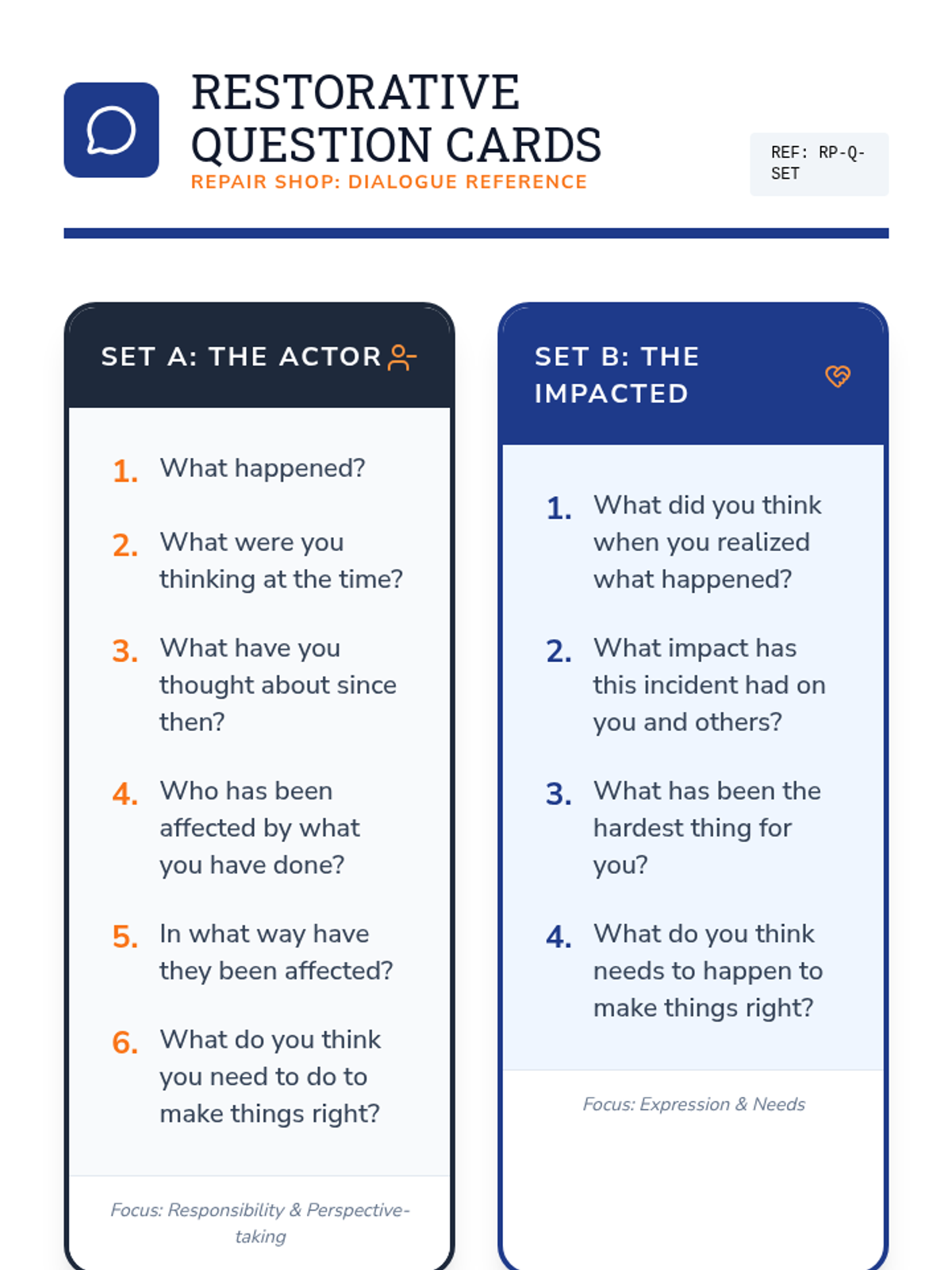
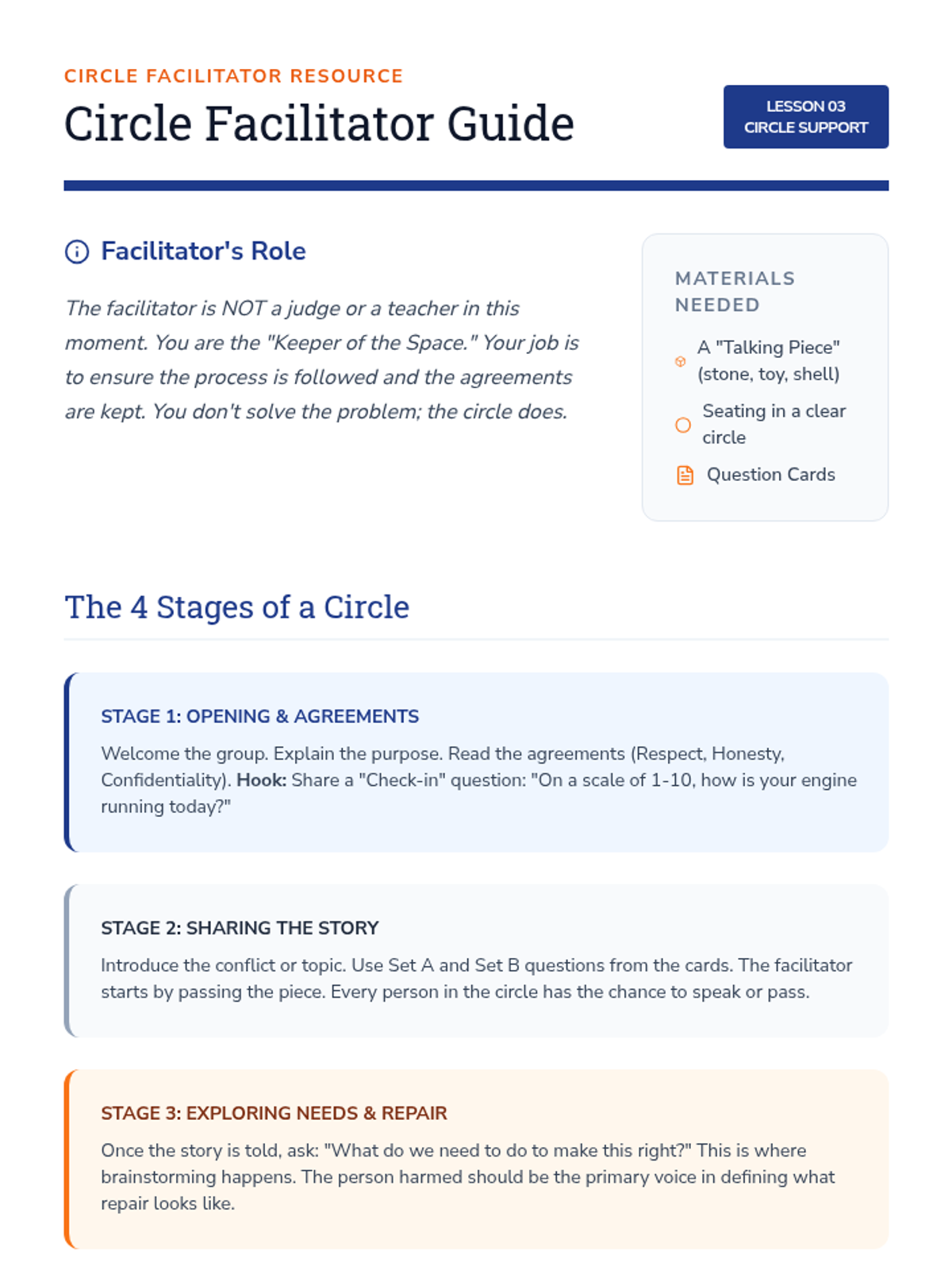
Students participate in a structured circle process to practice sharing feelings and listening to others' experiences of harm using restorative justice questions.
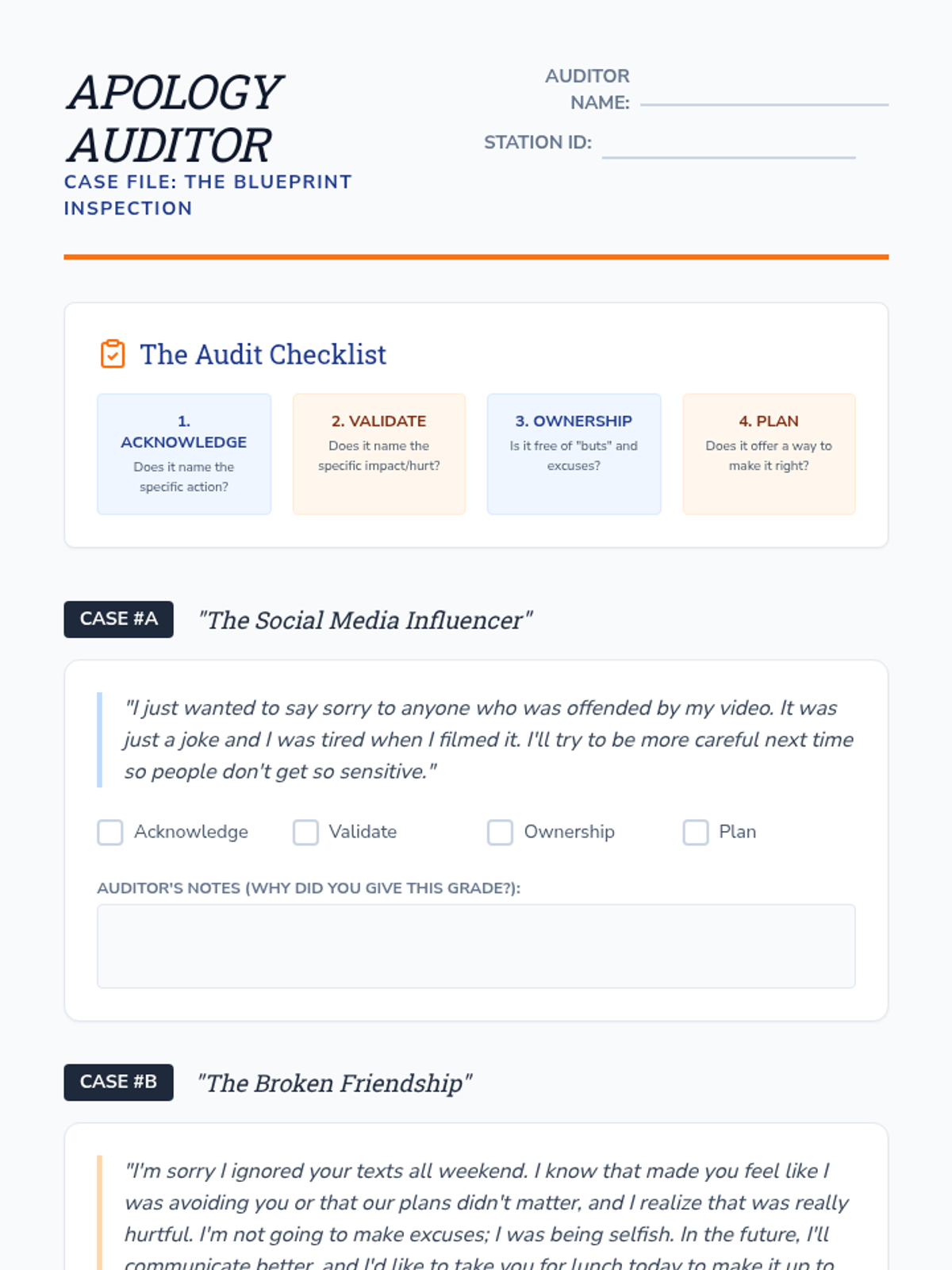
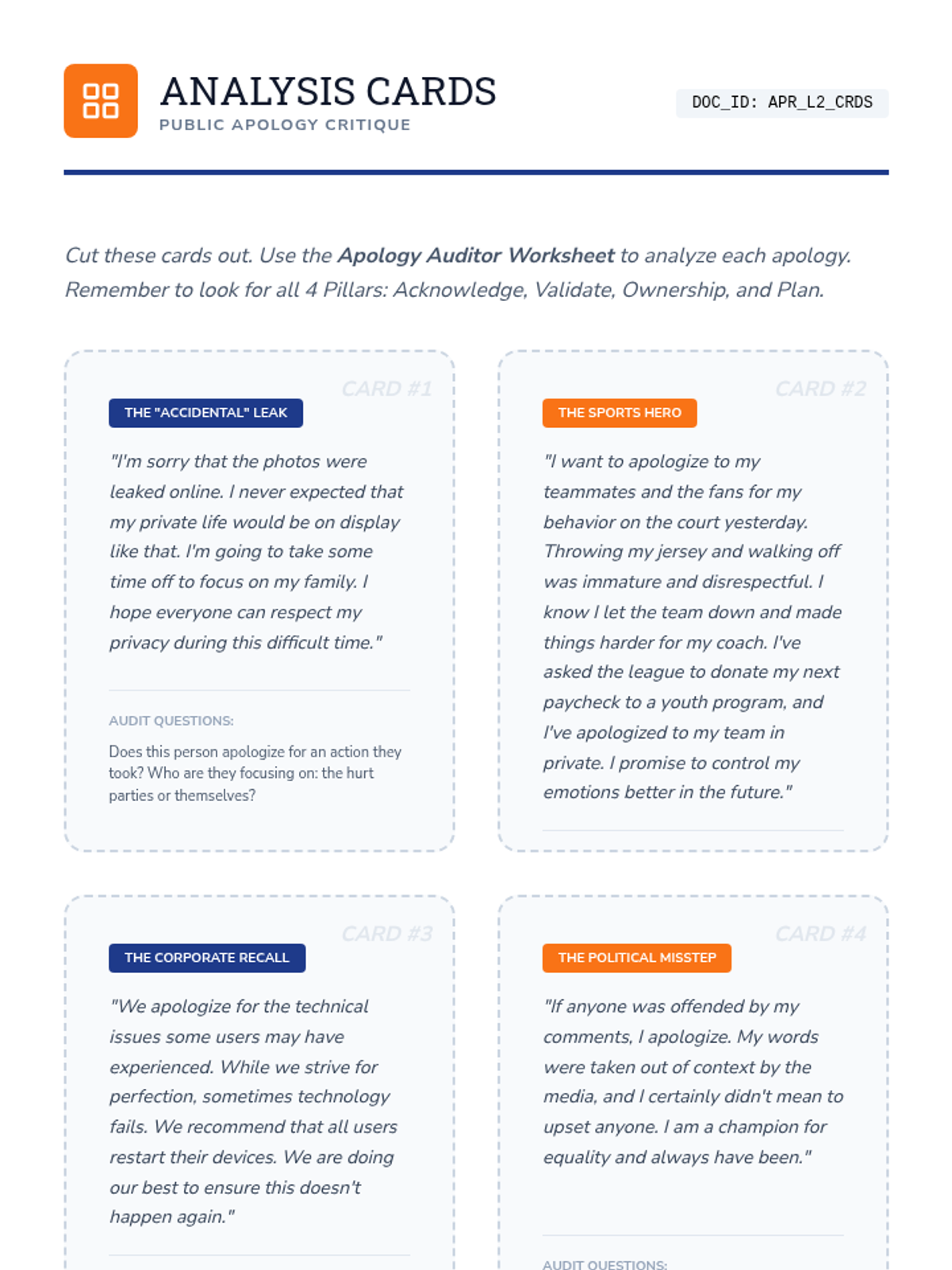
Students deconstruct apologies to identify key components: acknowledging the act, validating hurt, accepting responsibility, and making a plan for change. They critique public apologies.
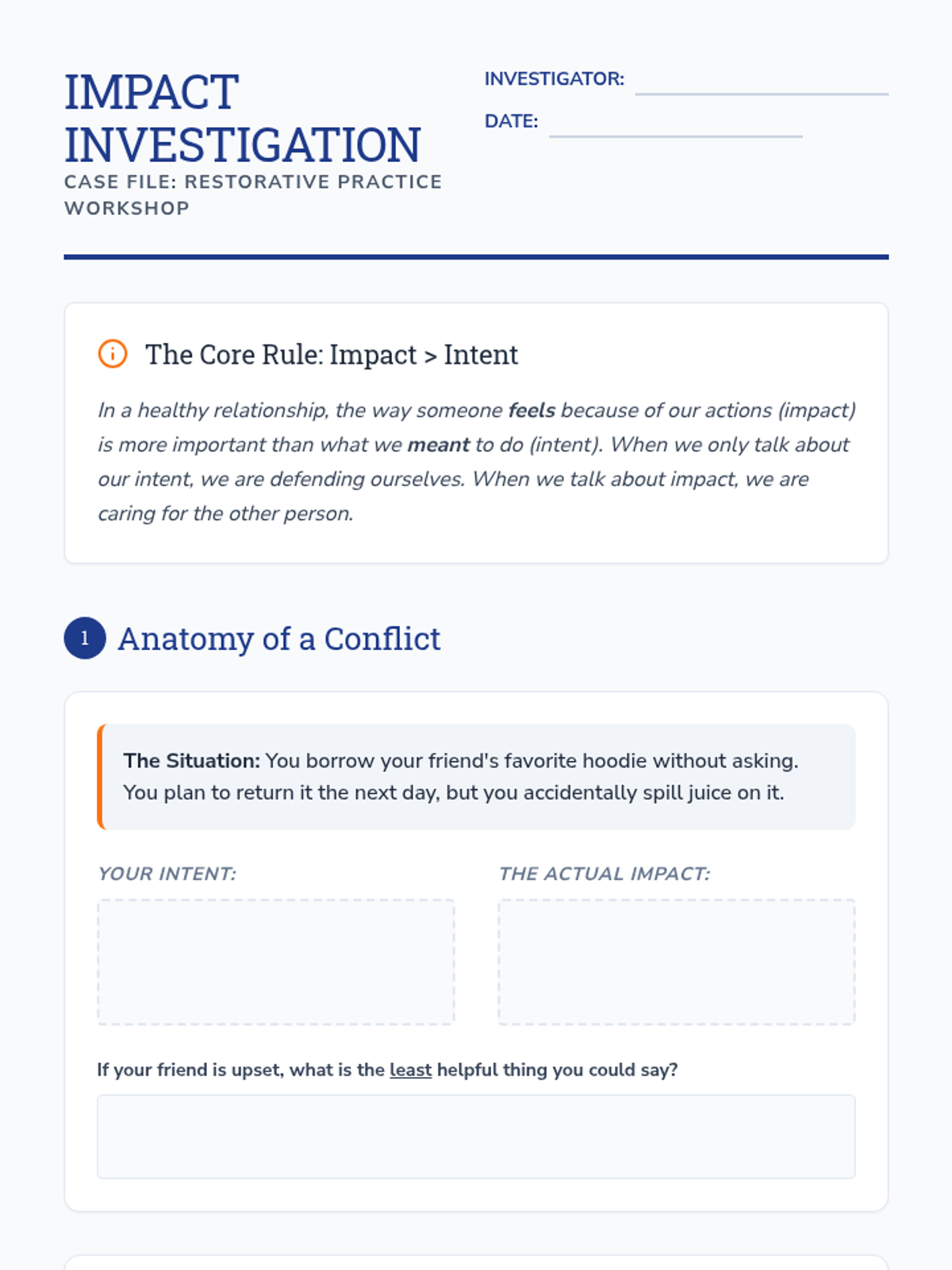
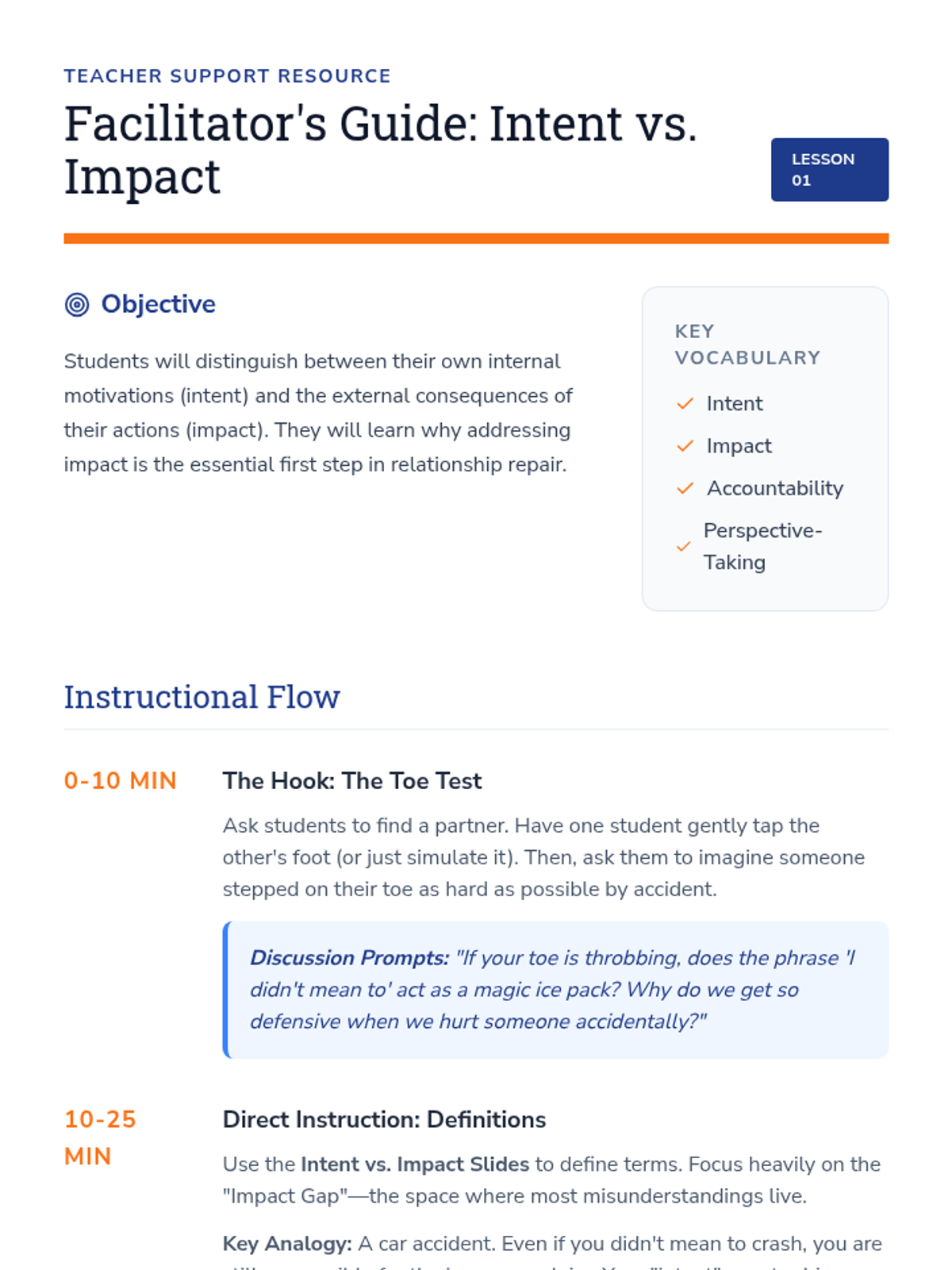
Students explore the gap between what they meant to do (intent) and how it affected others (impact). They analyze scenarios where good intentions still caused harm and discuss why impact must be addressed first.
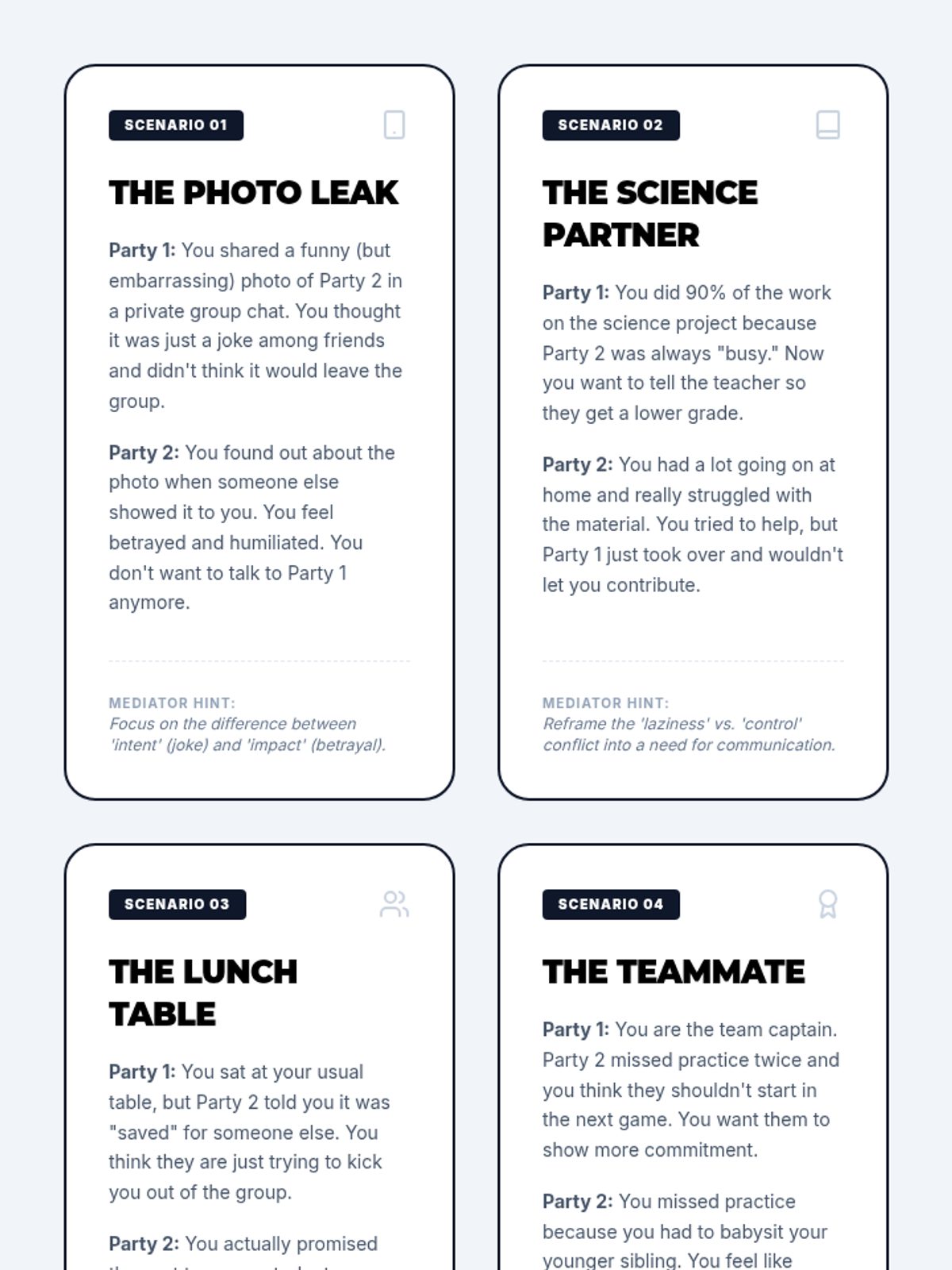
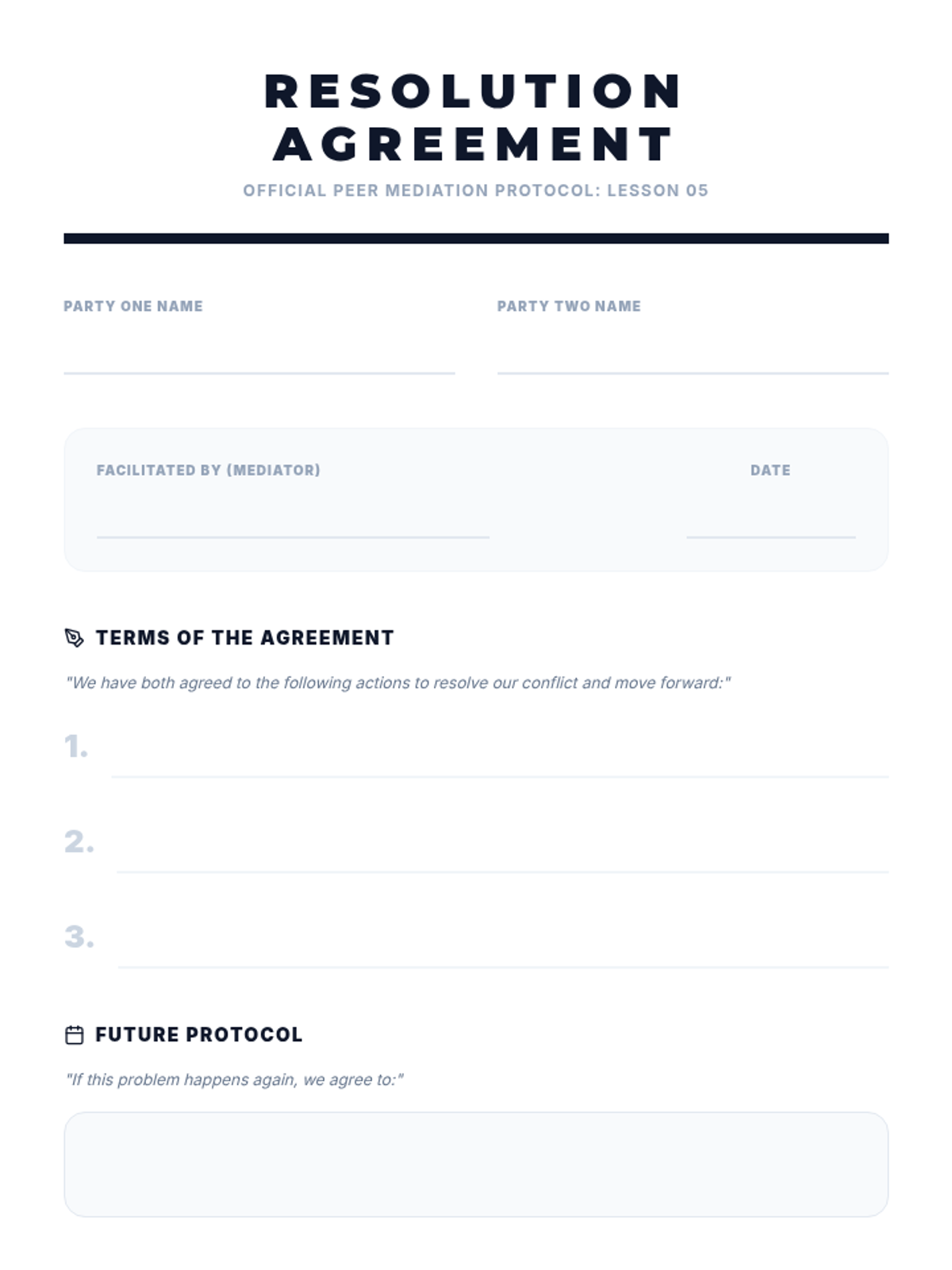
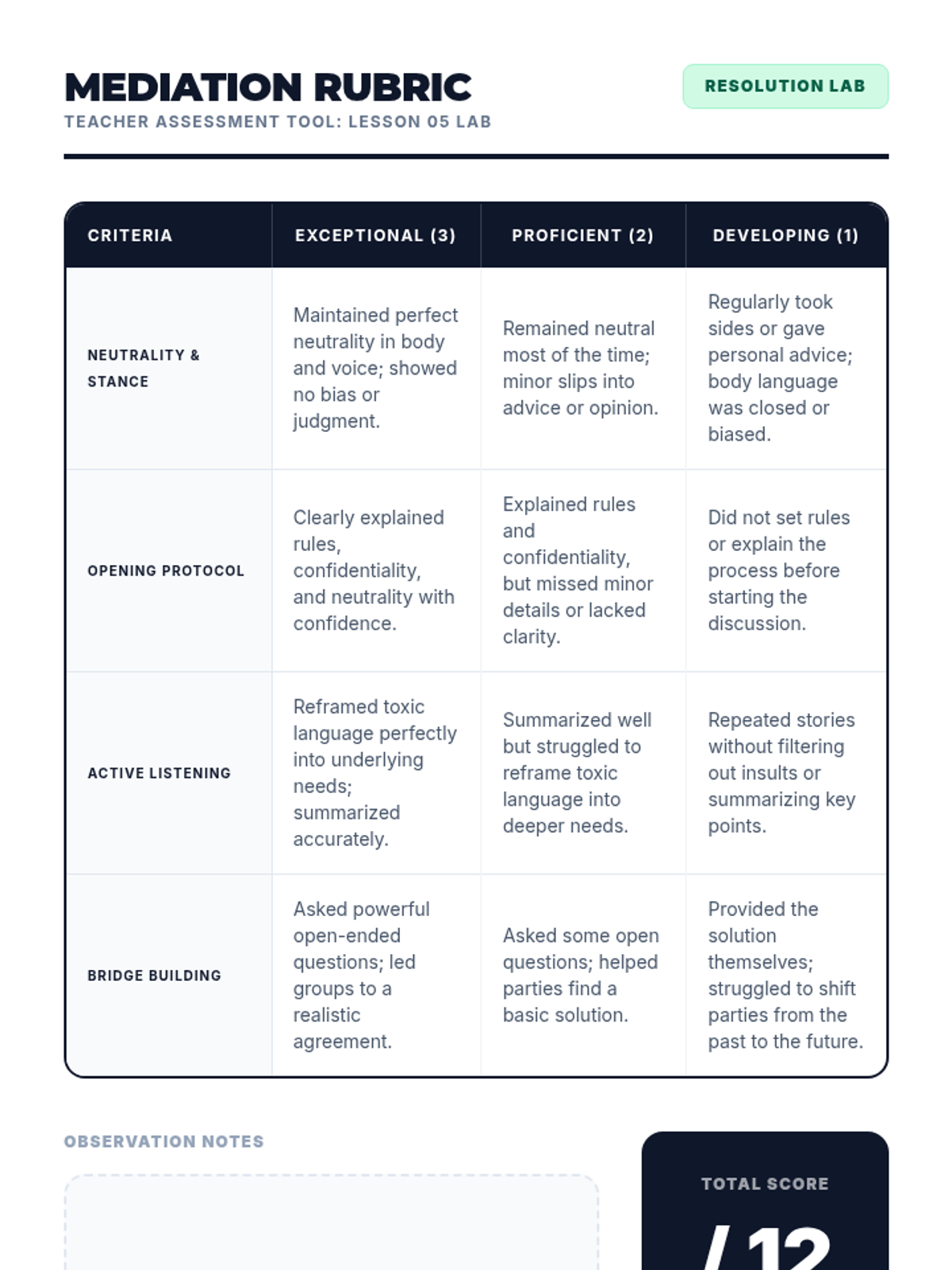
A culminating mock mediation simulation where students apply the full protocol—from opening statements to written agreements—using realistic middle school scenarios.
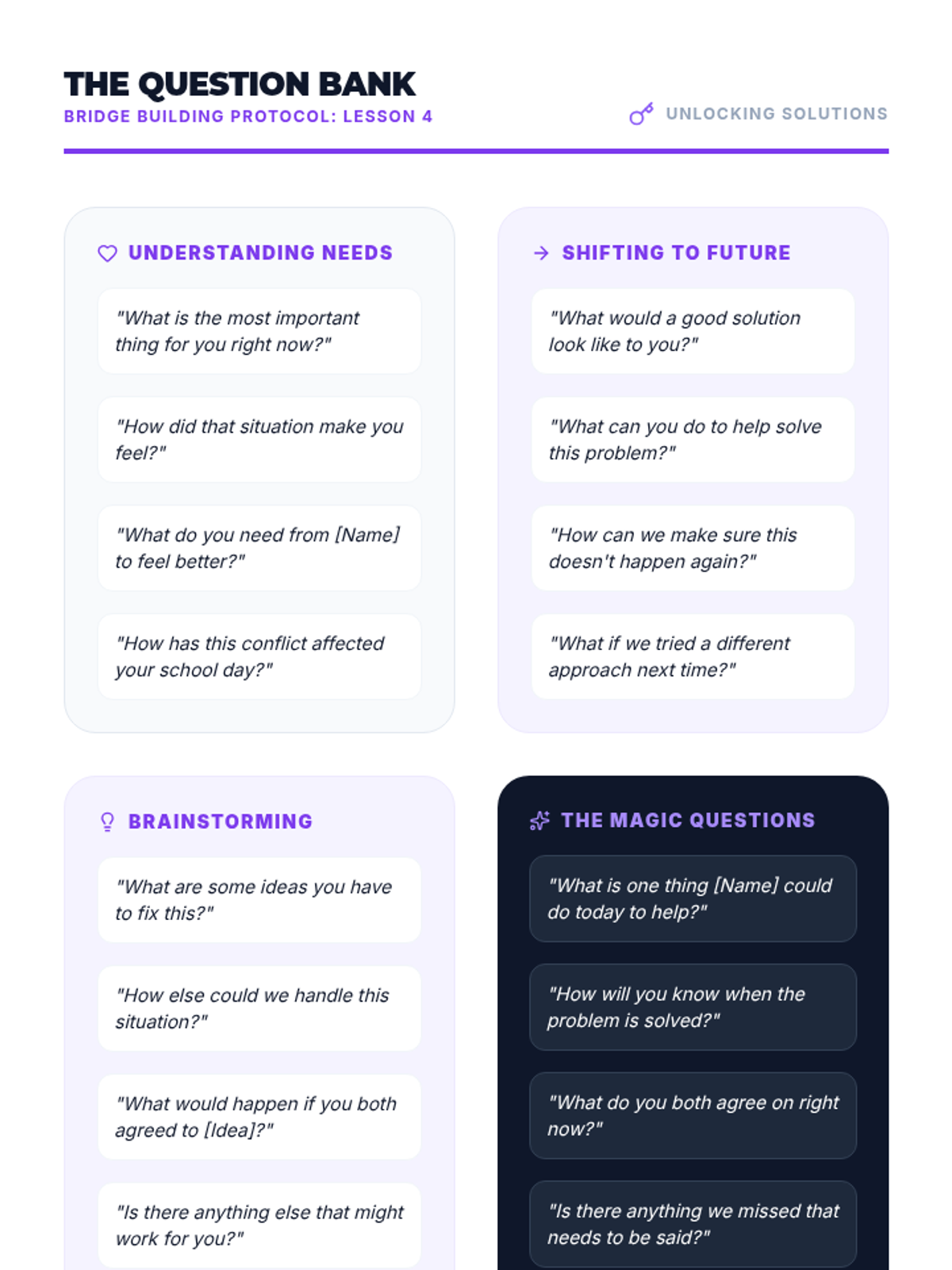
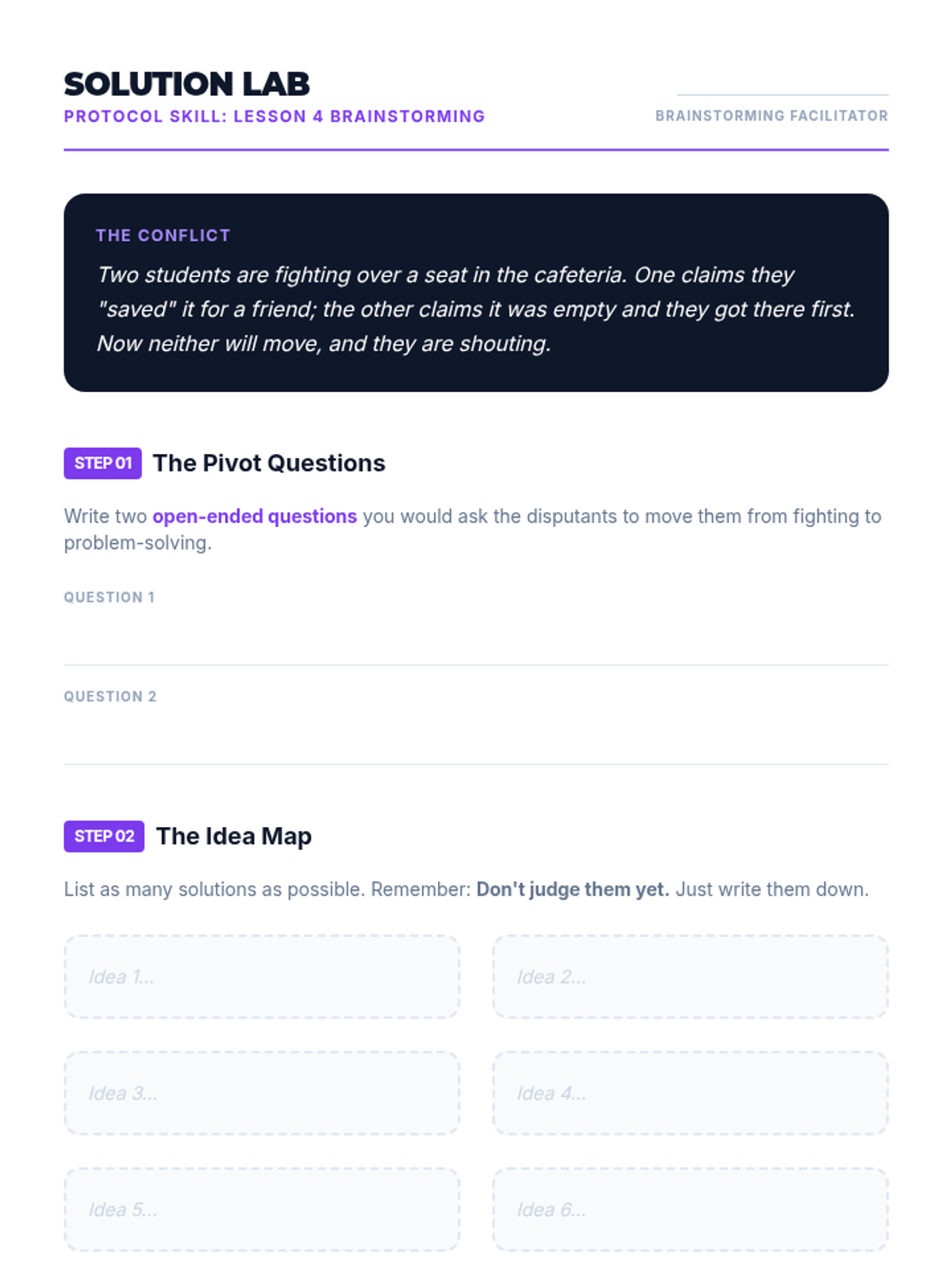
Focused on shifting from conflict to collaboration, students practice asking open-ended questions that prompt disputants to generate their own creative solutions.
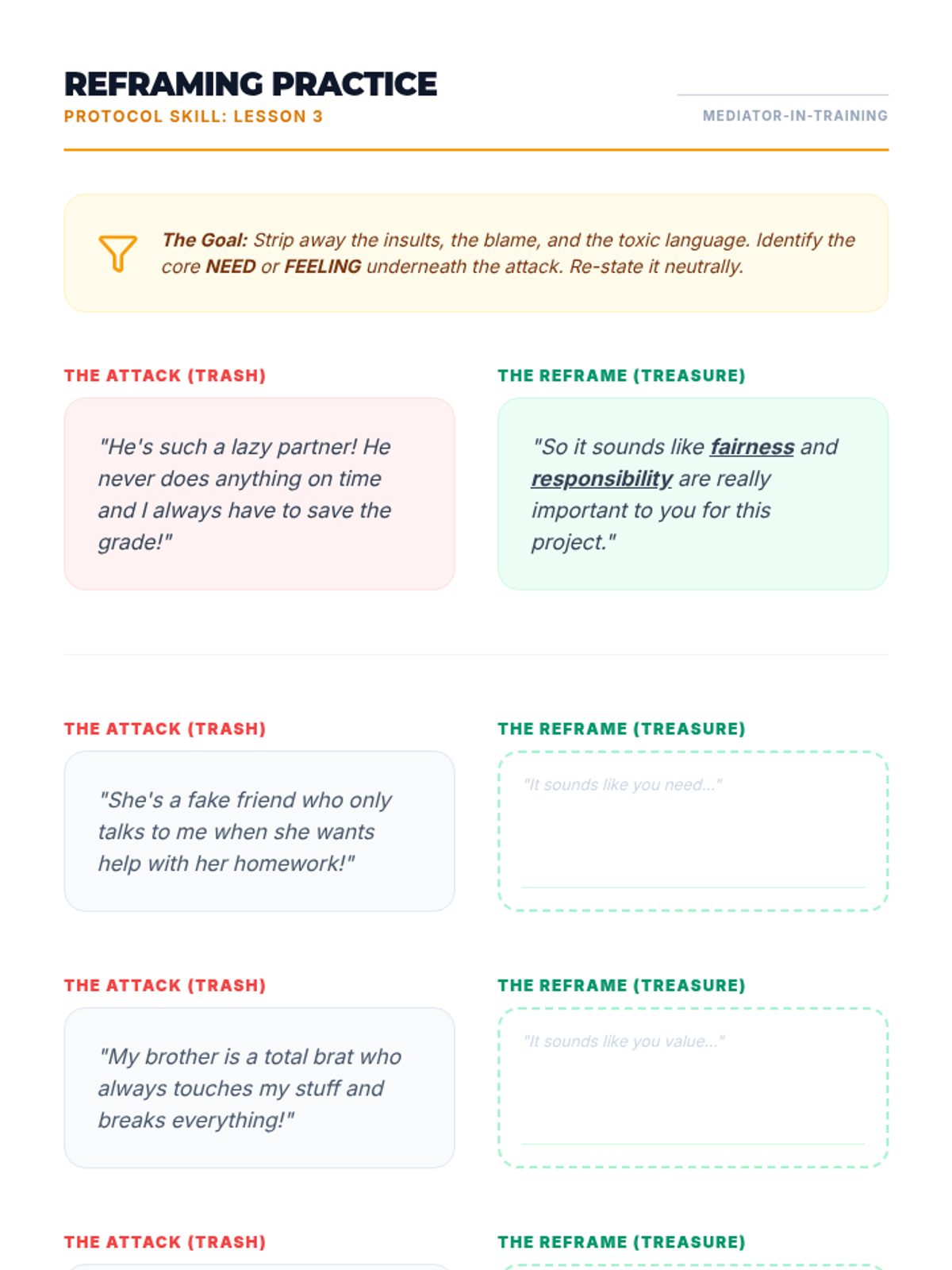
Students master the skills of summarizing and reframing. They learn to strip away inflammatory language and reflect back the core needs and feelings of disputing parties.
This lesson focuses on the opening stage of mediation. Students learn to set the tone, establish ground rules, and ensure confidentiality to create a safe space for resolution.
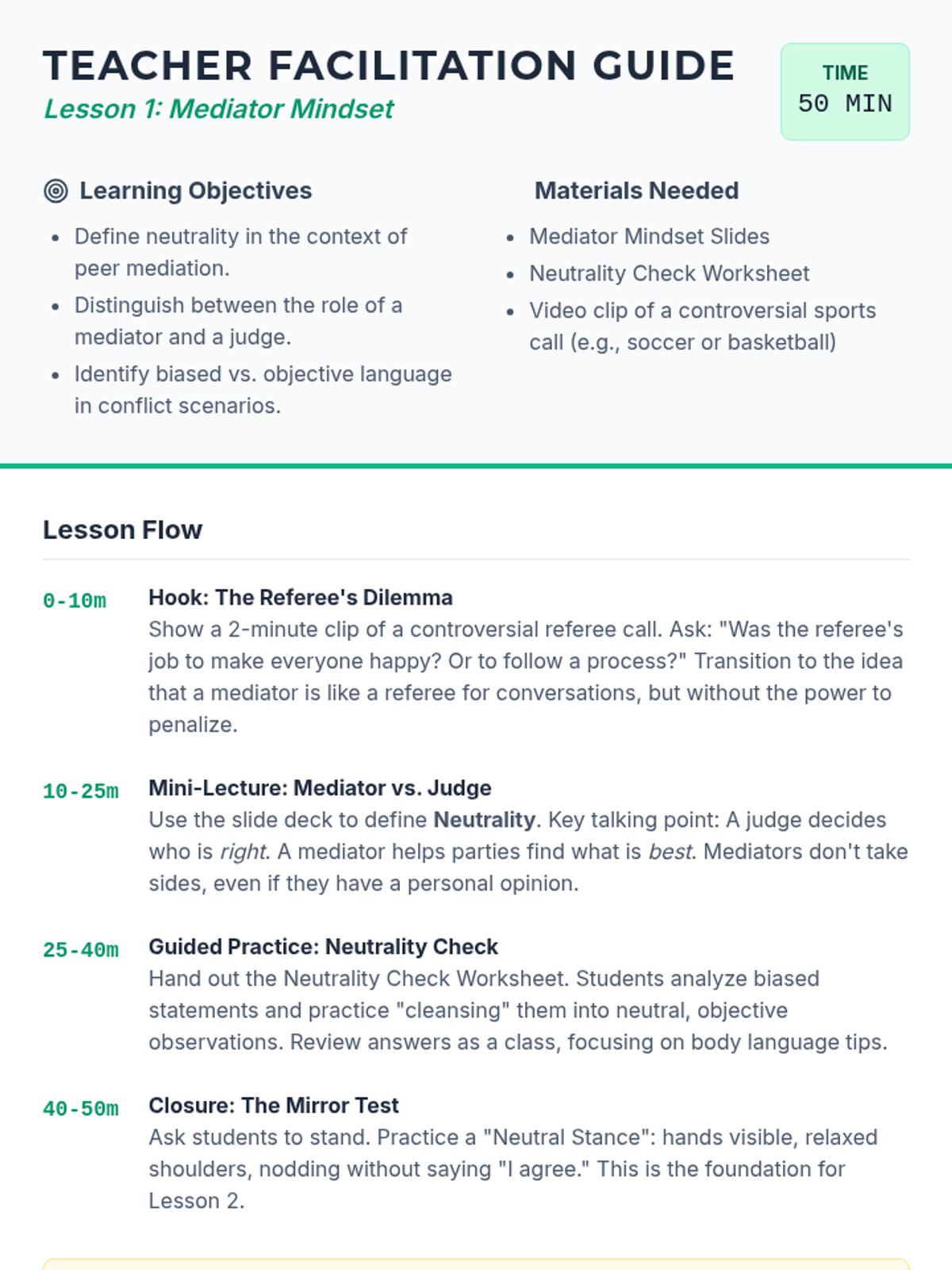
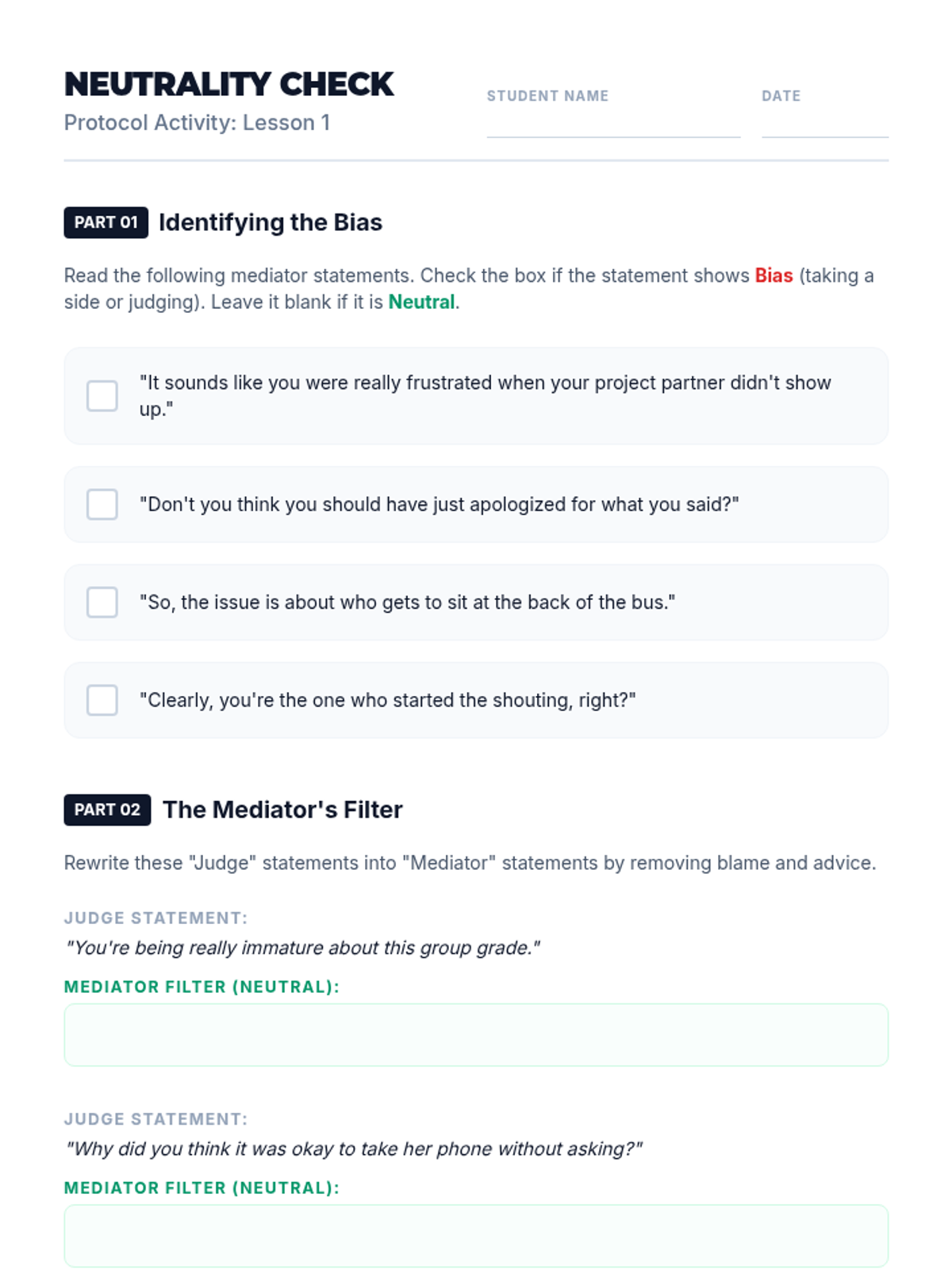
Students explore the definition of neutrality and the mediator's role. They practice identifying bias and using objective language to facilitate rather than judge.
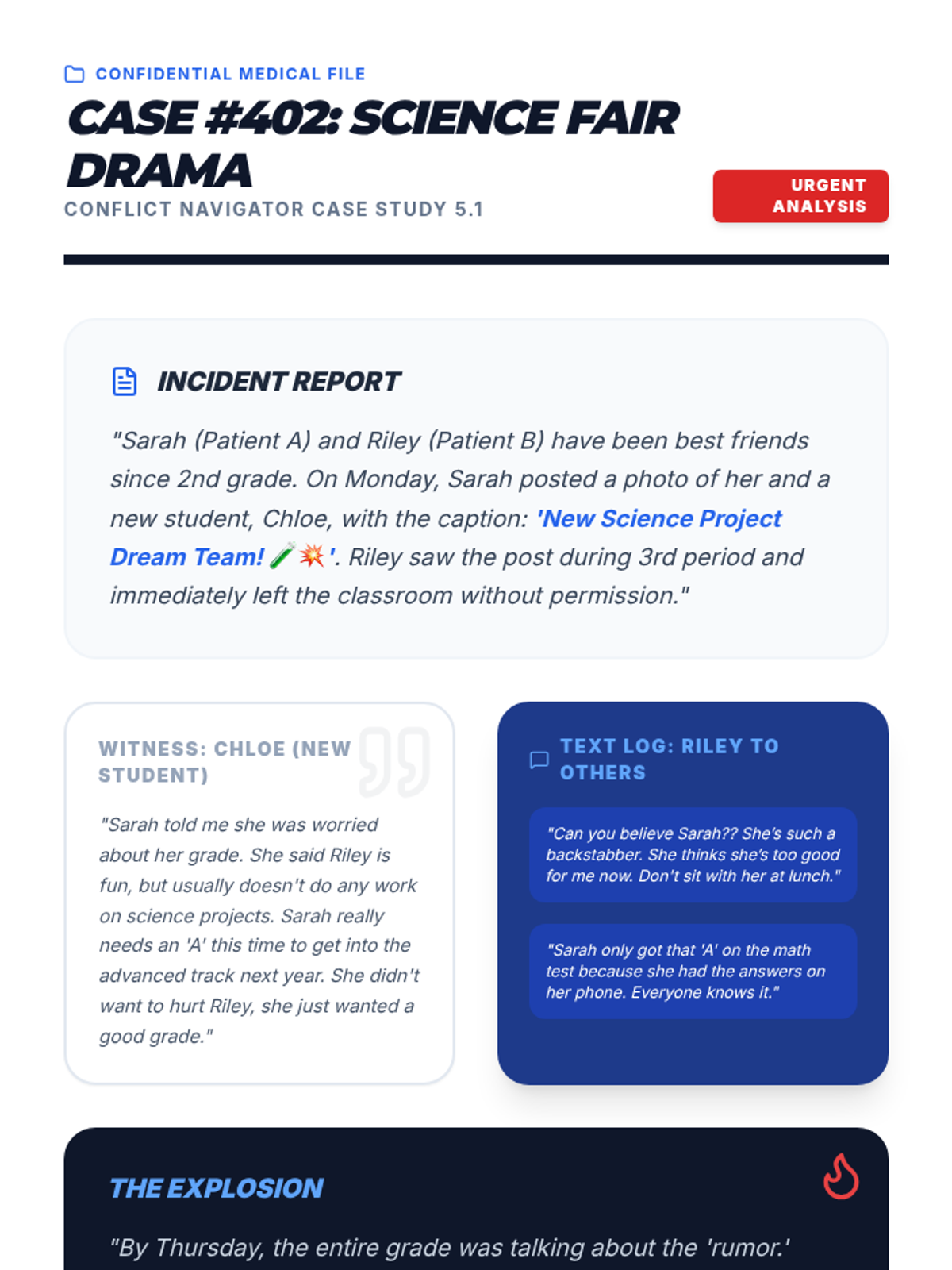
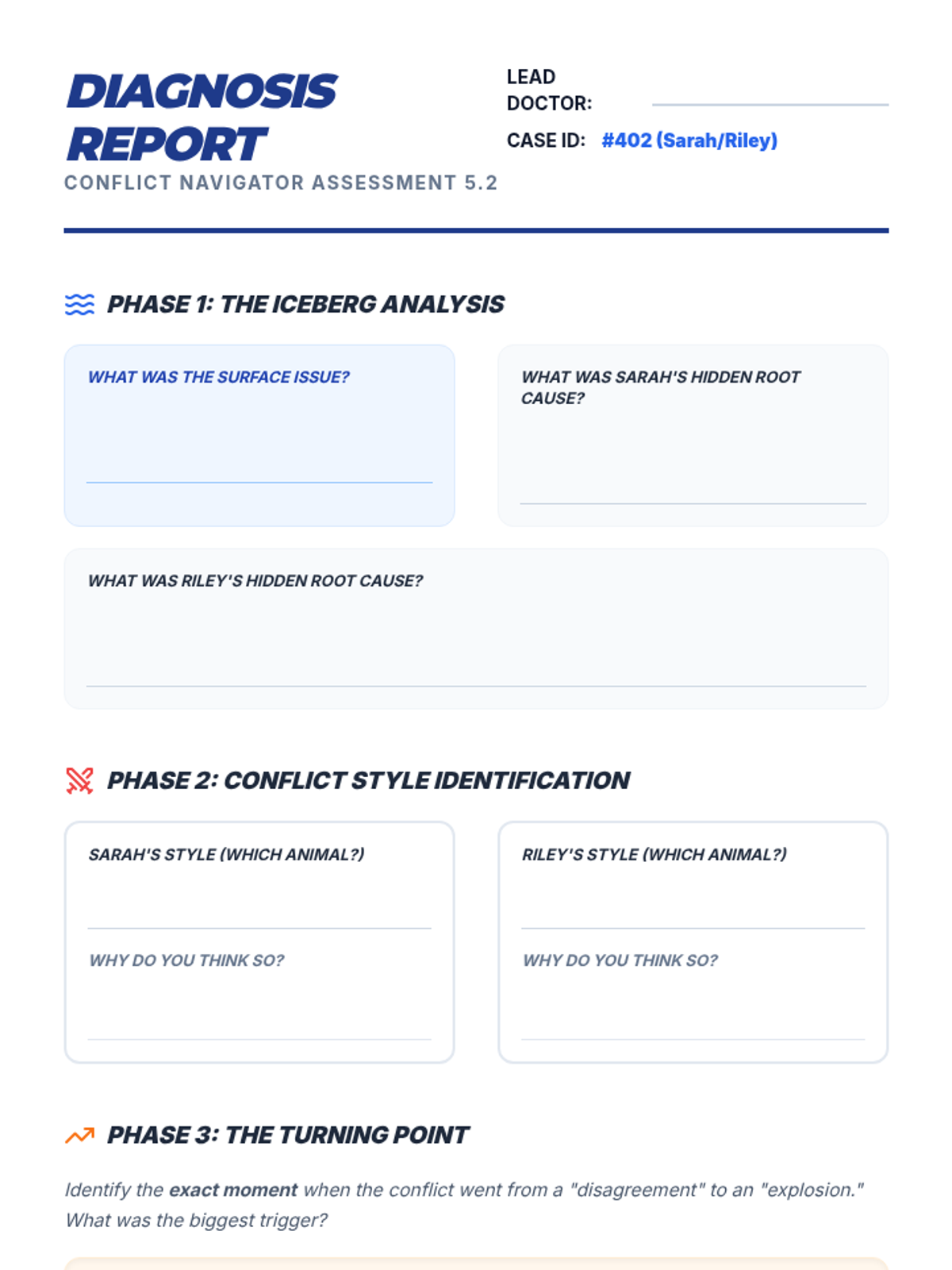
A final synthesis activity where students act as 'Conflict Doctors' to diagnose a complex scenario using all the tools learned in the sequence.
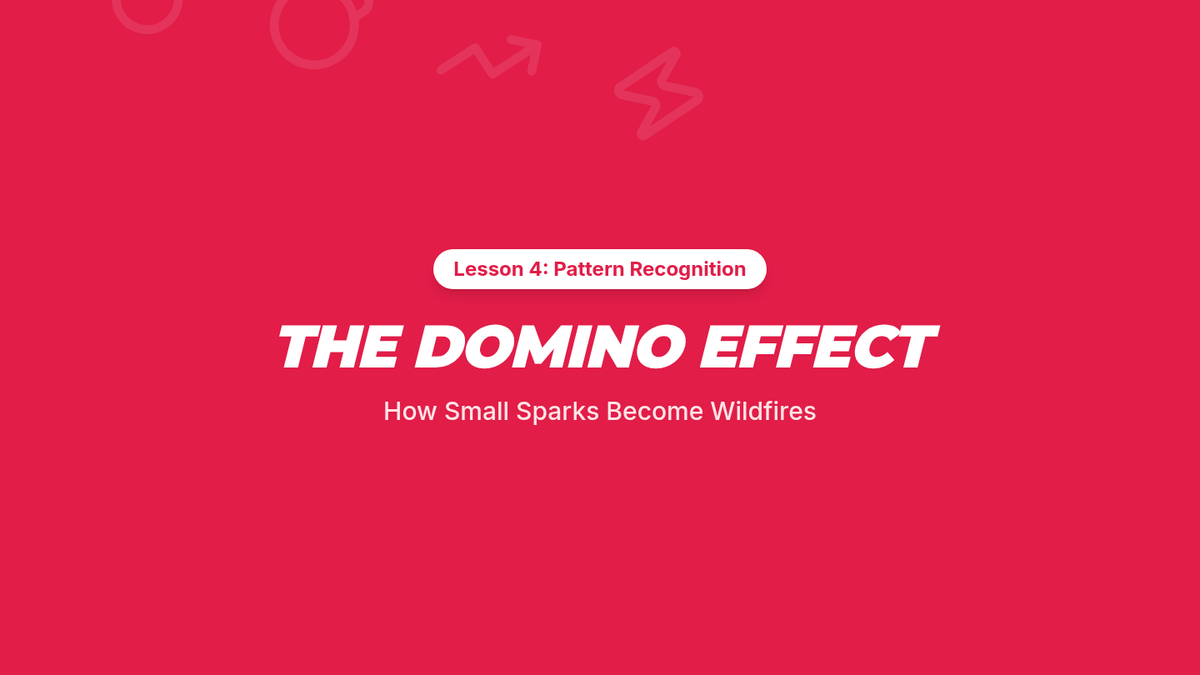
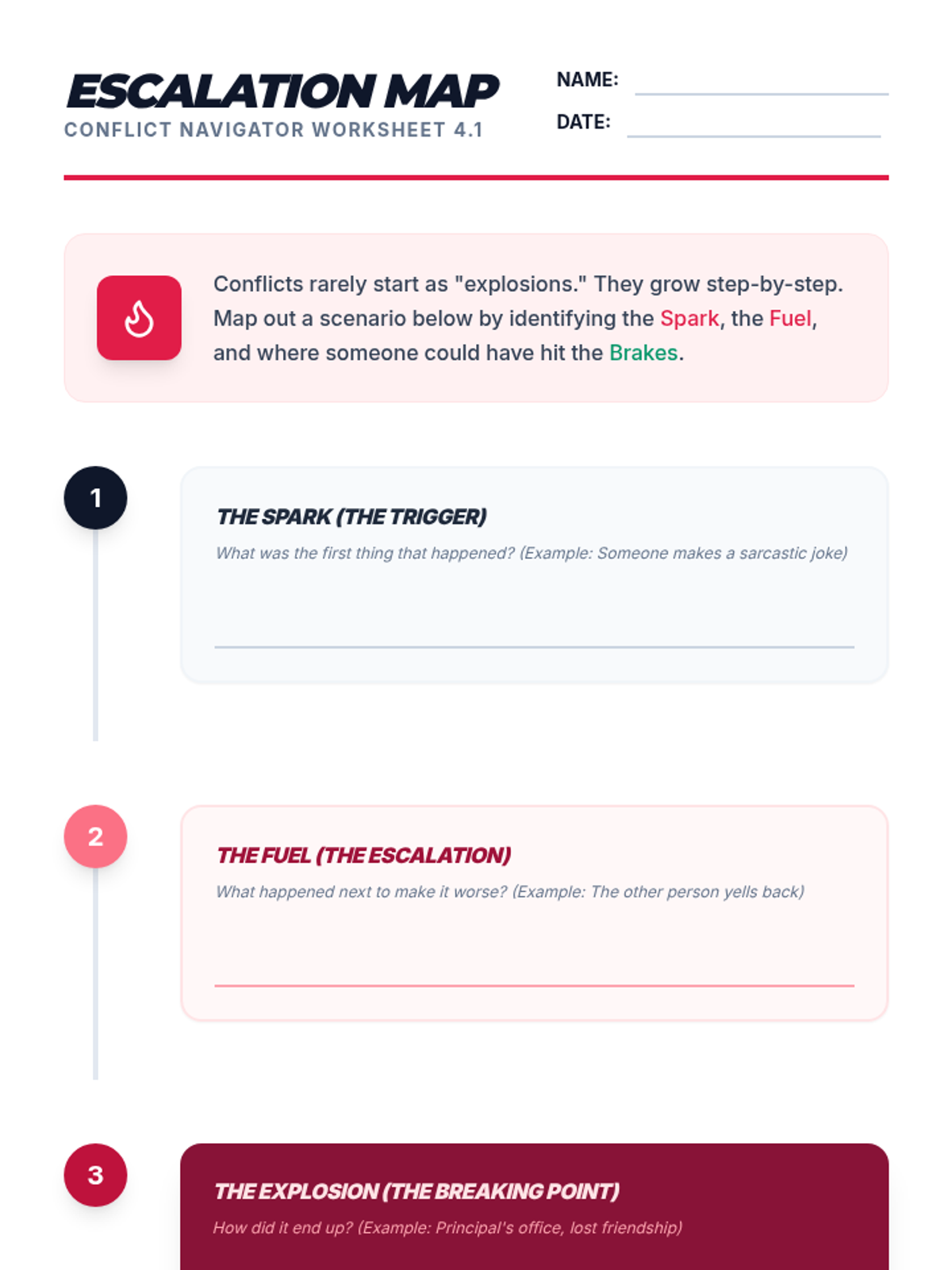
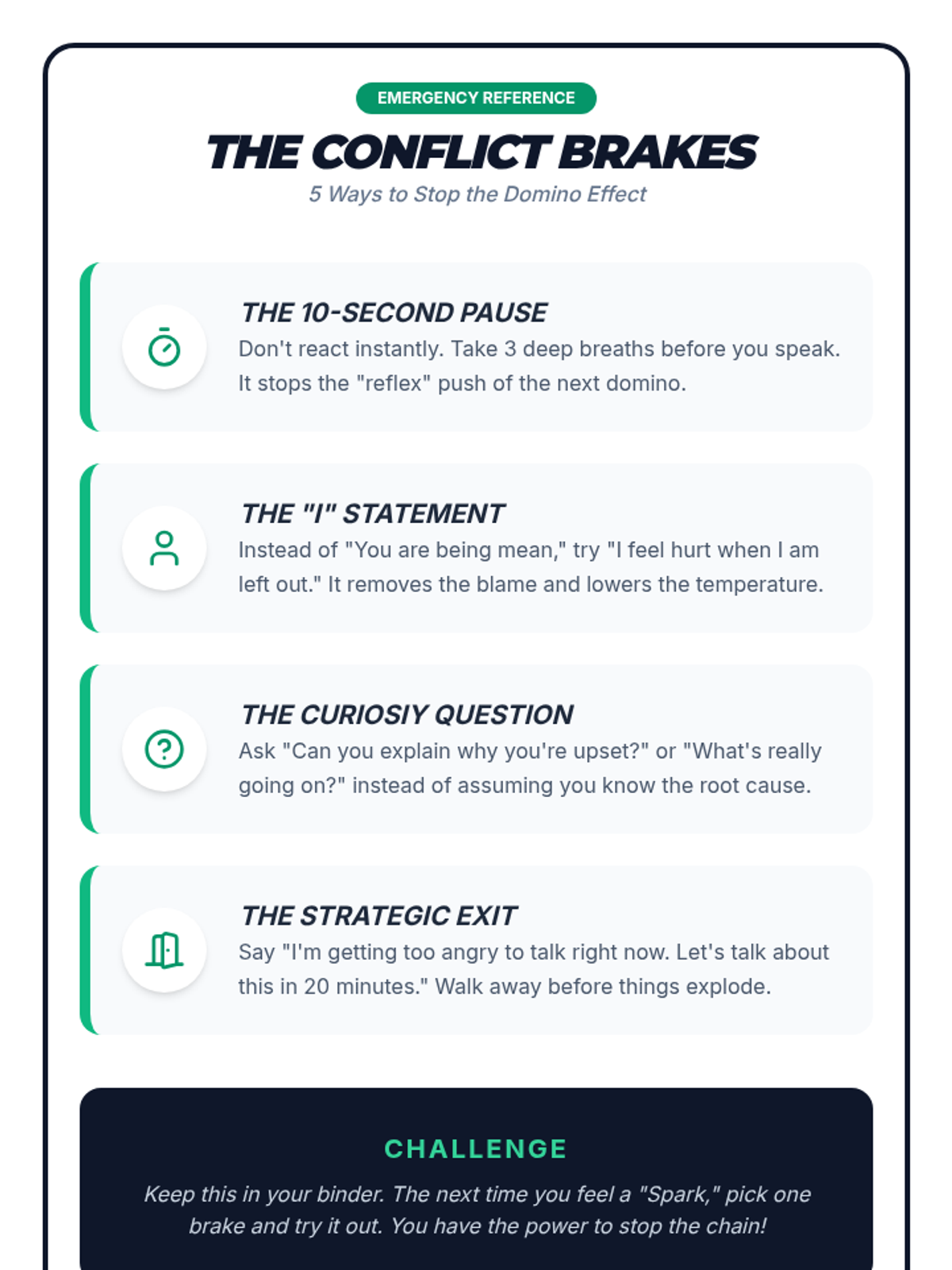
Analyzes the cycle of escalation, identifying triggers and turning points where conflicts can be de-escalated before reaching a breaking point.
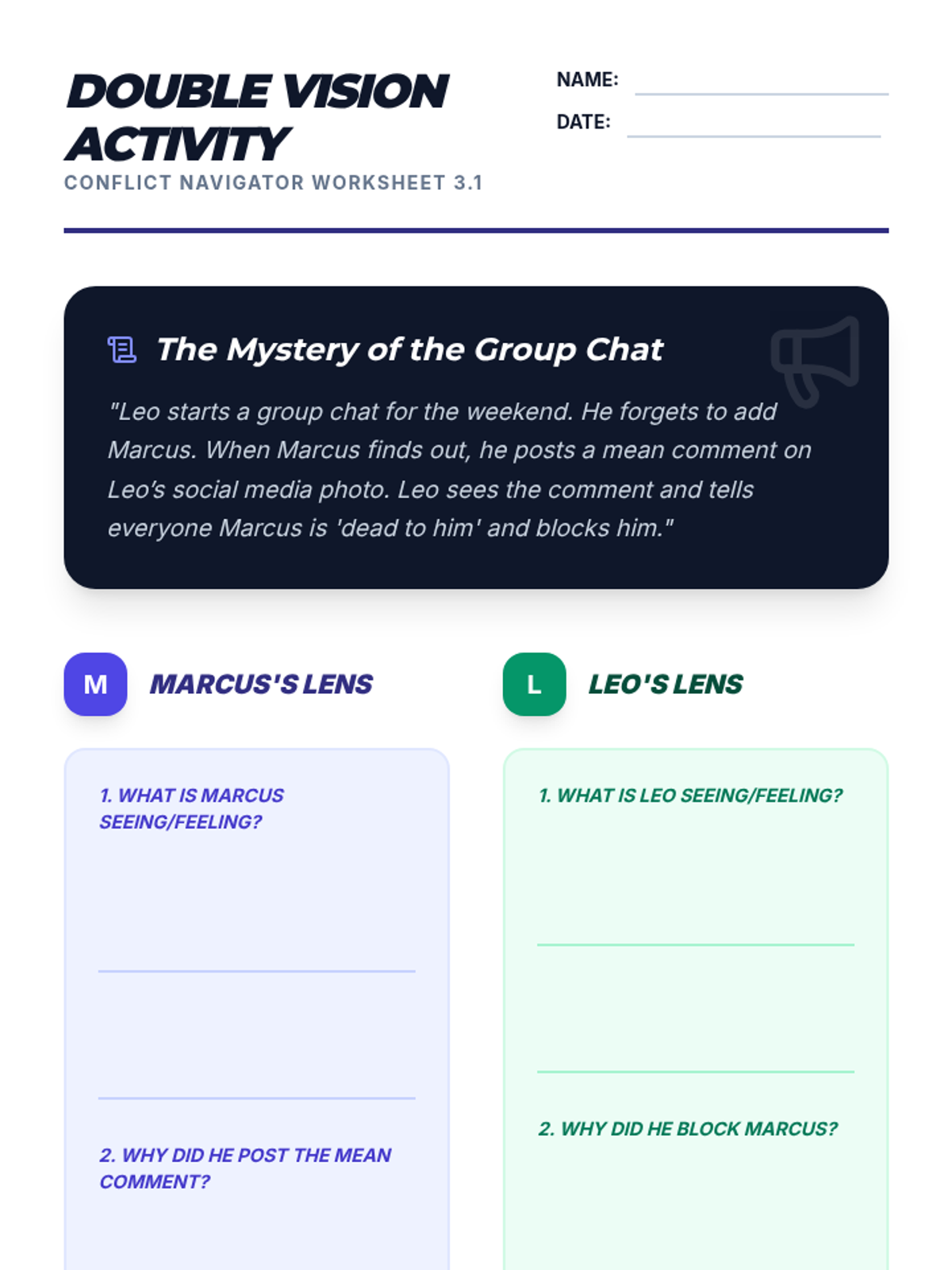
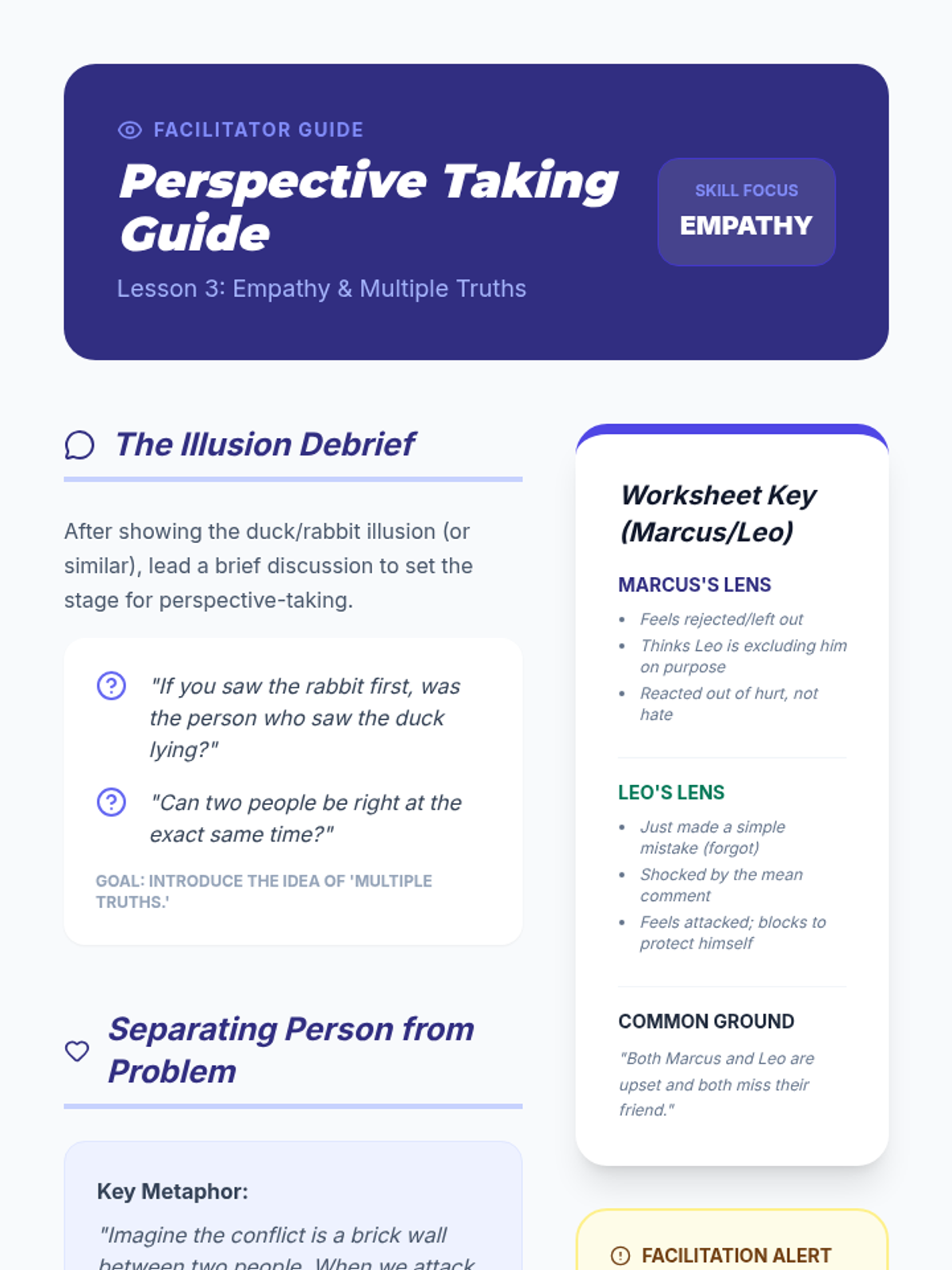
Focuses on perspective-taking and empathy through visual illusions and story-mapping, teaching students to see multiple truths in a single dispute.
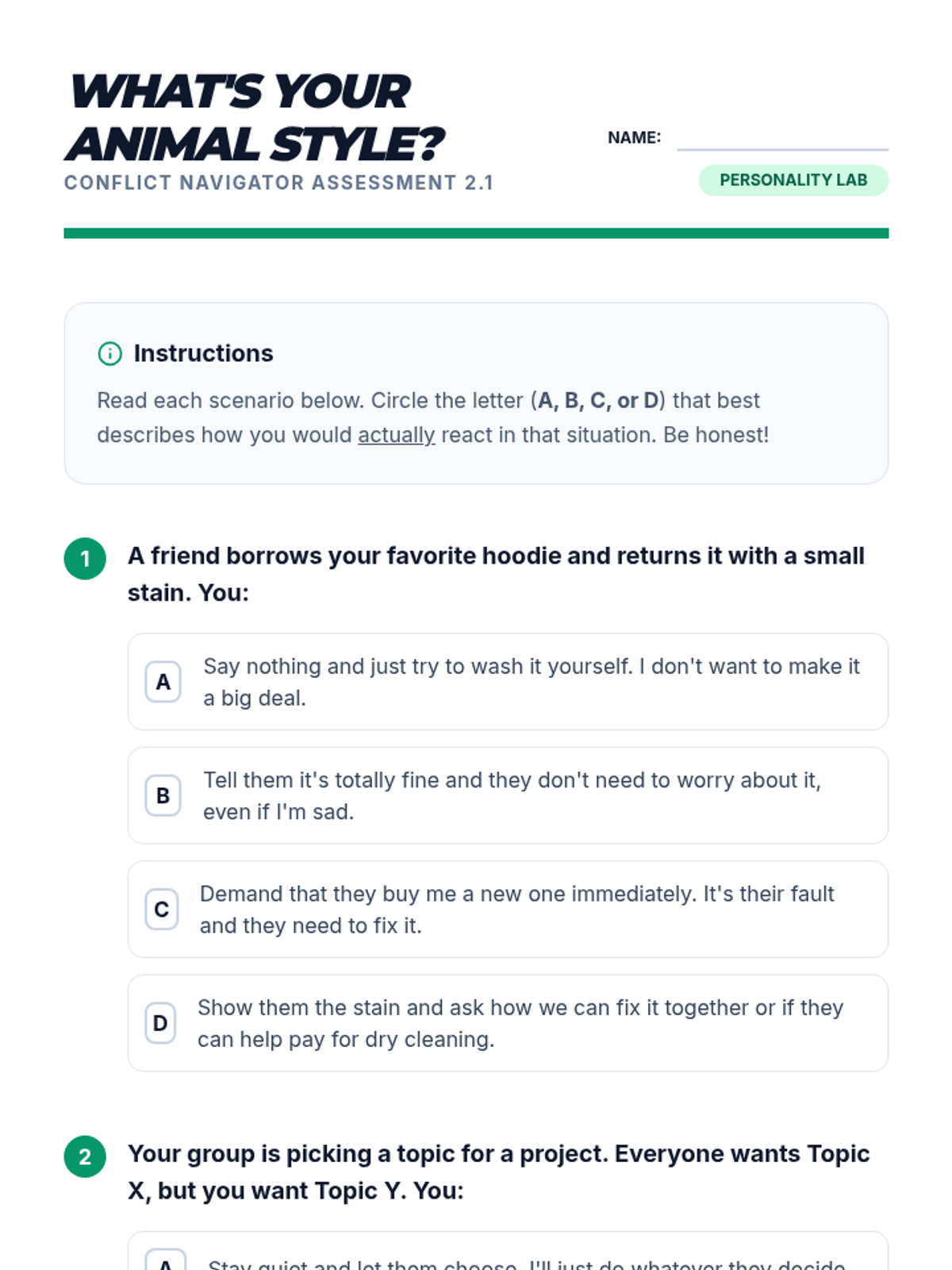
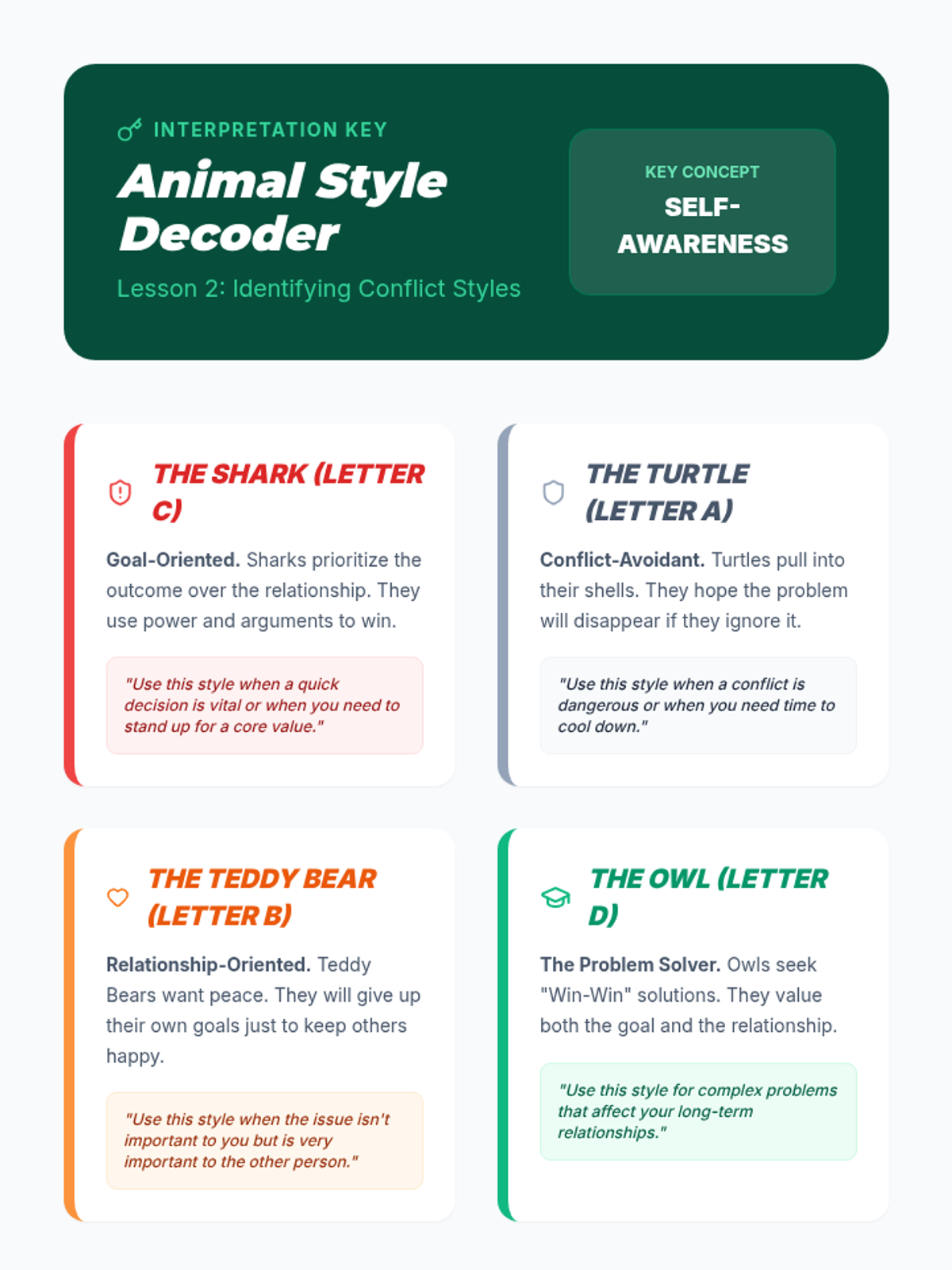
Students explore five core conflict styles (Shark, Turtle, Teddy Bear, Fox, Owl) to understand their default reactions and the impact on others.
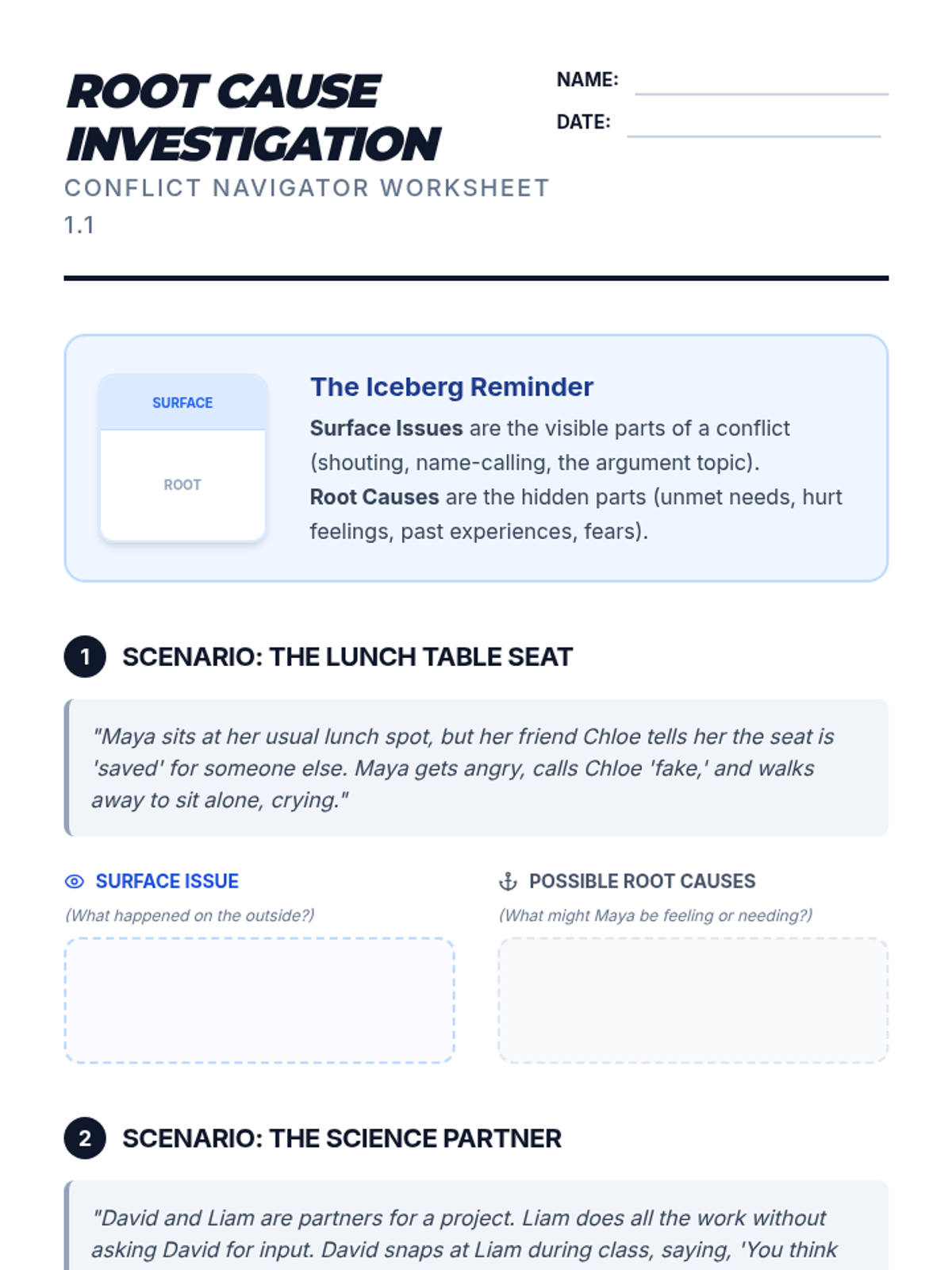
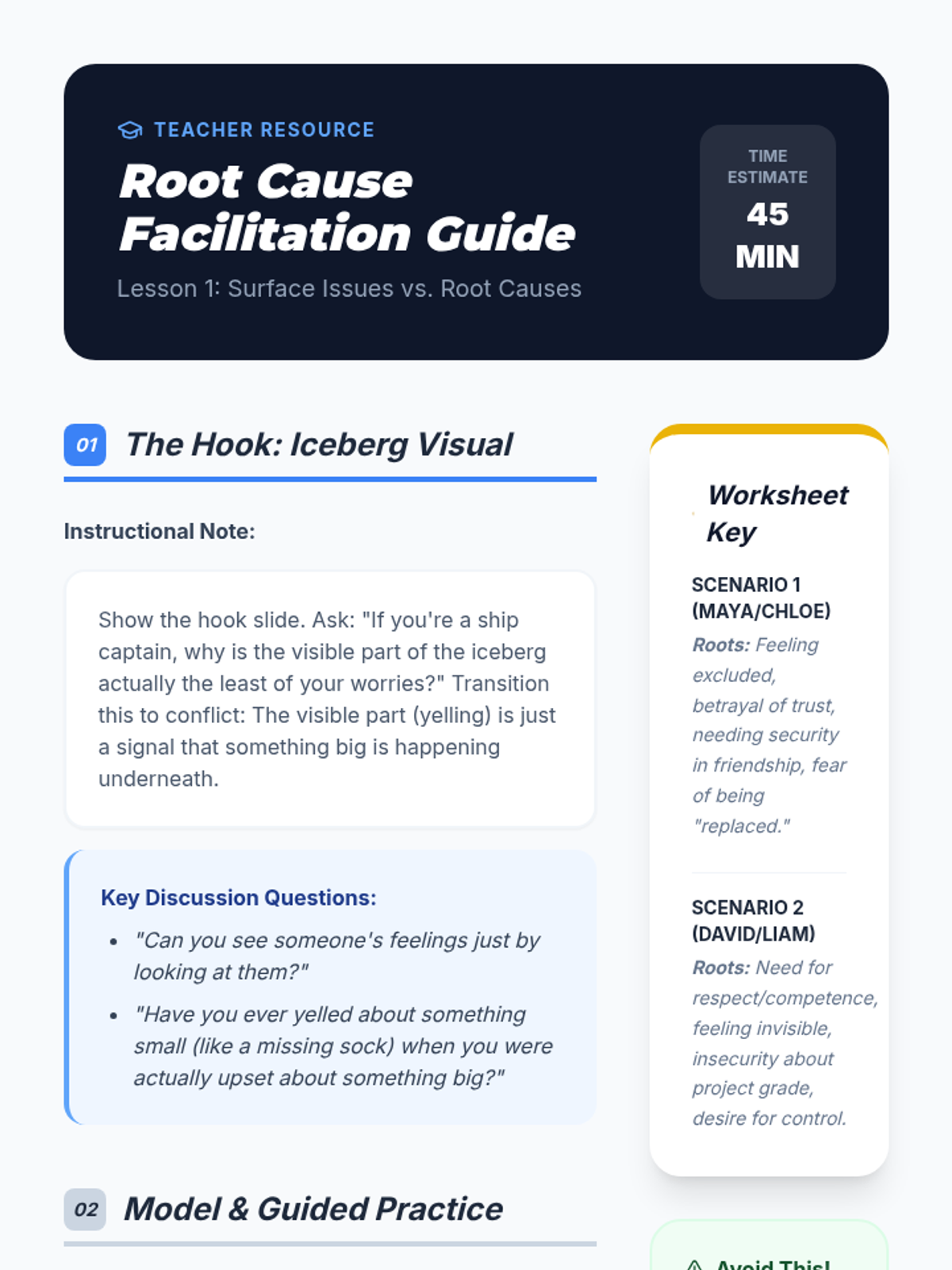
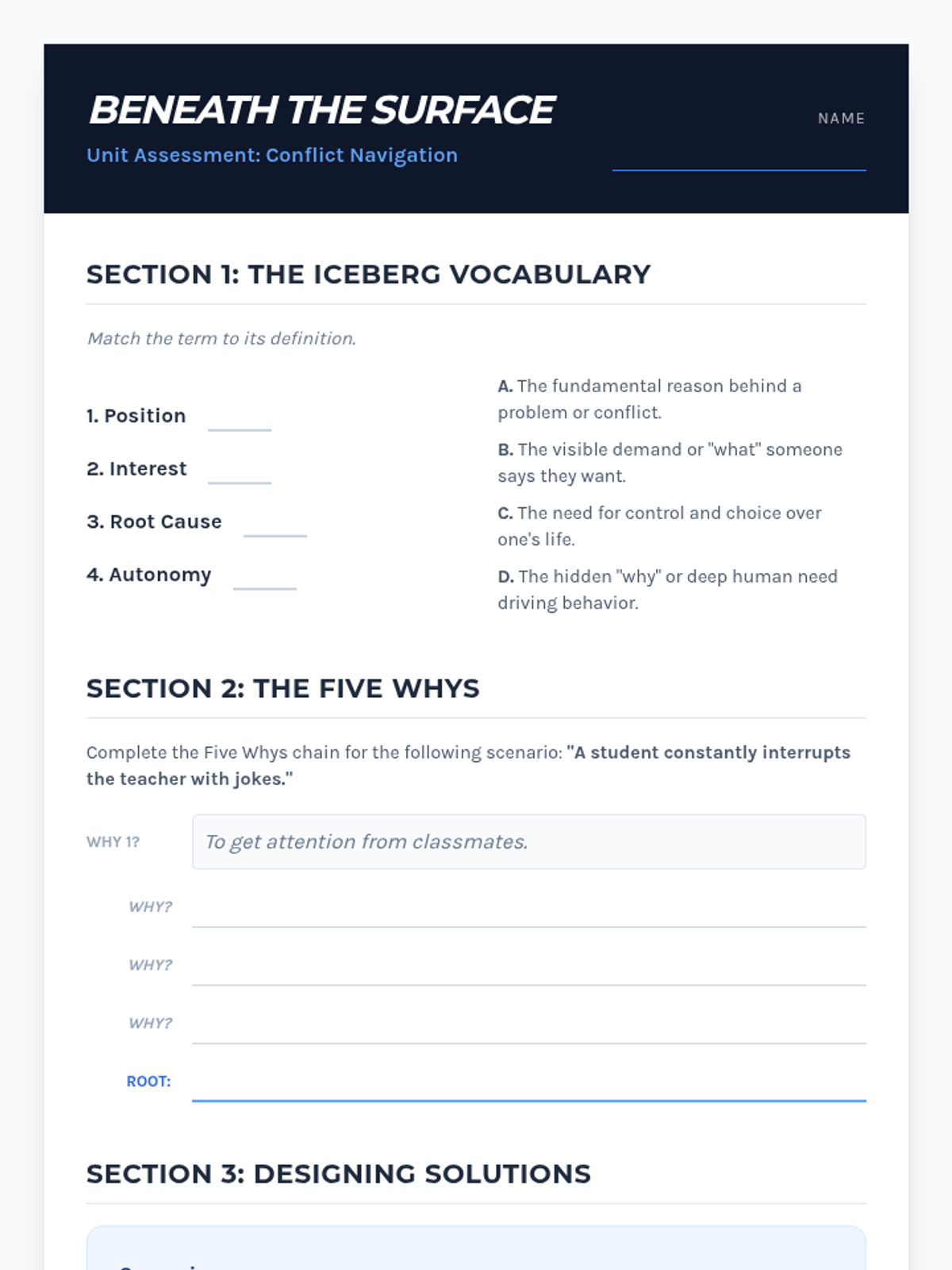
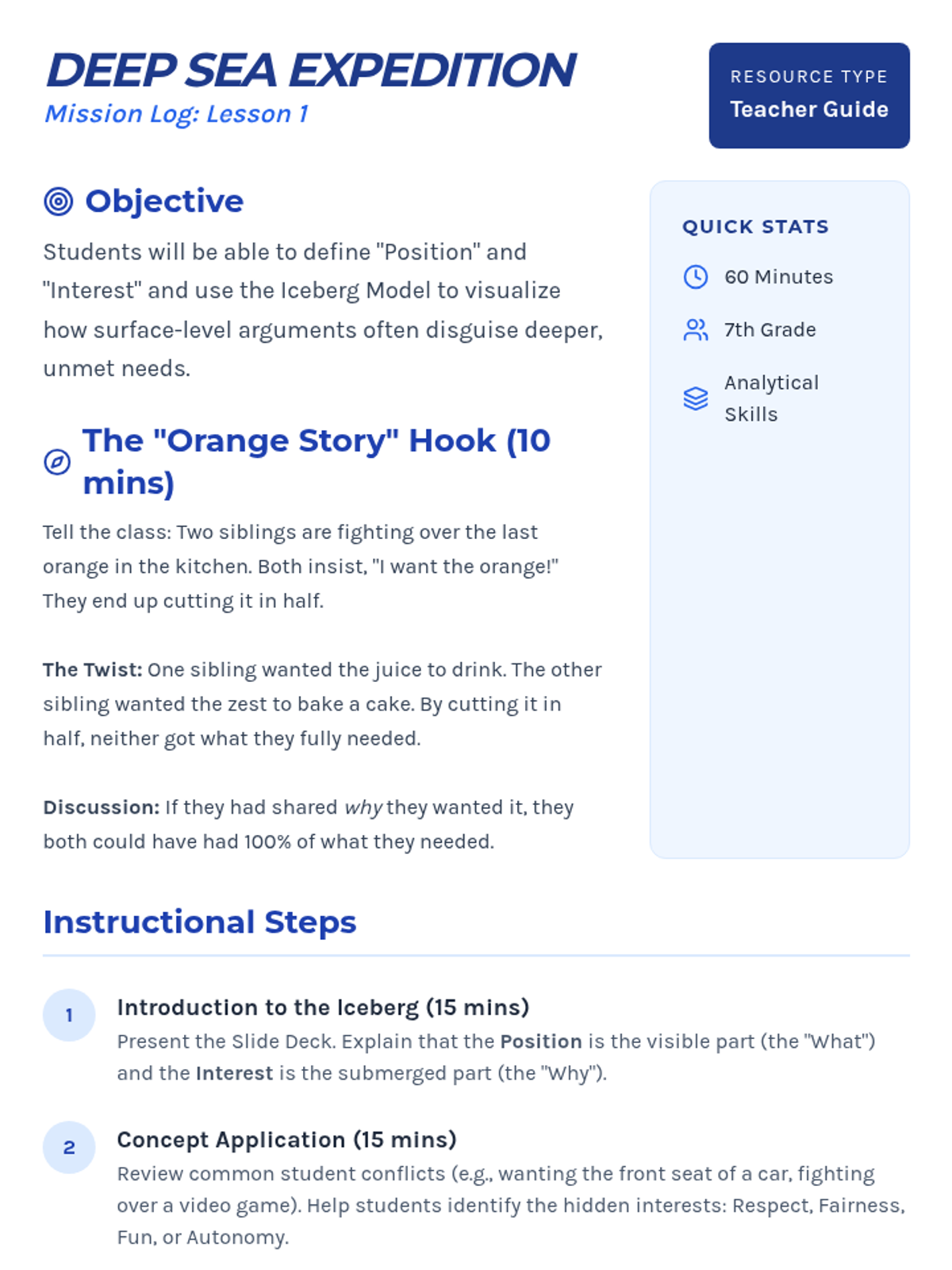
Introduces the Iceberg Model to help students differentiate between the surface argument and the underlying needs, fears, and values driving conflict.
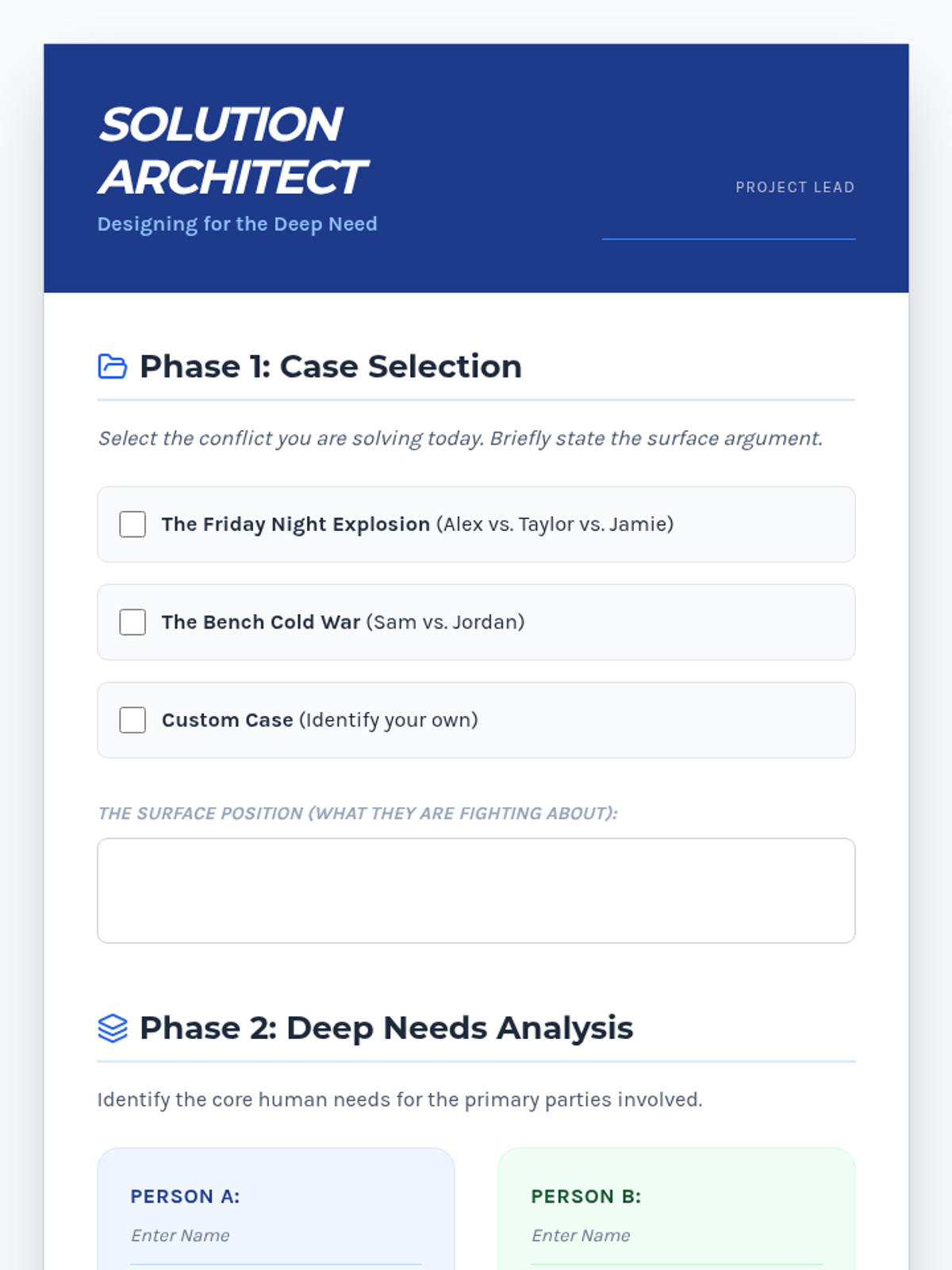
Students synthesize their learning to propose solutions that address underlying needs rather than surface-level compromises.
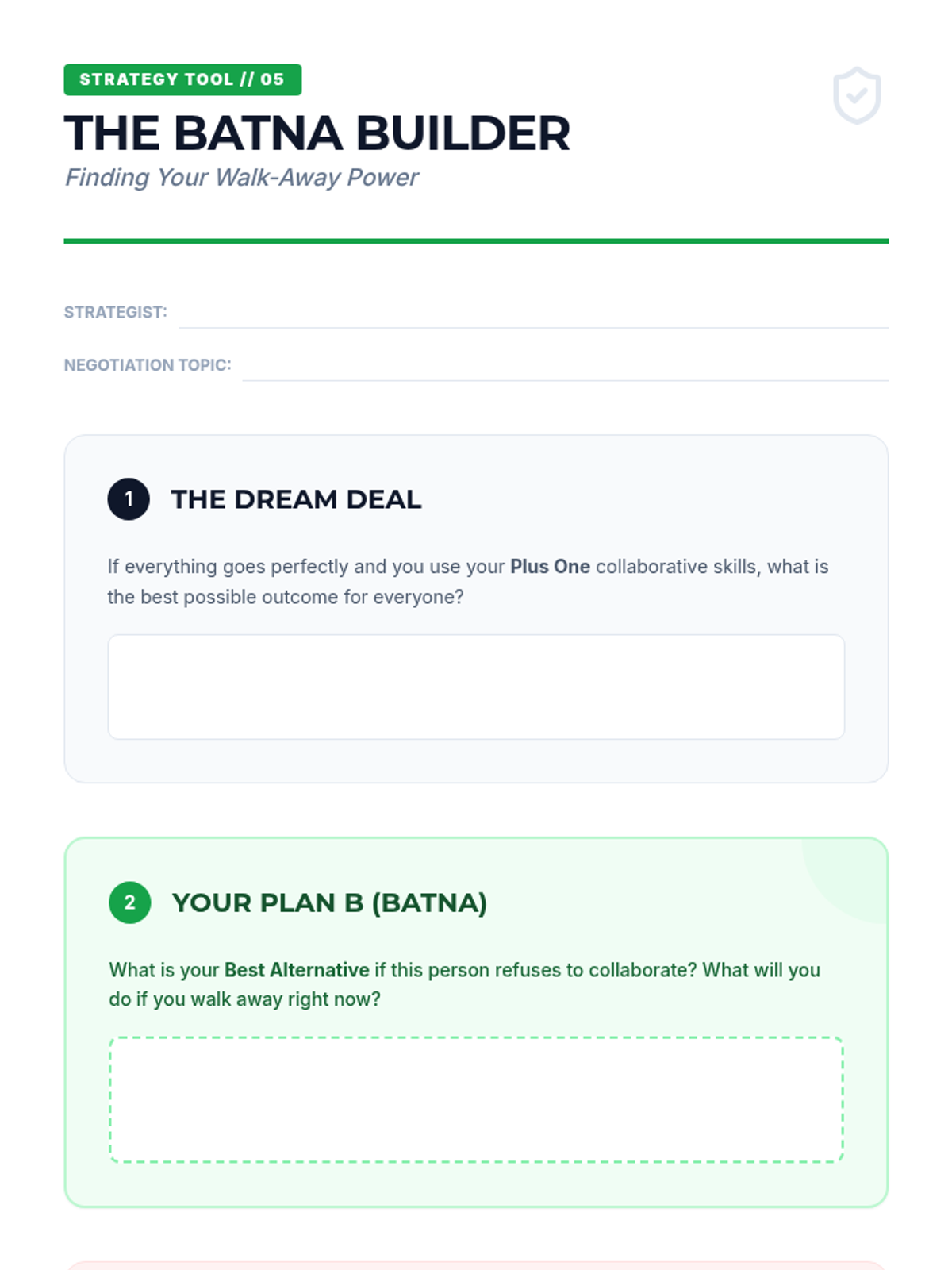
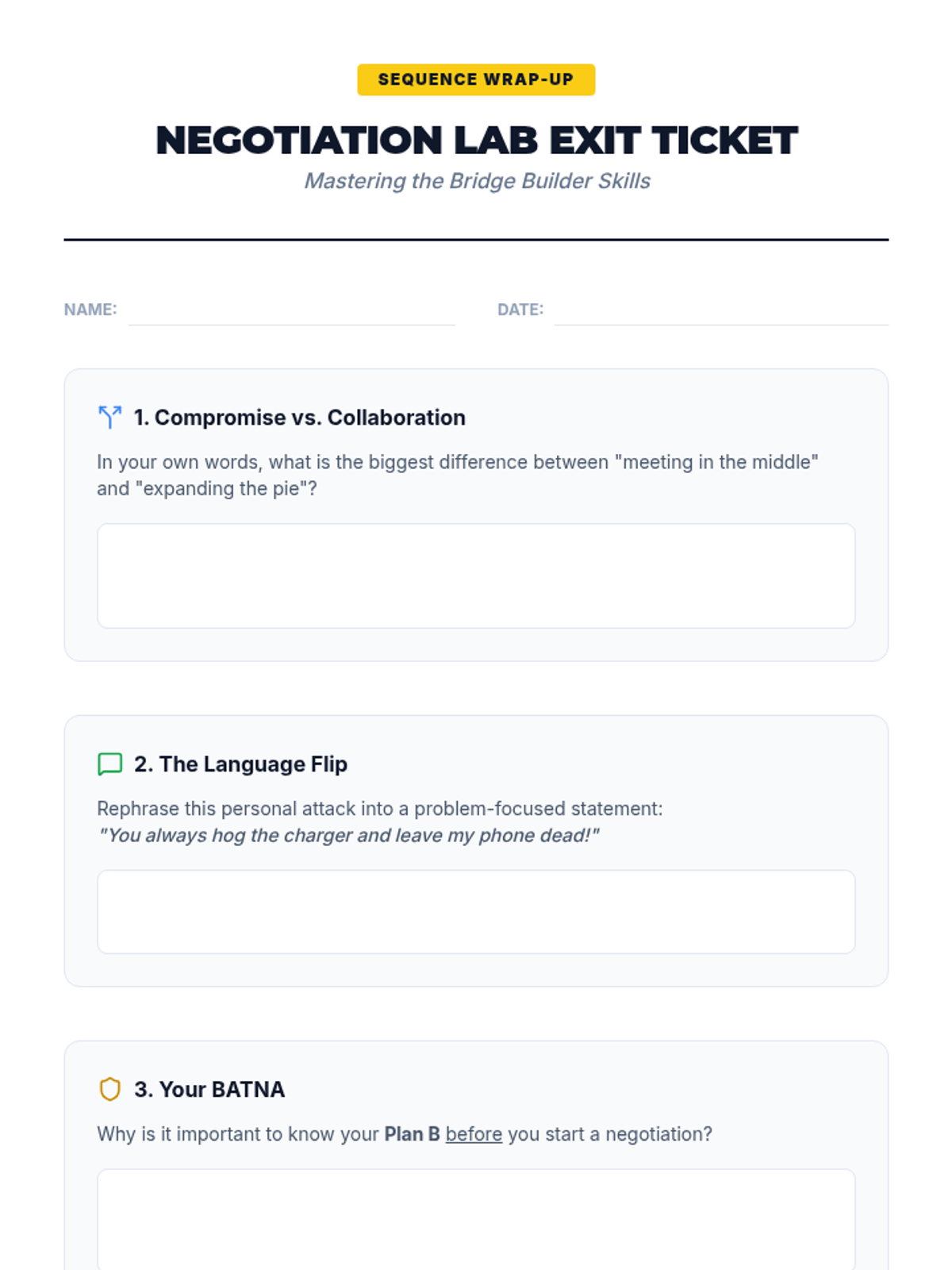
Students learn the concept of BATNA (Best Alternative to a Negotiated Agreement) to understand their 'walk-away' power.
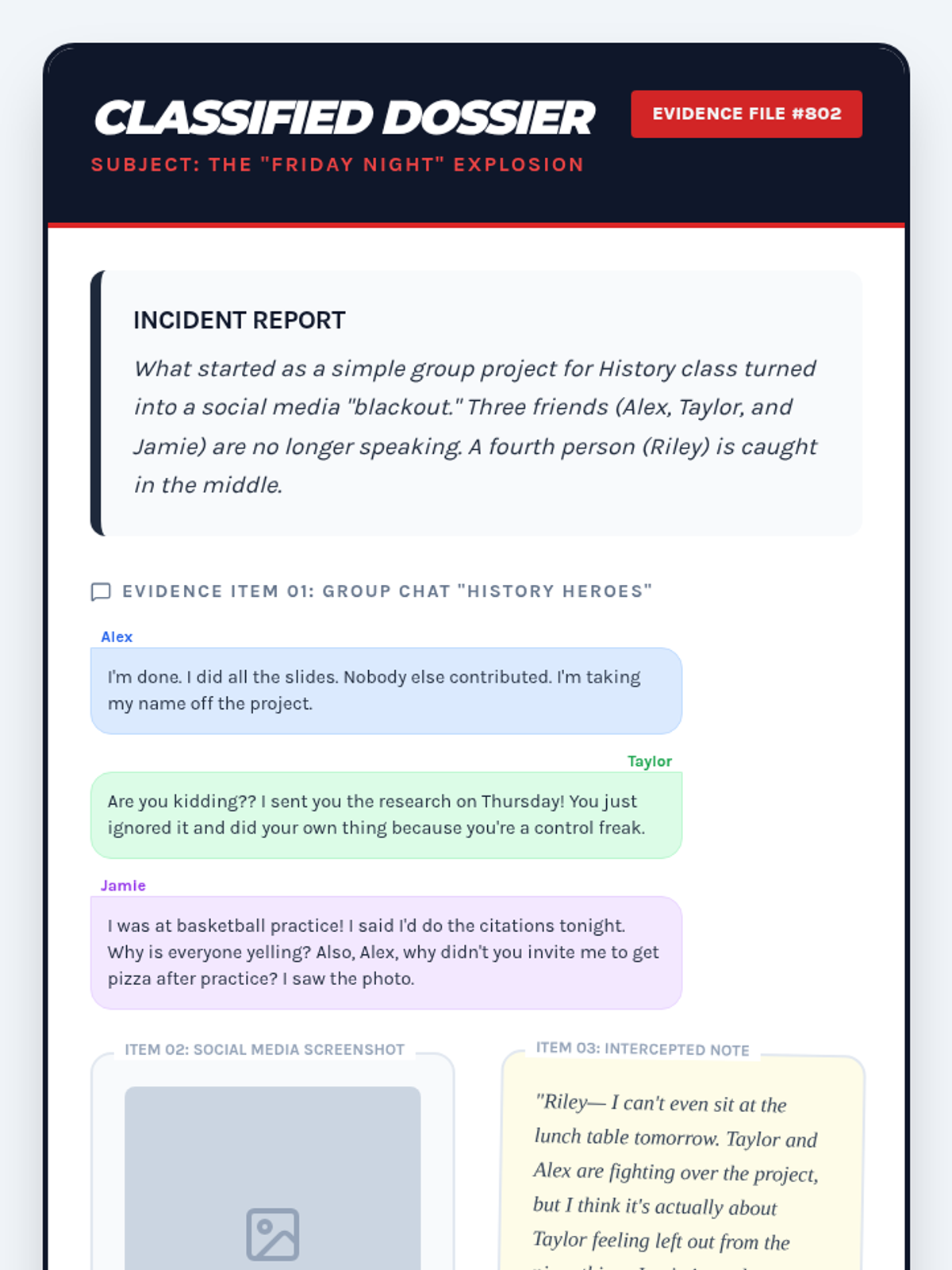
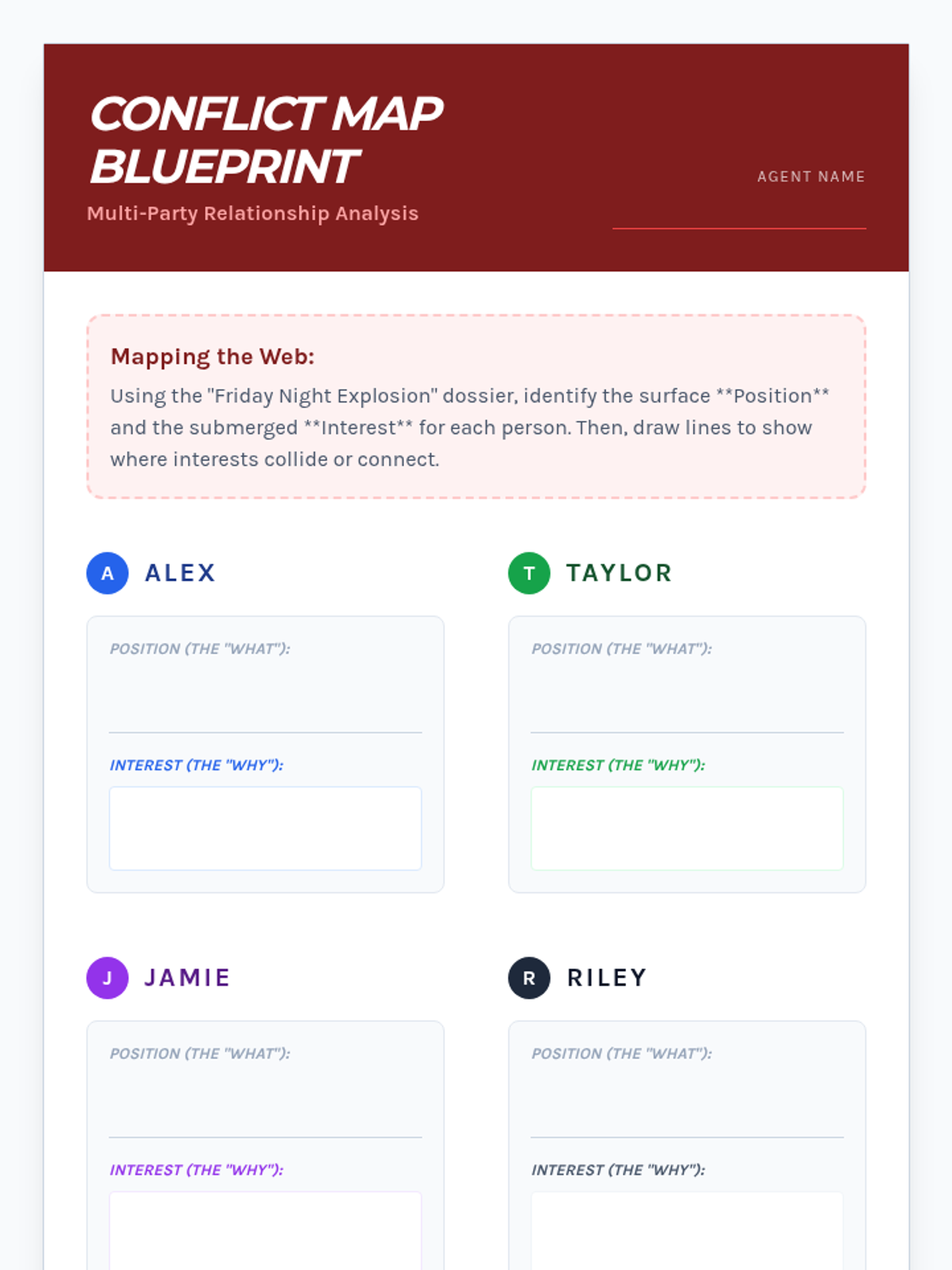
Students analyze and map complex, multi-party conflicts to visualize how different interests intersect and collide in social groups.
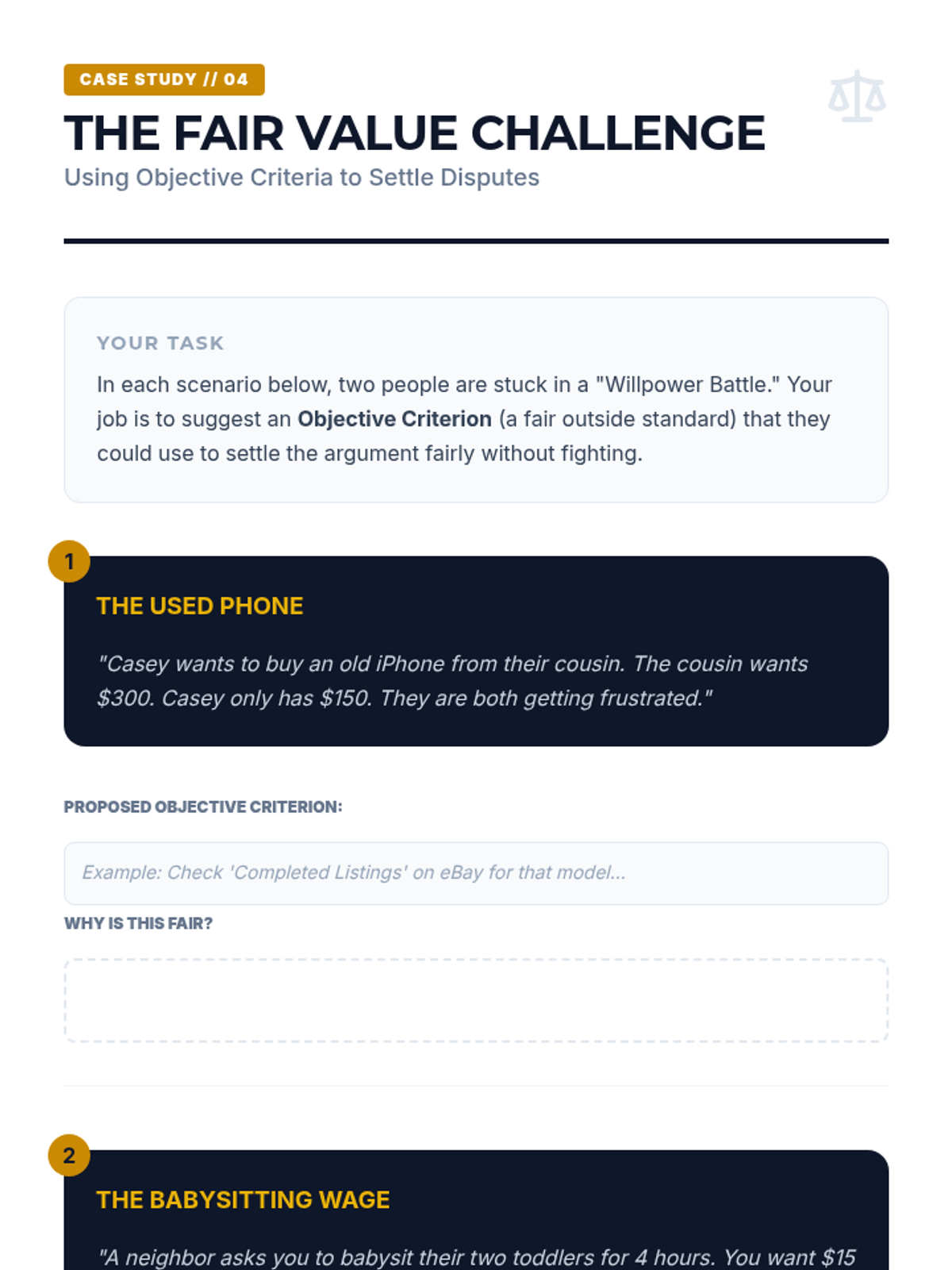
Students learn to use fair standards (rules, precedents, market value) to resolve impasses fairly.
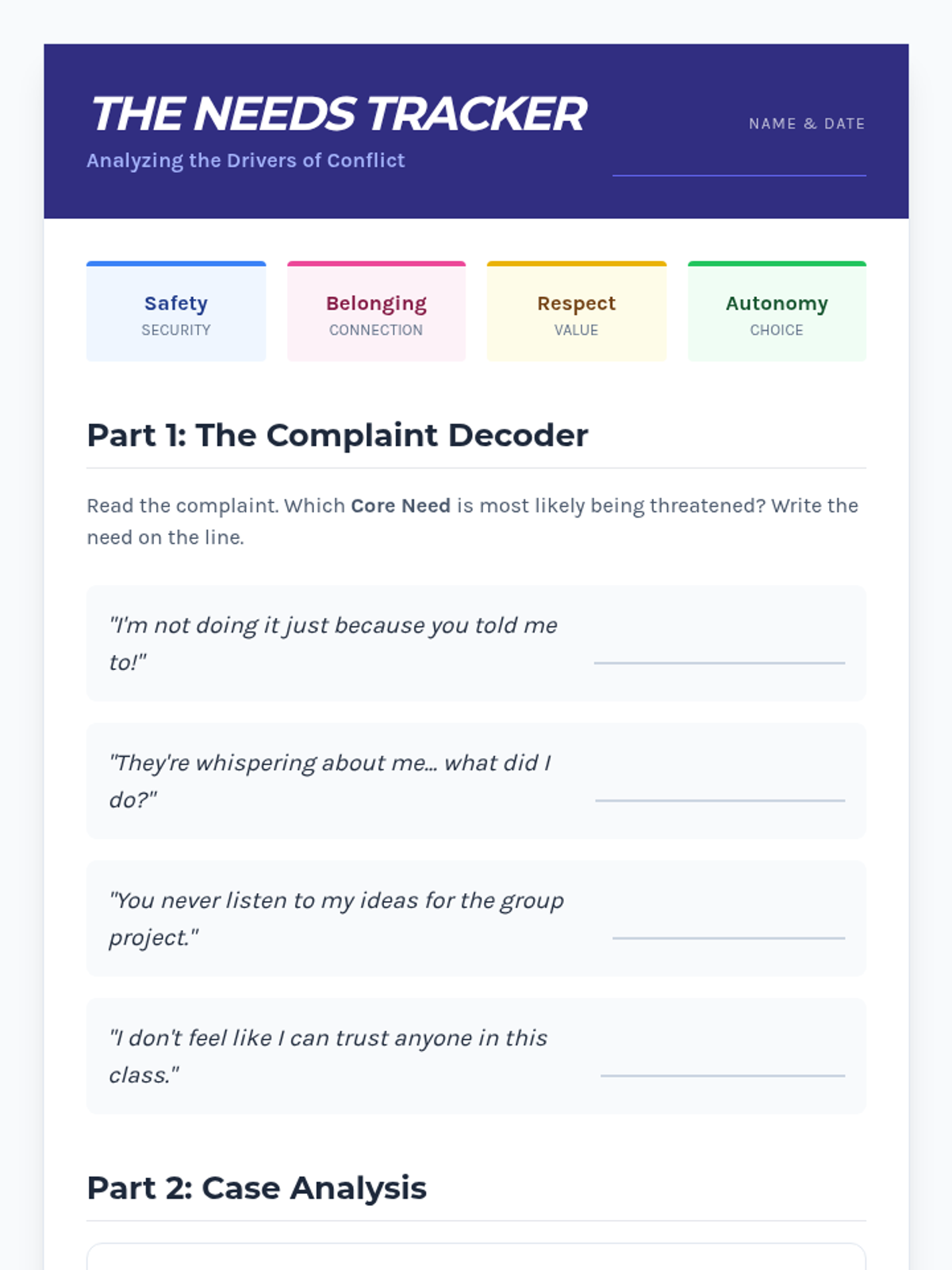
Students identify and categorize core human needs (safety, belonging, respect, autonomy) that drive behavior in conflicts.
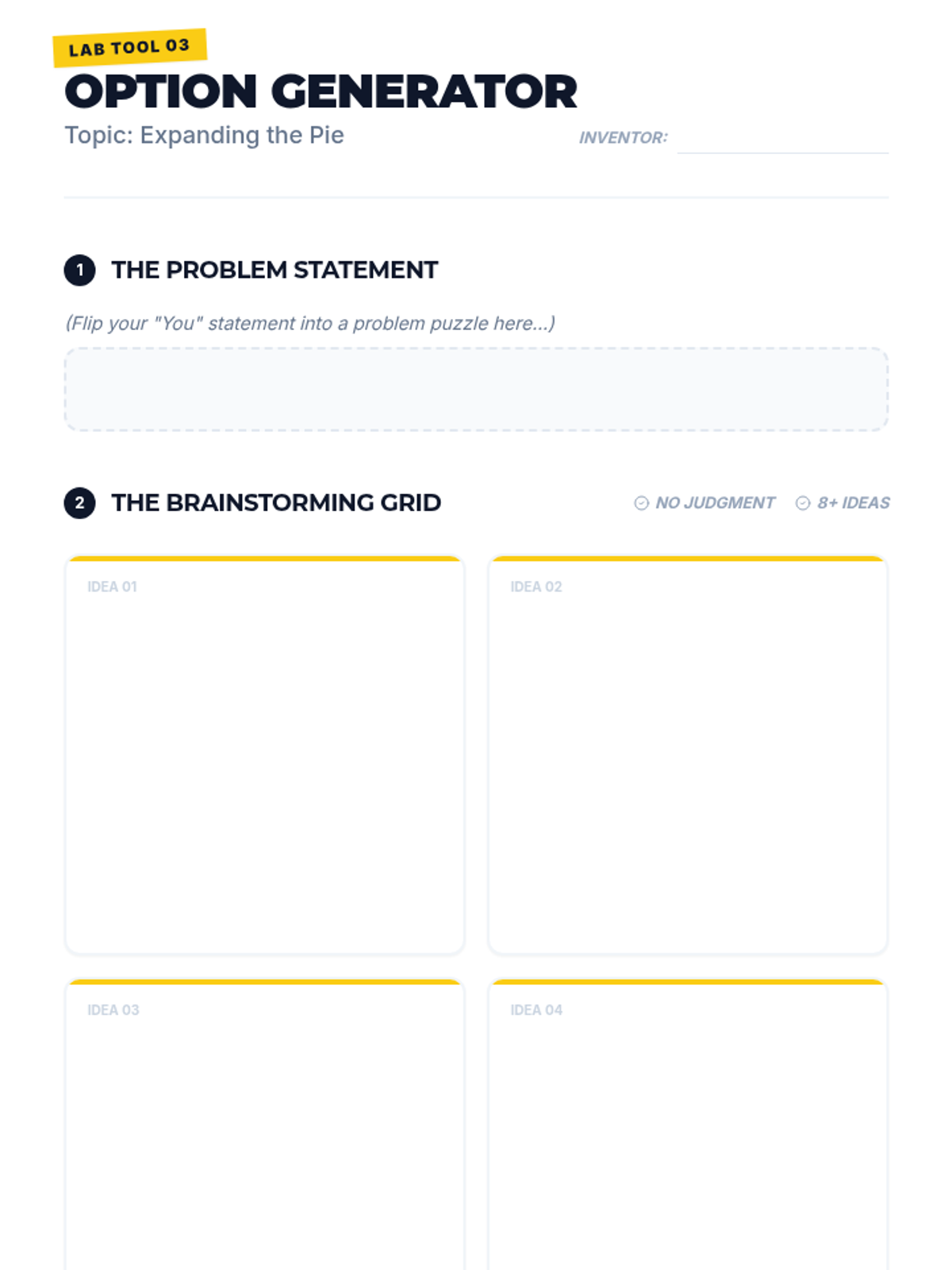
This lesson focuses on the 'invention' phase of negotiation. Students learn to suspend judgment and generate a wide array of potential solutions before deciding on one.
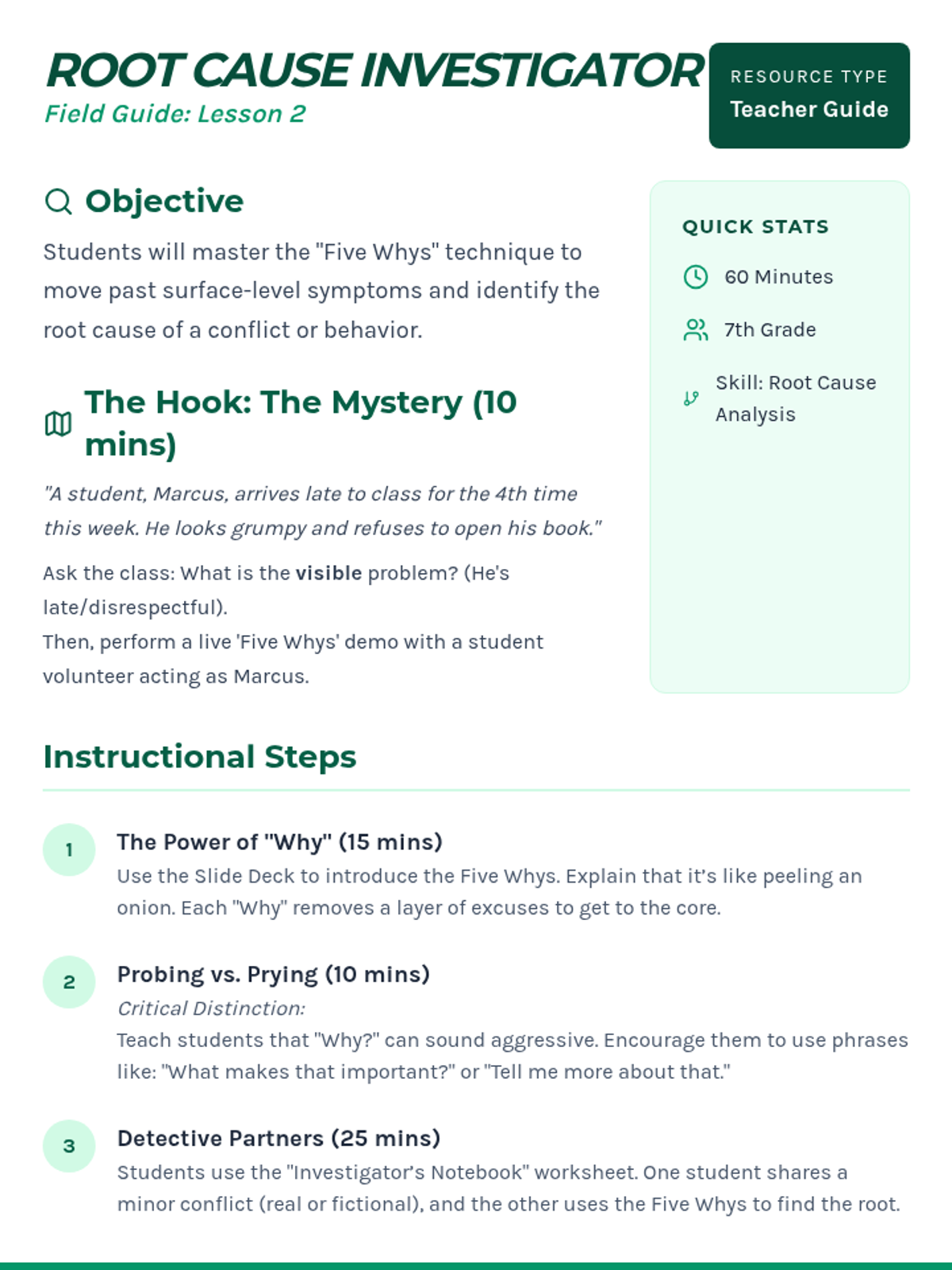
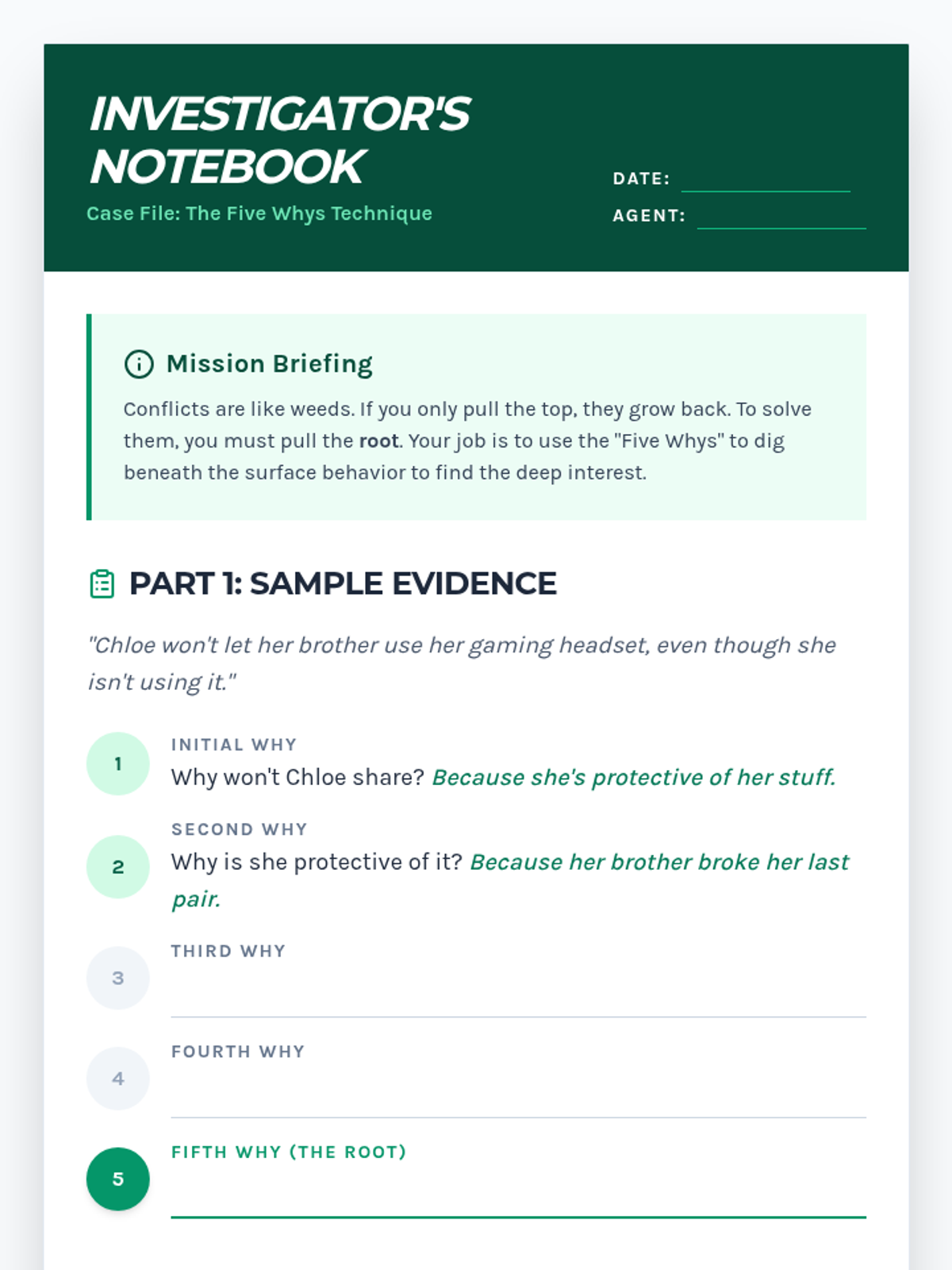
Students learn the 'Five Whys' technique to drill down from a surface-level conflict to its root cause, practicing through investigative interviews.
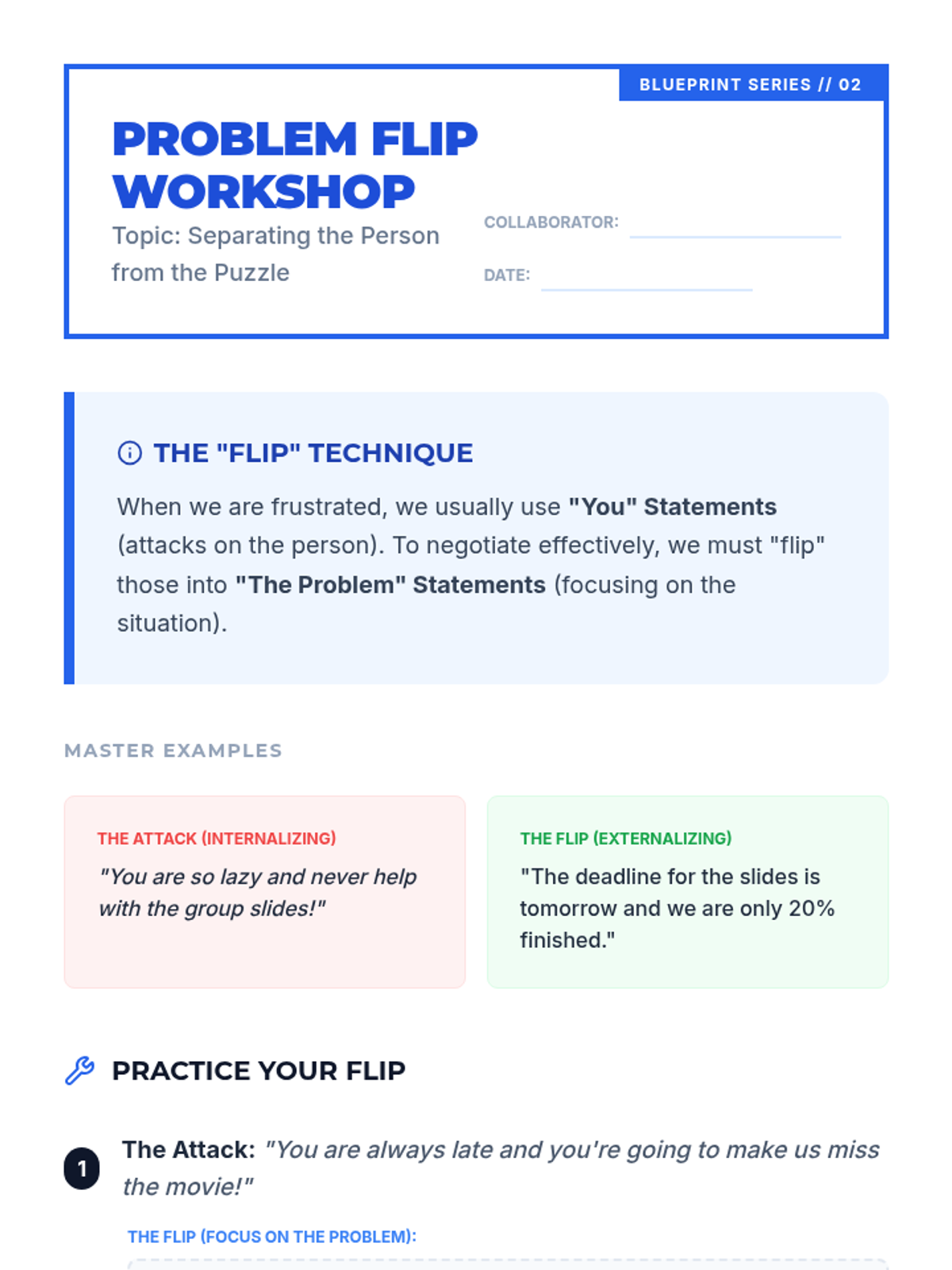
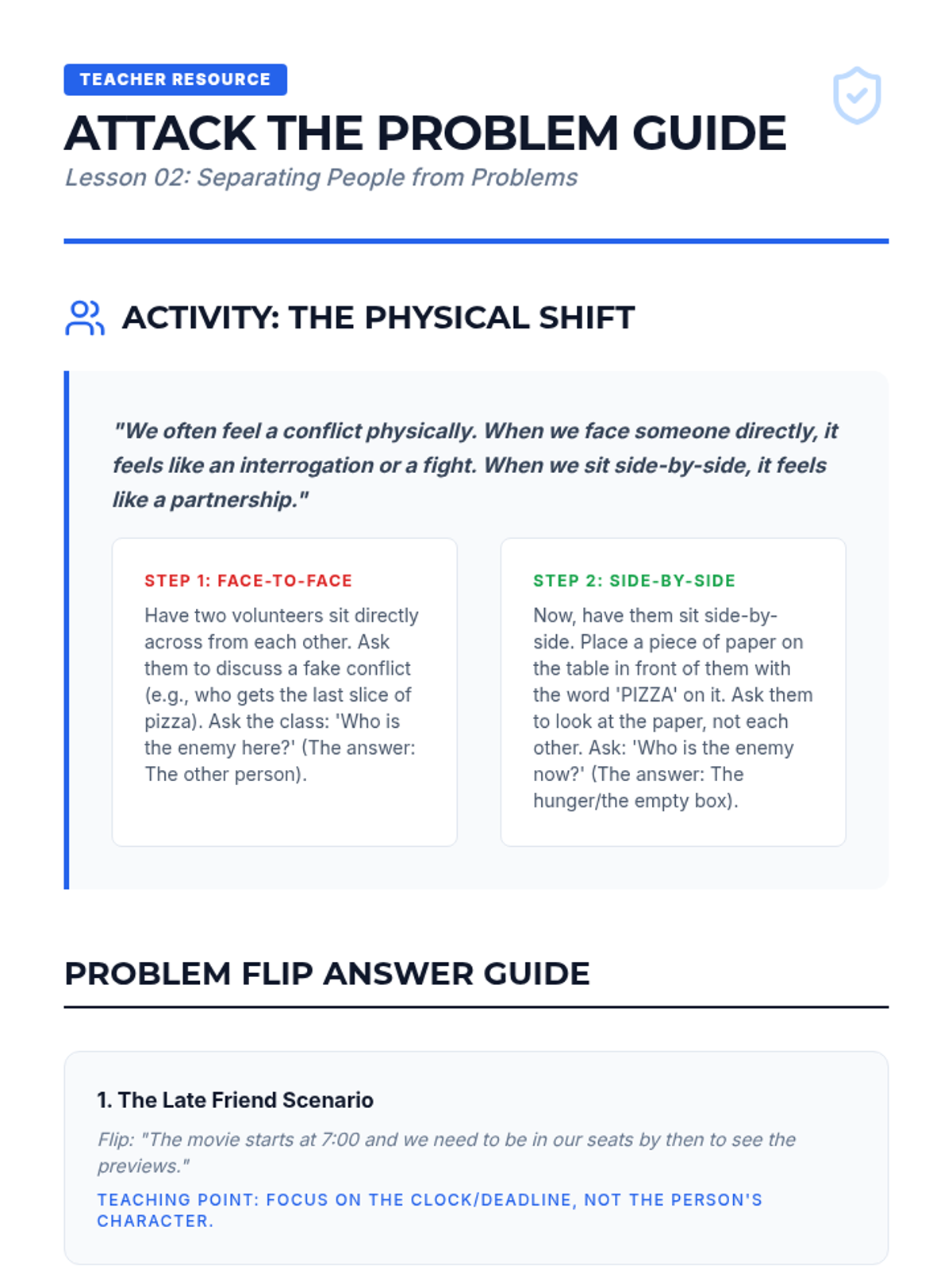
Students learn techniques to attack the problem, not the person. They practice rephrasing personal attacks into problem statements using externalizing language.
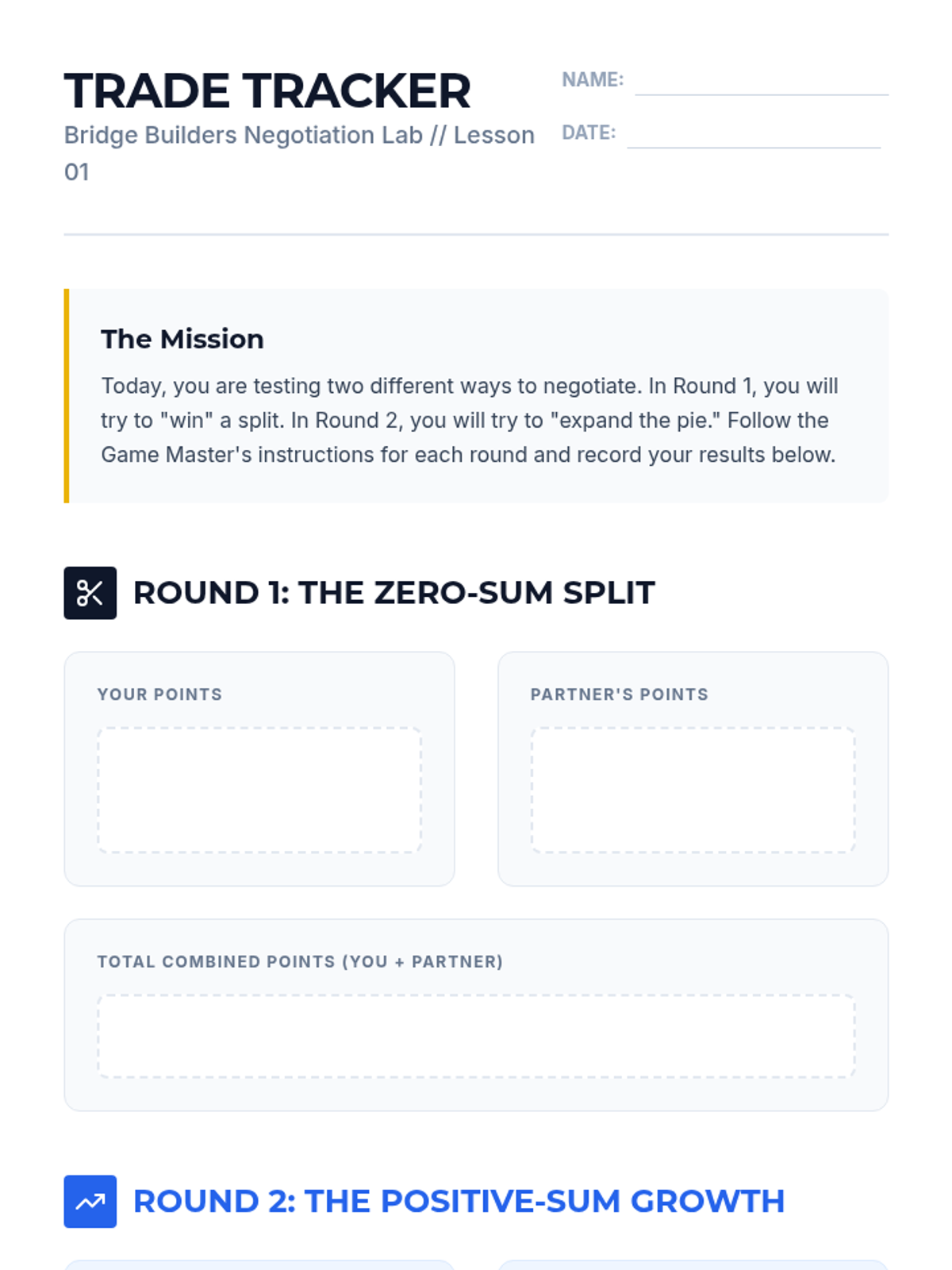
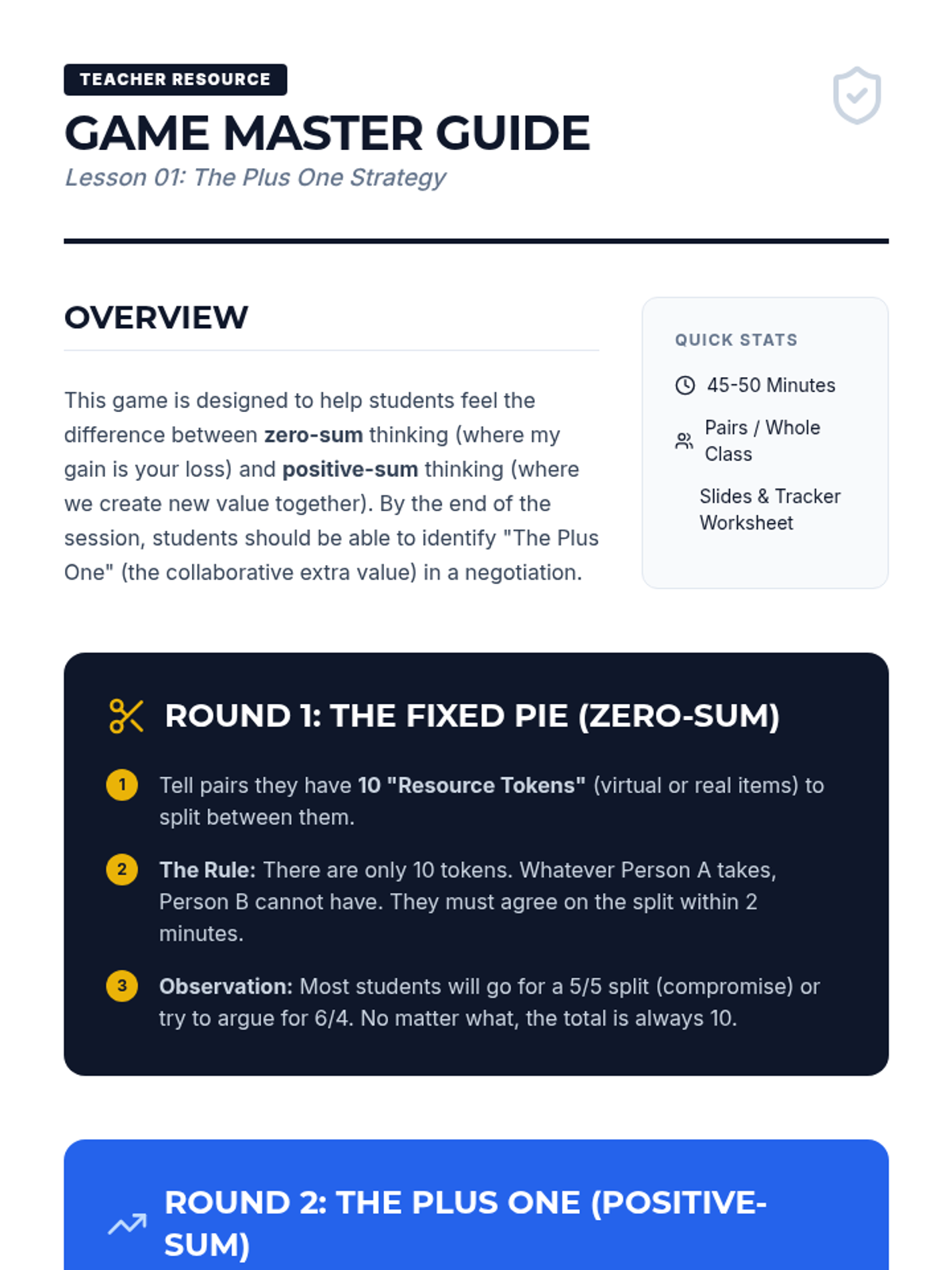
Students define and contrast compromise with collaboration. They engage in a trading game to experience the difference between zero-sum and positive-sum outcomes.
Students are introduced to the Iceberg Model of conflict, learning to distinguish between what people say they want (positions) and what they actually need (interests).
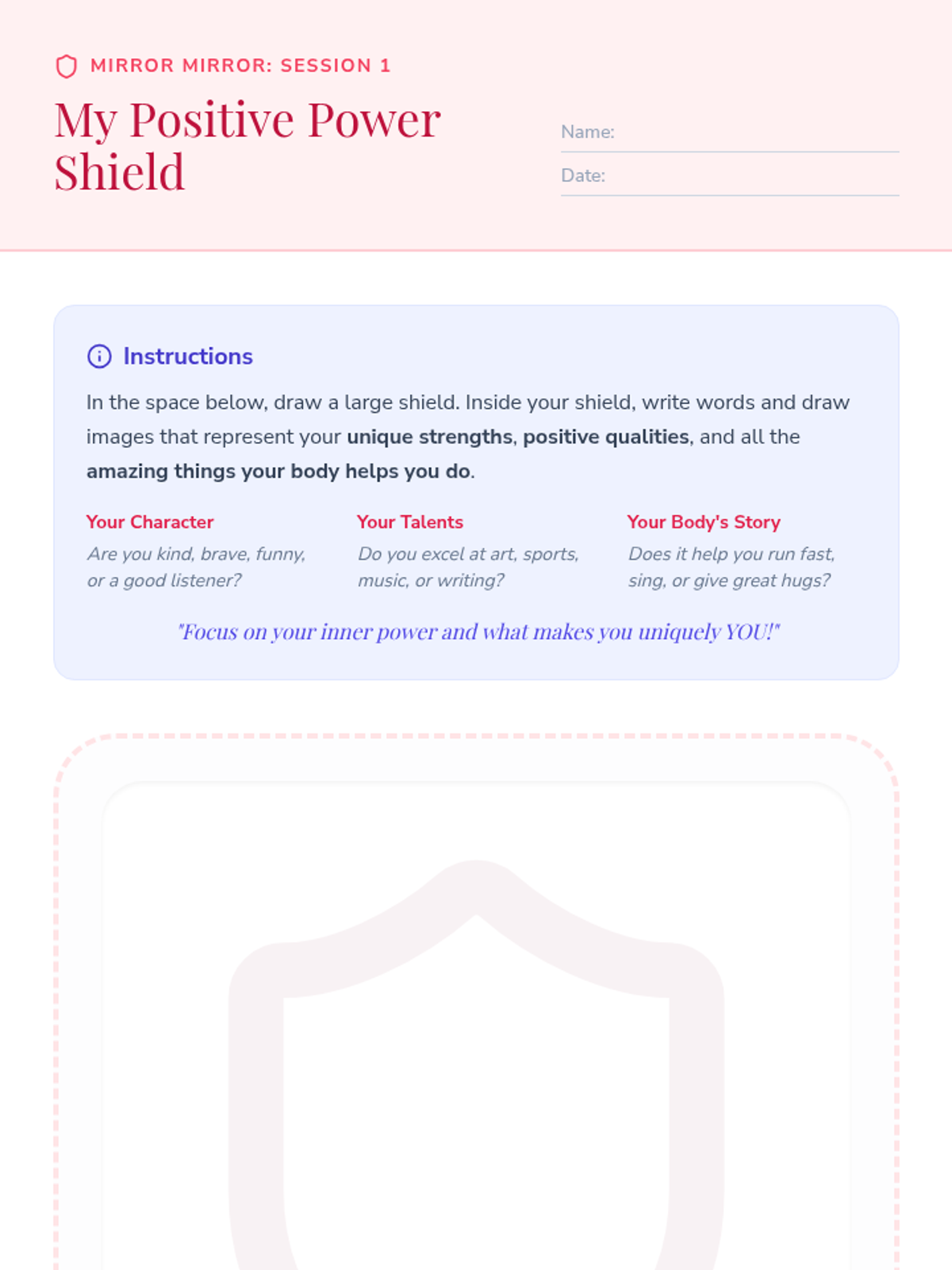
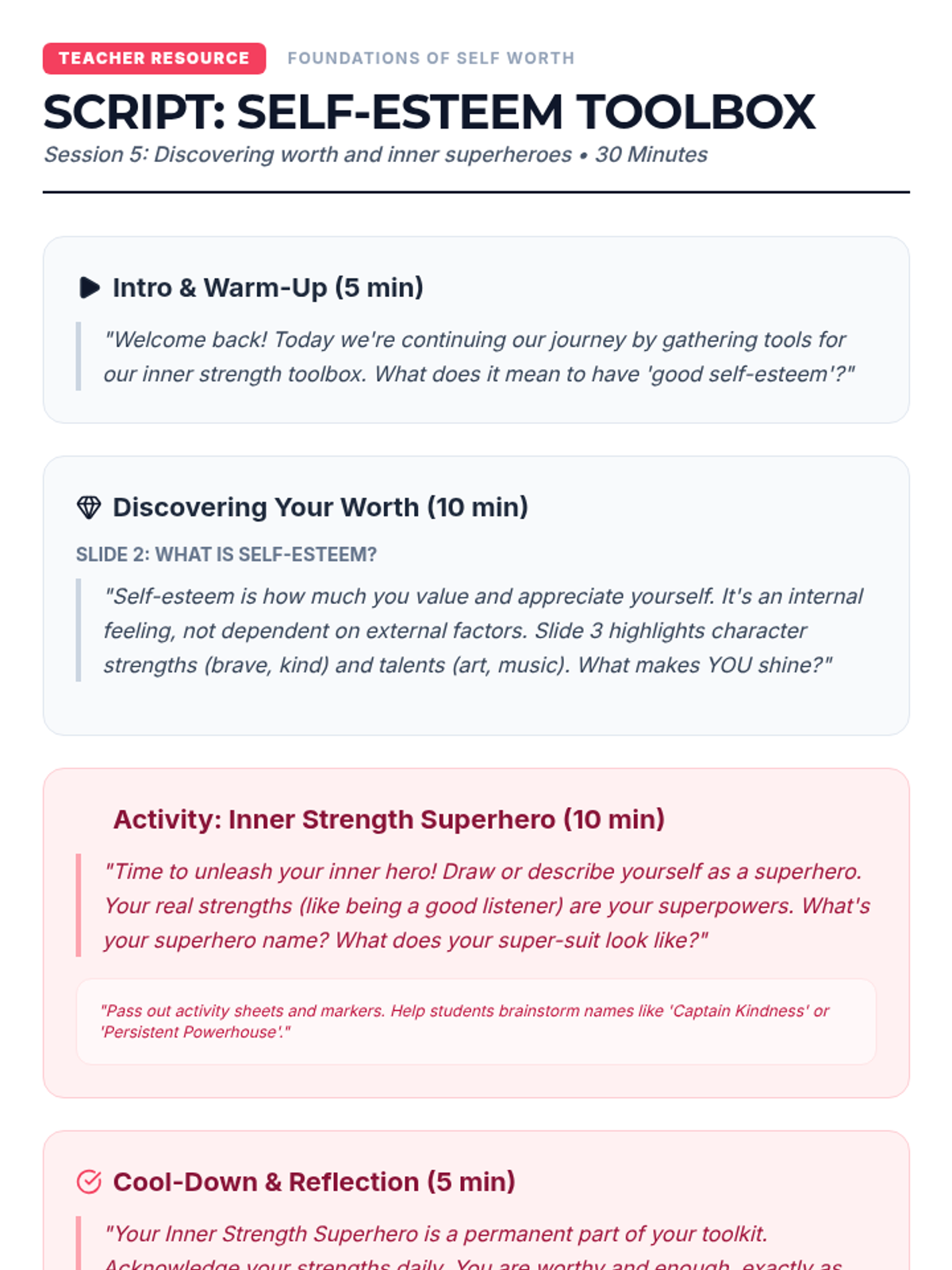
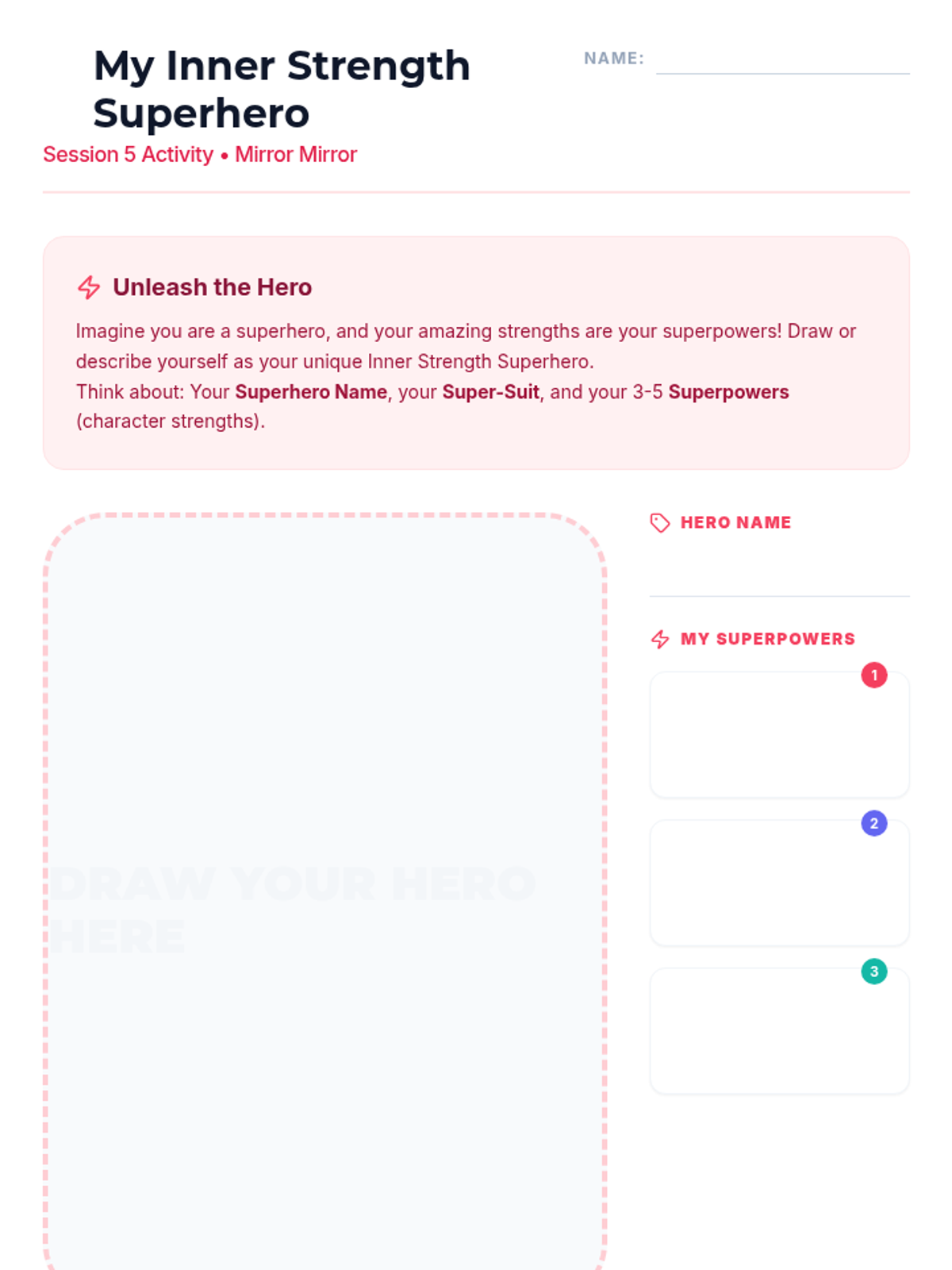
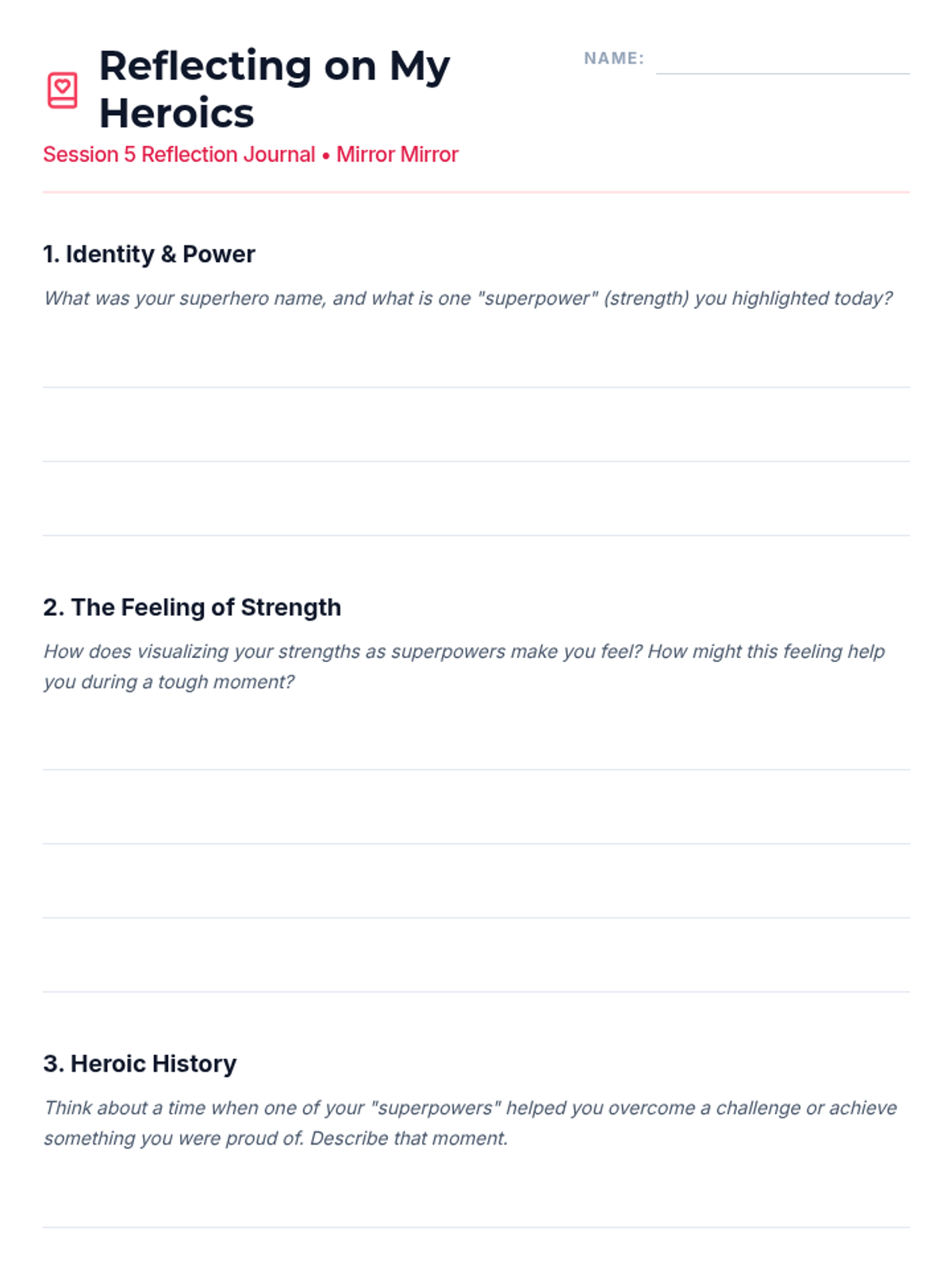
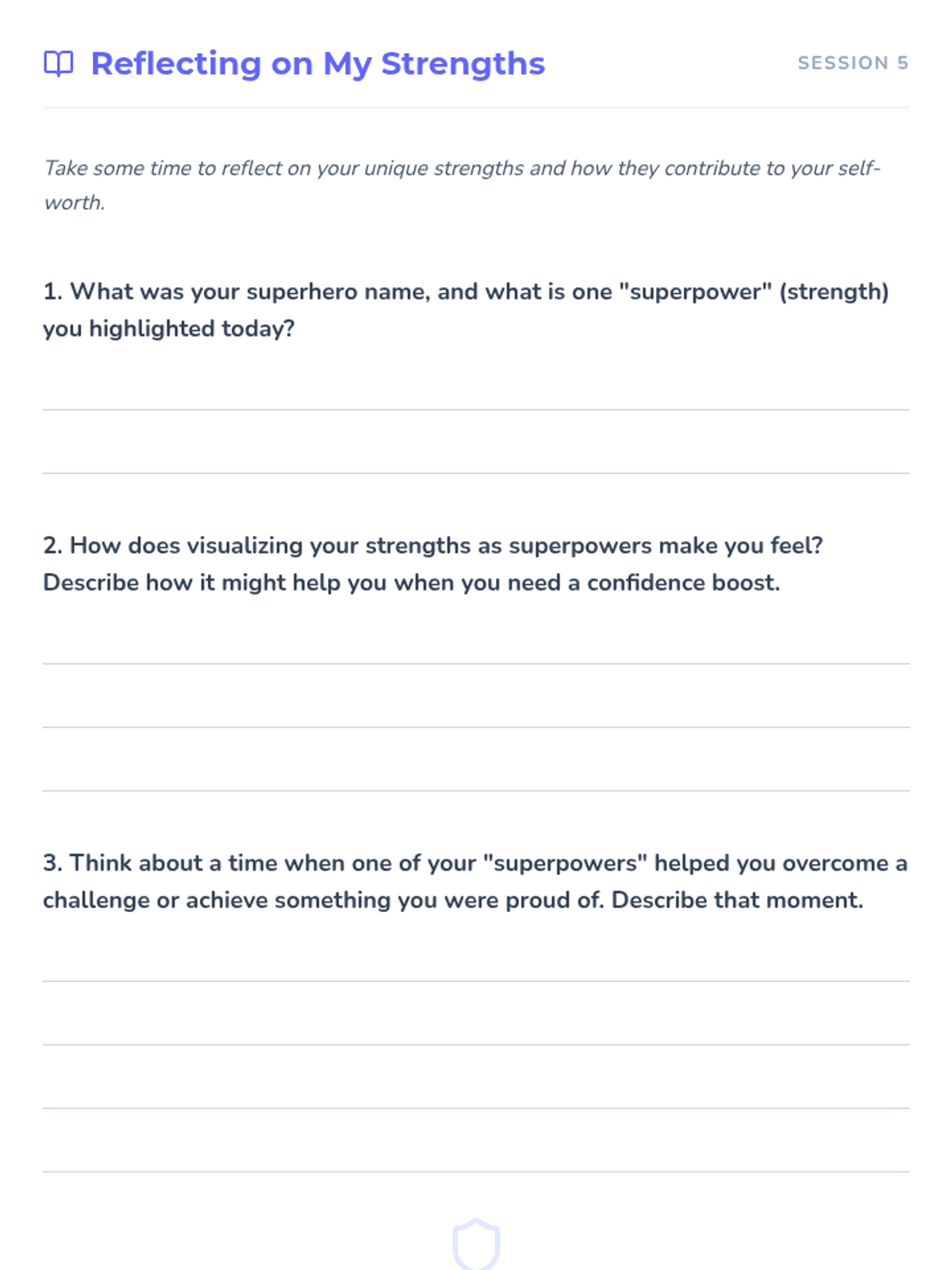
Identifying personal strengths and talents to build a self-esteem toolbox.