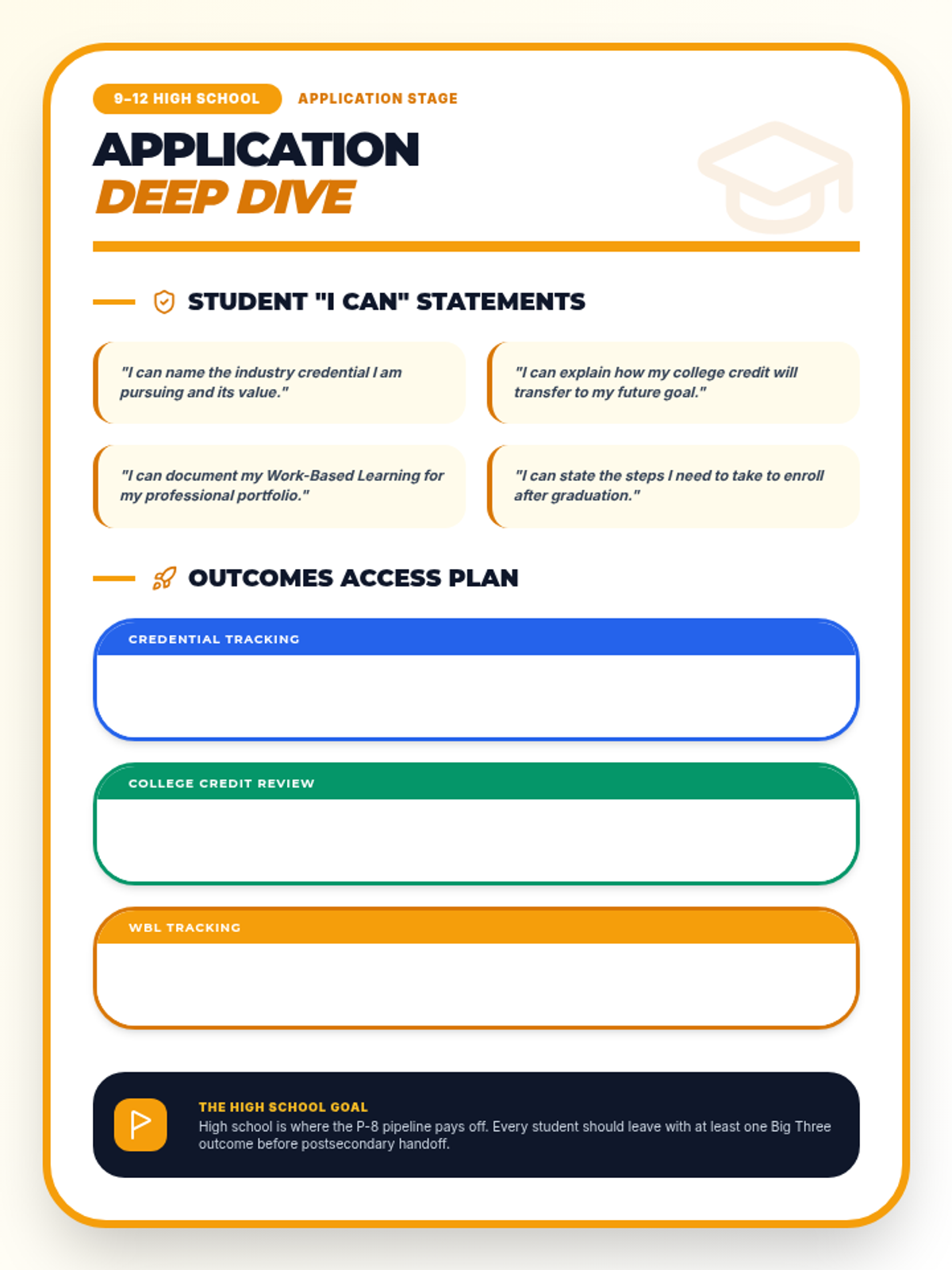
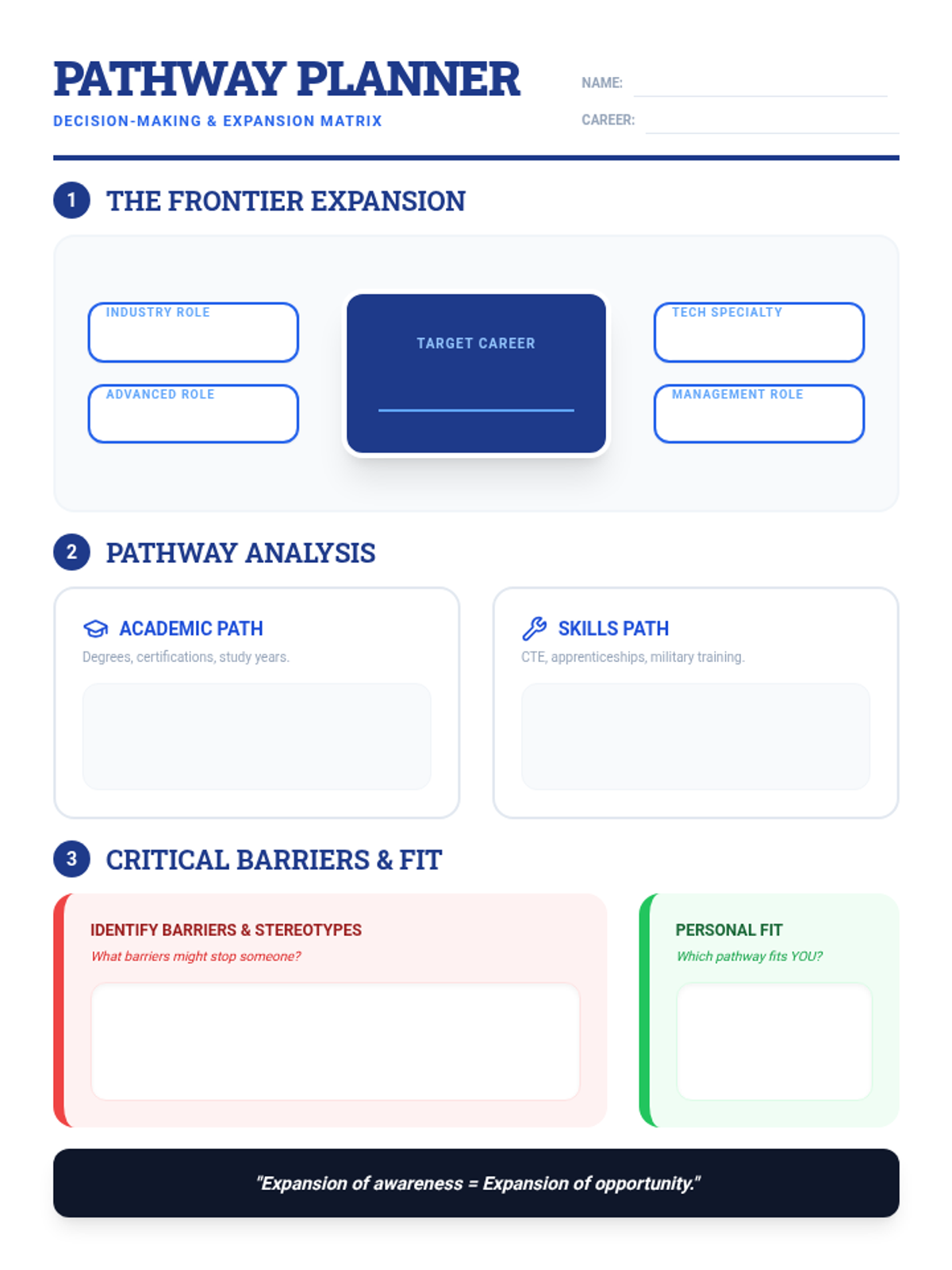
College selection, application workflows, and financial aid navigation including FAFSA and scholarship acquisition. Builds skills in personal statement writing and career exploration to align post-secondary choices with long-term professional goals.
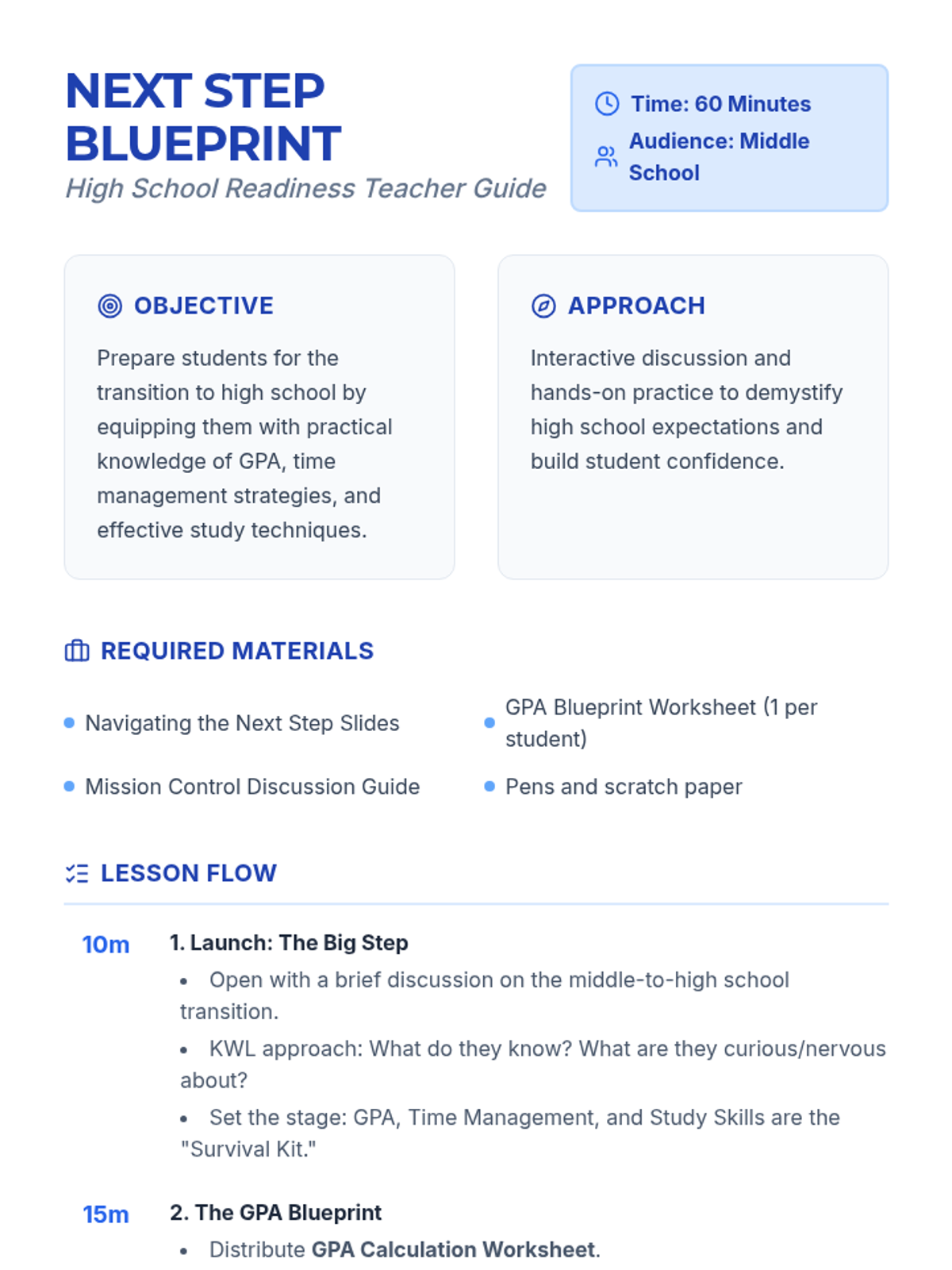
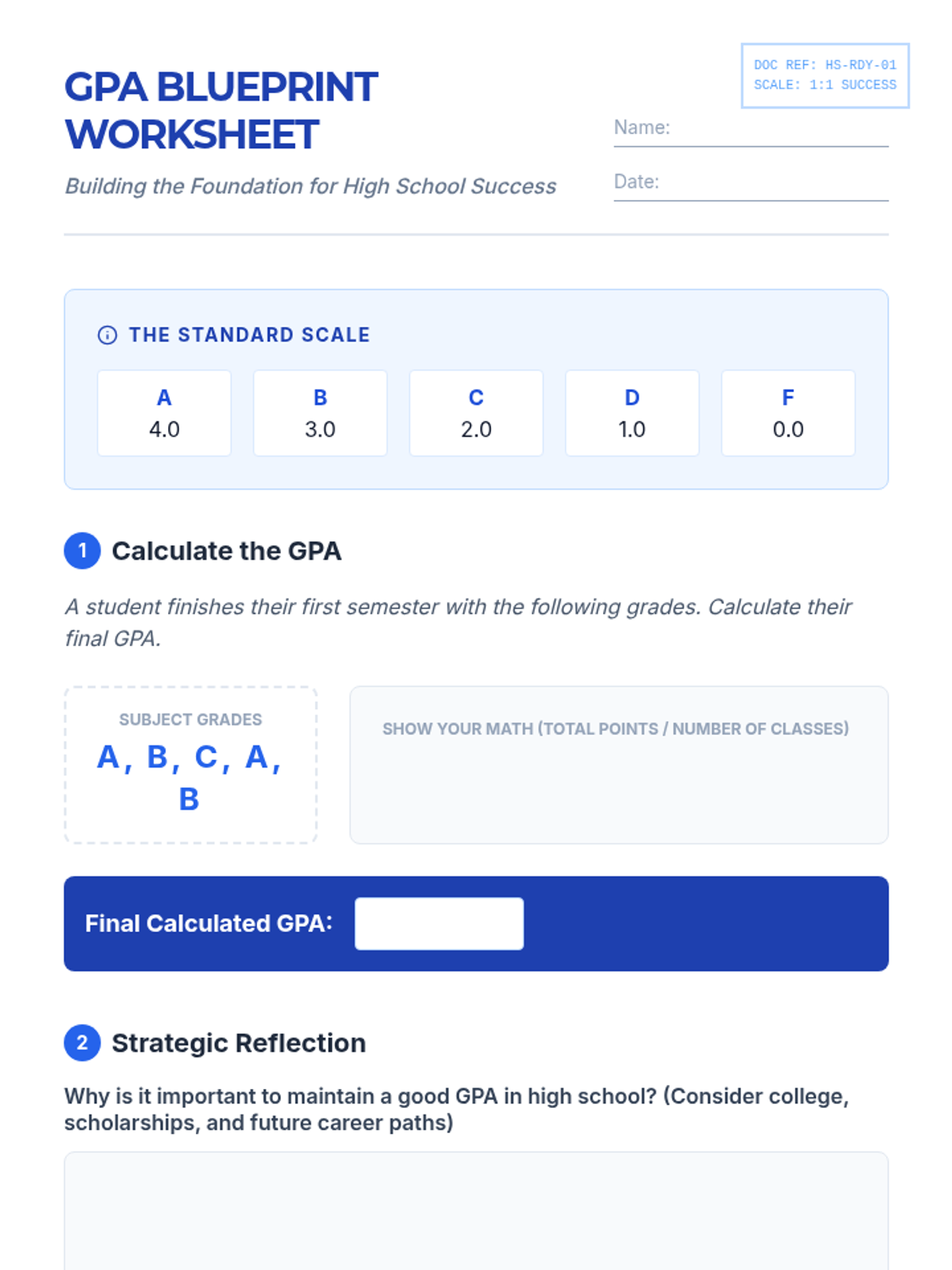
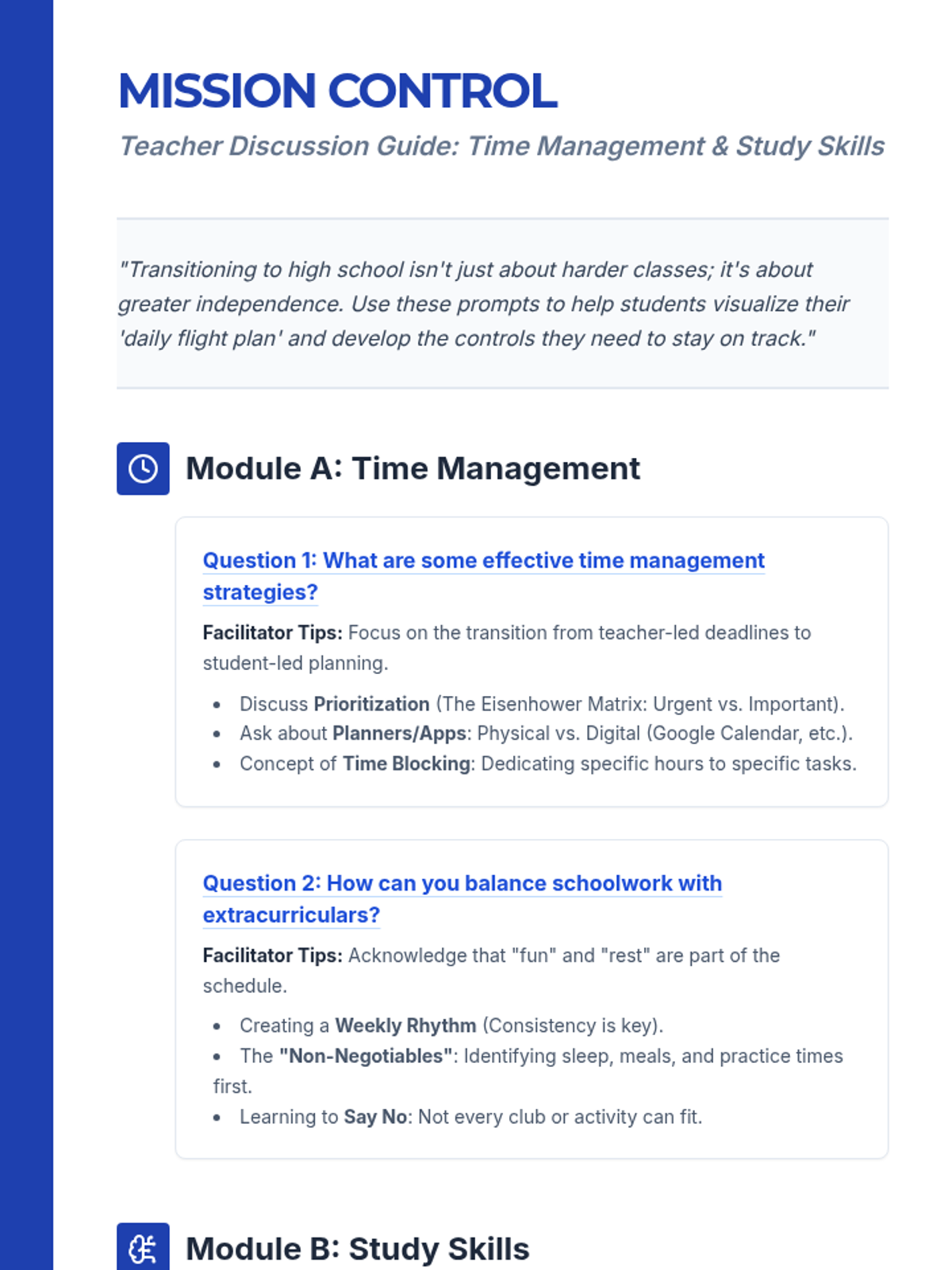
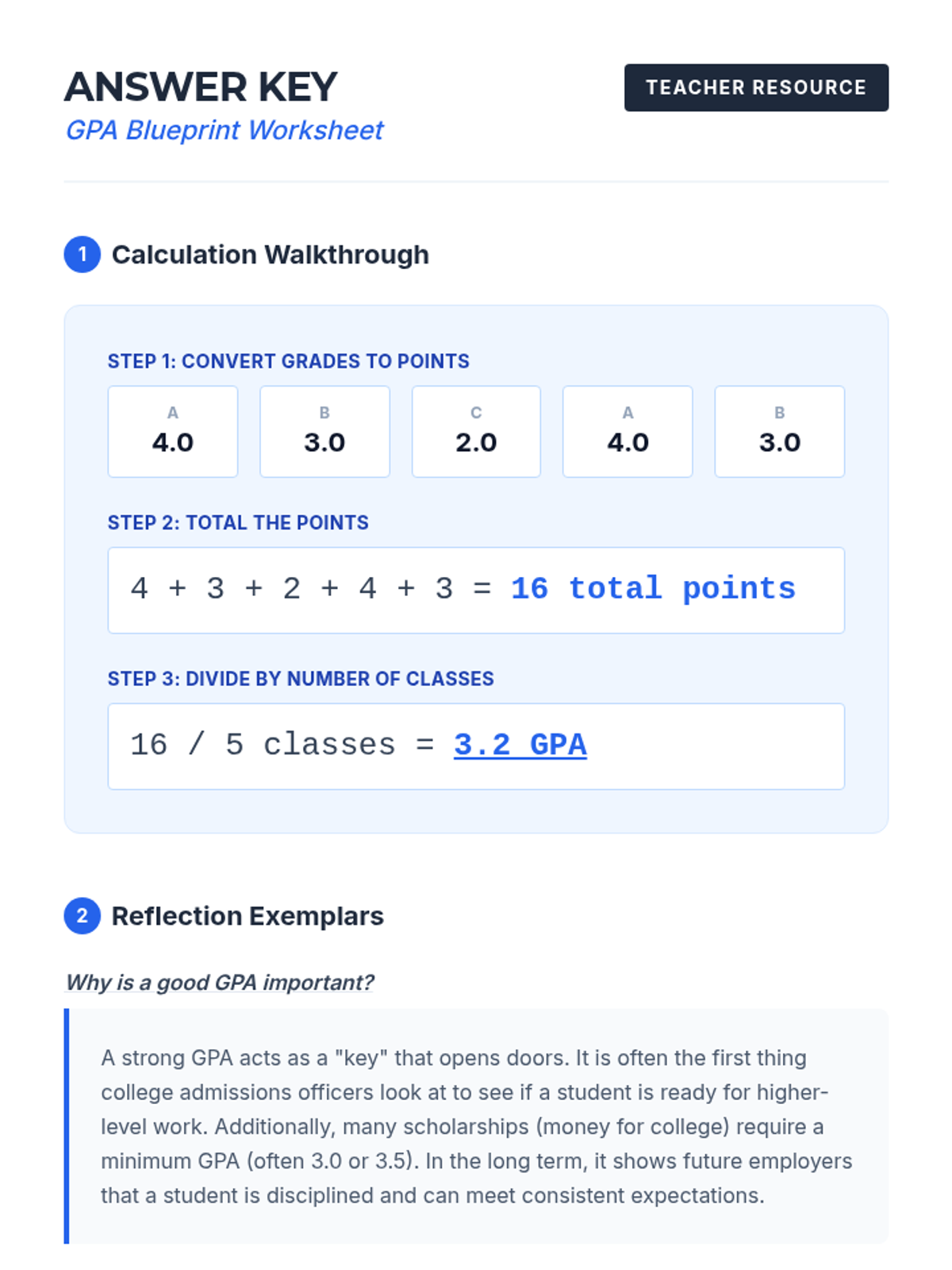
A comprehensive lesson designed to prepare middle school students for the transition to high school, focusing on GPA calculation, time management, and essential study skills.
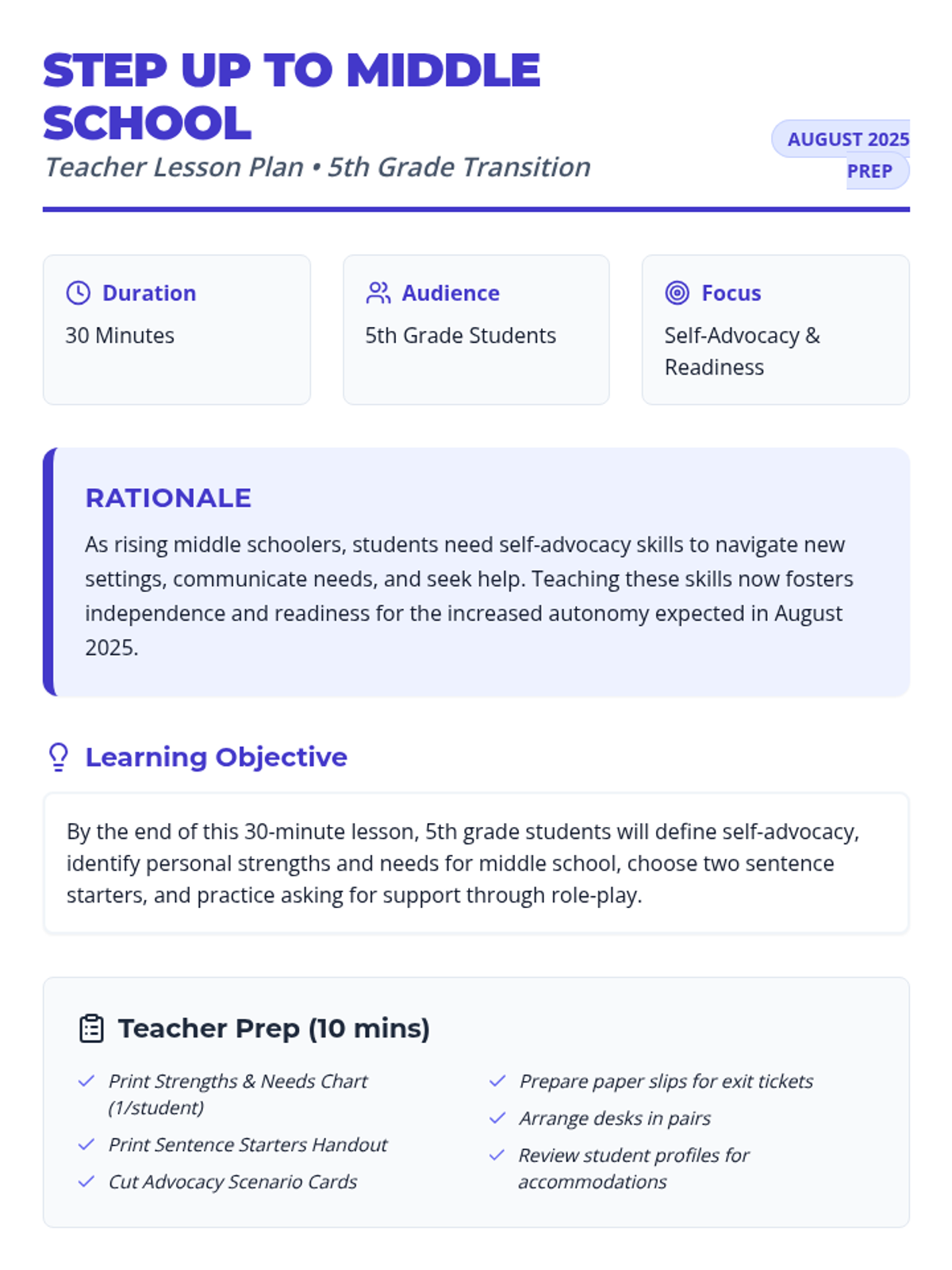
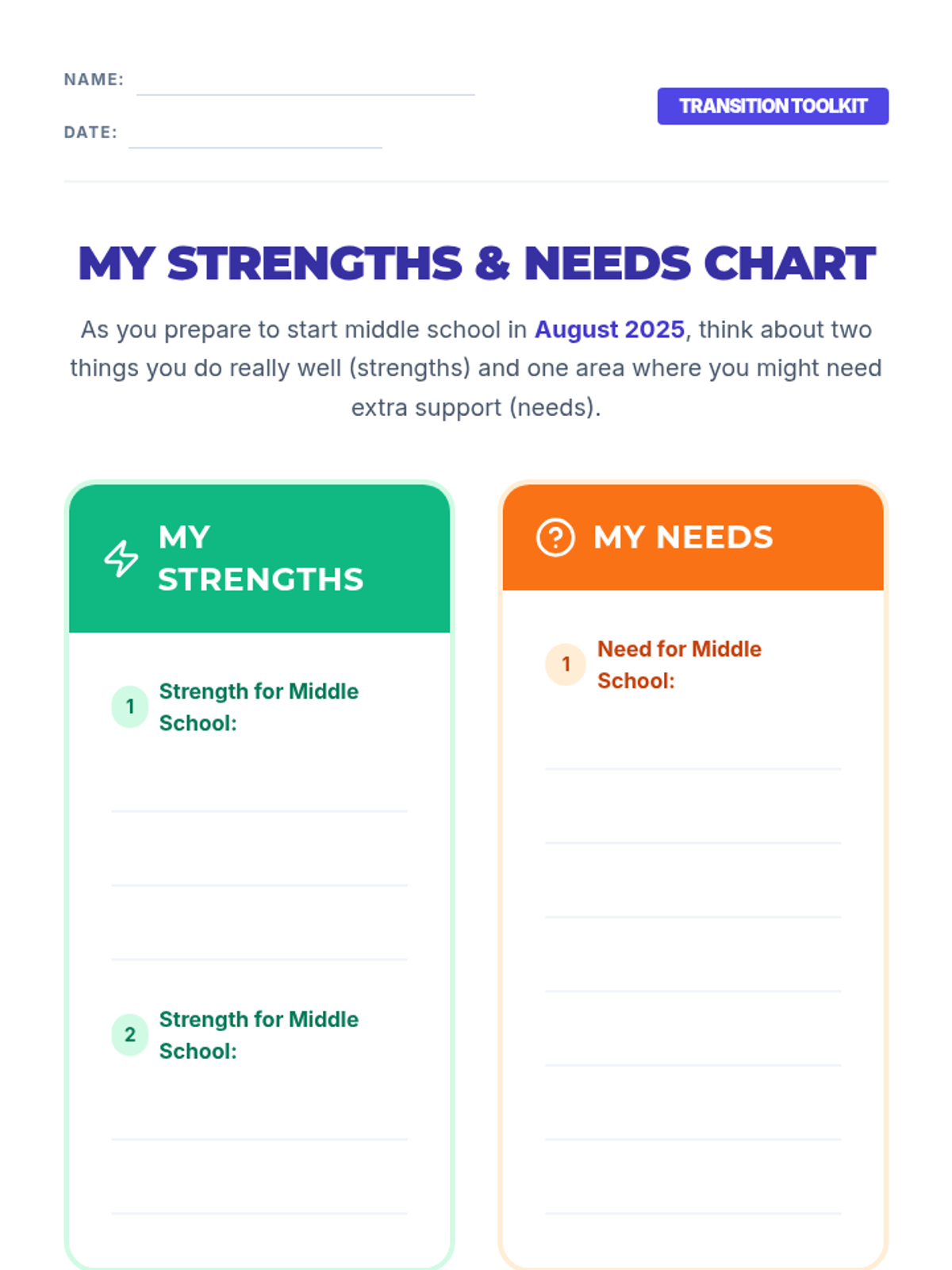
A 30-minute lesson designed to empower 5th-grade students with self-advocacy skills as they transition to middle school. Students identify personal strengths, learn specific communication strategies, and practice asking for support through role-play scenarios.
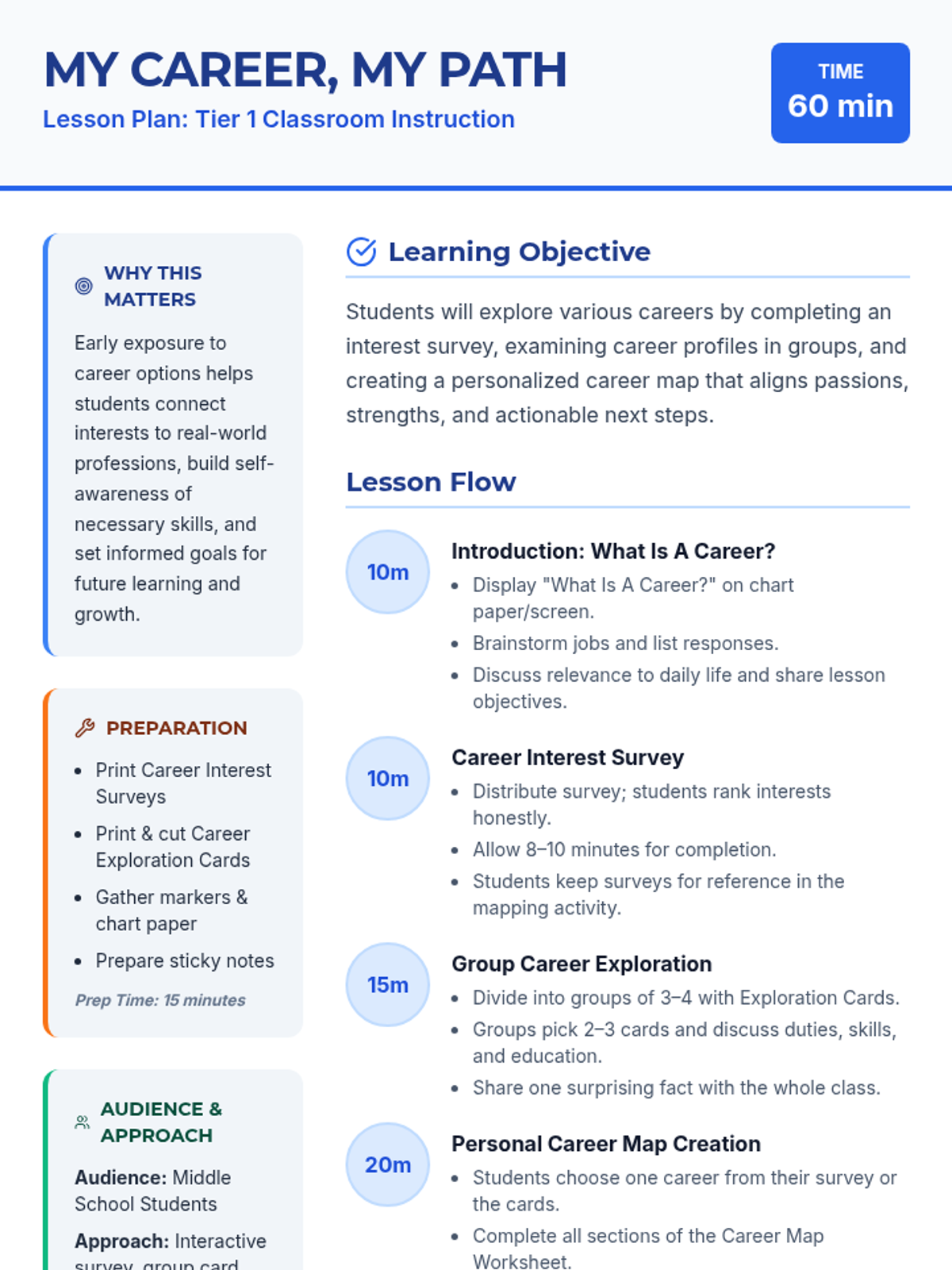
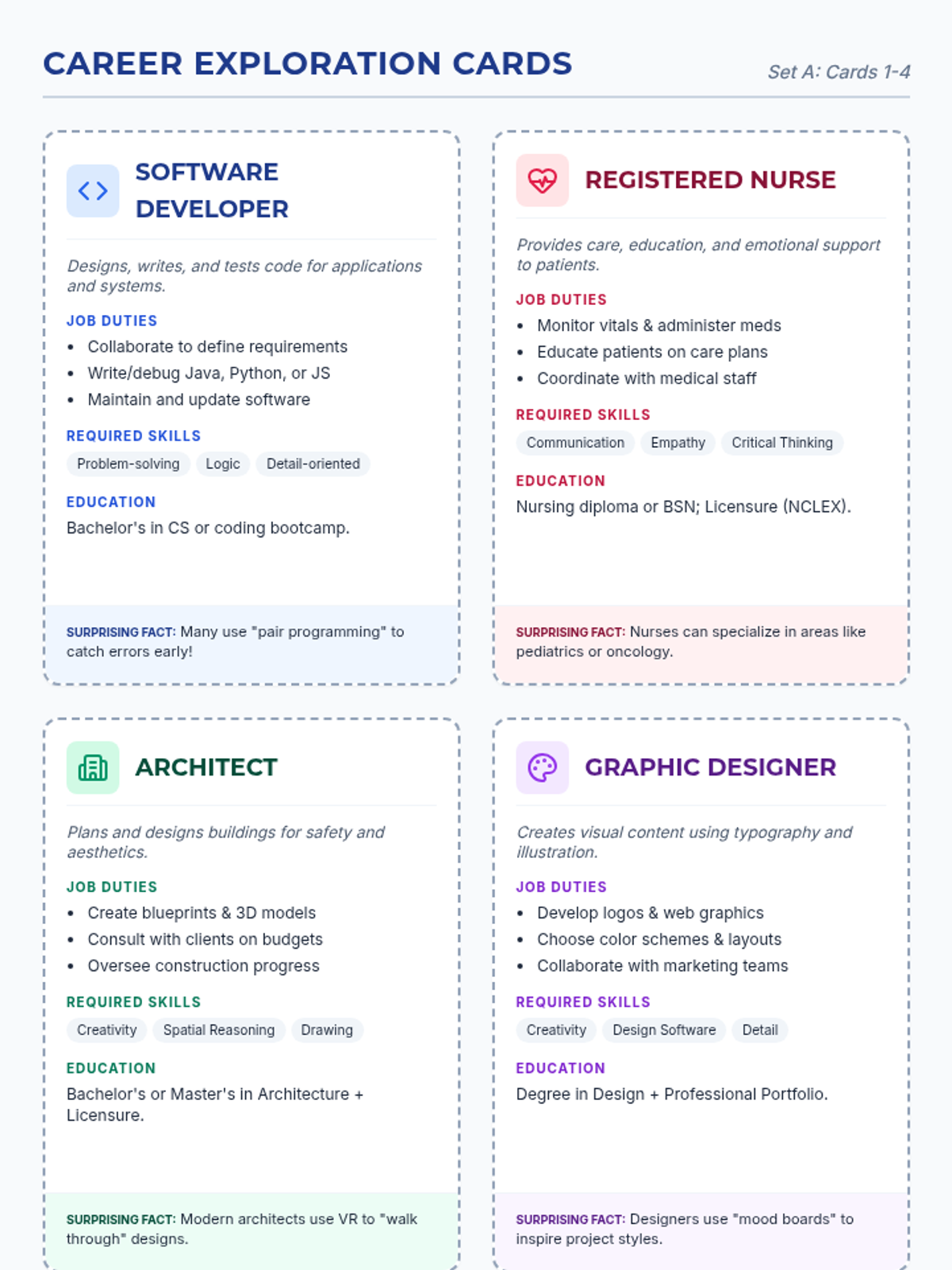
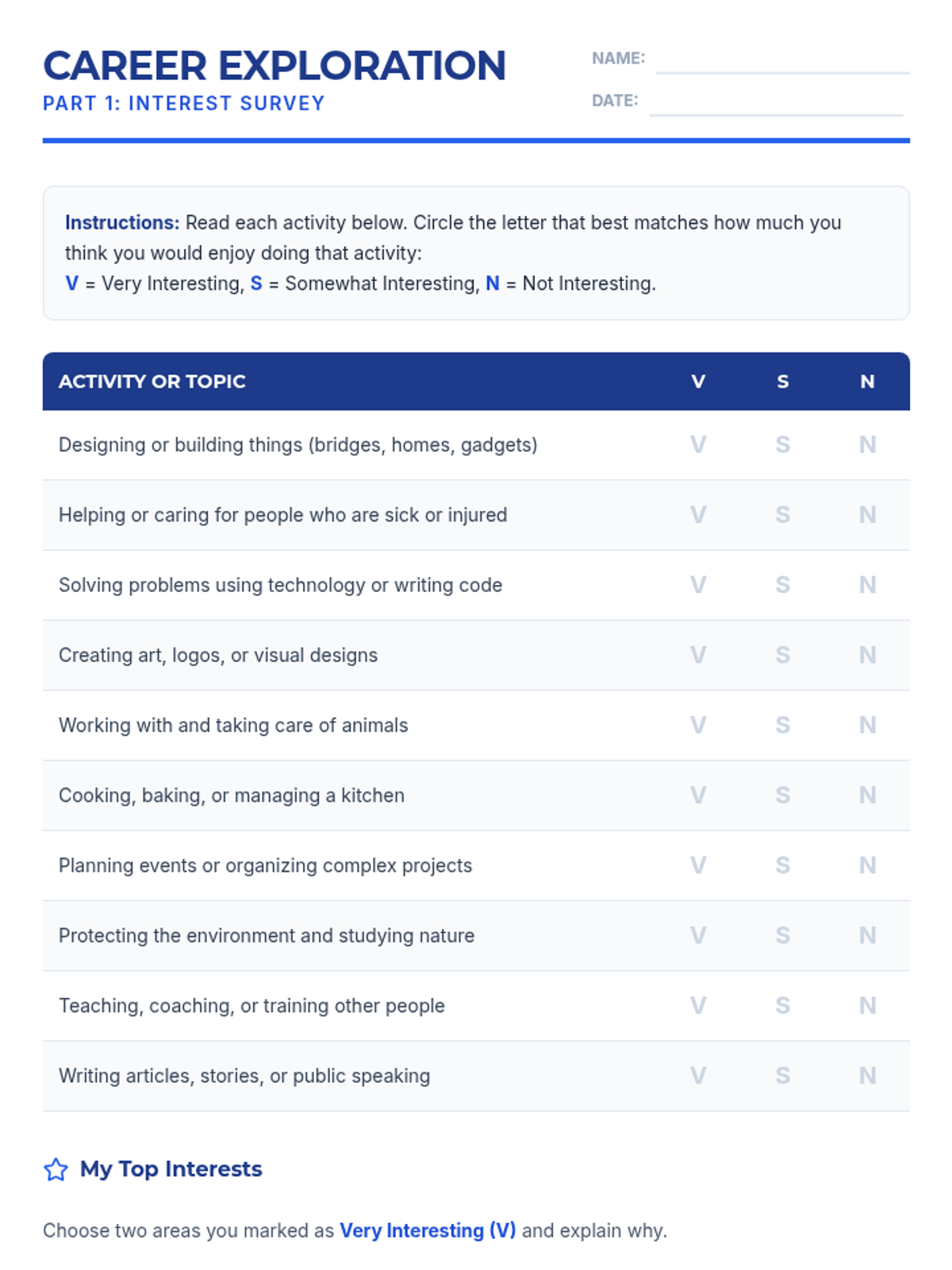
This lesson helps middle schoolers explore career options and understand the skills needed for their interests through an interactive survey, group card exploration, and personalized career mapping.
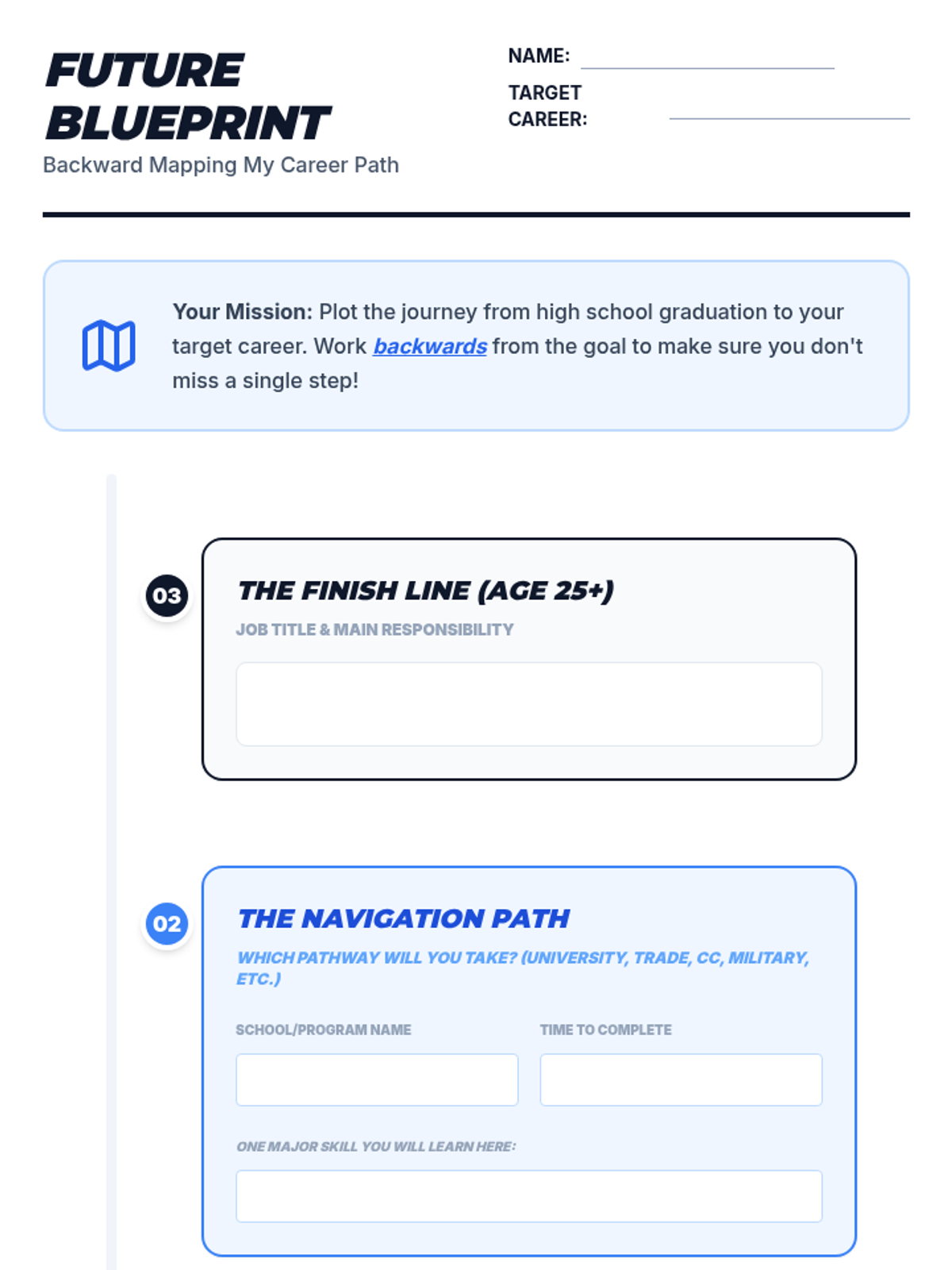
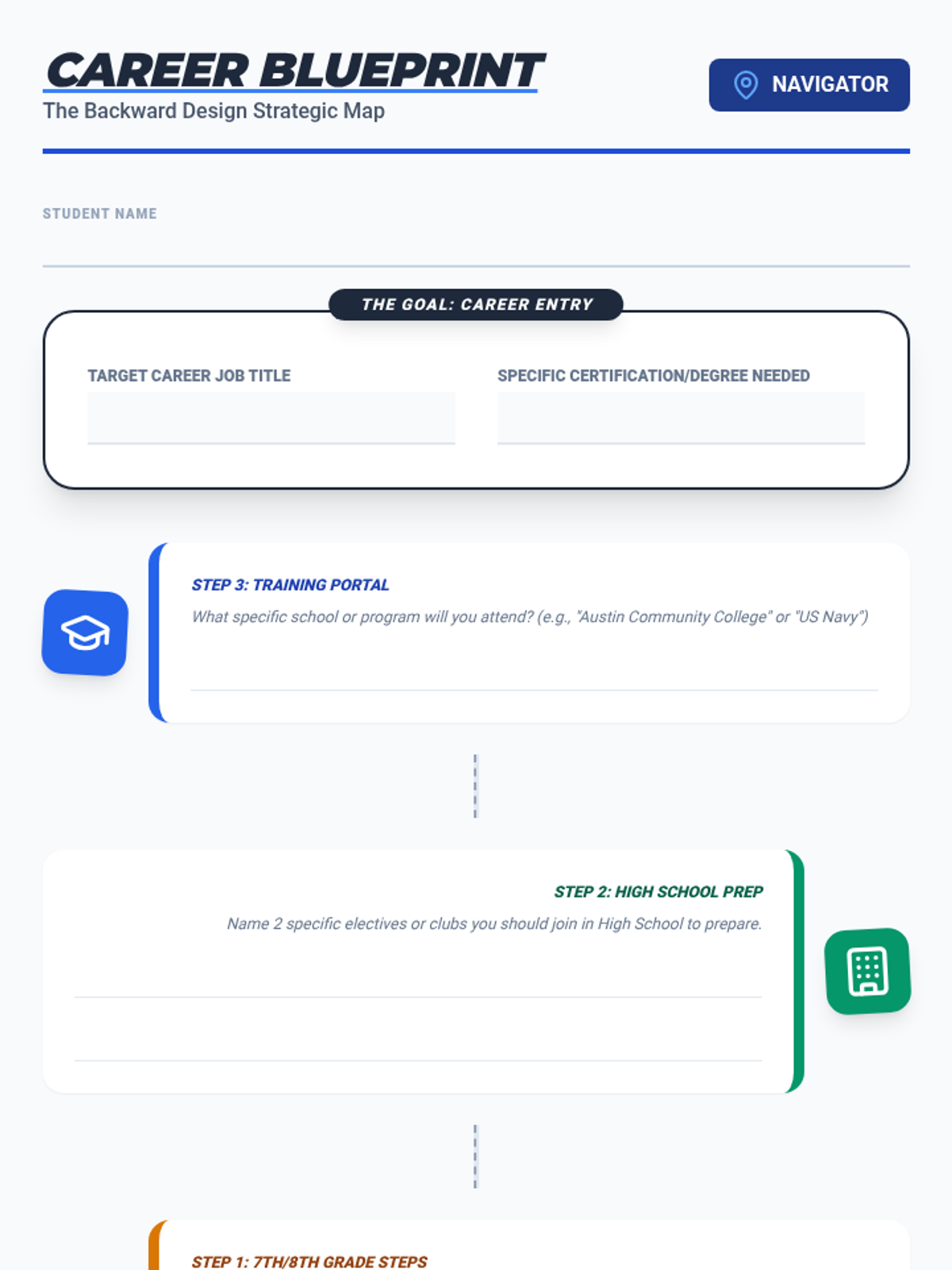
Students select a target career and create a backward-mapped timeline from their dream job to high school graduation.
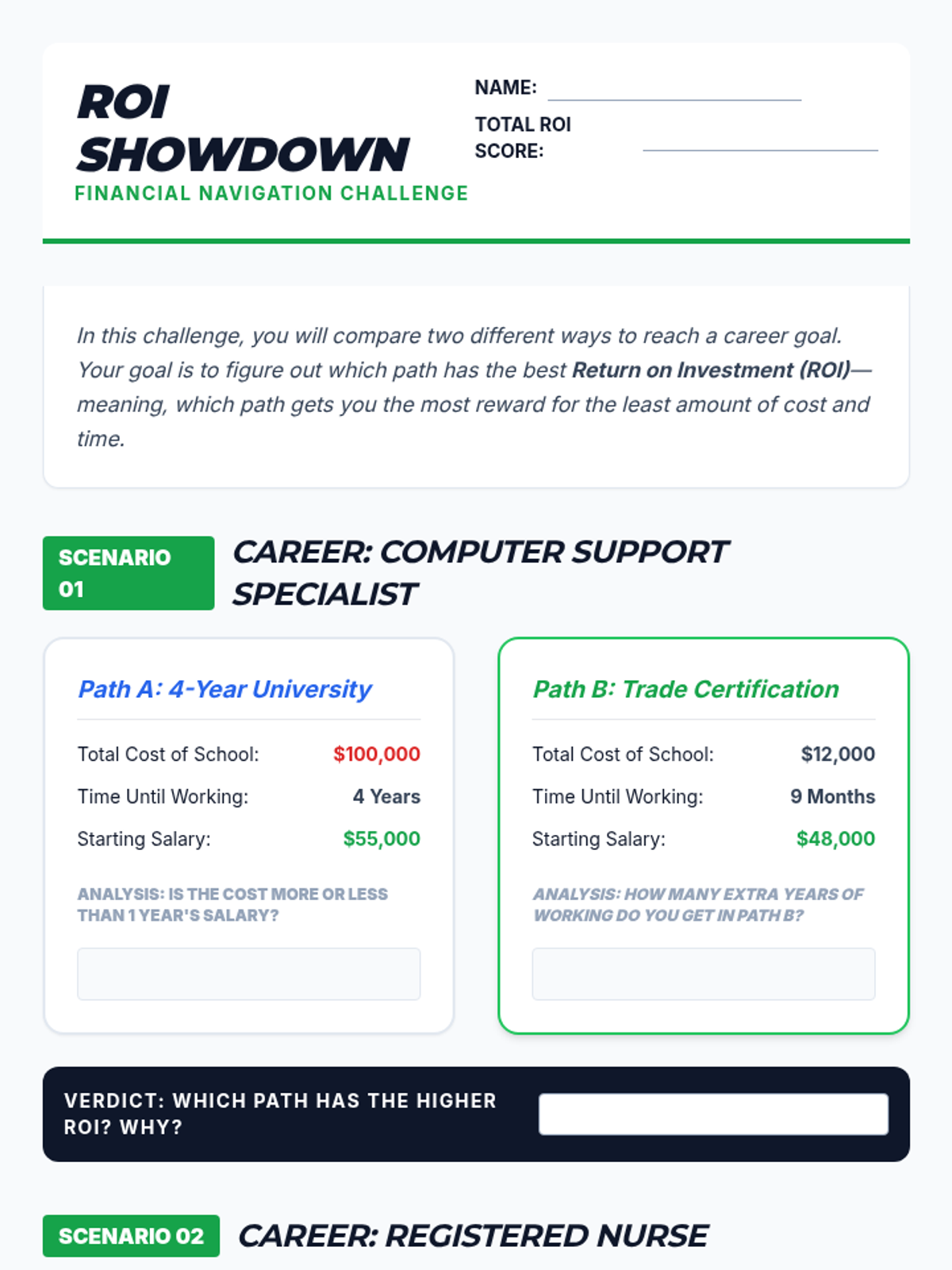
Students compare the costs and potential salaries of different education paths using simplified financial concepts and discussing student loans.
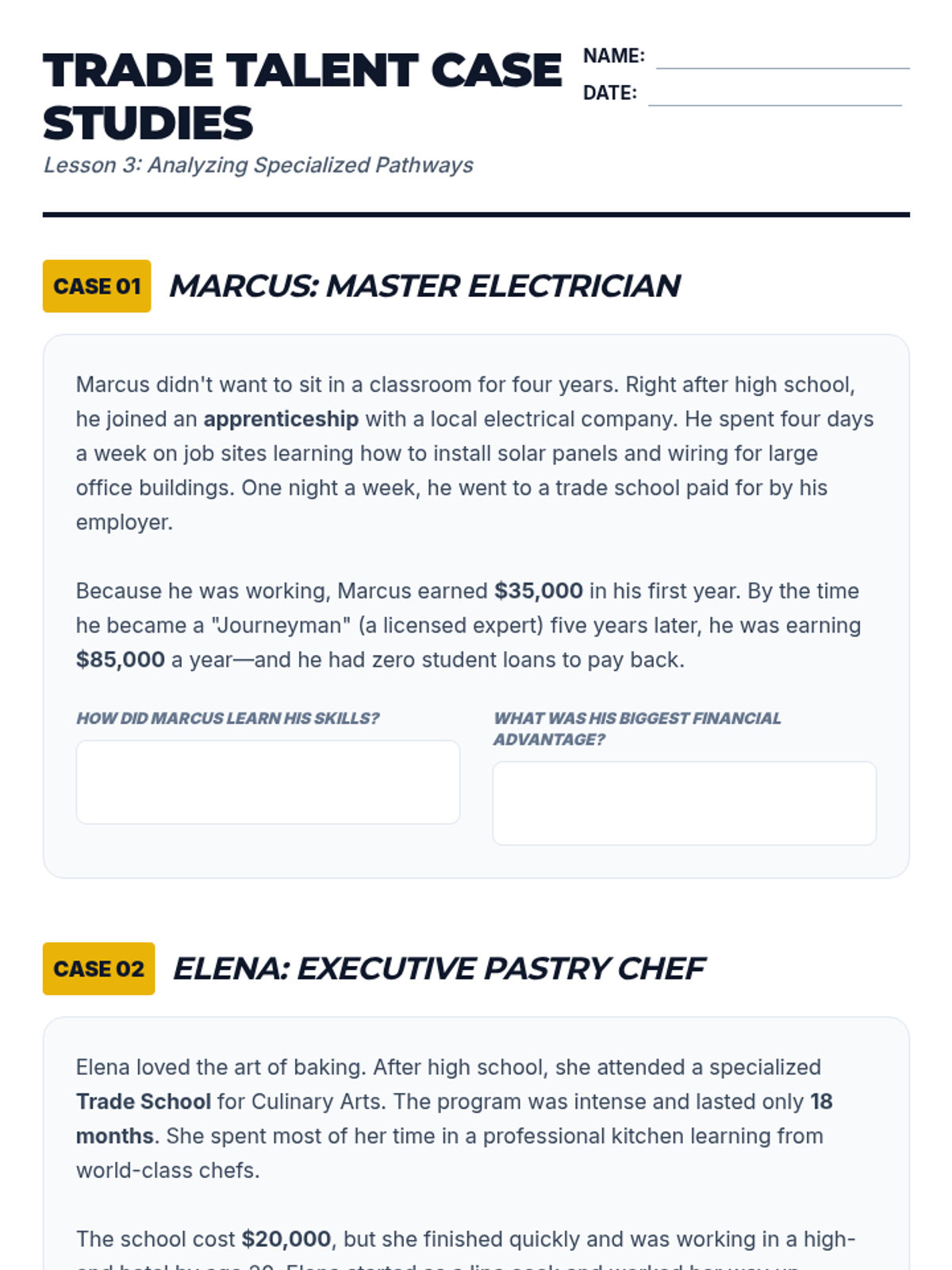
Students examine skilled trades and apprenticeships, focusing on the 'earn while you learn' model through case studies of various trade careers.
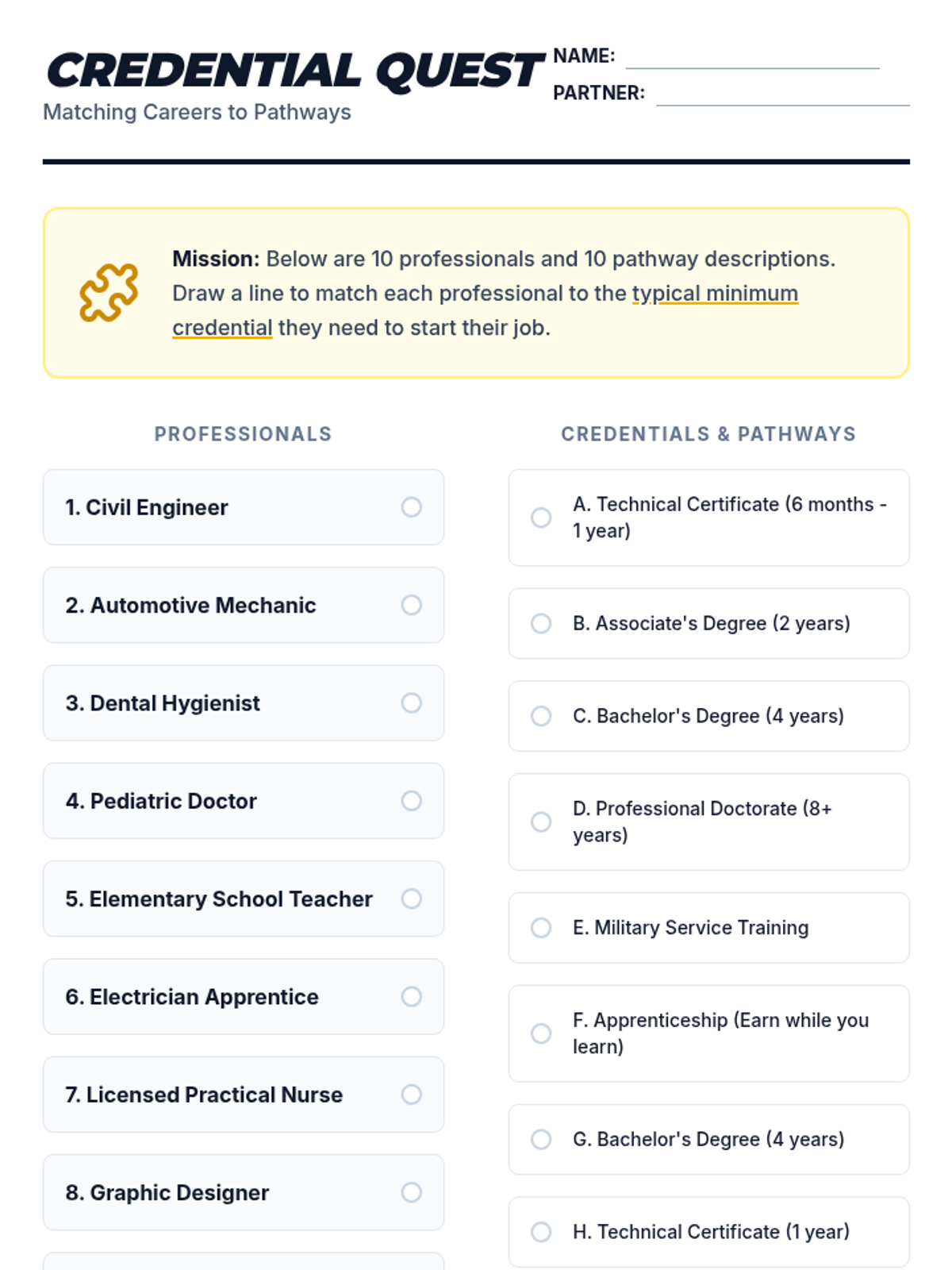
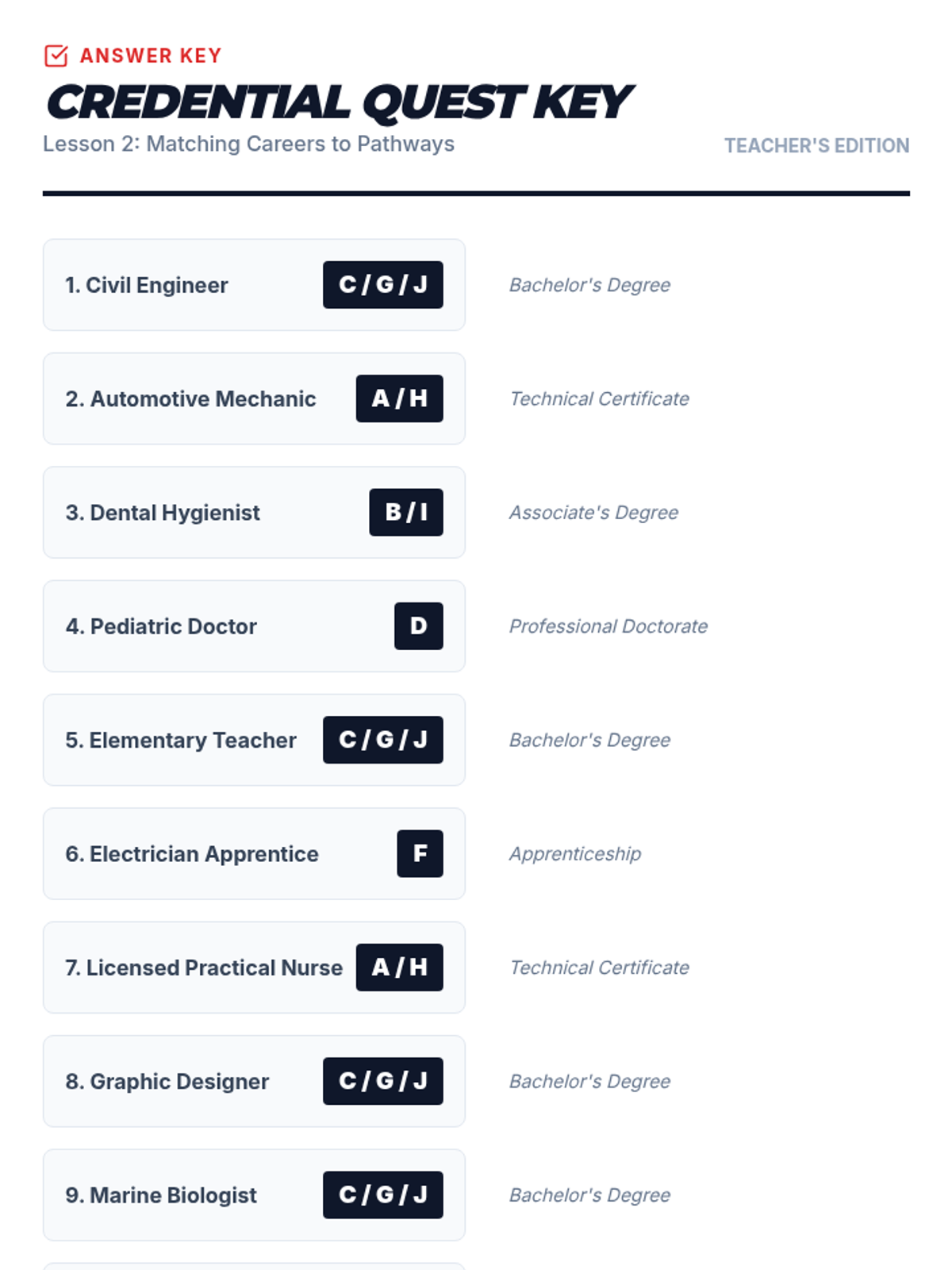
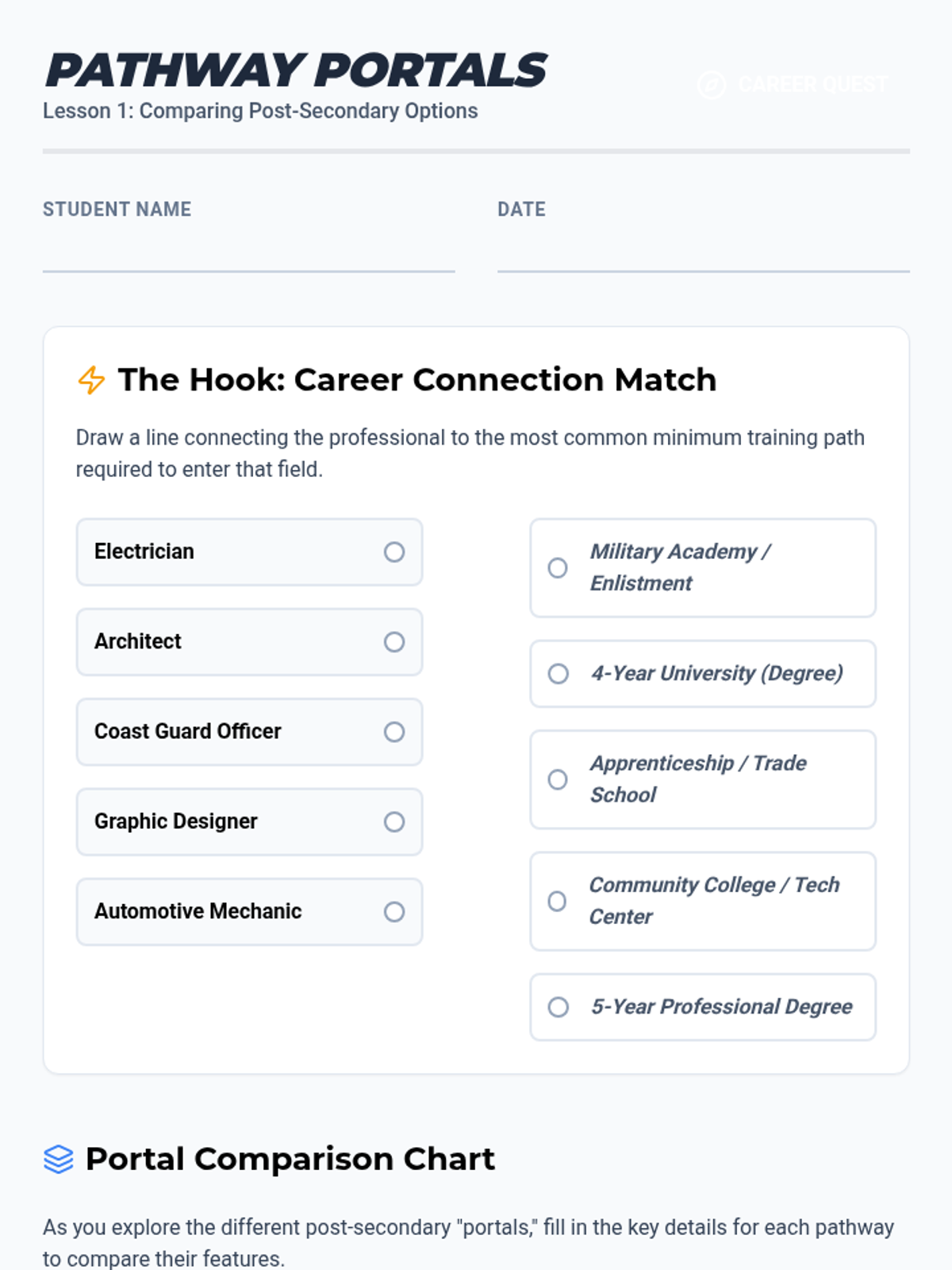
Students work in groups to match specific careers with their required credentials and discuss the relationship between training length and job type.
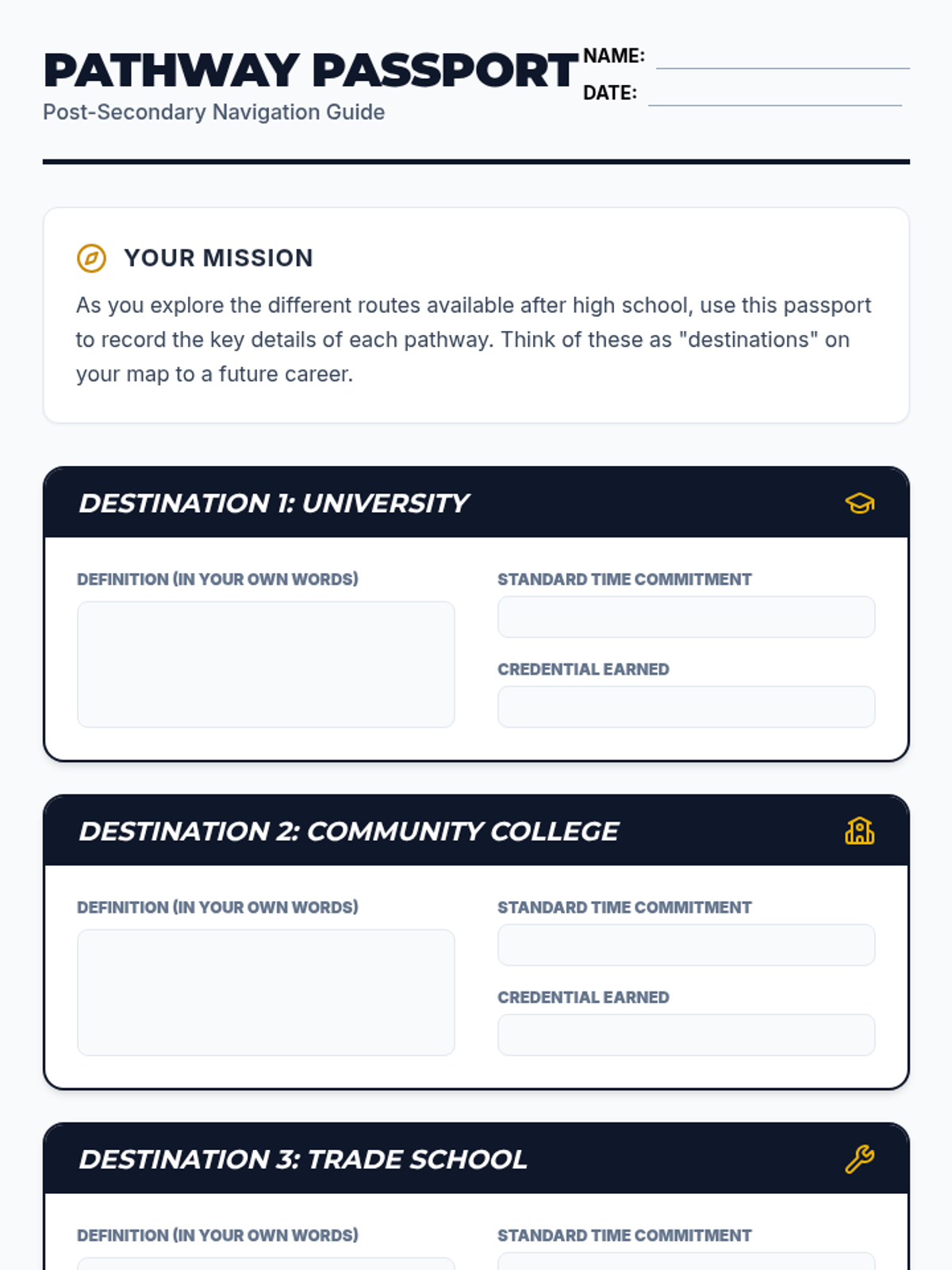
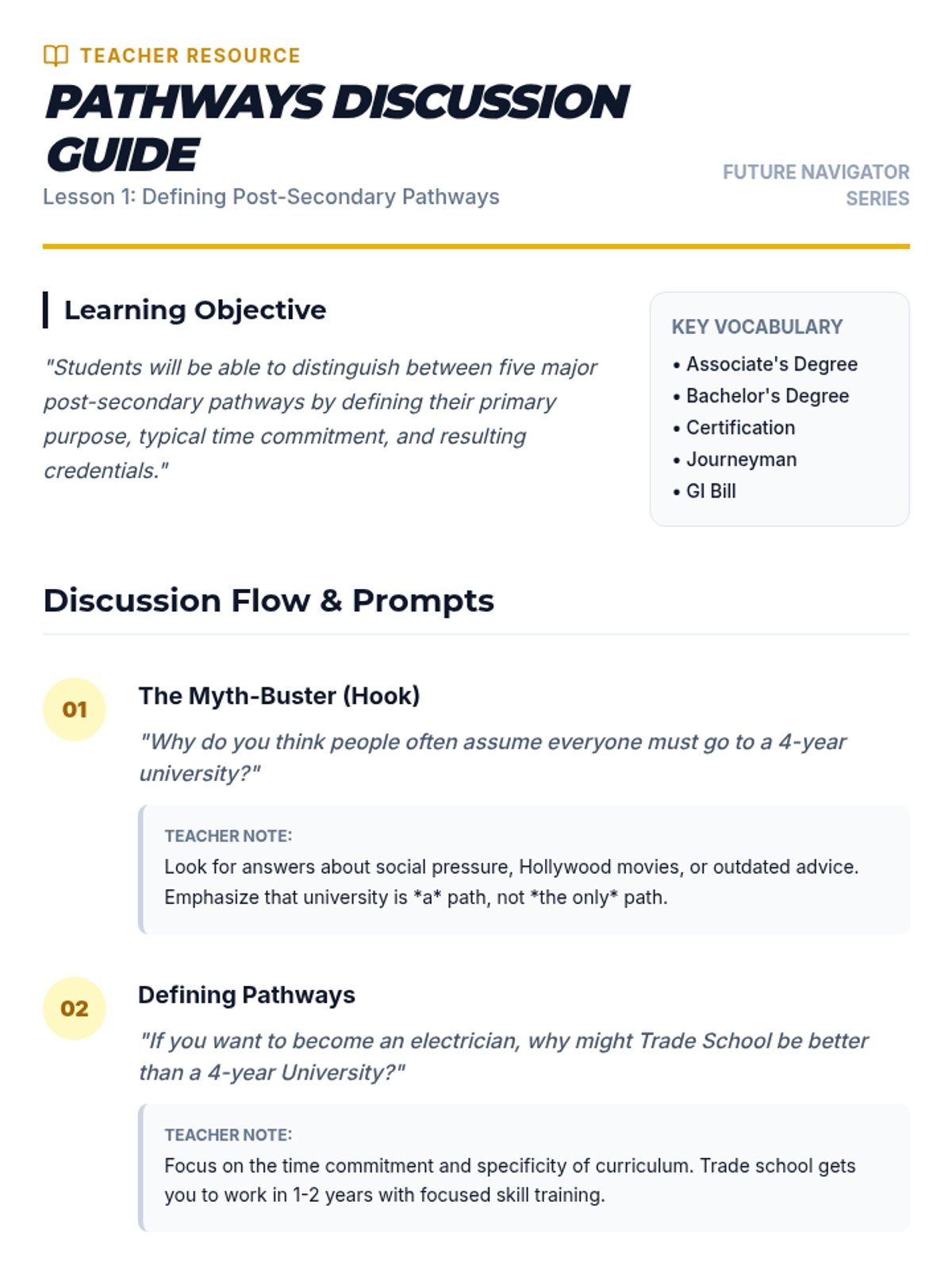
Students investigate the definitions of university, community college, trade school, apprenticeship, and military service to distinguish the time commitment and outcome of each.
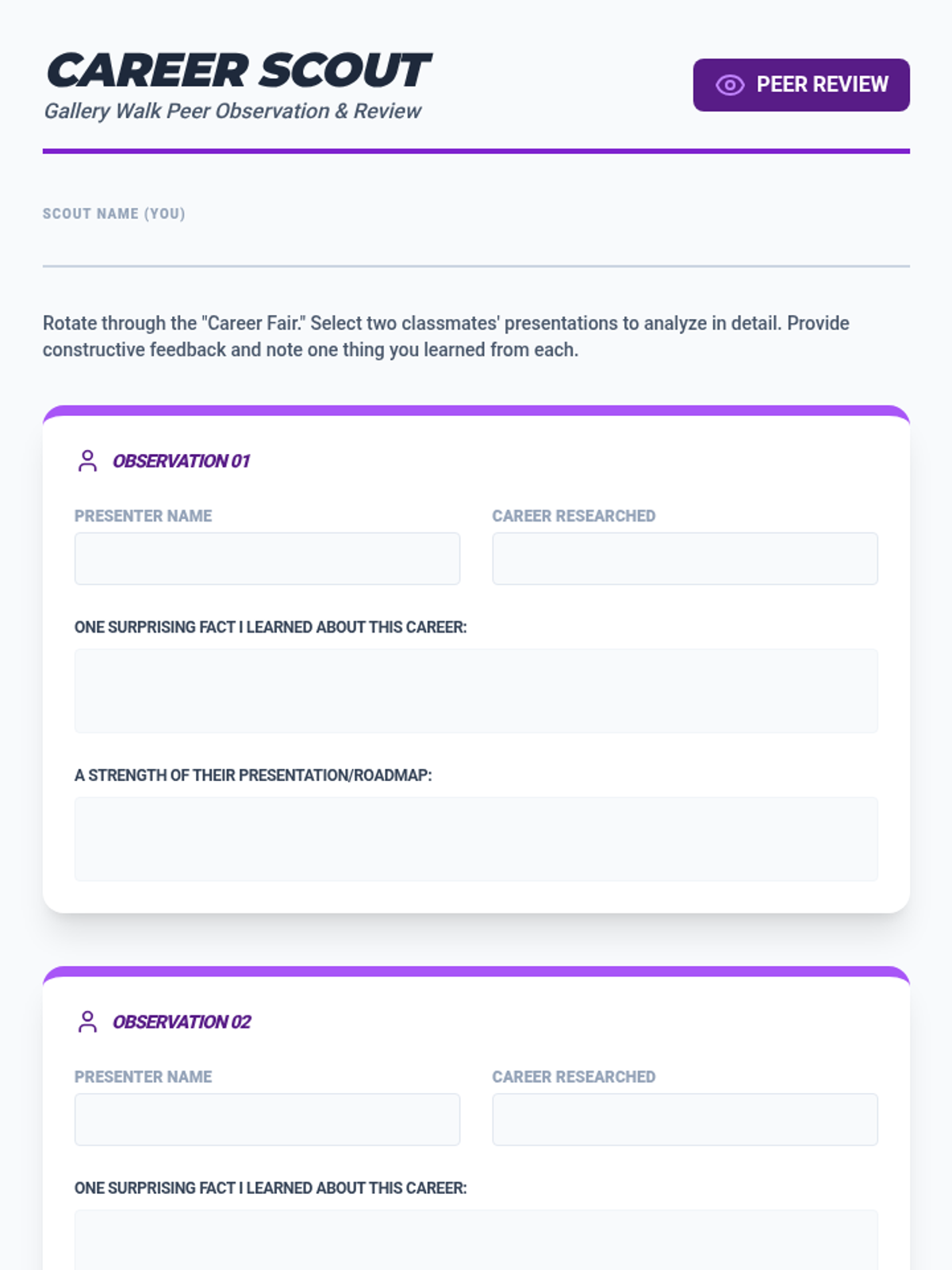
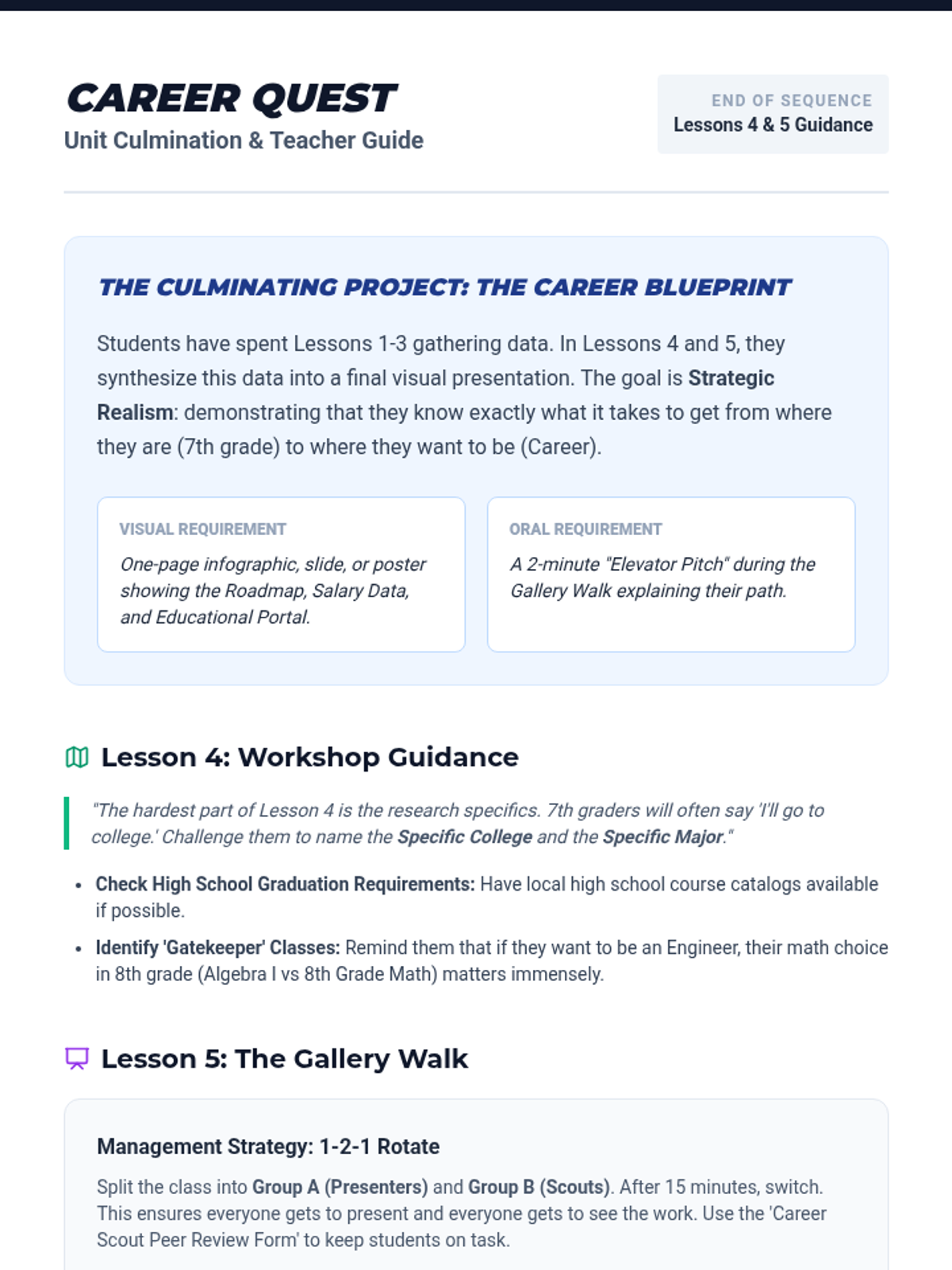
Students present their career pathway research through infographics or slides and engage in a peer-review gallery walk to learn about diverse professional fields.
Using backward design, students map out the specific steps, classes, and certifications needed to reach their chosen career, starting from high school graduation back to 7th grade.
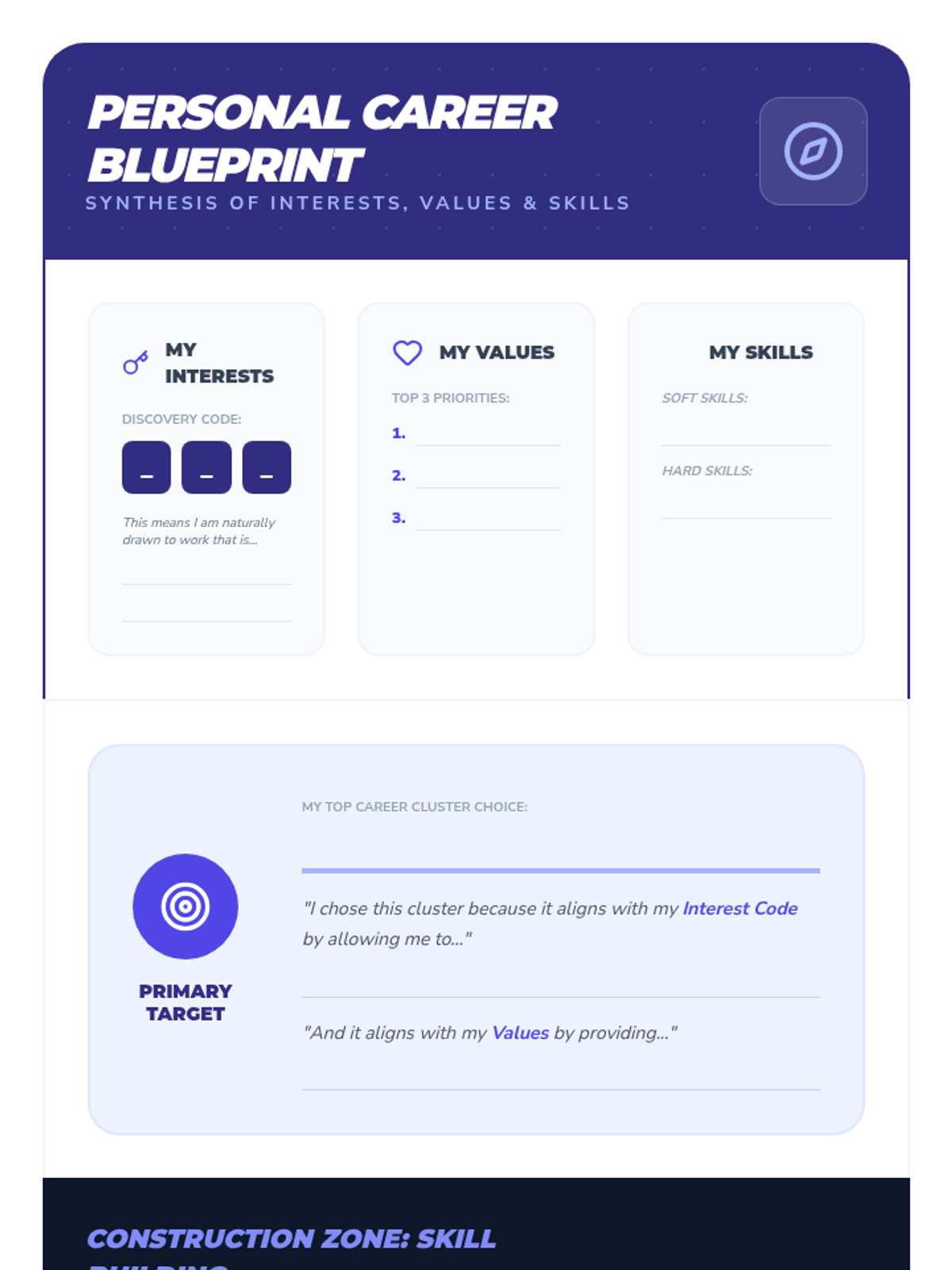
Students synthesize their interests, values, and skills into a comprehensive Personal Career Profile to set goals for their future.
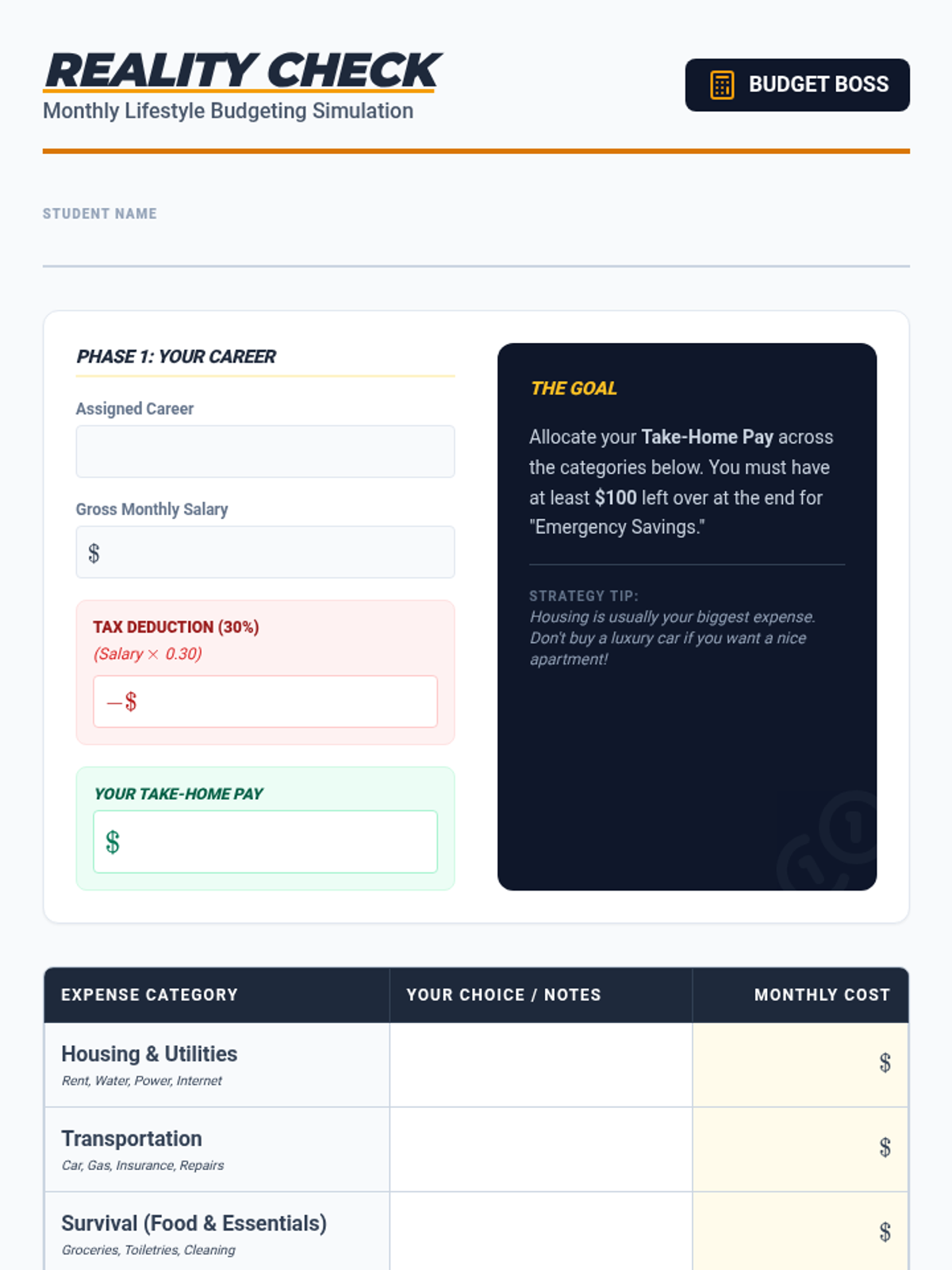
A financial literacy simulation where students budget for their desired lifestyle and compare the costs against the entry-level salaries of various careers.
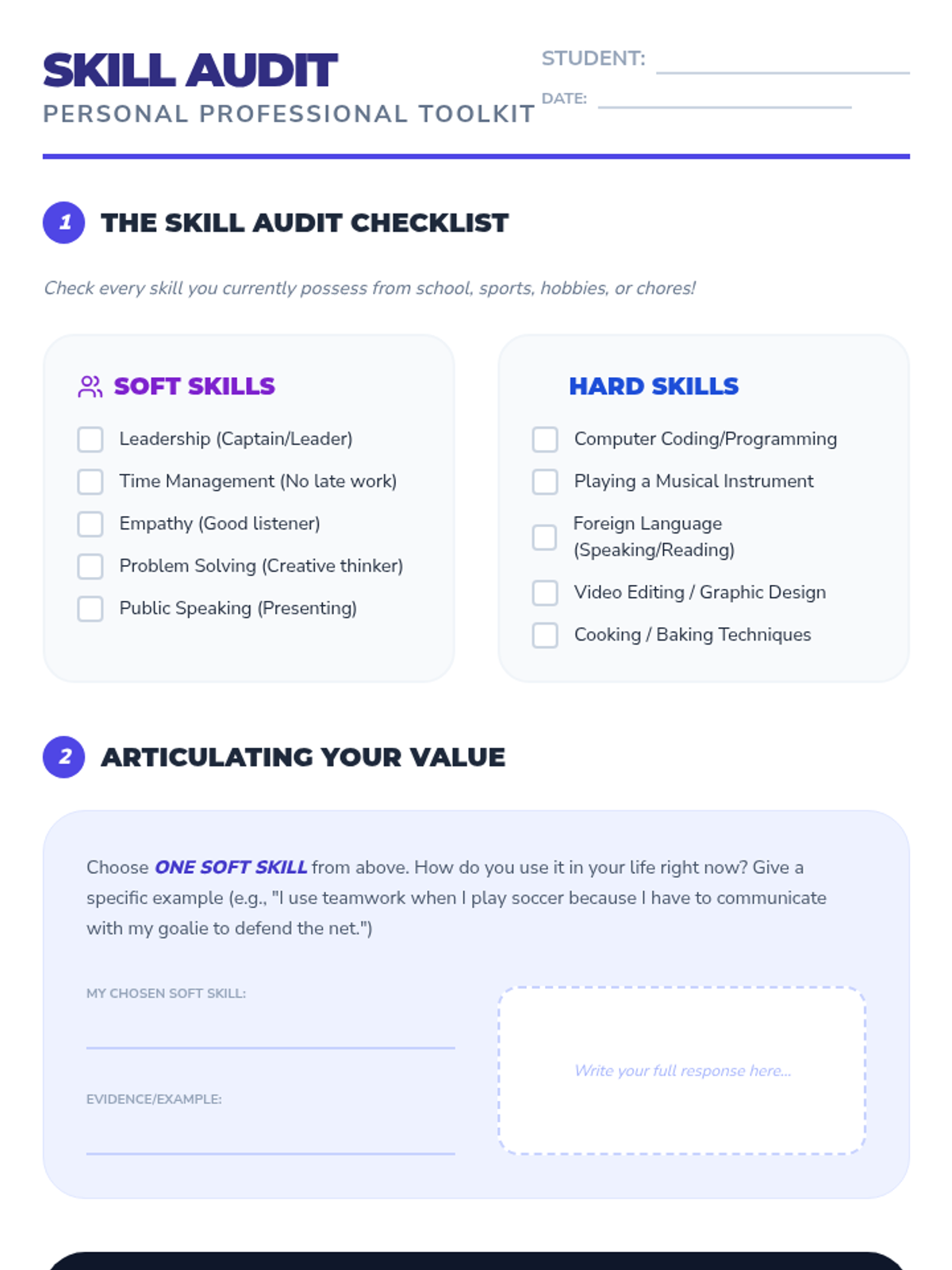
Students distinguish between technical hard skills and transferable soft skills, conducting a personal audit of their current strengths.
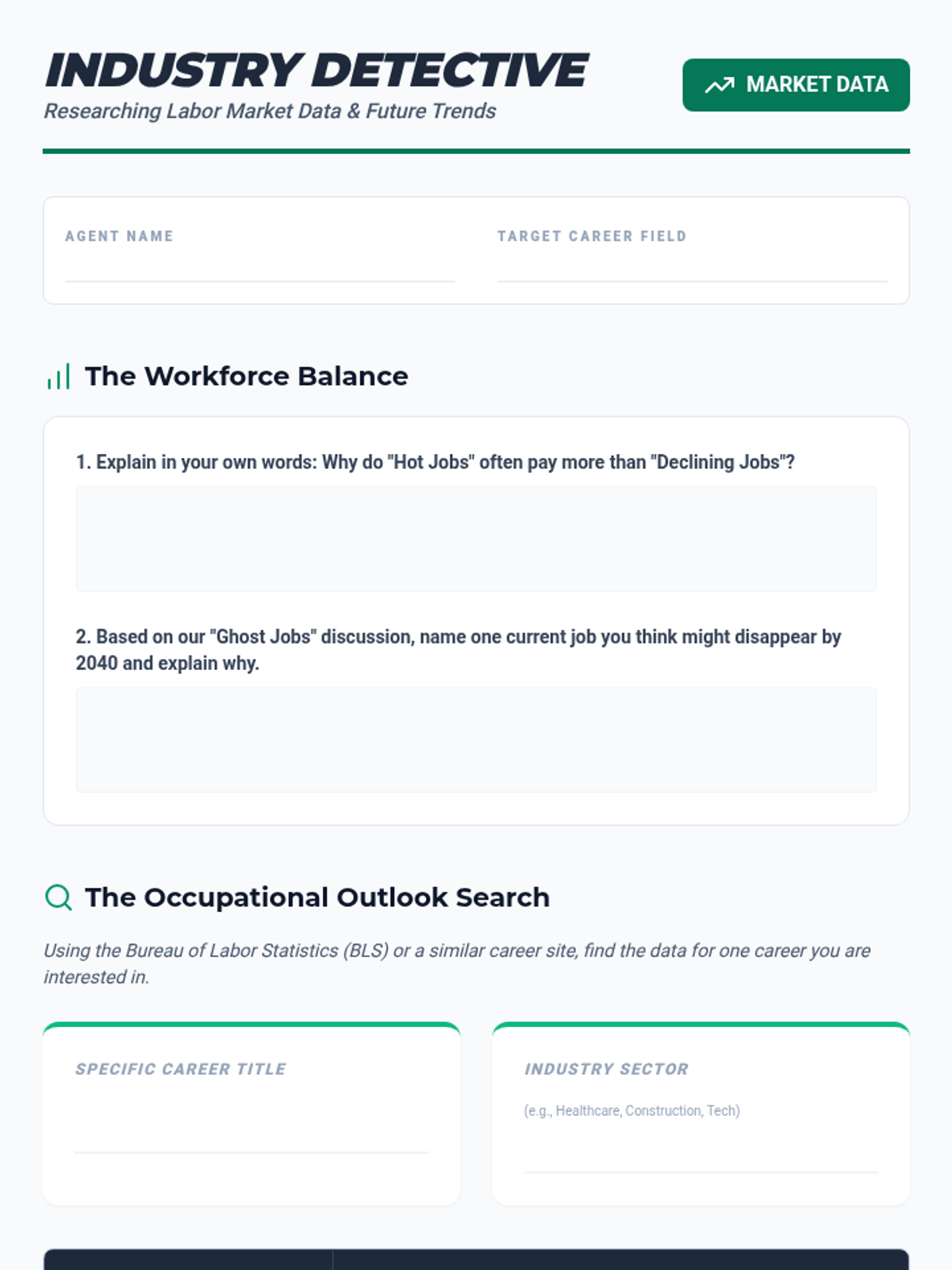
An exploration of labor market data and industry growth, teaching students to identify 'hot jobs' and understand the impact of supply and demand on their future careers.
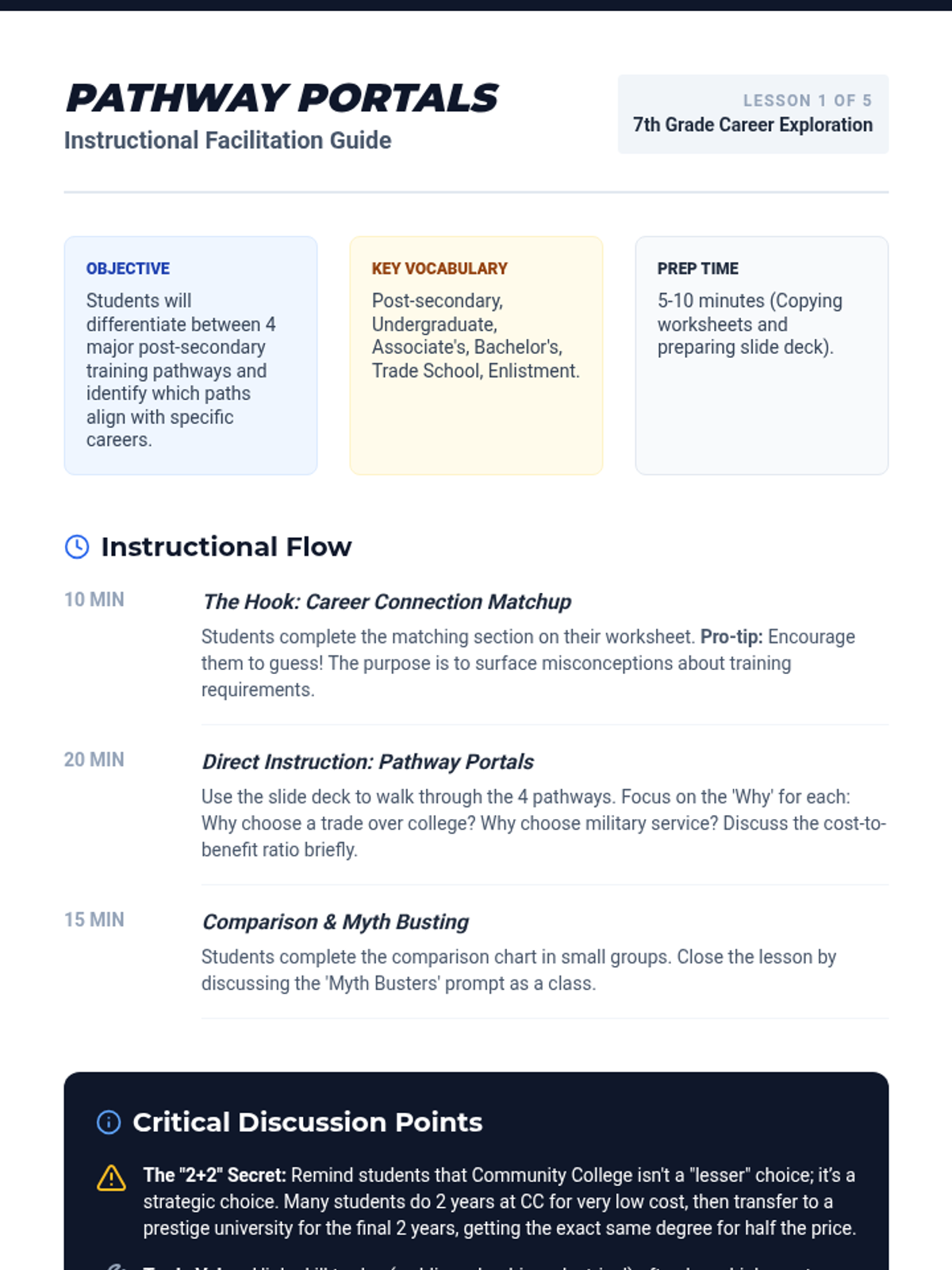
Students define and compare universities, community colleges, vocational schools, and military service, debunking myths and identifying which paths lead to specific career goals.
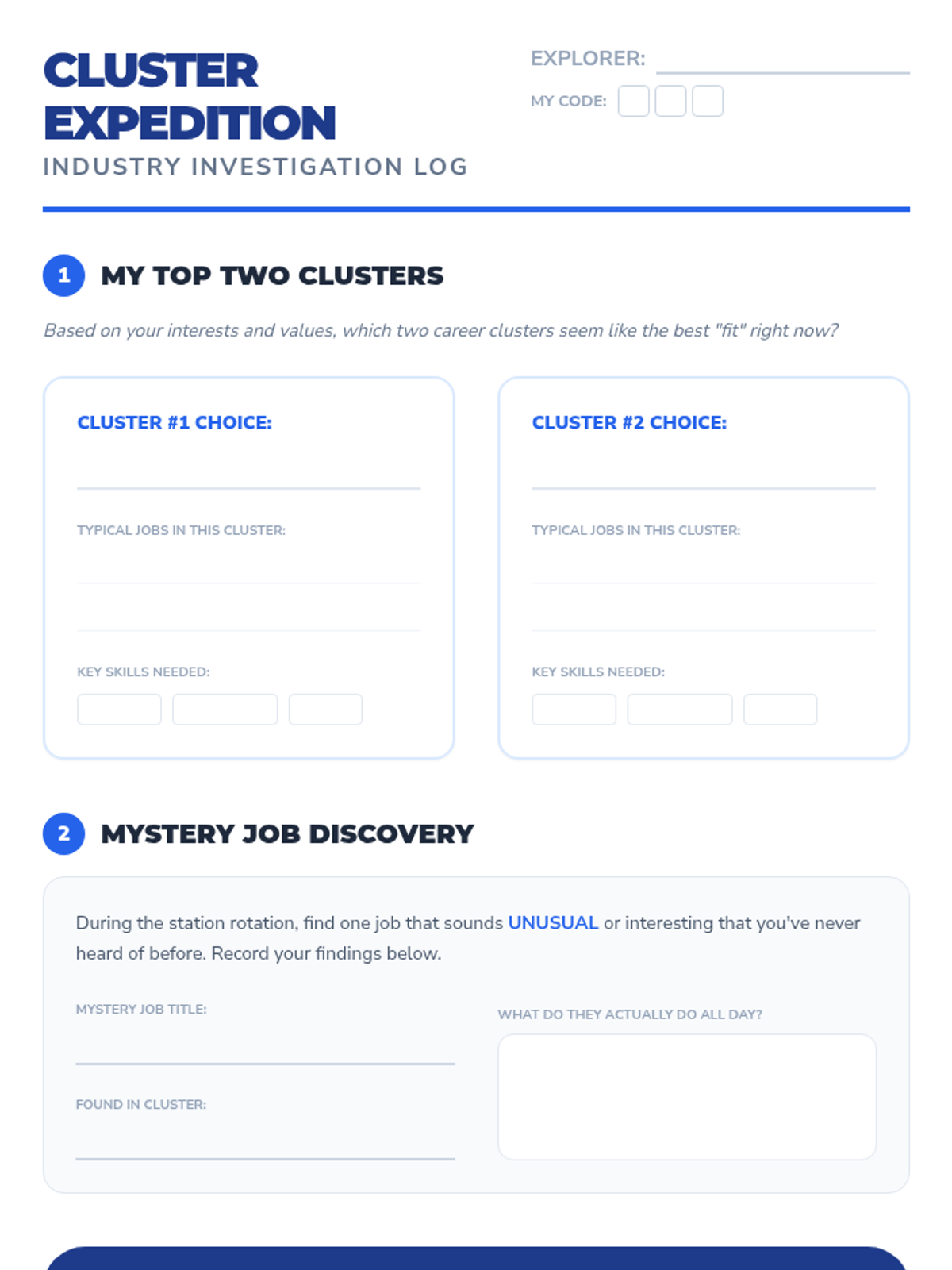
Learners investigate the 16 National Career Clusters and identify which ones align with their personal RIASEC codes and values.
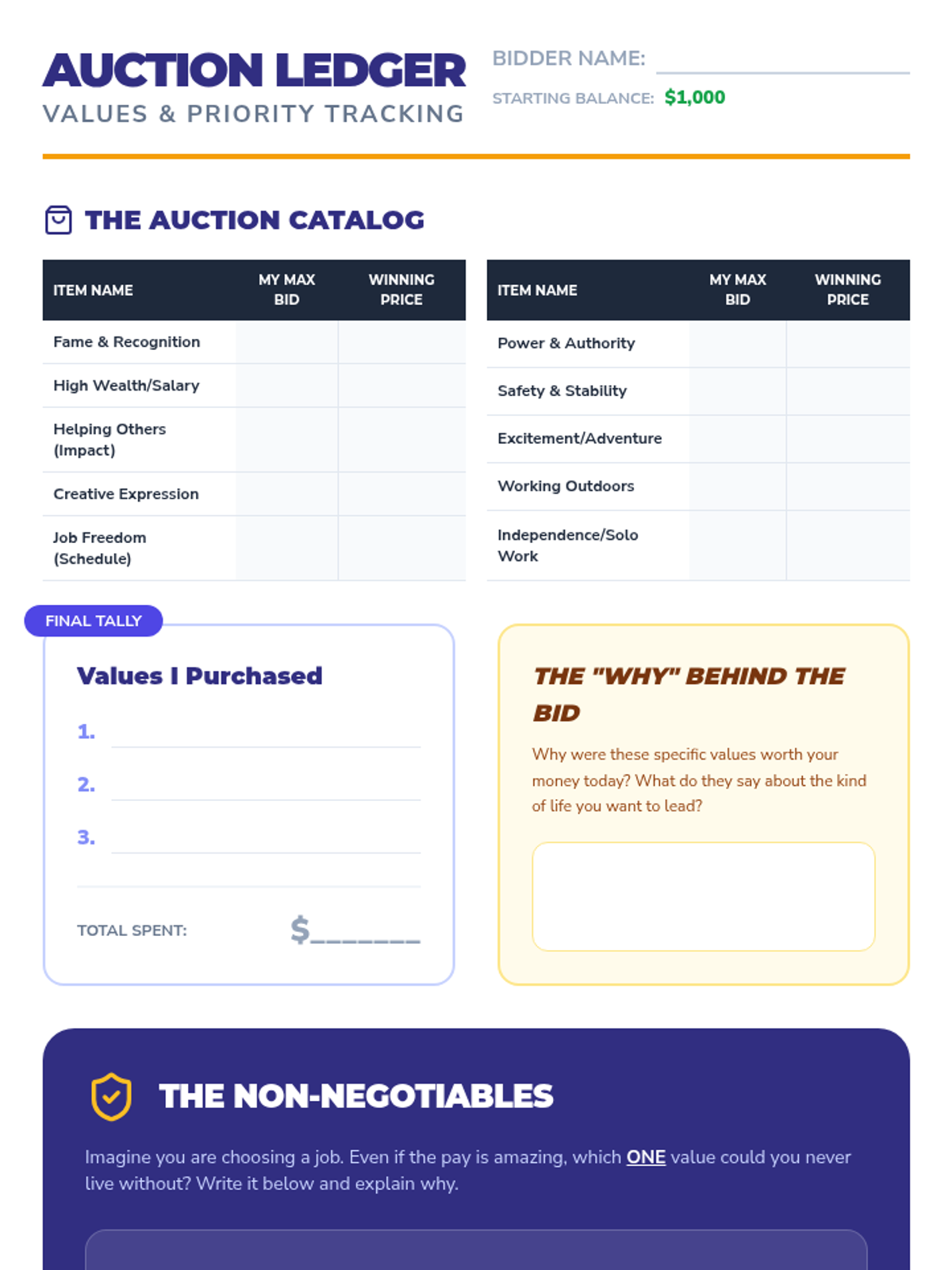
Students prioritize workplace values through a 'Values Auction' to understand how personal beliefs influence job satisfaction.
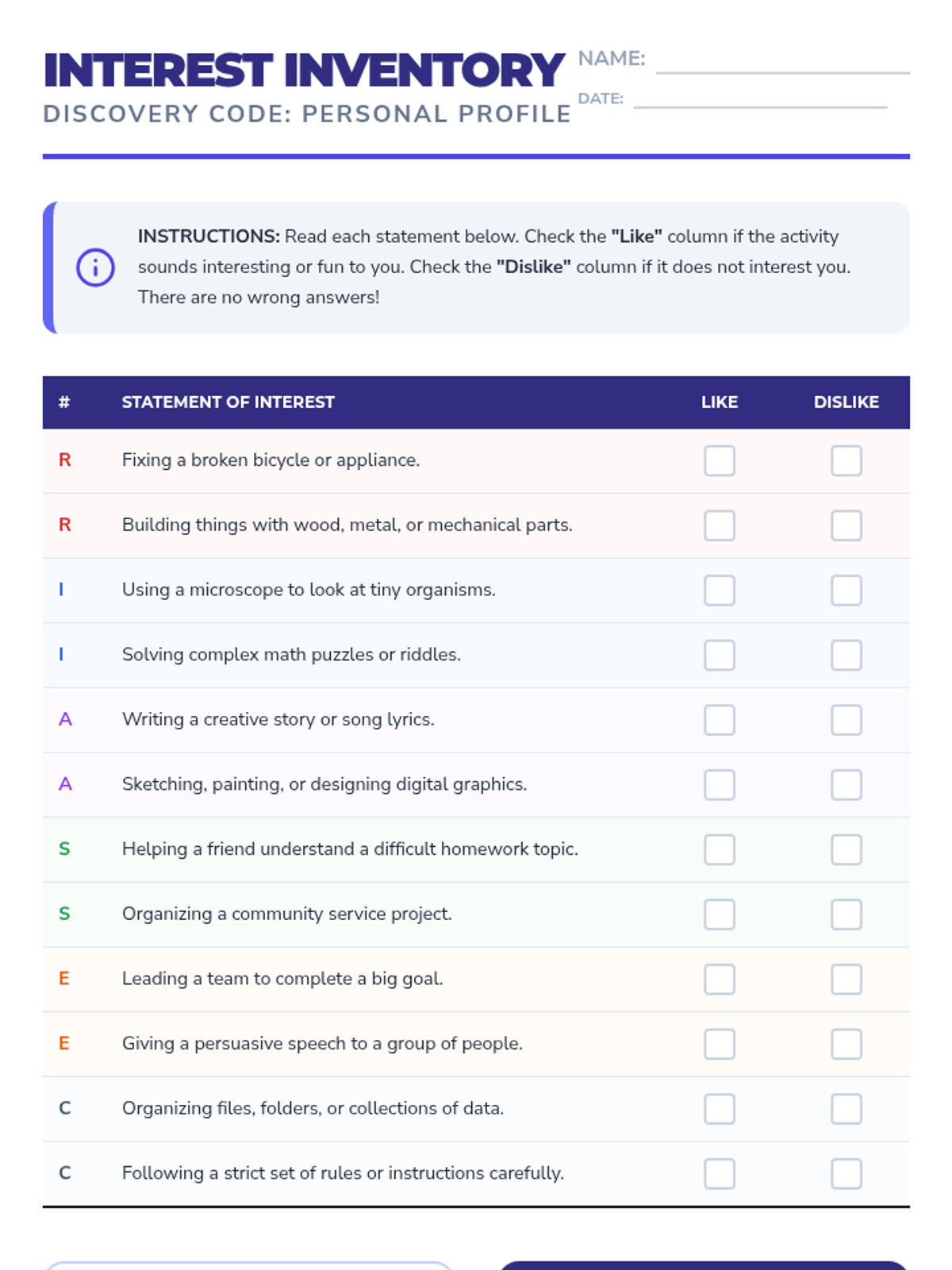
Students identify their top personality traits using the RIASEC interest inventory model to establish a foundational vocabulary for career exploration.
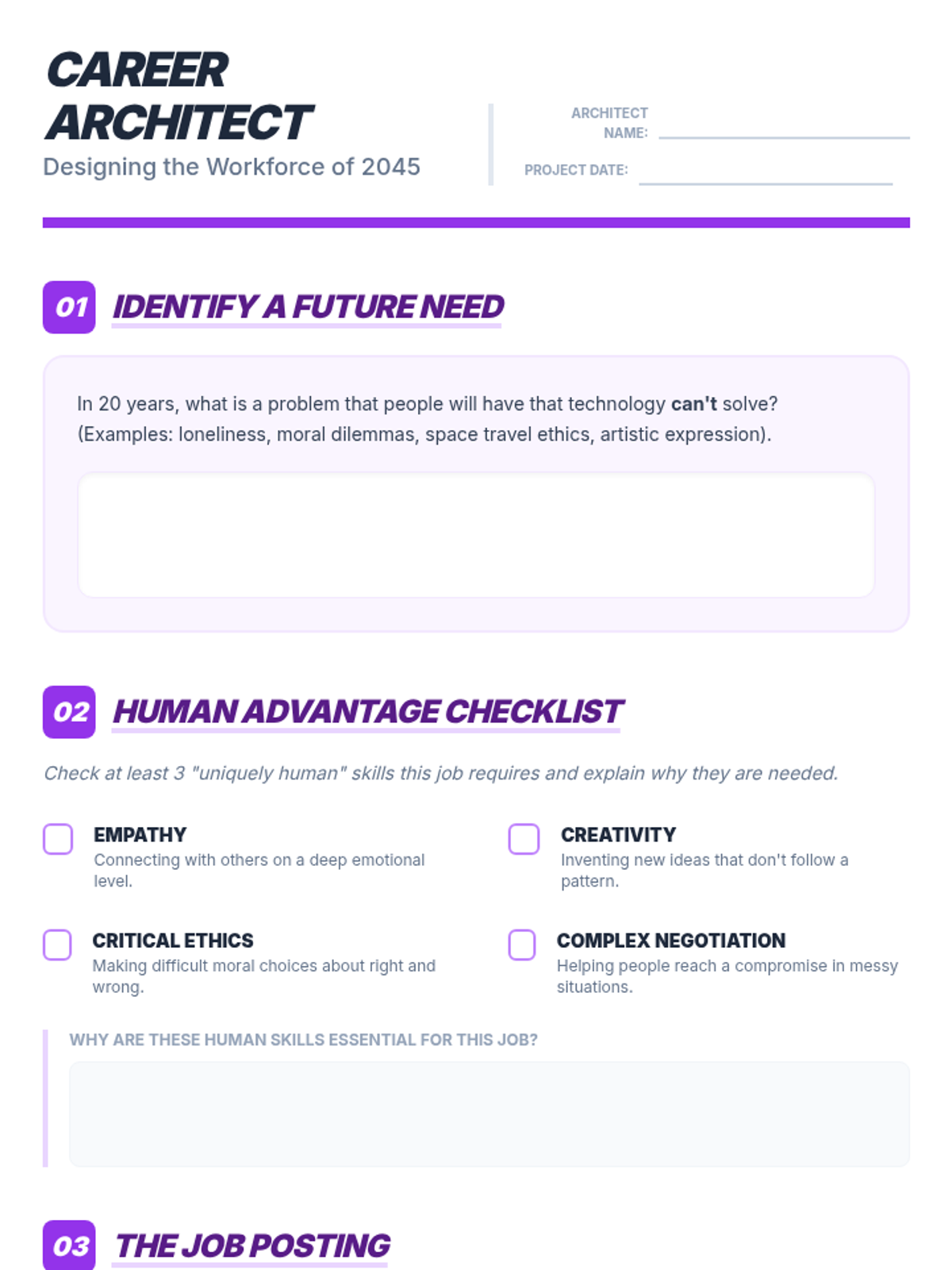
Students identify 'uniquely human' skills and design future job descriptions for careers that haven't been invented yet.
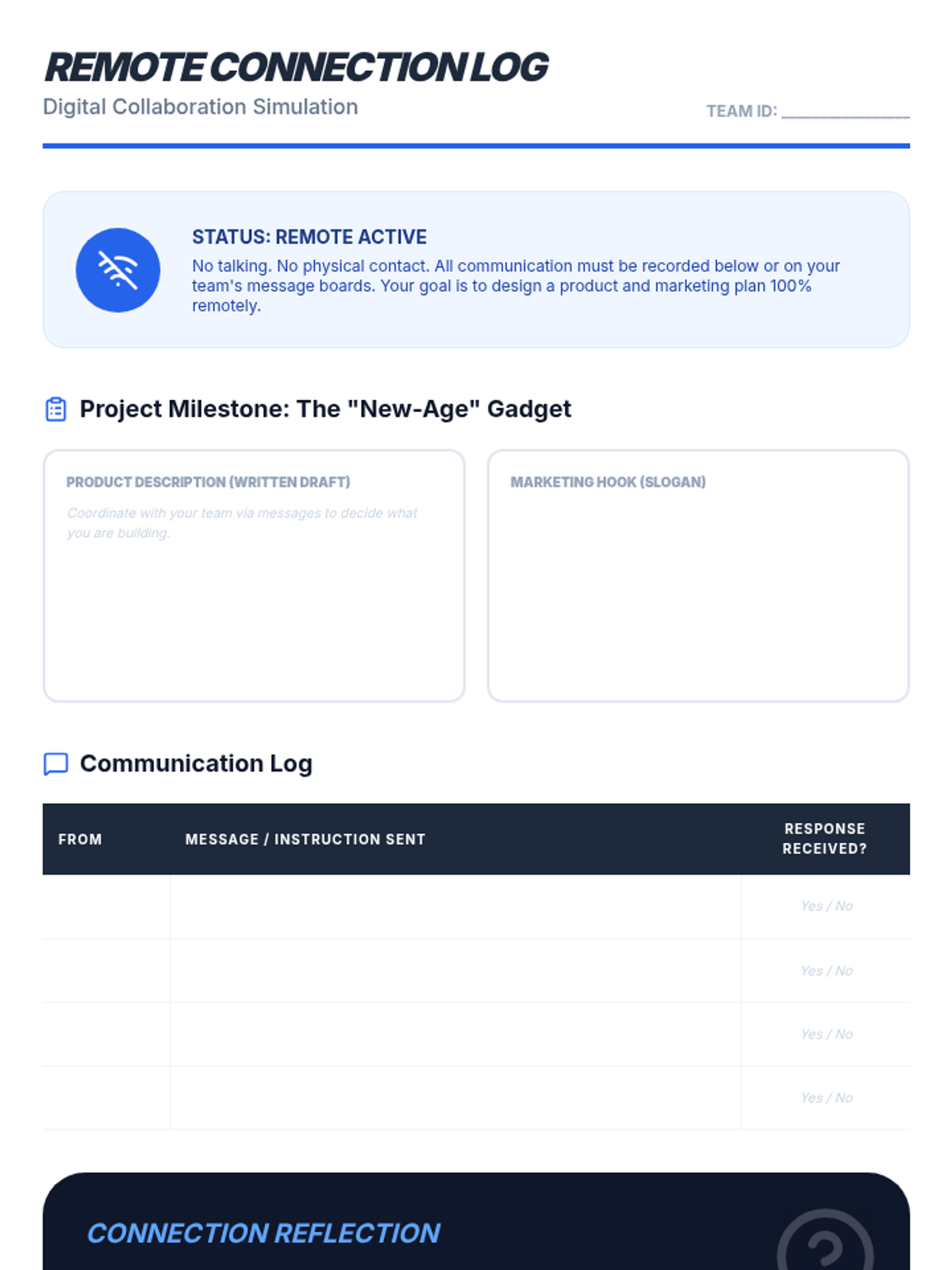
Students simulate remote work conditions to understand the communication shifts required when collaborating in a digital-first environment.
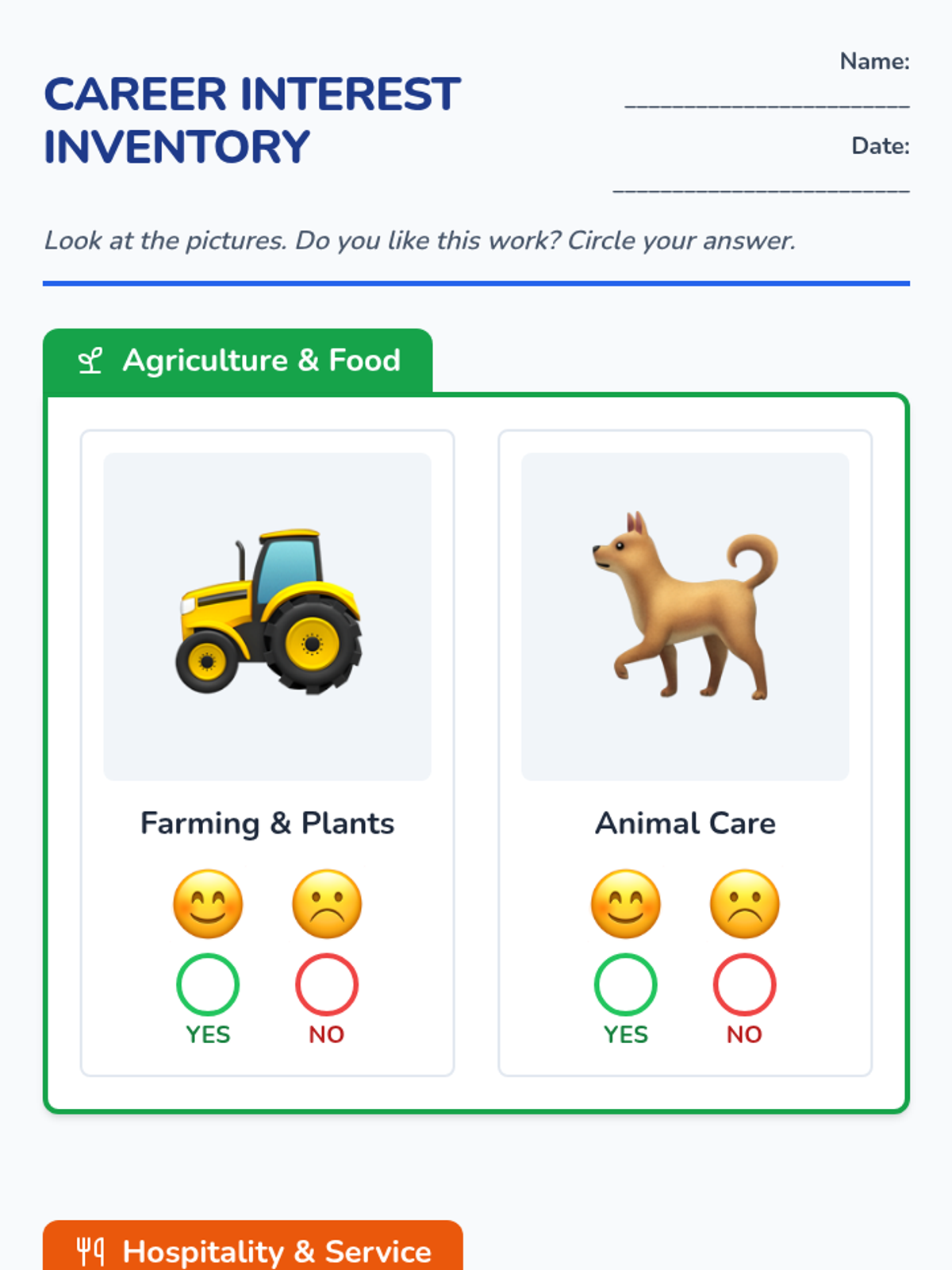
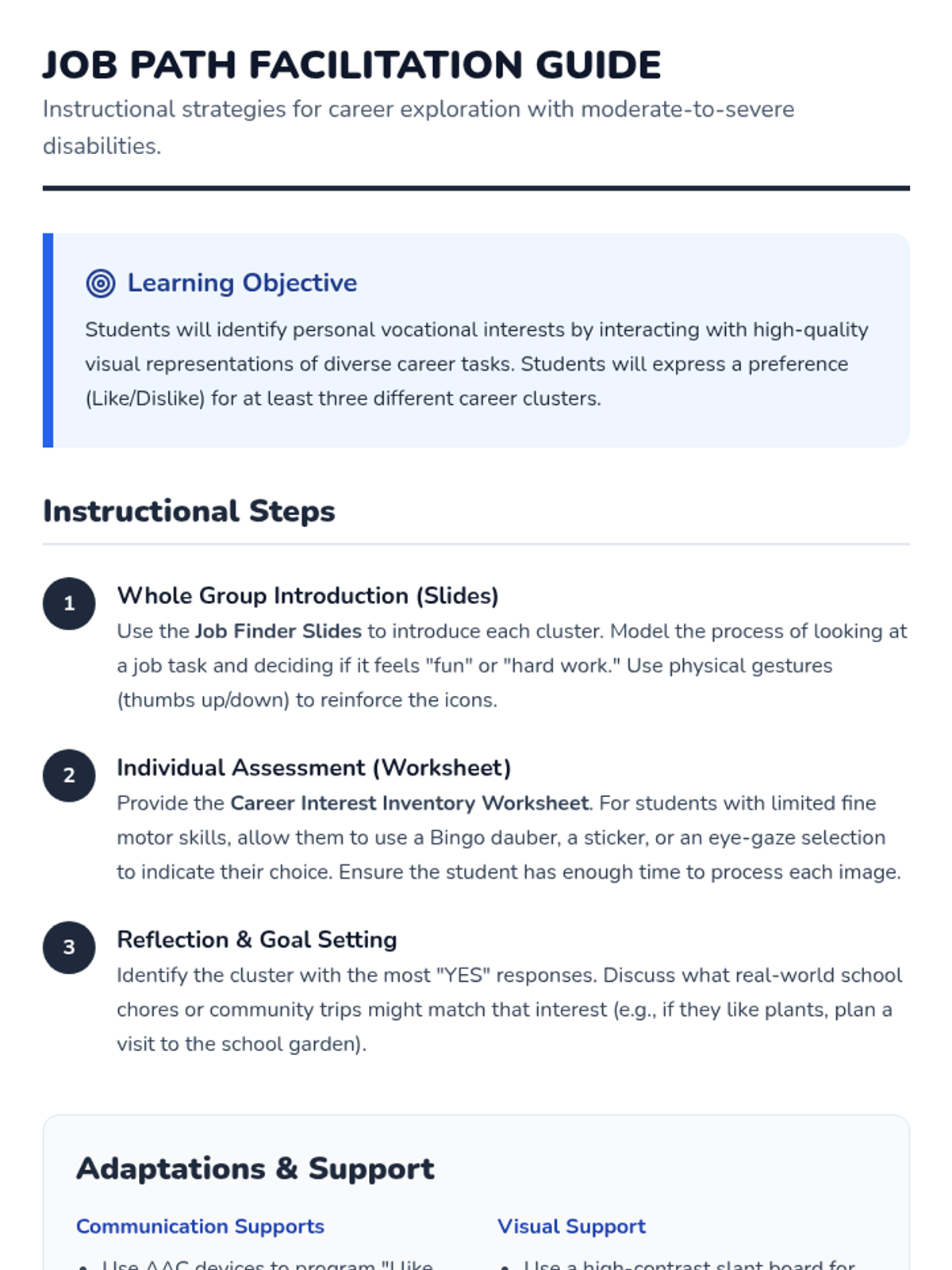
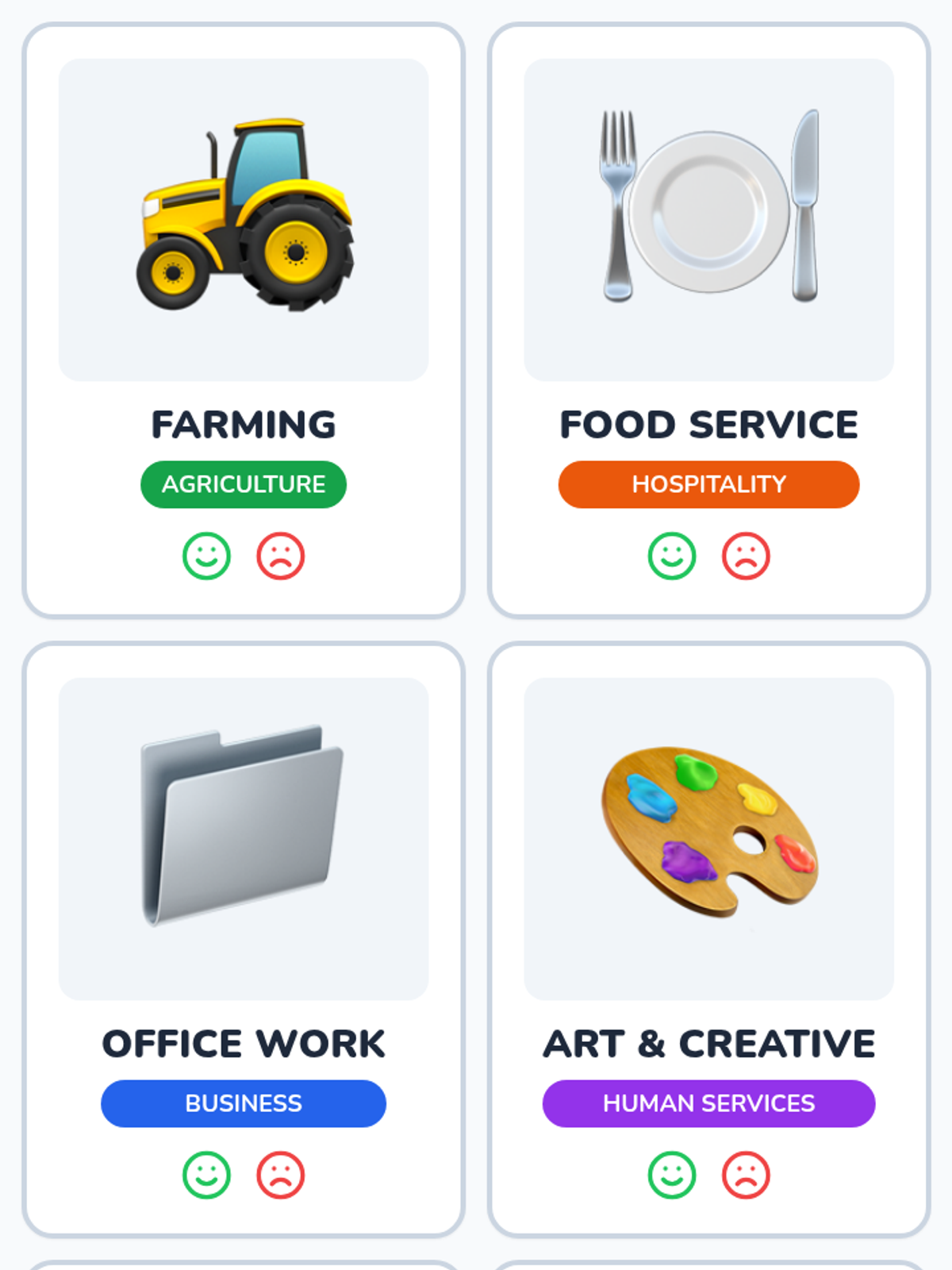
A visual career exploration lesson designed for students with moderate to severe disabilities, using real photos to identify interests across various career clusters.
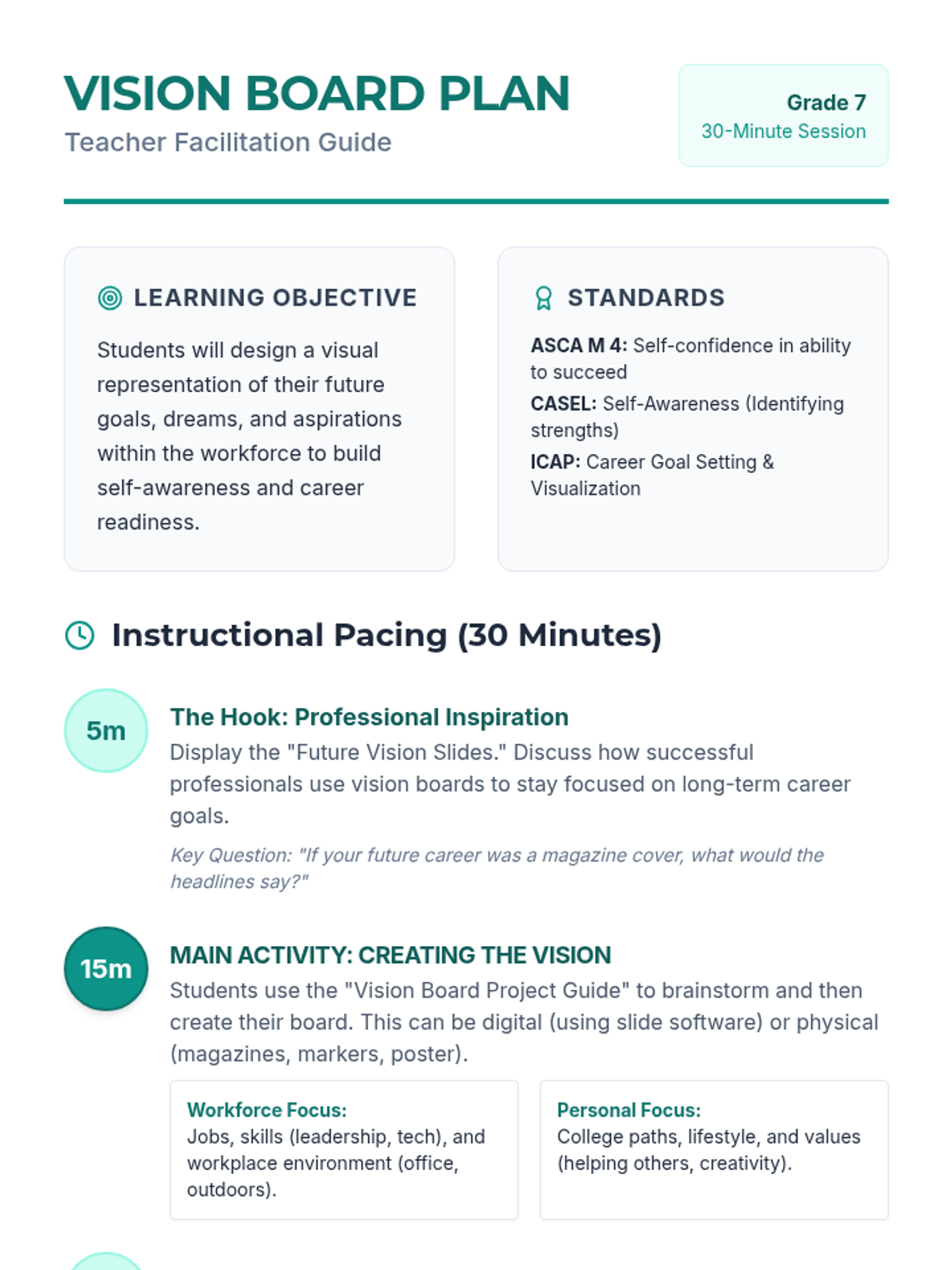
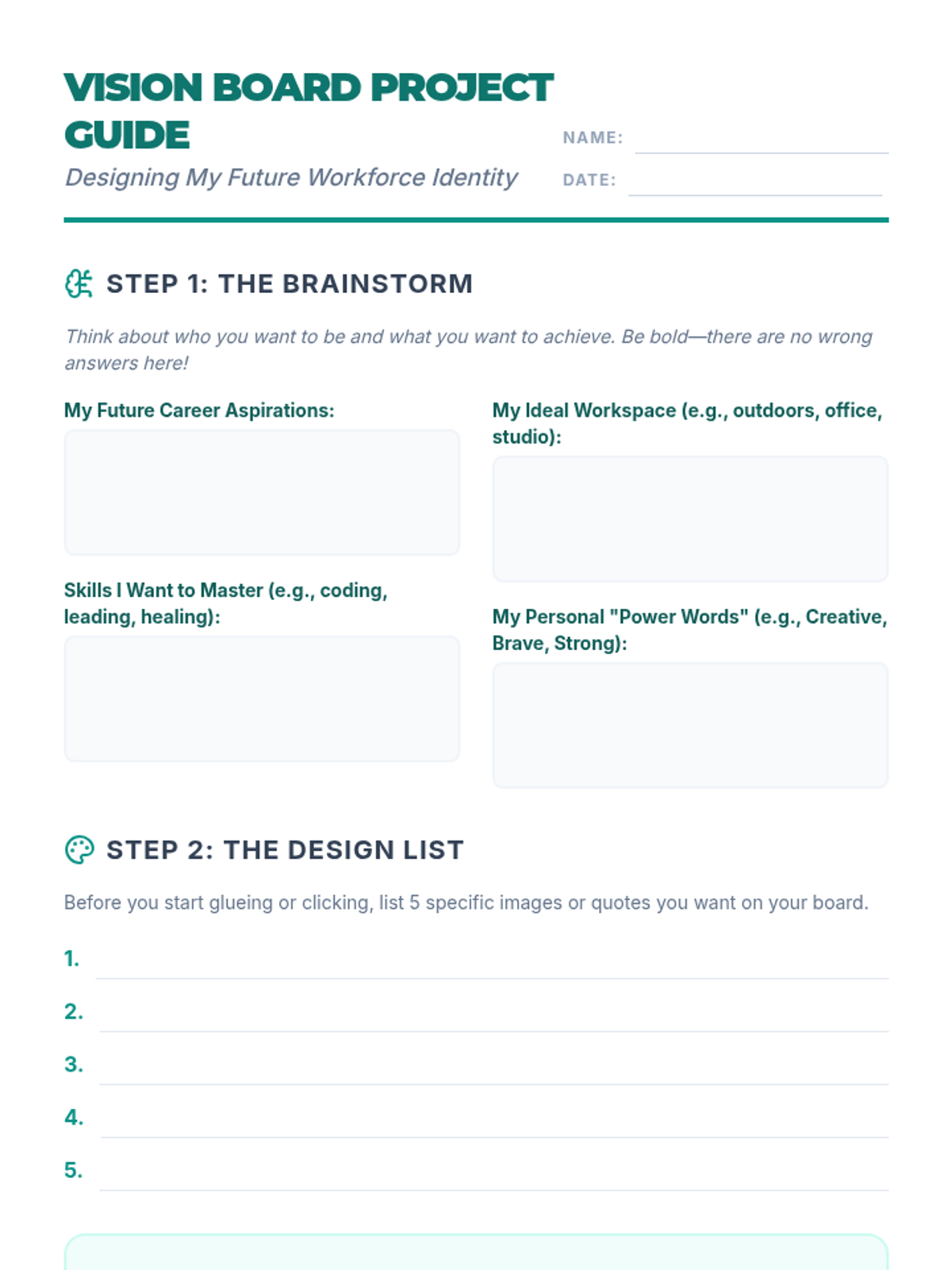
Students explore their workforce aspirations through the creation of a vision board, focusing on goal visualization and self-awareness for their ICAP portfolios.
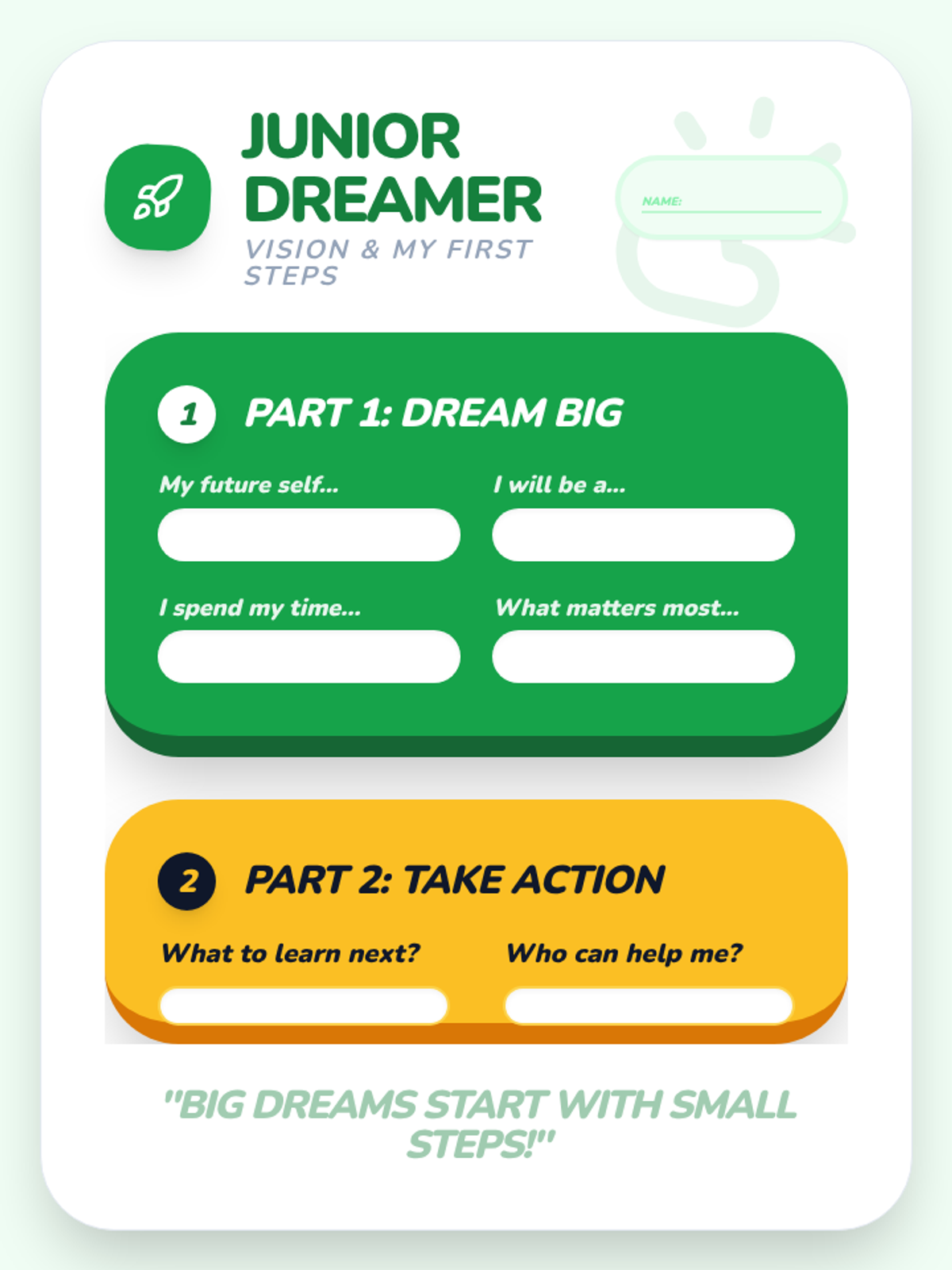
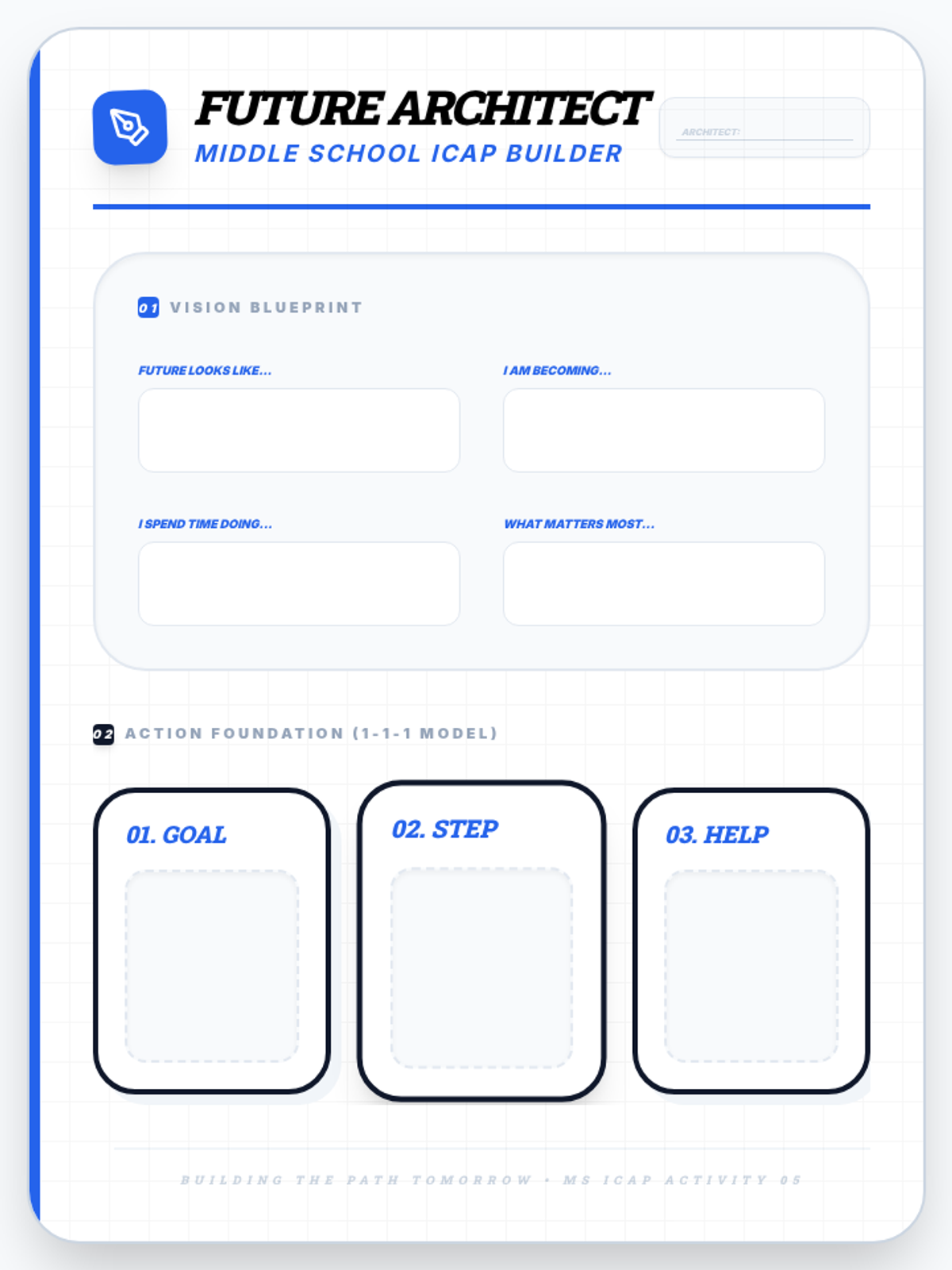
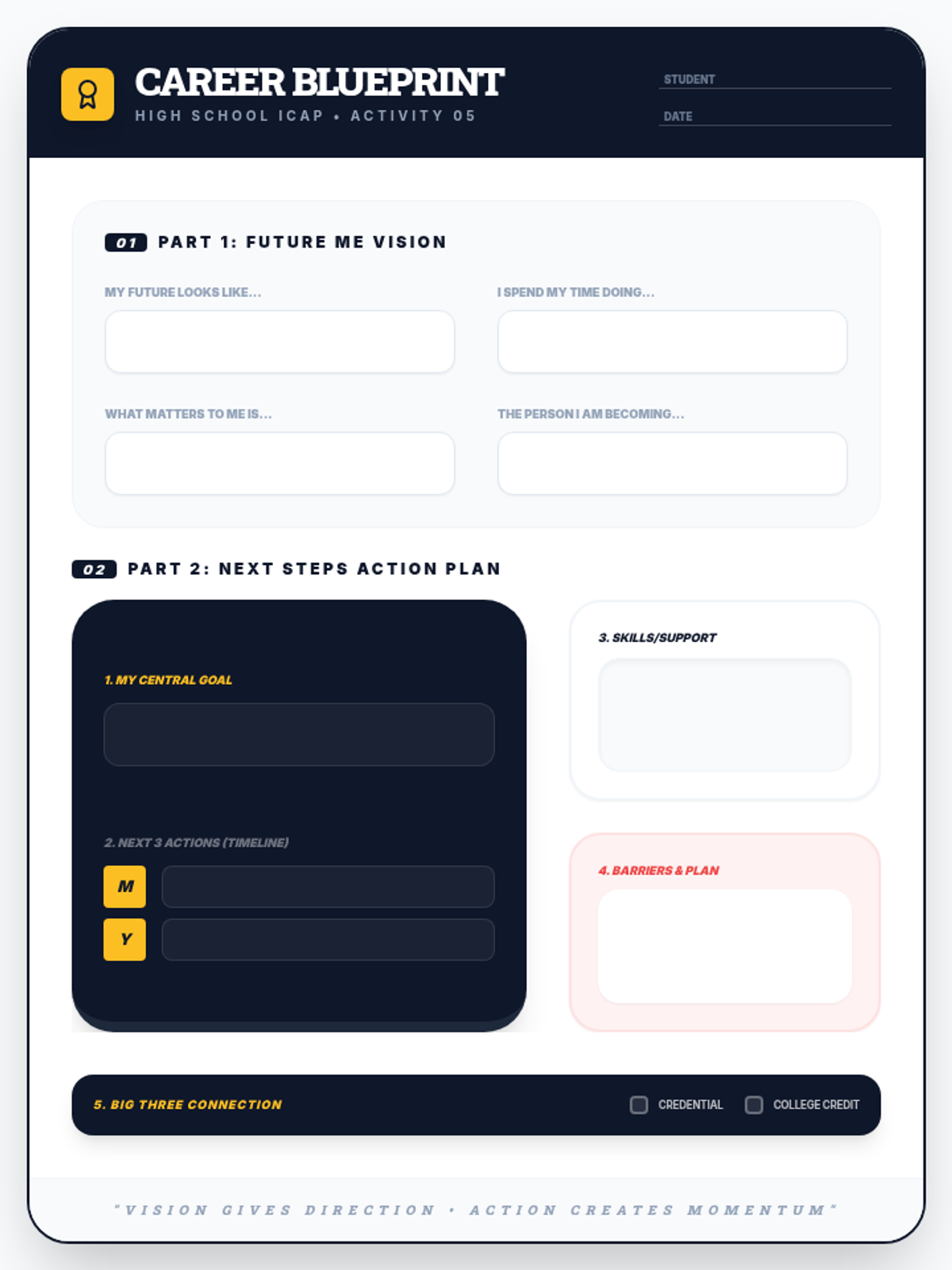
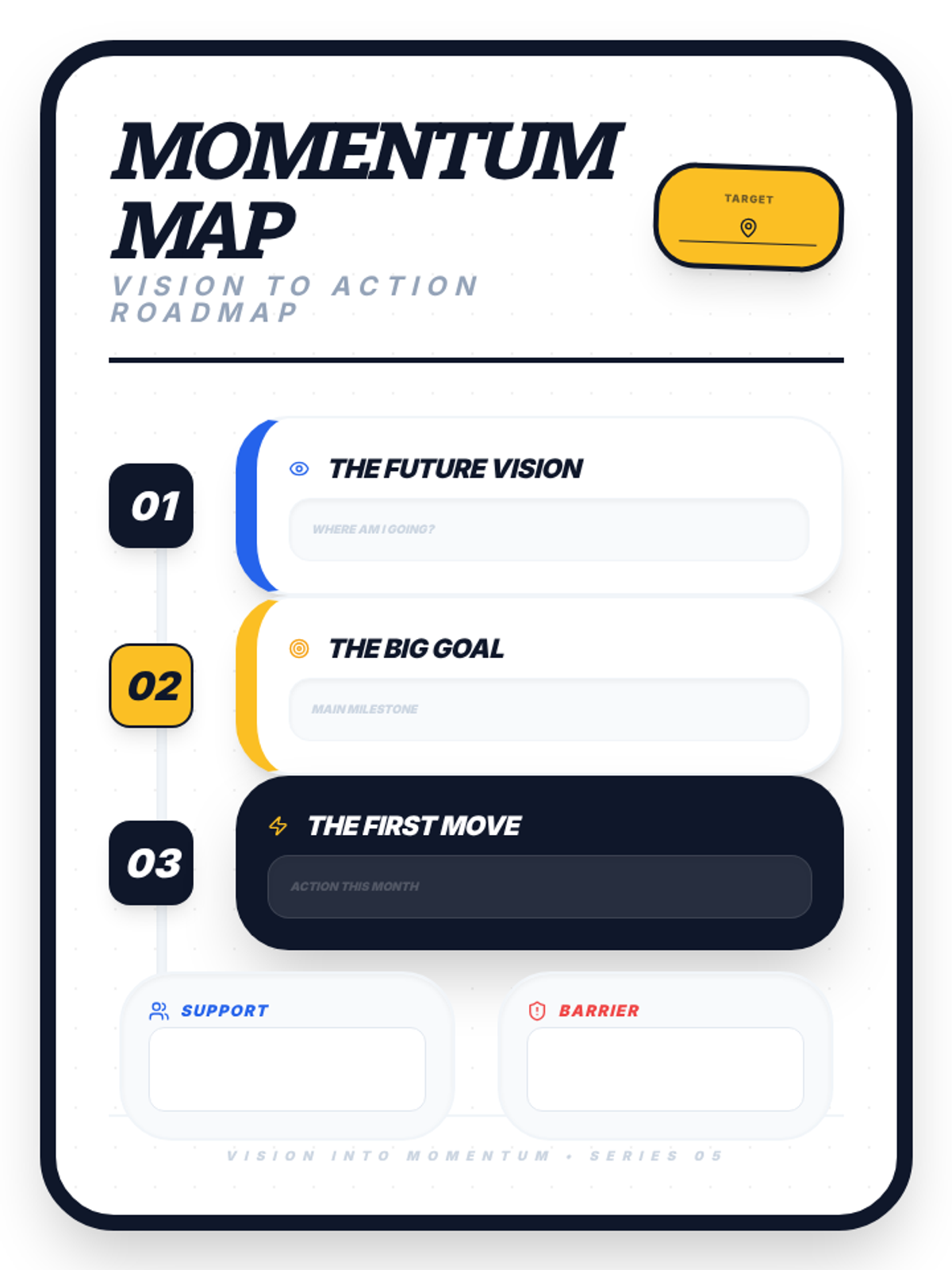
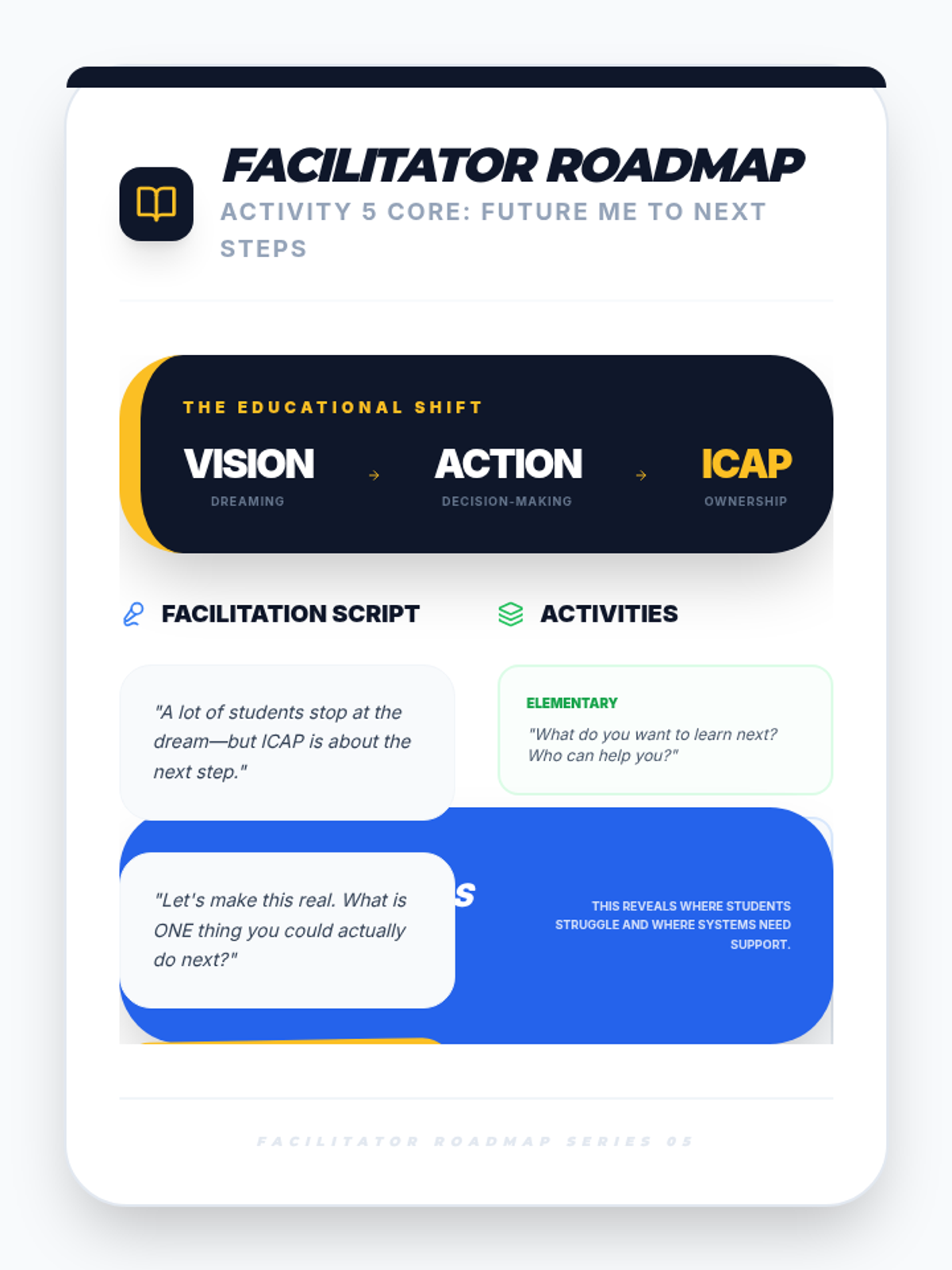
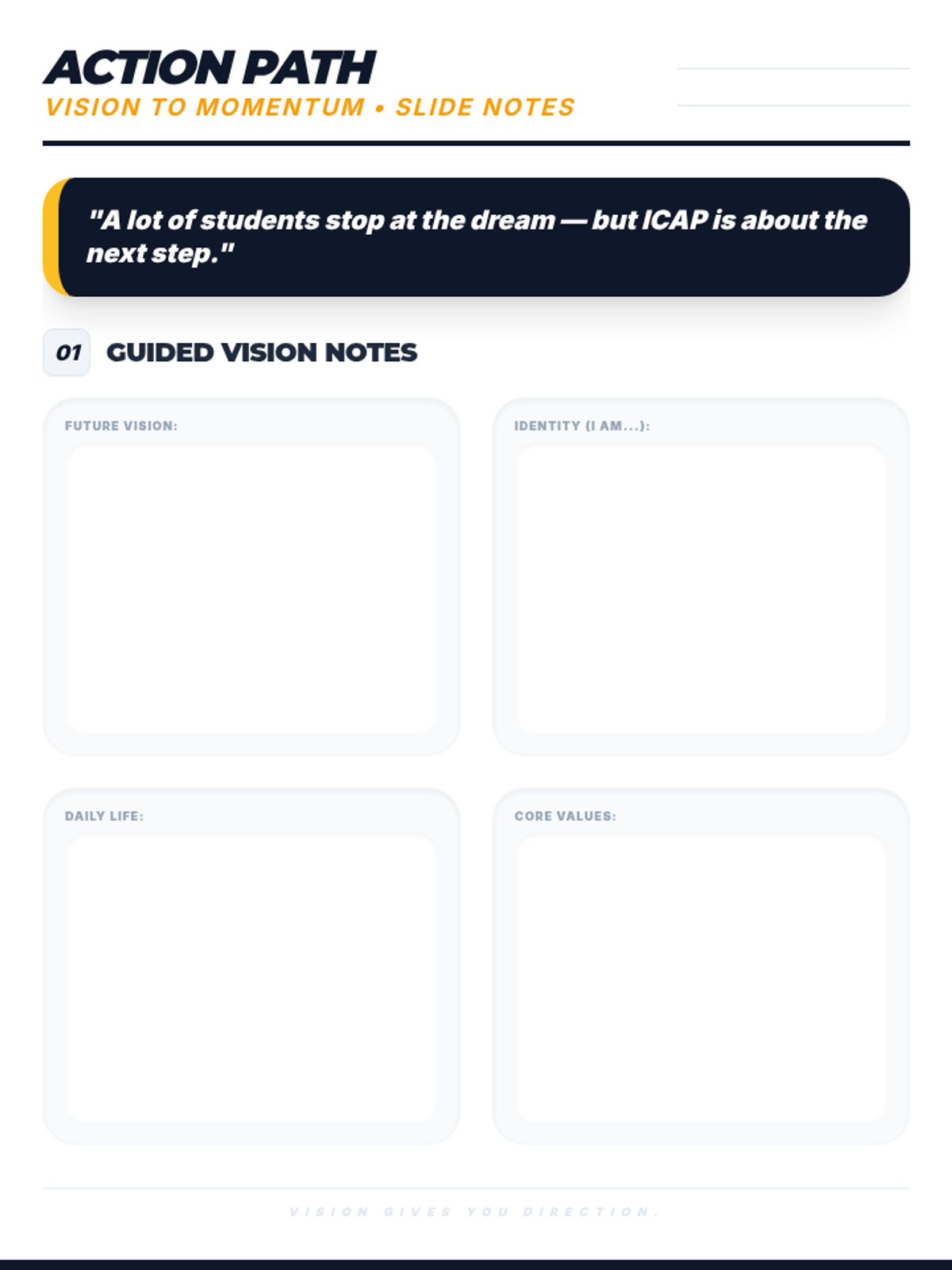
A transition-focused lesson that moves students from personal vision to concrete action steps through the ICAP framework, tailored for Elementary, Middle, and High School levels.
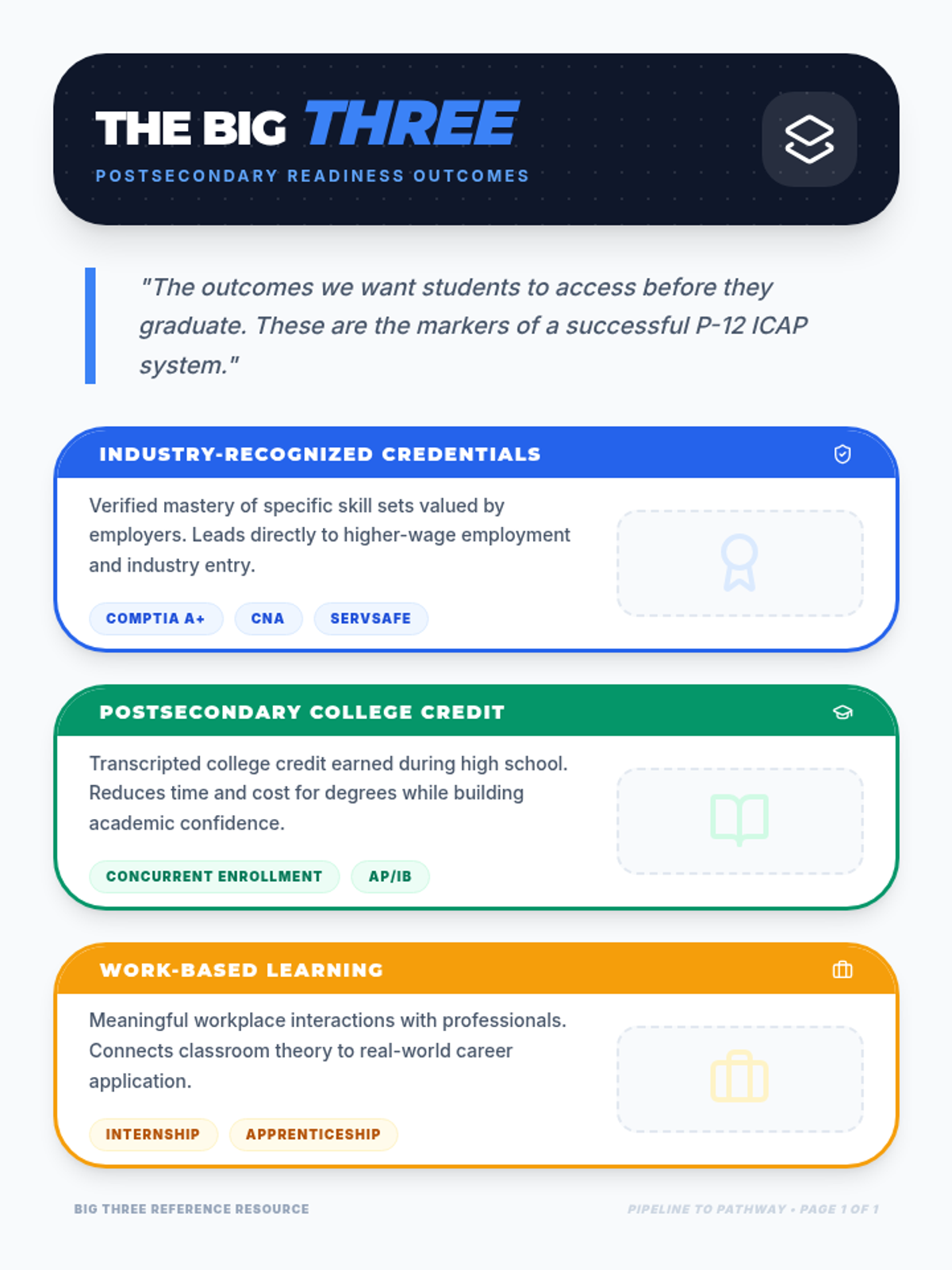
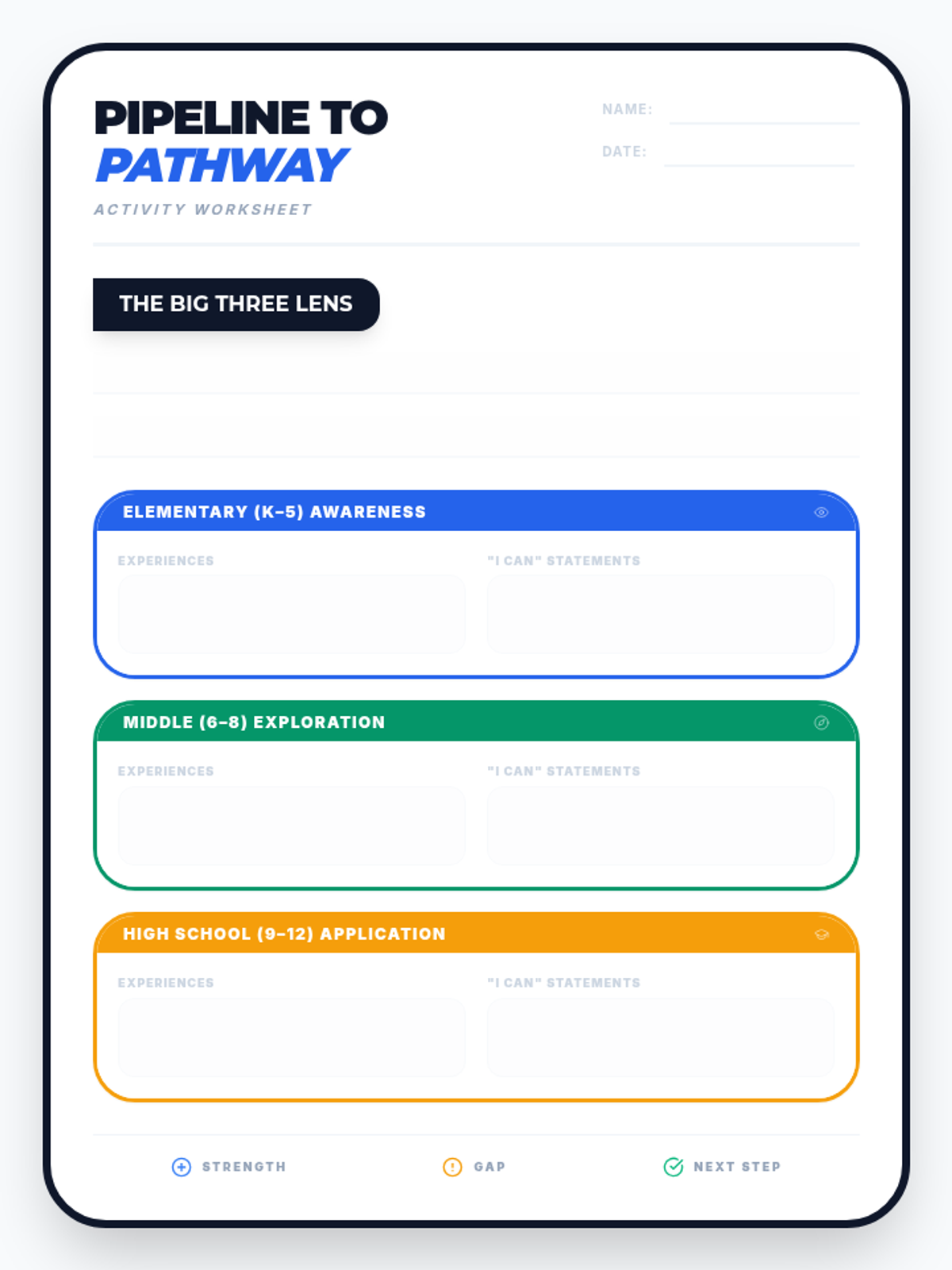
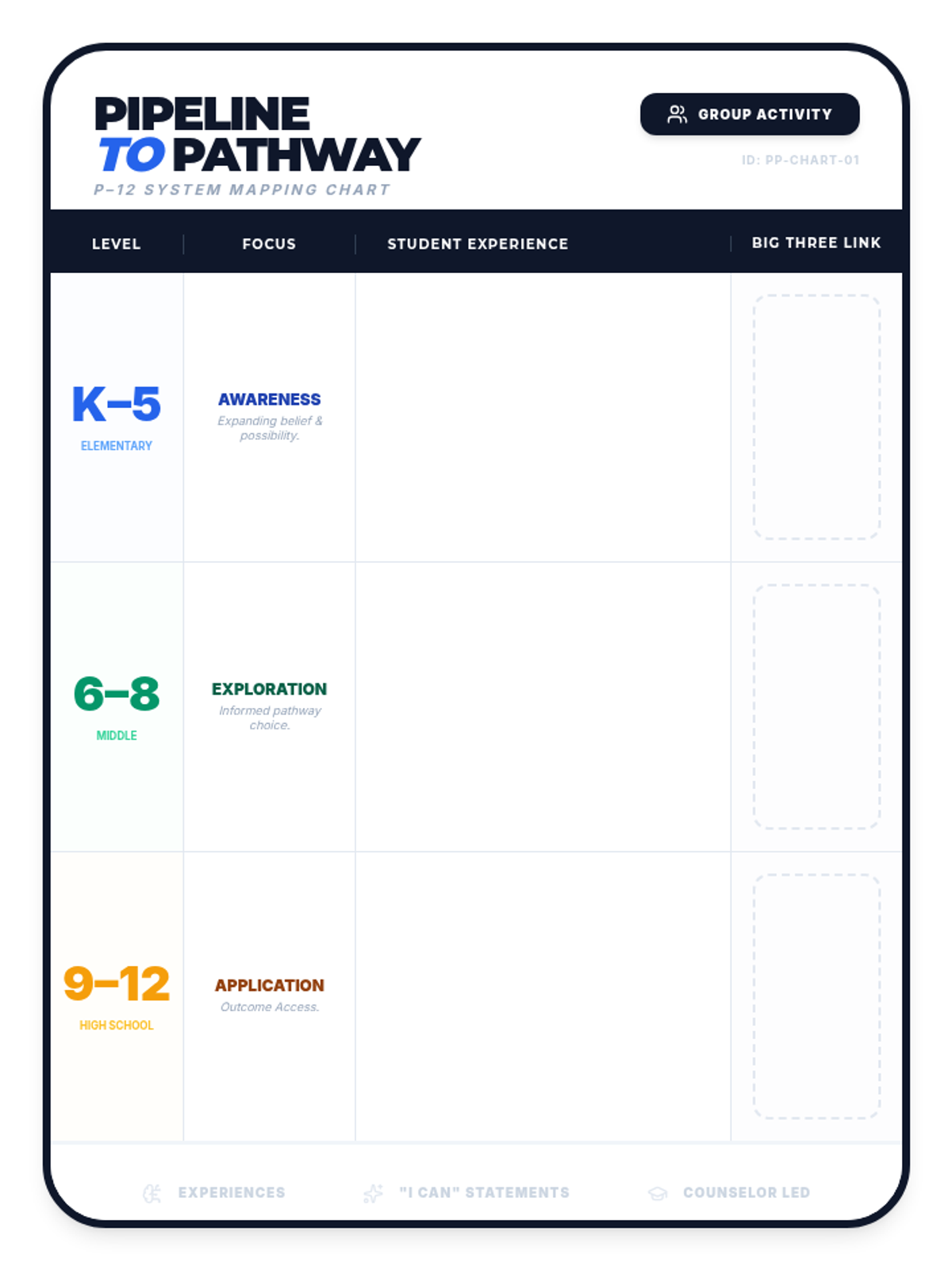
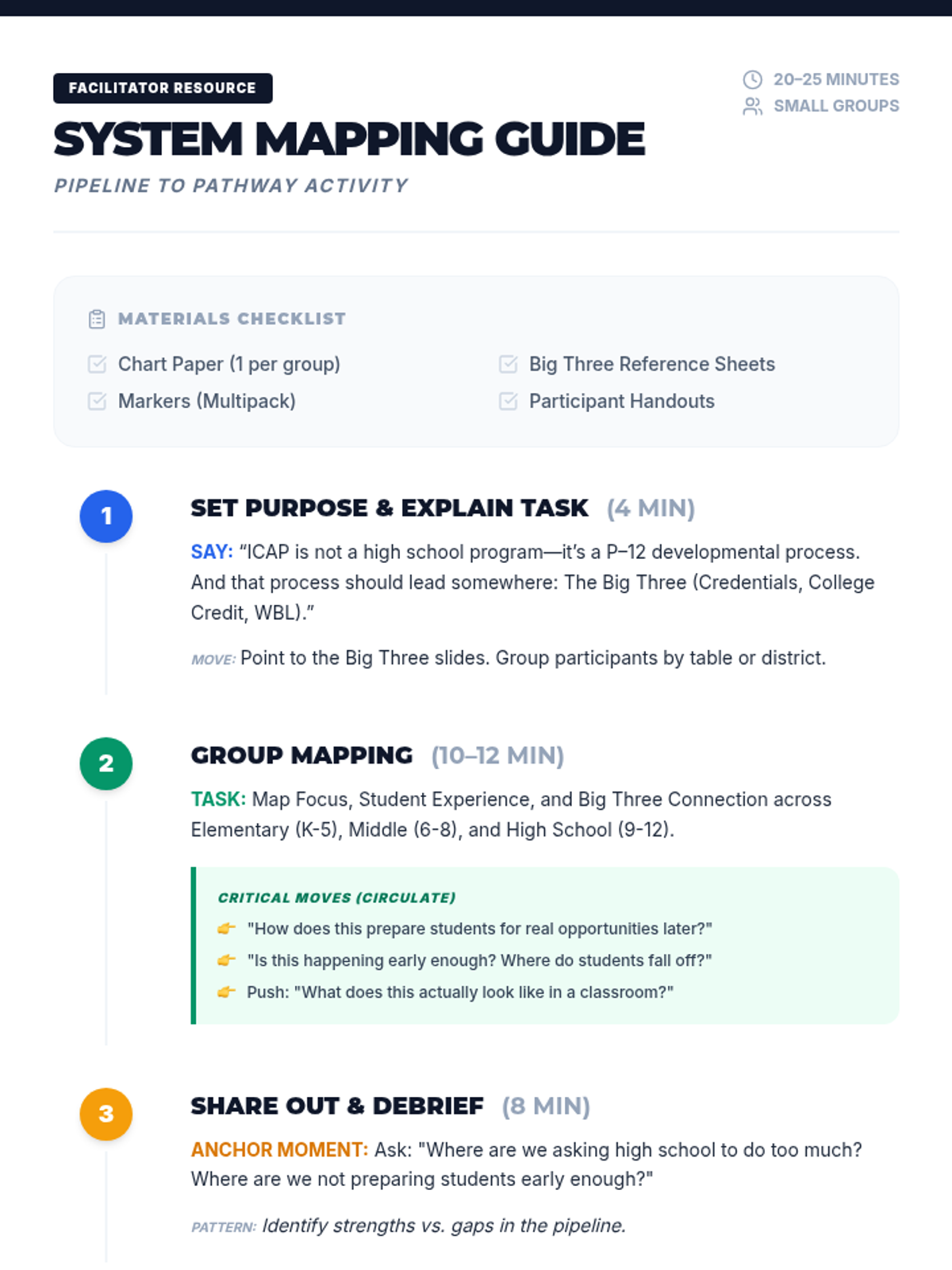
A collaborative workshop session where educators map out the developmental stages of a student's journey from elementary awareness to high school application and outcome access.
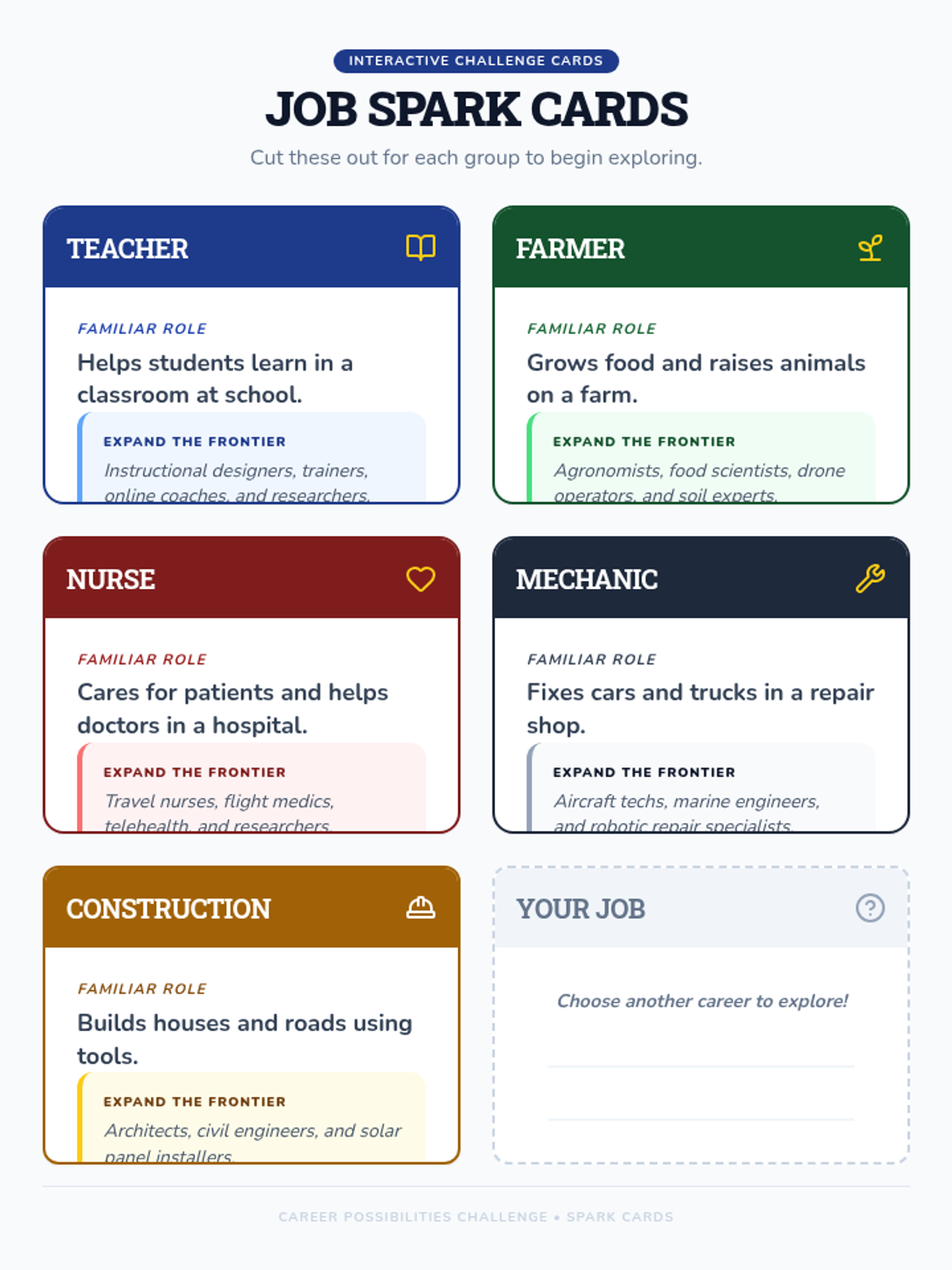
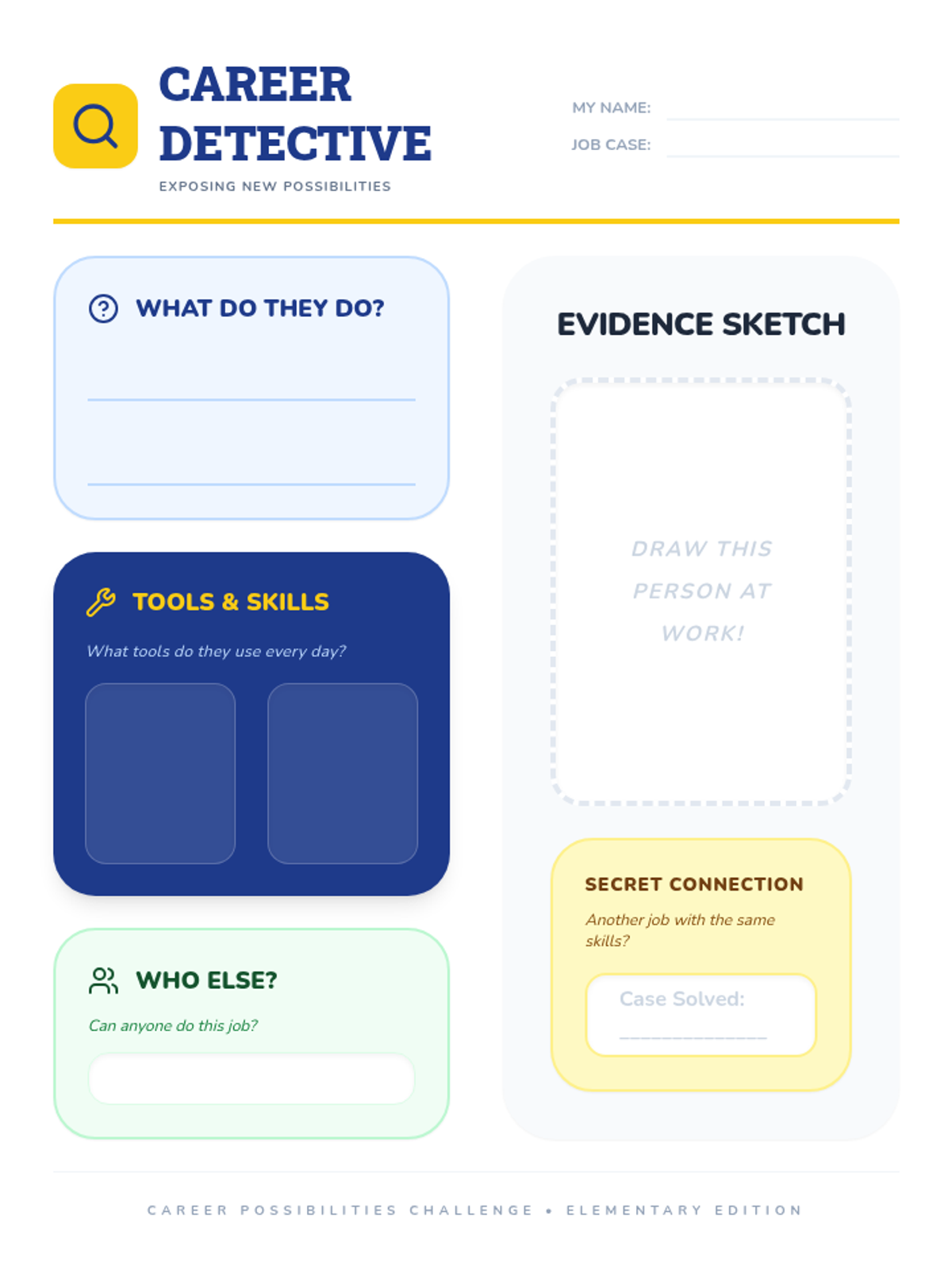
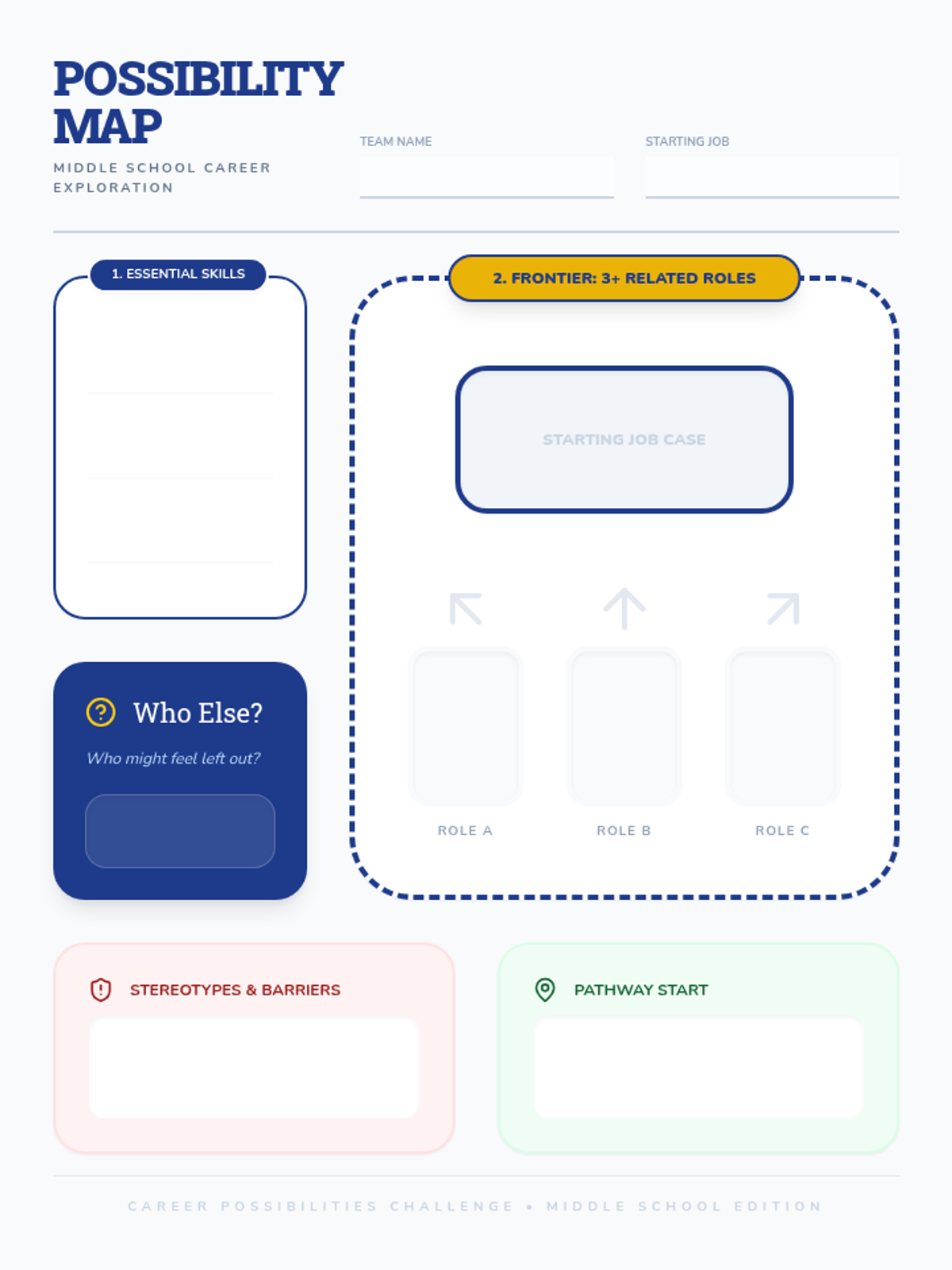
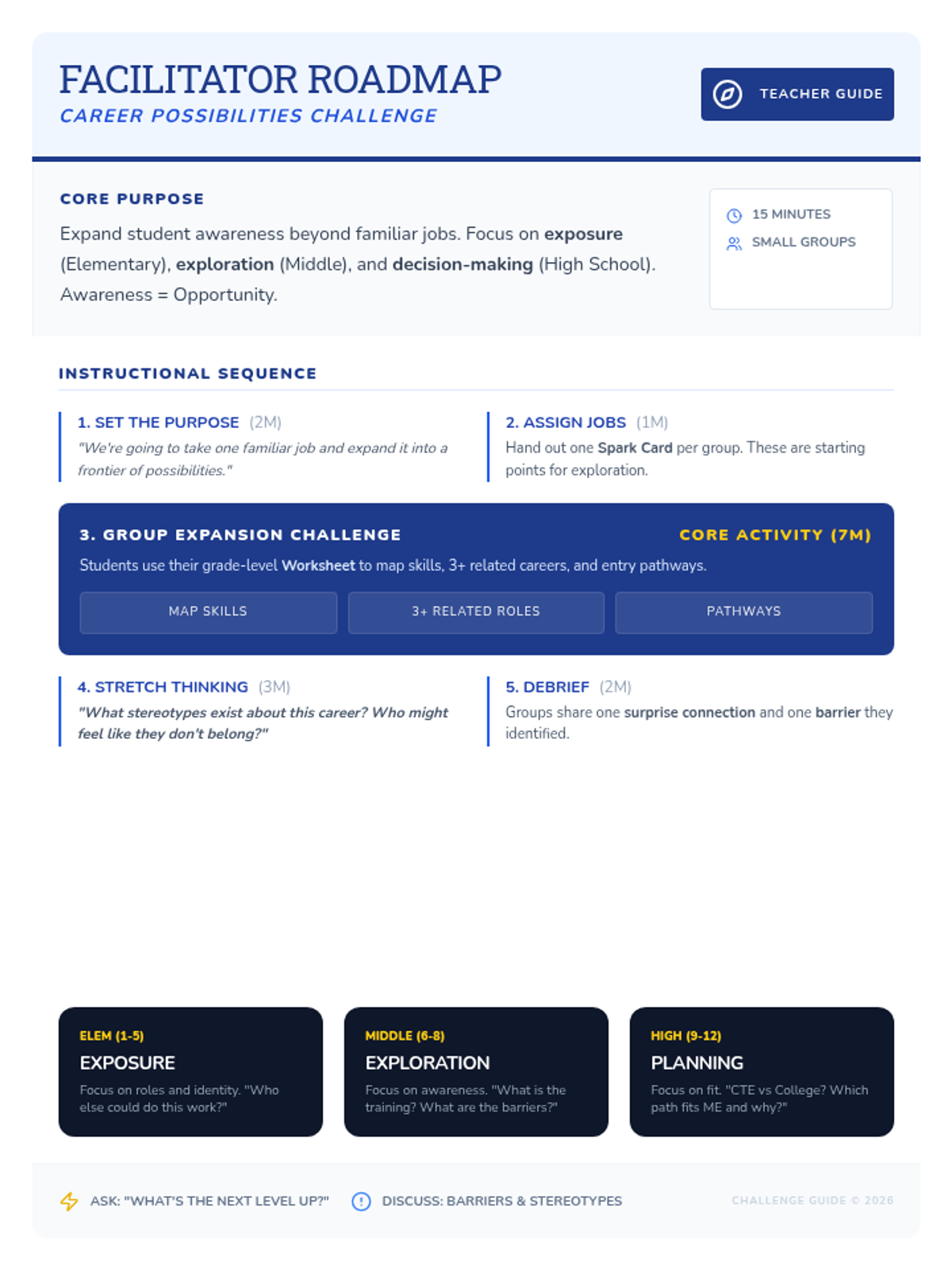
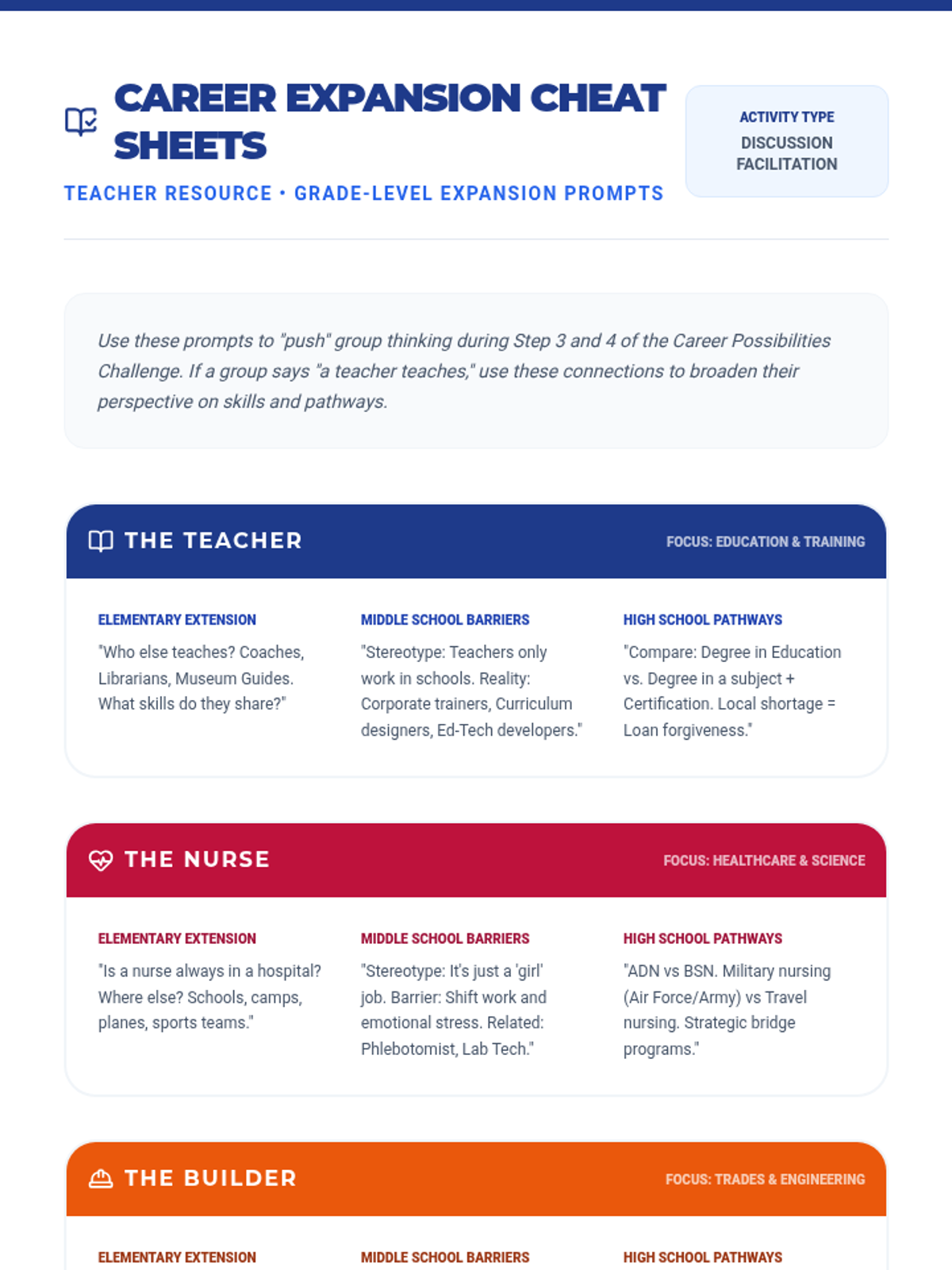
A fast-paced, interactive activity where students expand their understanding of familiar careers into broader industry pathways and explore the skills and steps needed to reach them.
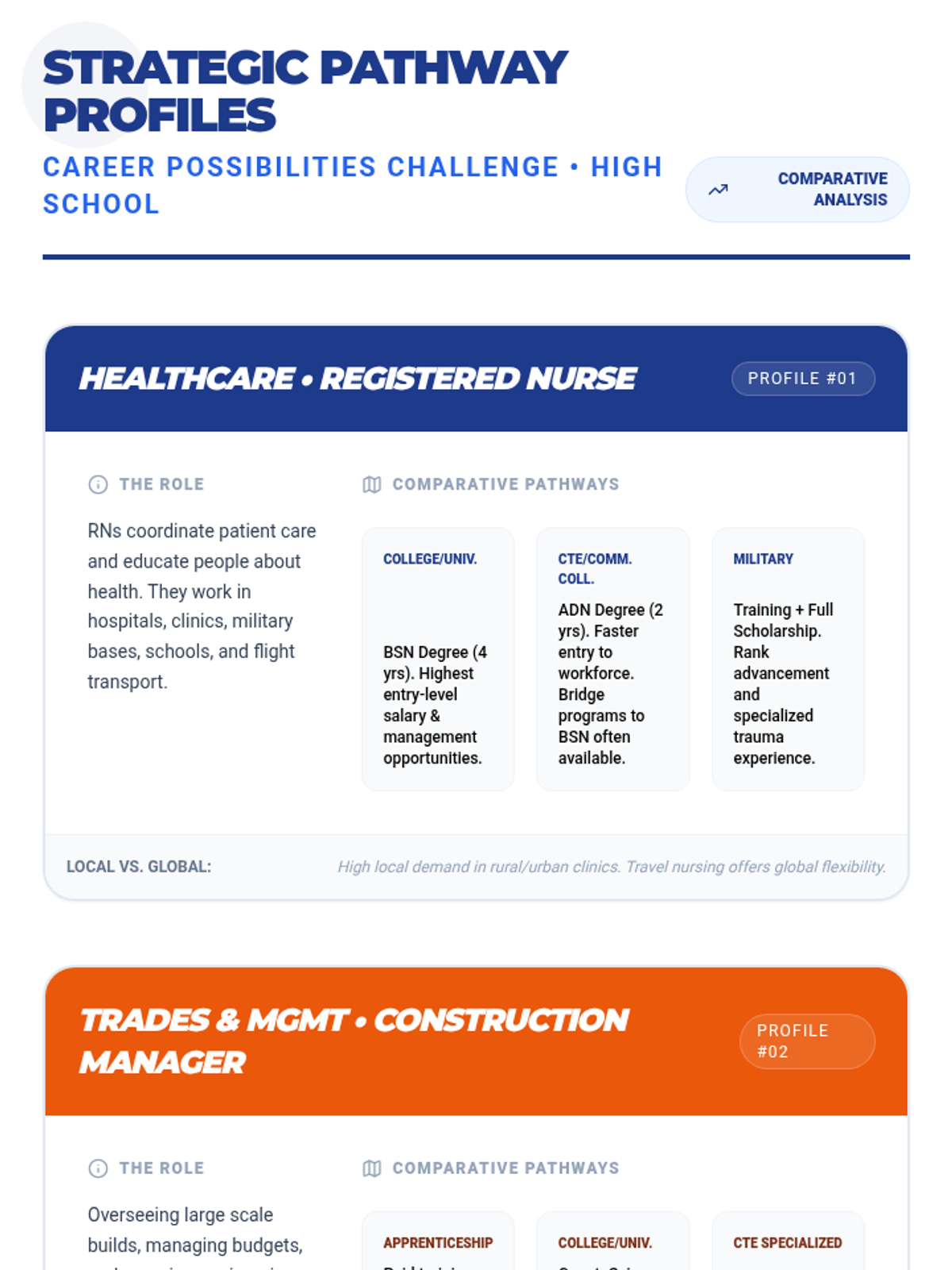
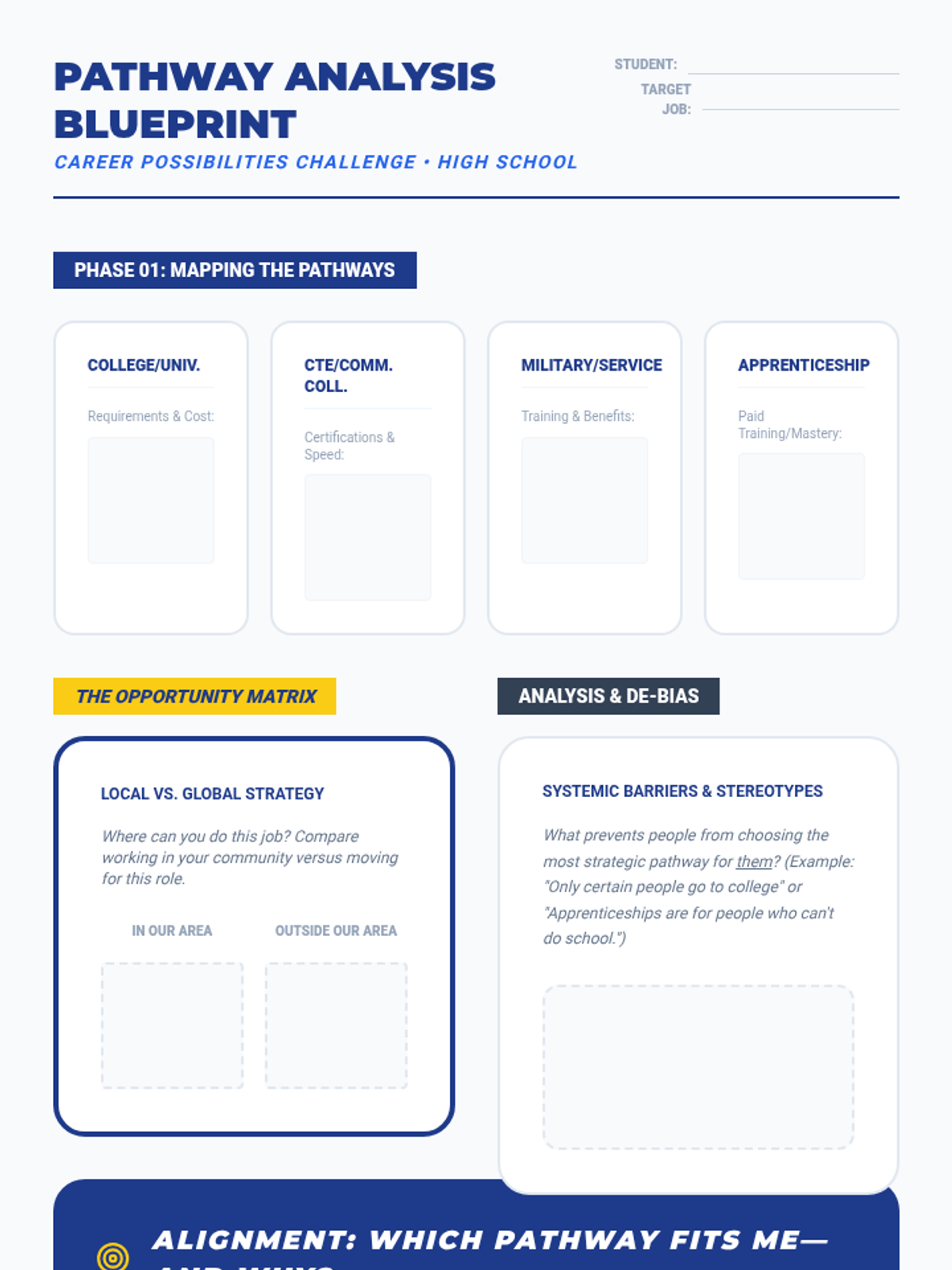
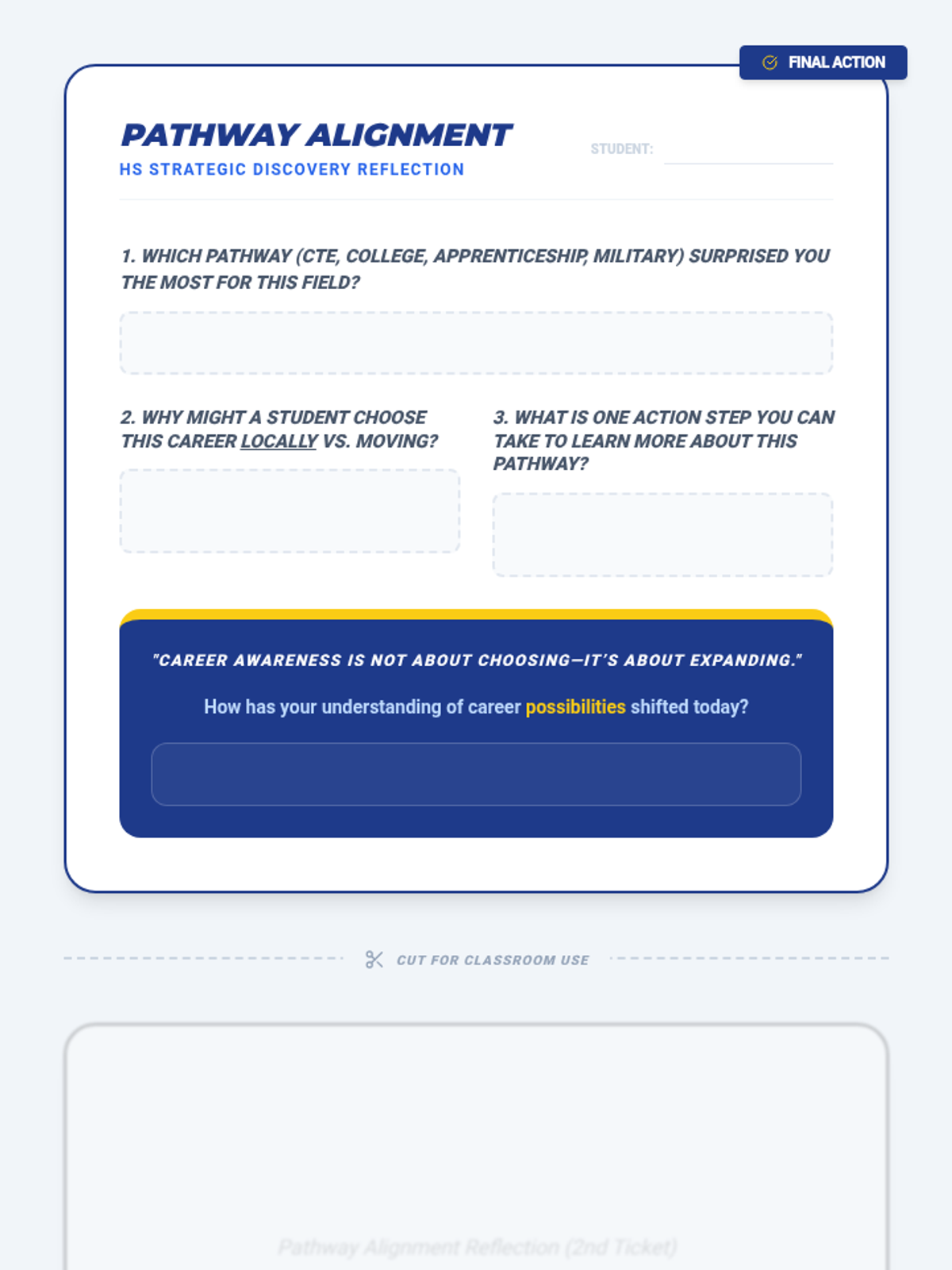
A strategic career planning lesson for high schoolers focusing on comparing specific pathways (CTE, college, military) and evaluating local versus out-of-area opportunities.
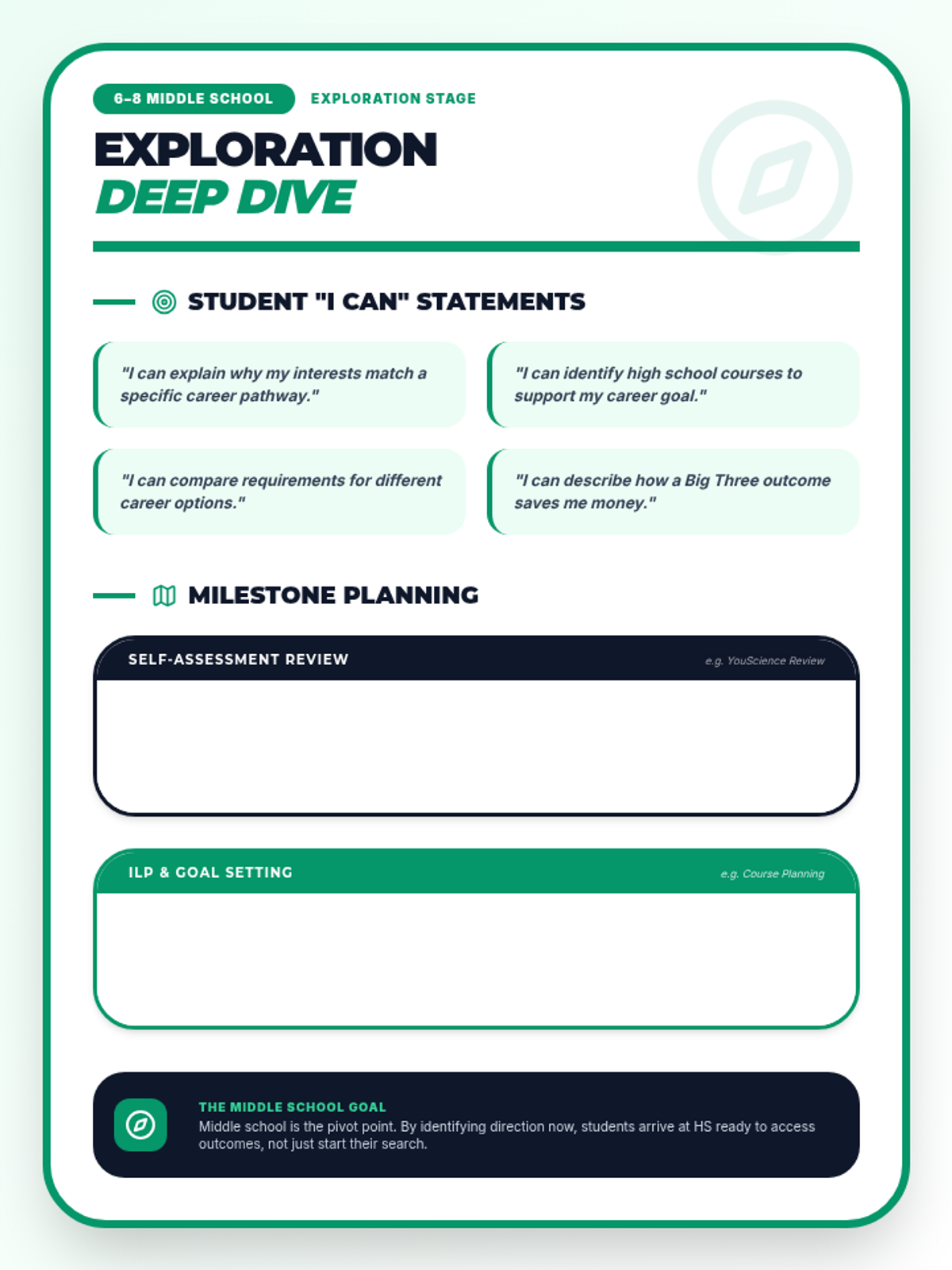
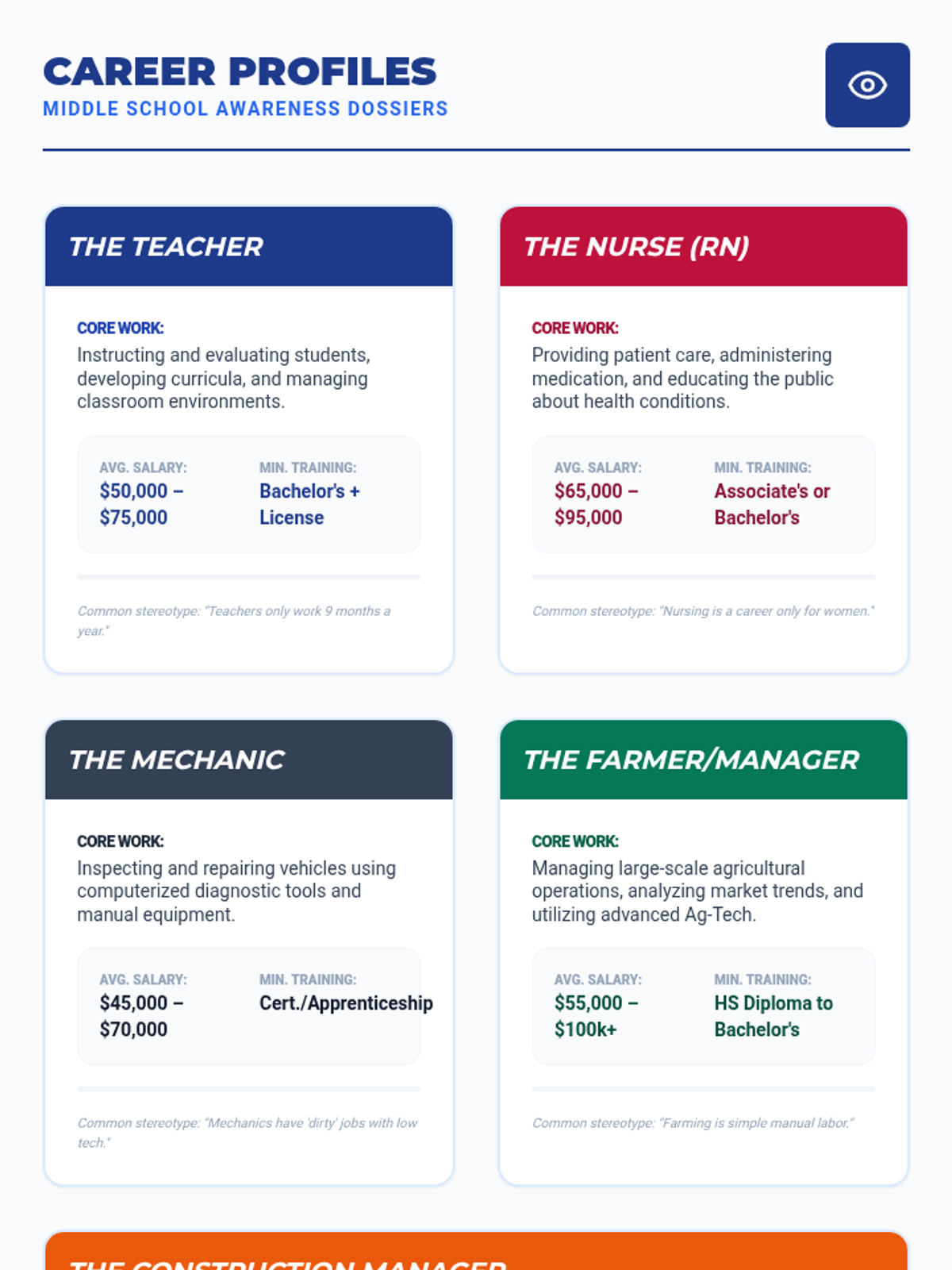
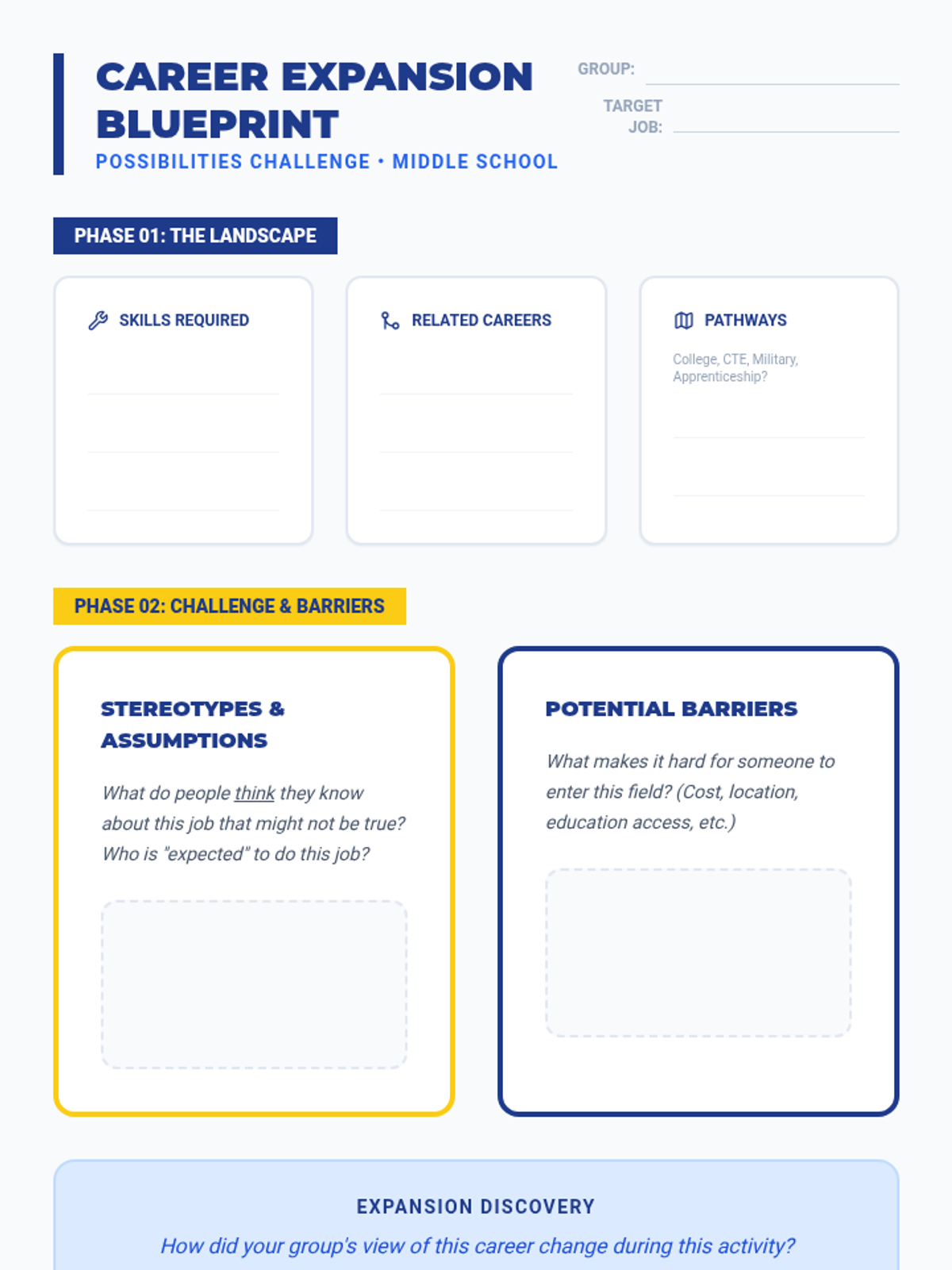
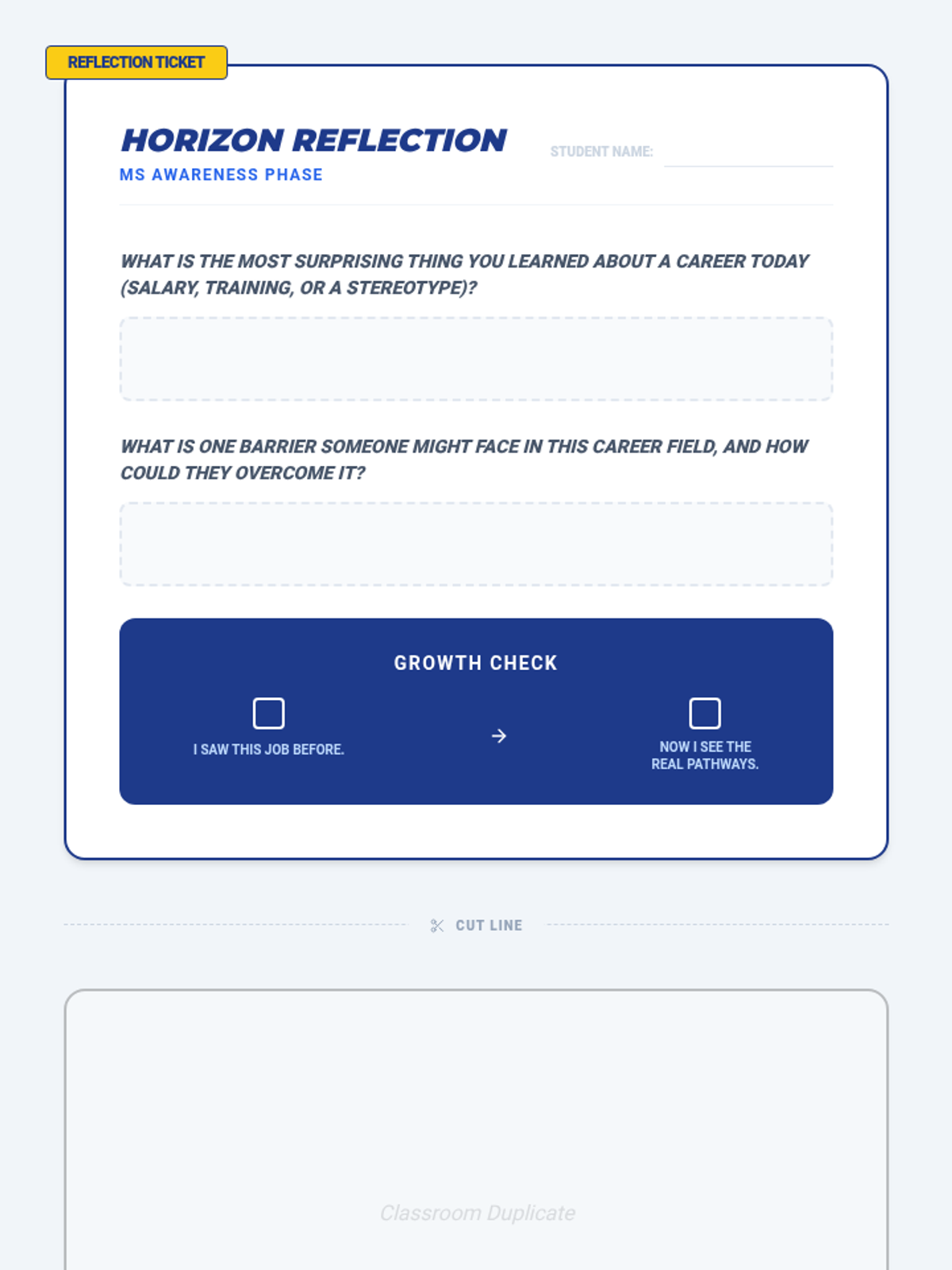
A career exploration lesson for middle schoolers that dives into salary, education requirements, and identifying stereotypes or barriers within specific career fields.
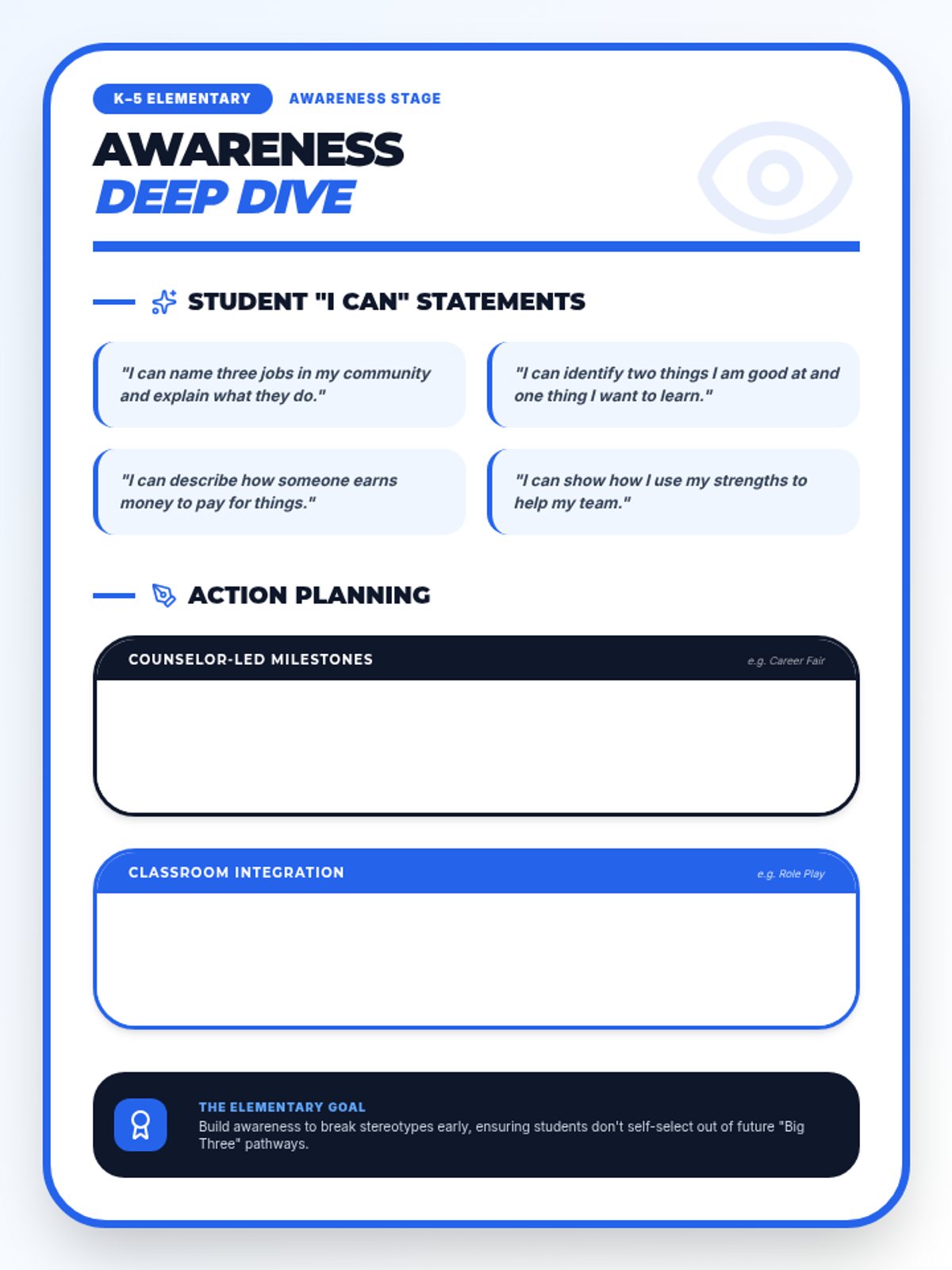
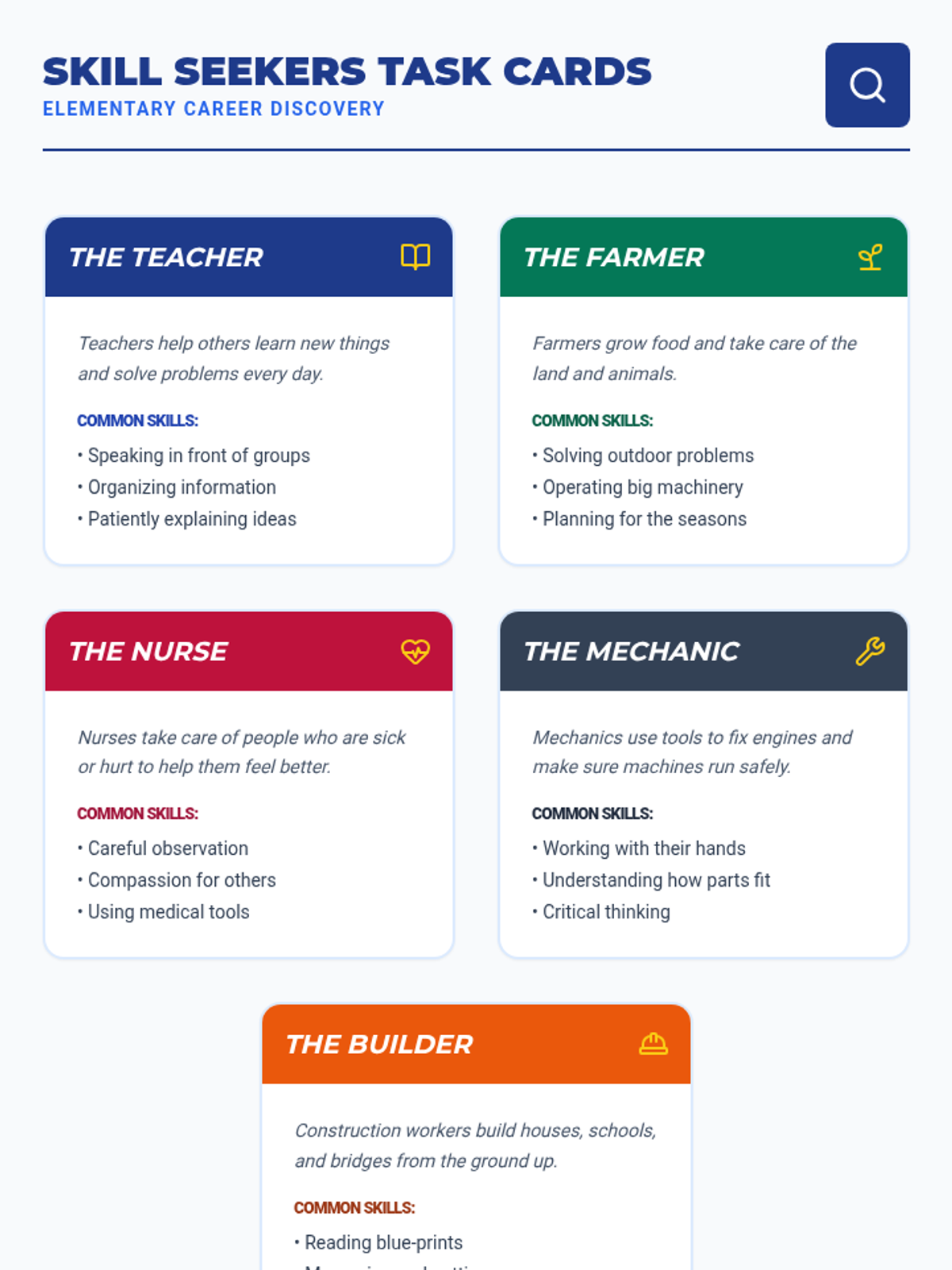
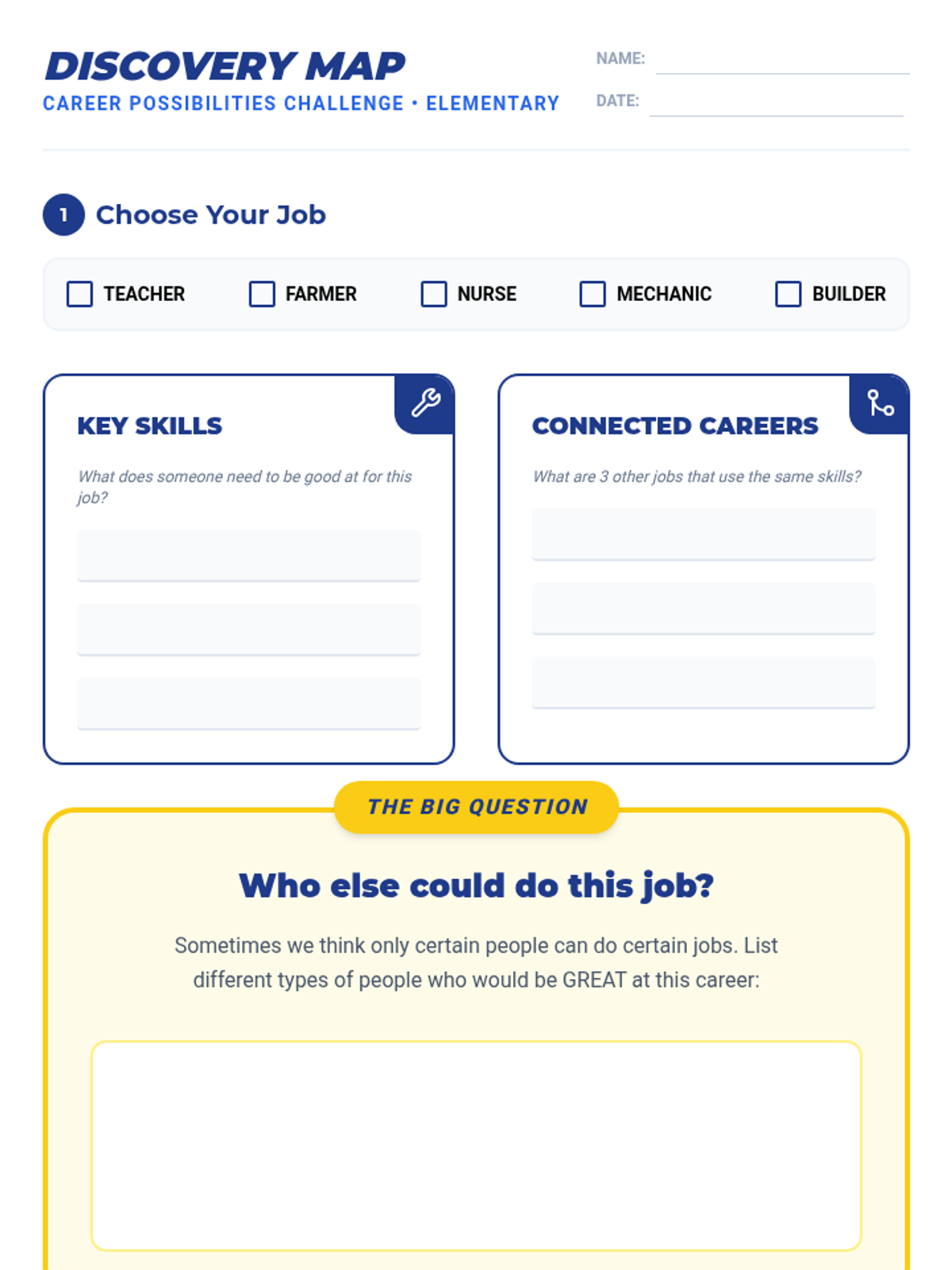
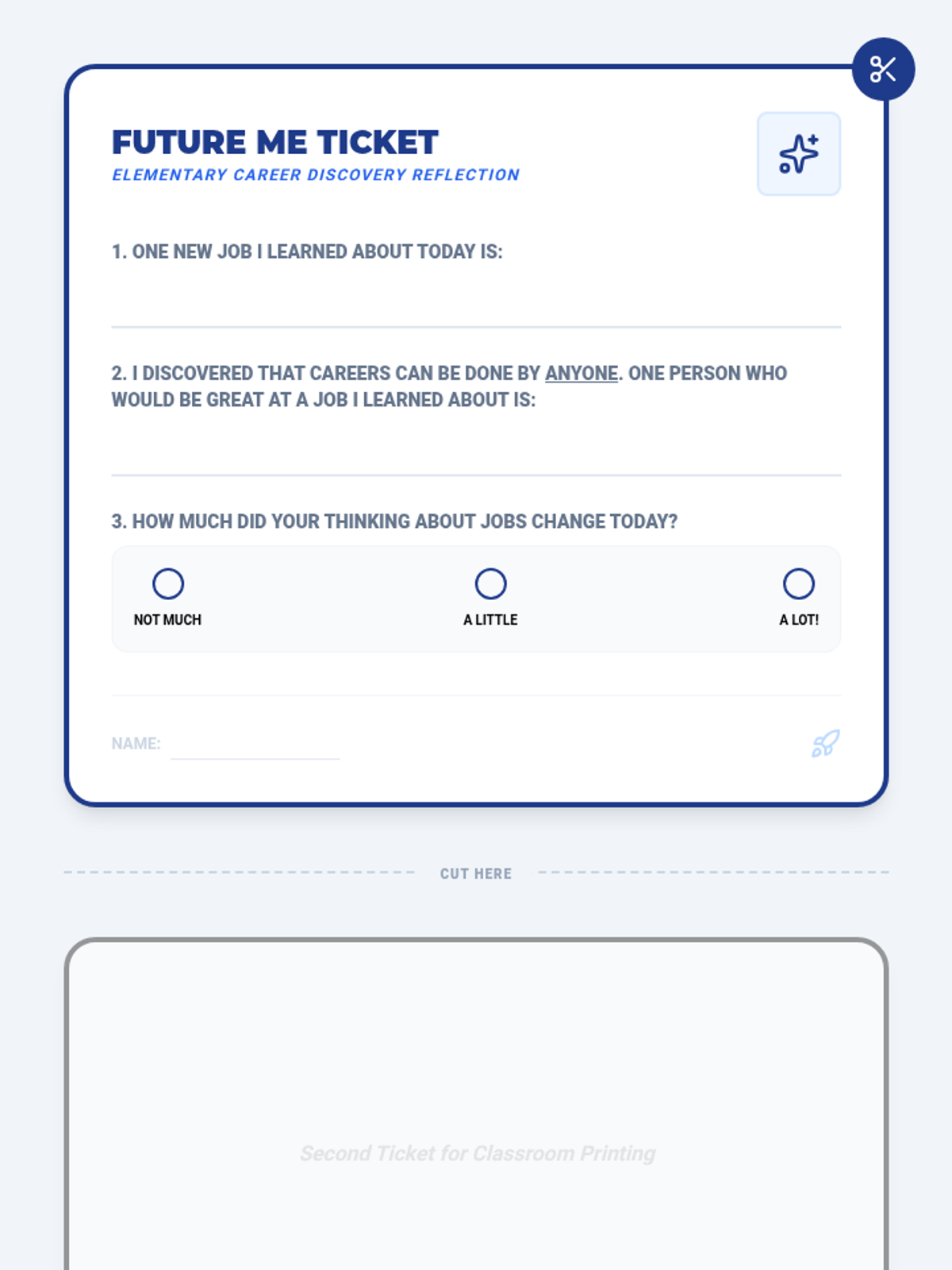
An introductory career awareness lesson for elementary students focusing on identifying job skills and exploring 'who else' can do a job. Students use a graphic organizer to expand their understanding of common professions.
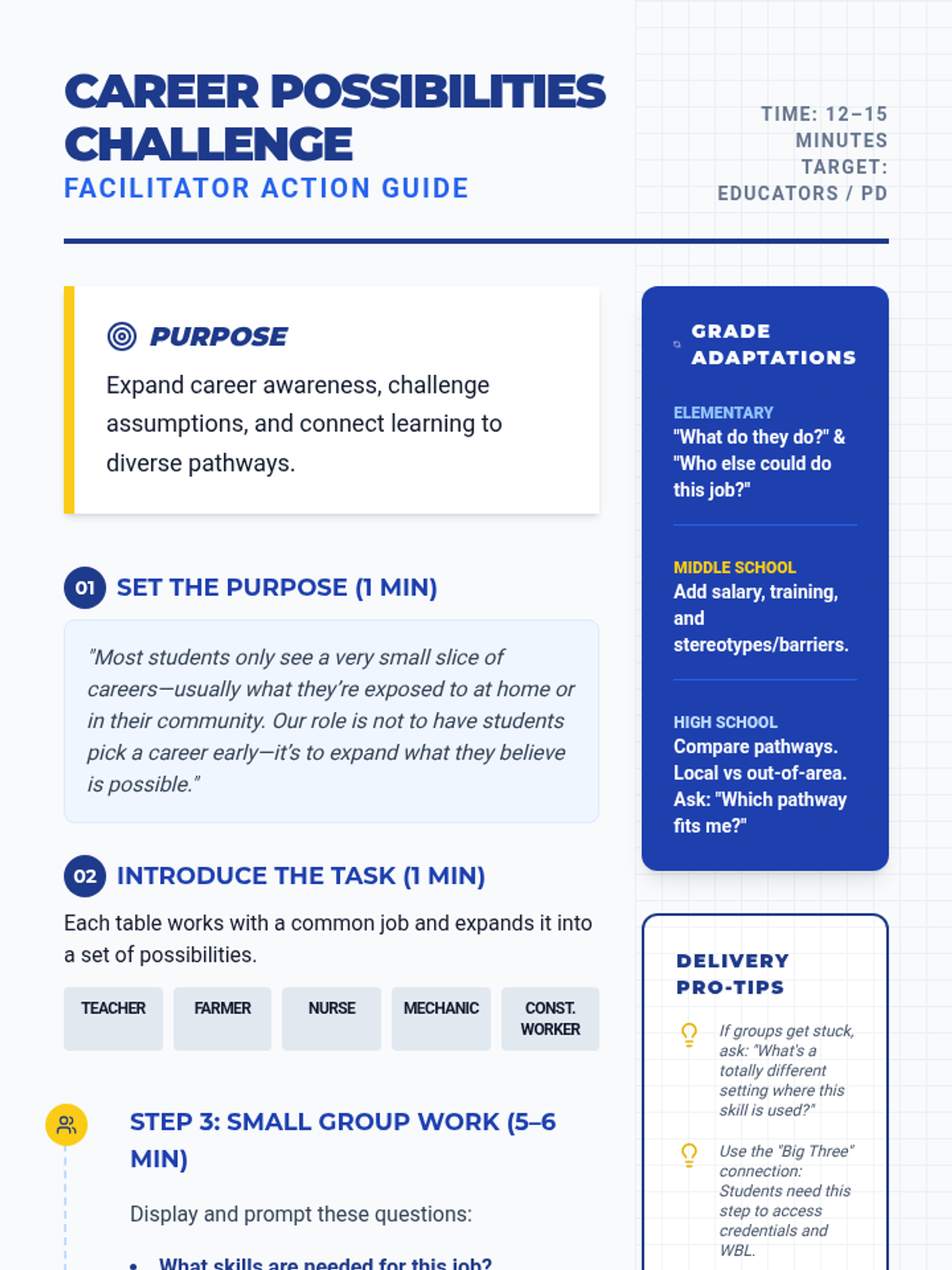
A professional development session for educators to learn how to facilitate career expansion activities that challenge student assumptions and connect learning to diverse pathways.
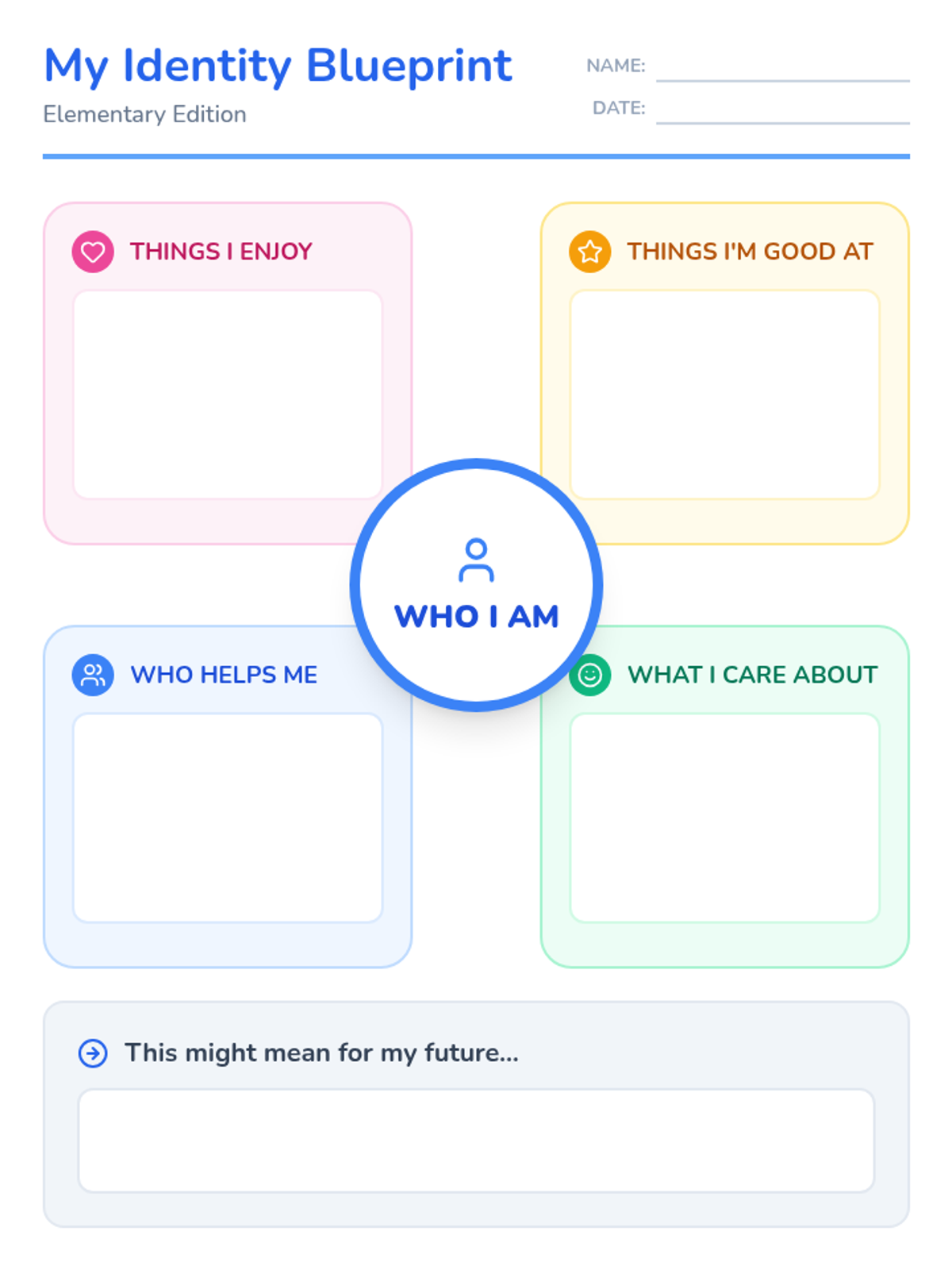
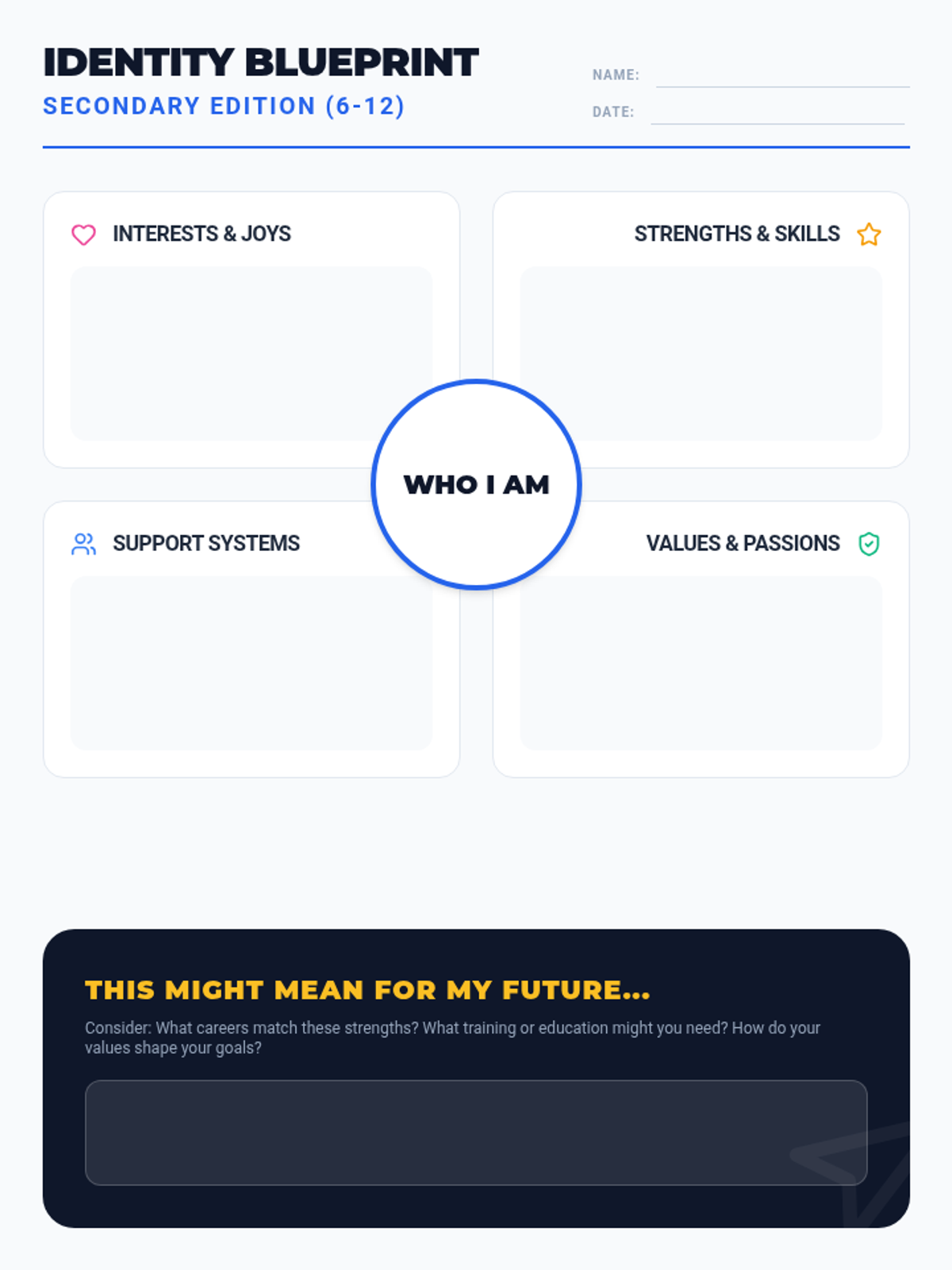
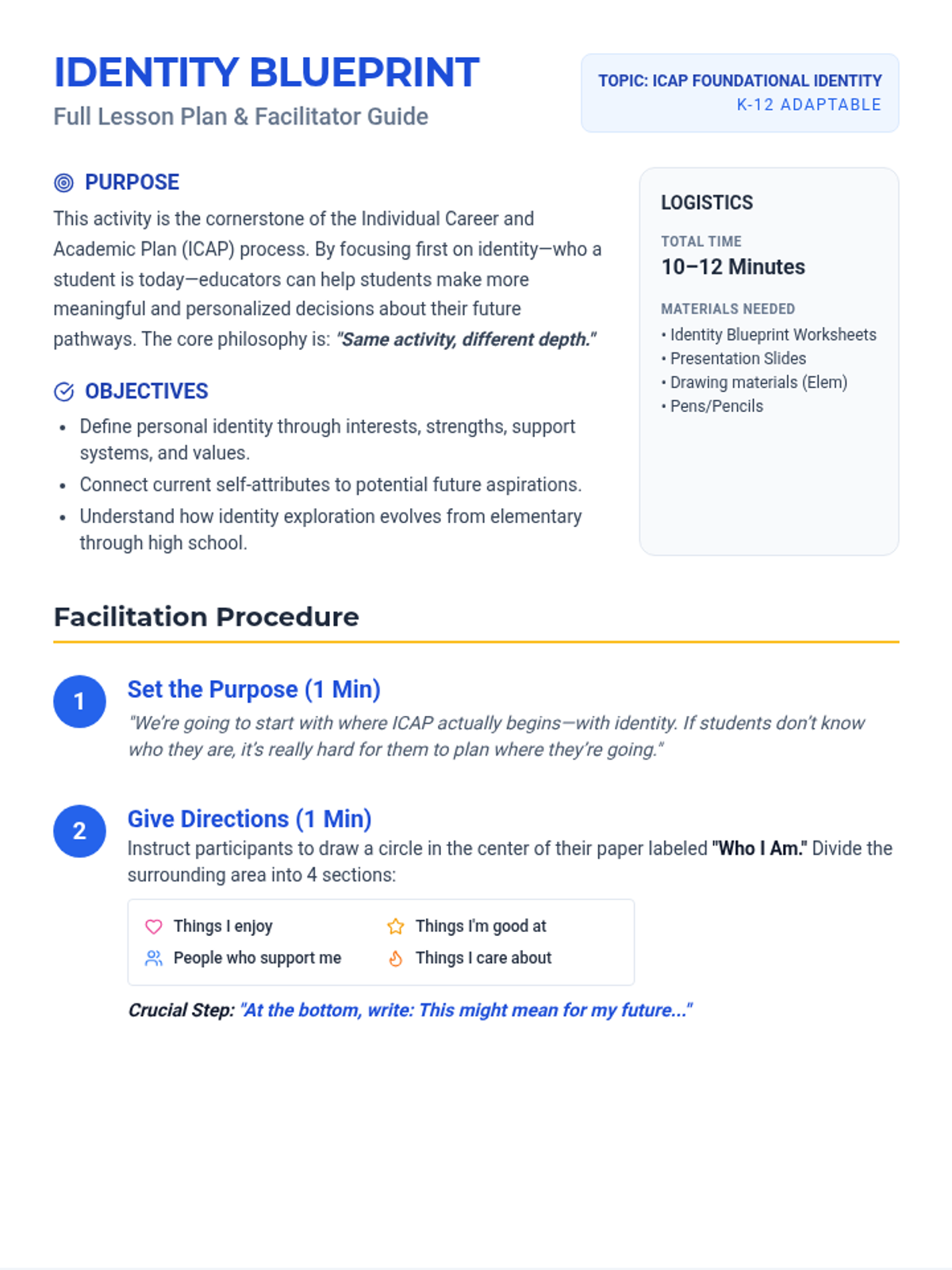
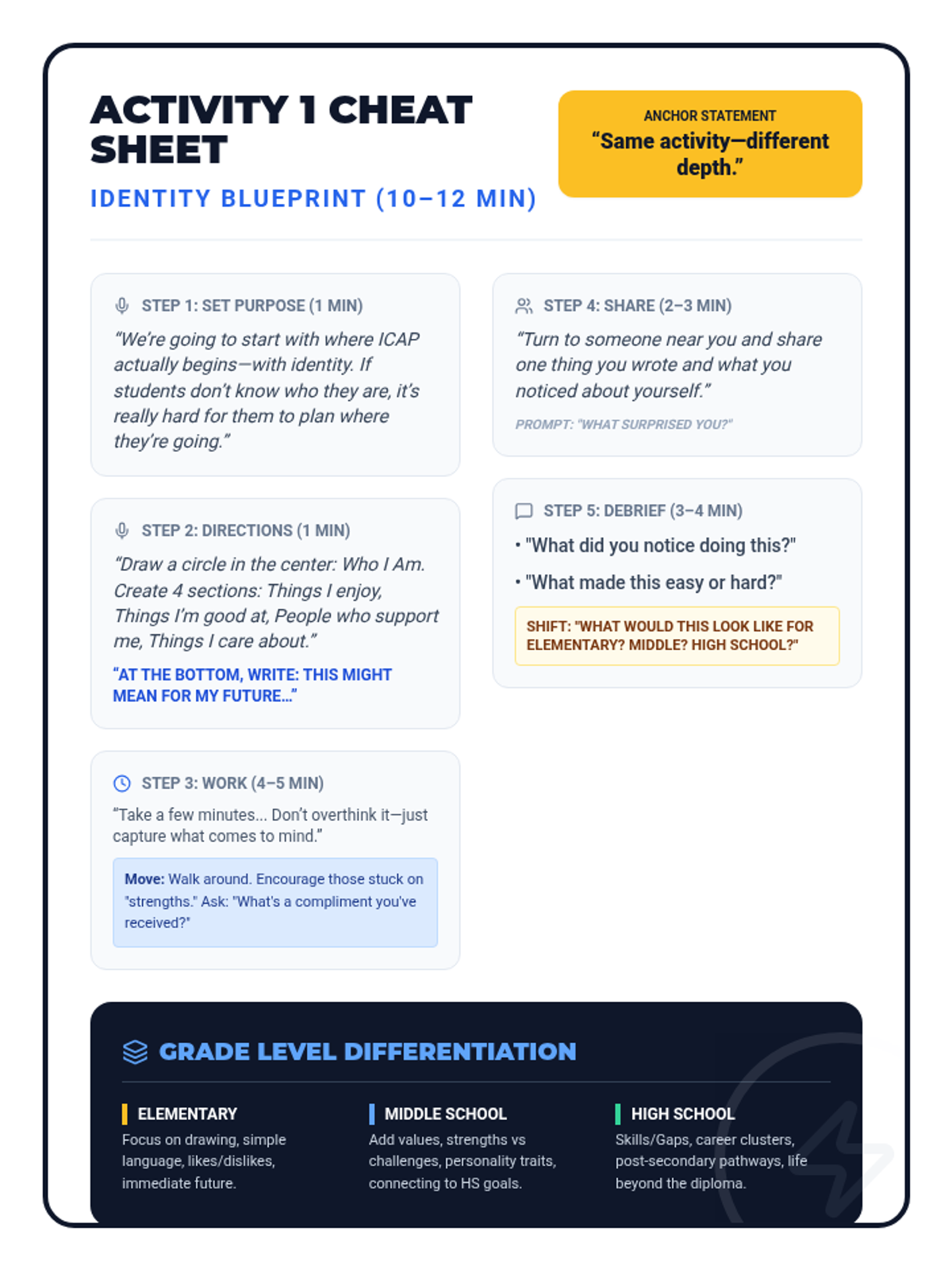
A comprehensive lesson package for the 'Who I Am -> Who I'm Becoming' activity, designed to build self-awareness and connect student identity to future career and academic pathways across K-12.
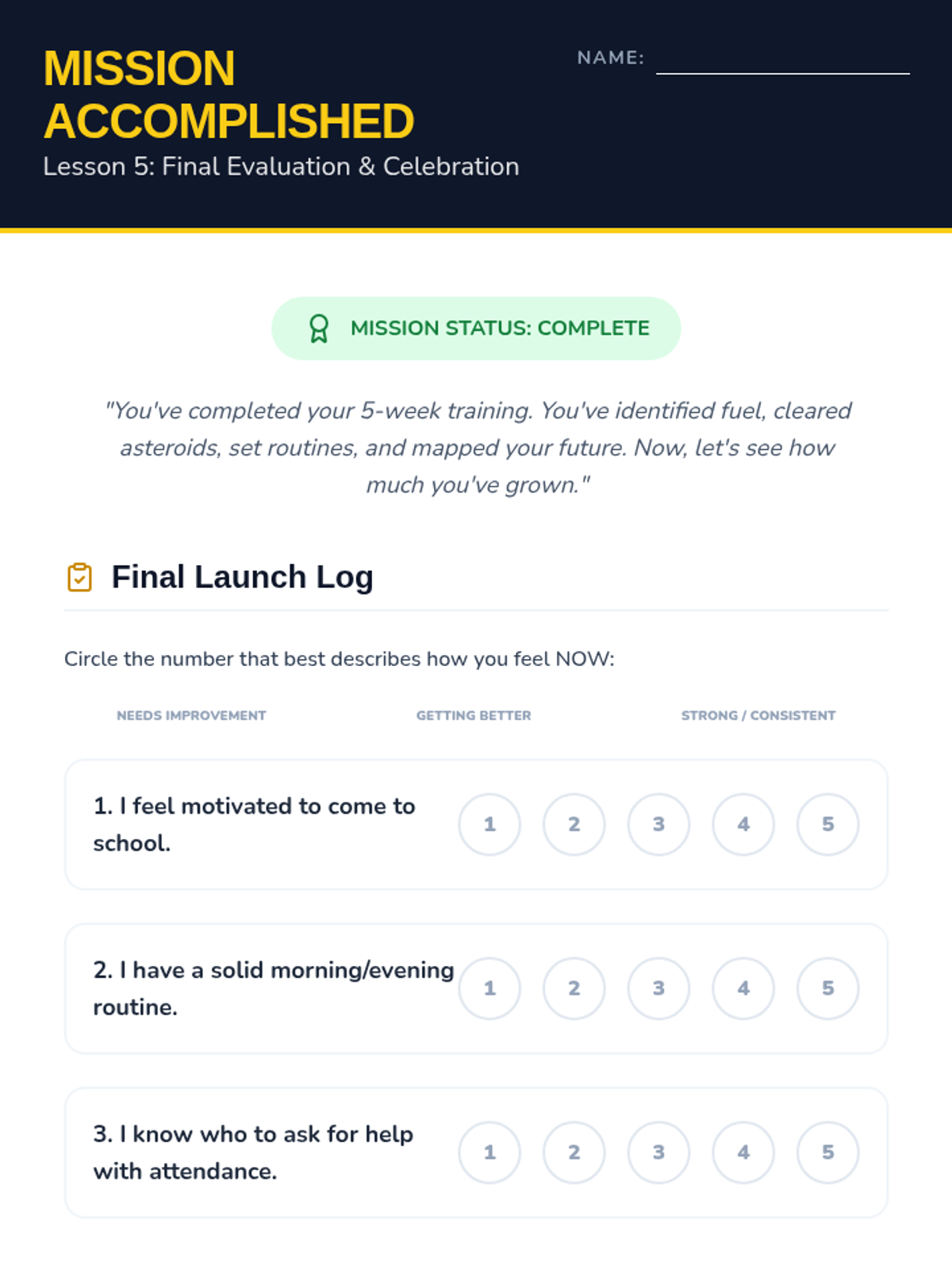
The final session reviews key takeaways, celebrates progress, and includes the 'Mission Accomplished' post-assessment to measure growth in attitudes toward attendance.
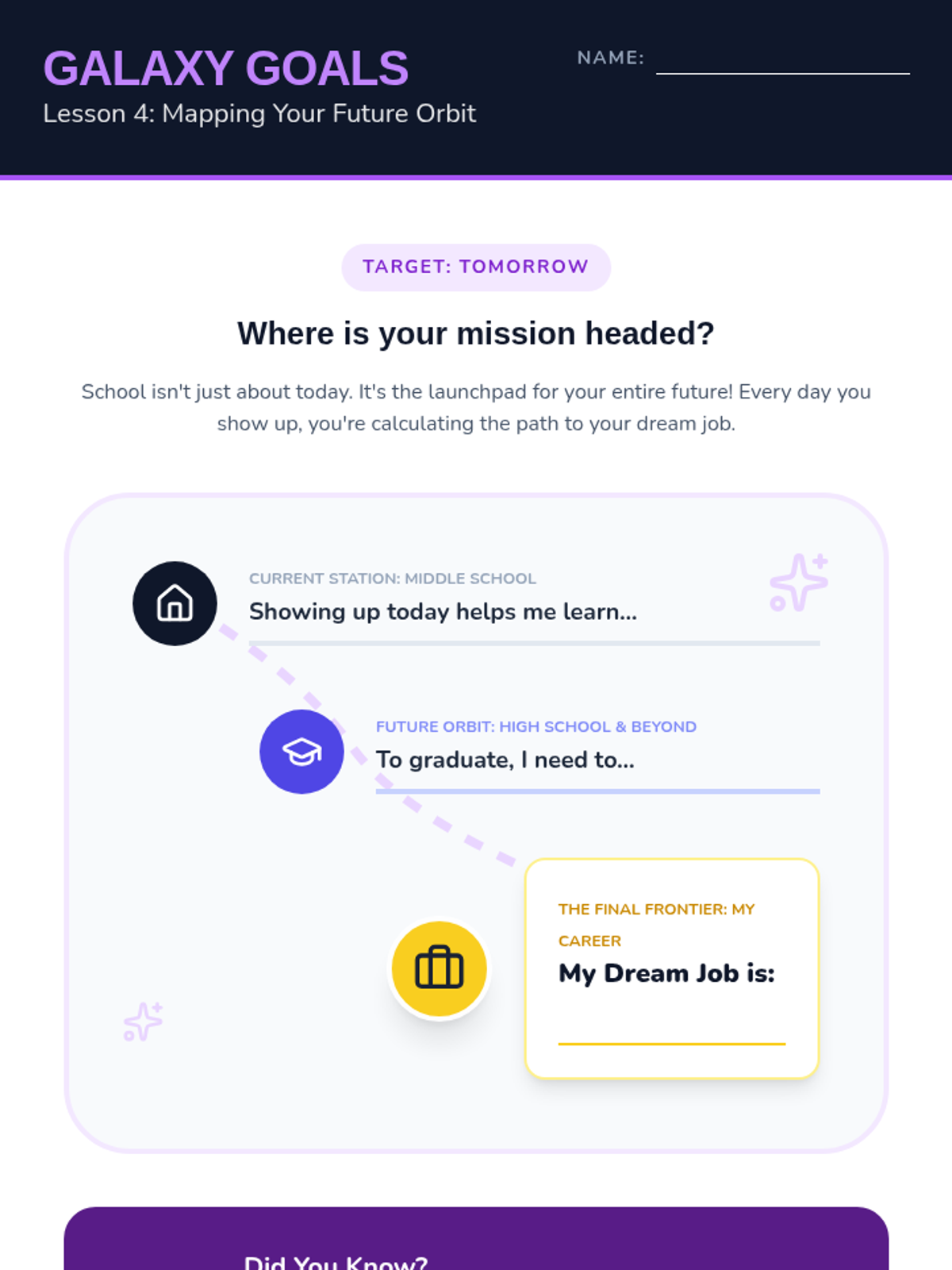
Students connect their daily presence in school to their long-term 'Galaxy Goals' and future career aspirations, understanding that every day in school is a step toward their dreams.
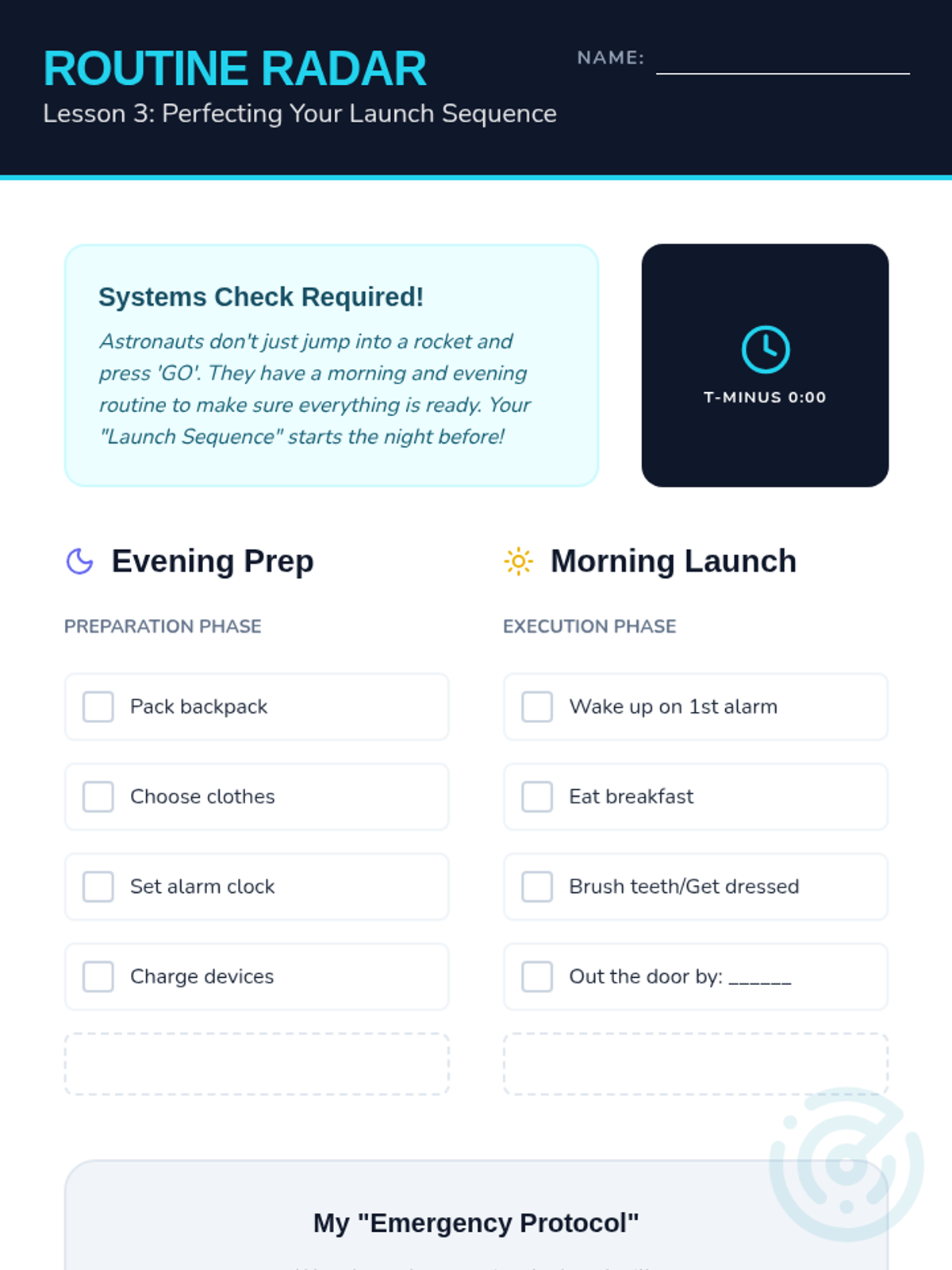
Focuses on building 'System Checks' through morning and evening routines. Students design their own 'Routine Radar' to ensure a smooth launch every school day.
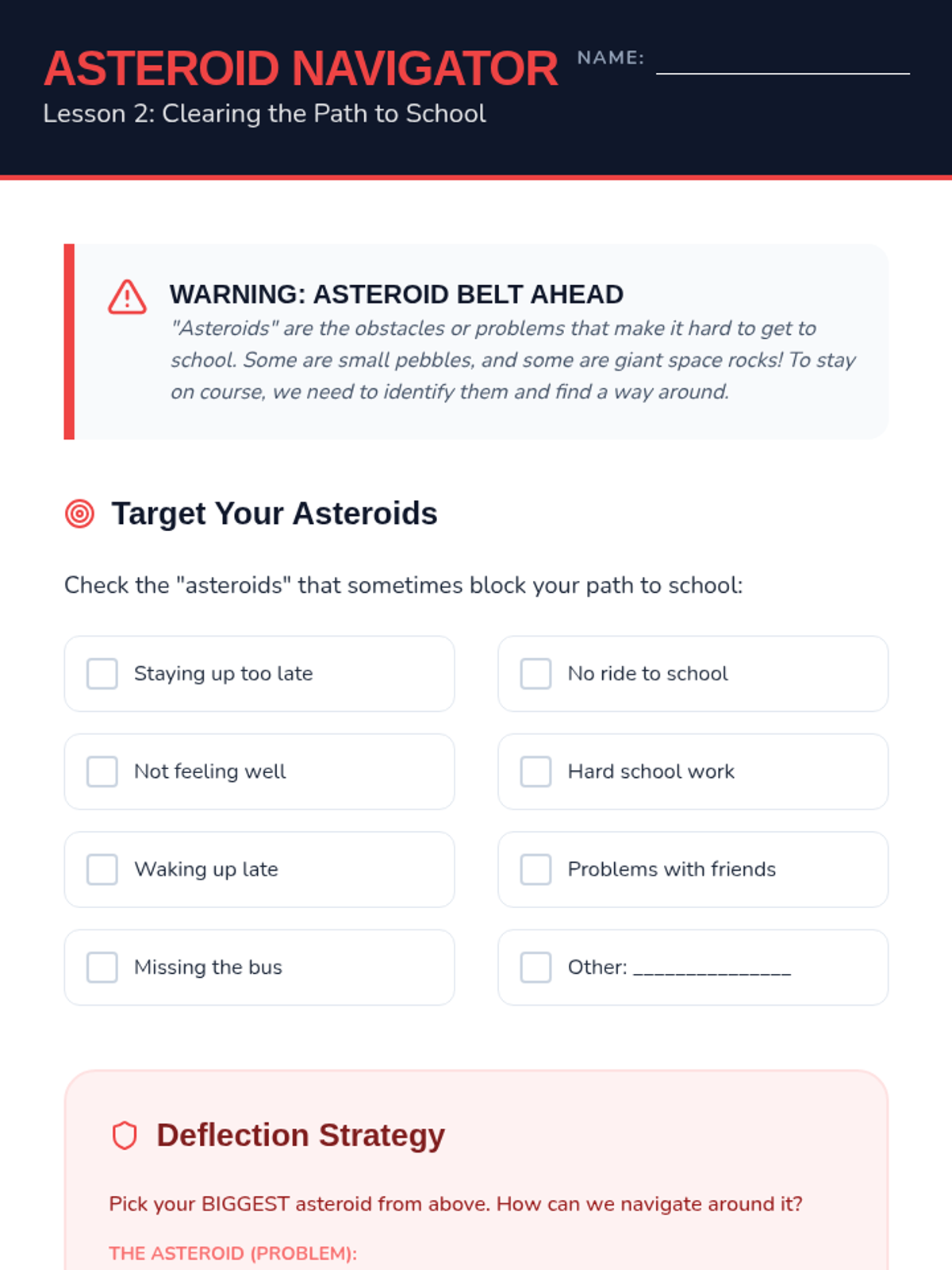
Students identify personal 'asteroids' (barriers) that prevent them from getting to school consistently and develop creative strategies to navigate around them.
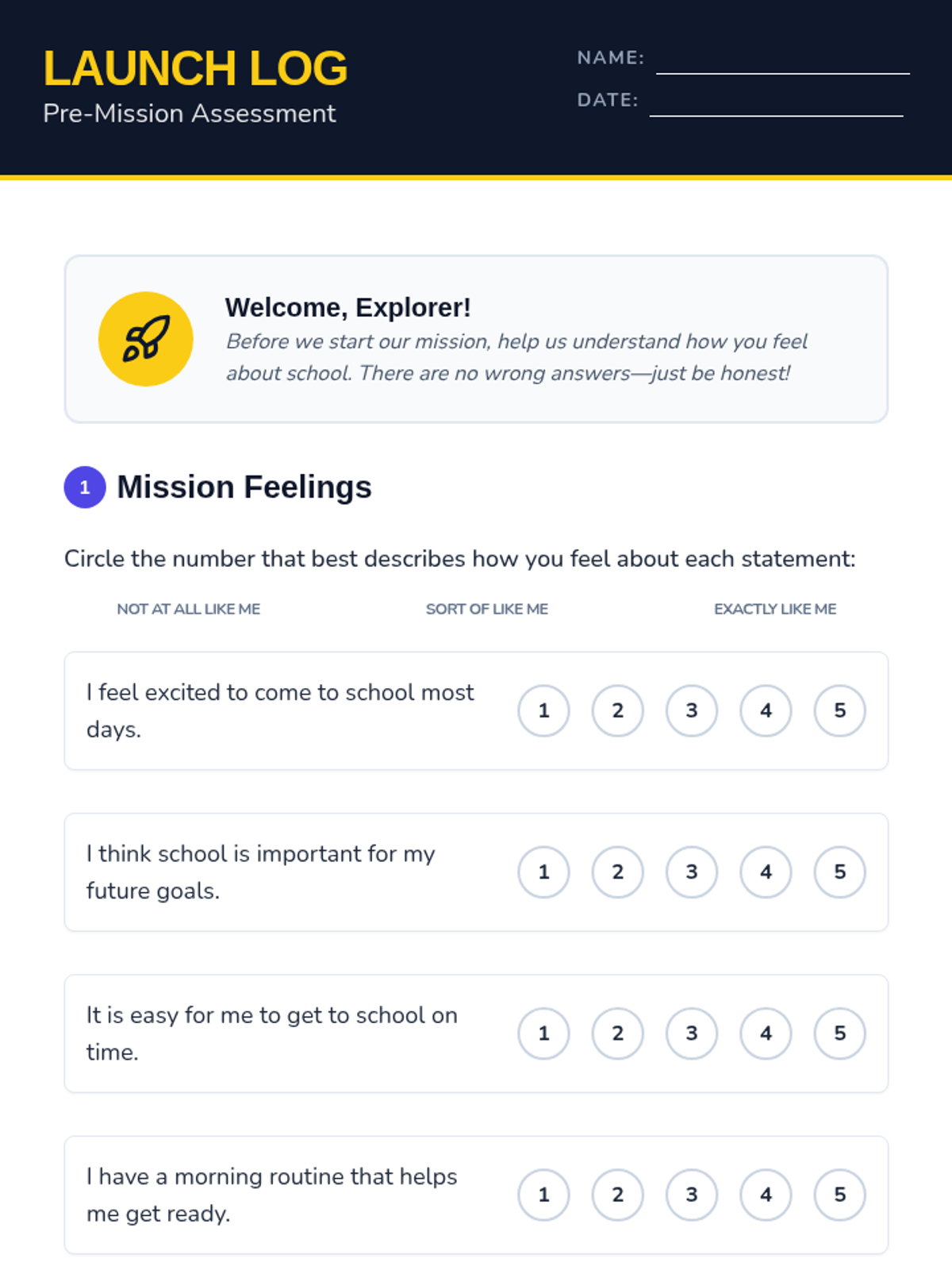
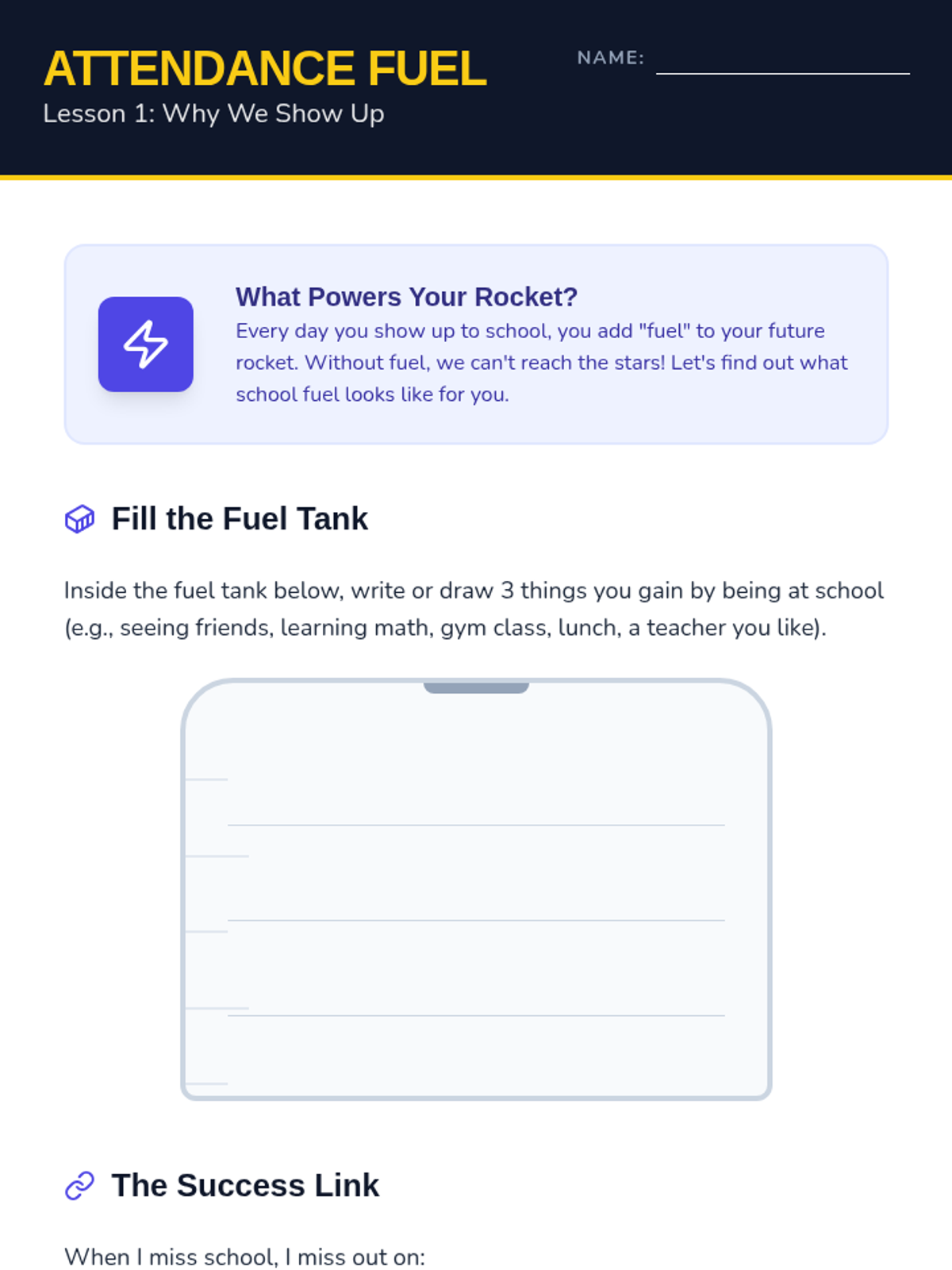
In this introductory session, students explore the direct link between attendance and school success. They complete their initial 'Launch Log' pre-assessment and map out their current feelings about school.
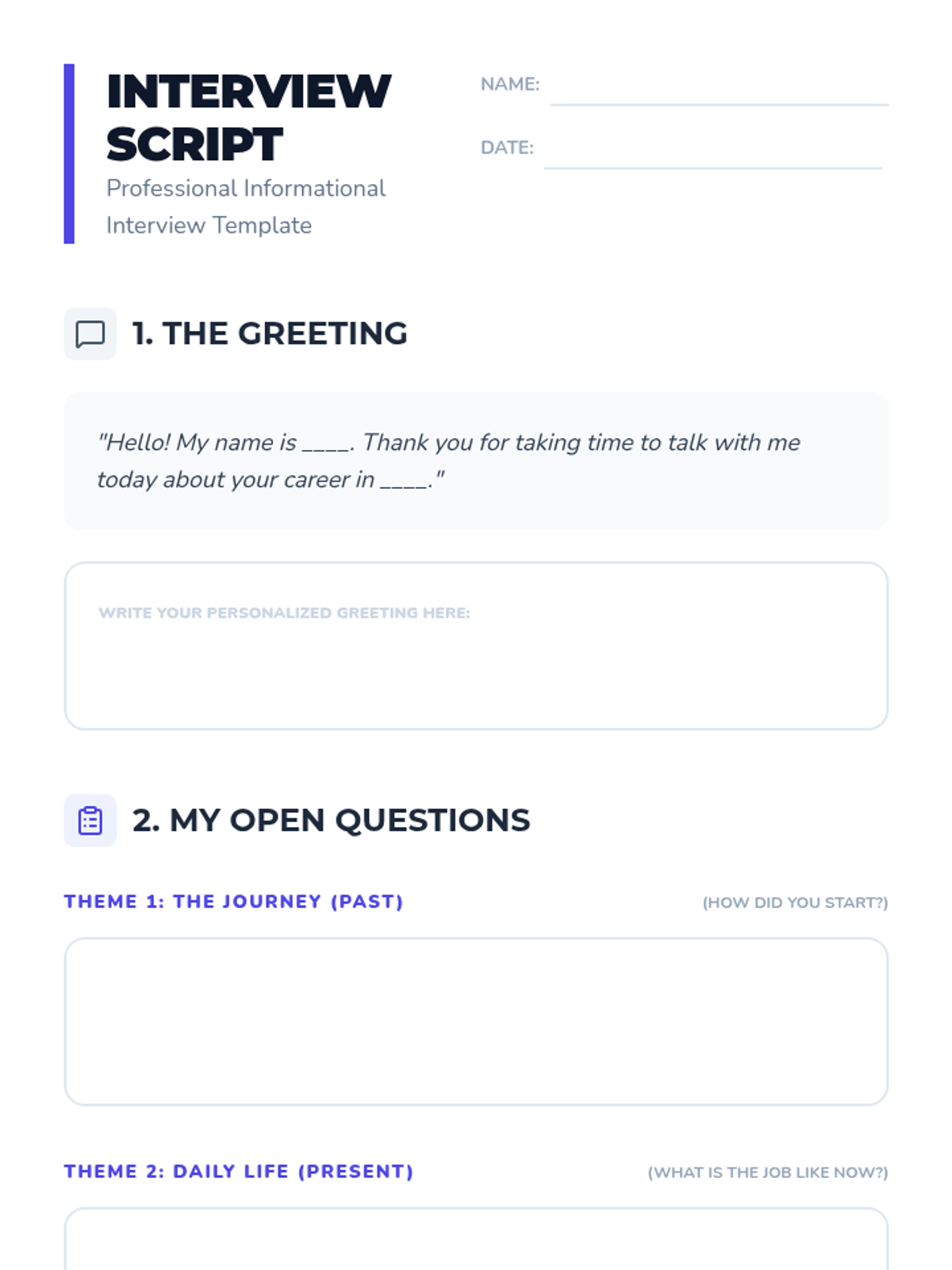
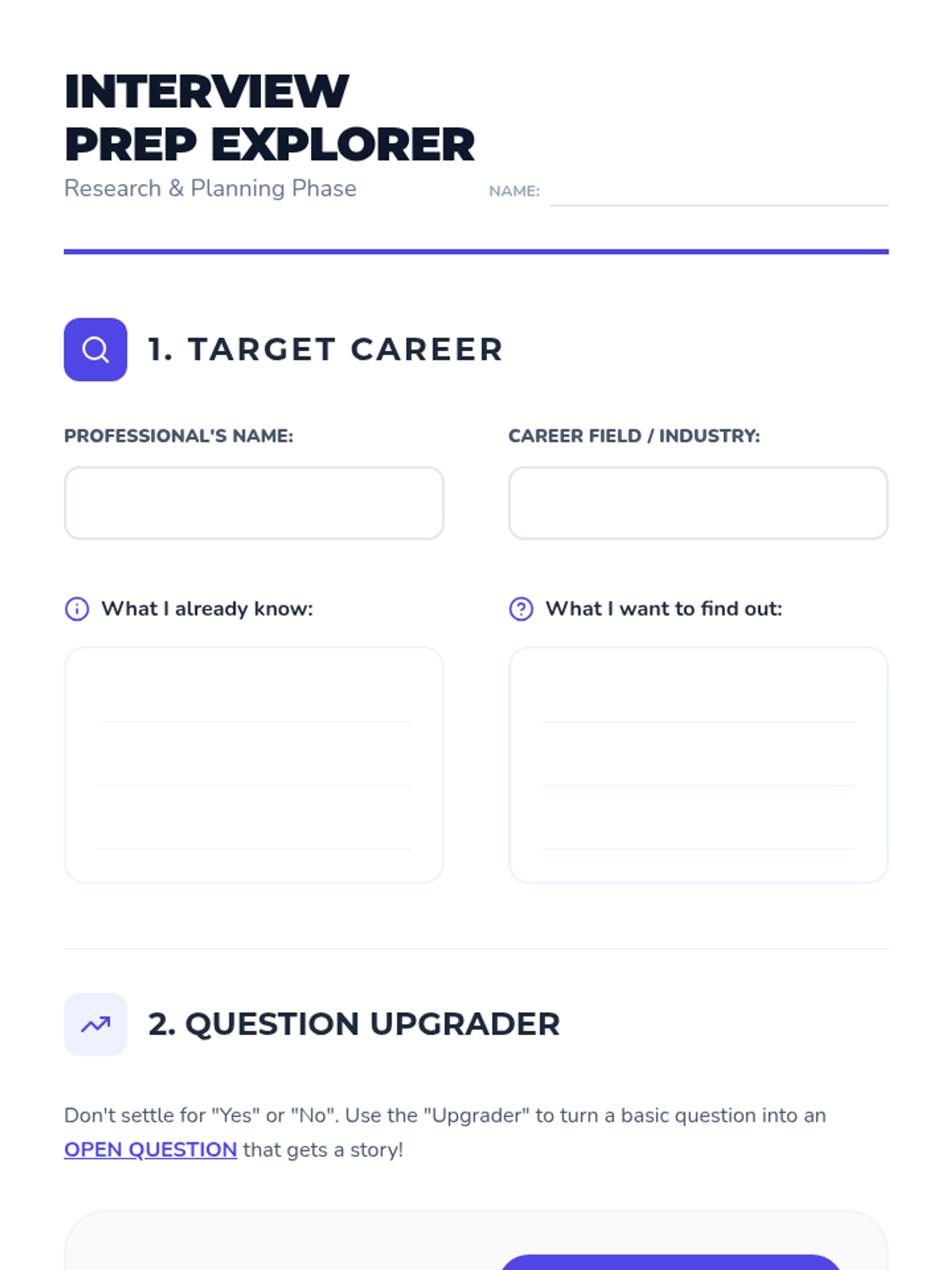
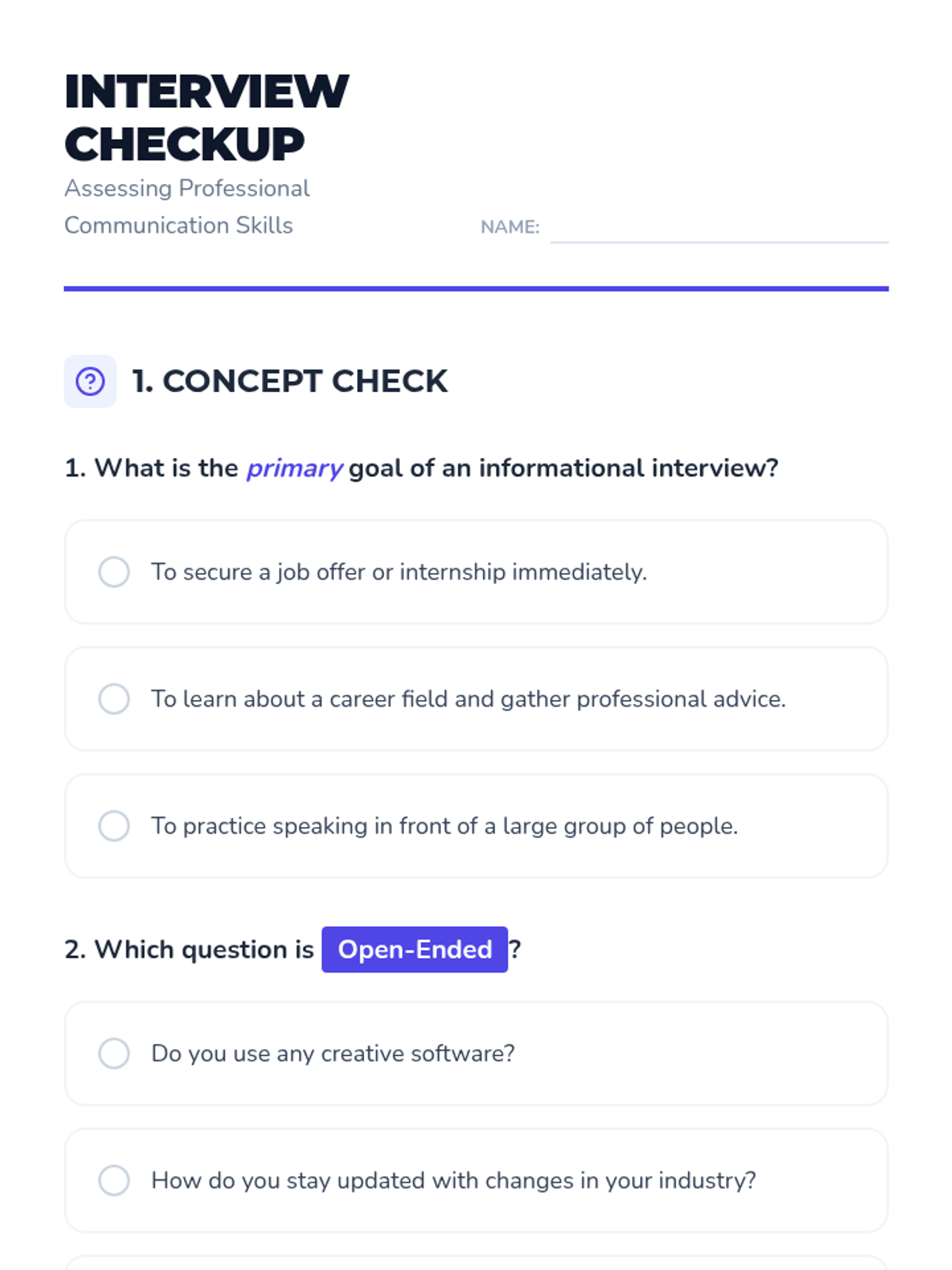
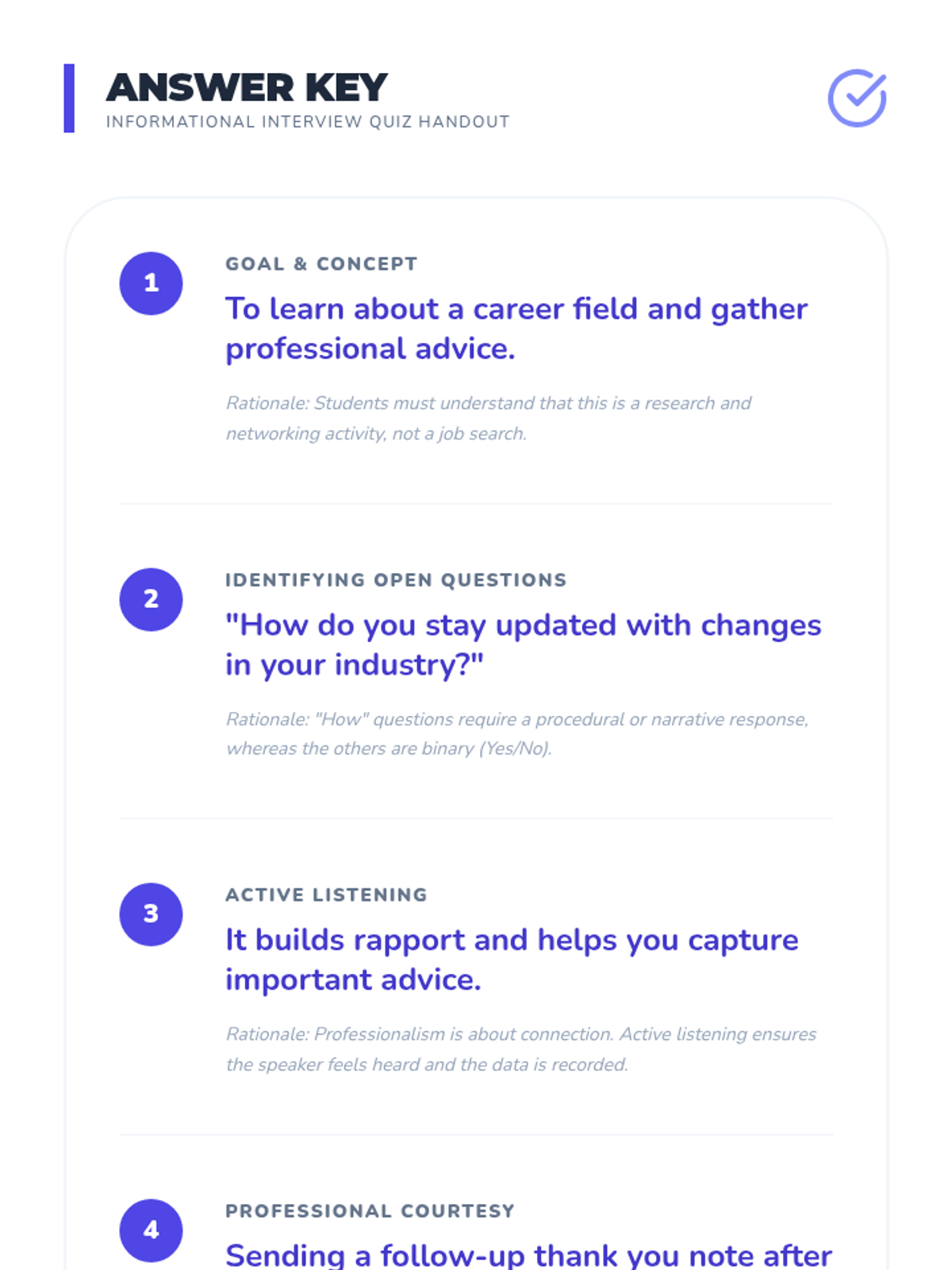
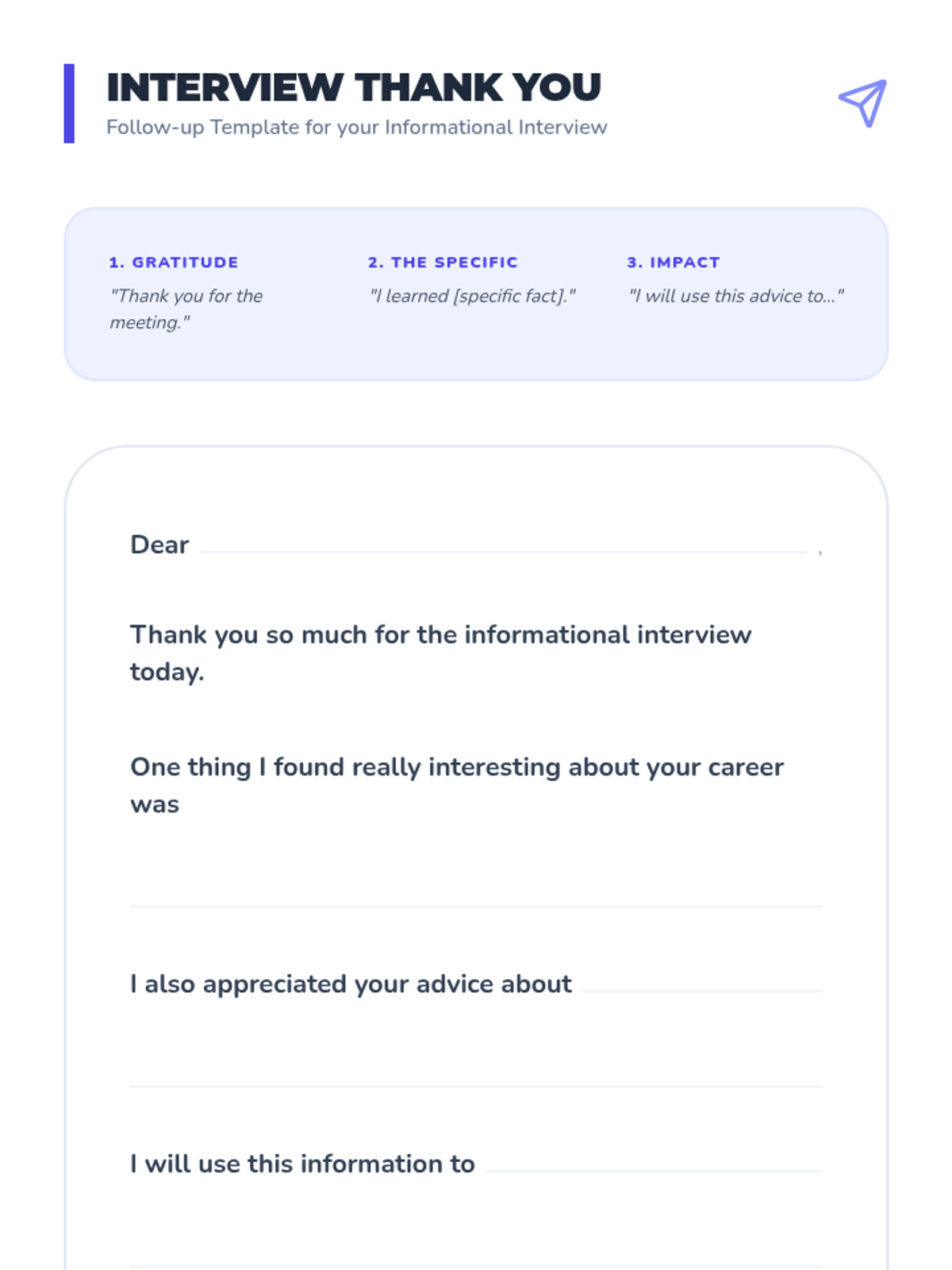
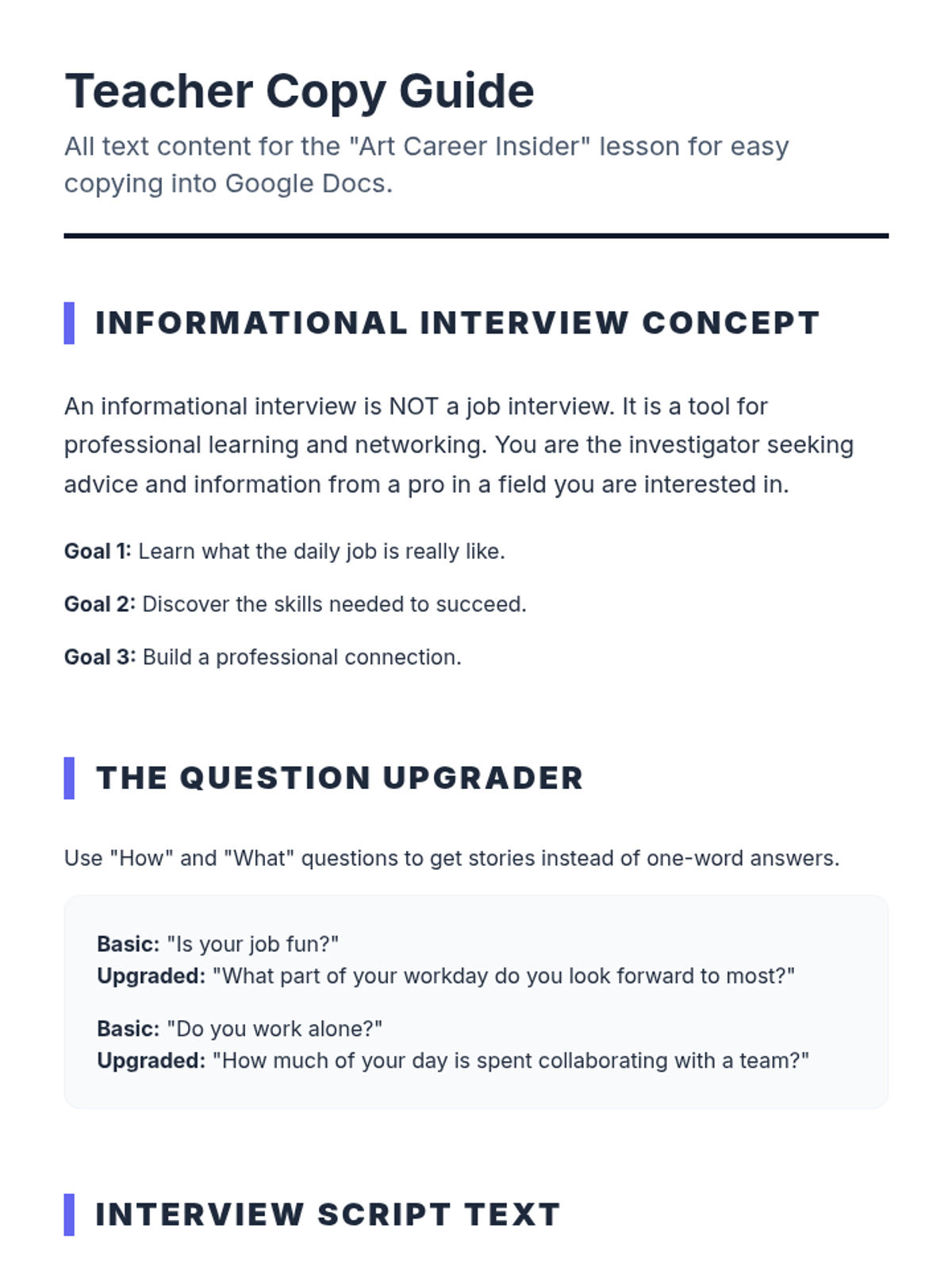
A lesson focused on functional communication skills for conducting informational interviews with creative professionals, specifically animators and tattoo artists. Students learn to draft open-ended questions and structure a professional conversation.
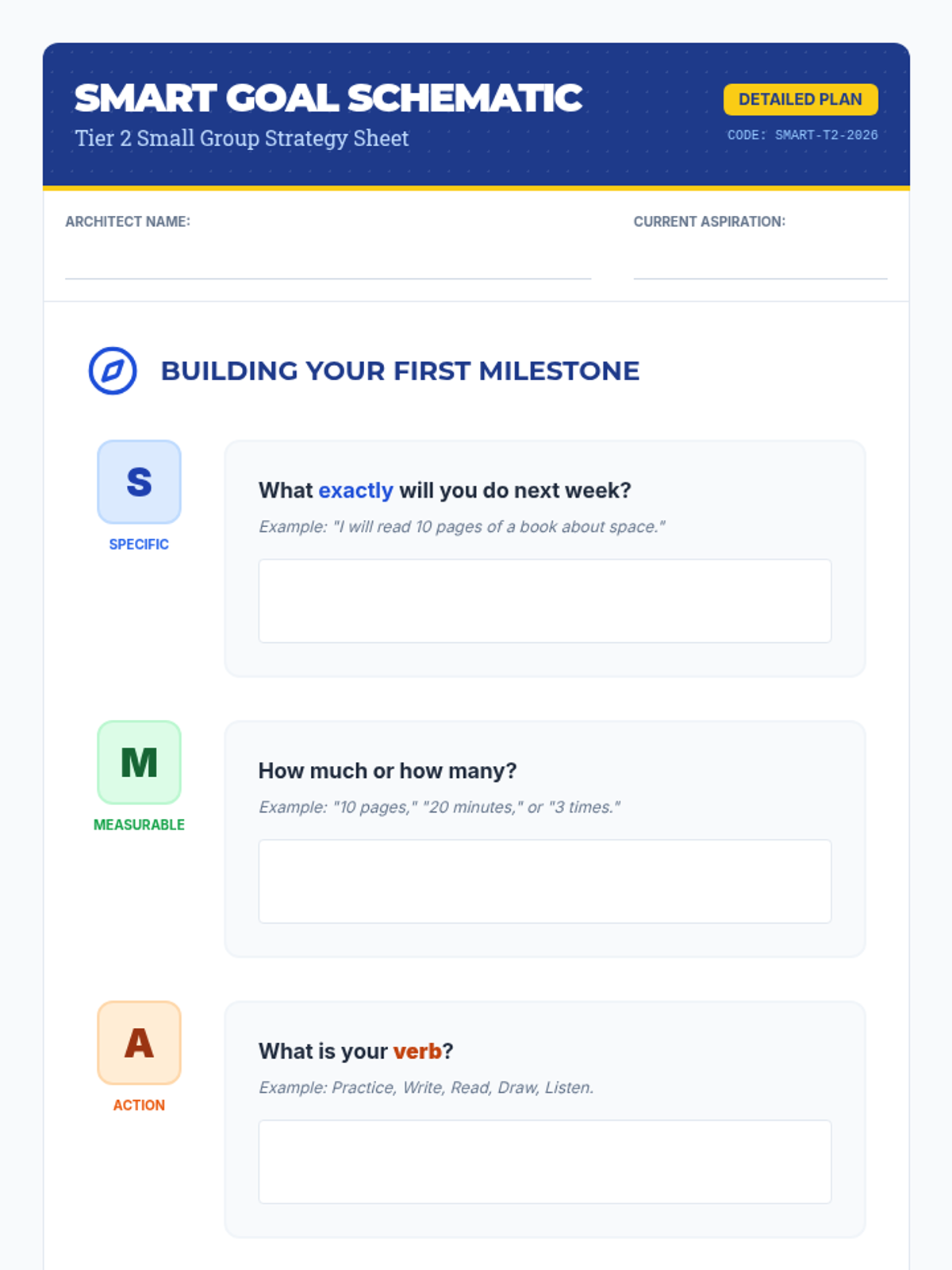
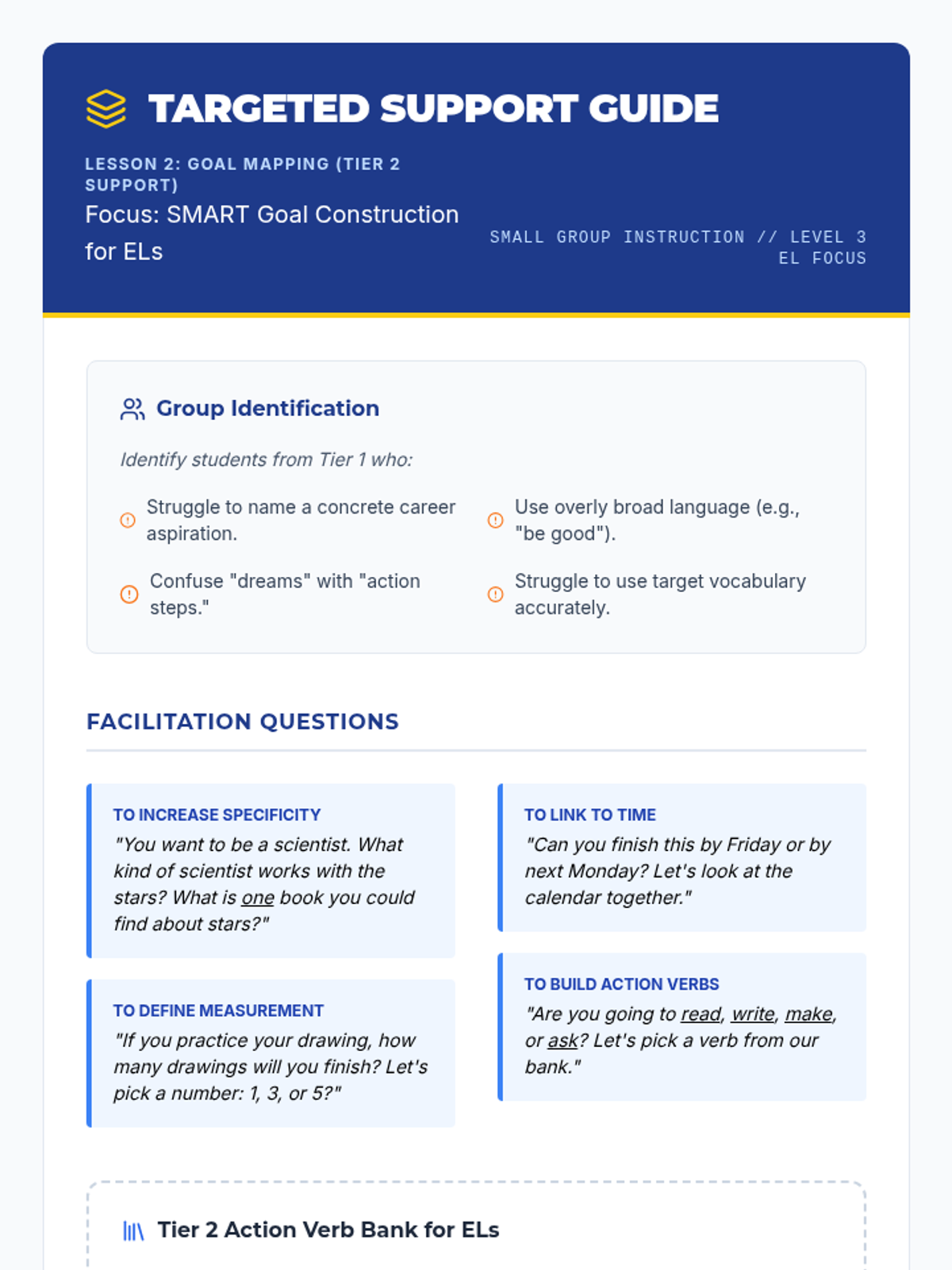
Tier 2 targeted small-group instruction focusing on breaking down large dreams into specific, measurable, and actionable SMART goals. This lesson provides heavy scaffolding for Level 3 ELs to move from abstract ideas to concrete plans.
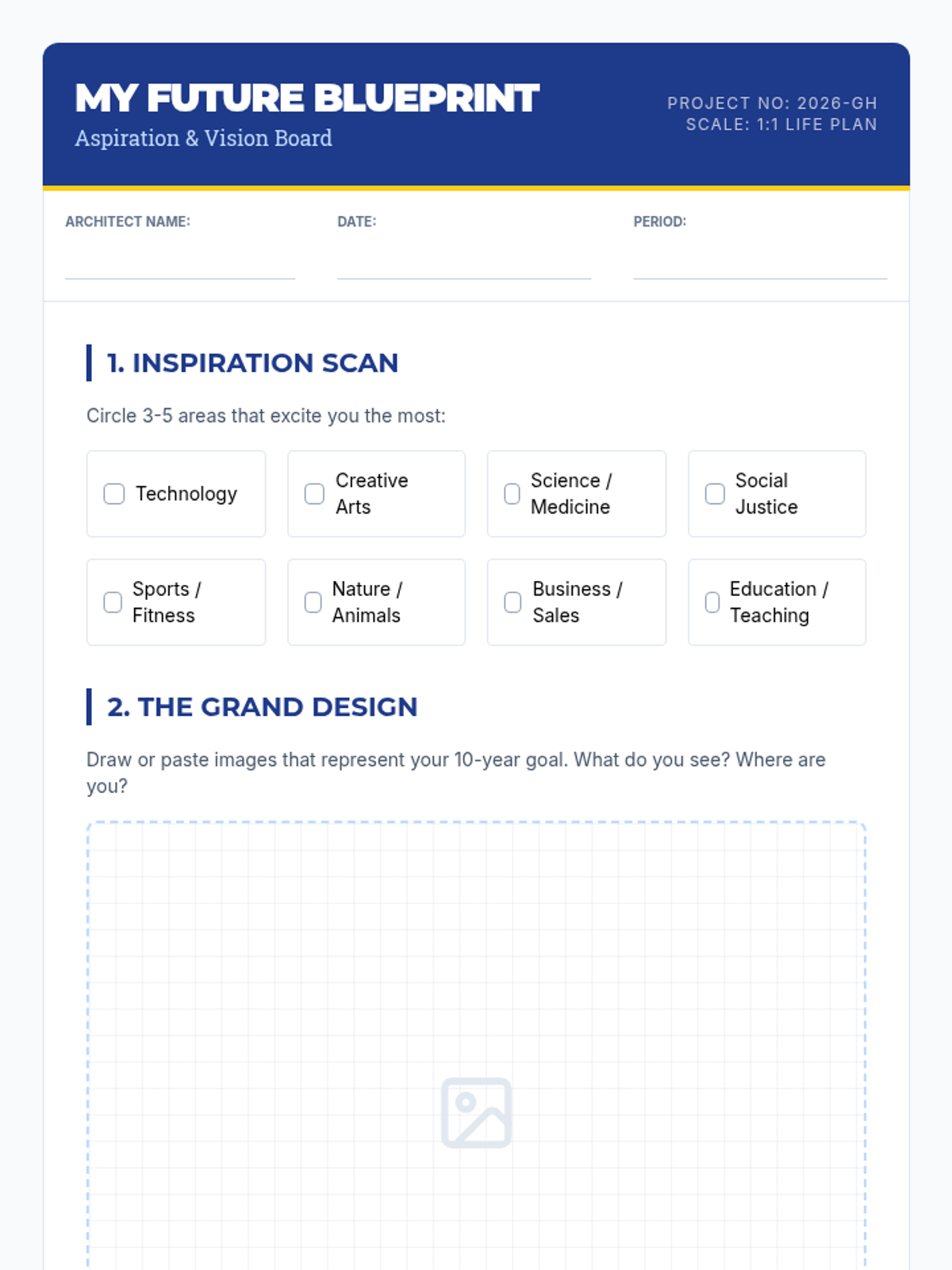
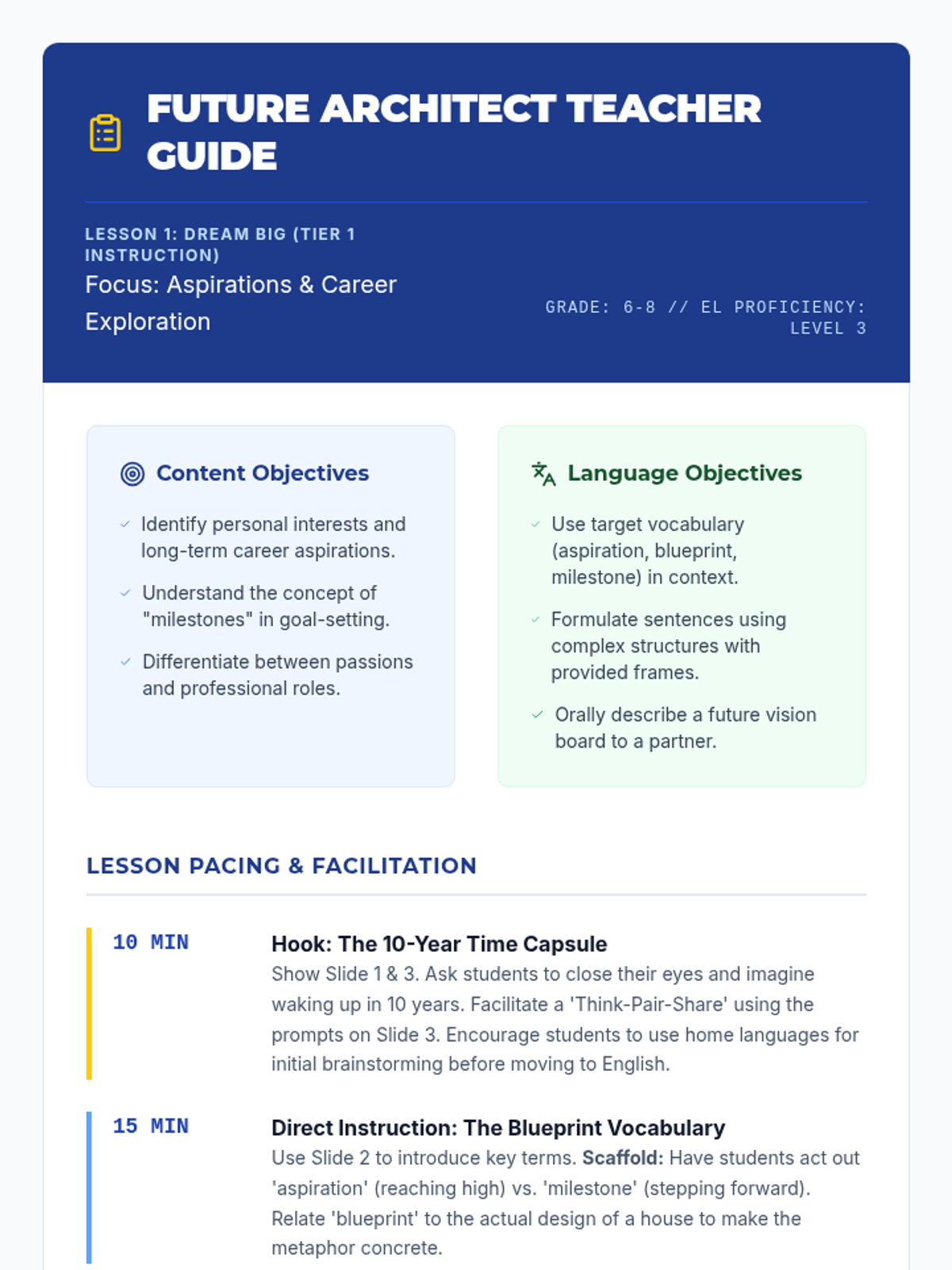
Tier 1 whole-class instruction focusing on identifying personal interests, long-term aspirations, and the vocabulary of the future. Students will explore different career clusters and create a visual representation of their 'Big Dream'.
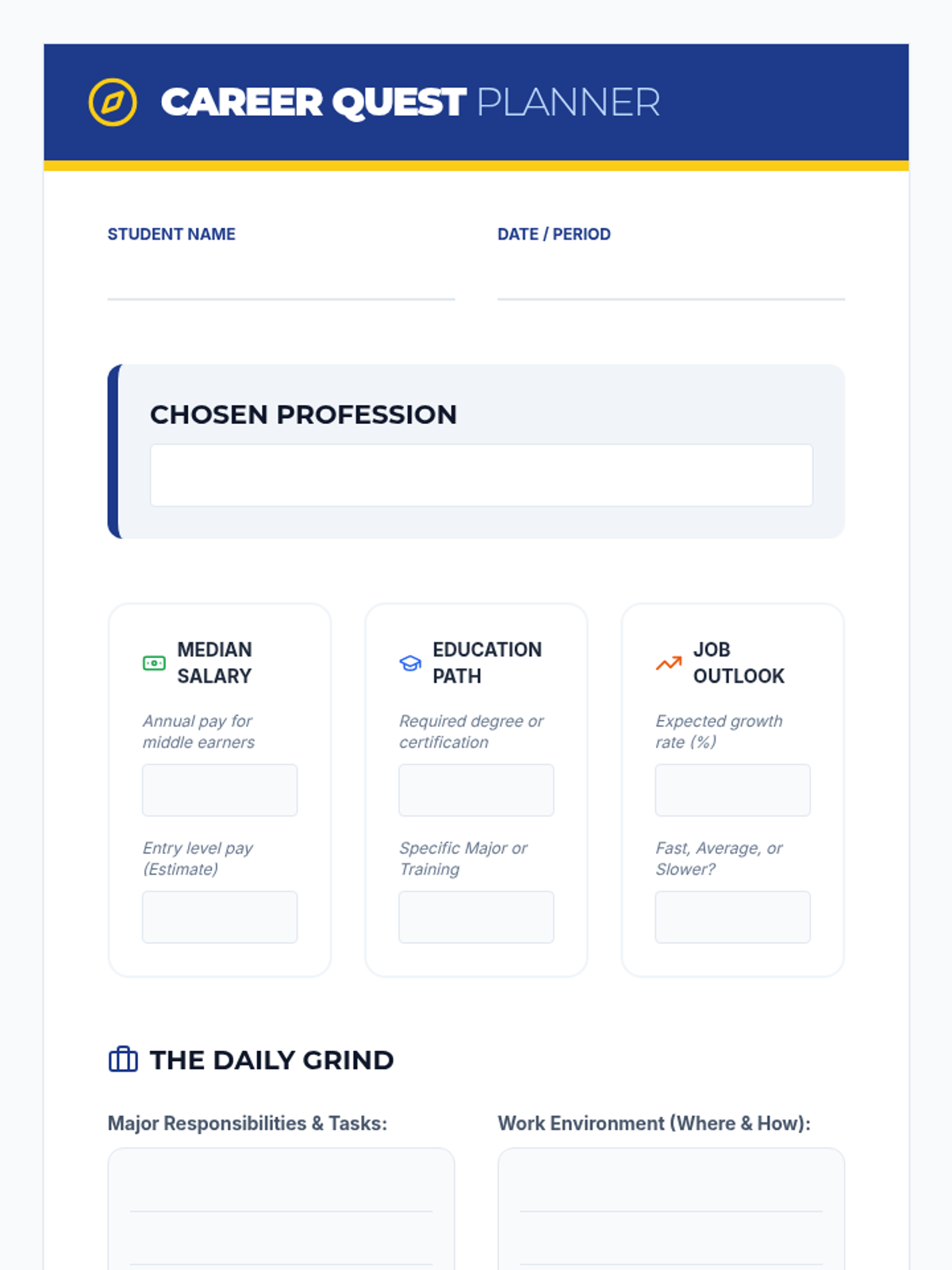
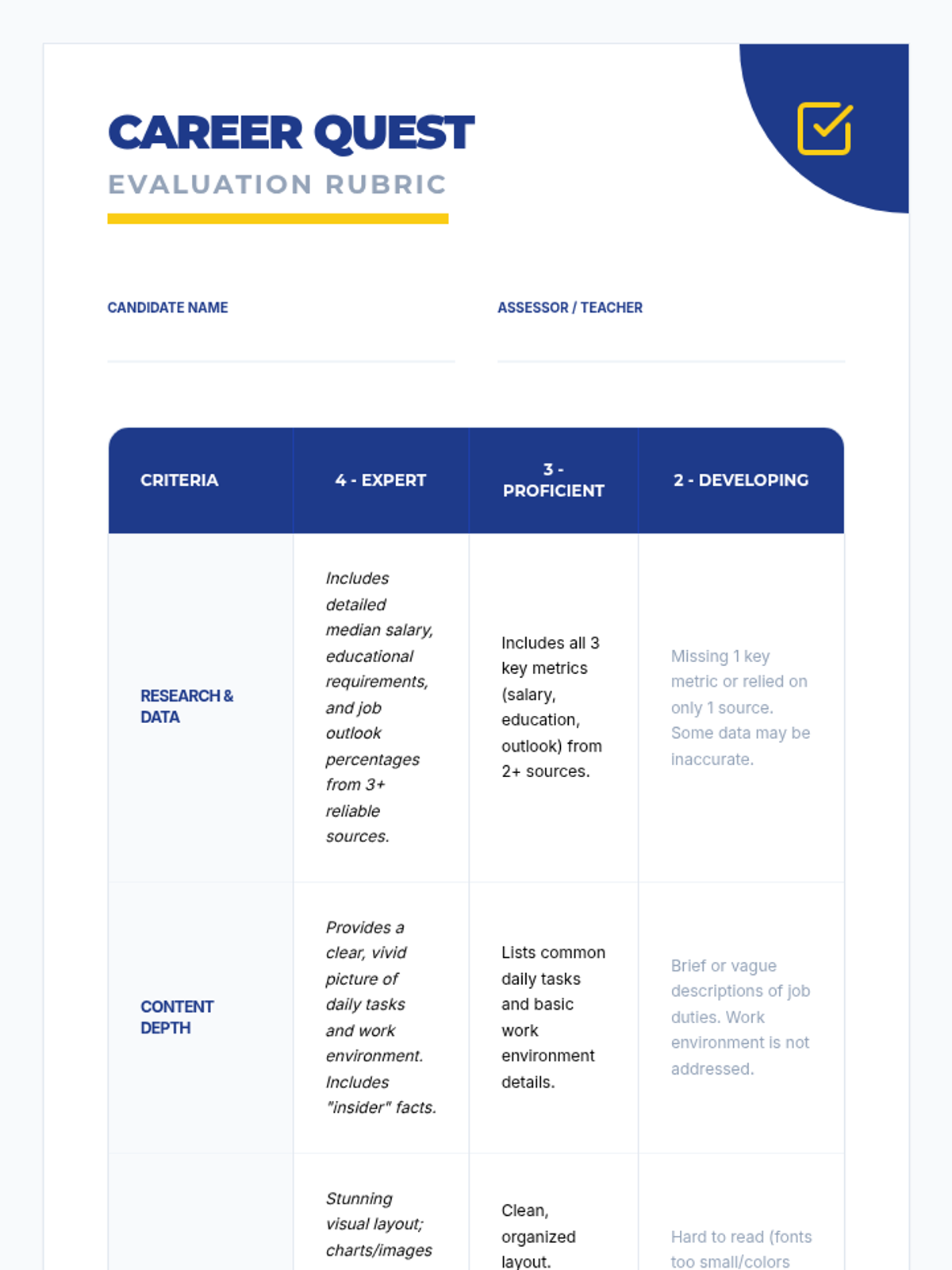
Students embark on a career exploration project where they research a profession of interest, focusing on education, salary, and job outlook. This lesson provides the project framework, evaluation criteria, and a step-by-step guide to conducting professional research.
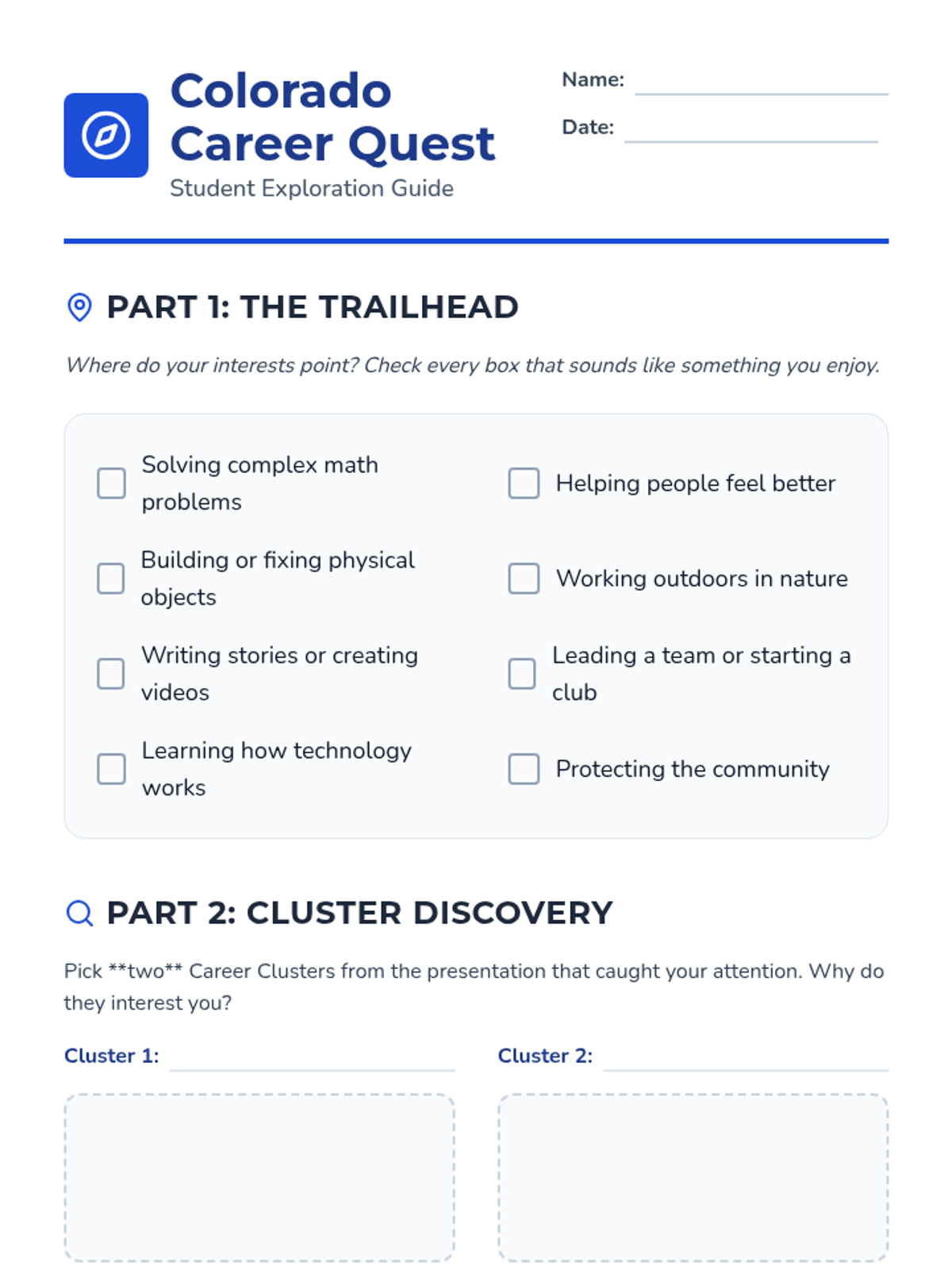
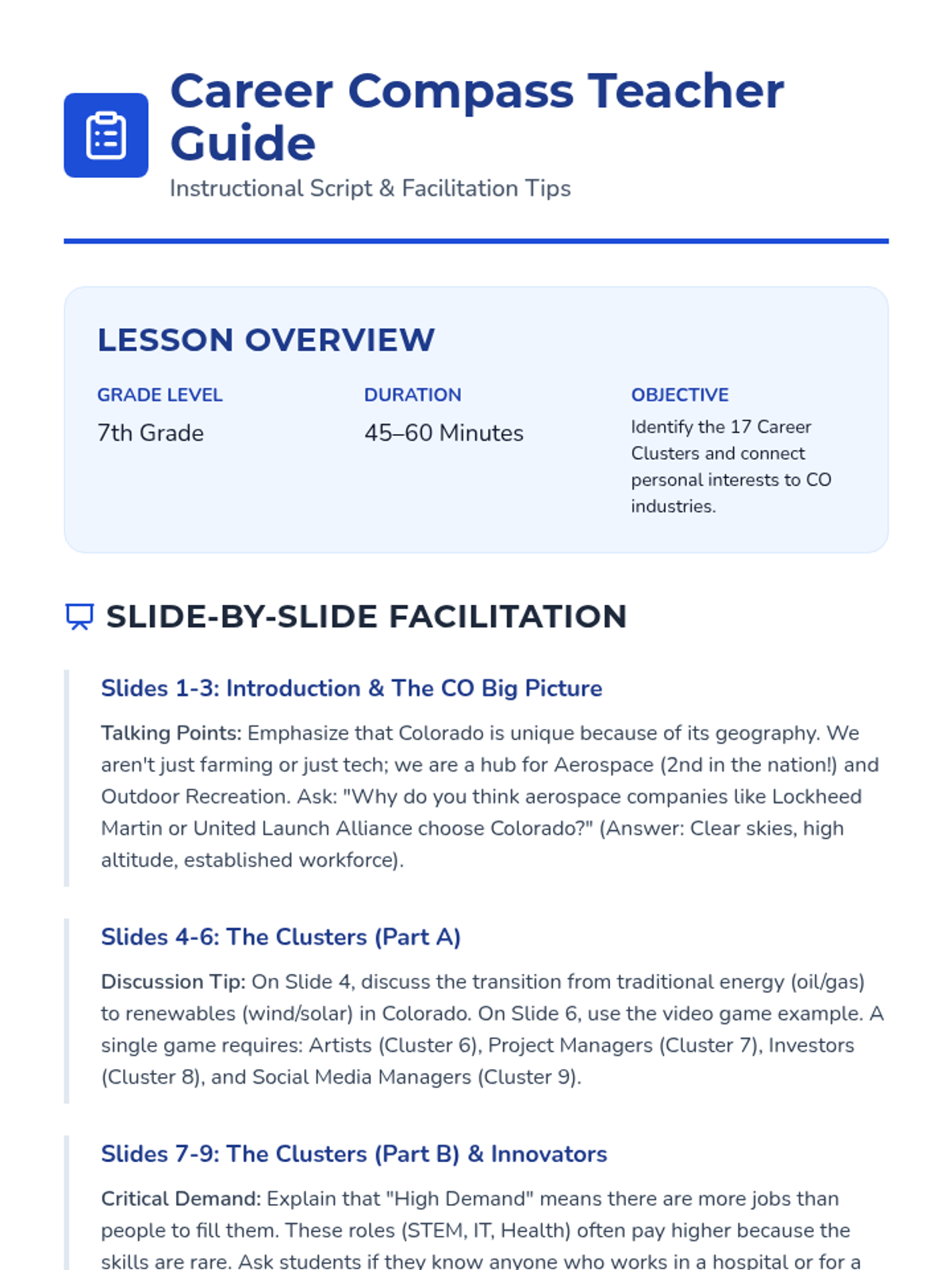
An introductory lesson for 7th graders to explore the 17 Colorado Career Clusters and identify high-demand industries within the state. Students will learn how their interests align with future career paths in the Colorado economy.