Employer research strategies and behavioral response techniques using the STAR method. Develops virtual interview etiquette, professional presence, and effective follow-up communication.
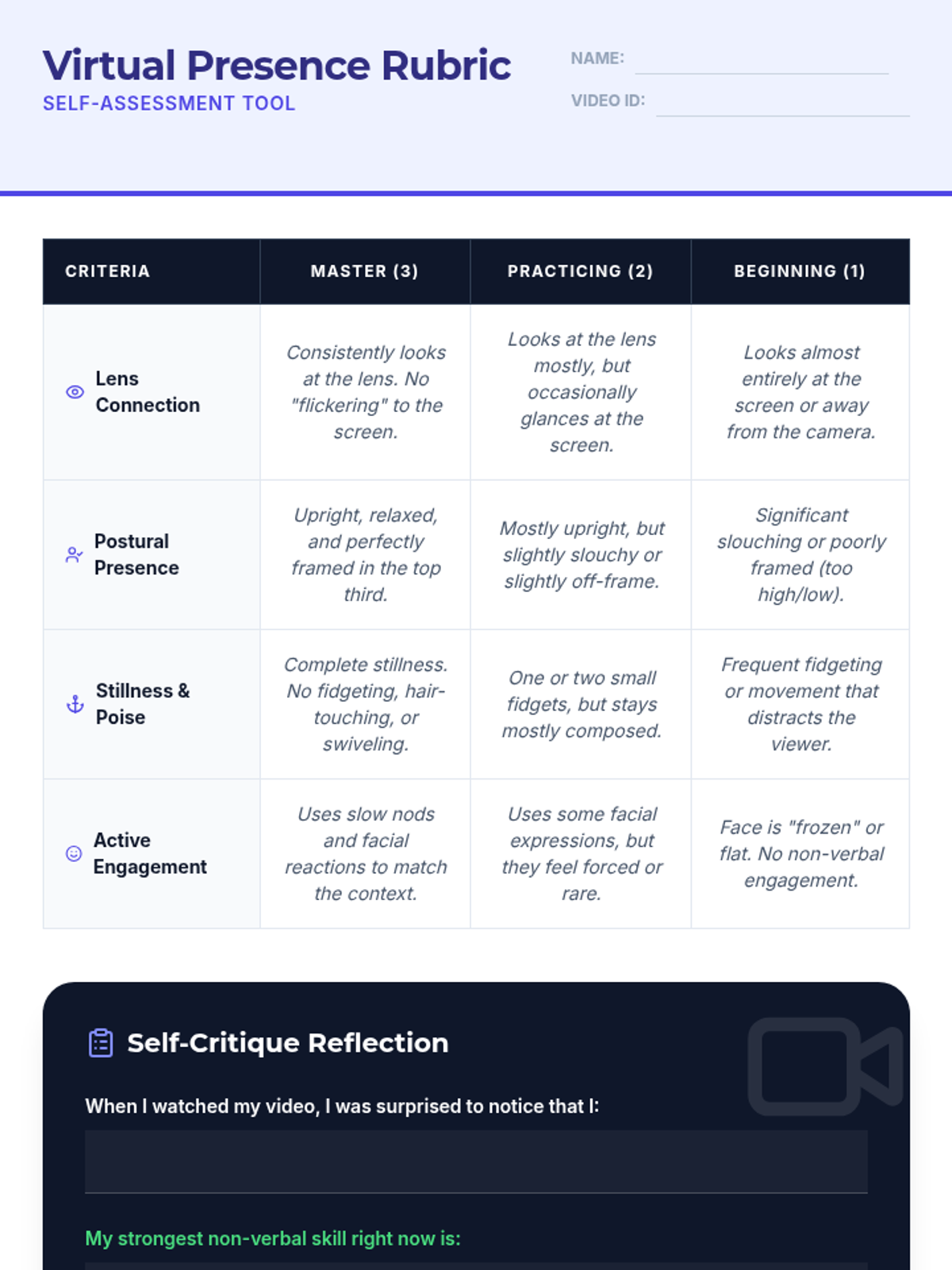
The final lesson involves recording a short mock interview response and using a rubric to self-assess eye contact, posture, and engagement.
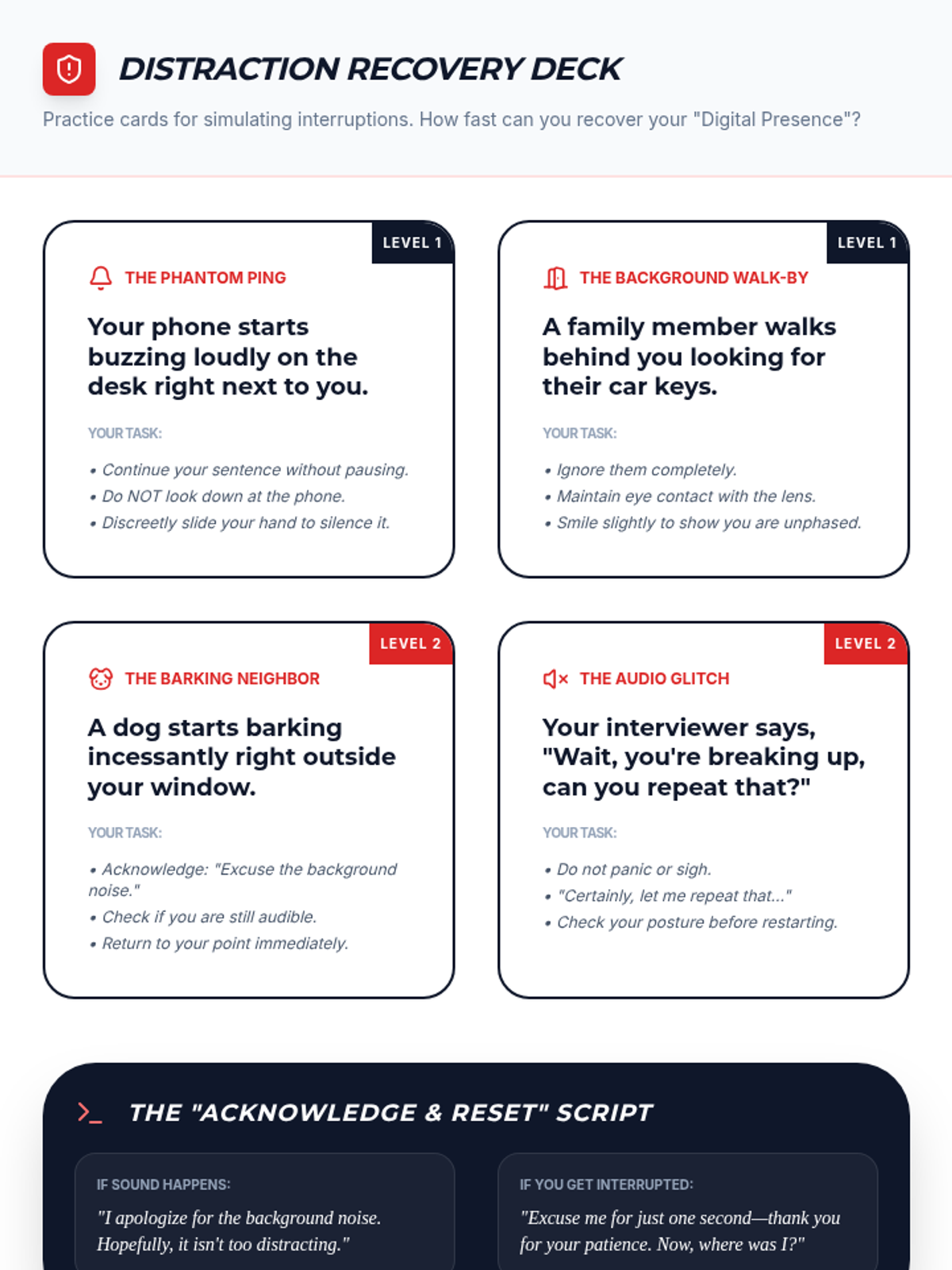
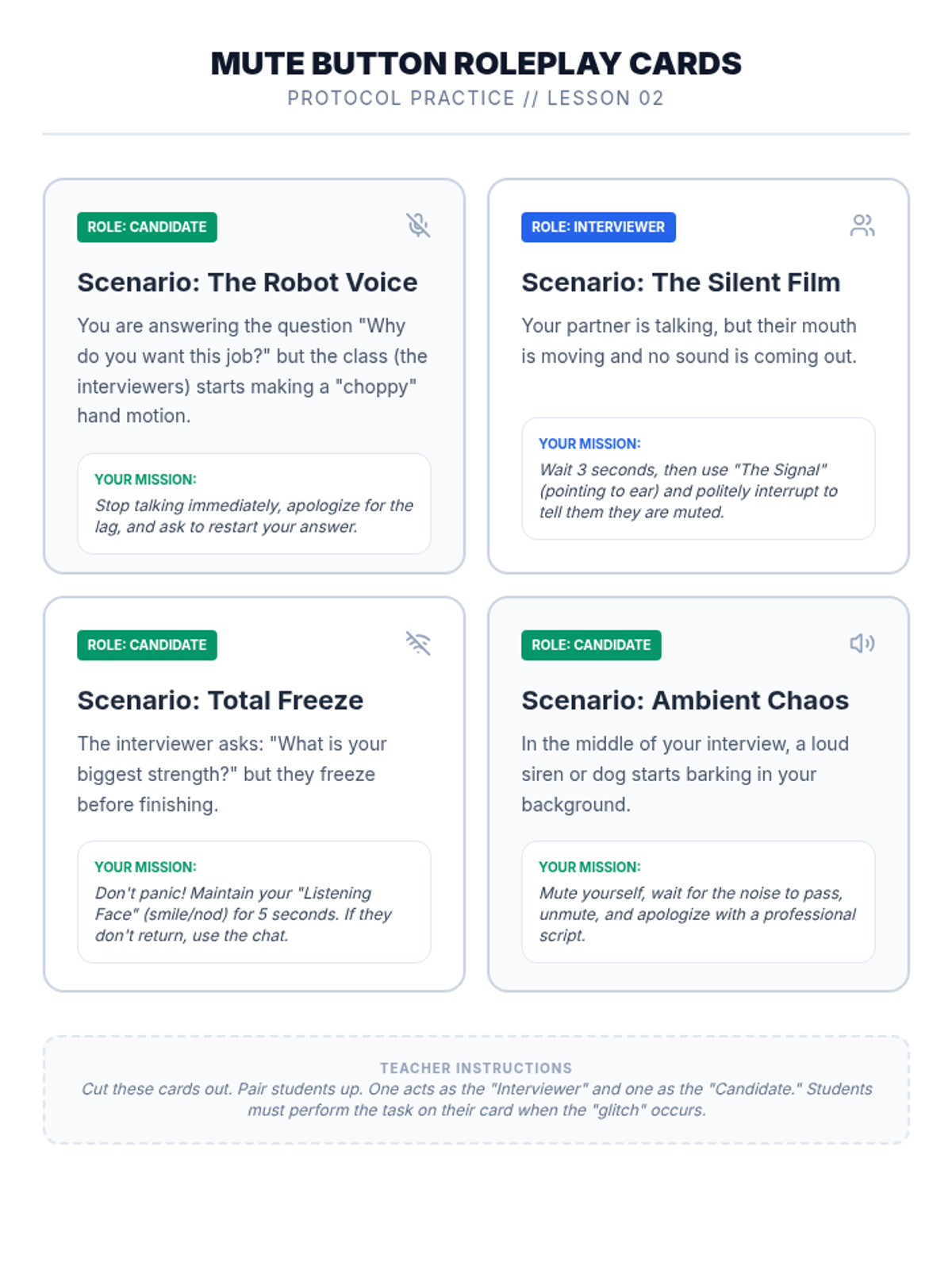
Students practice maintaining focus despite environmental distractions and learn how to professionally recover from interruptions during a call.
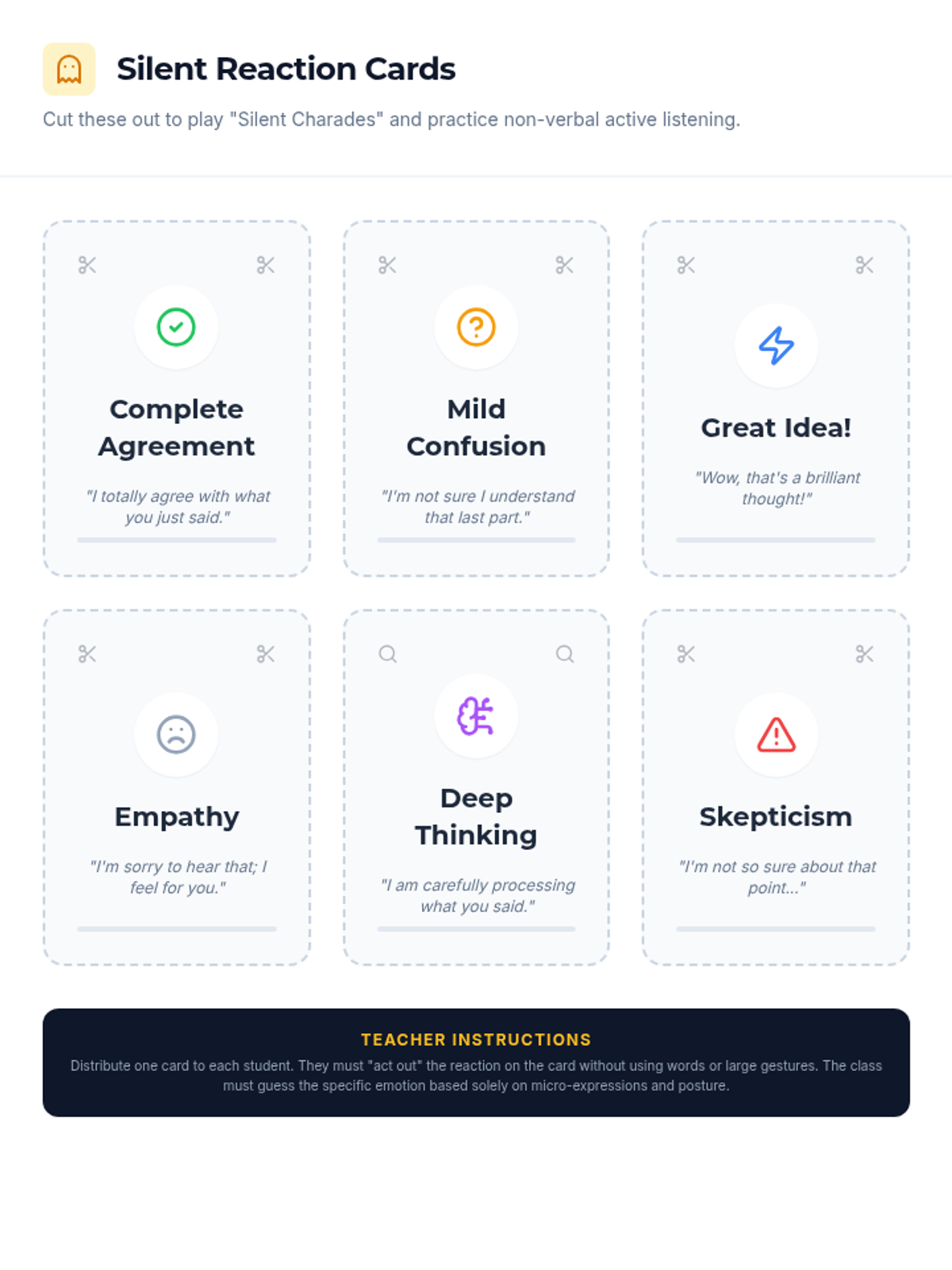
This lesson covers non-verbal cues like nodding and facial expressions to demonstrate active listening without interrupting the audio feed.
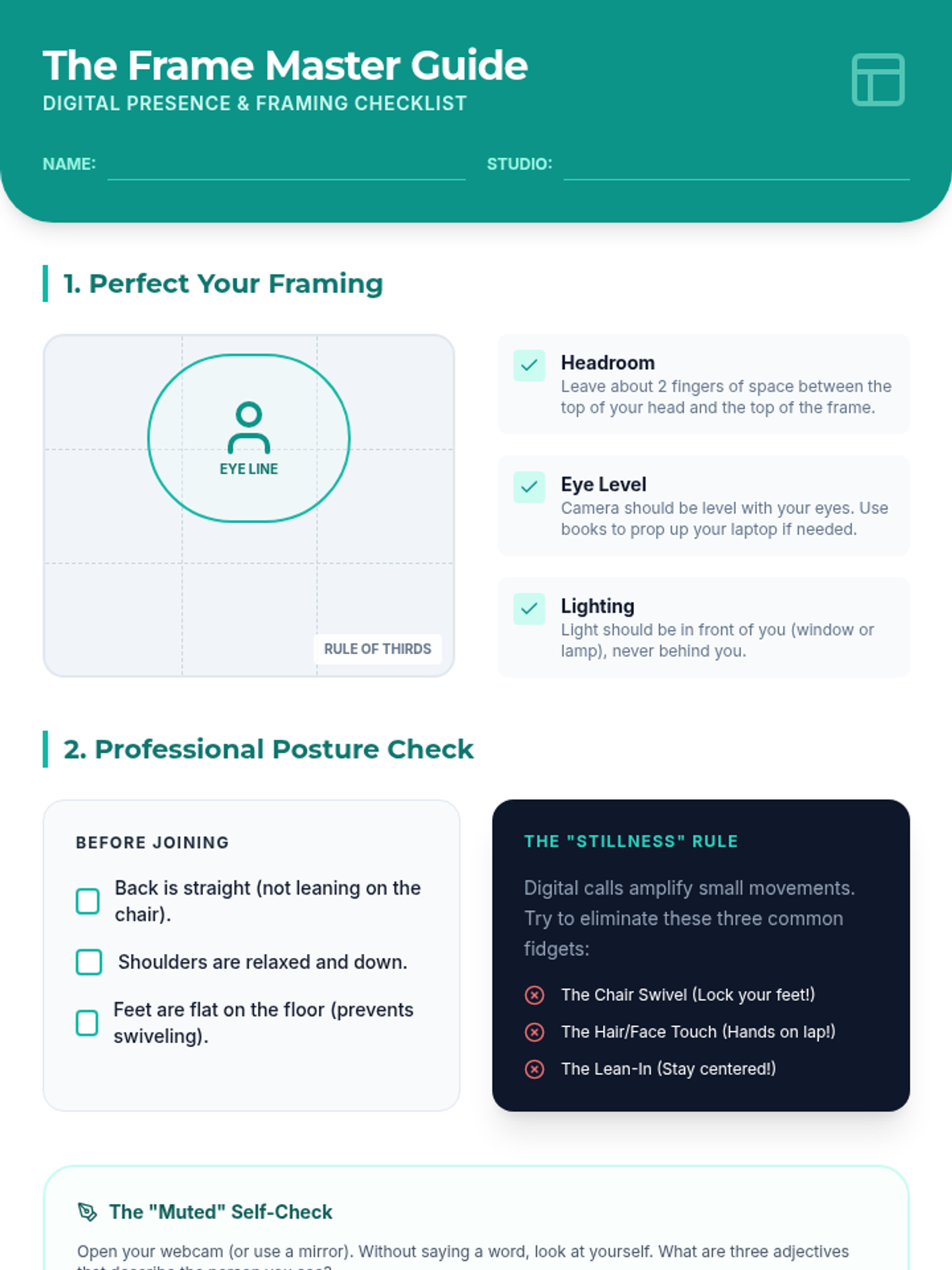
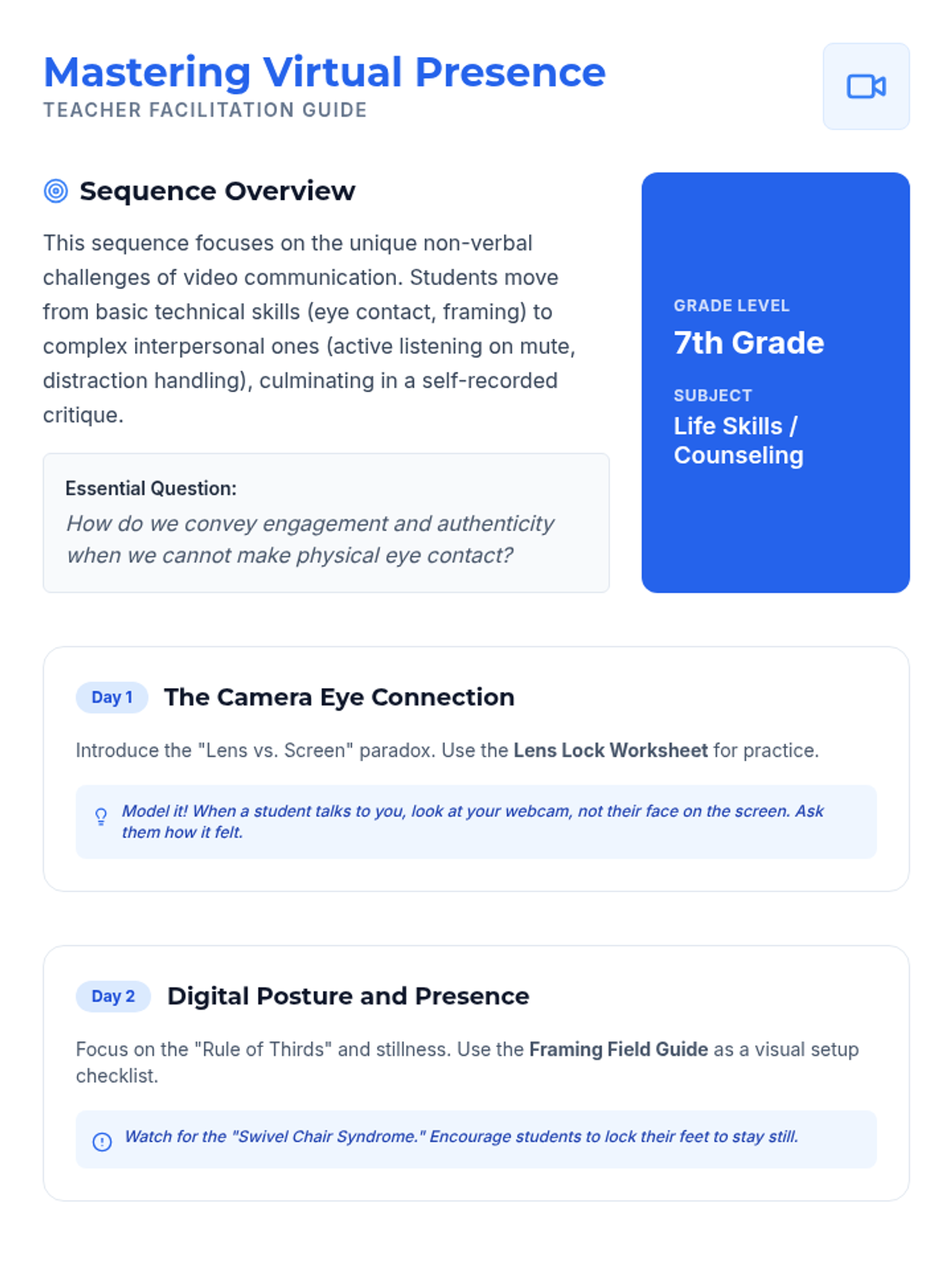
Learners explore how body language is framed on camera, focusing on maintaining upright posture and reducing fidgeting within the digital rectangle.
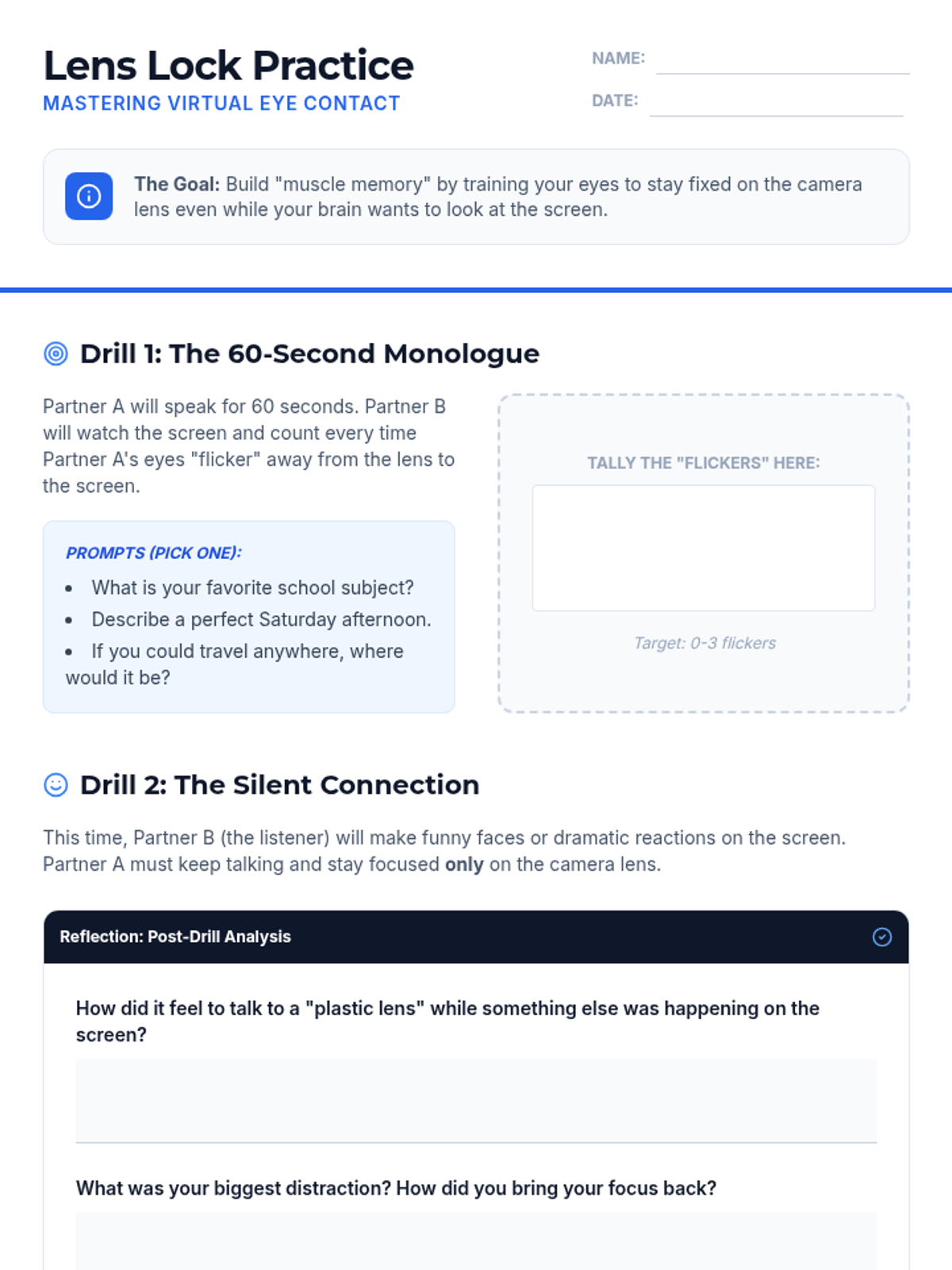
Students learn the 'Camera Eye' technique, practicing the counter-intuitive skill of looking at the camera lens instead of the screen to simulate eye contact.
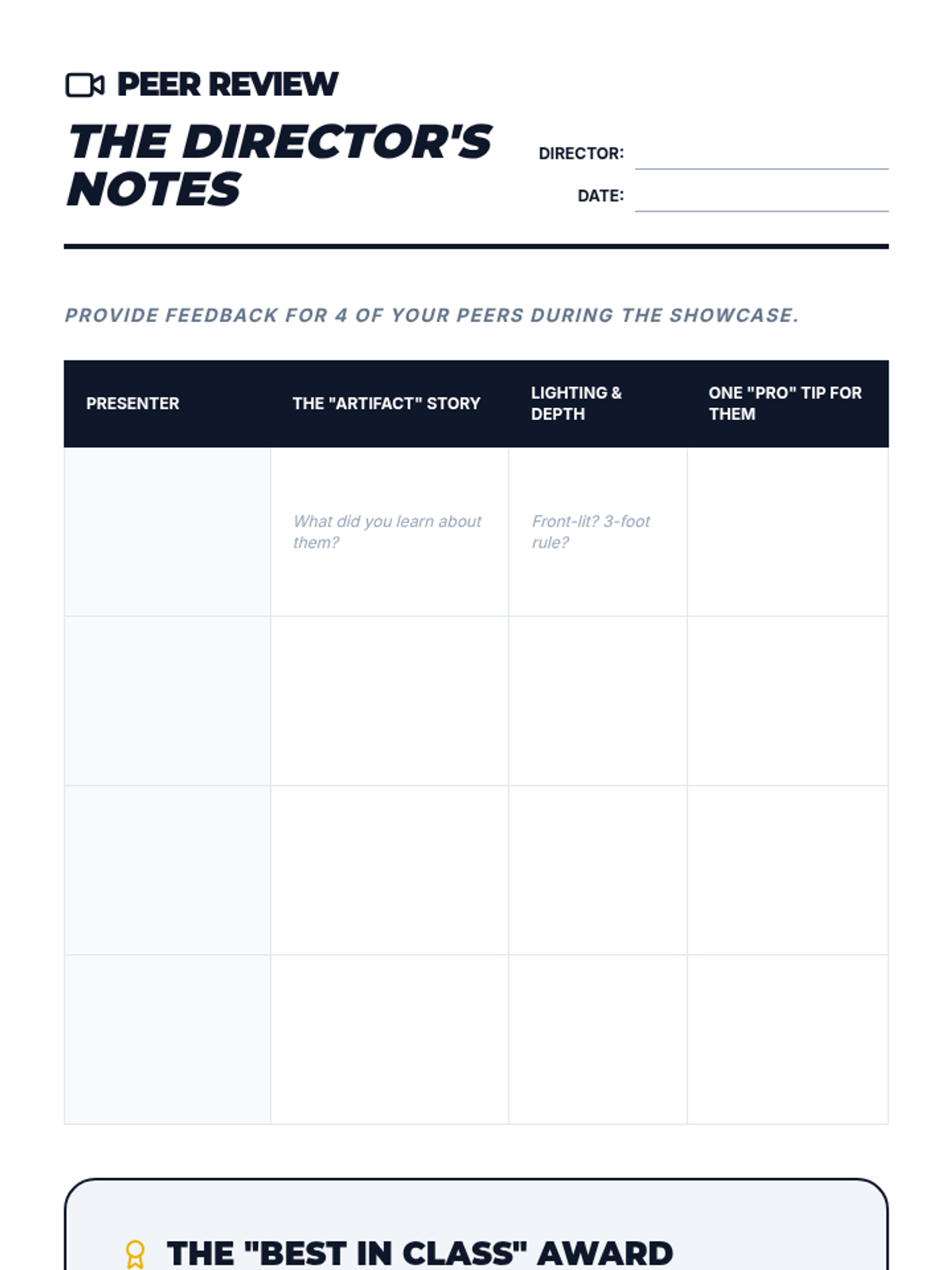
The final presentation where students showcase their 'interview corner' and receive peer feedback based on professional design principles.
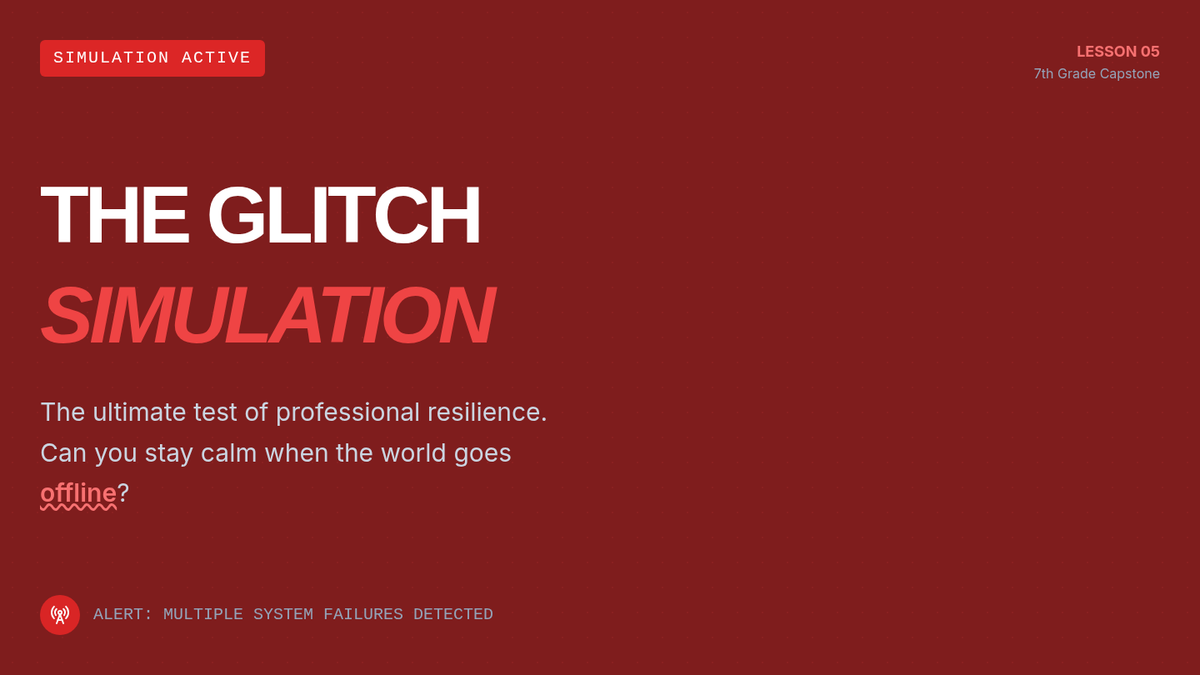
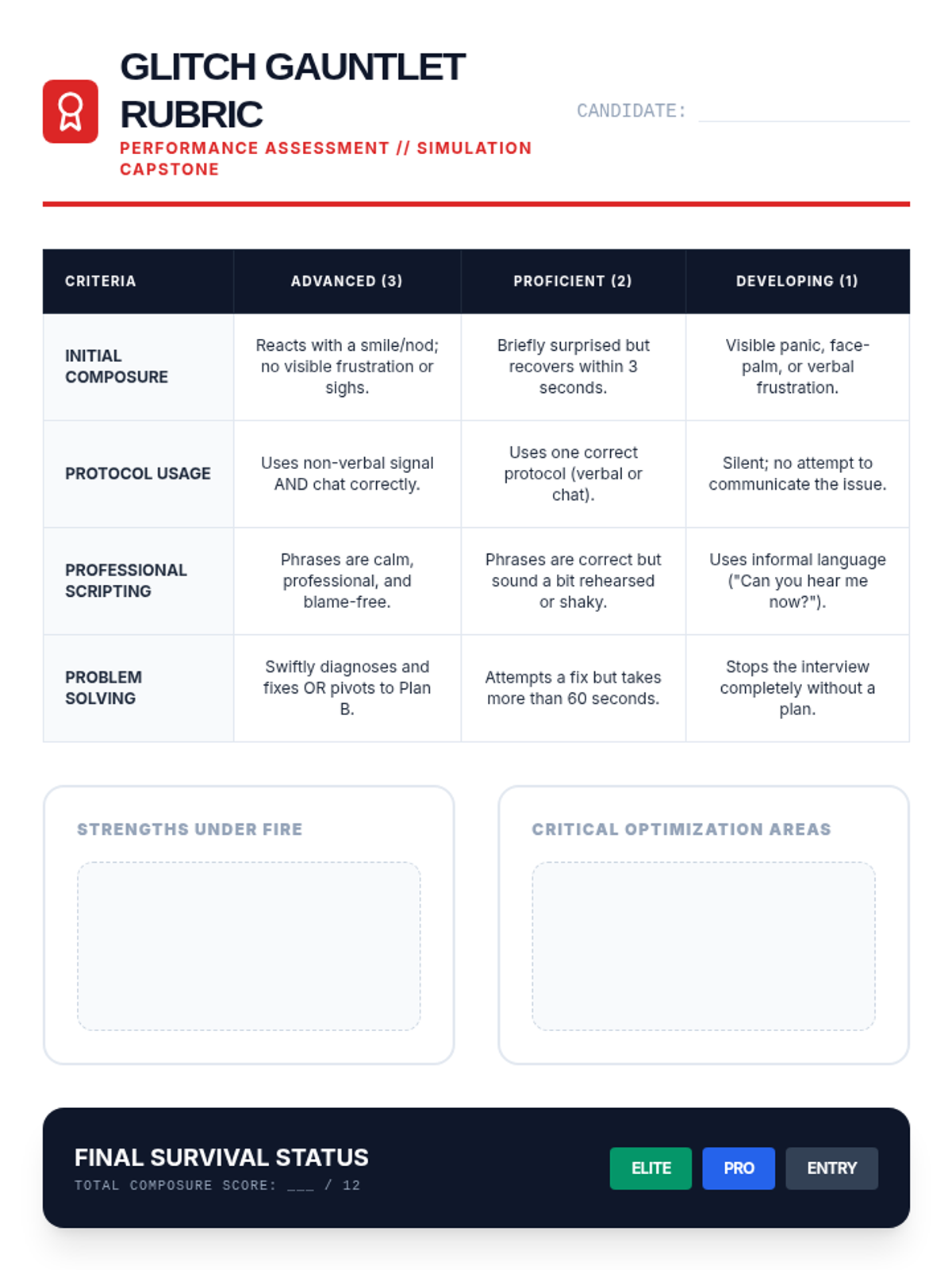
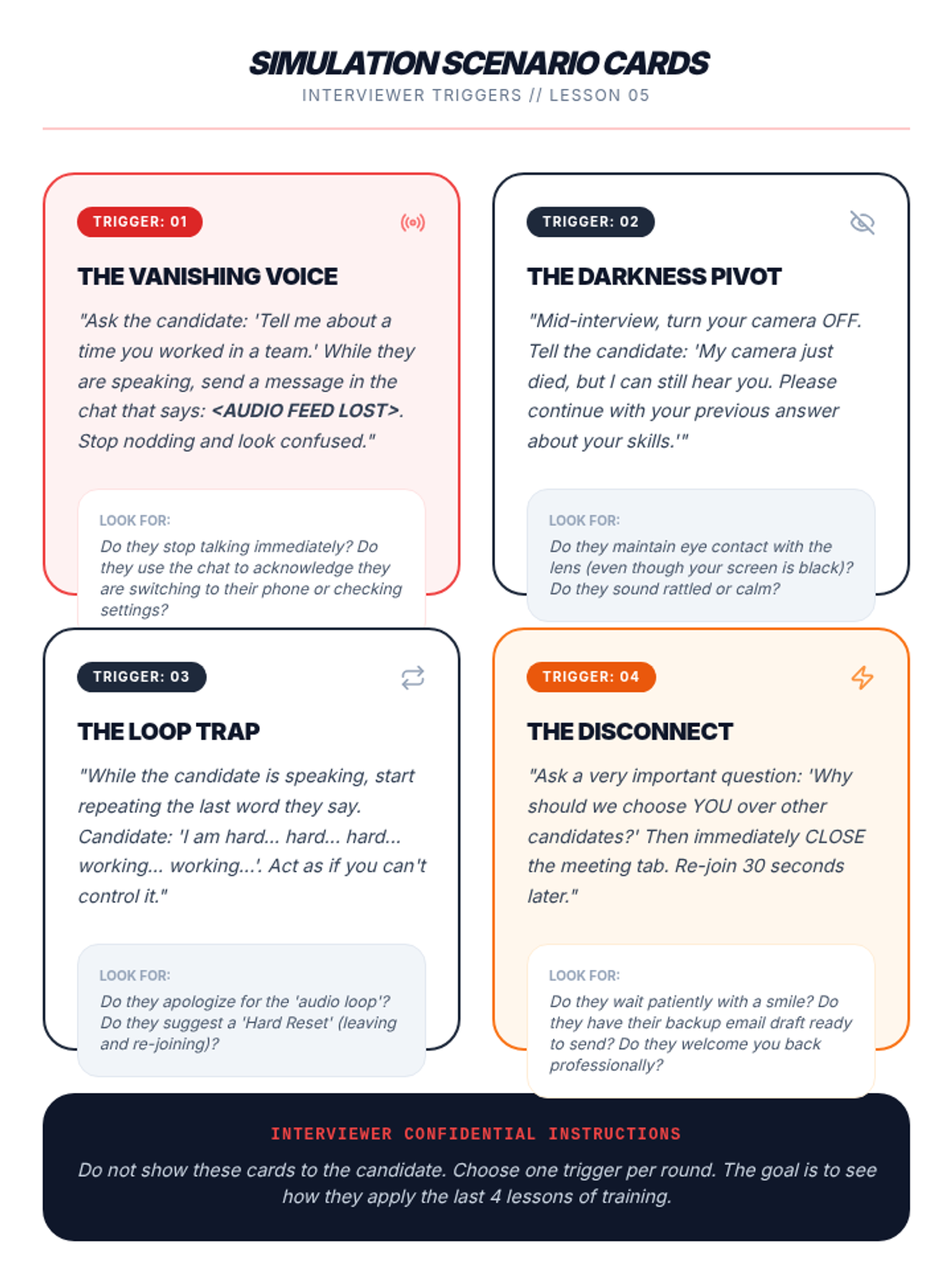
The capstone simulation where students navigate high-pressure 'disaster scenarios' in a mock interview, demonstrating resilience and composure under technological fire.
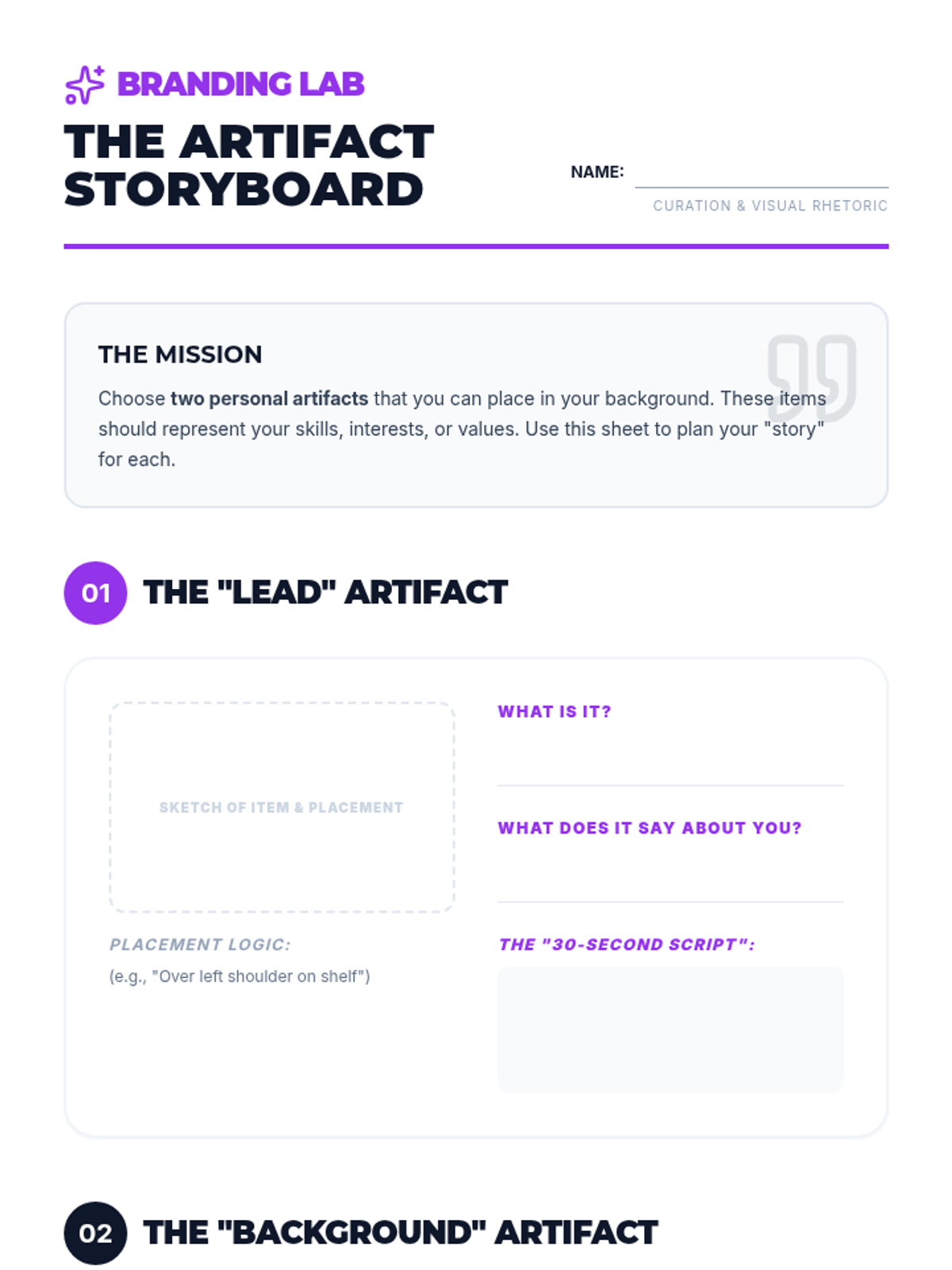
Students select and stage personal artifacts that tell a positive story about their interests, practicing how to use them as conversation starters.
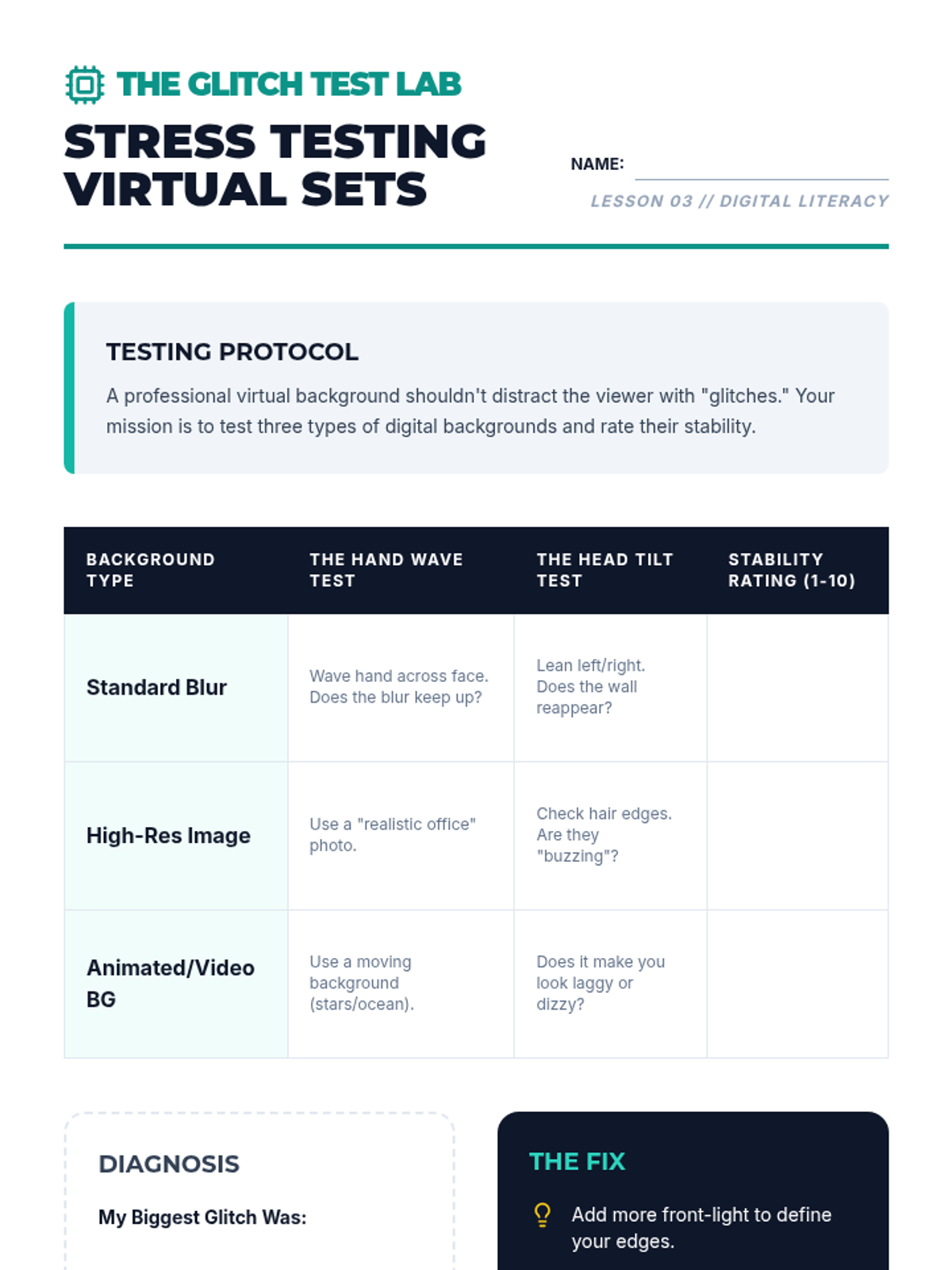
Learners explore the technical do's and don'ts of virtual backgrounds and blurring effects, testing for 'glitching' and professional aesthetics.
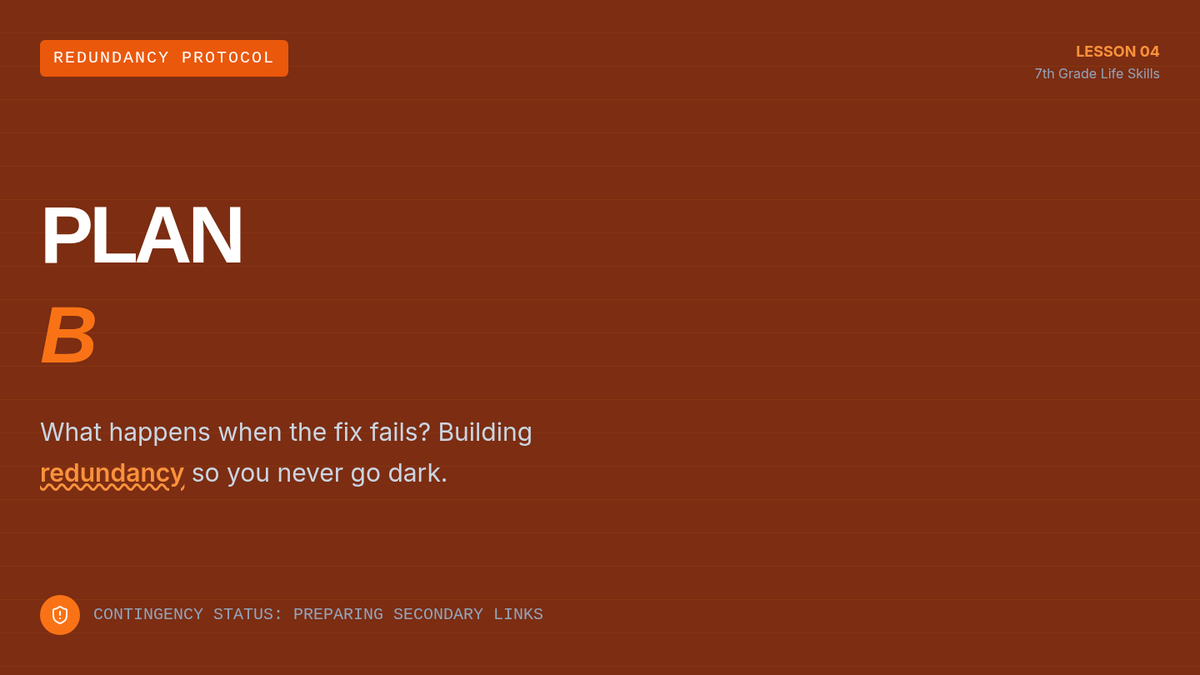
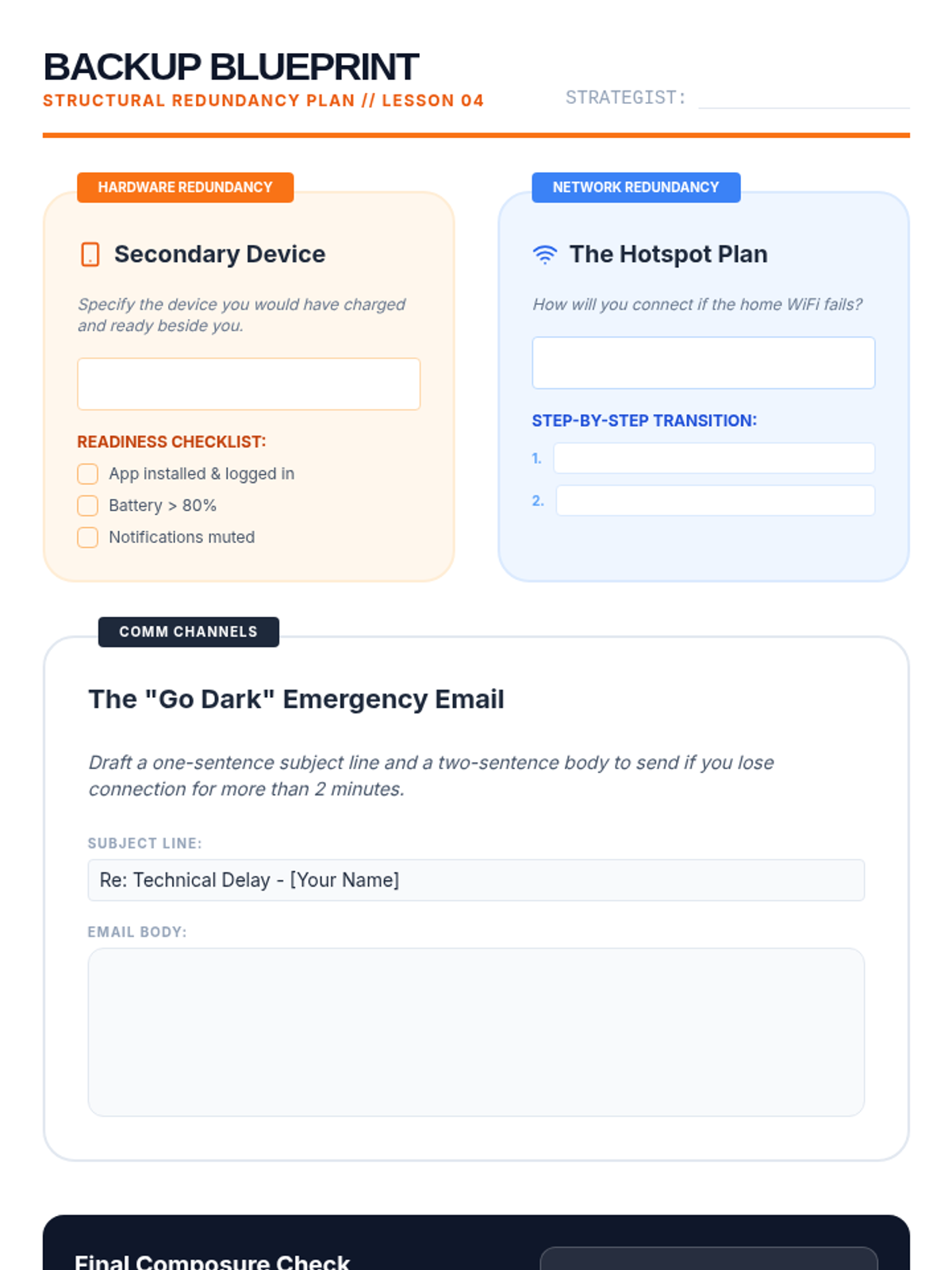
Students build comprehensive contingency plans, including secondary devices and alternate communication channels, to ensure they never truly 'go dark' during an interview.
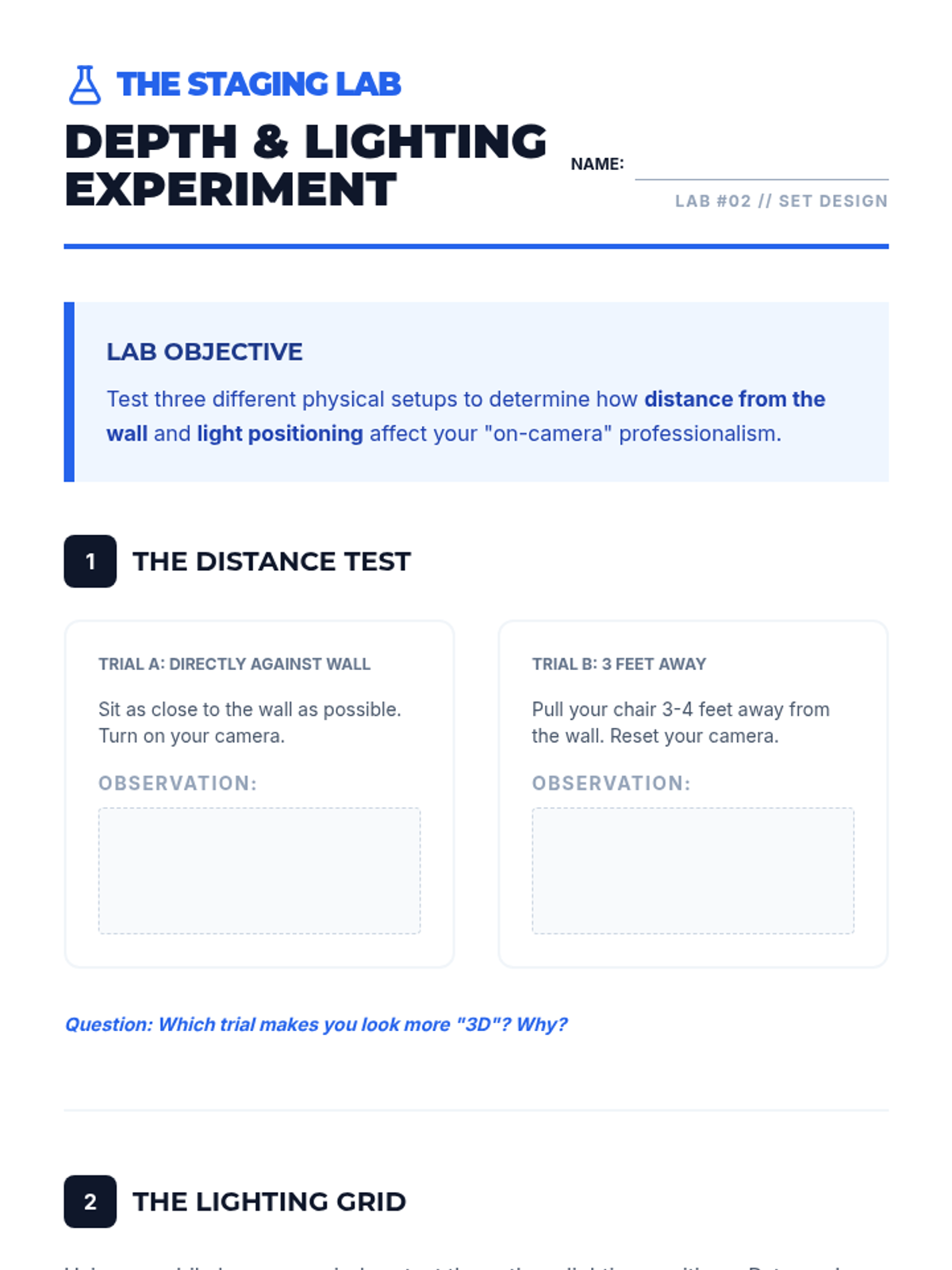
This lesson covers the concept of depth of field and lighting to avoid 'flat' backgrounds through practical experimentation.
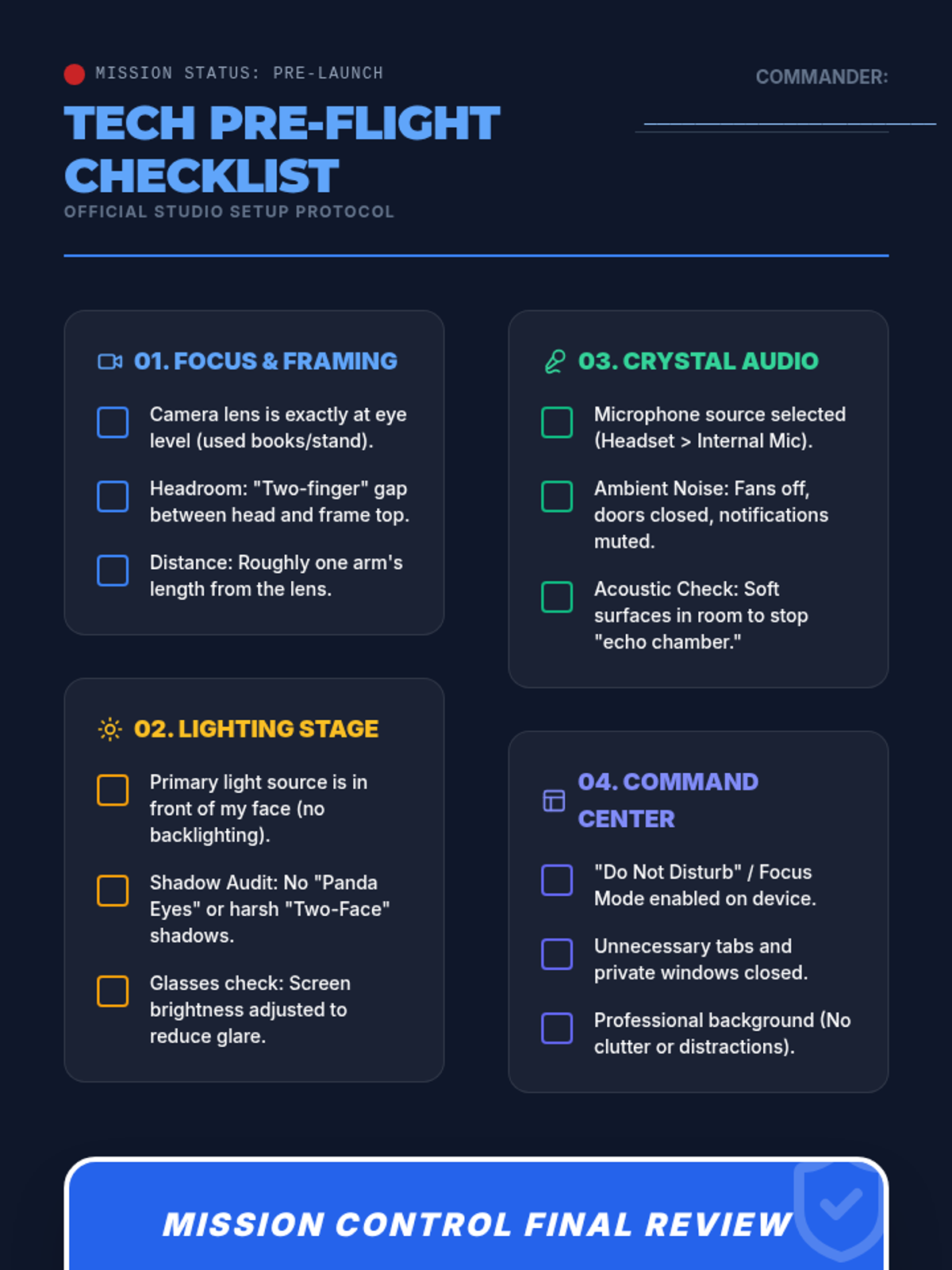
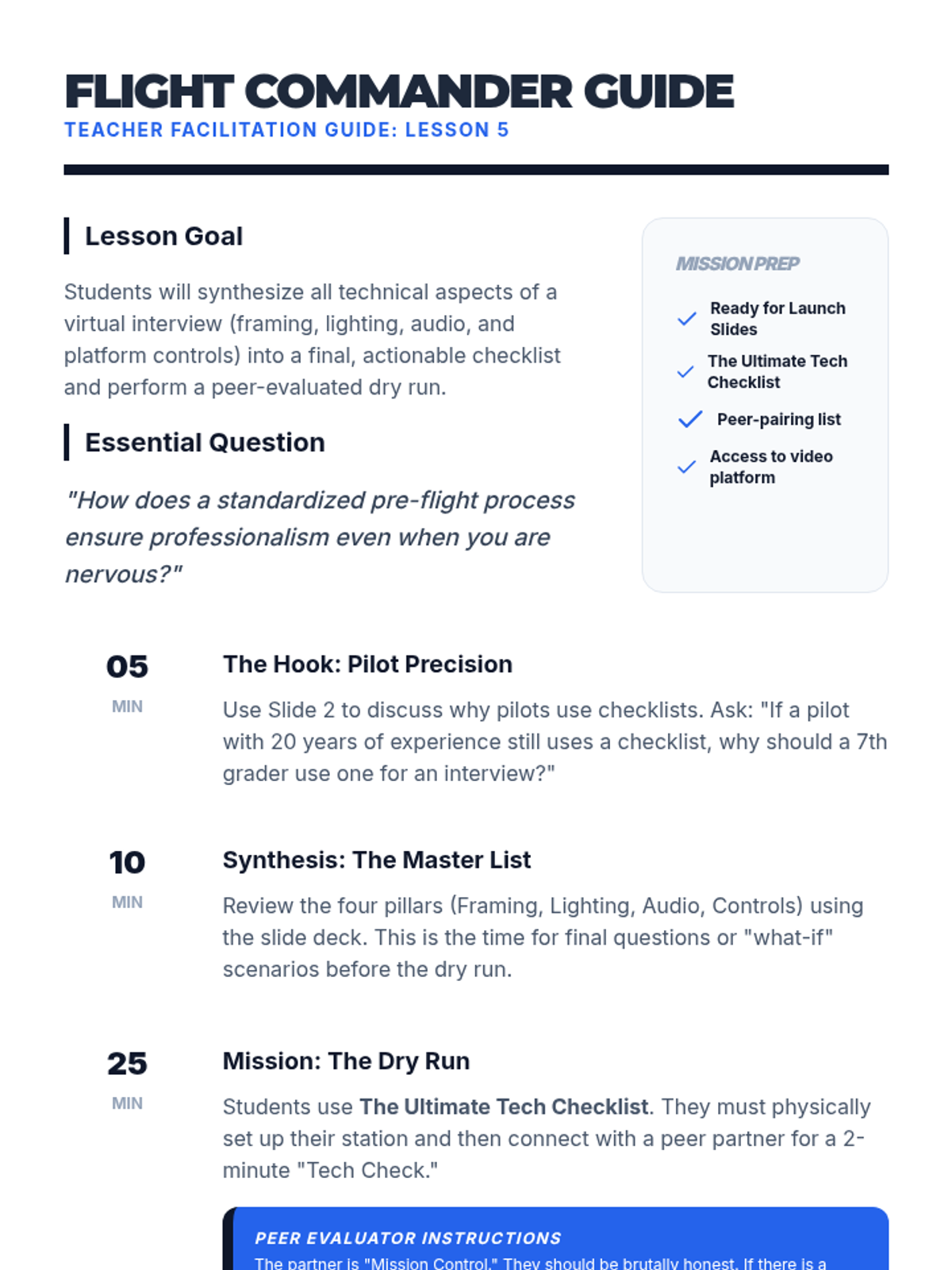
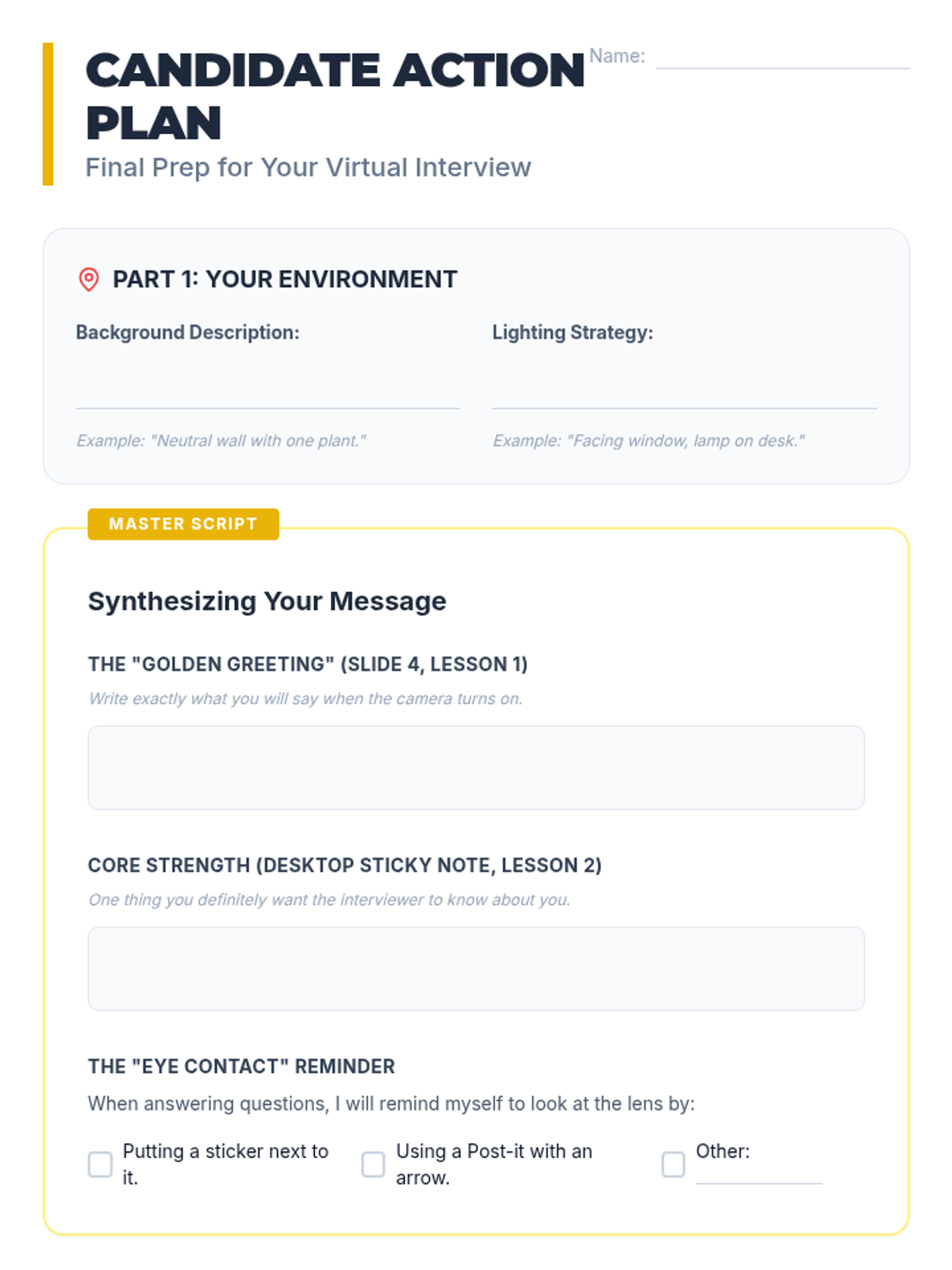
Students synthesize their learning into a personalized pre-interview checklist and perform a full tech check dry run.
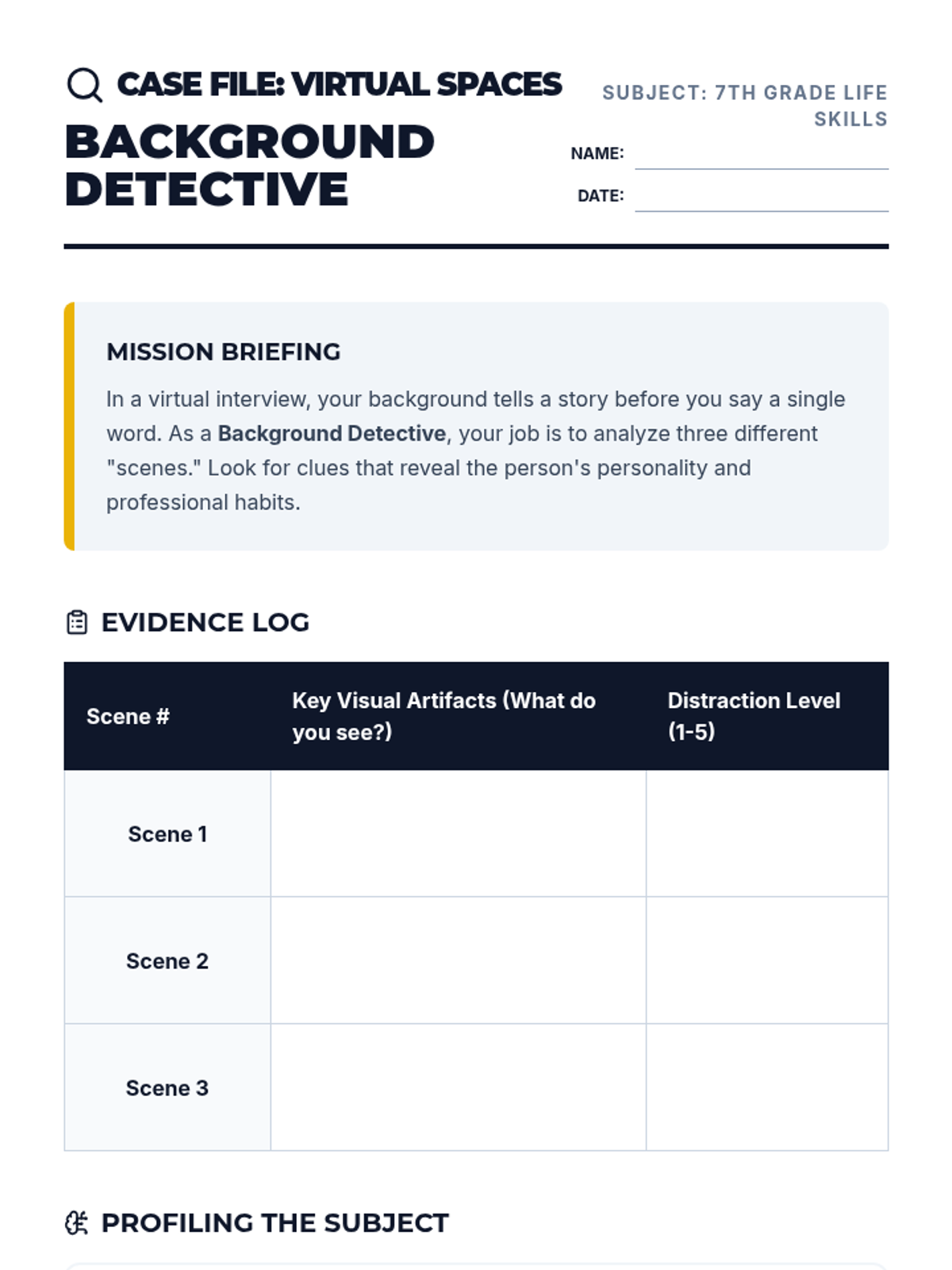
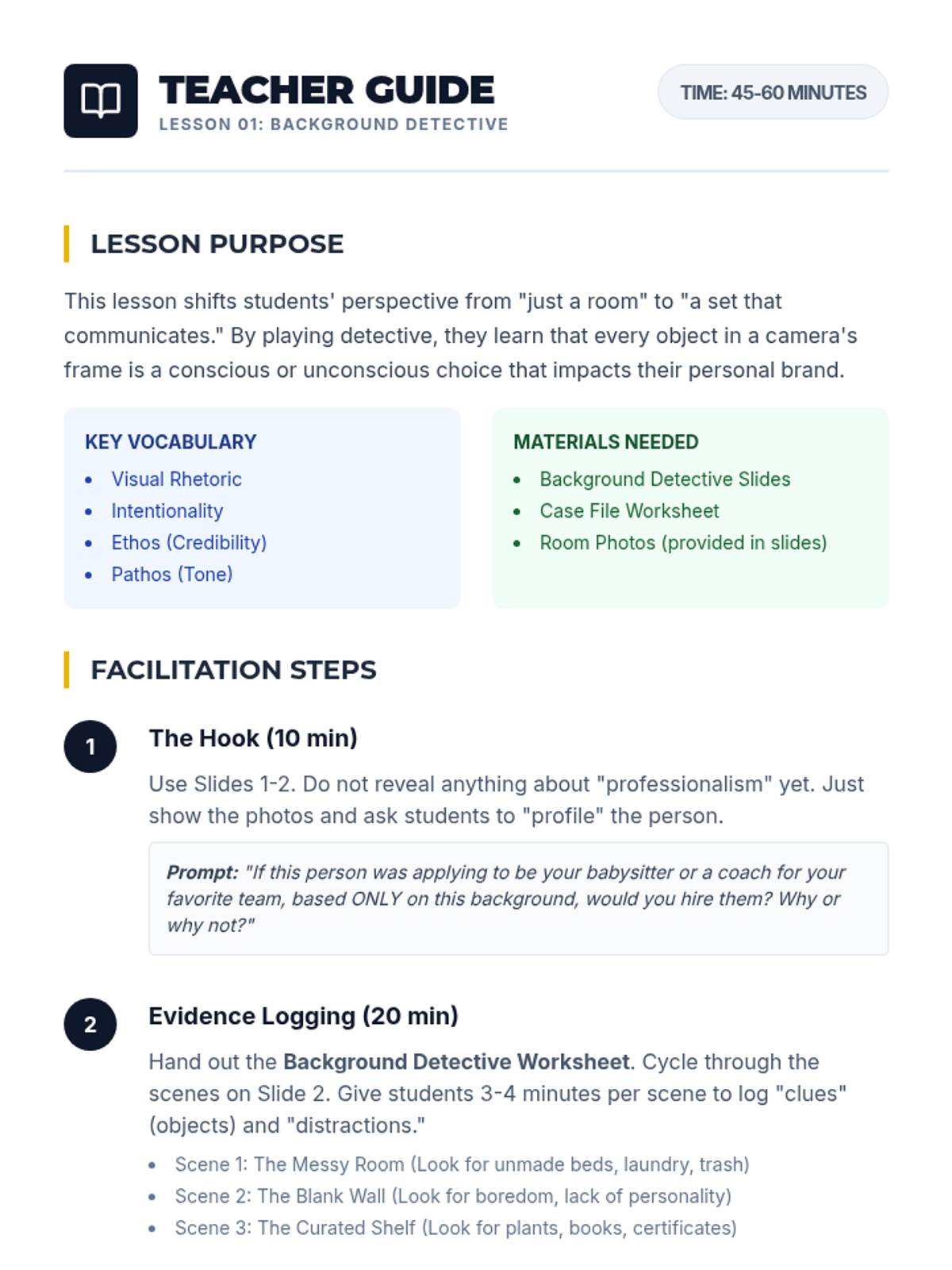
Students analyze screenshots of various backgrounds to identify professional versus distracting elements, playing 'Background Detective' to infer personality traits.
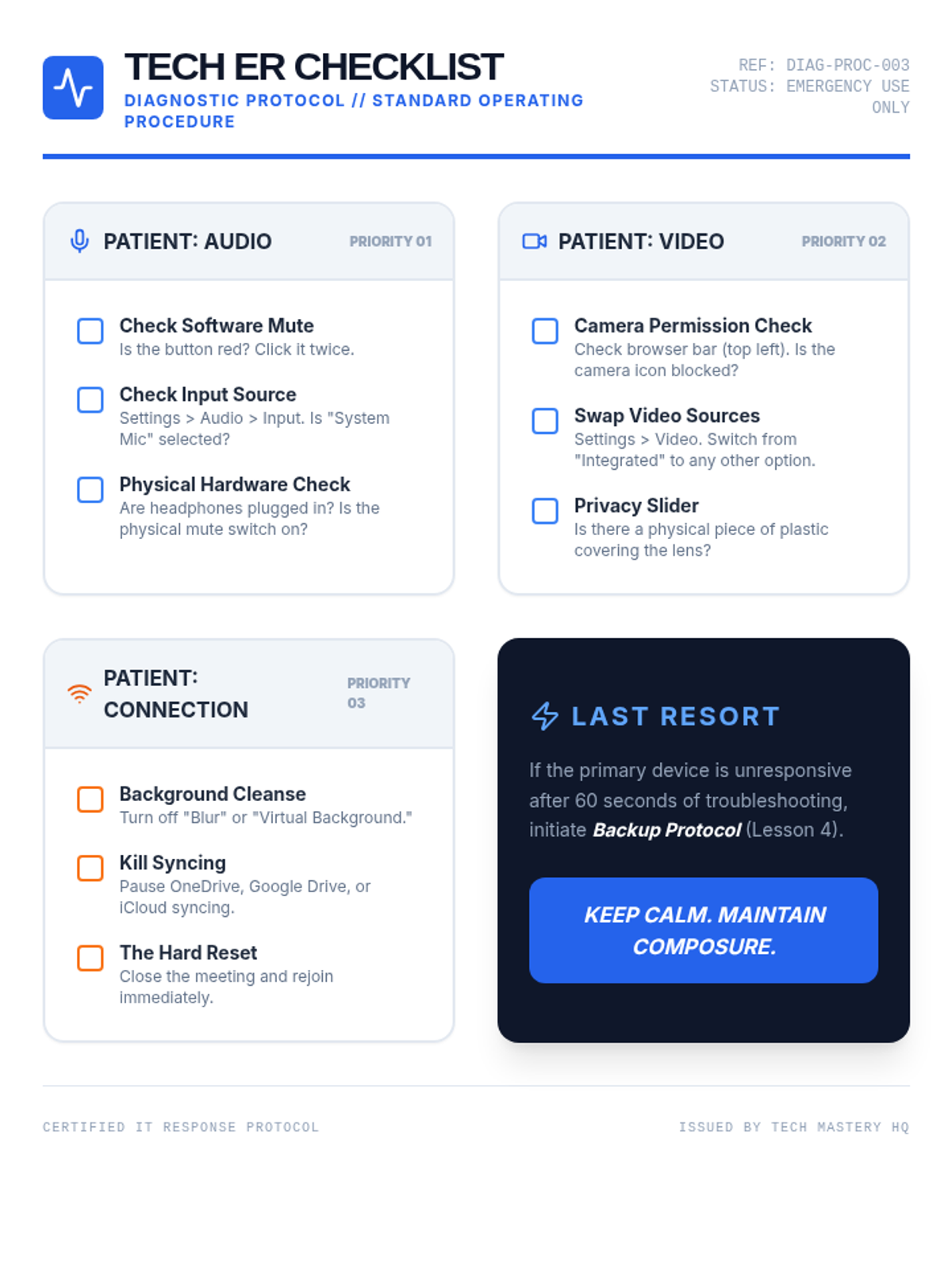
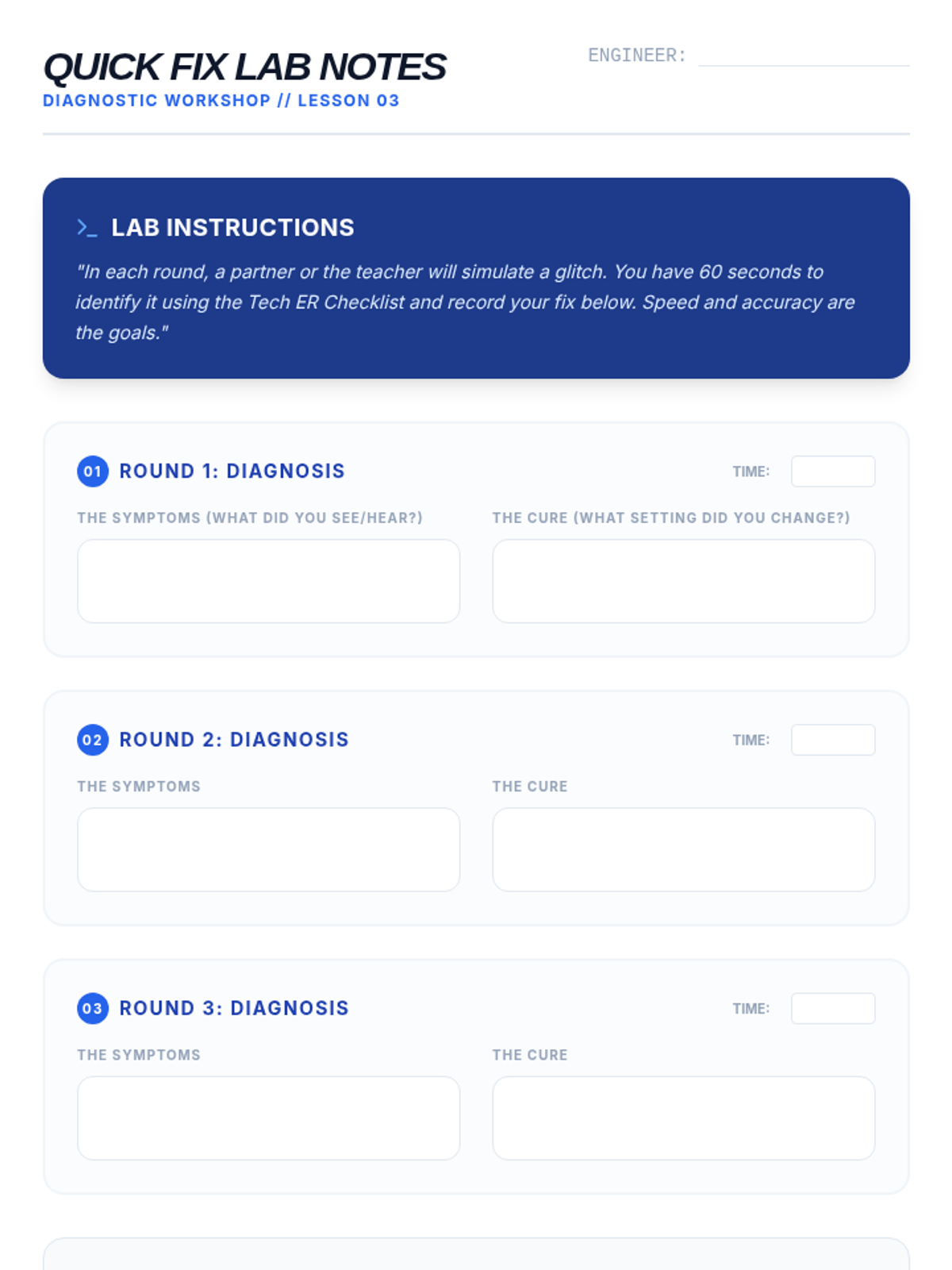
A hands-on workshop where students practice real-time diagnosis and resolution of common audio, video, and connection issues within meeting software.
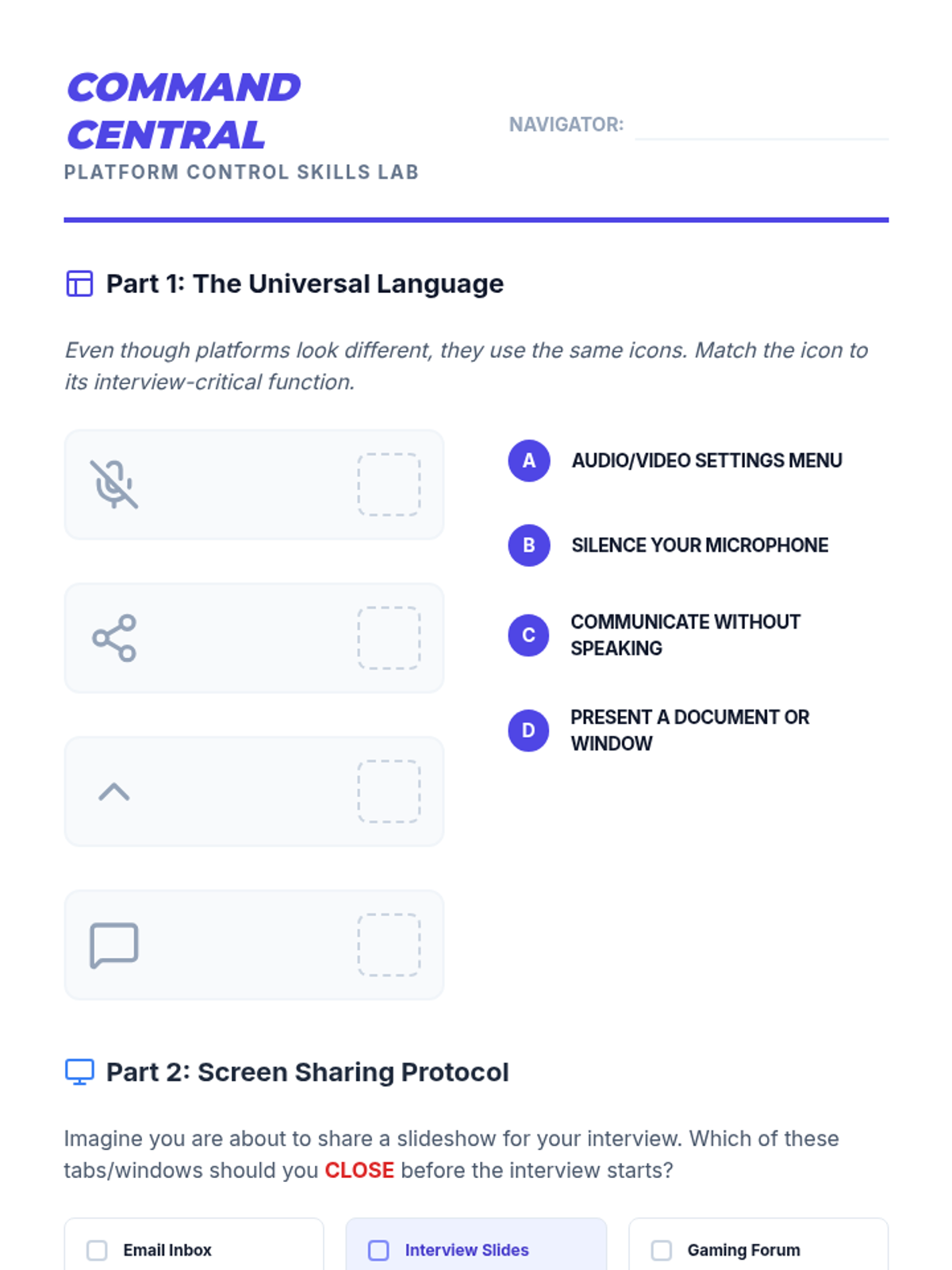
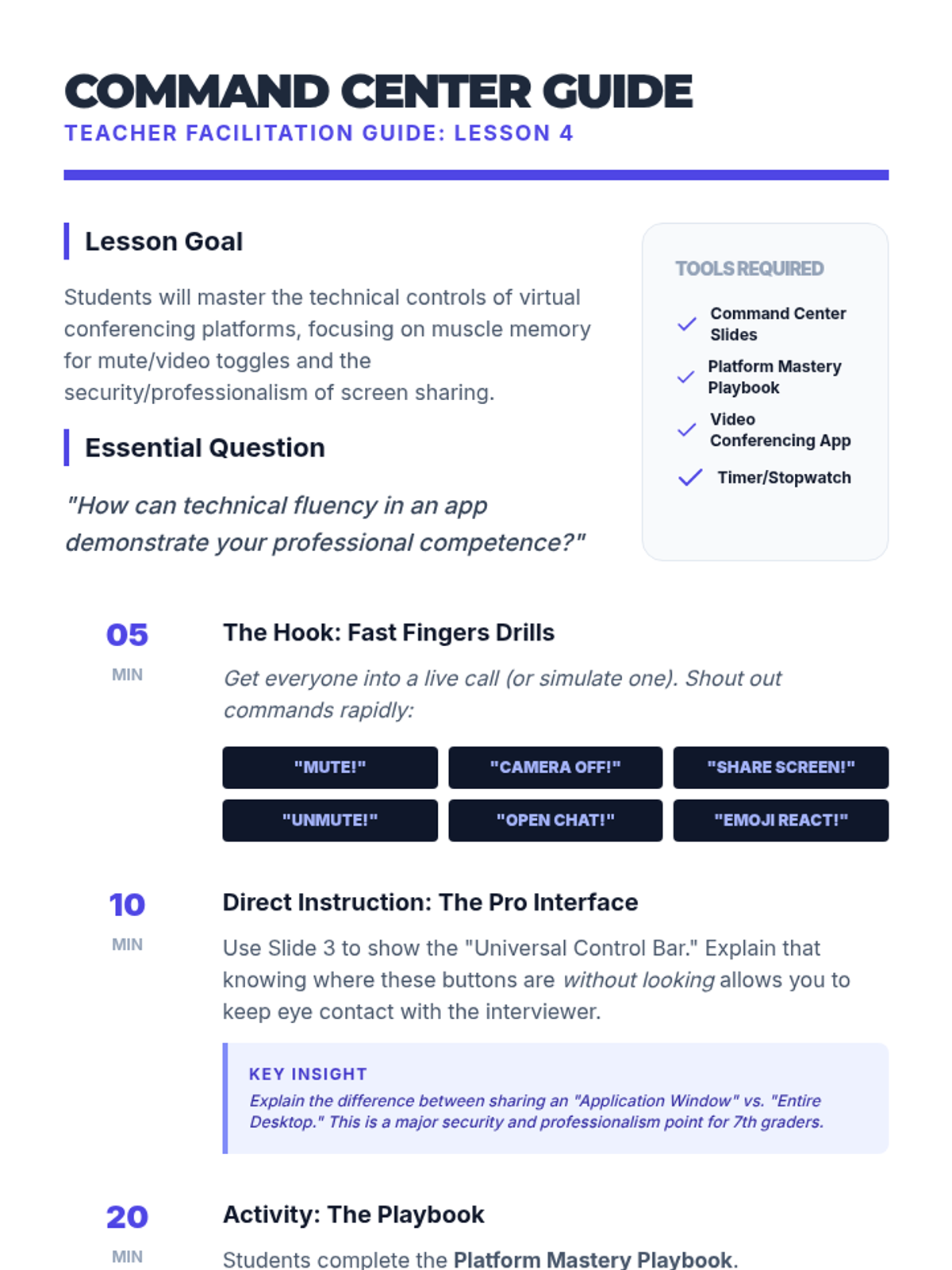
Learners navigate video conferencing interfaces to master essential controls like mute, video toggle, and screen sharing.
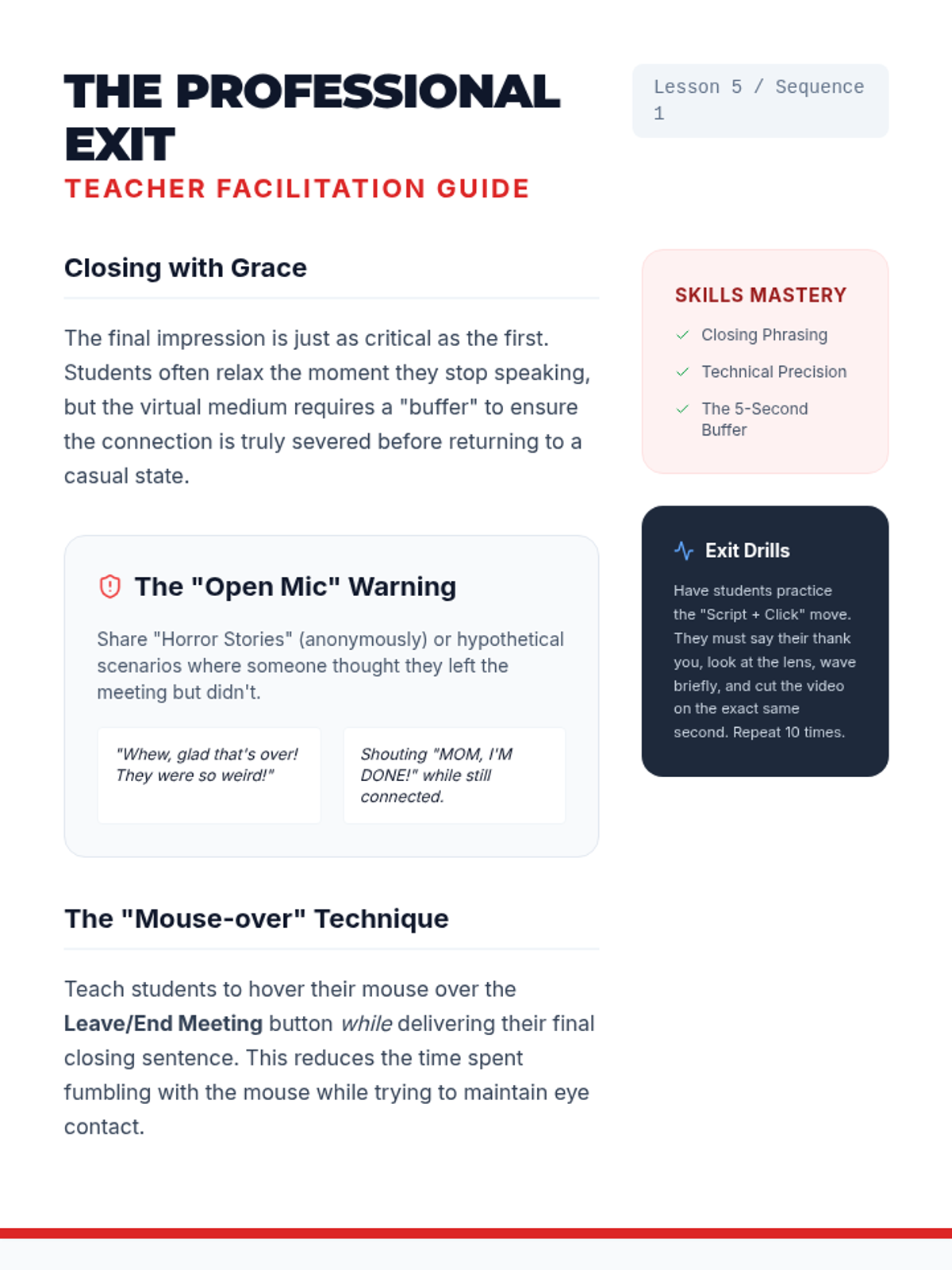
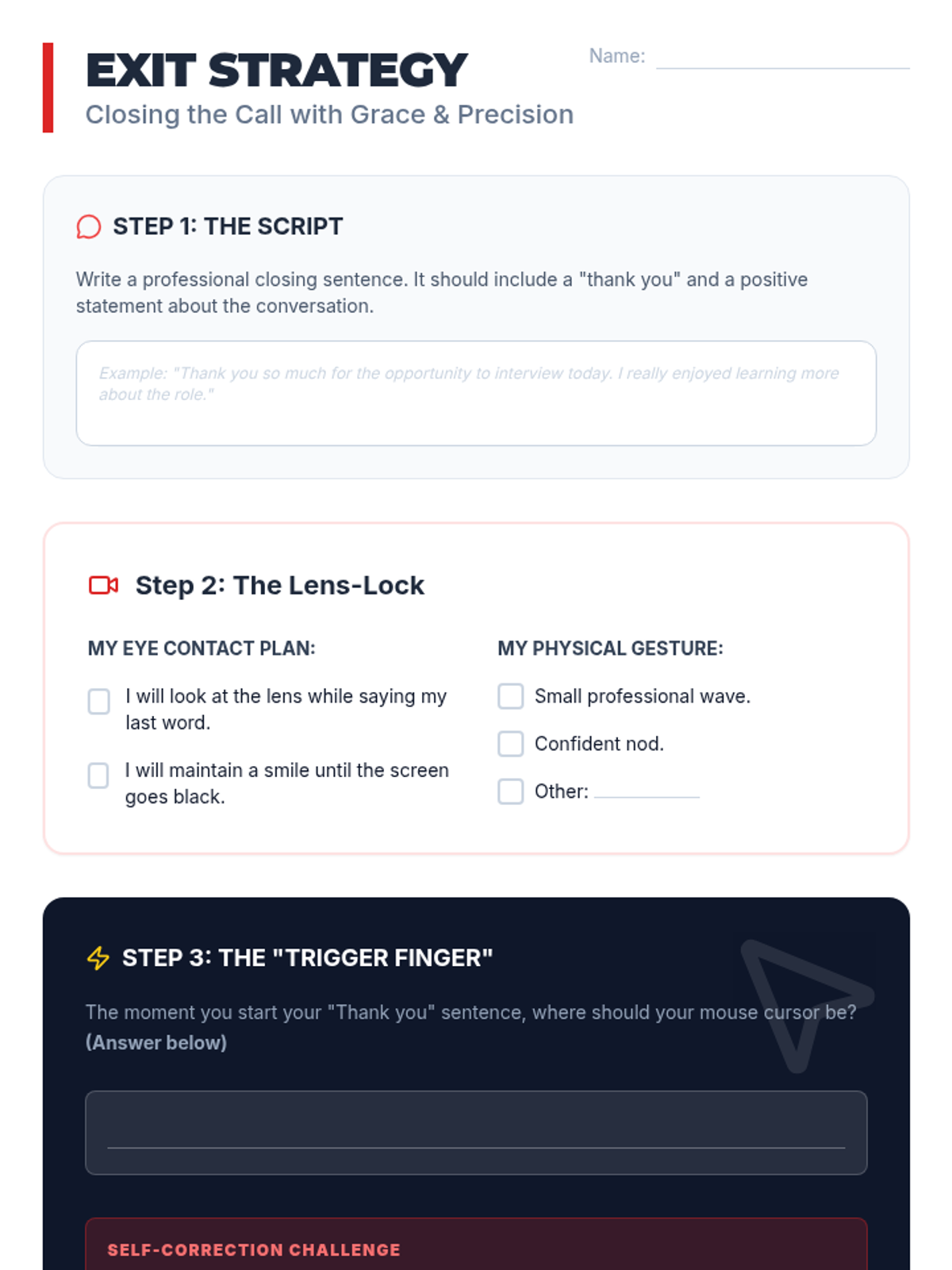
Focuses on the final moments of a virtual call, covering closing etiquette, social cues, and the technical necessity of a clean disconnection.
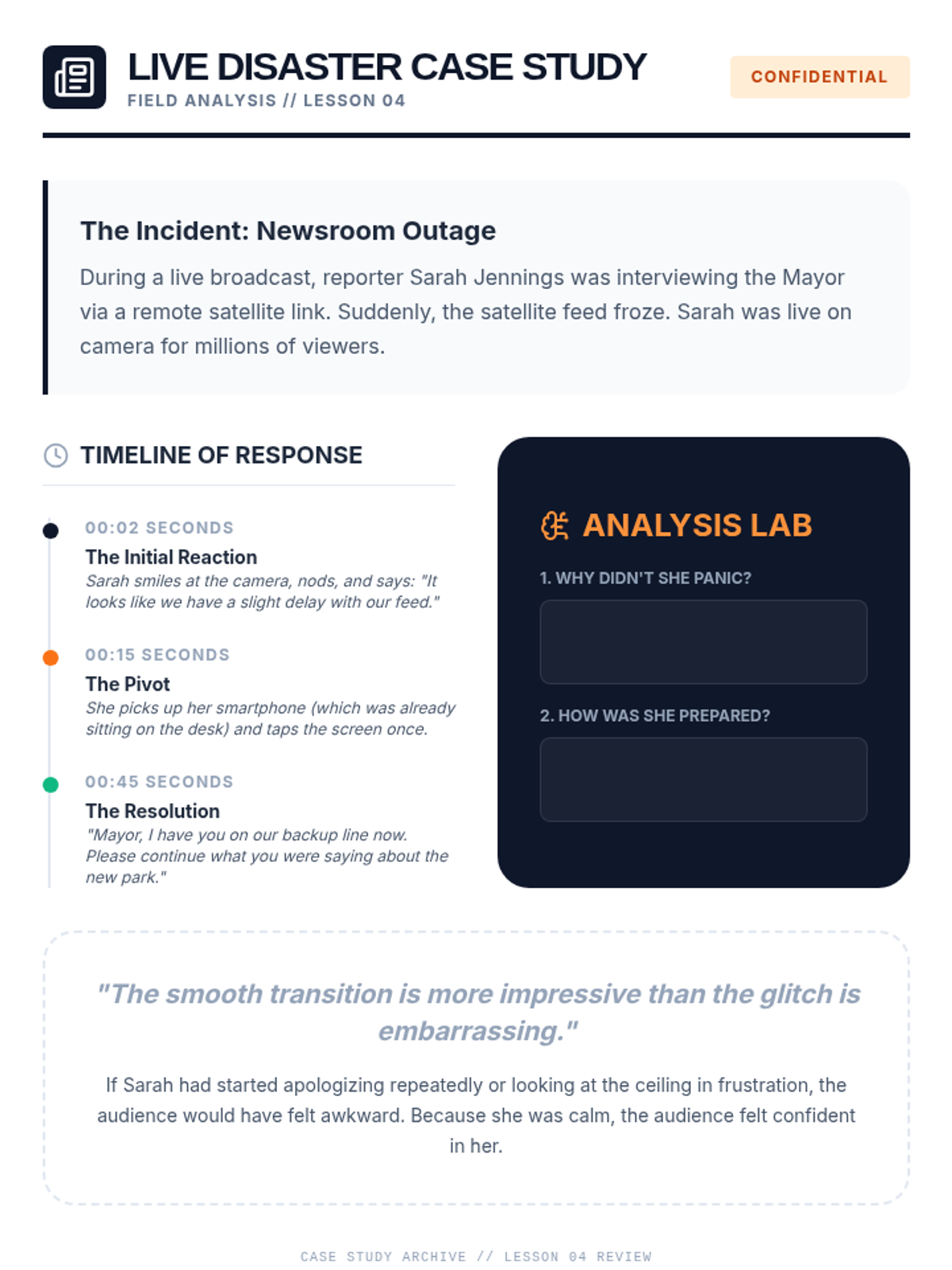
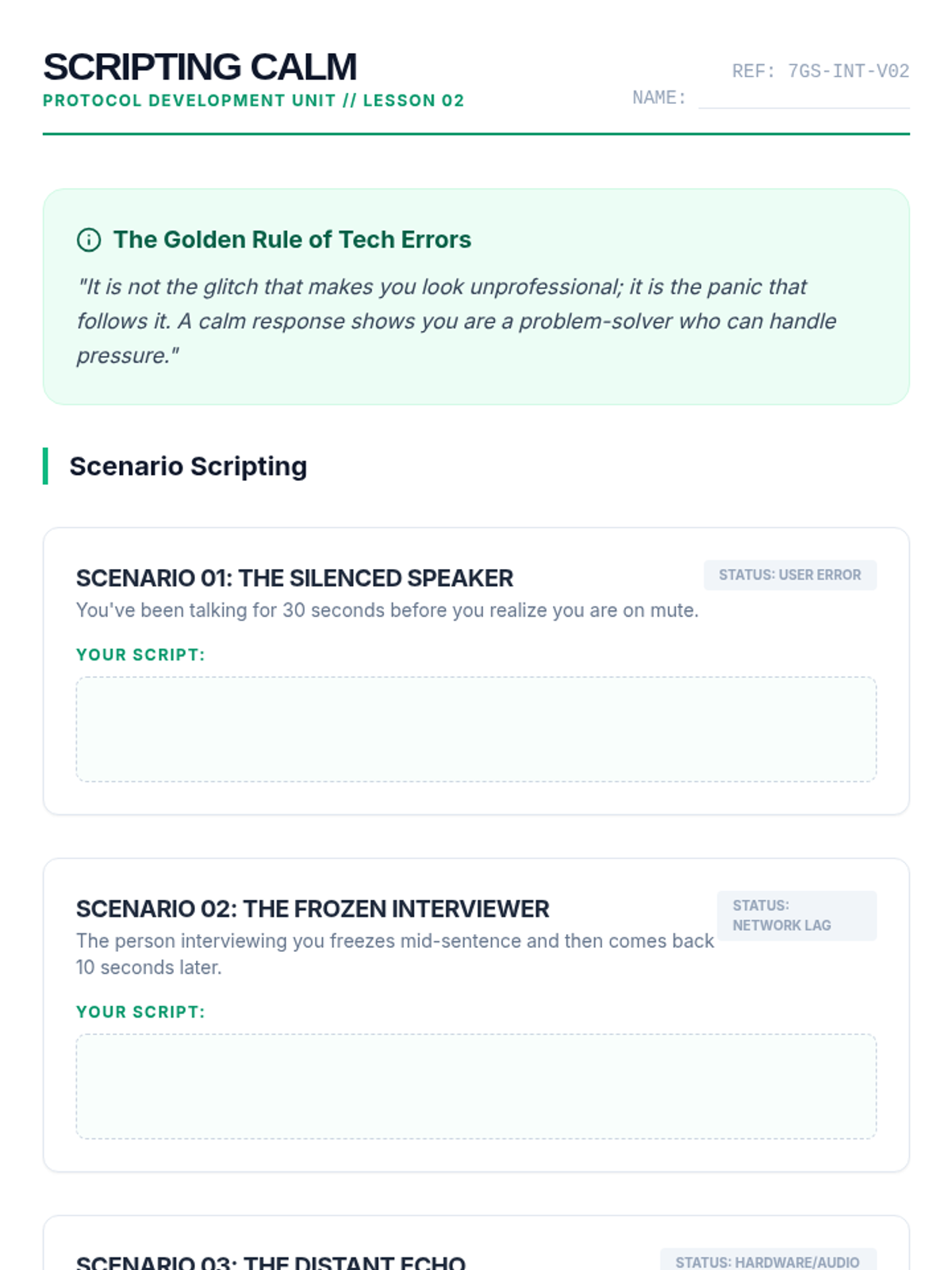
Learners develop professional scripts and communication protocols to signal technical difficulties calmly and effectively without losing their professional edge.
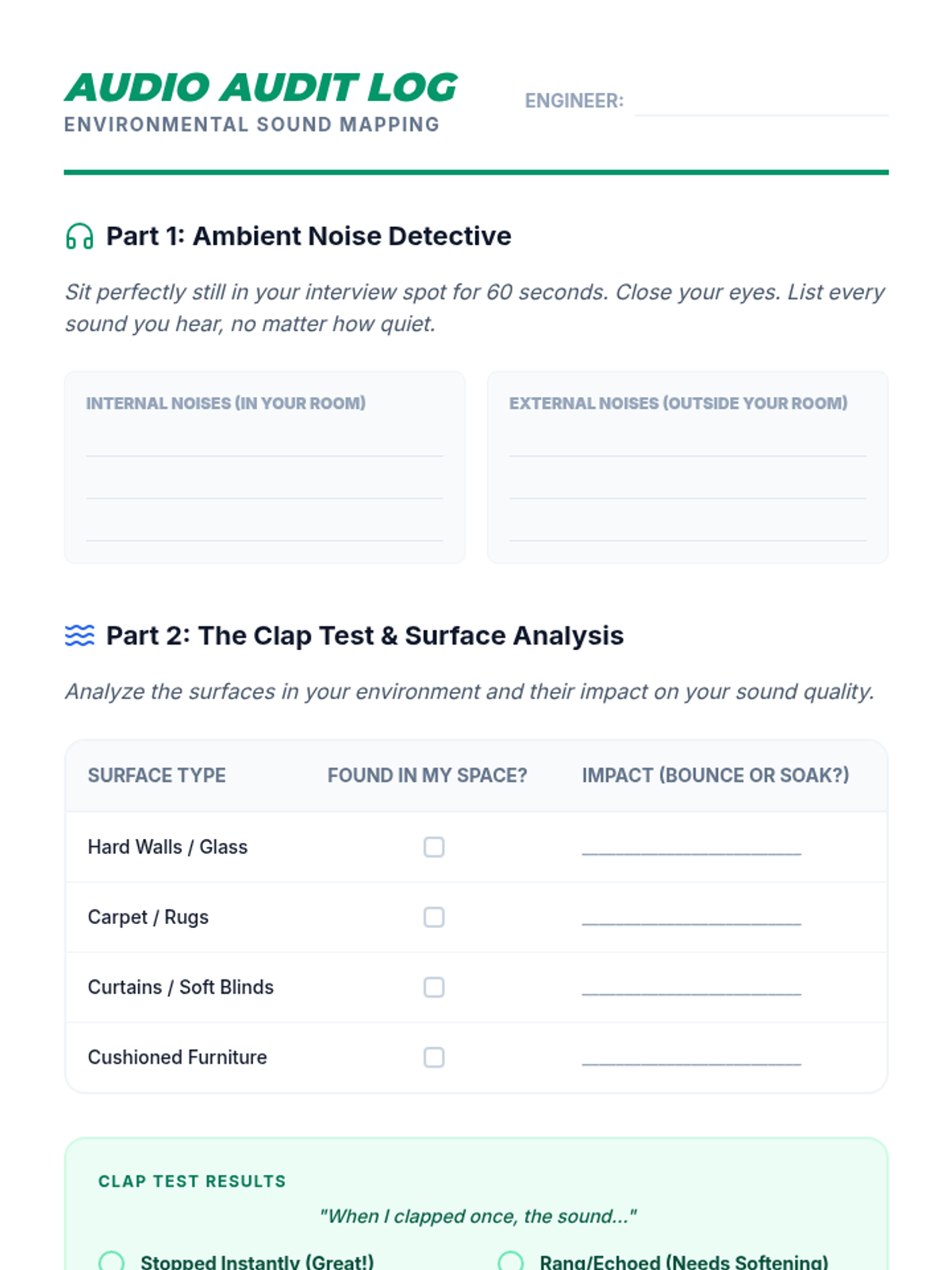
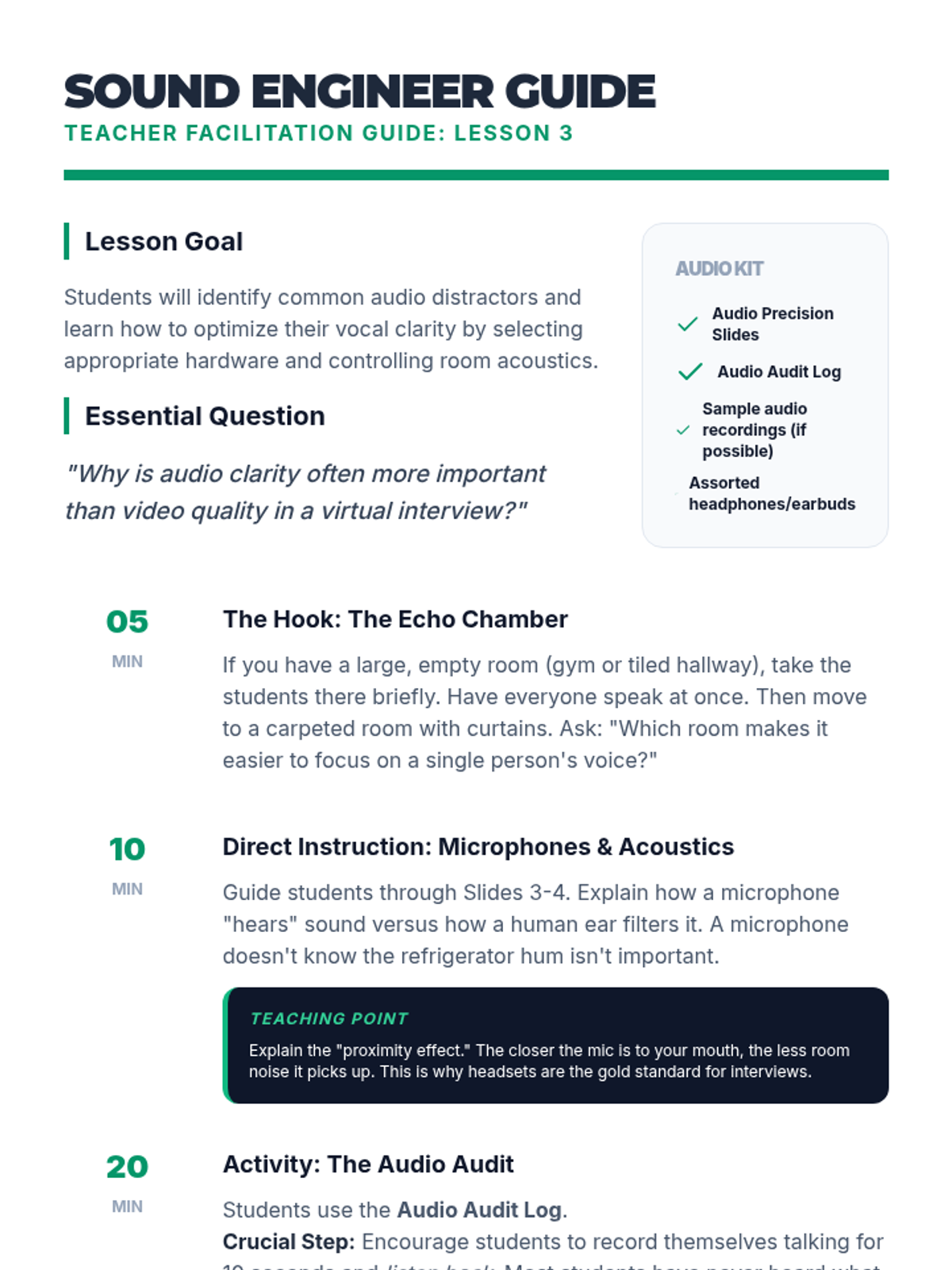
Students test microphones and map their environments to minimize background noise and maximize vocal clarity.
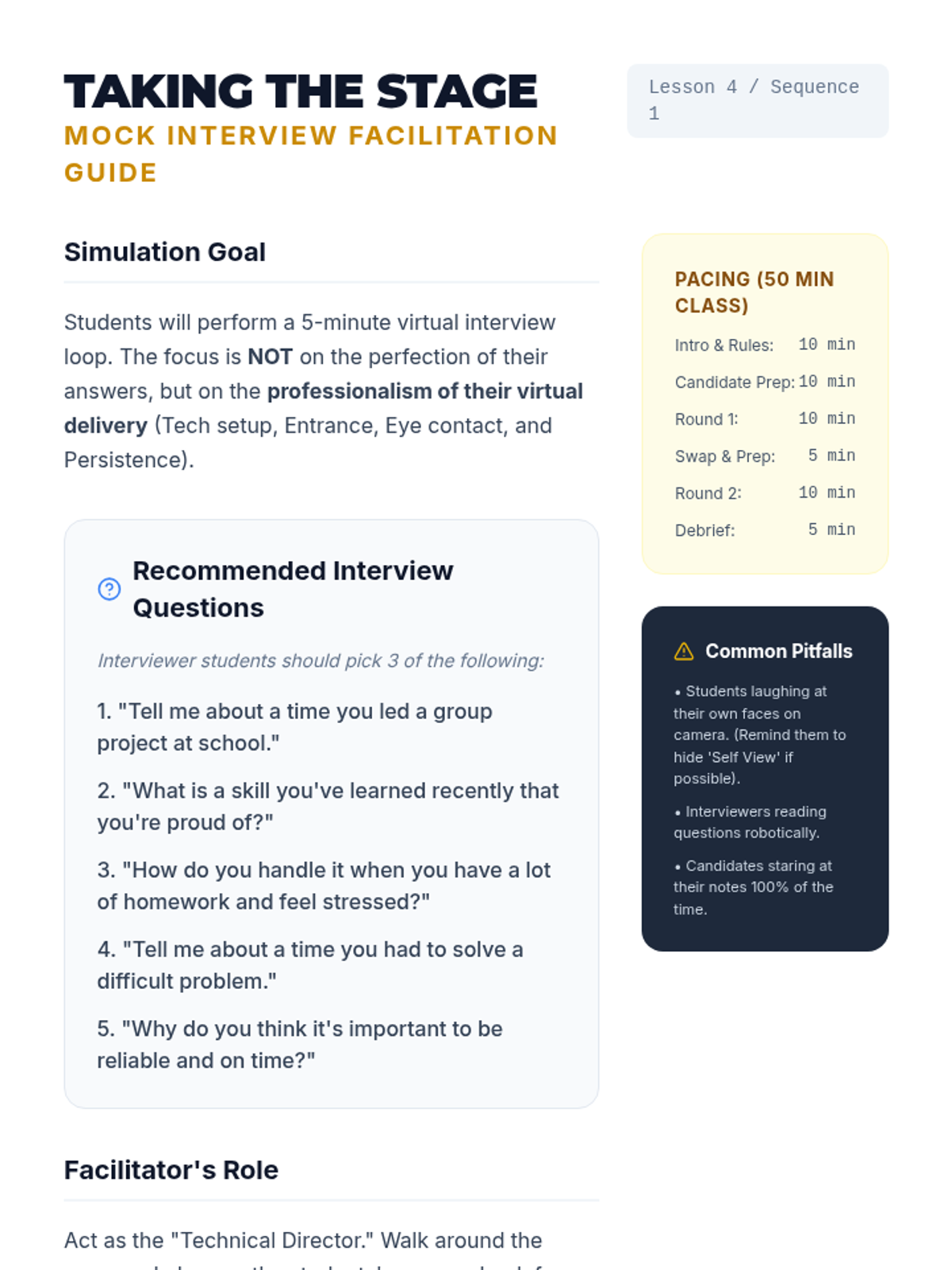
Students perform as candidates in a formal virtual setting, integrating technical setup with verbal and non-verbal communication skills.
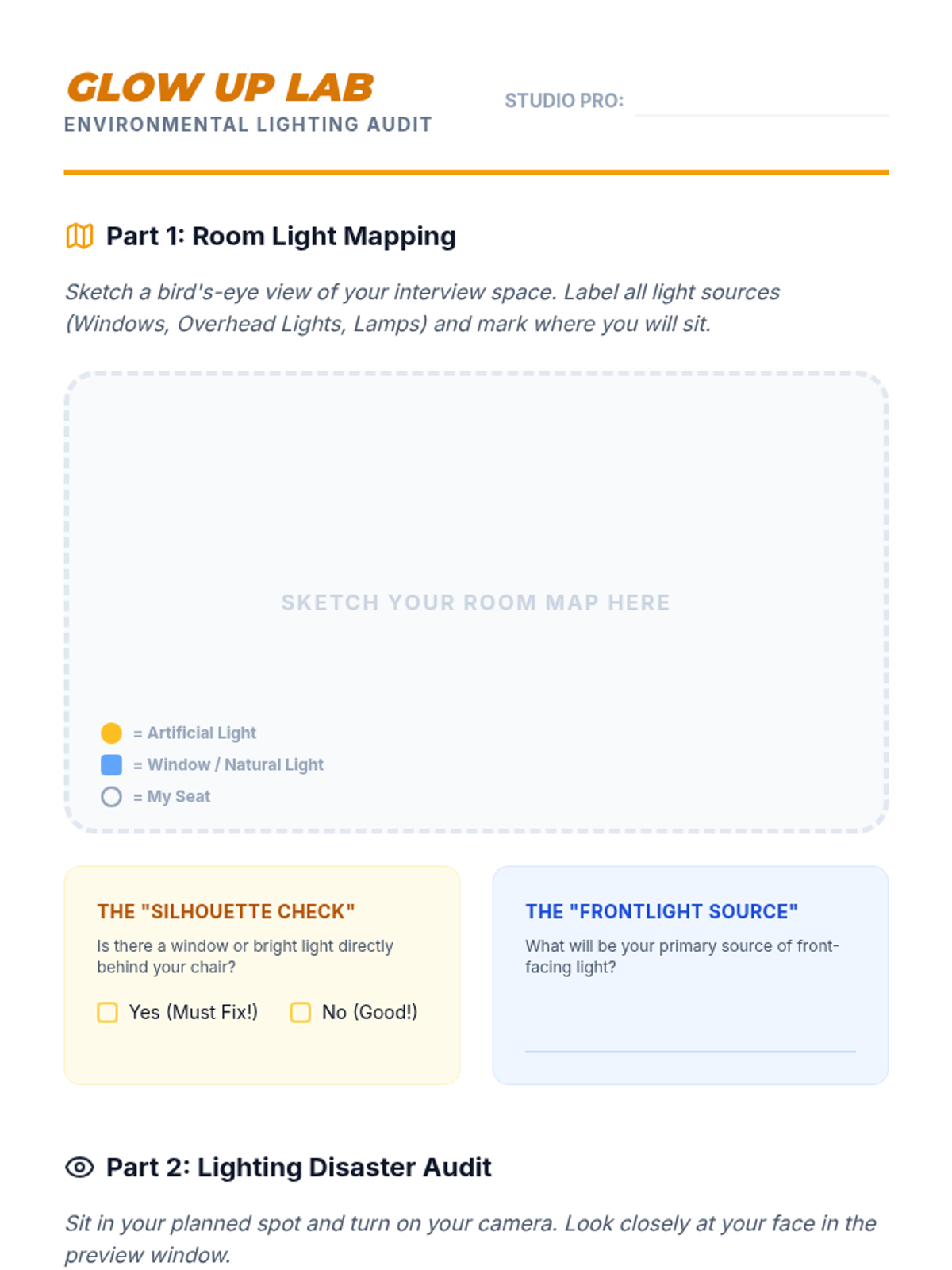
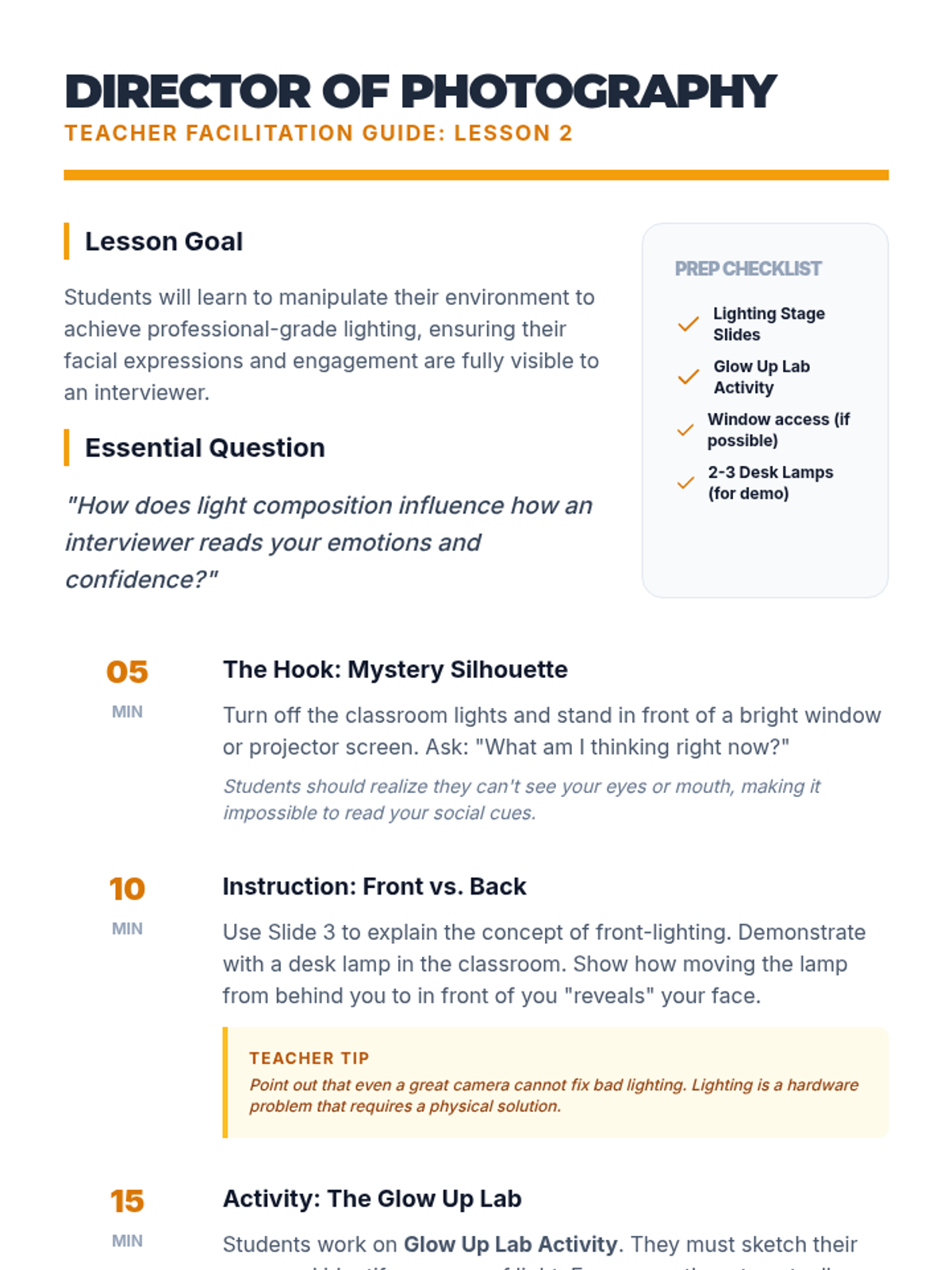
This lesson focuses on lighting composition, teaching students how to utilize natural and artificial light to eliminate shadows and silhouettes.