Budgeting, saving, and investment strategies alongside practical skills for managing credit, taxes, and banking. Addresses insurance needs, employment income, and major purchase decisions to support comprehensive long-term financial planning.
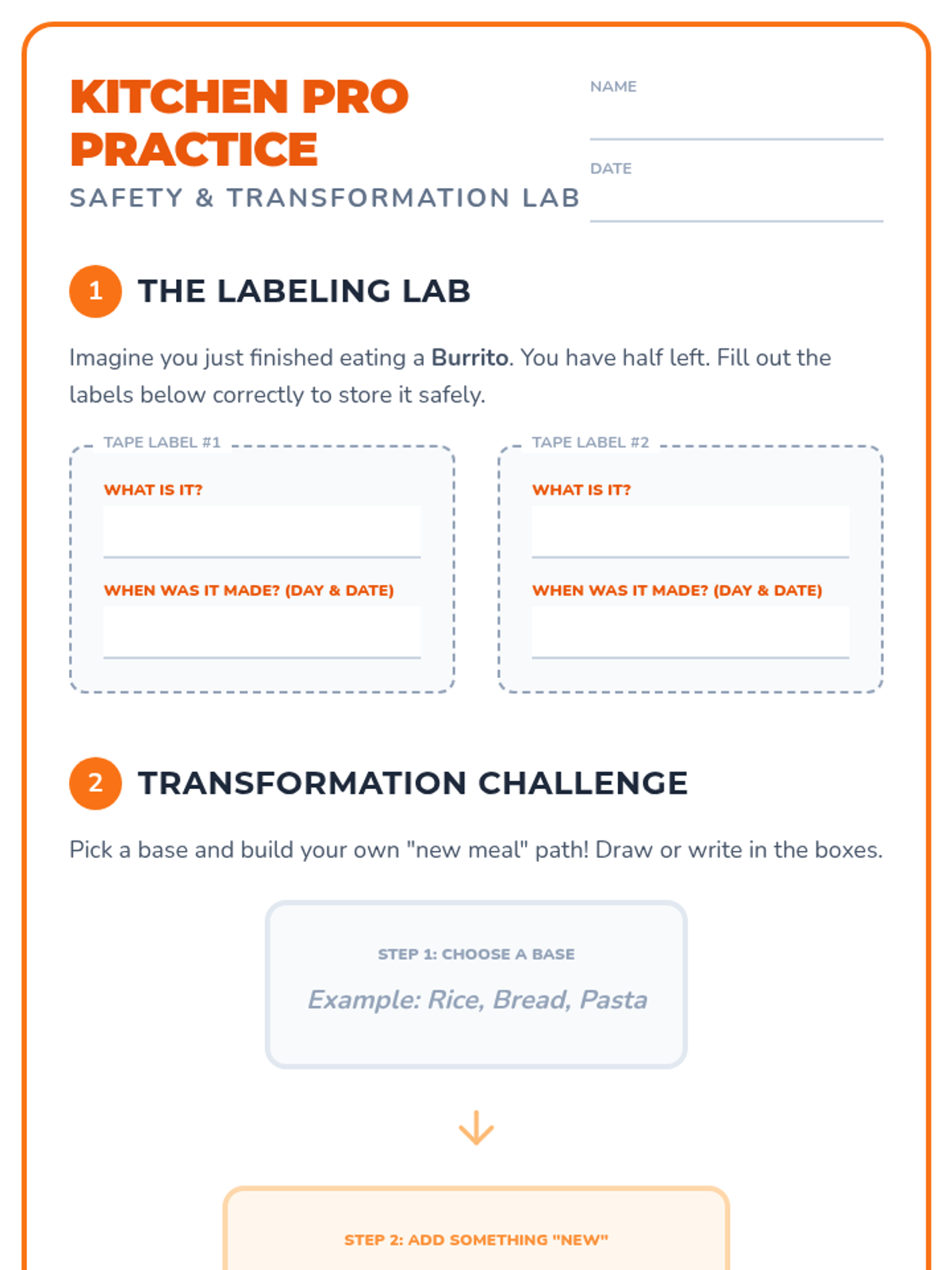
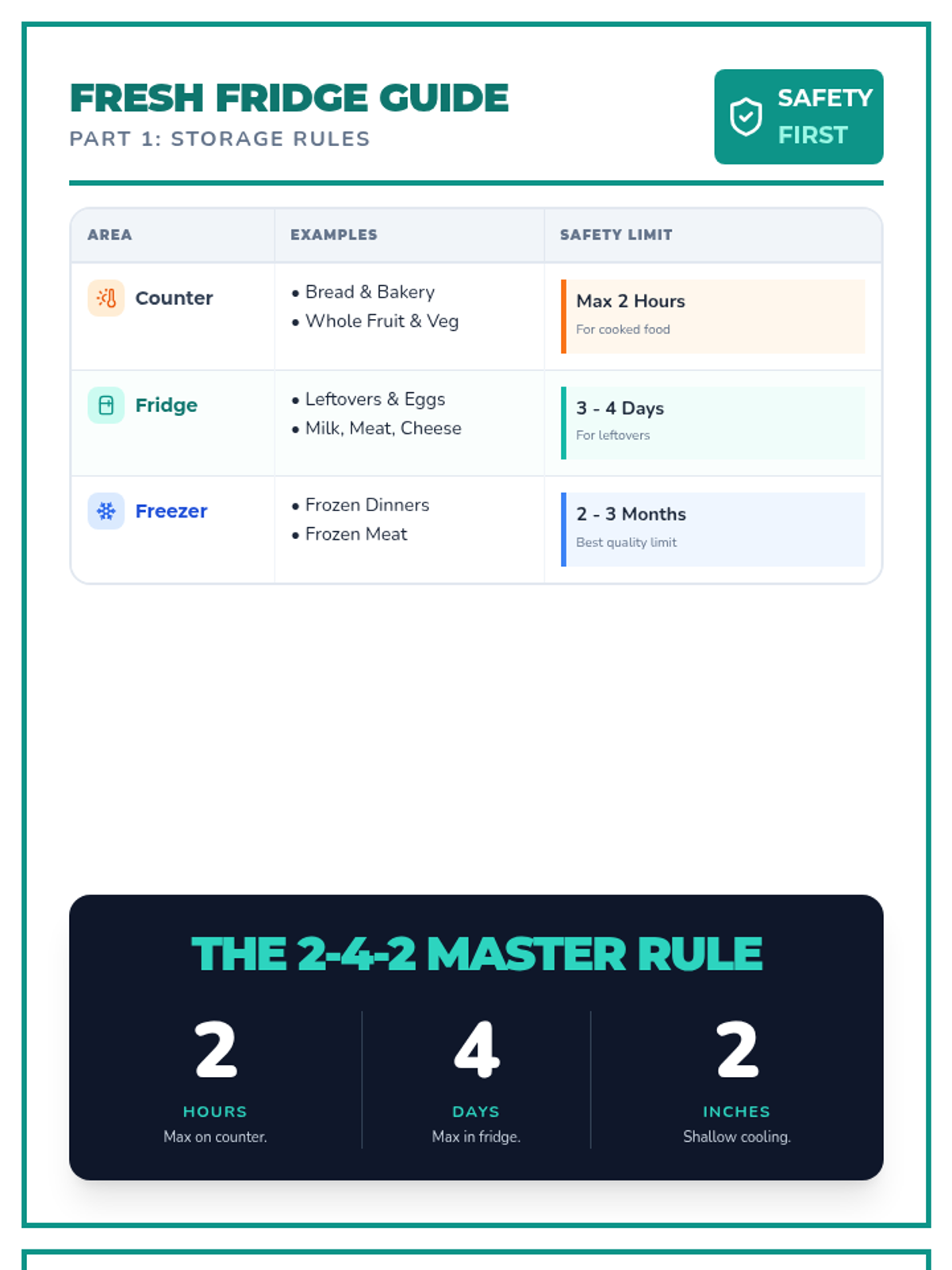
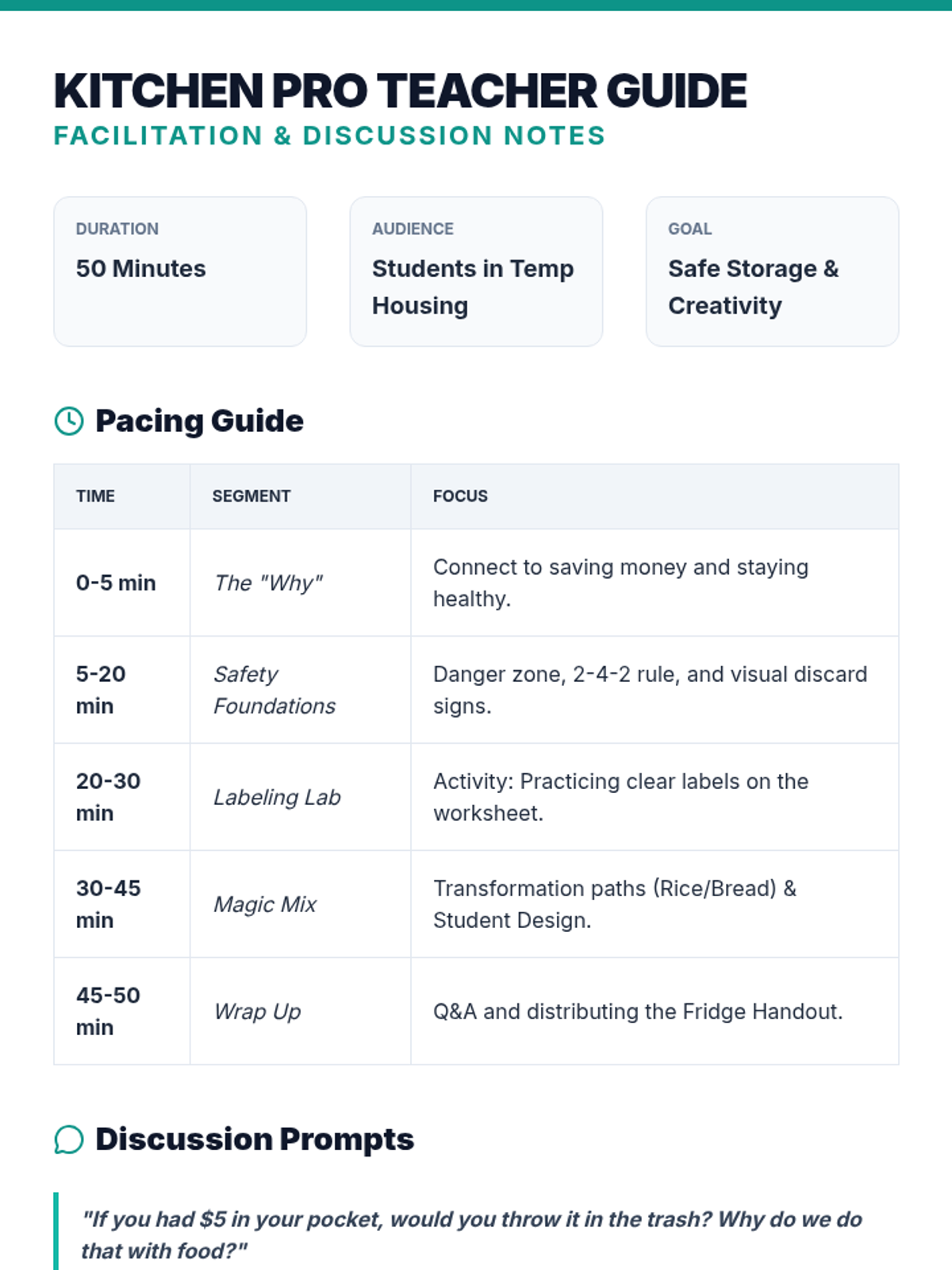
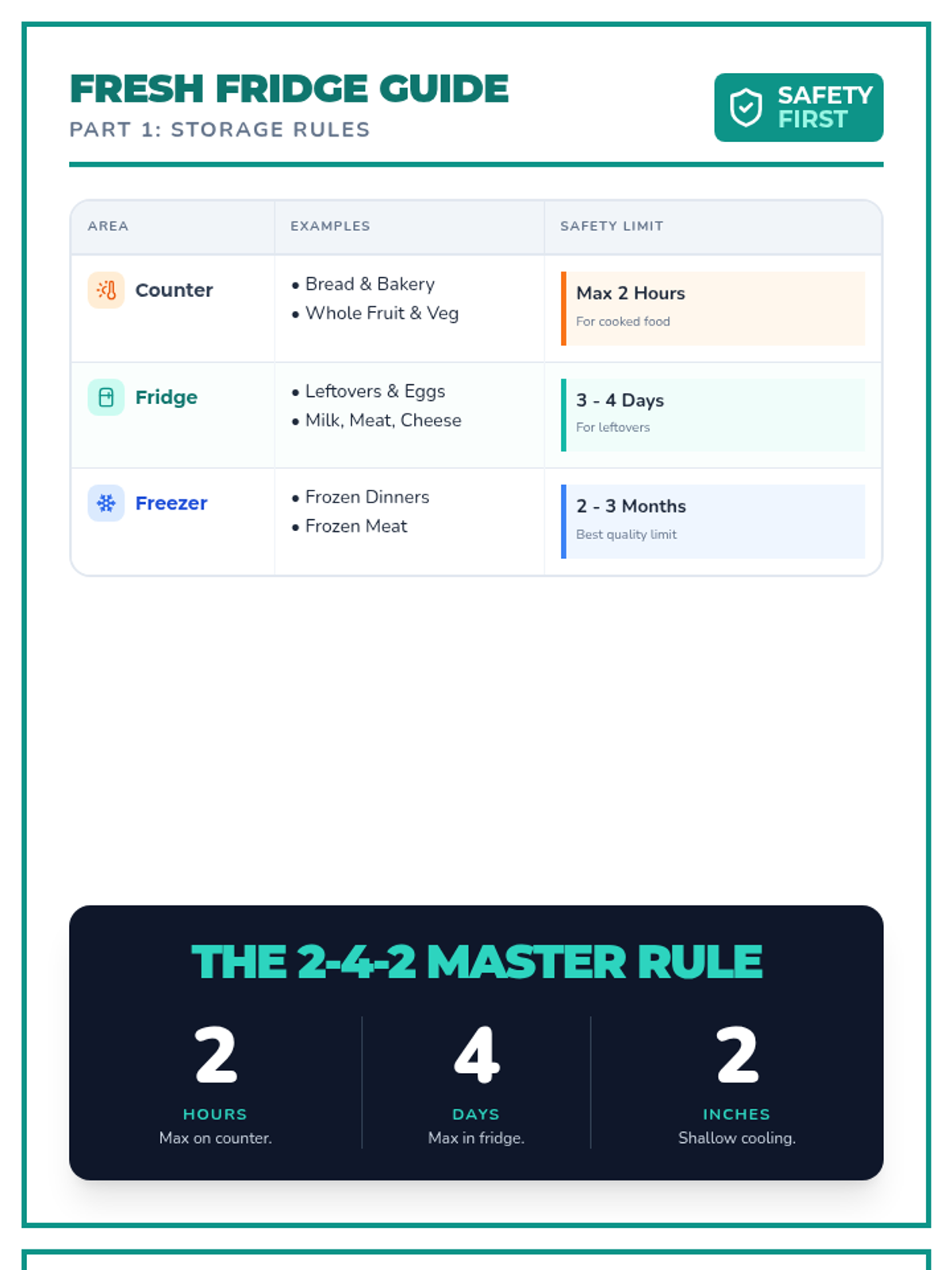
A 50-minute instructional session for students in temporary housing, focusing on safe food storage and creative leftover use through visual guides and sequence flowcharts.
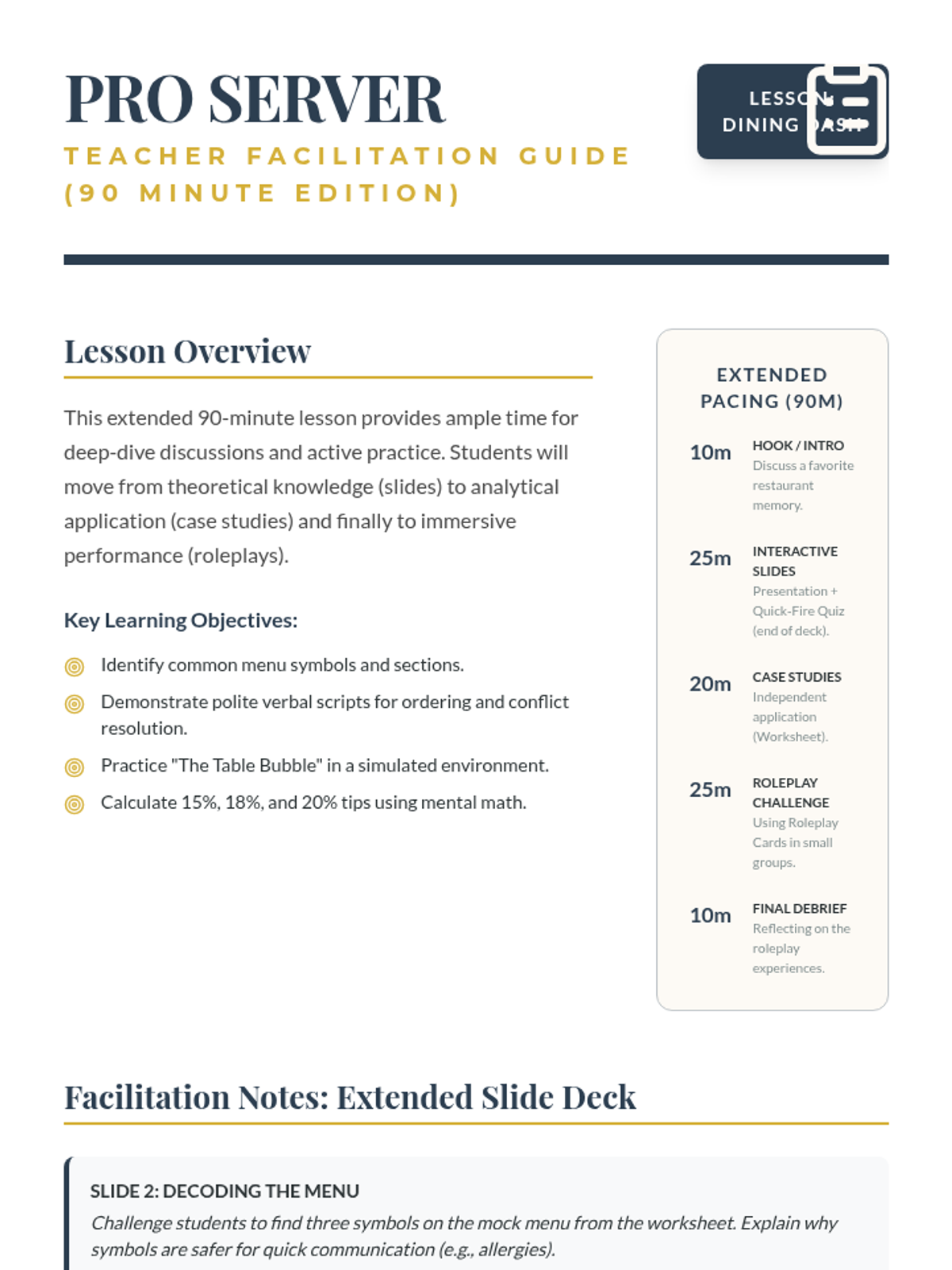
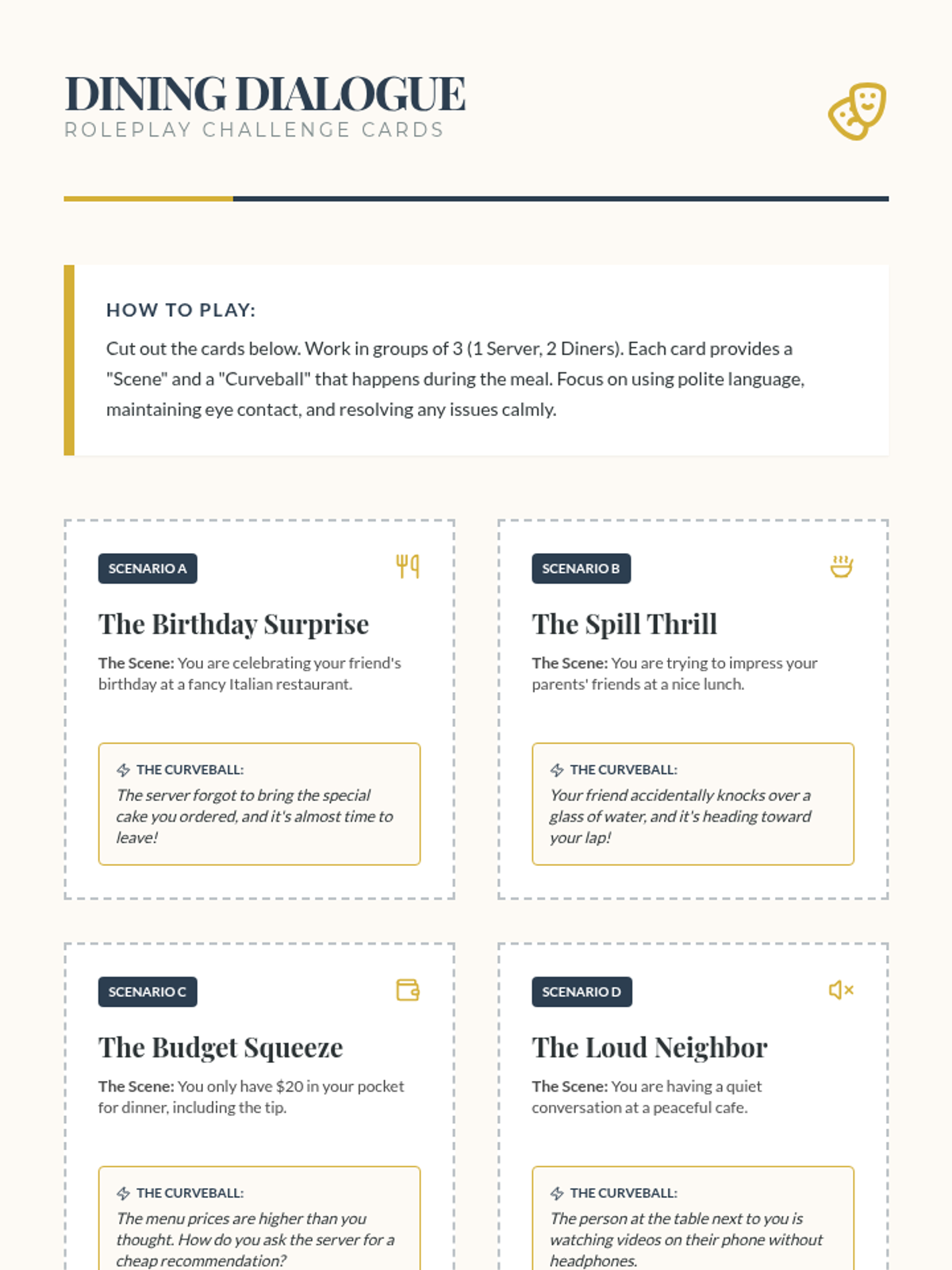
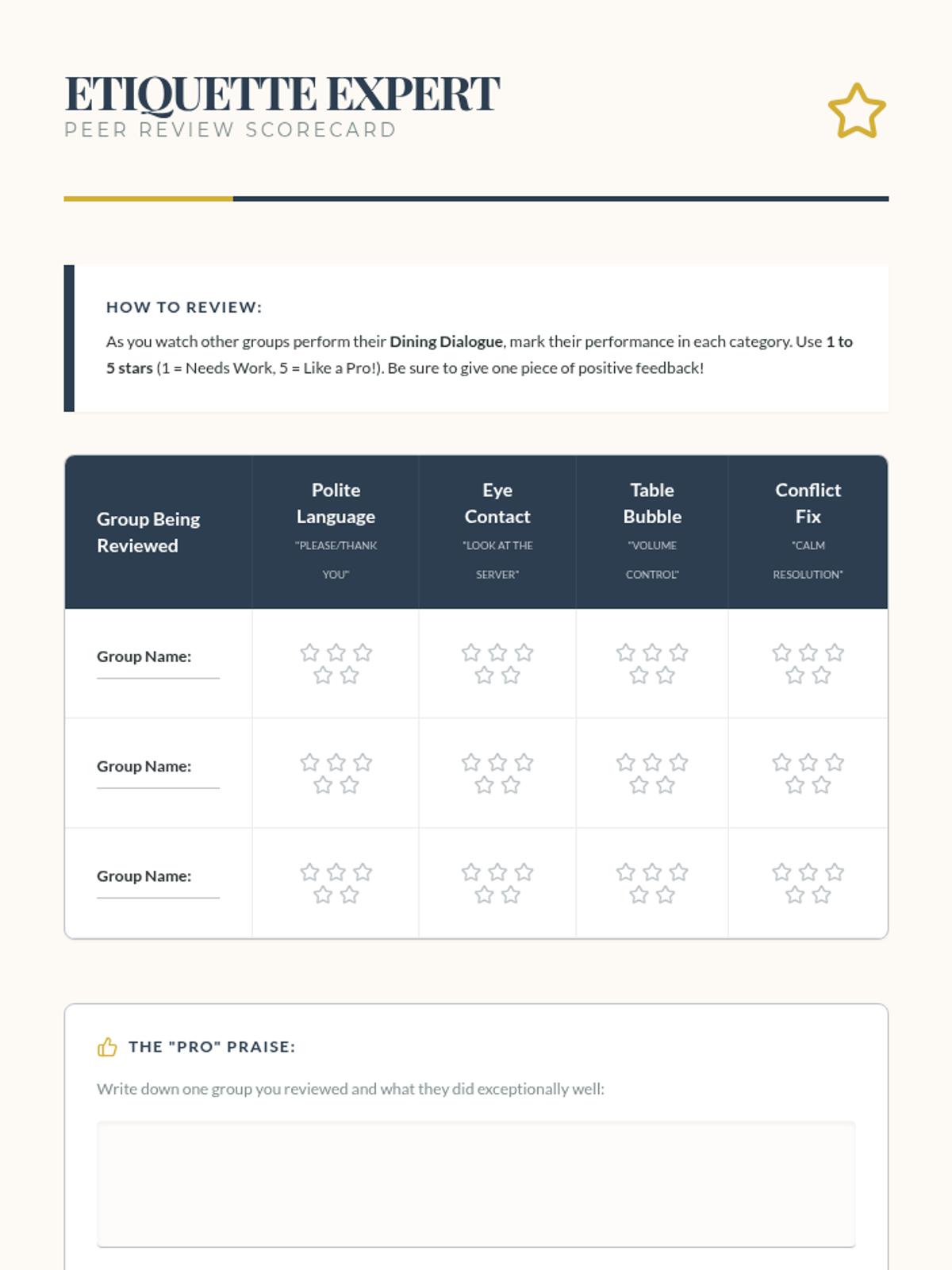
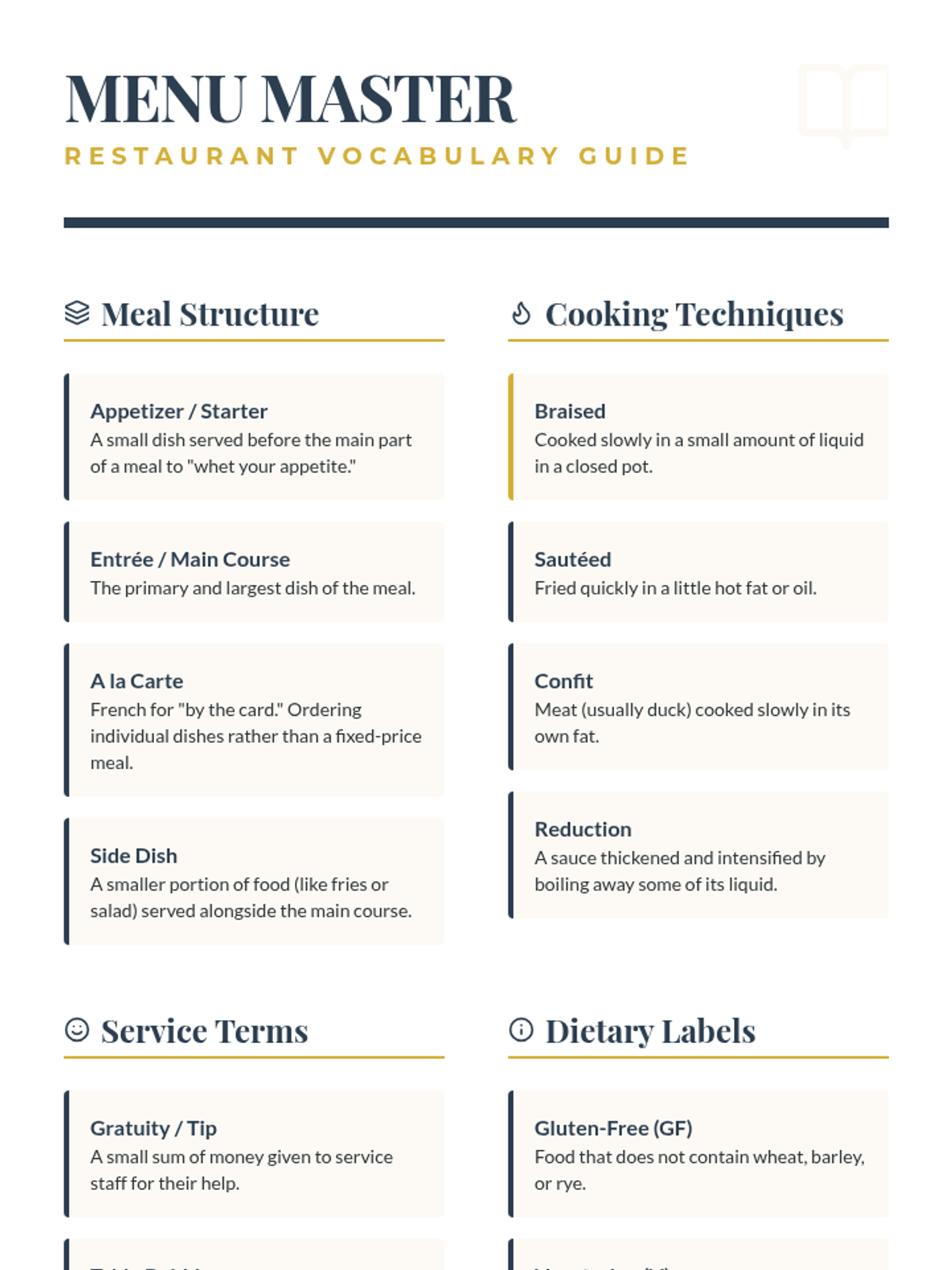
A comprehensive lesson on restaurant etiquette covering menu reading, ordering, manners, volume control, tipping, and conflict resolution.
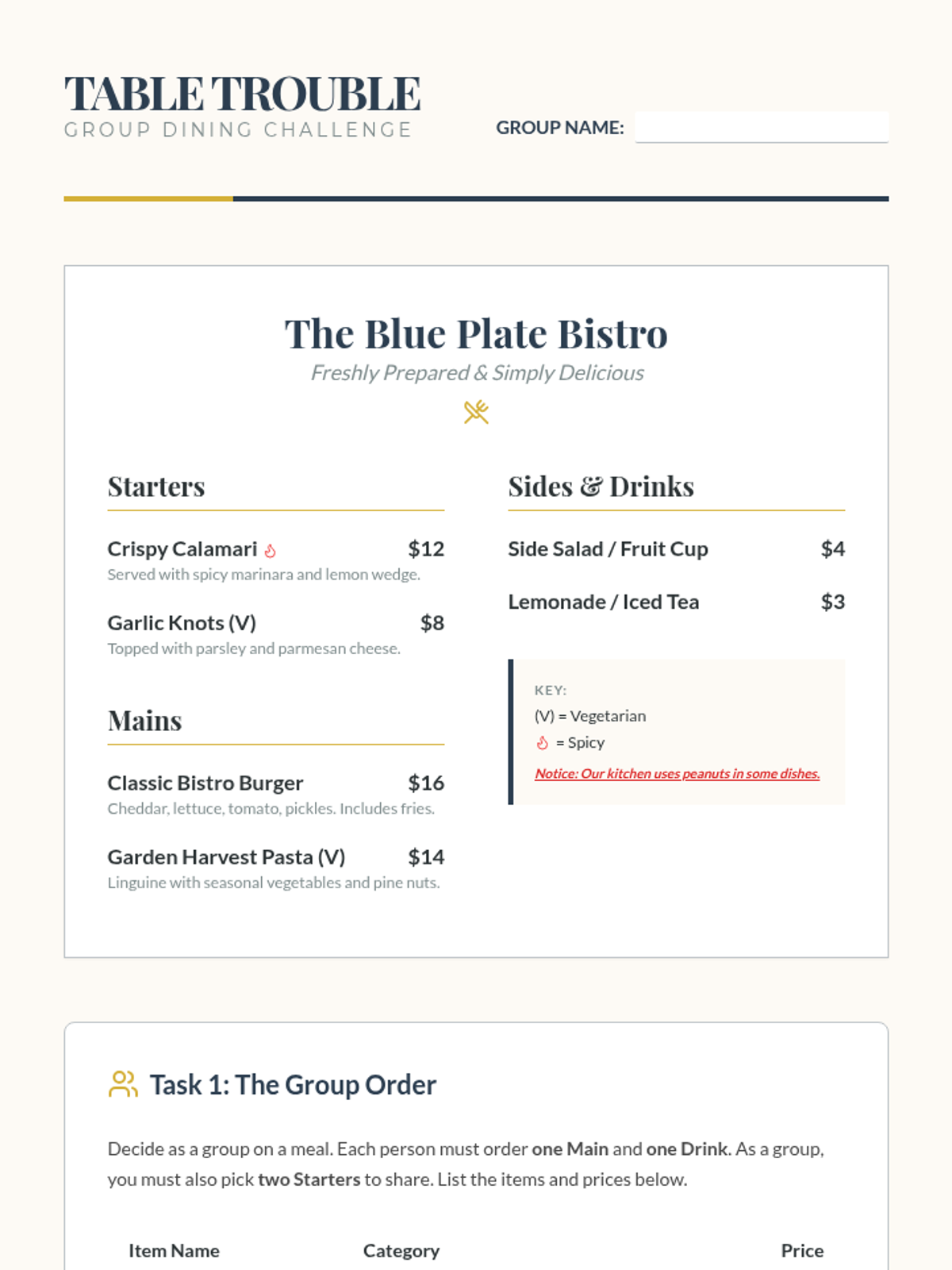
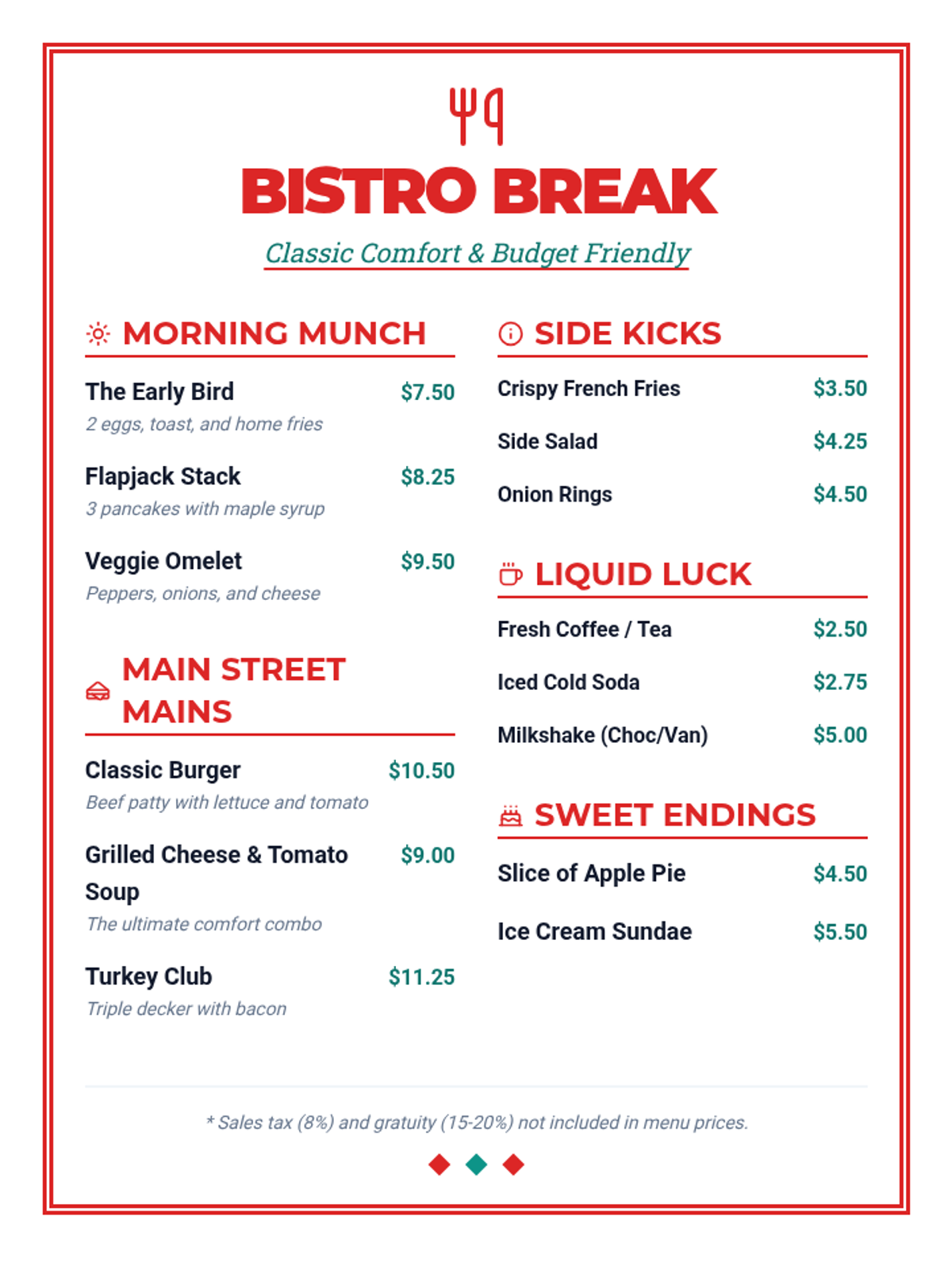
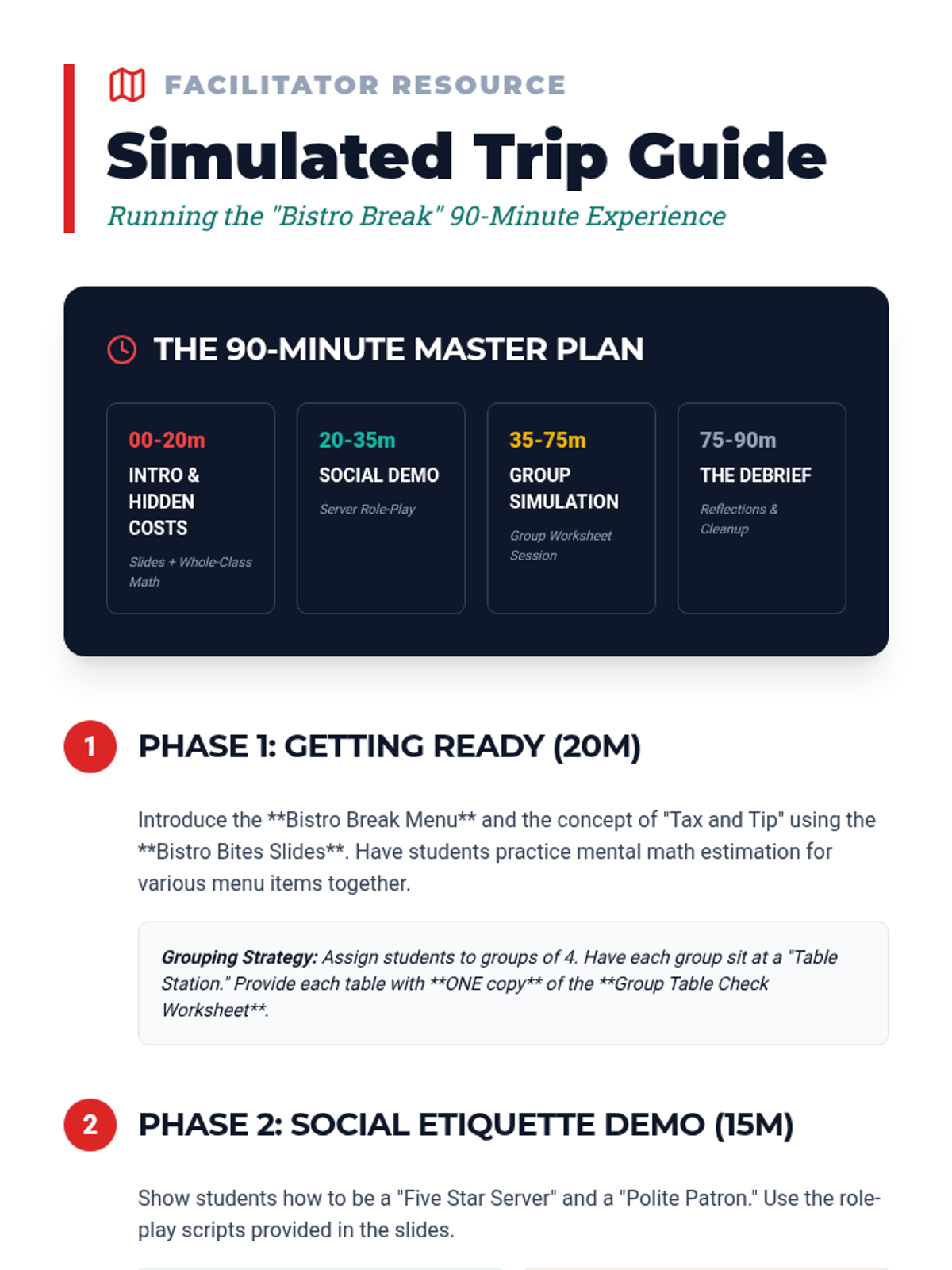
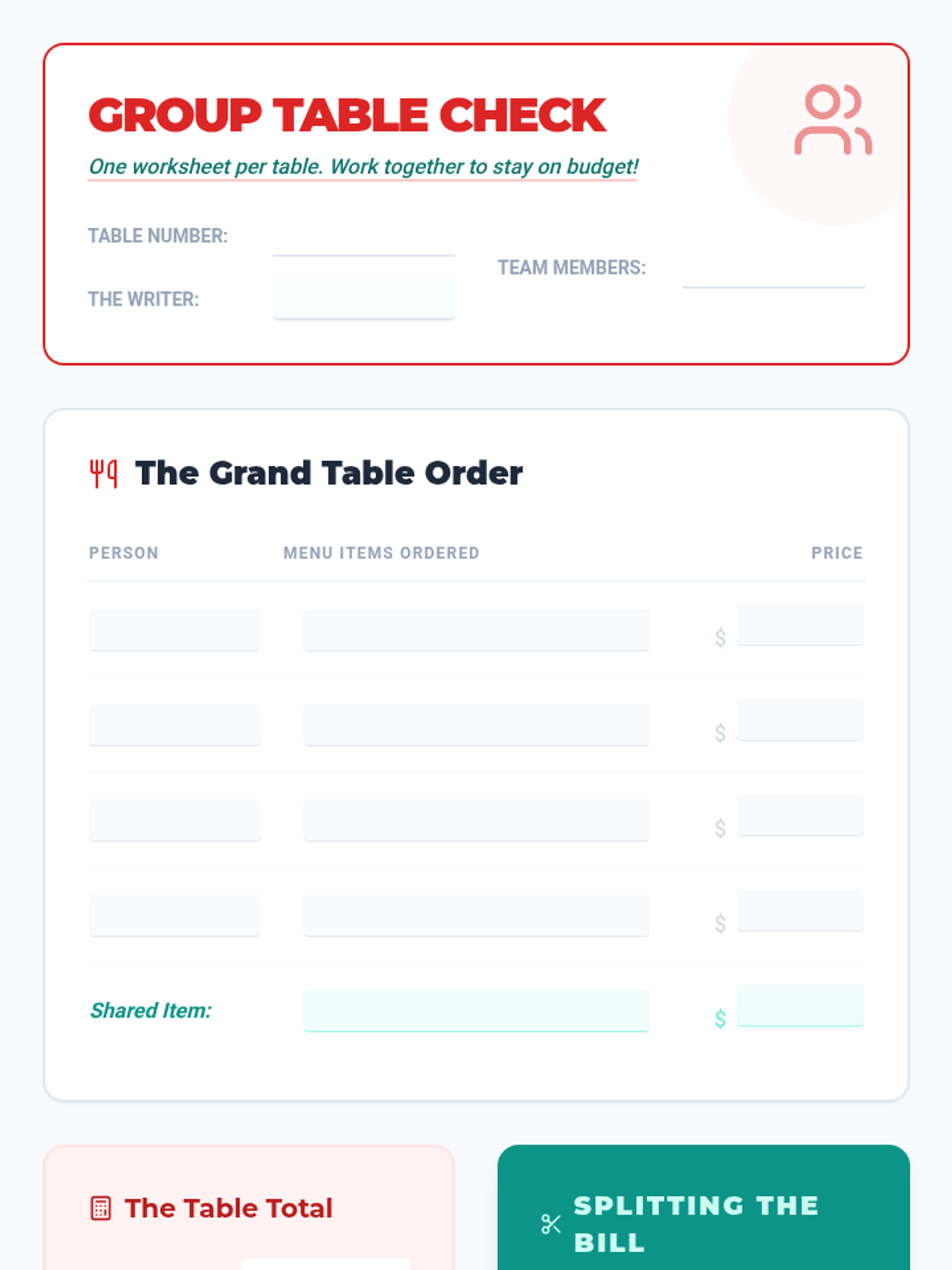
A functional skills lesson focused on navigating a restaurant experience on a budget, covering menu reading, budget planning, social etiquette, and group check splitting.
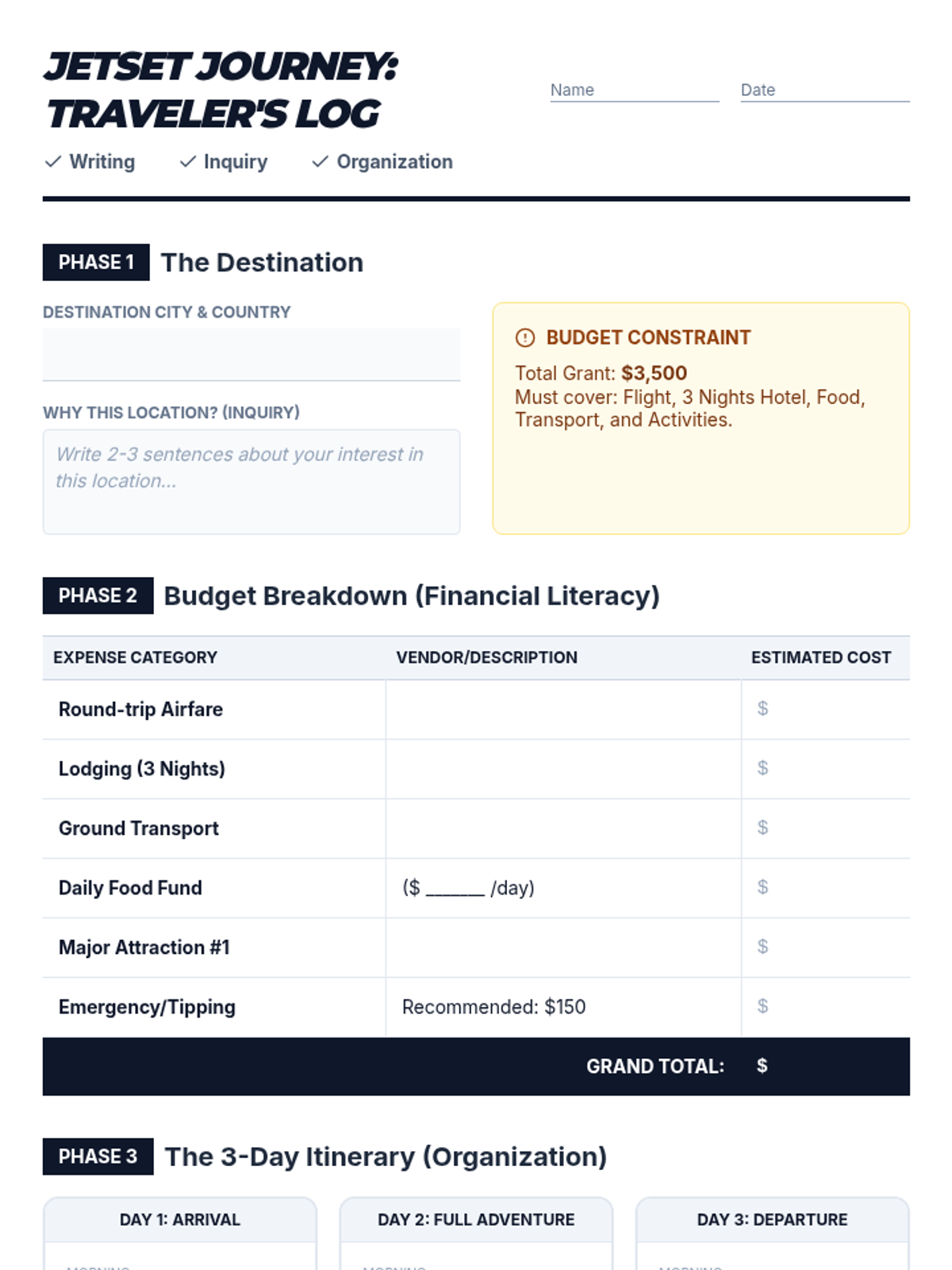
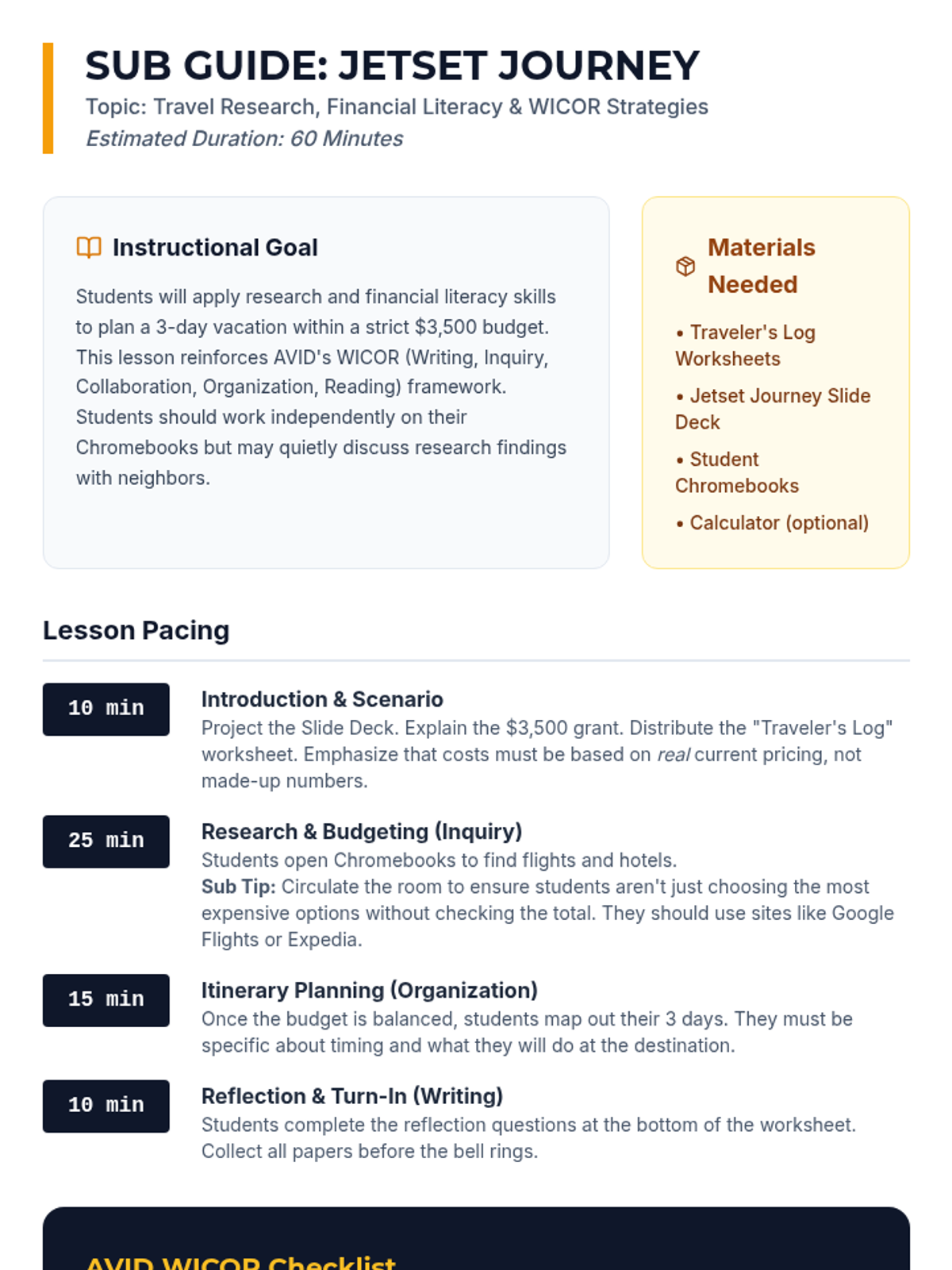
A high-engagement, sub-friendly lesson where AVID students research, budget, and plan a 3-day dream vacation while applying WICOR strategies and financial literacy skills.
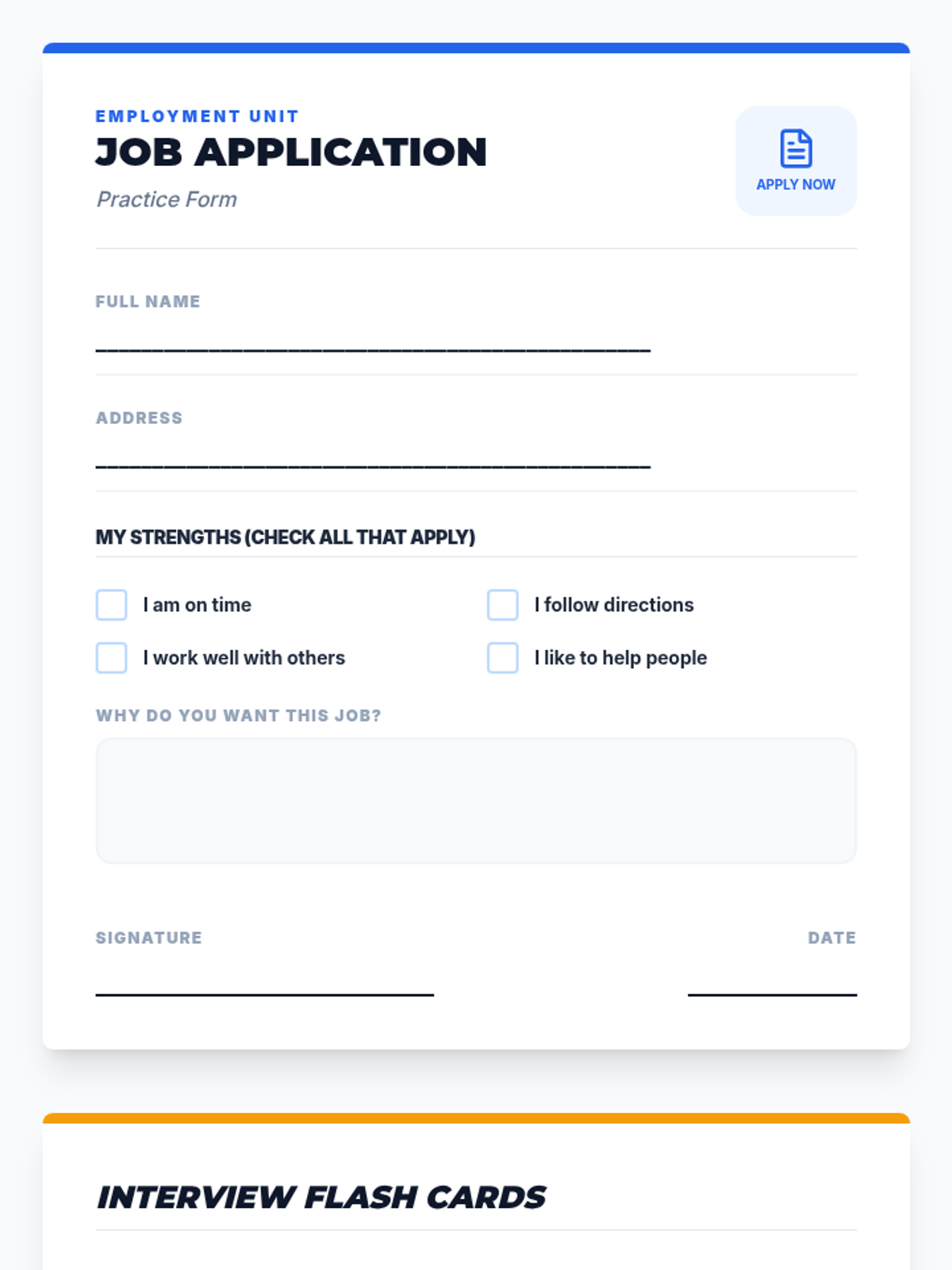
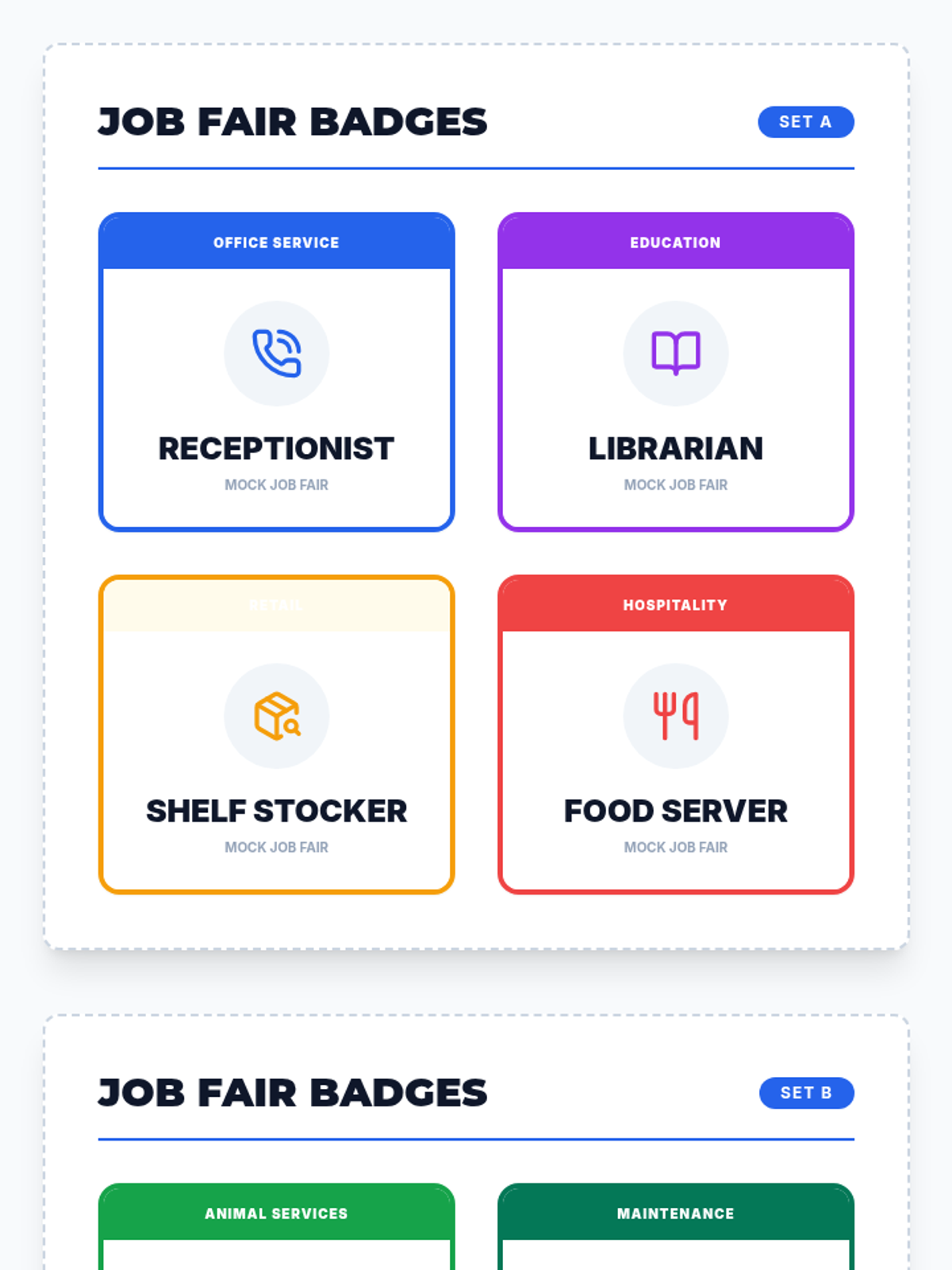
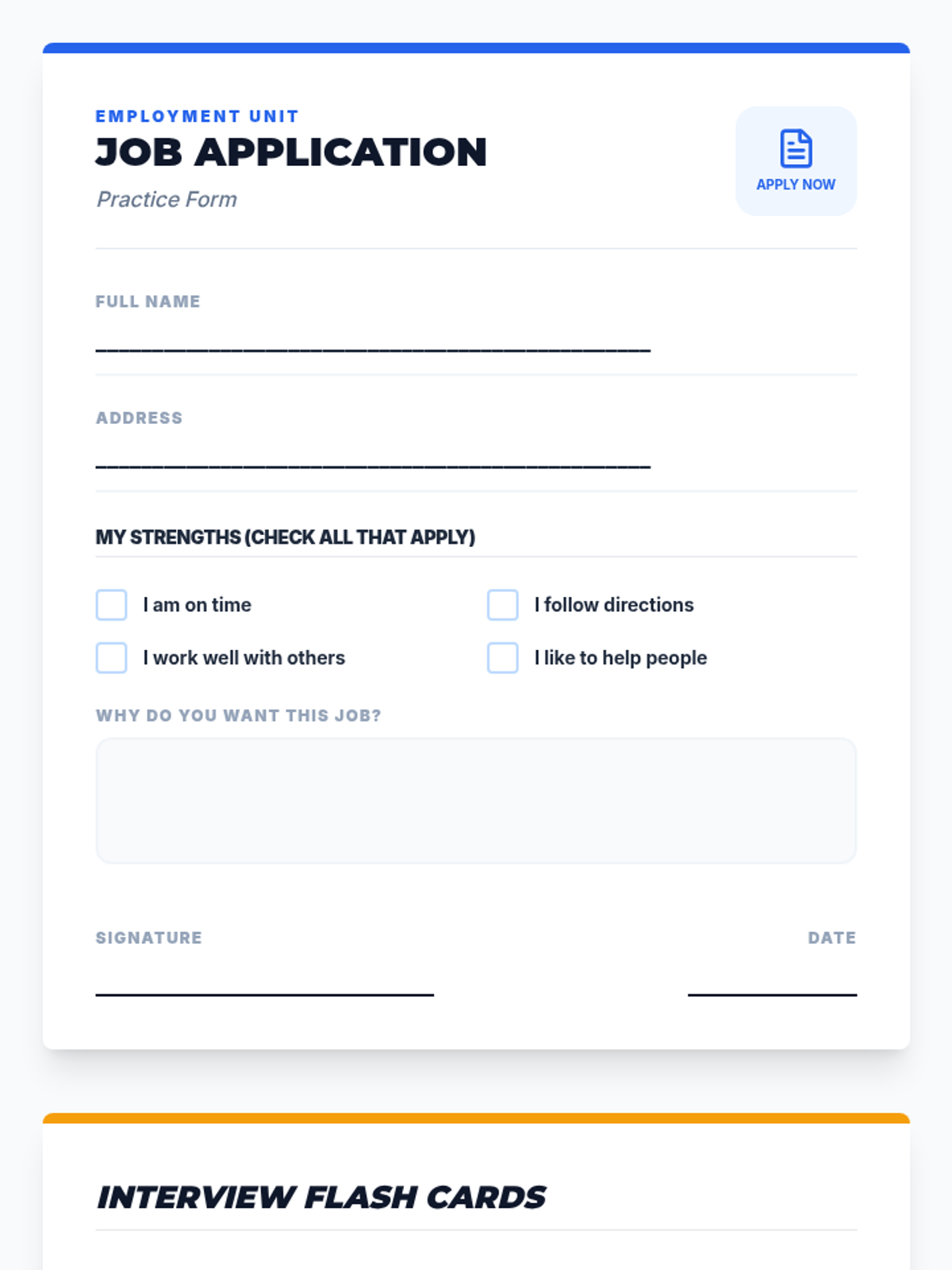
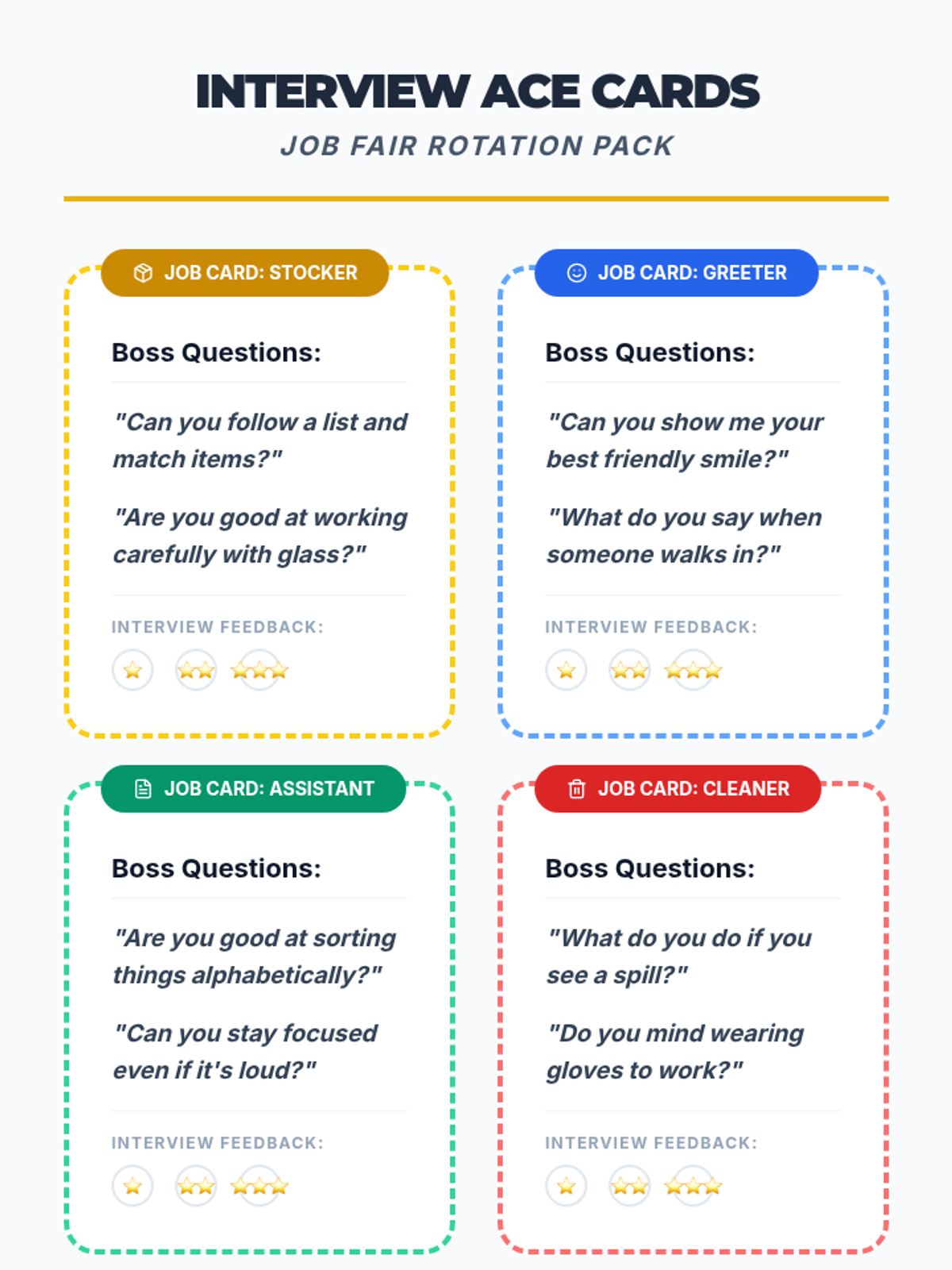
Building essential job-seeking skills, including application completion, interview preparation, and understanding job roles.
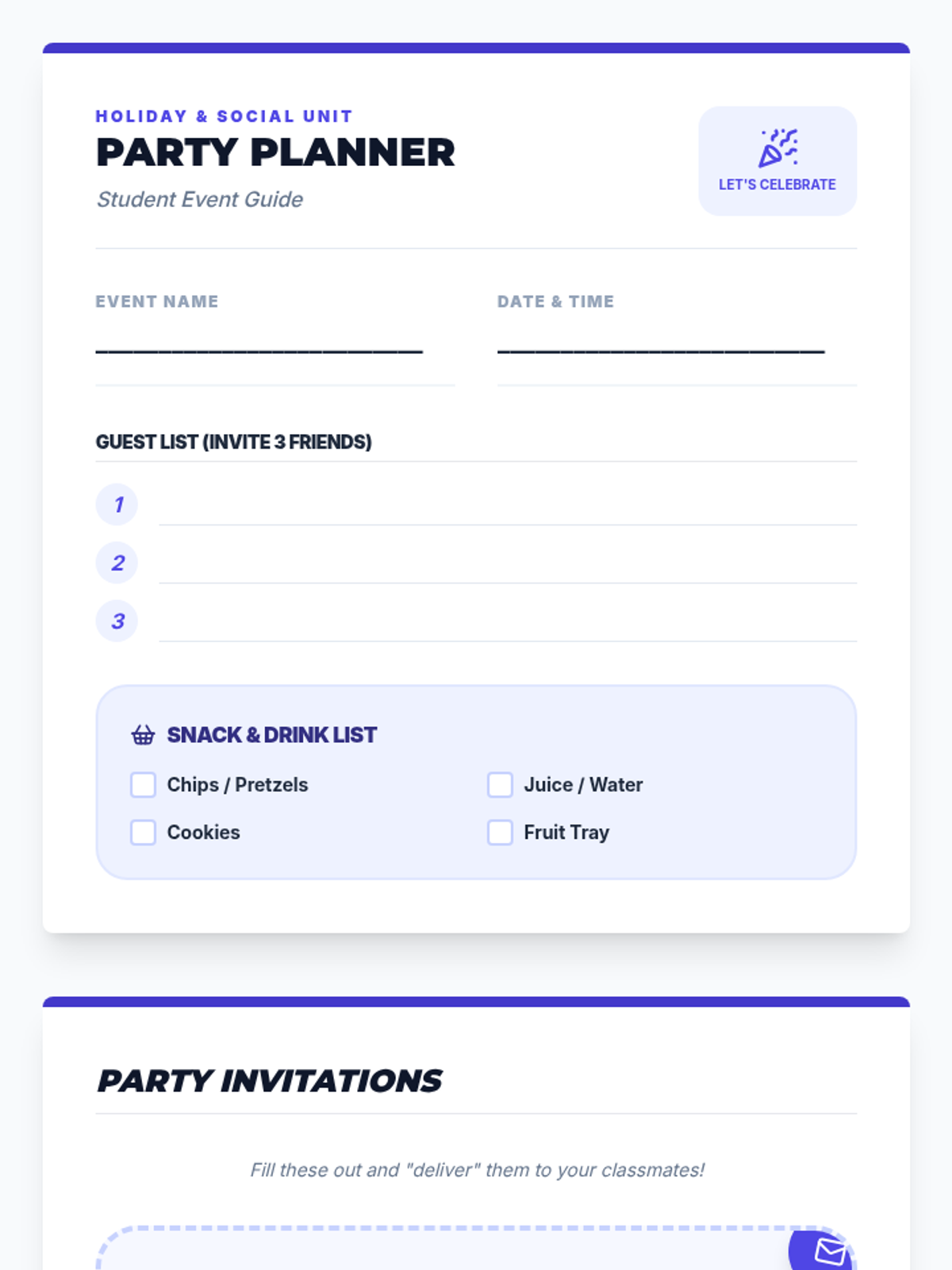
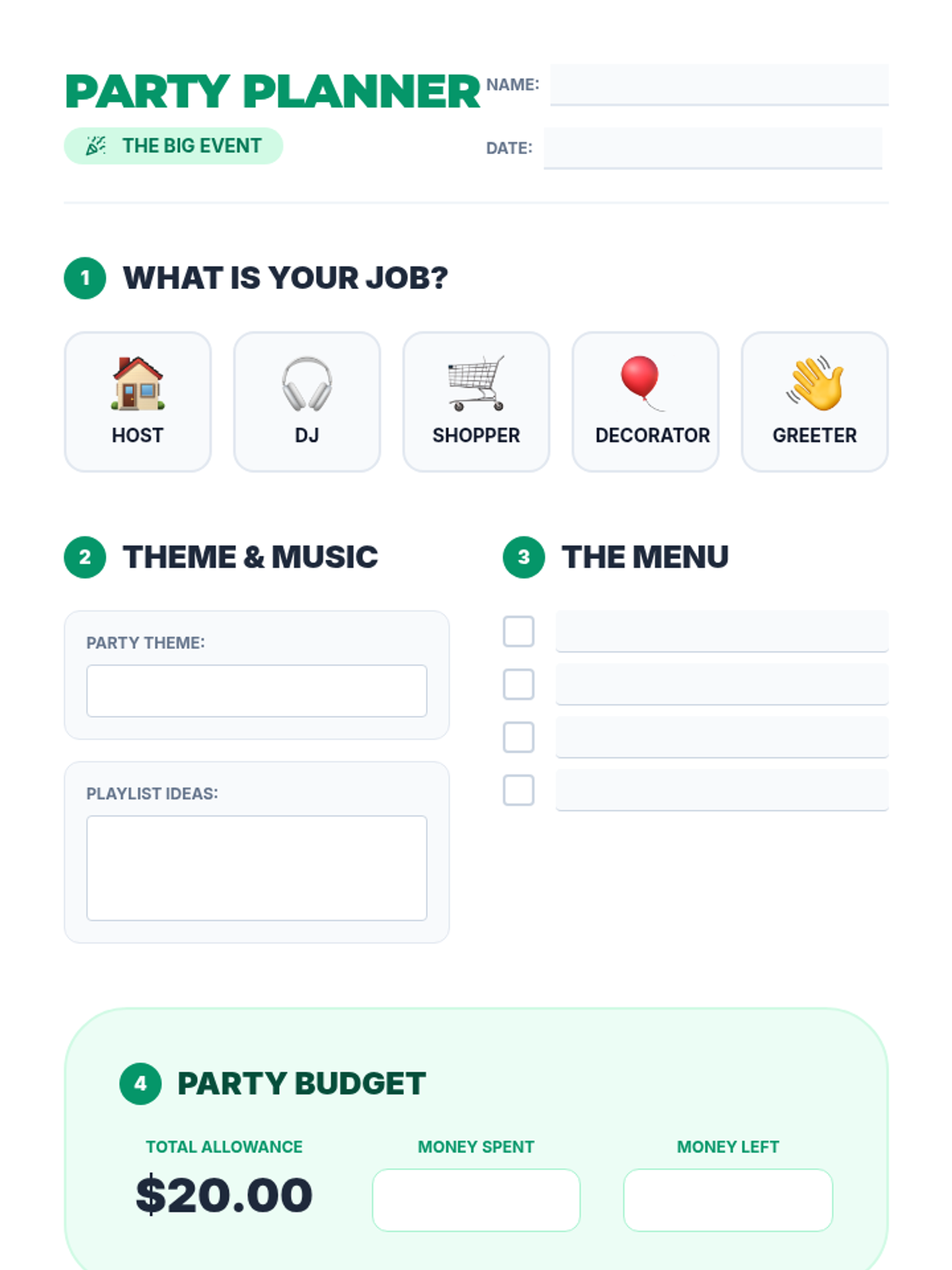
Planning social gatherings, managing invitations, and practicing etiquette for holiday and community events.
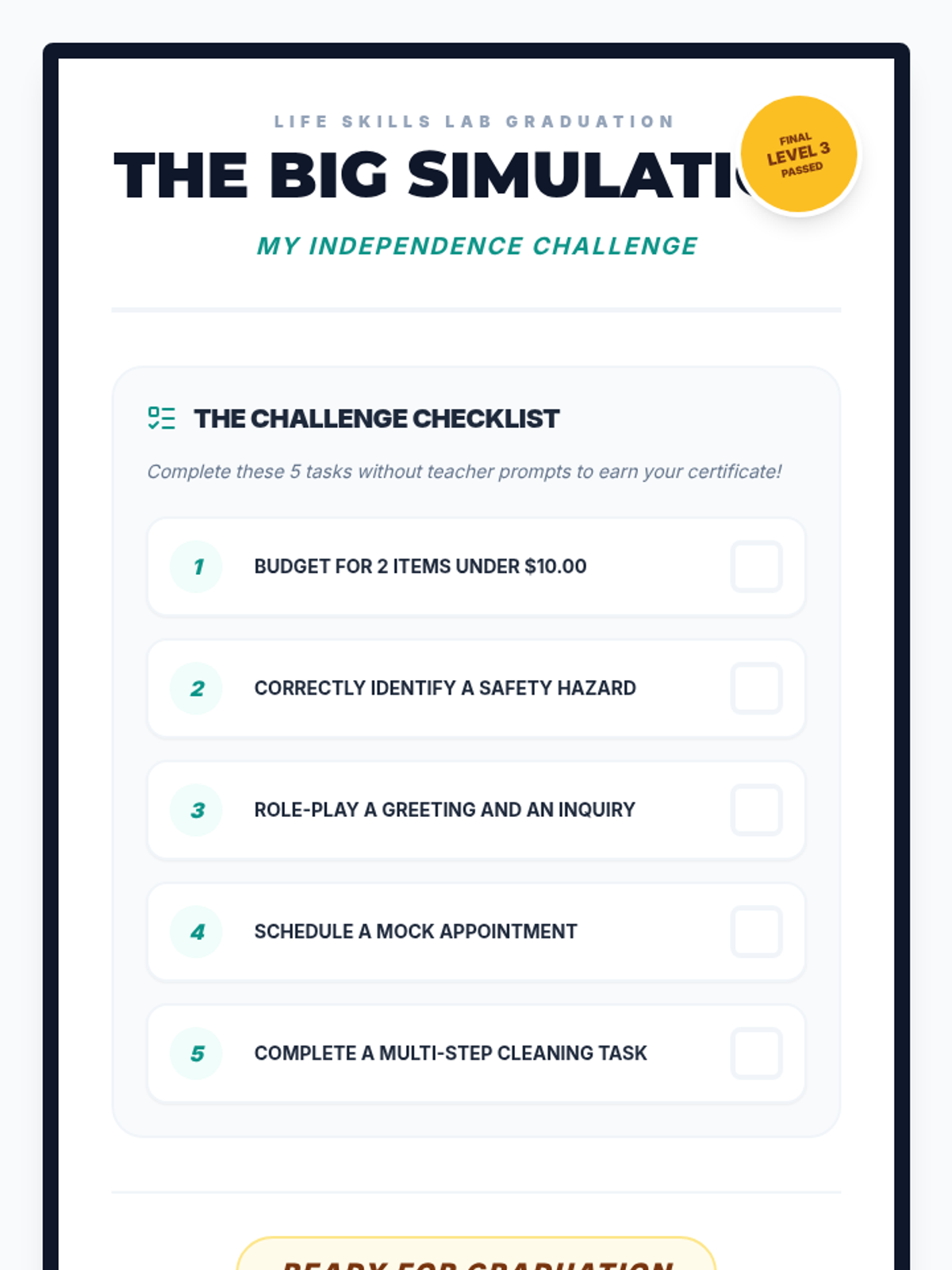
The capstone unit of the program, where students apply all learned skills in complex, multi-step simulations of independent adult life.
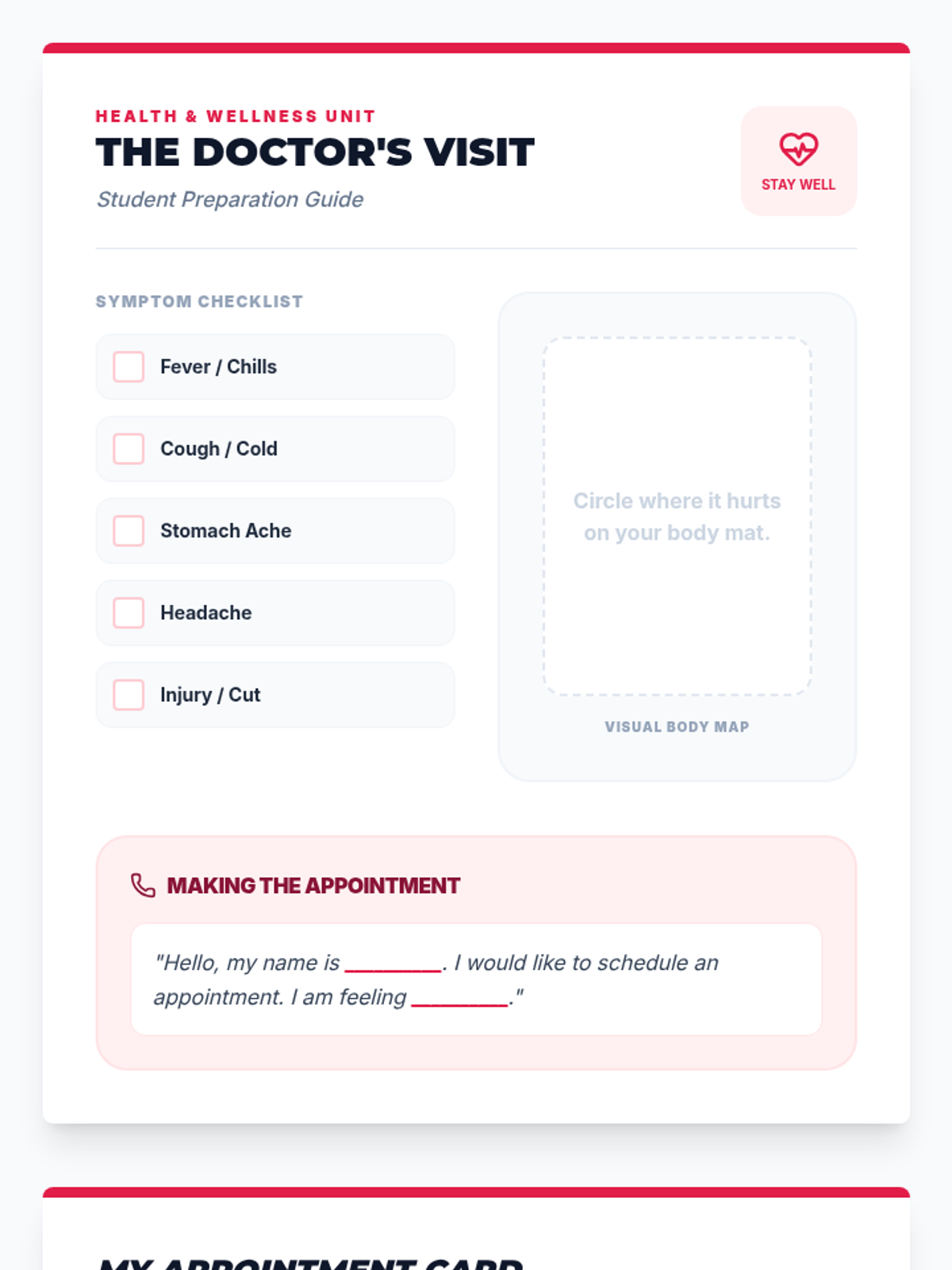
Navigating healthcare settings, identifying body parts and symptoms, and practicing social scripts for making and attending medical appointments.
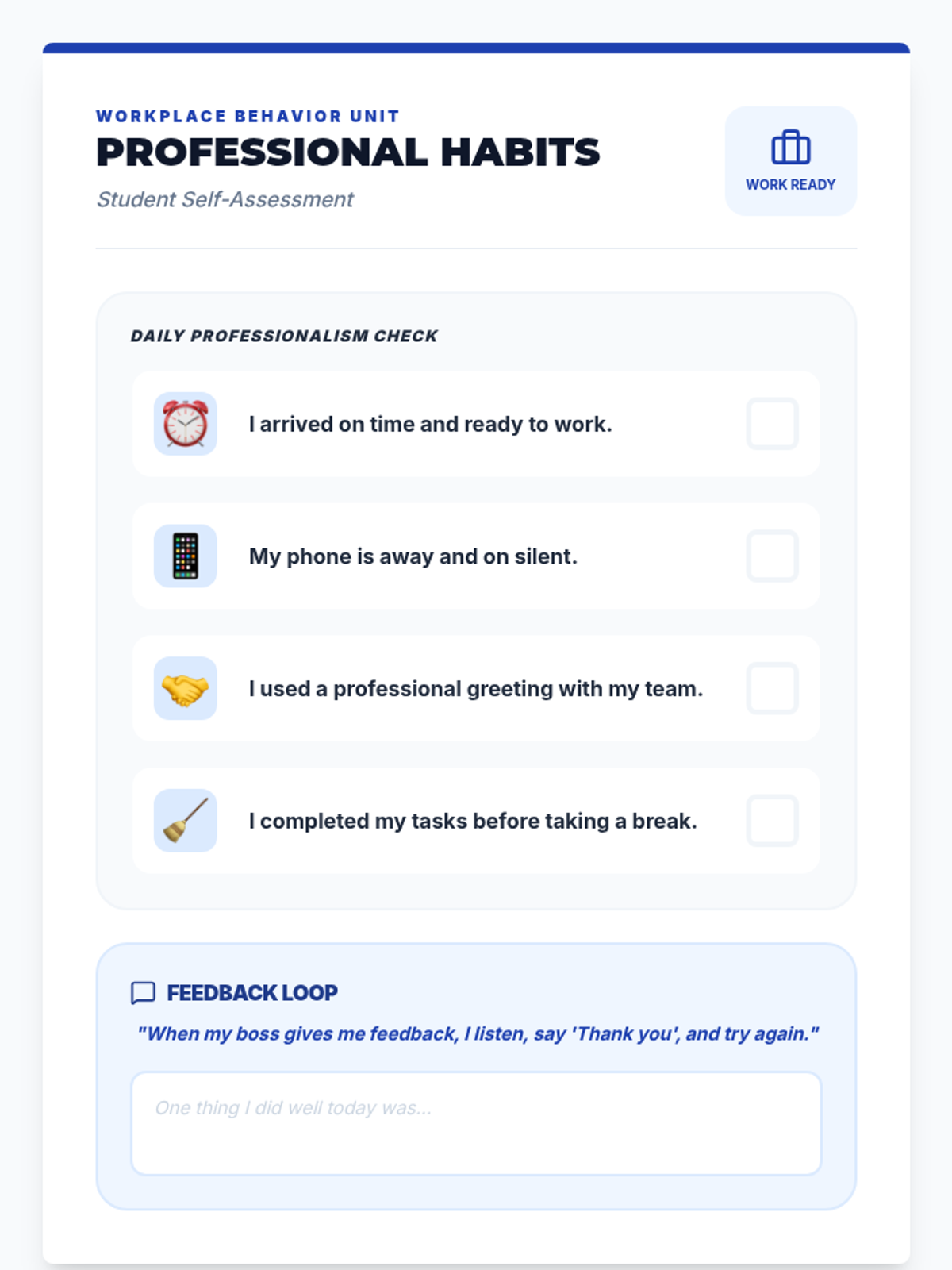
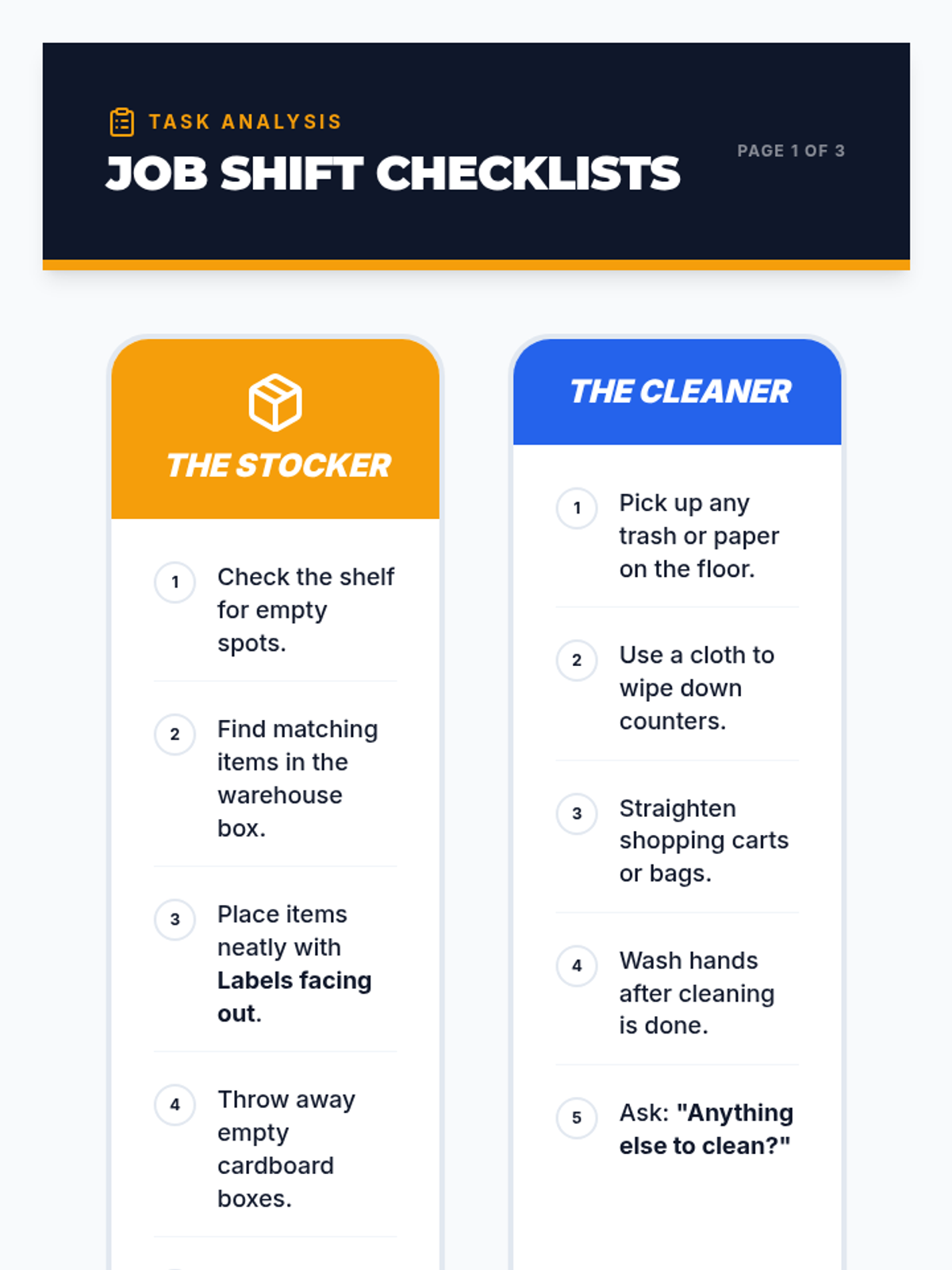
Building professional habits, understanding workplace social cues, and practicing teamwork in a job setting.
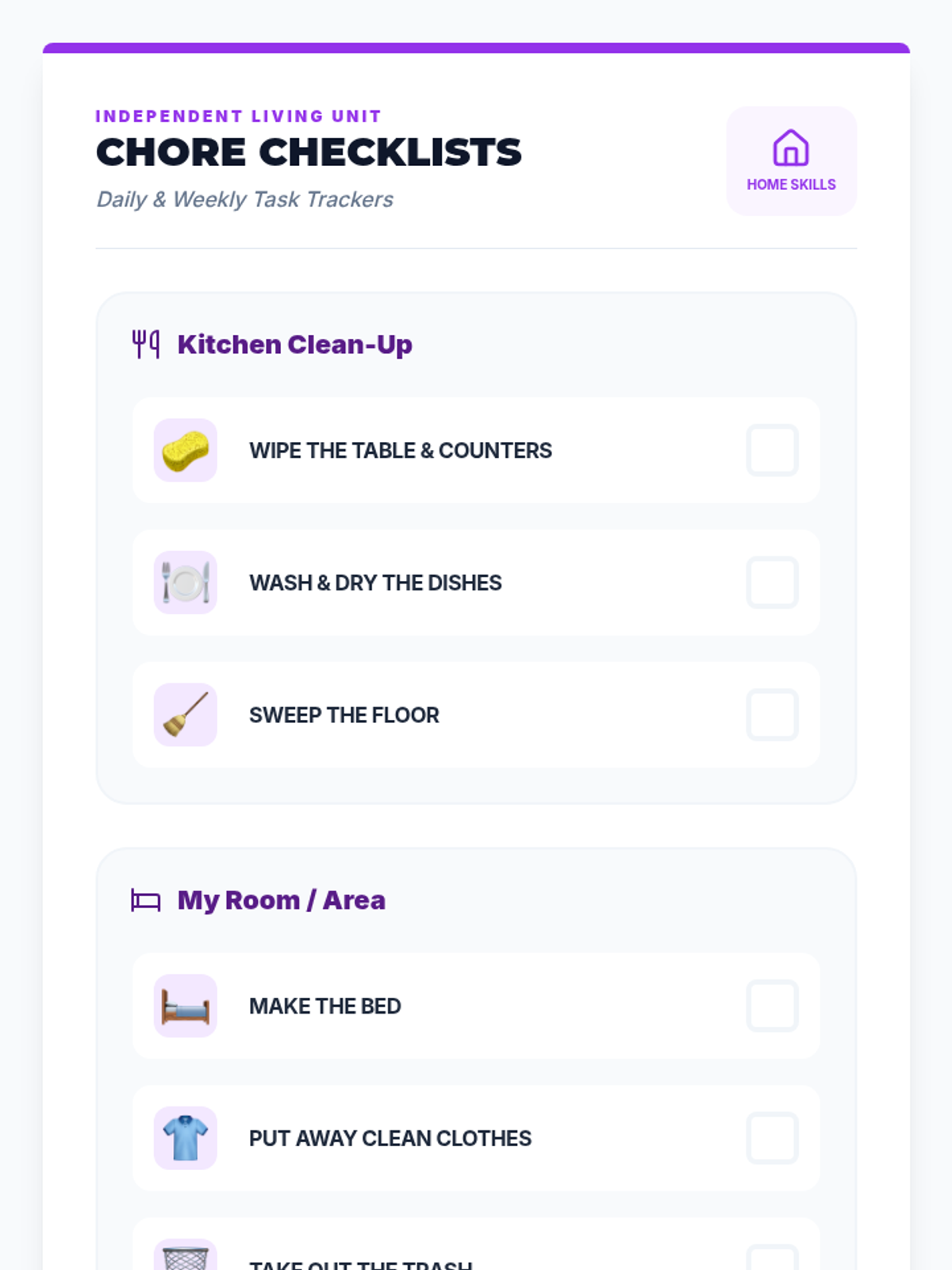
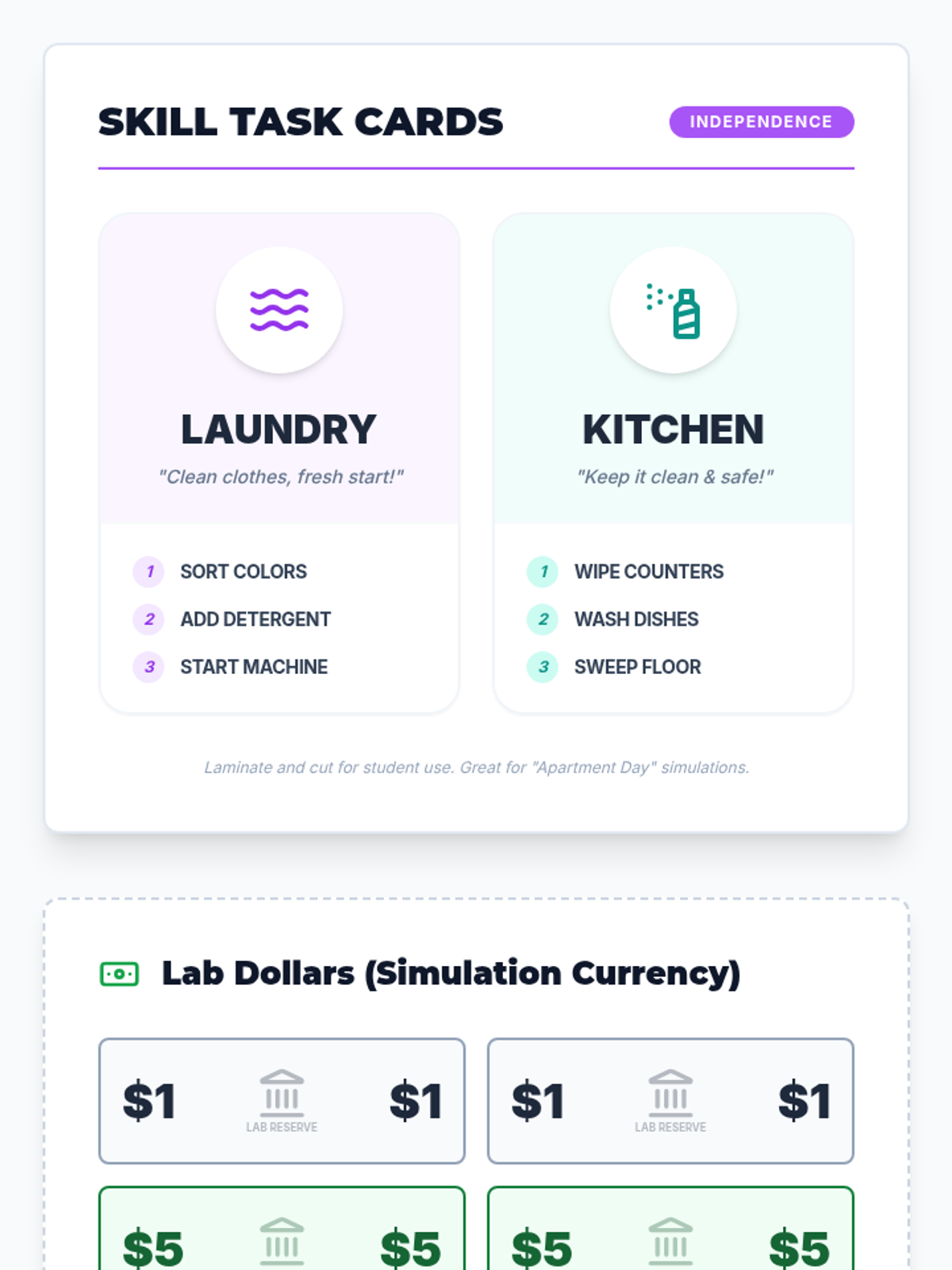
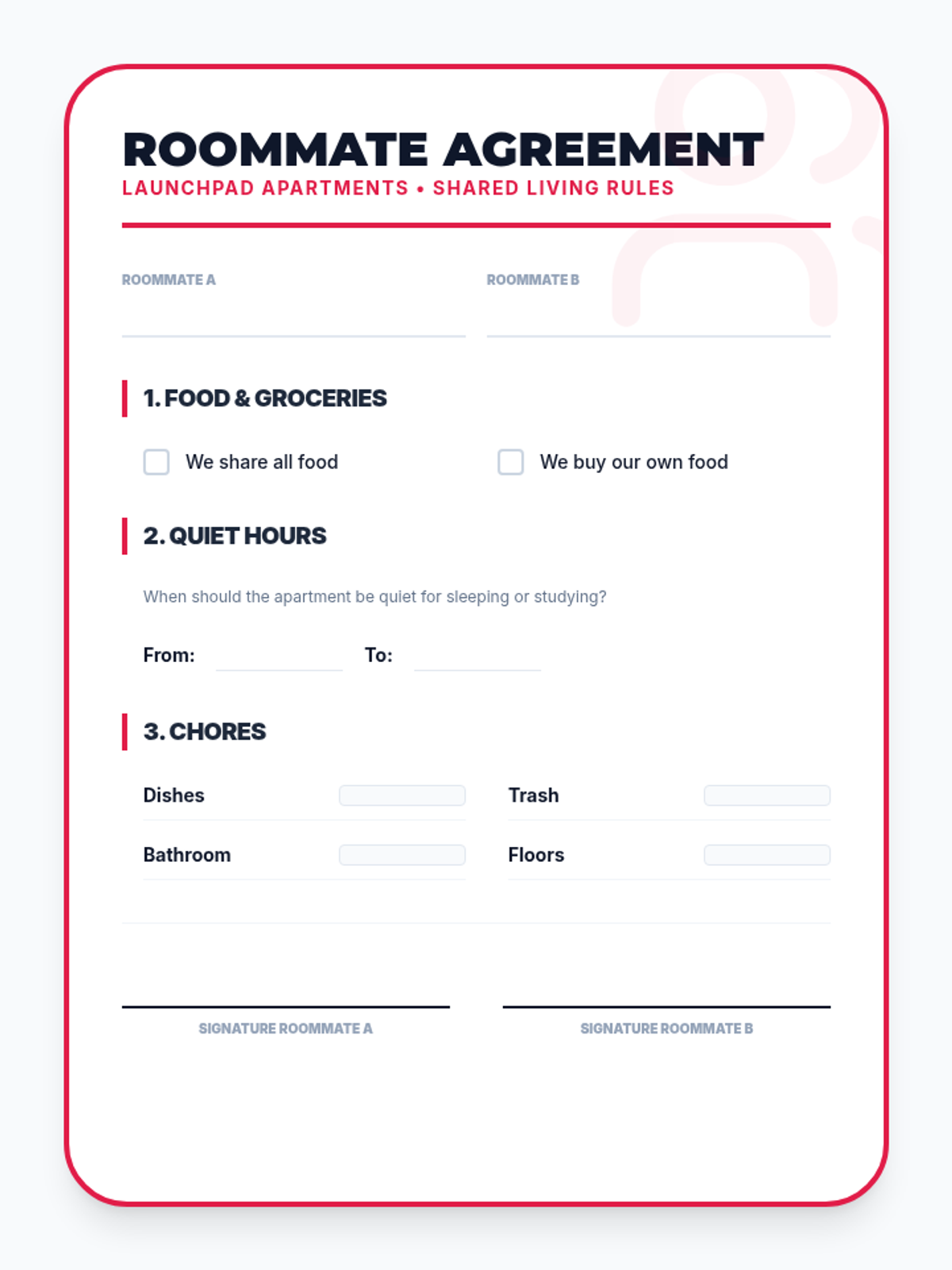
Essential skills for maintaining a household, including chores, laundry, and daily organization.
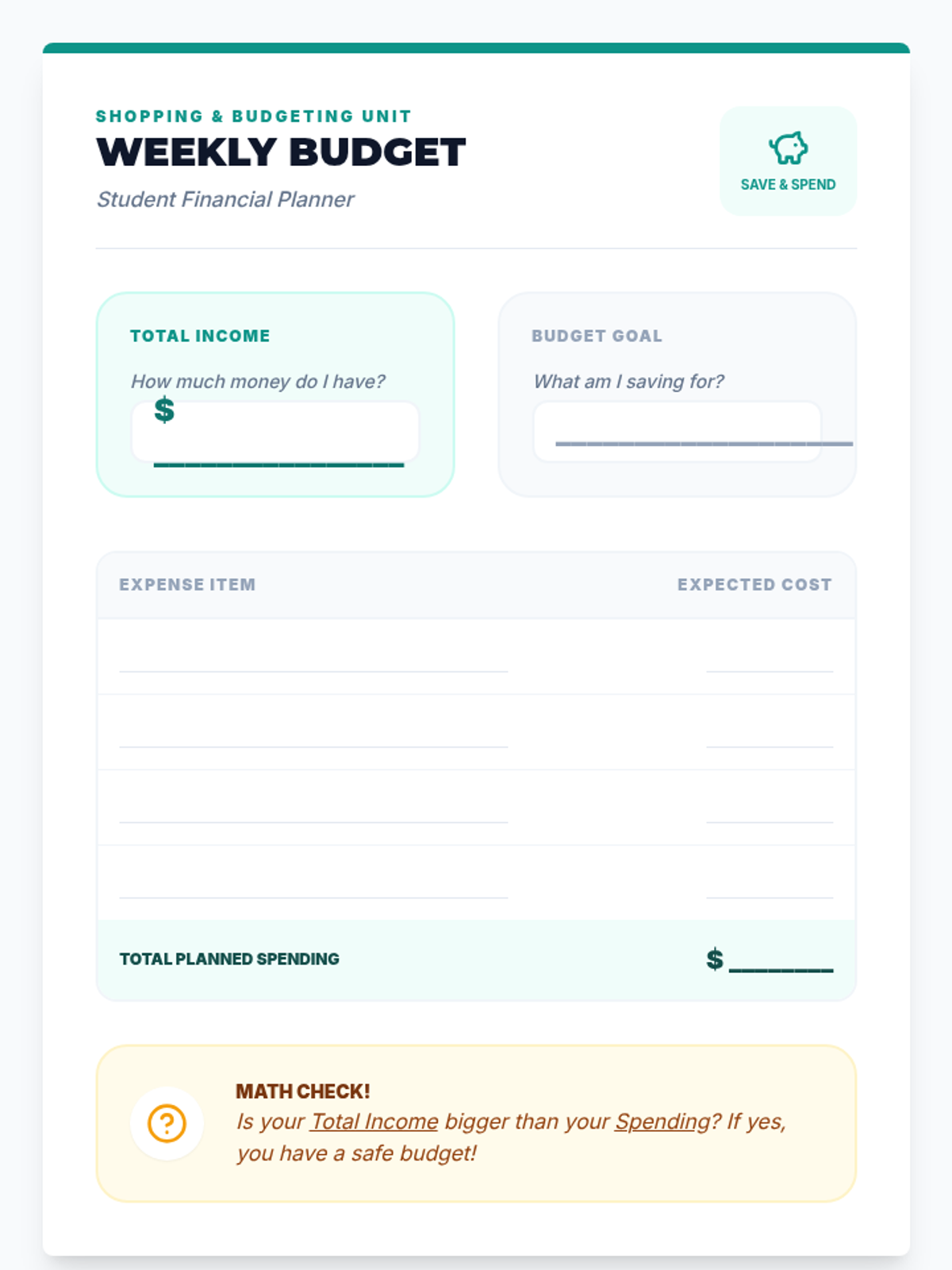
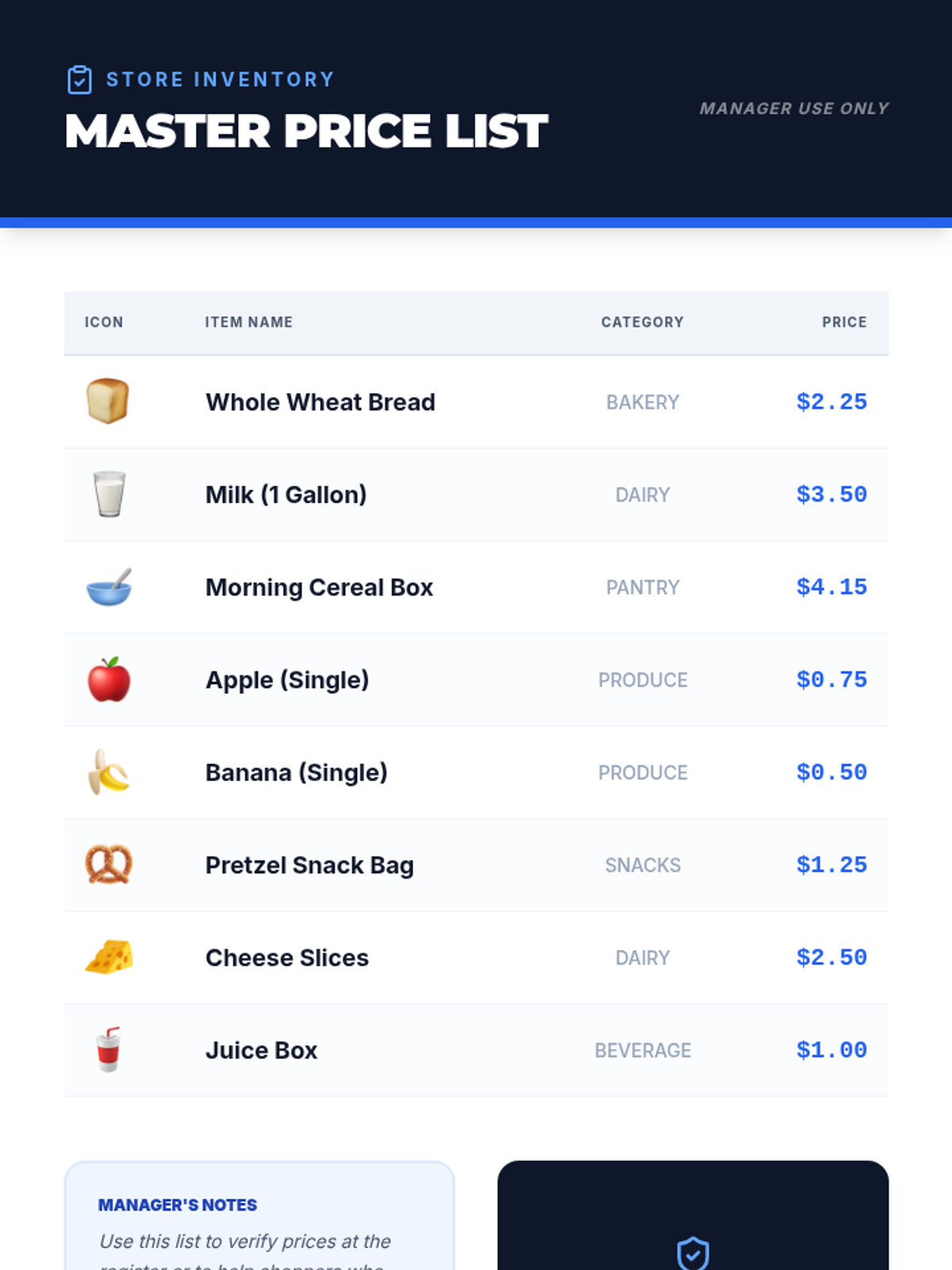
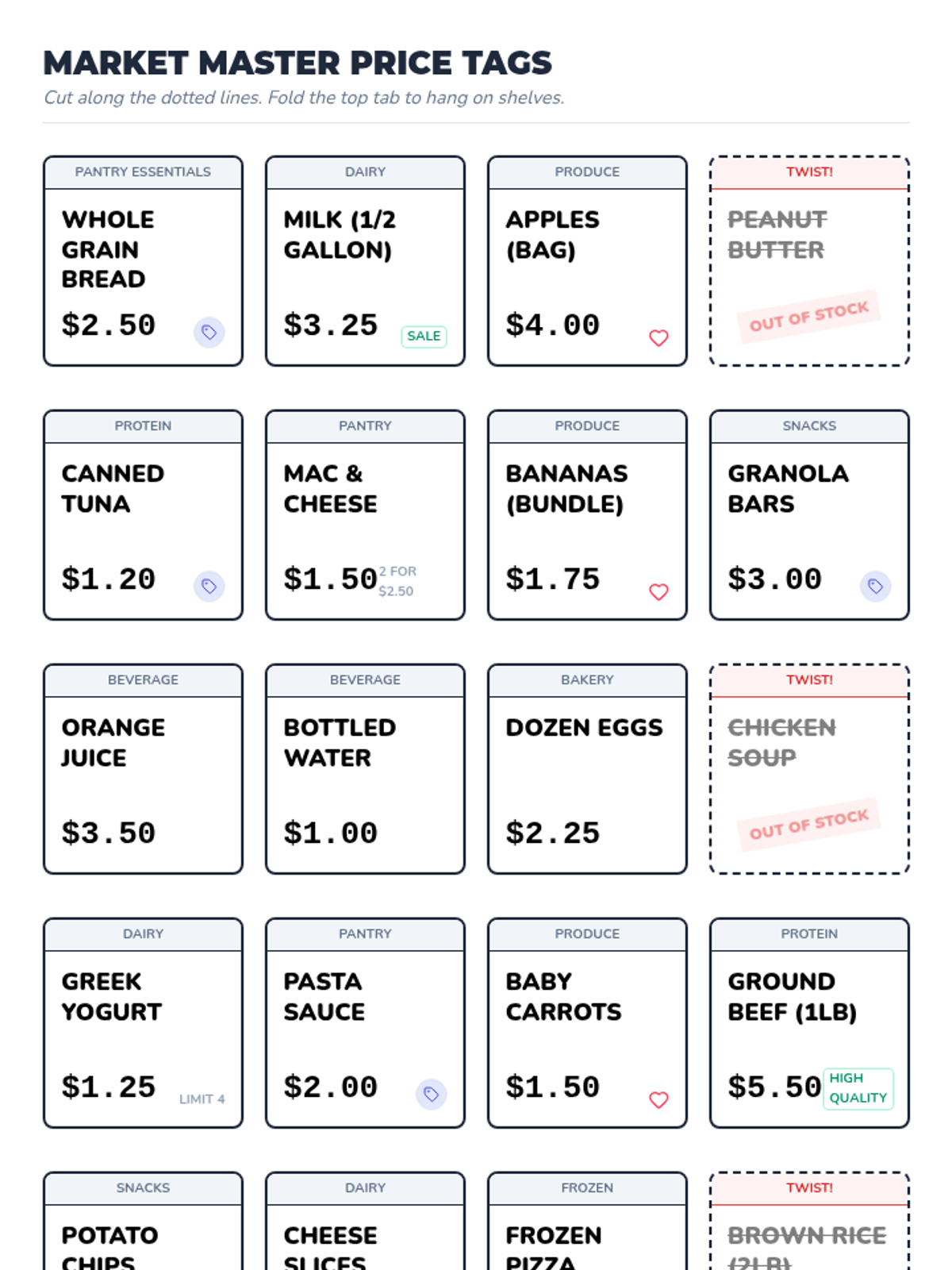
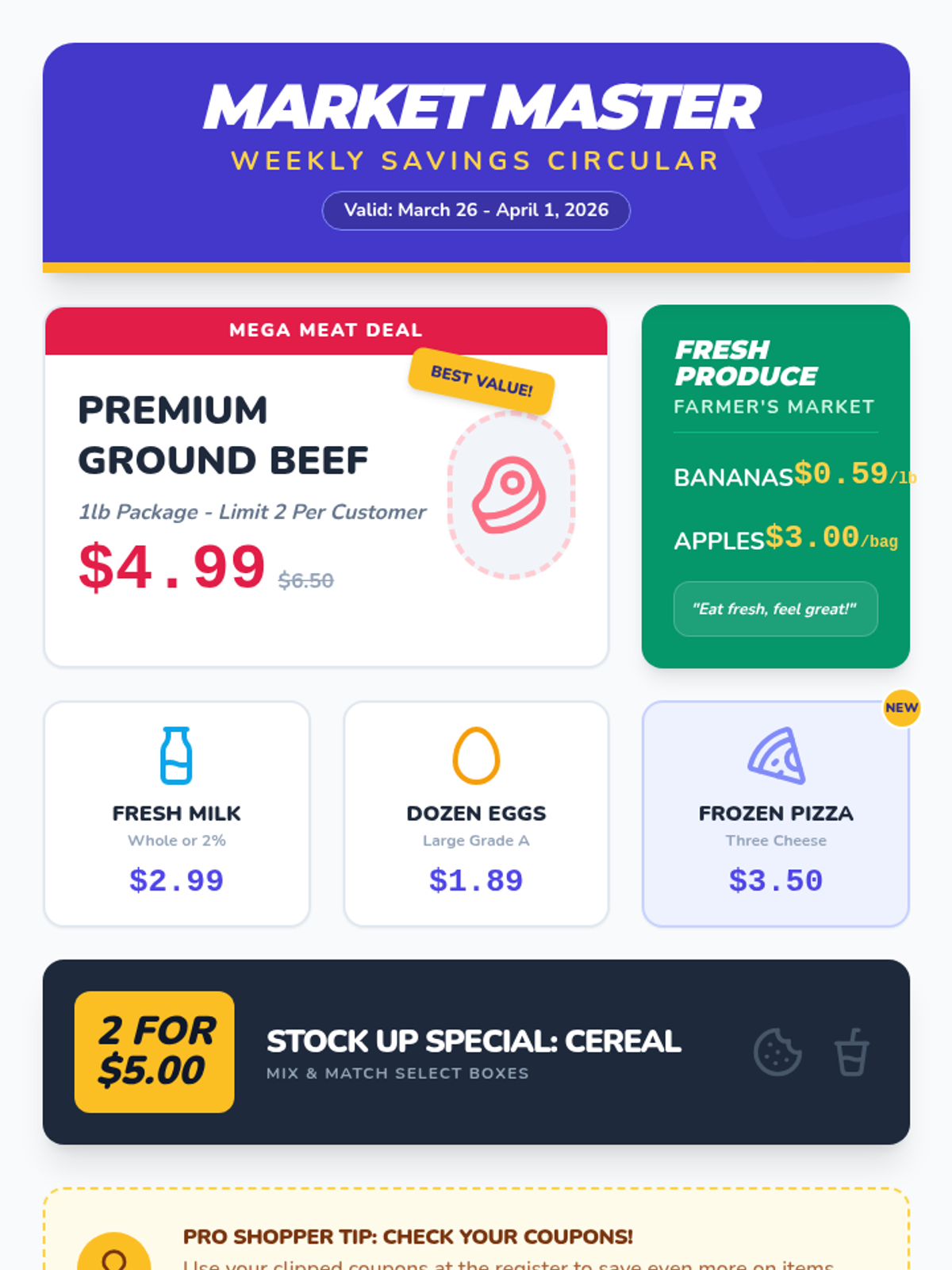
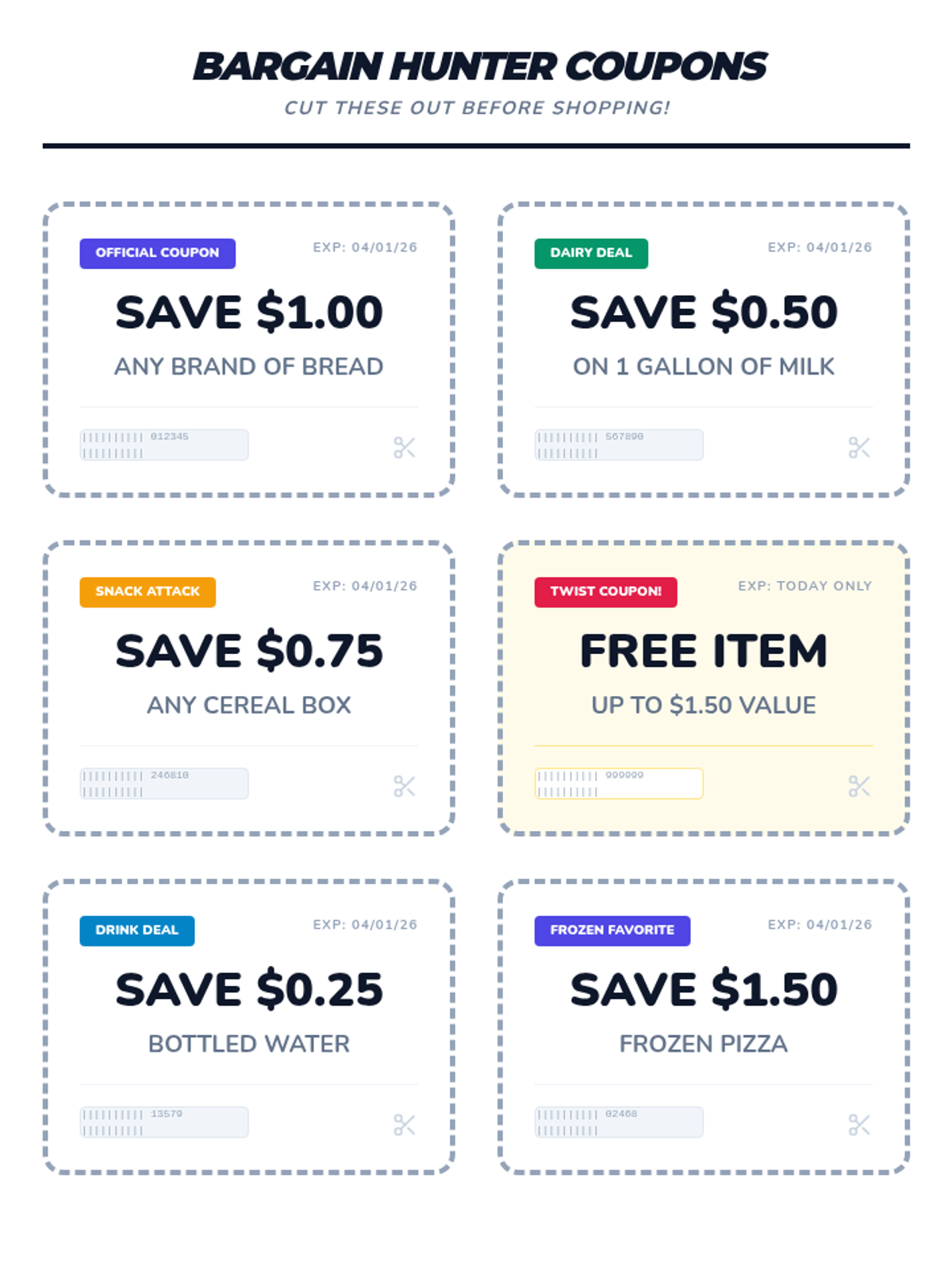
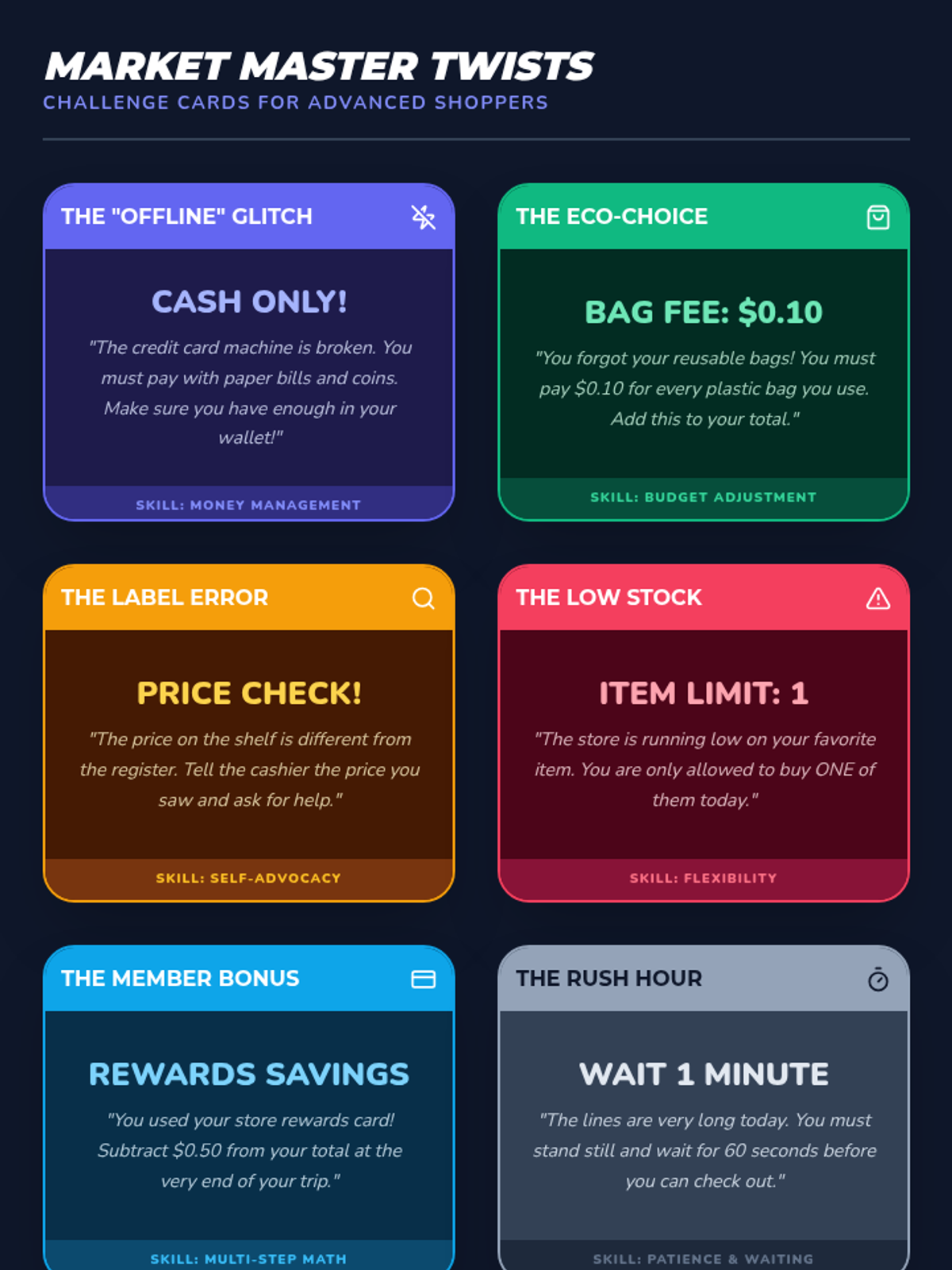
Practical application of money skills through budgeting, price comparison, and navigating a shopping environment.
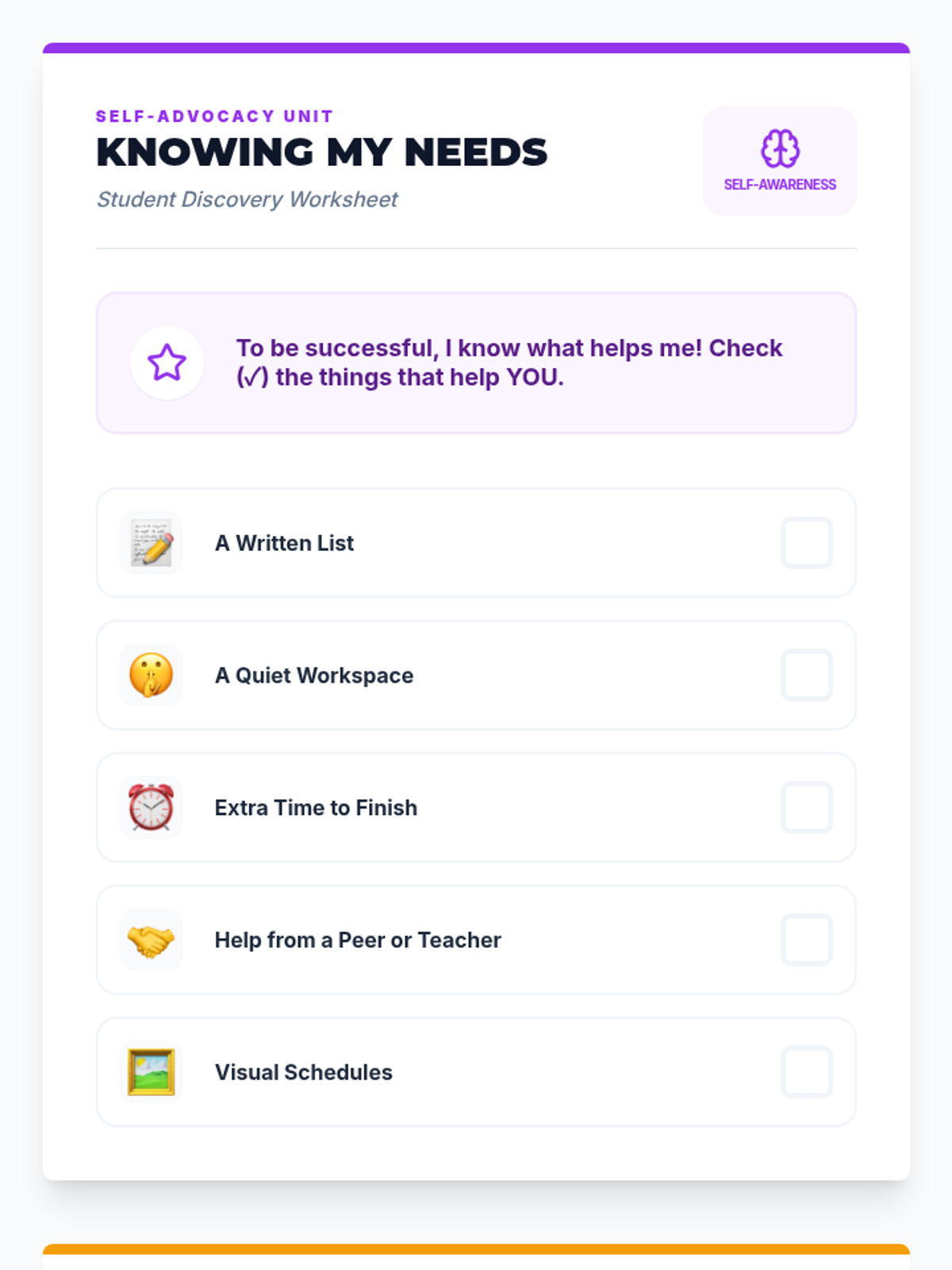
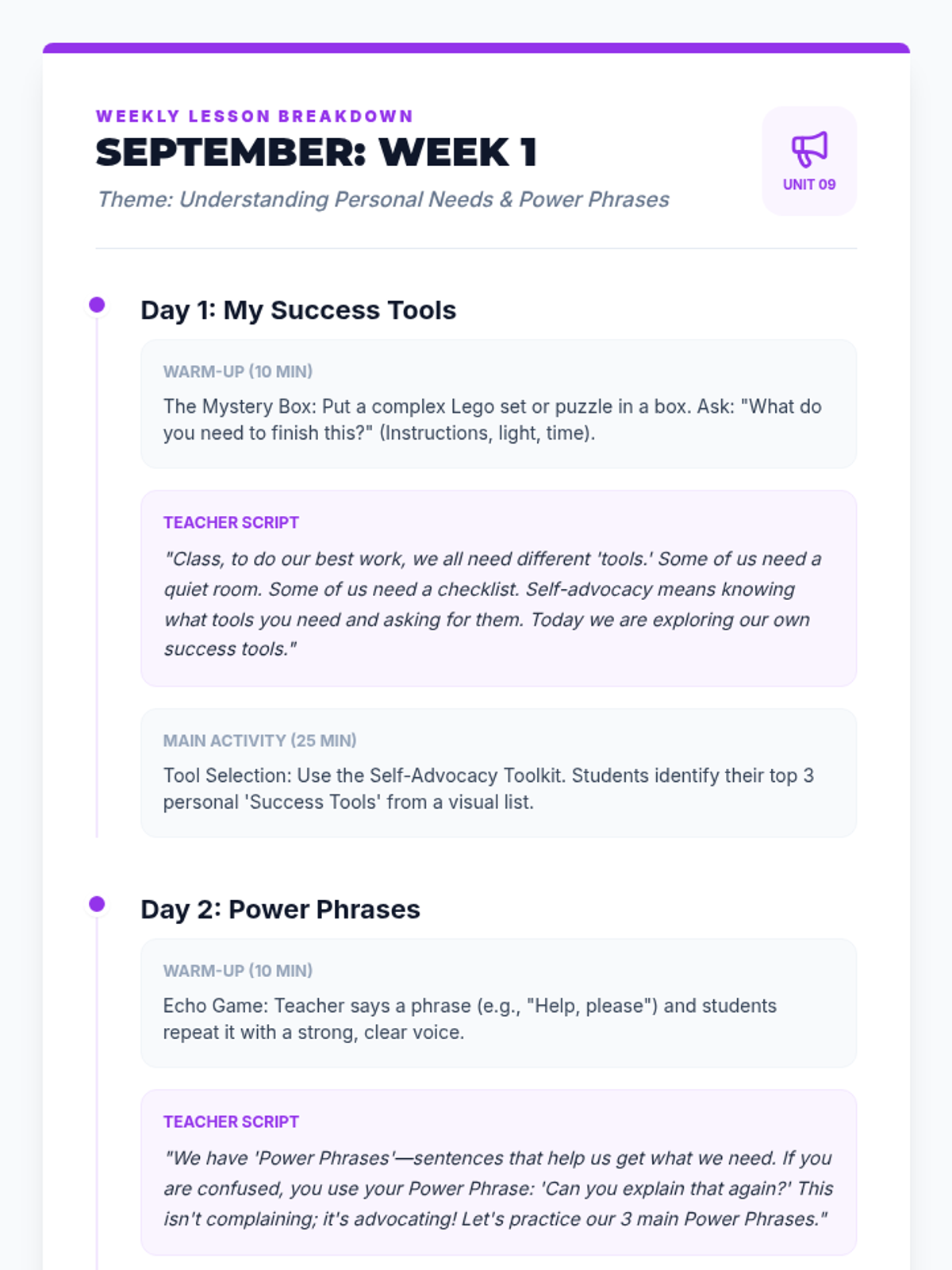
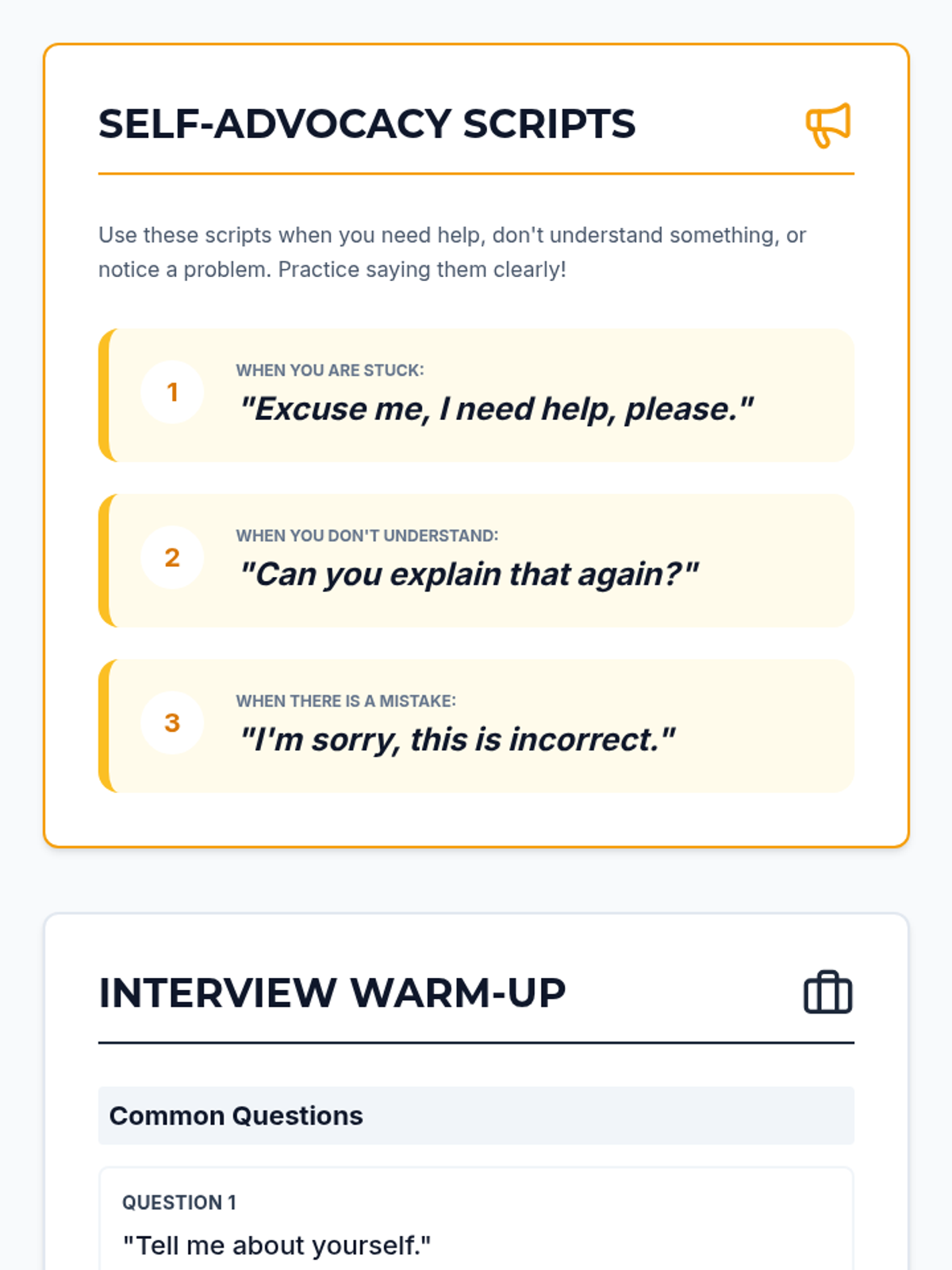
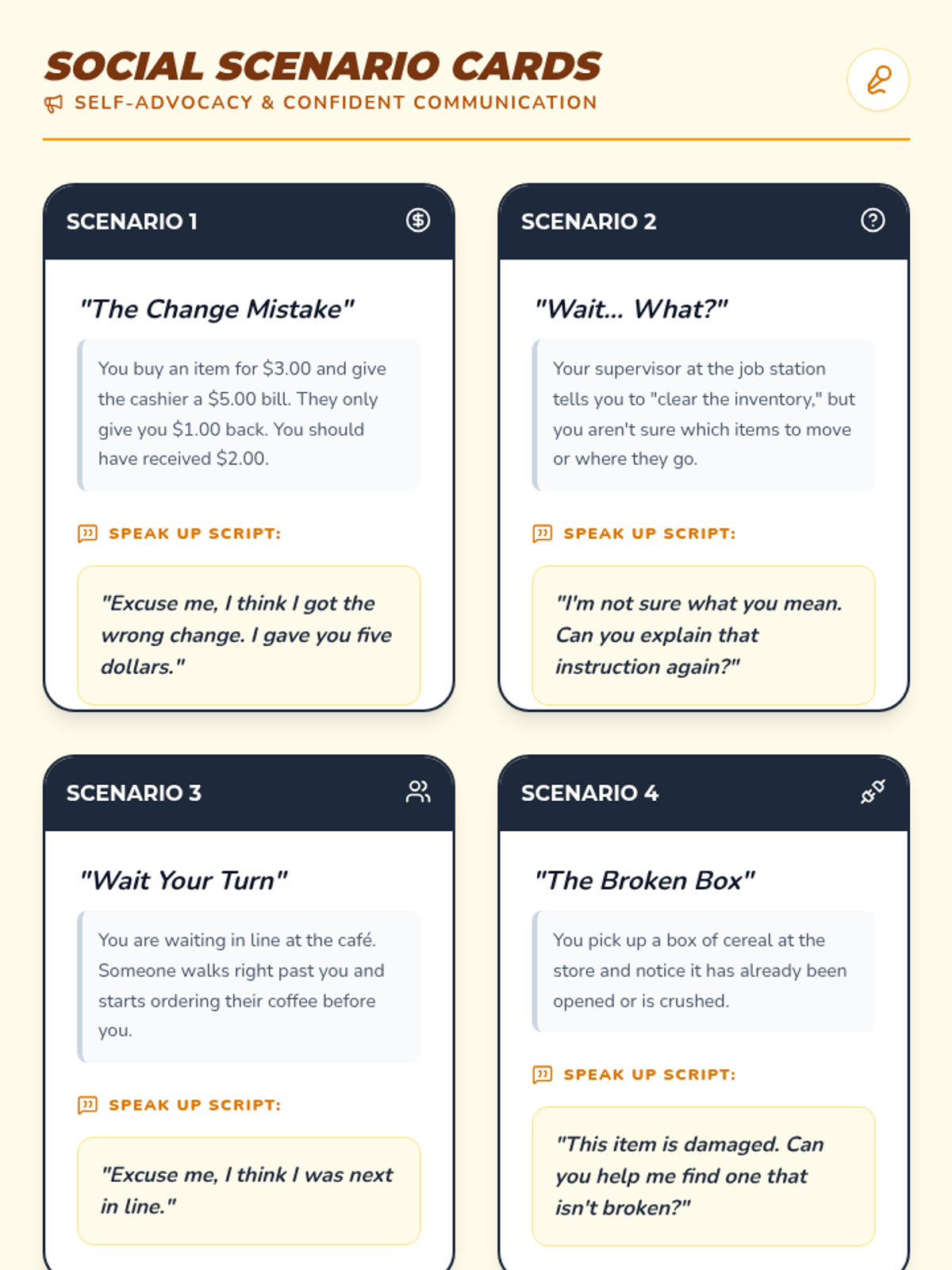
Empowering students to speak up for their needs, understand their rights, and communicate effectively in various personal and community situations.
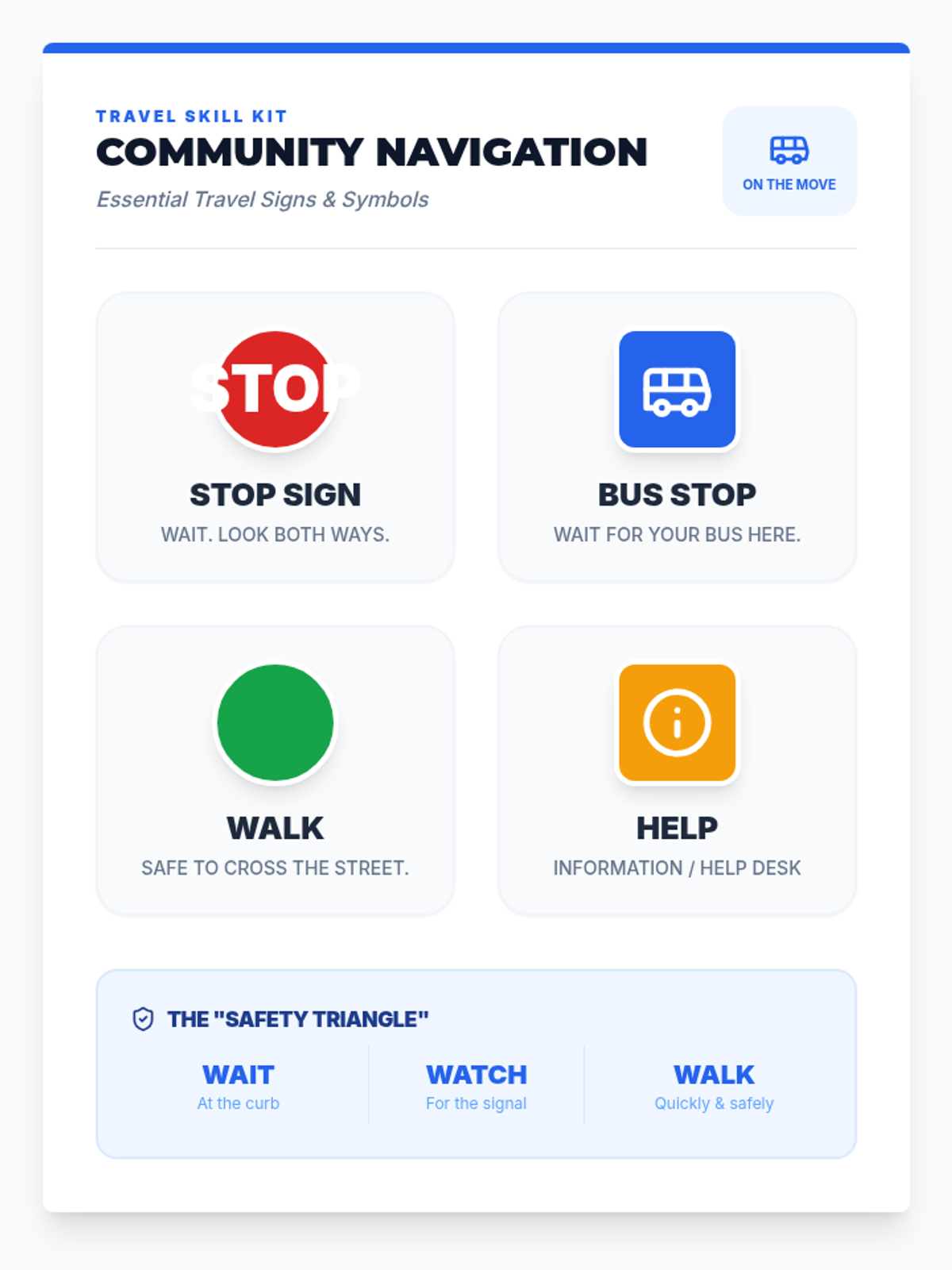
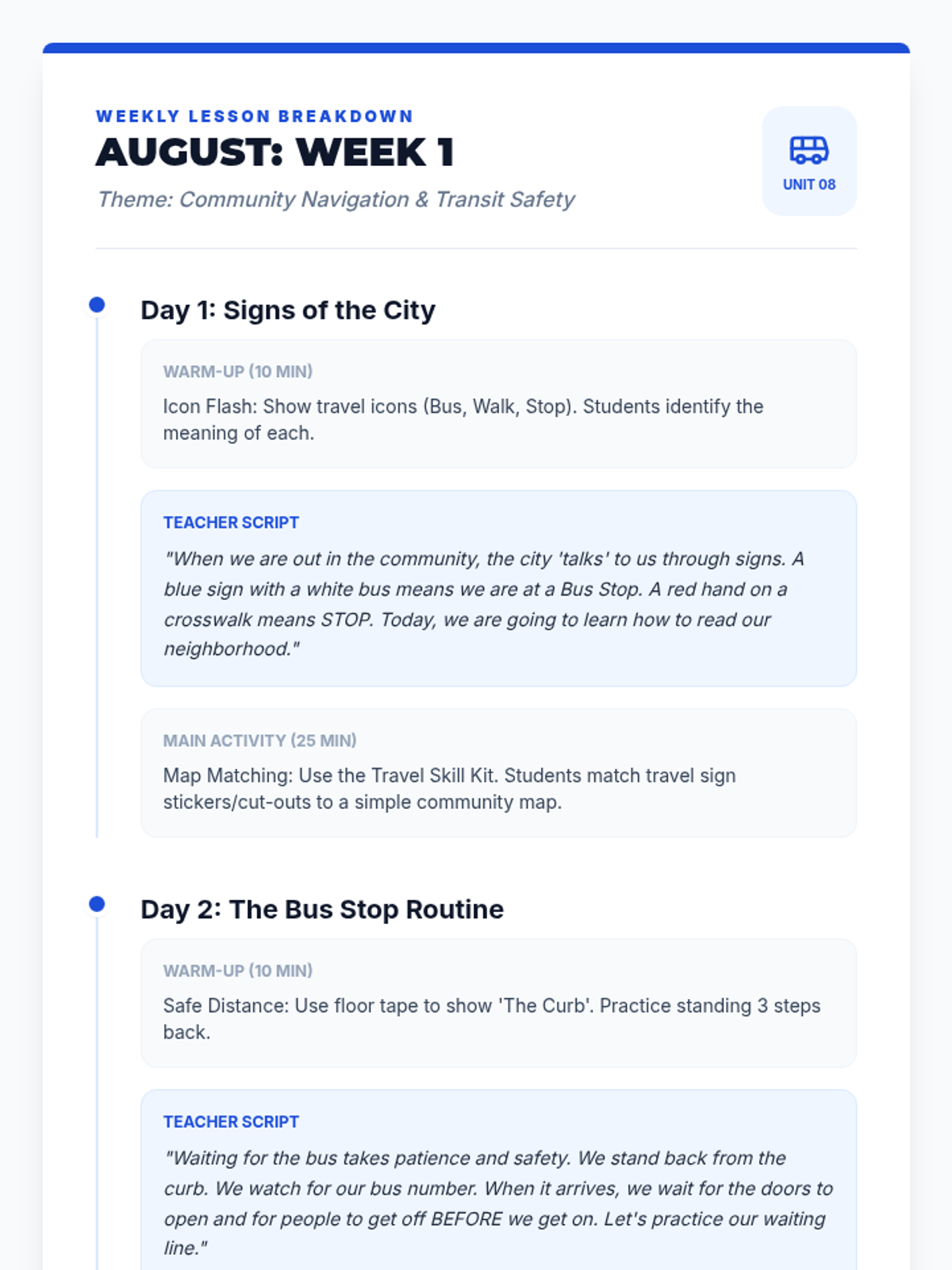
Navigating the community using public transportation, reading schedules, and practicing safety and social etiquette while traveling.
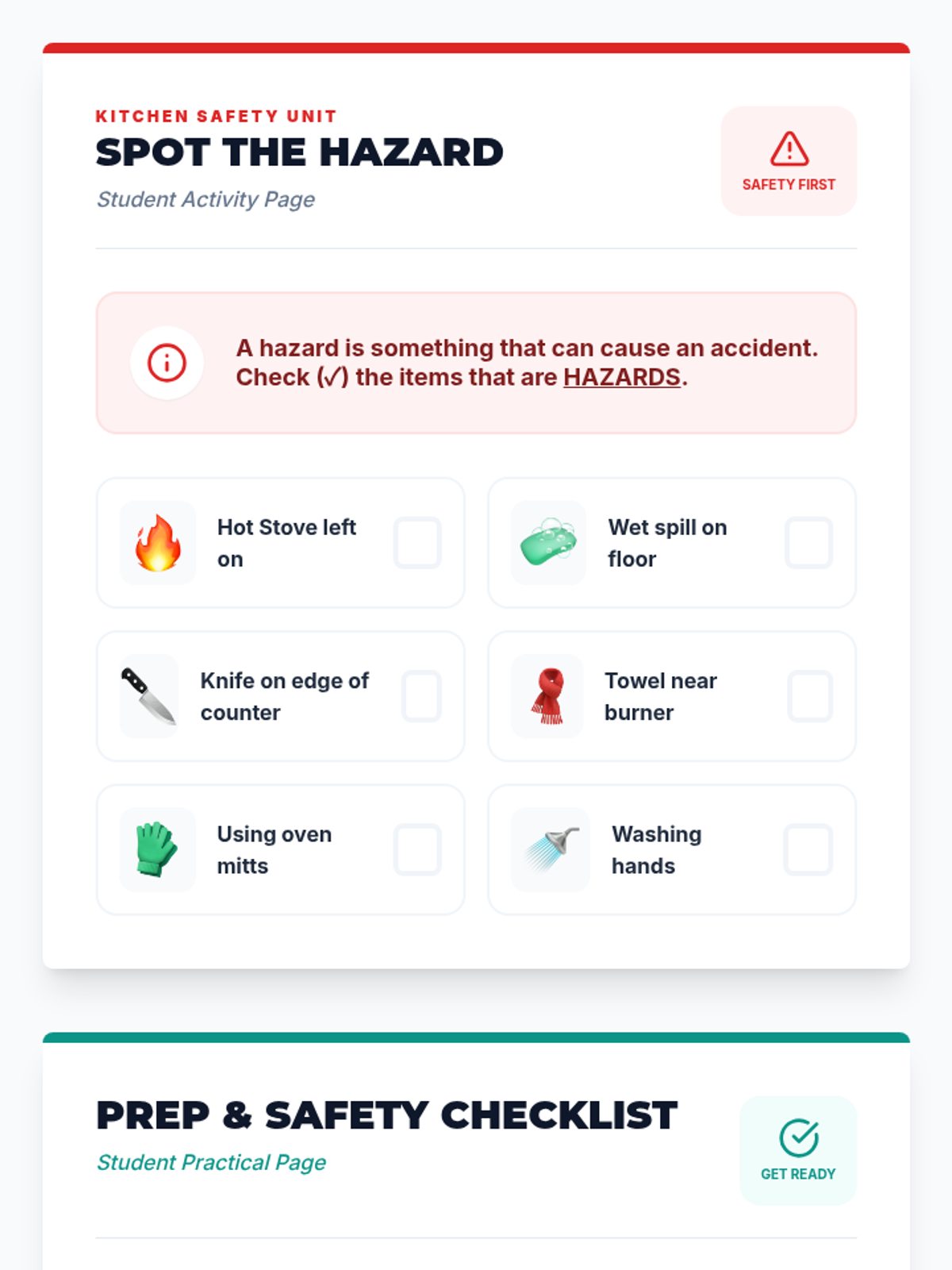
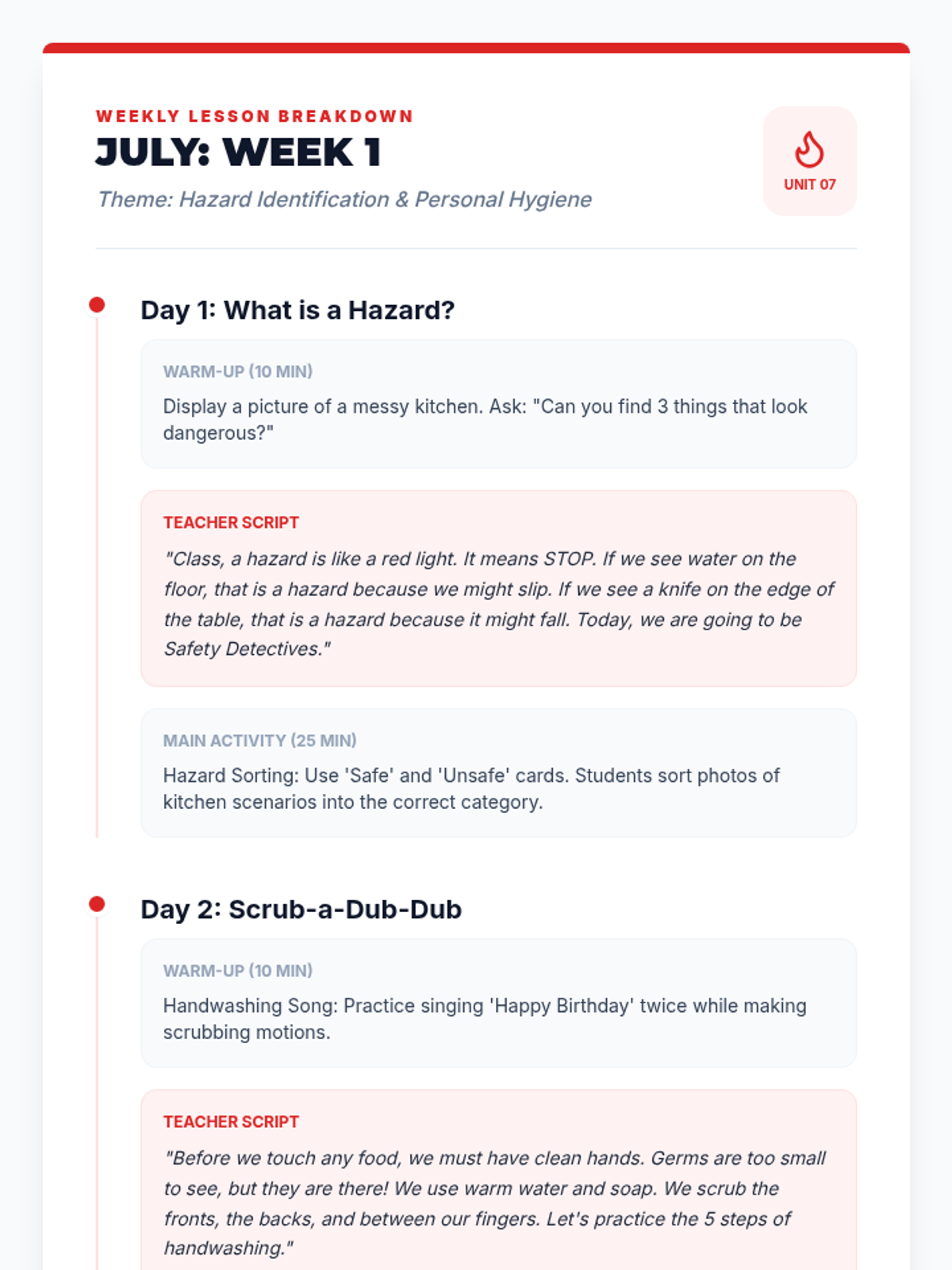
Essential knowledge for identifying hazards, handling tools safely, and maintaining a hygienic cooking environment through visual checklists and simulations.
Foundational materials for the Life Skills Launchpad, including binder covers, dividers, and sequence-wide tracking systems.
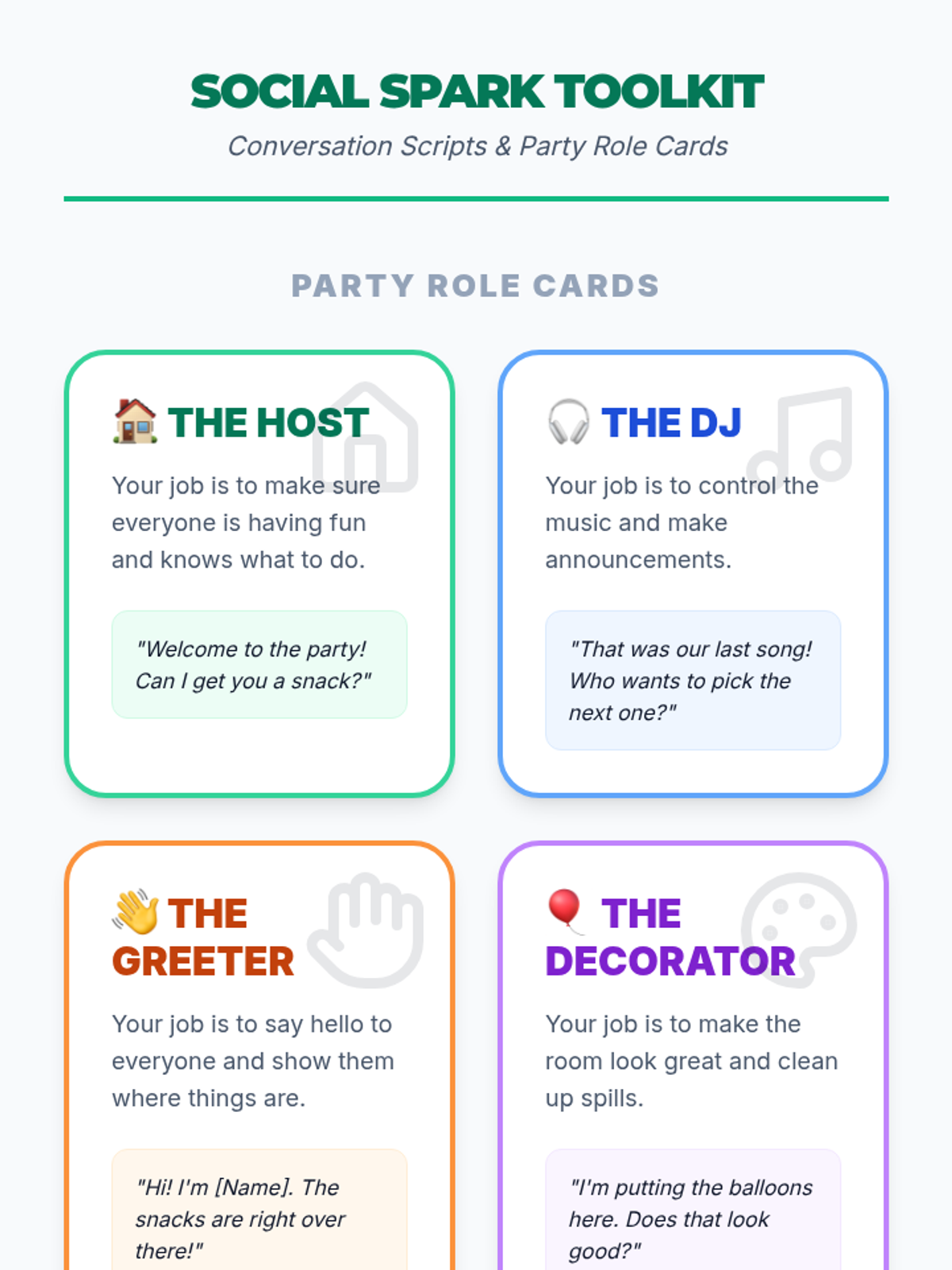
Building essential social cues, conversational scripts, and self-advocacy skills for various community and professional settings.
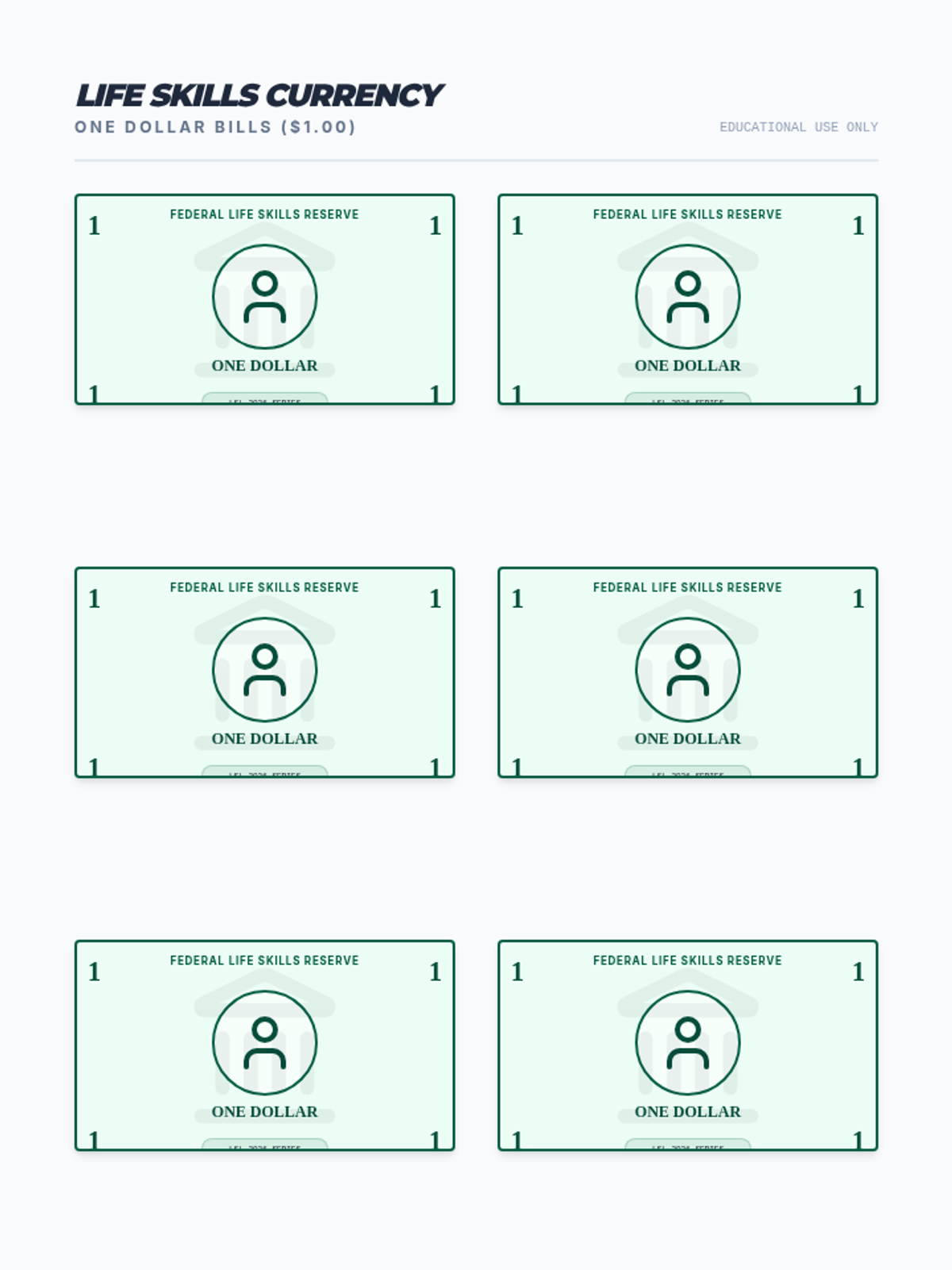
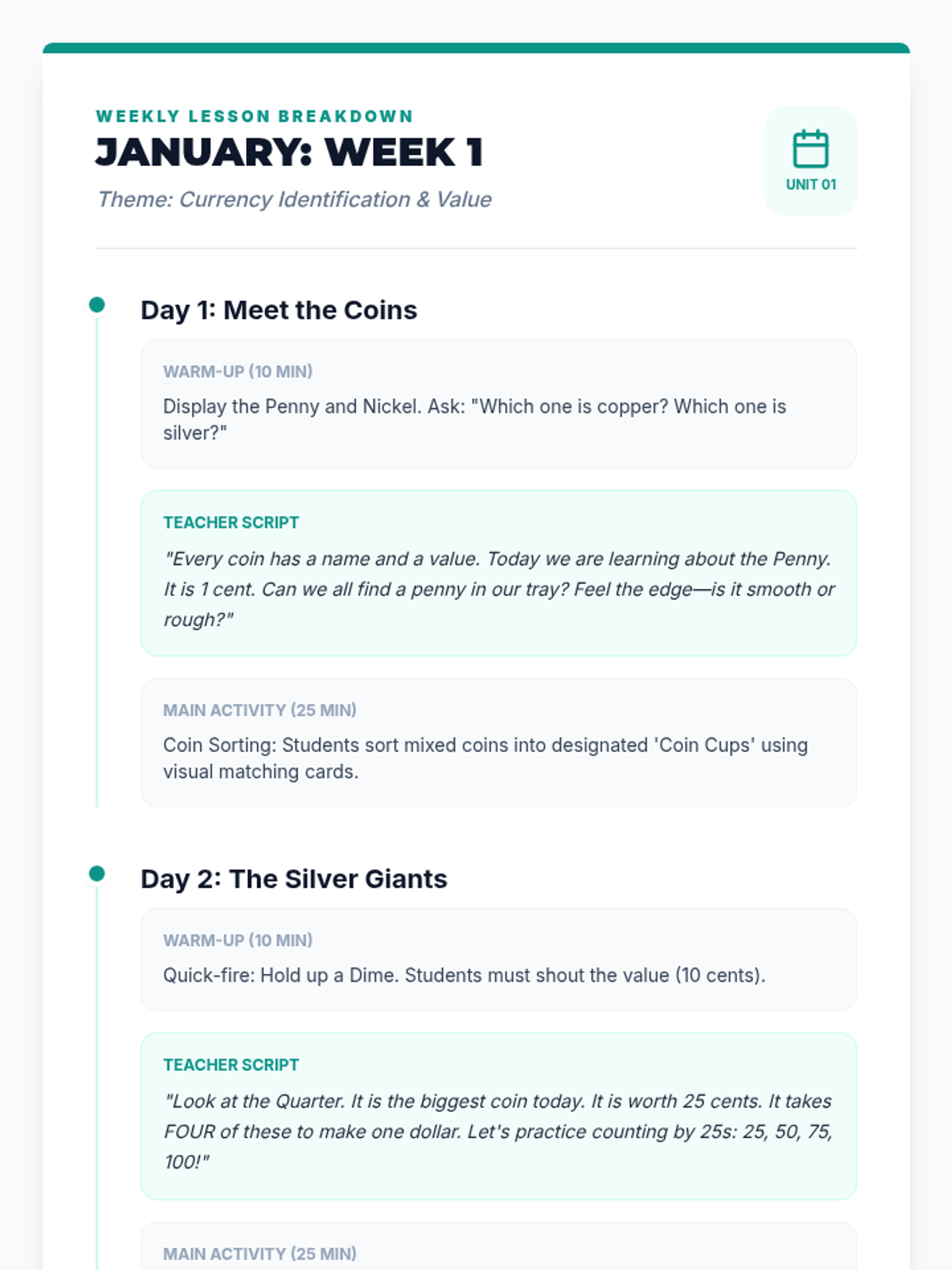
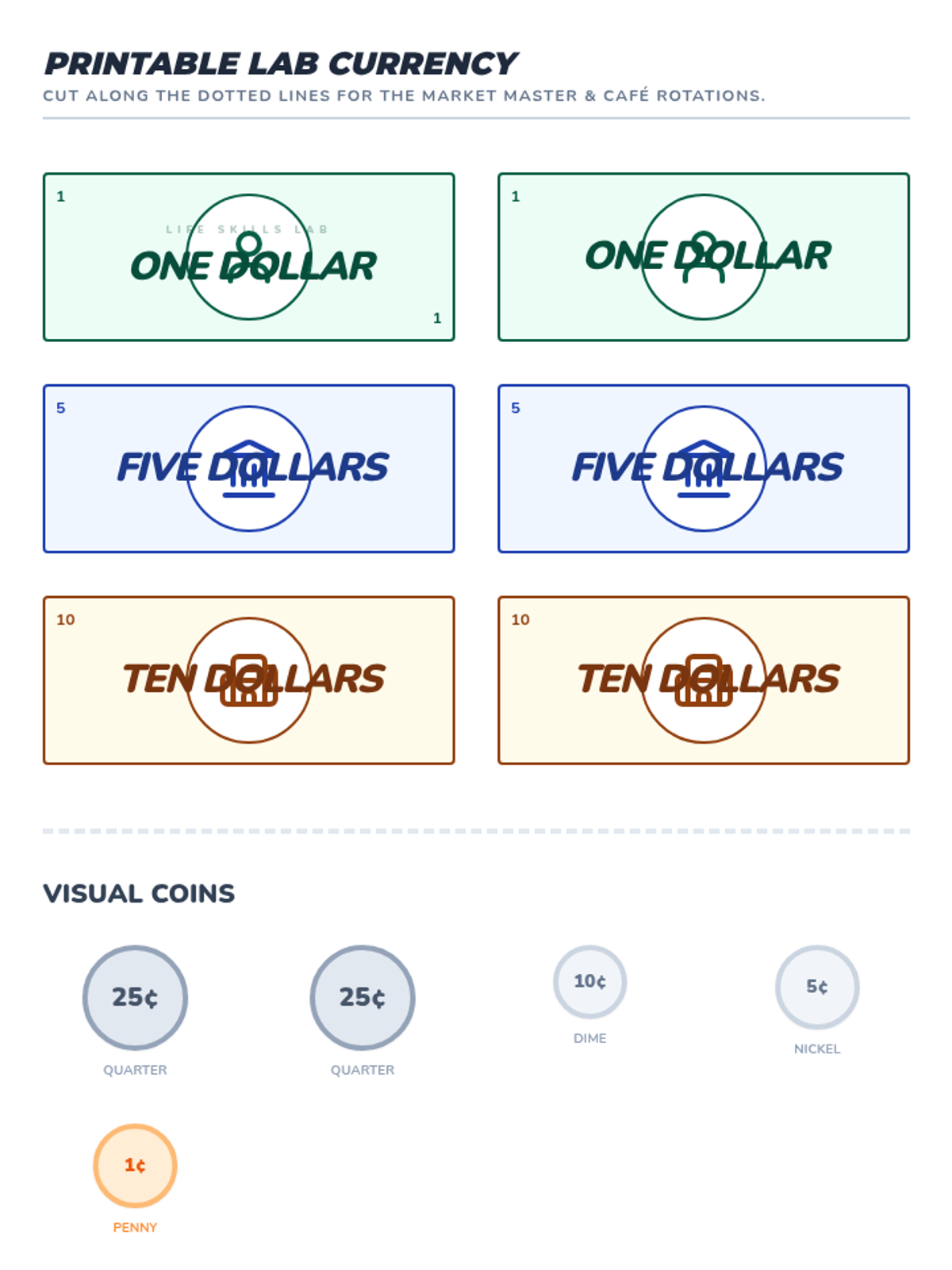
A deep dive into identifying currency, understanding value, and managing basic transactions through visual supports and hands-on practice.
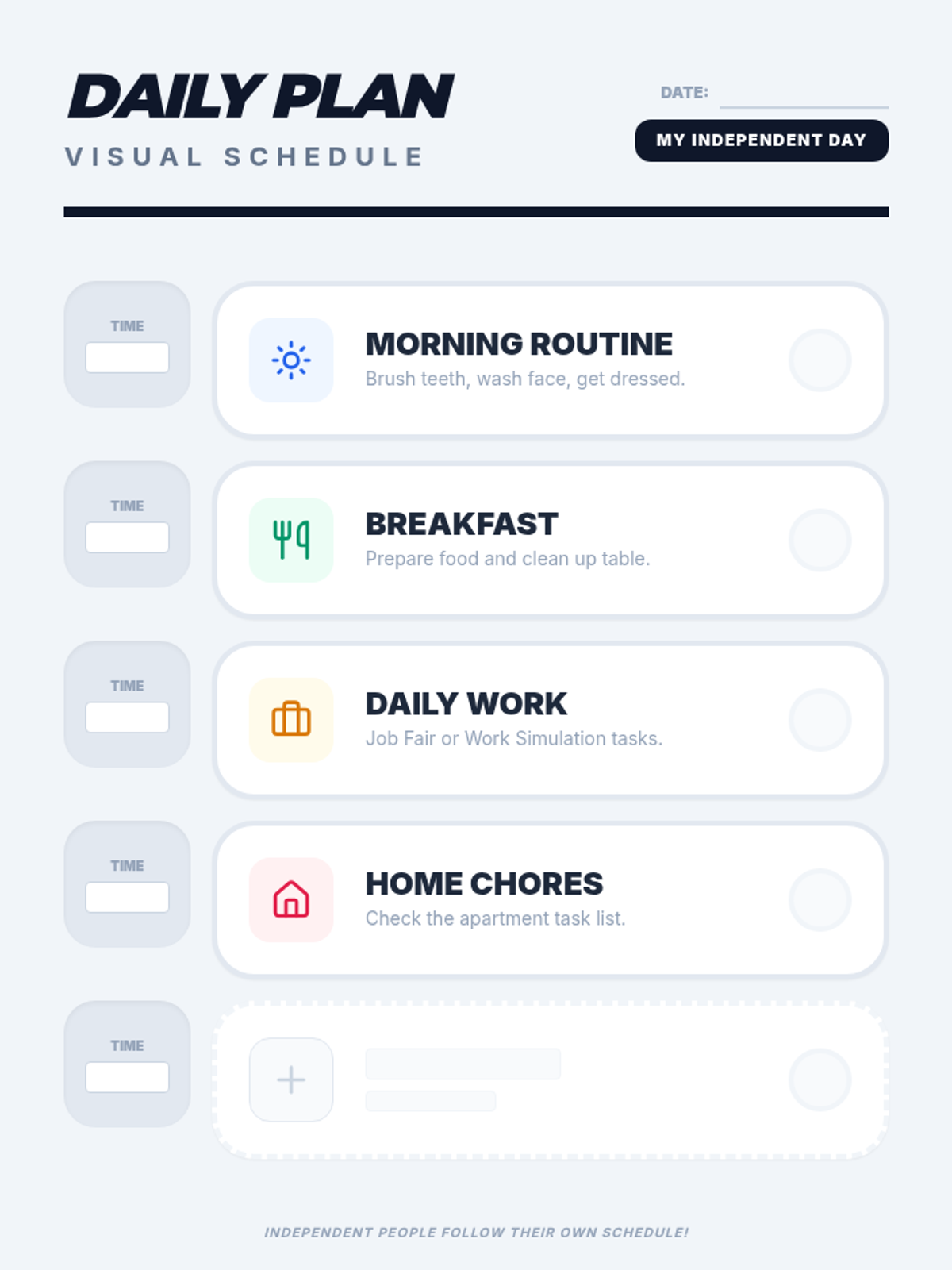
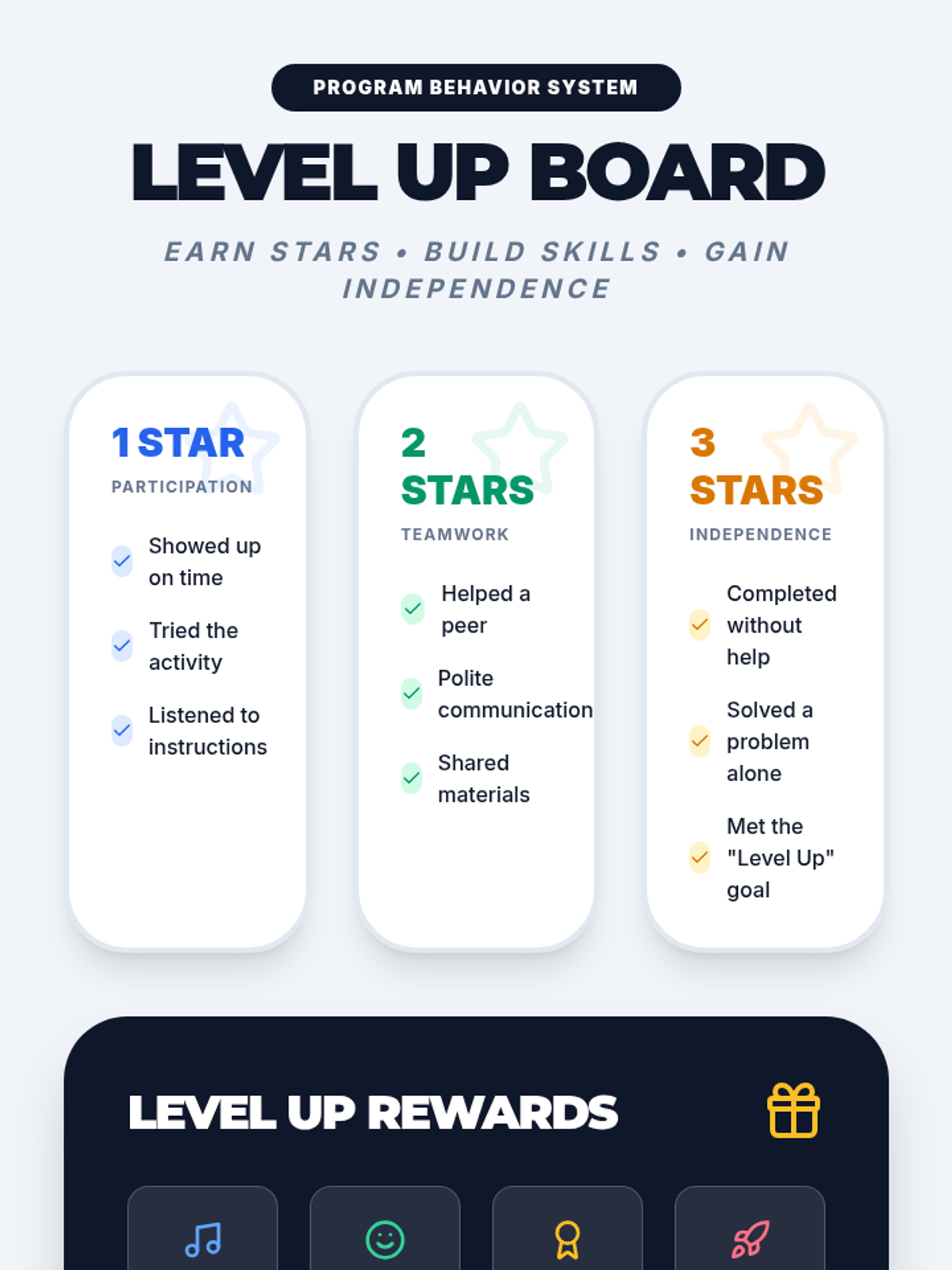
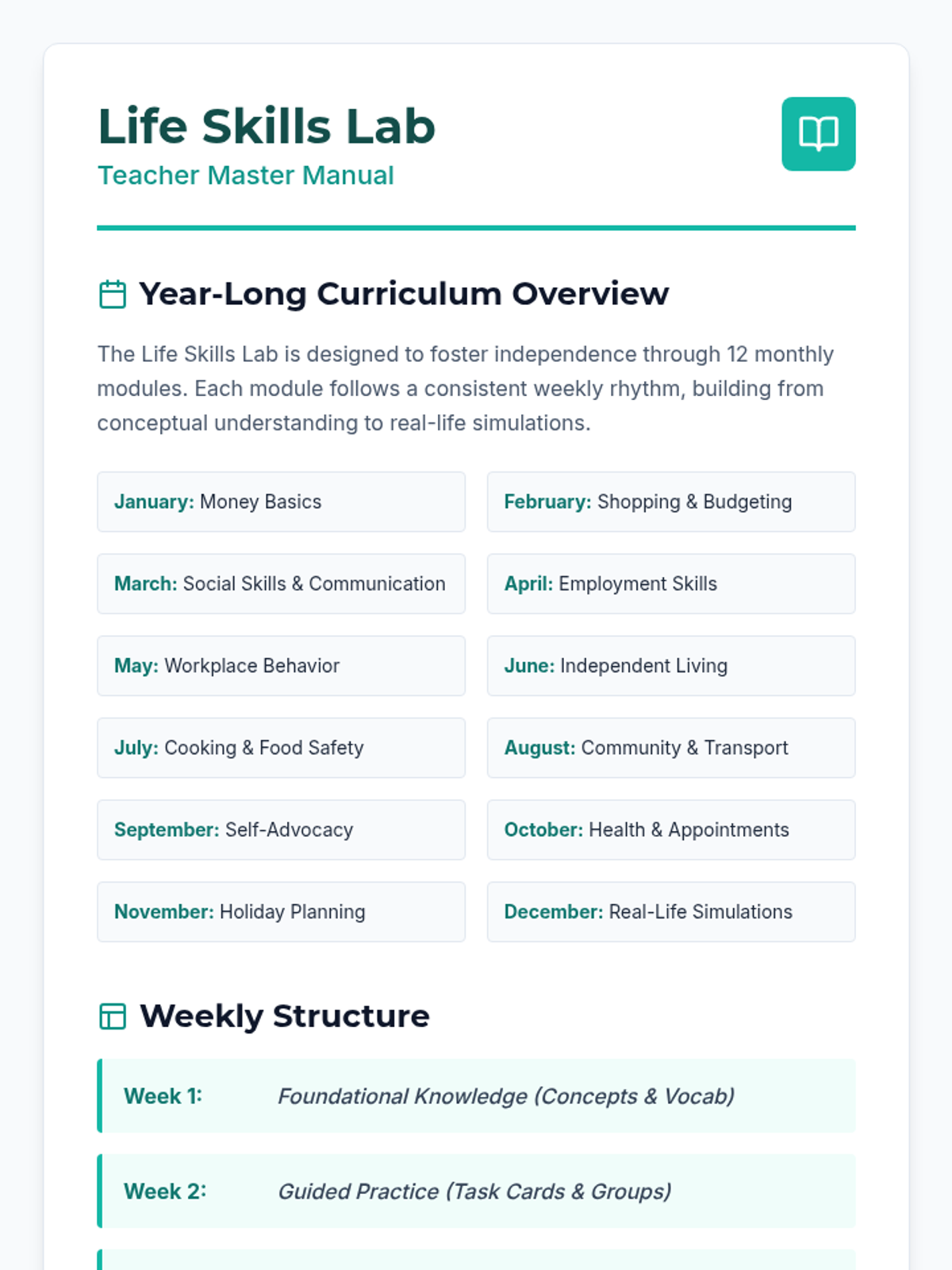
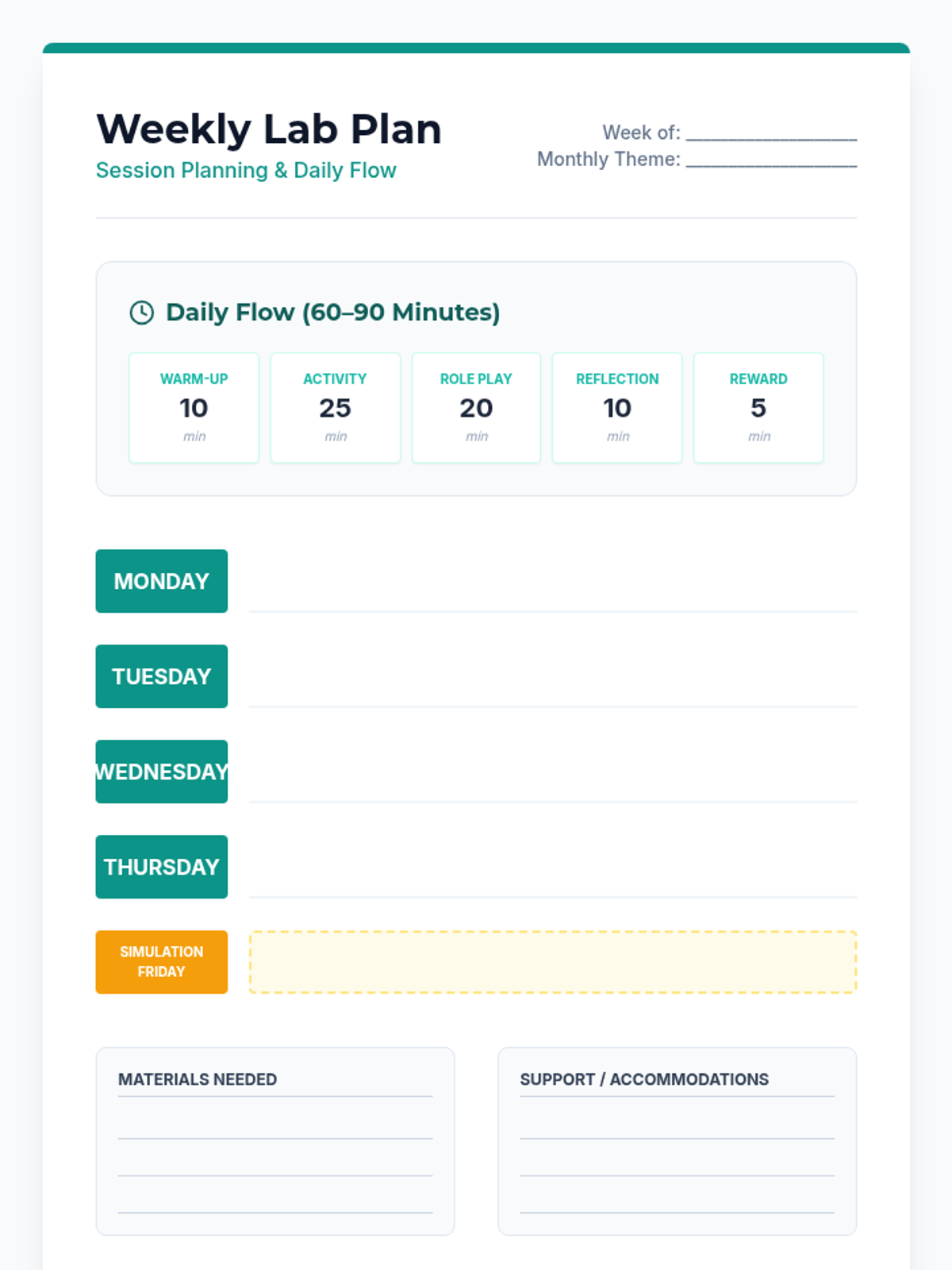
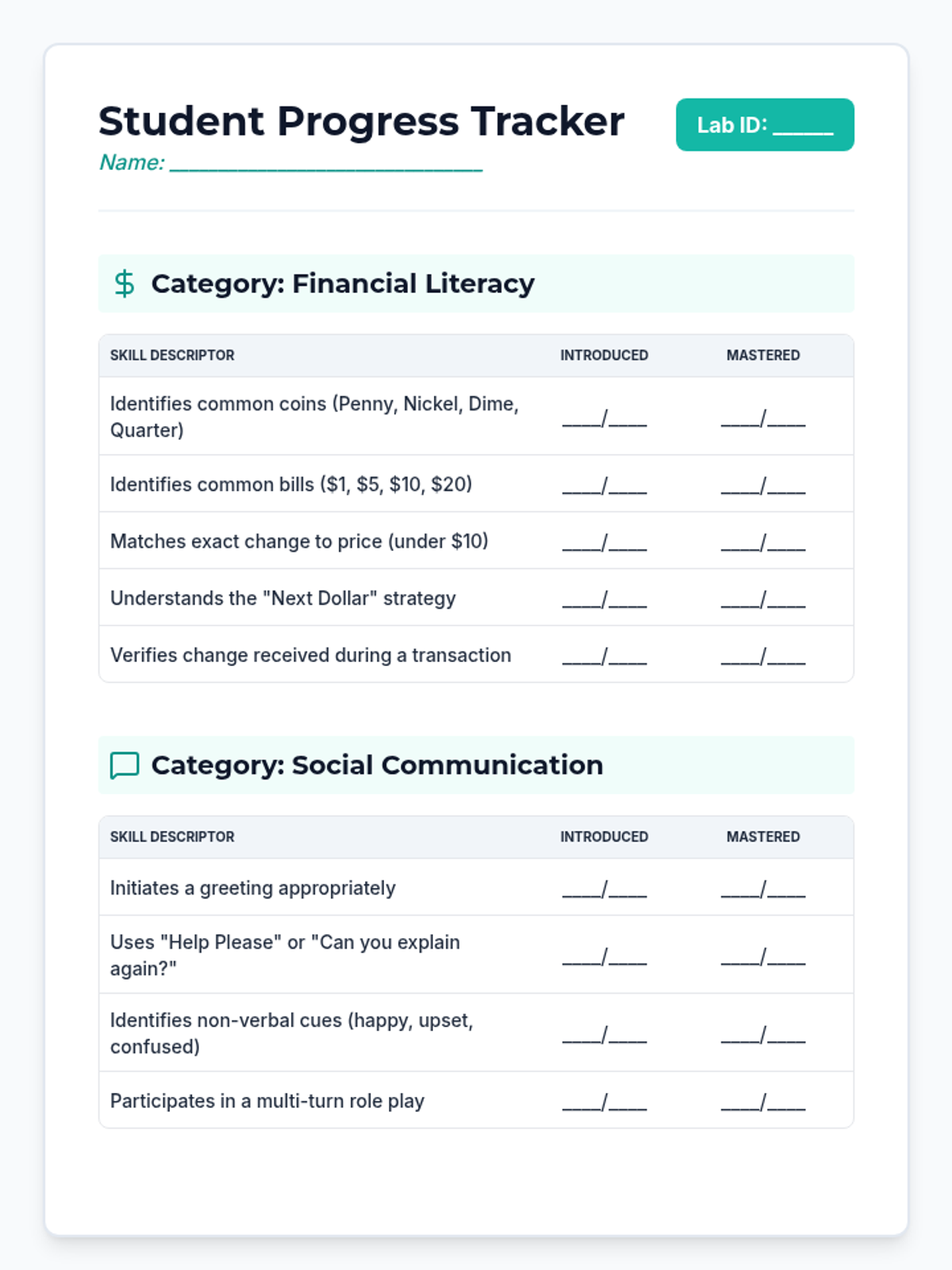
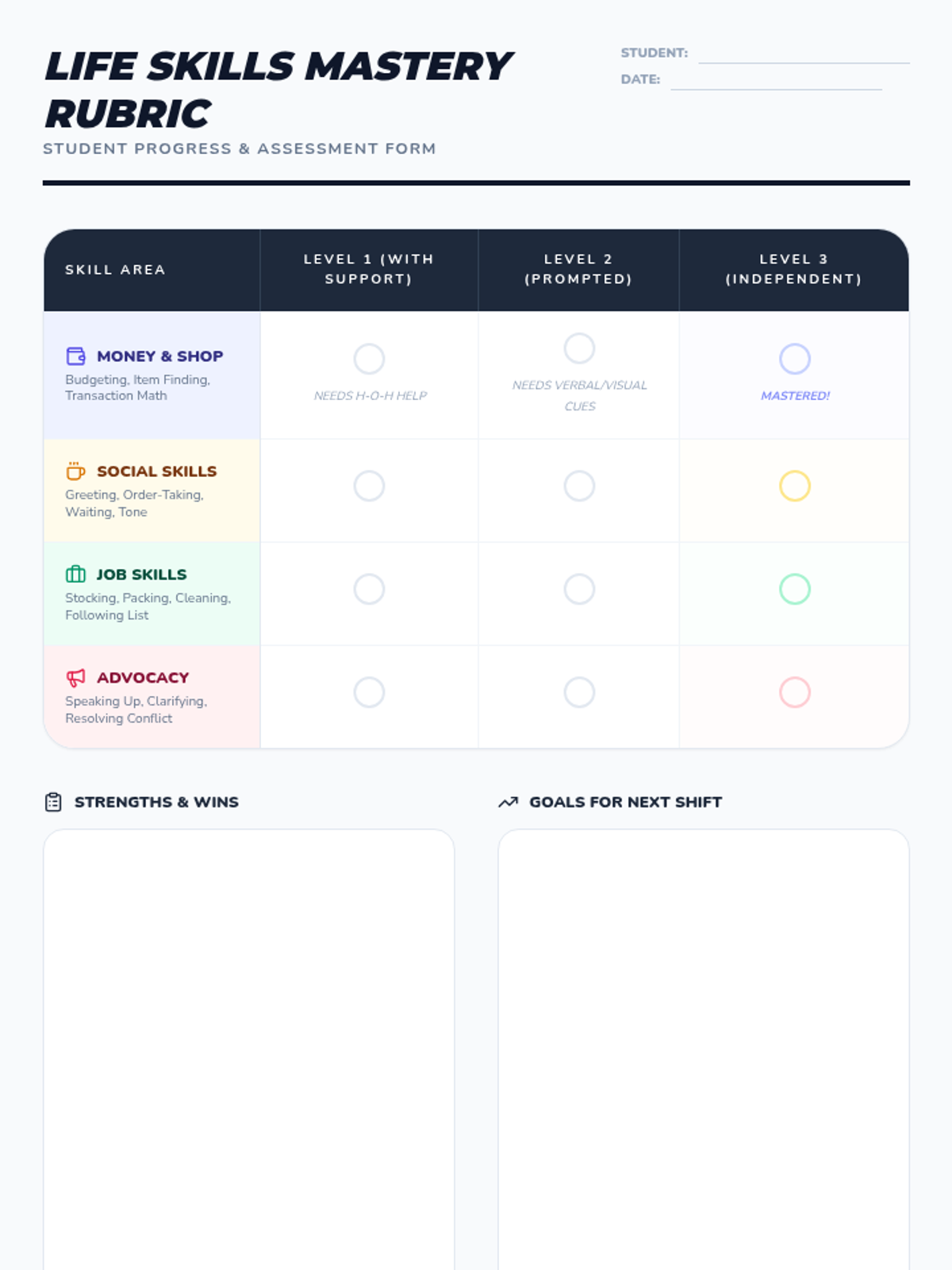
Essential templates, tracking sheets, and the overall framework for the Life Skills program to ensure consistent daily structure and progress monitoring.
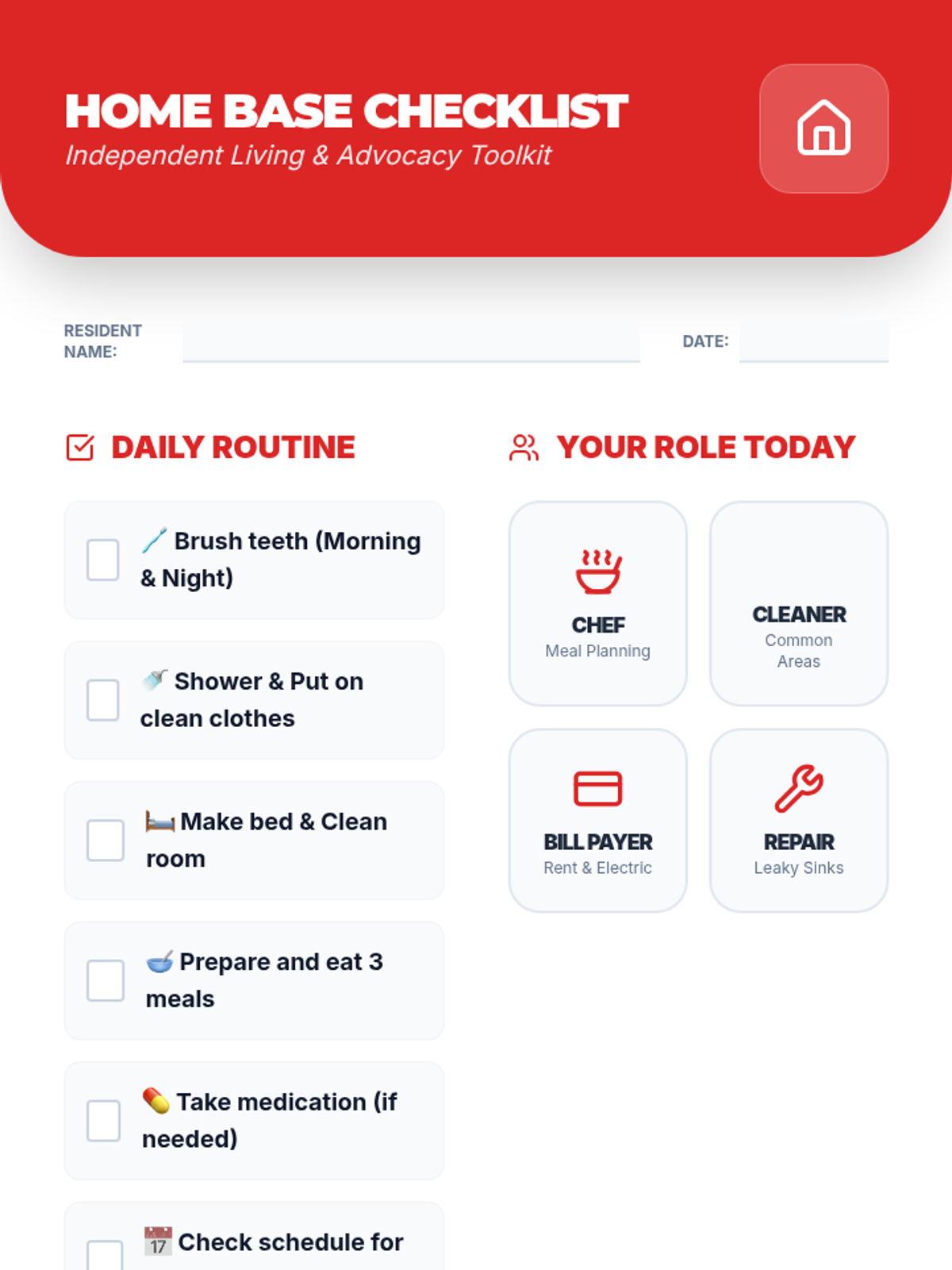
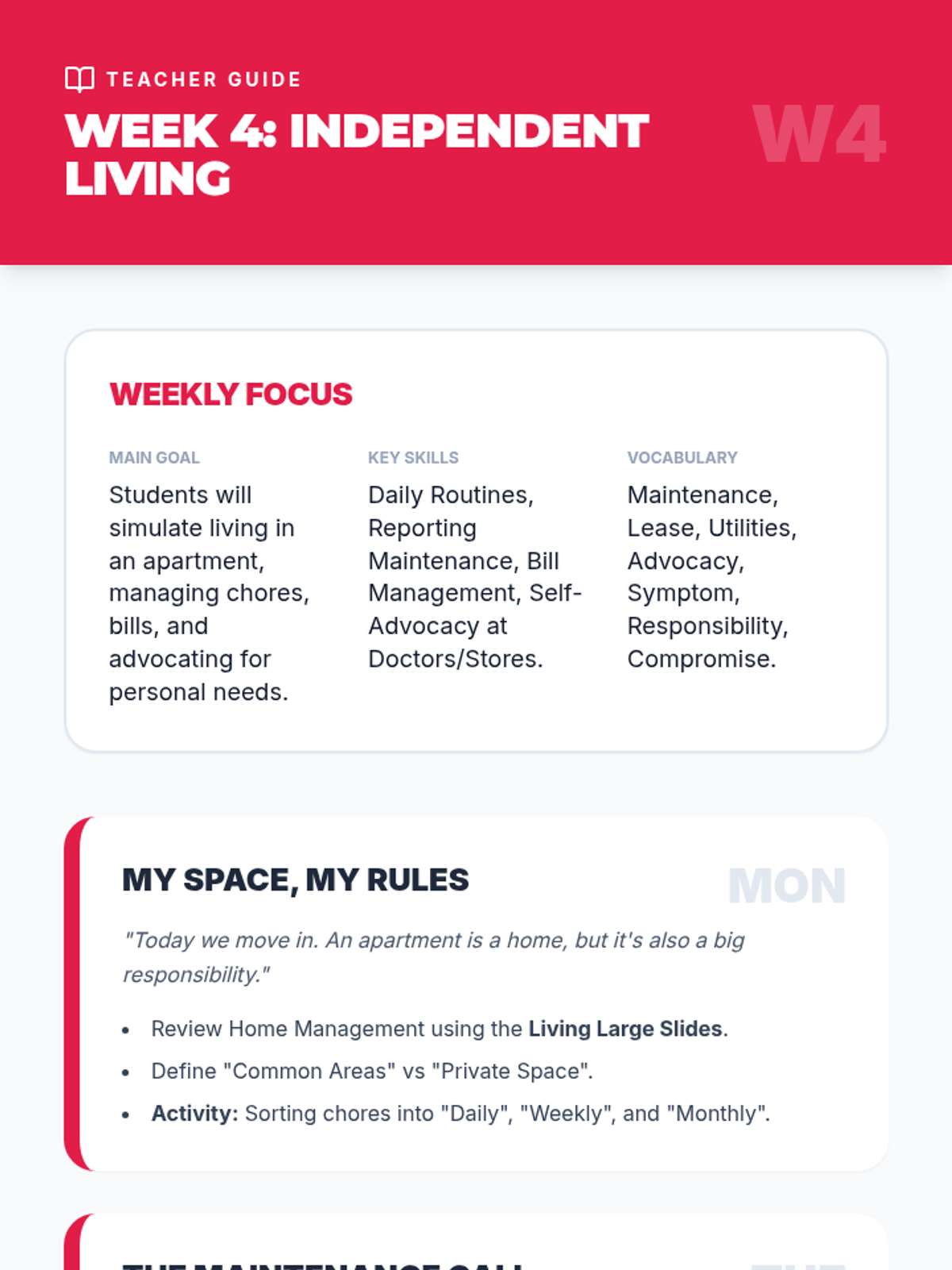
Practicing the core skills of independent living, including home maintenance, personal advocacy, and daily scheduling.
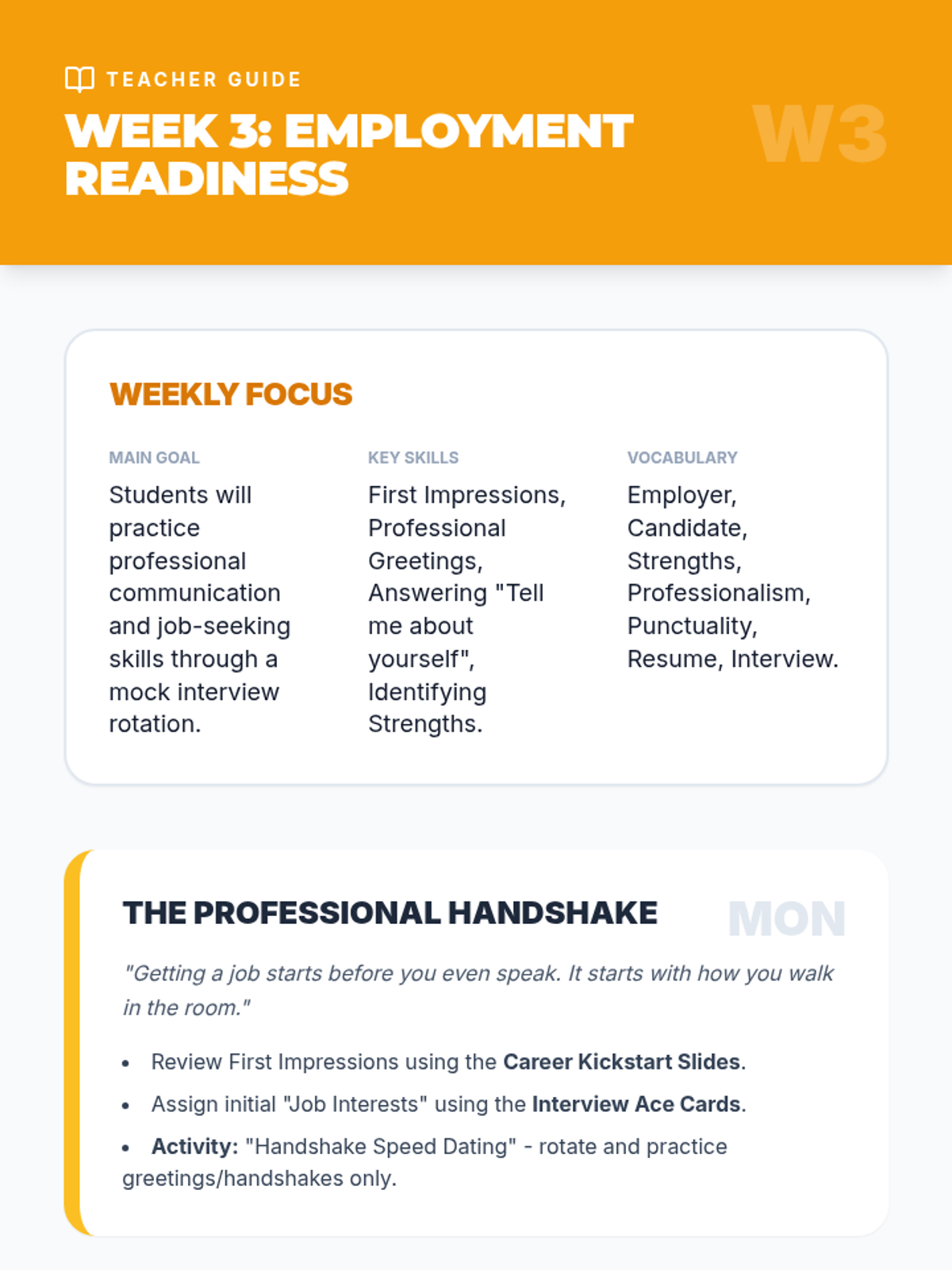
Preparing for the workforce with mock interviews, professional communication practice, and on-the-job simulations.
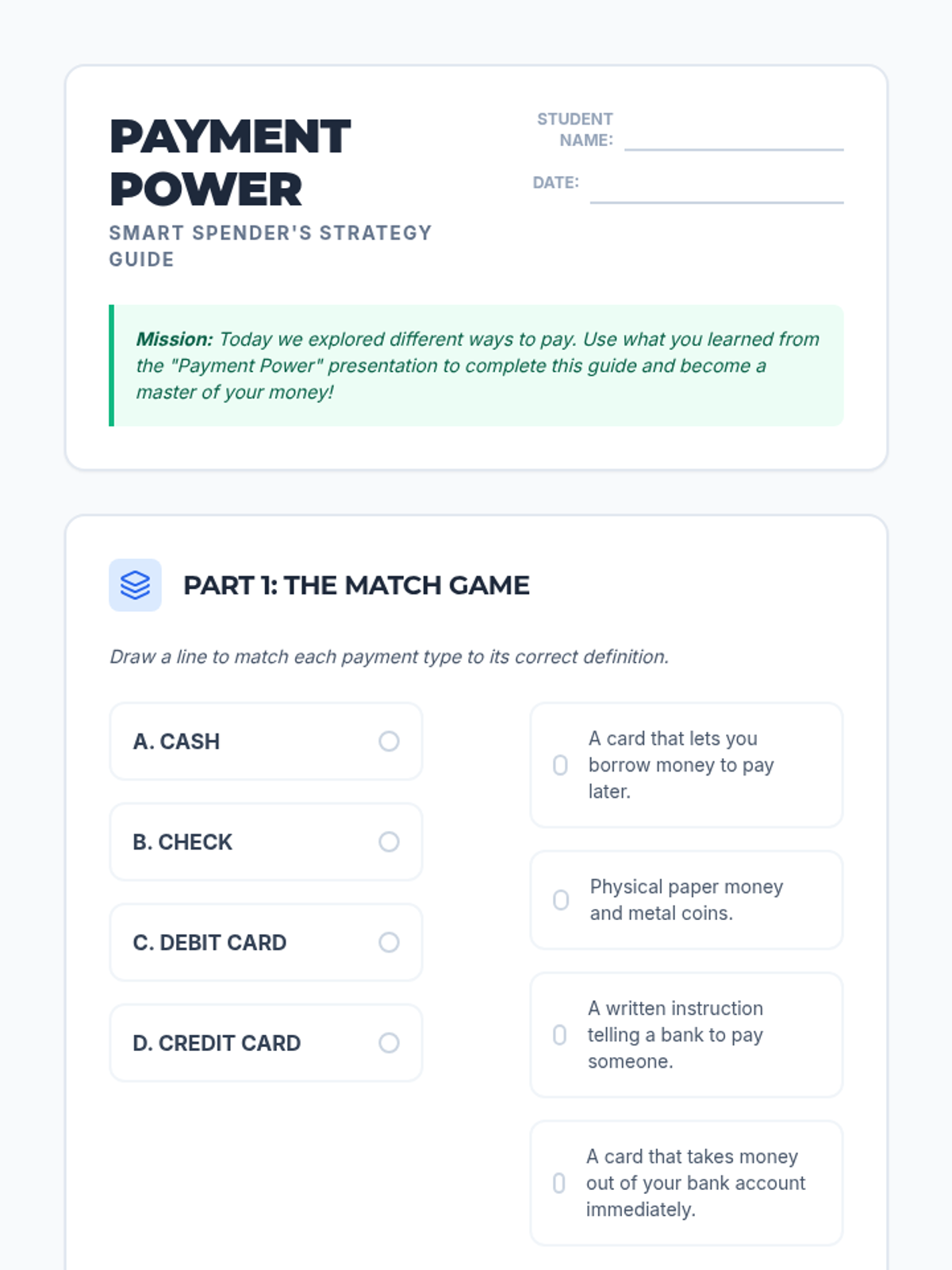
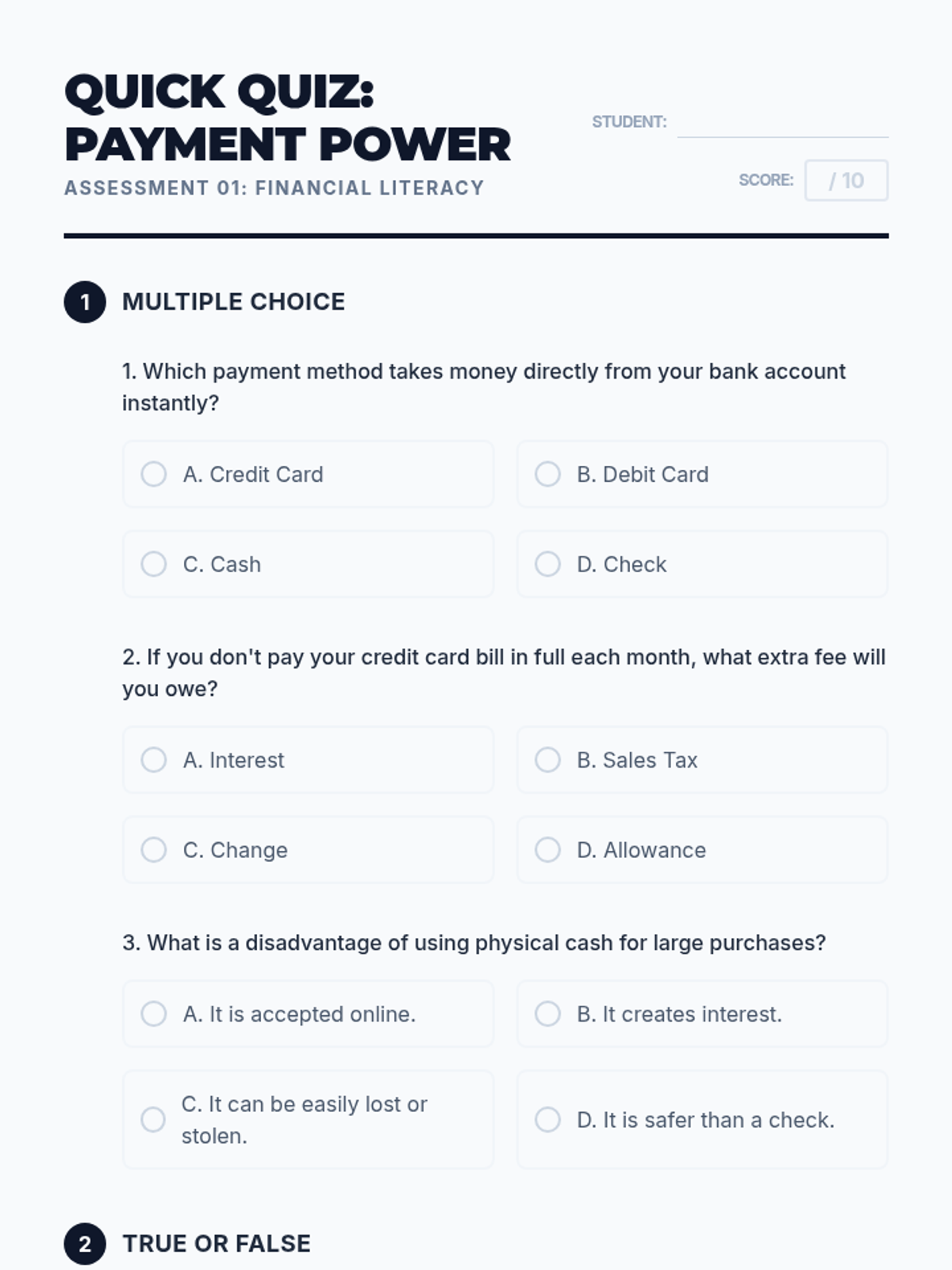
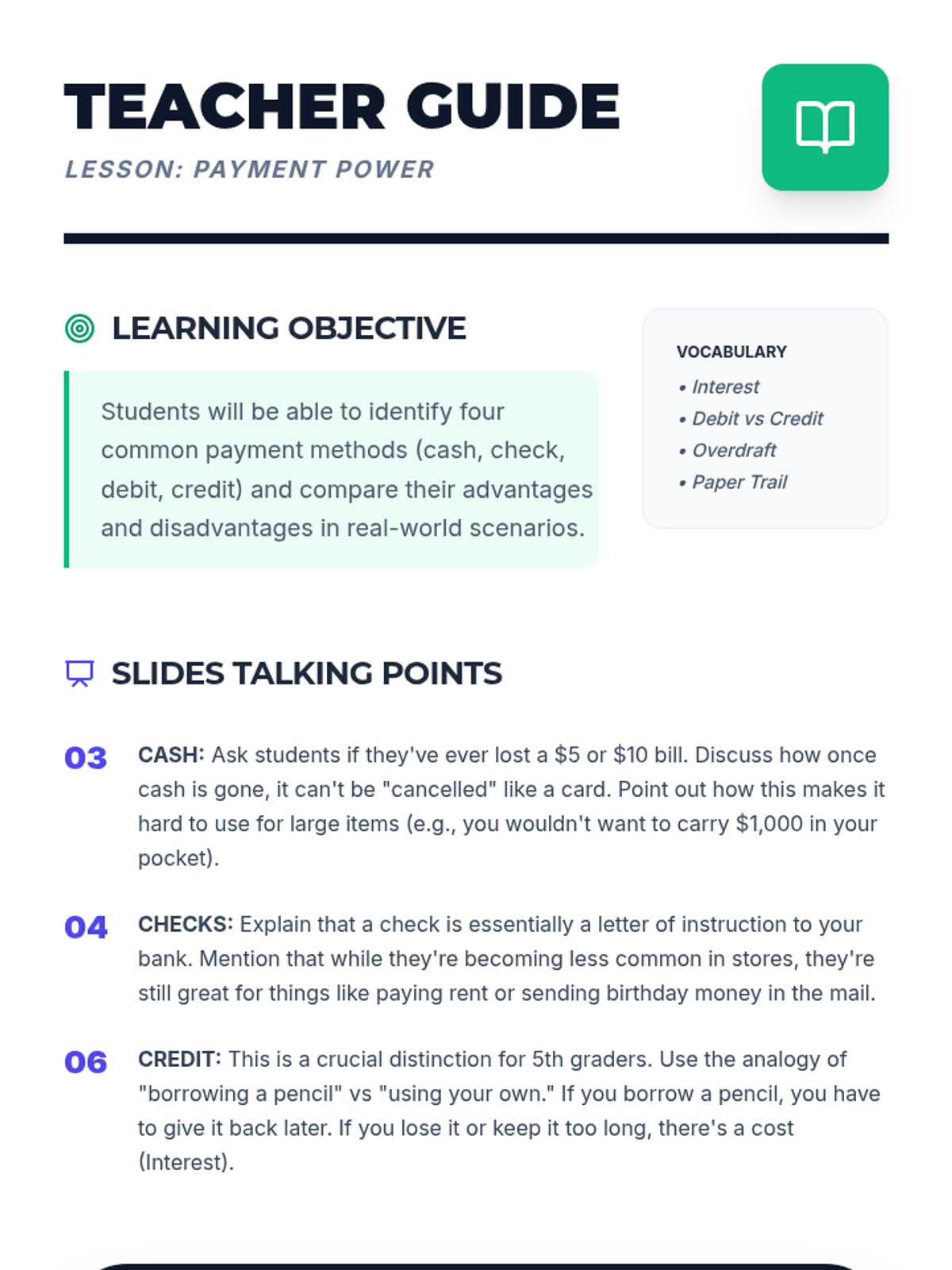
A comprehensive introduction to various payment methods, including cash, checks, debit cards, and credit cards. Students will explore the advantages and disadvantages of each to make informed financial decisions.
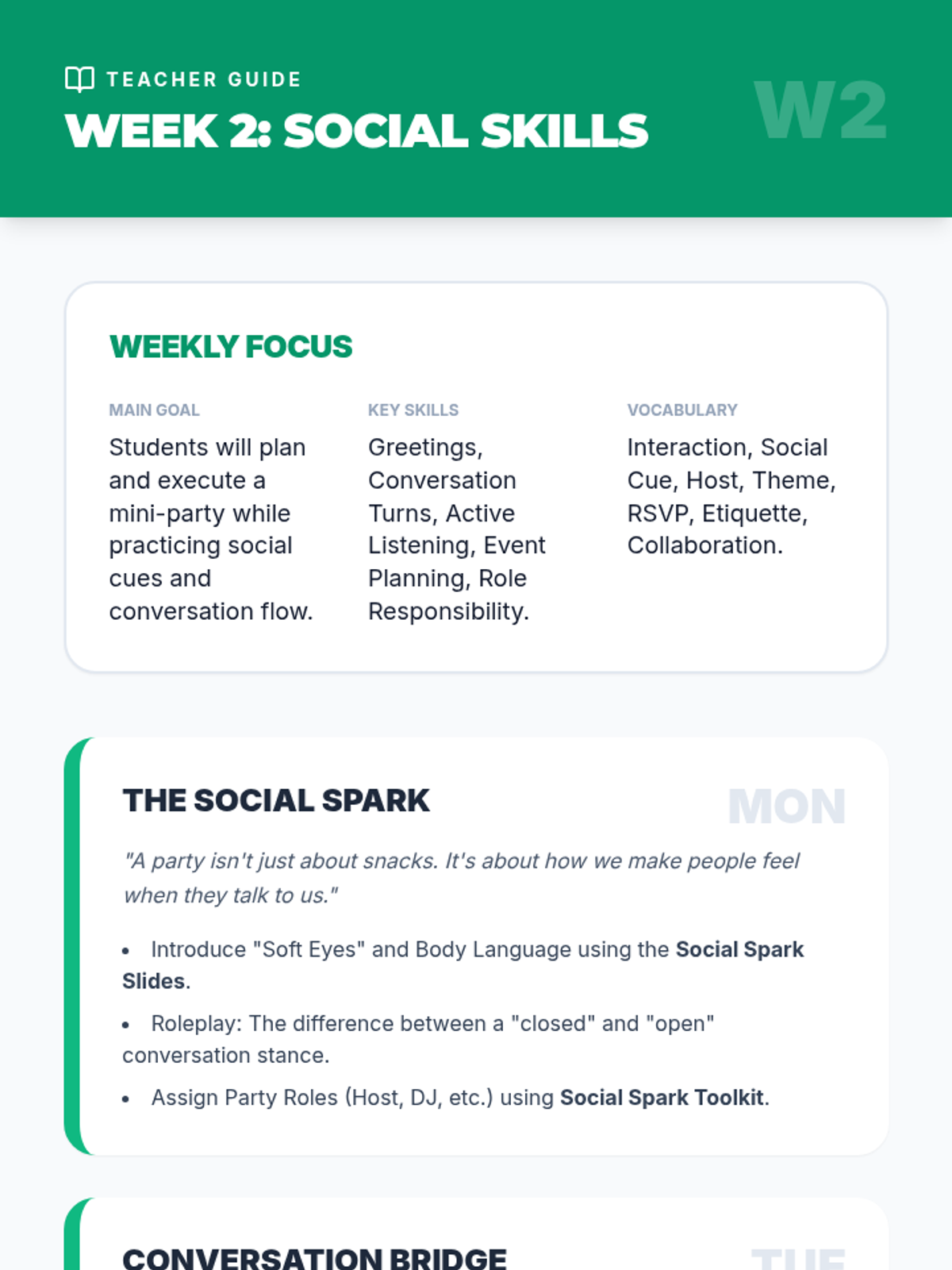
Developing social-emotional awareness through event planning, role-play conversations, and meaningful peer interactions.
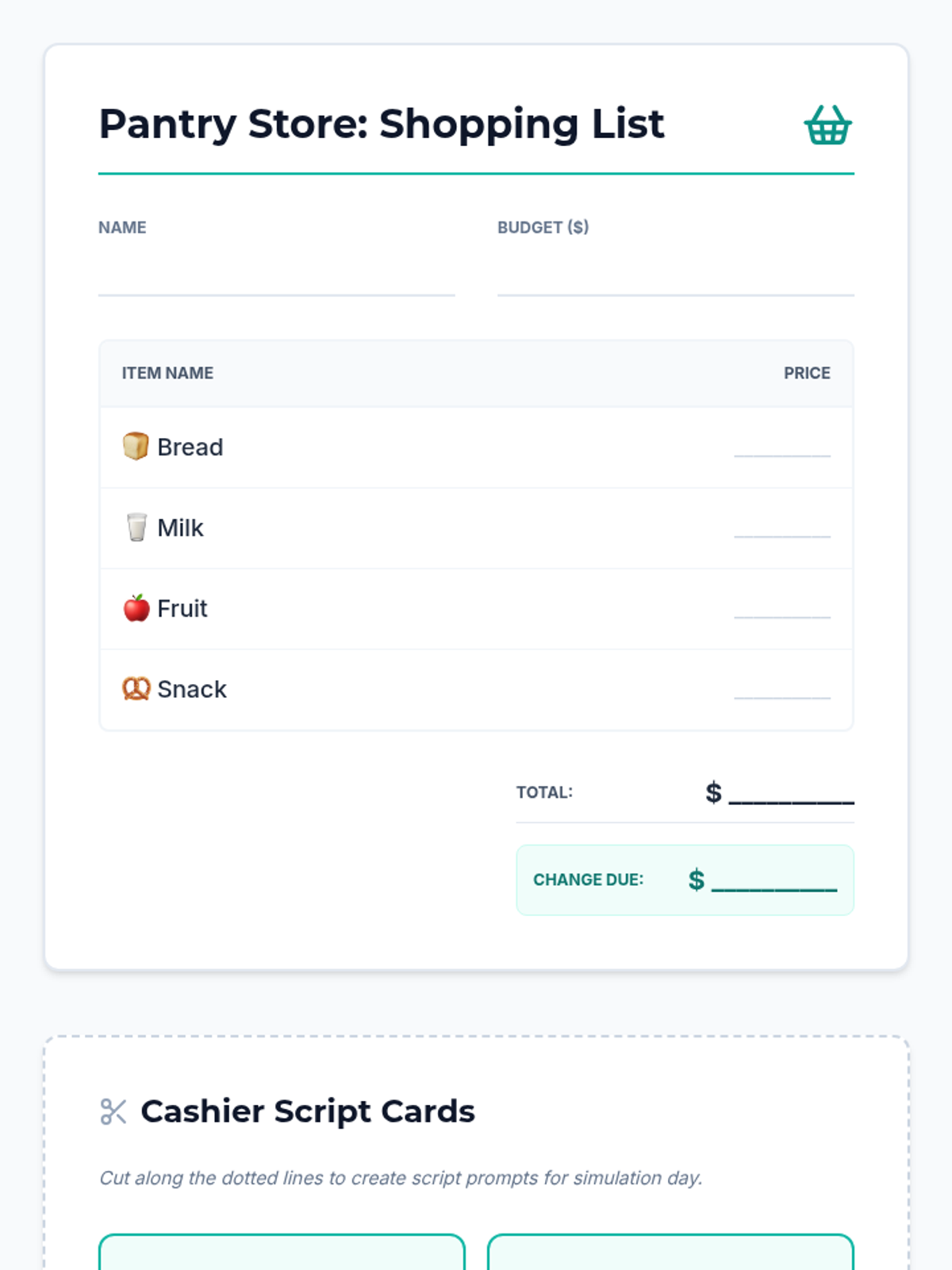
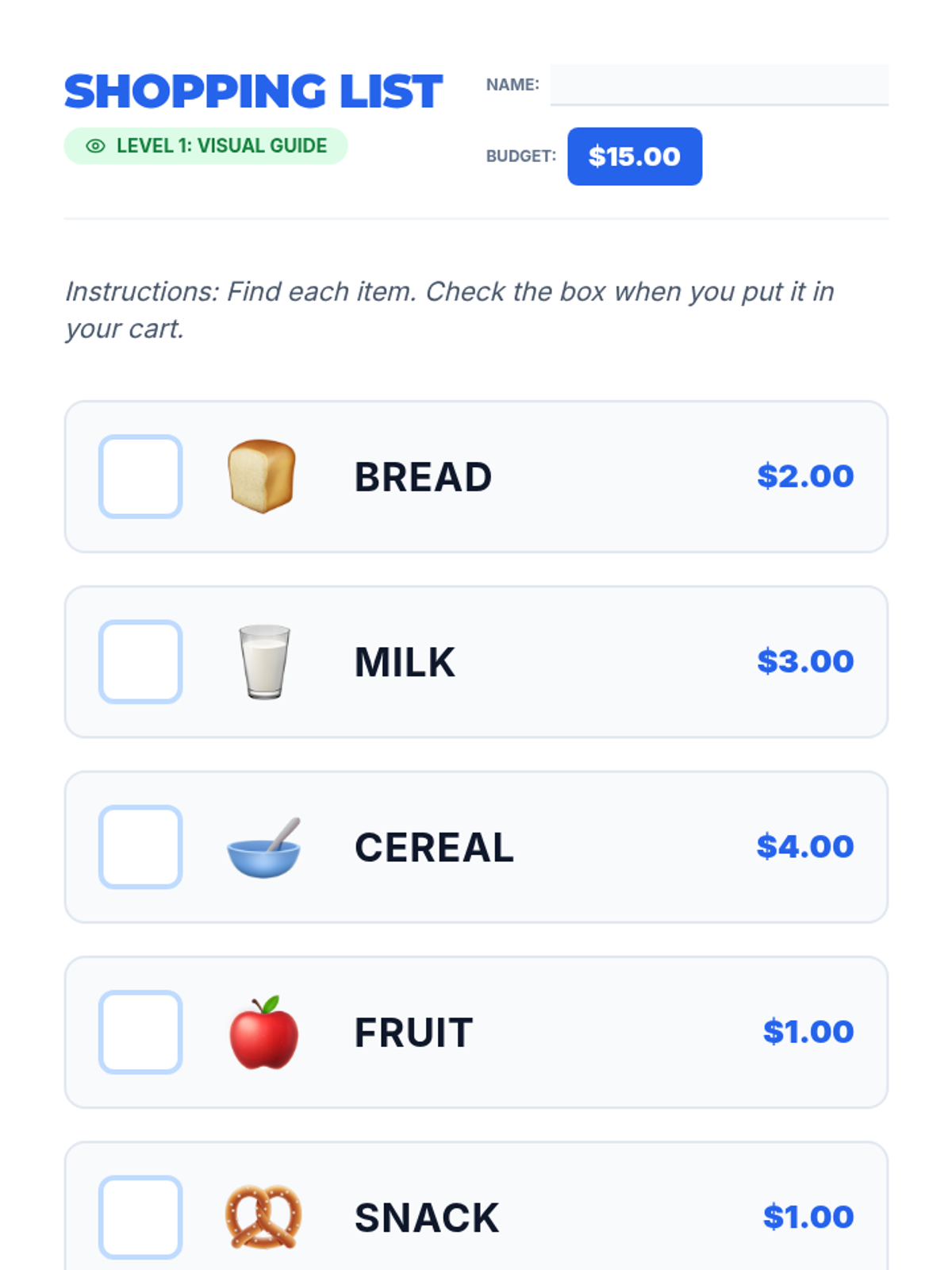
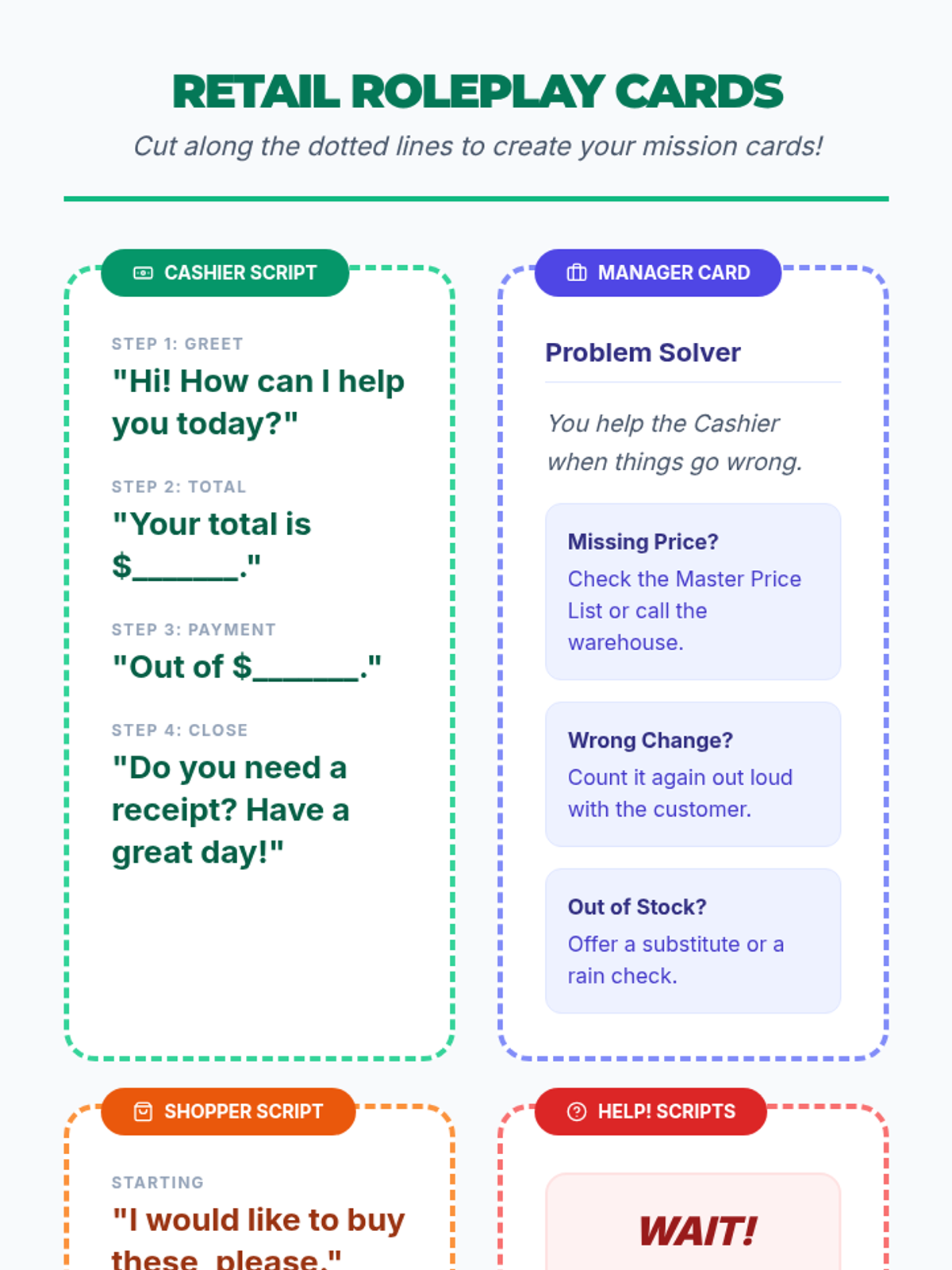
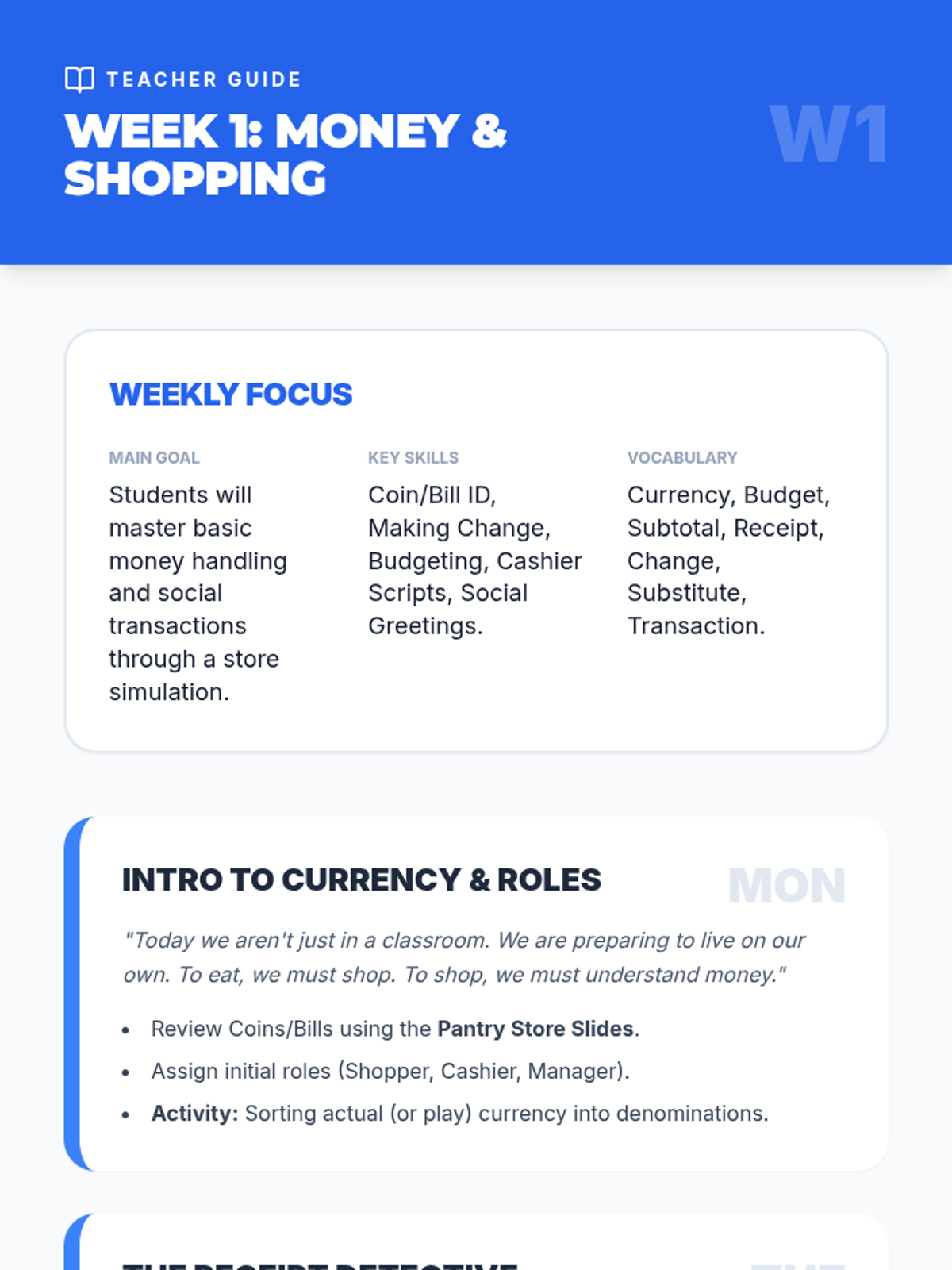
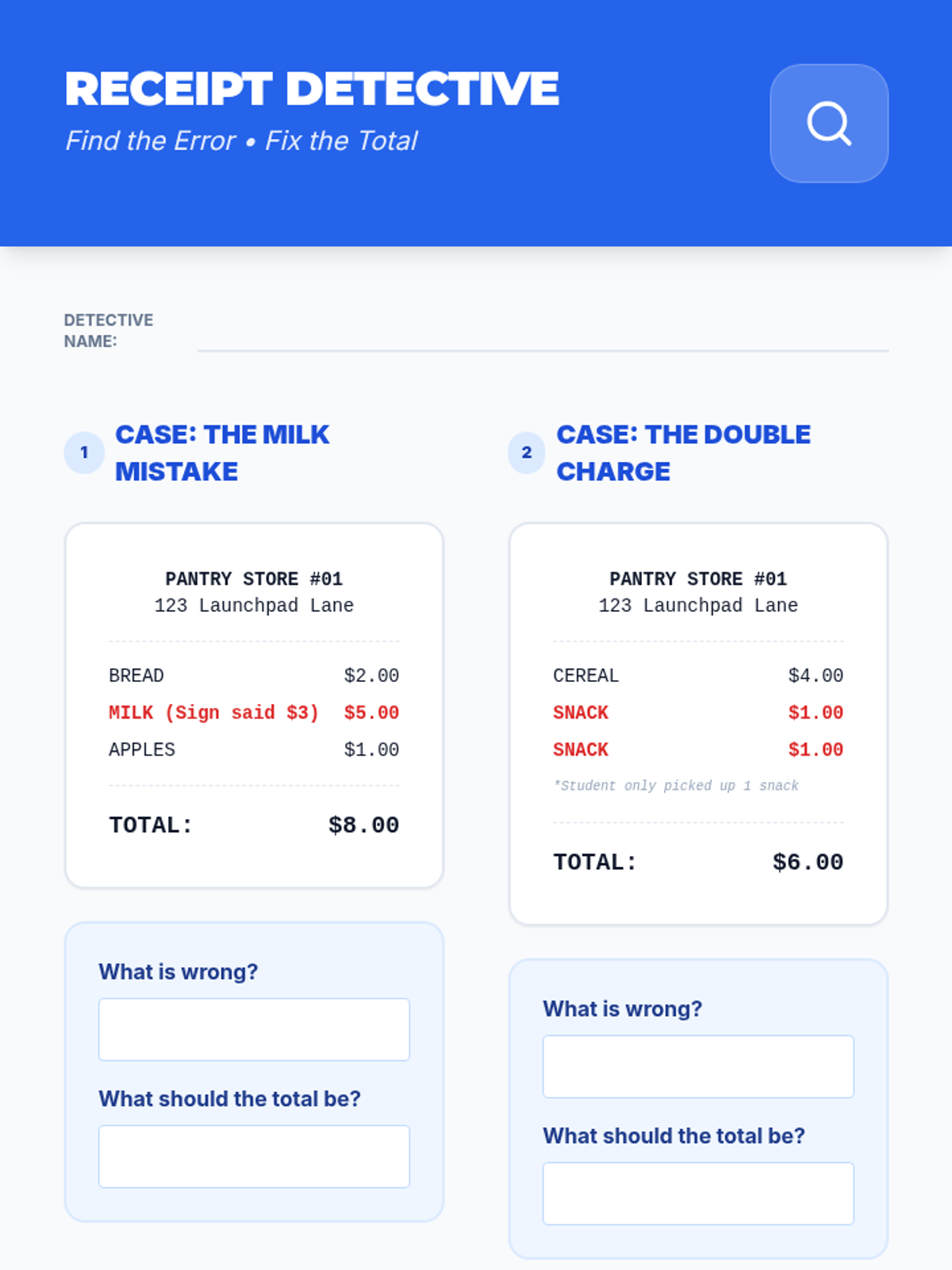
Mastering money identification, budgeting, and the mechanics of shopping through a pantry store simulation and real-world problem-solving.
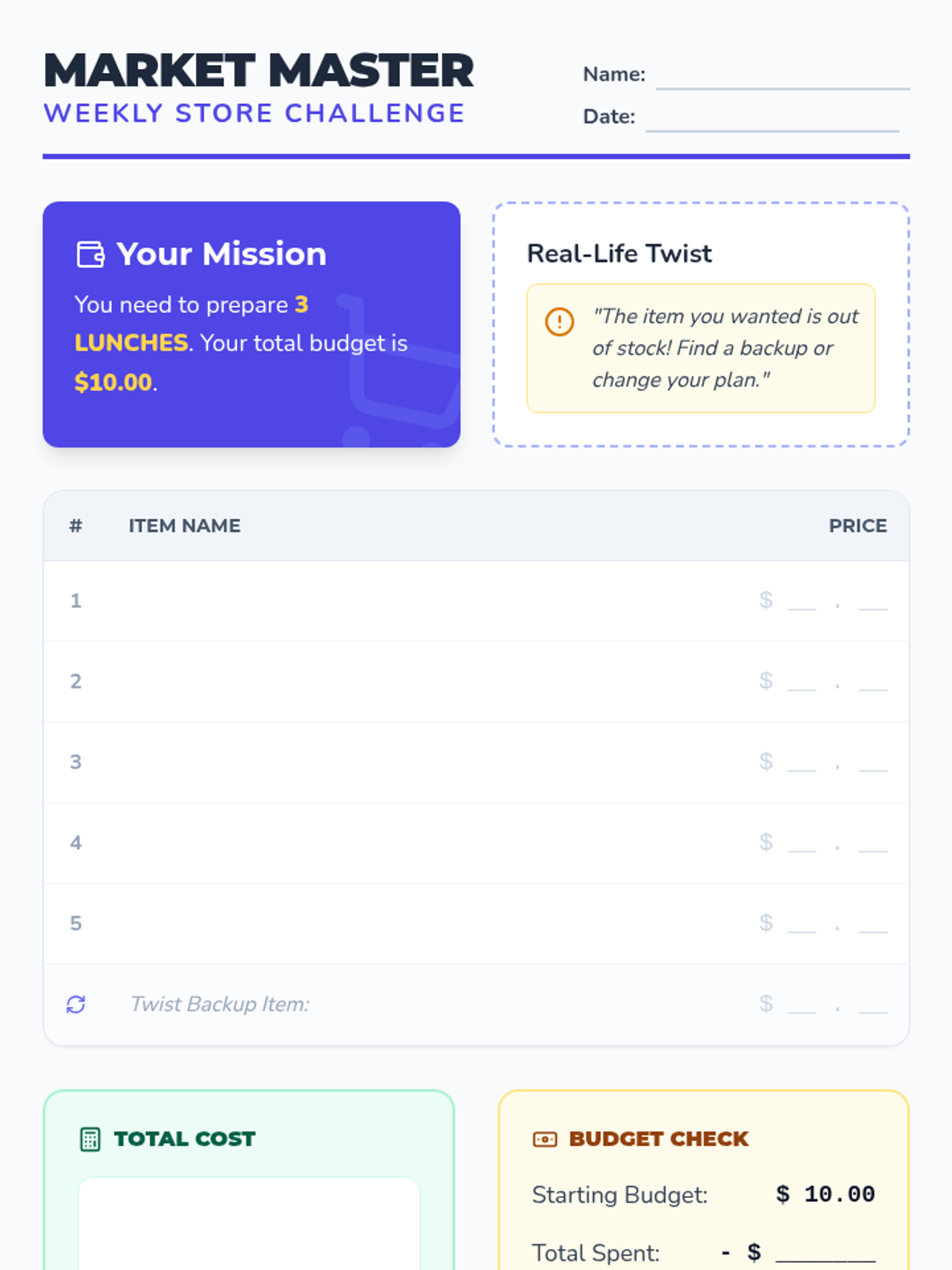
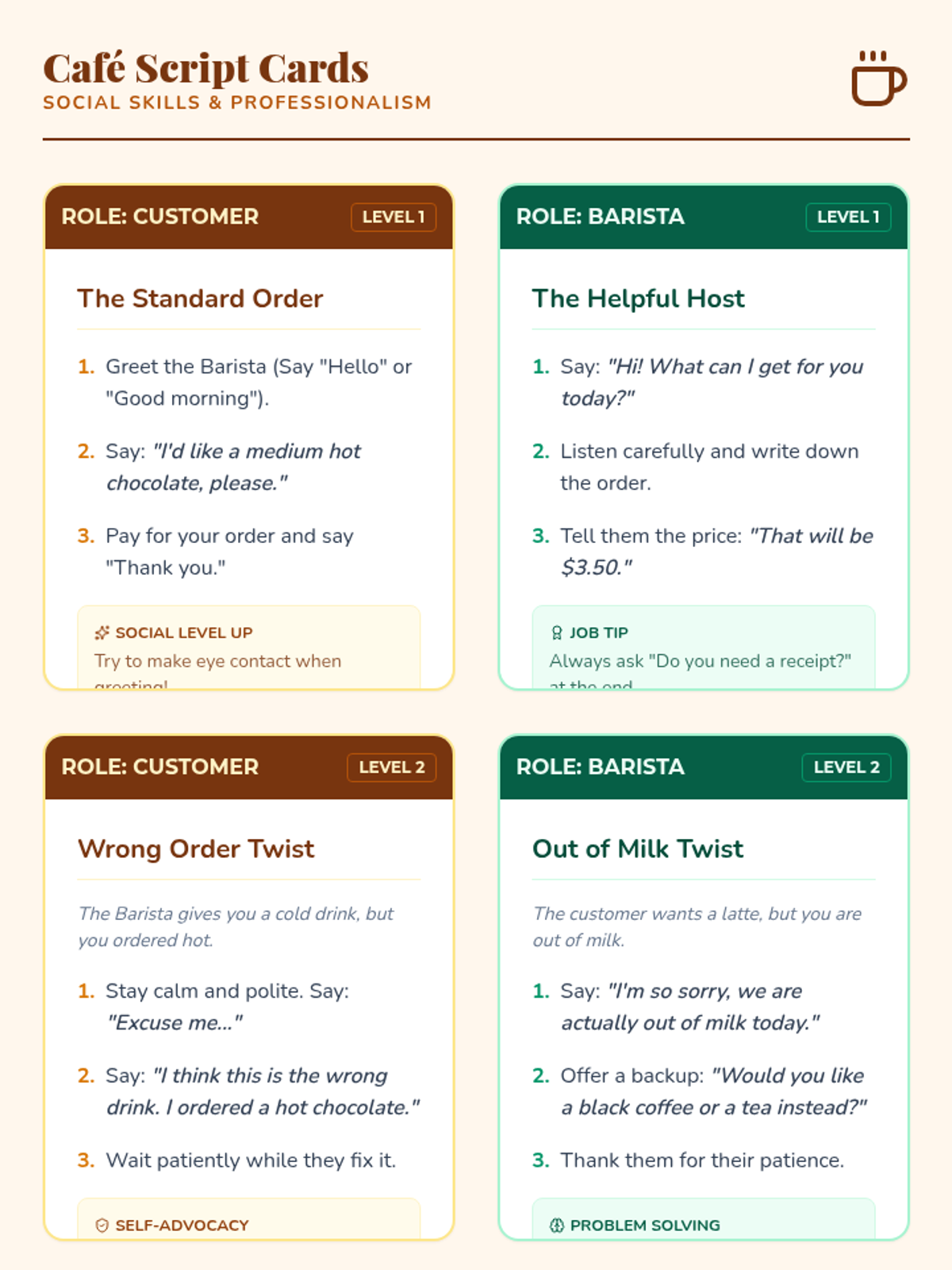
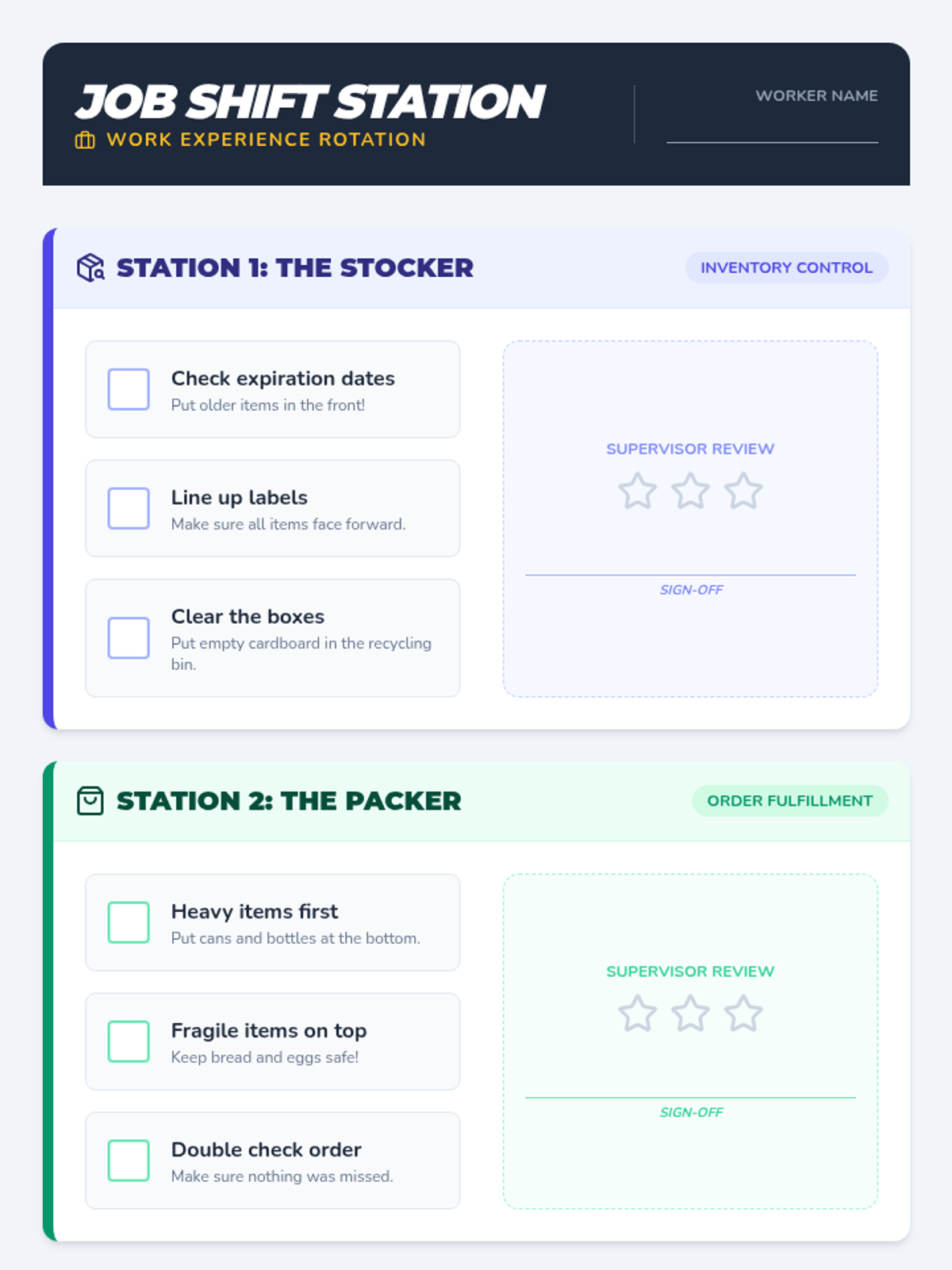
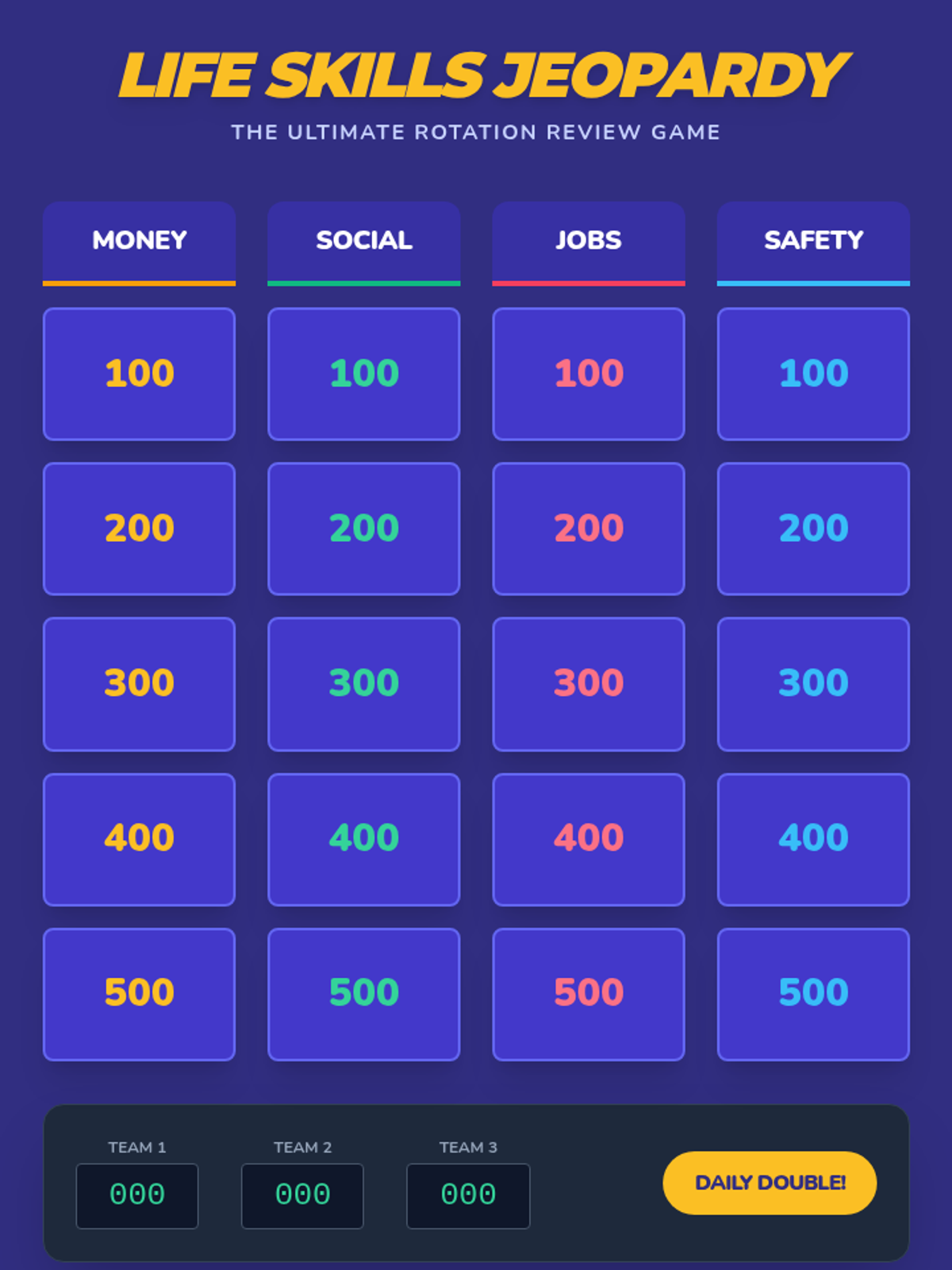
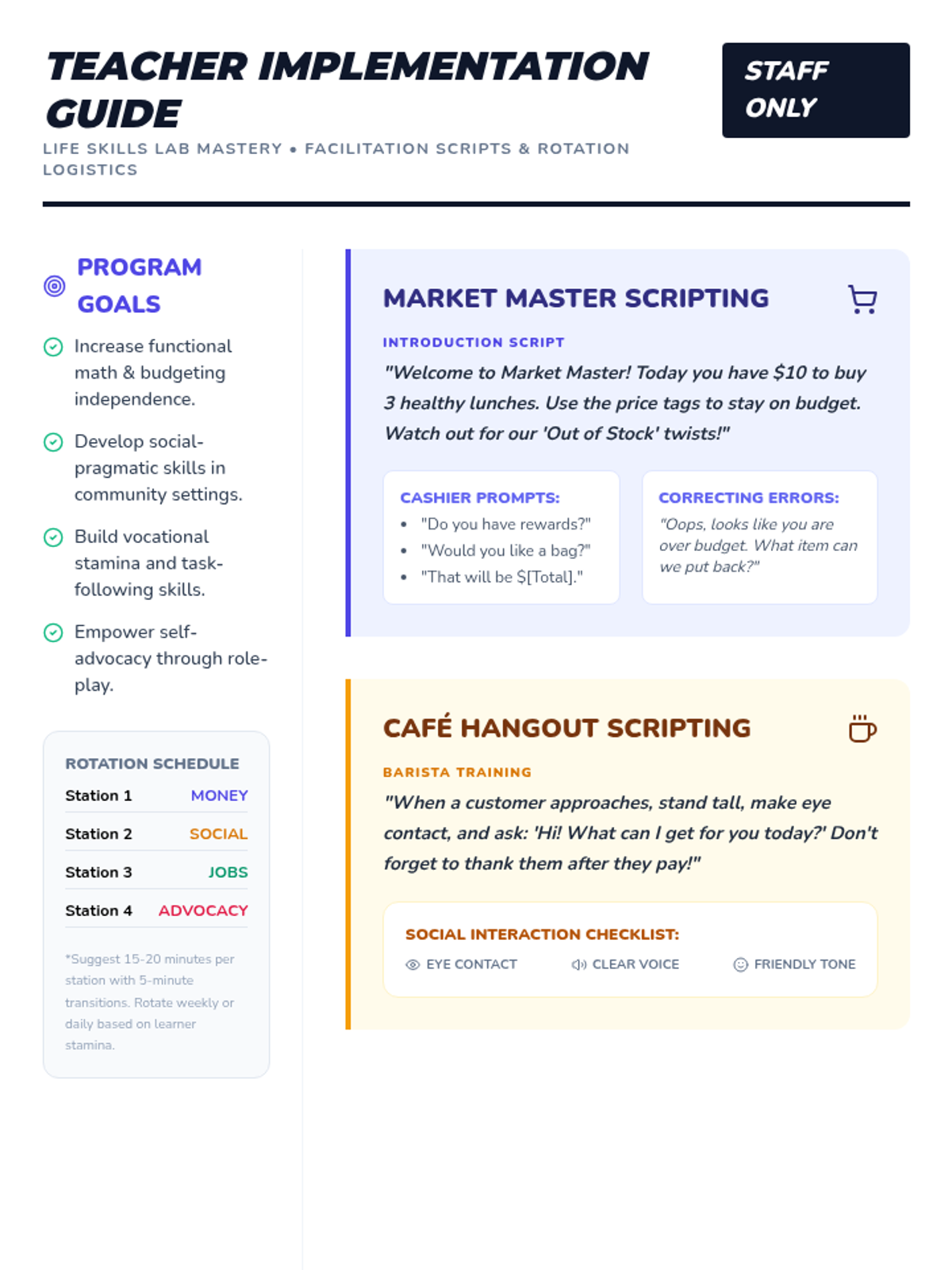
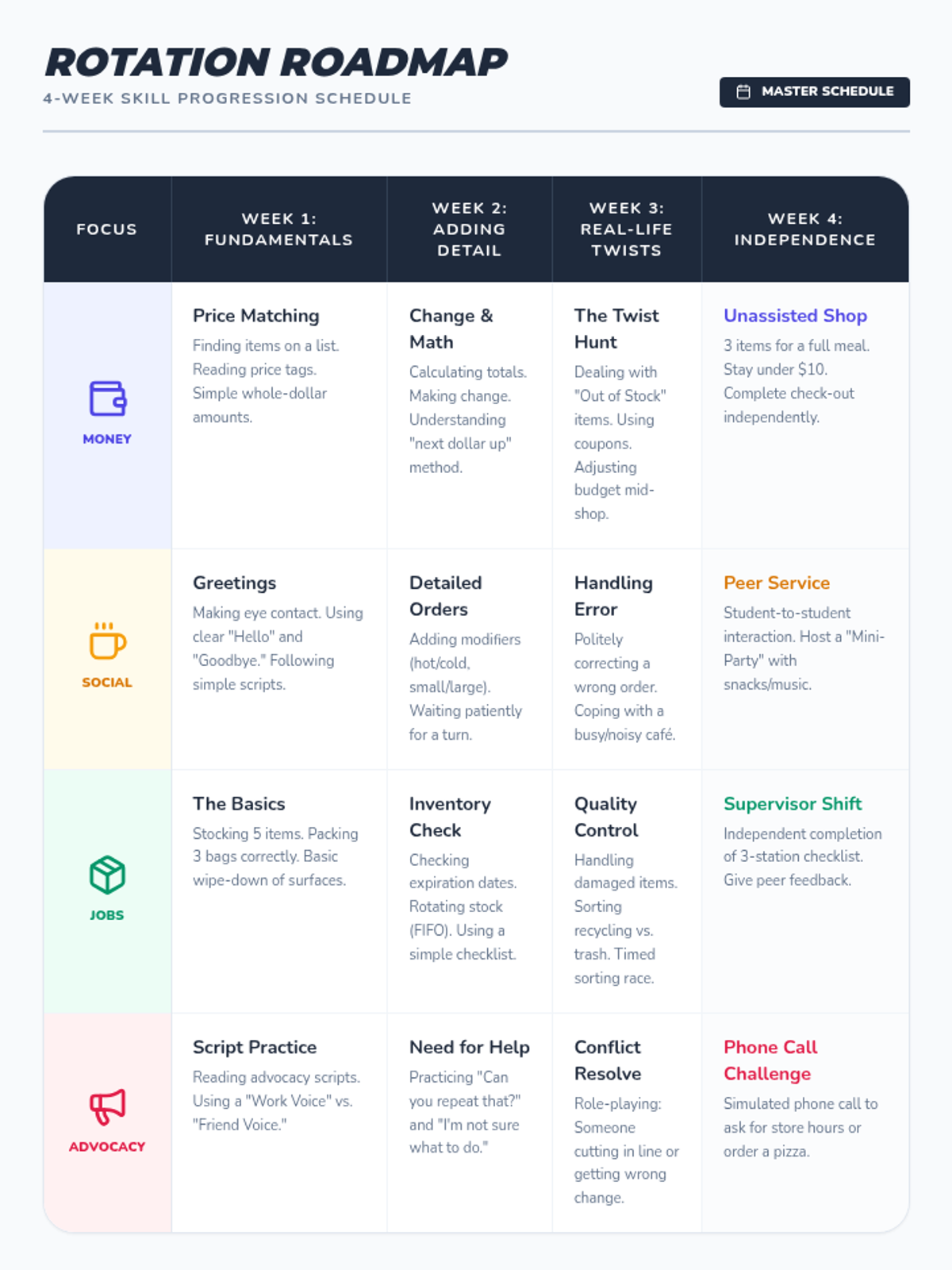
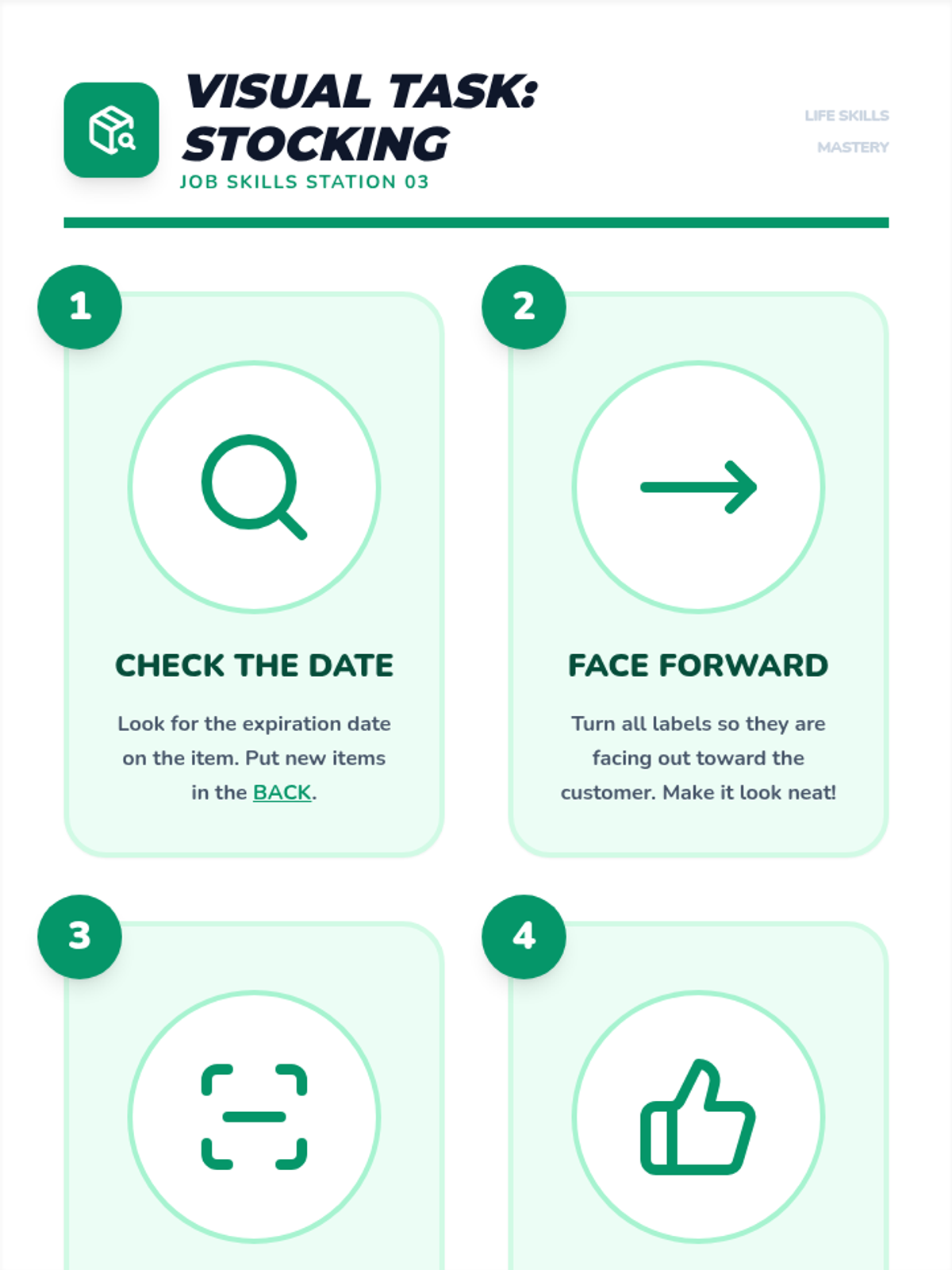
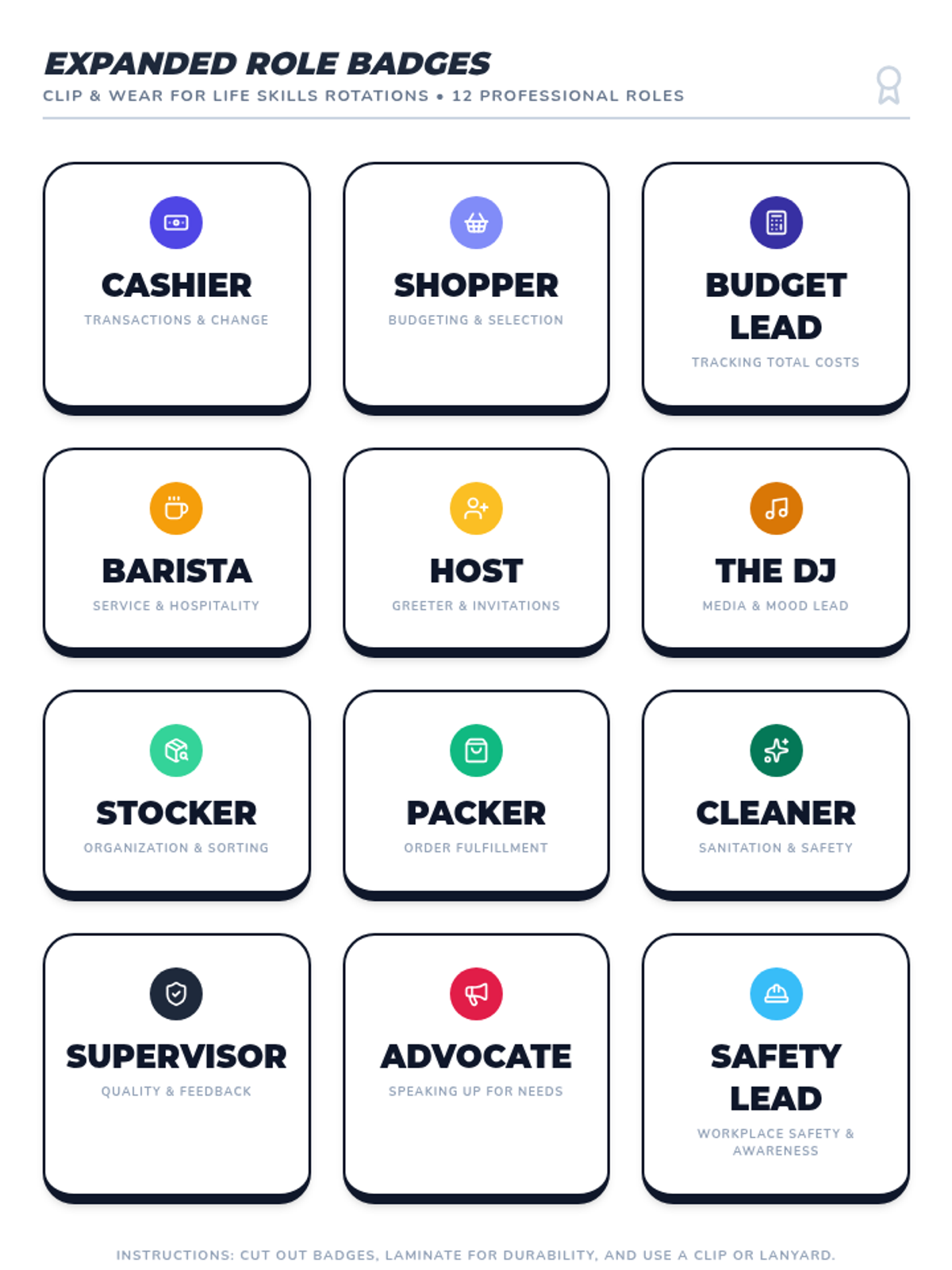
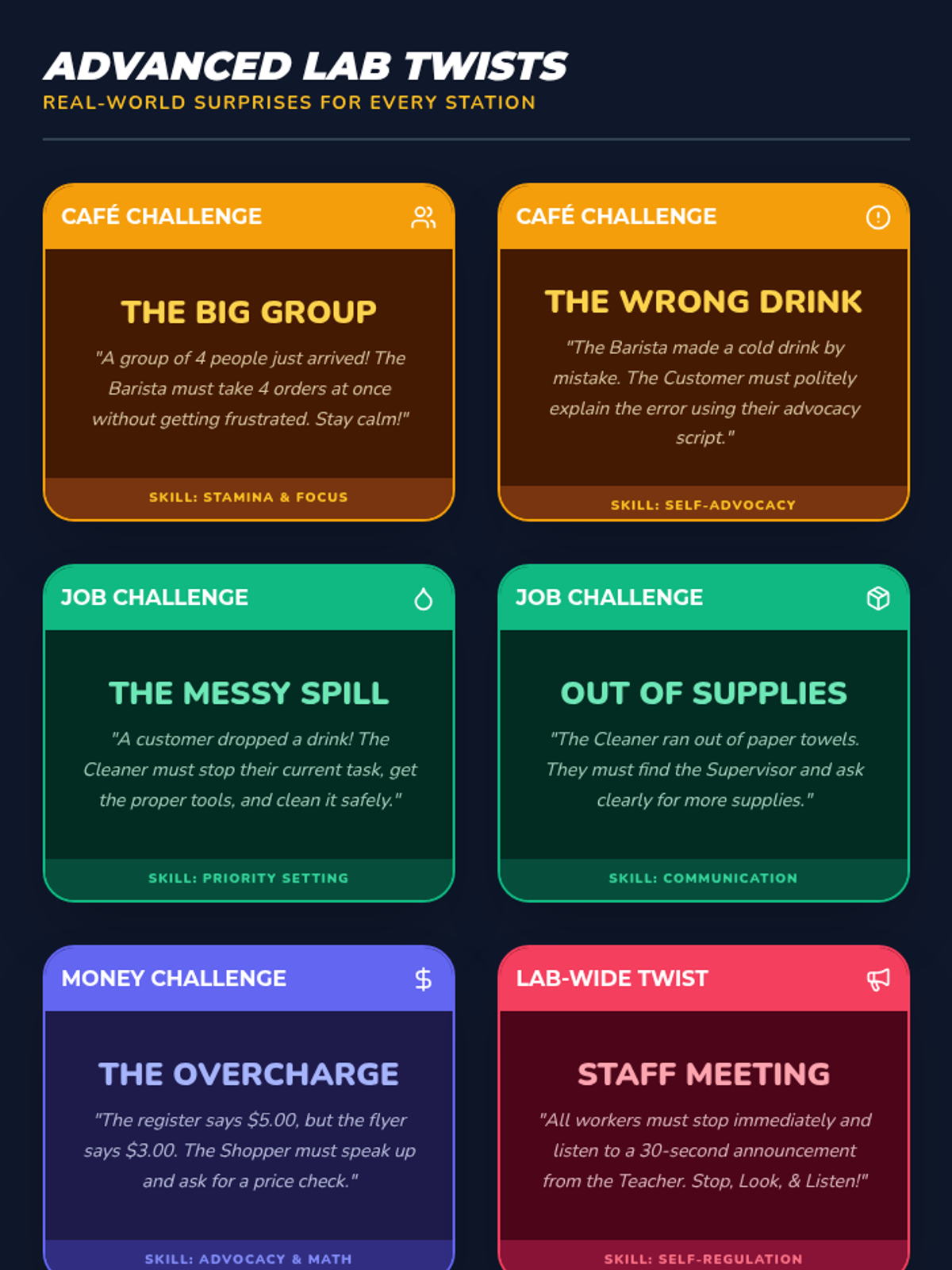
A comprehensive life skills rotation lesson covering budgeting, social interactions at a cafe, job skills (stocking/packing), and self-advocacy through role-play and game-based learning.
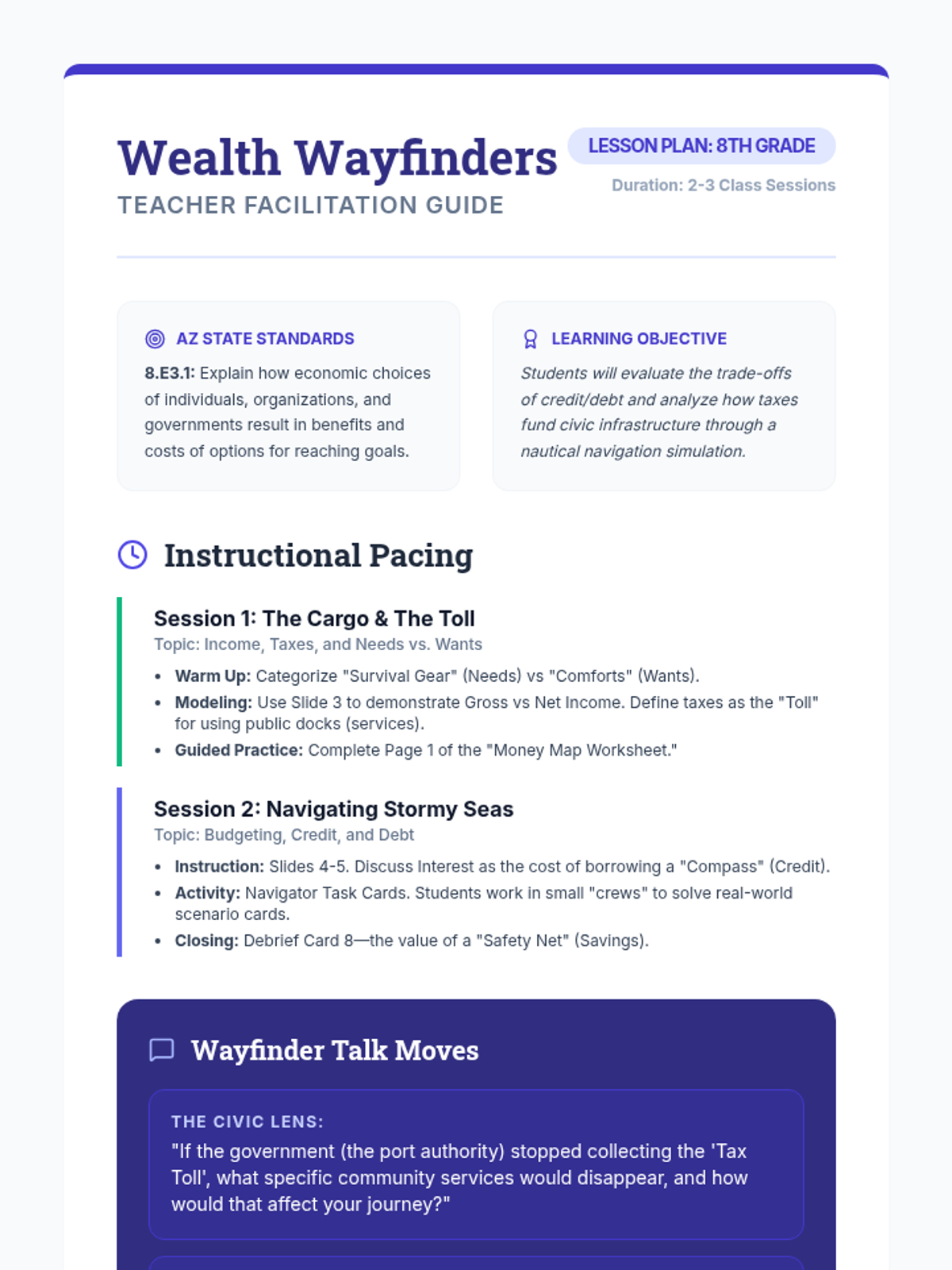
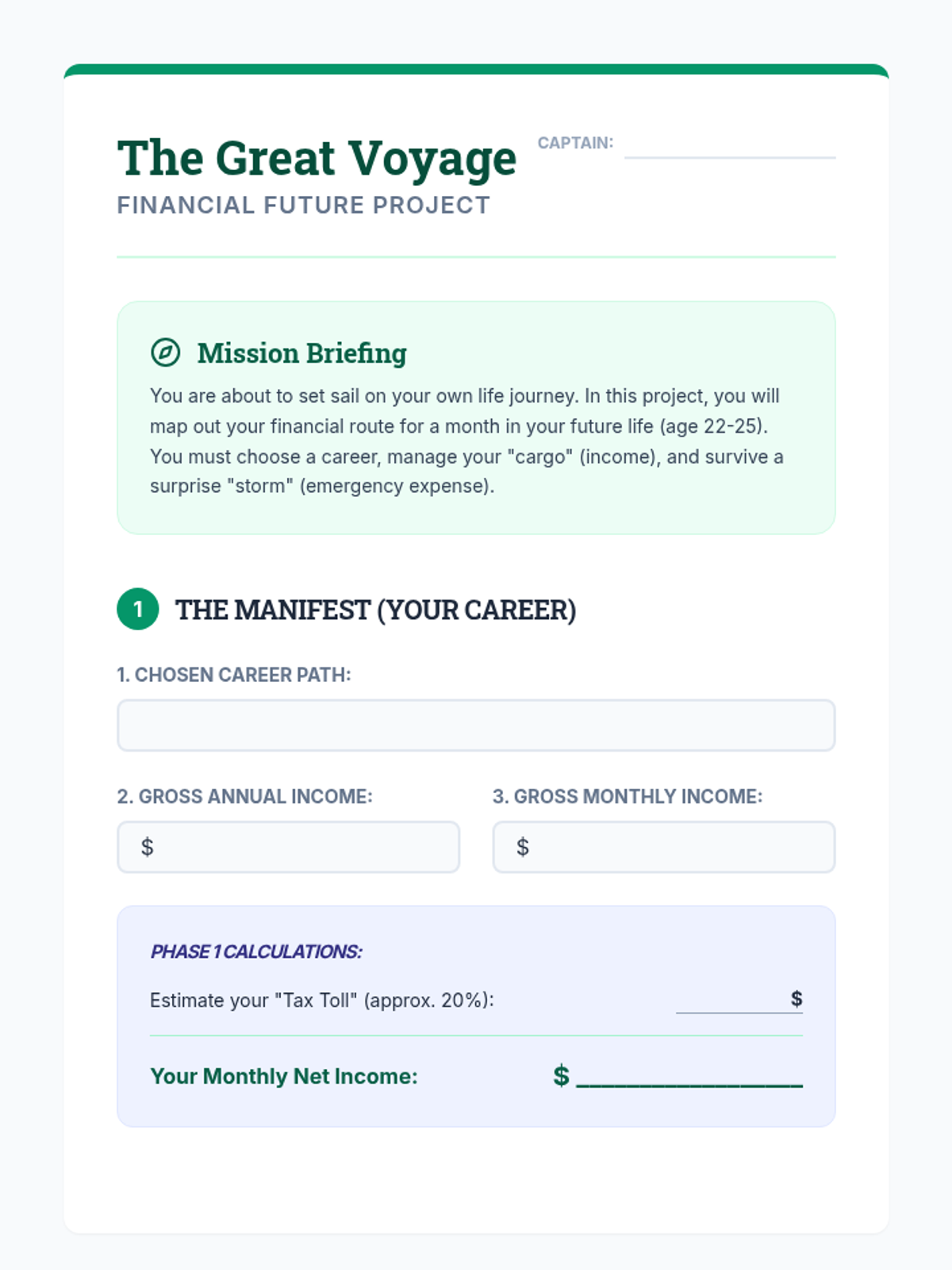
An advanced financial literacy lesson for 8th-grade Social Studies, connecting individual financial choices to broader economic systems and government services. Aligned with AZ Standard 8.E3.1, students analyze the trade-offs of credit, debt, and civic contributions through taxes.
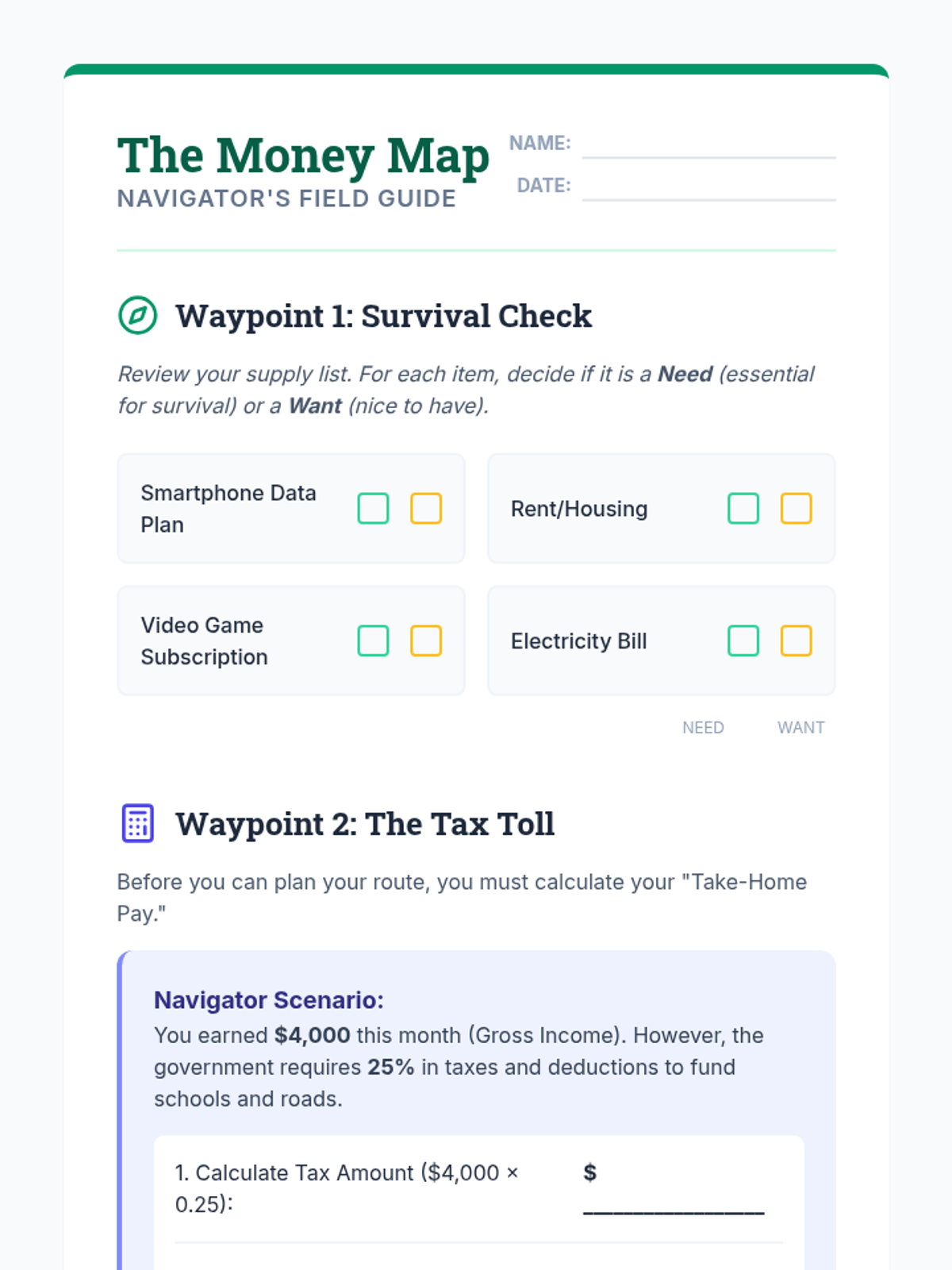
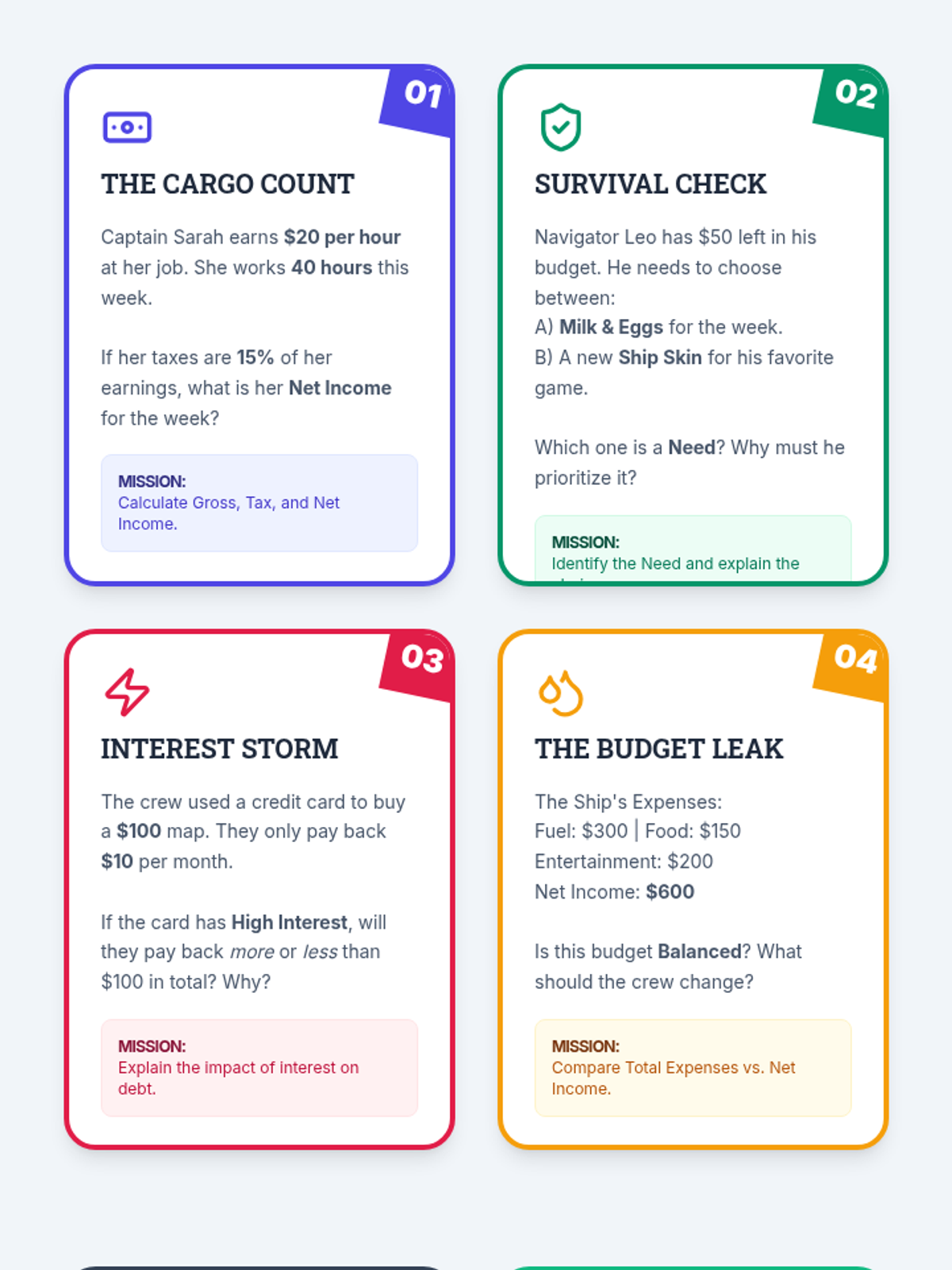
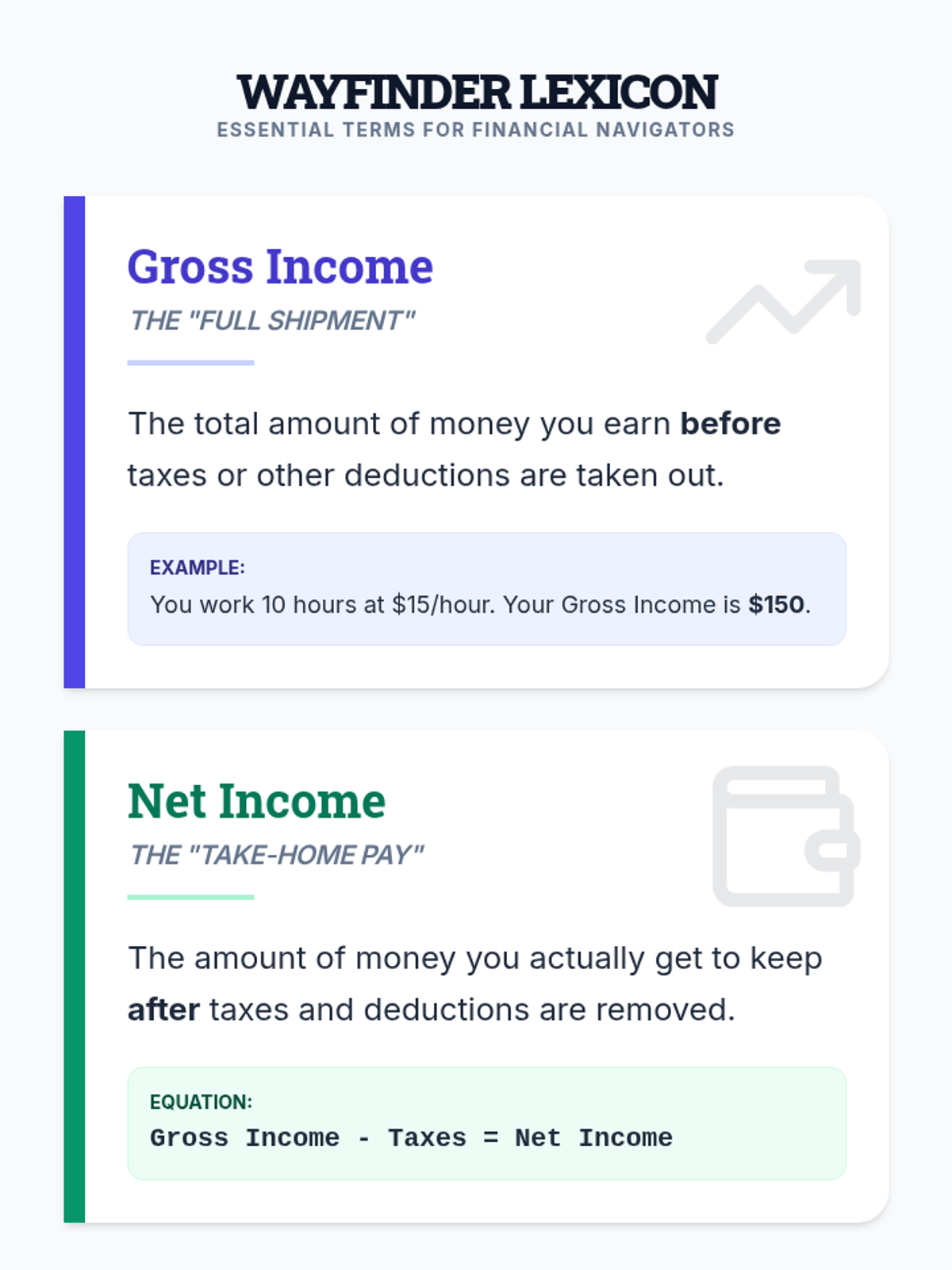
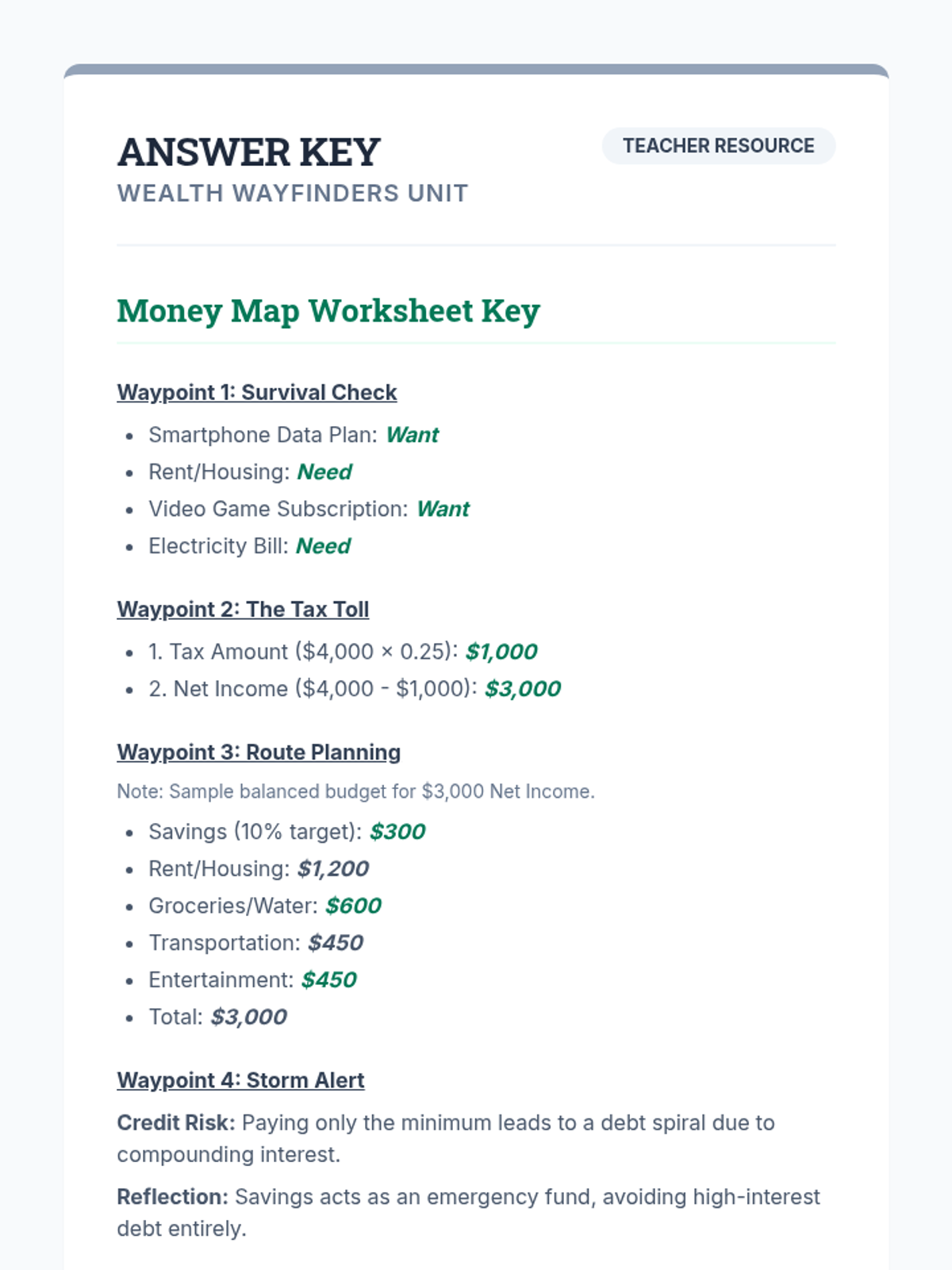
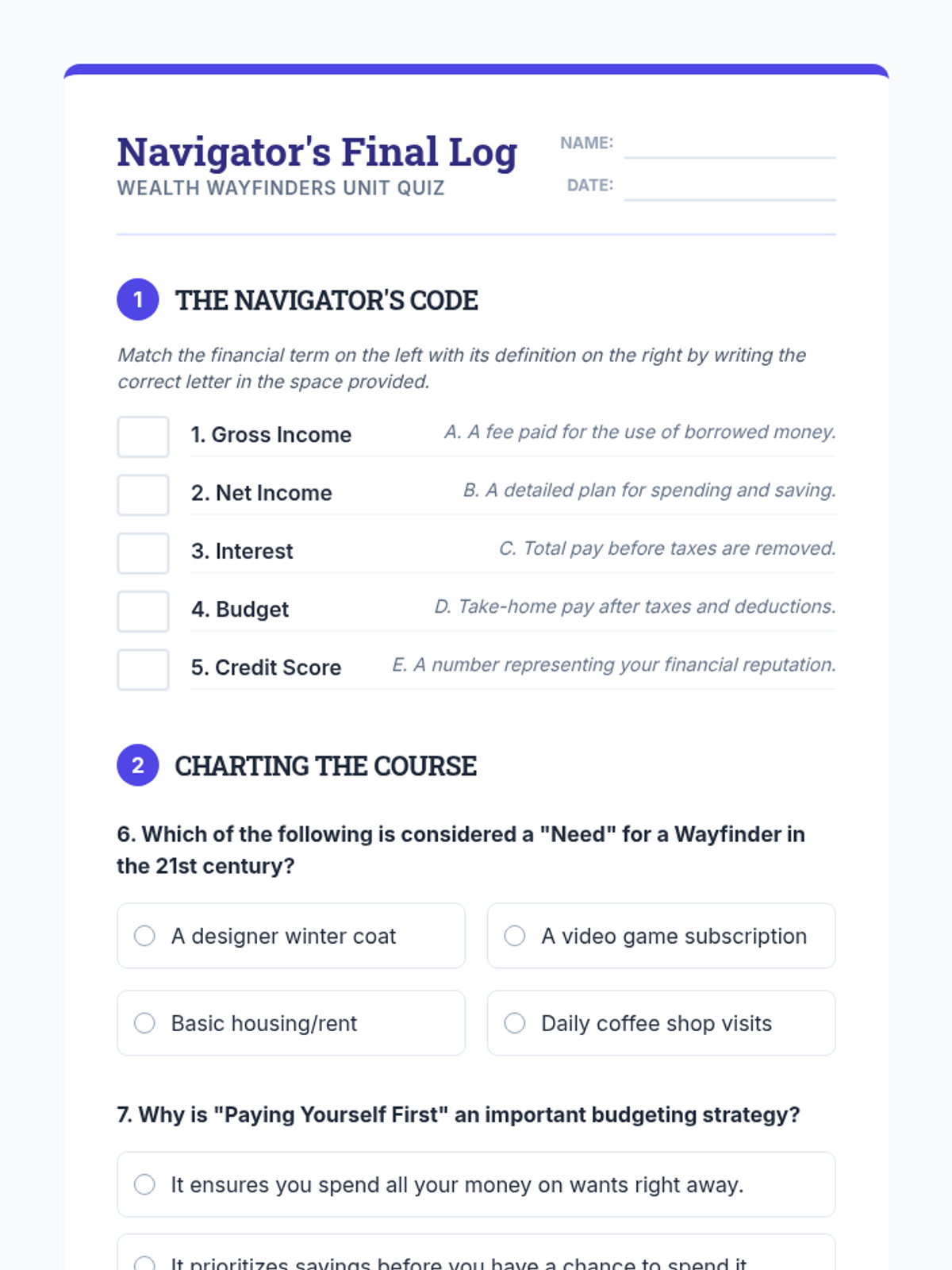
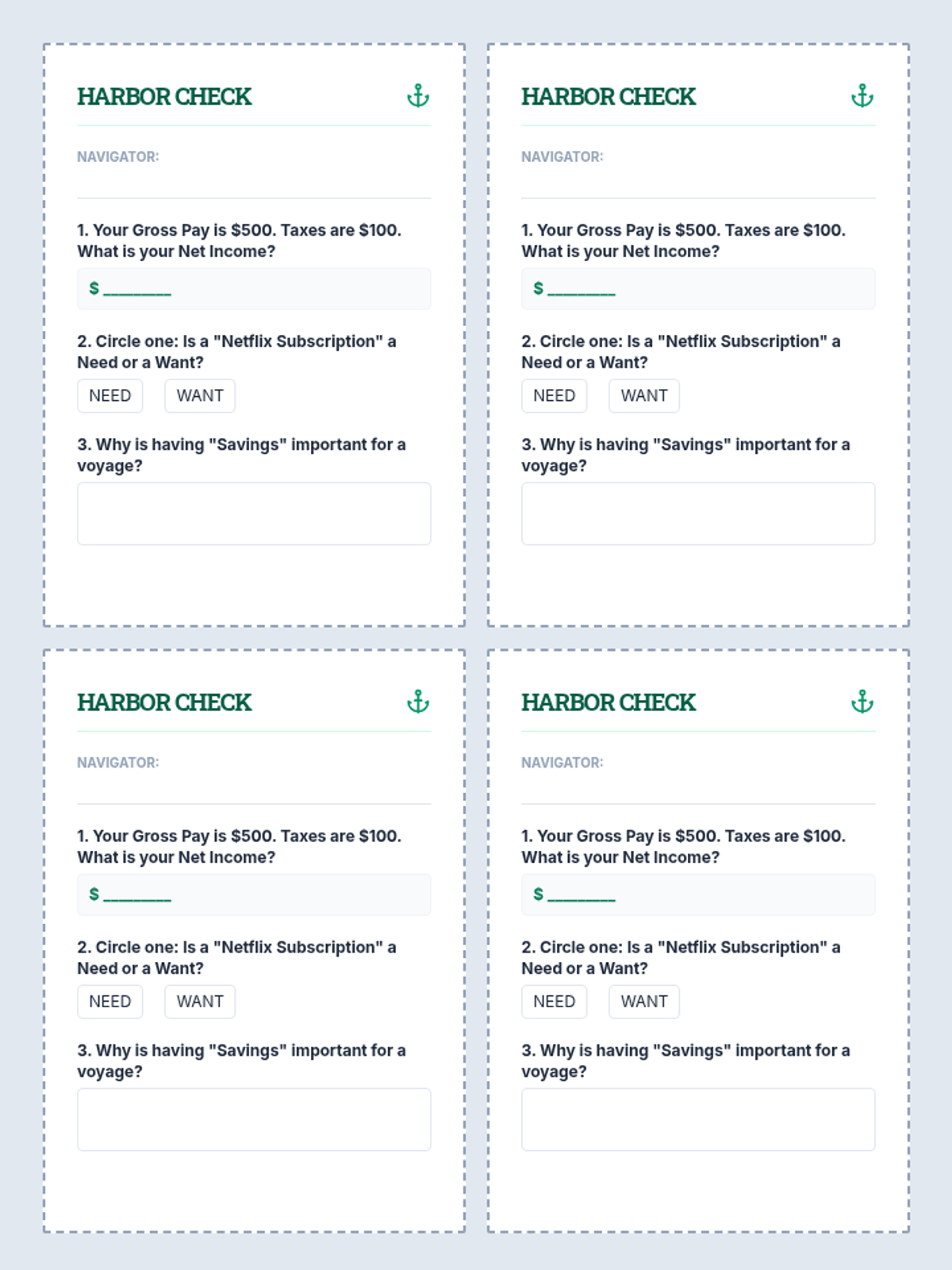
A foundational lesson on personal finance basics, including budgeting, saving, credit, debt, and taxes, designed for 7th-grade Social Studies. Students explore how economic choices impact their future wealth and stability through a navigation-themed exploration.
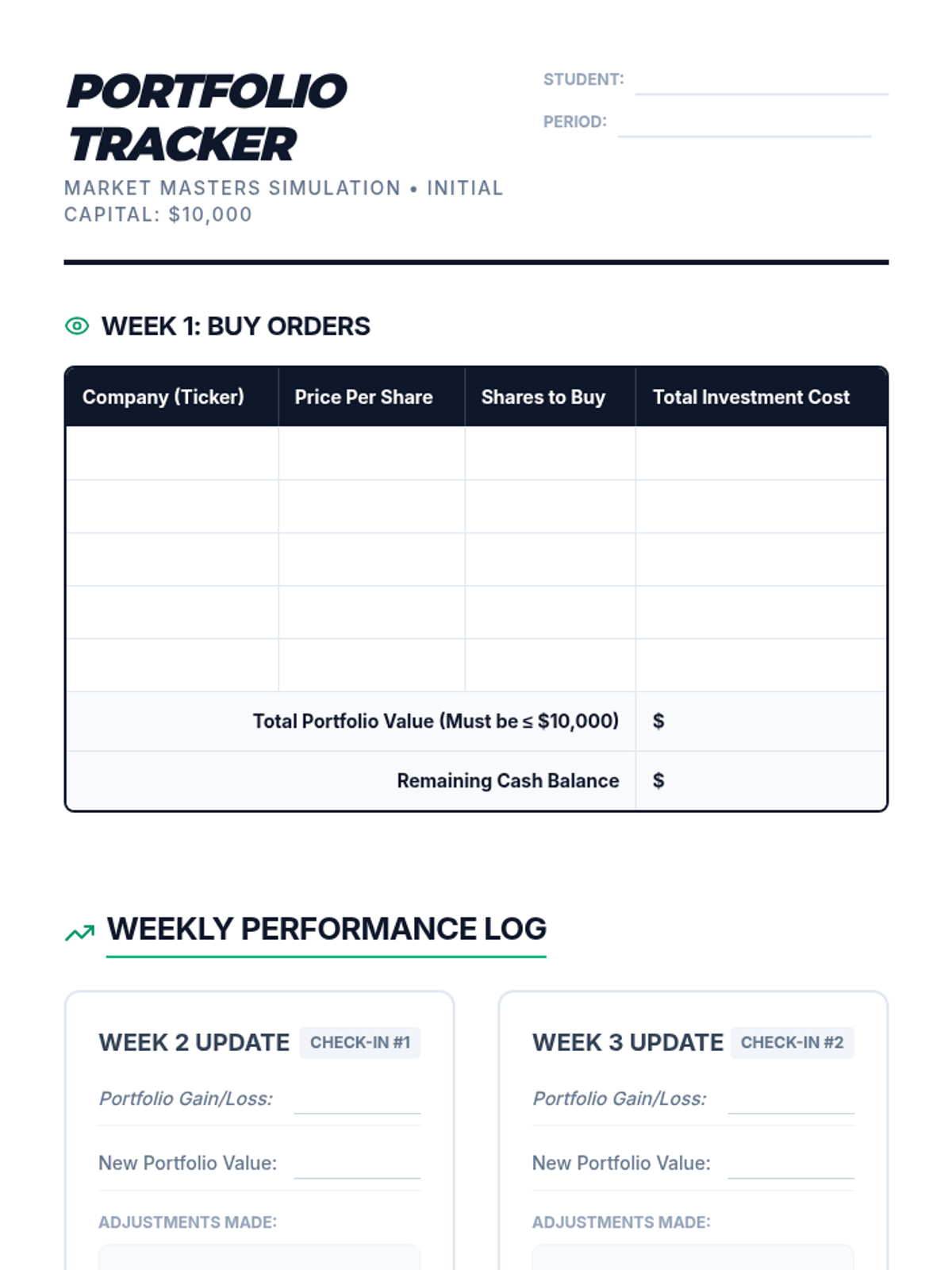
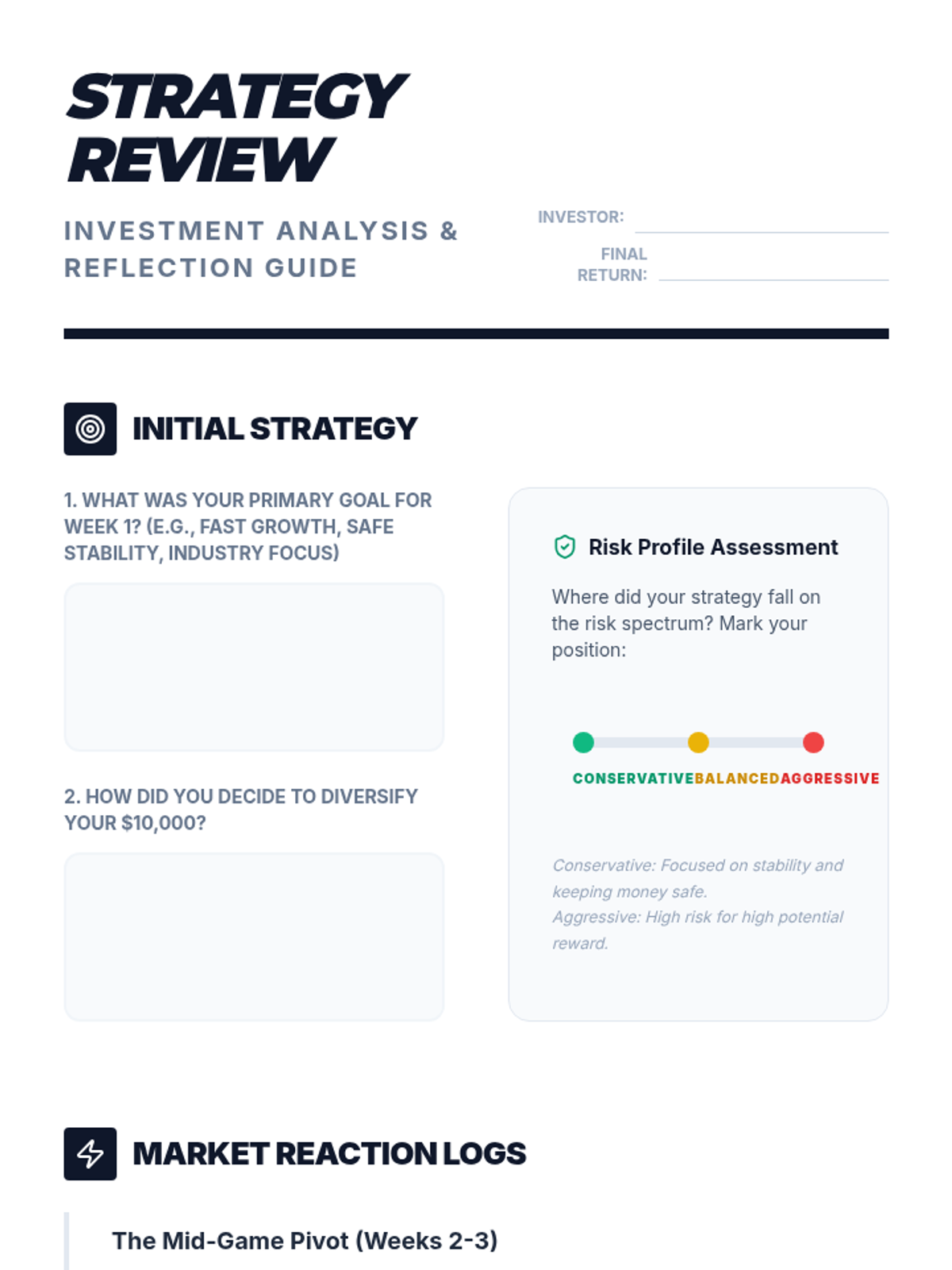
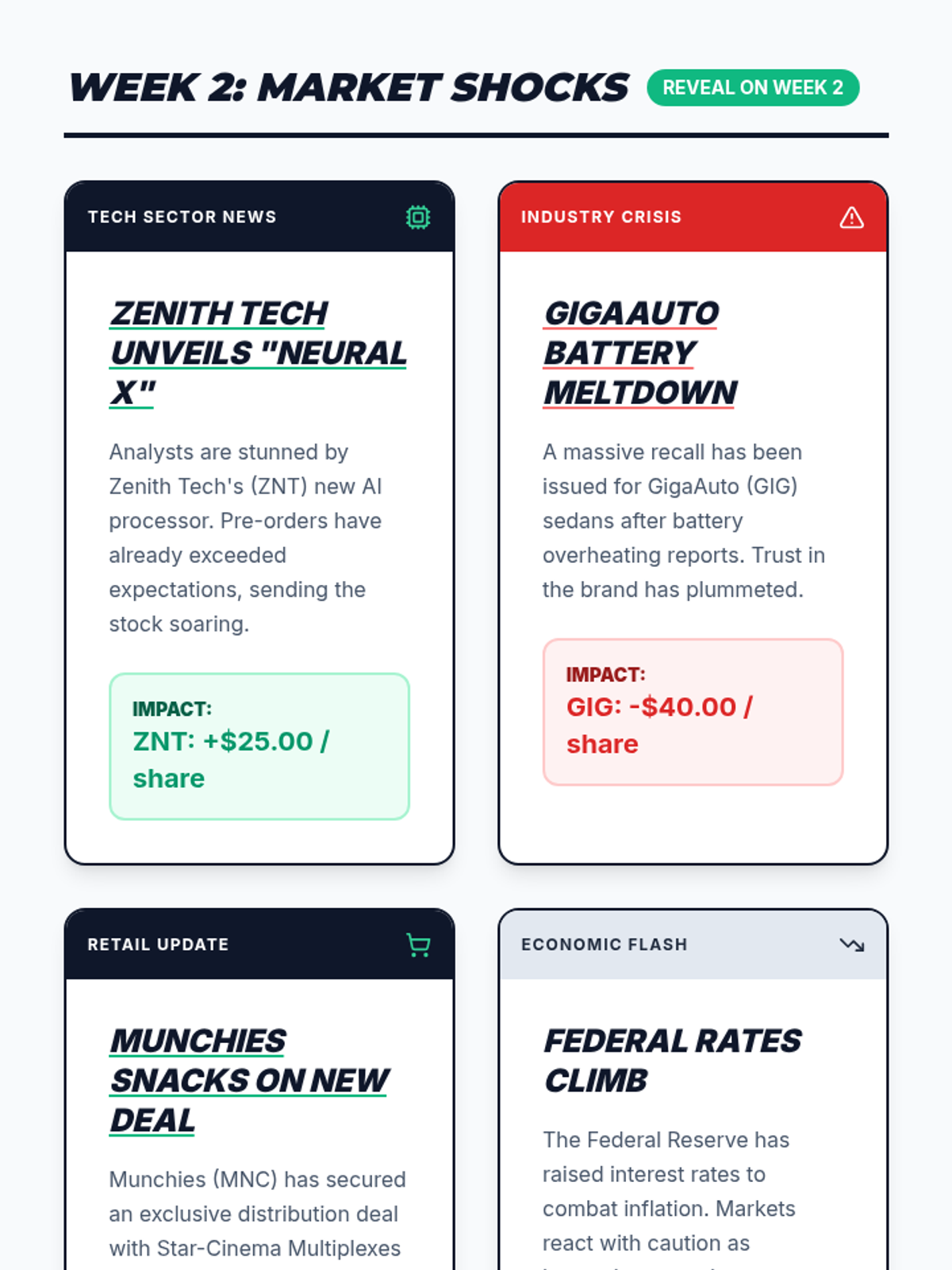
A core simulation lesson where students manage a $10,000 portfolio over four weeks, reacting to market news and tracking their gains or losses.
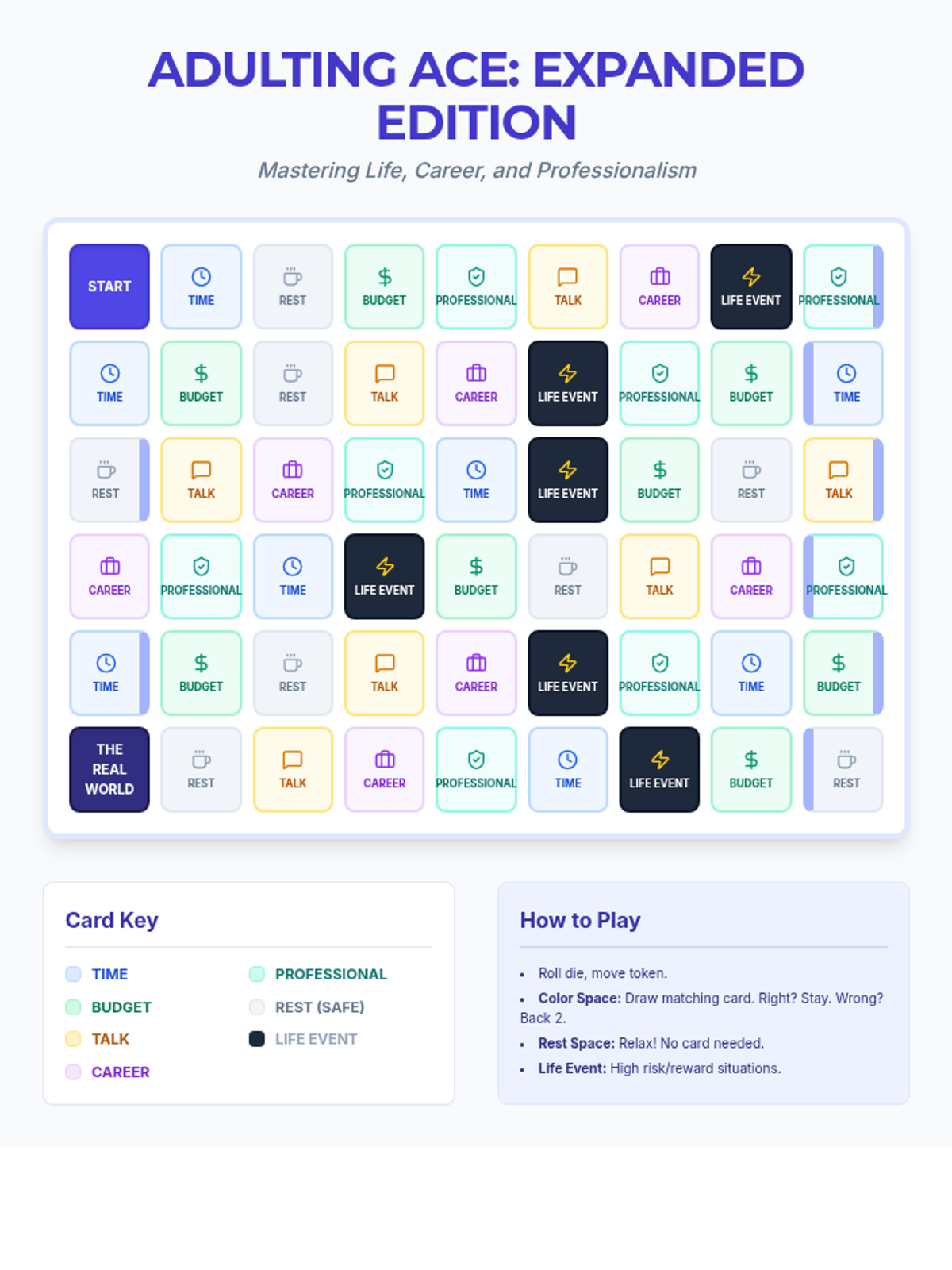
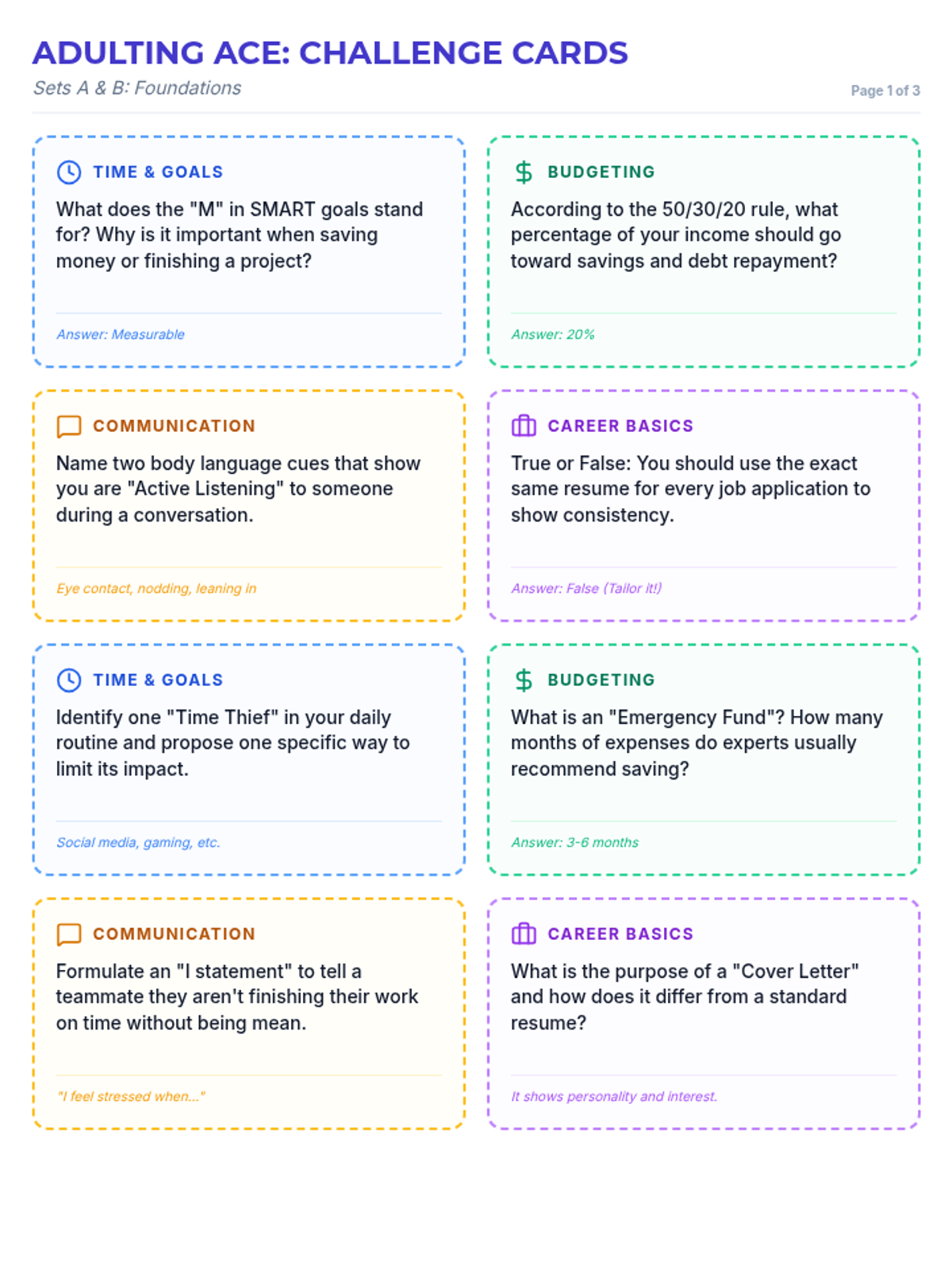
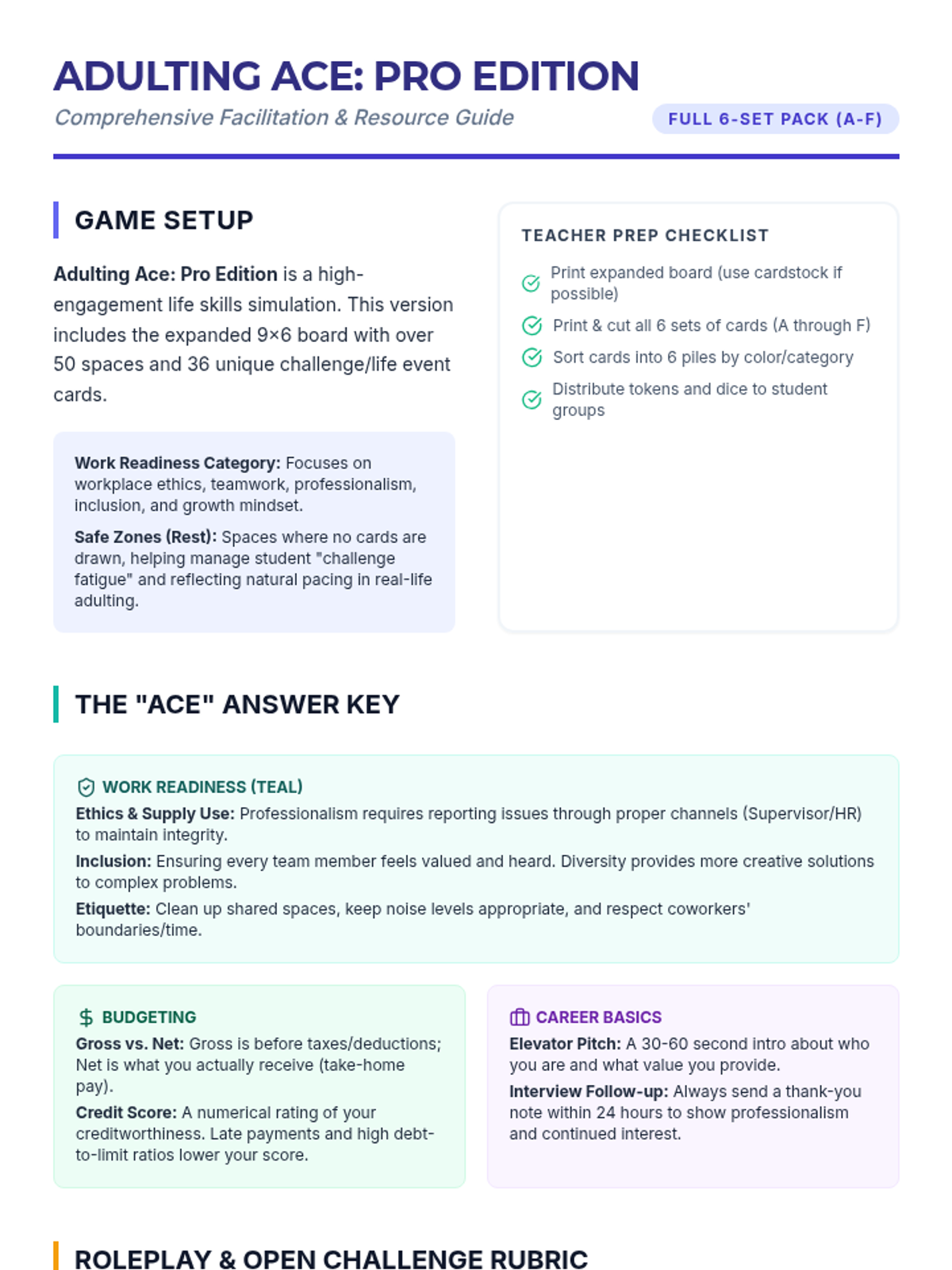
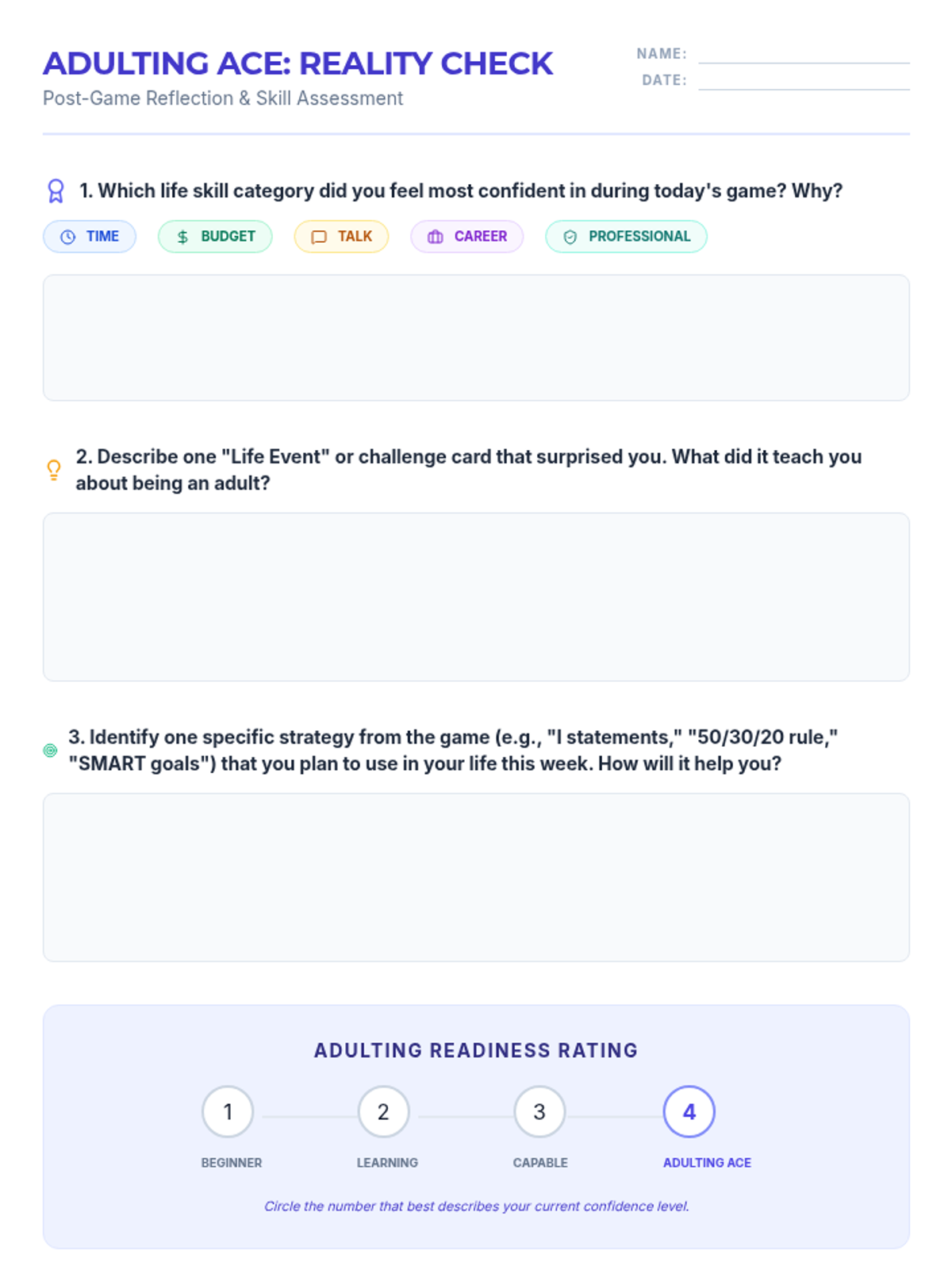
An interactive board game experience covering essential life skills including financial literacy, time management, communication, and career readiness.
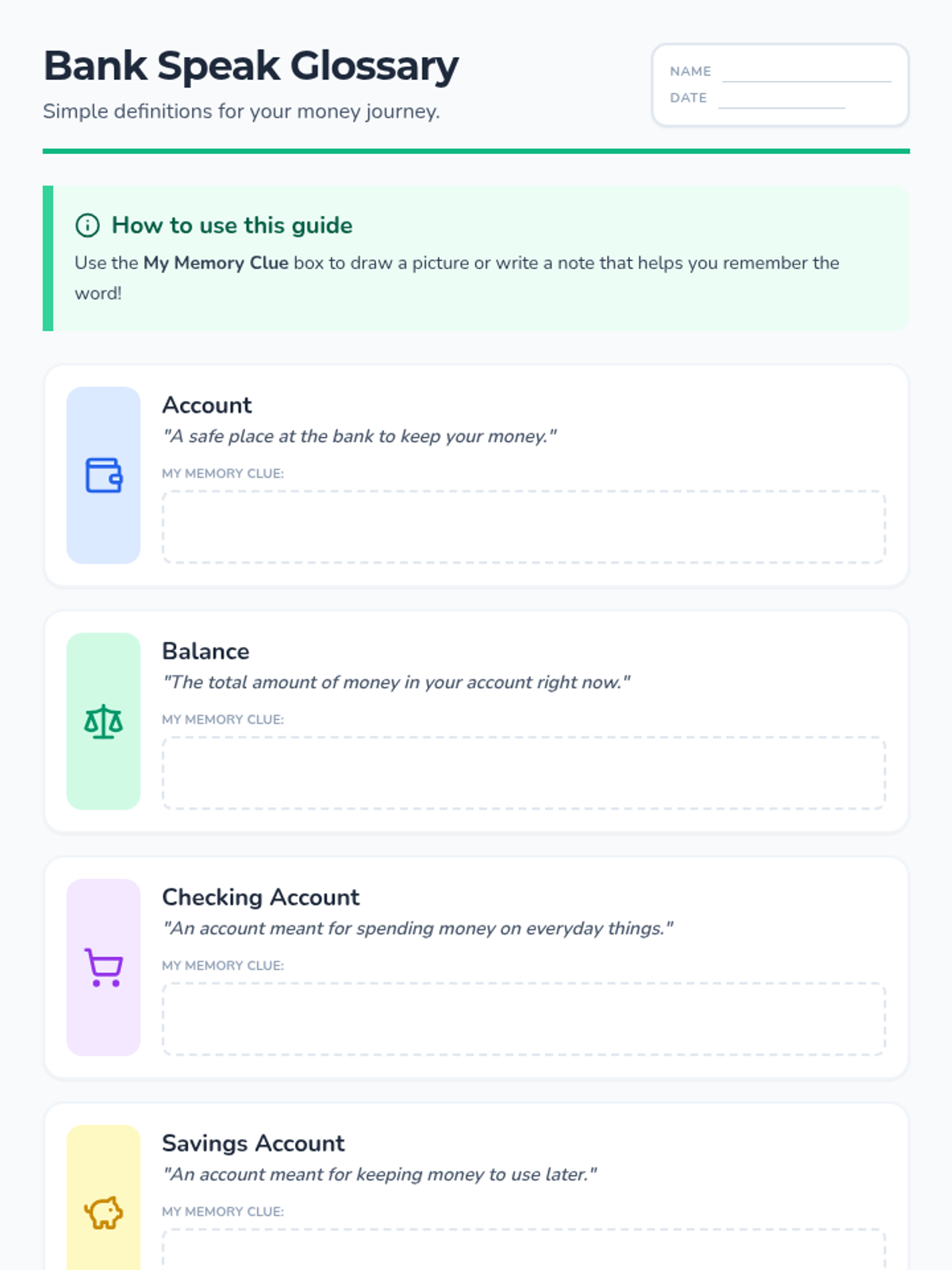
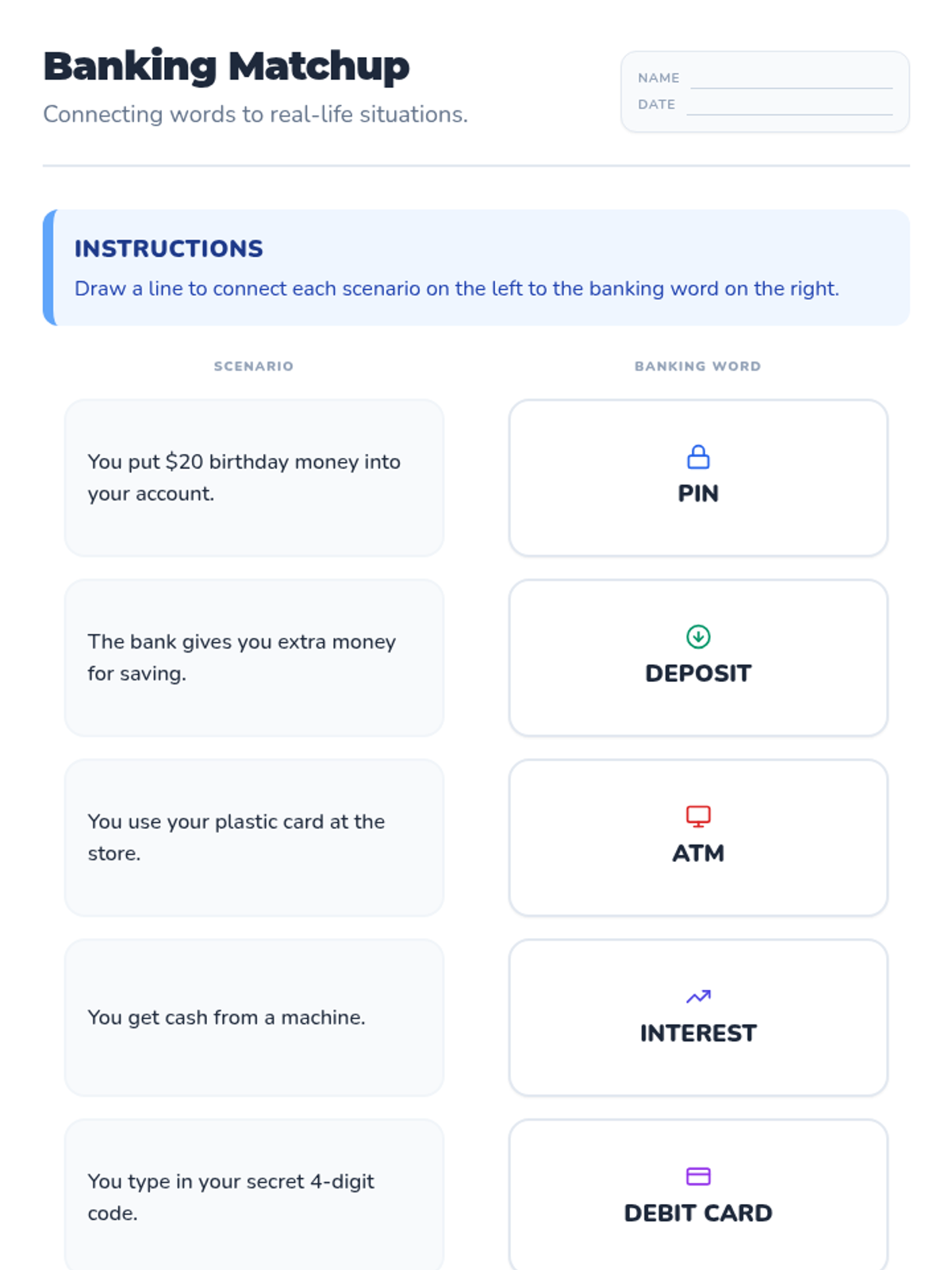
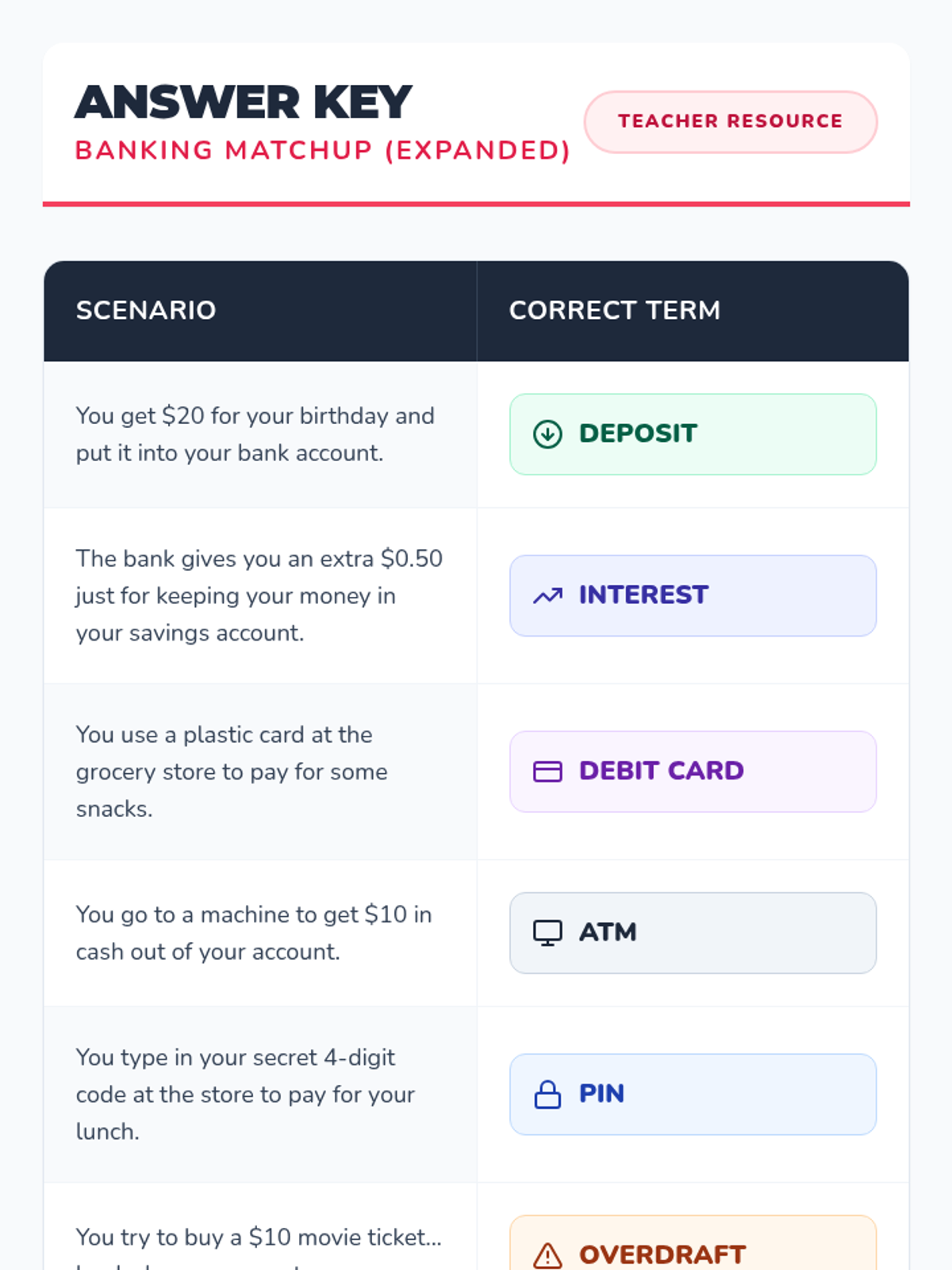
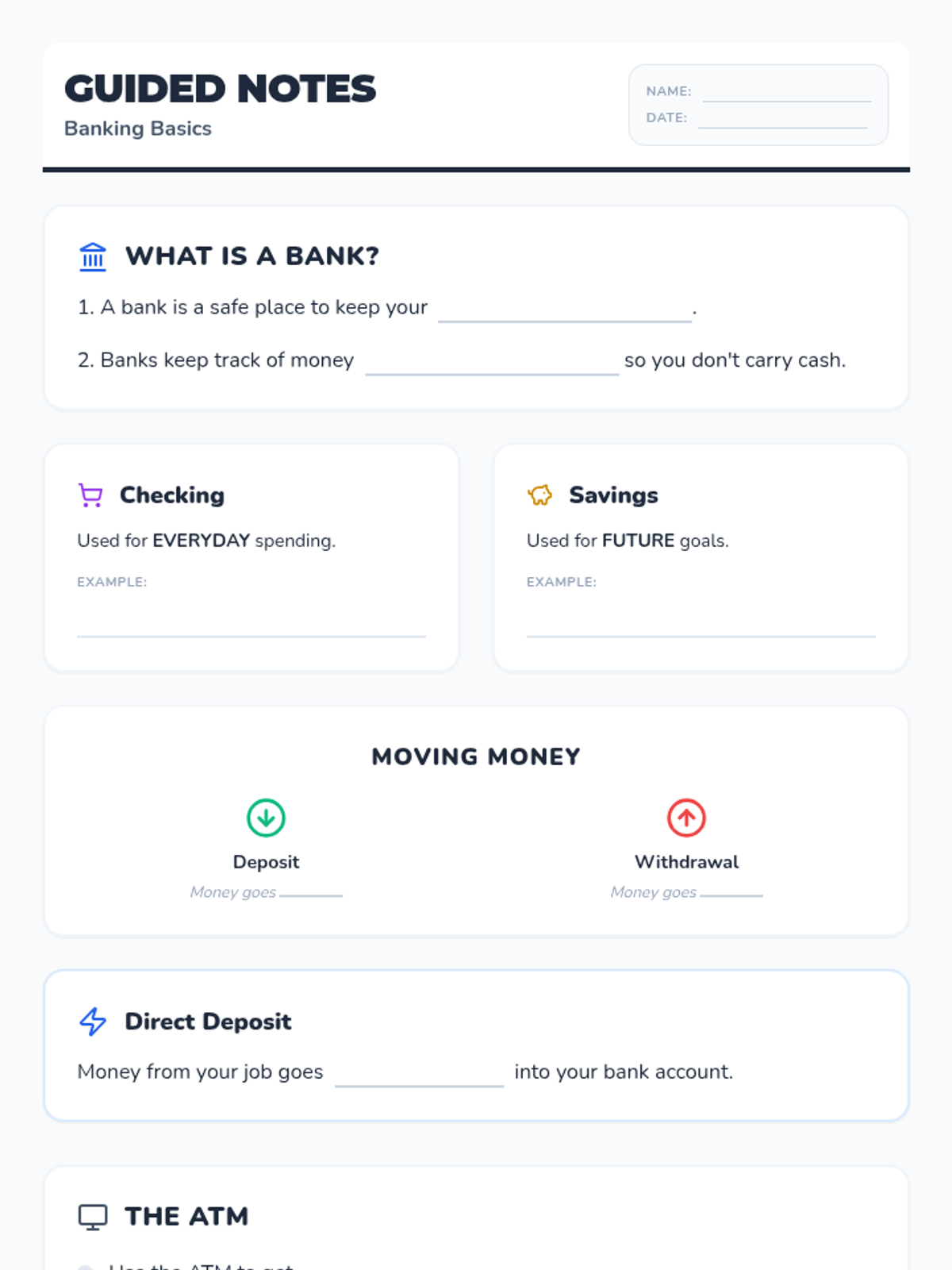
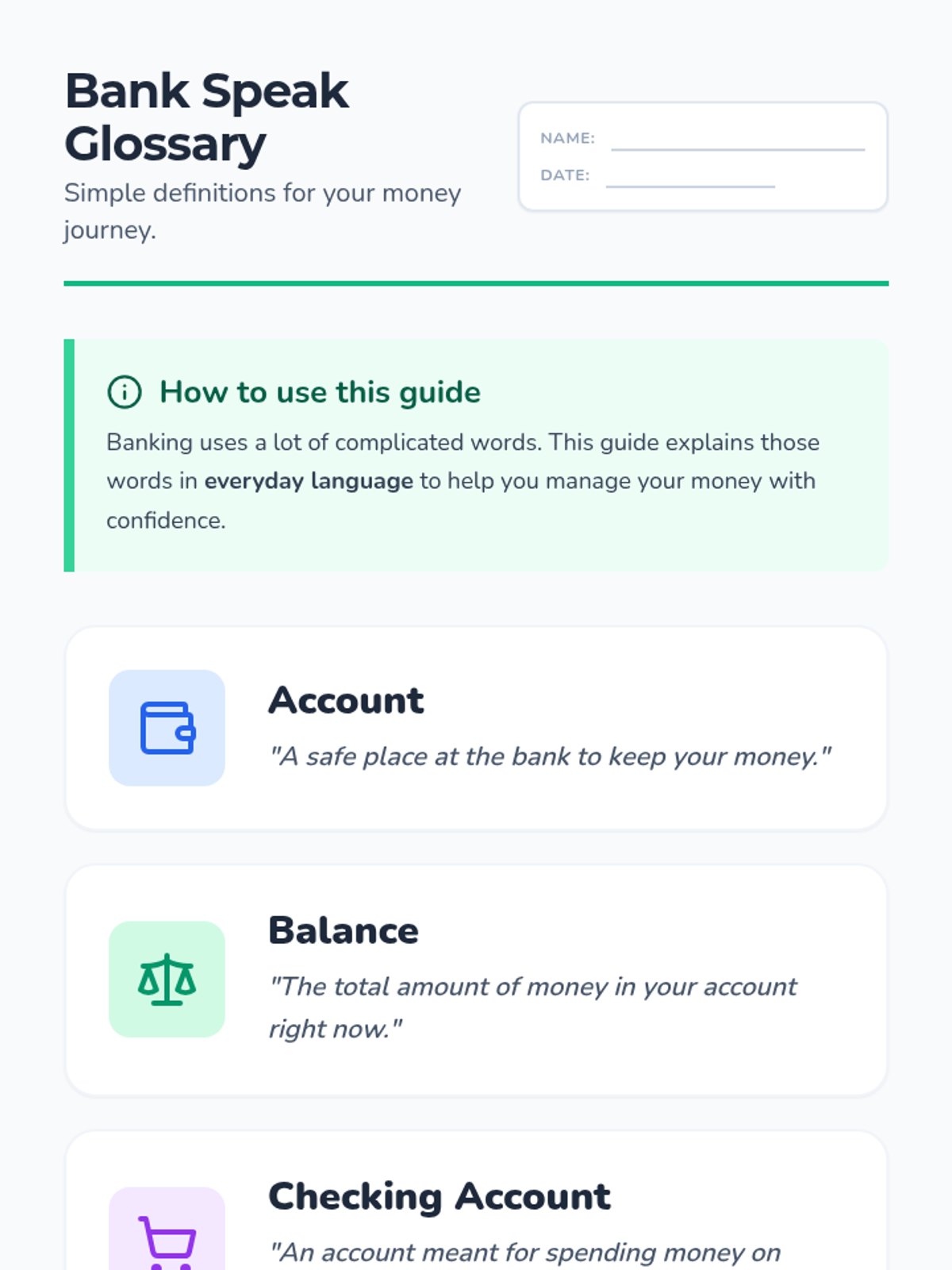
A foundational lesson introducing essential banking vocabulary for checking and savings accounts using plain language and visual supports.
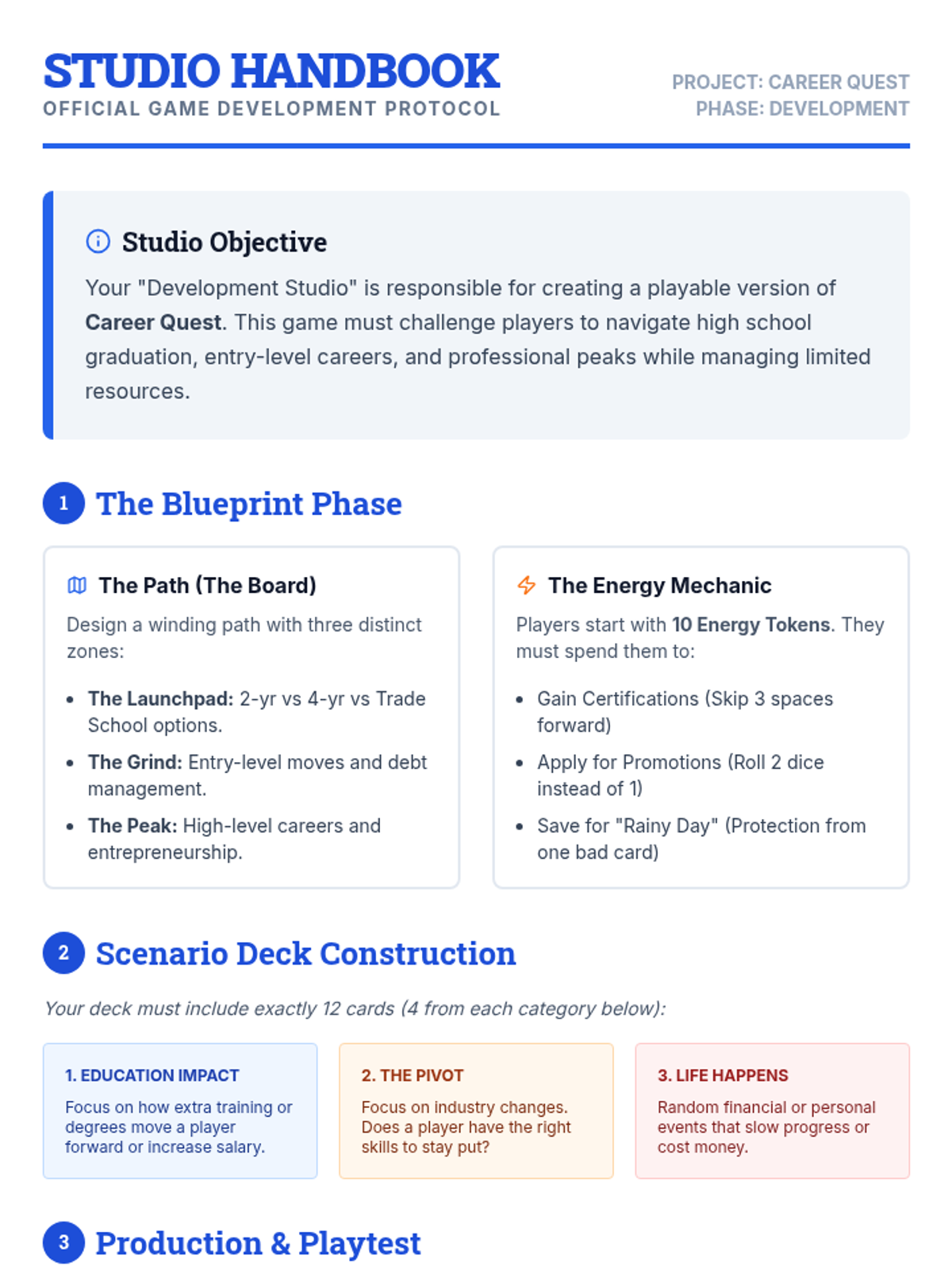
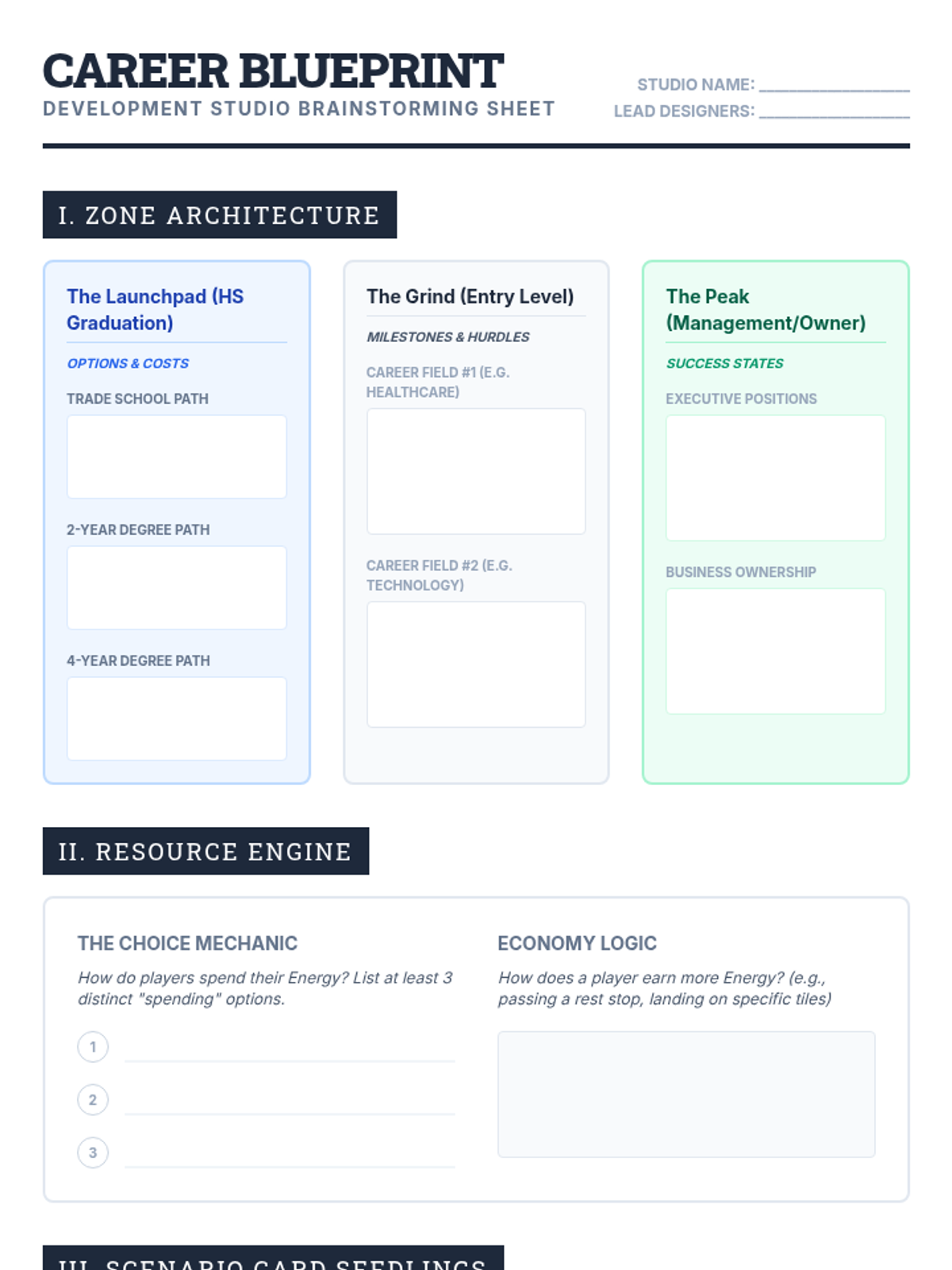
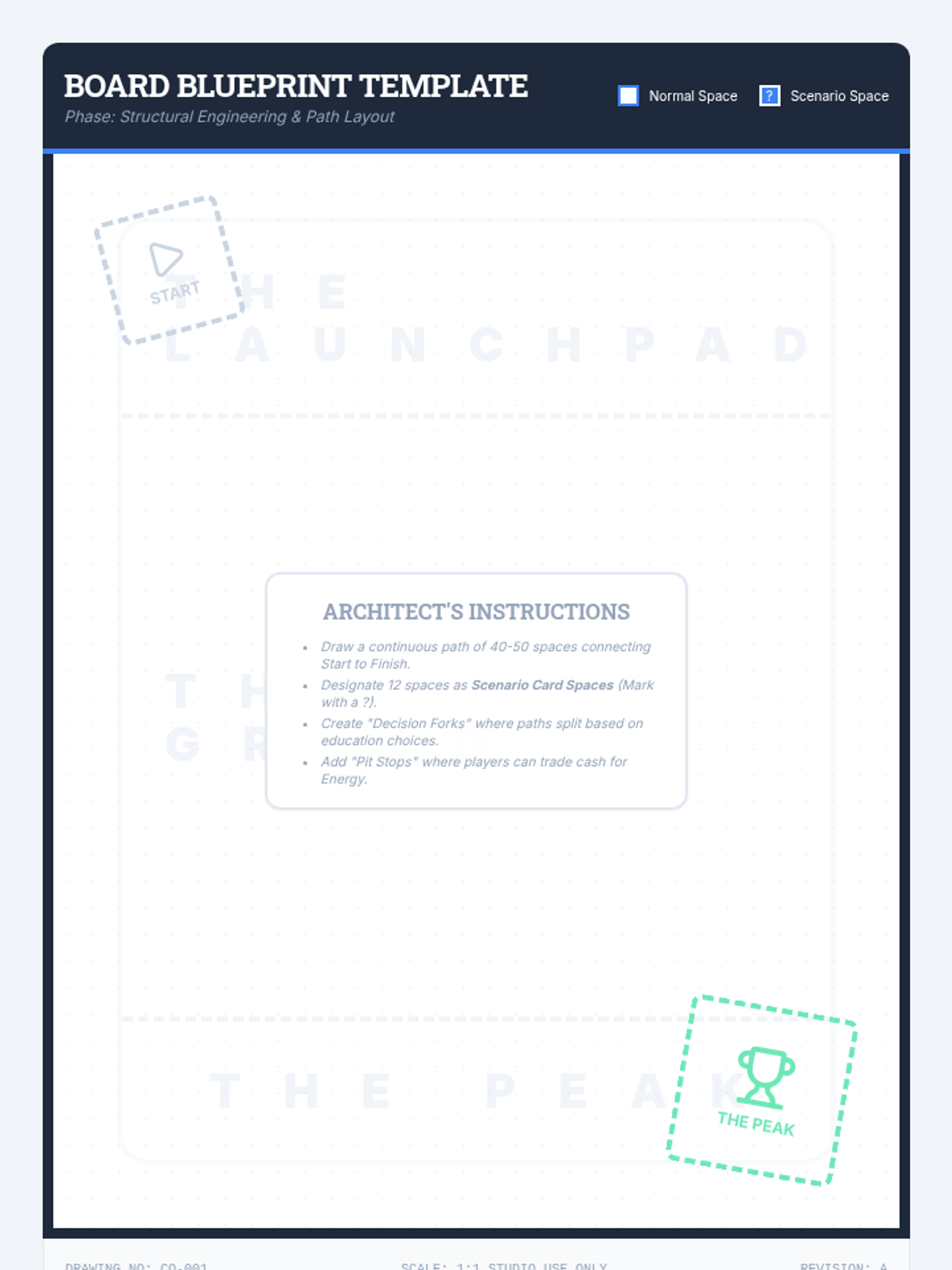
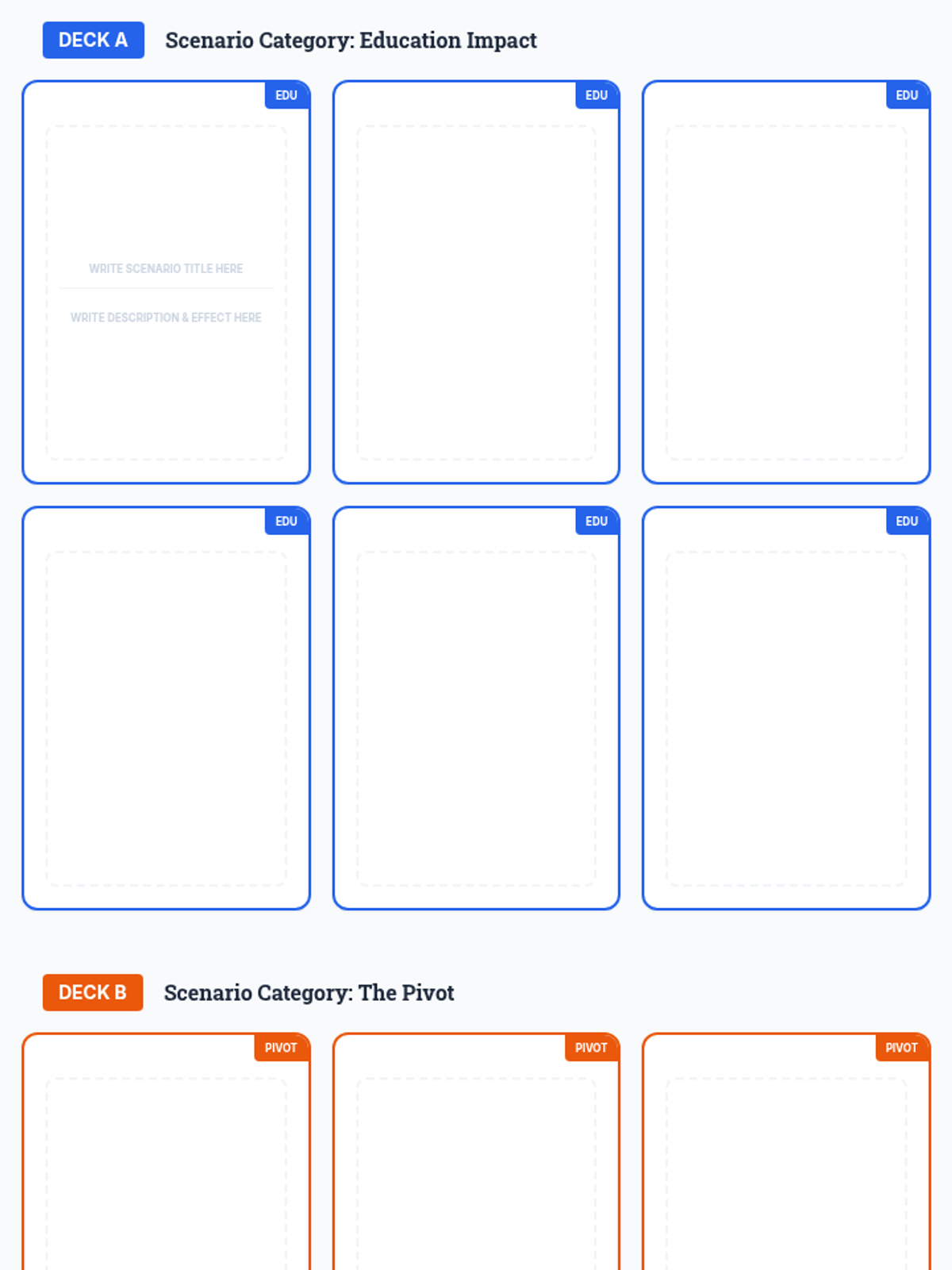
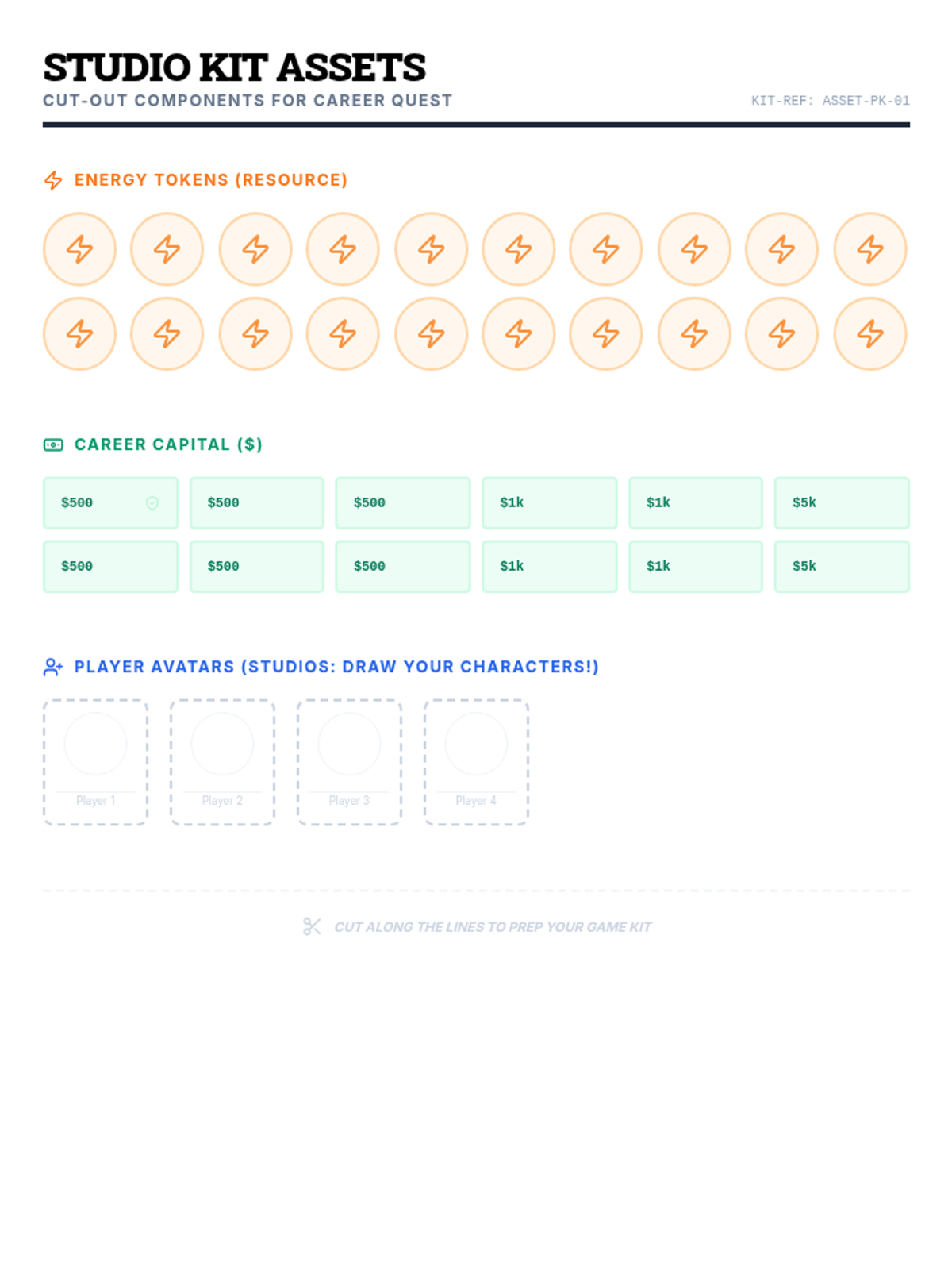
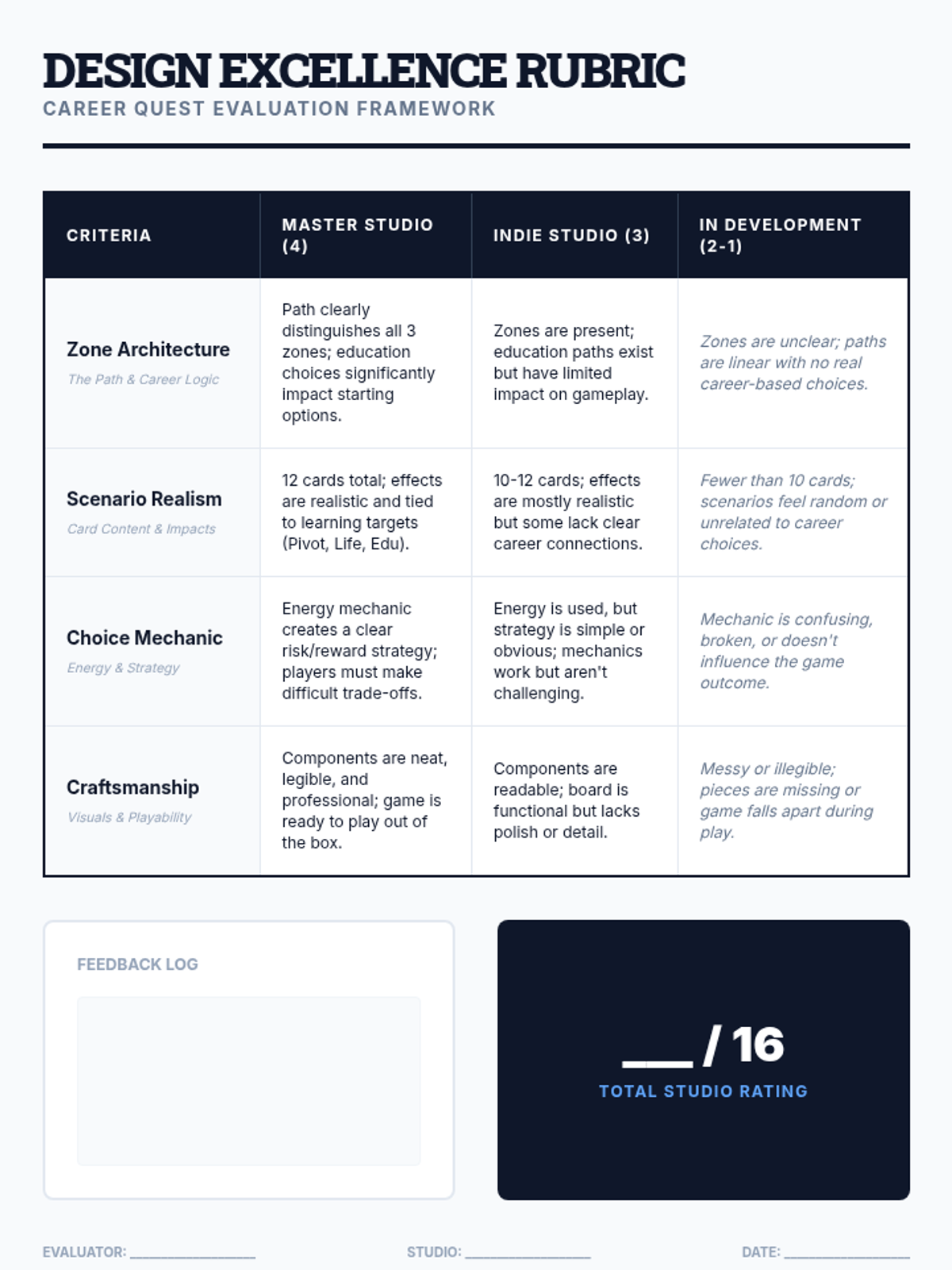
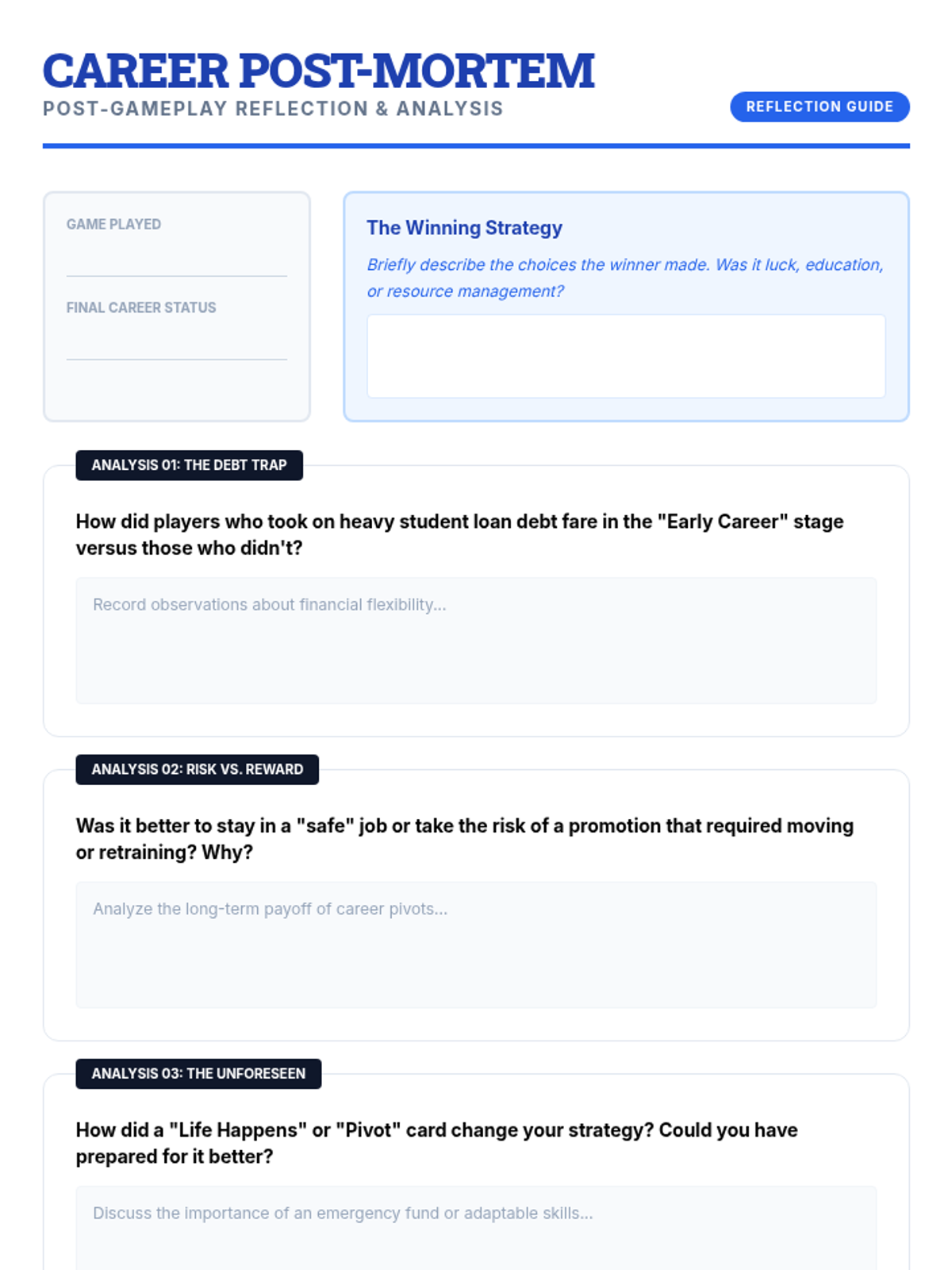
A multi-day project where students act as 'Development Studios' to design, build, and playtest their own career-themed board games, focusing on the impact of education and life choices on long-term outcomes.
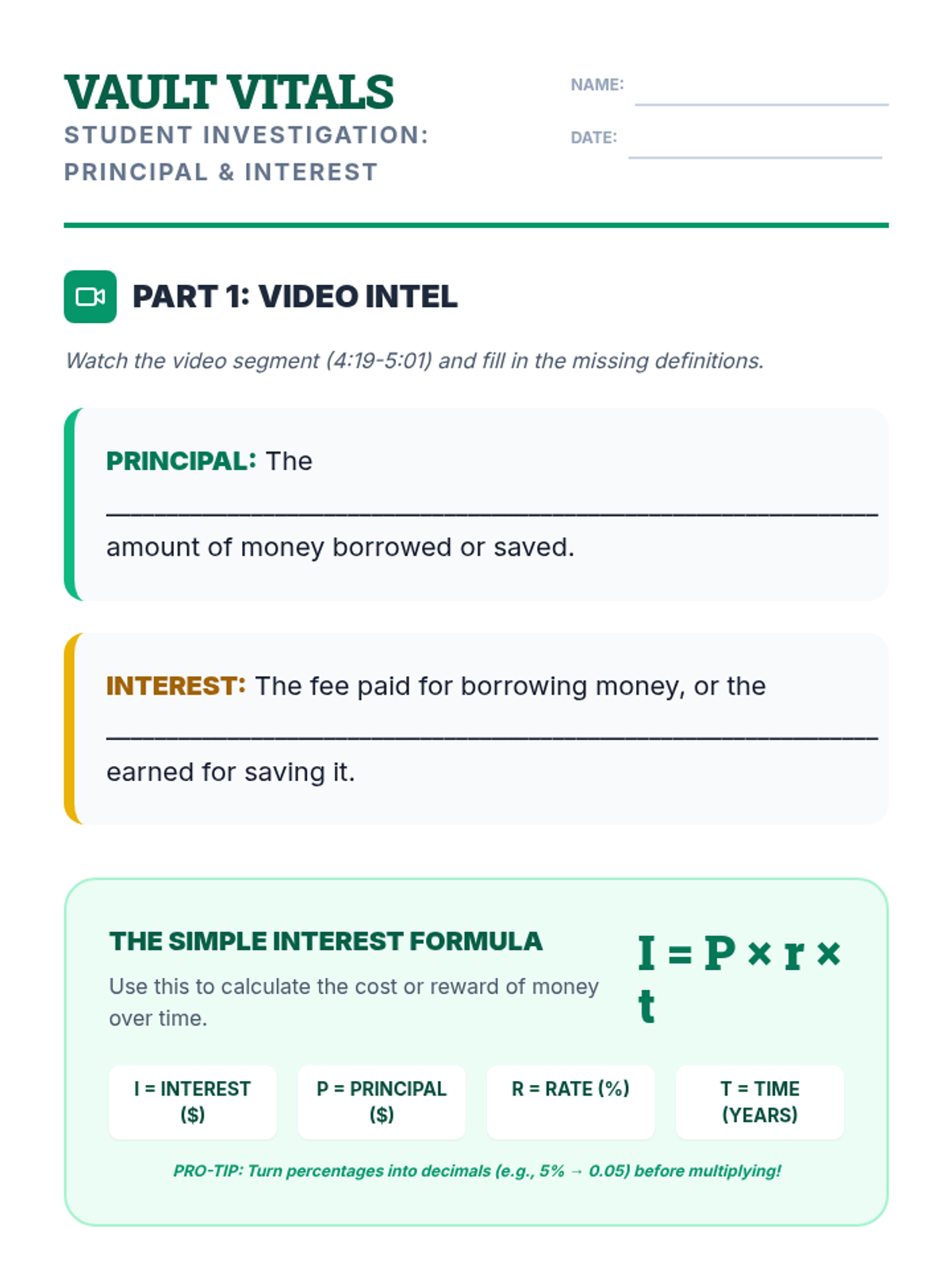
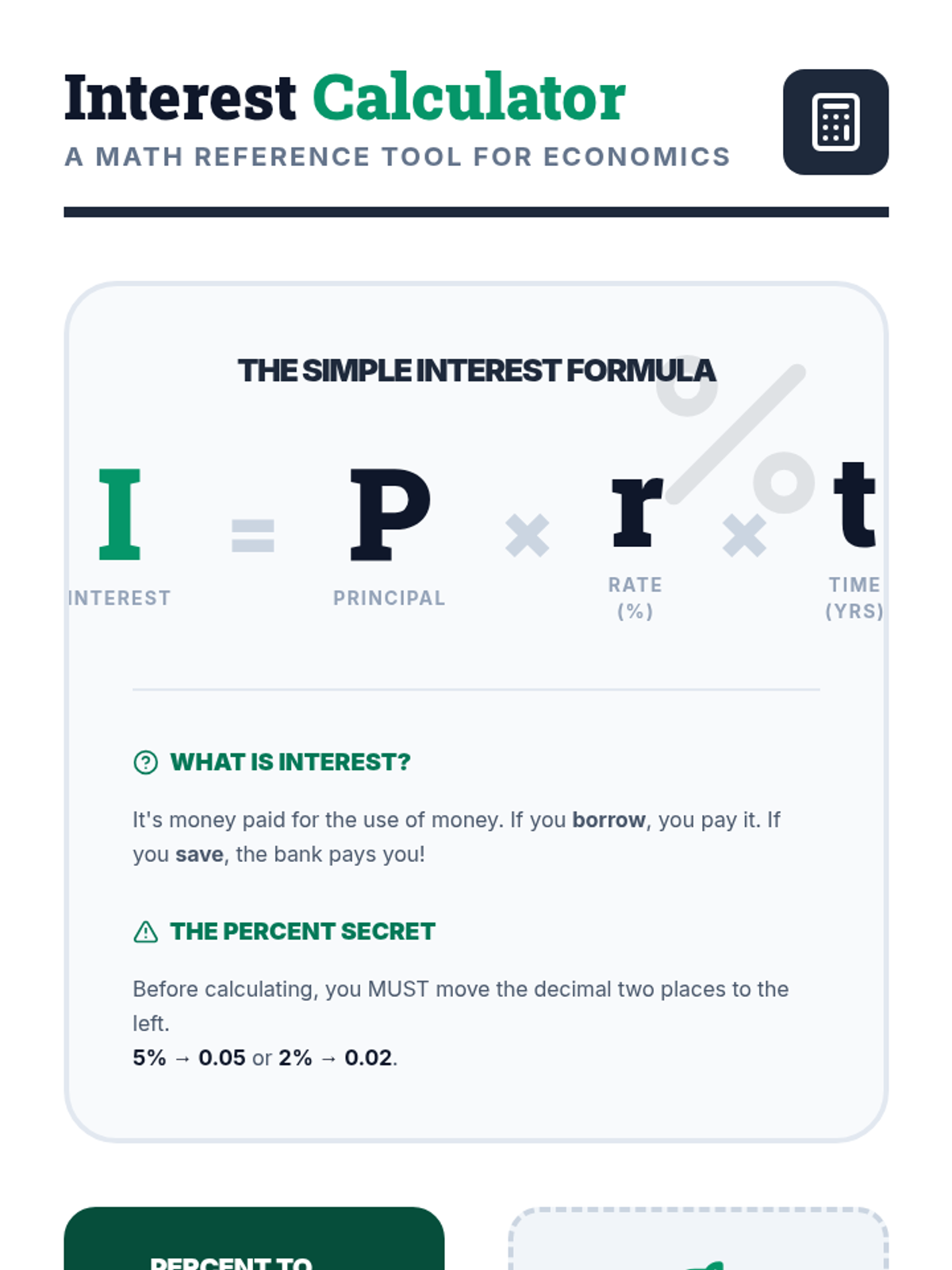
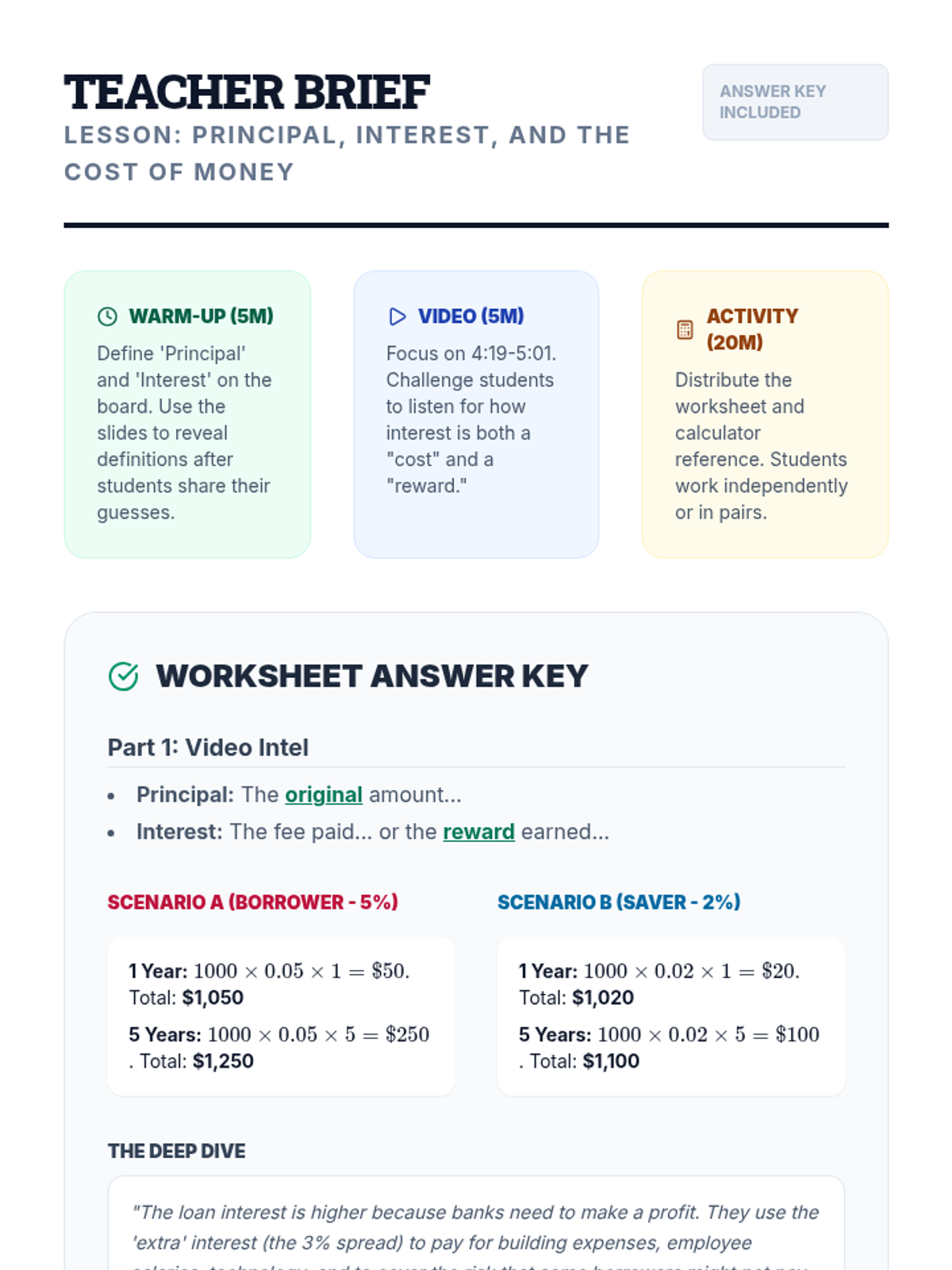
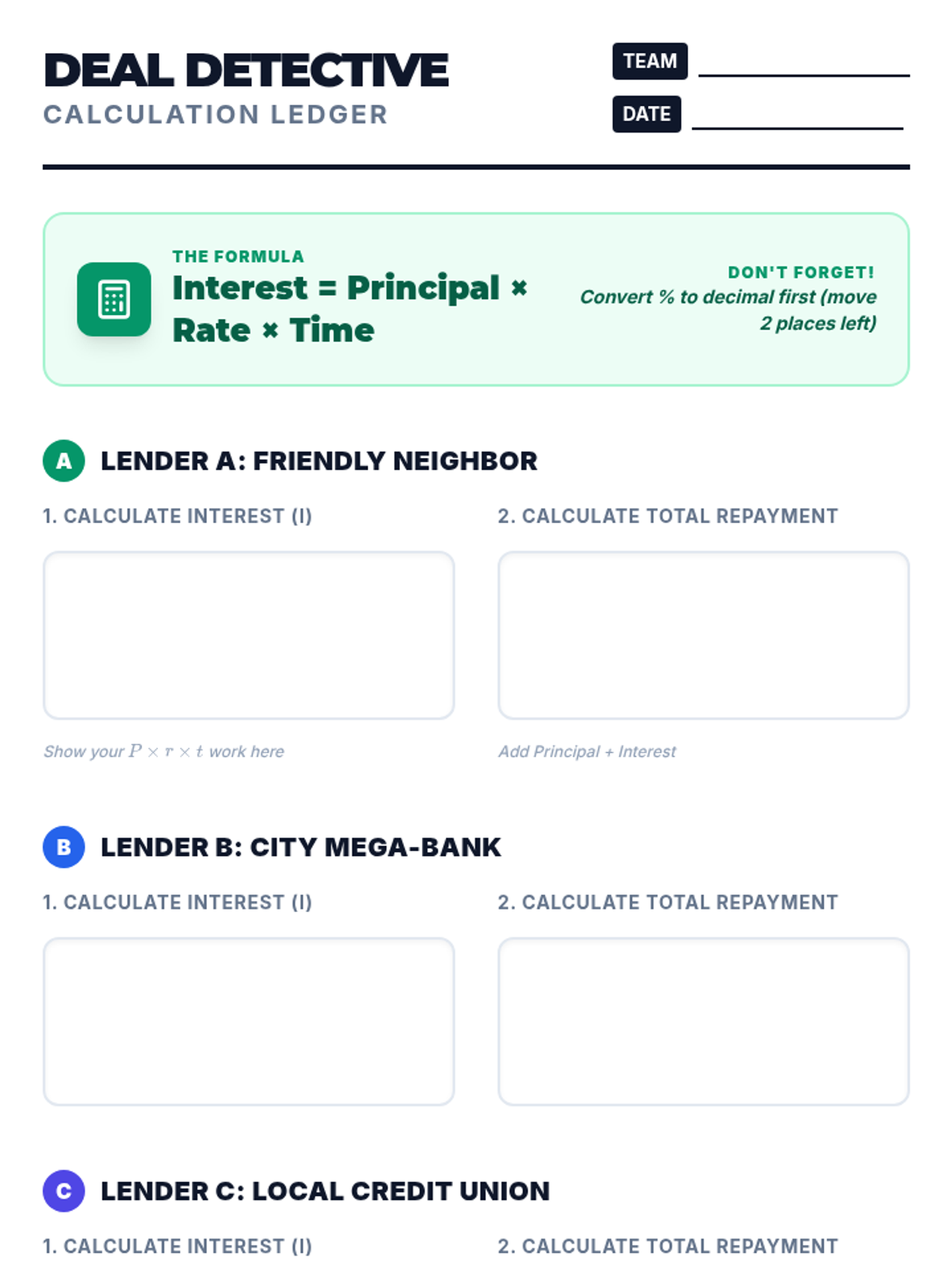
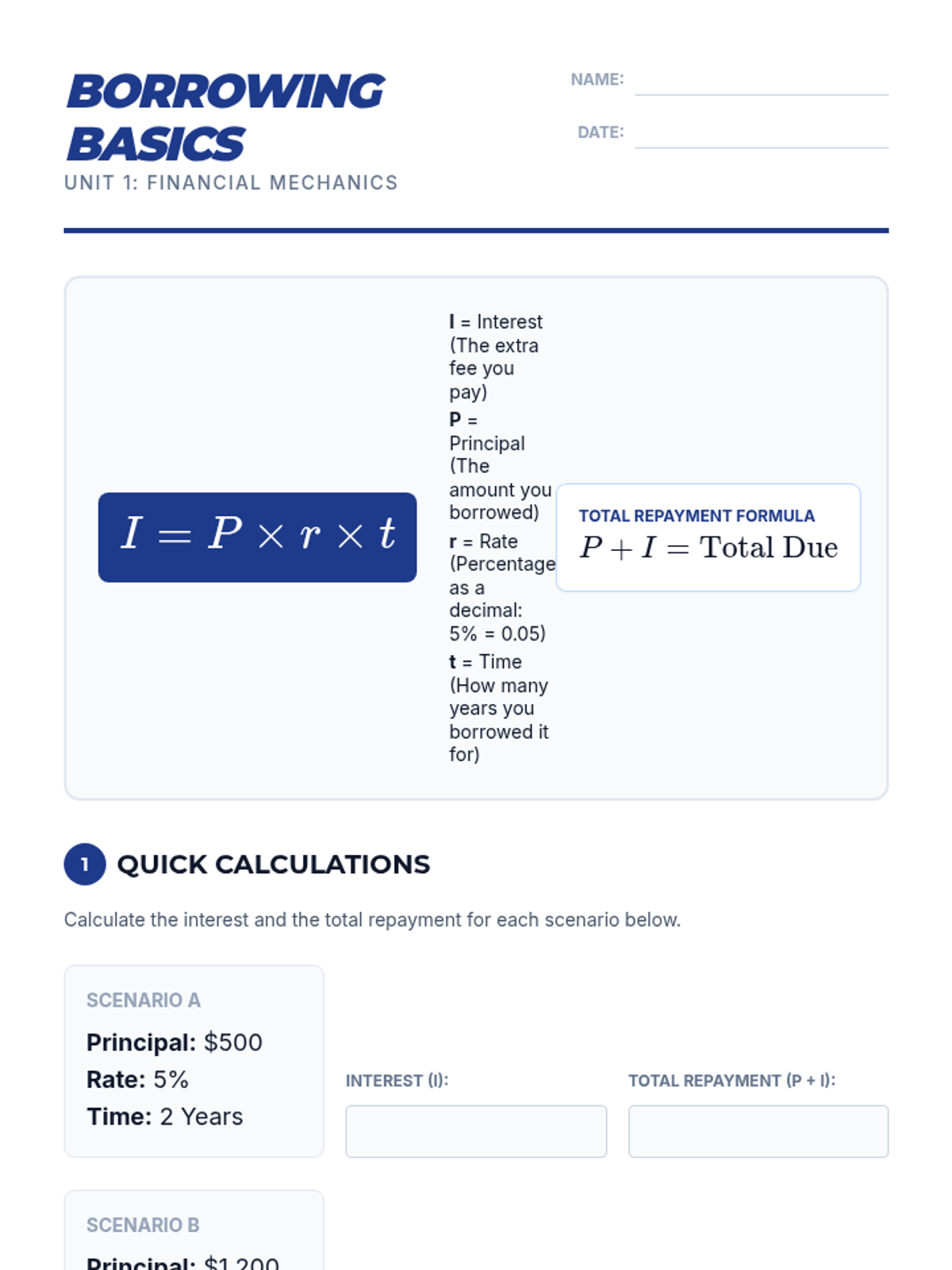
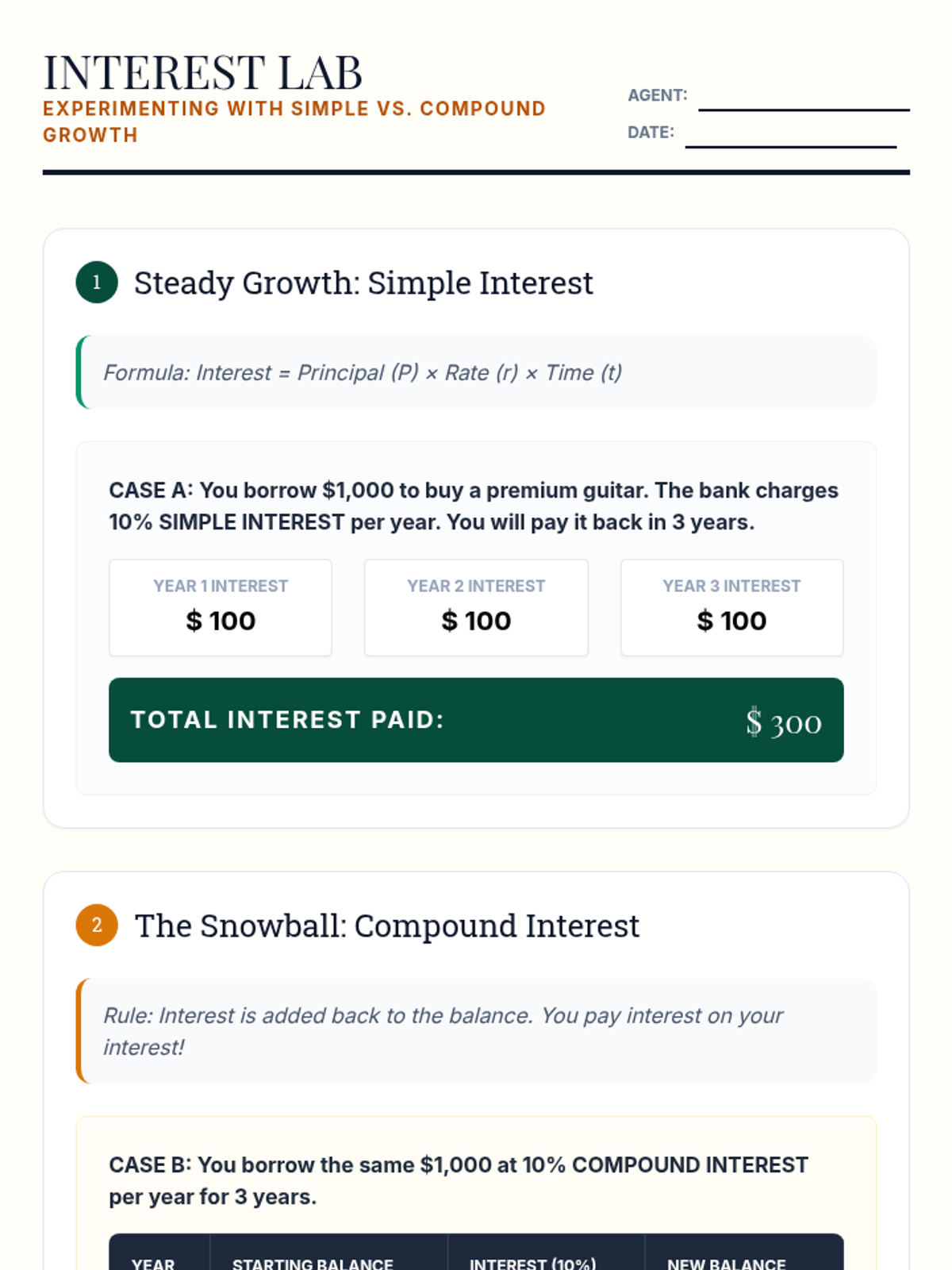
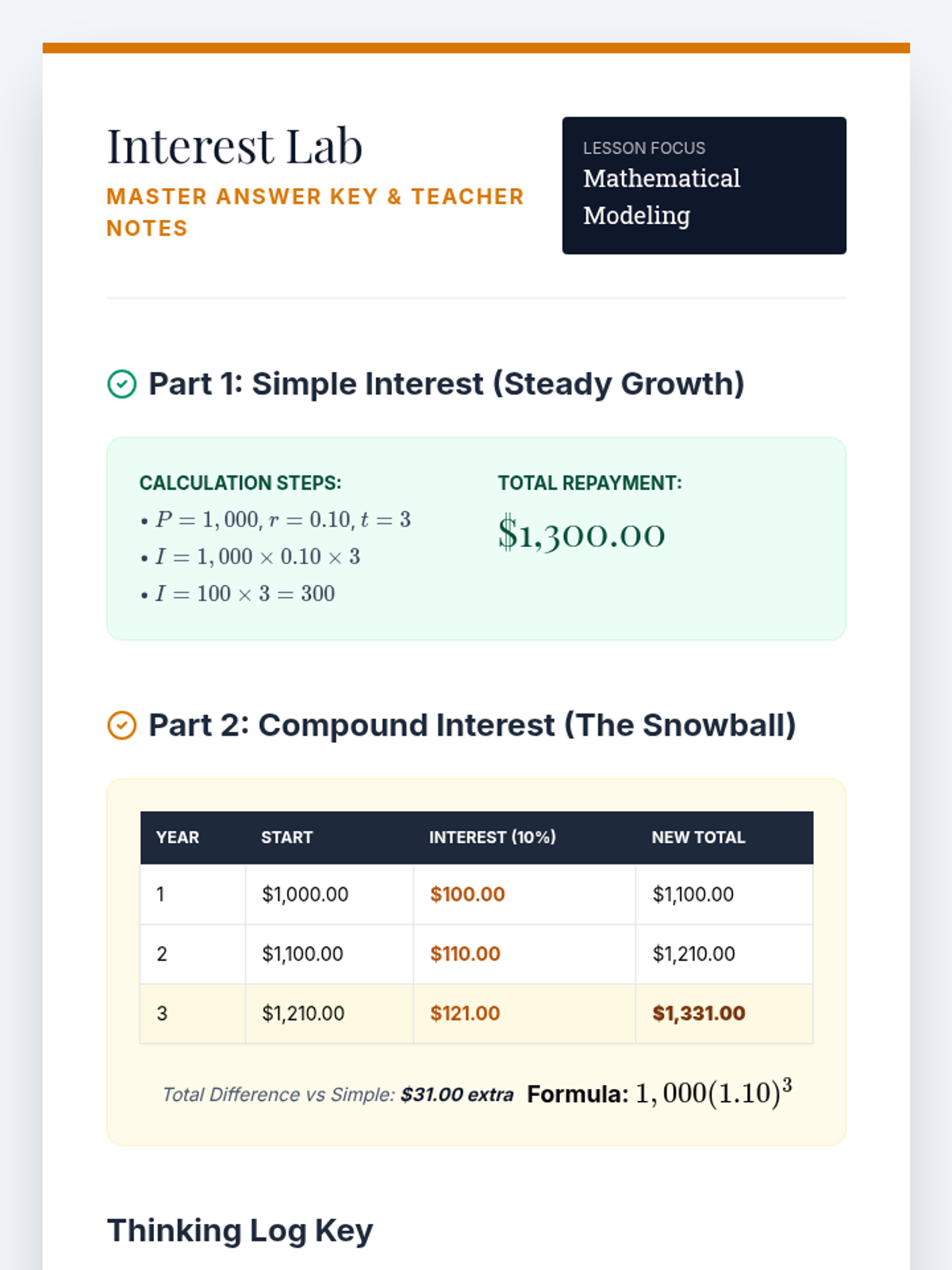
Students will learn the fundamental concepts of principal and interest by calculating simple interest in two scenarios: borrowing for a purchase and saving for the future. Through these calculations and a video analysis, students will understand how interest acts as both a cost and a reward in the banking system.
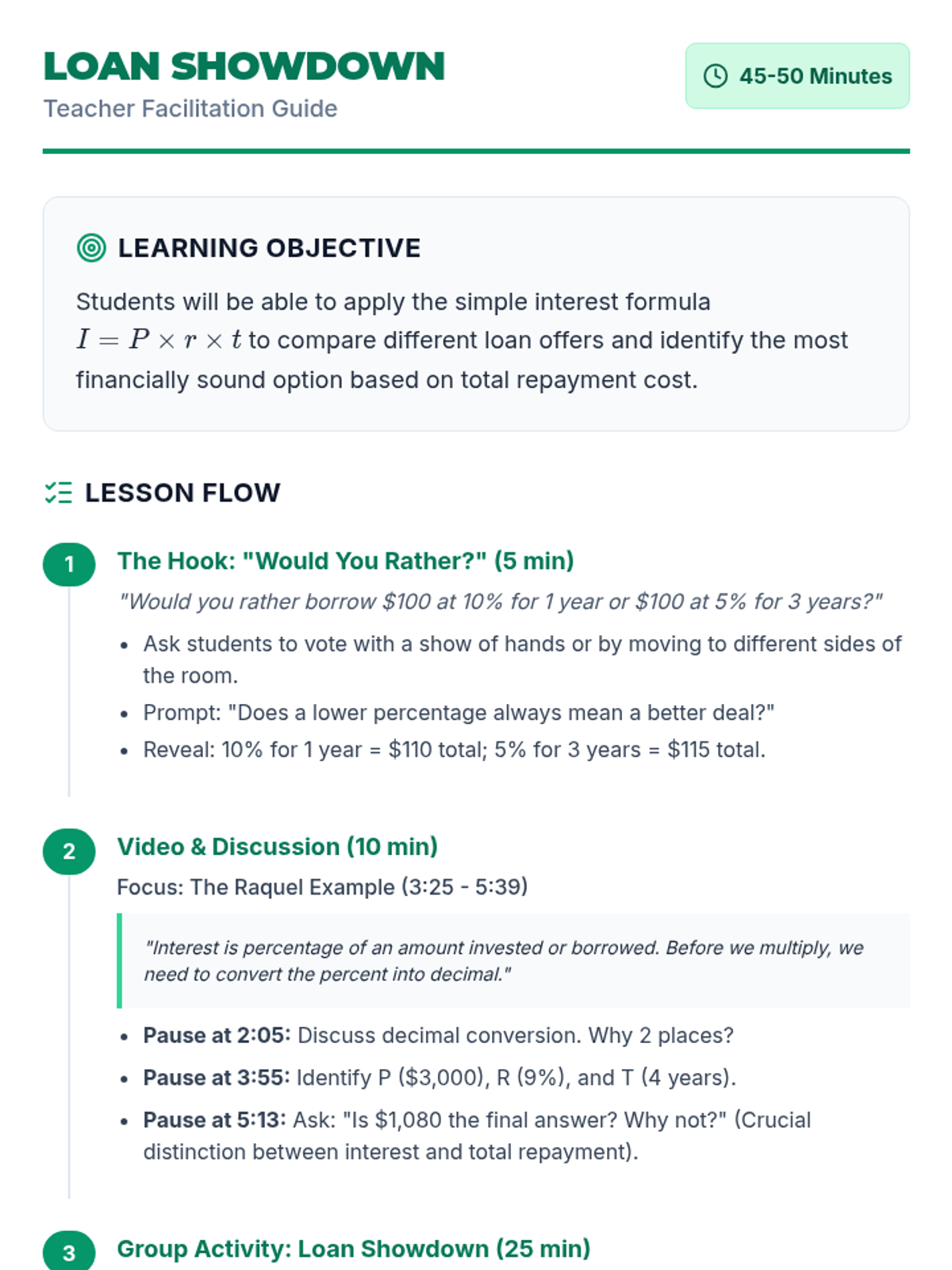
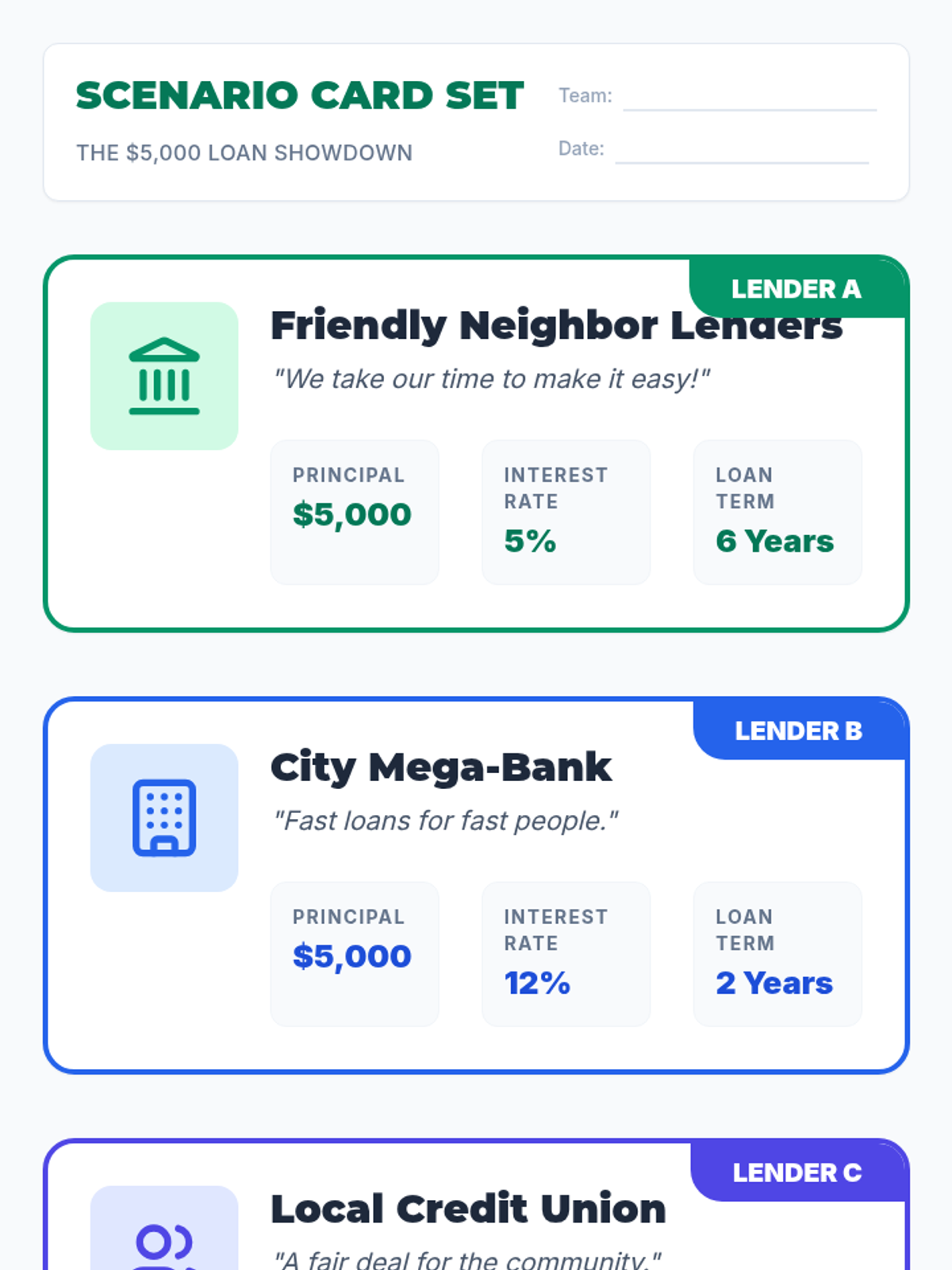
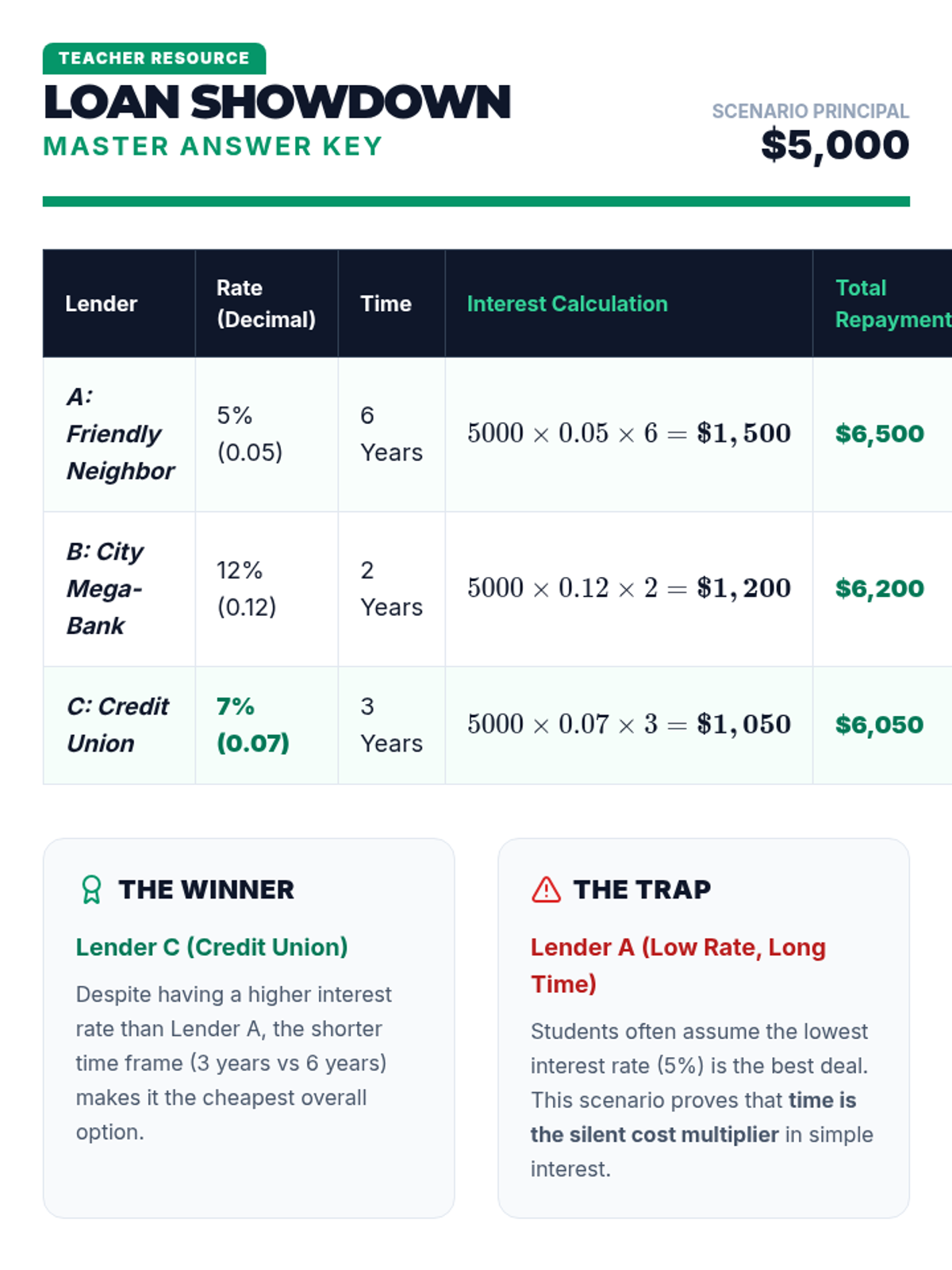
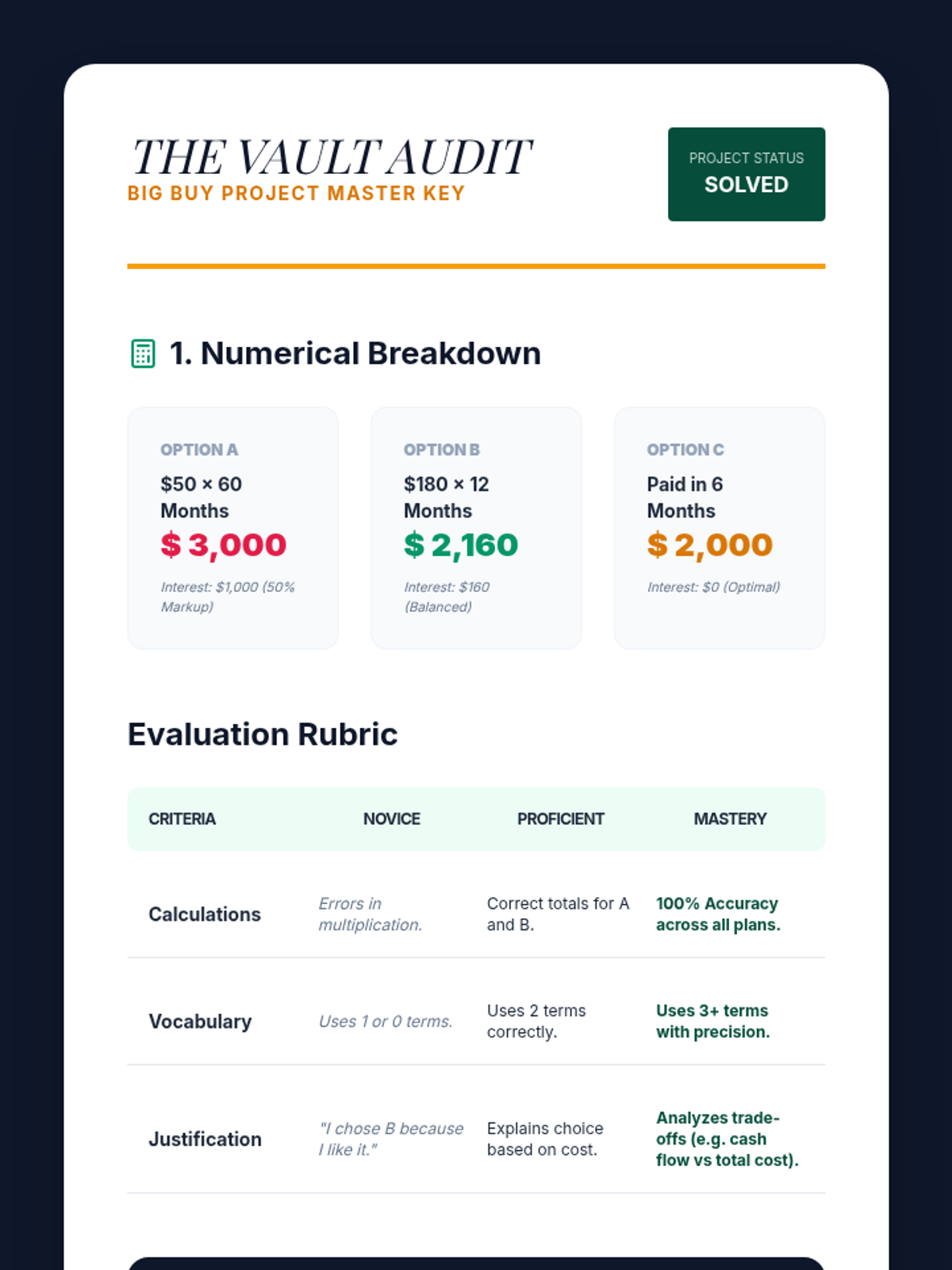
Students will learn to calculate and compare simple interest to determine the total cost of borrowing. This lesson uses a real-world scenario where students must evaluate three different loan offers for a $5,000 purchase.
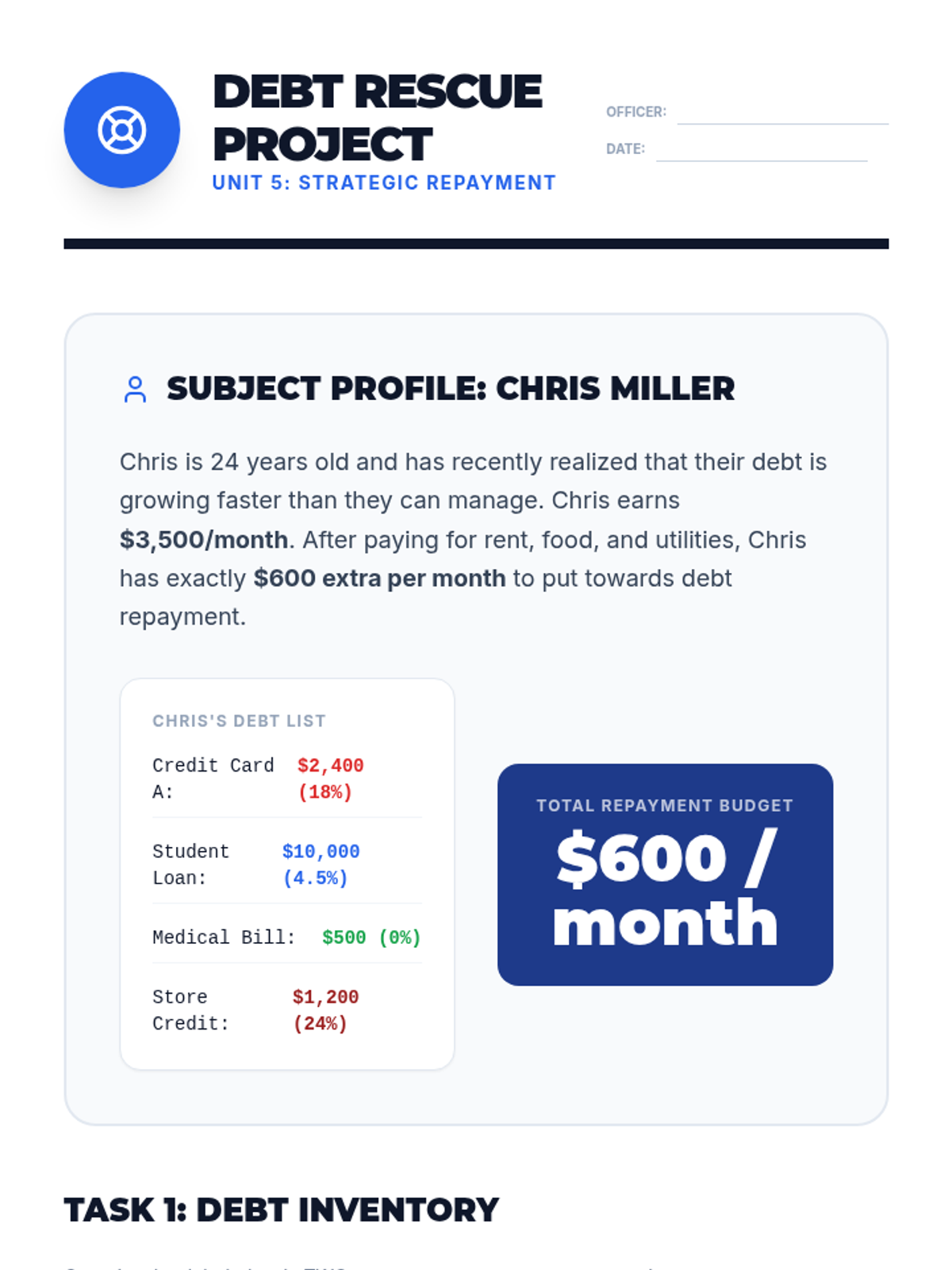
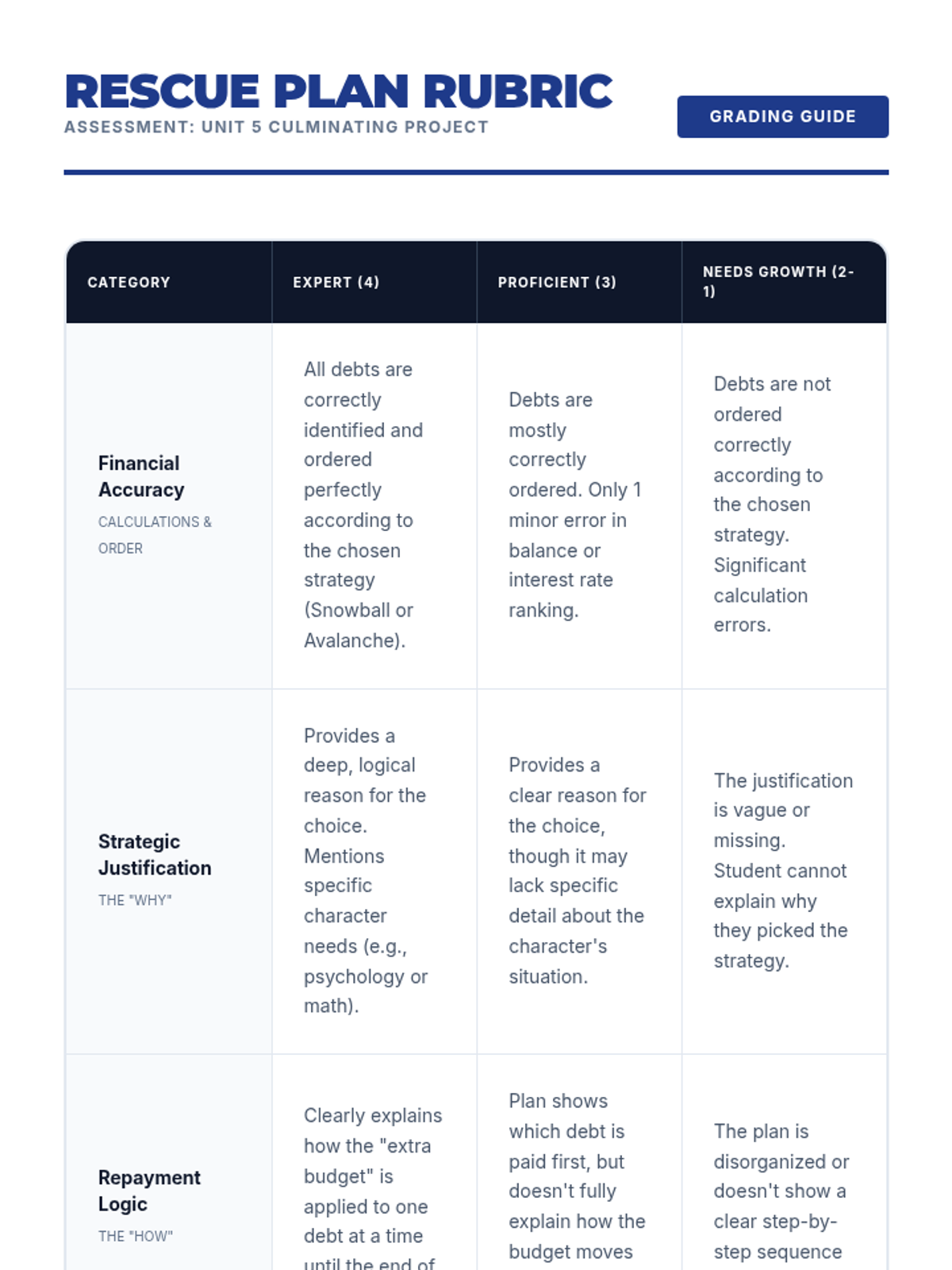
A culminating project where students apply the snowball and avalanche methods to create a debt repayment plan for a fictional character.
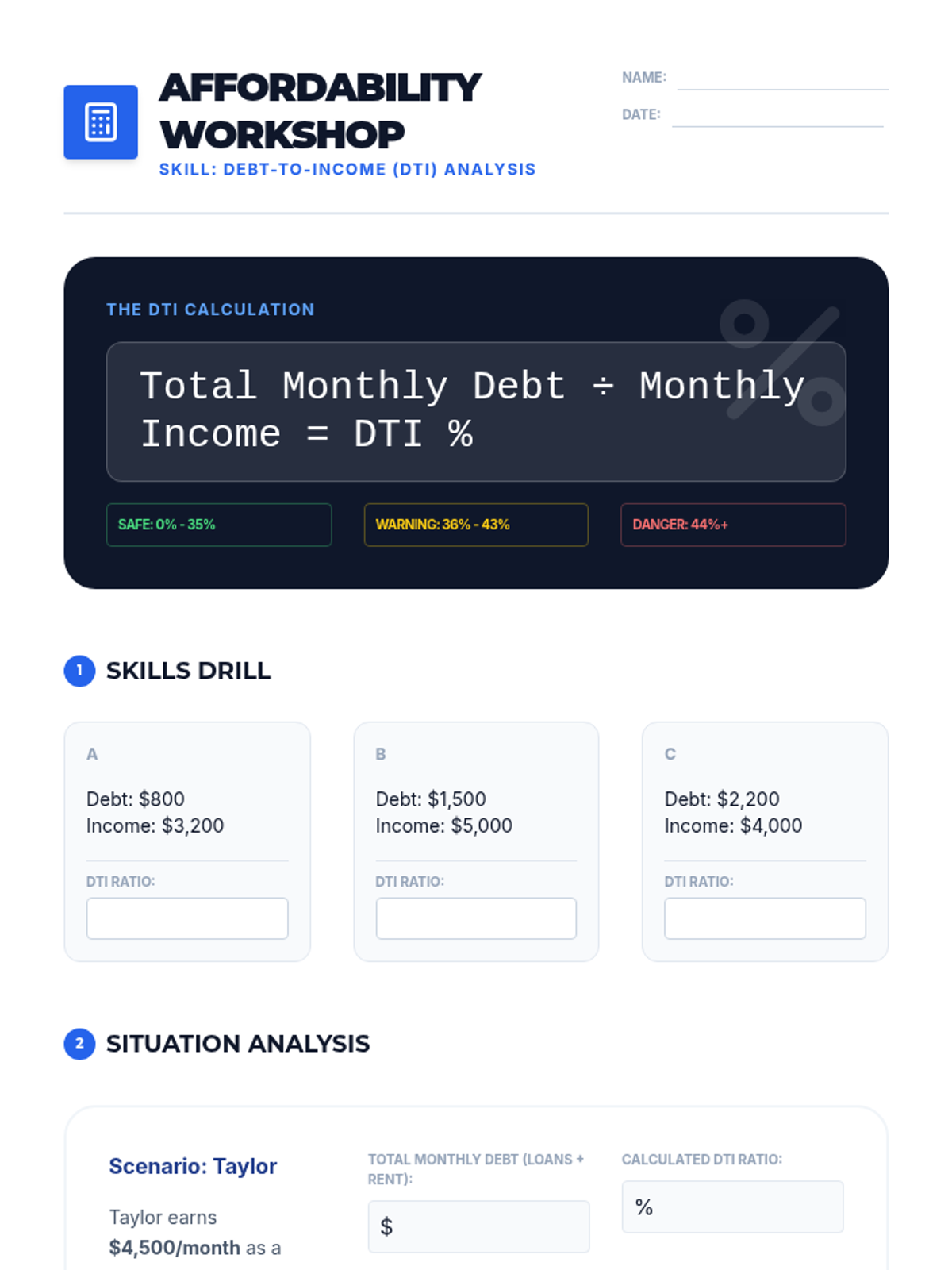
A workshop on affordability where students calculate debt-to-income (DTI) ratios to determine responsible borrowing limits and financial health.
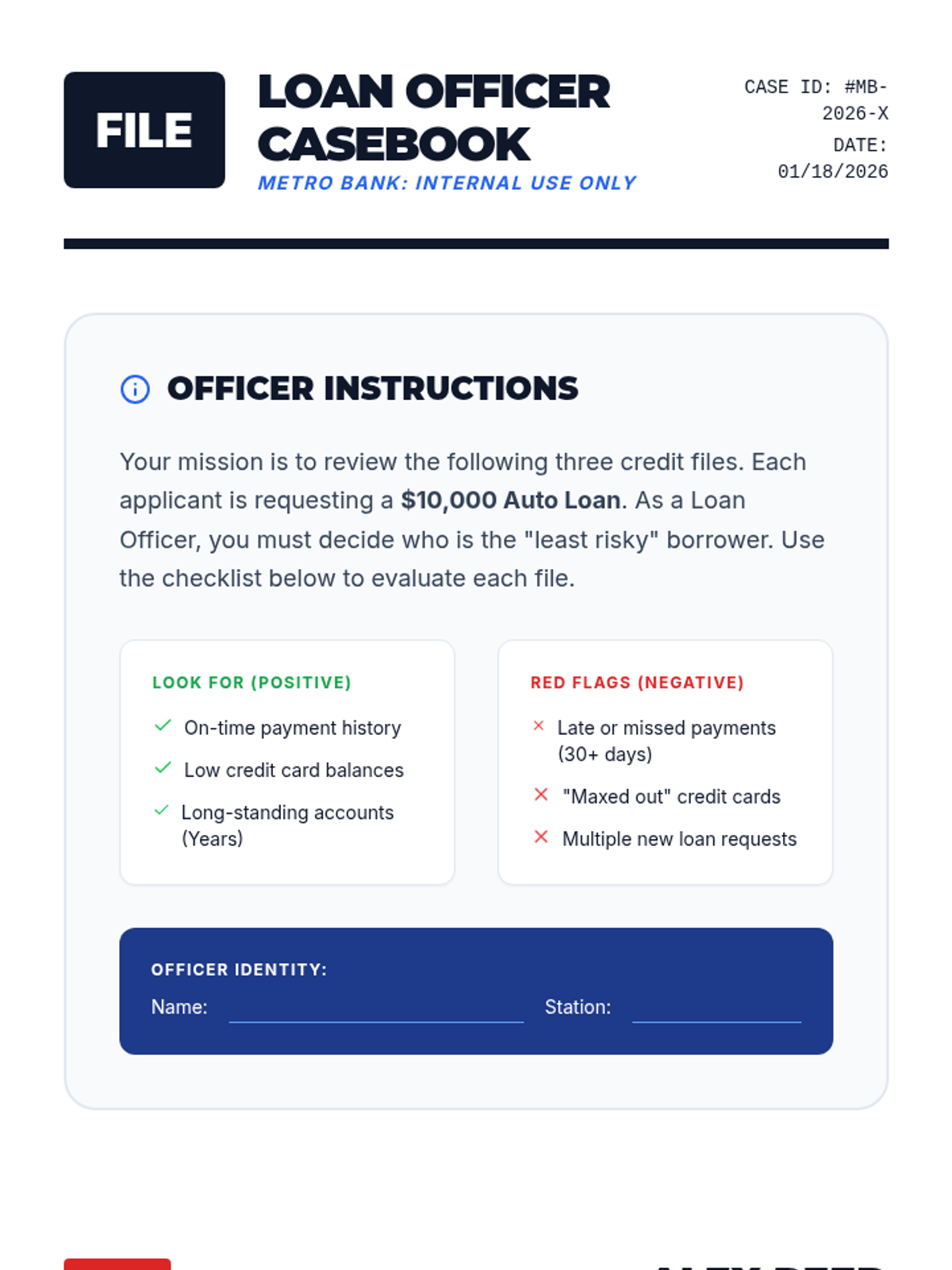
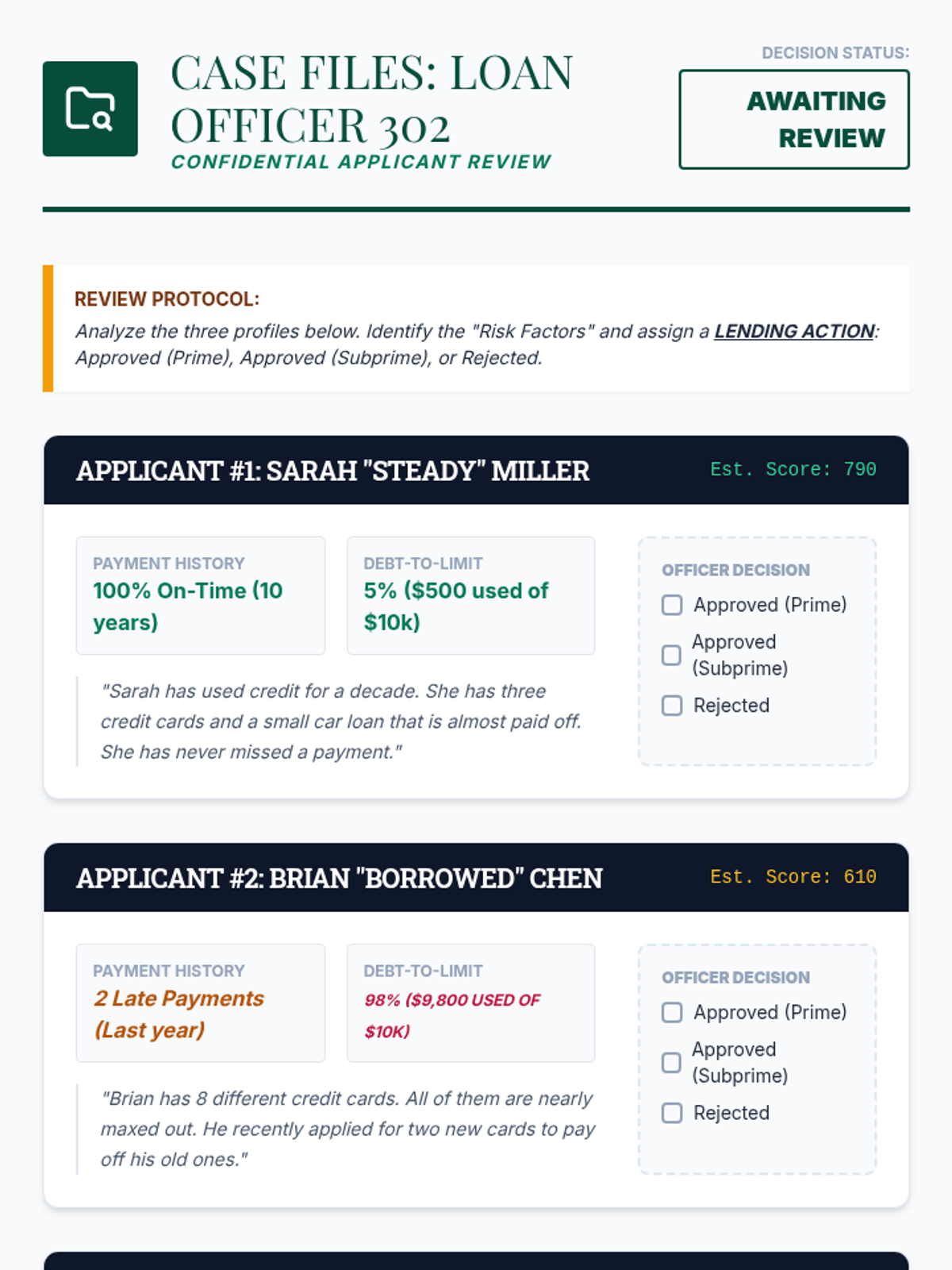
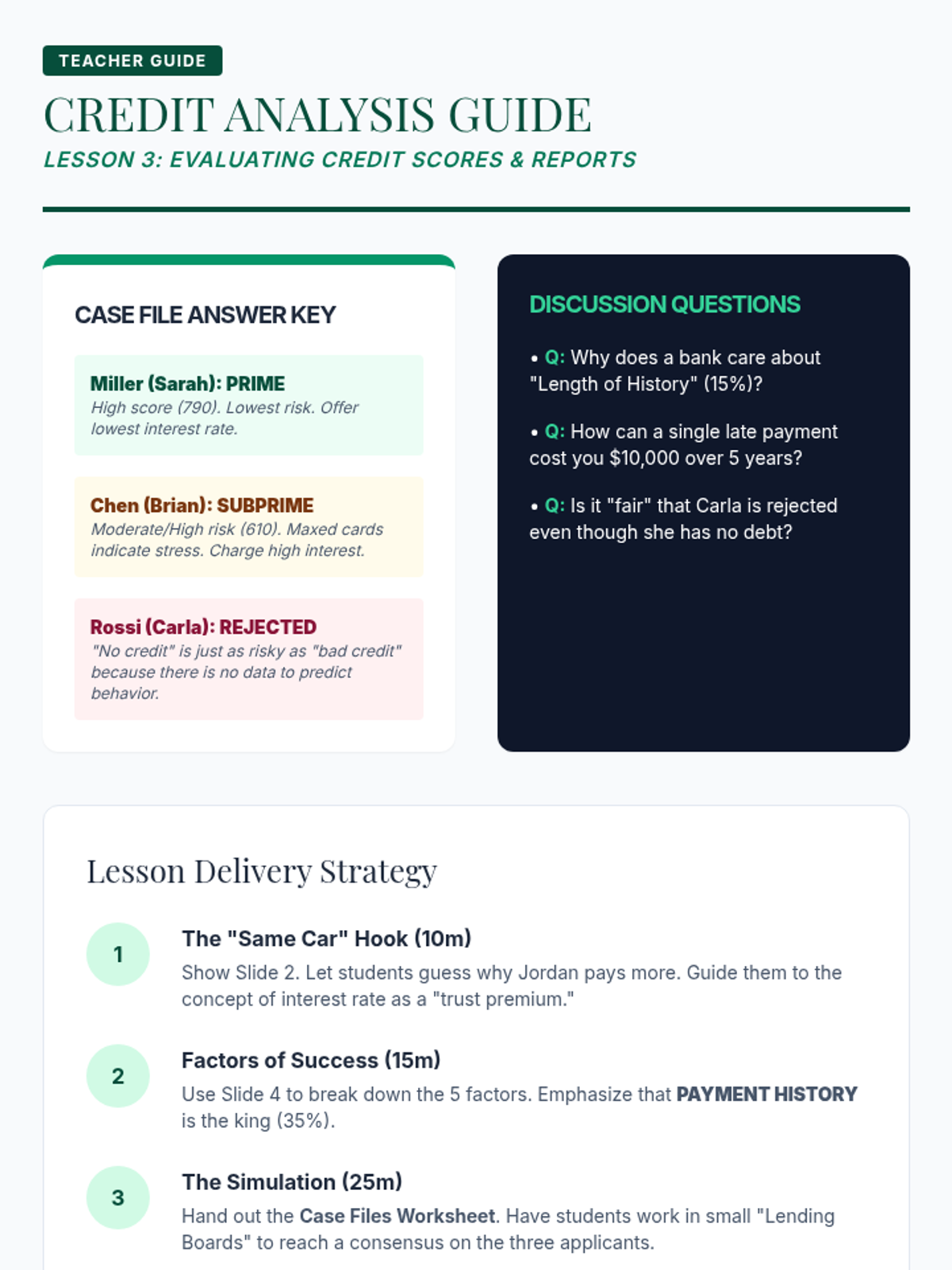
Students act as loan officers to analyze fictional credit reports and identify behaviors that influence credit scores and long-term financial opportunities.
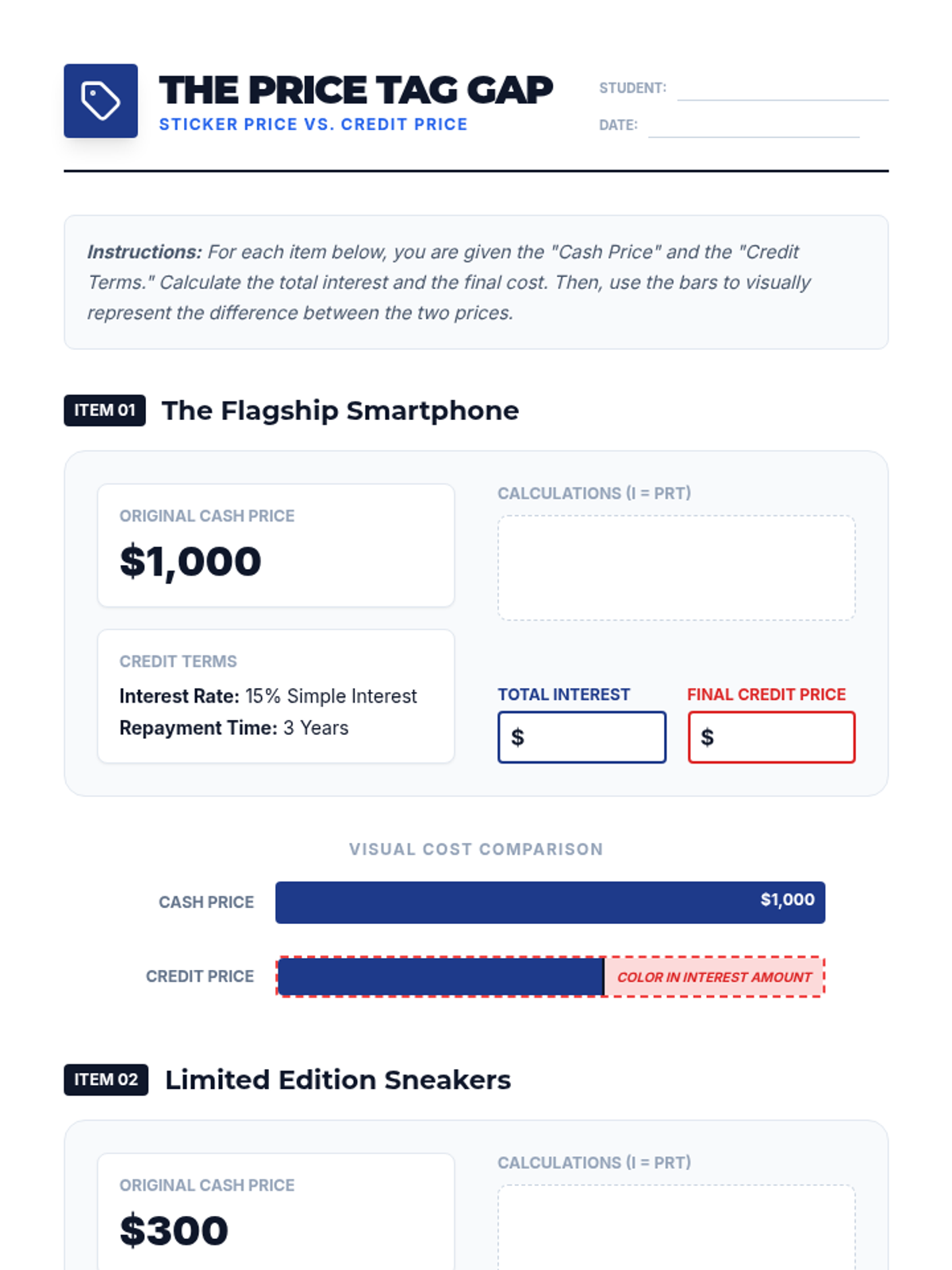
Learners compare the sticker price of items versus their total cost when bought with credit, investigating how interest rates and loan terms affect the final price.
Students explore credit basics, principal, and interest rates through a simulation. They calculate simple interest to understand how debt grows over time.
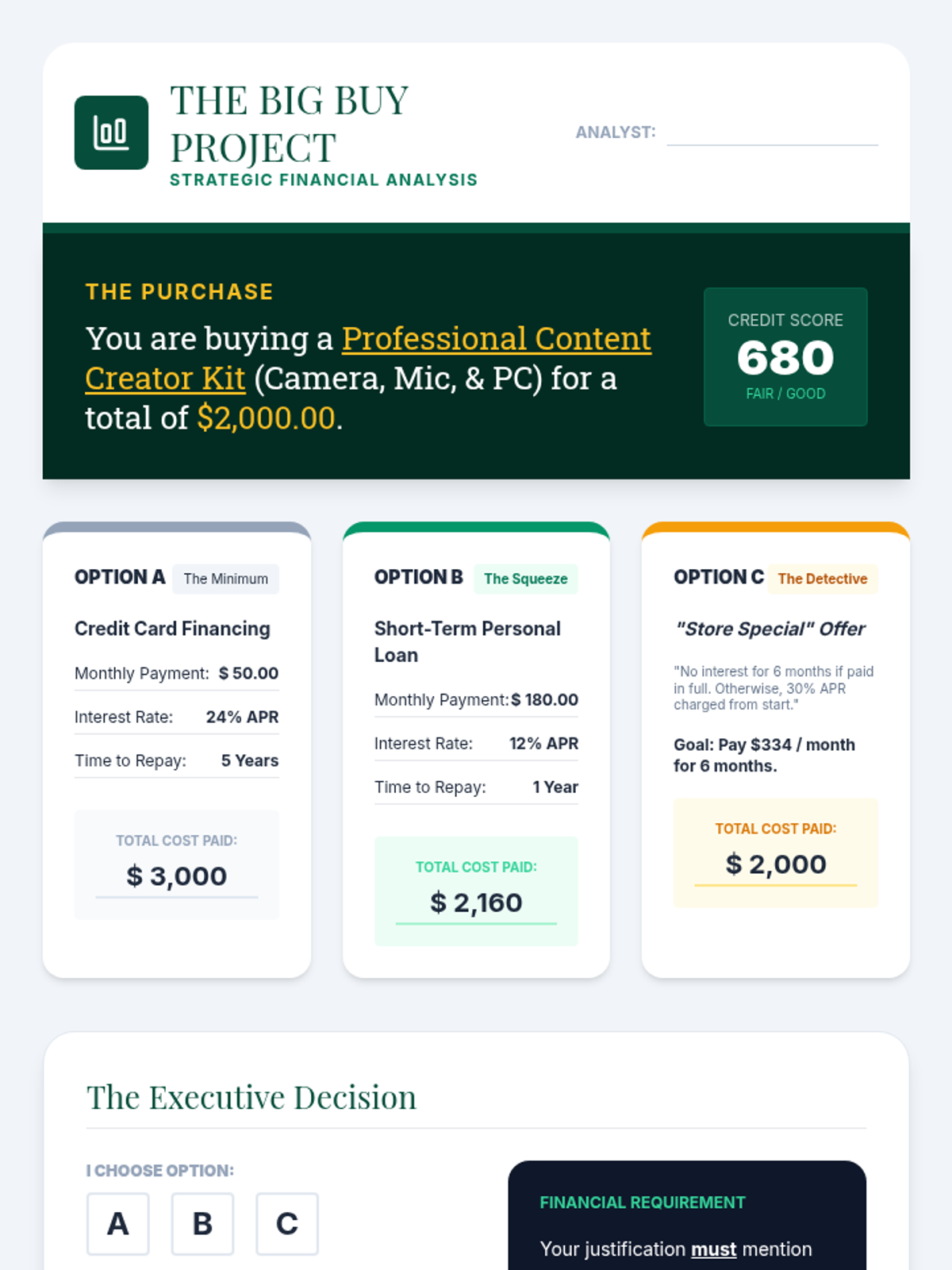
A culminating performance task where students evaluate financing options for a major purchase and analyze 'fine print' in financial offers.
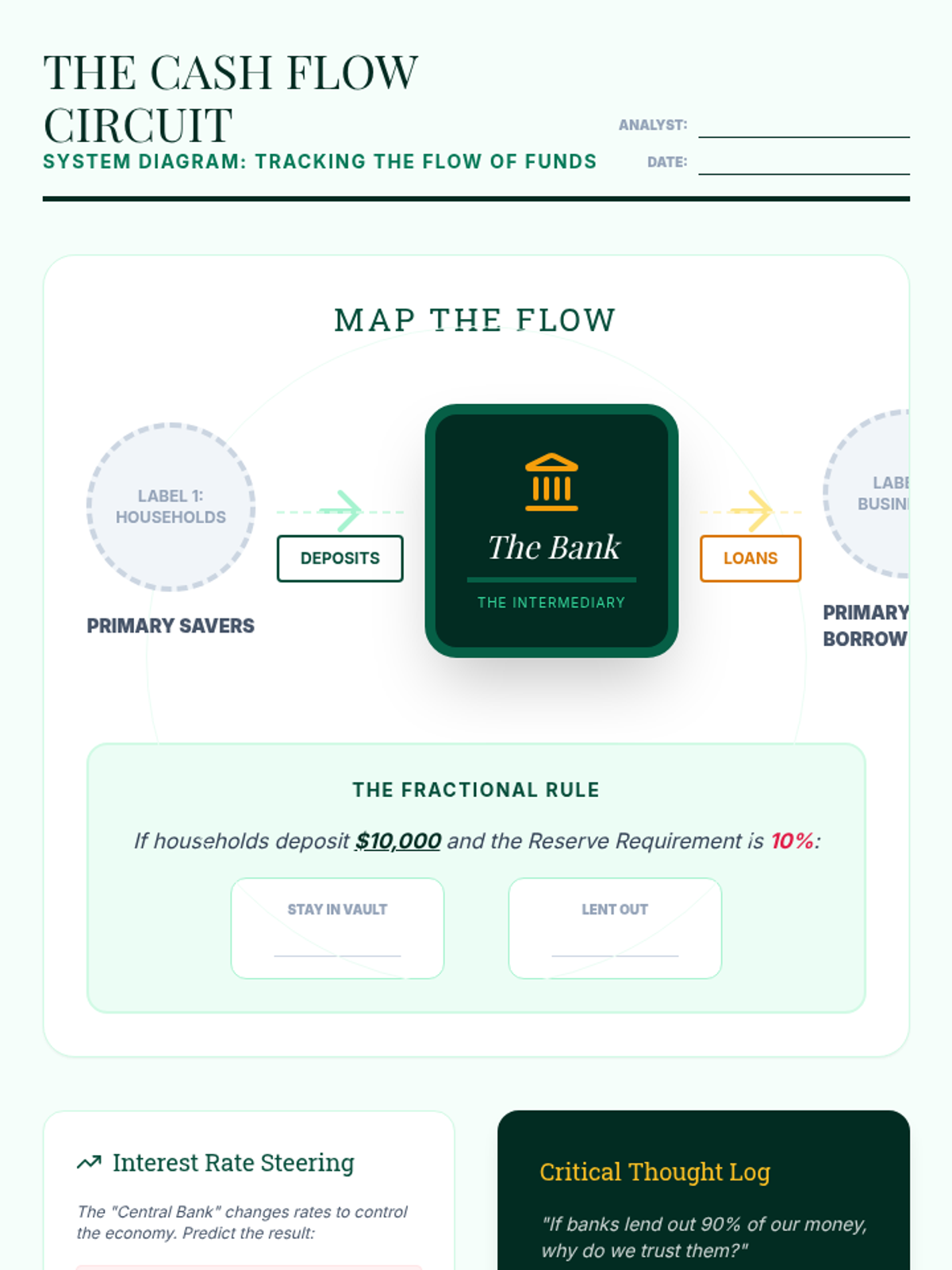
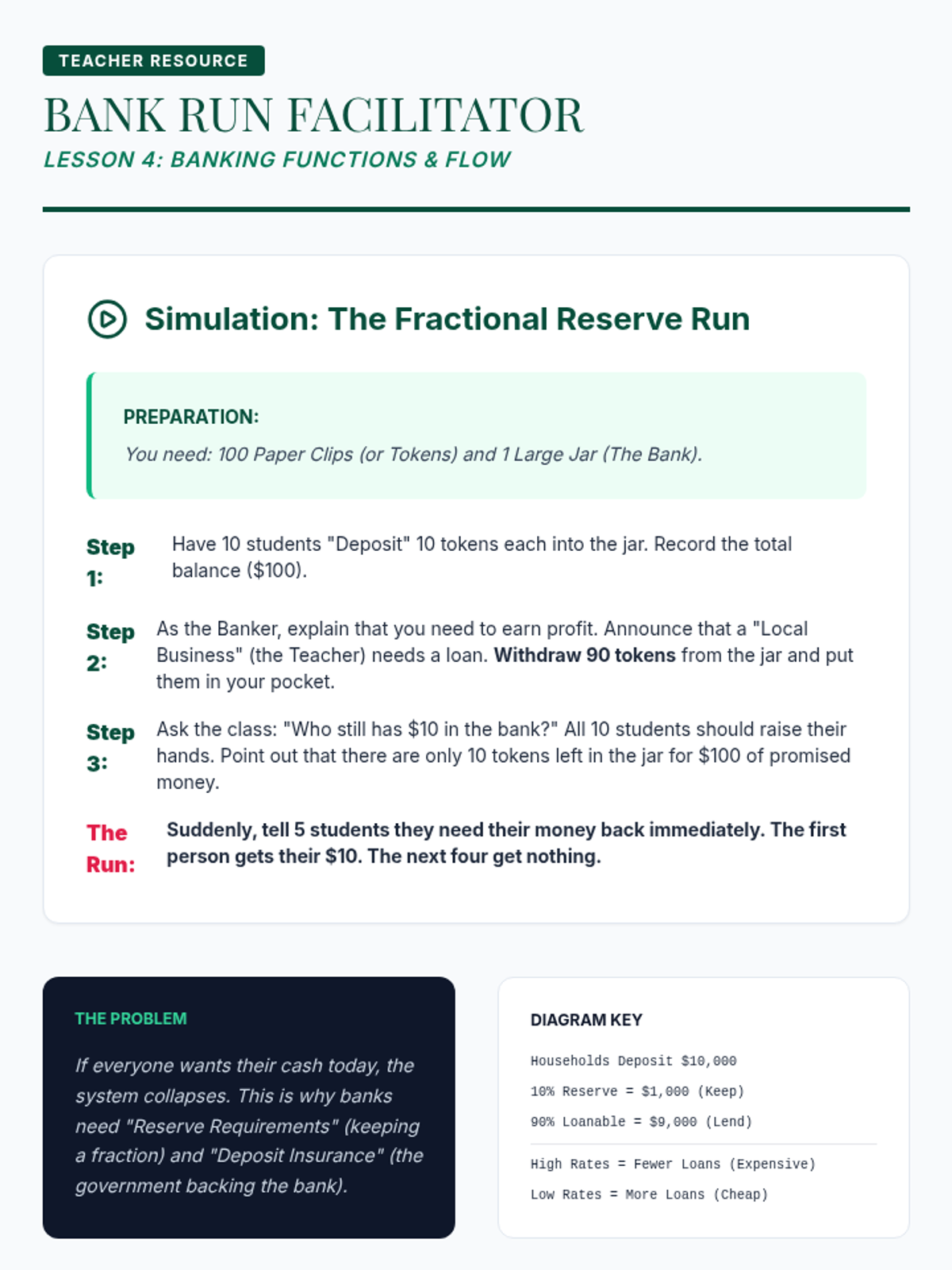
An exploration of the macro-economic role of banks, the flow of money, and the influence of central banking on local economies.
Students act as loan officers to evaluate fictional credit reports and understand the factors that influence credit scores.
A mathematical workshop comparing simple and compound interest, visualizing how debt and savings grow over time.
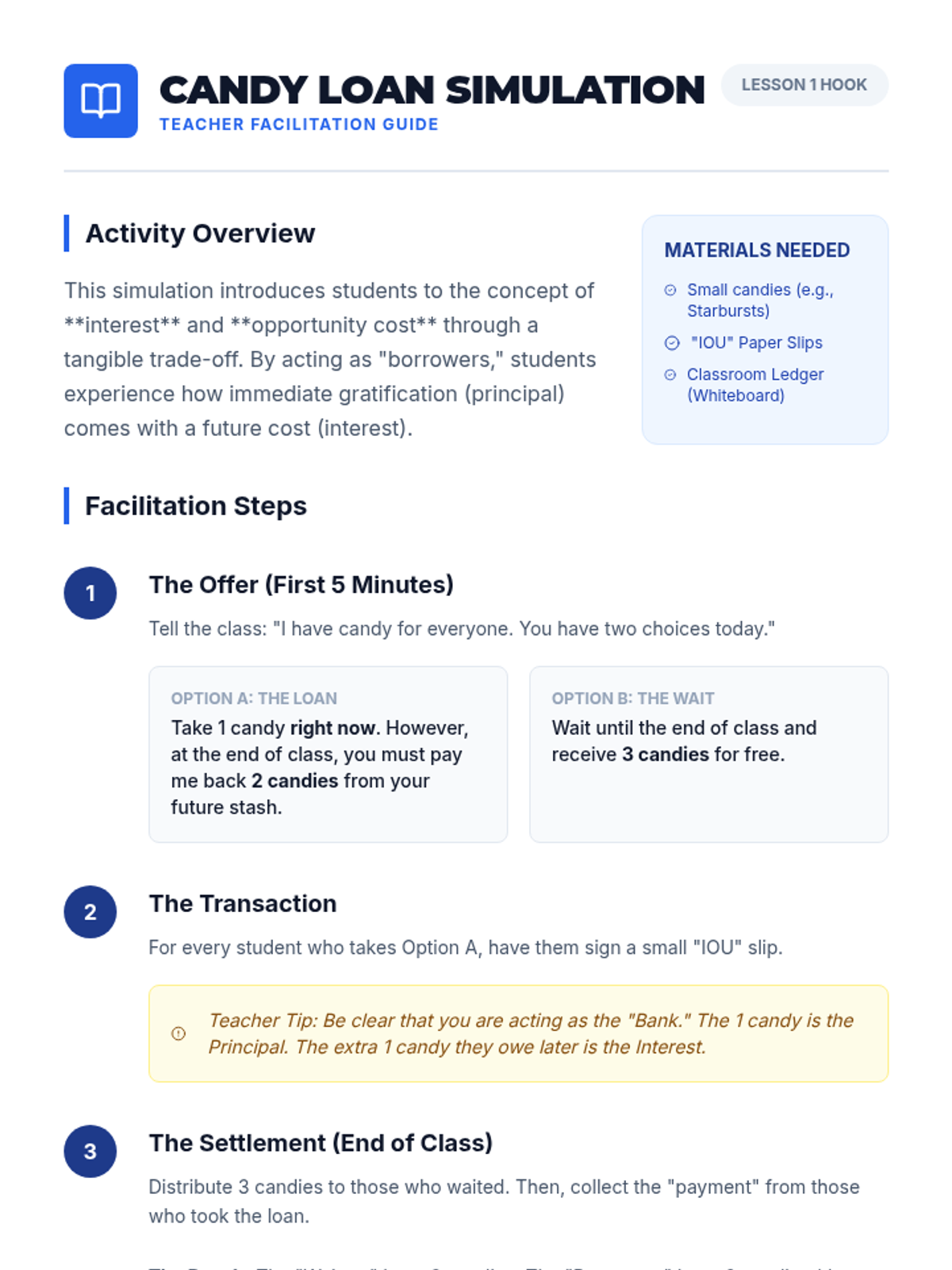
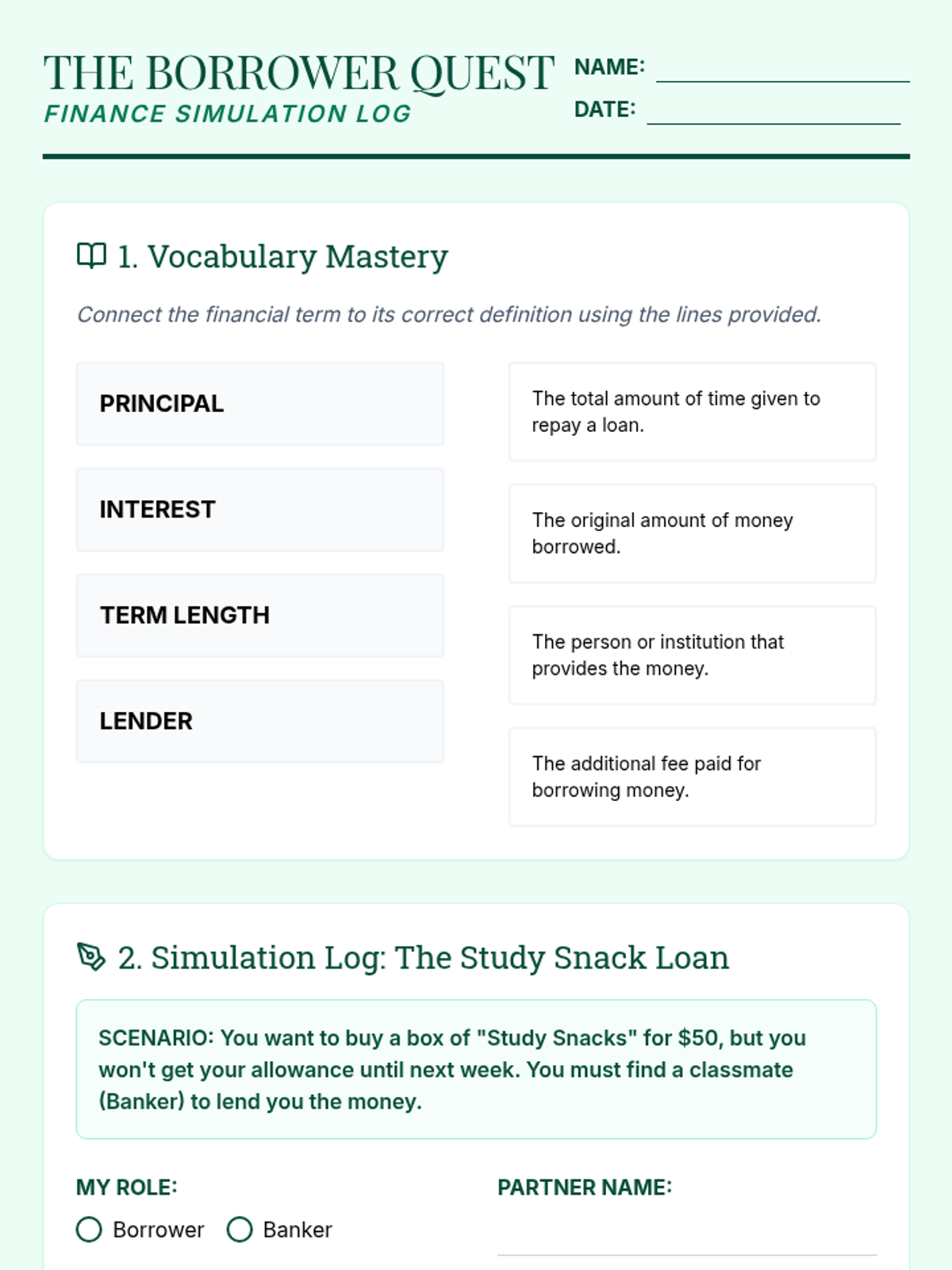
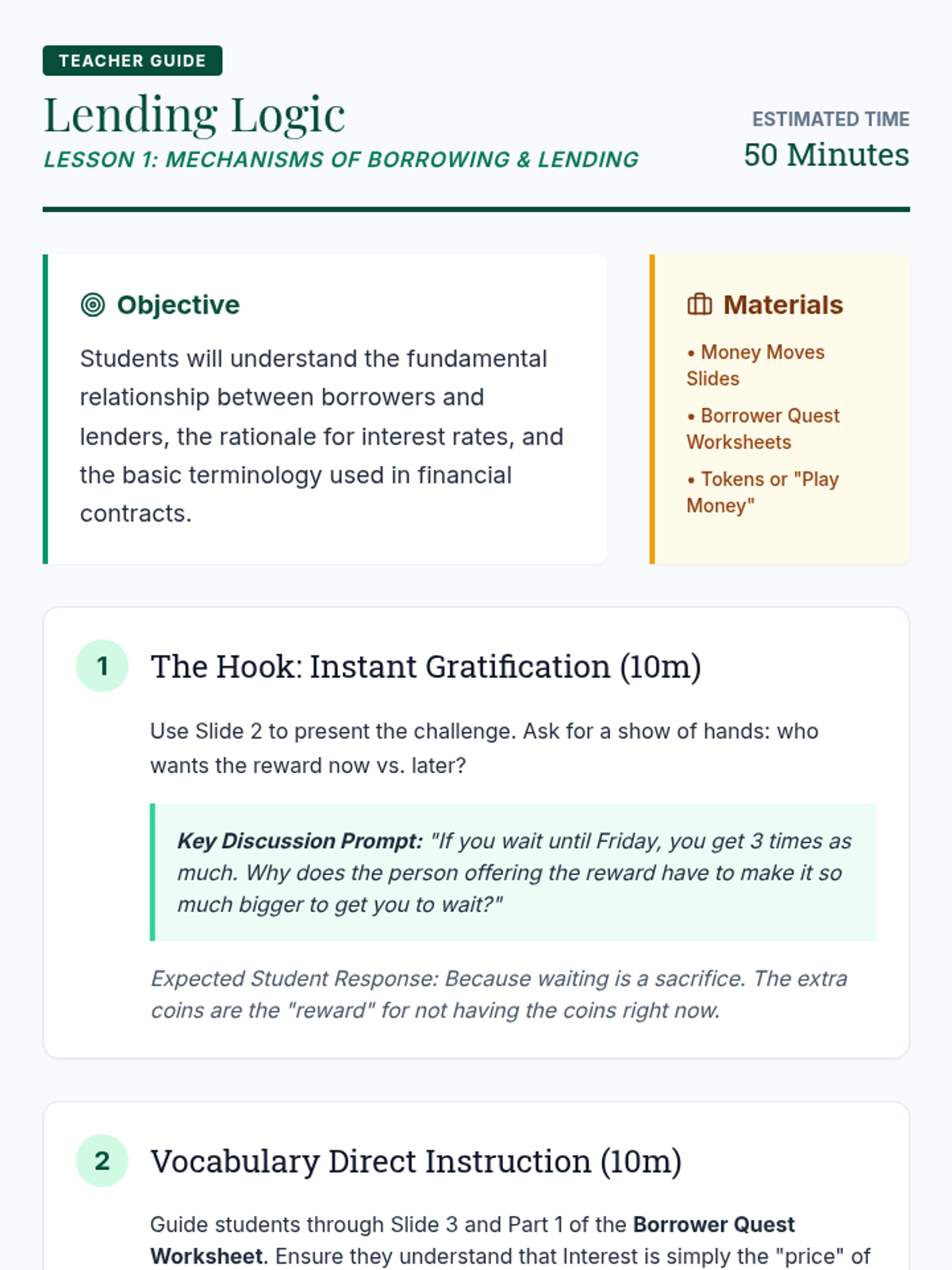
Students explore the foundational relationship between lenders and borrowers through a classroom simulation, defining key terms like principal and interest.
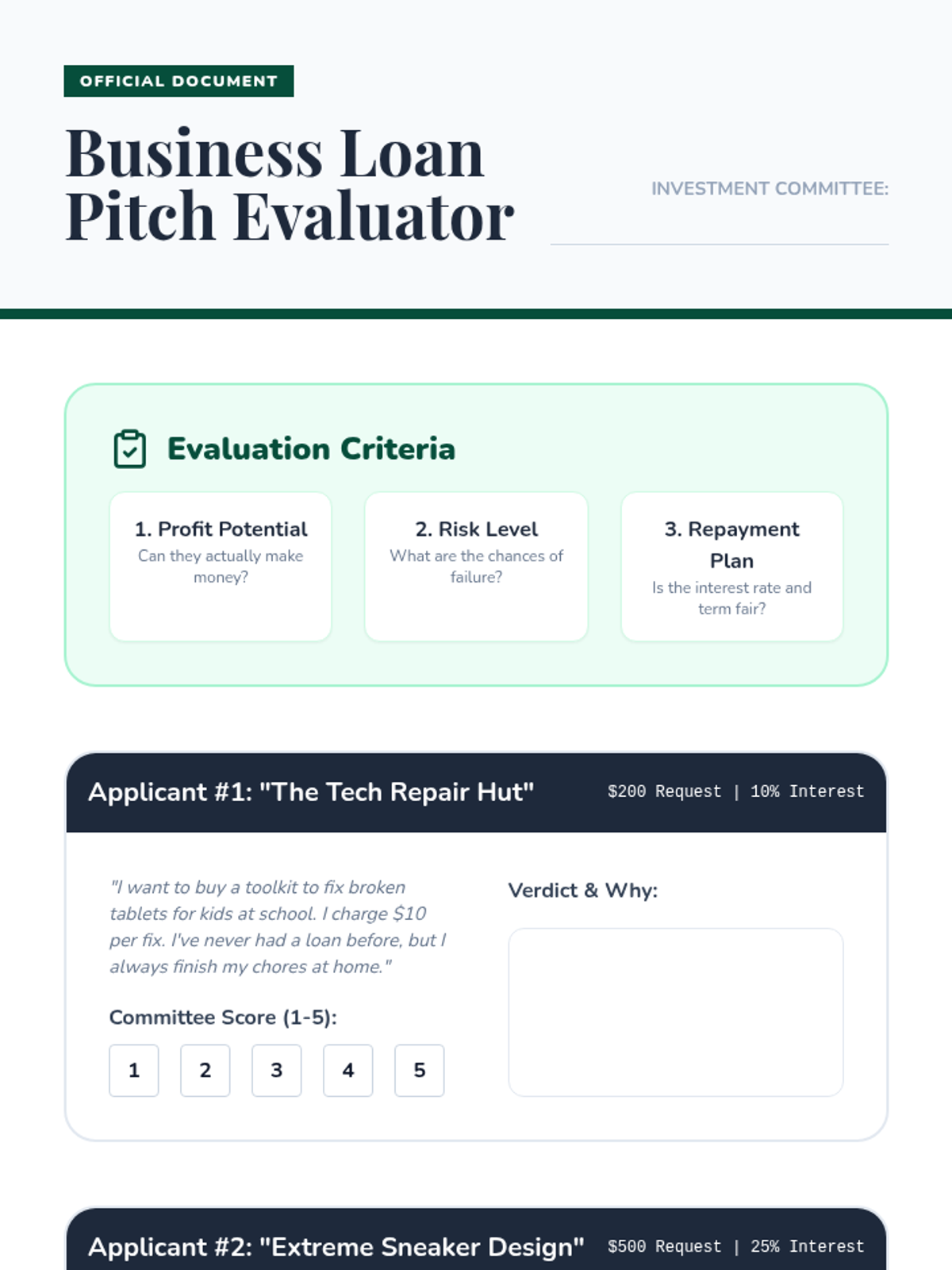
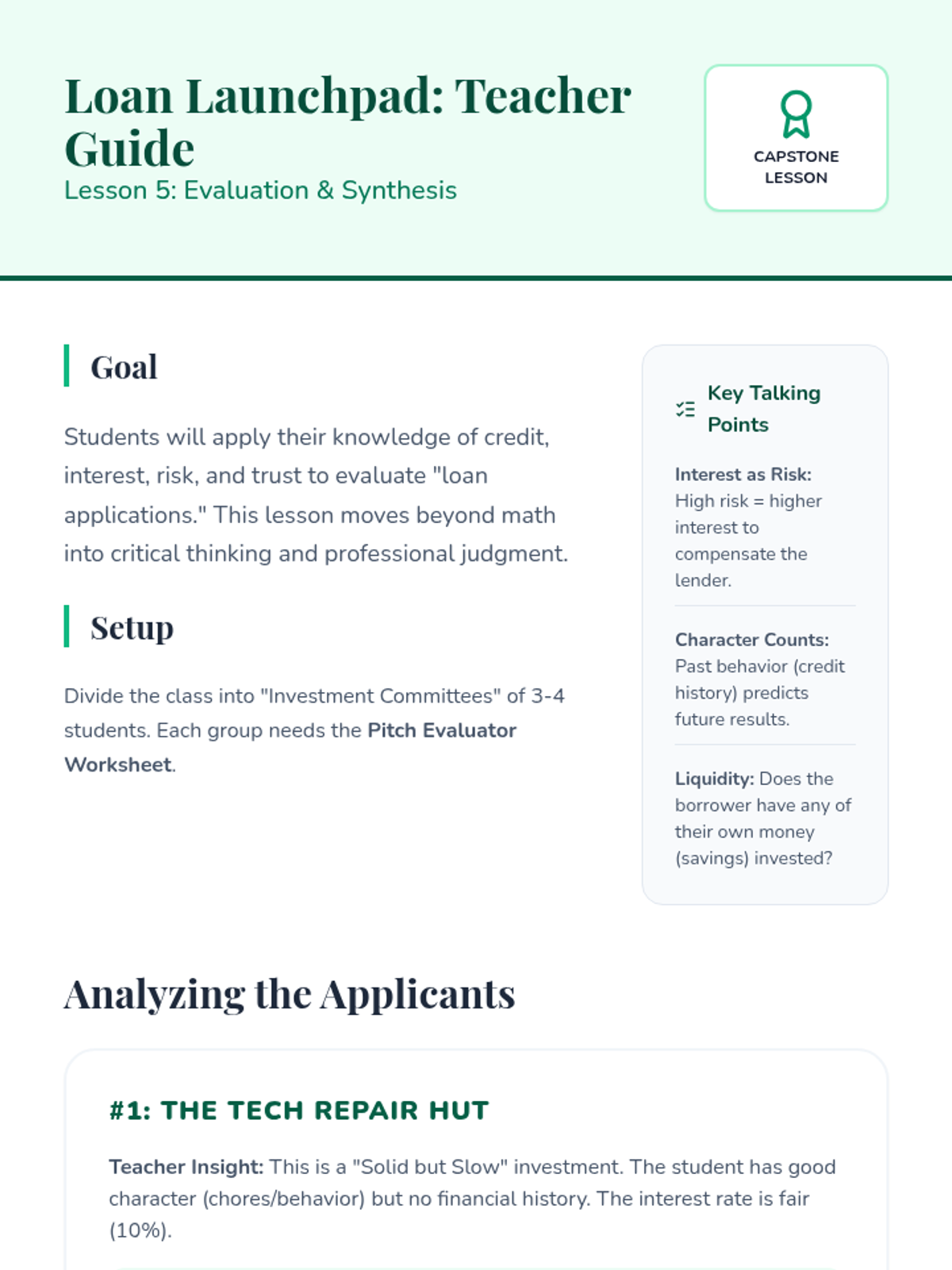
In this final project-based lesson, students evaluate business proposals and decide which "startups" are worthy of a loan based on their risk and potential for repayment.
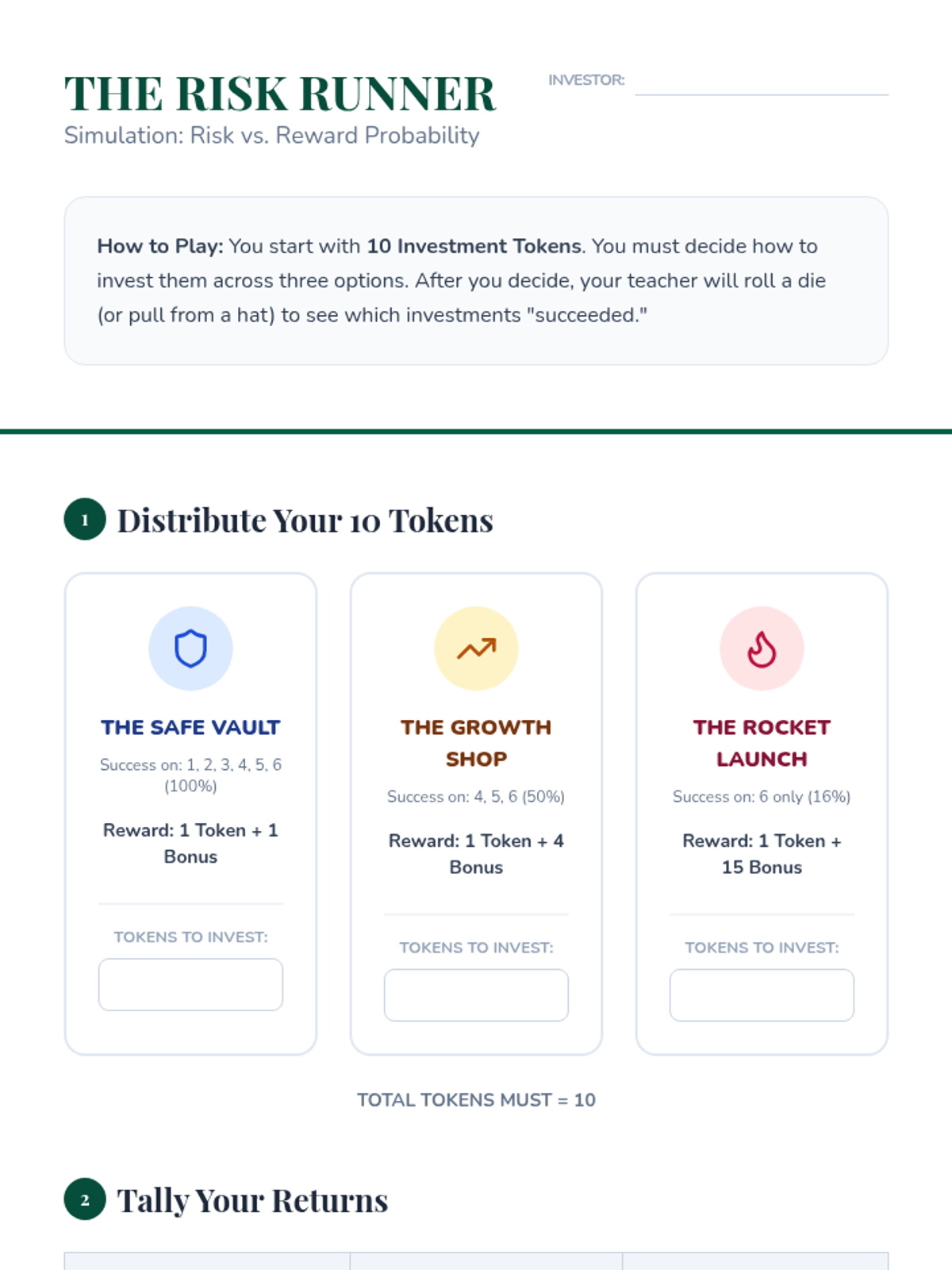
Students differentiate between saving and investing, exploring how risk relates to potential rewards through a probability-based simulation.
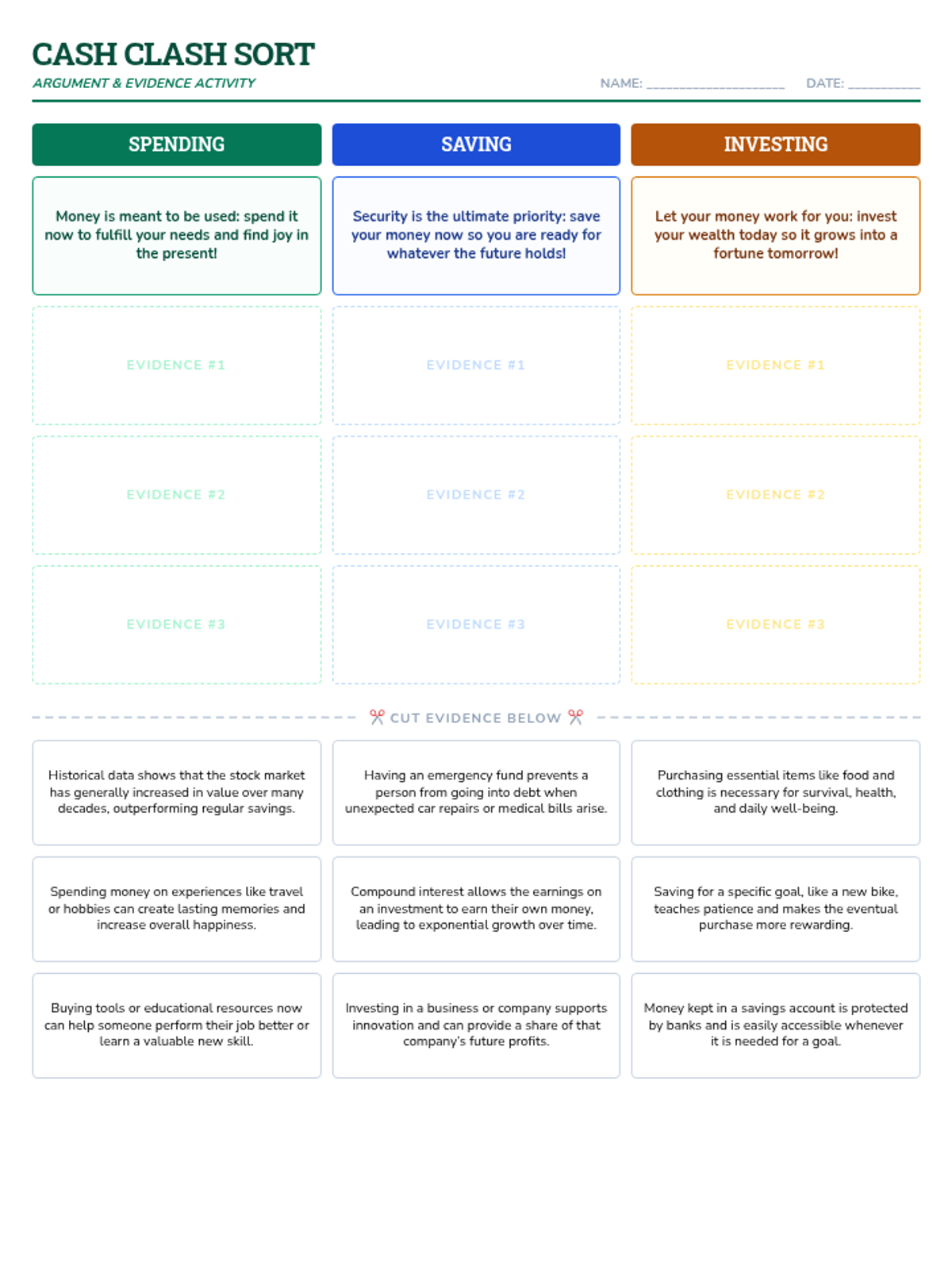
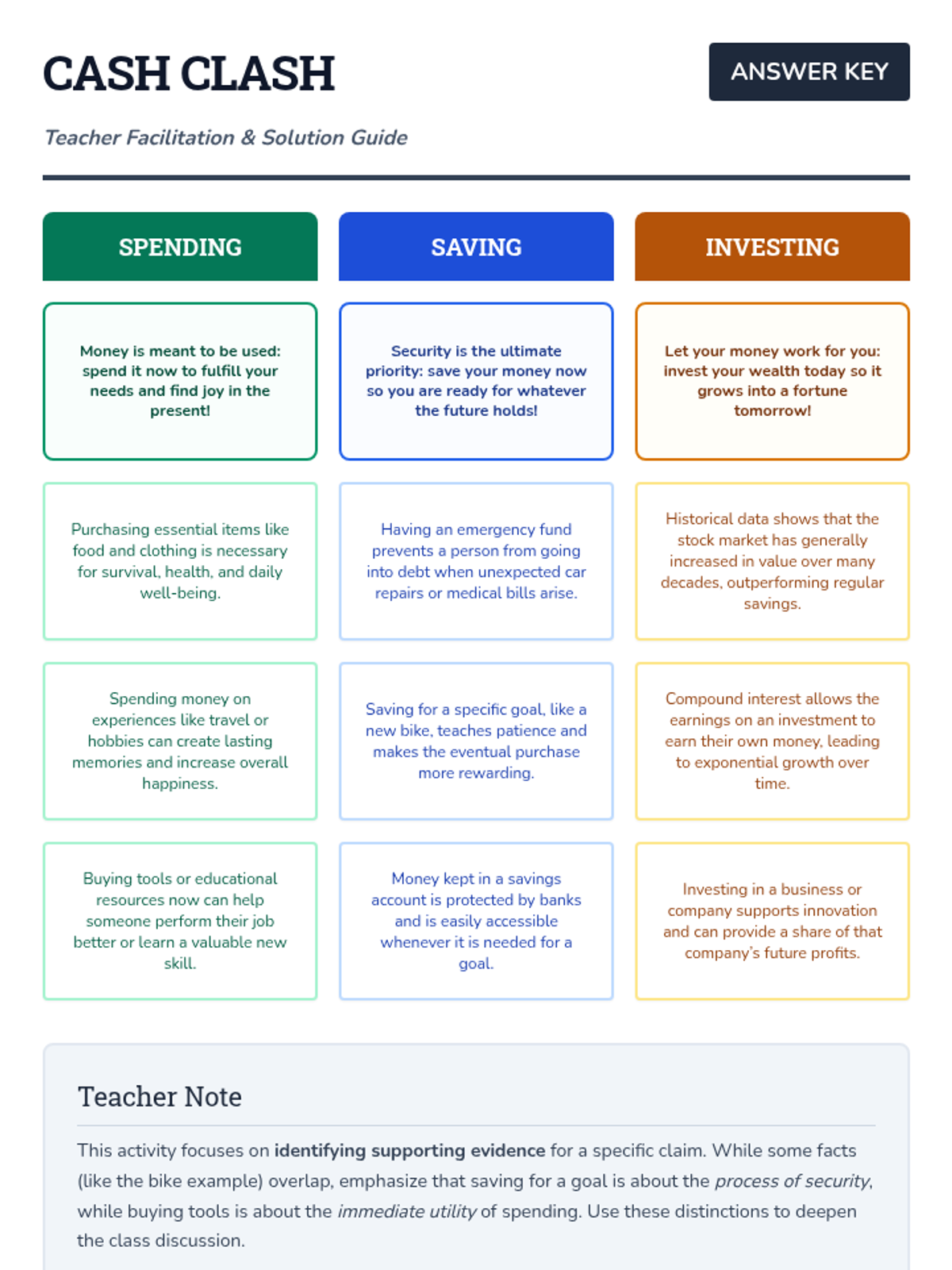
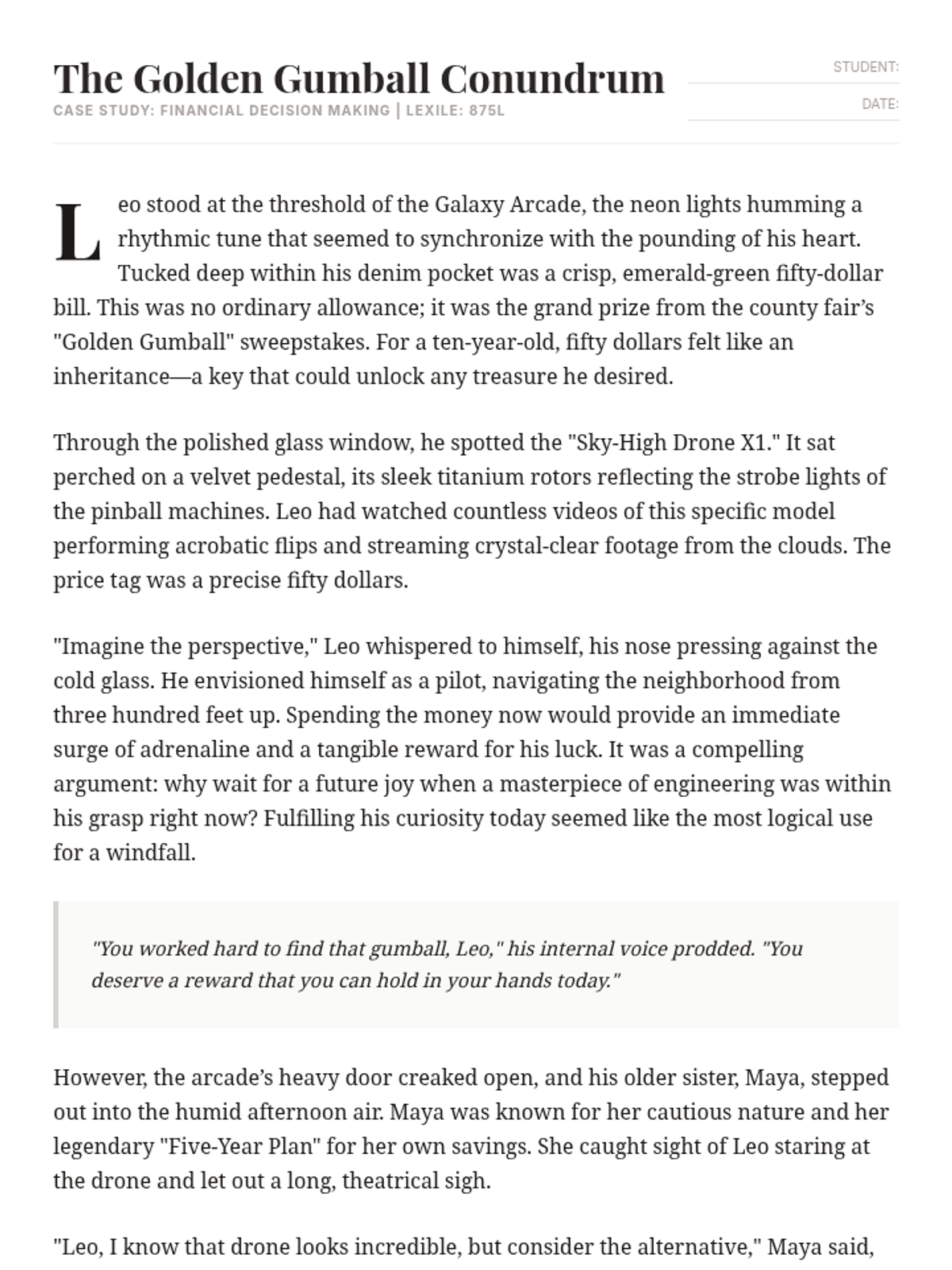
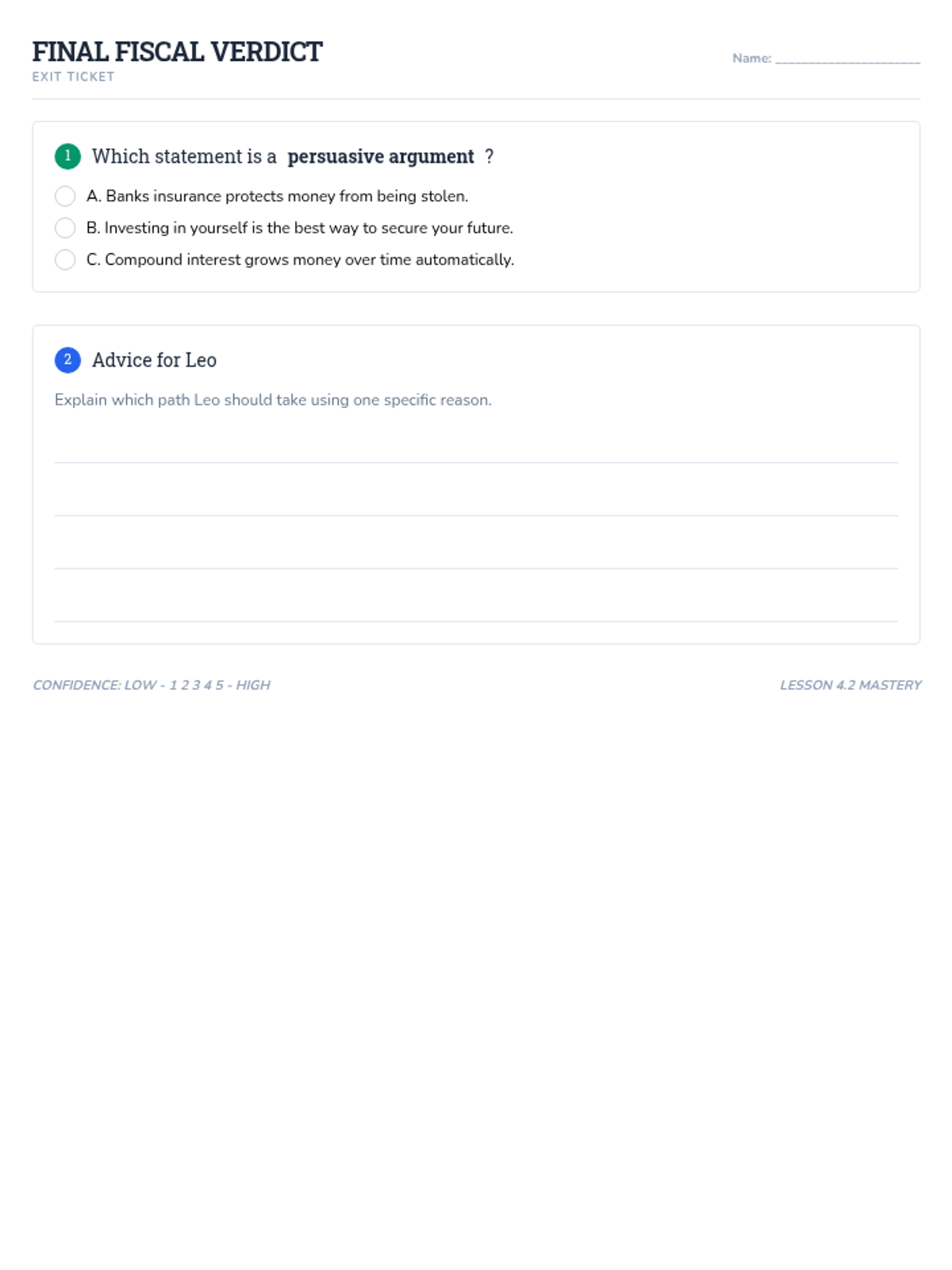
In this activity, students will evaluate the different ways to handle money—spending, saving, and investing—by matching persuasive arguments with supporting evidence. Students will practice identifying claims and the reasoning that backs them up within a financial literacy context.
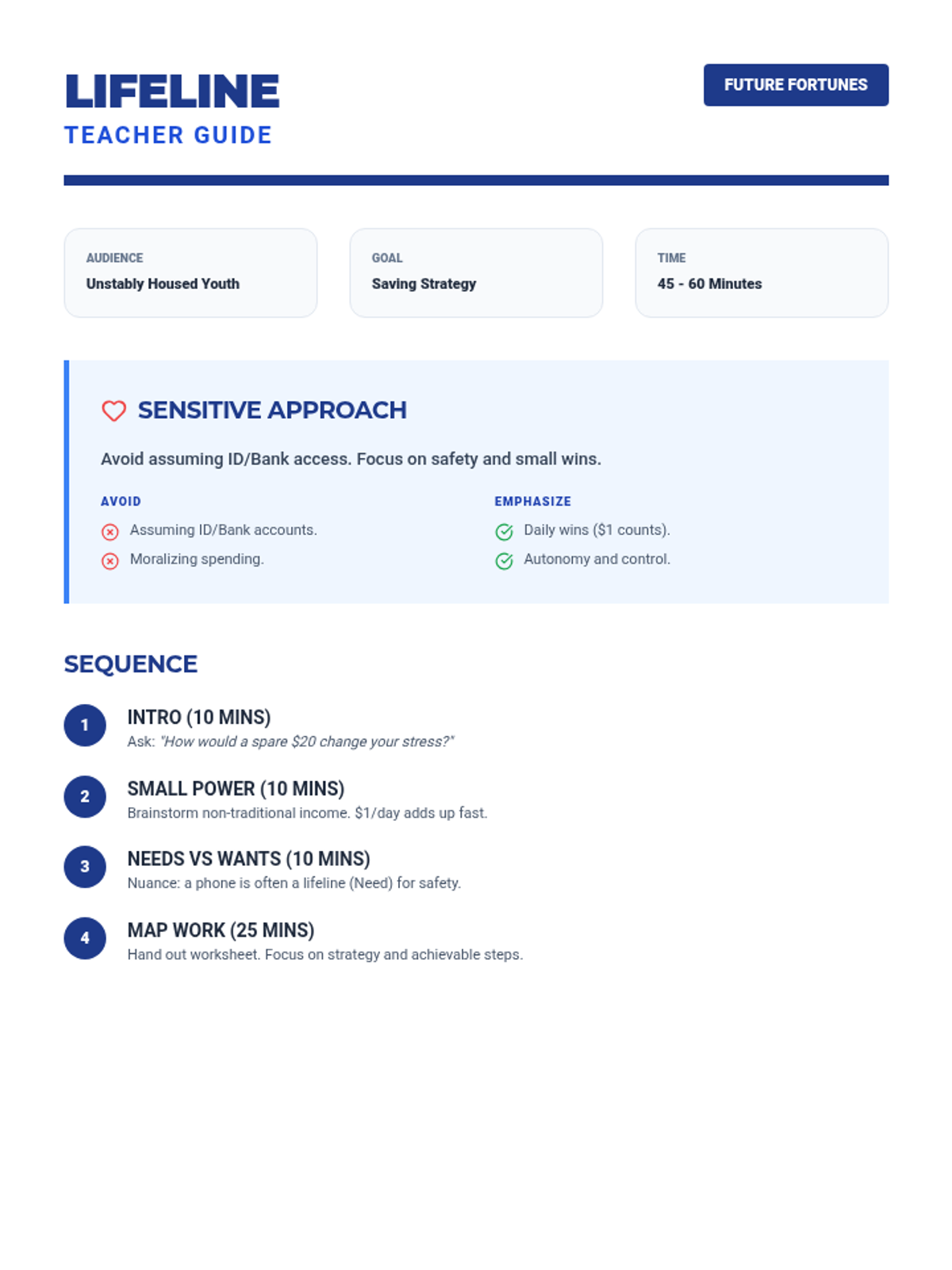
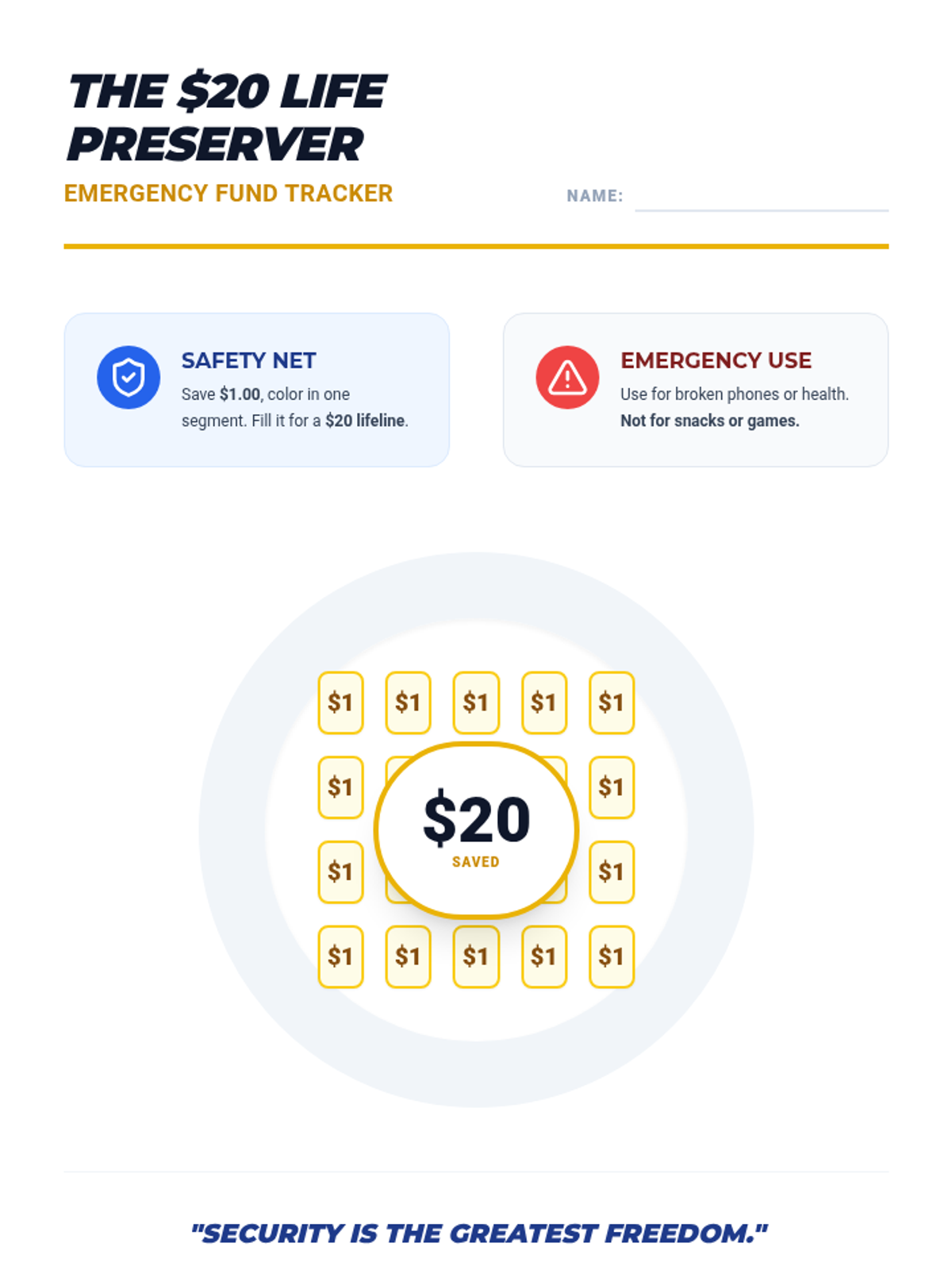
A practical financial literacy lesson designed to empower students with unstable housing to manage small amounts of money and plan for a more secure future.
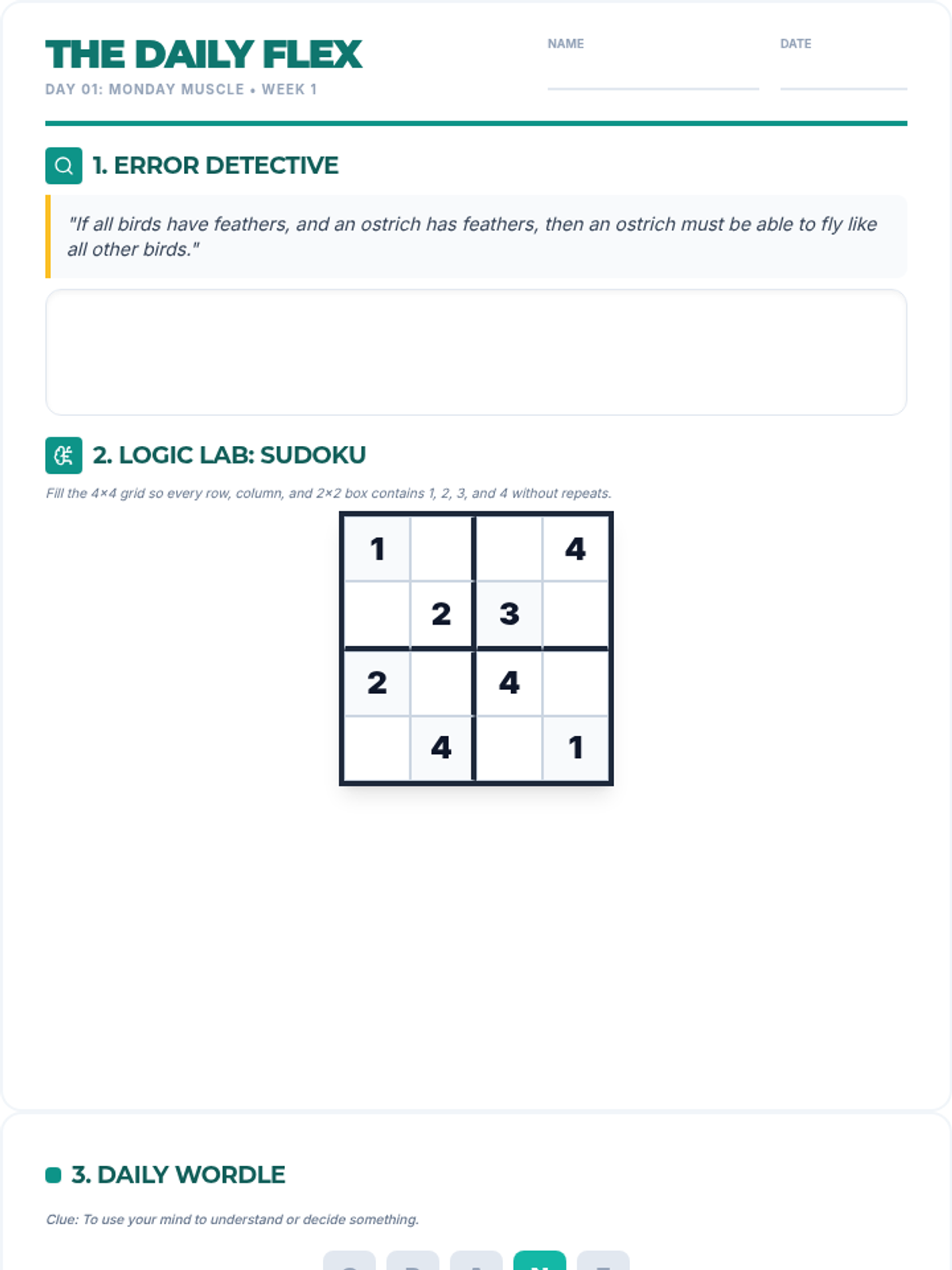
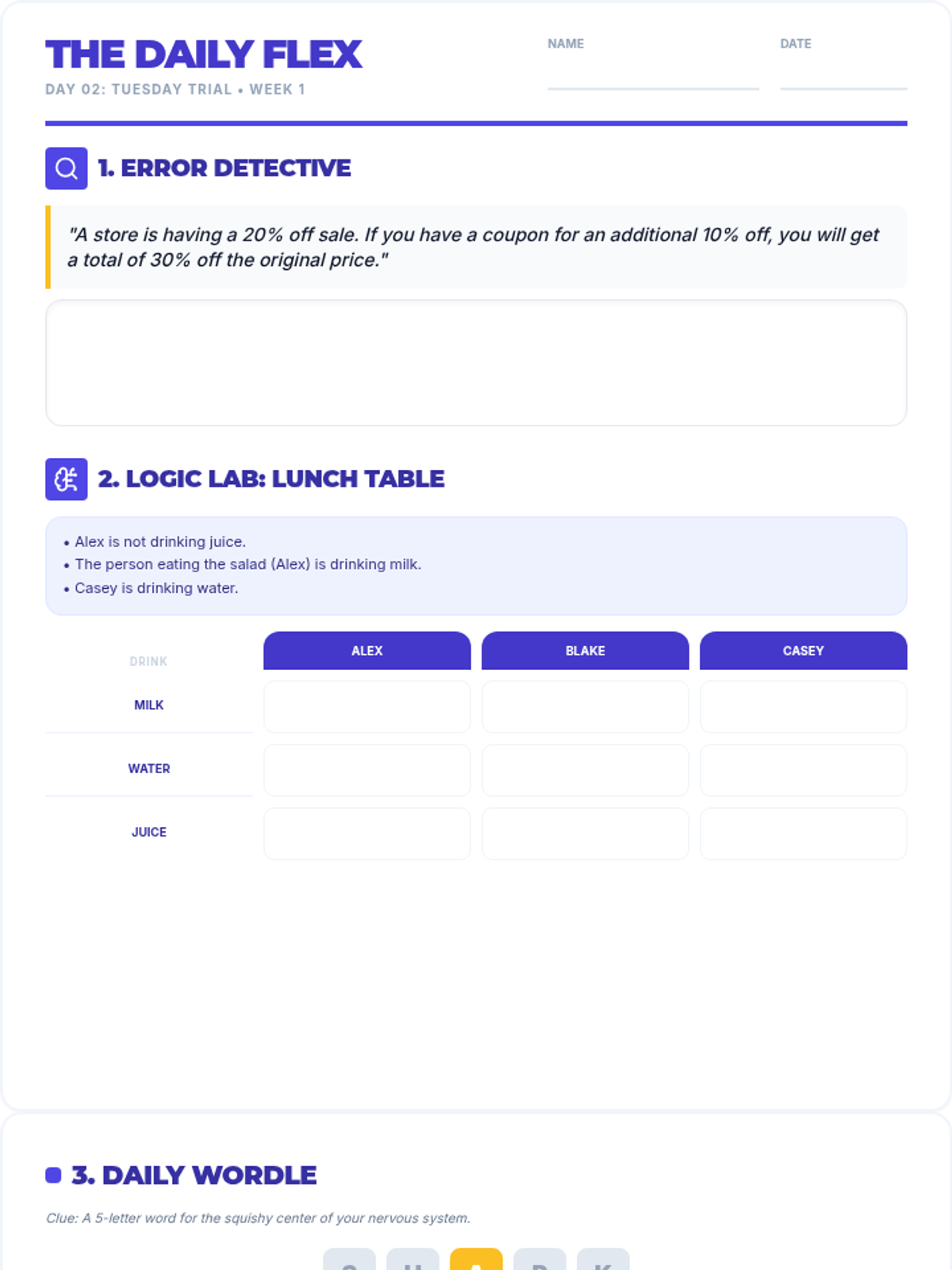
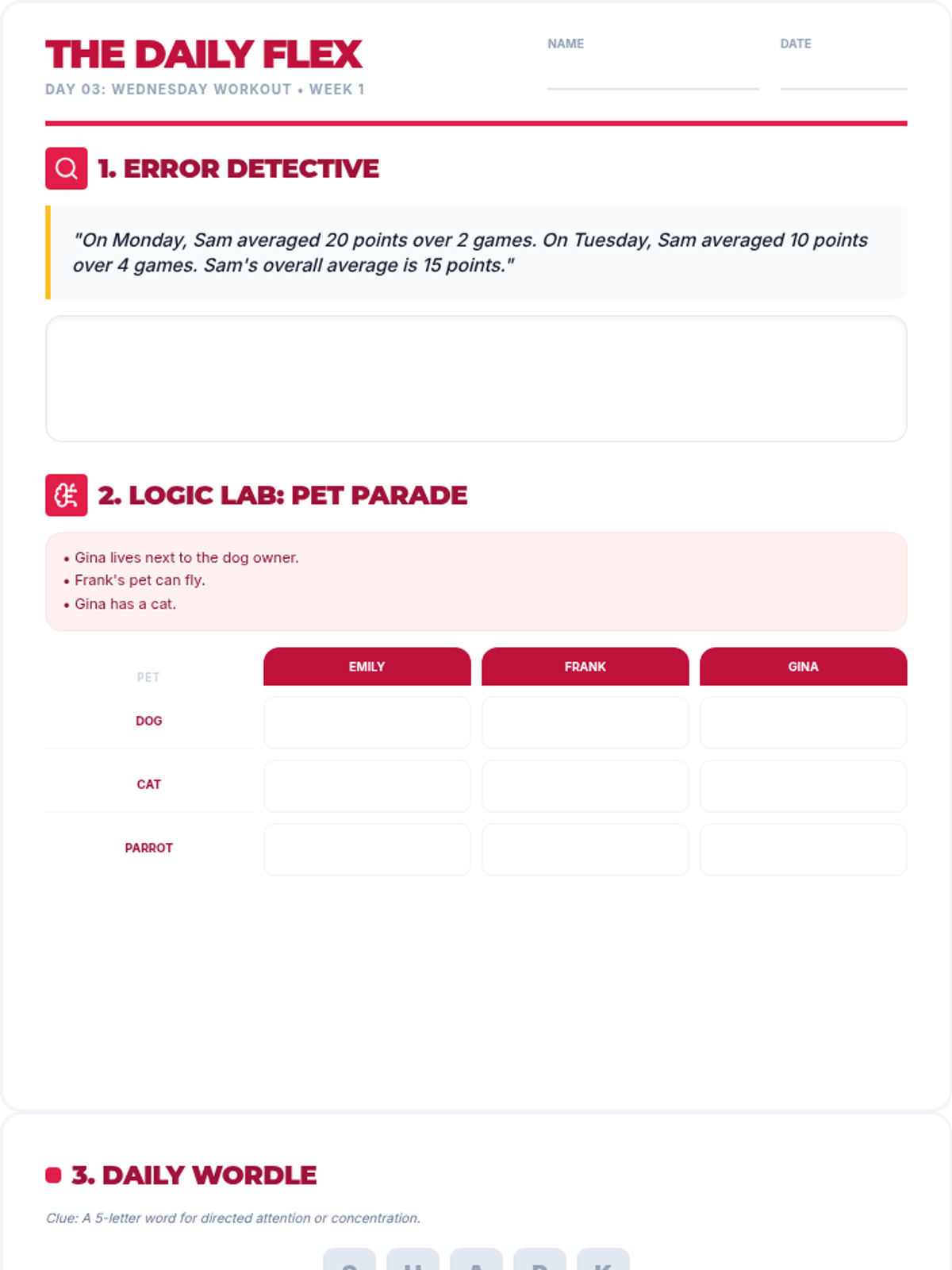
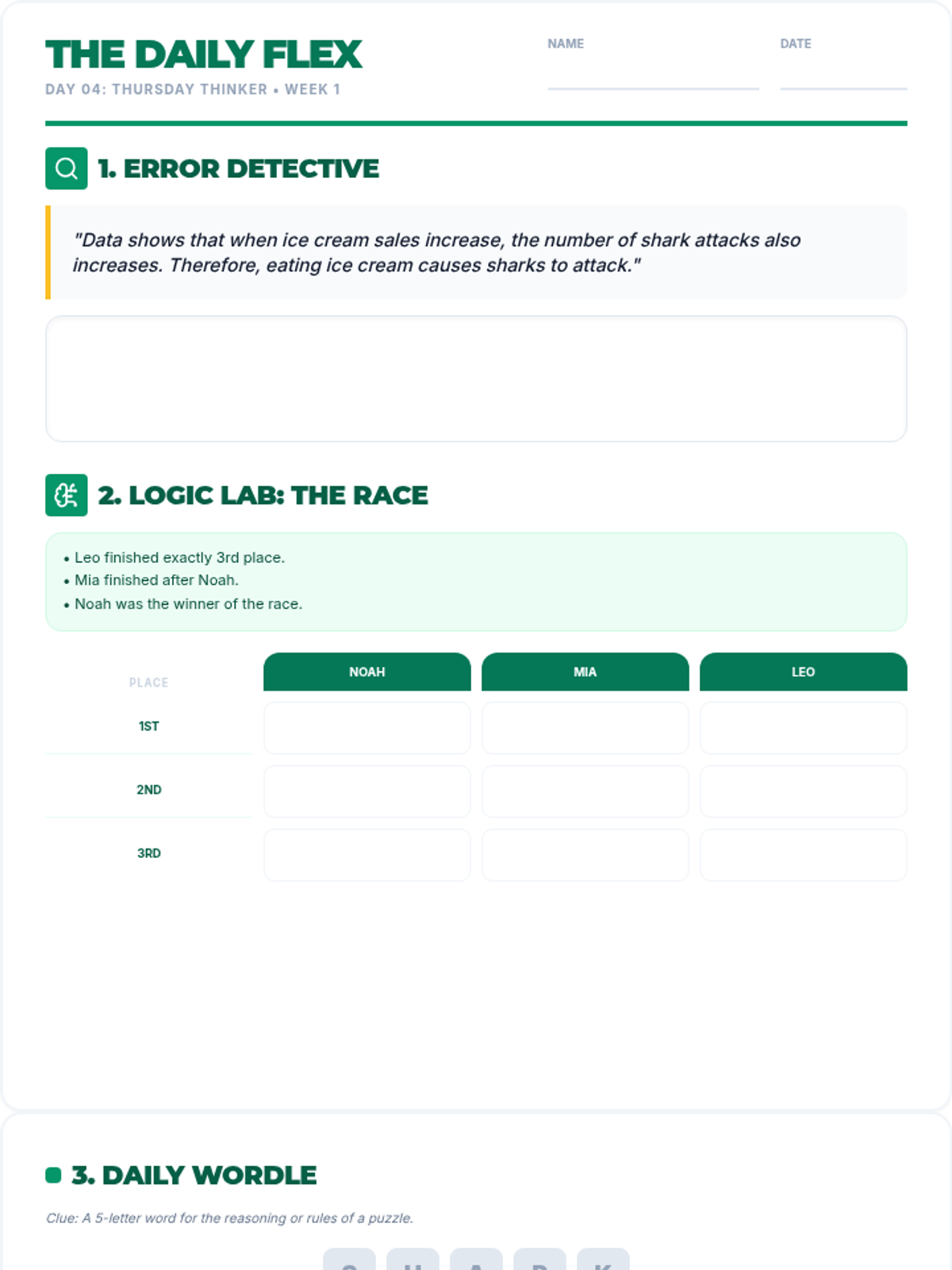
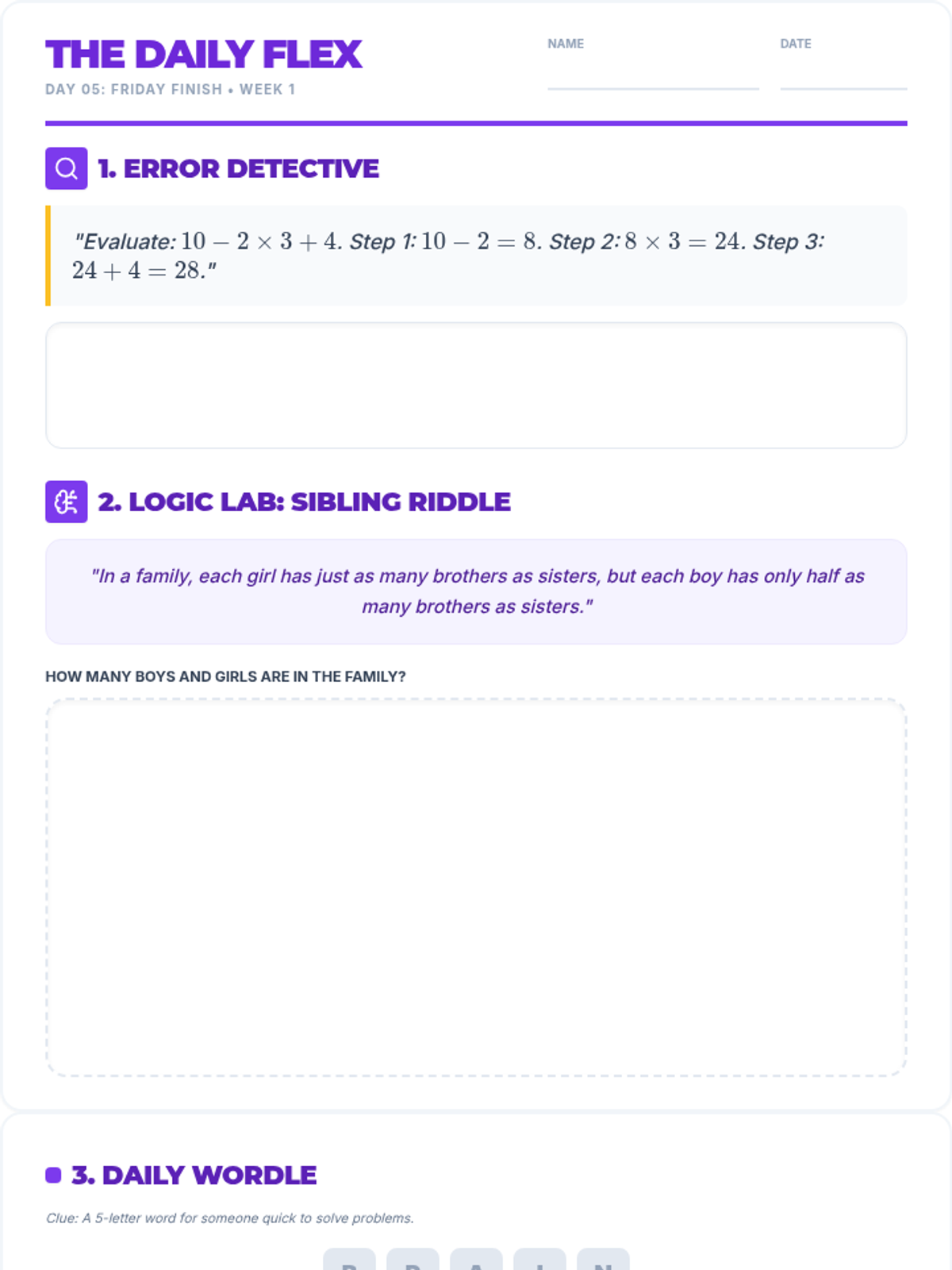
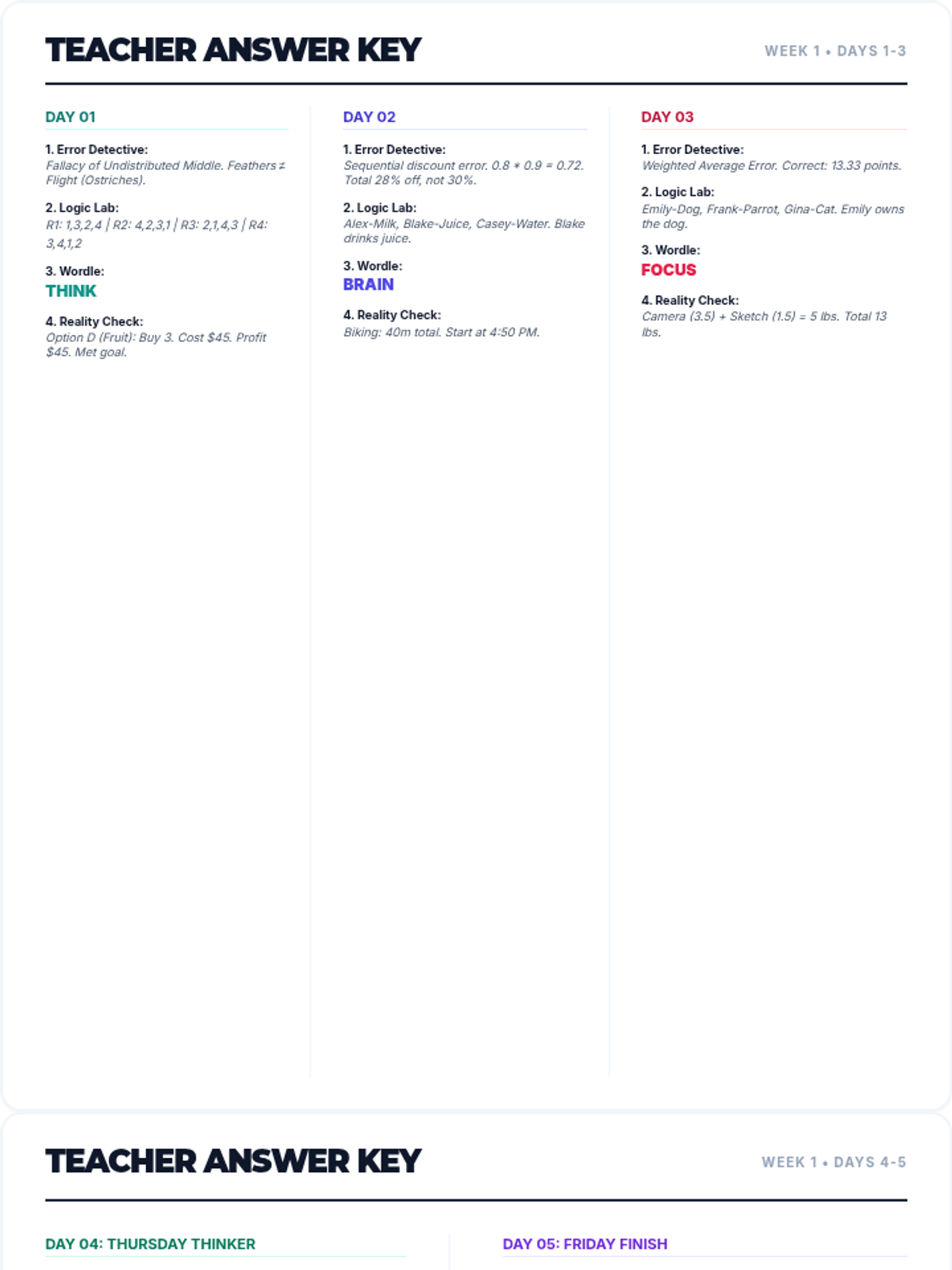
The first week of morning mental exercises focusing on foundational critical thinking skills across various domains.
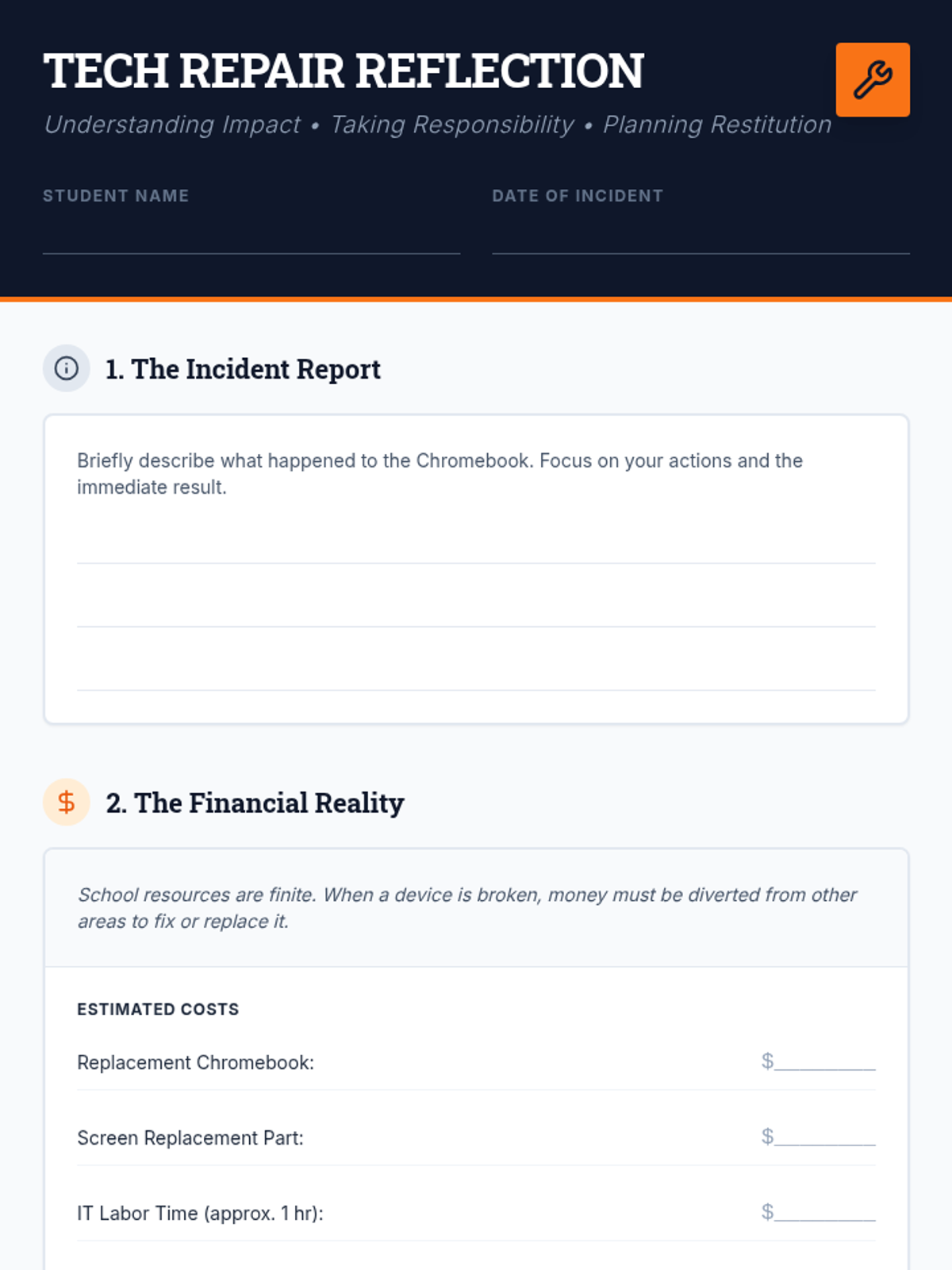
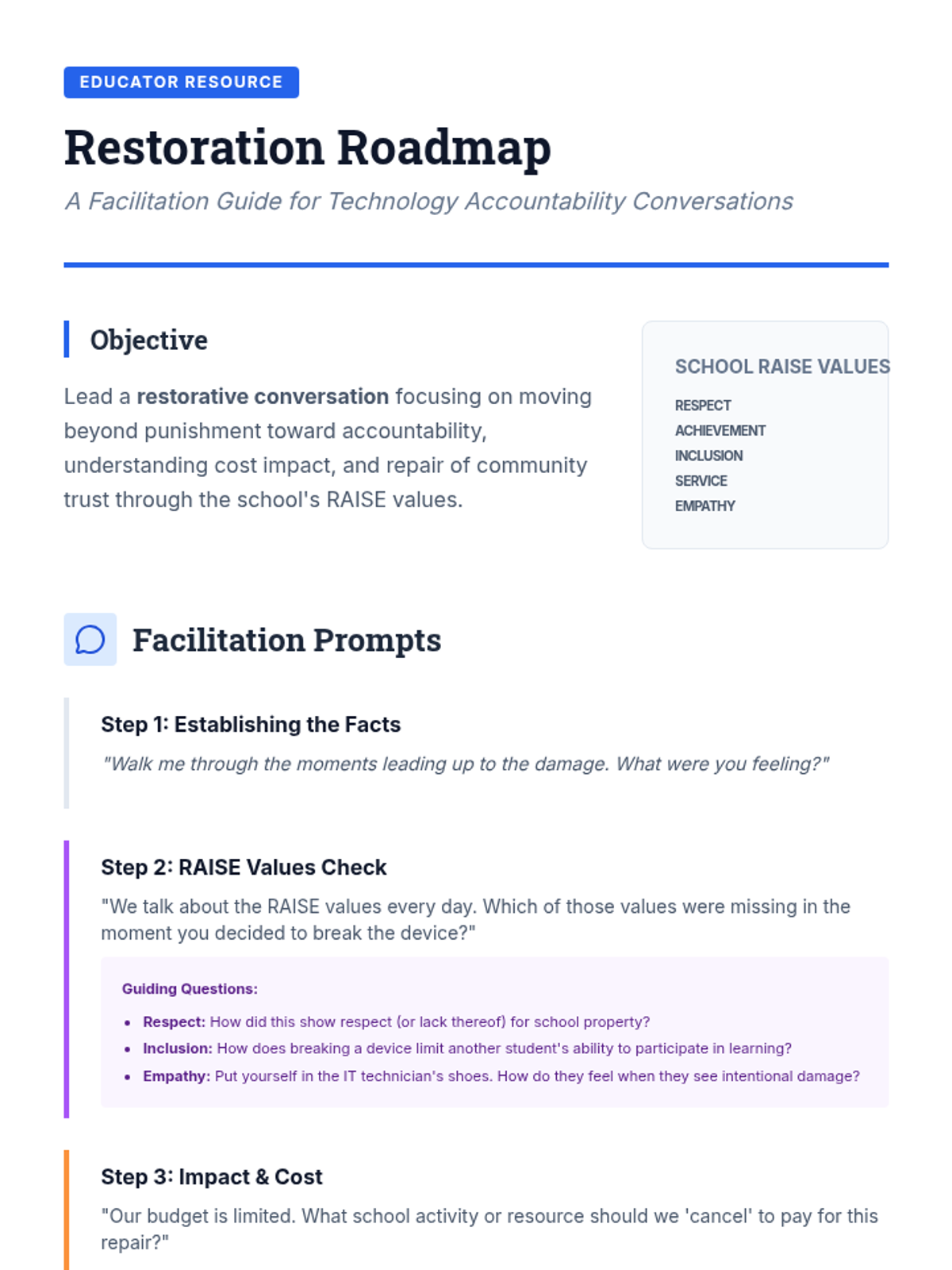
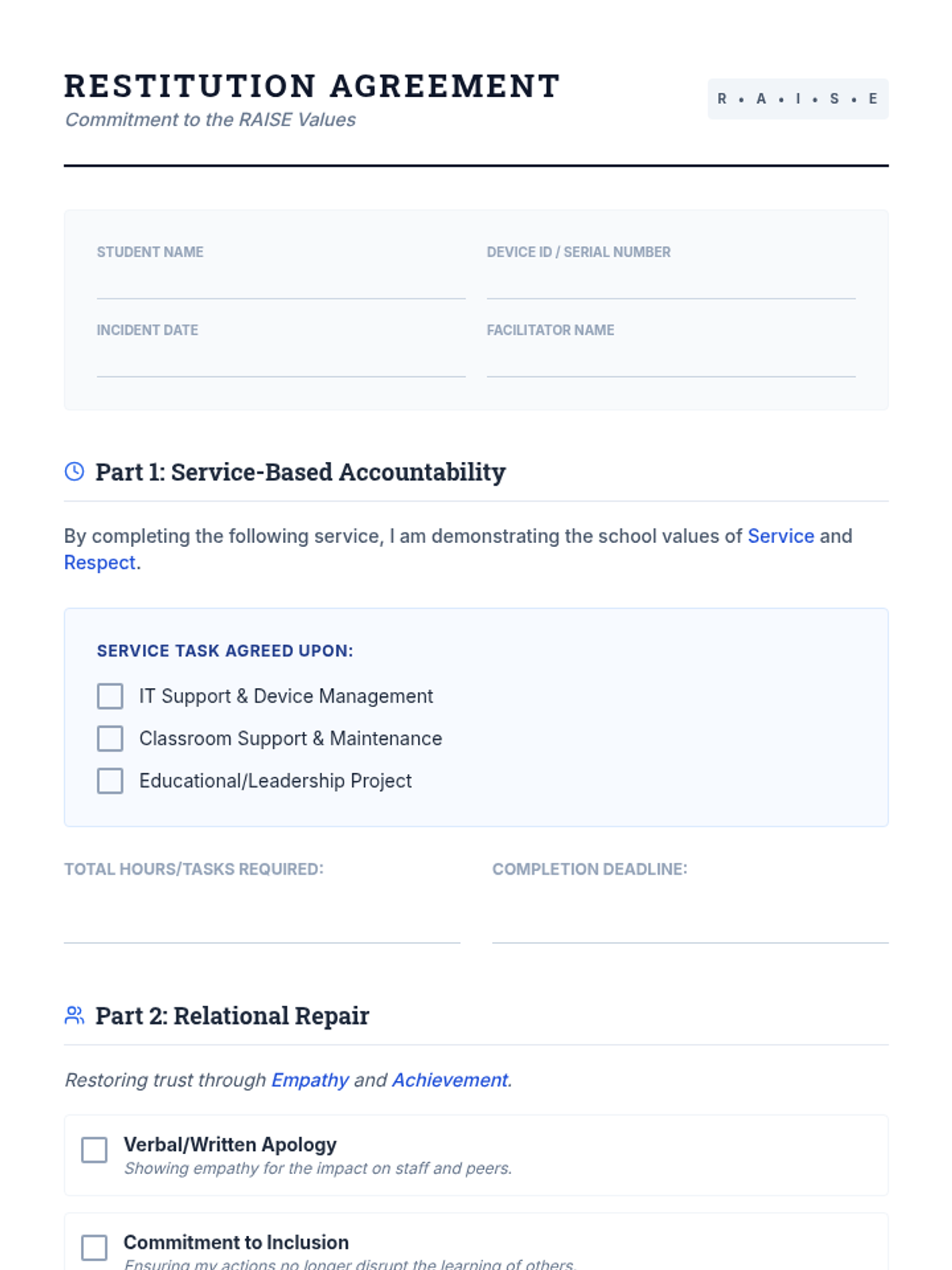
A restorative justice resource designed for students who have intentionally damaged school technology, focusing on financial accountability and community impact.
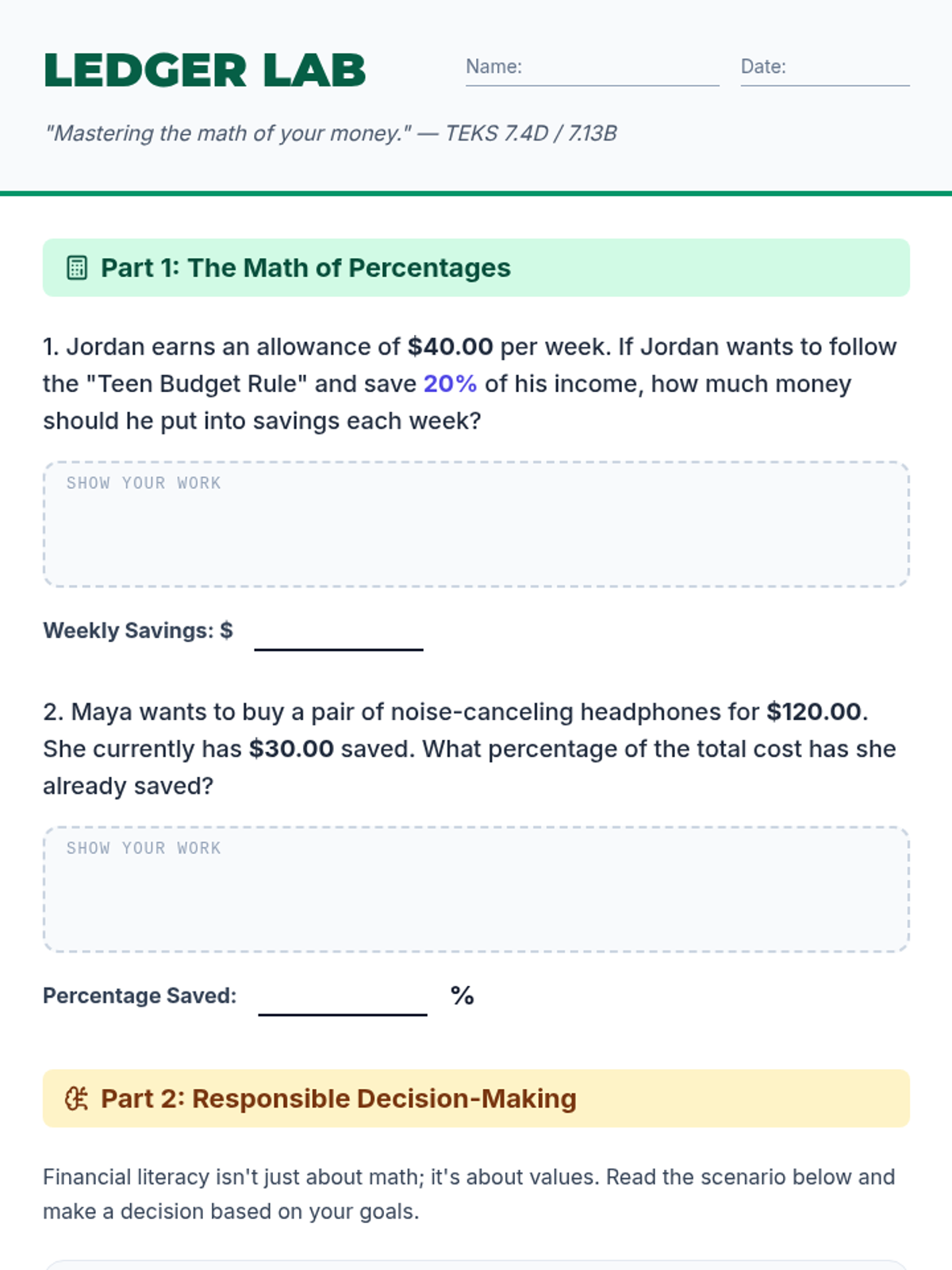
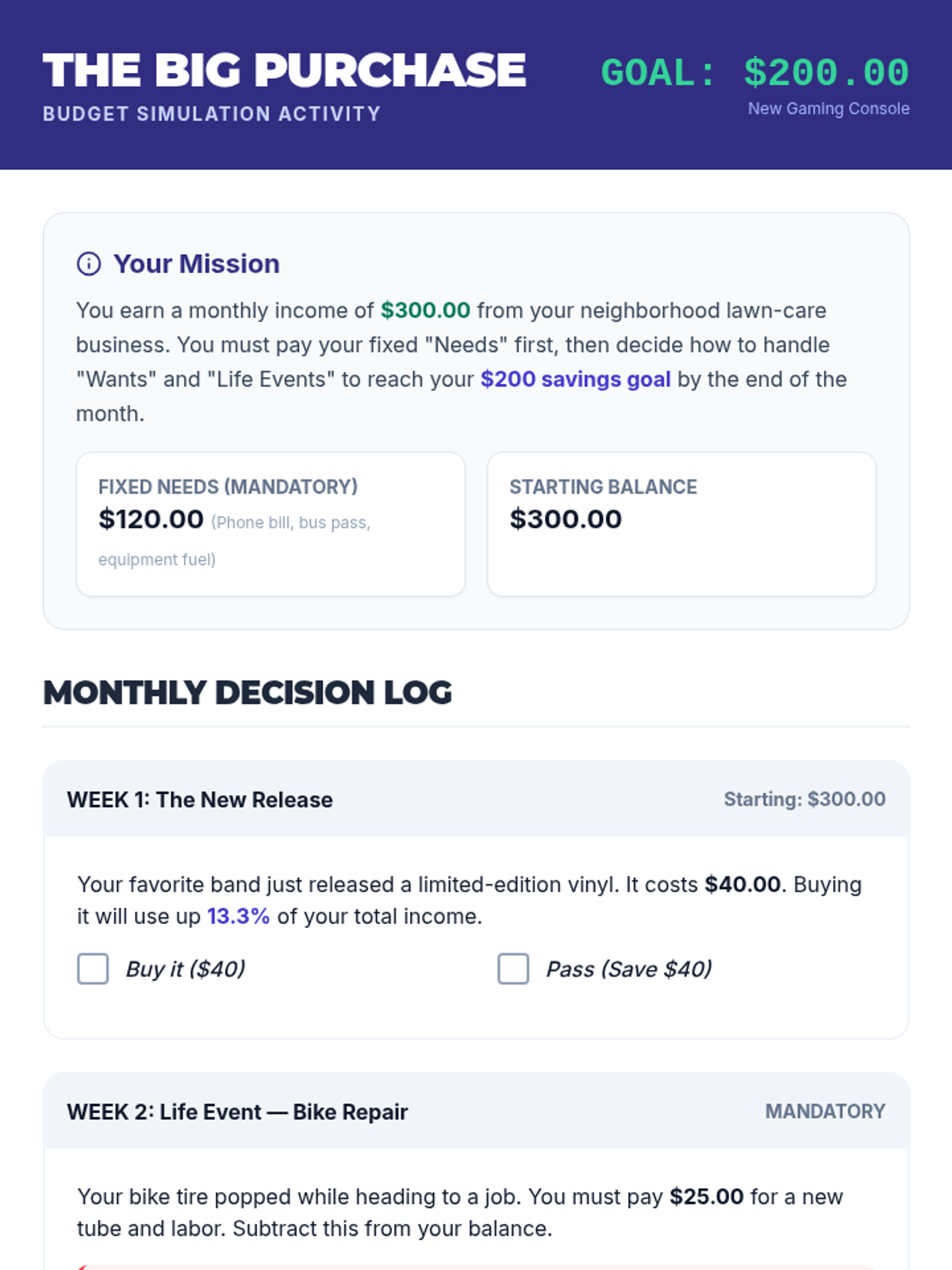
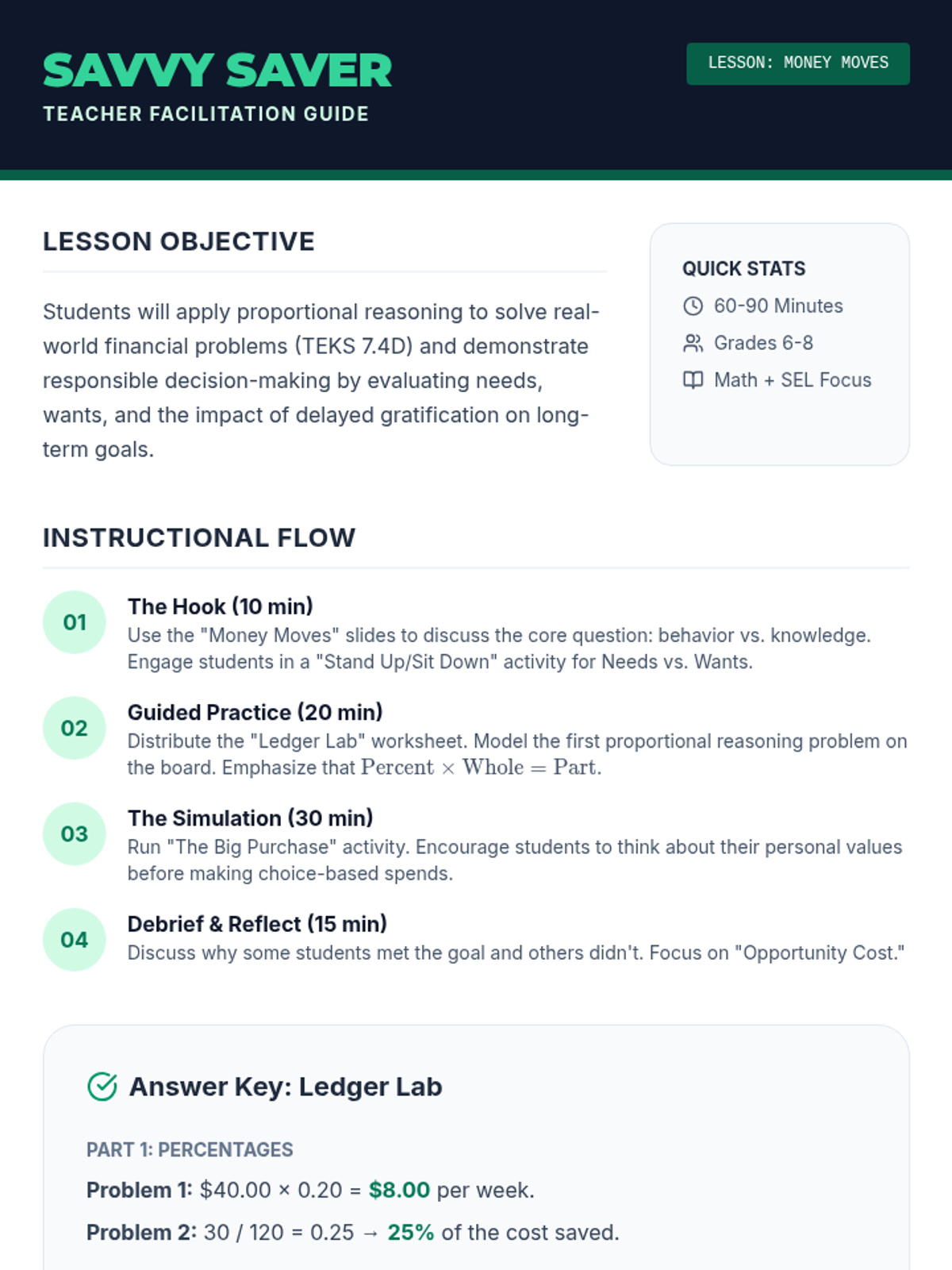
A comprehensive middle school lesson on financial literacy and responsible decision-making, integrating TEKS 7th grade math standards for proportional reasoning with SEL concepts like delayed gratification.
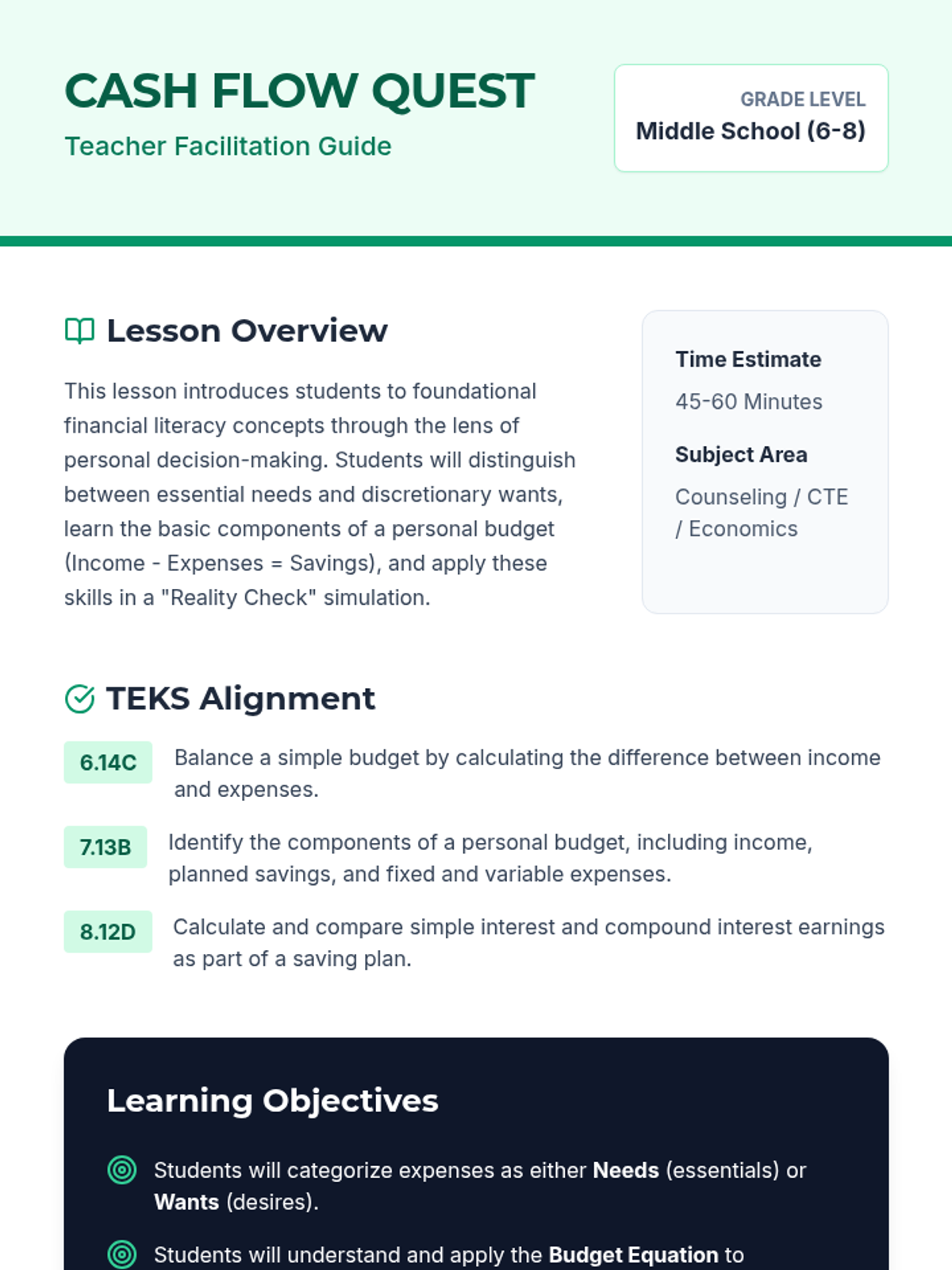
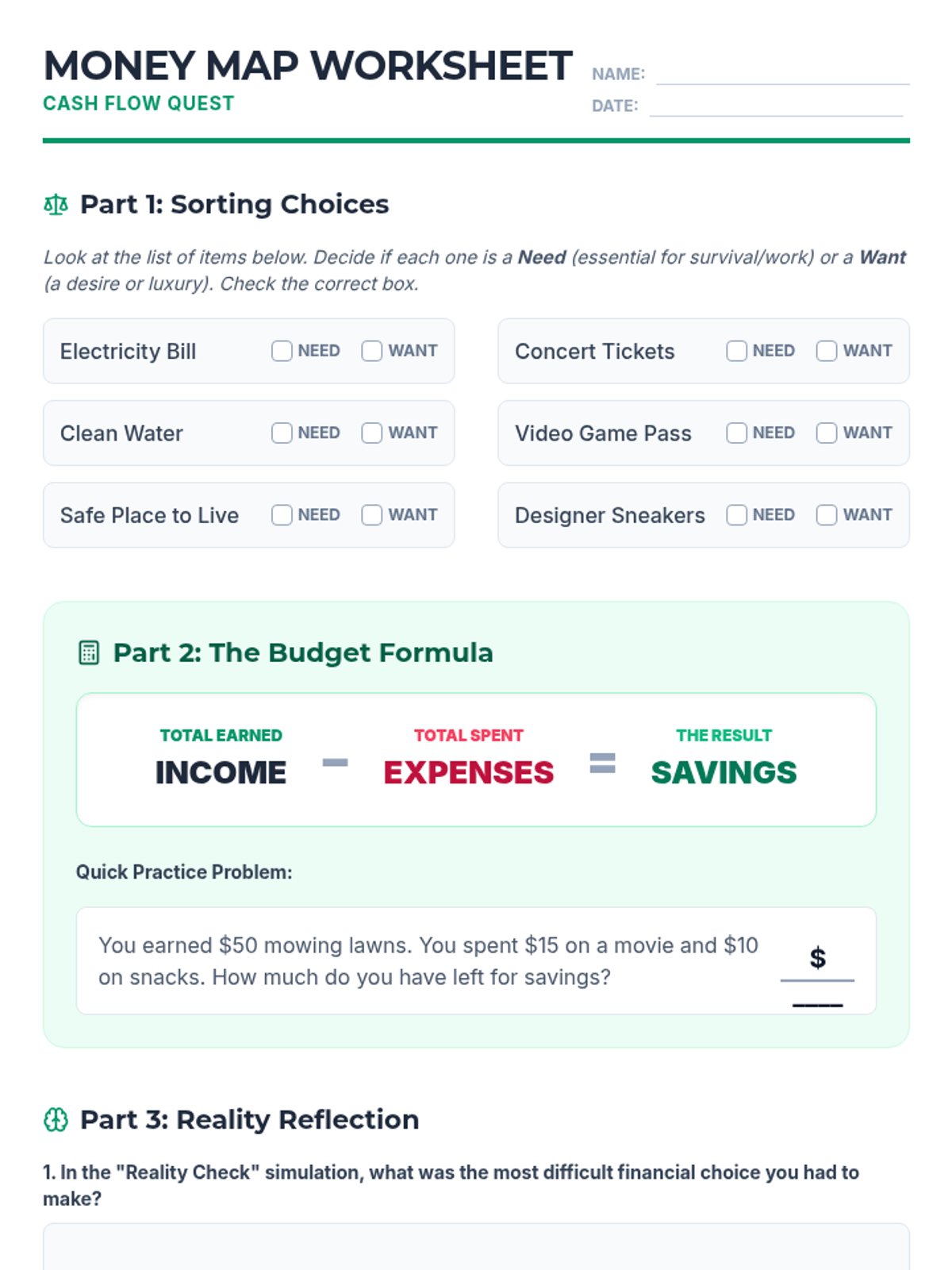
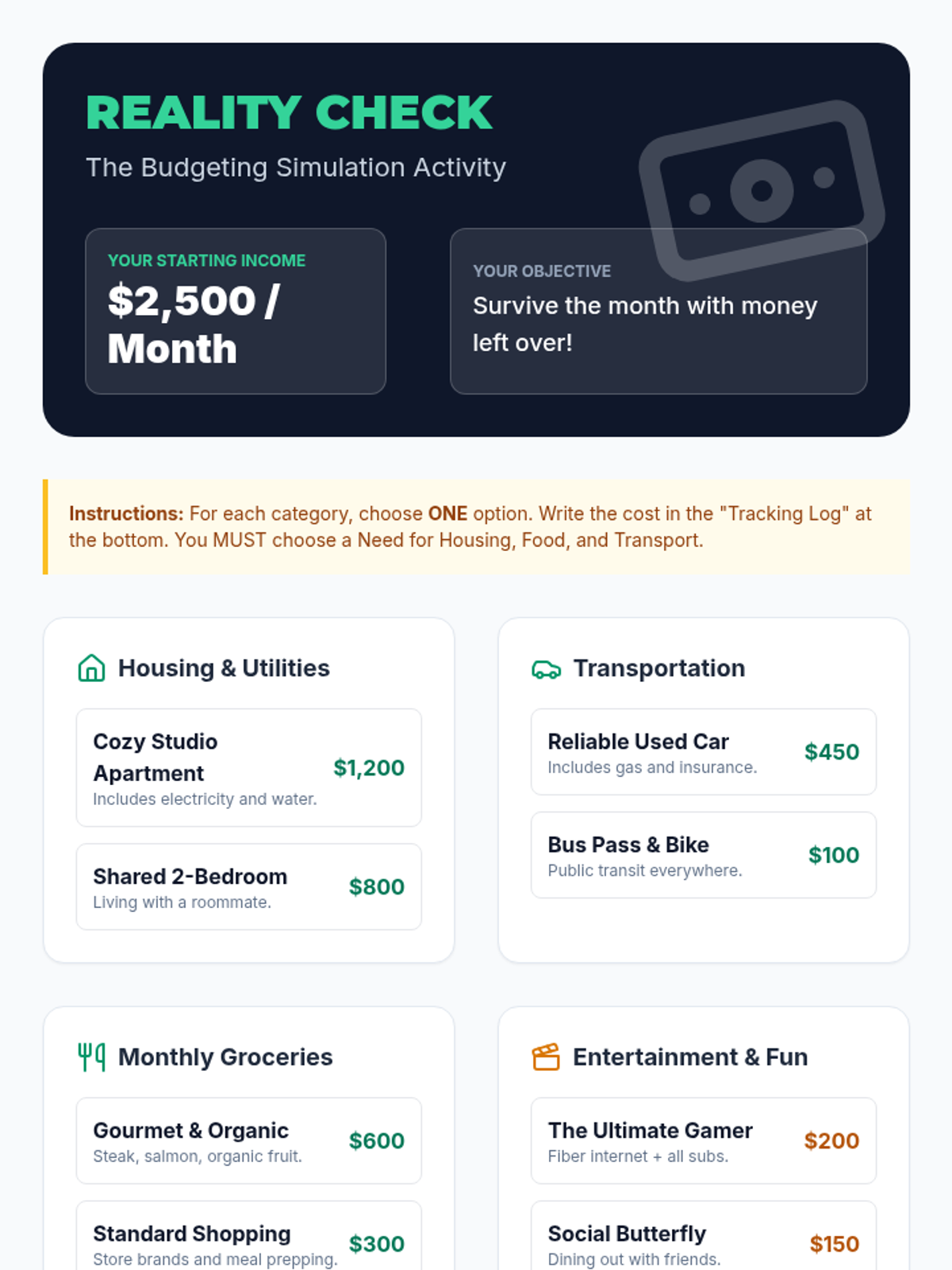
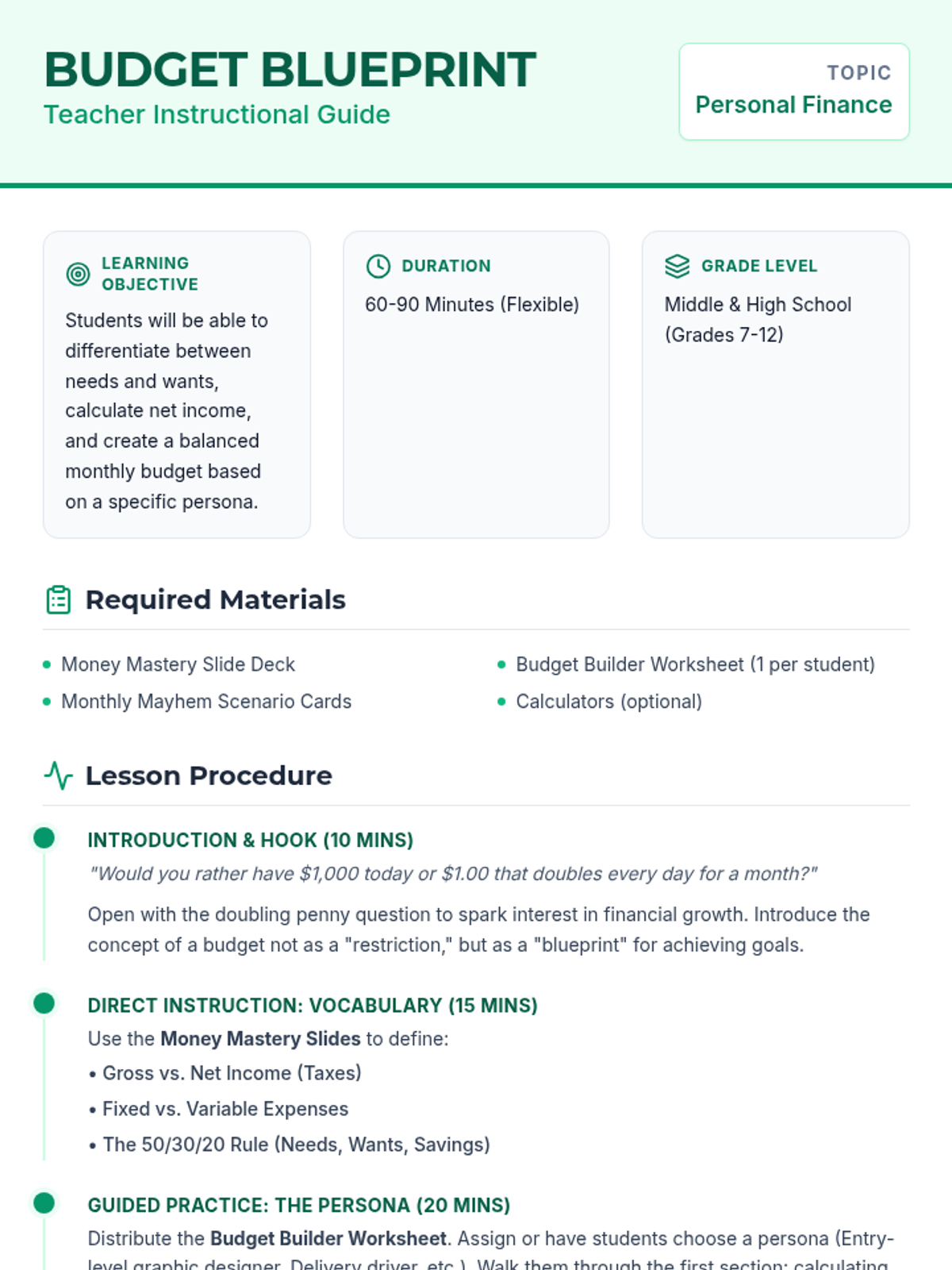
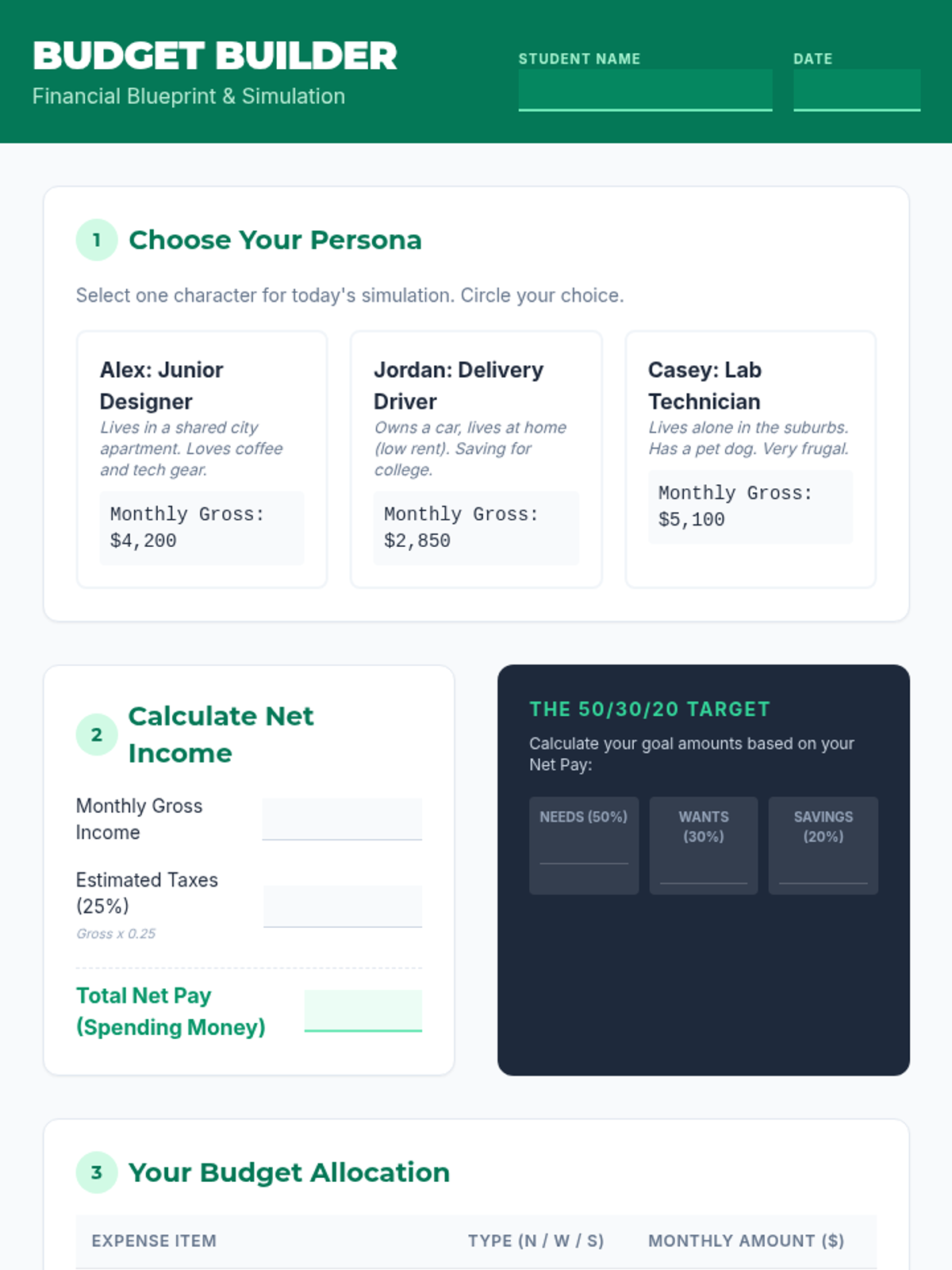
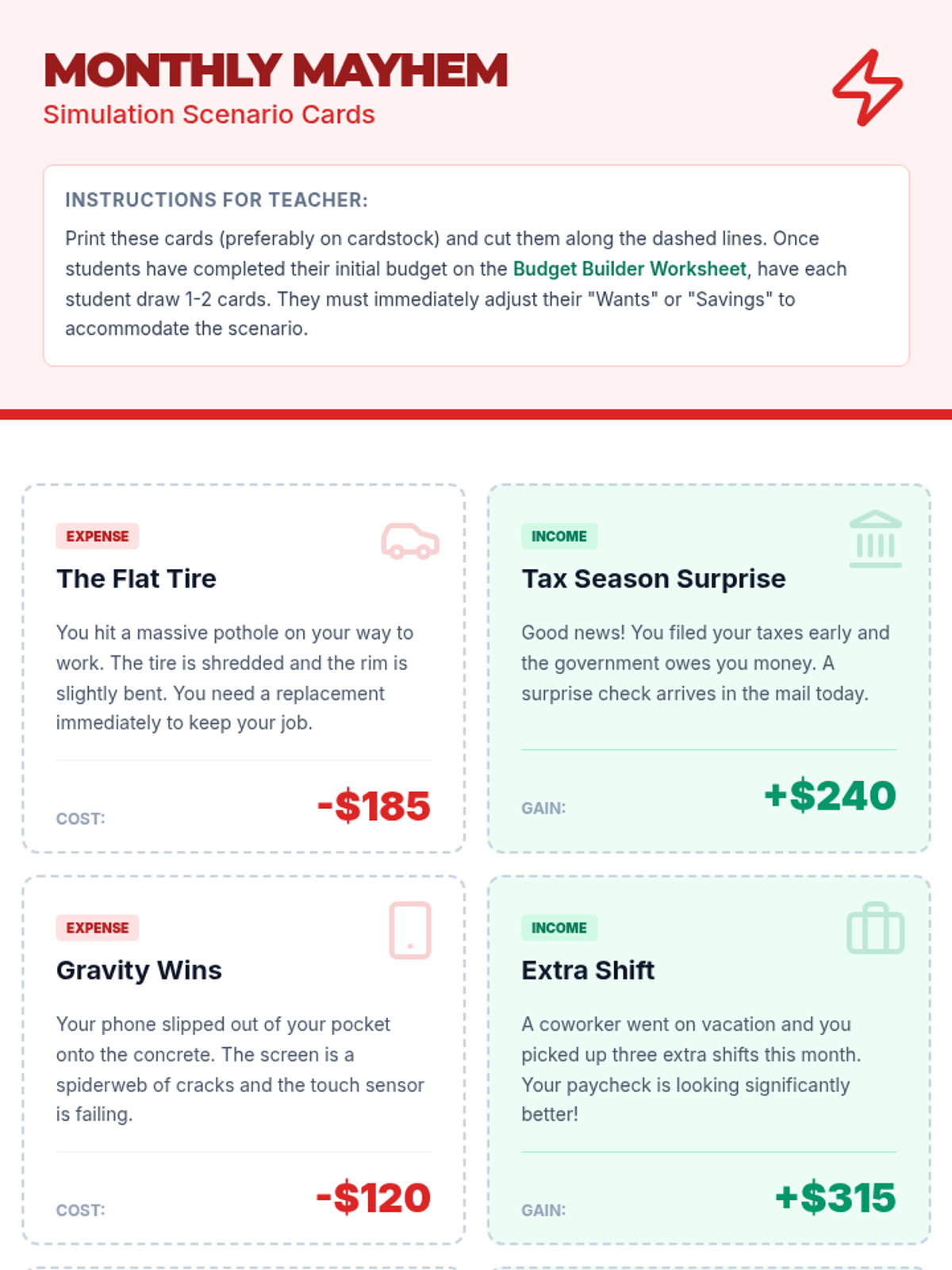
A comprehensive introduction to personal finance for middle schoolers, covering the difference between needs and wants, basic budgeting principles, and the importance of saving through a hands-on simulation.
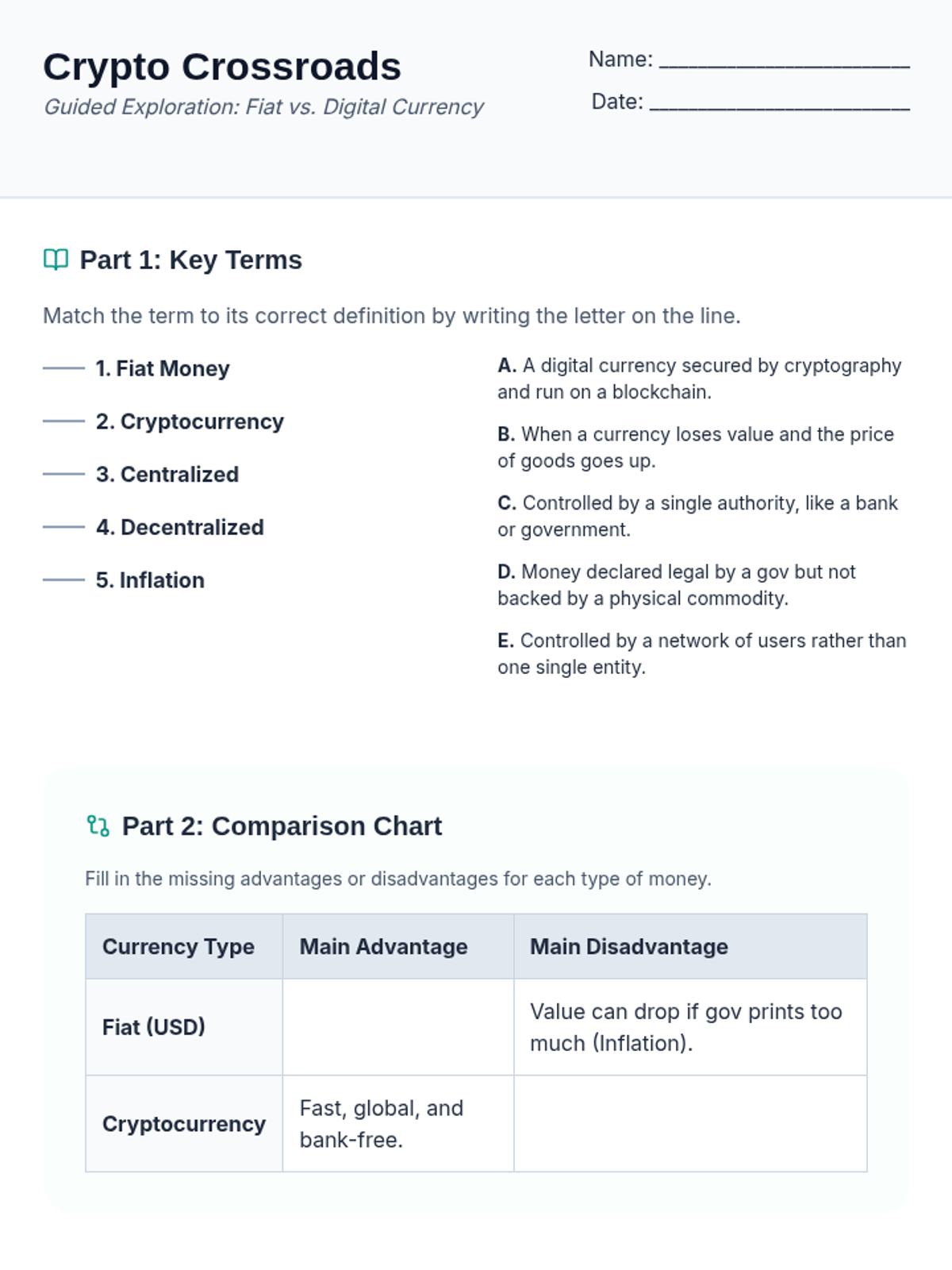
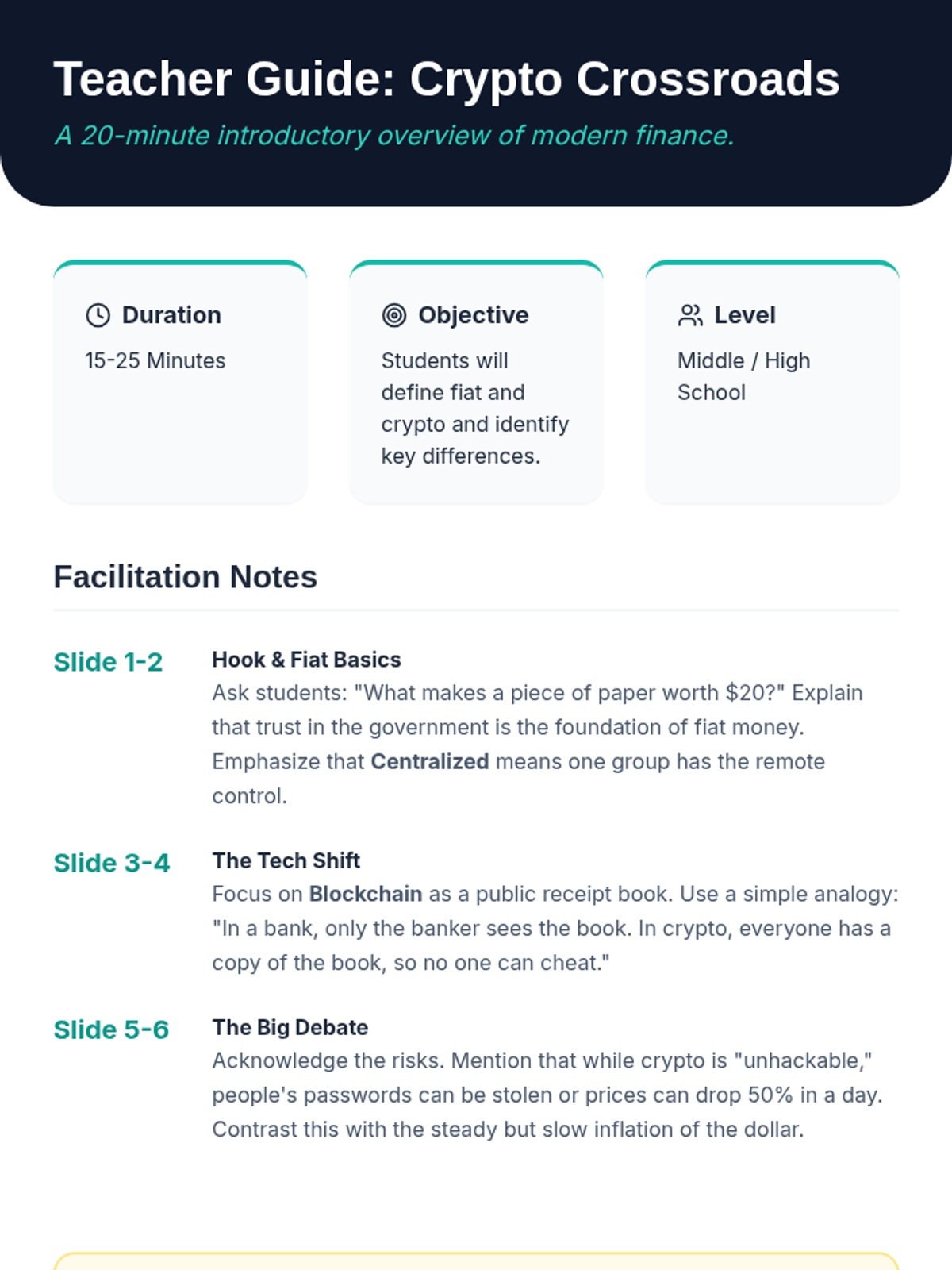
An introductory lesson exploring the differences between traditional fiat currency and cryptocurrency, focusing on centralization, technology, and economic impacts.
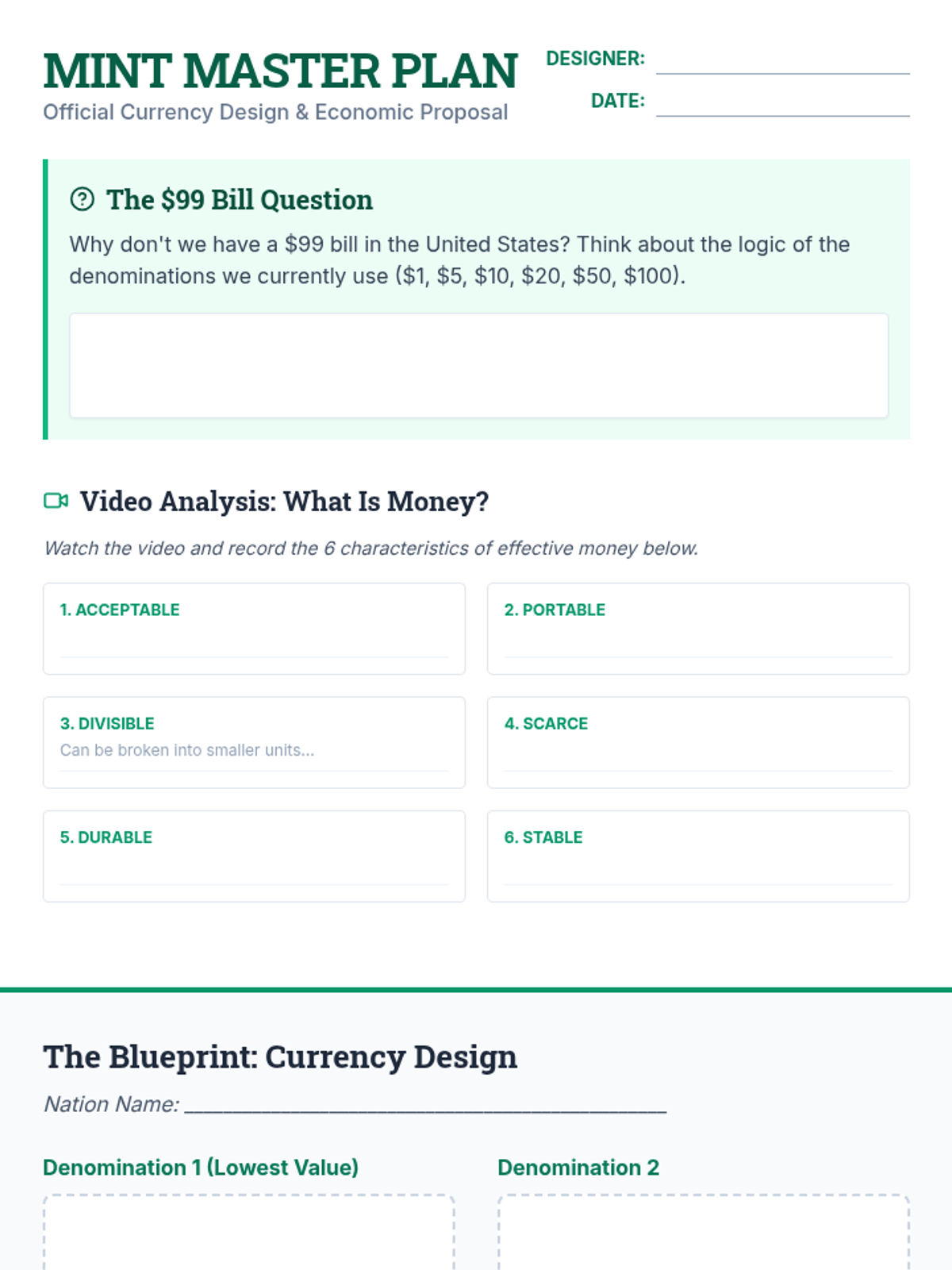
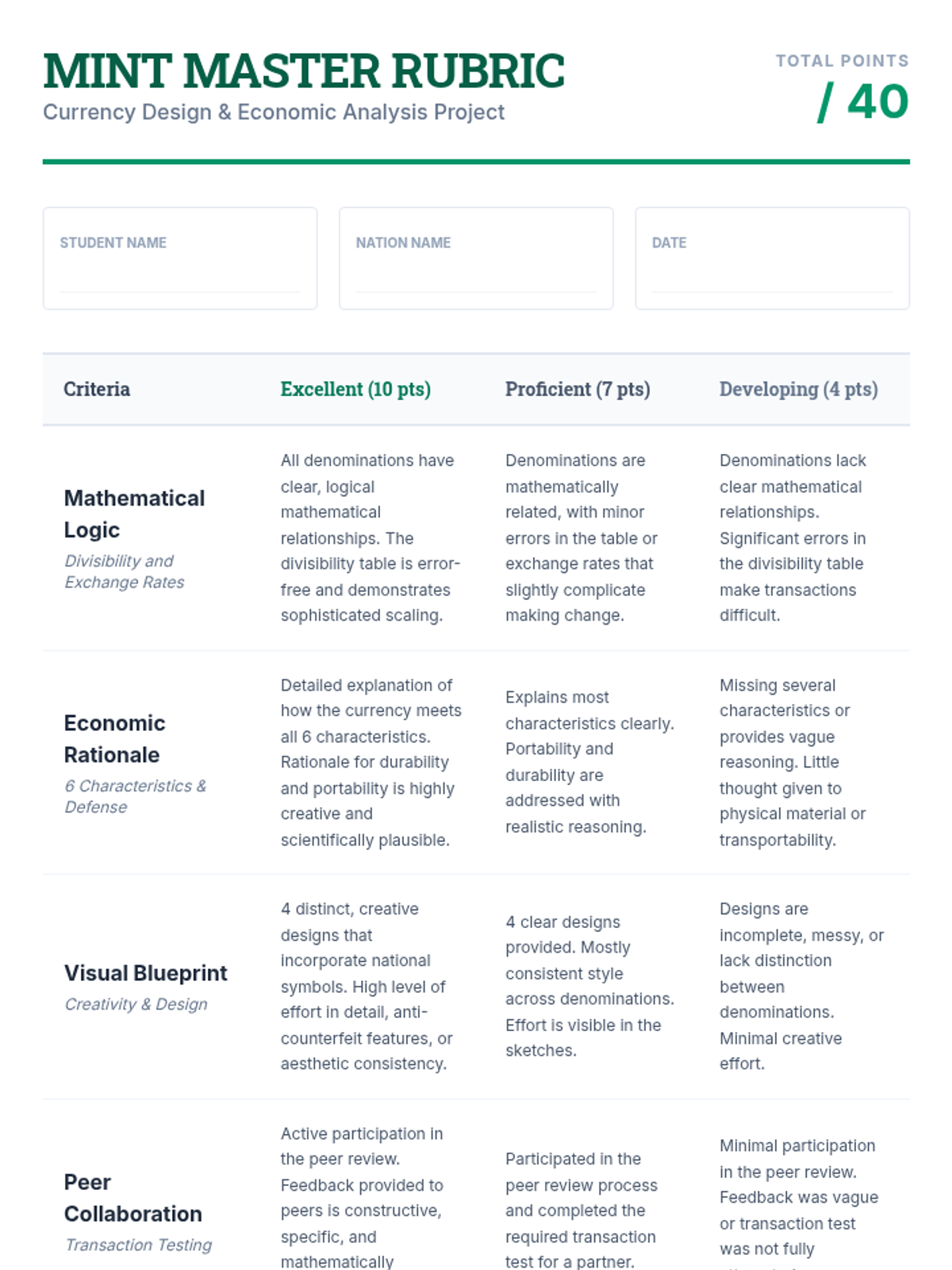
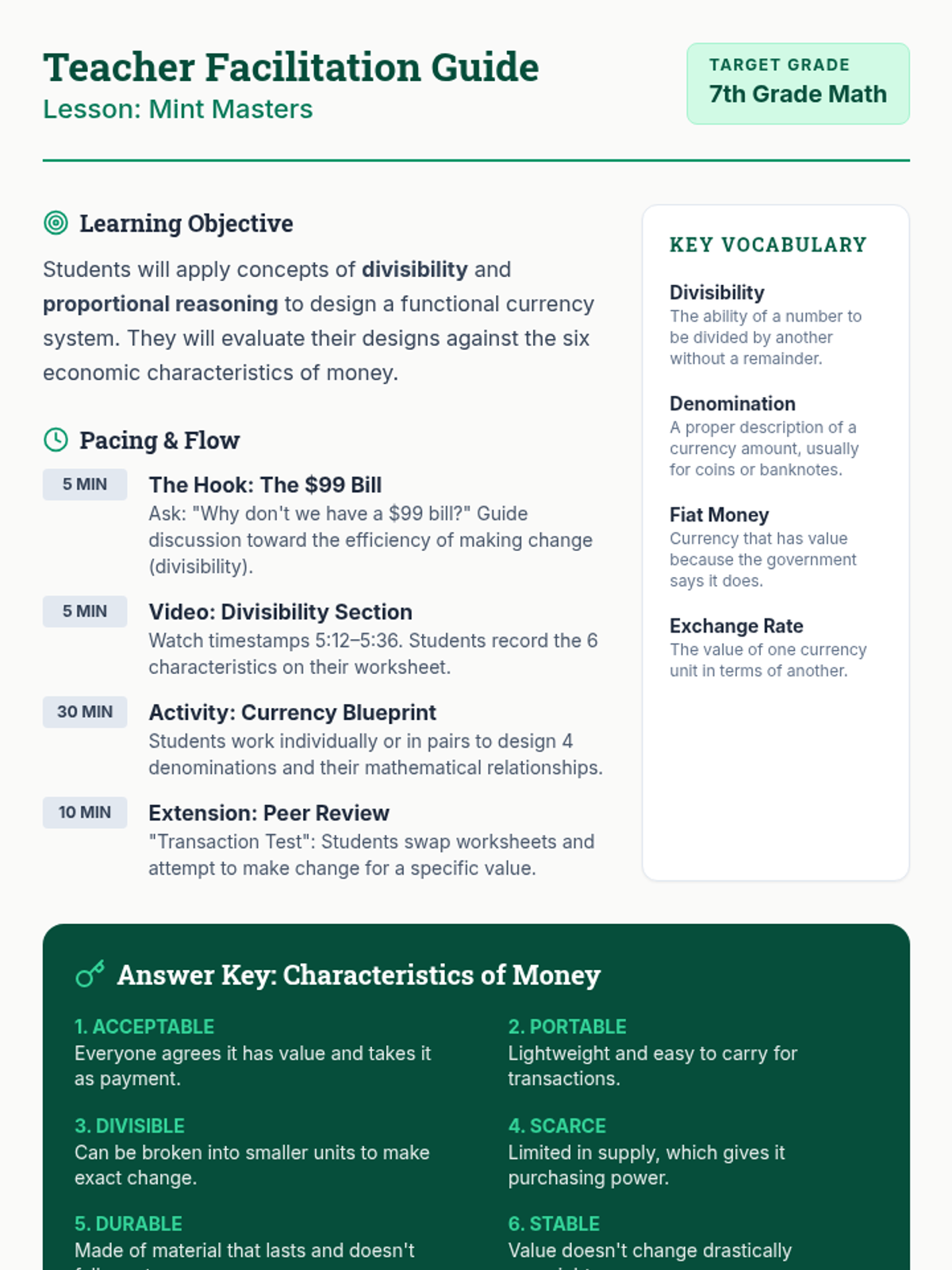
Students explore the six characteristics of money and the math of divisibility by designing their own currency system for a fictional nation, establishing exchange rates and denominations.
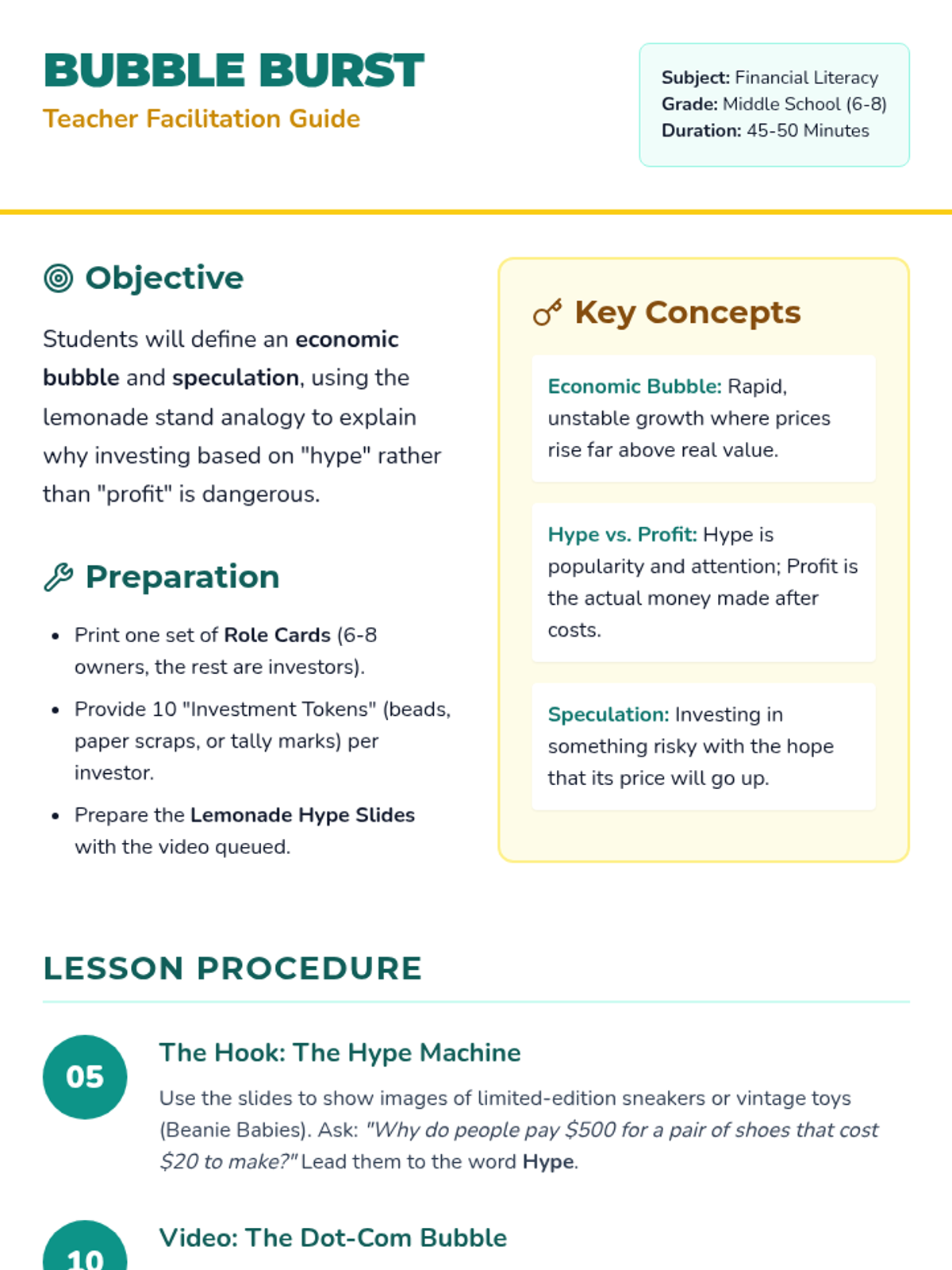
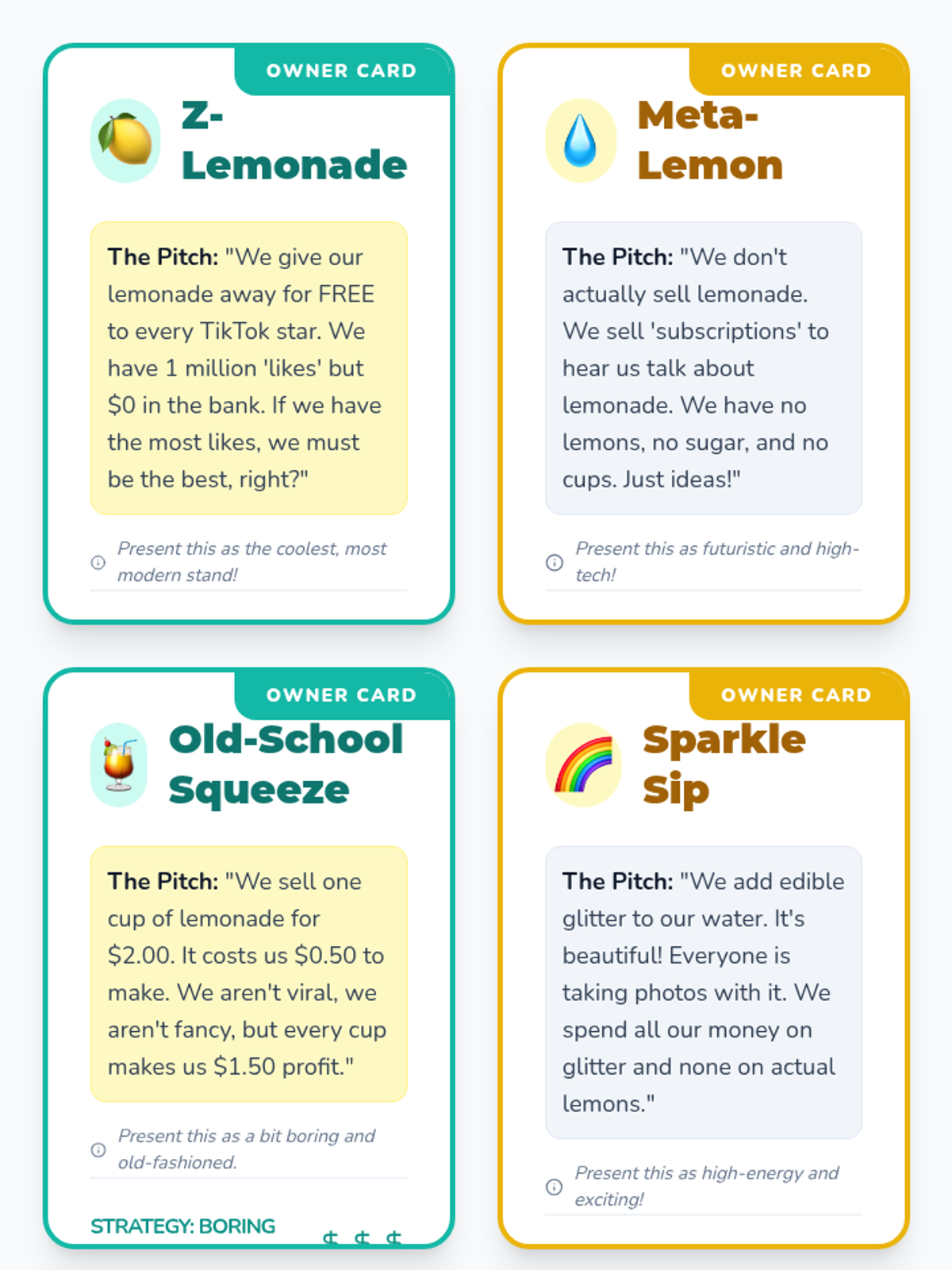
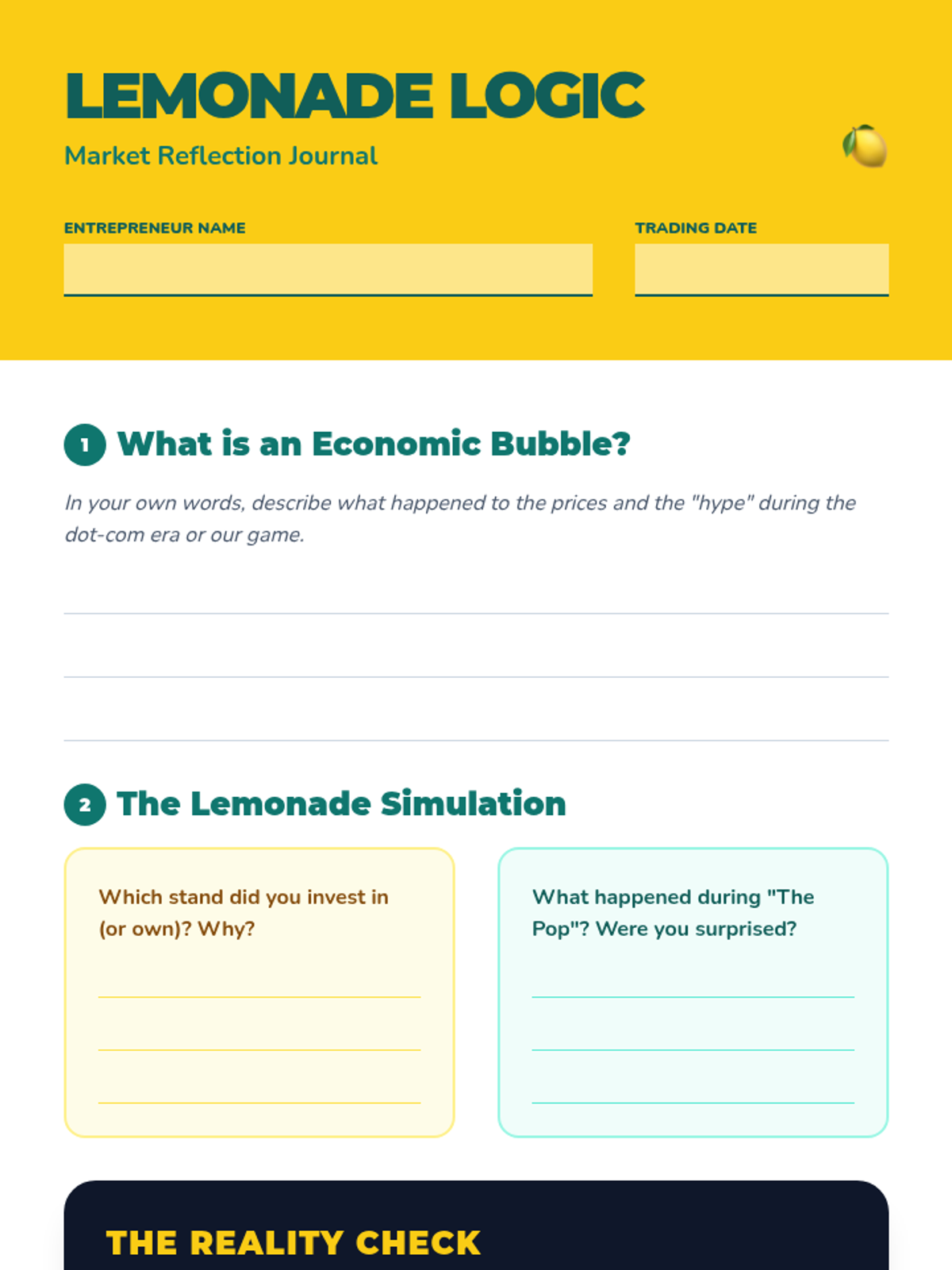
A middle school financial literacy lesson exploring economic bubbles through the 1990s dot-com boom and a hands-on lemonade stand simulation. Students learn to distinguish between 'hype' and 'profit' while analyzing how speculation leads to market crashes.
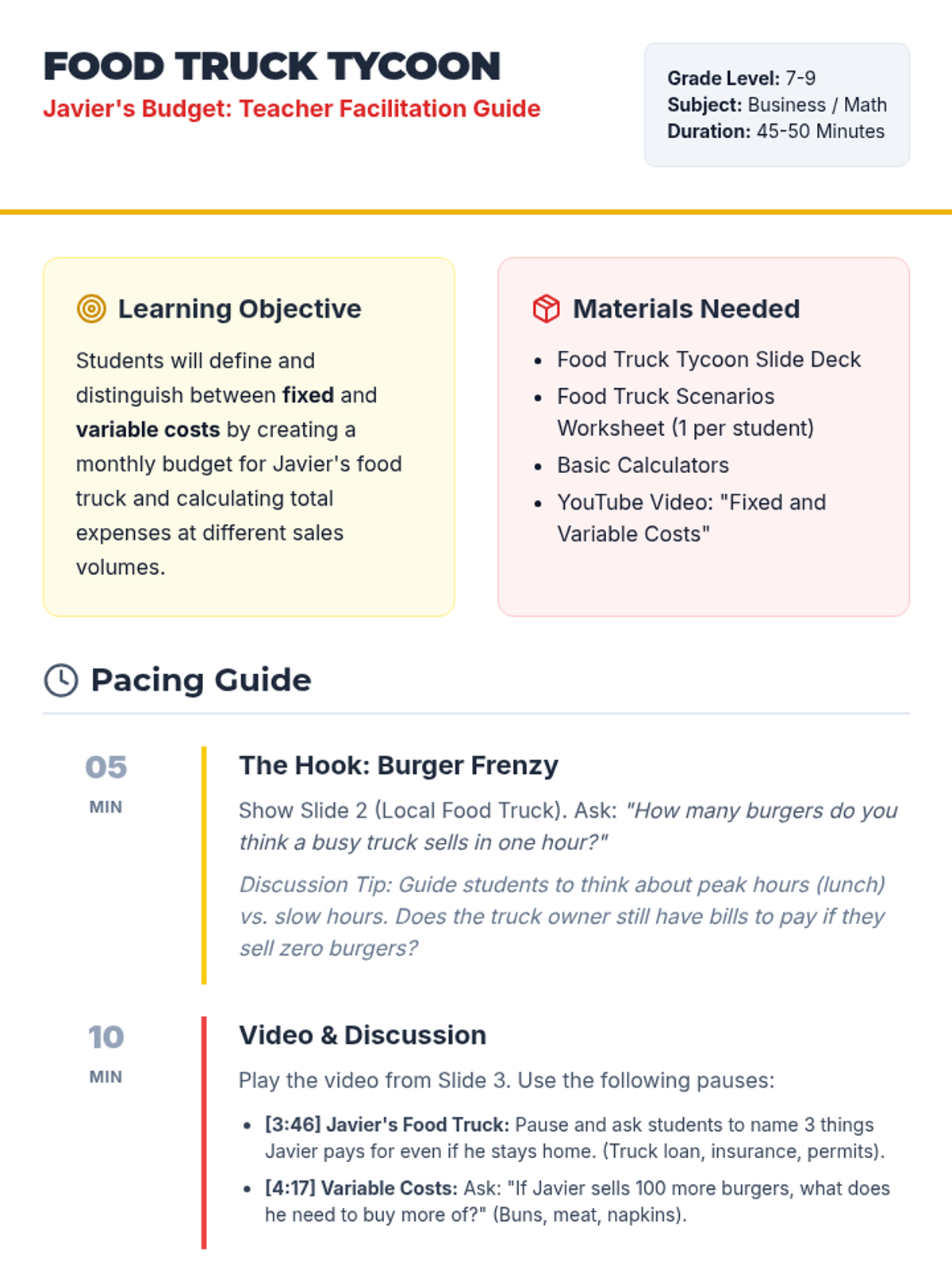
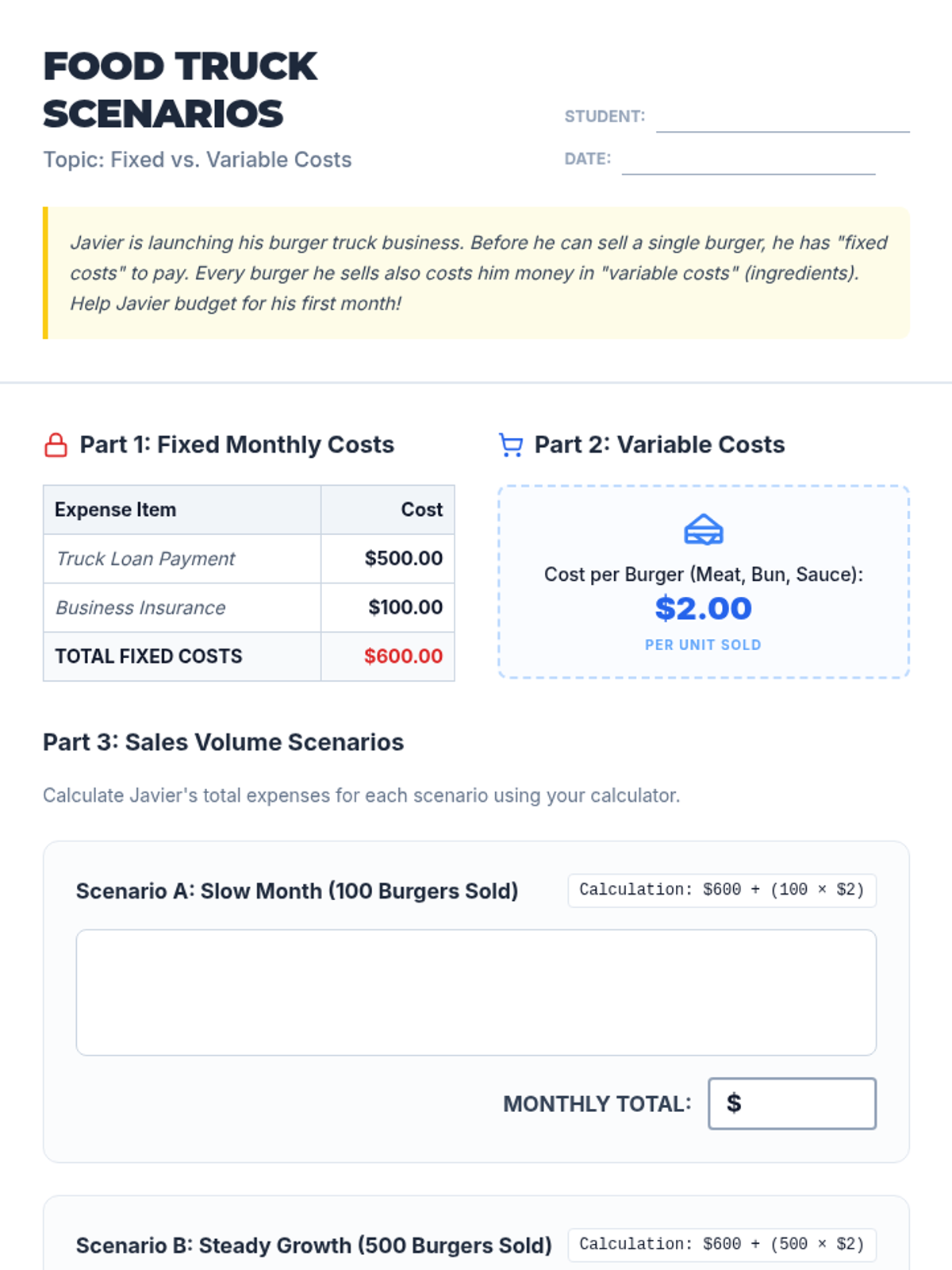
A business and economics lesson for grades 7-9 where students learn the difference between fixed and variable costs through the lens of running a food truck business. Includes a video-guided discussion and a hands-on budgeting worksheet.
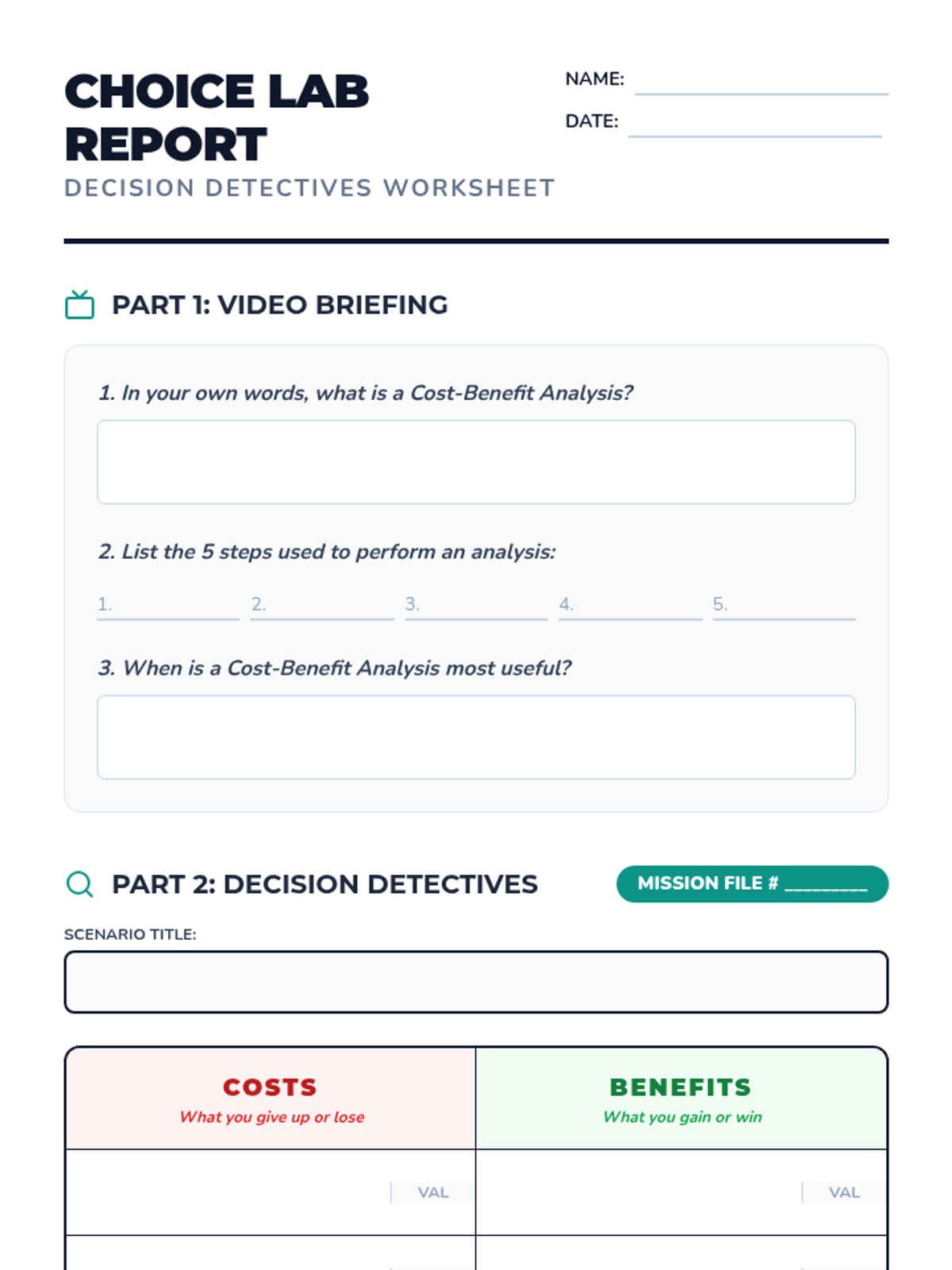
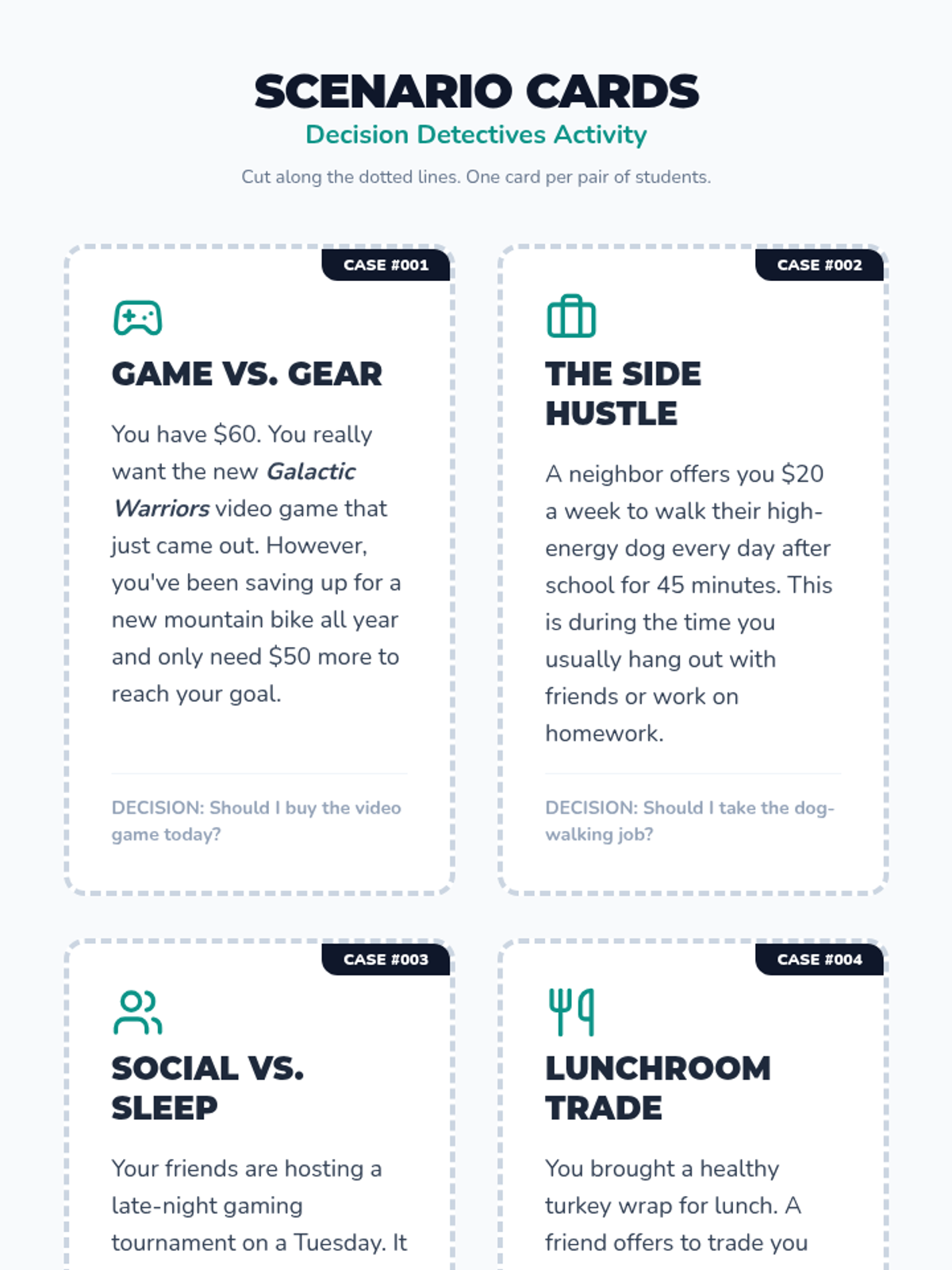
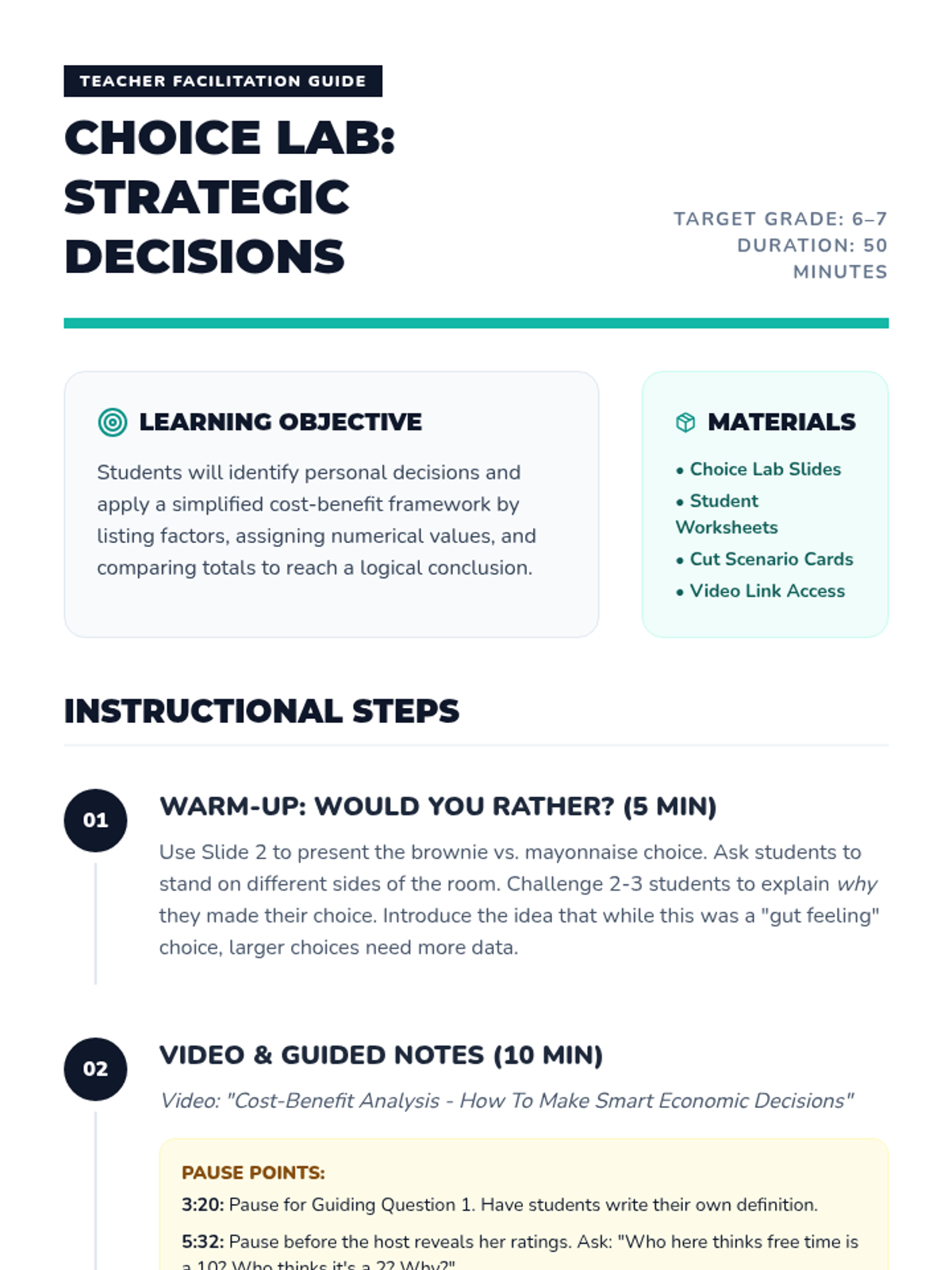
Students learn to move beyond coin flips to strategic decision-making using the 5 steps of Cost-Benefit Analysis. They analyze real-world middle school scenarios to weigh costs and benefits using a numerical valuation system.
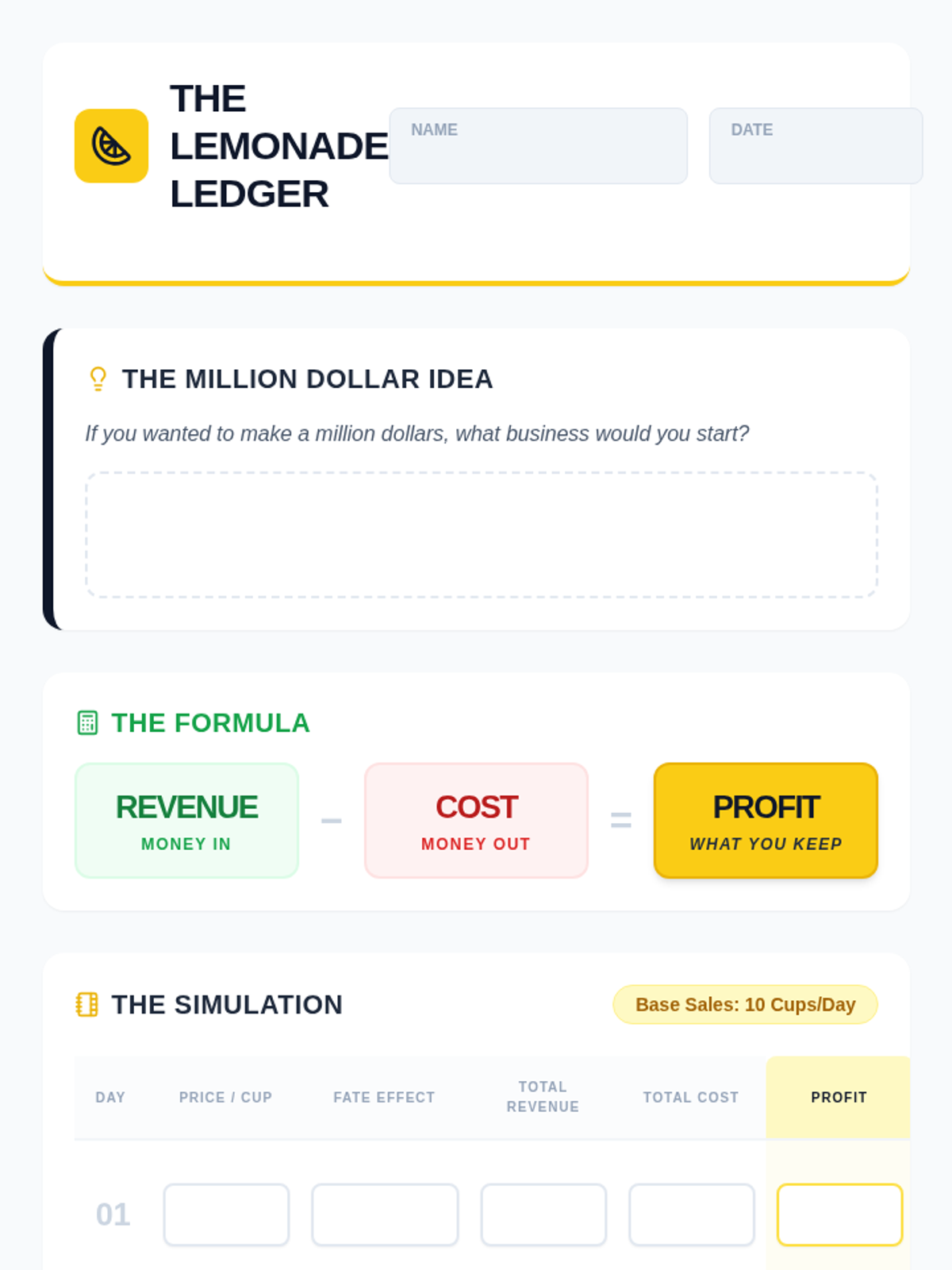
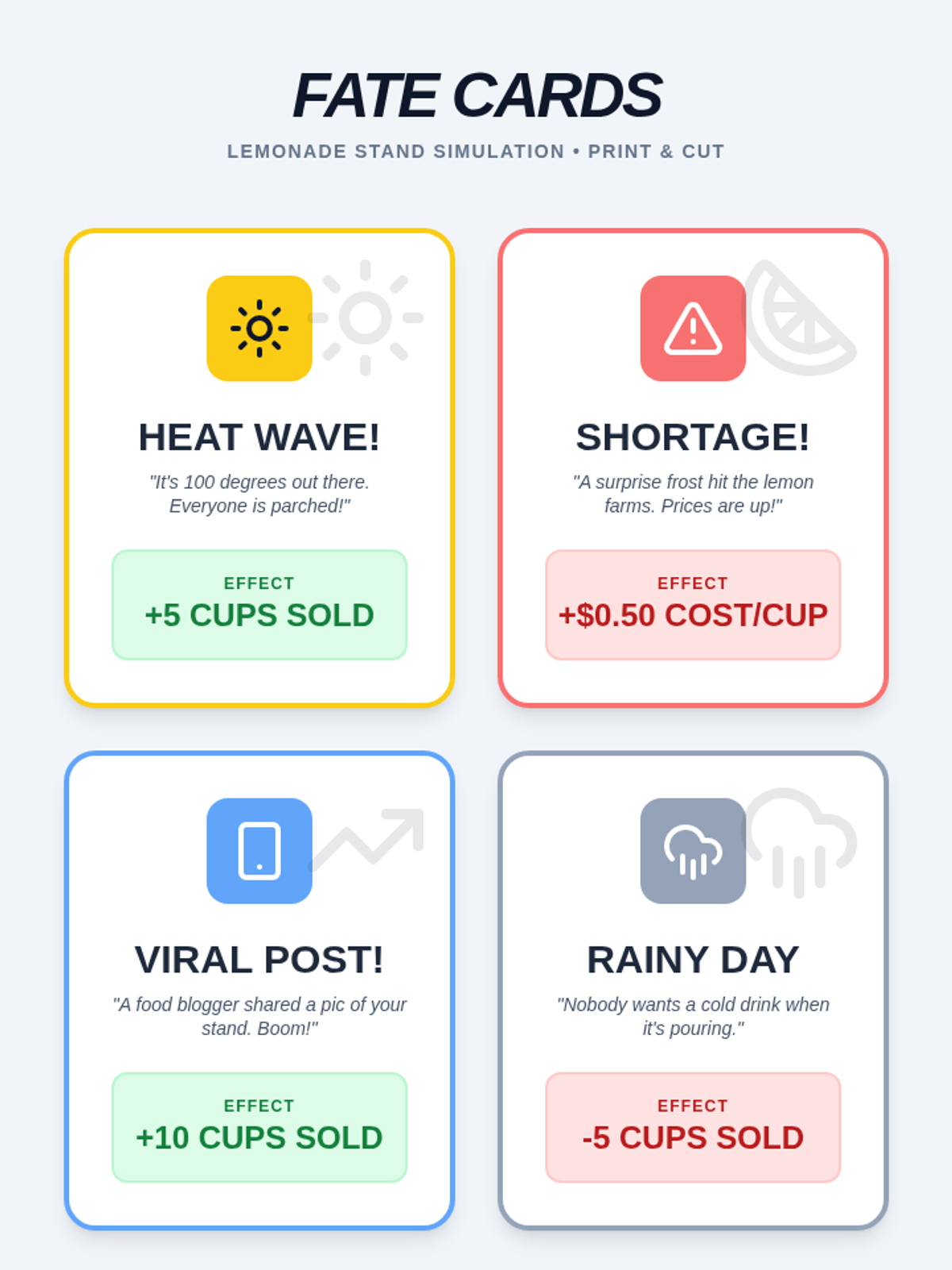
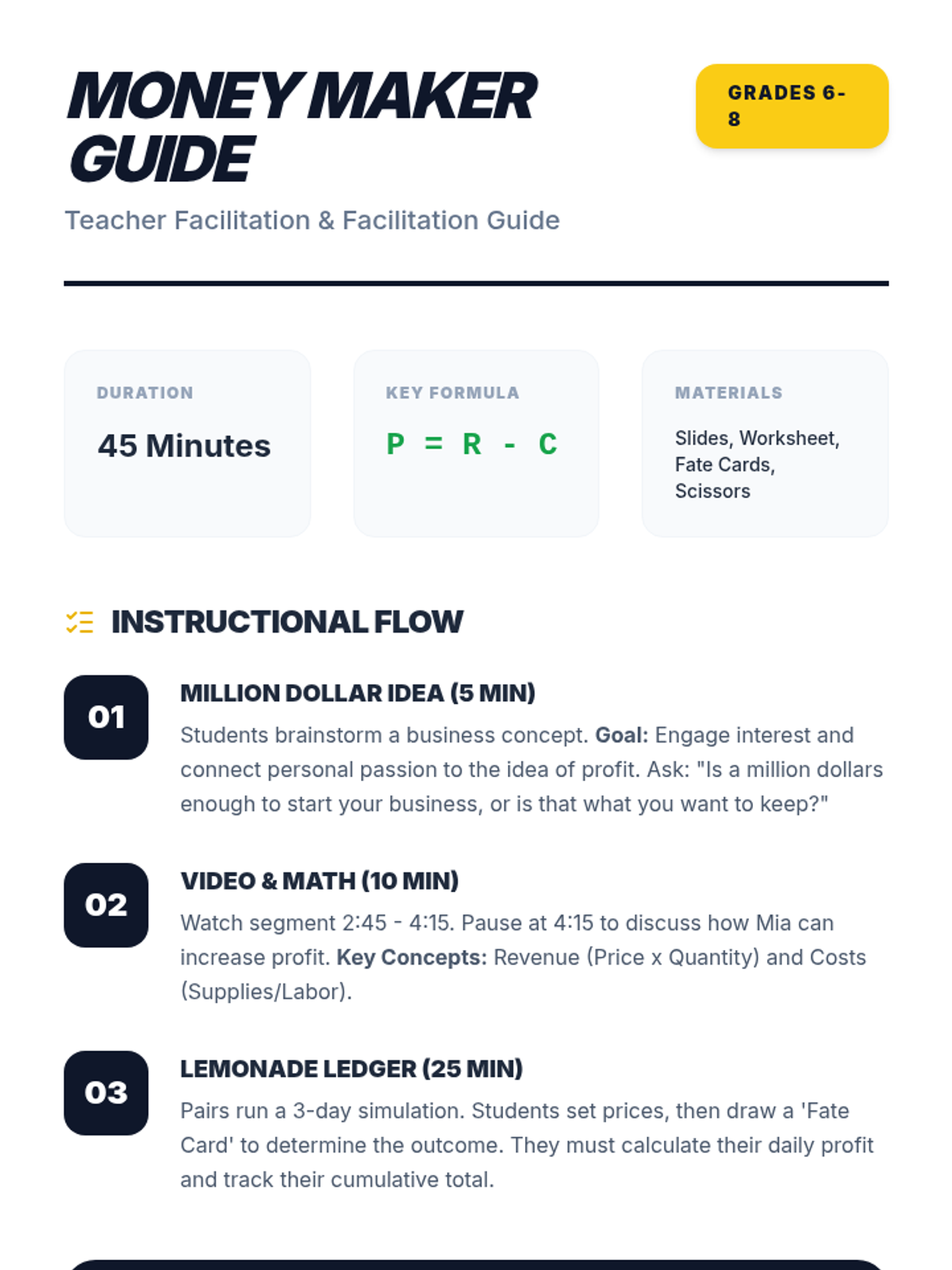
Students learn the fundamental formula for profit (Revenue - Cost) through a video, discussion, and an interactive paper-based simulation running a lemonade stand influenced by random 'Fate Cards'.
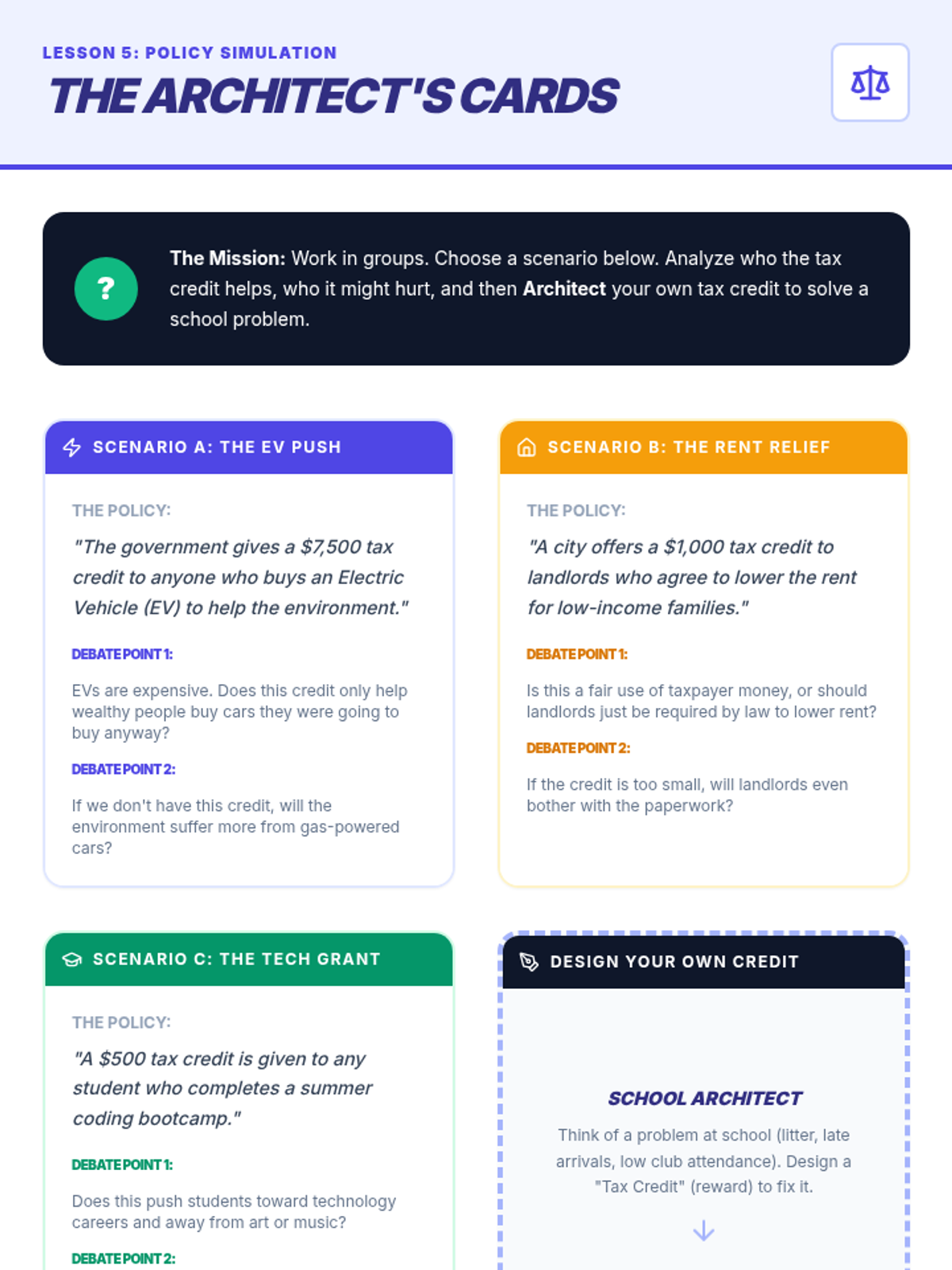
Students explore how tax credits and incentives shape behavior and society, ending with a debate on the ethical use of taxation to encourage specific actions.
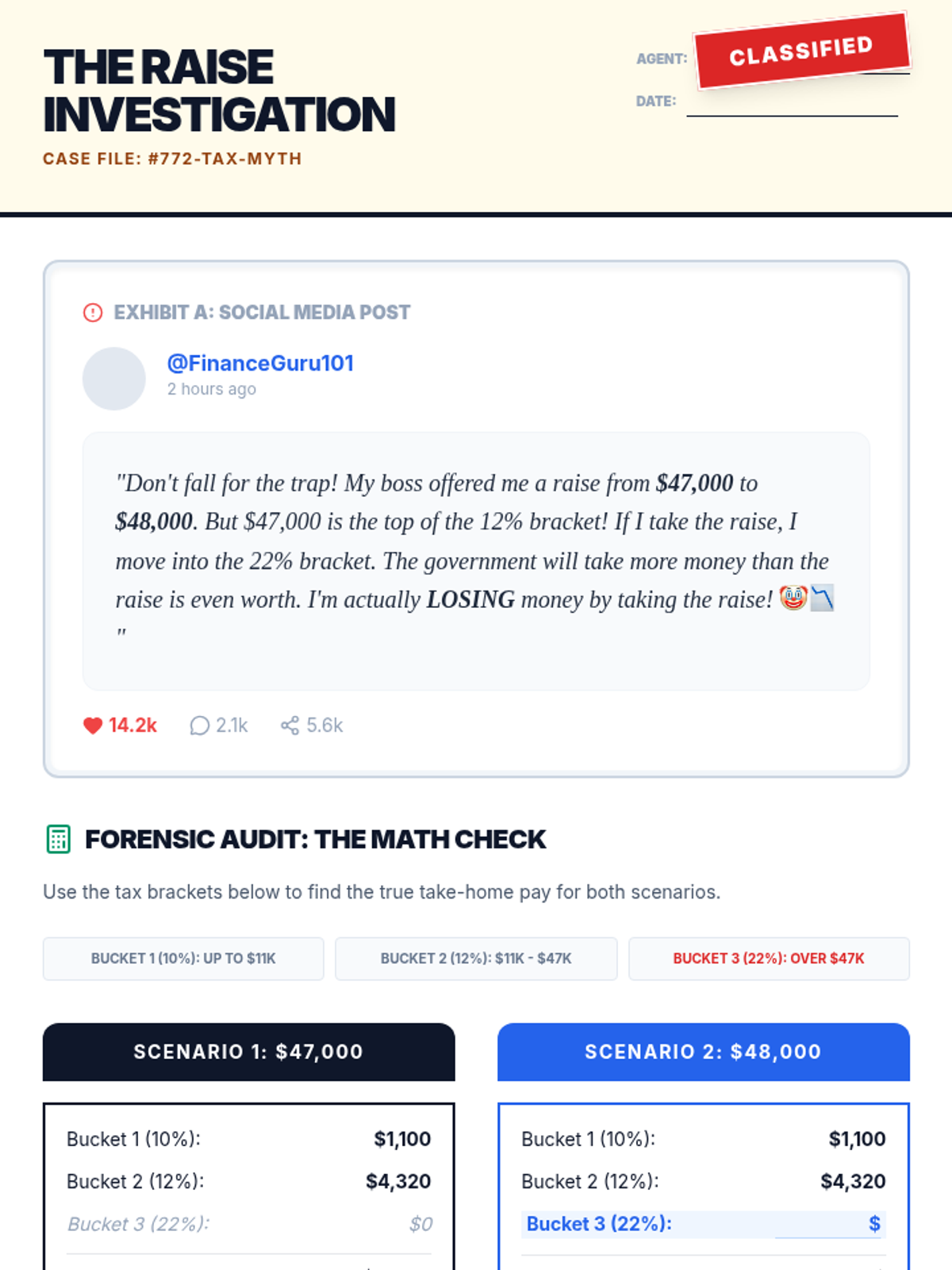
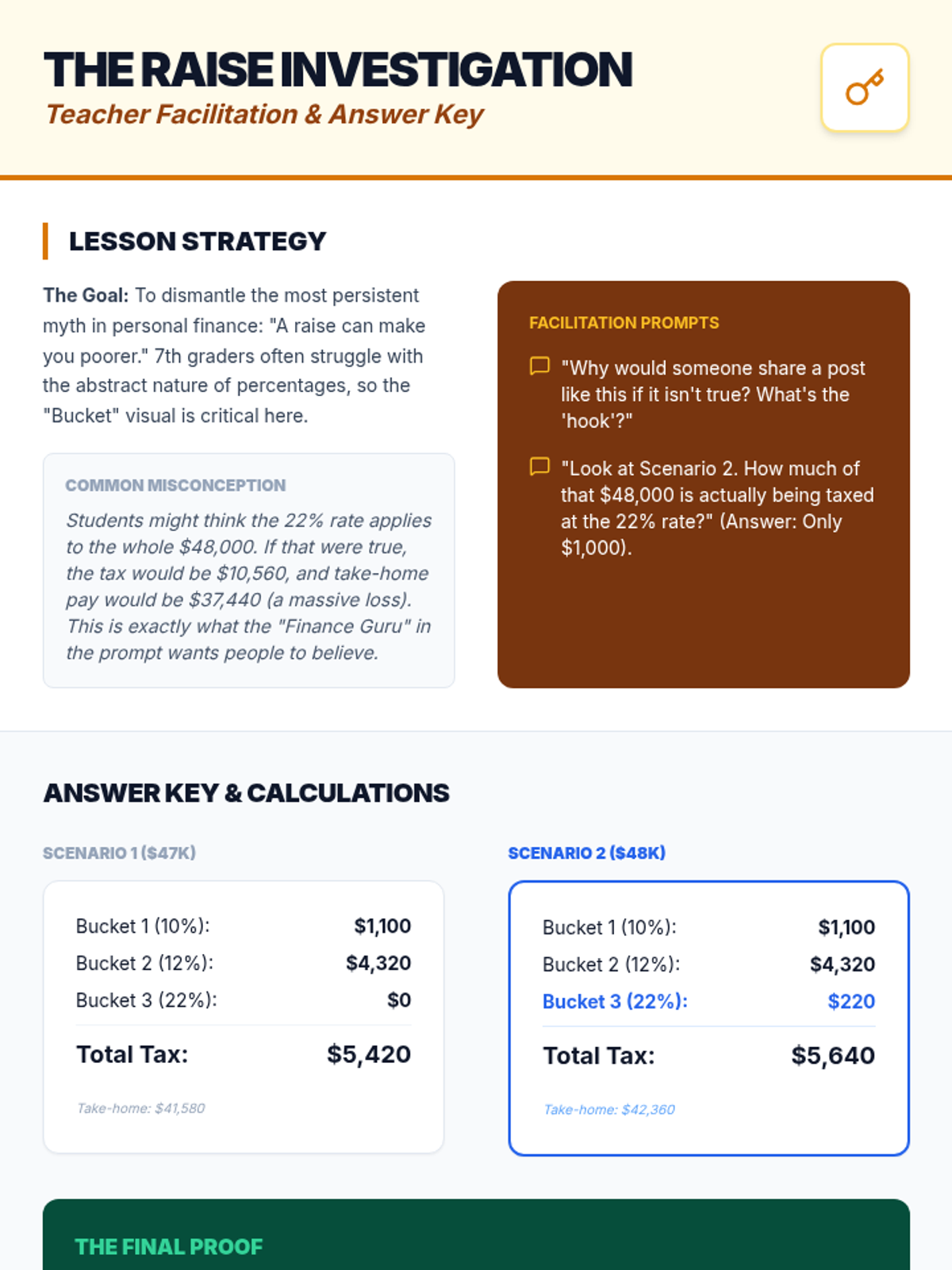
Students act as financial fact-checkers to solve 'The Raise Dilemma,' proving that earning more money almost never results in less take-home pay due to tax brackets.
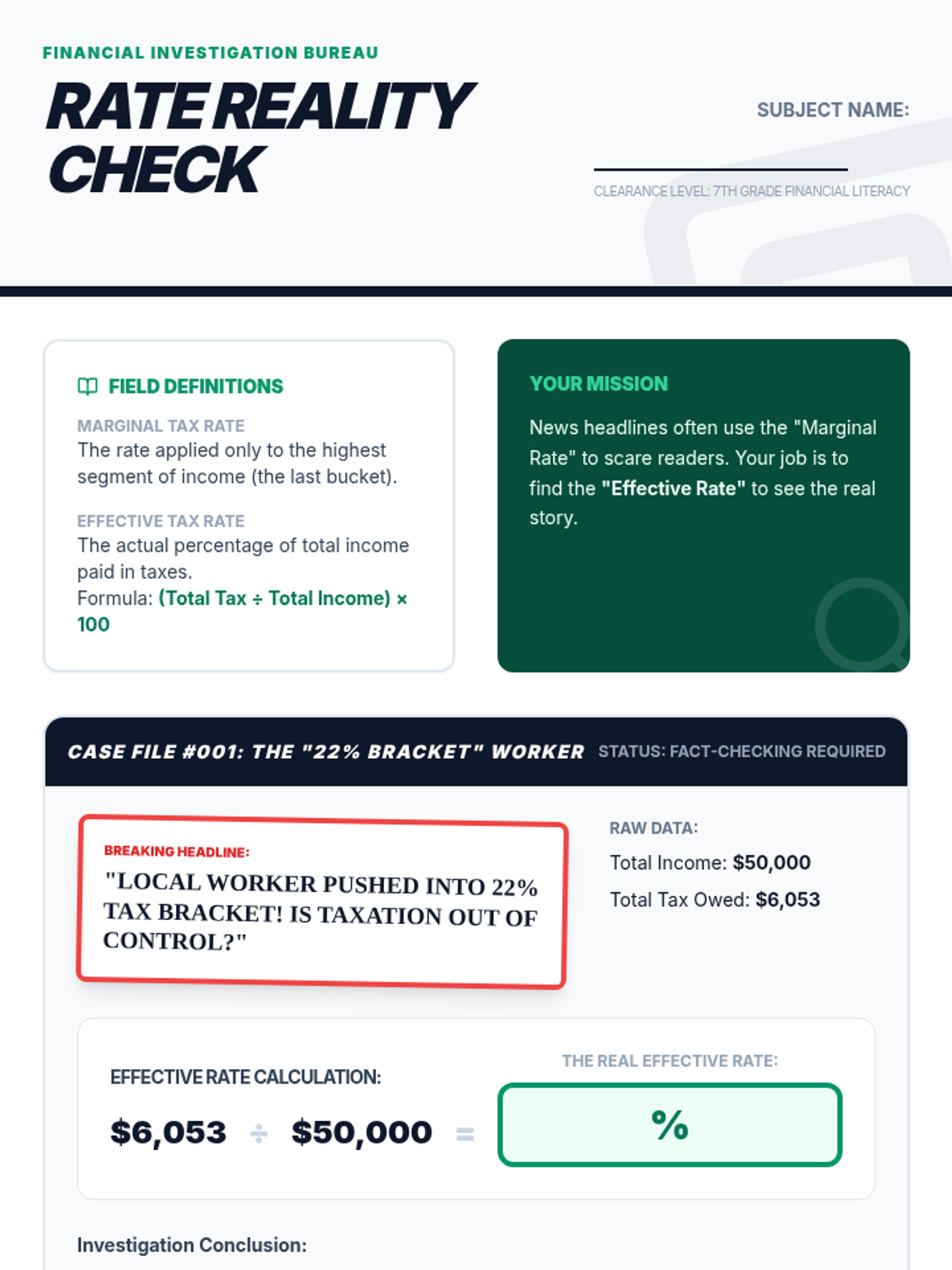
Students calculate the difference between marginal and effective tax rates, learning to look past sensationalized headlines to find the real percentage of income paid.
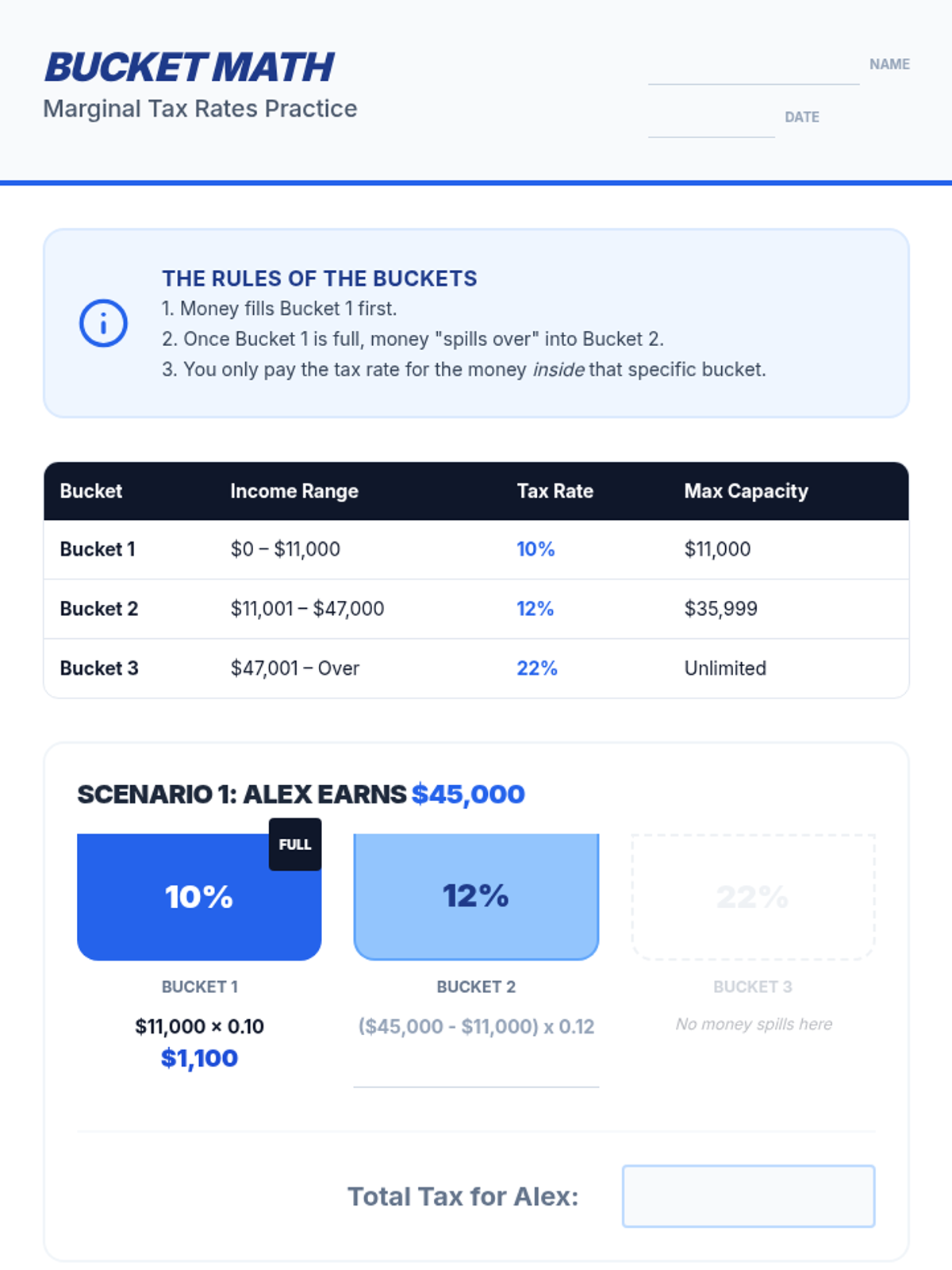
Students debunk the 'higher bracket' myth using the bucket analogy to visualize marginal tax rates. They learn that only income within a specific range is taxed at that range's rate.
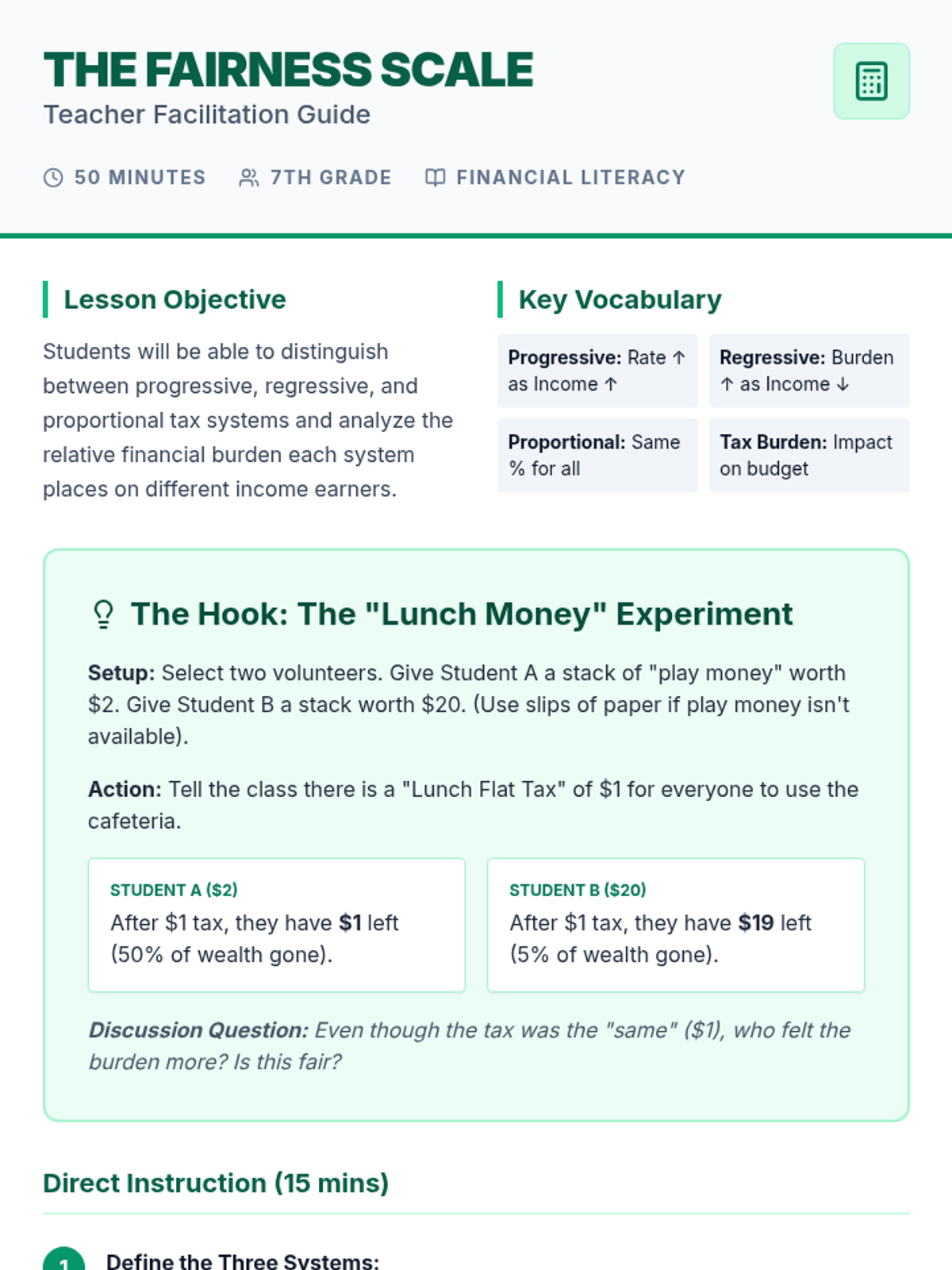
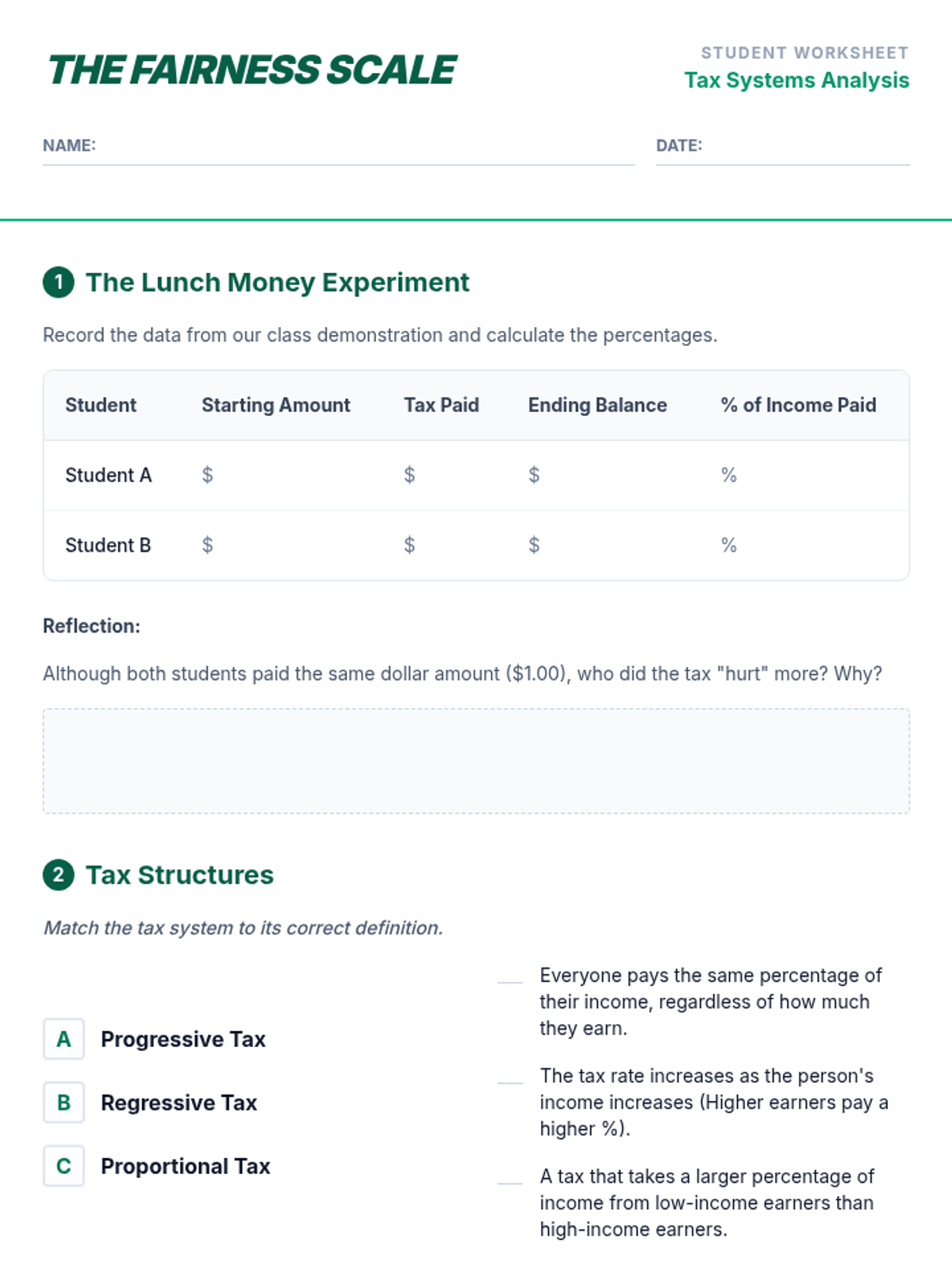
Students define and compare progressive, regressive, and proportional tax structures through the 'Lunch Money' experiment. They analyze how different taxes place varying burdens on different income levels.
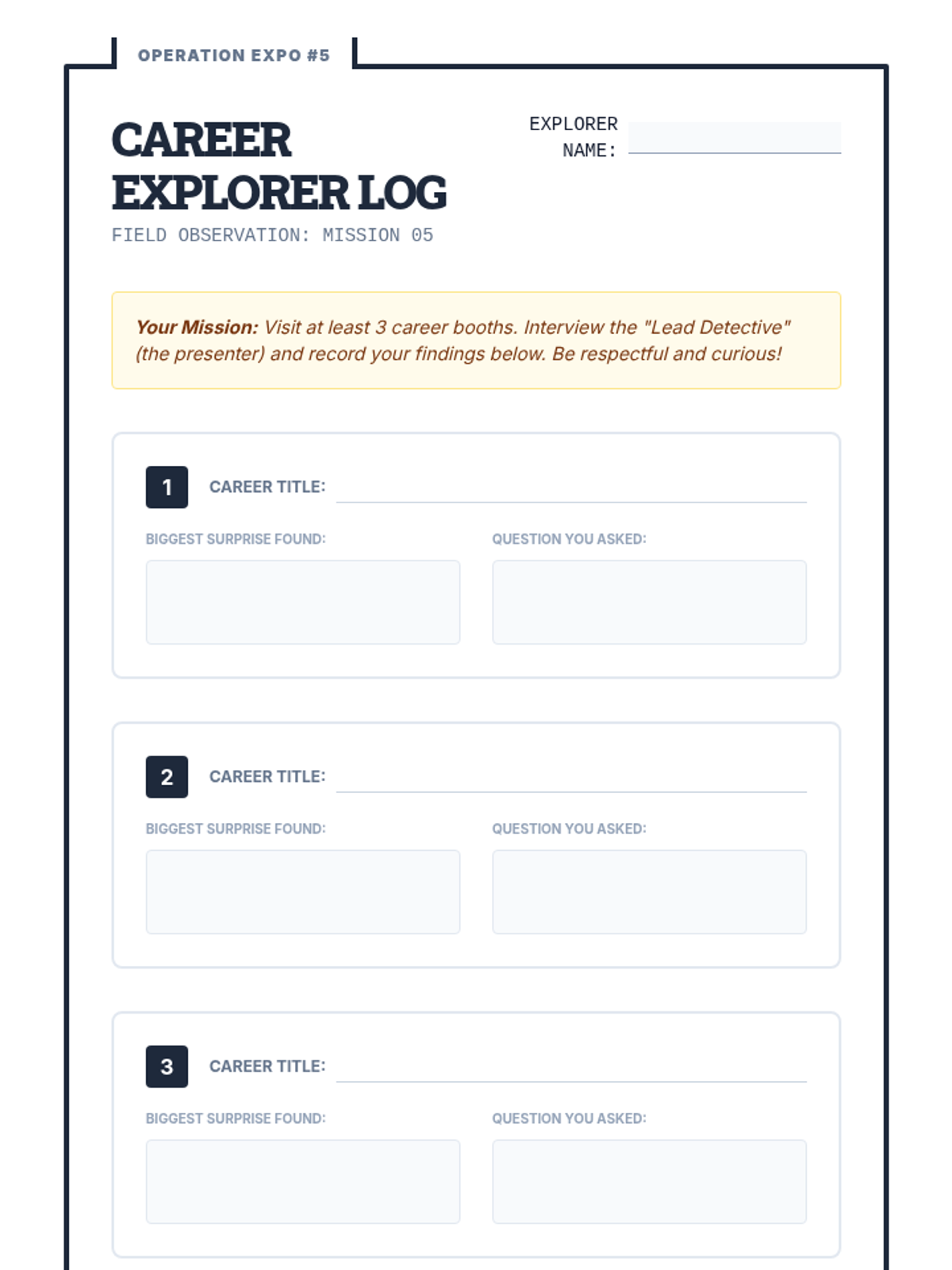
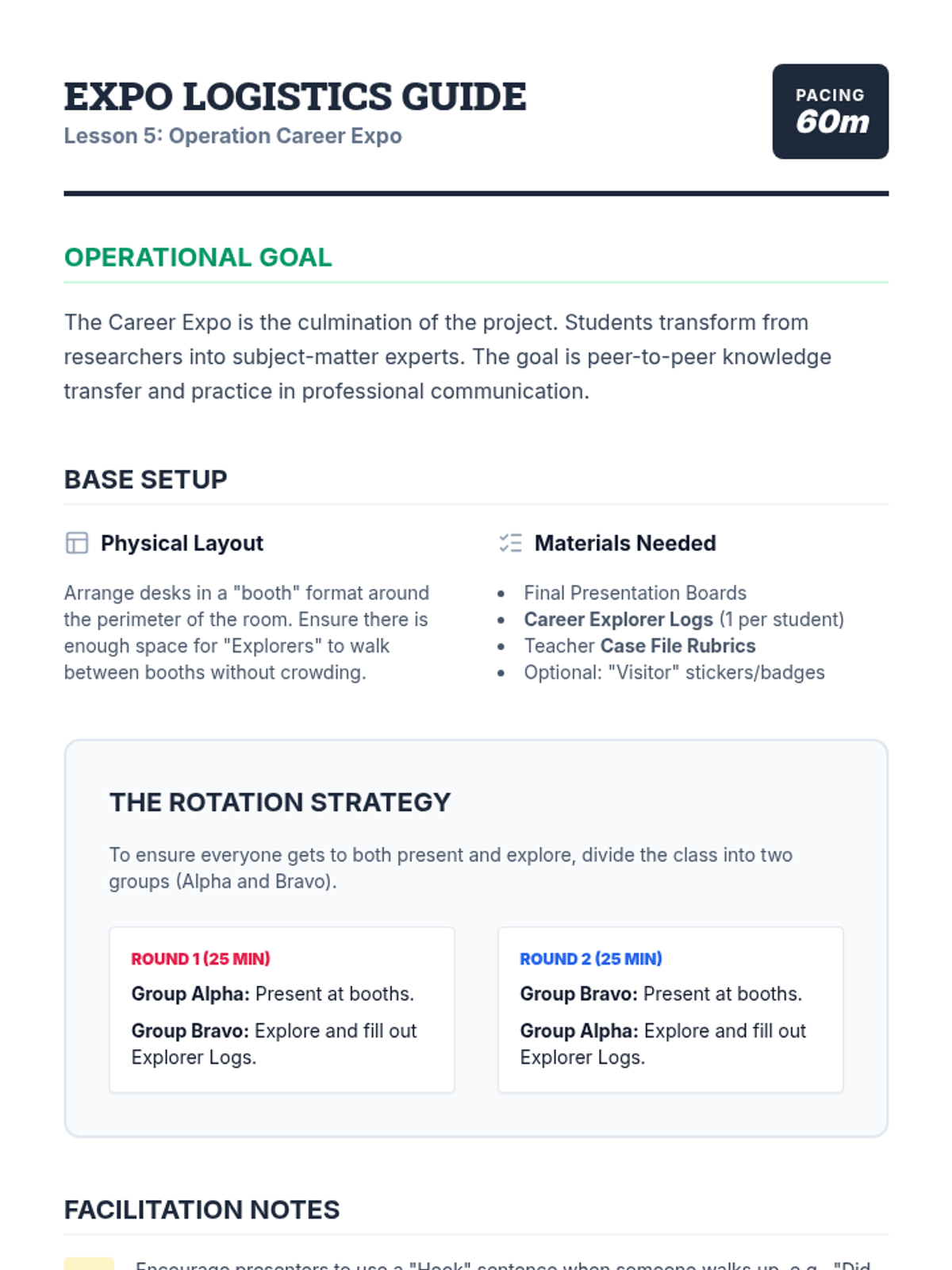
The sequence culminates in a gallery walk where students present their findings, answer peer questions, and explore the diverse career pathways researched by their classmates.
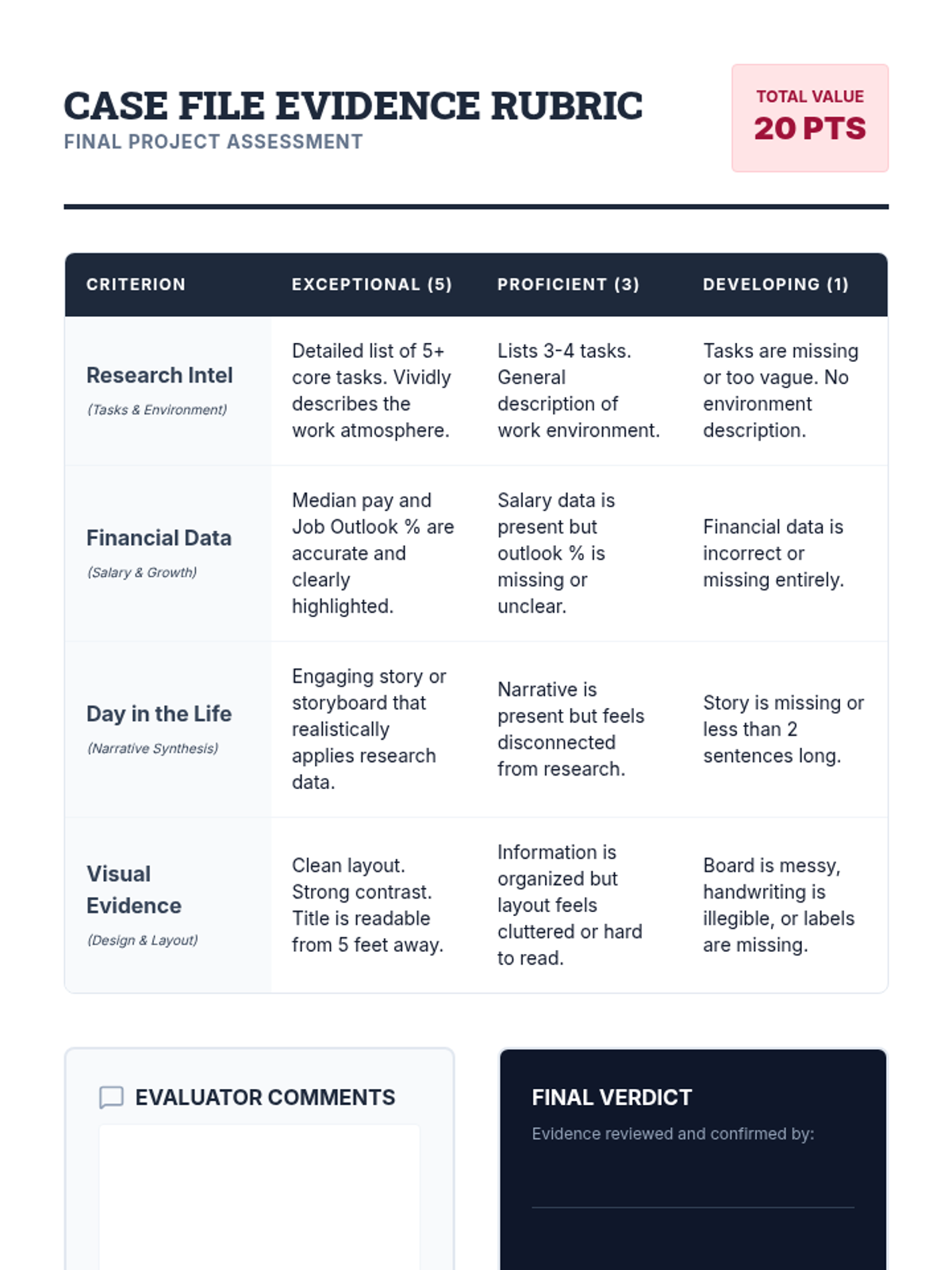
Students apply visual design principles to create a compelling presentation board that organizes their 'case file' findings for an audience.
Students synthesize their research into a narrative format, visualizing a typical day in their chosen profession to understand the human element of the work.
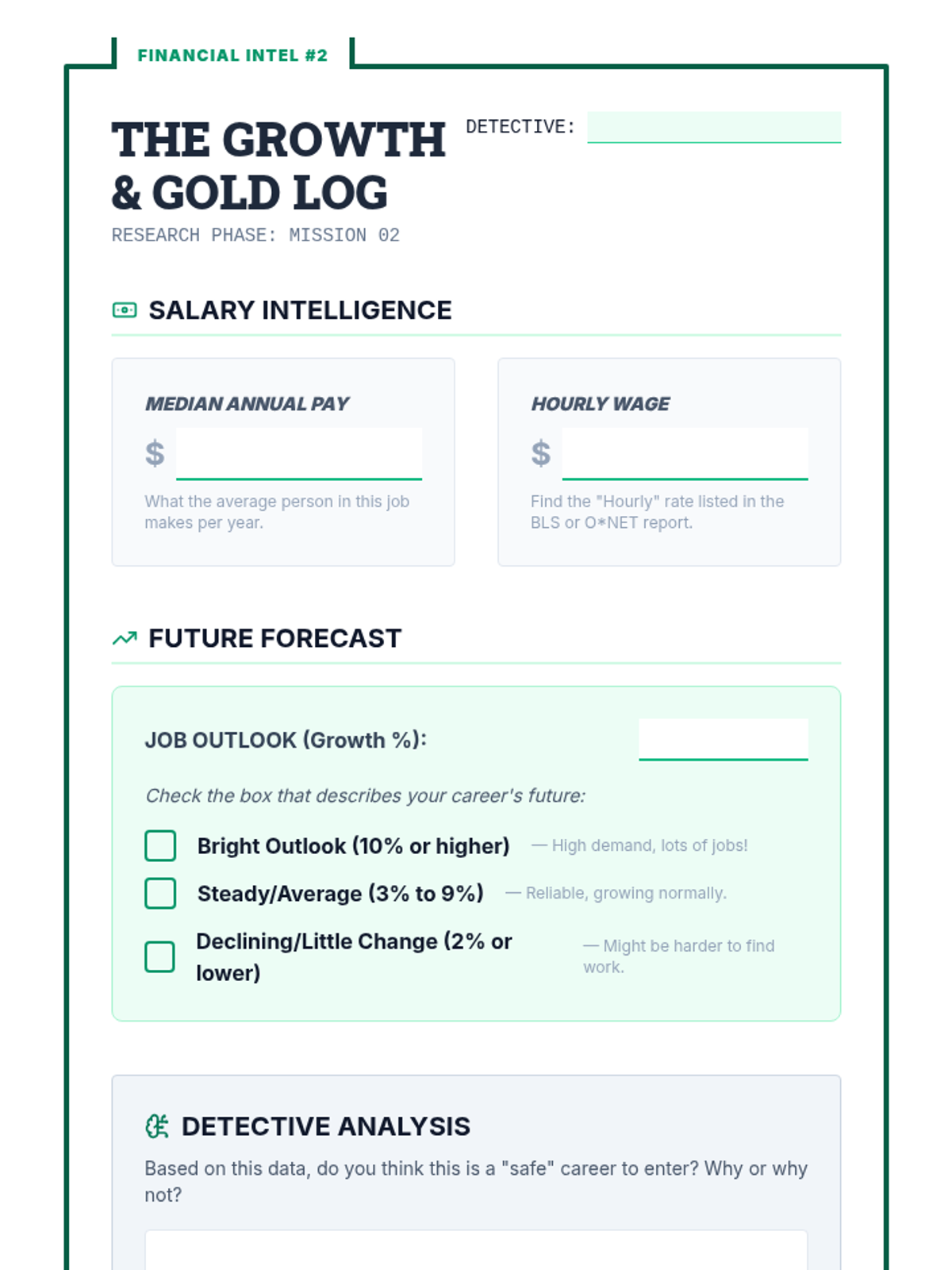
Students analyze financial data and job market trends to understand the long-term viability and earning potential of their chosen career.
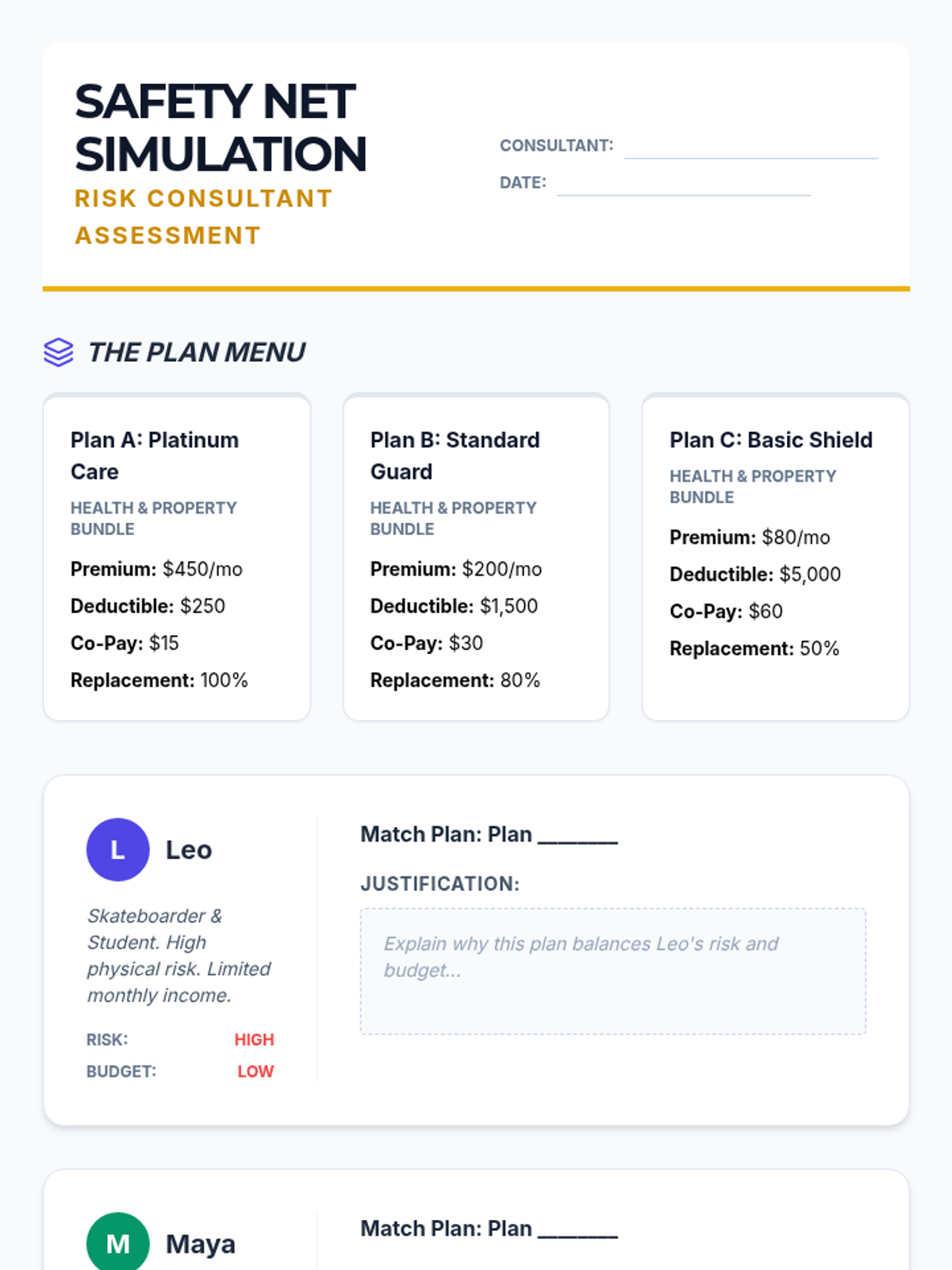
Students are presented with three different health/property plans and three different 'life profiles.' They must match the best plan to the profile based on lifestyle risks and budget.
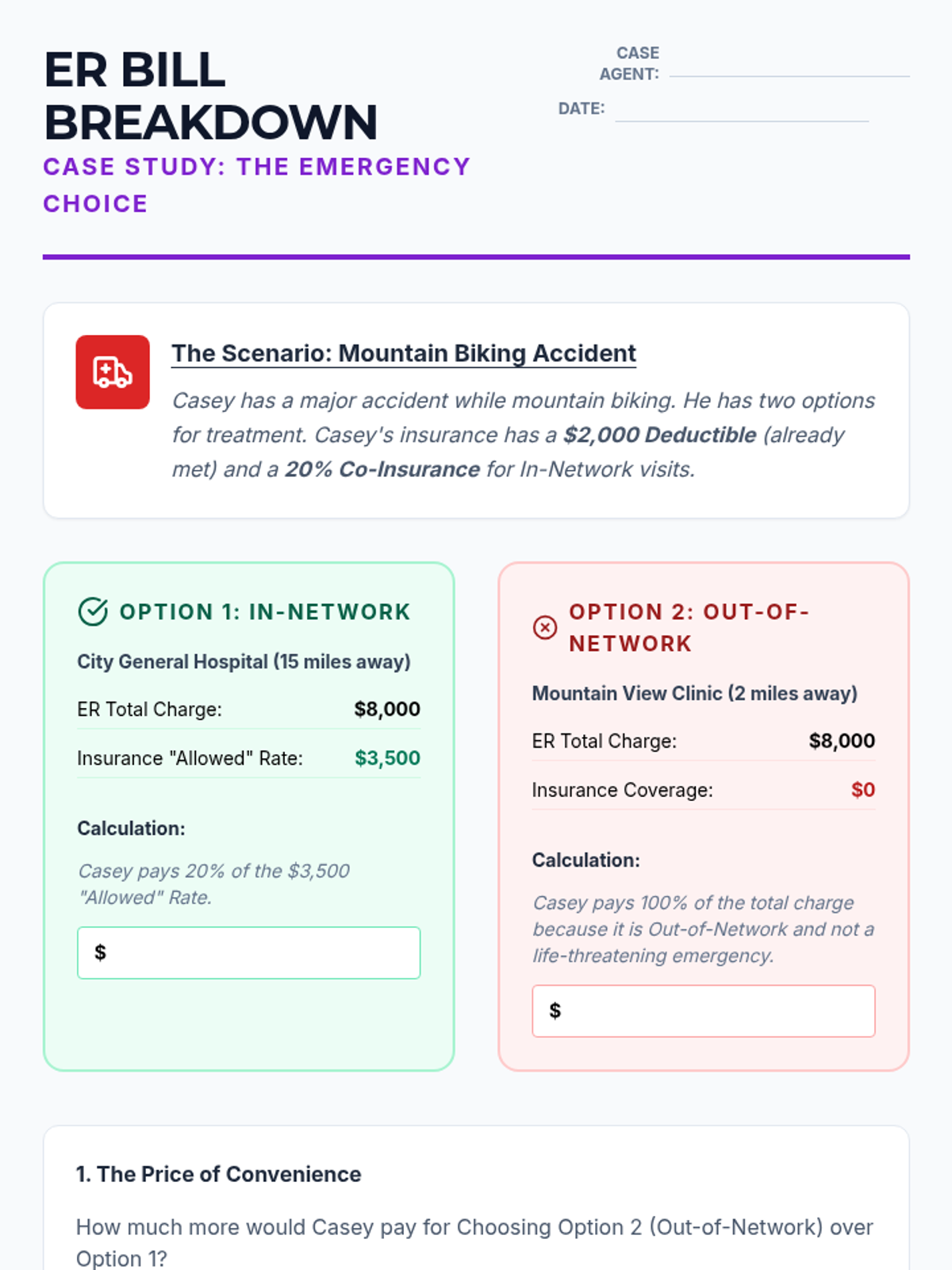
Students investigate the difference between In-Network and Out-of-Network providers. They analyze a scenario involving an emergency room visit to understand how choice of hospital affects the final bill.
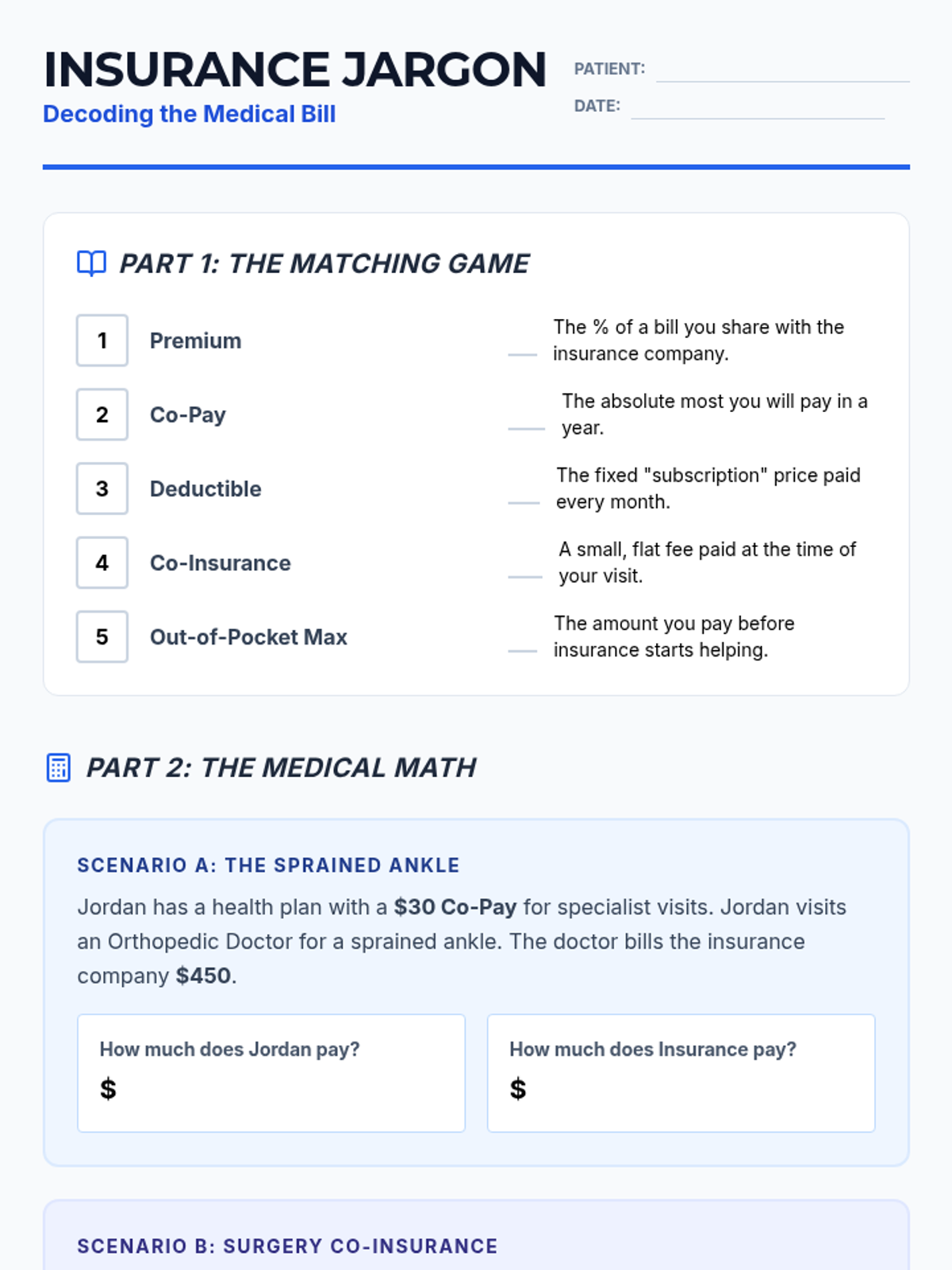
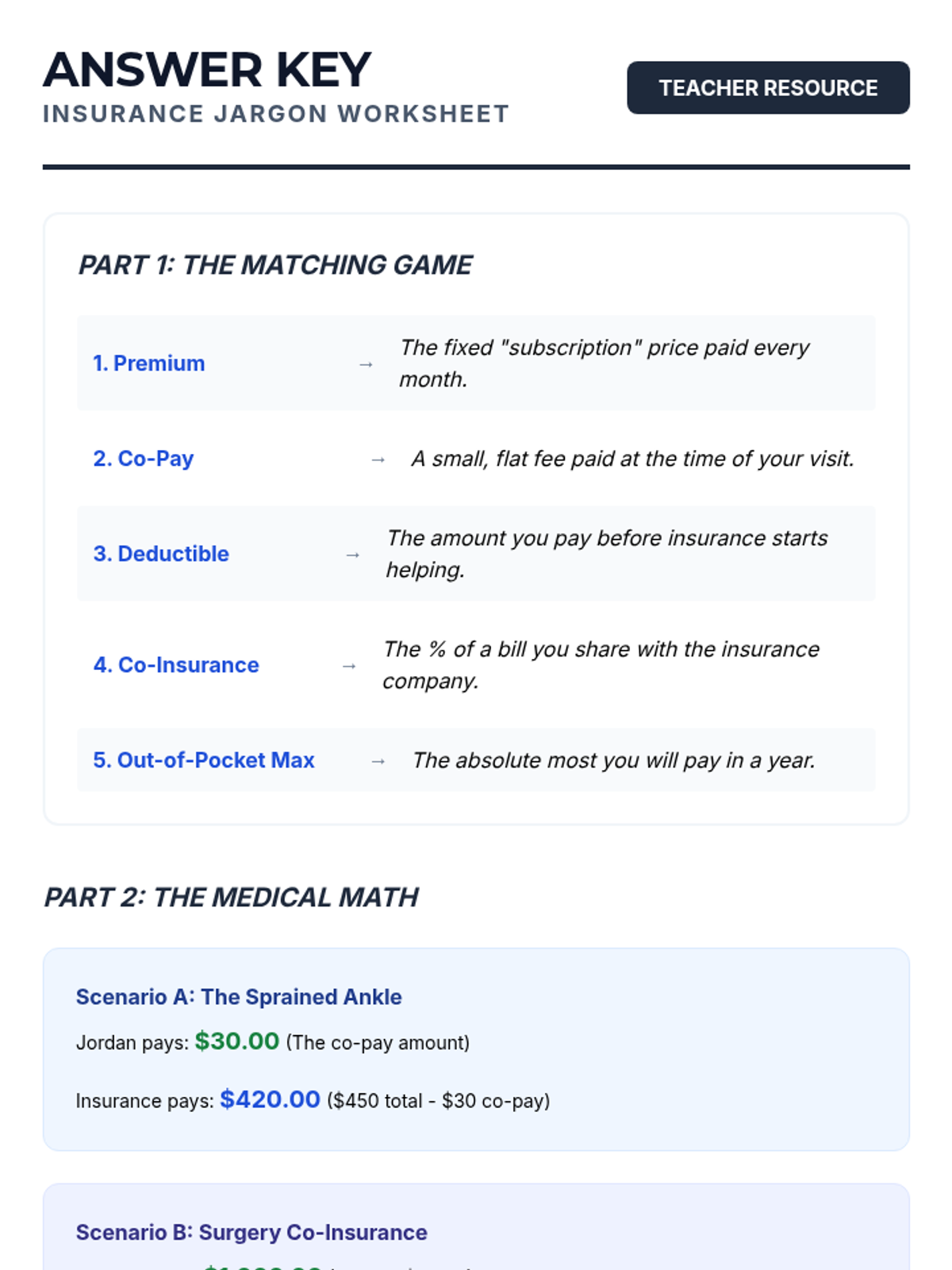
Students define critical health insurance terms: co-pay, co-insurance, and out-of-pocket maximum. They solve word problems related to visiting a doctor for a flu test or a sprained ankle.
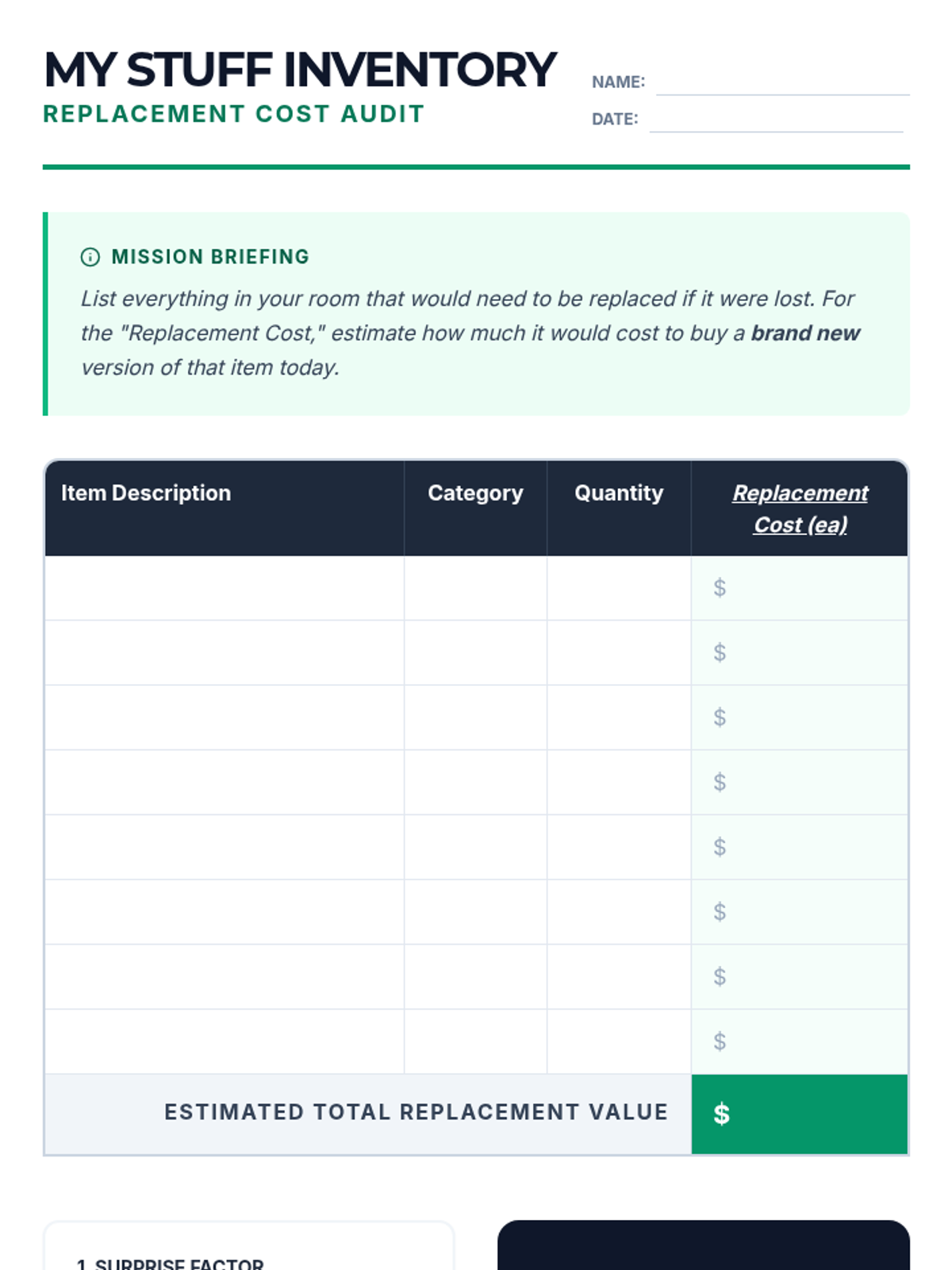
Students inventory the value of the items in their own bedrooms to understand the necessity of renters insurance for protecting personal belongings.
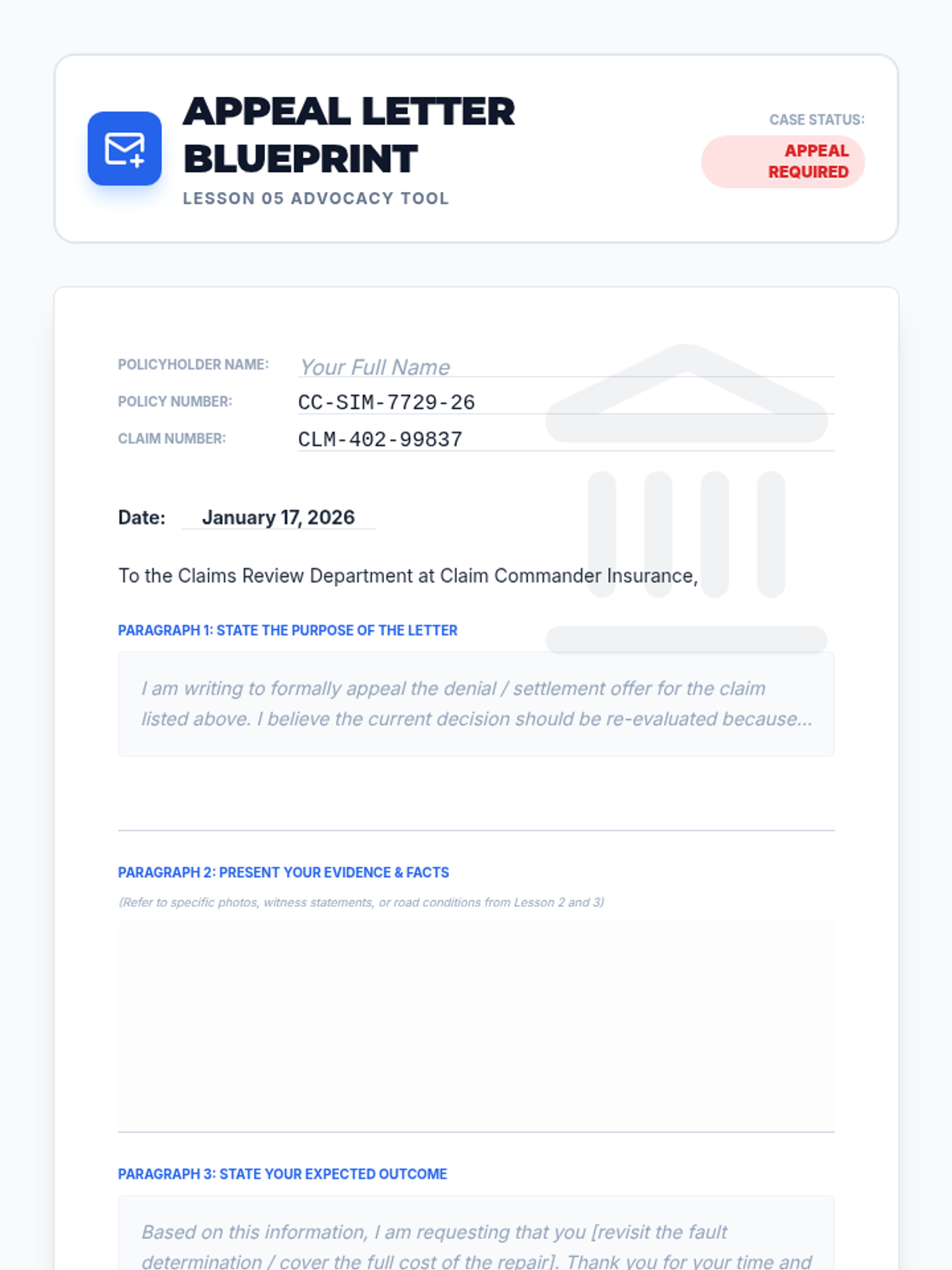
Students learn how to advocate for themselves when a claim is denied or the settlement is insufficient.
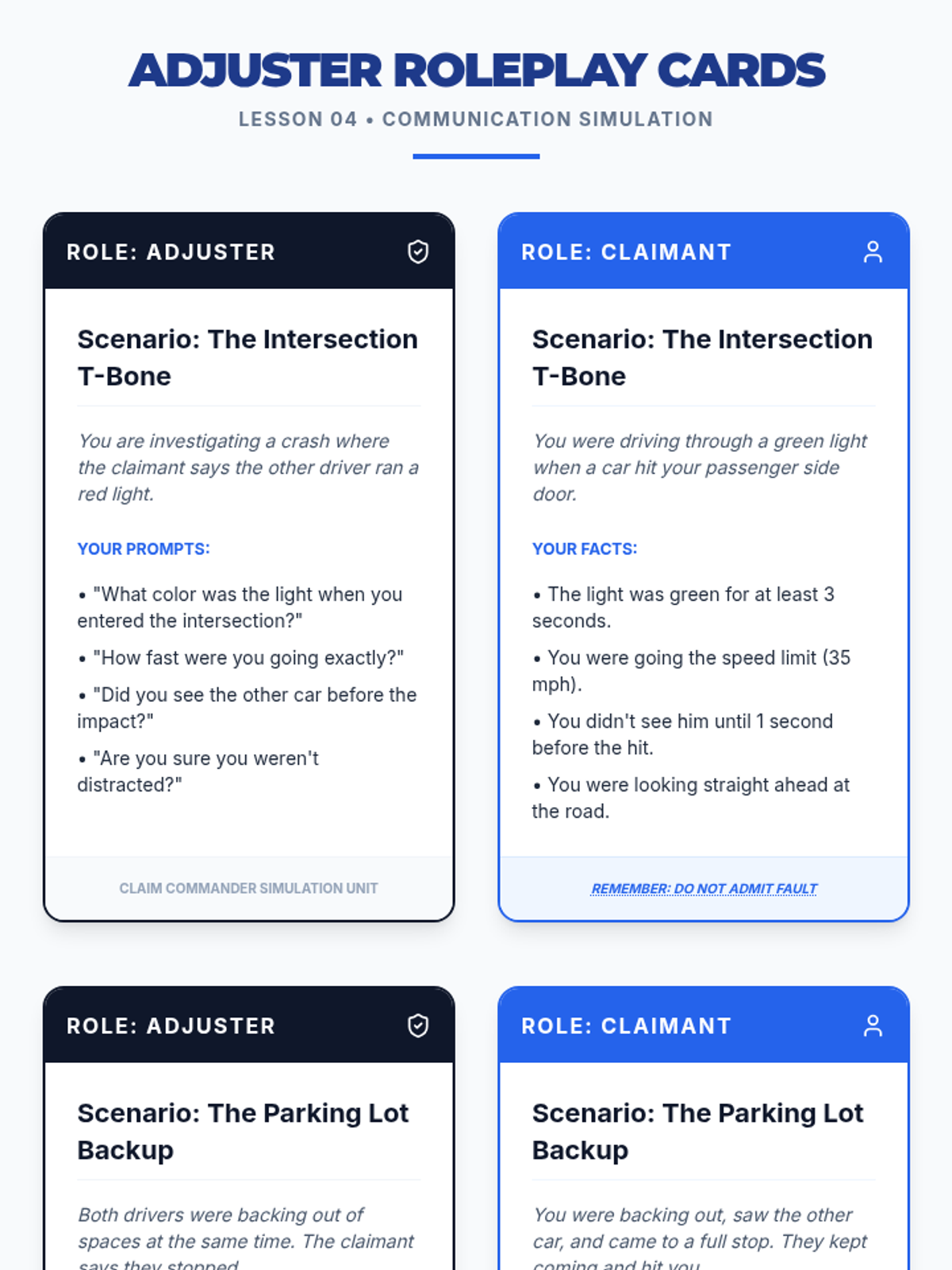
Students role-play interviews with insurance adjusters, practicing clear and factual verbal communication.
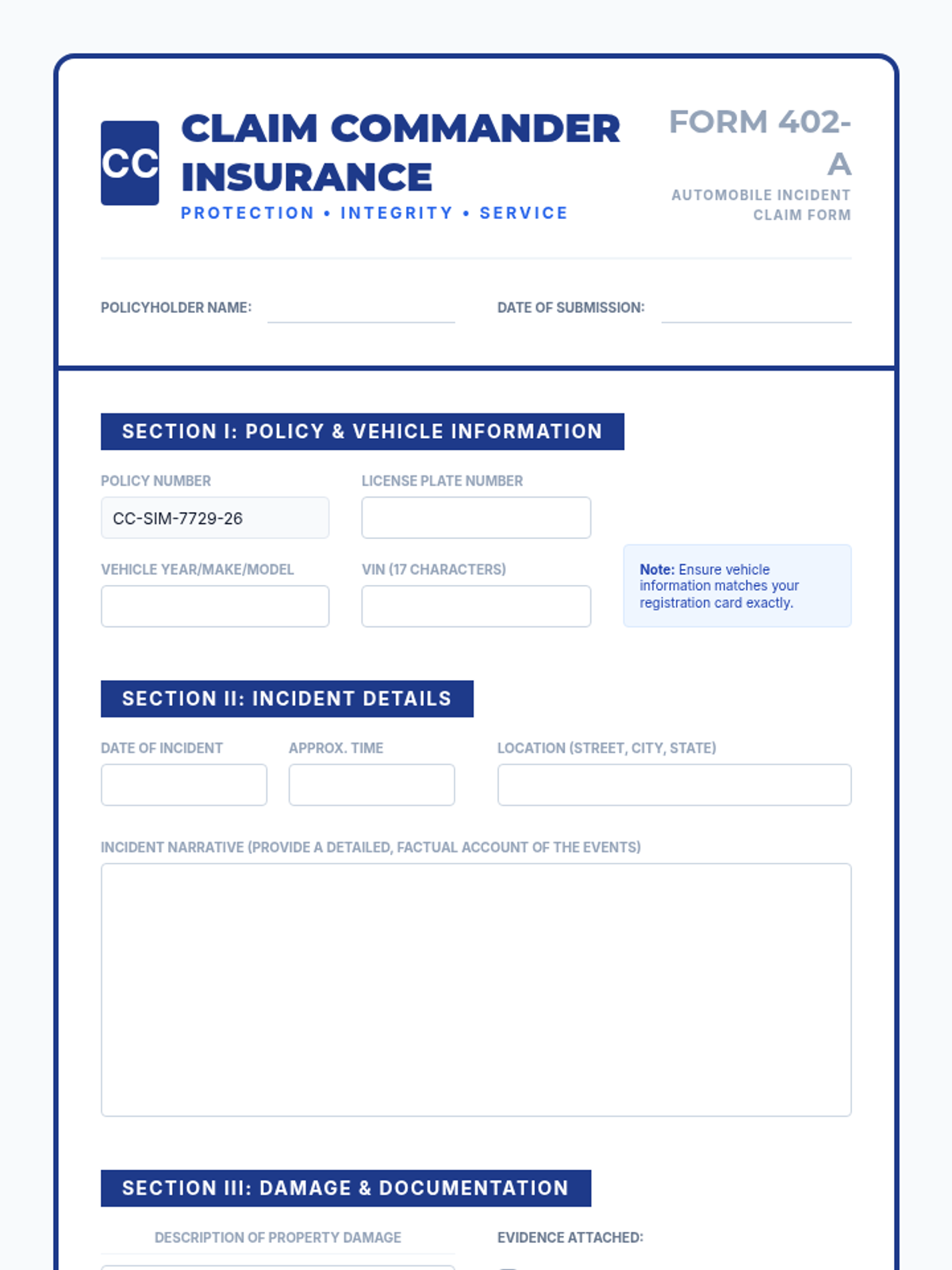
Students translate evidence into a formal claim, focusing on accuracy and clarity to avoid denials.
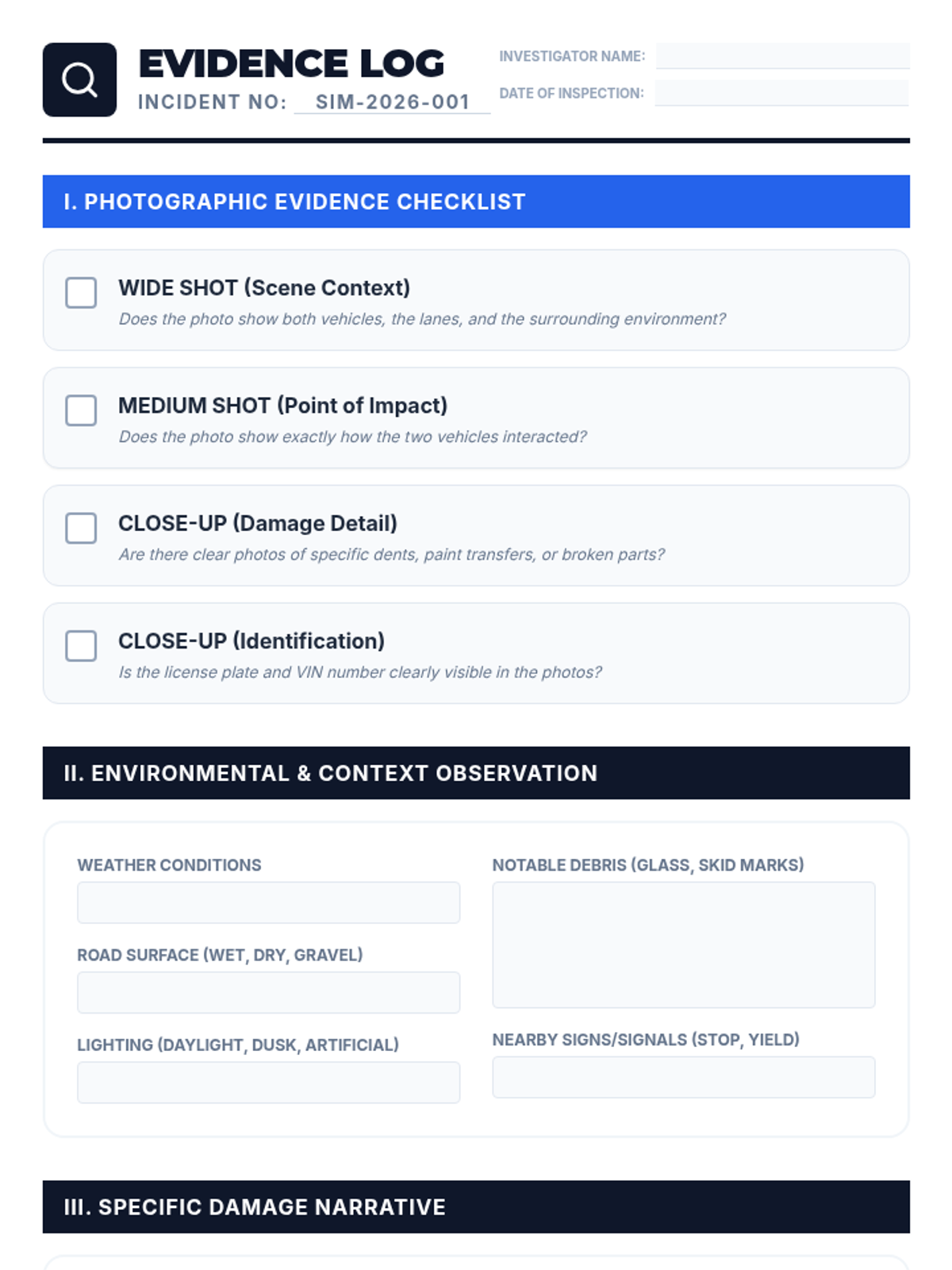
Students act as investigators to learn the art of photographic and written documentation for insurance purposes.
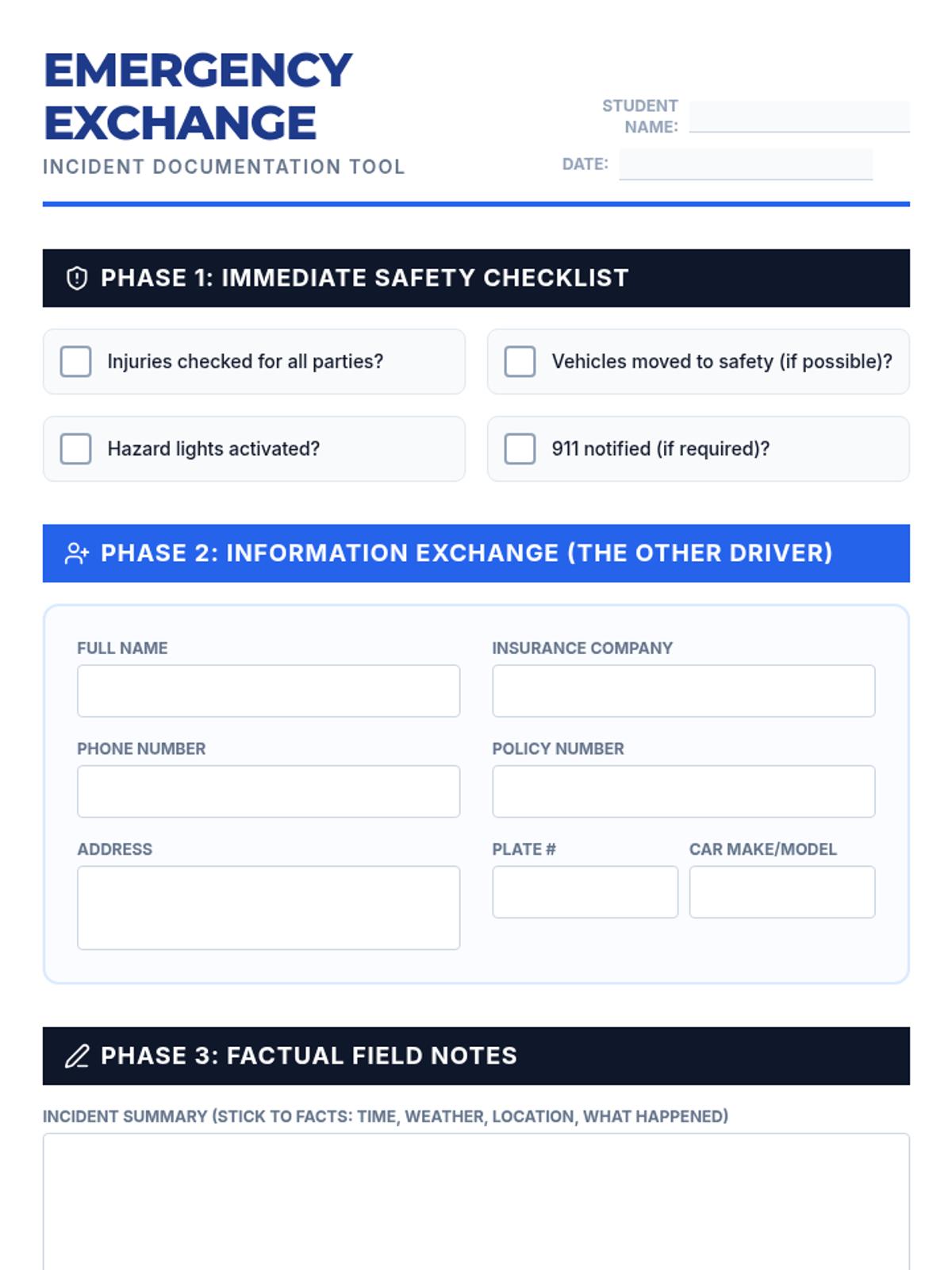
Students learn the immediate safety and information exchange protocols required after a car accident.
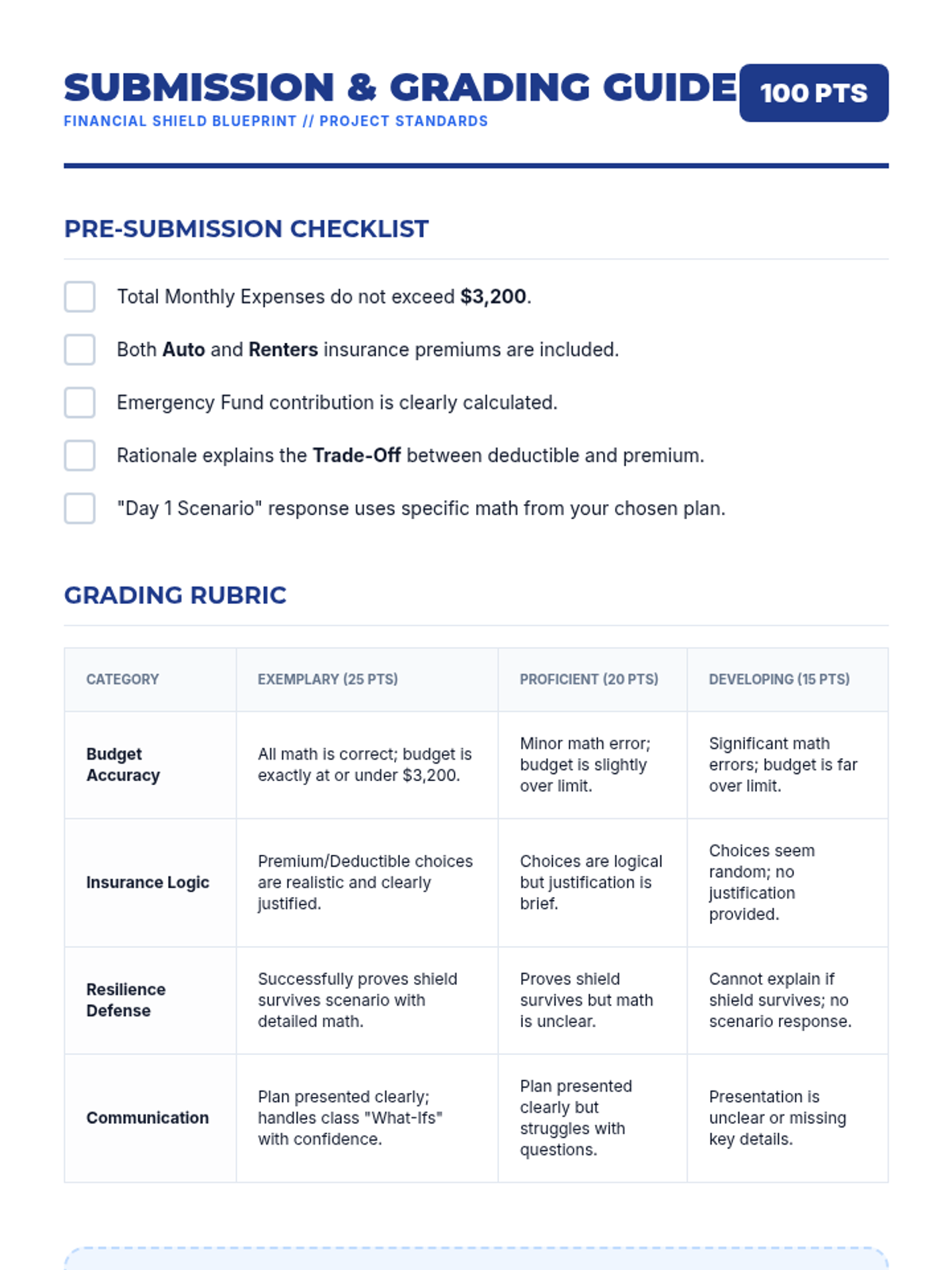
Students present their financial resilience plans and defend their budget choices against 'disaster scenario' stress tests.
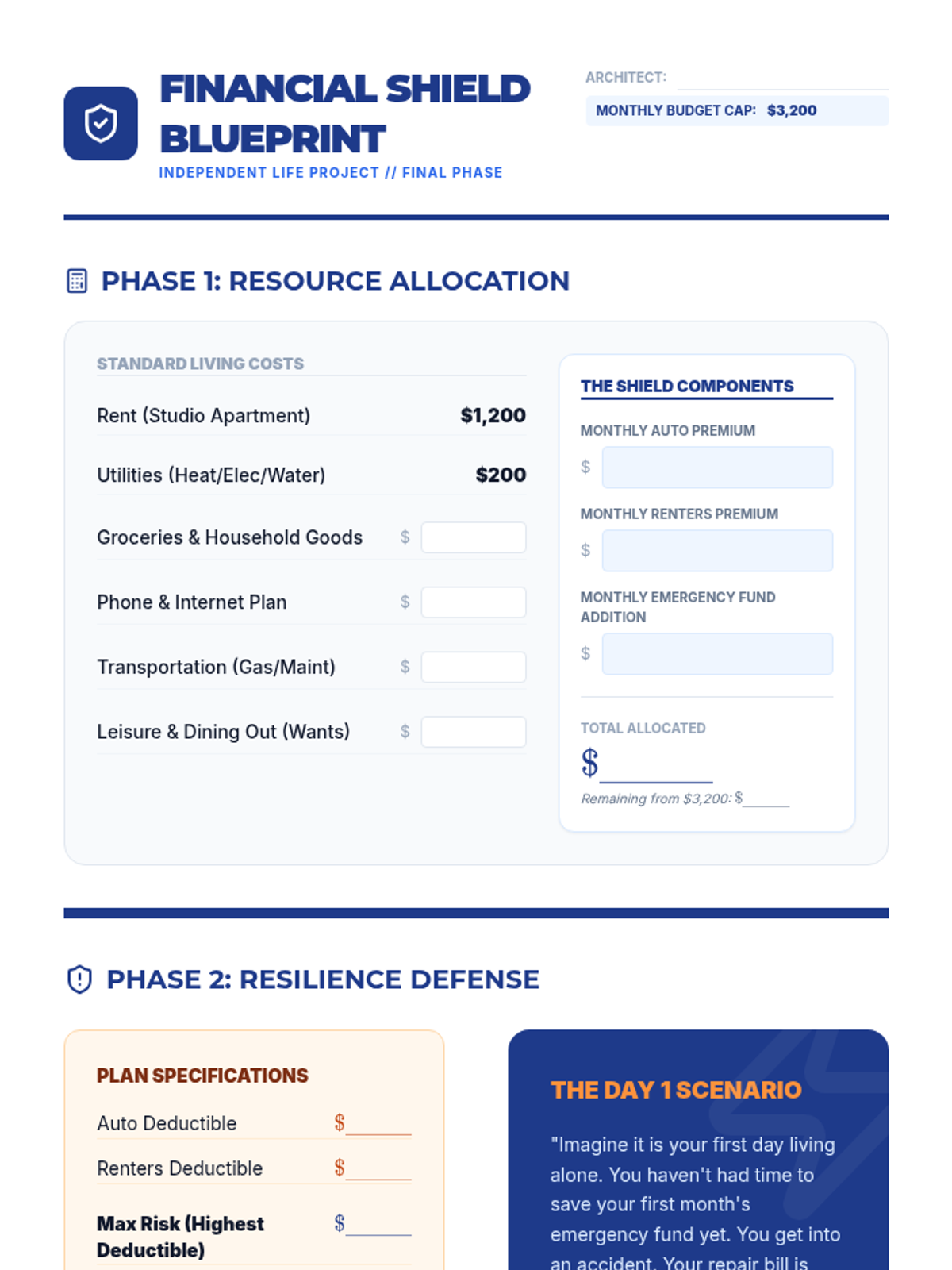
Students create a fictional monthly budget for independent life, allocating funds for insurance premiums and emergency savings.
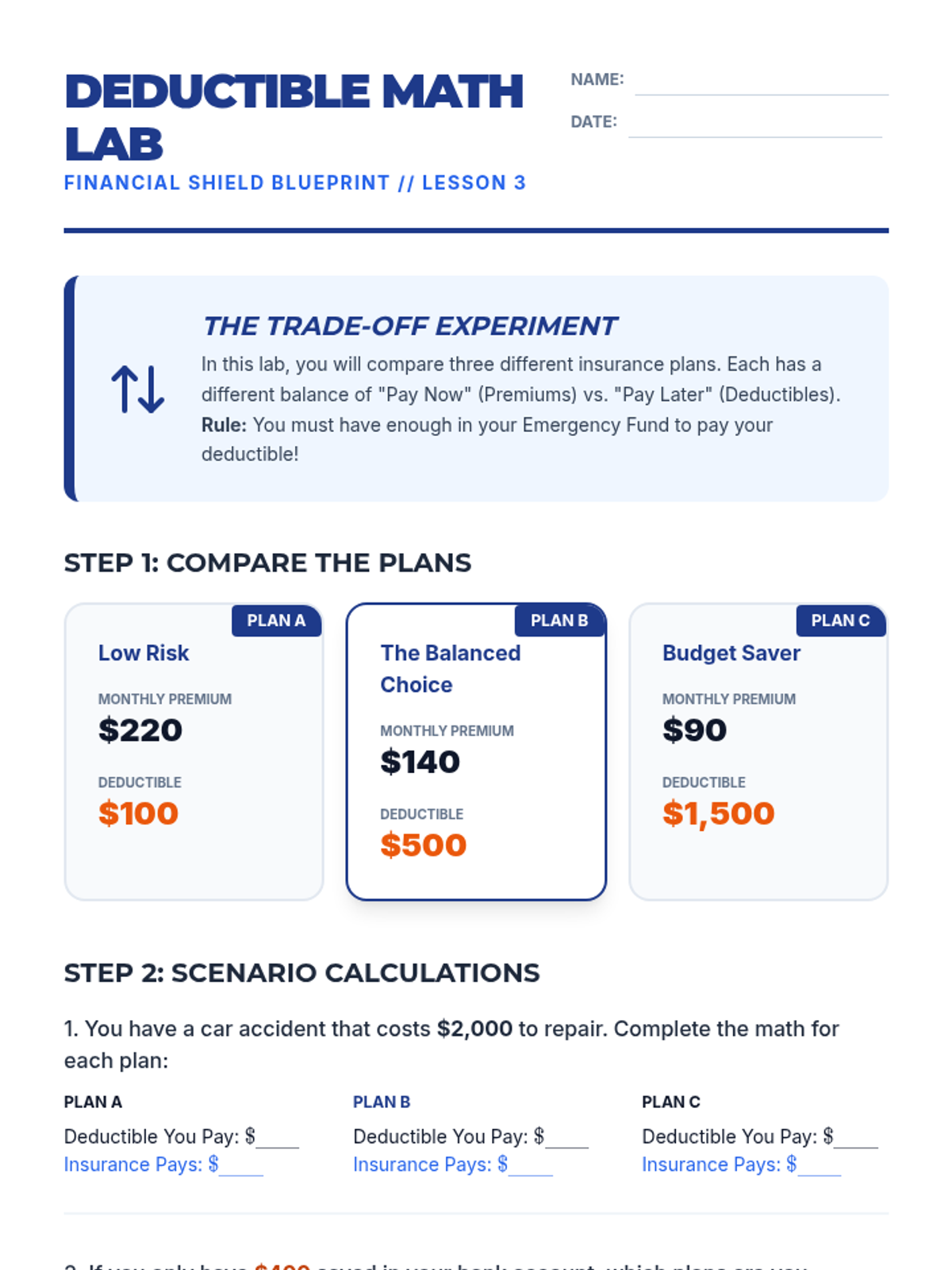
Students explore the mathematical relationship between insurance deductibles and emergency funds, simulating financial risks.
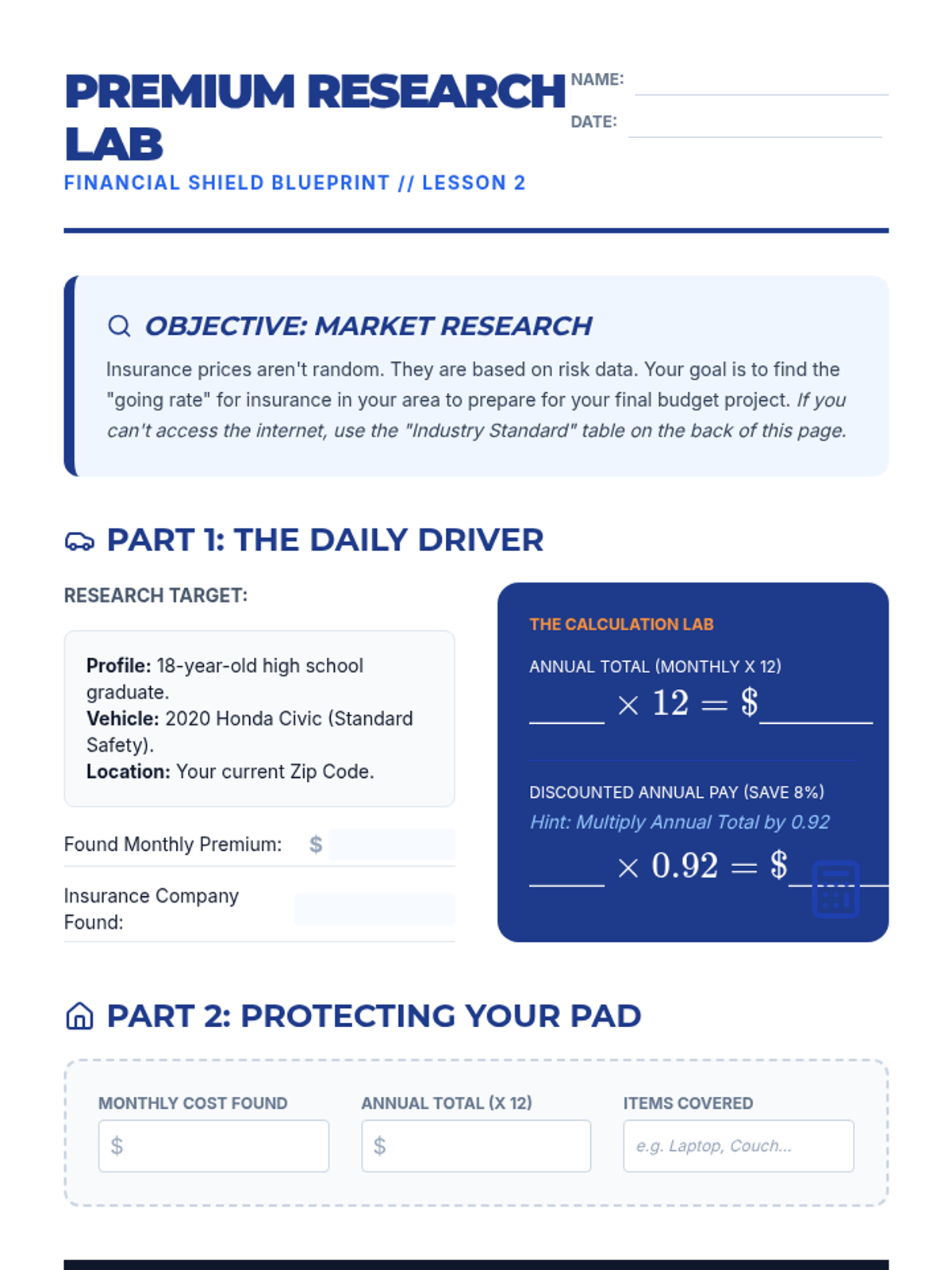
Students investigate the real-world costs of auto and renters insurance, practicing calculating monthly versus annual premiums.
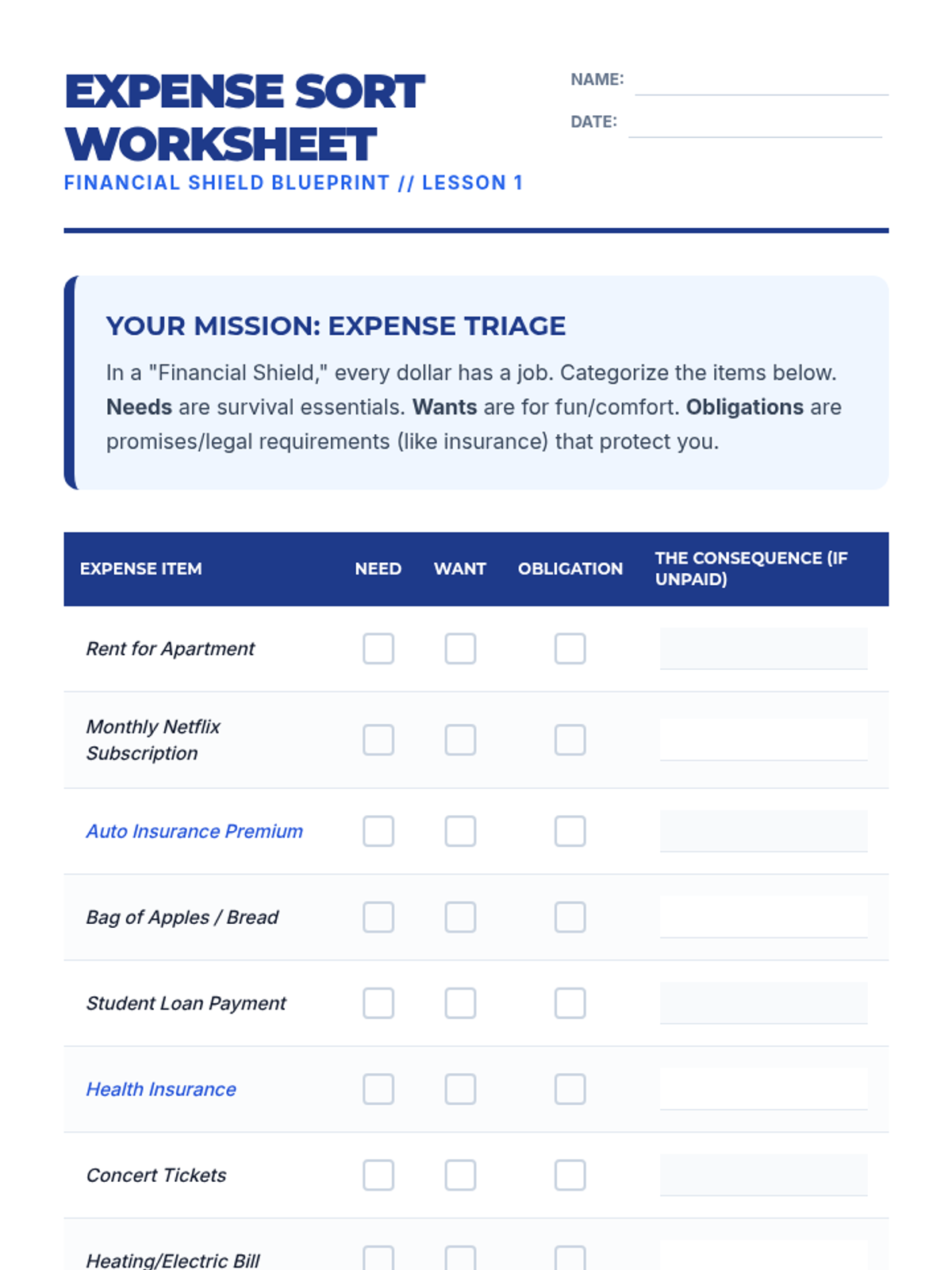
Students categorize expenses into needs, wants, and obligations, specifically identifying insurance as a critical financial obligation that protects assets.
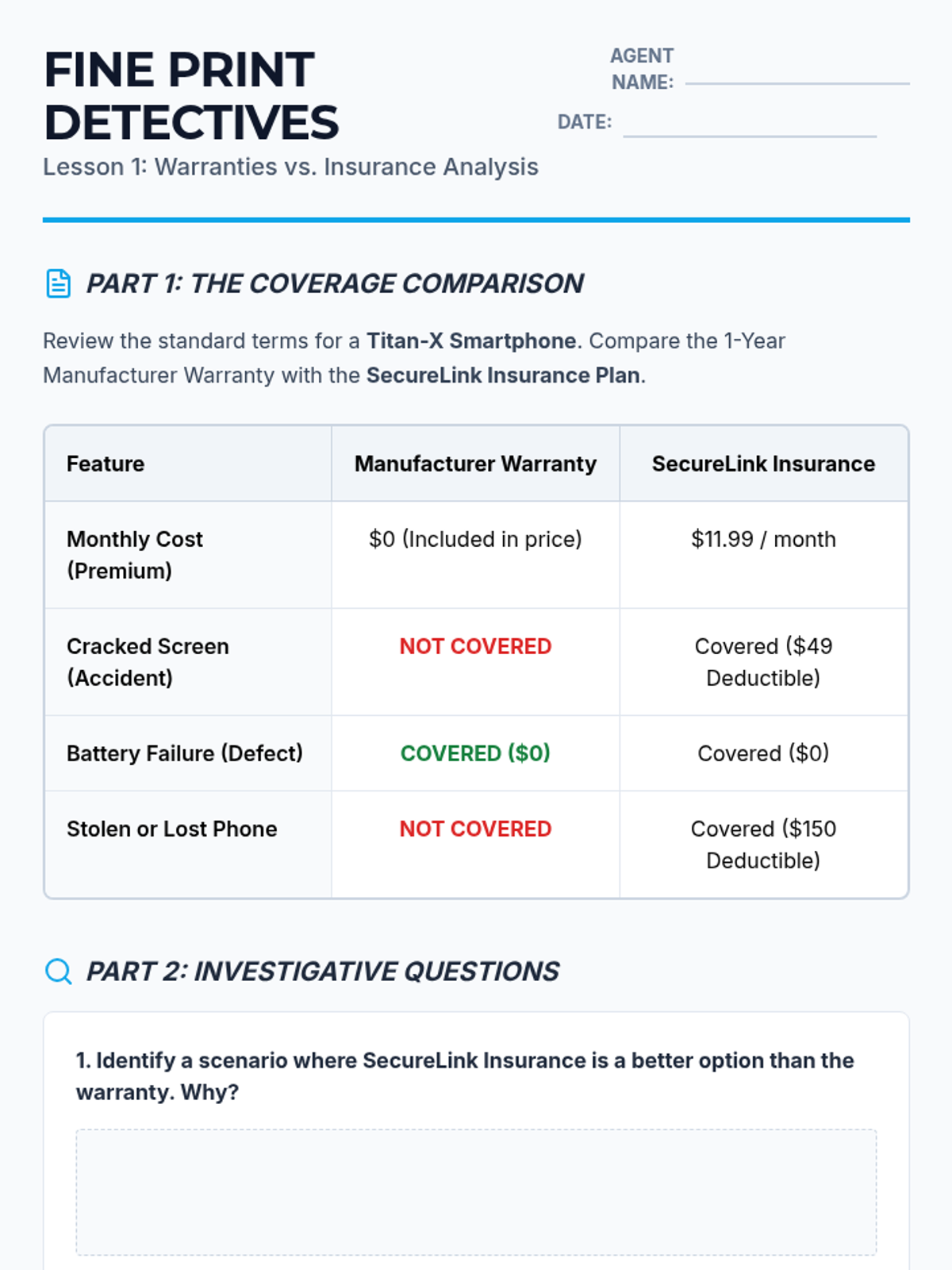
Students investigate the difference between manufacturer warranties and third-party insurance plans using cell phones as the primary case study.
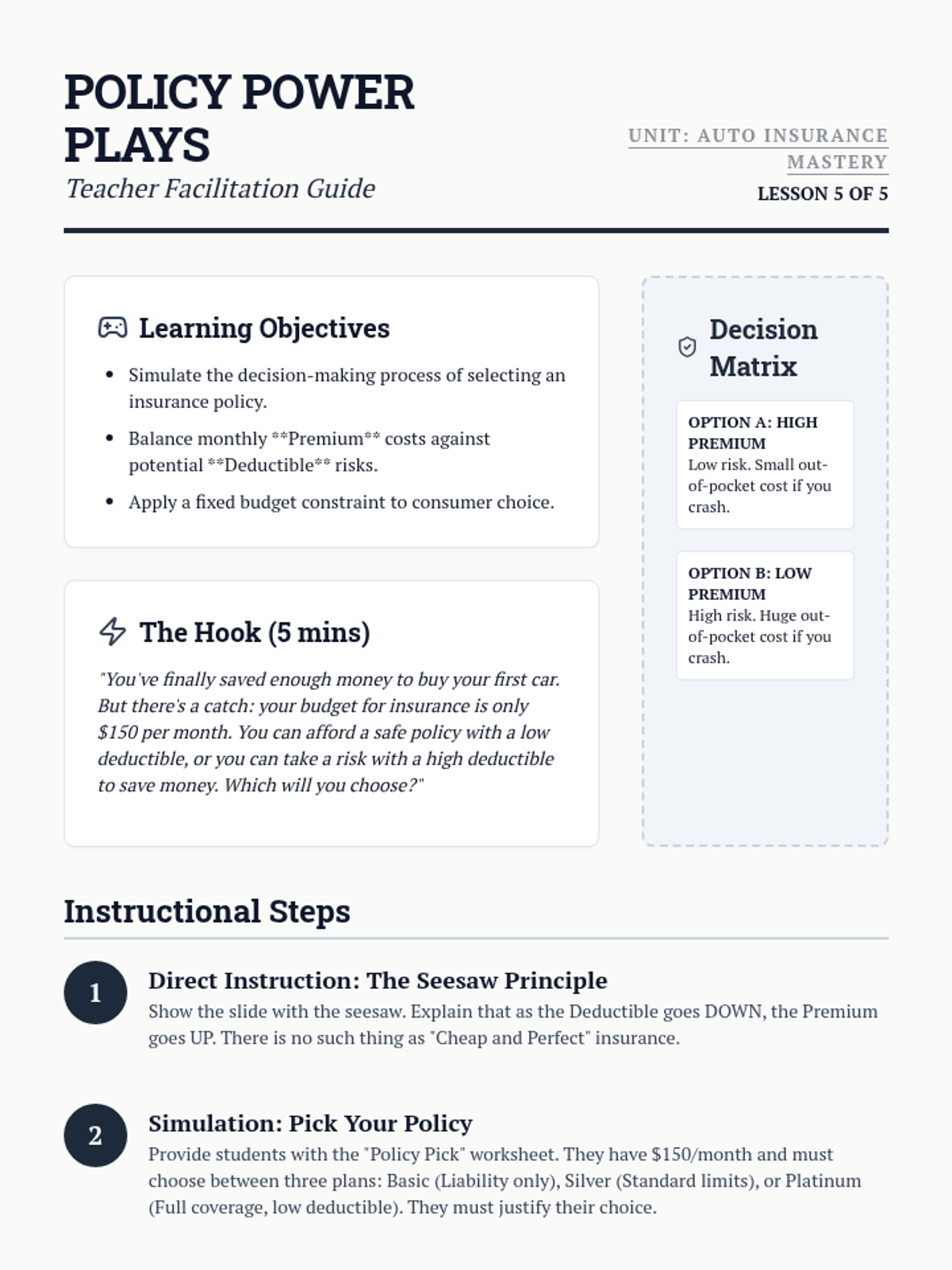
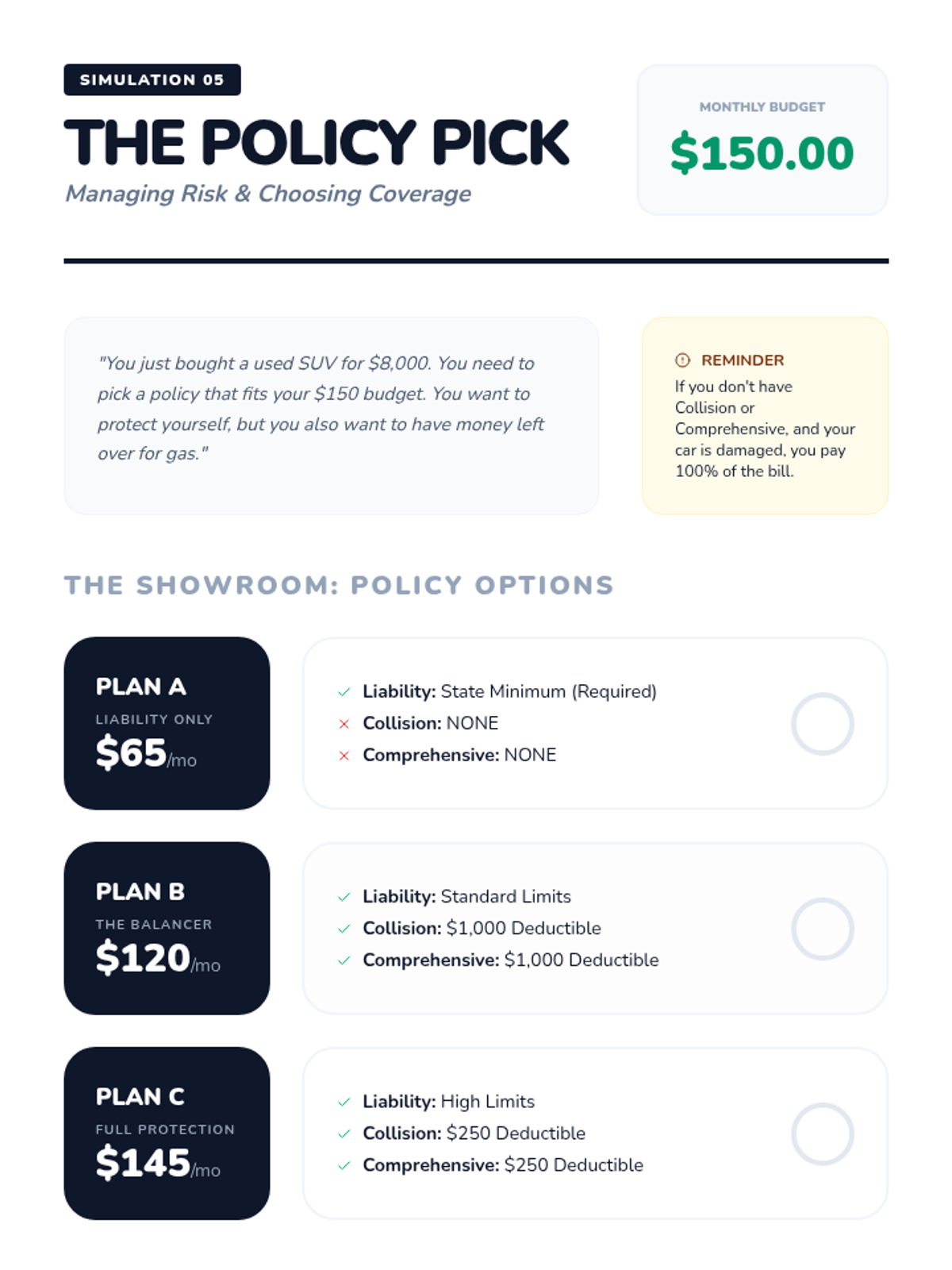
Students simulate the process of selecting an insurance policy, balancing premium costs against deductible risks based on a fixed monthly budget.
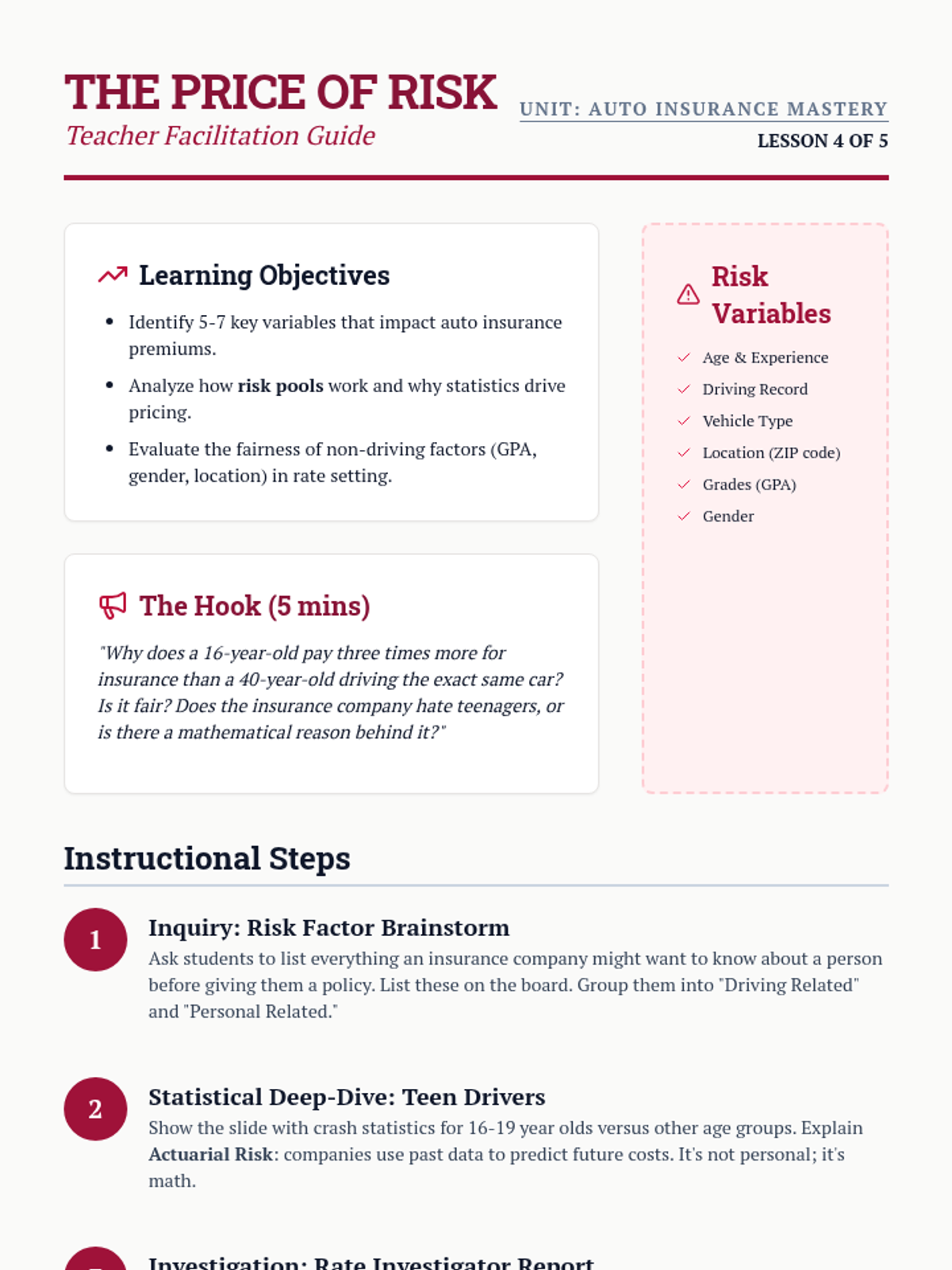
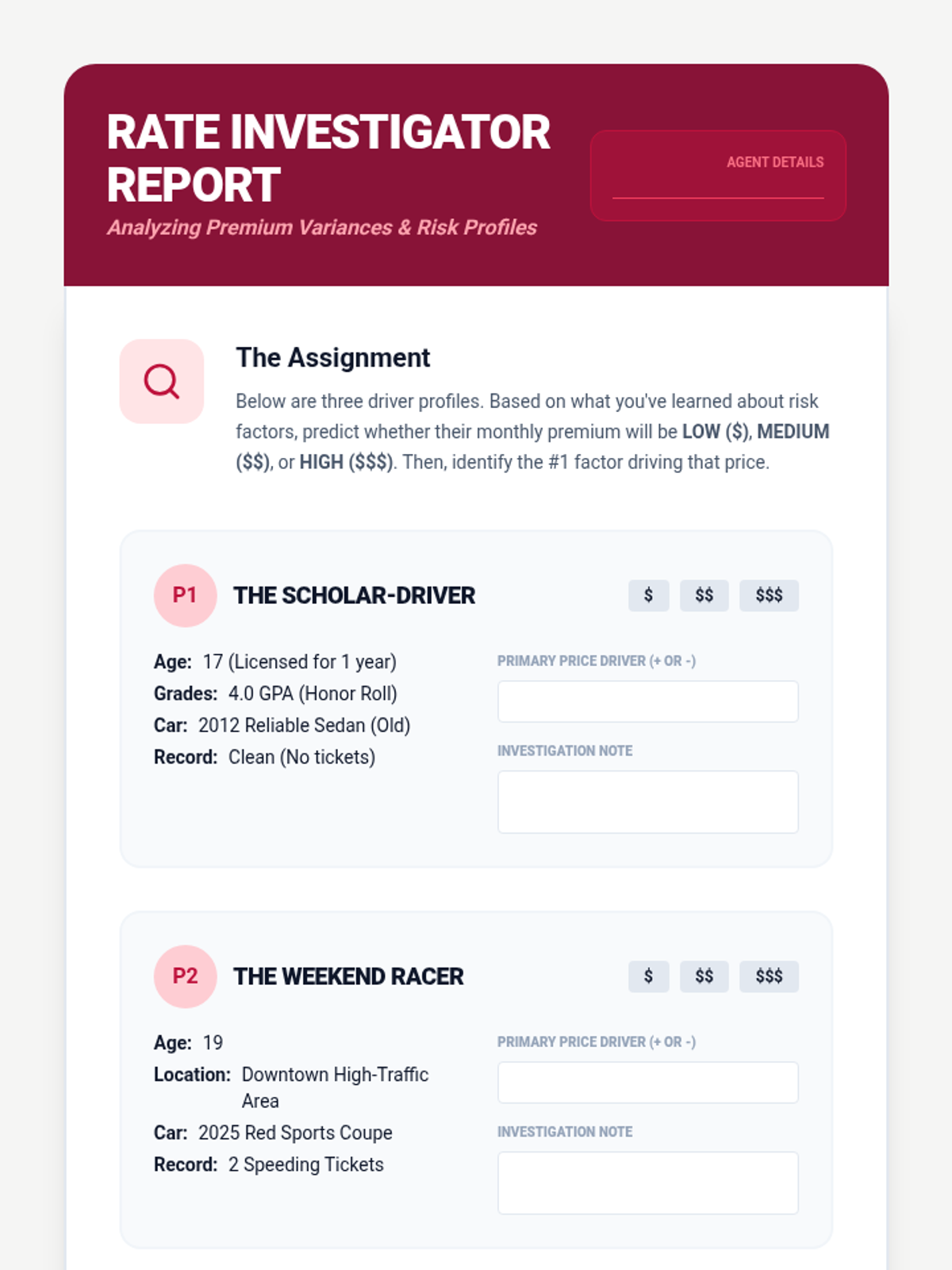
An investigation into the variables that determine insurance premiums, including age, driving record, vehicle type, and academic performance.
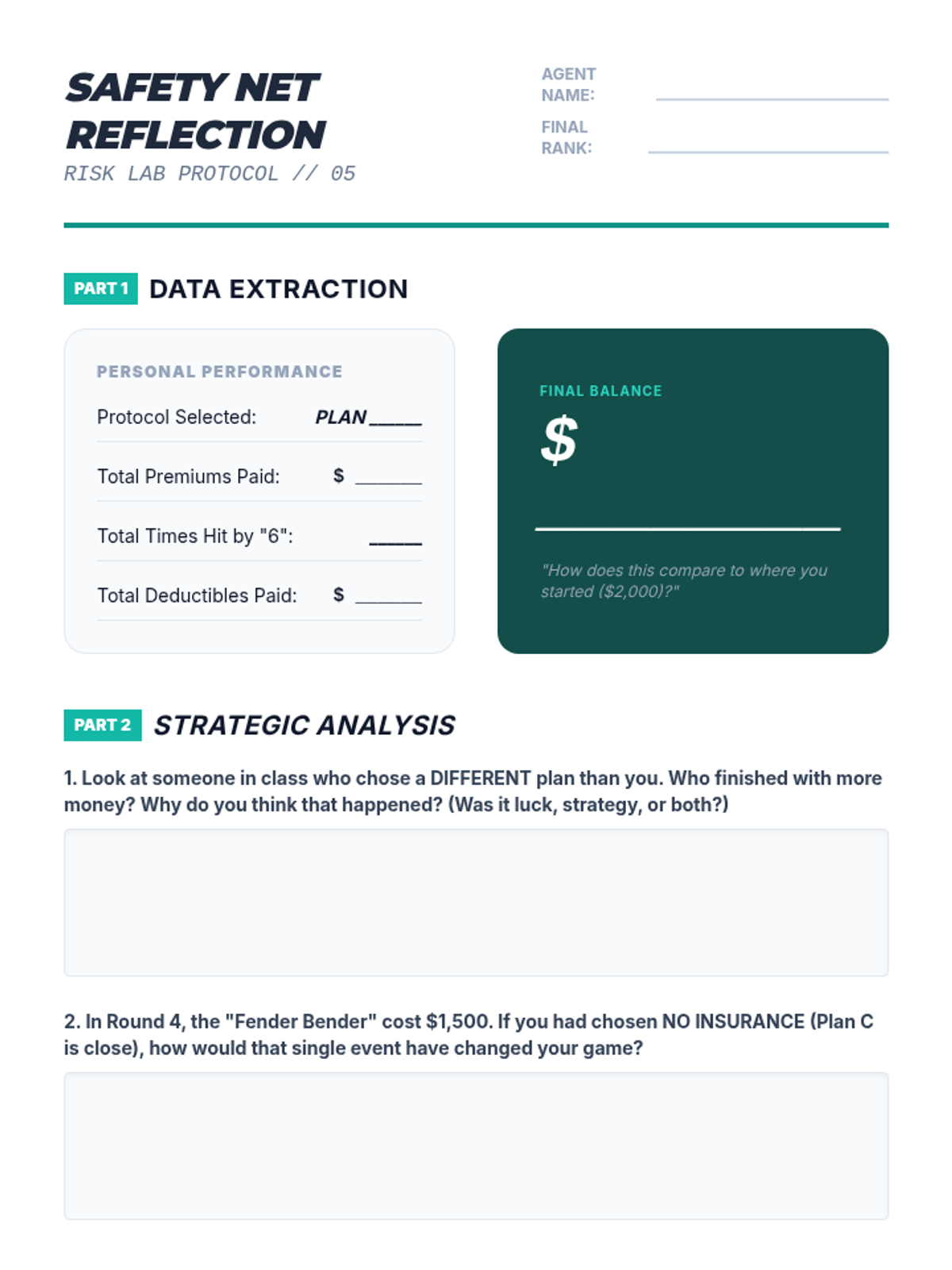
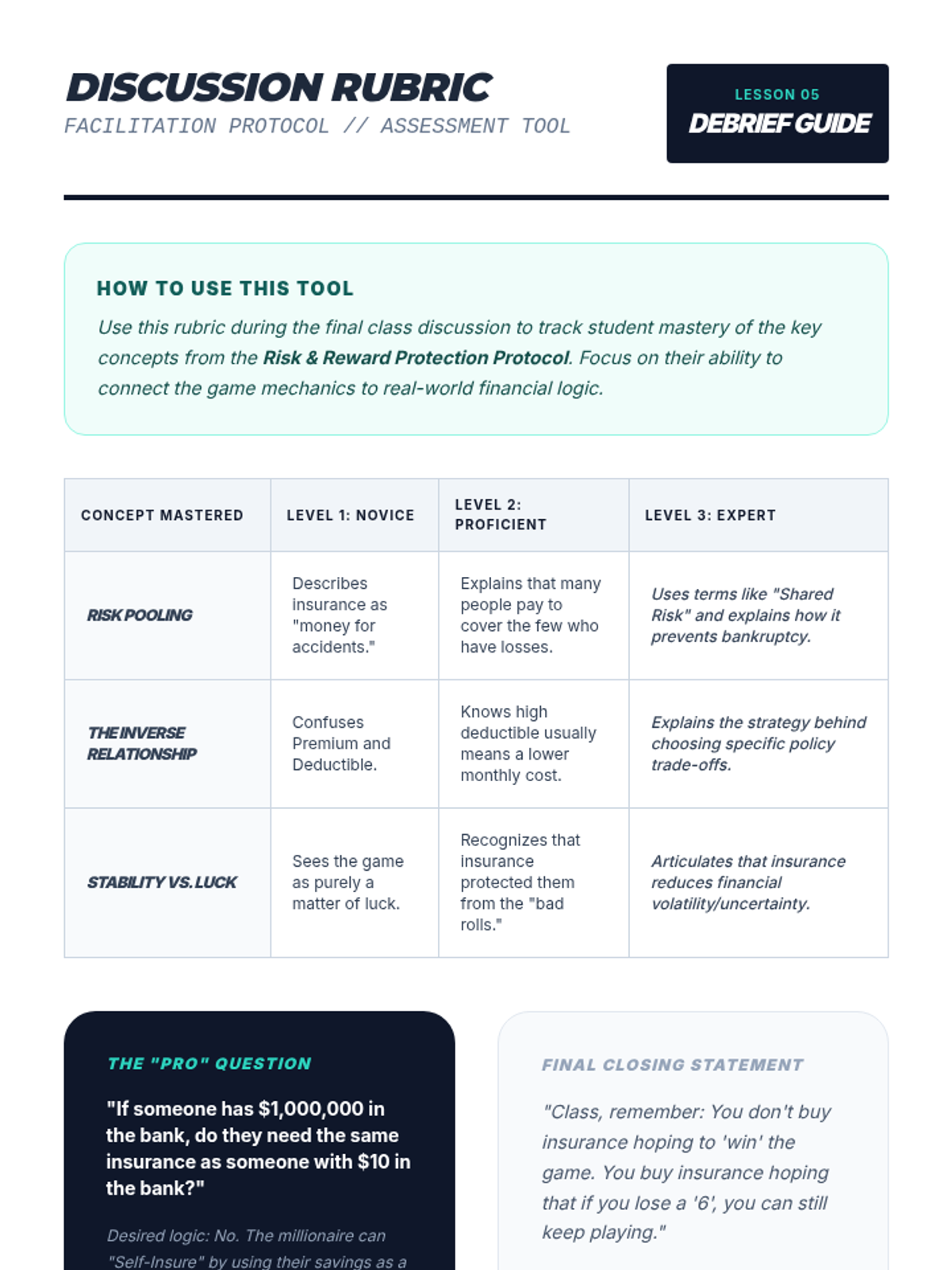
A reflective lesson where students analyze simulation data to understand the role of insurance as a stabilizer against financial volatility.
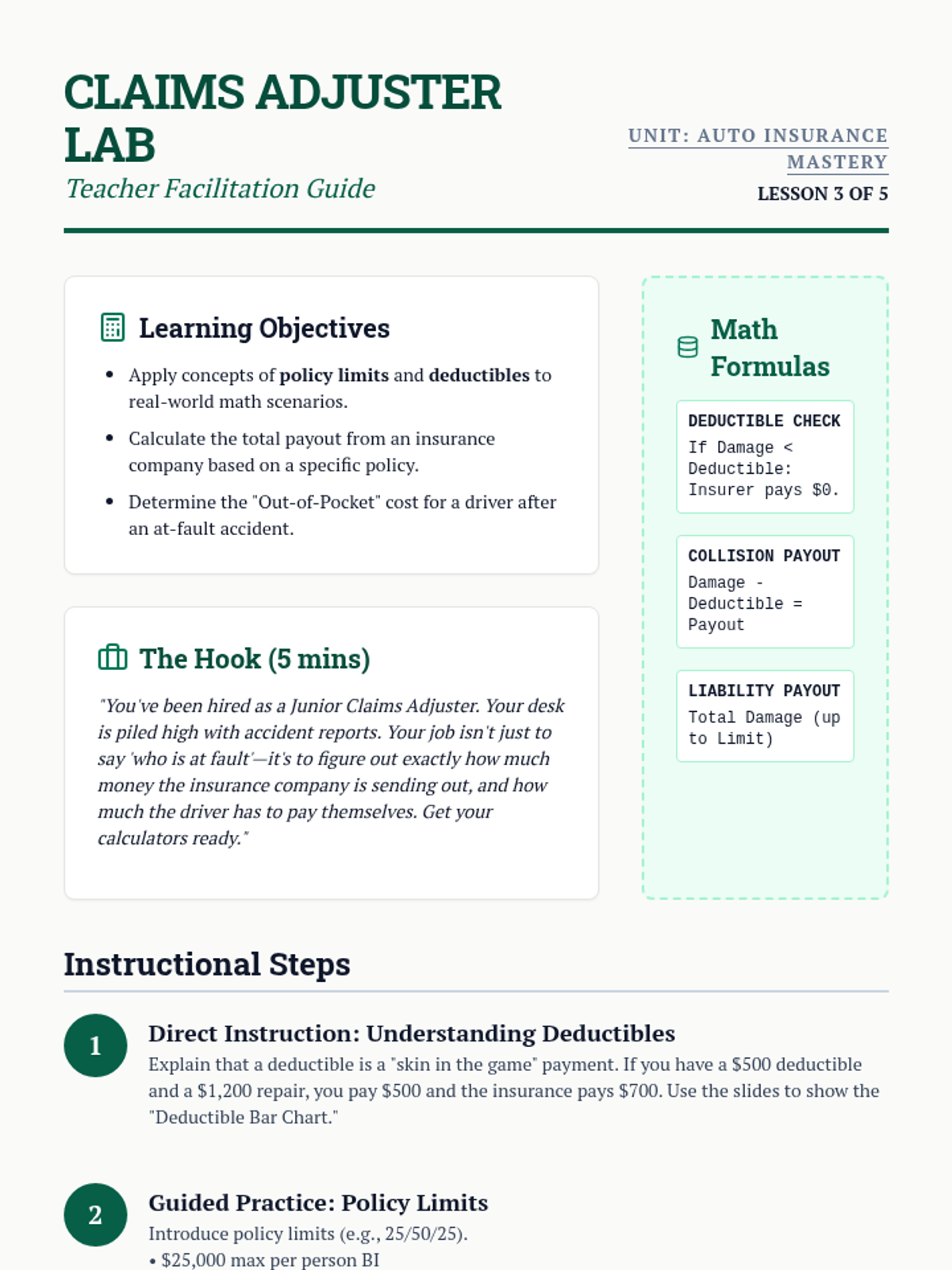
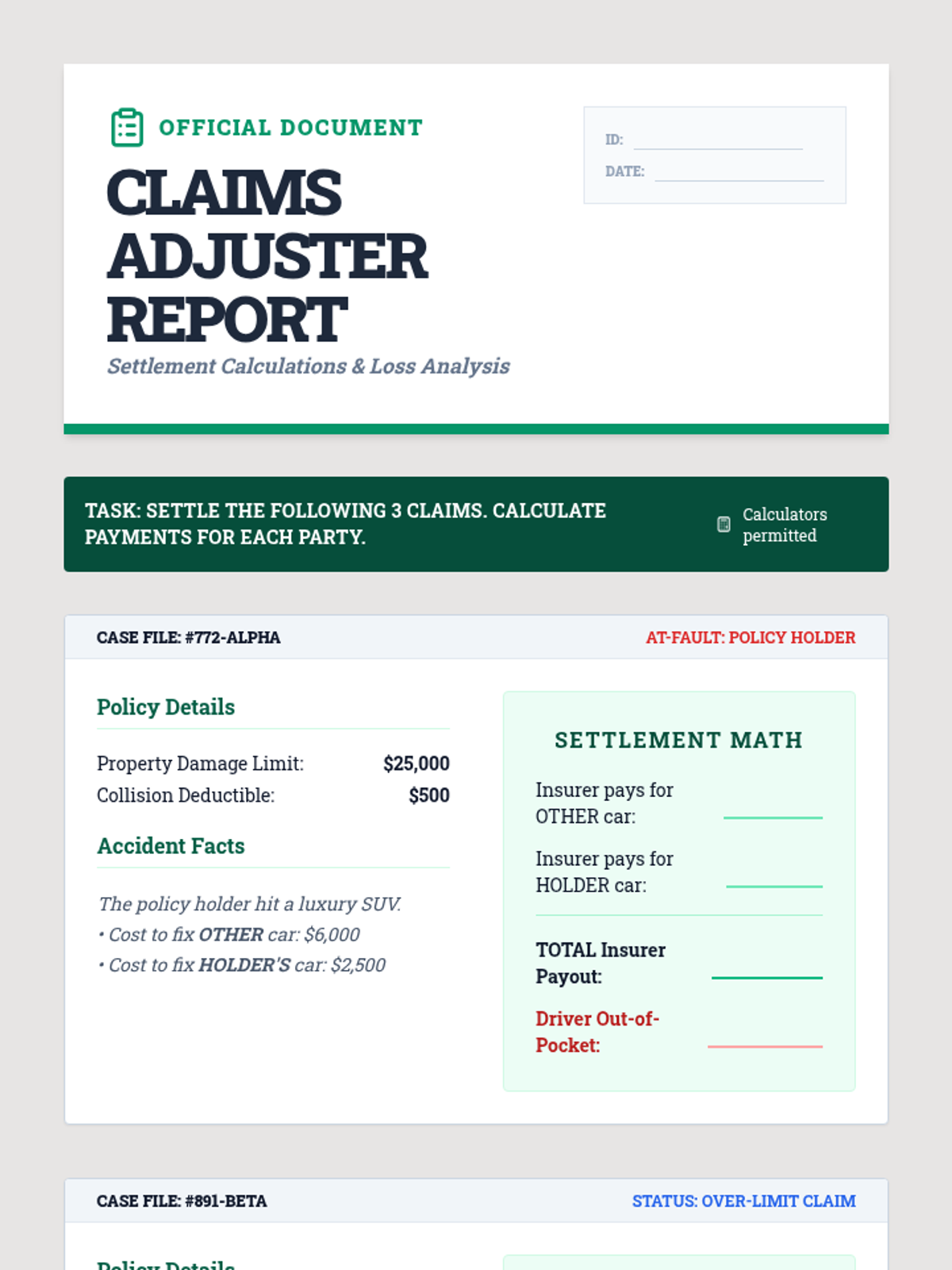
Students act as insurance claims adjusters, analyzing police reports and policy limits to calculate insurance payouts and driver out-of-pocket expenses.
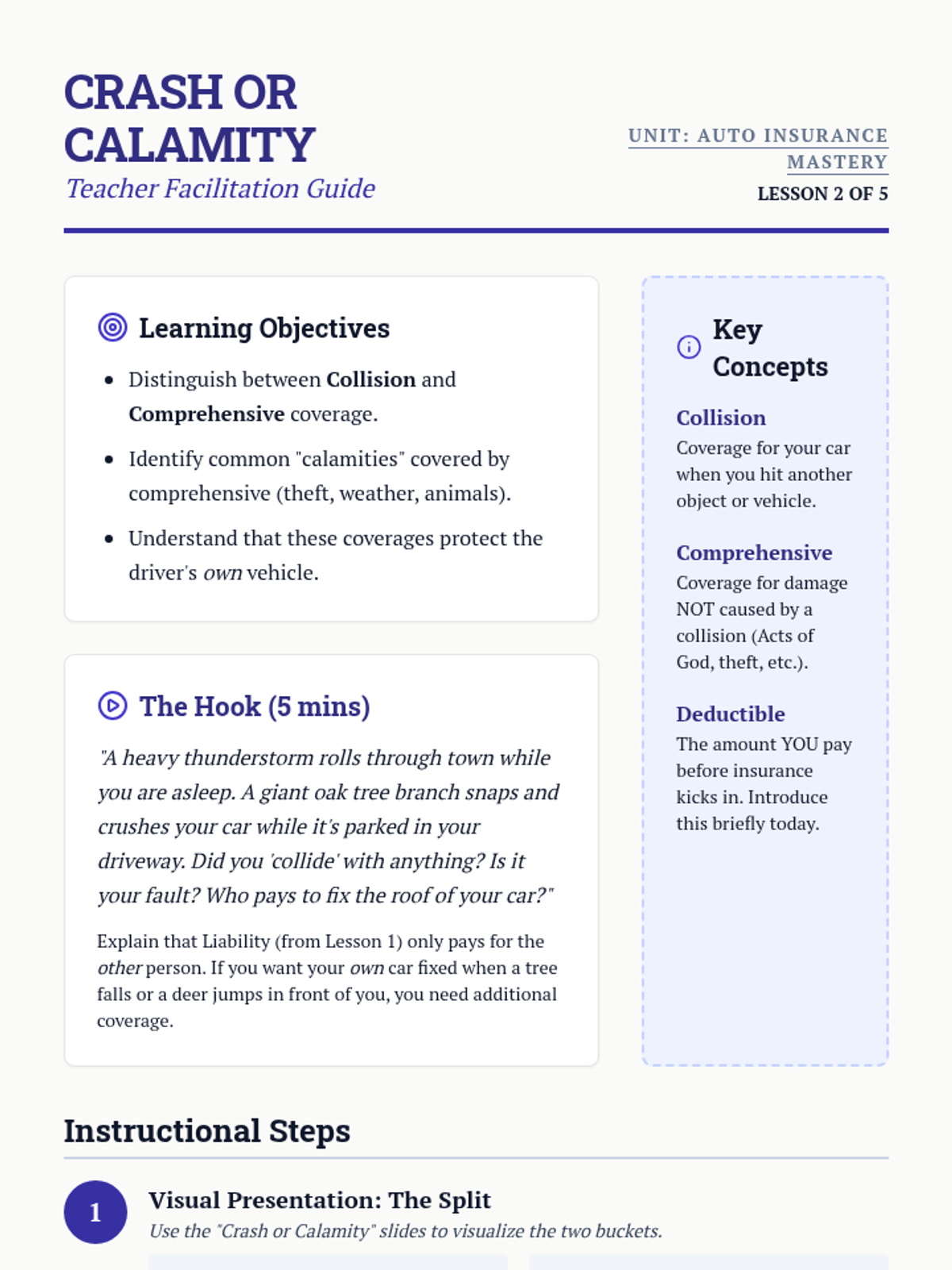
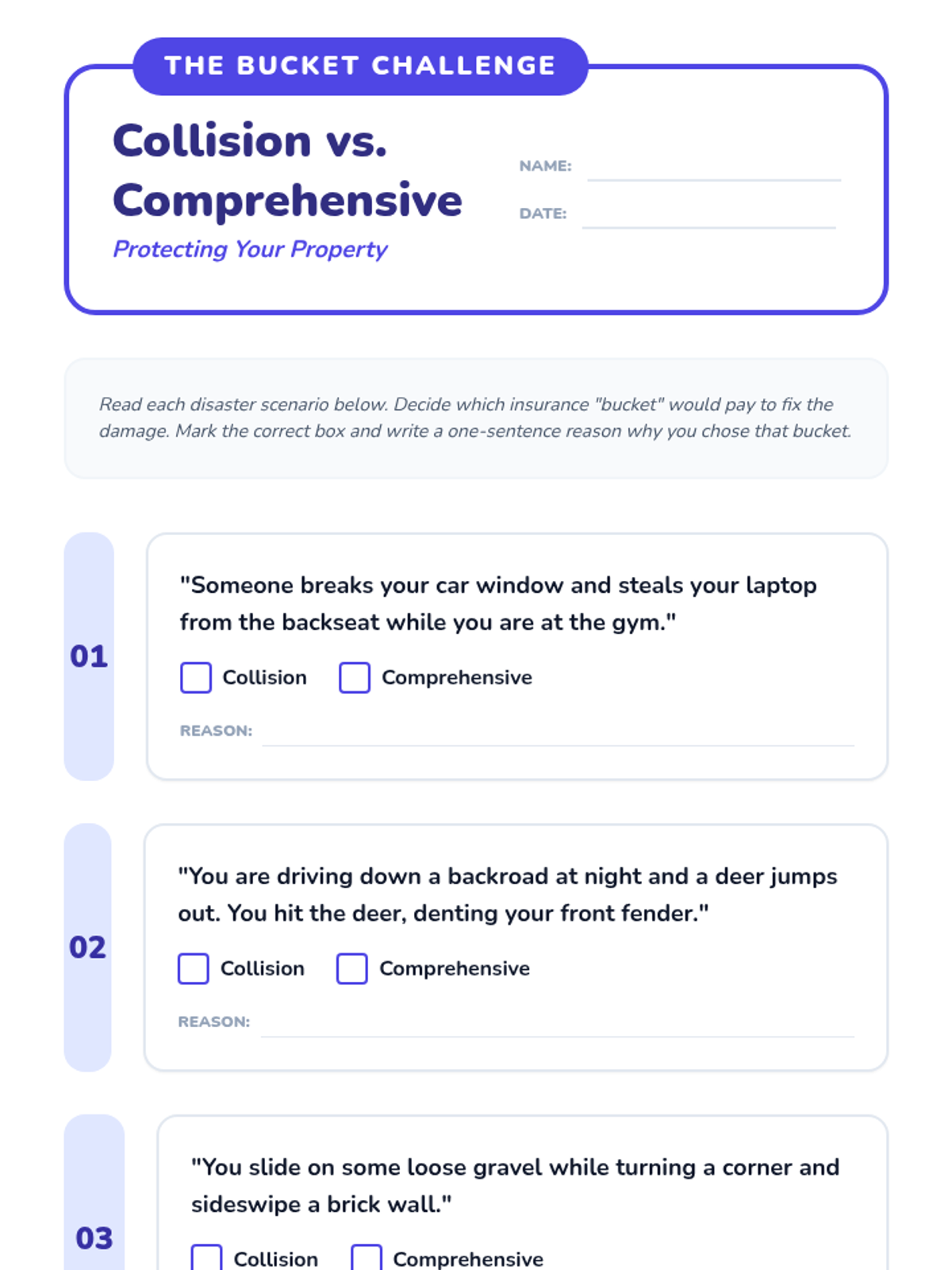
This lesson distinguishes between collision and comprehensive coverage through a sorting activity, helping students understand protection against accidents versus non-accident disasters.
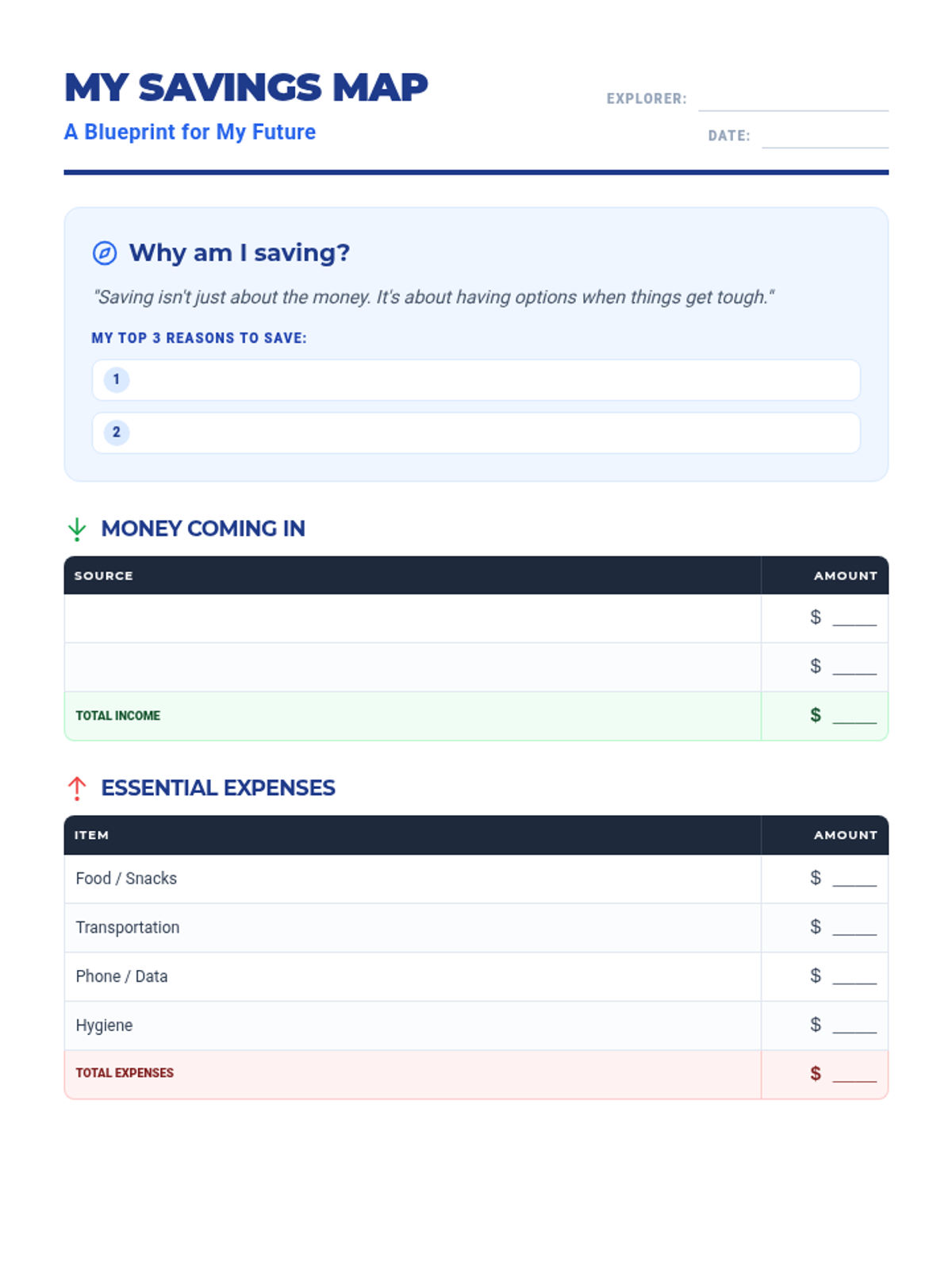
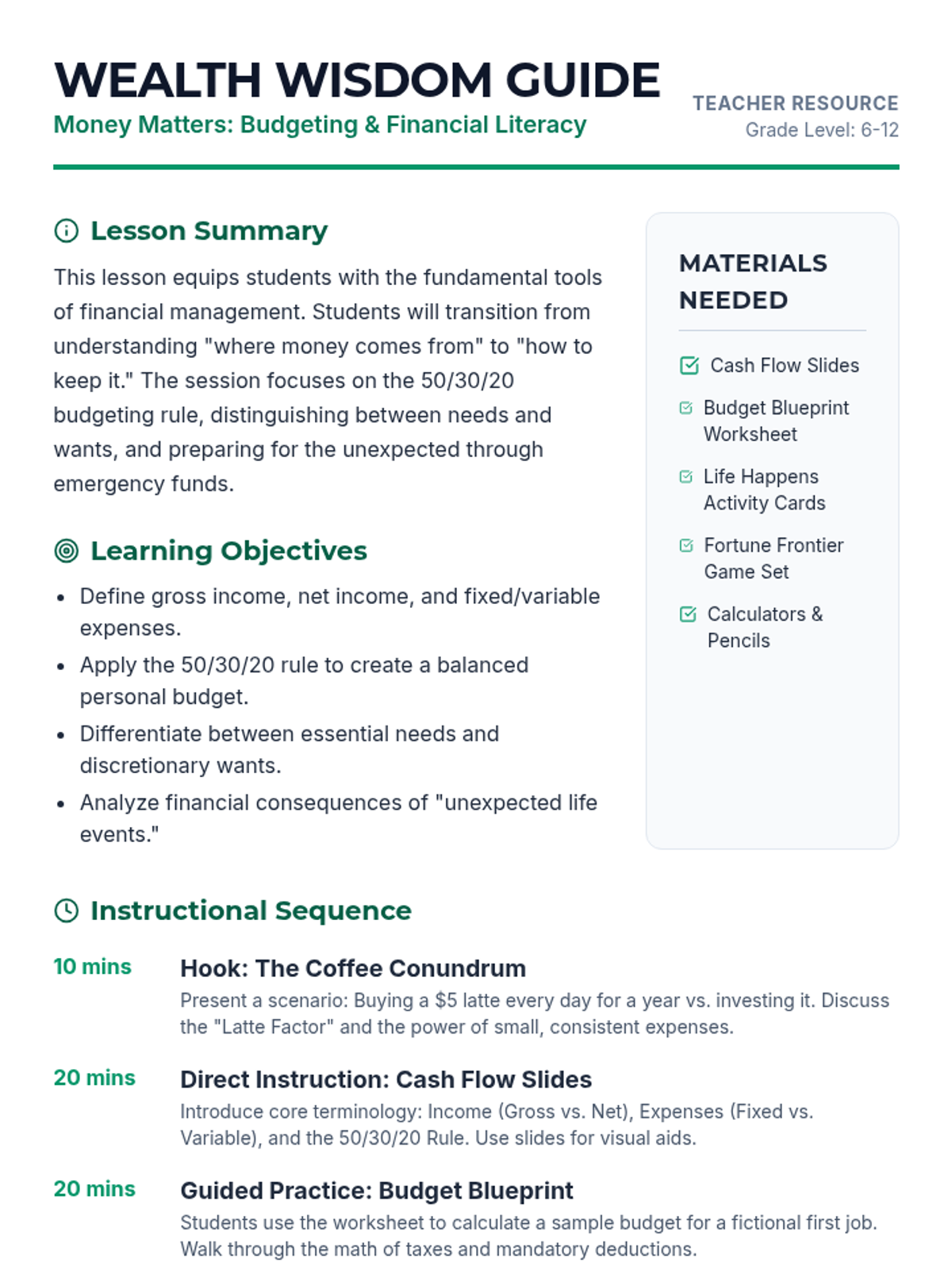
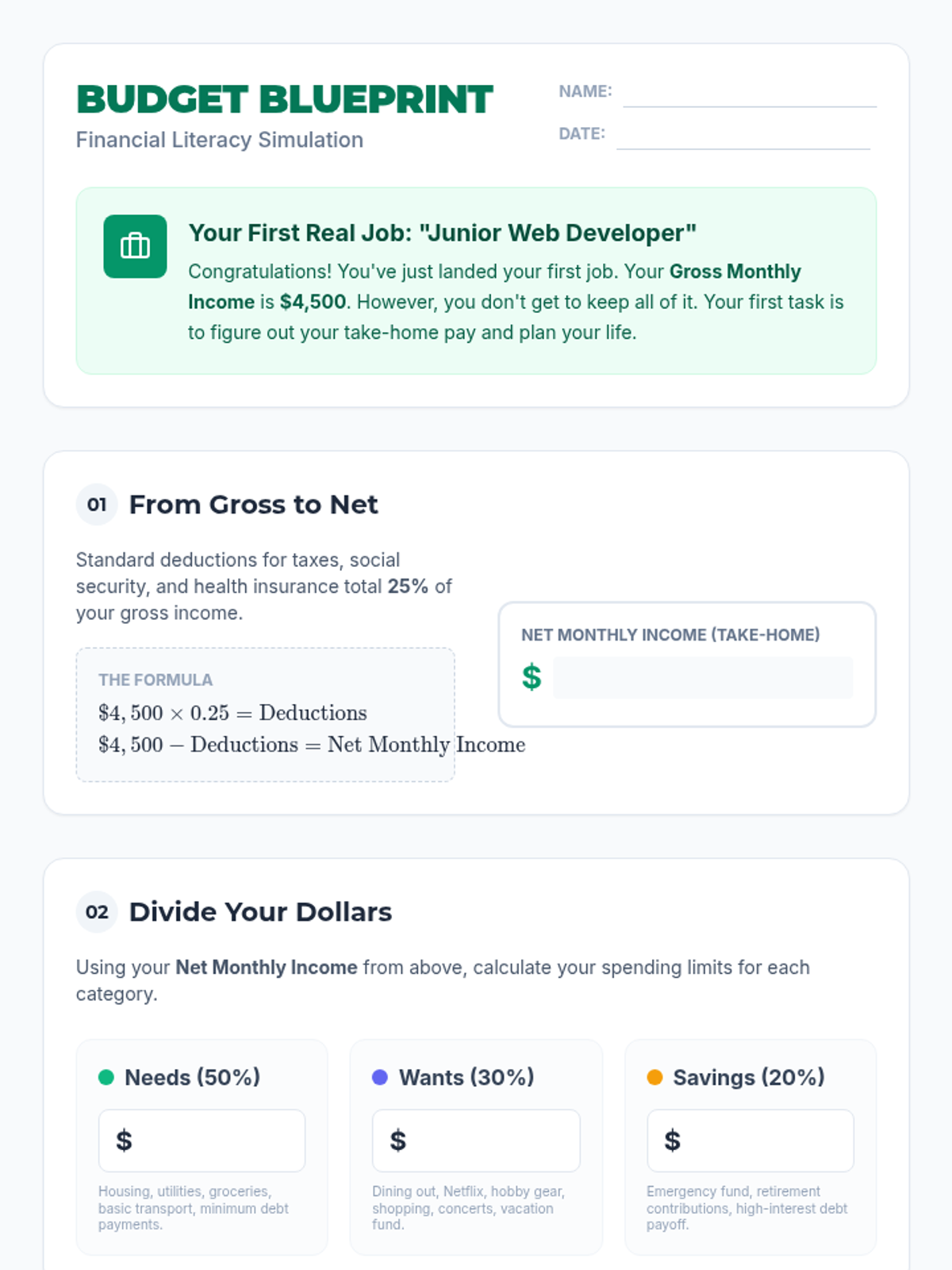
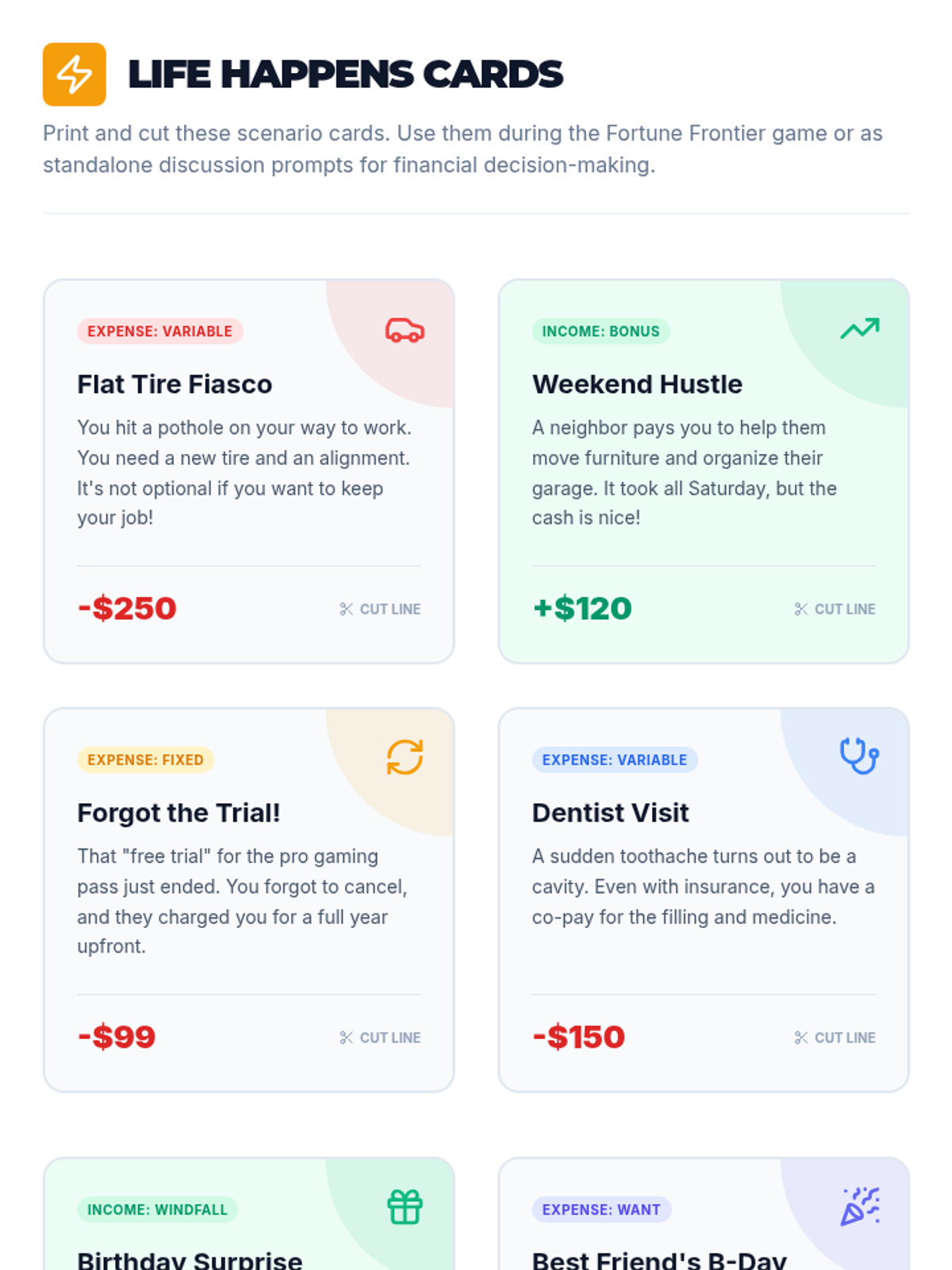
This lesson introduces students to financial literacy through budgeting, saving, and managing income versus expenses. Students will engage in real-world scenarios to build a solid foundation for responsible money management.
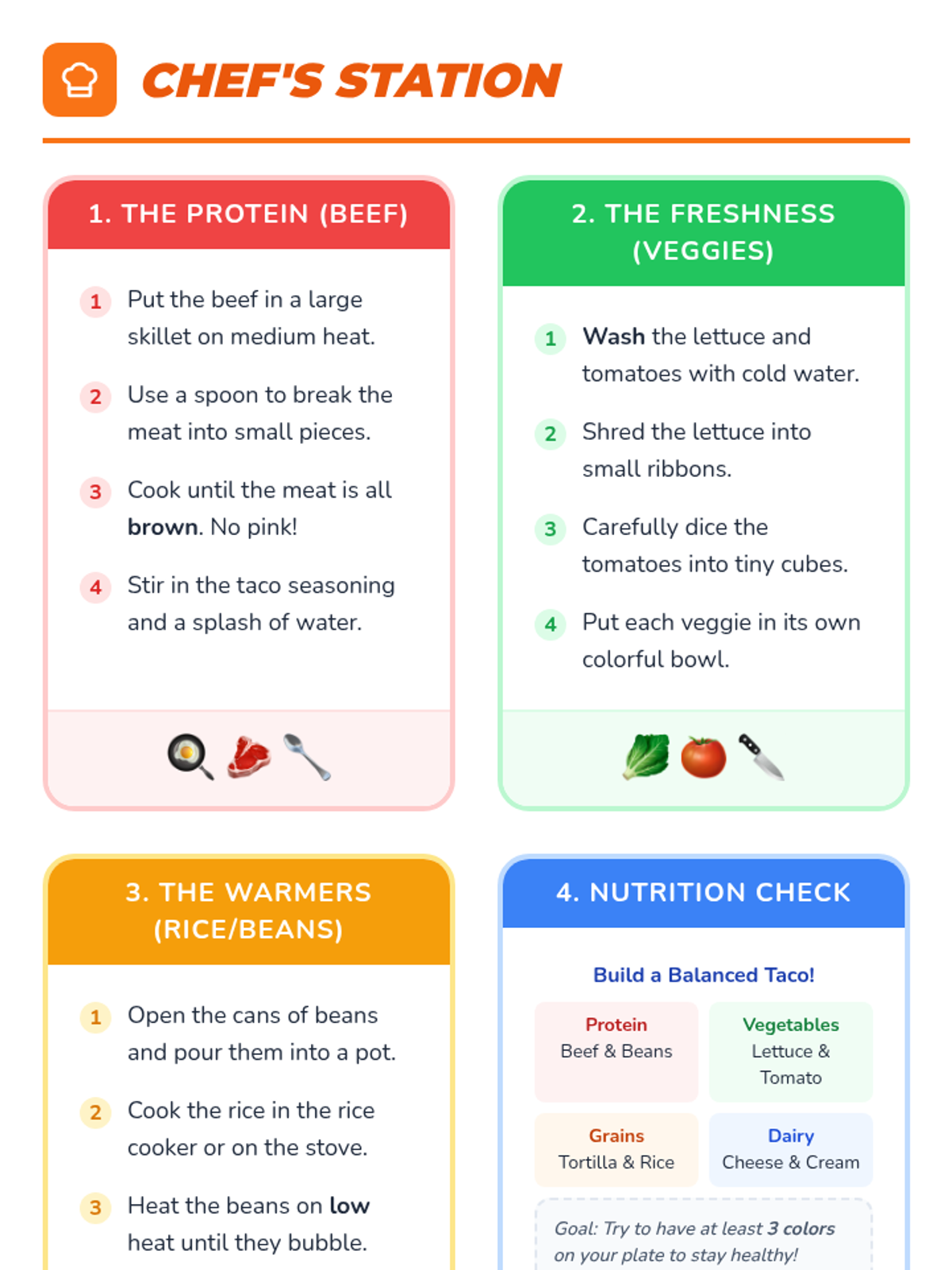
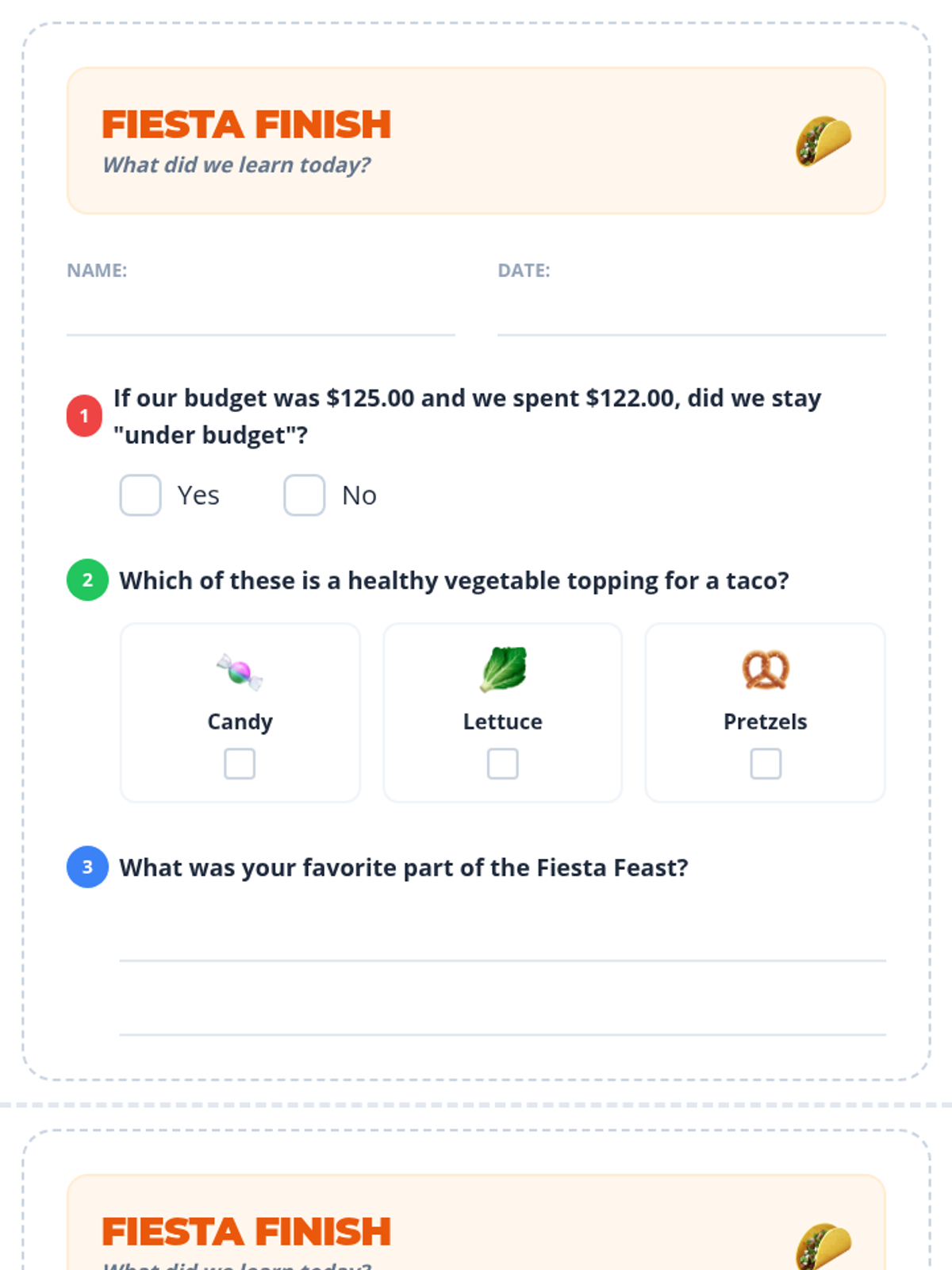
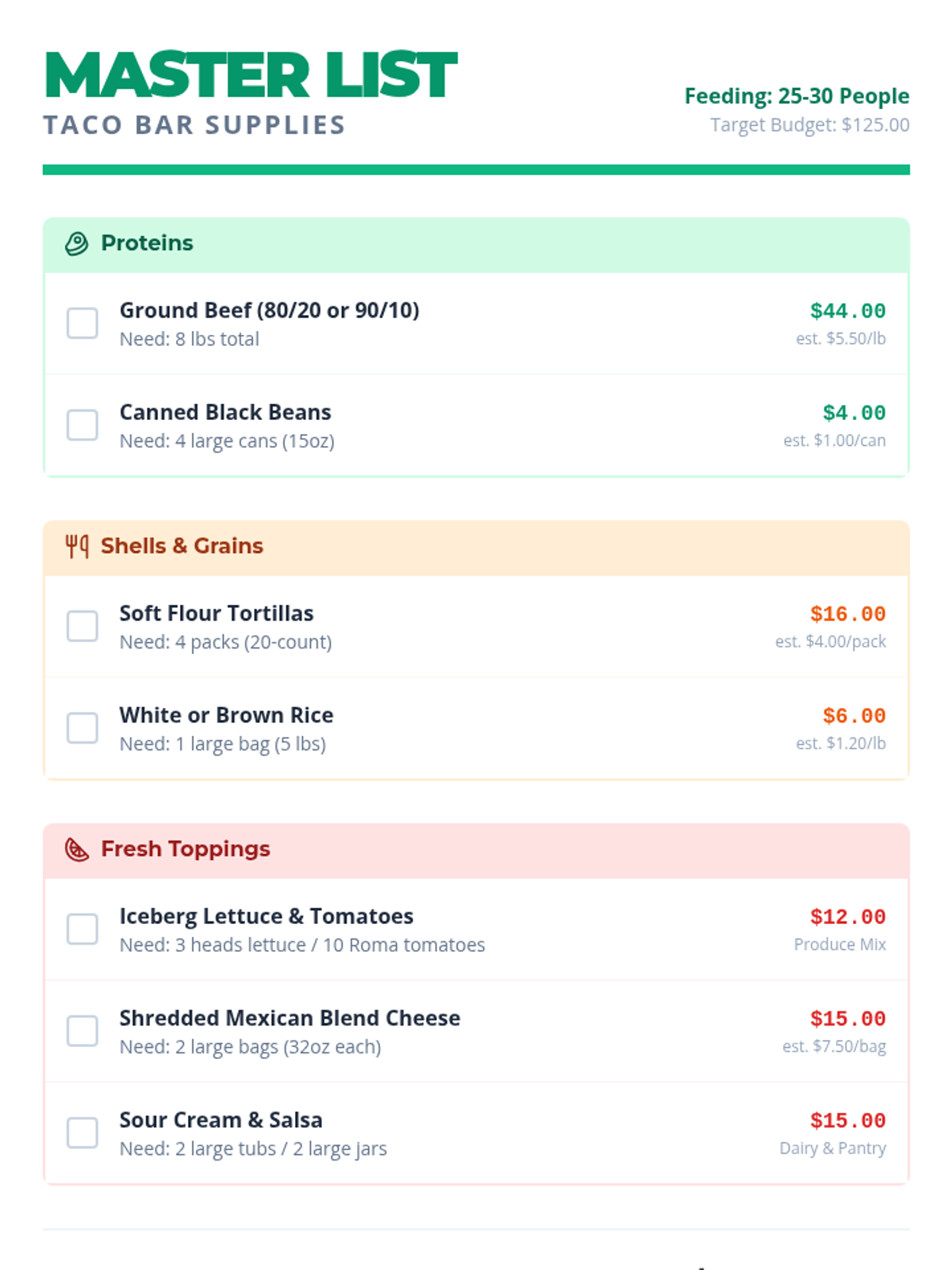
Focuses on food preparation and nutrition. Students follow visual recipes to prepare taco ingredients and identify healthy food groups.
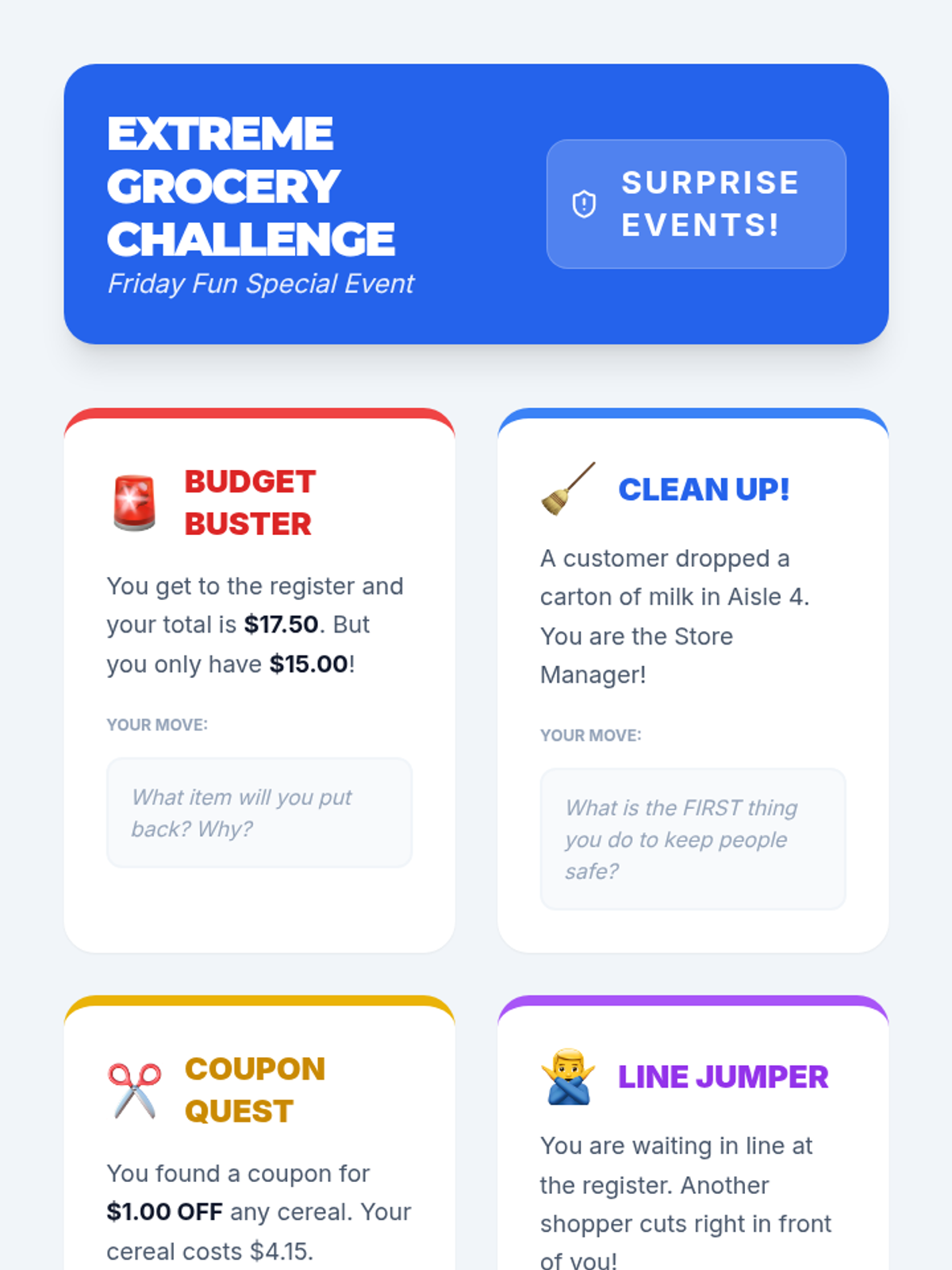
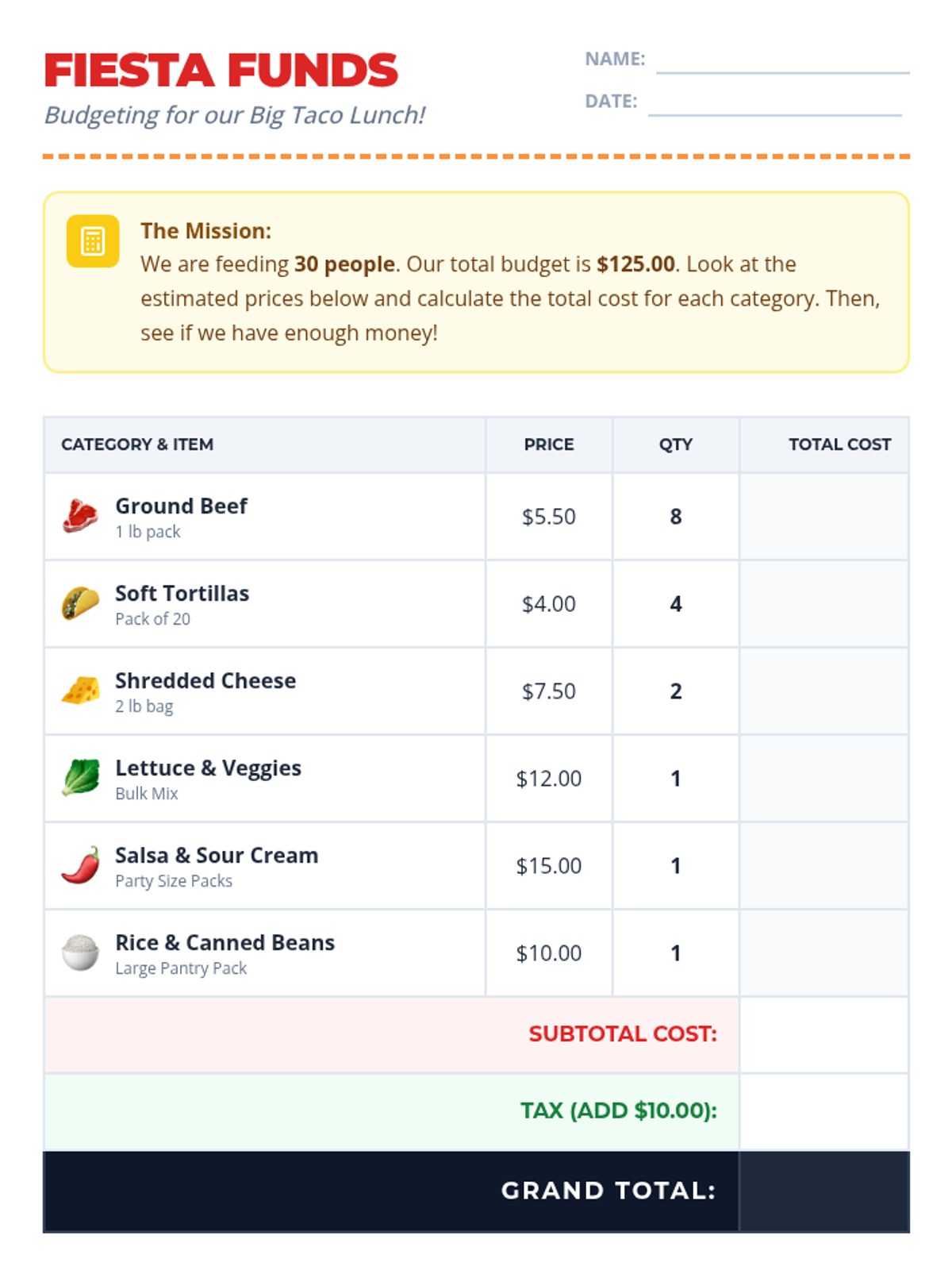
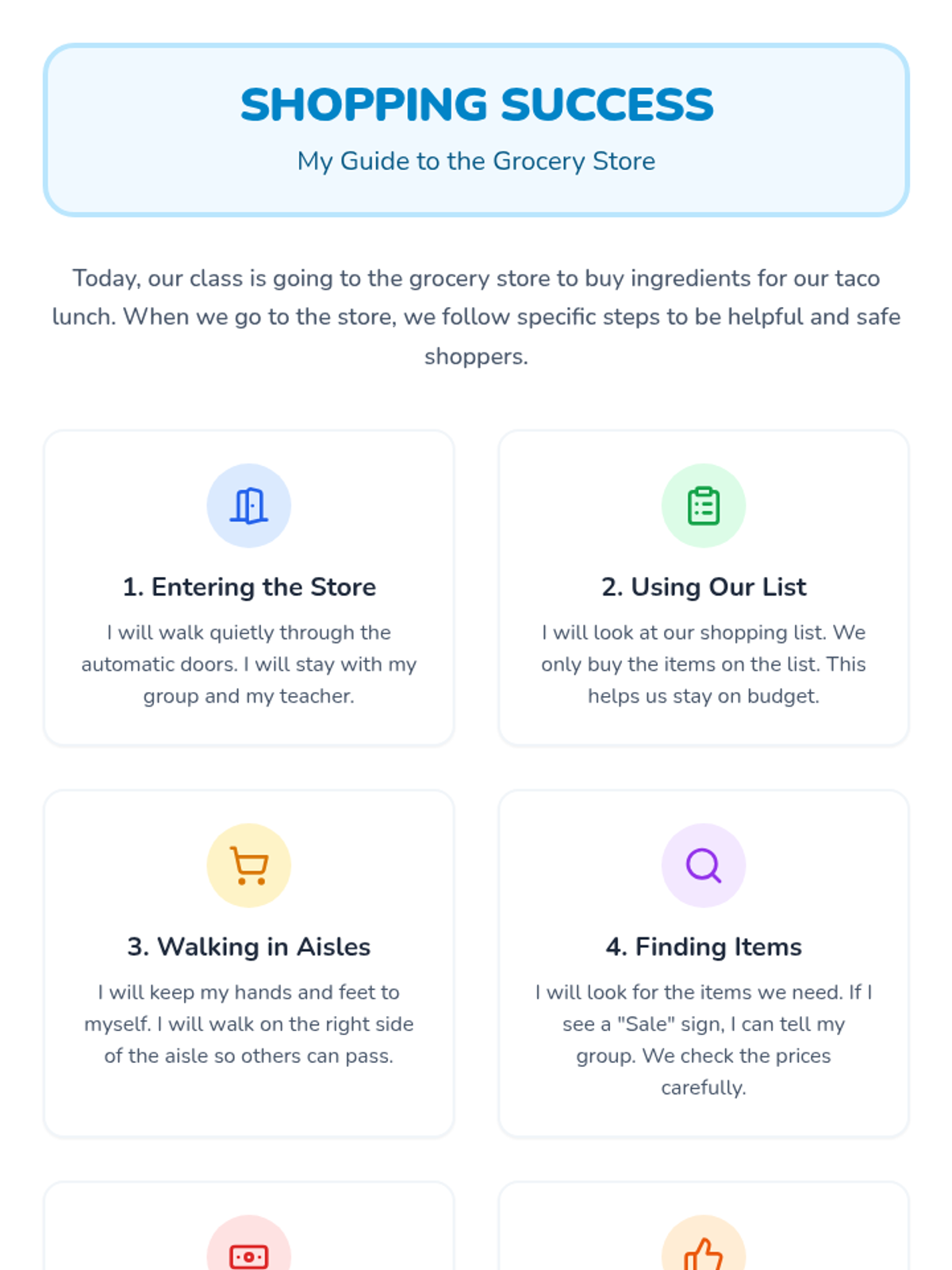
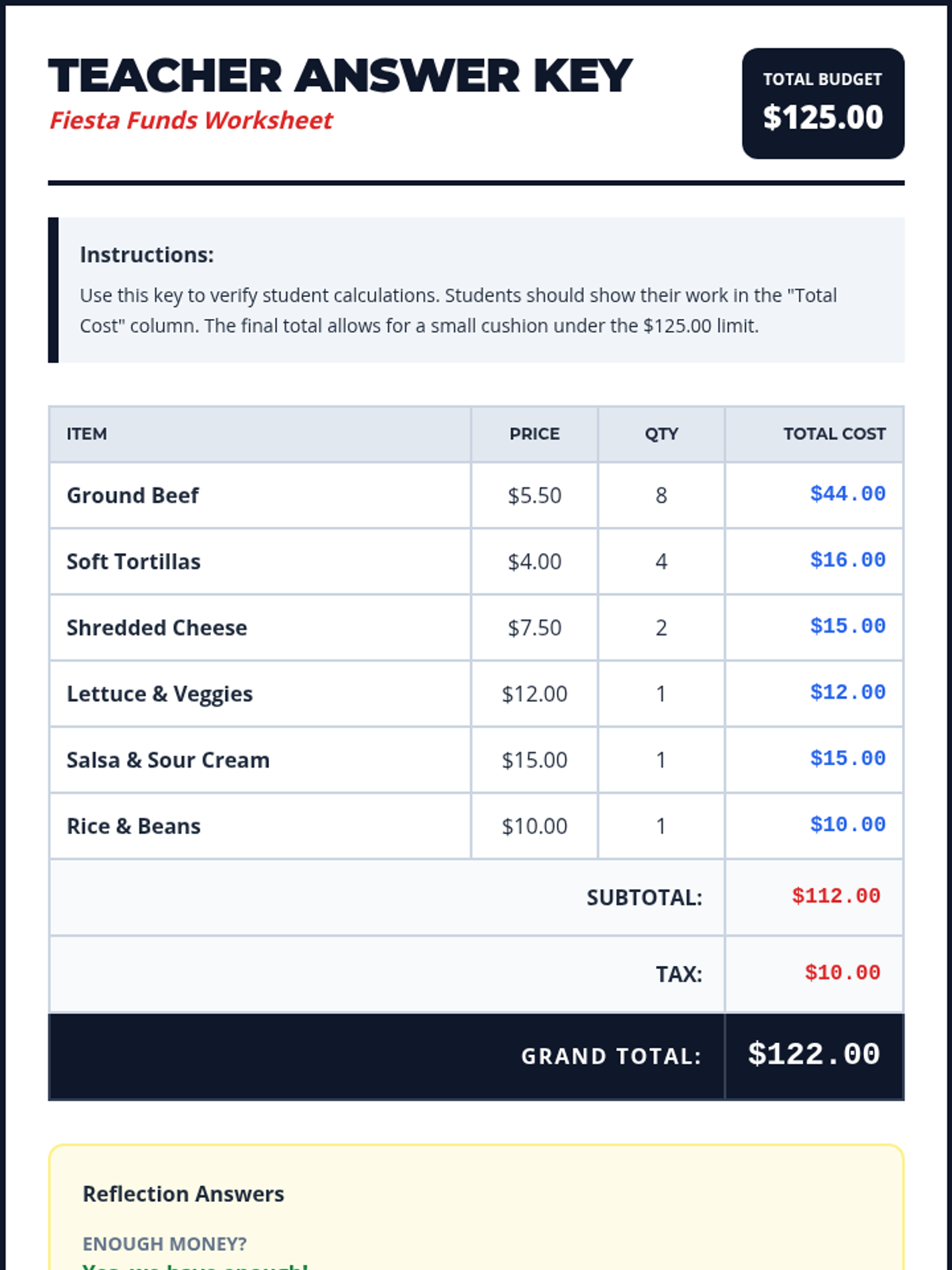
Focuses on the financial and social aspects of grocery shopping. Students calculate costs, manage a budget, and learn the social expectations of visiting a store.
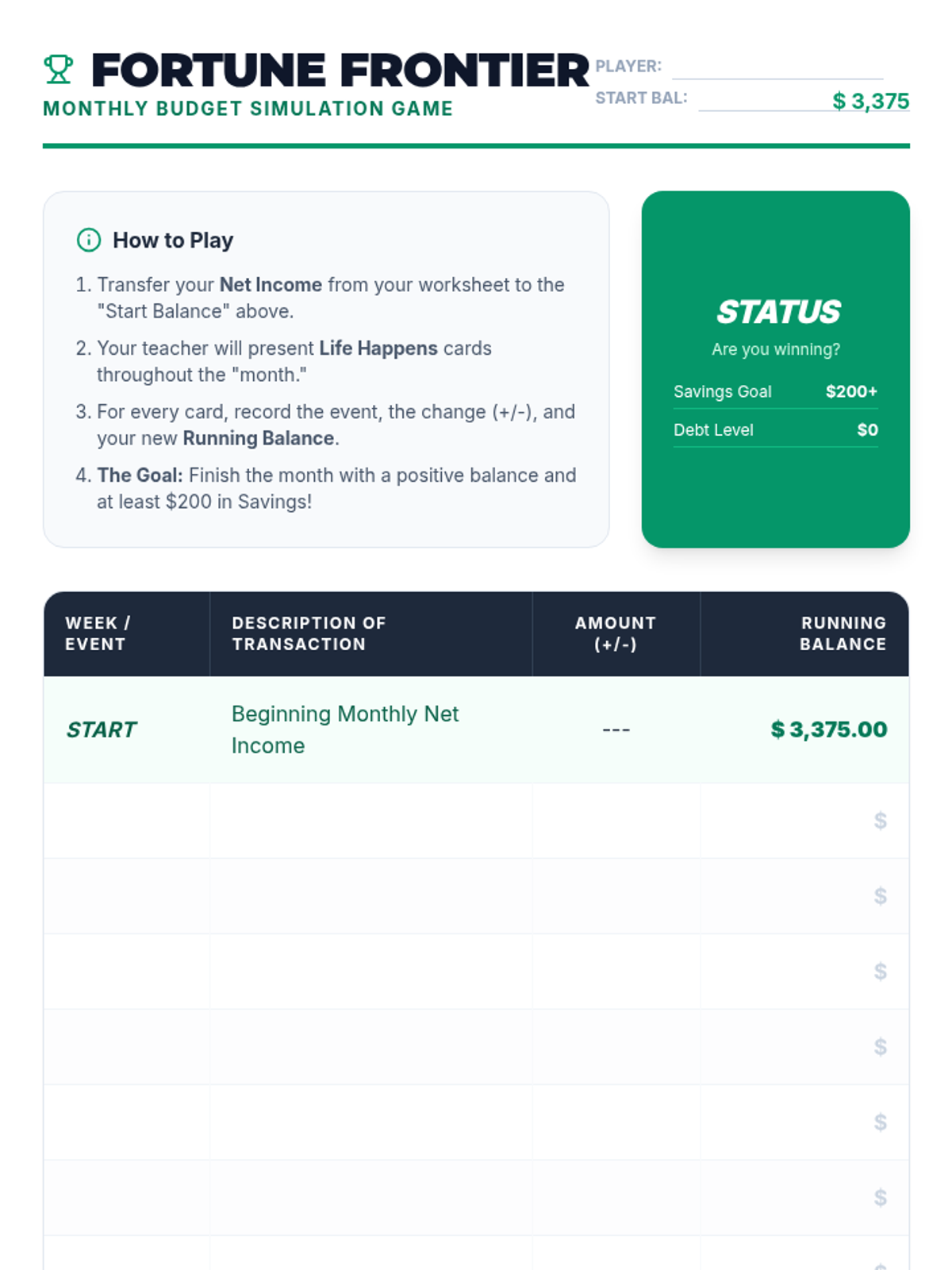
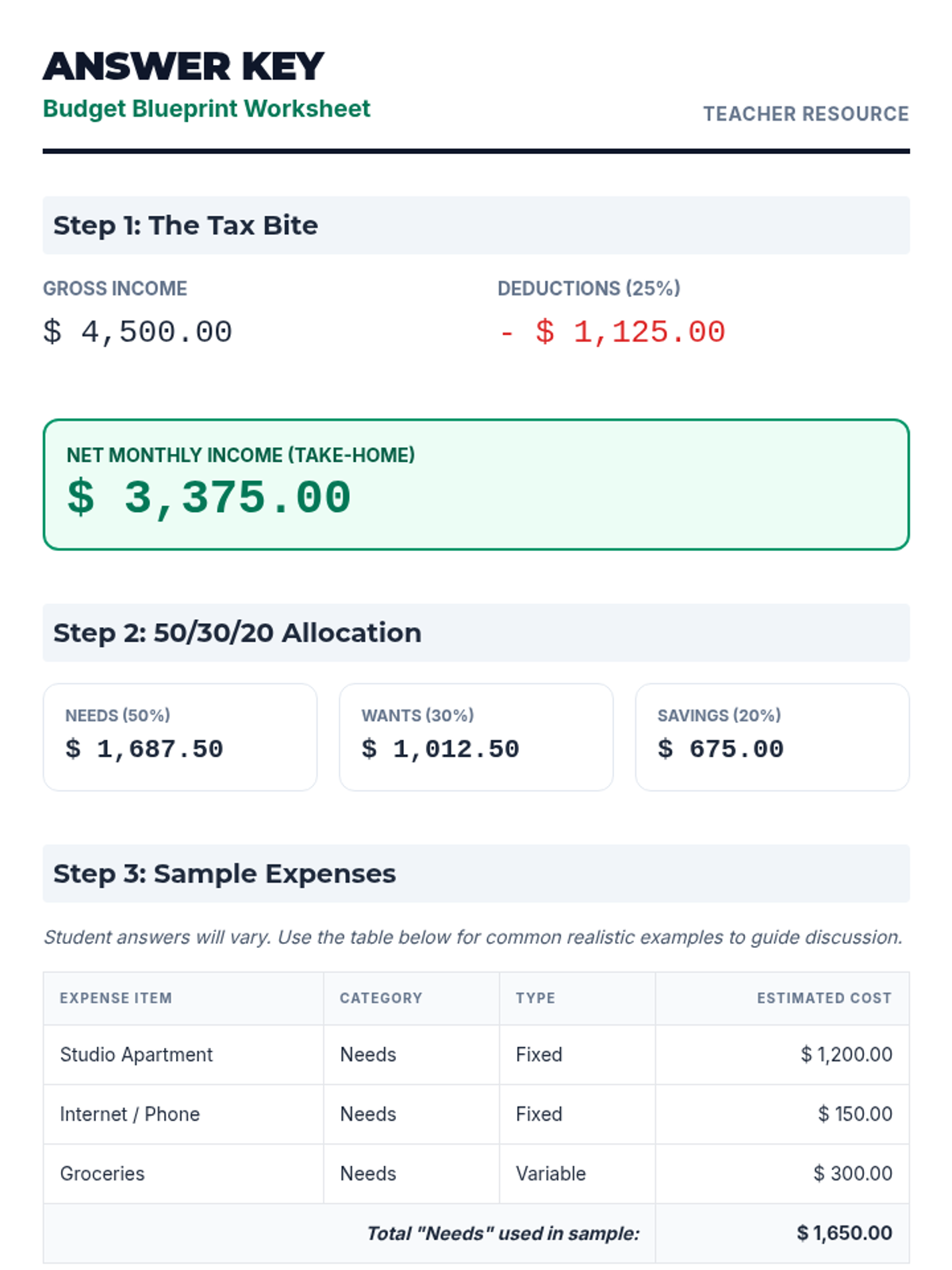
A comprehensive personal finance lesson where students learn to manage income, expenses, and savings through a realistic budget simulation and decision-making activities.
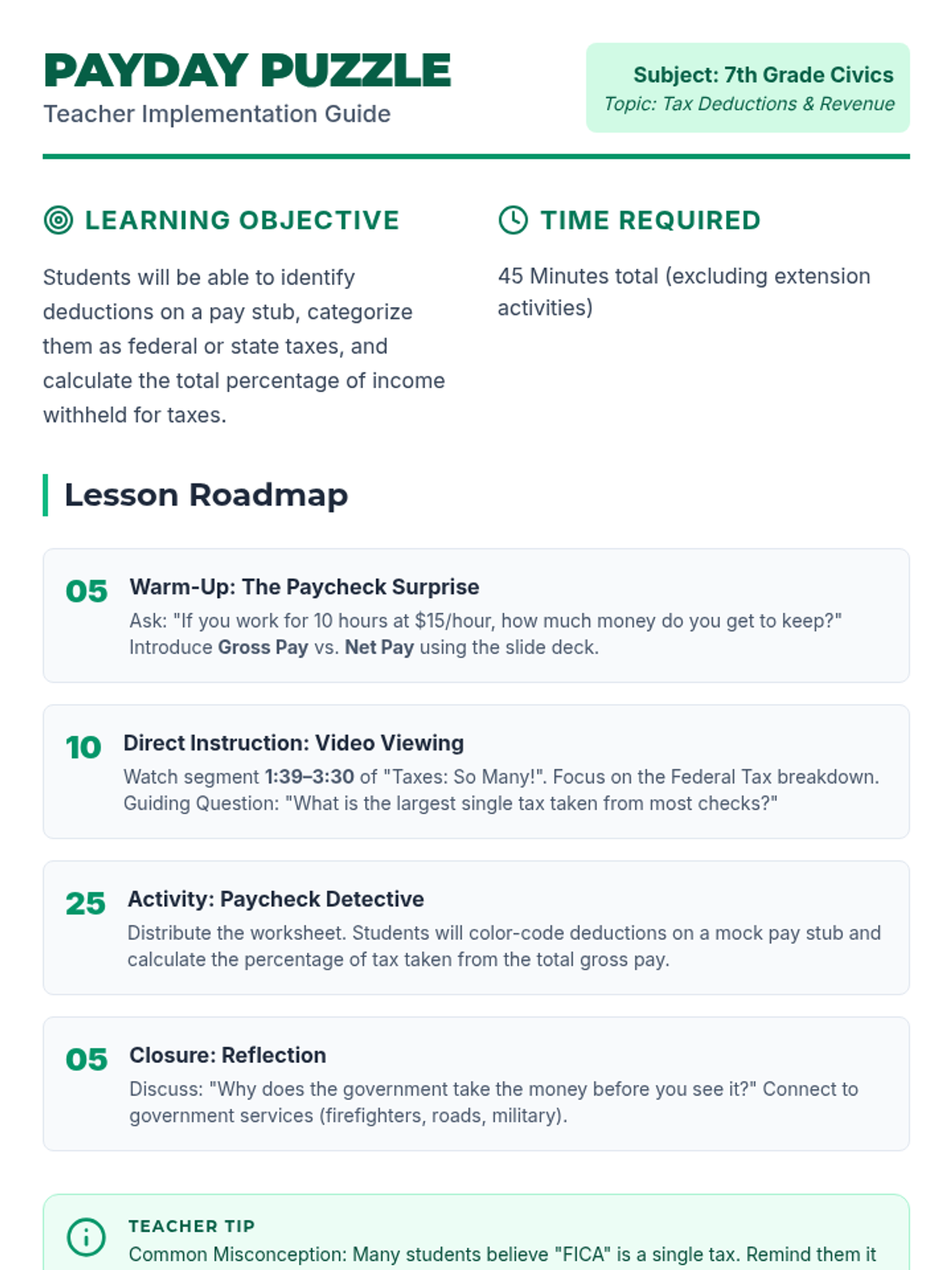
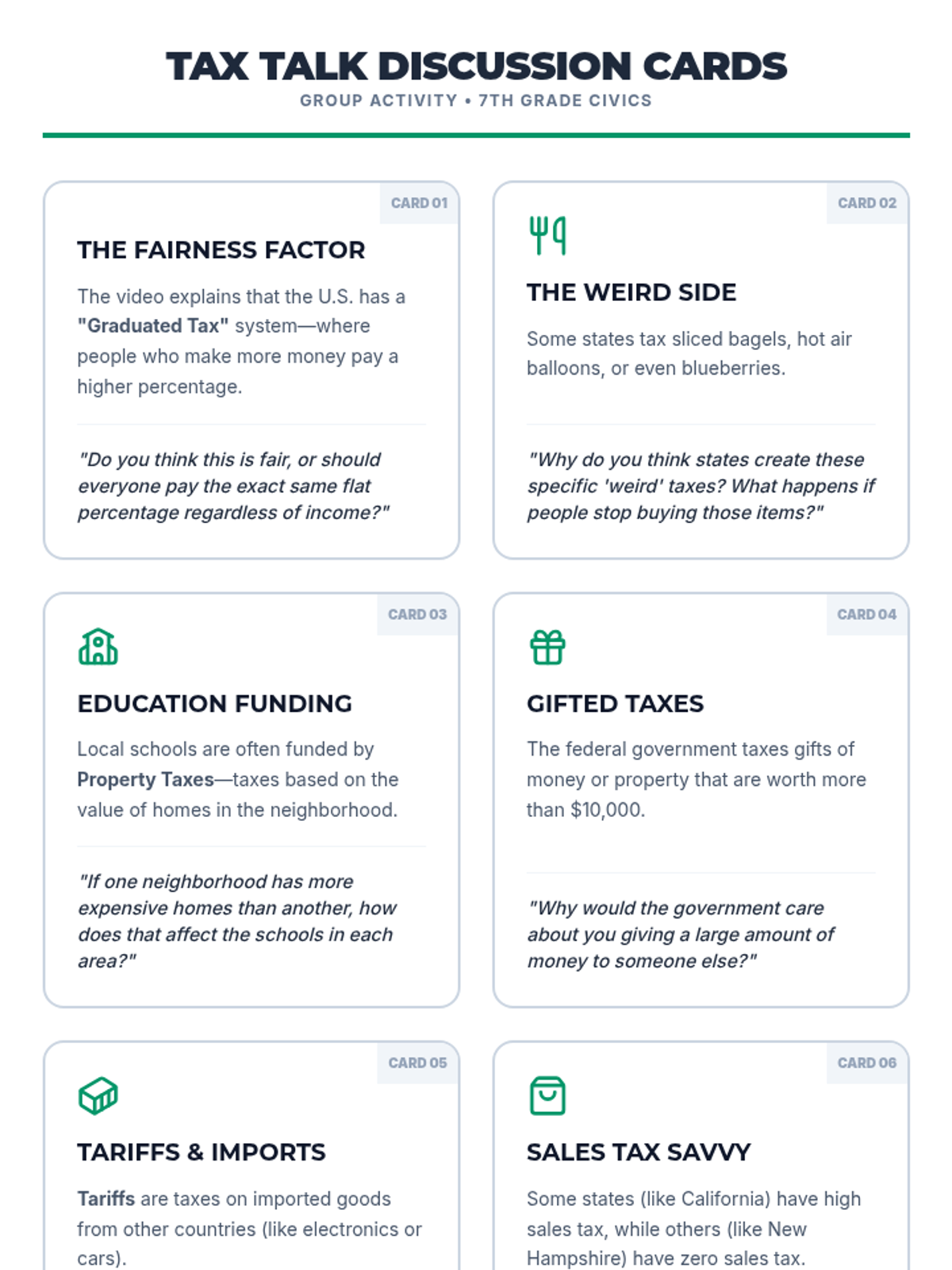
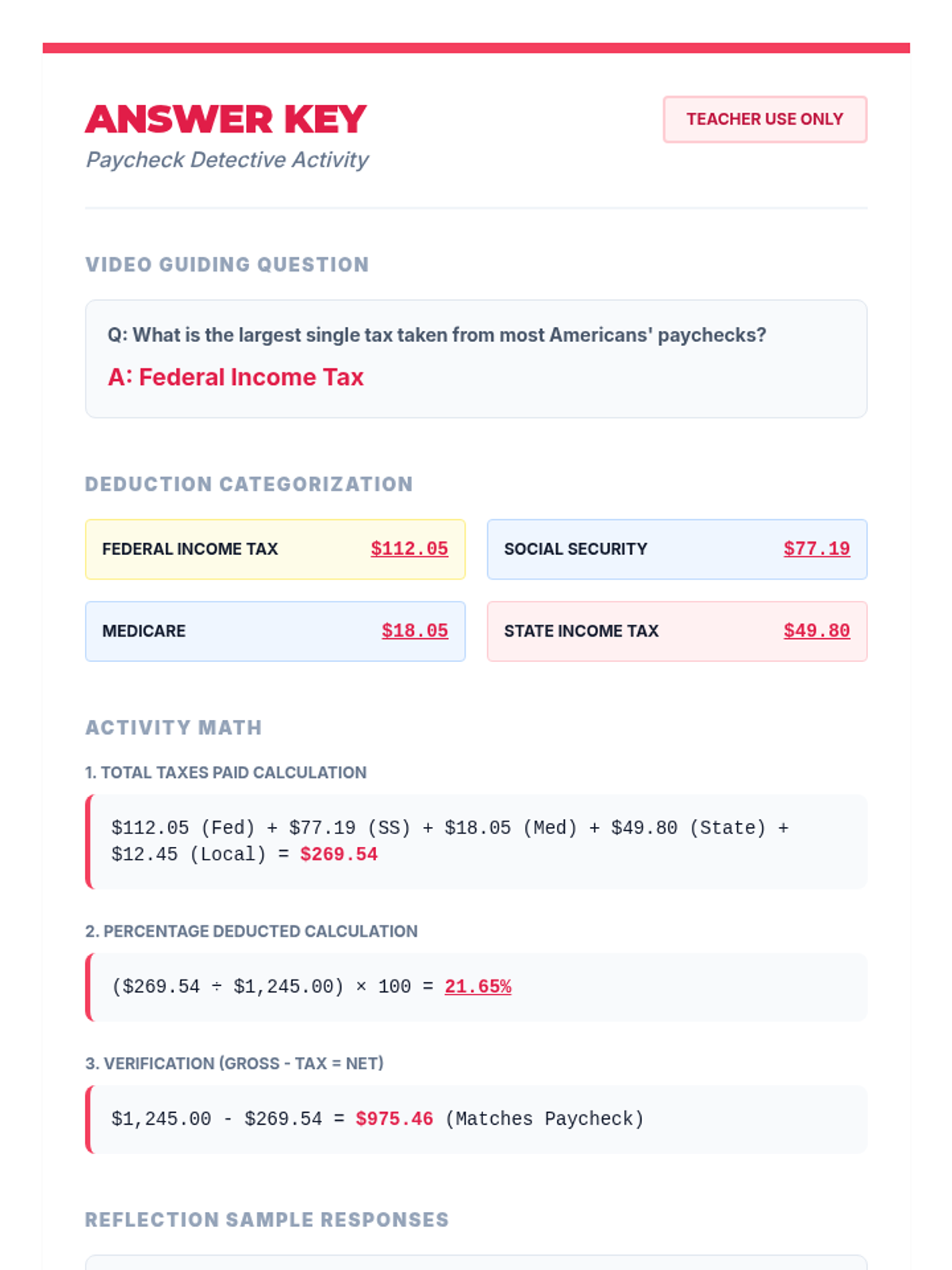
A 7th-grade civics lesson where students decode a pay stub, categorize tax deductions, and analyze how government revenue is collected at federal and state levels.
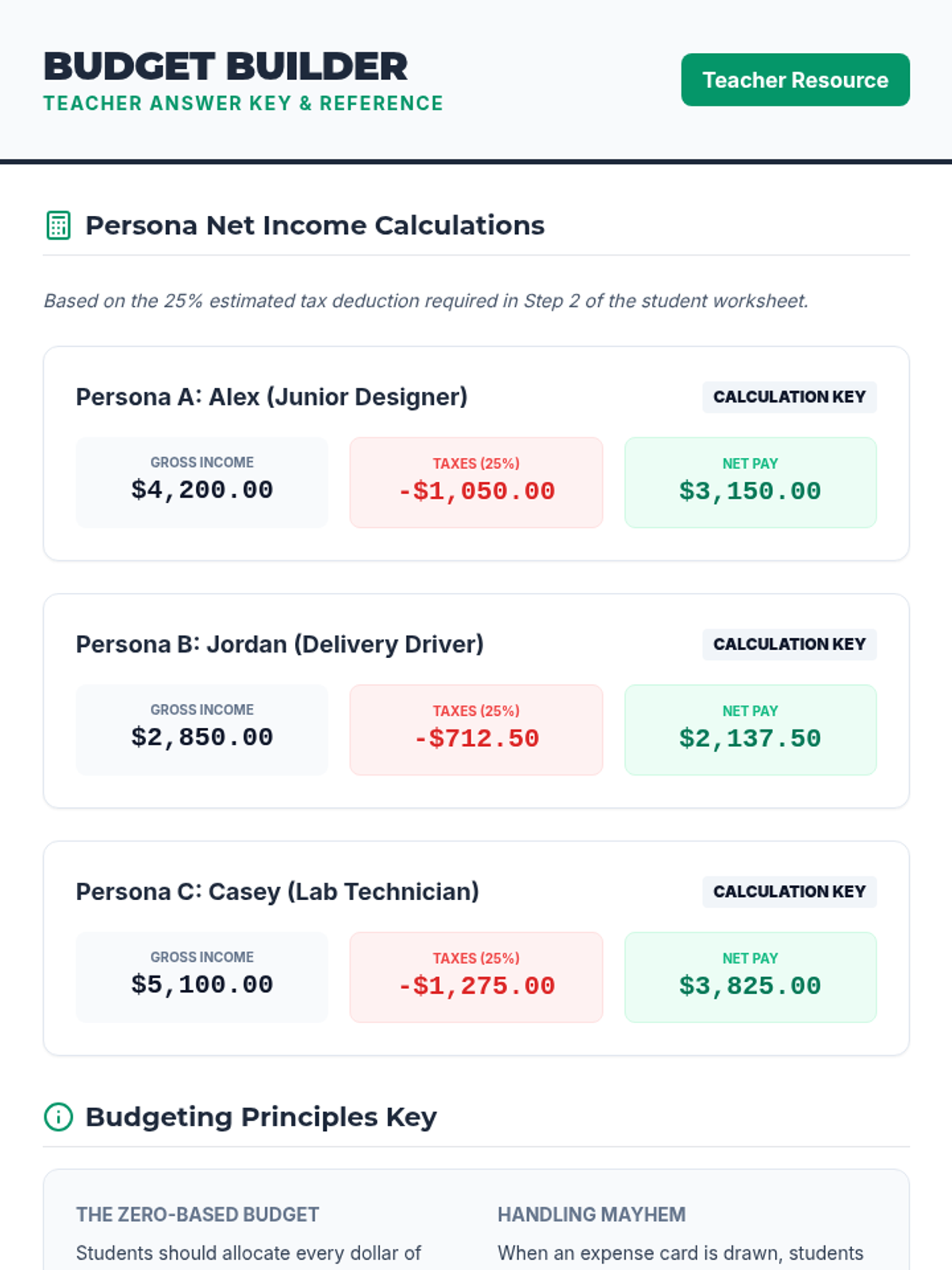
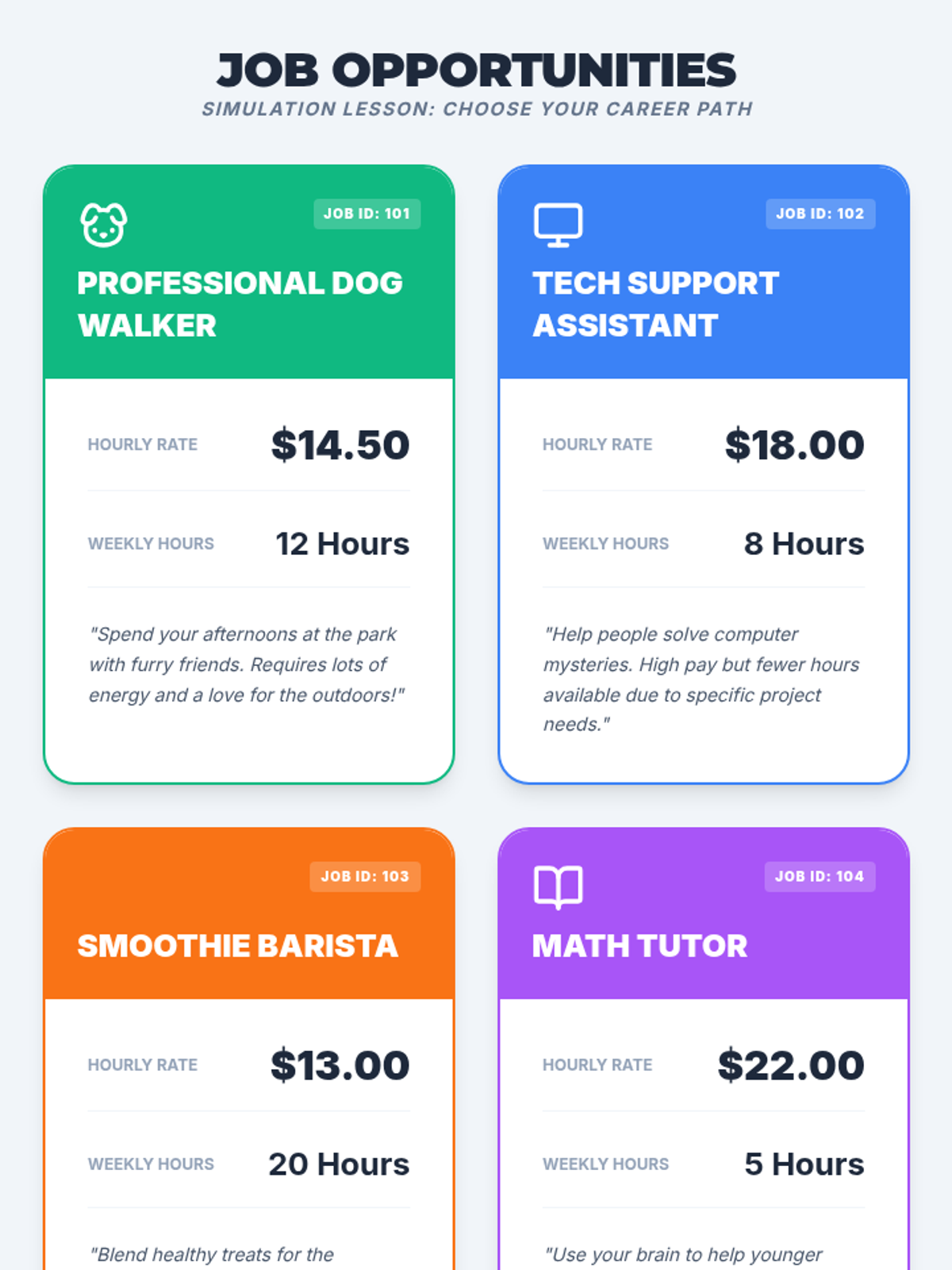
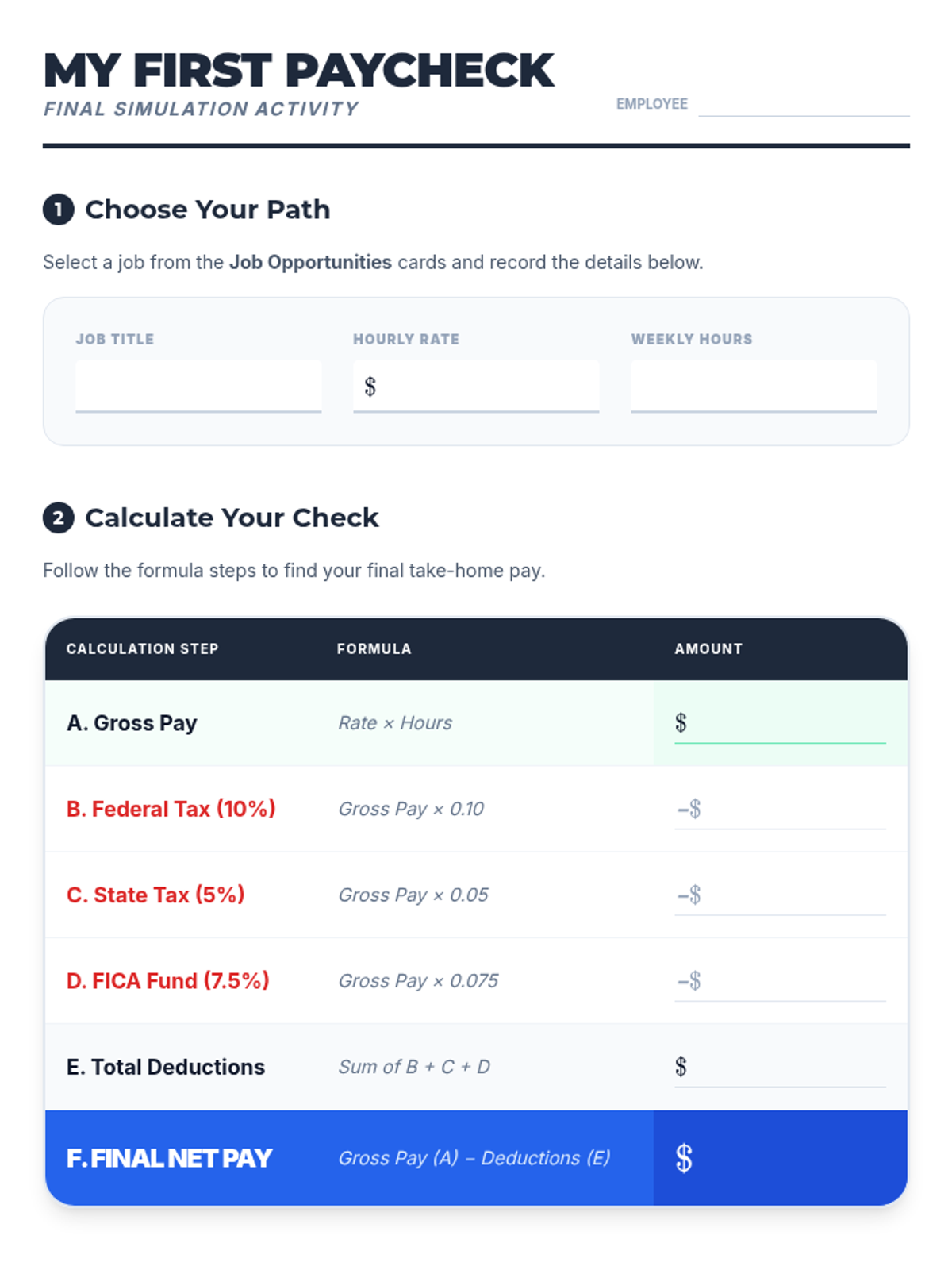
Students choose a fictional job, calculate their expected weekly hours, determine their gross pay, deduct taxes using a simplified table, and determine their final take-home budget.
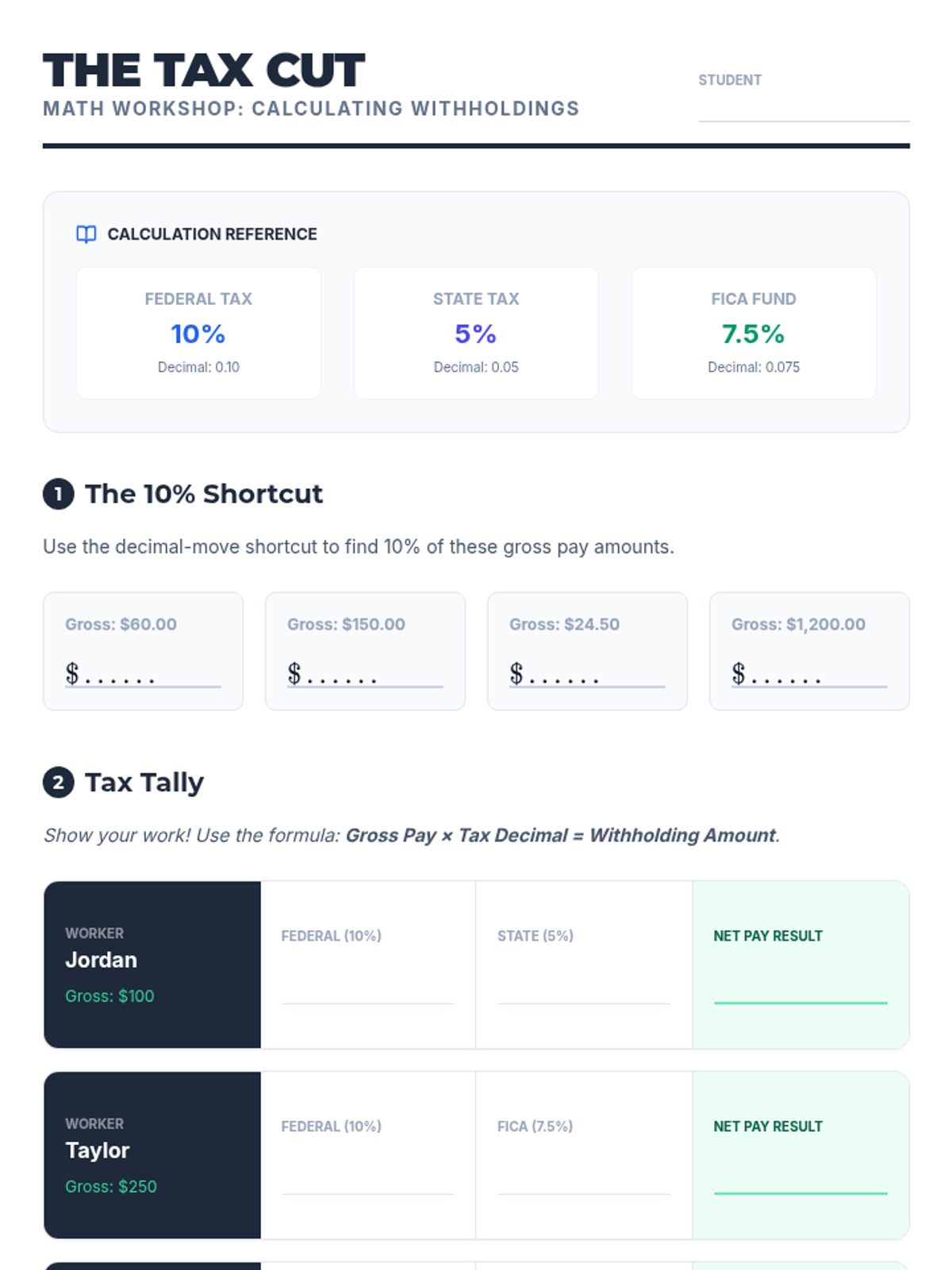
Students practice applying percentage-based tax rates to various income scenarios to predict tax liability. This math-focused lesson reinforces the idea that taxes are proportional to earnings.
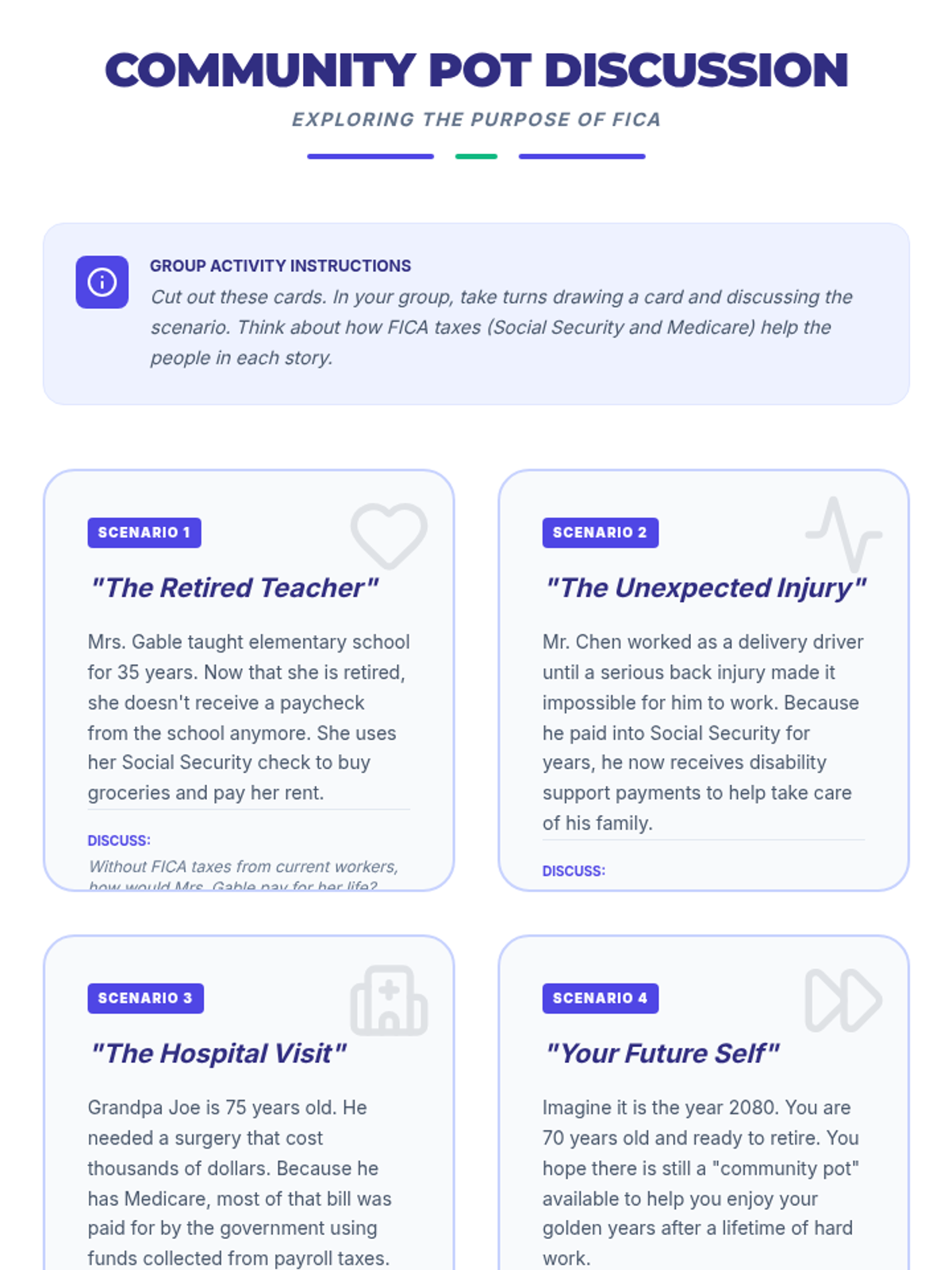
This lesson explains the specific purpose of FICA taxes. Students explore the concept of intergenerational support, understanding that these deductions fund healthcare and retirement for current seniors.
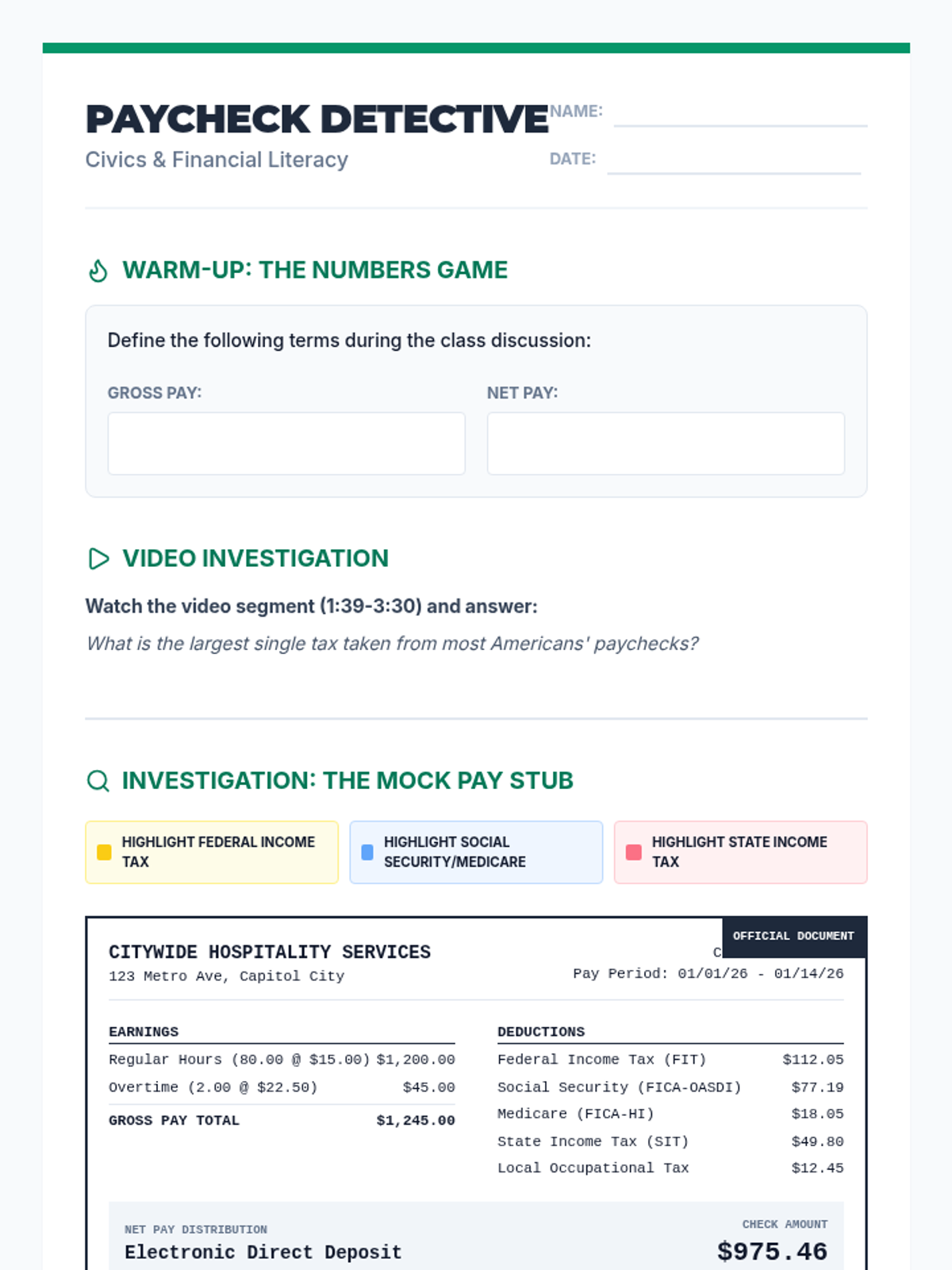
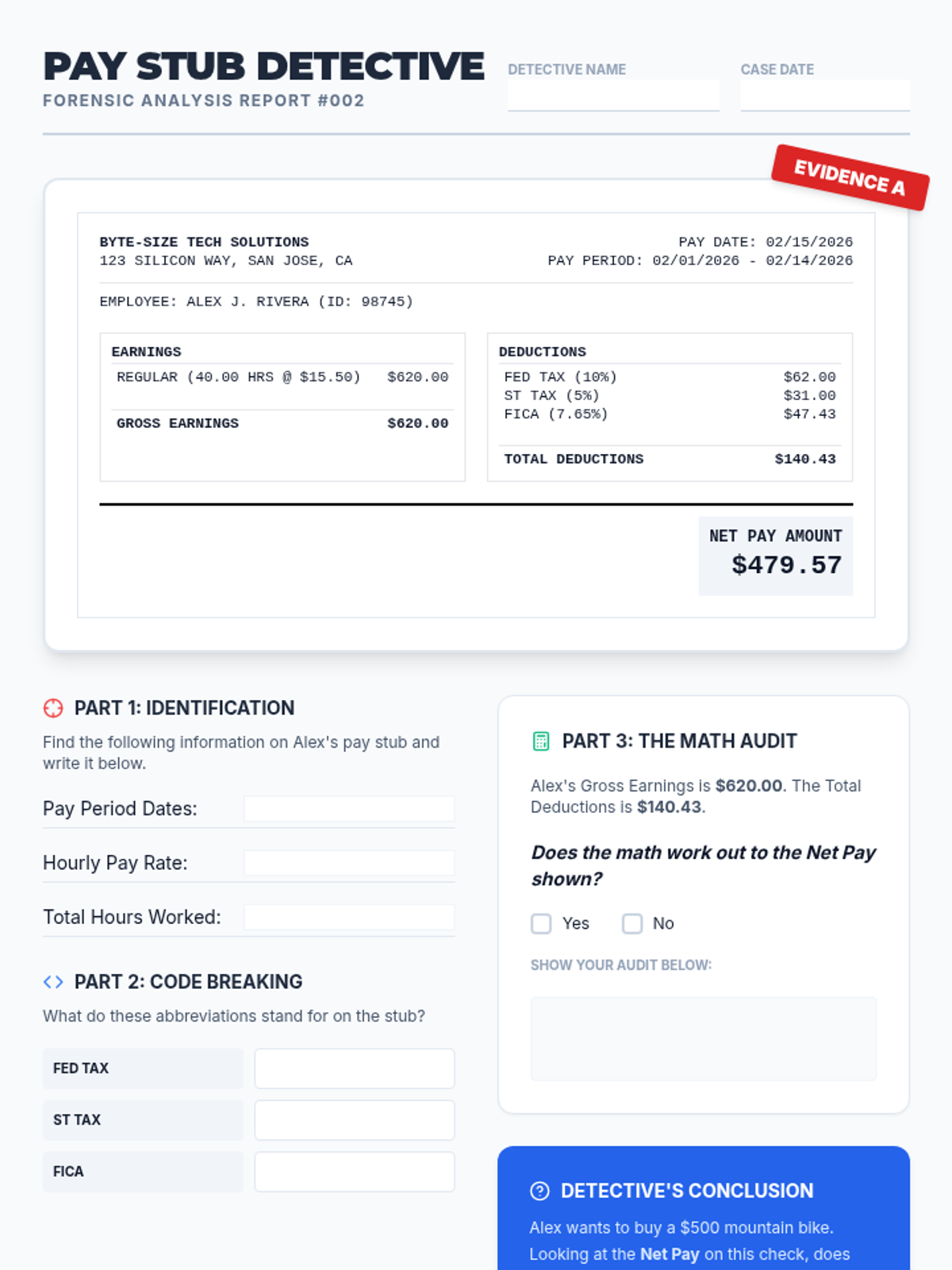
Students receive sample pay stubs and perform a 'forensic analysis' to label every box and code. They learn to identify standard abbreviations for federal and state withholdings.
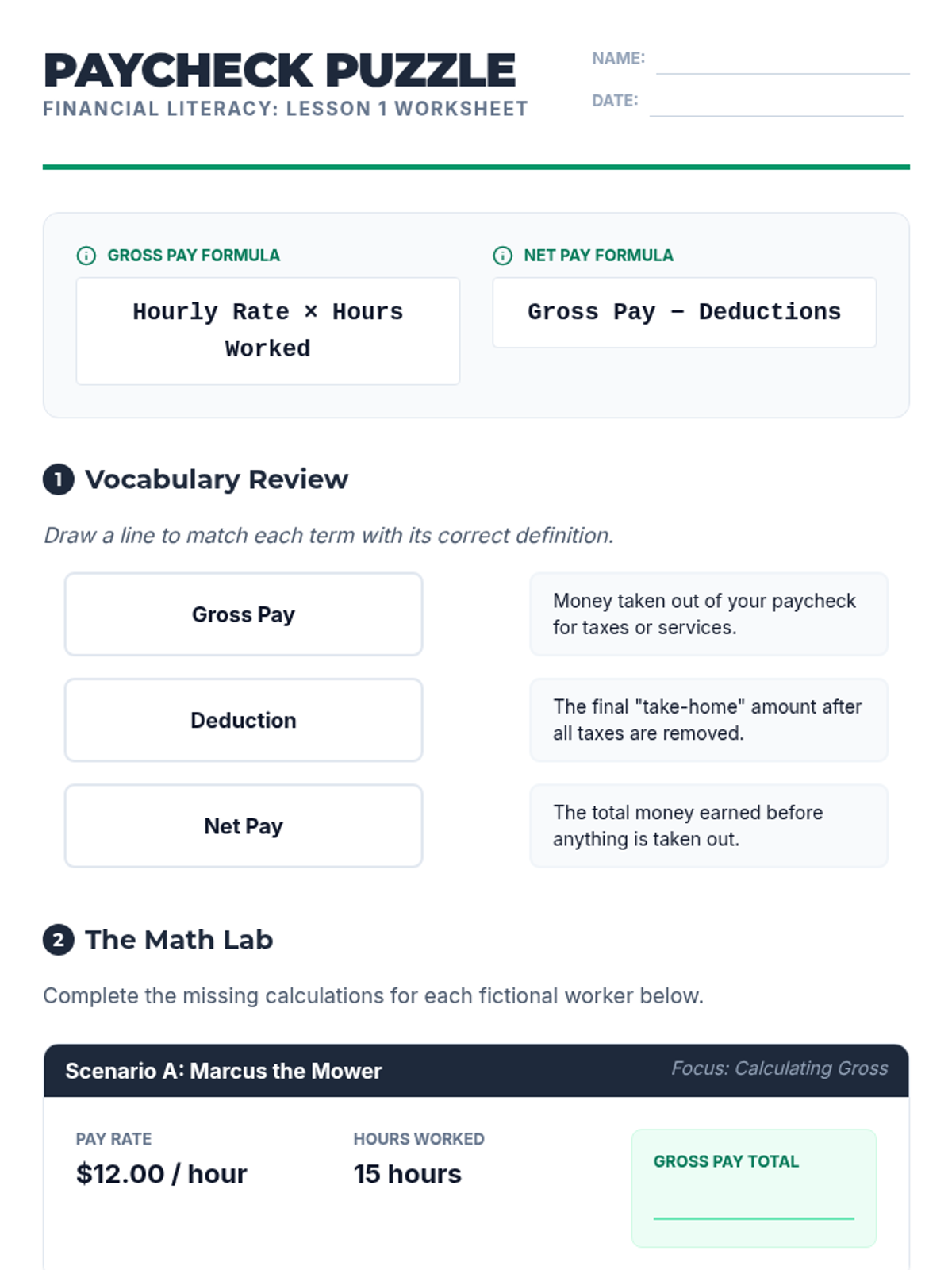
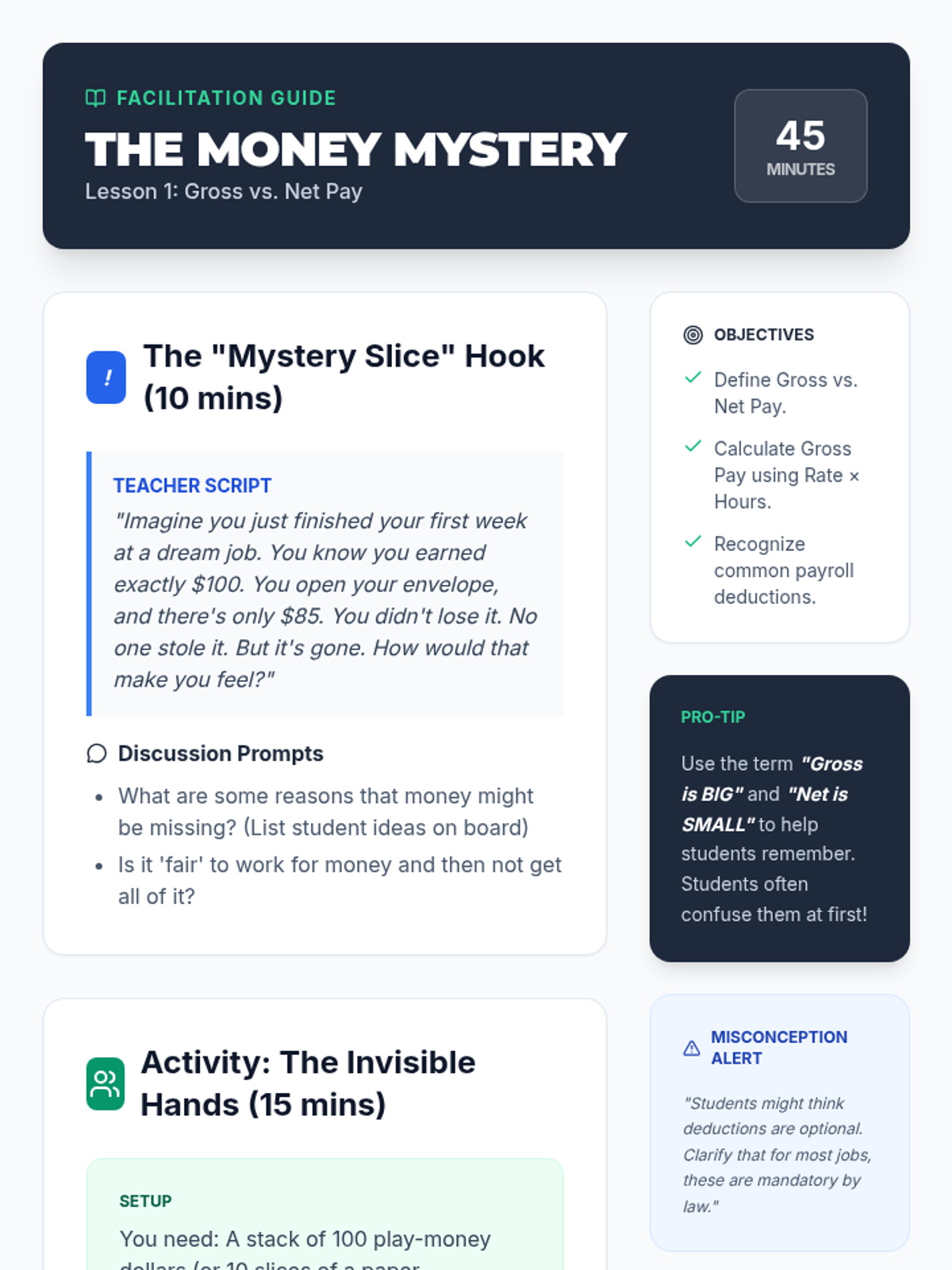
Students define and calculate gross pay based on hourly wages and hours worked. They are then introduced to the concept of net pay through a scenario where 'invisible hands' take a slice of the pie before they receive it.
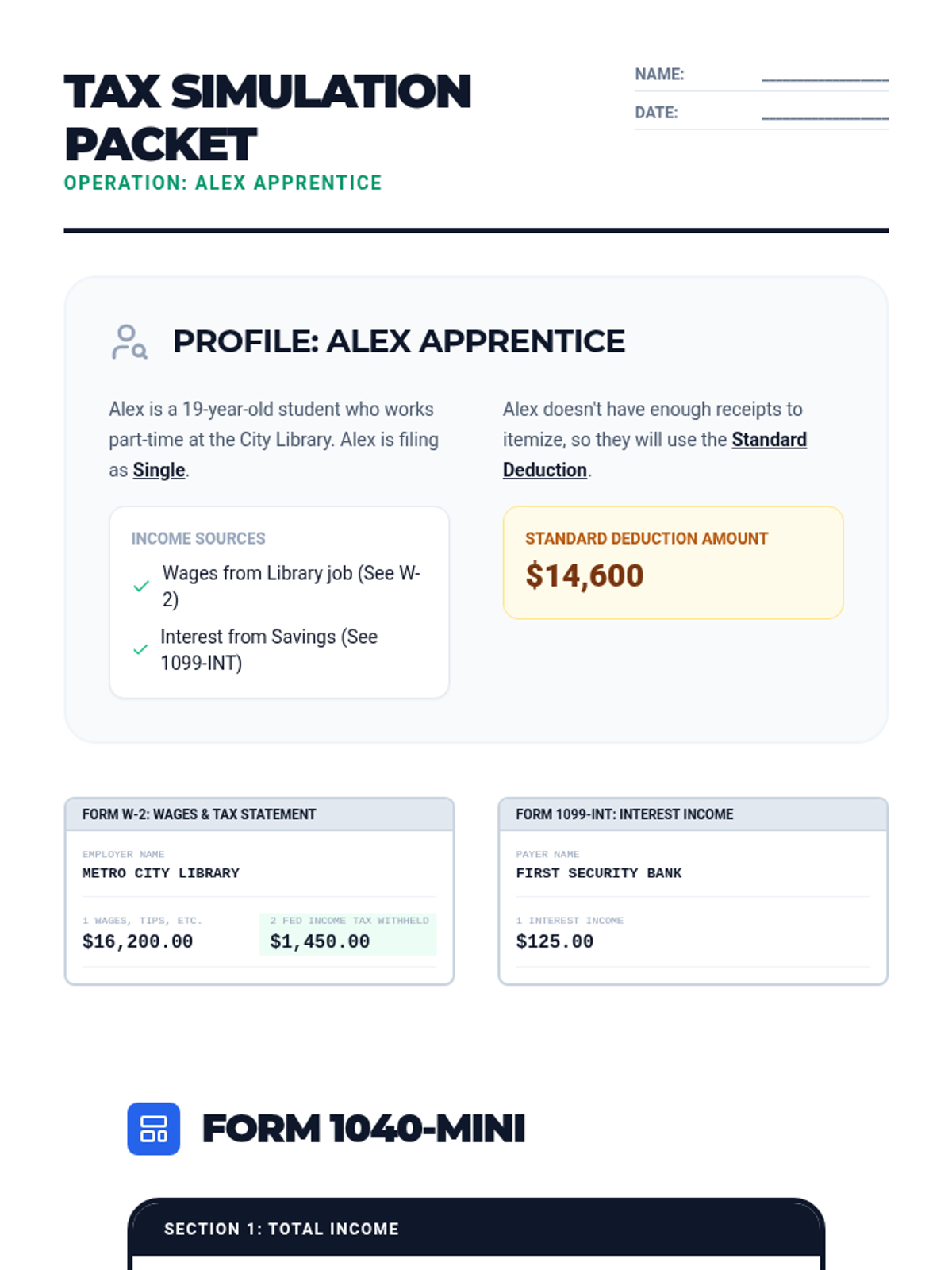
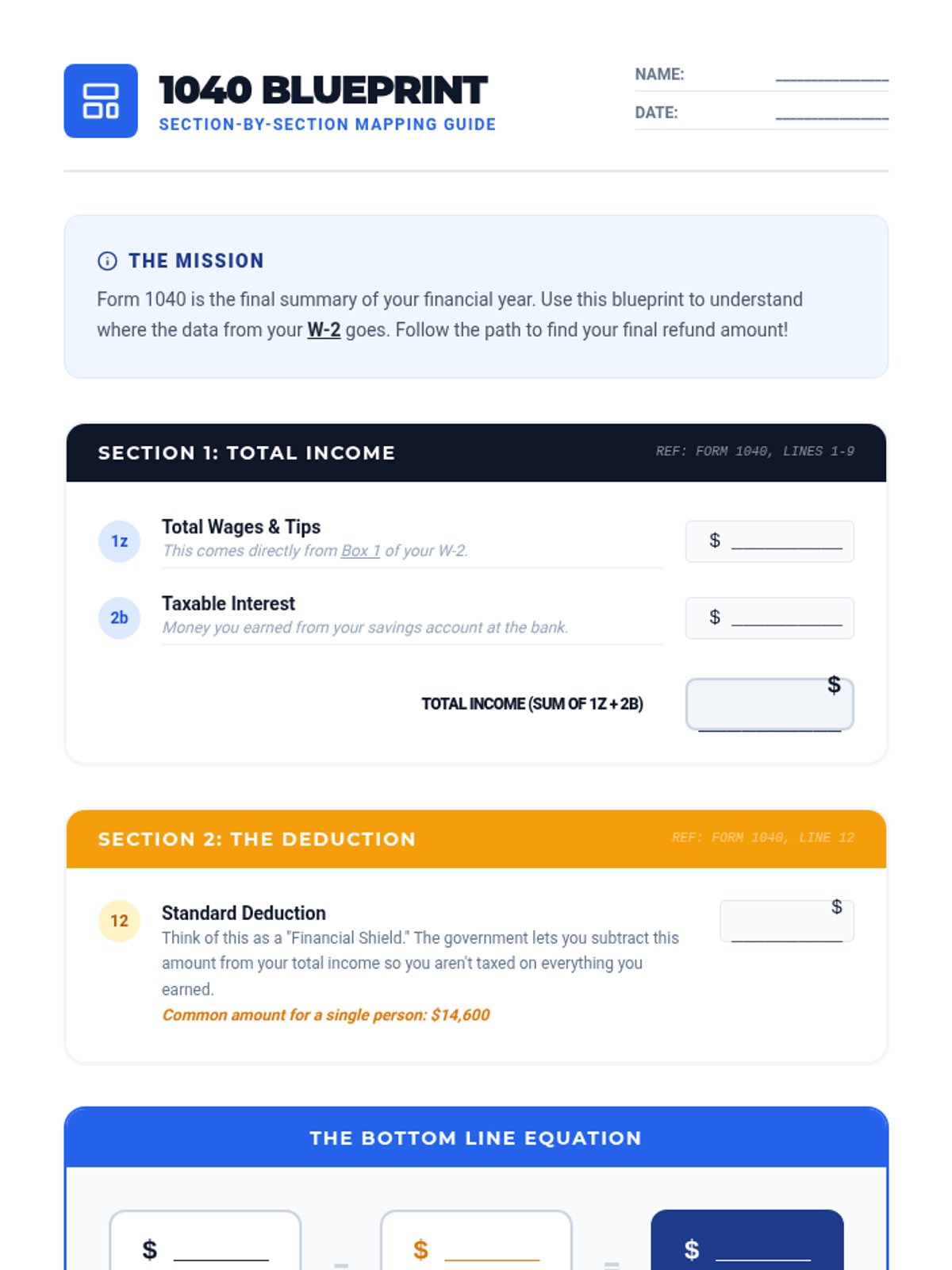
A hands-on simulation where students file a return for a fictional character and discover if they get a refund.
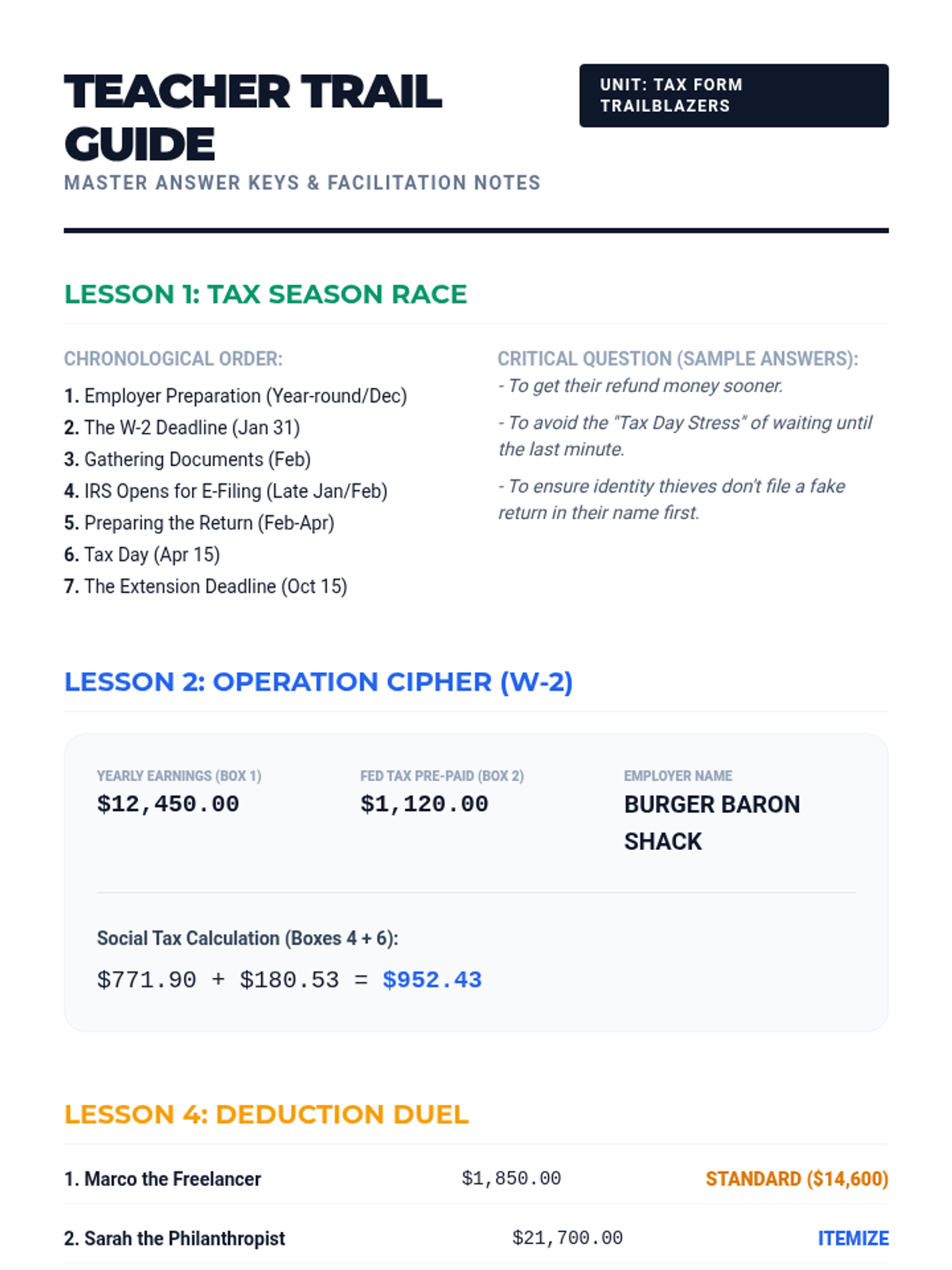
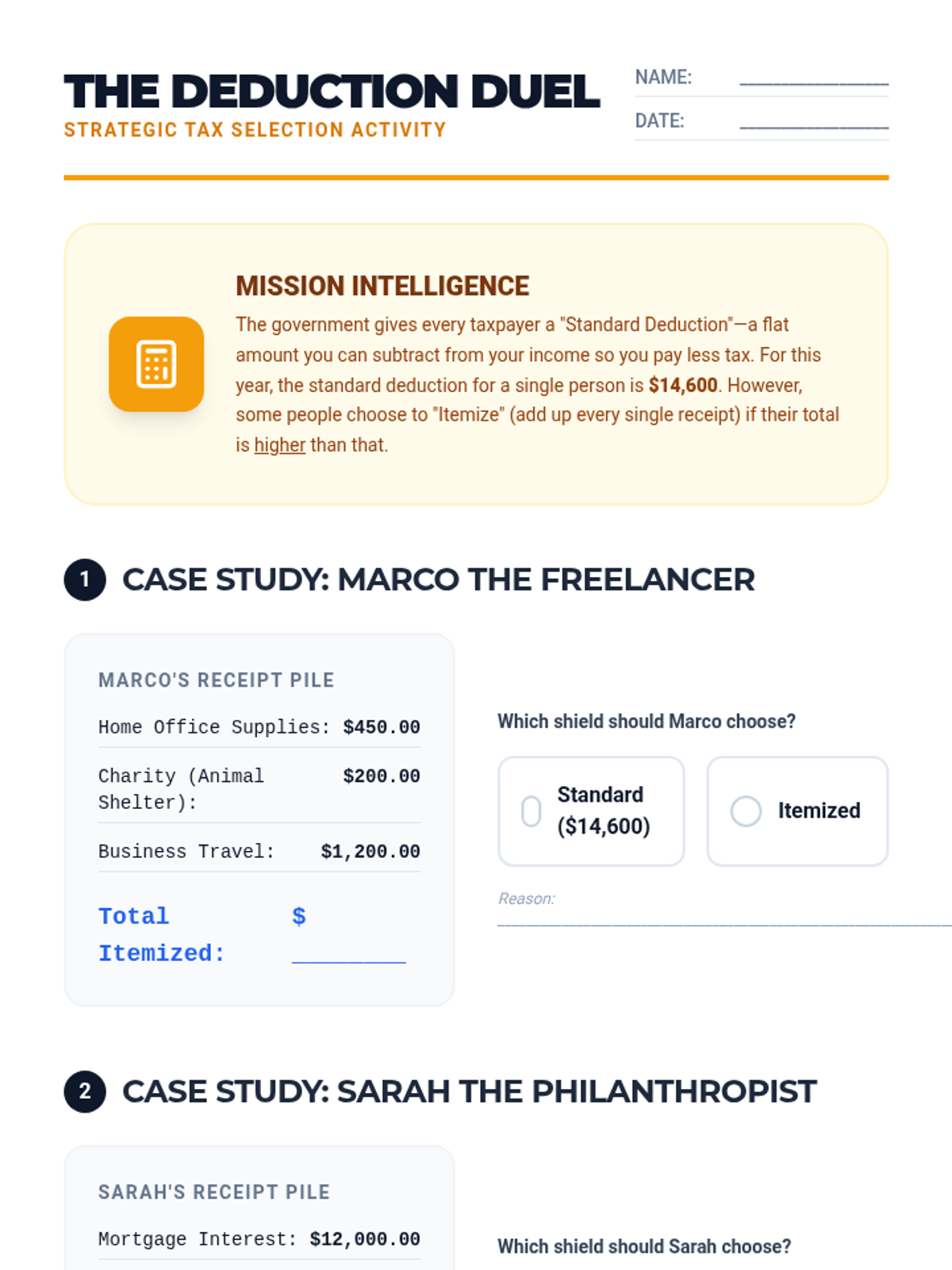
Students compare the standard deduction to itemizing deductions through a 'shopping spree' analogy and real-world scenarios.
An introduction to Form 1040, focusing on the three main sections: income, deductions, and refunds/taxes owed.