Active listening, assertive expression, and boundary-setting strategies for interpersonal success. Develops proficiency in conflict mediation, cooperative teamwork, and the cultivation of healthy romantic and platonic connections.
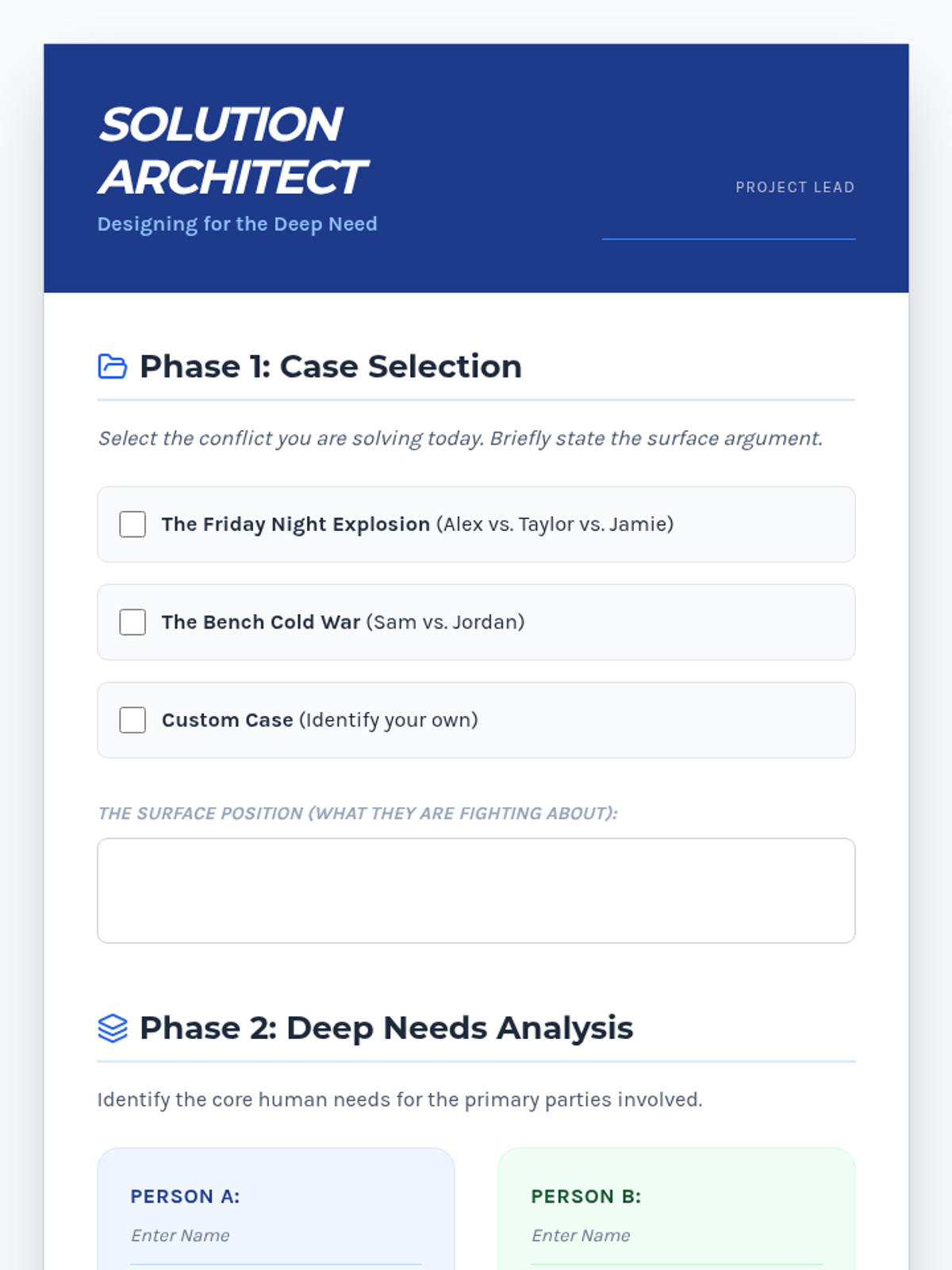
Students synthesize their learning to propose solutions that address underlying needs rather than surface-level compromises.
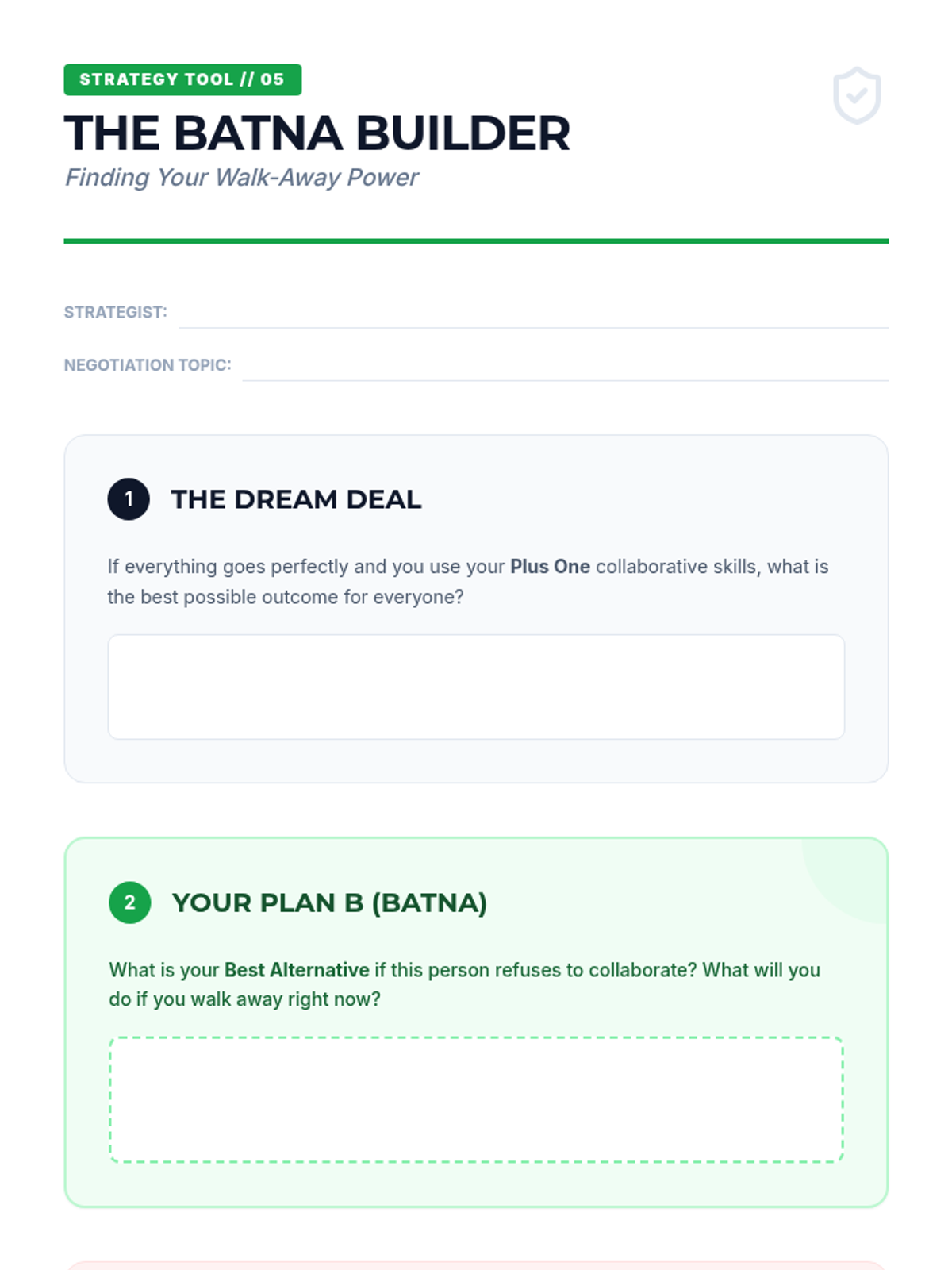
Students learn the concept of BATNA (Best Alternative to a Negotiated Agreement) to understand their 'walk-away' power.
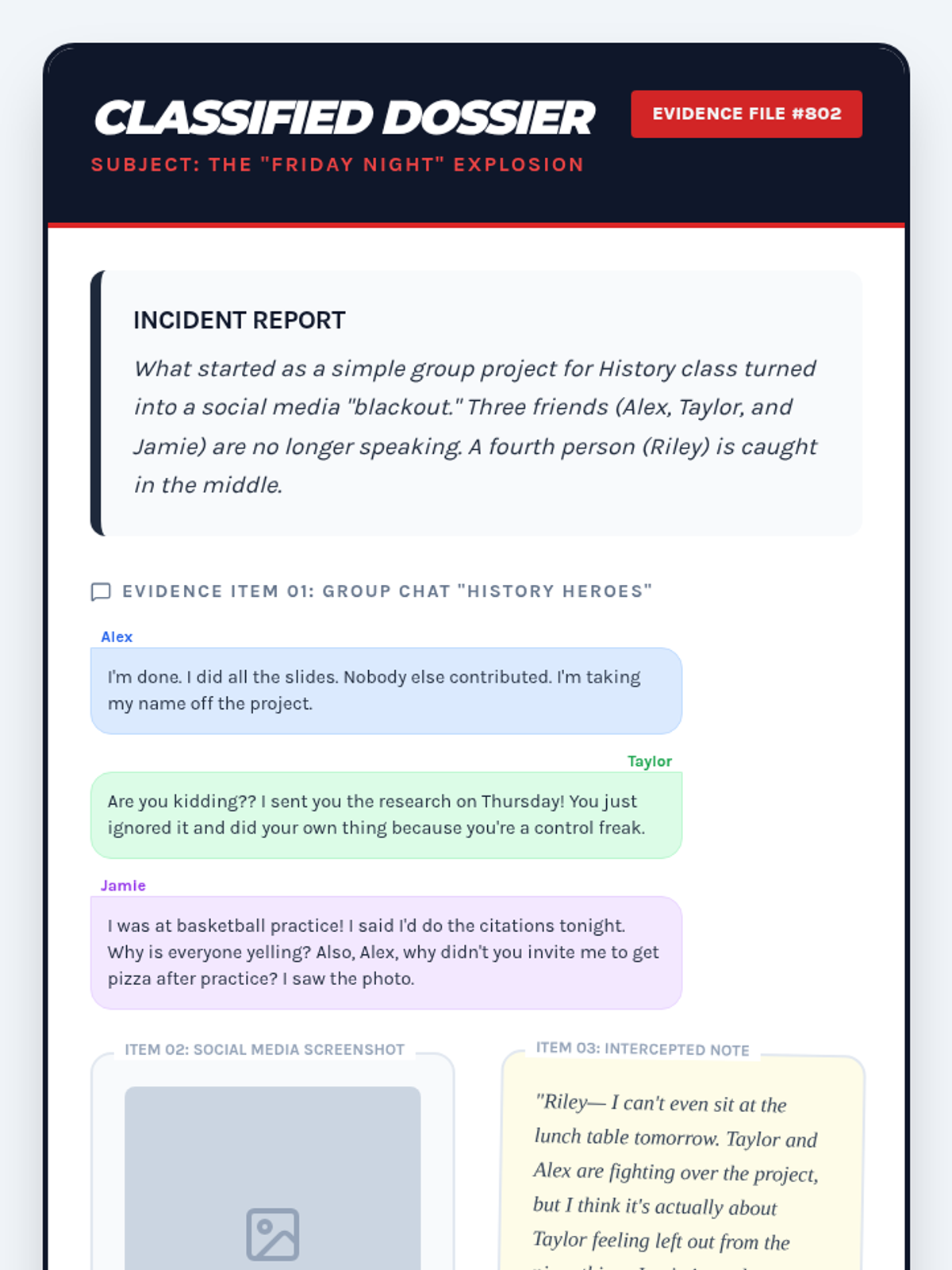
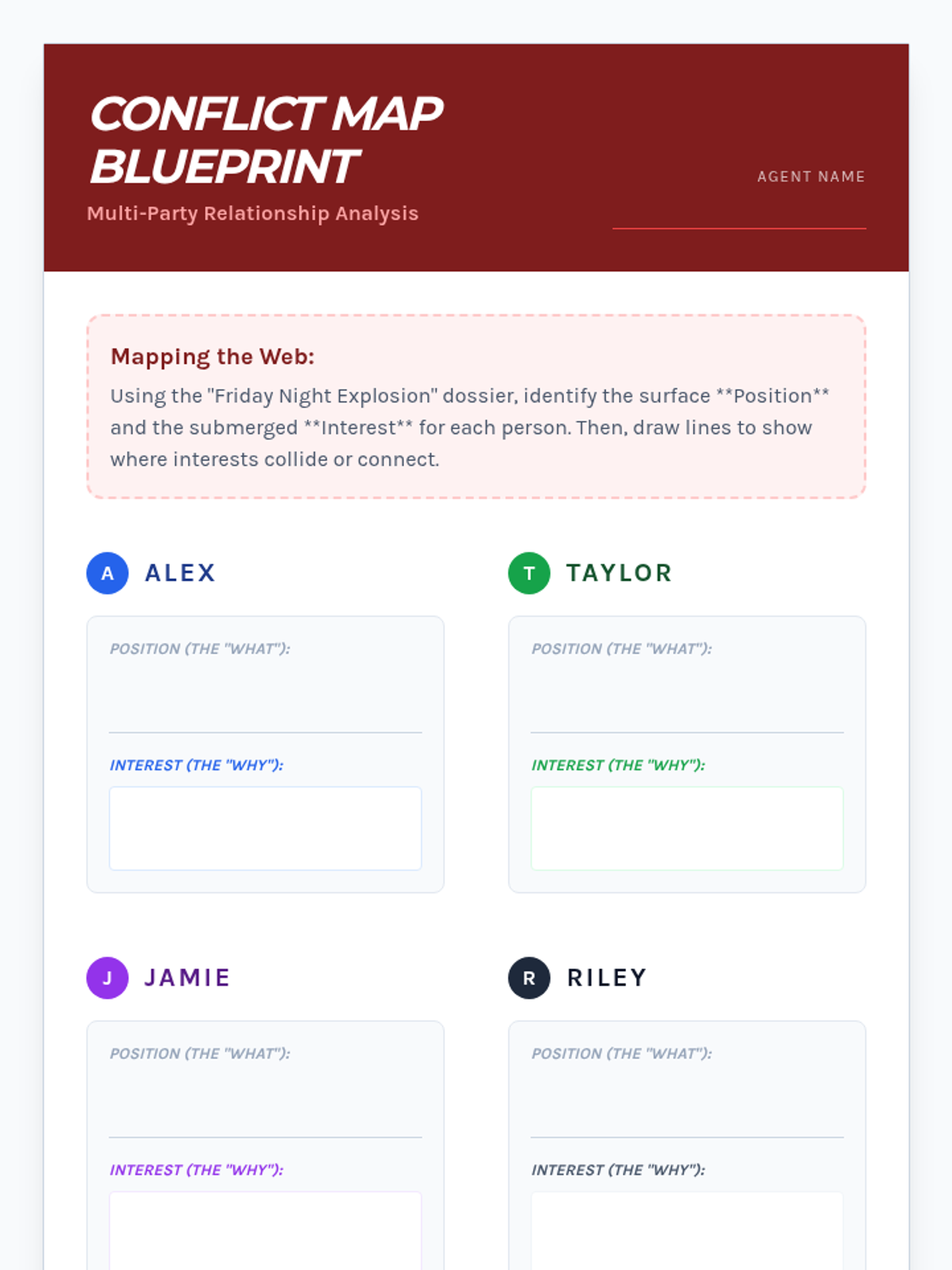
Students analyze and map complex, multi-party conflicts to visualize how different interests intersect and collide in social groups.
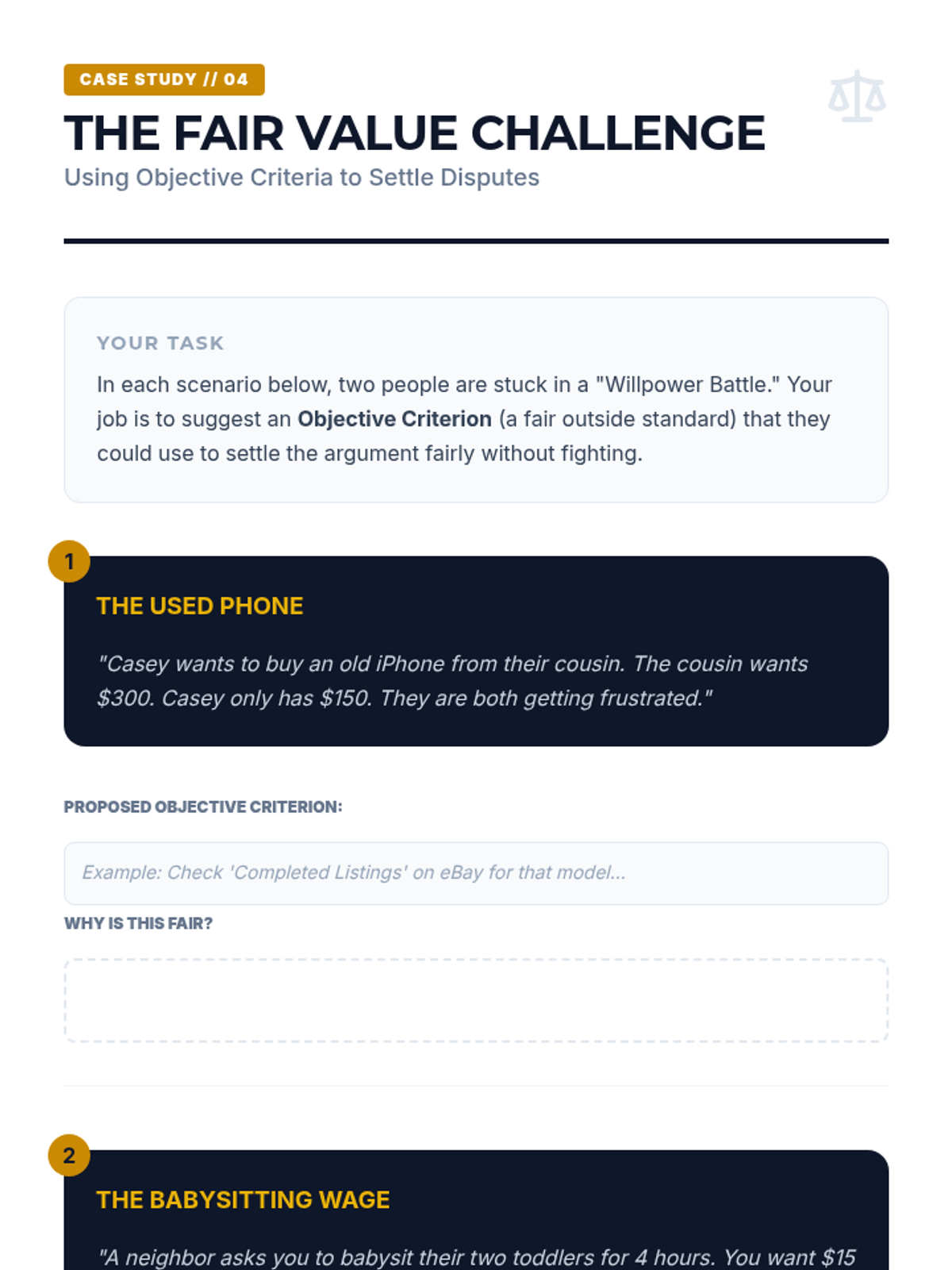
Students learn to use fair standards (rules, precedents, market value) to resolve impasses fairly.
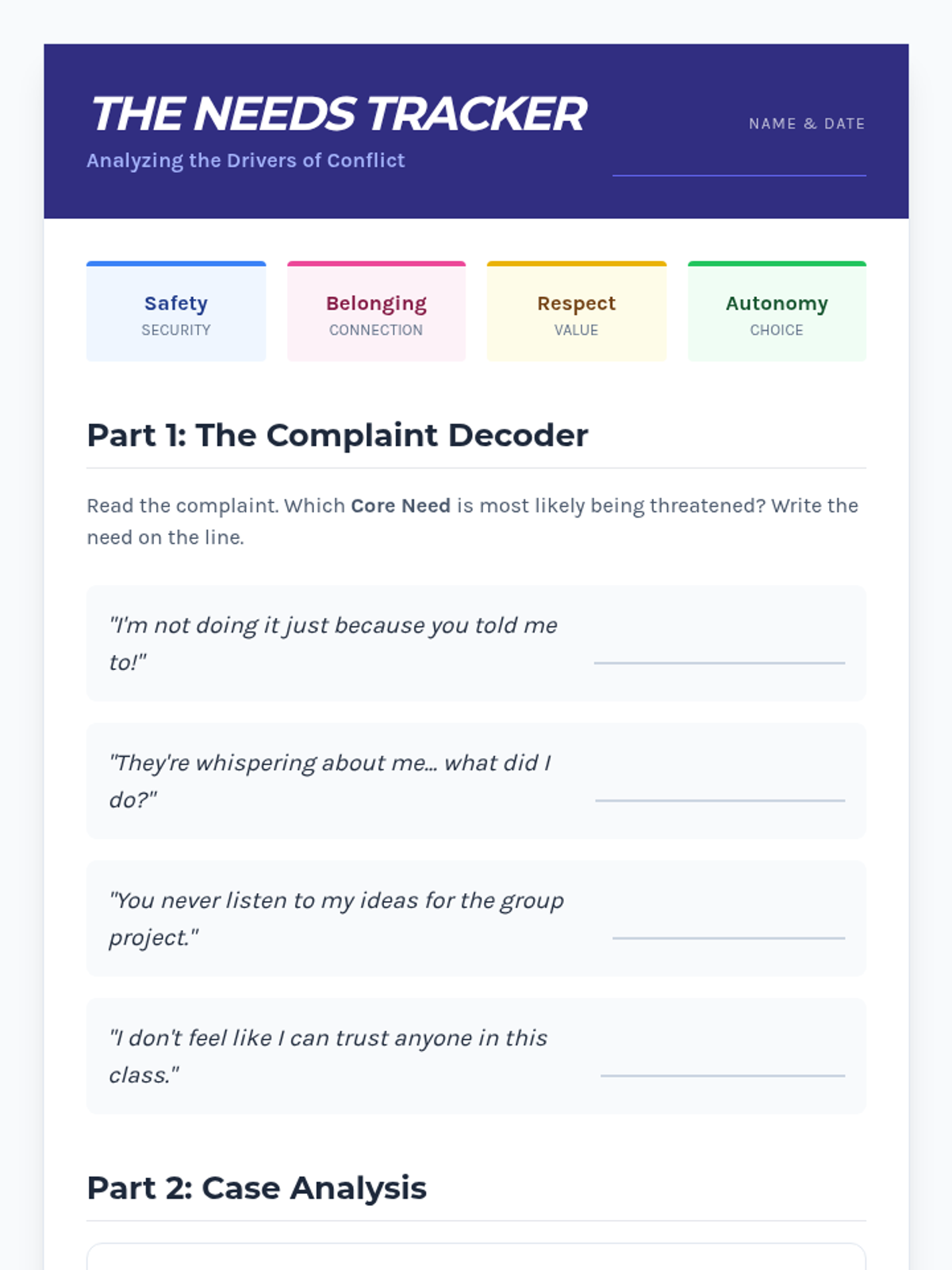
Students identify and categorize core human needs (safety, belonging, respect, autonomy) that drive behavior in conflicts.
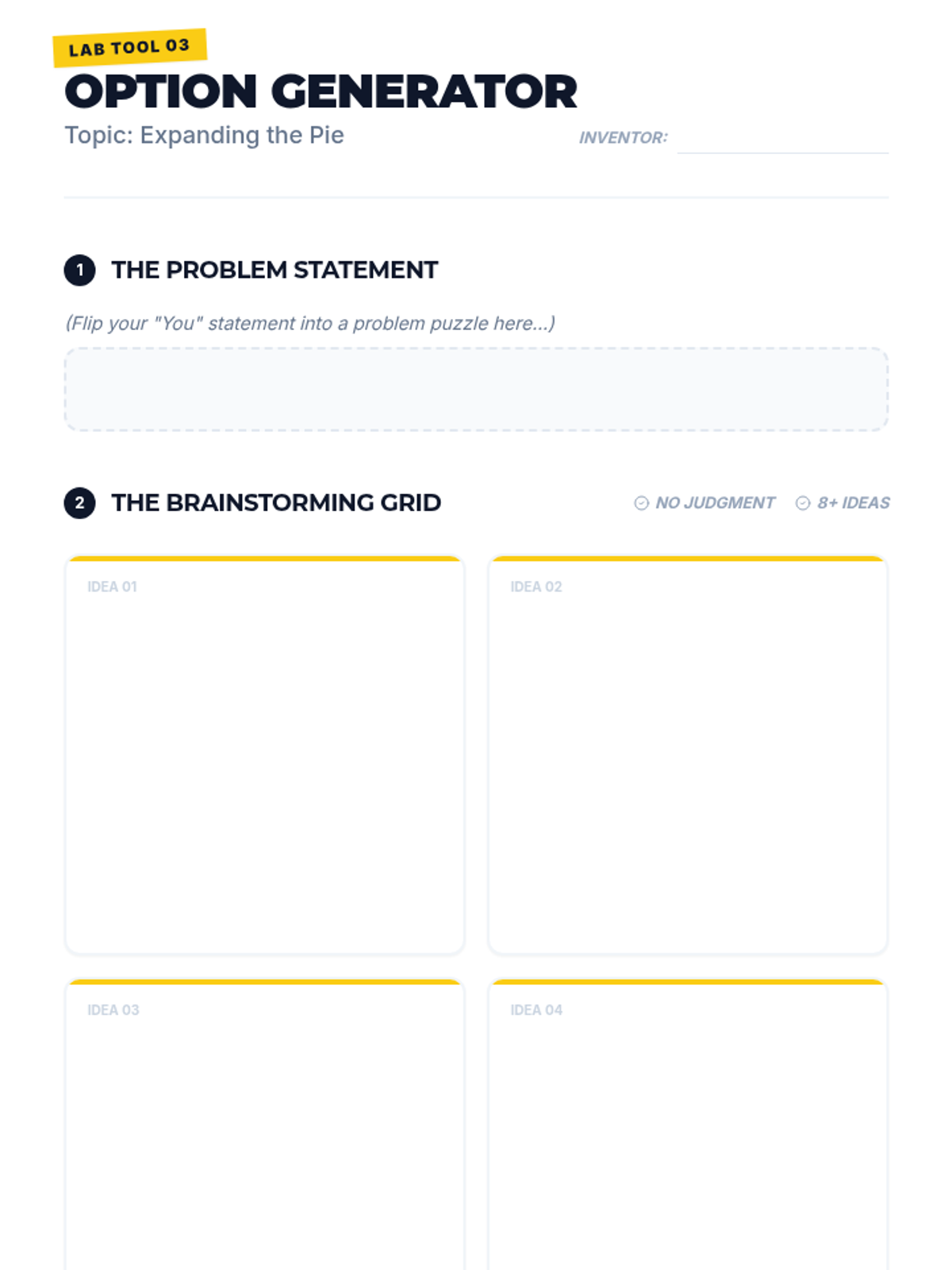
This lesson focuses on the 'invention' phase of negotiation. Students learn to suspend judgment and generate a wide array of potential solutions before deciding on one.
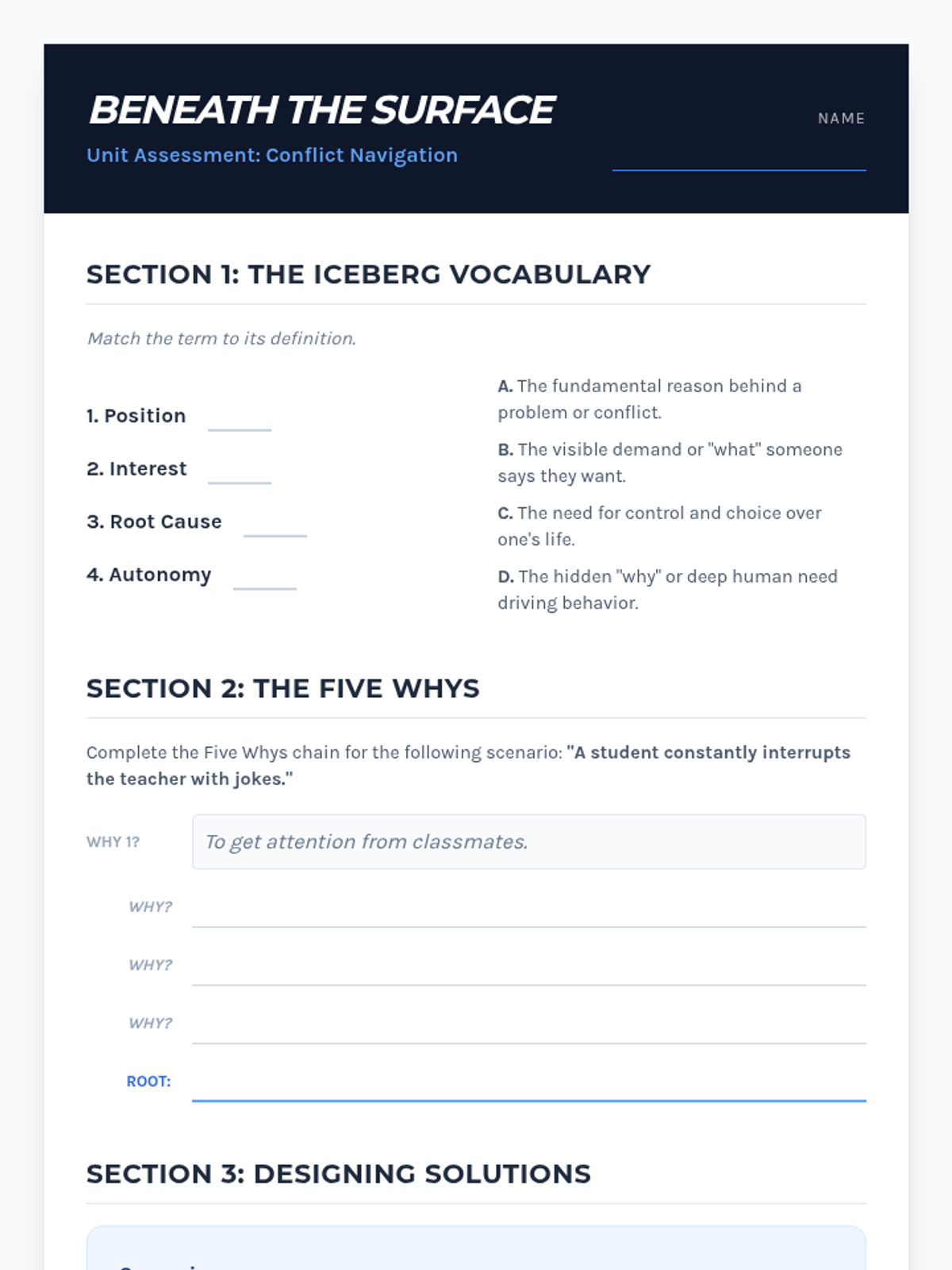
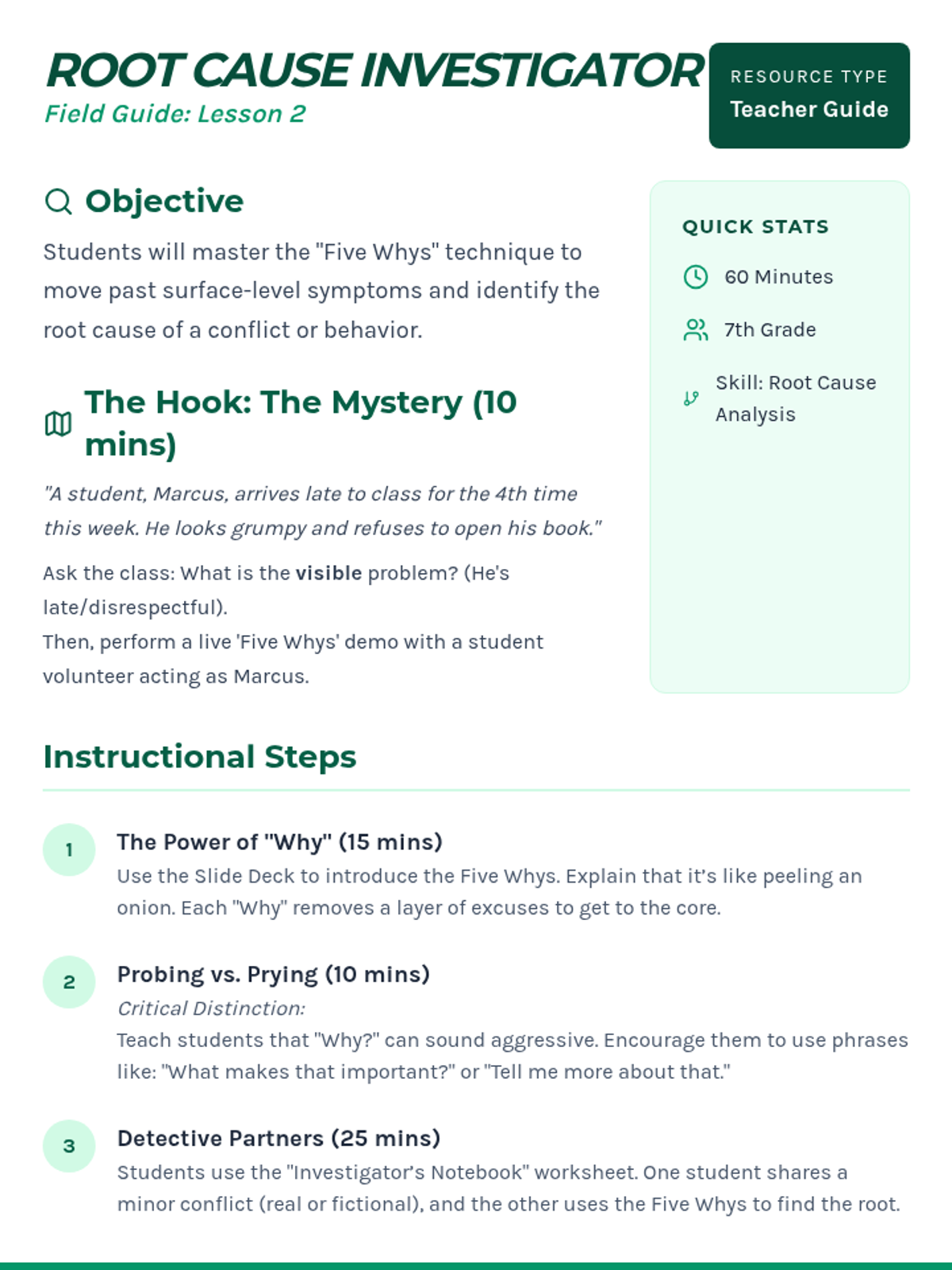
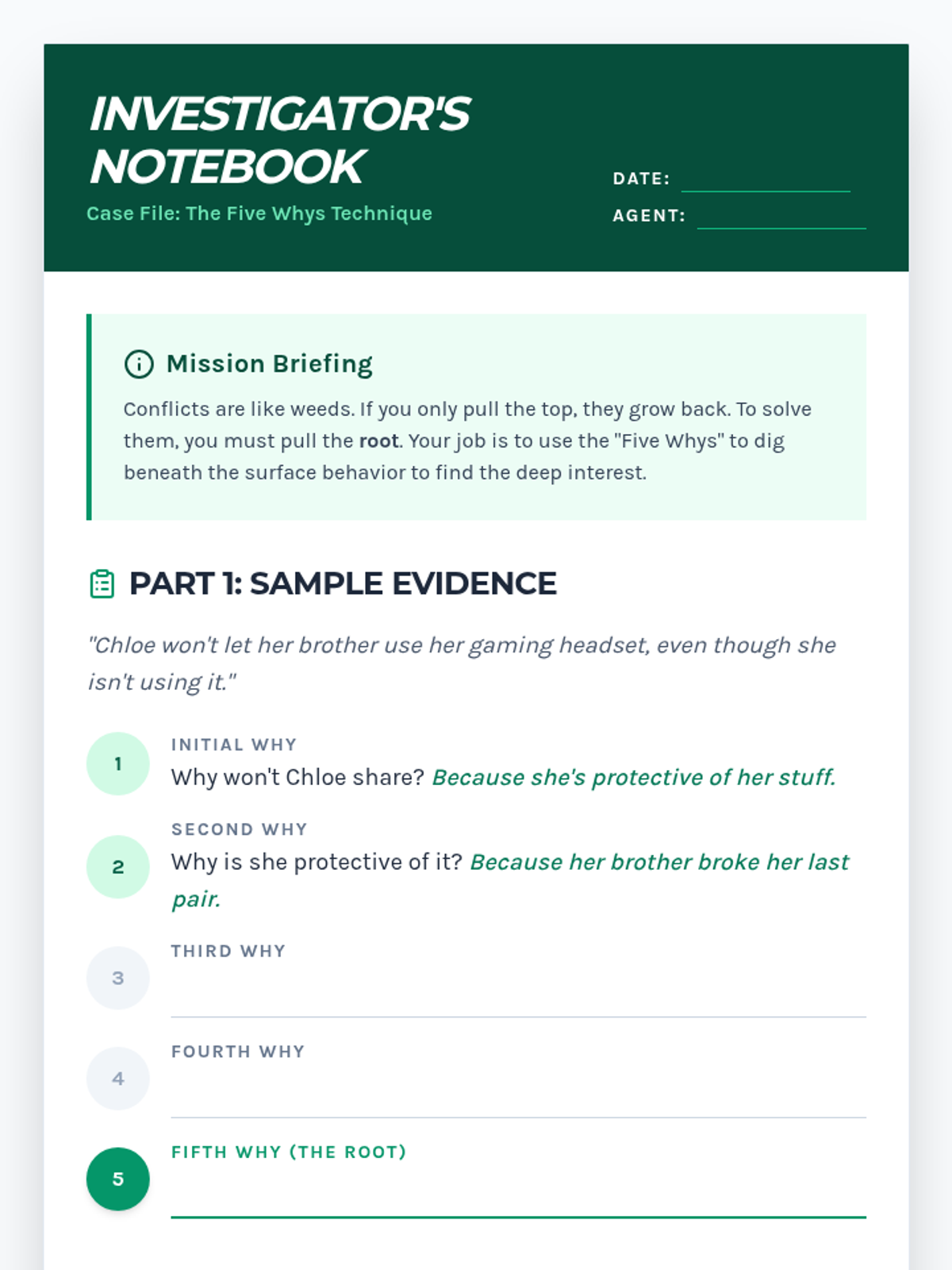
Students learn the 'Five Whys' technique to drill down from a surface-level conflict to its root cause, practicing through investigative interviews.
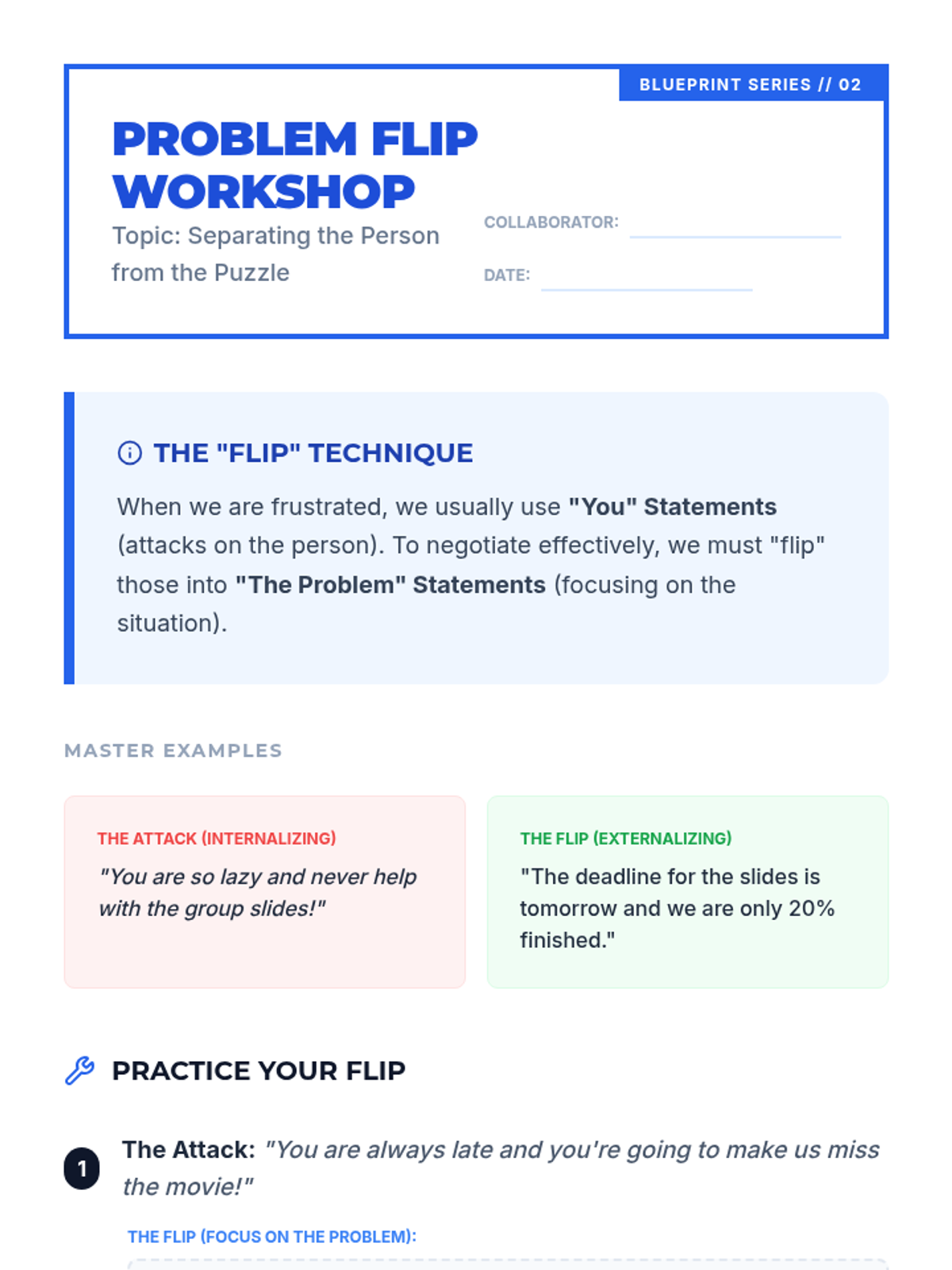
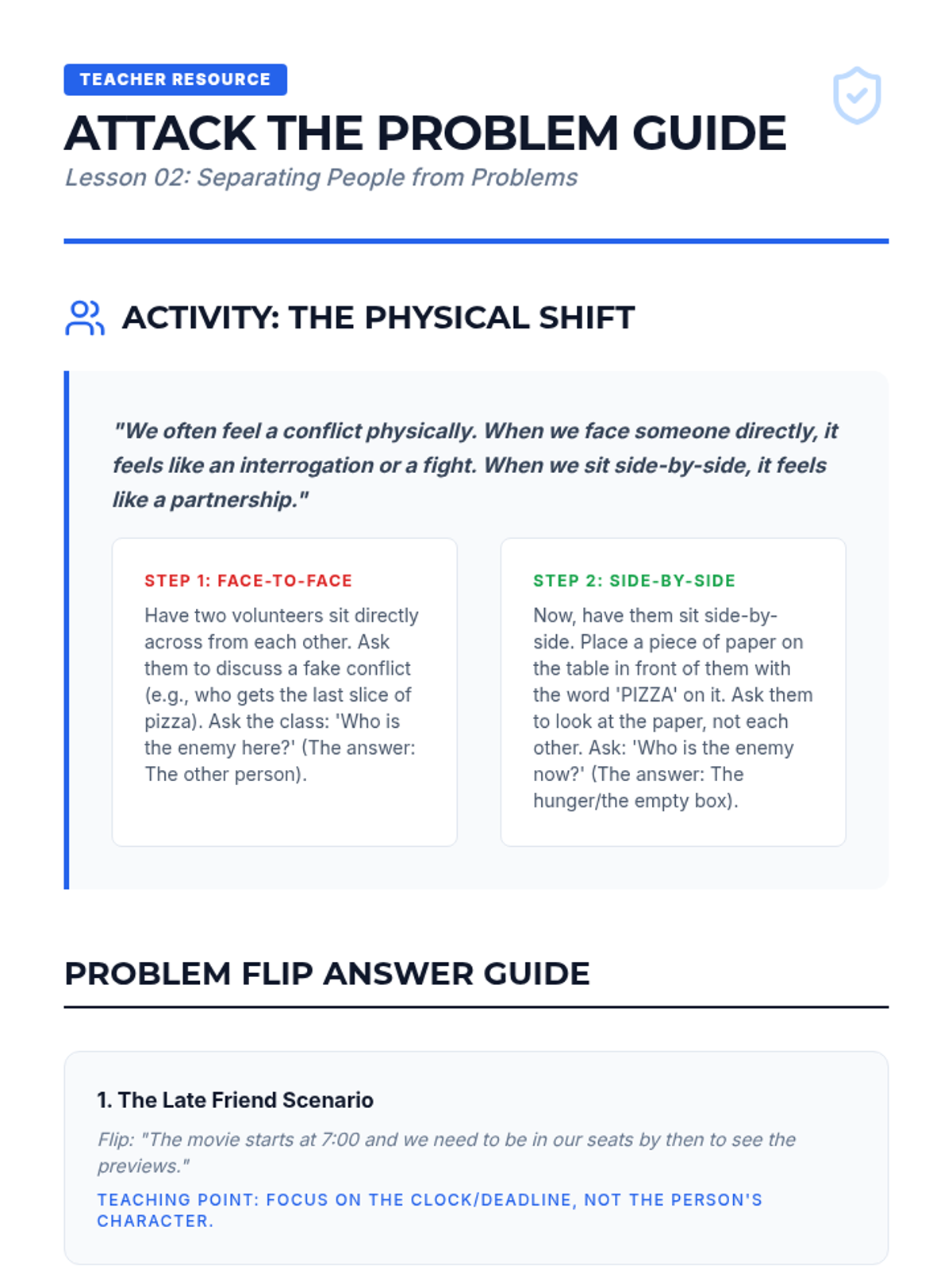
Students learn techniques to attack the problem, not the person. They practice rephrasing personal attacks into problem statements using externalizing language.
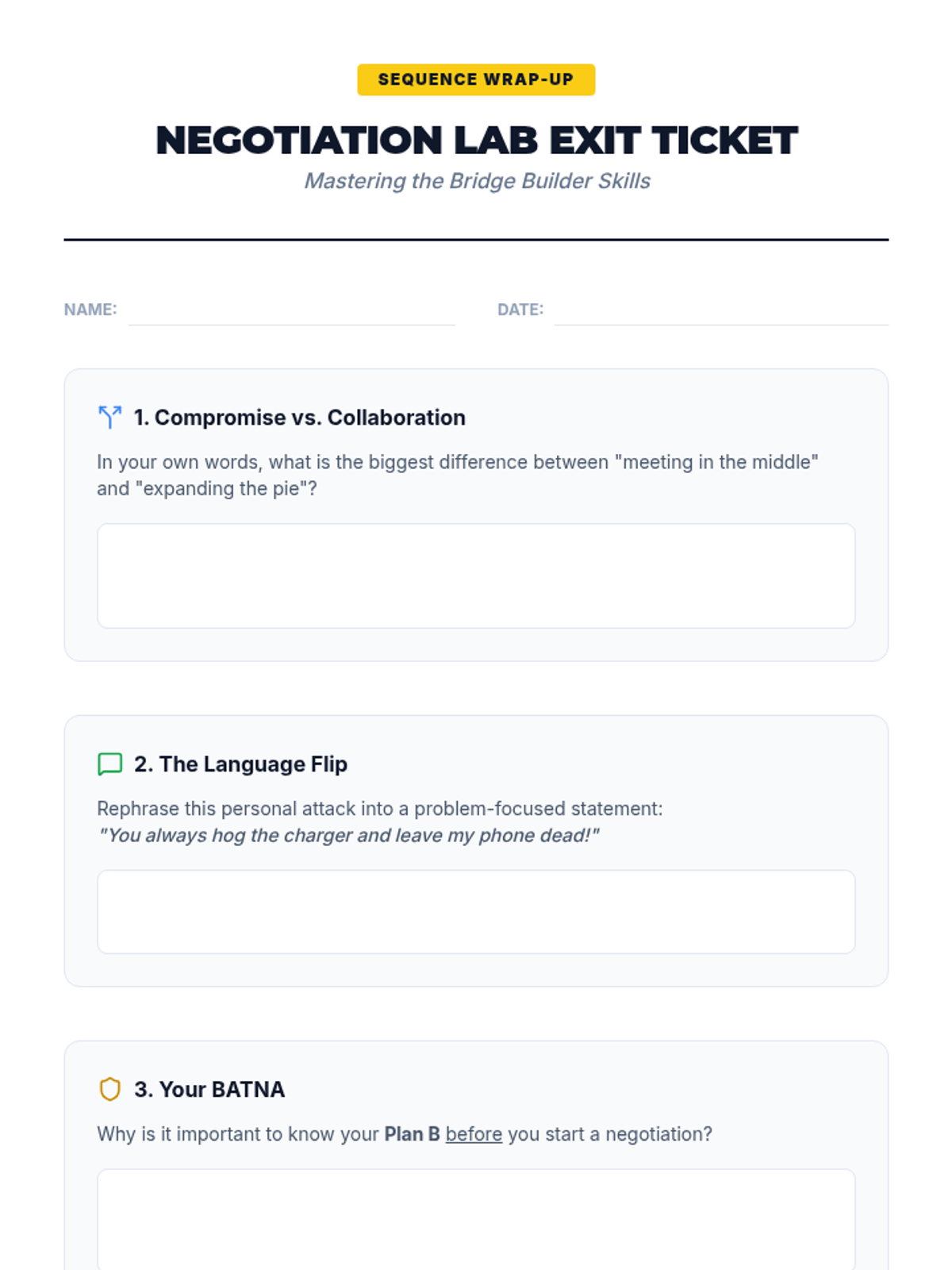
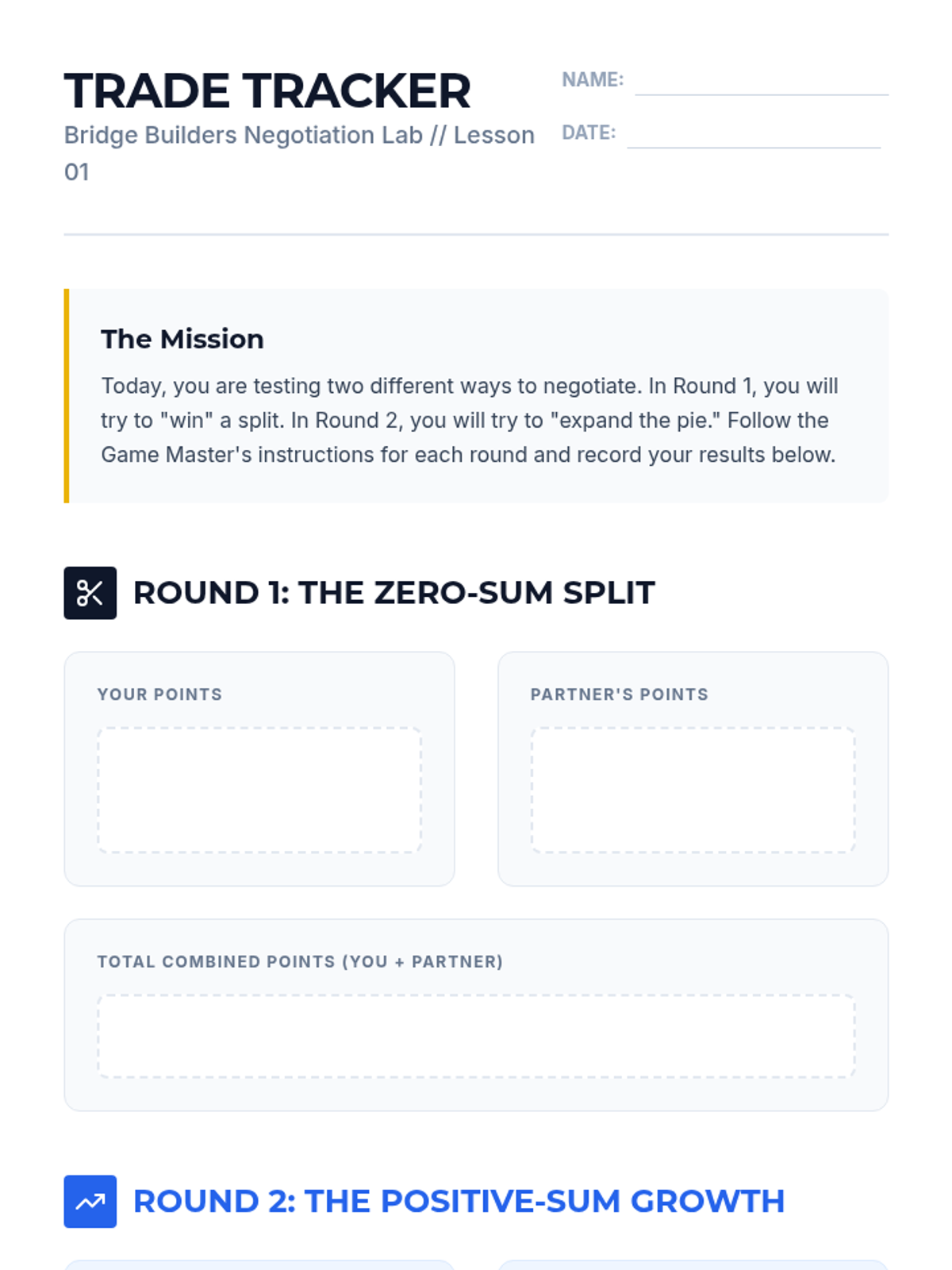
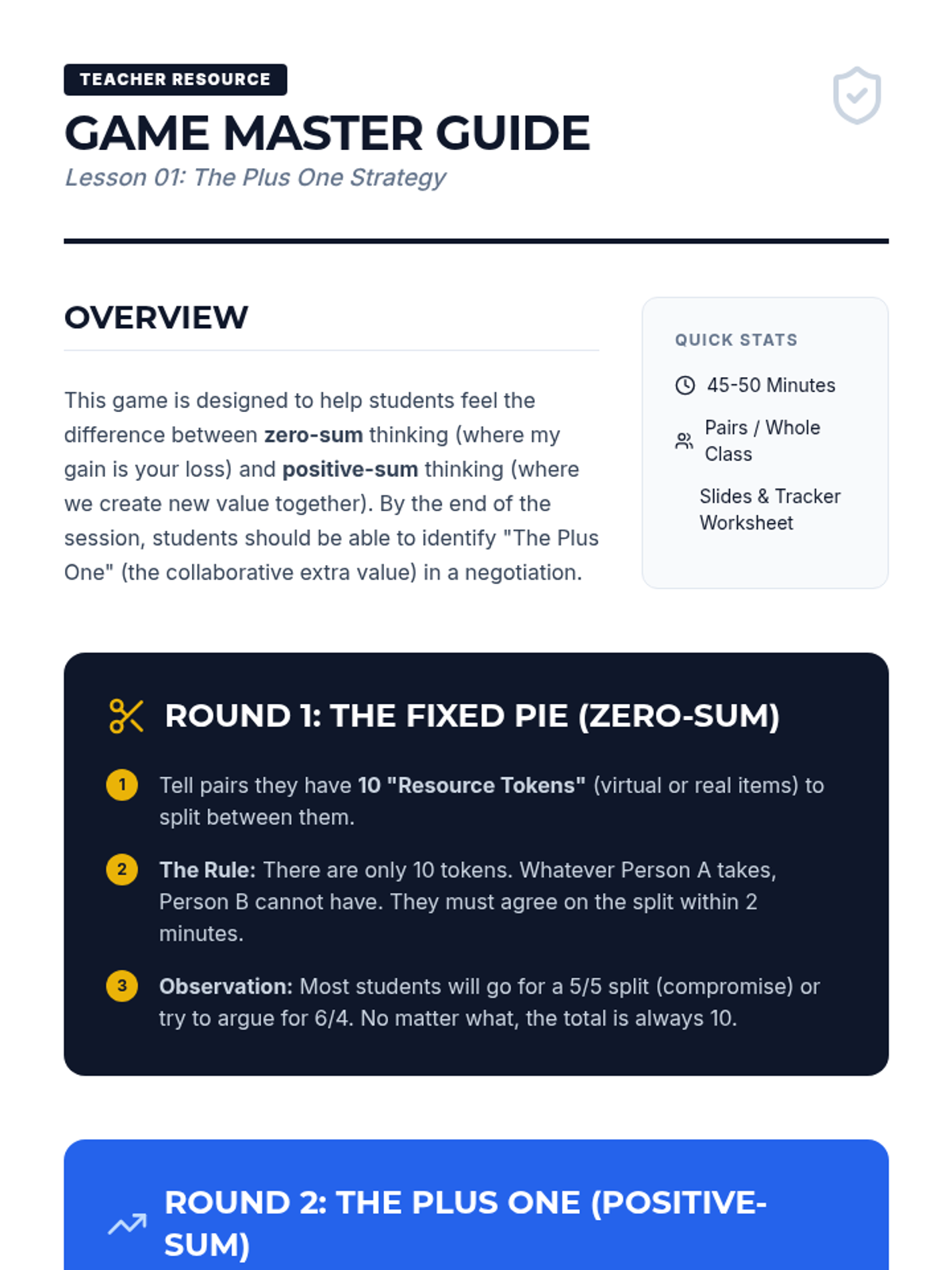
Students define and contrast compromise with collaboration. They engage in a trading game to experience the difference between zero-sum and positive-sum outcomes.
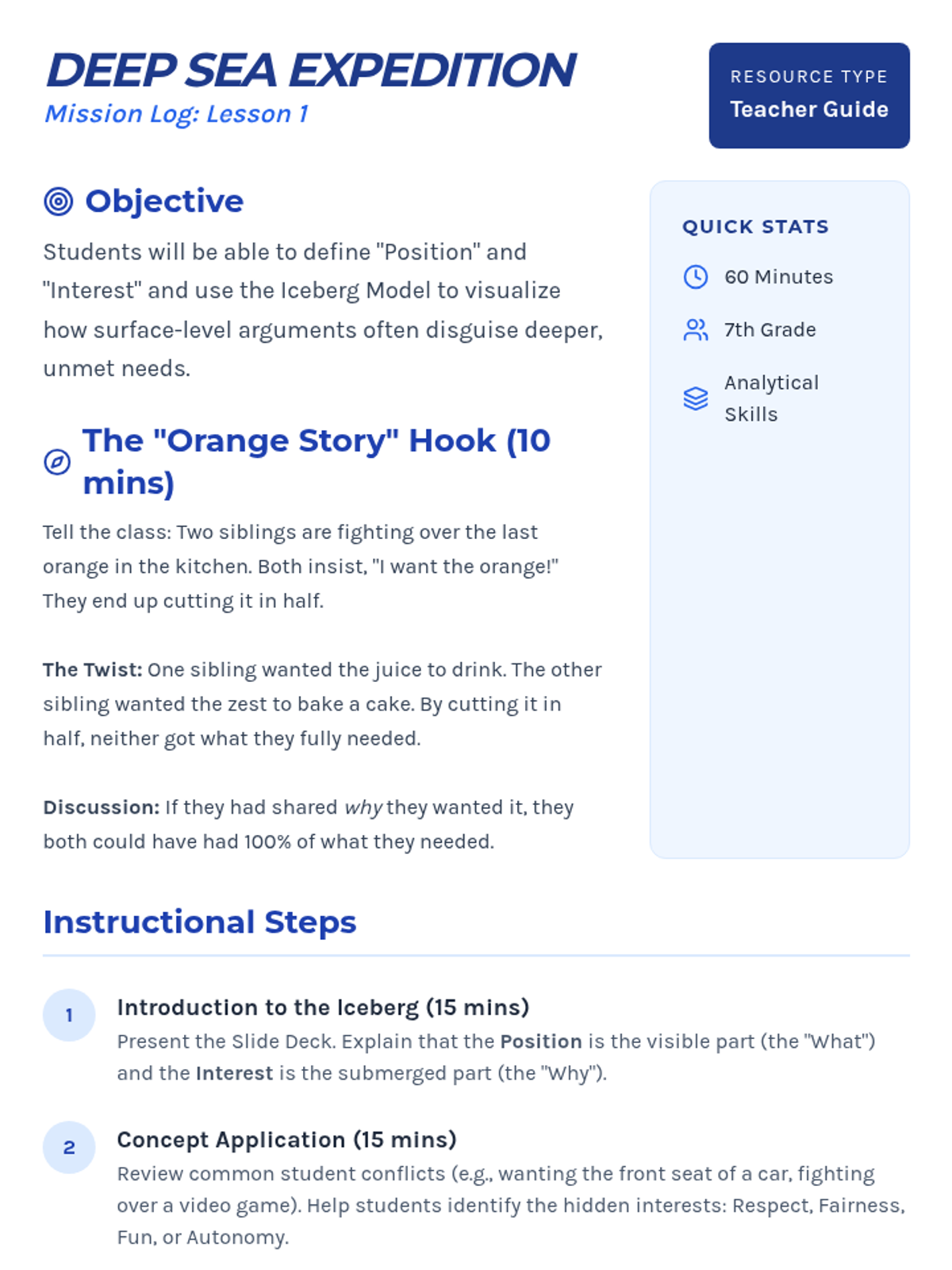
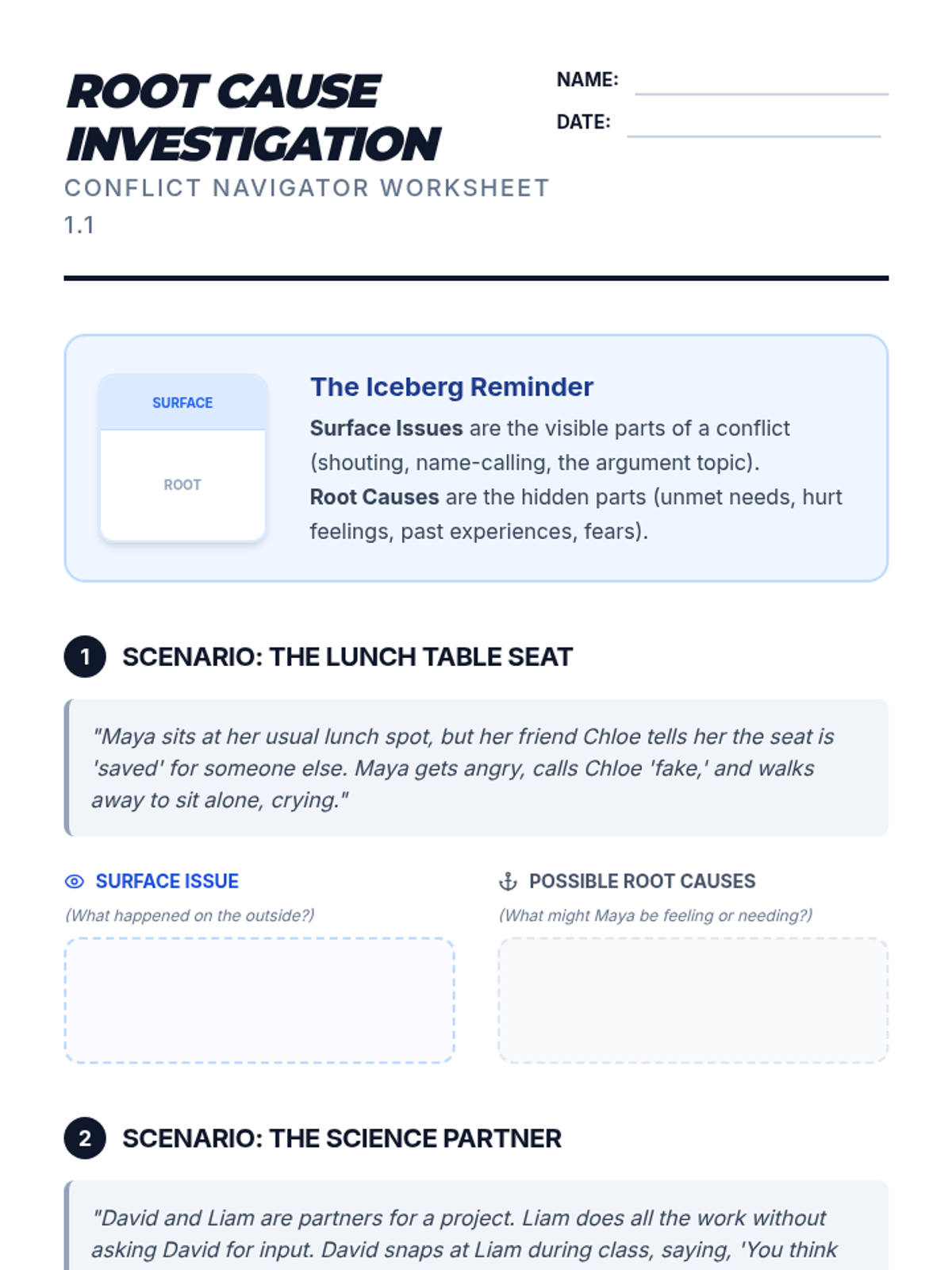
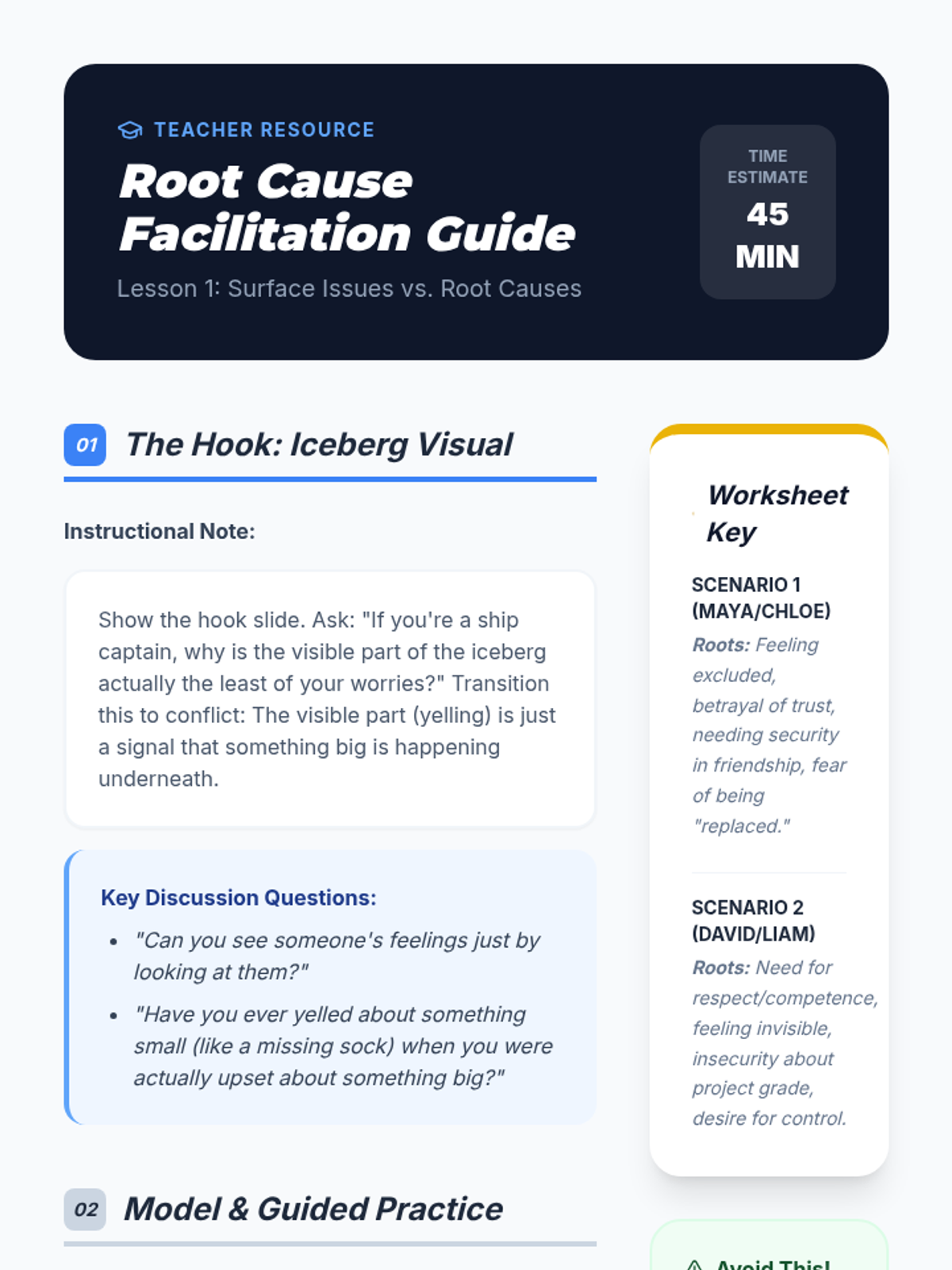
Students are introduced to the Iceberg Model of conflict, learning to distinguish between what people say they want (positions) and what they actually need (interests).
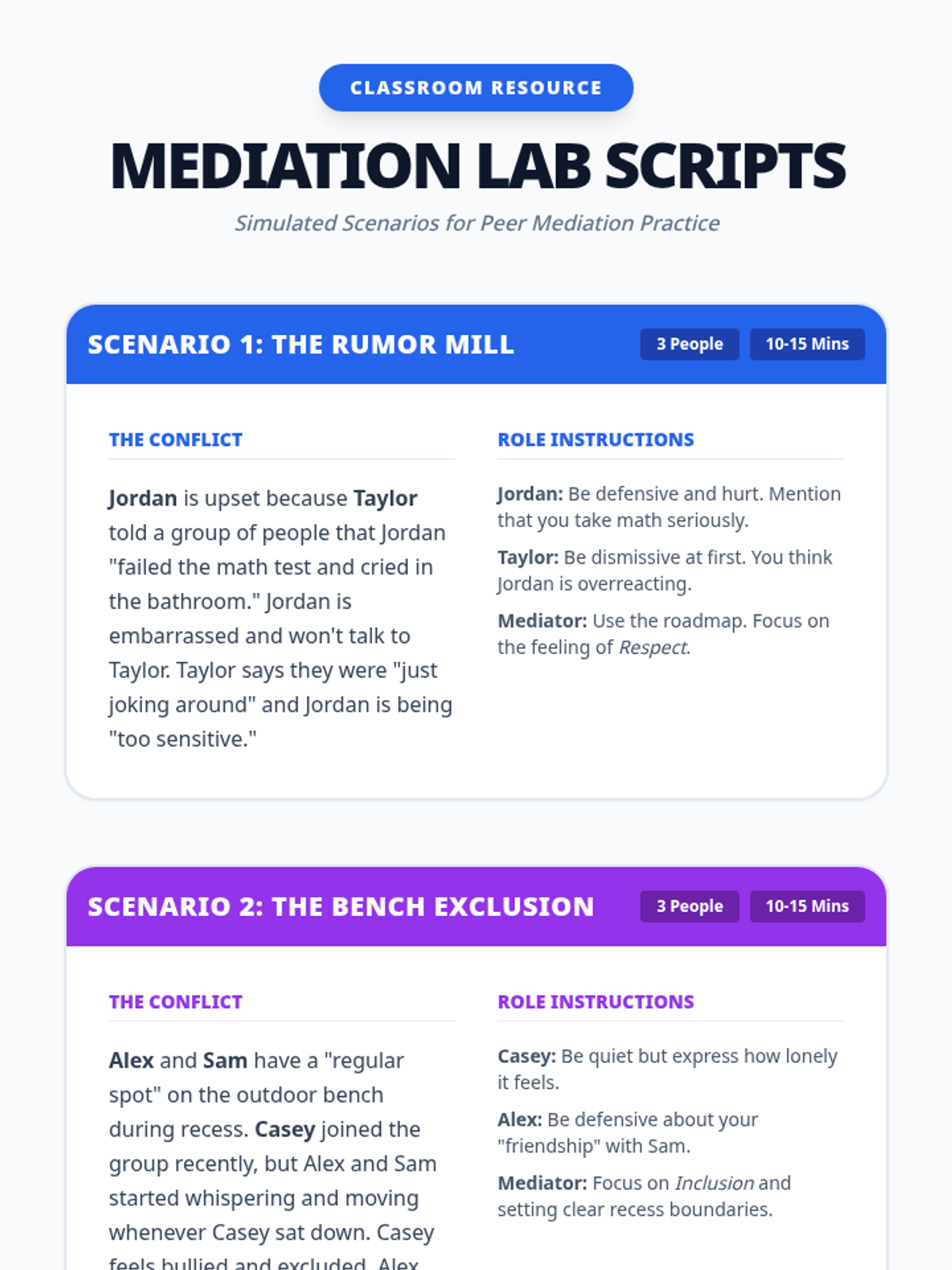
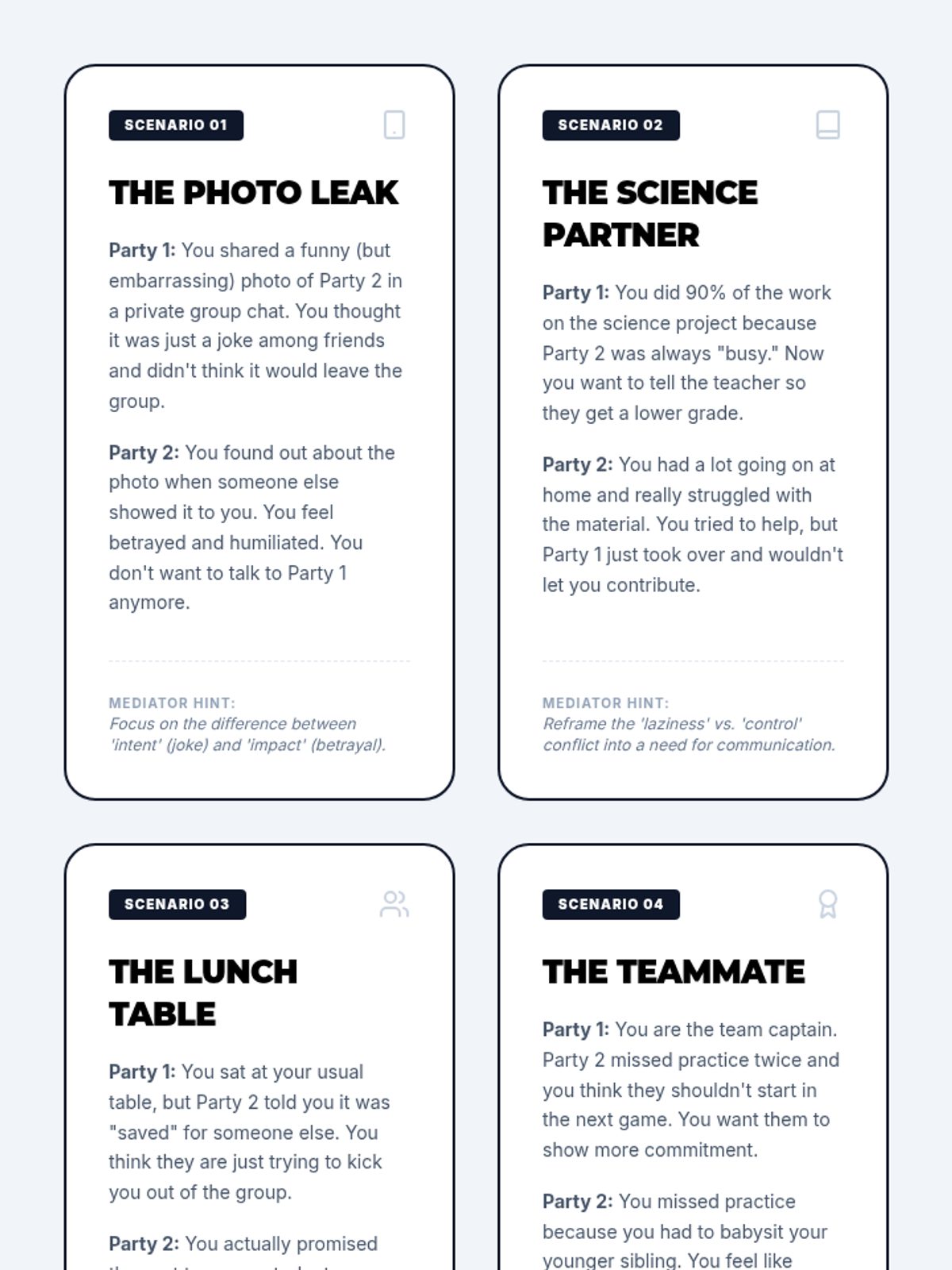
Students engage in full-cycle mock mediations. Groups rotate roles between disputants and mediators, using scripts based on real-life 6th-grade problems (e.g., rumor spreading, exclusion).
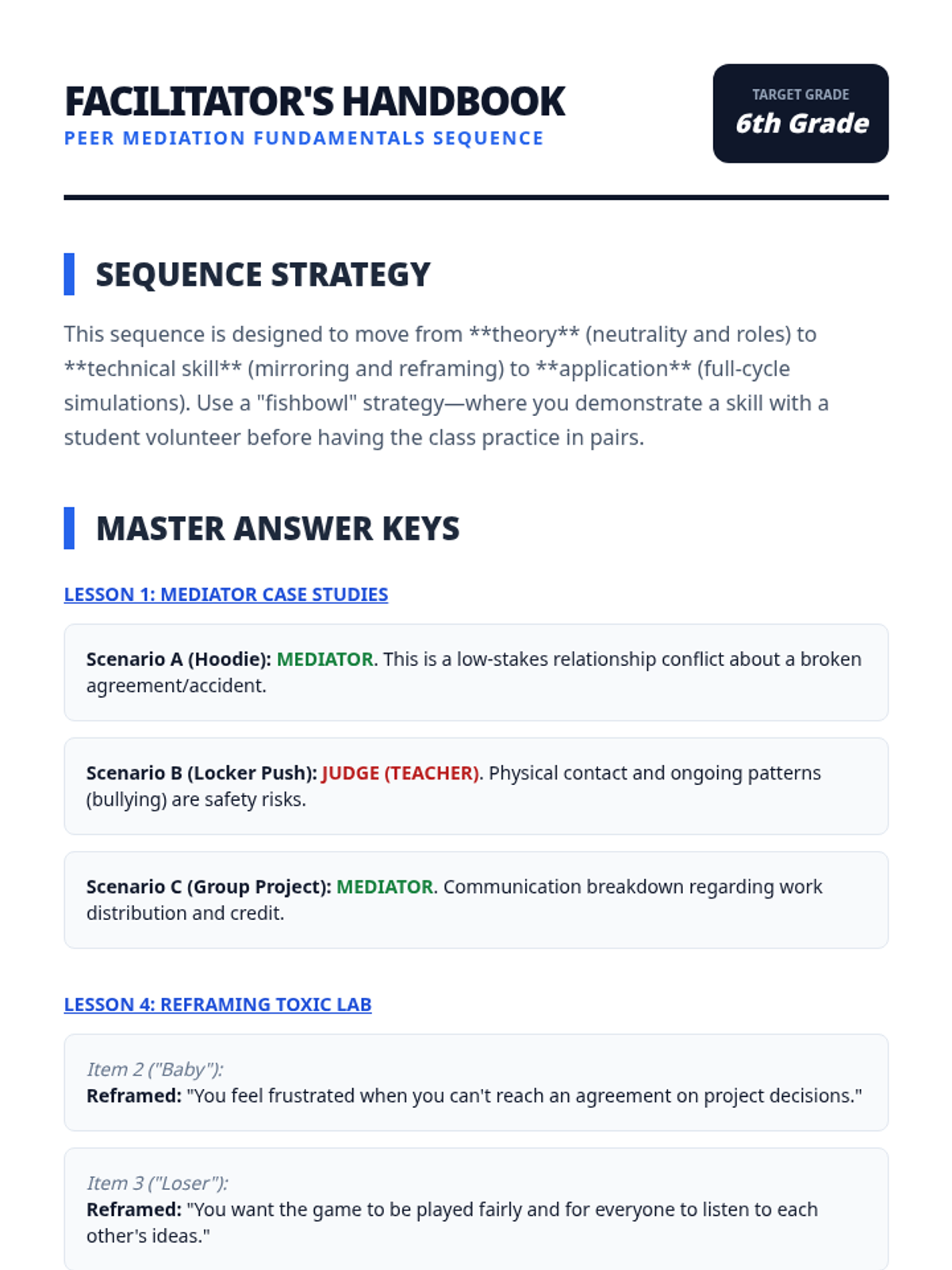
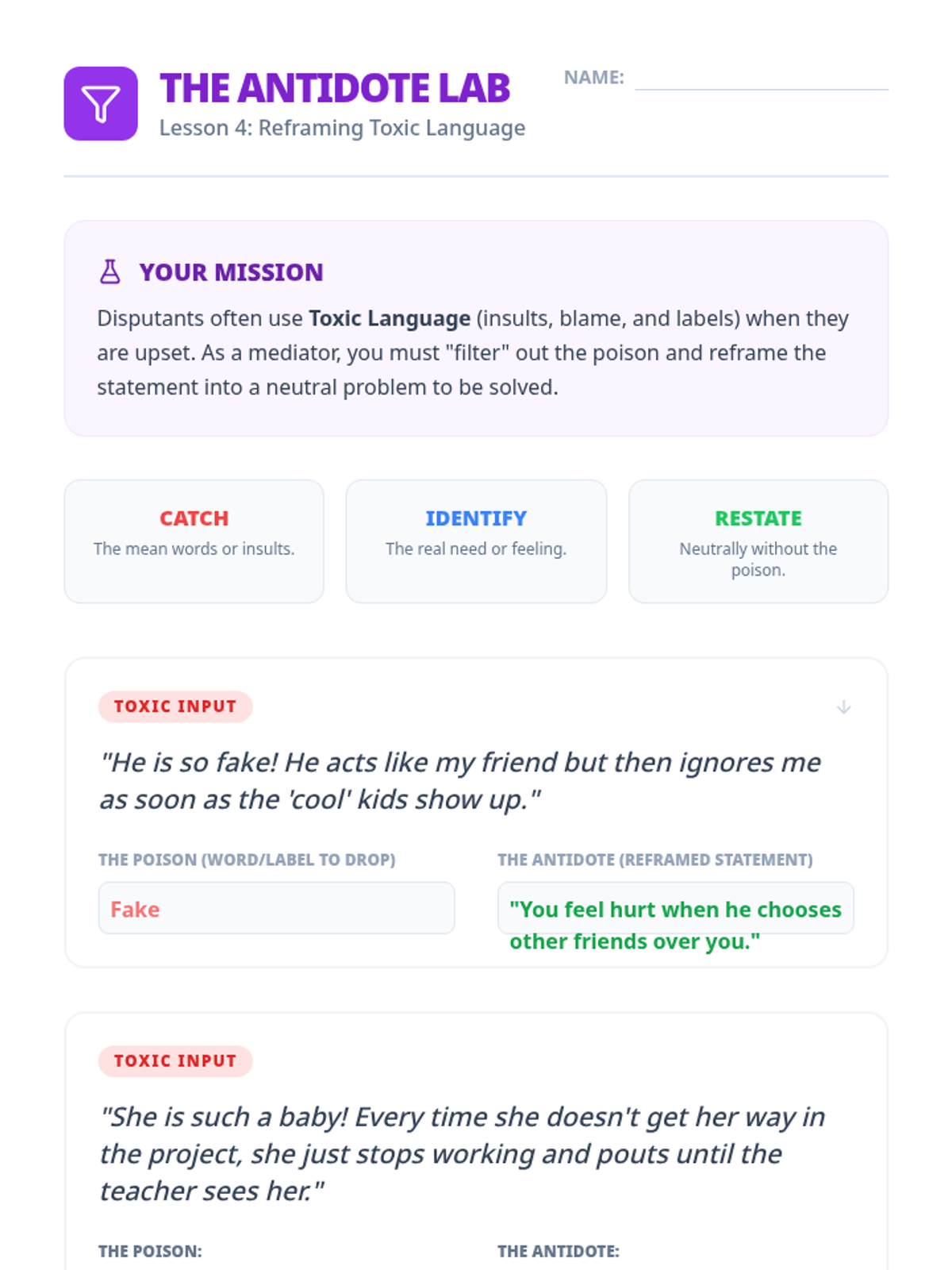
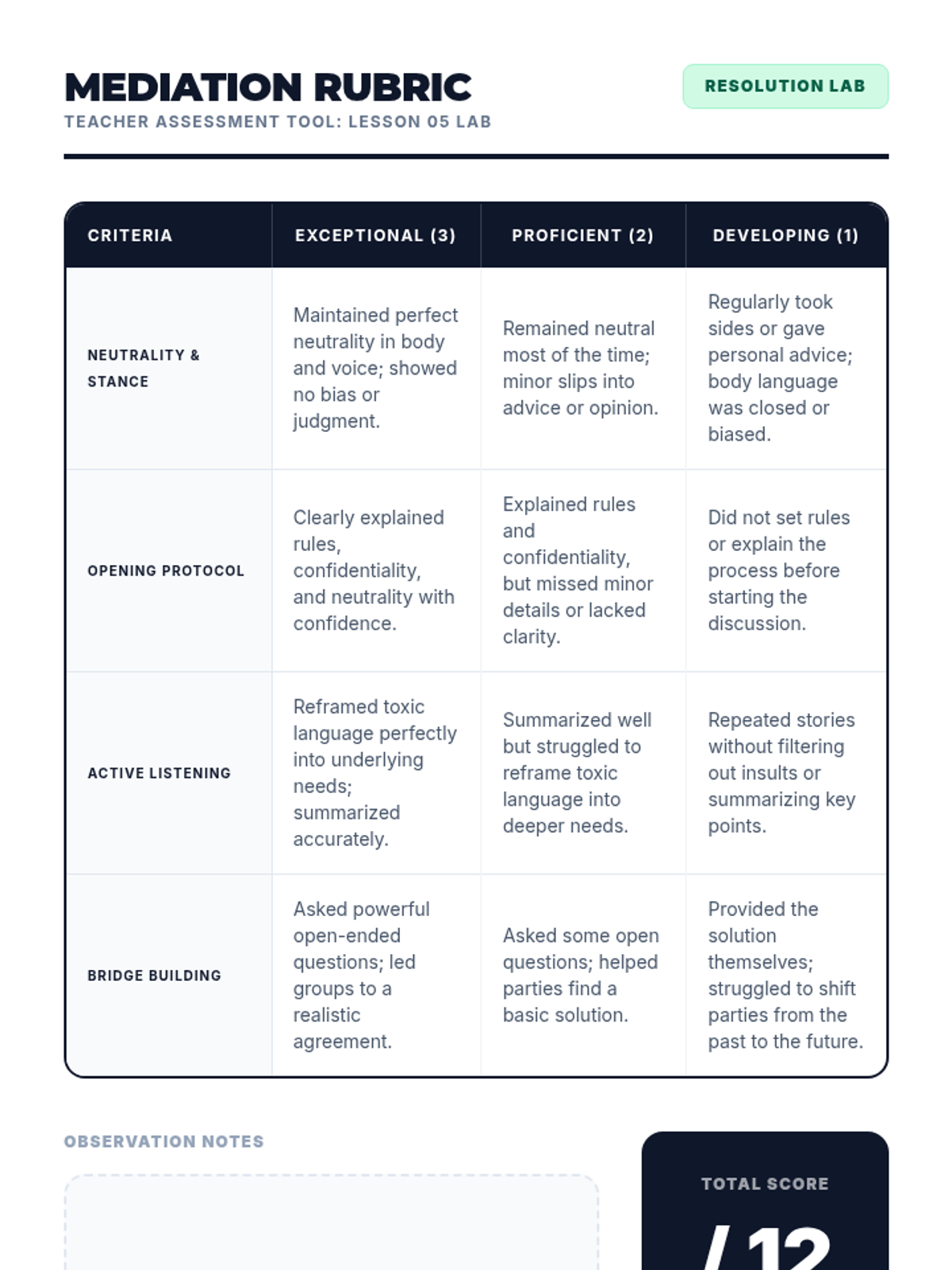
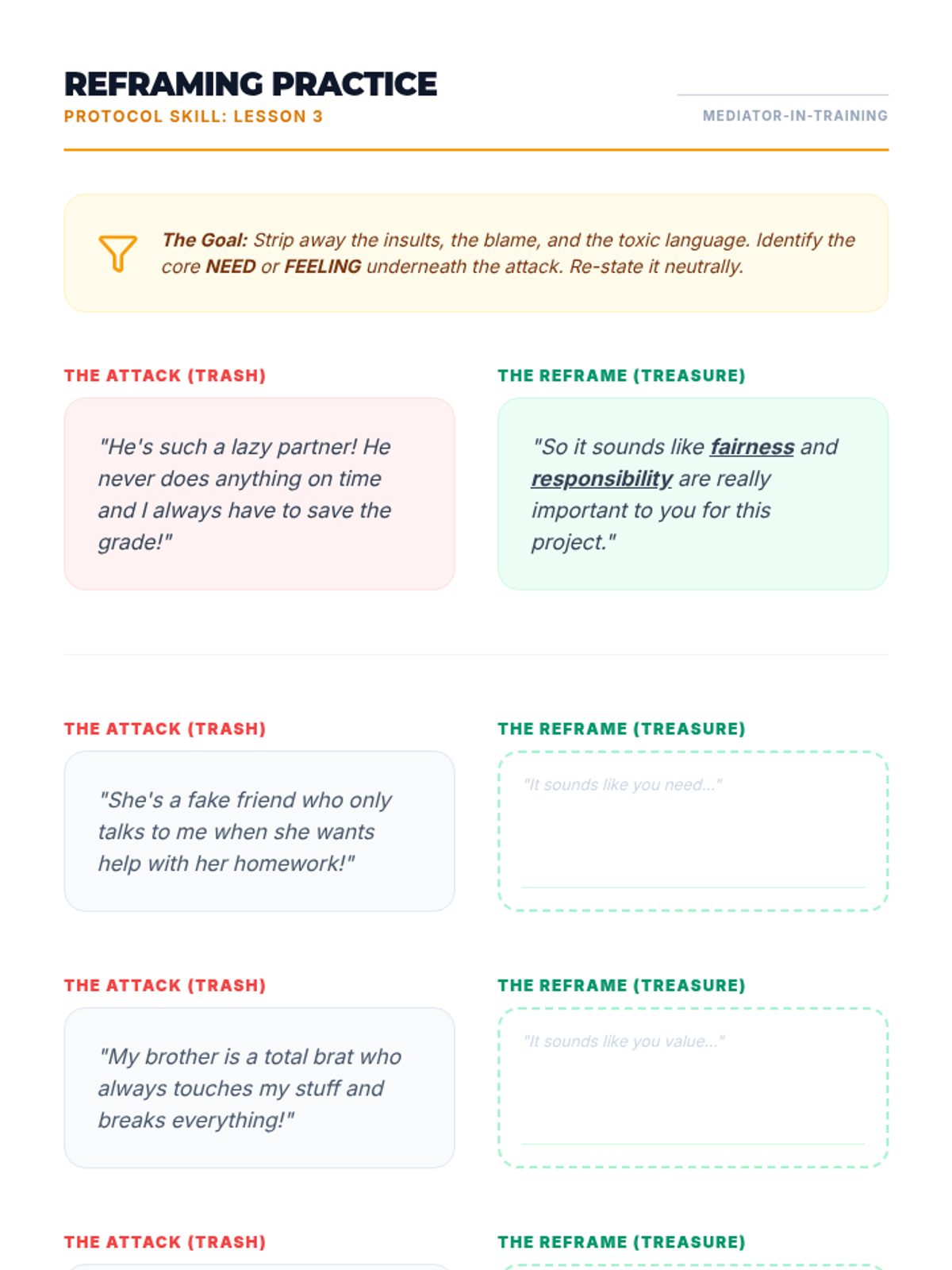
Students learn to 'catch' toxic or inflammatory language used by disputants and reframe it into neutral problem statements. This advanced skill prevents the mediation from turning into a shouting match.
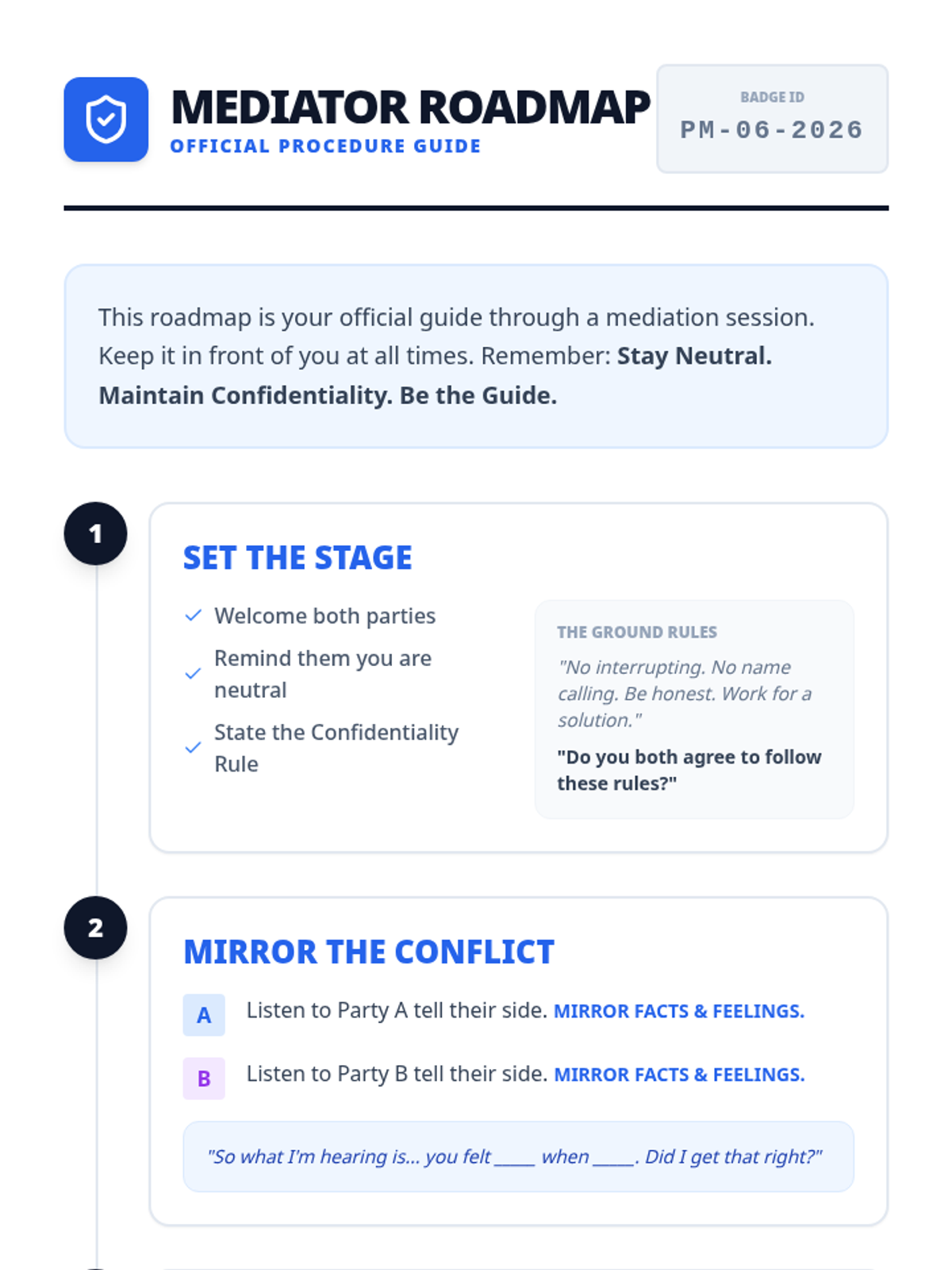
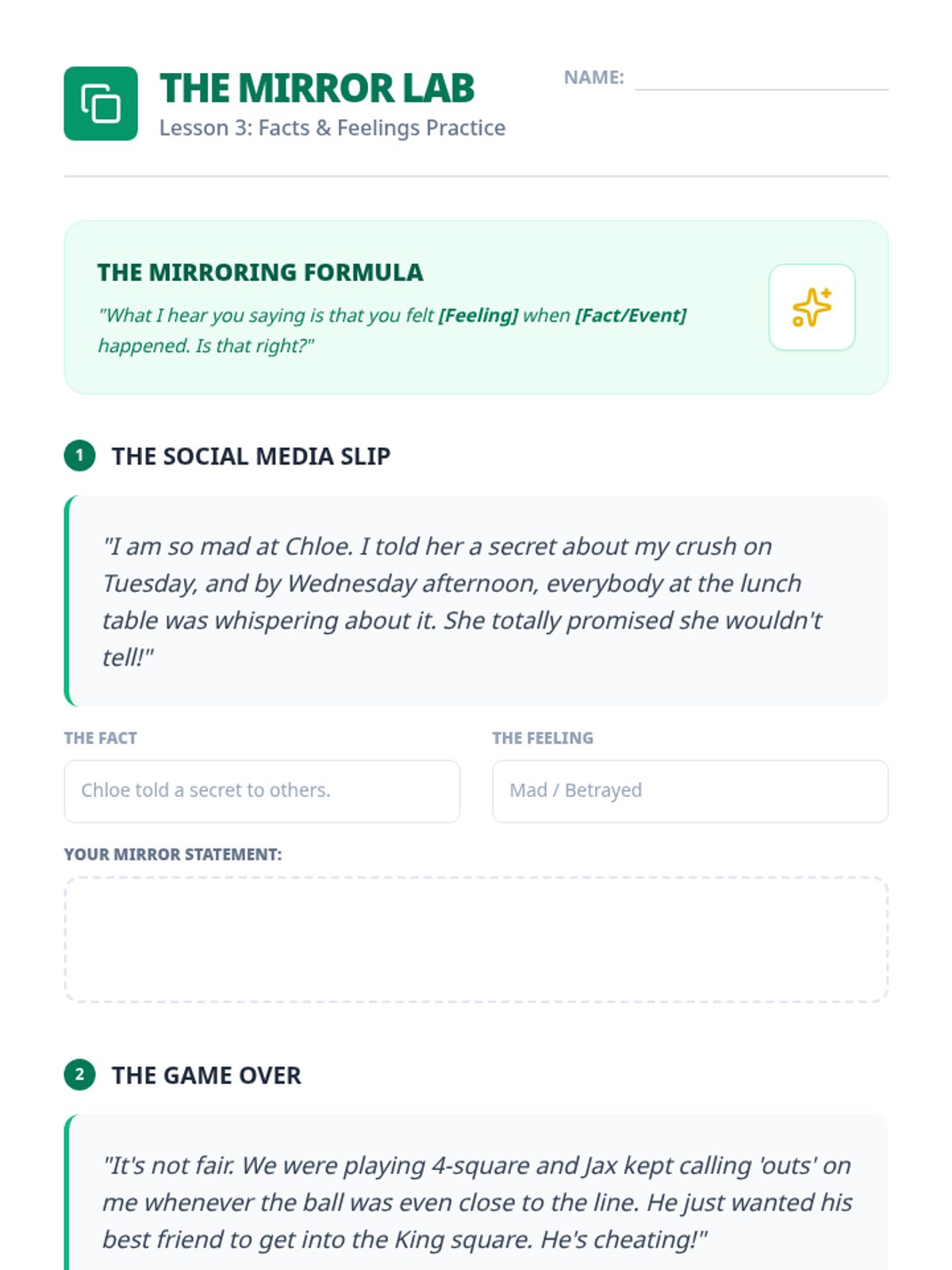
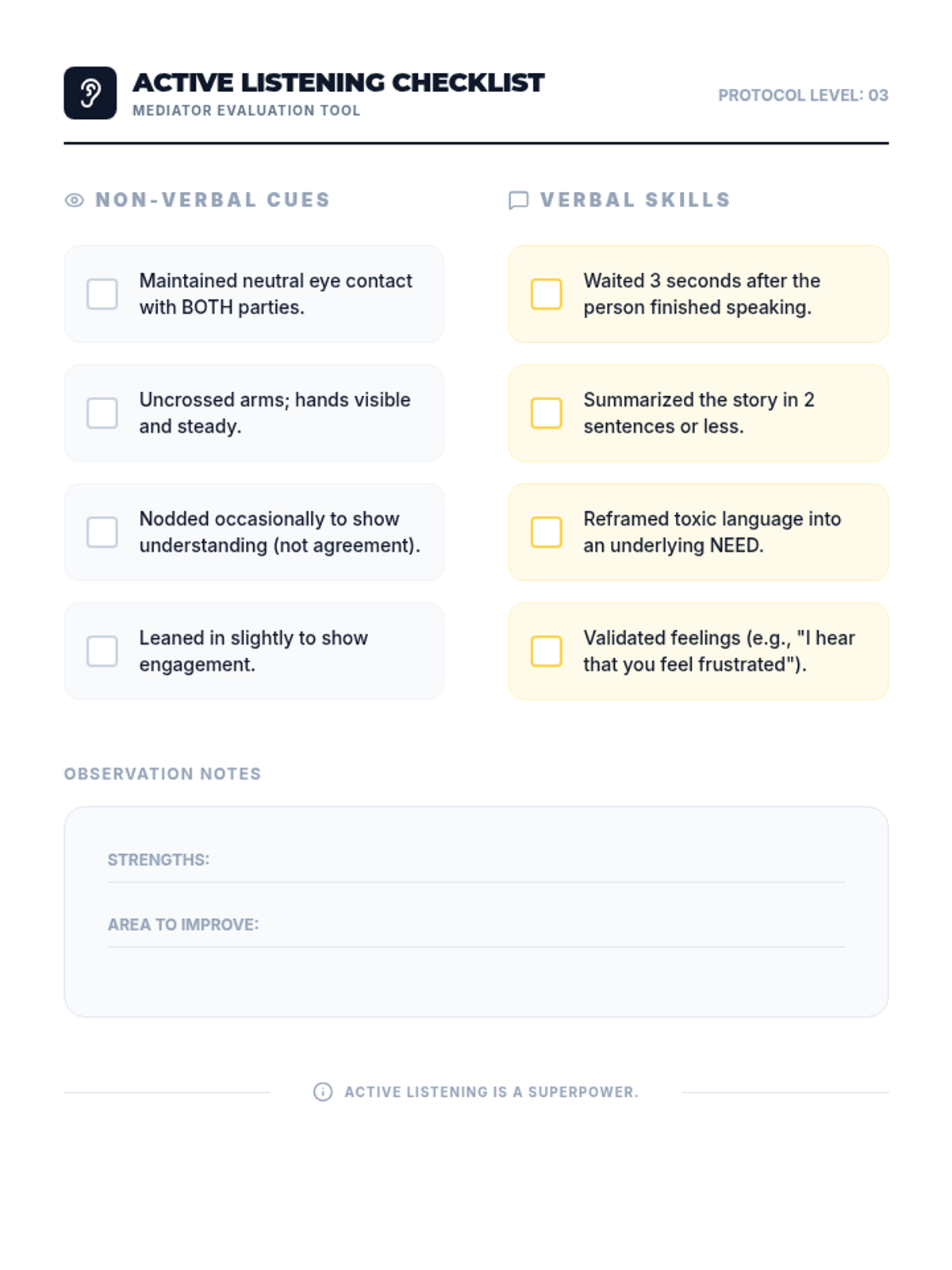
This lesson focuses on the mediator's primary tool: mirroring (reflecting back what was heard). Students practice listening to a complaint and summarizing it neutrally to ensure the speaker feels heard.
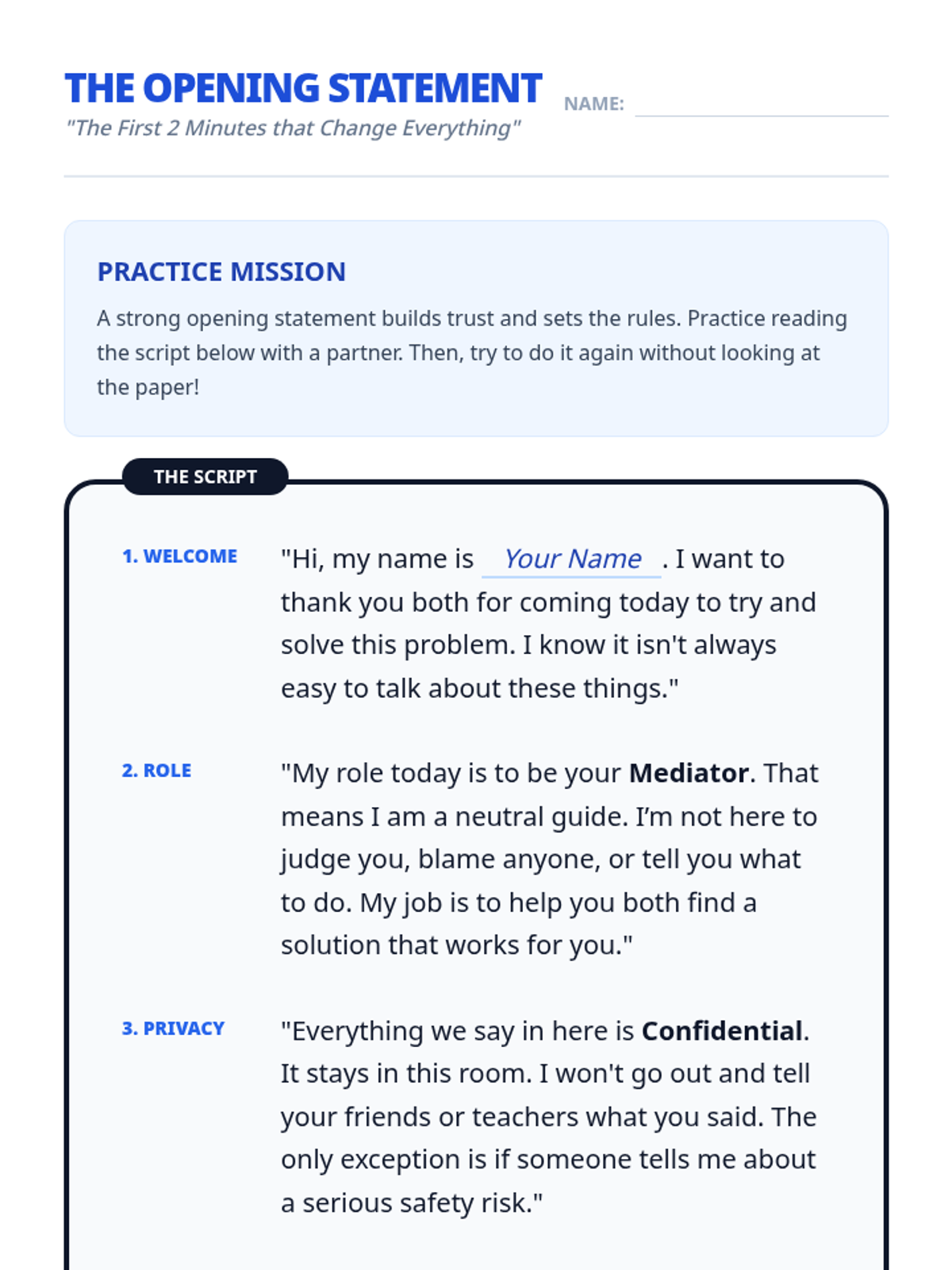
Learners practice the opening statement of a mediation: welcoming parties, explaining the process, and establishing rules like 'no interrupting' and 'no name-calling.'
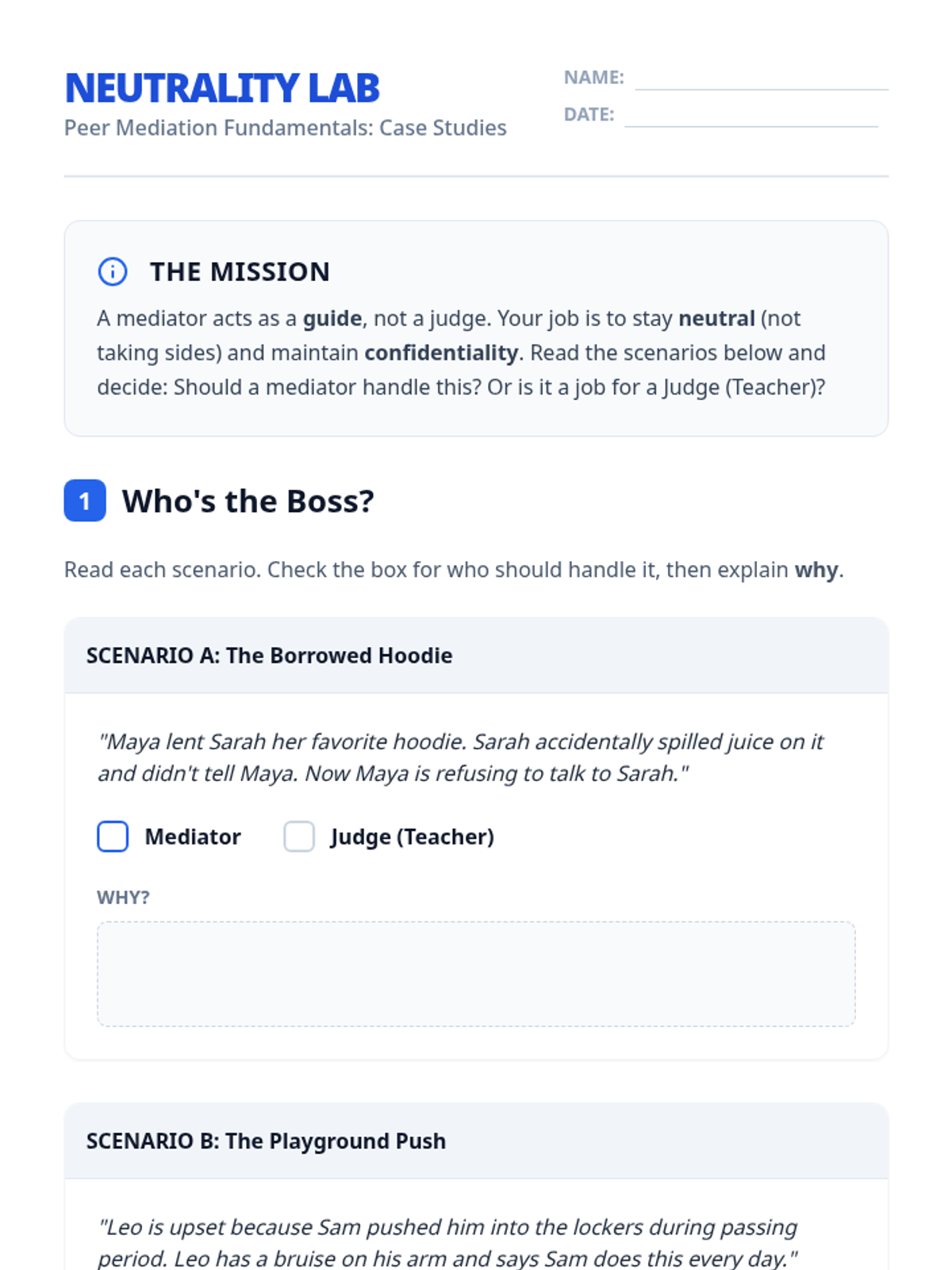
Students define what a mediator is (a guide, not a judge) and the core principle of neutrality. They discuss confidentiality and identify when a conflict is too dangerous for peer mediation (e.g., bullying or violence).
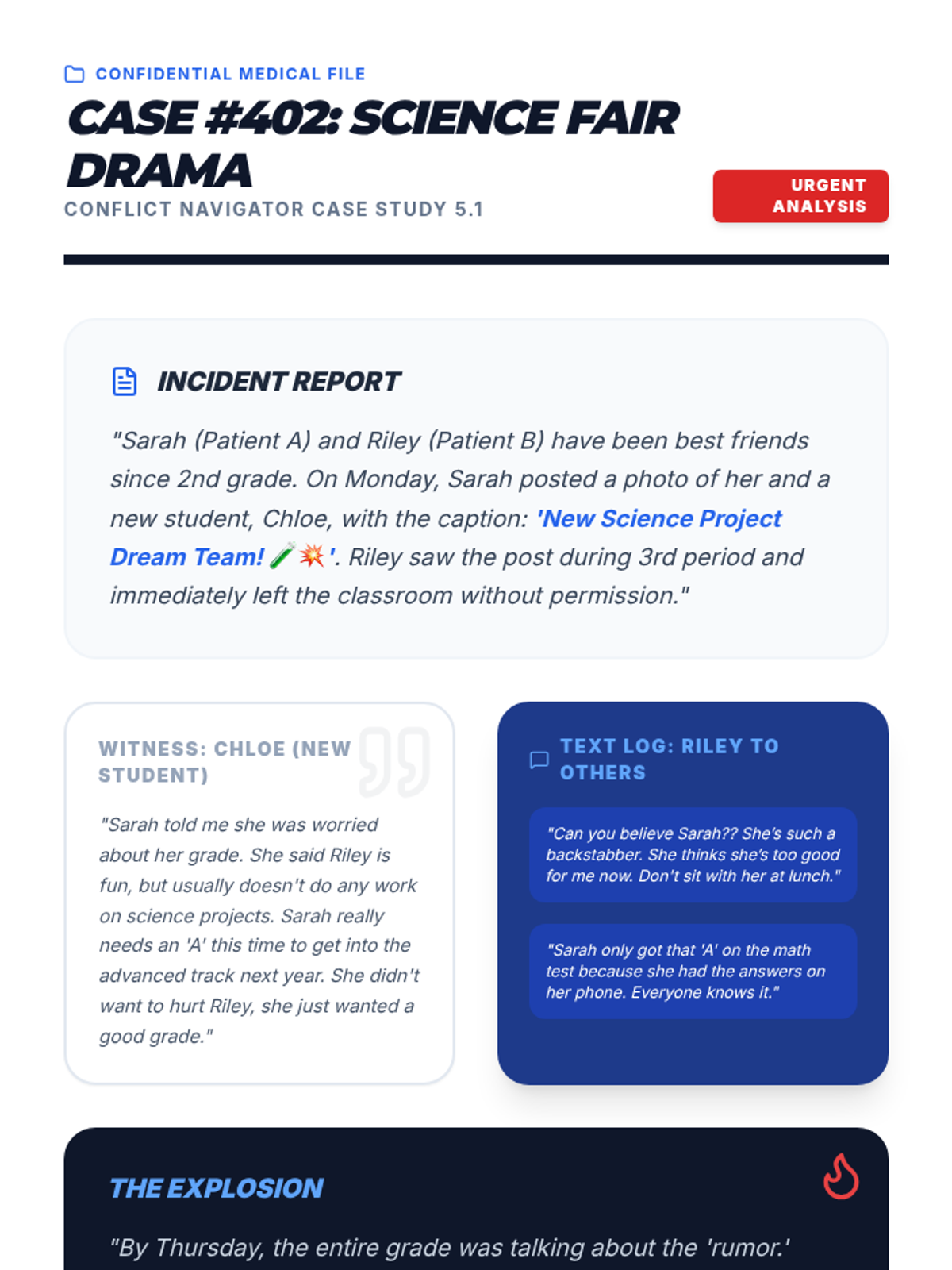
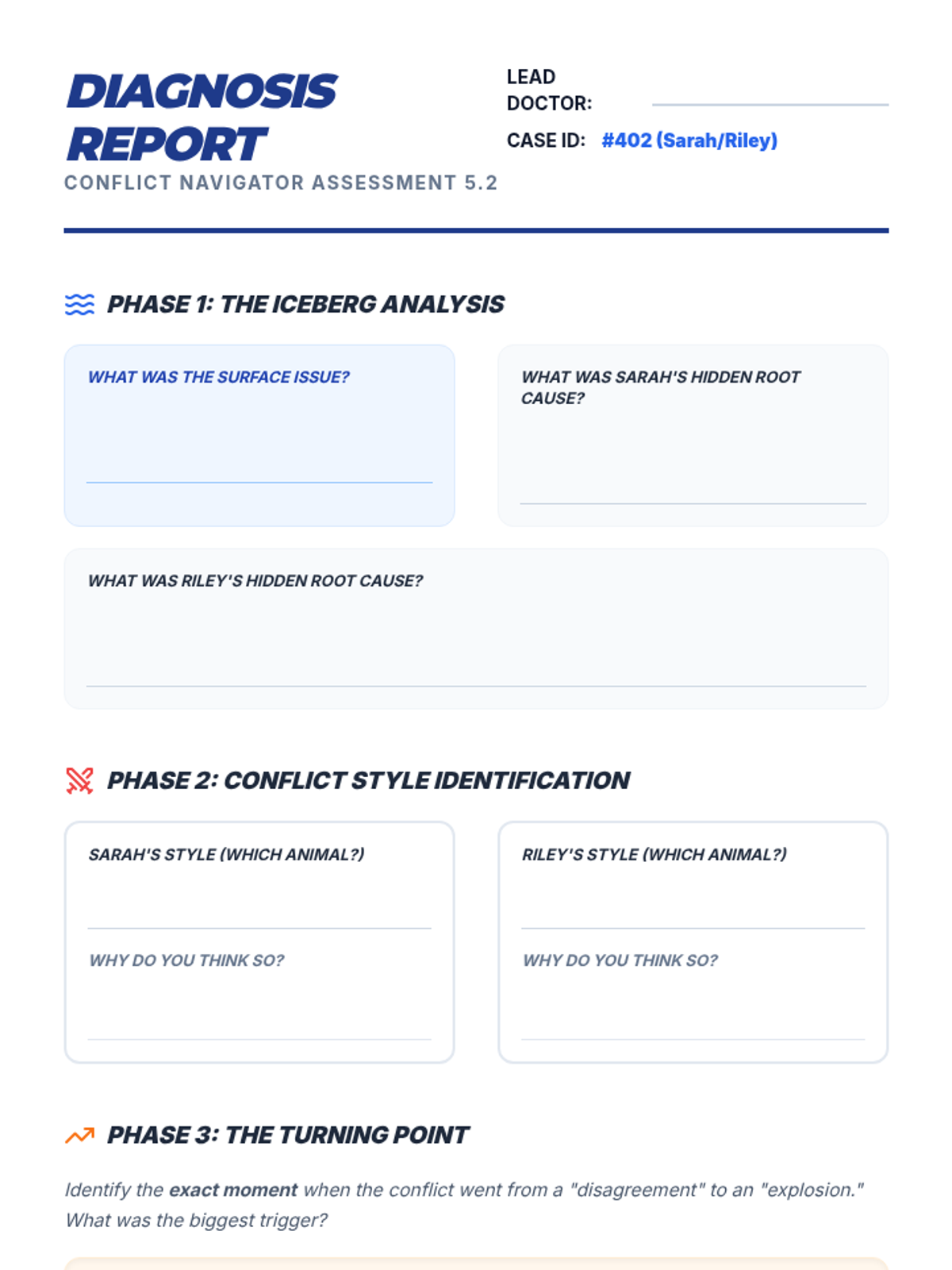
A final synthesis activity where students act as 'Conflict Doctors' to diagnose a complex scenario using all the tools learned in the sequence.
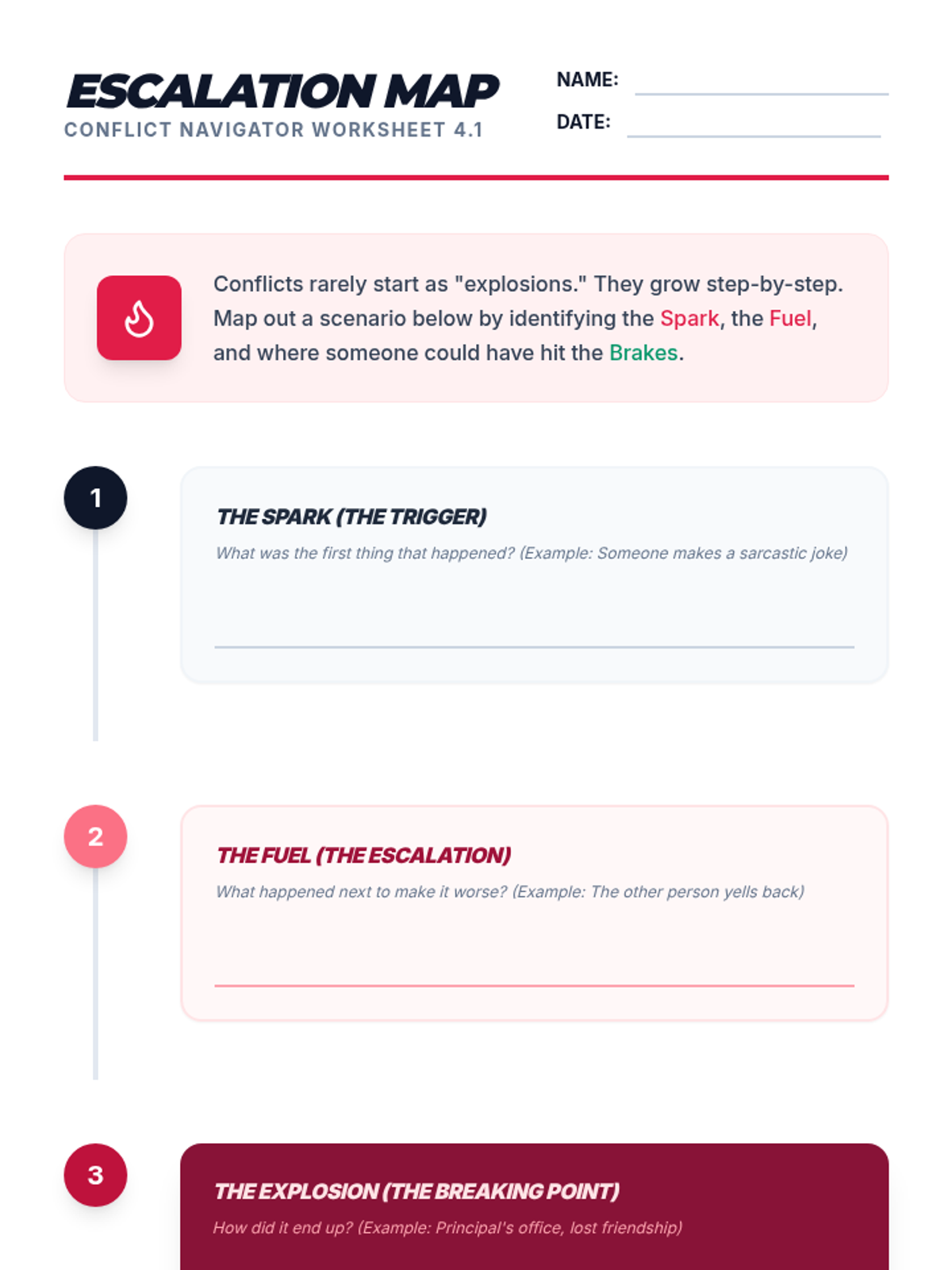
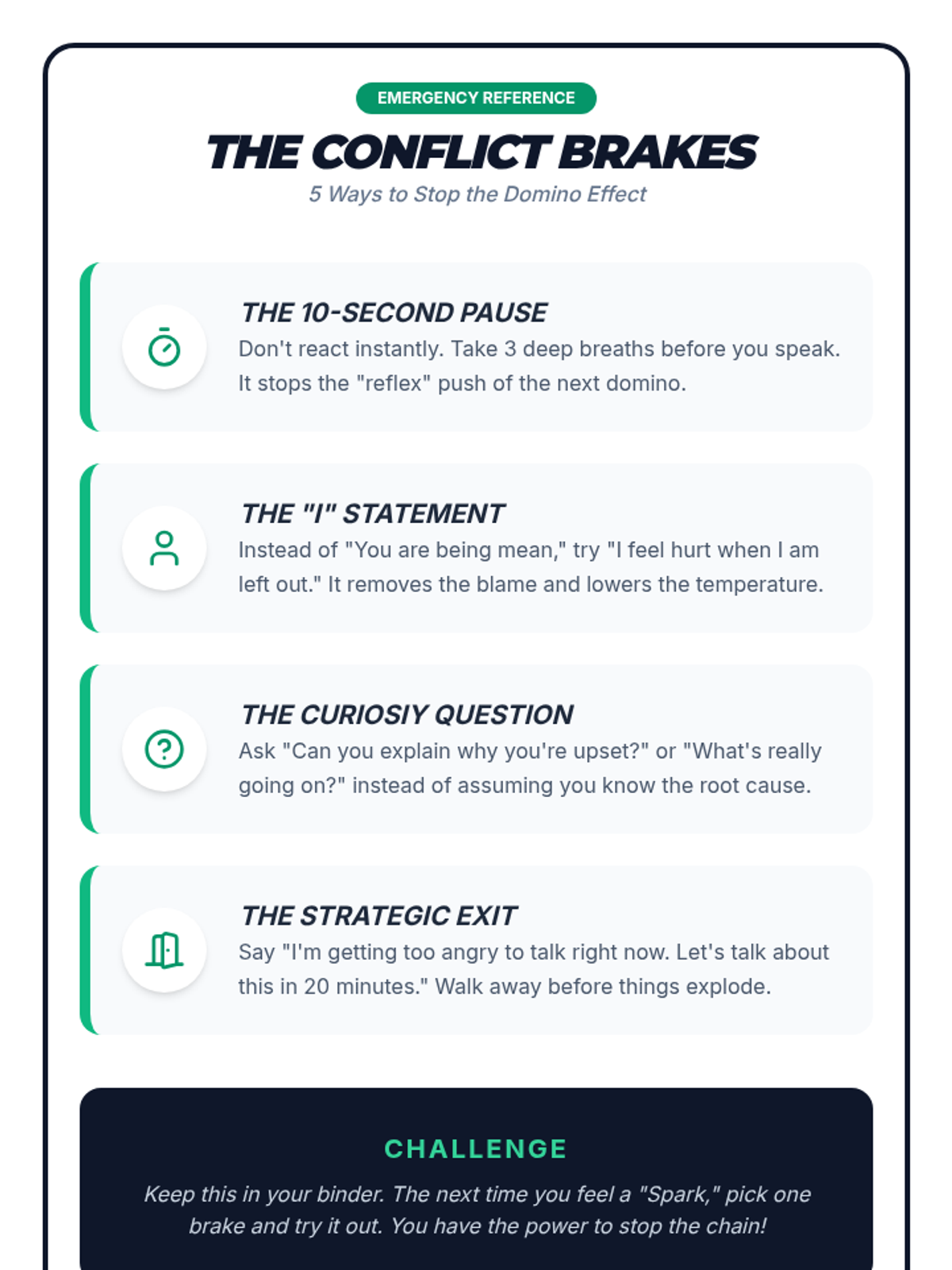
Analyzes the cycle of escalation, identifying triggers and turning points where conflicts can be de-escalated before reaching a breaking point.
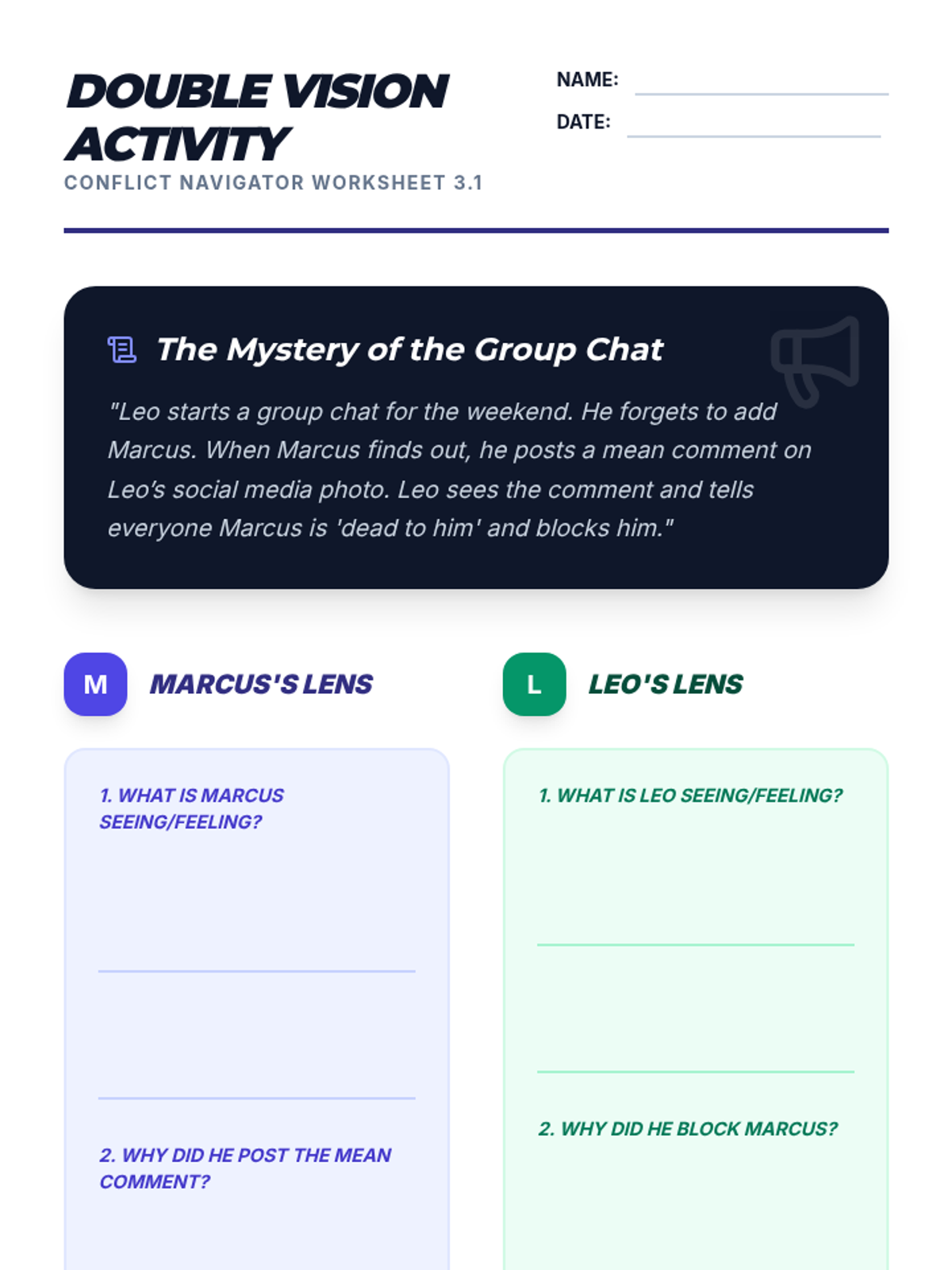
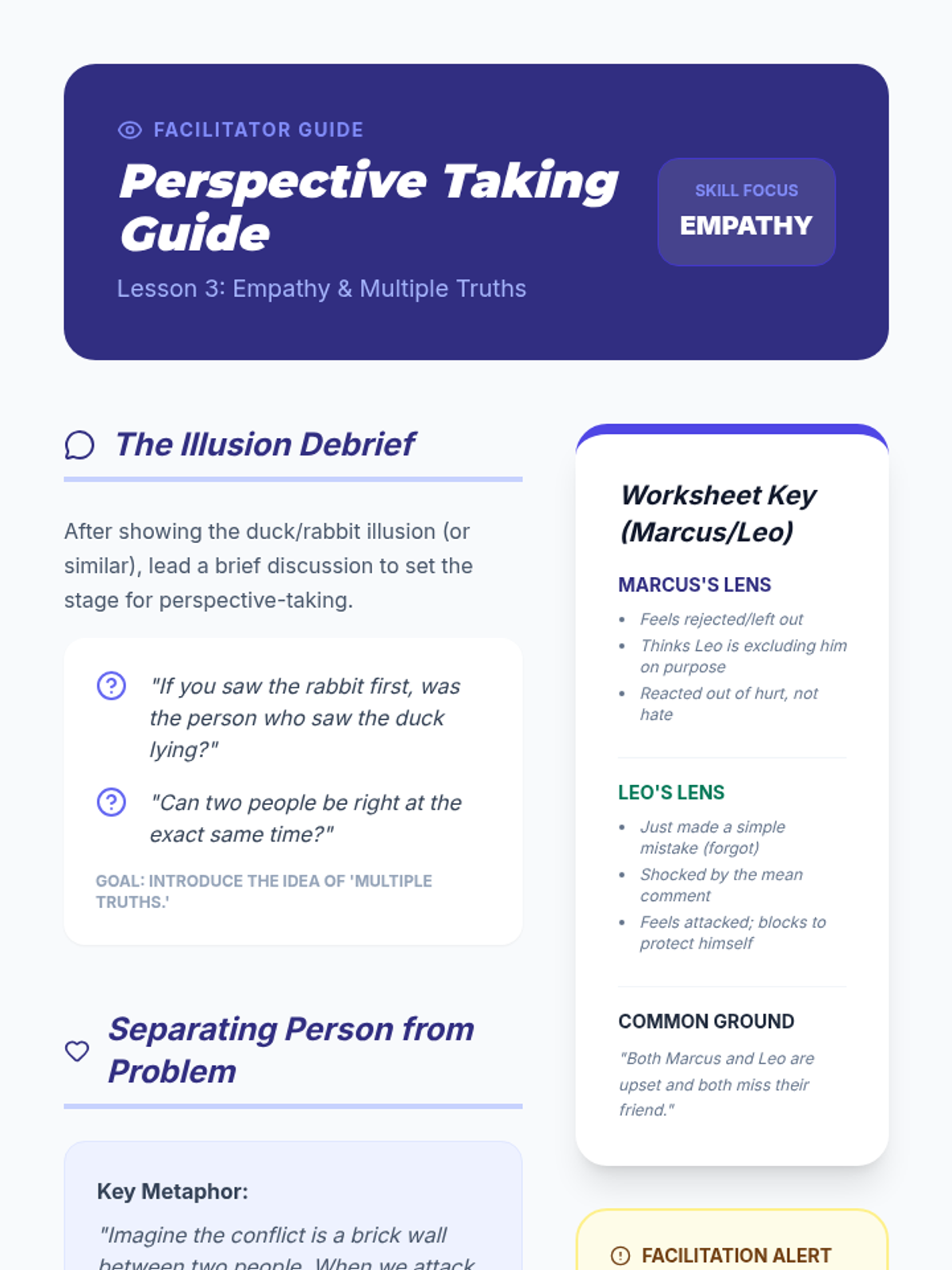
Focuses on perspective-taking and empathy through visual illusions and story-mapping, teaching students to see multiple truths in a single dispute.
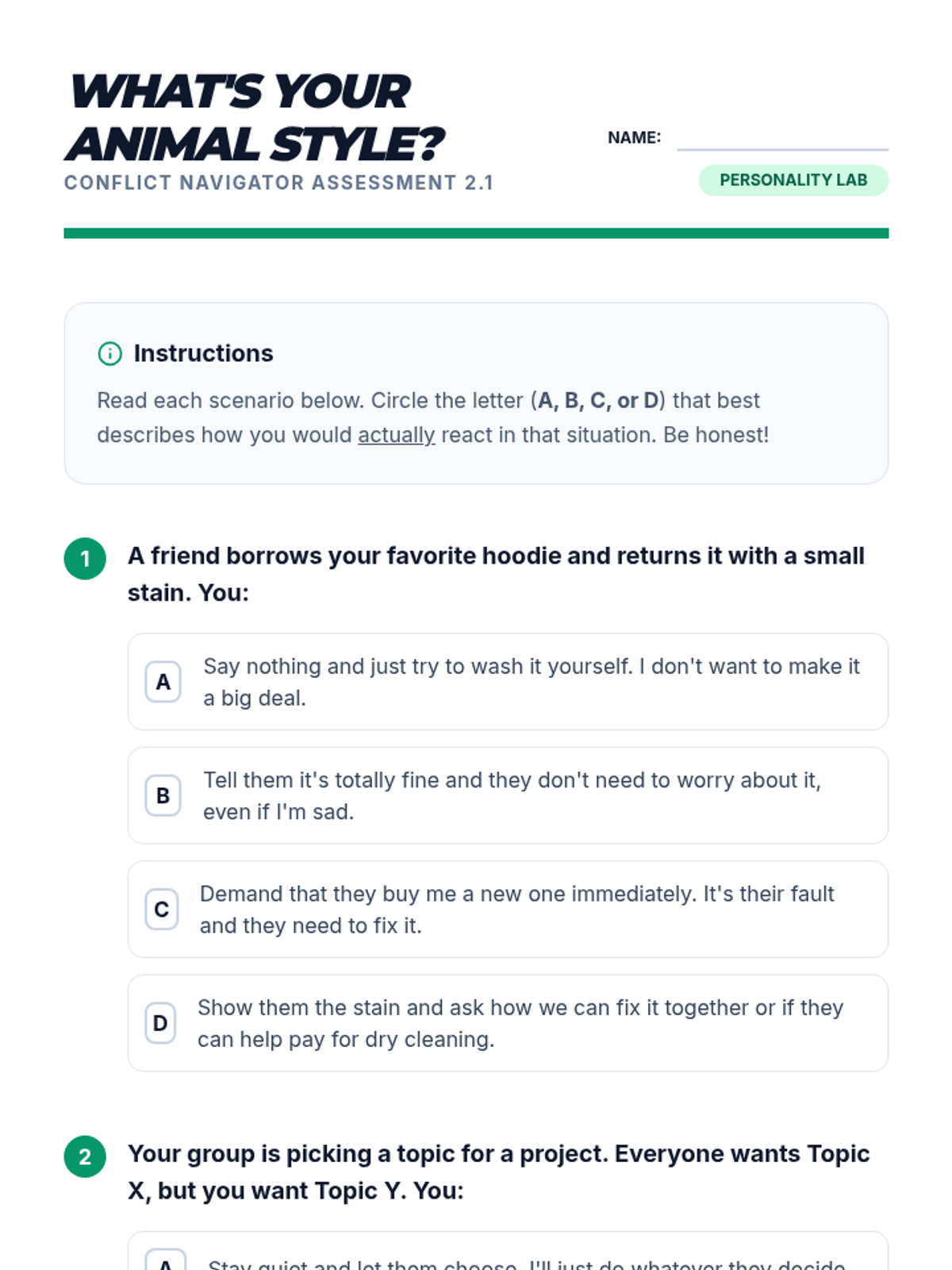
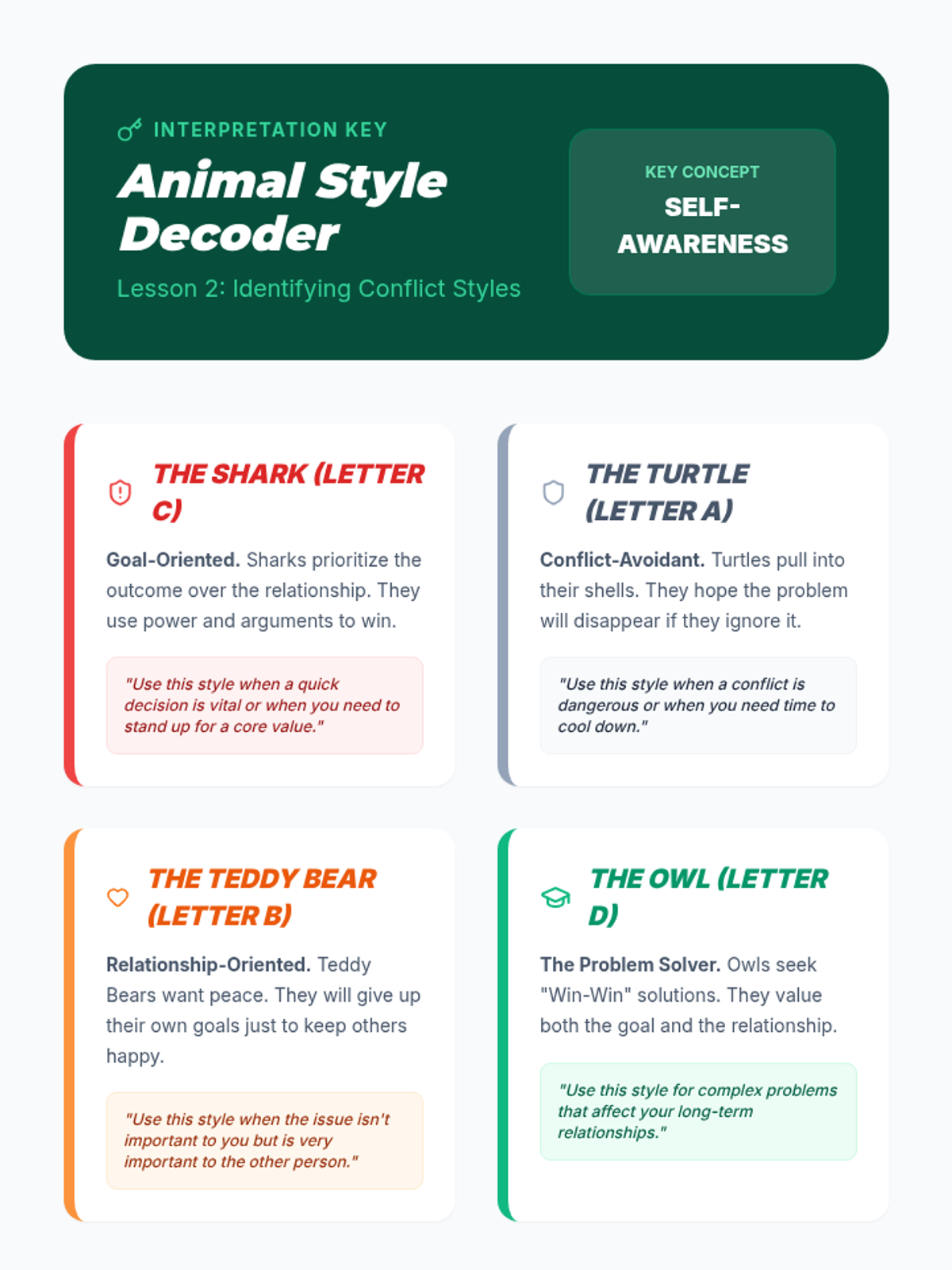
Students explore five core conflict styles (Shark, Turtle, Teddy Bear, Fox, Owl) to understand their default reactions and the impact on others.
Introduces the Iceberg Model to help students differentiate between the surface argument and the underlying needs, fears, and values driving conflict.
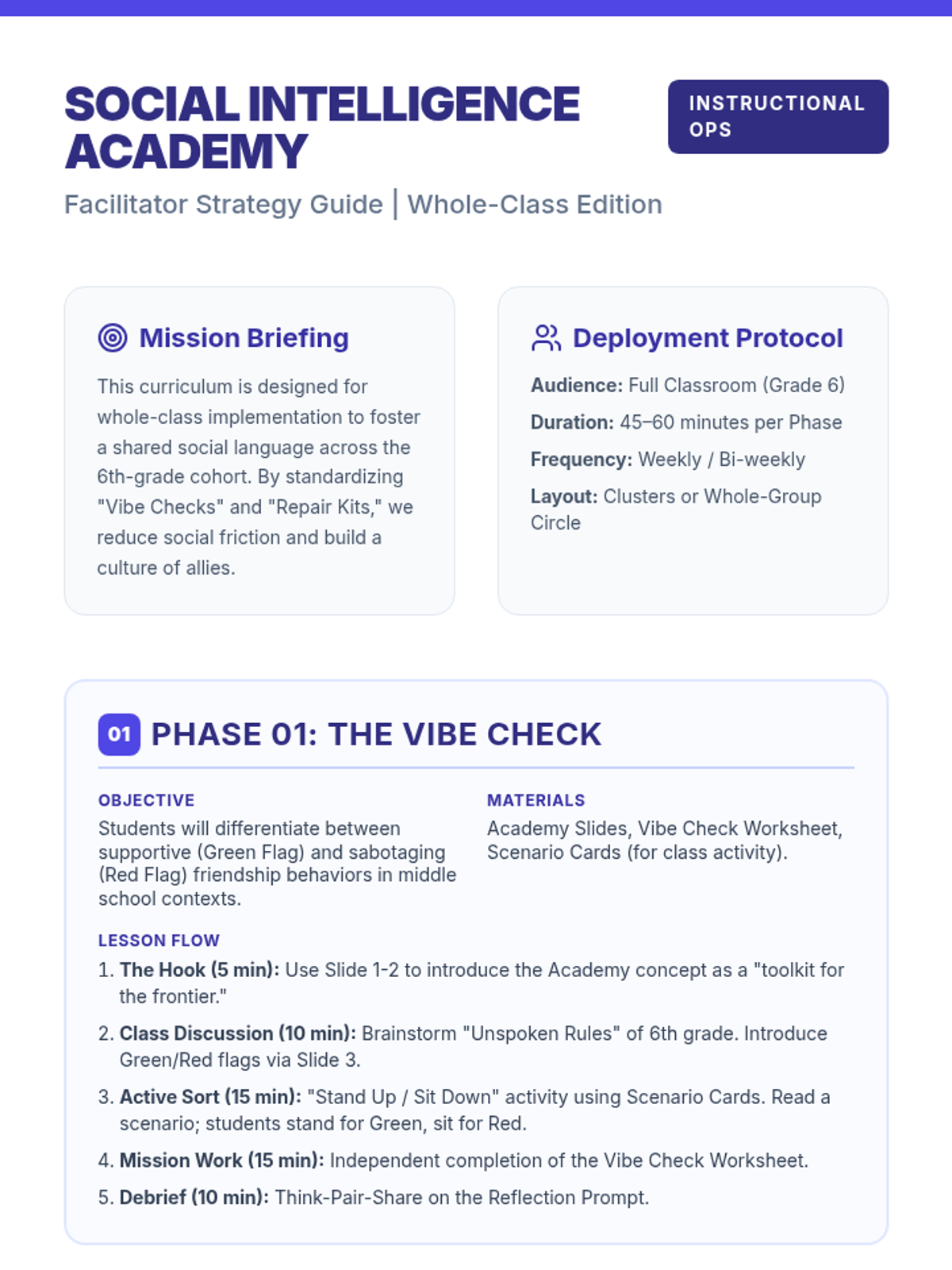
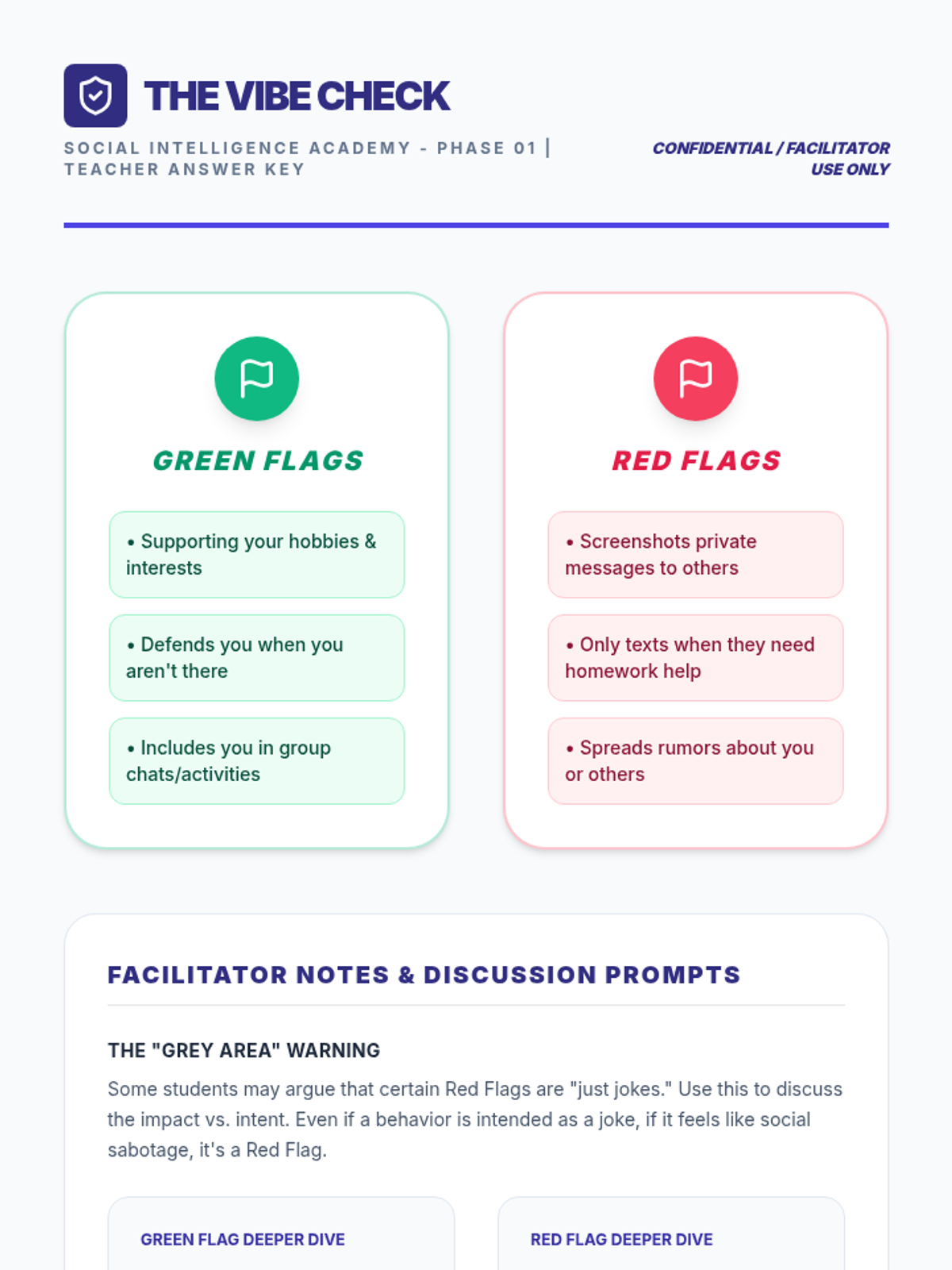
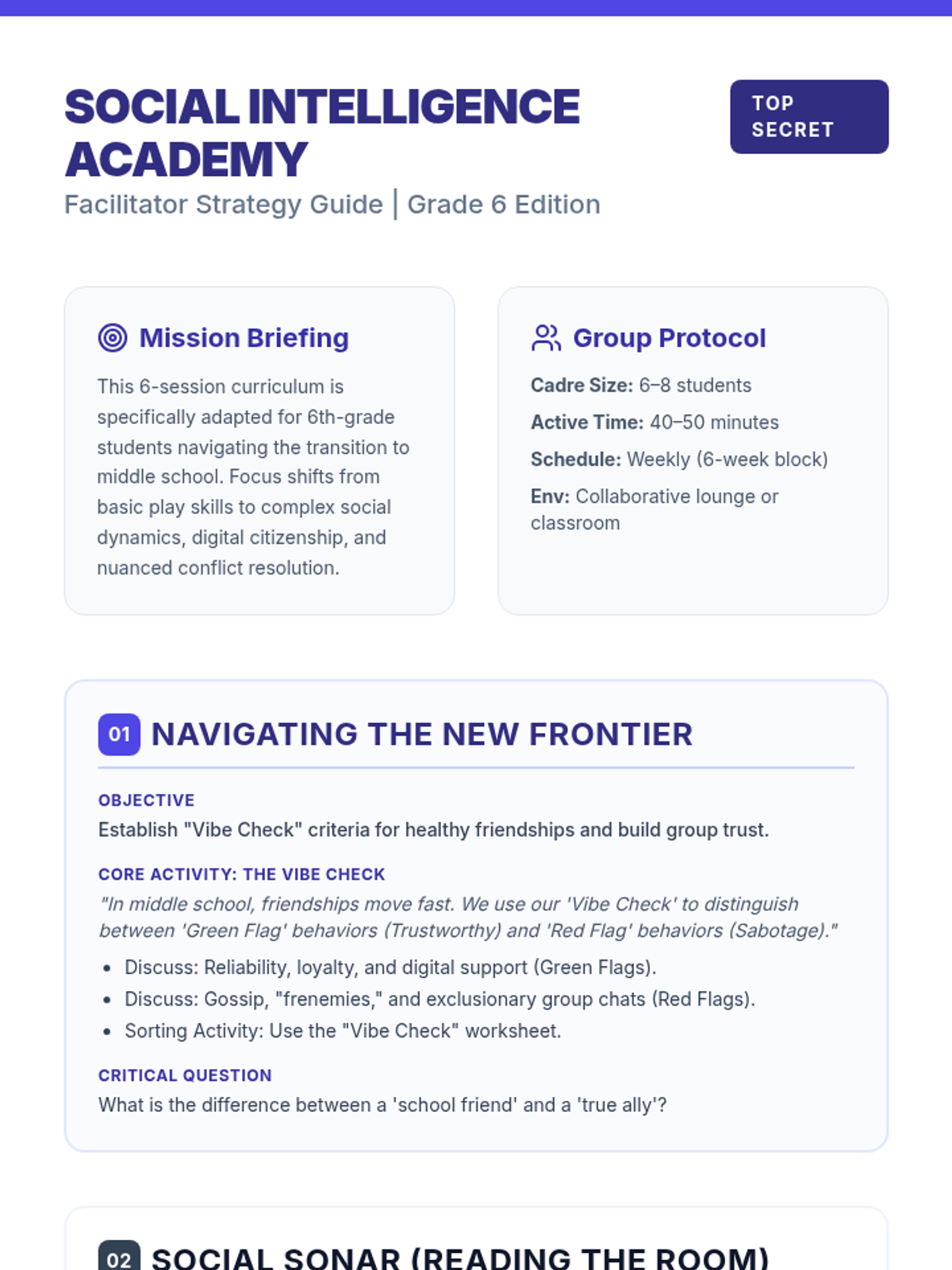
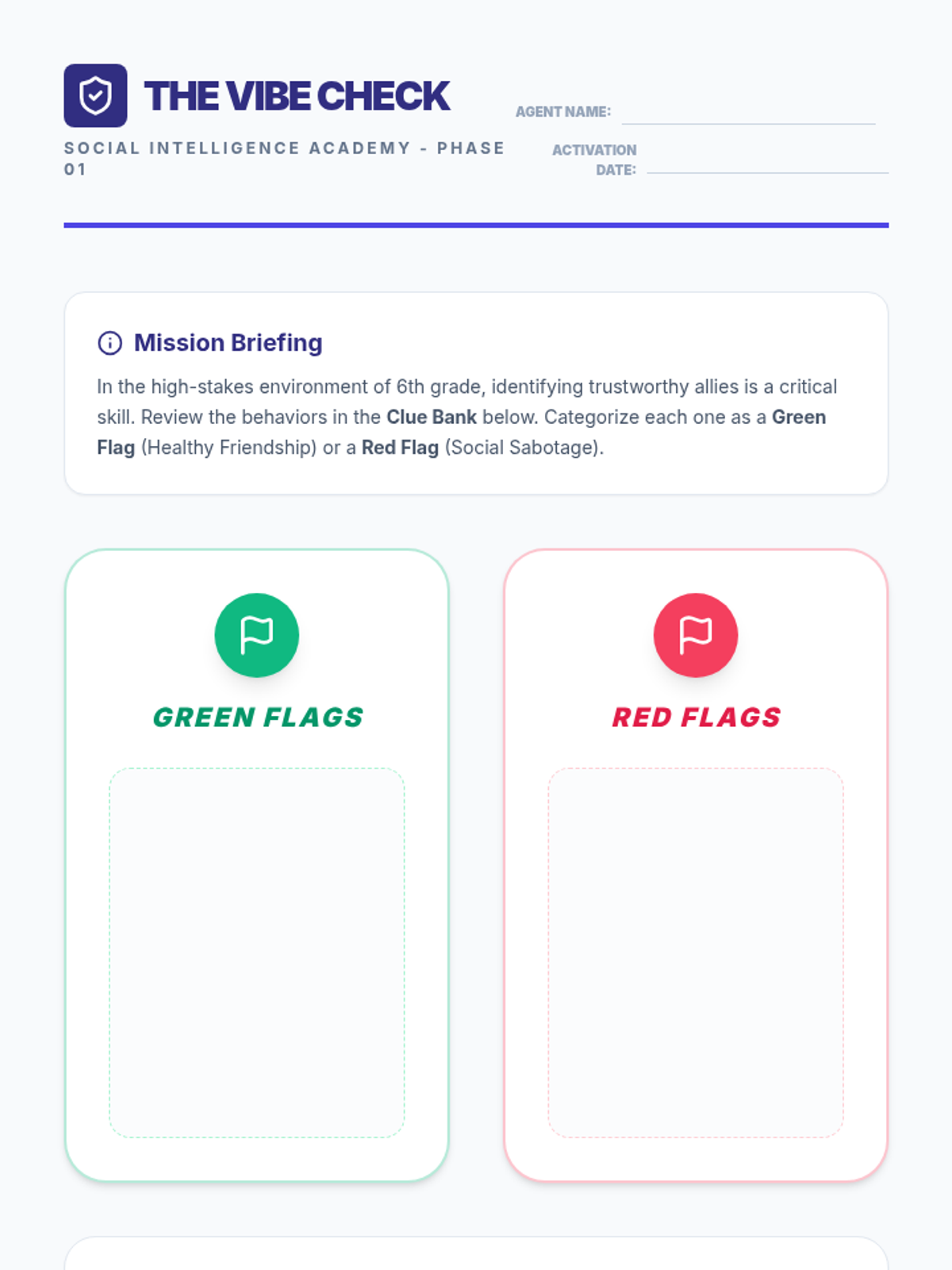
Introduces the Social Intelligence Academy and explores "Vibe Checks"—the criteria for healthy, high-functioning middle school friendships.
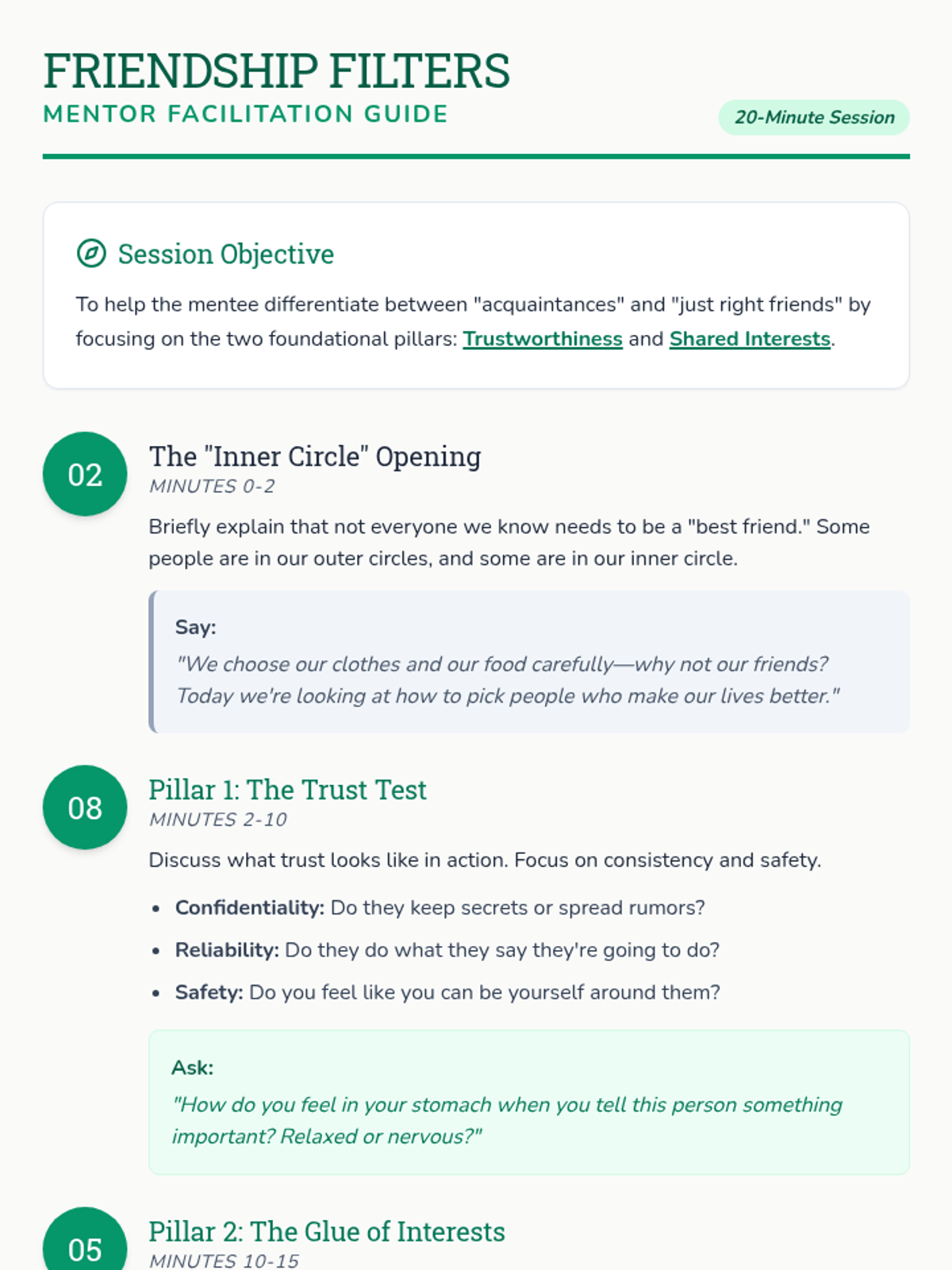
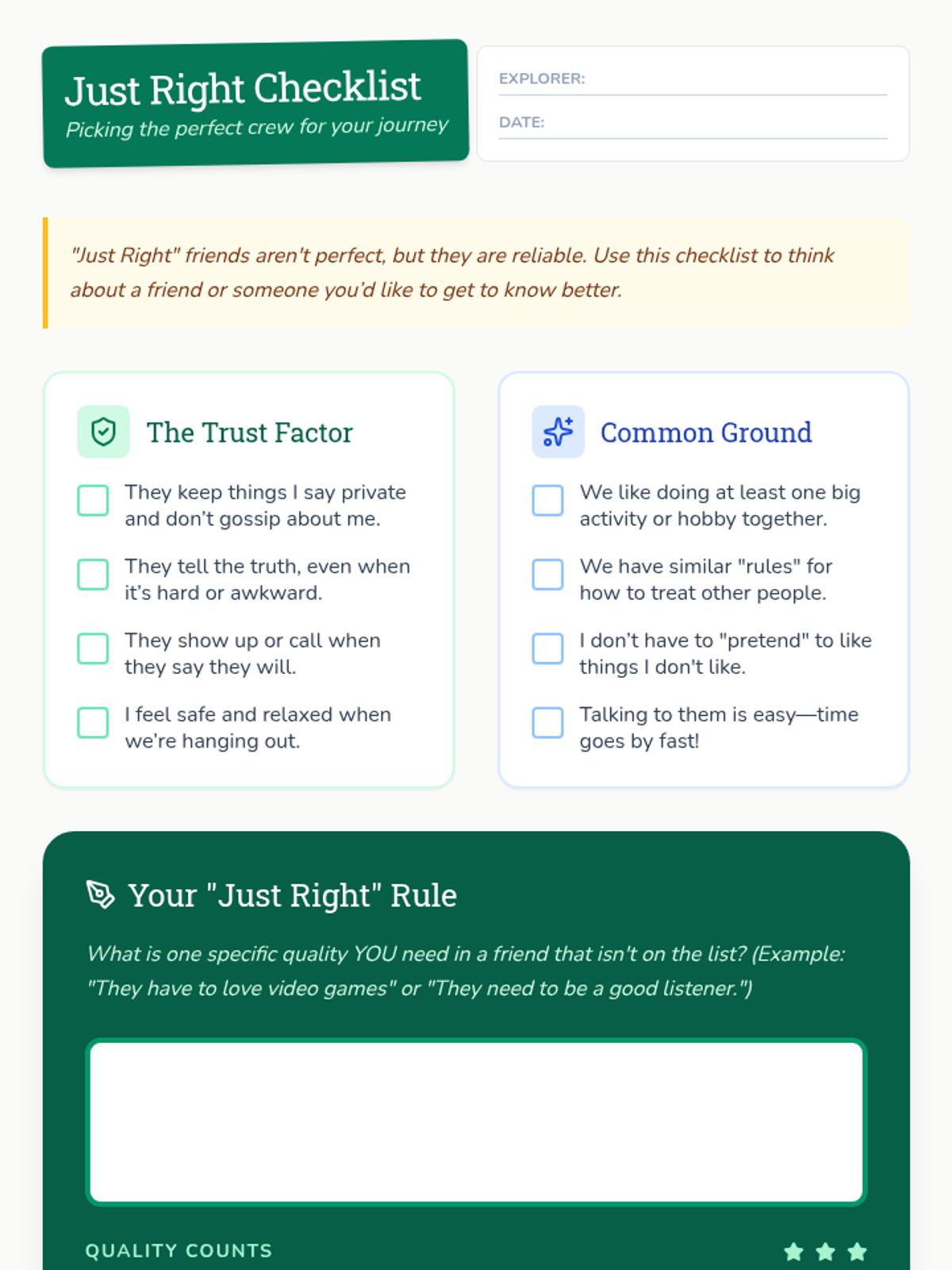
A focused 20-minute mentorship session designed to help mentees identify and cultivate high-quality friendships based on trustworthiness and shared interests.
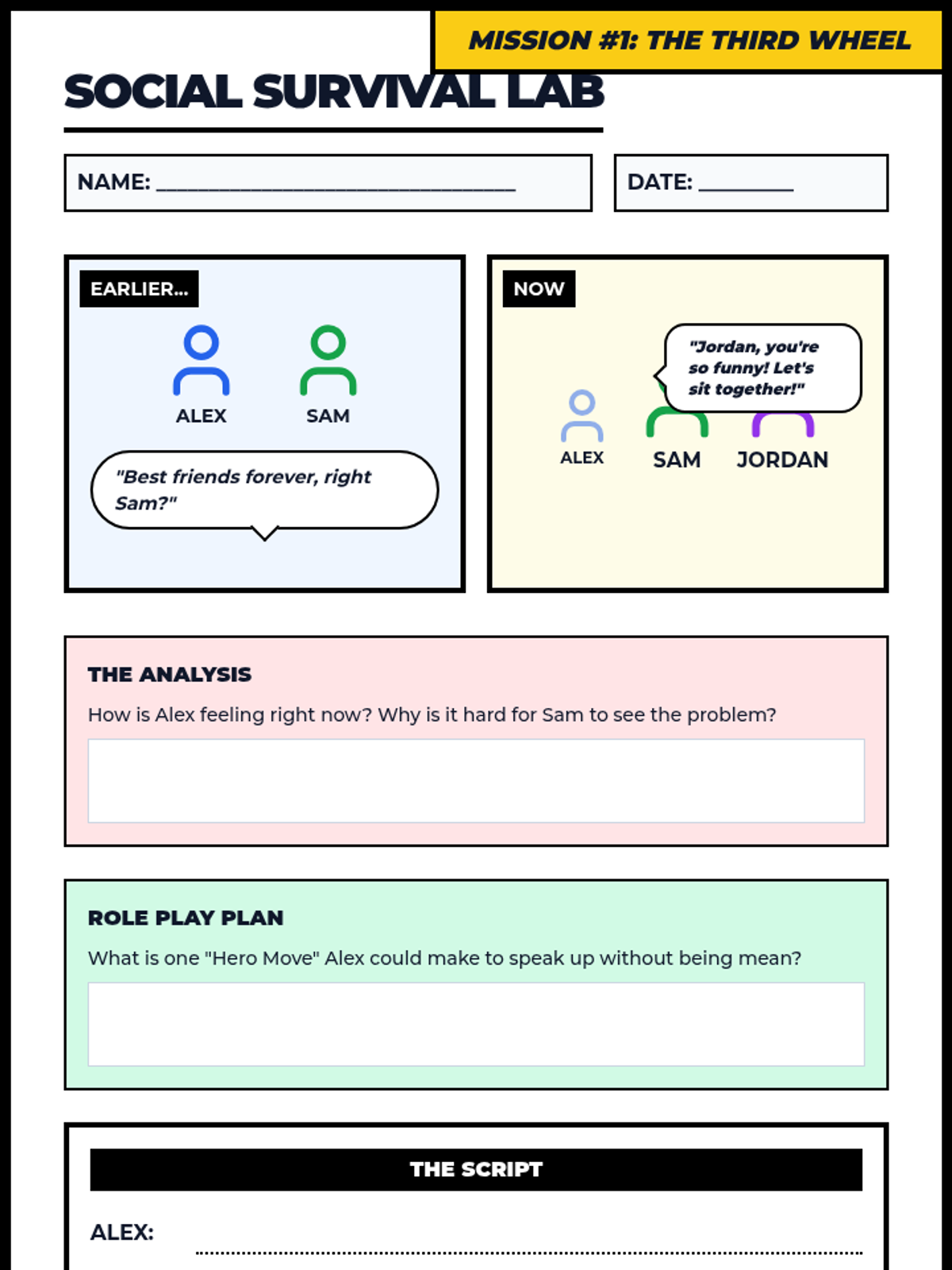
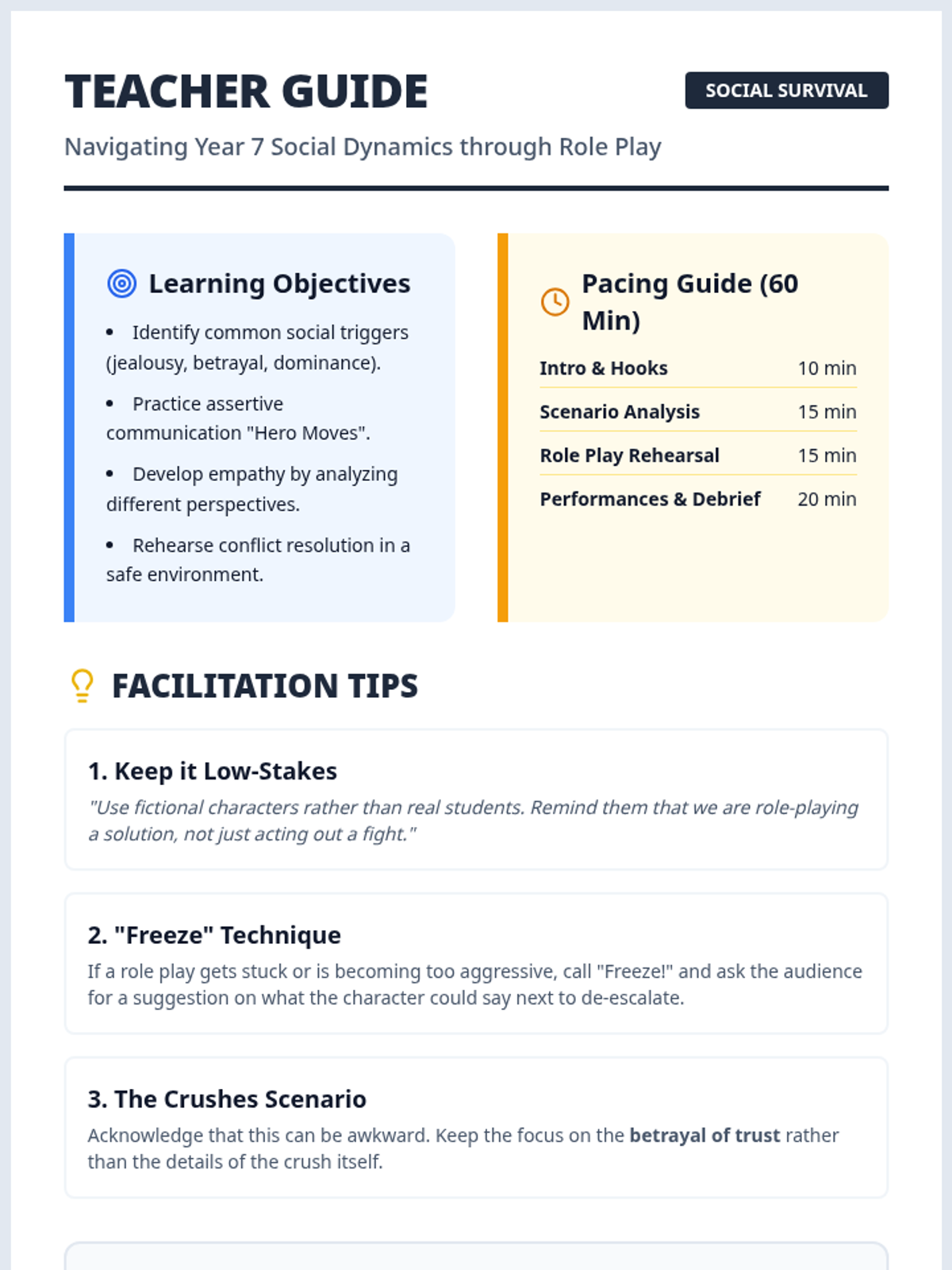
A lesson focused on navigating complex social dynamics in middle school, using role-play and comic-style scenarios to build empathy and conflict resolution skills.
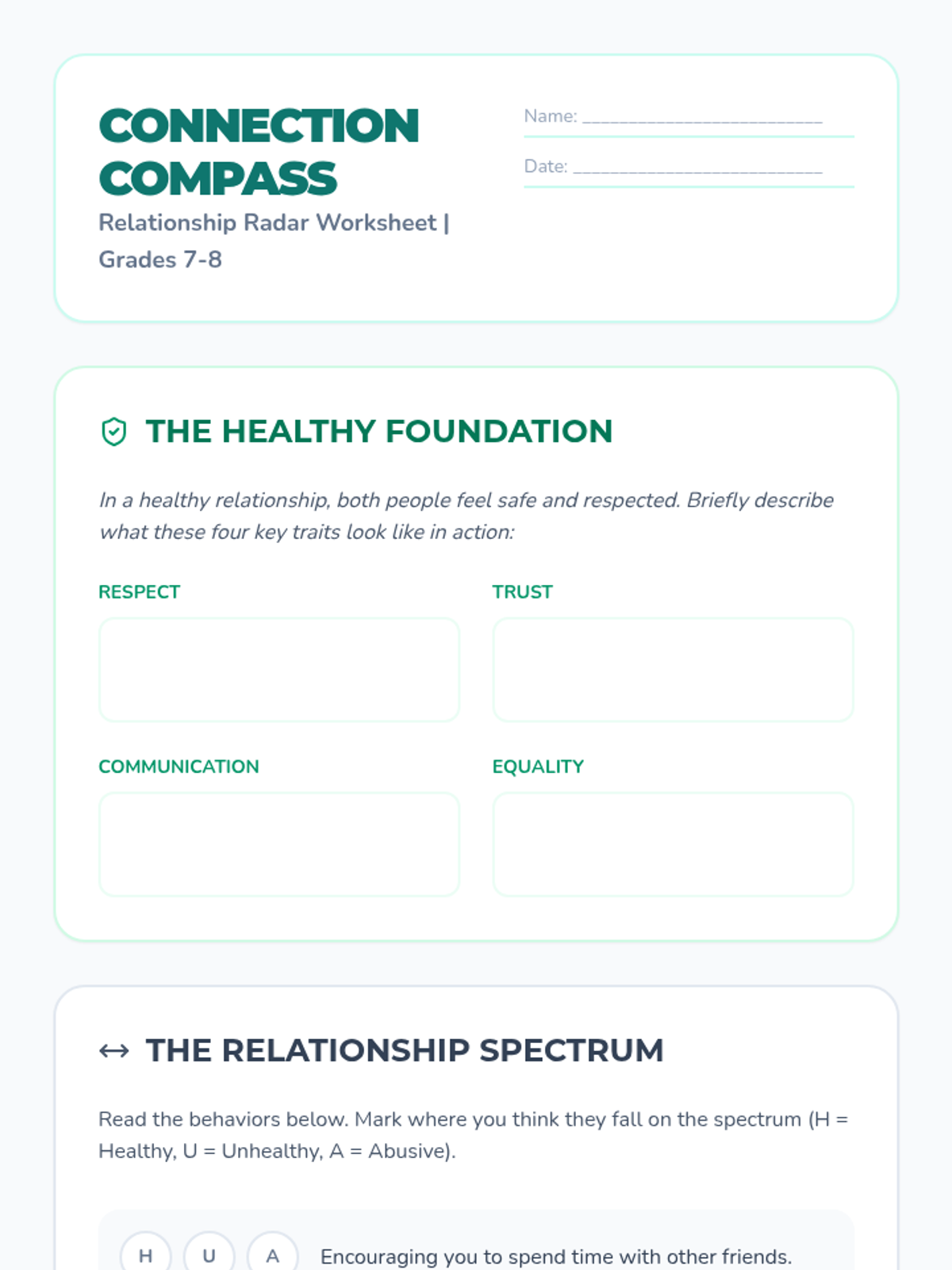
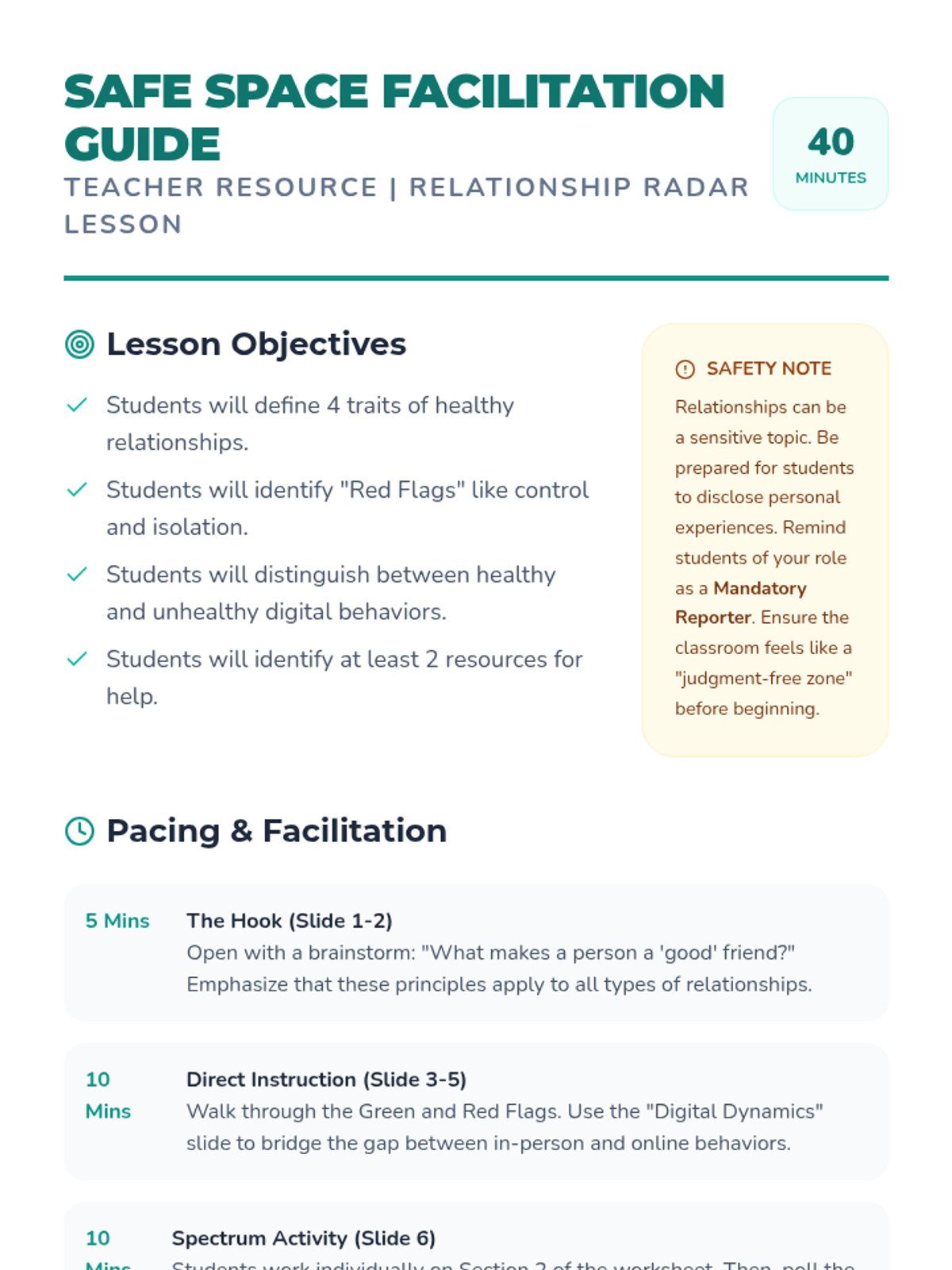
A 40-minute Social-Emotional Learning lesson for grades 7-8 focused on identifying healthy and unhealthy relationship patterns. Students explore the characteristics of respect and trust, recognize red flags like control and isolation, and discuss the nuances of digital-age relationships.
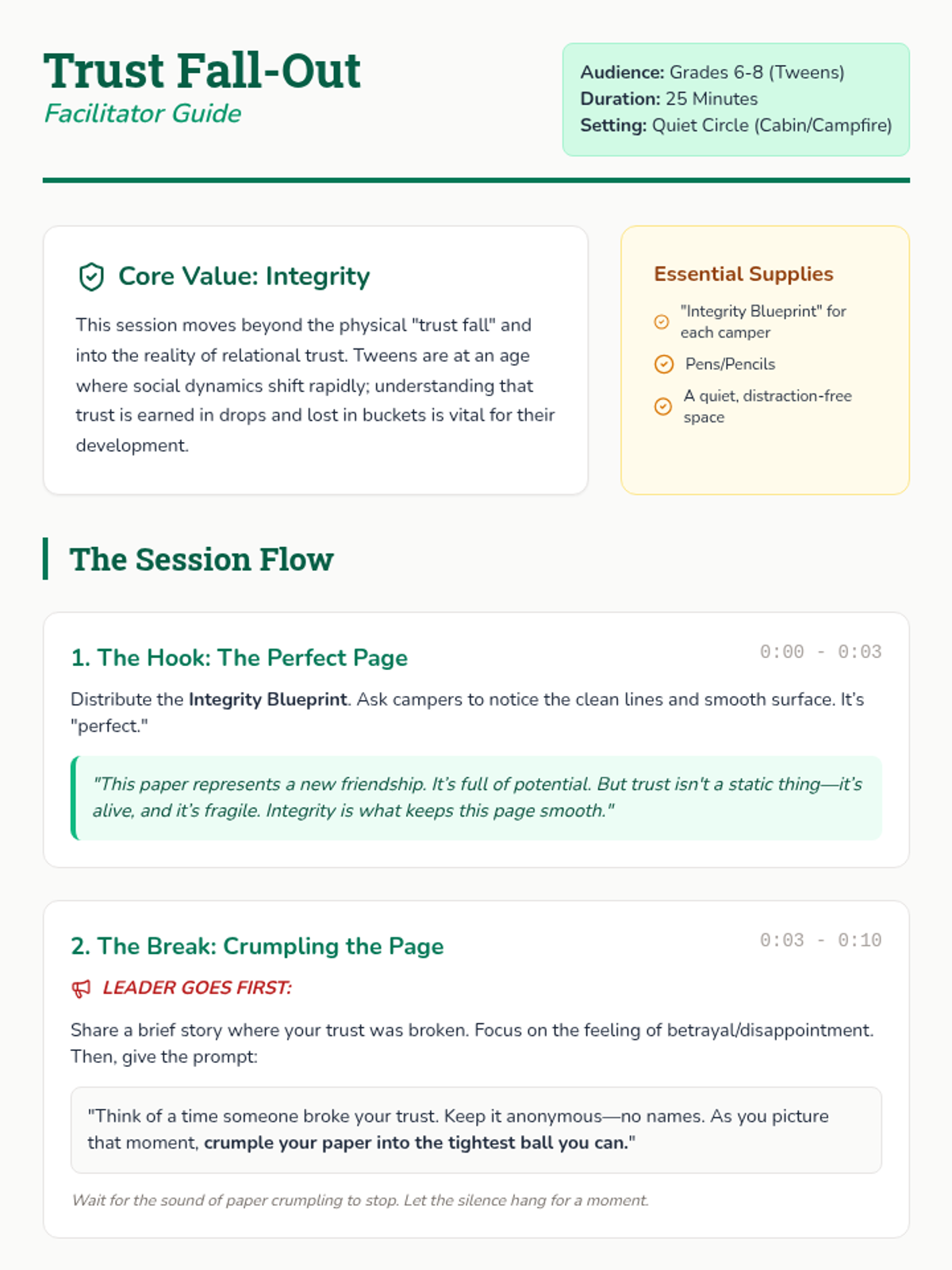
An interactive 25-minute discussion-based lesson for camp counselors to lead tweens in exploring the fragile nature of trust, using the crumpled paper metaphor to understand integrity and rebuilding relationships.
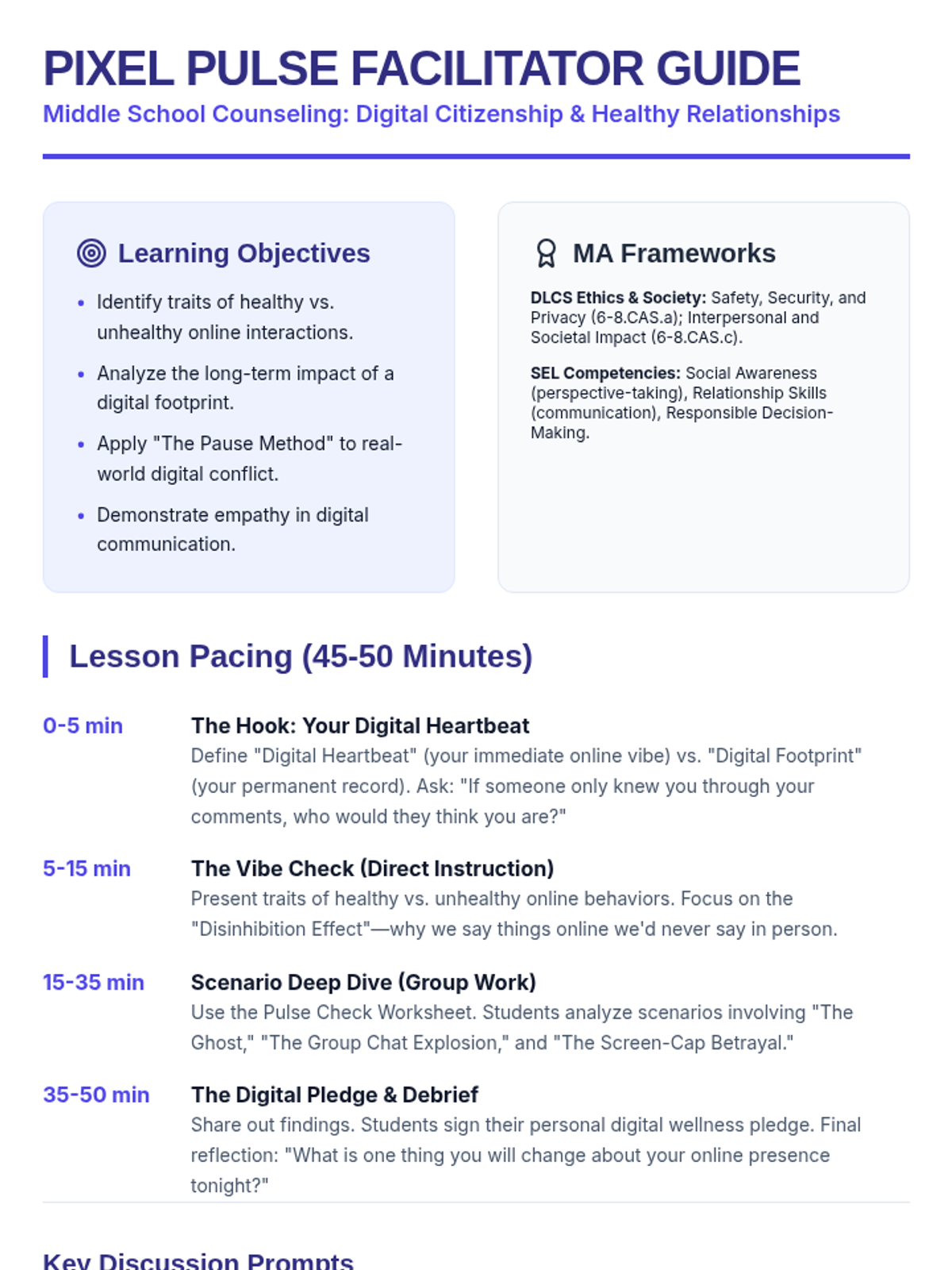
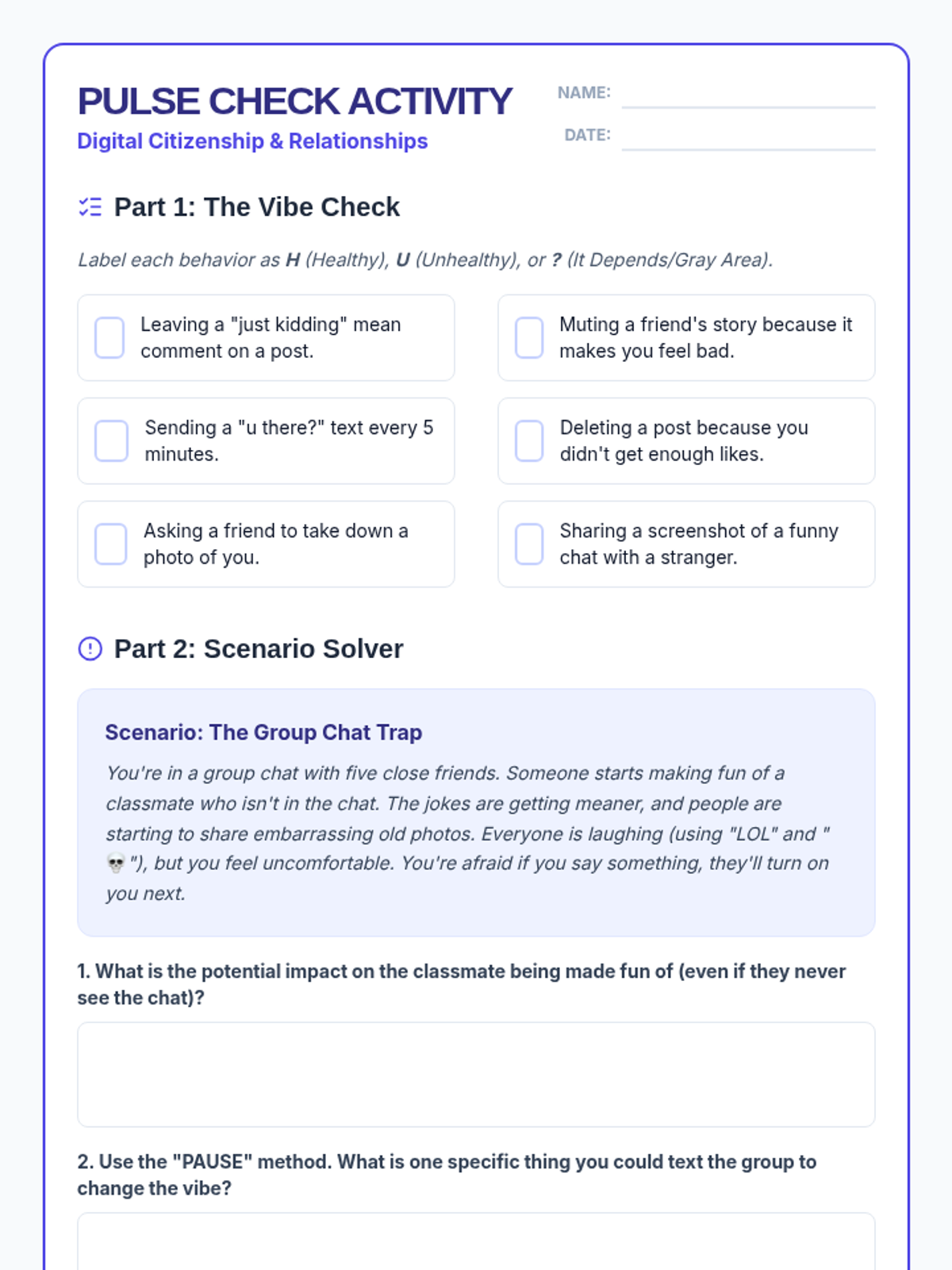
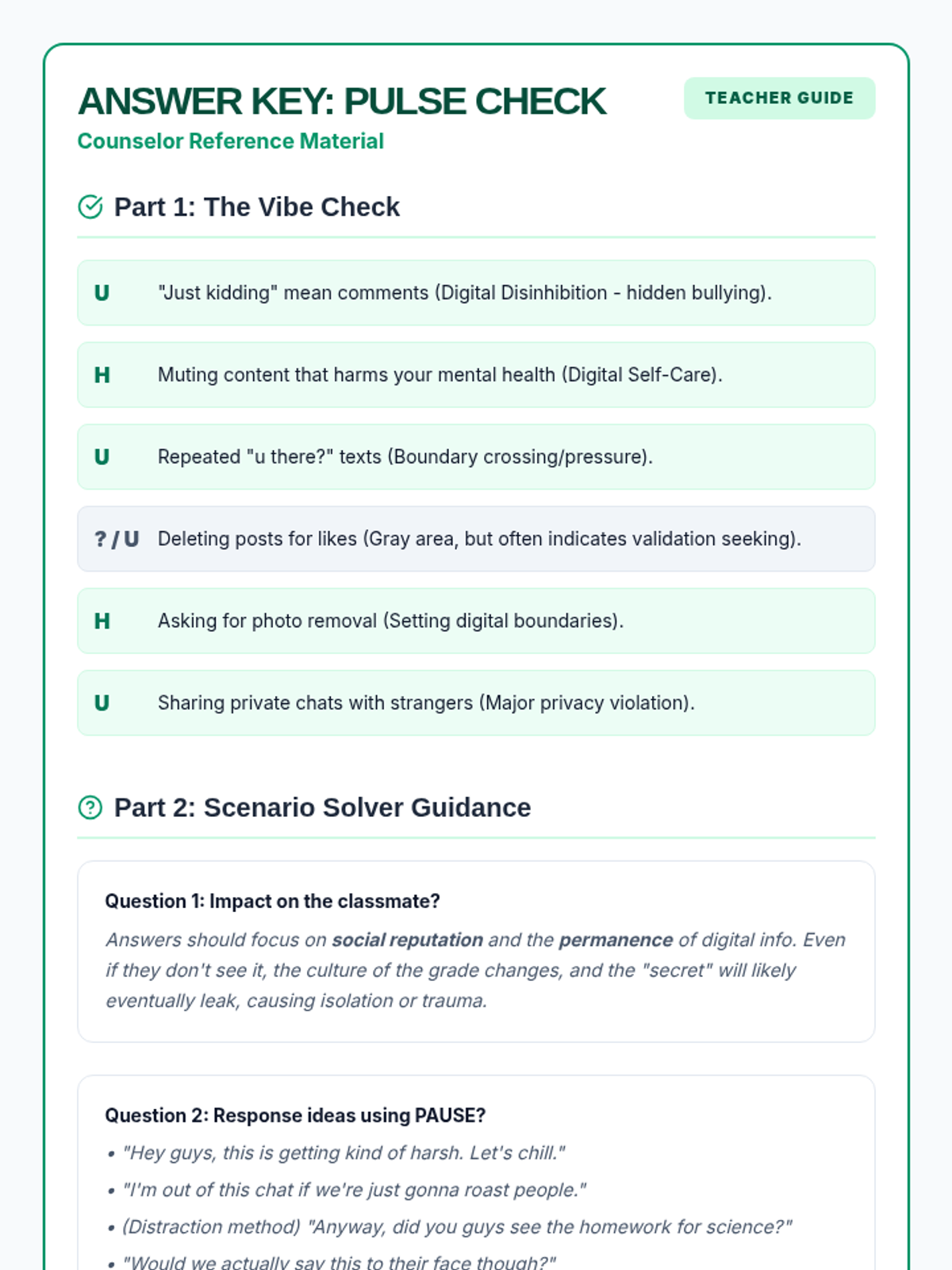
A comprehensive middle school counseling lesson focused on navigating the complexities of online relationships, social media etiquette, and maintaining a healthy digital footprint. Aligned with Massachusetts DLCS and SEL frameworks, students explore real-world scenarios to build empathy and responsible decision-making skills.
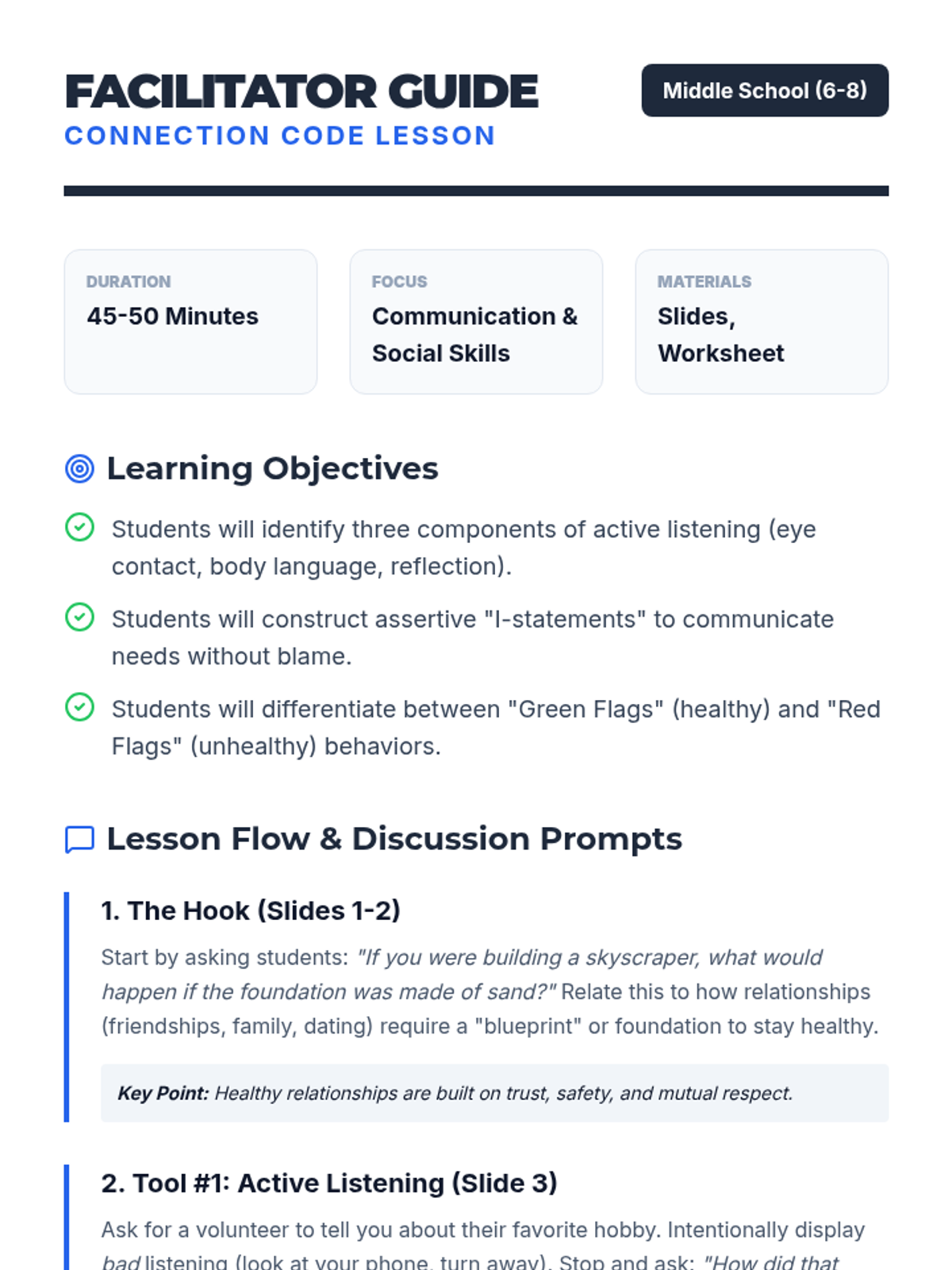
A middle school counseling lesson focused on developing strong interpersonal skills through active listening, assertive communication, and identifying healthy relationship dynamics.
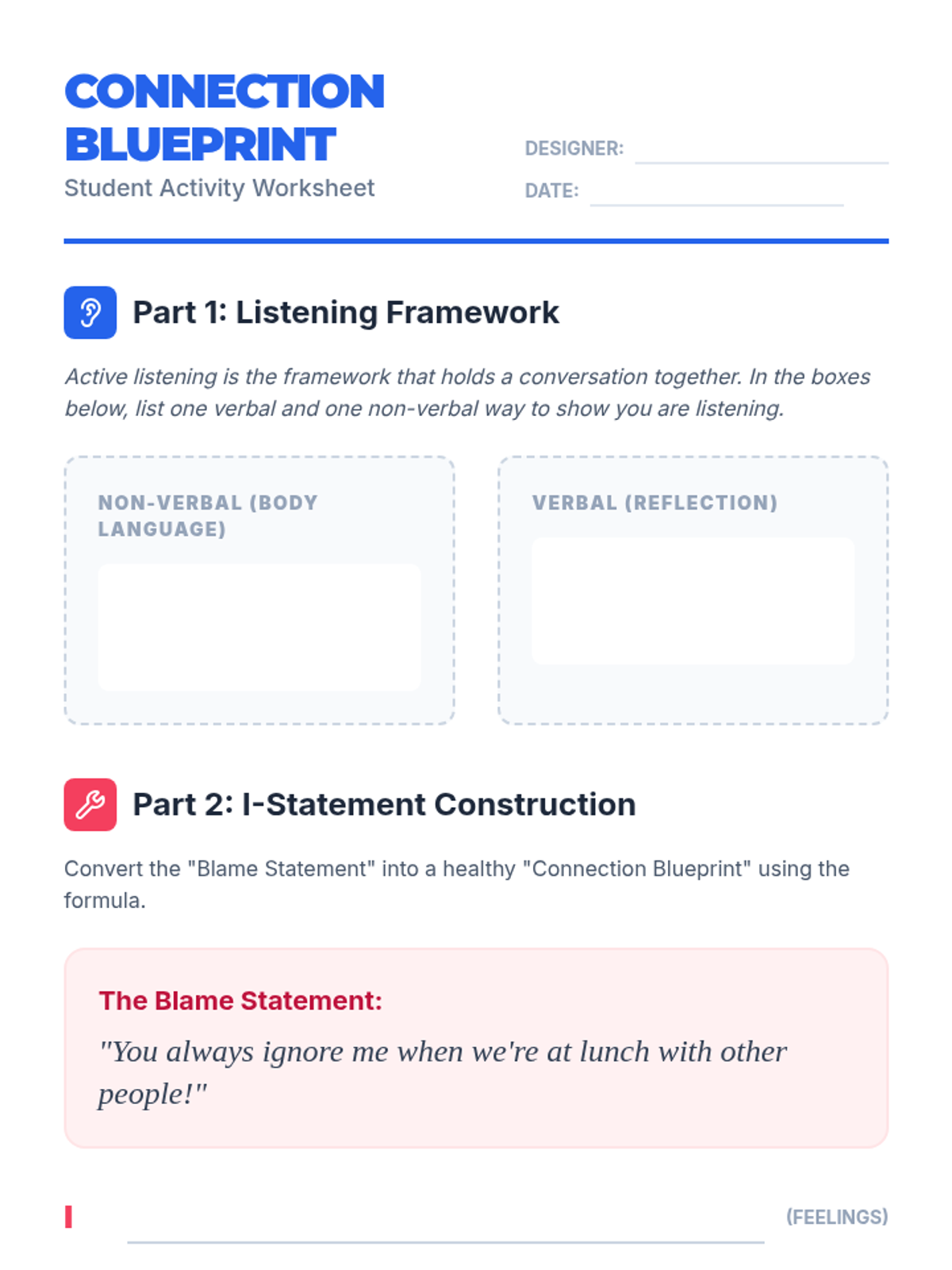
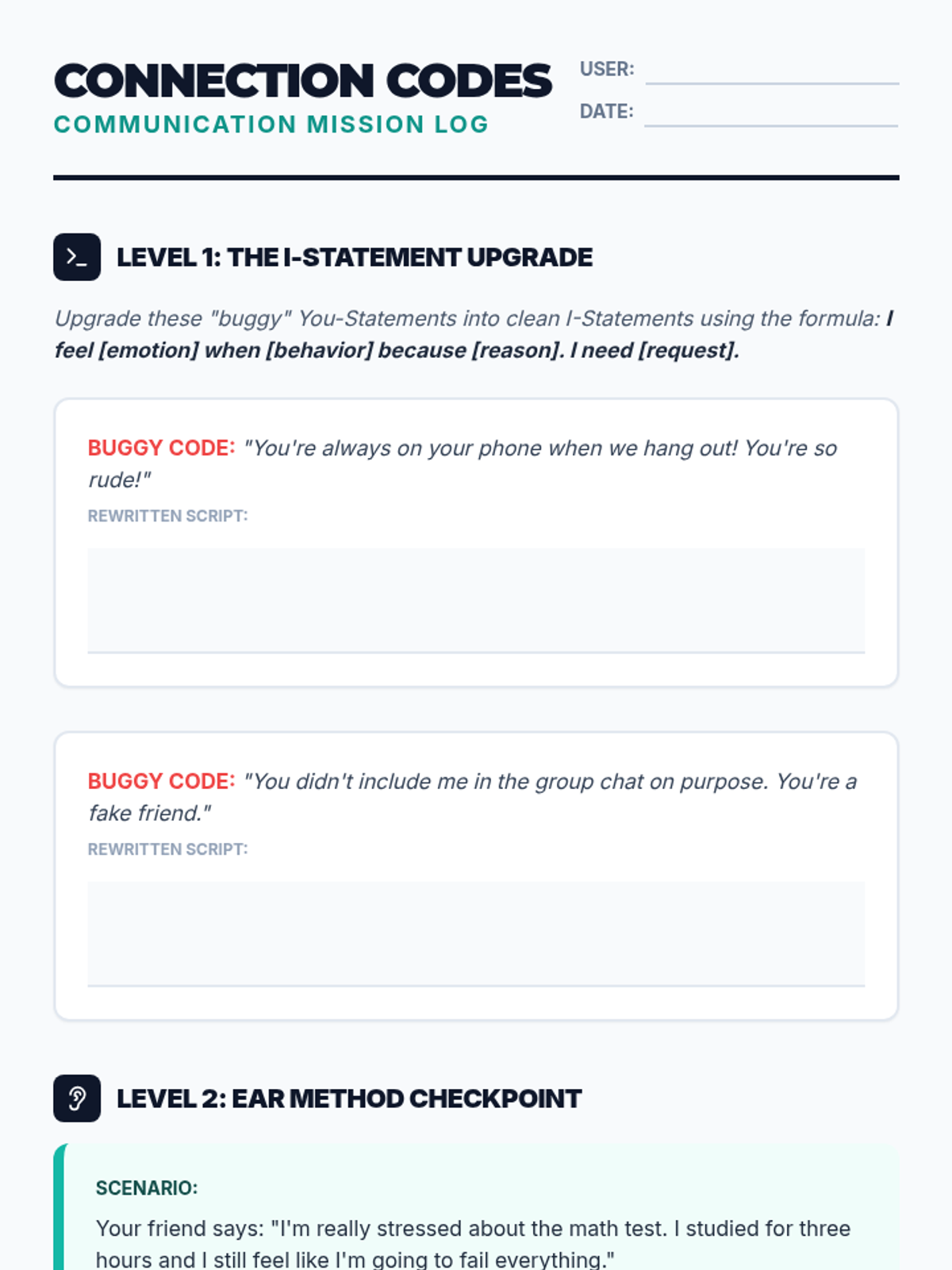
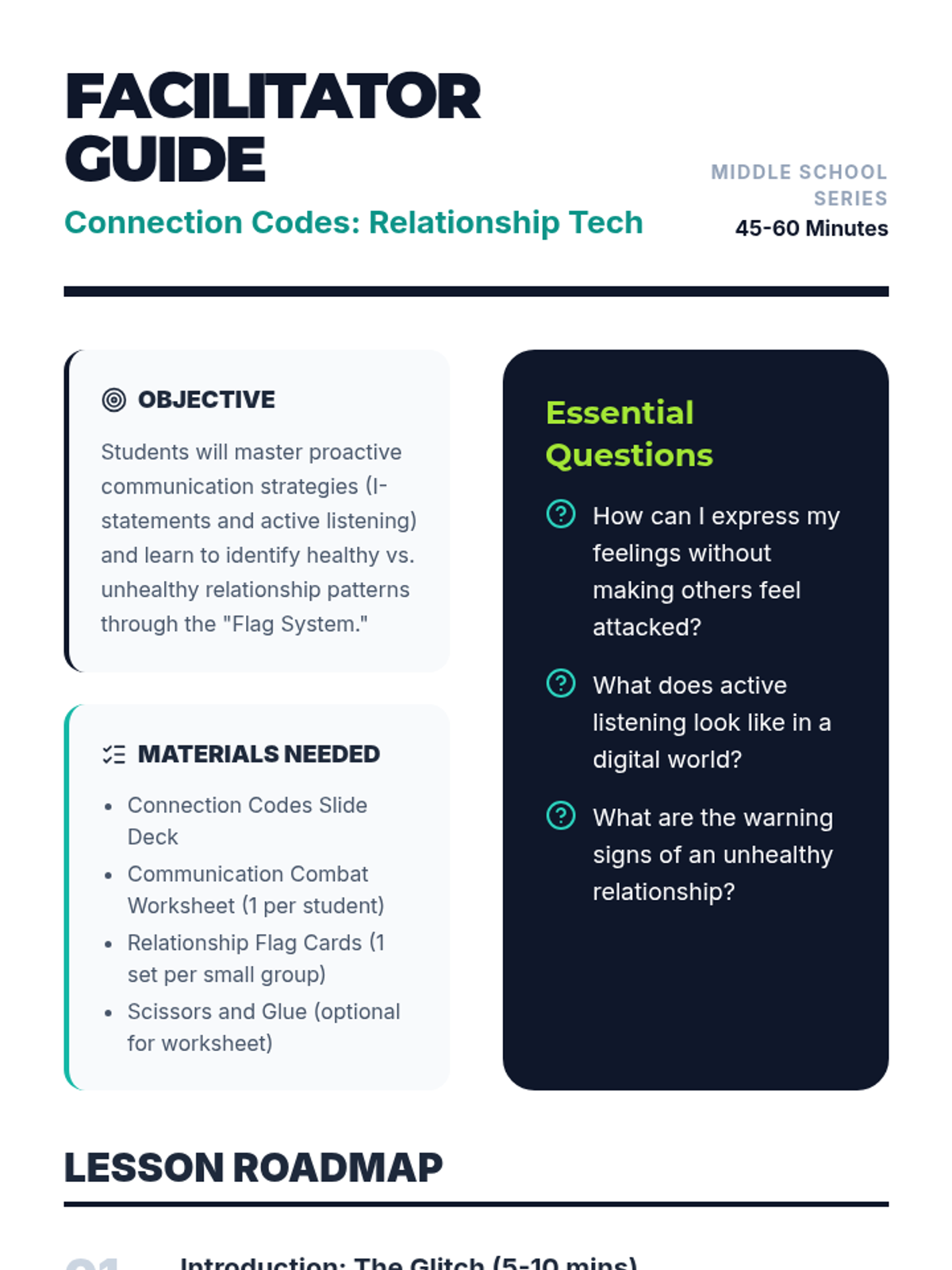
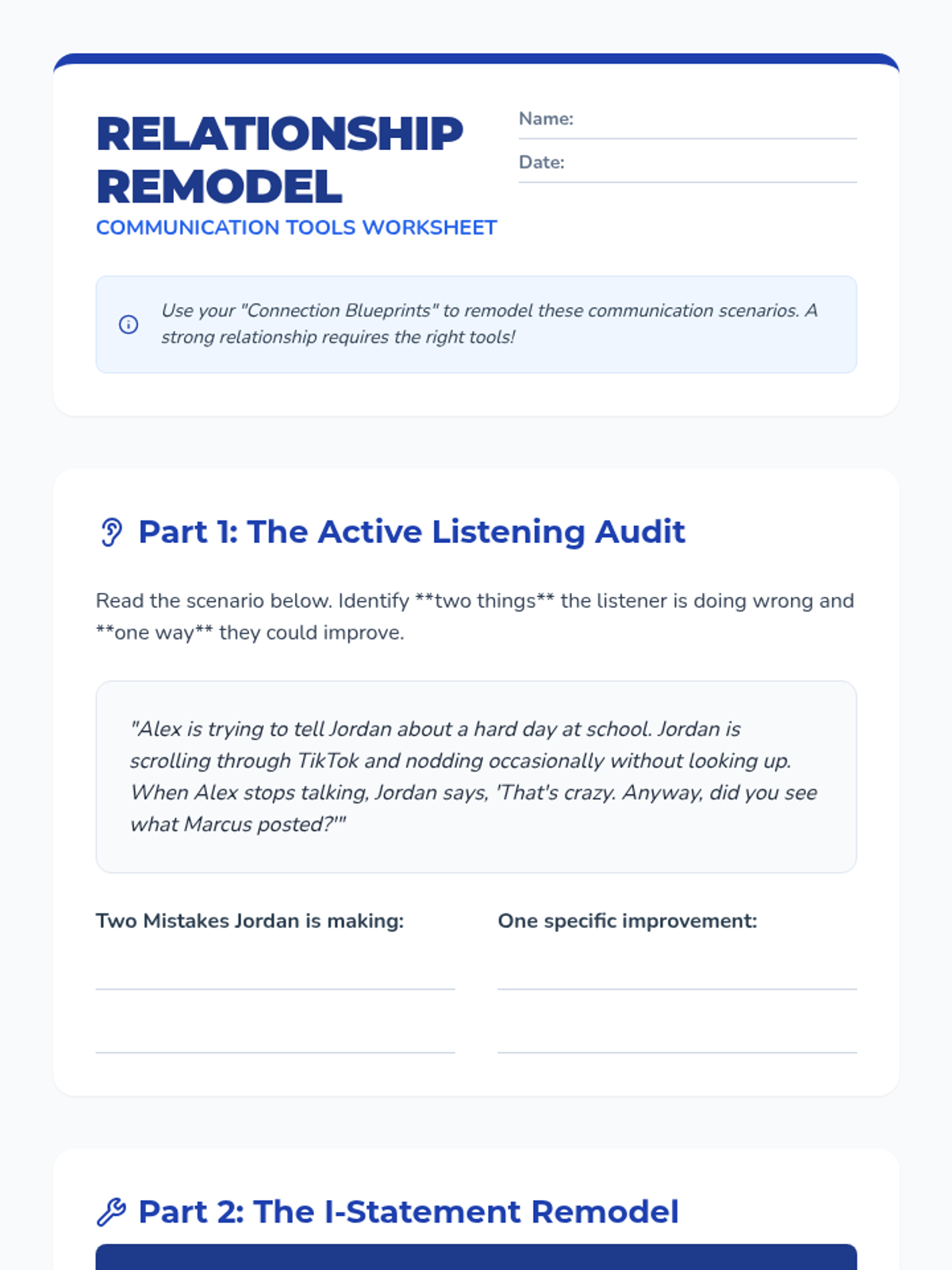
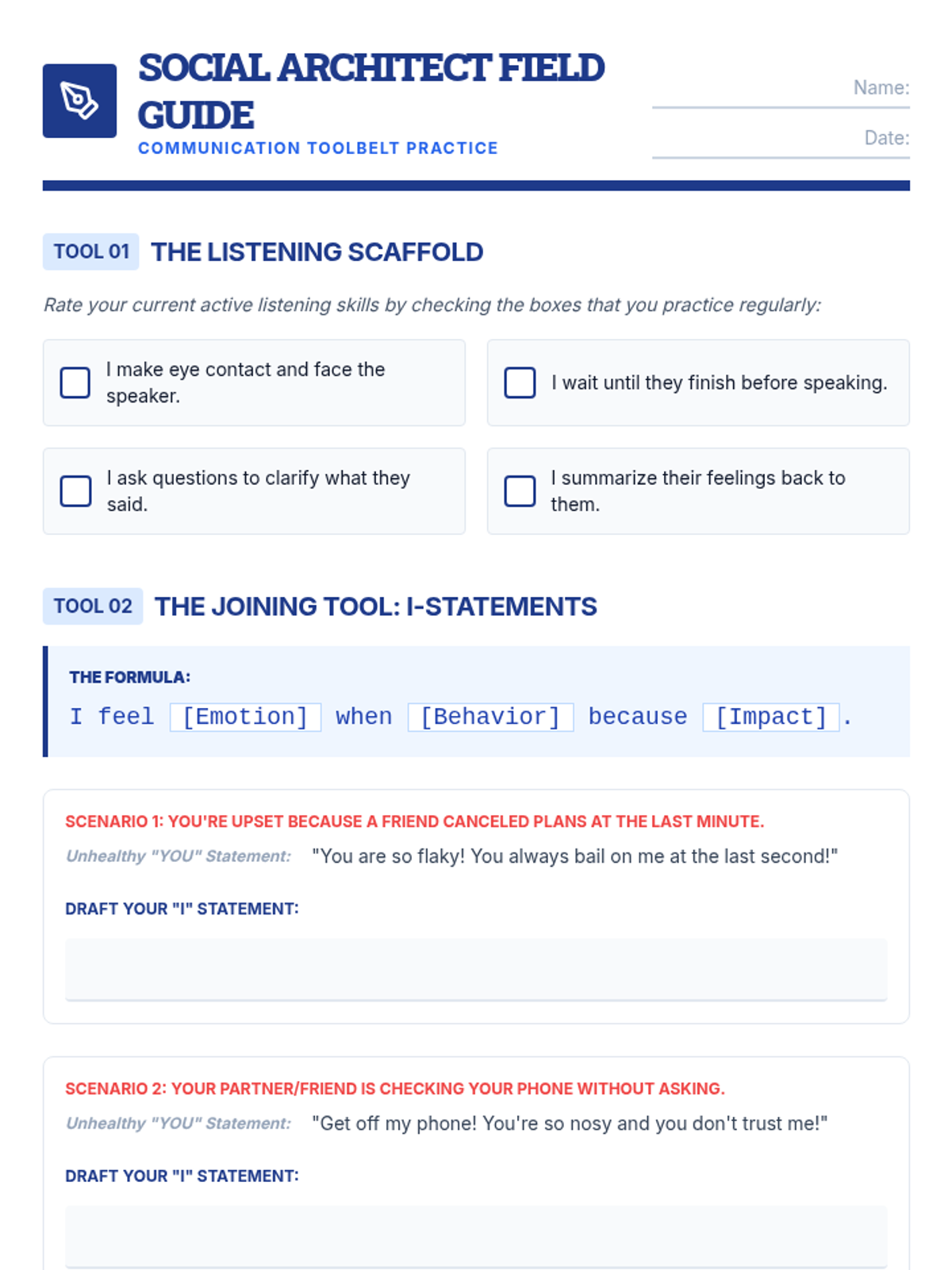
A middle school counseling lesson focused on mastering communication through active listening and I-statements, while identifying healthy and unhealthy relationship patterns.
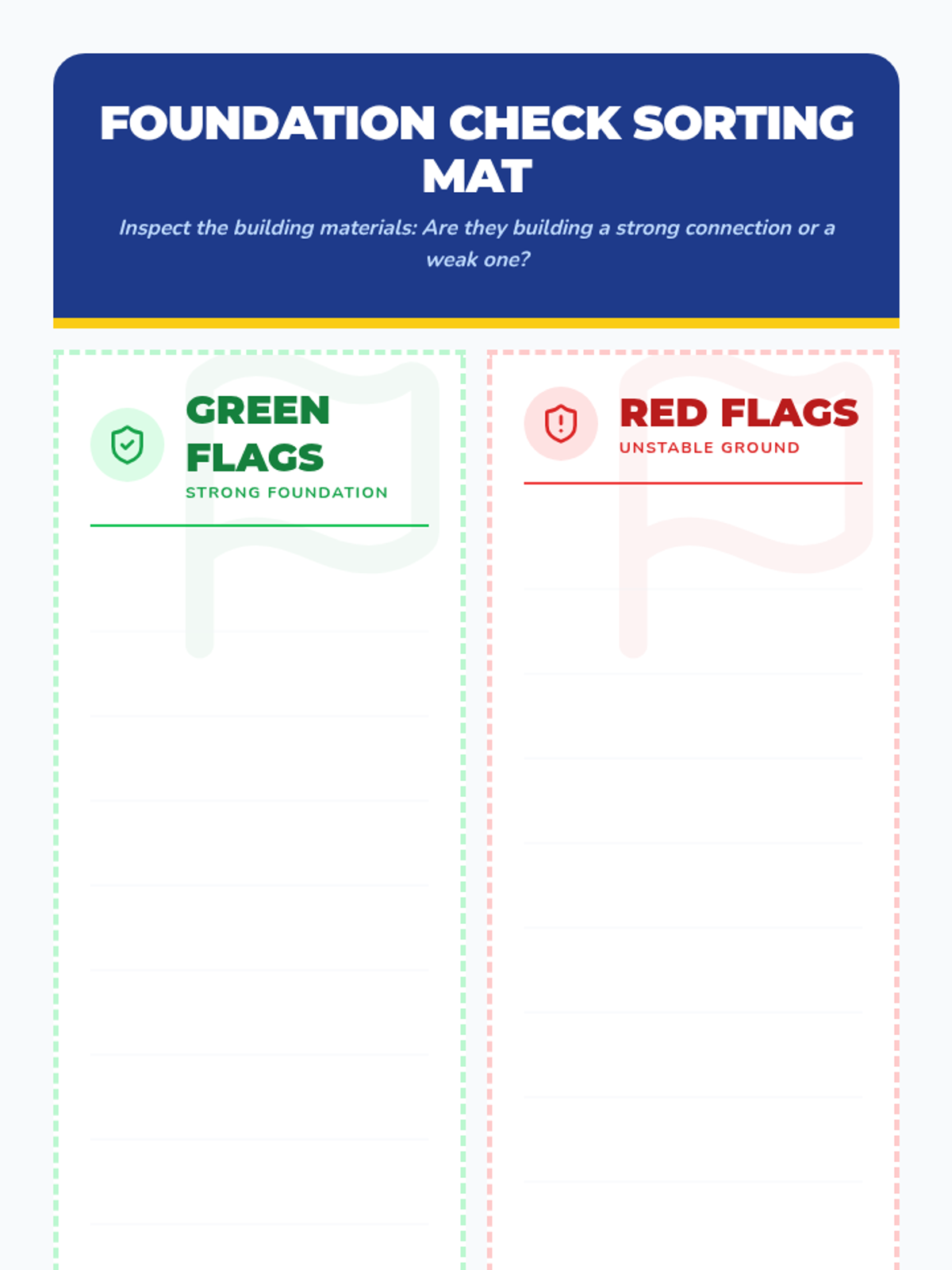
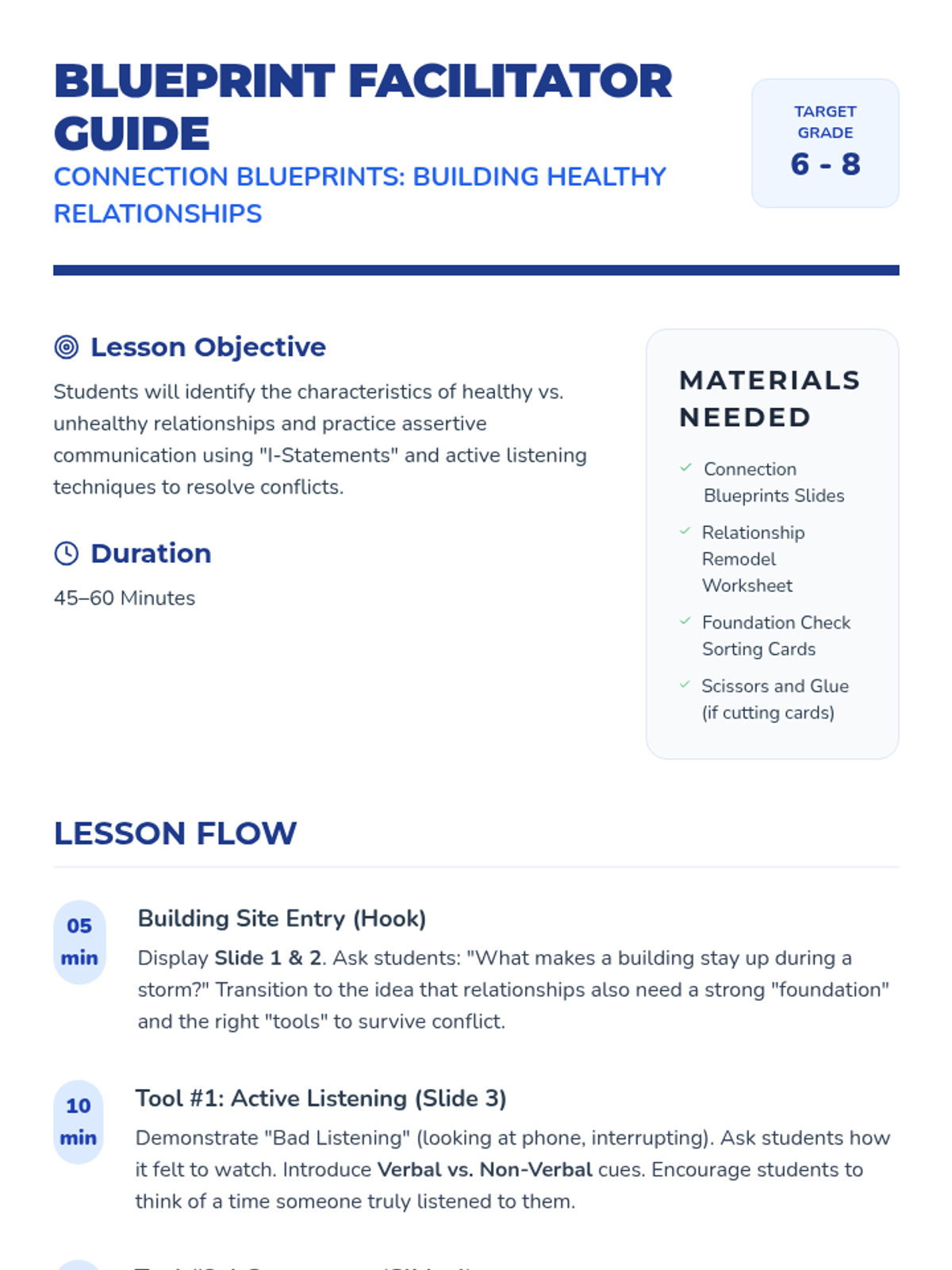
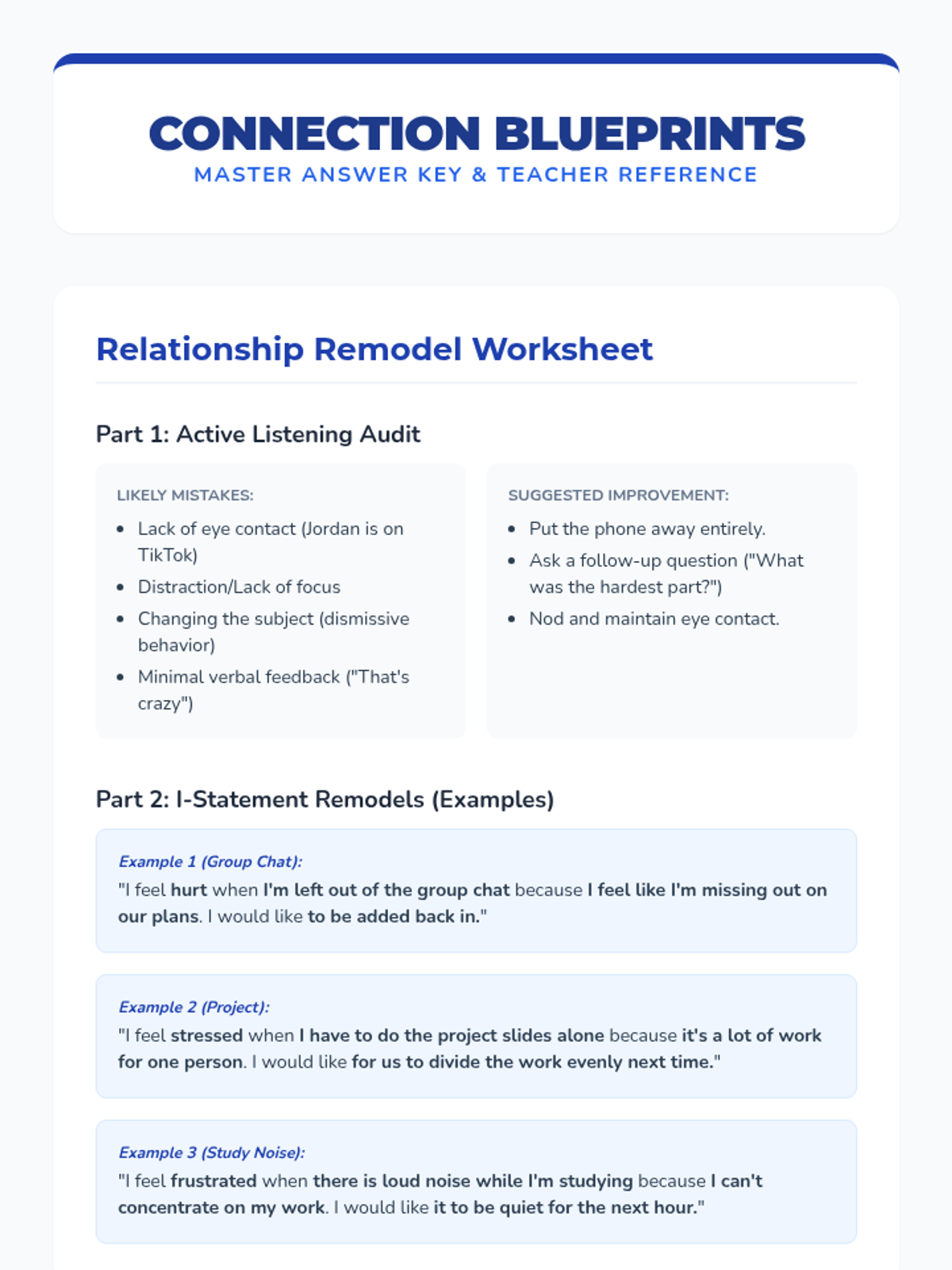
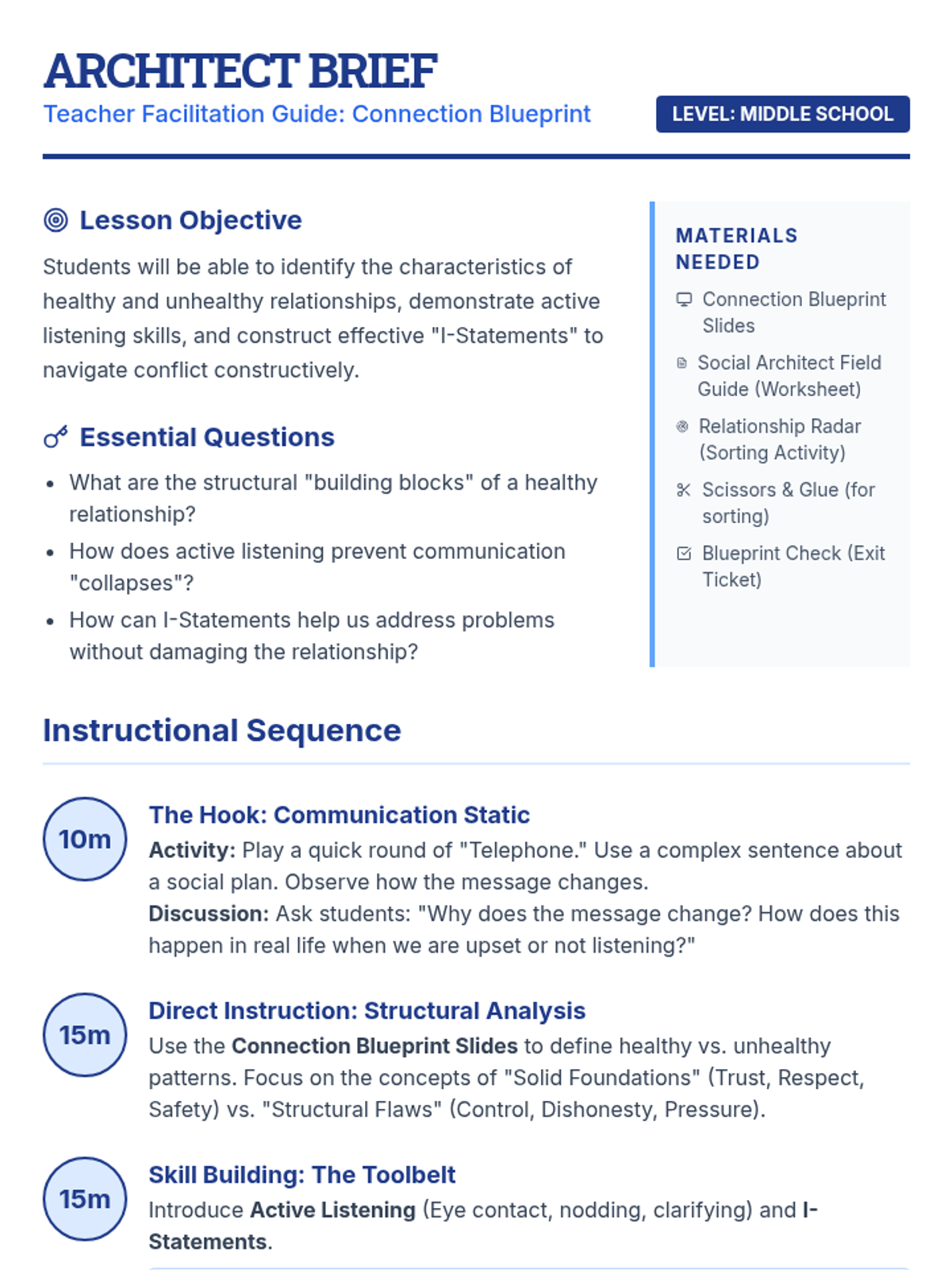
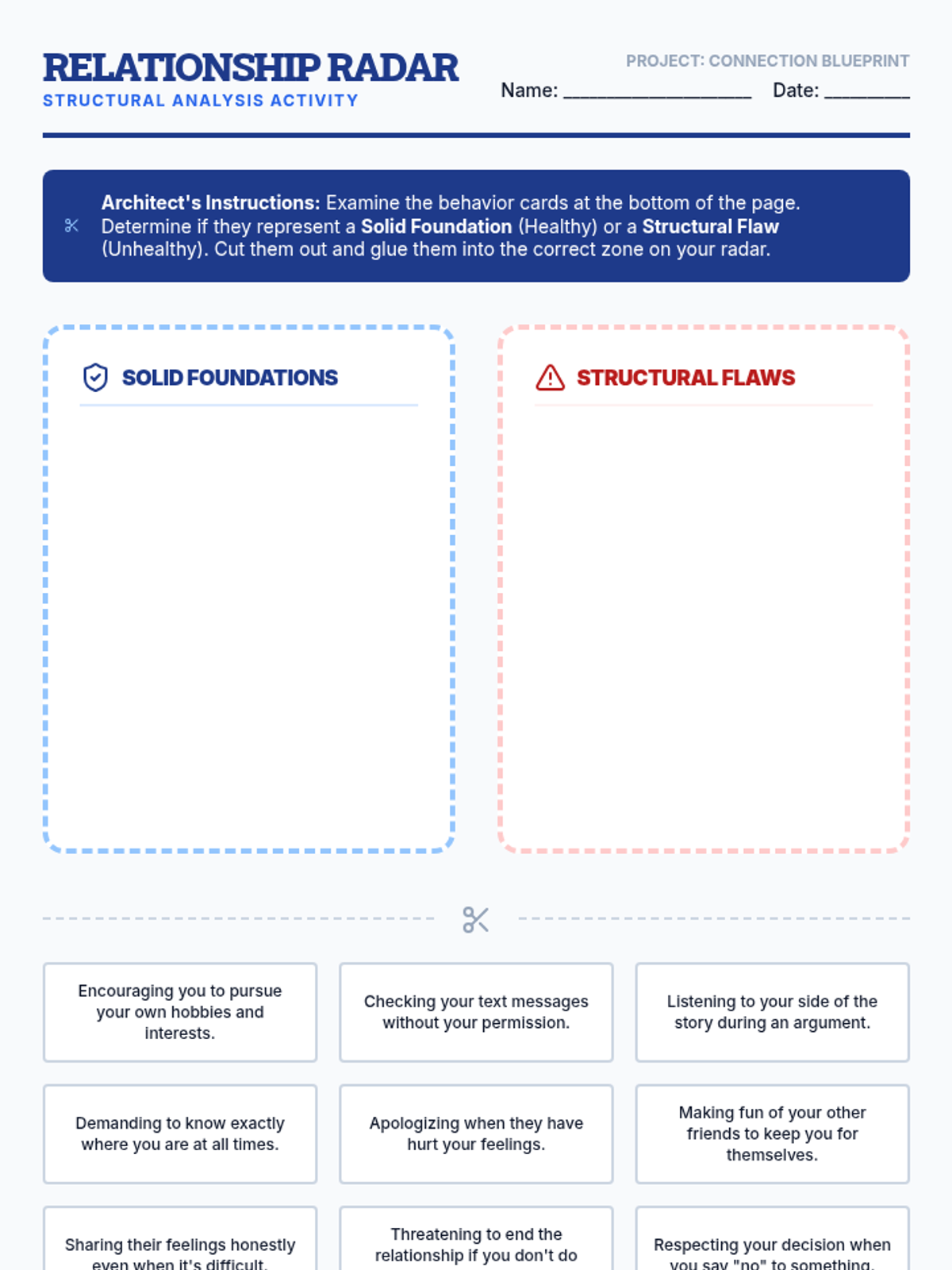
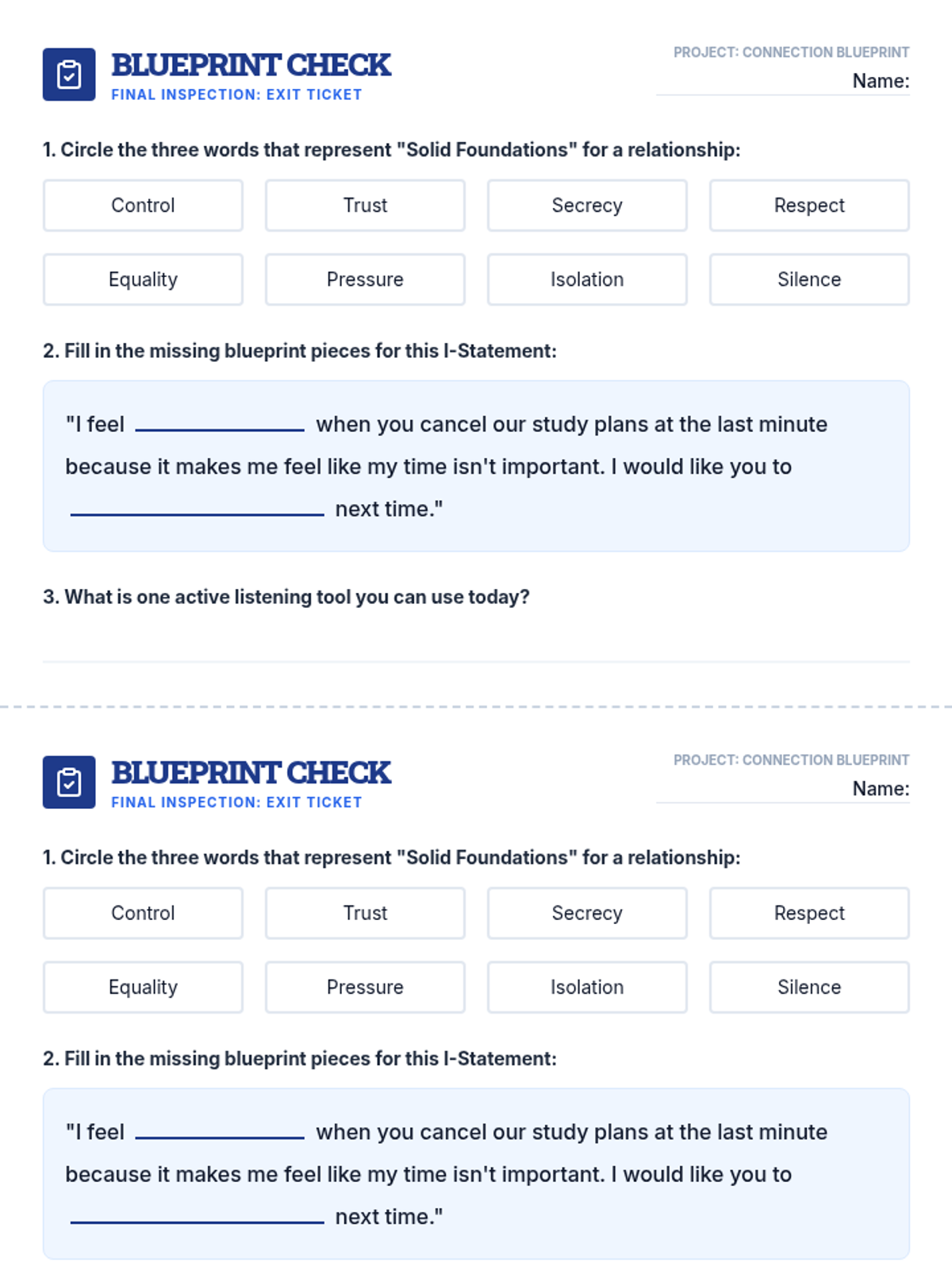
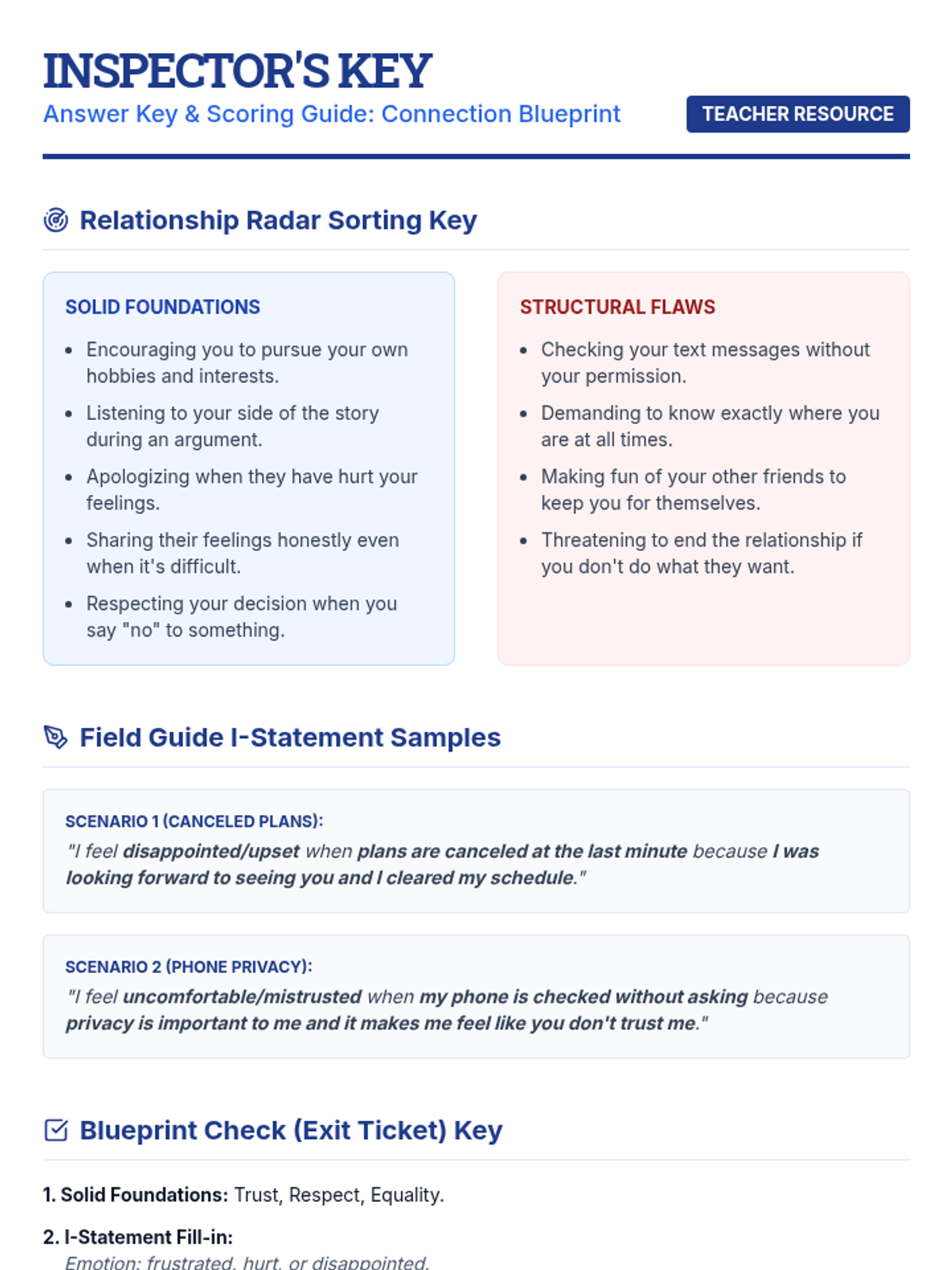
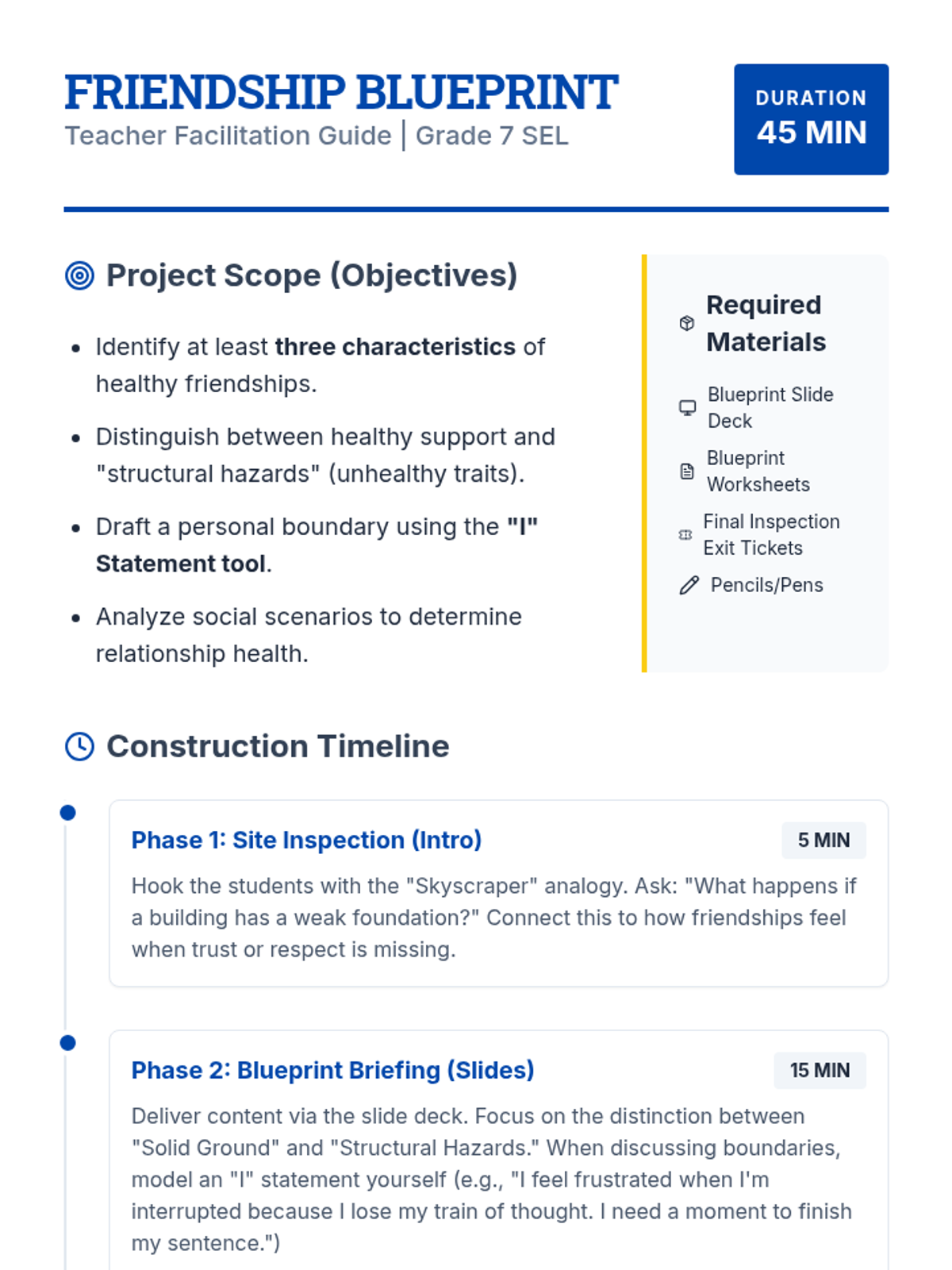
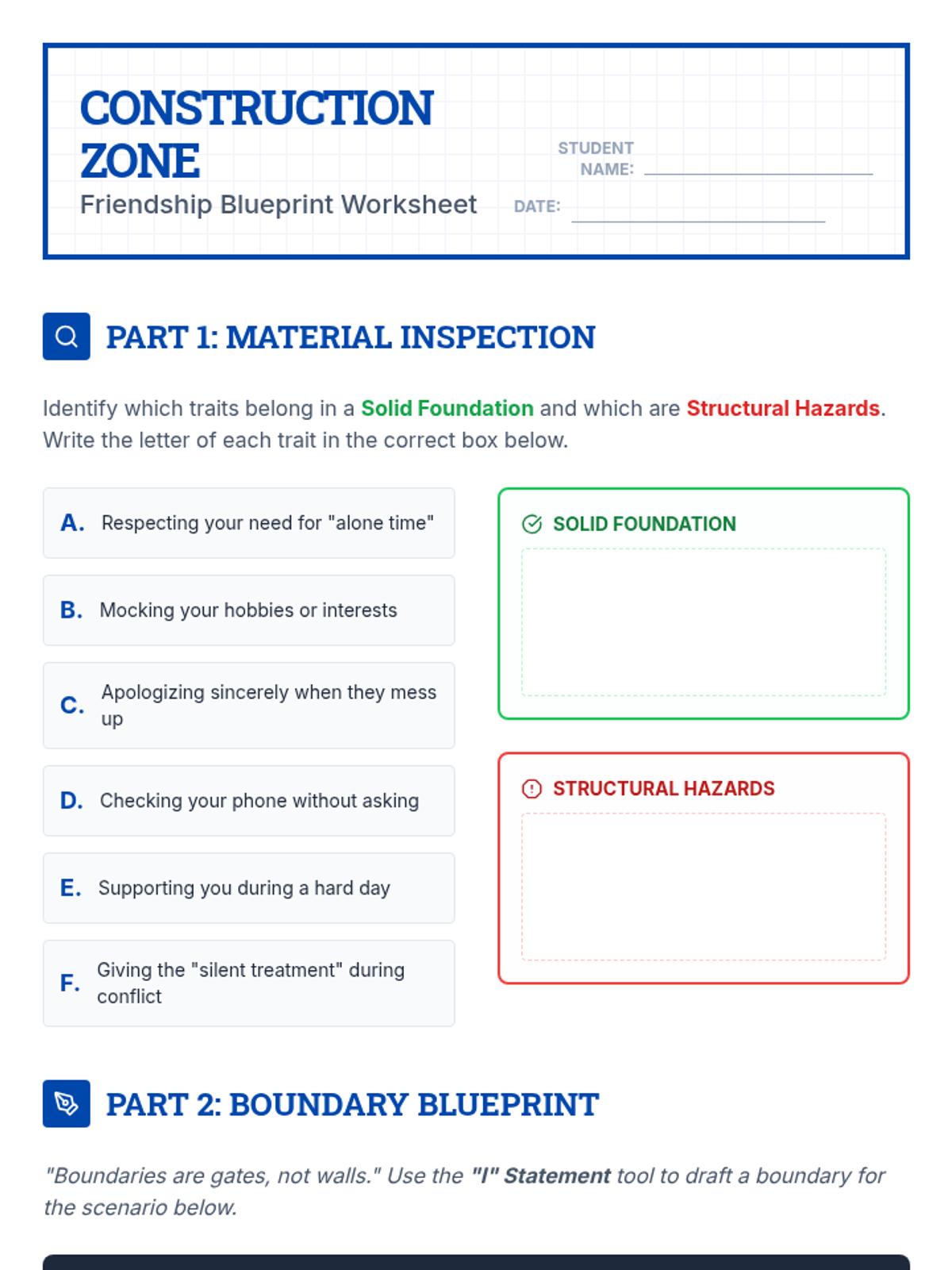
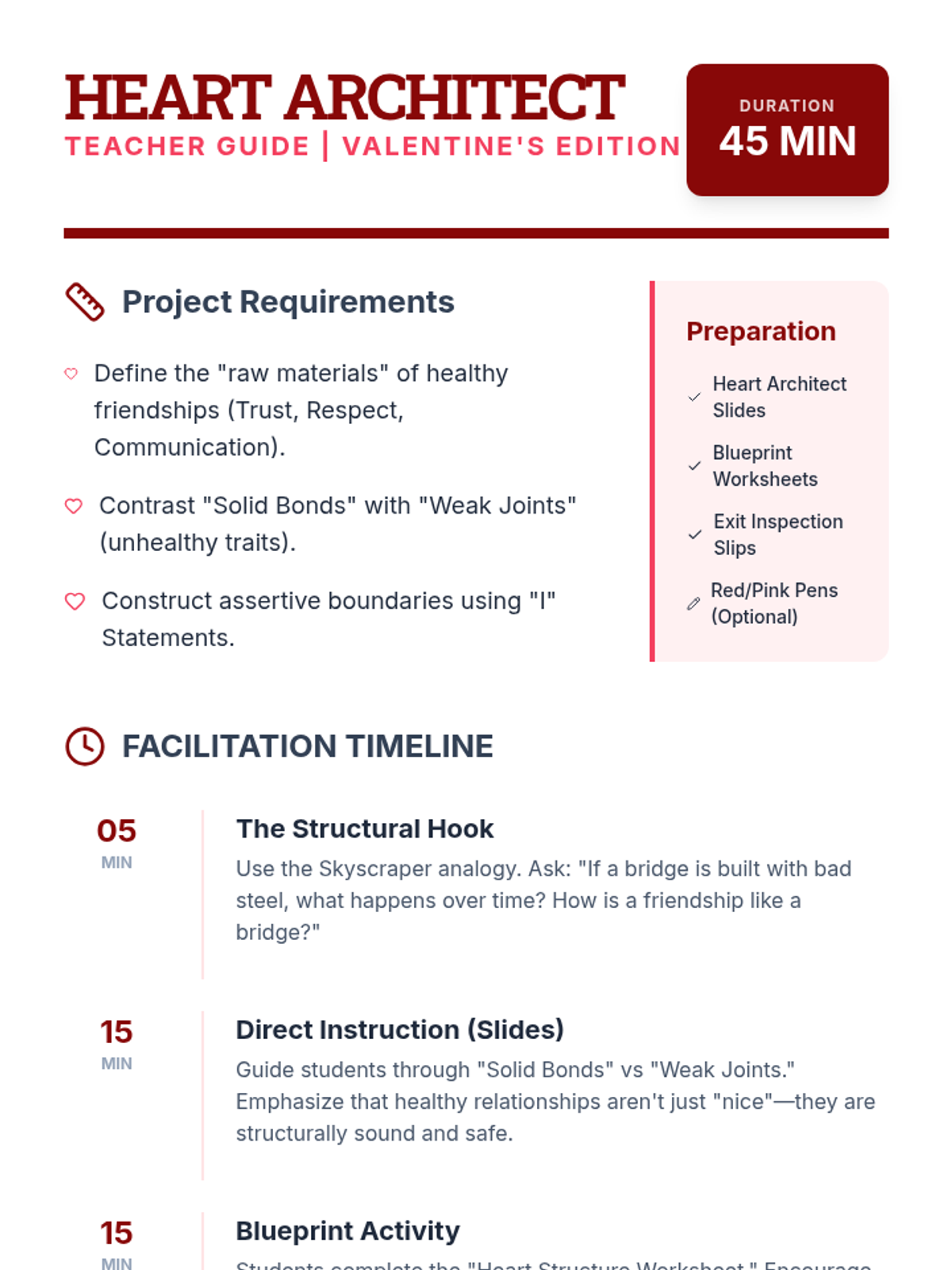
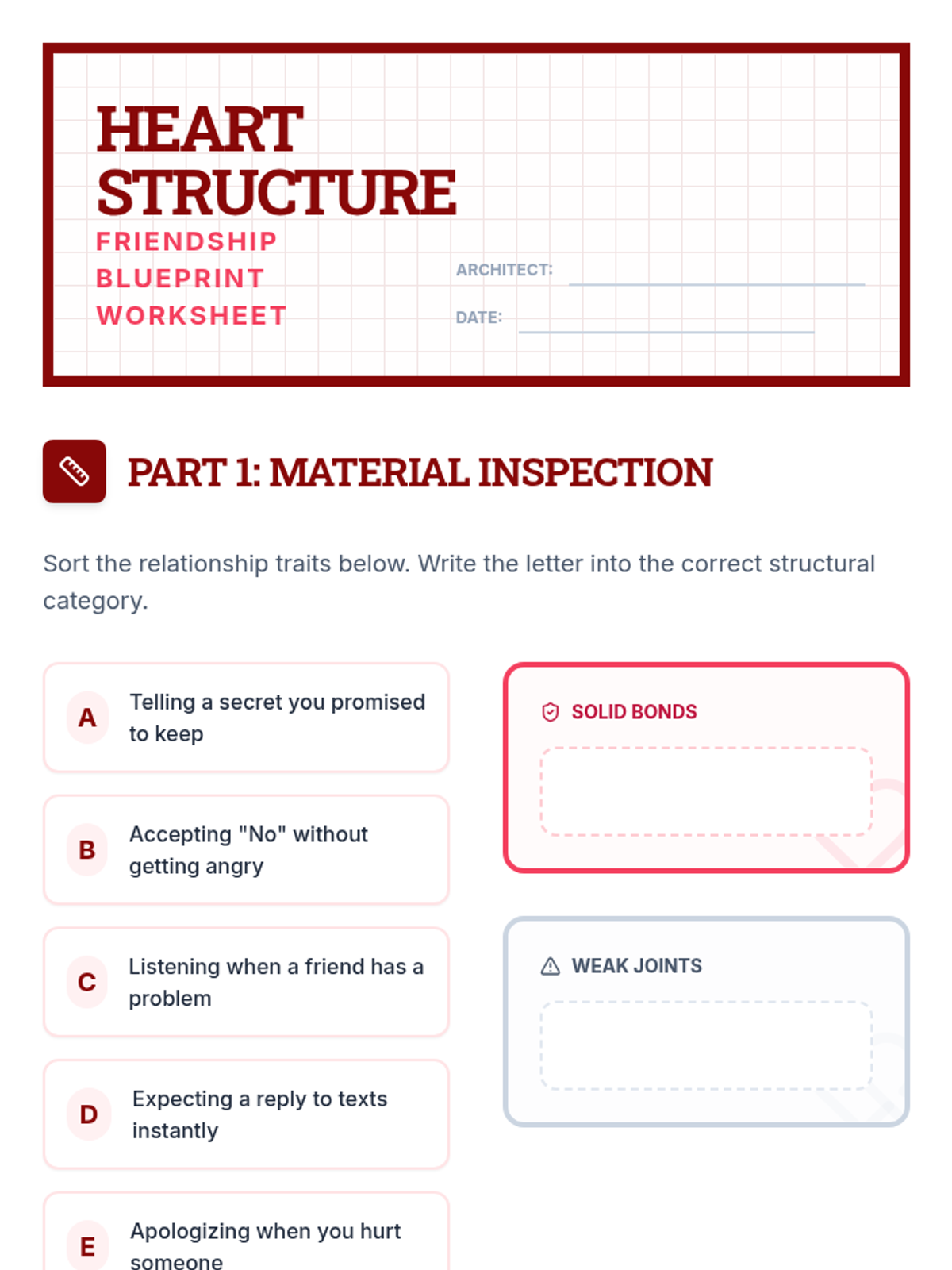
A comprehensive lesson for middle schoolers focused on developing the 'blueprints' for healthy relationships through active listening, assertive communication with I-statements, and identifying relationship red and green flags.
A middle school counseling lesson focused on building healthy relationships through active listening, I-statements, and identifying healthy vs. unhealthy relationship patterns. Students take on the role of 'Social Architects' to build strong connection foundations.
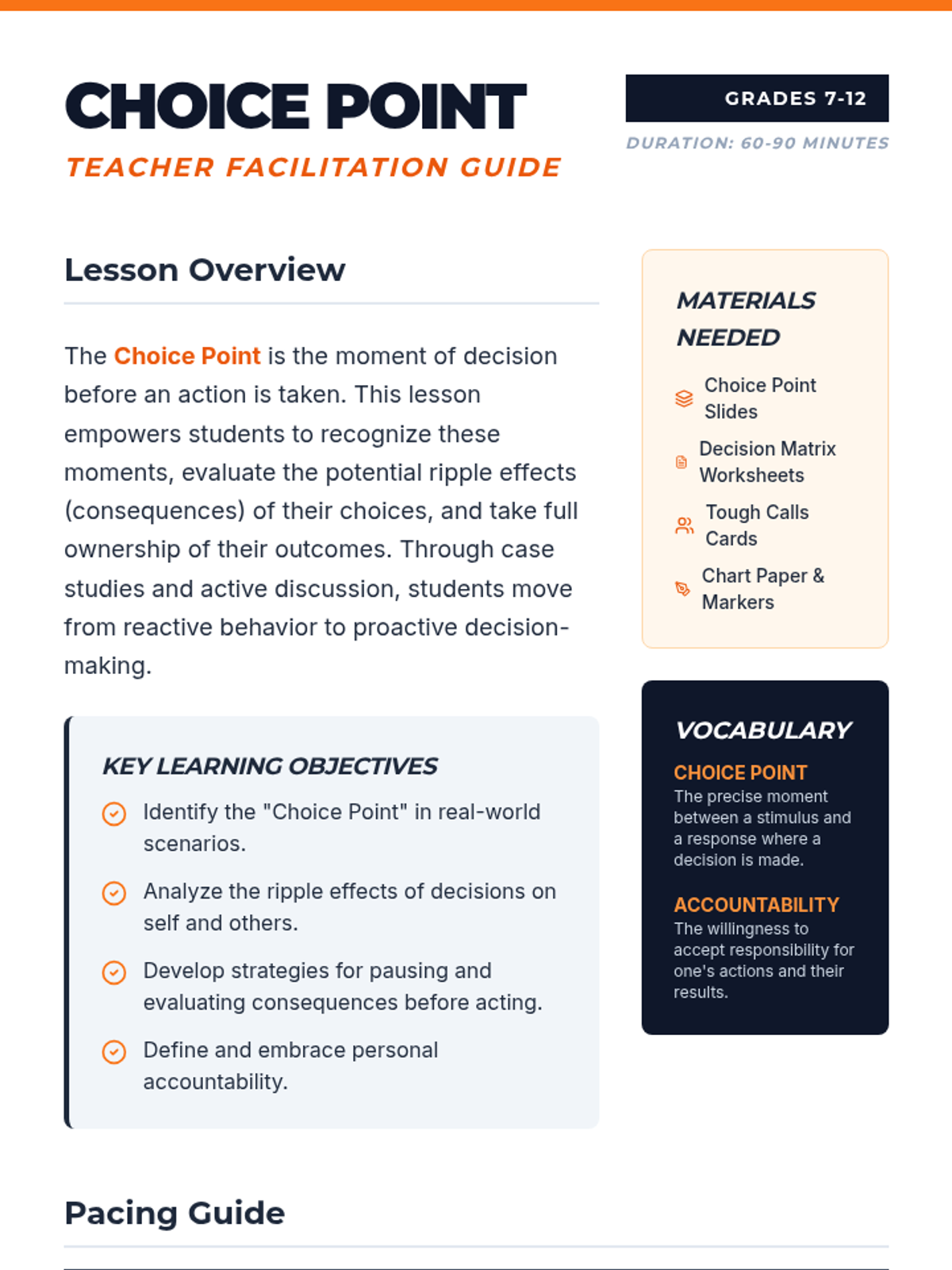
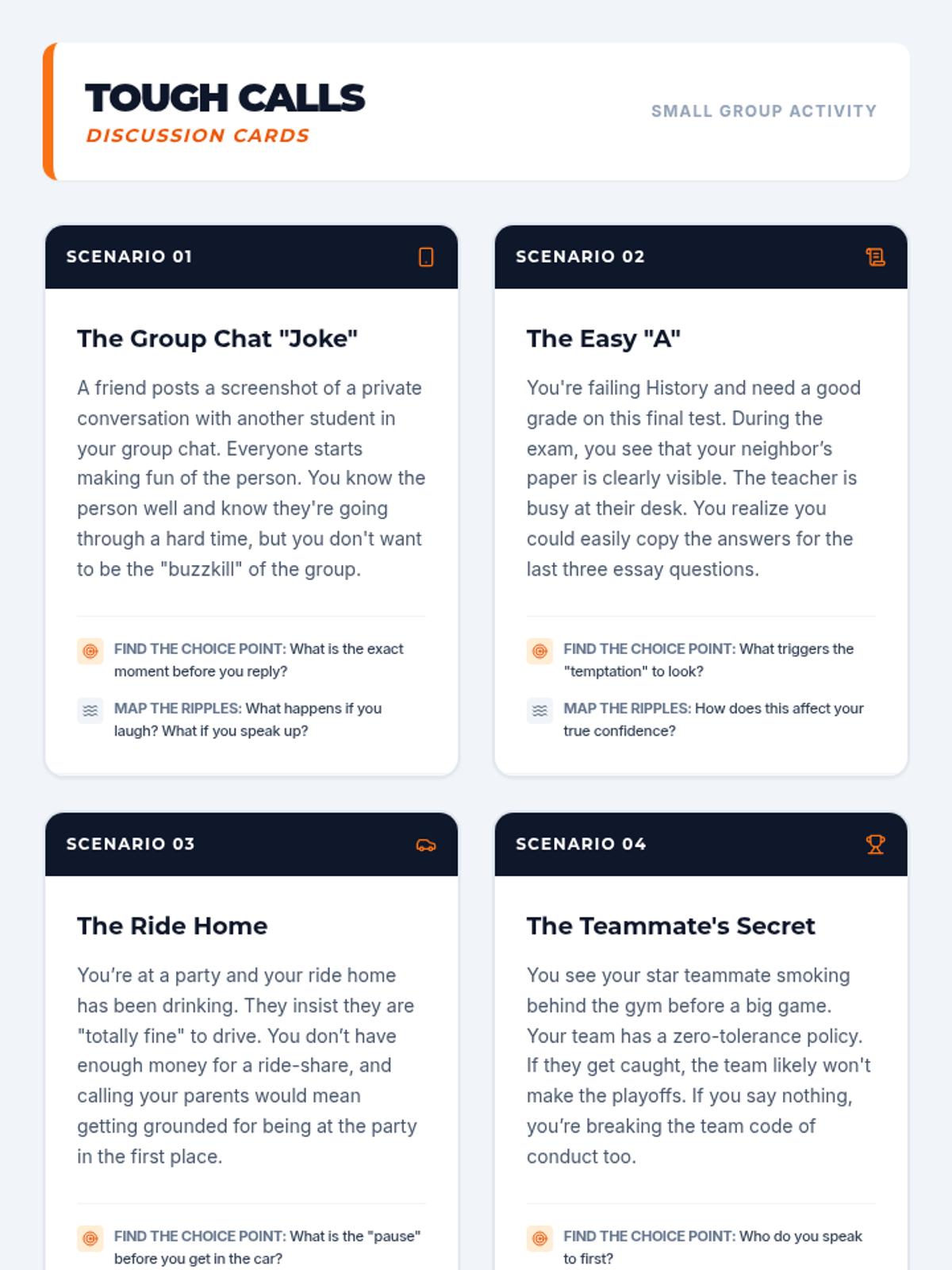
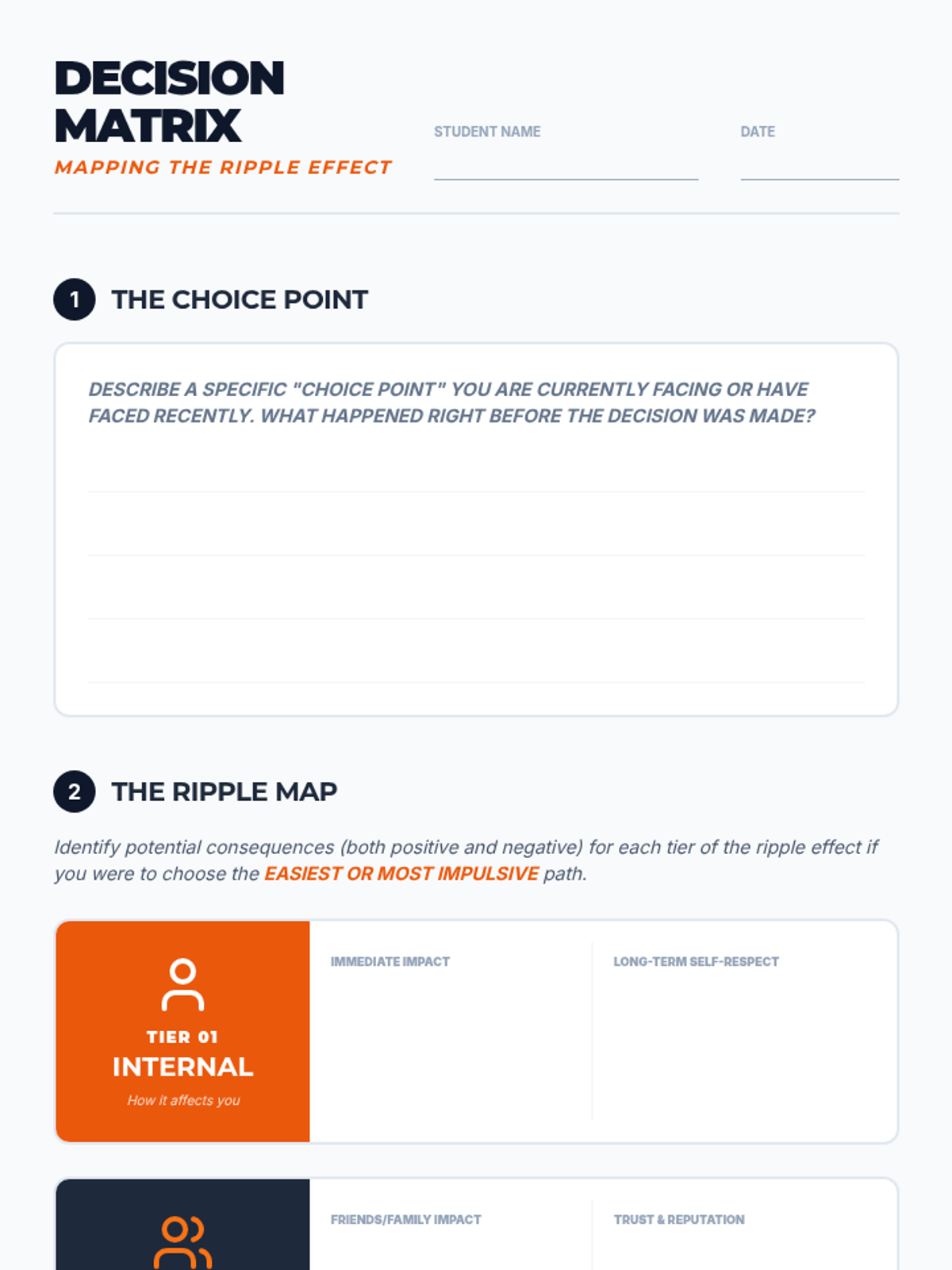
A high-impact lesson for teens exploring the intersection of choices, consequences, and personal accountability through the 'Choice Point' model. Students analyze the ripple effects of their actions and practice proactive decision-making.
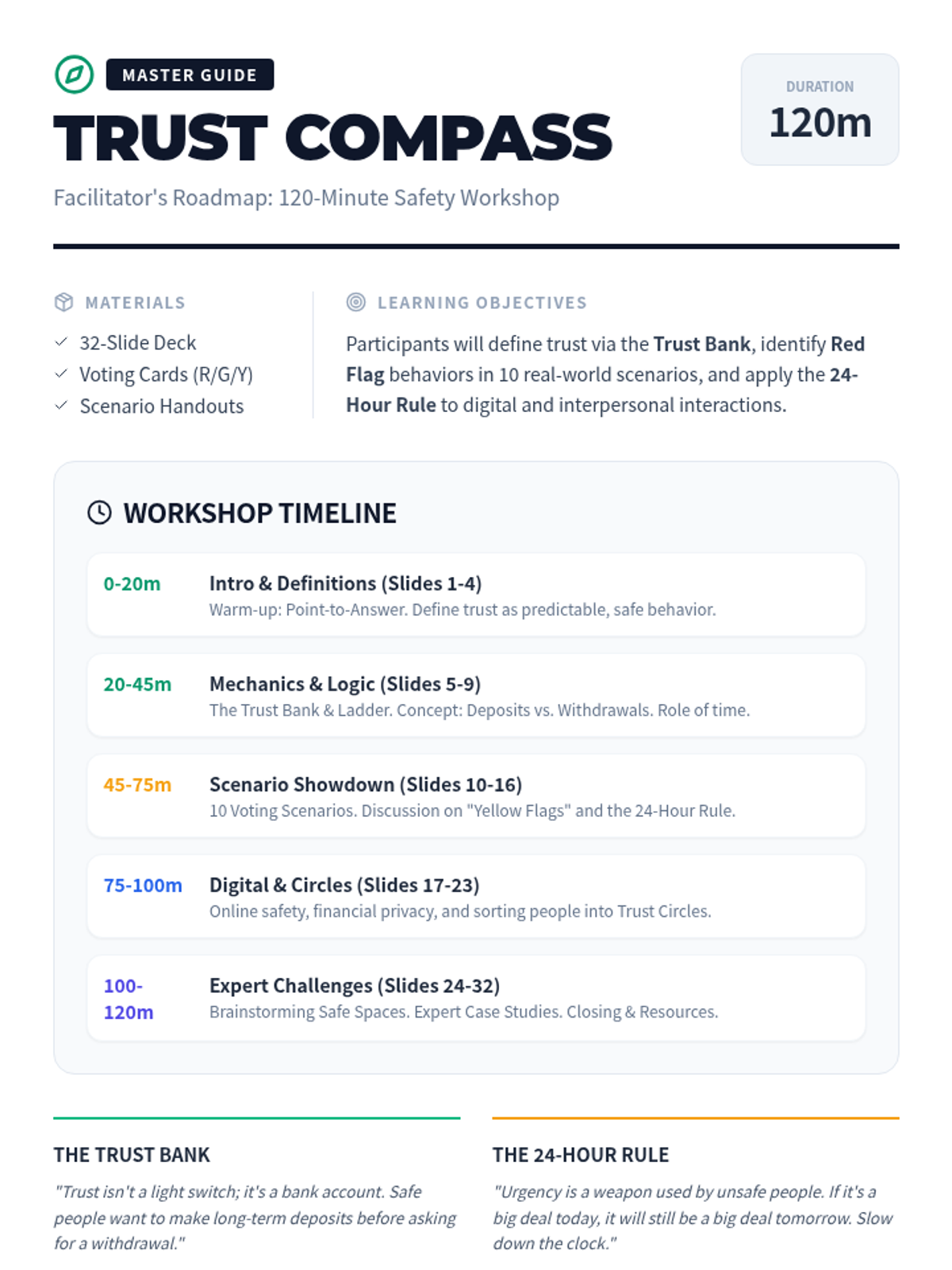
A comprehensive lesson designed to help participants identify safe versus unsafe behaviors, recognize red flags in relationships and online interactions, and develop a plan for seeking help when unsure.
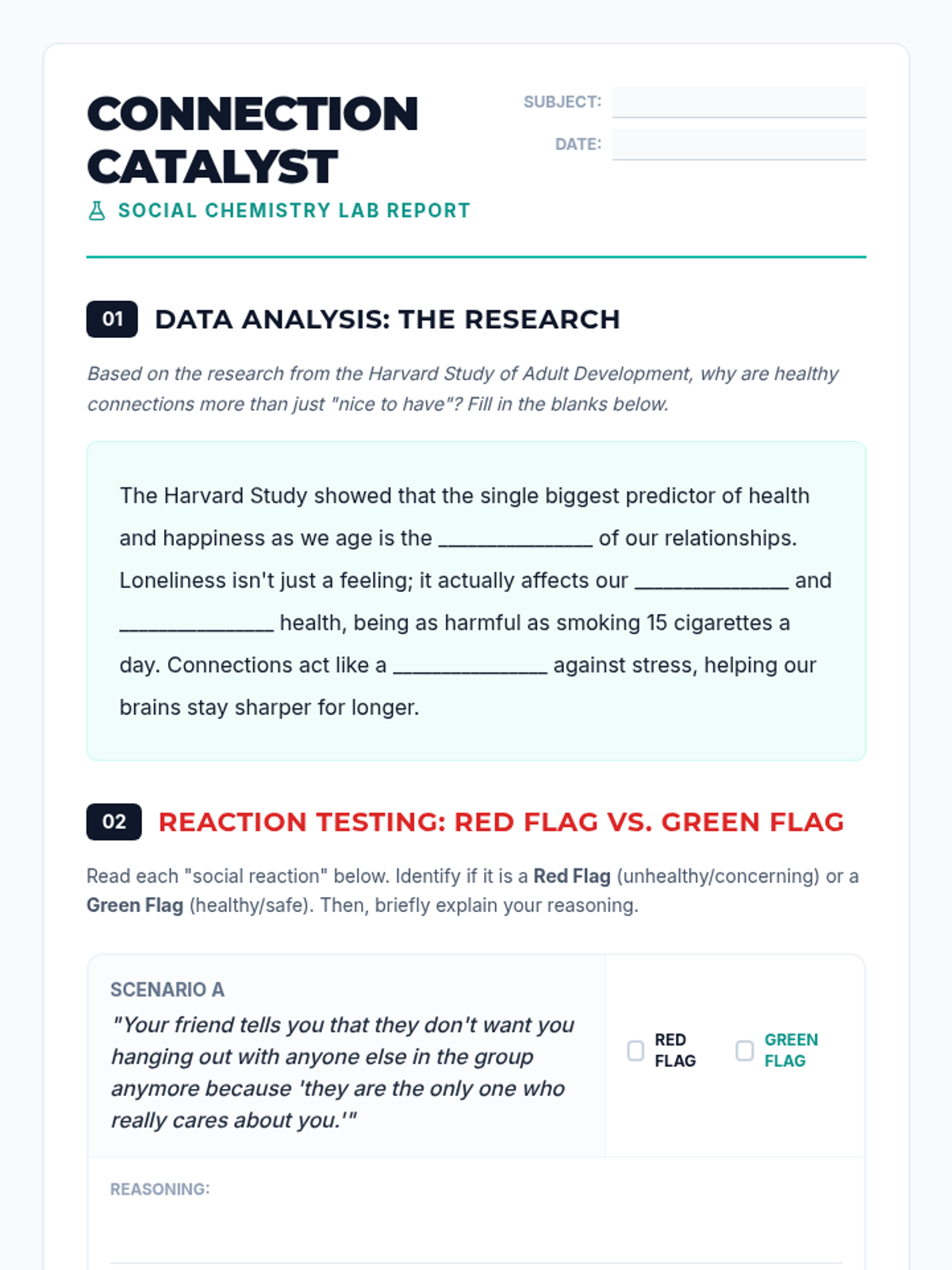
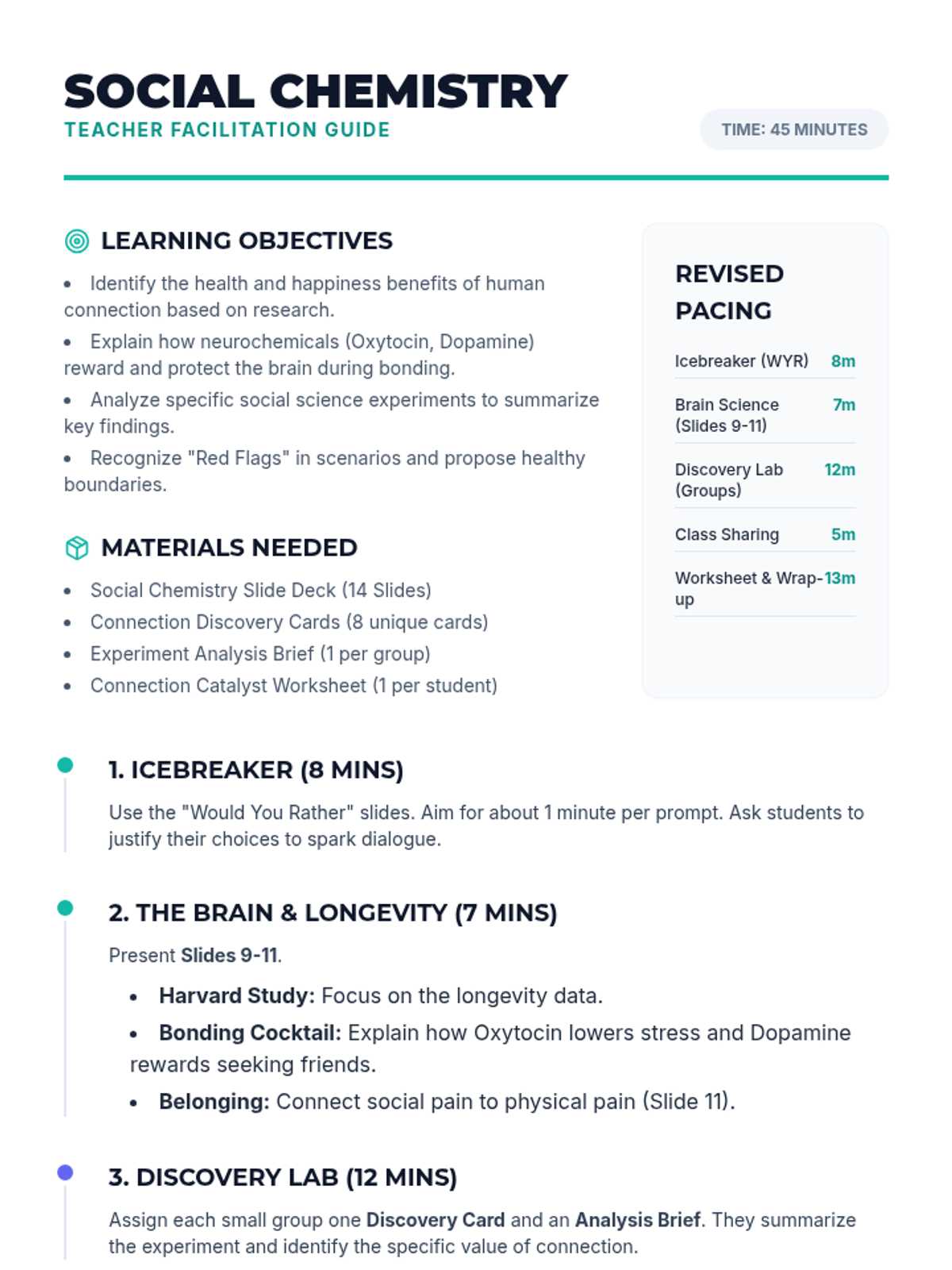
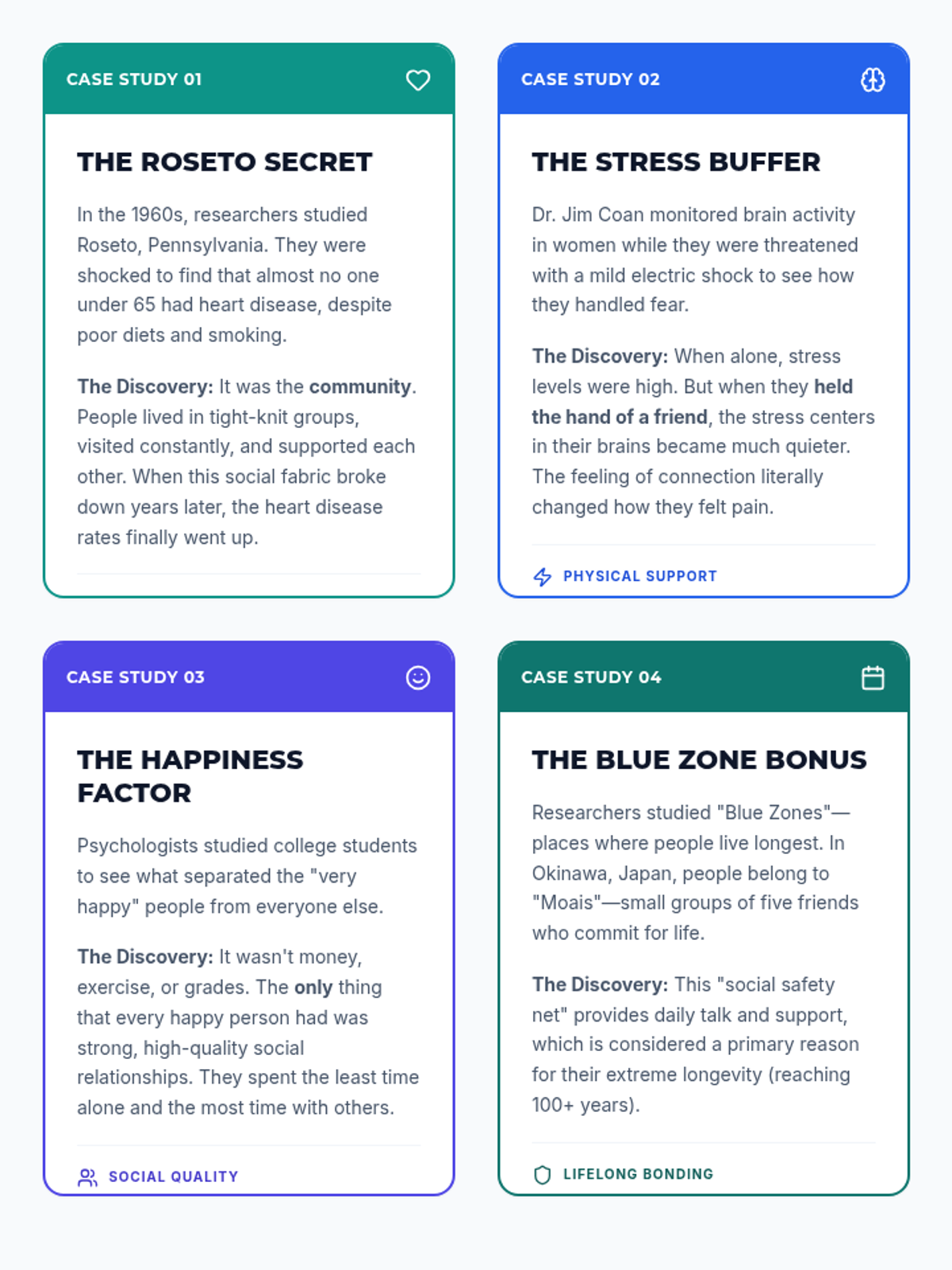
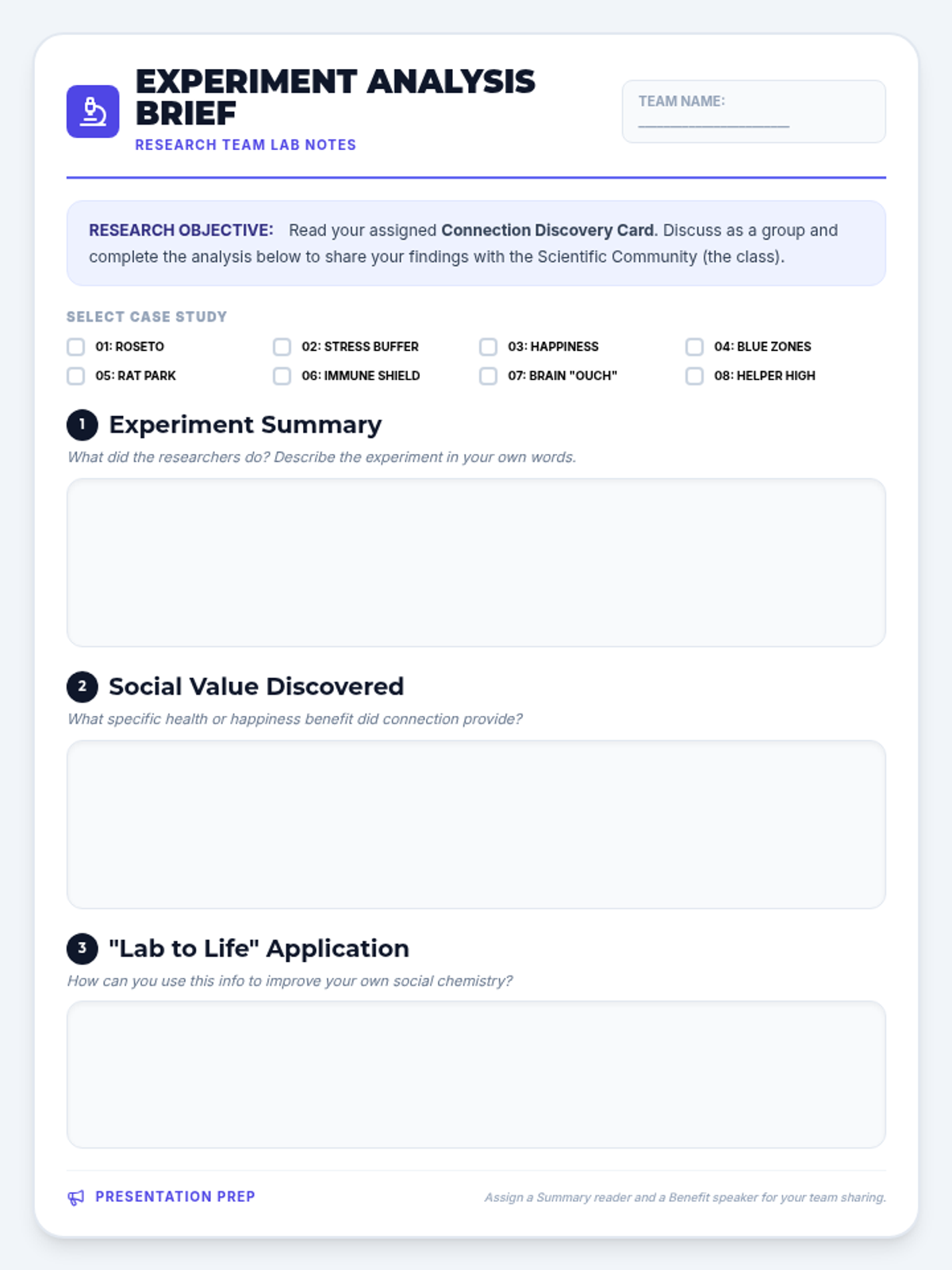
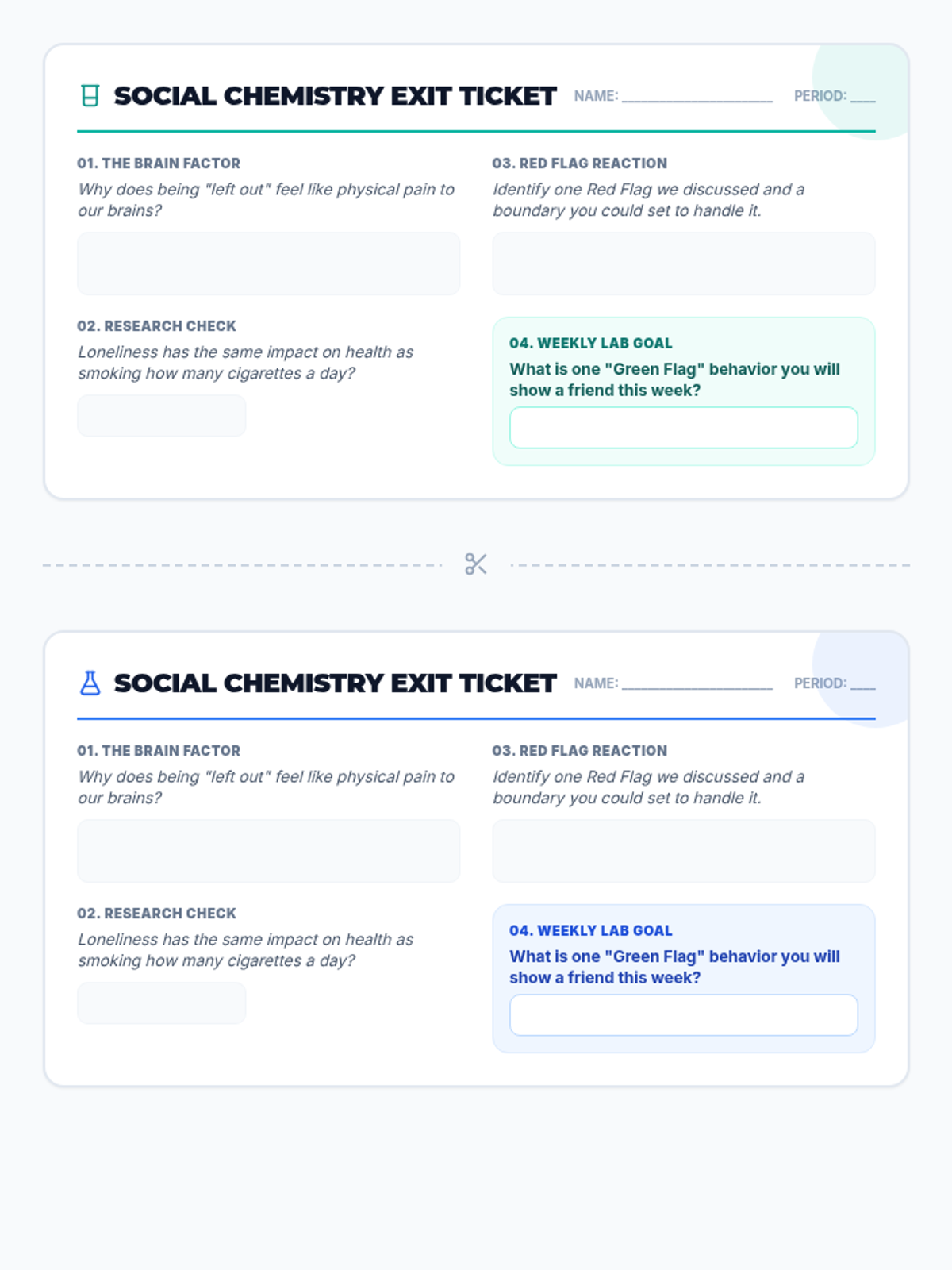
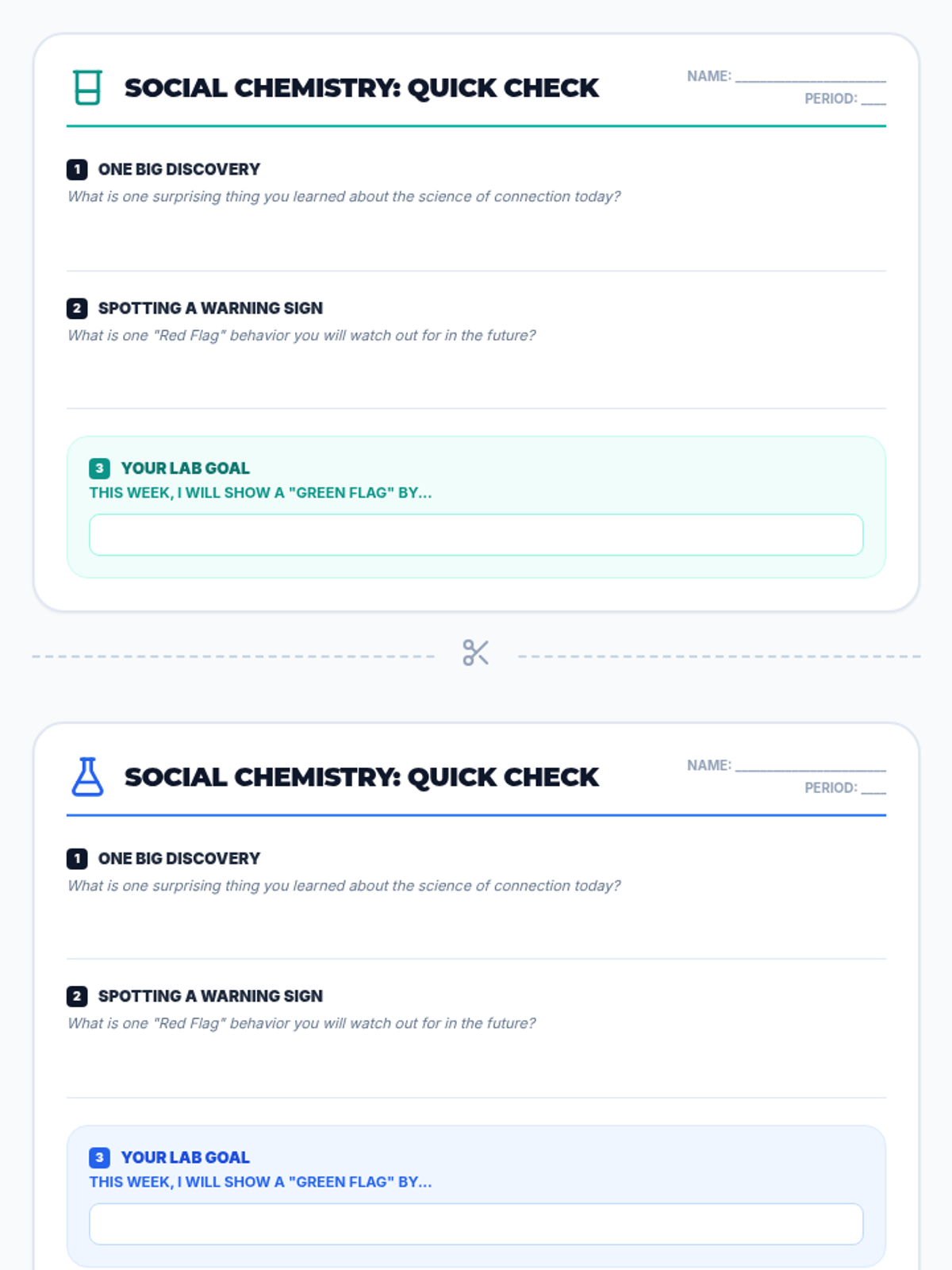
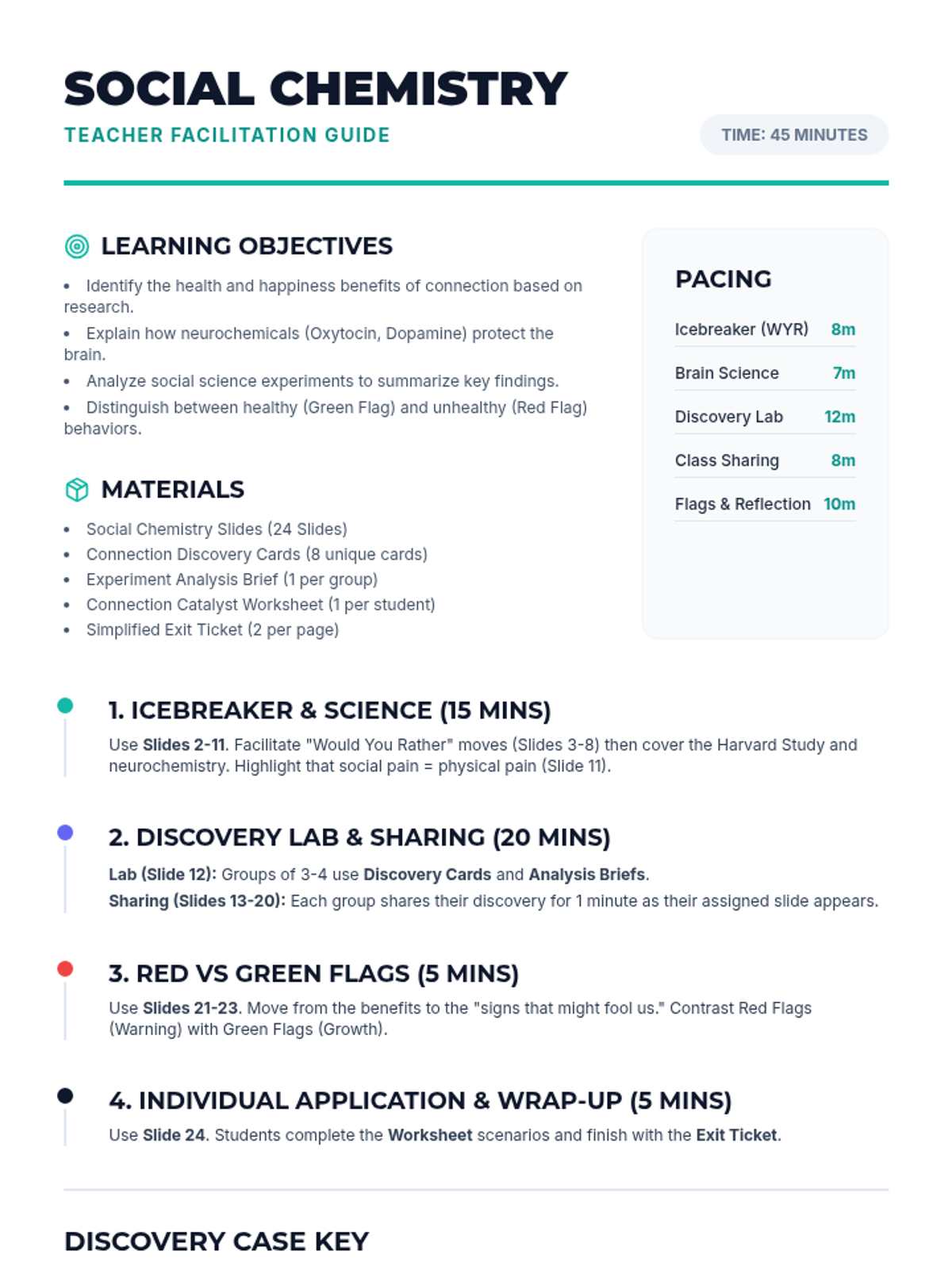
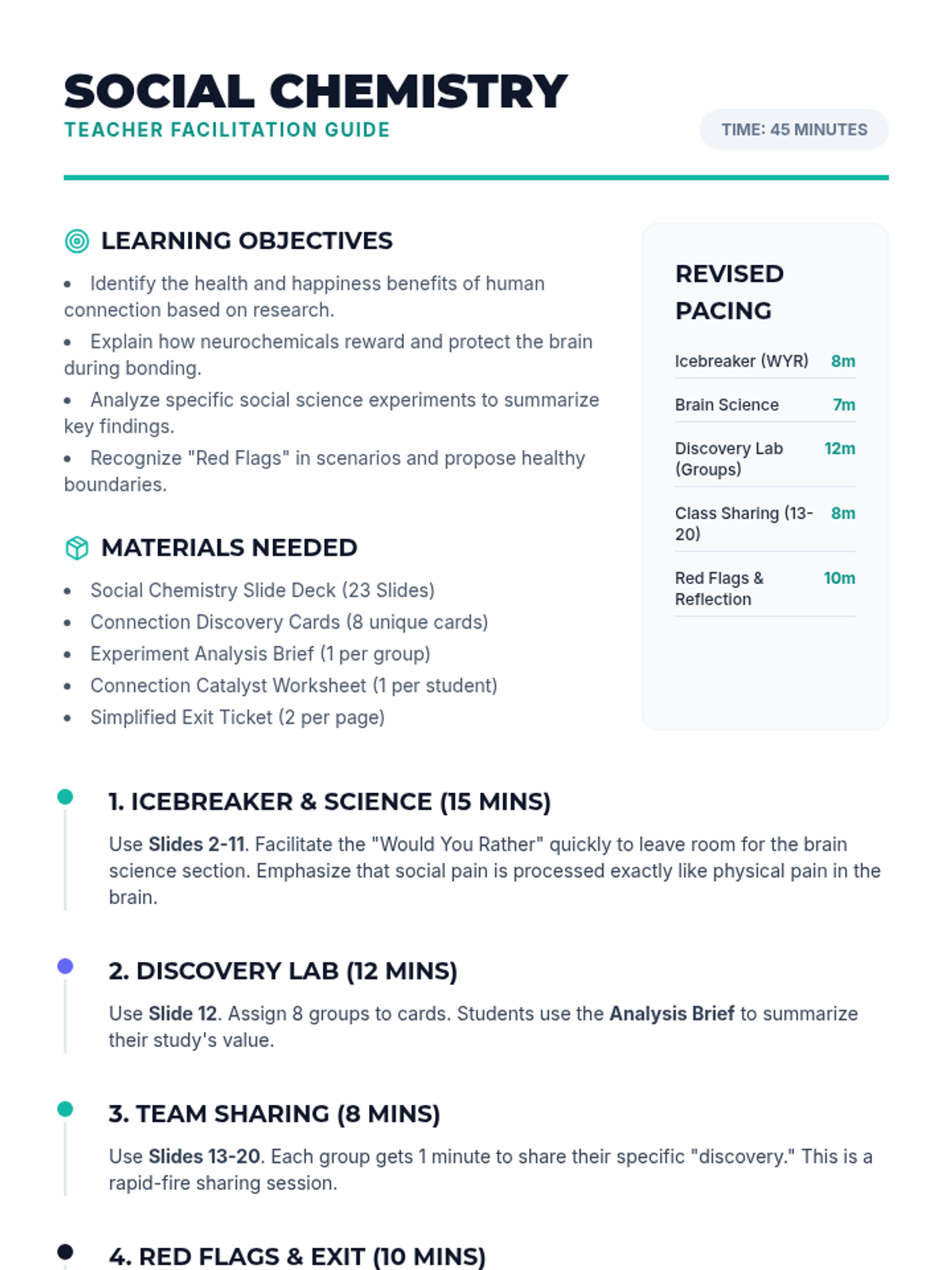
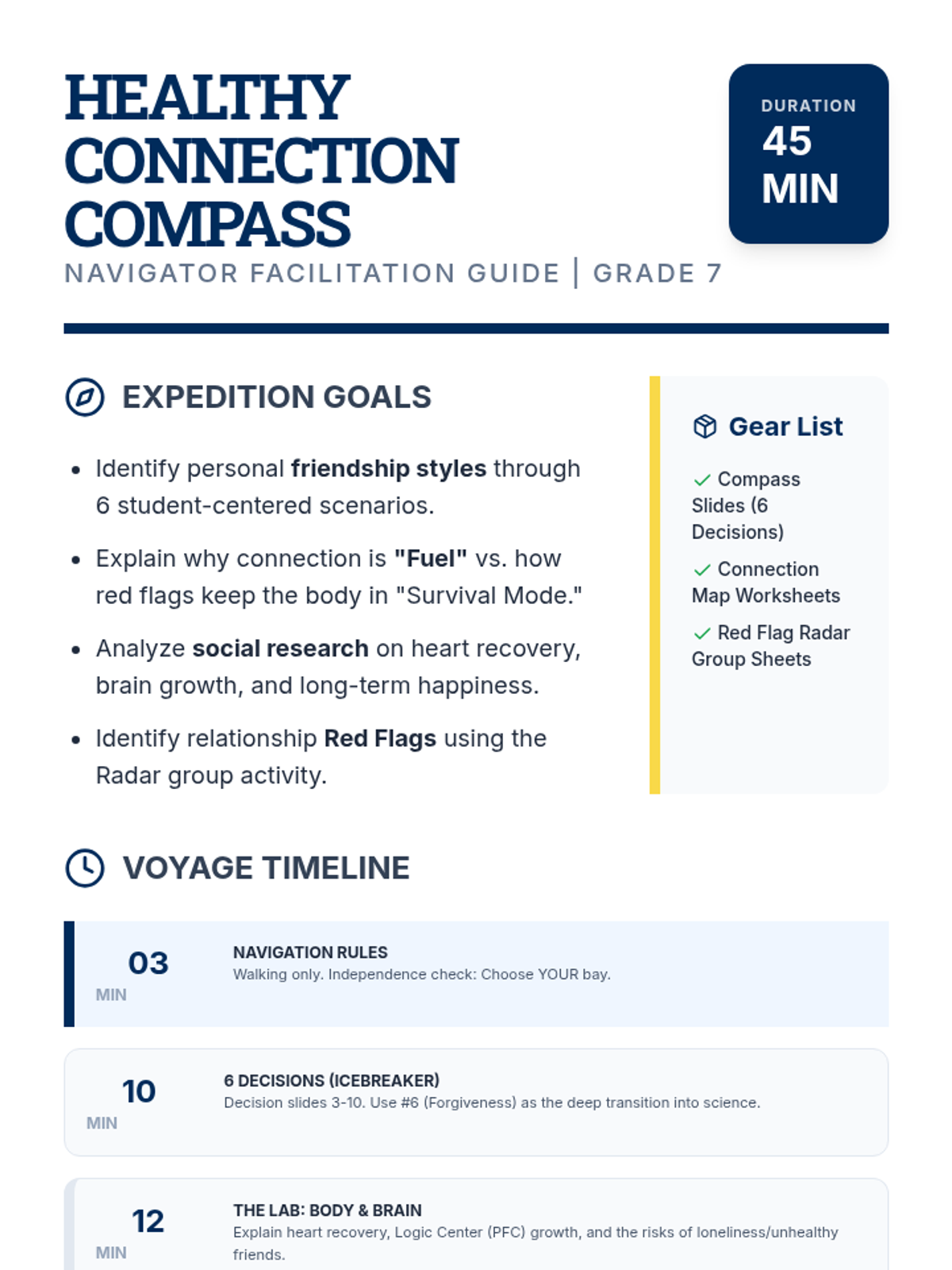
A 45-minute exploration into the science of human connection, teaching middle schoolers the health benefits of social bonds and how to distinguish between healthy and unhealthy relationship behaviors.
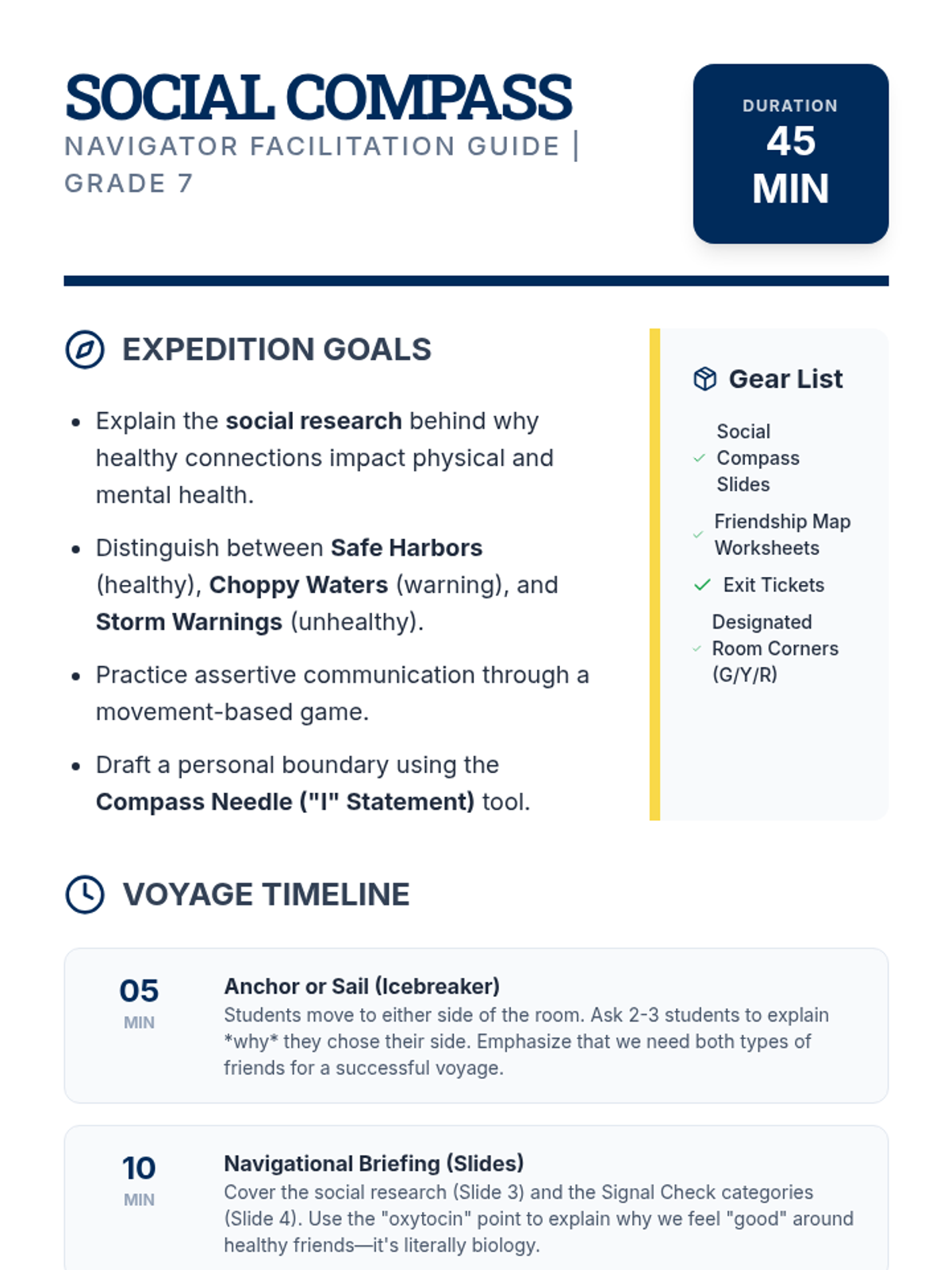
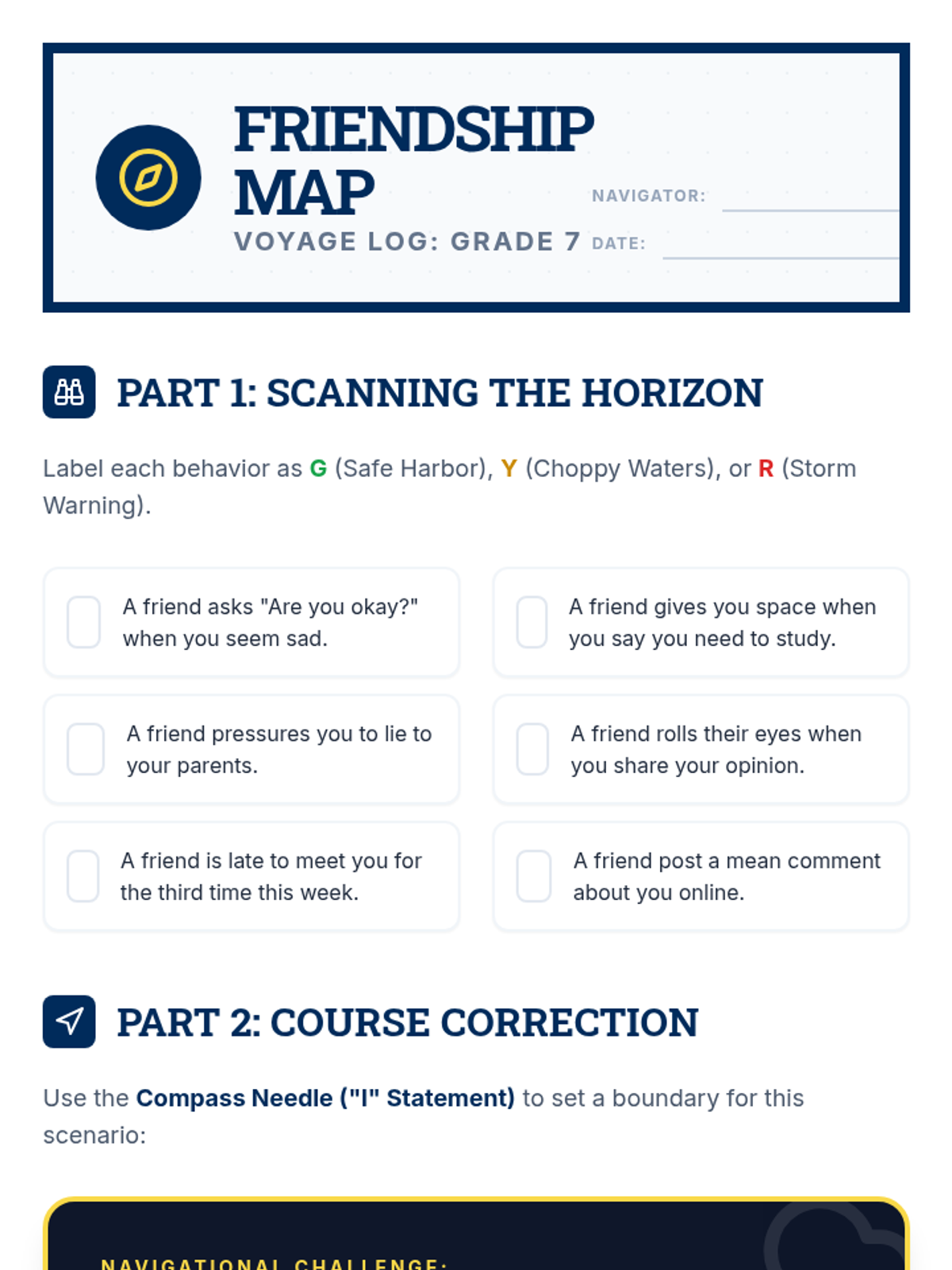
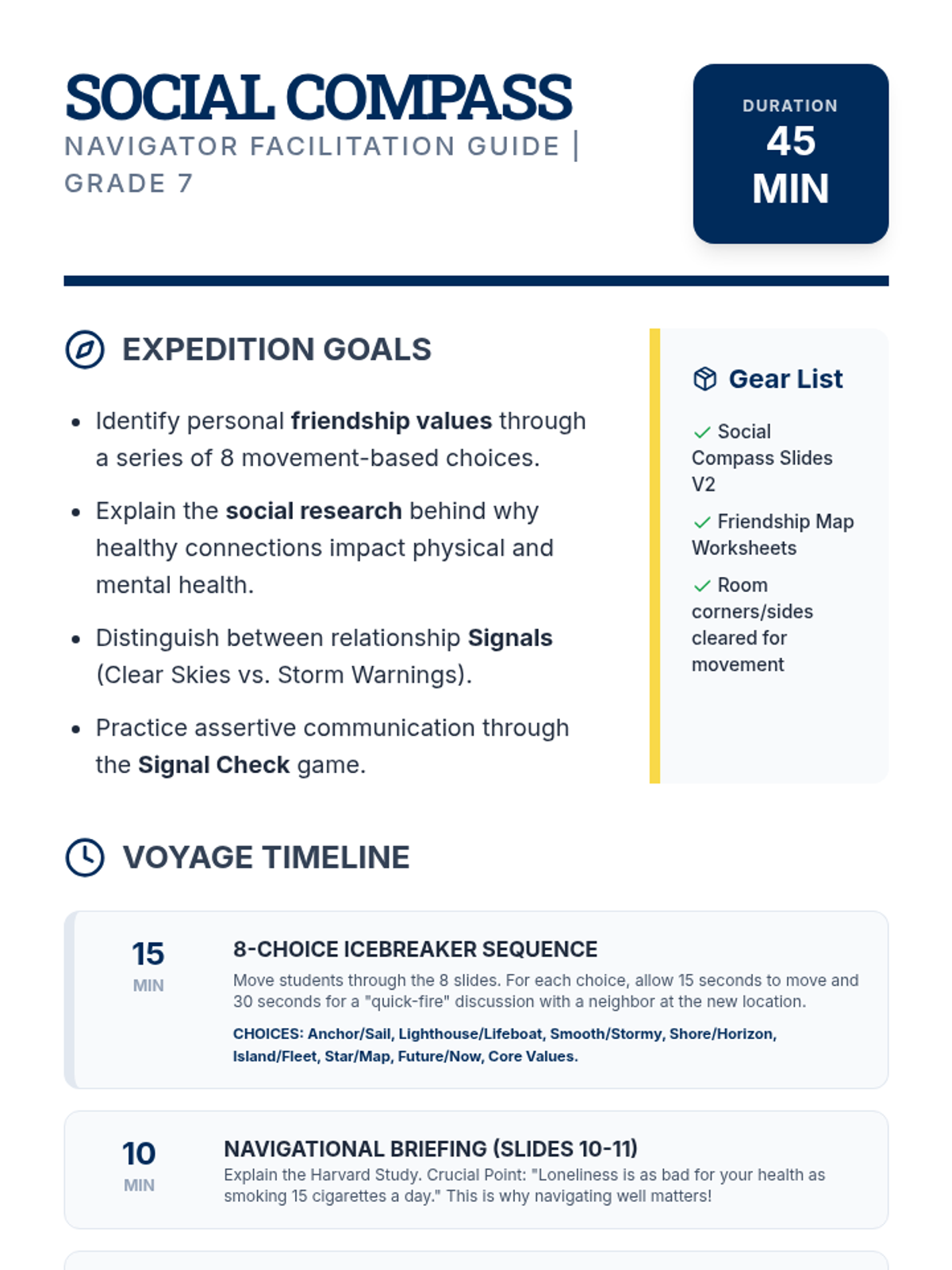
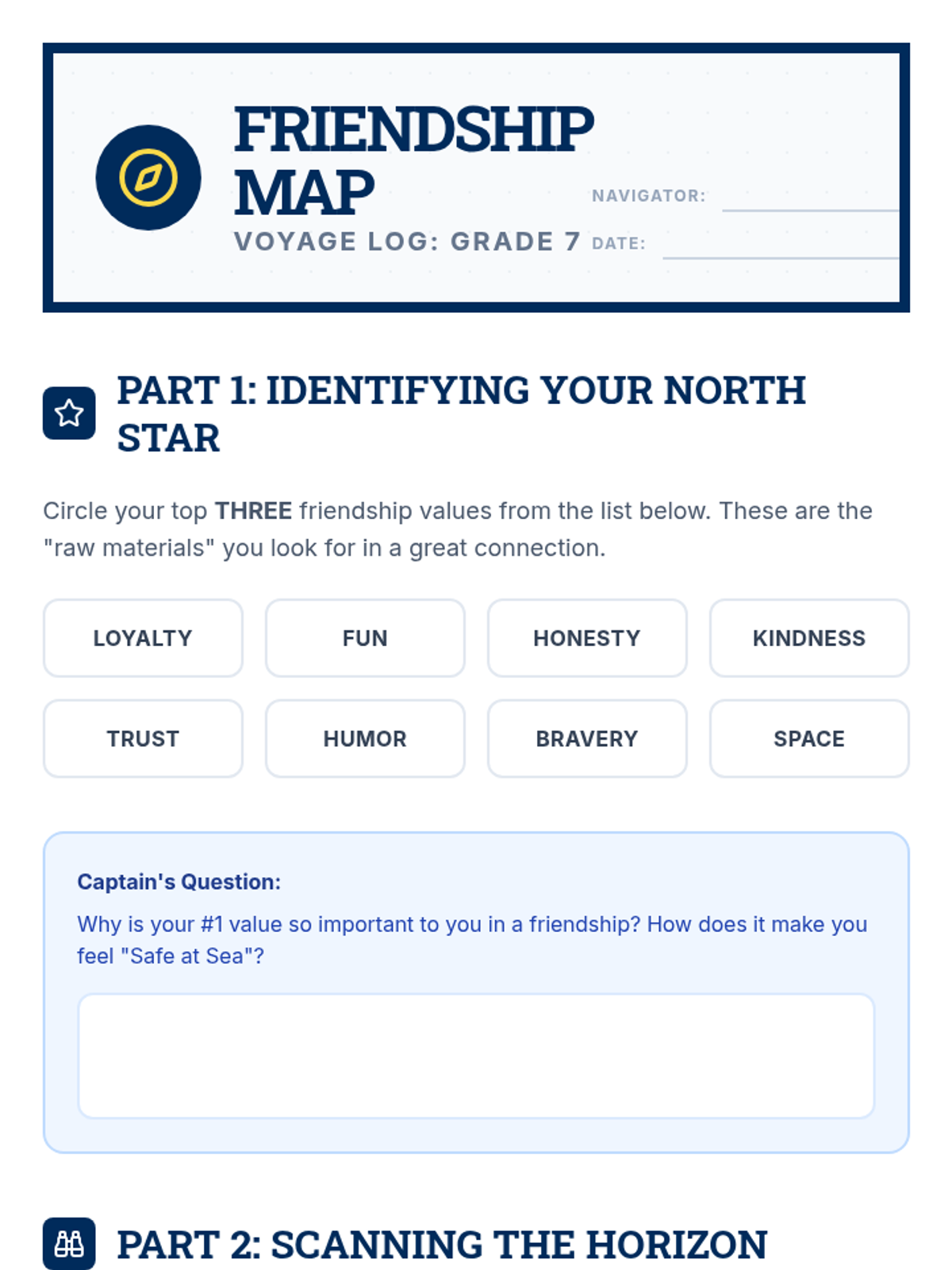
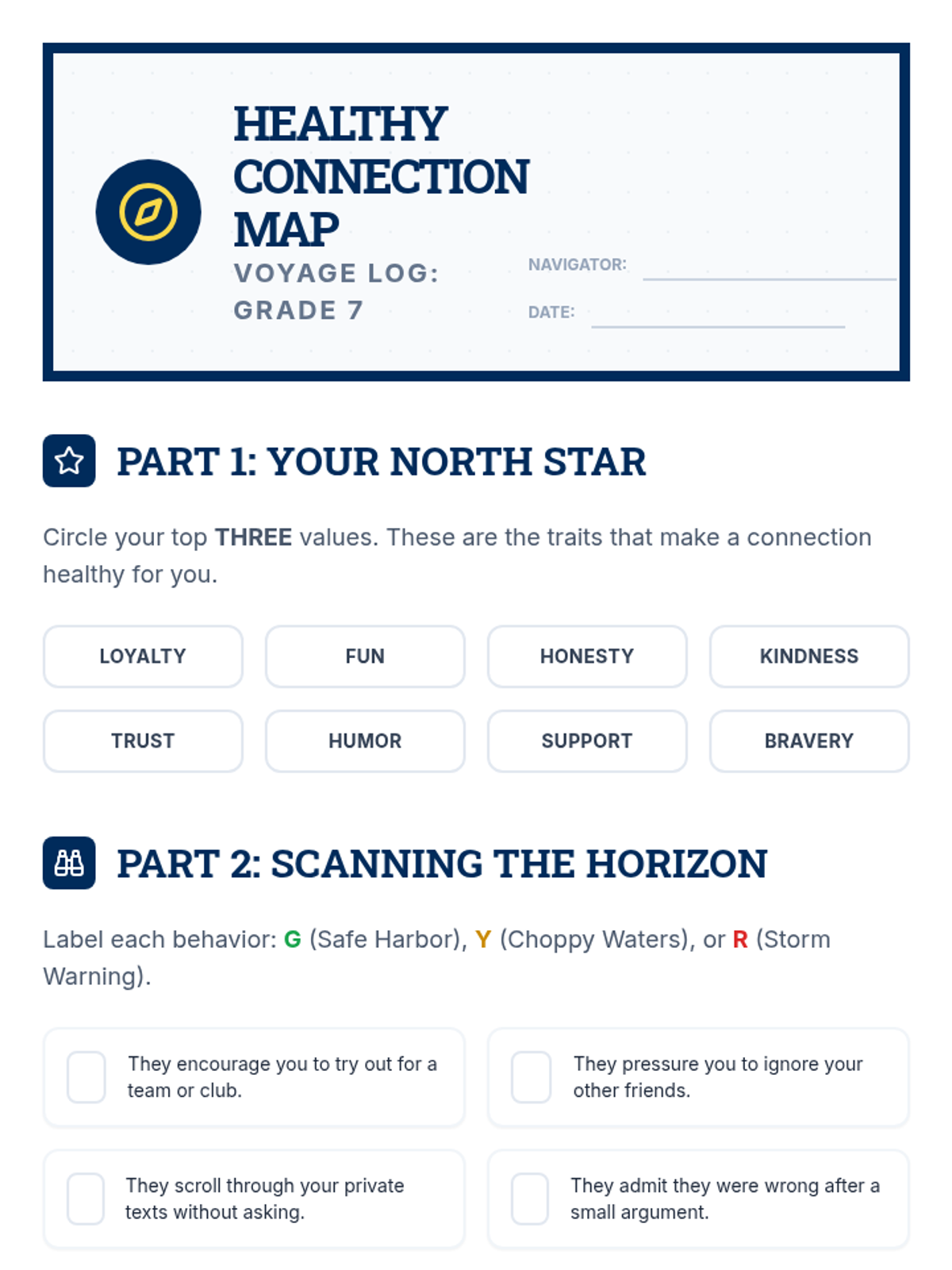
A nautical-themed lesson for 7th-grade students using the 'Social Compass' metaphor to explore healthy relationships, social research on connection, and assertive boundary setting through movement-based activities.
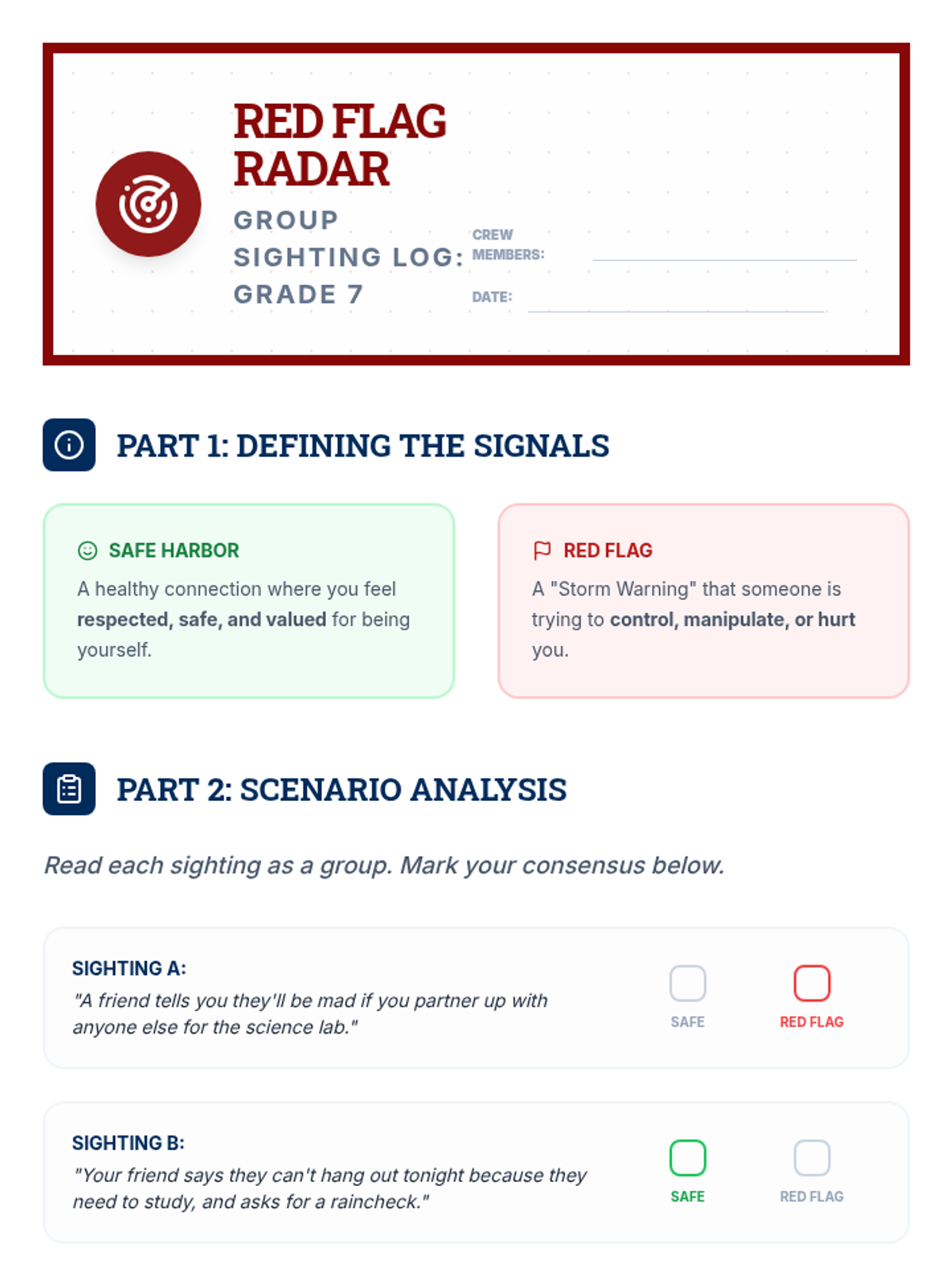
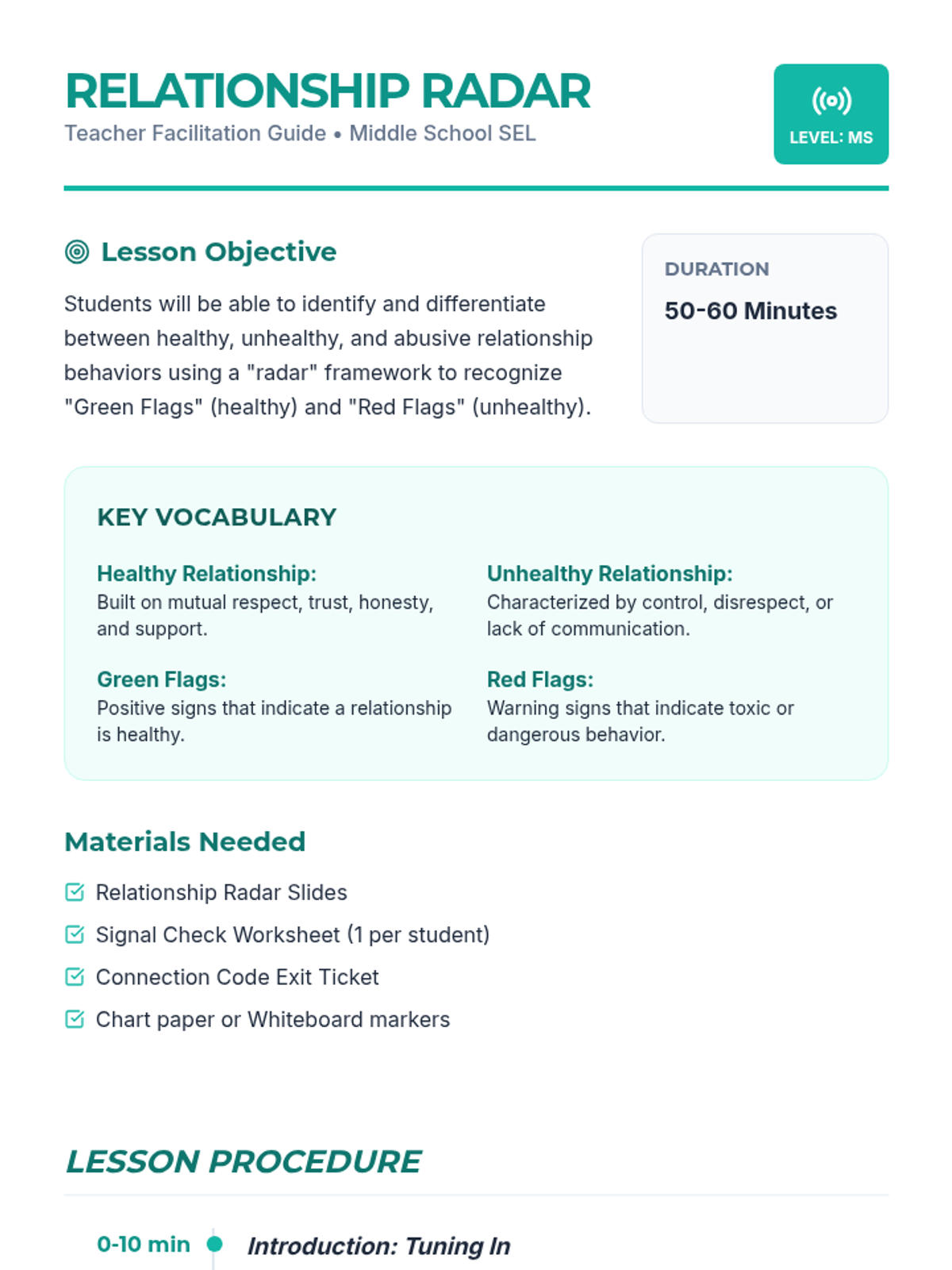
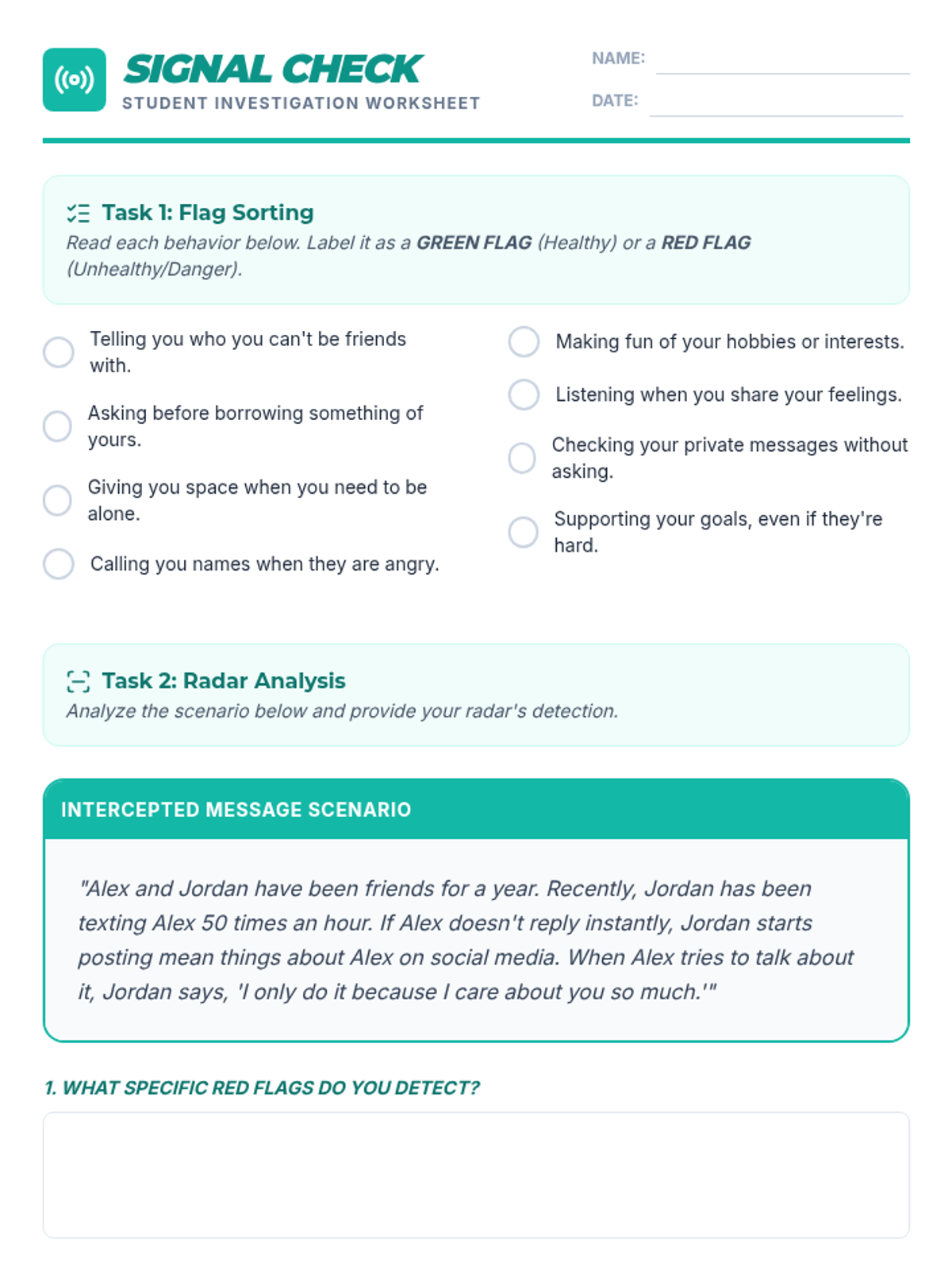
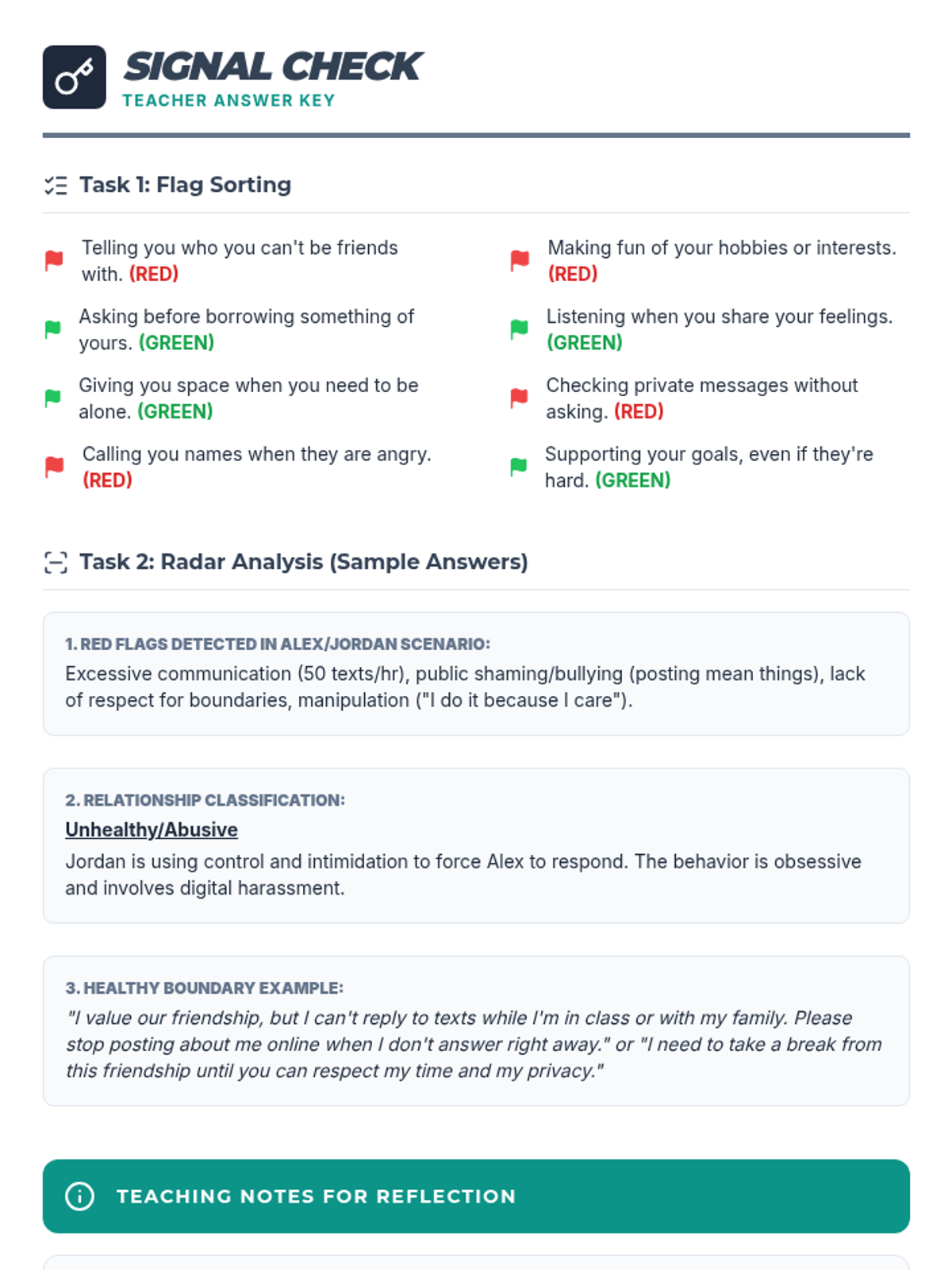
A comprehensive middle school lesson focused on identifying the characteristics of healthy and unhealthy relationships using a 'radar' metaphor for social awareness.
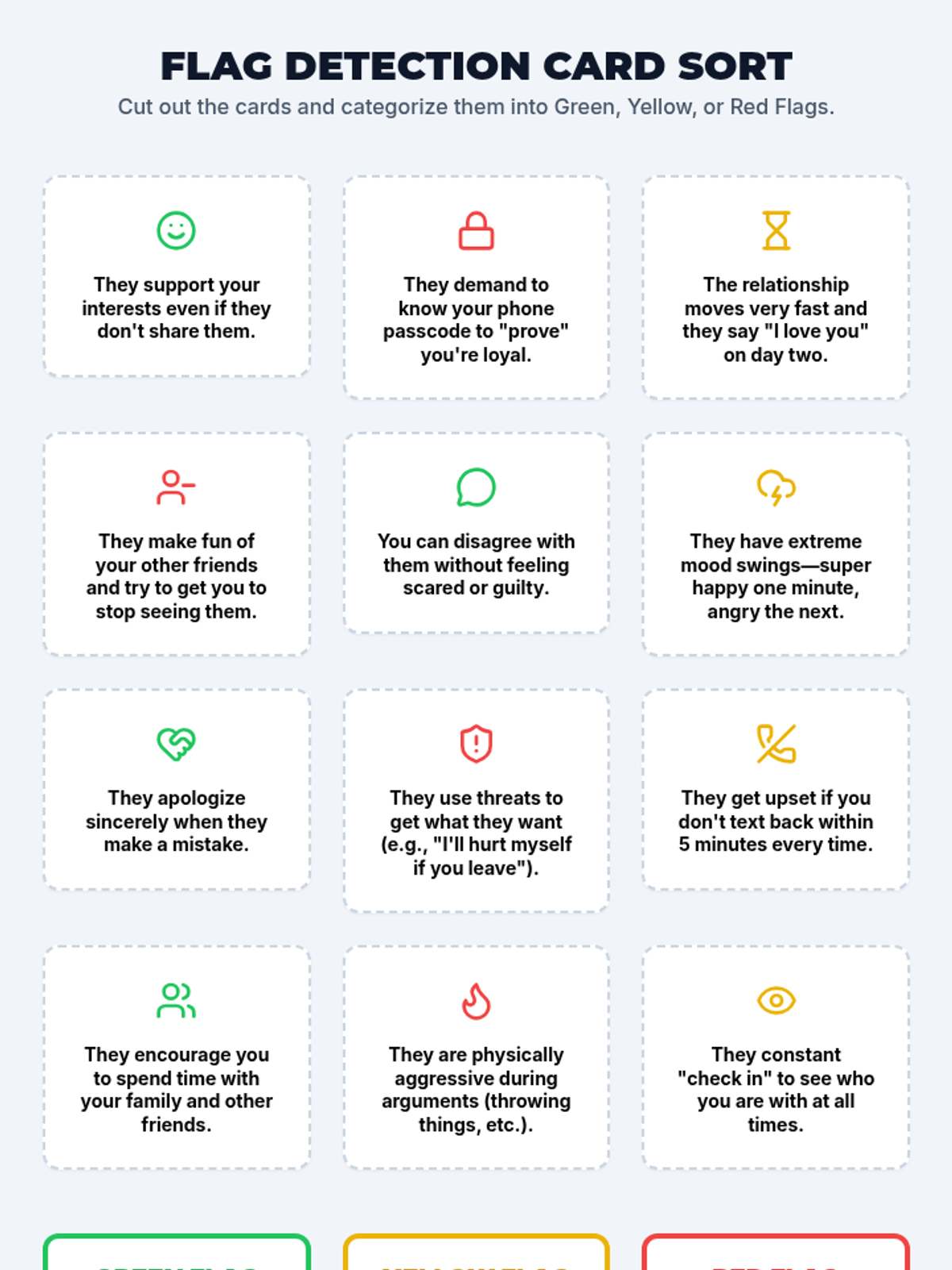
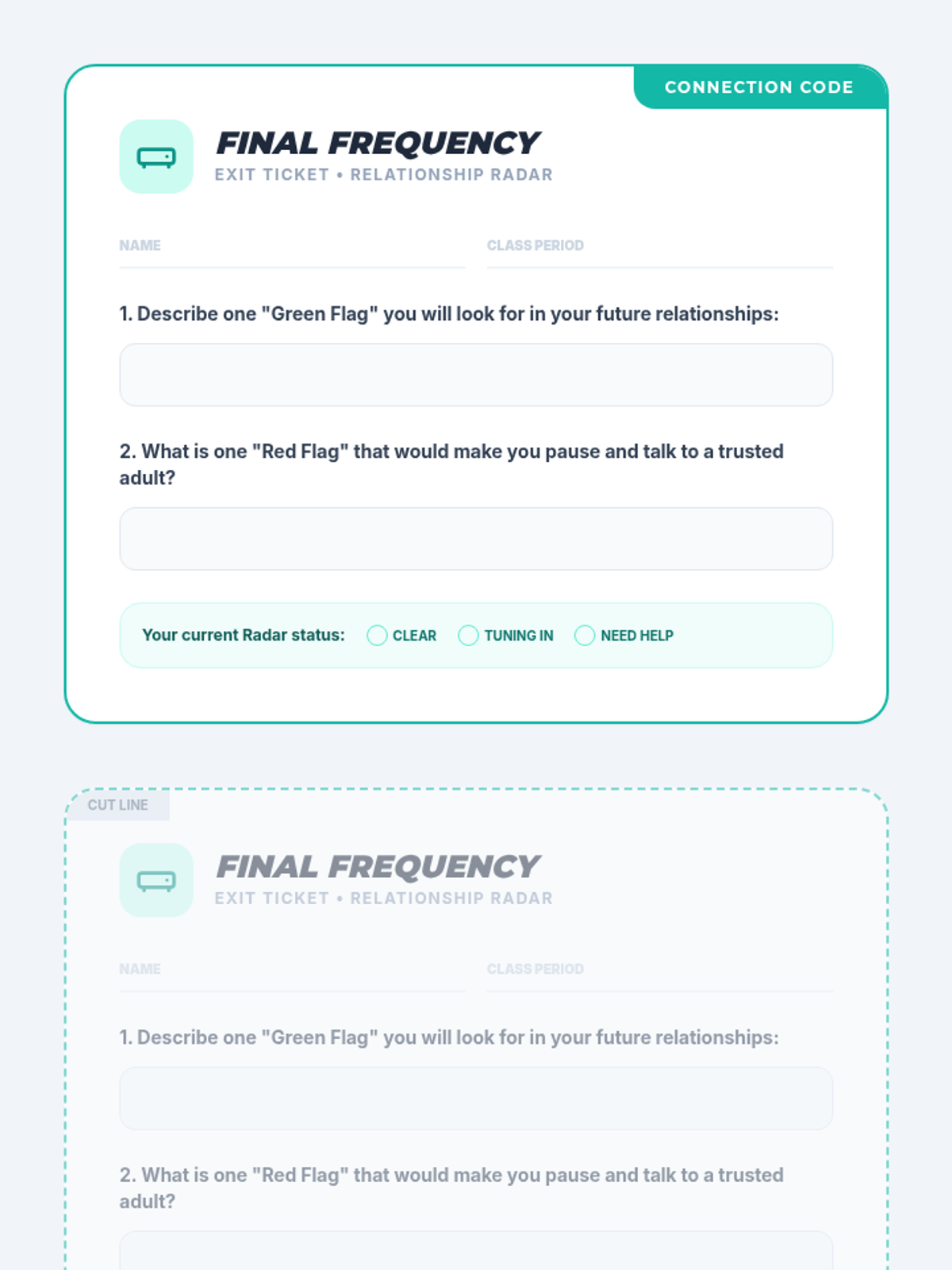
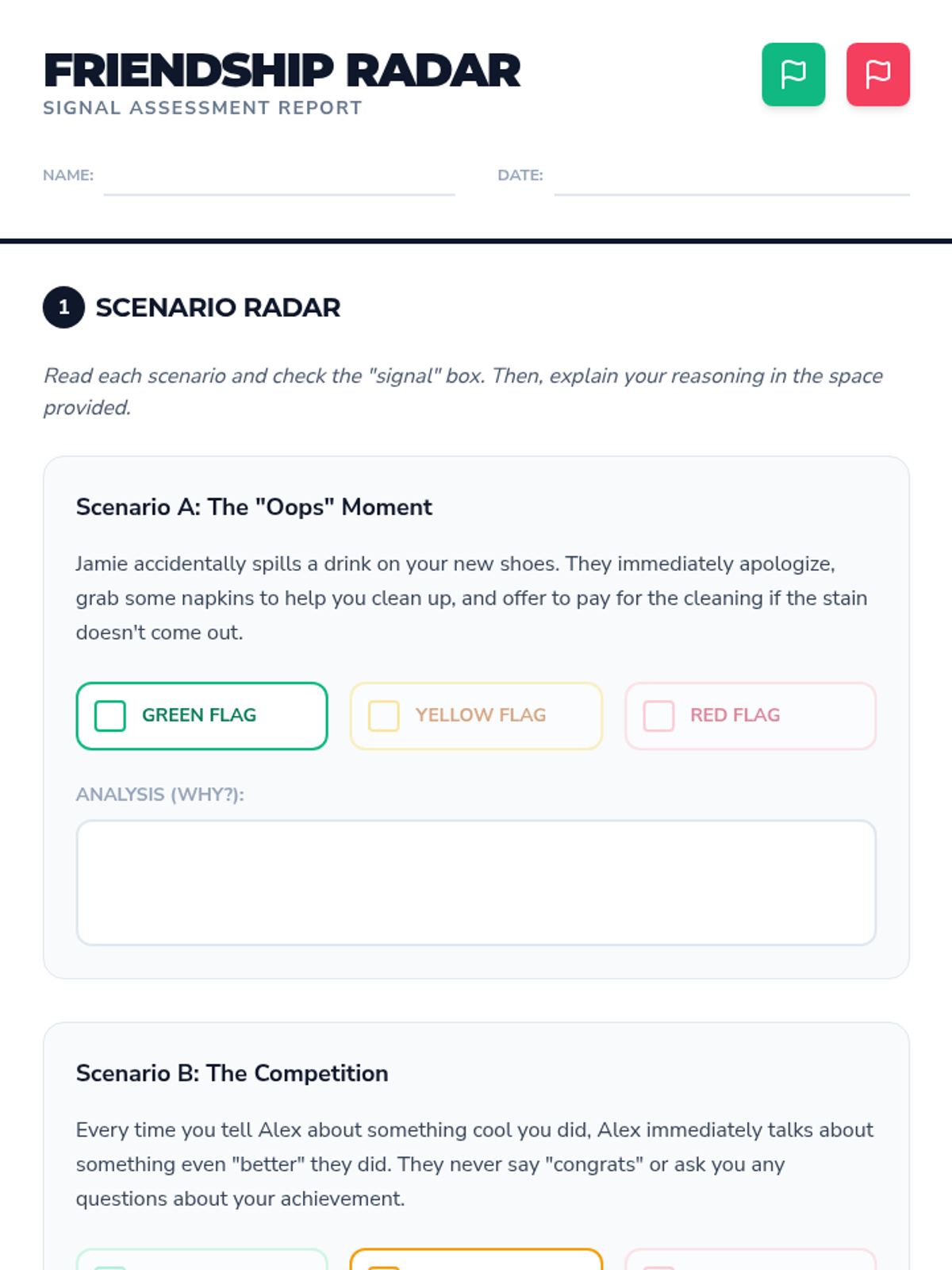
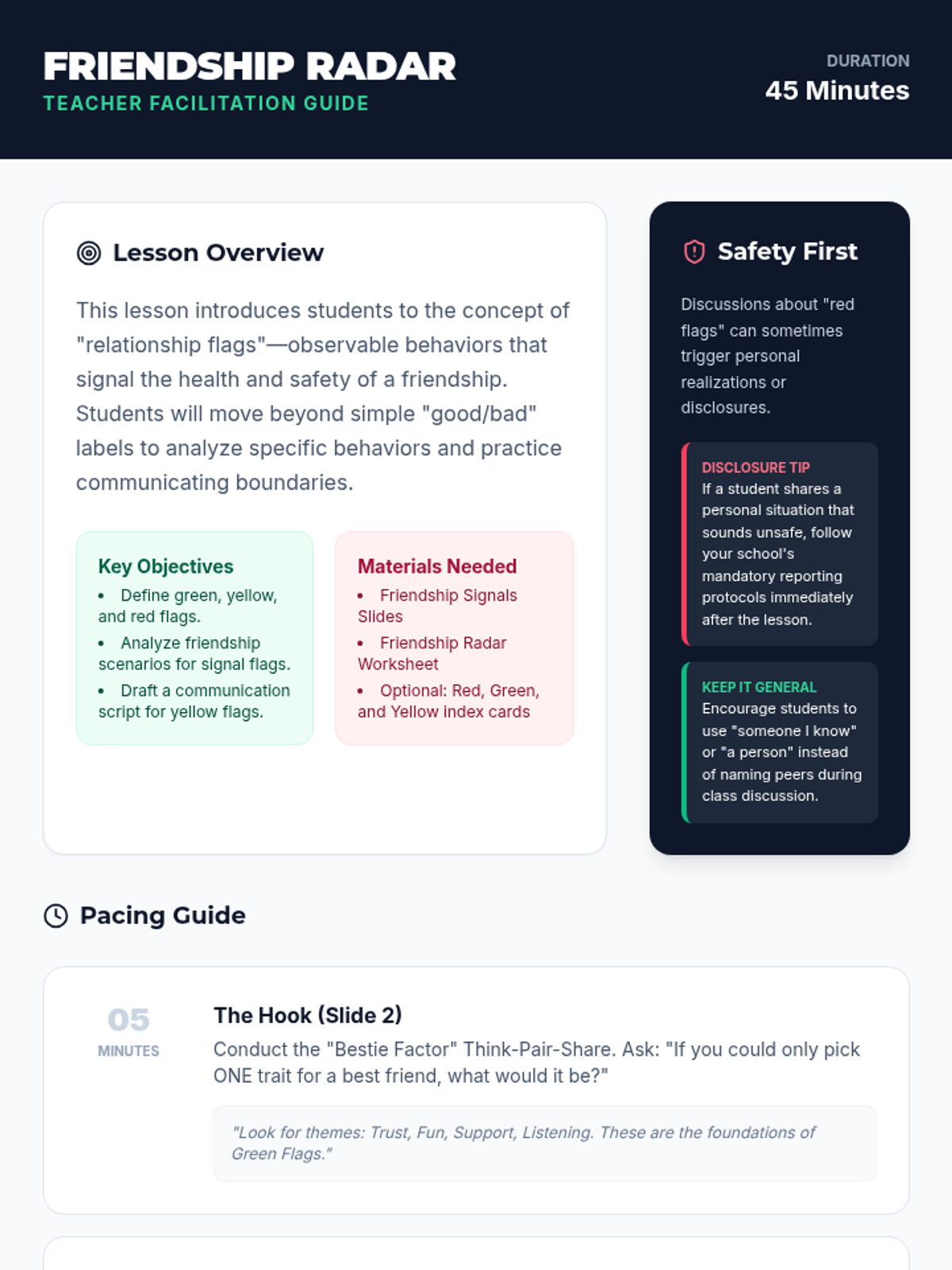
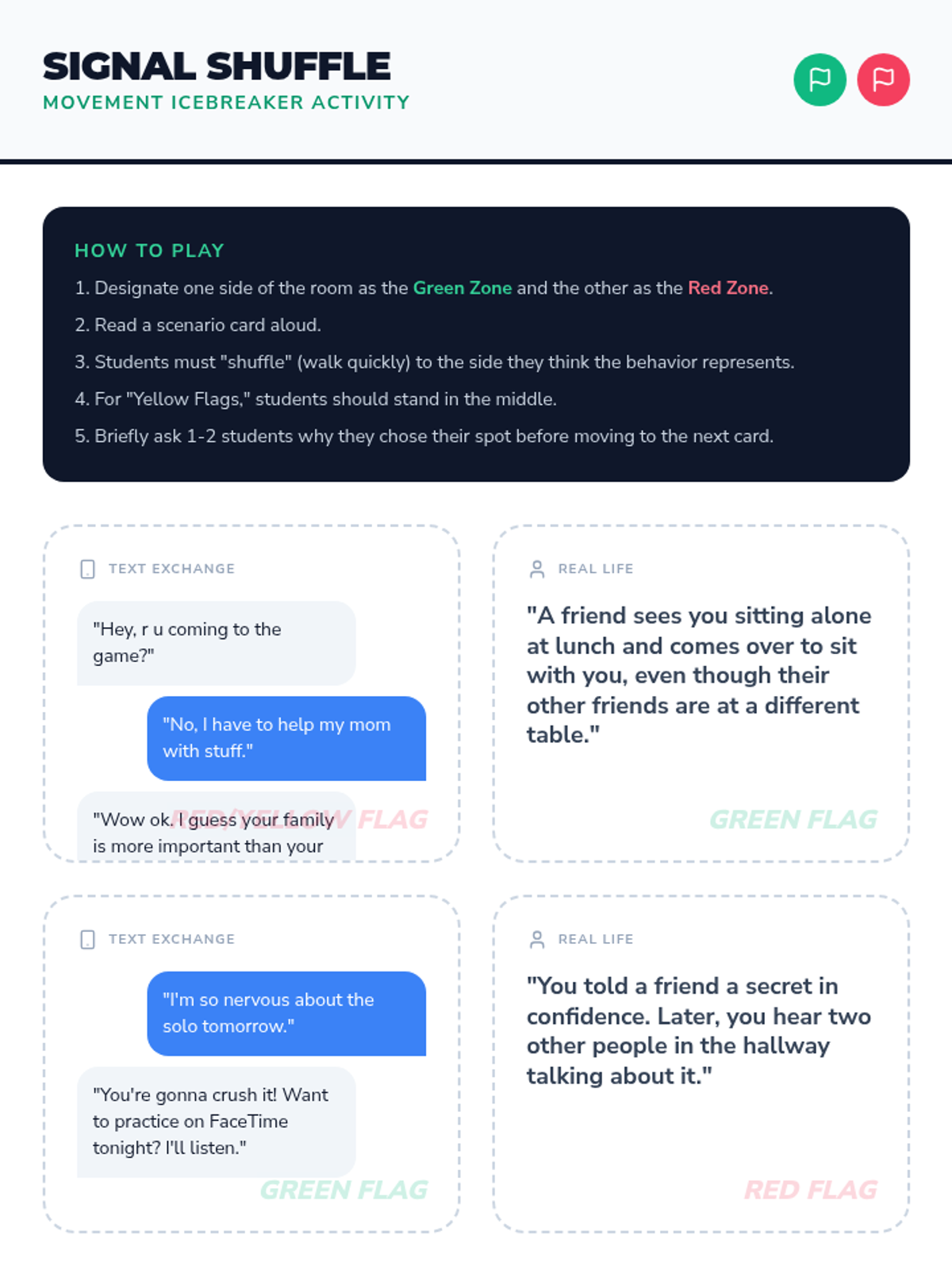
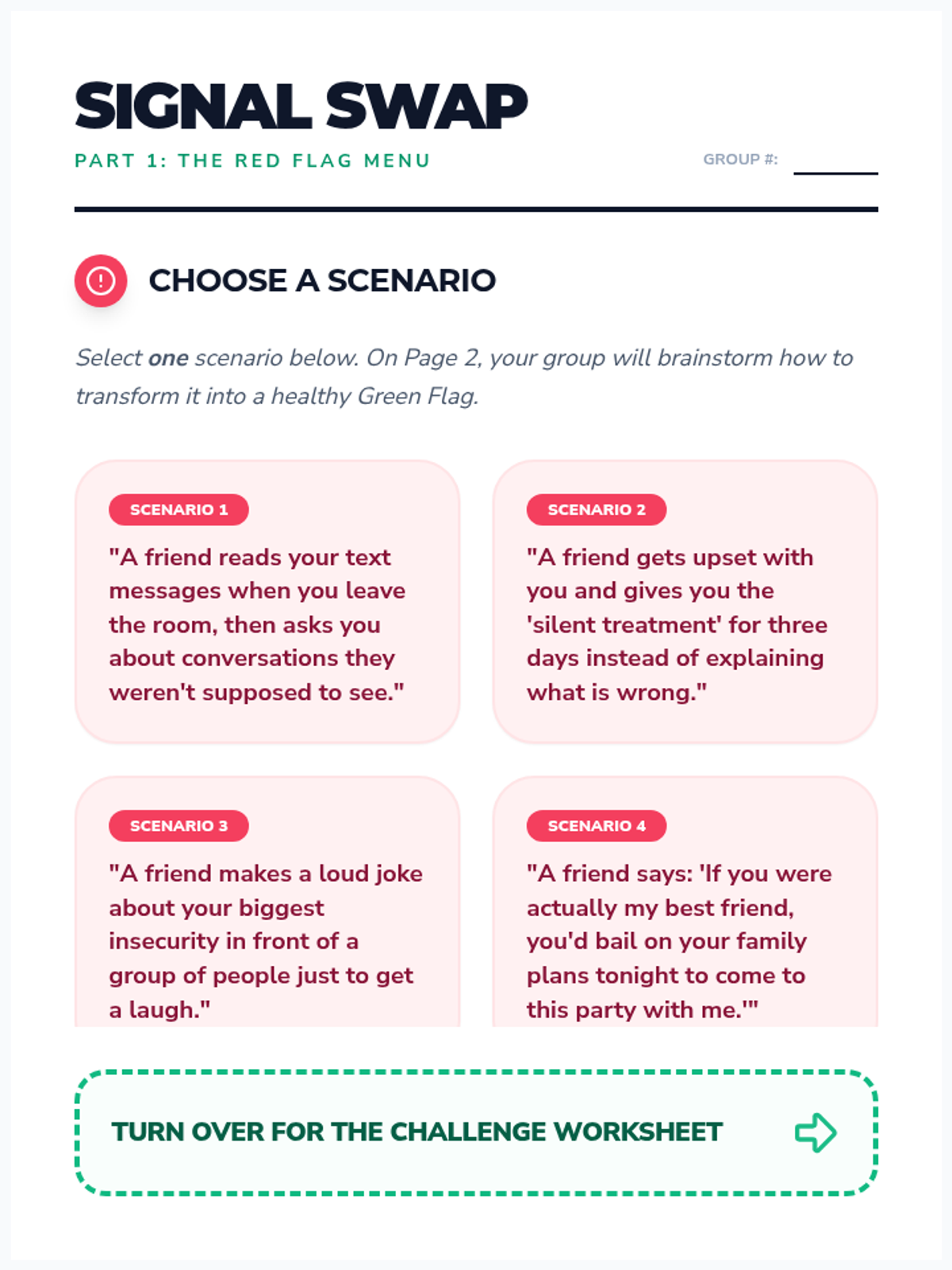
A 45-minute lesson helping students identify healthy and unhealthy relationship dynamics through the lens of 'red' and 'green' flags. Students will practice recognizing warning signs and positive traits in friendships.
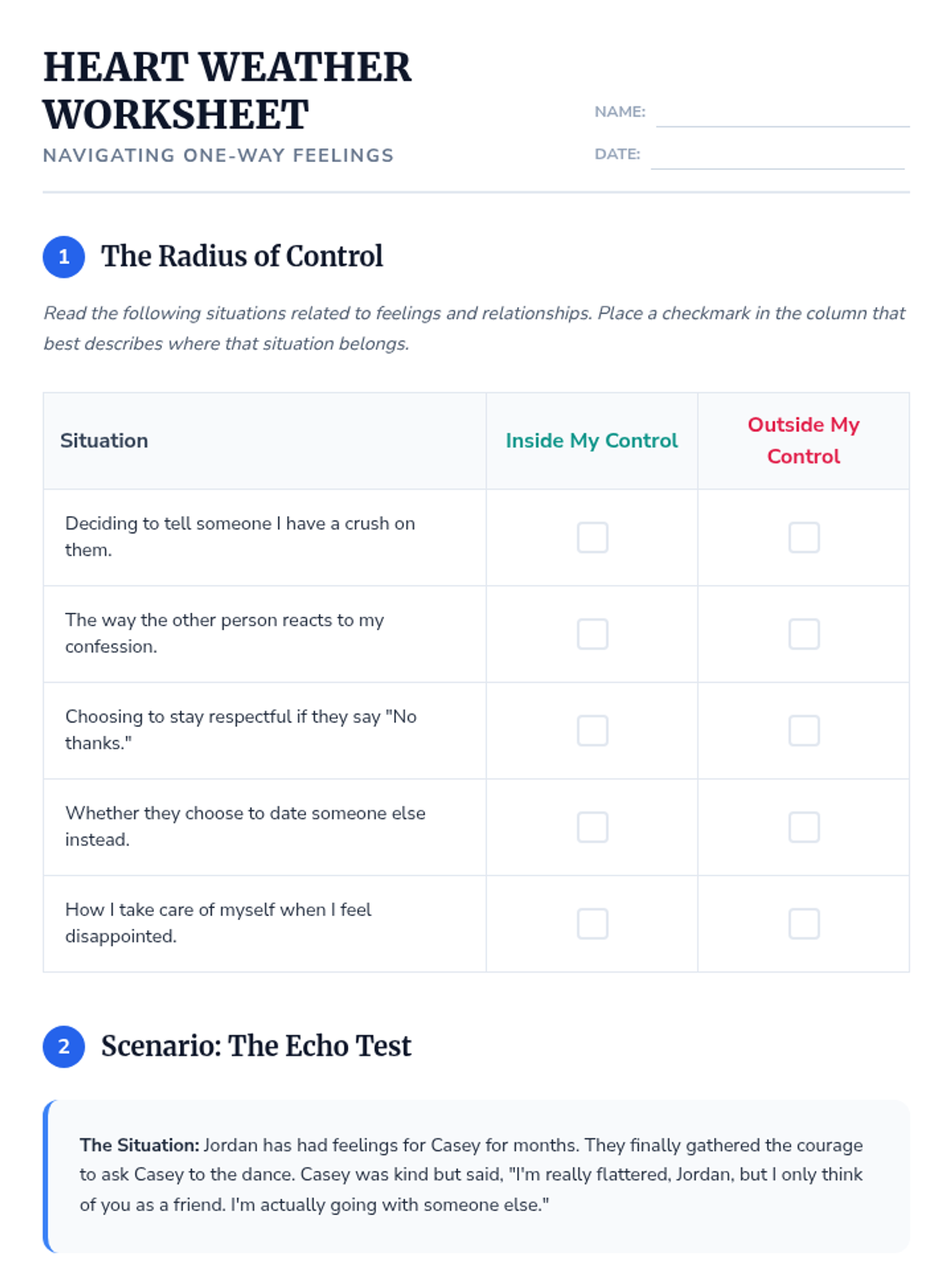
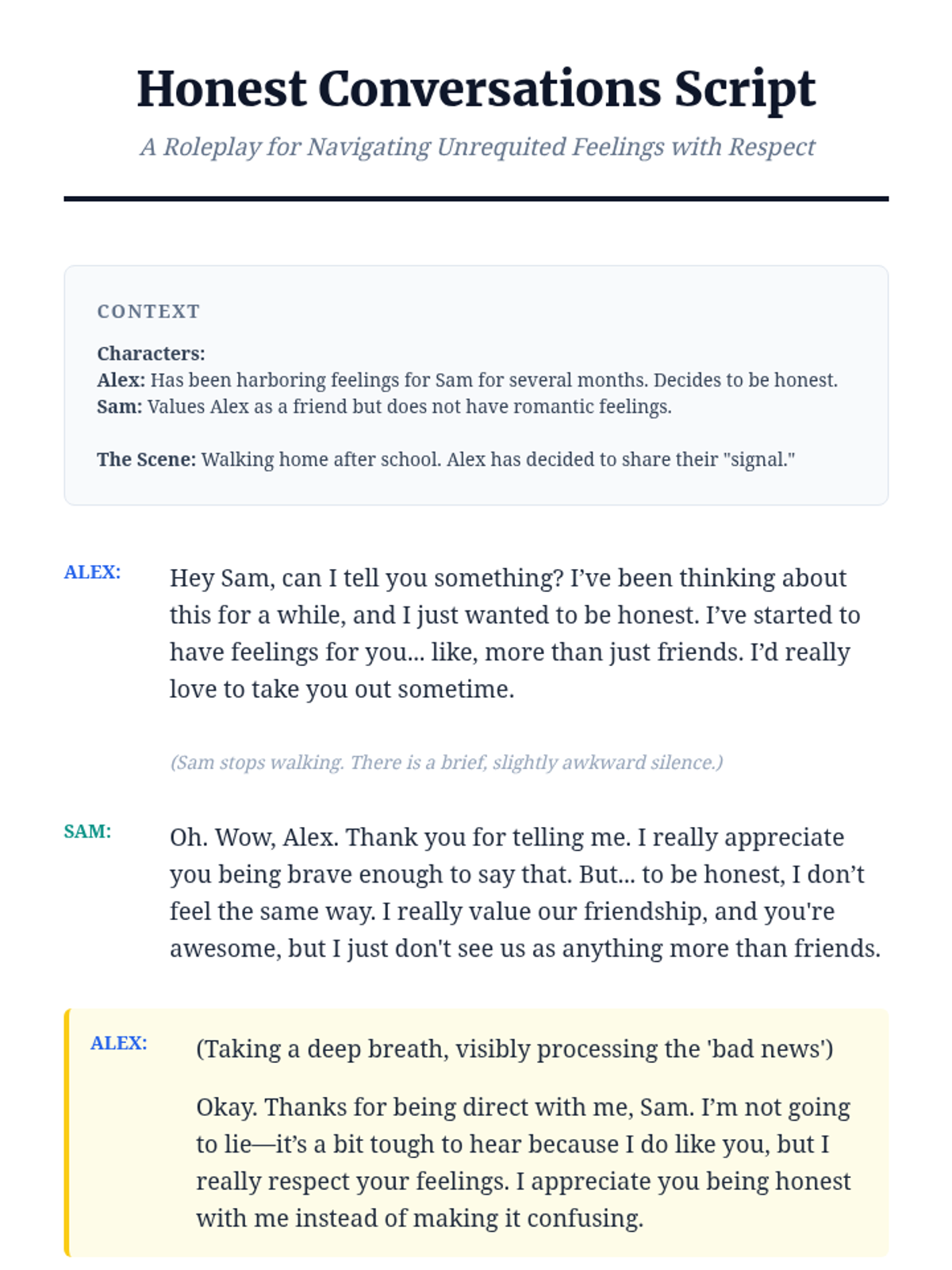
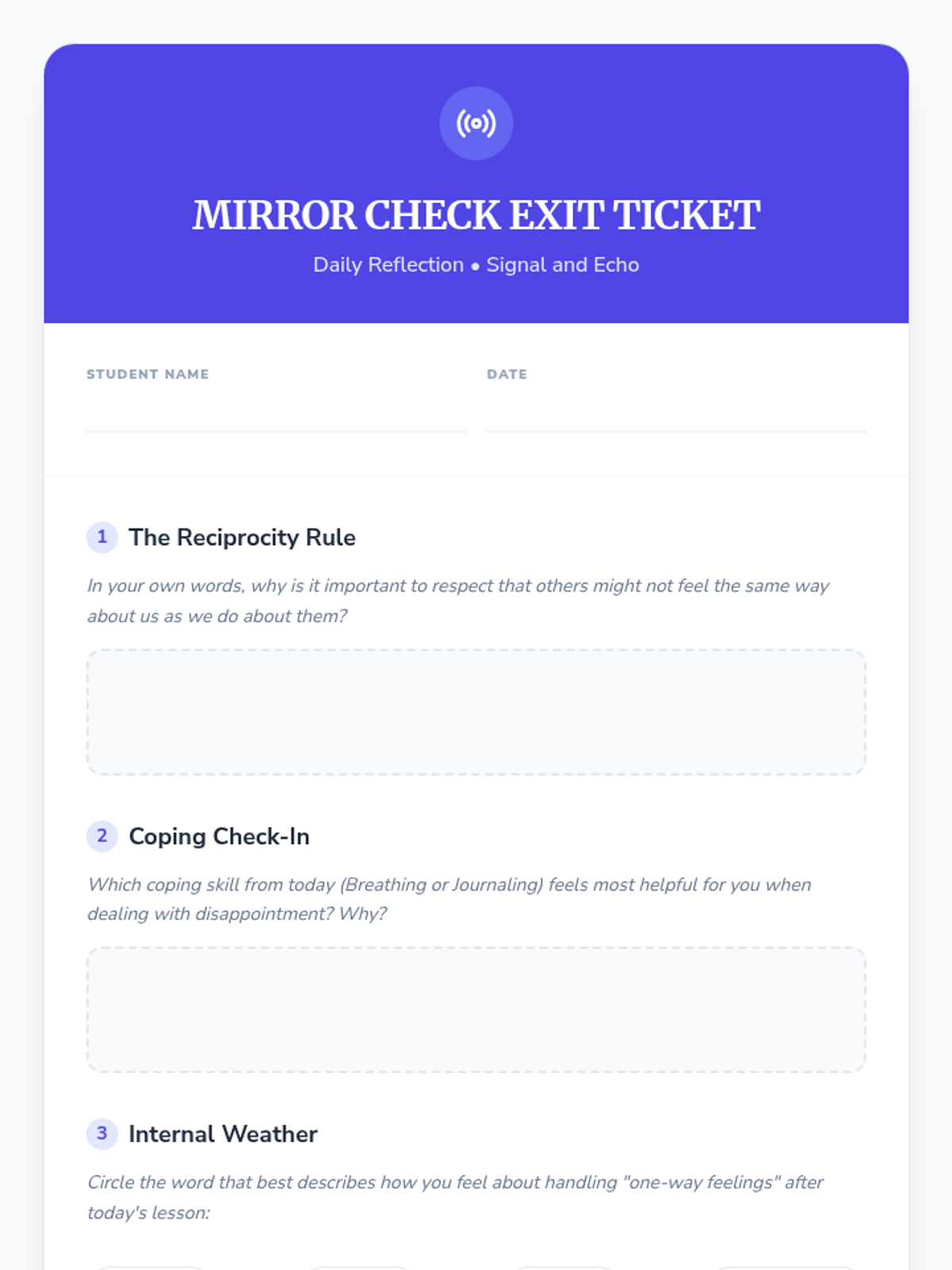
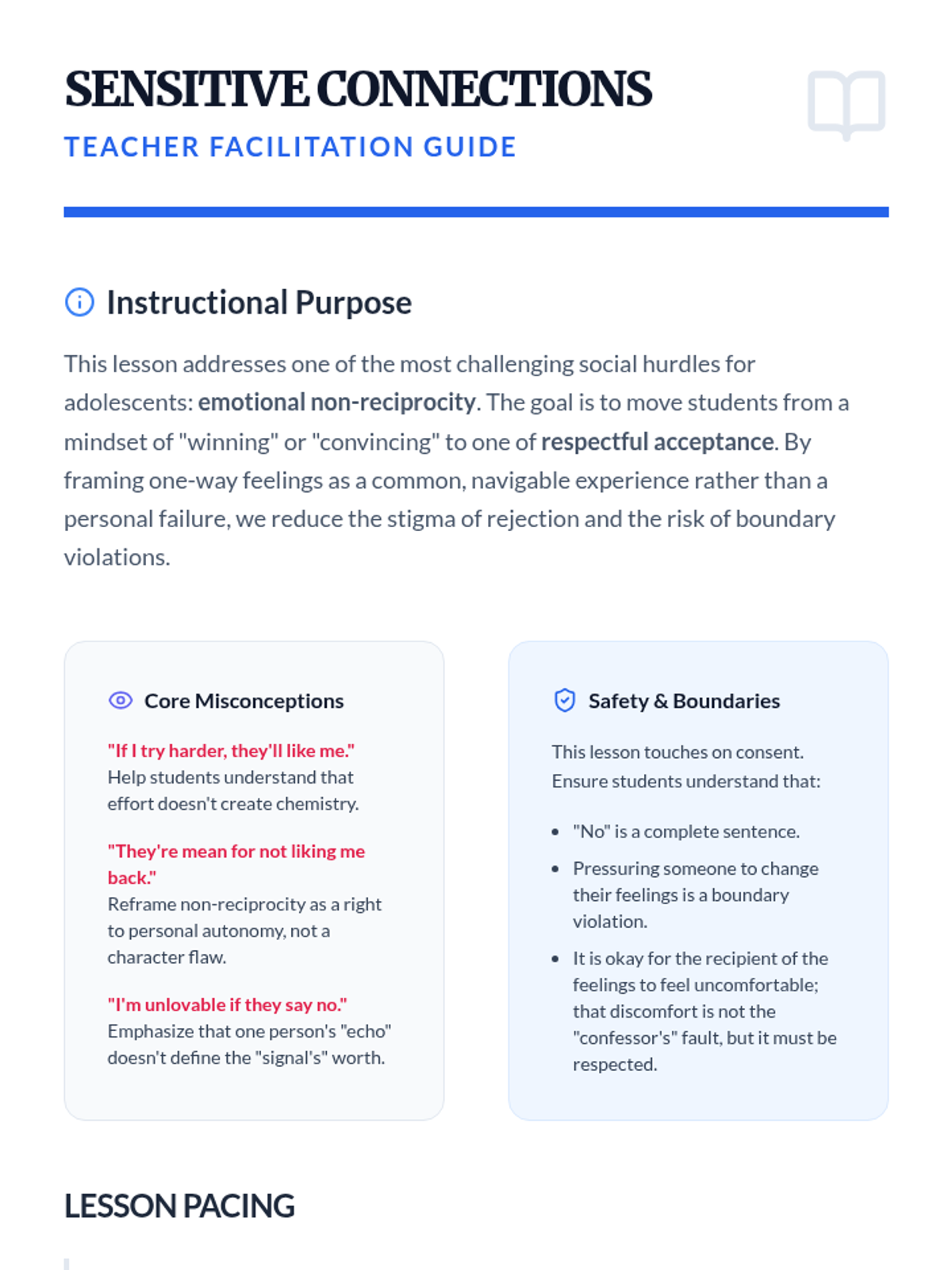
A lesson focused on navigating unrequited feelings, respecting emotional boundaries, and developing resilience when others do not mirror our emotions. Students explore the concept of reciprocity and practice coping strategies for handling social and romantic disappointment.
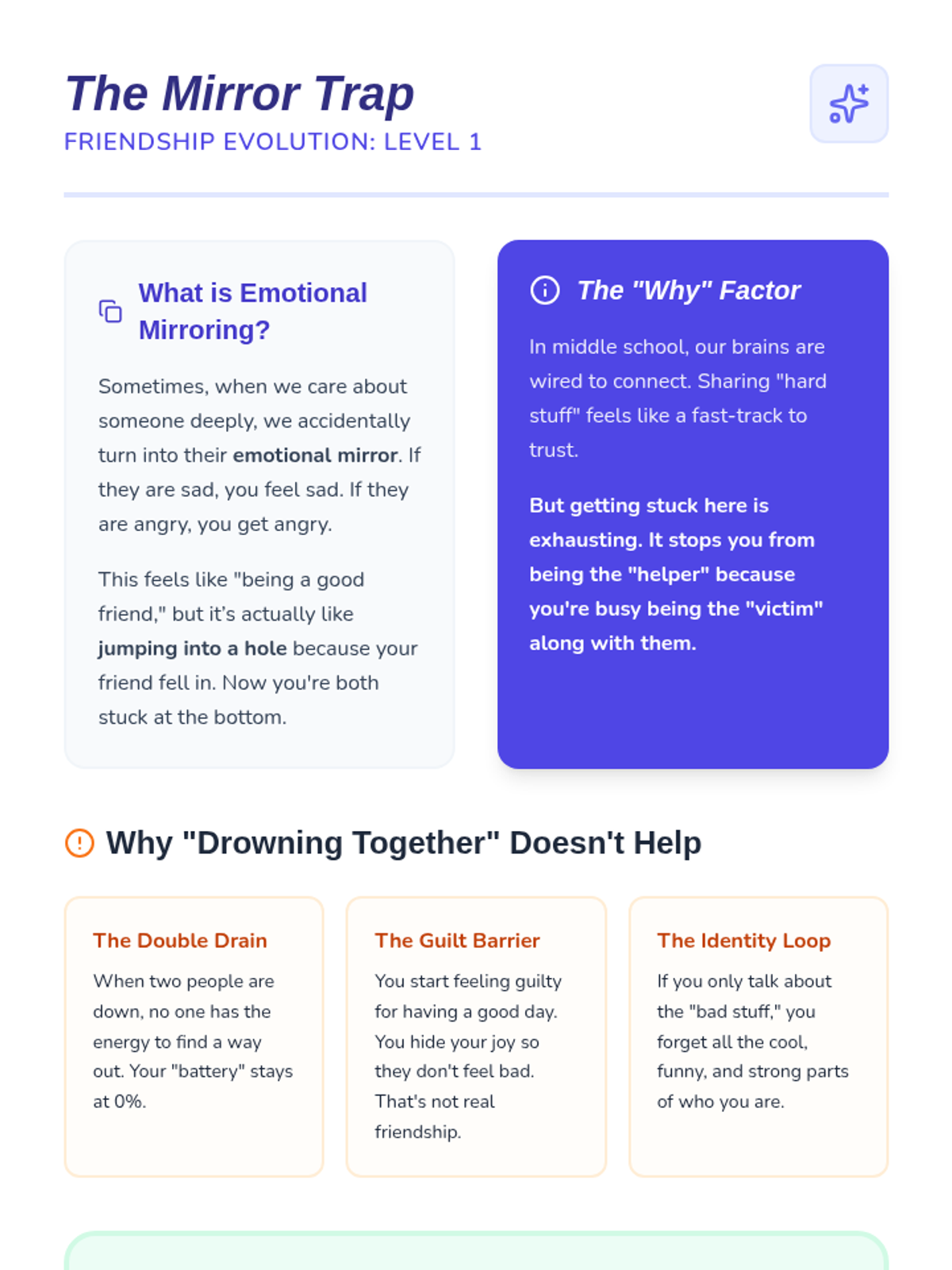
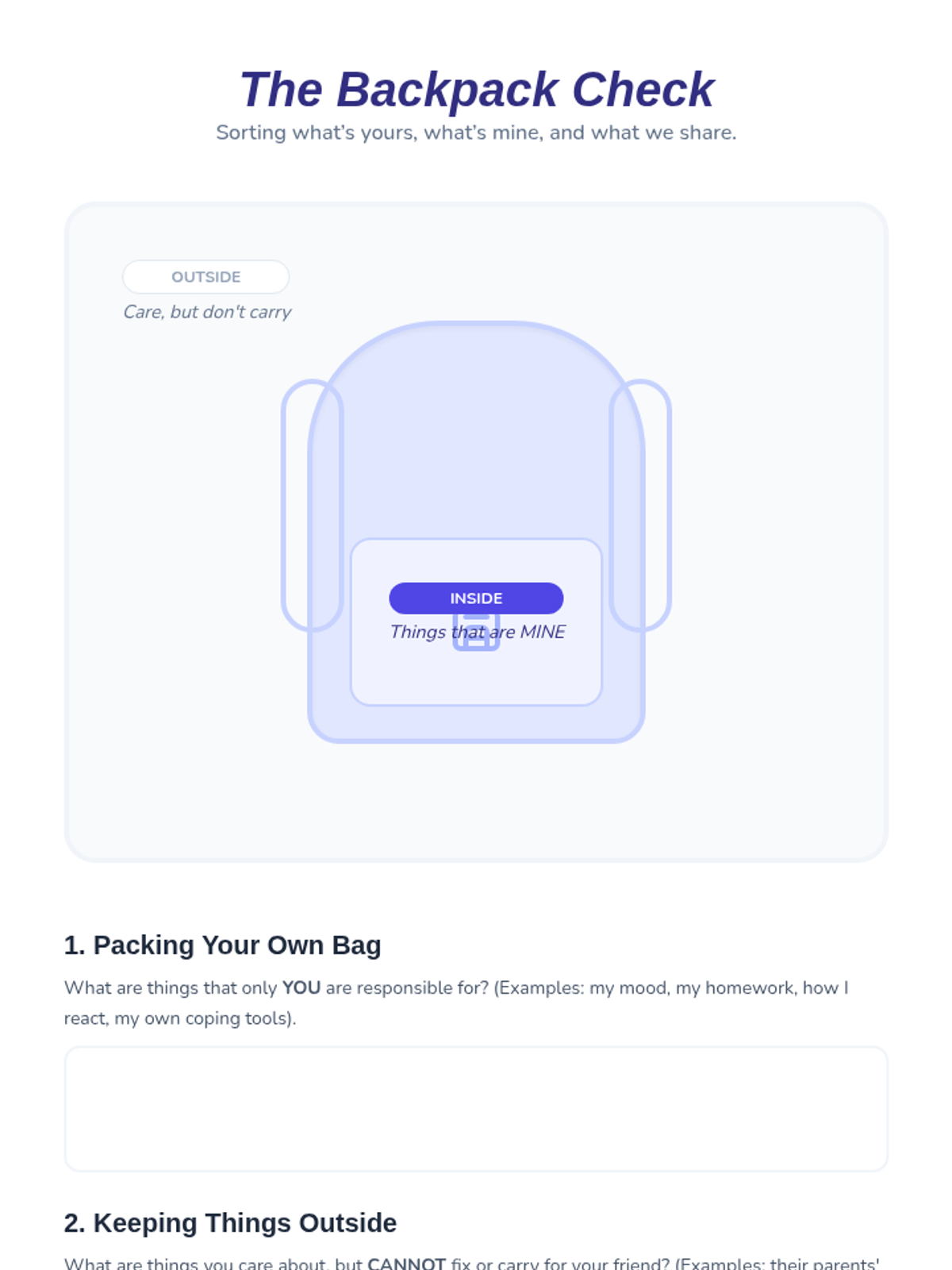
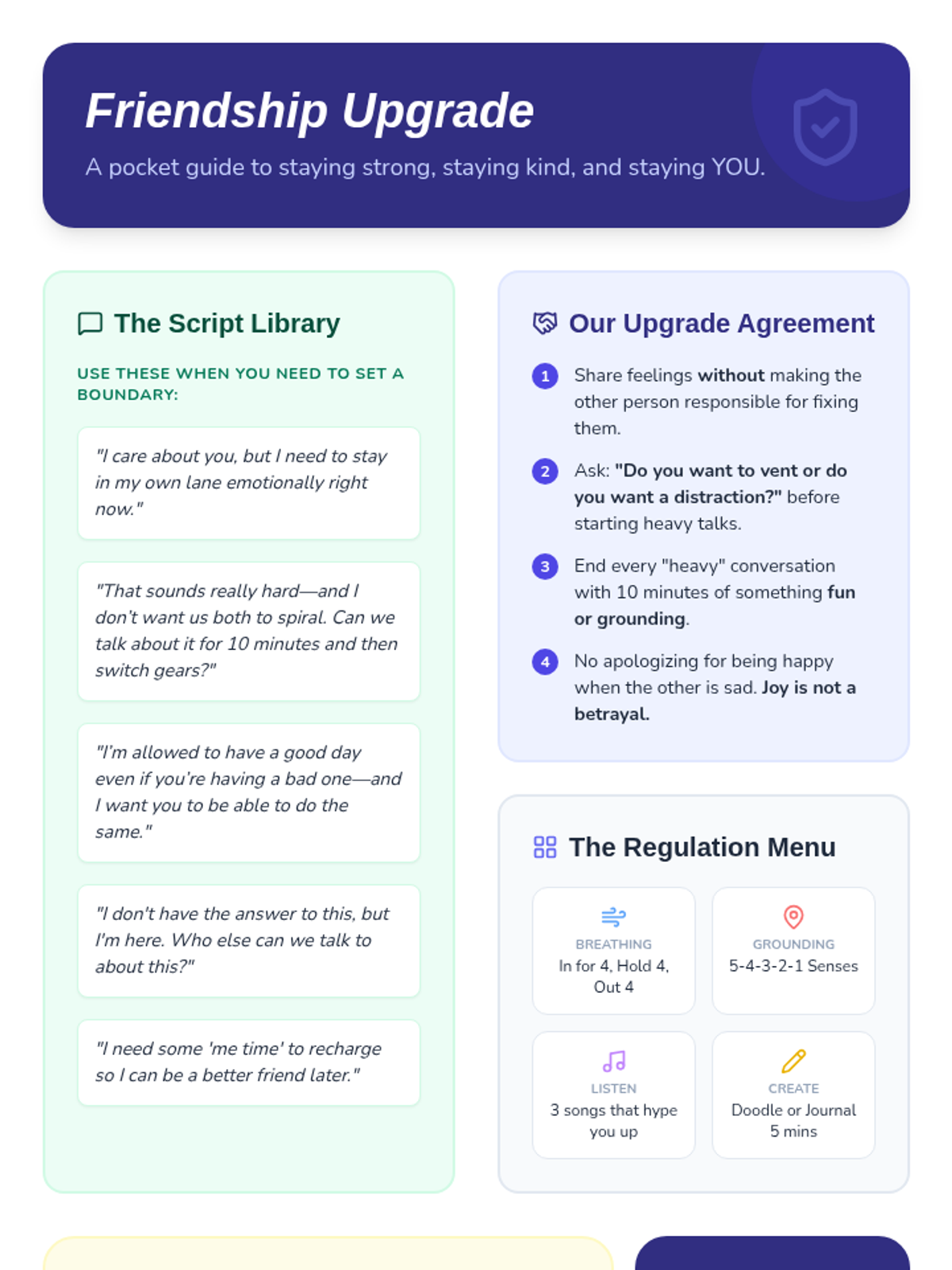
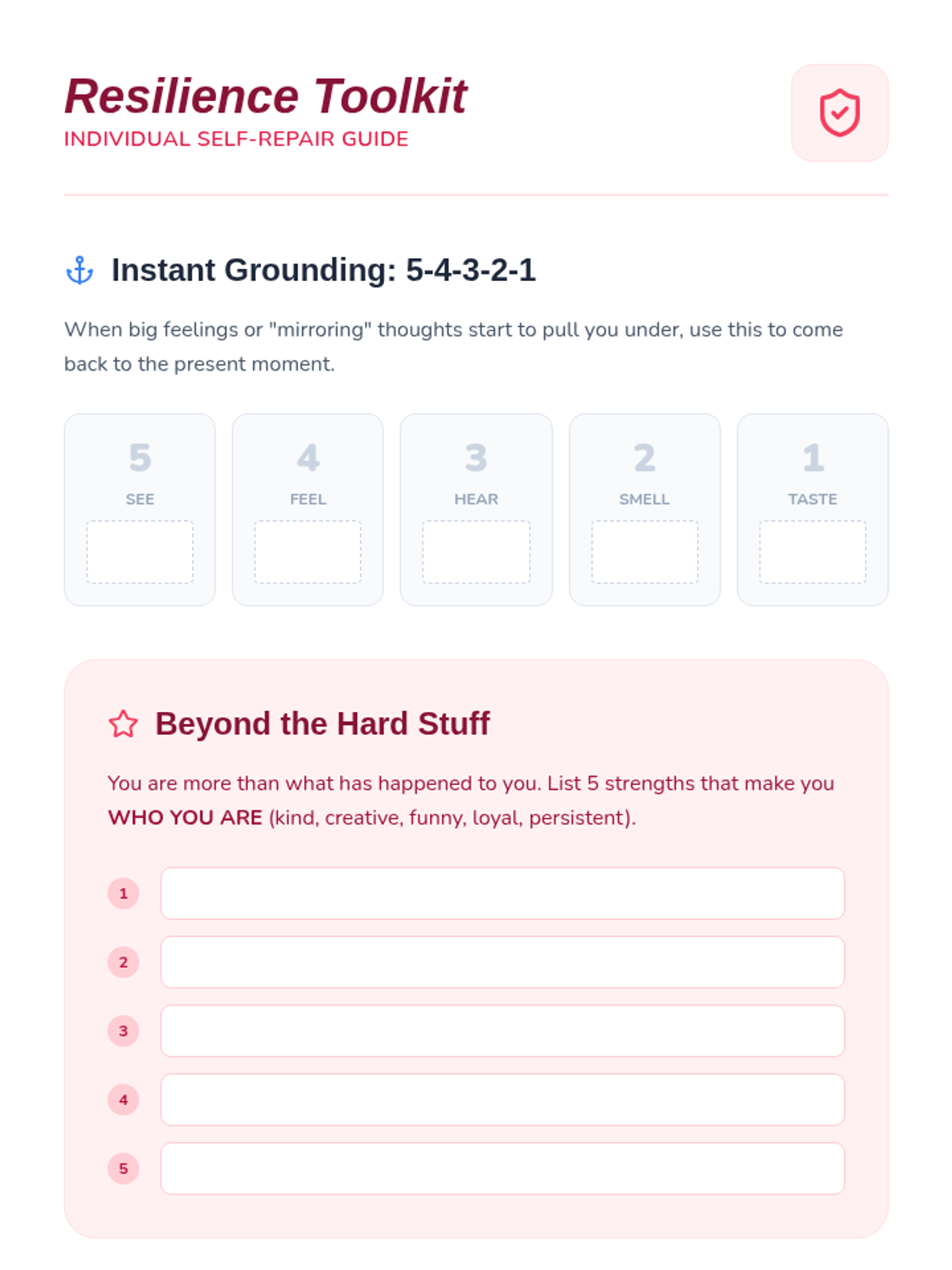
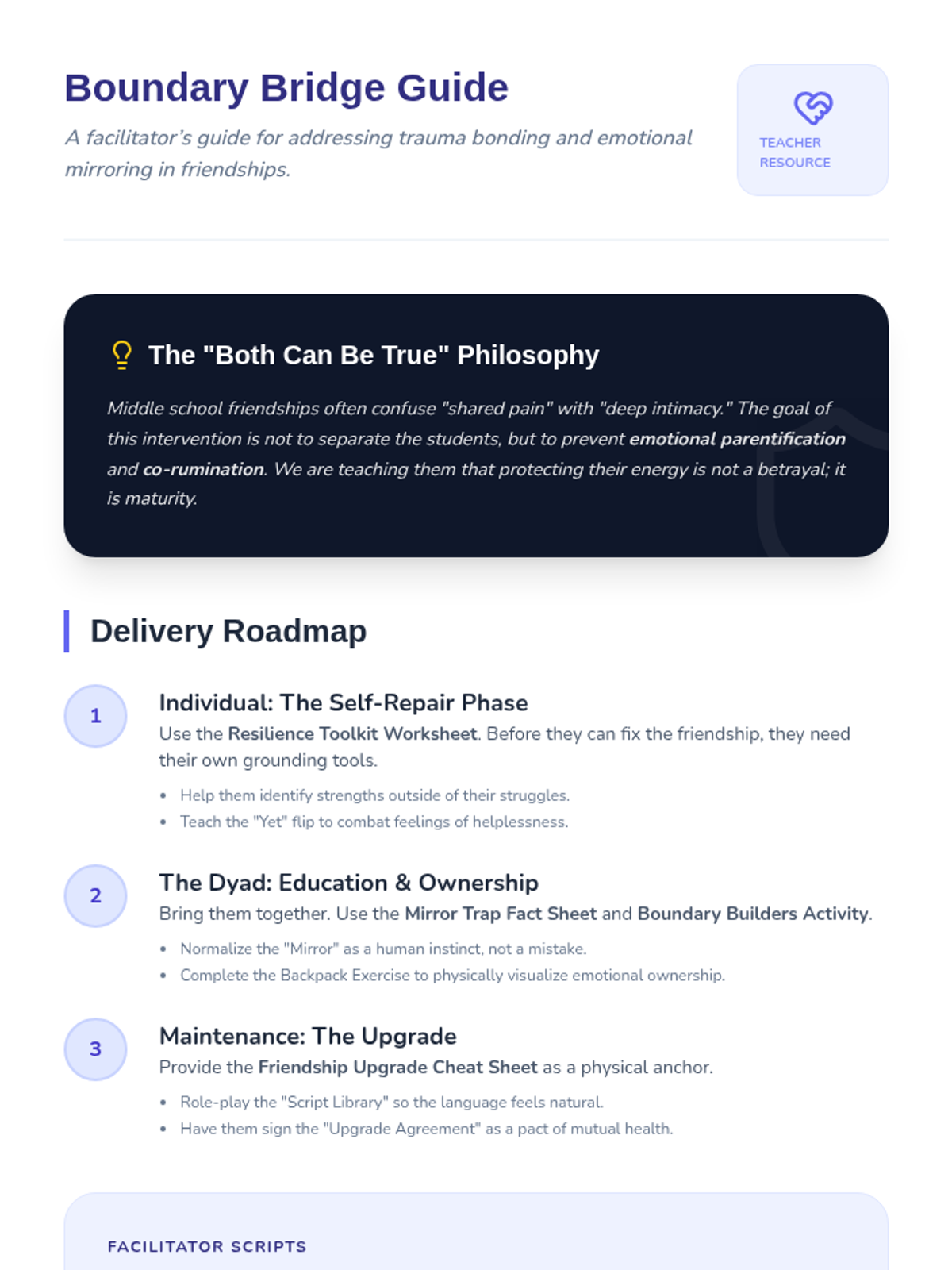
A comprehensive lesson designed for 7th grade students to identify and shift away from co-dependent 'trauma bonding' behaviors toward healthy, resilient friendship boundaries. It focuses on the 'both can be true' philosophy—acknowledging hard things while maintaining individual emotional ownership.
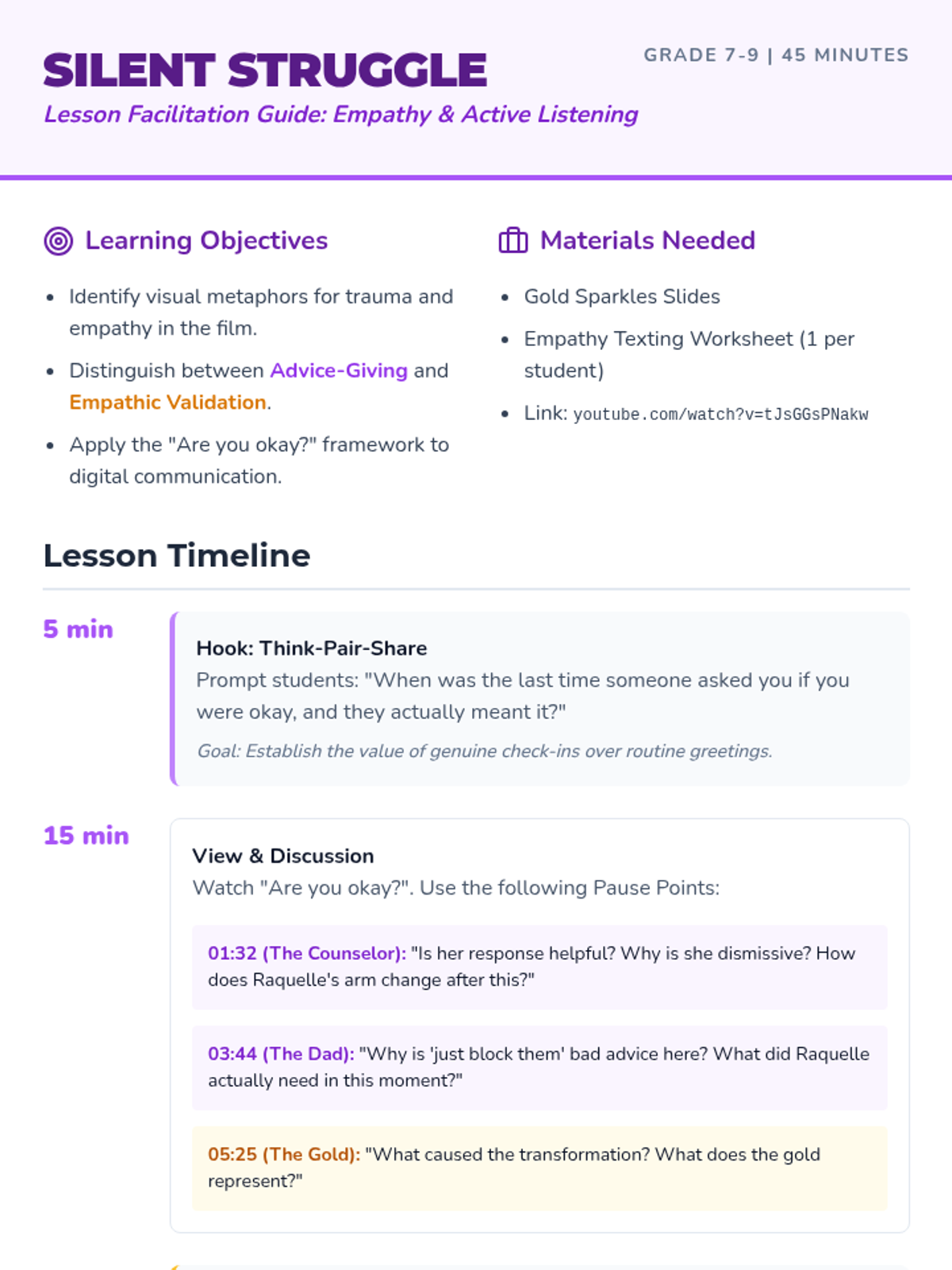
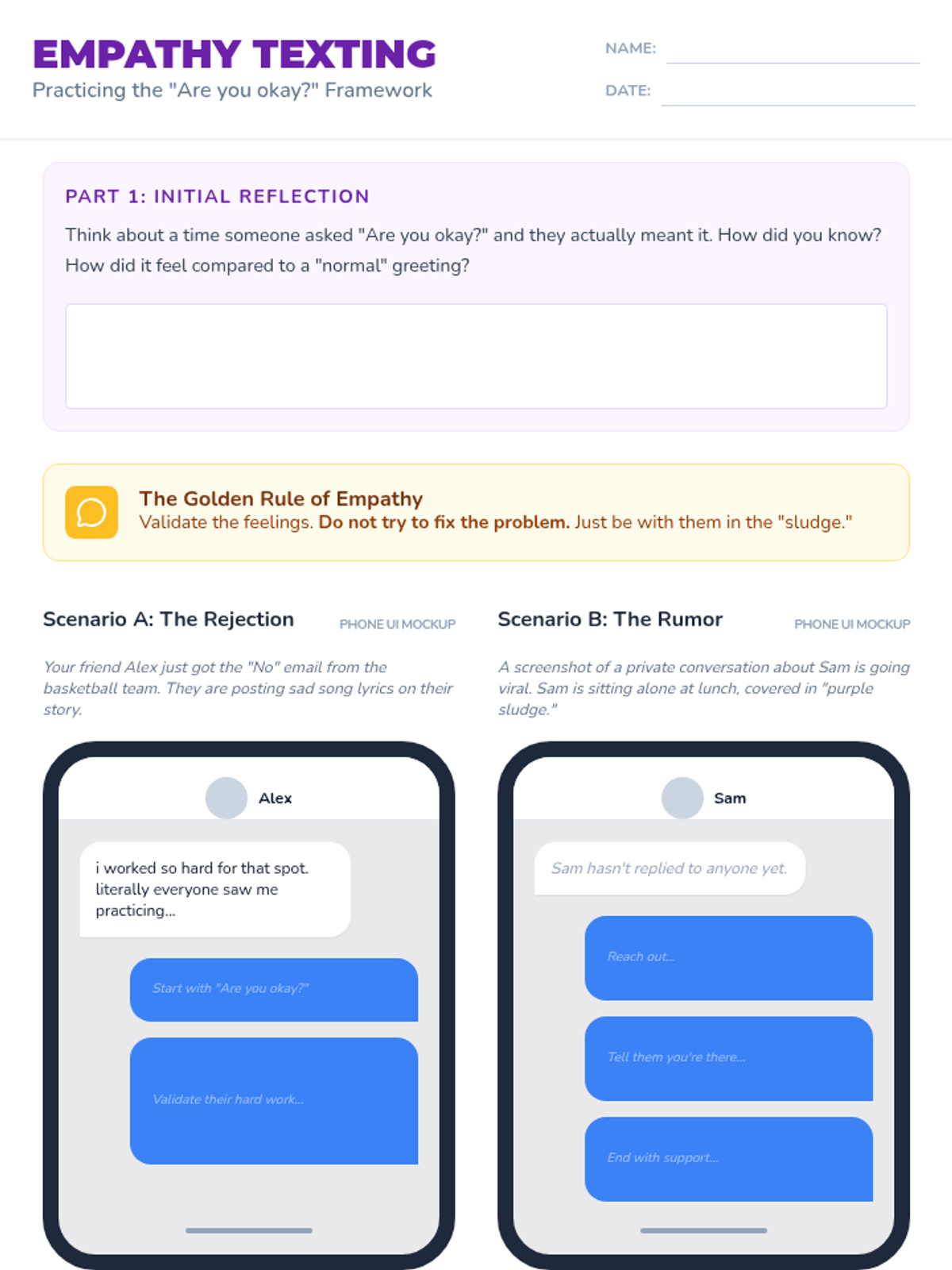
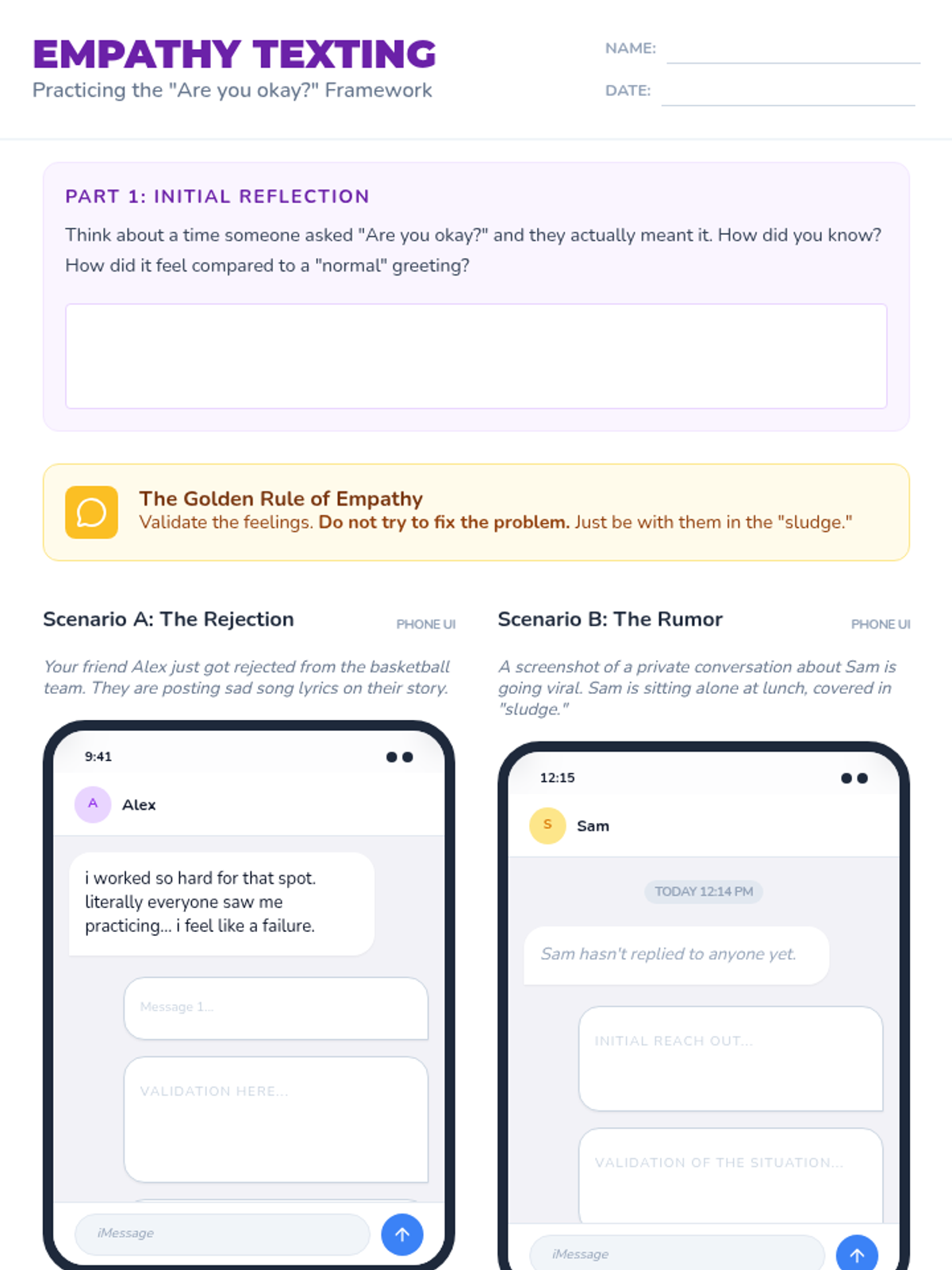
Students will analyze the short film 'Are you okay?' to understand the difference between dismissive advice and genuine empathy, practicing active listening and supportive communication through text-based scenarios.
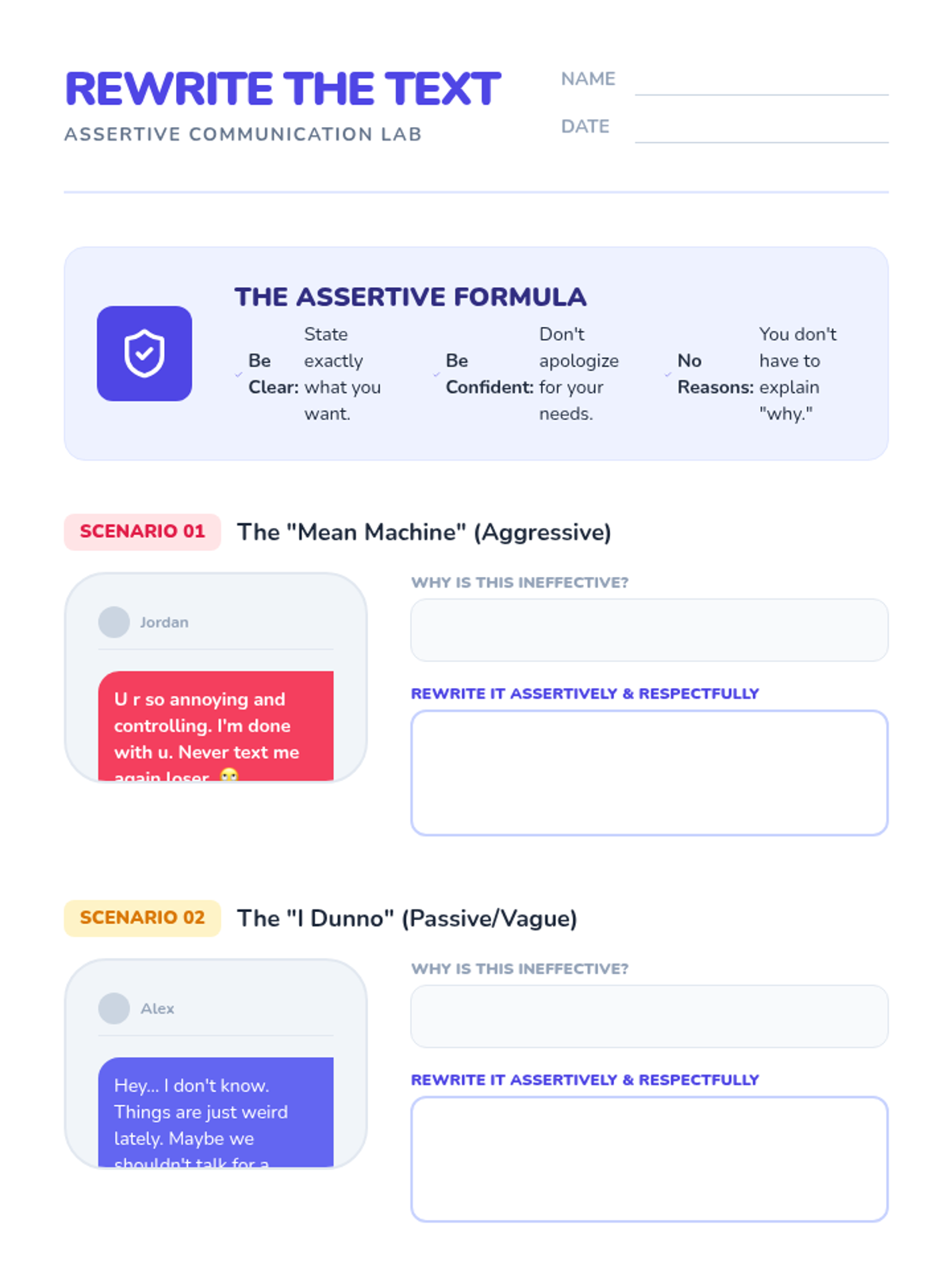
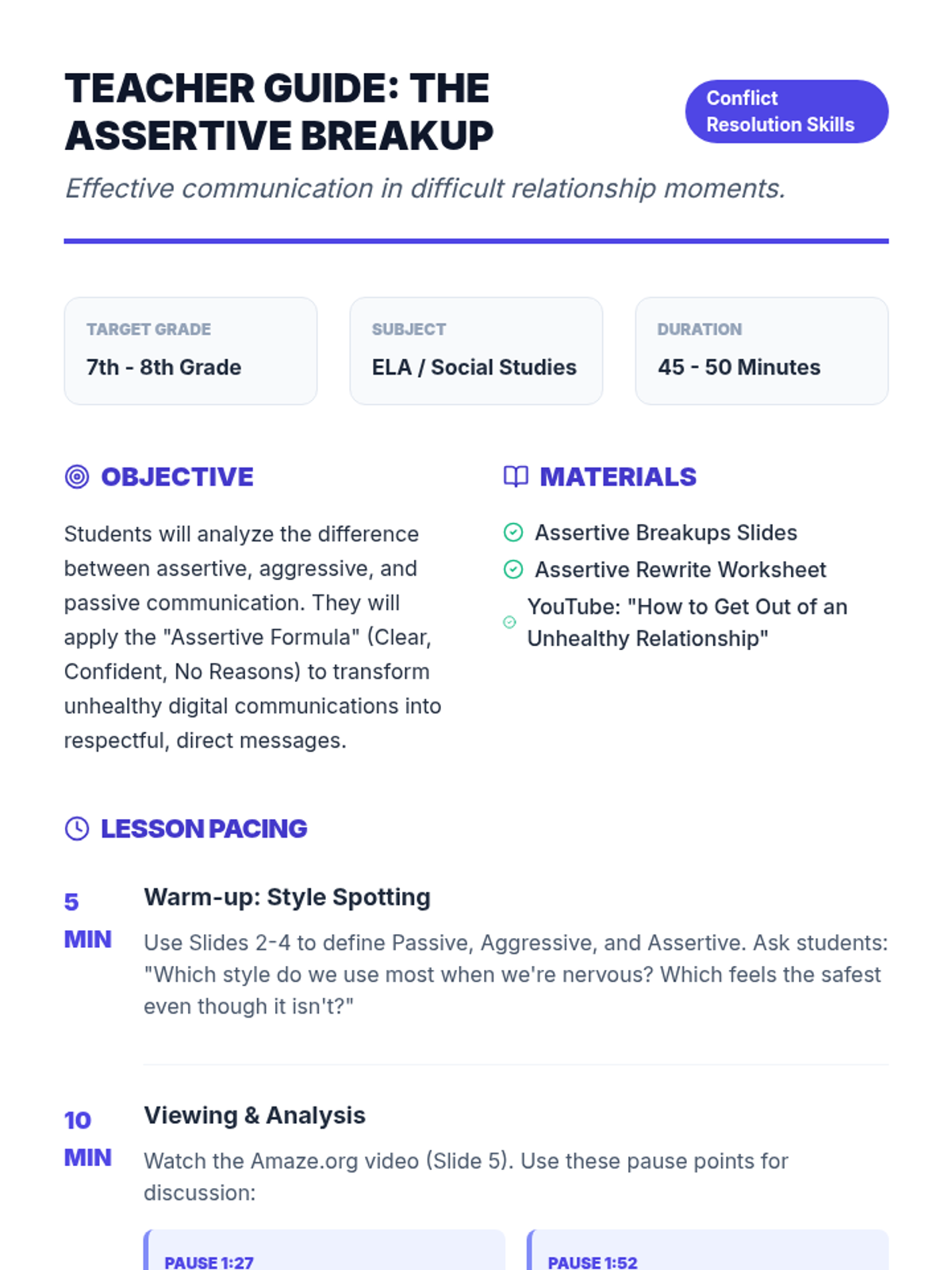
In this lesson, students will learn to distinguish between assertive, aggressive, and passive communication styles. They will apply these concepts by rewriting ineffective breakup texts into assertive, respectful messages based on guidelines from a featured educational video.
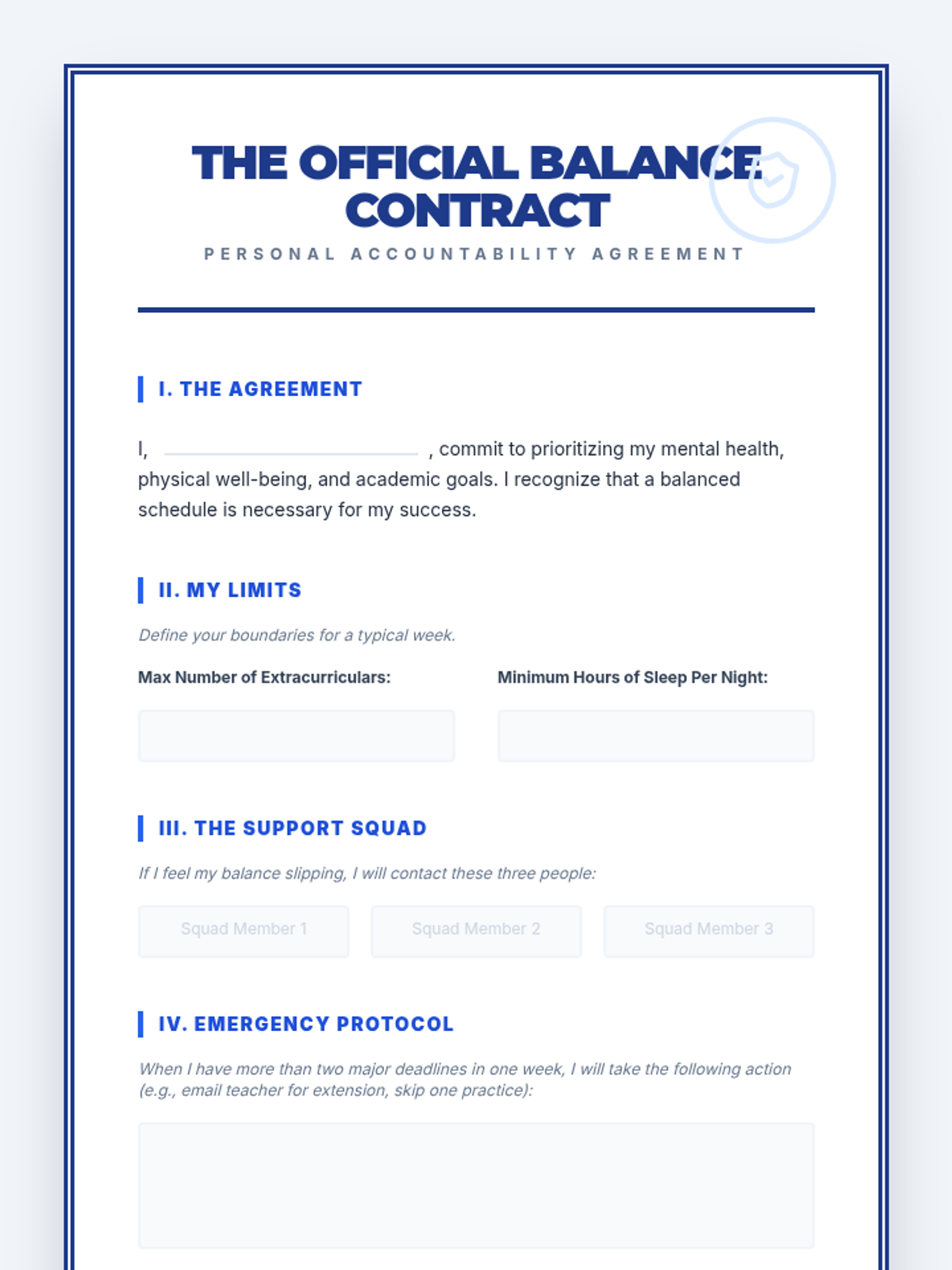
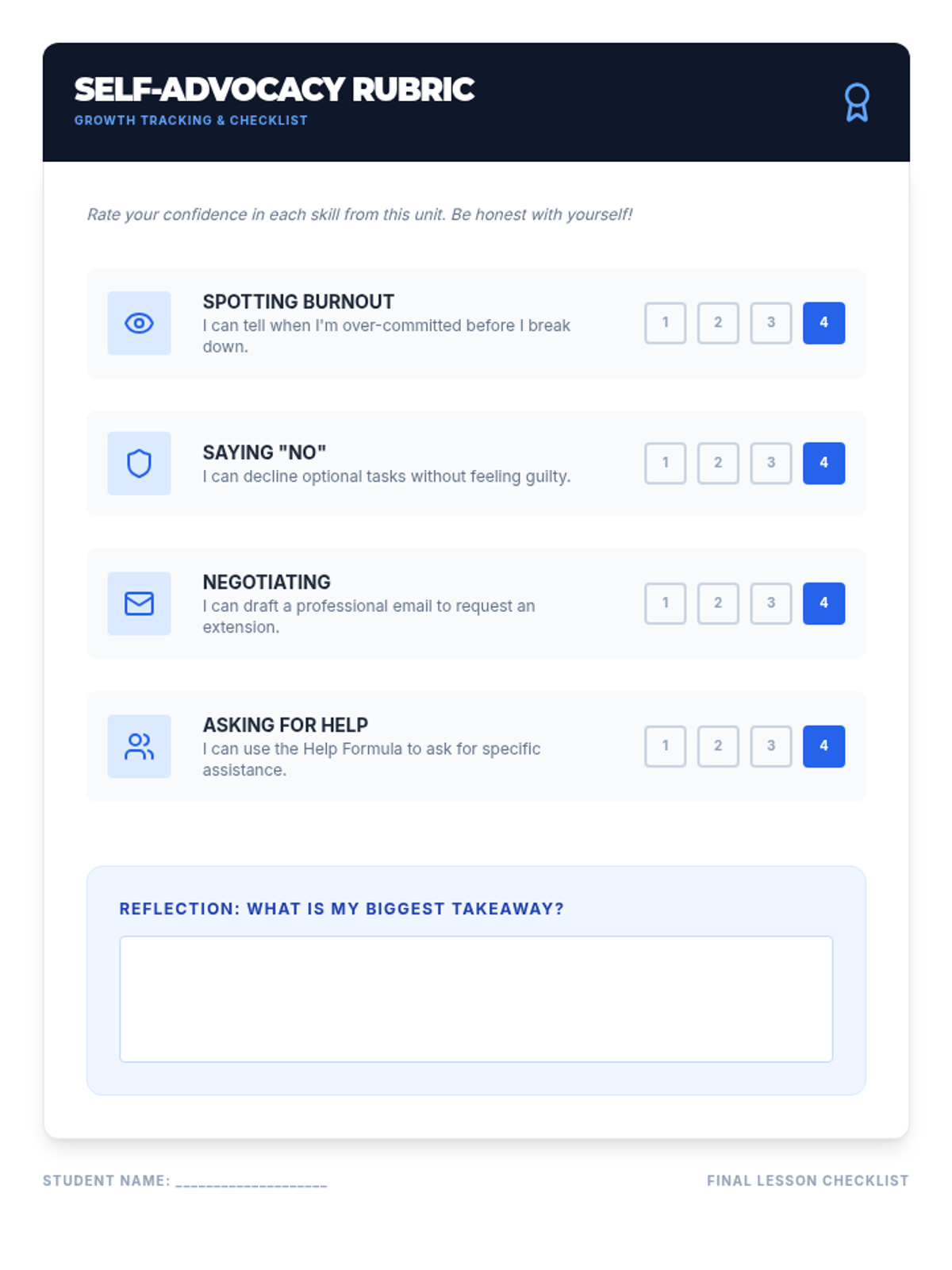
Students create a personal 'Balance Contract' to outline their limits and establish a protocol for managing future stress.
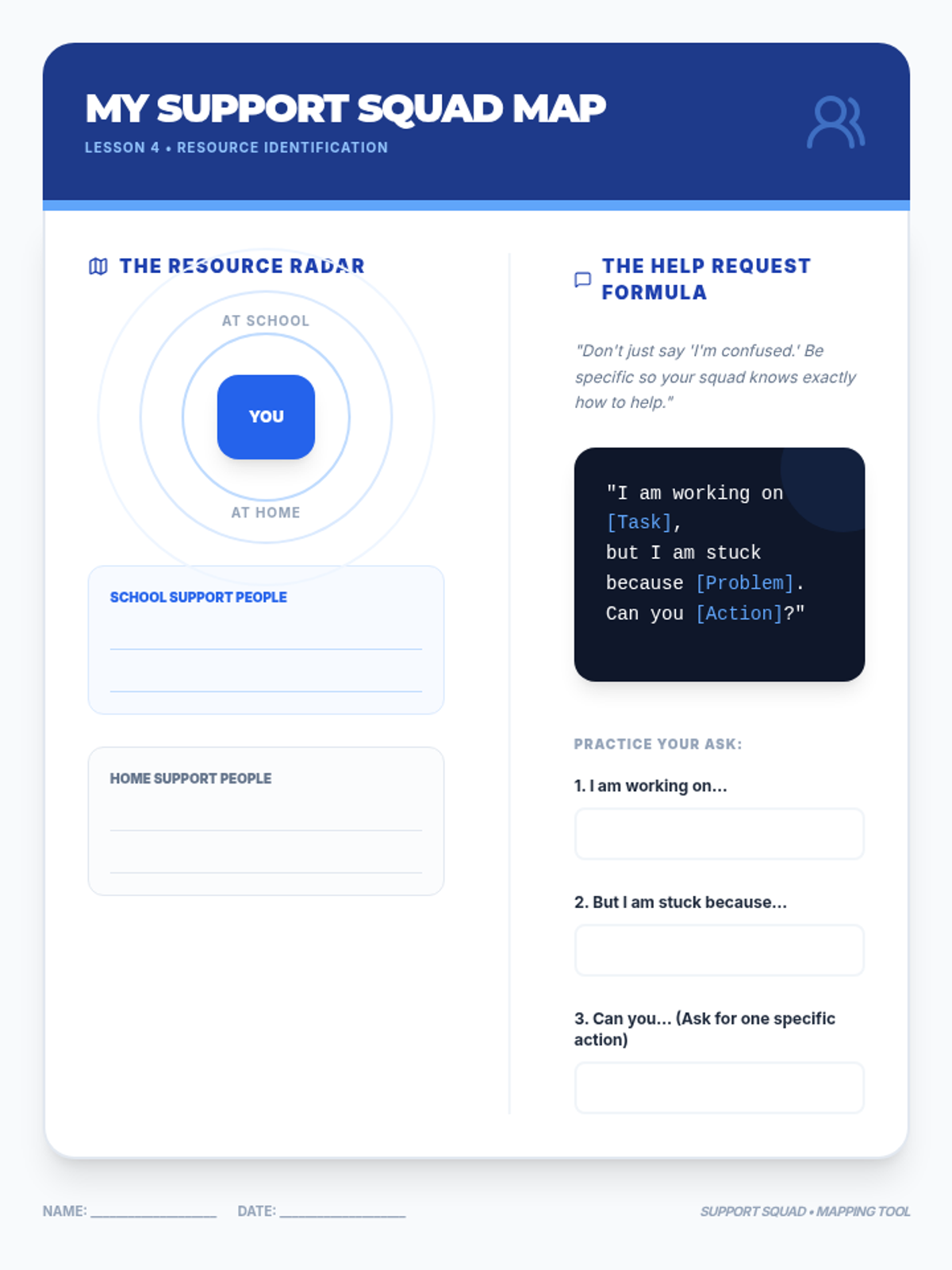
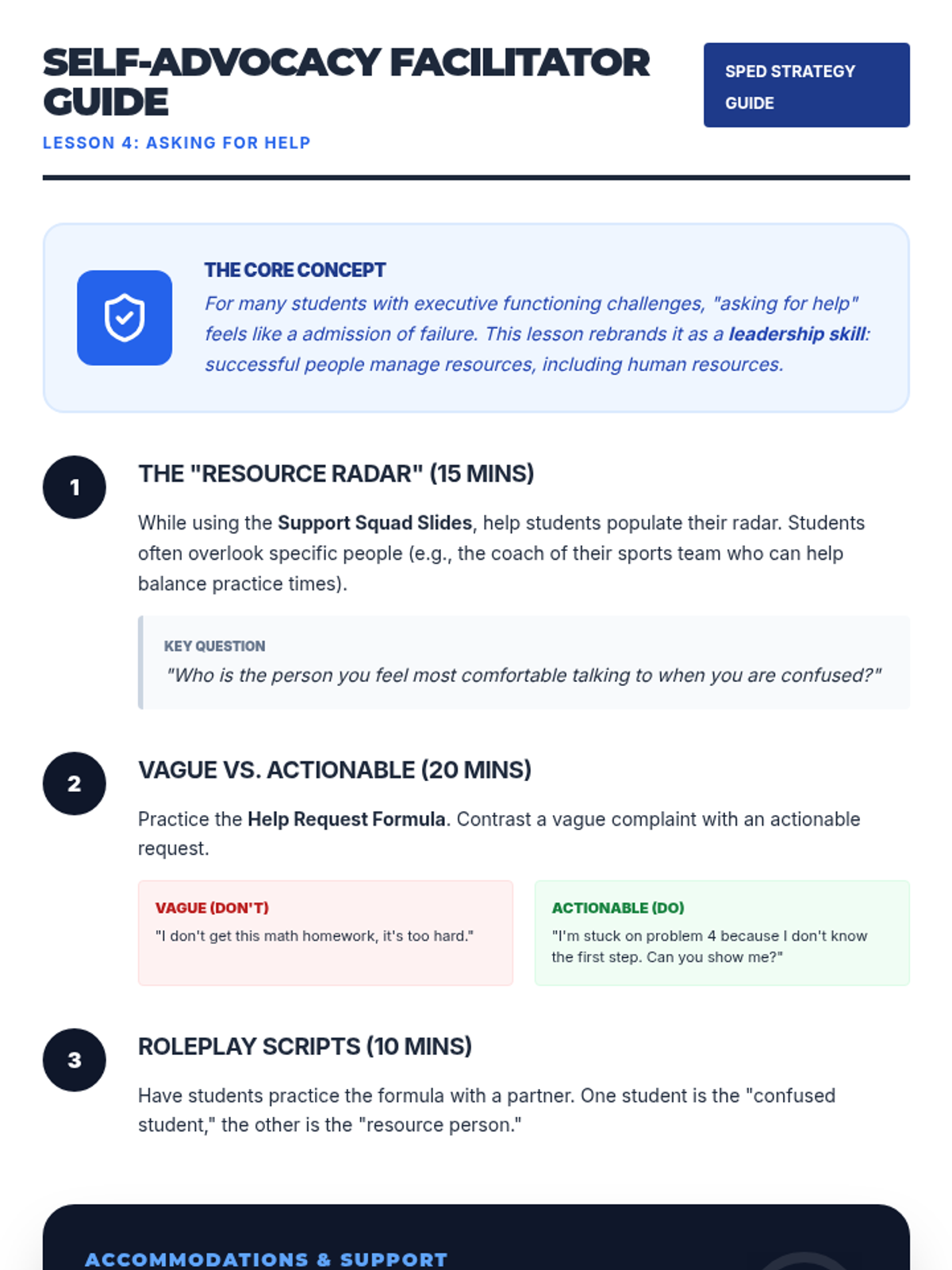
Students identify their support network and practice making specific, actionable requests for assistance.
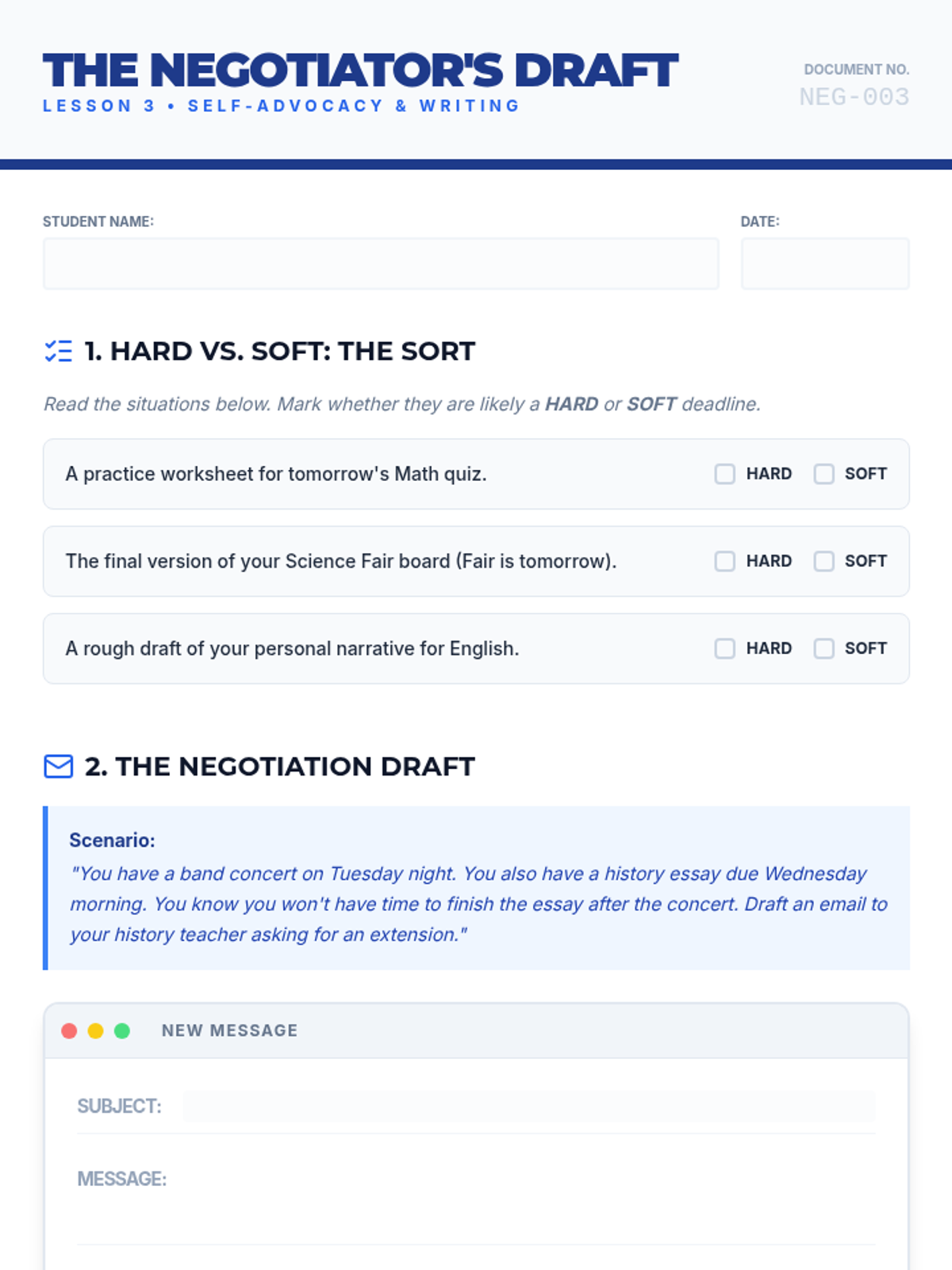
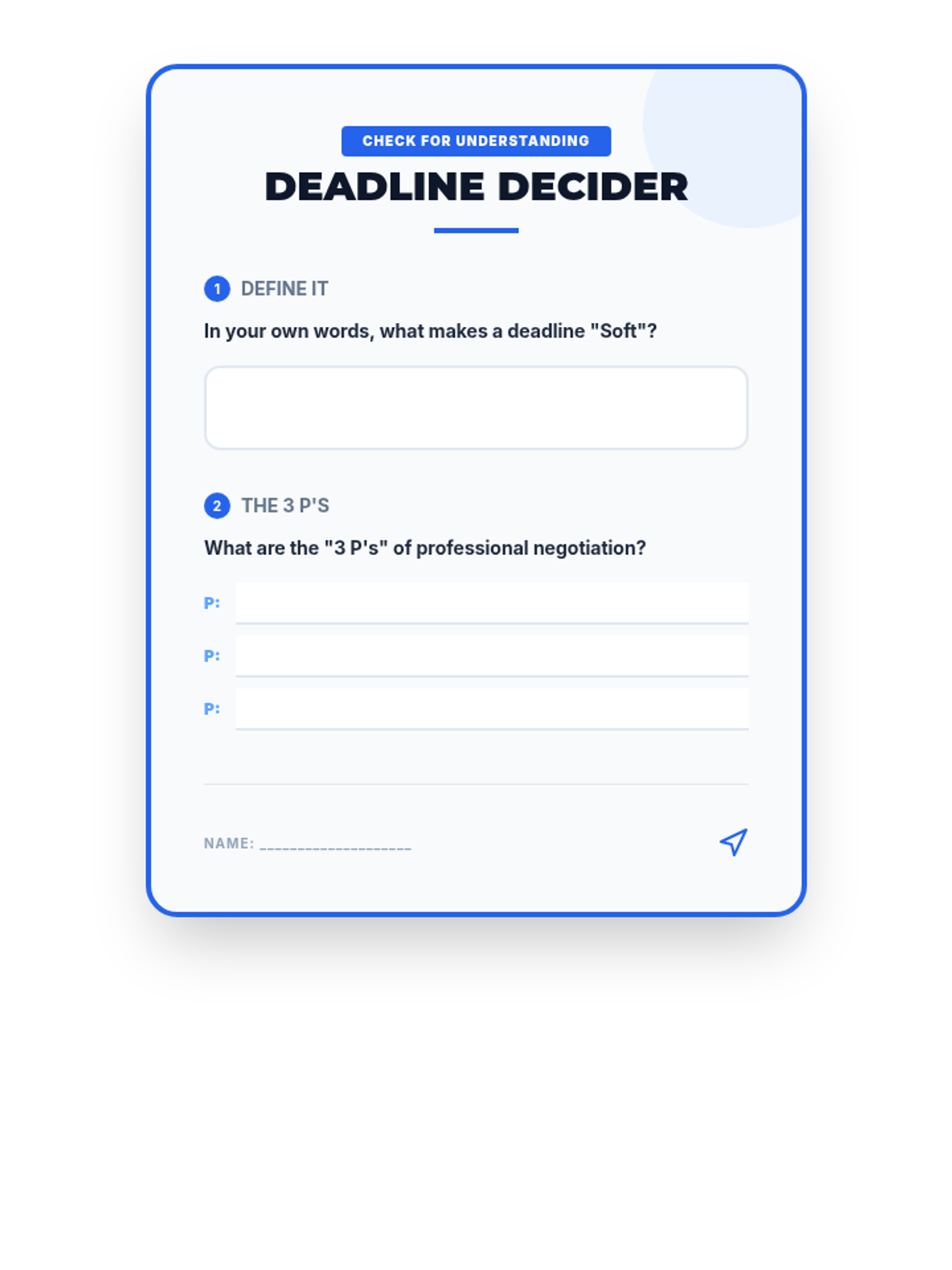
Students learn to differentiate between hard and soft deadlines and practice professional email communication to negotiate alternatives.
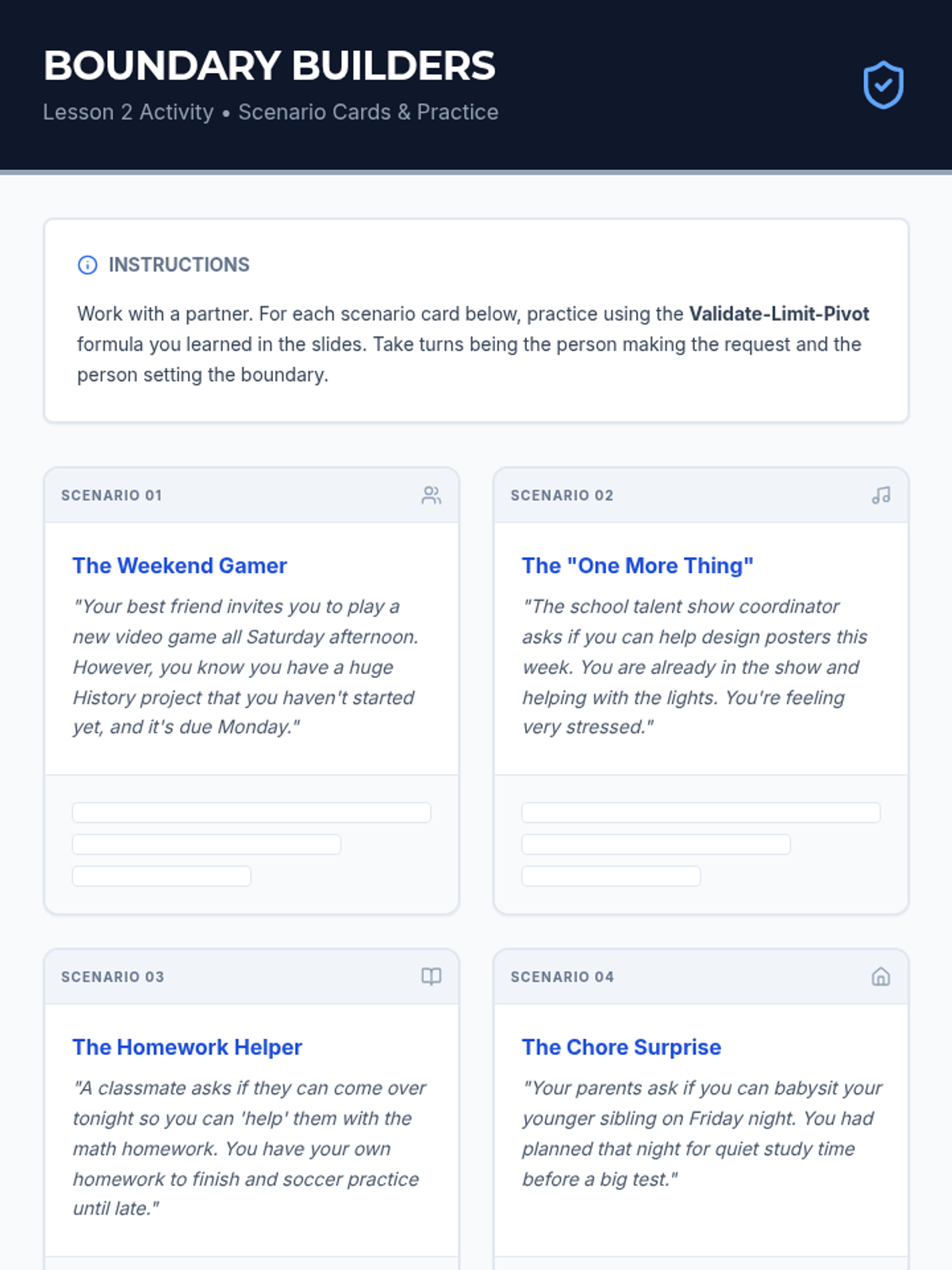
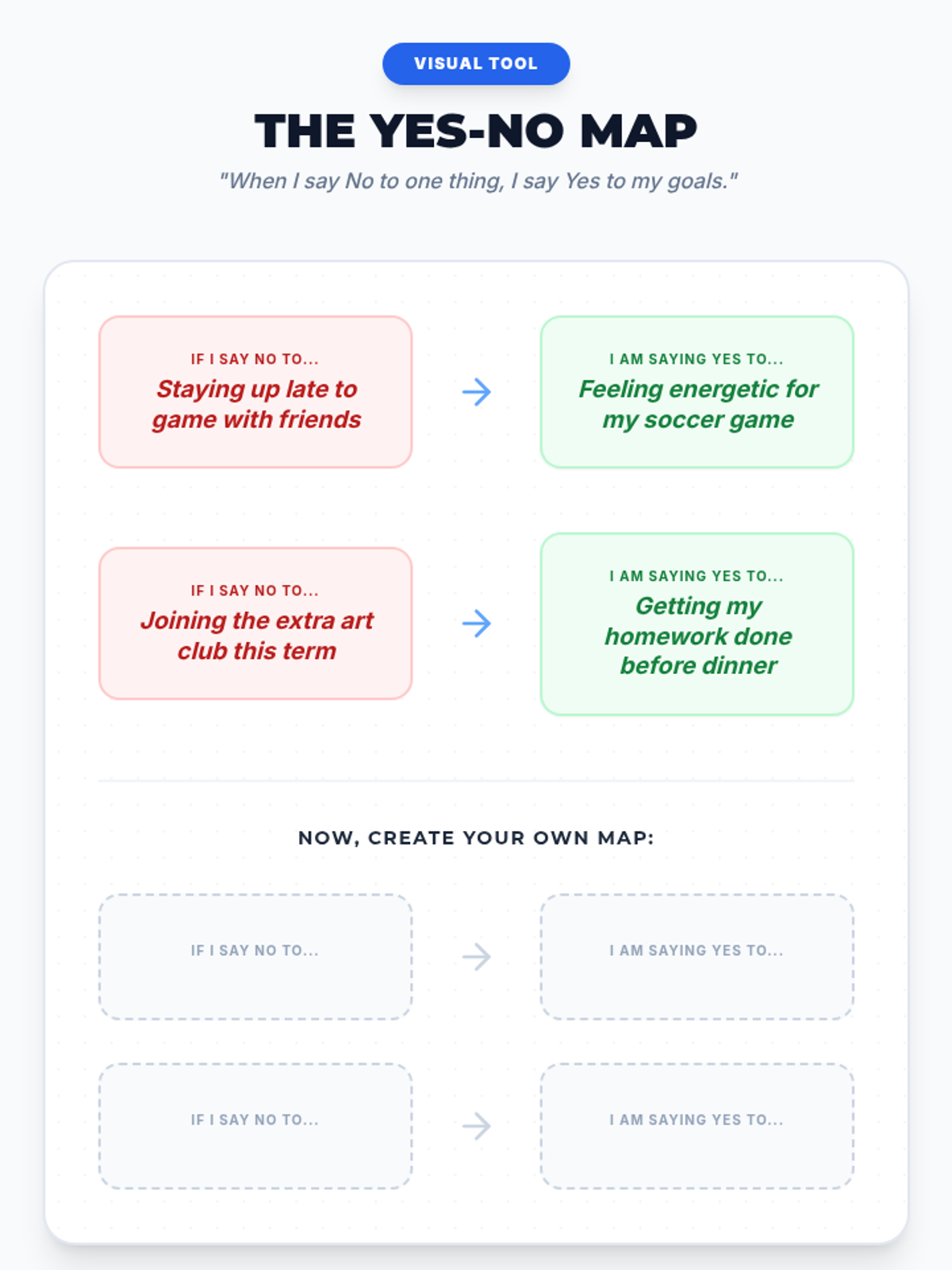
Students practice scripts for declining optional commitments politely but firmly, learning that every 'no' is a 'yes' to their own well-being.
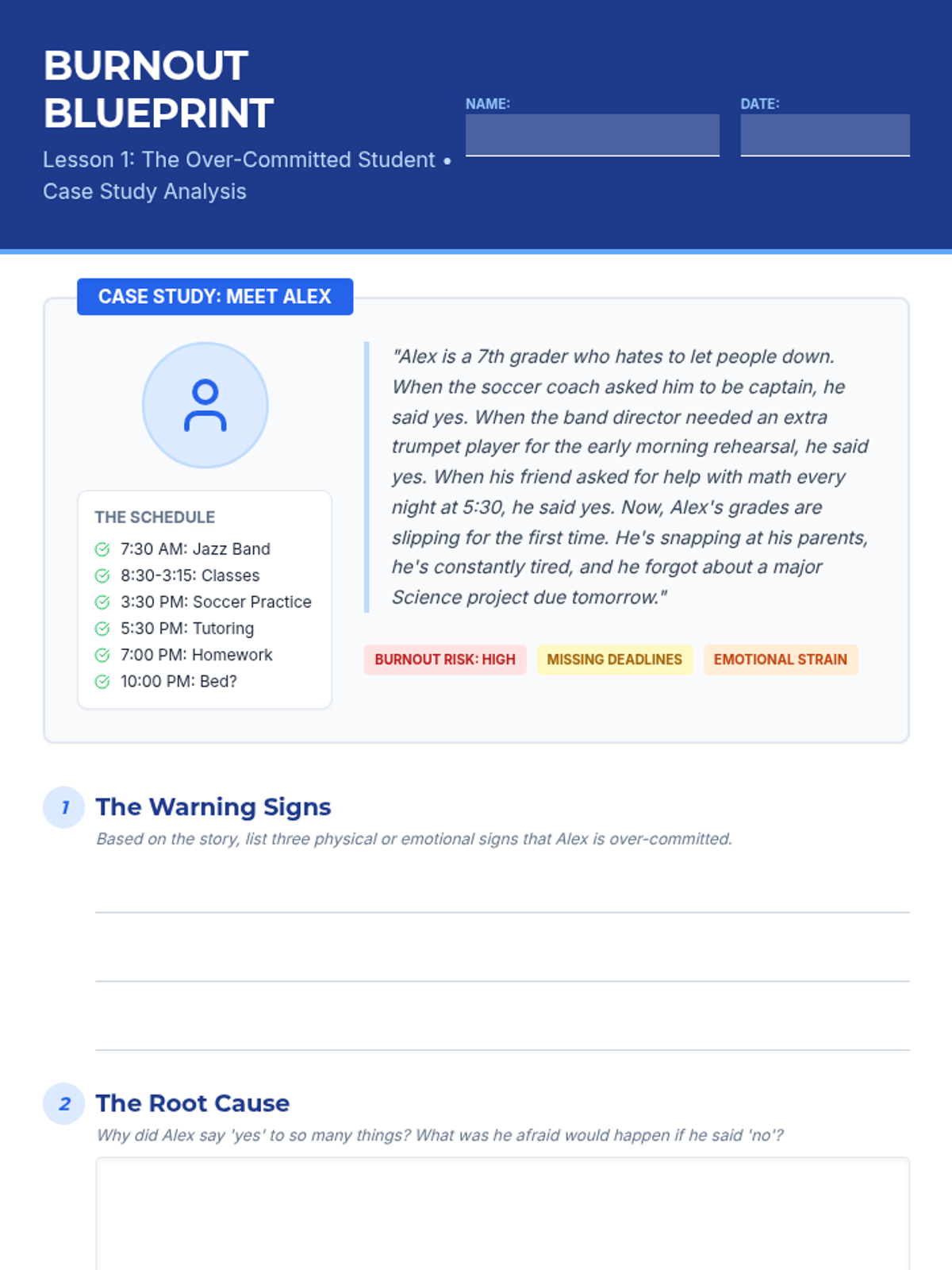
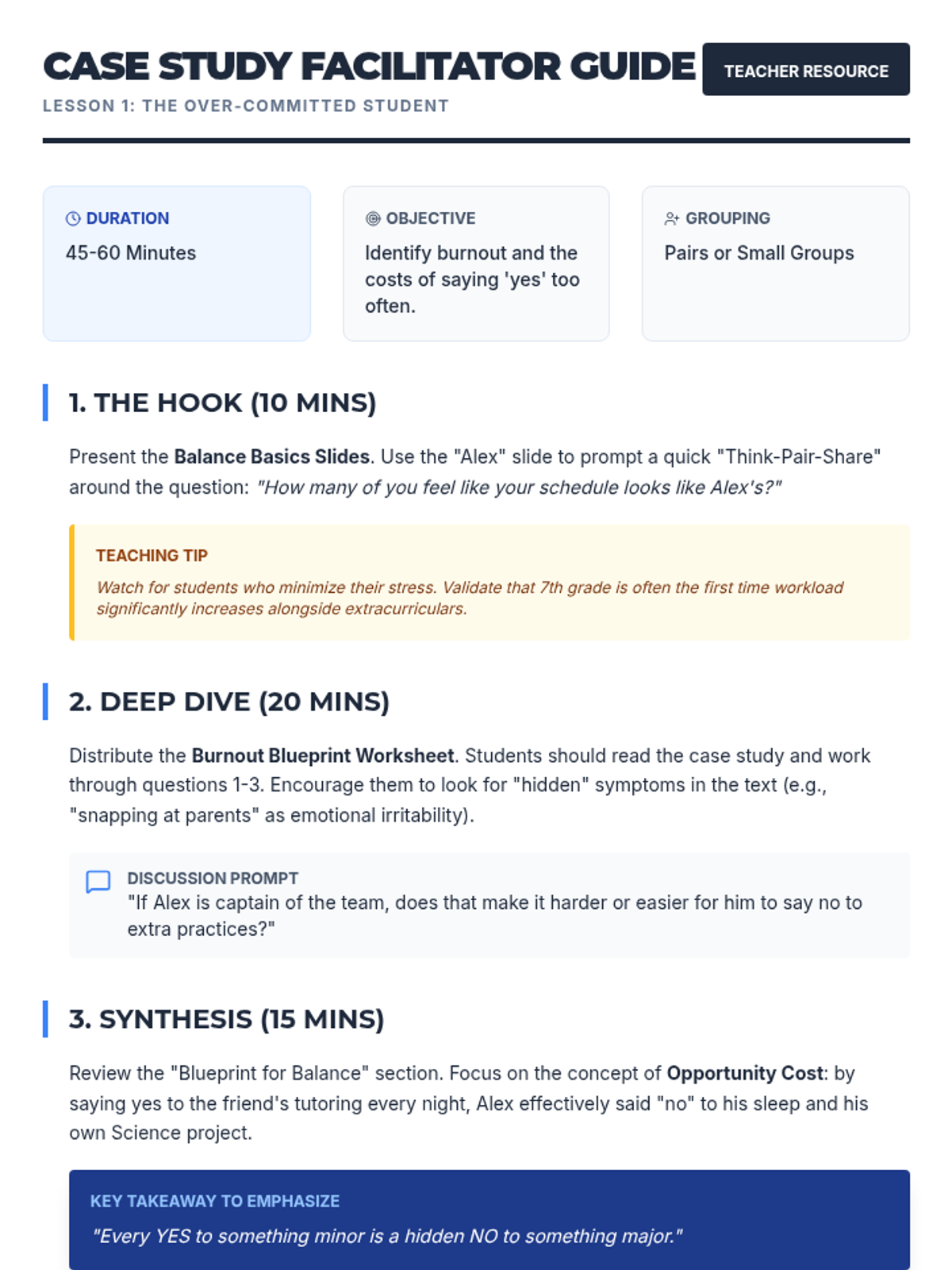
Students analyze case studies of 'over-committed' individuals to identify warning signs of burnout and the consequences of poor boundary setting.
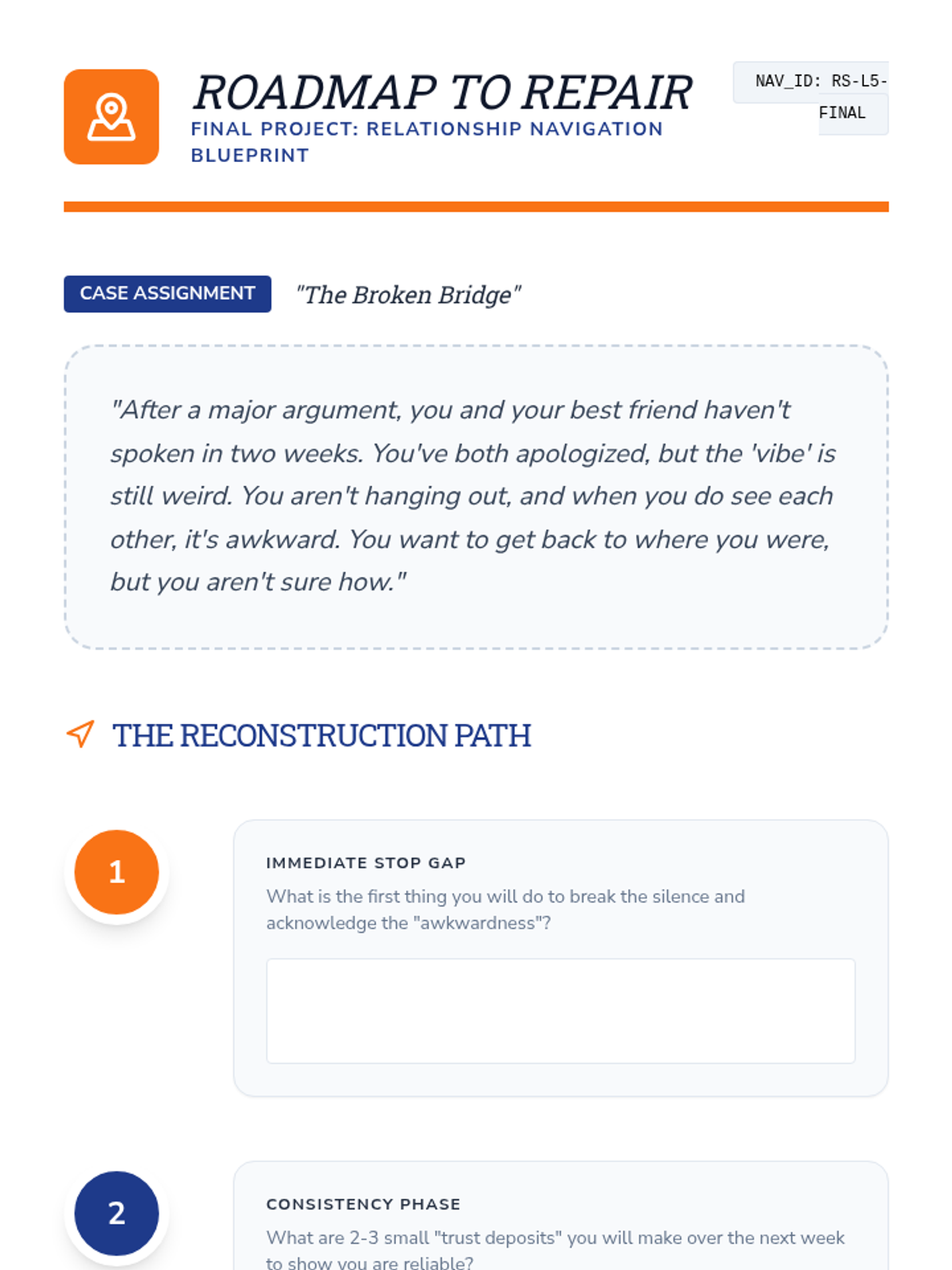
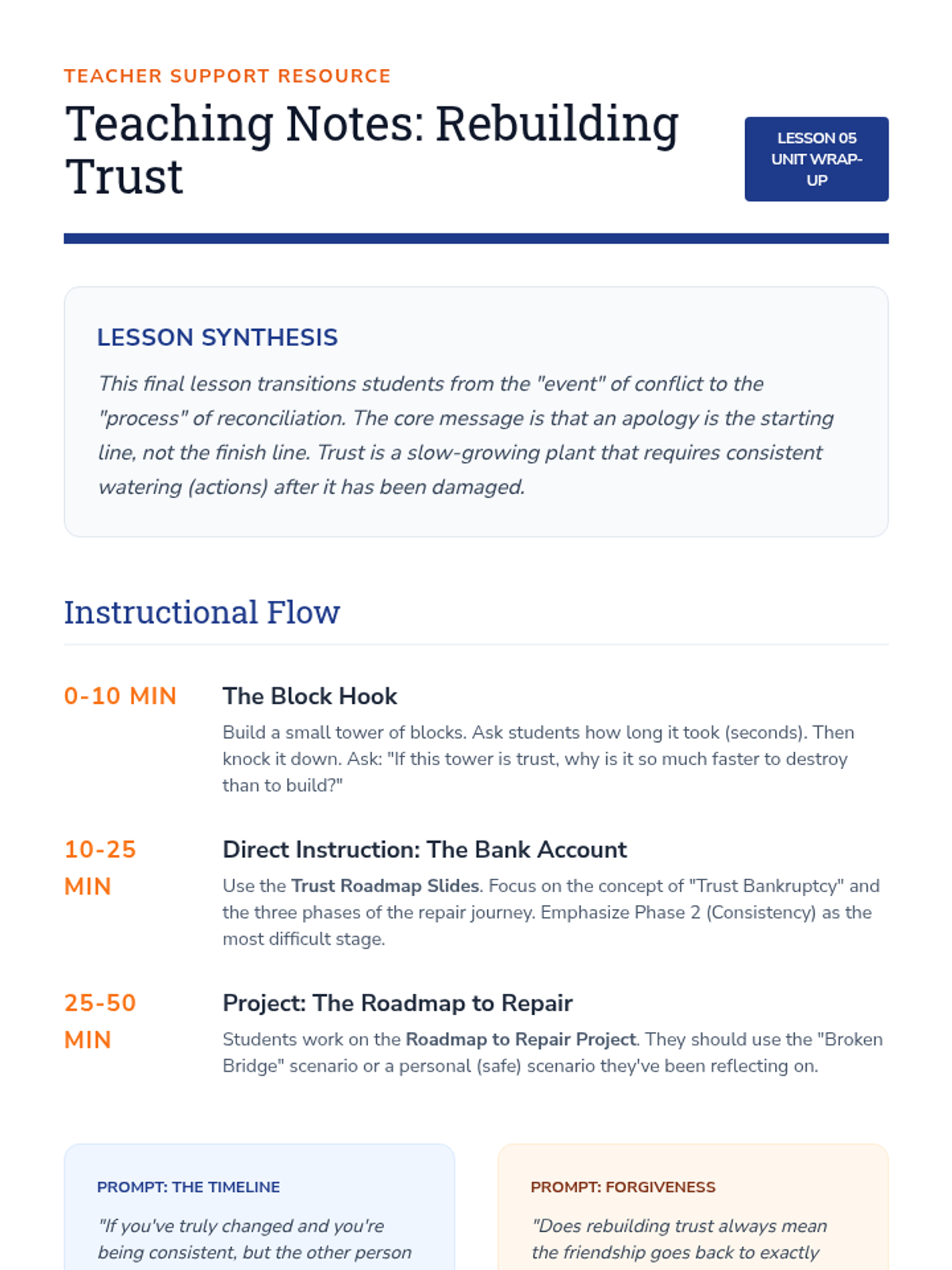
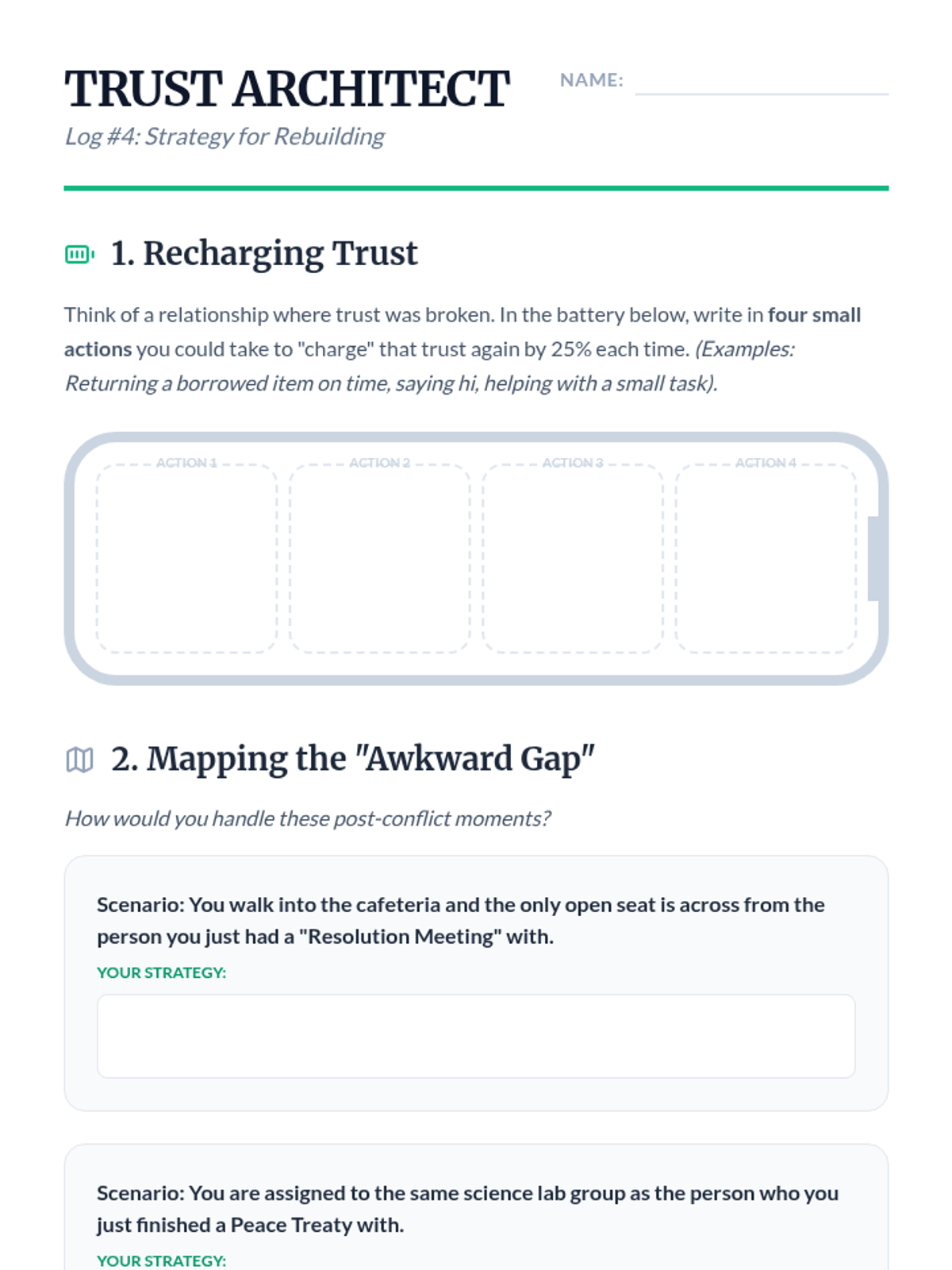
Students learn that trust is built slowly over time and create a 'Roadmap to Repair' outlining consistent actions needed to re-establish a friendship.
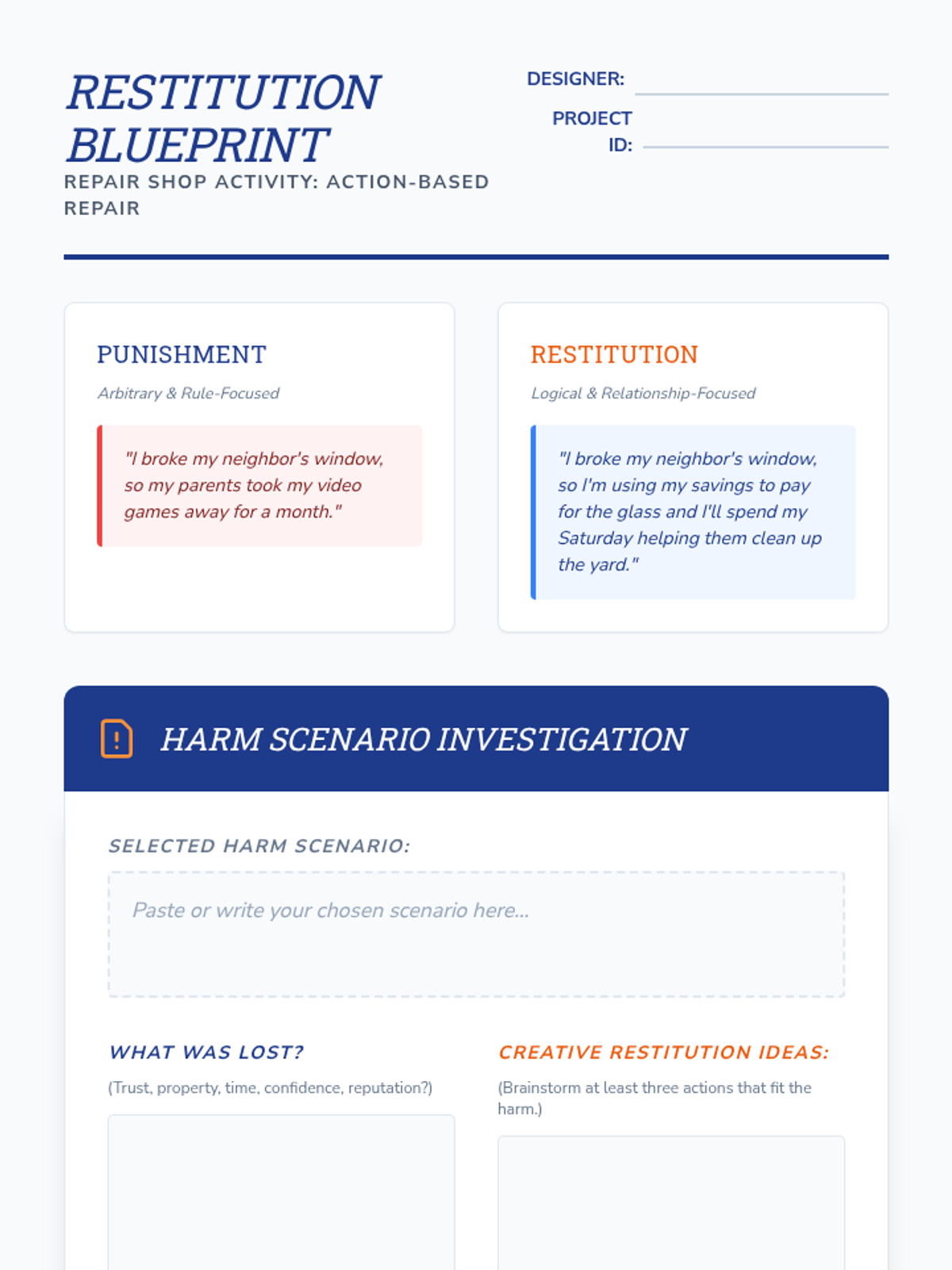
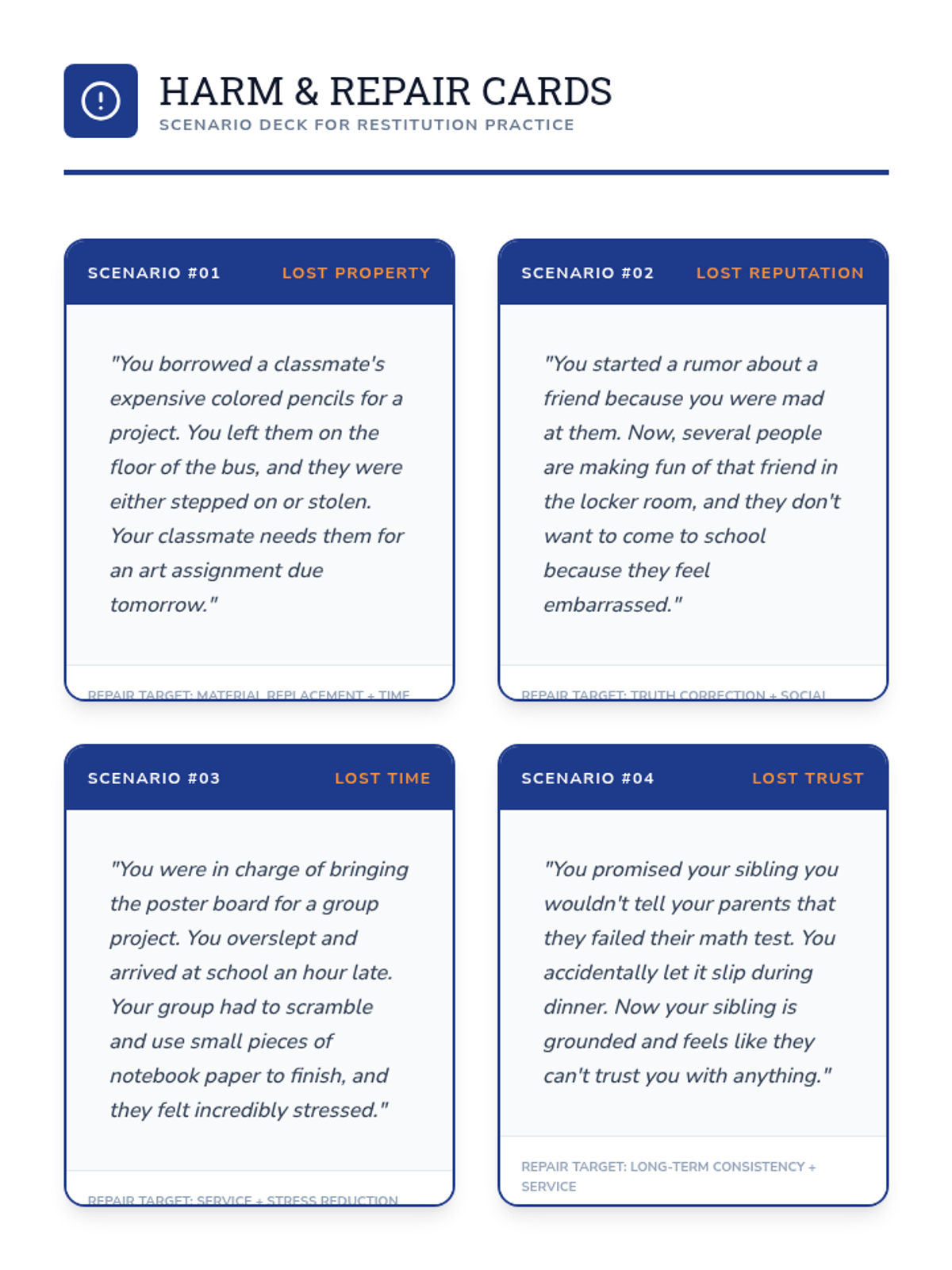
This lesson moves beyond words to action, brainstorming creative ways to 'make it right' or offer restitution relevant to the harm caused.
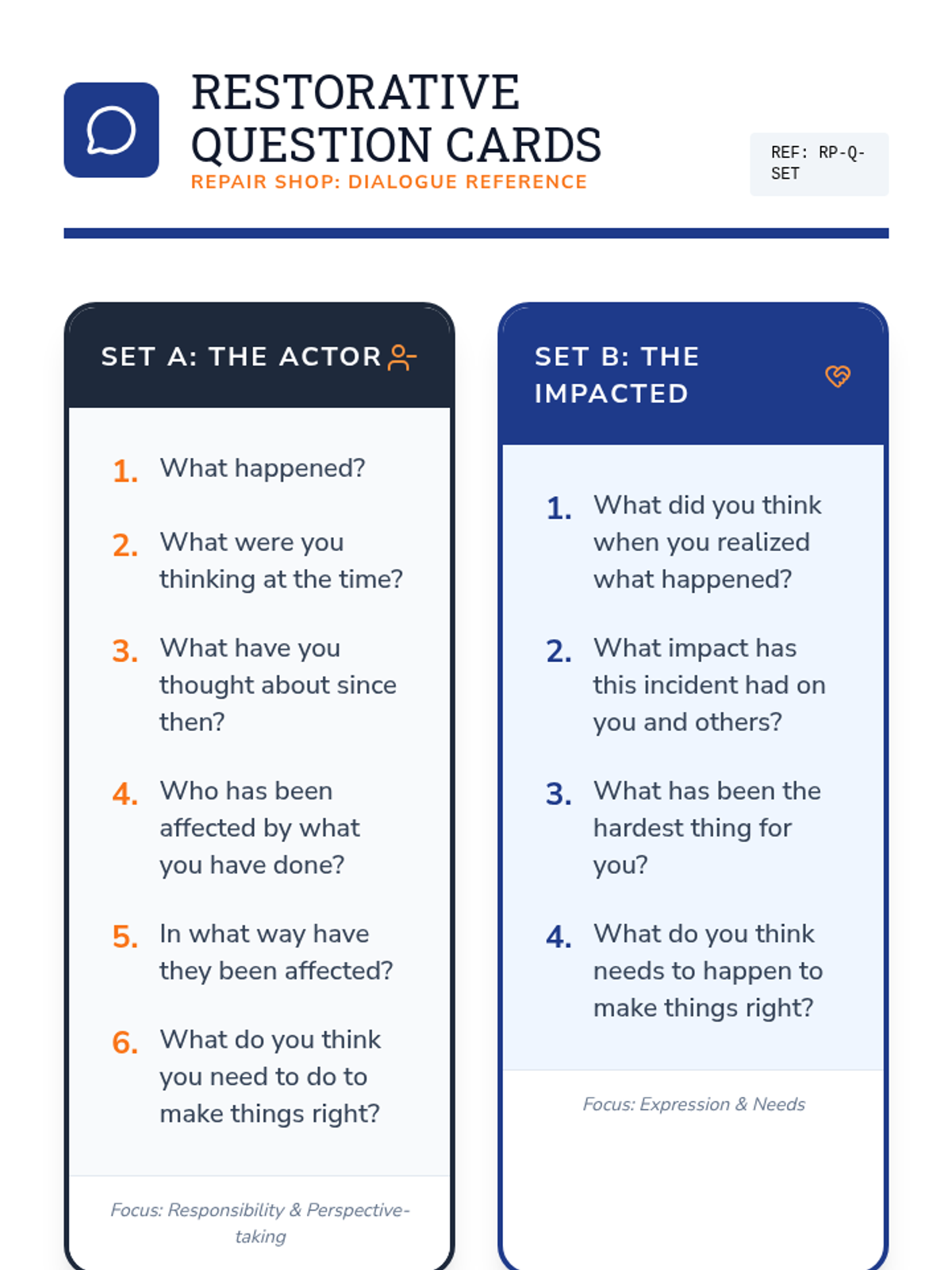
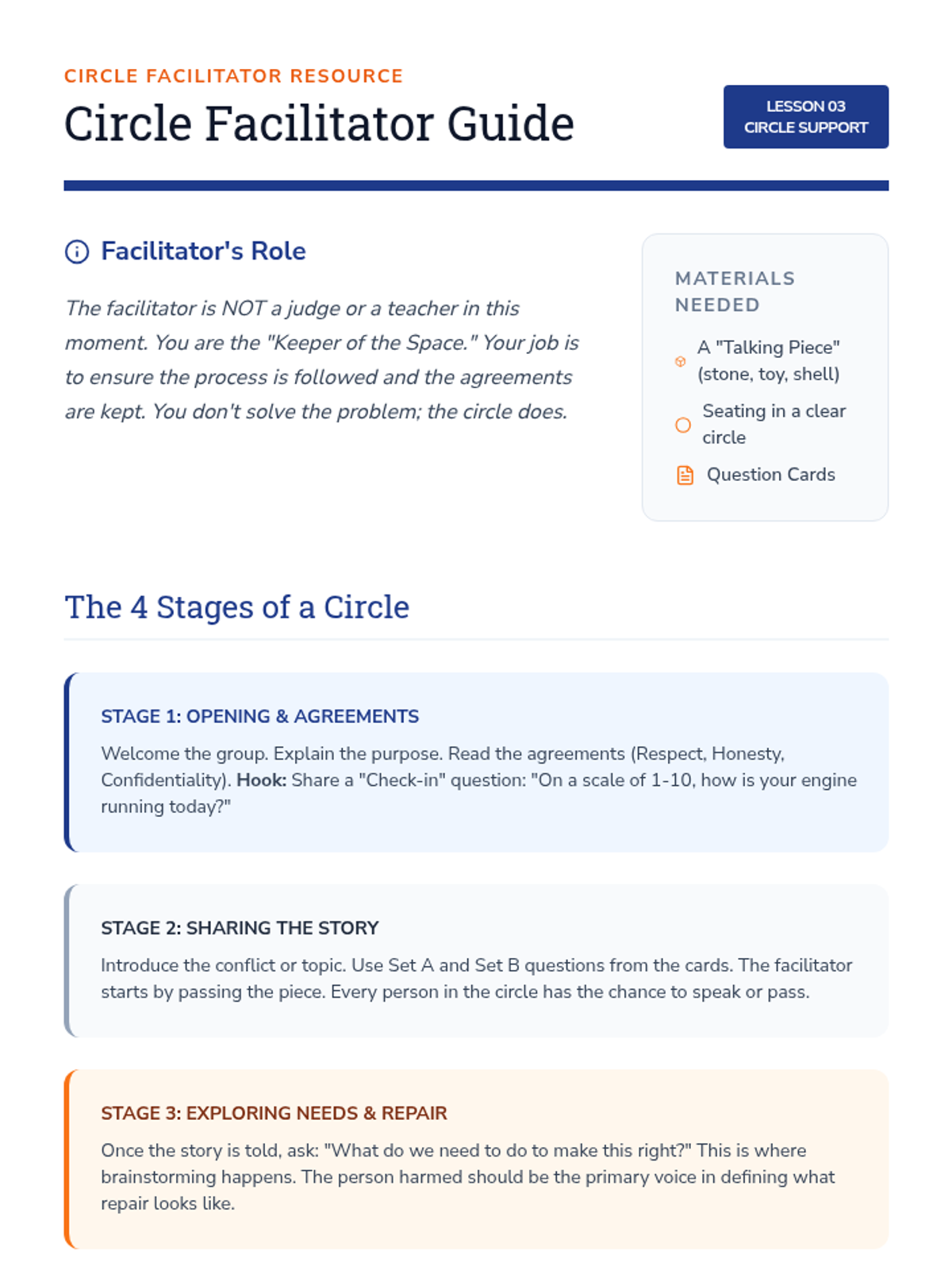
Students participate in a structured circle process to practice sharing feelings and listening to others' experiences of harm using restorative justice questions.
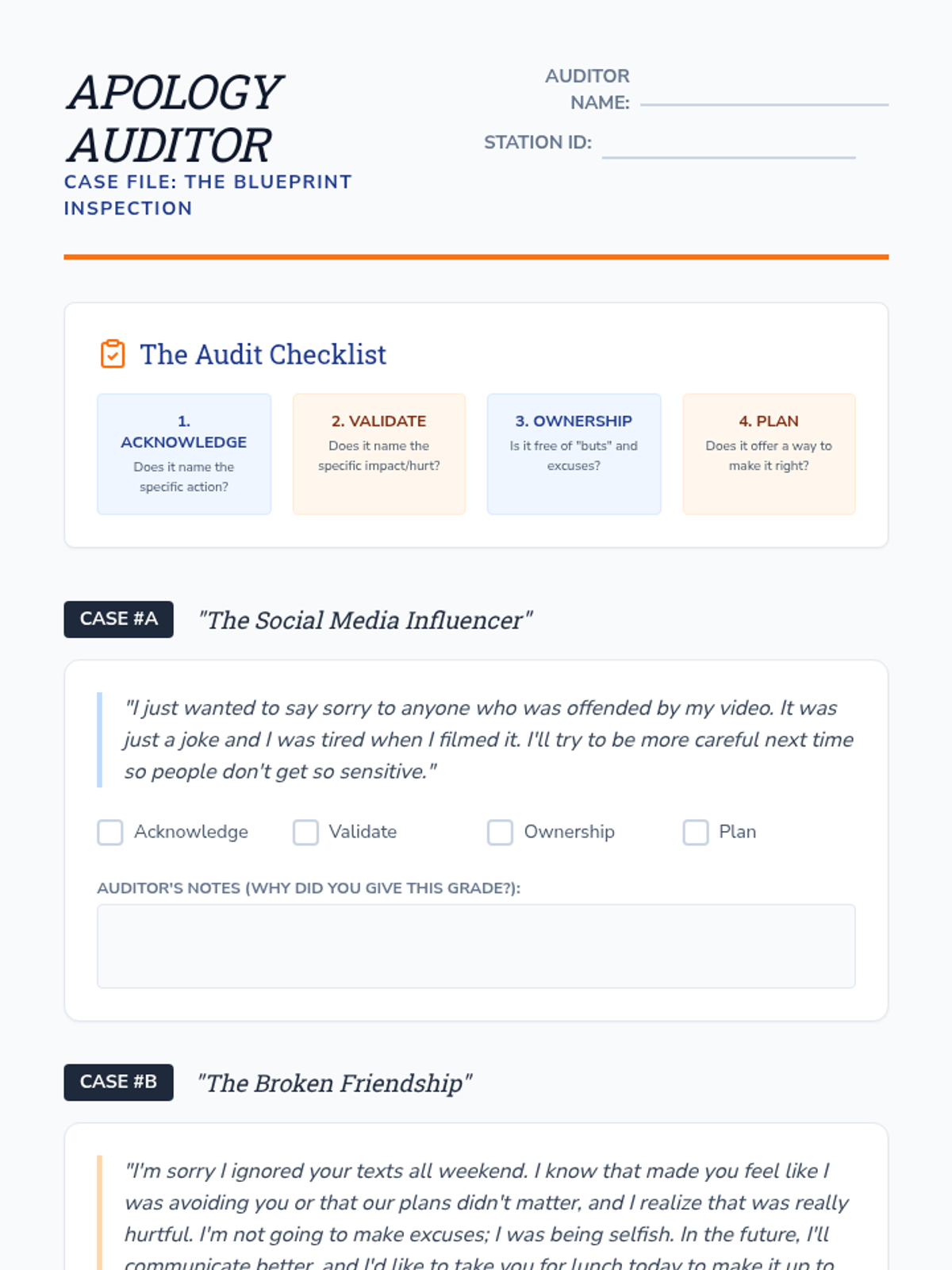
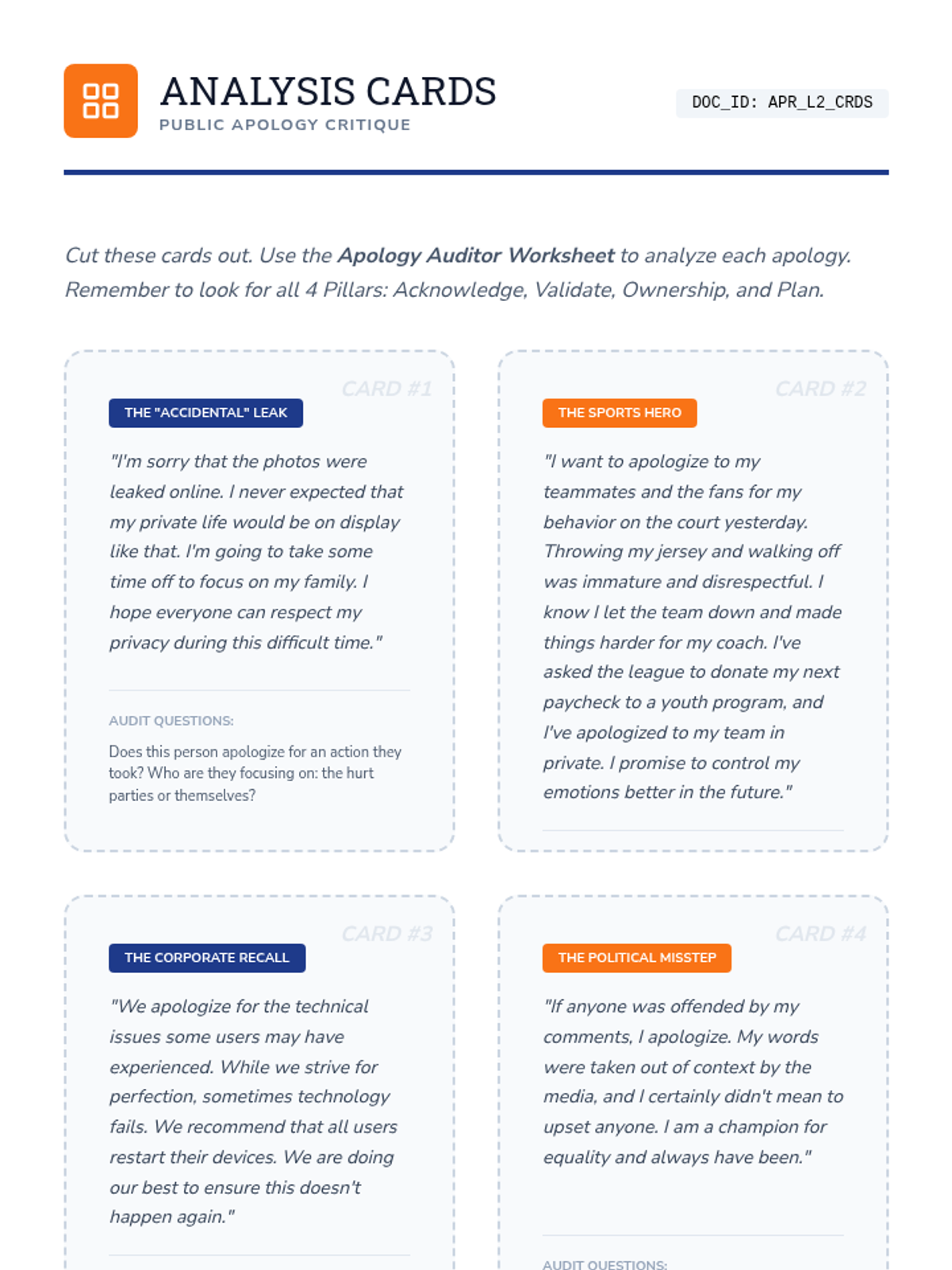
Students deconstruct apologies to identify key components: acknowledging the act, validating hurt, accepting responsibility, and making a plan for change. They critique public apologies.
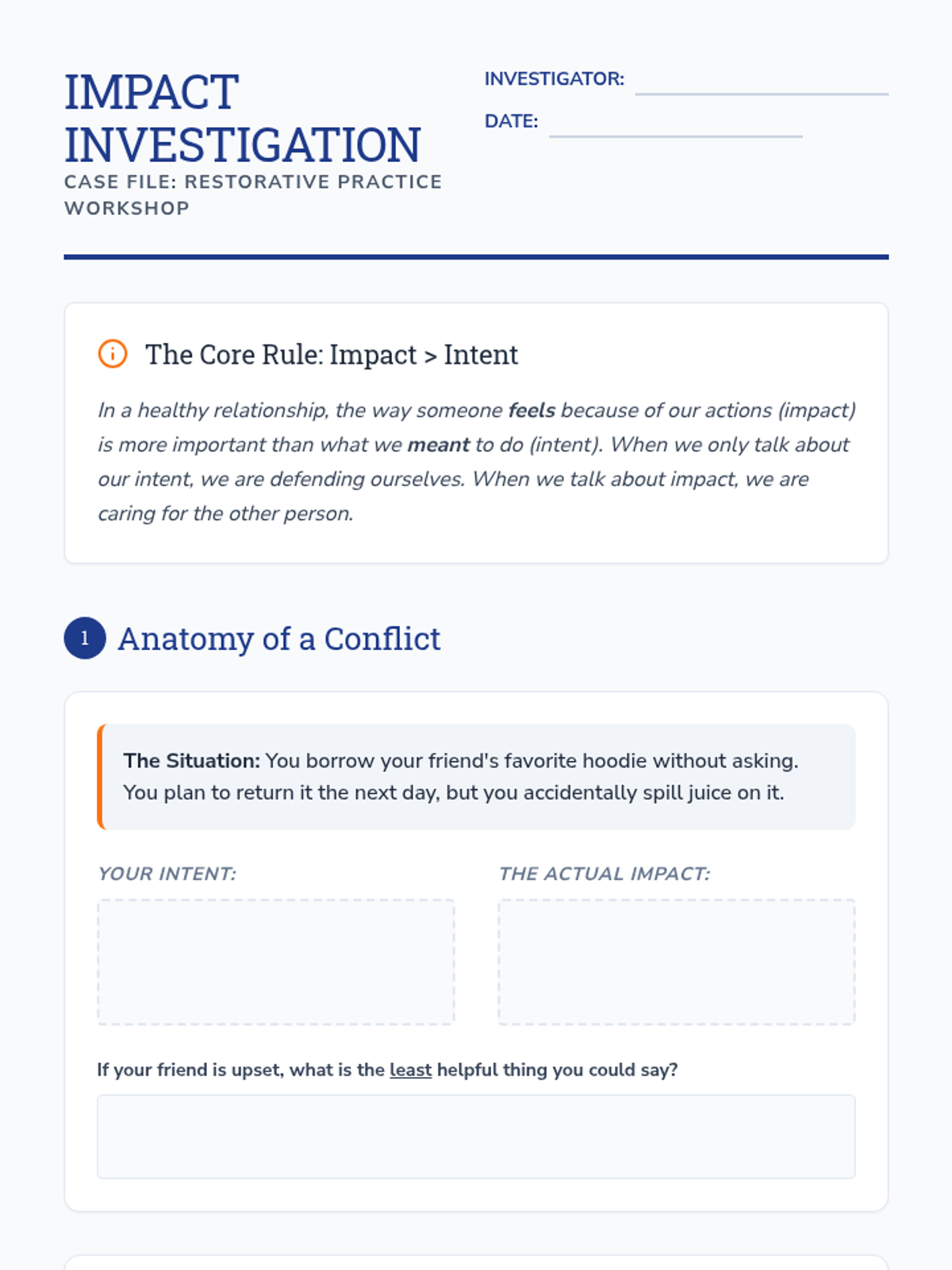
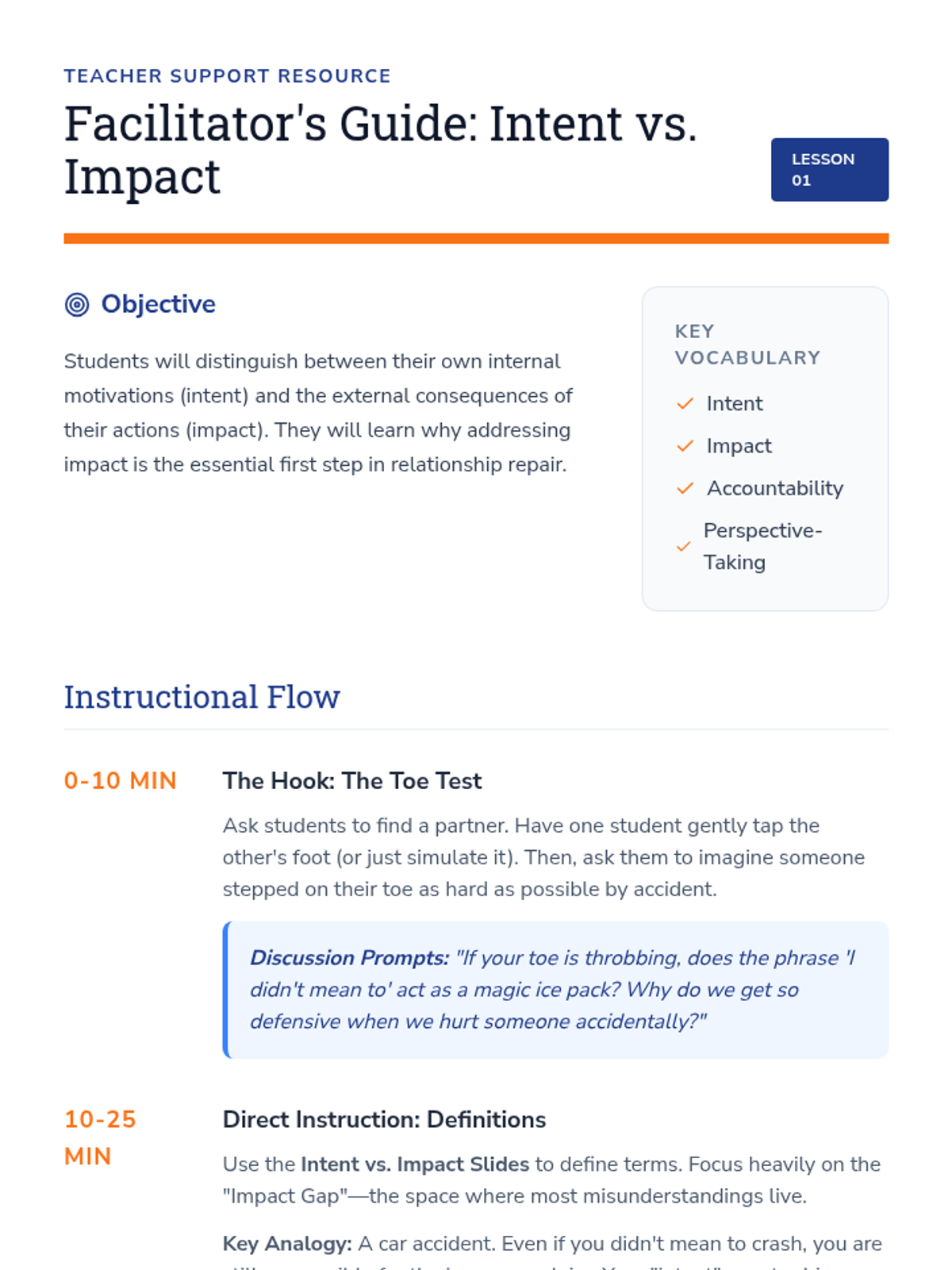
Students explore the gap between what they meant to do (intent) and how it affected others (impact). They analyze scenarios where good intentions still caused harm and discuss why impact must be addressed first.
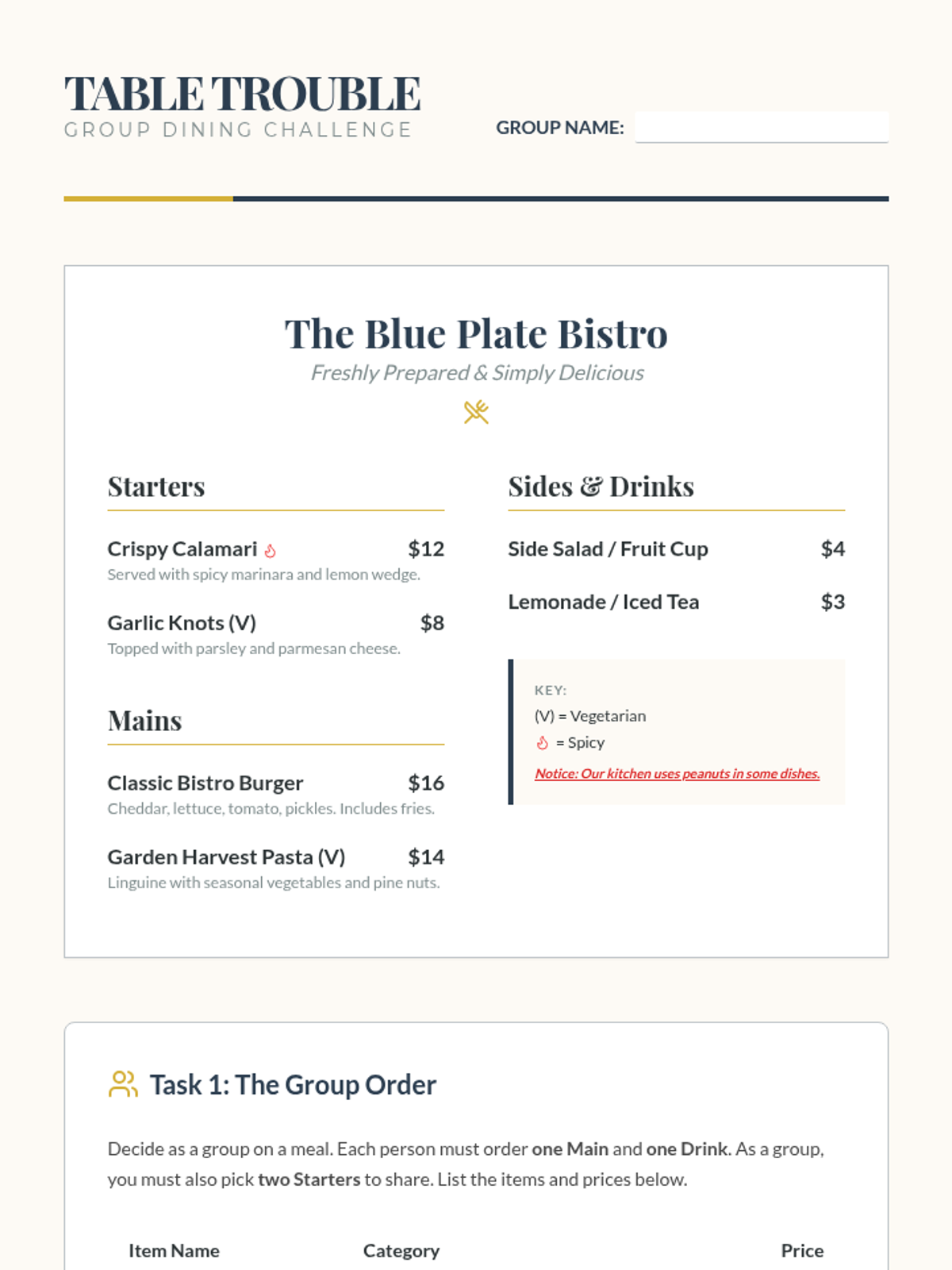
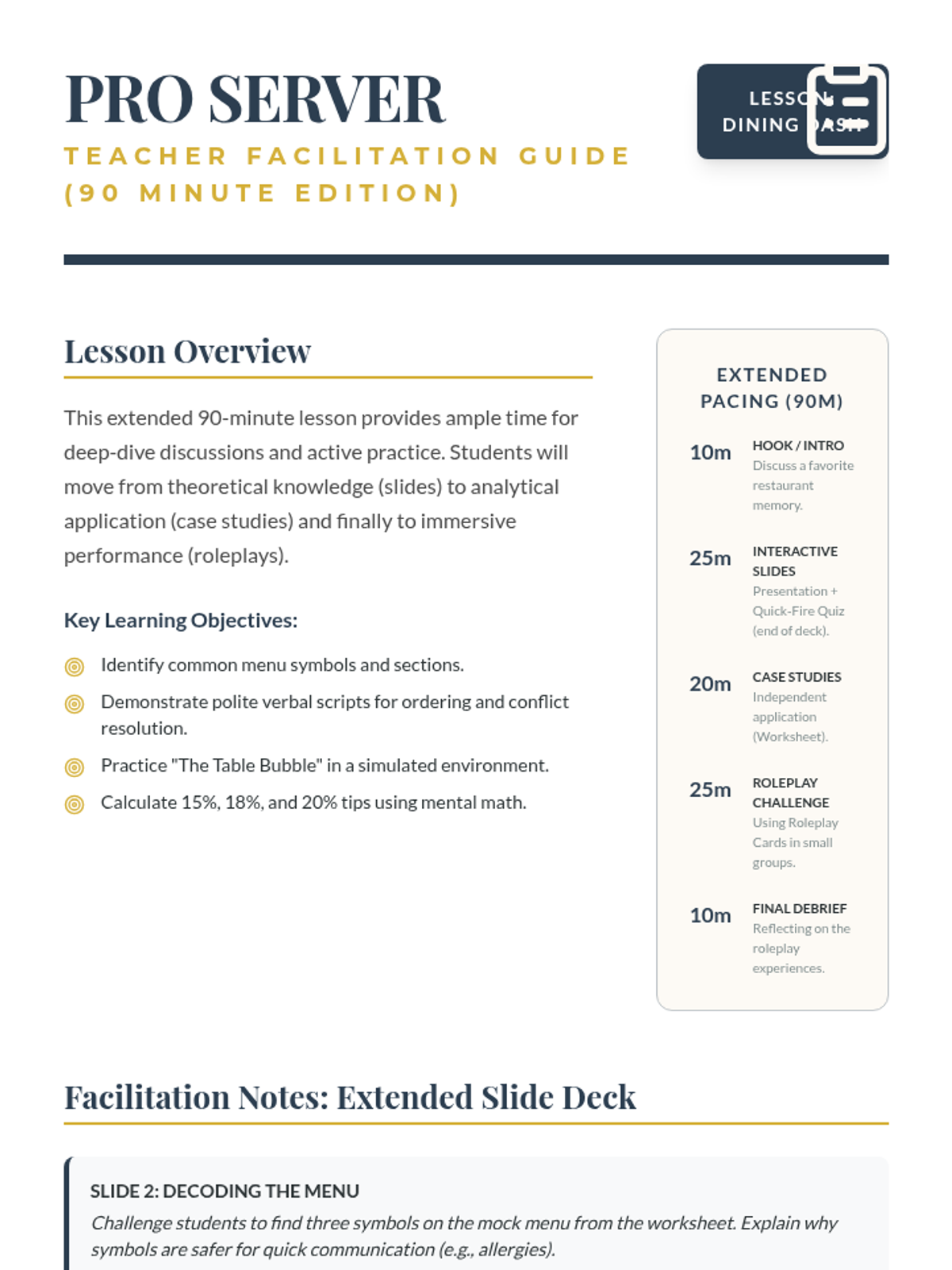
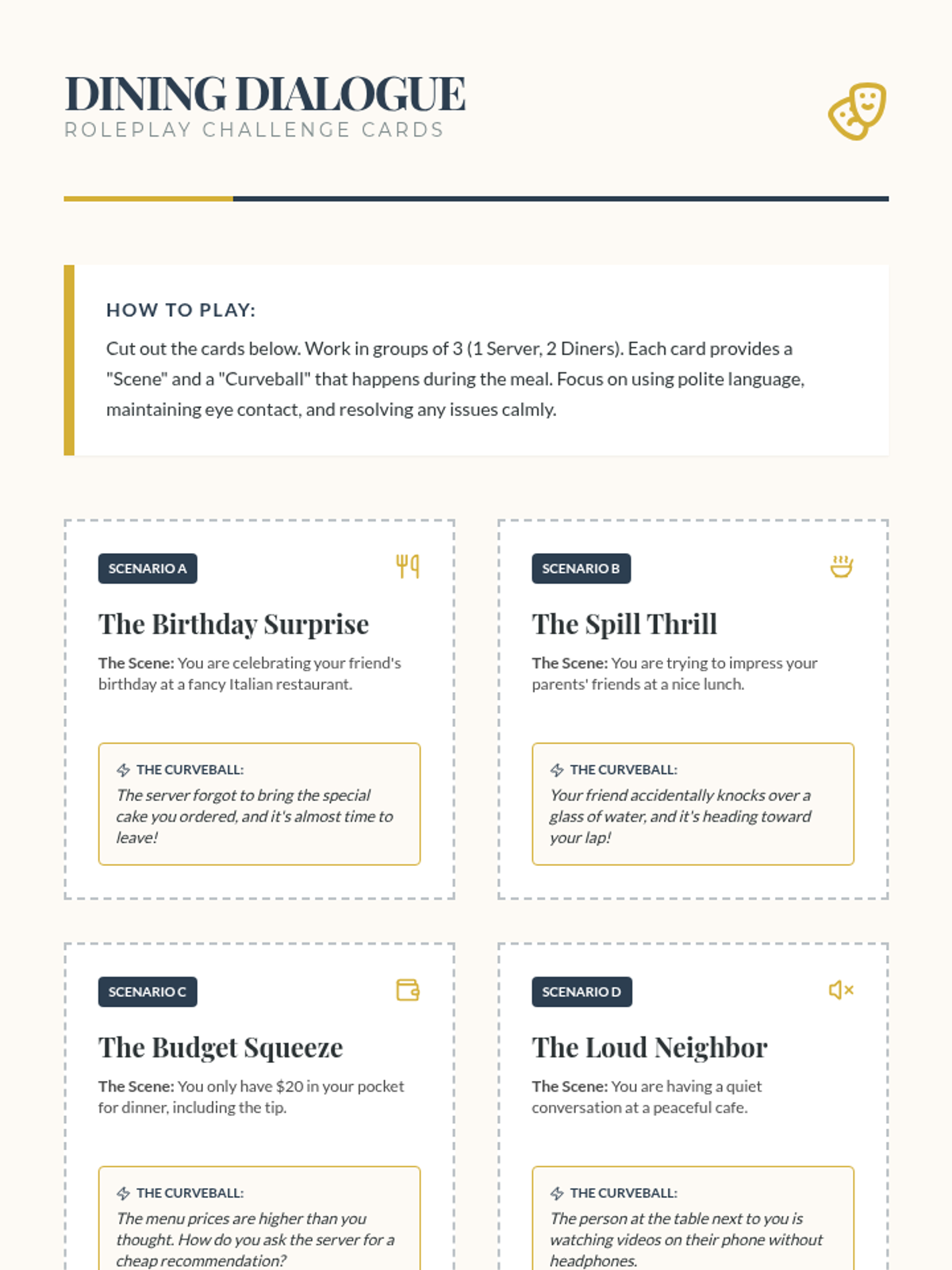
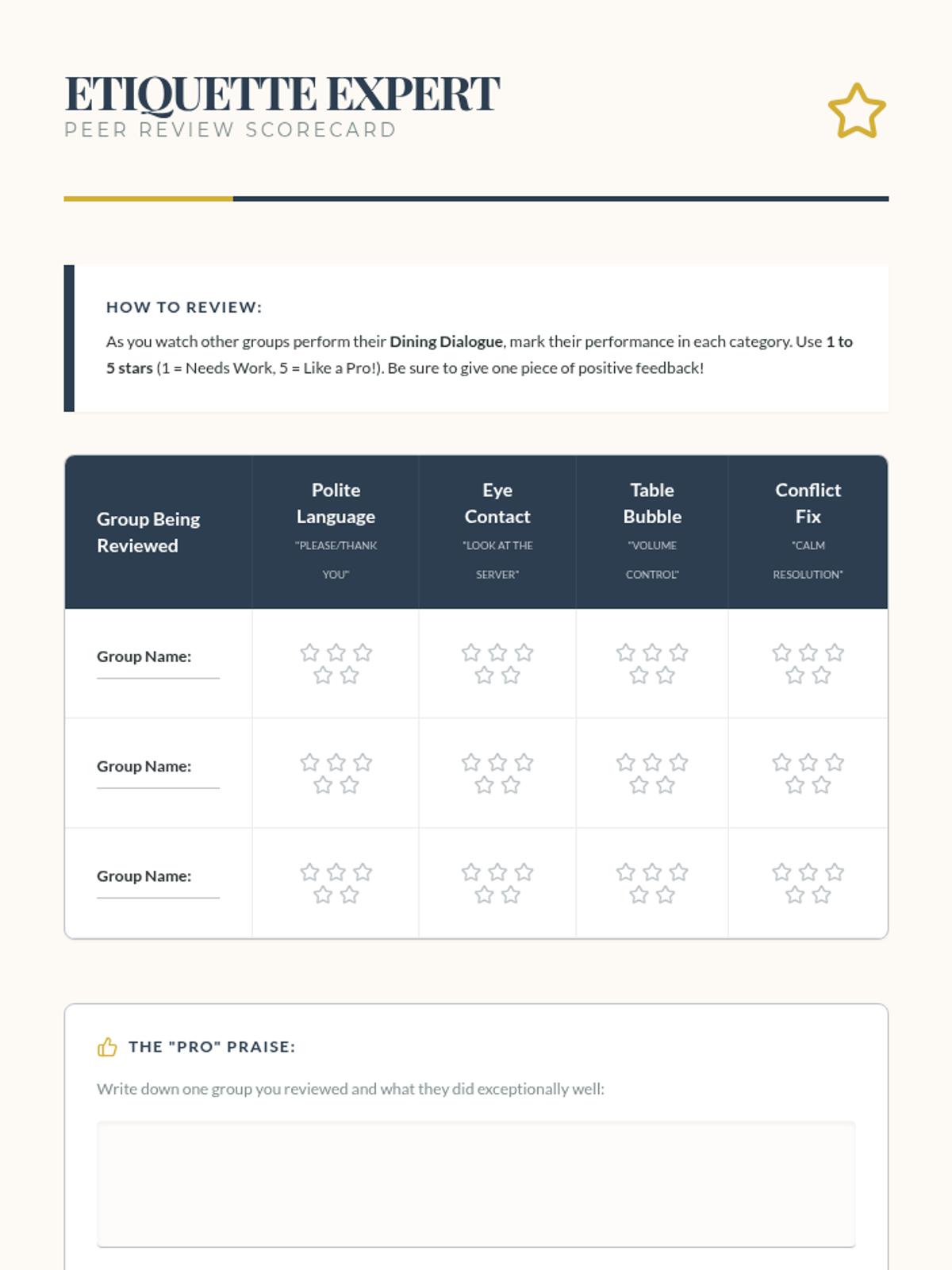
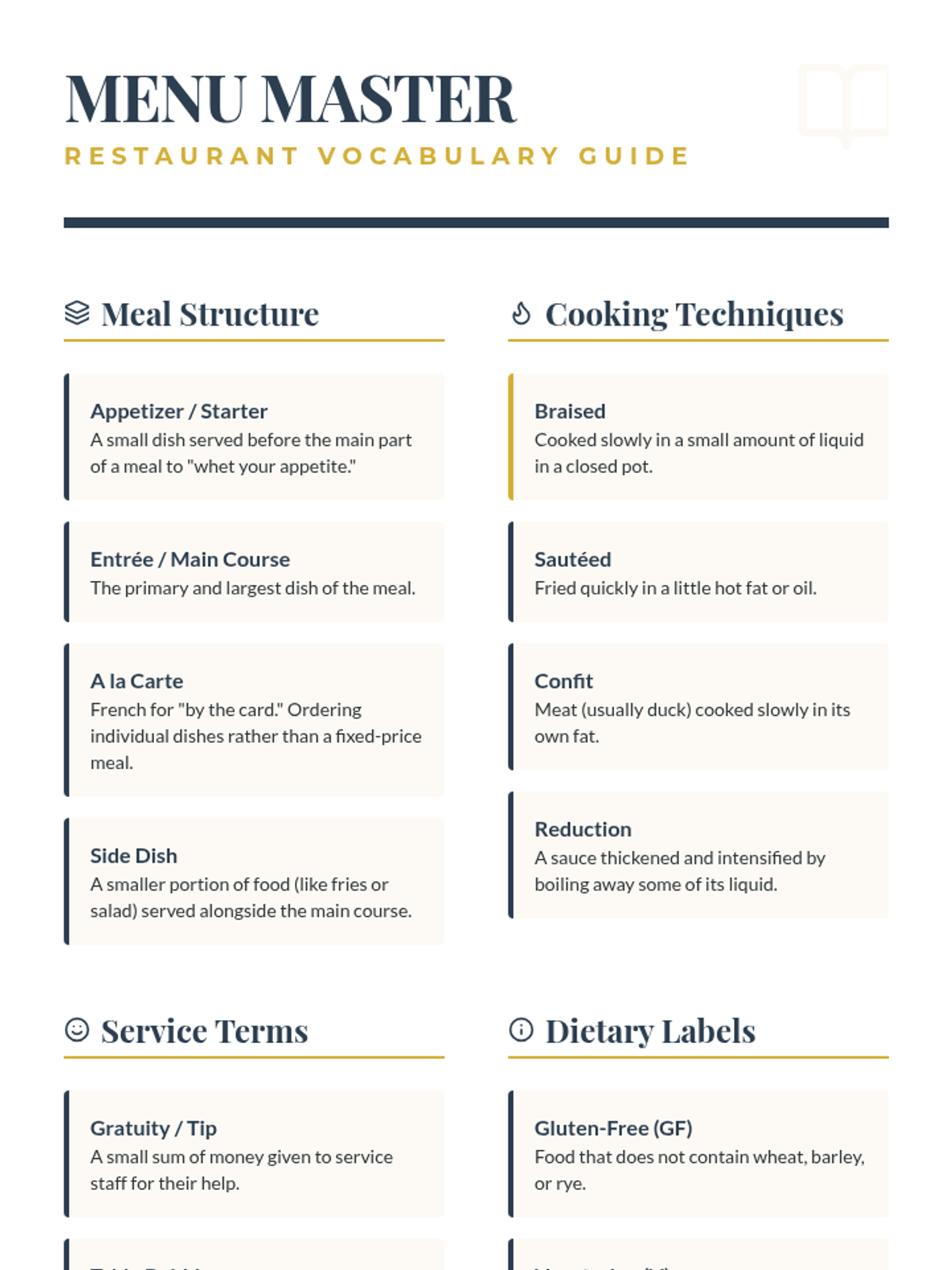
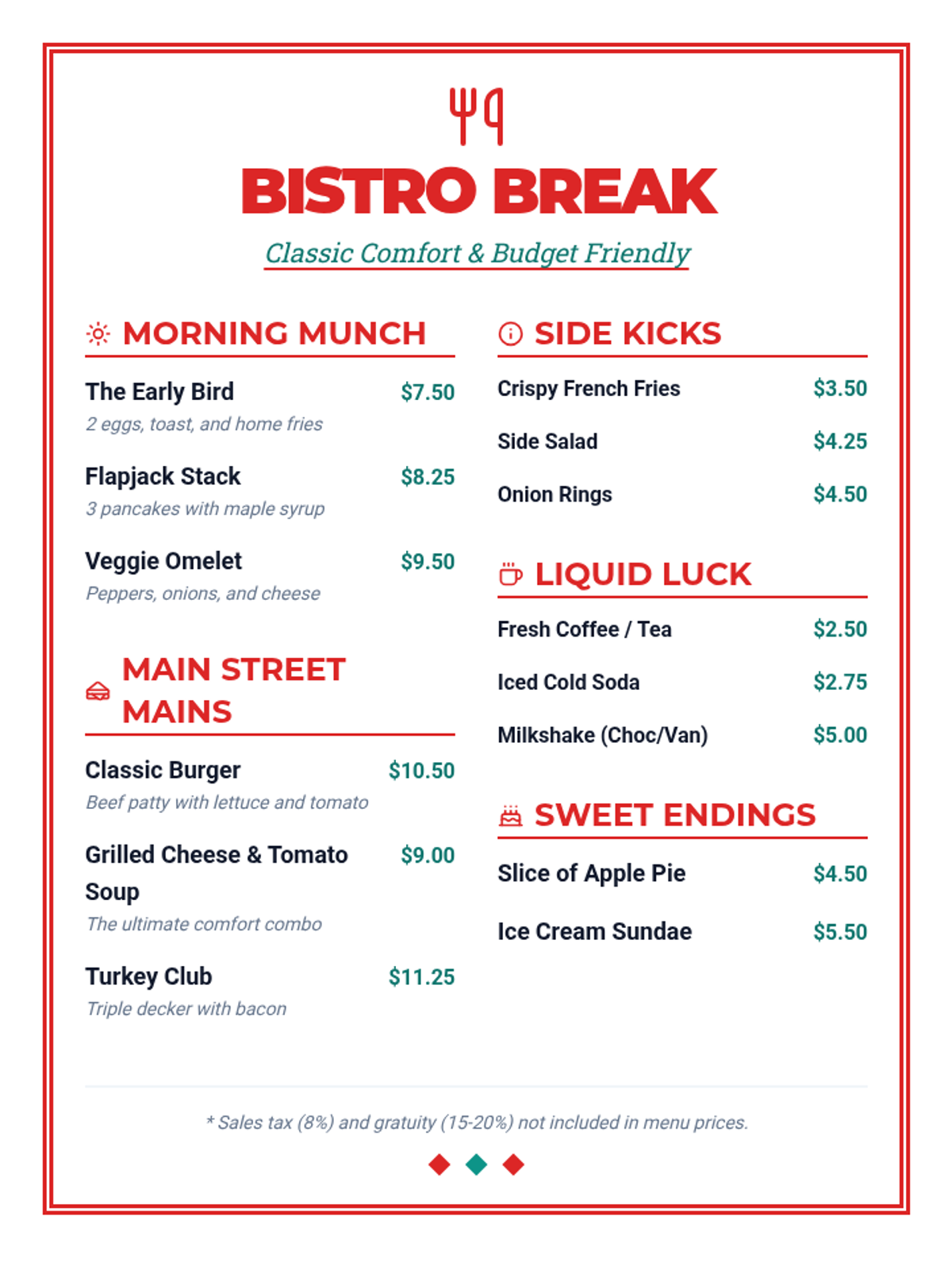
A comprehensive lesson on restaurant etiquette covering menu reading, ordering, manners, volume control, tipping, and conflict resolution.
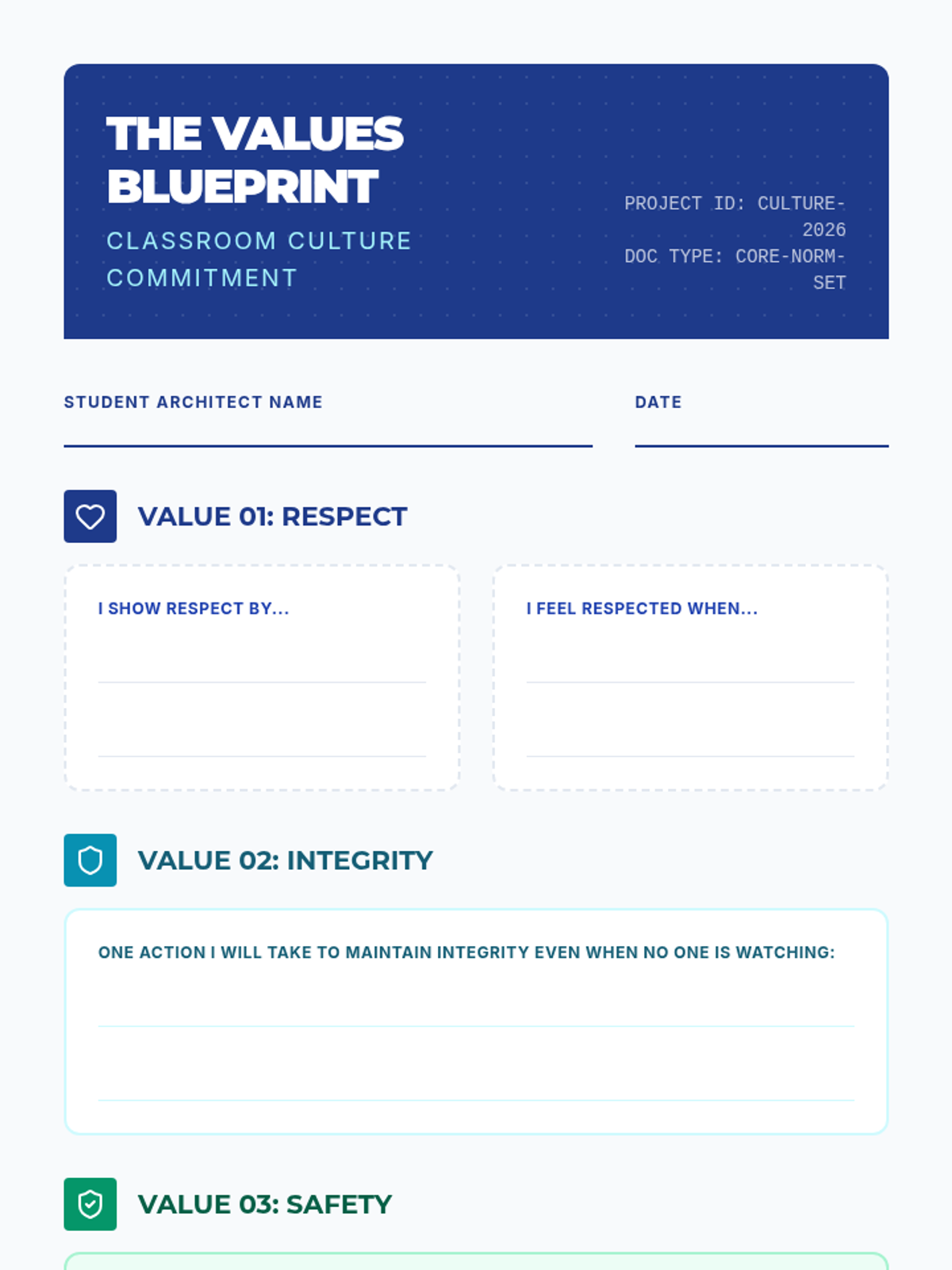
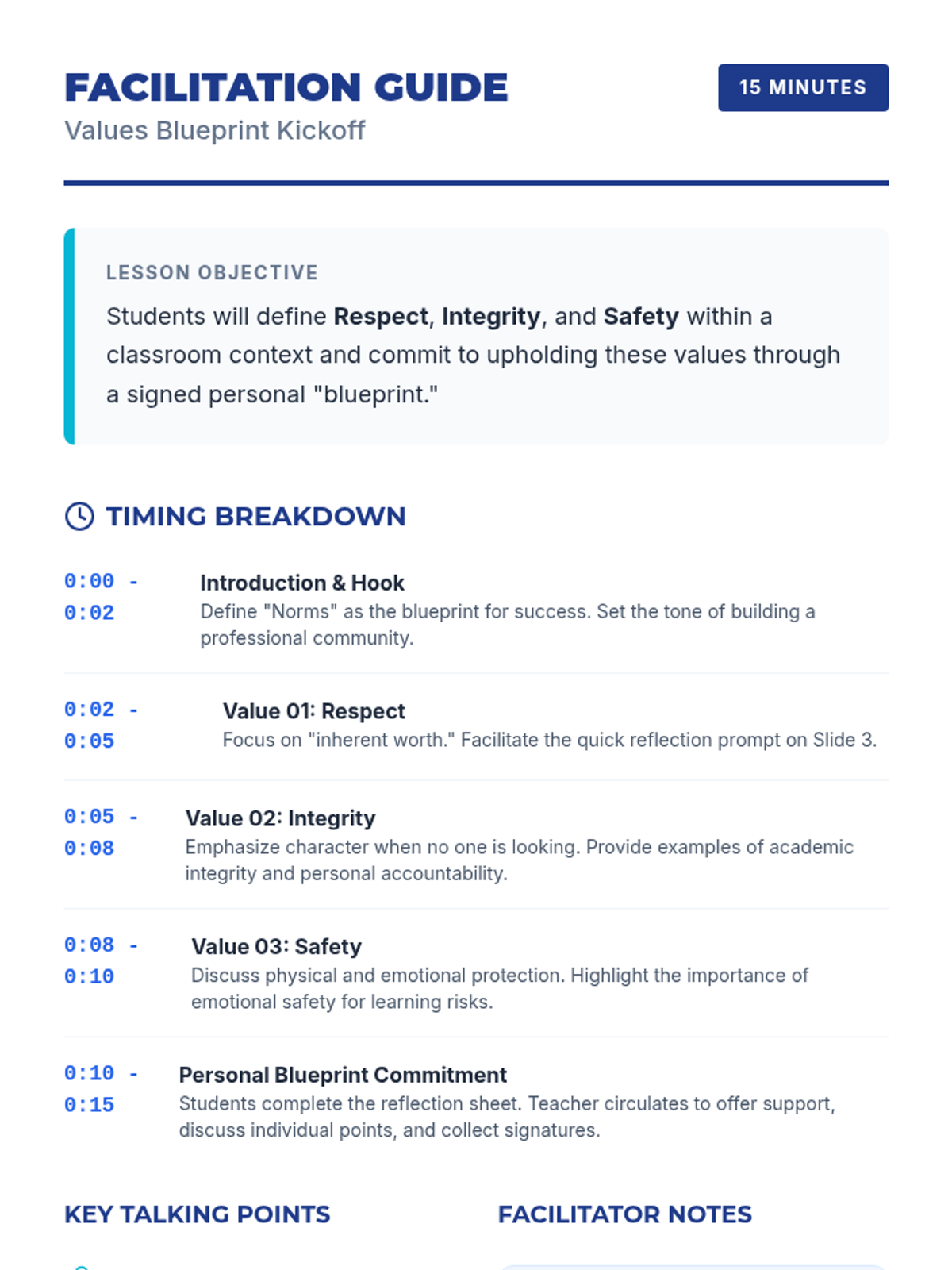
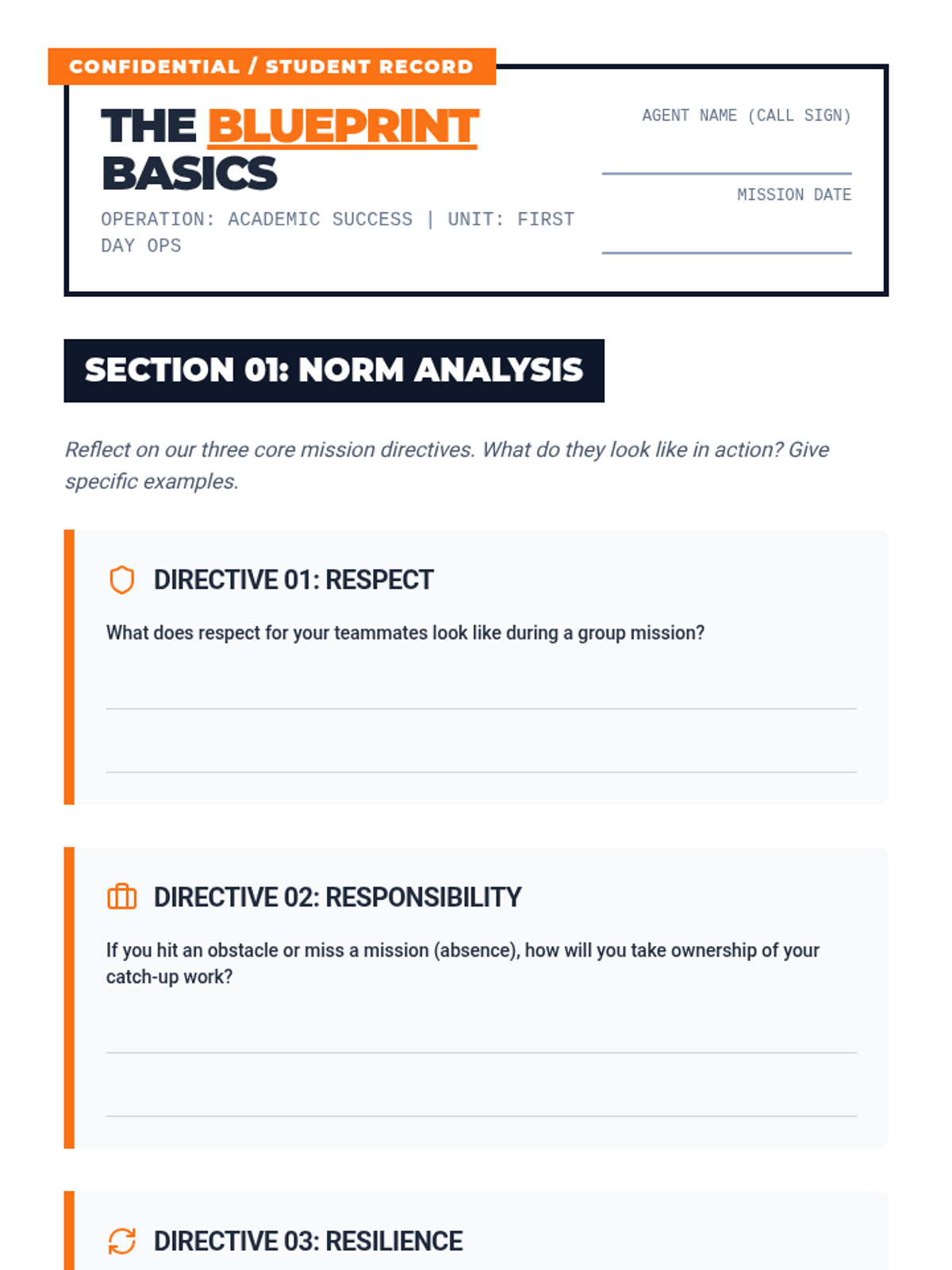
A concise 15-minute introduction to classroom norms centered on the core values of Respect, Integrity, and Safety. Students will define these values and commit to a shared culture of success.
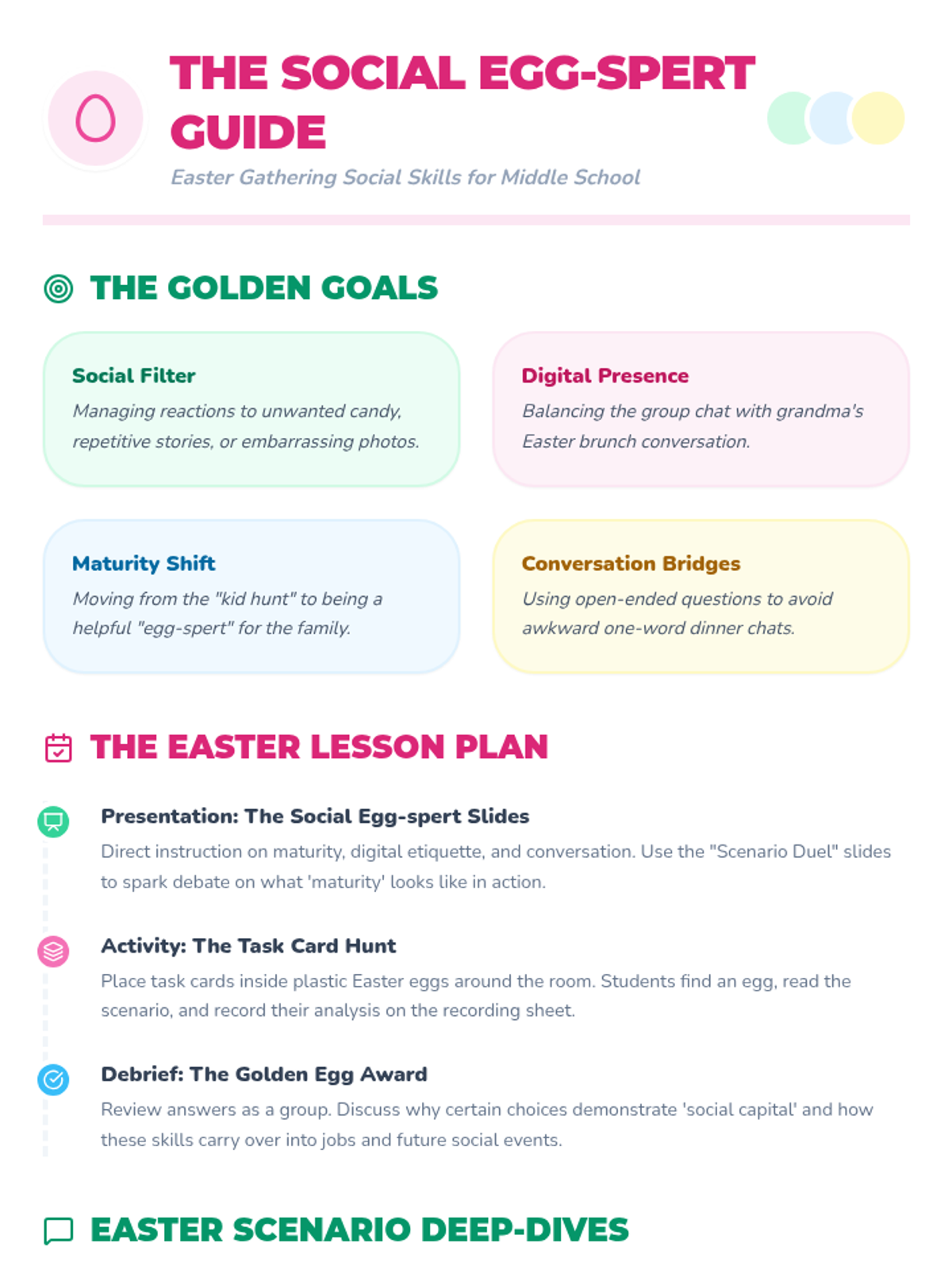
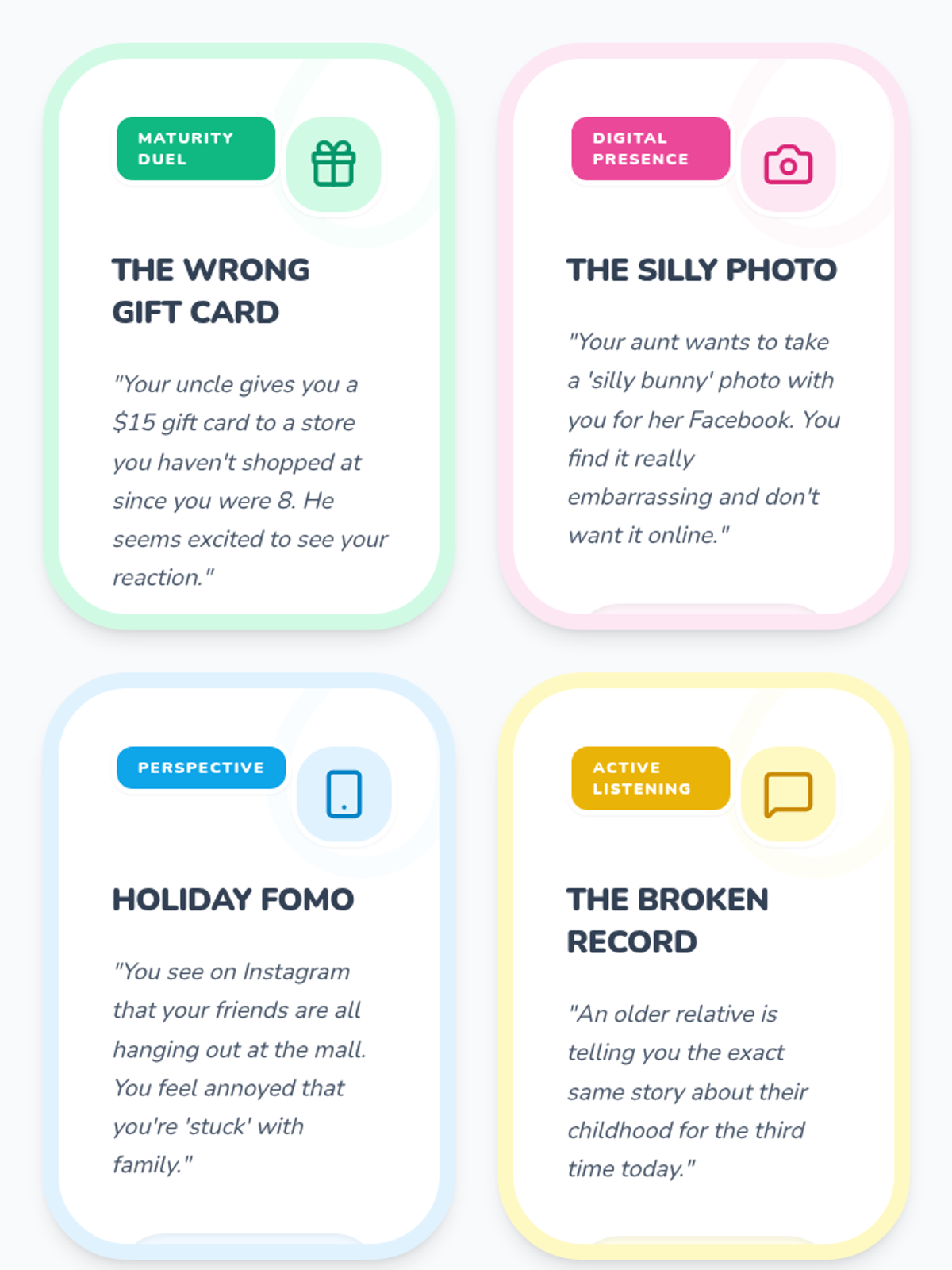
A social skills lesson focused on navigating common holiday situations like family gatherings, egg hunts, and conversations using an Easter theme. Includes interactive slides for group discussion and printable task cards for practice.
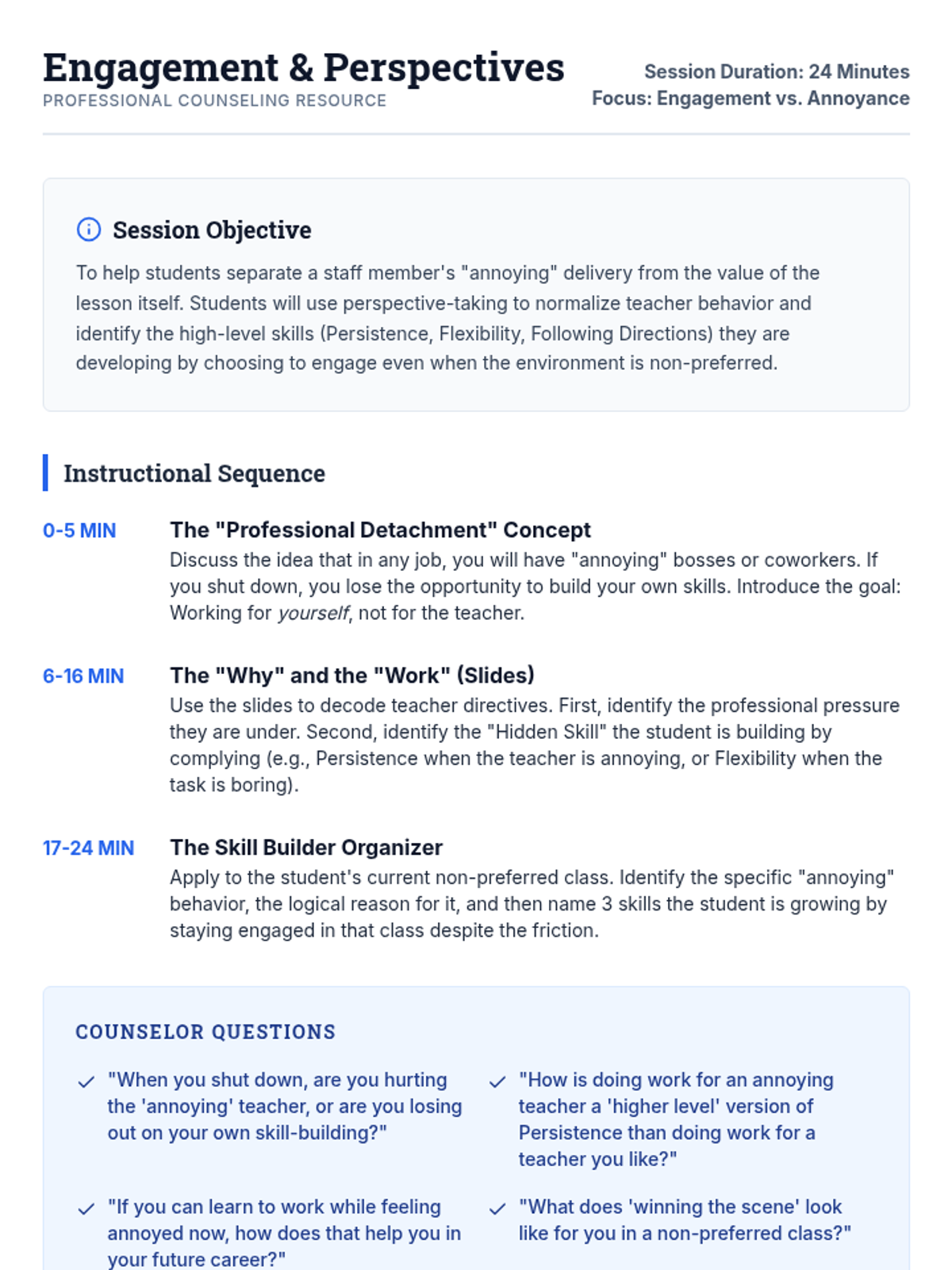
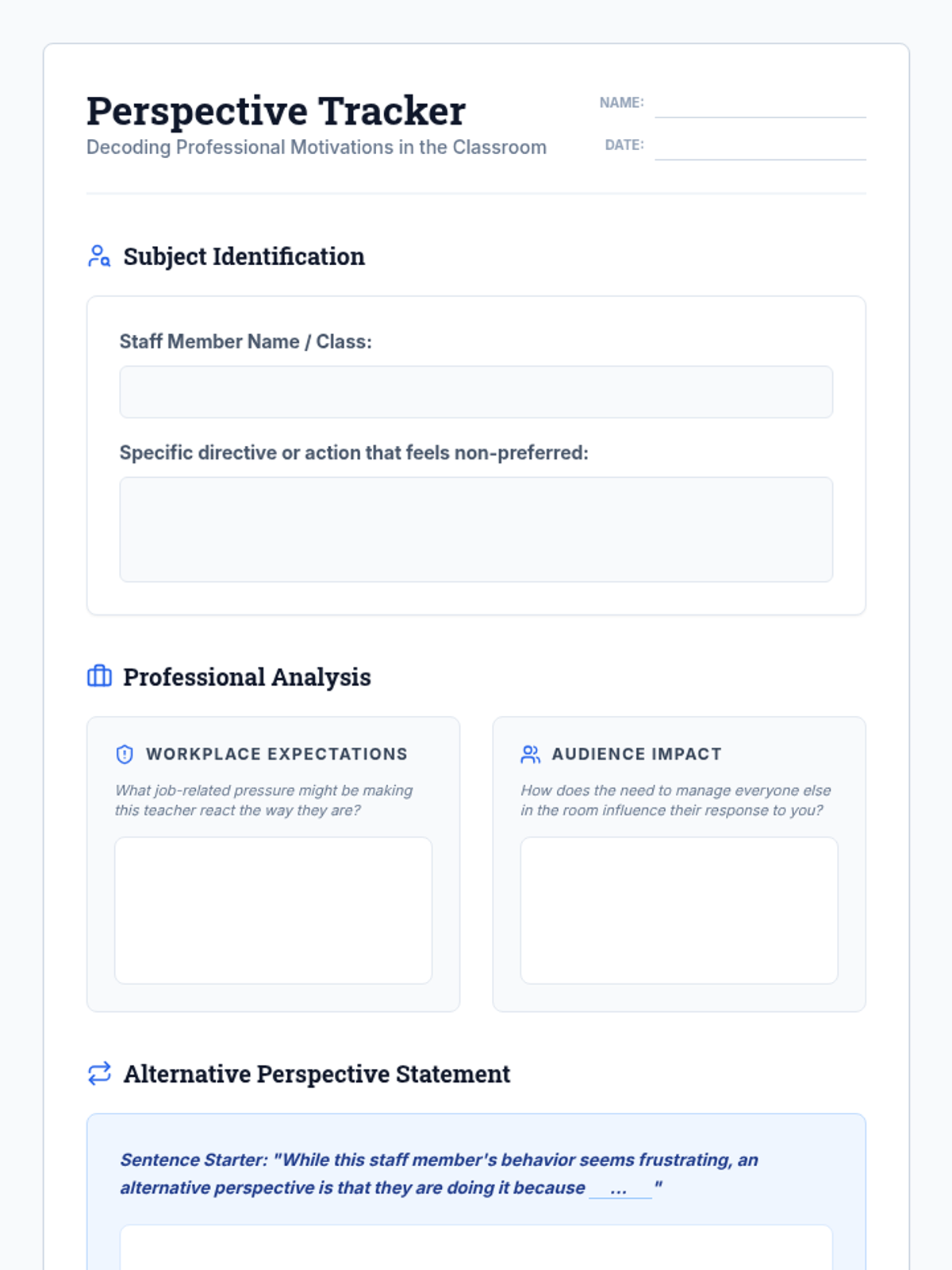
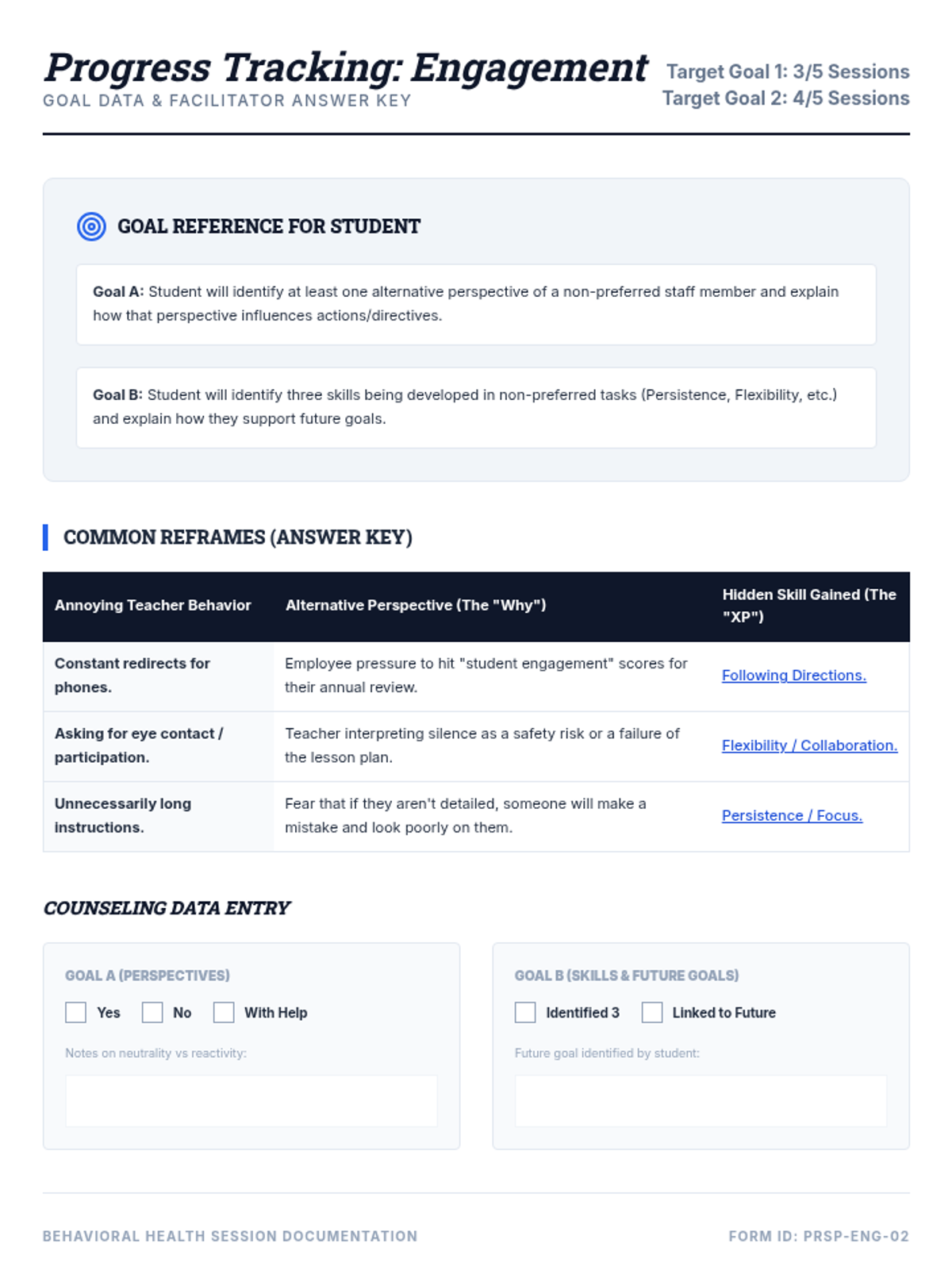
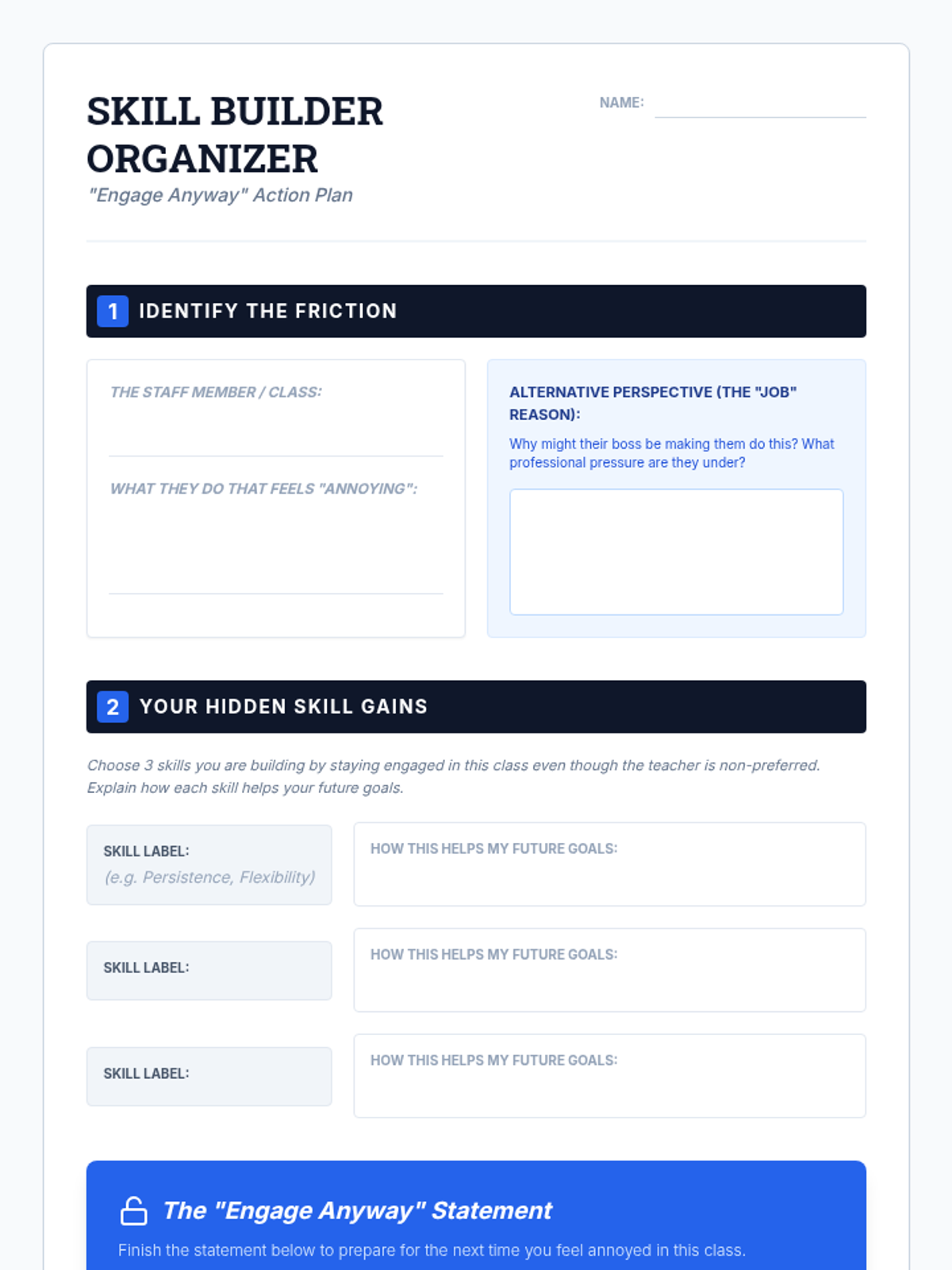
A 24-minute counseling session focused on social perspective-taking, specifically helping students identify the underlying motivations and professional pressures that influence staff member actions and directives.
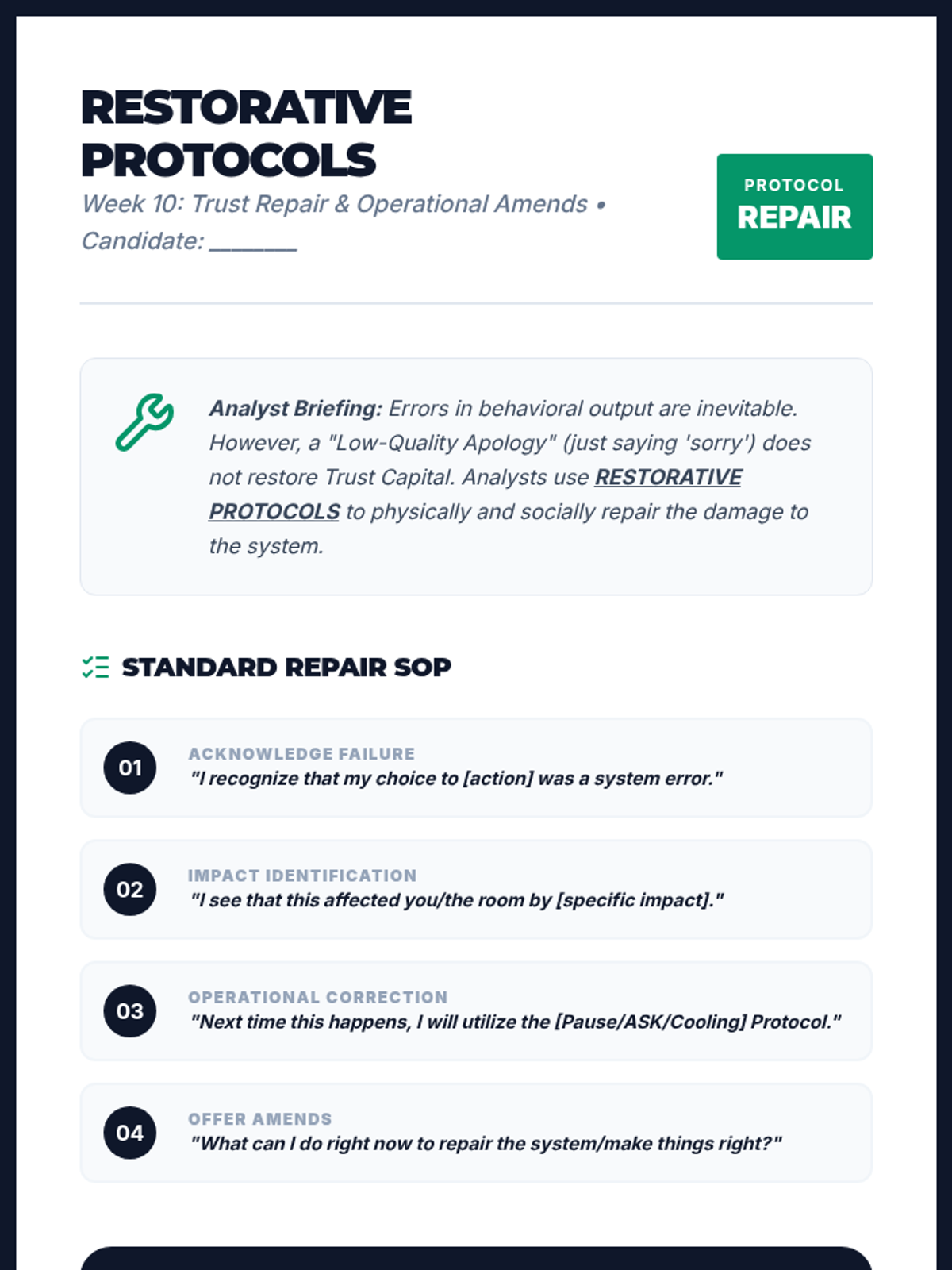
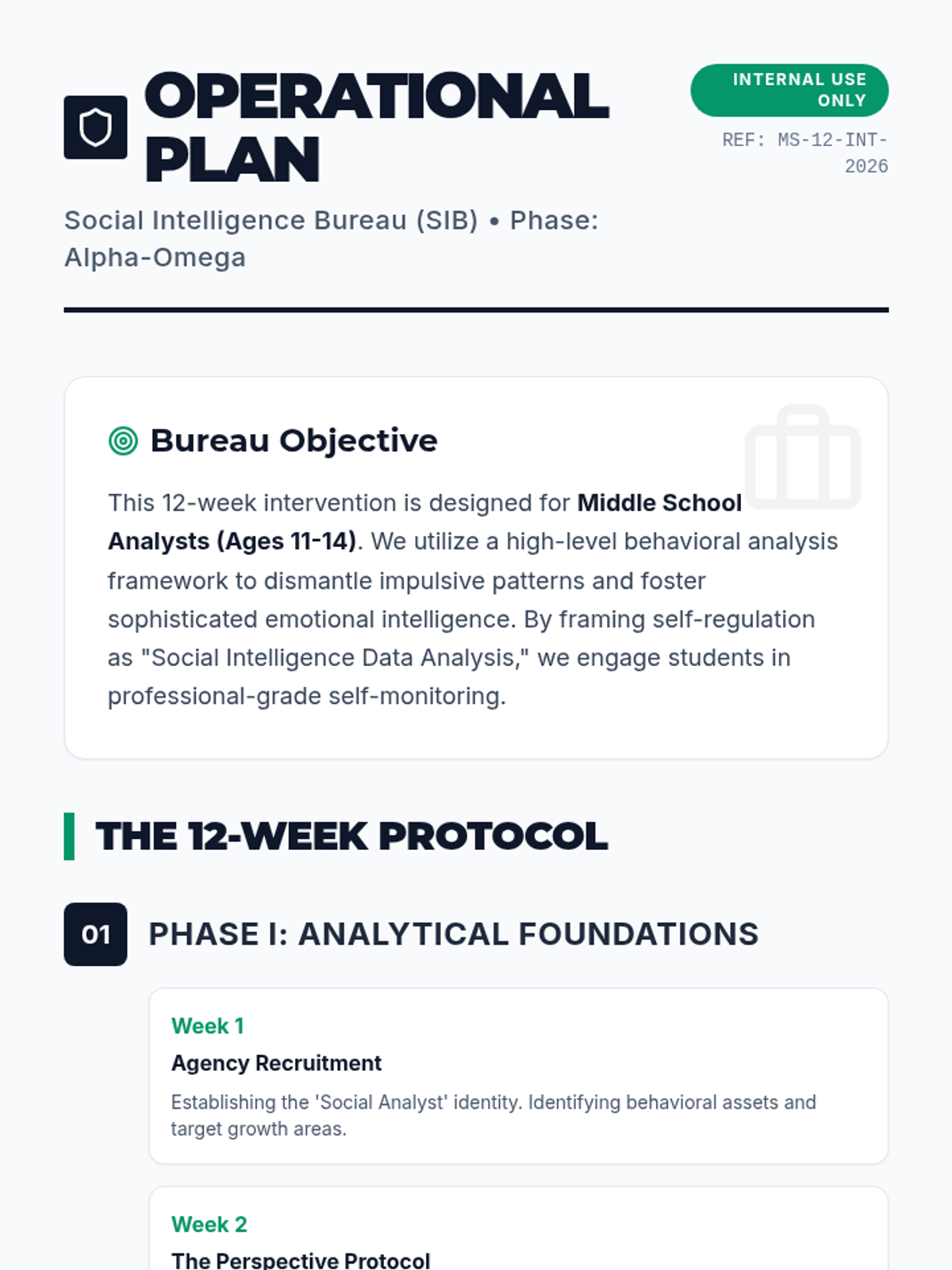
The final three weeks focus on making amends, setting future goals, and celebrating the progress made throughout the Social Detective program.
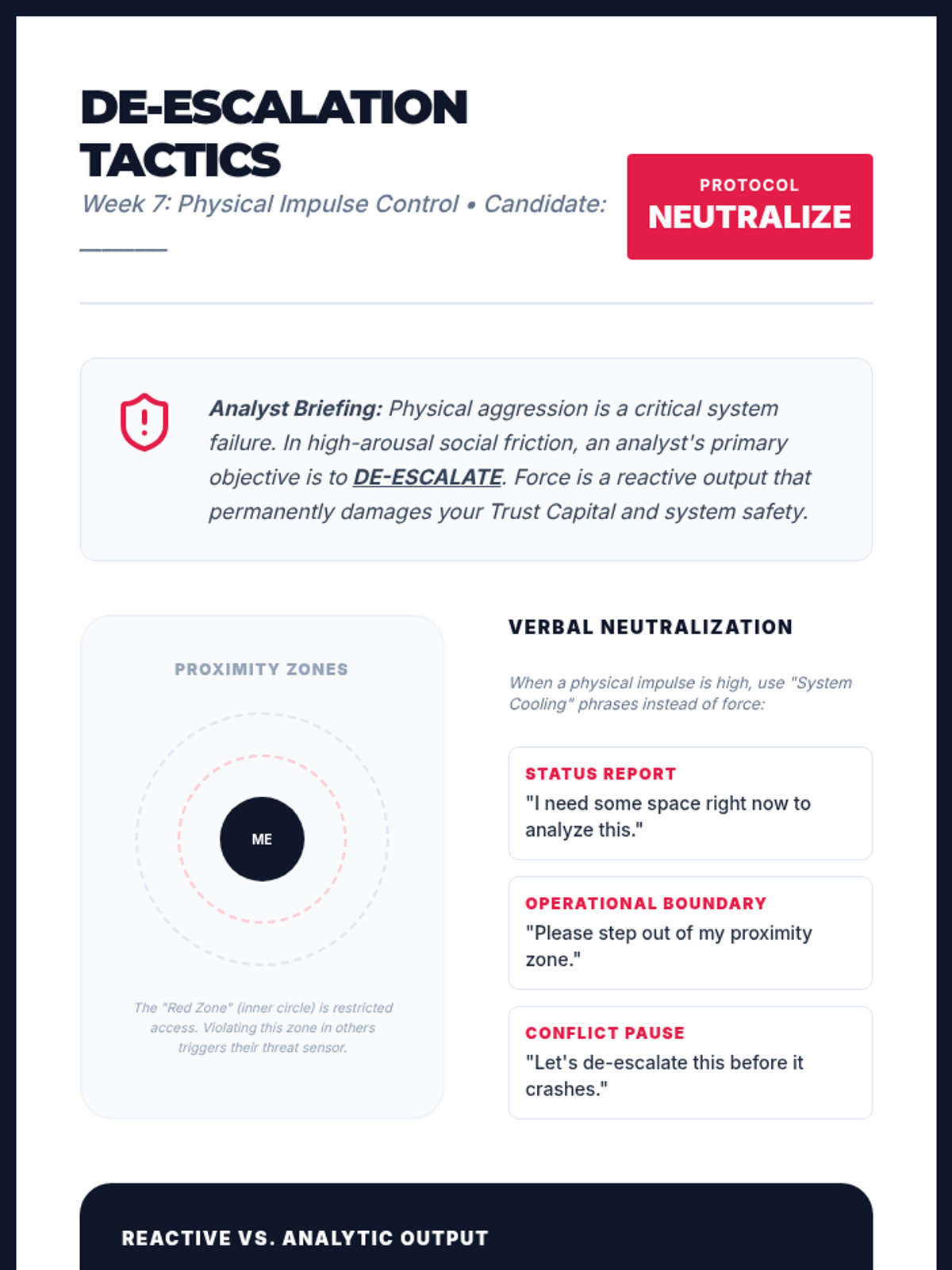
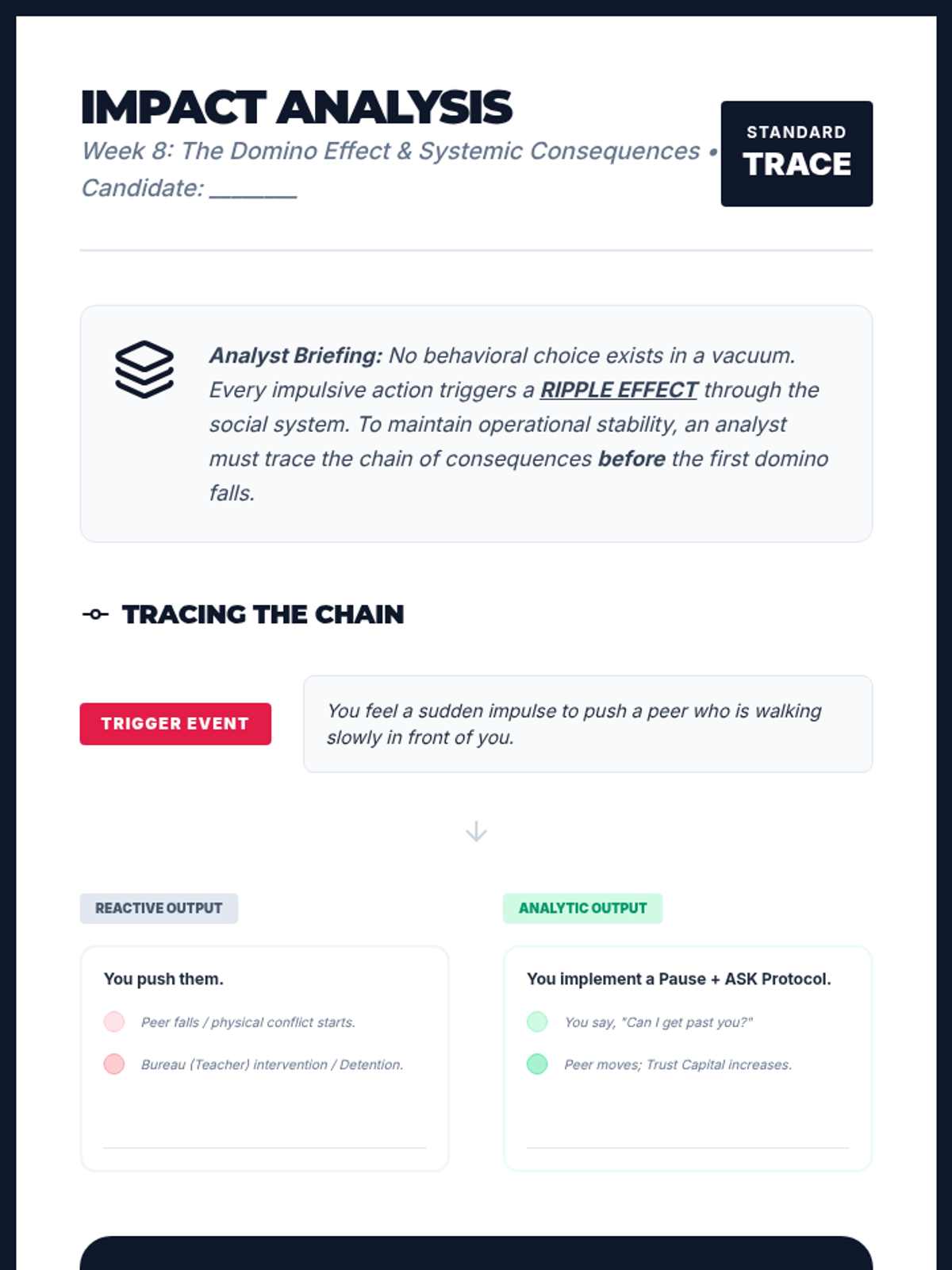
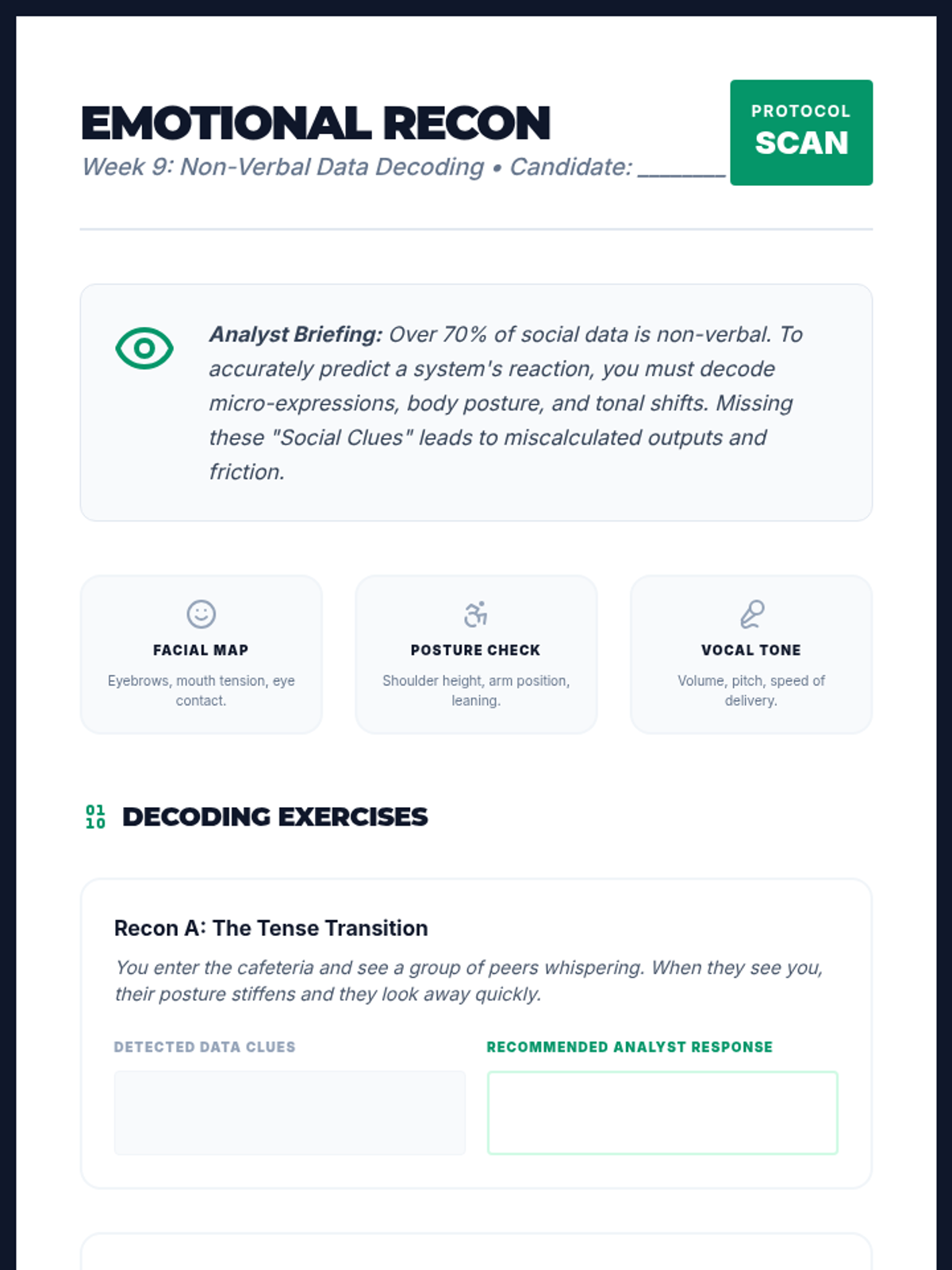
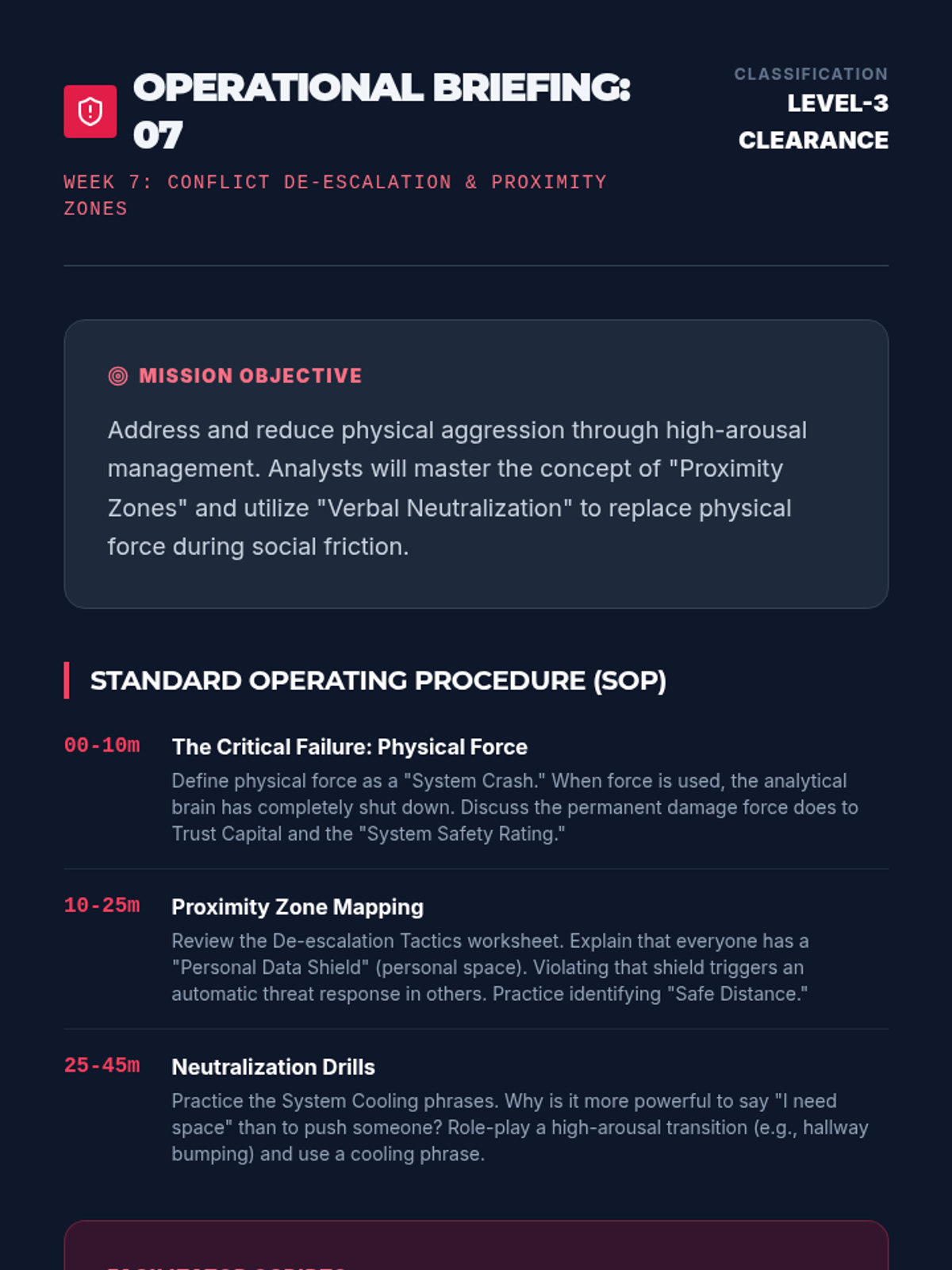
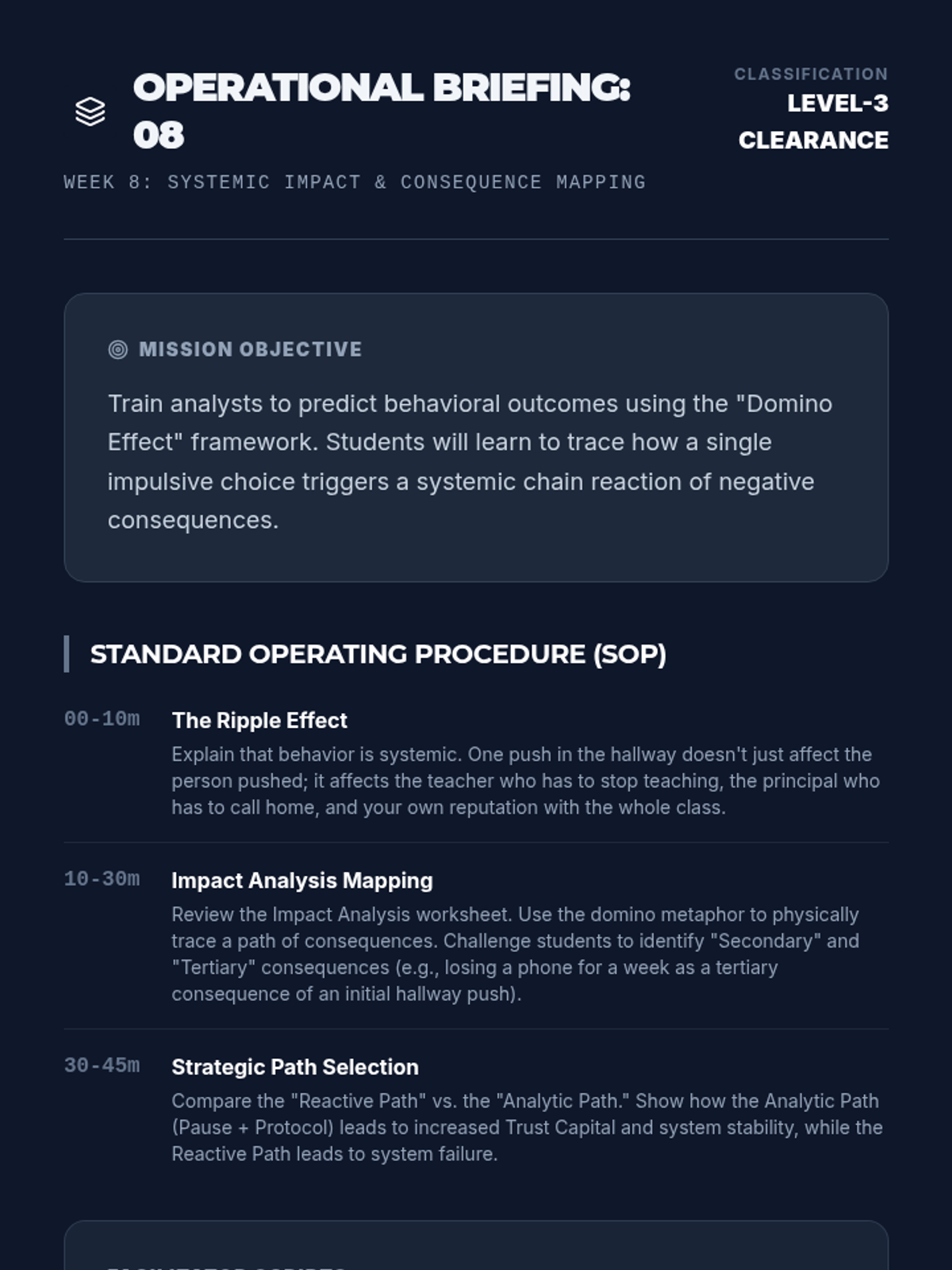
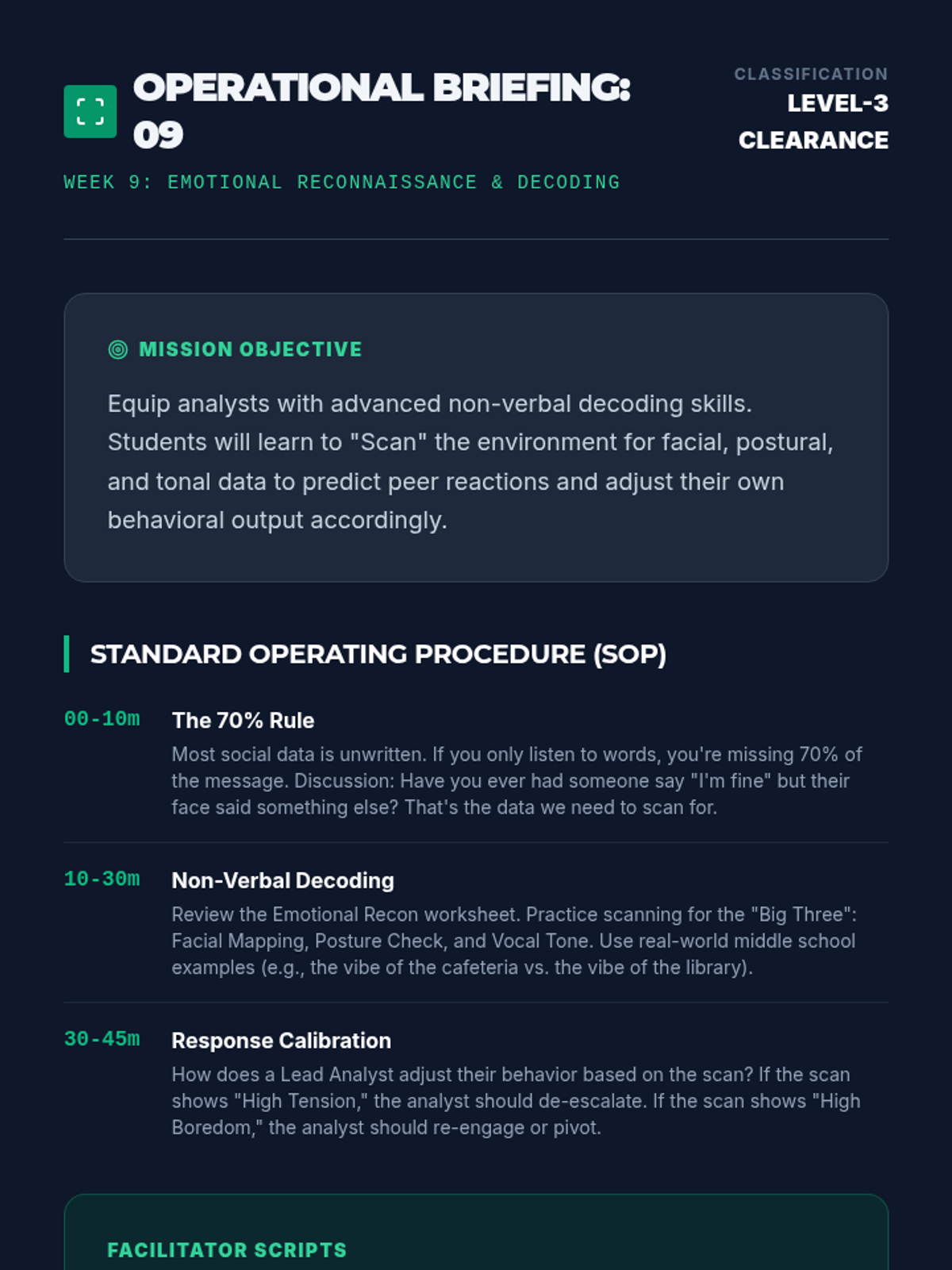
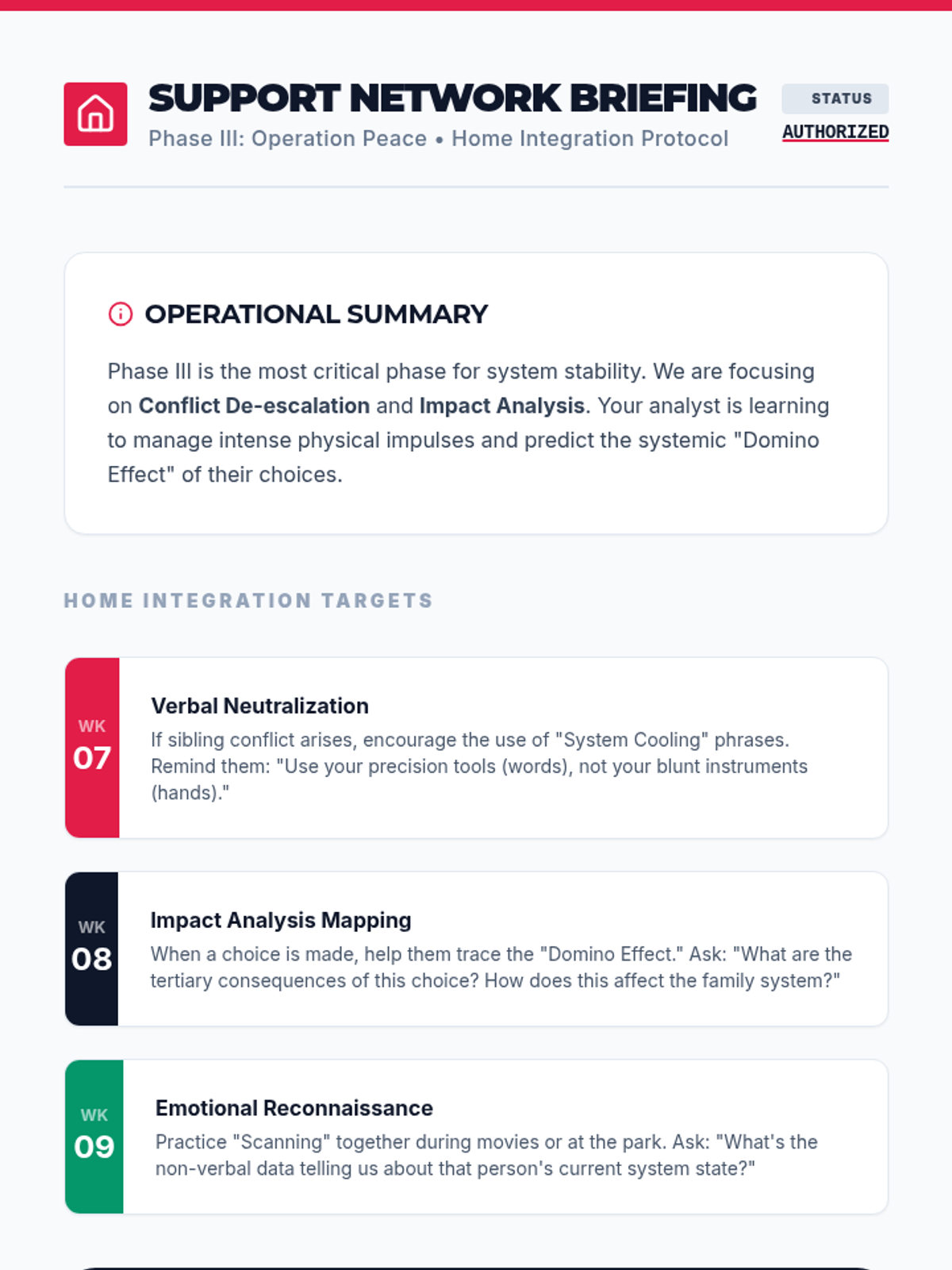
Weeks 7-9 address physical aggression, understanding consequences, and deep-diving into reading social clues to build empathy.
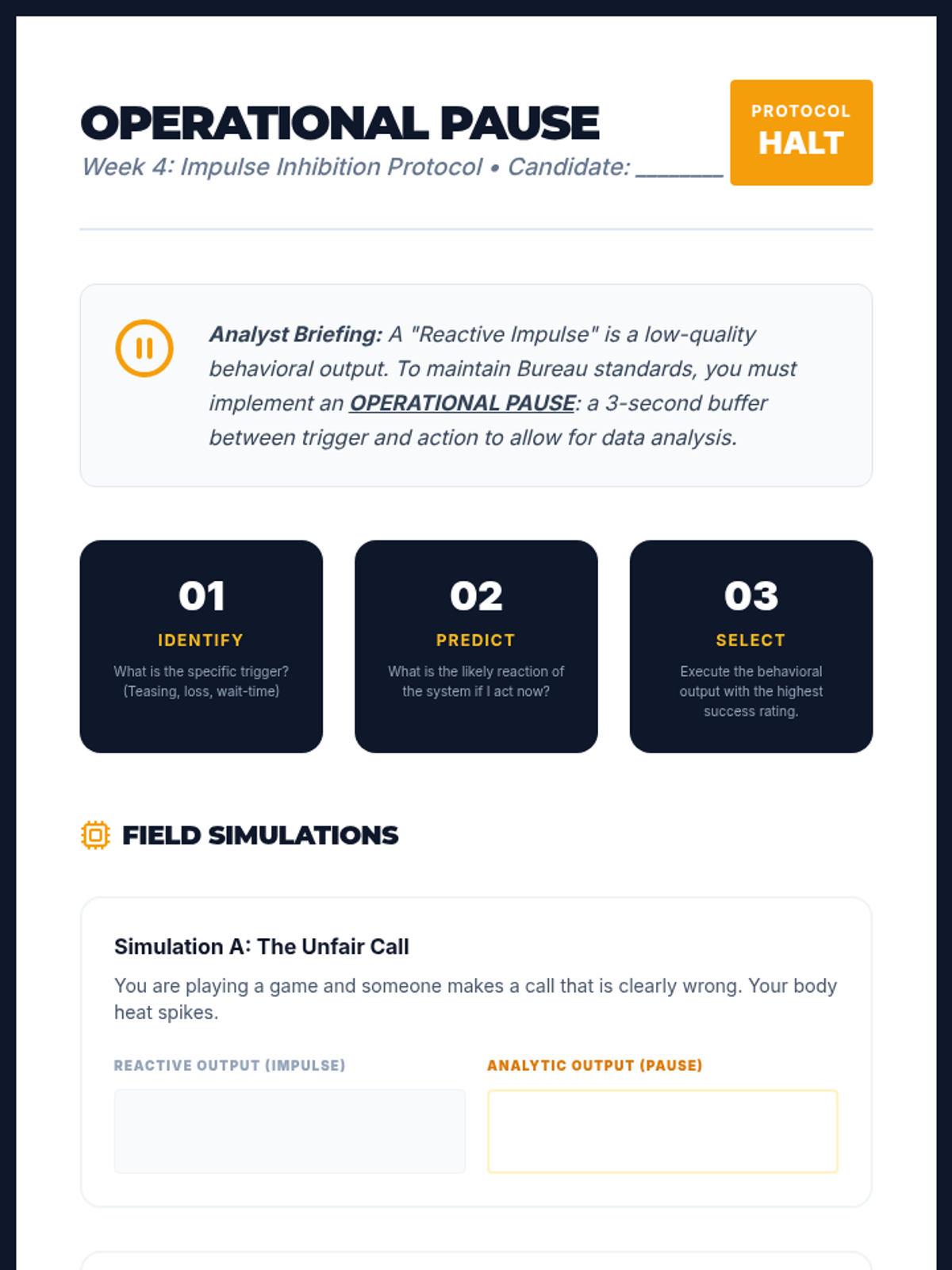
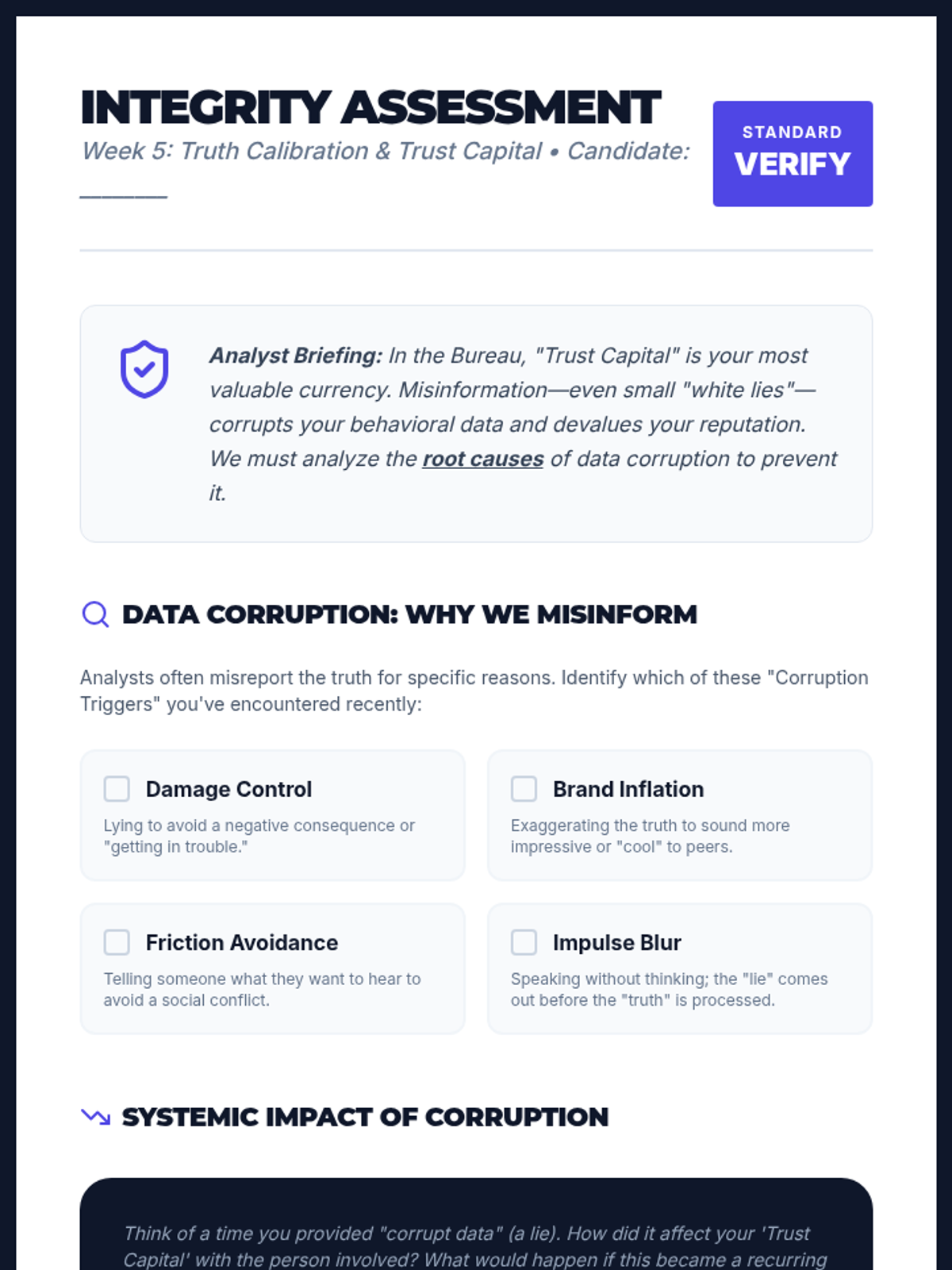
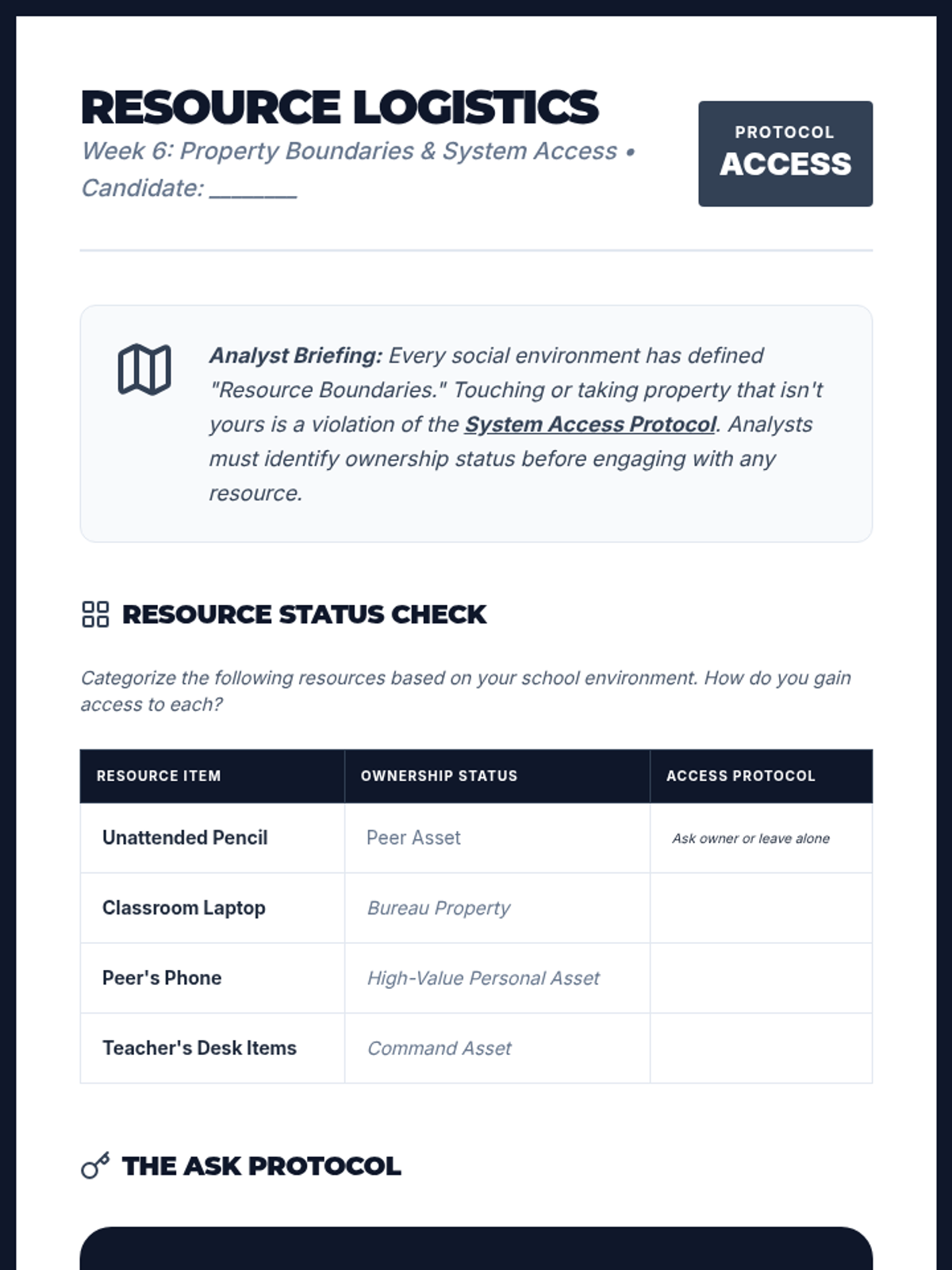
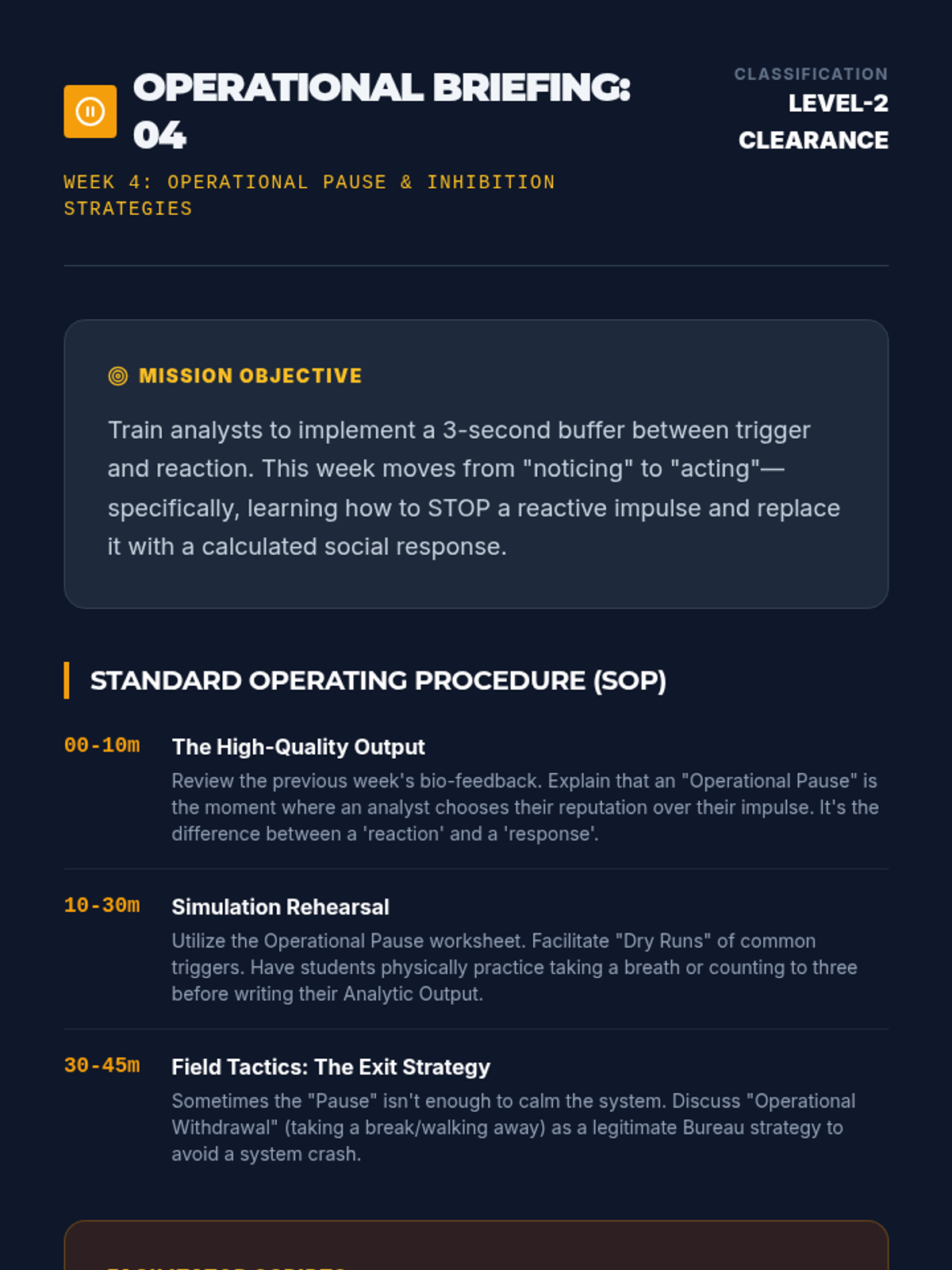
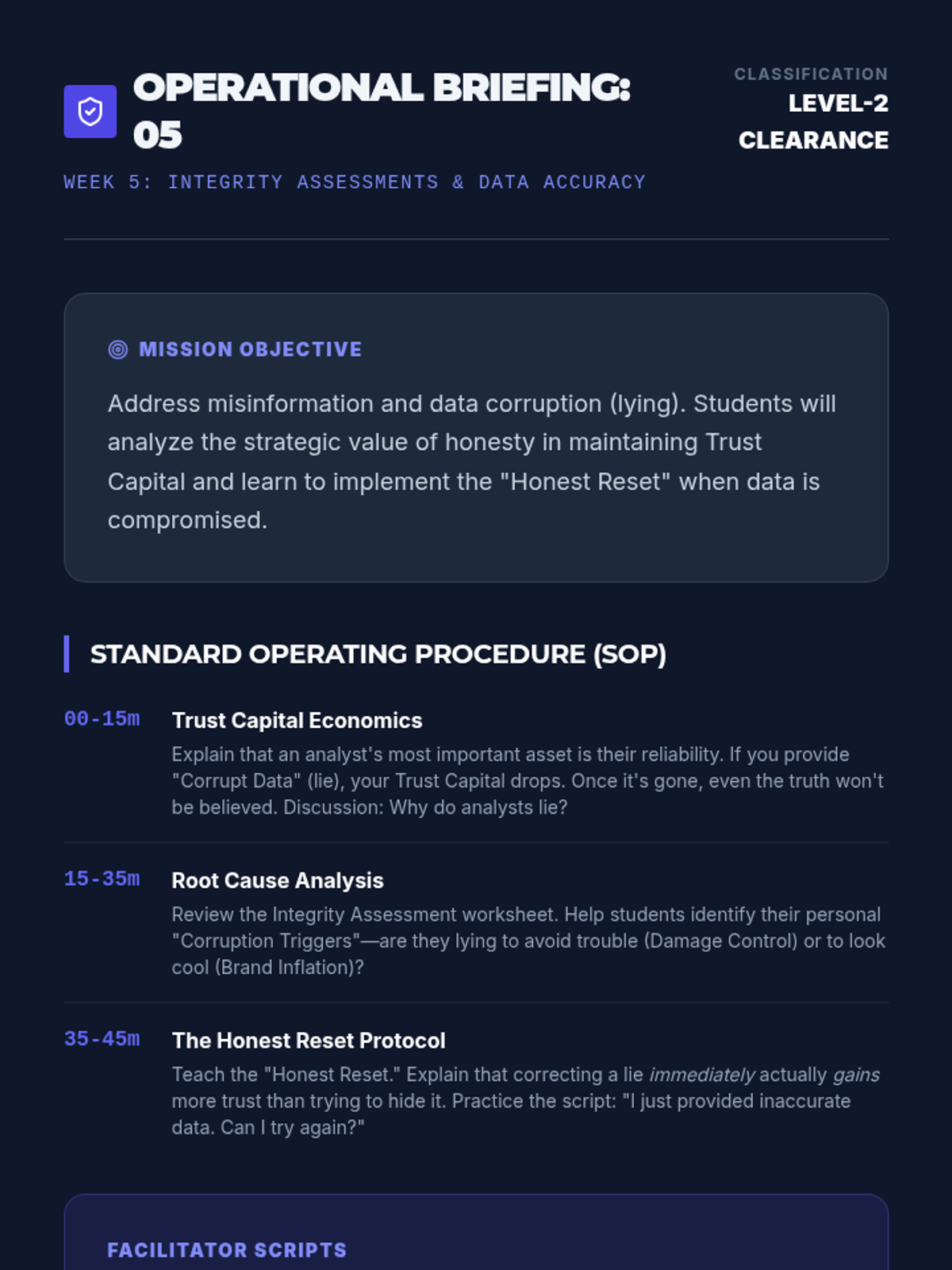
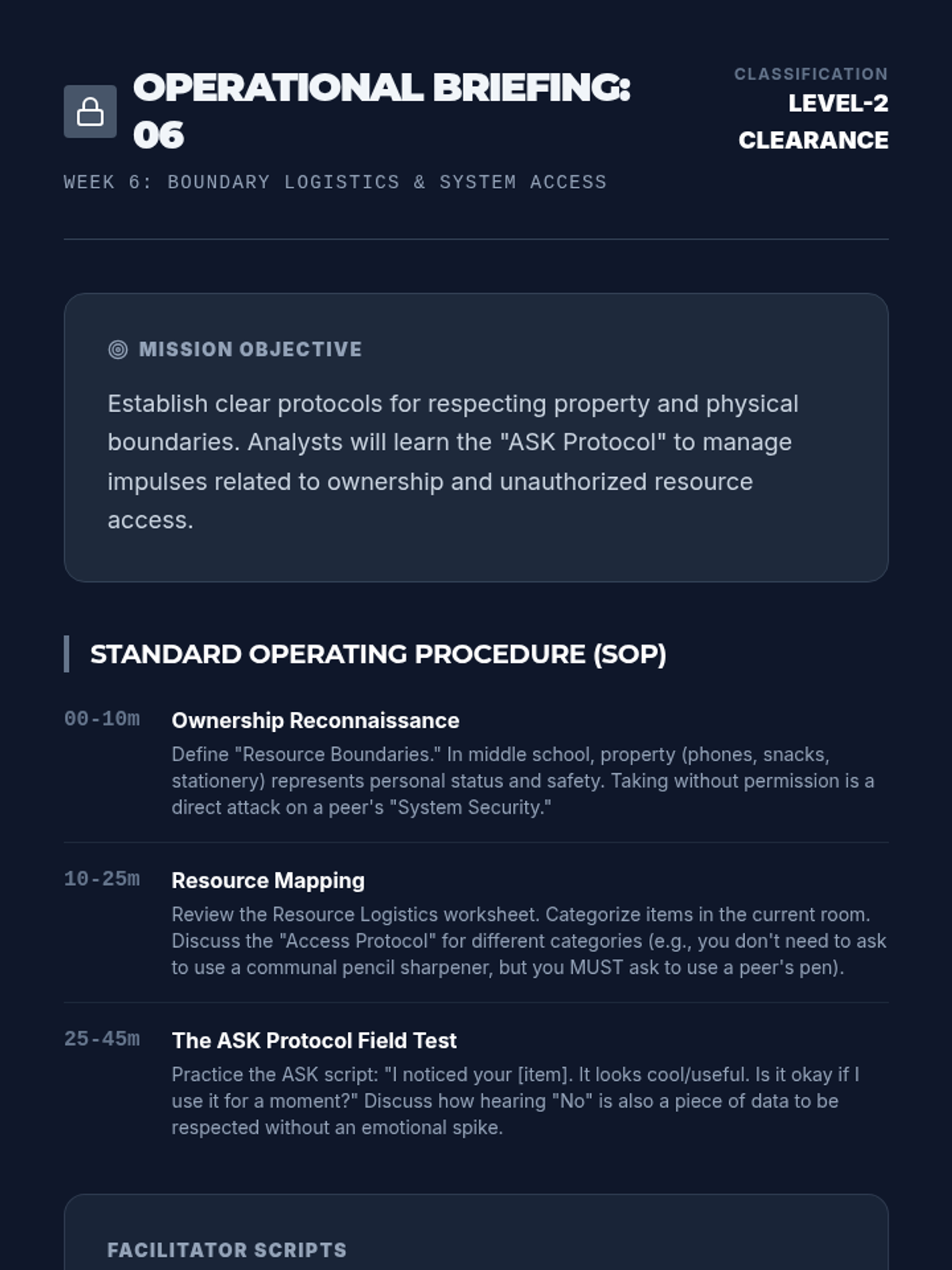
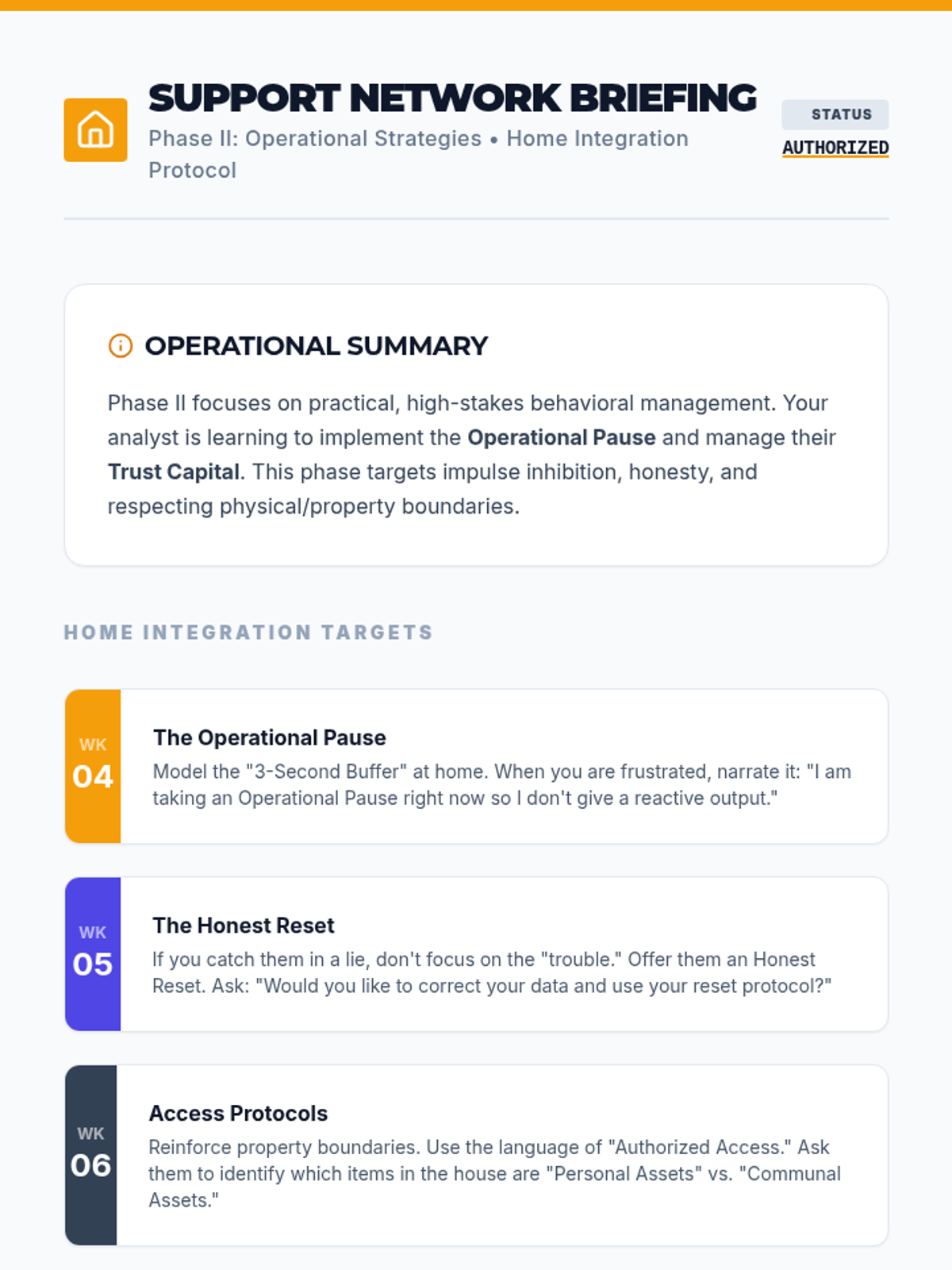
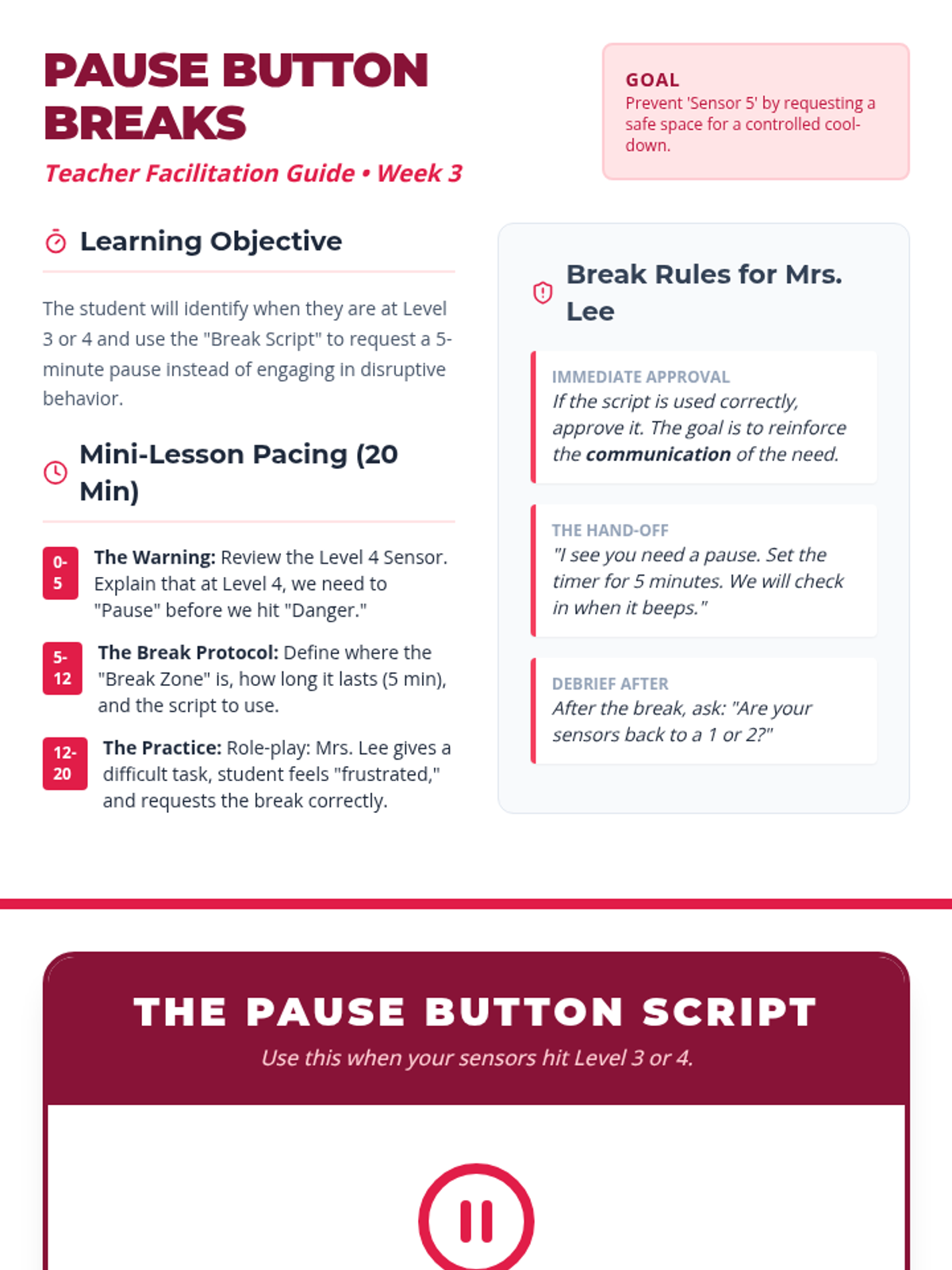
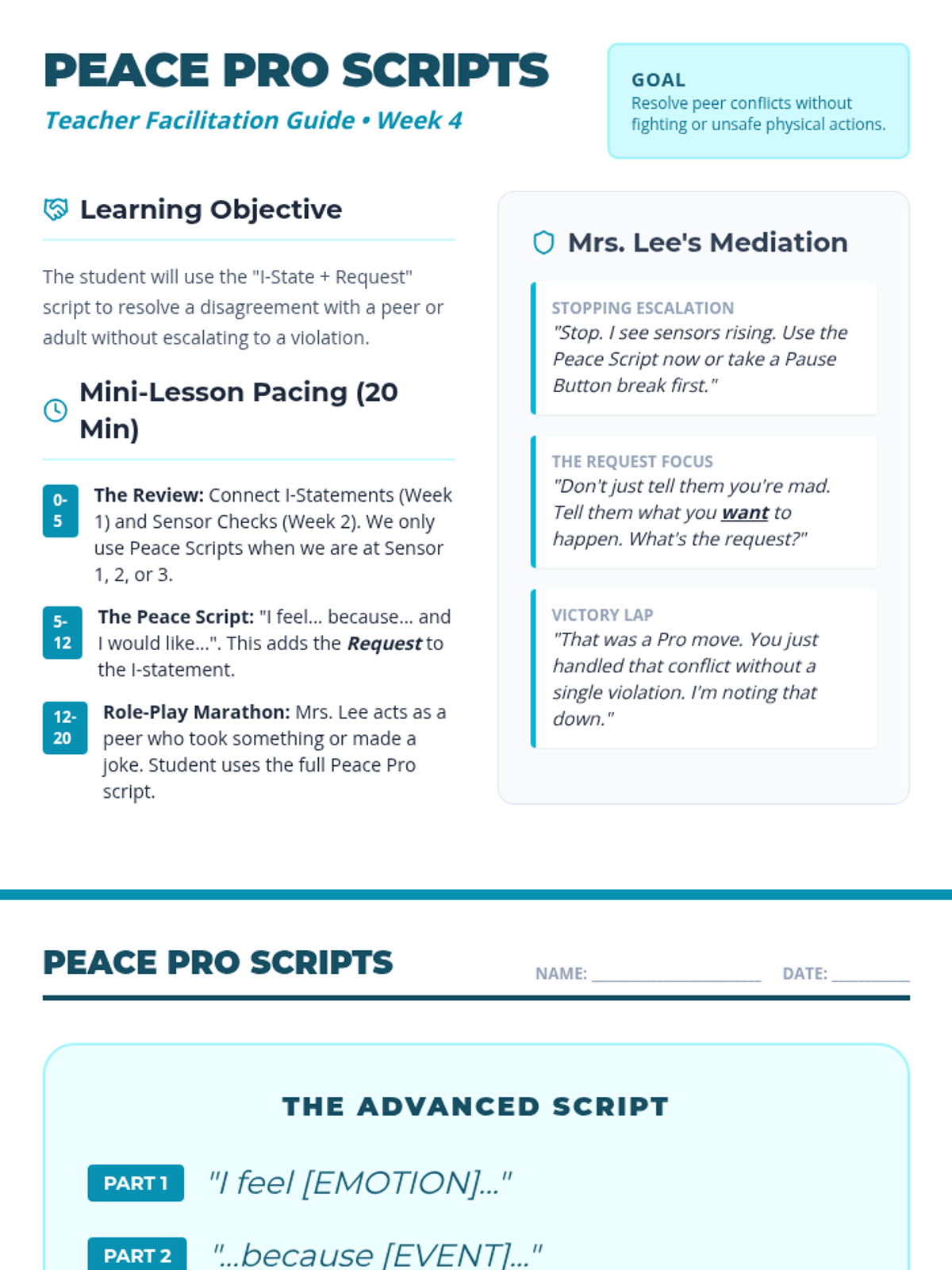
Weeks 4-6 of the intervention, focusing on practical impulse control strategies like the 'Pause Button' and addressing specific behaviors like lying and respecting property.
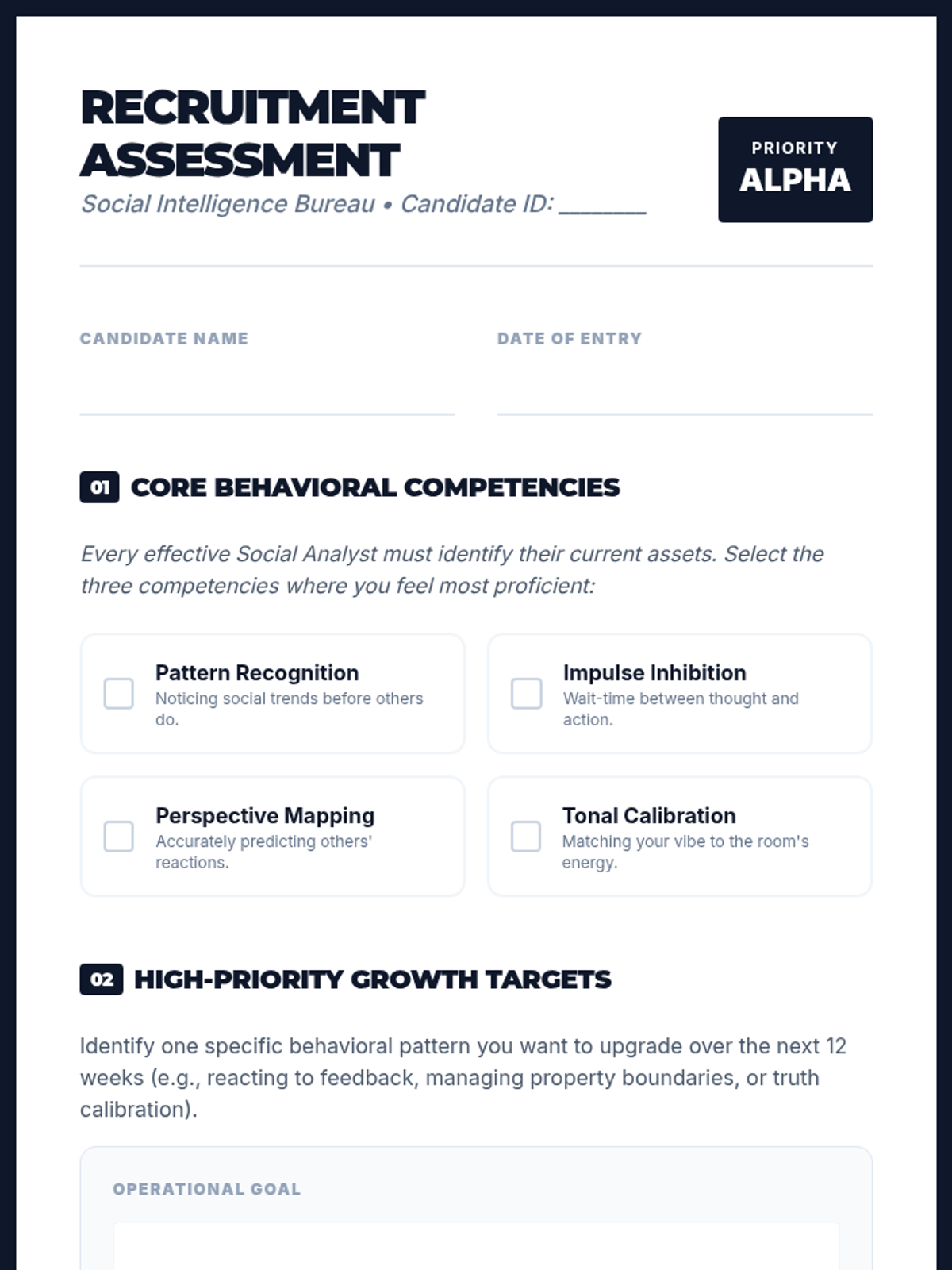
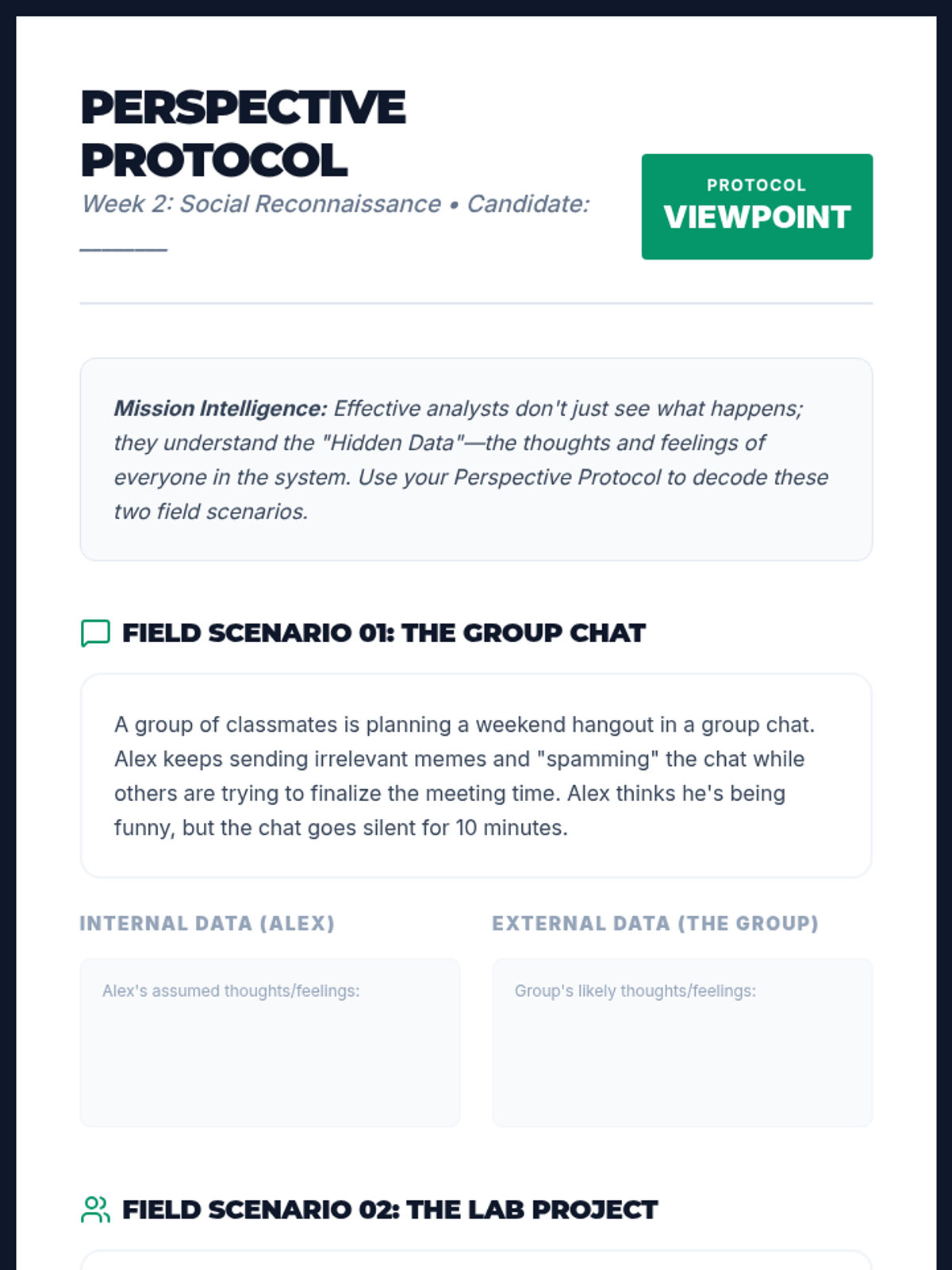
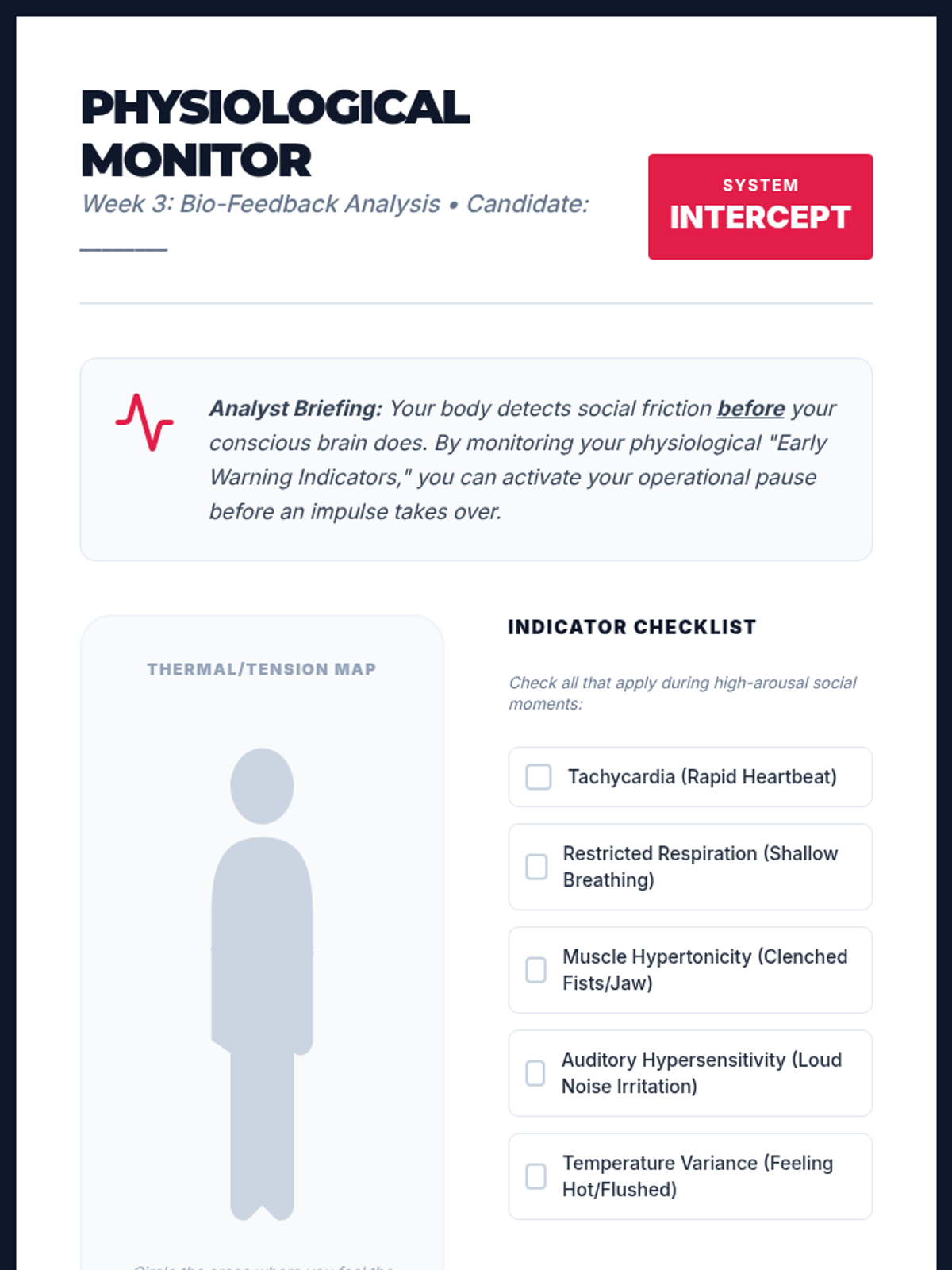
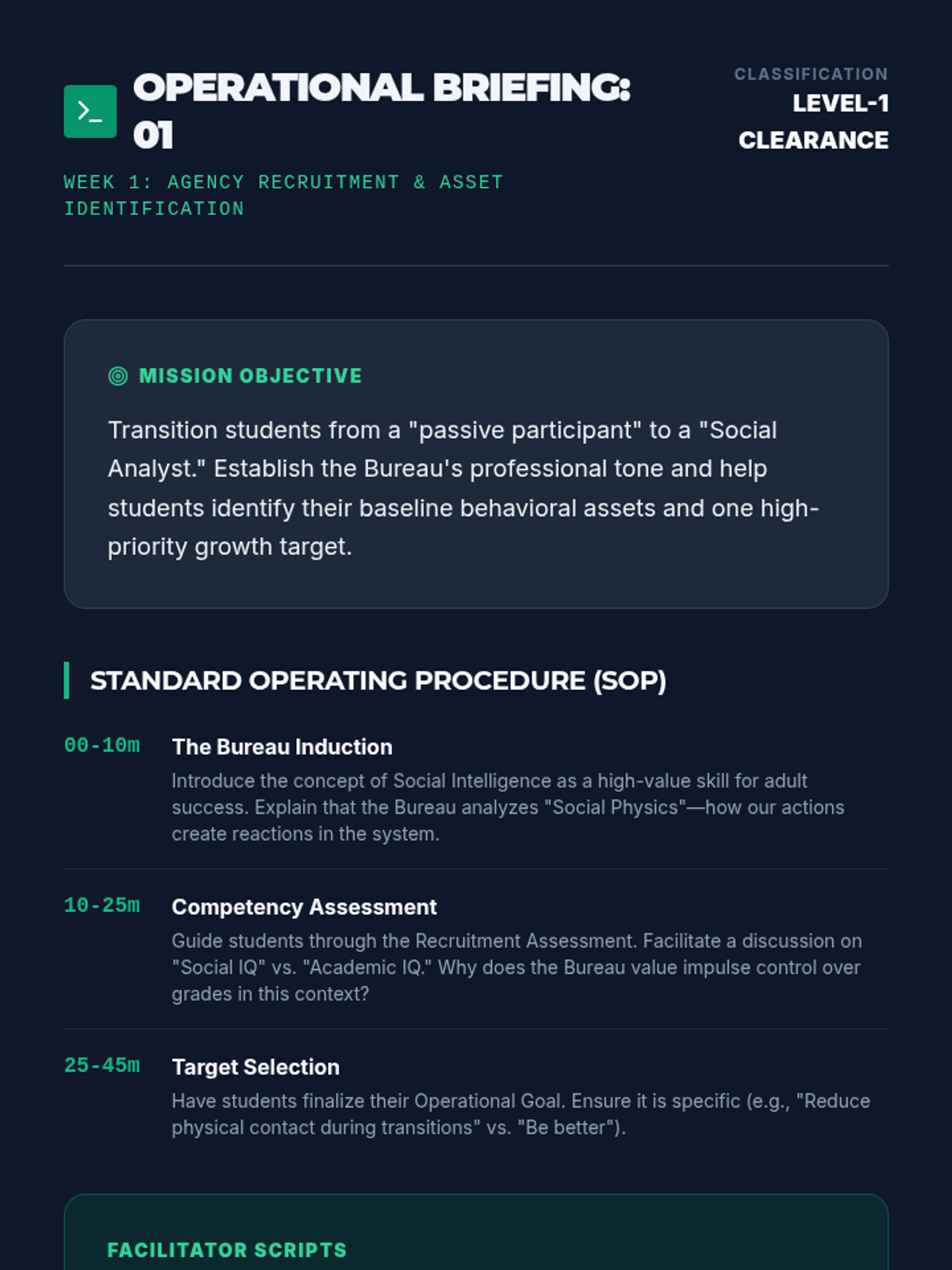
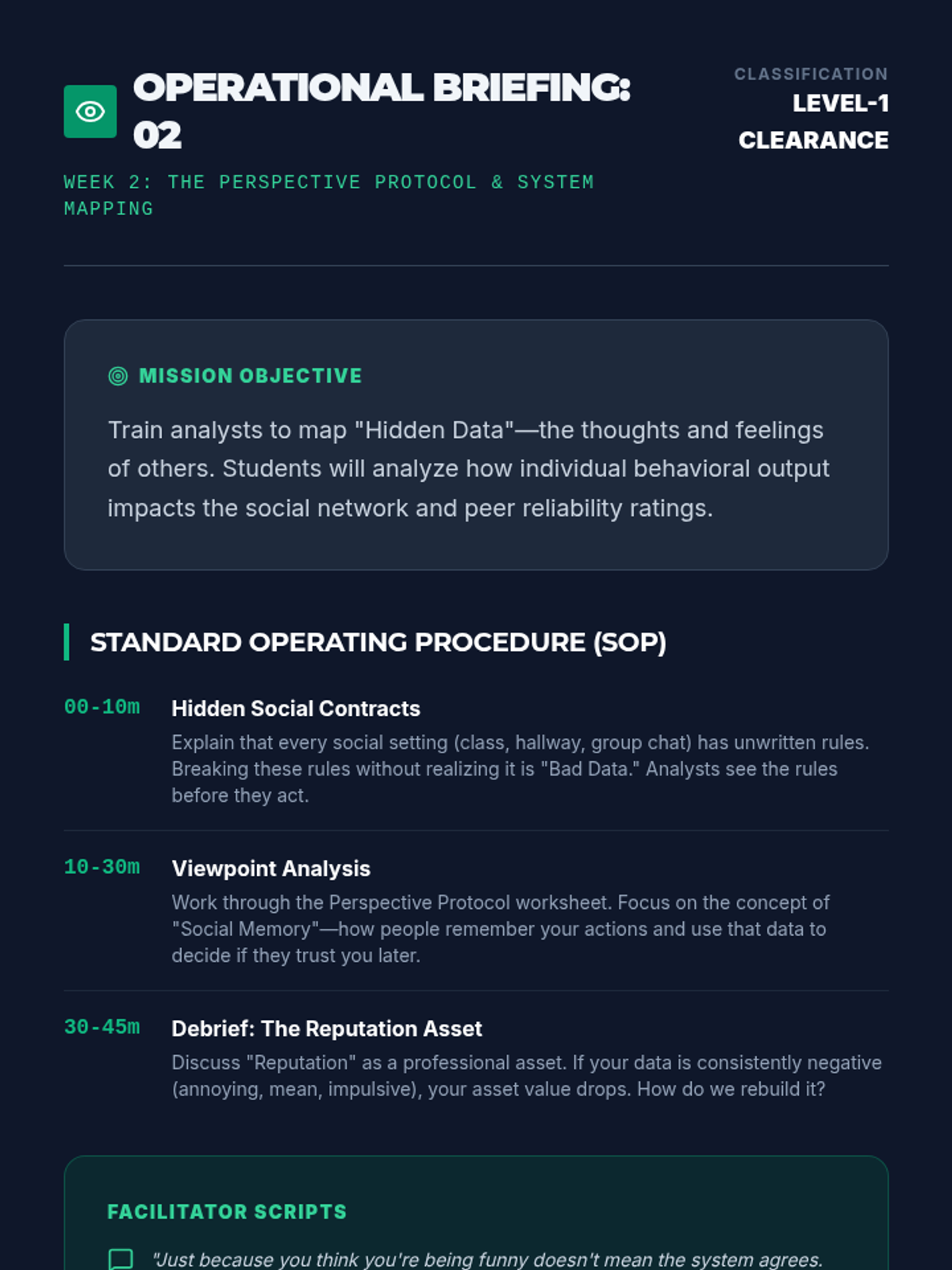
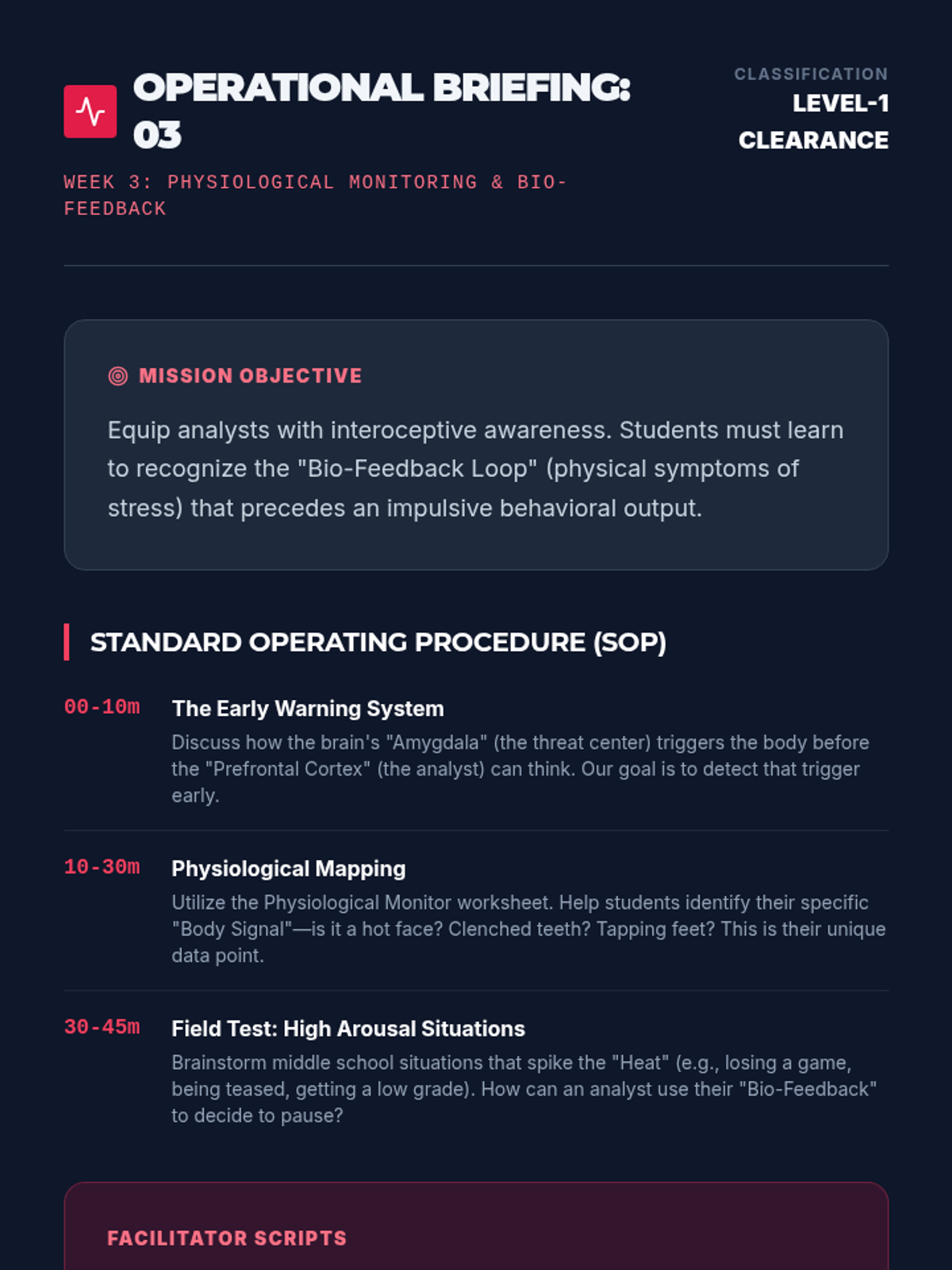
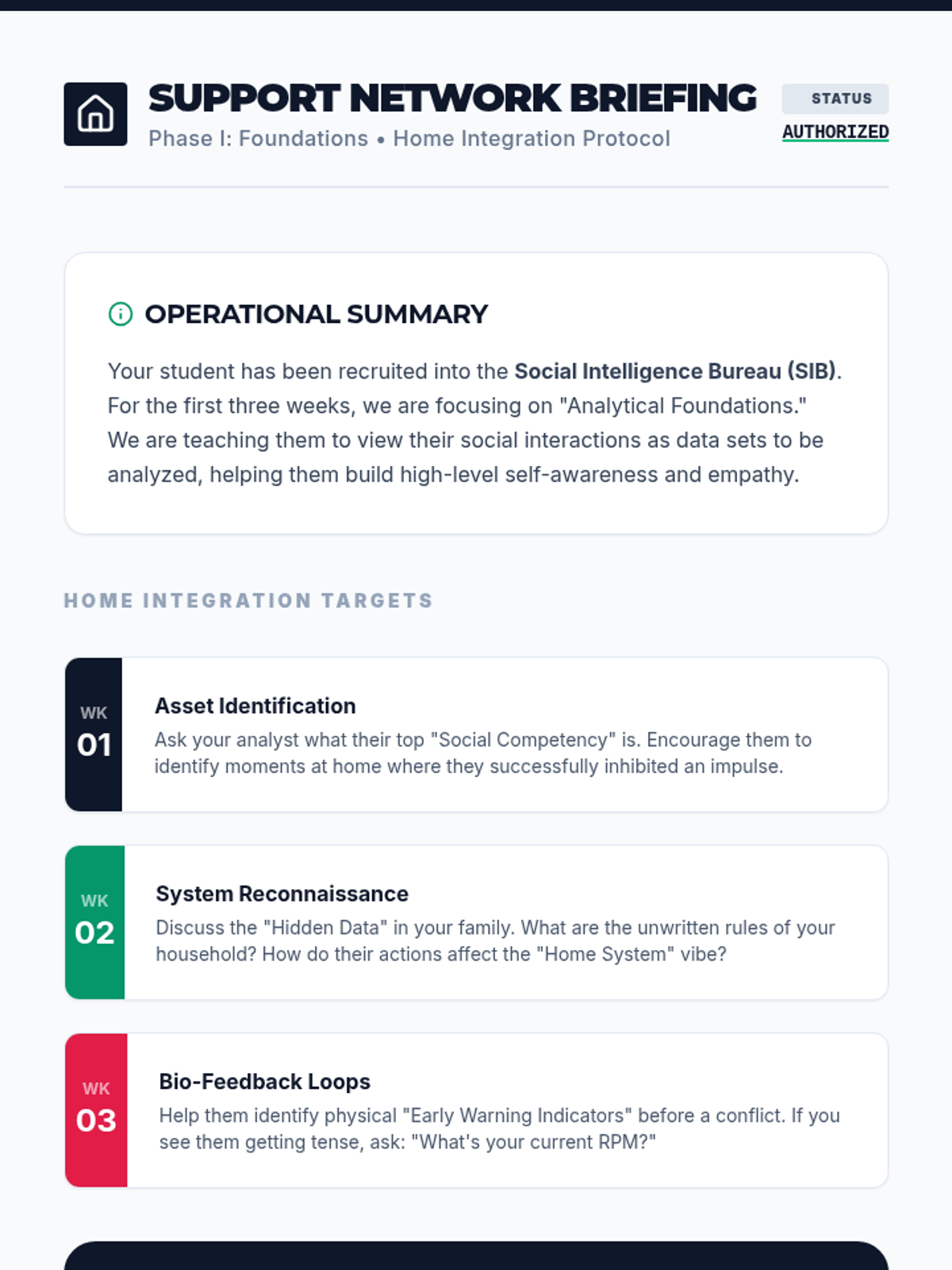
The first three weeks focus on building high-level self-awareness and understanding the core concepts of social perspective-taking and physiological self-monitoring.
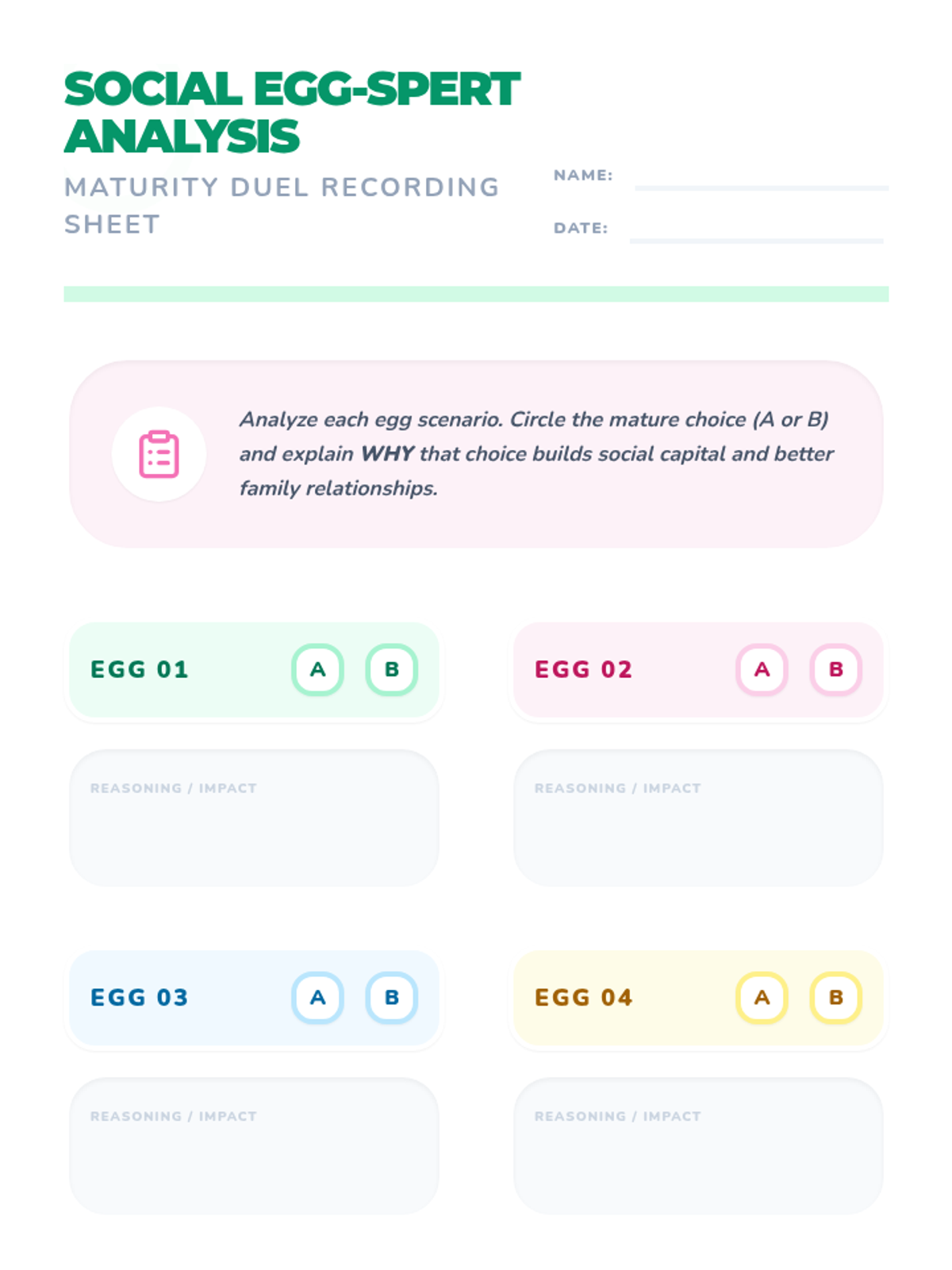
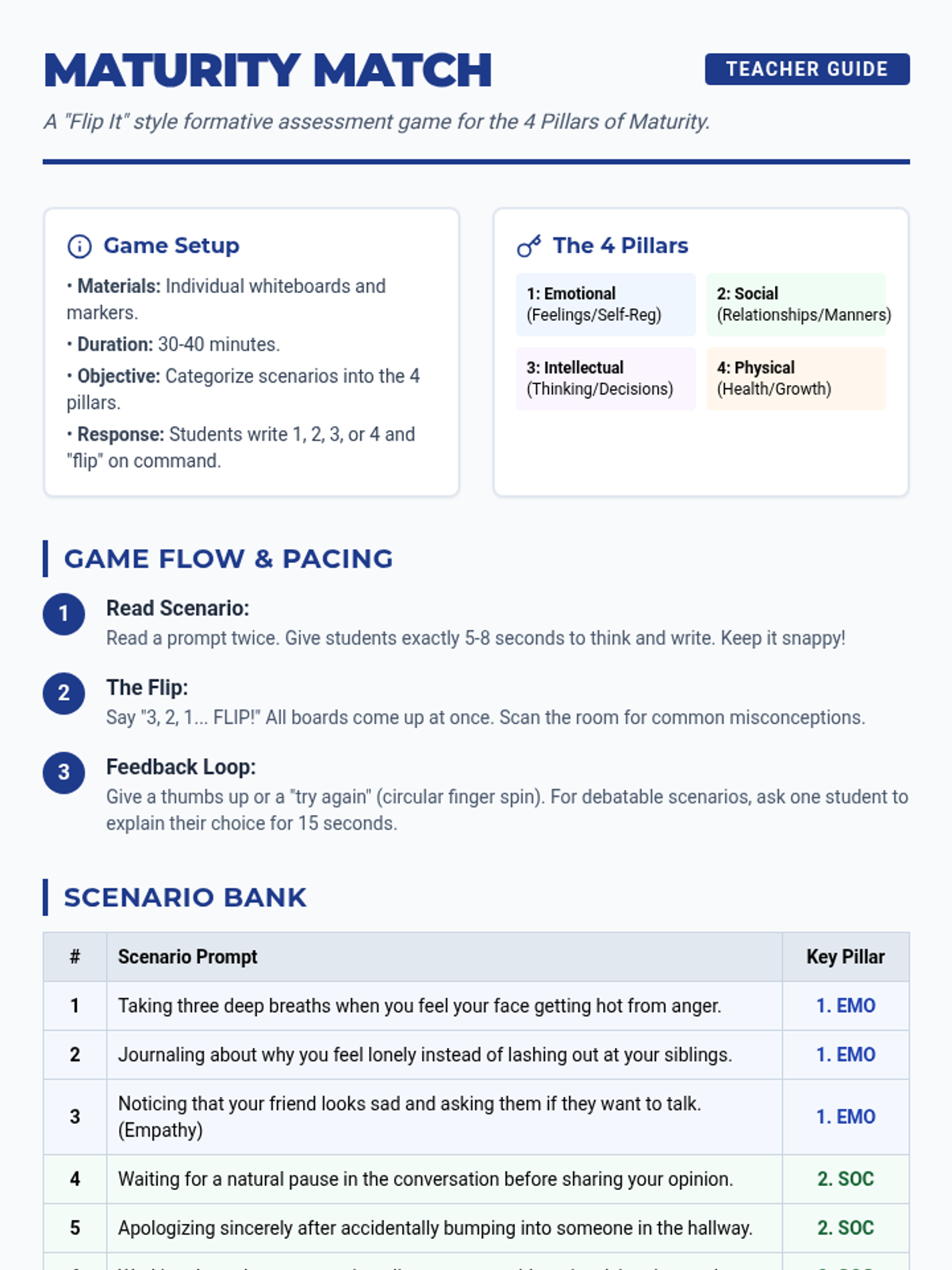
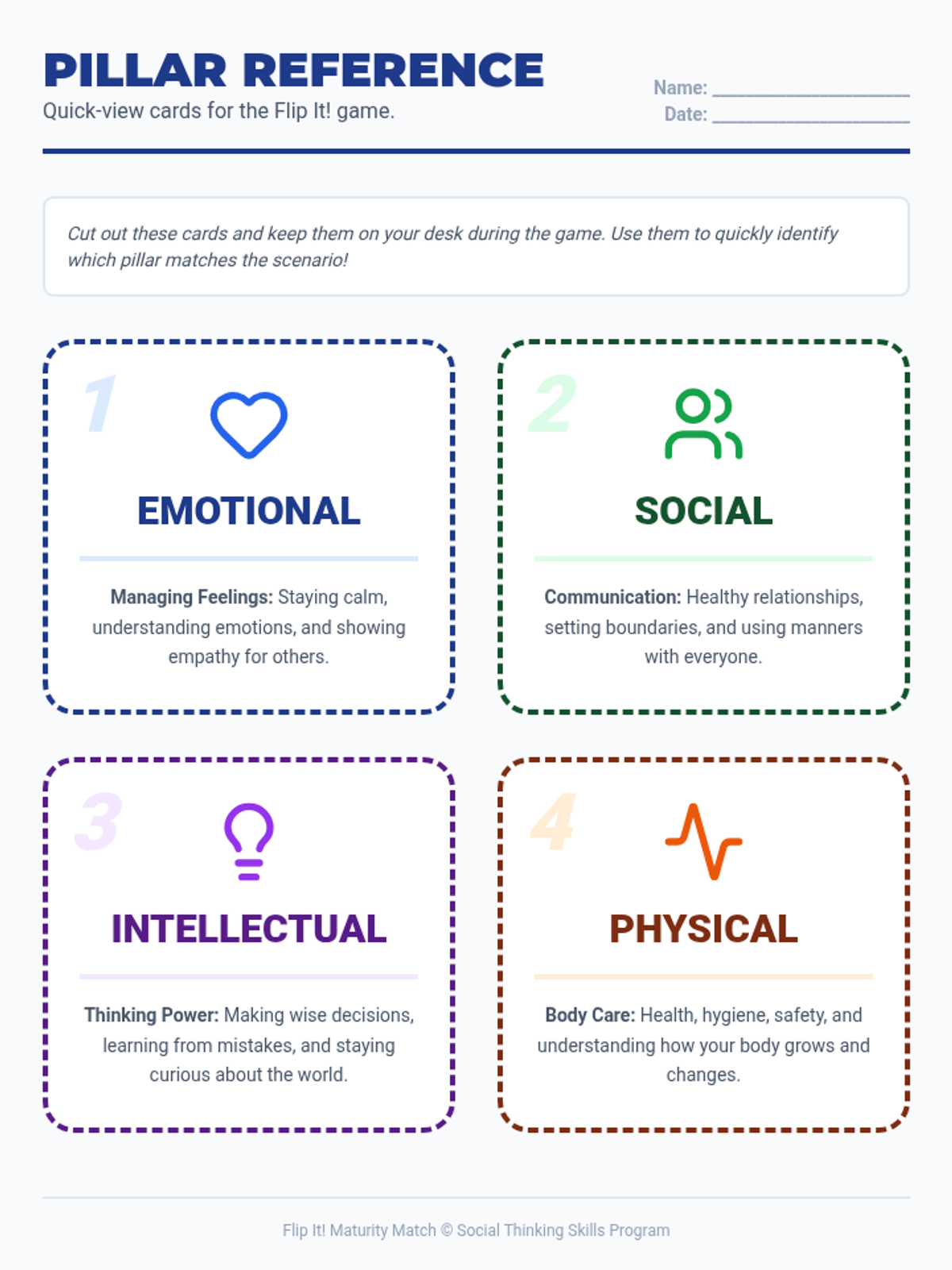
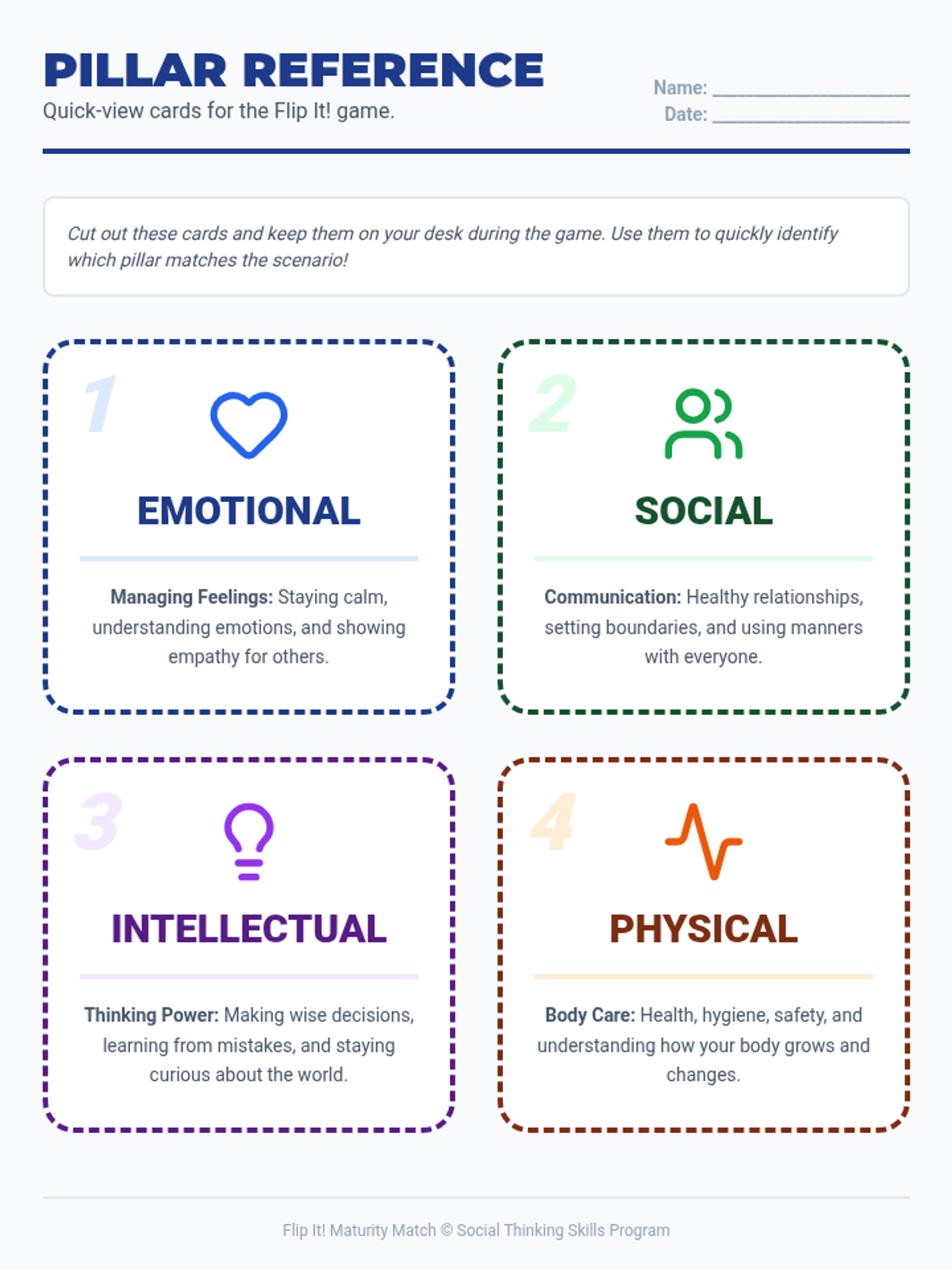
A fast-paced formative assessment game where students identify the four pillars of maturity (Emotional, Social, Intellectual, and Physical) through real-world scenarios. Includes a visual slide deck, a bank of 40+ scenarios for the teacher, and reference cards for students.
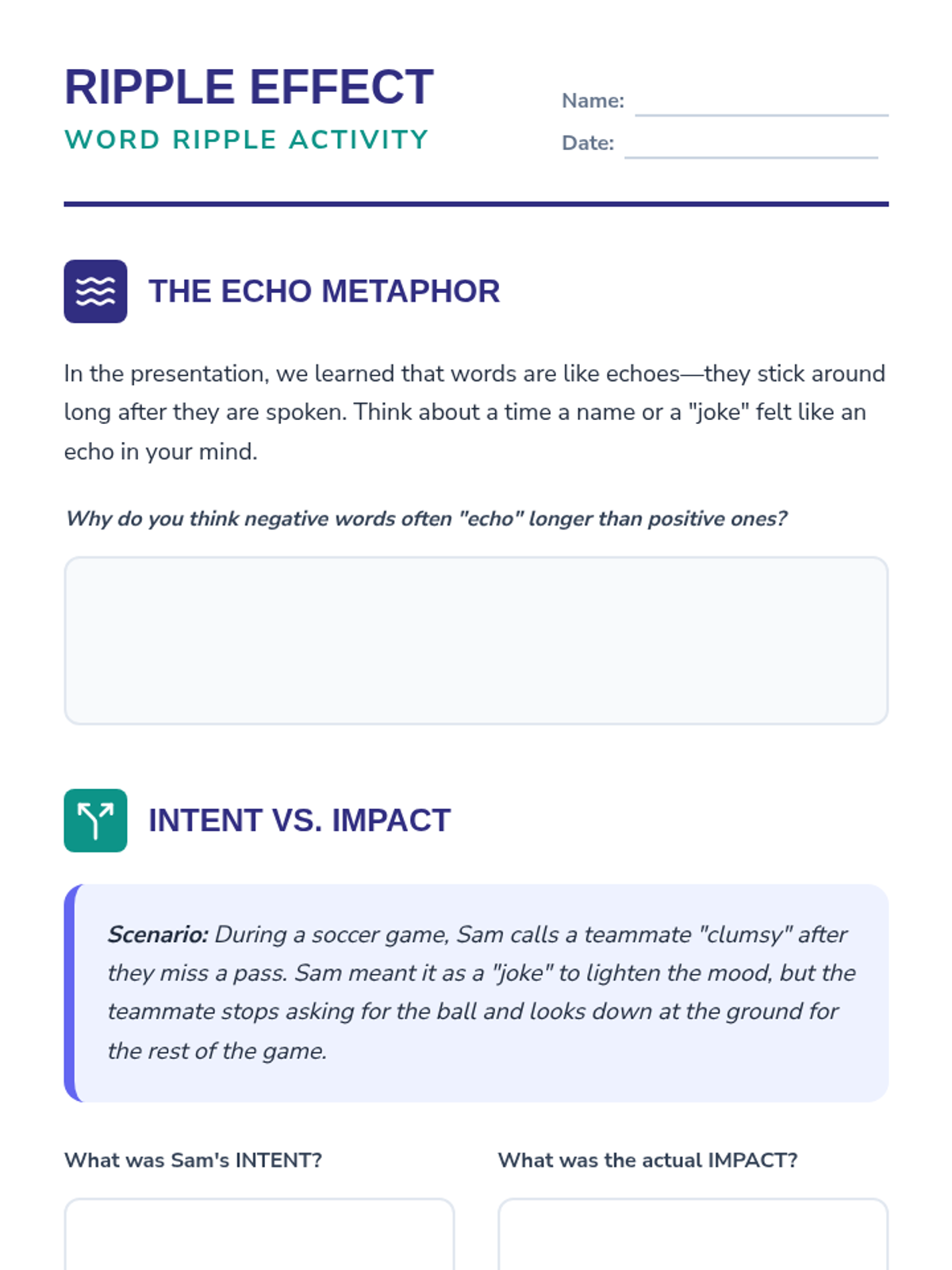
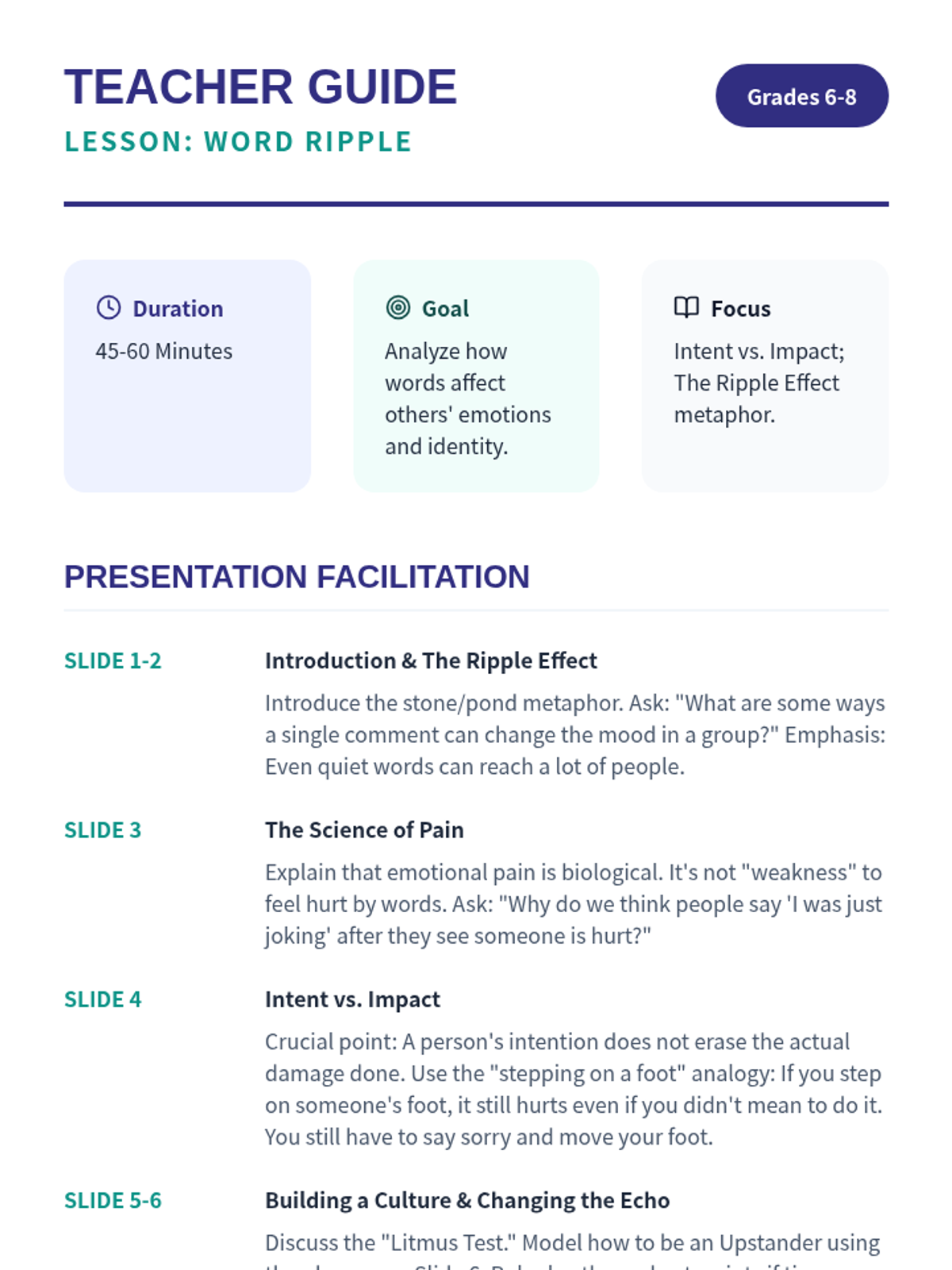
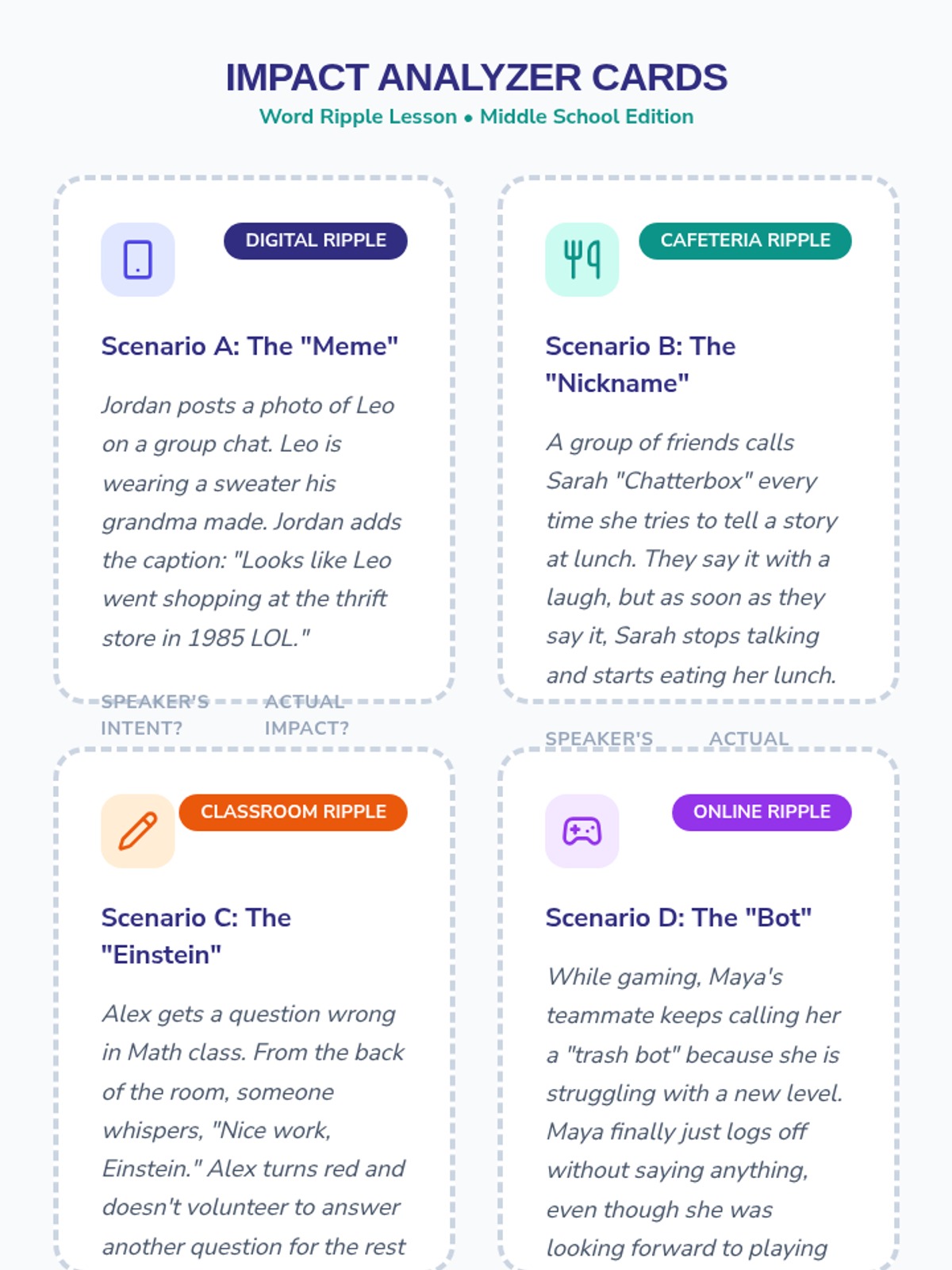
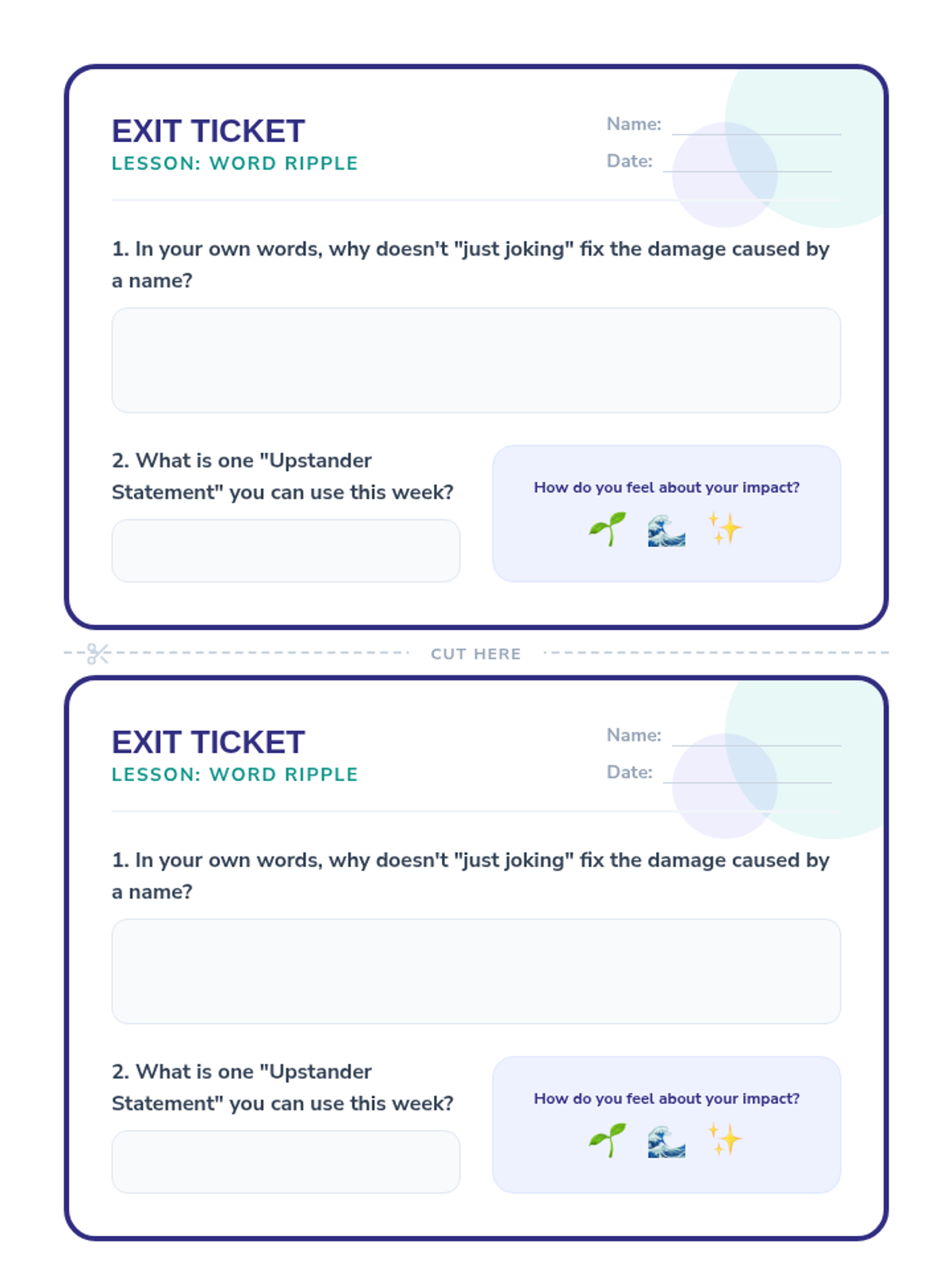
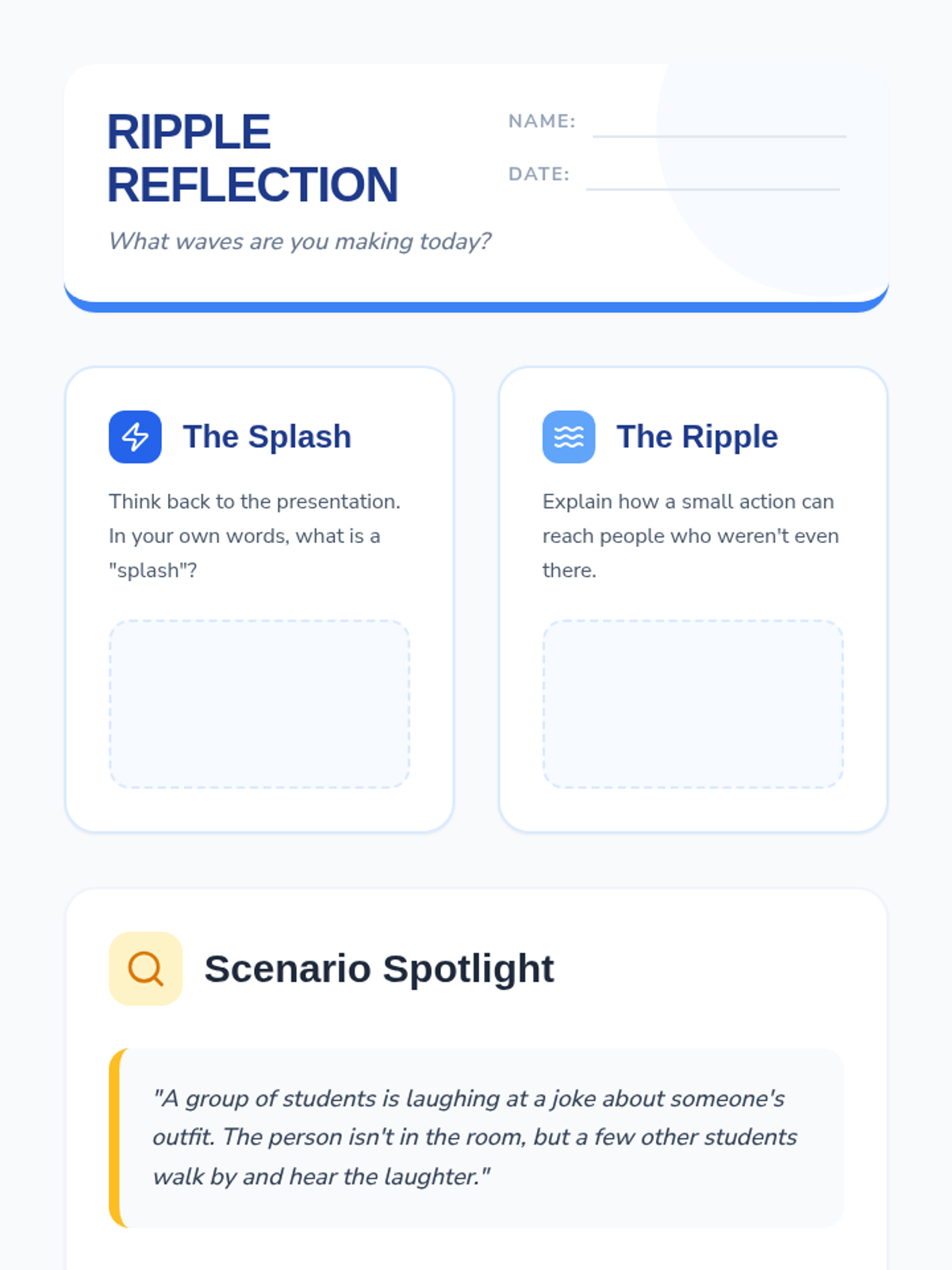
A lesson exploring the social and emotional consequences of name-calling, focusing on the difference between intent and impact through the metaphor of a ripple effect.
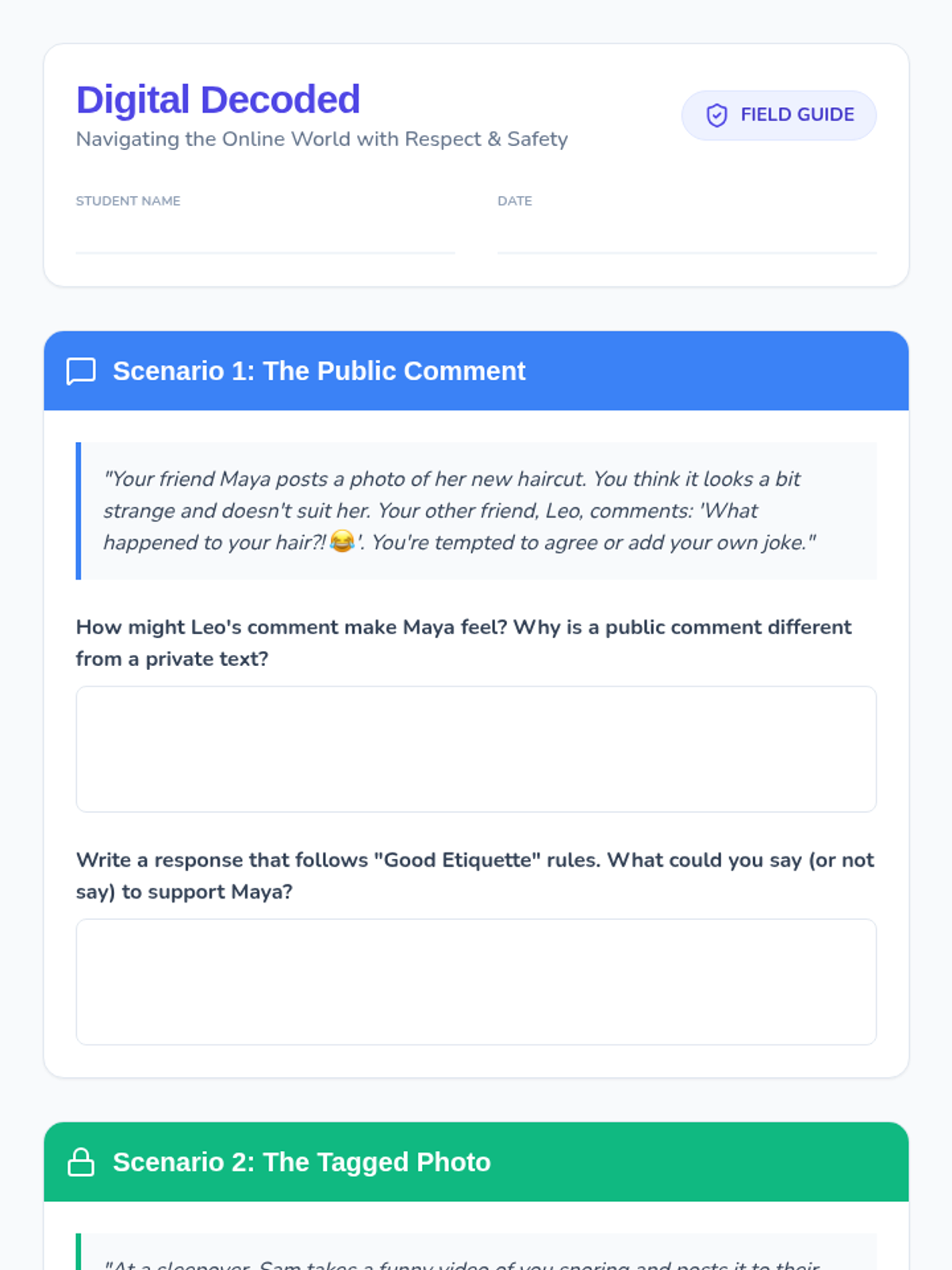
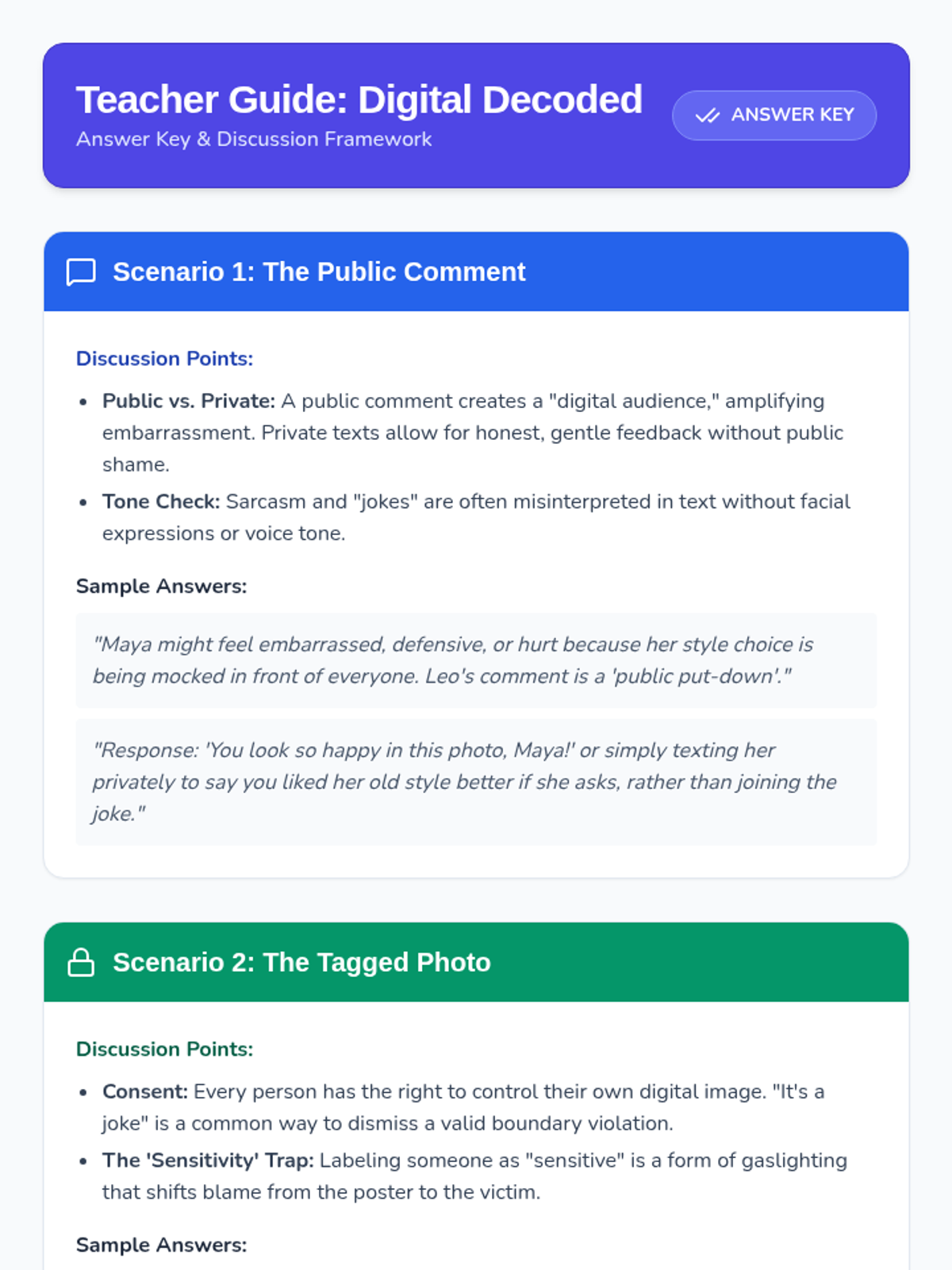
A lesson focused on navigating the complexities of digital life, covering social media etiquette, privacy boundaries, and cyberbullying prevention through realistic scenario-based learning.
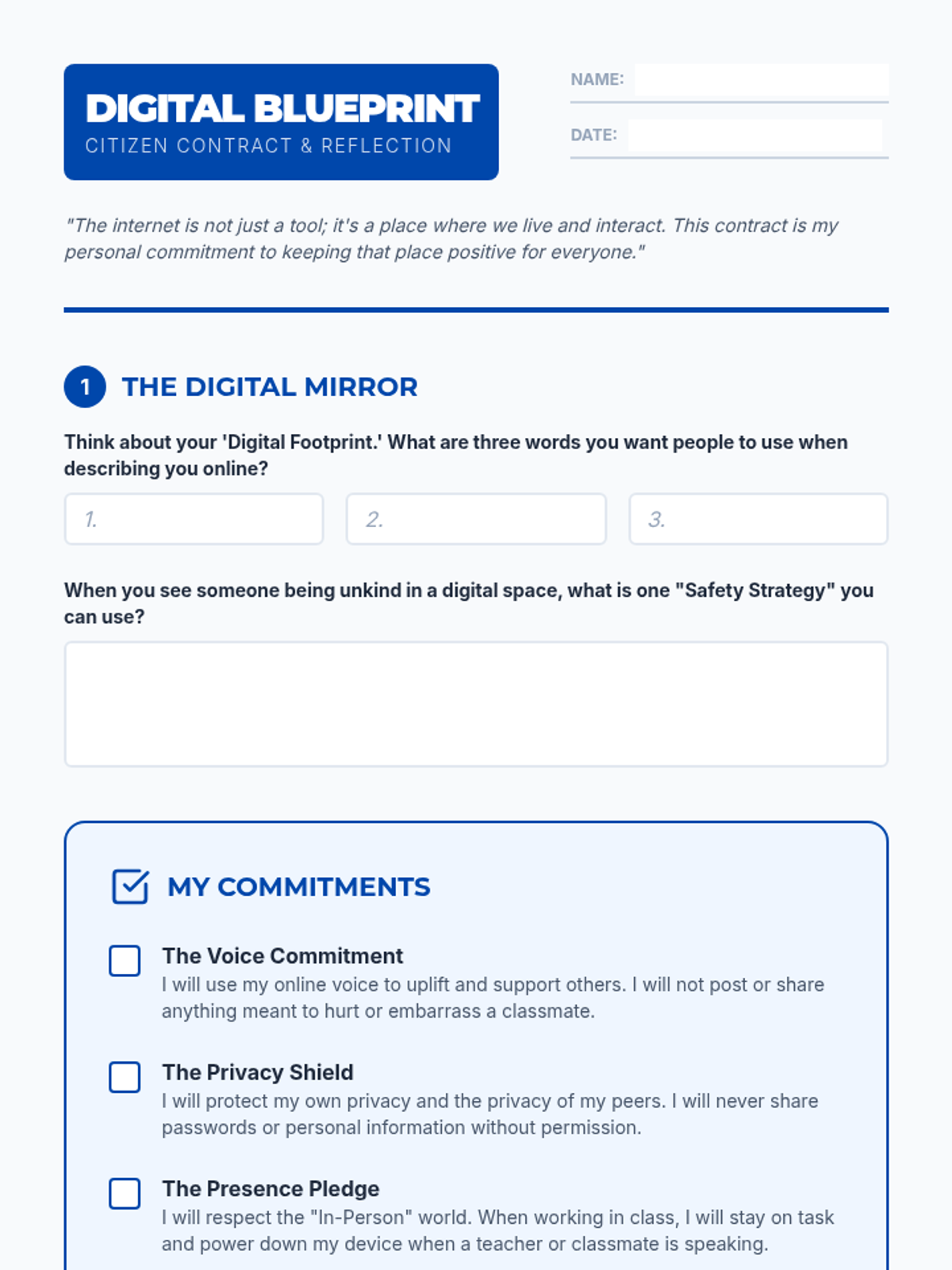
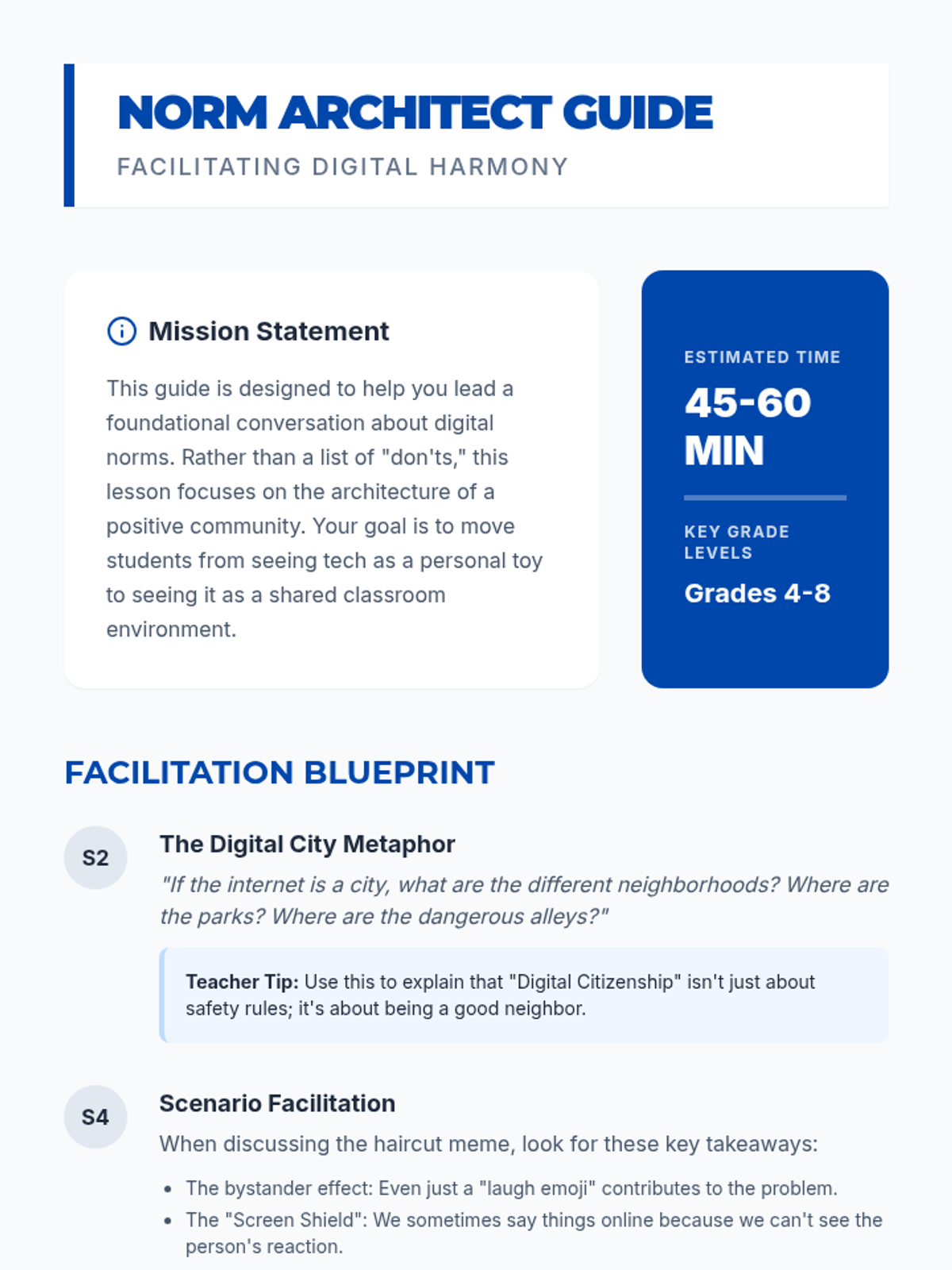
A lesson focused on establishing classroom norms and expectations for digital spaces. Students will explore what it means to be a responsible digital citizen and collaborate to create a shared 'digital blueprint' for their classroom community.
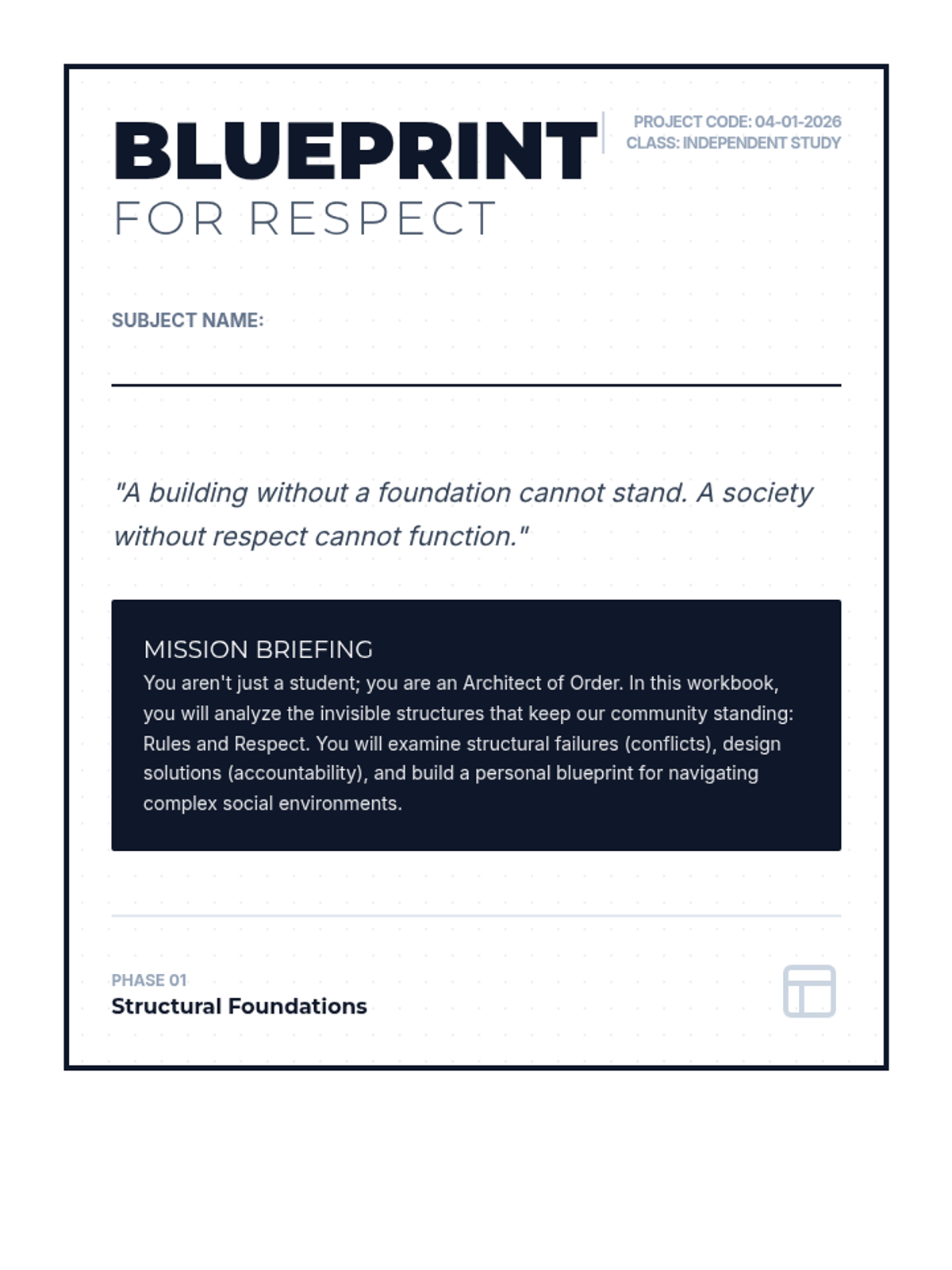
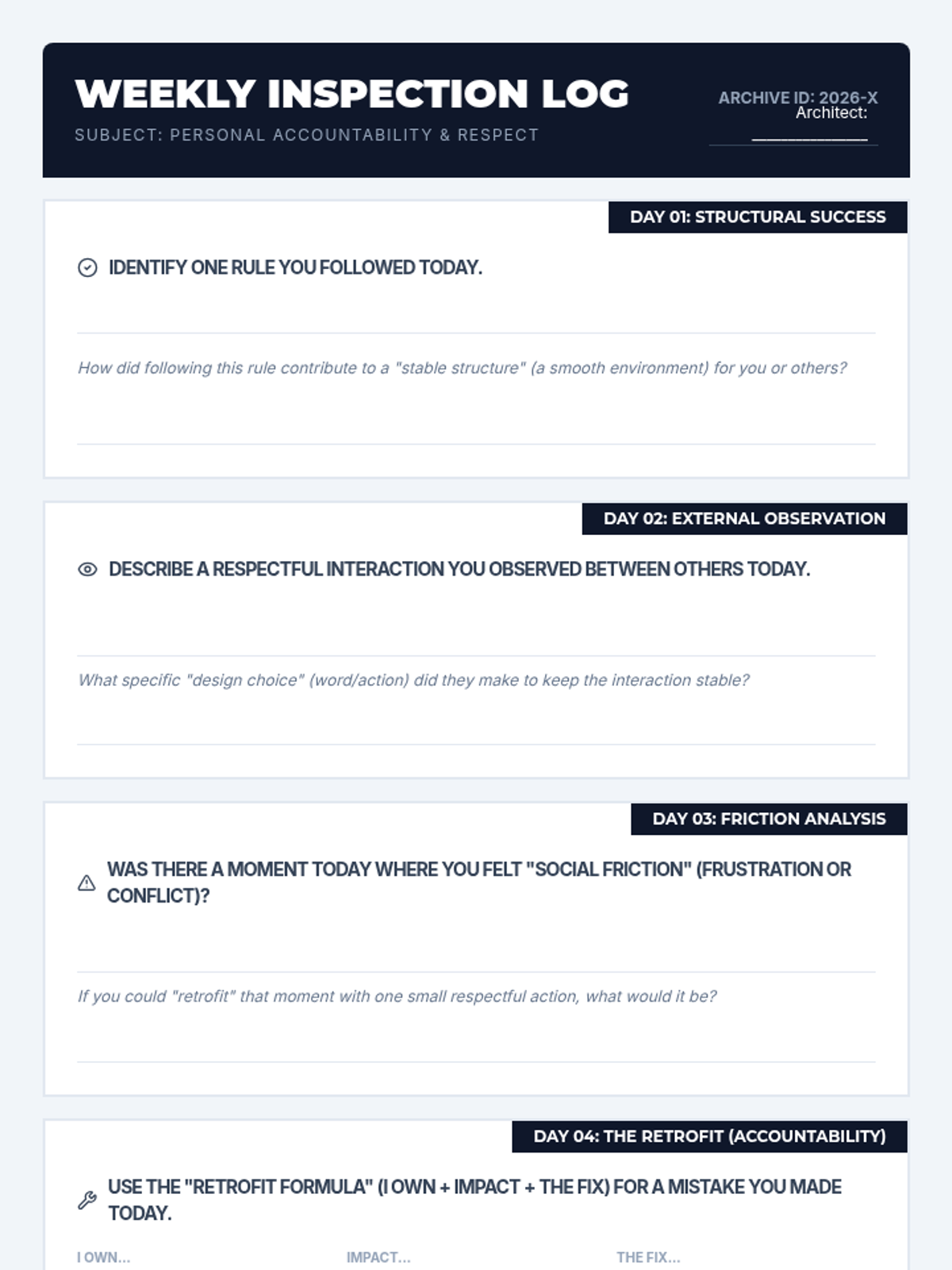
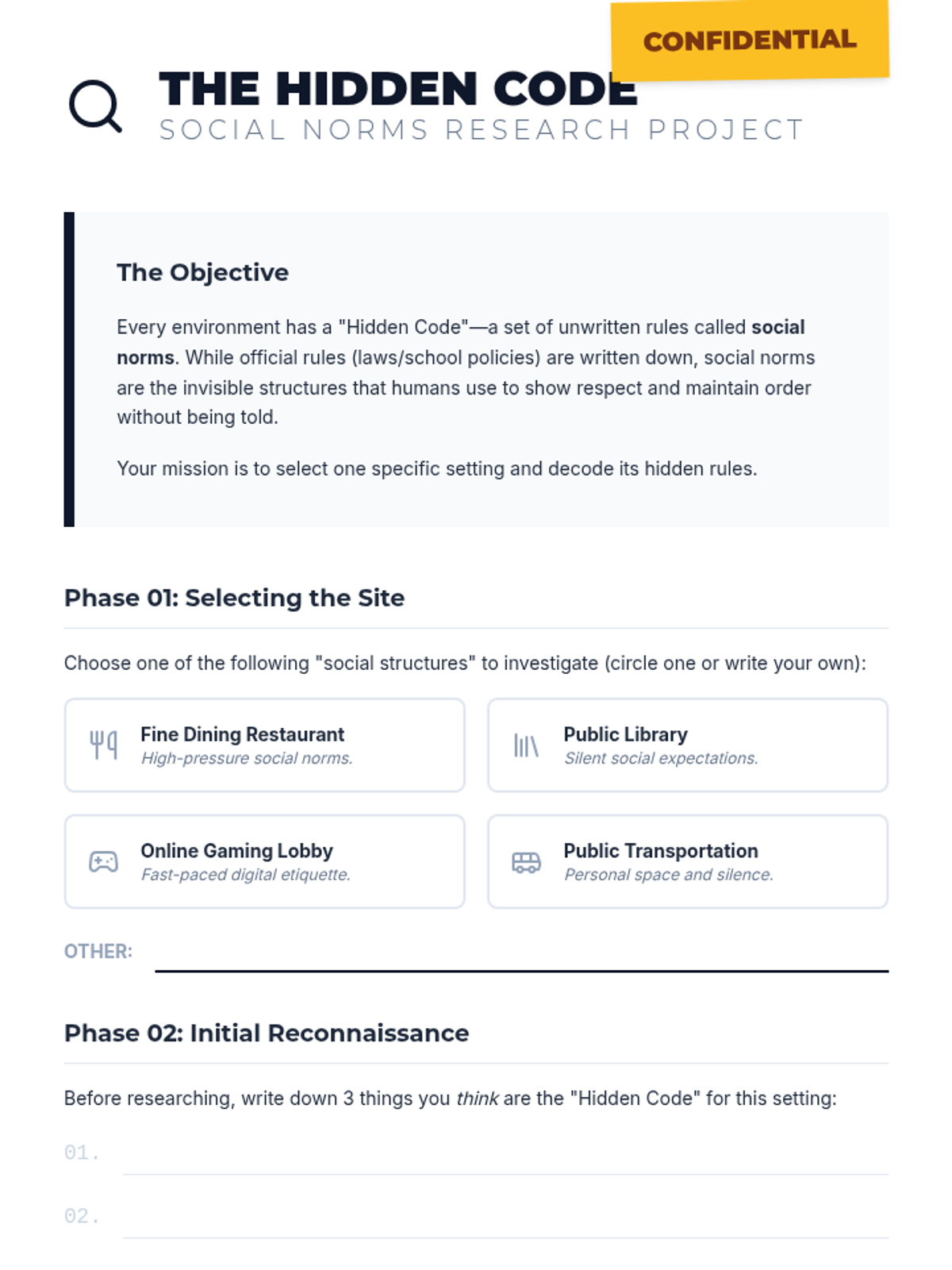
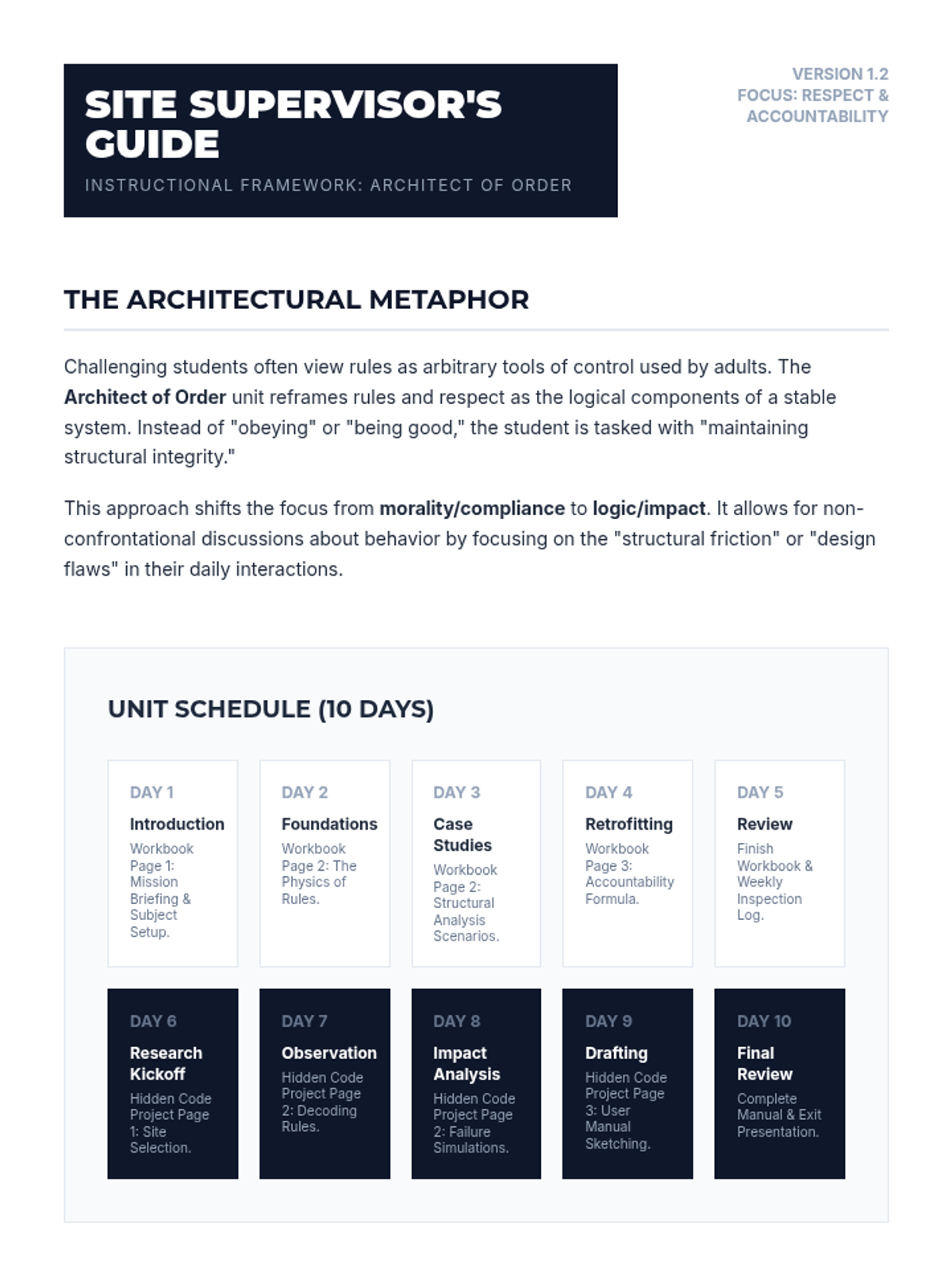
A comprehensive independent study unit for students to explore the logical foundations of respect, rules, and personal accountability through an architectural lens.
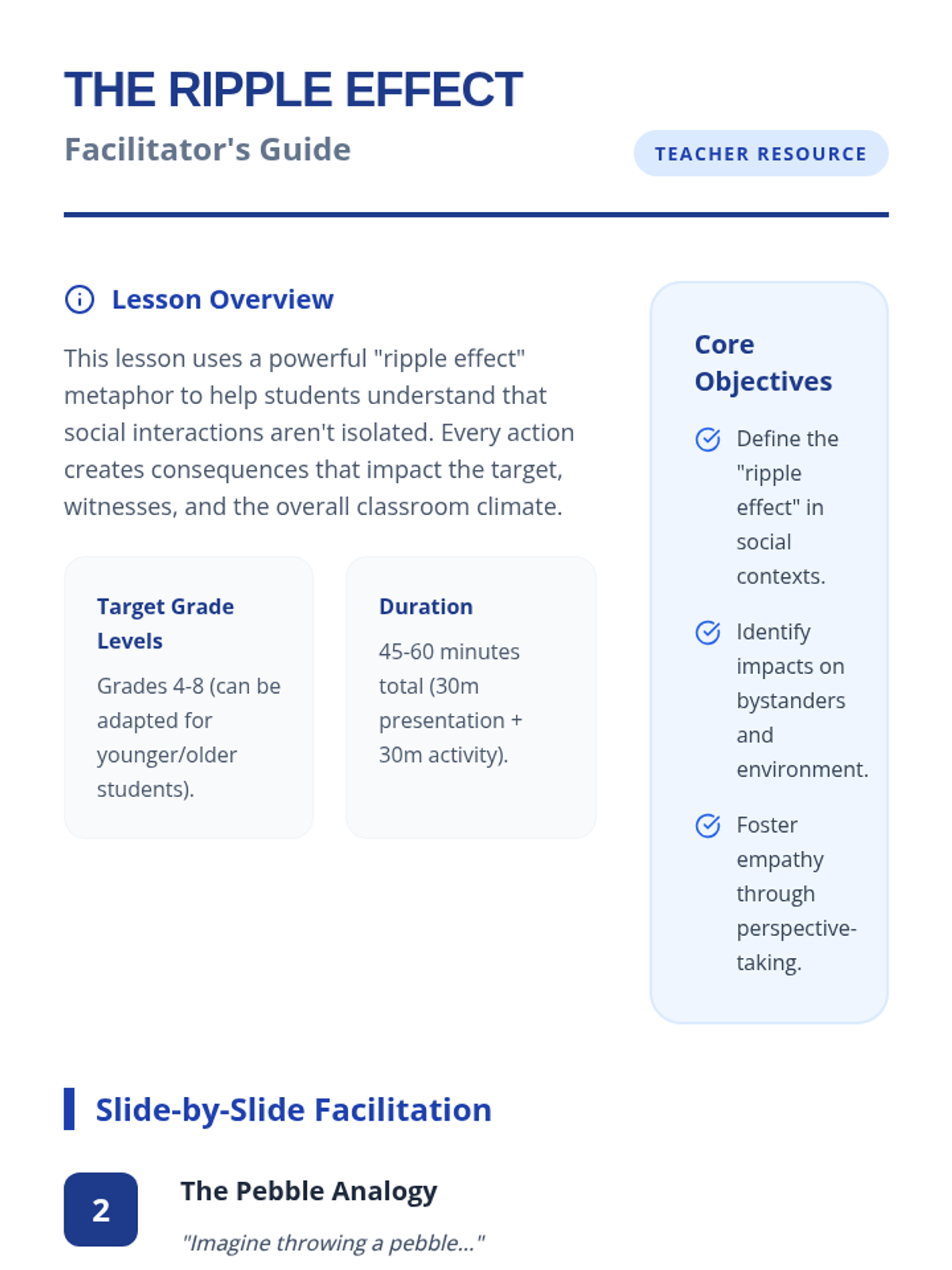
A presentation-focused lesson where students learn about the social consequences of their actions through the 'ripple effect' metaphor and then present these concepts to their peers to build a culture of empathy.
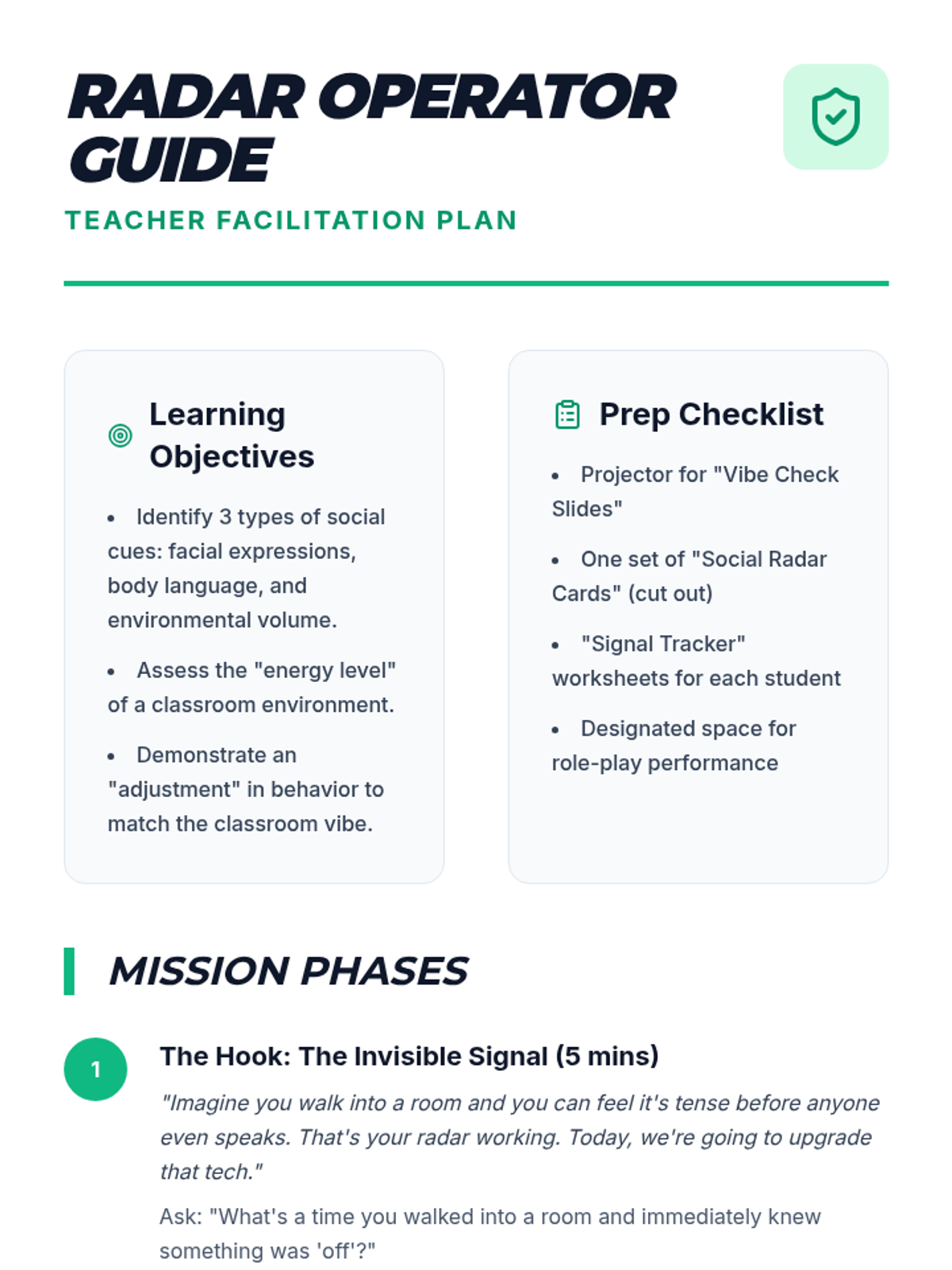
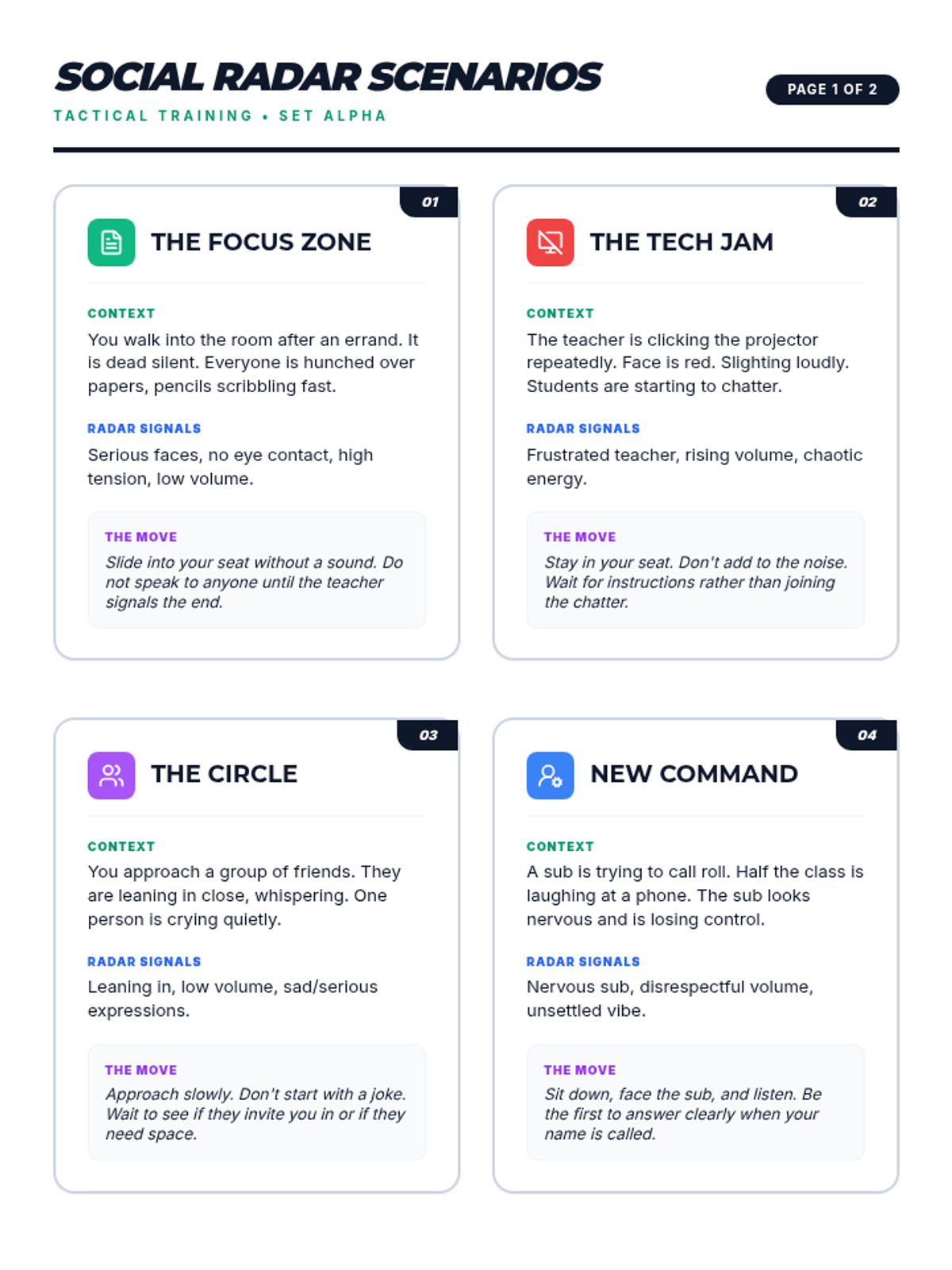
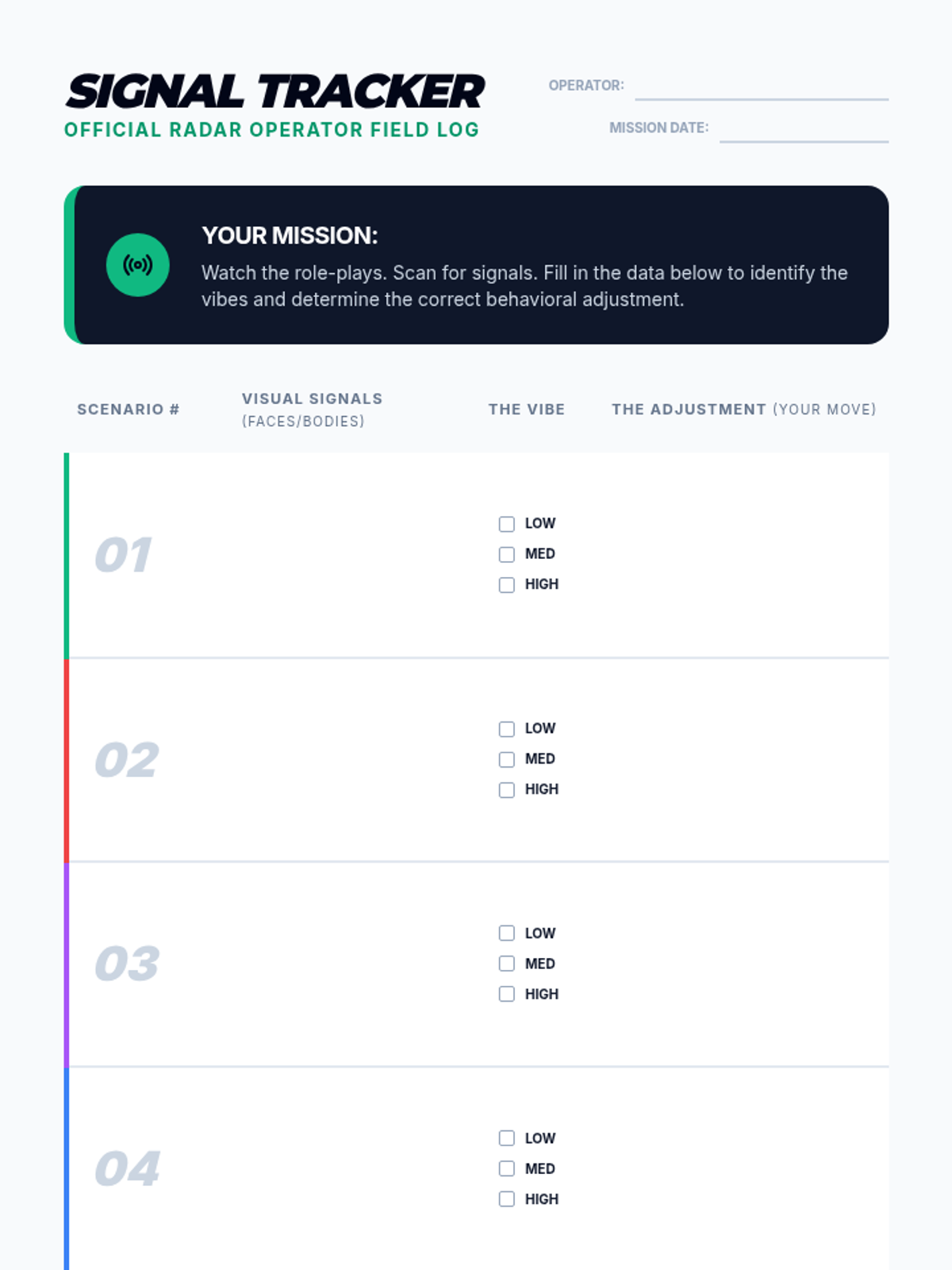
A social awareness lesson focused on the 'reading the room' skill for middle schoolers, using a radar-themed approach to identifying social cues and adjusting behavior.
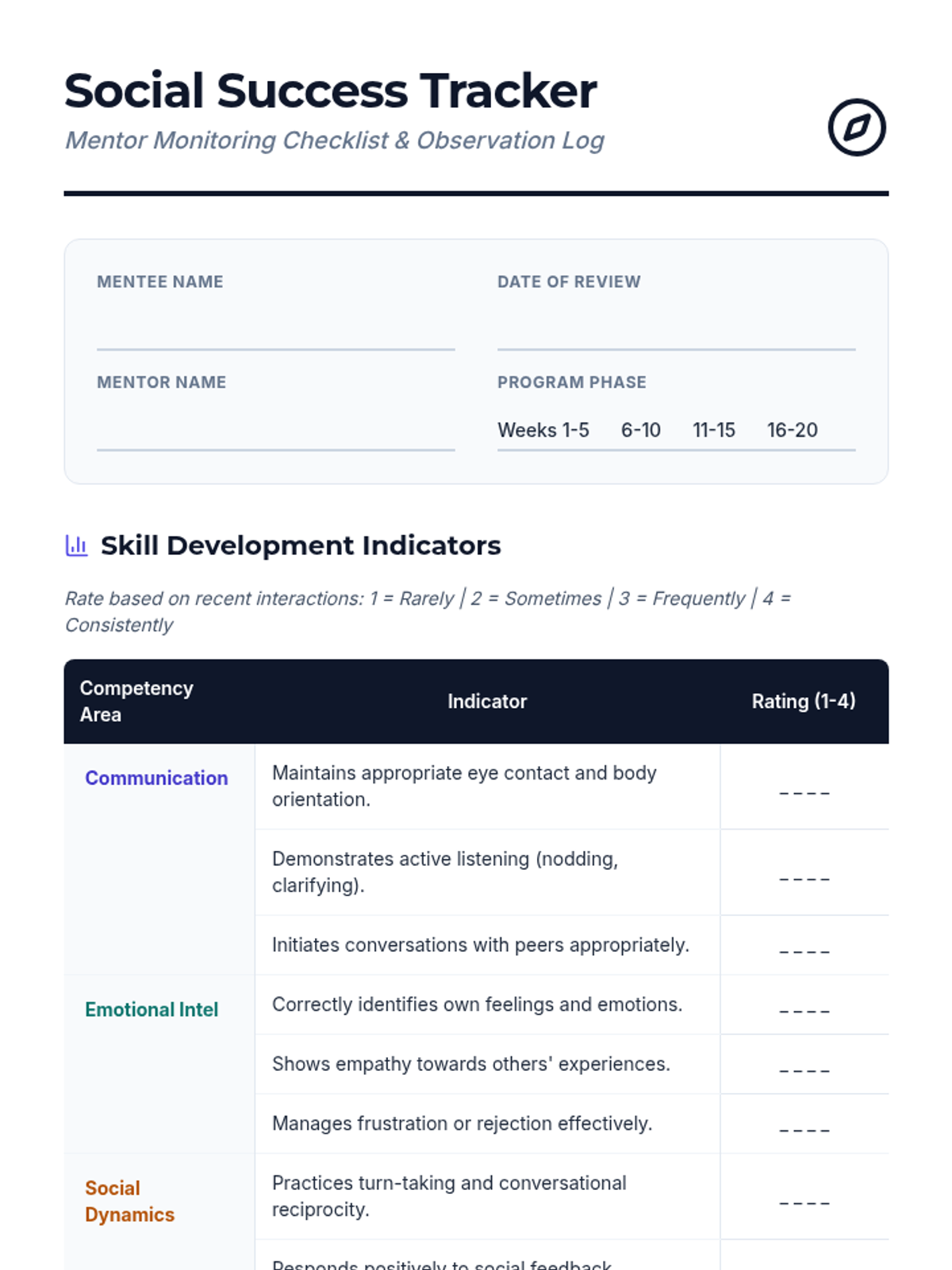
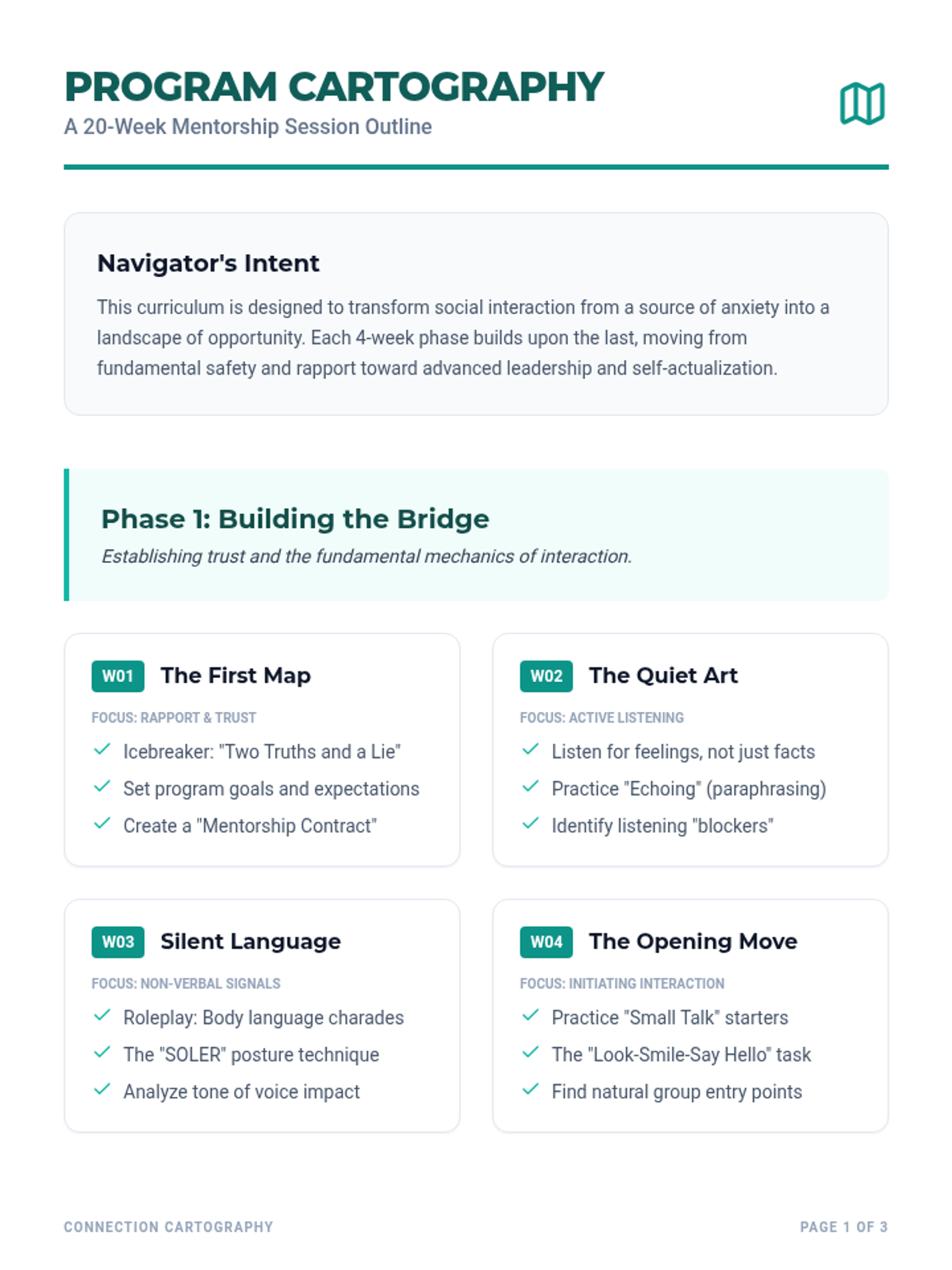
The core foundational resources for mentors to guide their mentees through the 20-session journey.
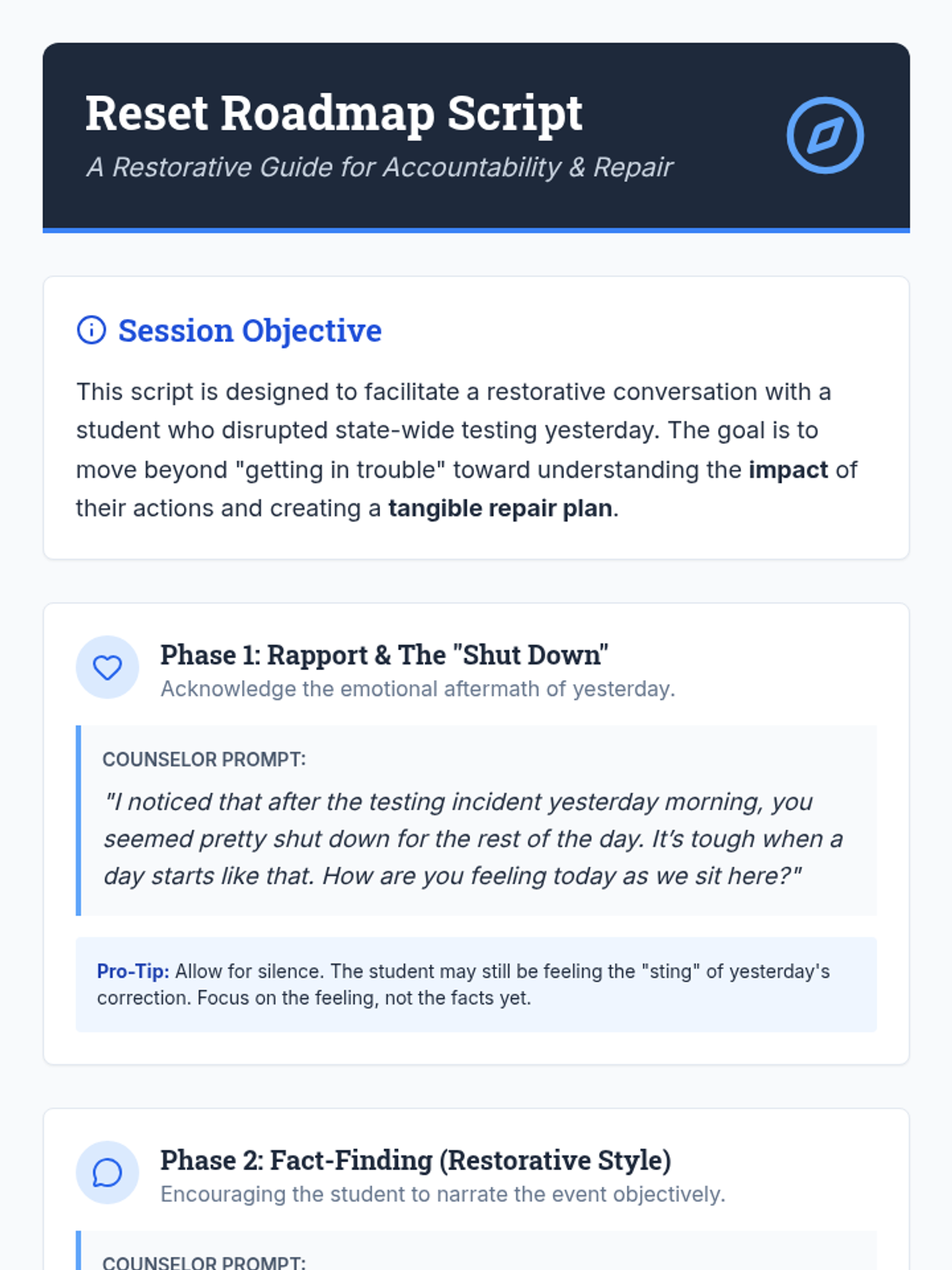
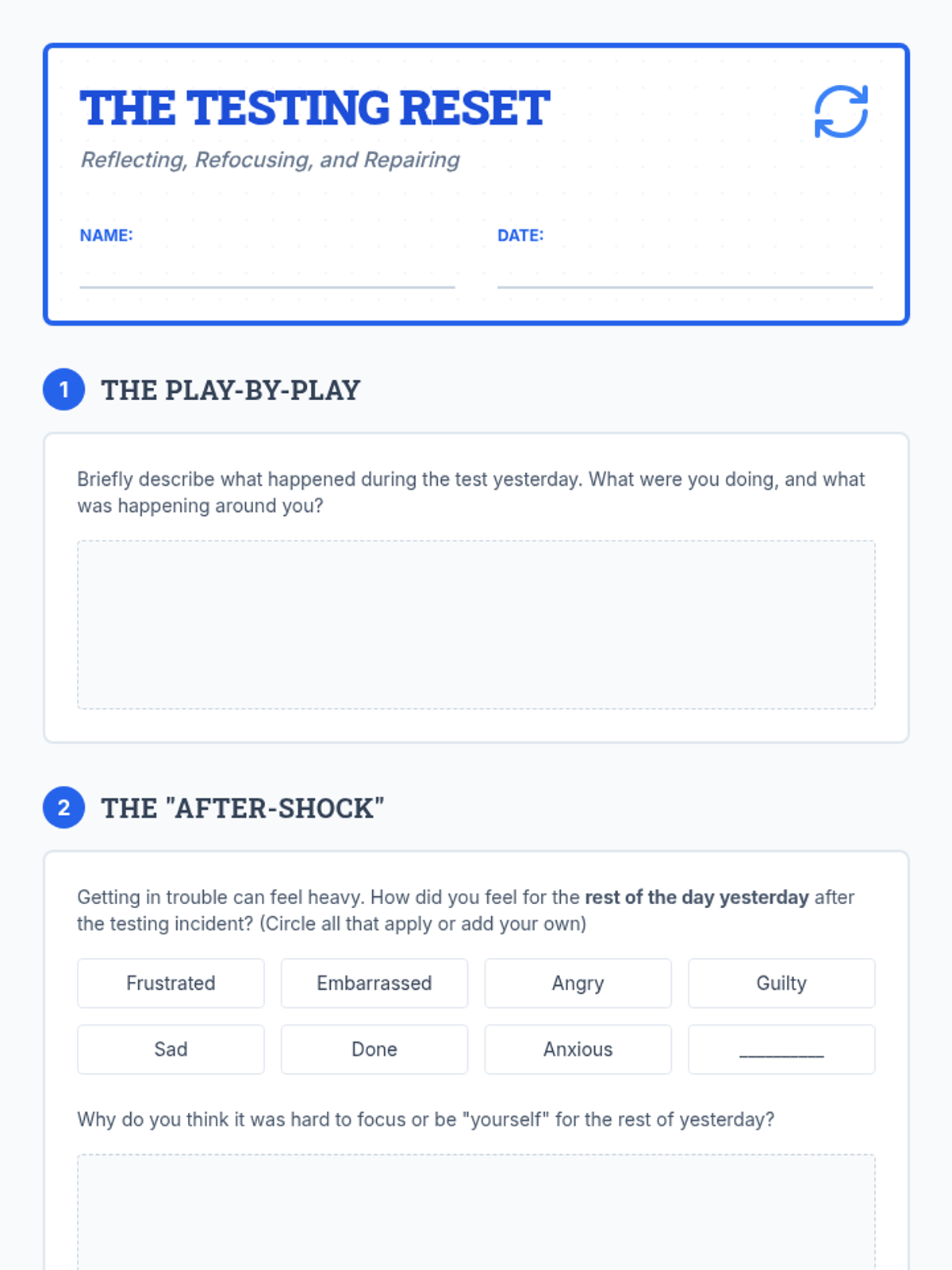
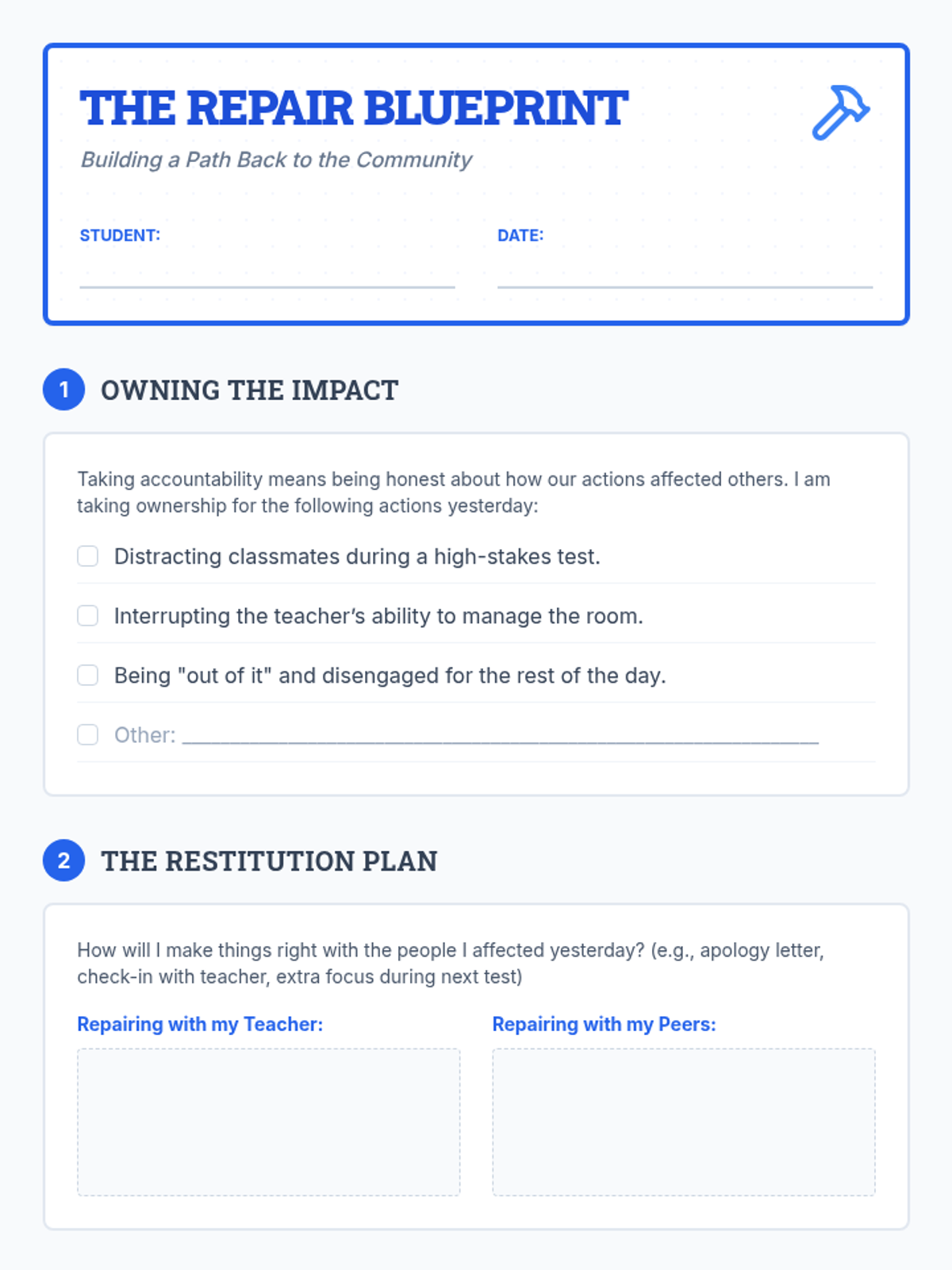
A comprehensive restorative counseling session designed to help a student take accountability for testing disruptions, process the emotional aftermath of getting in trouble, and create a concrete plan to repair relationships and behaviors.
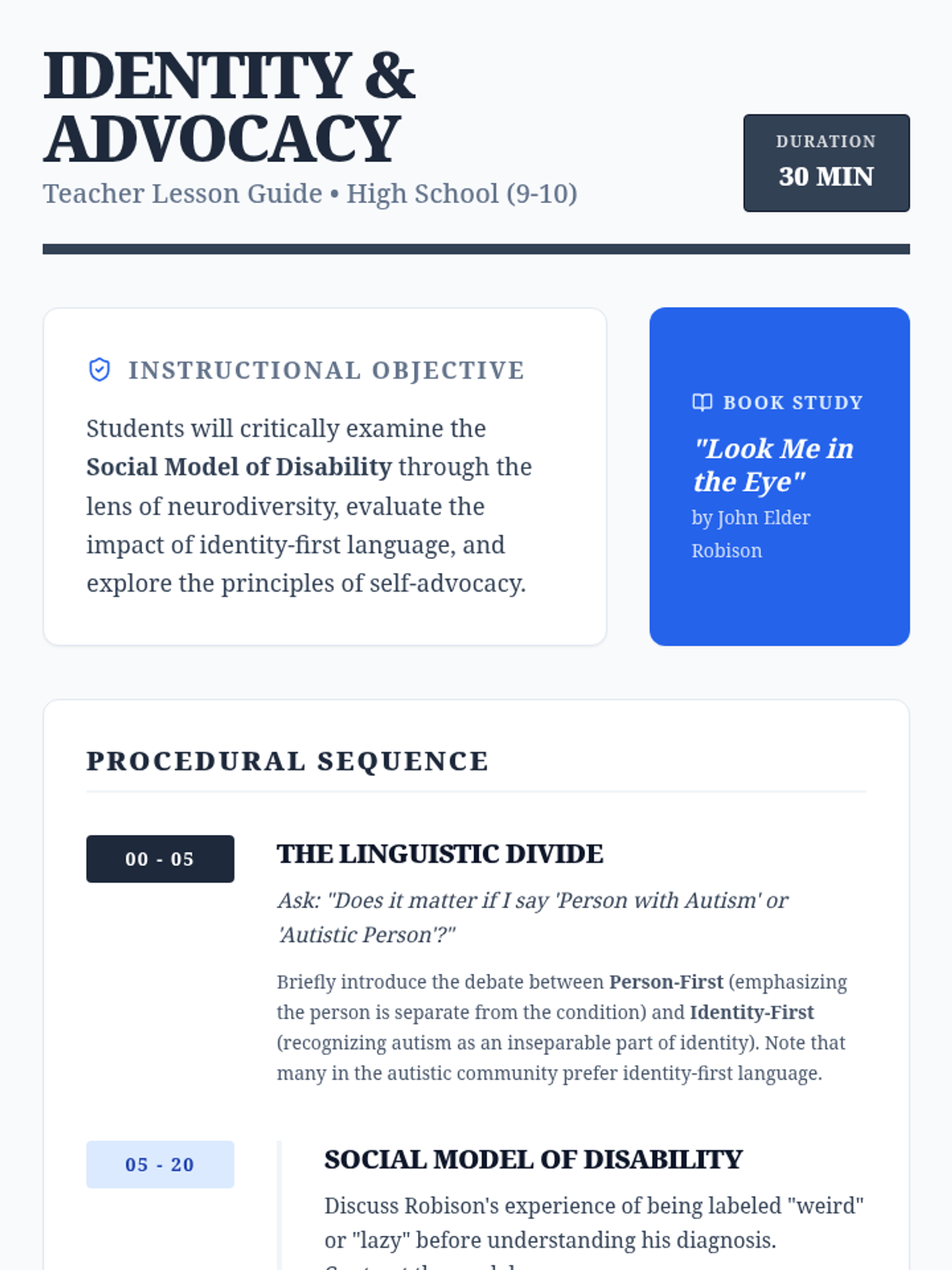
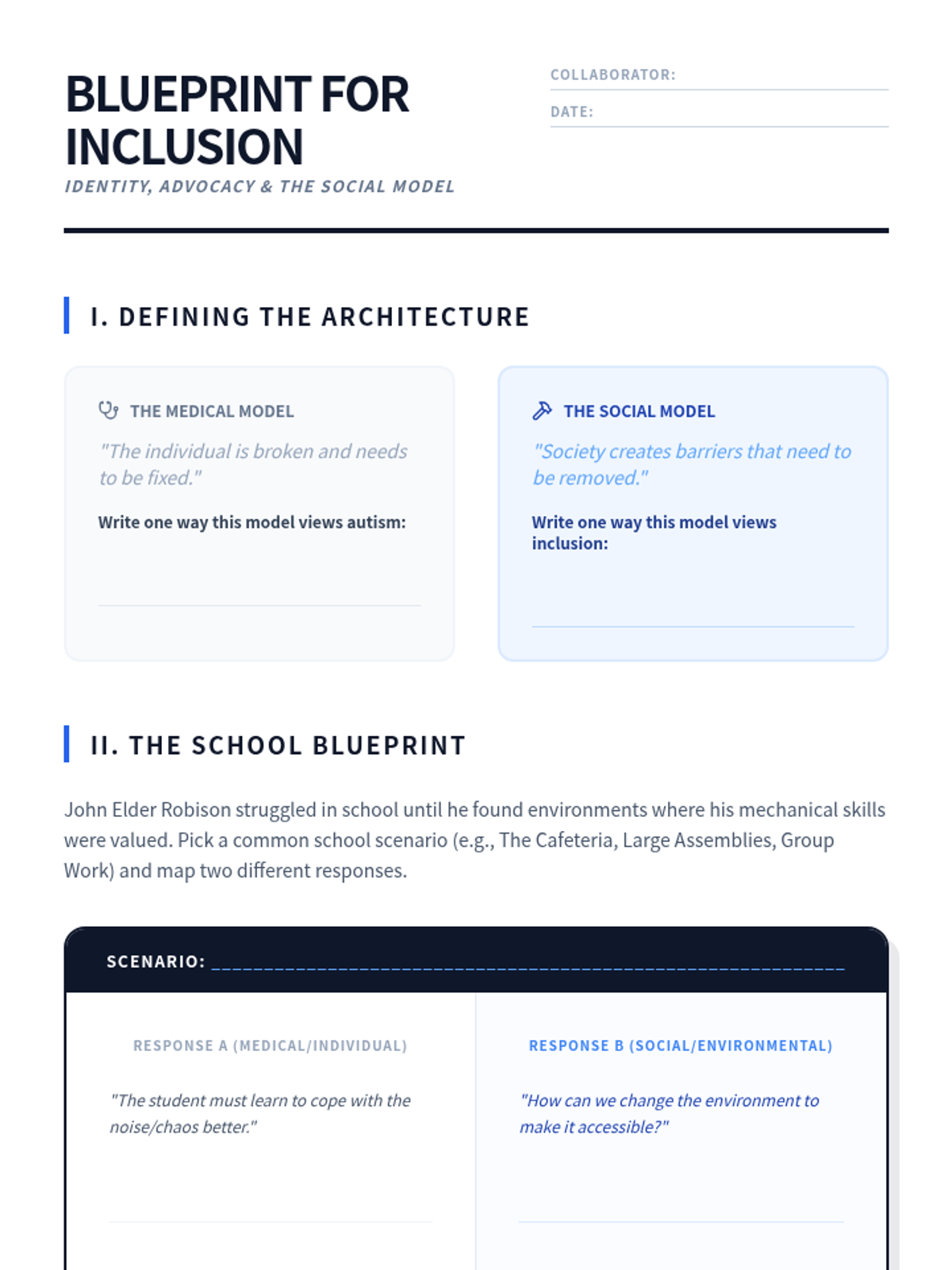
A 30-minute lesson for high schoolers discussing the social model of disability, identity-first language, and self-advocacy using 'Look Me in the Eye'.
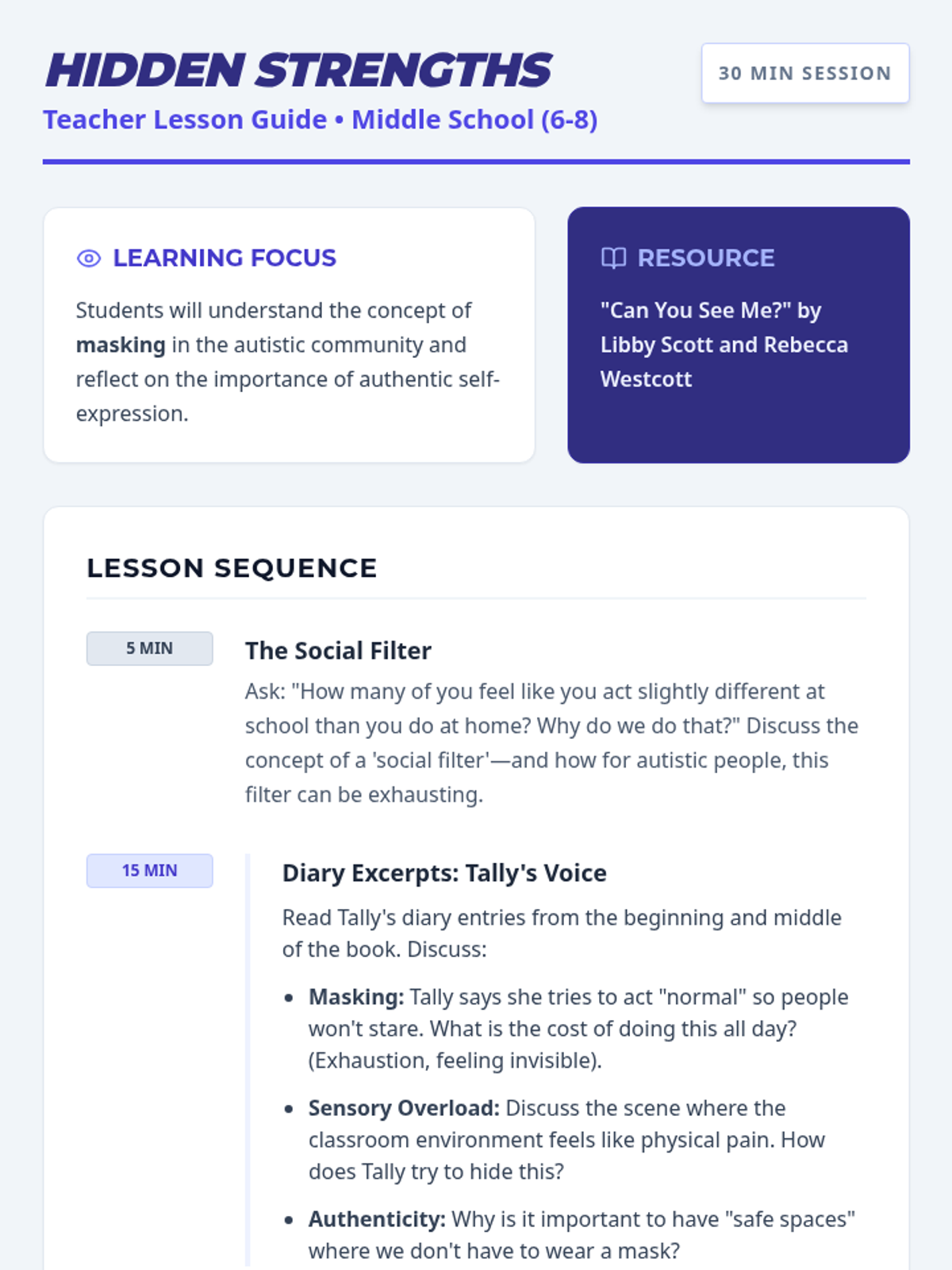
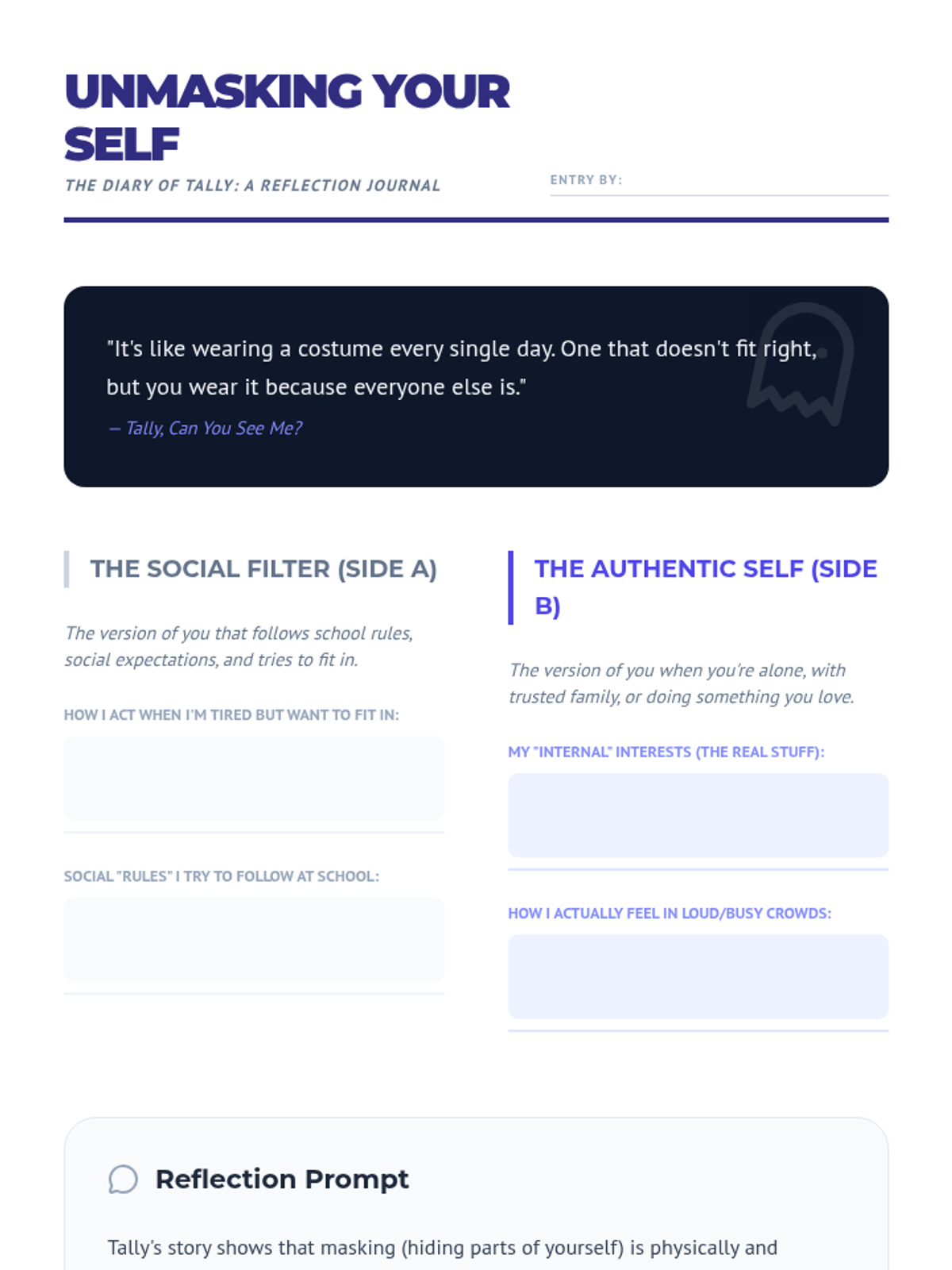
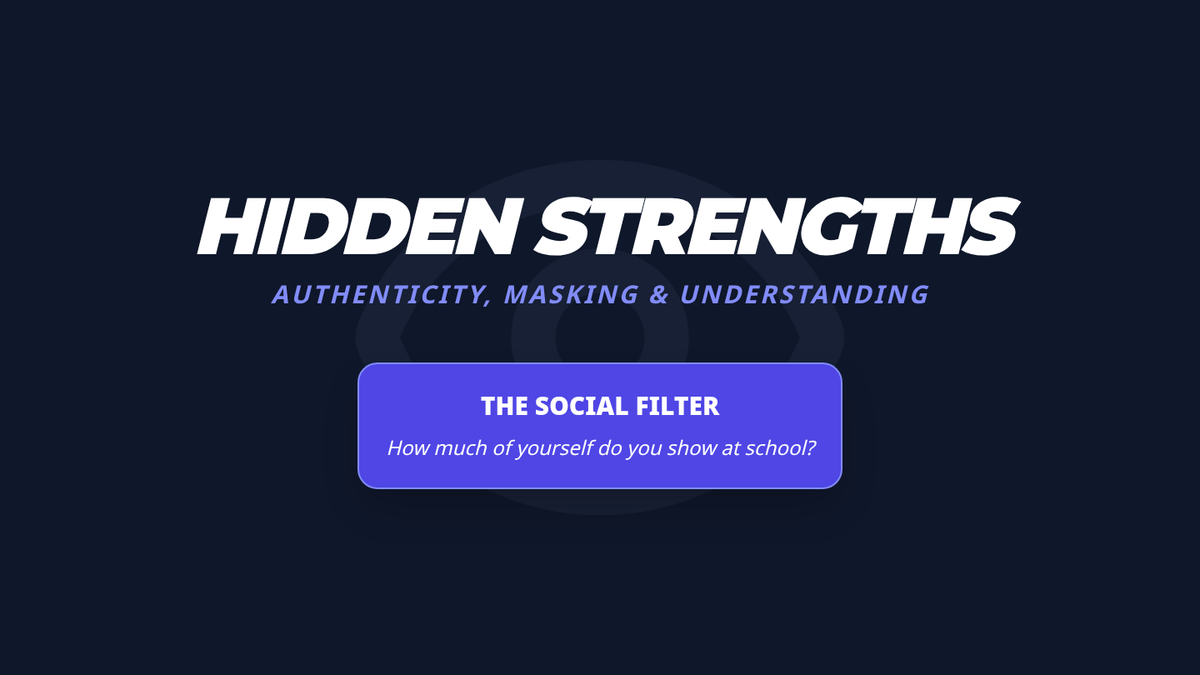
A 30-minute lesson for middle schoolers exploring the internal experience of autism and masking using the novel 'Can You See Me?'.
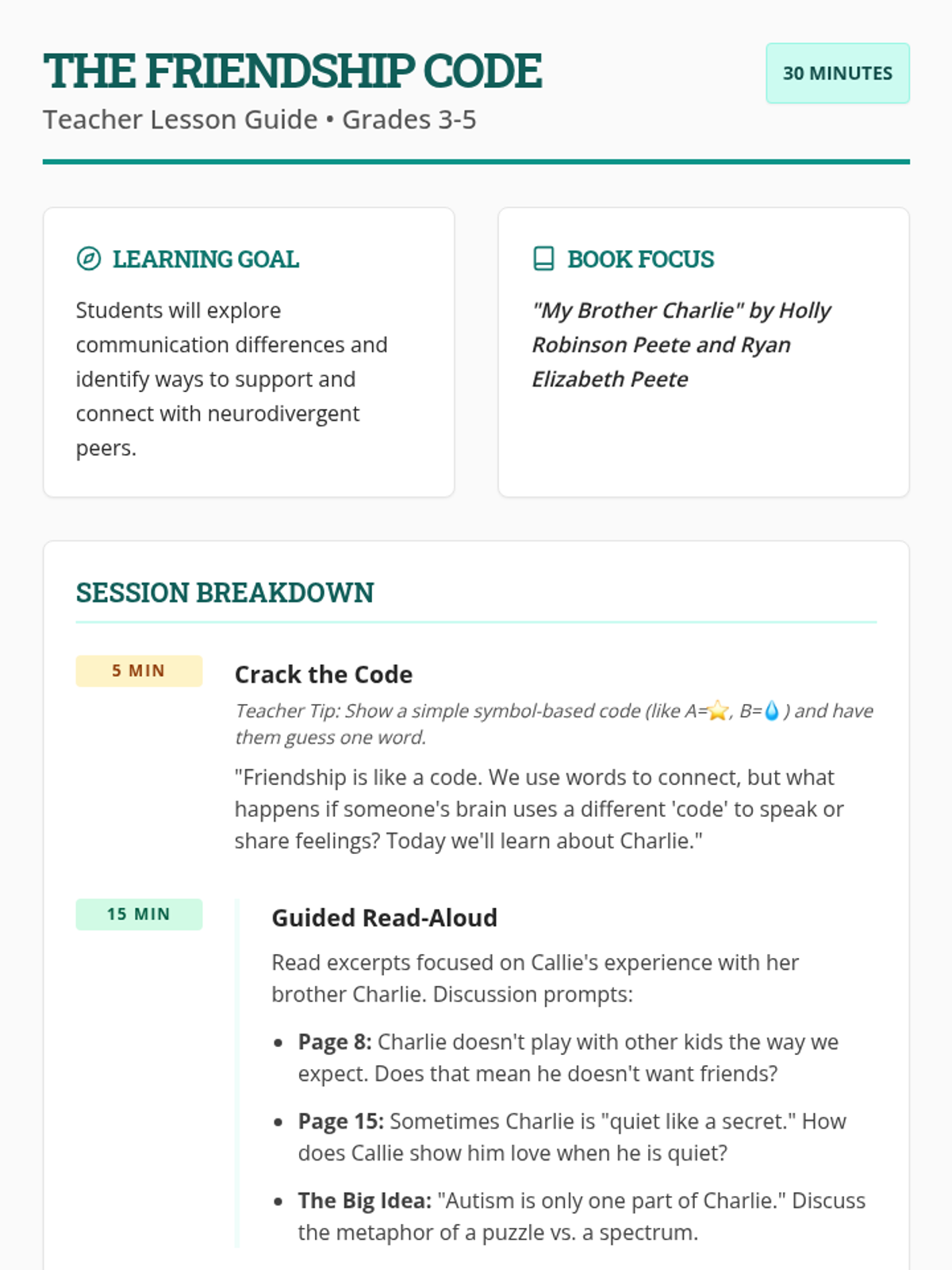
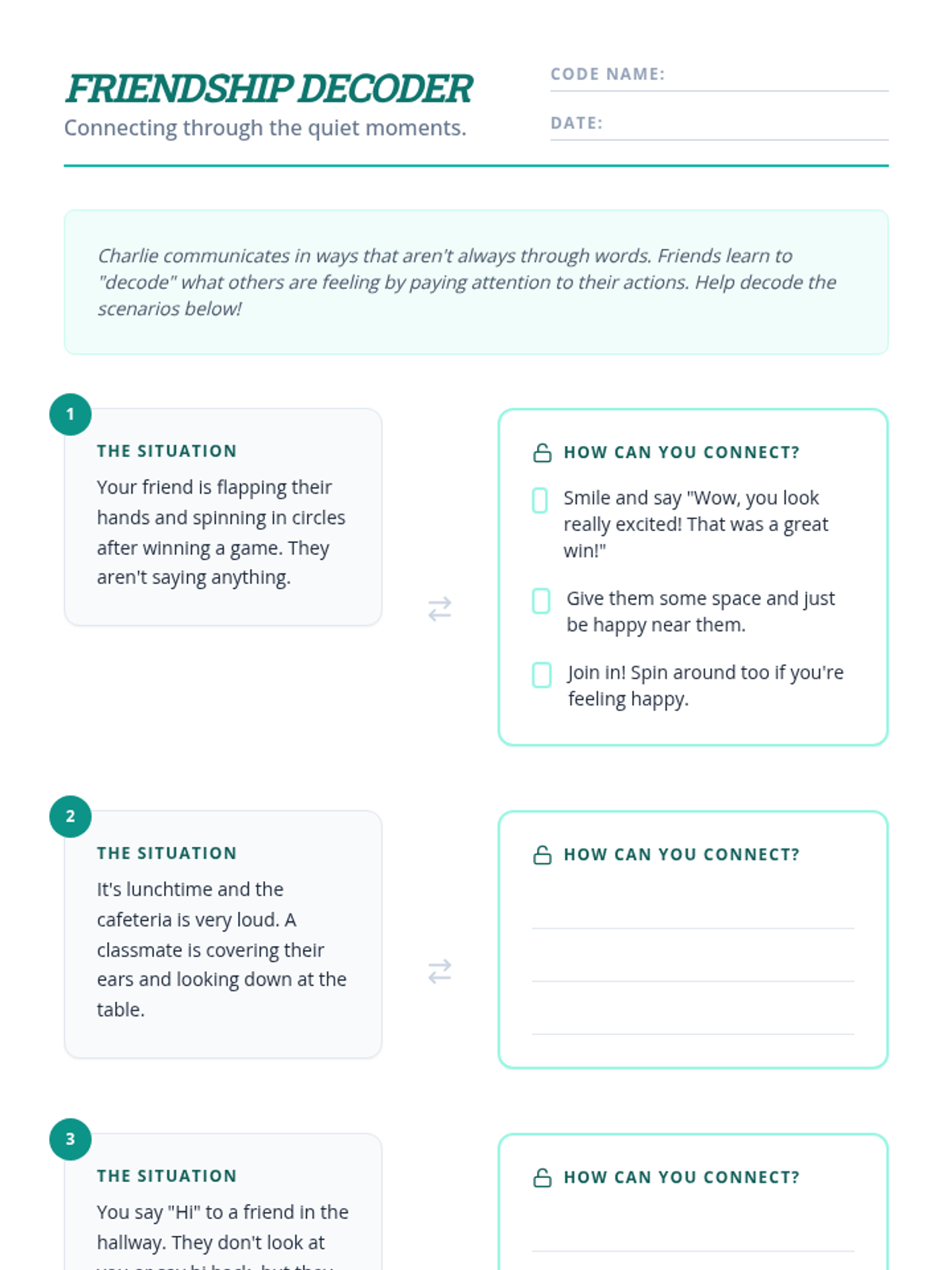
A 30-minute lesson for upper elementary students focusing on empathy, communication differences, and friendship using 'My Brother Charlie'.
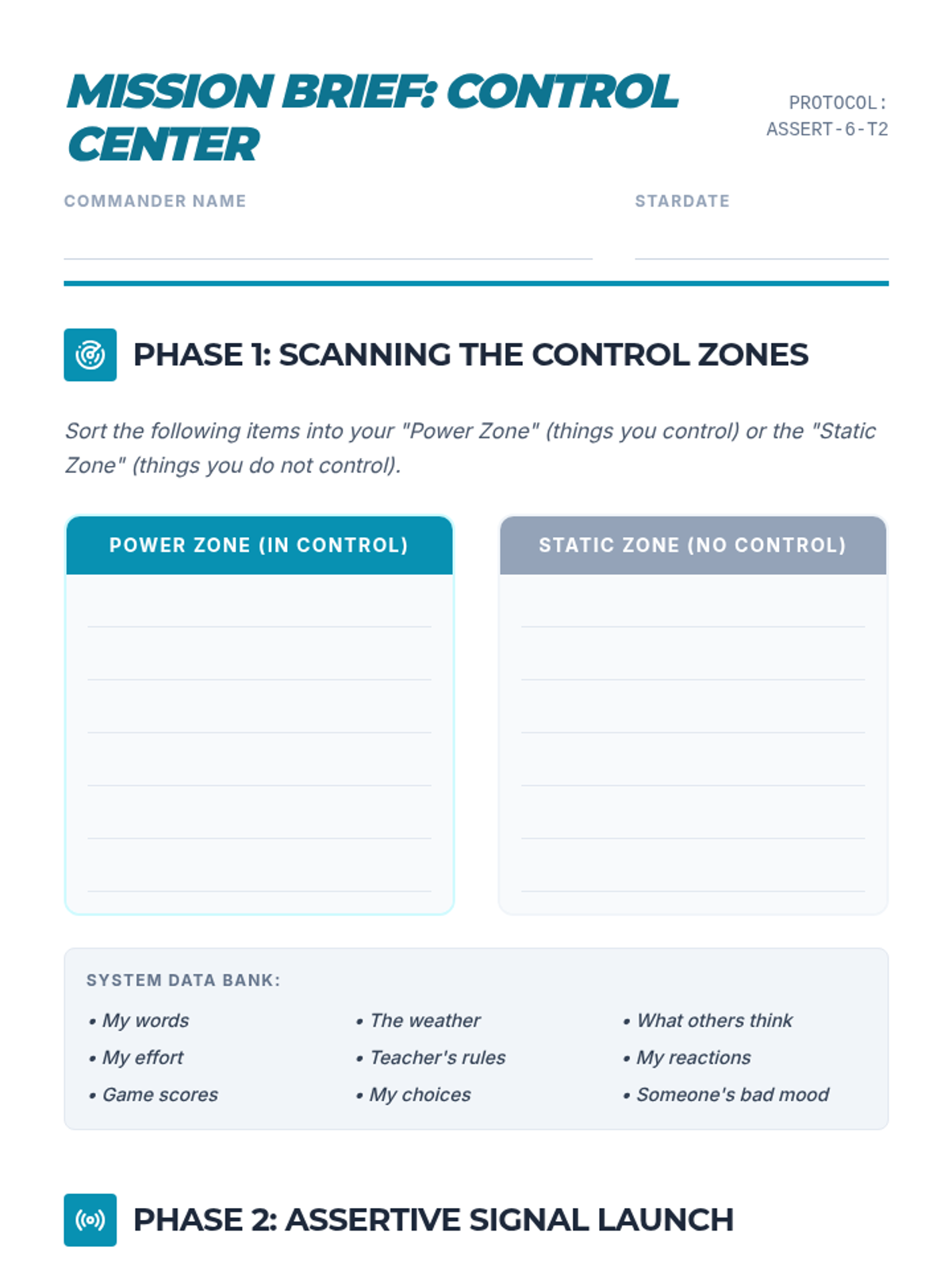
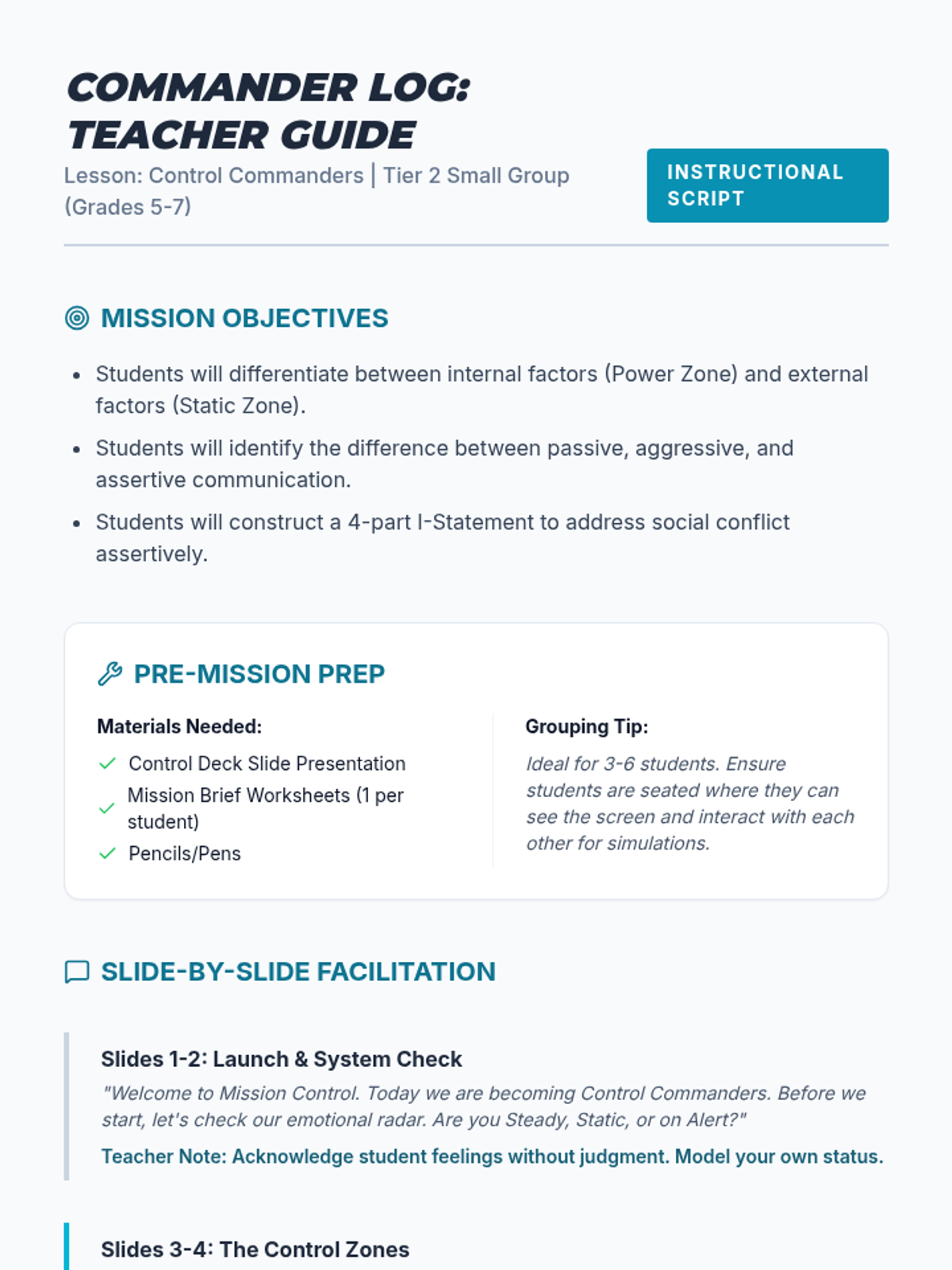
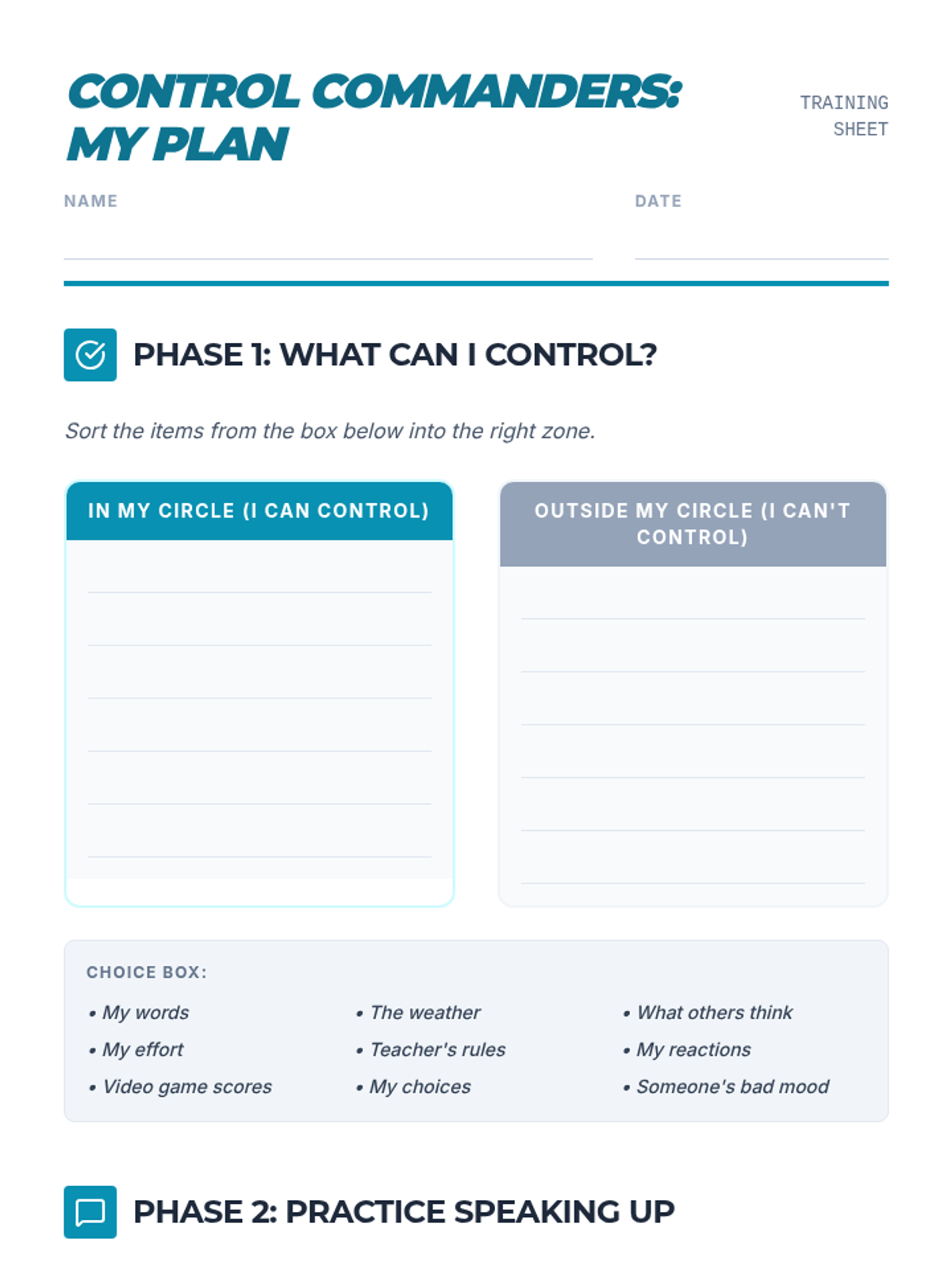
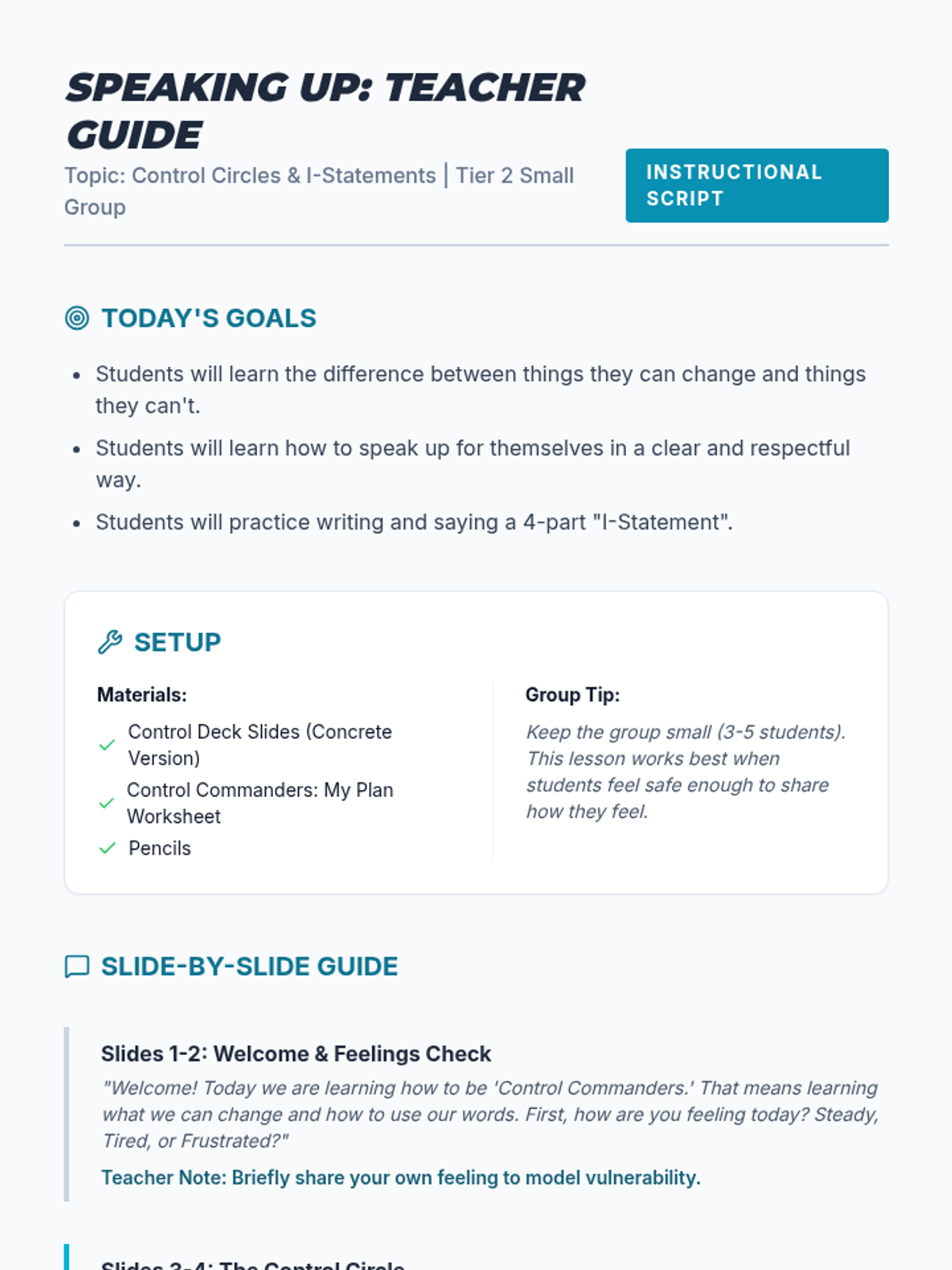
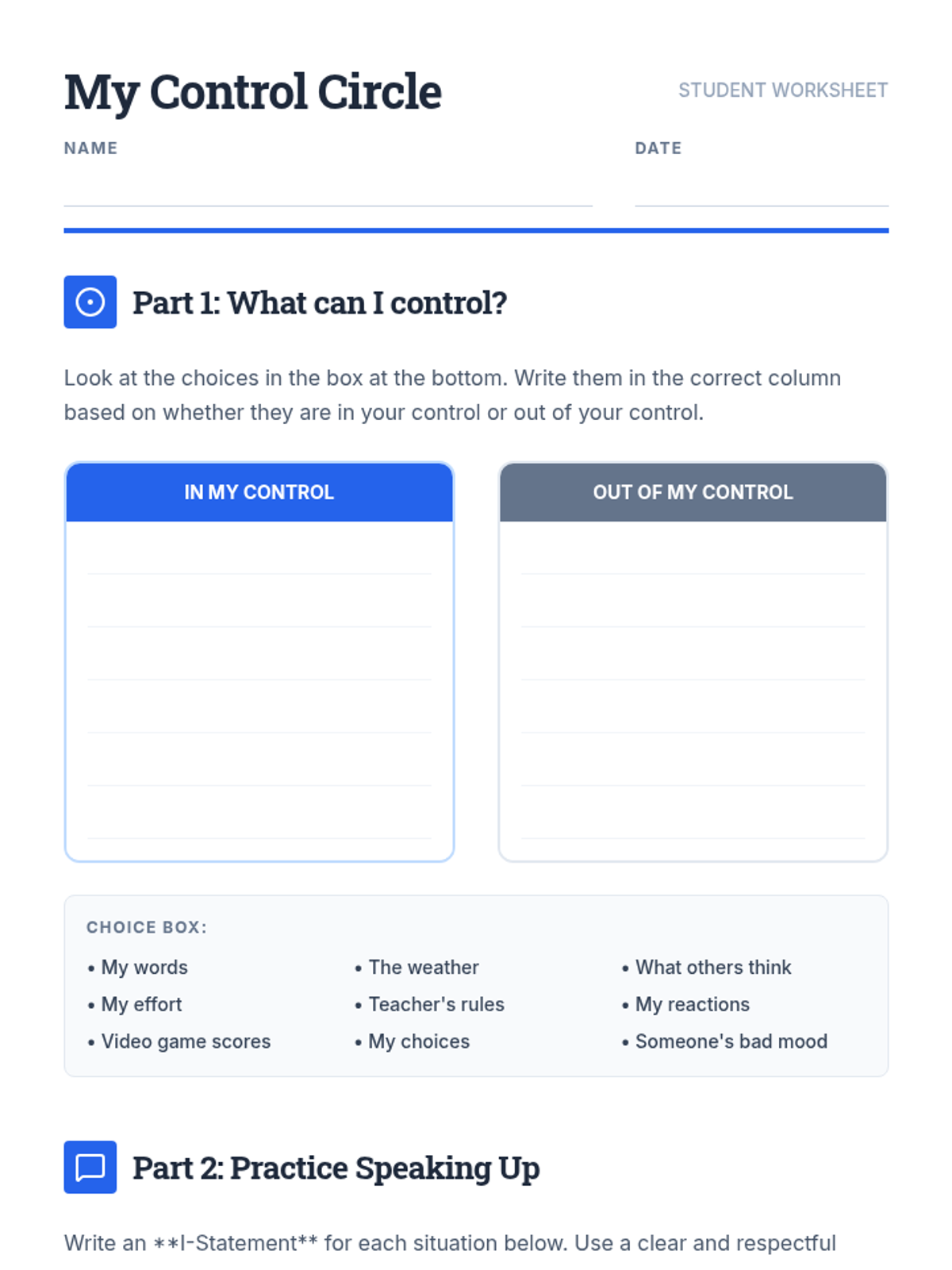
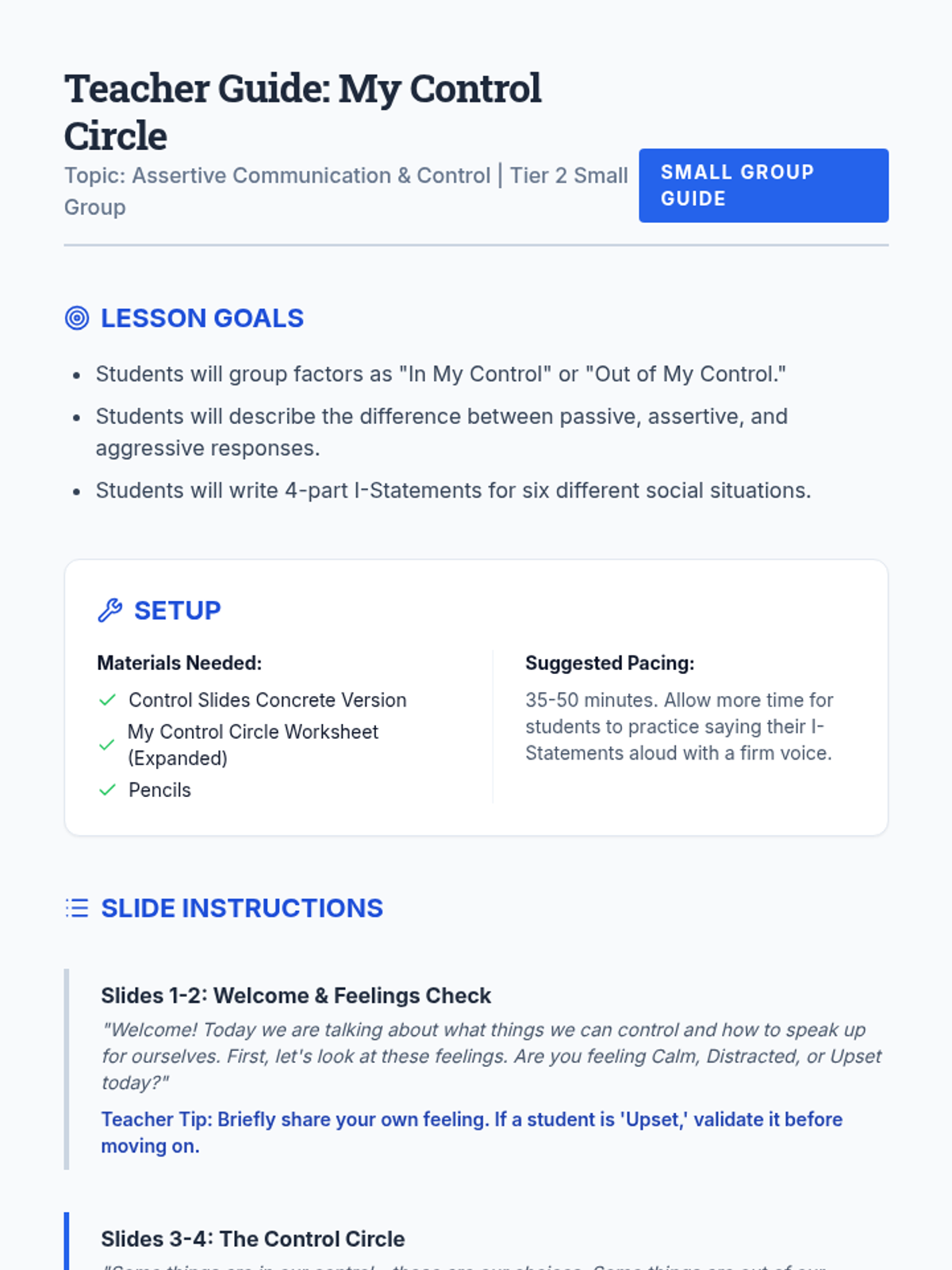
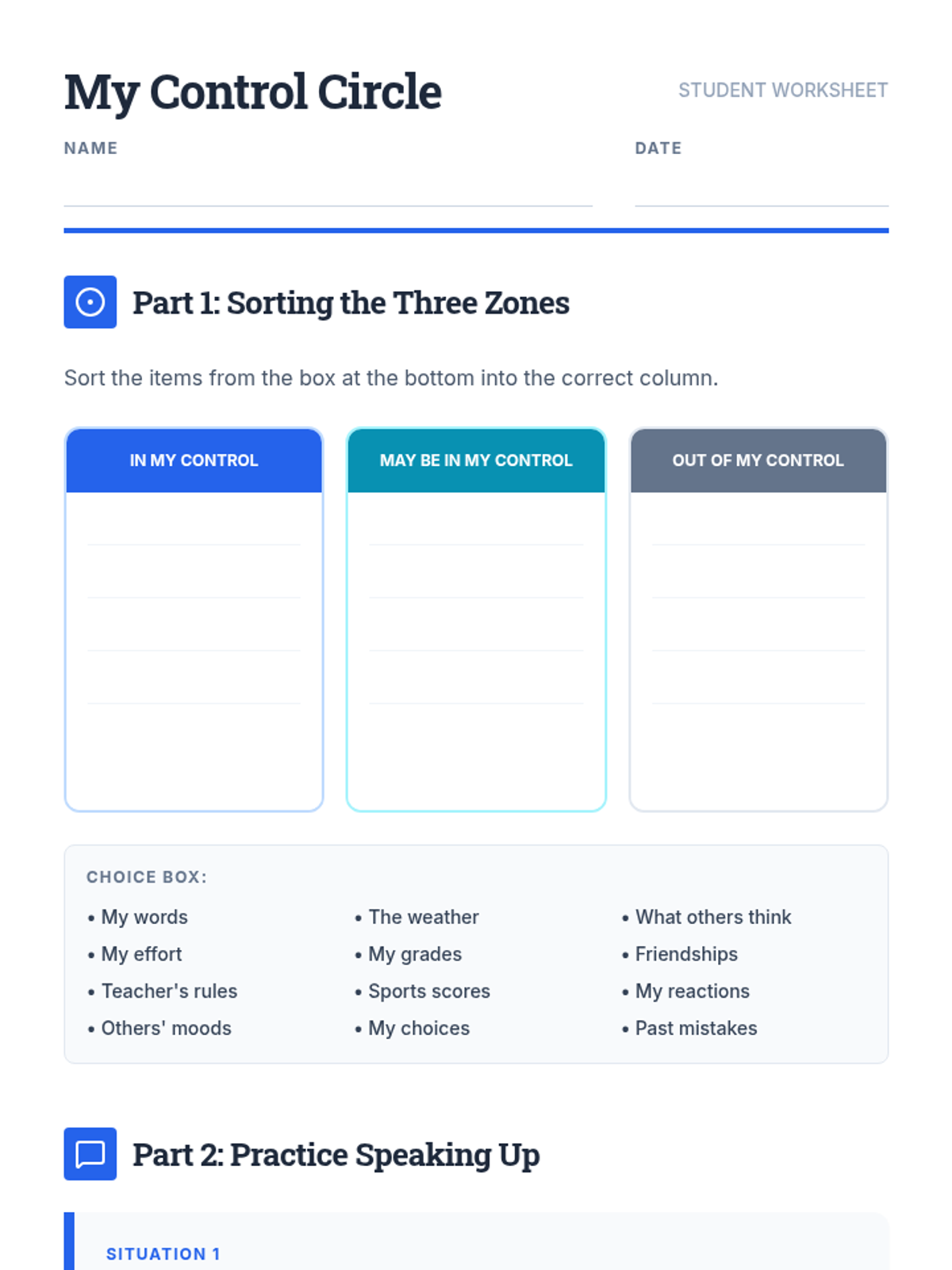
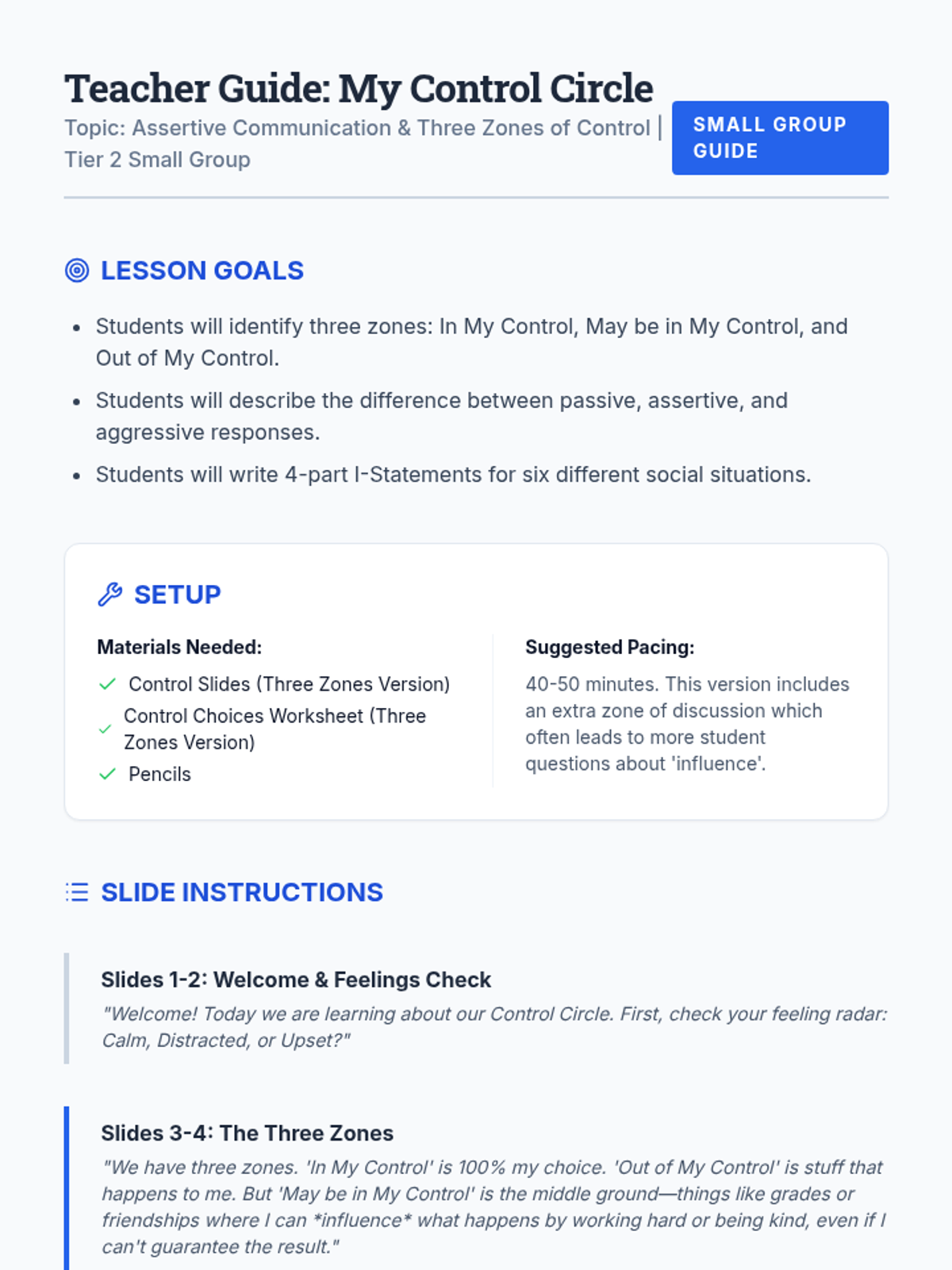
A social-emotional learning lesson for Tier 2 small groups focusing on identifying spheres of control and practicing assertive I-Statements in social scenarios.
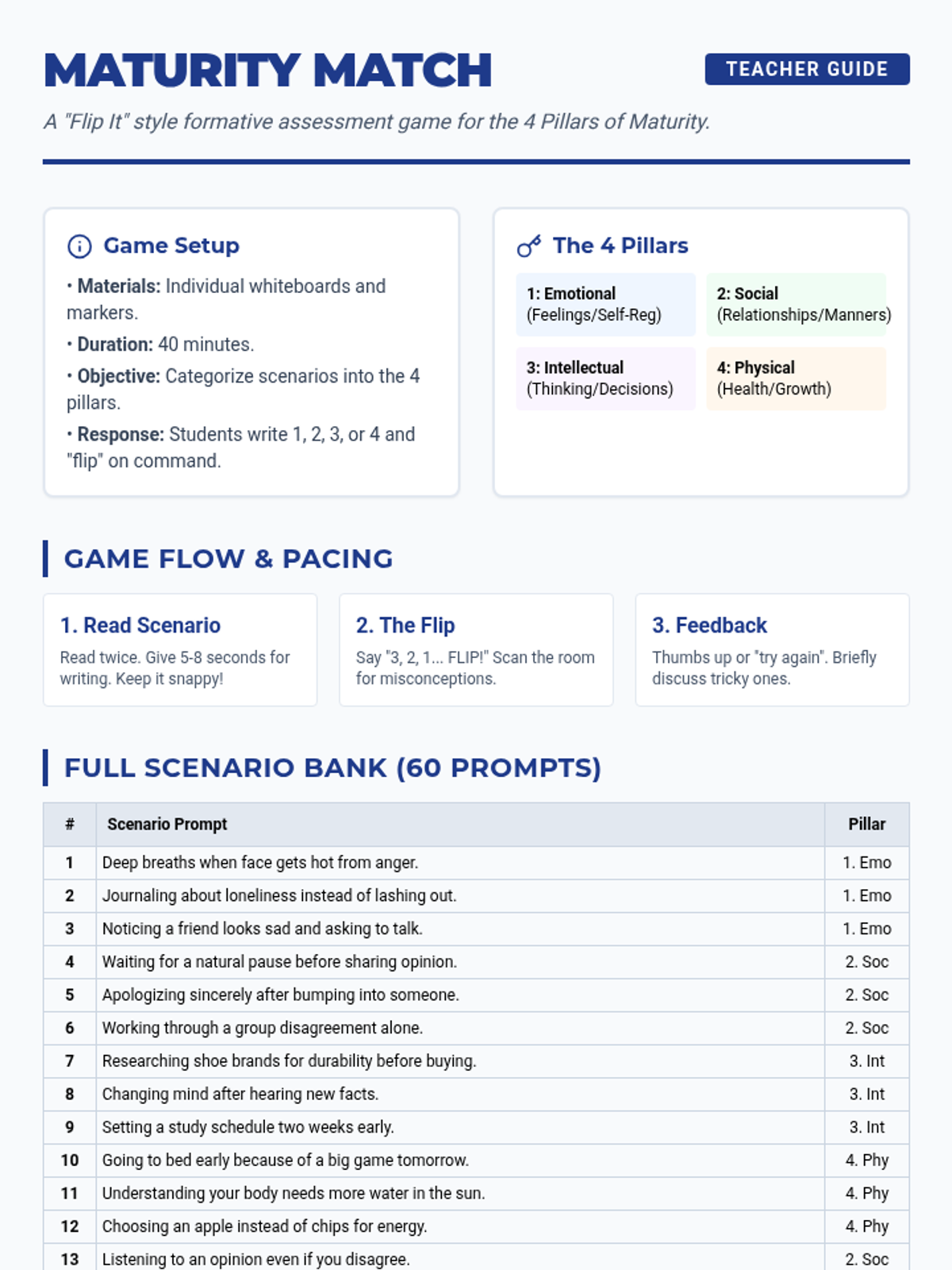
A fast-paced formative assessment game where students identify the four pillars of maturity through real-world scenarios. Includes a visual slide deck, a bank of 60 scenarios for the teacher, and reference cards for students.
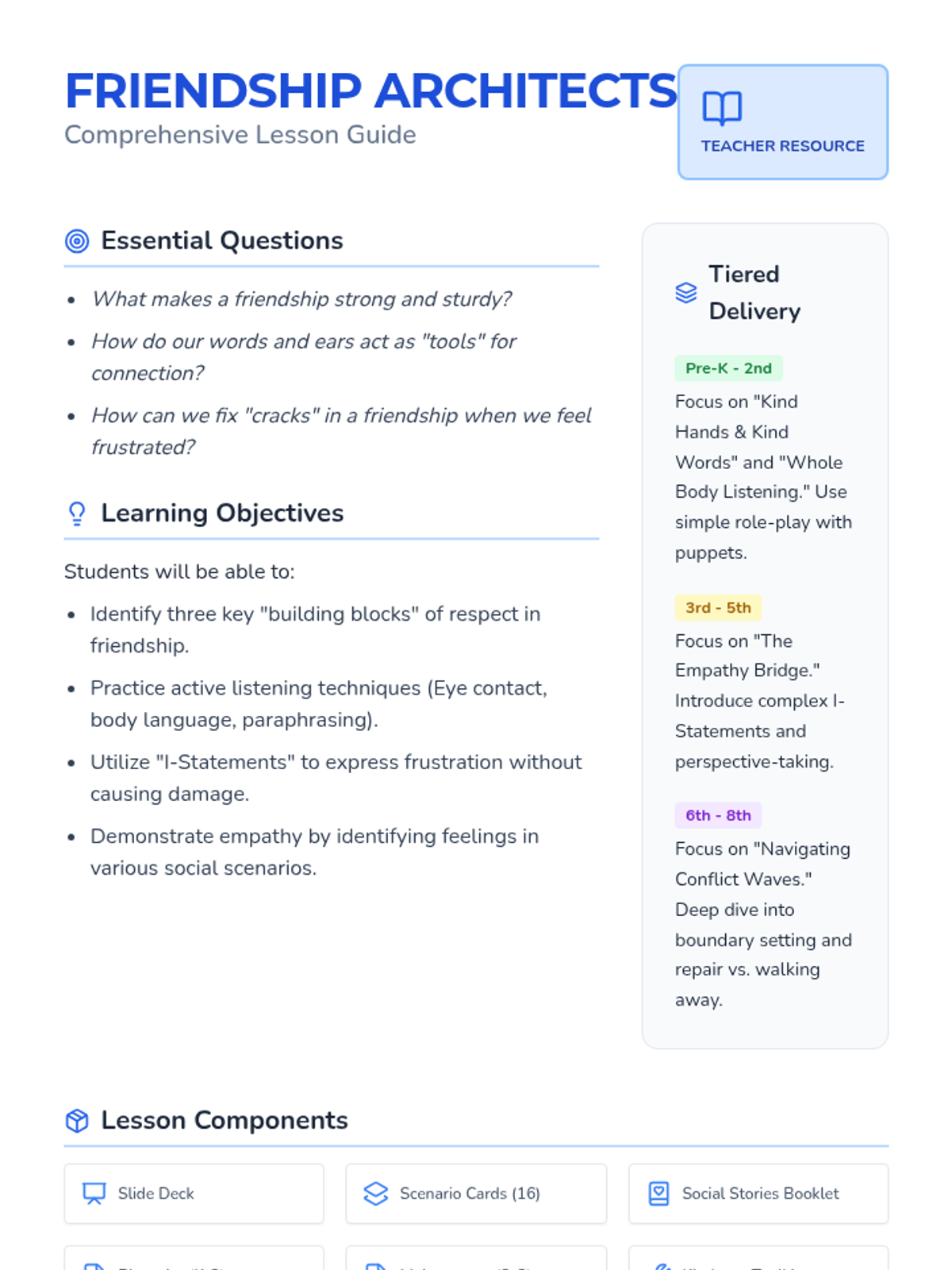
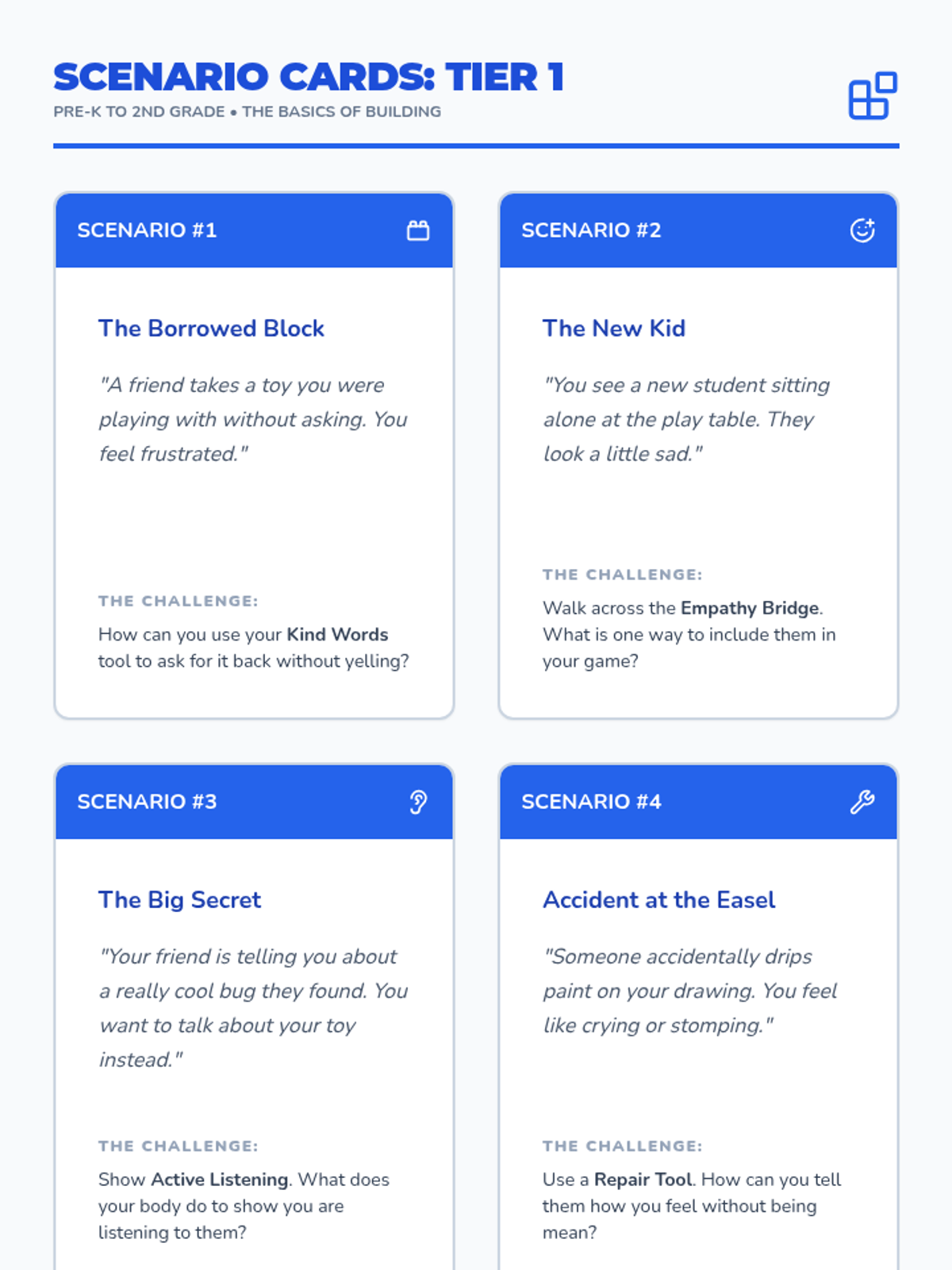
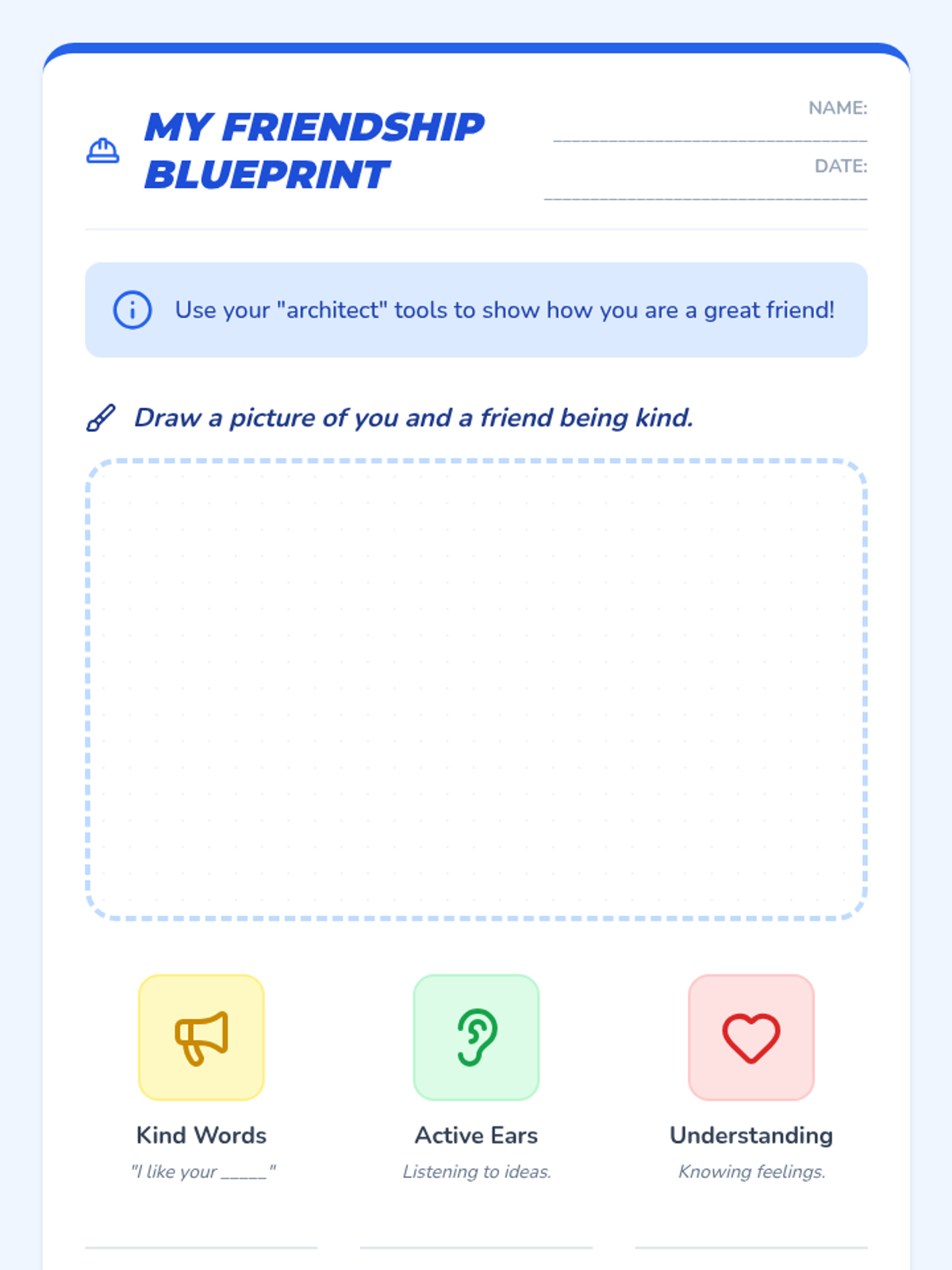
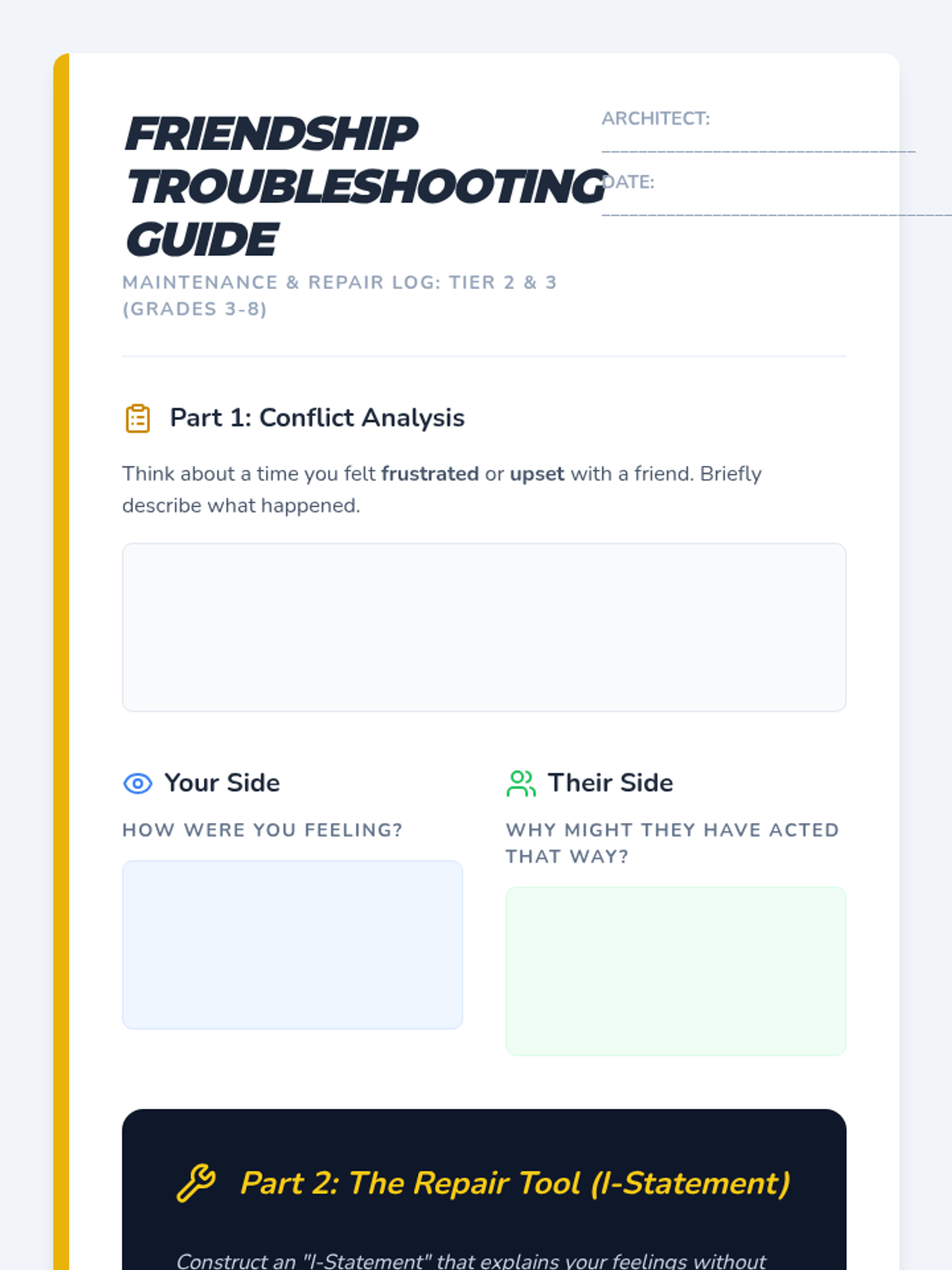
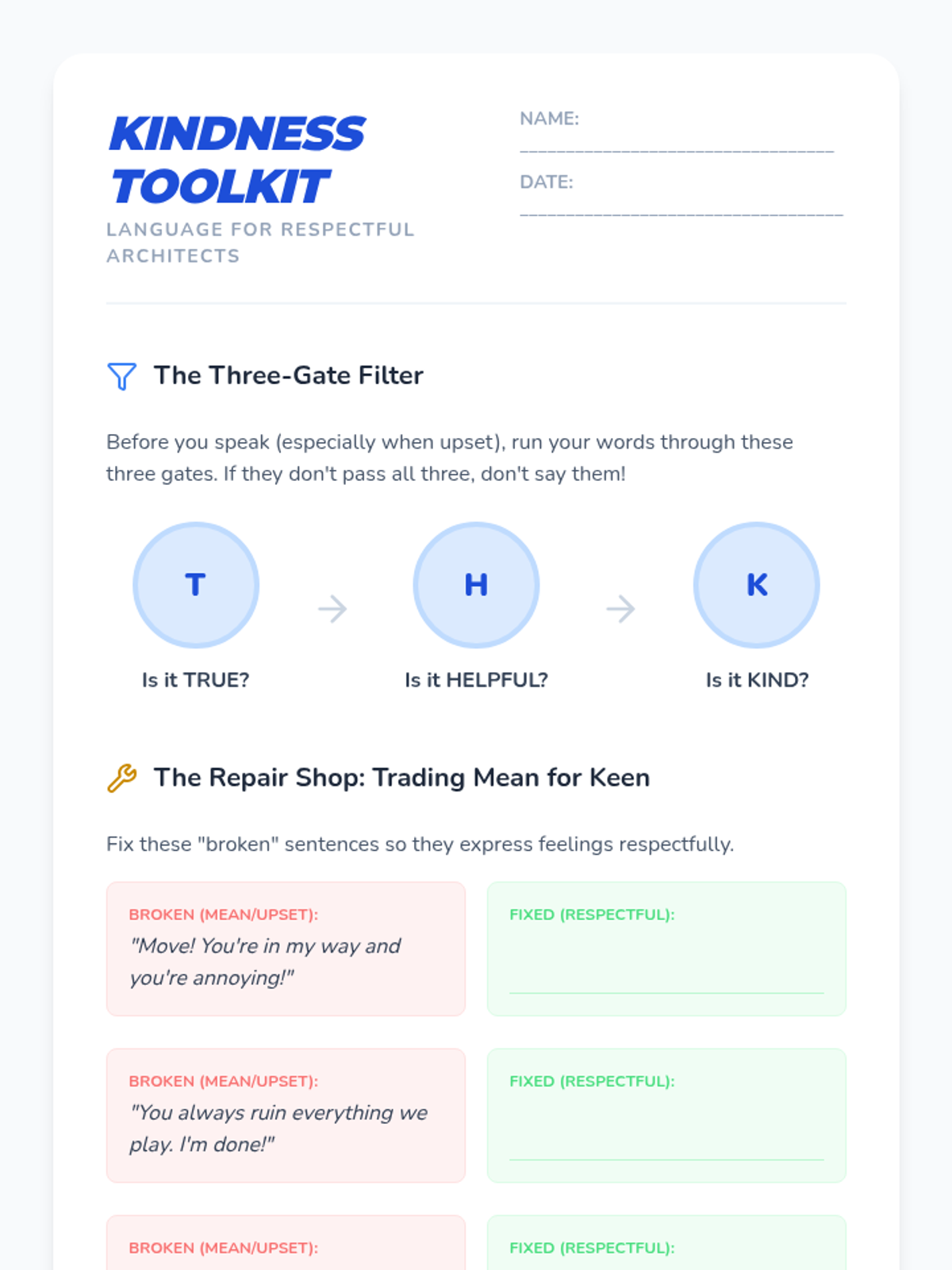
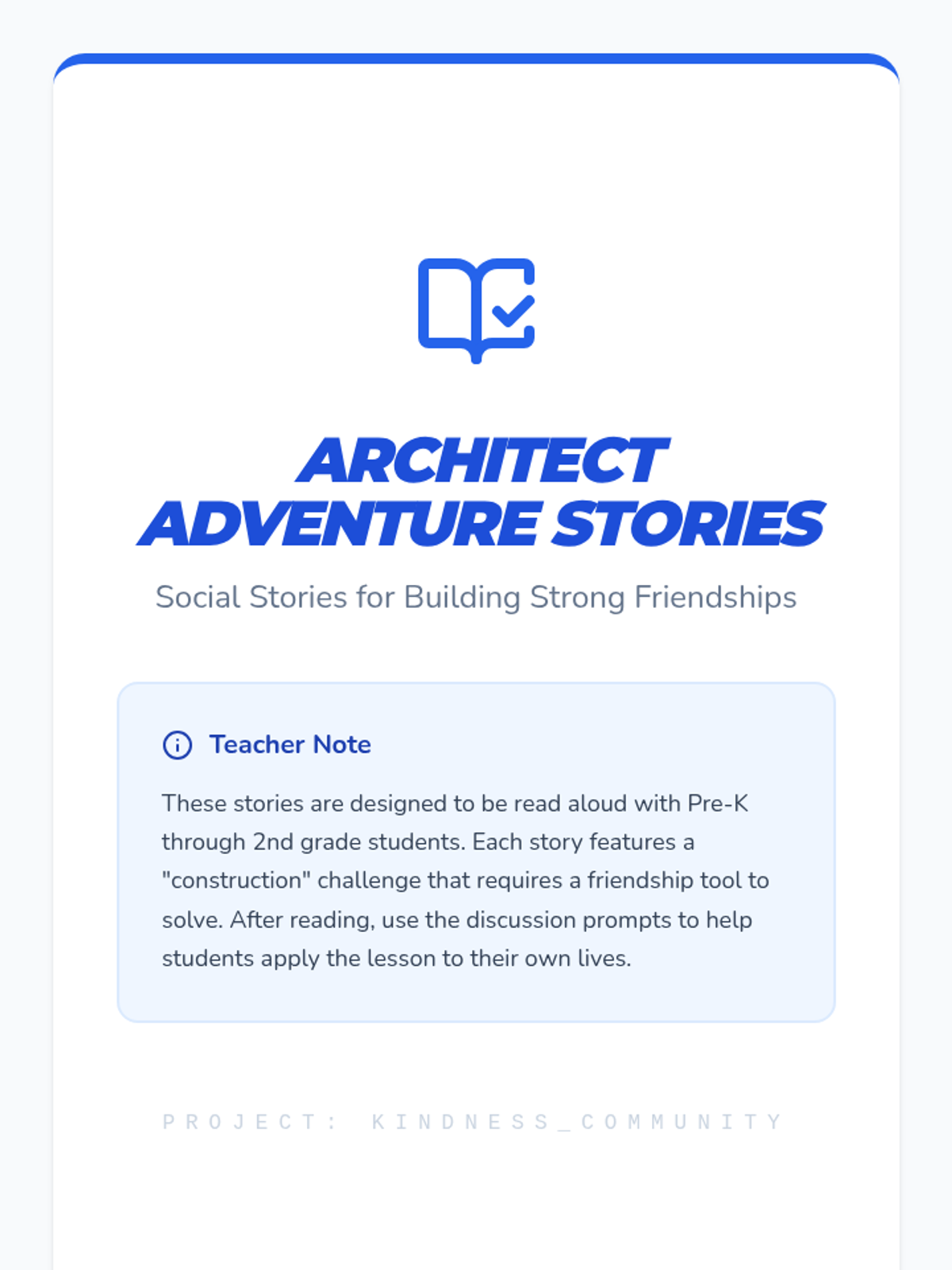
A multi-tiered lesson exploring the essential building blocks of friendship, focusing on respectful communication, active listening, and managing conflict with empathy. This lesson includes differentiated activities suitable for Pre-K through 8th grade.
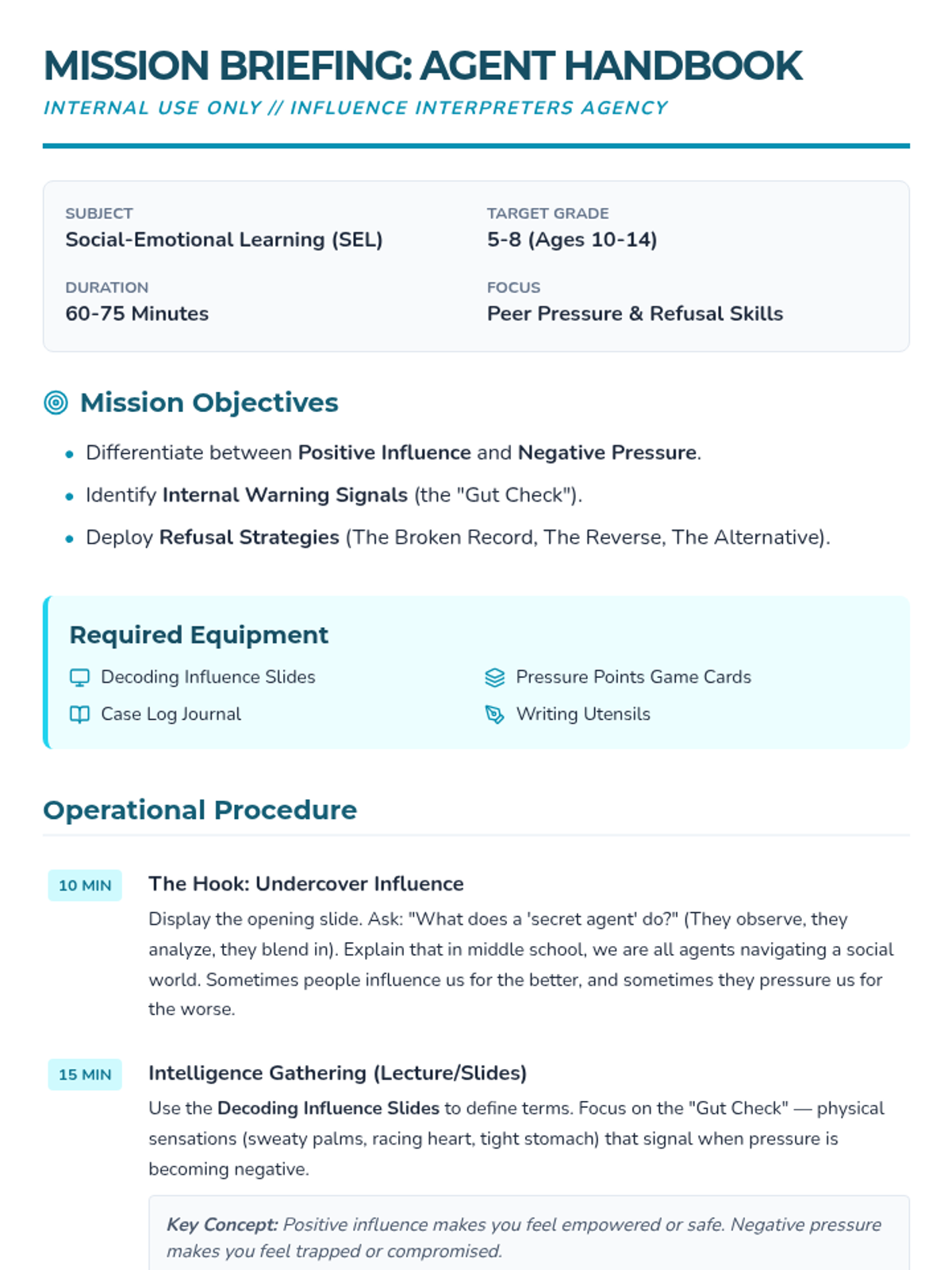
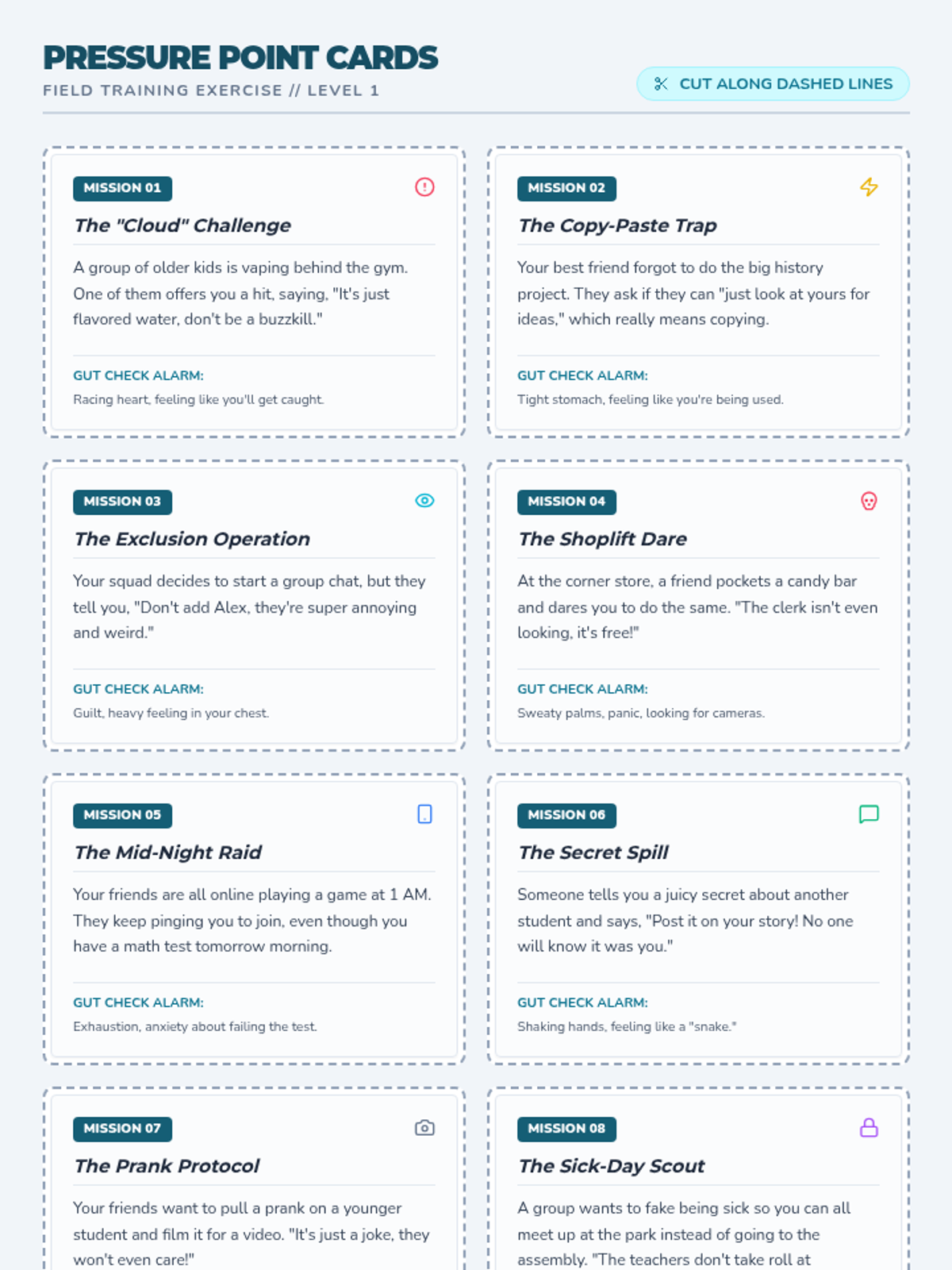
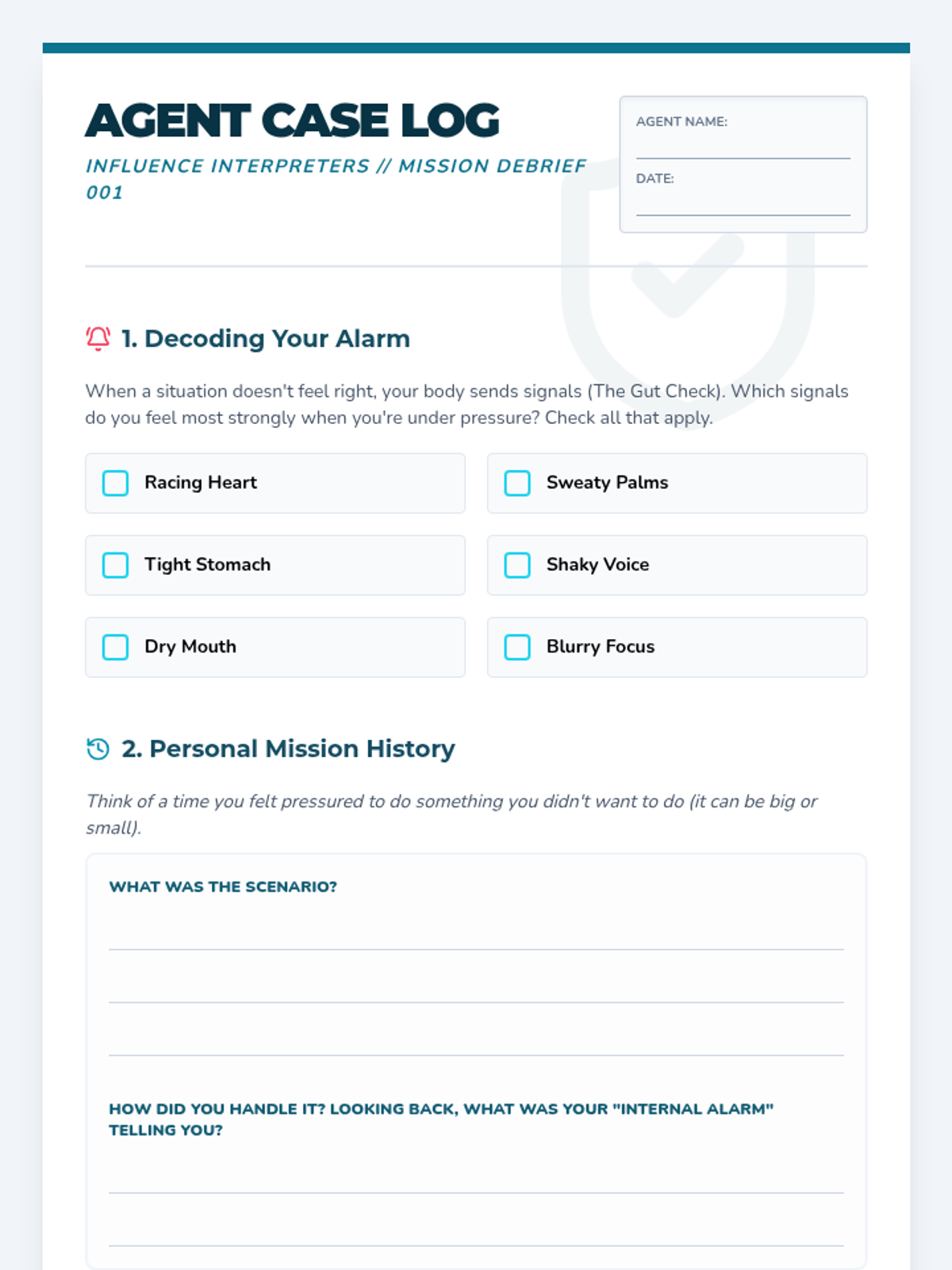
A comprehensive lesson for grades 5-8 focusing on identifying peer pressure, understanding internal cues, and practicing refusal strategies through a 'secret agent' decoding theme.
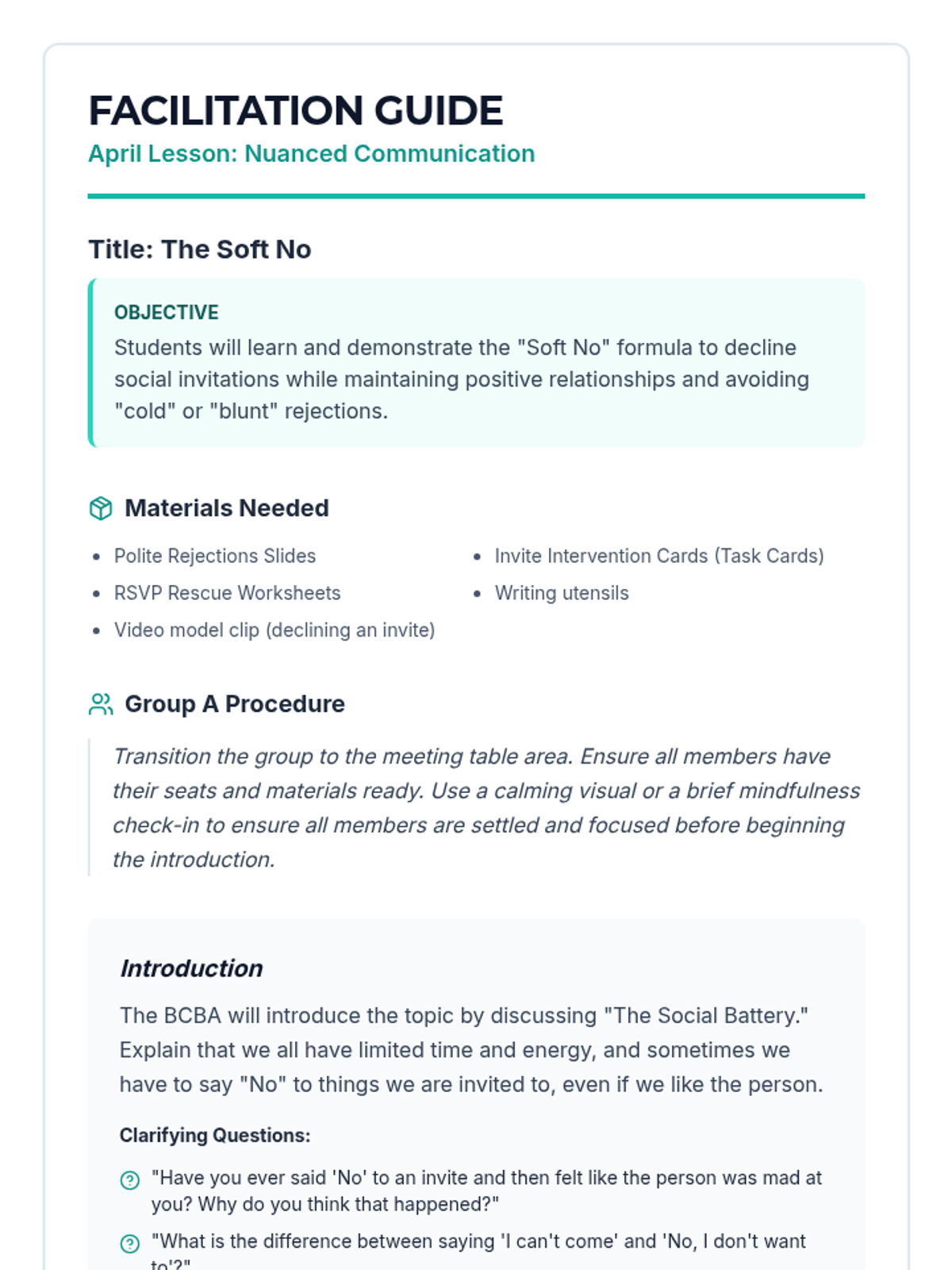
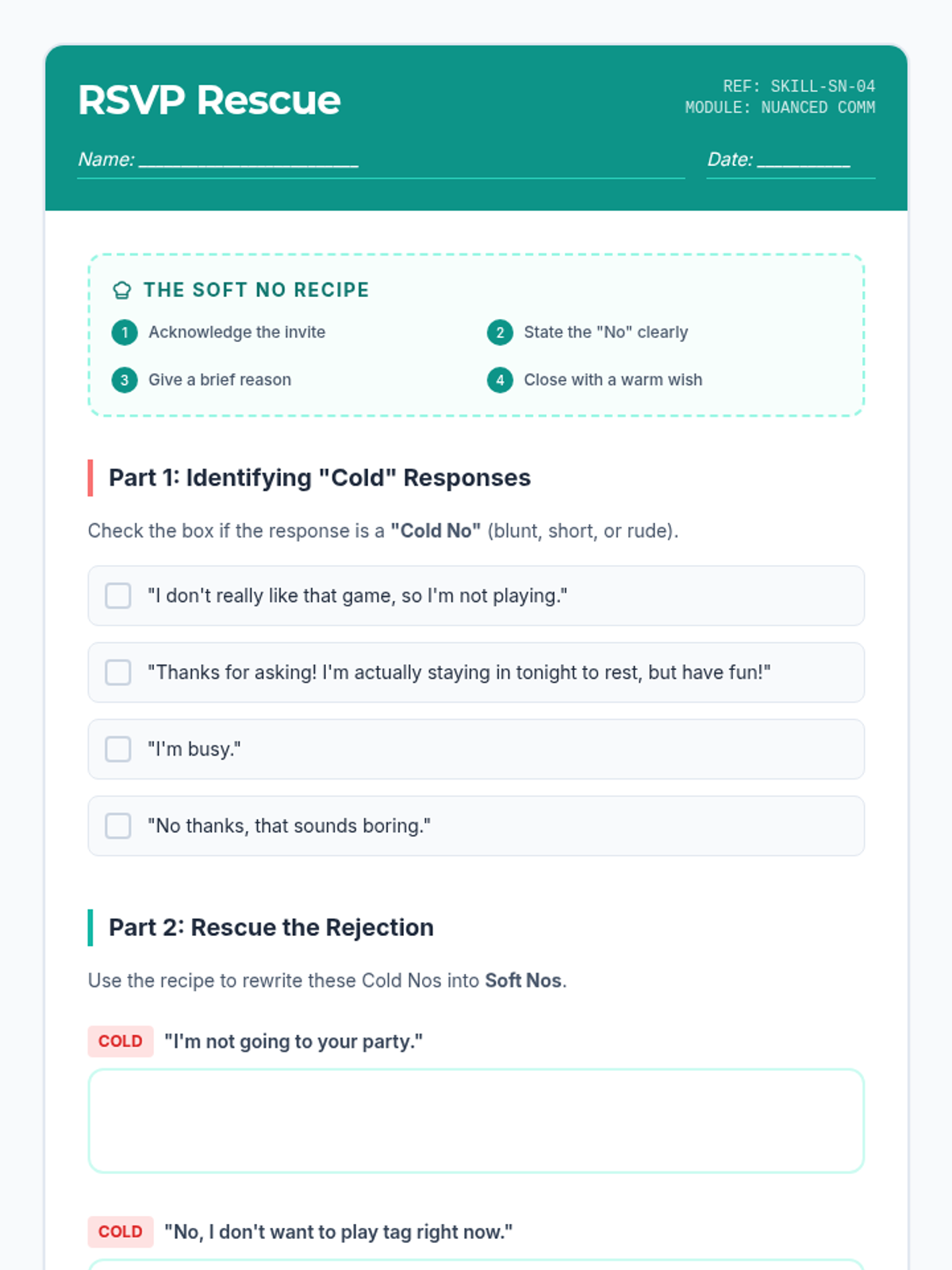
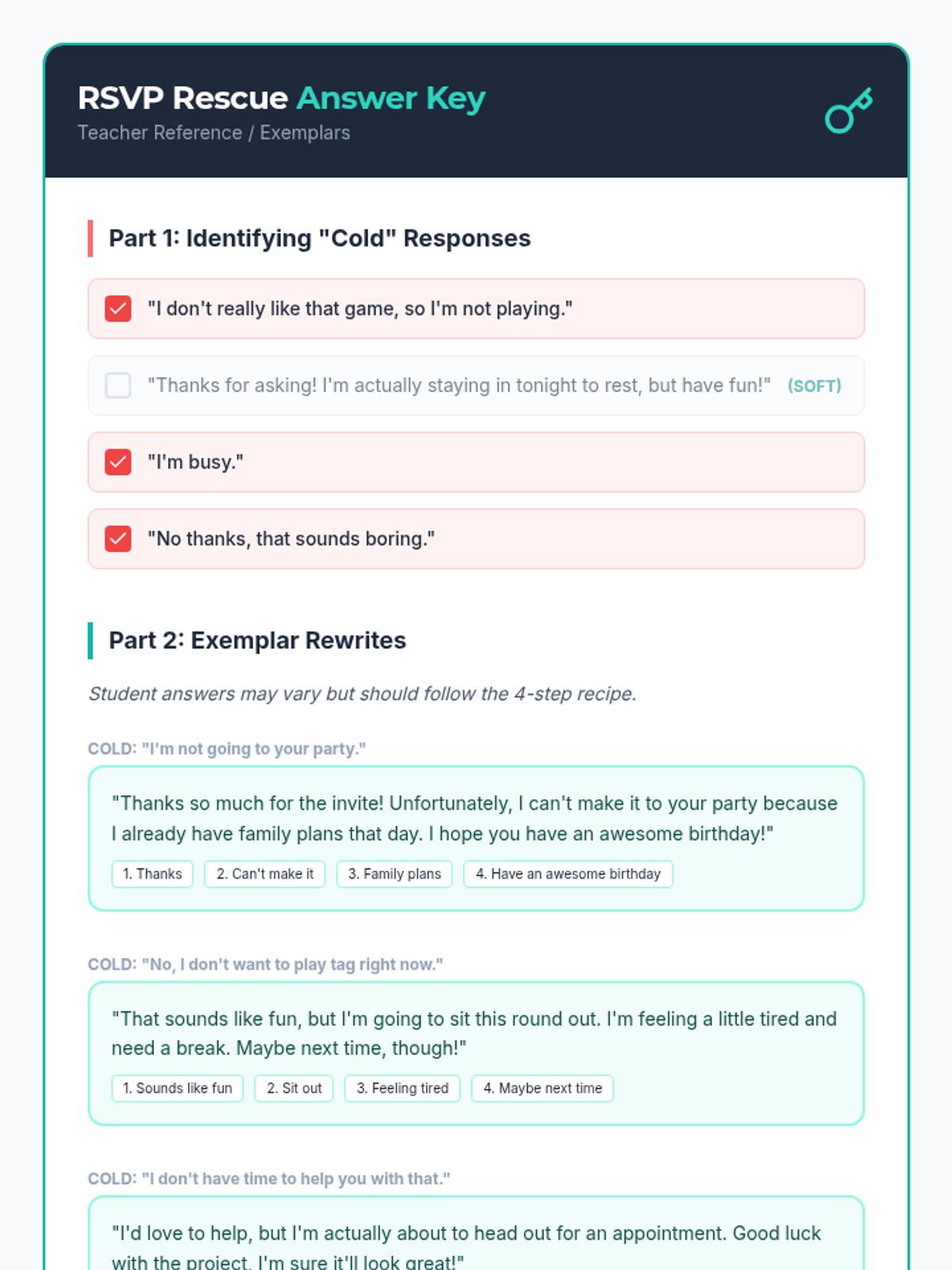
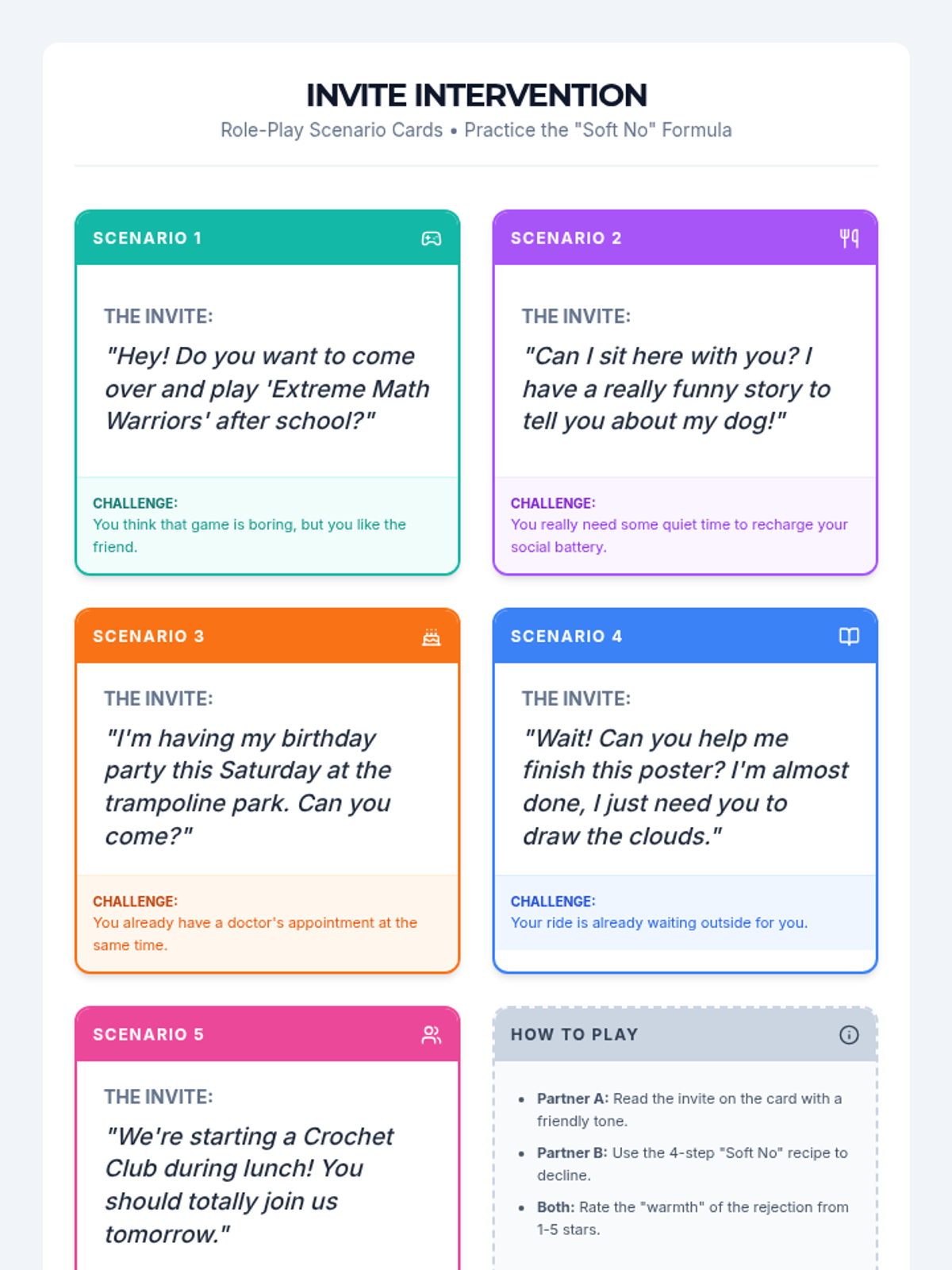
This lesson teaches students how to decline social invitations politely using 'The Soft No' formula. Students will practice acknowledging the invitation, stating their unavailability briefly, and closing with a warm sentiment to maintain social connections.
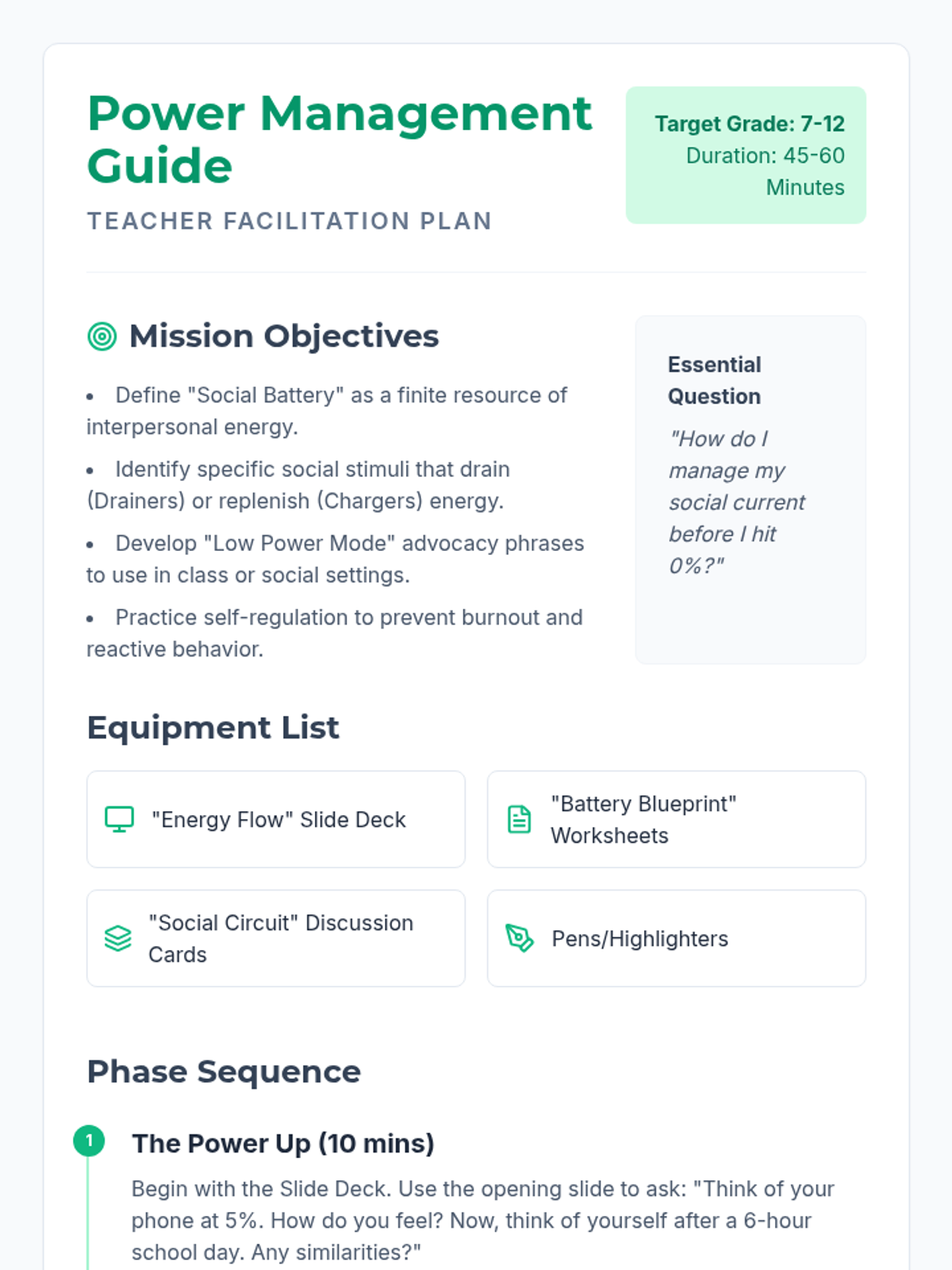
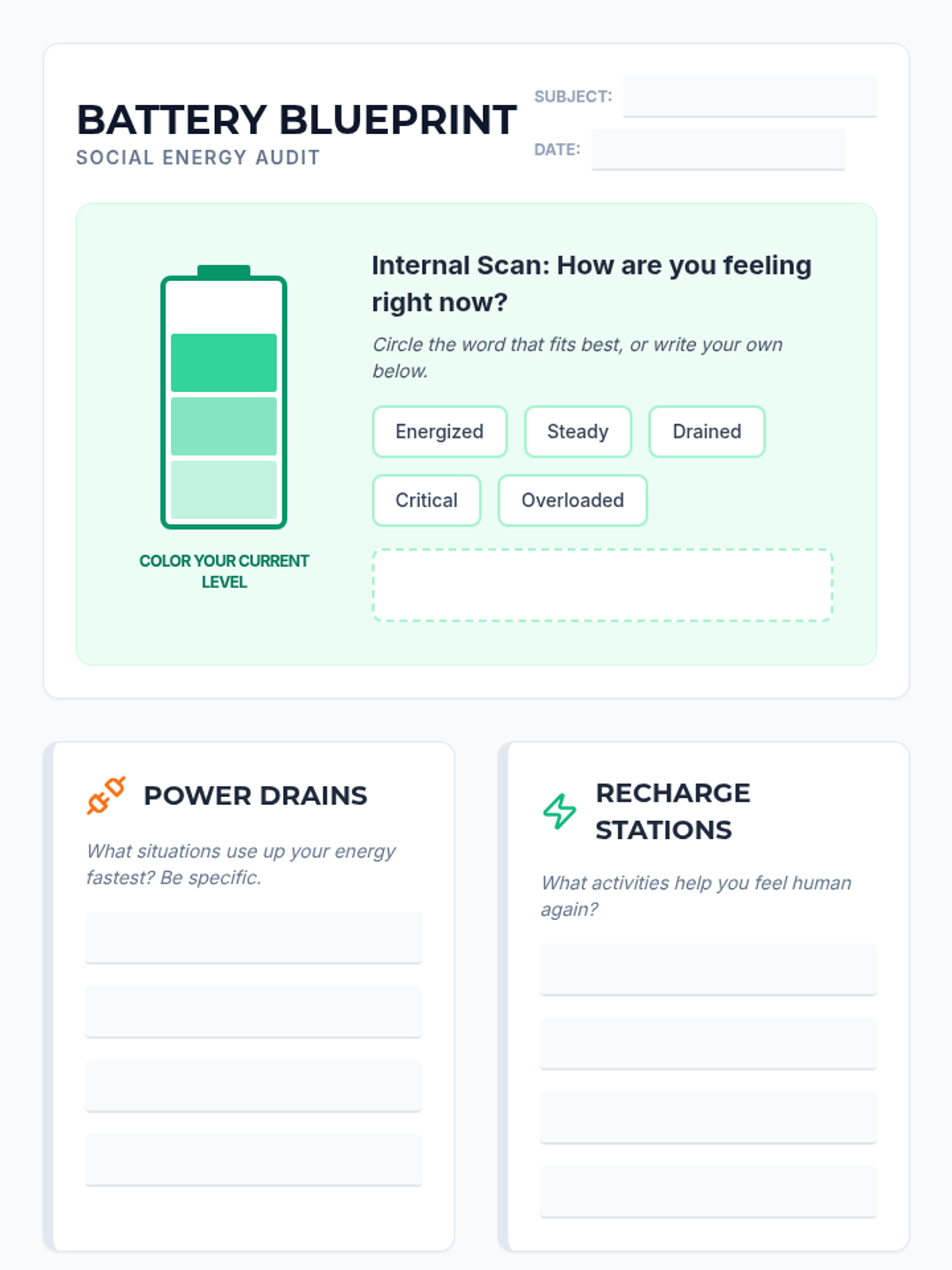
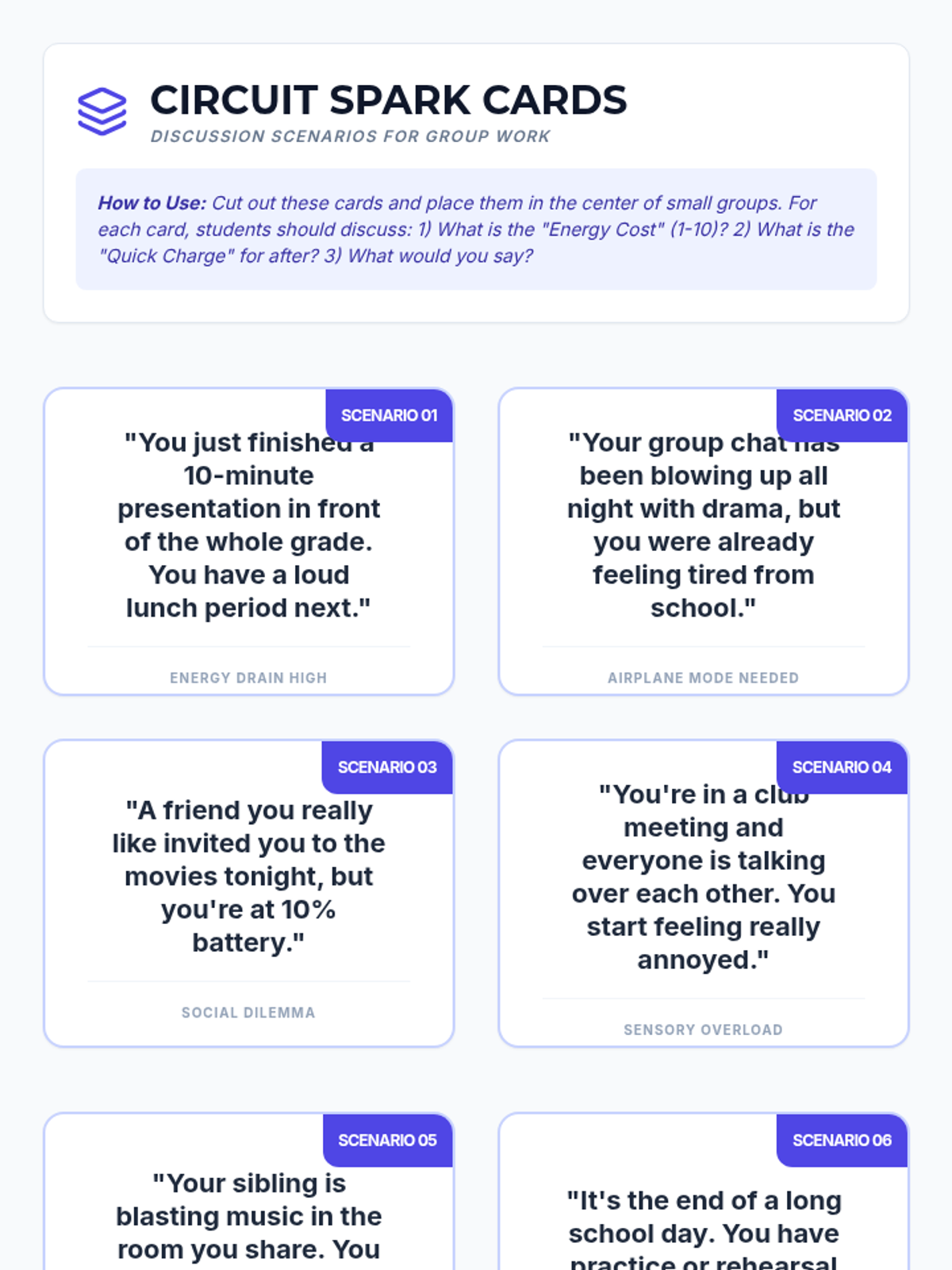
A comprehensive lesson for teens to visualize their social energy as a battery, identifying personal 'drainers' and 'chargers' to develop self-regulation and burnout prevention strategies.
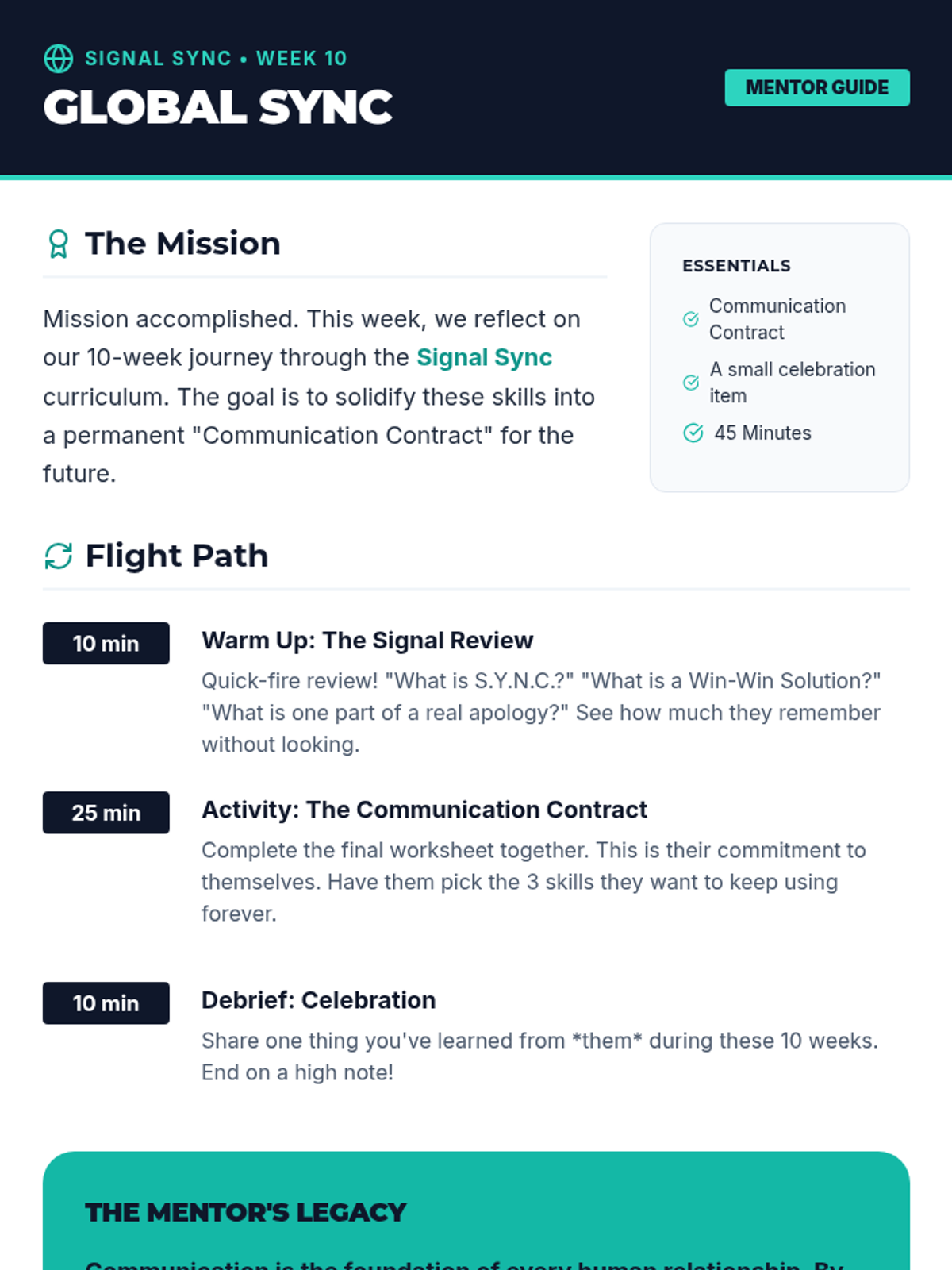
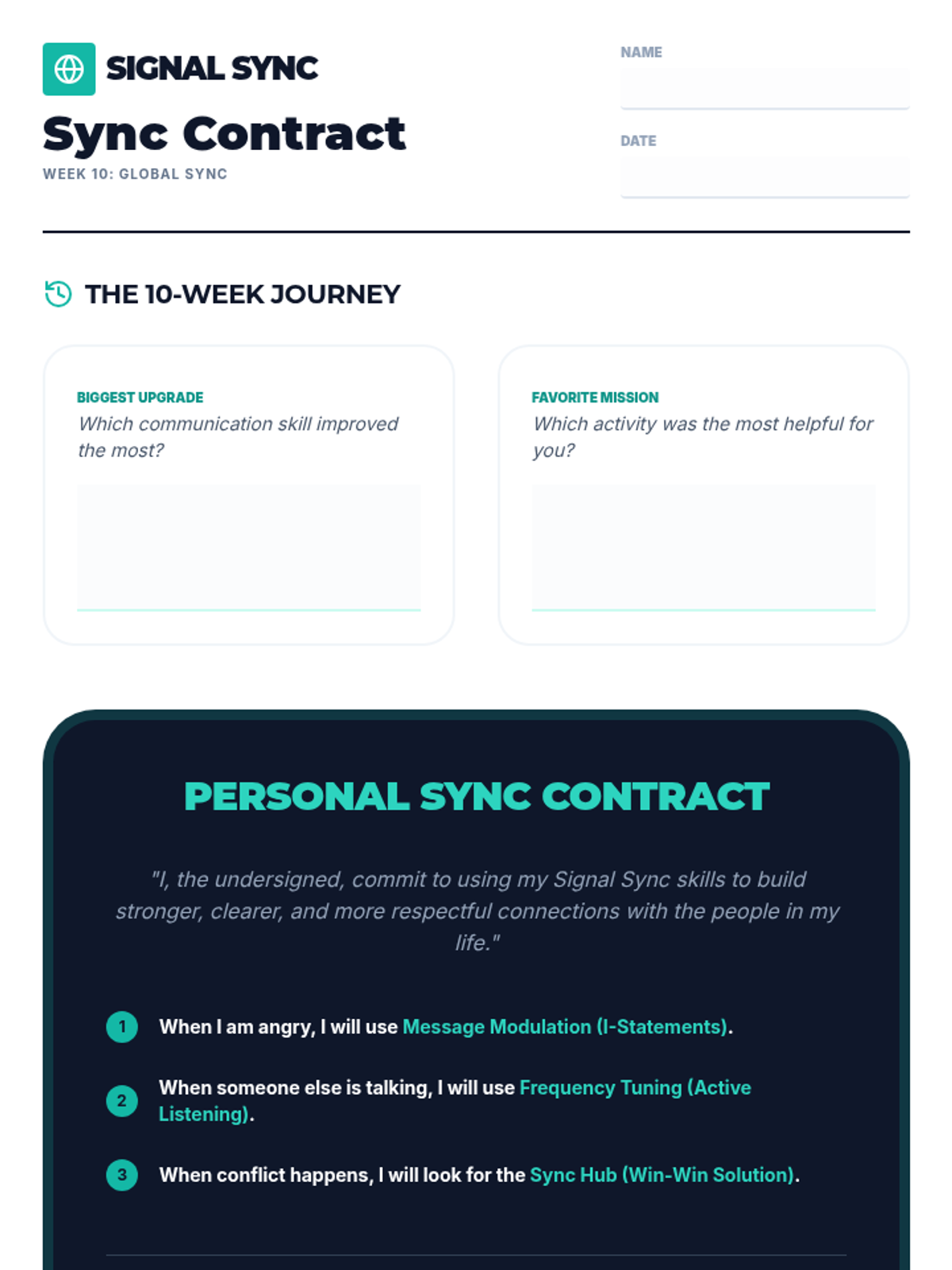
Reflecting on the 10-week journey and creating a personal communication contract for the future.
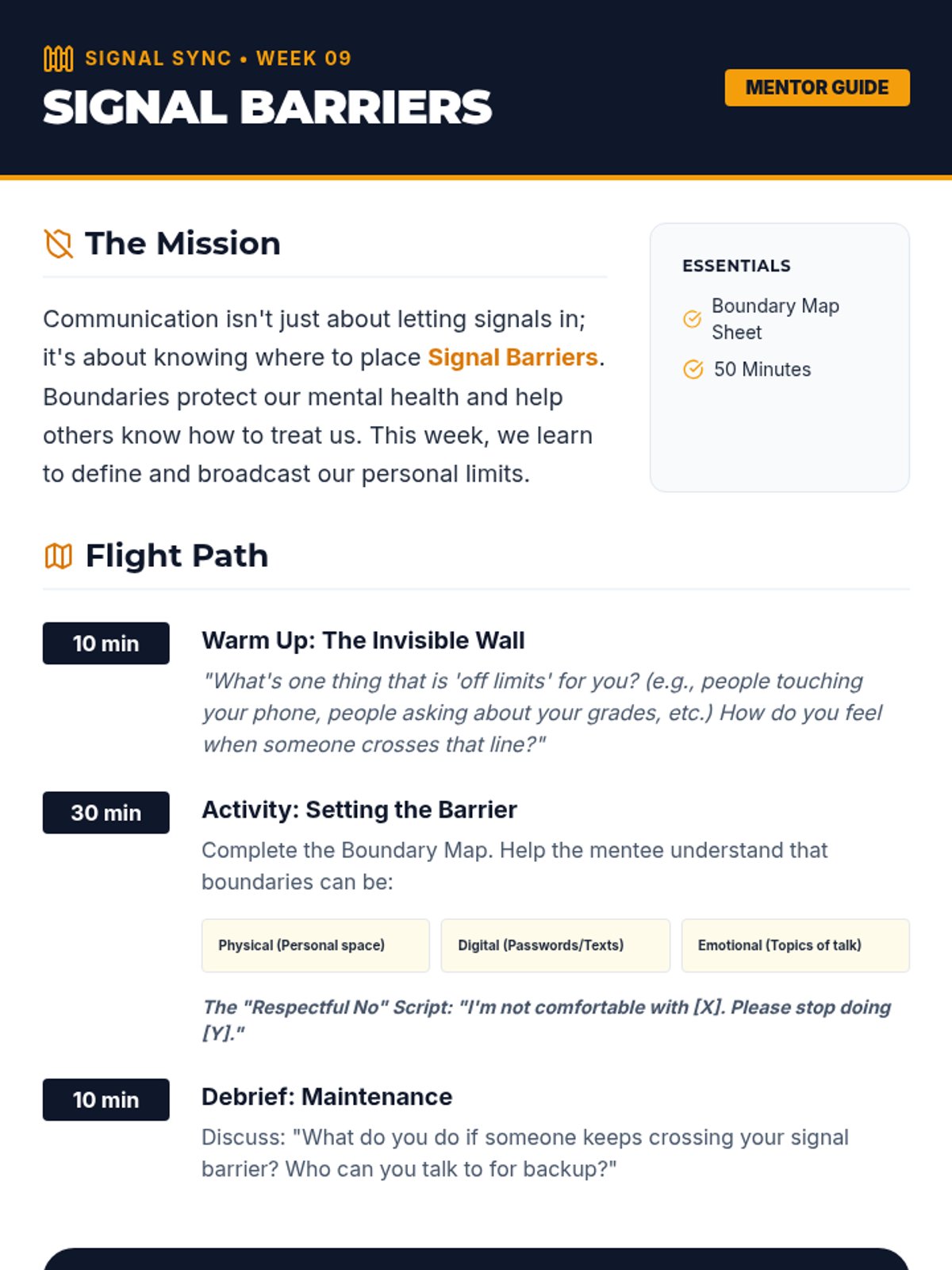
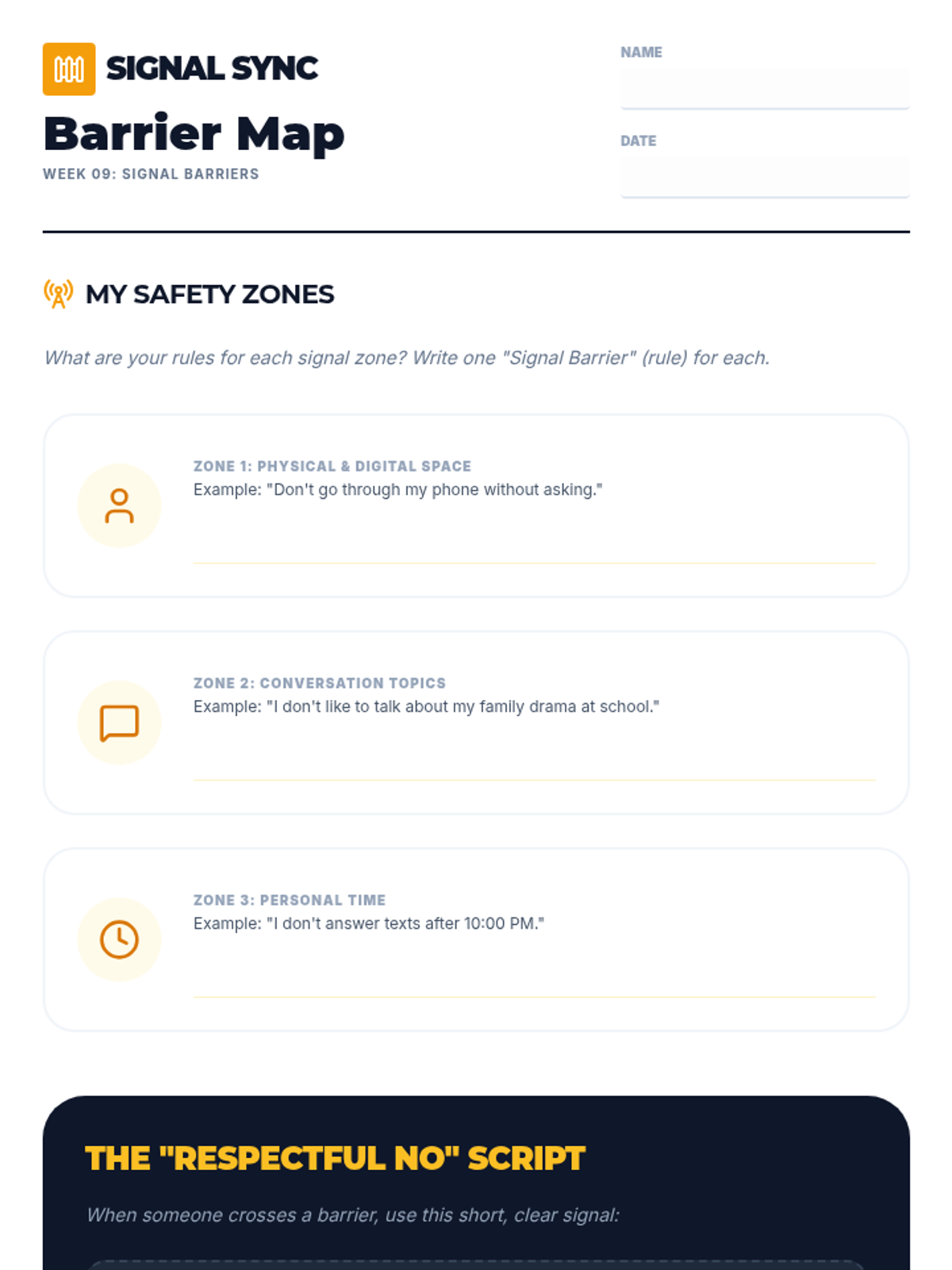
How to define, communicate, and maintain personal boundaries in a healthy way.
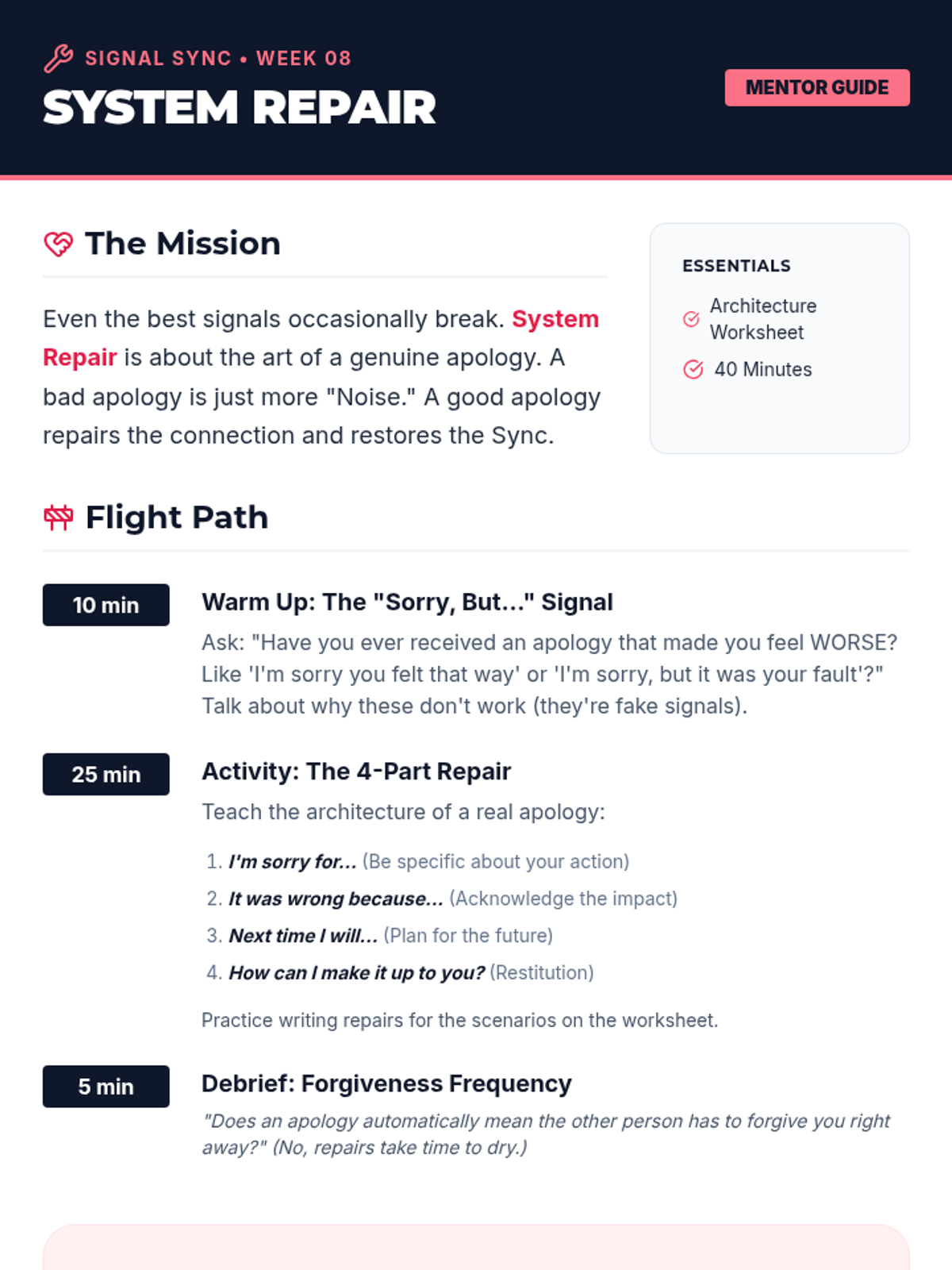
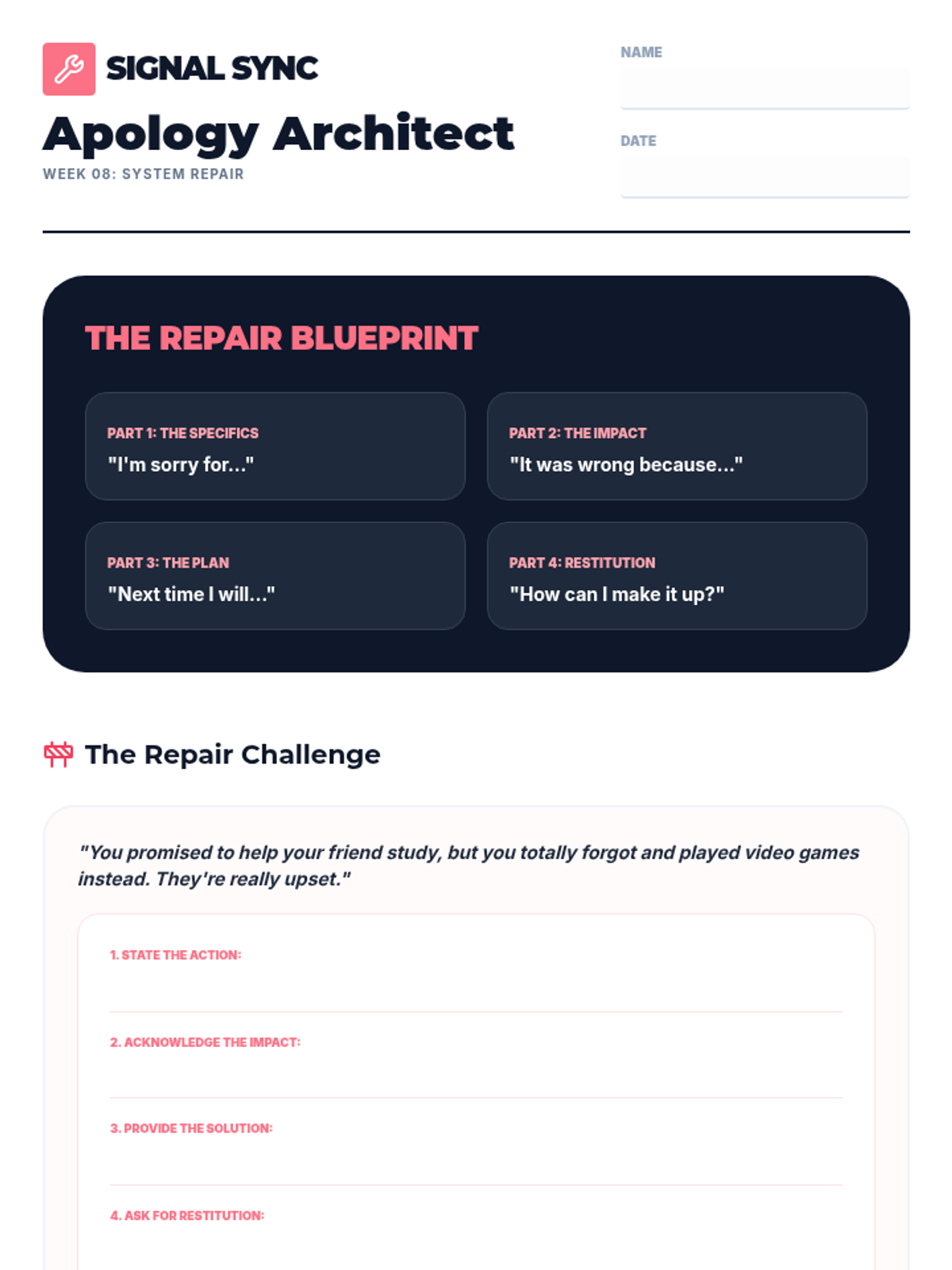
The framework for offering and accepting genuine apologies to repair damaged relationships.
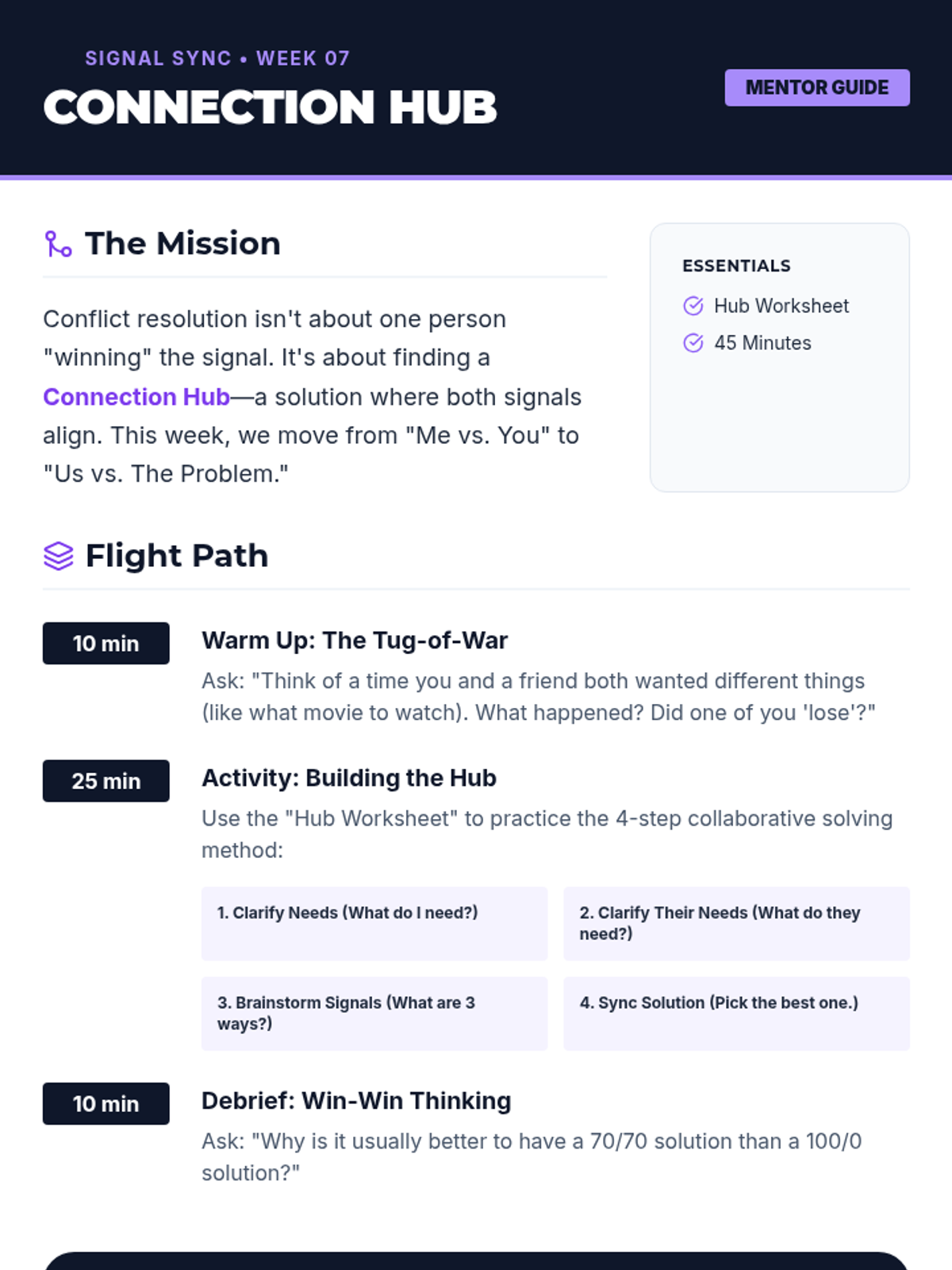
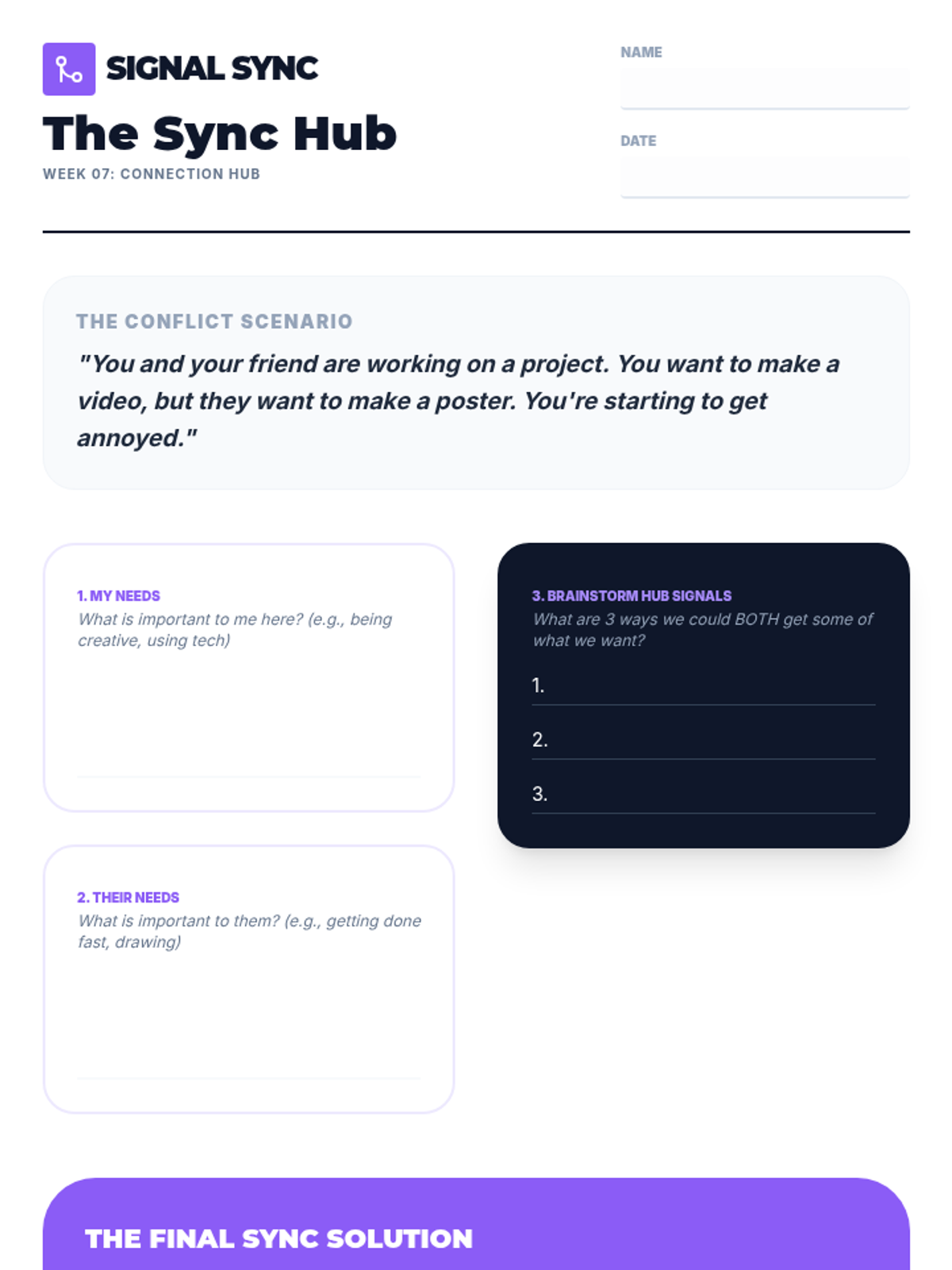
A collaborative approach to problem-solving that seeks 'win-win' outcomes for all involved.
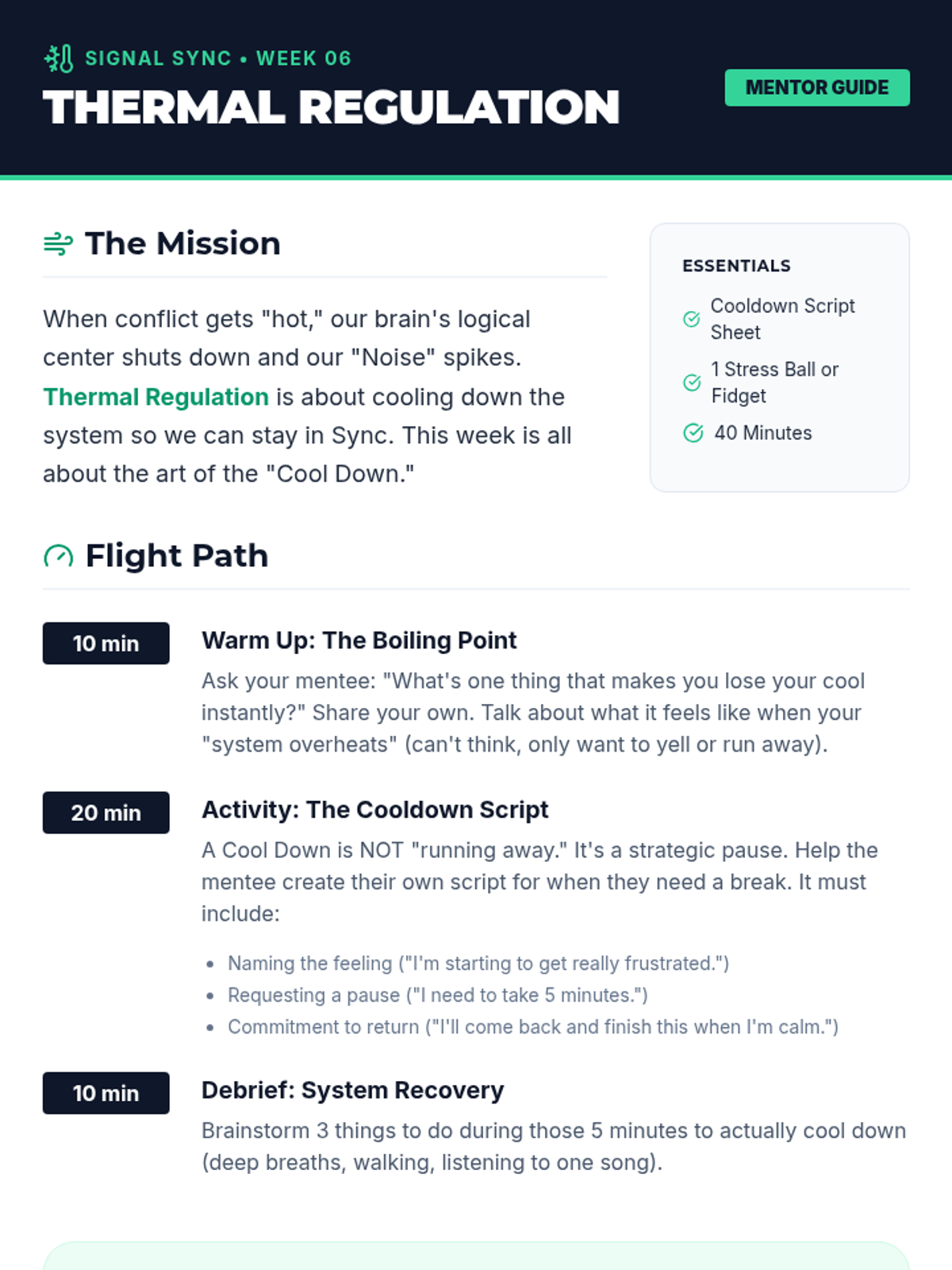
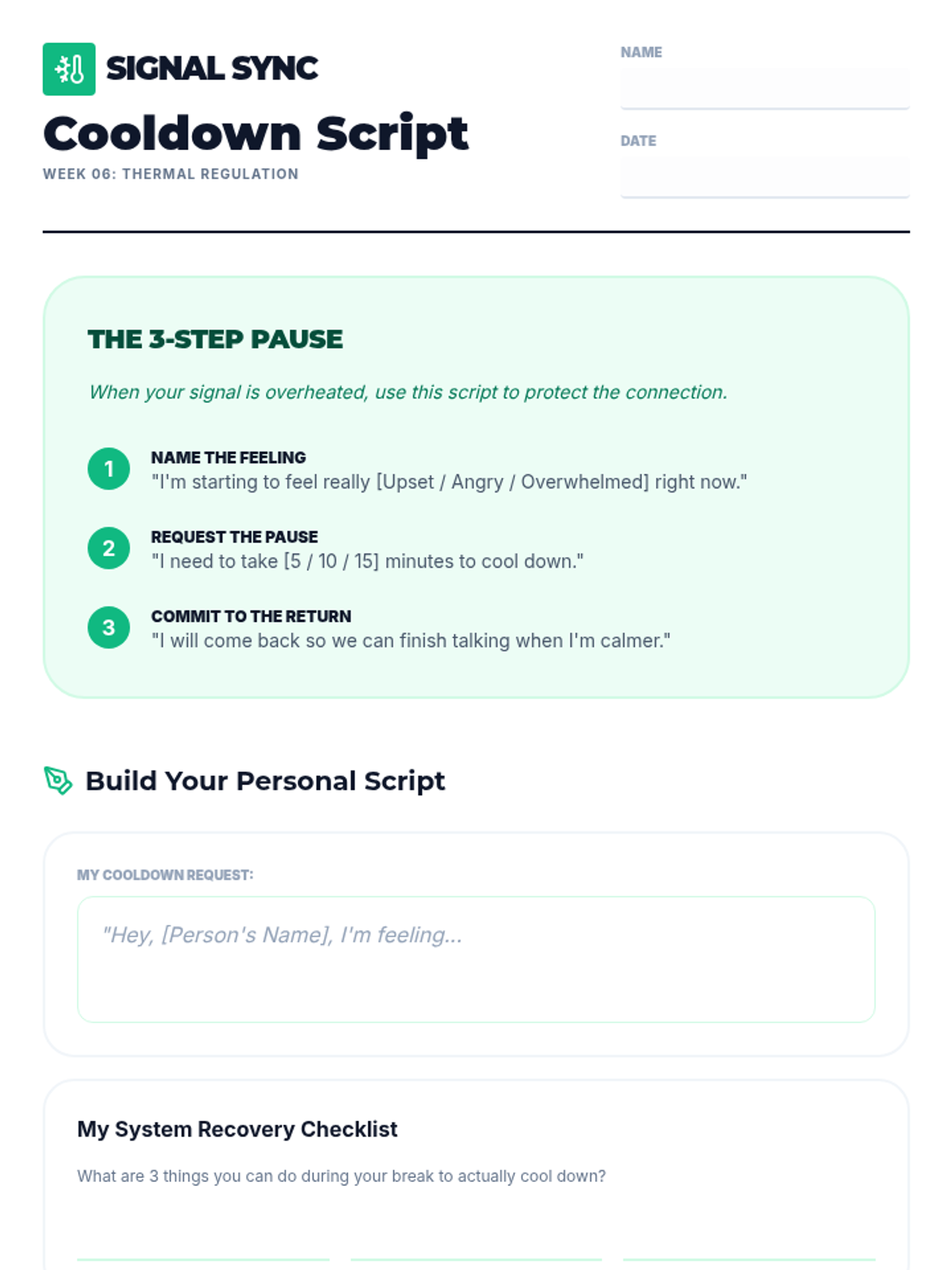
Techniques for emotional regulation and de-escalation when a conversation starts to get 'hot'.
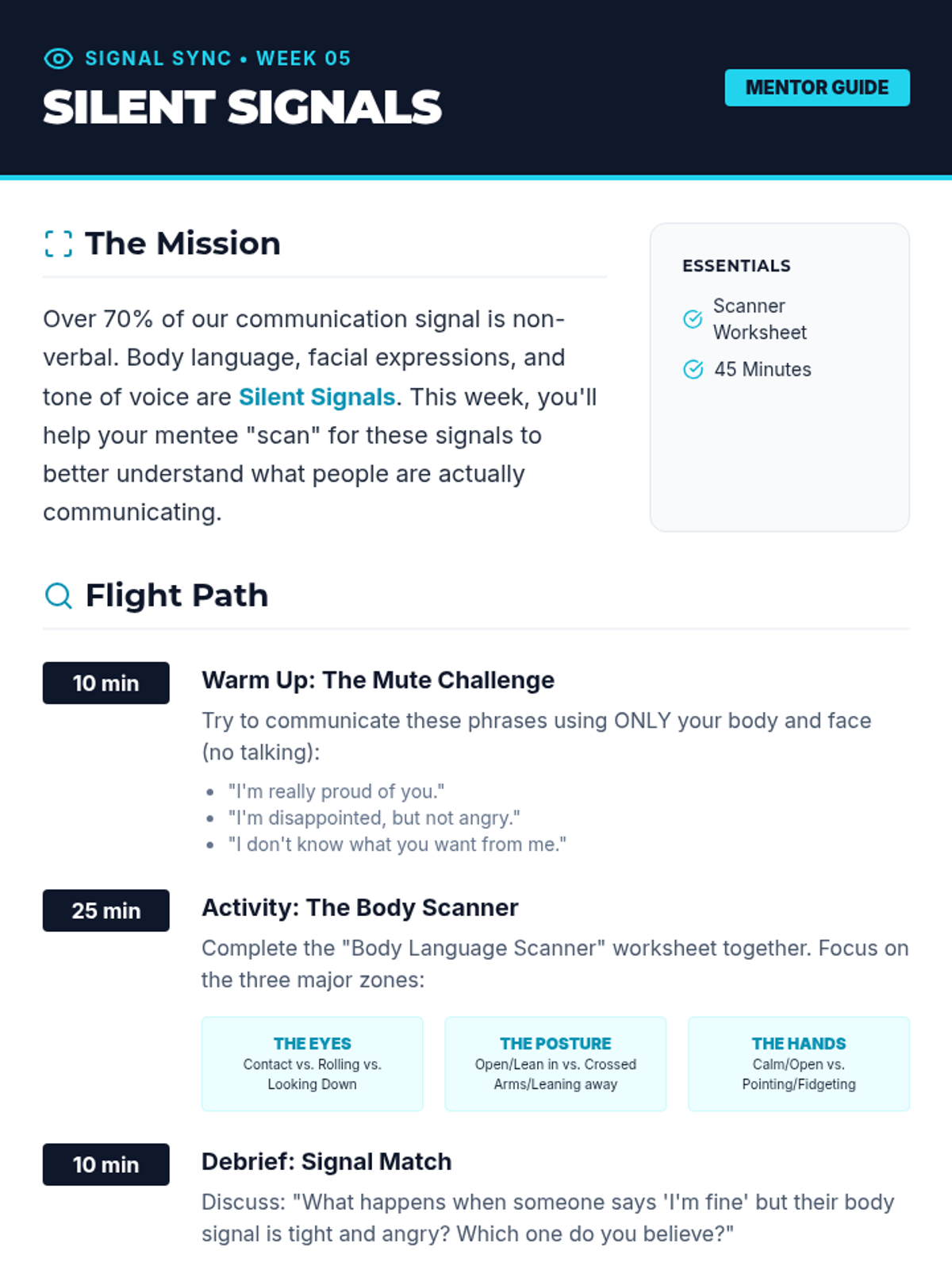
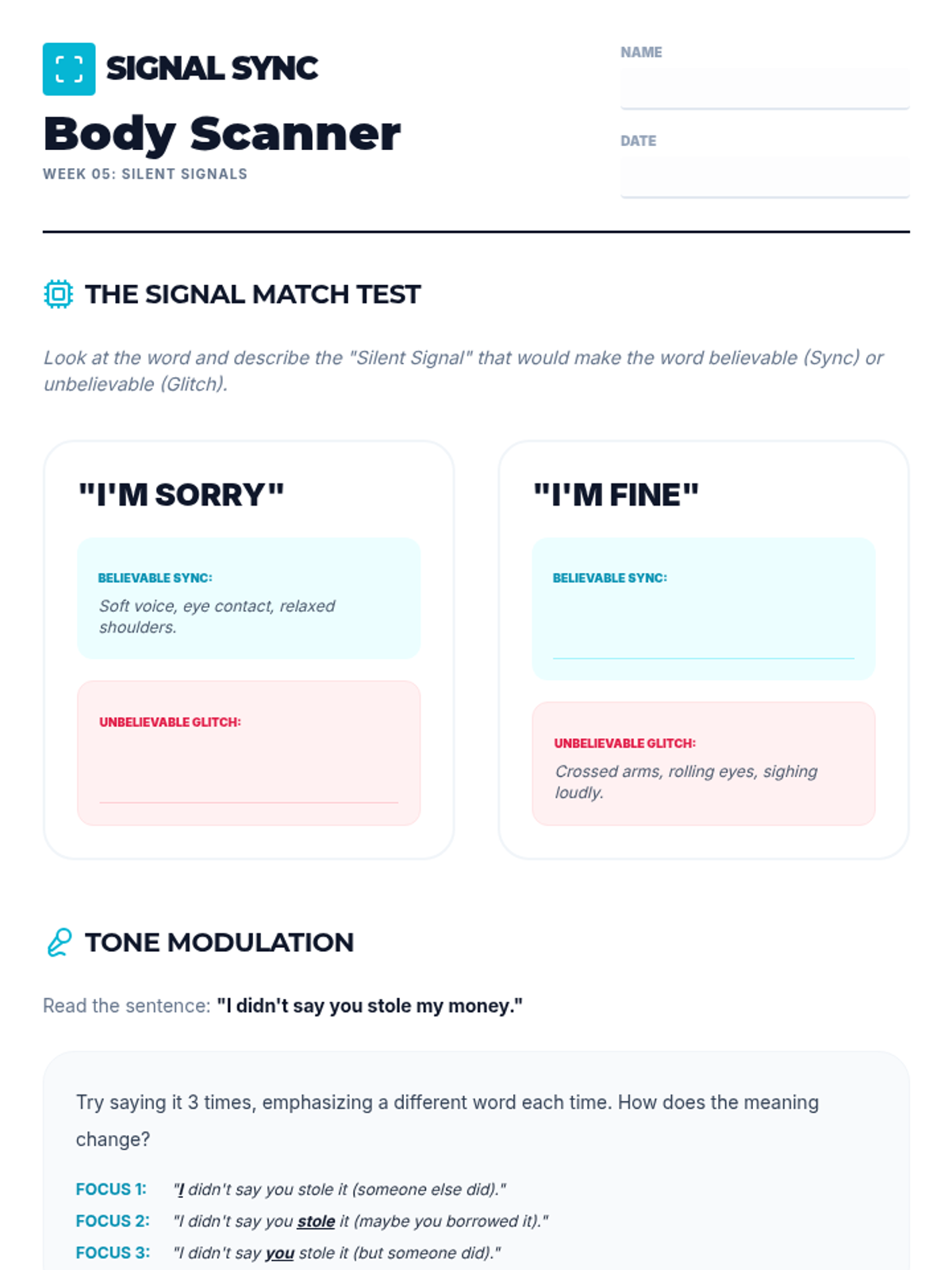
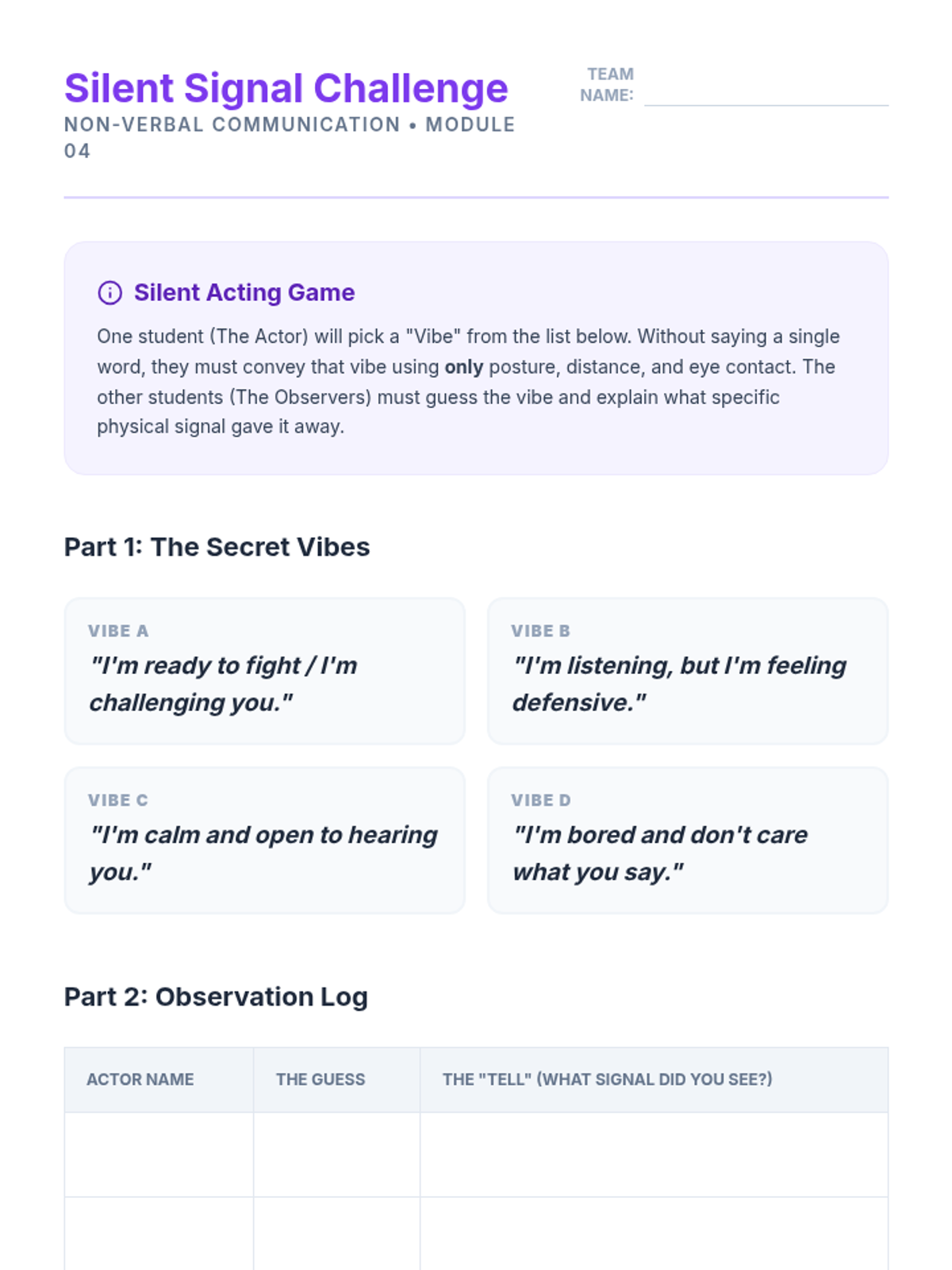
Exploring non-verbal communication, including body language, facial expressions, and tone of voice.
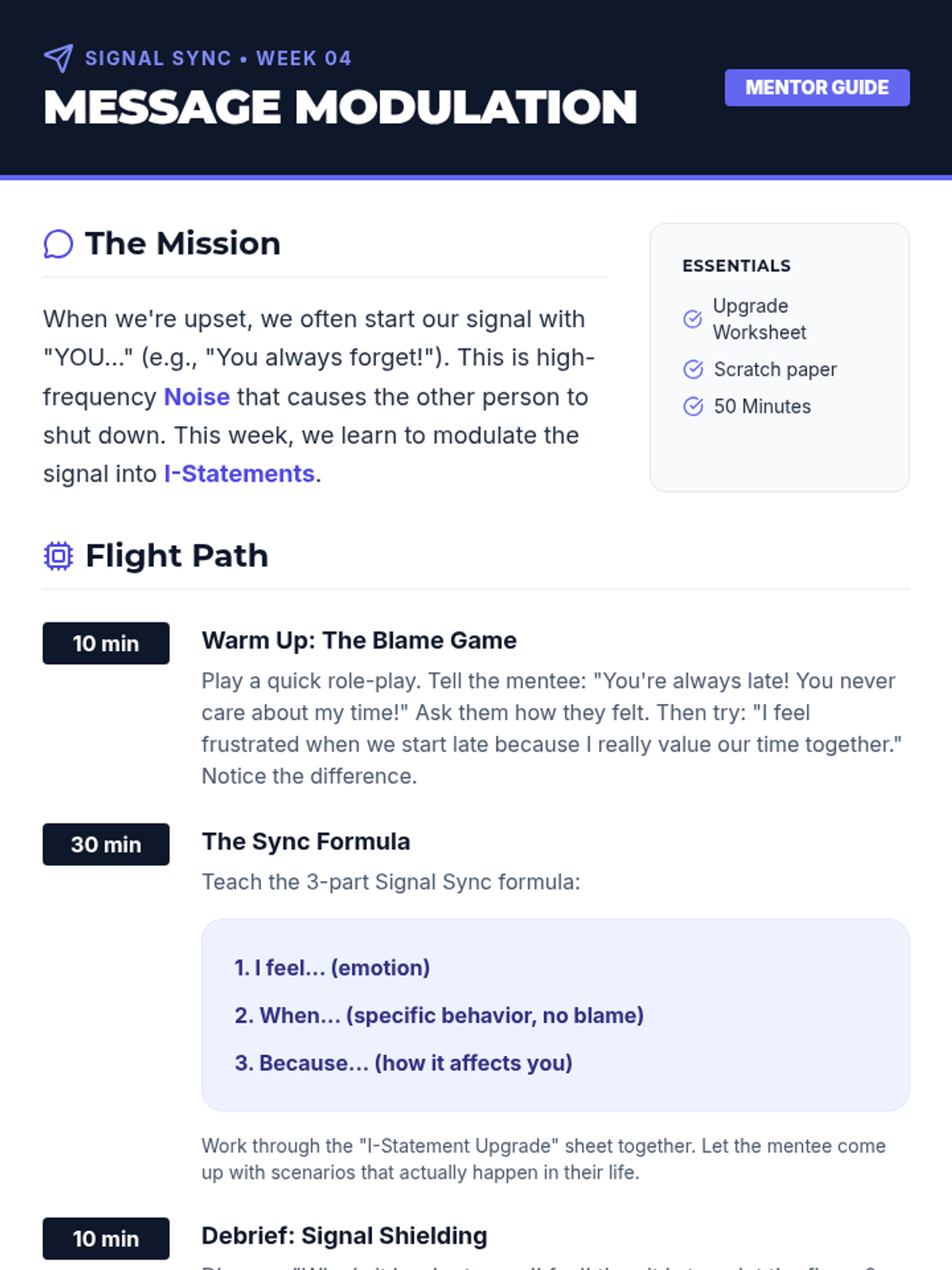
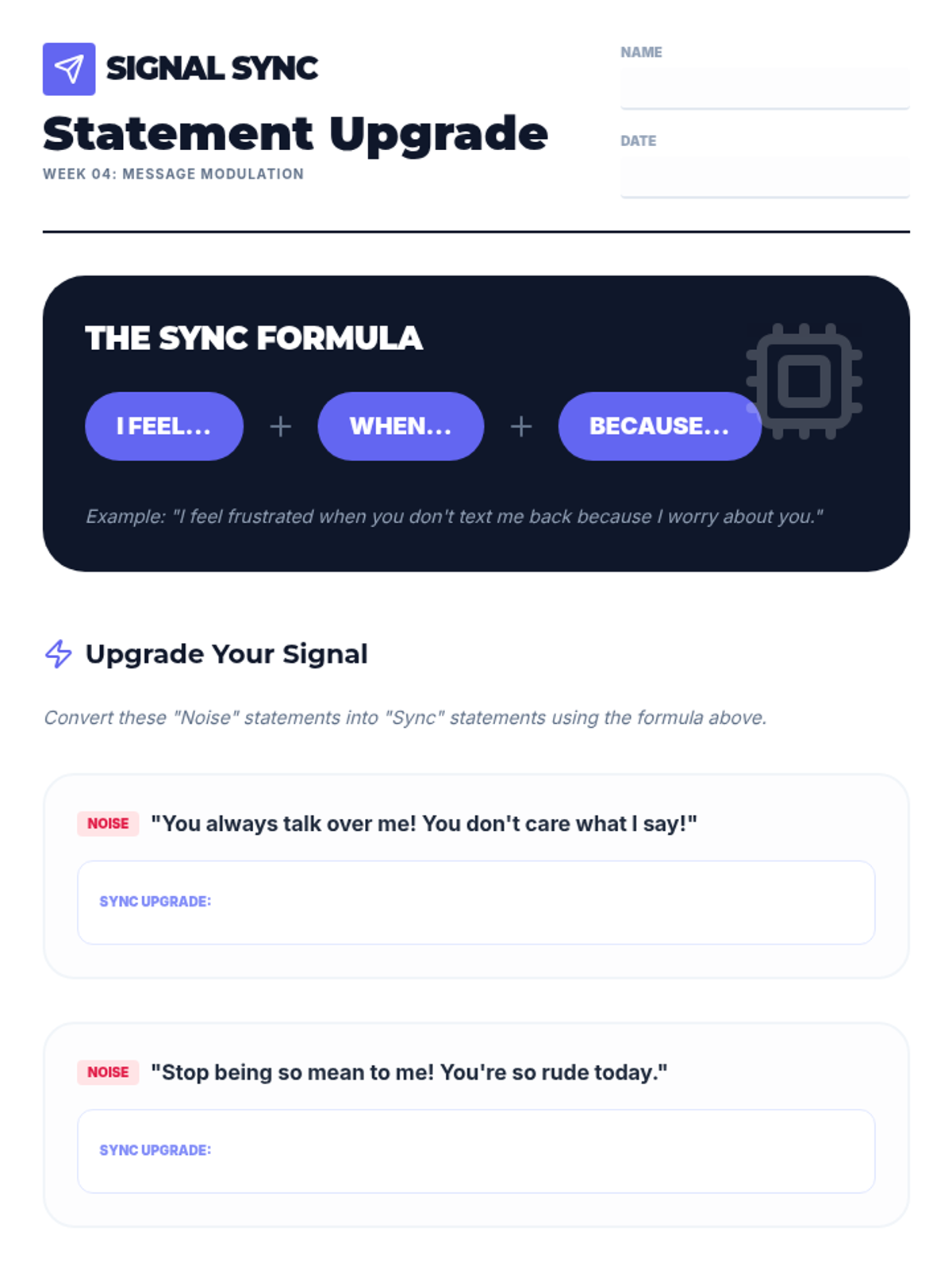
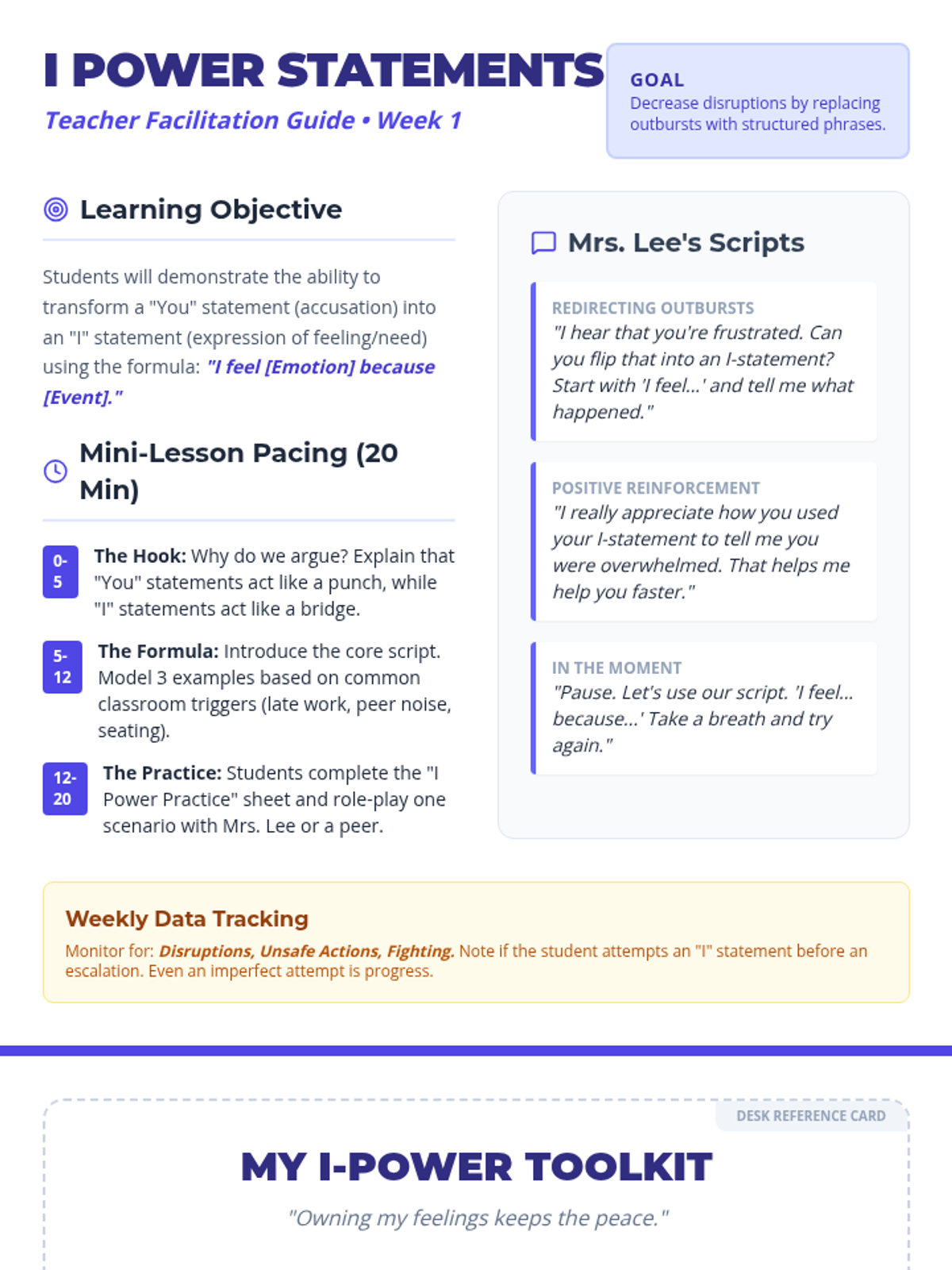
Learning to use 'I' statements to express feelings and needs without triggering defensiveness in others.
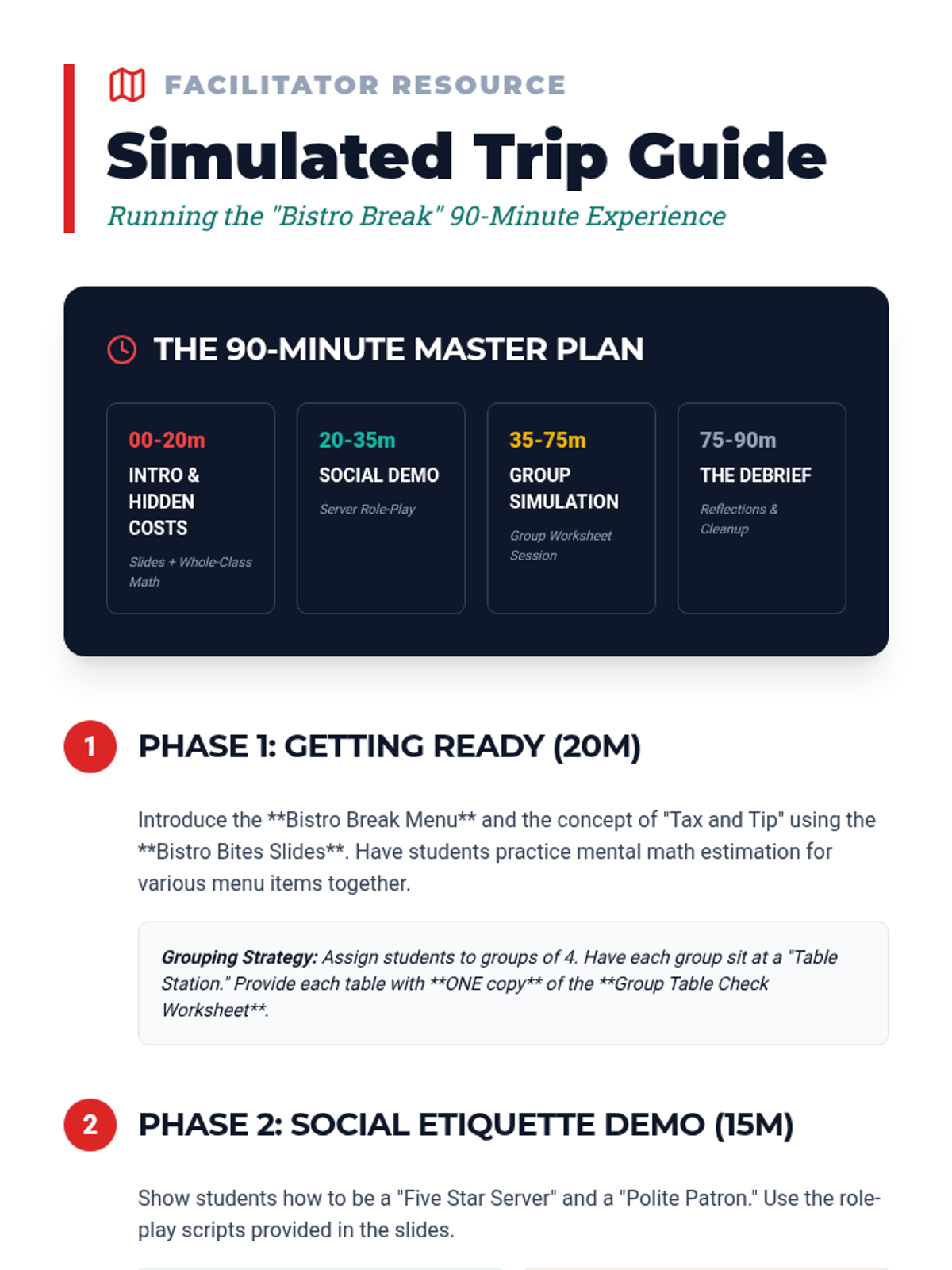
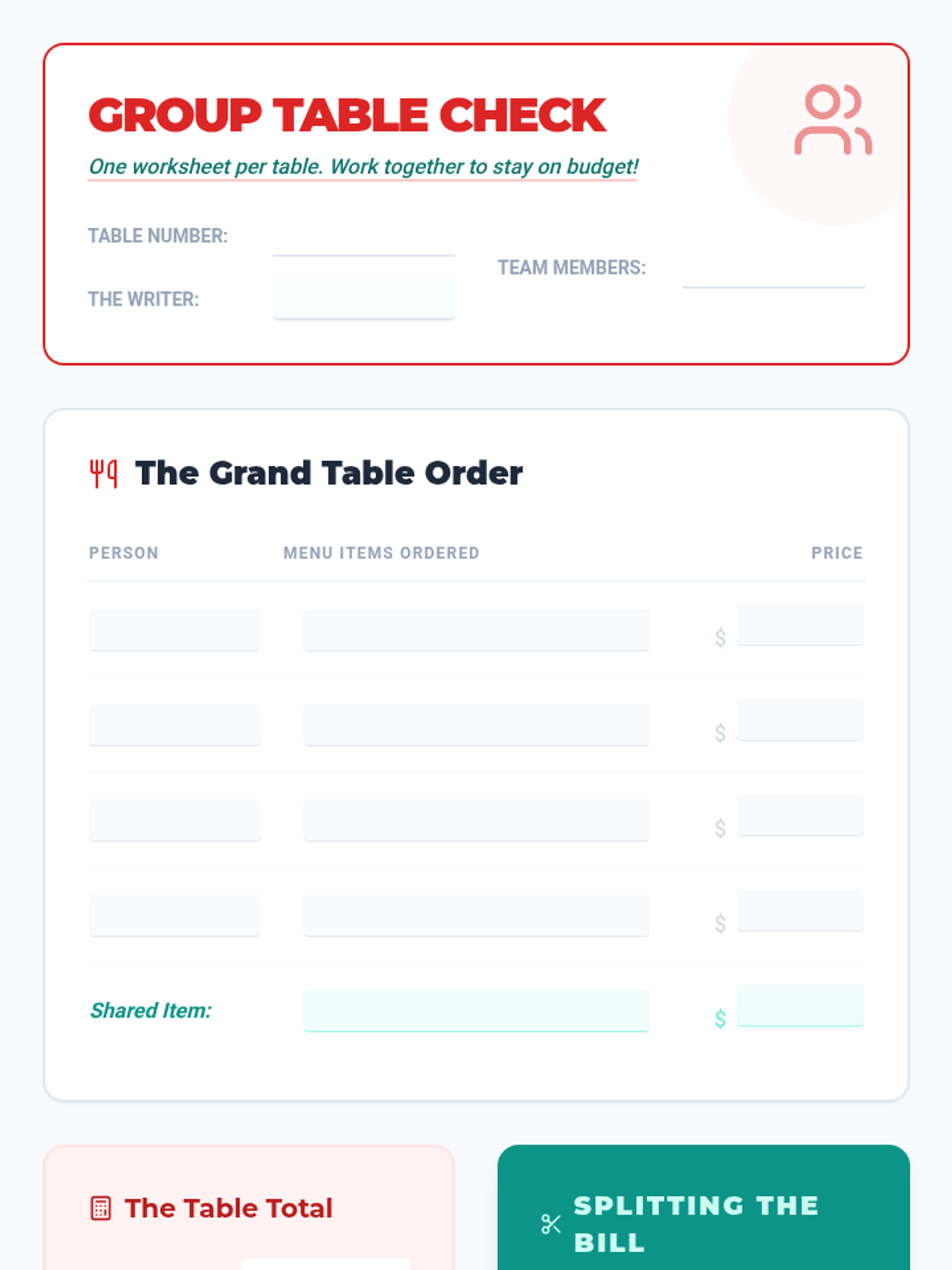
A functional skills lesson focused on navigating a restaurant experience on a budget, covering menu reading, budget planning, social etiquette, and group check splitting.
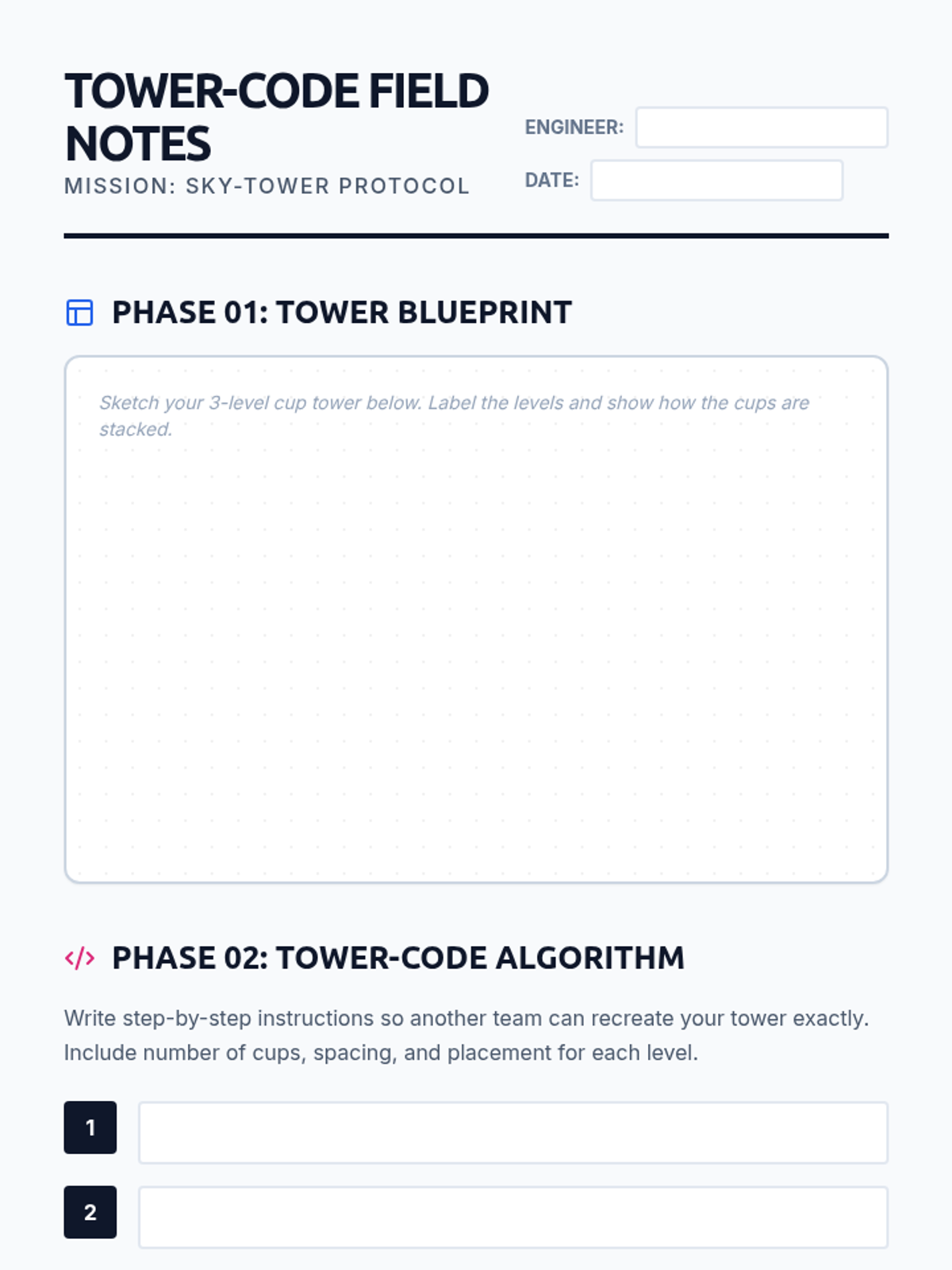
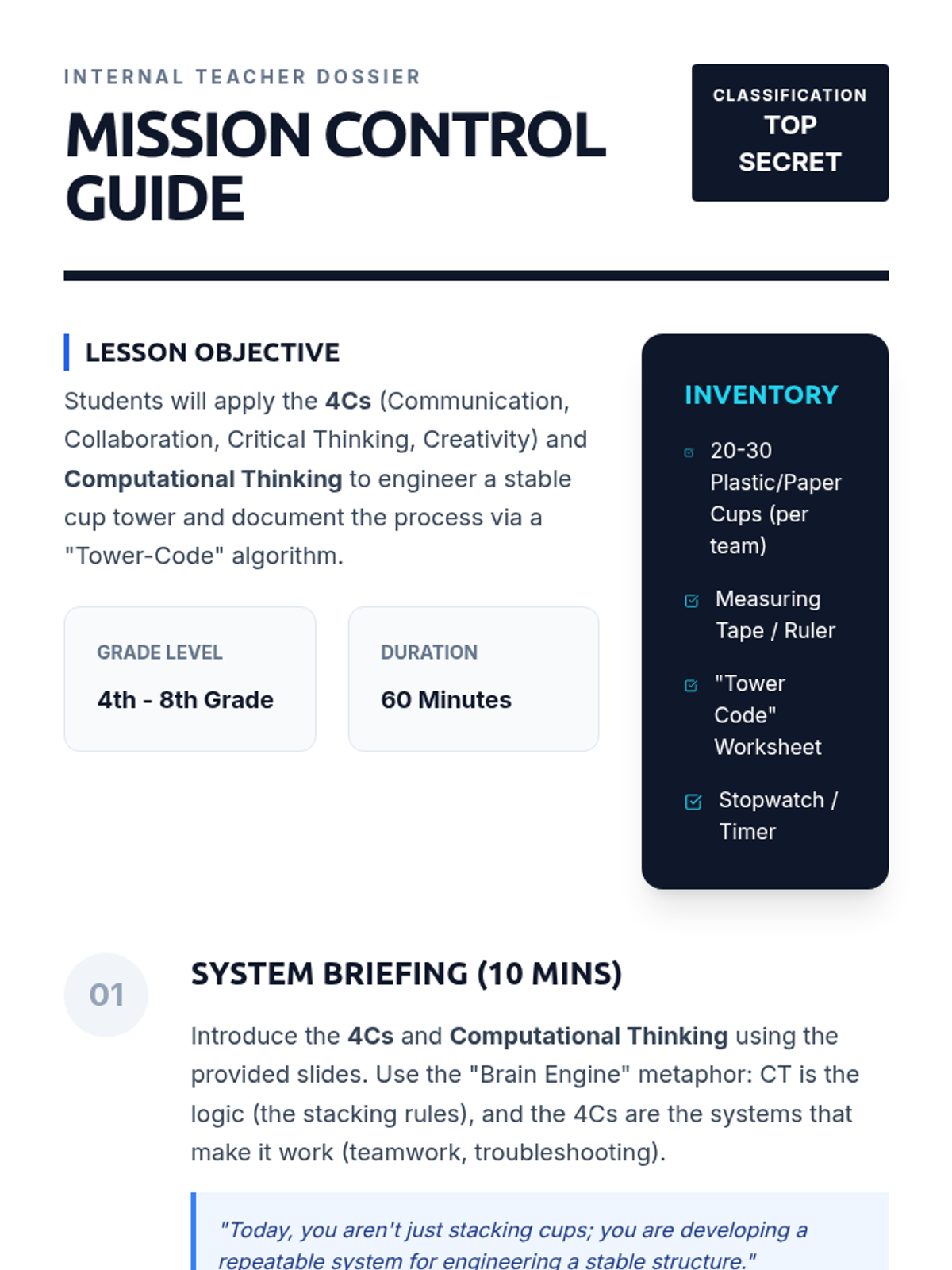
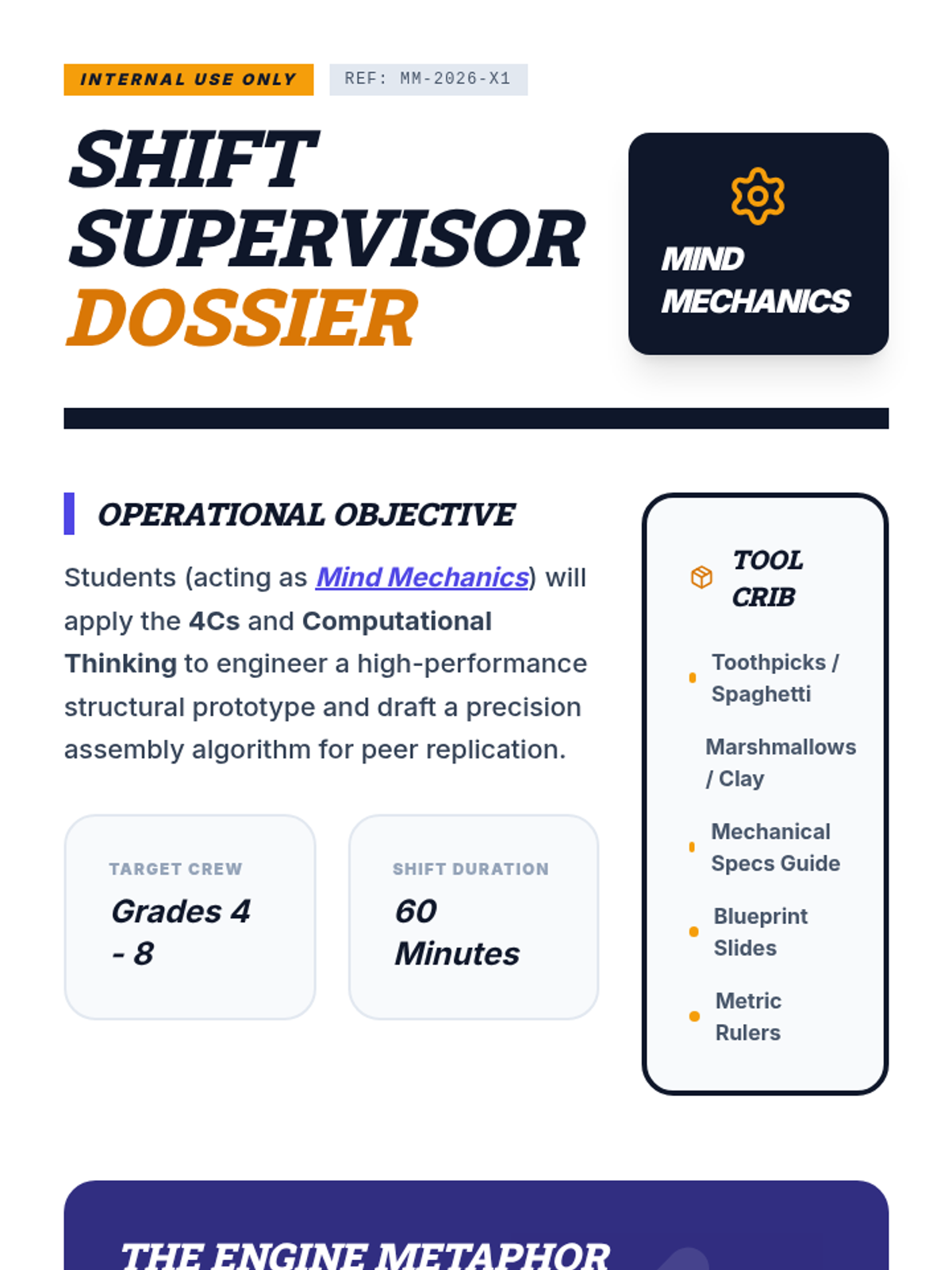
A high-stakes engineering challenge where students use the 4Cs and Computational Thinking to design, build, and document the ultimate cup tower structure.
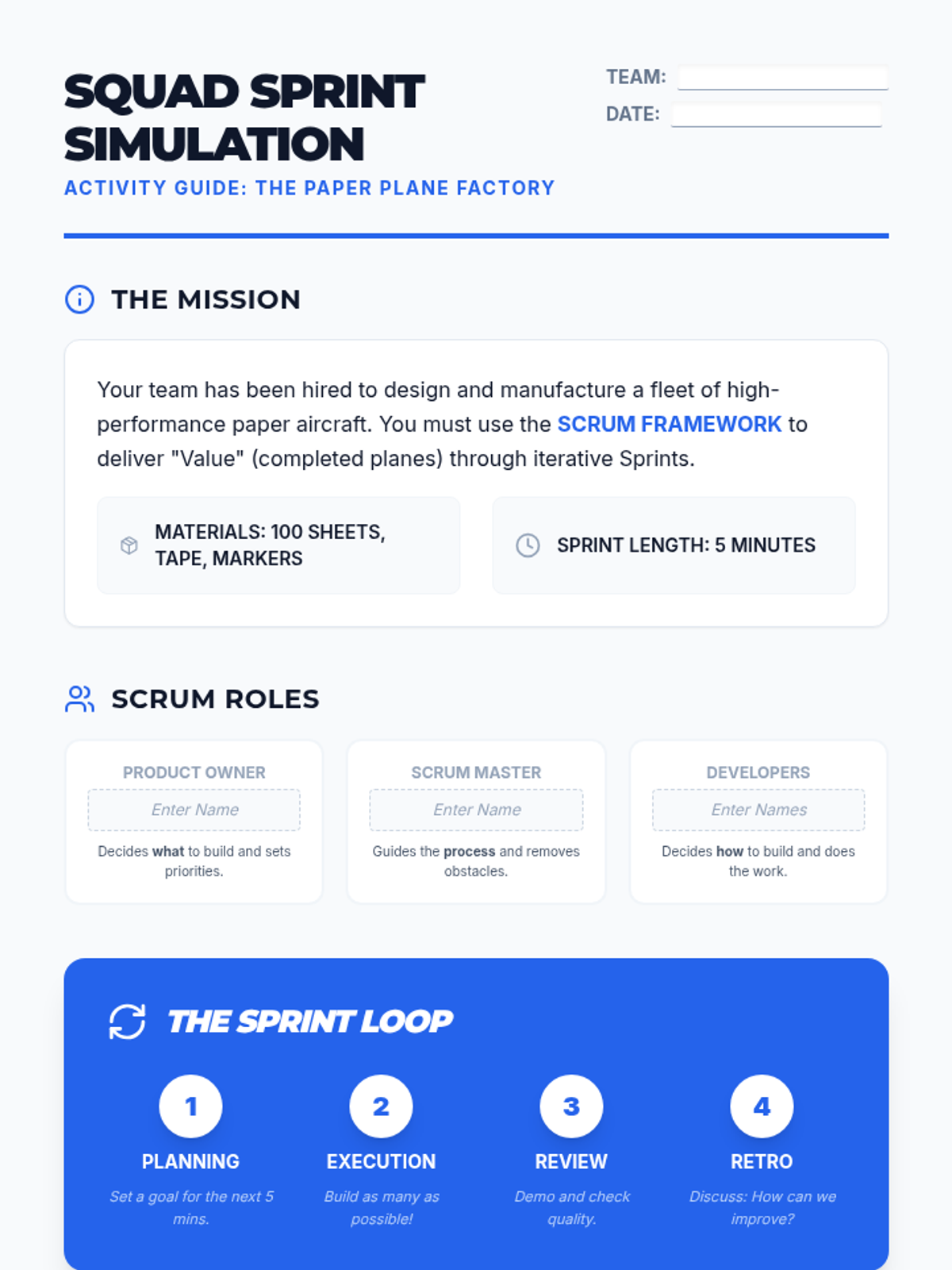
This lesson introduces students to the core concepts of Agile and Scrum through the lens of team dynamics. Students will explore roles, ceremonies, and the critical importance of communication in high-performing teams.
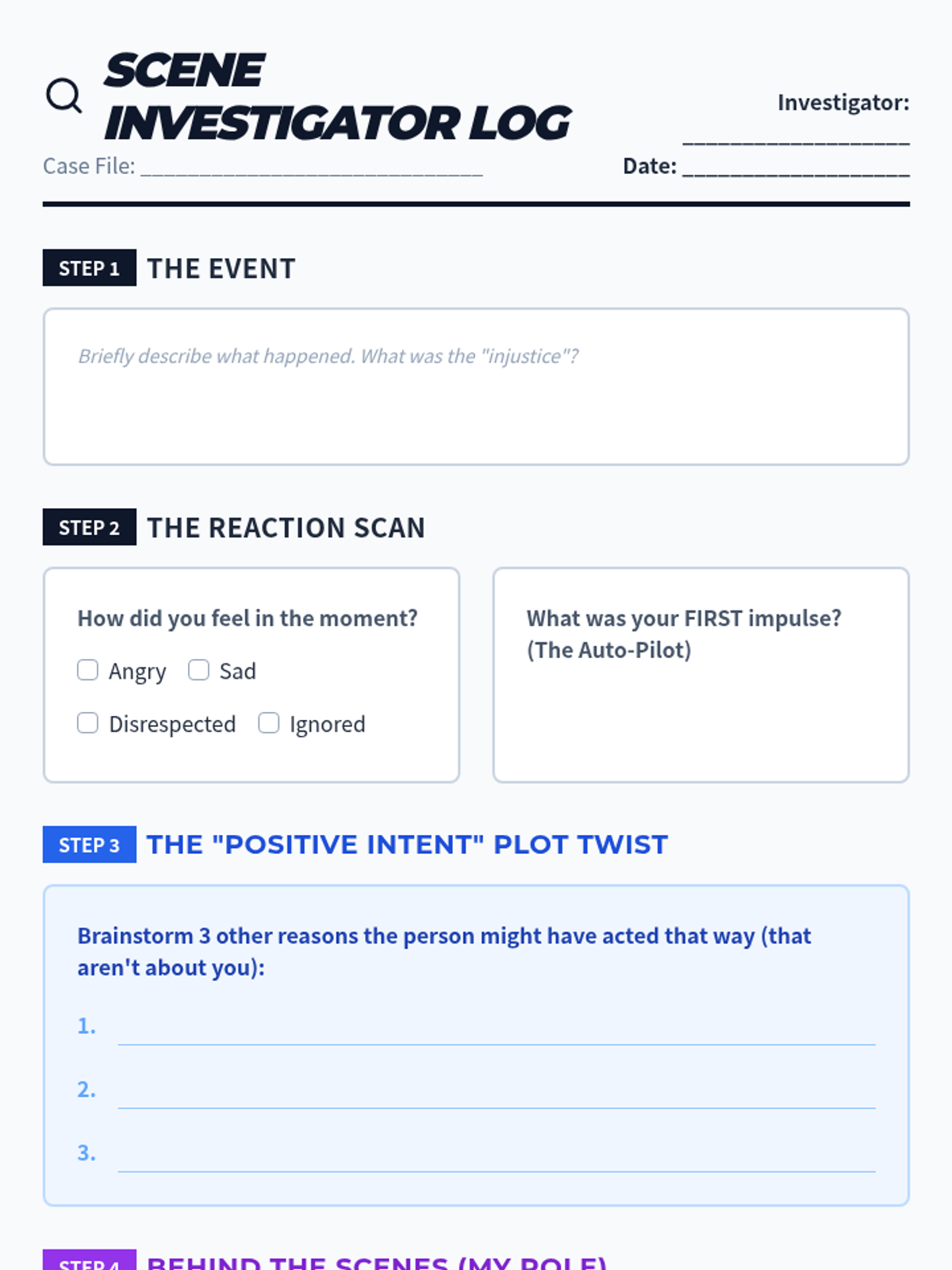
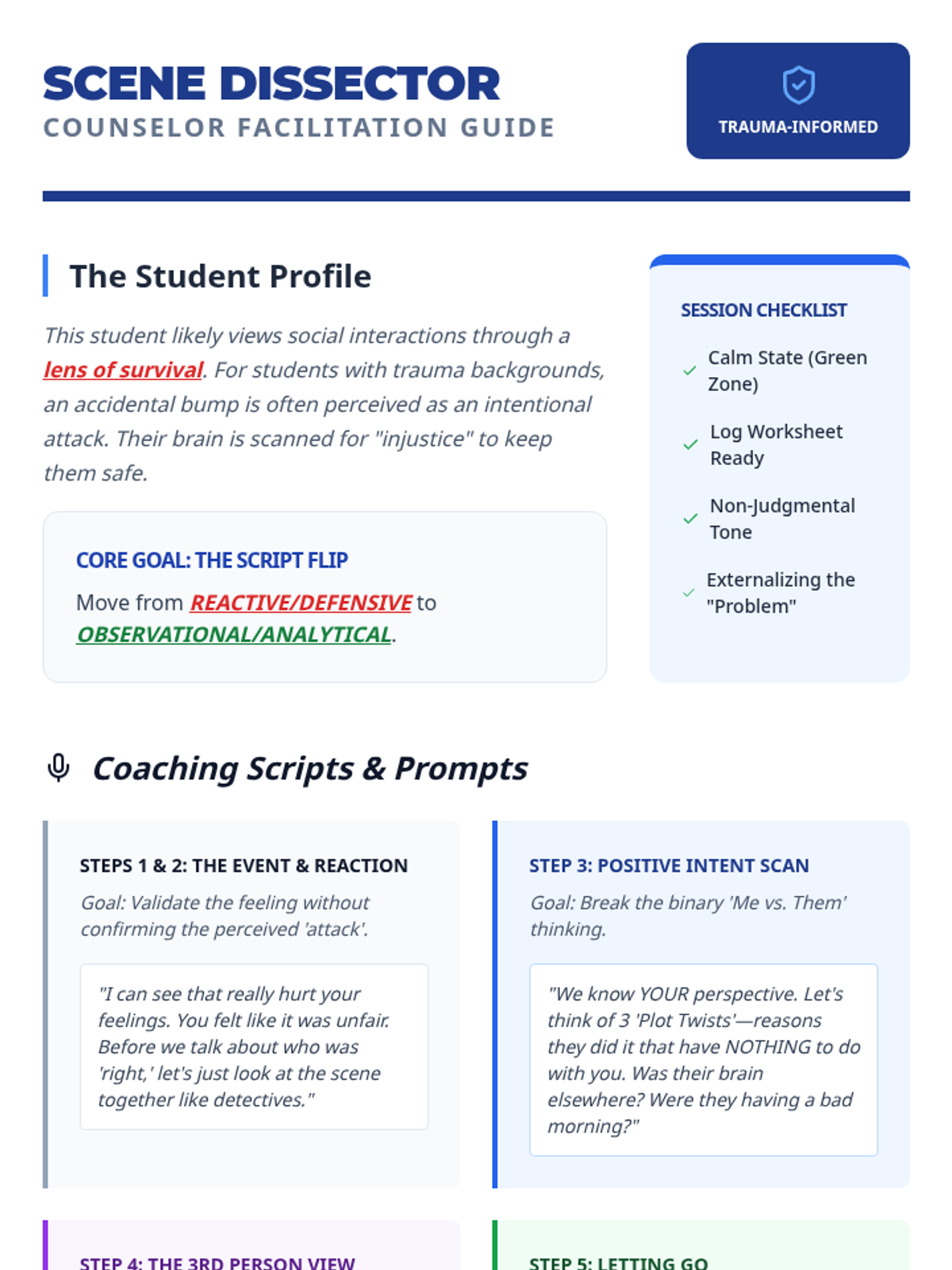
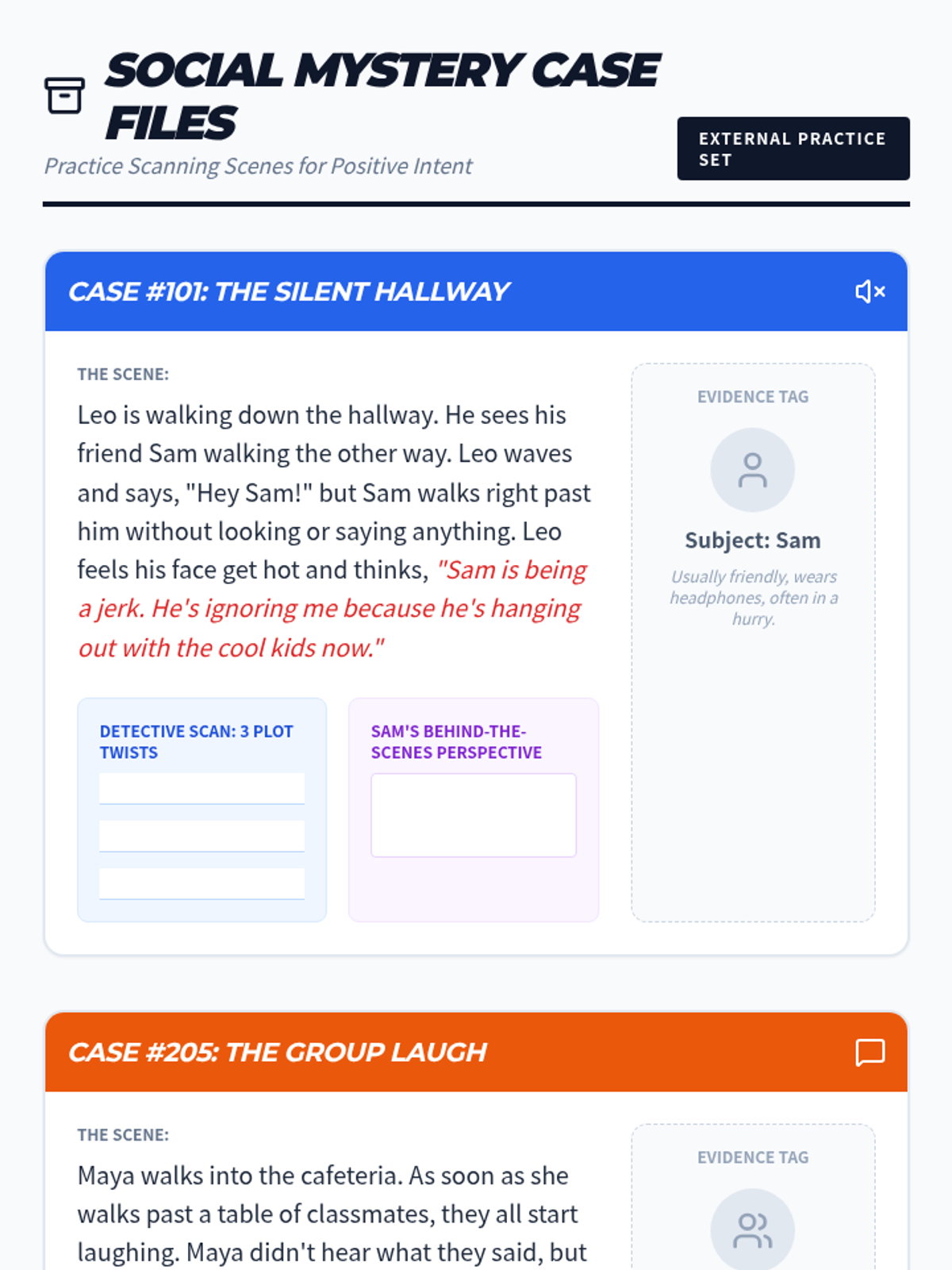
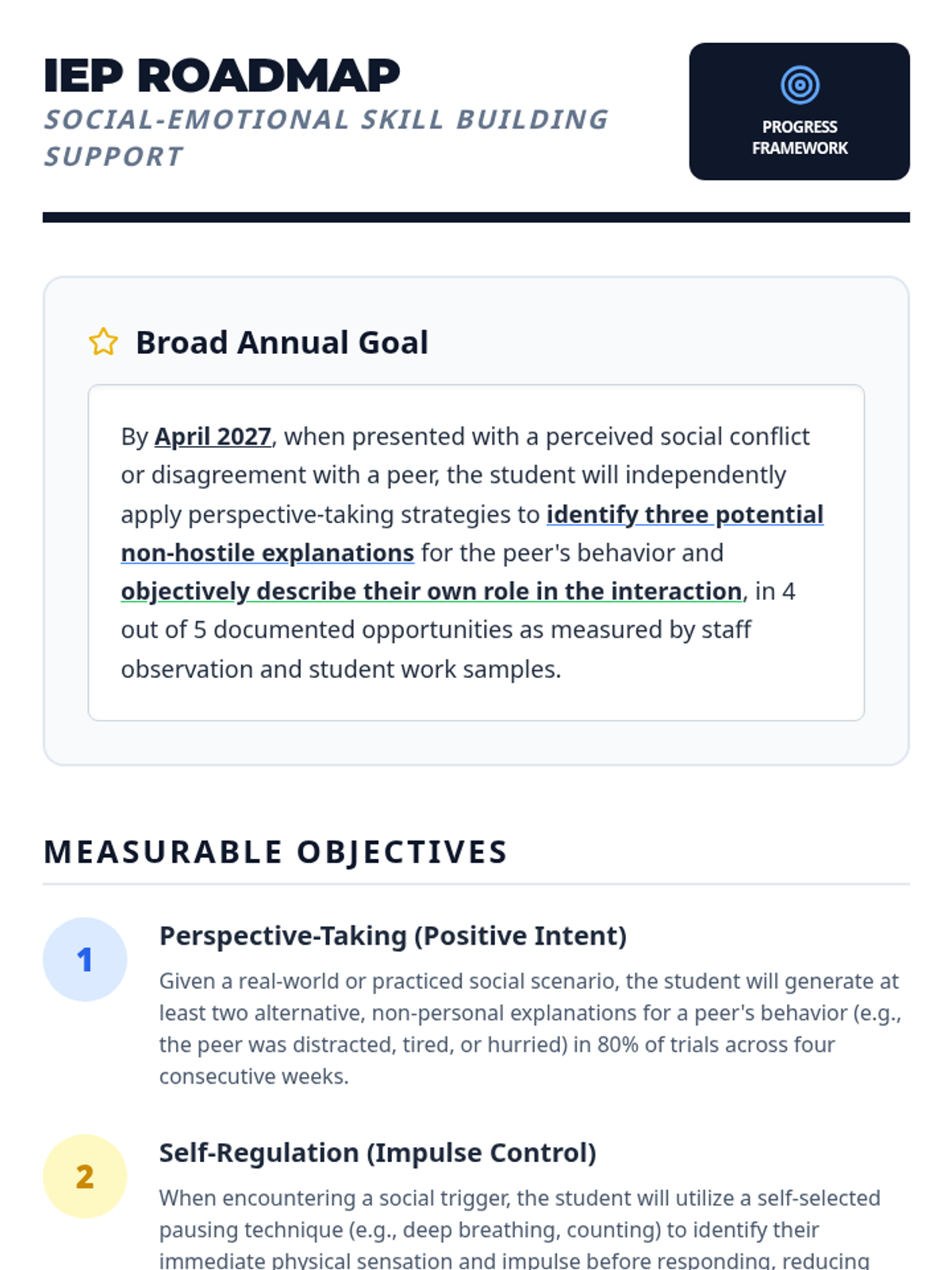
A social-emotional learning lesson designed for students with trauma backgrounds and impulse control challenges. It focuses on 'Scene Scanning'—assuming positive intent and dissecting social interactions through a detective-style lens to improve perspective-taking and reduce reactivity.
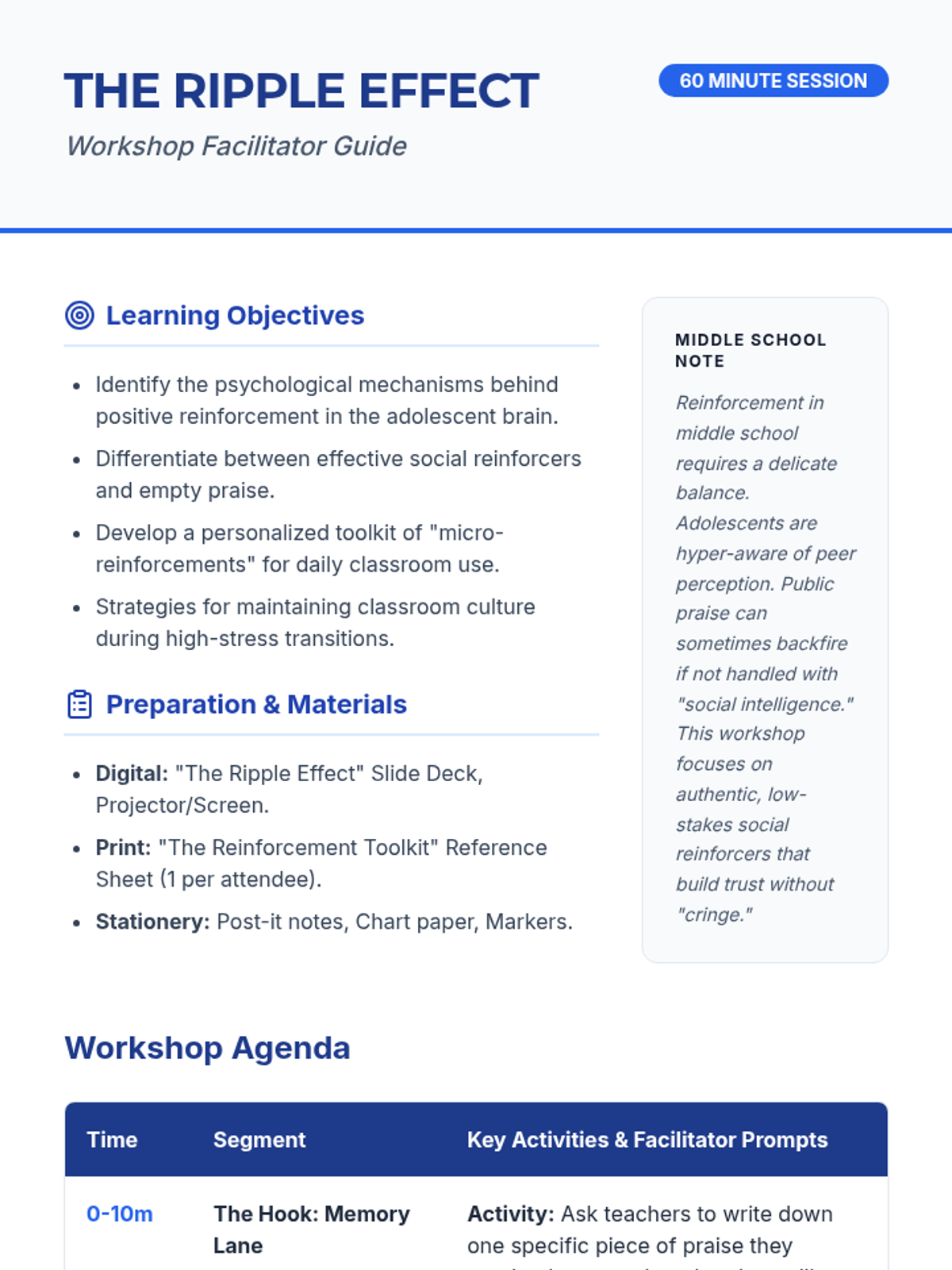
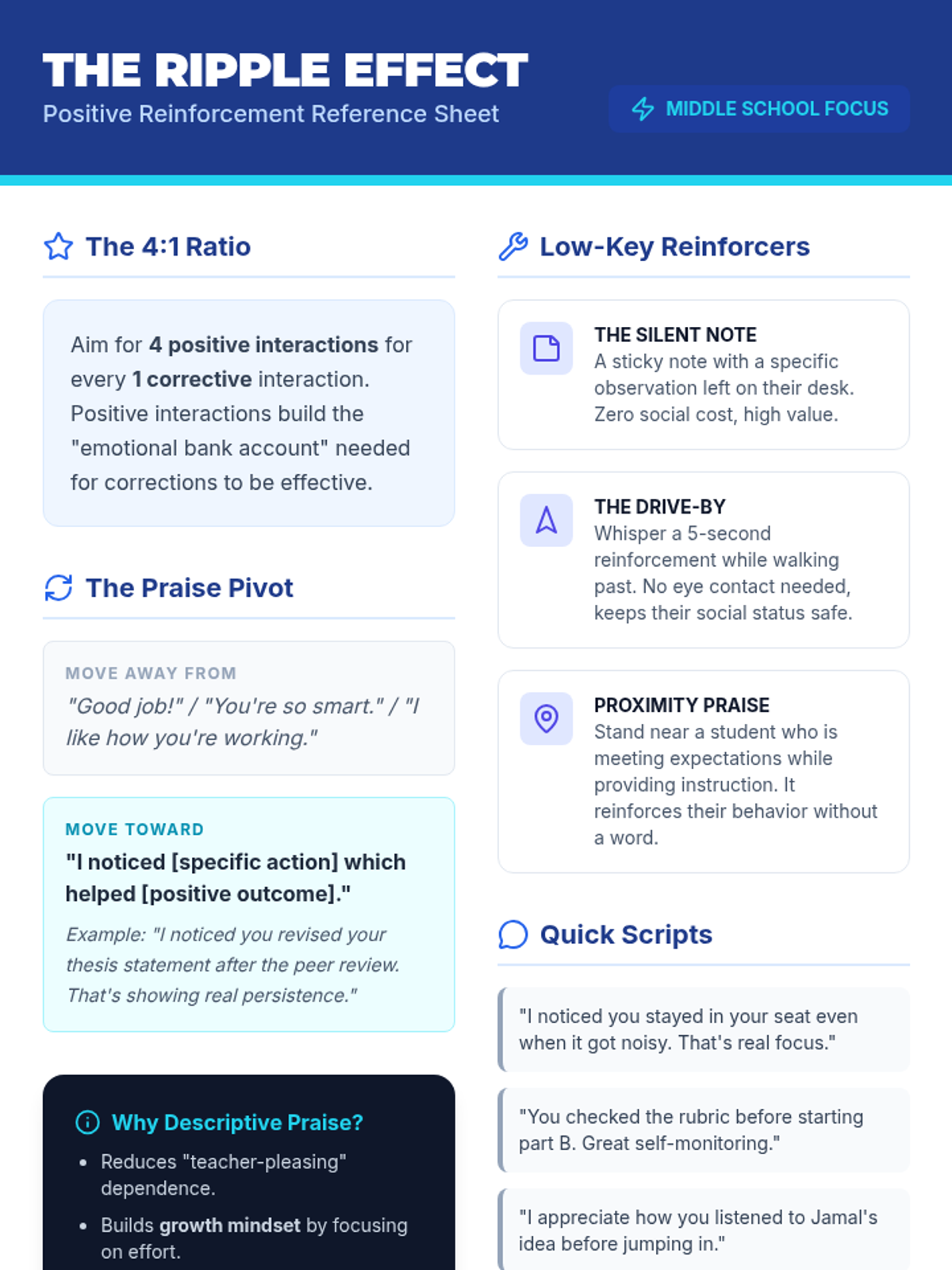
A comprehensive workshop for middle school educators on implementing effective positive reinforcement strategies to foster a healthy, supportive classroom culture.
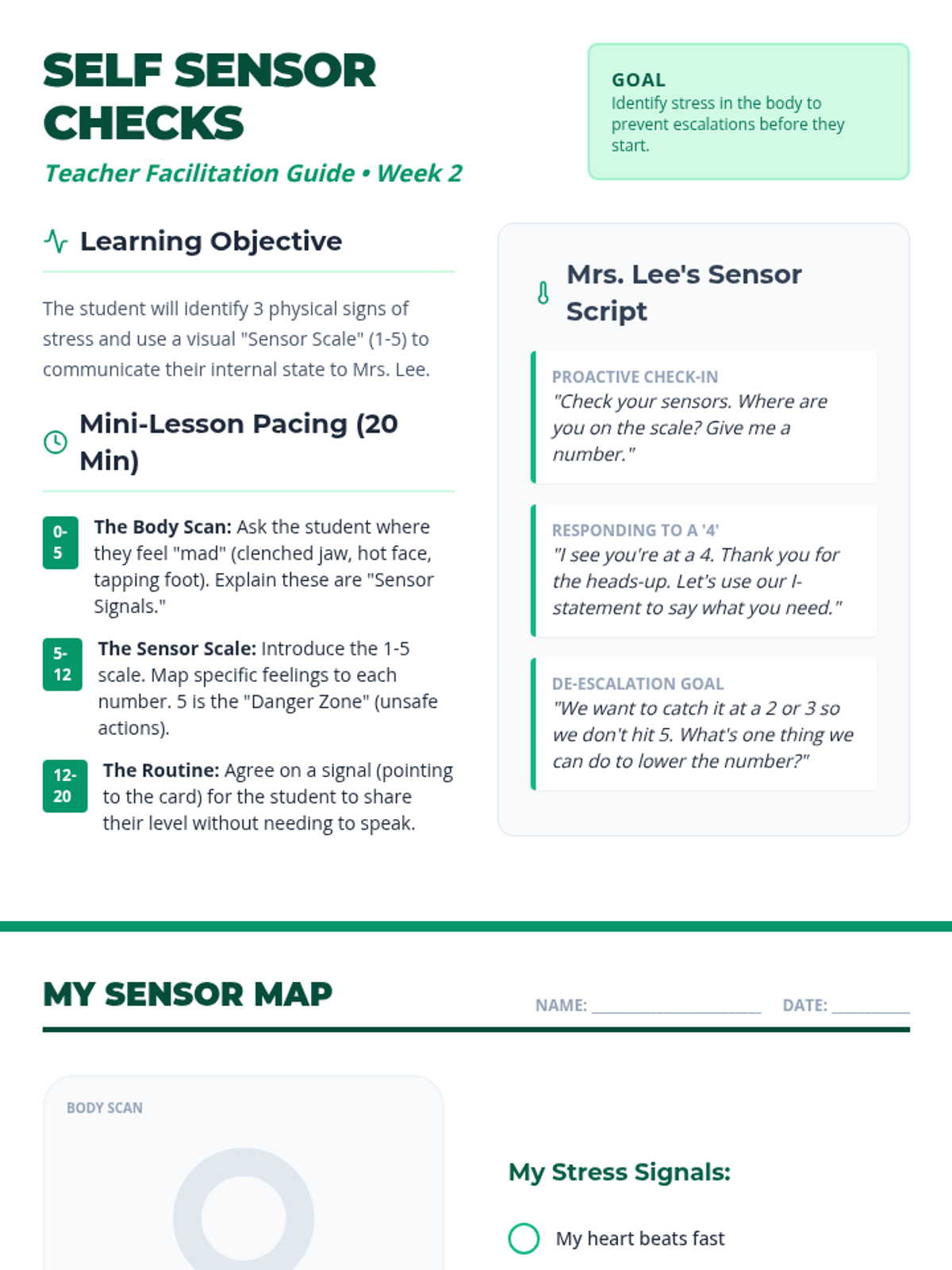
This lesson focuses on identifying internal emotional states and using visual check-ins to monitor stress levels before they lead to disruptions.
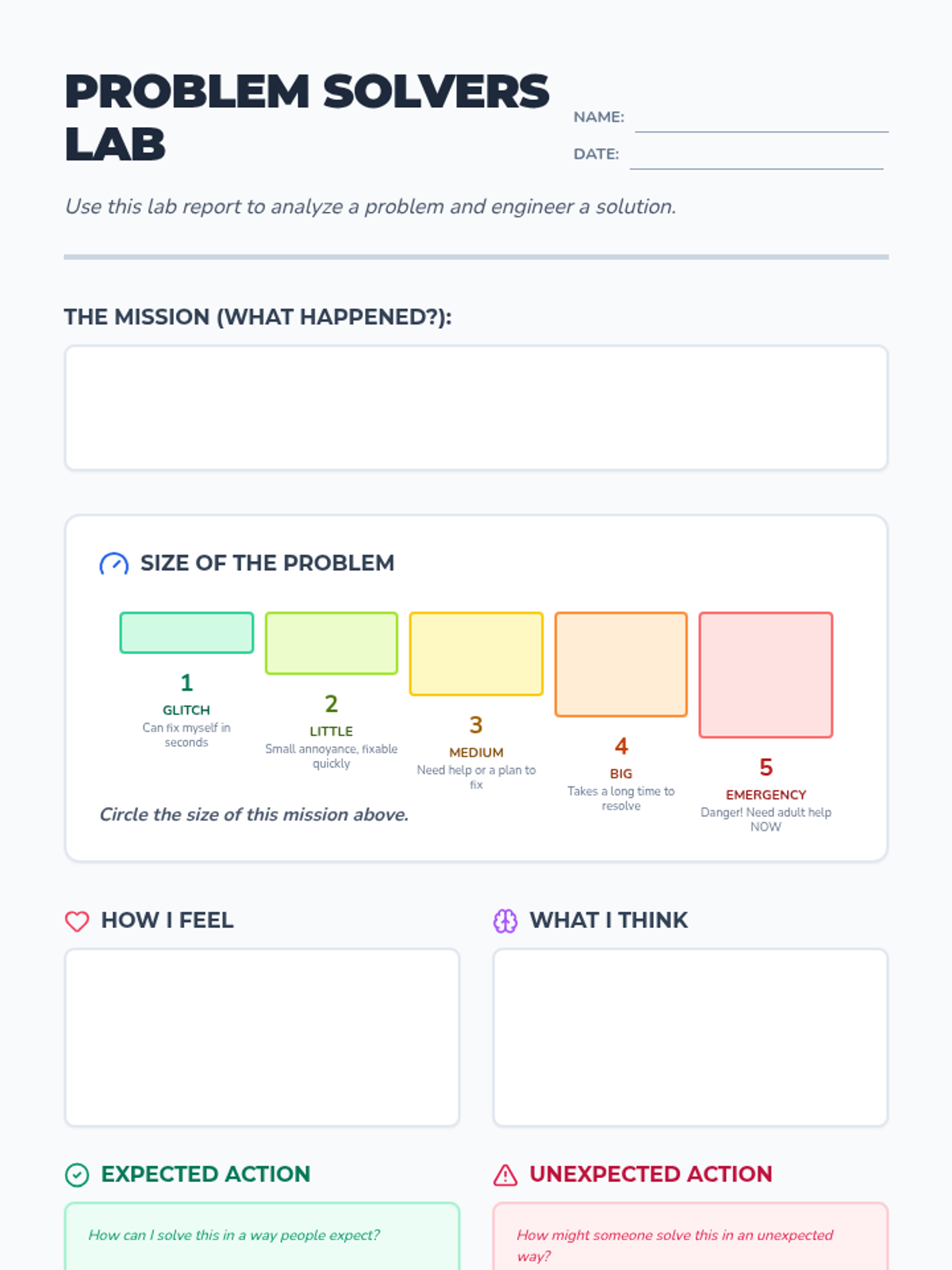
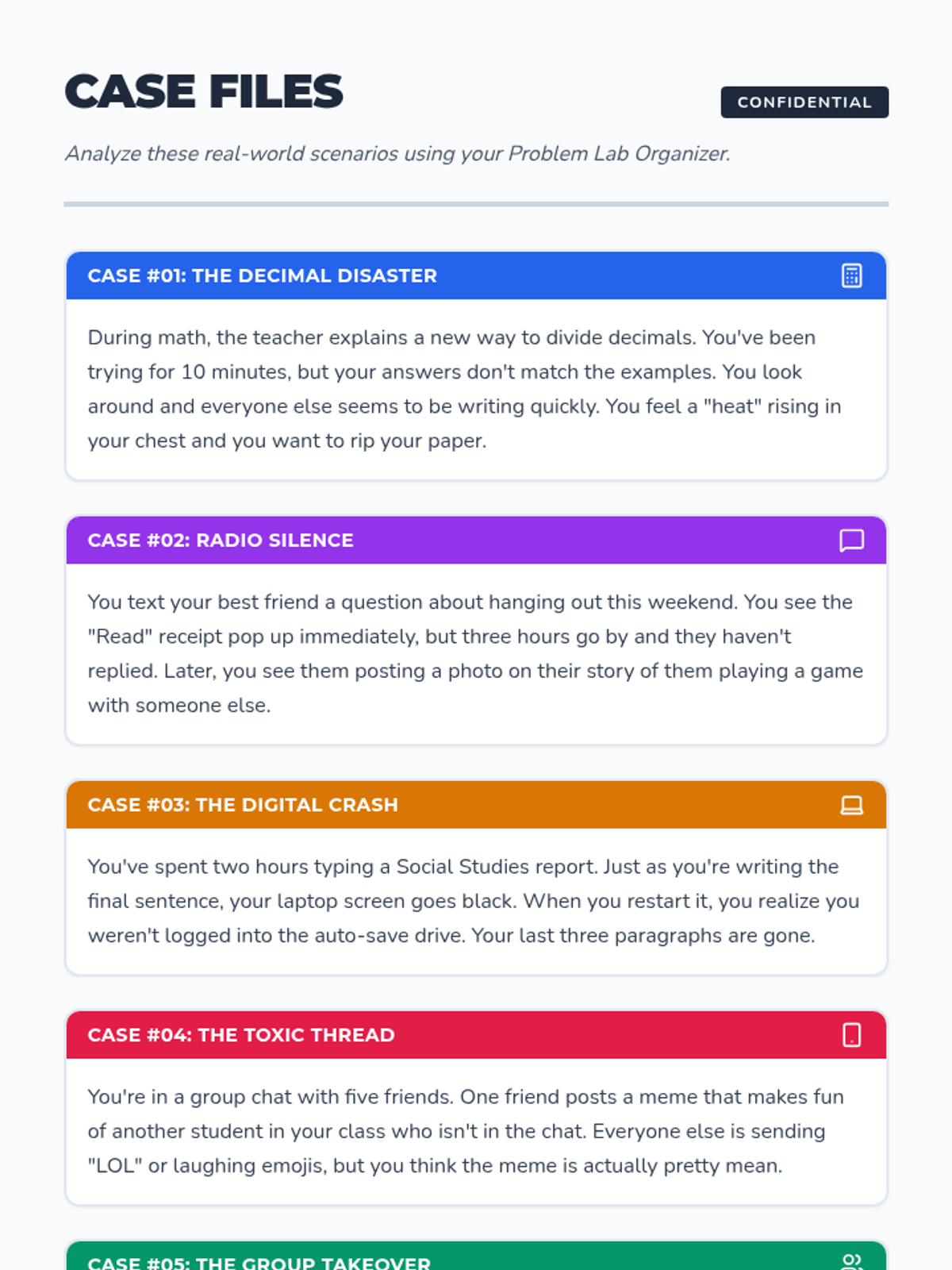
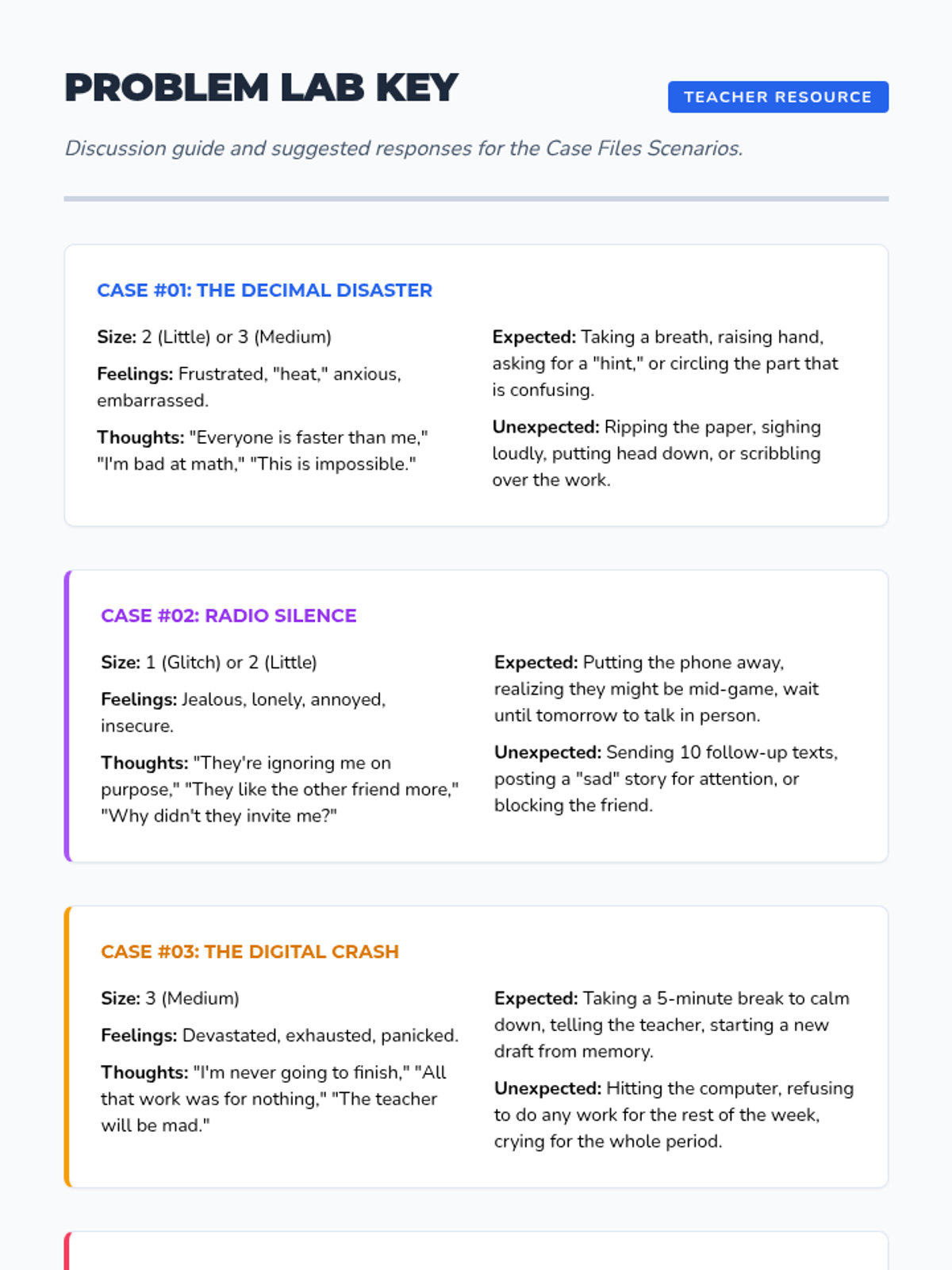
A social-emotional learning lesson focusing on the Size of the Problem framework, CBT thought-feeling connections, and Social Thinking concepts of expected vs. unexpected behaviors. Students analyze classroom and digital scenarios to build self-regulation and problem-solving skills.
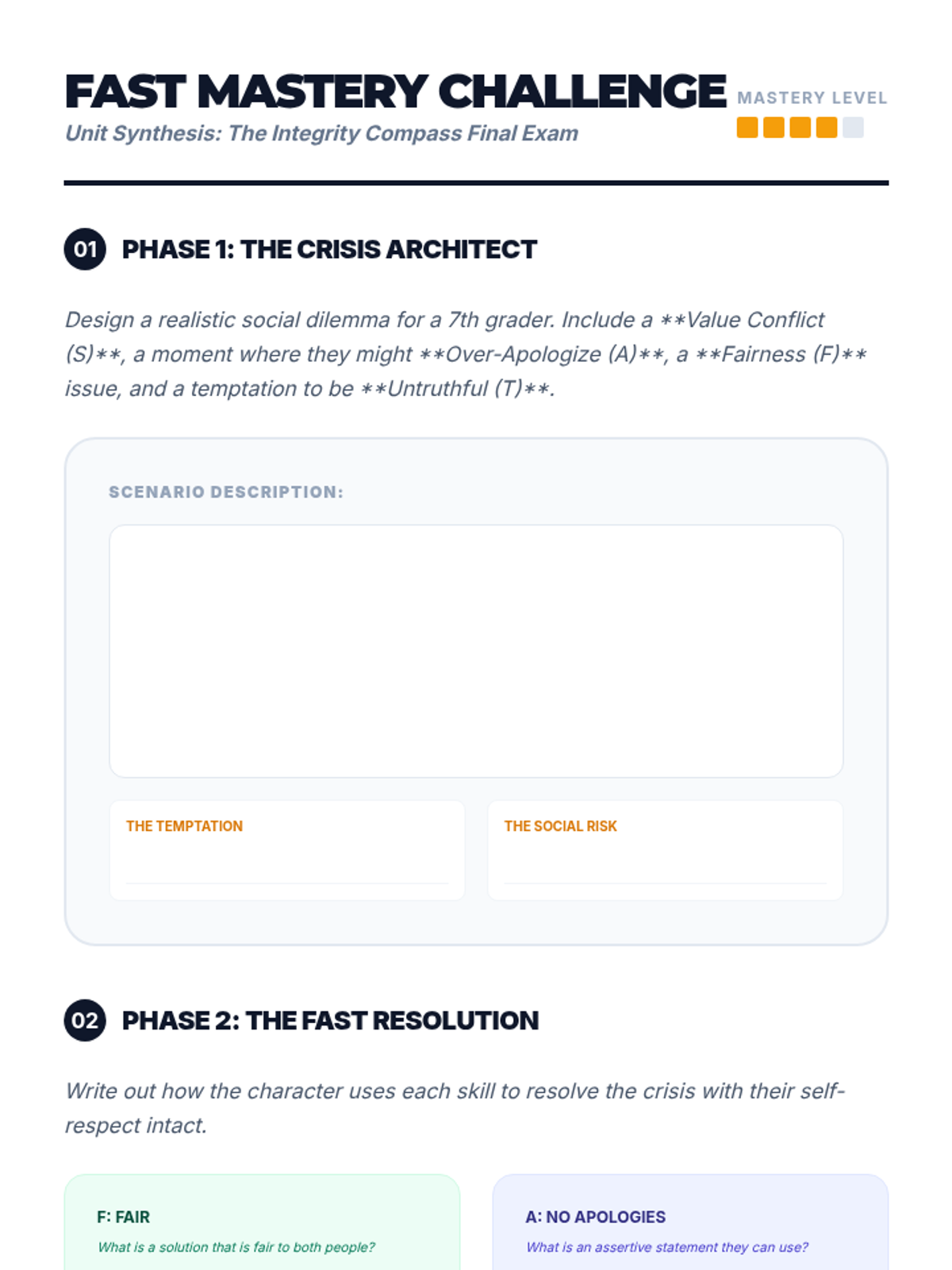
A synthesis lesson where students create their own case studies and apply the full FAST framework to resolve conflicts.
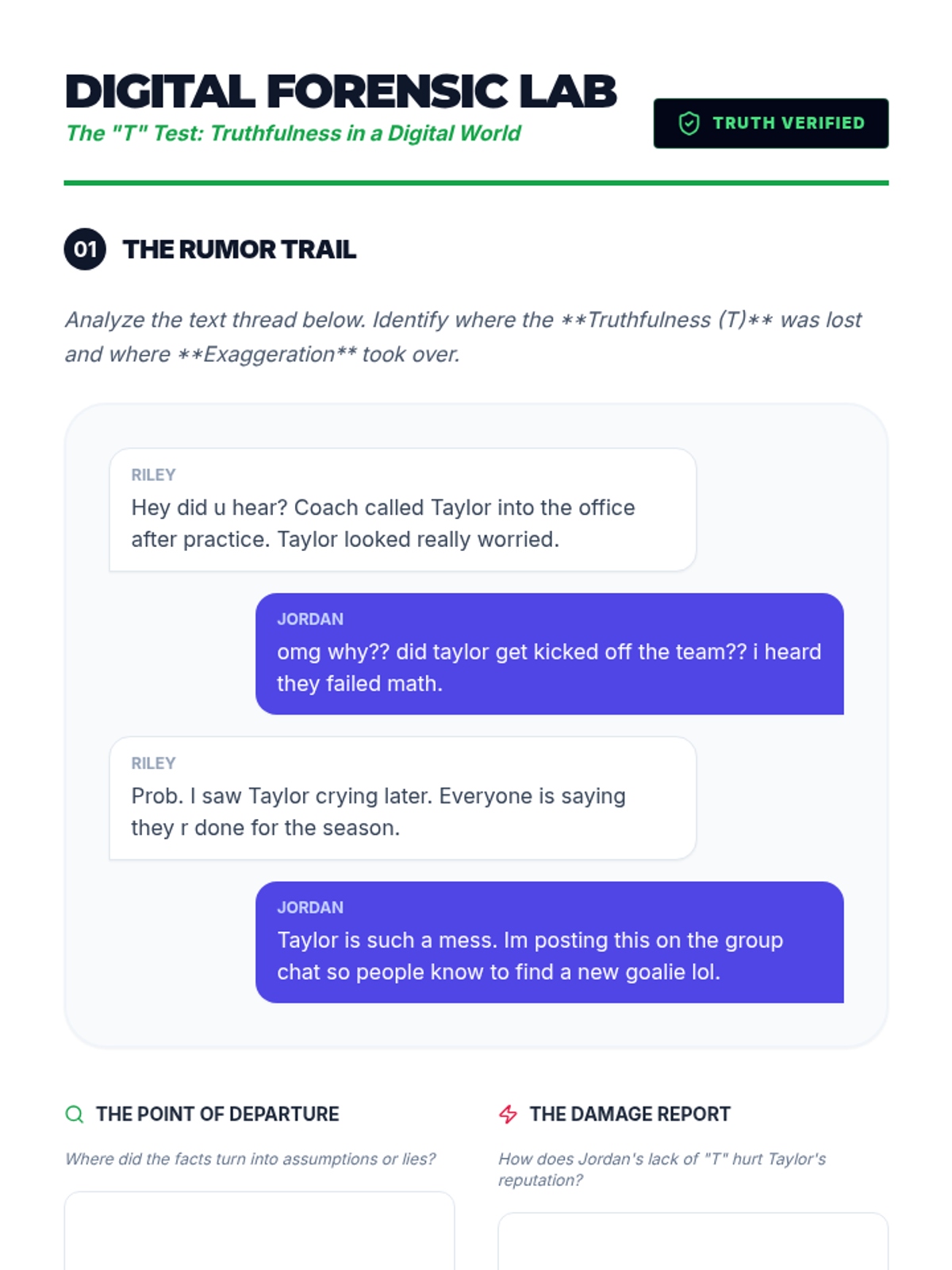
Students apply the 'T' (Truthful) skill to digital interactions, analyzing the impact of online rumors and reputation.
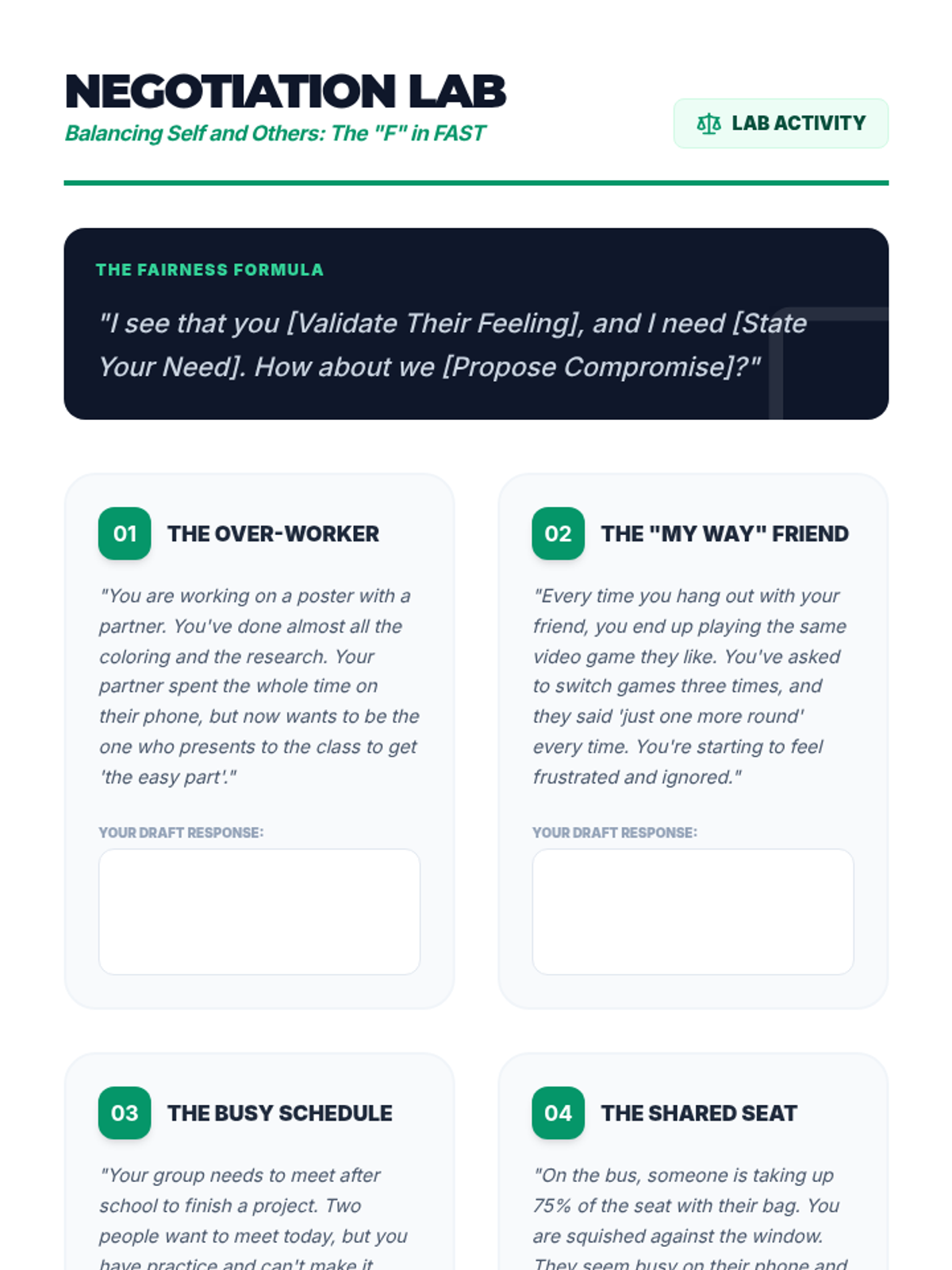
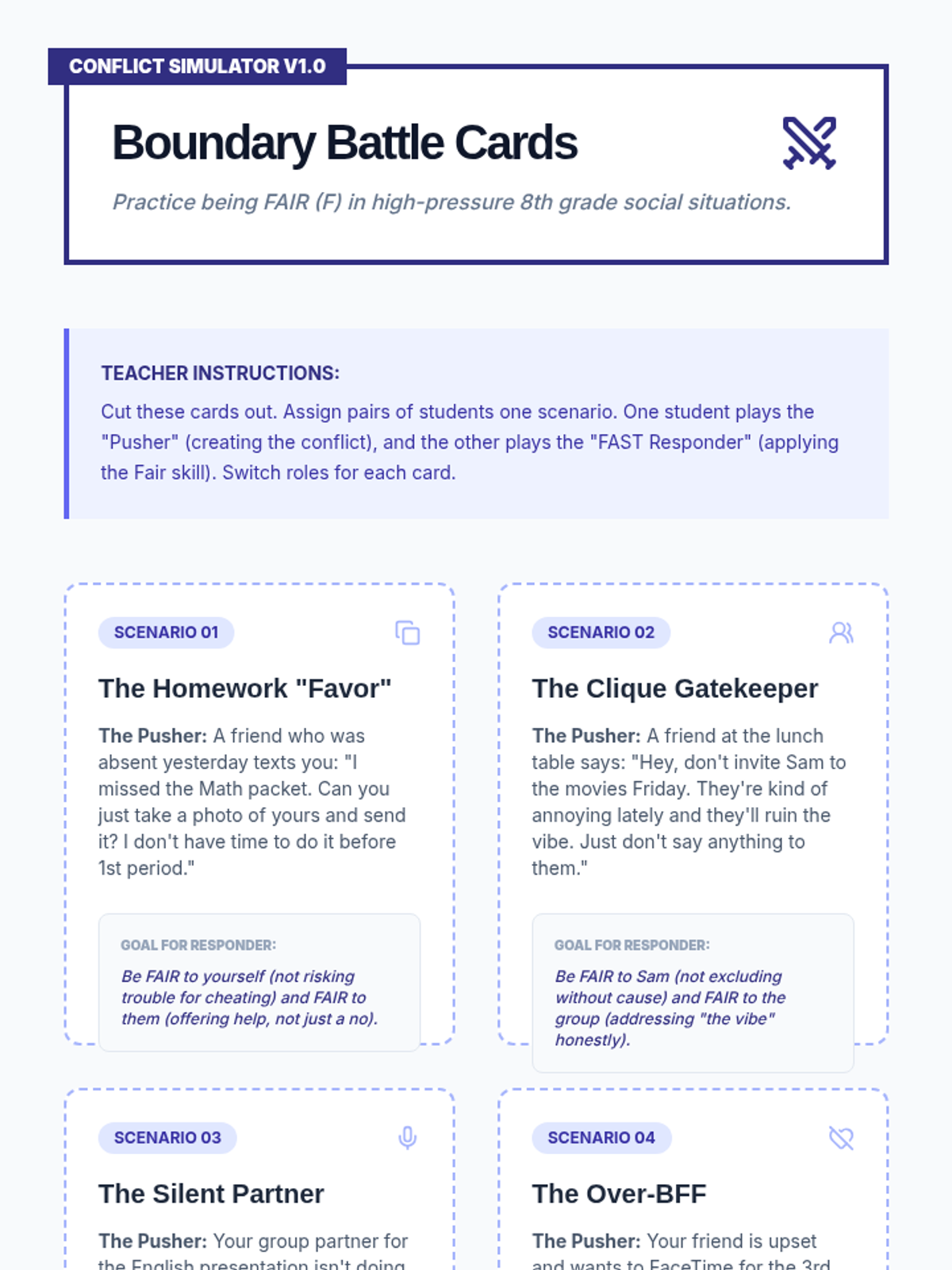
Focusing on the 'F' in FAST, students practice negotiating fair outcomes in group settings like projects and social plans.
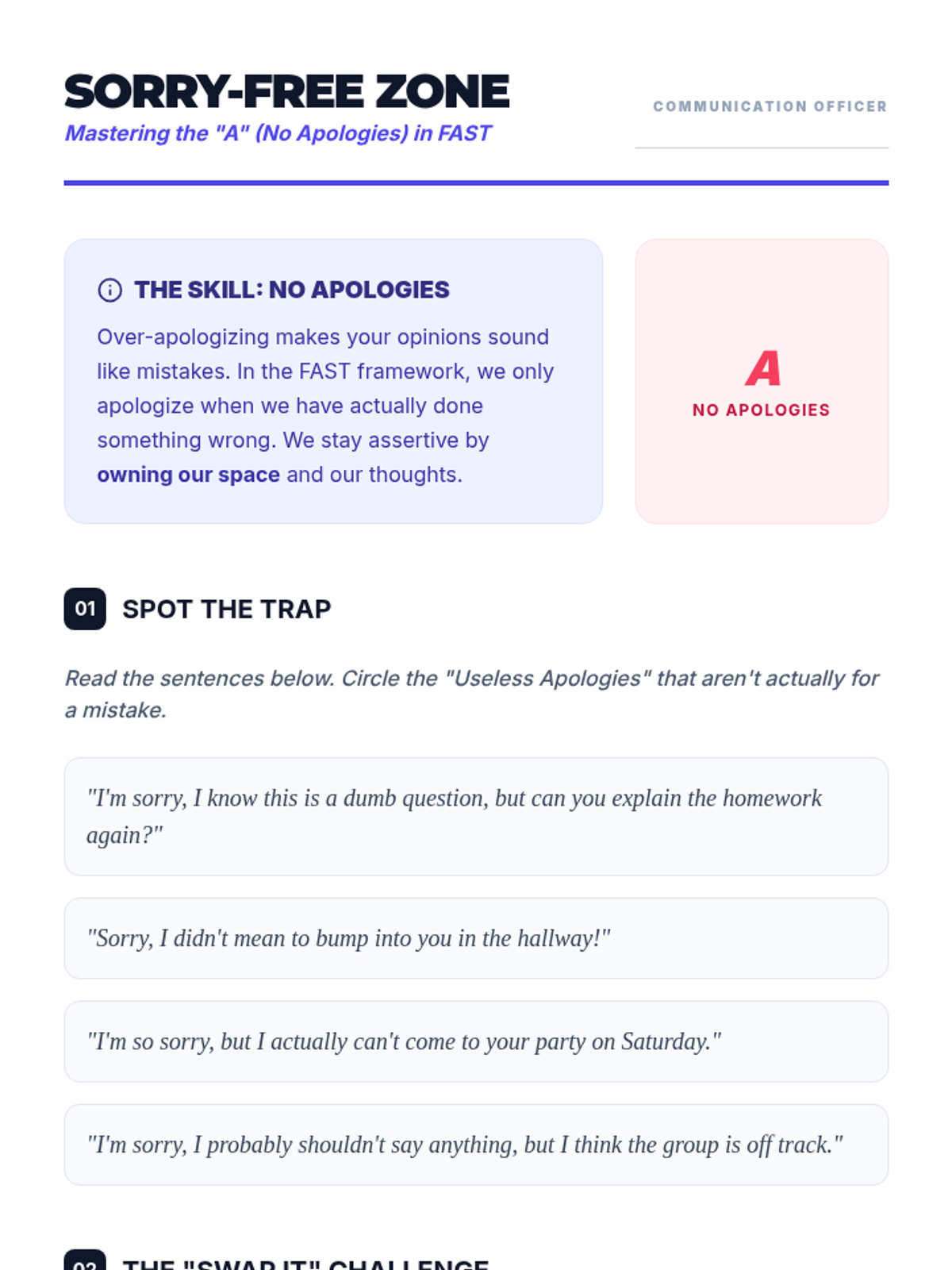
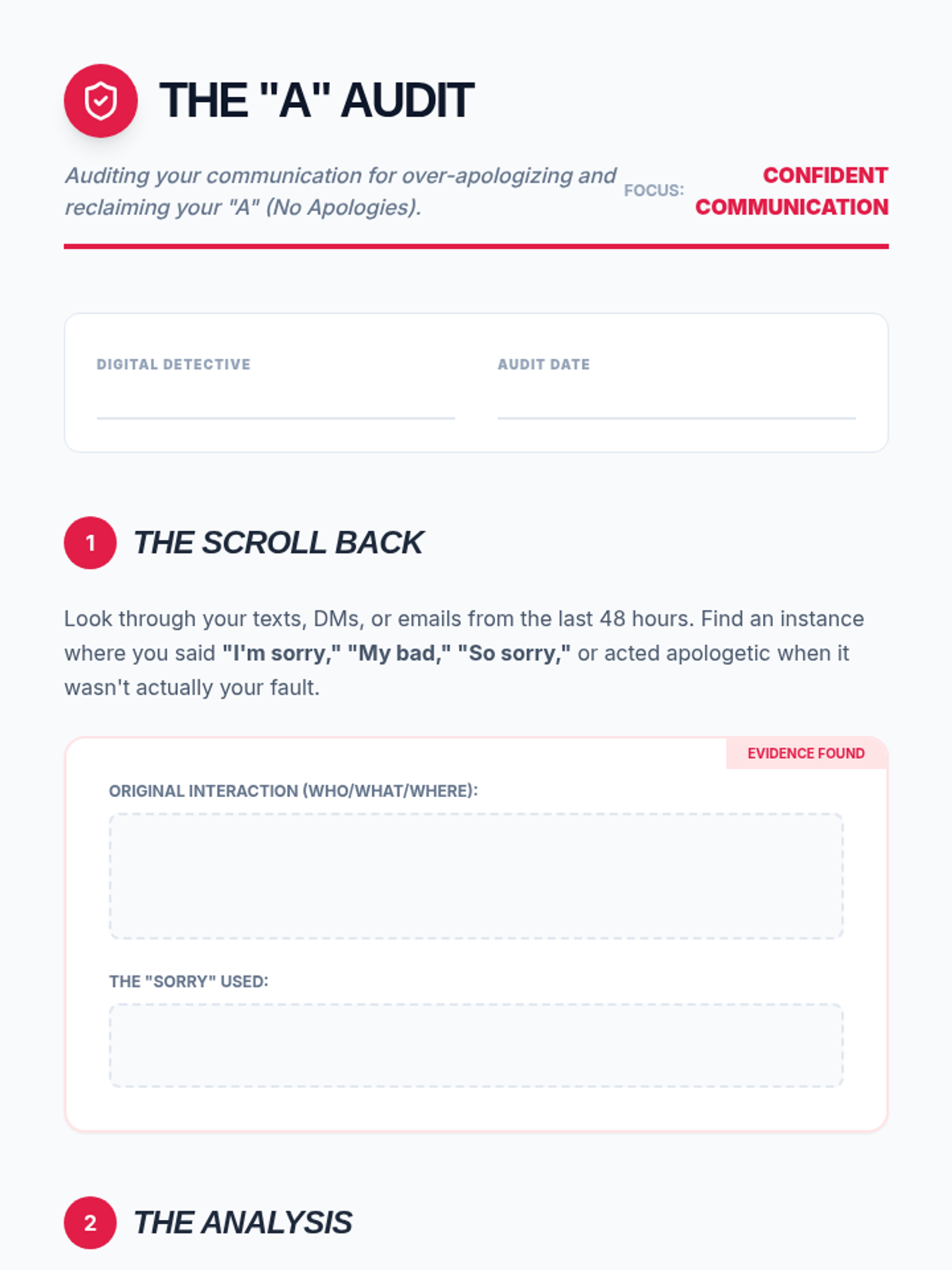
Students investigate how over-apologizing impacts credibility and practice assertive communication (the 'A' in FAST).
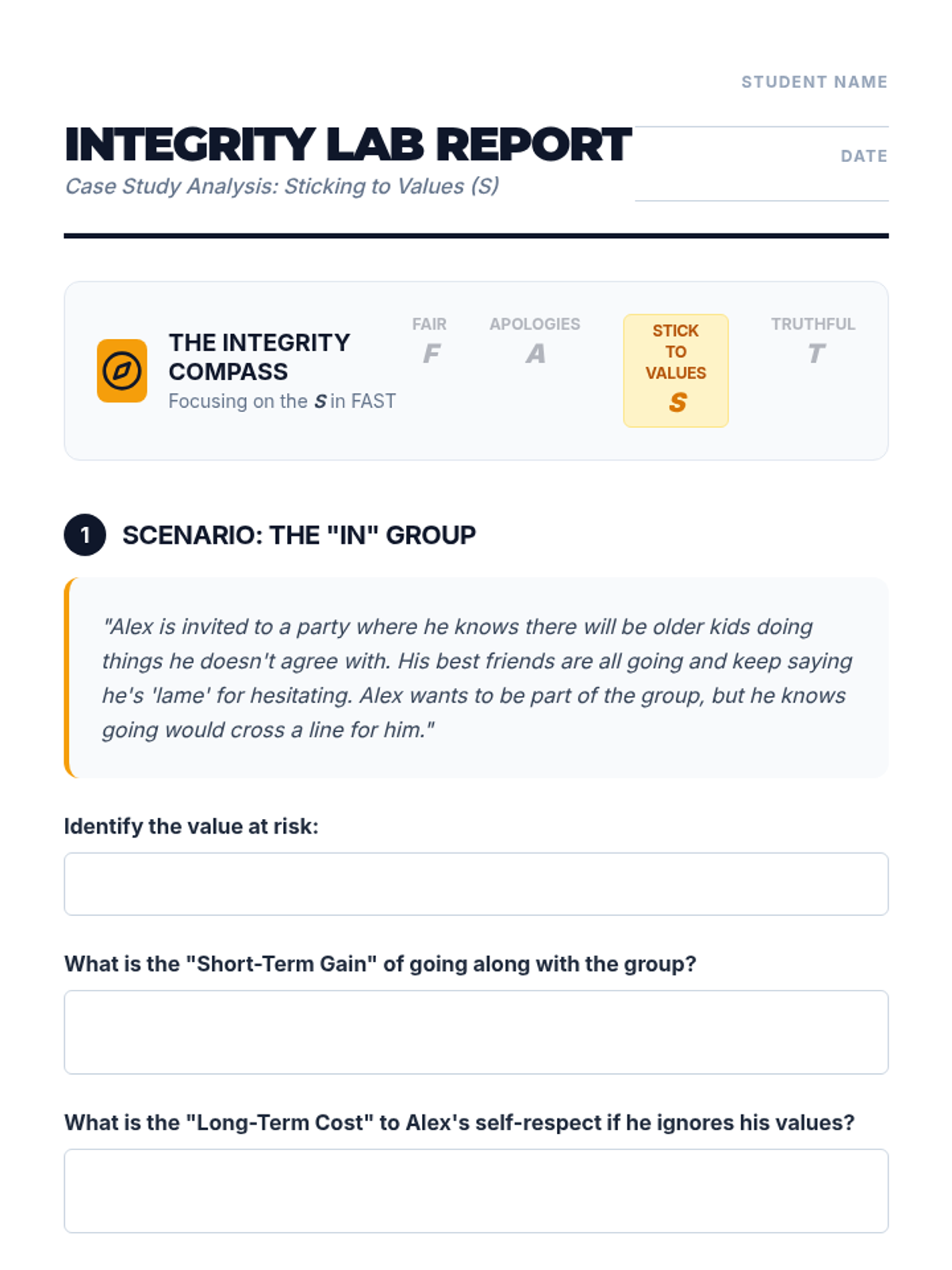
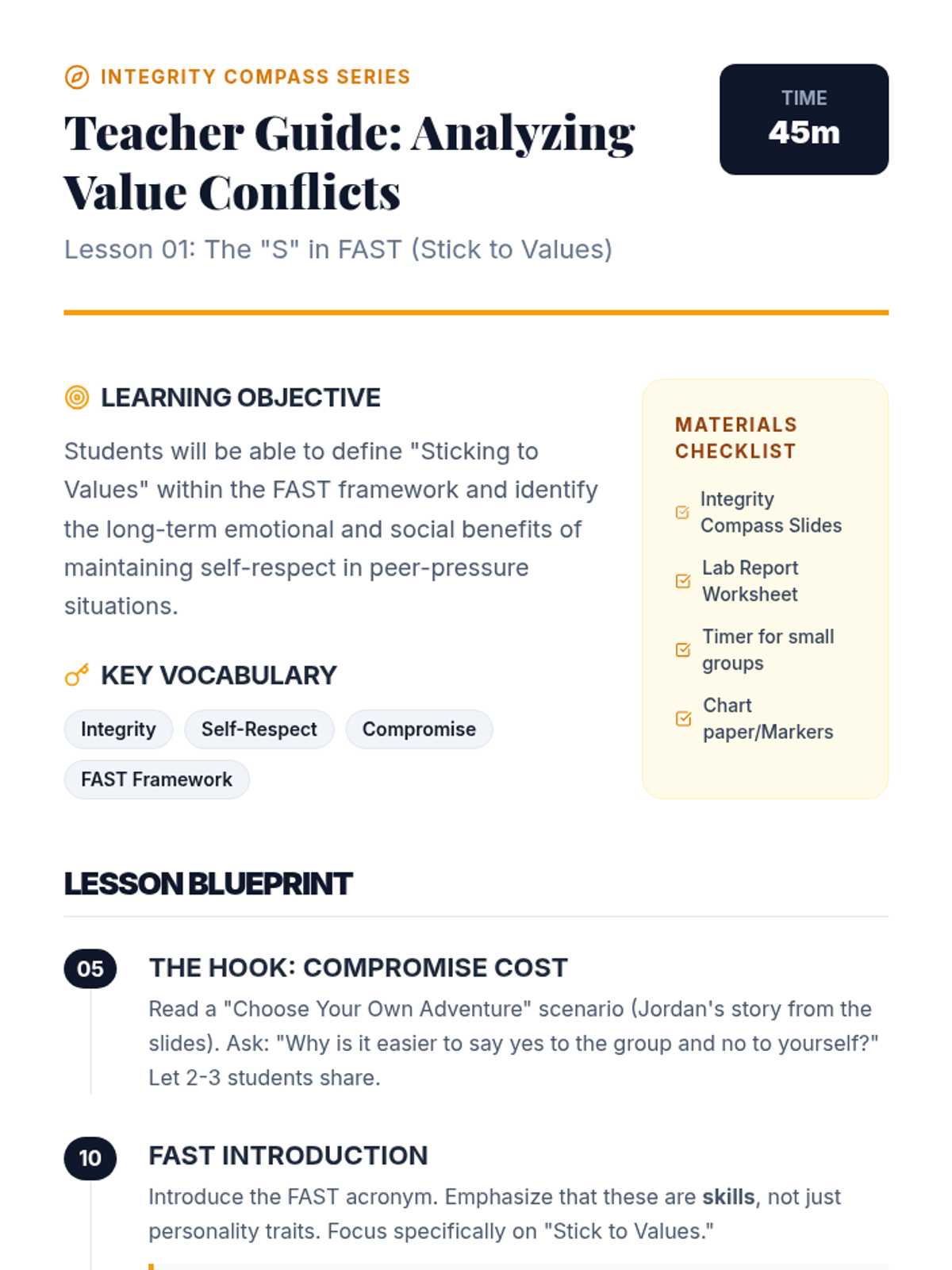
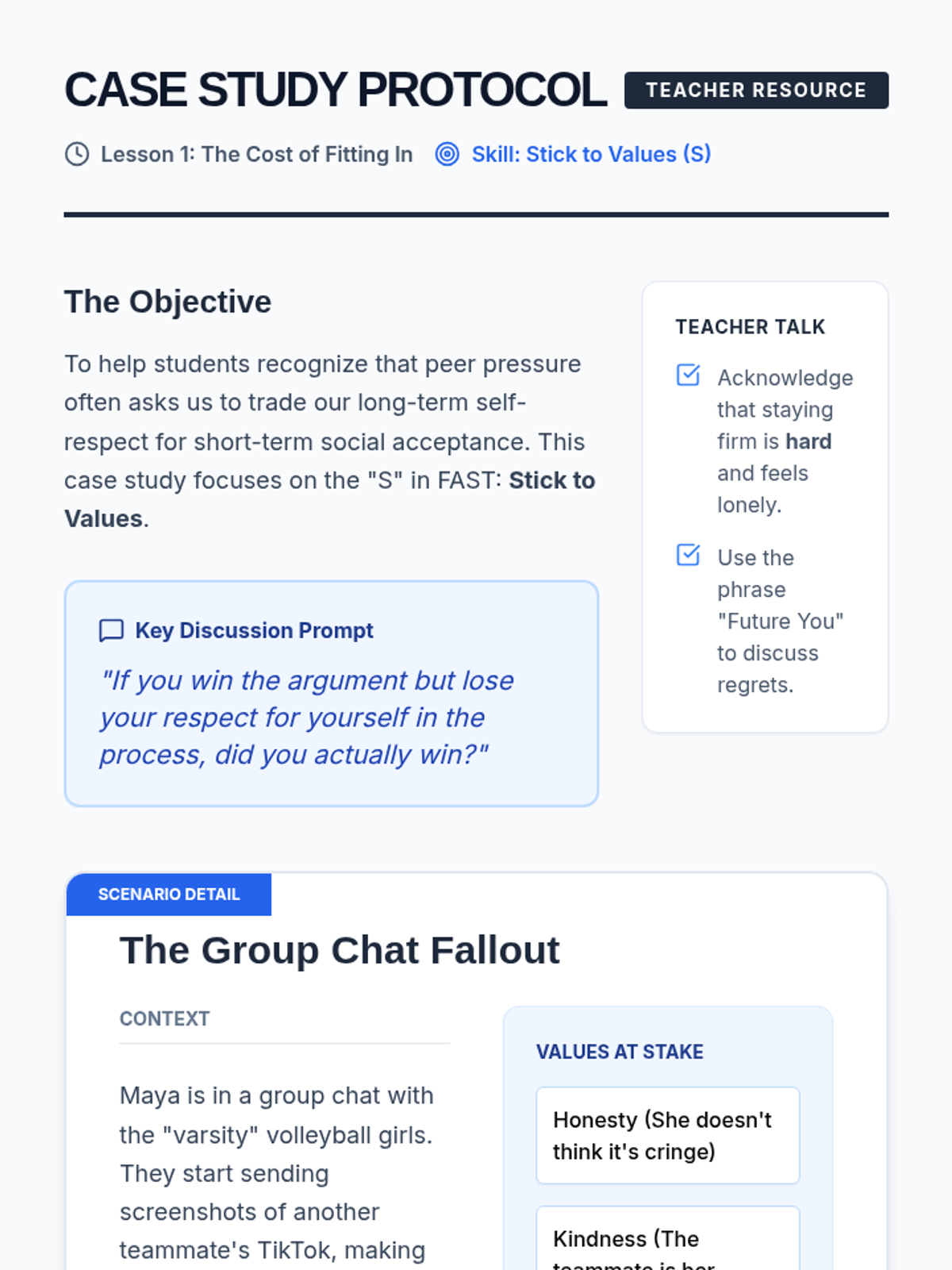
Students analyze case studies involving peer pressure and moral dilemmas, identifying moments to stick to values (the 'S' in FAST).
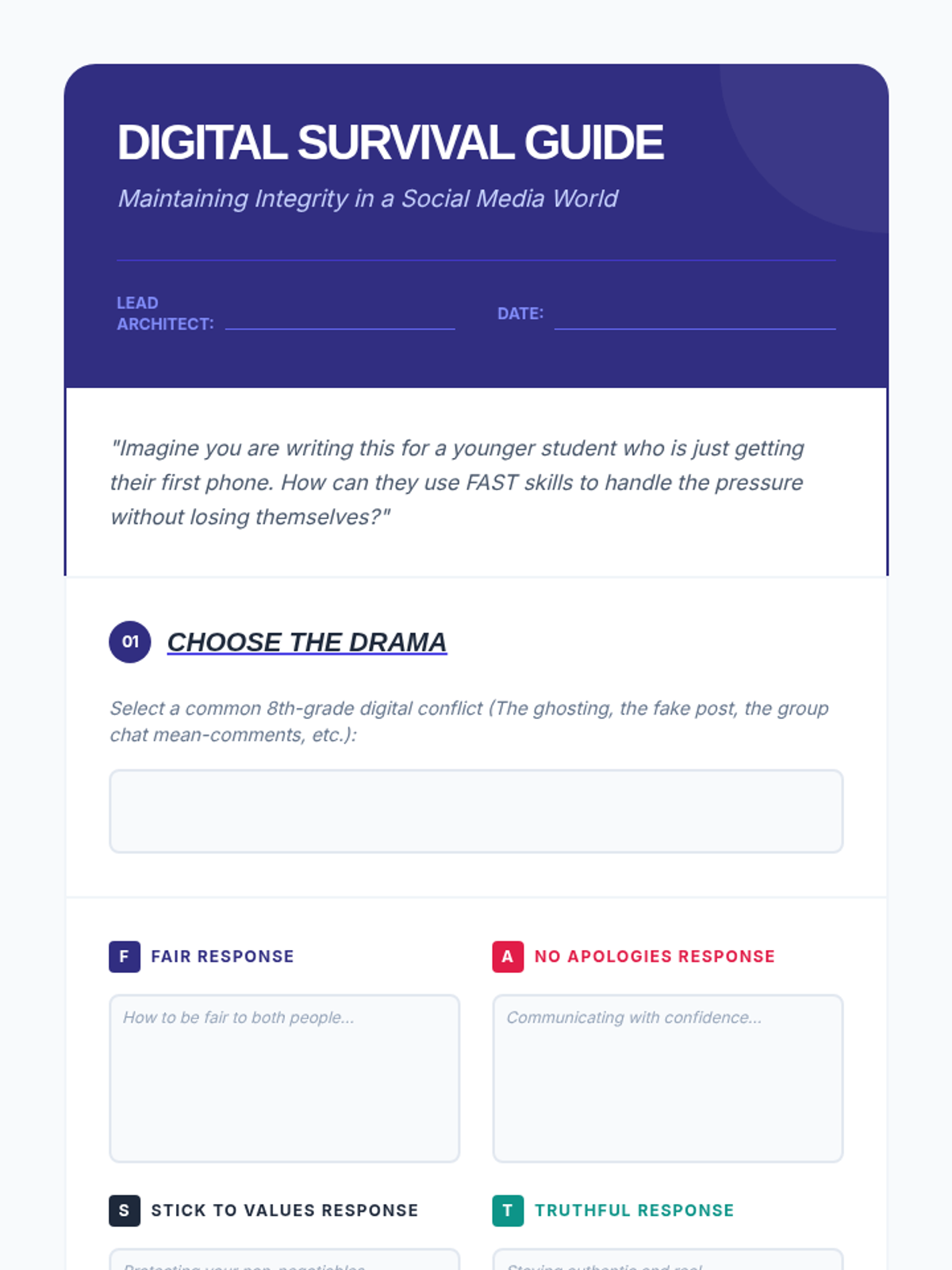
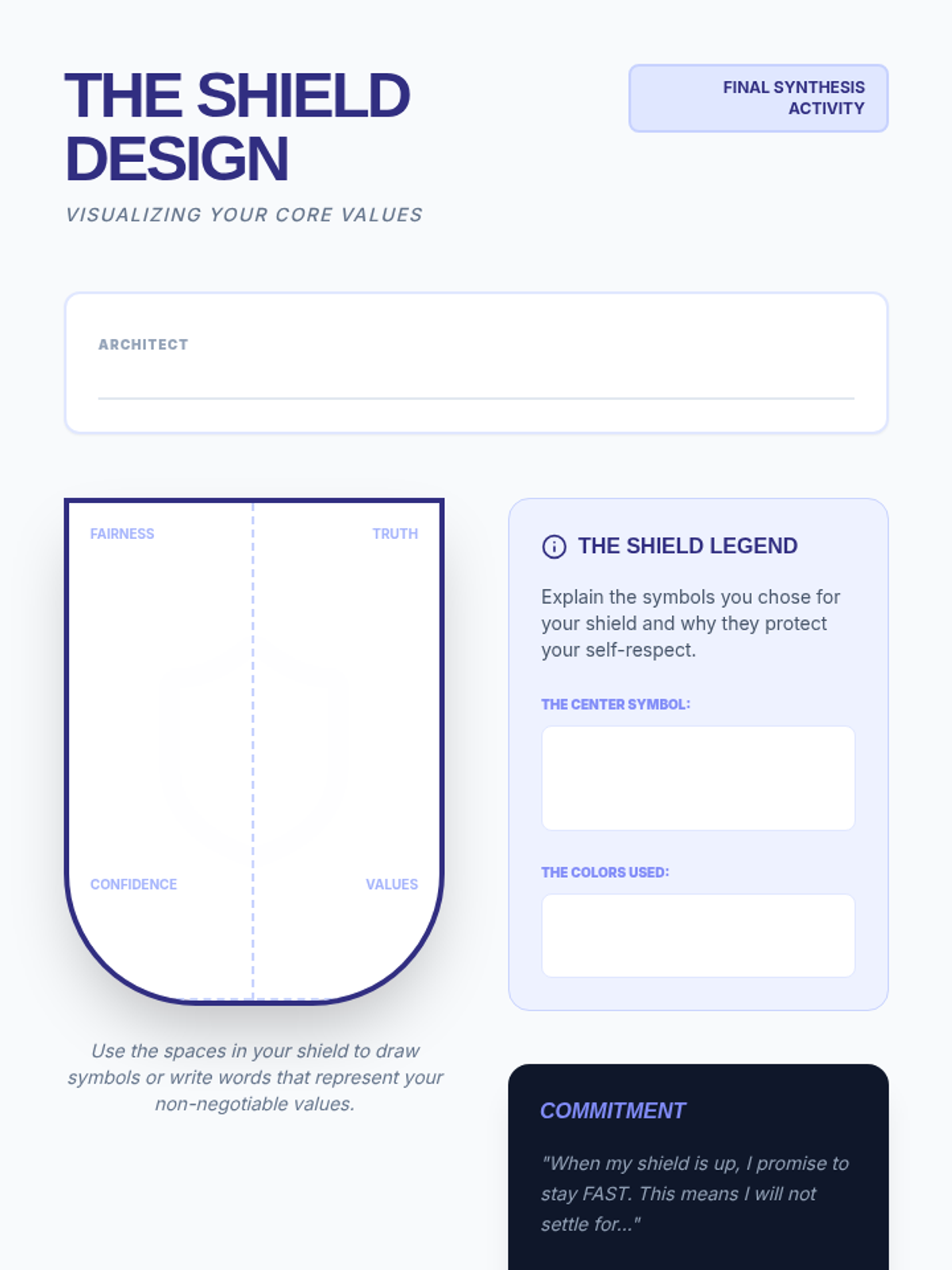
In this final lesson, students synthesize all FAST skills to create a personal Code of Conduct and a Digital Survival Guide for maintaining self-respect in social situations.
Students tackle the 'No Apologies' (A) skill, auditing their own communication for over-apologizing and practicing more assertive, confident language.
Students explore 'Fairness' (F) in the context of group dynamics. They learn to set boundaries and negotiate workloads without sacrificing their own needs or being aggressive.
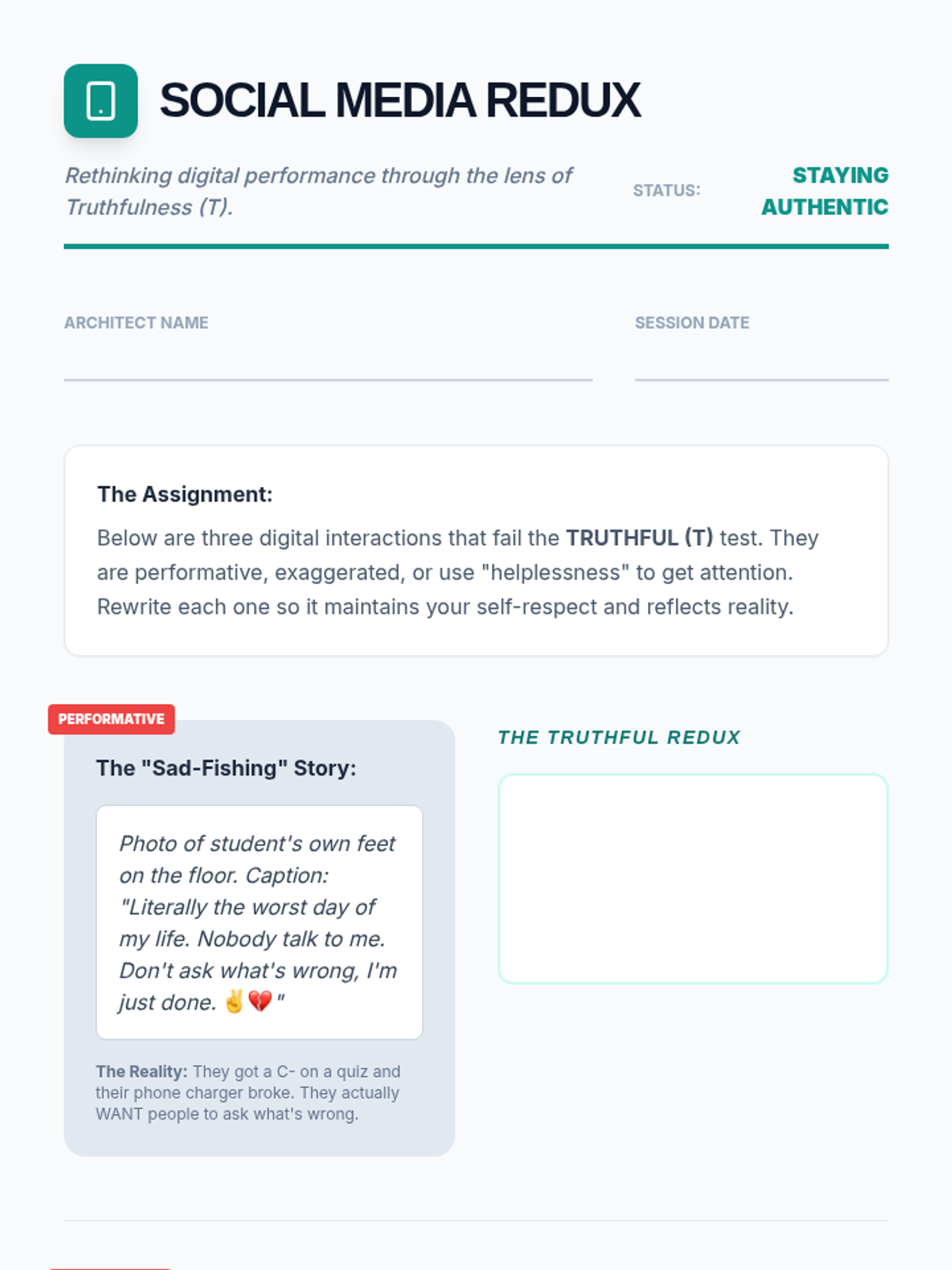
Focusing on the 'Truthful' (T) aspect of FAST, students investigate the gap between digital performance and reality. They practice honest communication in online environments.
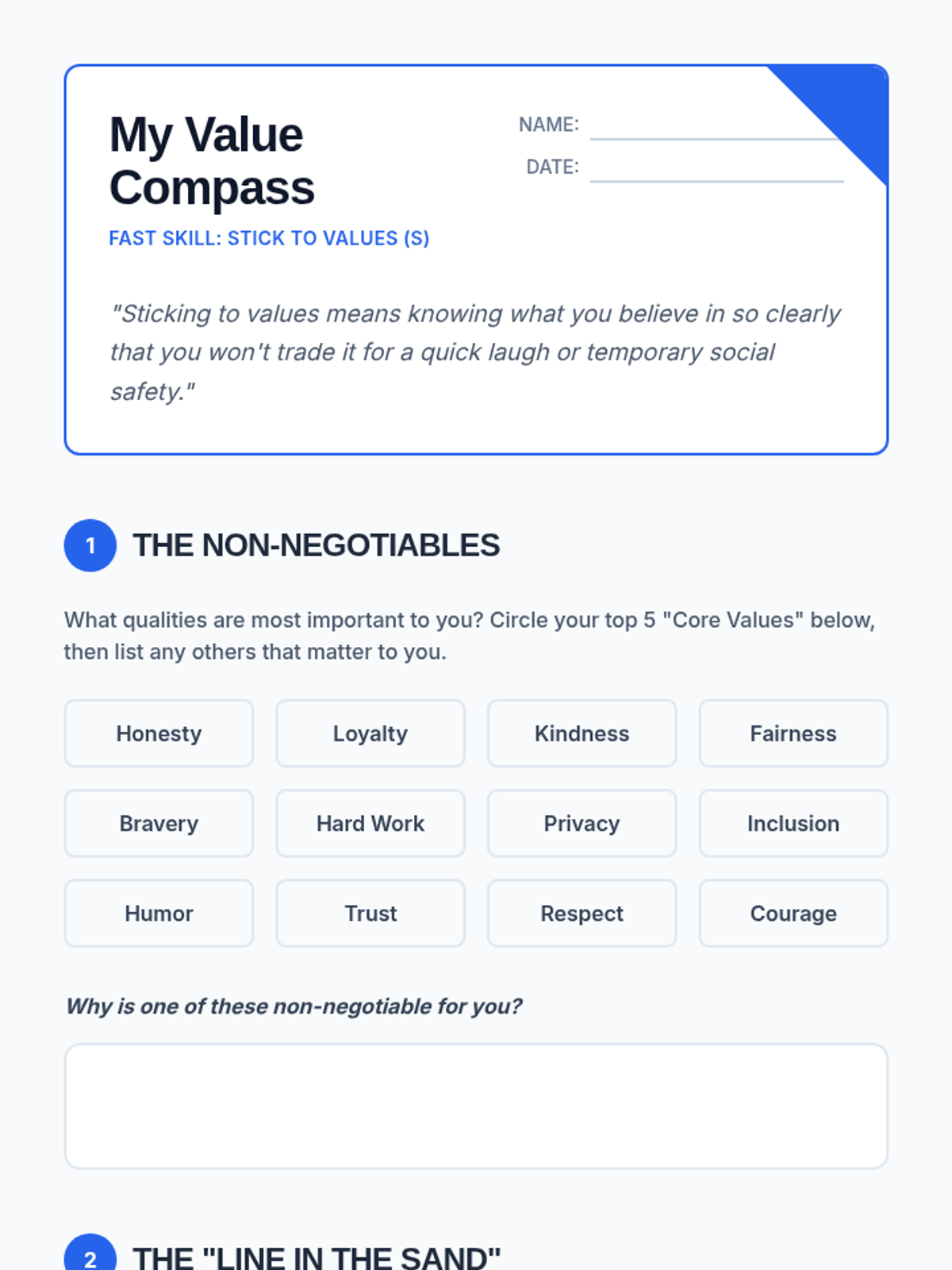
Students examine how social pressure leads to value compromise and learn the 'Stick to Values' (S) component of FAST. They analyze case studies to understand the emotional cost of losing self-respect.
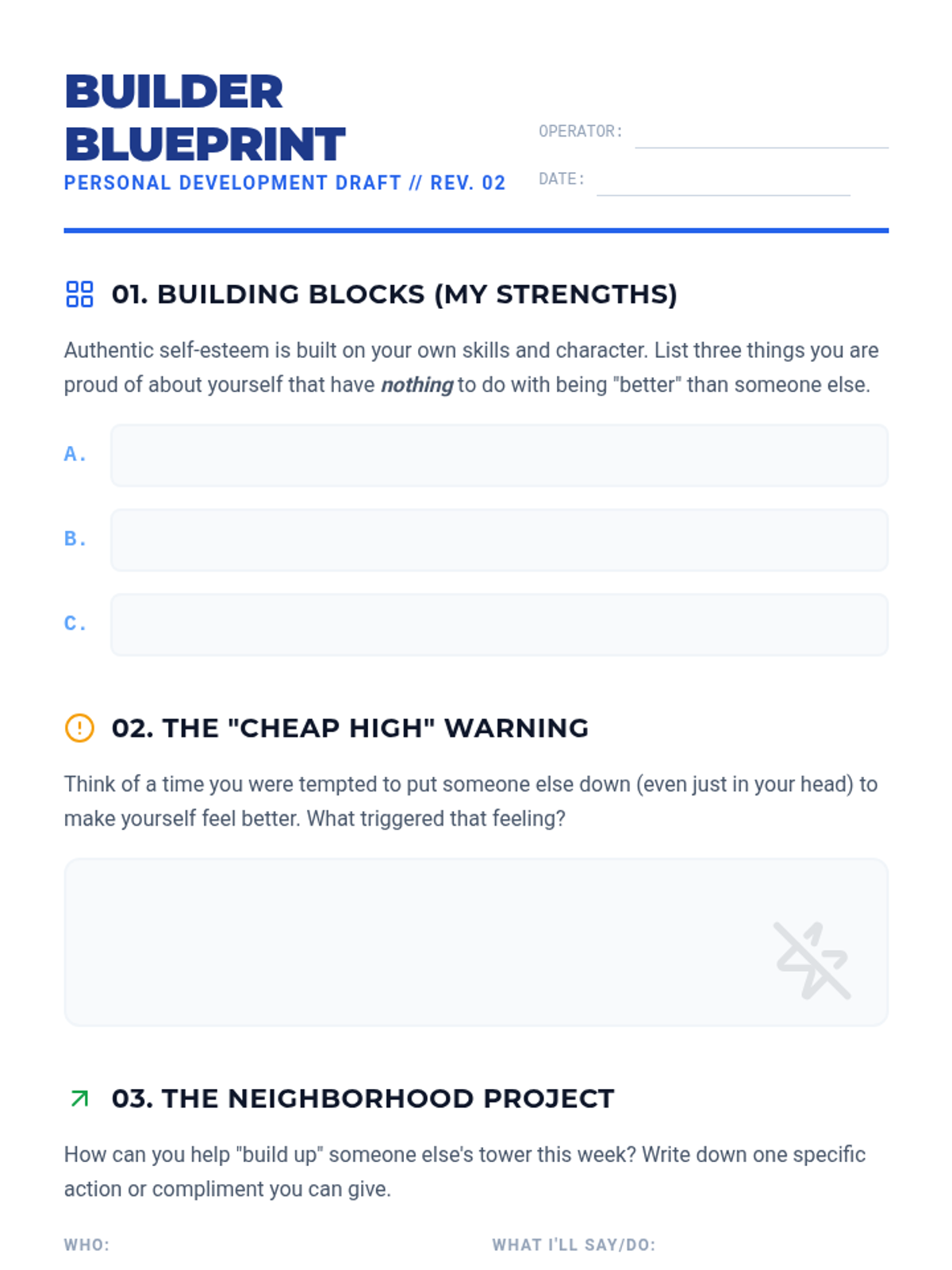
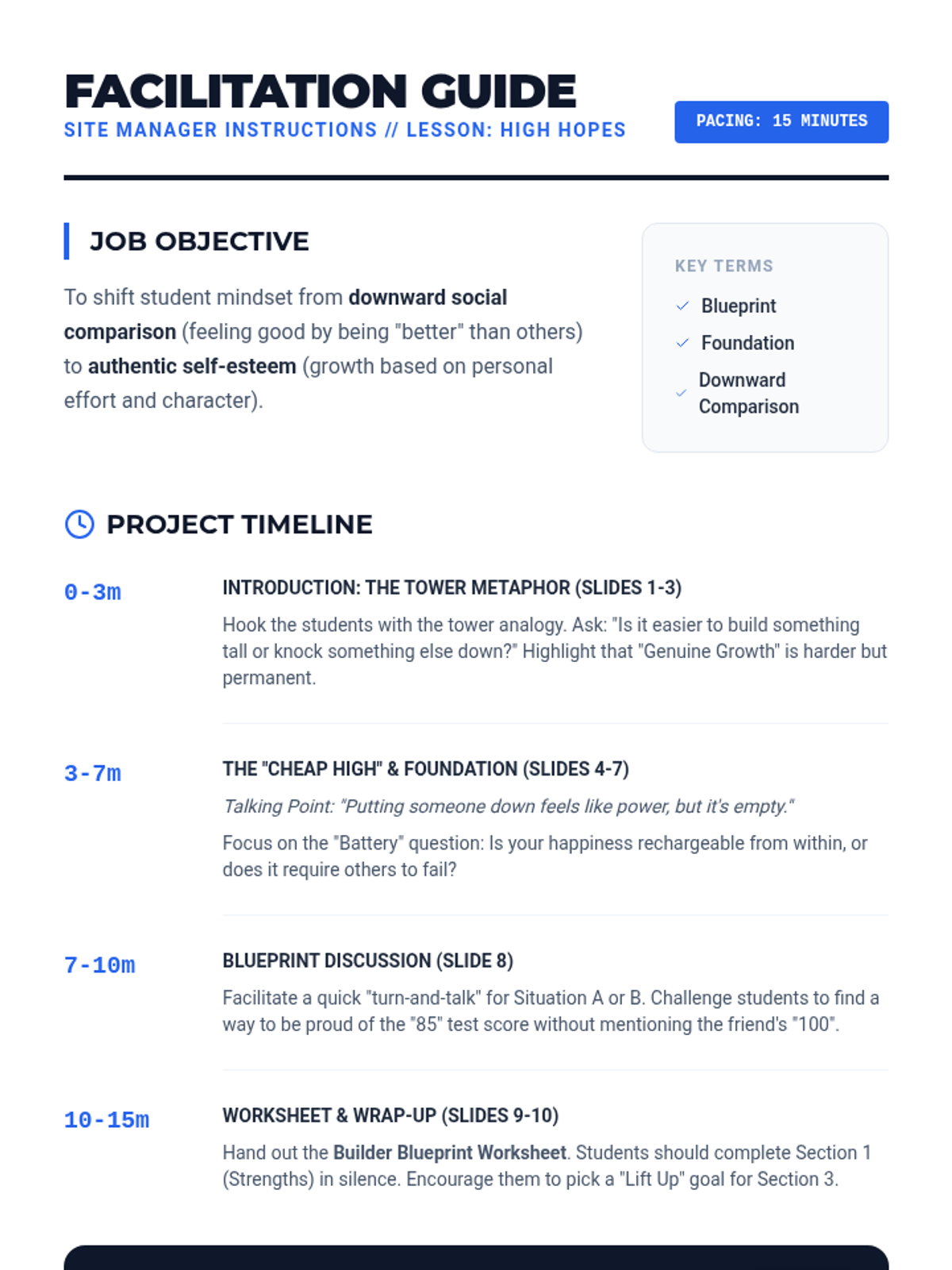
A 15-minute lesson exploring the pitfalls of 'downward social comparison' and how to build authentic self-esteem without diminishing others. Students will learn that true confidence comes from personal growth rather than putting others down.
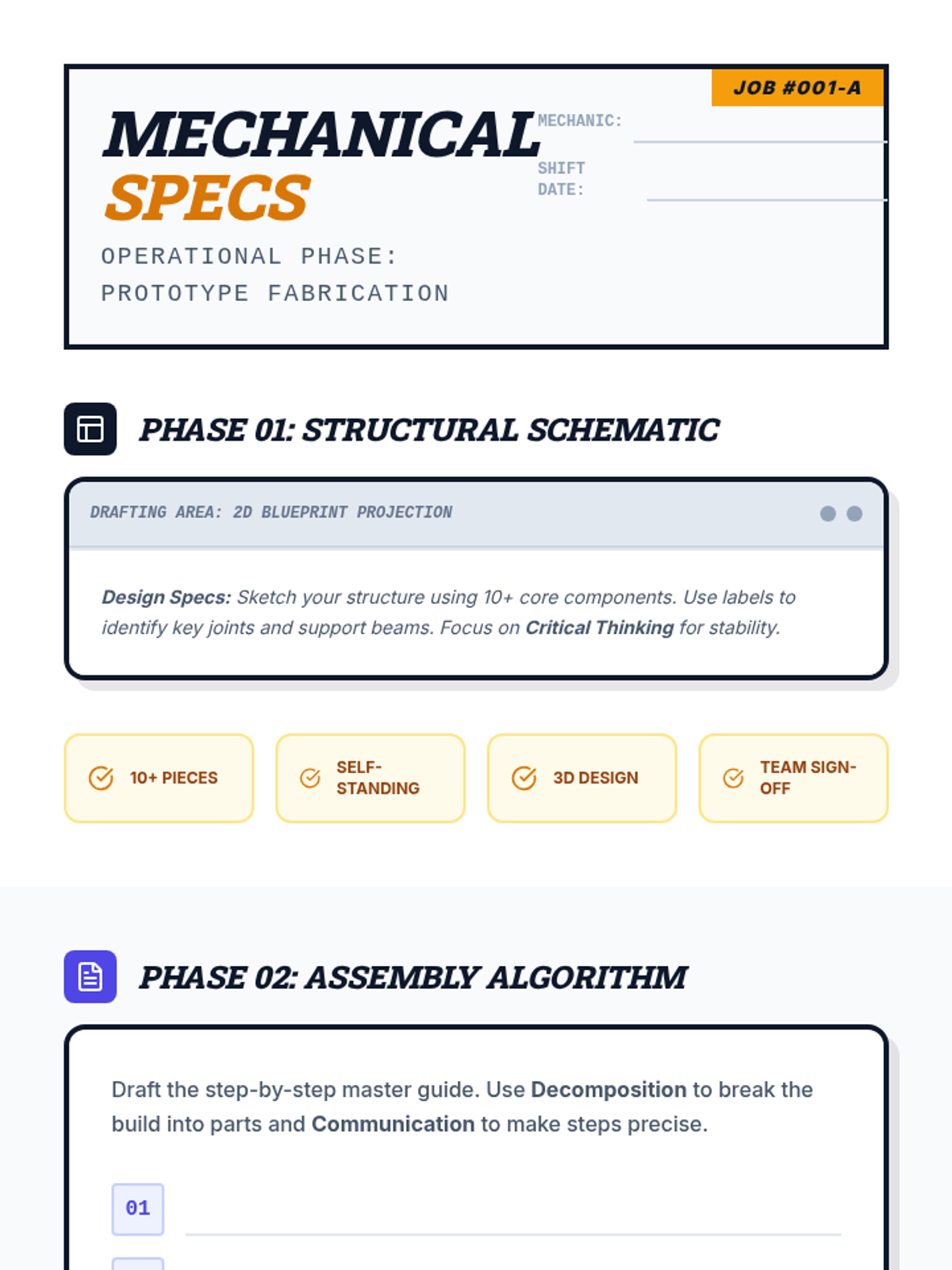
An industrial-themed teamwork lesson where students act as "Mind Mechanics" to apply the 4Cs and Computational Thinking to a complex engineering challenge.
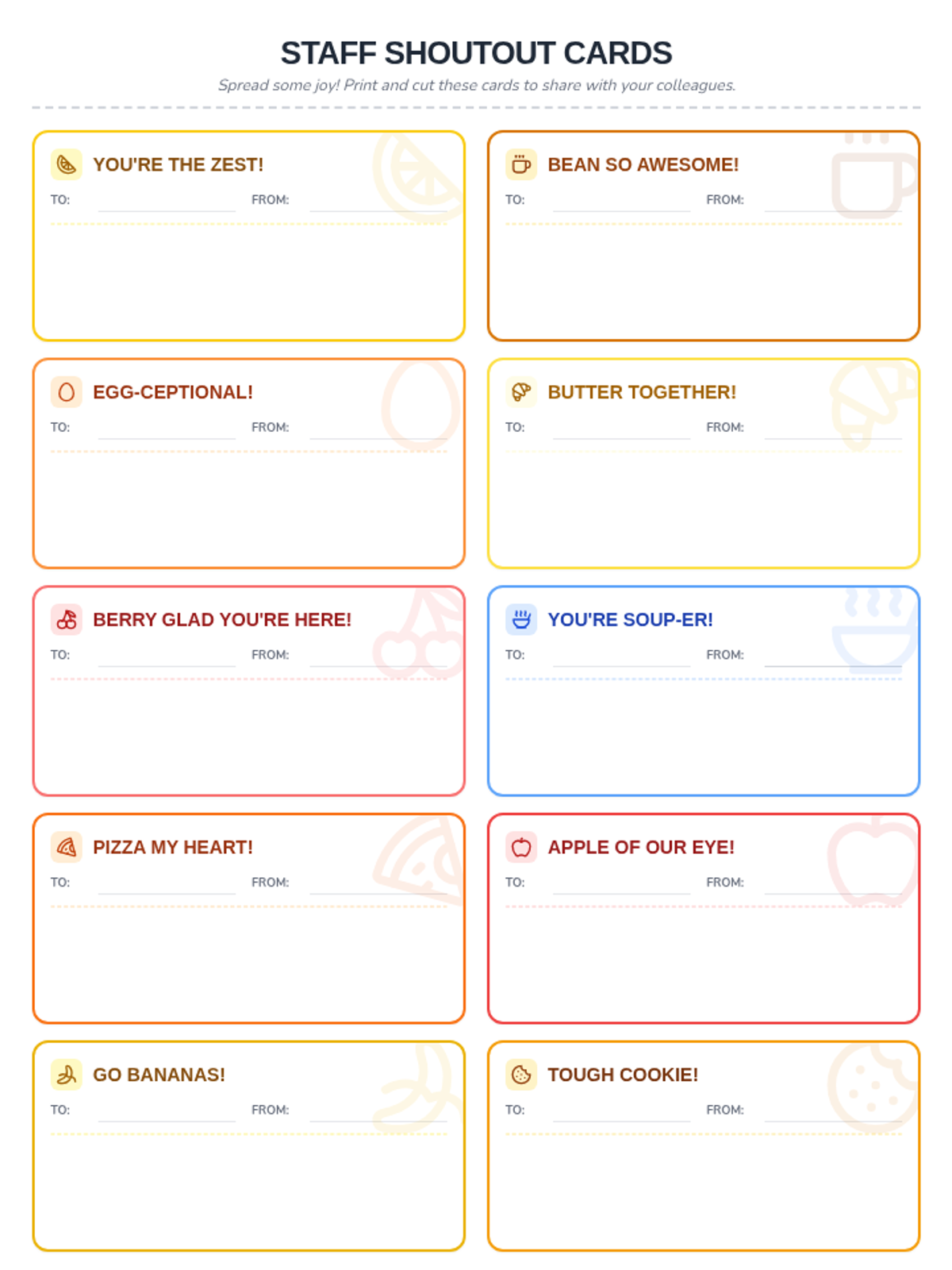
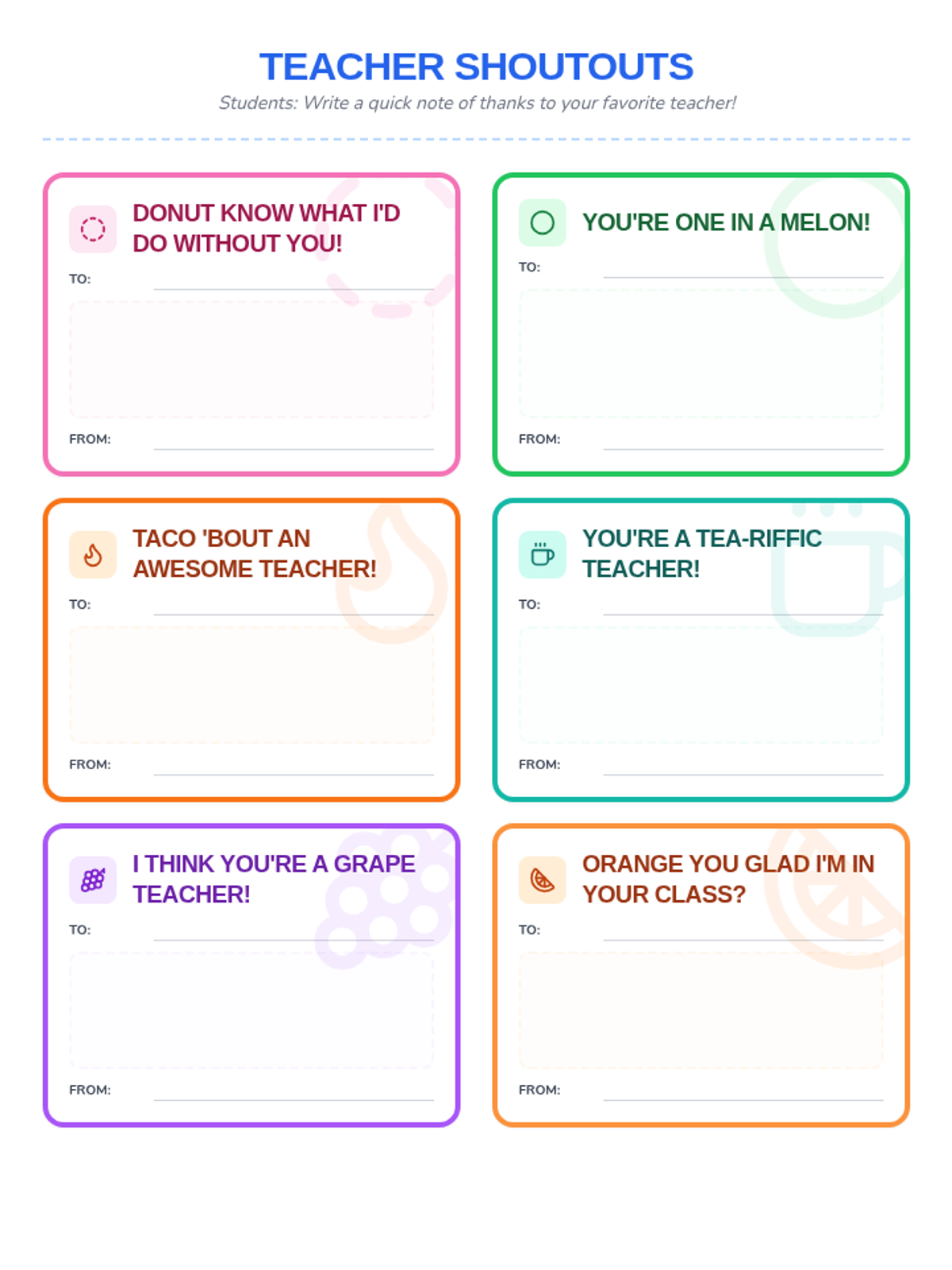
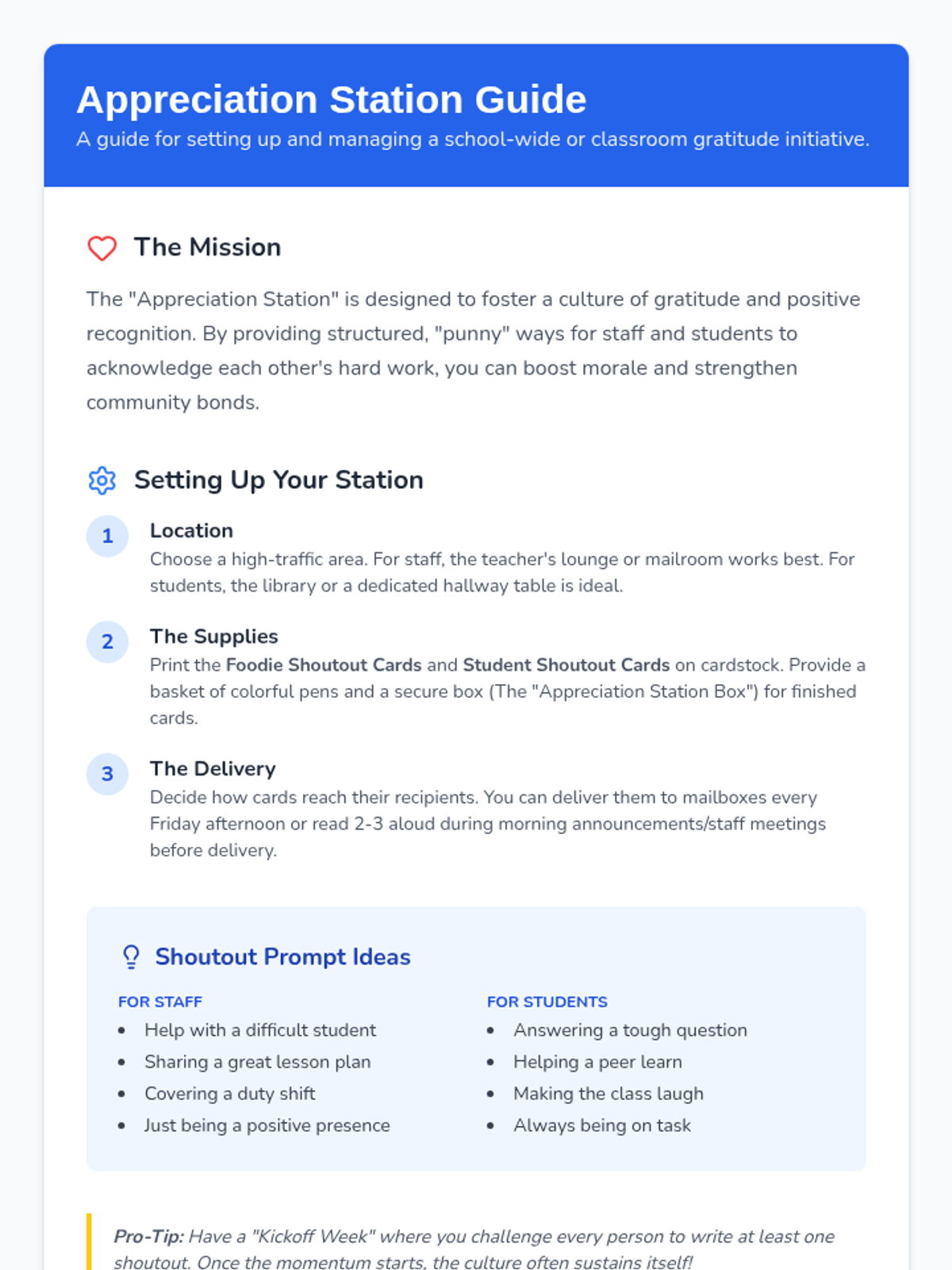
A collection of appreciation-themed resources for school staff and students to express gratitude through creative, pun-based shoutout cards.
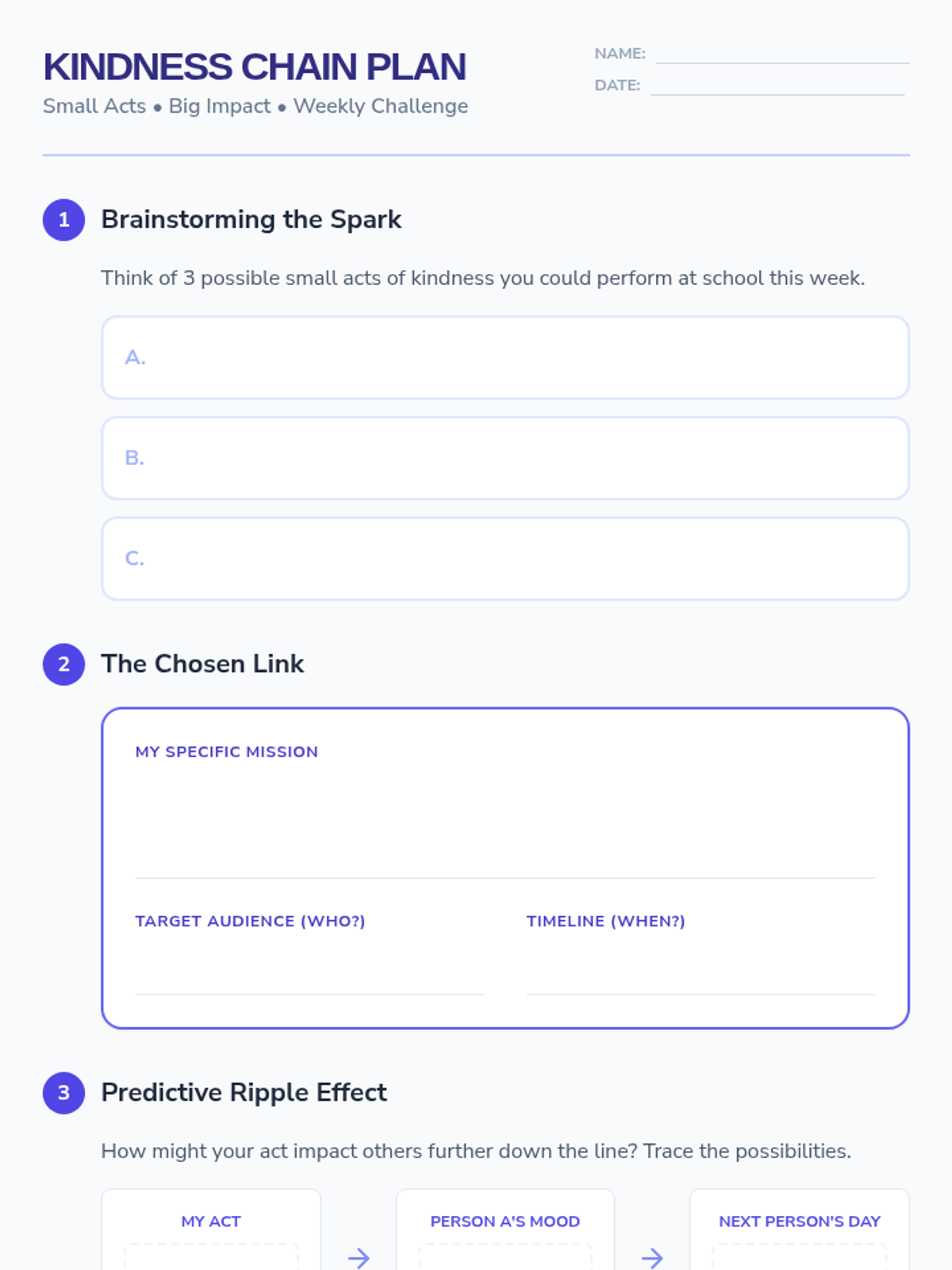
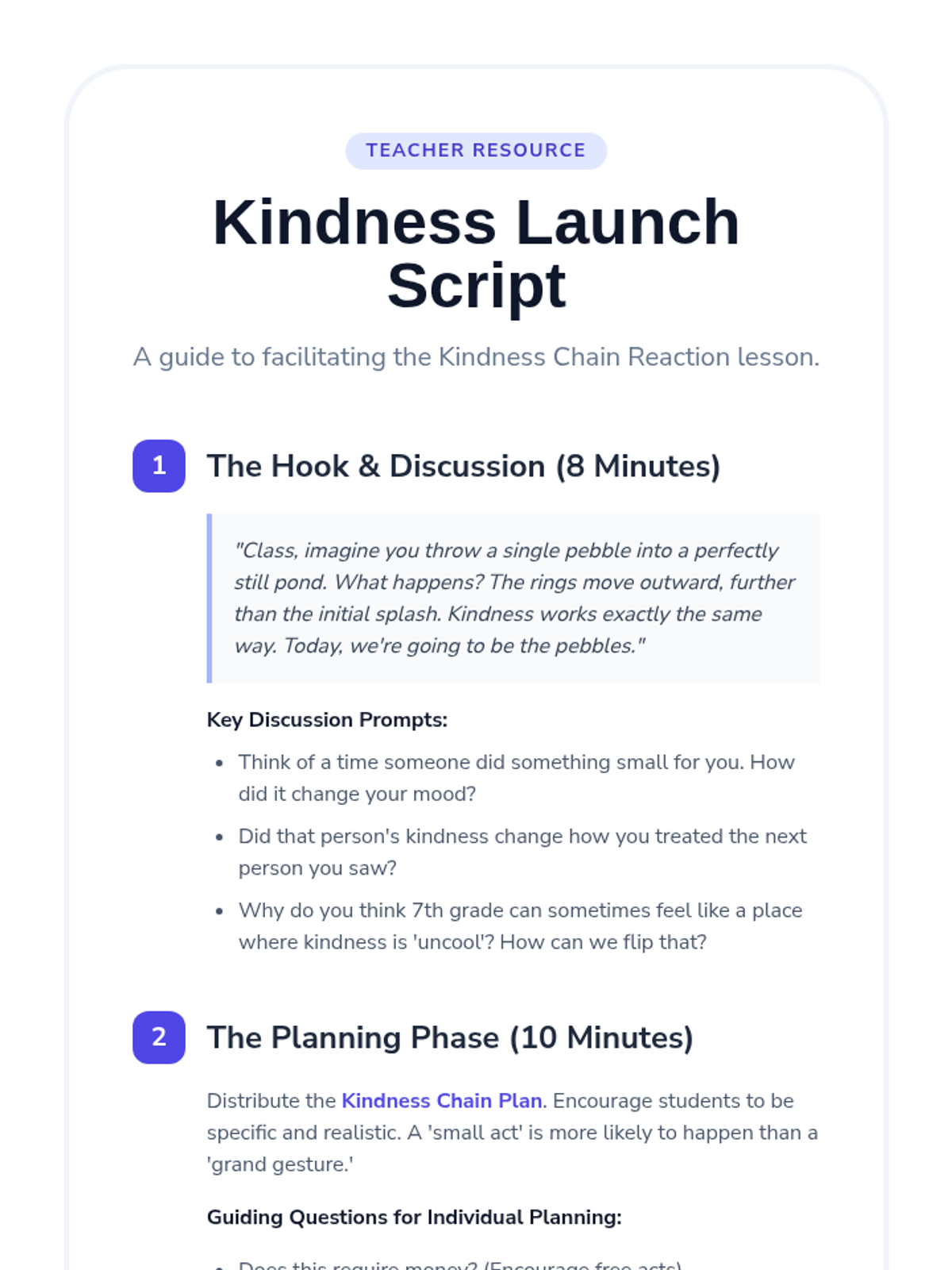
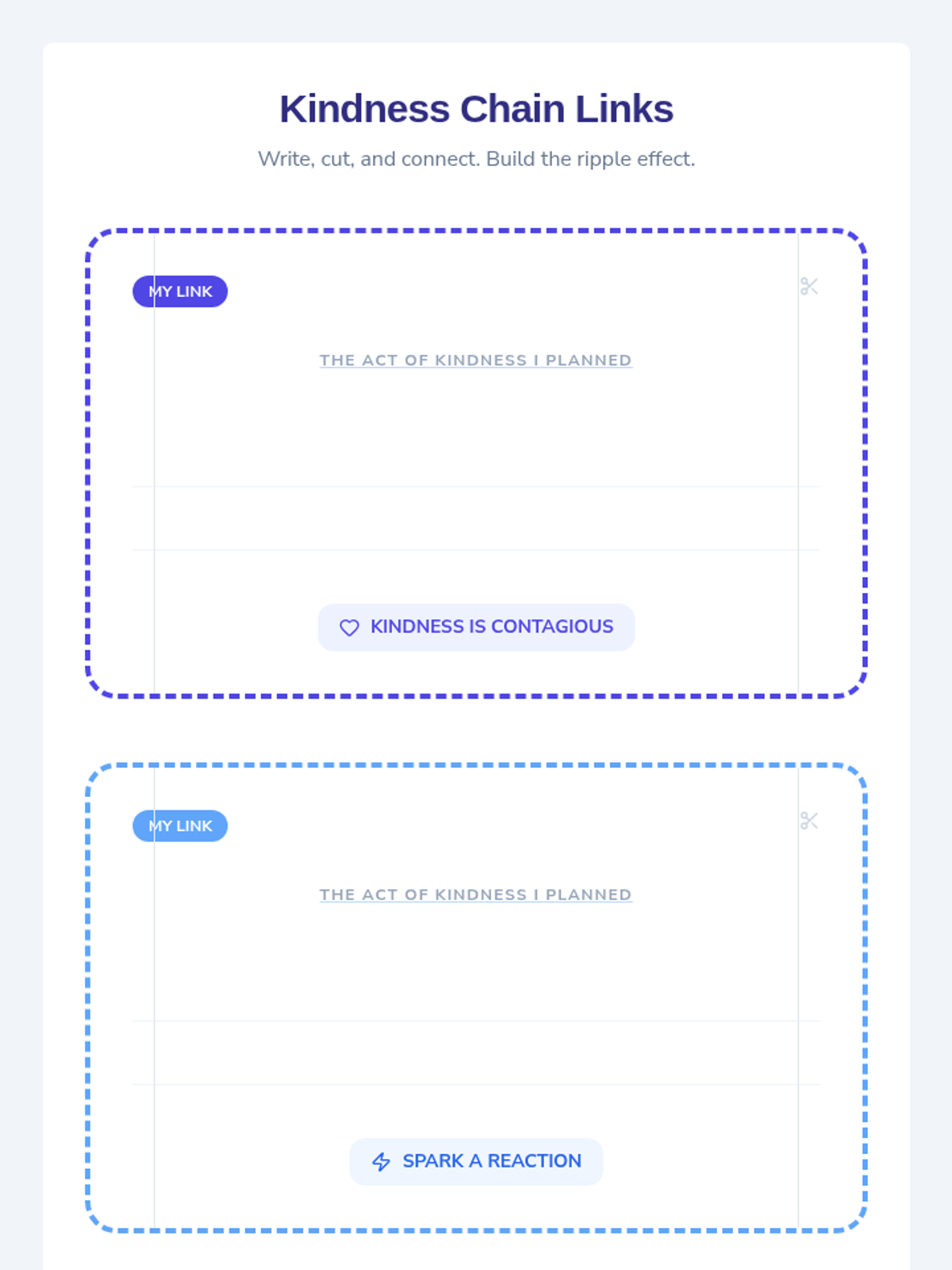
A 30-minute social-emotional learning lesson where students plan a specific act of kindness, analyze the 'ripple effect' of prosocial behavior, and begin a physical 'Kindness Chain' to track impact over time.
A foundational lesson for the first day of middle school, focusing on establishing classroom culture, expectations, and shared norms through a "Tactical Kit" or "Field Manual" aesthetic.
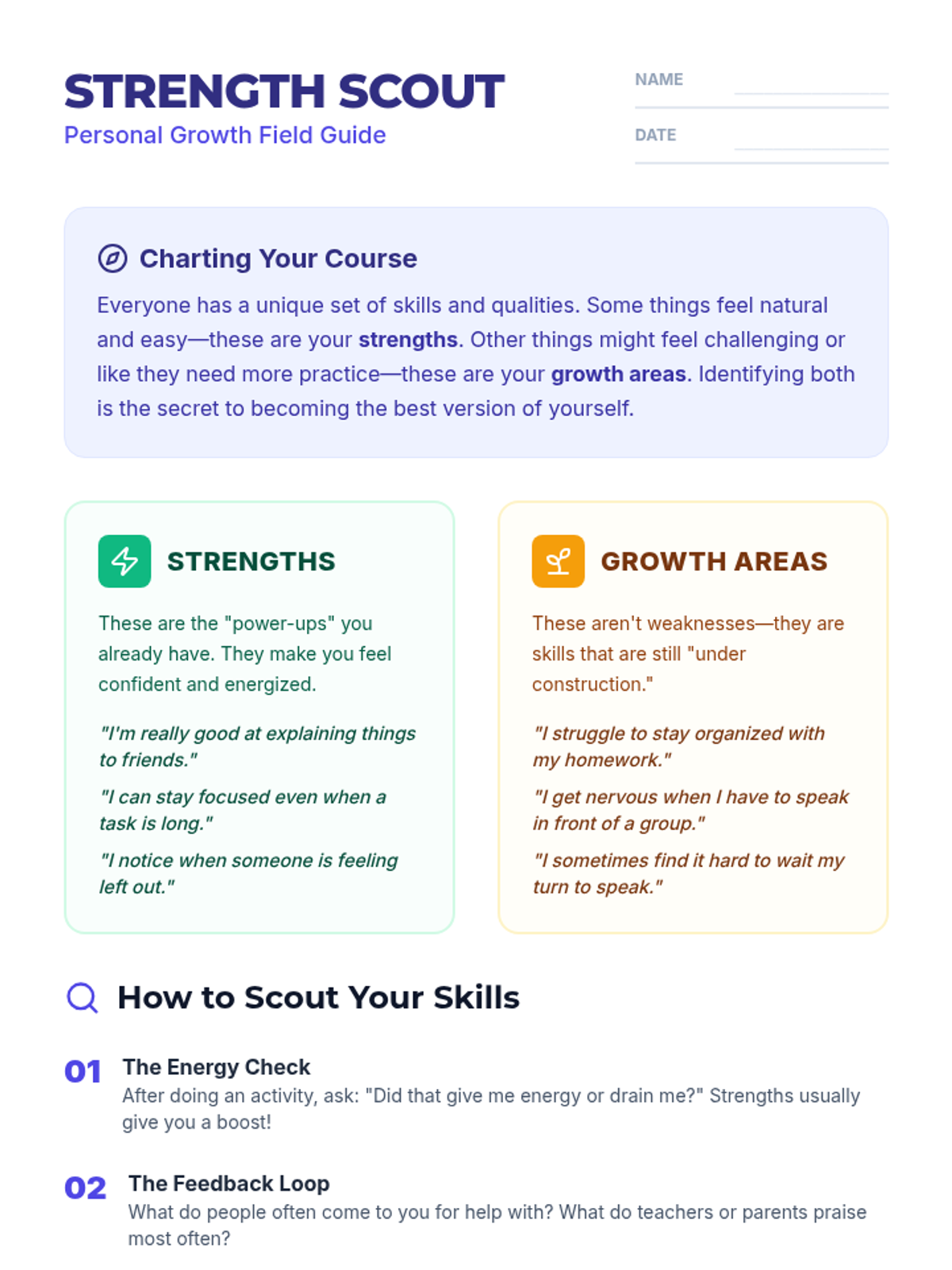
A lesson focused on helping students identify their personal strengths and areas for future development through self-reflection and scenario-based analysis.
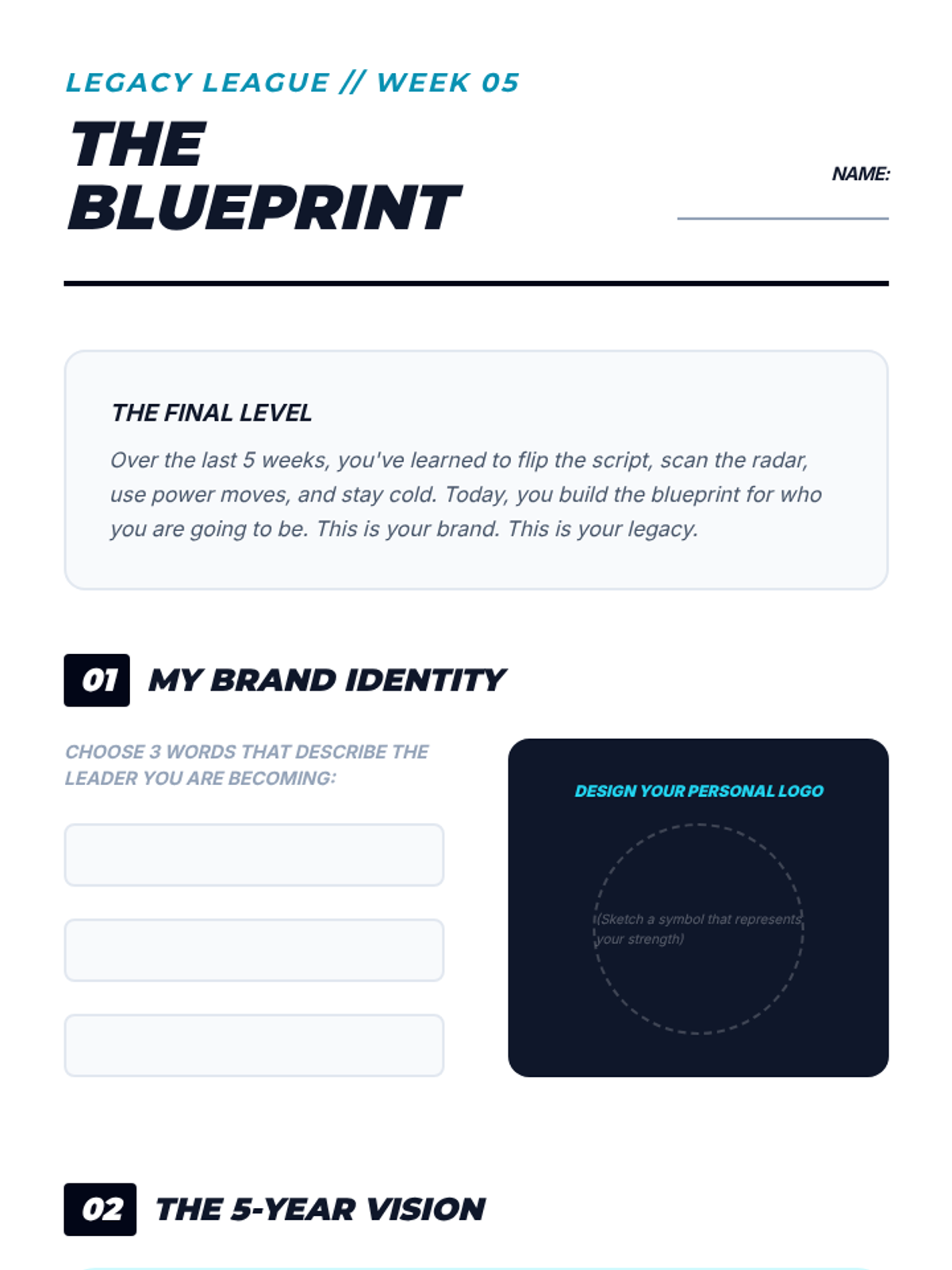
Creating a personal brand and a plan for how students want to be remembered by their community and peers.
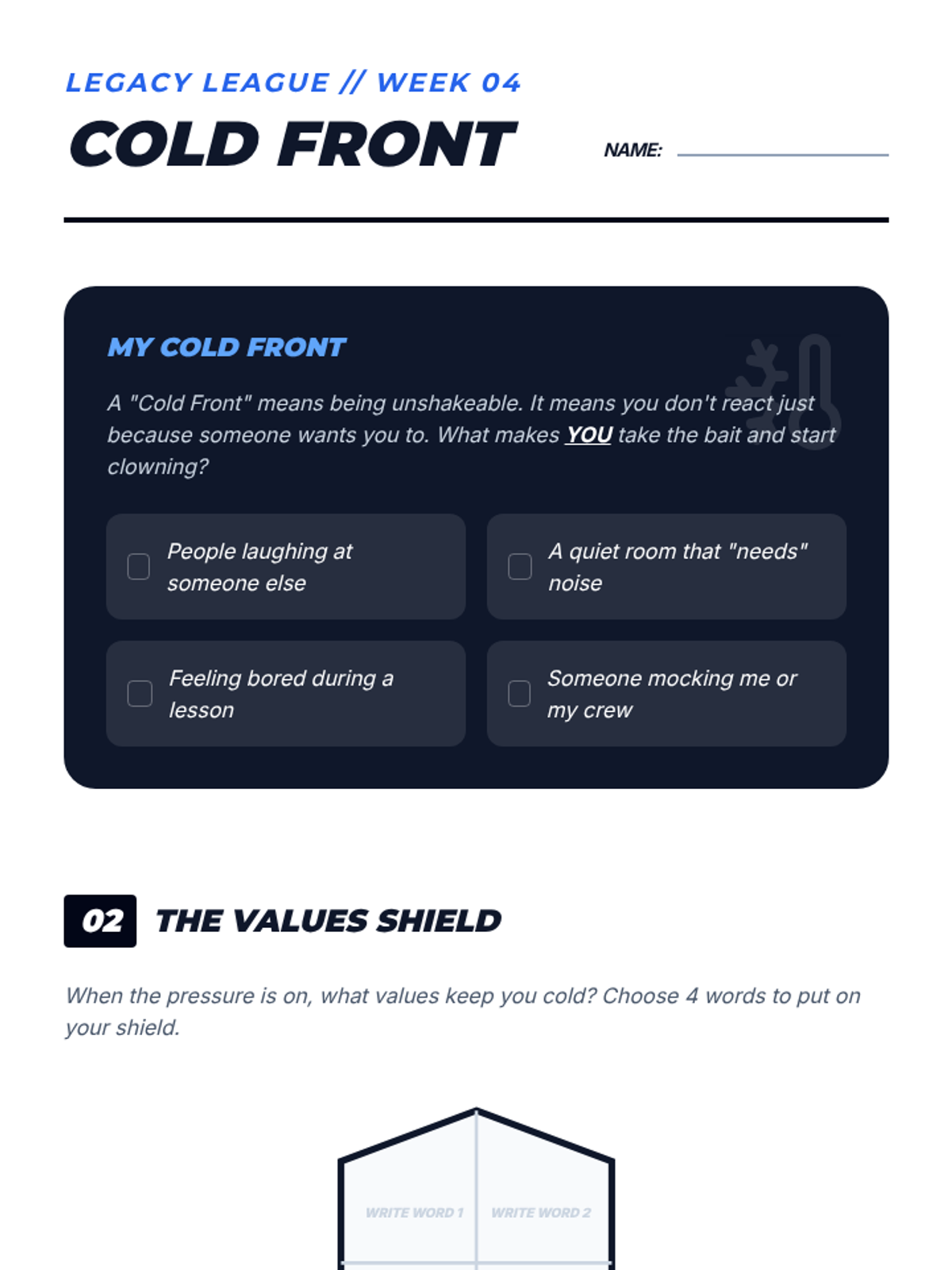
Building the strength to resist the urge to perform for others and maintaining a leader's mindset under pressure.
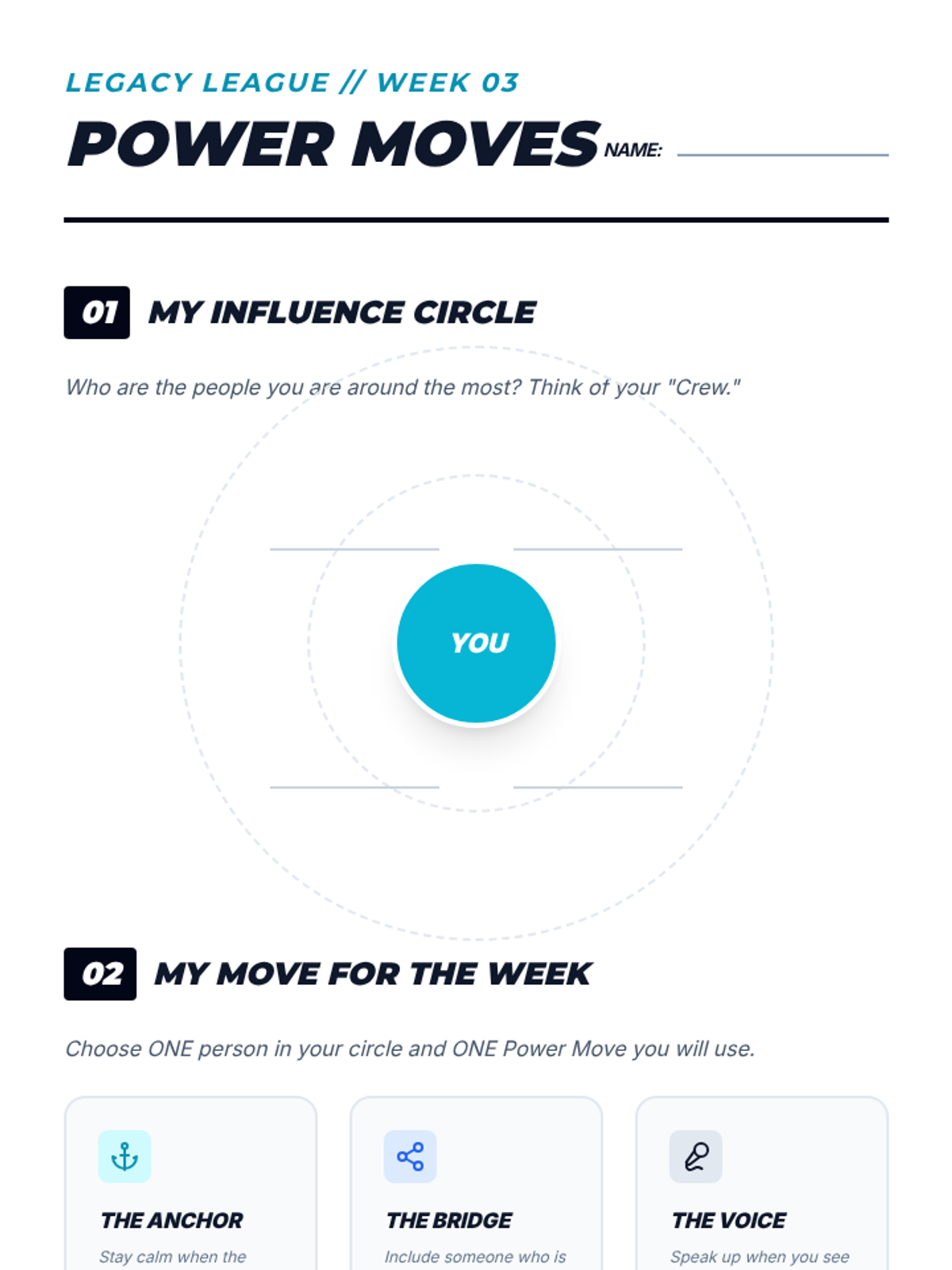
Exploring positive influence and how to lead peers without needing to be the center of attention.
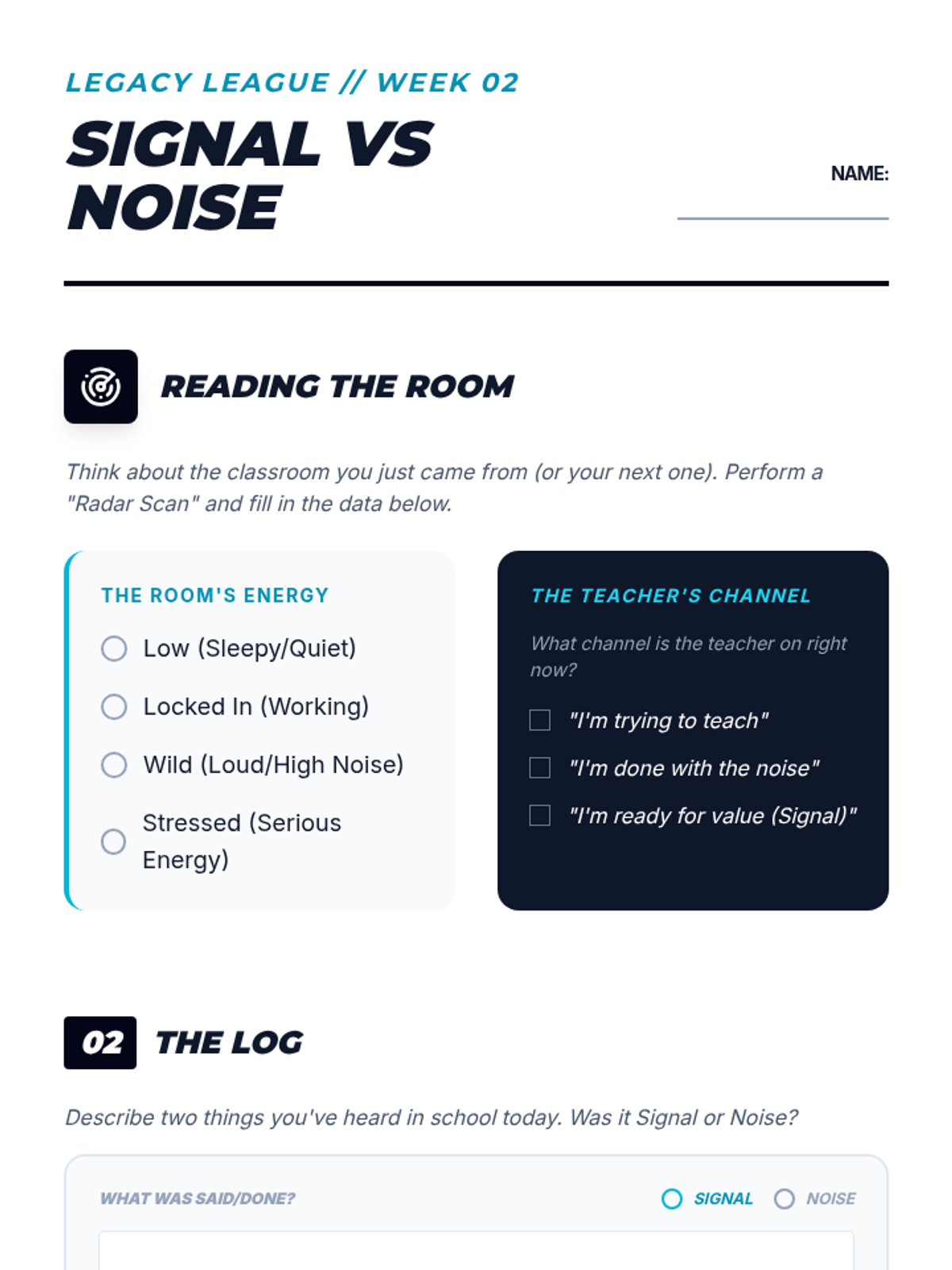
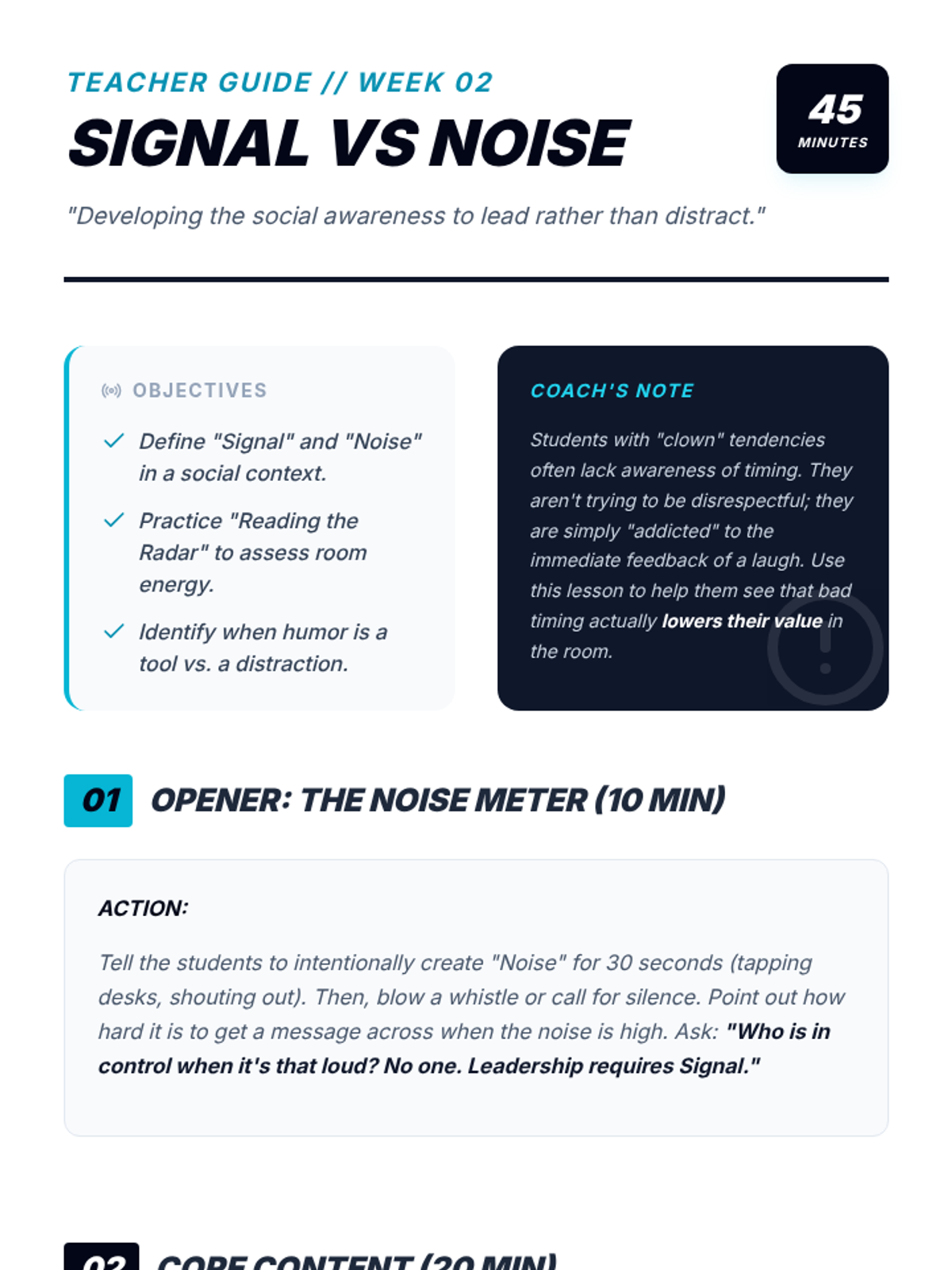
Developing social awareness and 'reading the room.' Learning to identify when humor is a tool and when it's a distraction.
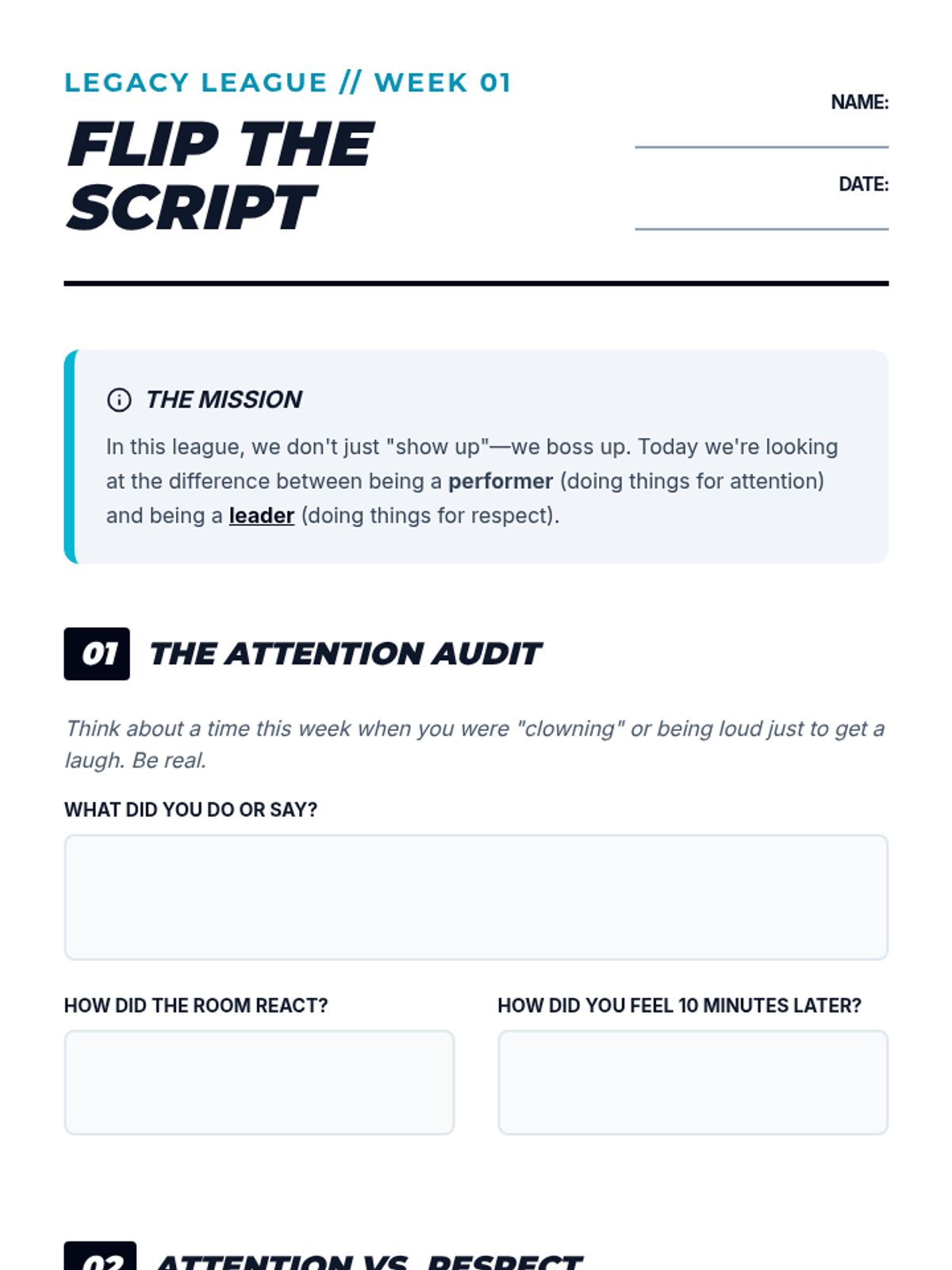
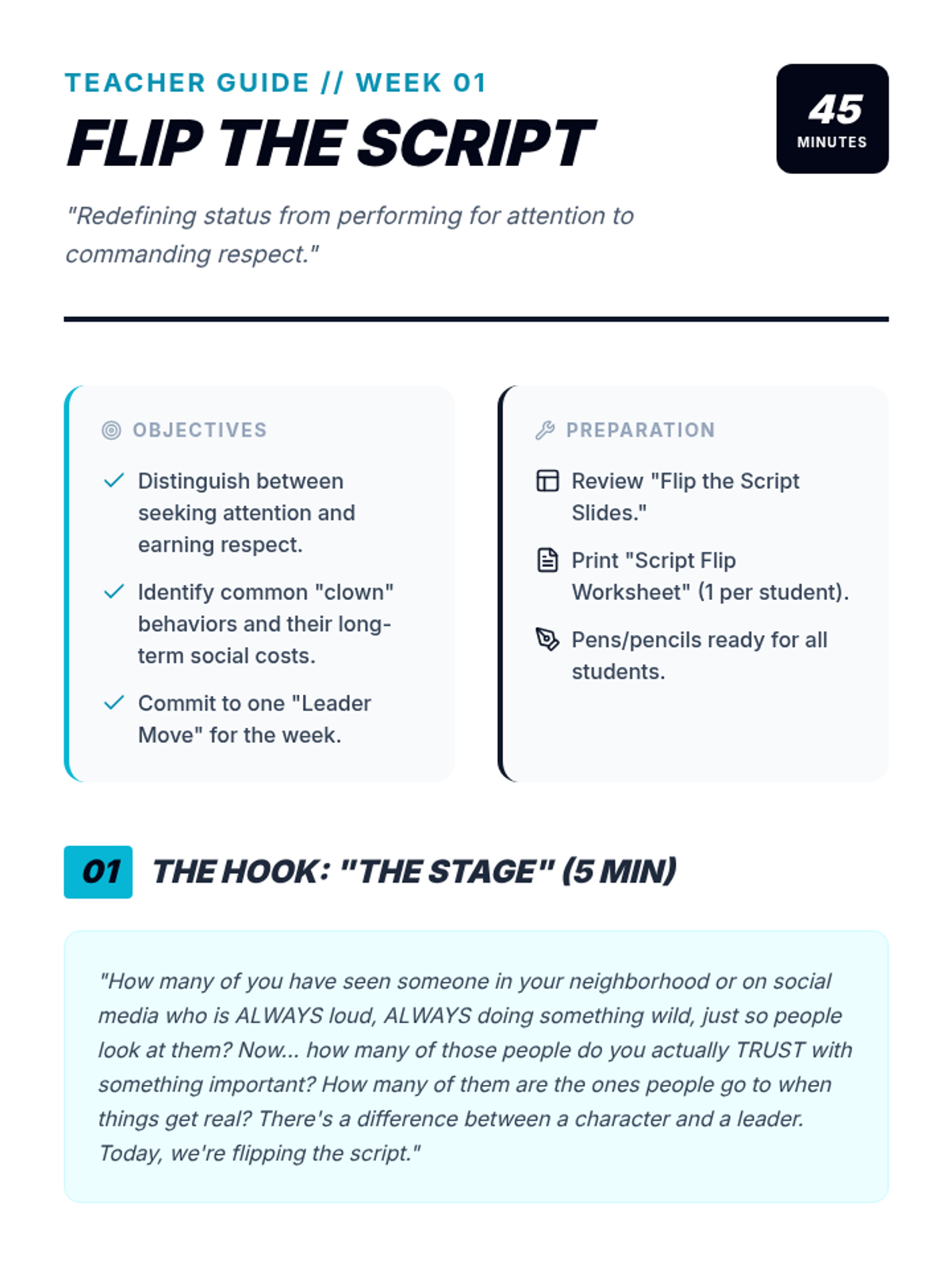
Redefining the difference between 'Attention' and 'Respect.' Students analyze how their behavior affects their status and influence.
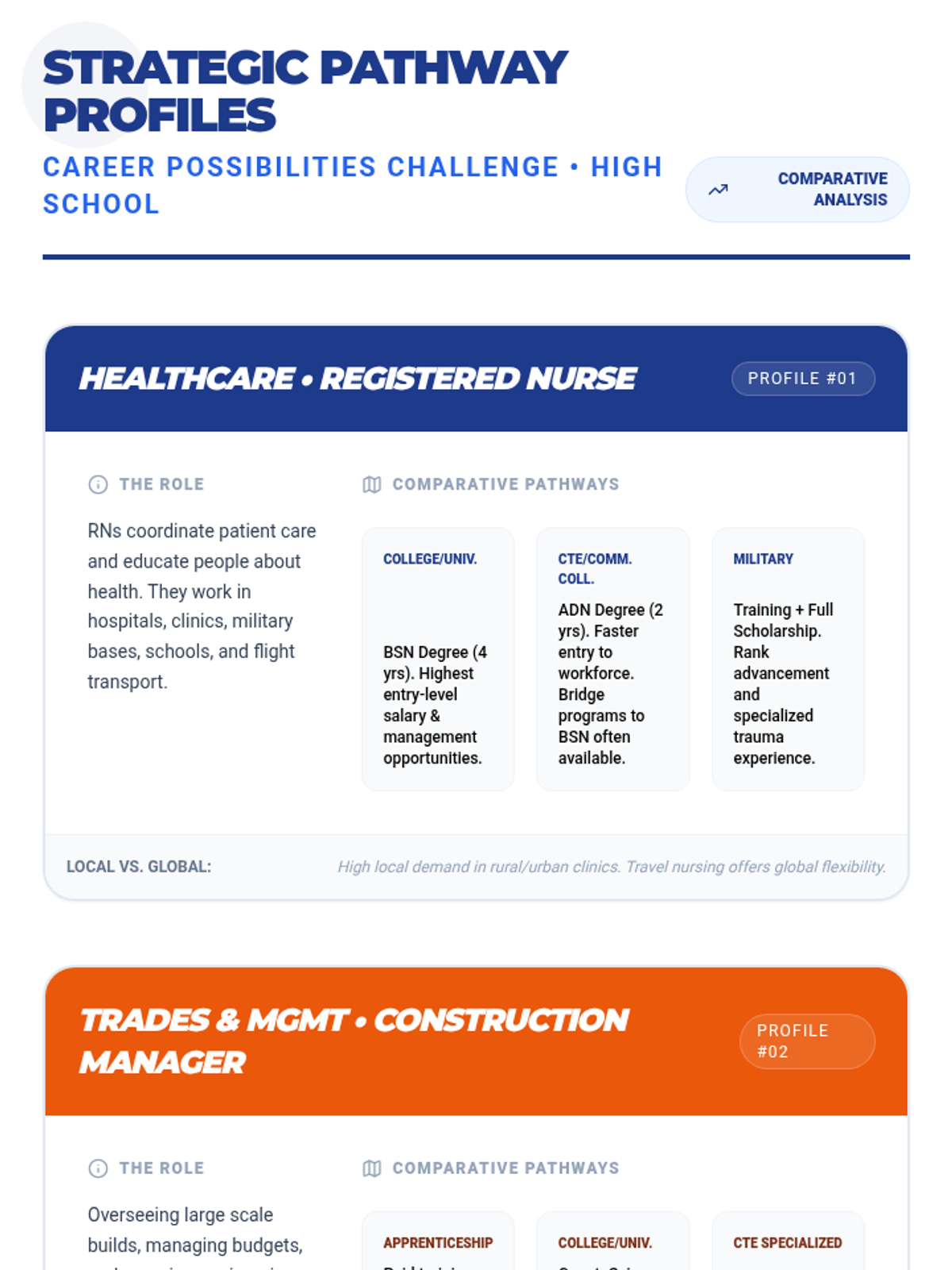
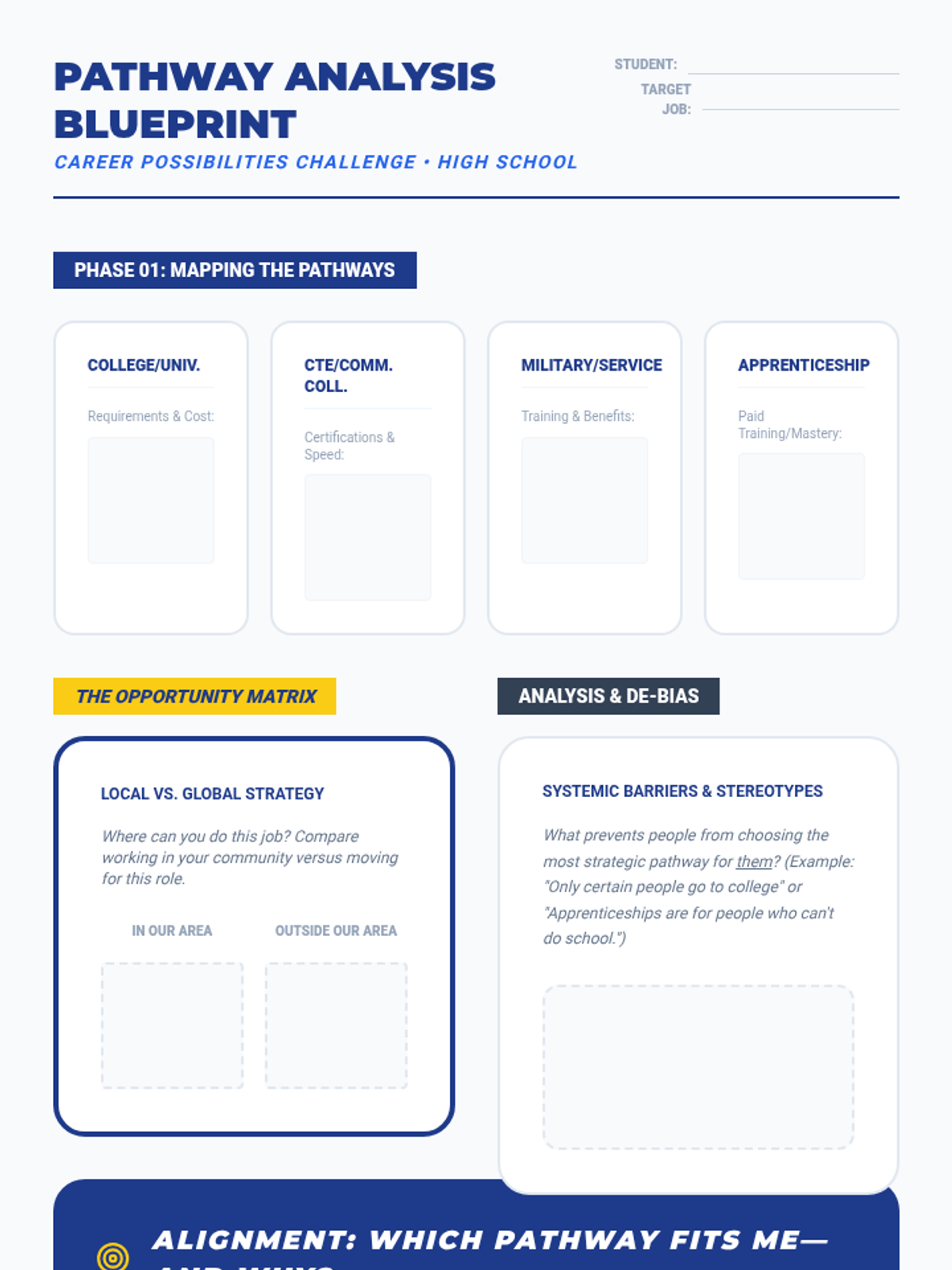
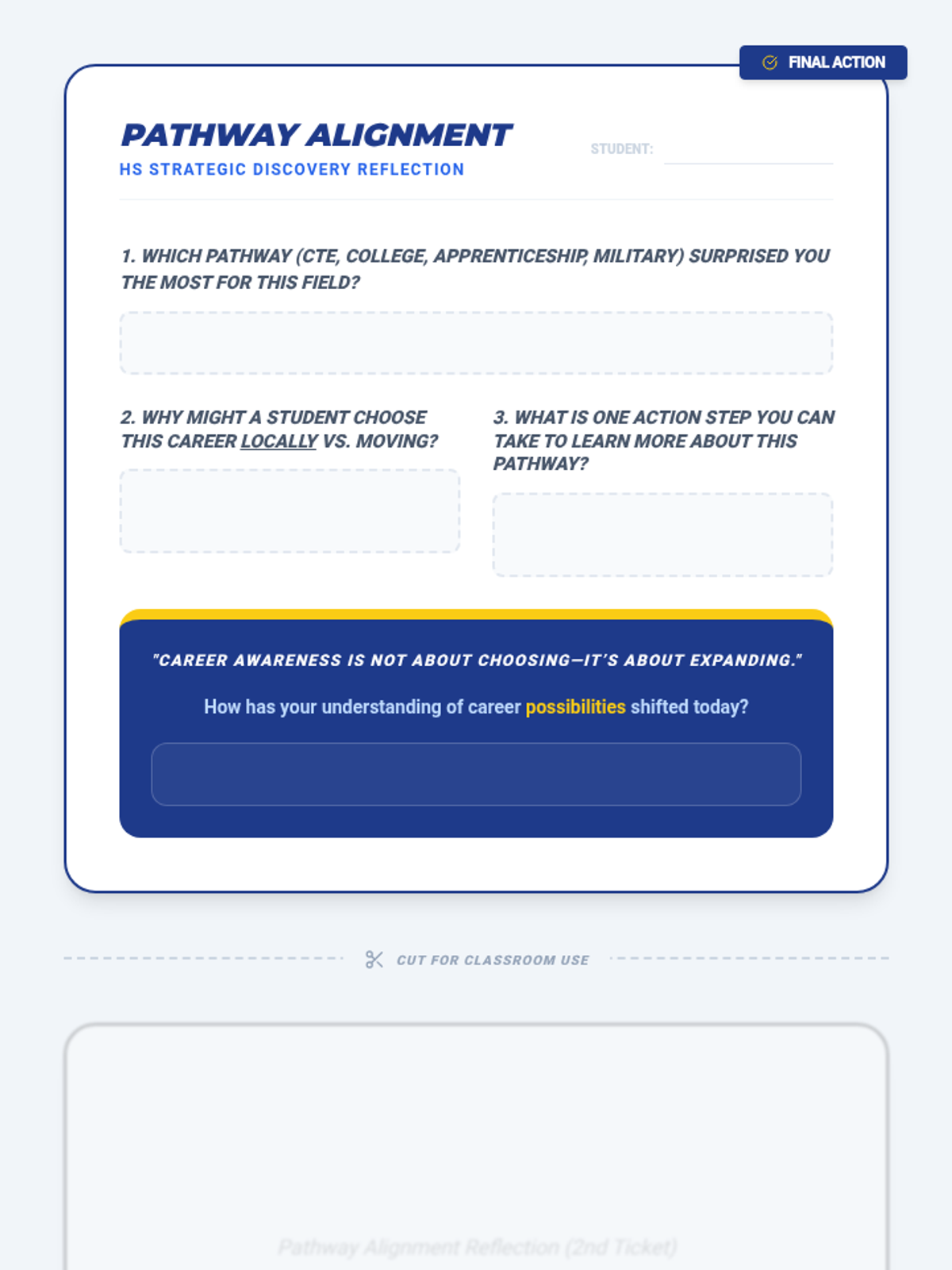
A strategic career planning lesson for high schoolers focusing on comparing specific pathways (CTE, college, military) and evaluating local versus out-of-area opportunities.
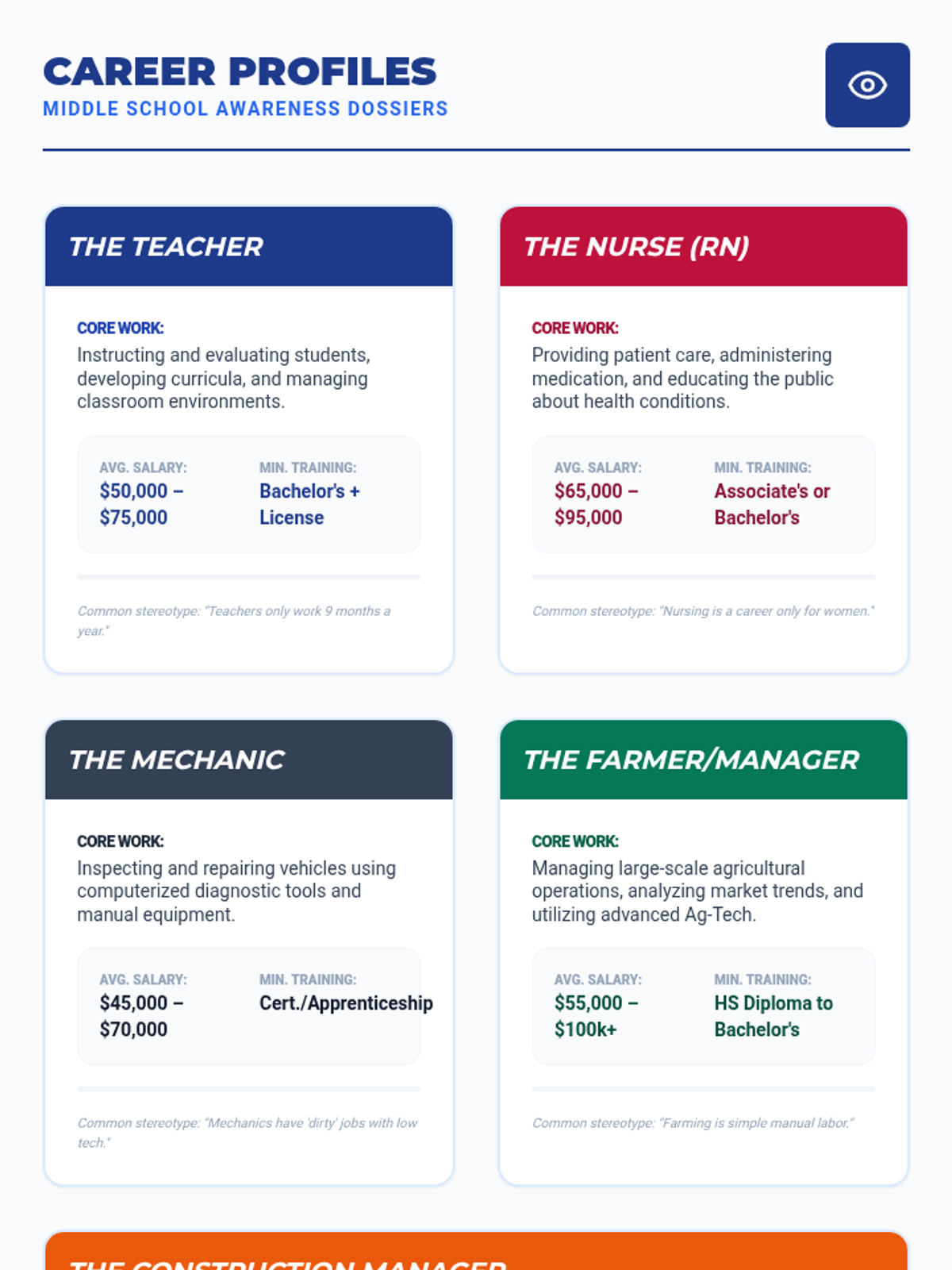
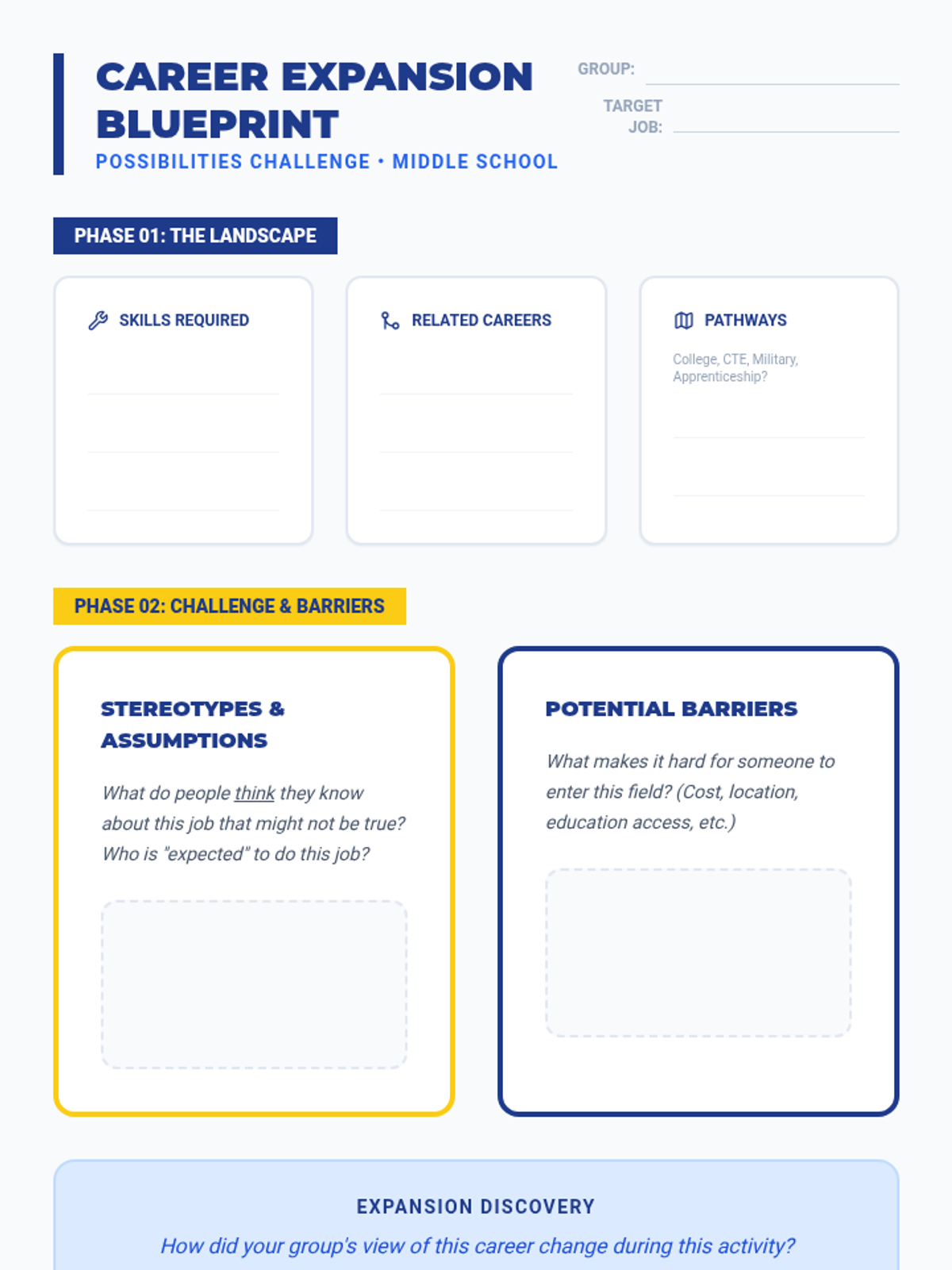
A career exploration lesson for middle schoolers that dives into salary, education requirements, and identifying stereotypes or barriers within specific career fields.
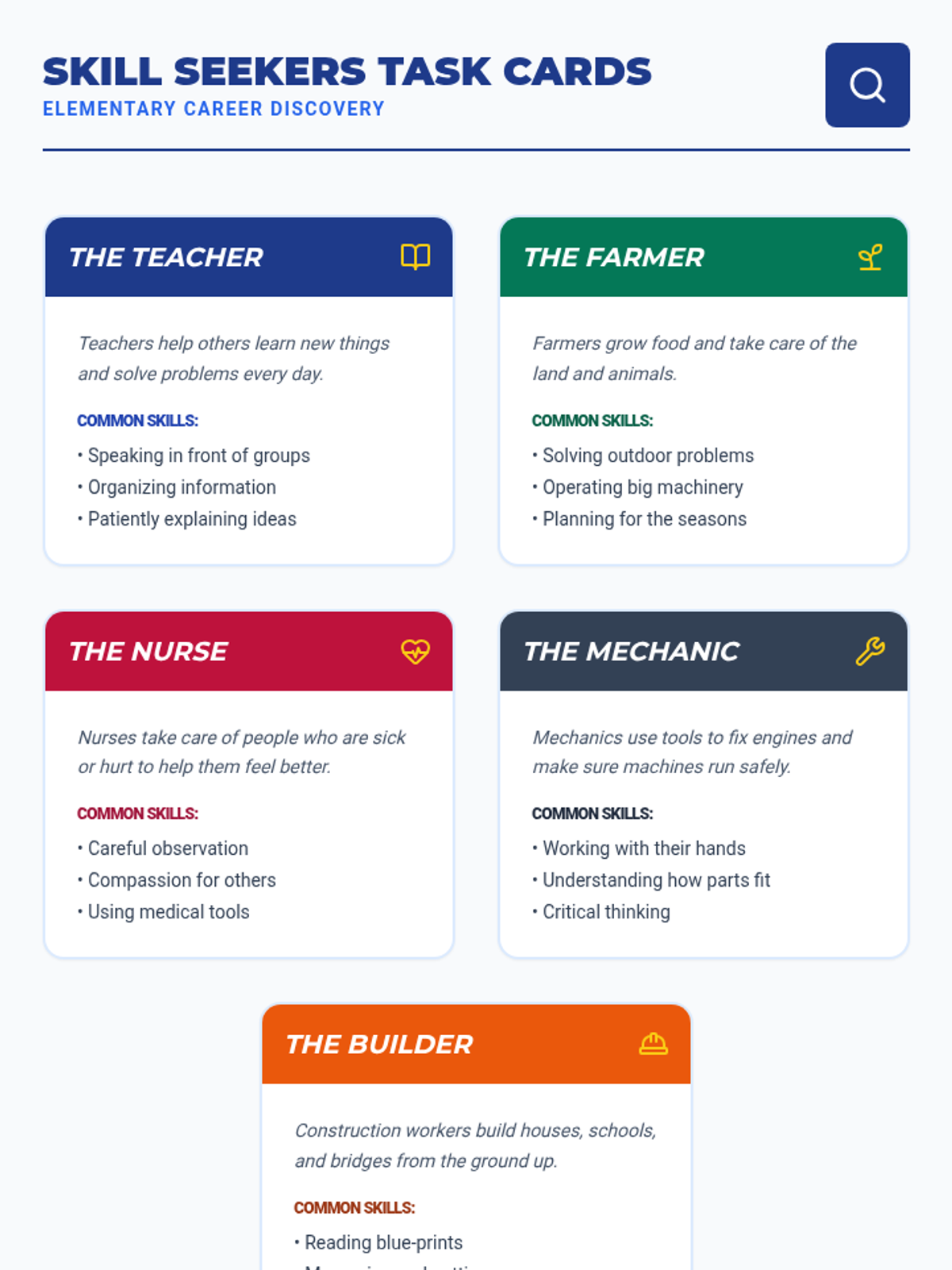
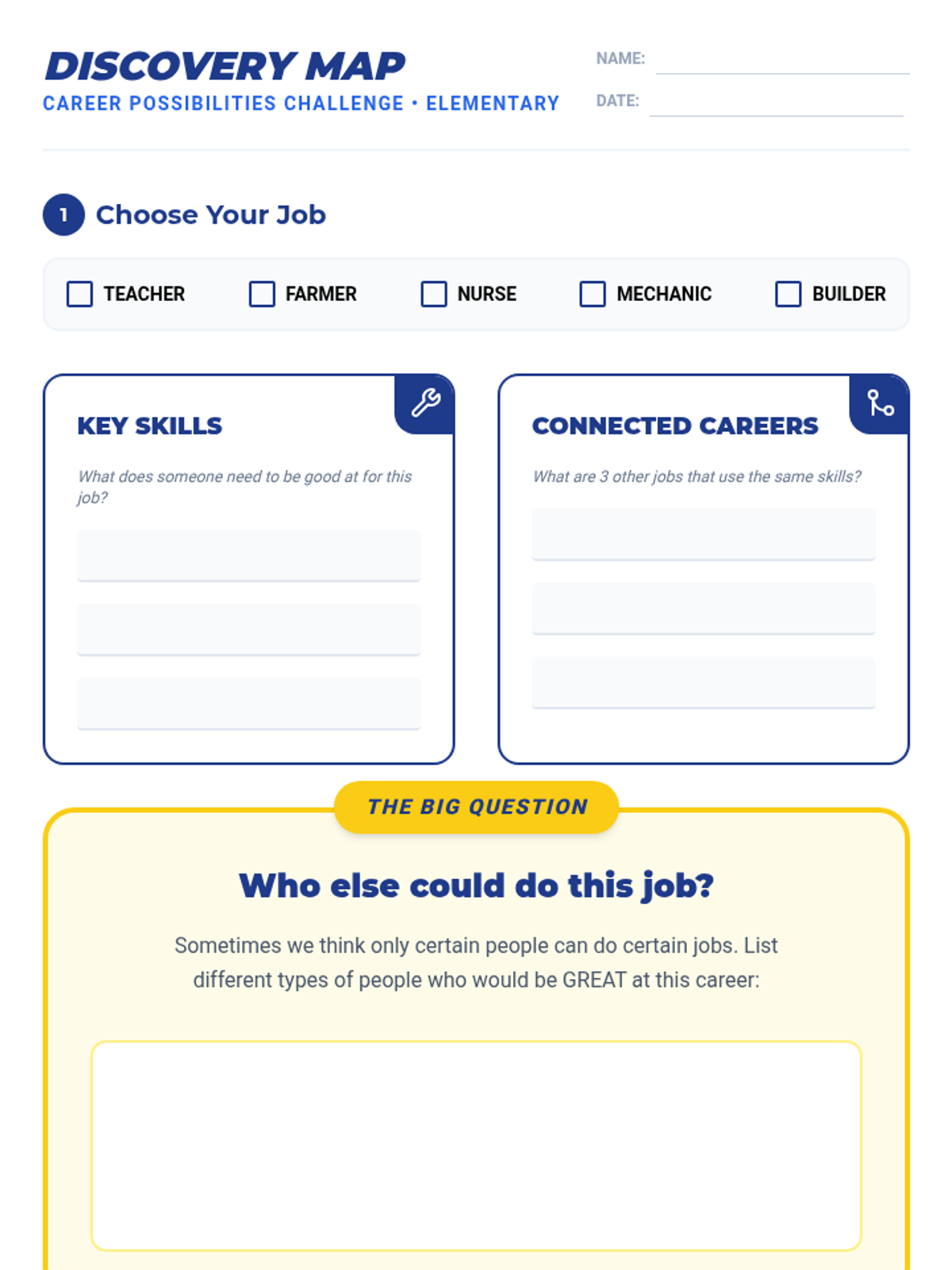
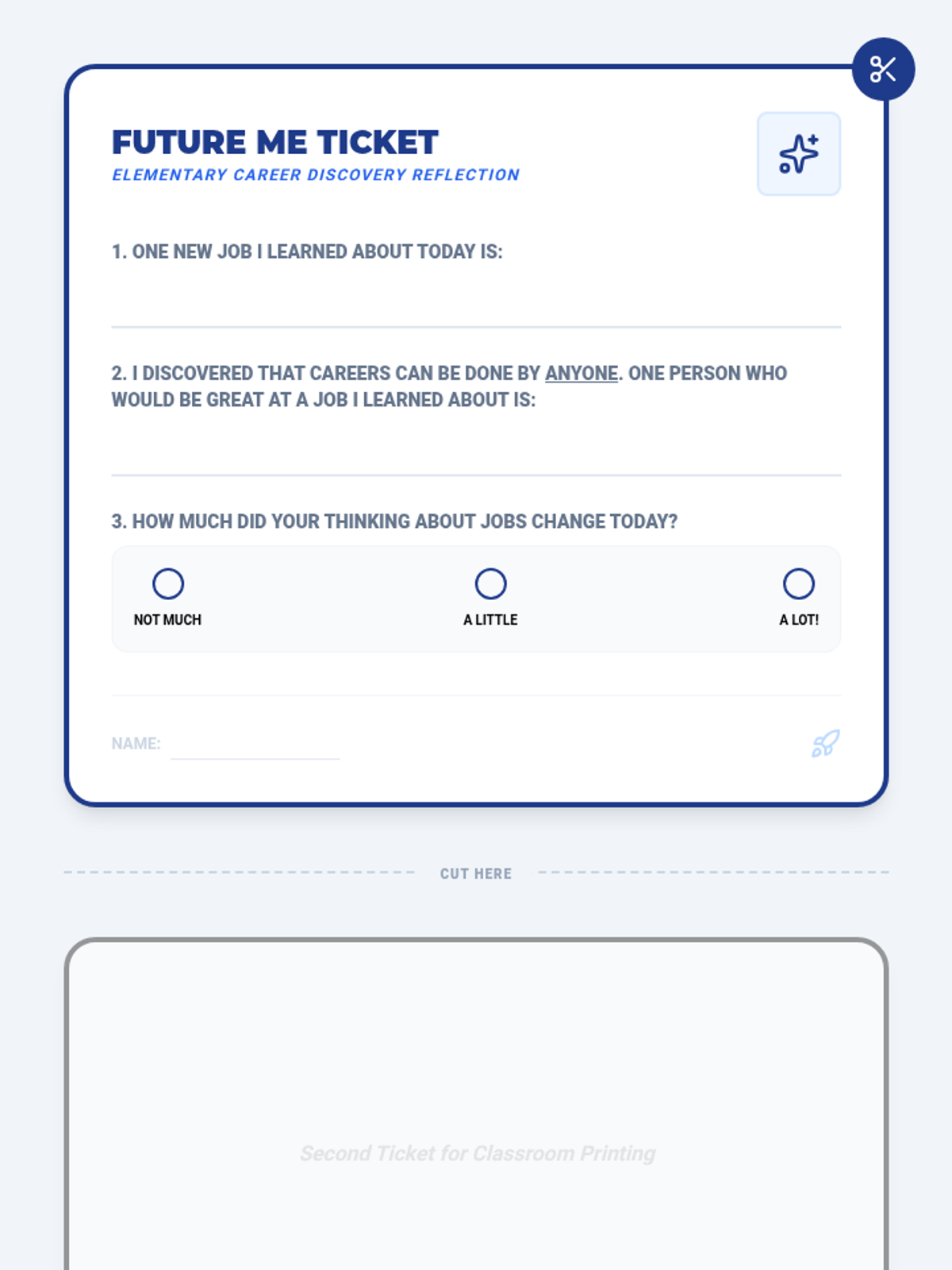
An introductory career awareness lesson for elementary students focusing on identifying job skills and exploring 'who else' can do a job. Students use a graphic organizer to expand their understanding of common professions.
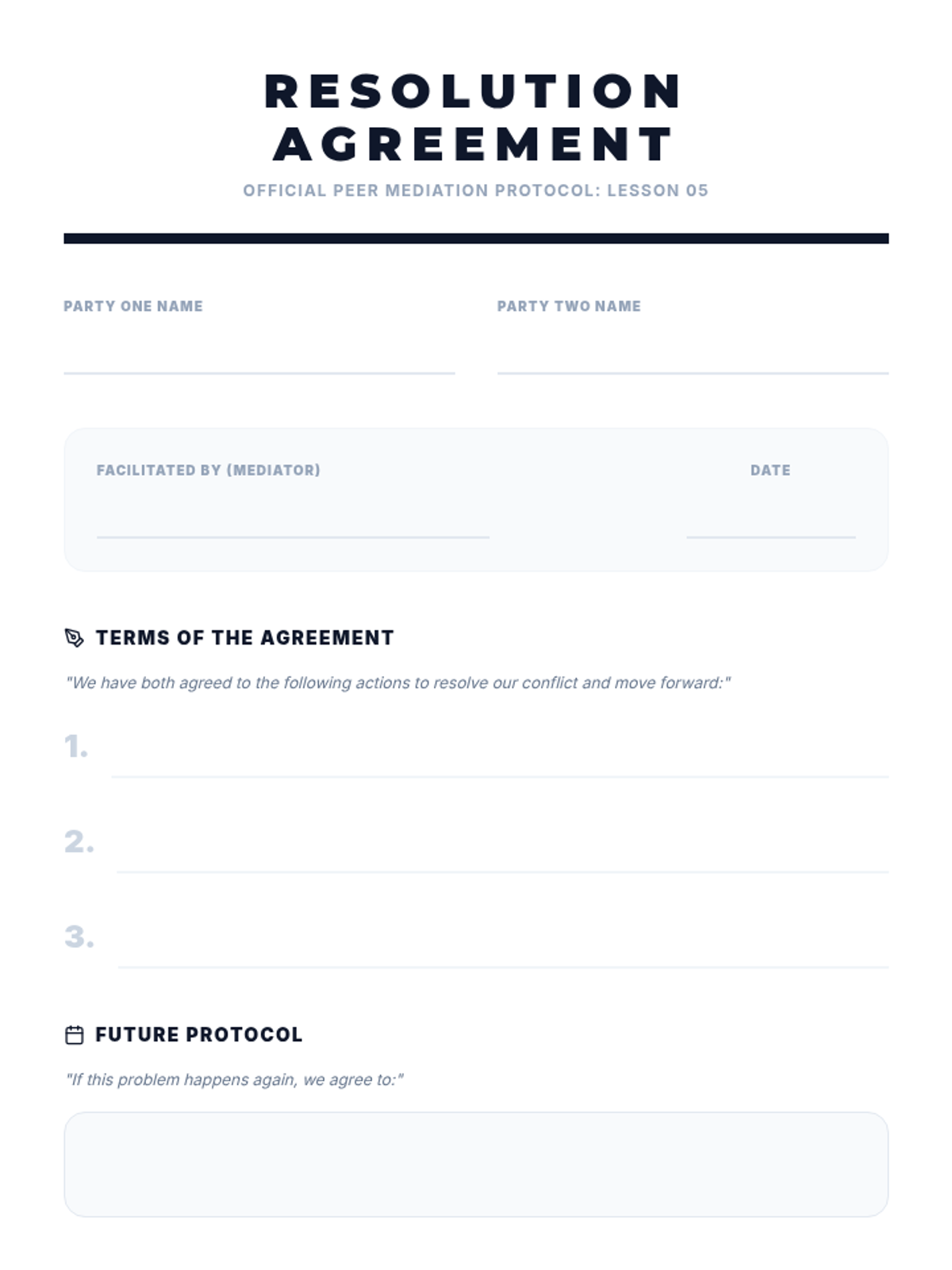
A culminating mock mediation simulation where students apply the full protocol—from opening statements to written agreements—using realistic middle school scenarios.
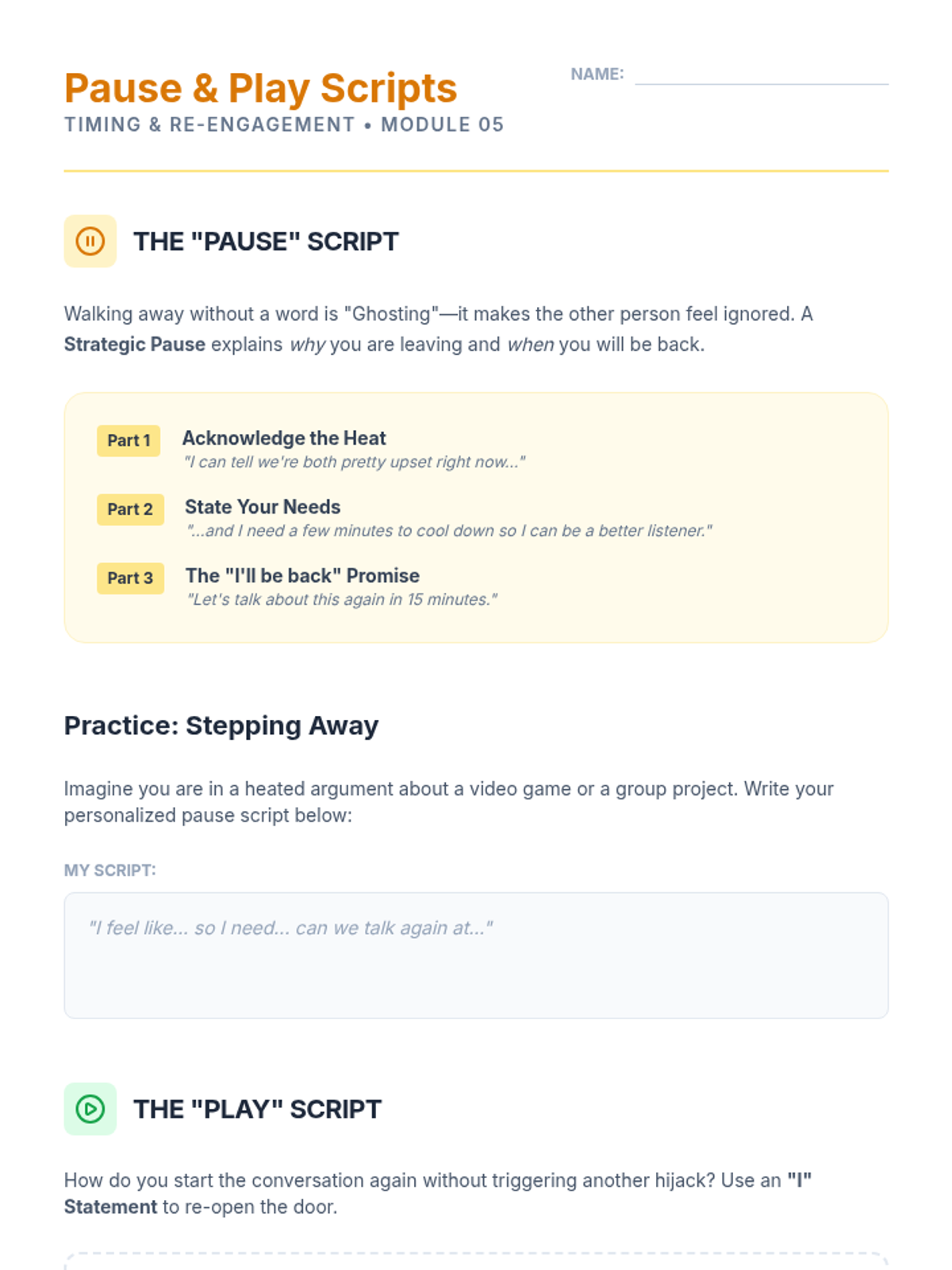
Students learn to assess when a conflict is too heated to solve and practice scripts for stepping away and re-initiating the conversation later.
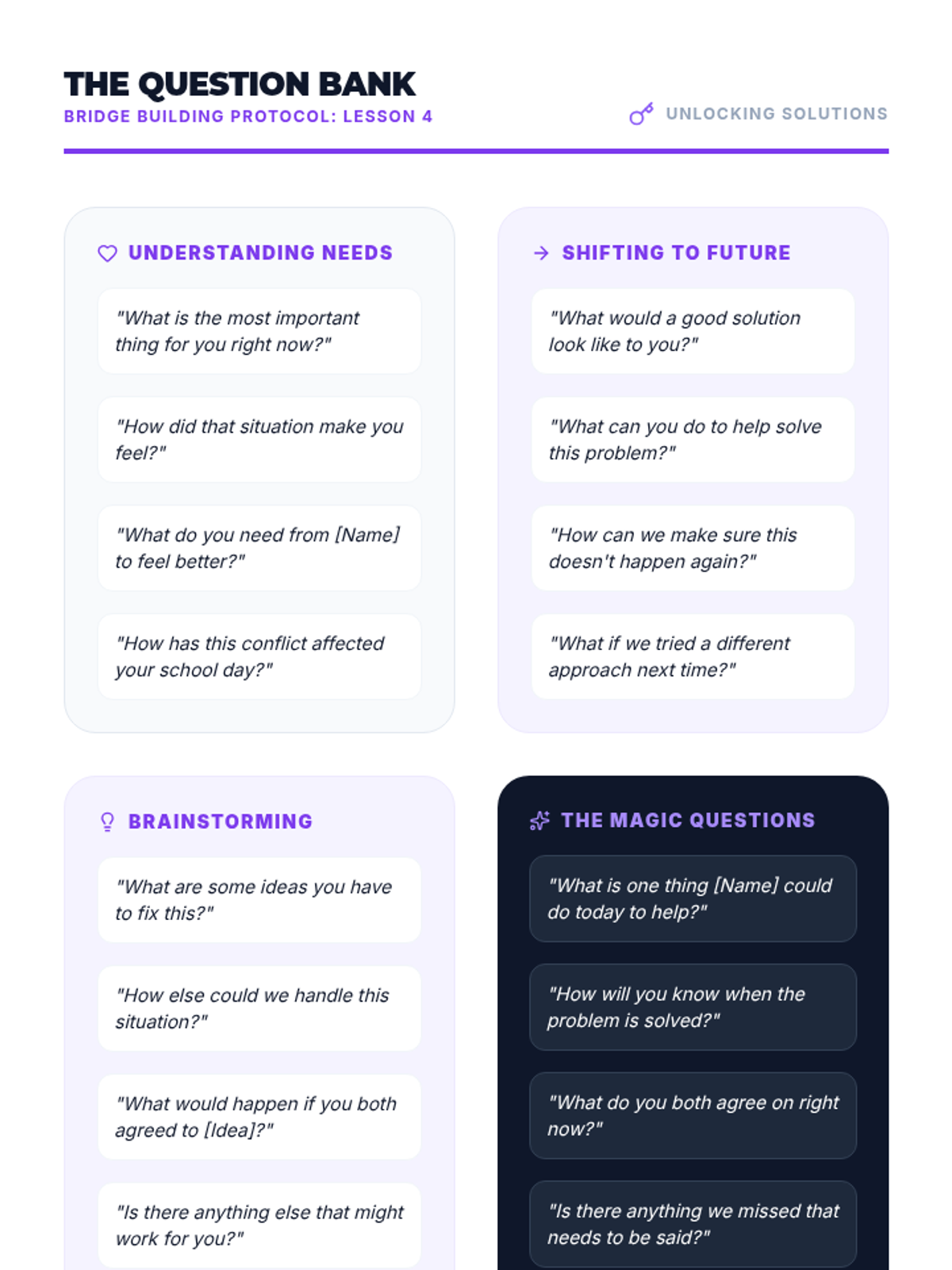
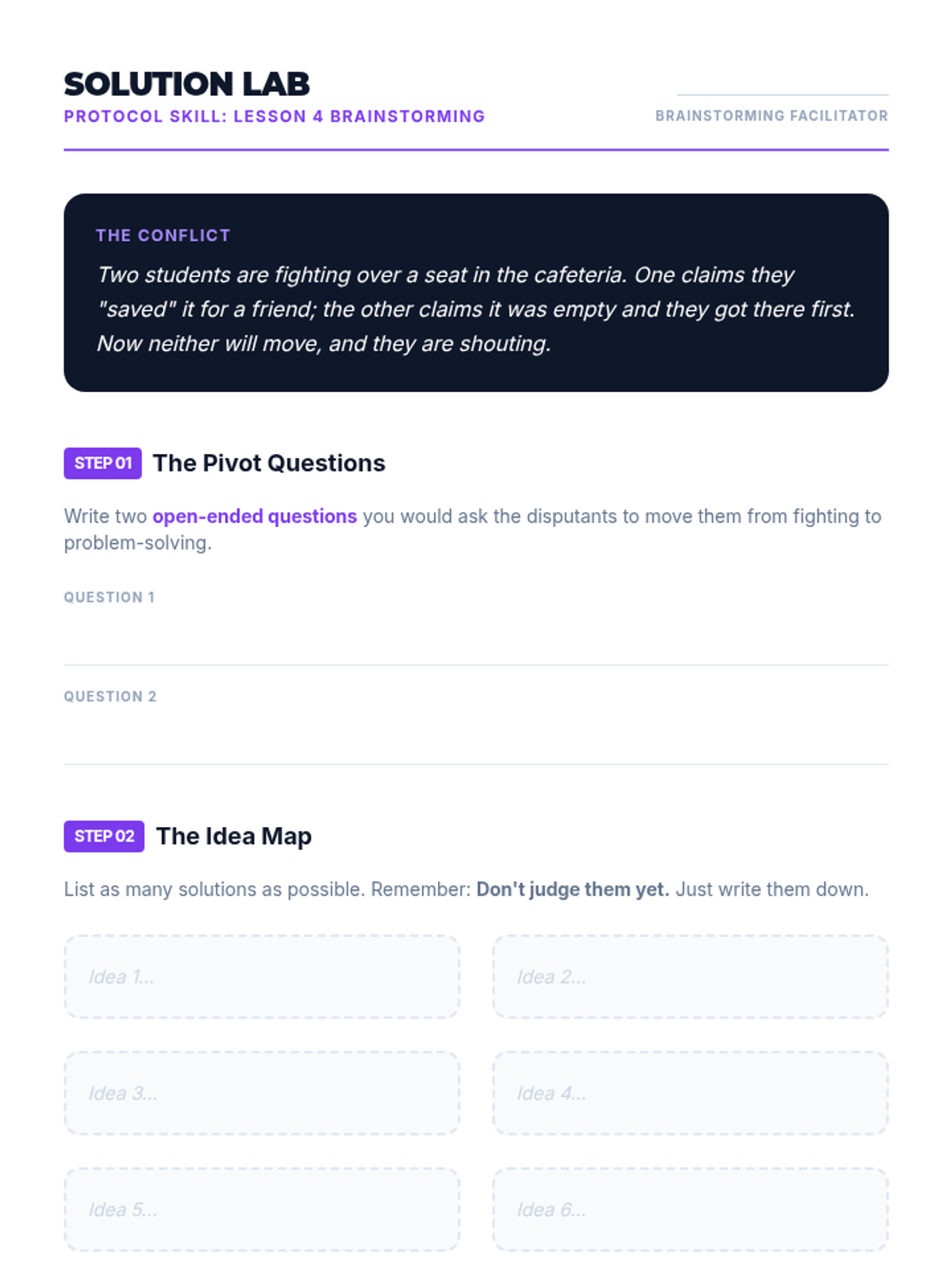
Focused on shifting from conflict to collaboration, students practice asking open-ended questions that prompt disputants to generate their own creative solutions.
Students examine how body language, proximity, and eye contact can be perceived as threatening or calming during tense interactions.
Students master the skills of summarizing and reframing. They learn to strip away inflammatory language and reflect back the core needs and feelings of disputing parties.
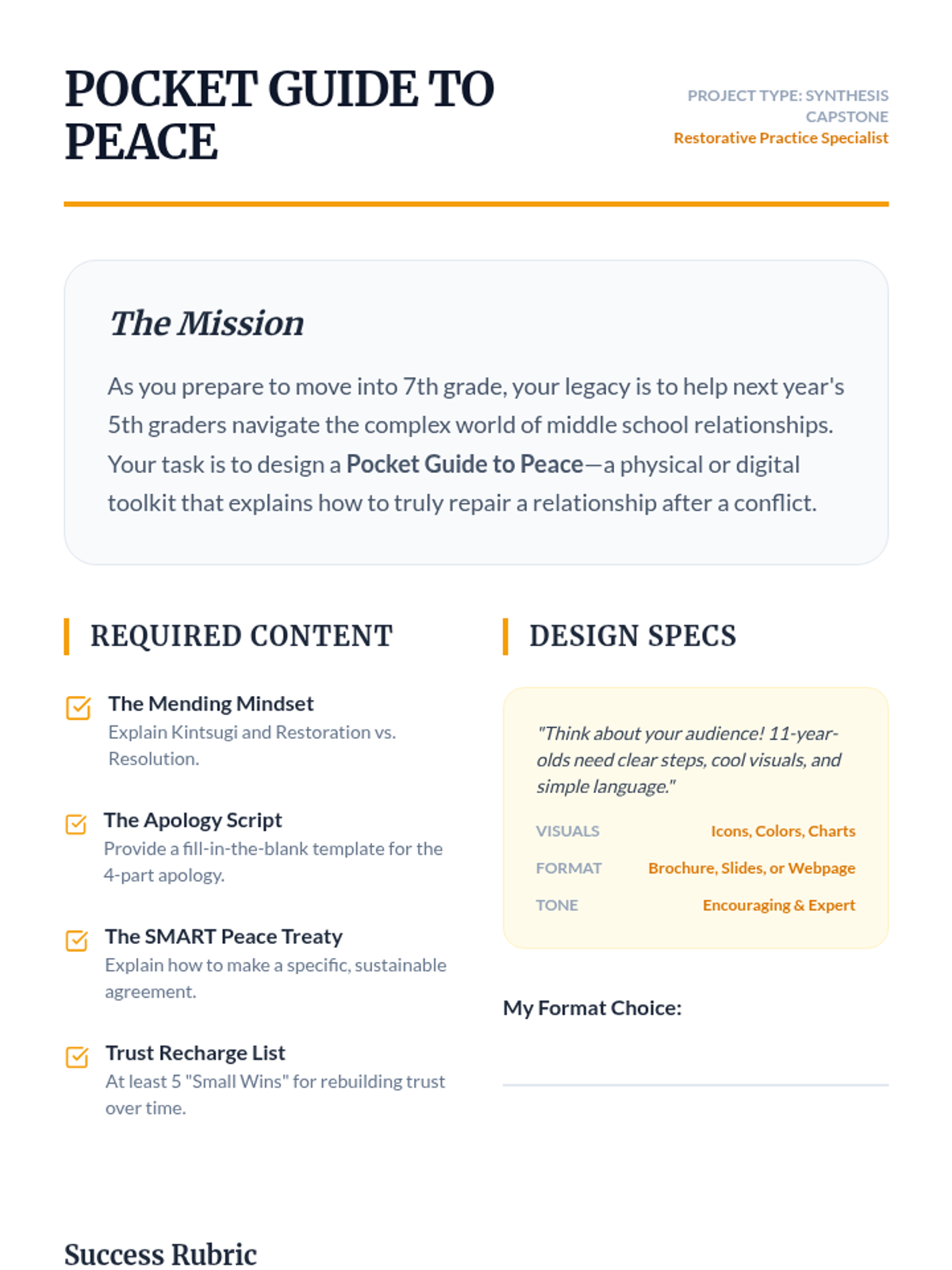
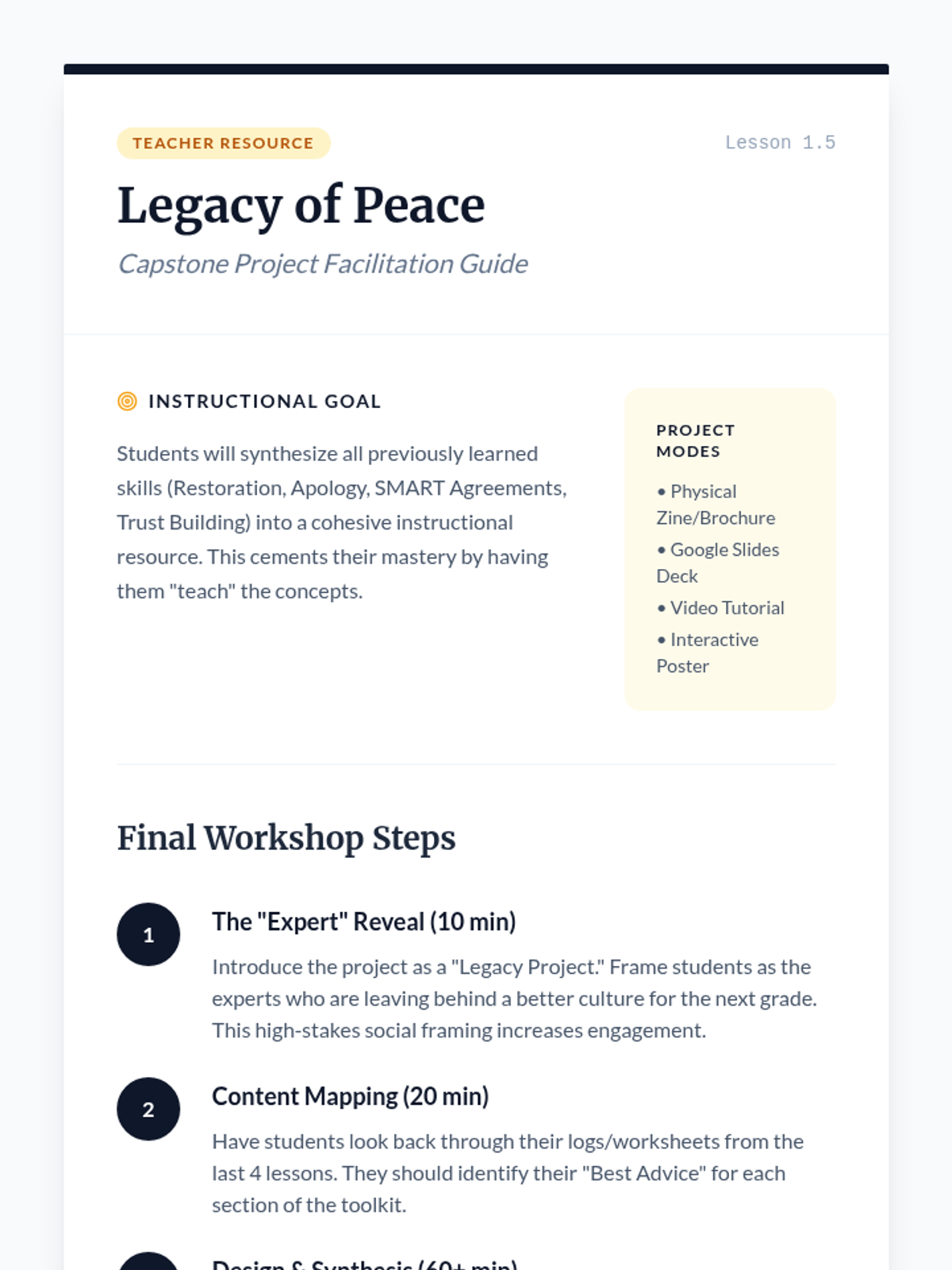
A capstone project where students synthesize their learning to create a 'Pocket Guide to Peace' for younger students.
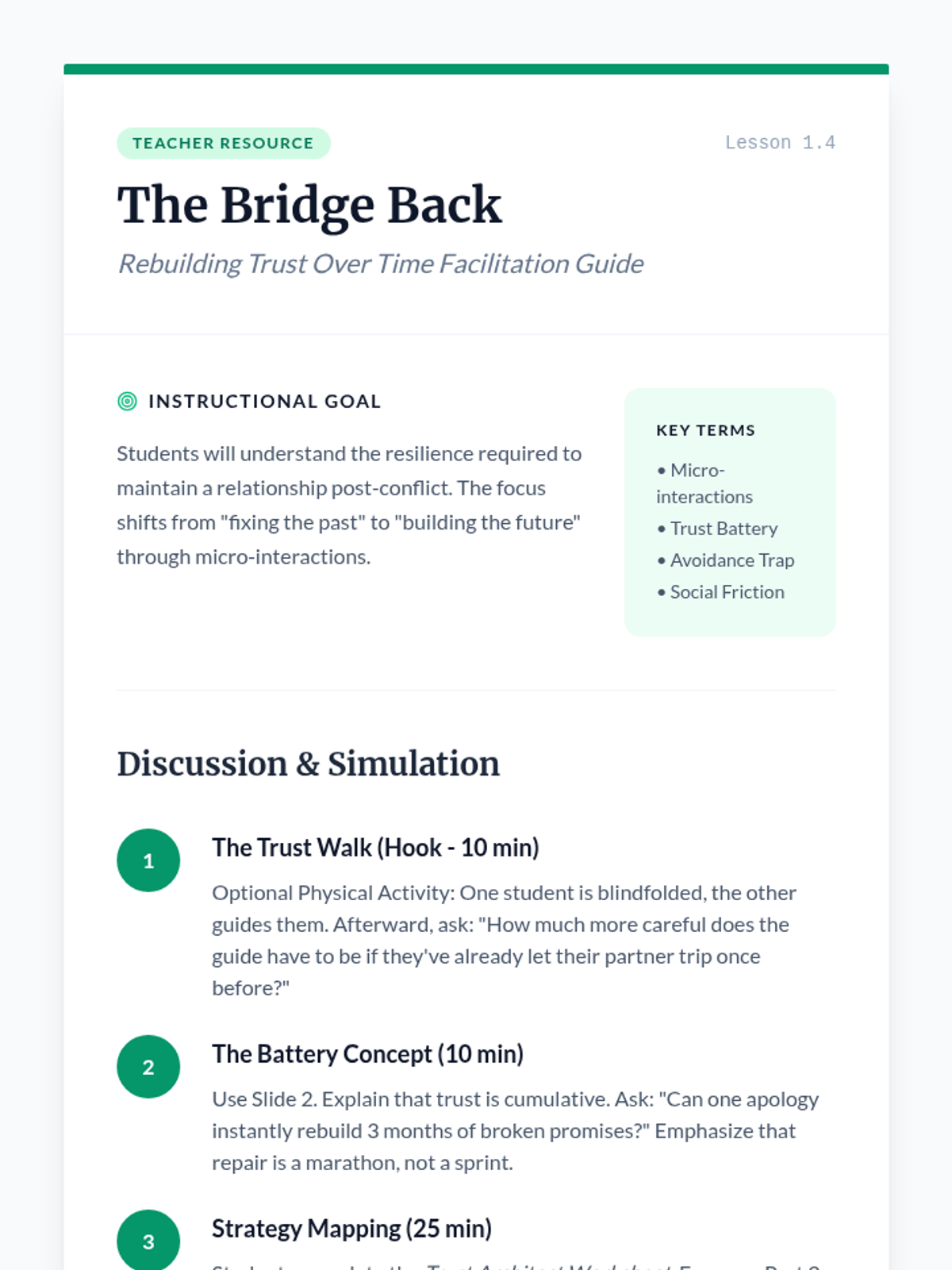
Explores the slow process of rebuilding trust after a conflict, focusing on small, consistent actions and the courage required to be vulnerable again.
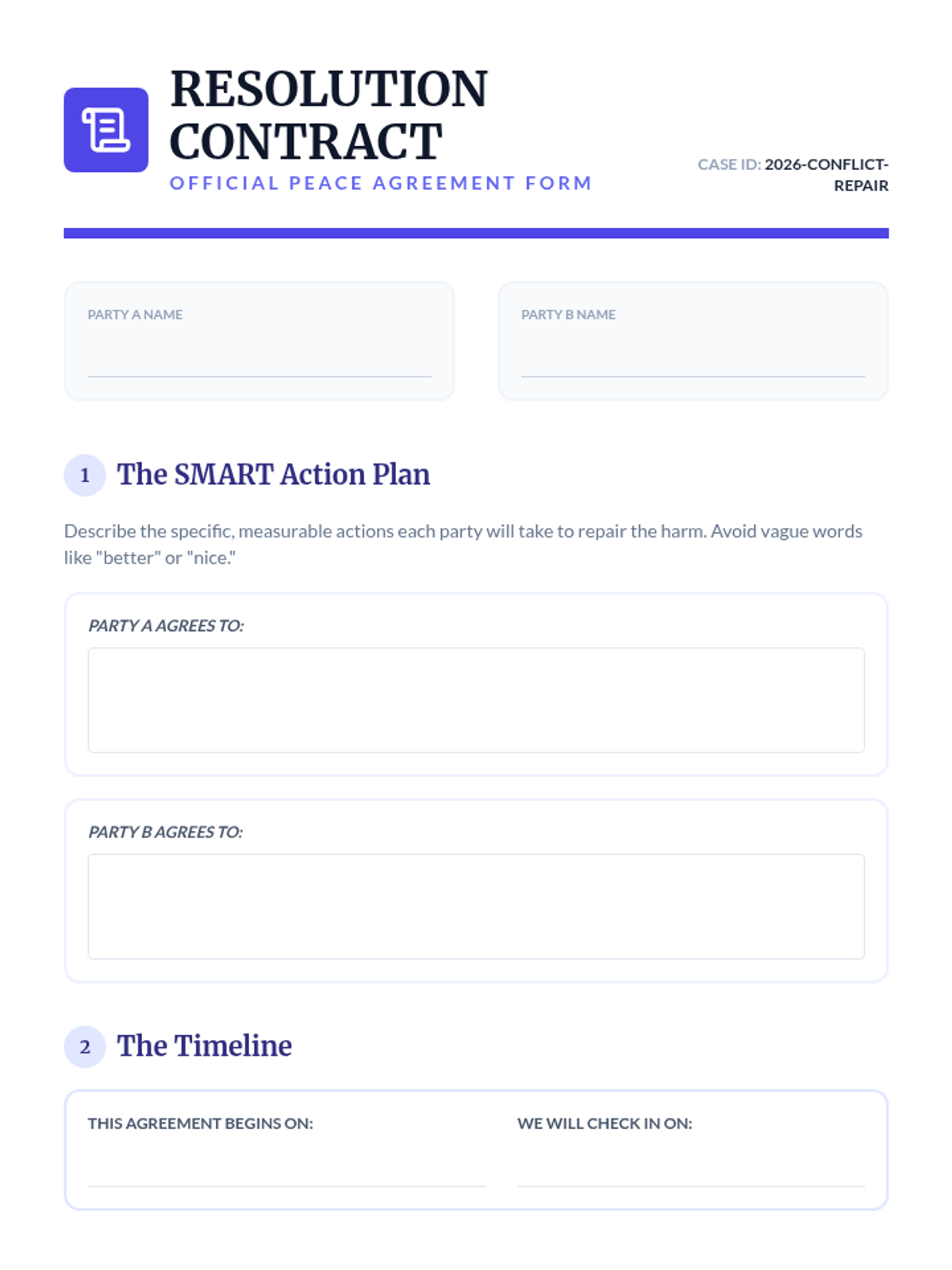
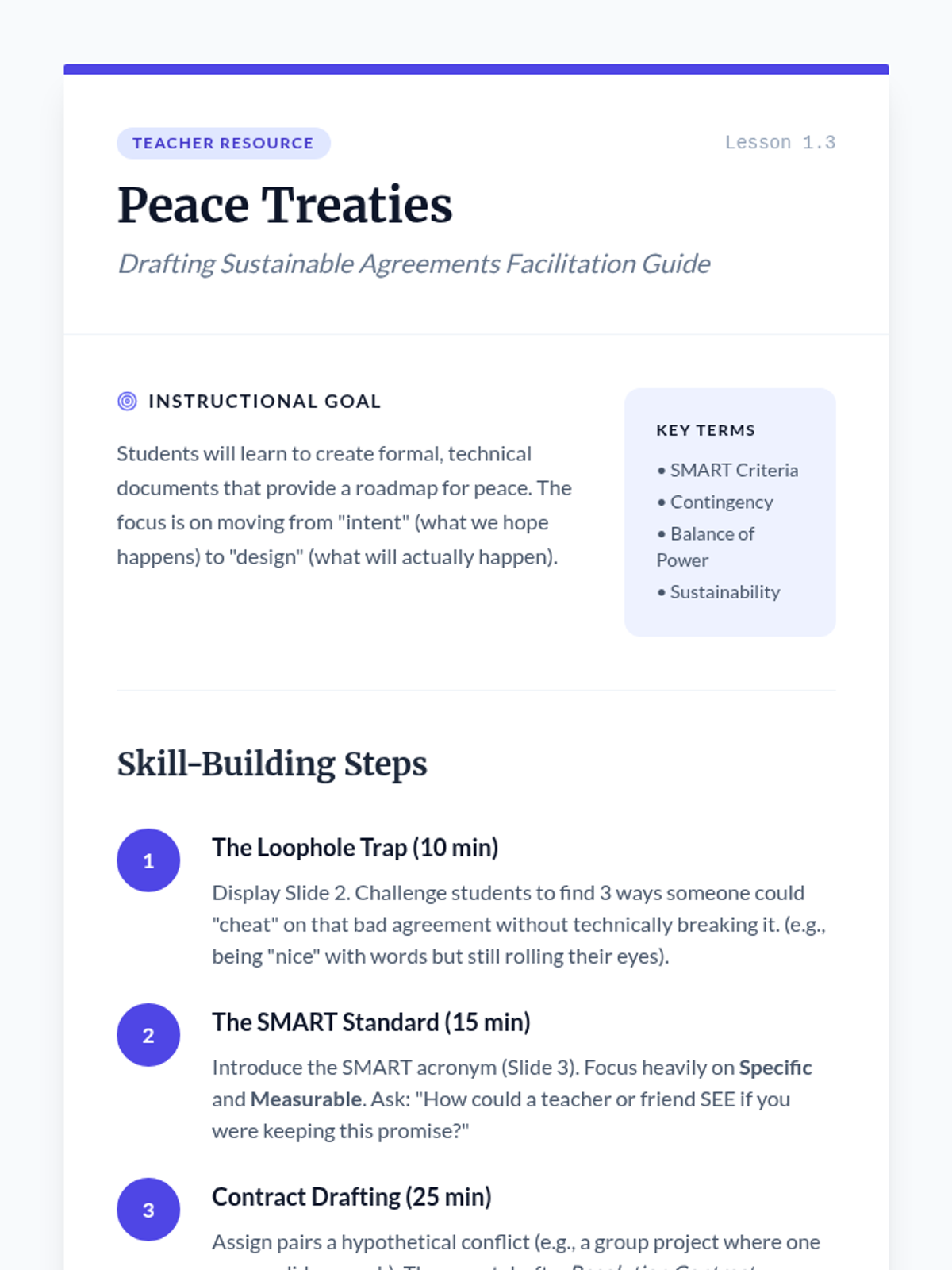
Focuses on technical skills for creating 'fight-proof' agreements that are specific, measurable, and include contingency plans for future friction.
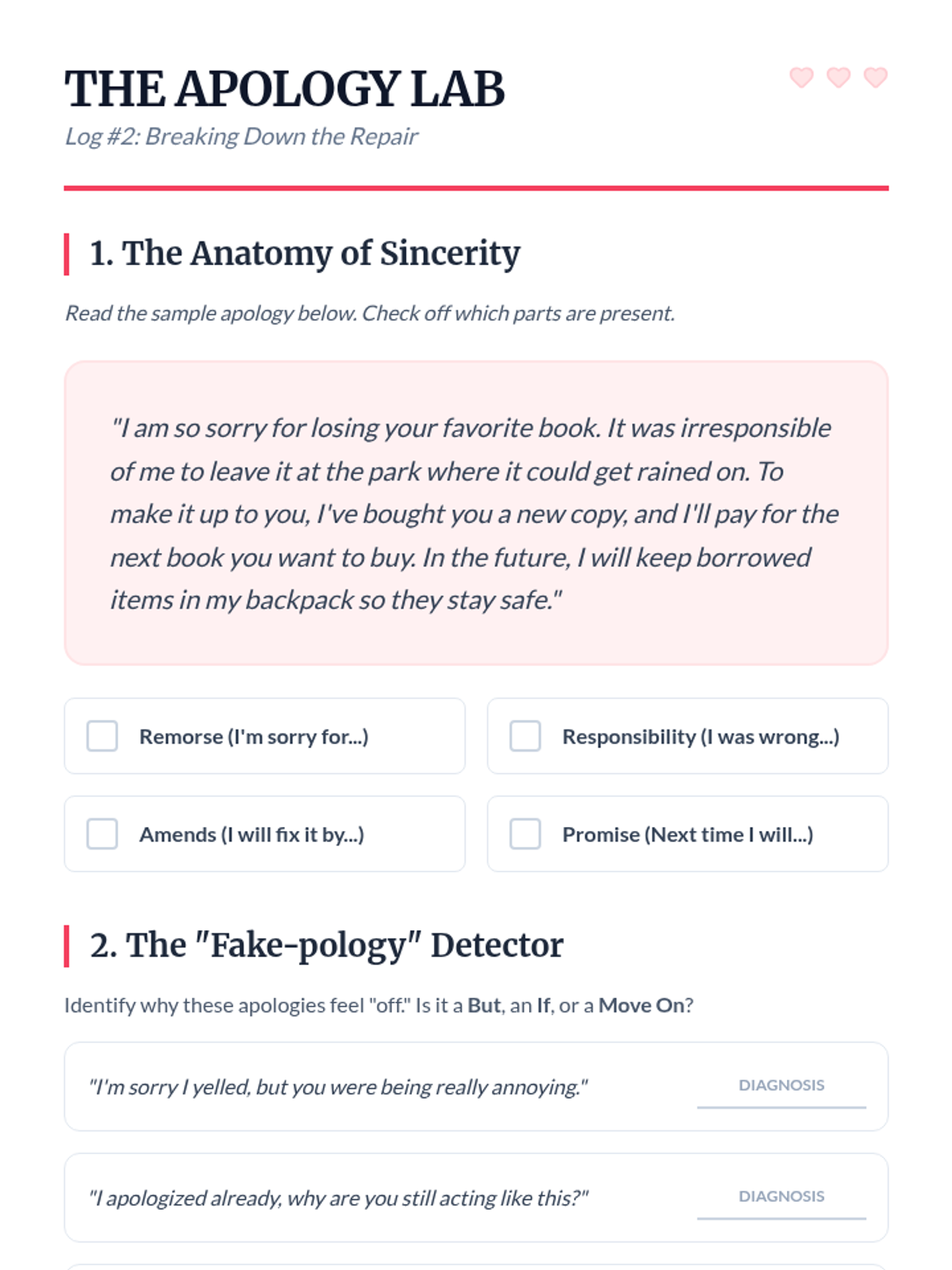
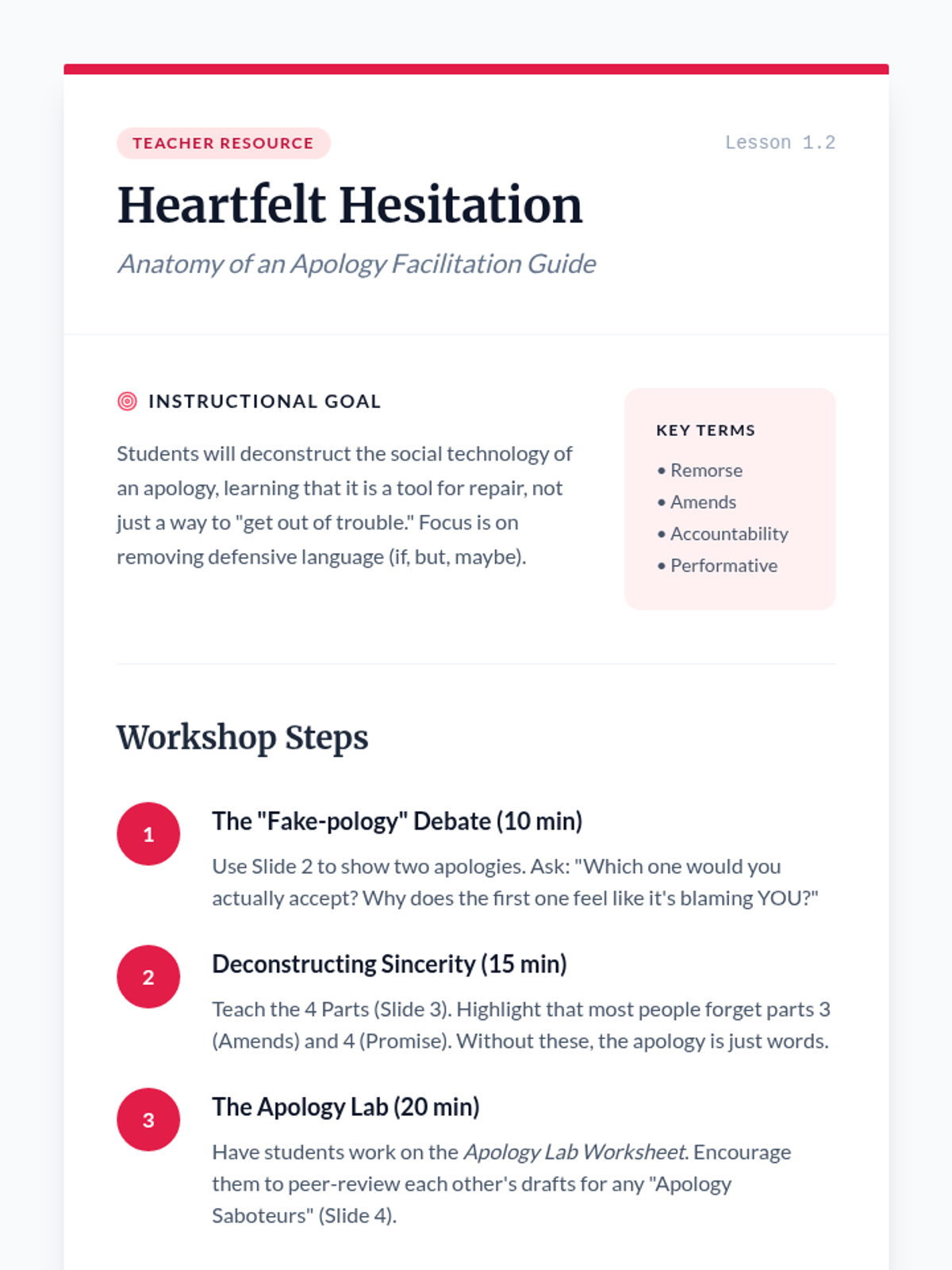
Learners break down the four essential components of a meaningful apology and practice distinguishing between performative and sincere expressions of remorse.
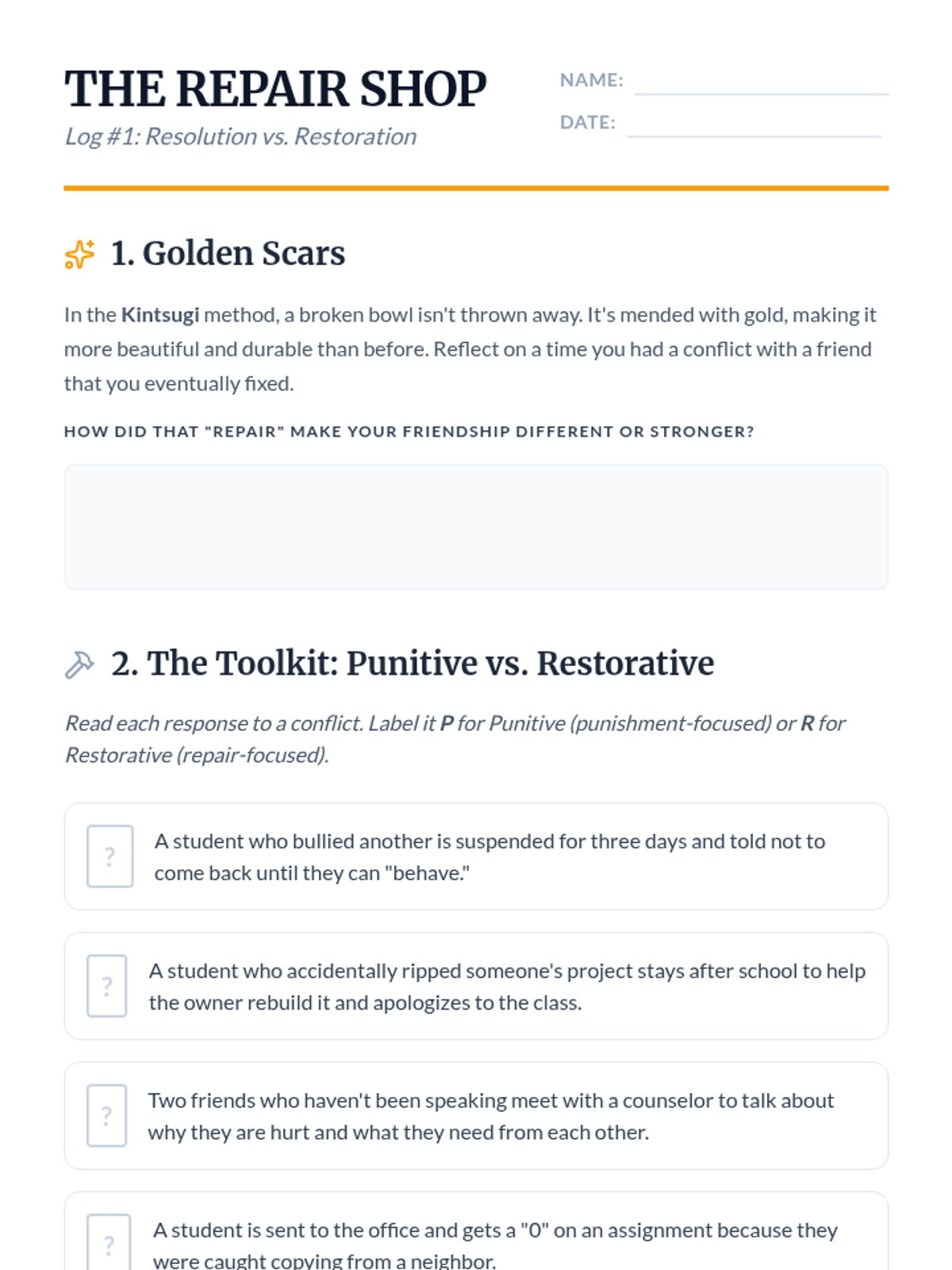
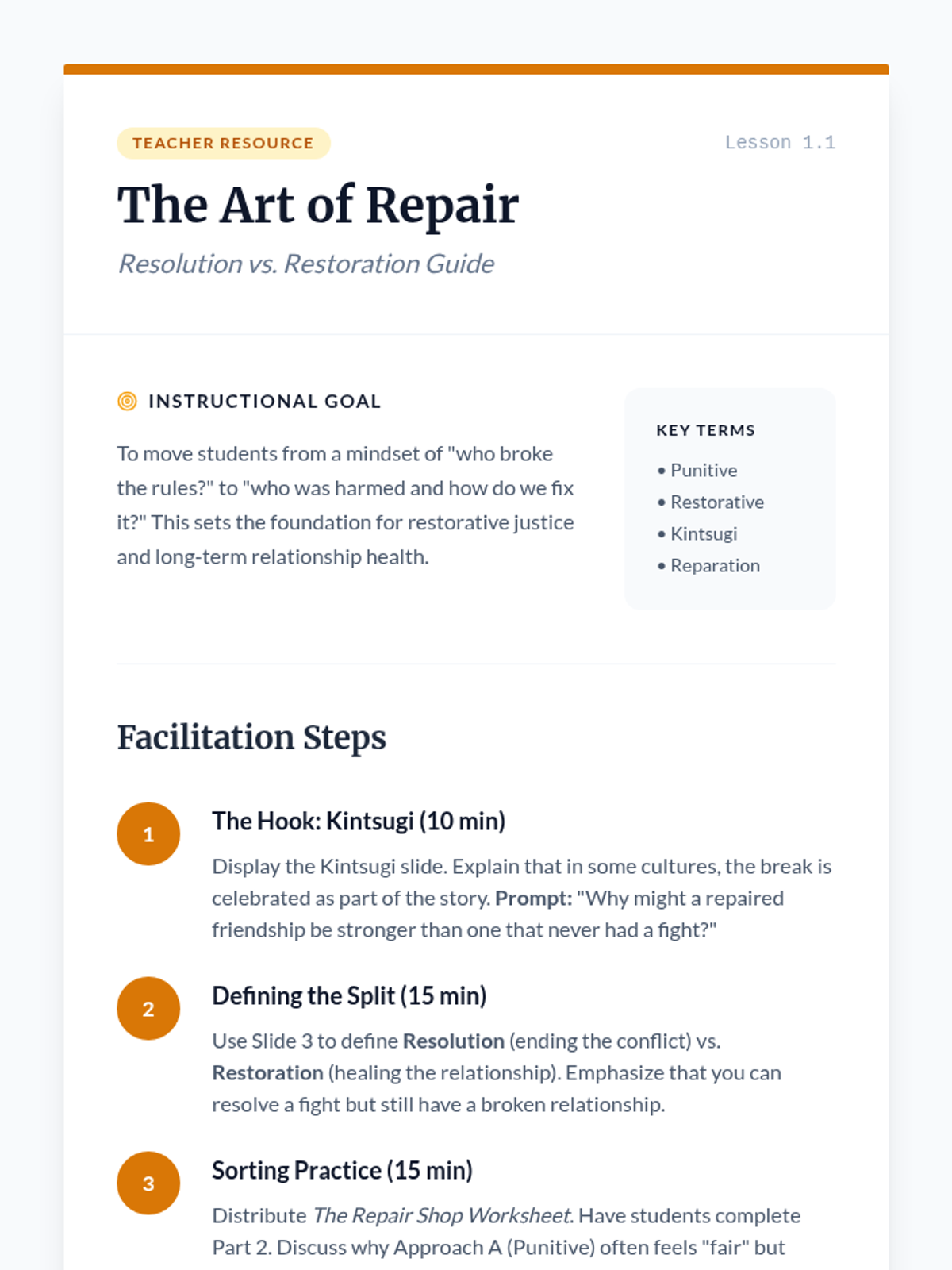
Students contrast punitive and restorative approaches to conflict, using the concept of Kintsugi to understand how repair can make a relationship stronger.
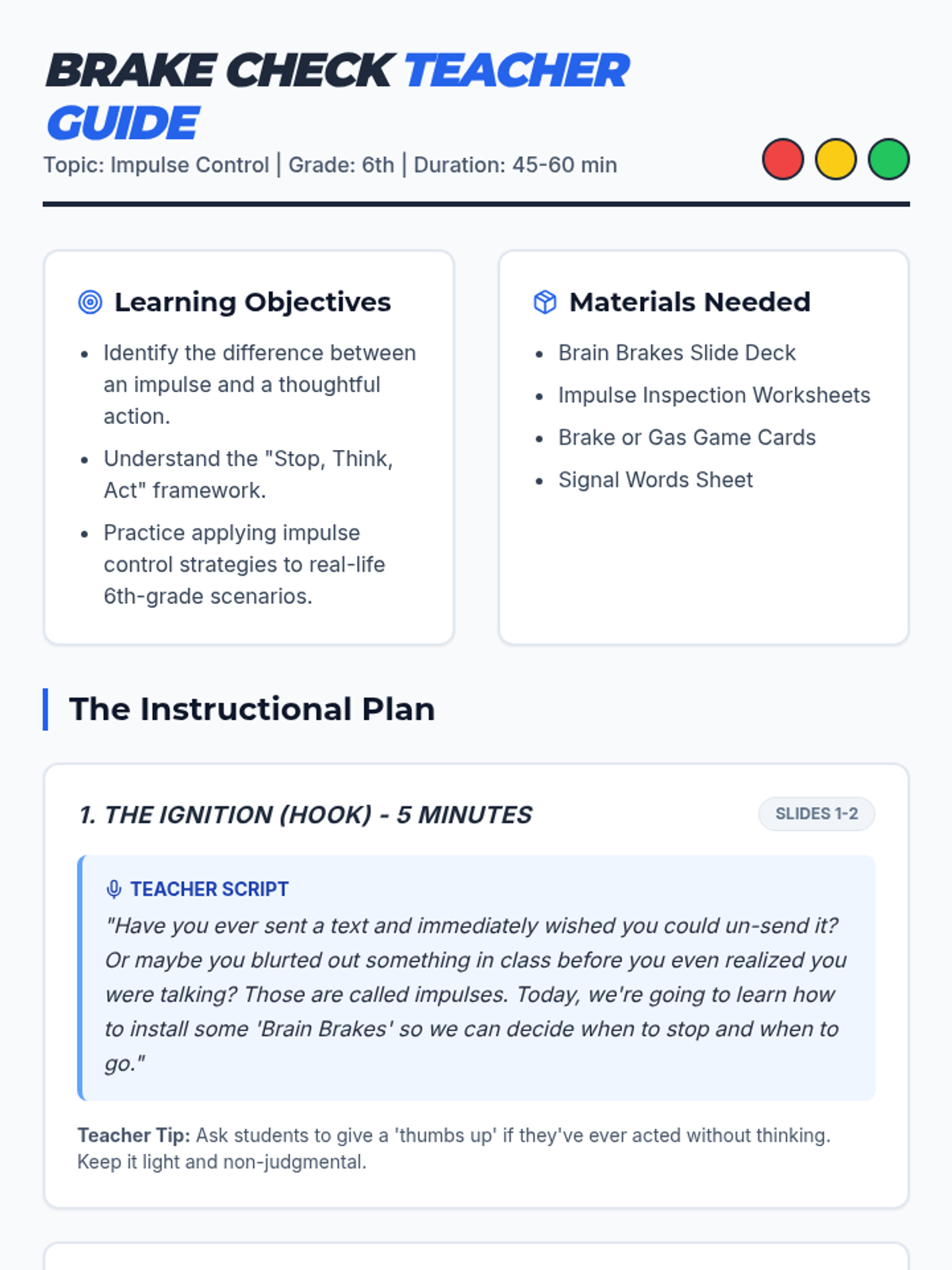
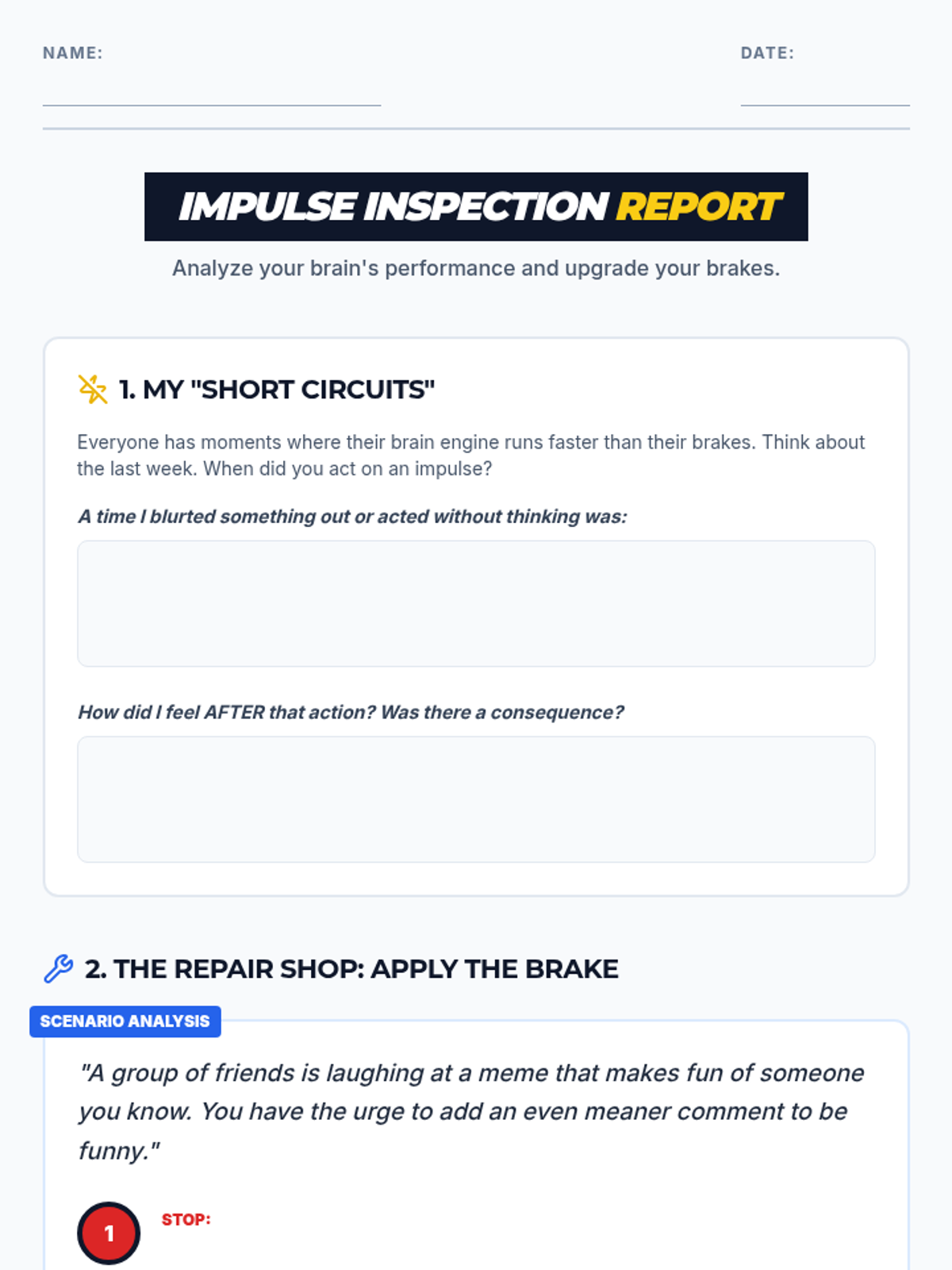
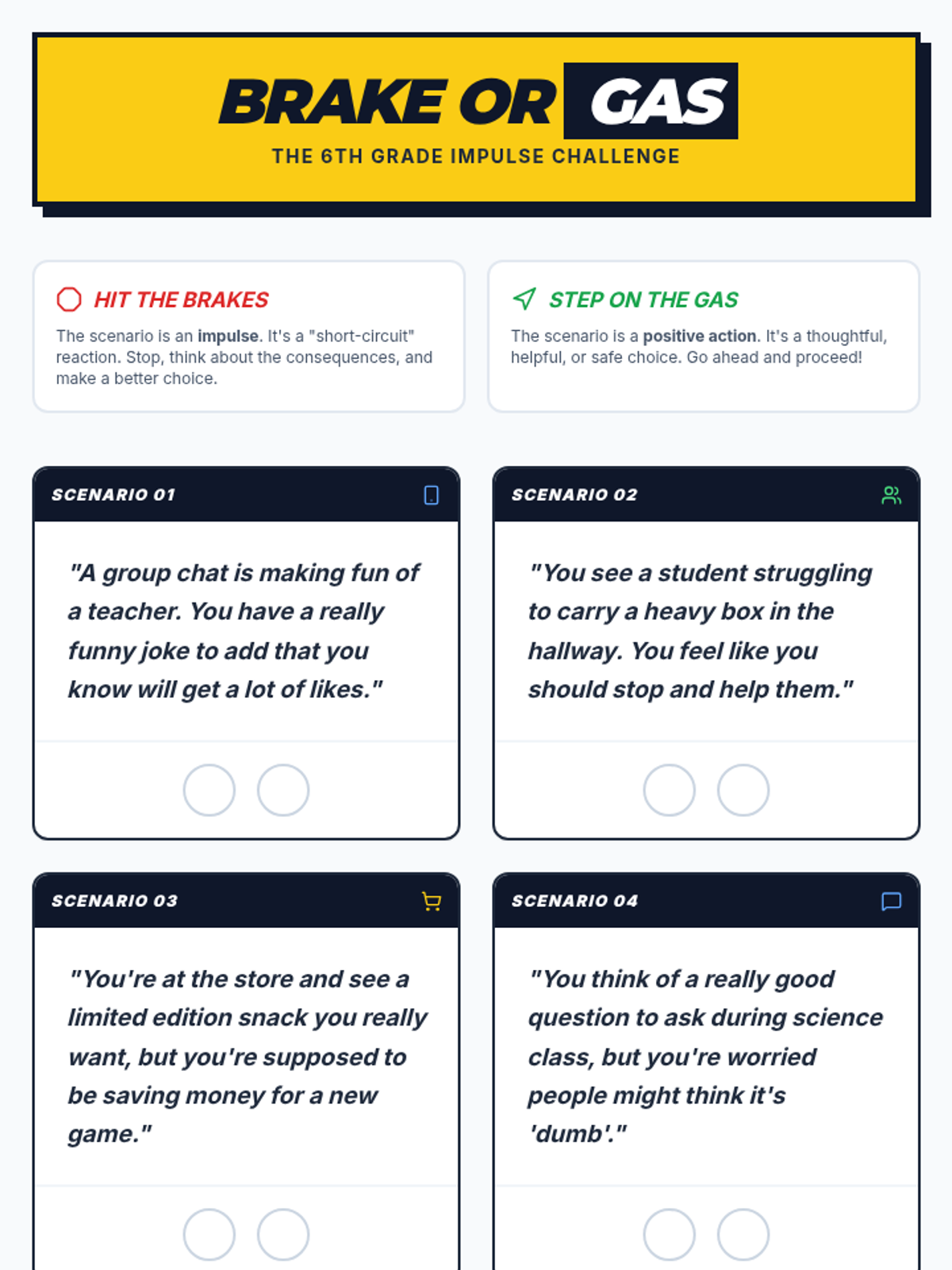
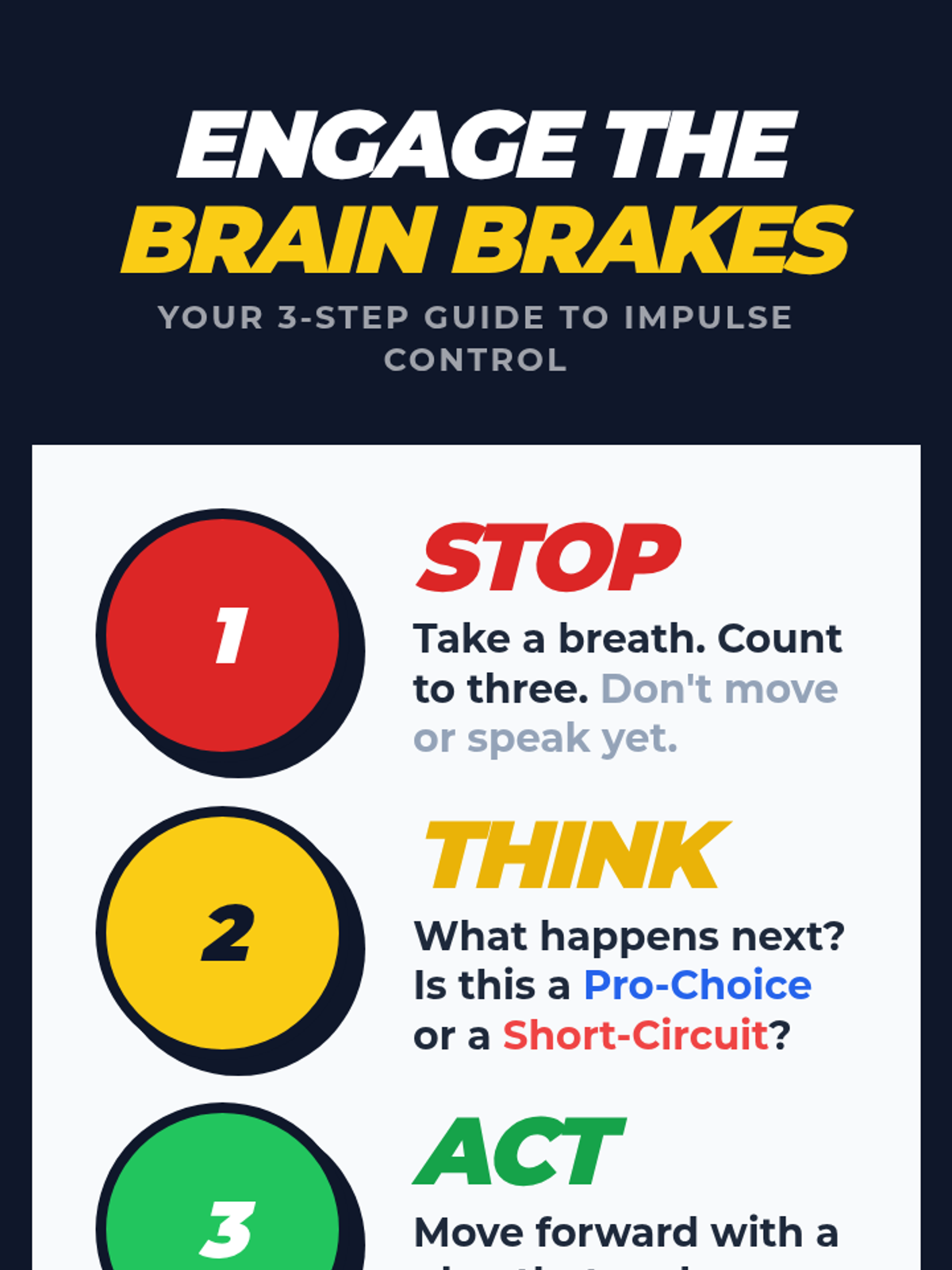
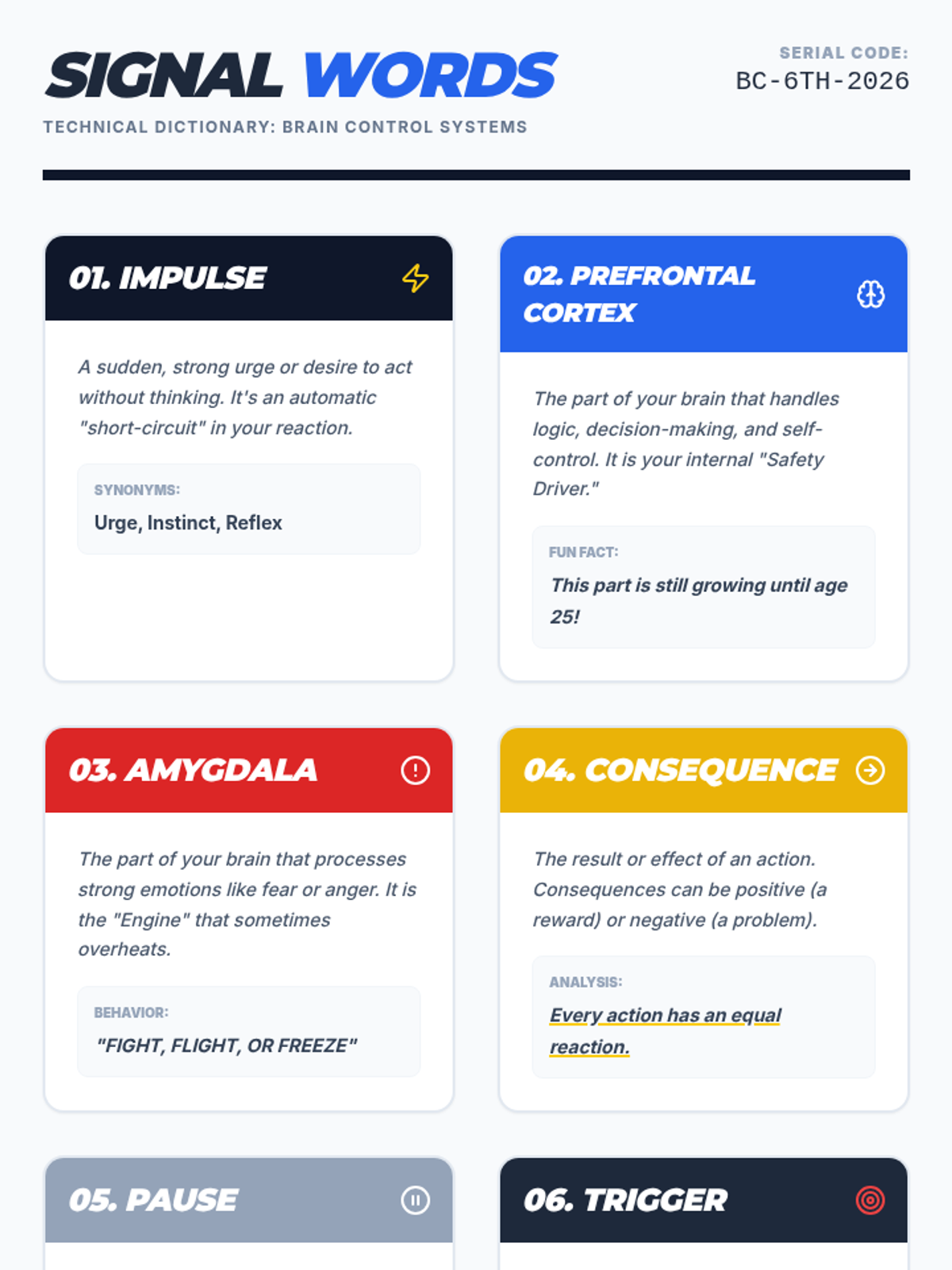
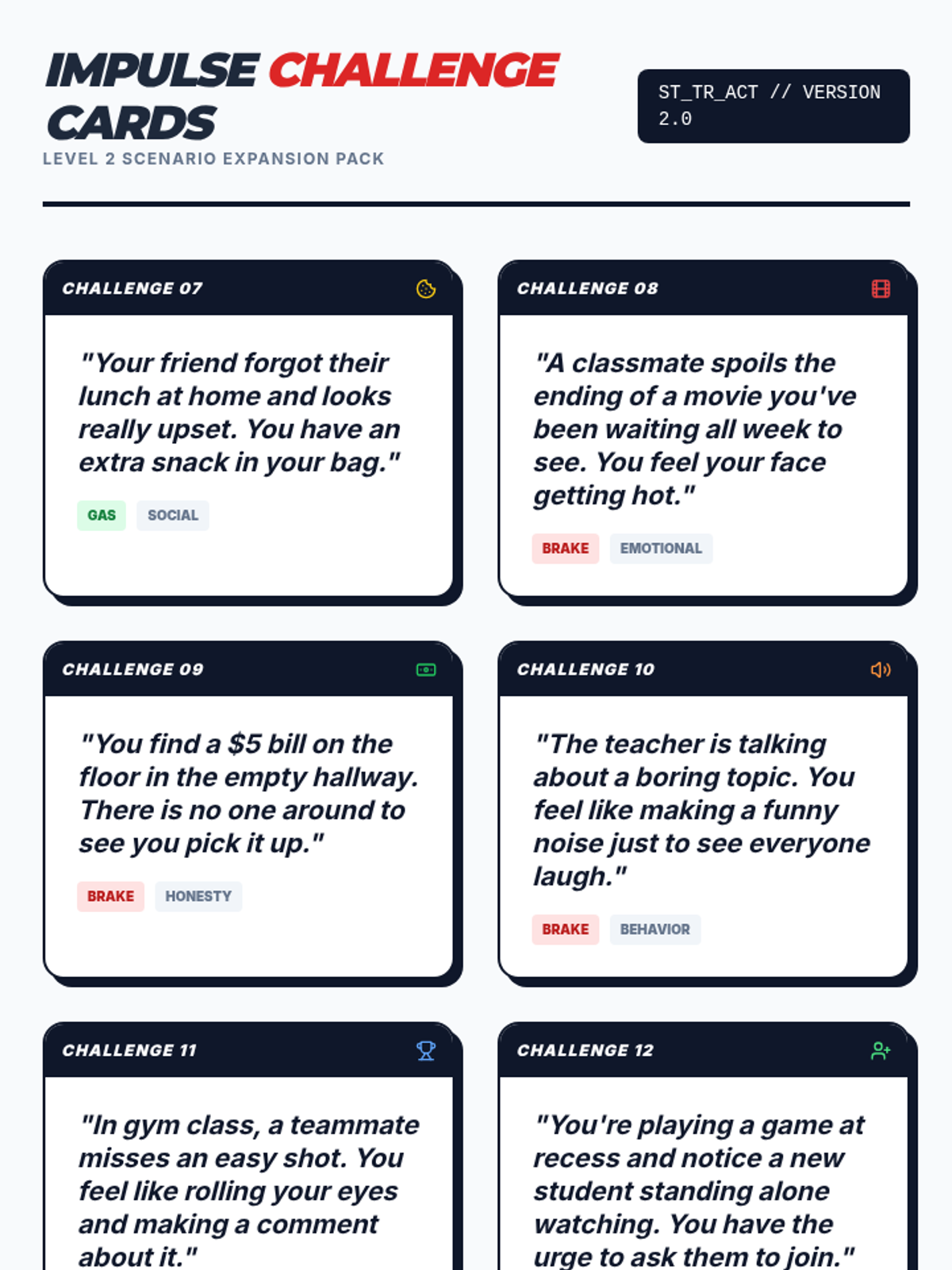
A comprehensive lesson for 6th graders on impulse control, teaching the 'Stop, Think, Act' method through interactive scenarios and reflection.
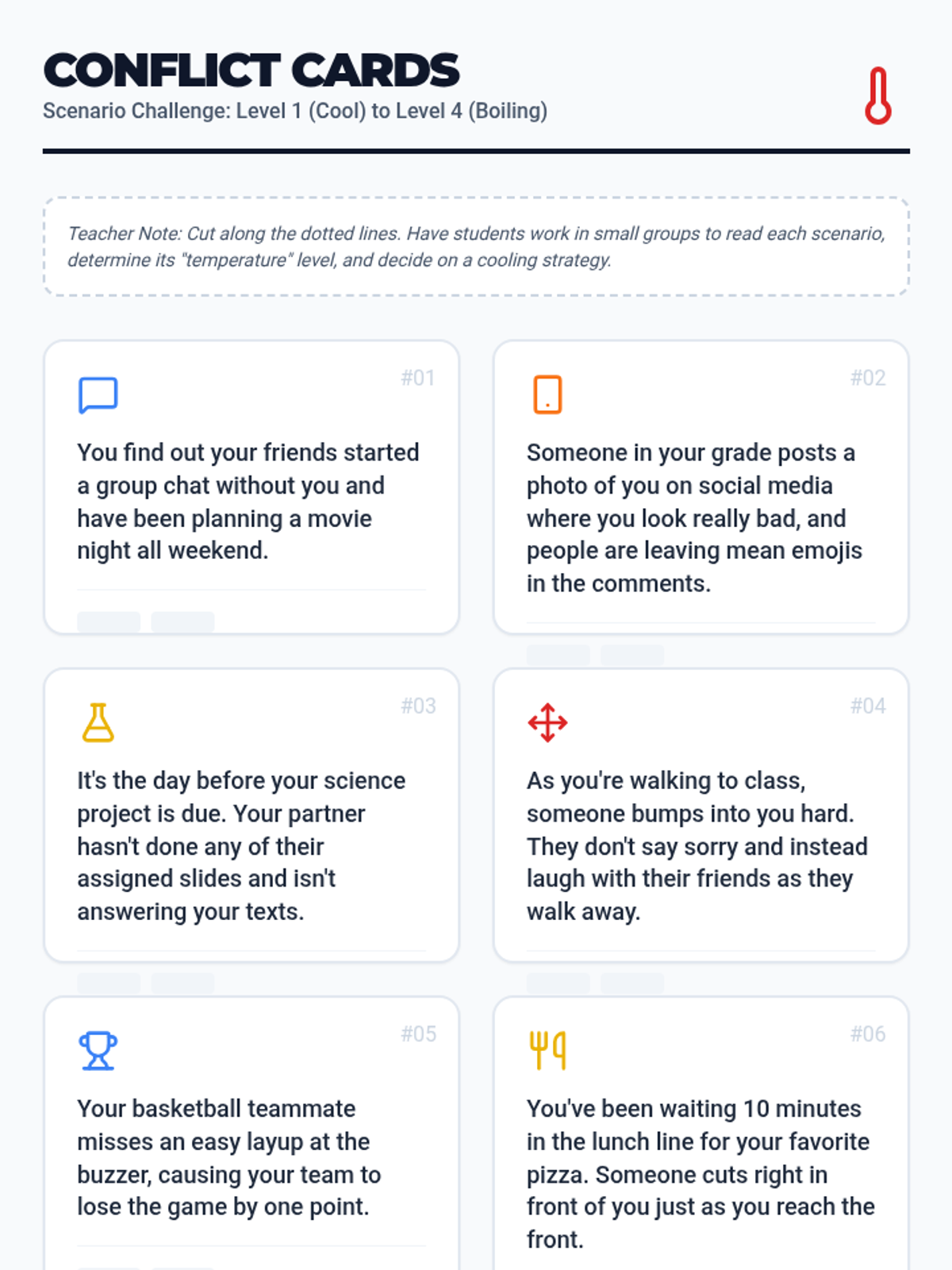
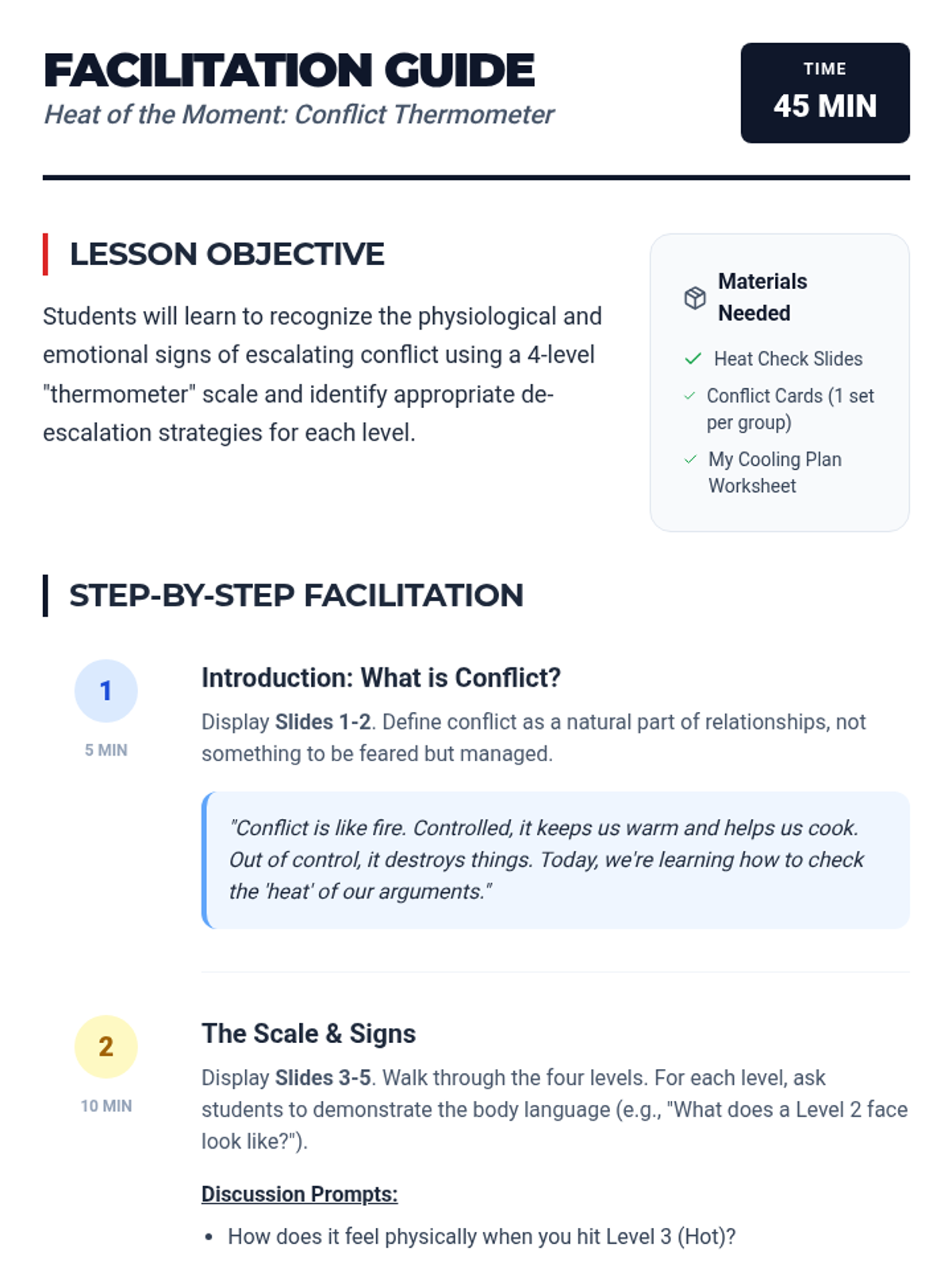
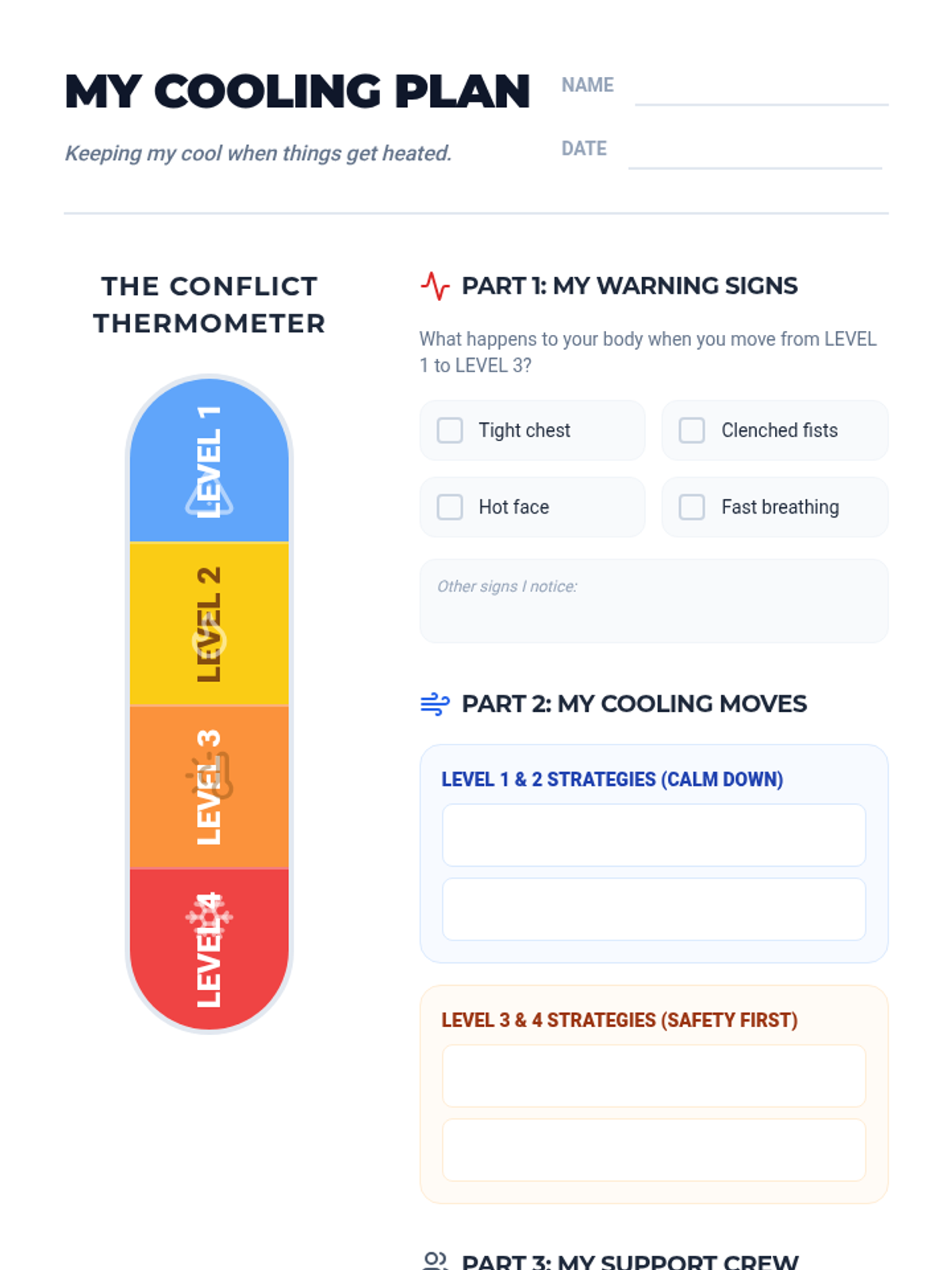
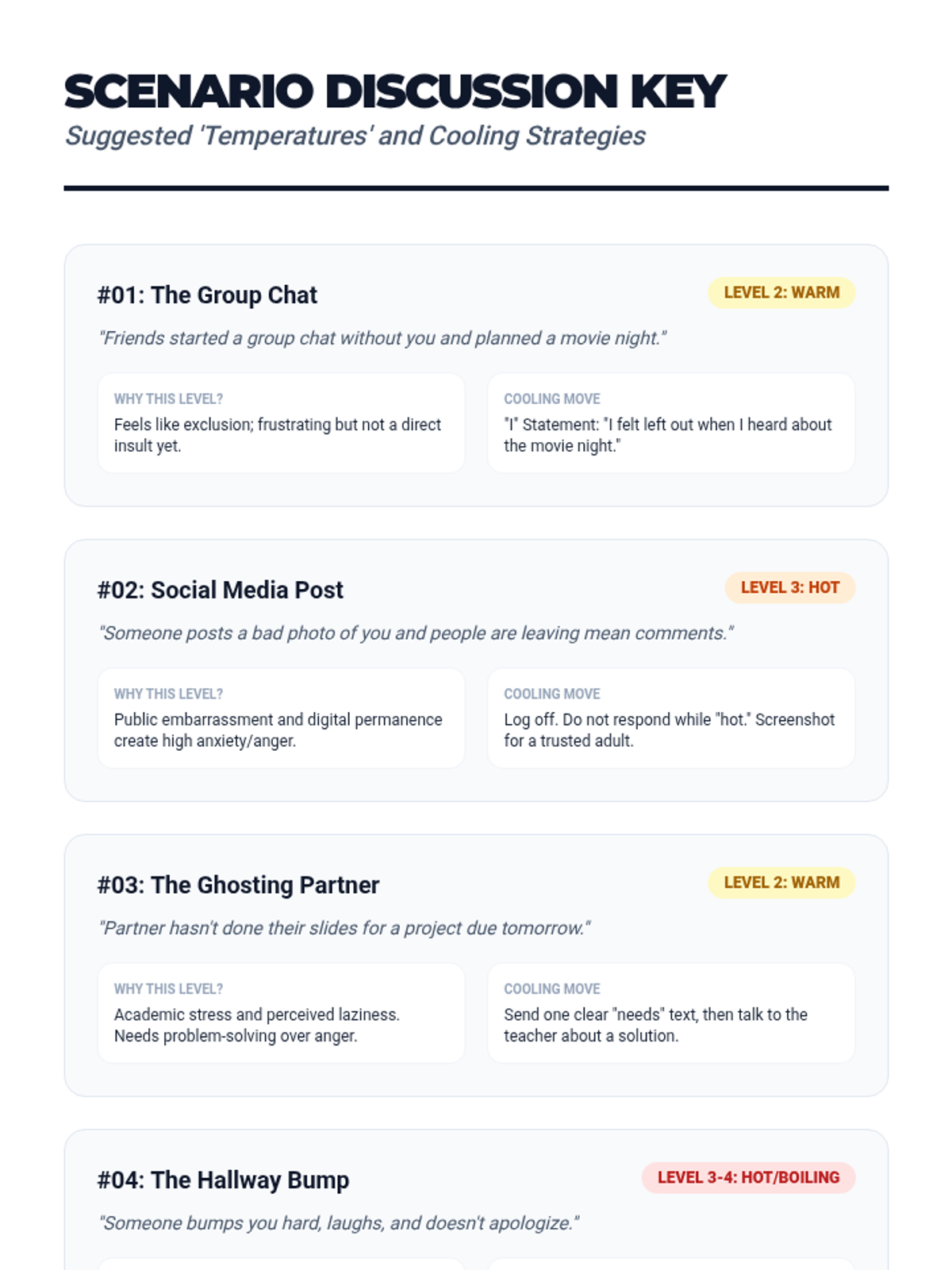
A lesson for middle schoolers to identify the intensity of conflicts using a 'Conflict Thermometer' and learn appropriate de-escalation strategies for different 'temperatures'. Students will analyze real-world scenarios to practice emotional regulation and conflict resolution.
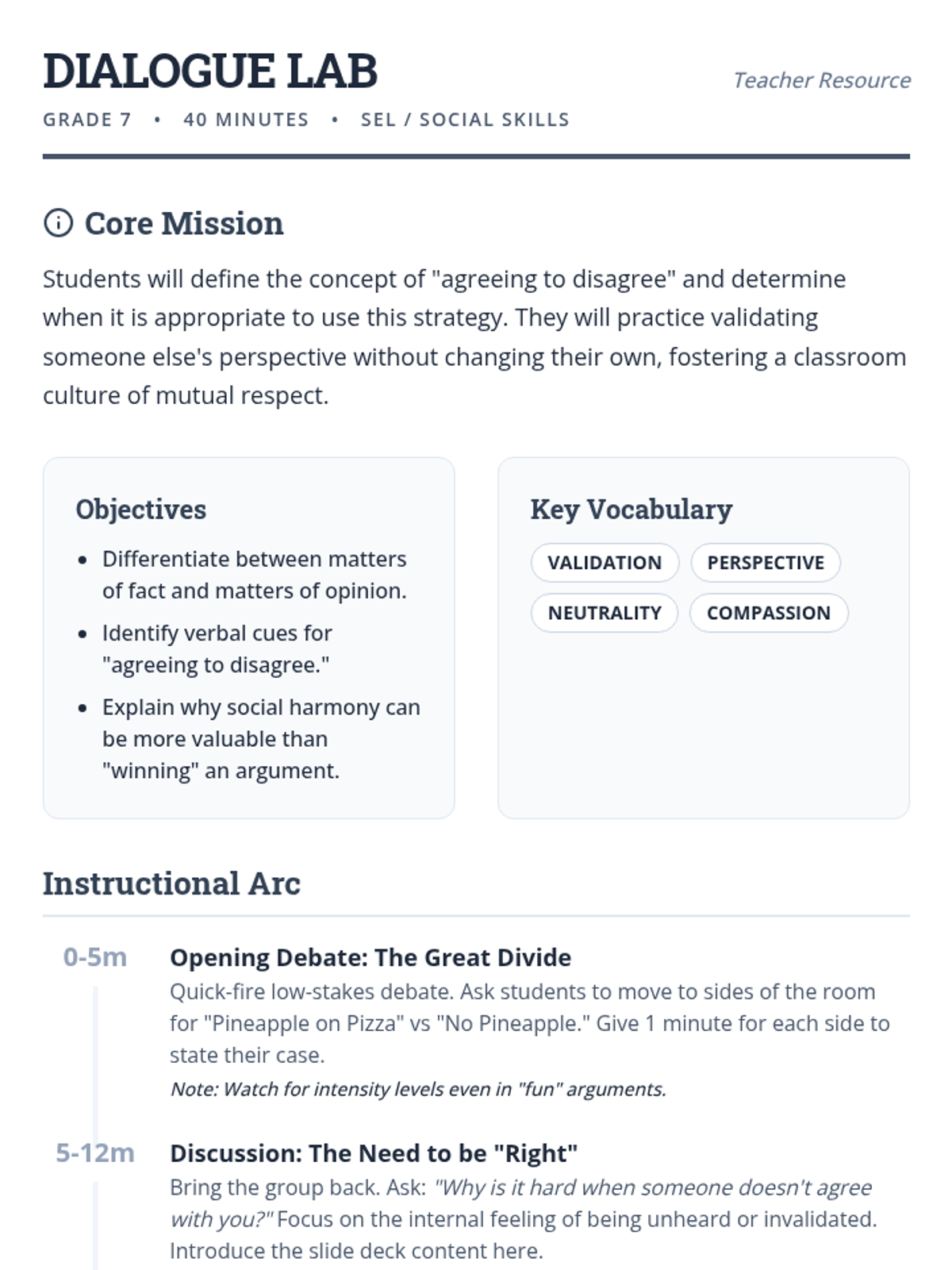
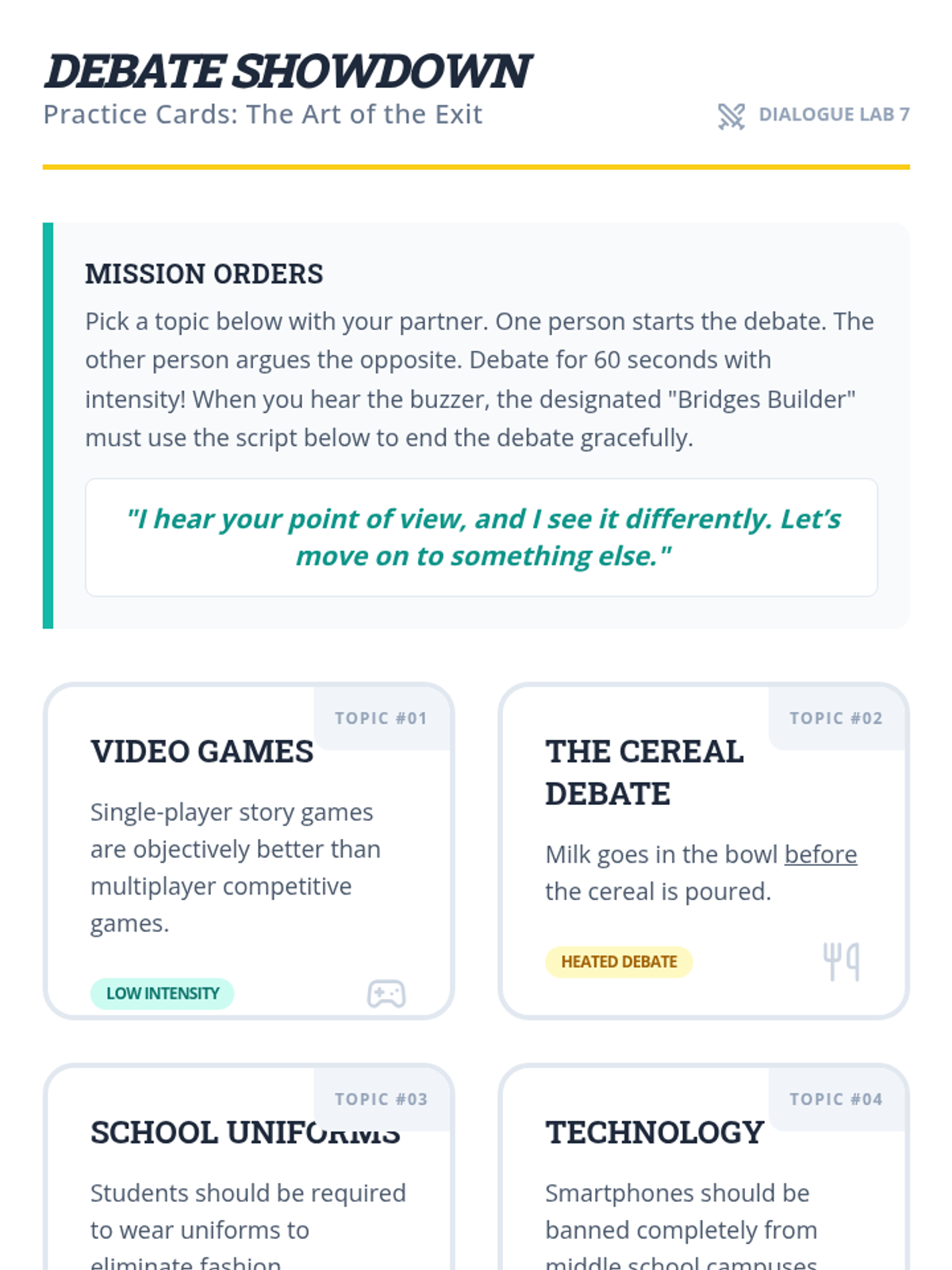
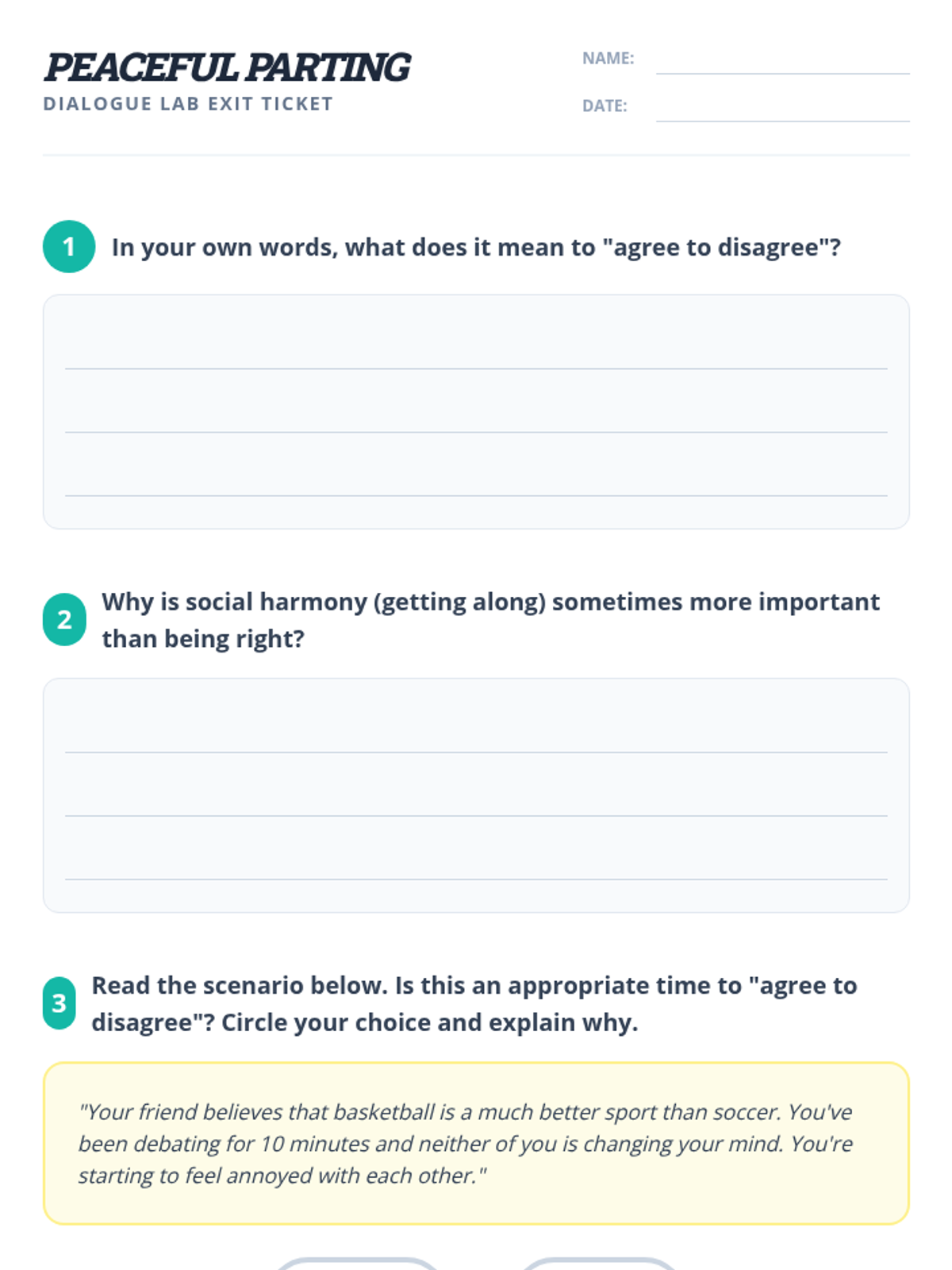
A 40-minute social-emotional learning lesson for 7th graders focused on the concept of 'agreeing to disagree.' Students explore how to maintain respect and social harmony even when perspectives clash, distinguishing between matters of opinion and matters of safety or core values.