Written and verbal communication standards for the workplace, including email etiquette, presentation delivery, and professional phone conduct. Develops collaborative skills for teamwork, constructive feedback, and efficient time management.
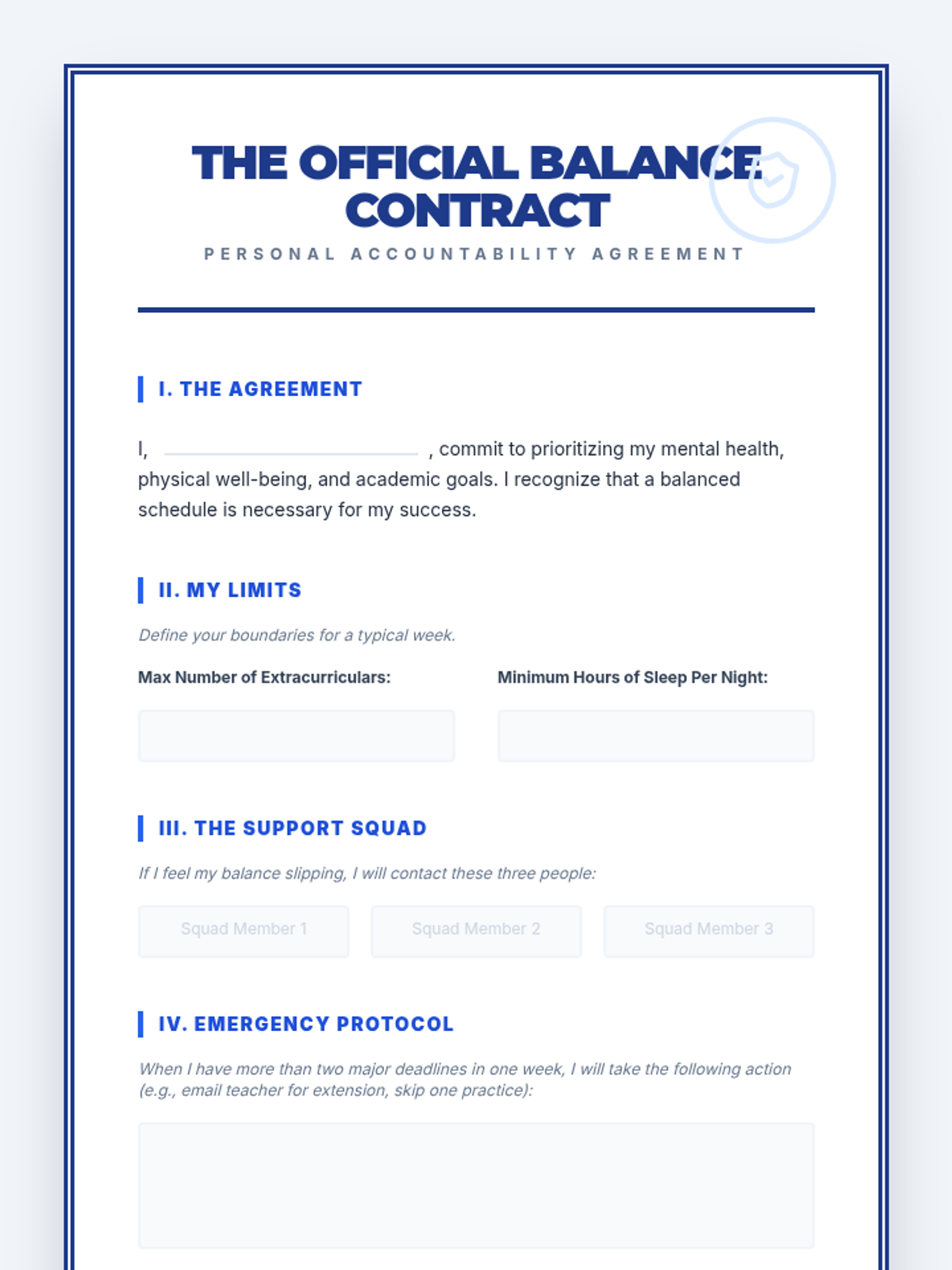
Students create a personal 'Balance Contract' to outline their limits and establish a protocol for managing future stress.
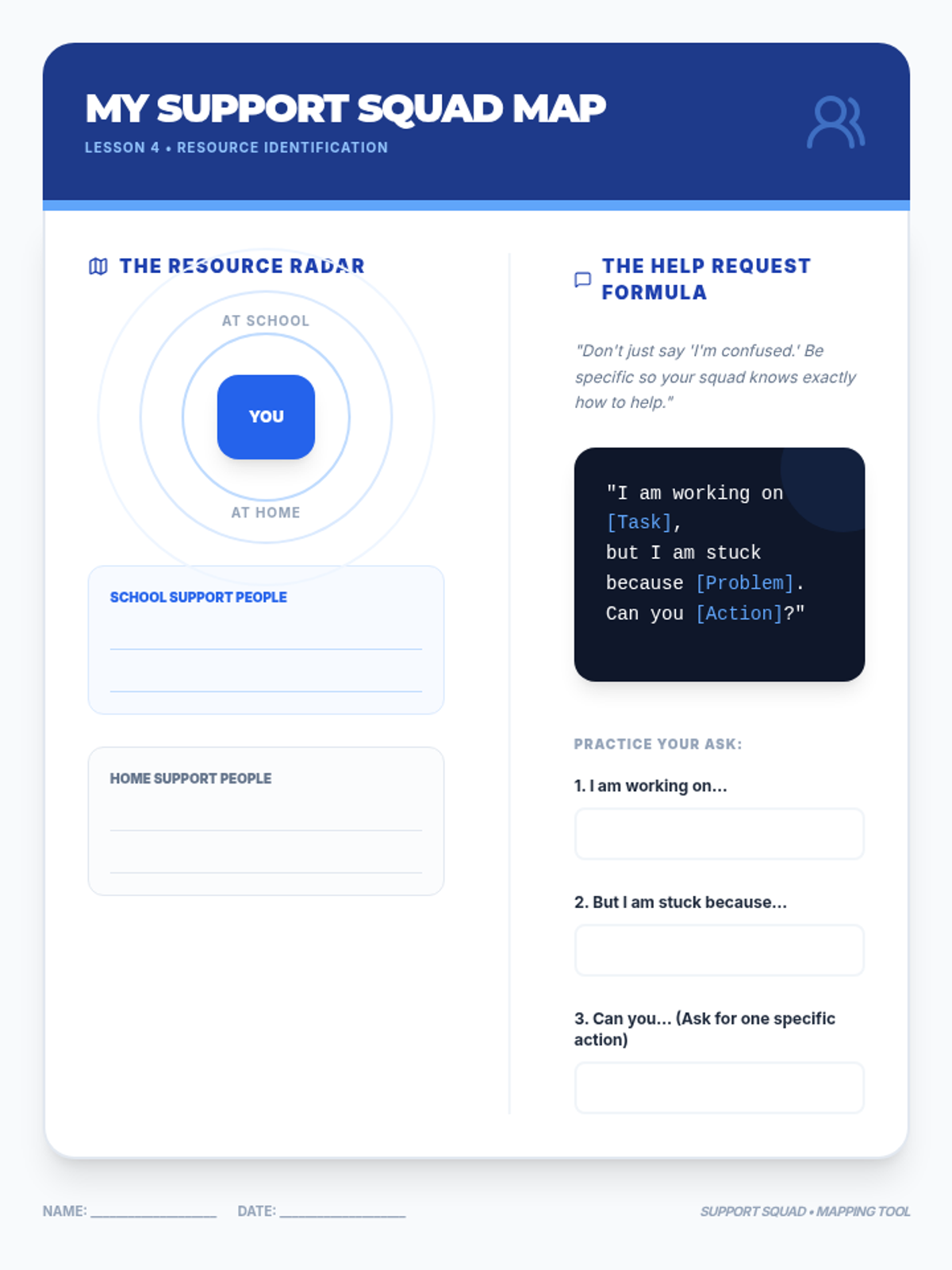
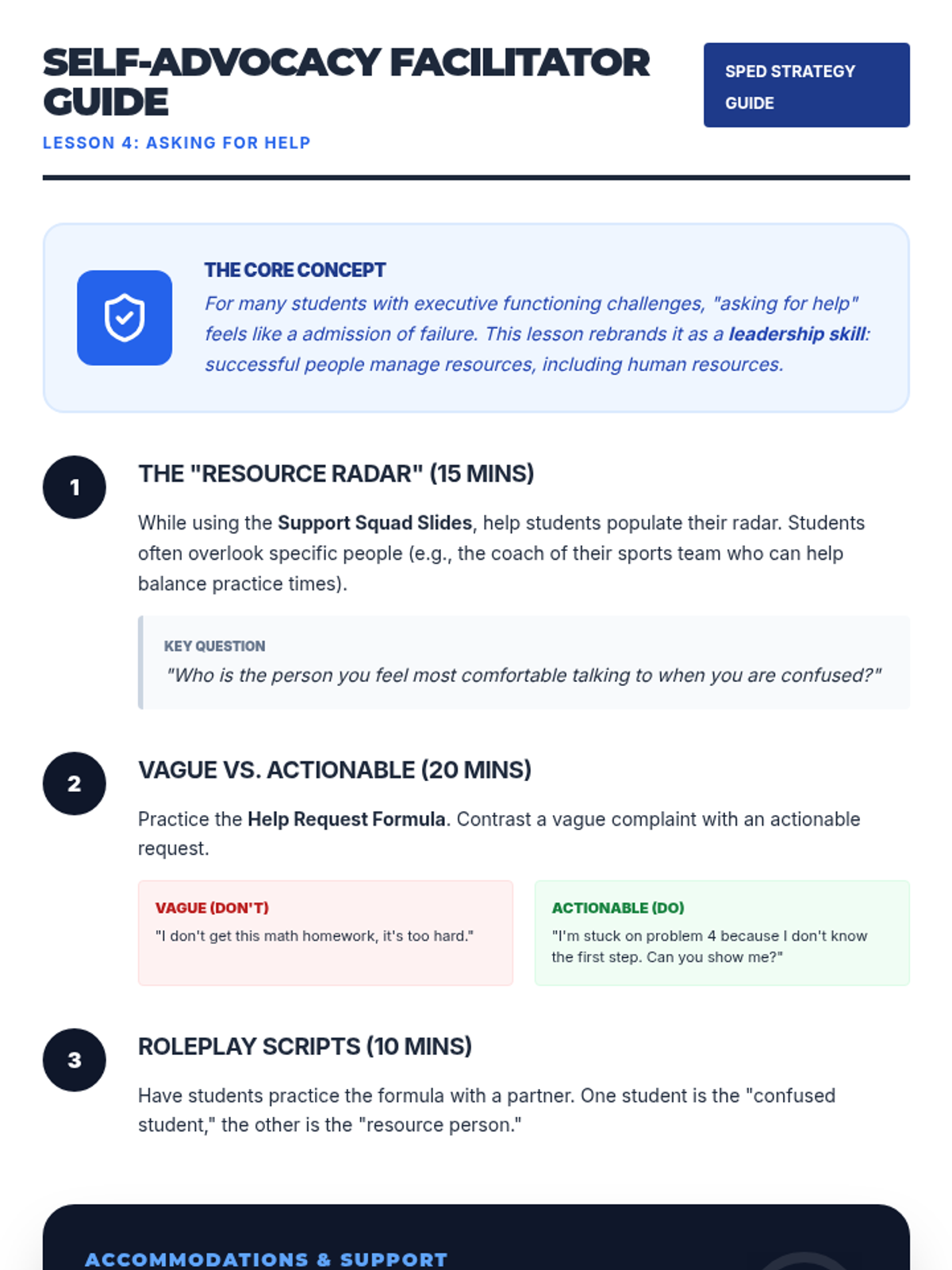
Students identify their support network and practice making specific, actionable requests for assistance.
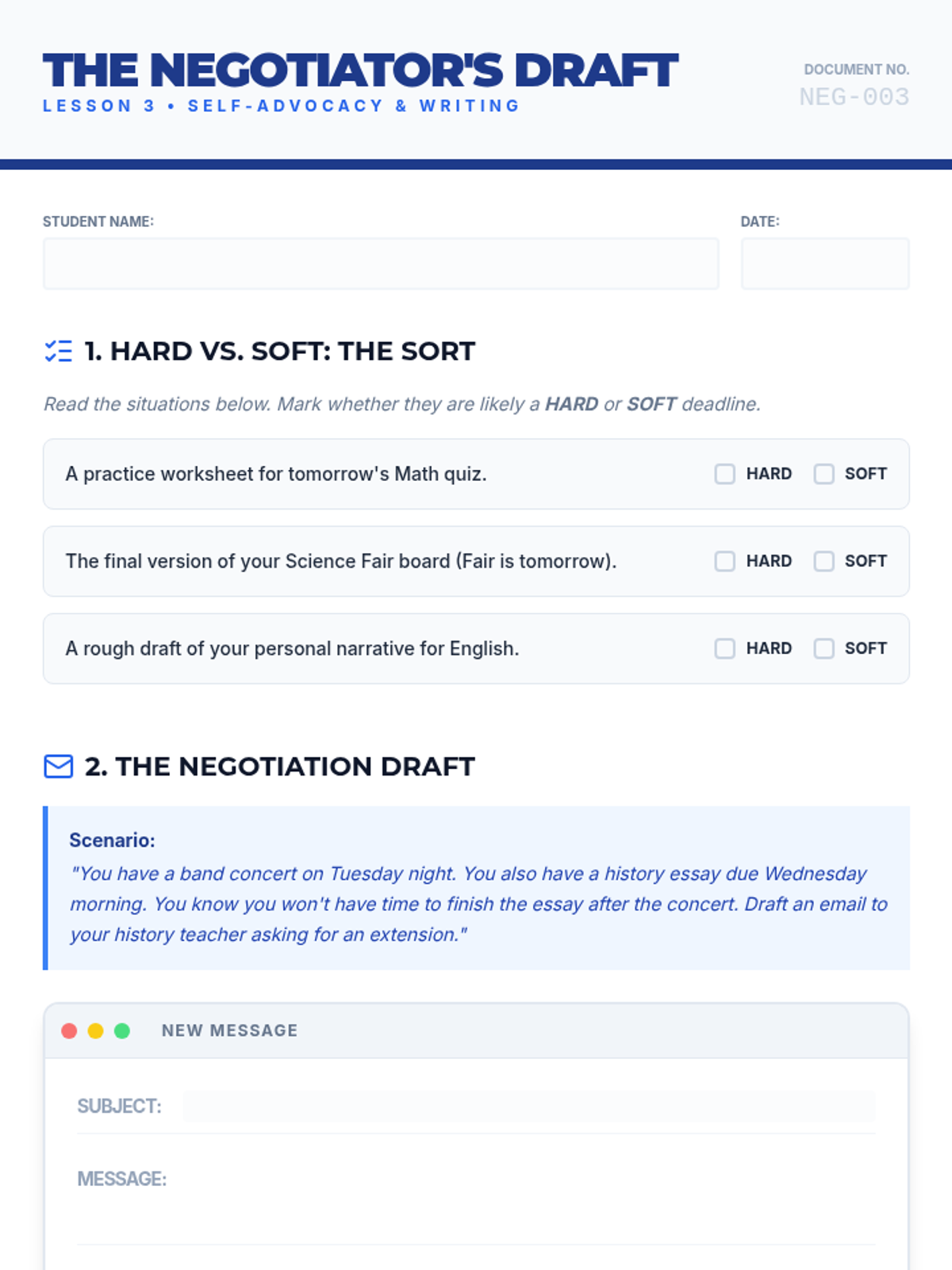
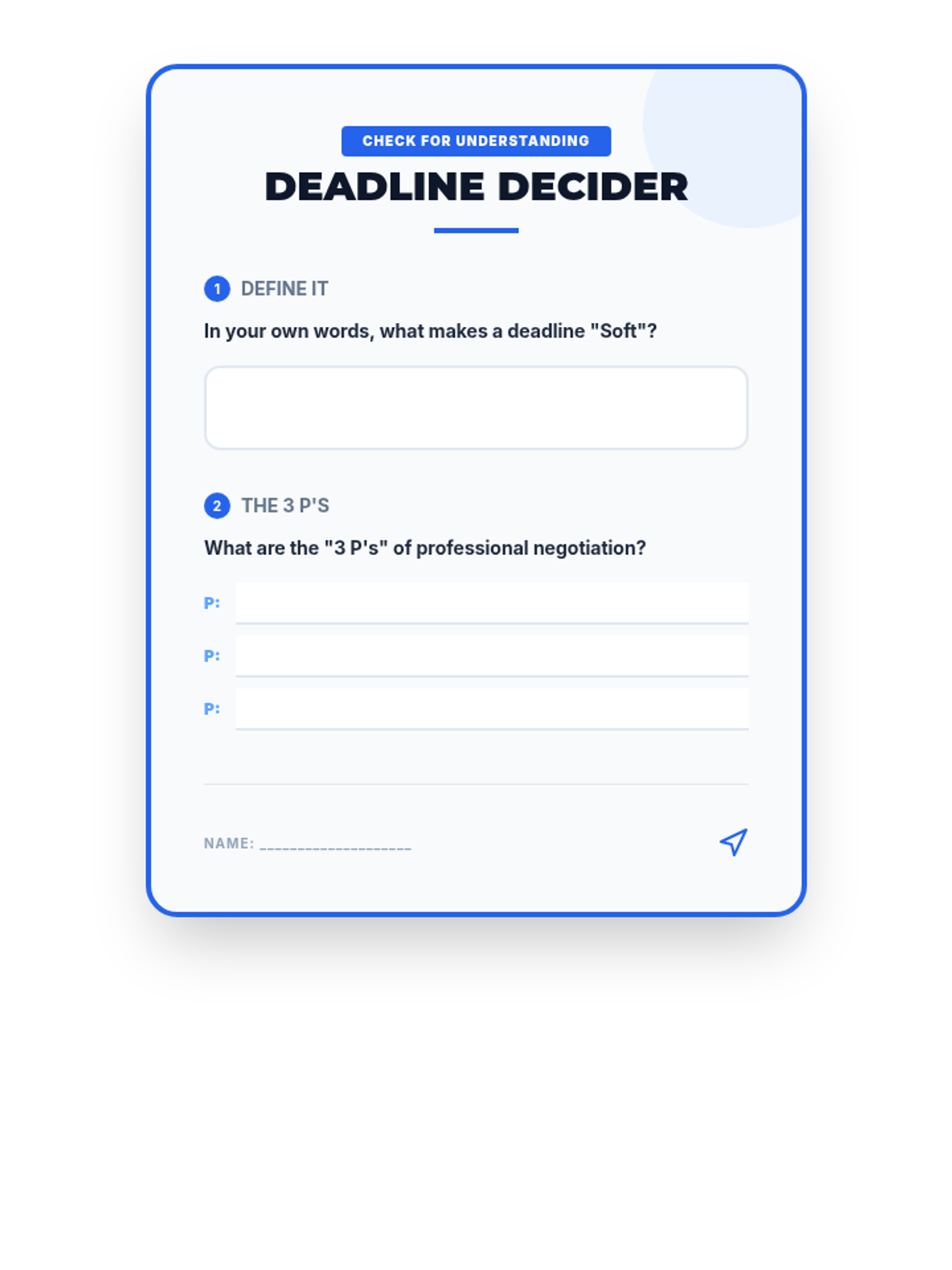
Students learn to differentiate between hard and soft deadlines and practice professional email communication to negotiate alternatives.
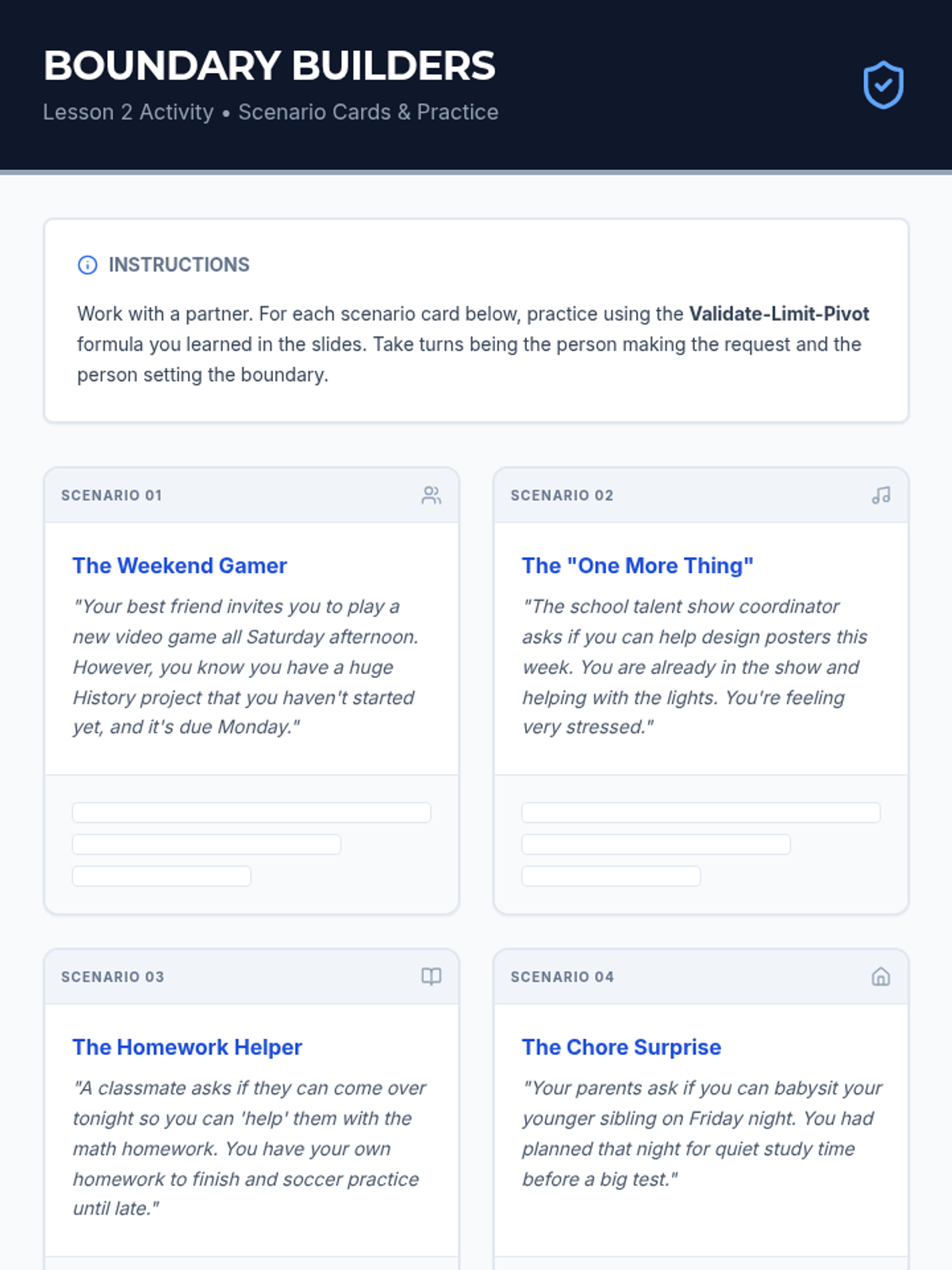
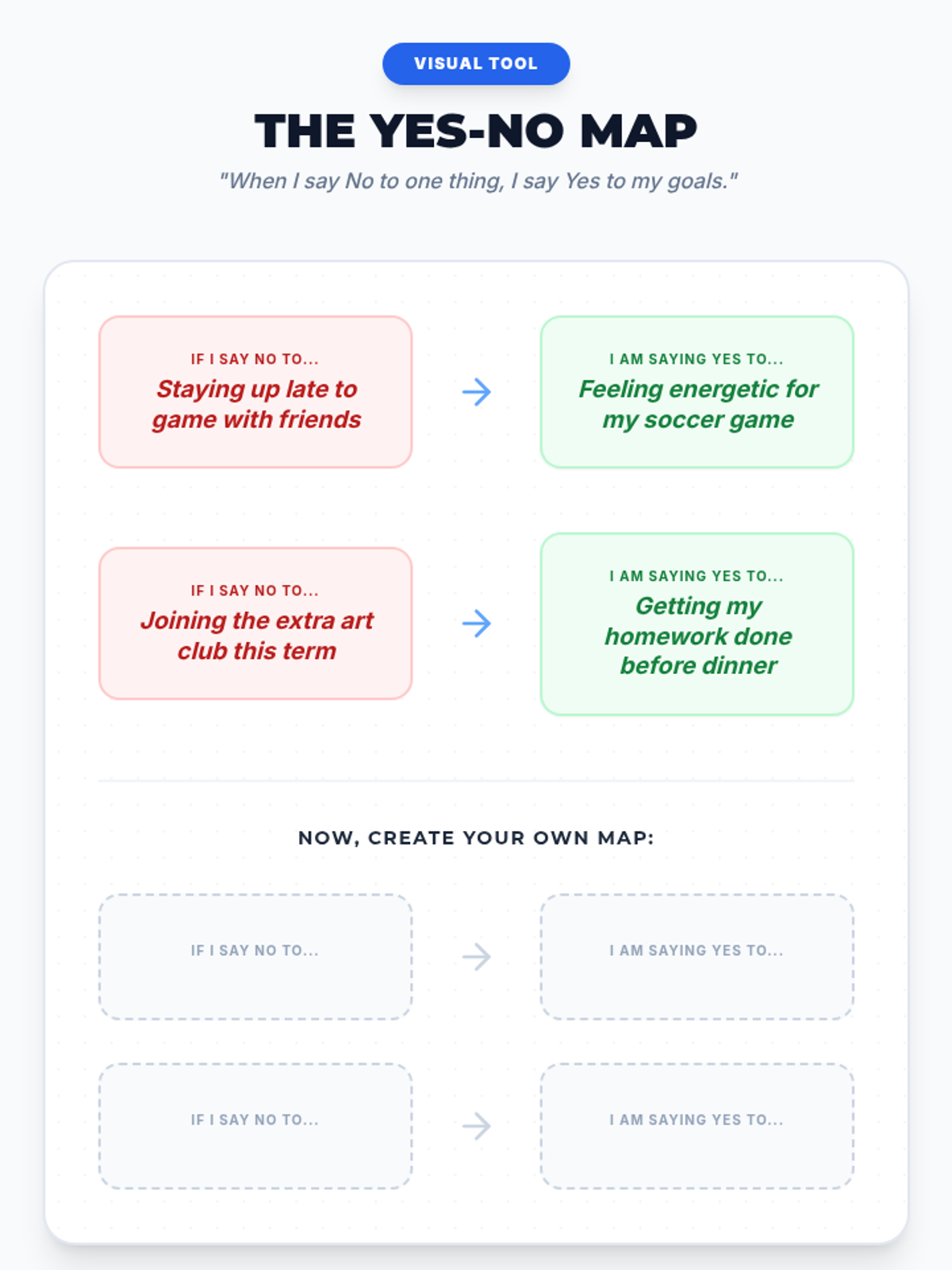
Students practice scripts for declining optional commitments politely but firmly, learning that every 'no' is a 'yes' to their own well-being.
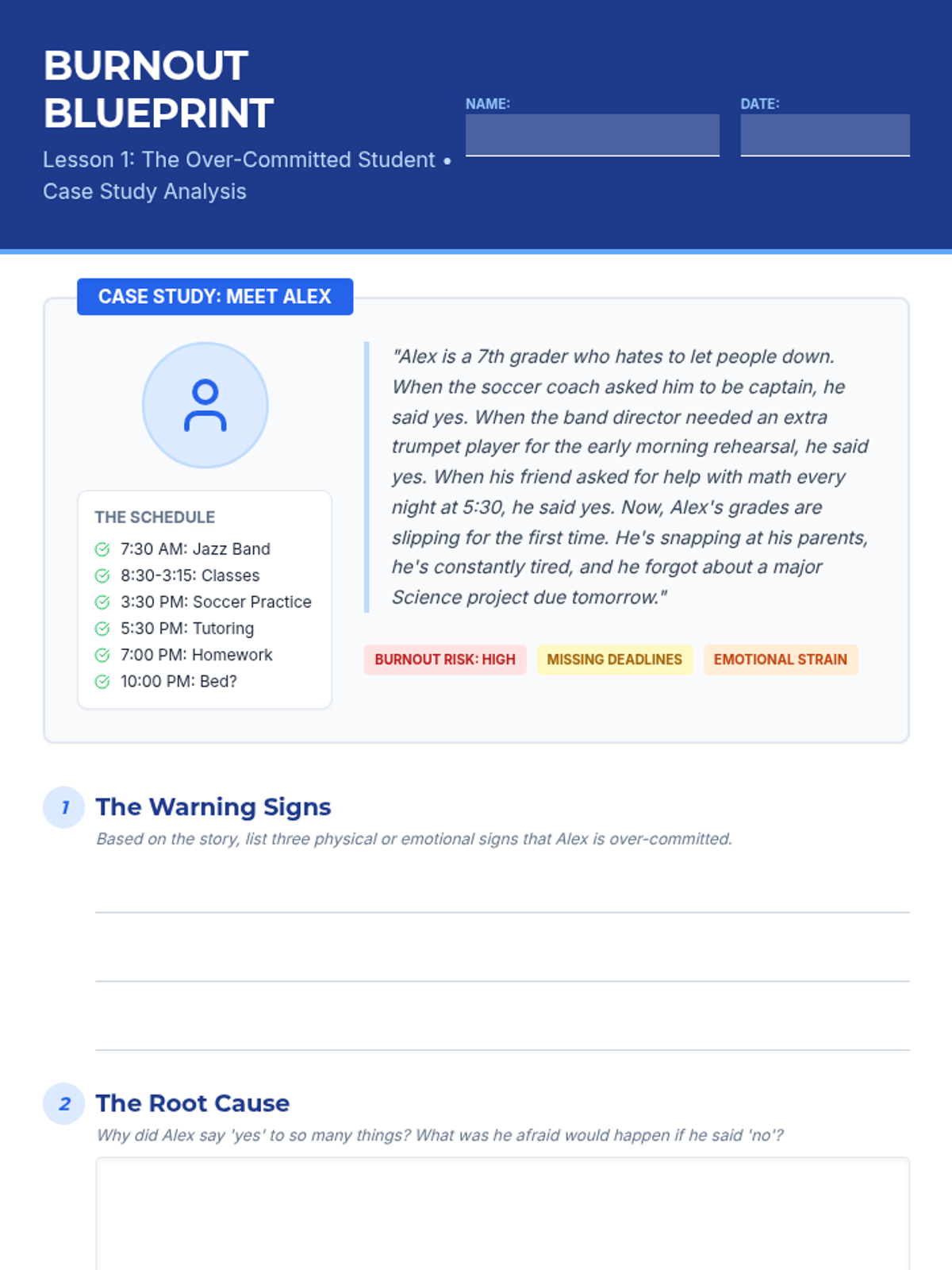
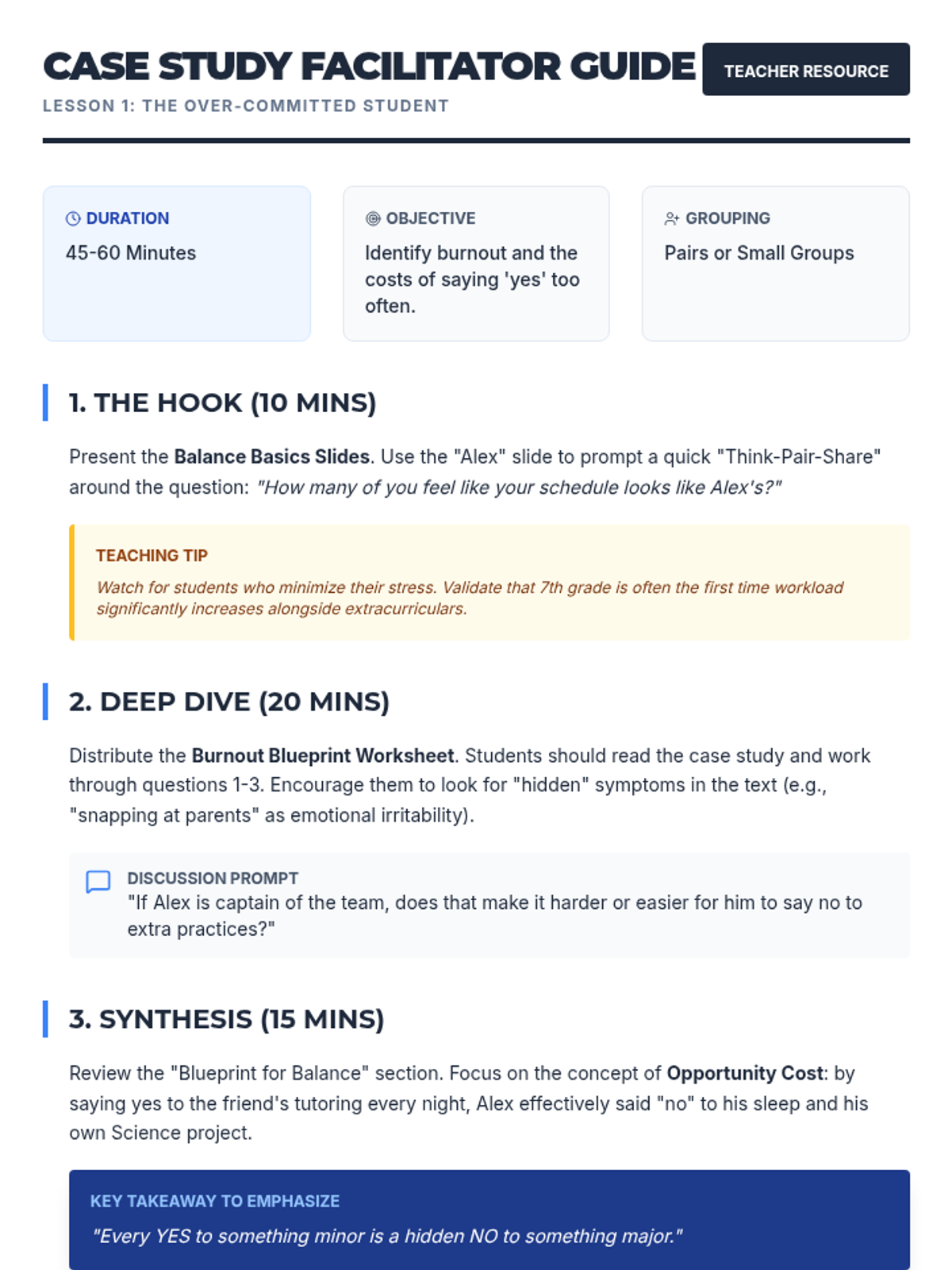
Students analyze case studies of 'over-committed' individuals to identify warning signs of burnout and the consequences of poor boundary setting.
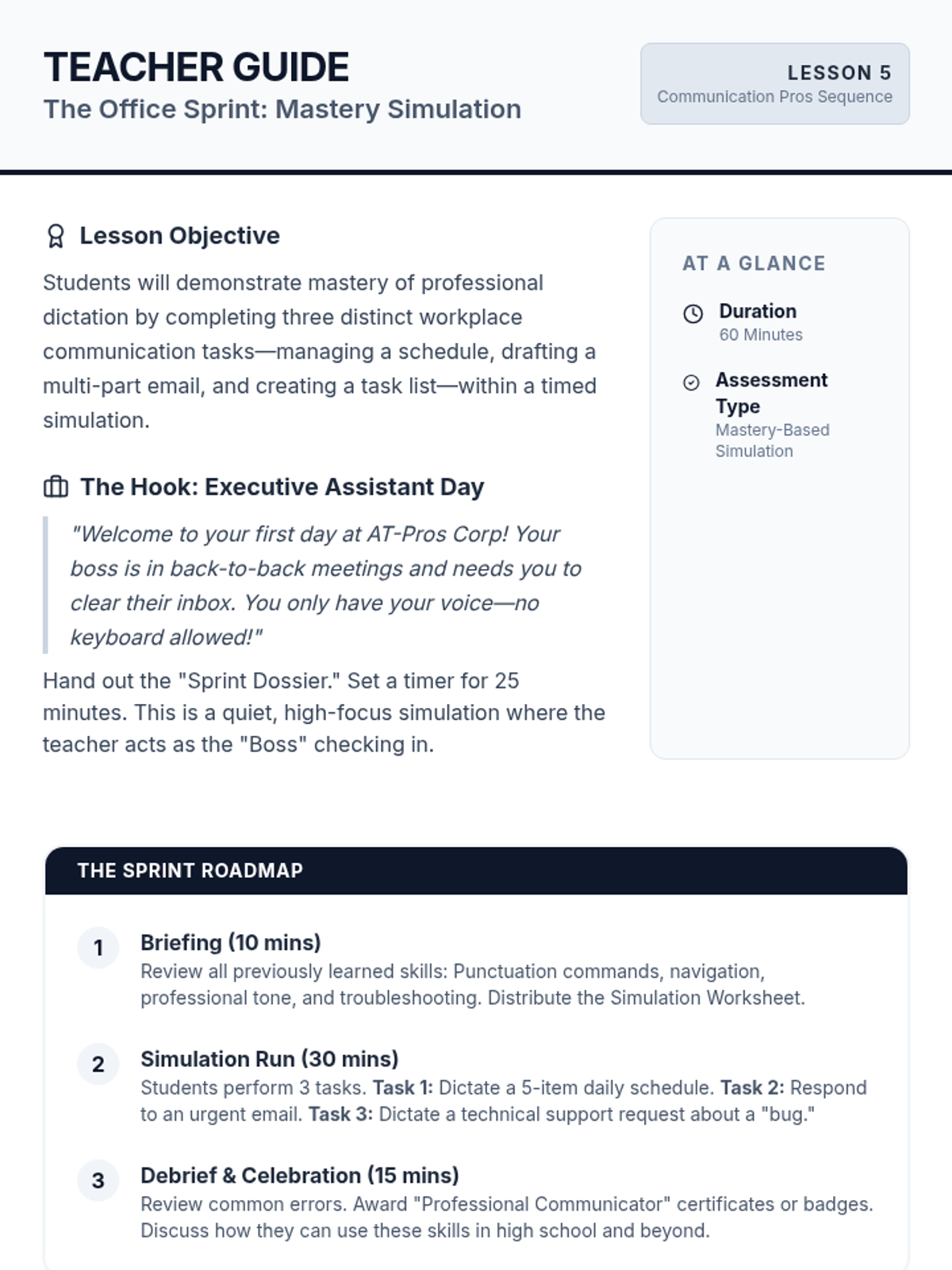
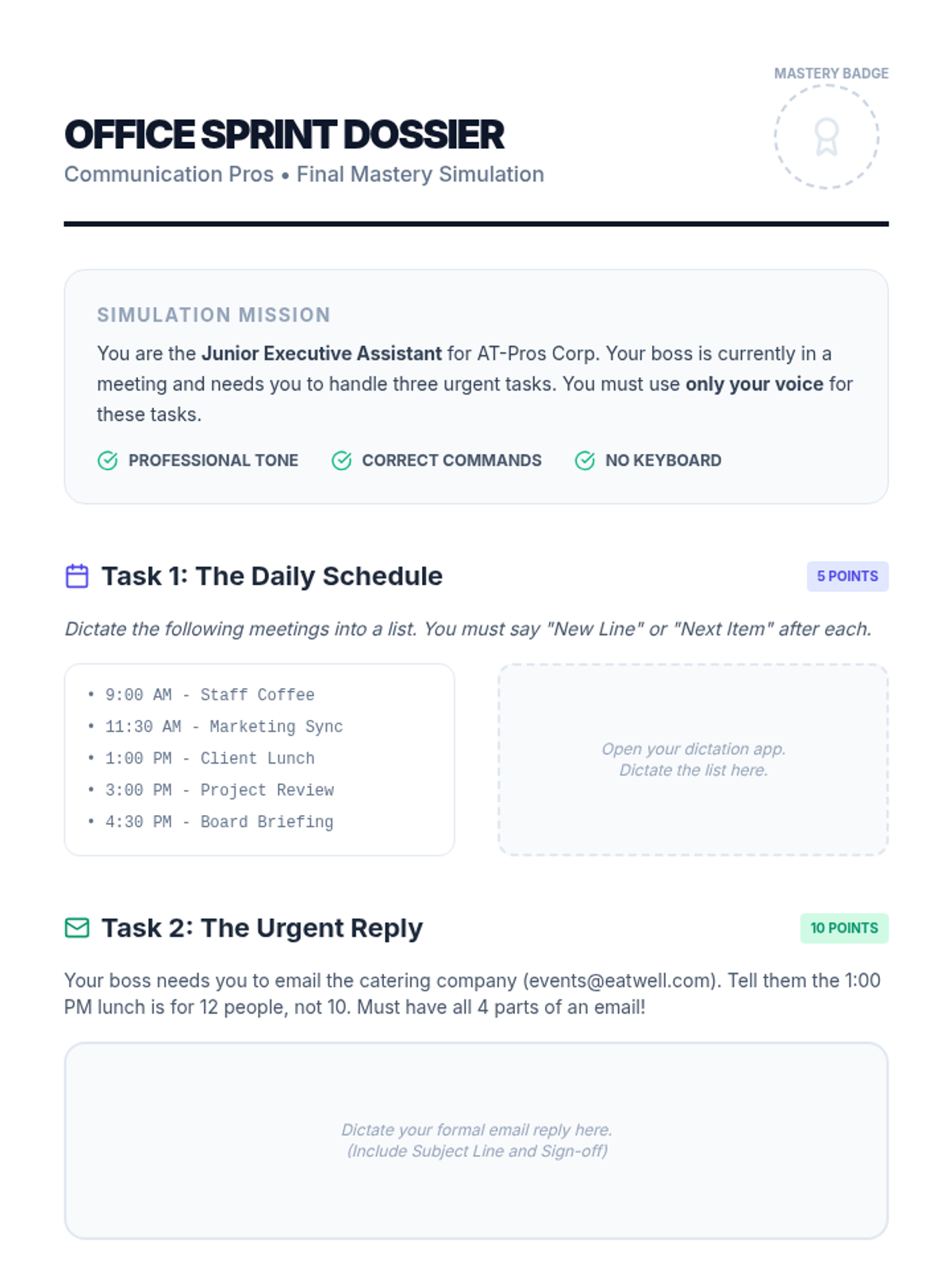
A final mastery-based simulation where students act as executive assistants, using voice dictation to manage schedules and communication tasks.
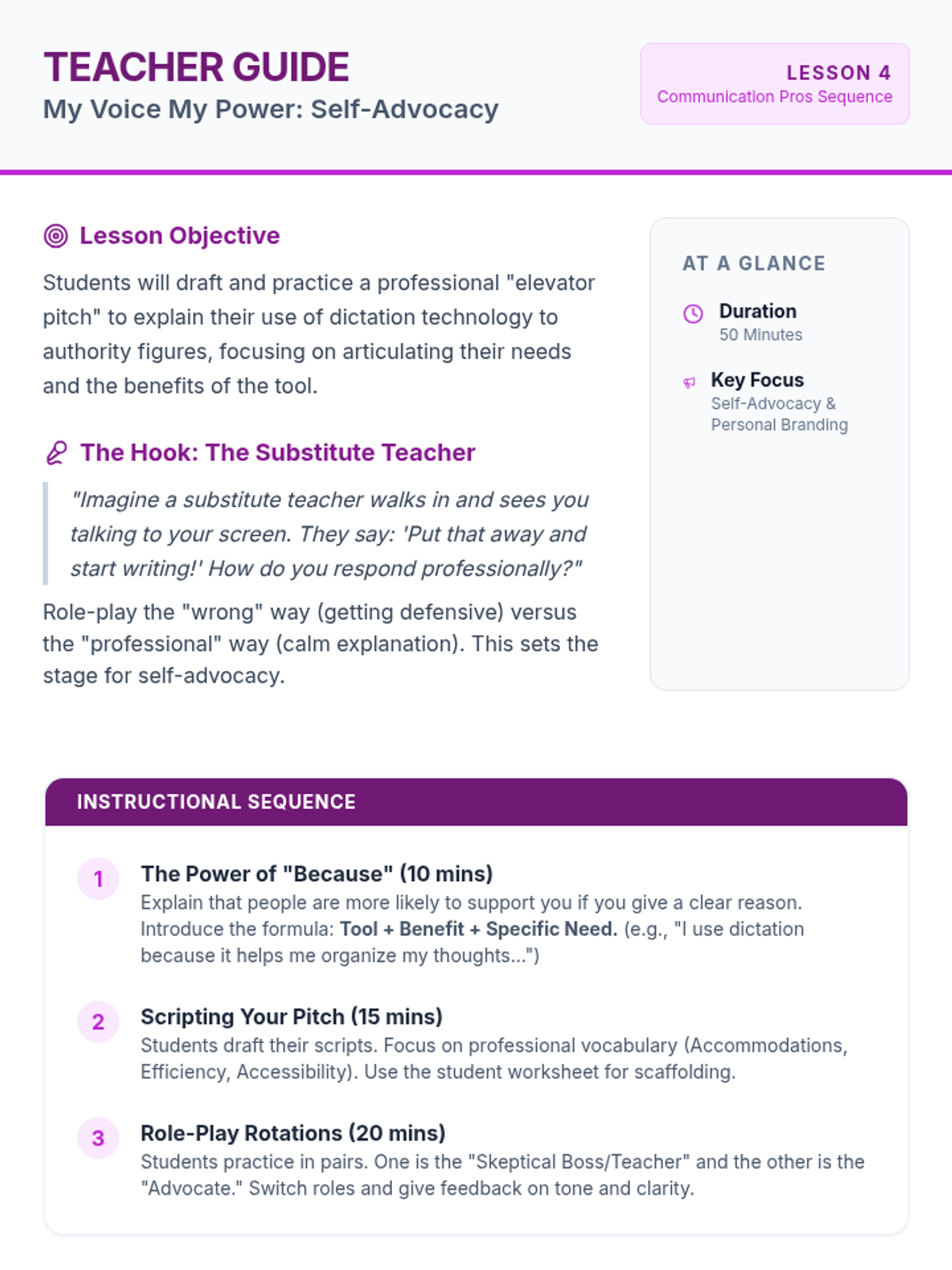
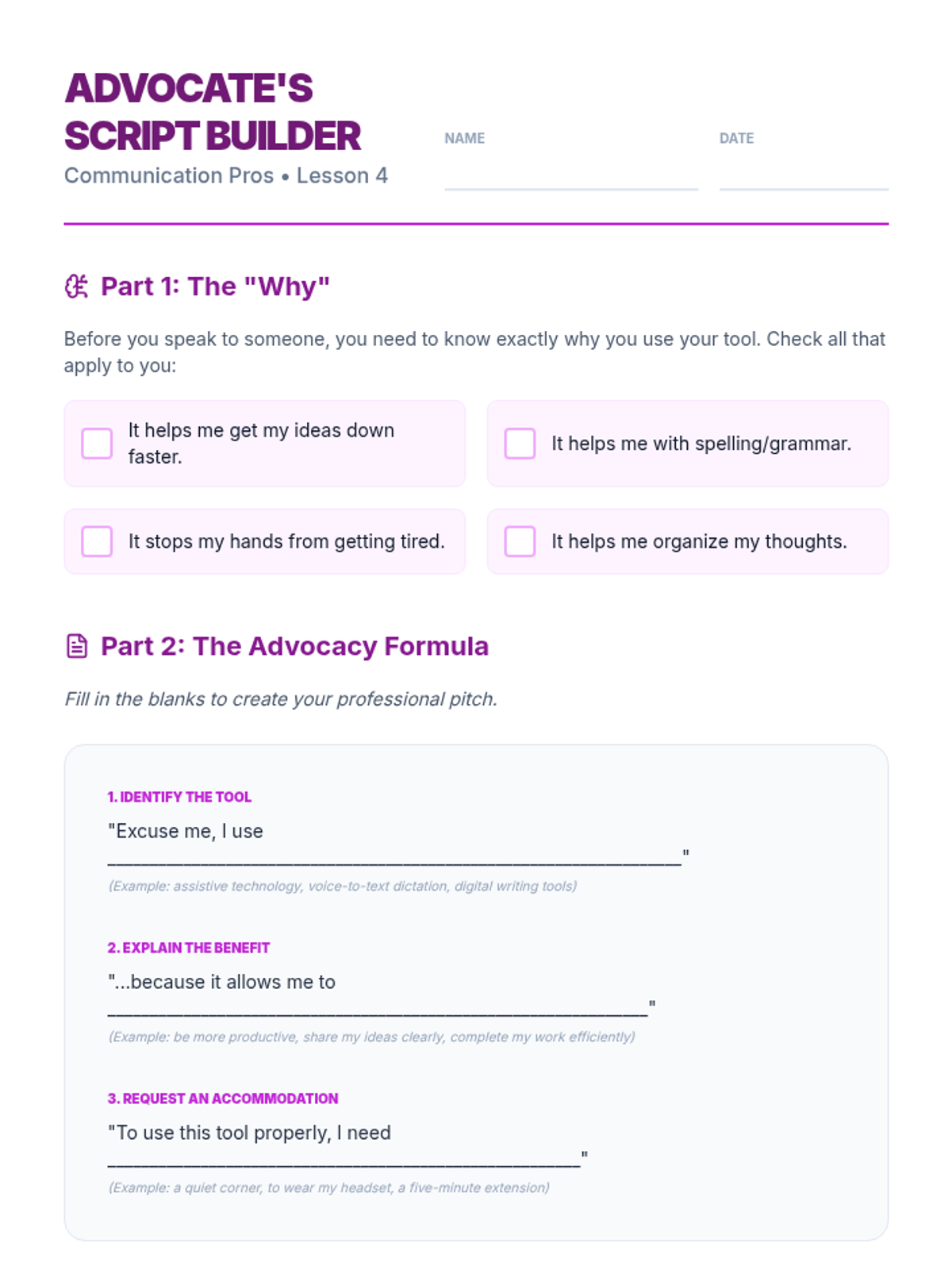
Students draft scripts to explain their use of dictation technology to teachers or employers, empowering them to advocate for their learning needs.
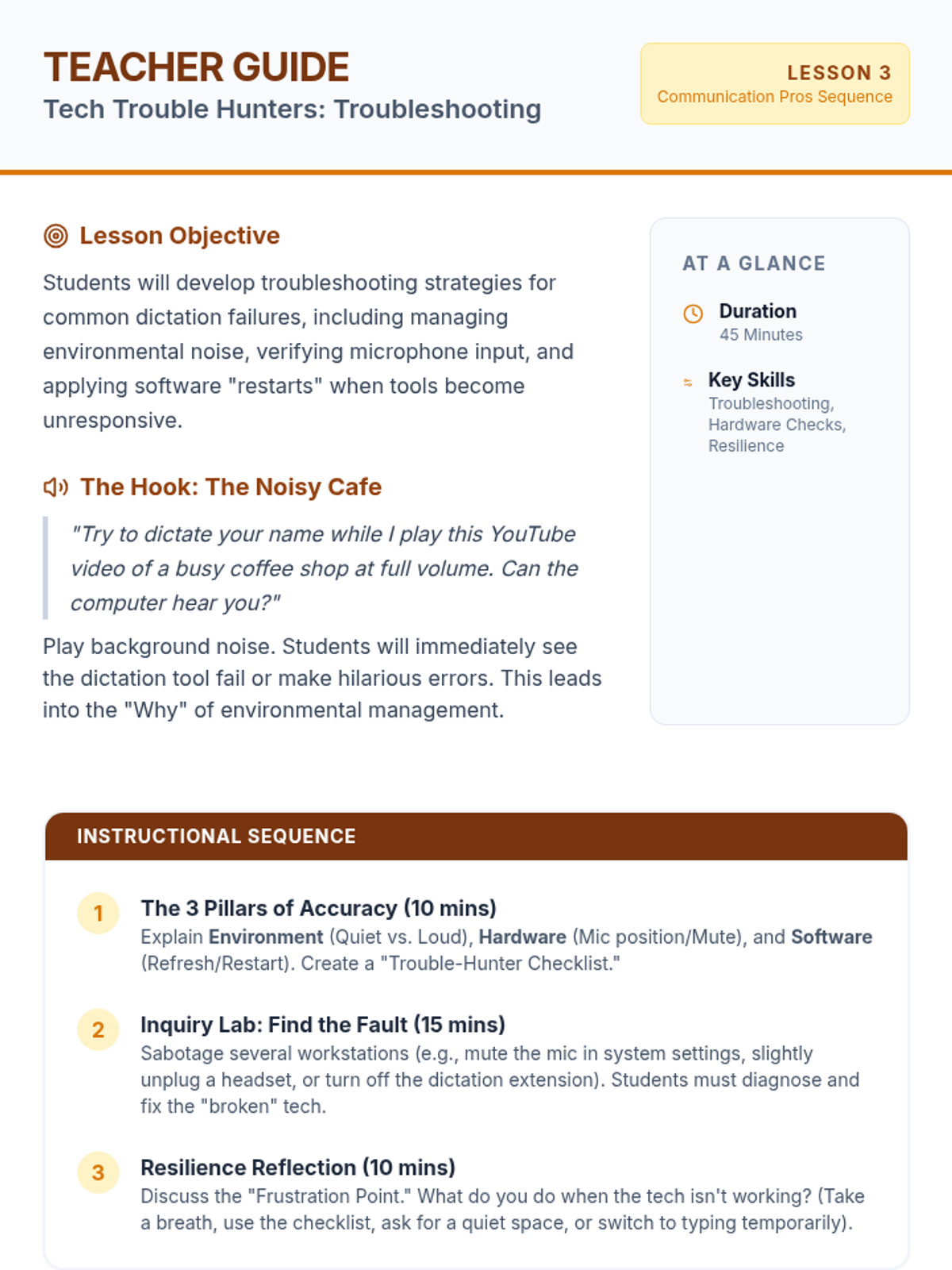
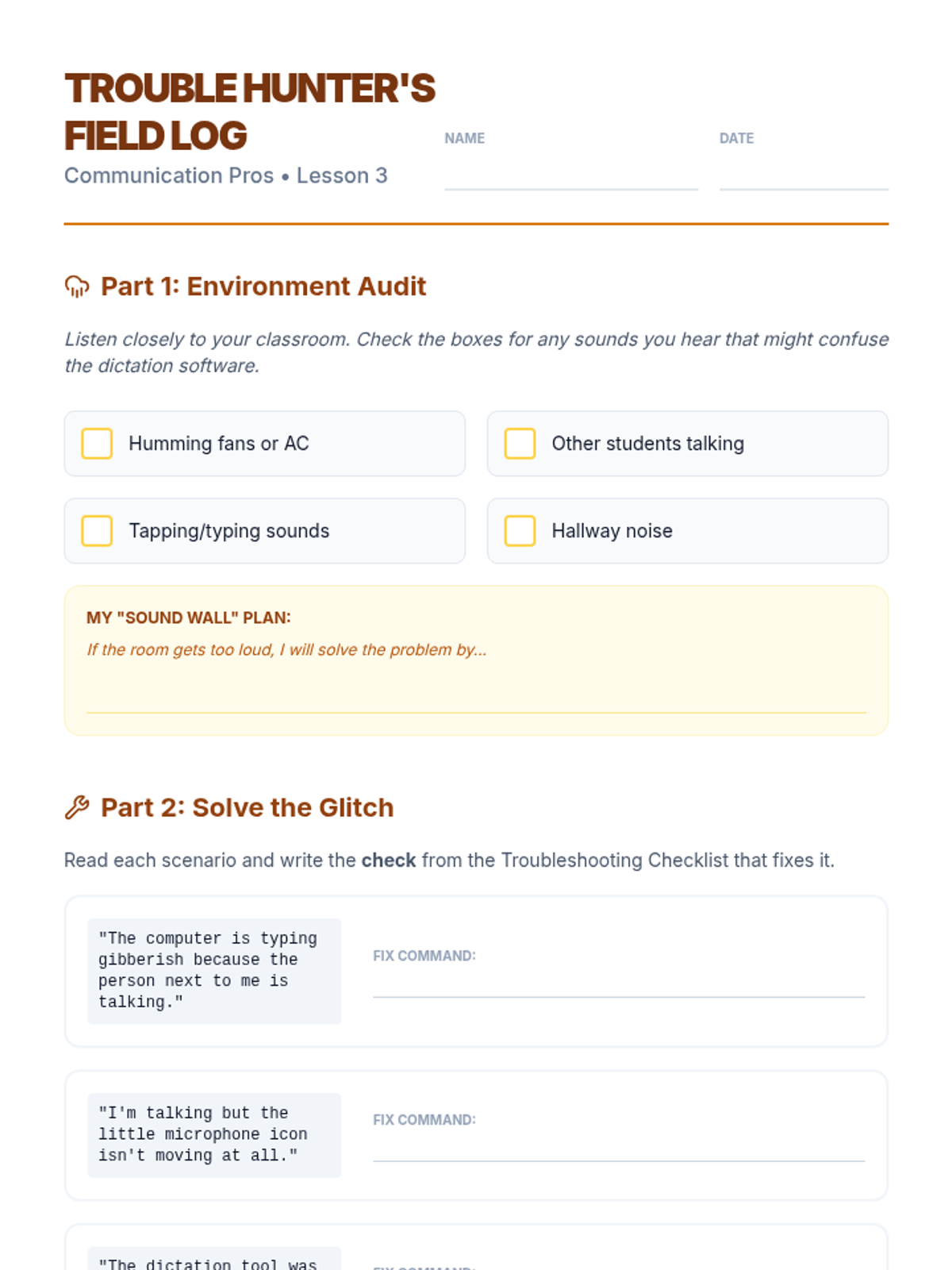
A technical lesson on handling background noise, microphone glitches, and software failures to build resilience in using AT tools.
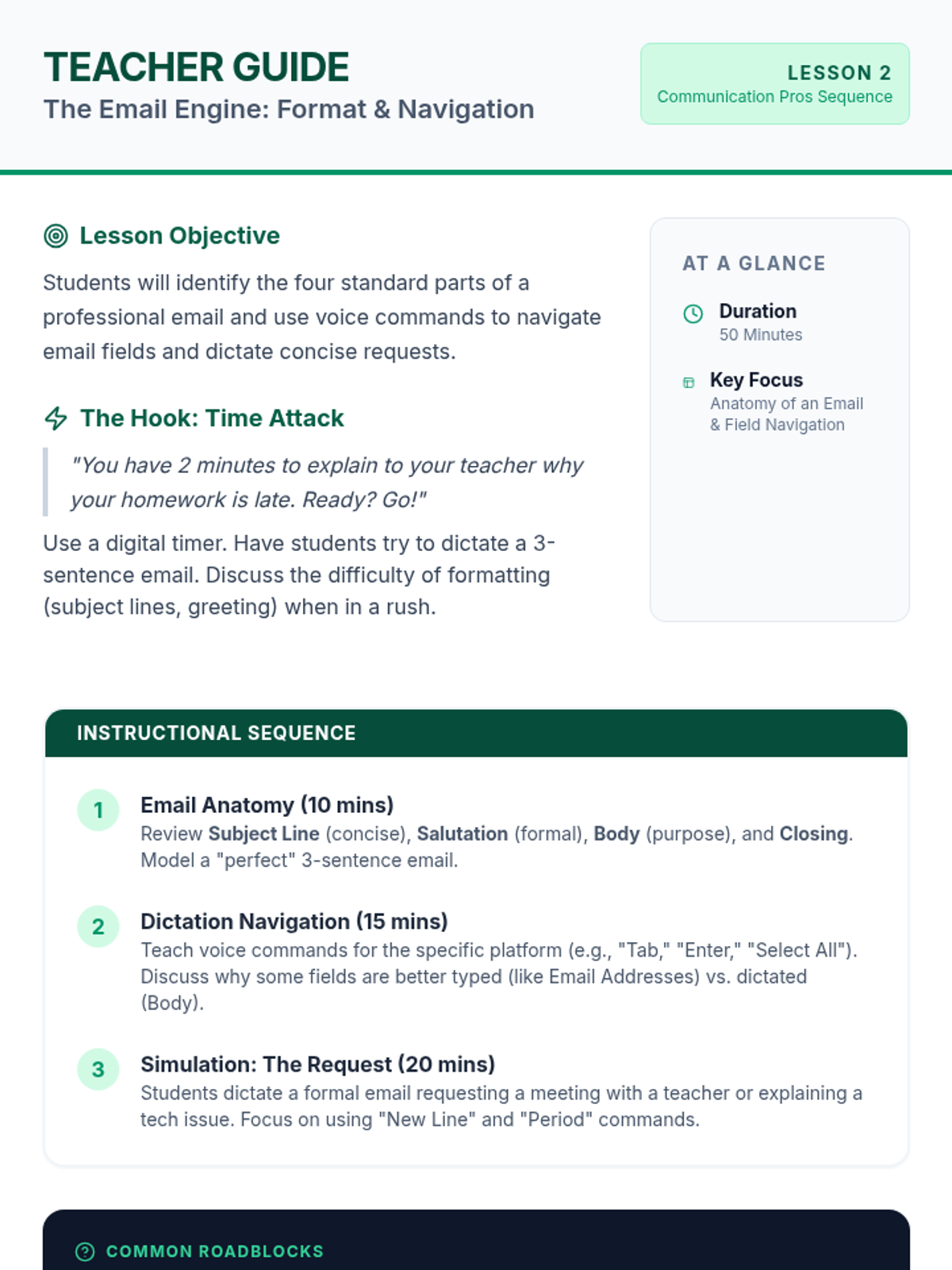
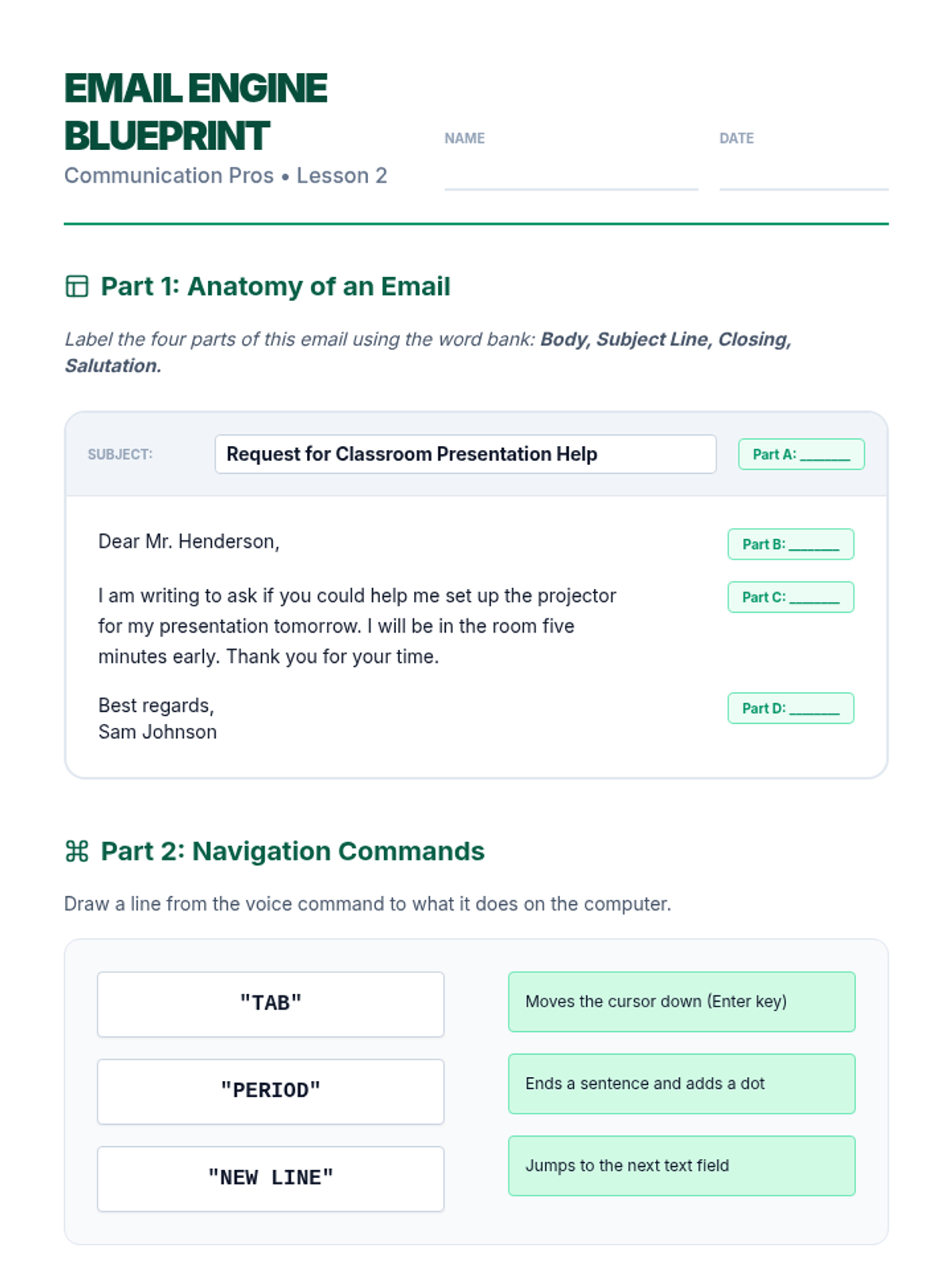
Students learn the structure of professional emails and practice using voice commands to navigate fields and dictate clear requests.
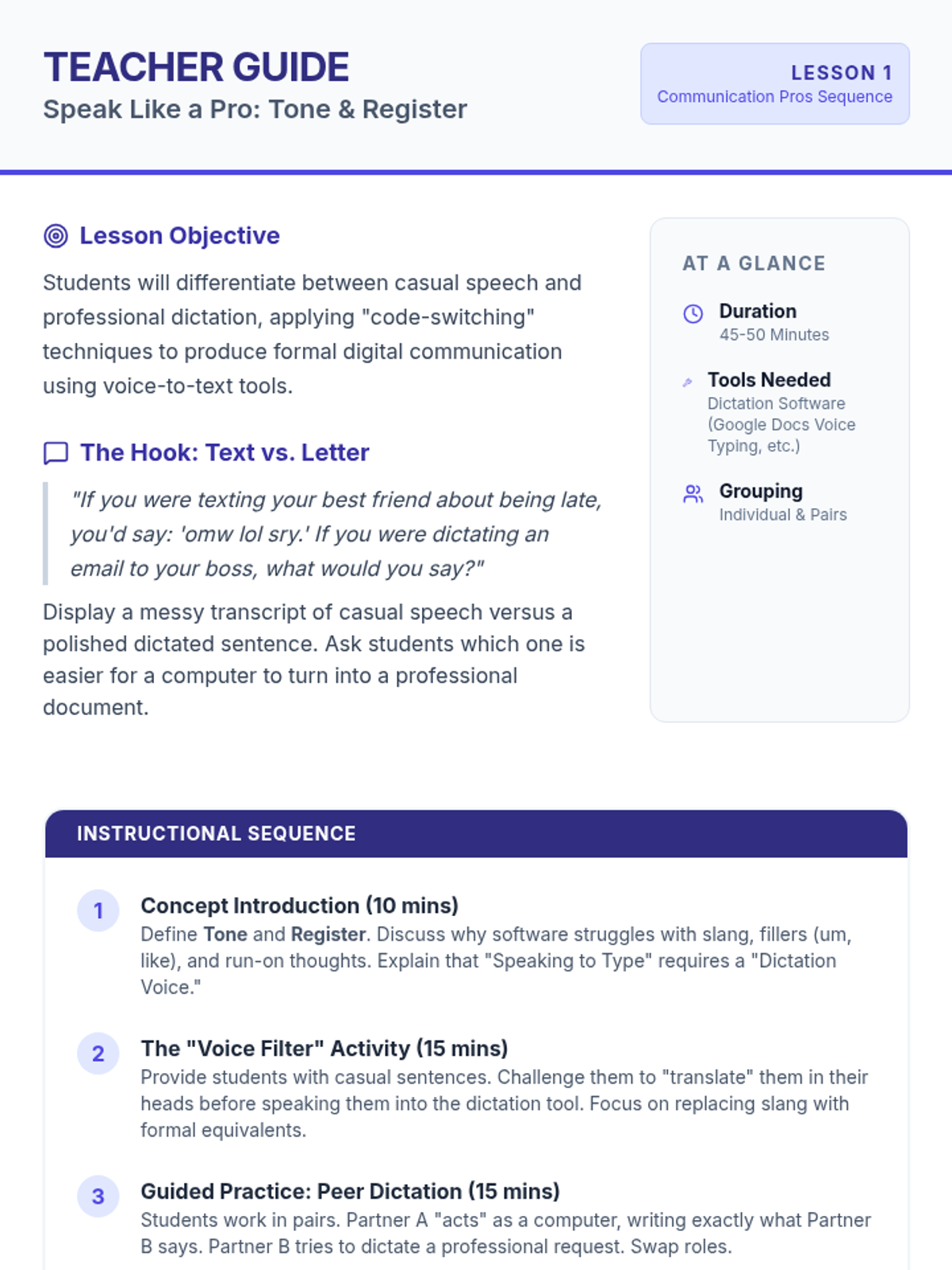
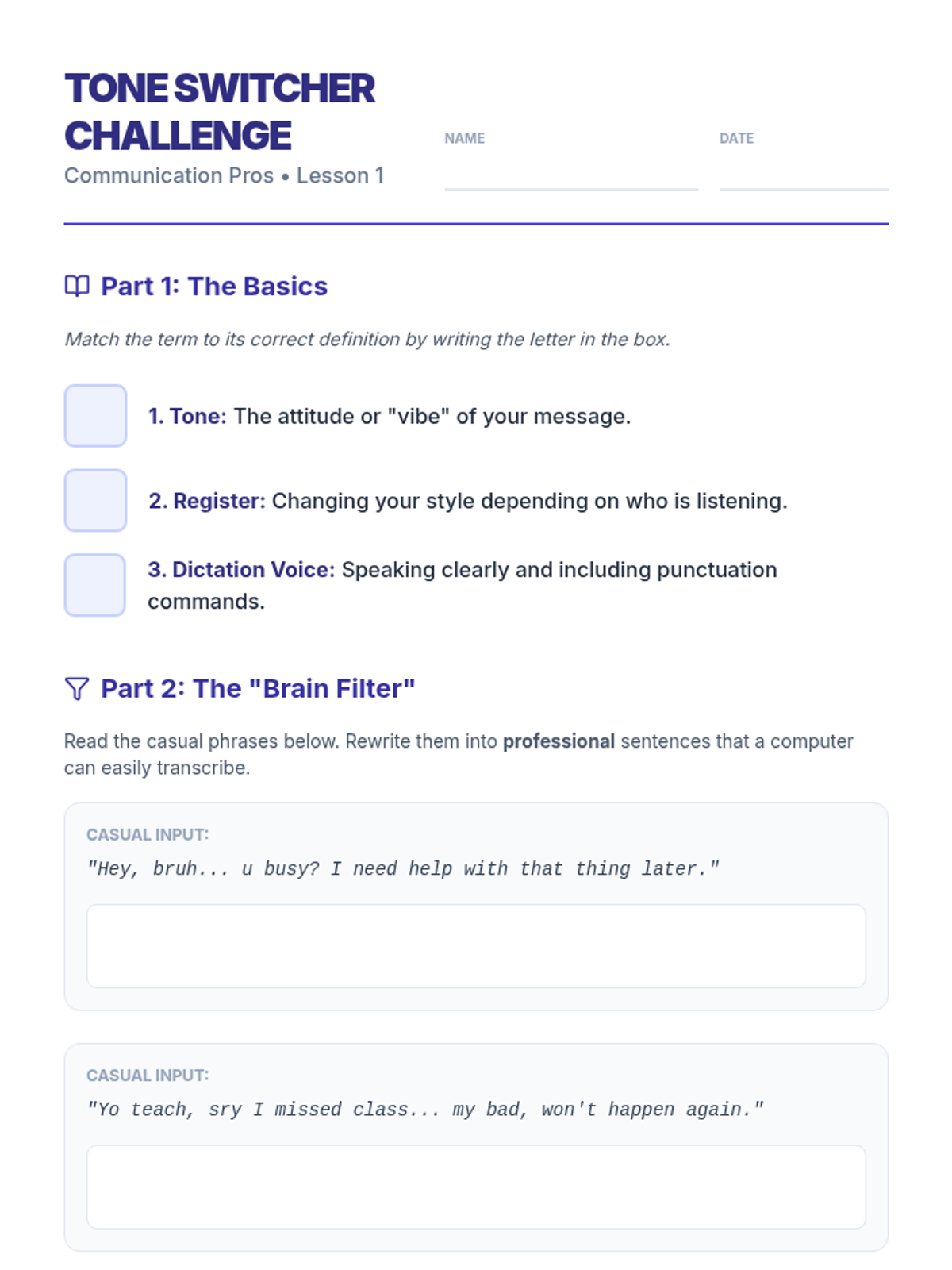
Students analyze the difference between texting friends and dictating professional emails, focusing on 'code-switching' voice commands to produce formal language.
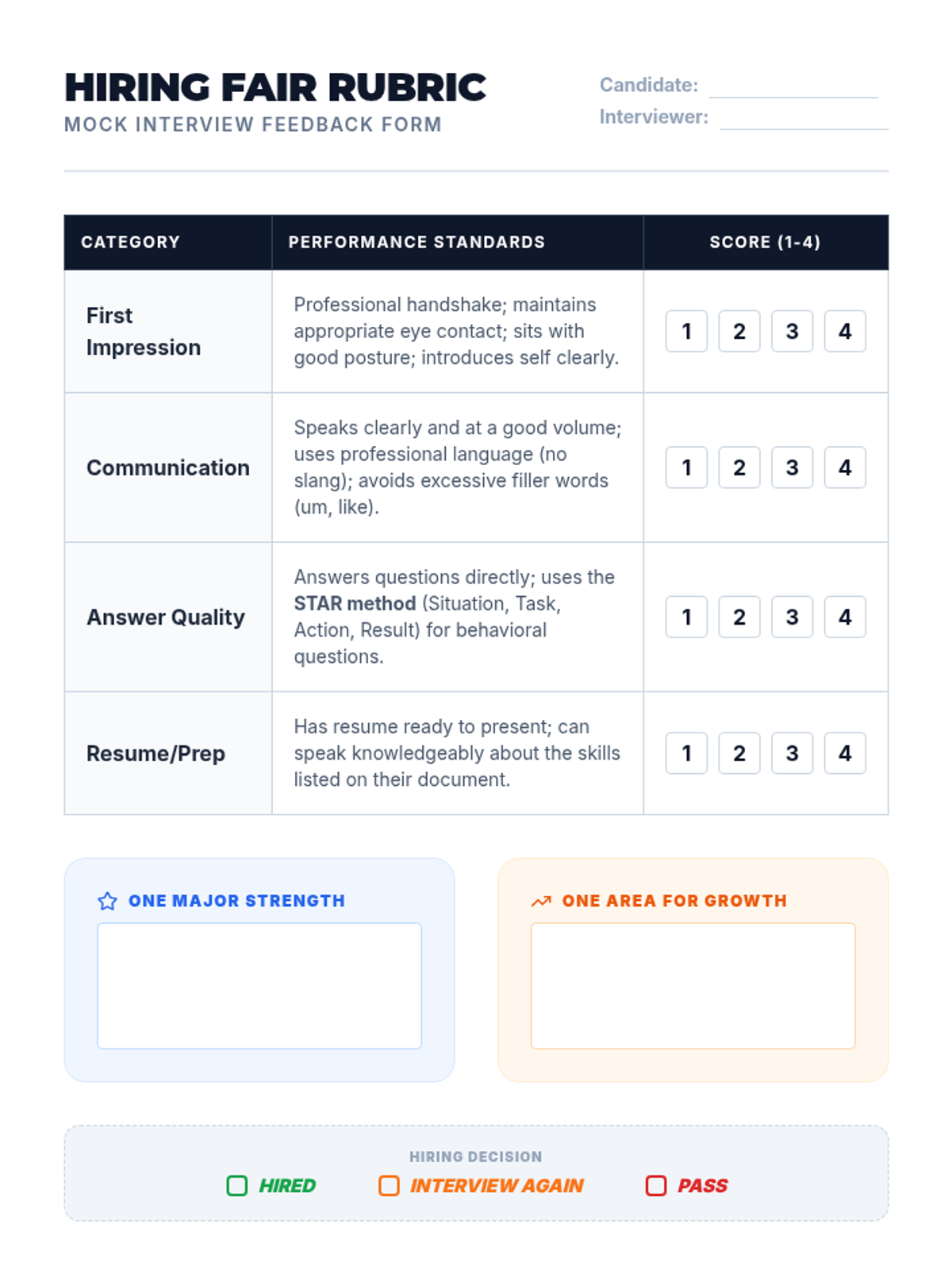
As a culminating activity, students participate in rotating mock interviews acting as both interviewers and interviewees. They utilize rubrics to provide constructive feedback on body language, eye contact, and answer quality. This applies all previous skills in a high-stakes simulation.
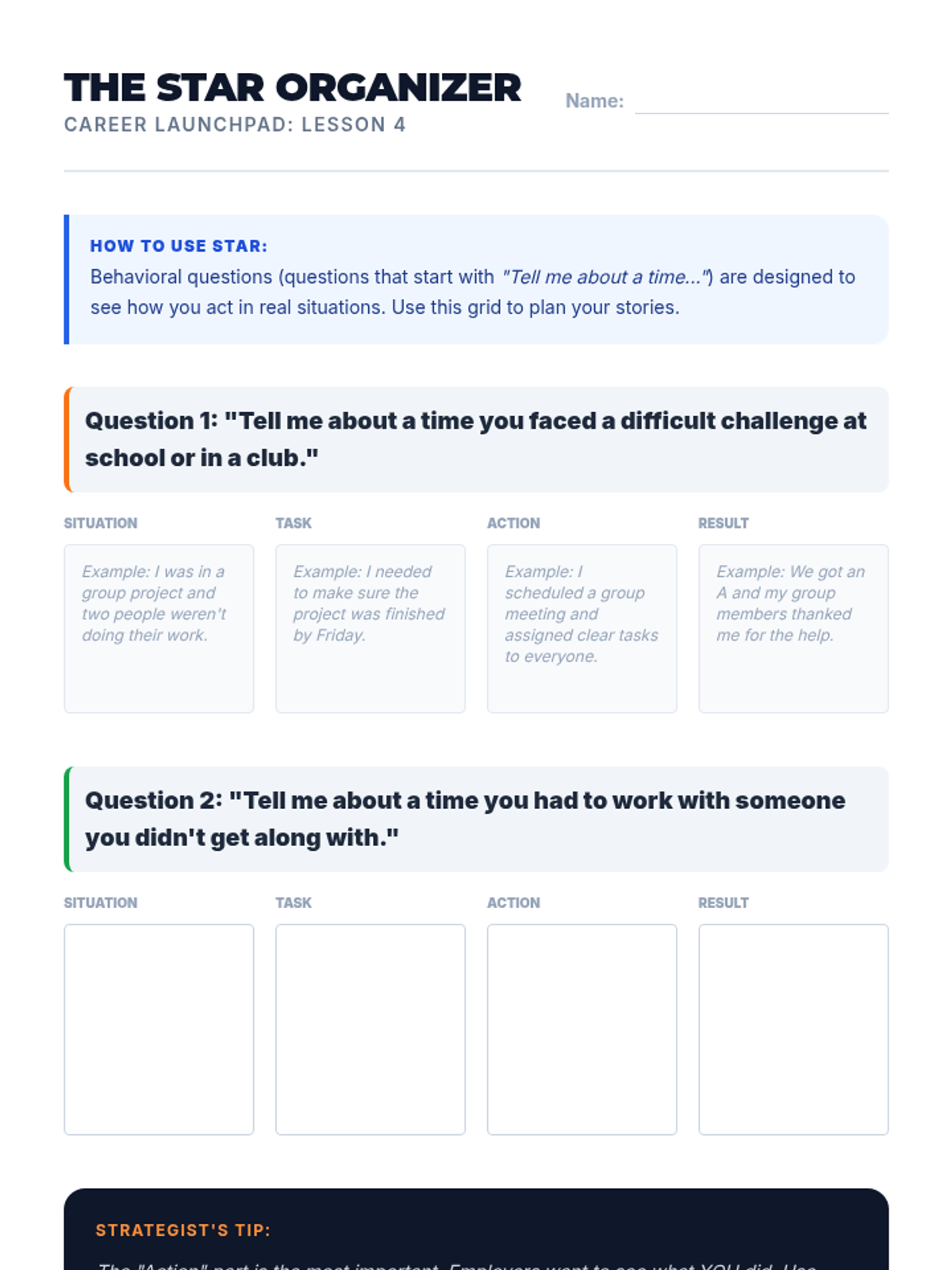
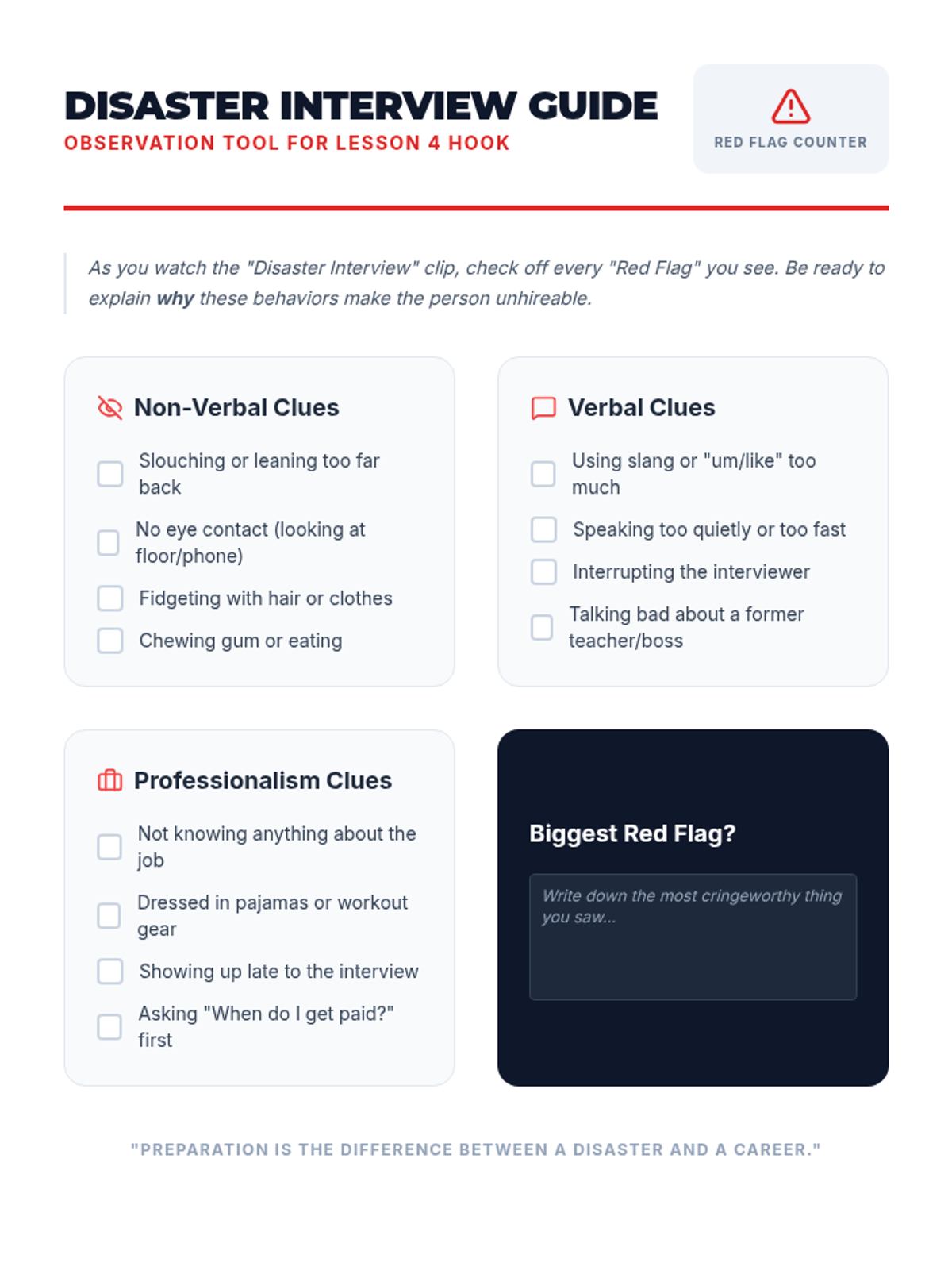
Students learn common interview questions and the purpose behind them. They practice the STAR method (Situation, Task, Action, Result) to structure their answers effectively. The lesson involves watching video examples of strong versus weak interview responses.
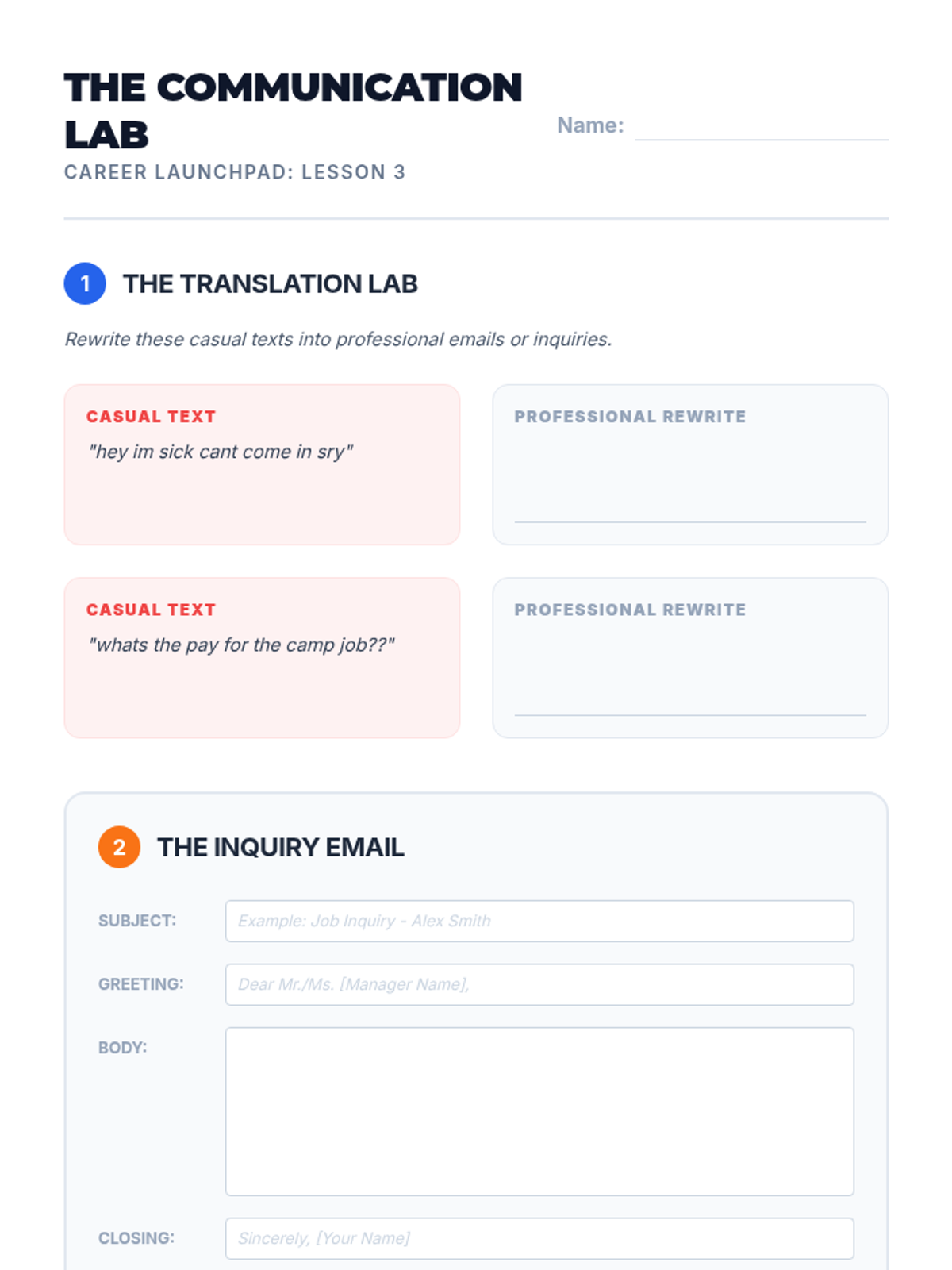
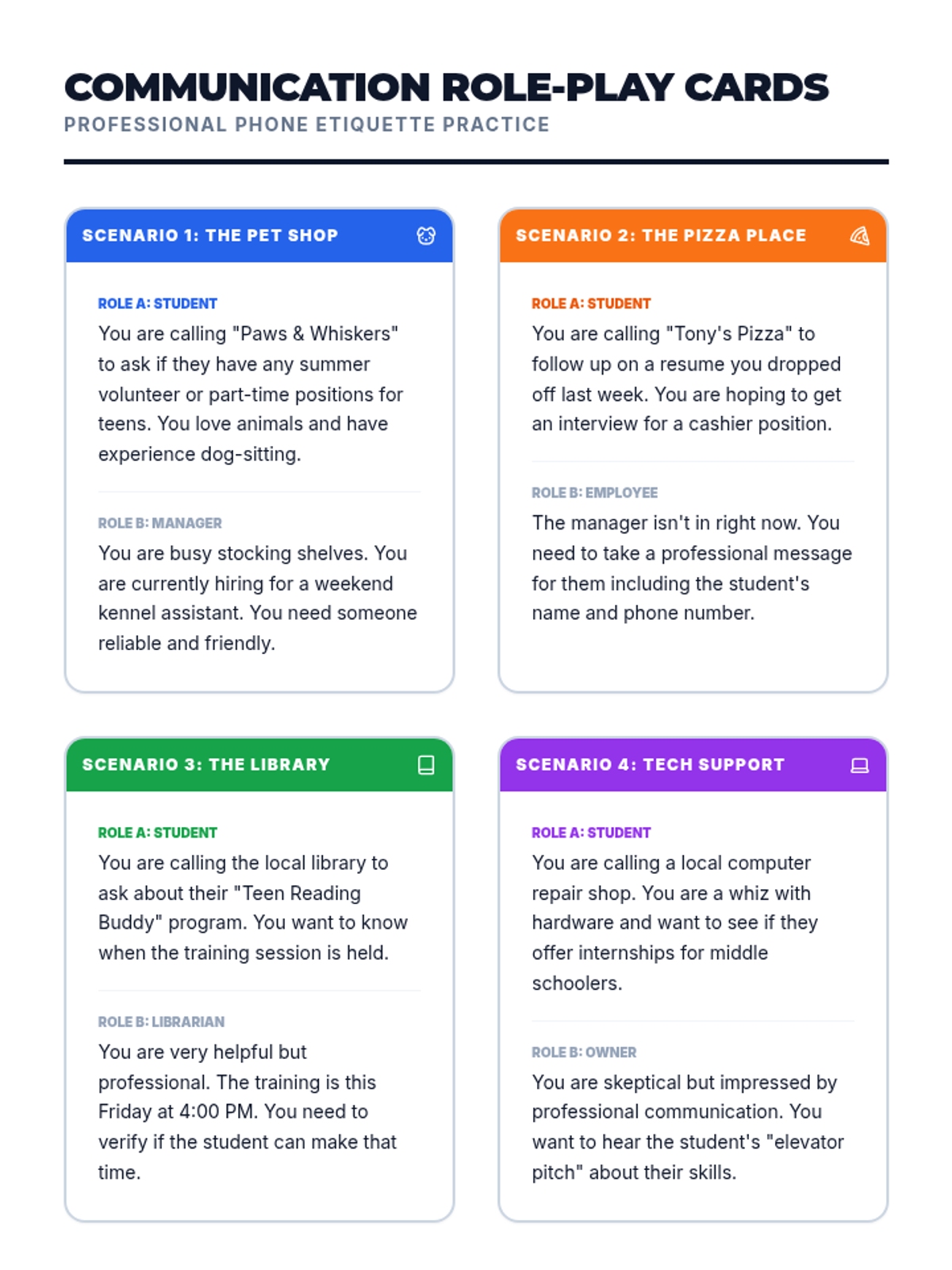
Students explore the norms of professional correspondence, distinguishing between casual texting and workplace communication. They practice drafting inquiries about job openings via email and role-play professional phone etiquette. The focus is on tone, clarity, and appropriate greetings.
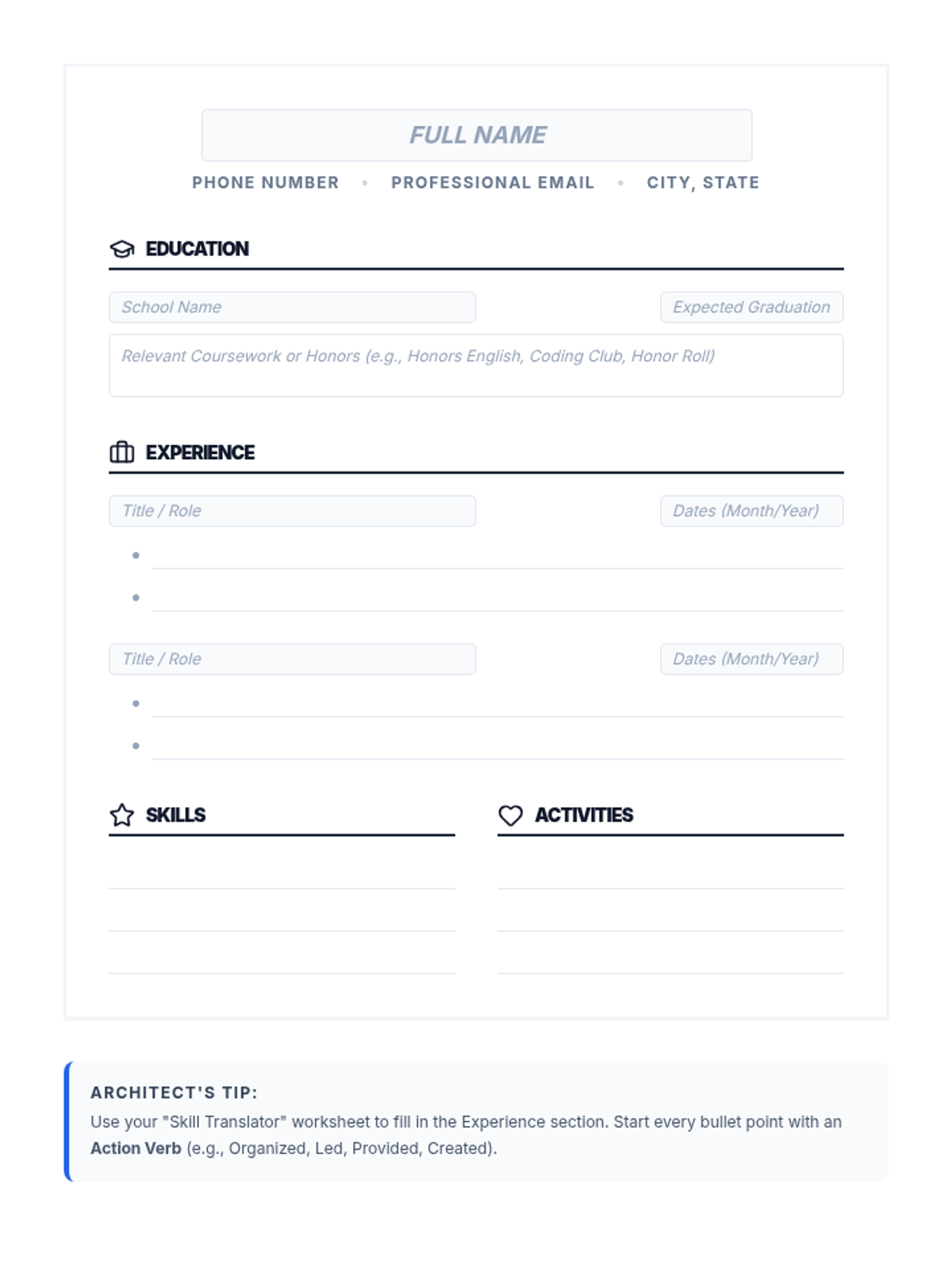
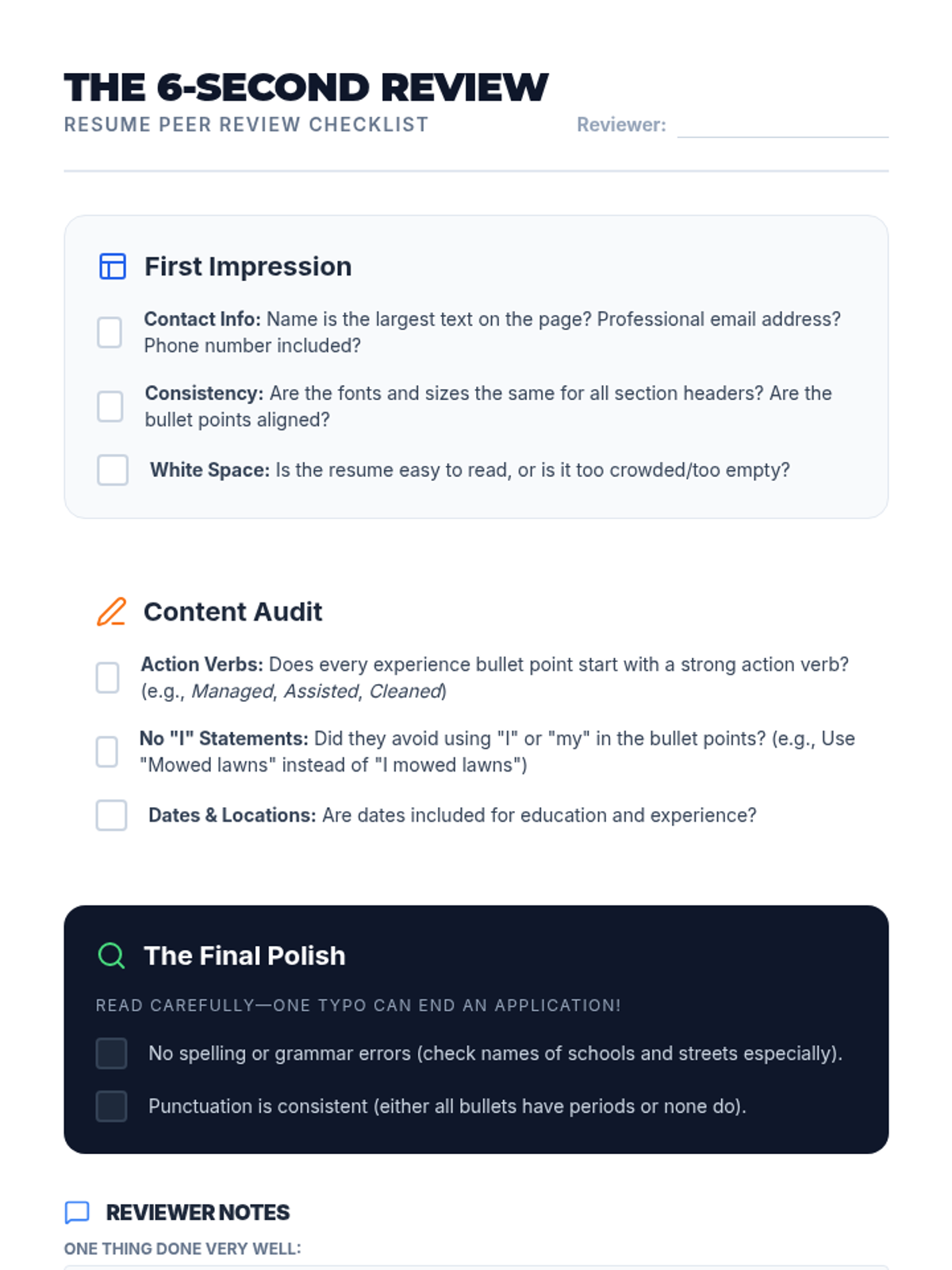
In this writing workshop, students examine sample resumes to understand structure, formatting, and clarity. They then draft their own entry-level resume using the skills identified in the previous lesson. Peer review focuses on formatting and the use of action verbs.
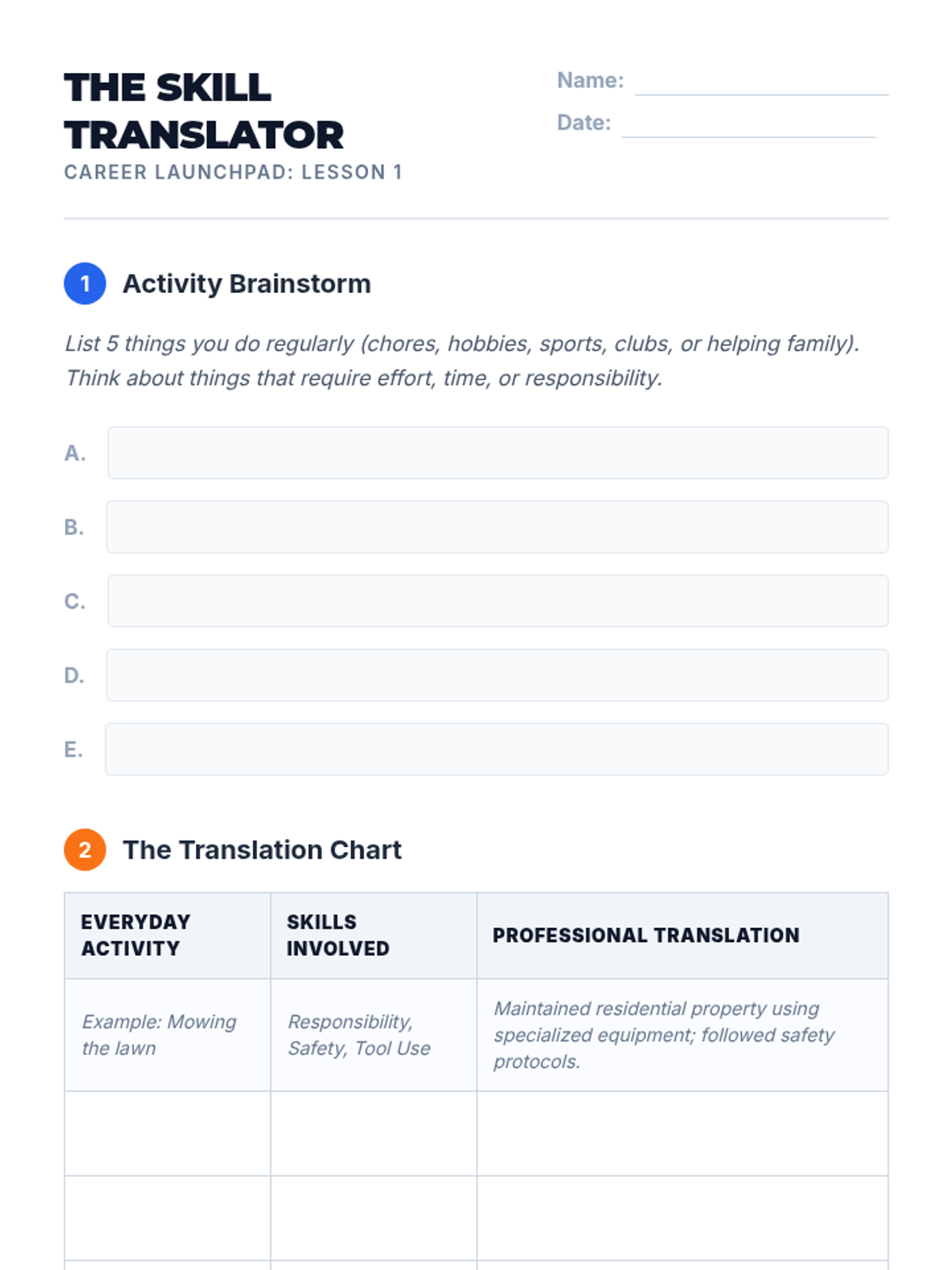
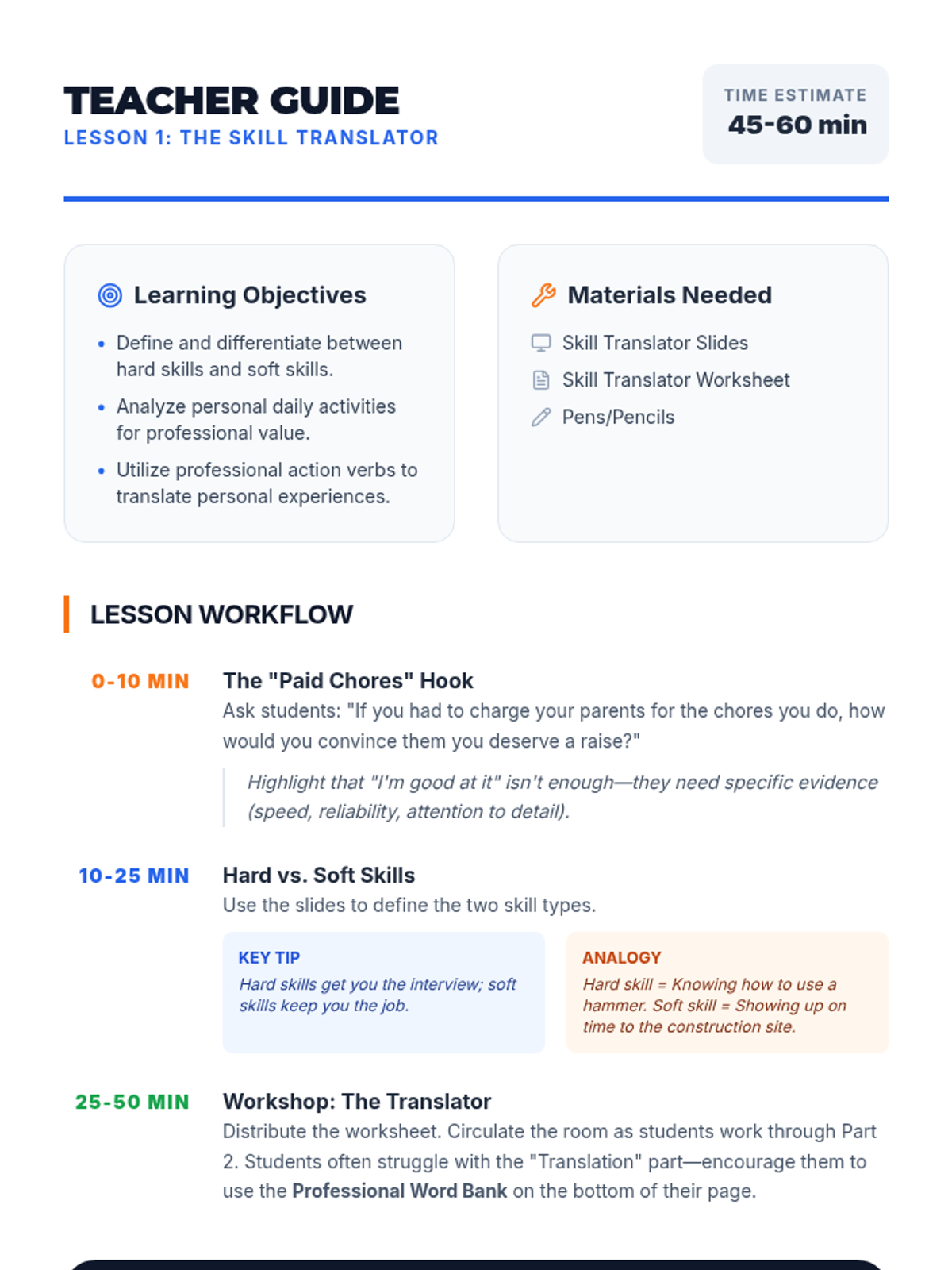
Students analyze their current activities, chores, and school responsibilities to identify marketable soft and hard skills, translating these experiences into professional language suitable for a first job application.
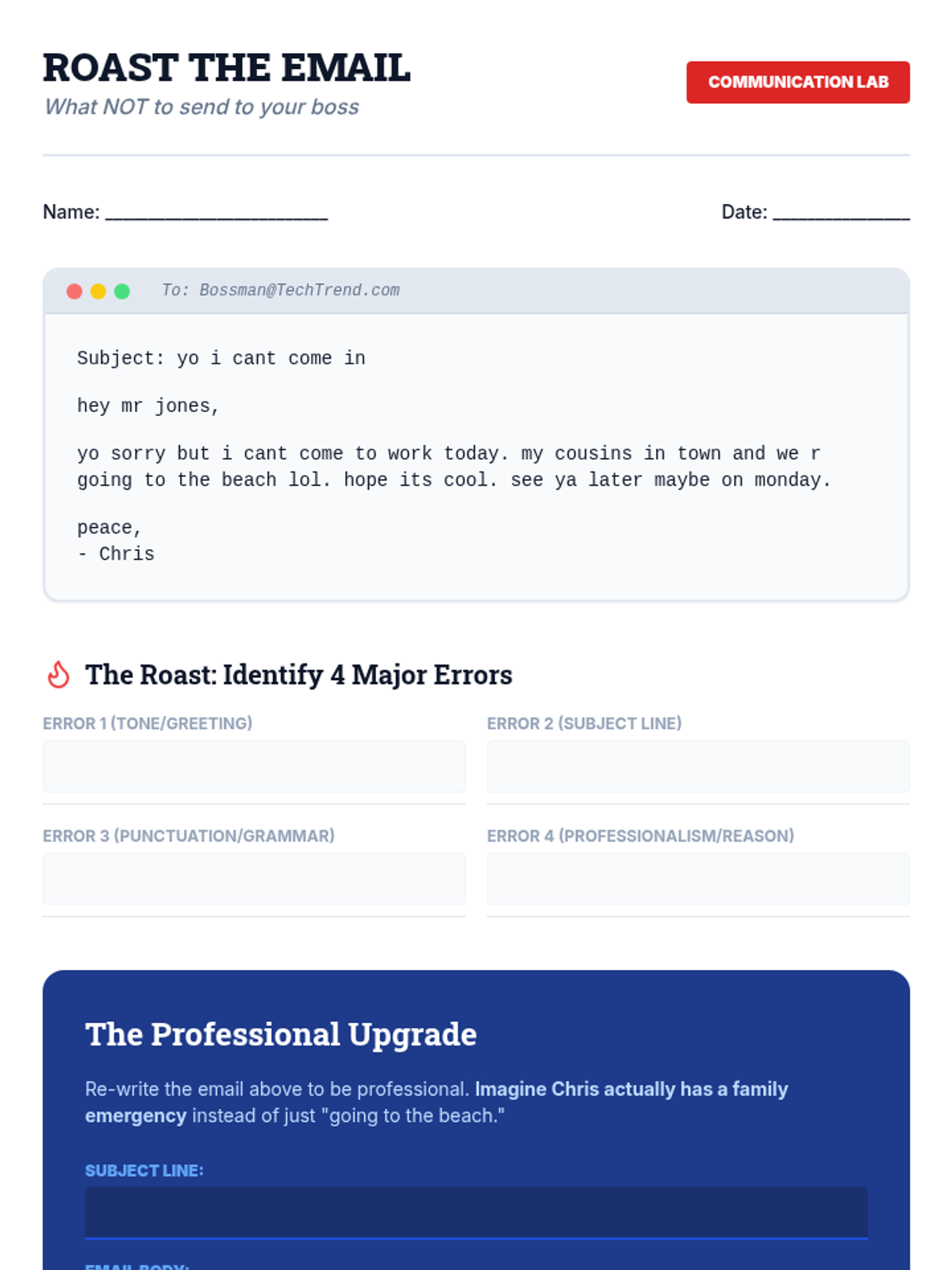
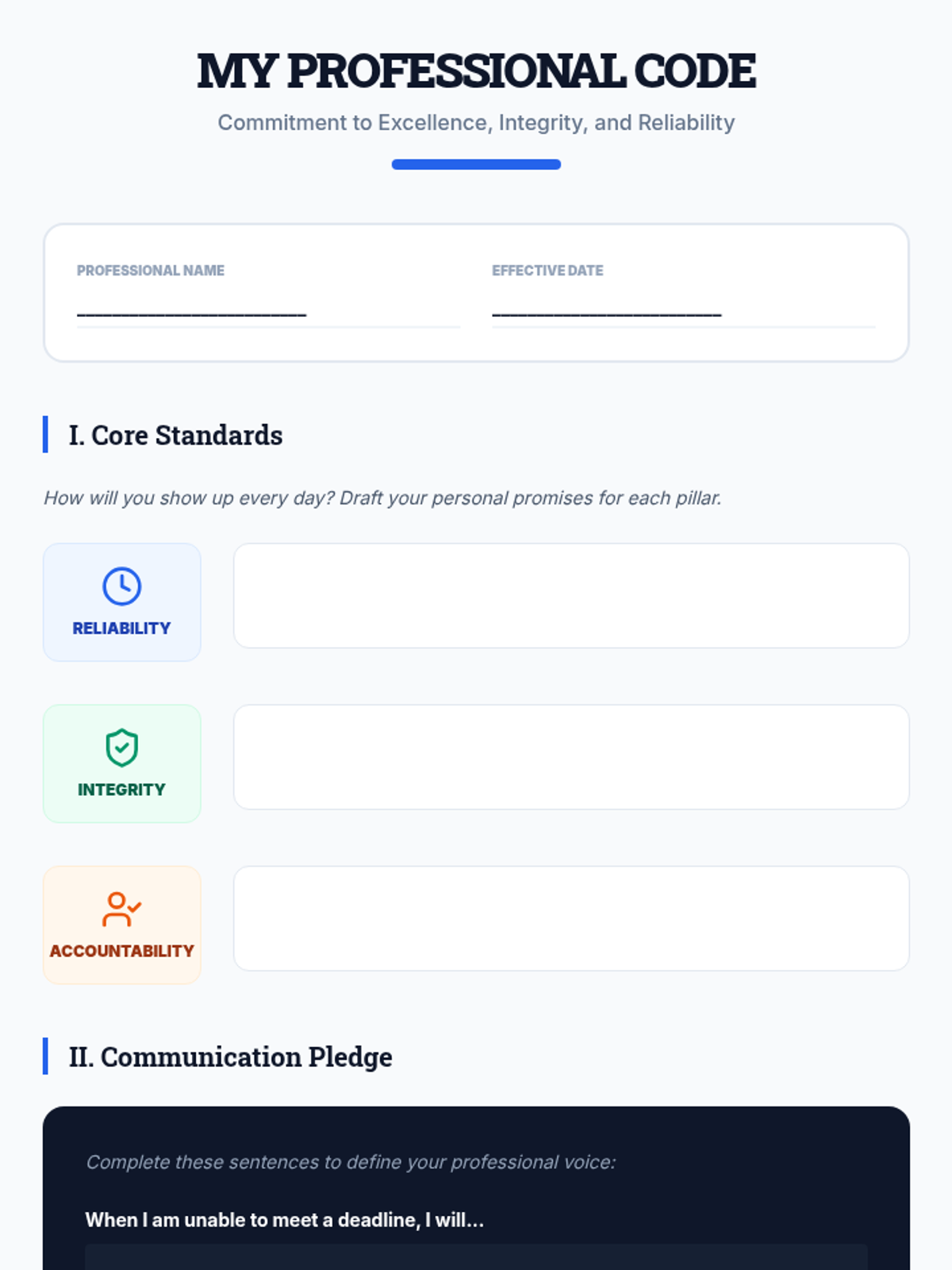
Students synthesize their understanding of work ethic by applying it to professional communication and etiquette. They practice drafting professional emails and create a personal Code of Professional Conduct.
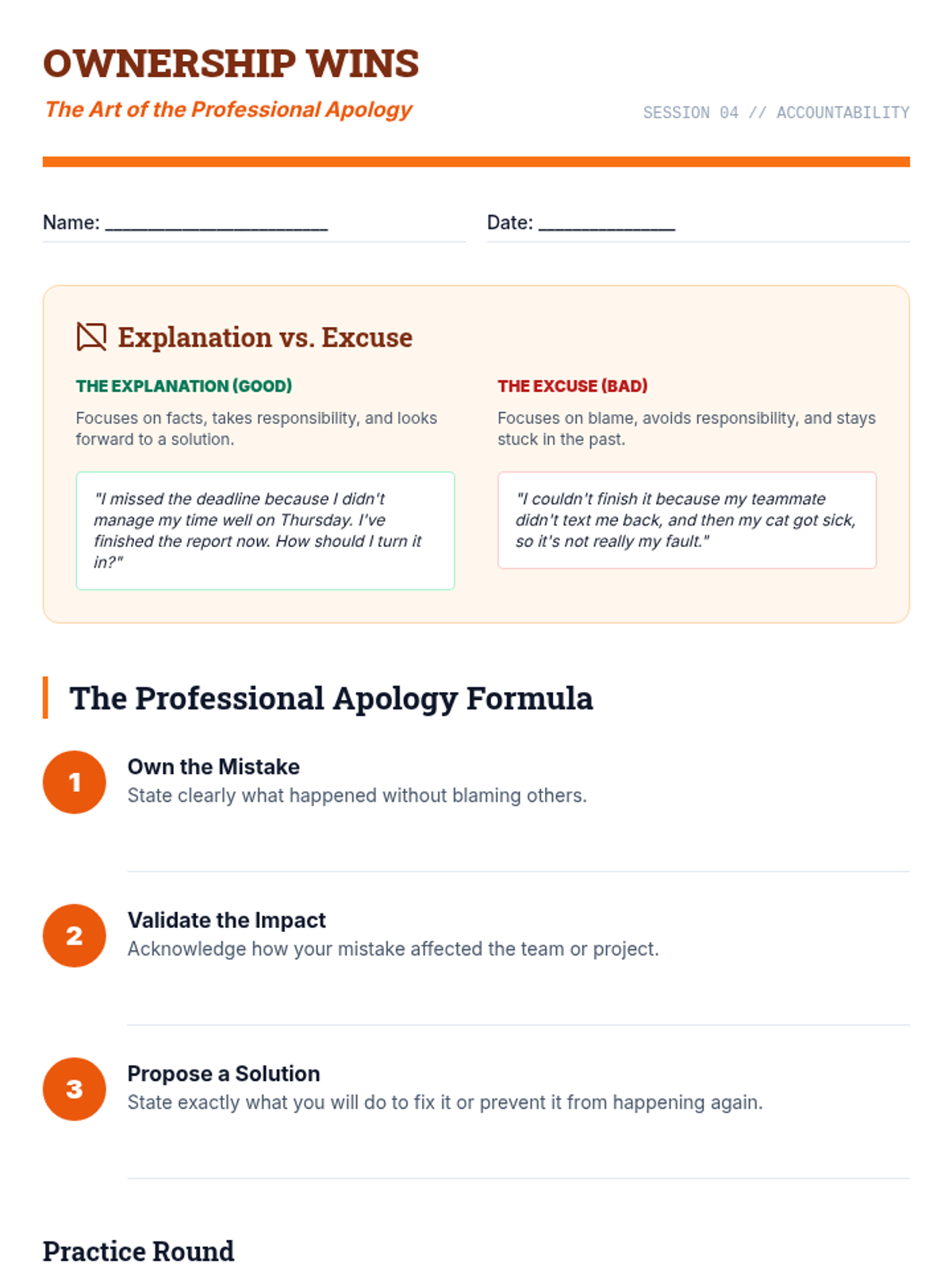
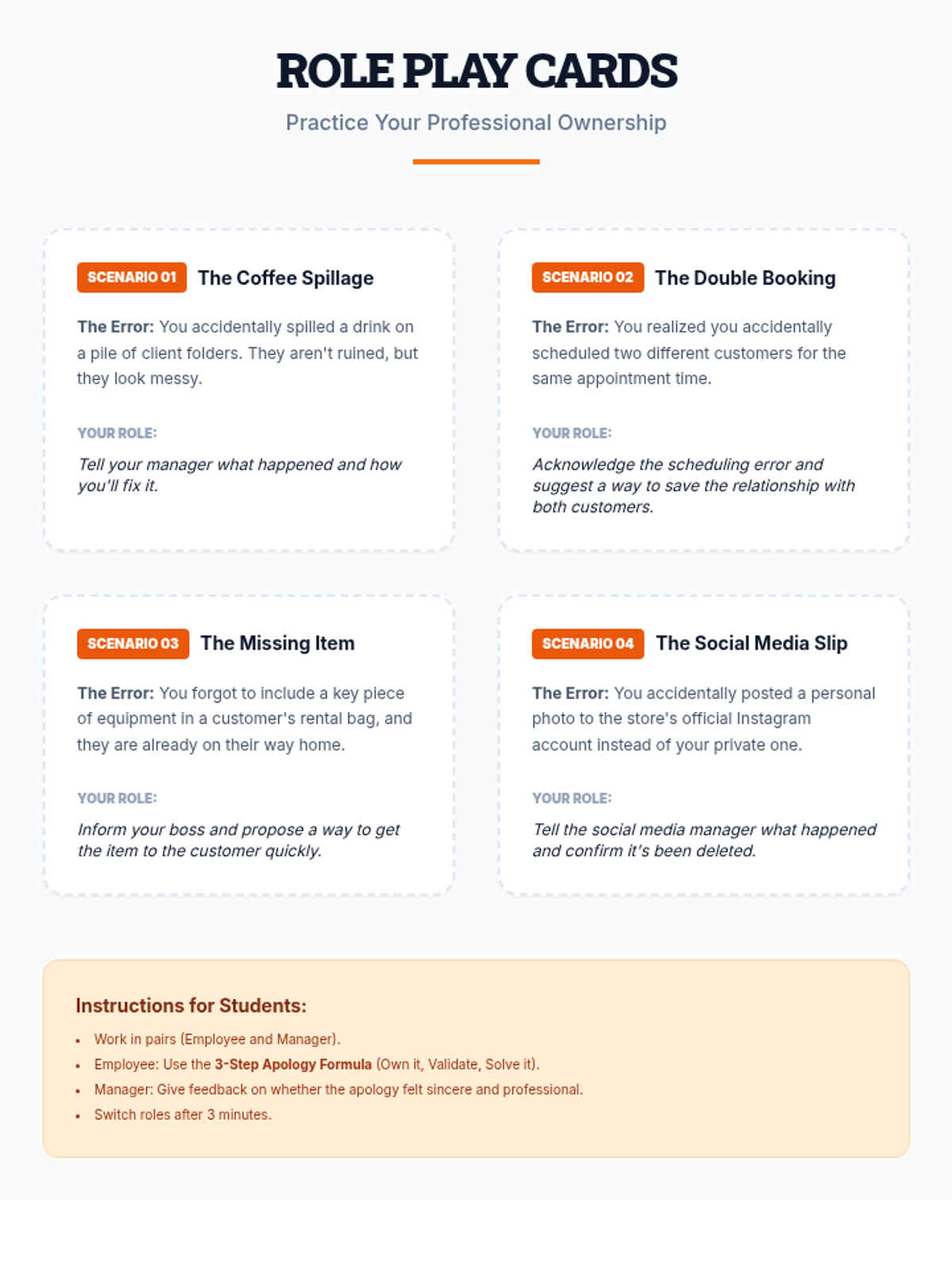
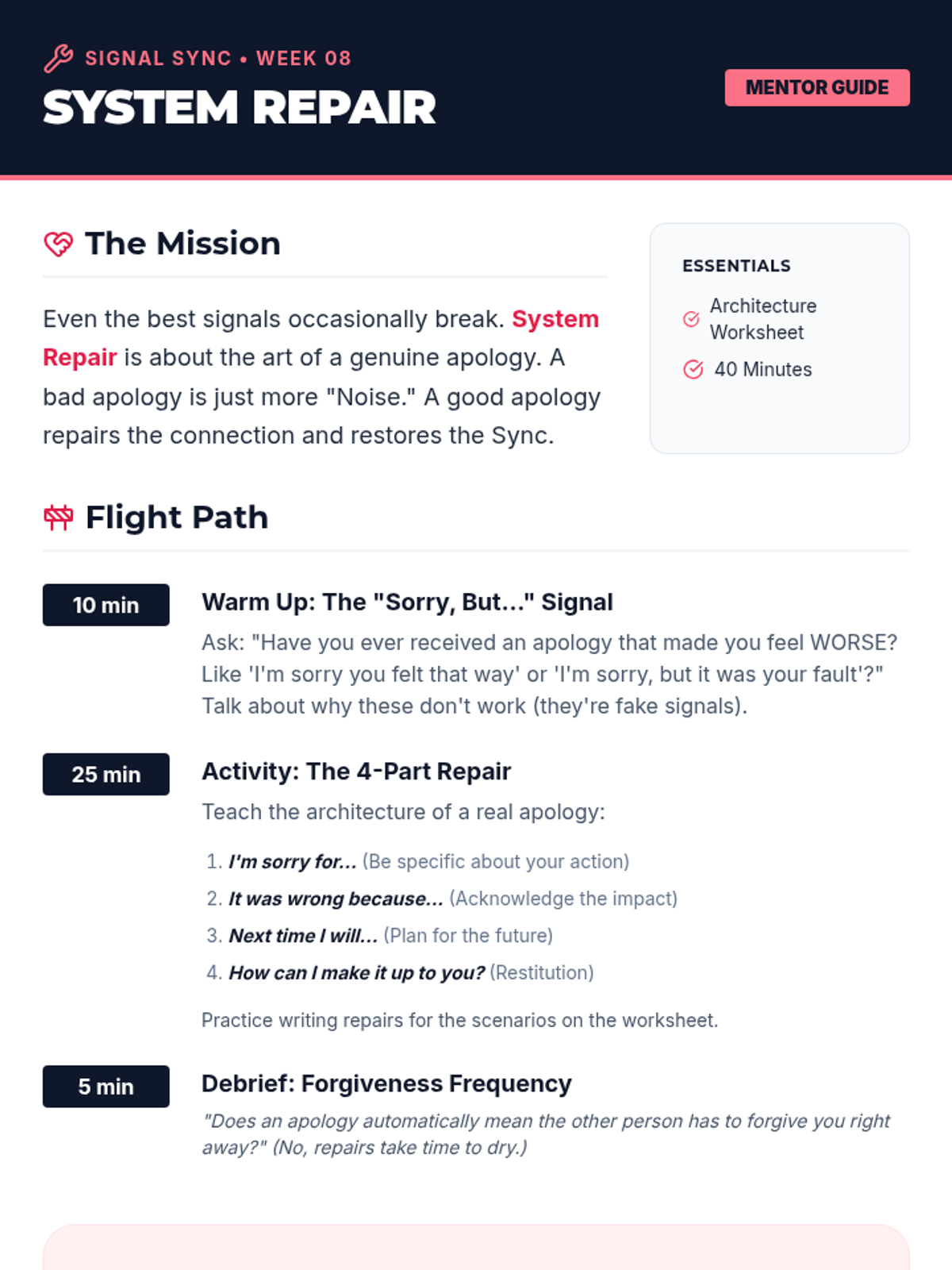
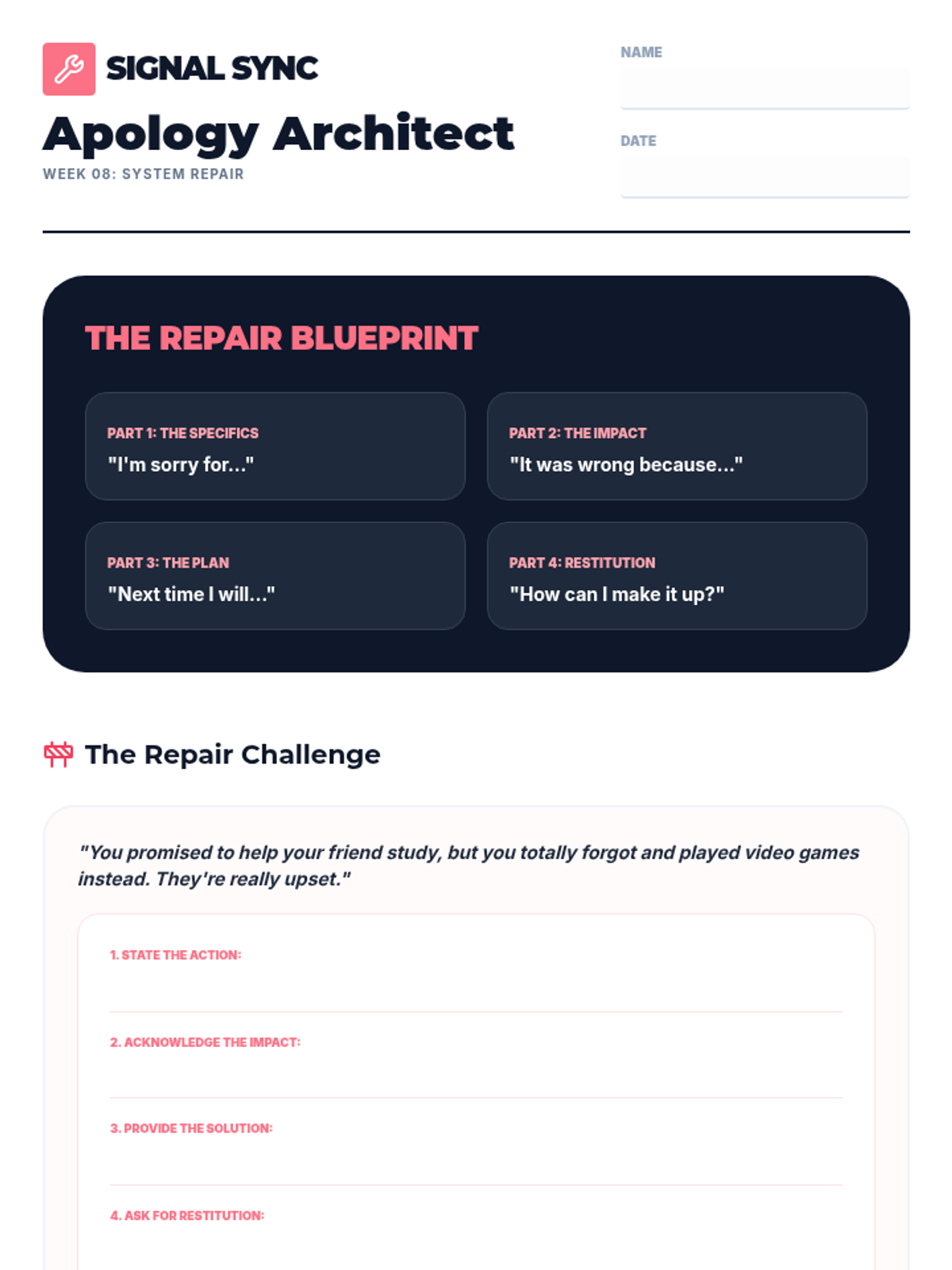
Focusing on the difficult skill of owning mistakes, this lesson differentiates between explanations and excuses. Students practice role-play exercises to apologize effectively and propose solutions.
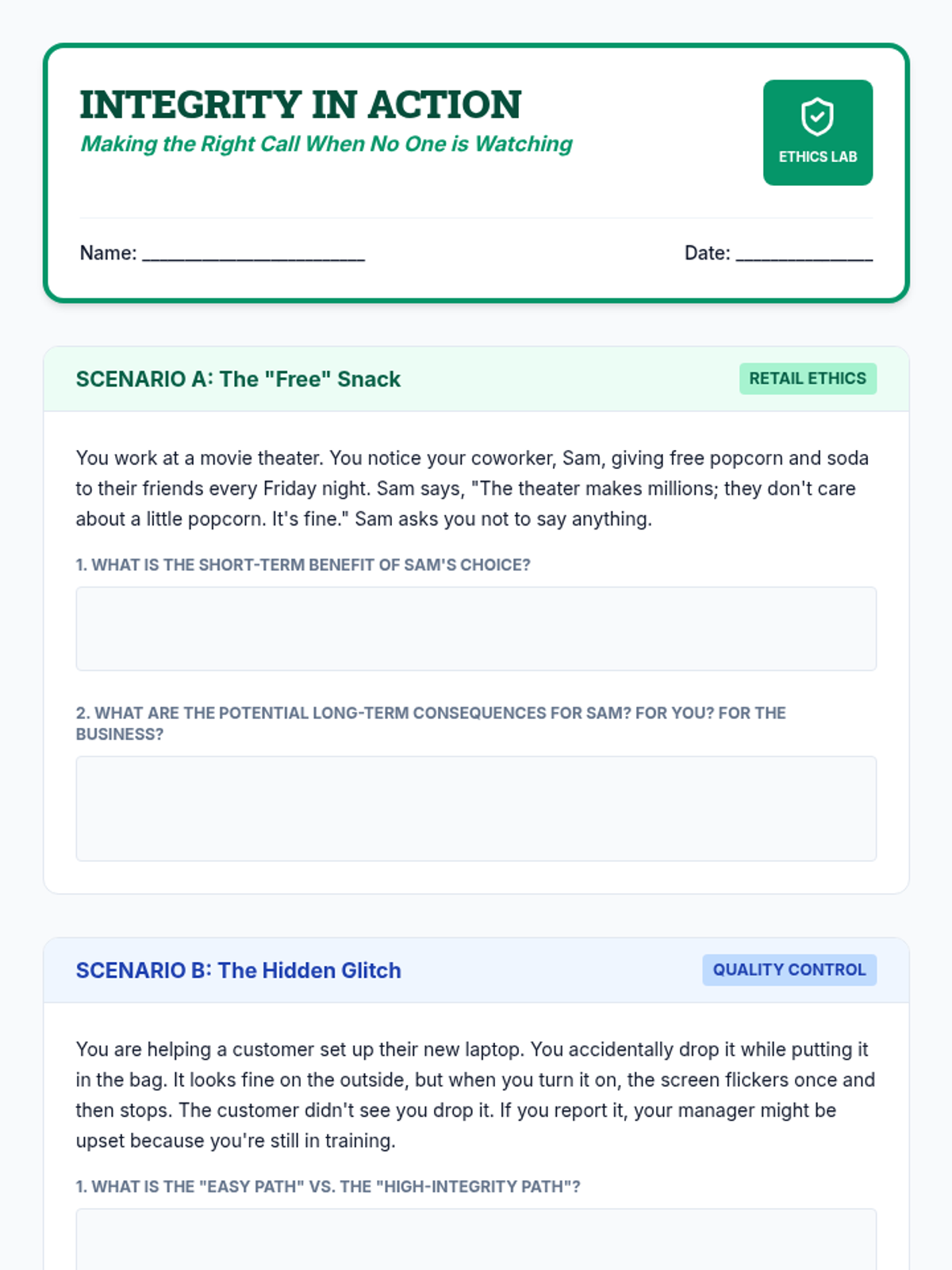
Students navigate gray areas of workplace integrity through case studies involving common dilemmas. They analyze the short-term benefits versus long-term consequences of different choices.
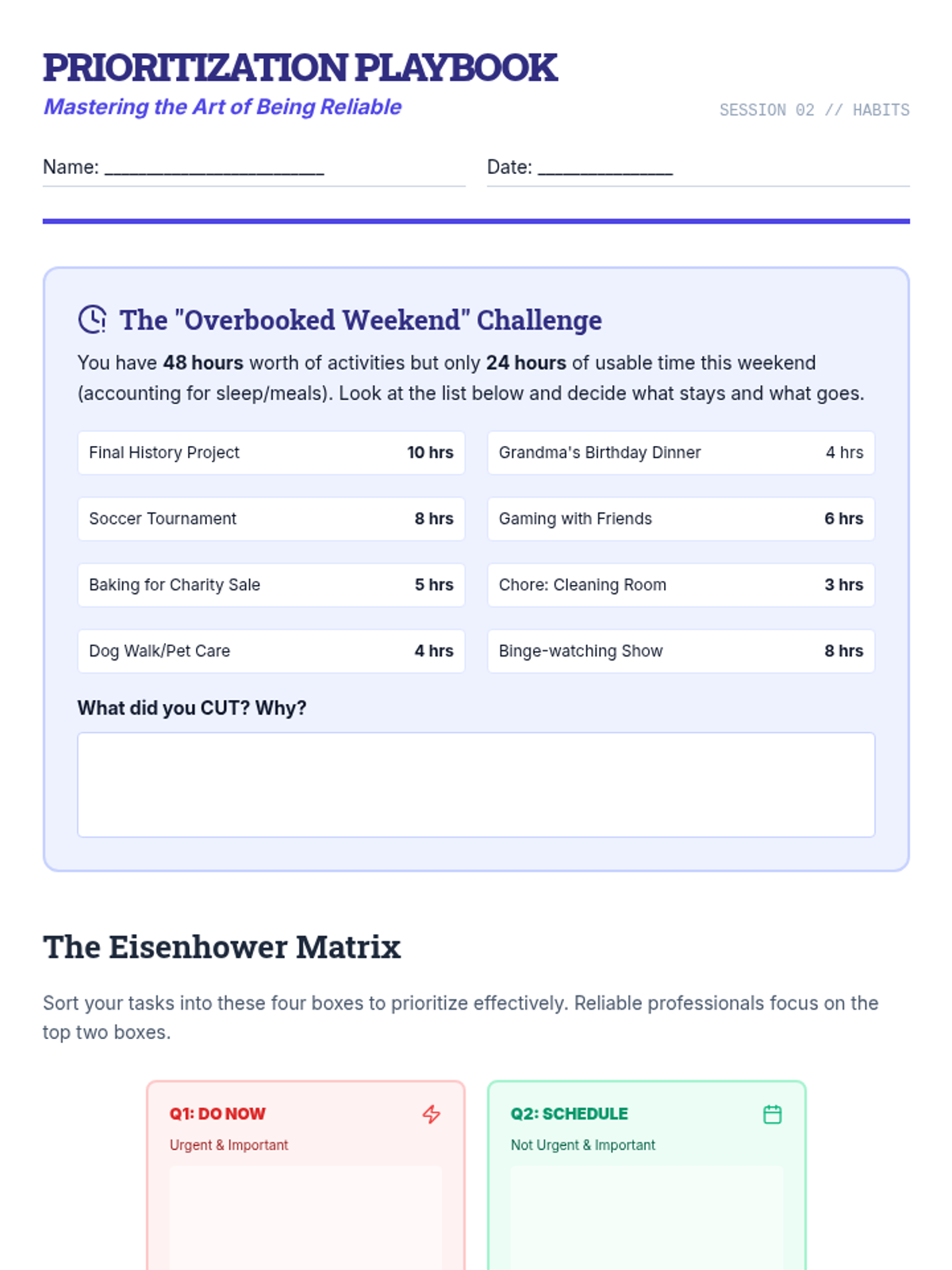
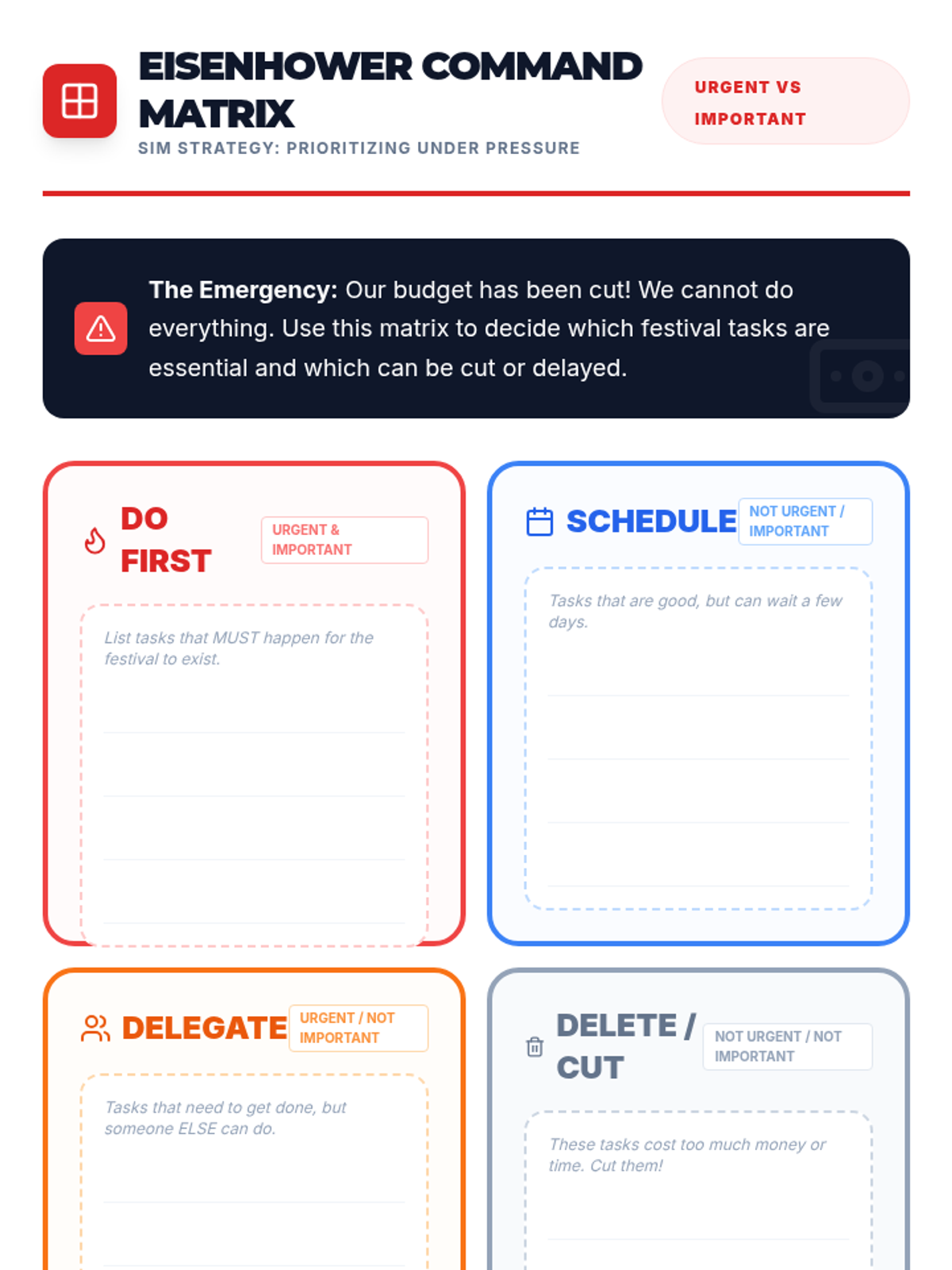
This lesson focuses on the practical skills required to be reliable, specifically time management and task prioritization. Students learn to use an Eisenhower Matrix and practice proactive communication.
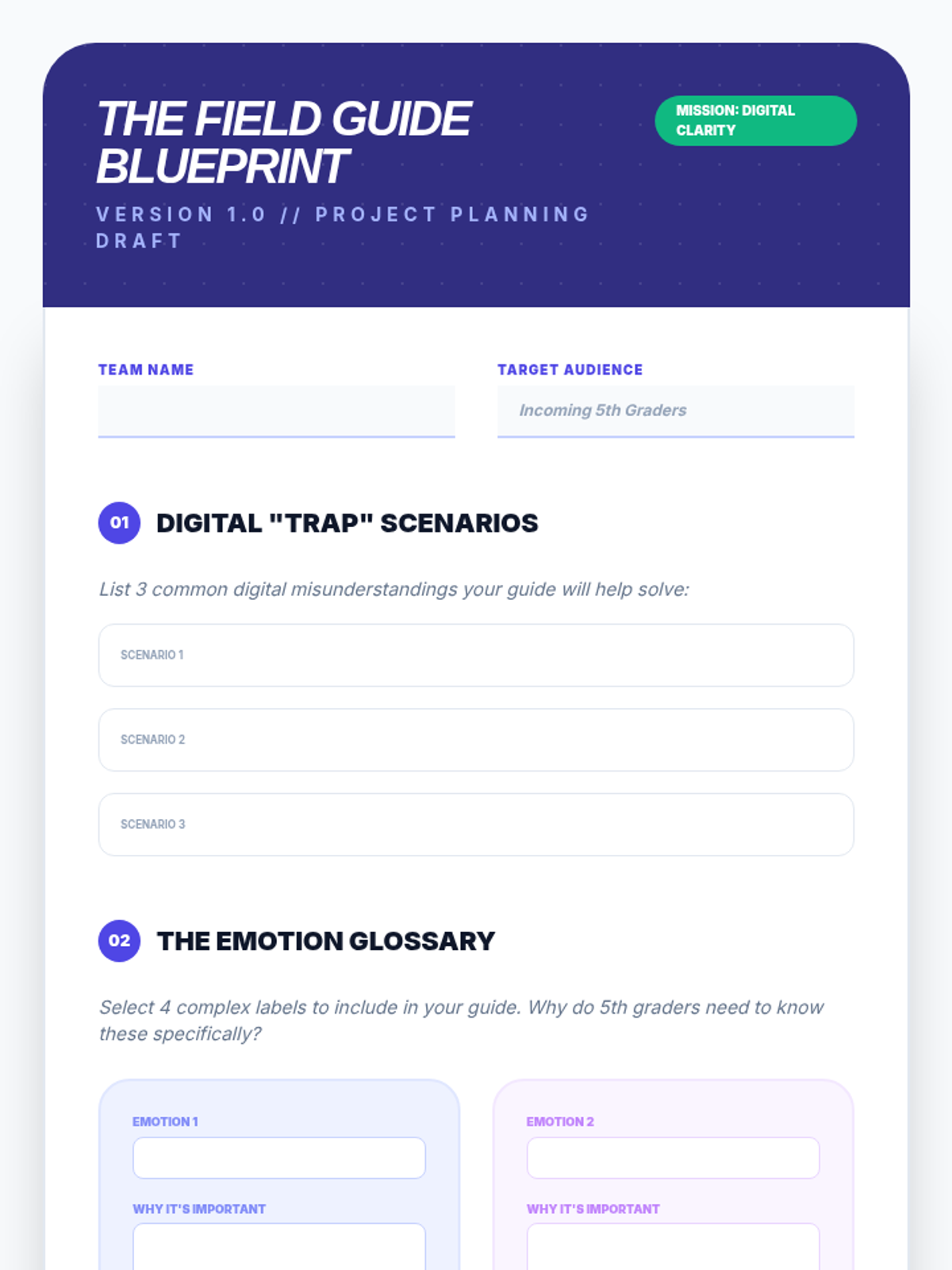
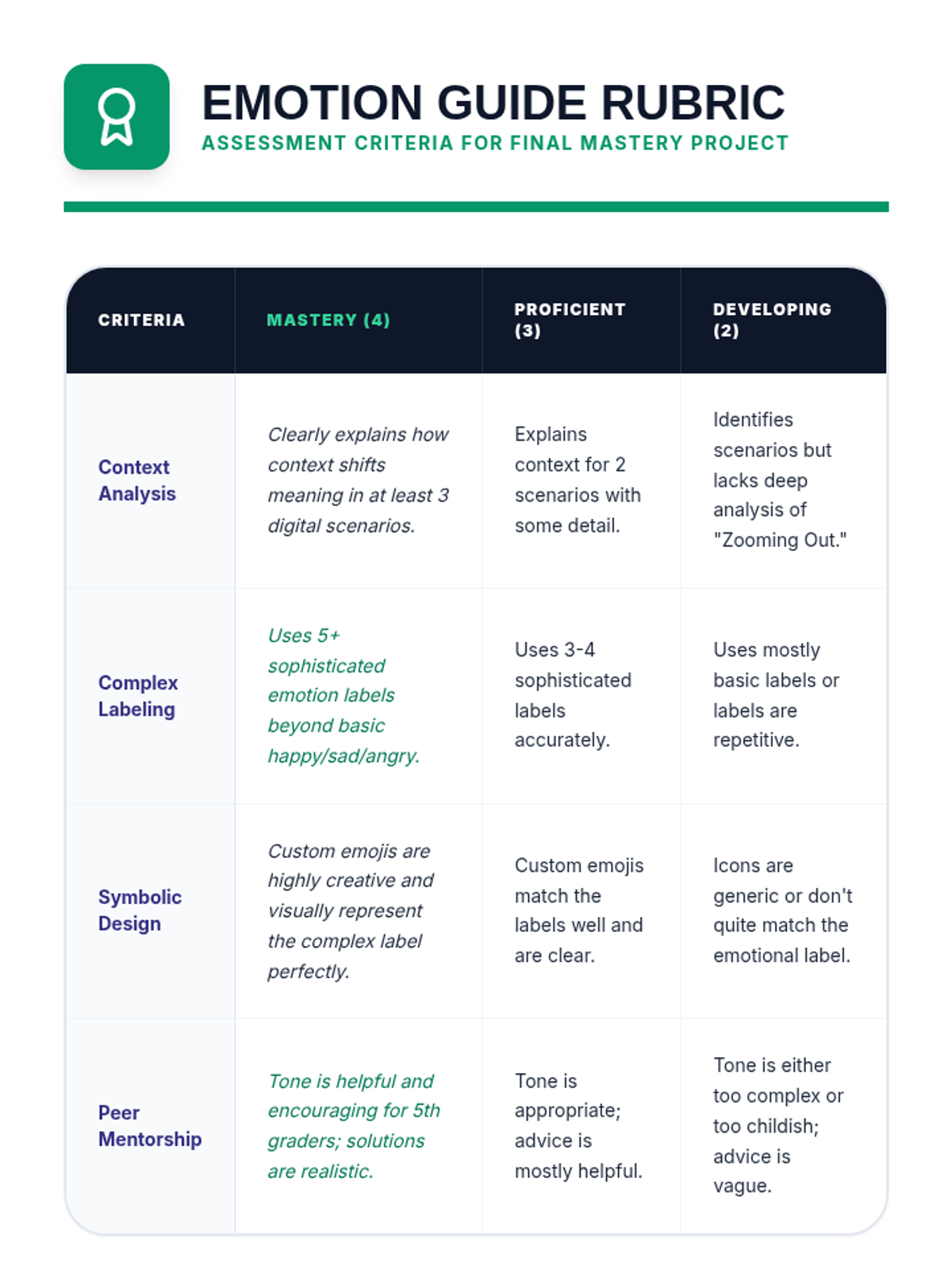
Students synthesize their learning to create a 'Field Guide to Digital Emotions' for younger peers, focusing on preventing online misunderstandings.
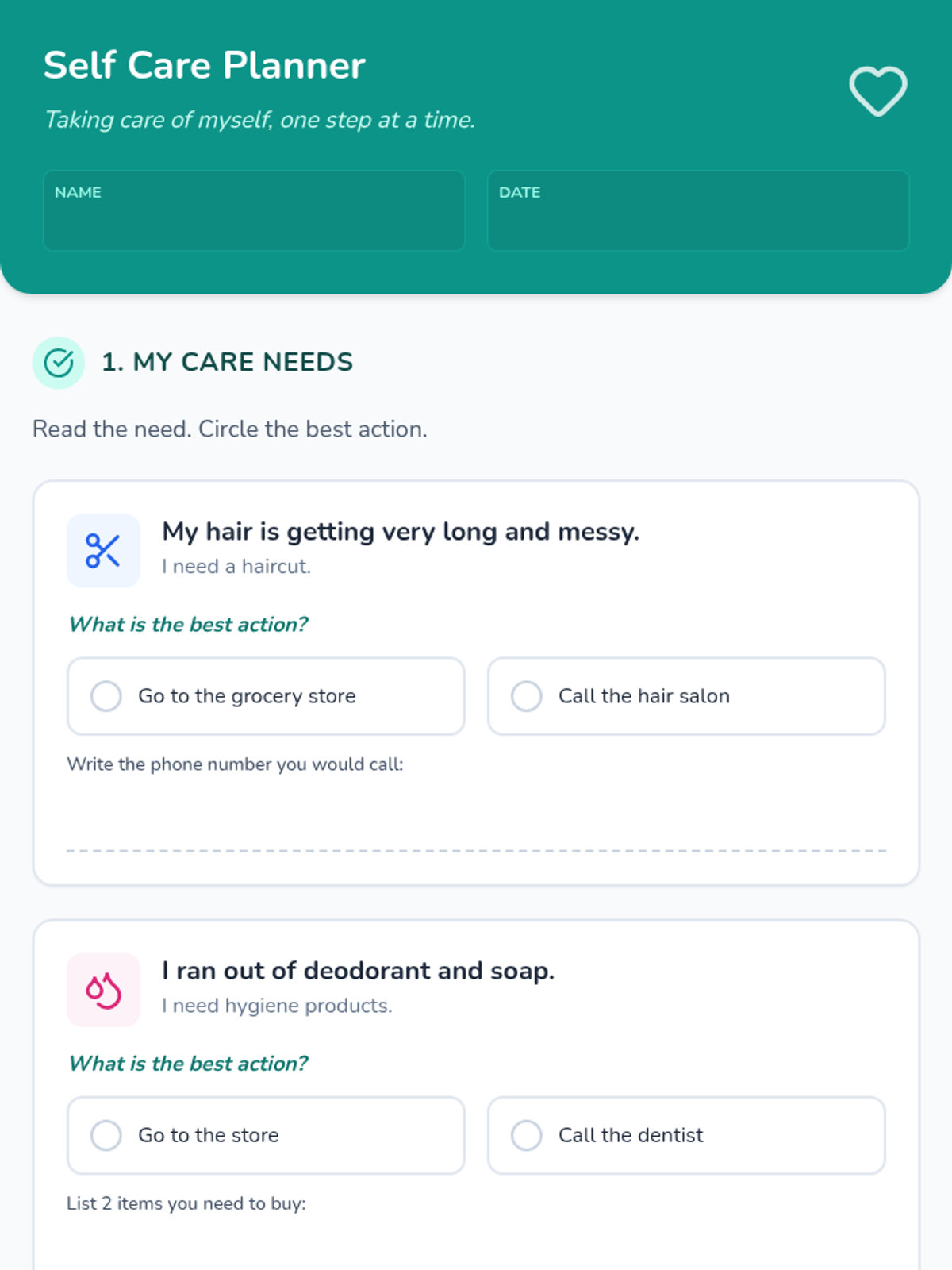
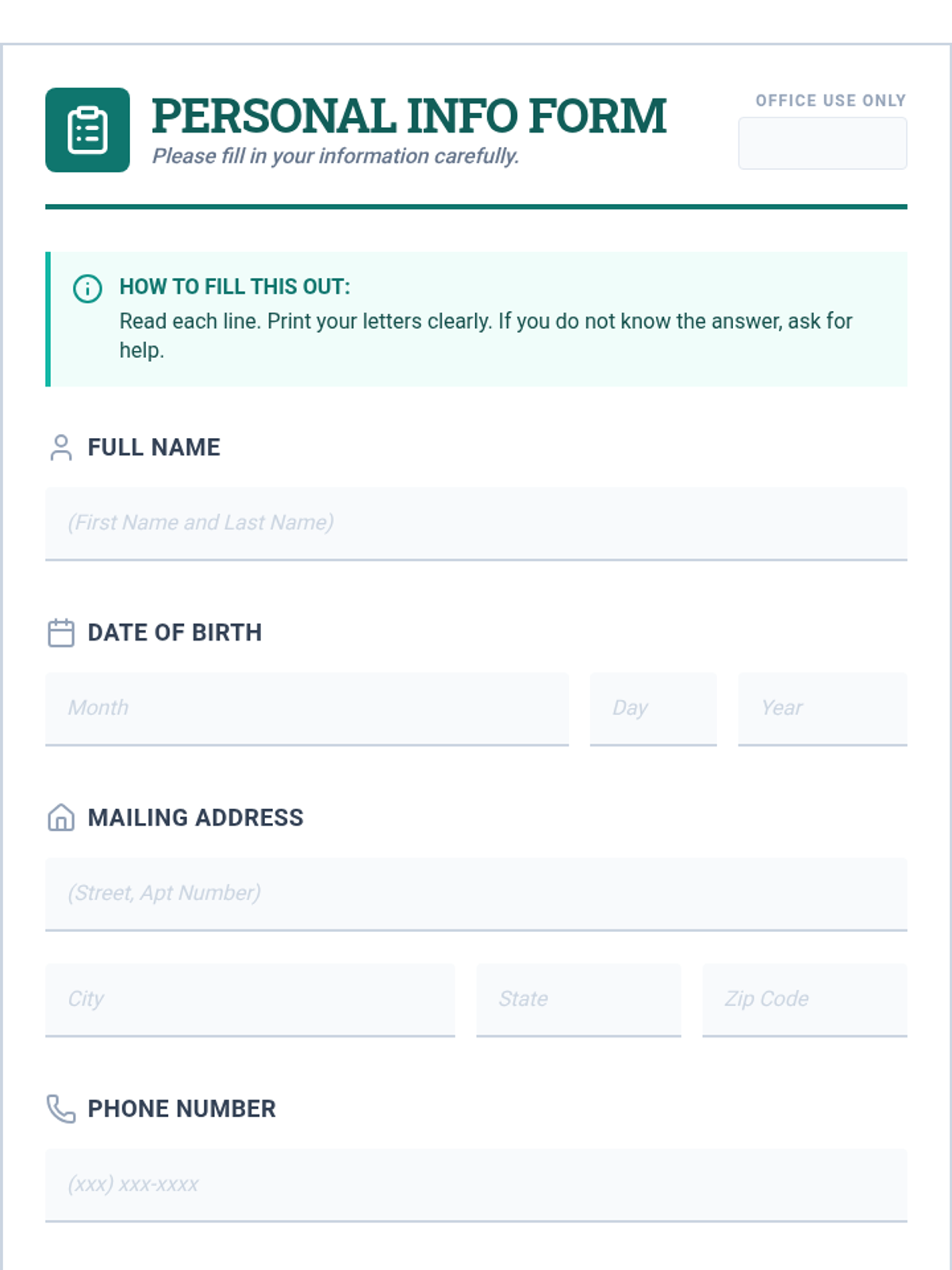
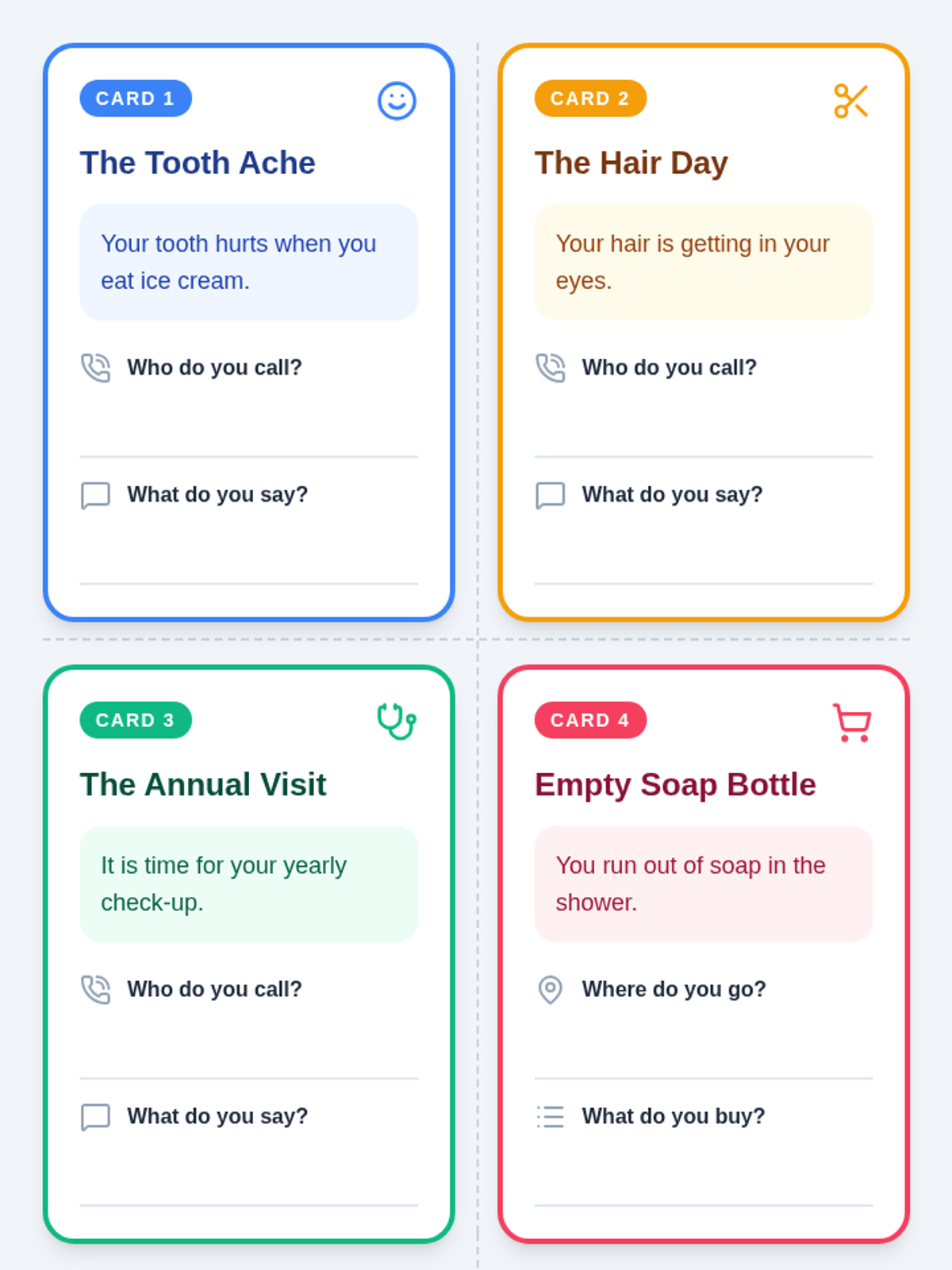
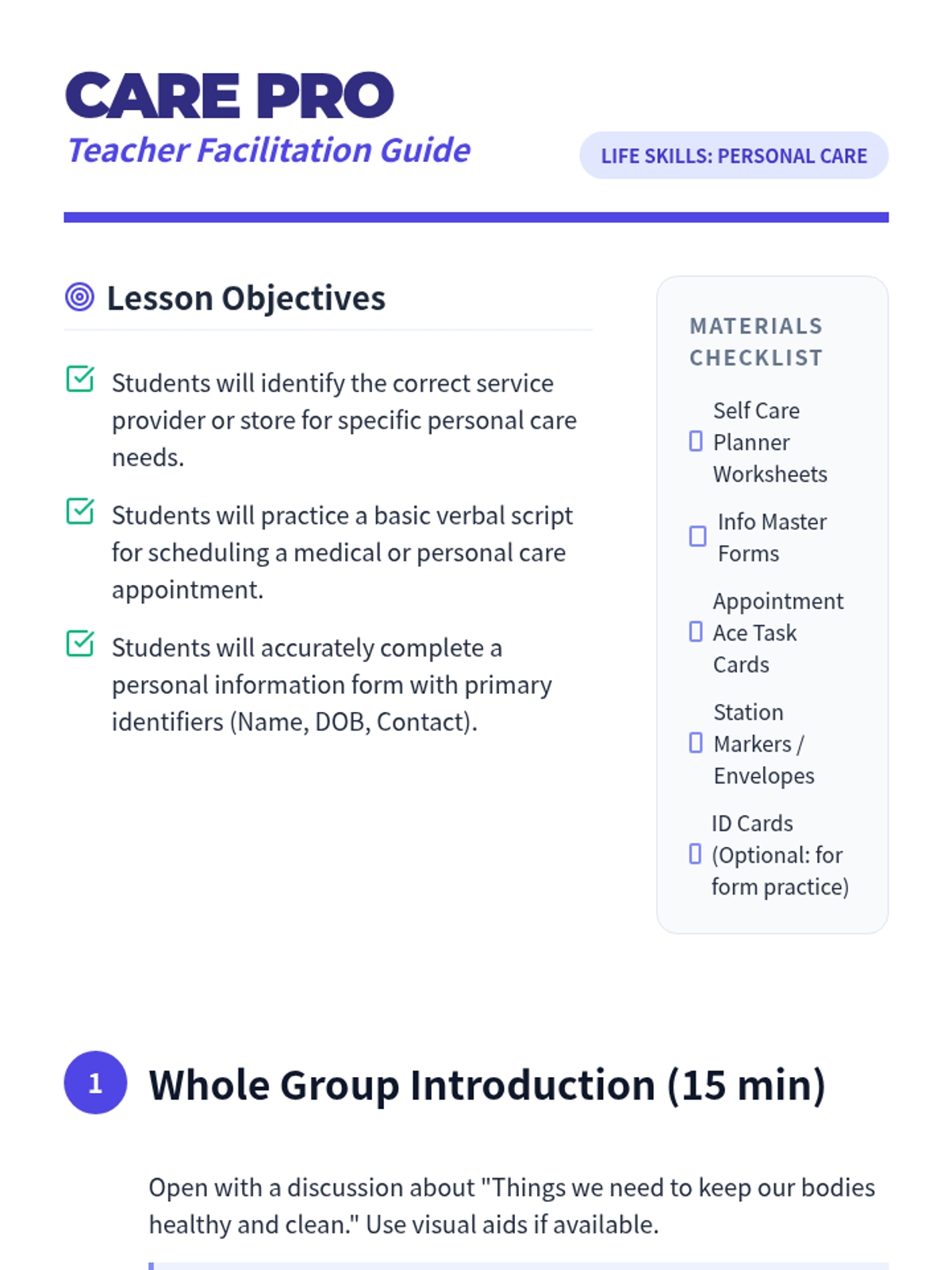
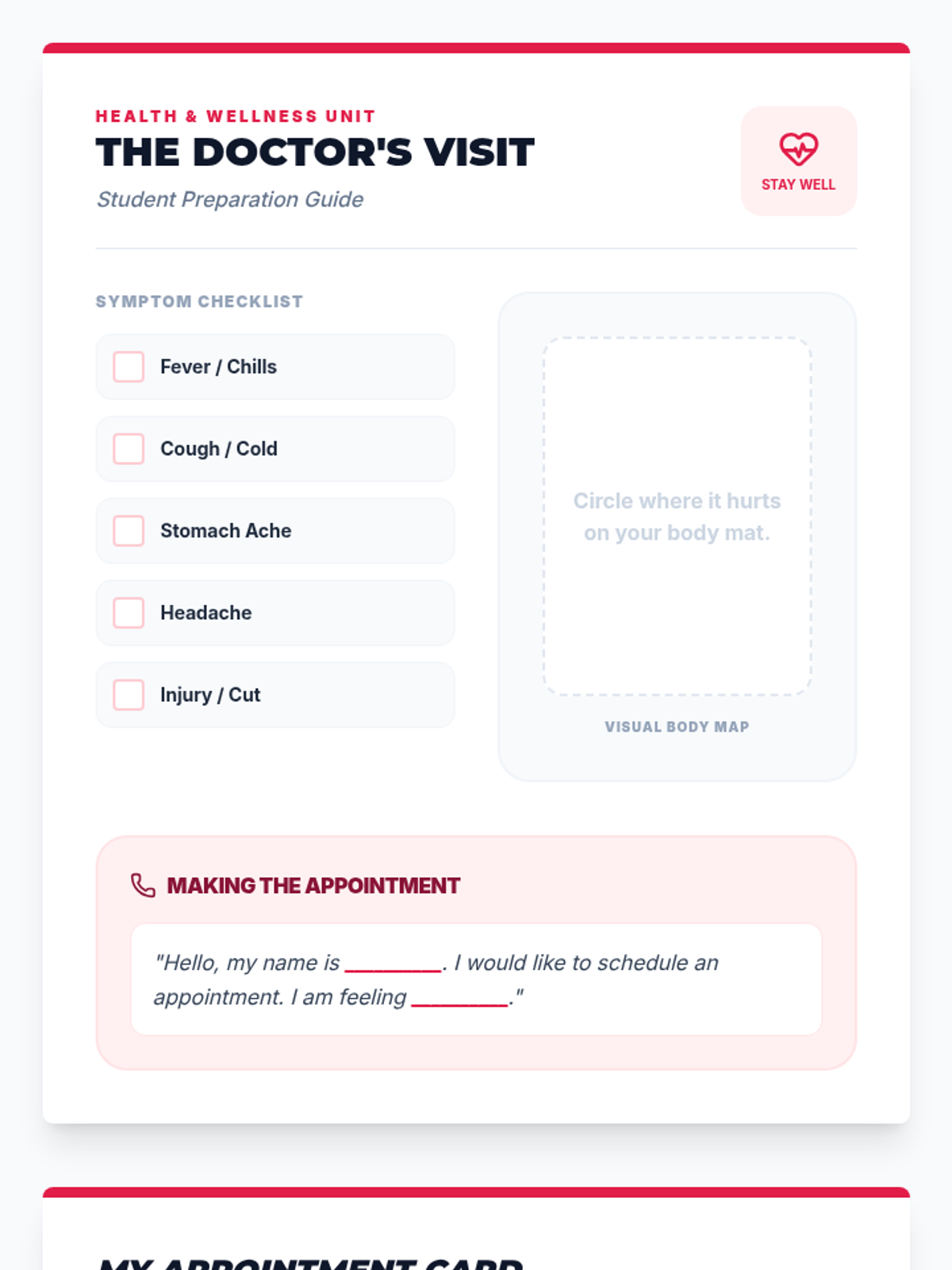
A practical life skills lesson focused on managing personal care needs, scheduling medical appointments, and completing essential personal information forms. Designed for Level 2 learners with simplified text and visual supports.
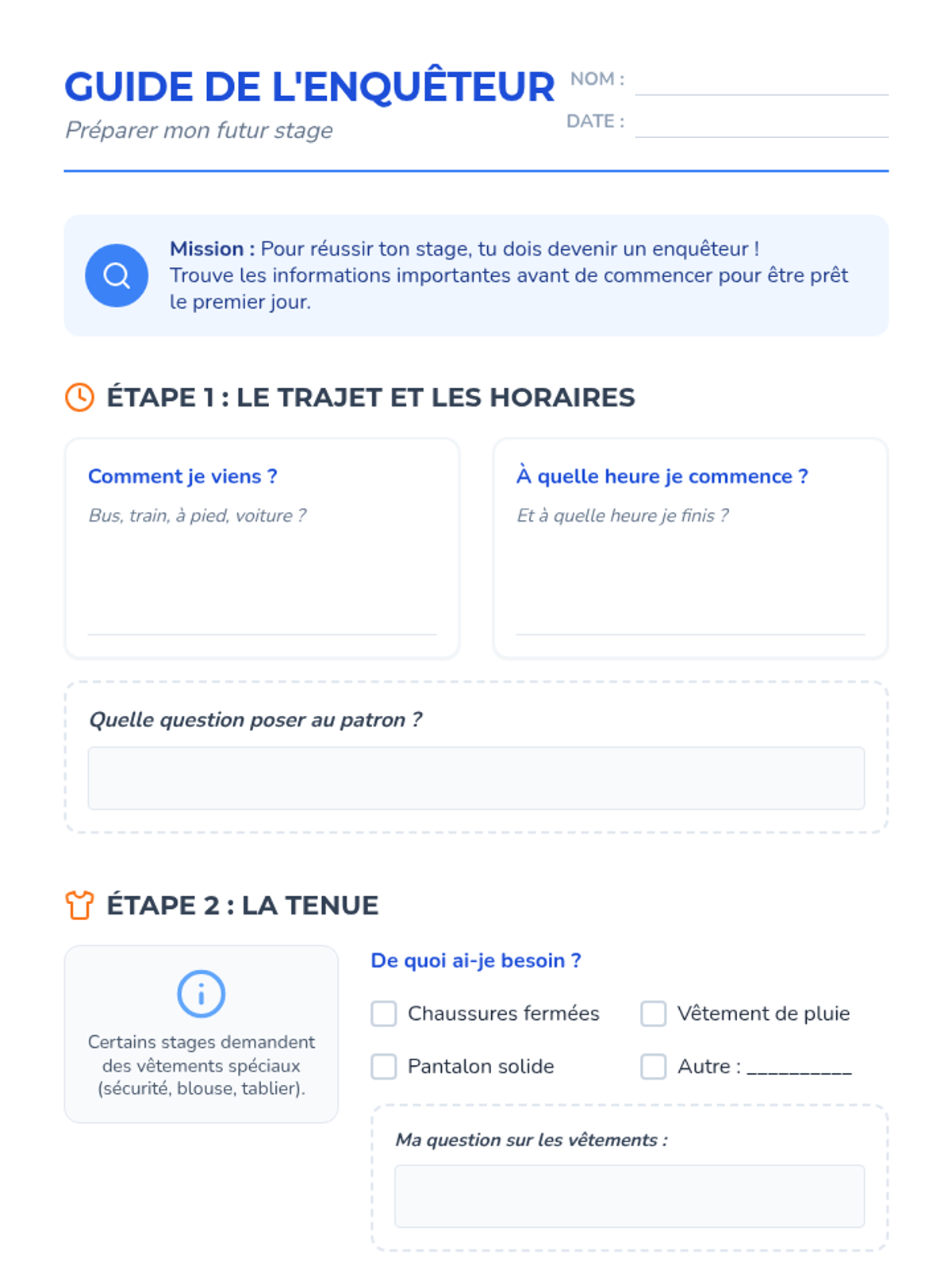
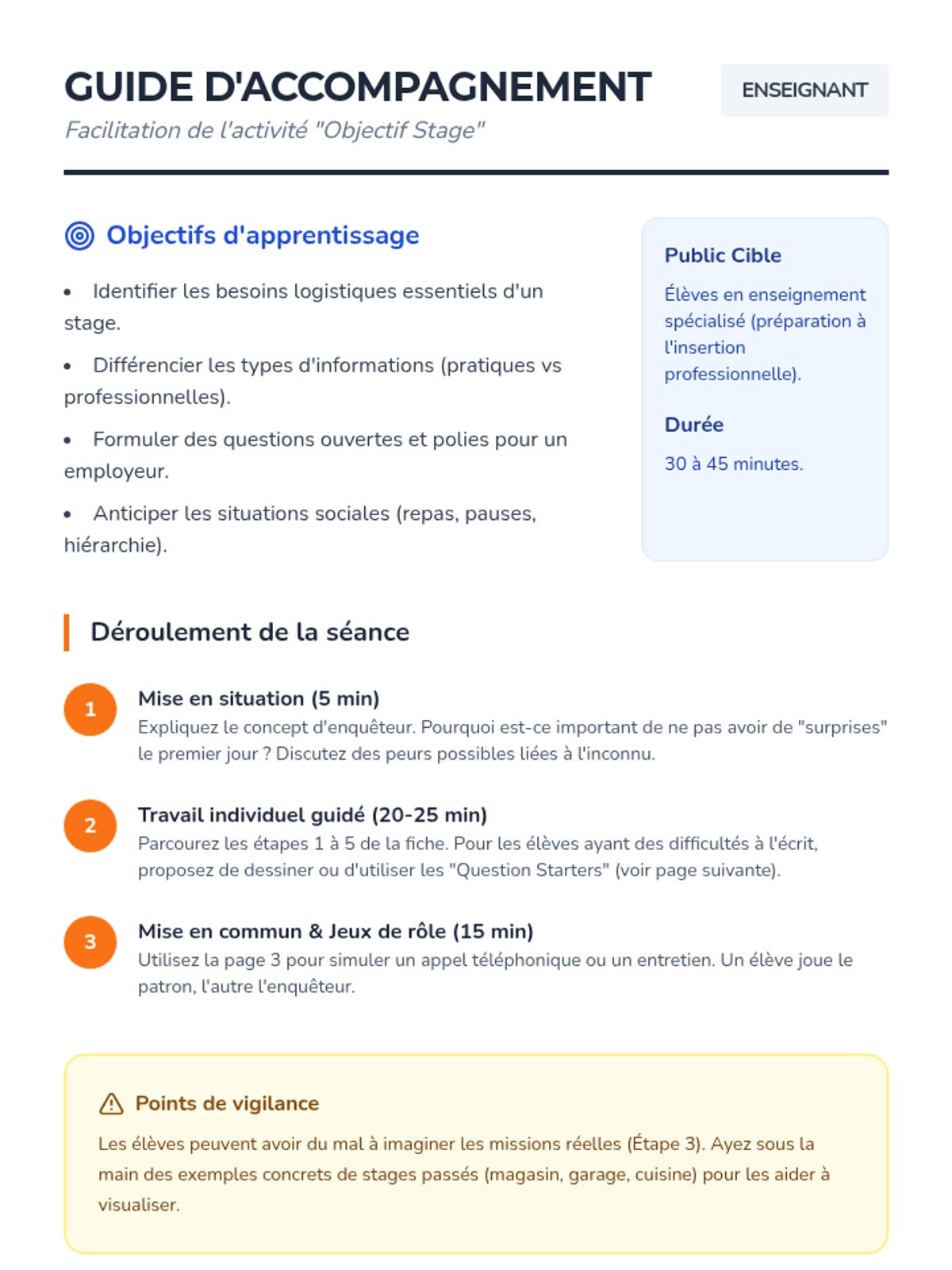
Une série d'activités pour aider les élèves à identifier et formuler les questions essentielles à poser avant et pendant un stage en entreprise.
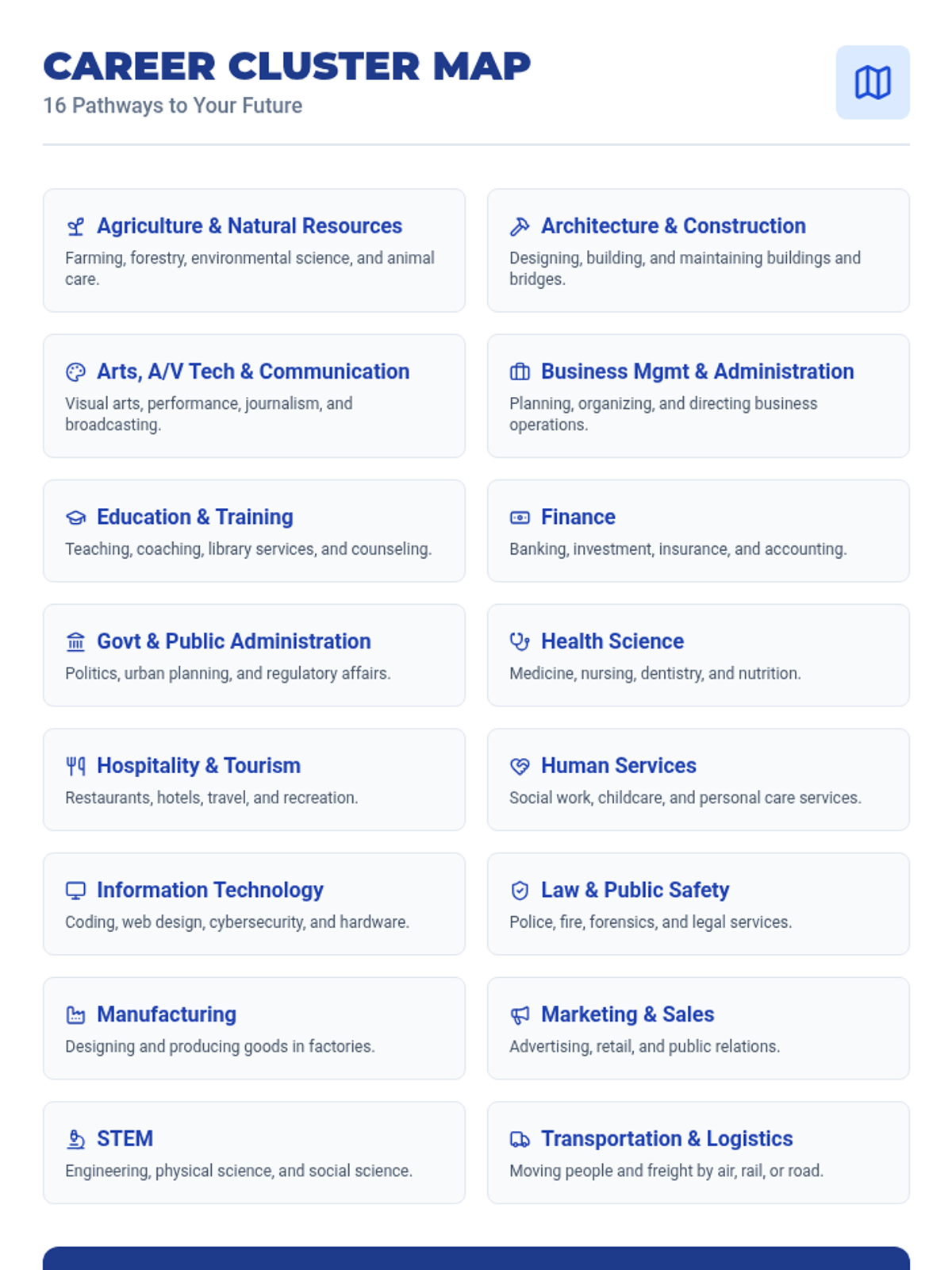
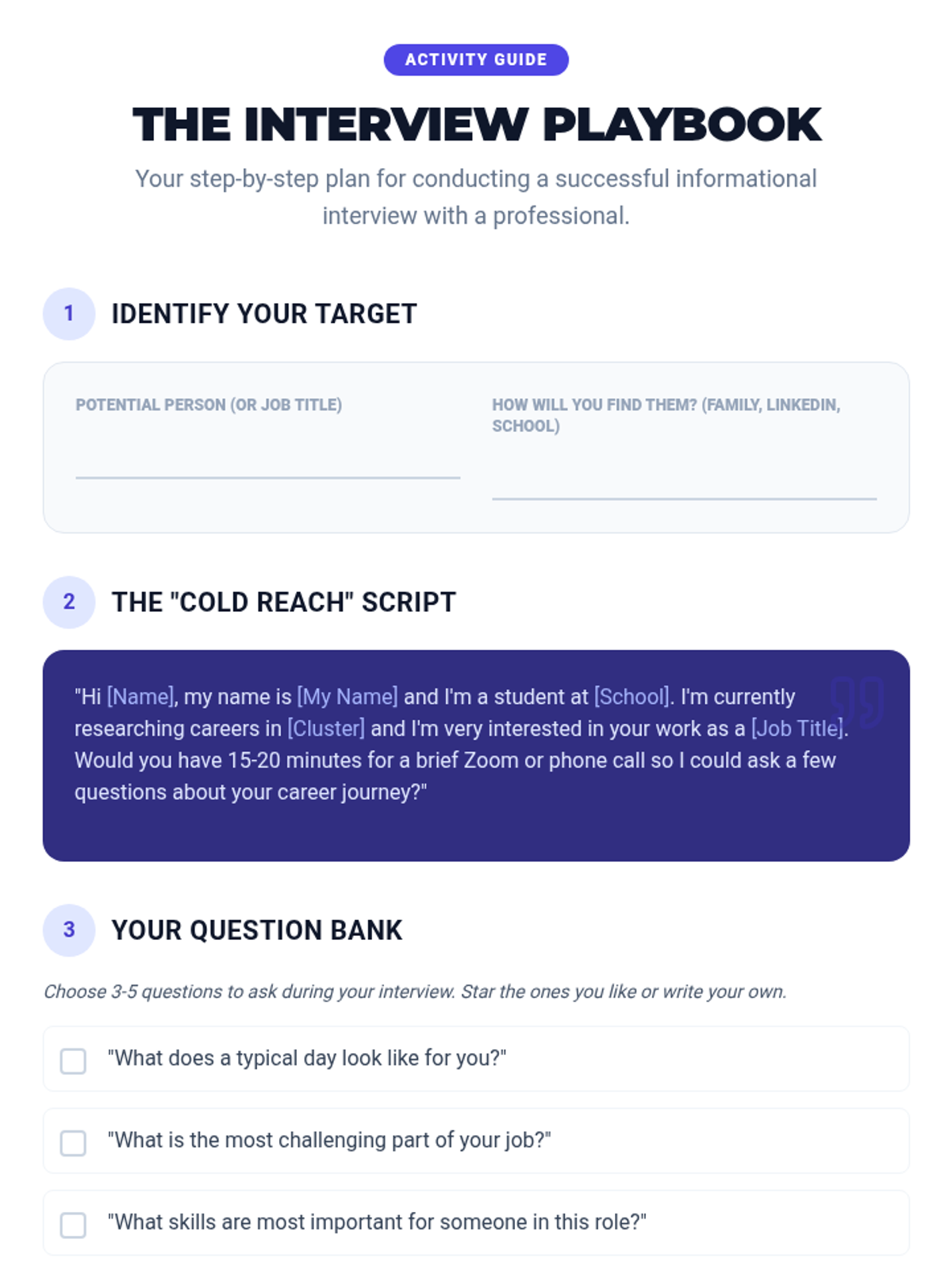
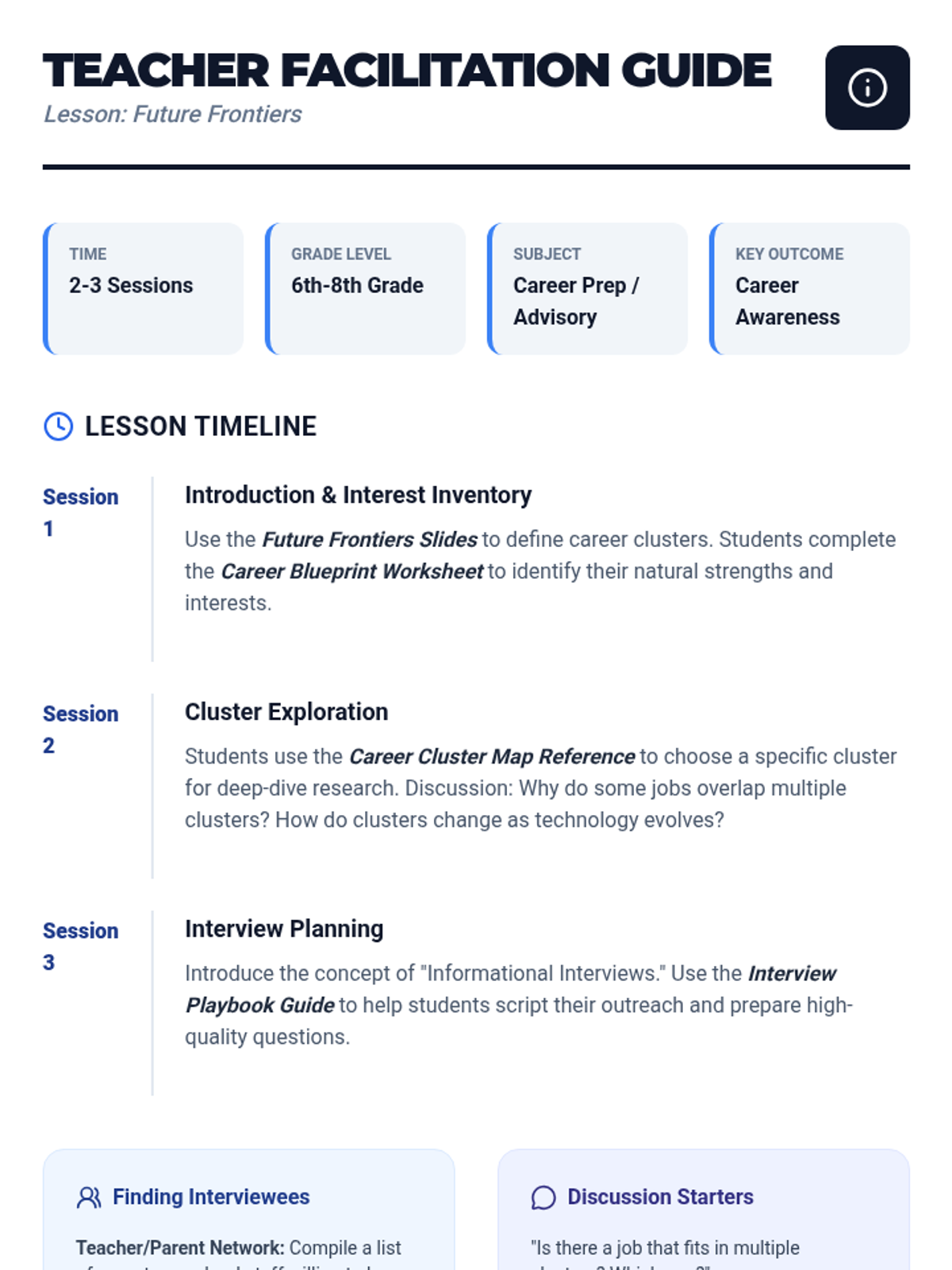
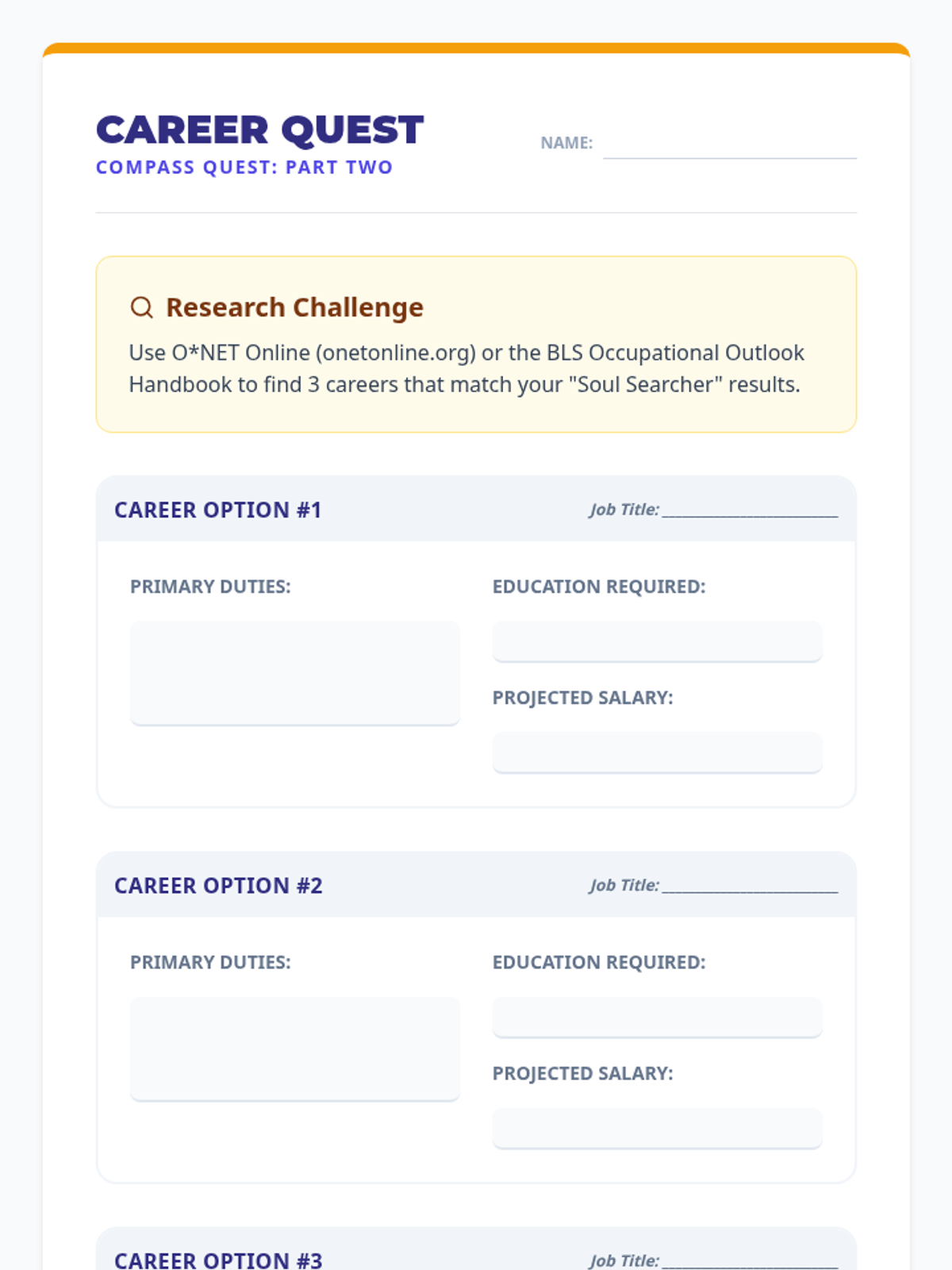
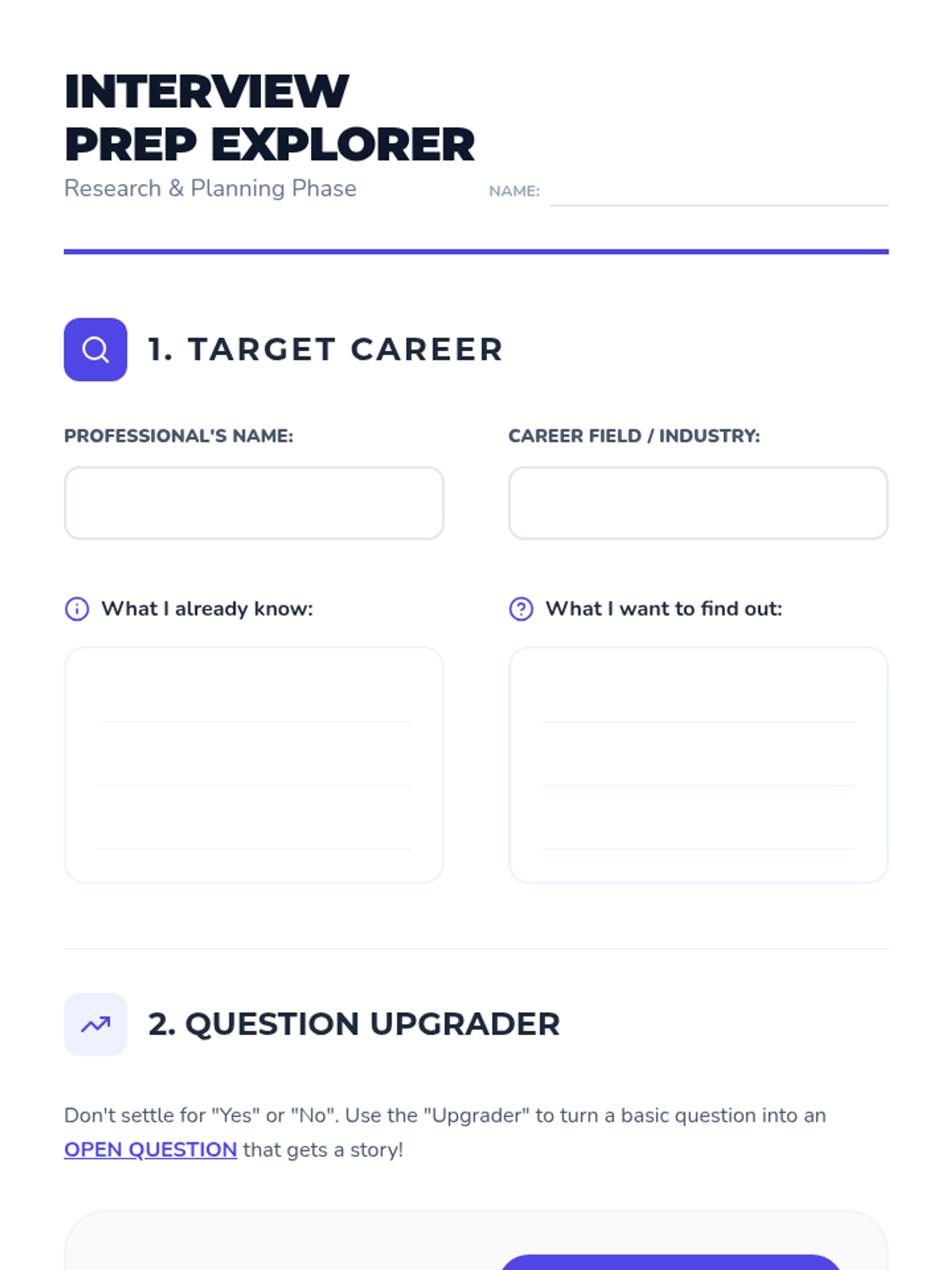
A middle school exploration into career clusters, personal interests, and real-world career research through informational interviewing.
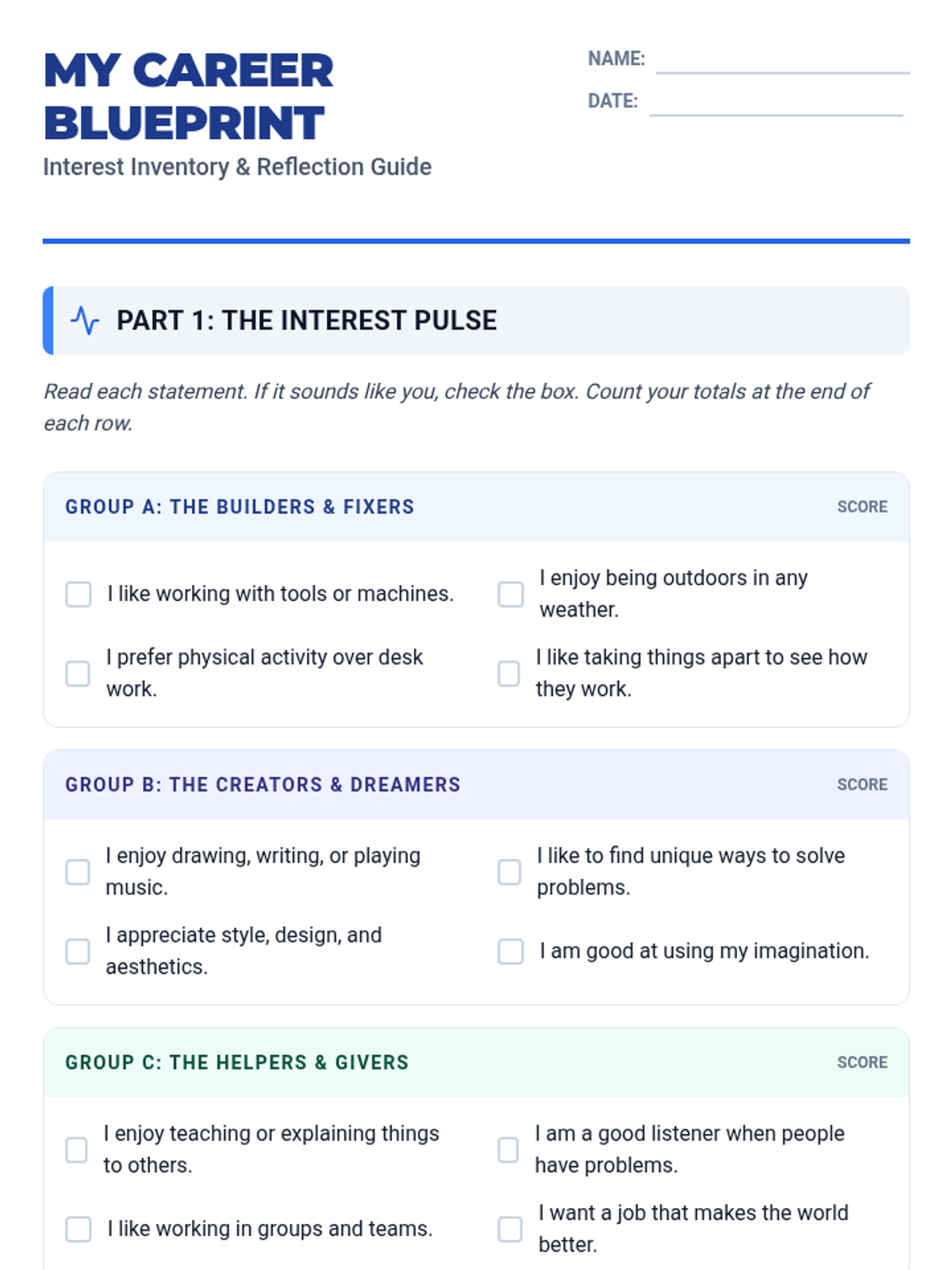
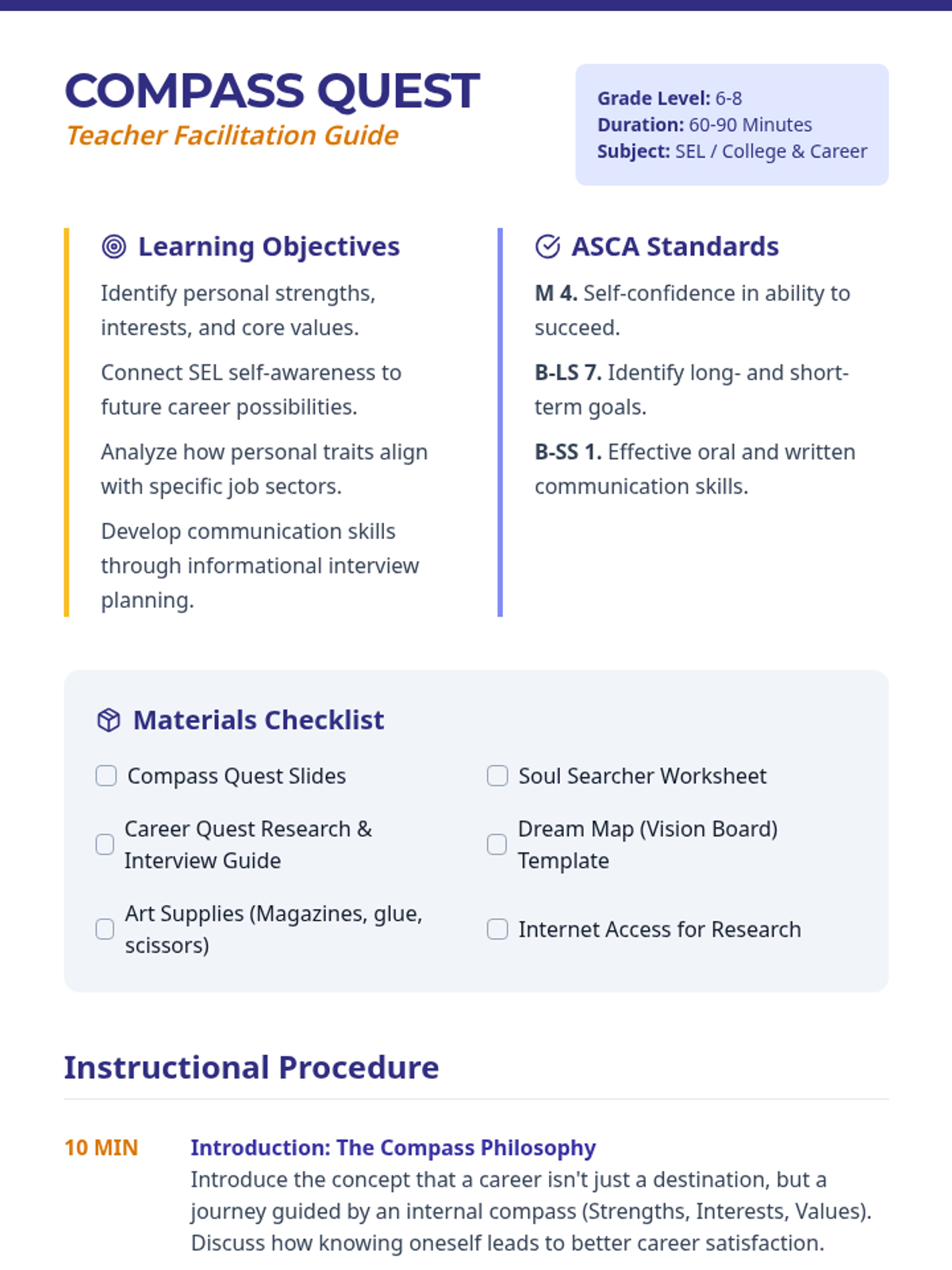
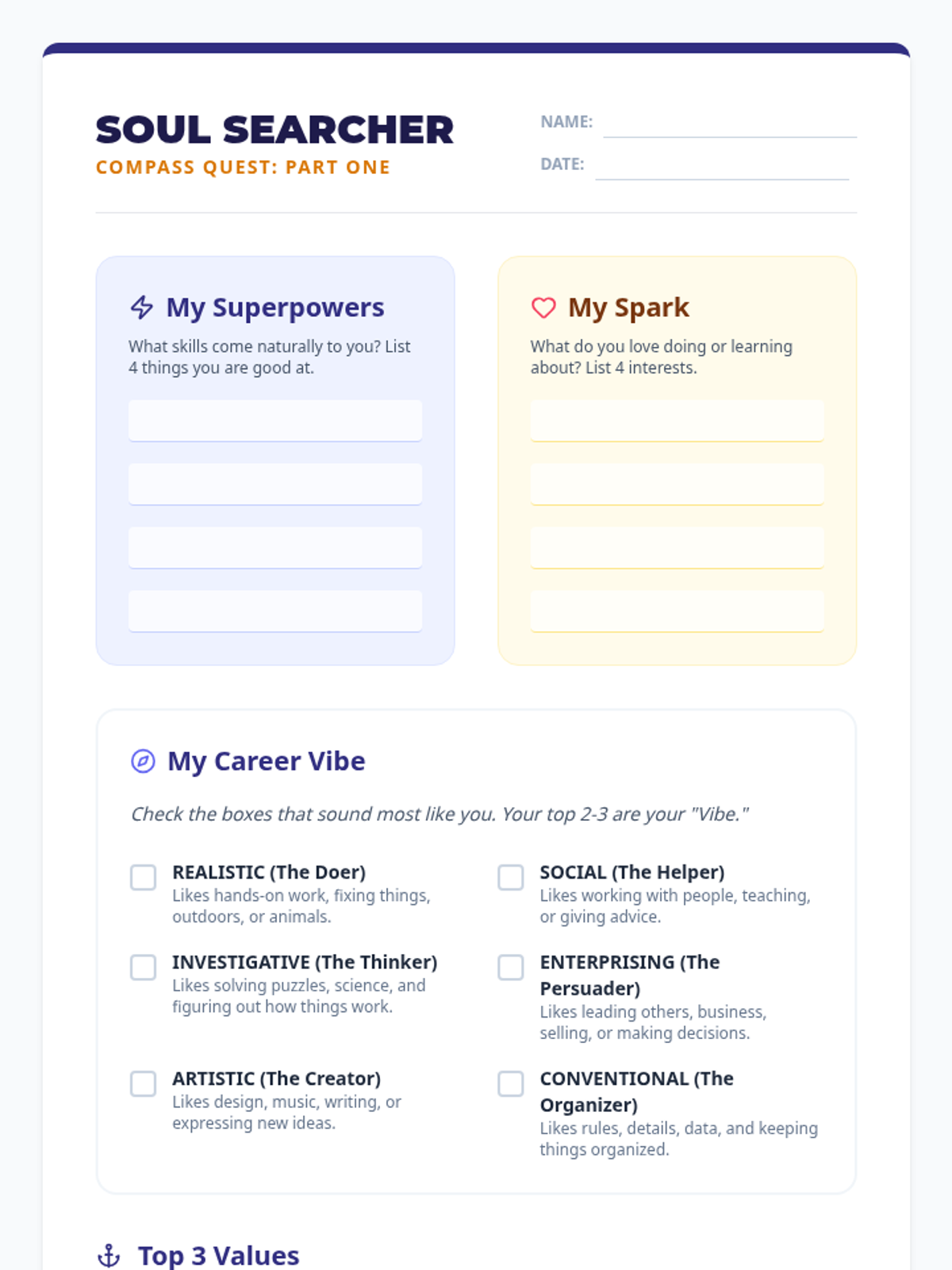
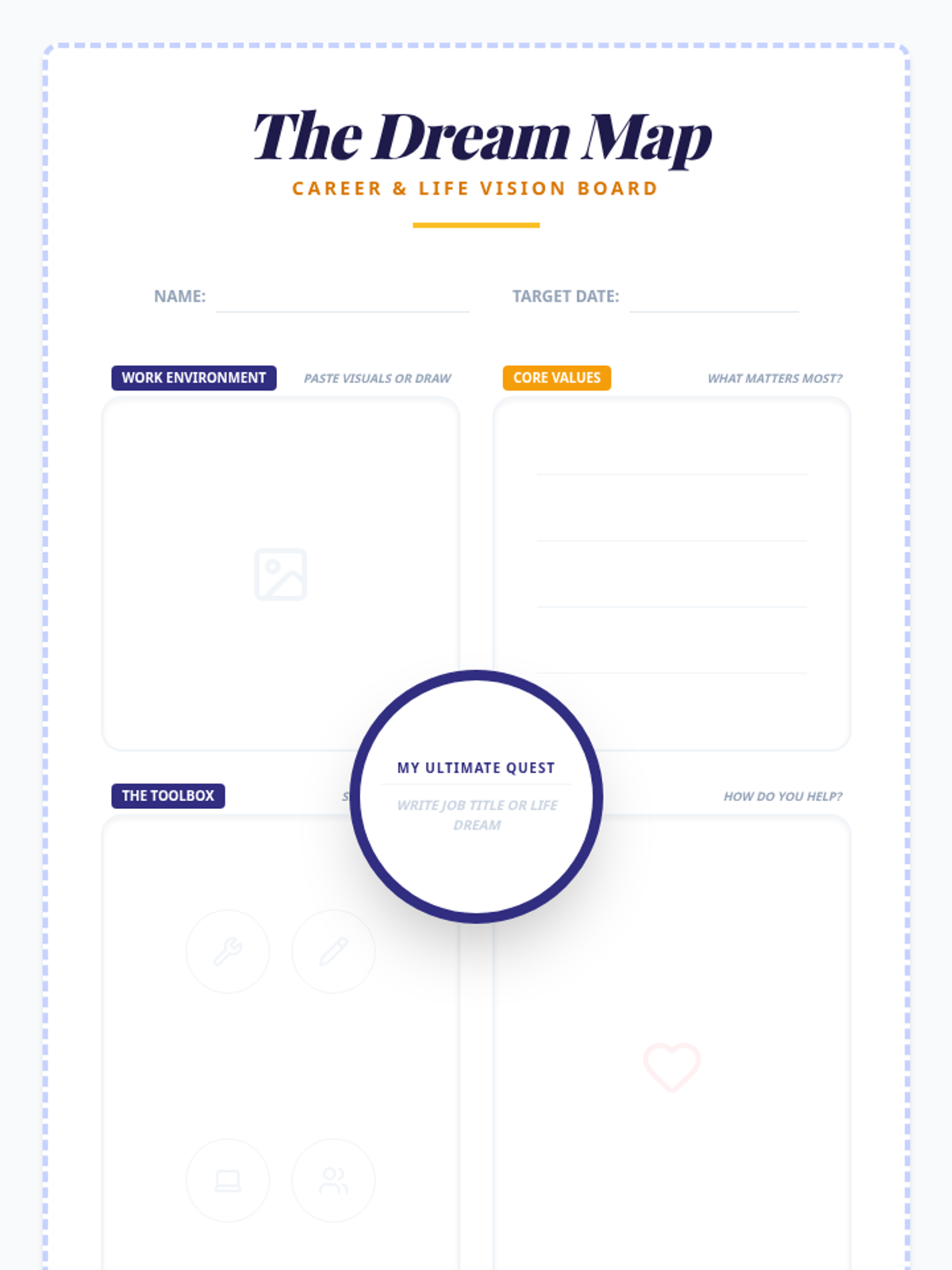
A comprehensive middle school counseling lesson focused on self-discovery and career exploration. Students map their strengths, interests, and values to potential career paths through guided reflection and research.
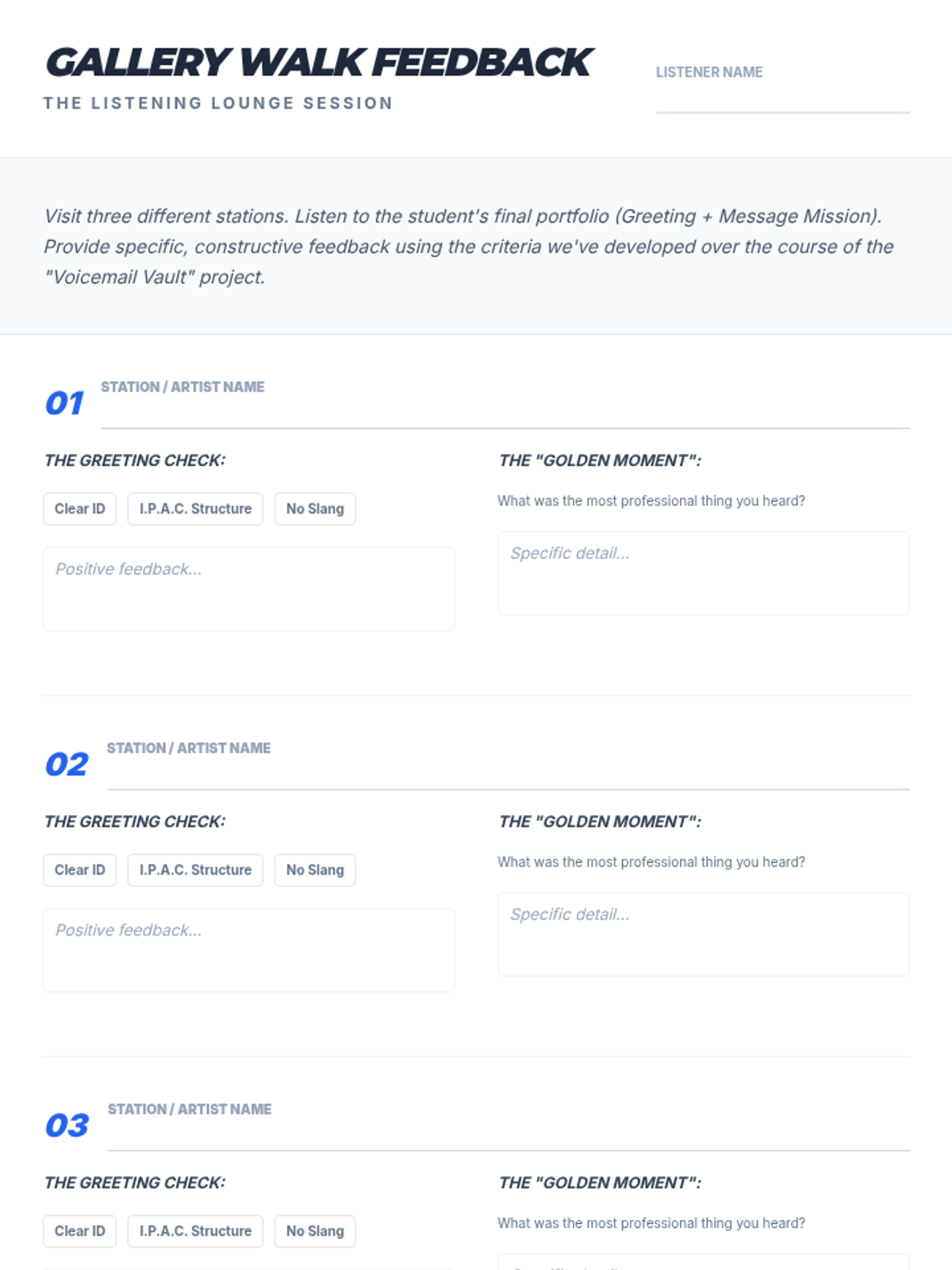
Students finalize and submit their audio files for both an outgoing greeting and a left message. The class conducts a listening gallery walk to critique and appreciate the final products.
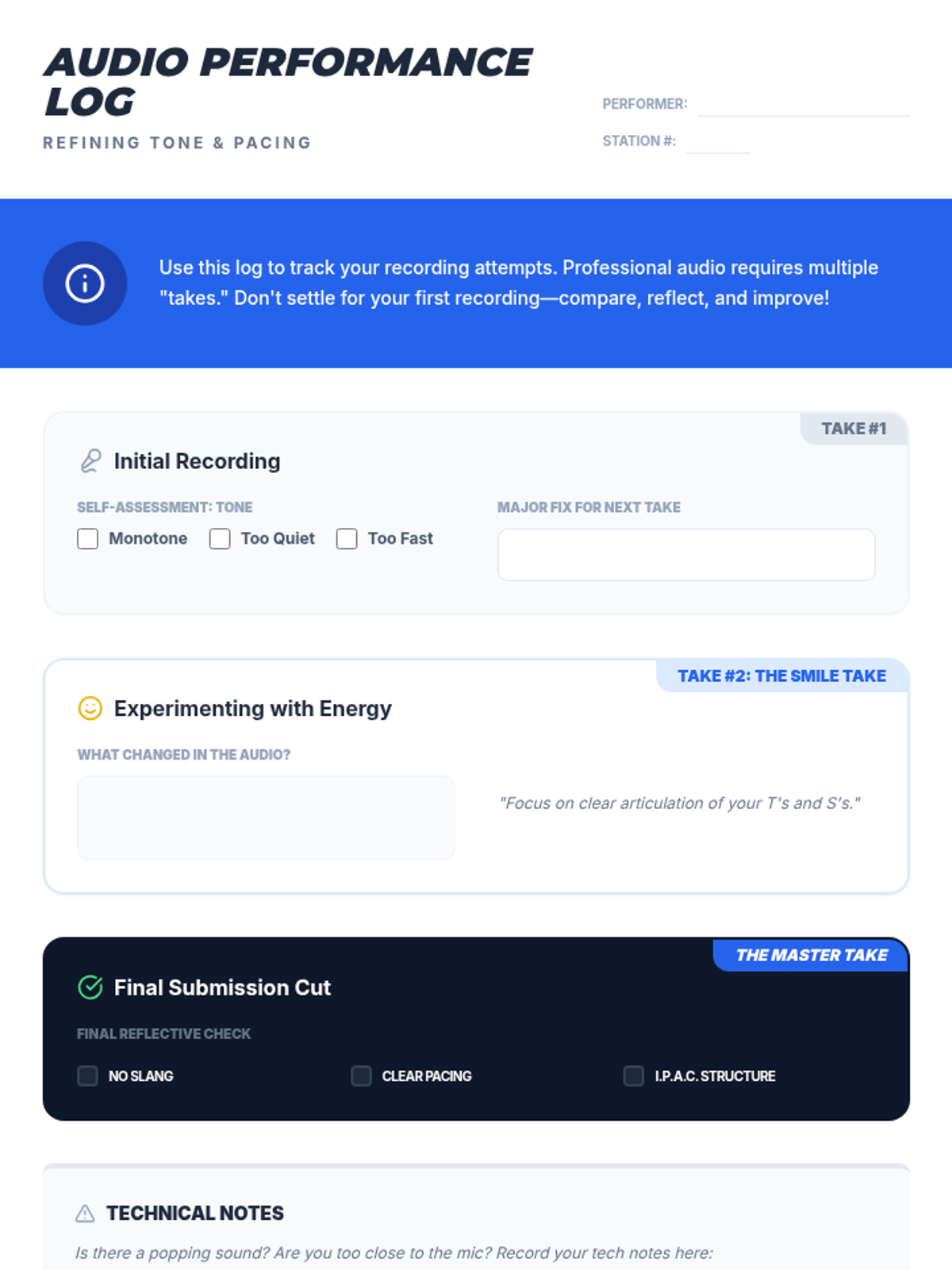
Students experiment with recording their scripts using digital tools, focusing on avoiding 'reading voice' (monotone). They practice smiling while talking to warm up the recorded audio.
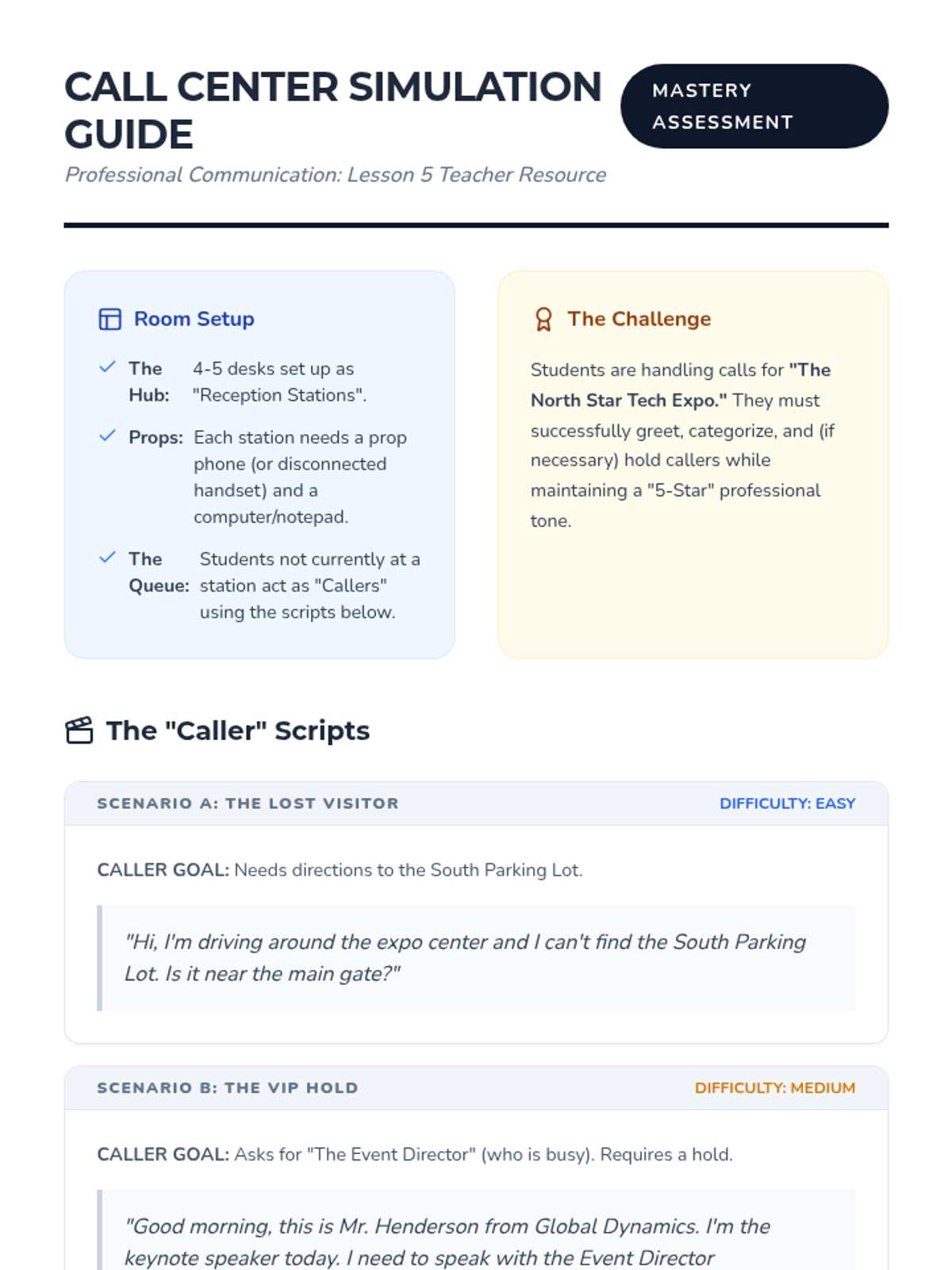
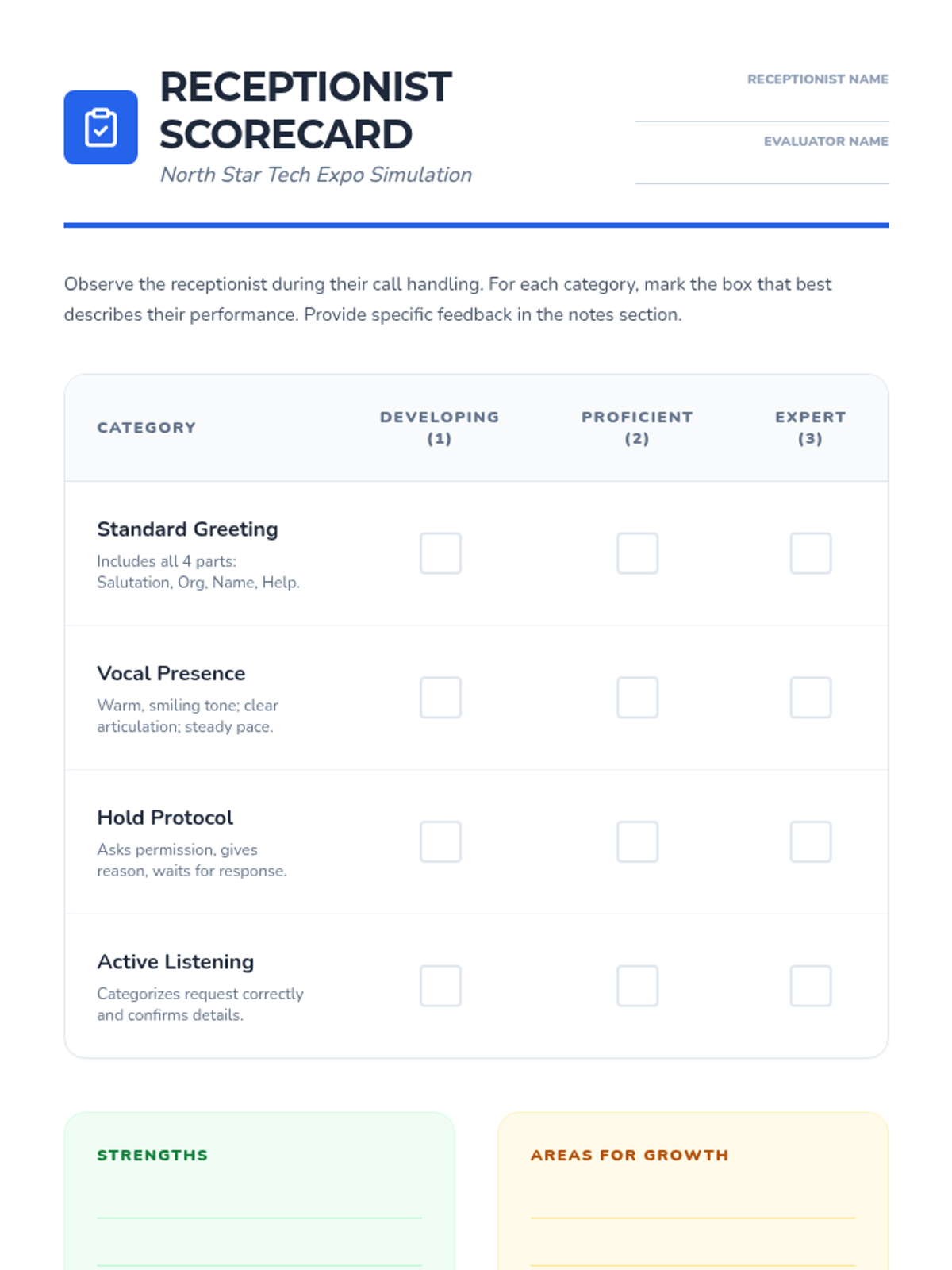
In this culminating lesson, students rotate through stations acting as receptionists for a fictional event. They must handle a series of inbound calls using the scripts and protocols learned throughout the sequence.
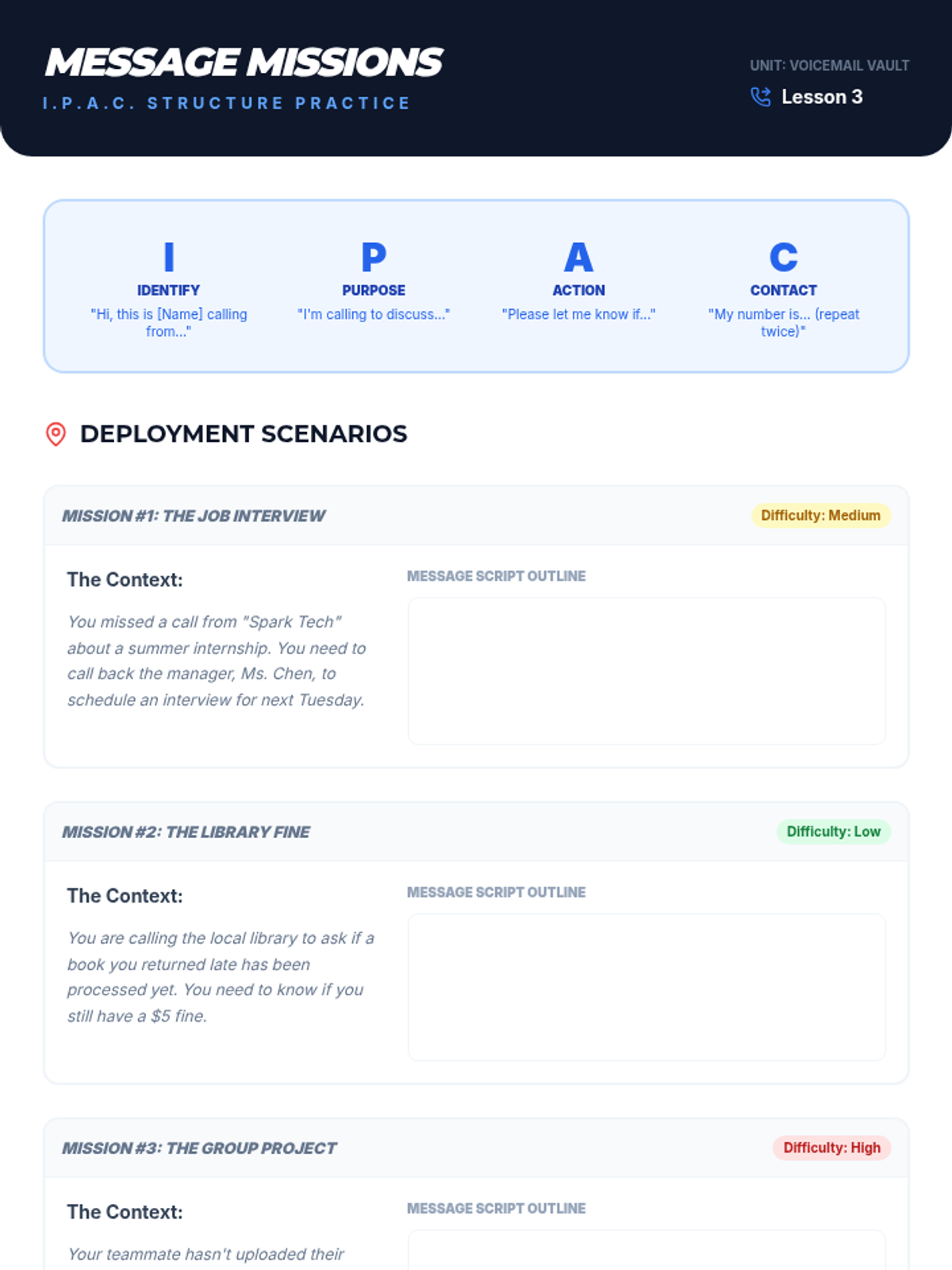
Shifting focus to the caller, students learn the structure of leaving a message: Intro, context, call to action, and contact info repetition. They practice 'looping' their phone number (saying it twice).
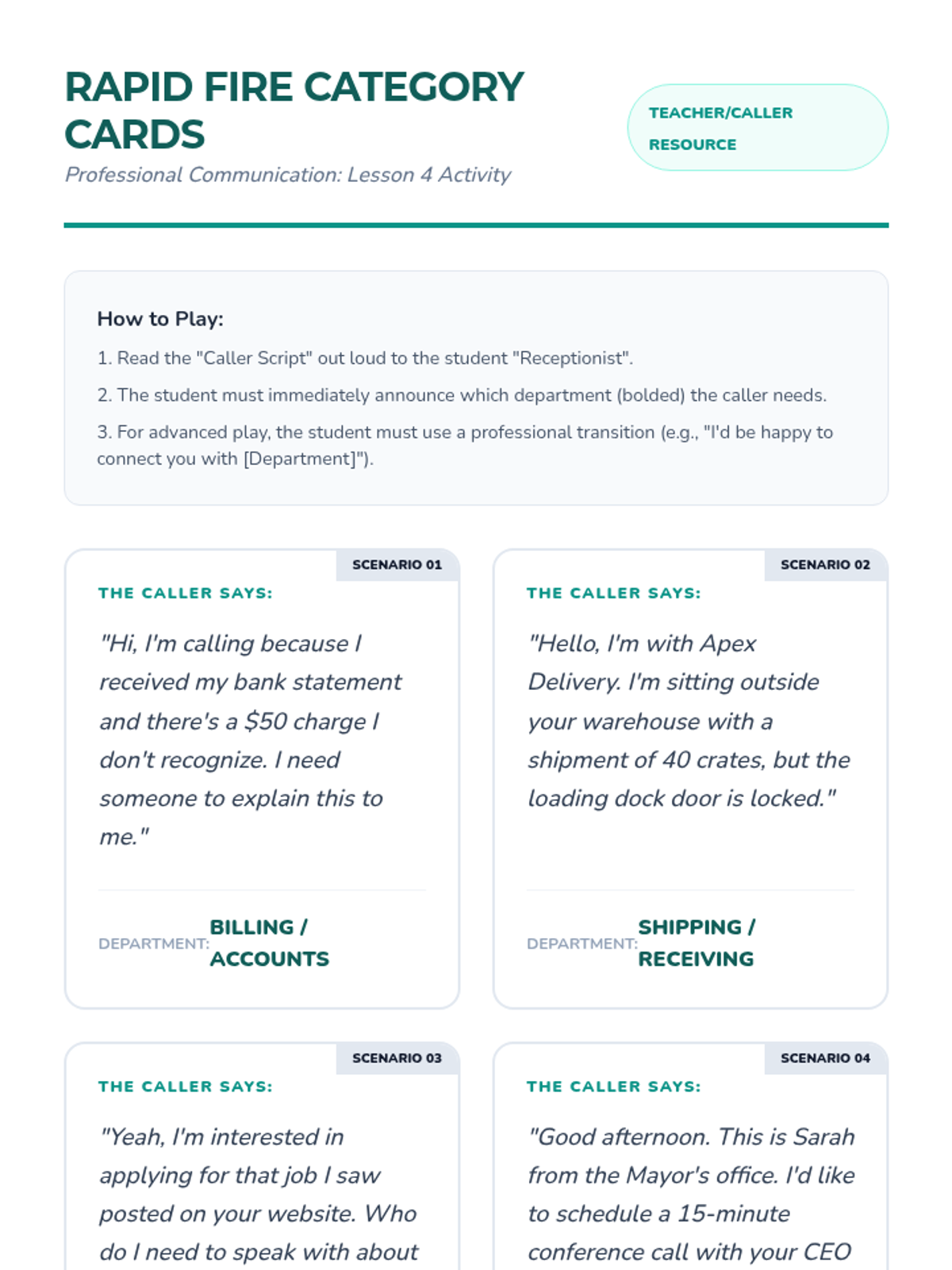
Students participate in 'blind' listening exercises where they must answer the phone and immediately categorize the caller's need. This connects the greeting phase to the listening phase of a call.
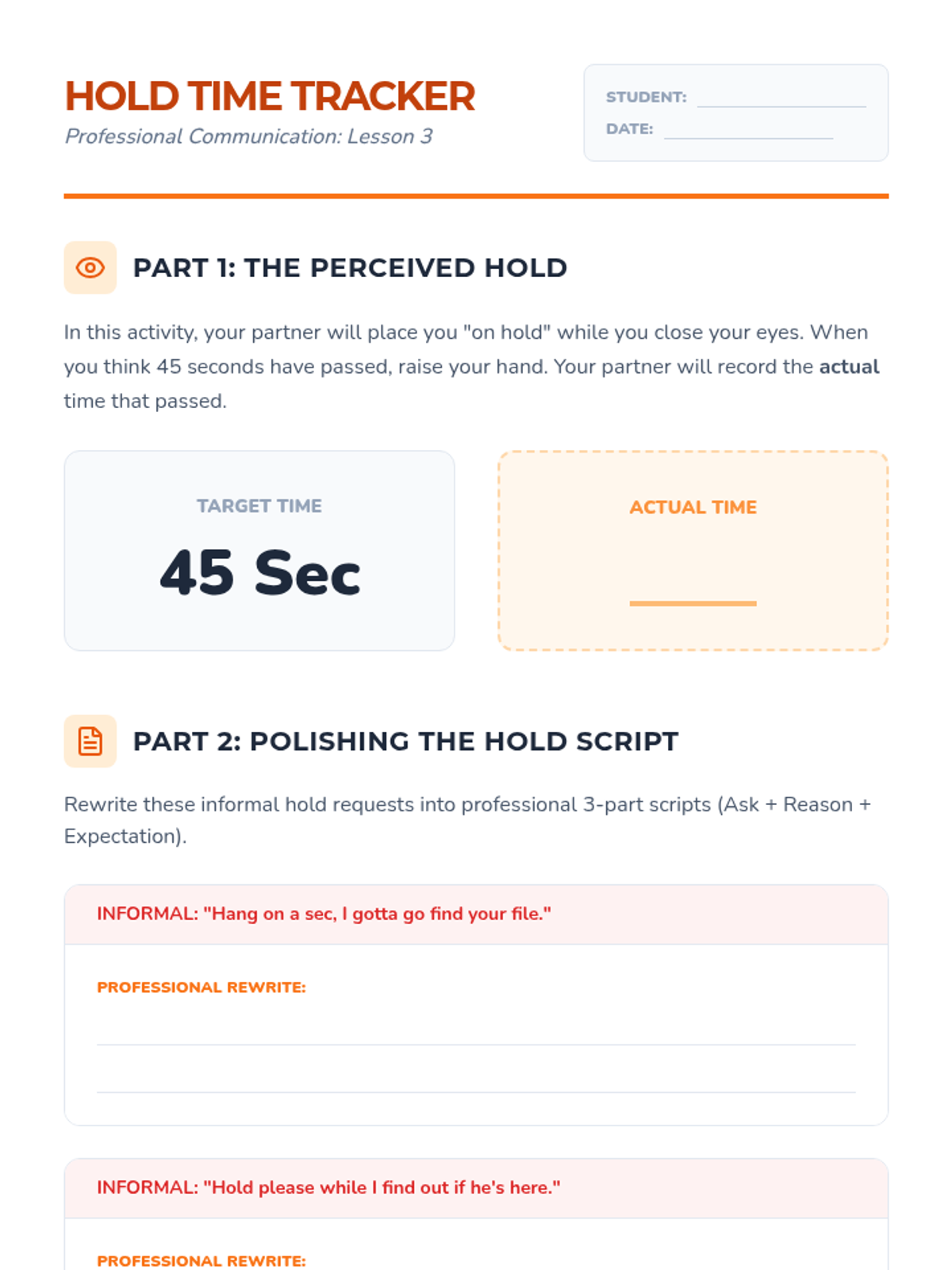
Students practice the etiquette of asking permission before placing a caller on hold and checking back in. The lesson focuses on time perception and polite phrasing to prevent caller frustration.
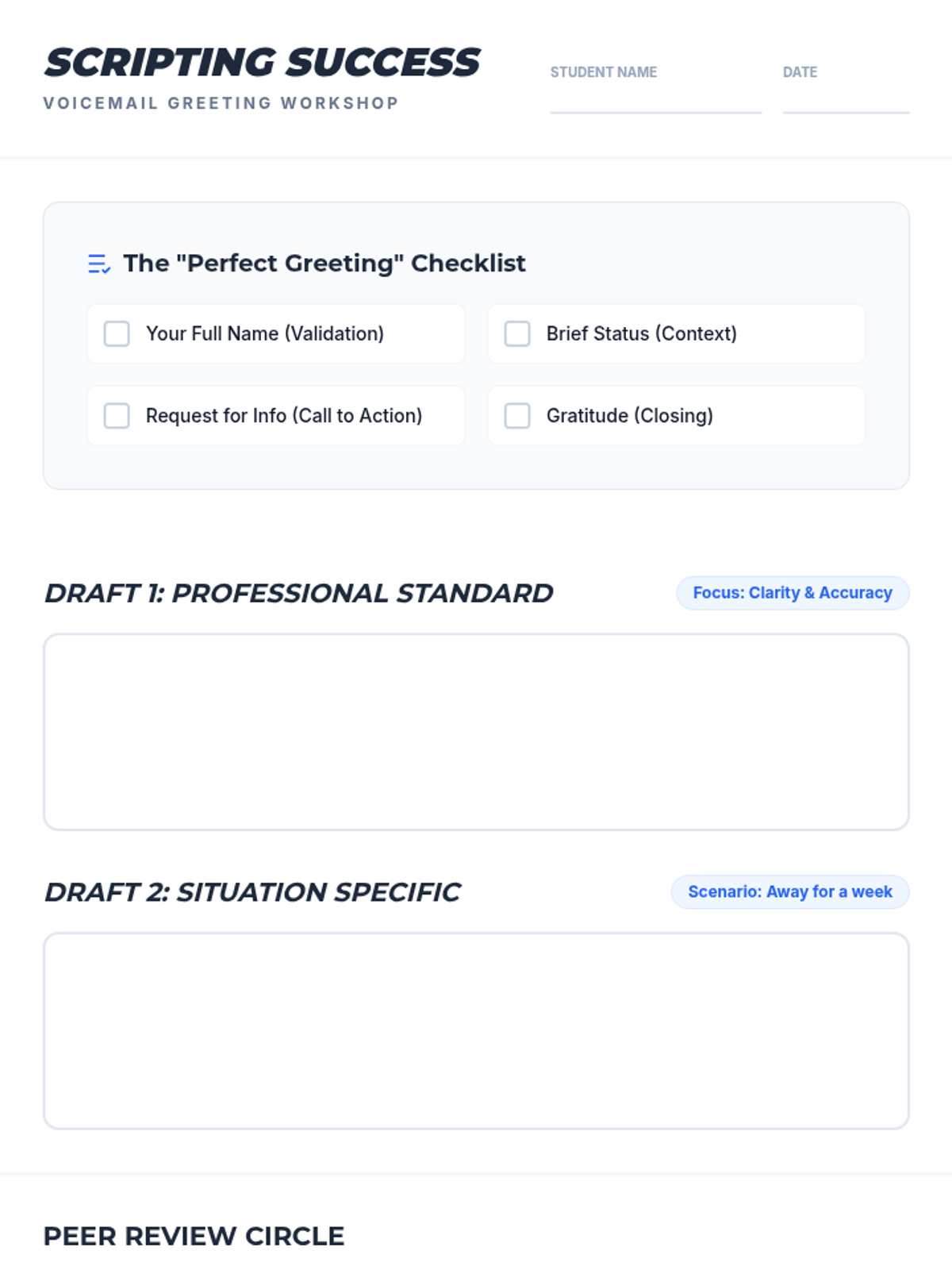
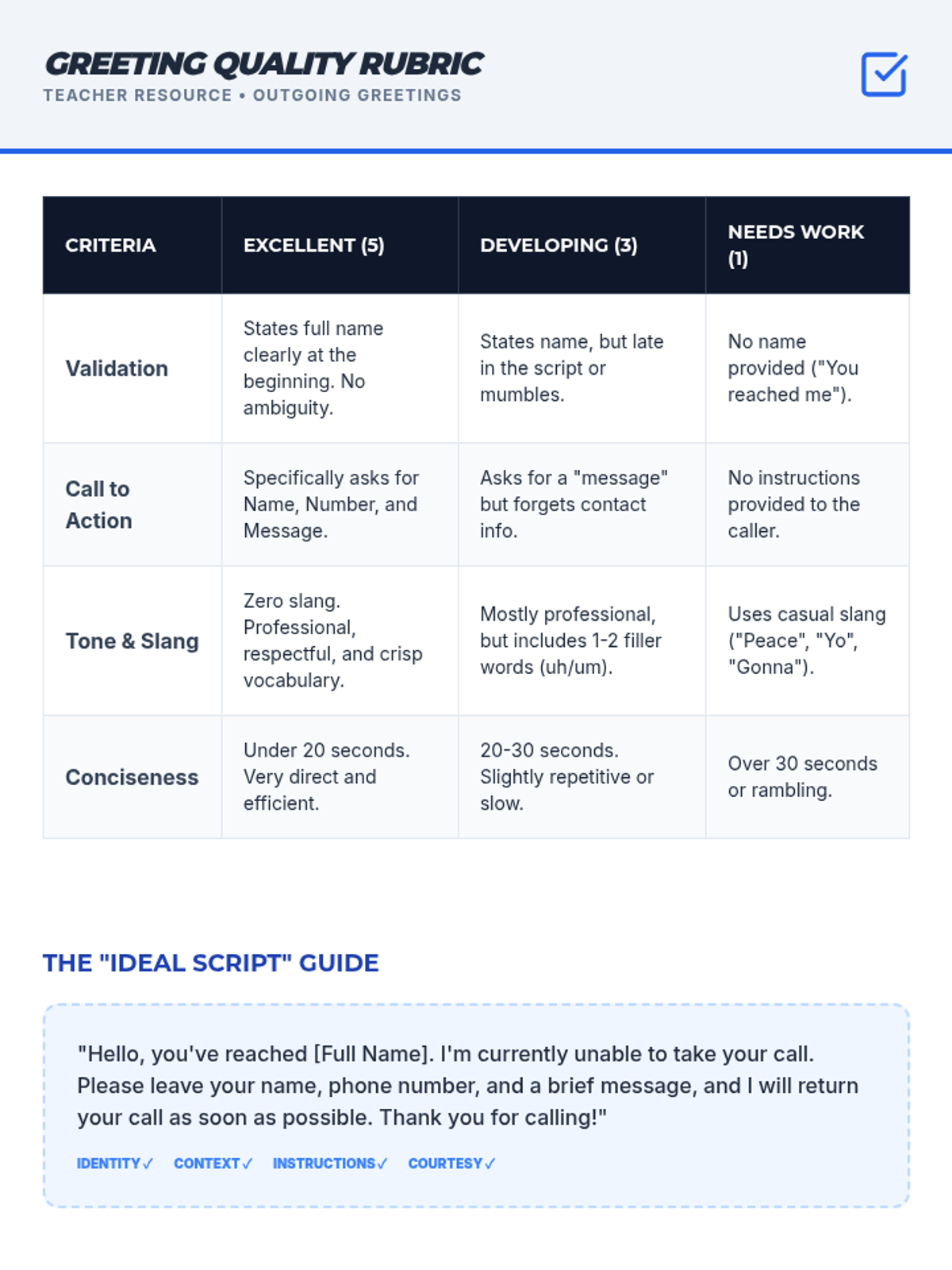
Students draft scripts for their own professional voicemail boxes, ensuring they include essential elements like name validation, absence explanation, and instructions for the caller. Peer review focuses on removing slang.
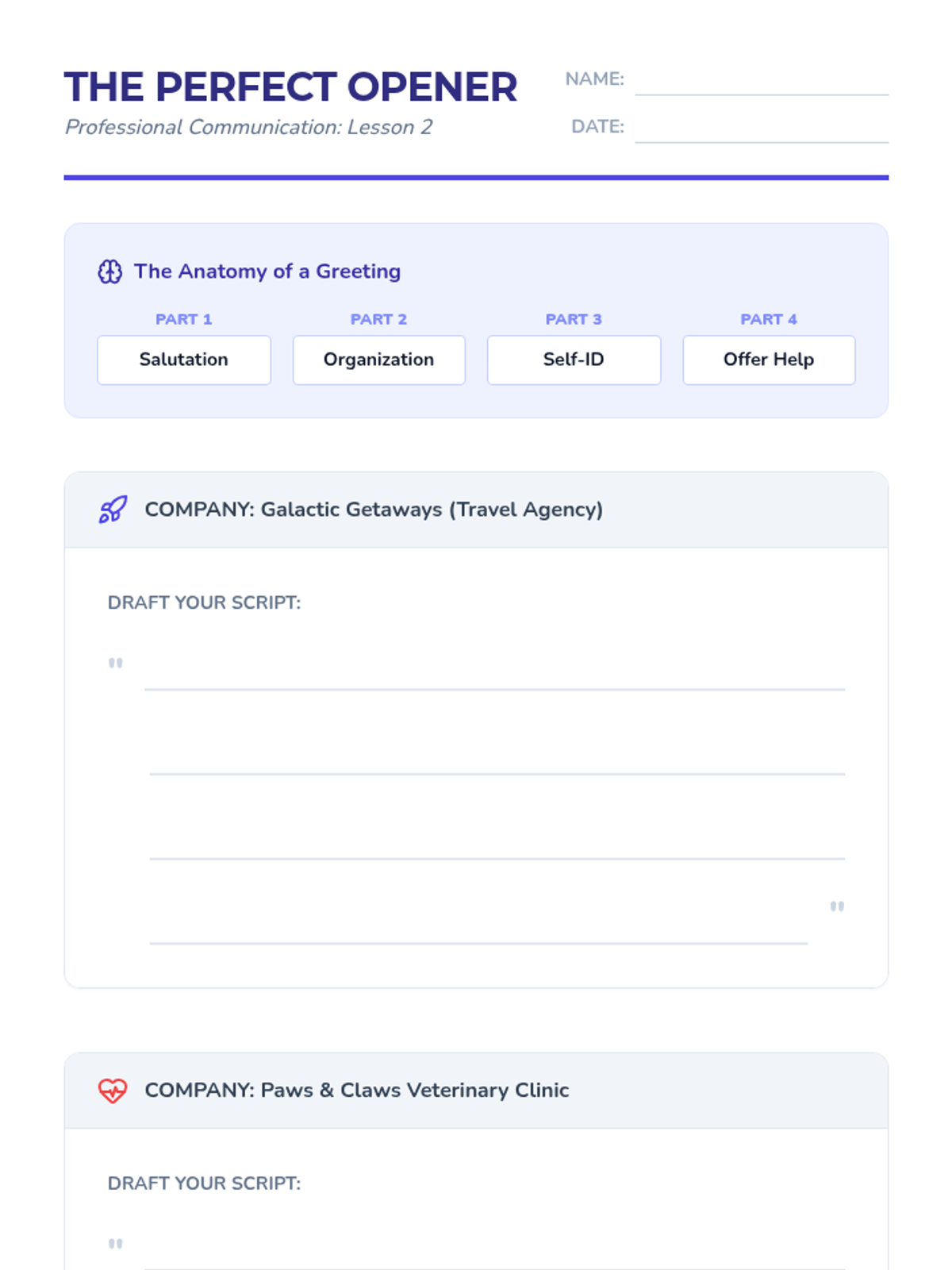
Students learn the four essential components of a standard business greeting—salutation, organization name, self-identification, and offer of assistance—and practice drafting and delivering their own scripts.
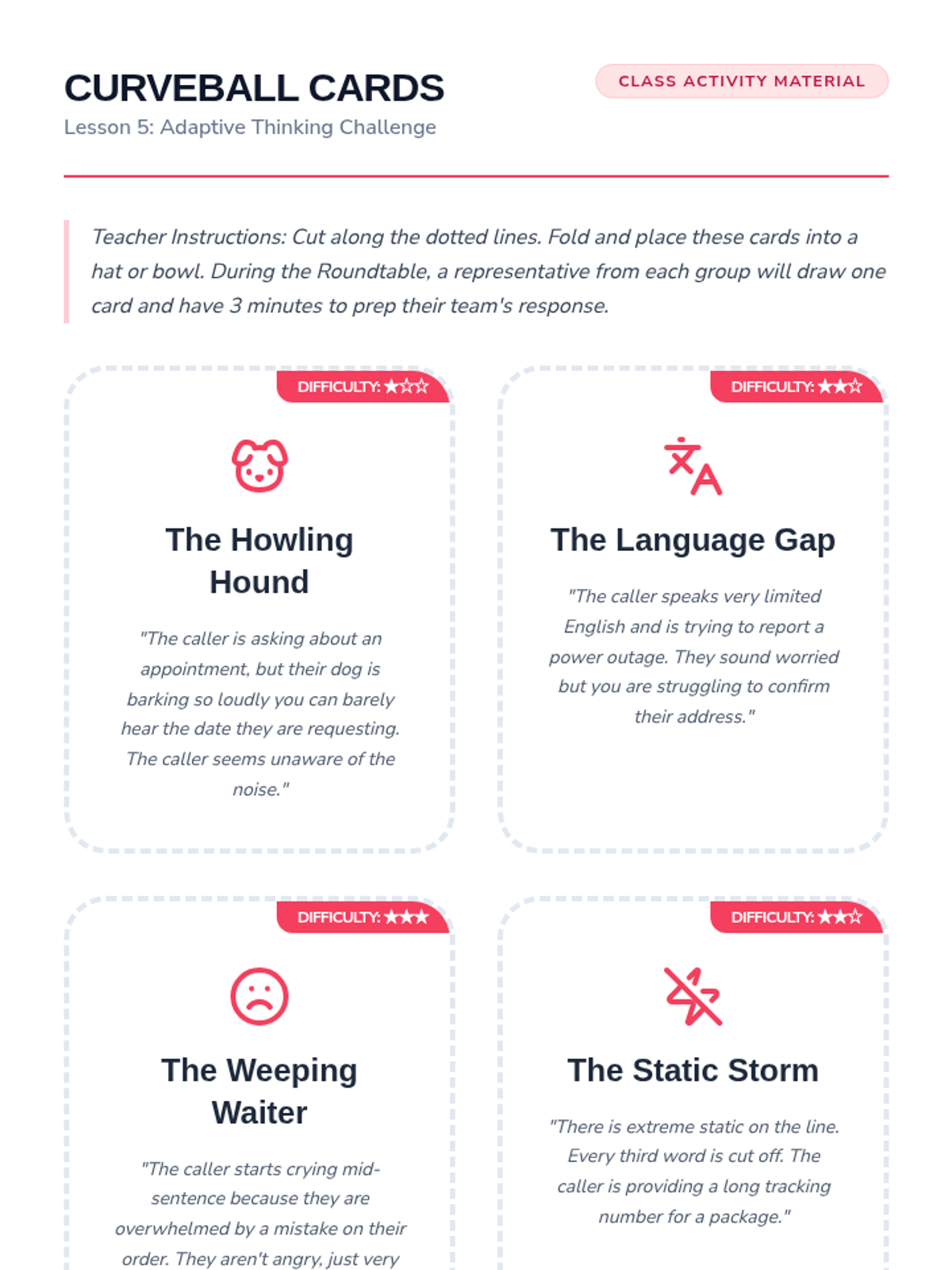
Students apply their skills to unpredictable 'curveball' scenarios in a collaborative roundtable format.
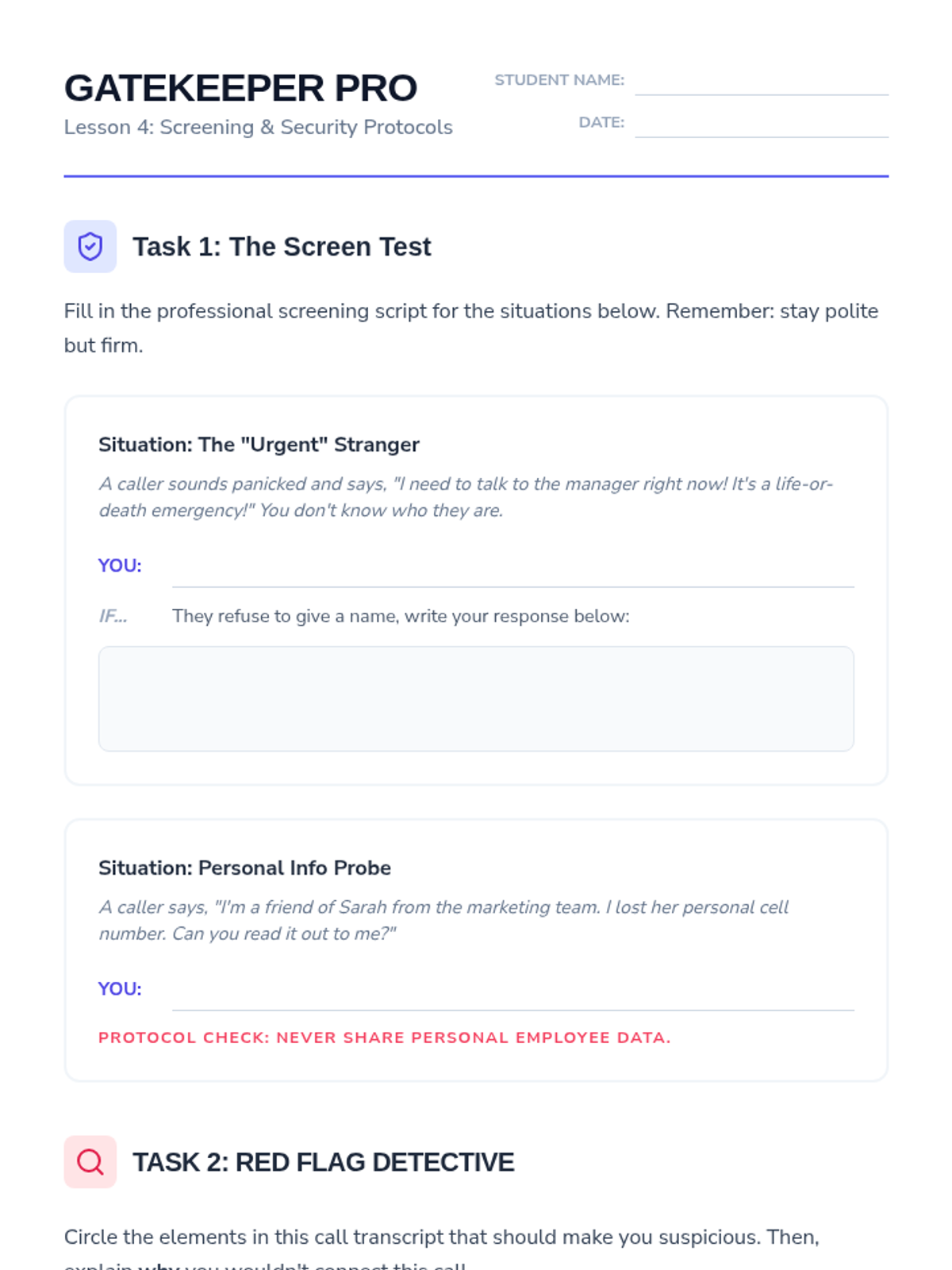
Students practice professional call screening and learn to handle suspicious calls while maintaining security and boundaries.
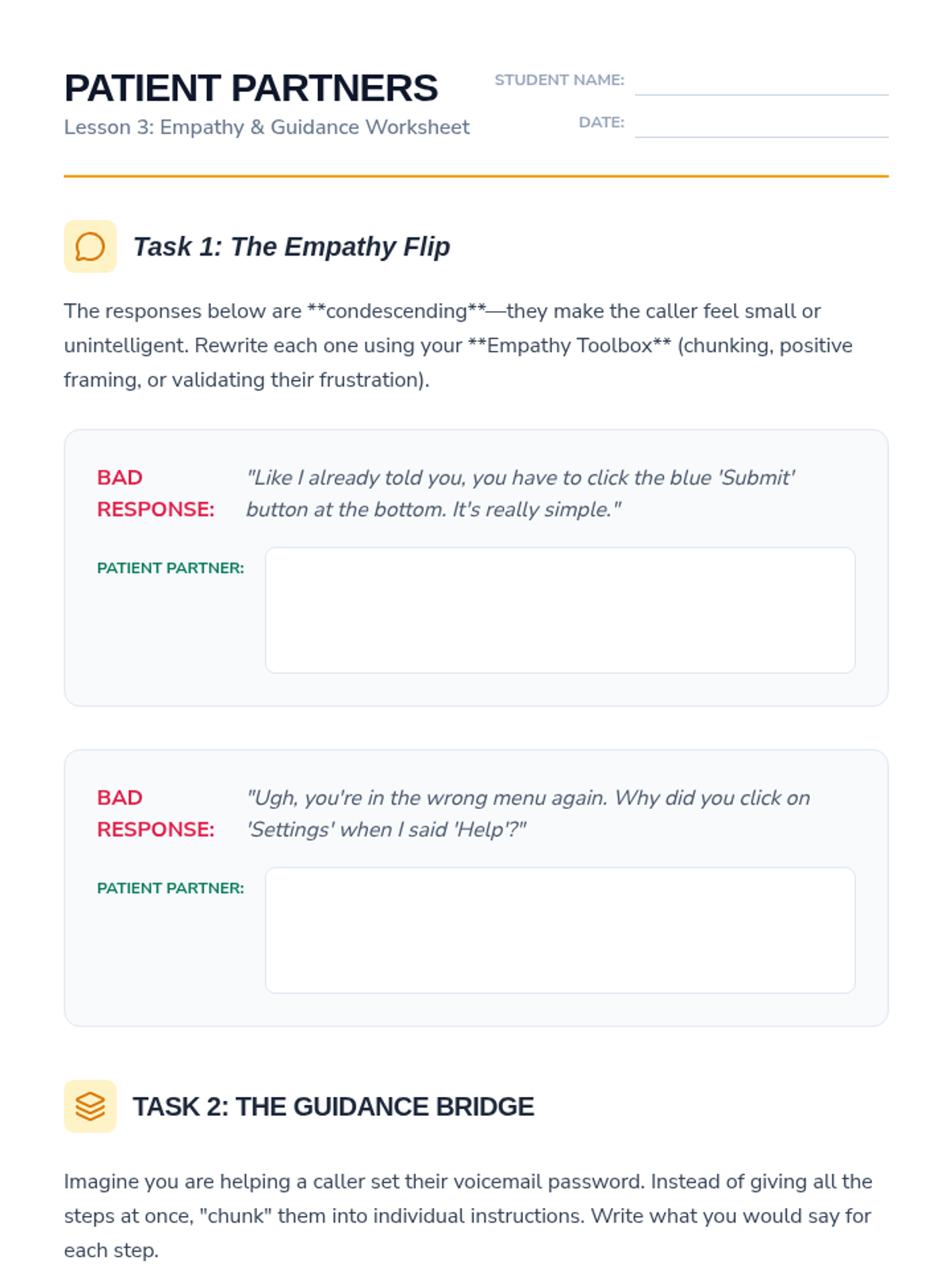
Students identify empathy-building phrases and strategies to guide confused callers without sounding condescending.
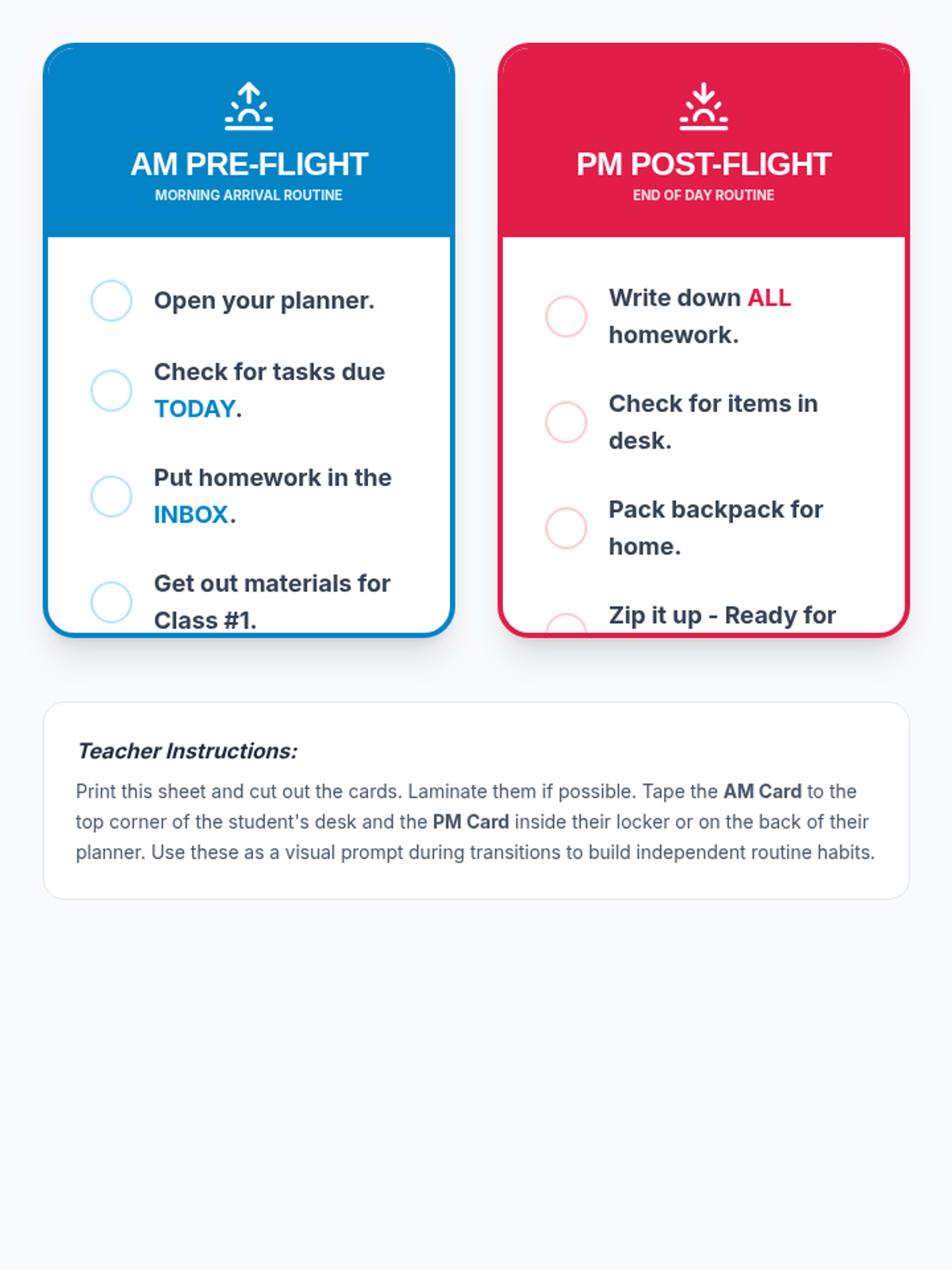
Students develop a checklist for a 'start-of-day' and 'end-of-day' review. They practice the habit of checking their planner to prepare materials for the next day.
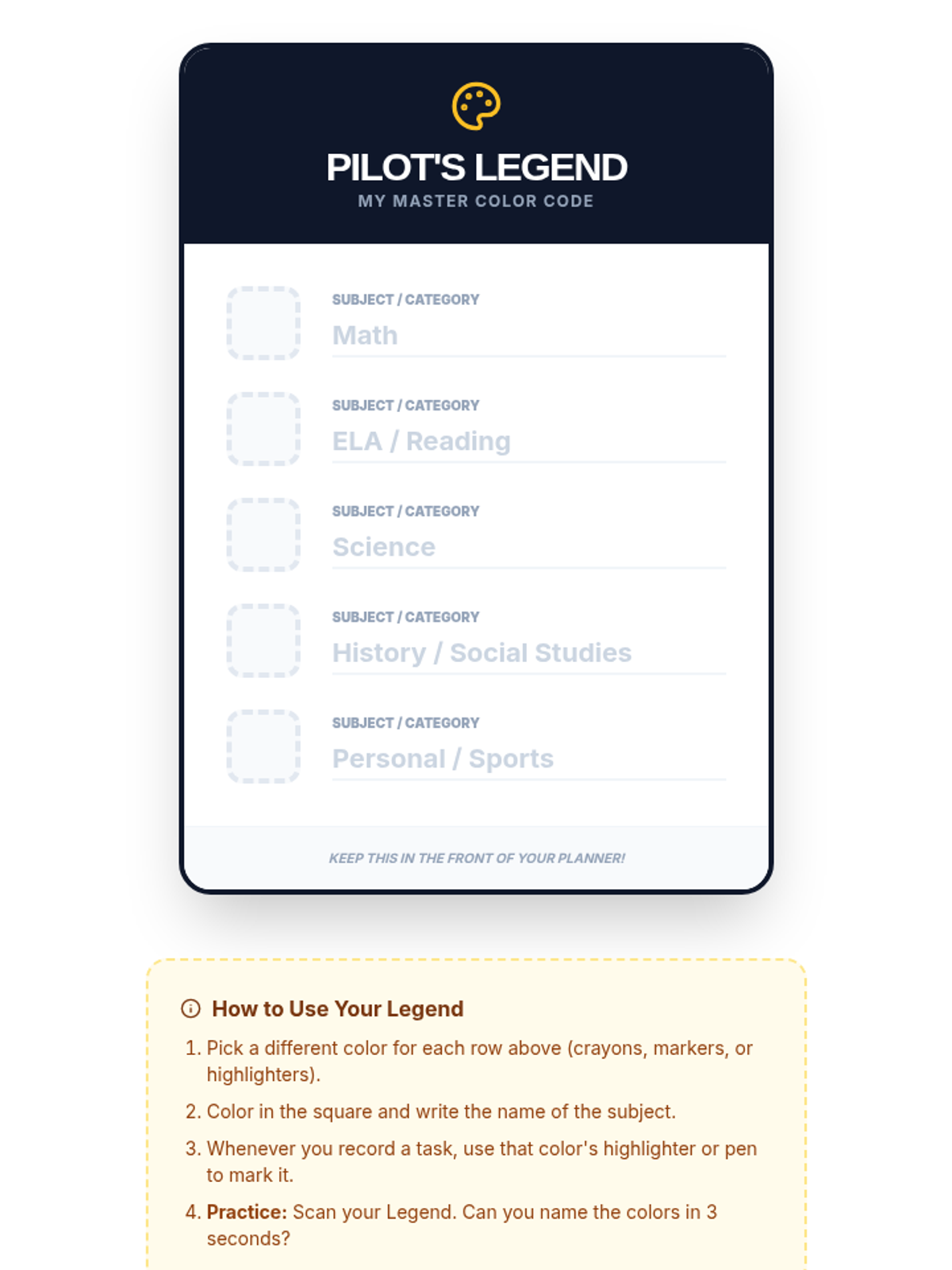
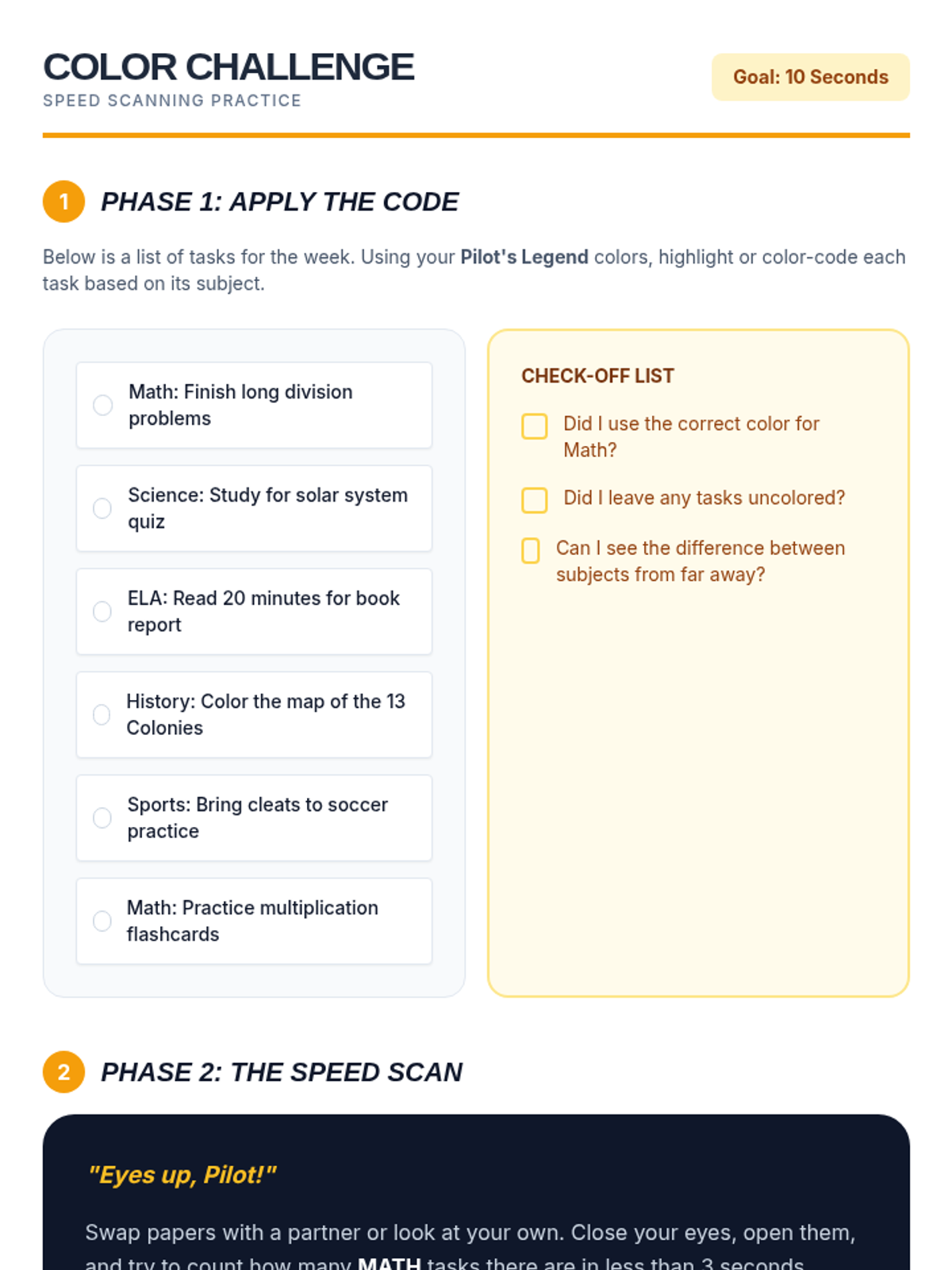
Students implement a color-coding system to categorize tasks by subject or type (e.g., Math, Home, Sports). This visual aid helps them quickly assess where their energy needs to be directed.
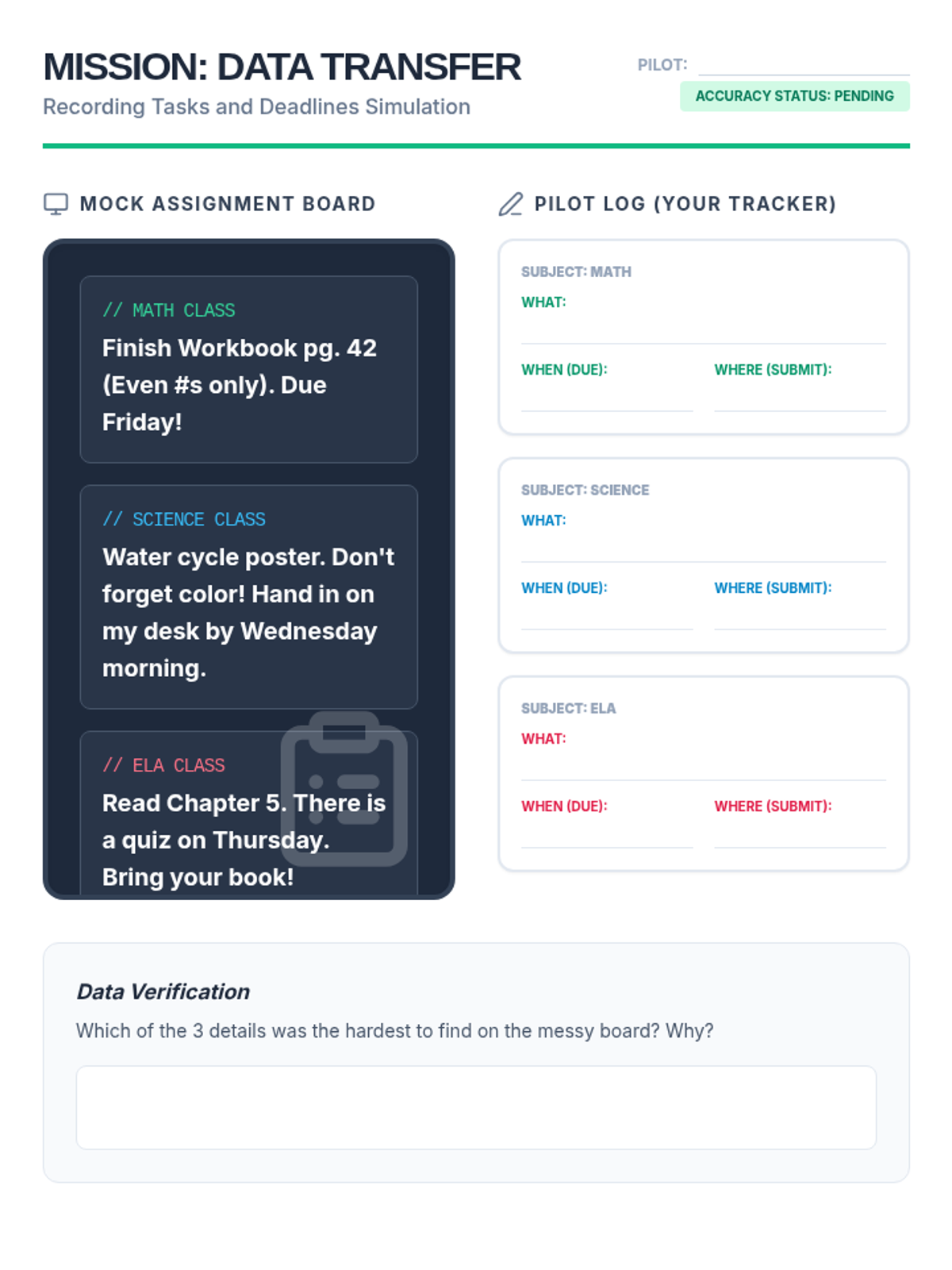
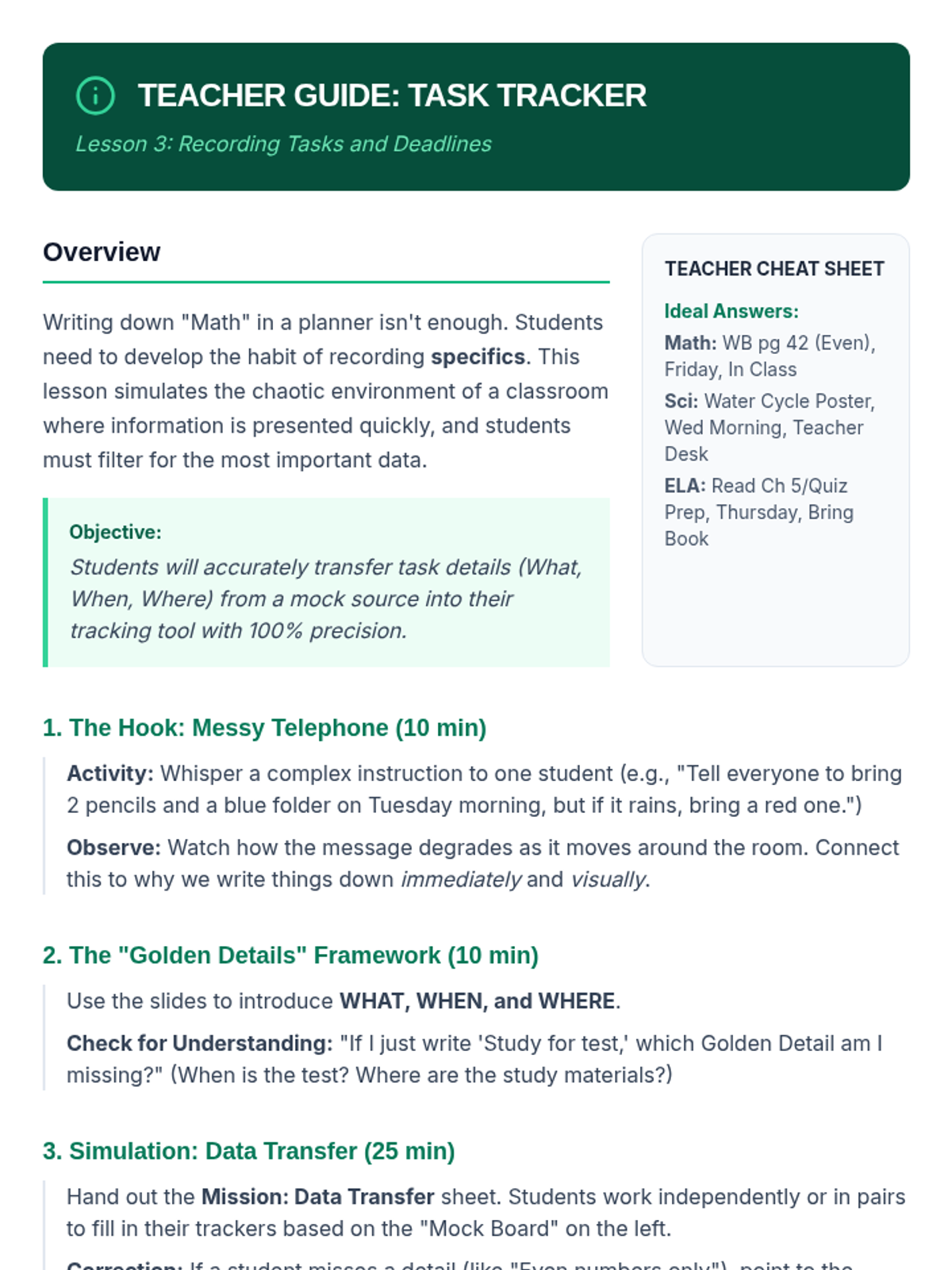
This lesson focuses on the mechanics of writing down assignments clearly and accurately. Students practice transferring information from a mock assignment board to their personal planners.
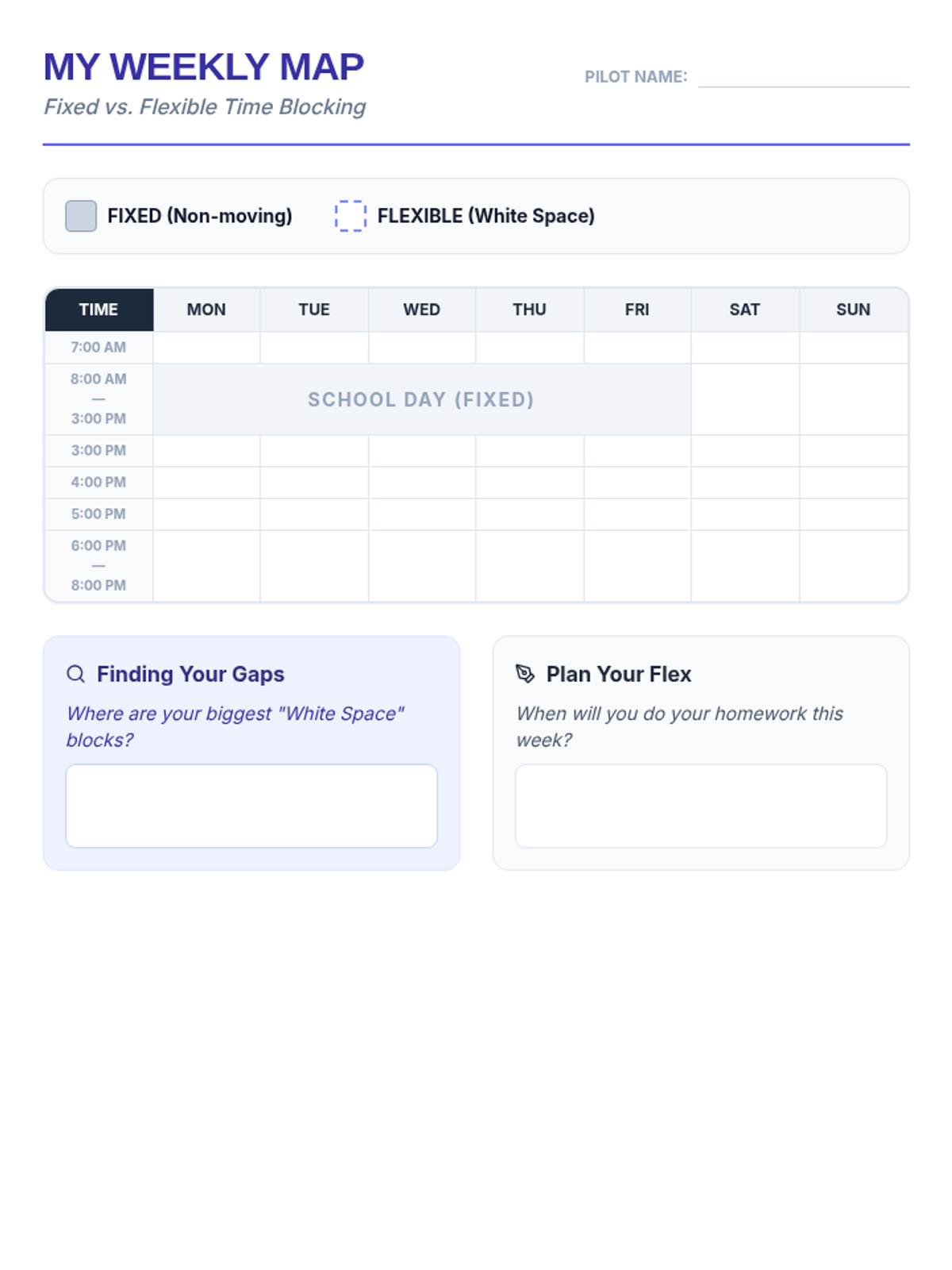
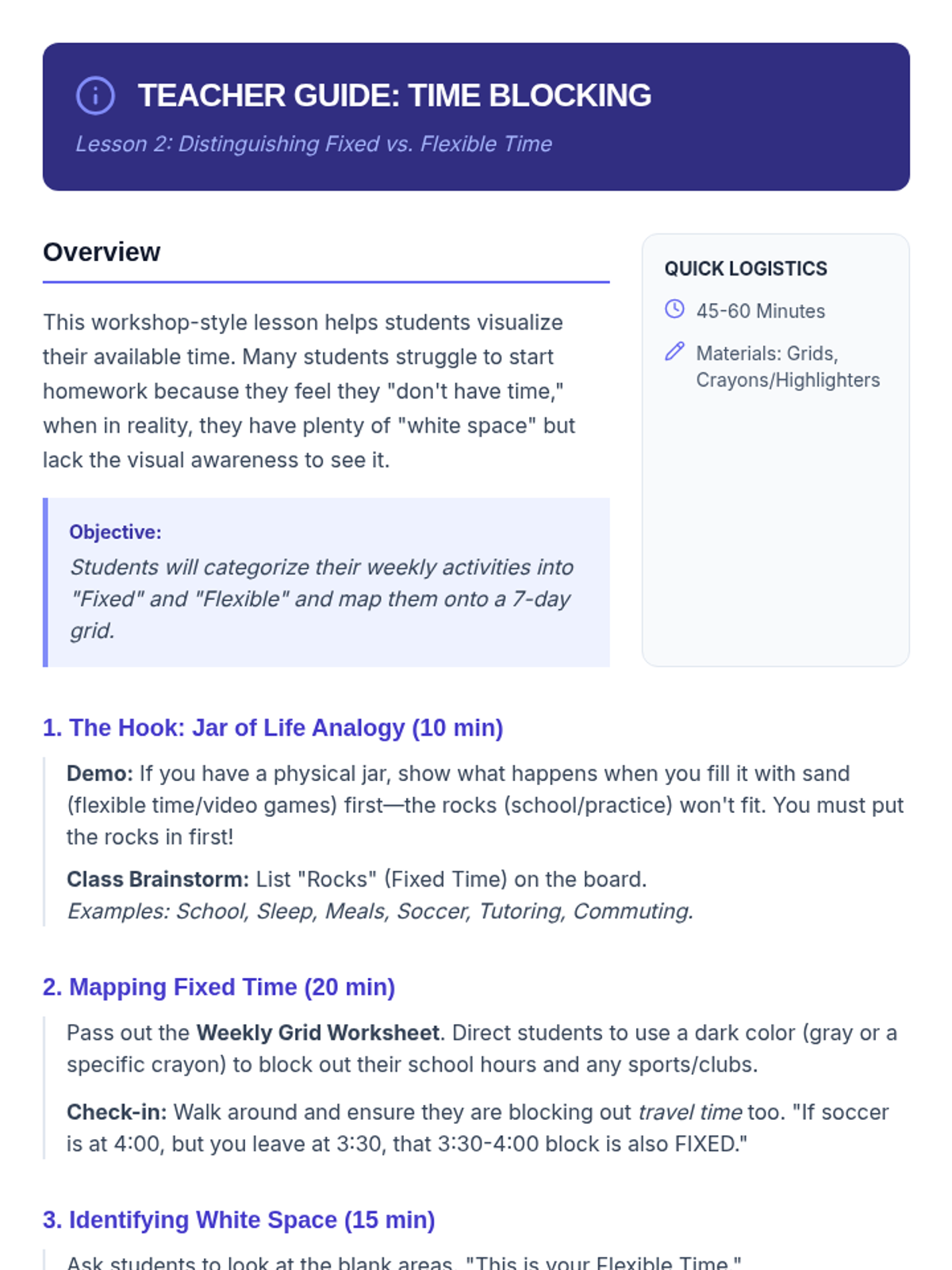
Students map out a typical week, blocking out 'hard' constraints like school hours and sports practice. They learn to identify the 'white space' available for homework and chores.
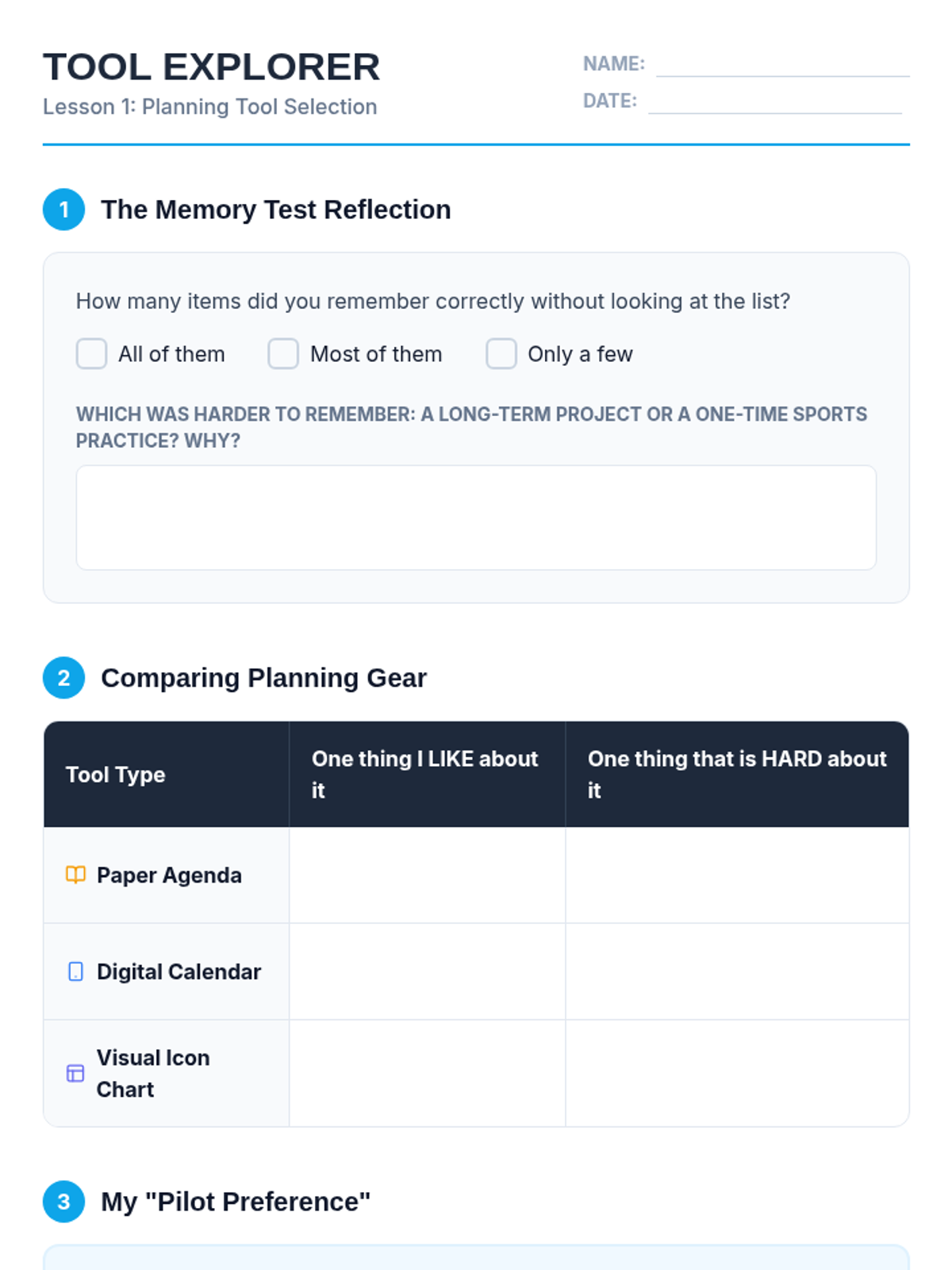
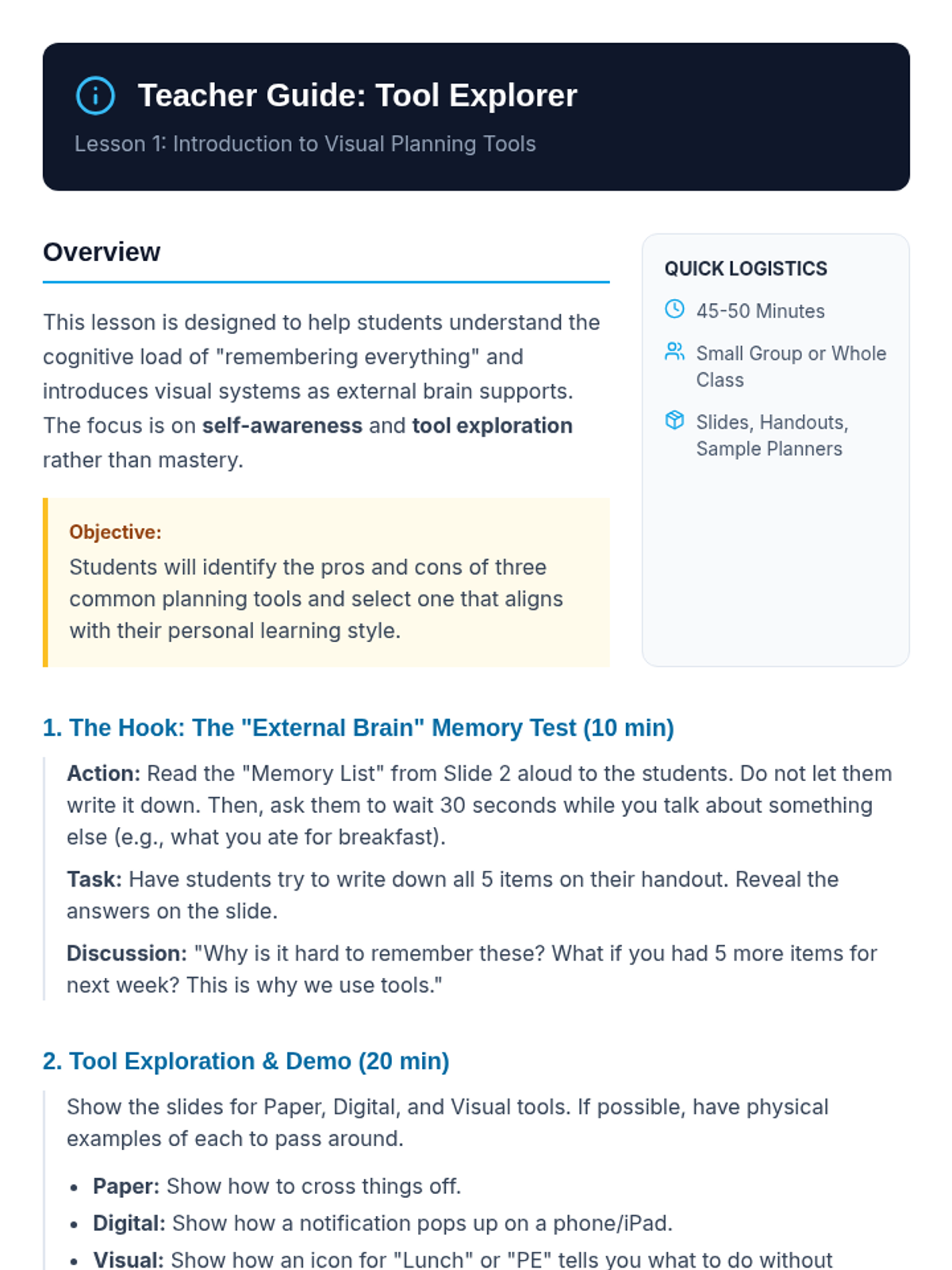
Students explore various formats of agendas, digital calendars, and visual schedules to understand how they function. They identify which tools might work best for their specific learning styles and needs.
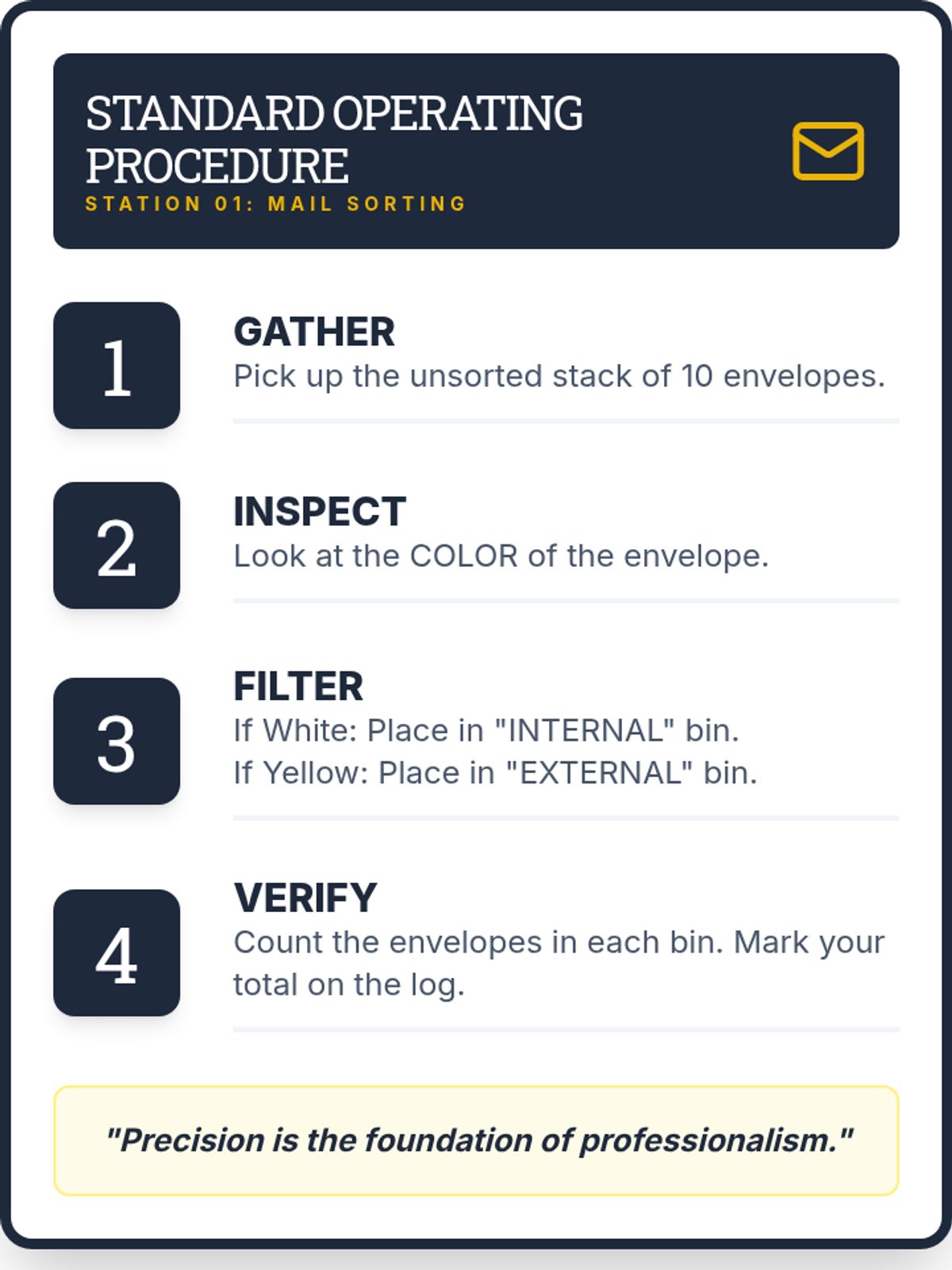
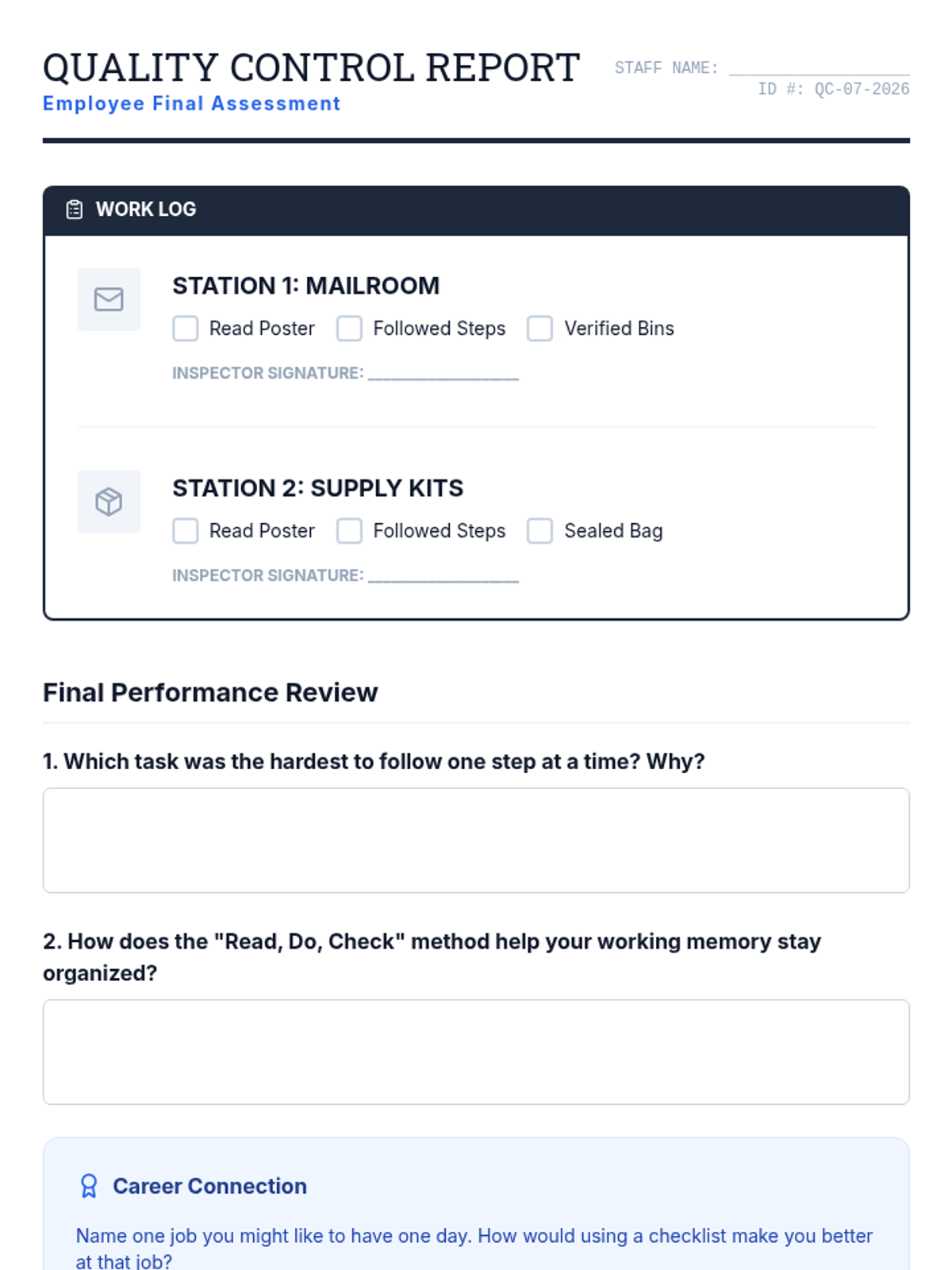
Students rotate through job site simulations, following posted single-step workflows to meet quality control standards.
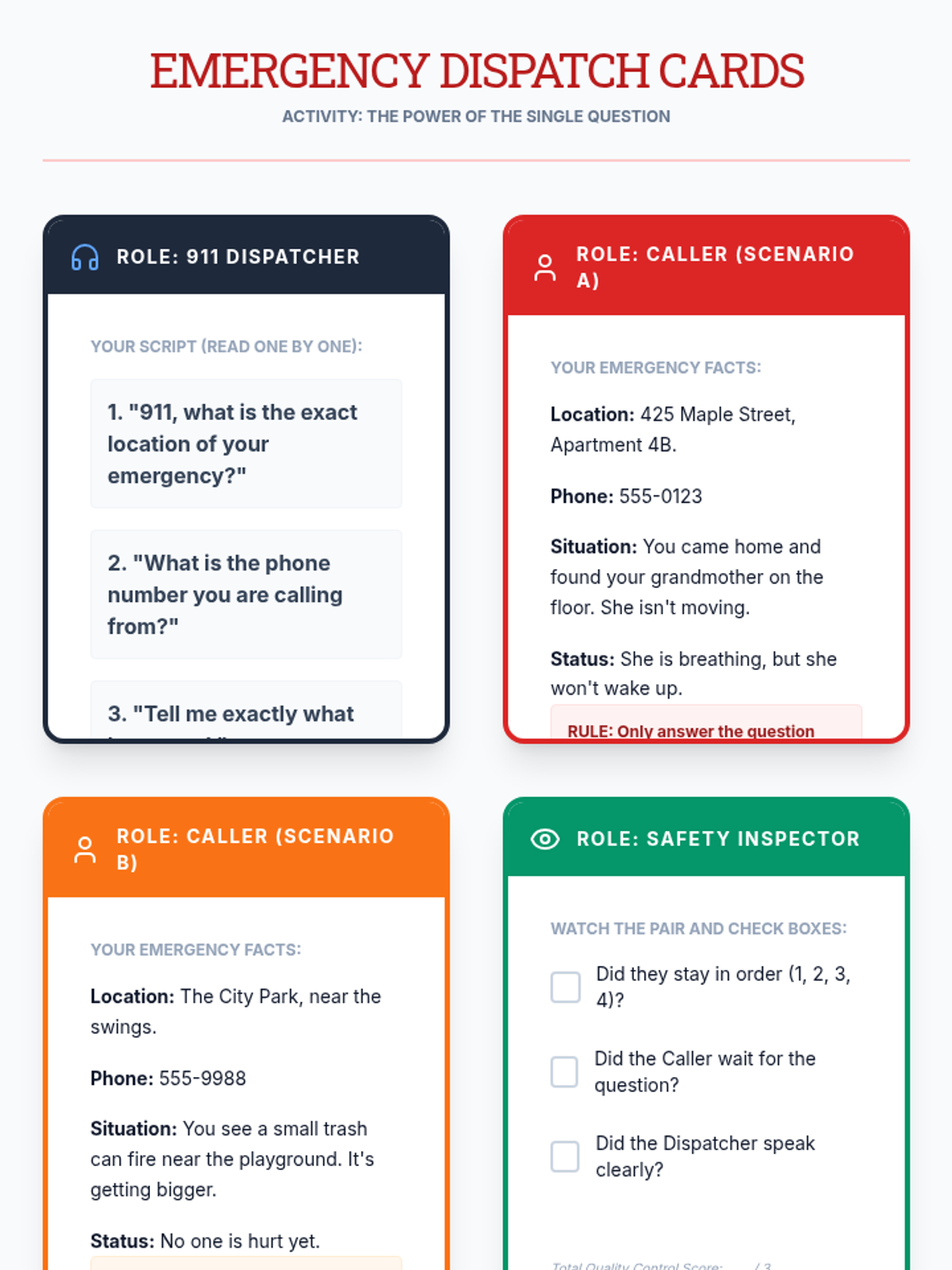
Students practice emergency response protocols under simulated pressure, focusing on calm, single-step execution.
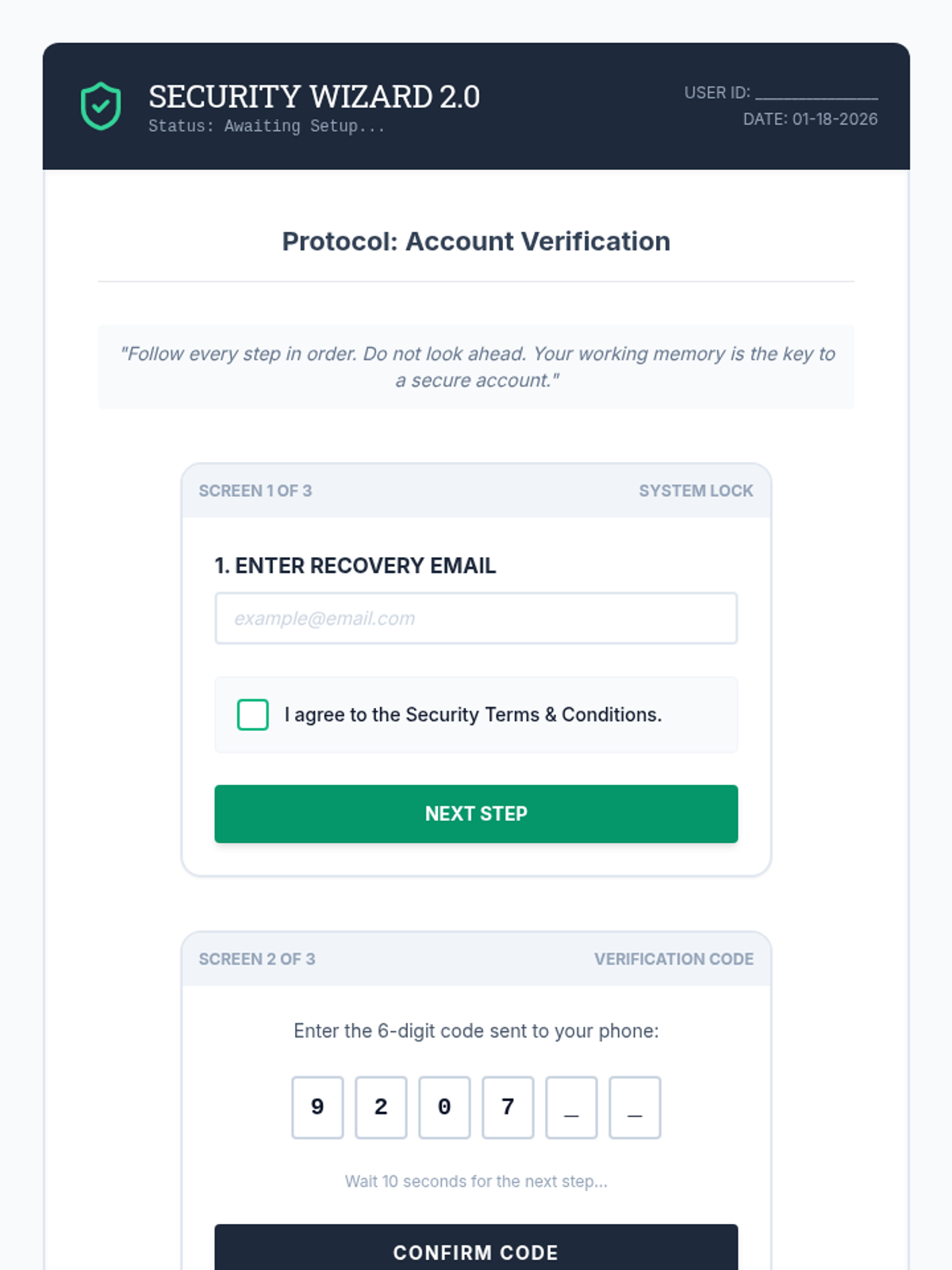
Students navigate complex digital setup tasks using a step-by-step guide to understand the importance of precise attention to detail.
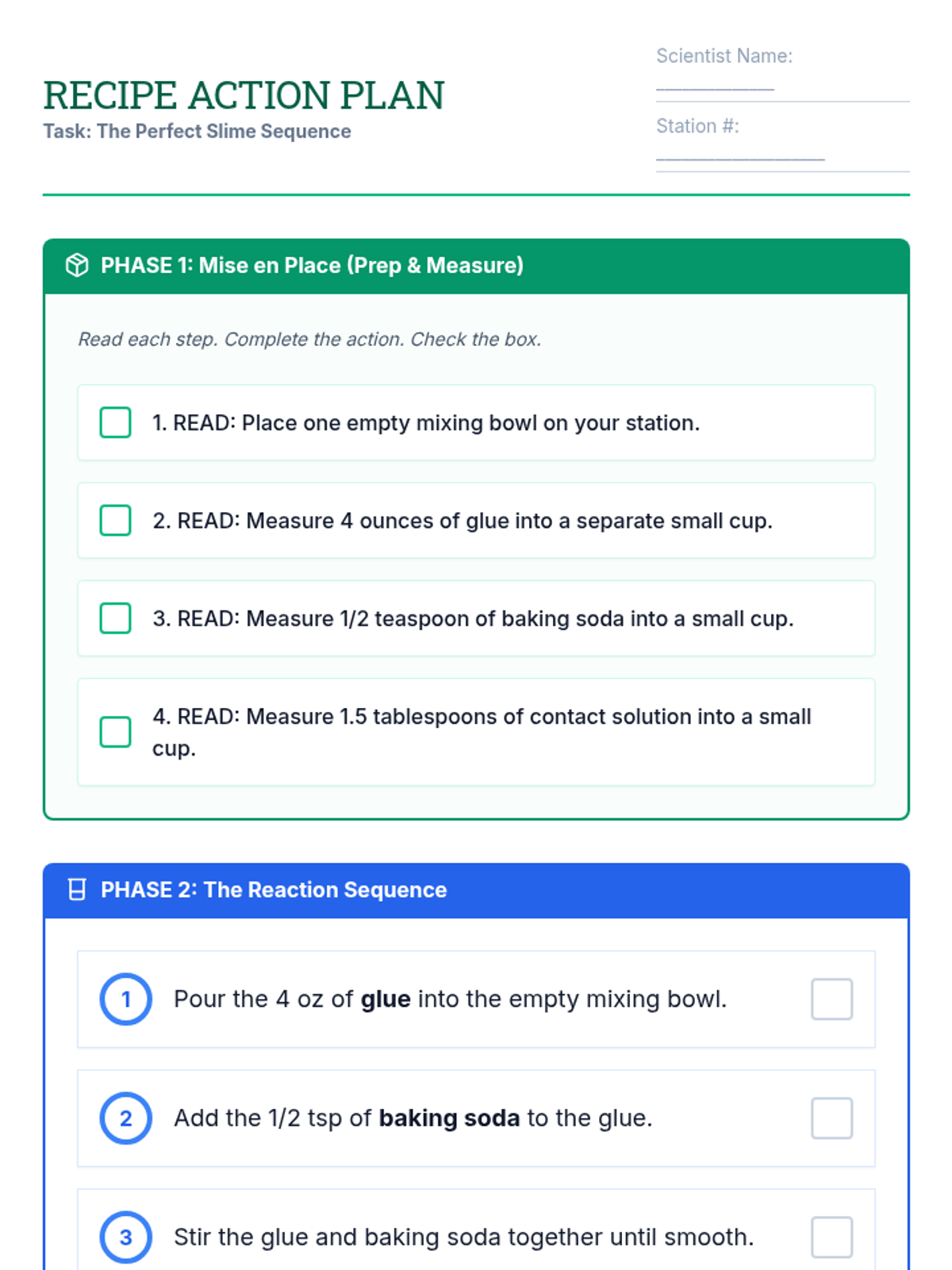
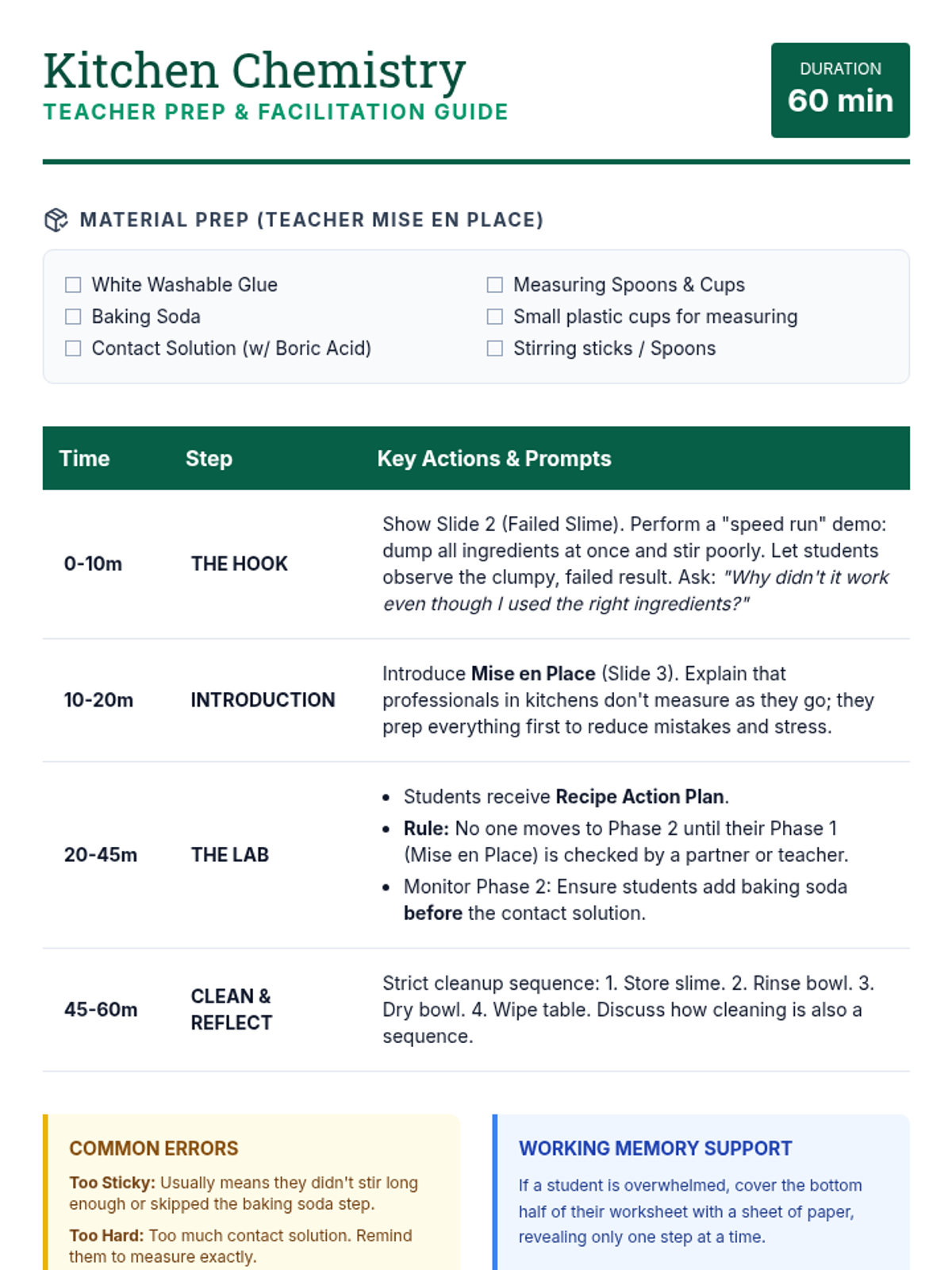
Students practice the 'mise en place' method by following a strict single-step recipe to create a simple mixture.
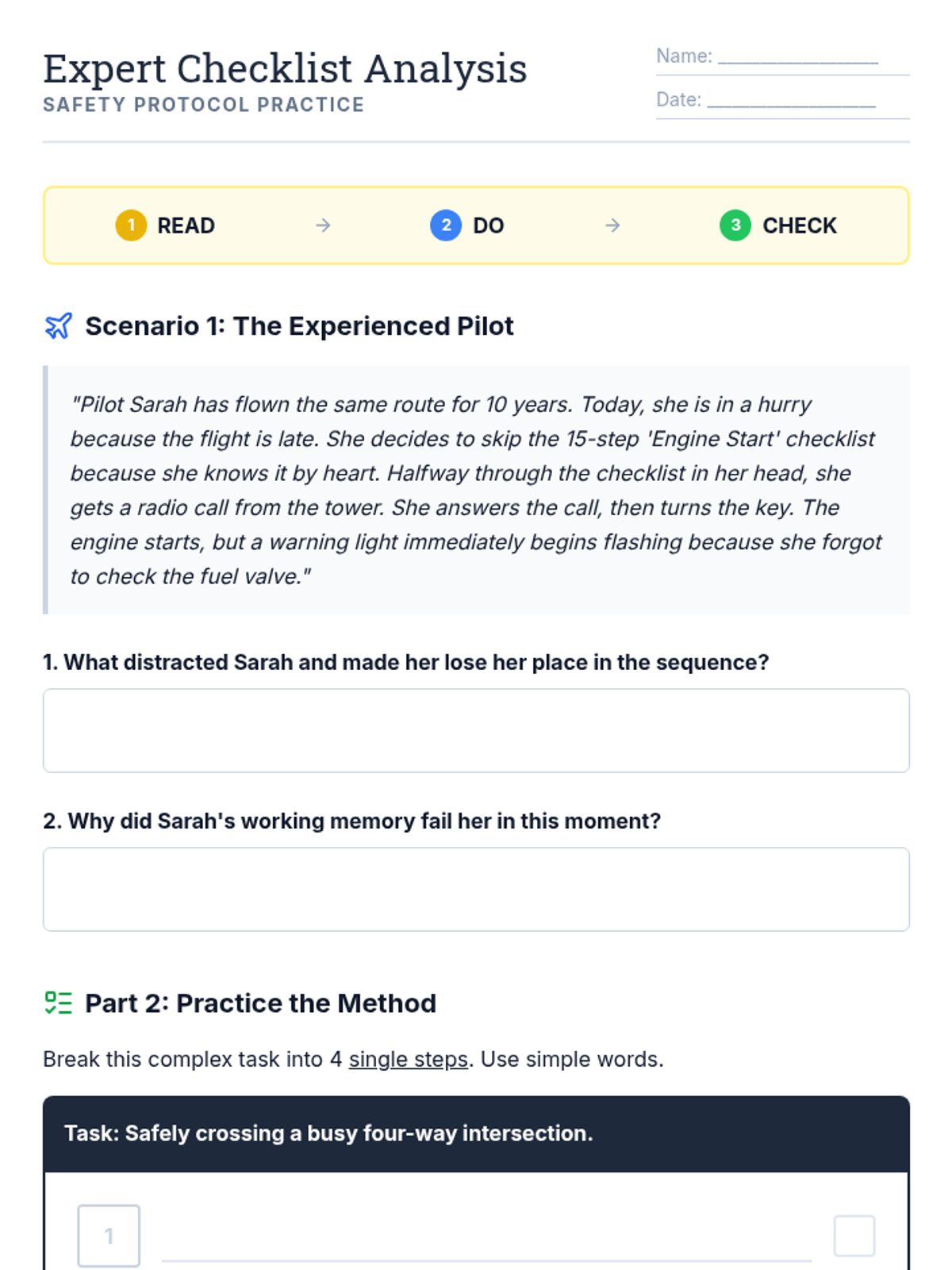
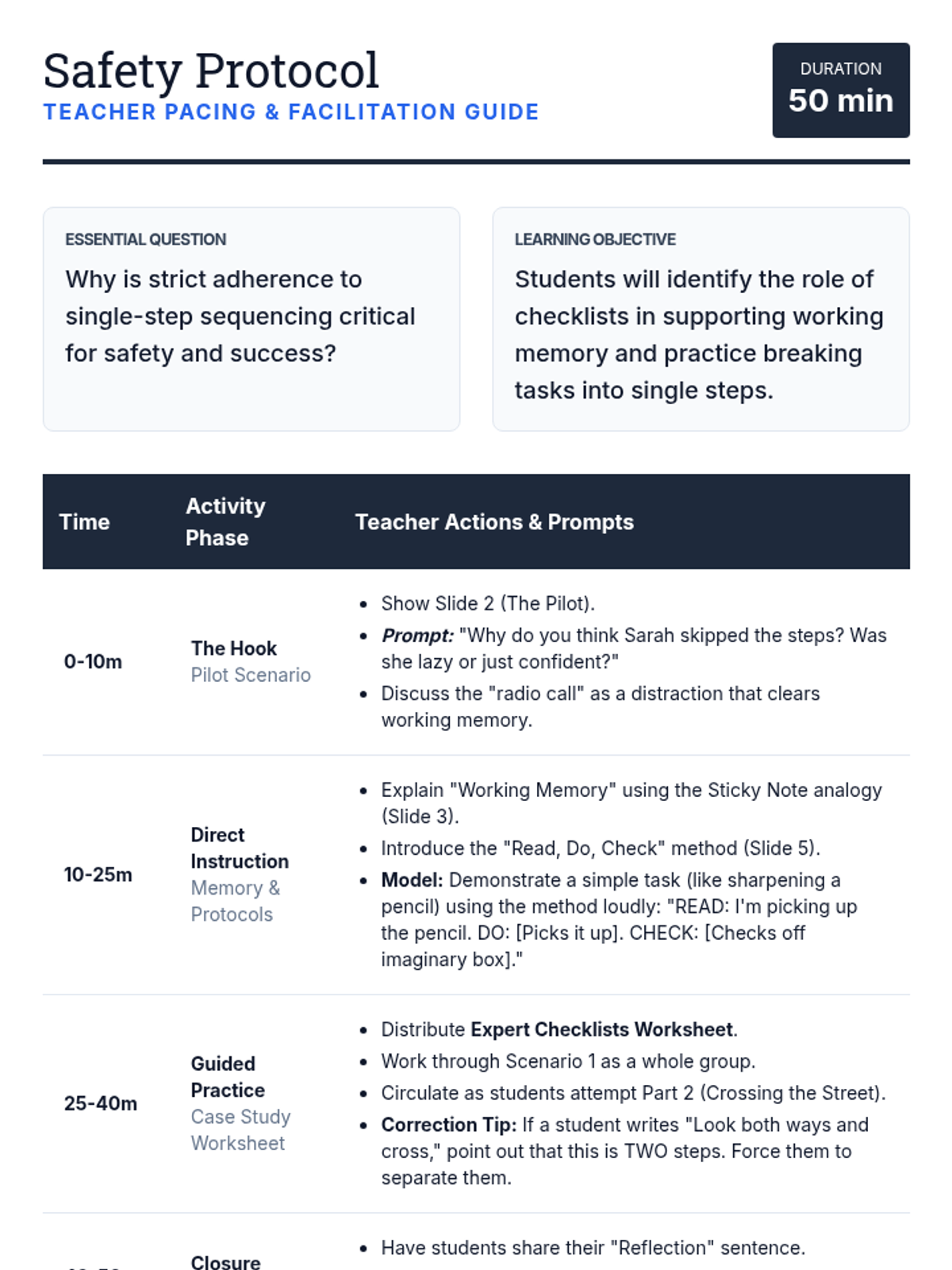
Students examine real-world scenarios where checklists are mandatory to support memory and ensure safety.
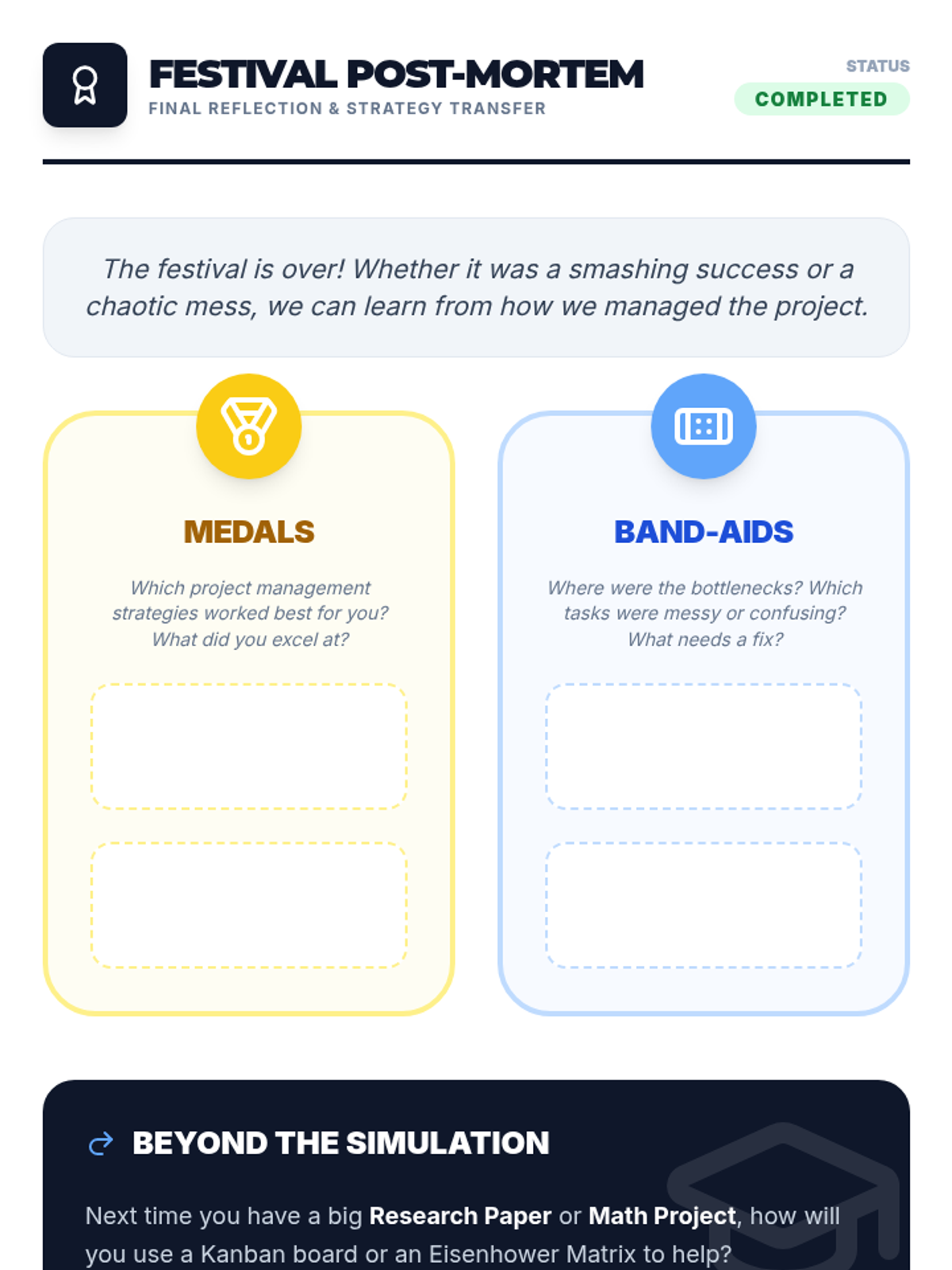
Students conduct a 'Post-Mortem' analysis to review their execution and set goals for future academic projects.
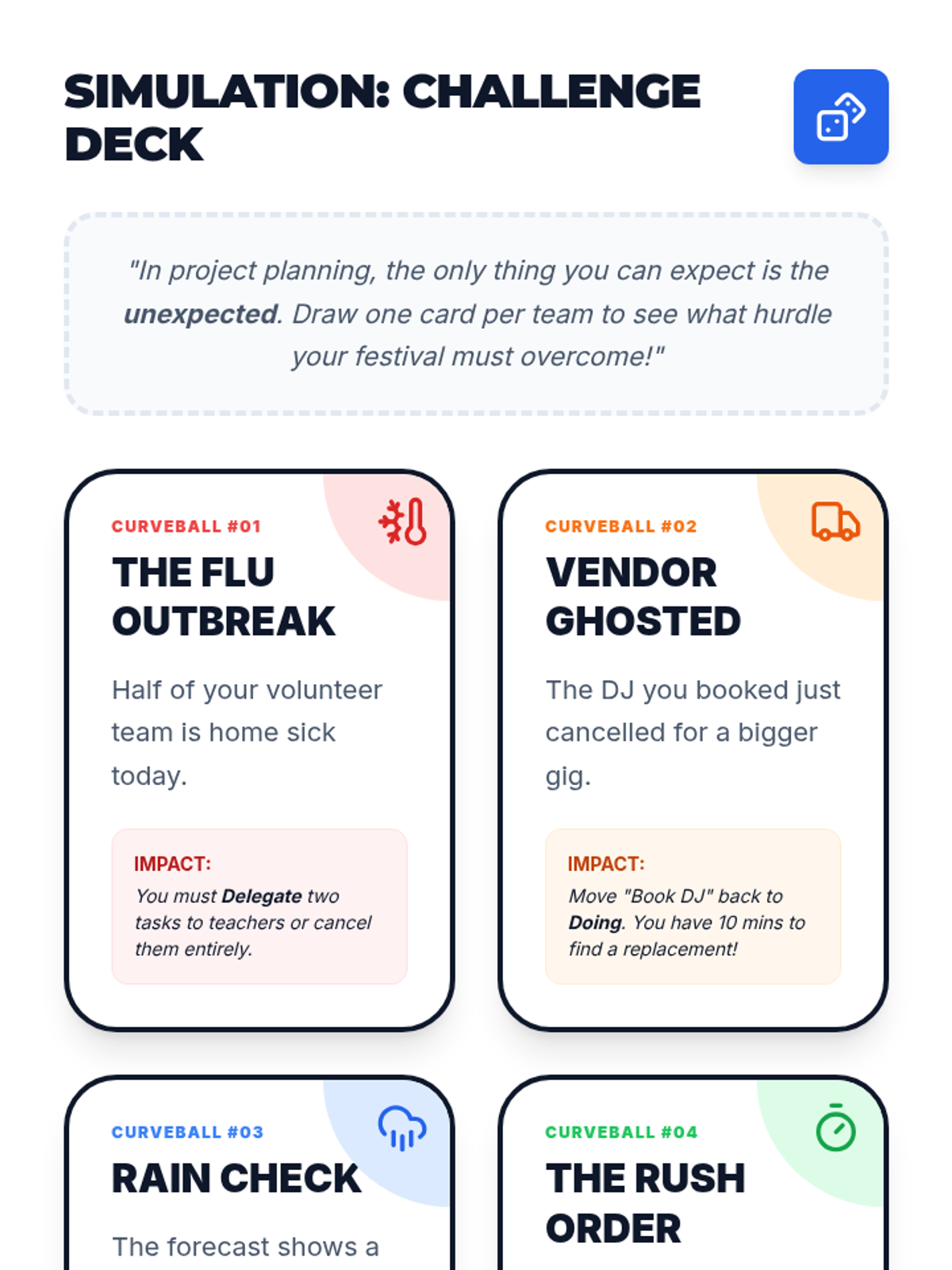
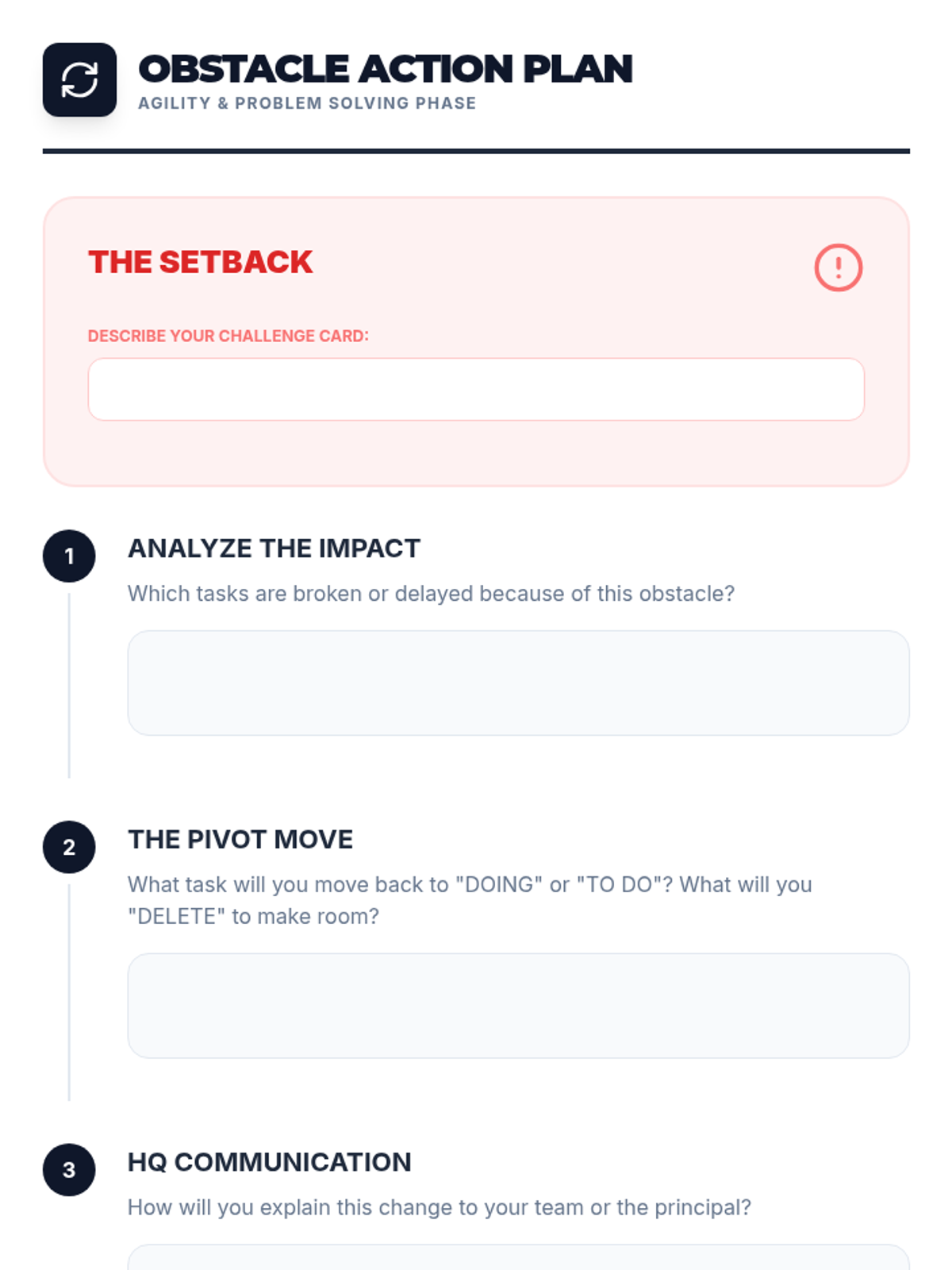
Students draw 'Challenge Cards' and adjust their project boards to build resilience and flexibility.
Students use the Eisenhower Matrix to prioritize tasks when faced with a reduced budget or shortened timeline.
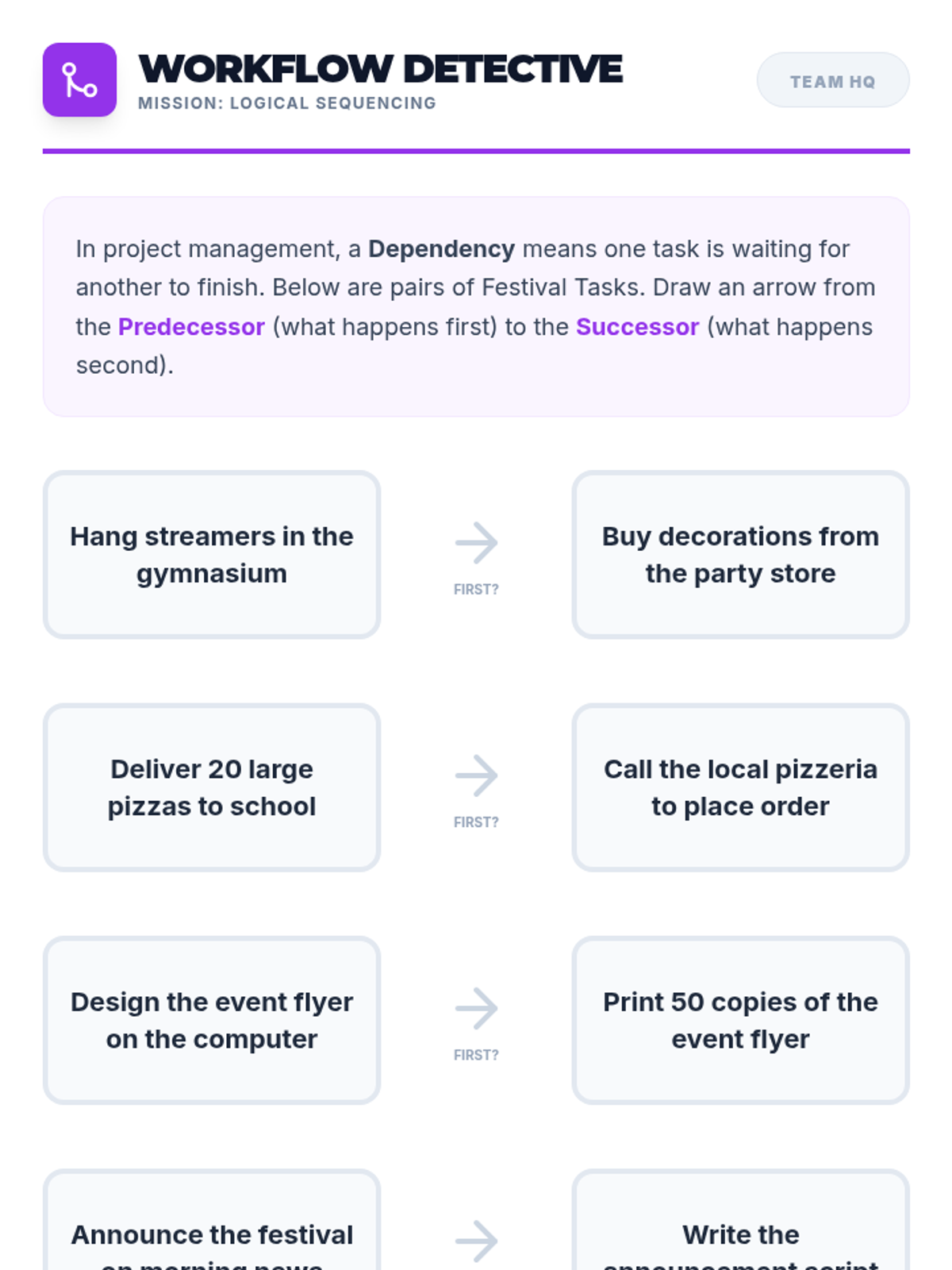
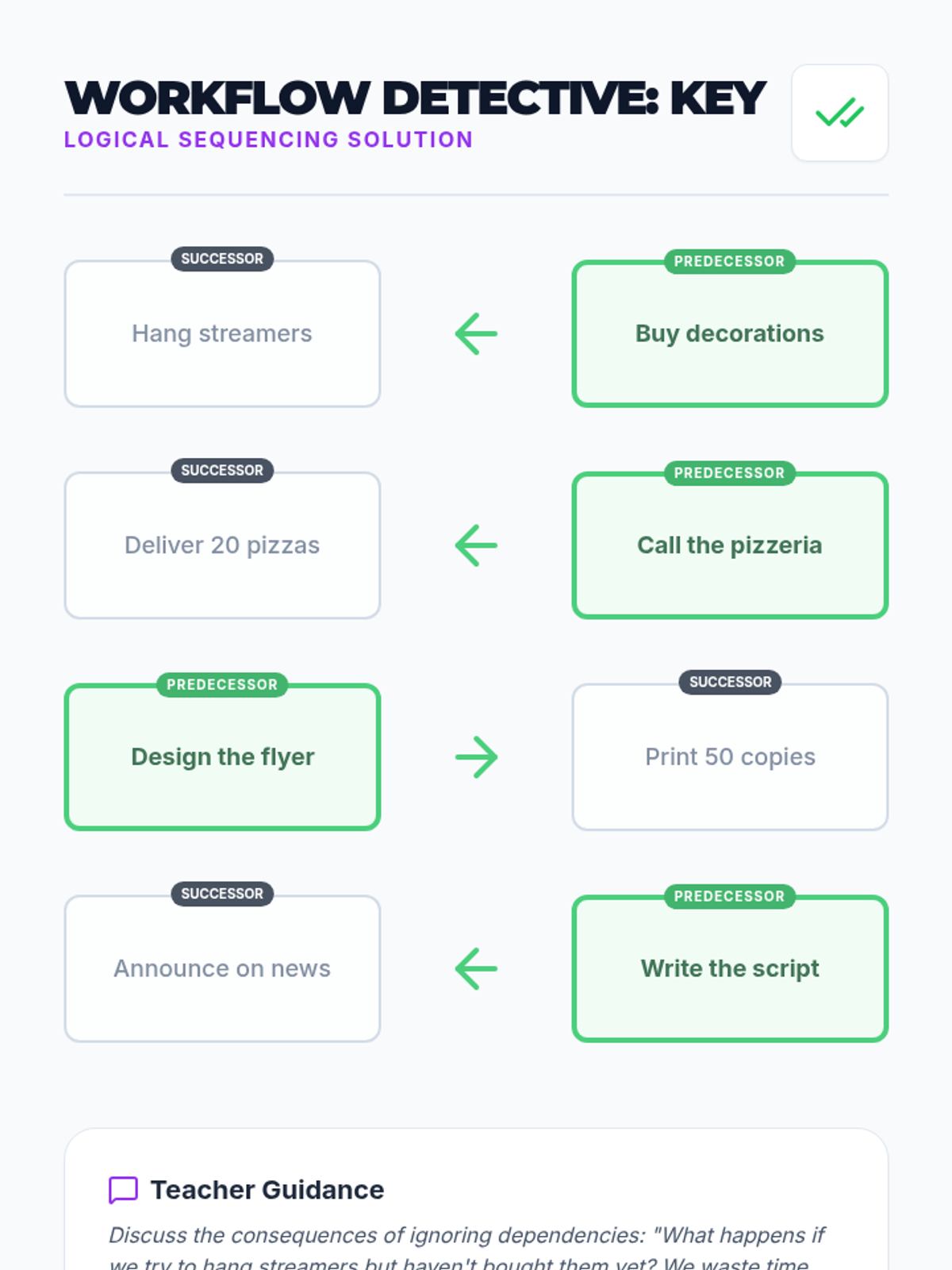
Students analyze festival tasks to determine dependencies and arrange them in a logical flow.
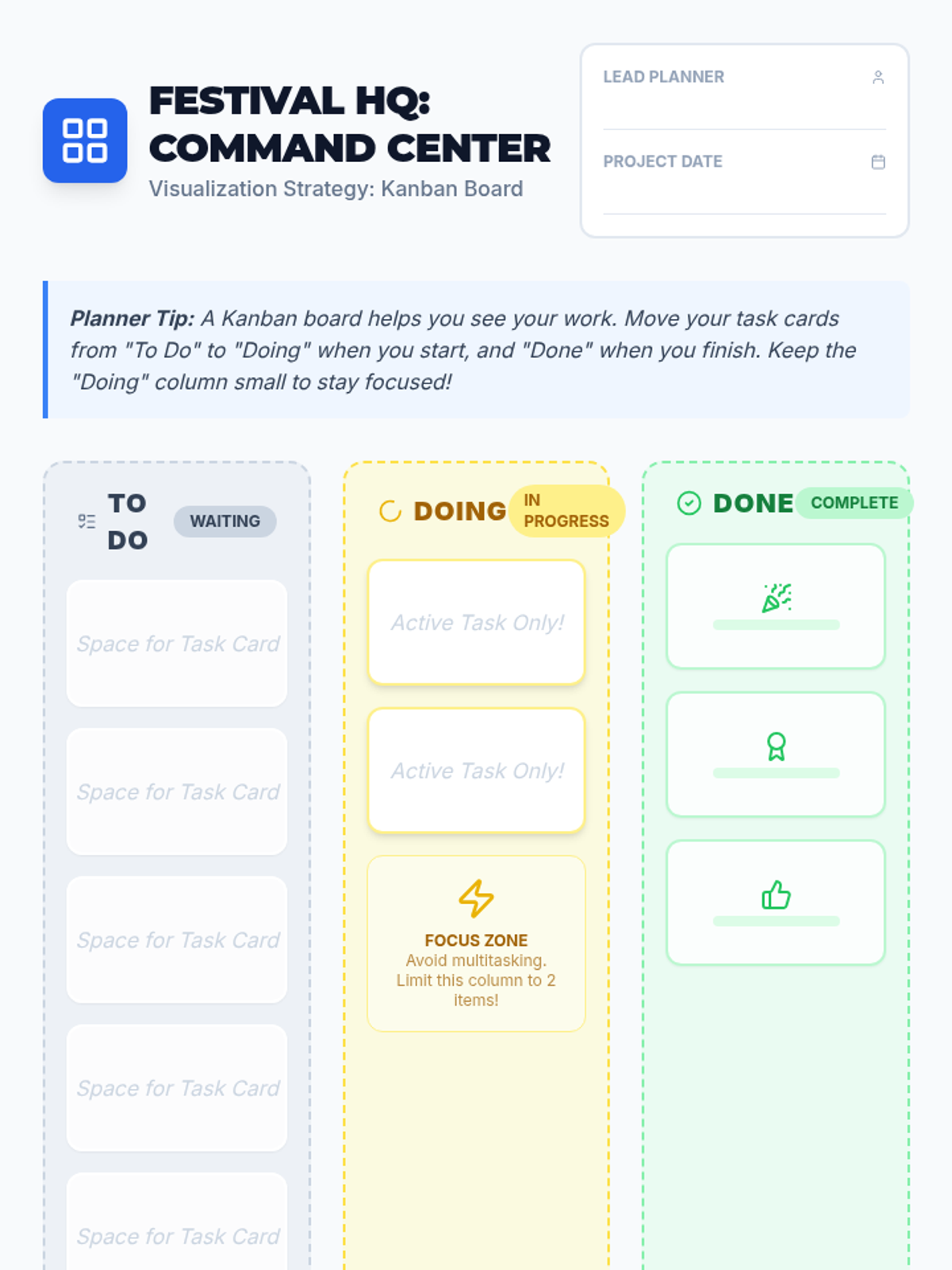
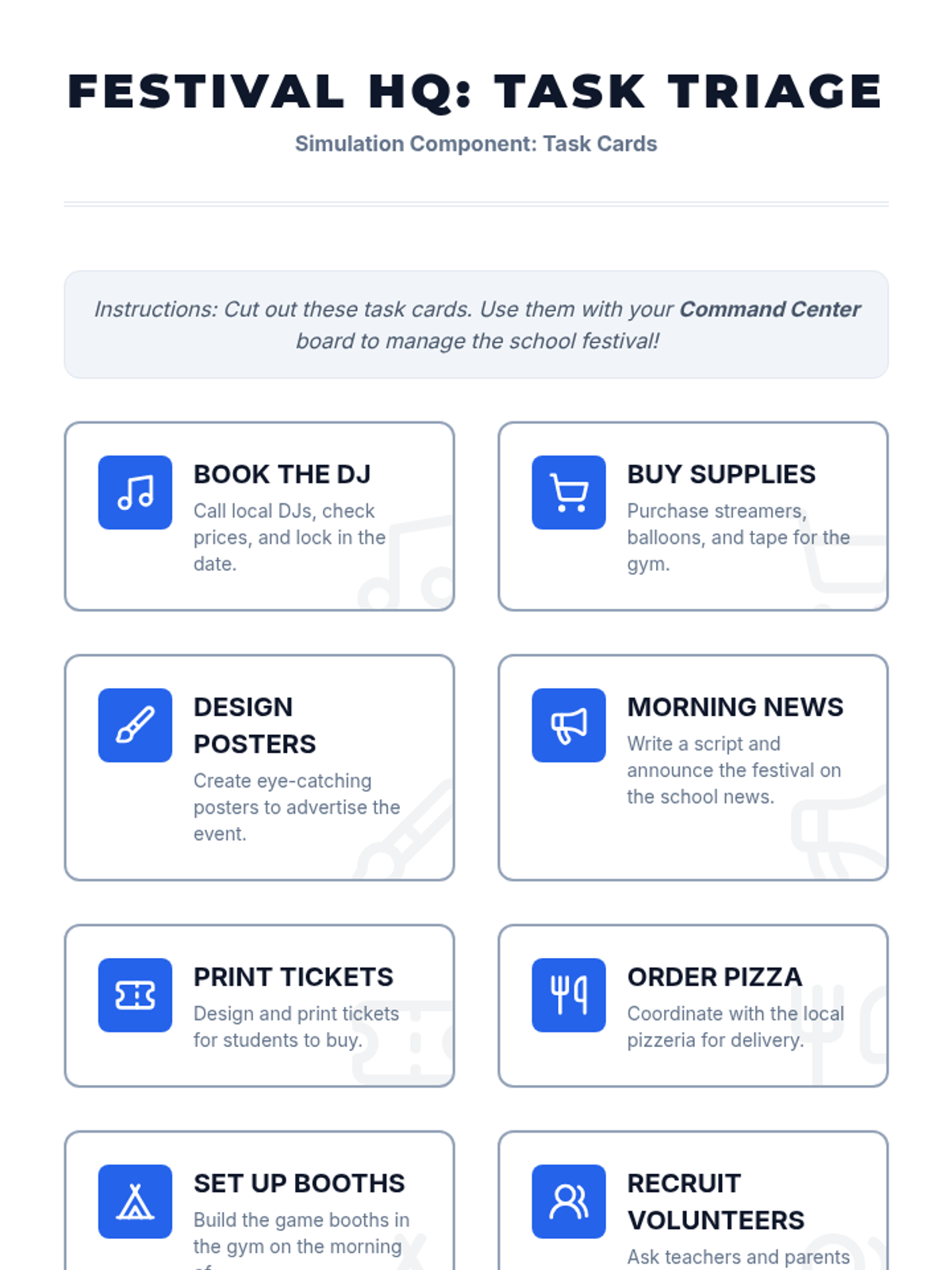
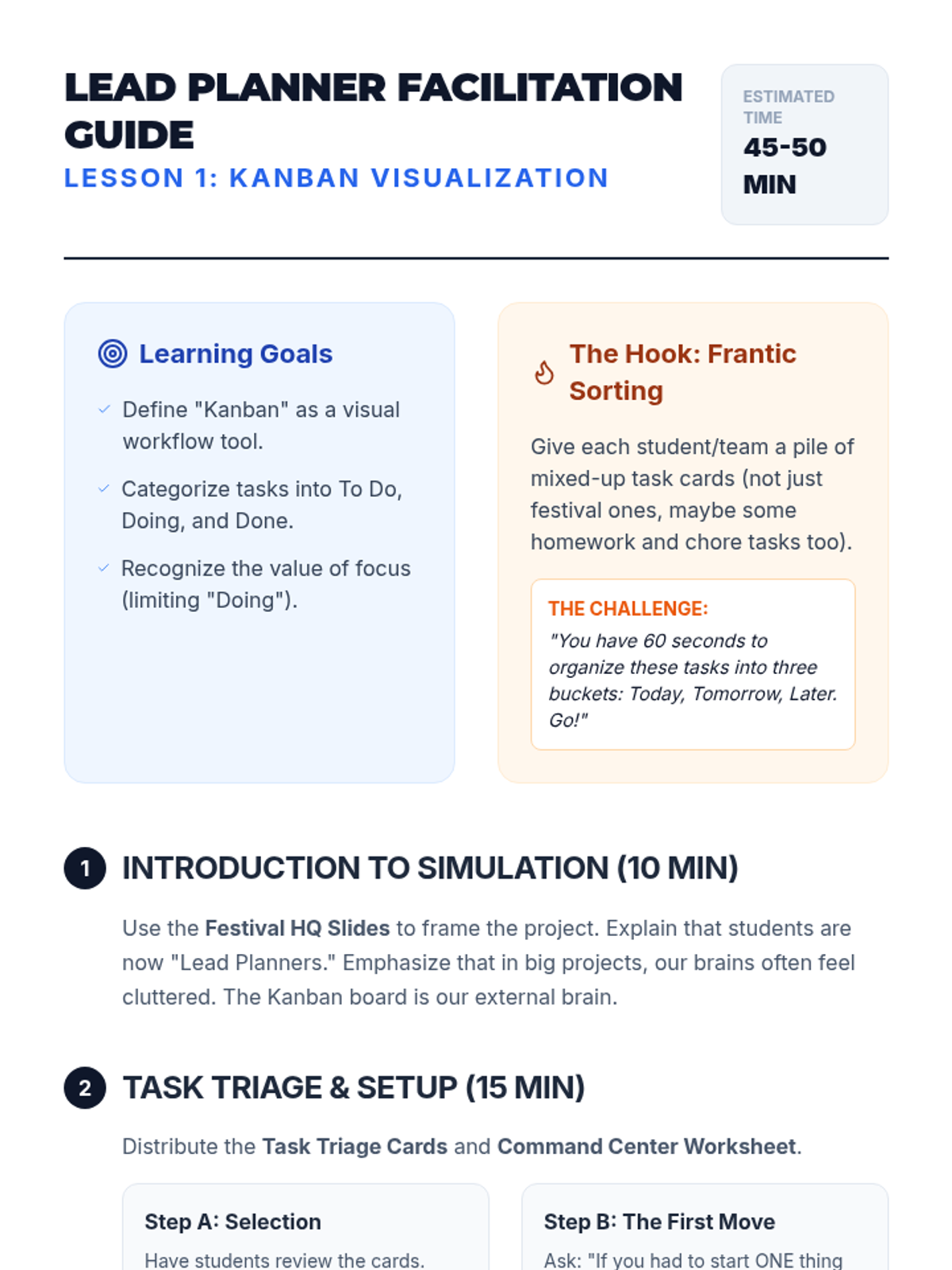
Students are introduced to the 'To Do,' 'Doing,' and 'Done' workflow visualization method using Kanban boards for their fictional festival.
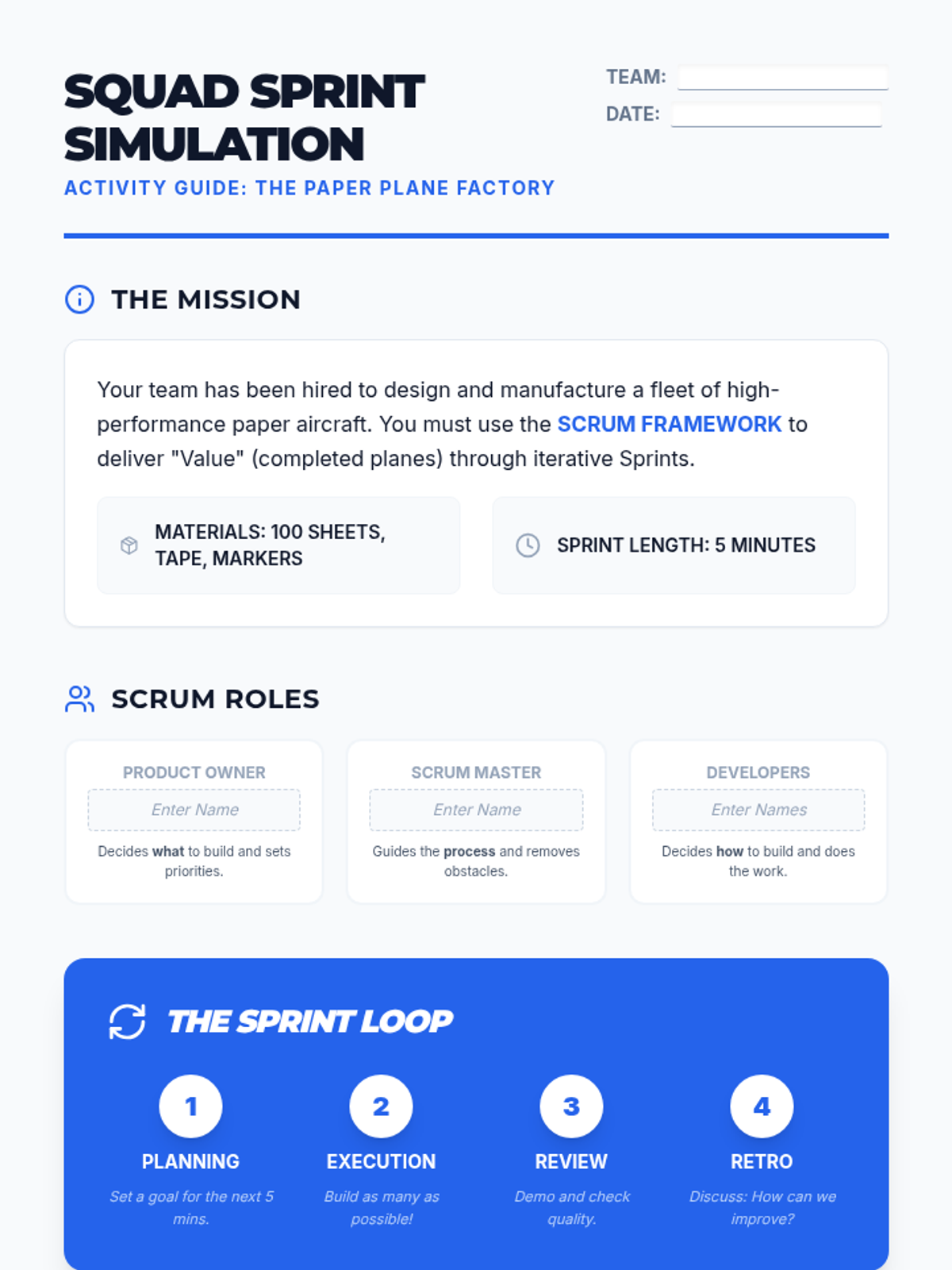
This lesson introduces students to the core concepts of Agile and Scrum through the lens of team dynamics. Students will explore roles, ceremonies, and the critical importance of communication in high-performing teams.
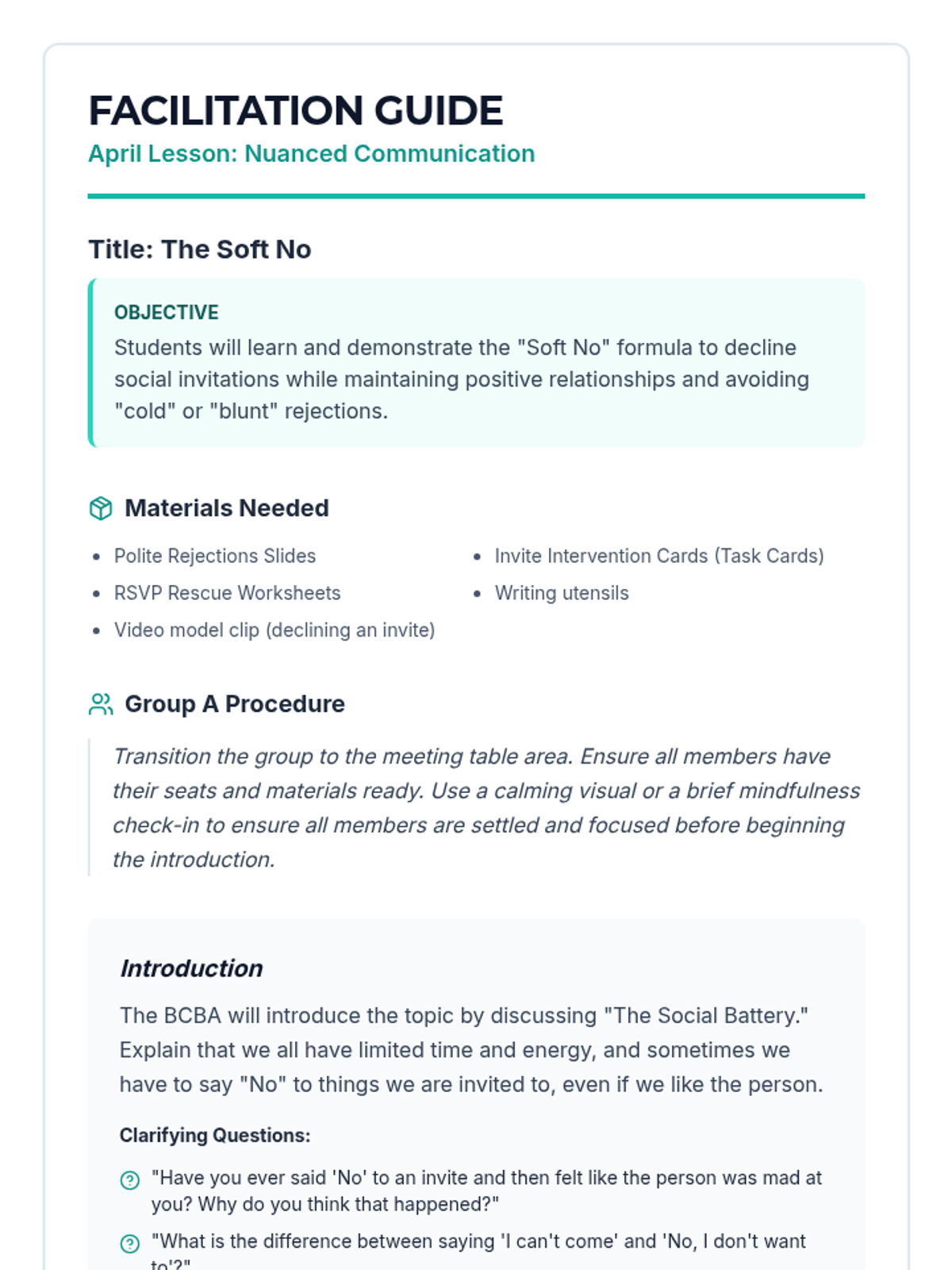
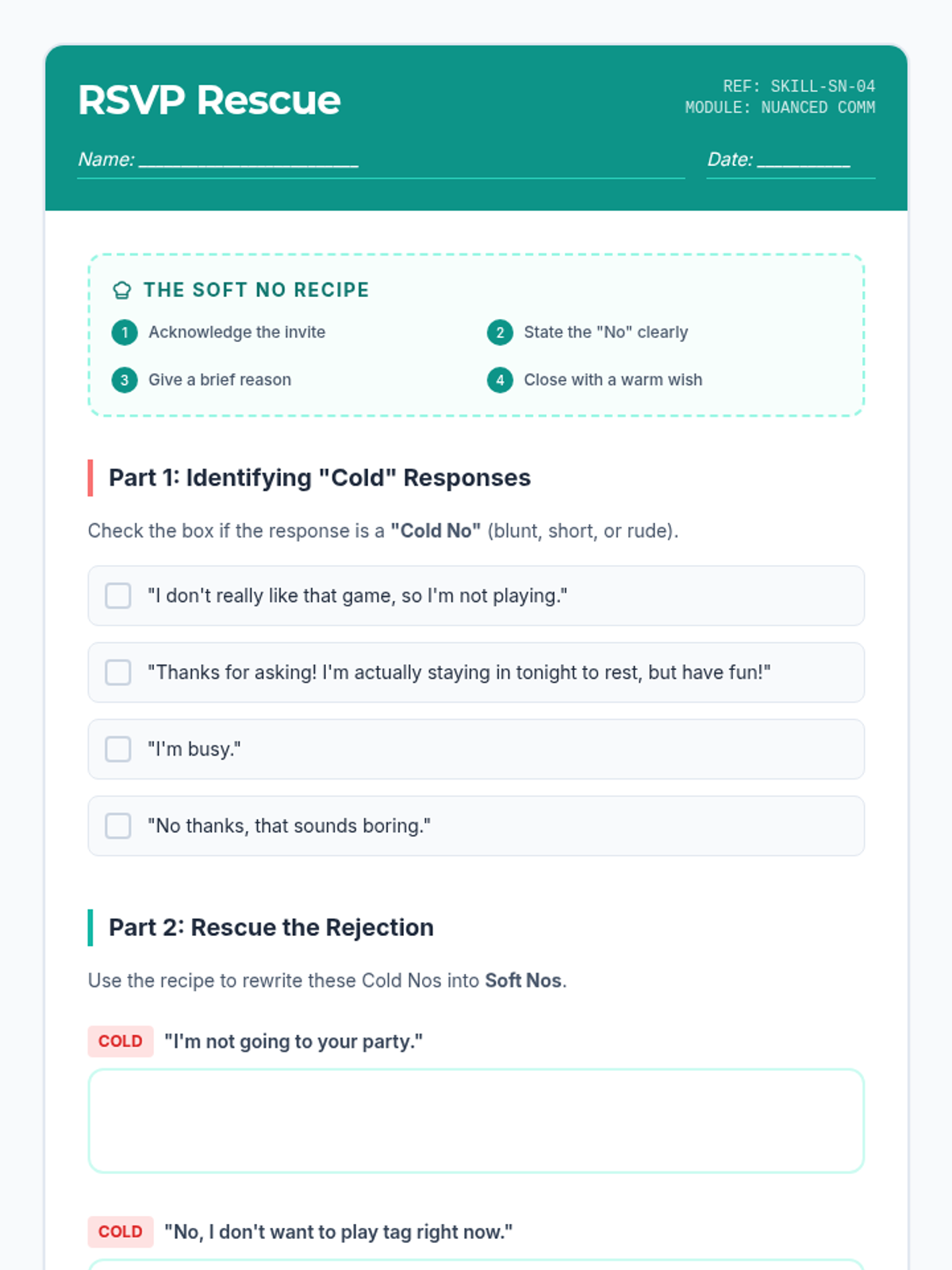
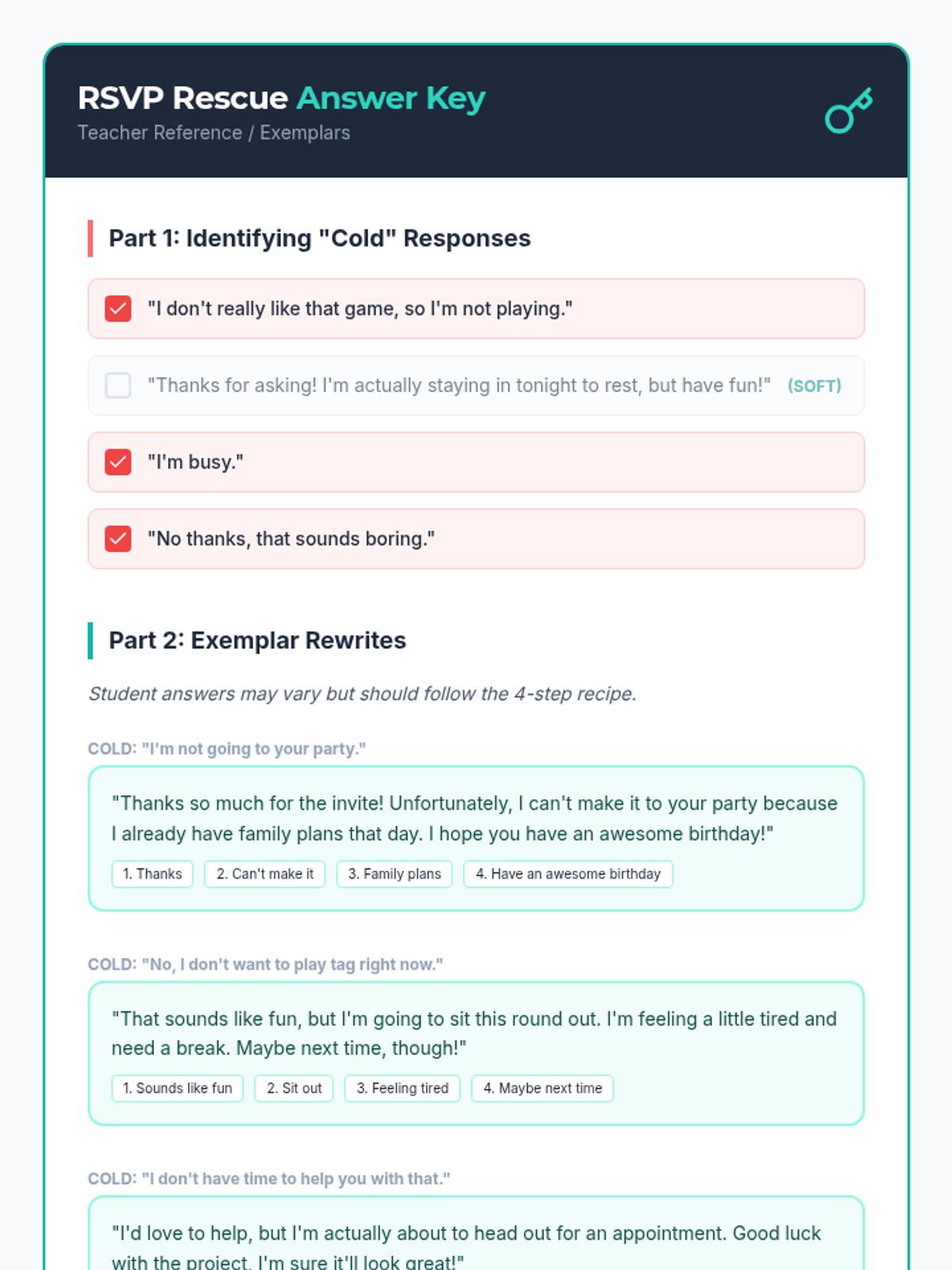
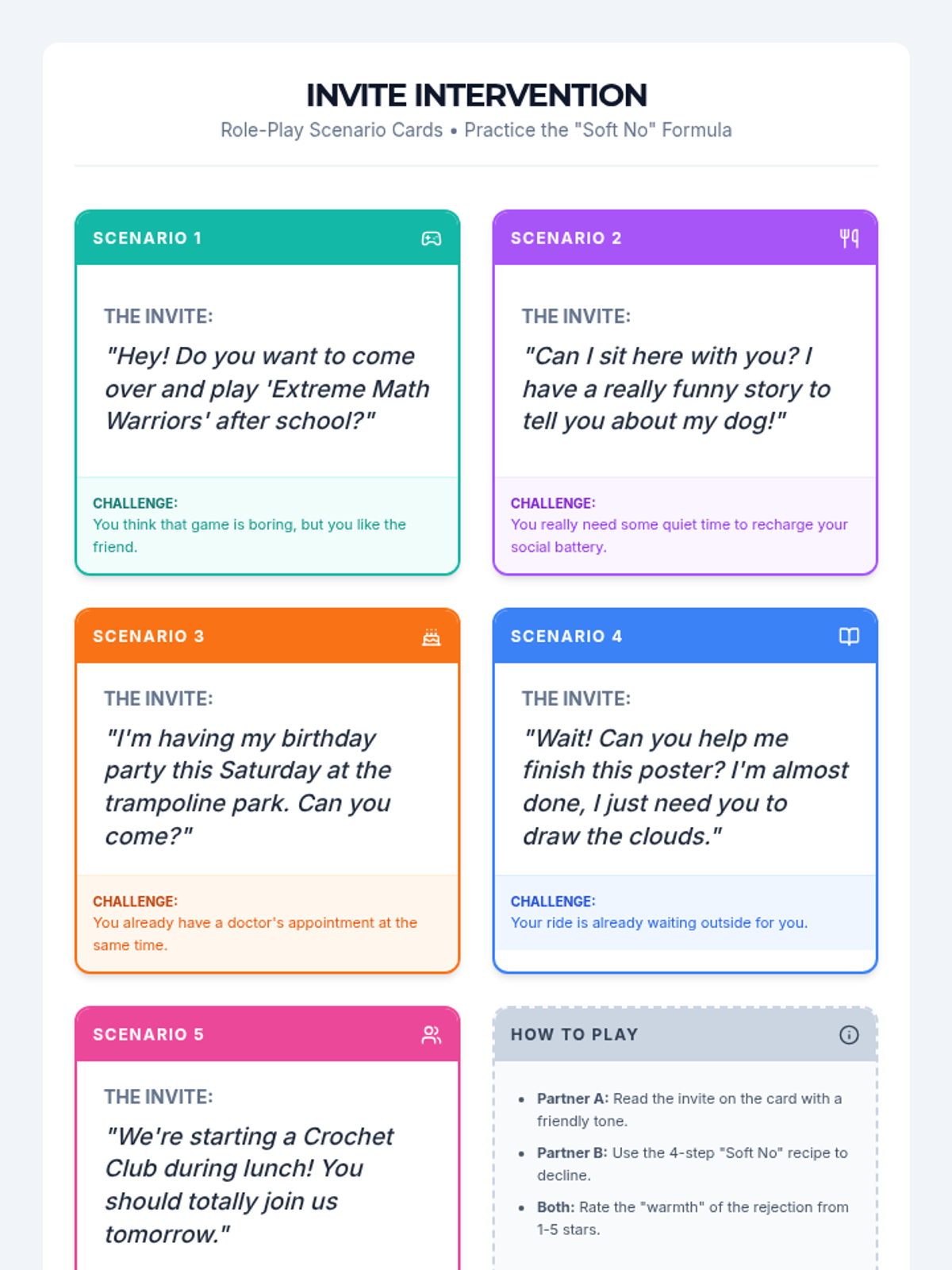
This lesson teaches students how to decline social invitations politely using 'The Soft No' formula. Students will practice acknowledging the invitation, stating their unavailability briefly, and closing with a warm sentiment to maintain social connections.
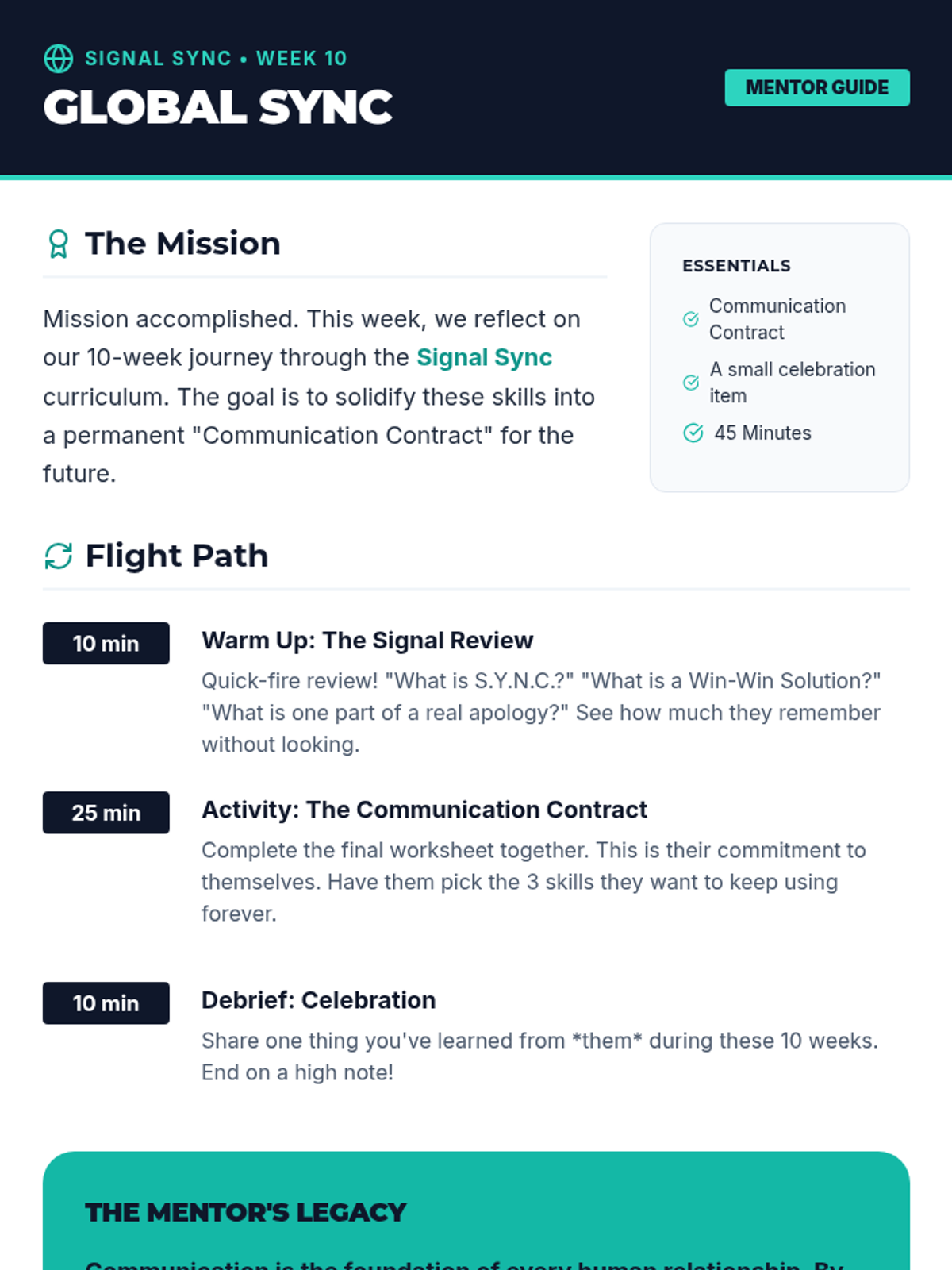
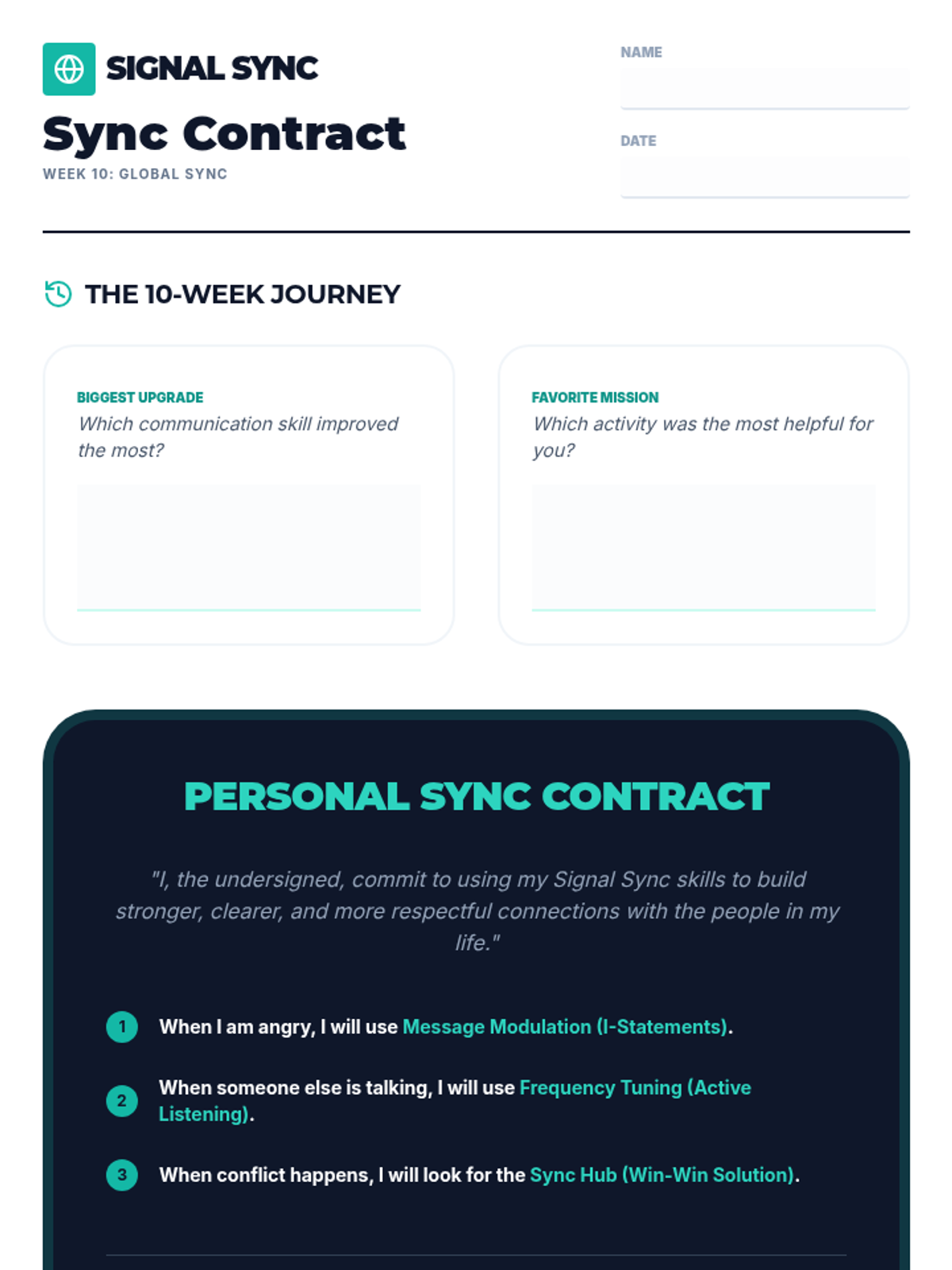
Reflecting on the 10-week journey and creating a personal communication contract for the future.
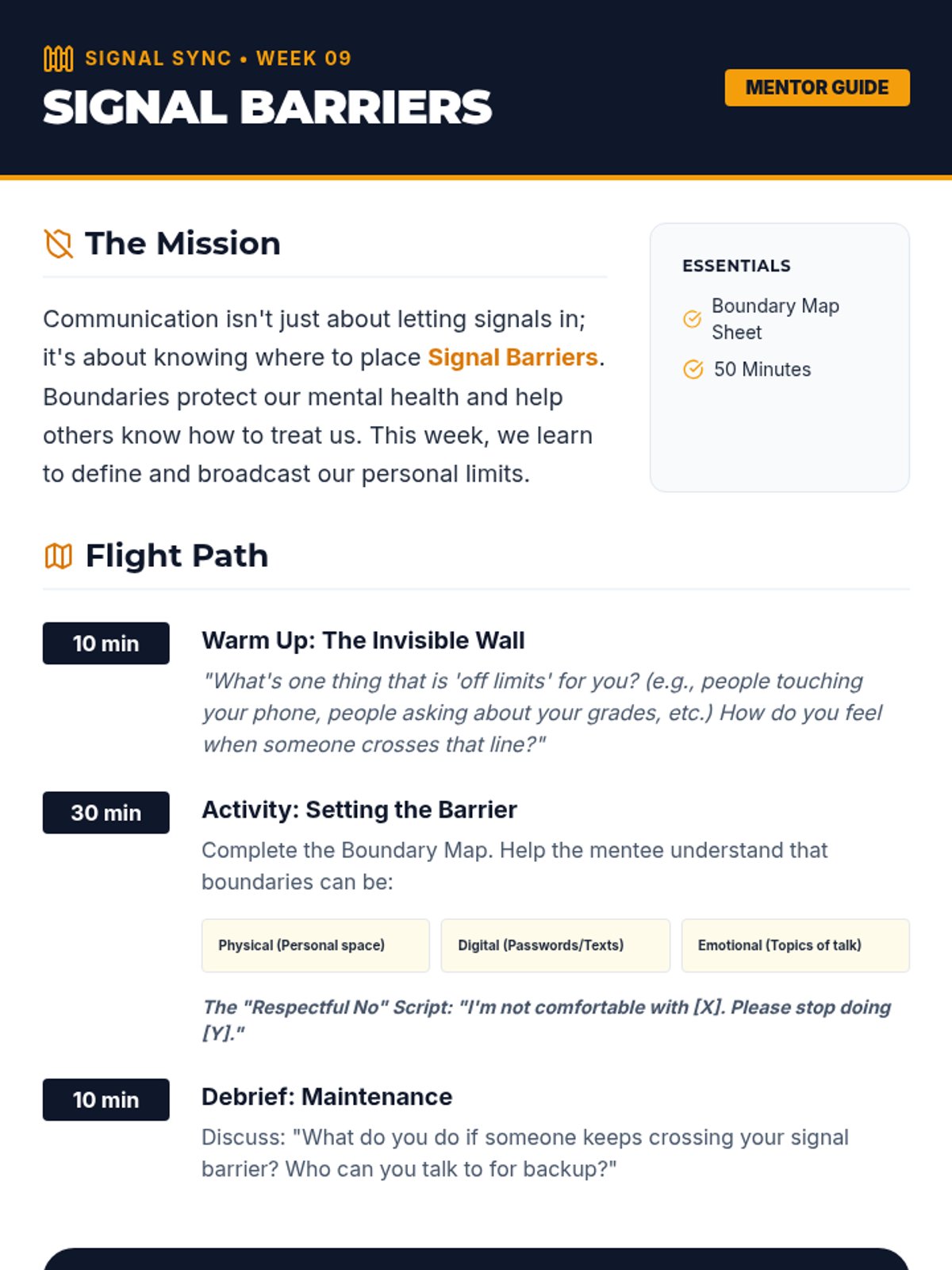
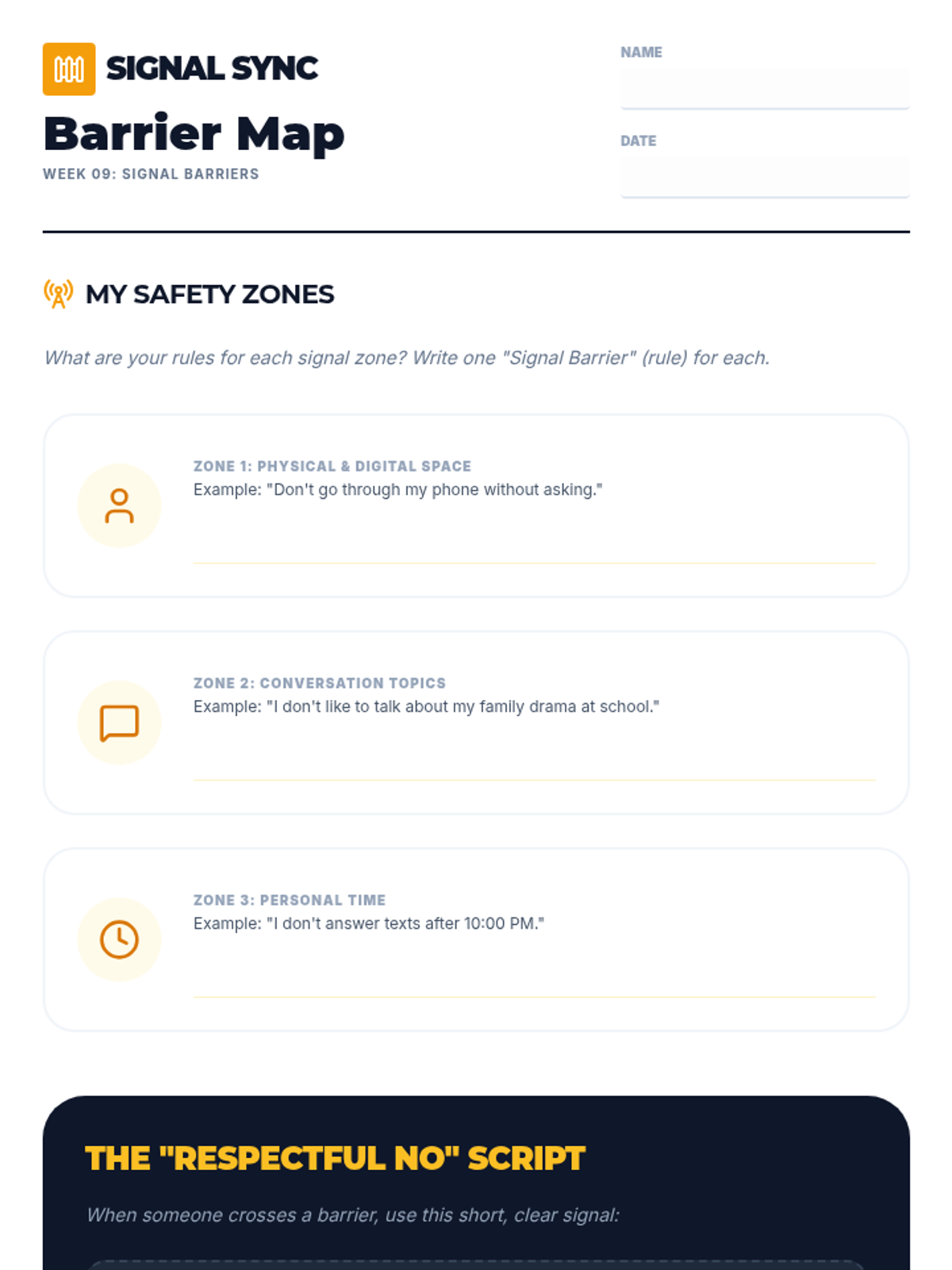
How to define, communicate, and maintain personal boundaries in a healthy way.
The framework for offering and accepting genuine apologies to repair damaged relationships.
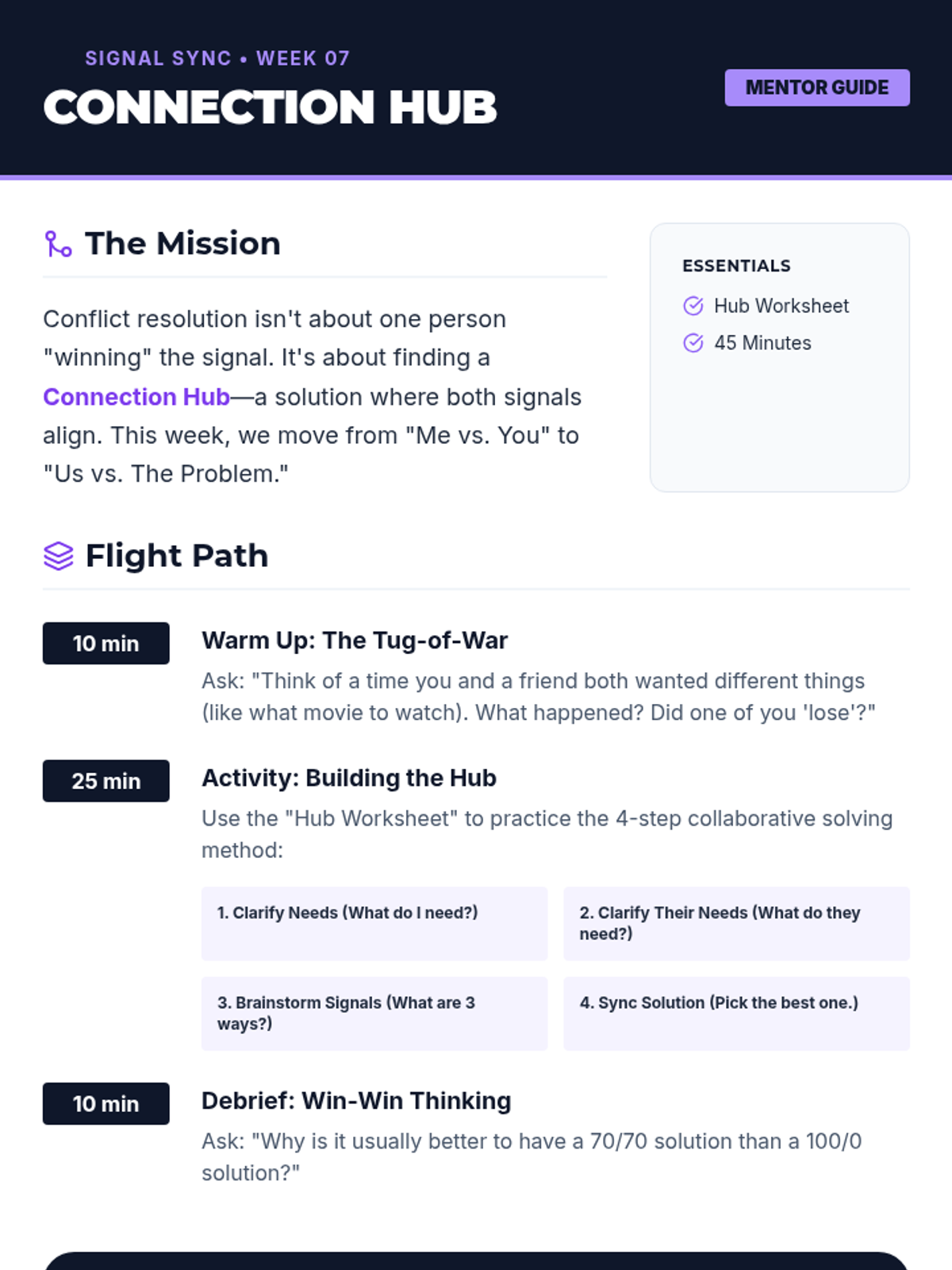
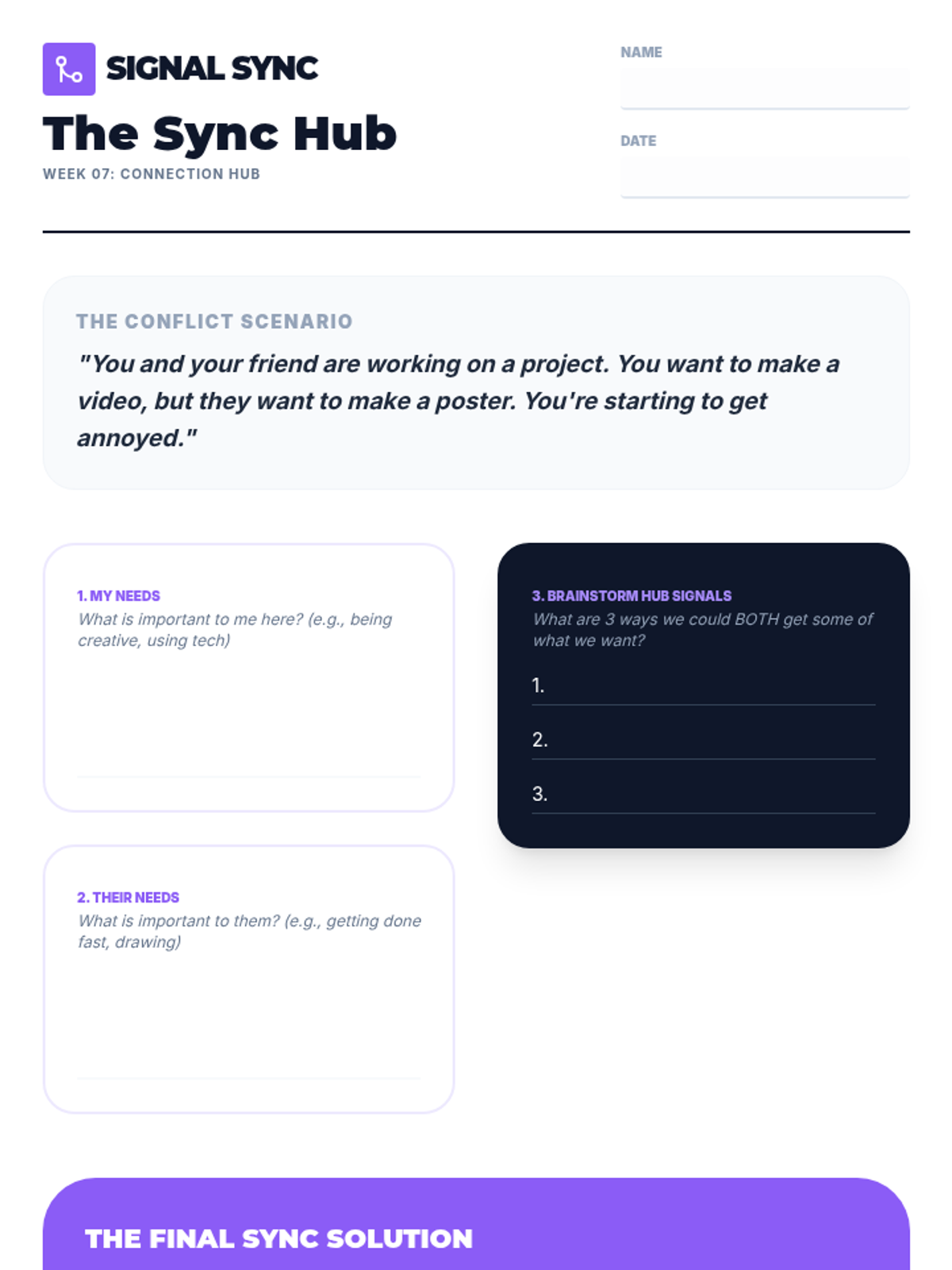
A collaborative approach to problem-solving that seeks 'win-win' outcomes for all involved.
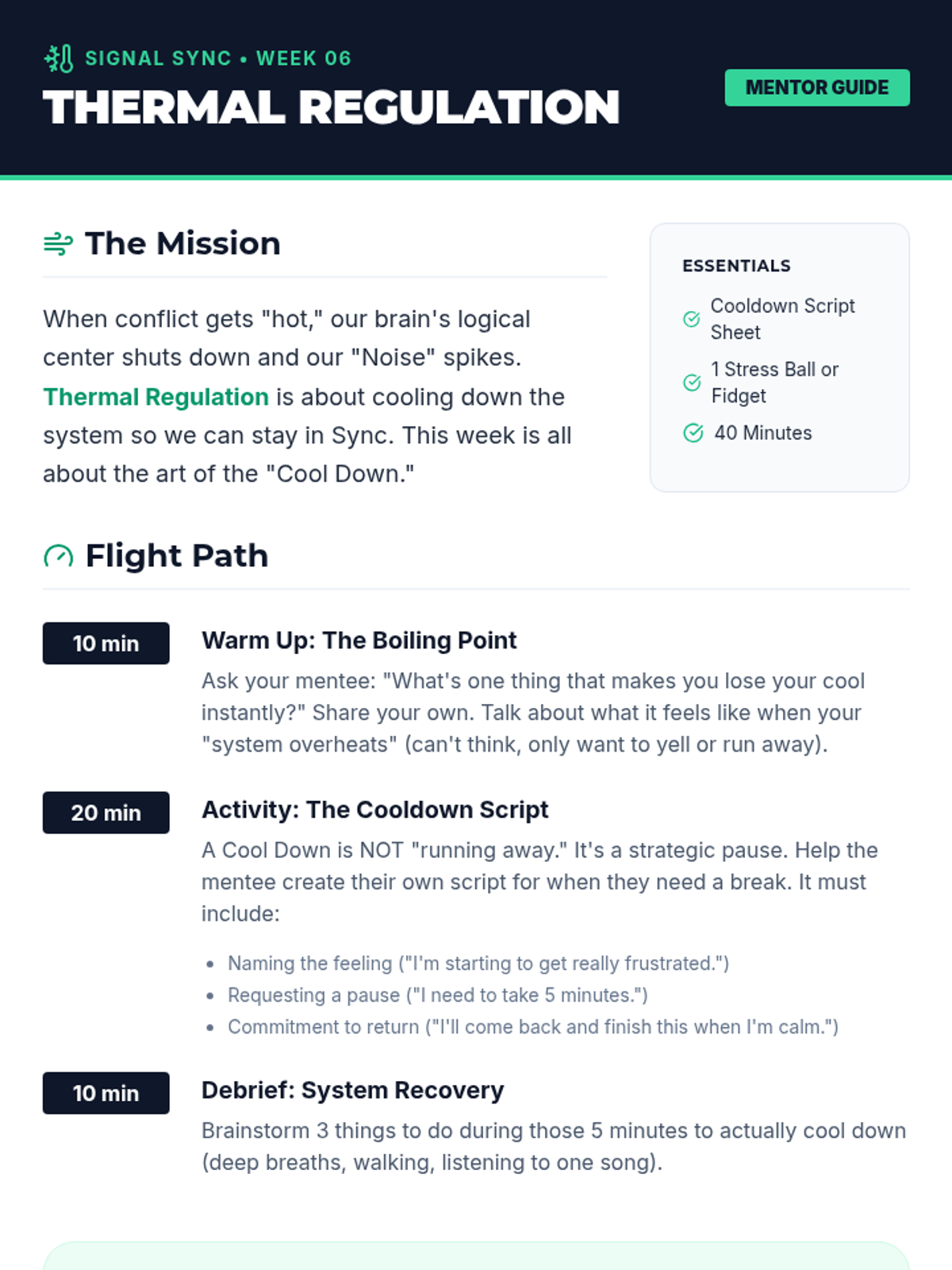
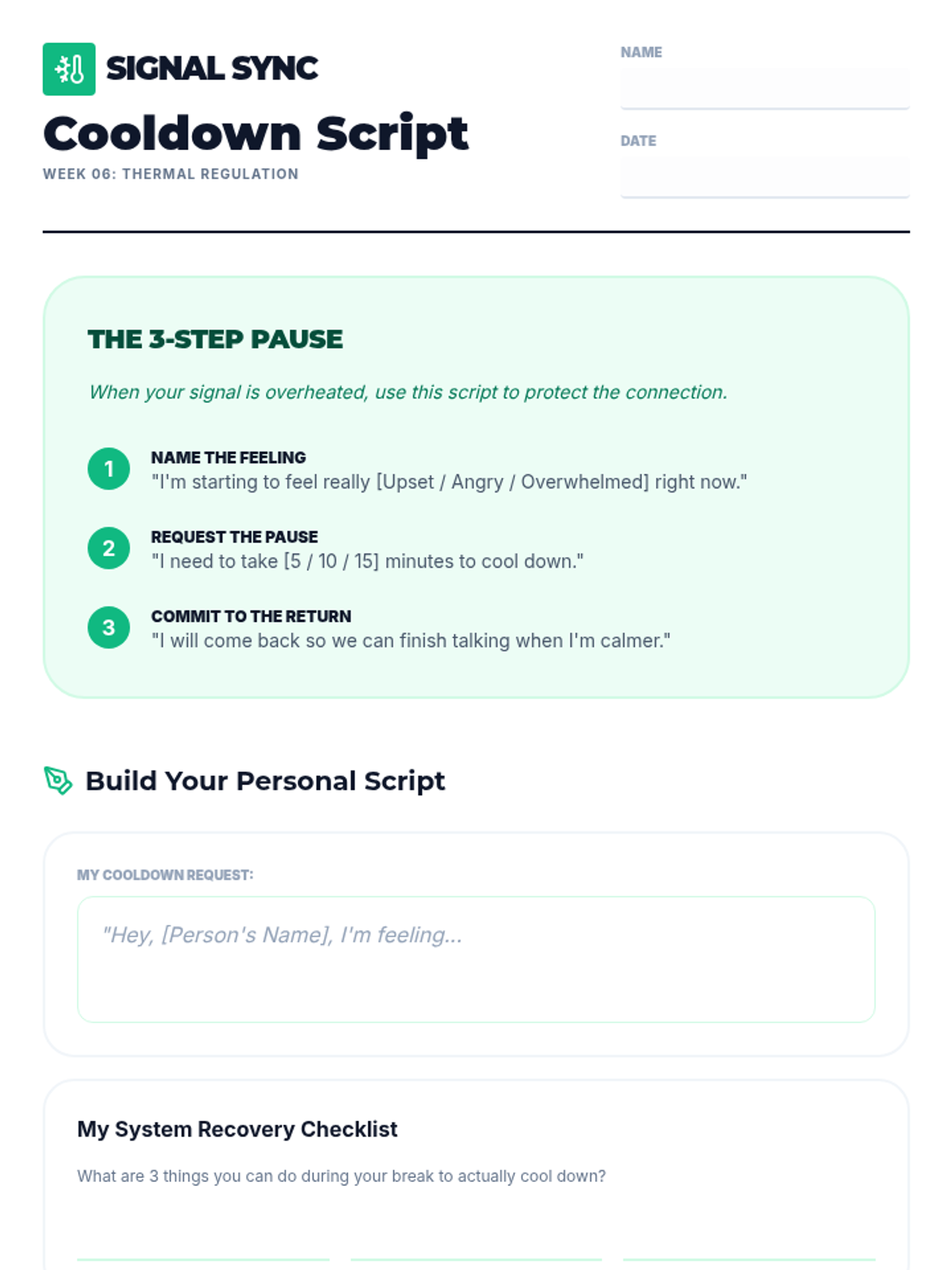
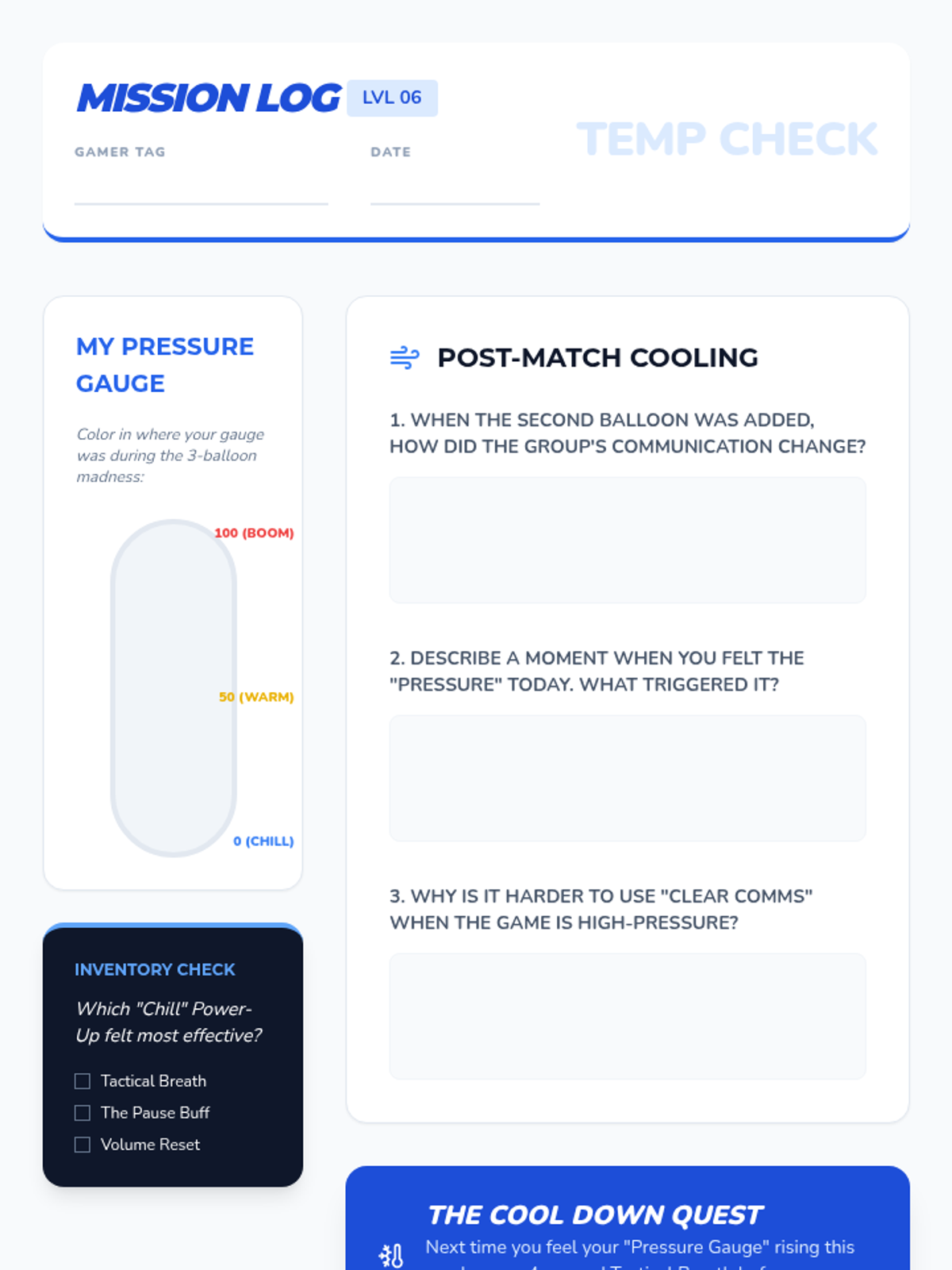
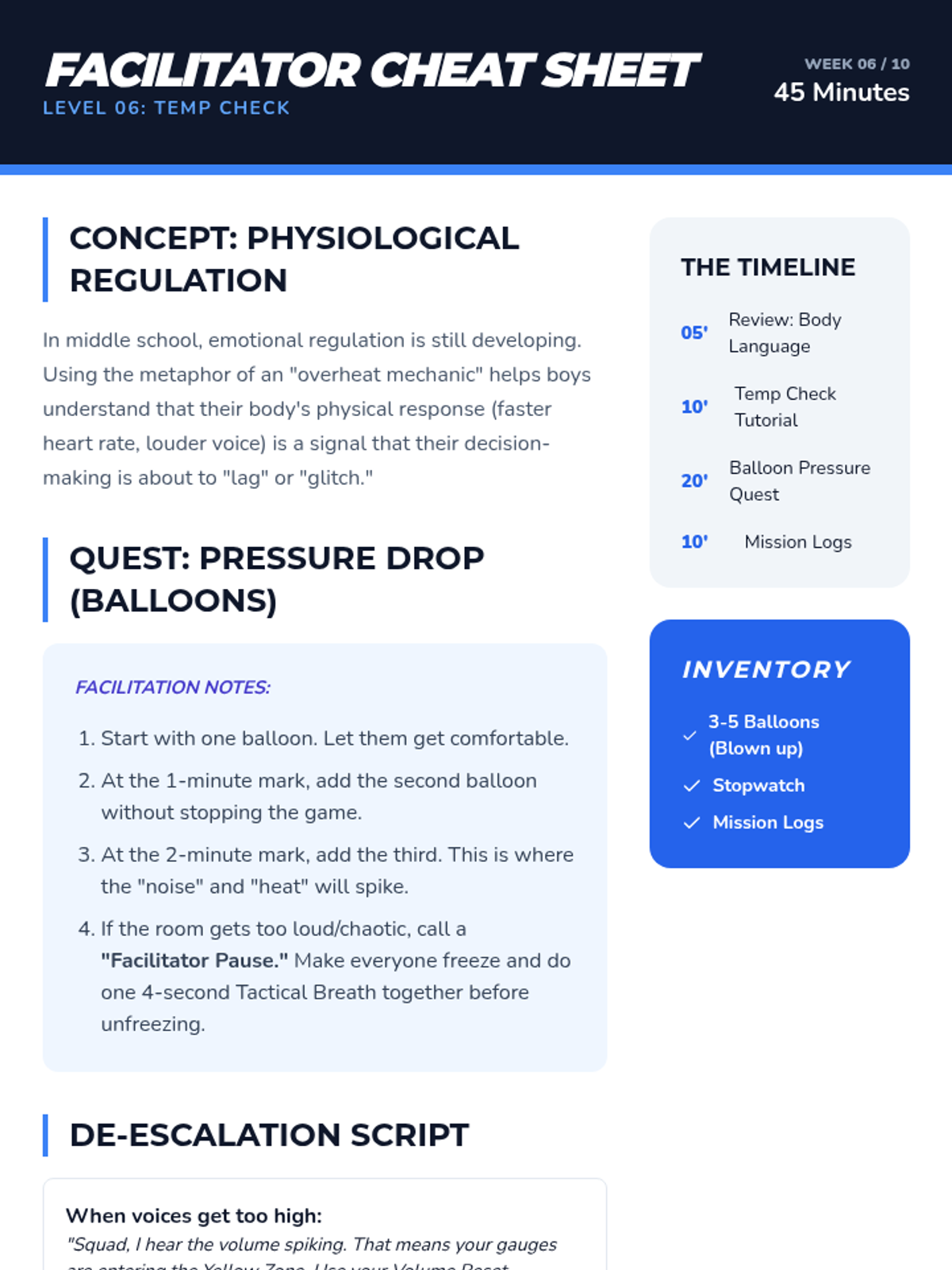
Techniques for emotional regulation and de-escalation when a conversation starts to get 'hot'.
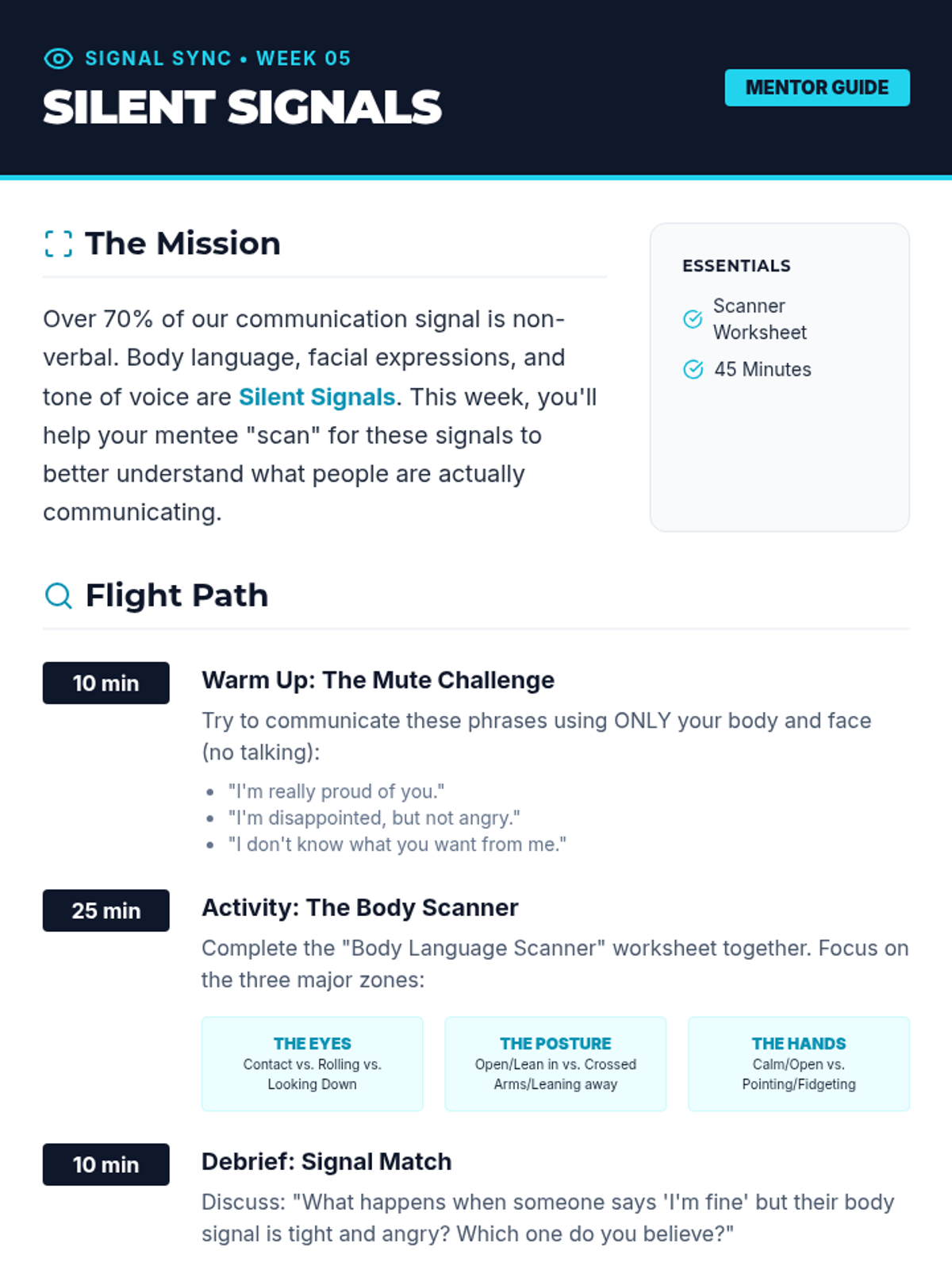
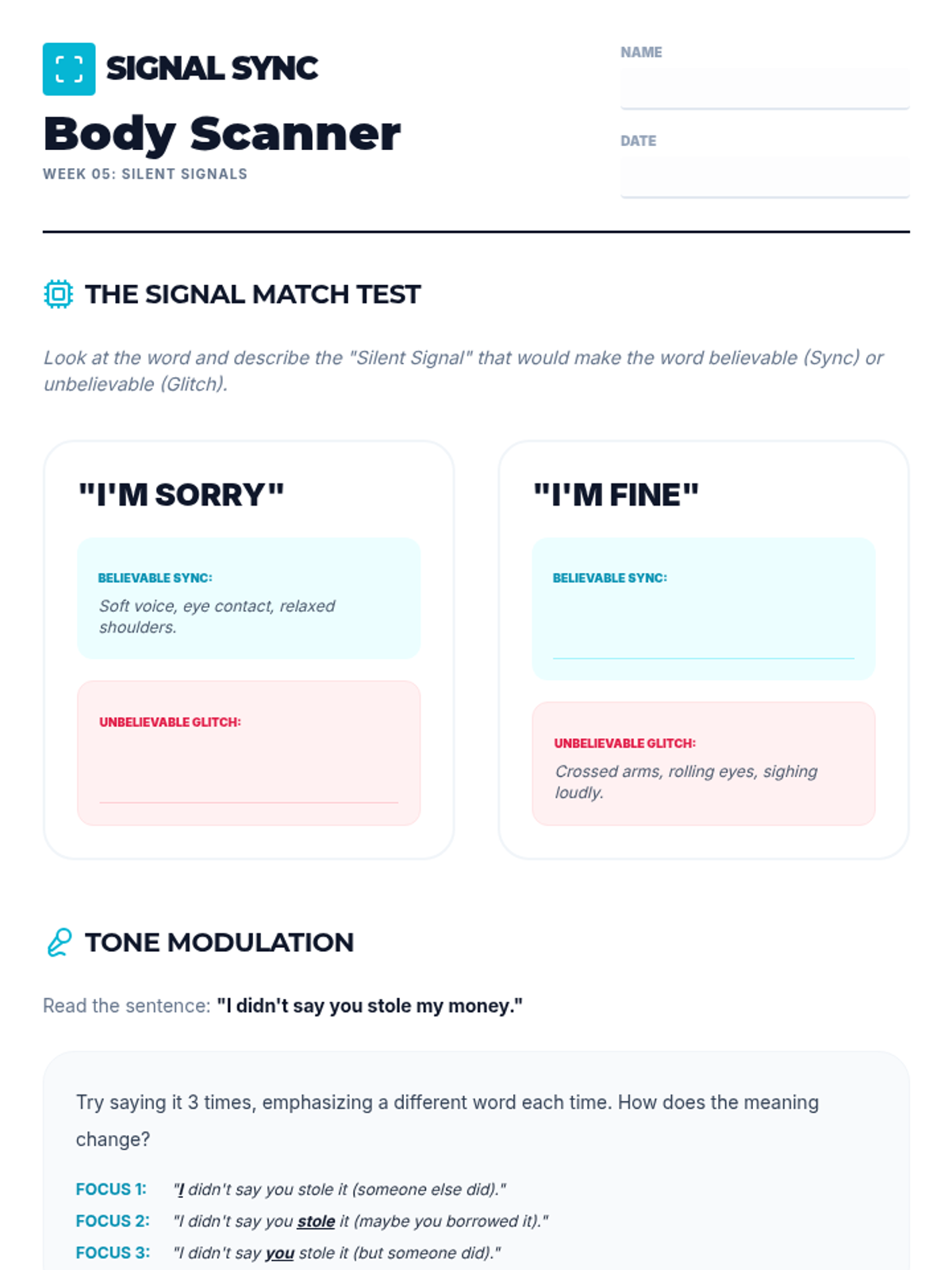
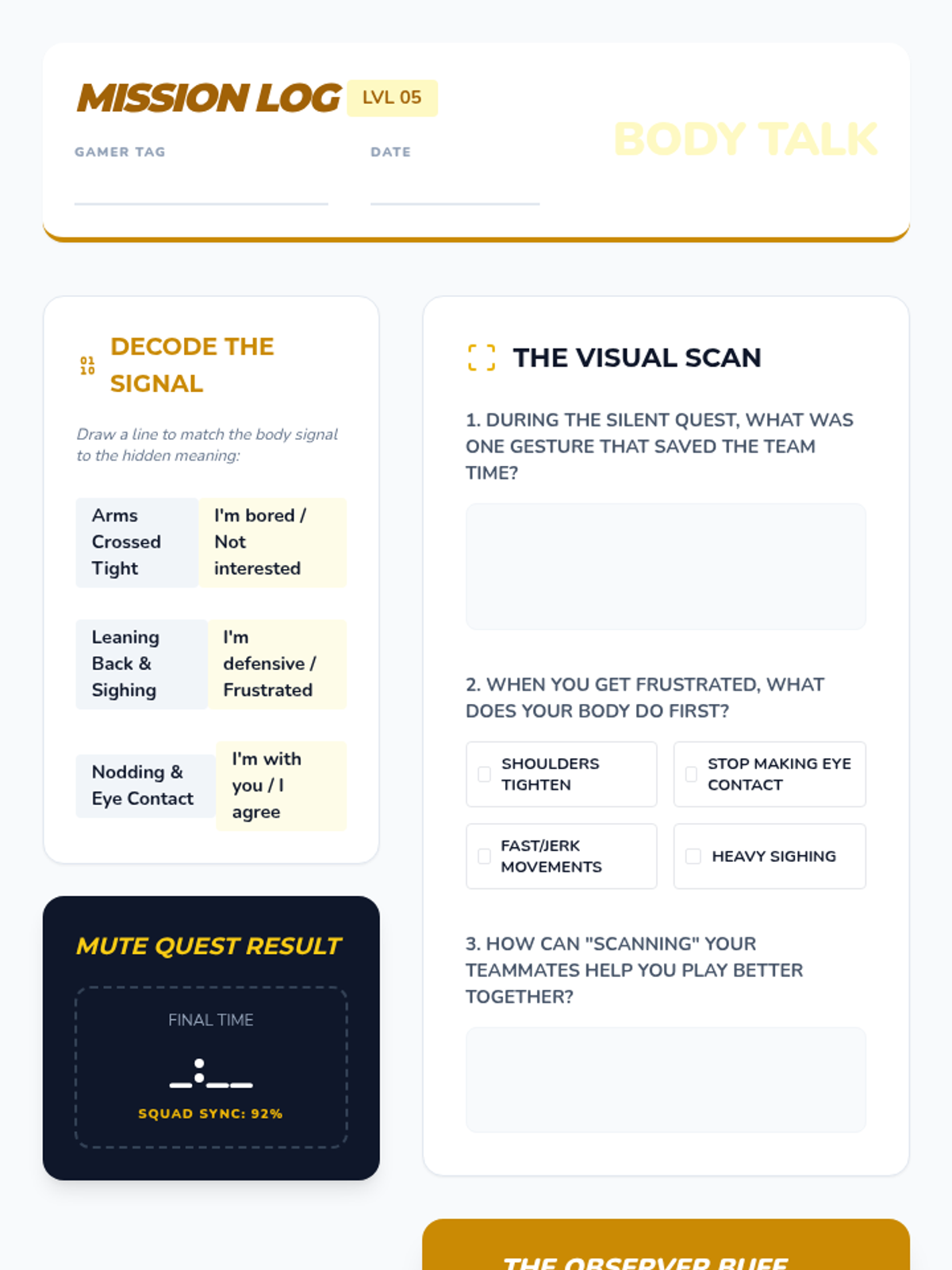
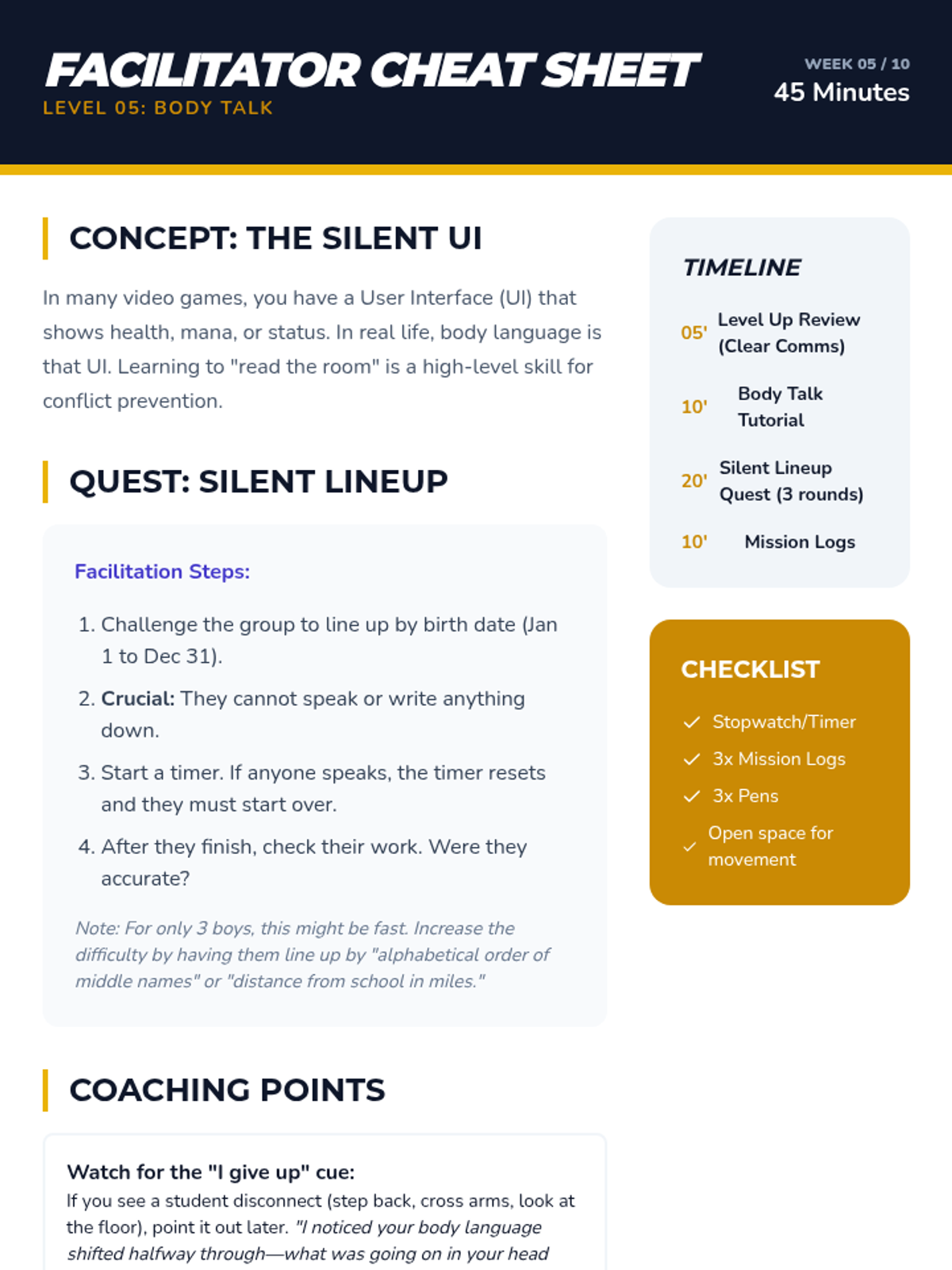
Exploring non-verbal communication, including body language, facial expressions, and tone of voice.
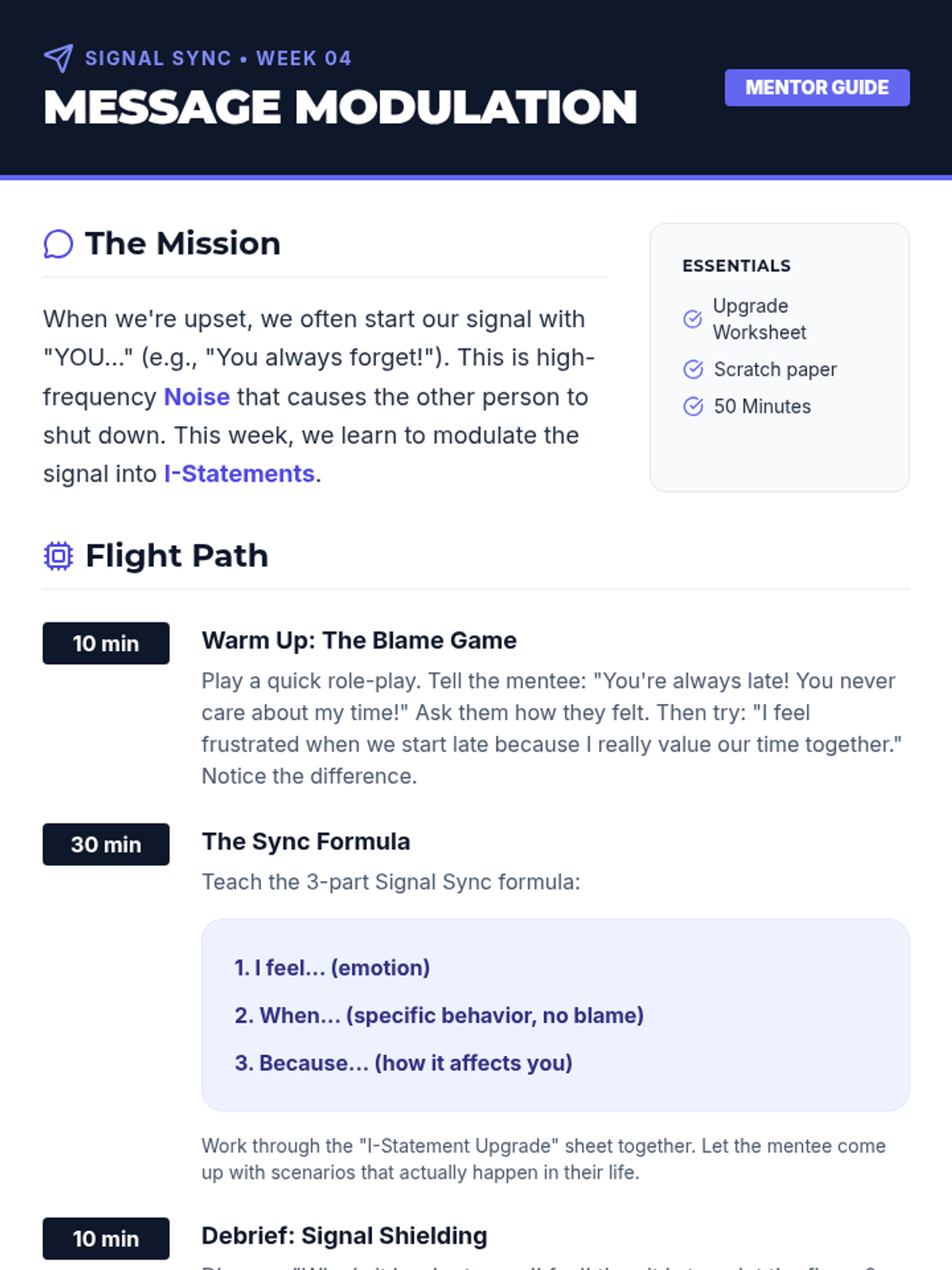
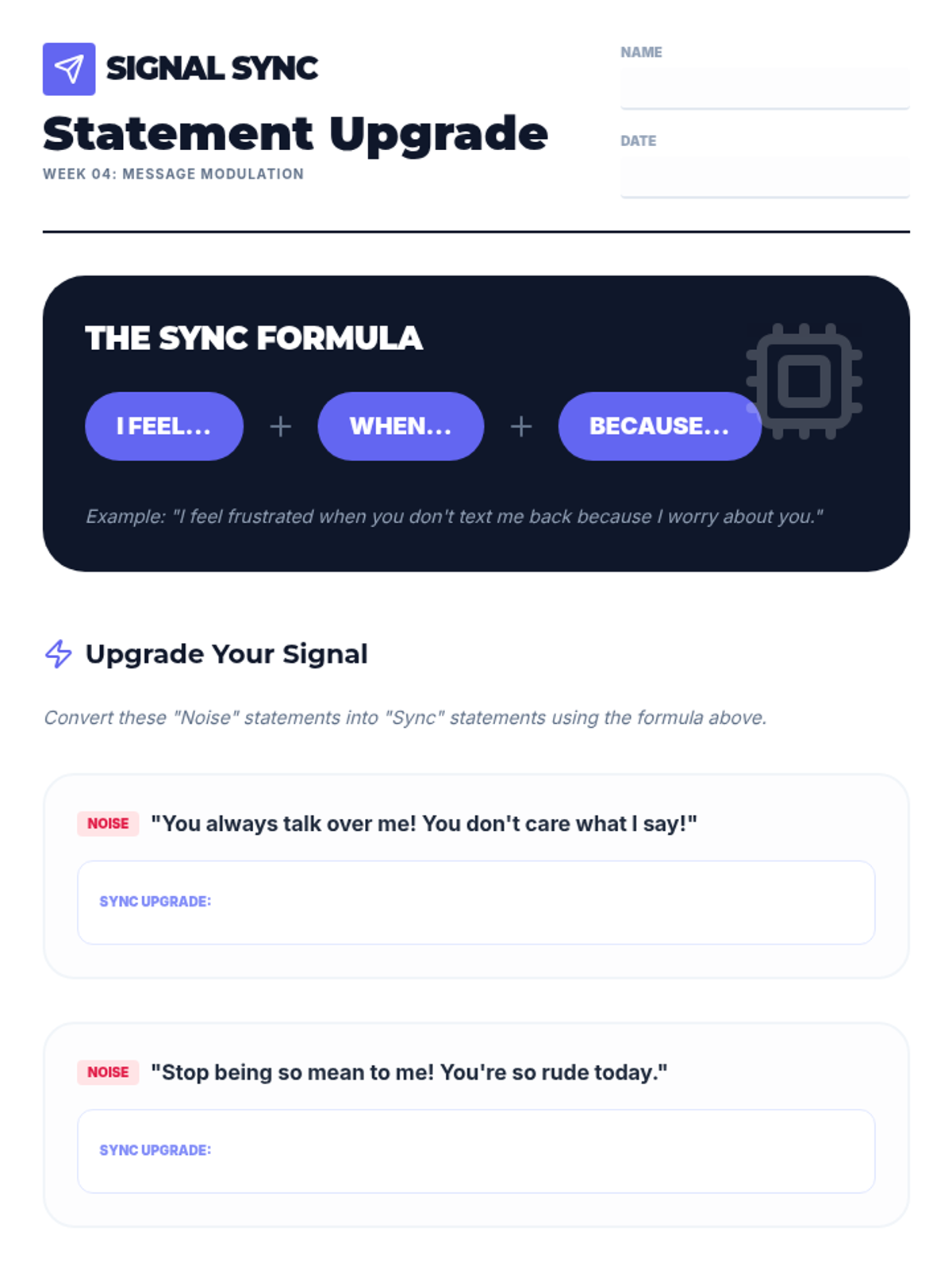
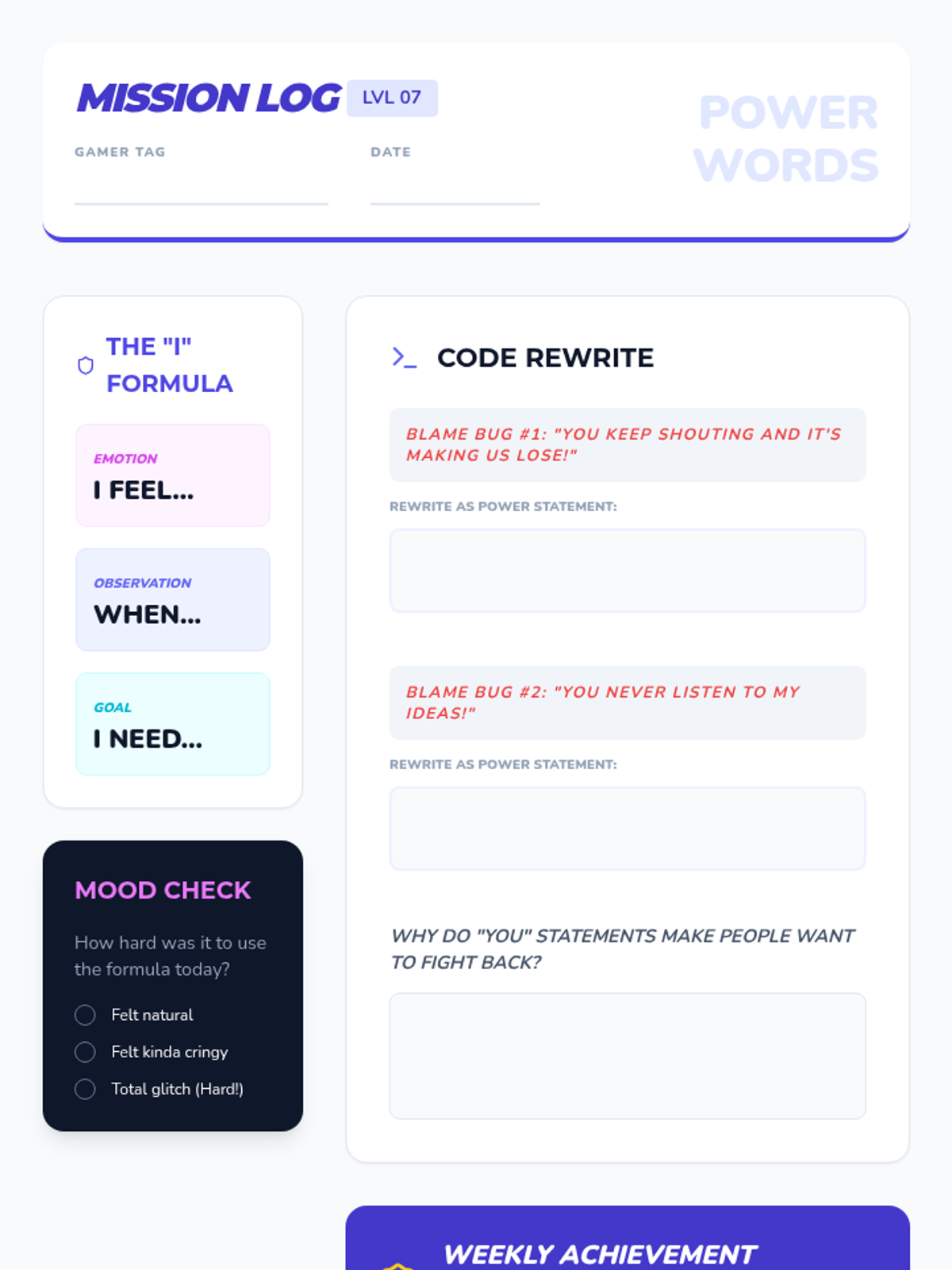
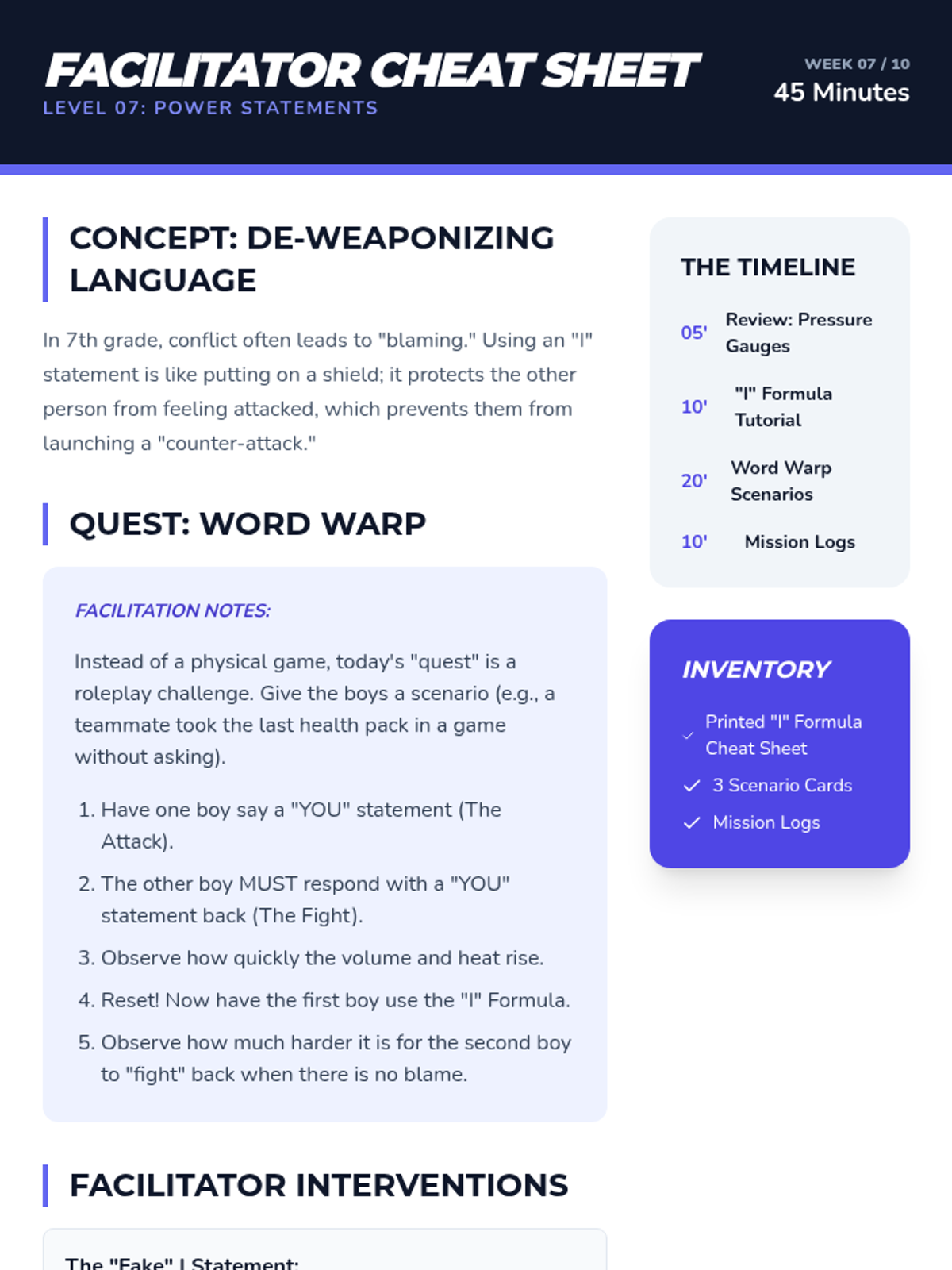
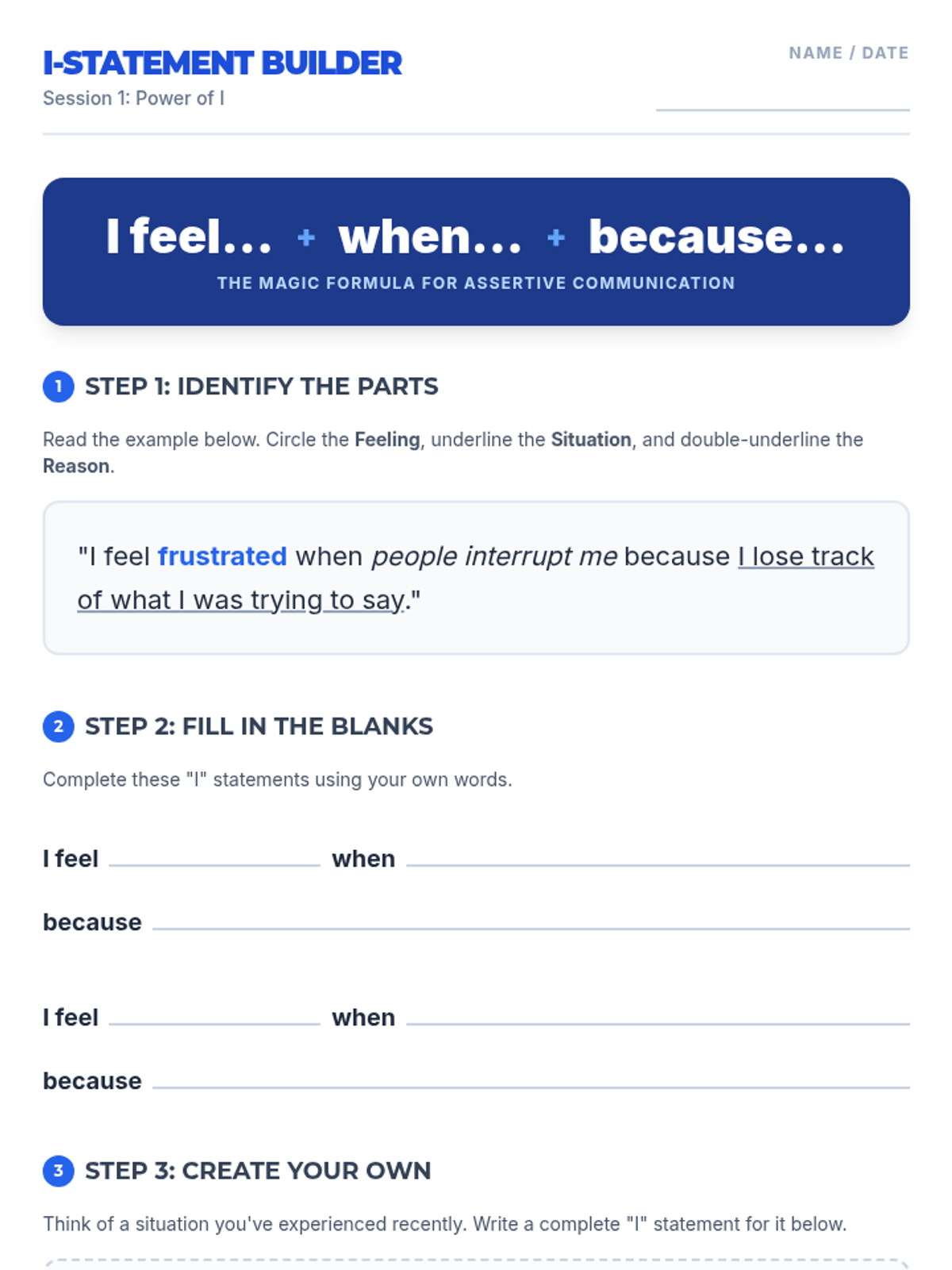
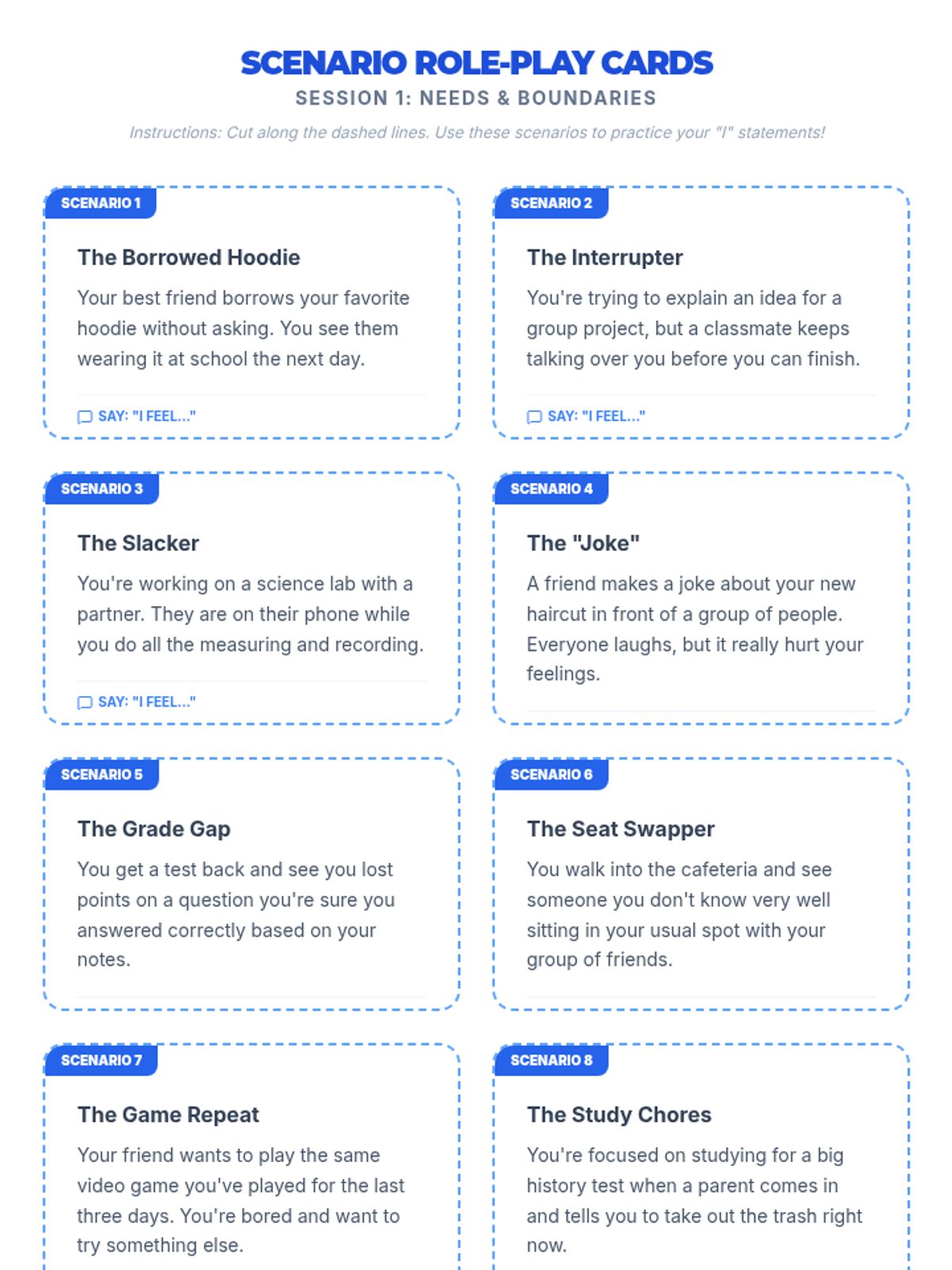
Learning to use 'I' statements to express feelings and needs without triggering defensiveness in others.
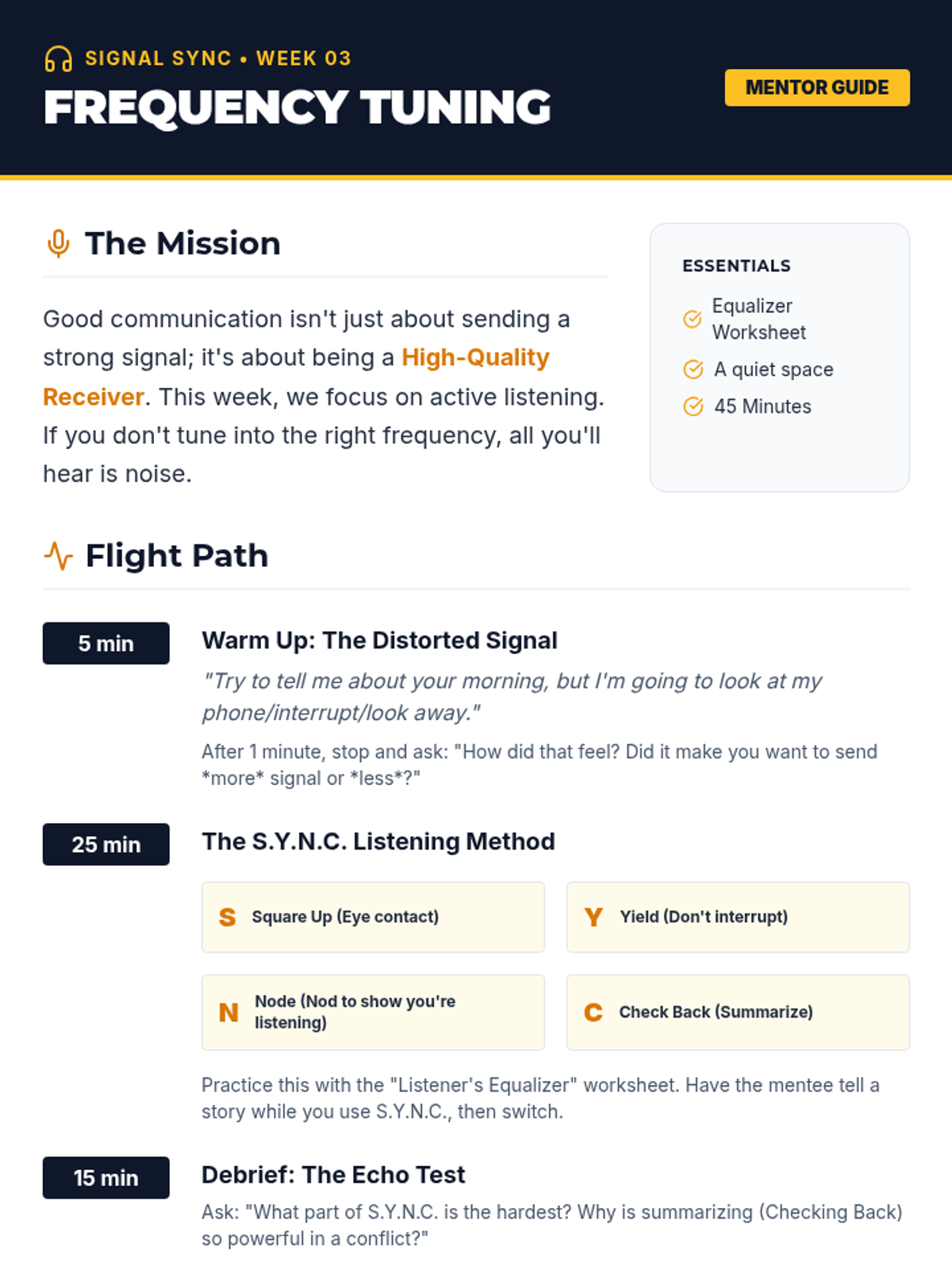
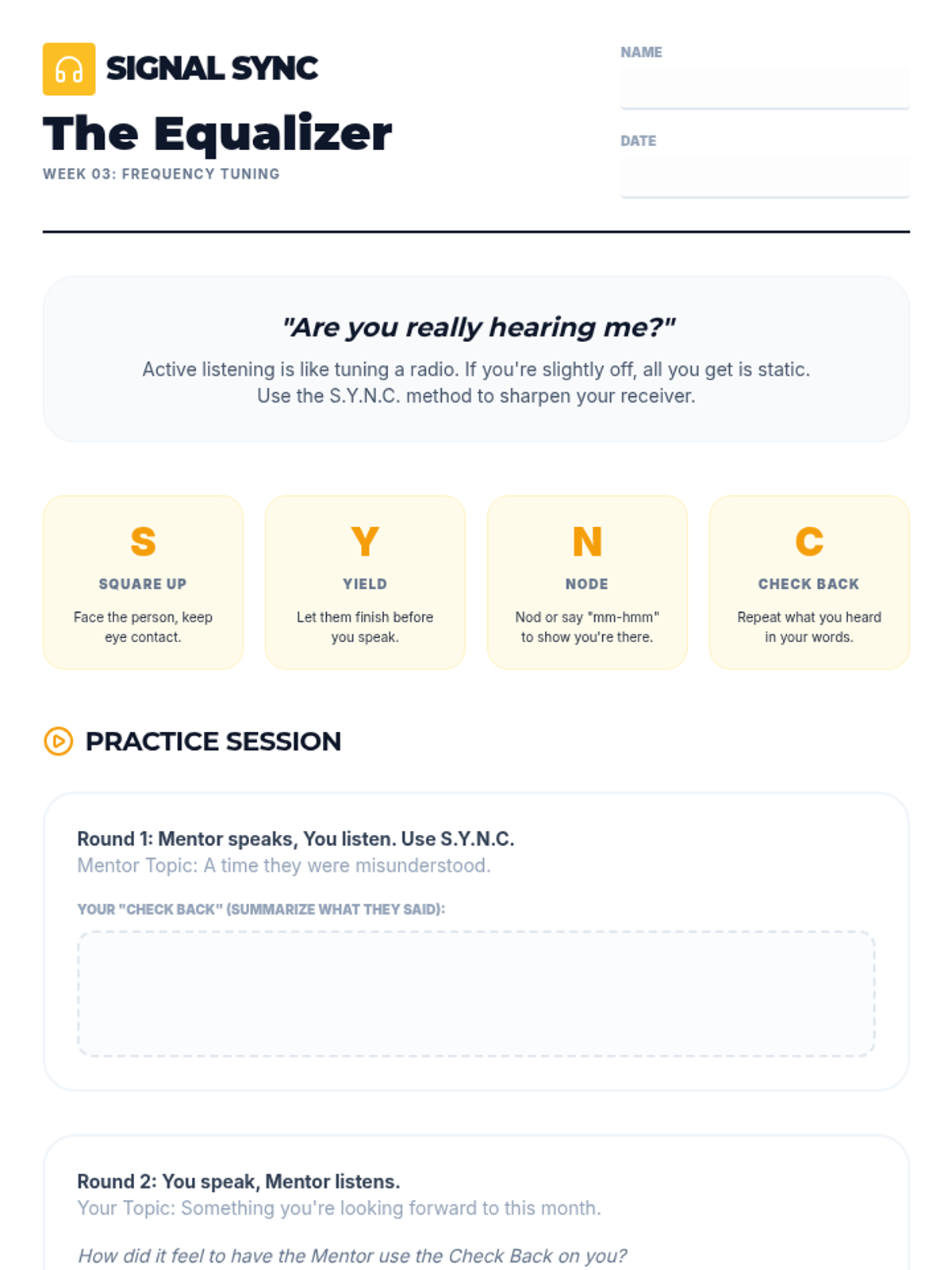
Mastering active listening techniques to ensure the receiver is fully tuned into the sender's message.
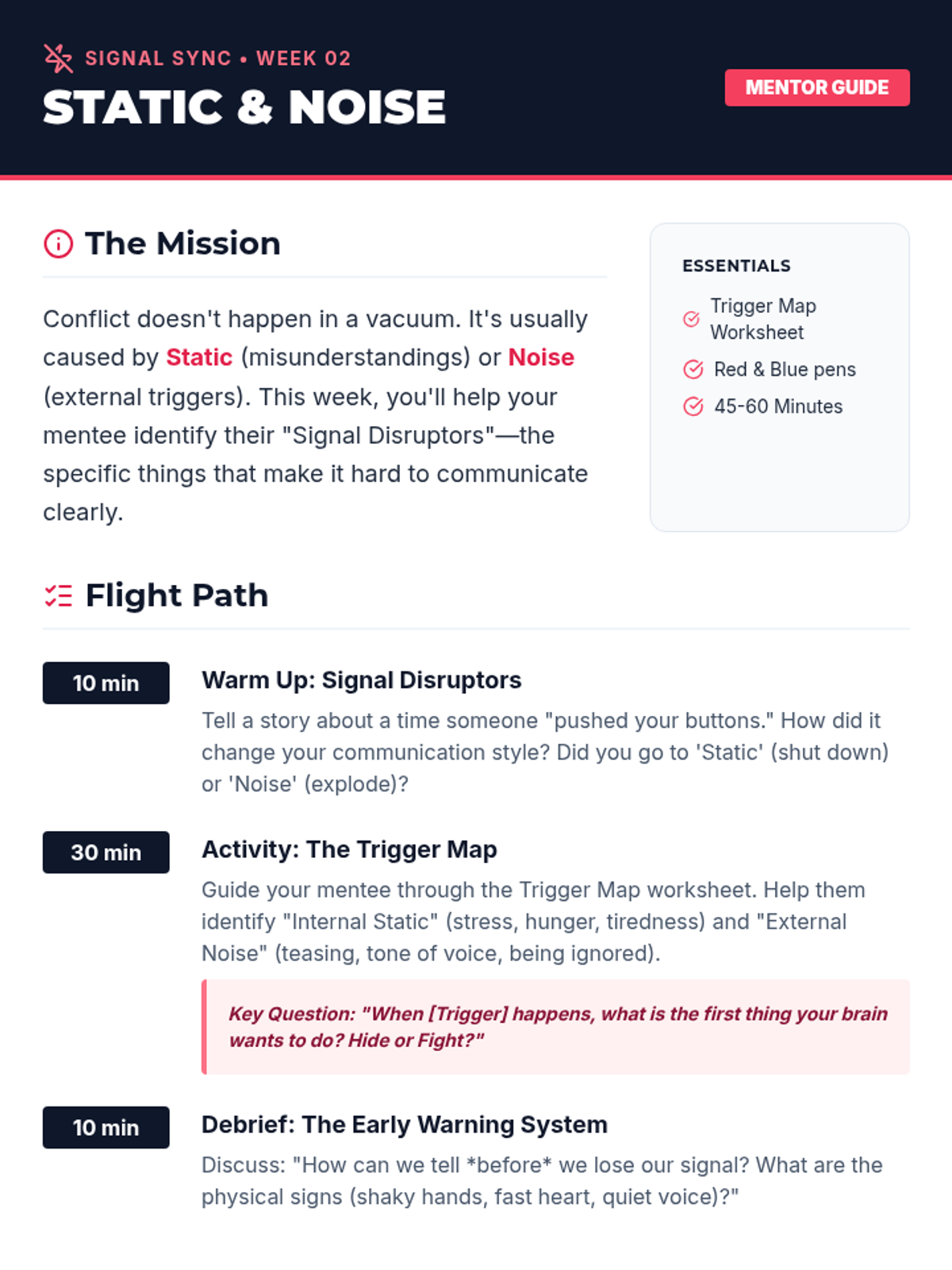
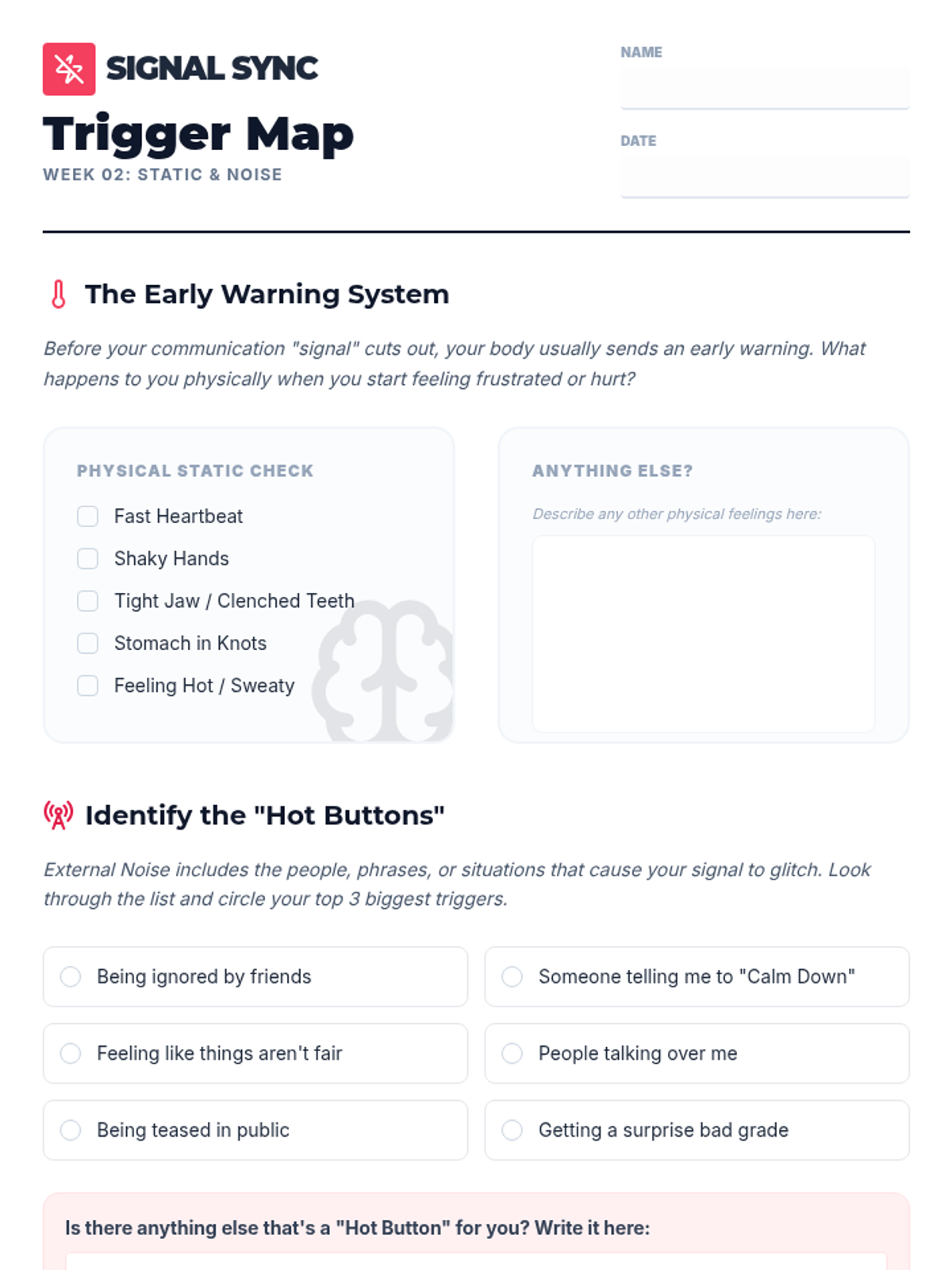
Identifying the 'static' or triggers that lead to conflict and understanding the root causes of misunderstandings.
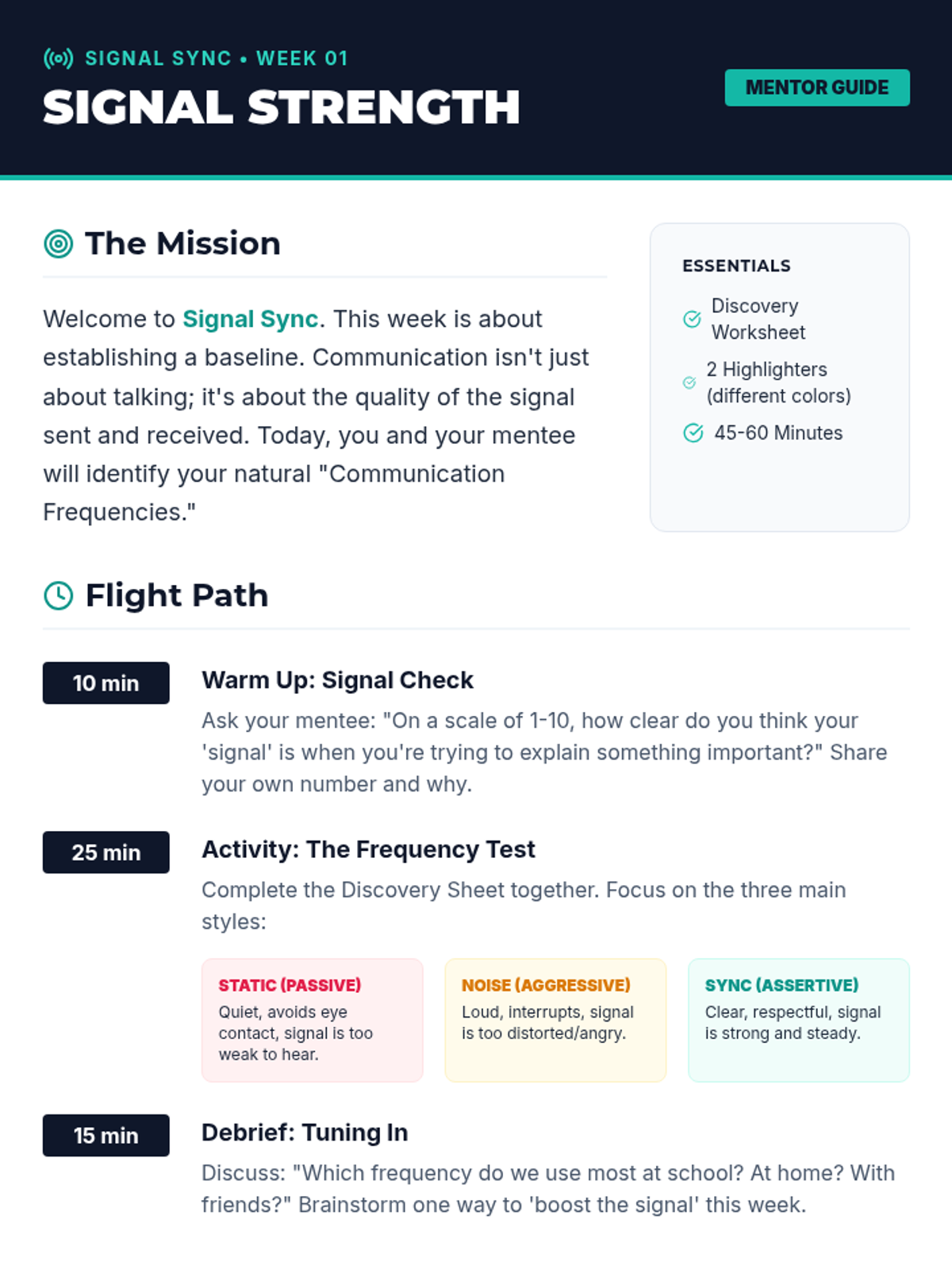
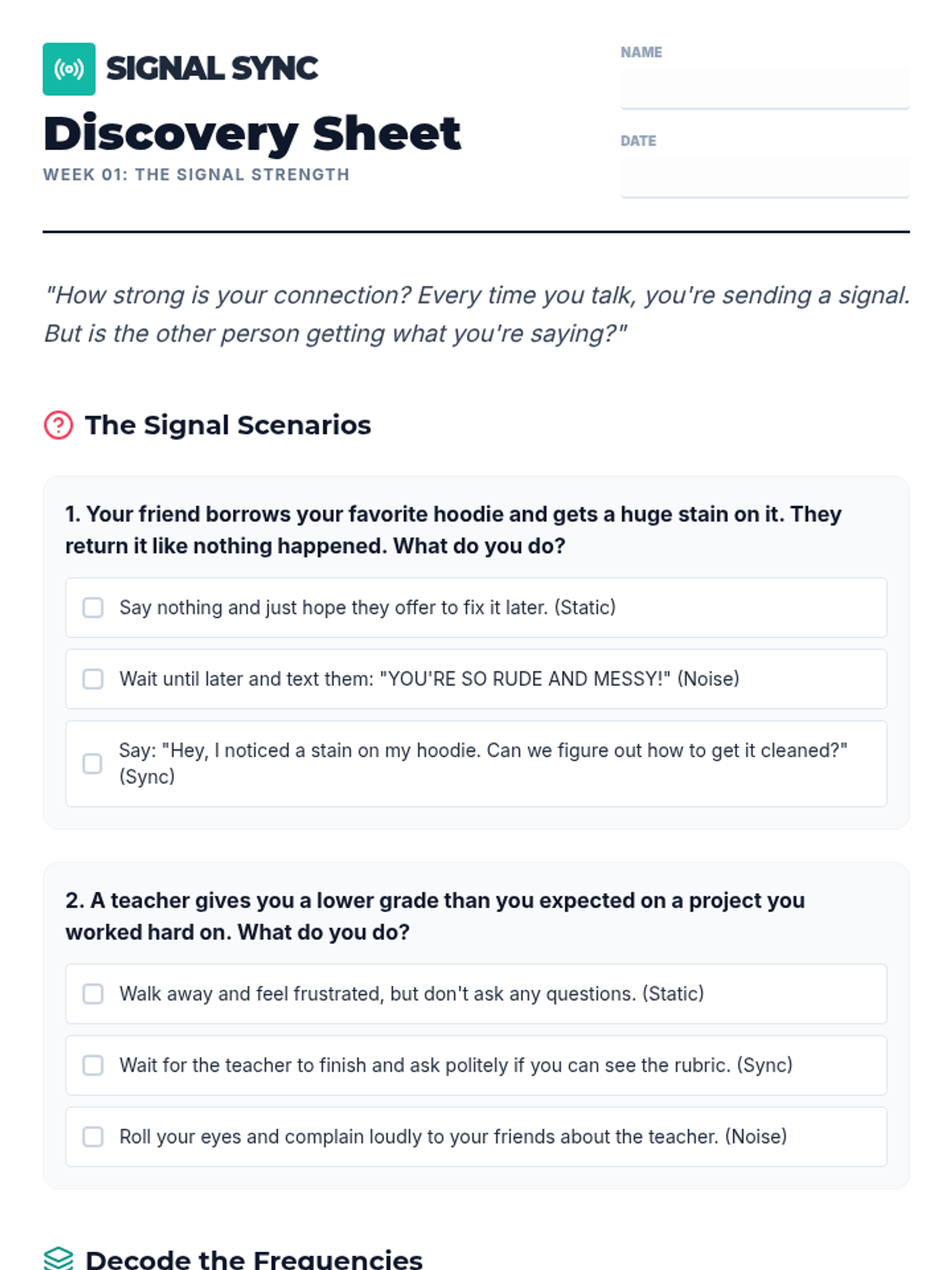
Introduction to communication styles and building a baseline understanding of how we send and receive information.
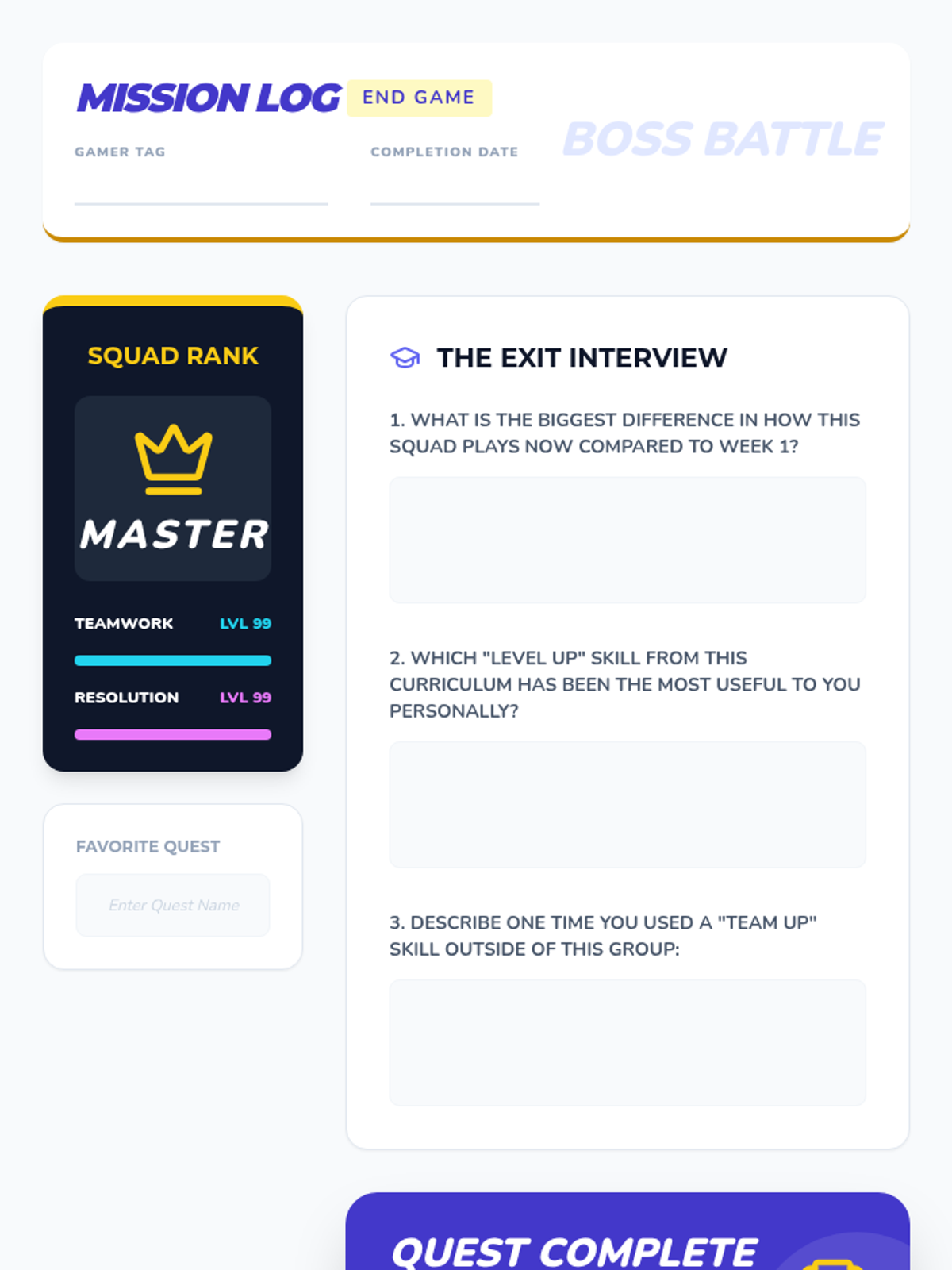
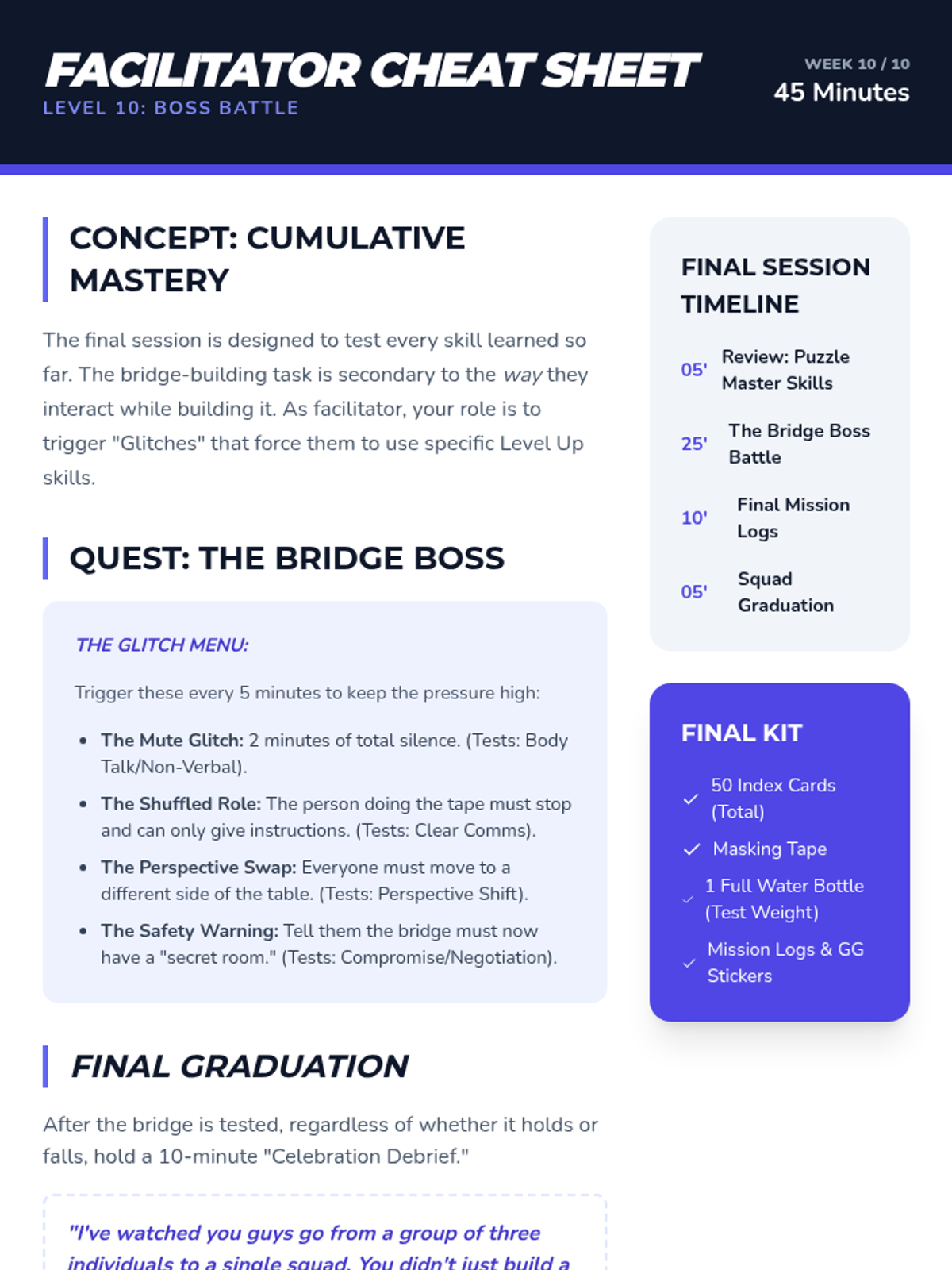
A final cumulative challenge where students apply all learned skills to complete a high-stakes cooperative quest.
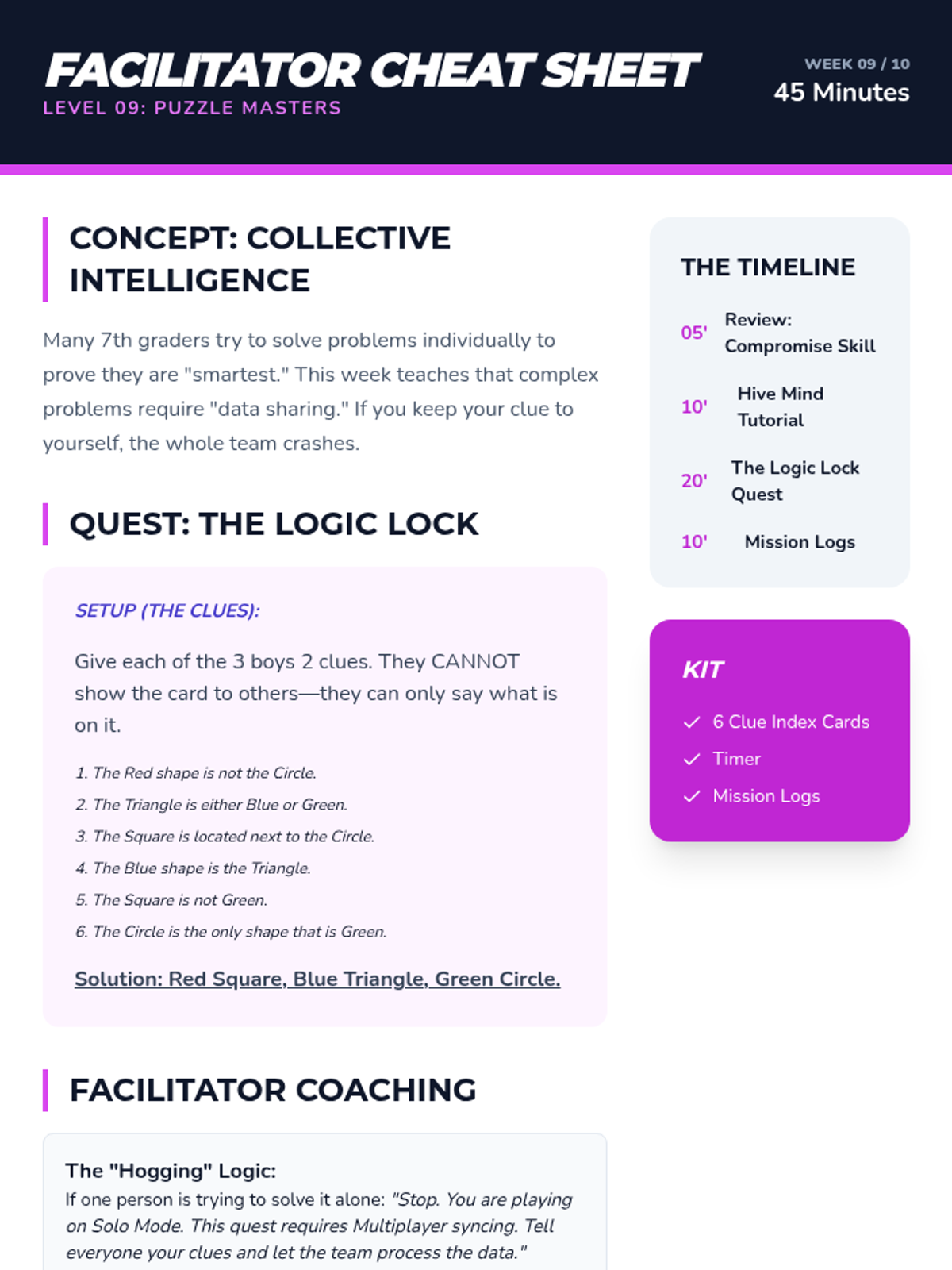
Collaborative problem-solving techniques for complex challenges.
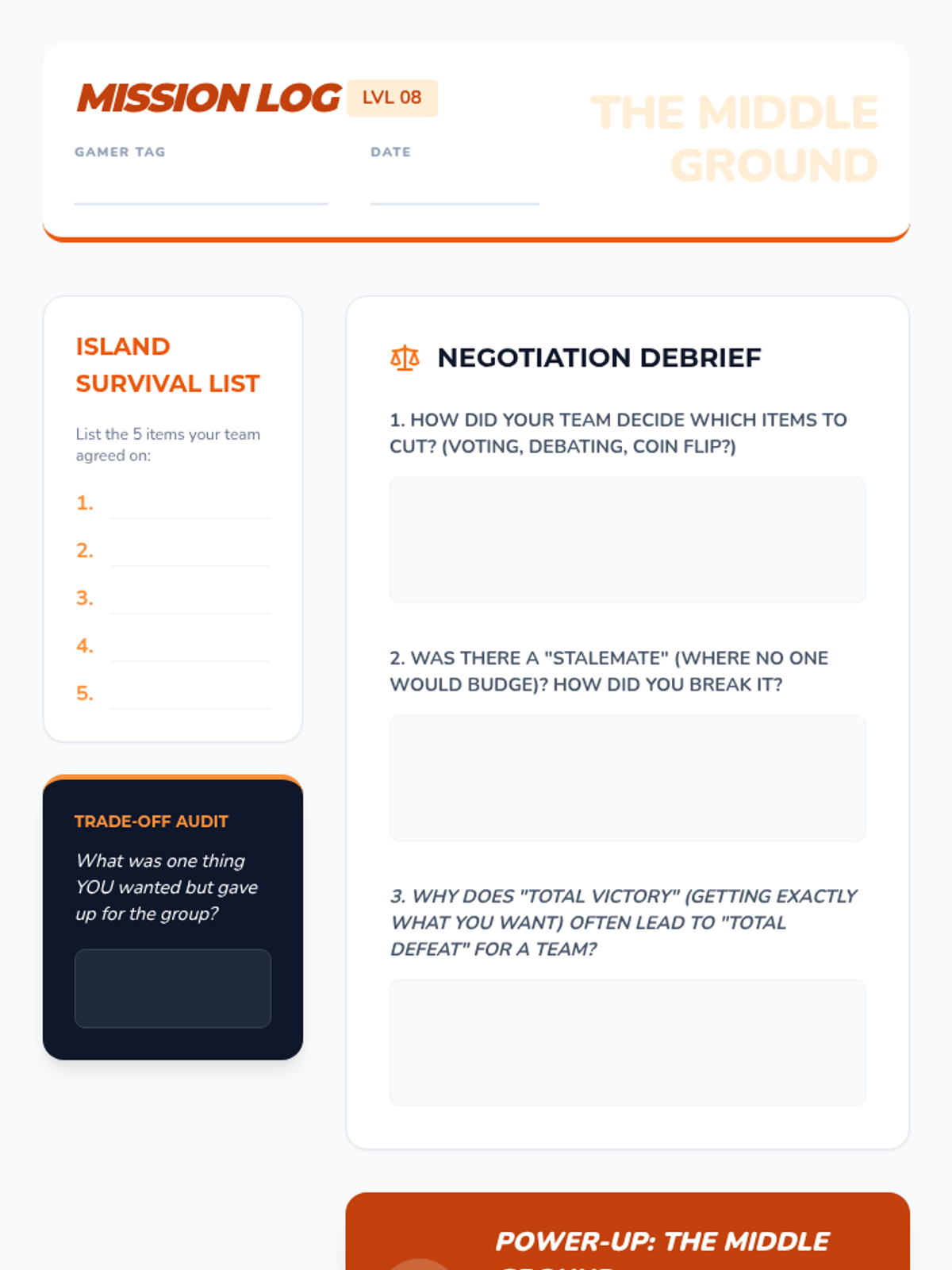
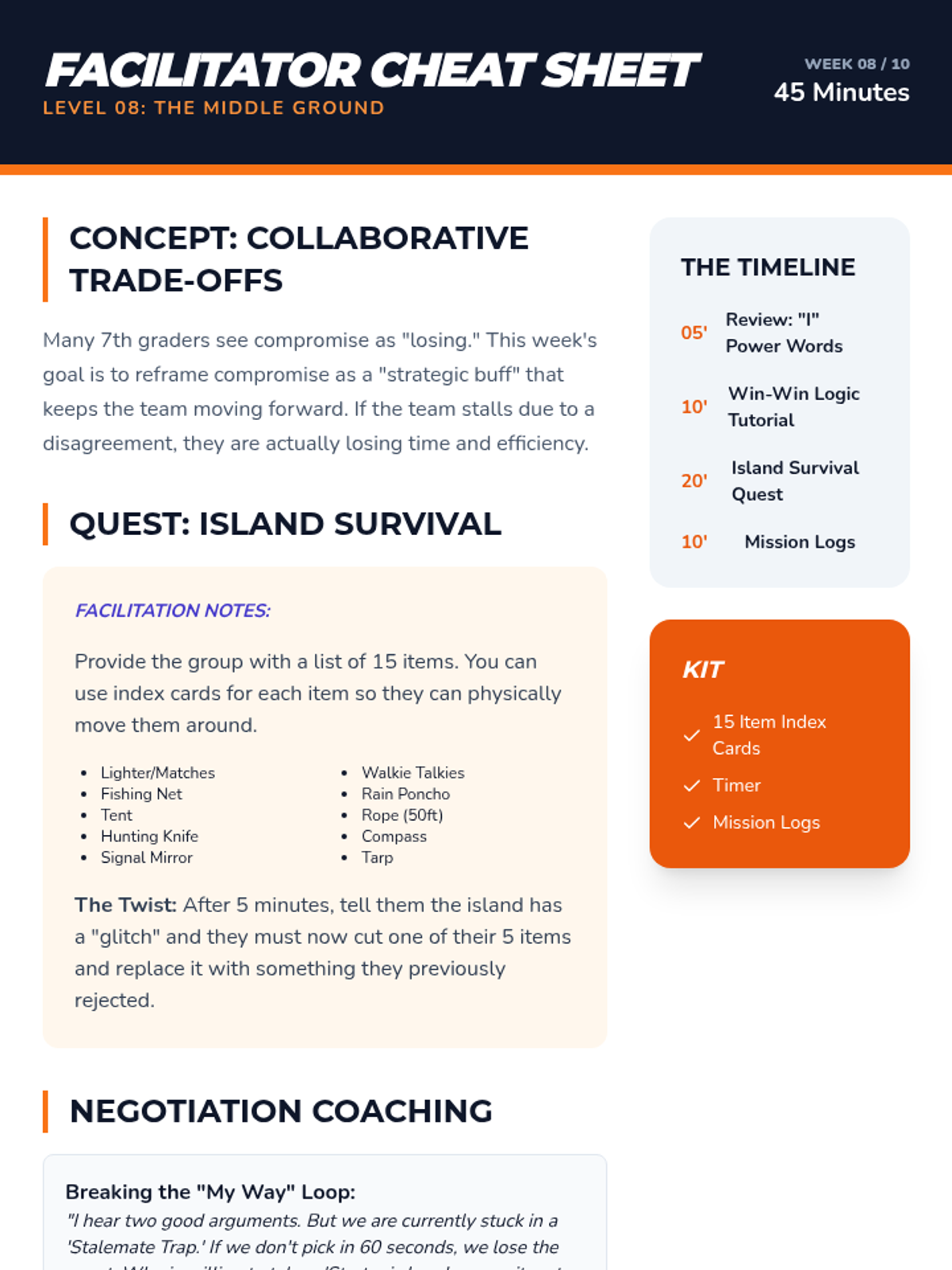
Practicing the art of compromise and finding win-win solutions when team members disagree.
Mastering the use of 'I' statements to express needs and feelings without blaming others.
Learning to recognize rising tension and using de-escalation strategies to stay 'cool' during games.
Understanding non-verbal communication, body language, and reading the 'room' or 'teammates'.
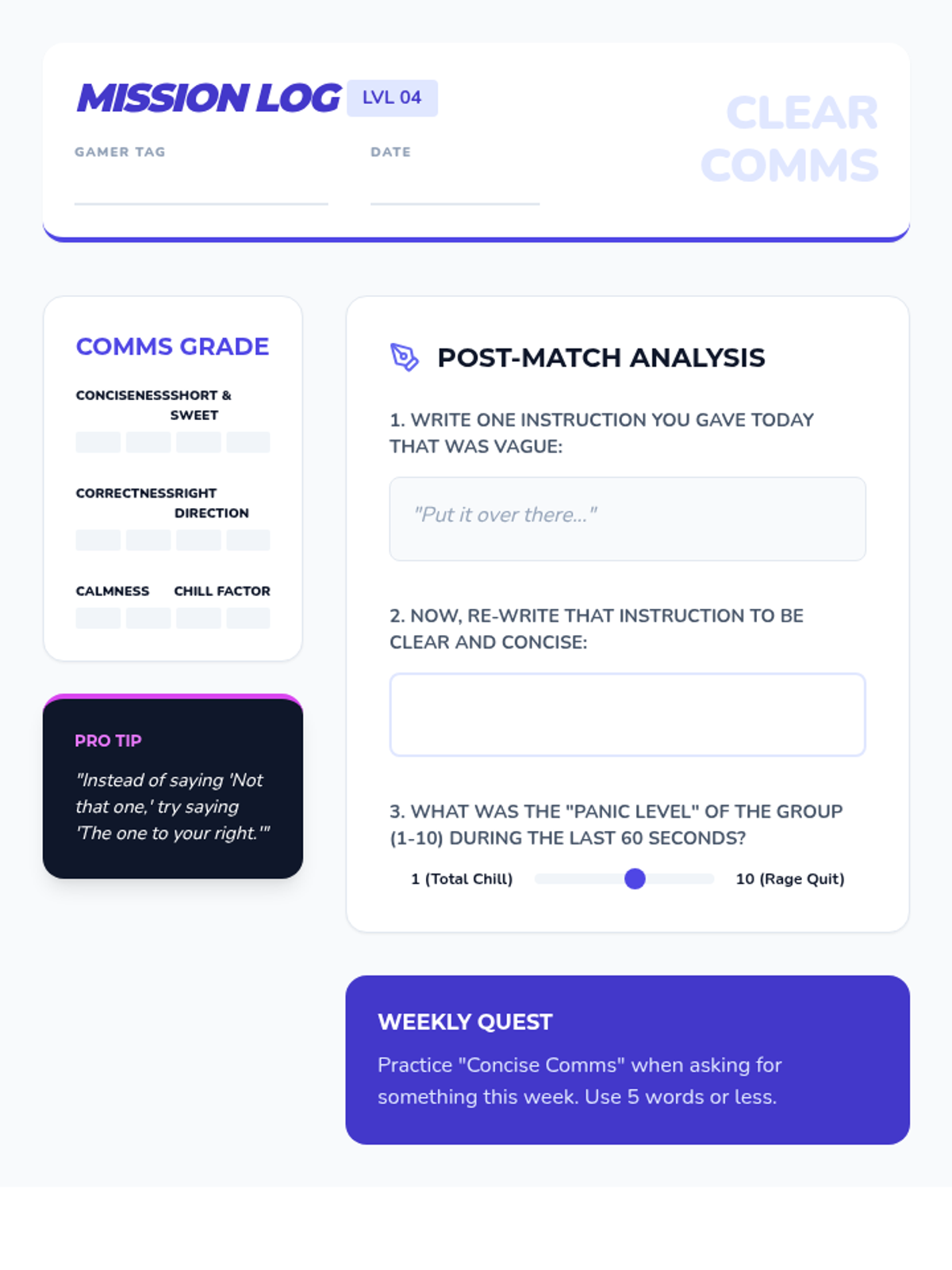
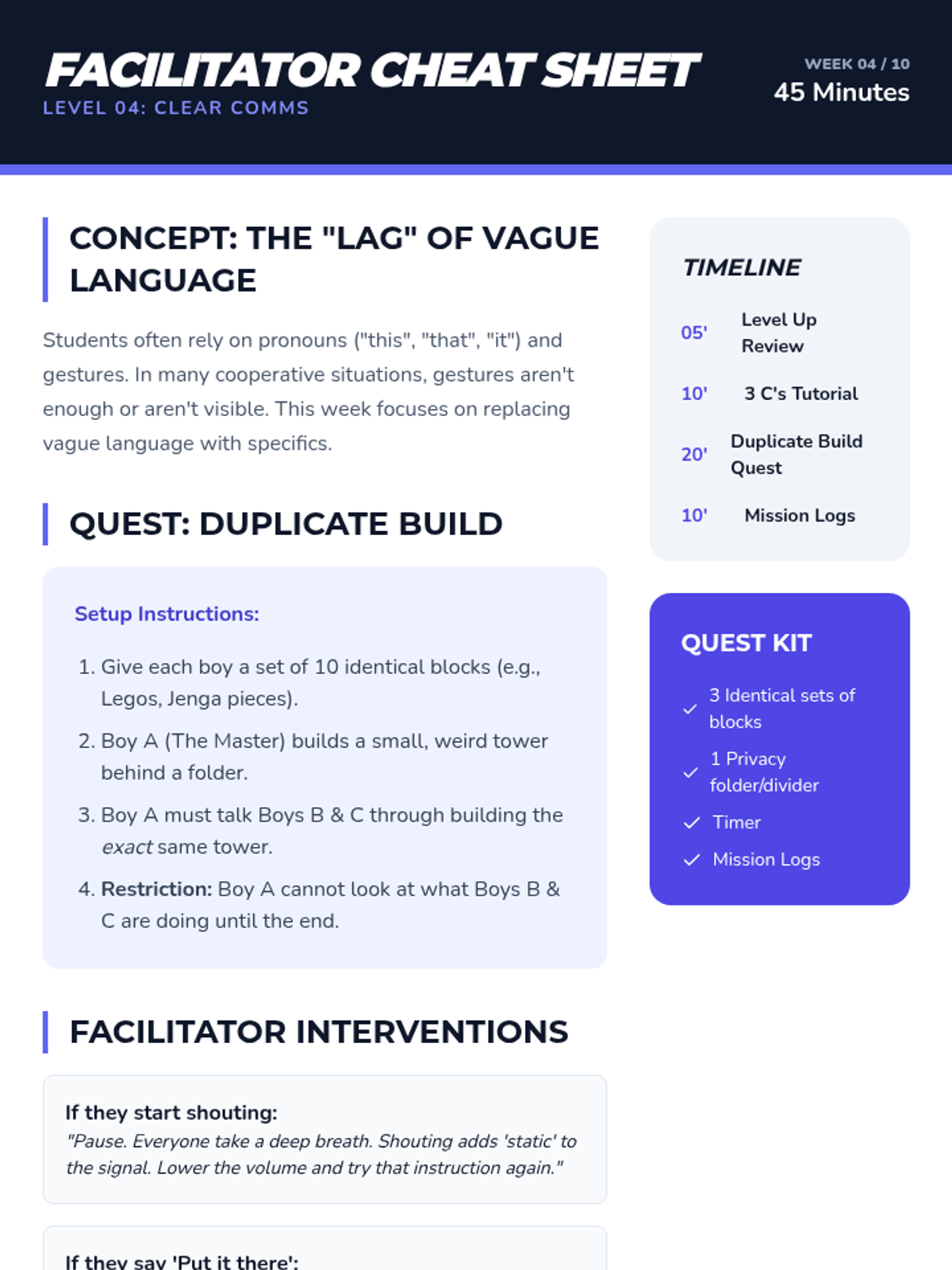
Developing clear verbal communication and the ability to give and follow instructions effectively.
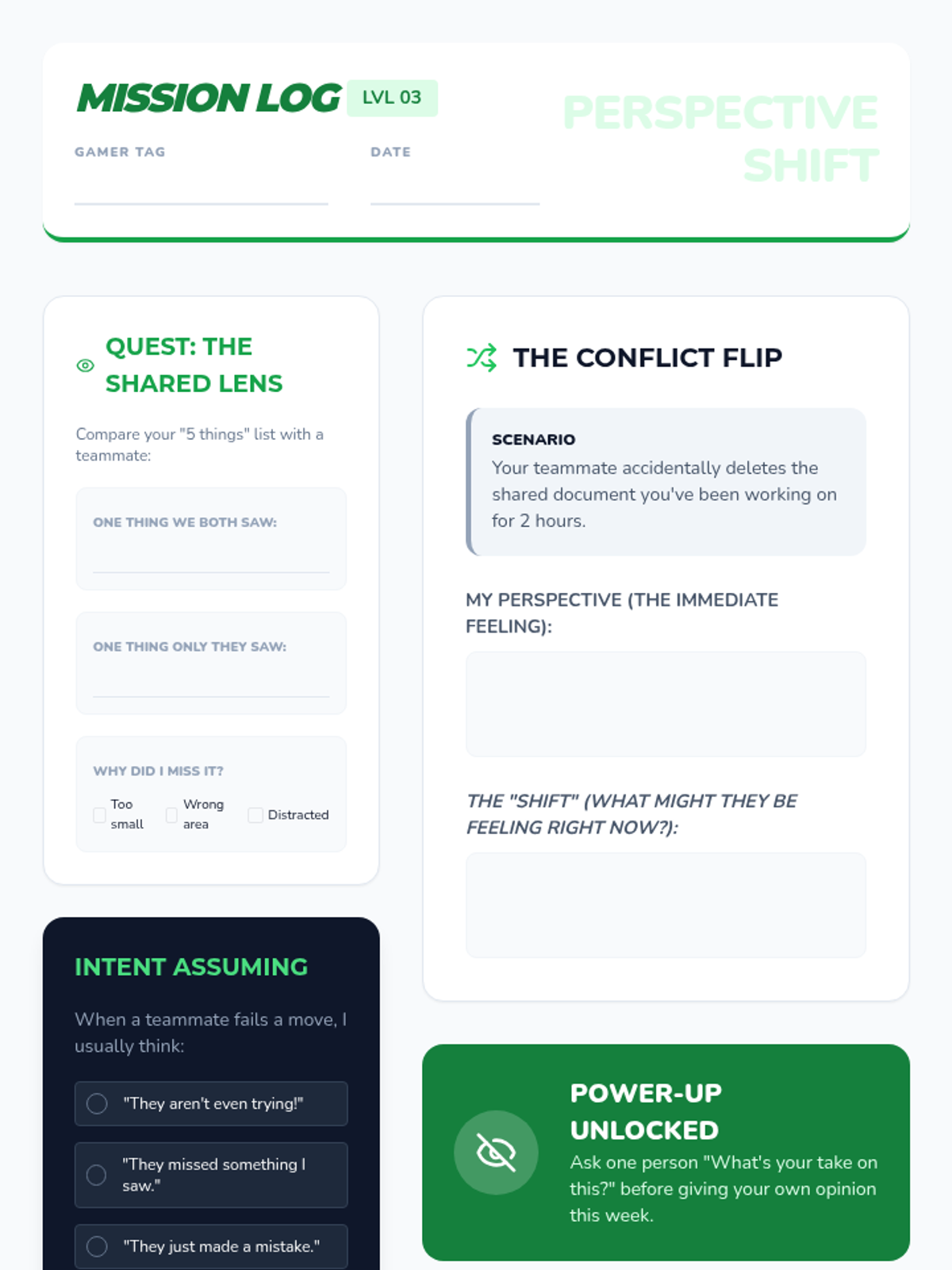
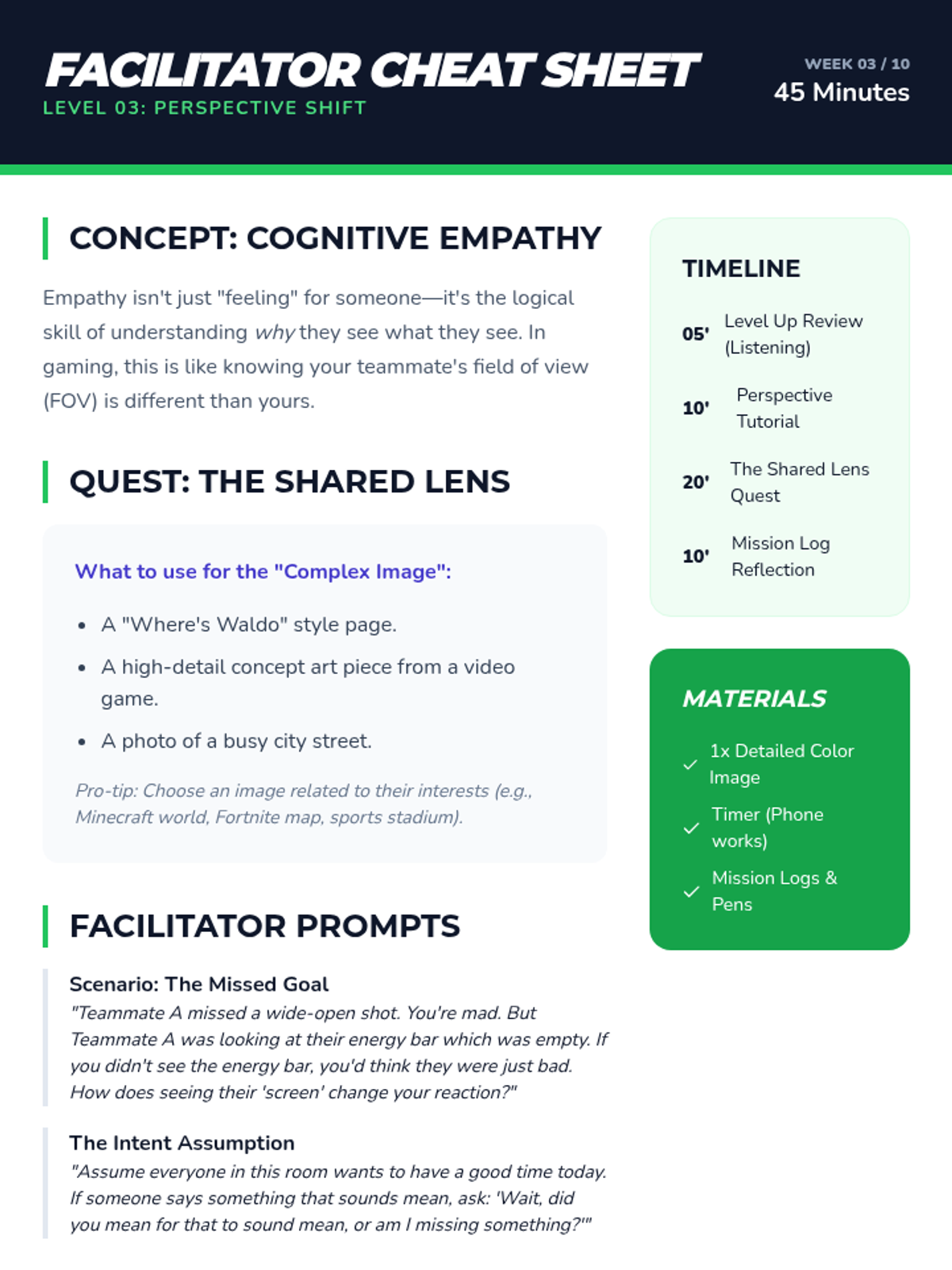
Exploring empathy and how different people can view the same situation differently.
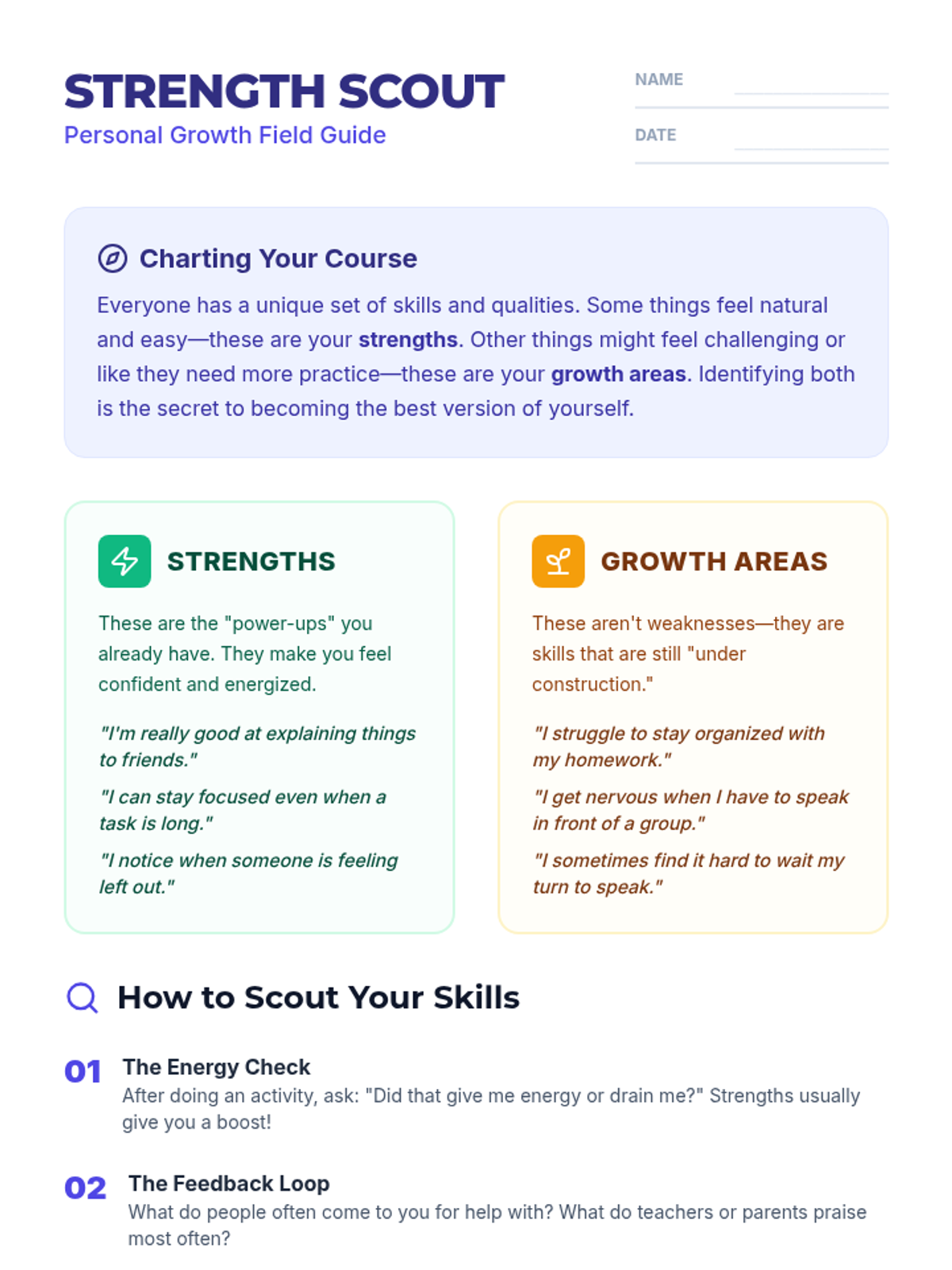
A lesson focused on helping students identify their personal strengths and areas for future development through self-reflection and scenario-based analysis.
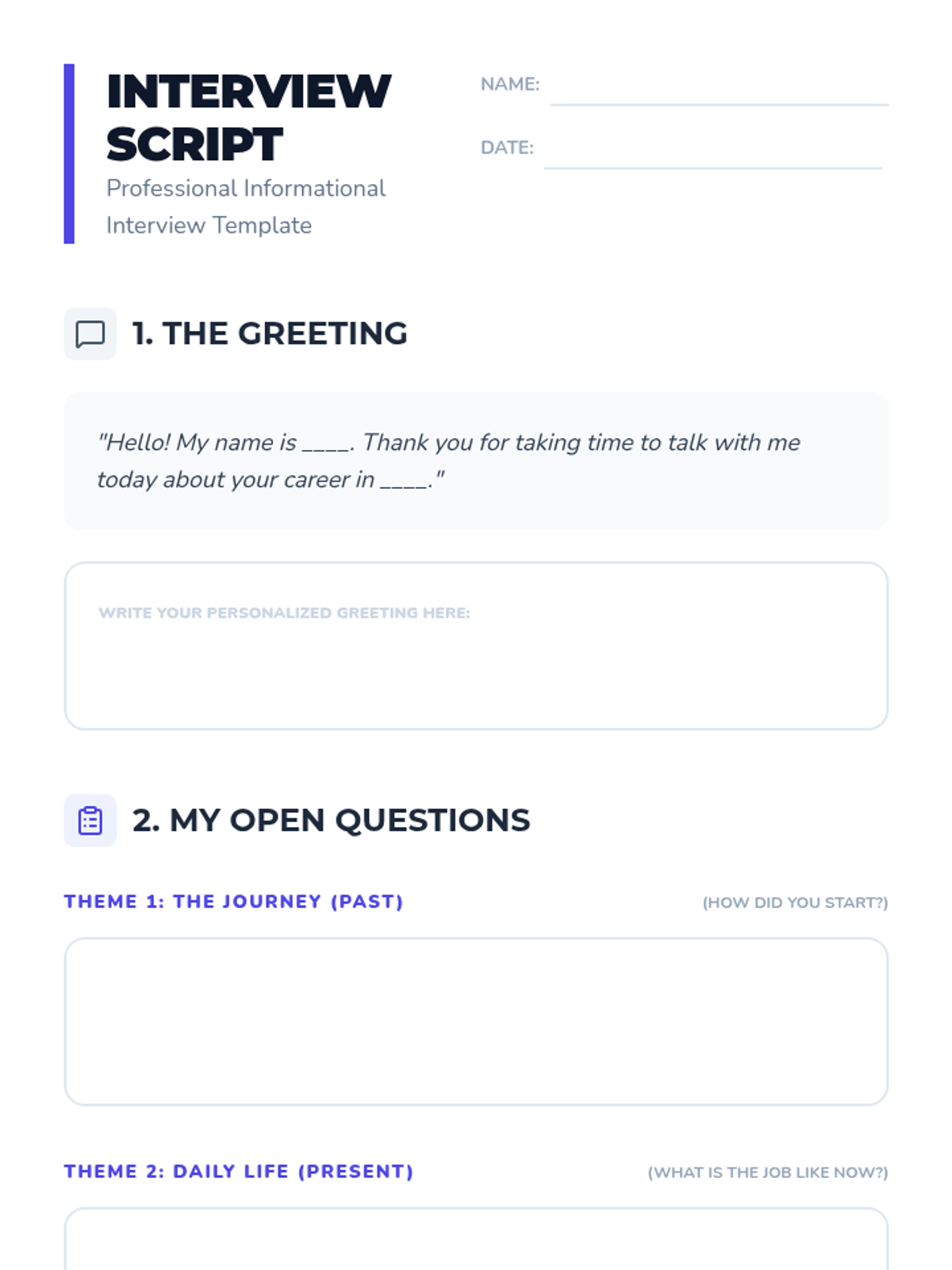
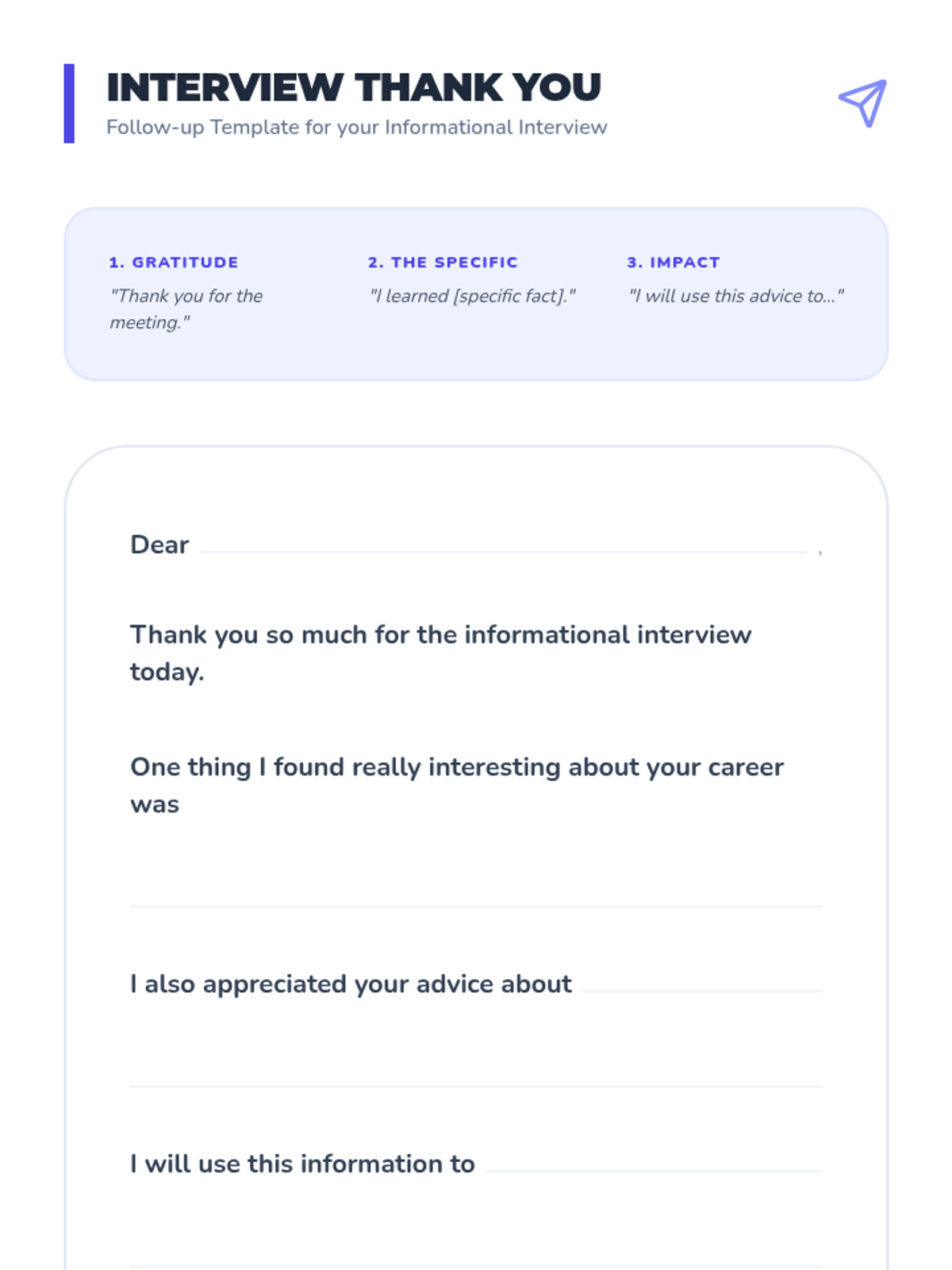
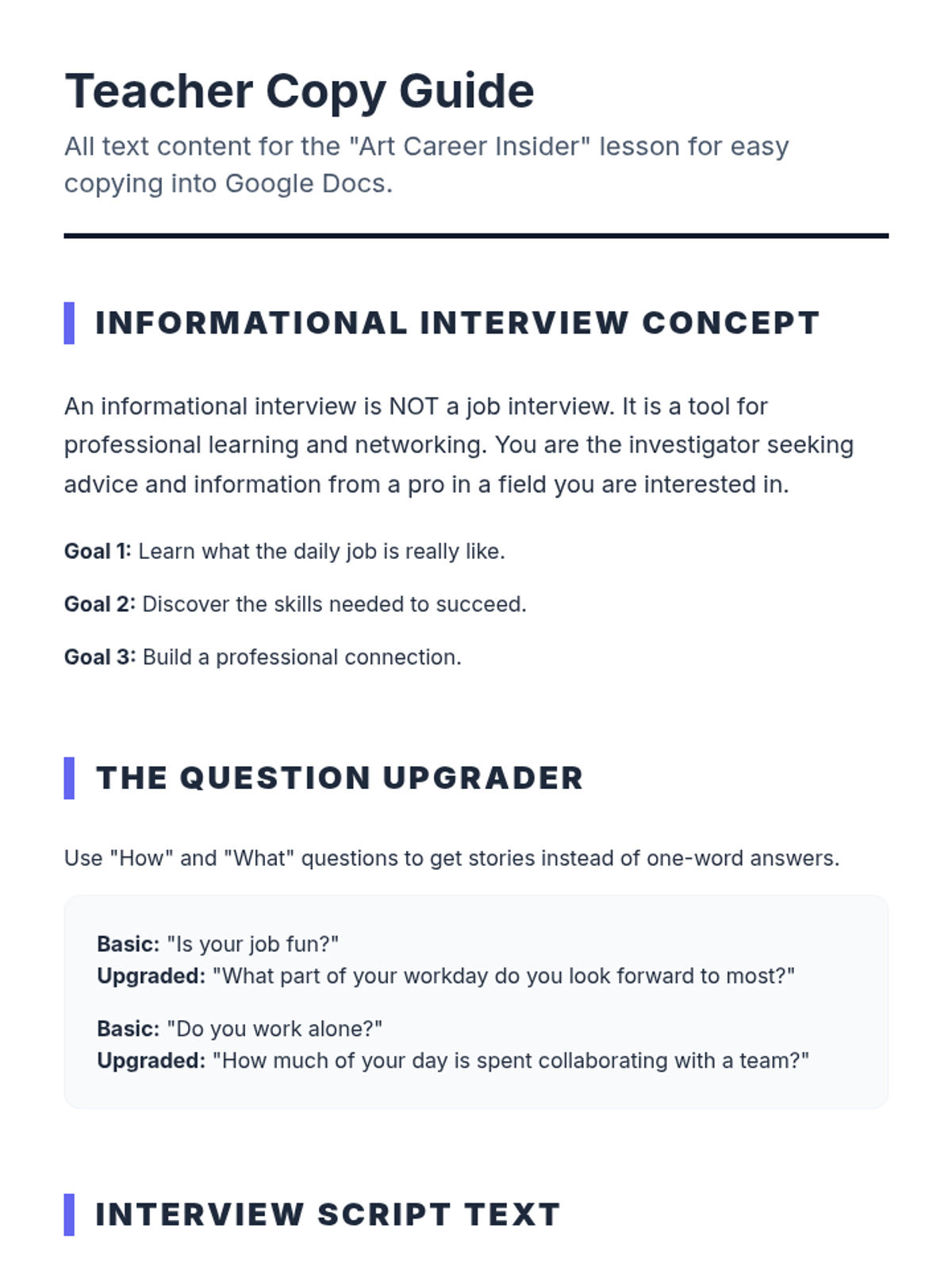
A lesson focused on functional communication skills for conducting informational interviews with creative professionals, specifically animators and tattoo artists. Students learn to draft open-ended questions and structure a professional conversation.
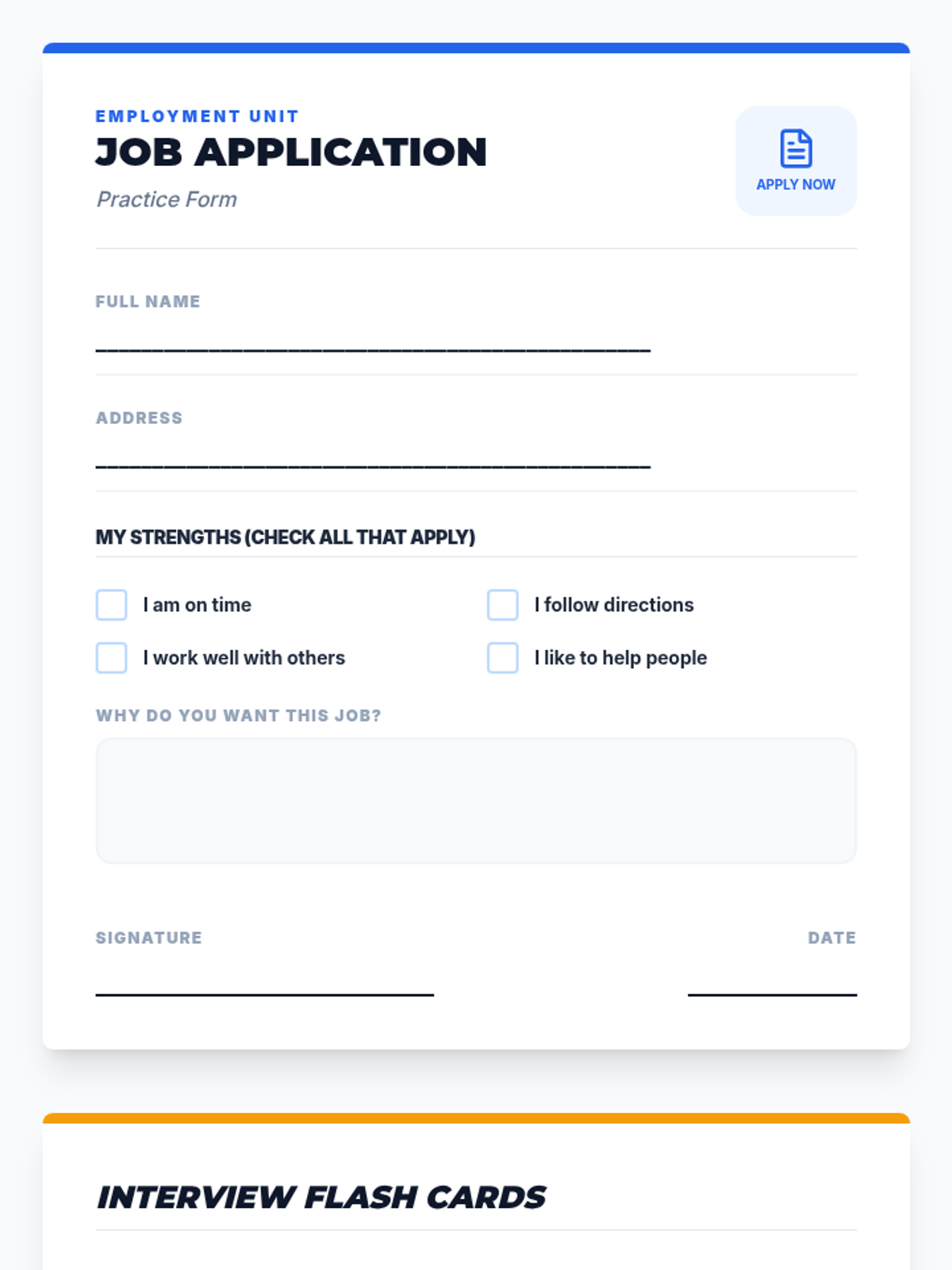
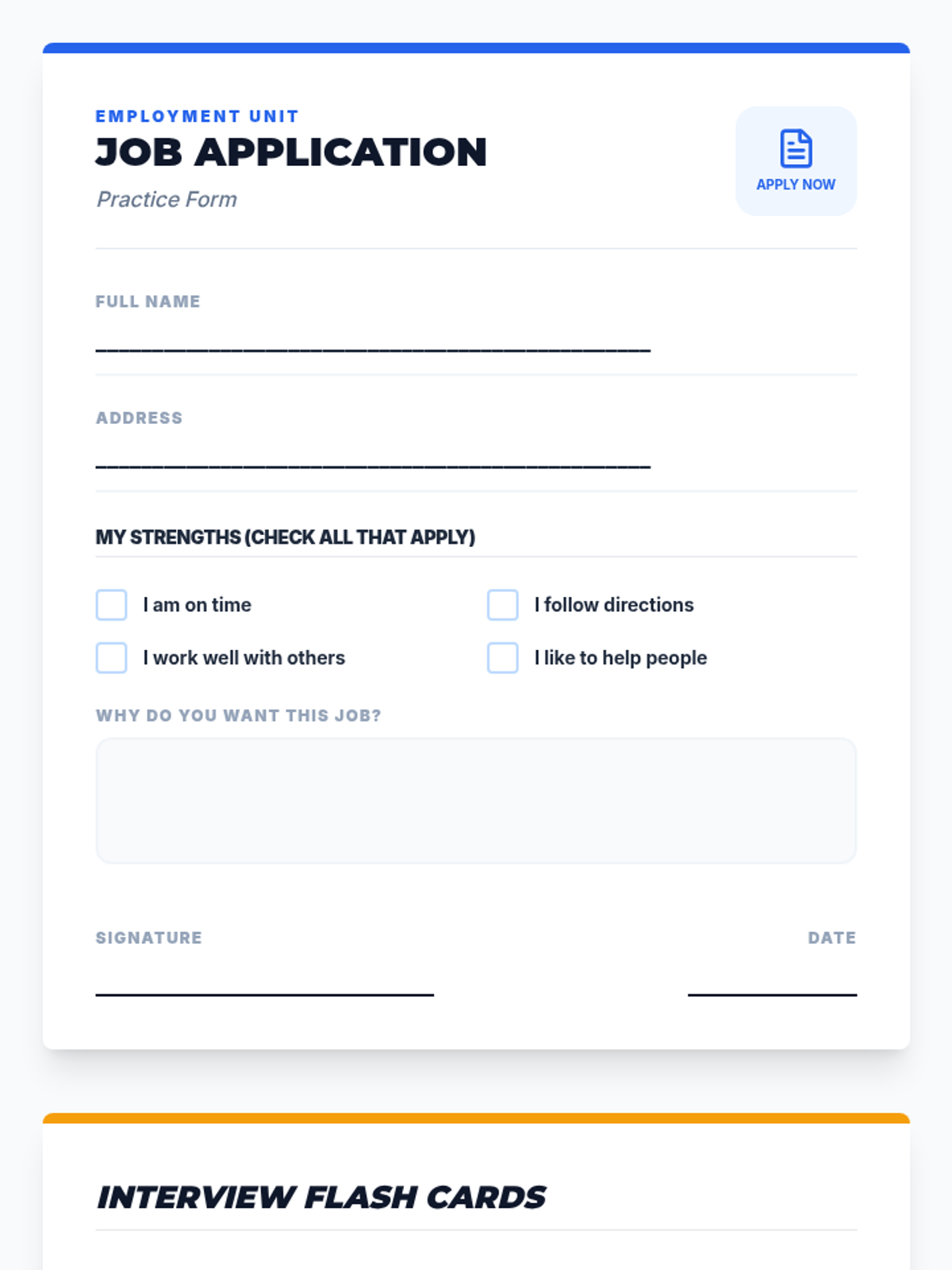
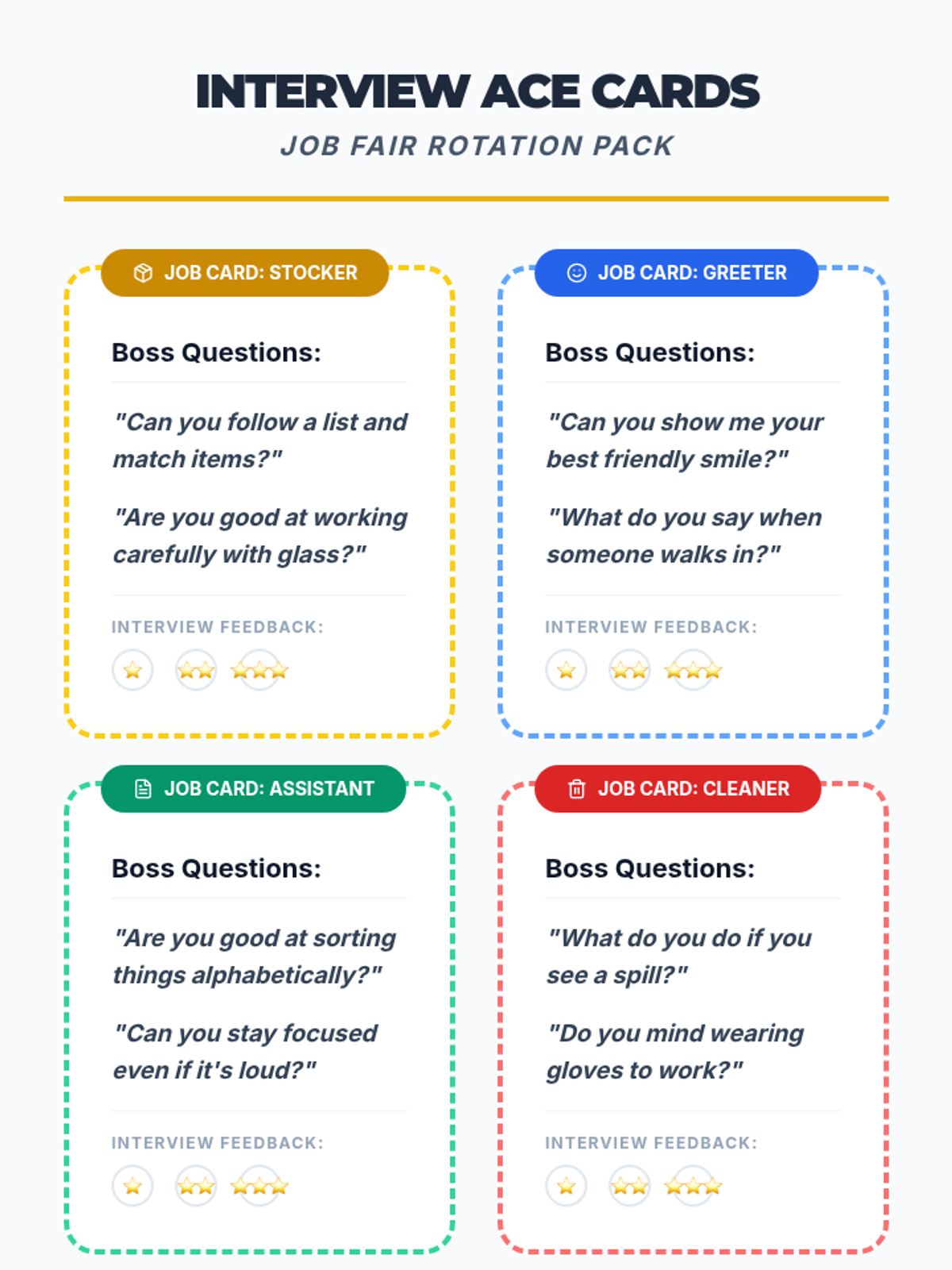
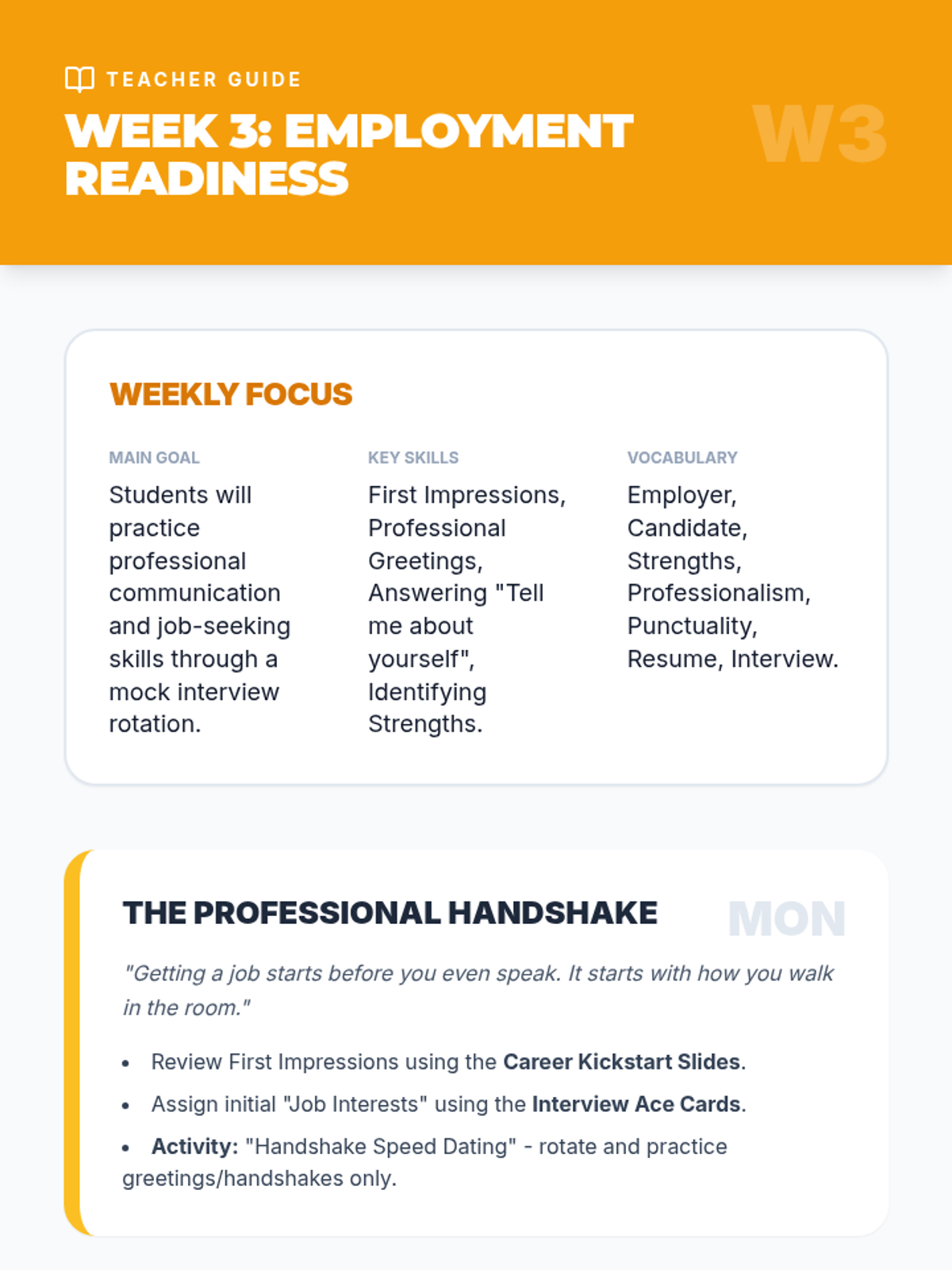
Building essential job-seeking skills, including application completion, interview preparation, and understanding job roles.
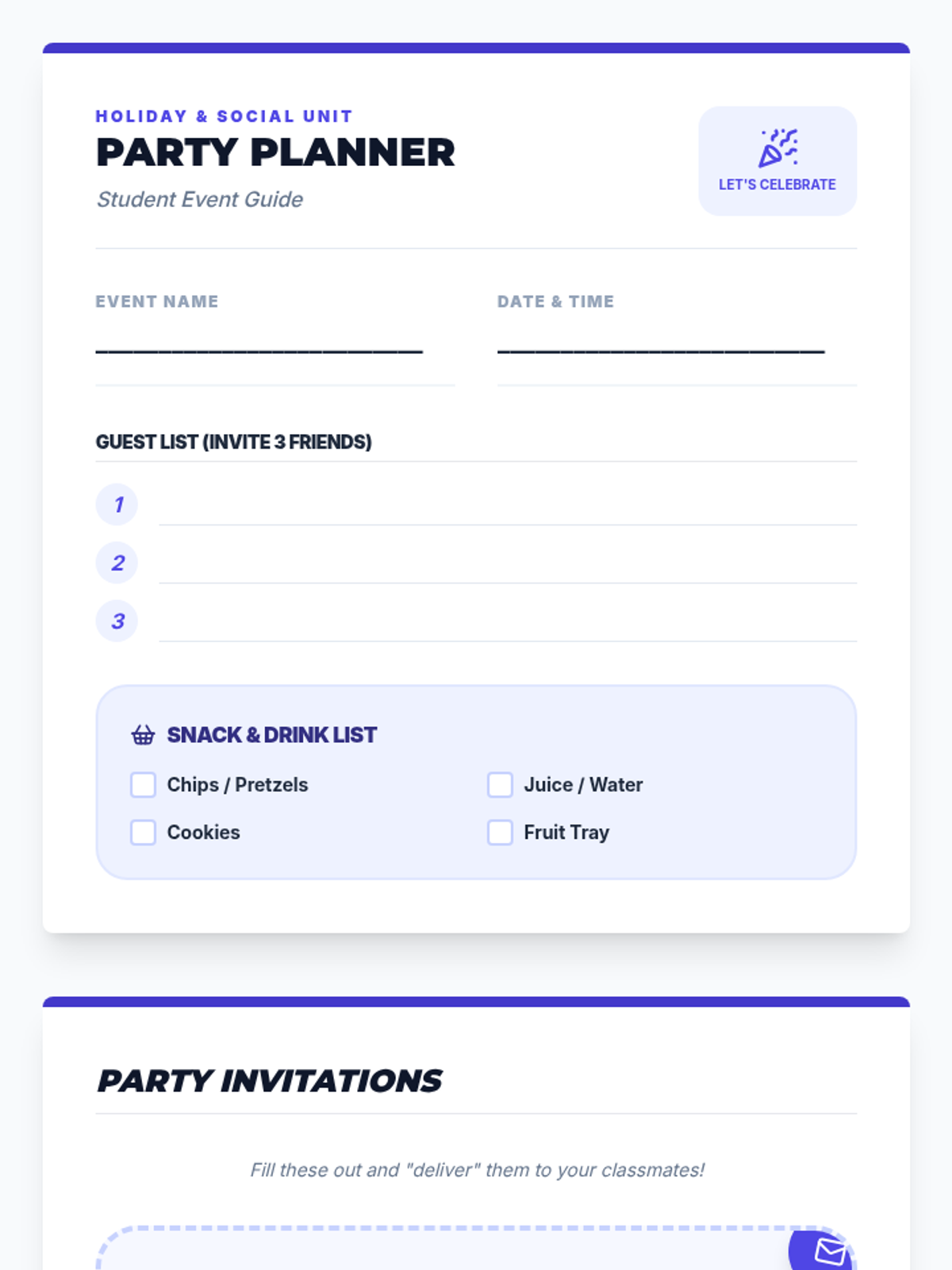
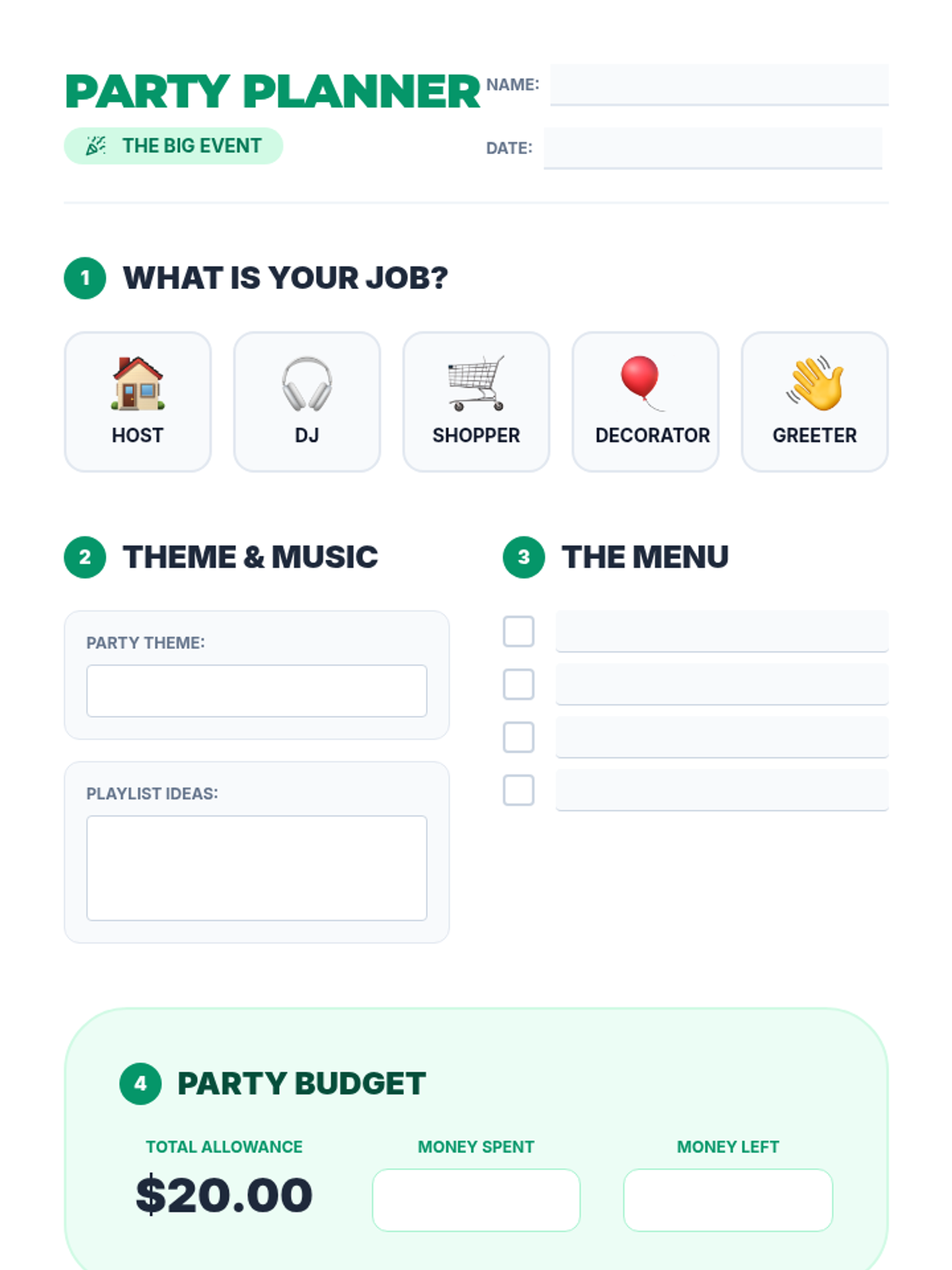
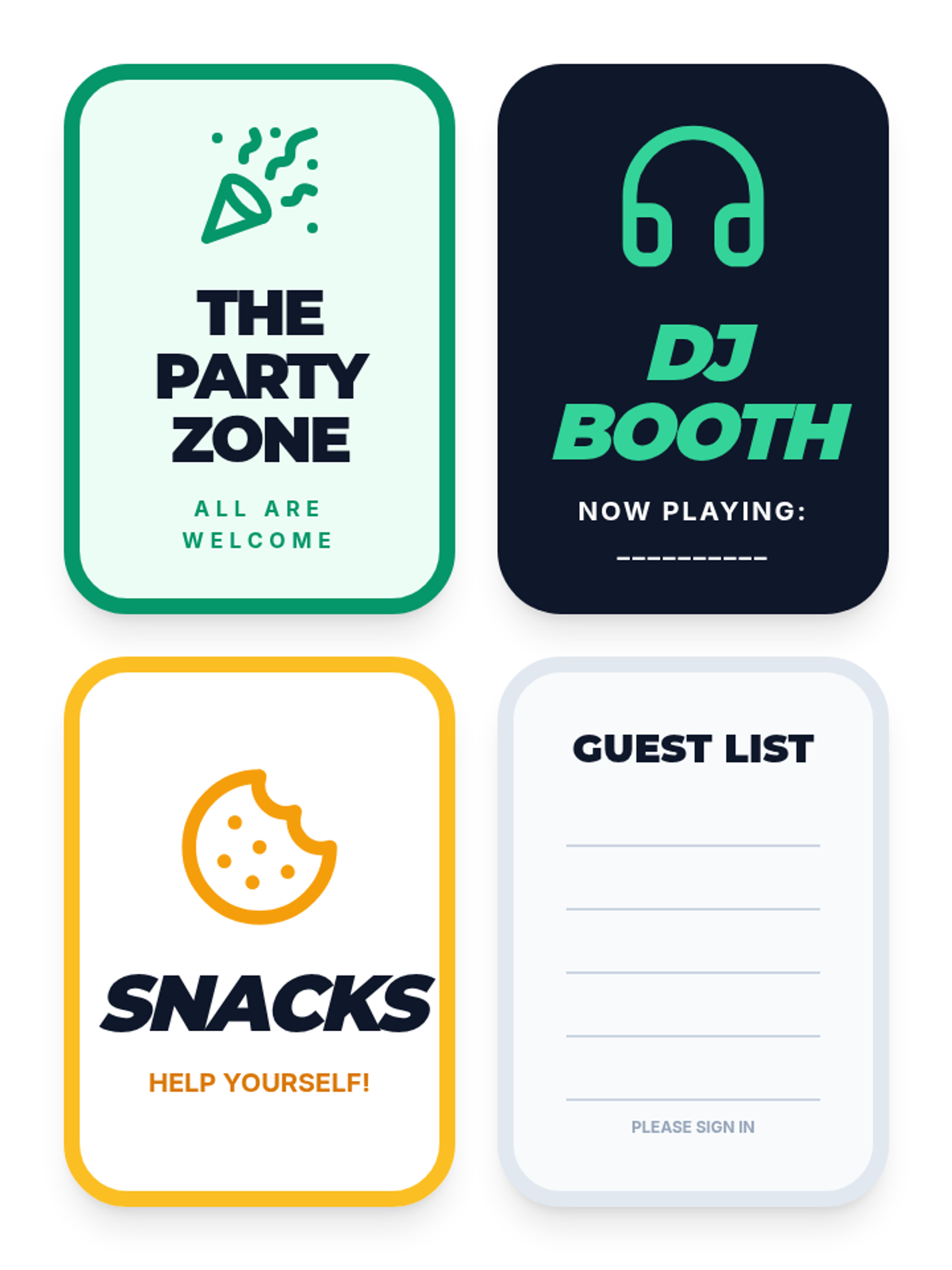
Planning social gatherings, managing invitations, and practicing etiquette for holiday and community events.
The capstone unit of the program, where students apply all learned skills in complex, multi-step simulations of independent adult life.
Navigating healthcare settings, identifying body parts and symptoms, and practicing social scripts for making and attending medical appointments.
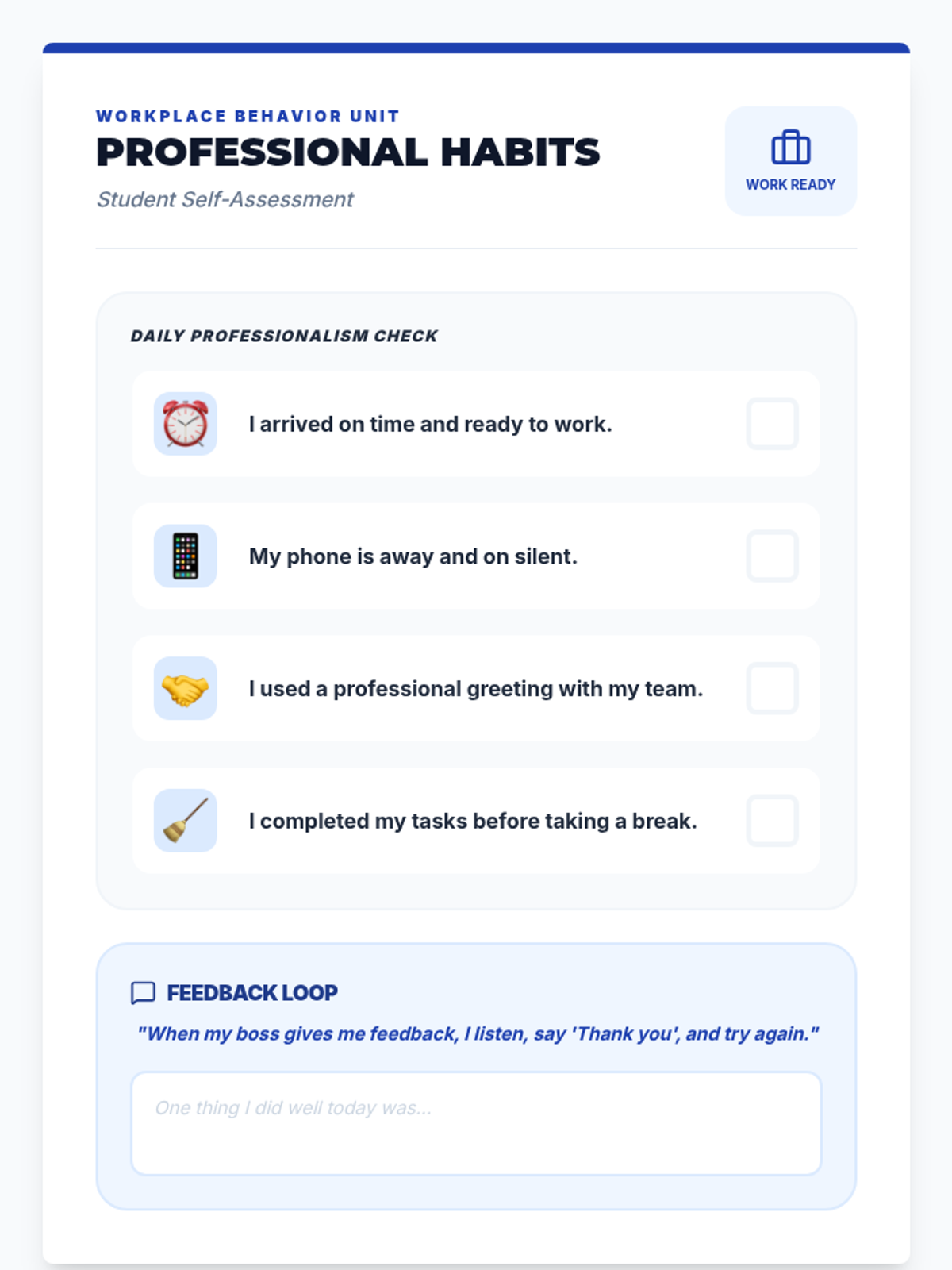
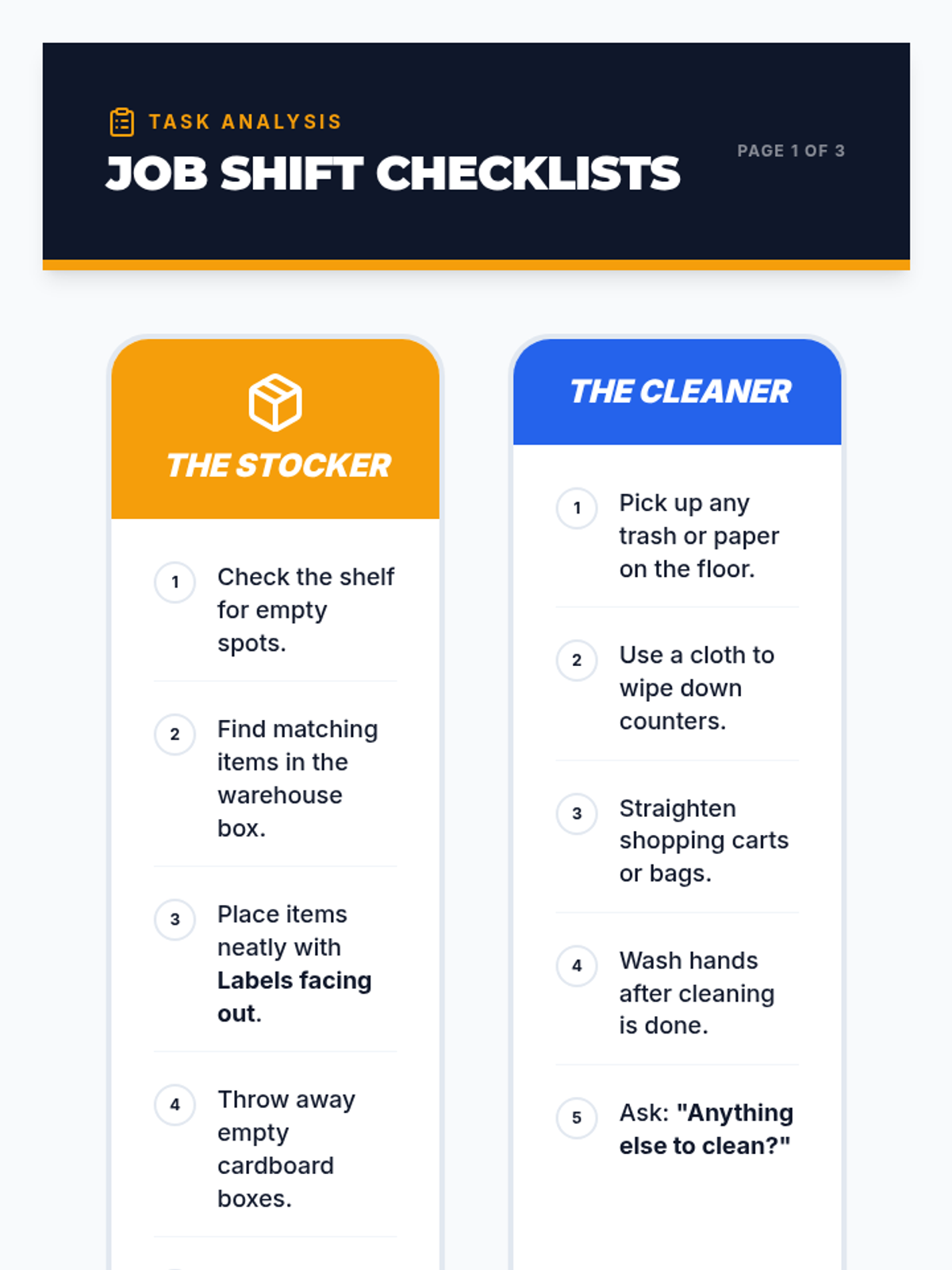
Building professional habits, understanding workplace social cues, and practicing teamwork in a job setting.
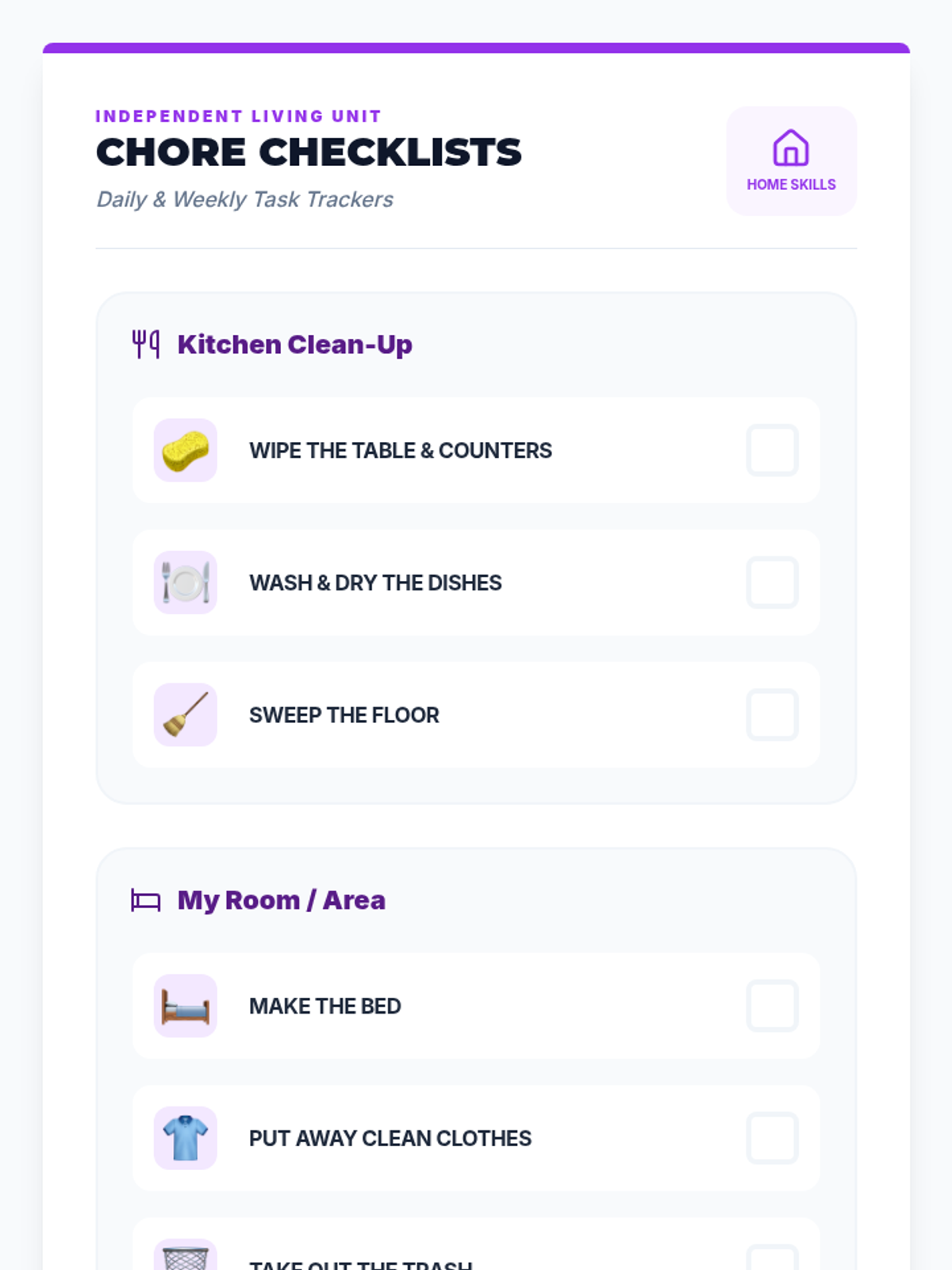
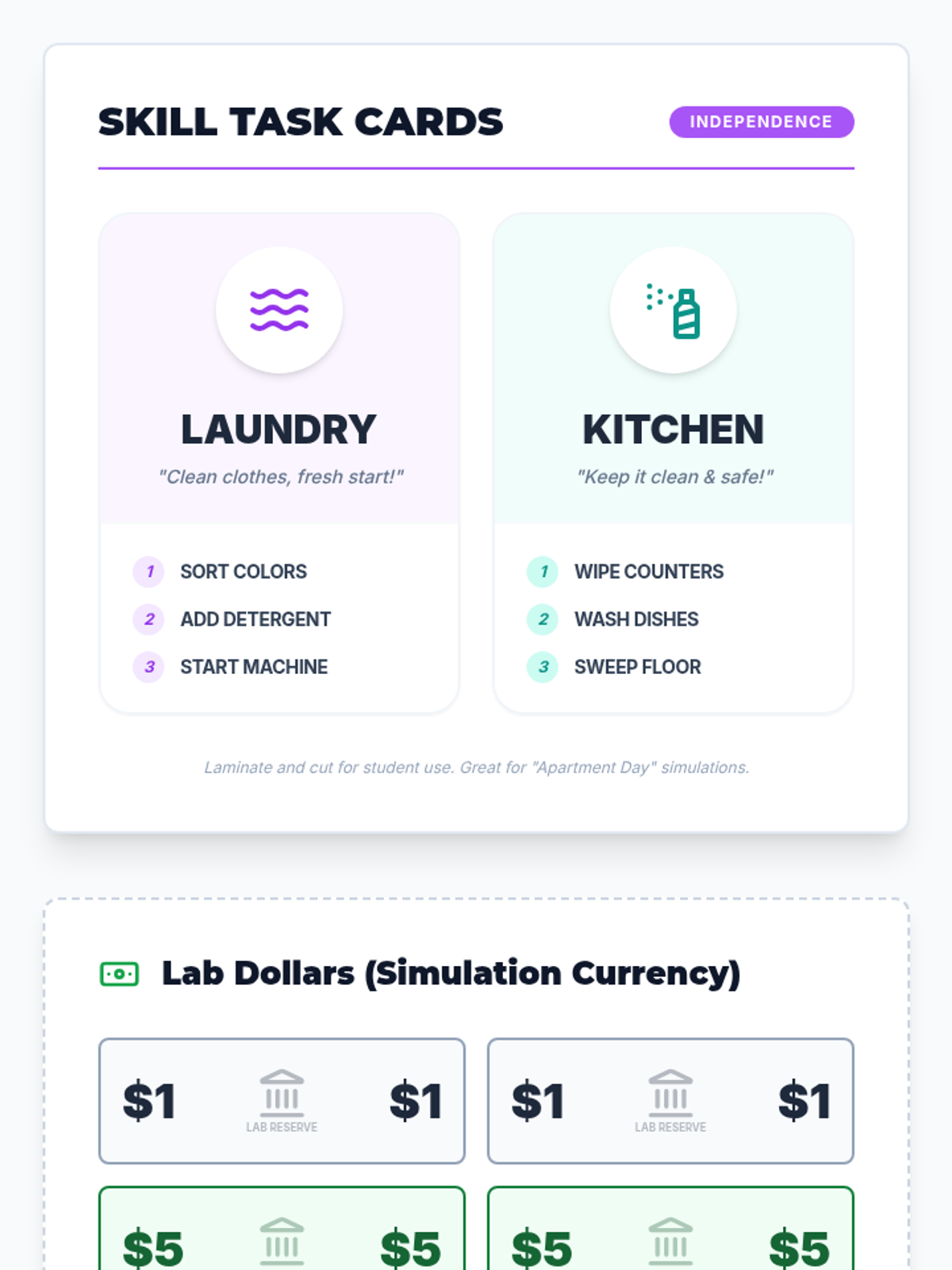
Essential skills for maintaining a household, including chores, laundry, and daily organization.
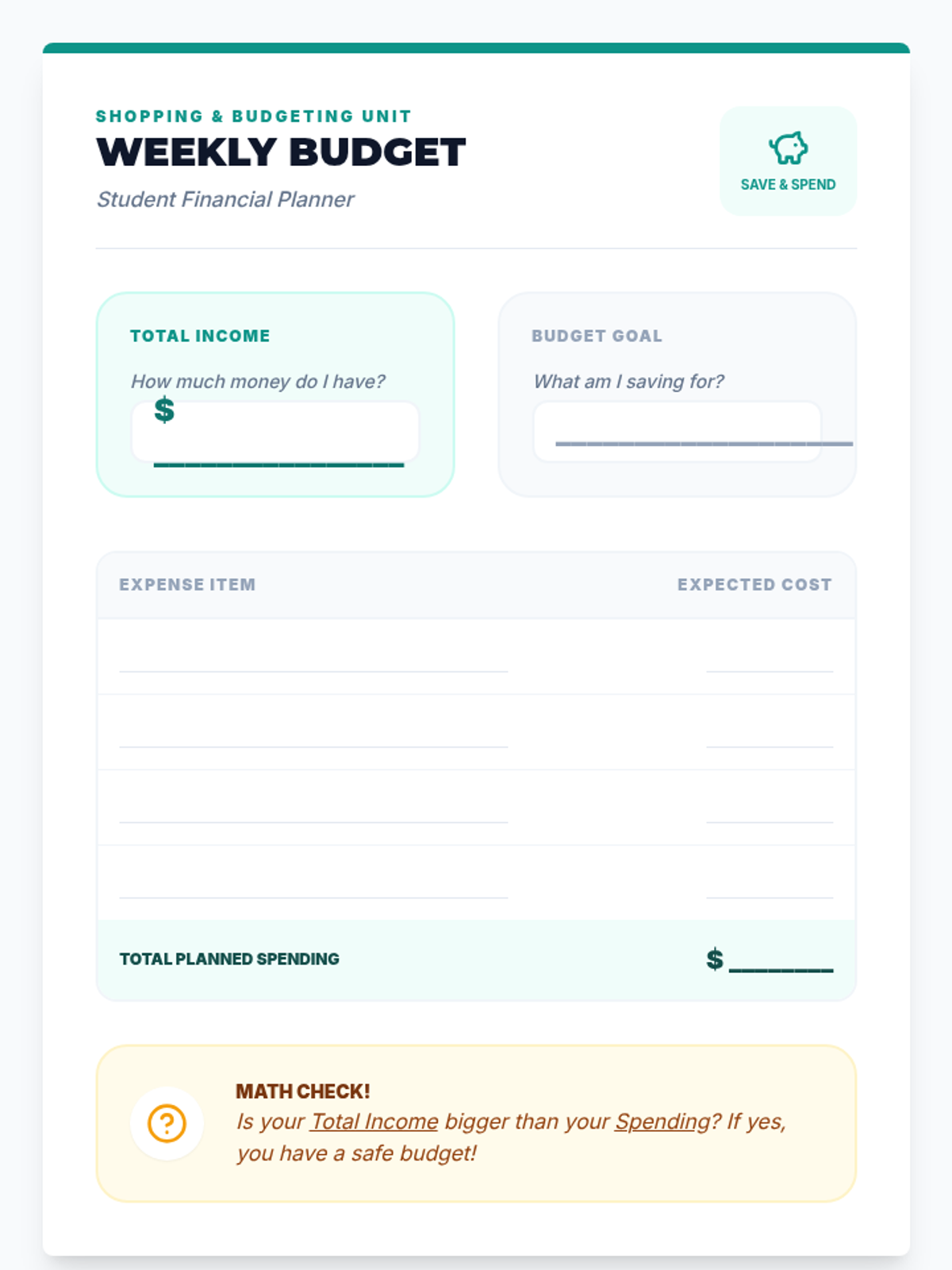
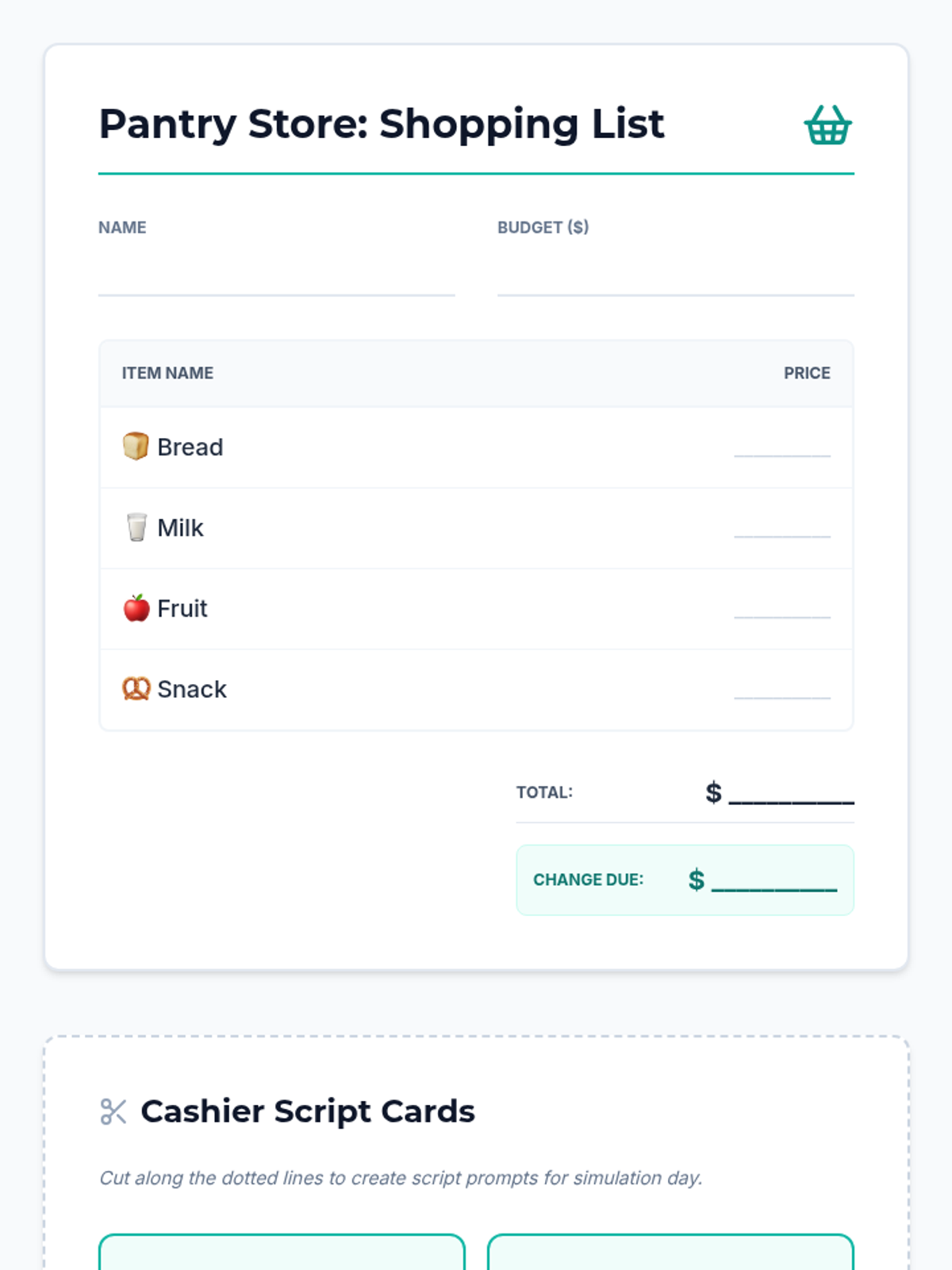
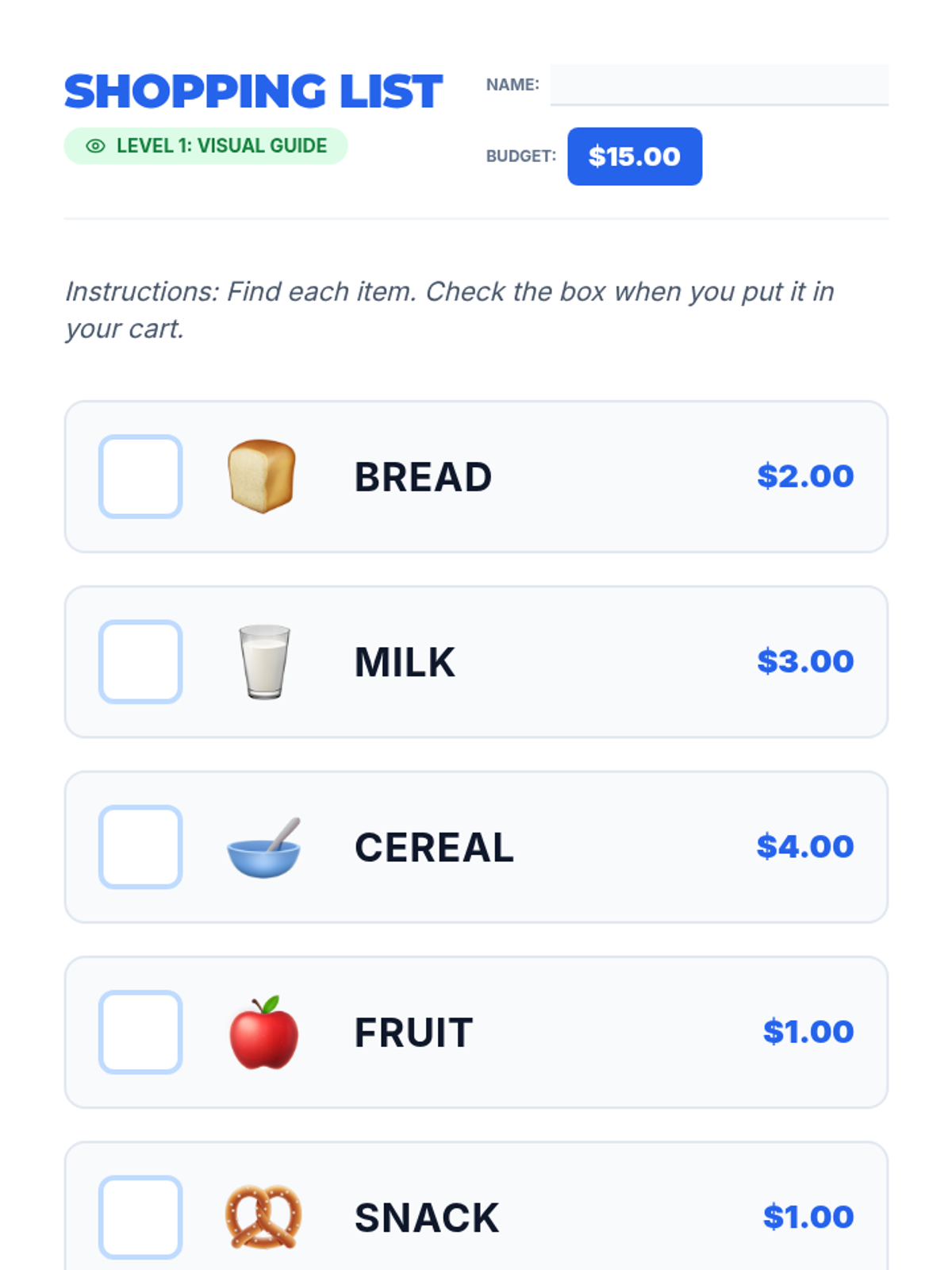
Practical application of money skills through budgeting, price comparison, and navigating a shopping environment.
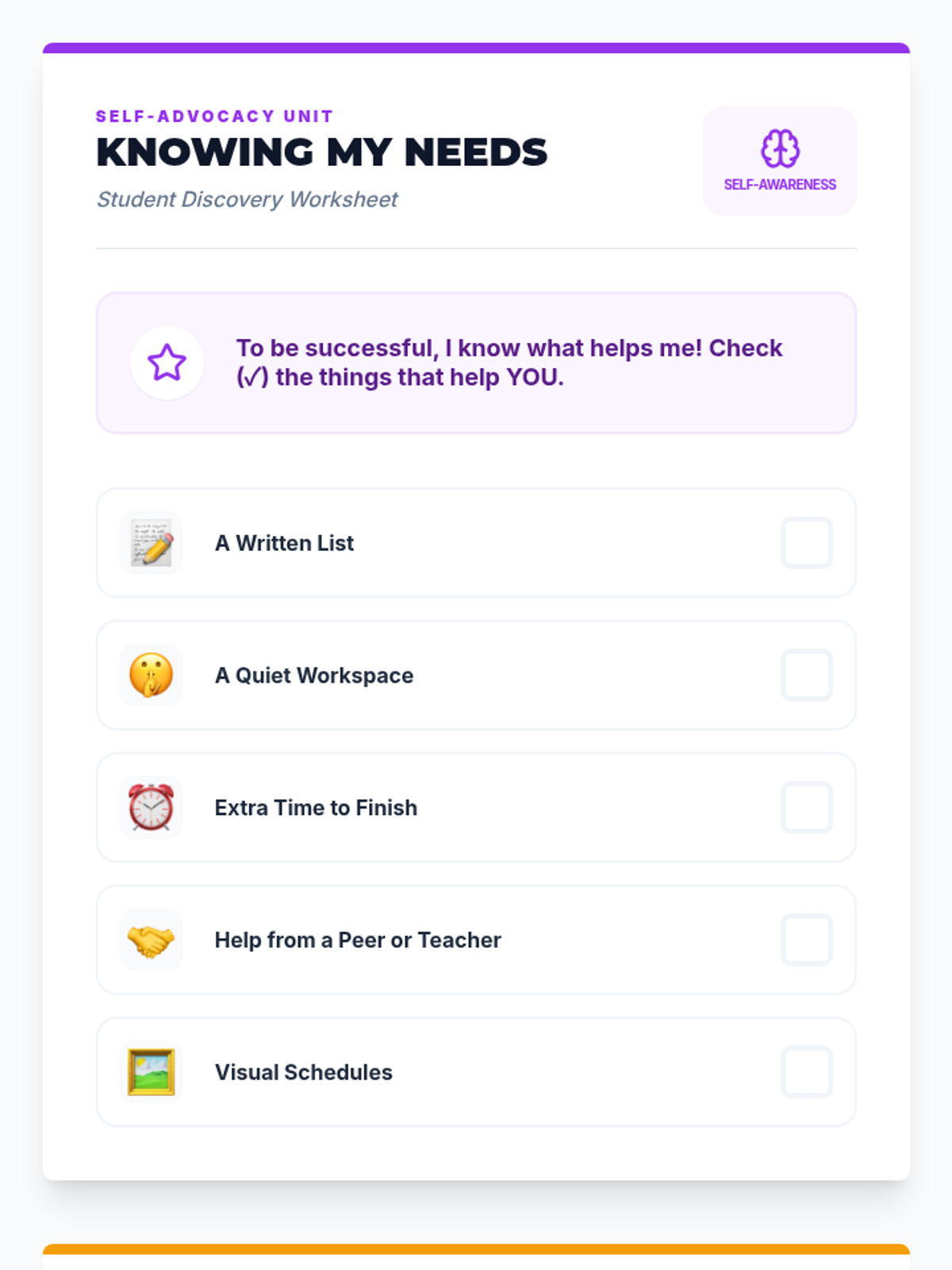
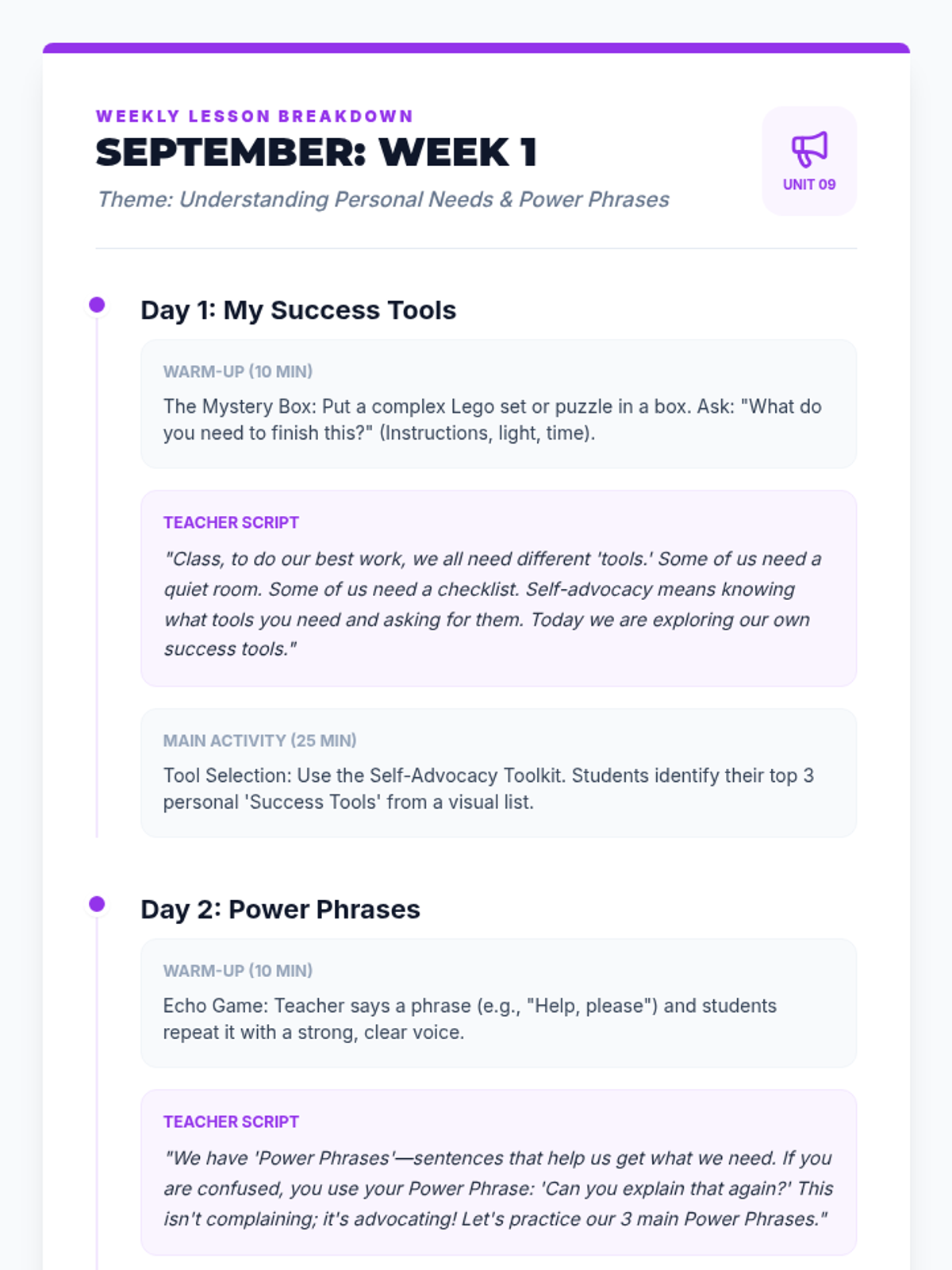
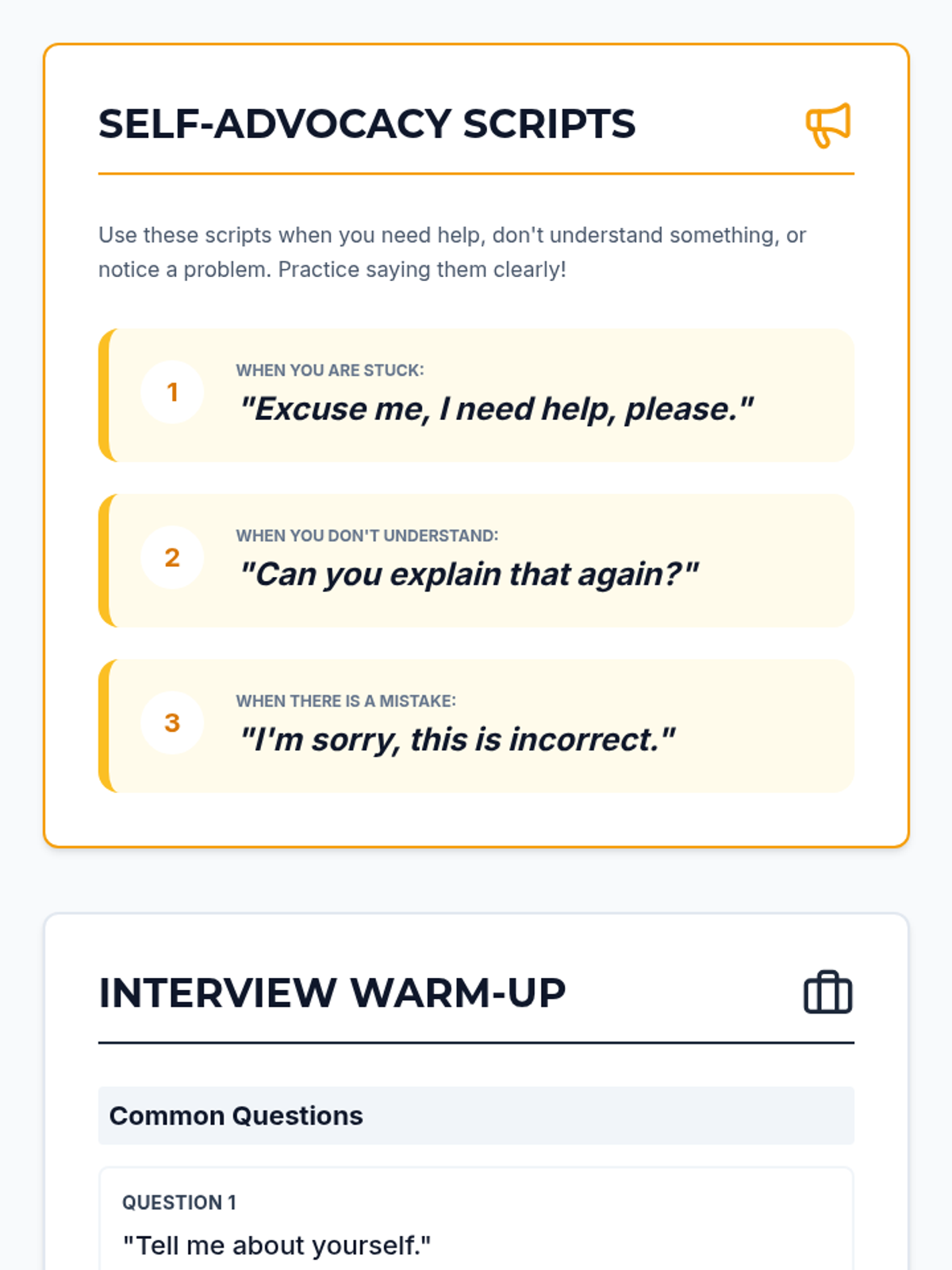
Empowering students to speak up for their needs, understand their rights, and communicate effectively in various personal and community situations.
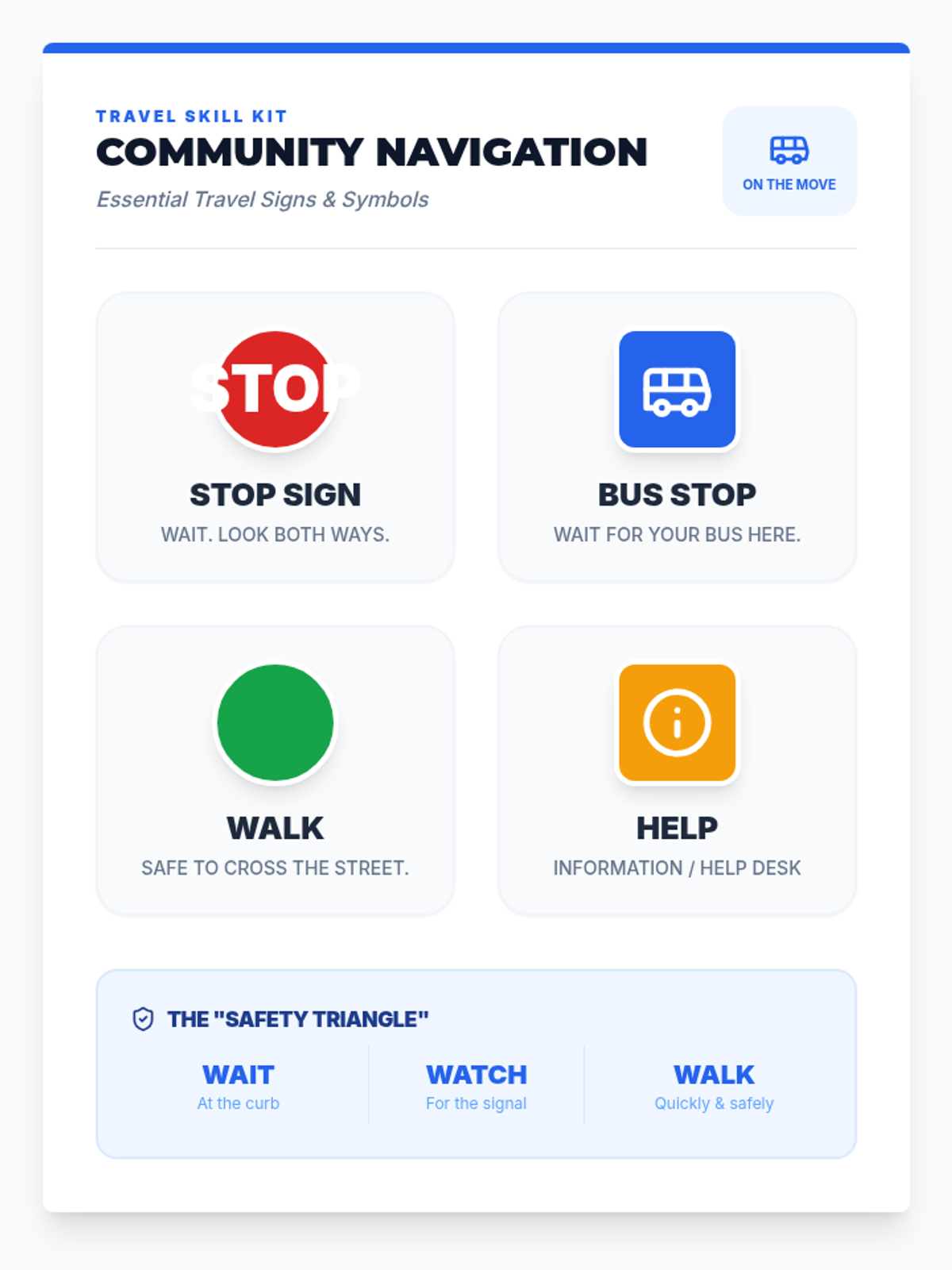
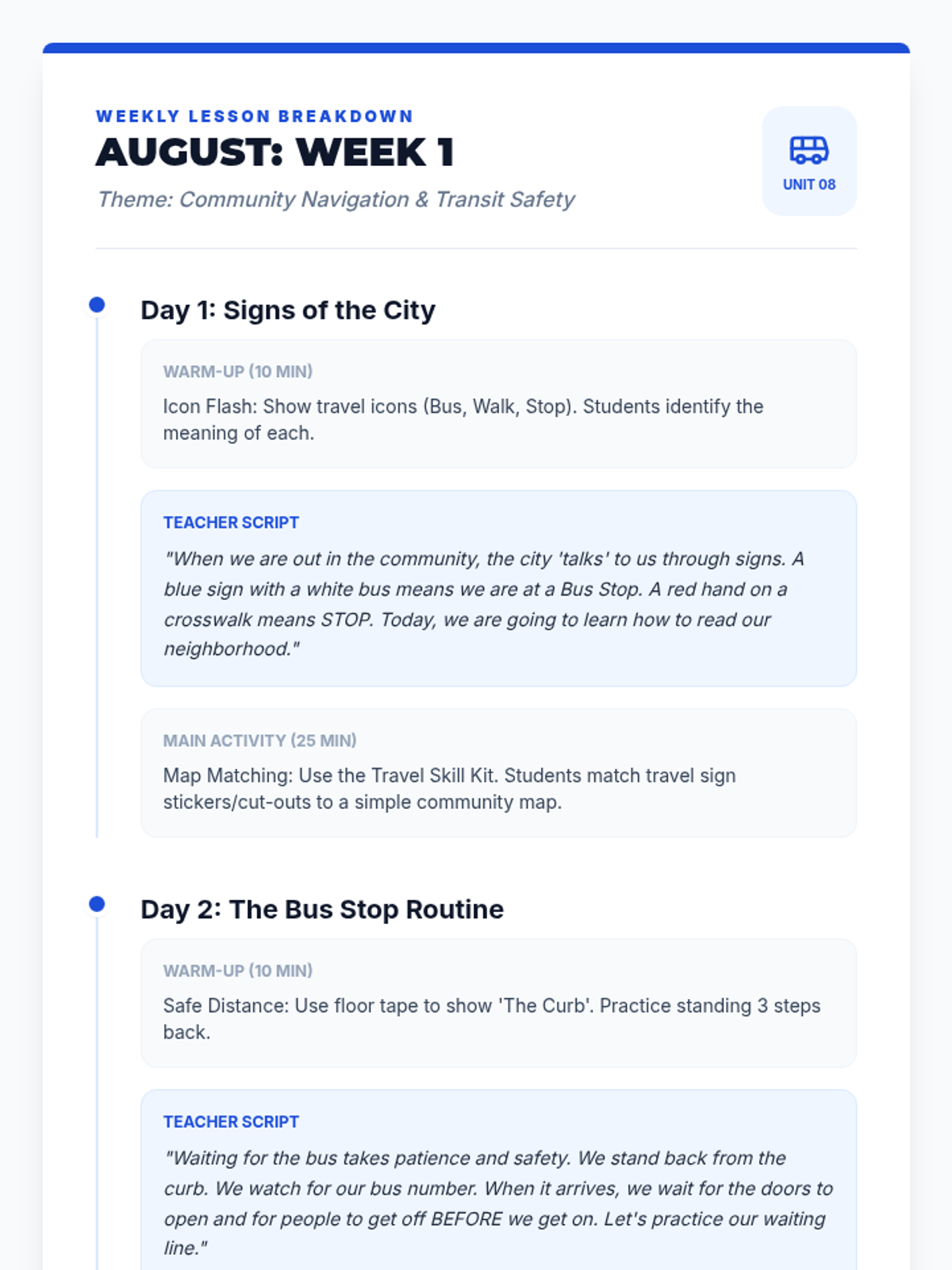
Navigating the community using public transportation, reading schedules, and practicing safety and social etiquette while traveling.
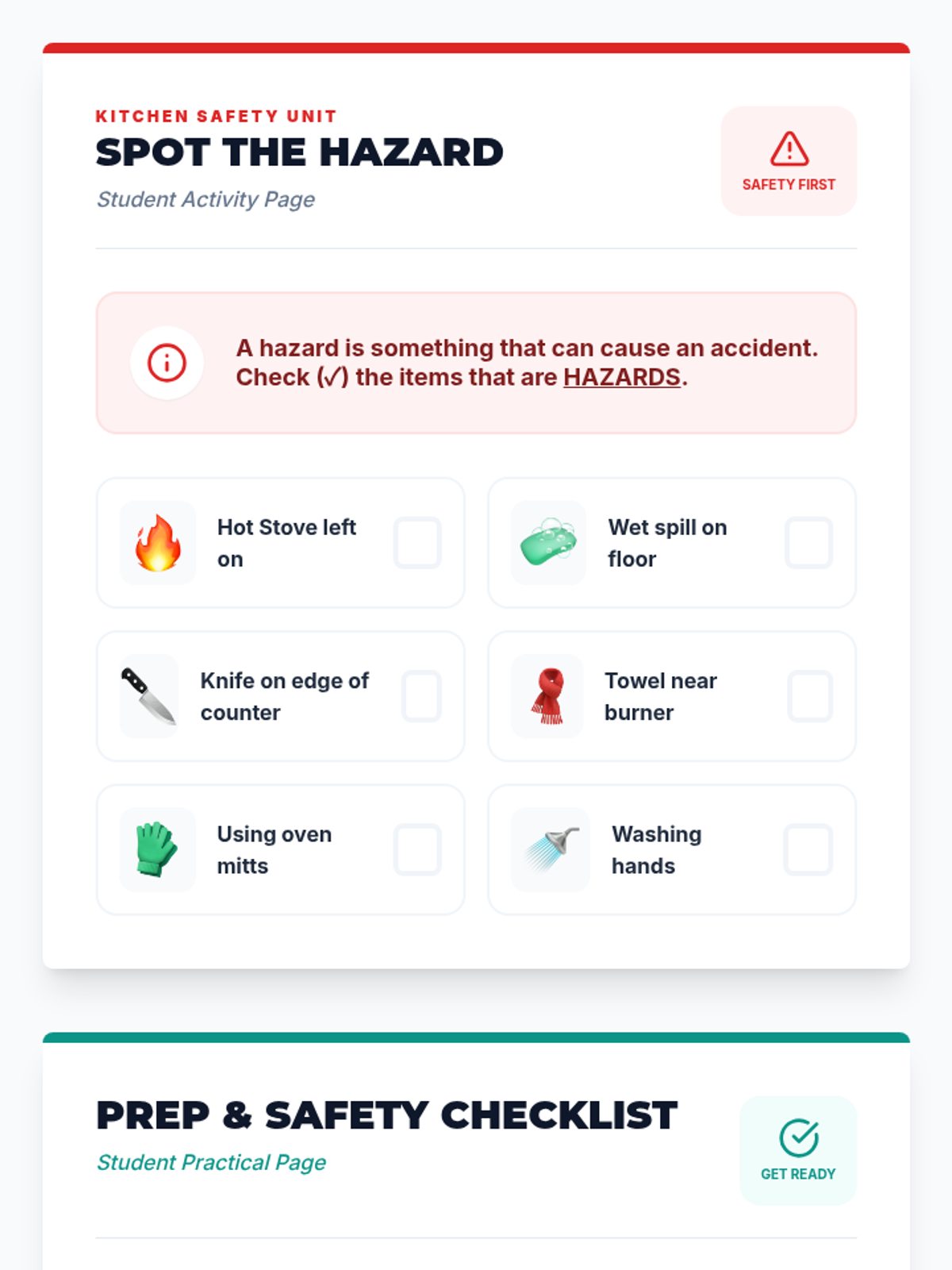
Essential knowledge for identifying hazards, handling tools safely, and maintaining a hygienic cooking environment through visual checklists and simulations.
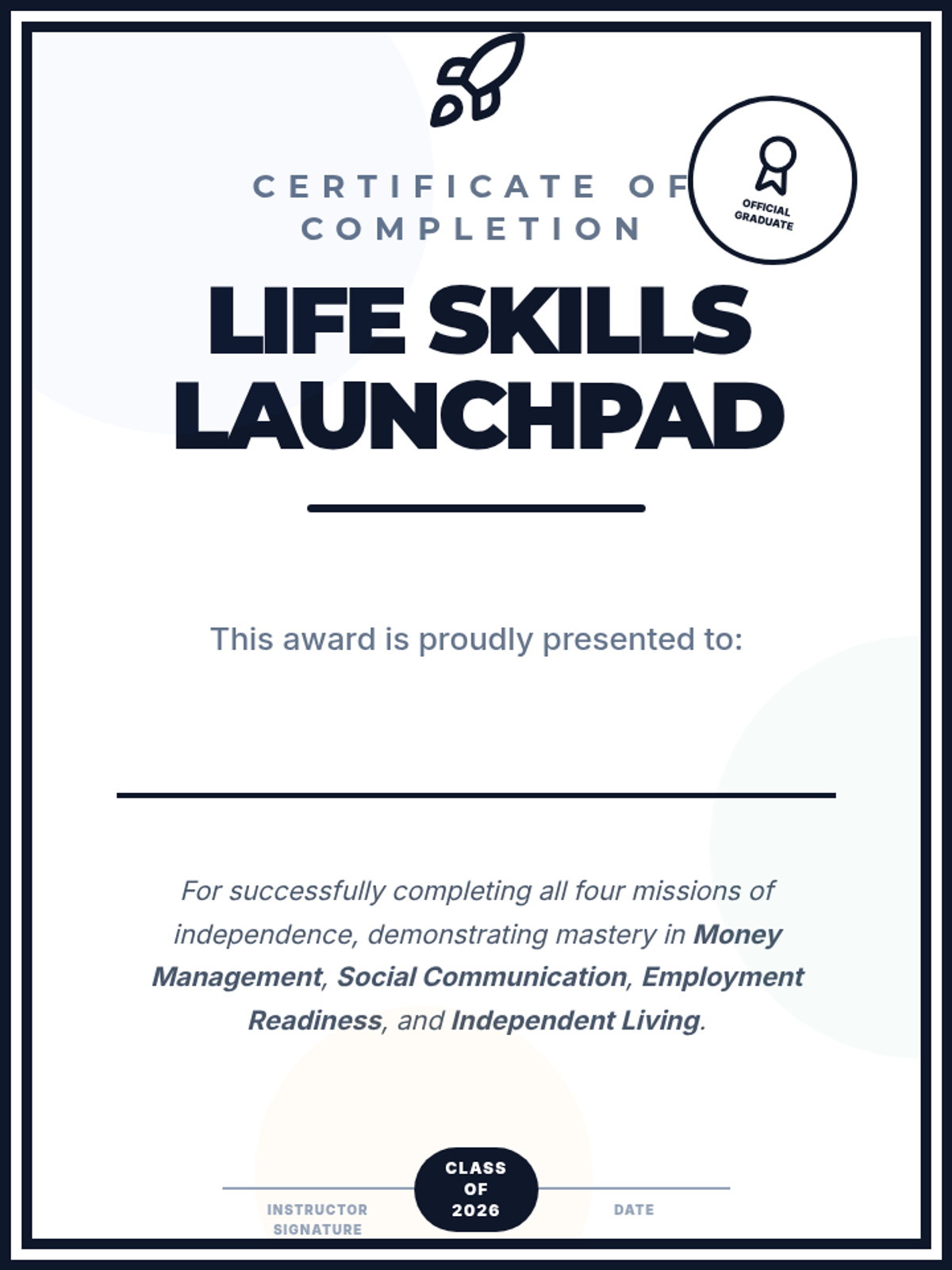
Foundational materials for the Life Skills Launchpad, including binder covers, dividers, and sequence-wide tracking systems.
Building essential social cues, conversational scripts, and self-advocacy skills for various community and professional settings.
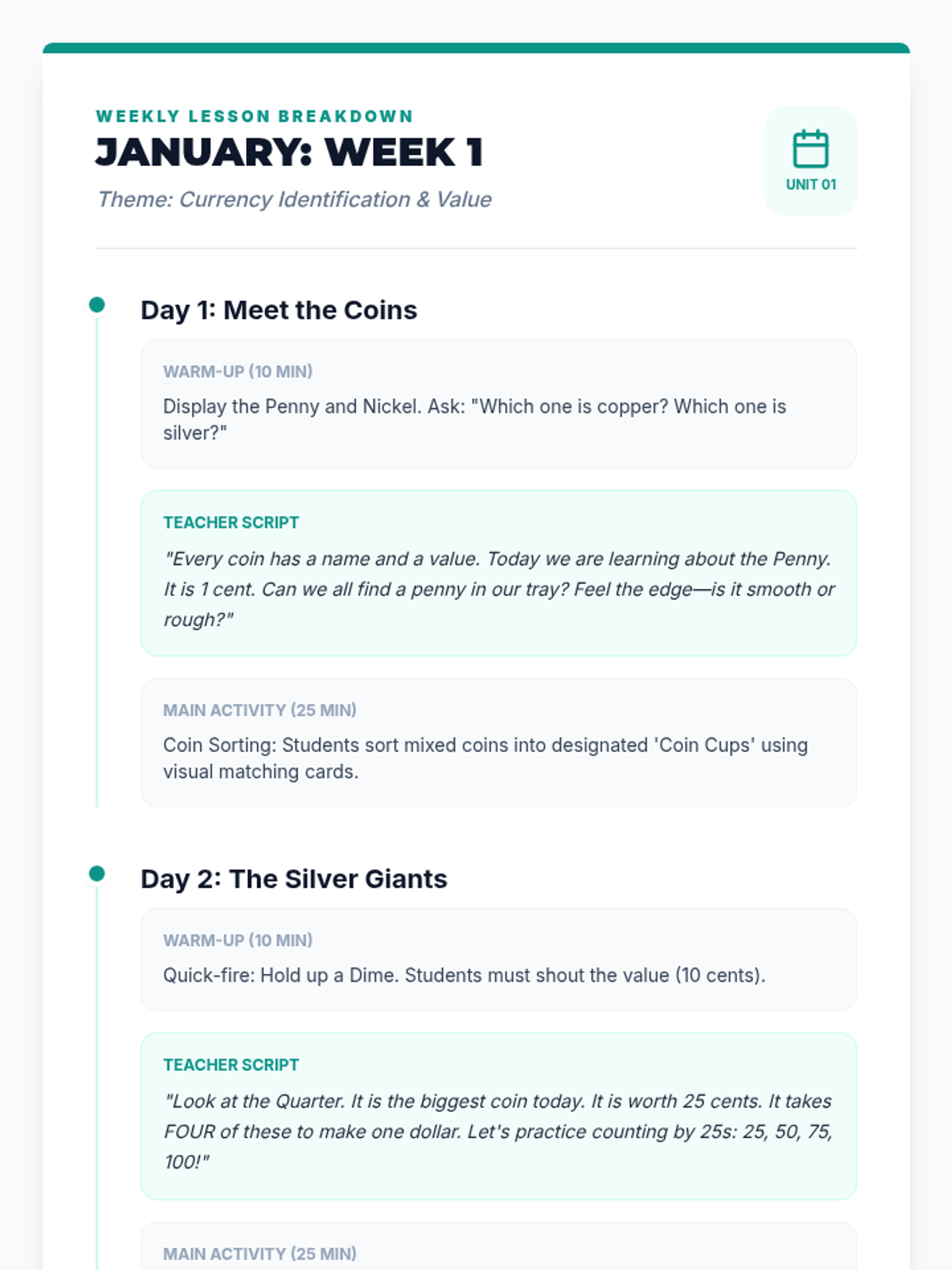
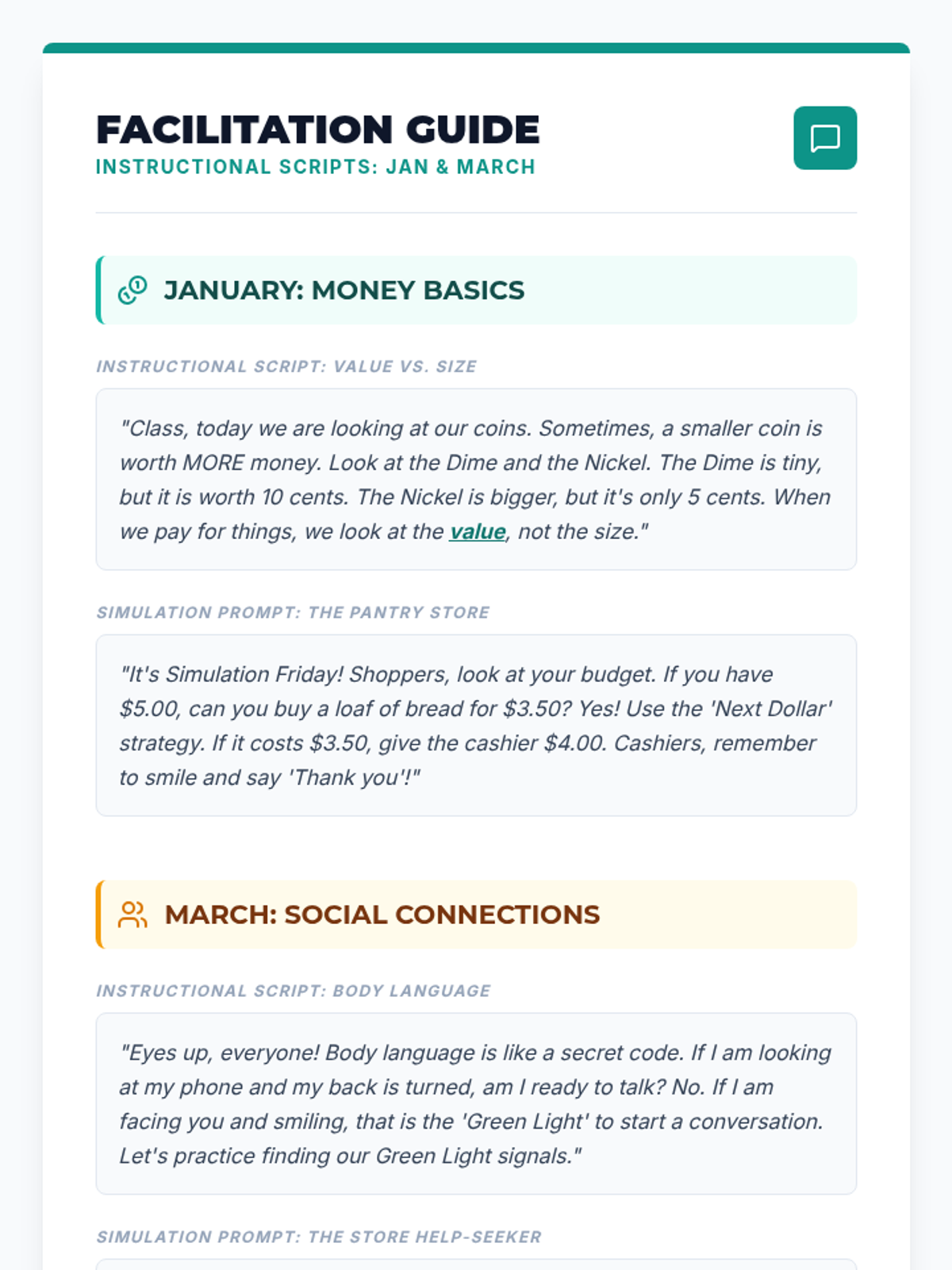
A deep dive into identifying currency, understanding value, and managing basic transactions through visual supports and hands-on practice.
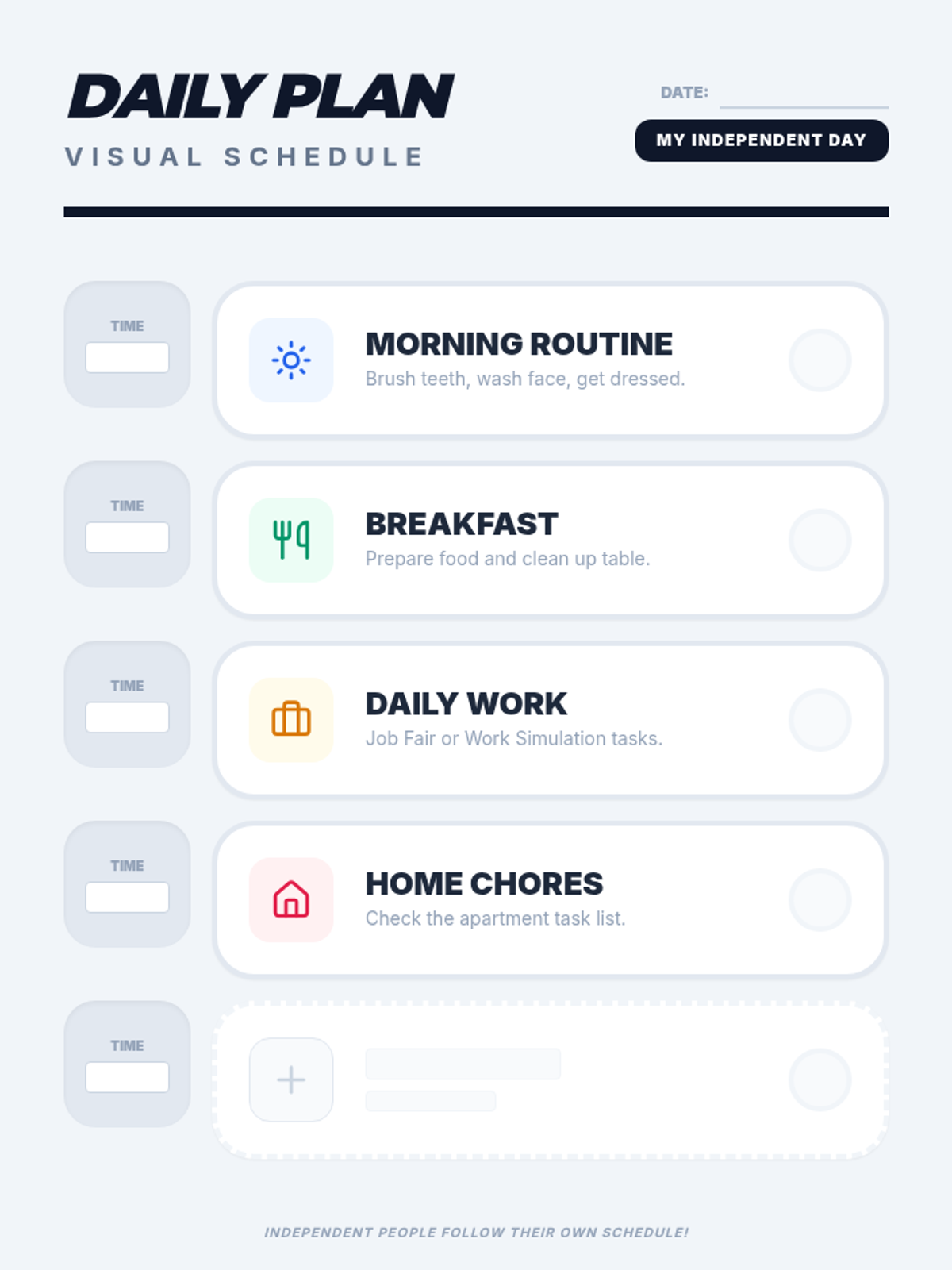
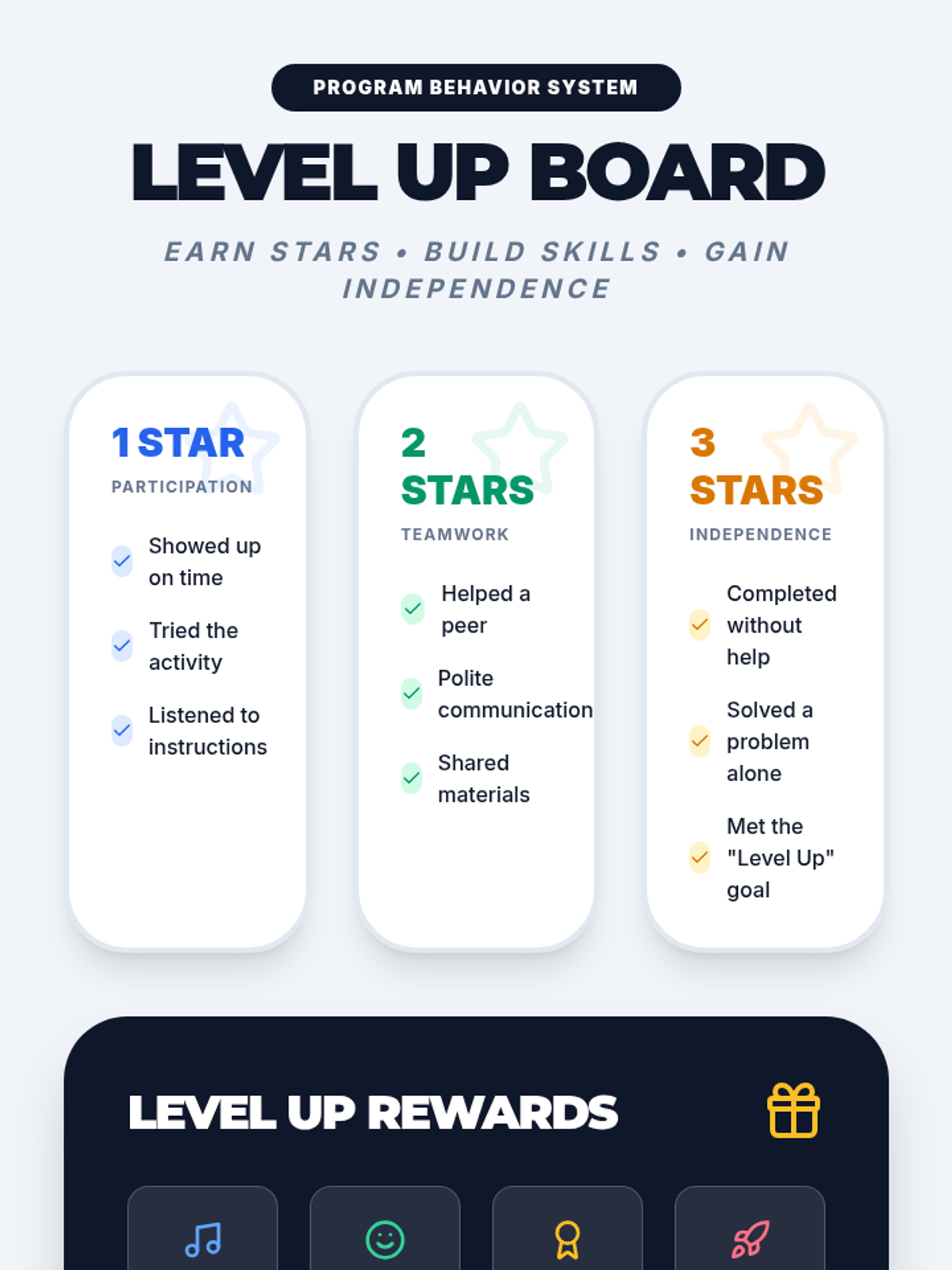
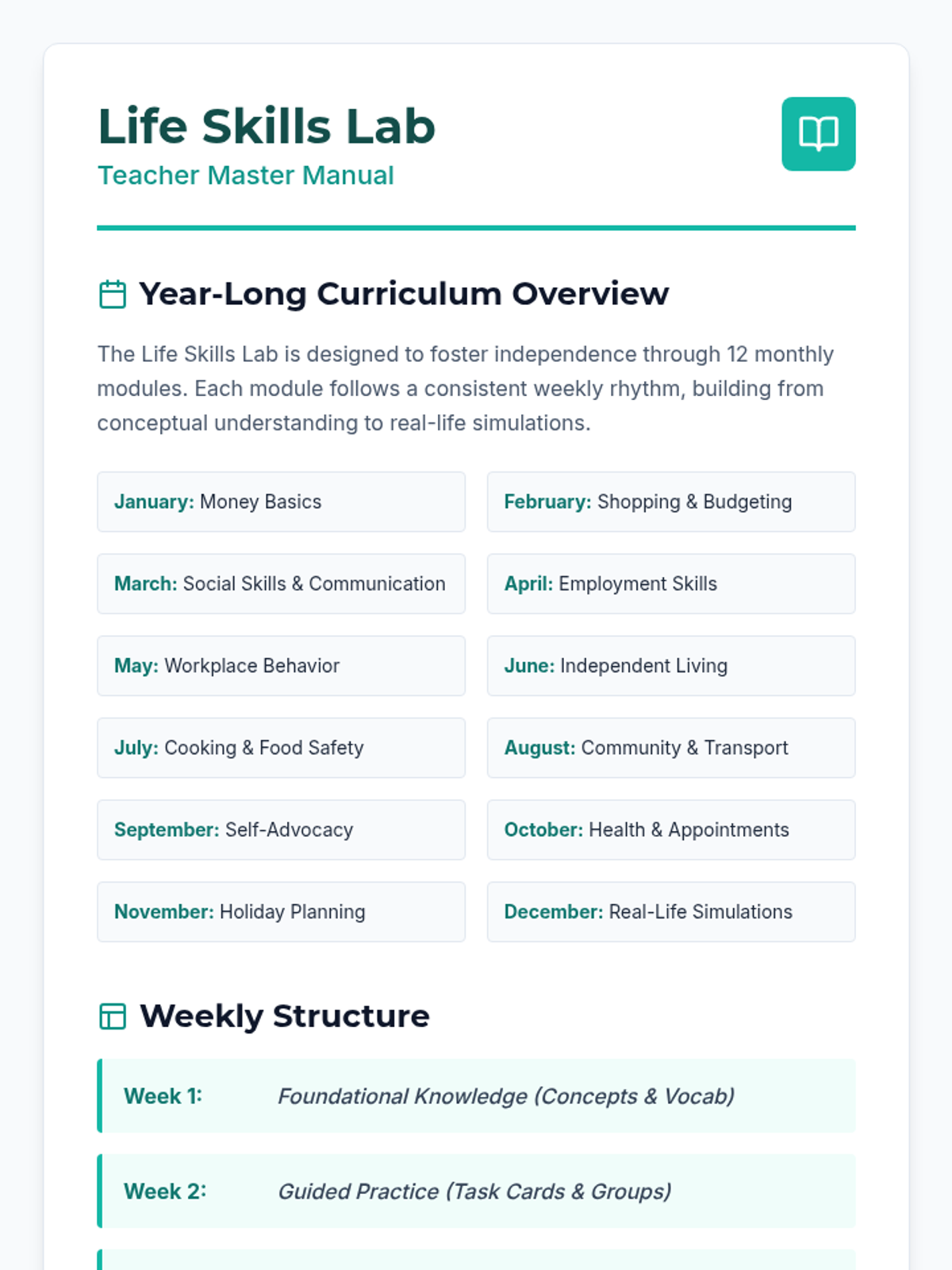
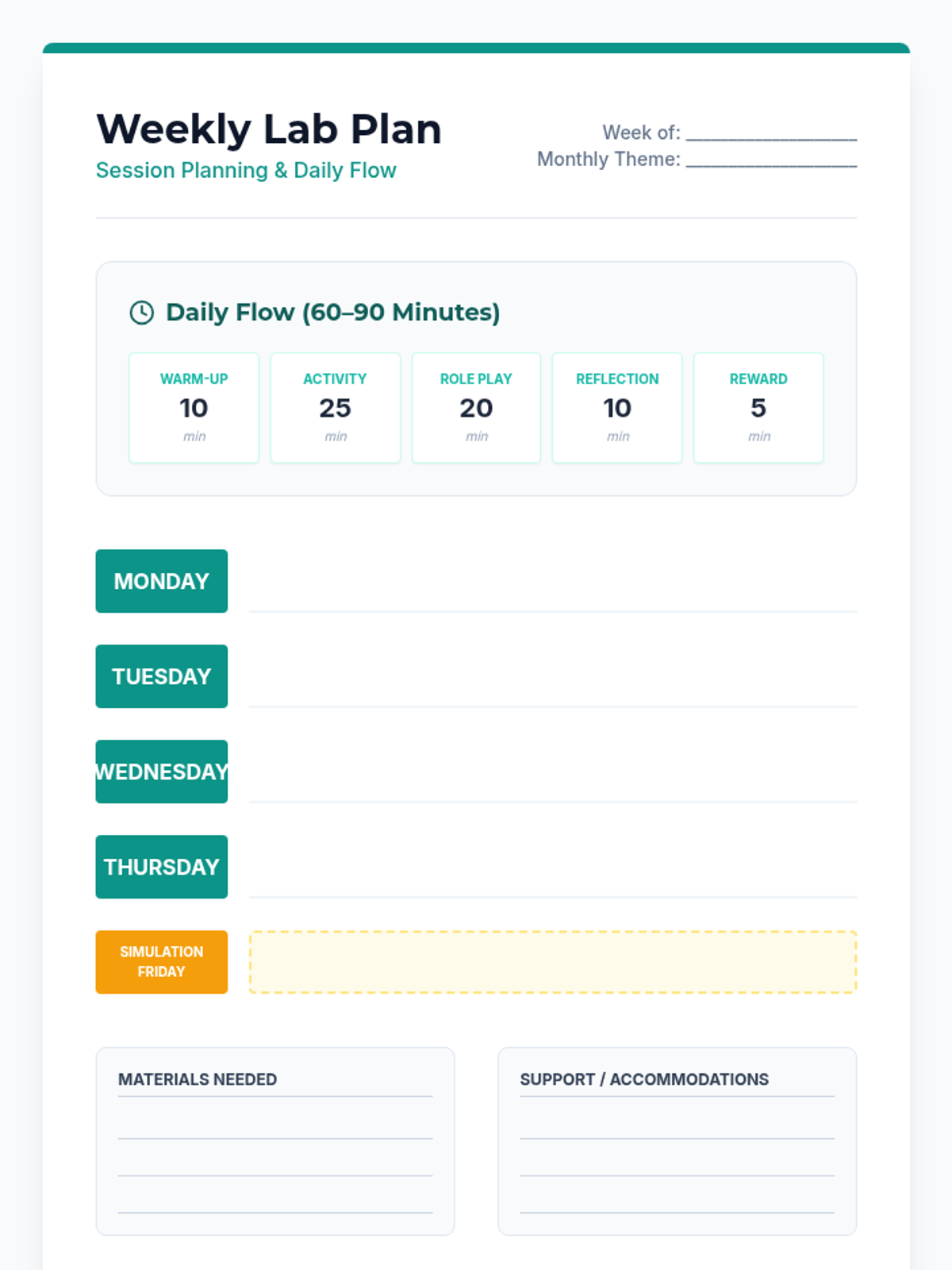
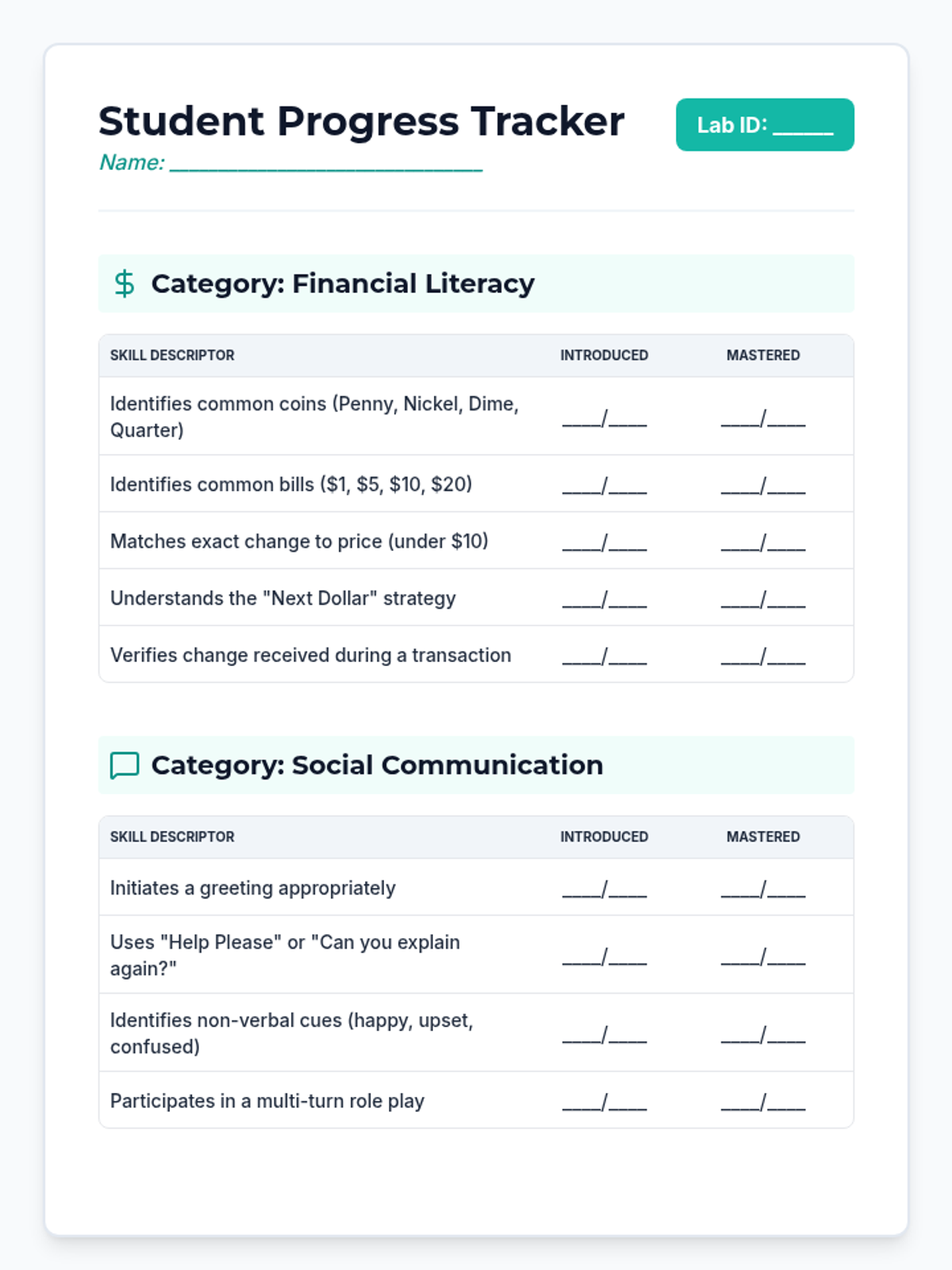
Essential templates, tracking sheets, and the overall framework for the Life Skills program to ensure consistent daily structure and progress monitoring.
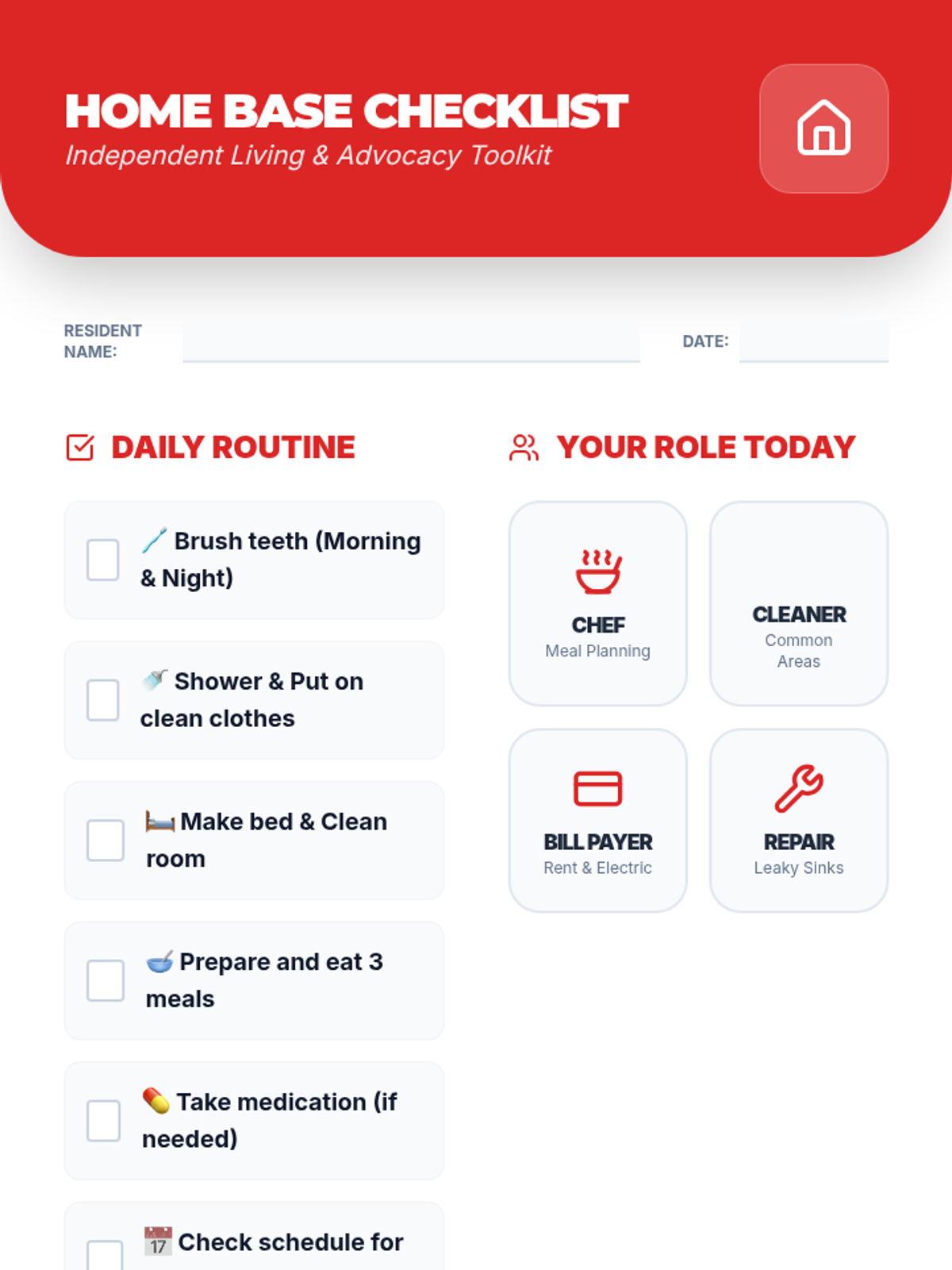
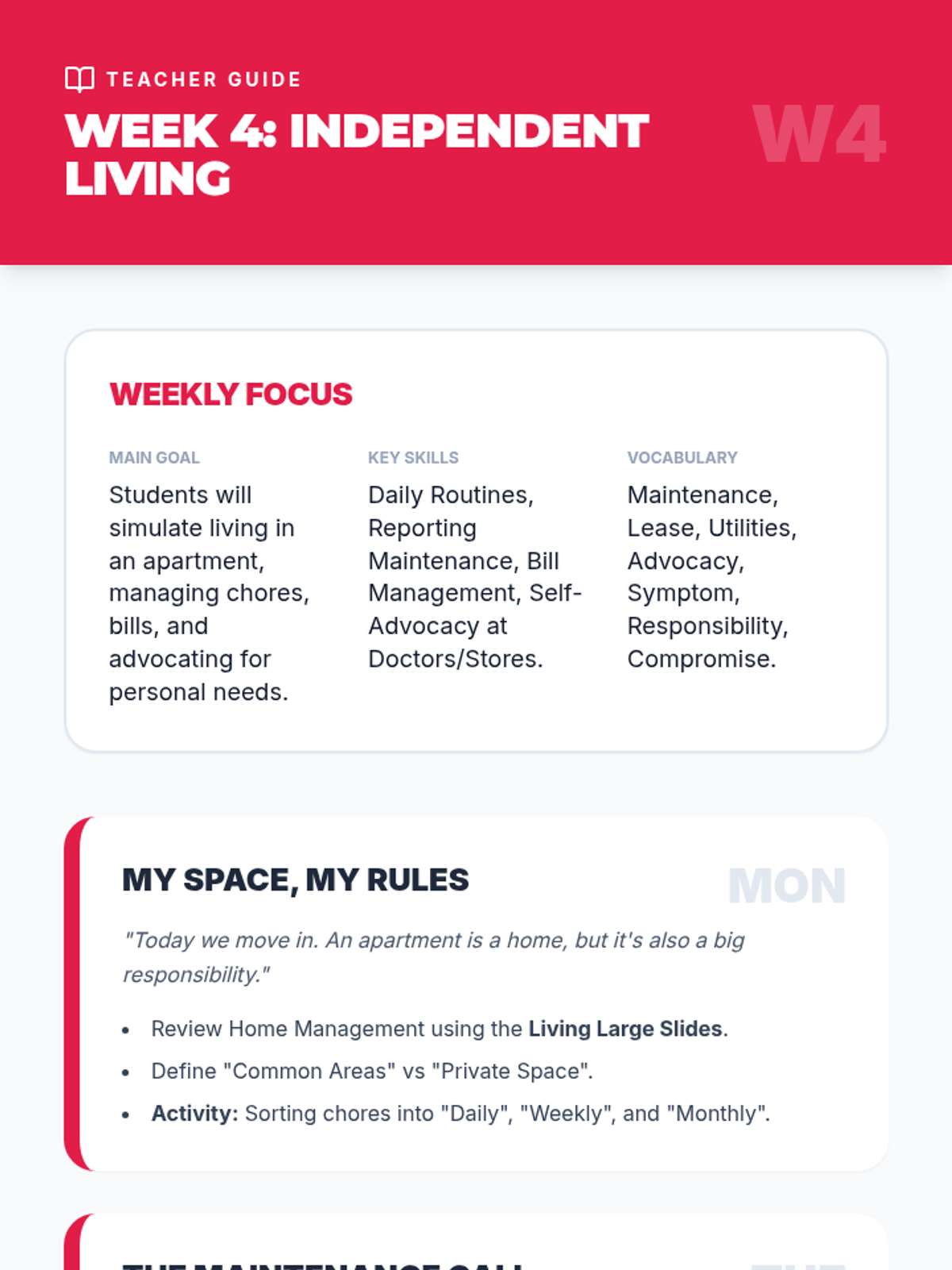
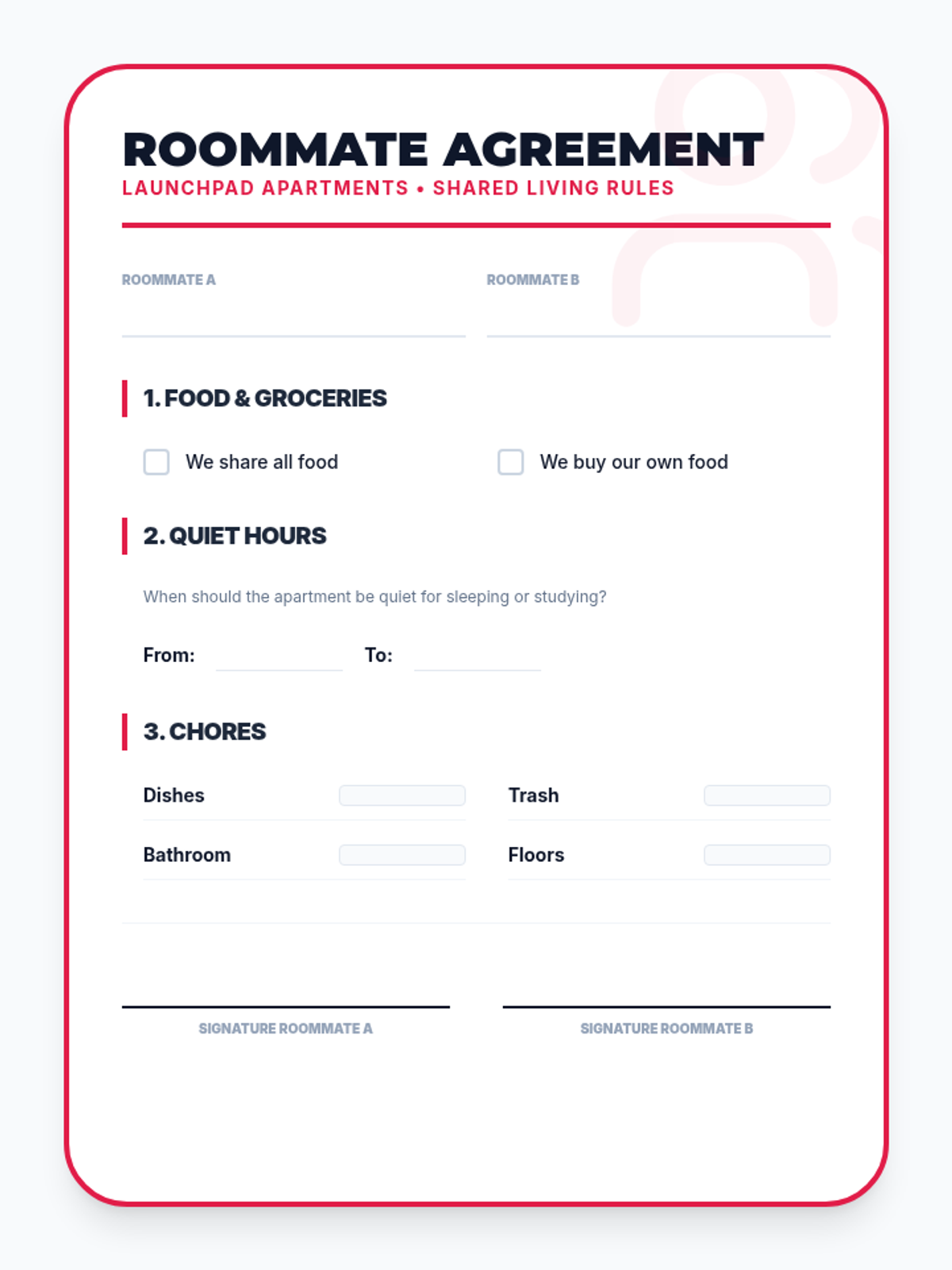
Practicing the core skills of independent living, including home maintenance, personal advocacy, and daily scheduling.
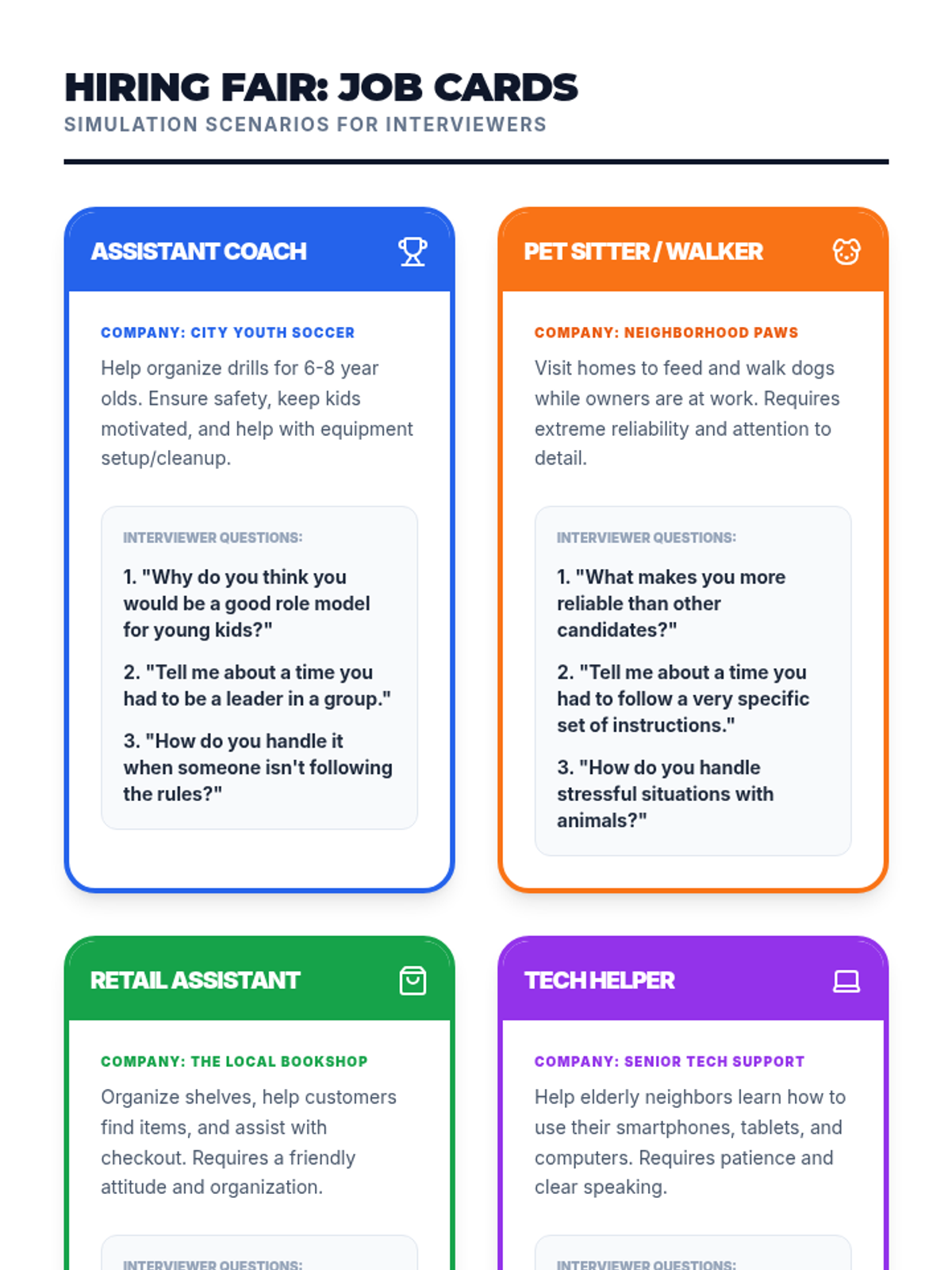
Preparing for the workforce with mock interviews, professional communication practice, and on-the-job simulations.
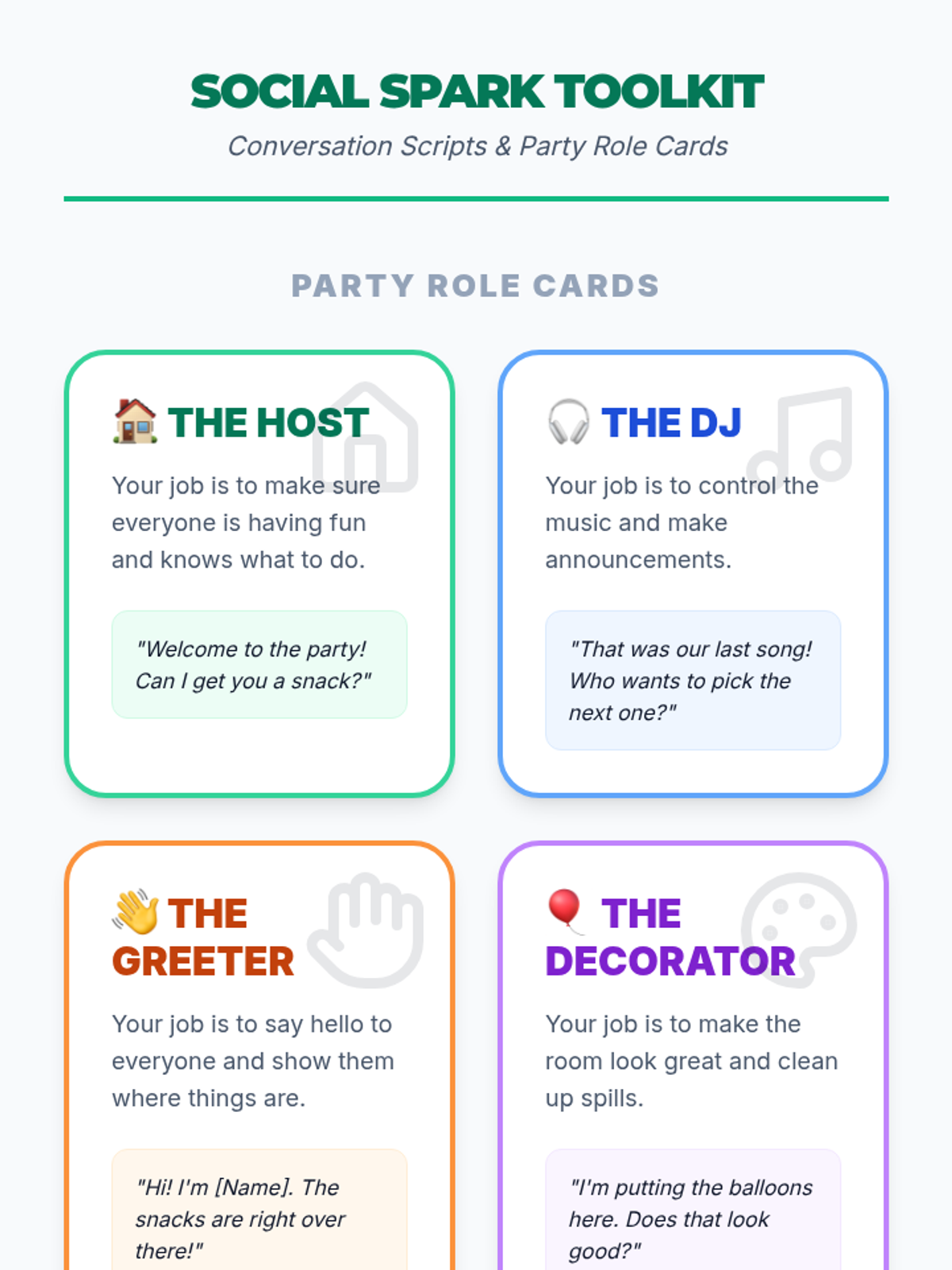
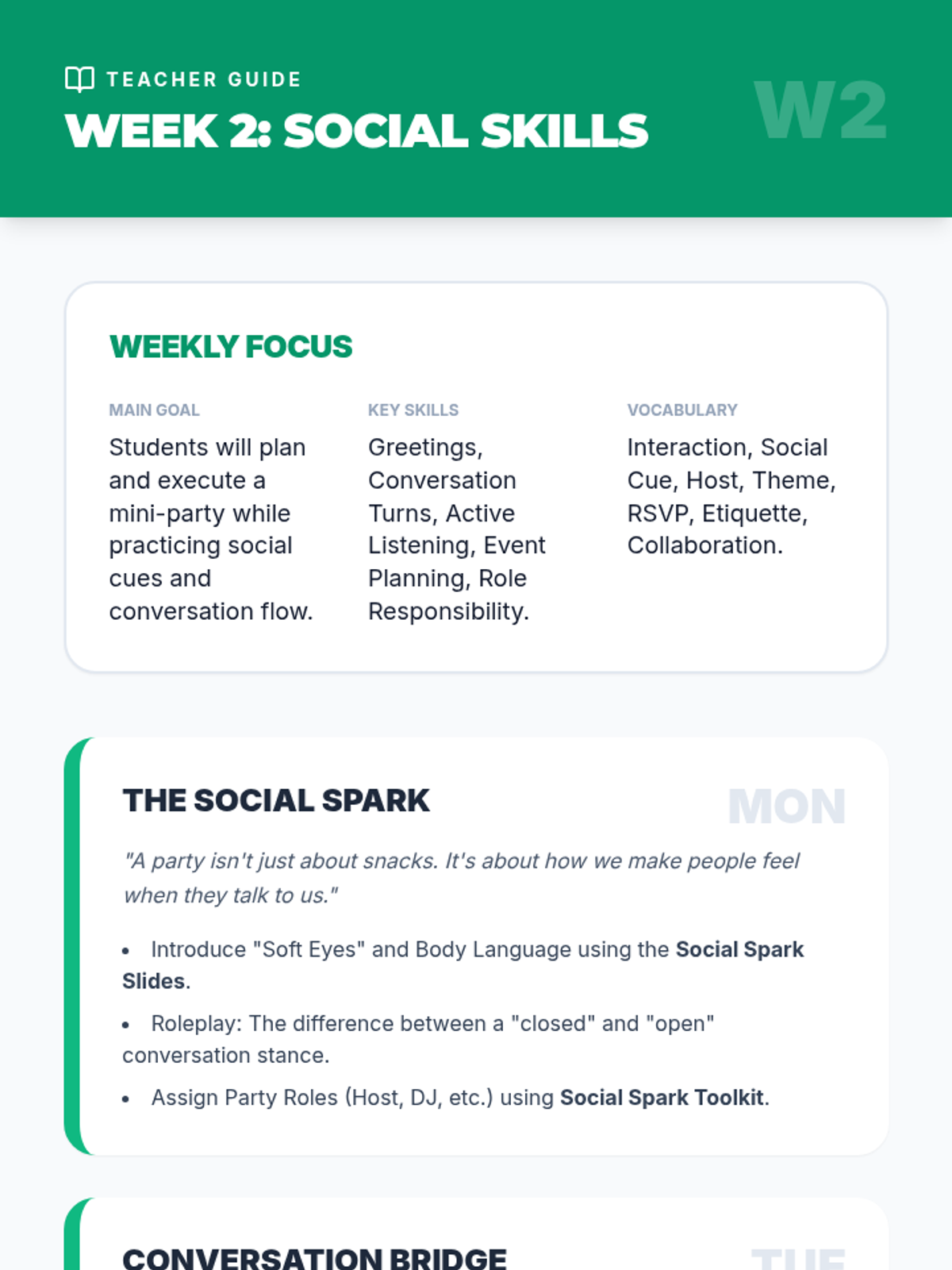
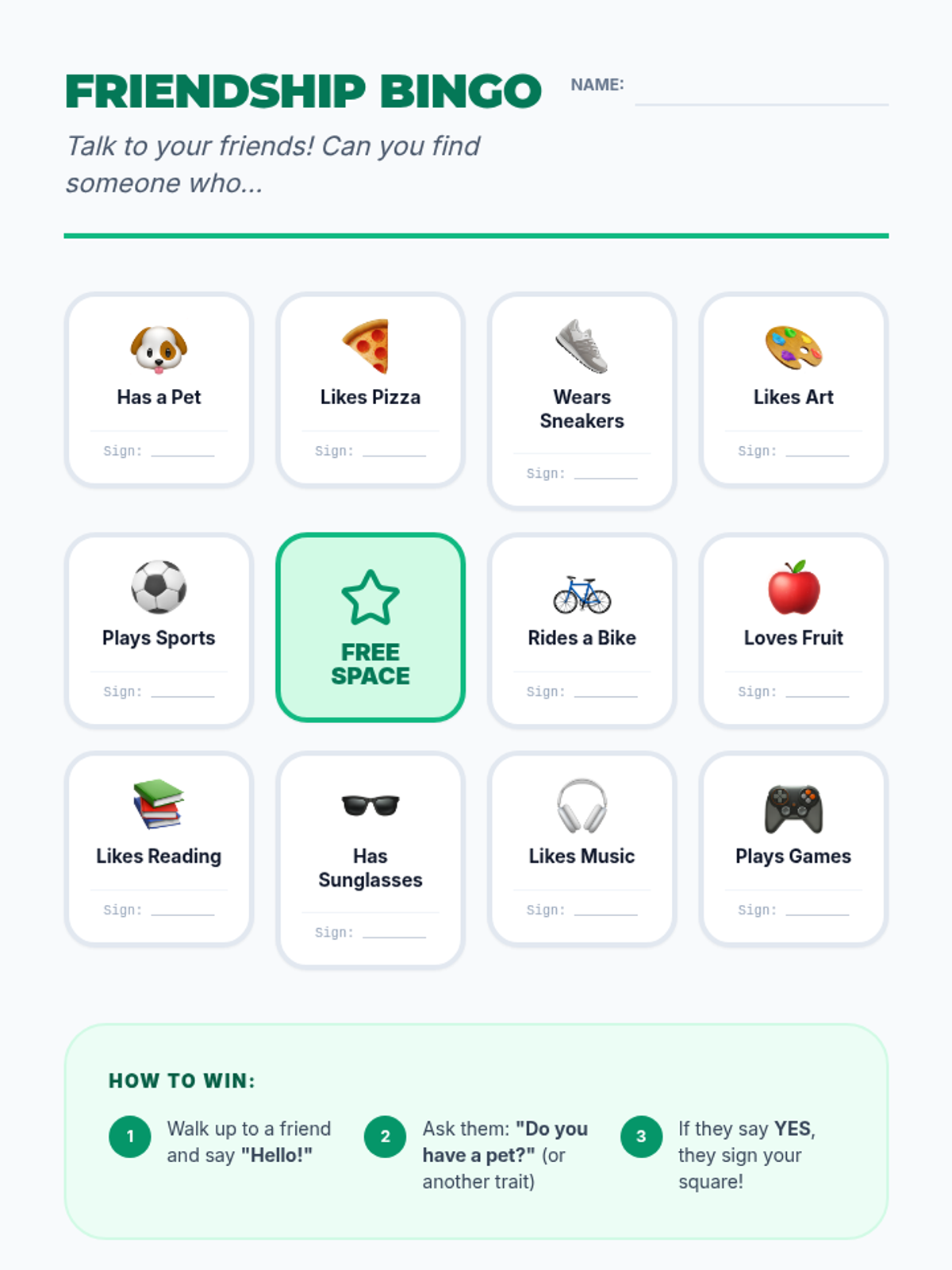
Developing social-emotional awareness through event planning, role-play conversations, and meaningful peer interactions.
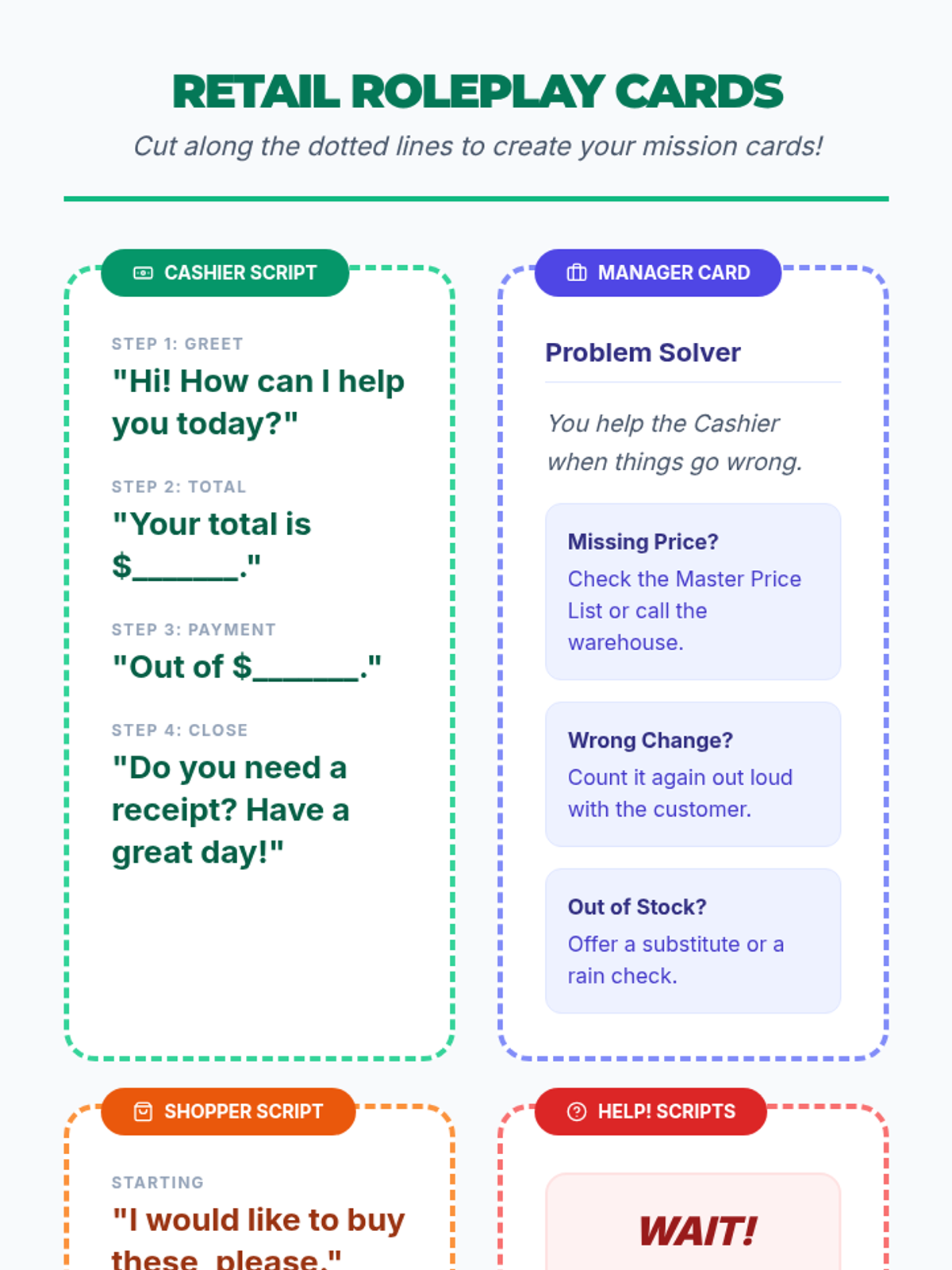
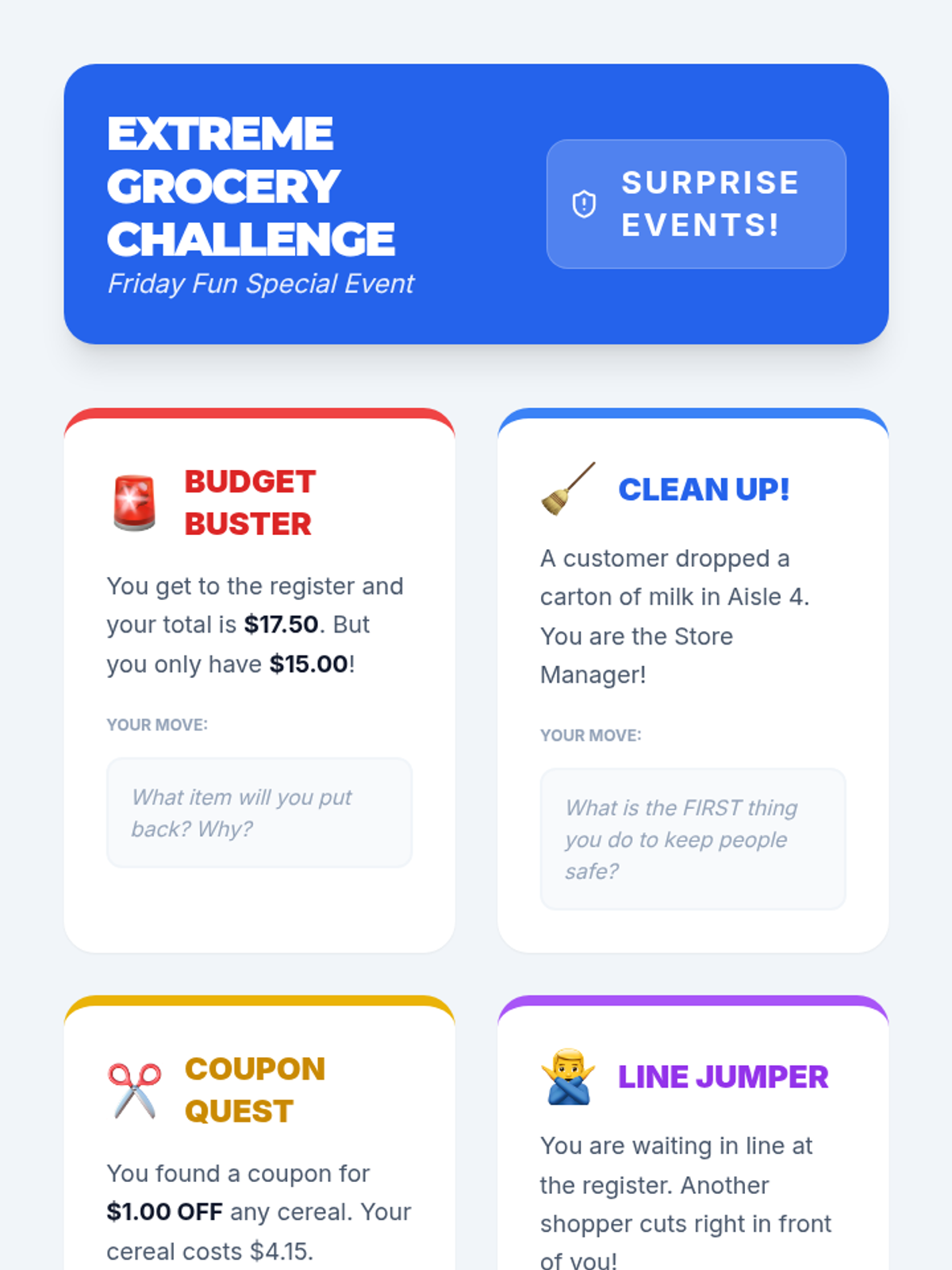
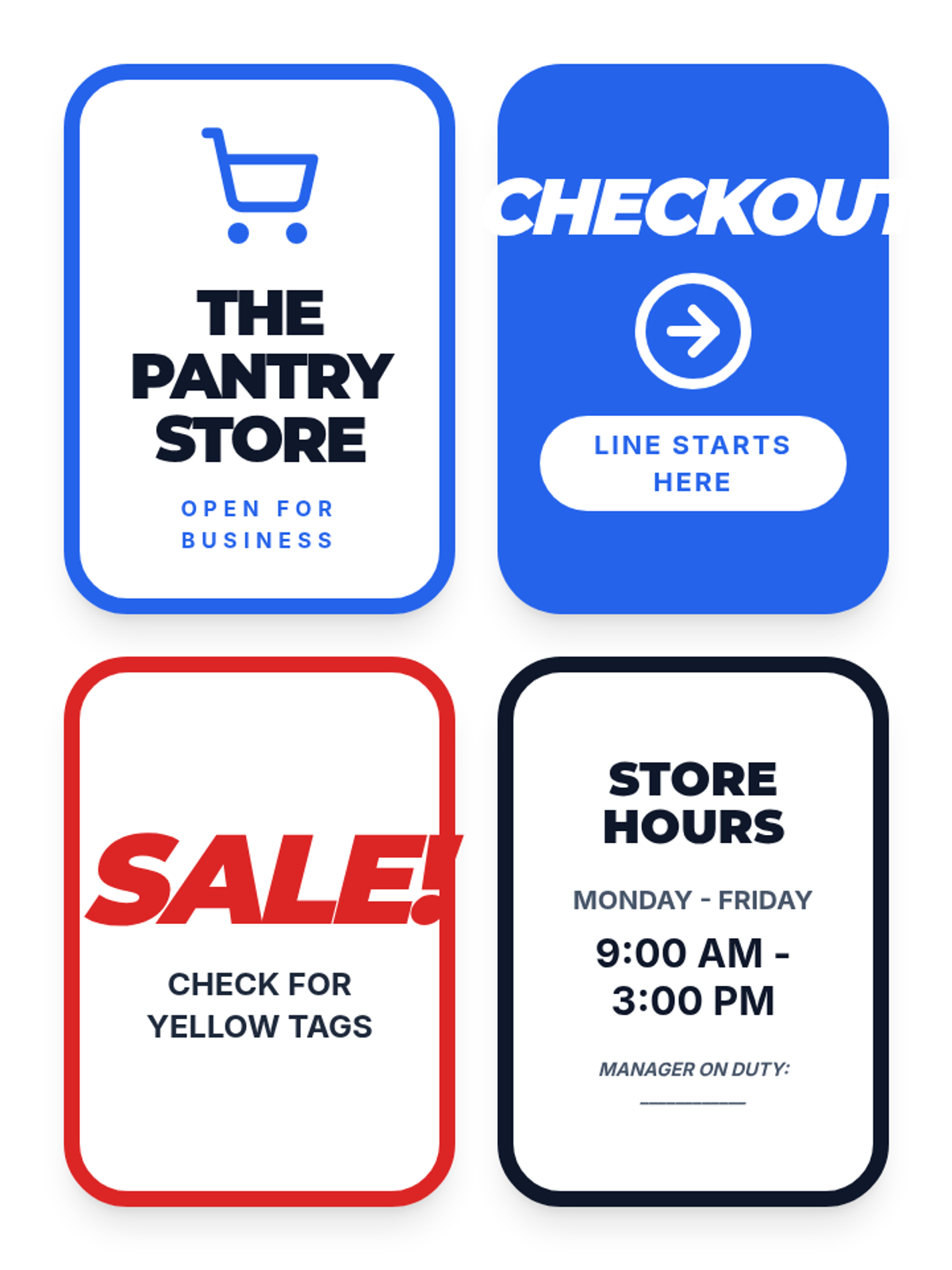
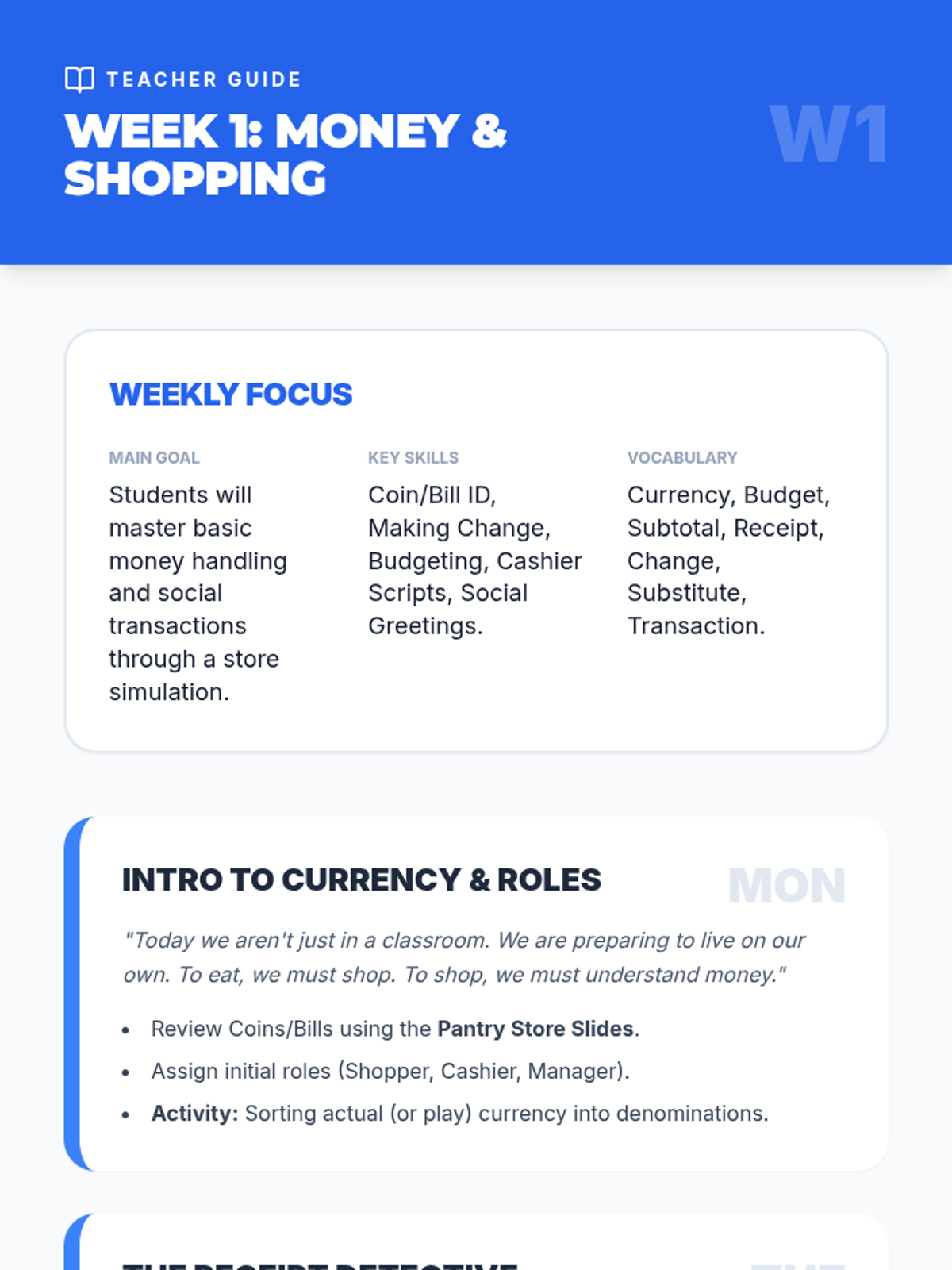
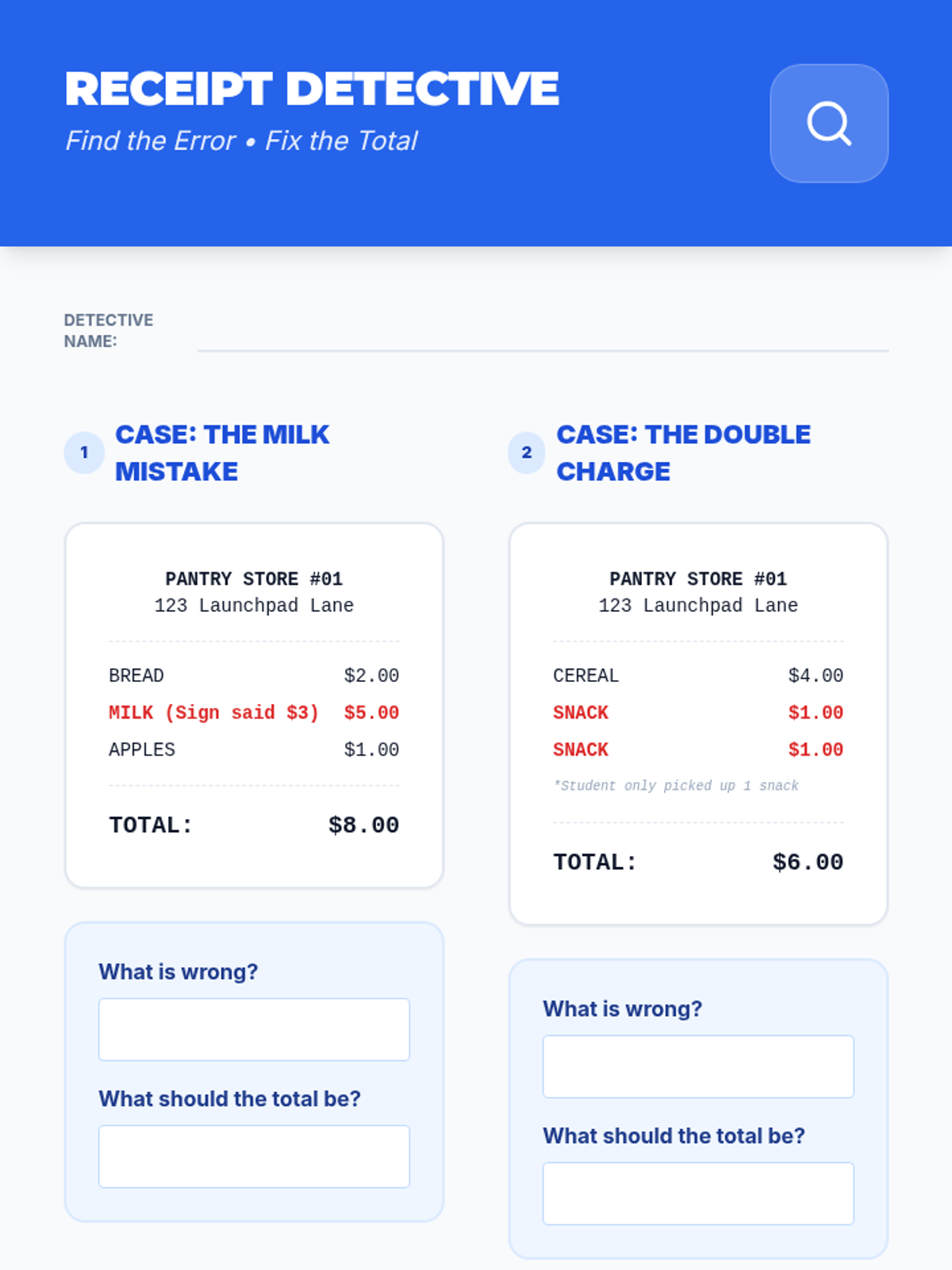
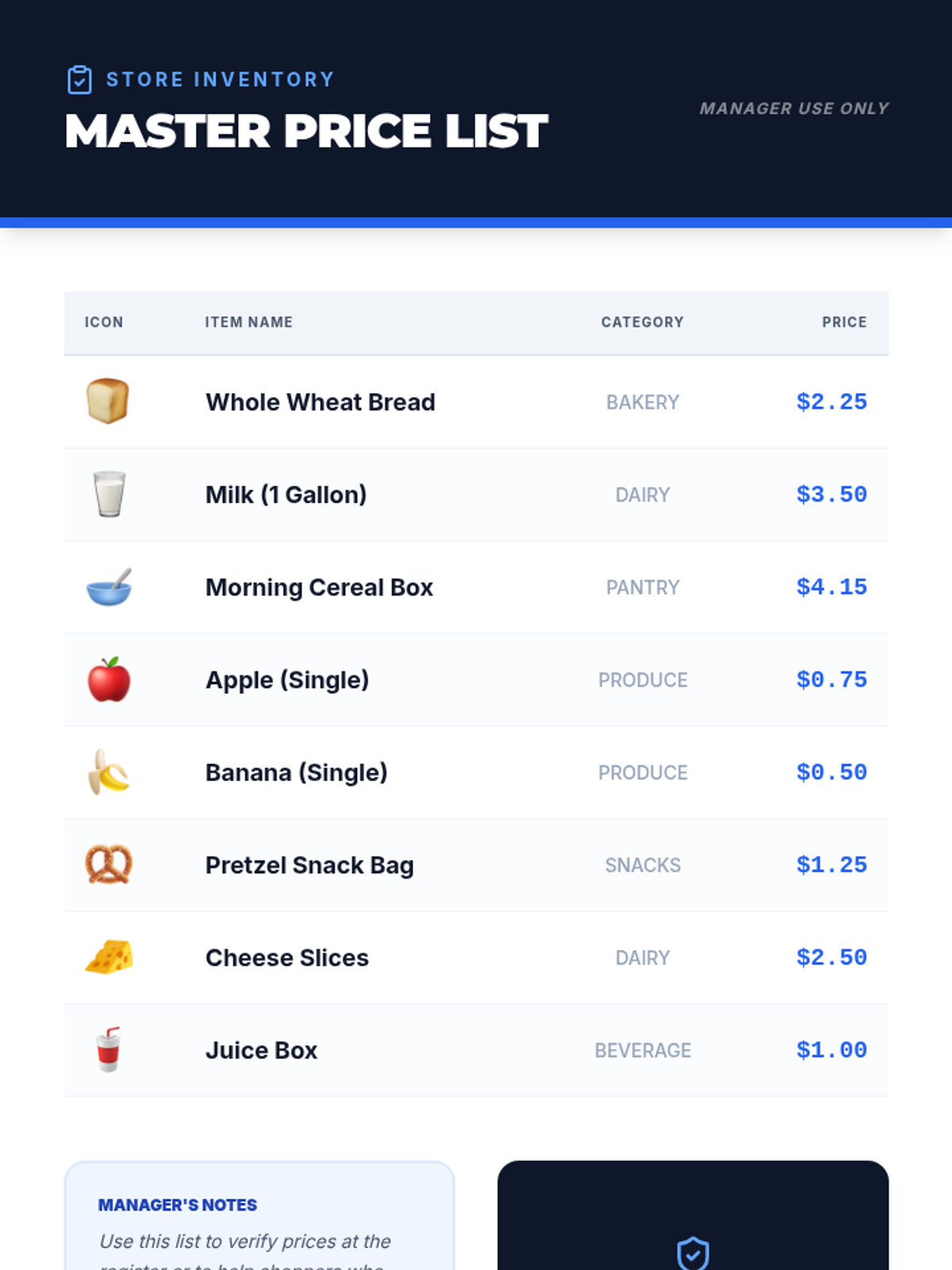
Mastering money identification, budgeting, and the mechanics of shopping through a pantry store simulation and real-world problem-solving.
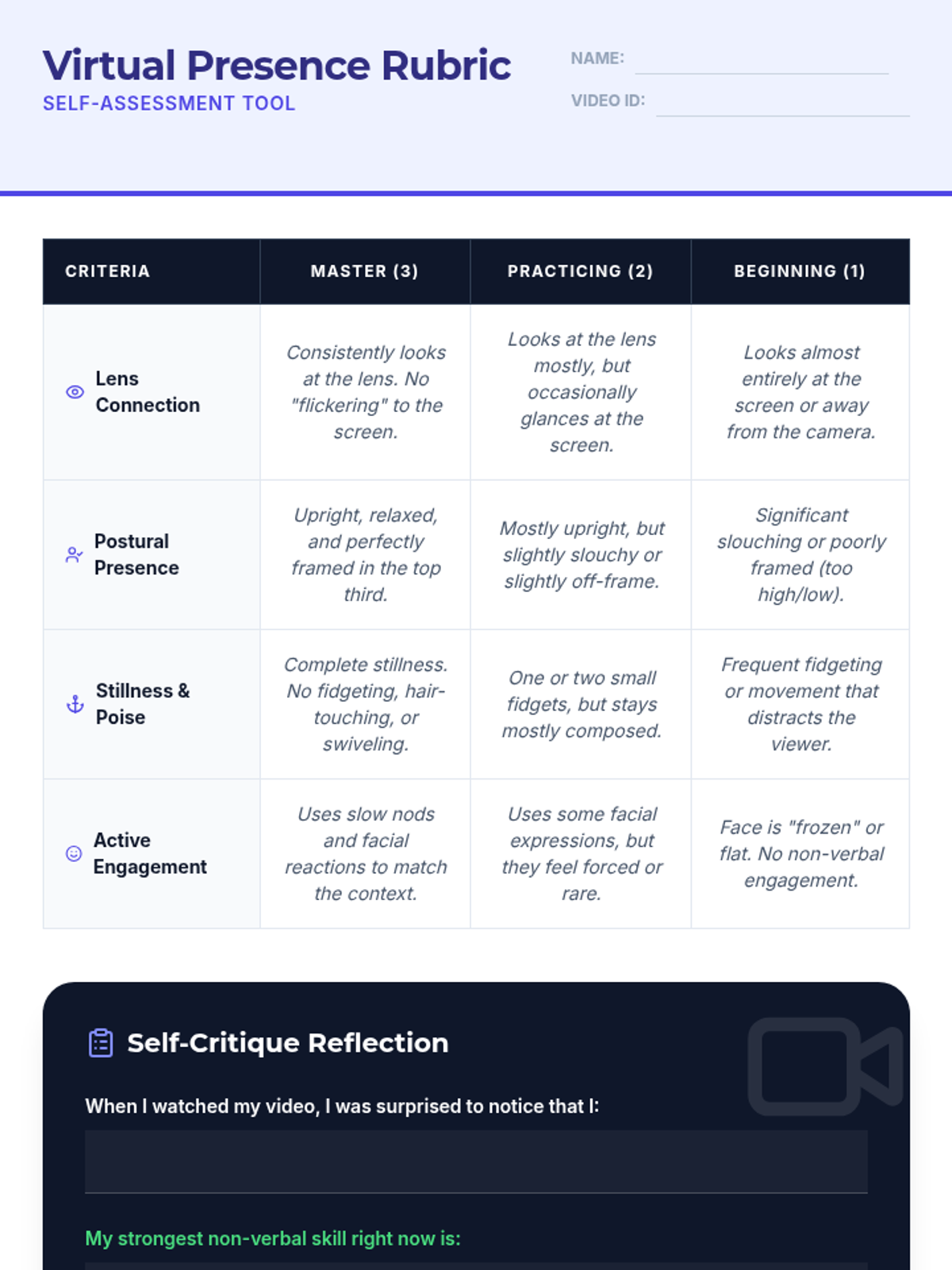
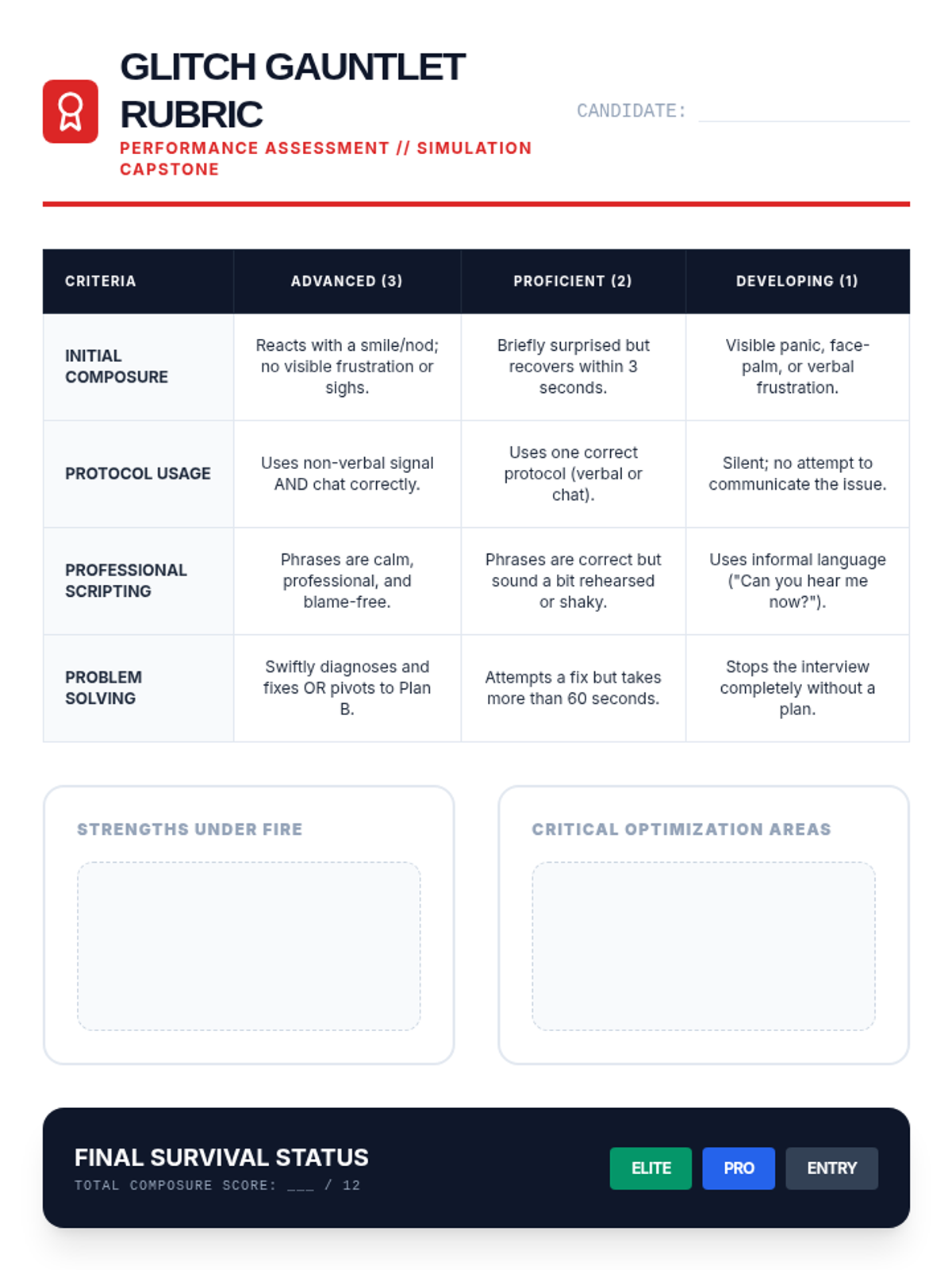
The final lesson involves recording a short mock interview response and using a rubric to self-assess eye contact, posture, and engagement.
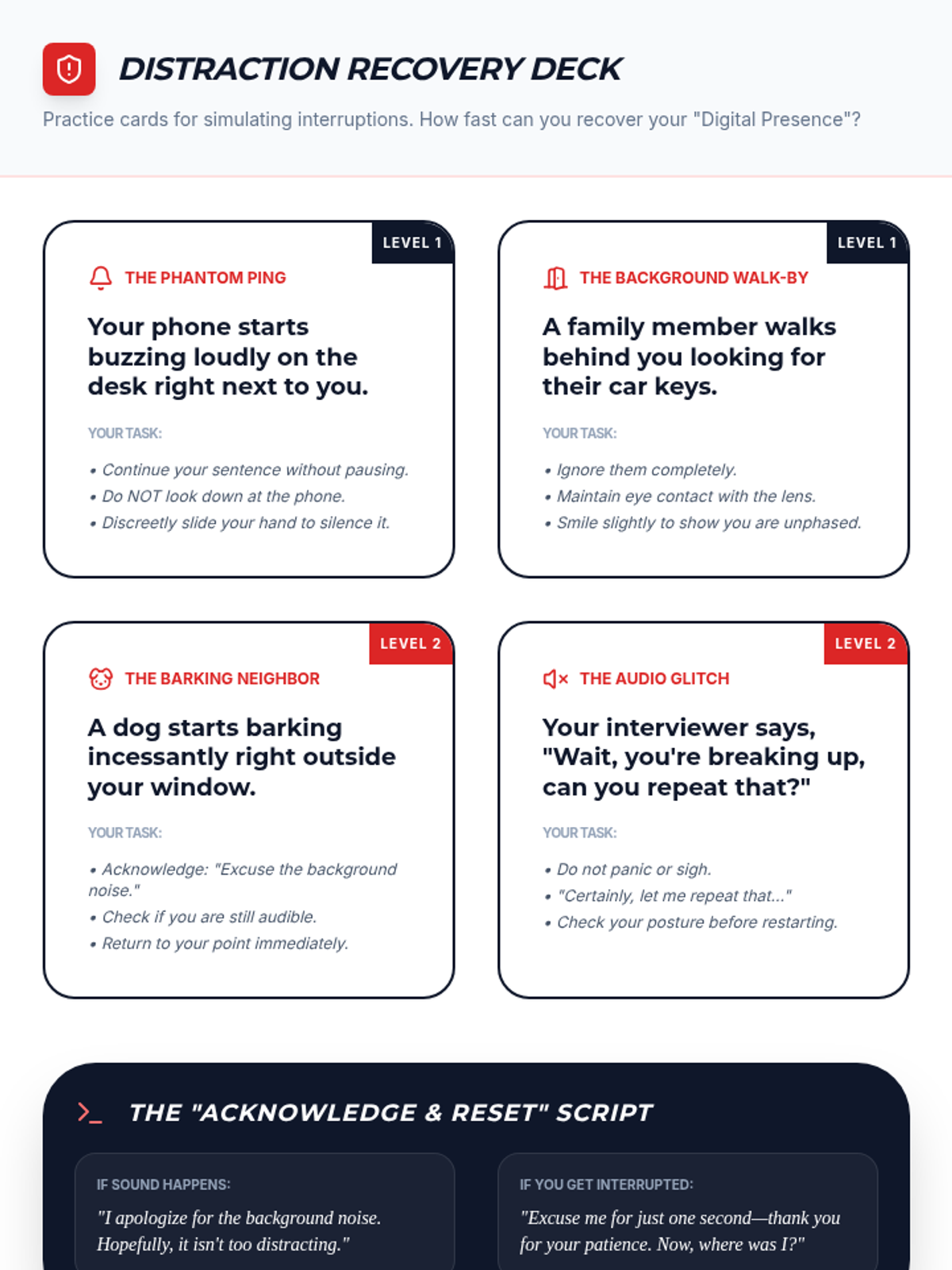
Students practice maintaining focus despite environmental distractions and learn how to professionally recover from interruptions during a call.
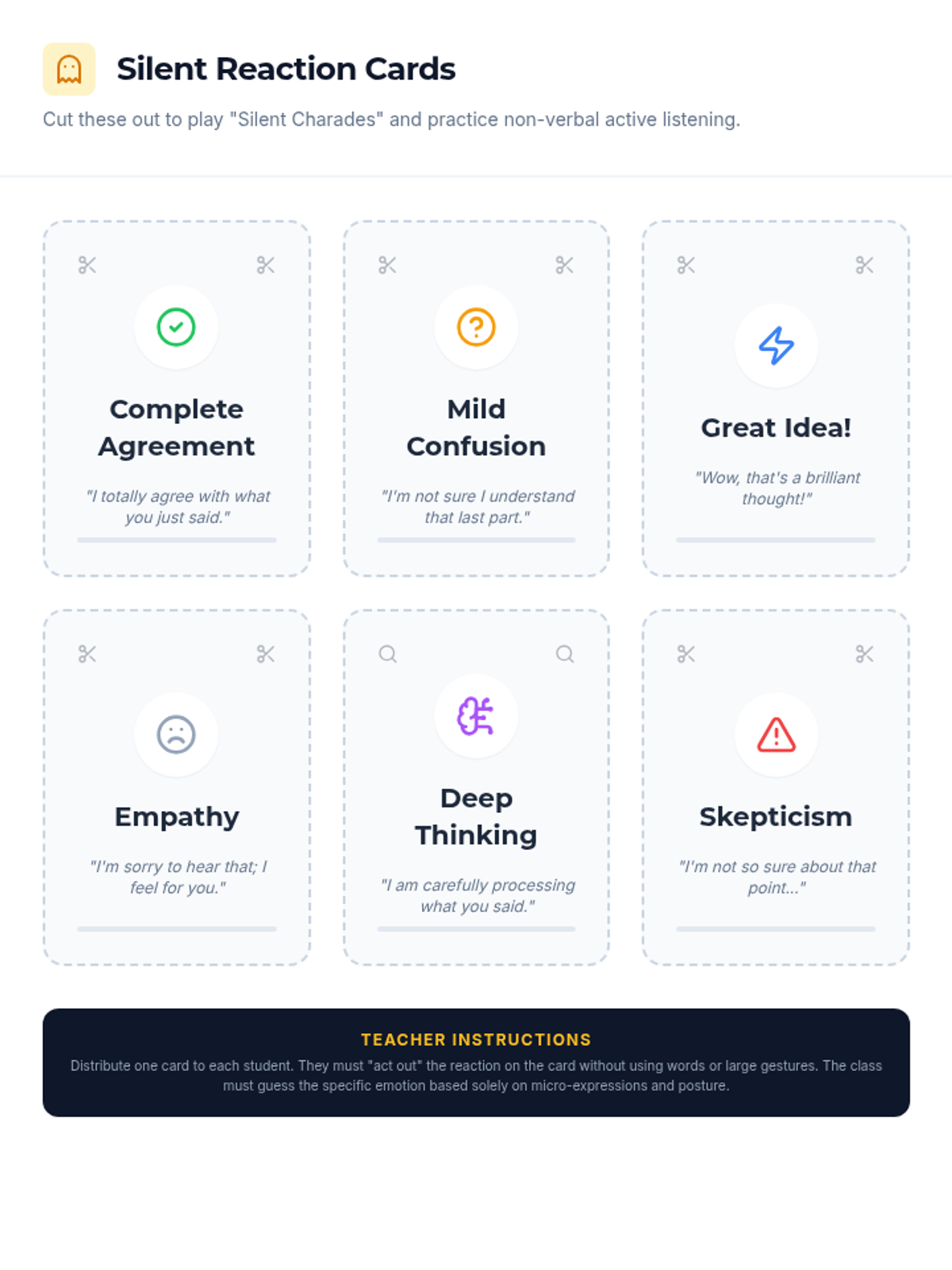
This lesson covers non-verbal cues like nodding and facial expressions to demonstrate active listening without interrupting the audio feed.
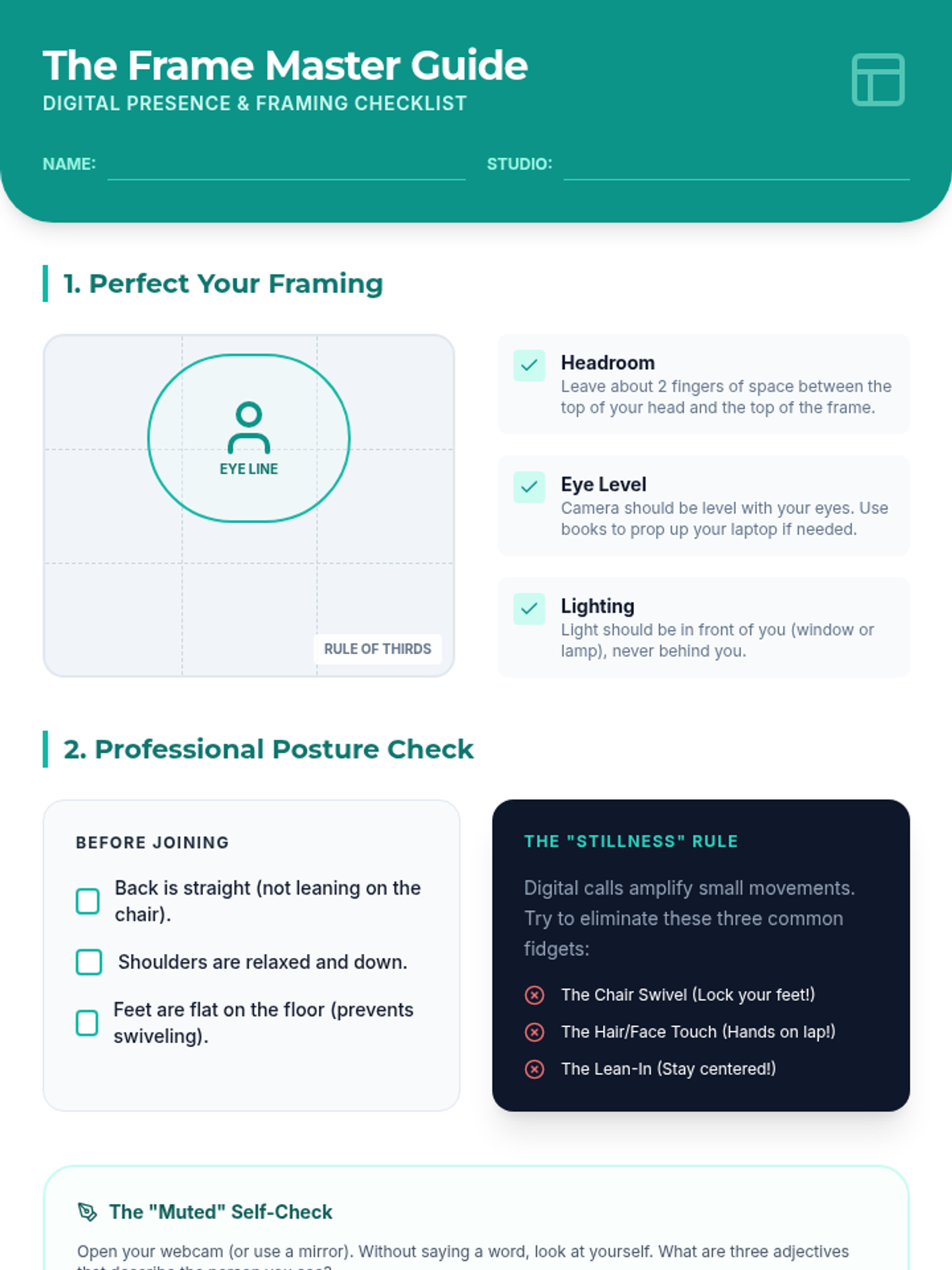
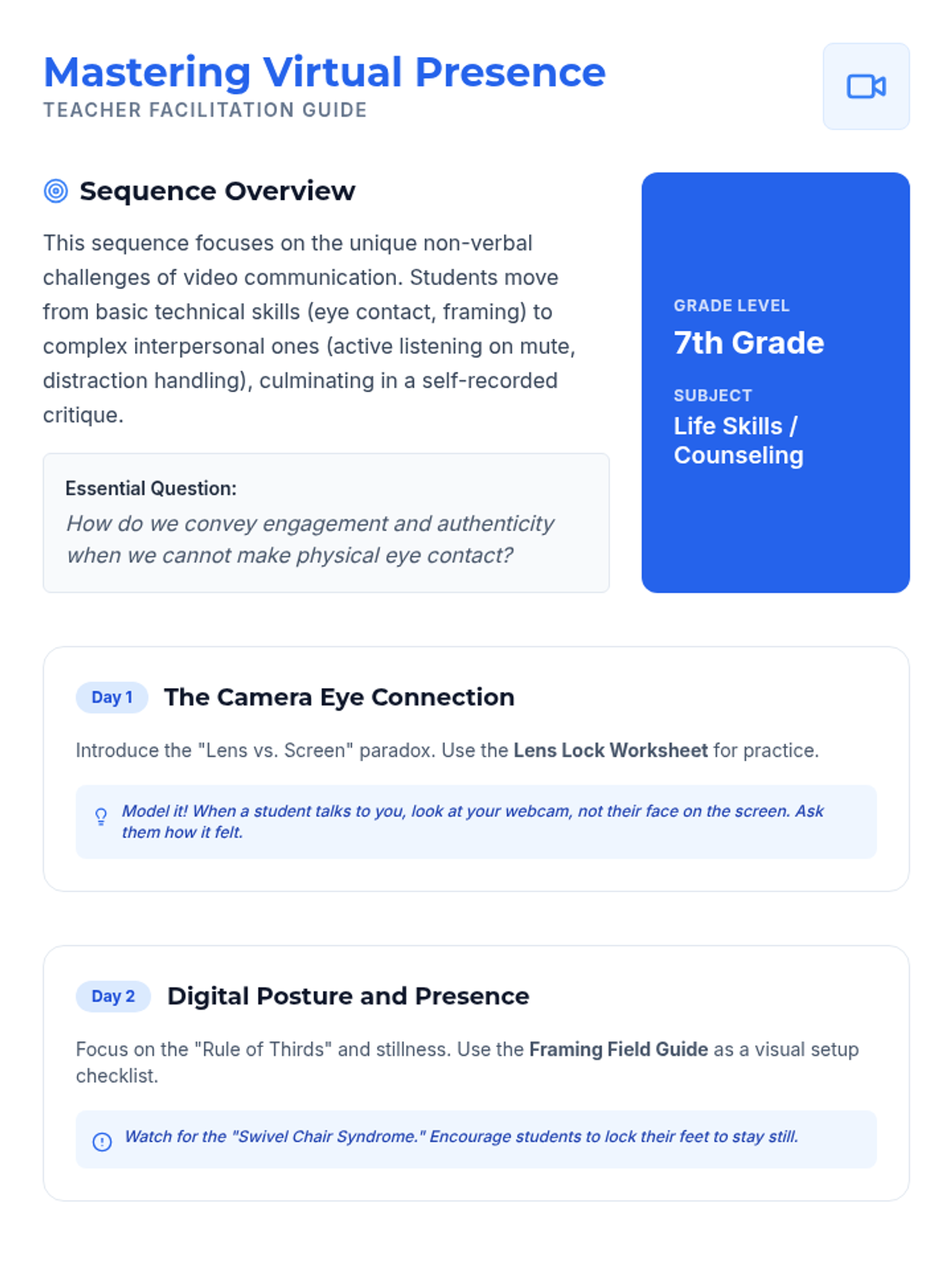
Learners explore how body language is framed on camera, focusing on maintaining upright posture and reducing fidgeting within the digital rectangle.
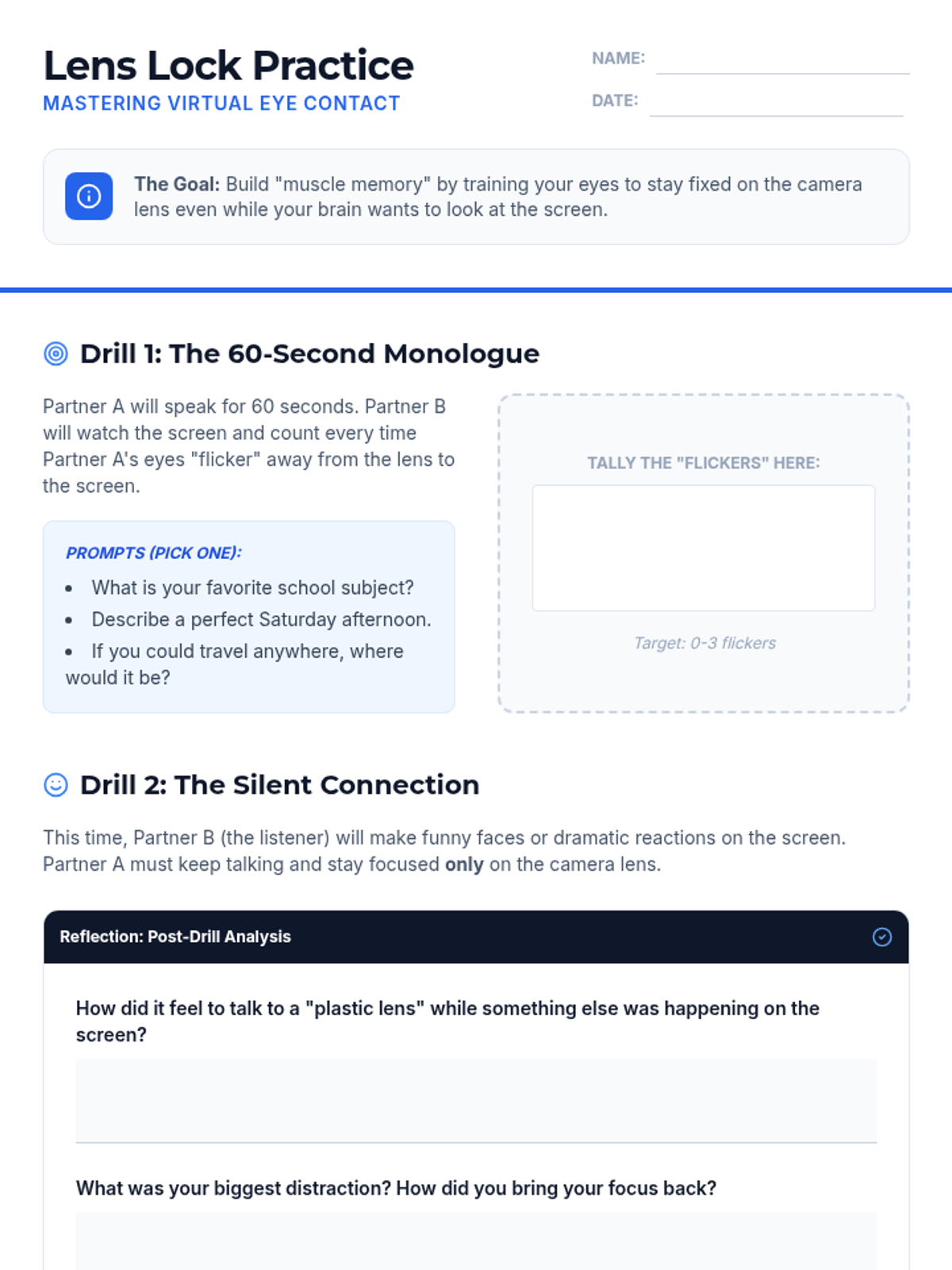
Students learn the 'Camera Eye' technique, practicing the counter-intuitive skill of looking at the camera lens instead of the screen to simulate eye contact.
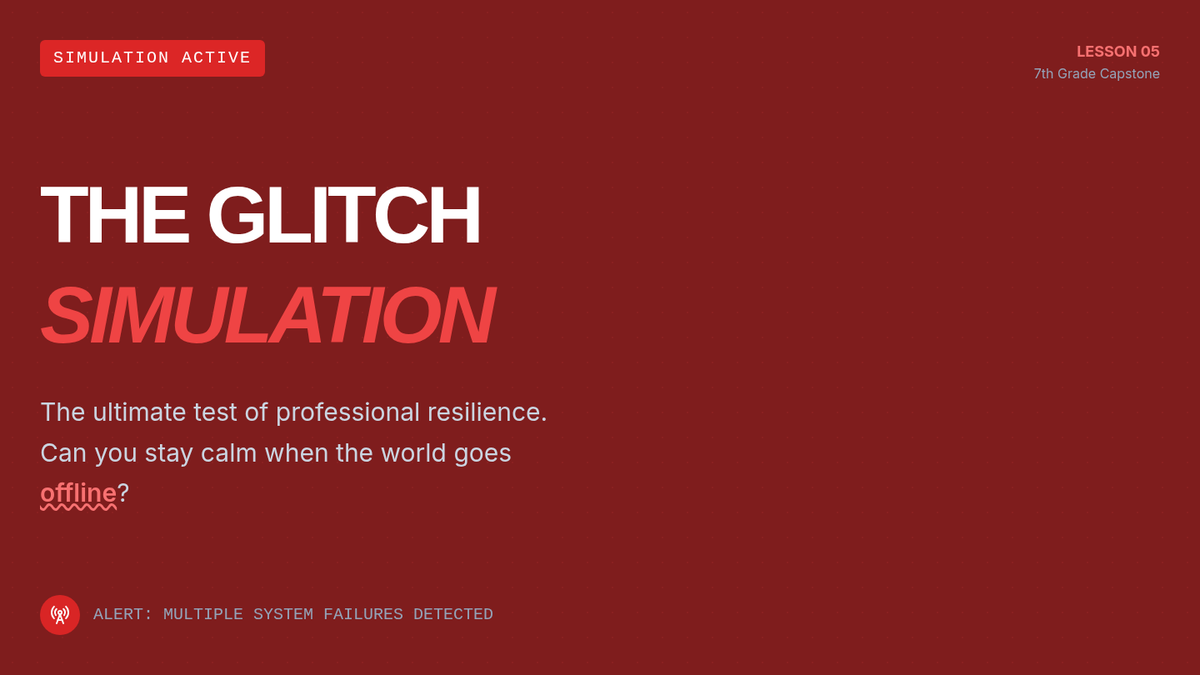
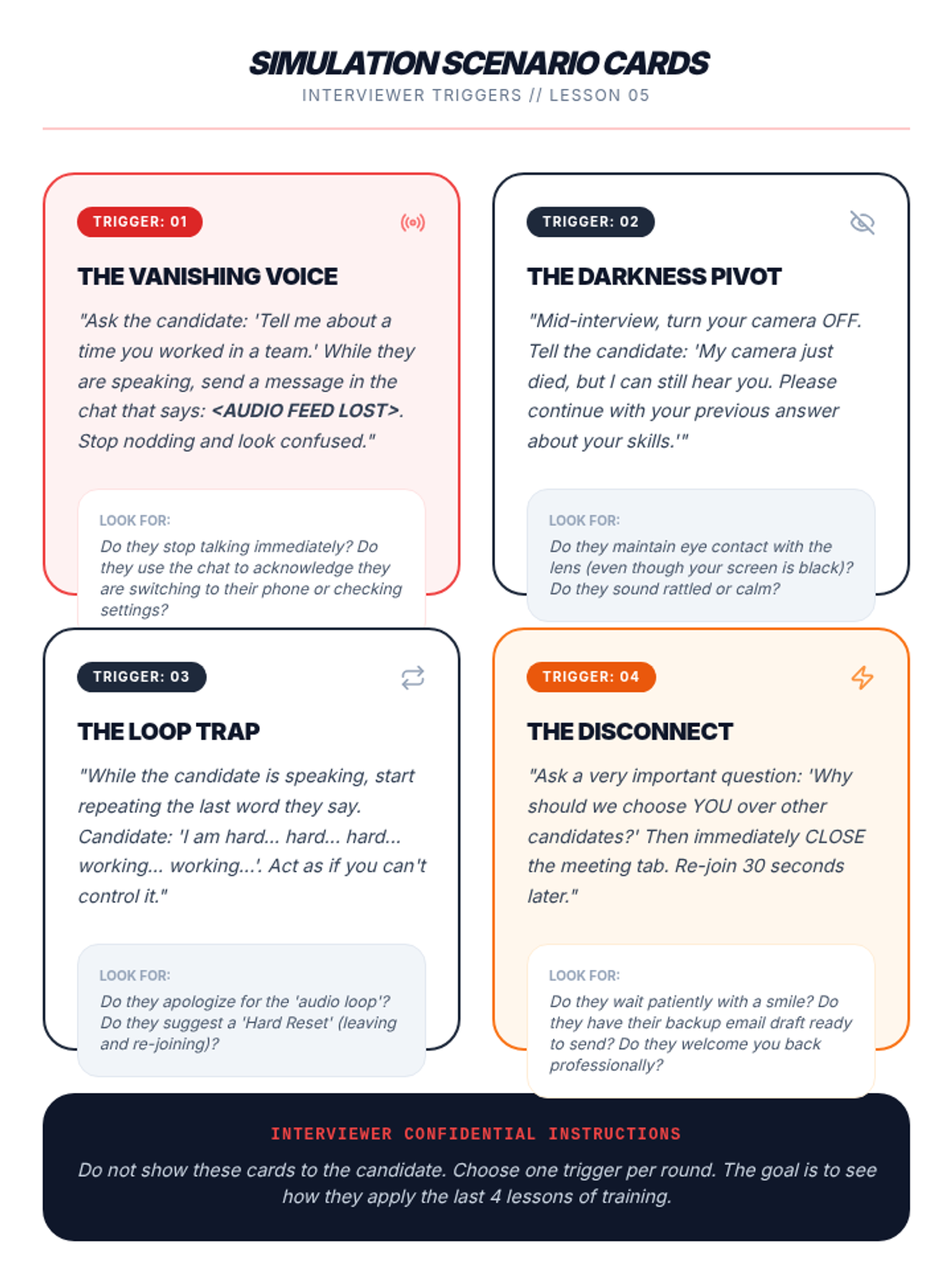
The capstone simulation where students navigate high-pressure 'disaster scenarios' in a mock interview, demonstrating resilience and composure under technological fire.
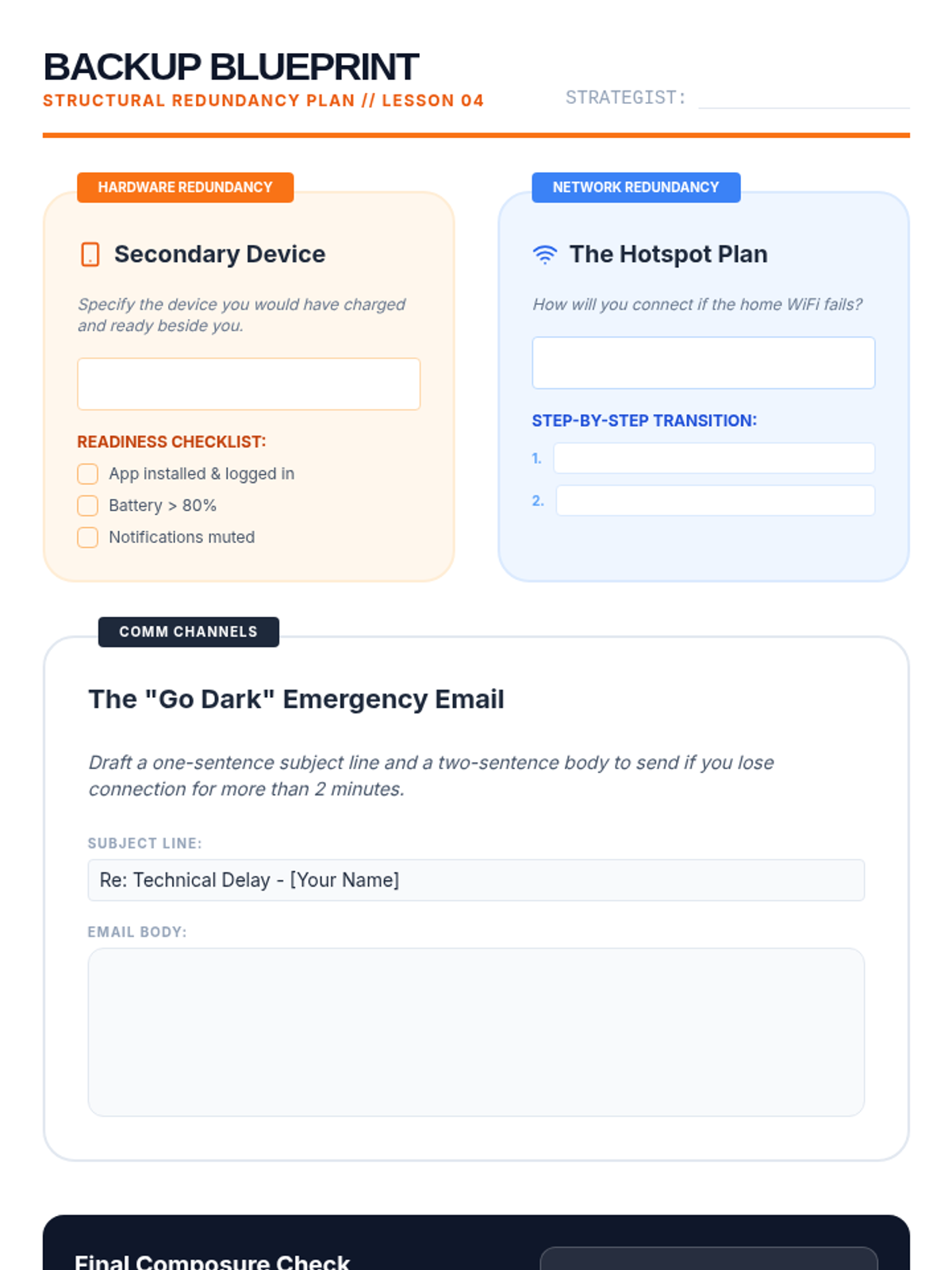
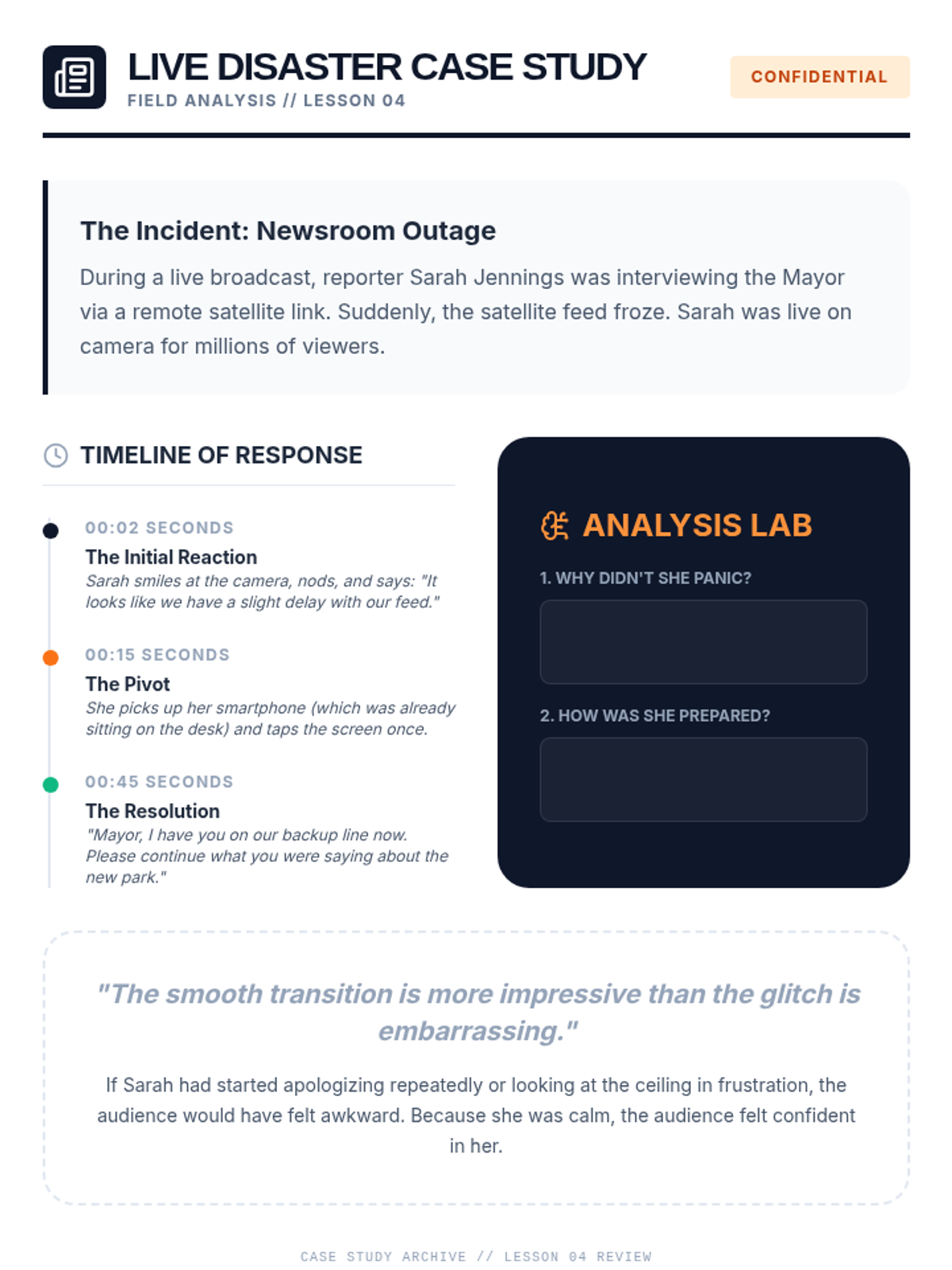
Students build comprehensive contingency plans, including secondary devices and alternate communication channels, to ensure they never truly 'go dark' during an interview.
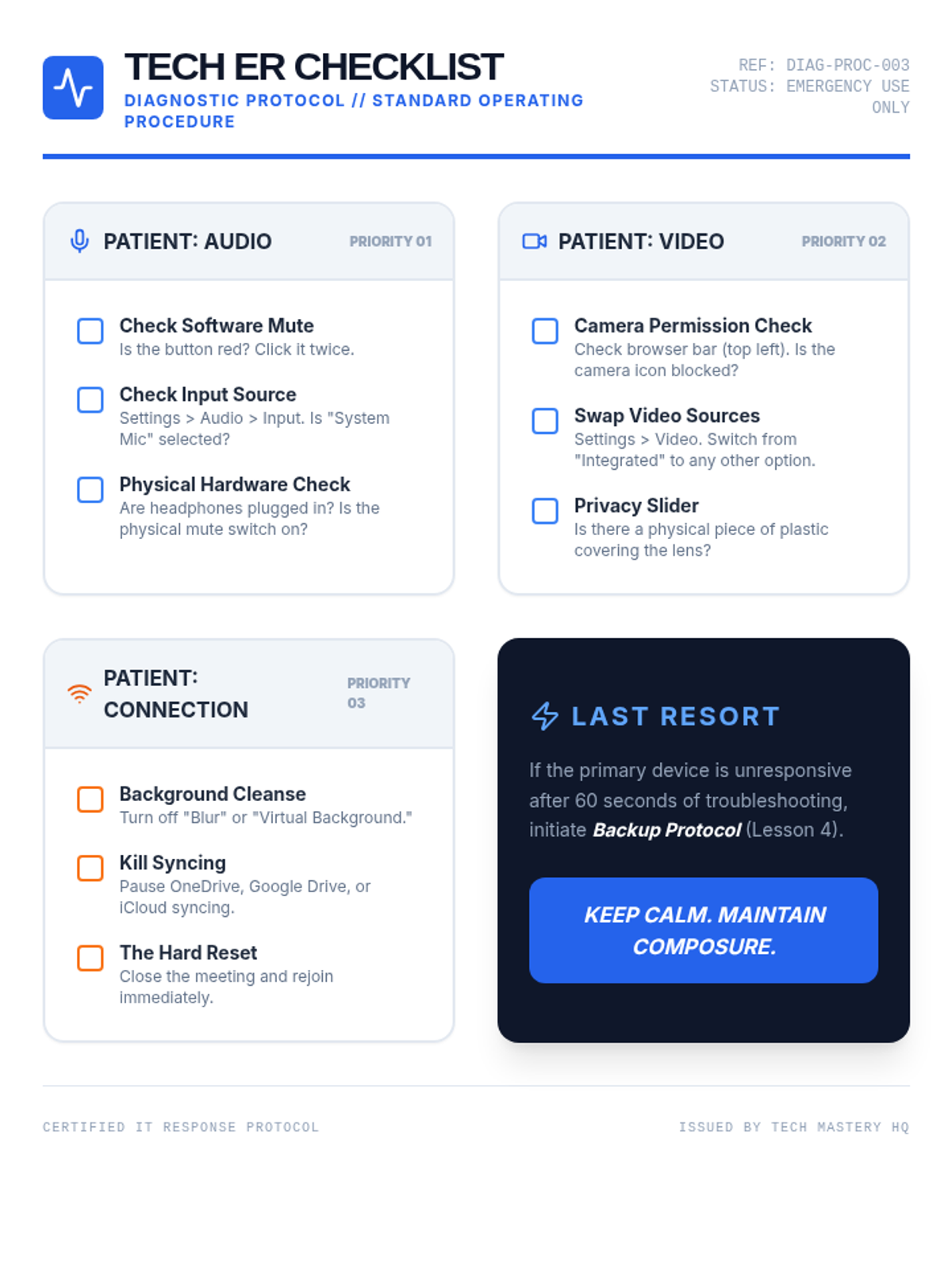
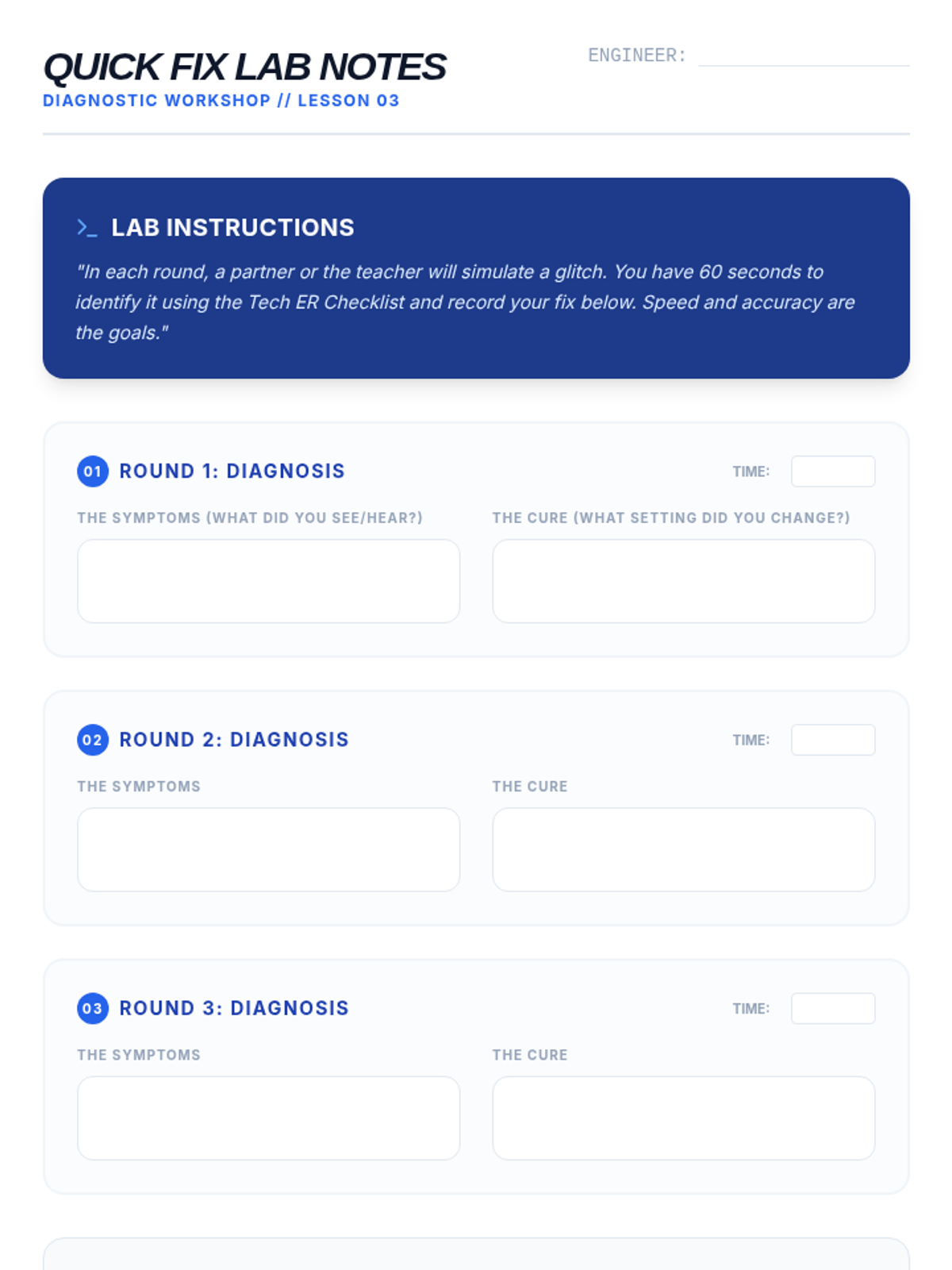
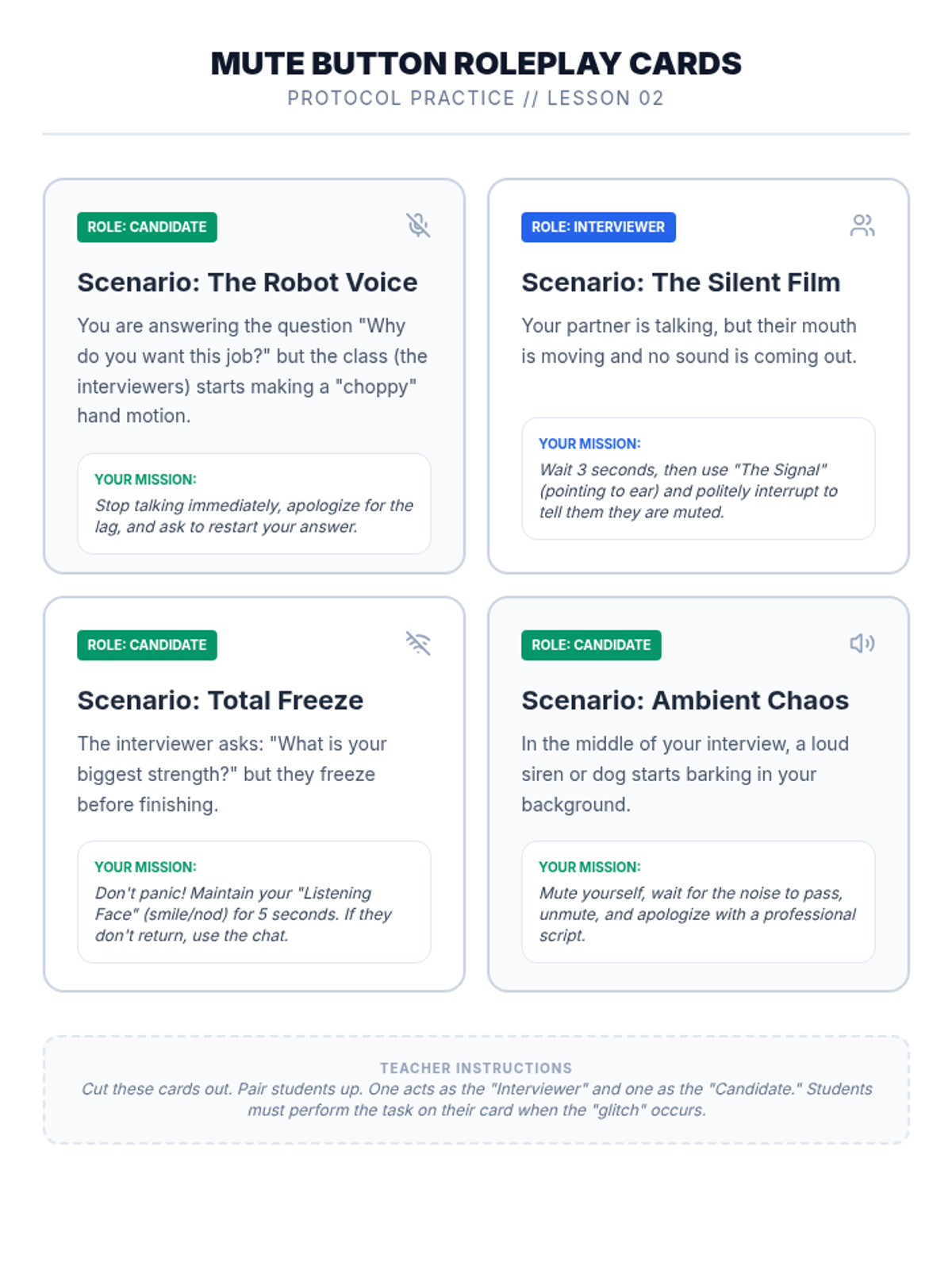
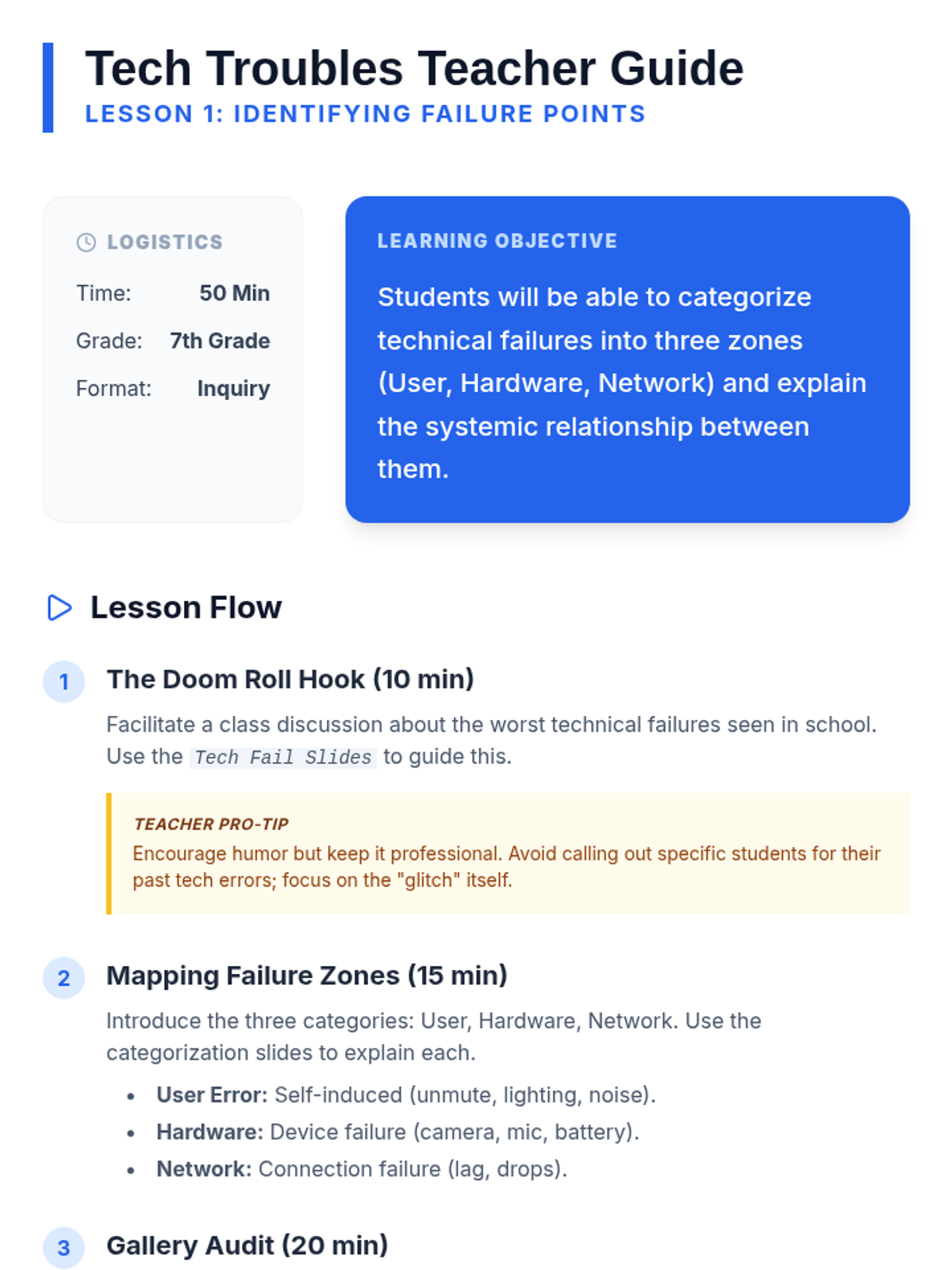
A hands-on workshop where students practice real-time diagnosis and resolution of common audio, video, and connection issues within meeting software.
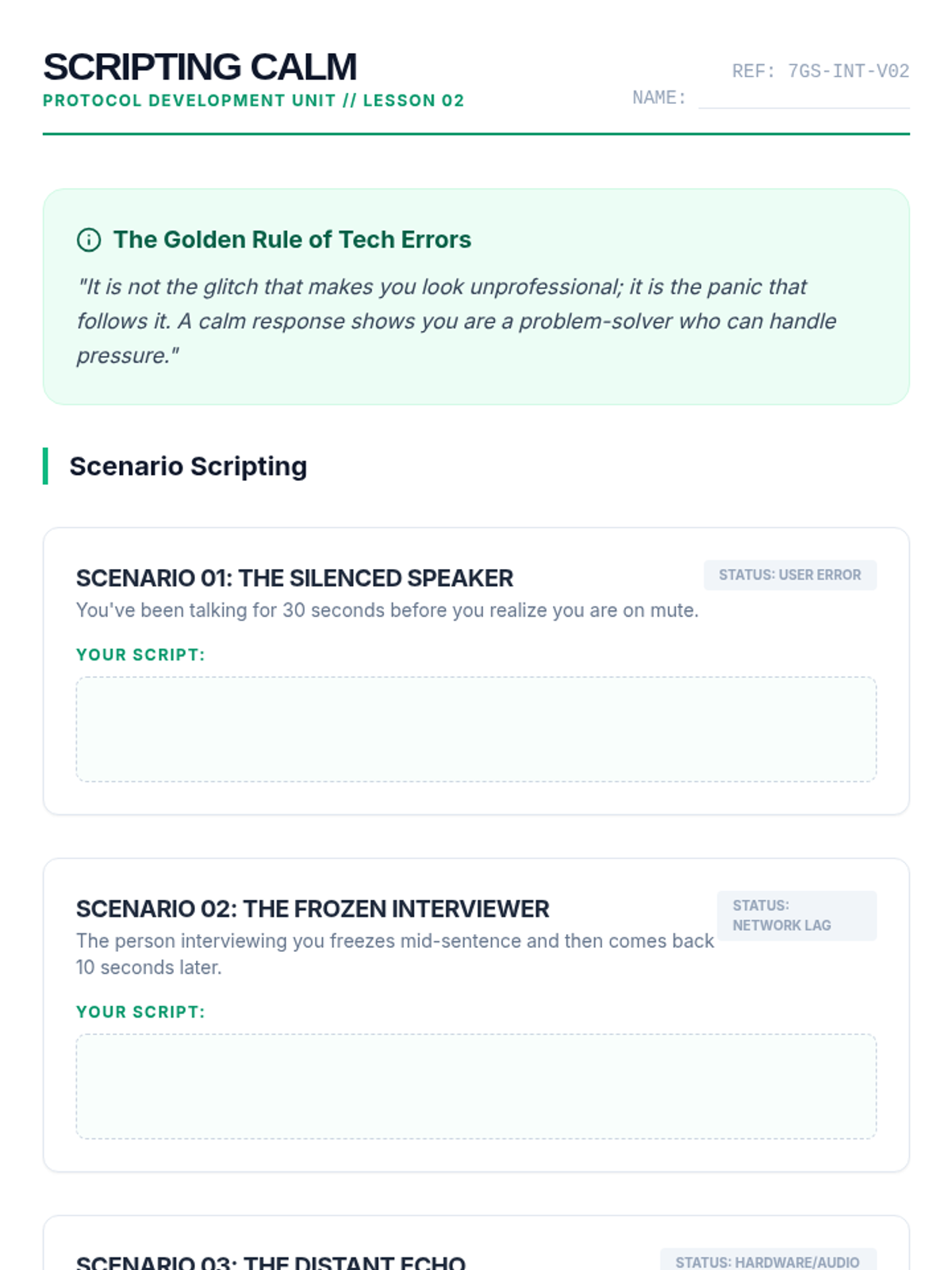
Learners develop professional scripts and communication protocols to signal technical difficulties calmly and effectively without losing their professional edge.
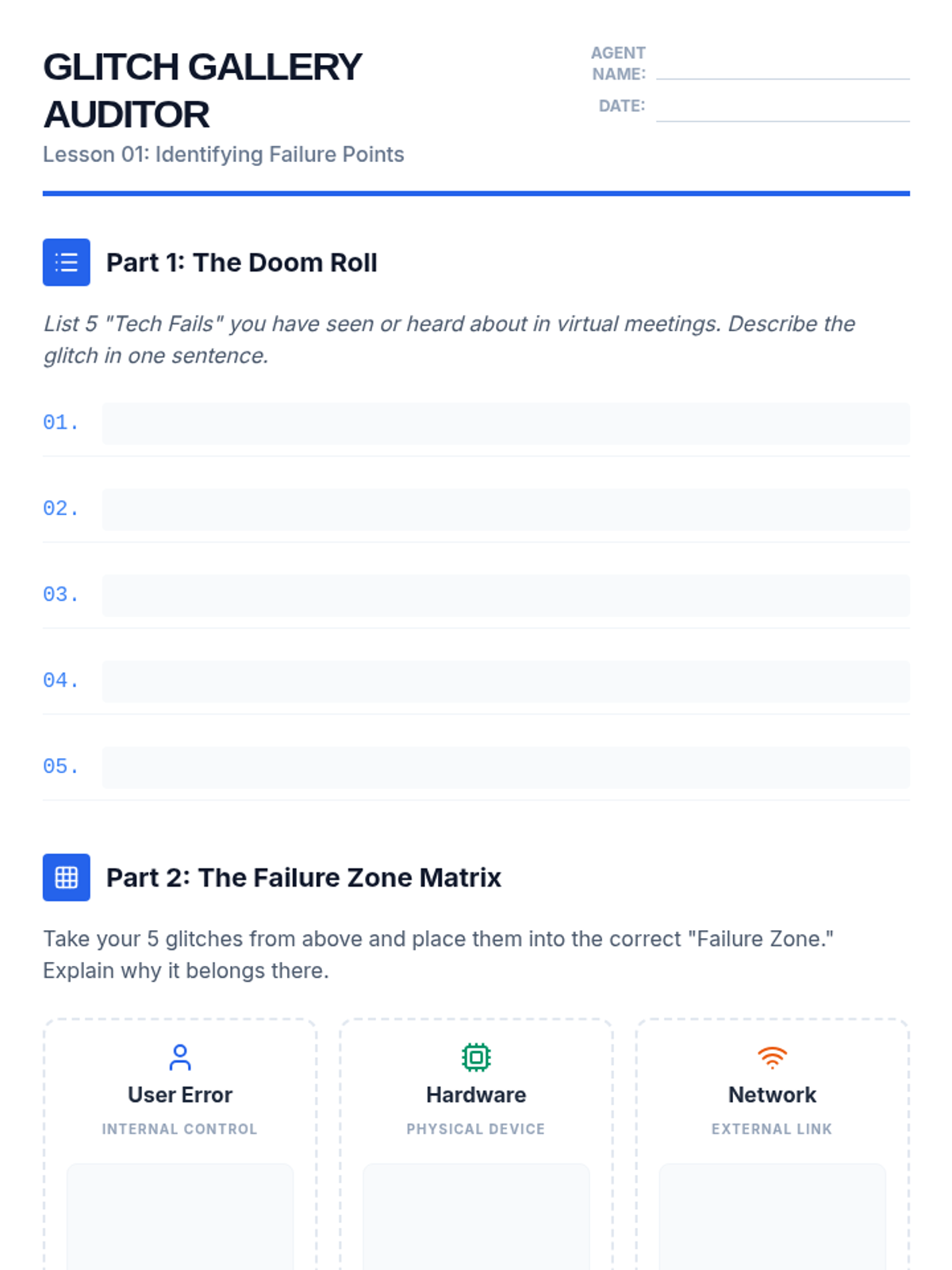
Students identify and categorize potential technical failure points in virtual meetings, shifting from a fear of glitches to a proactive mindset of awareness.
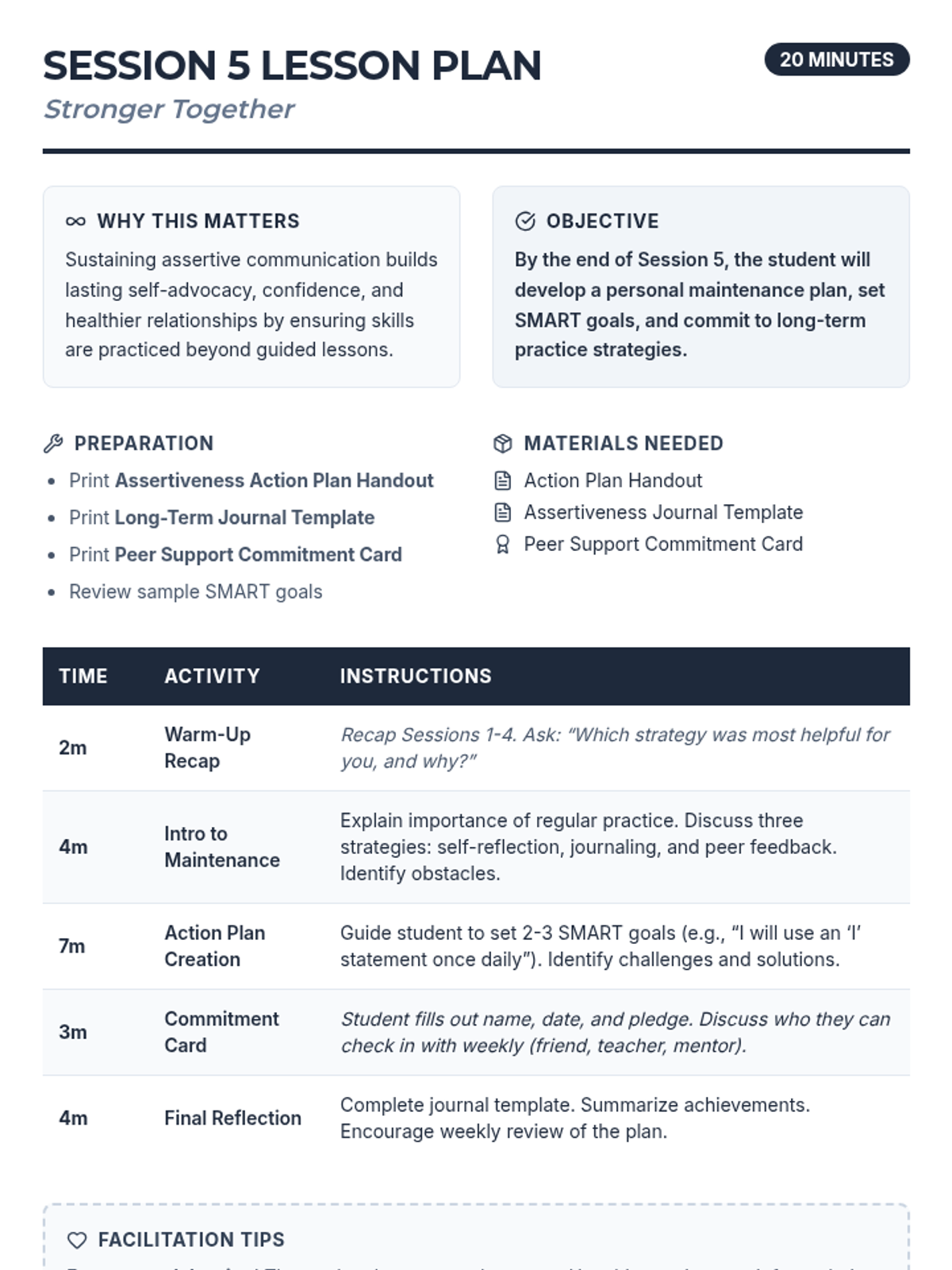
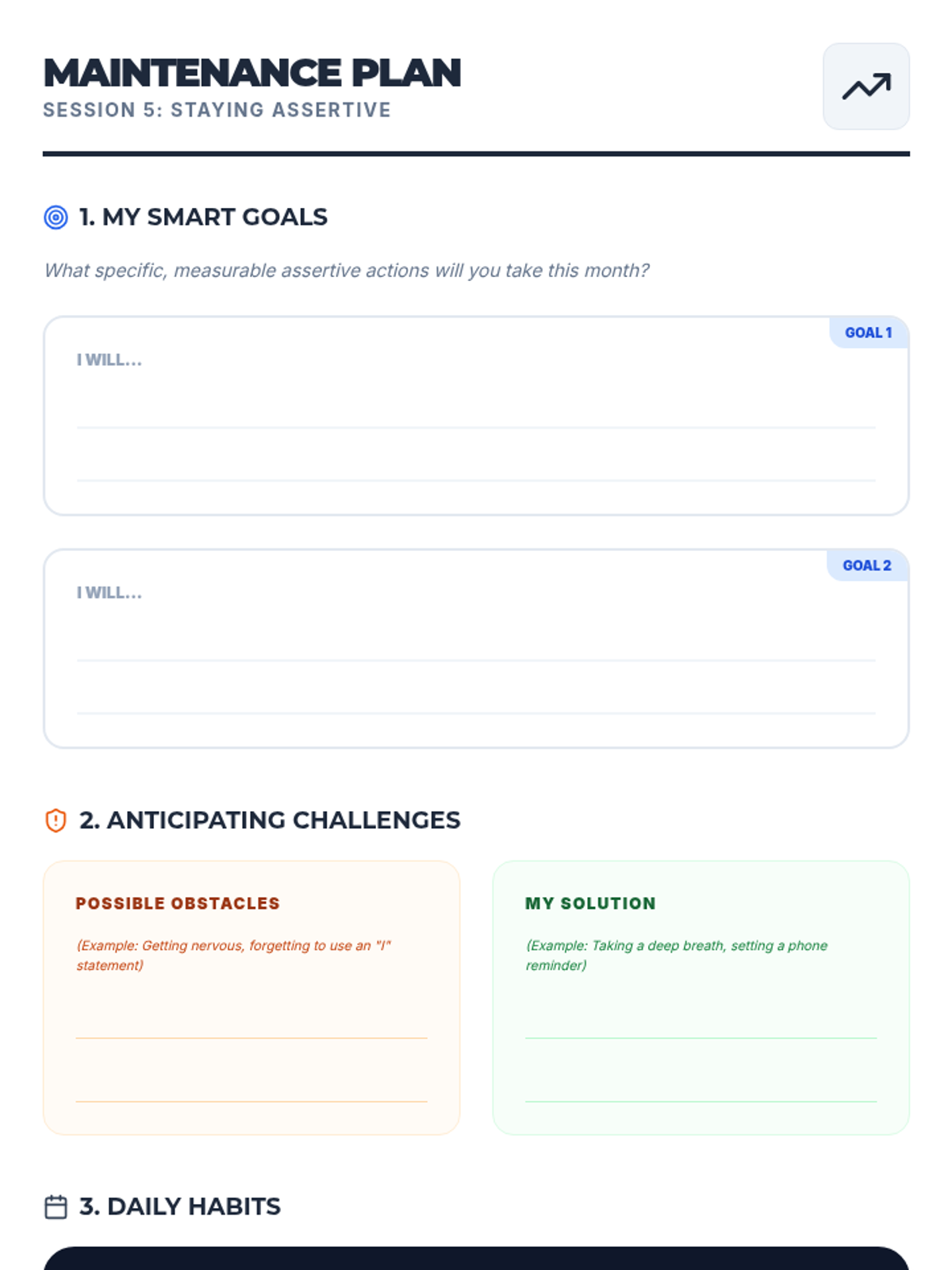
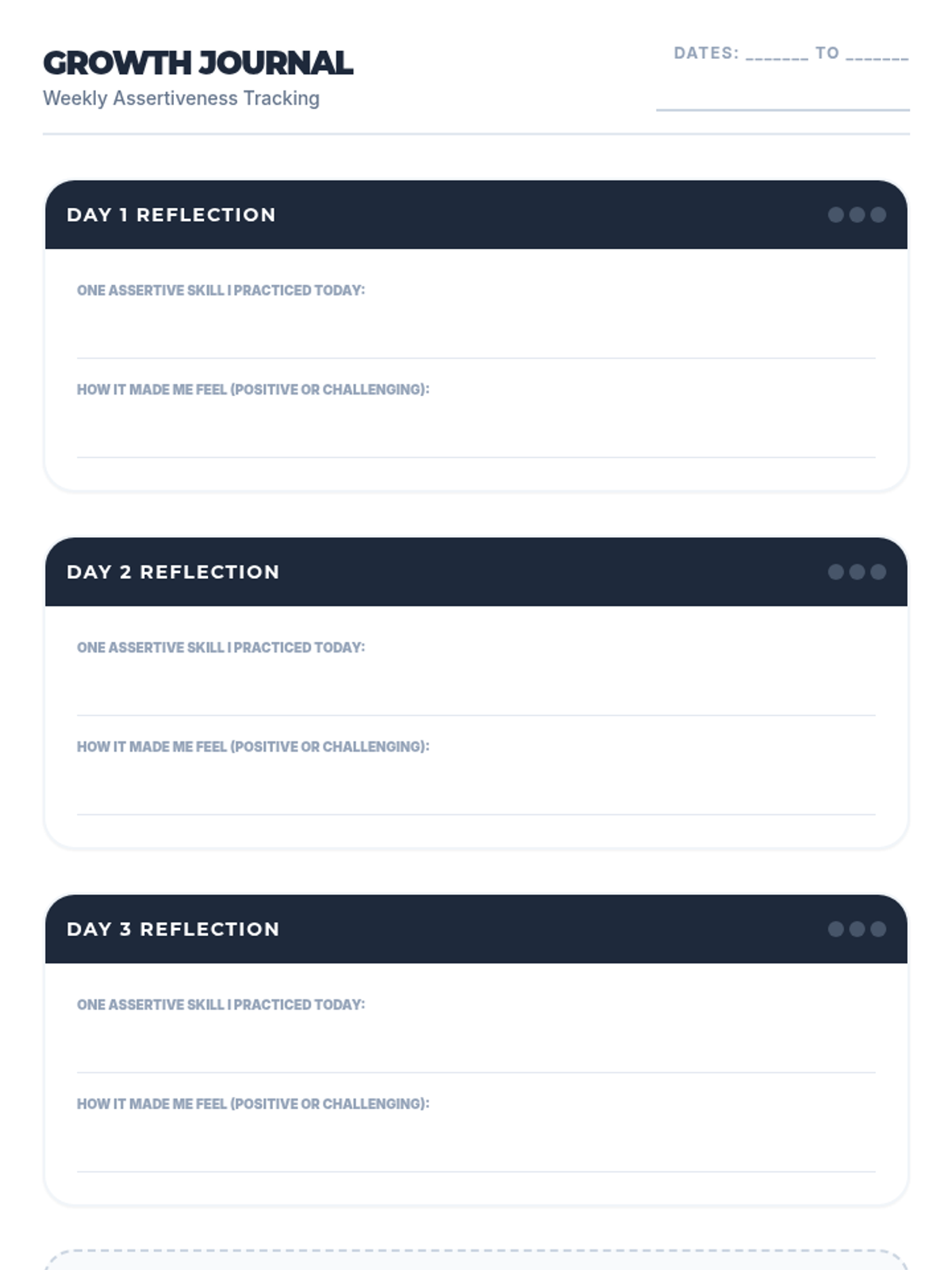
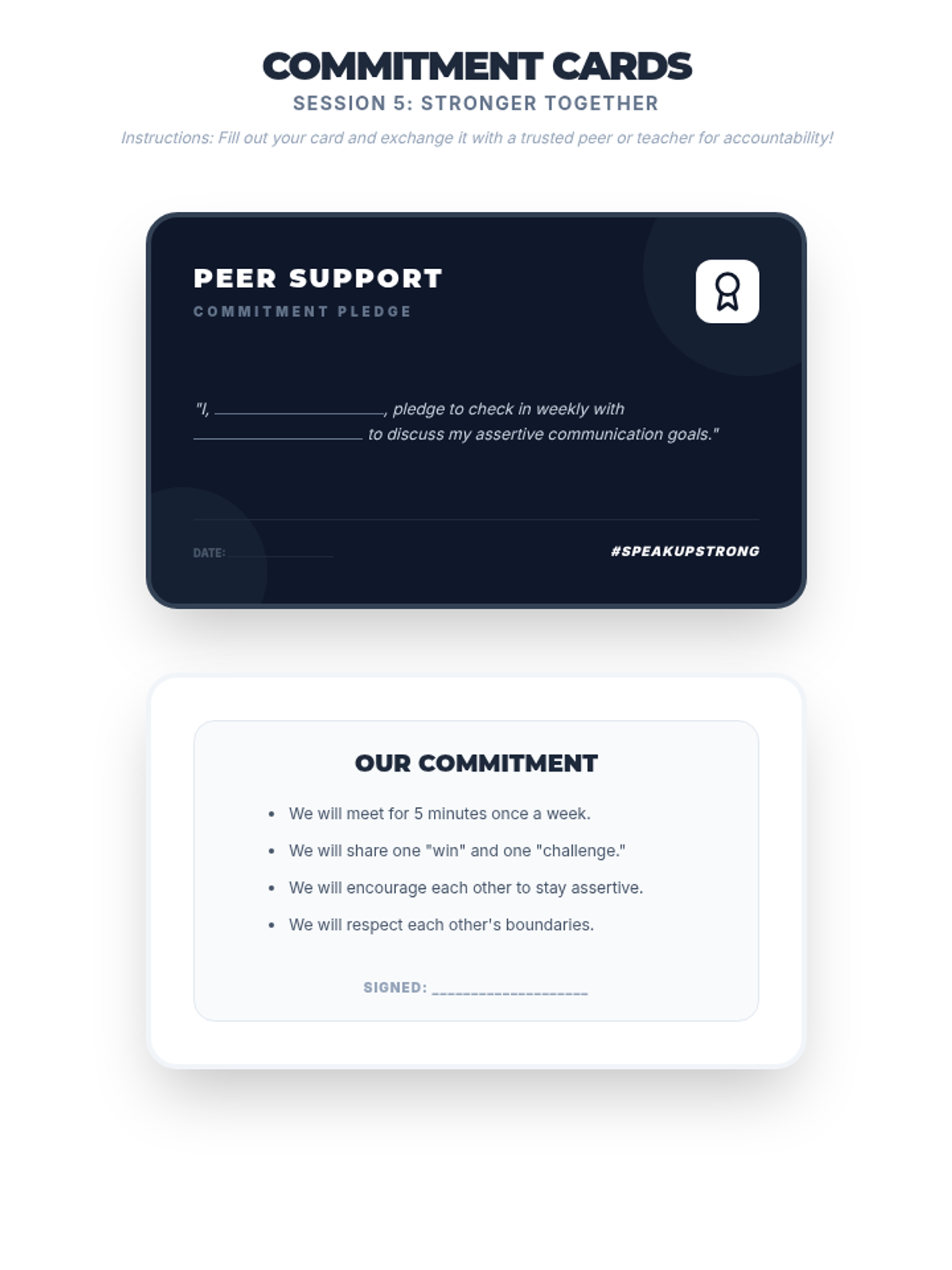
Focuses on maintaining assertive communication skills over the long term through self-reflection, action planning, and building a support network.
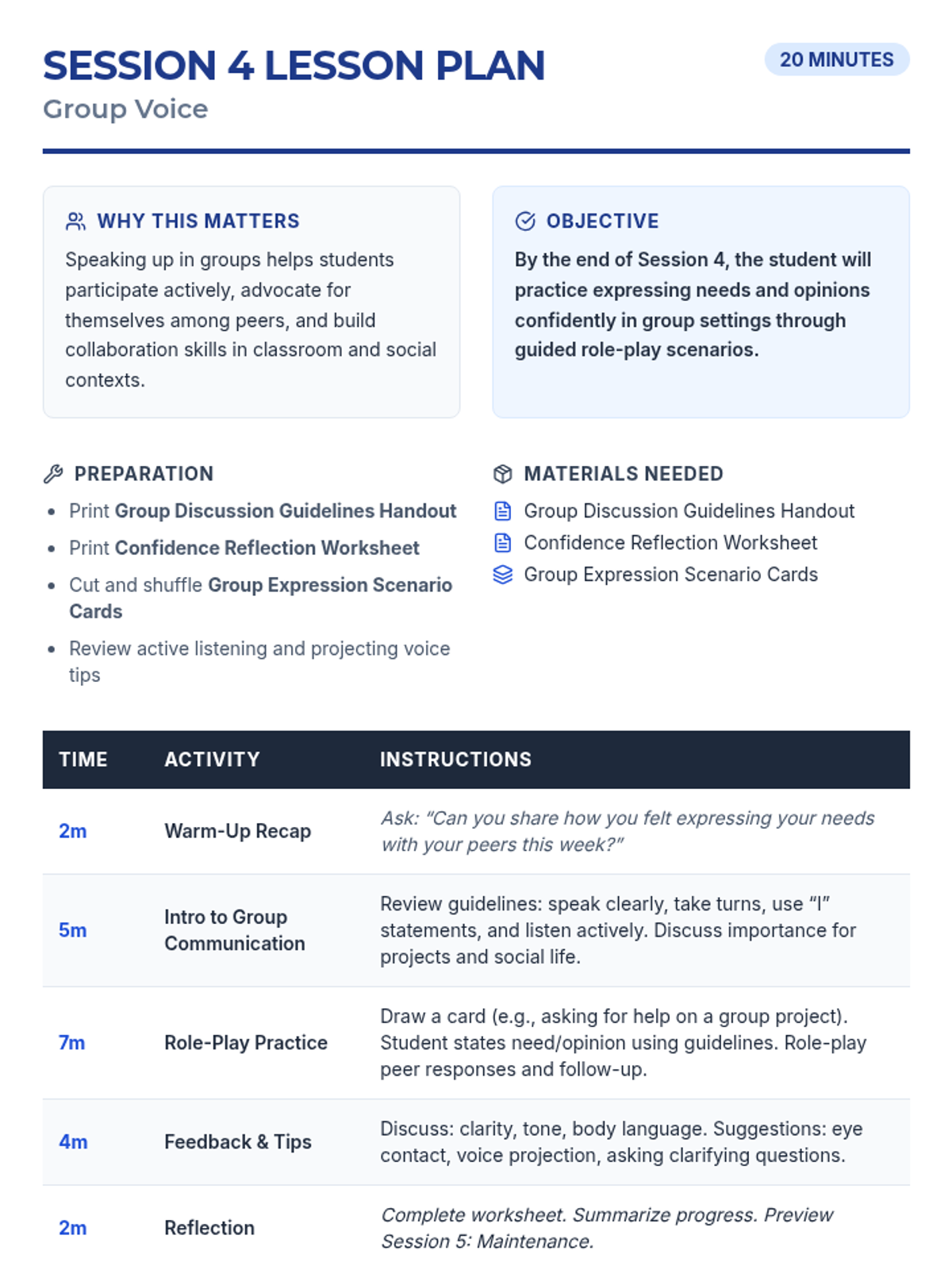
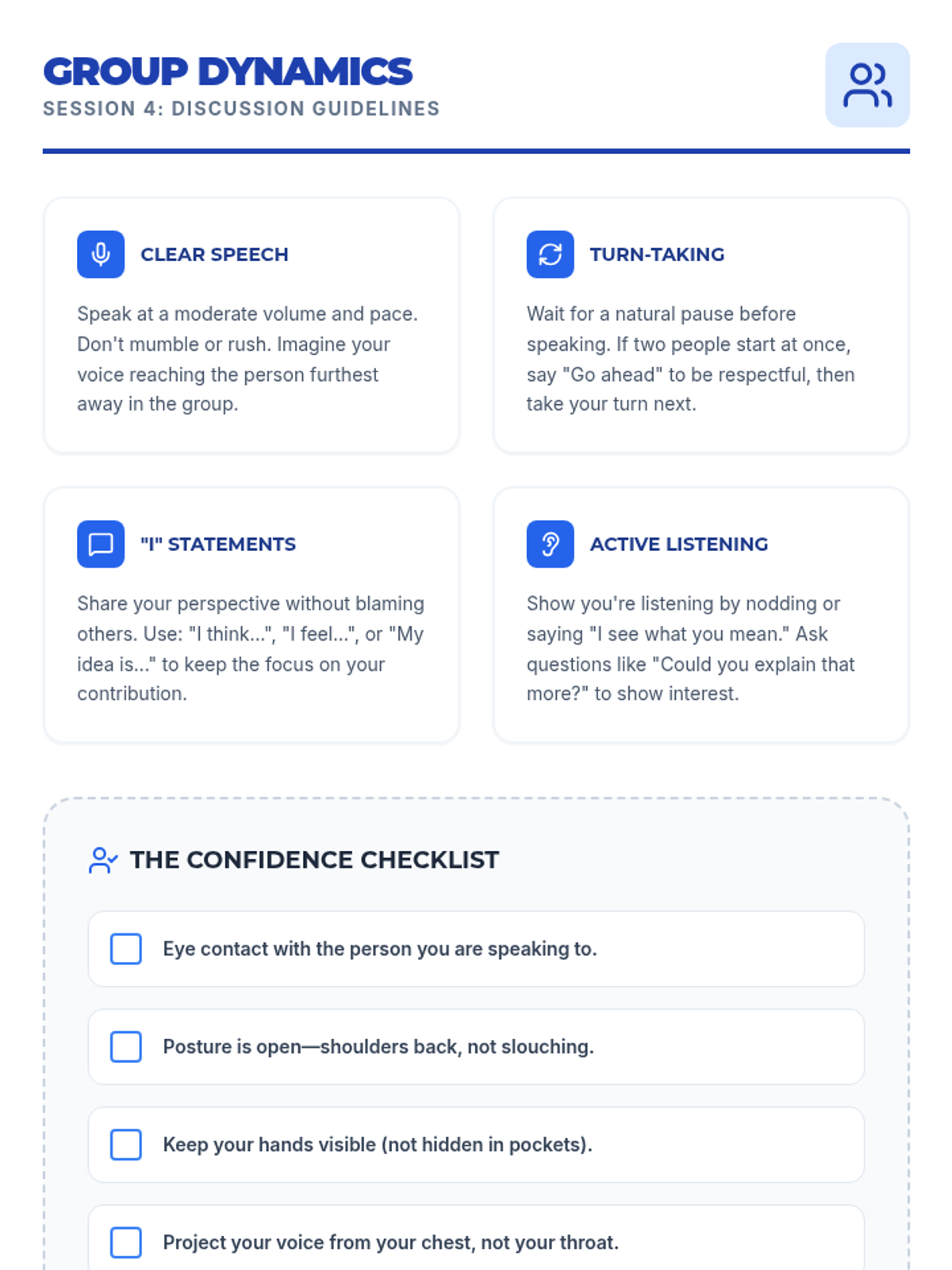
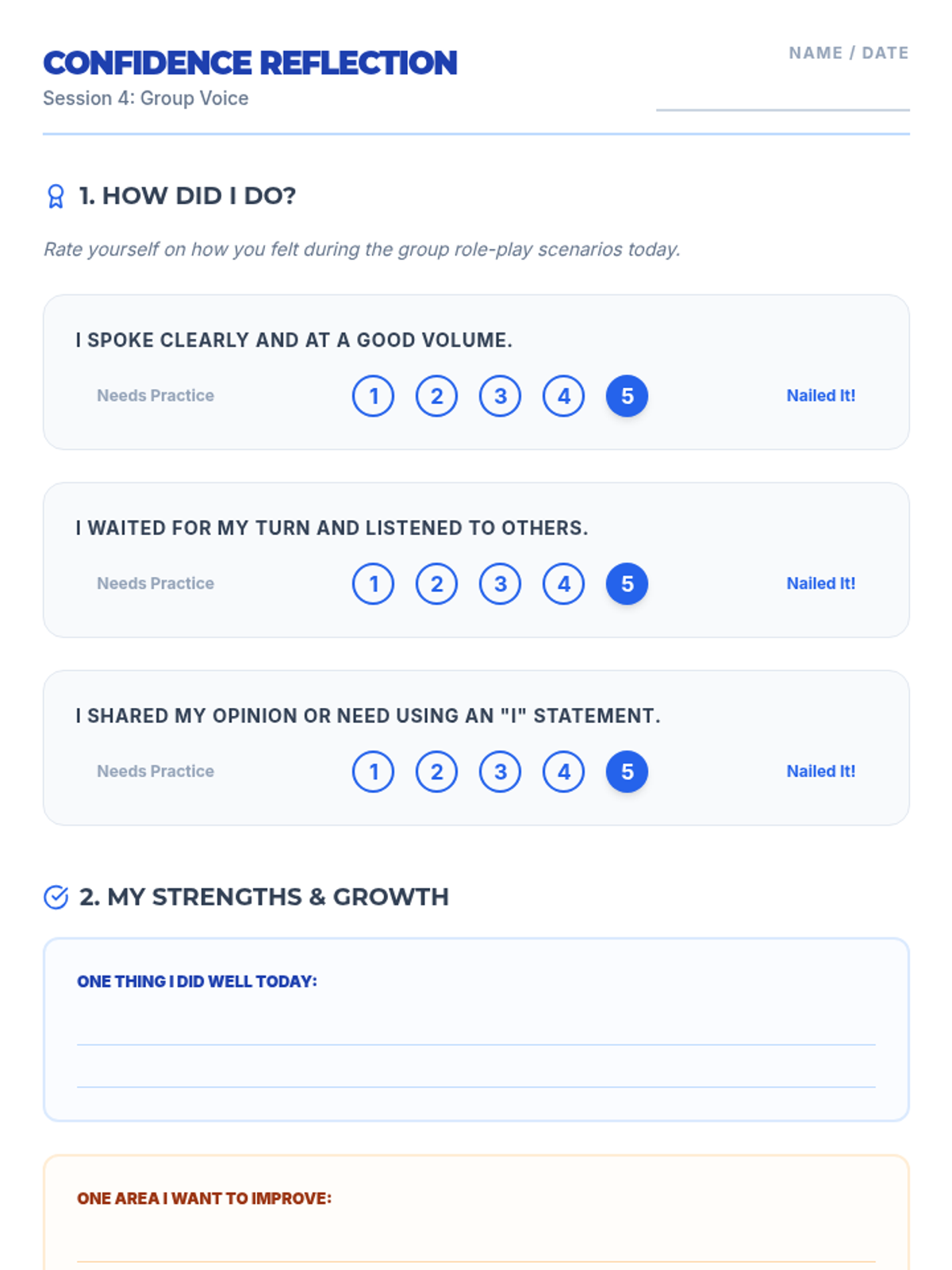
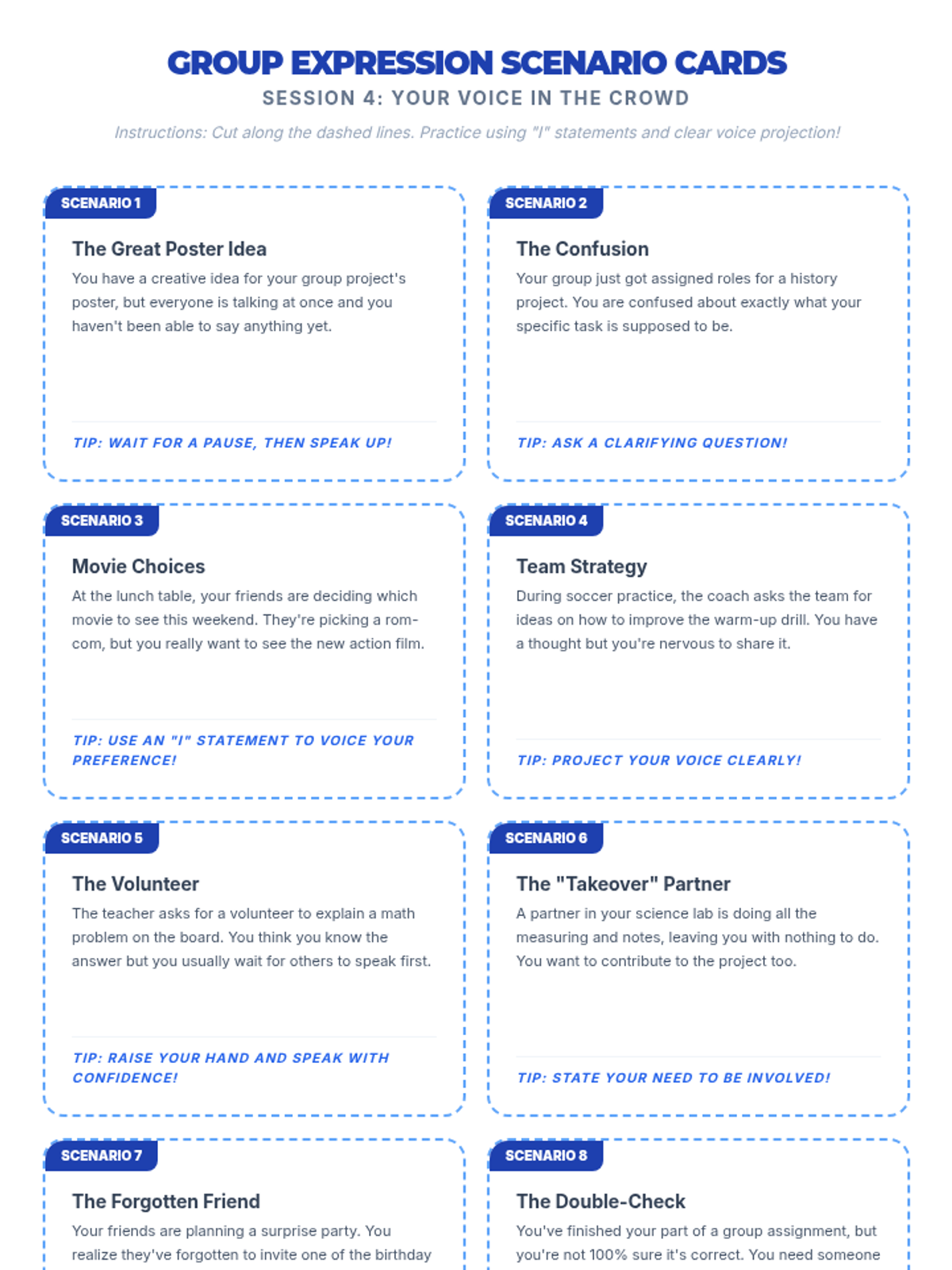
Focuses on practicing assertive communication within group dynamics, such as school projects or social circles, highlighting turn-taking and active listening.
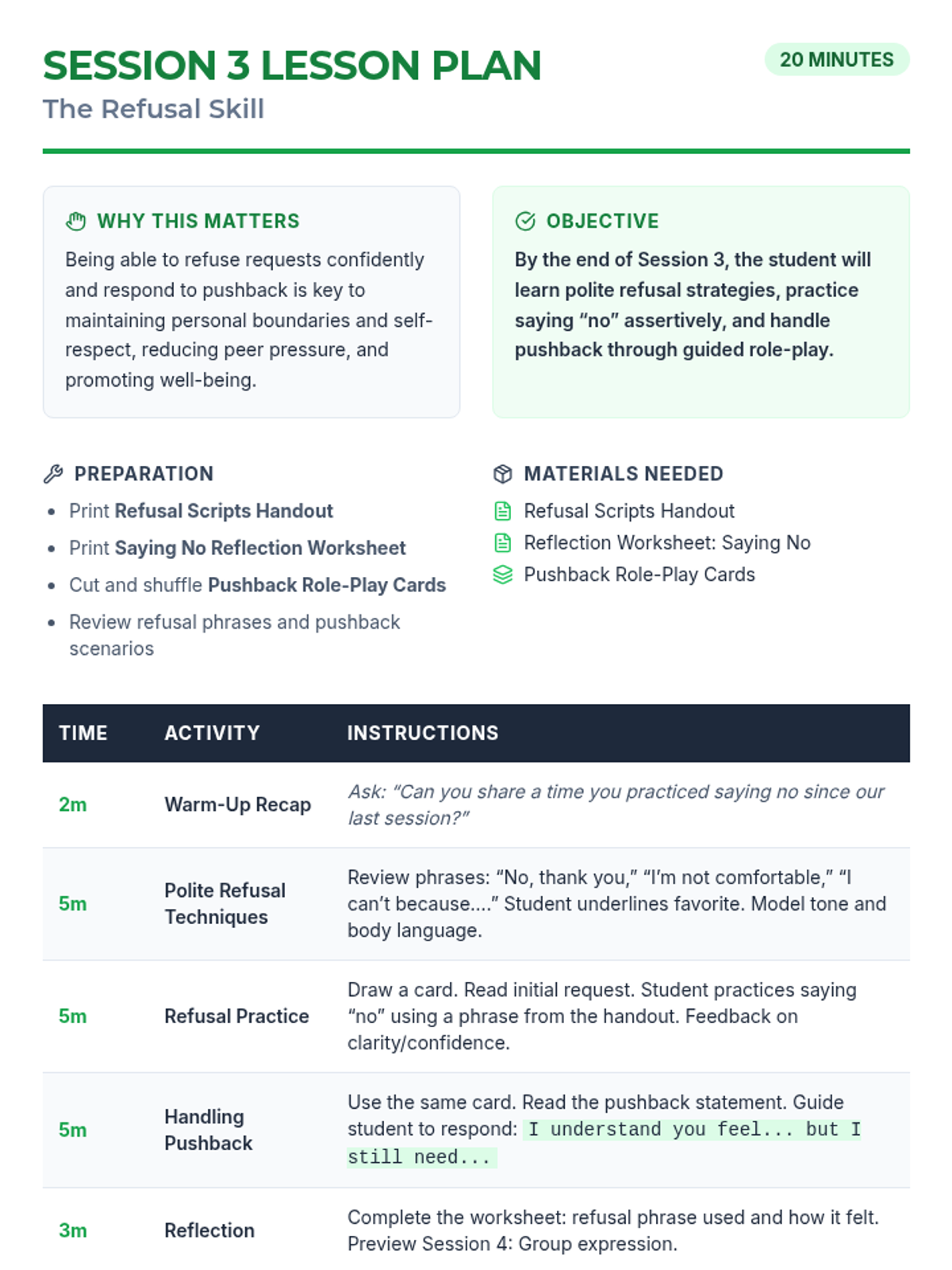
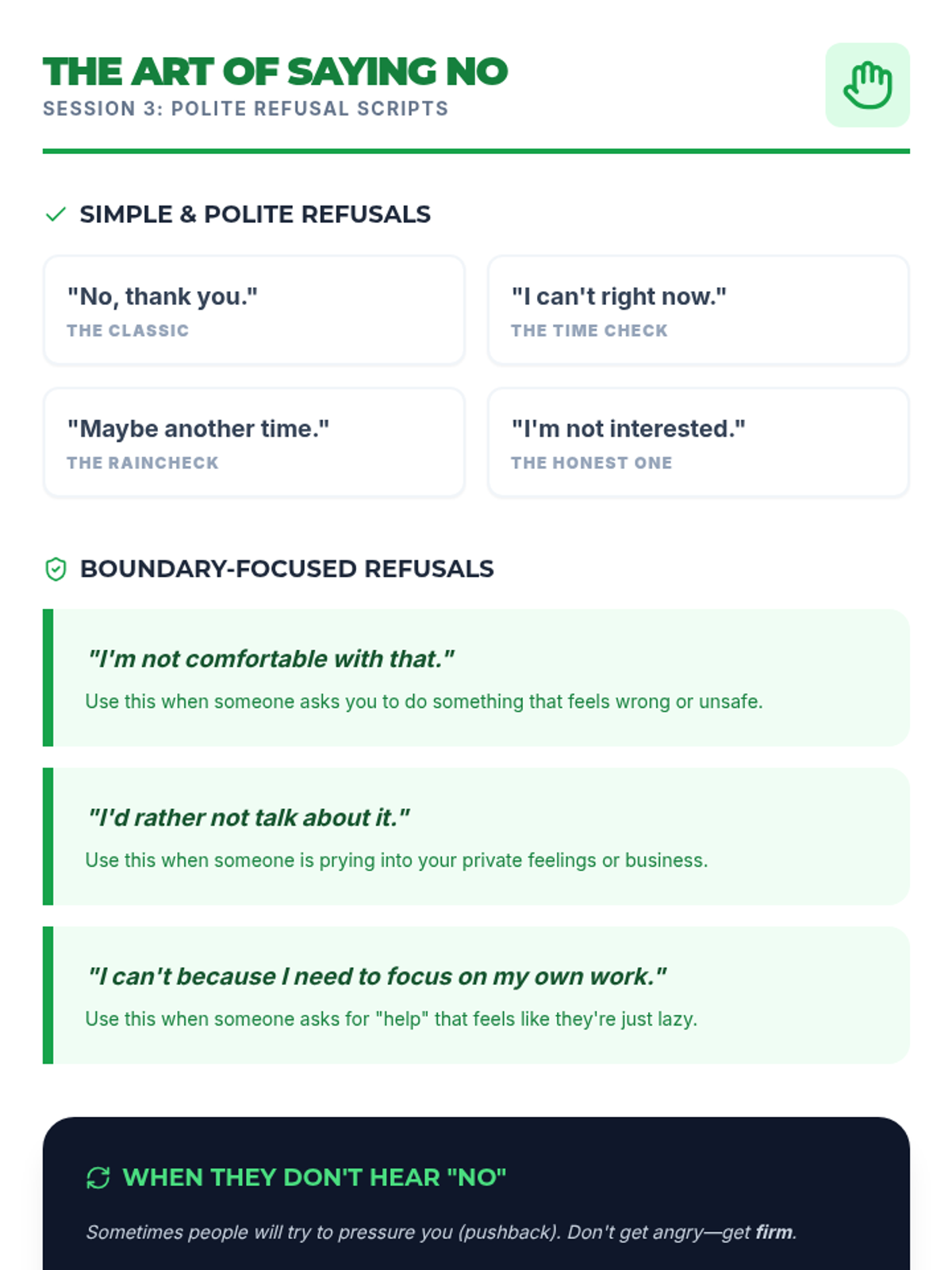
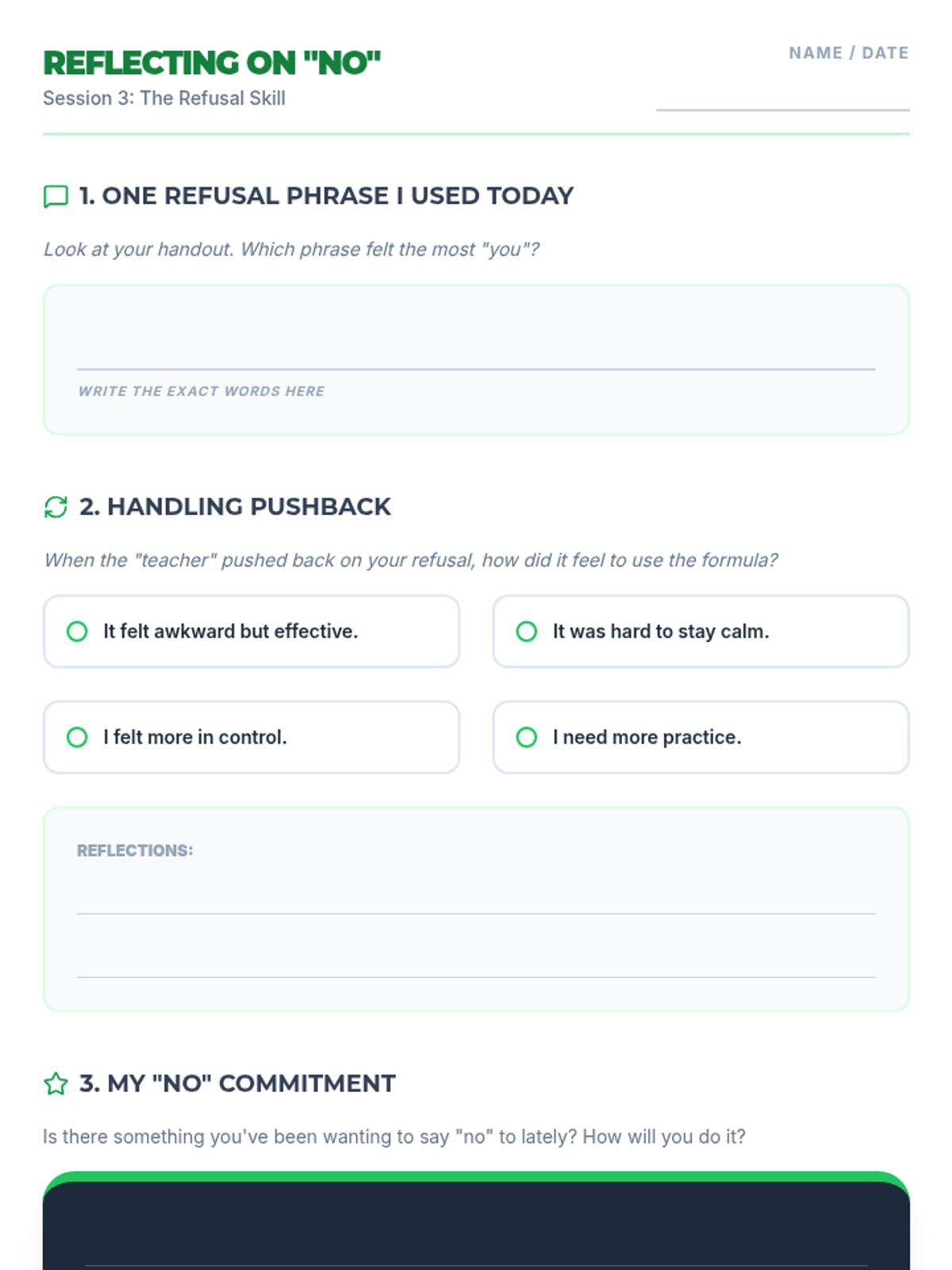
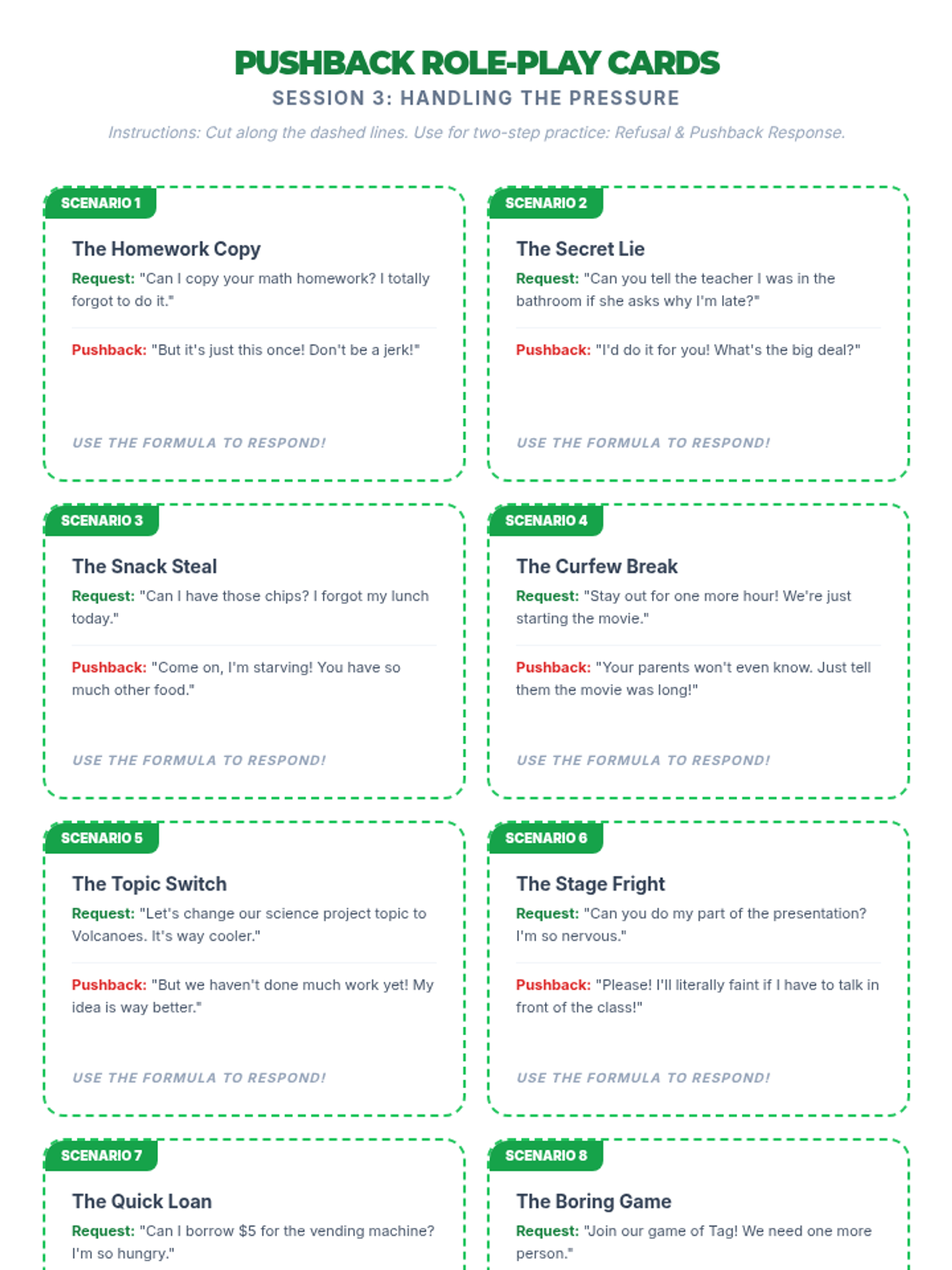
Focuses on polite refusal strategies, practicing saying “no” assertively, and handling pushback through guided role-play.
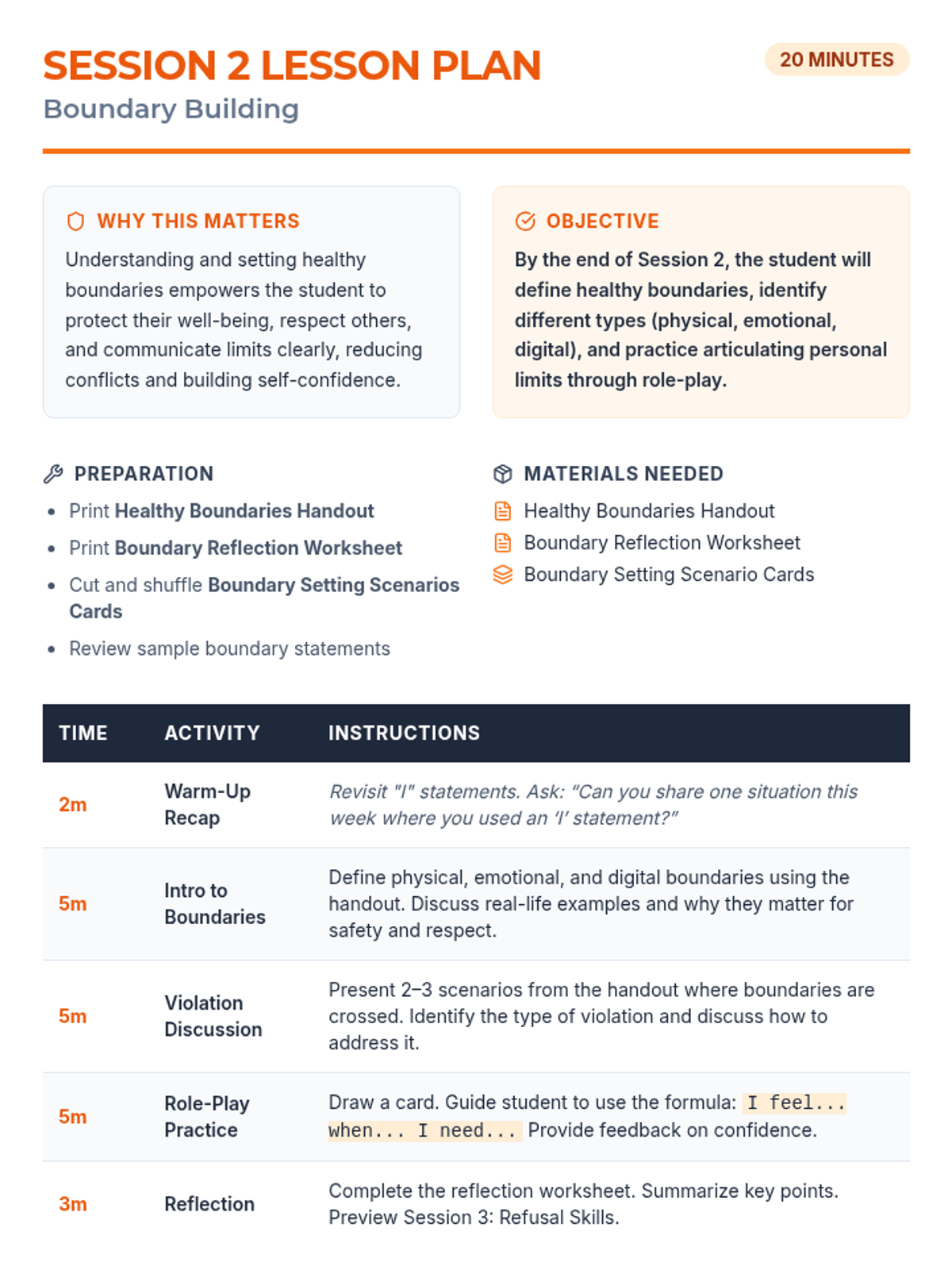
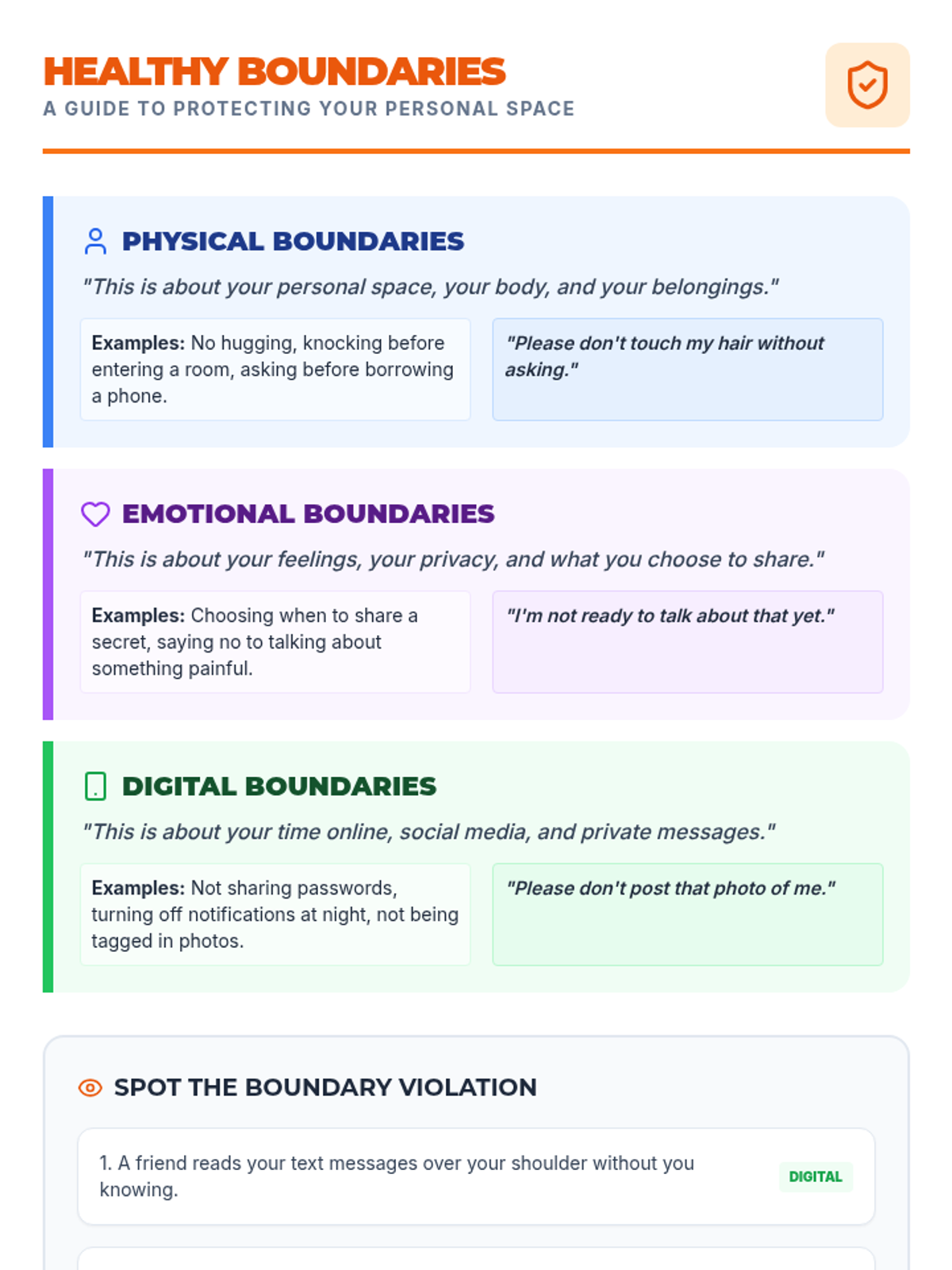
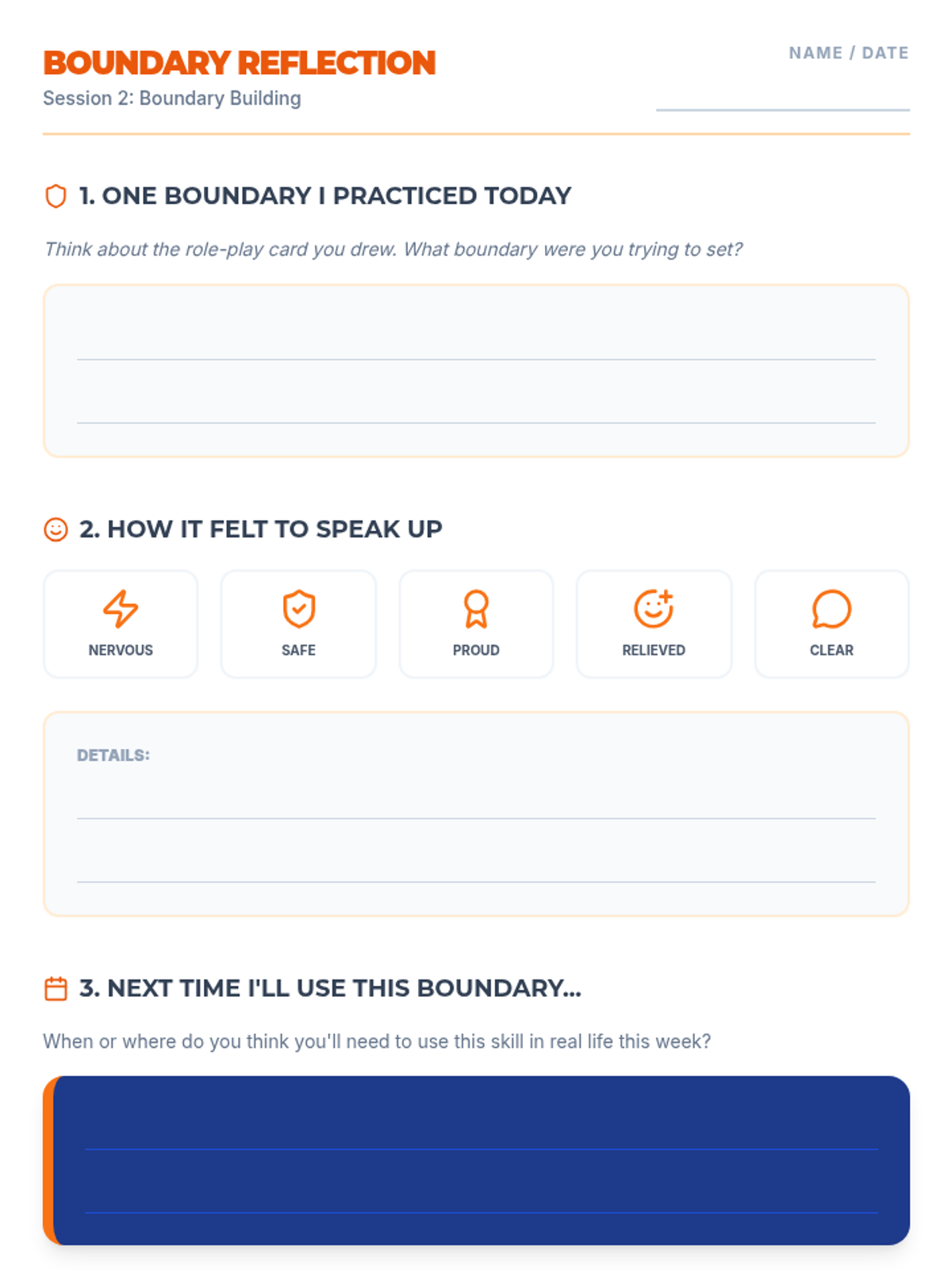
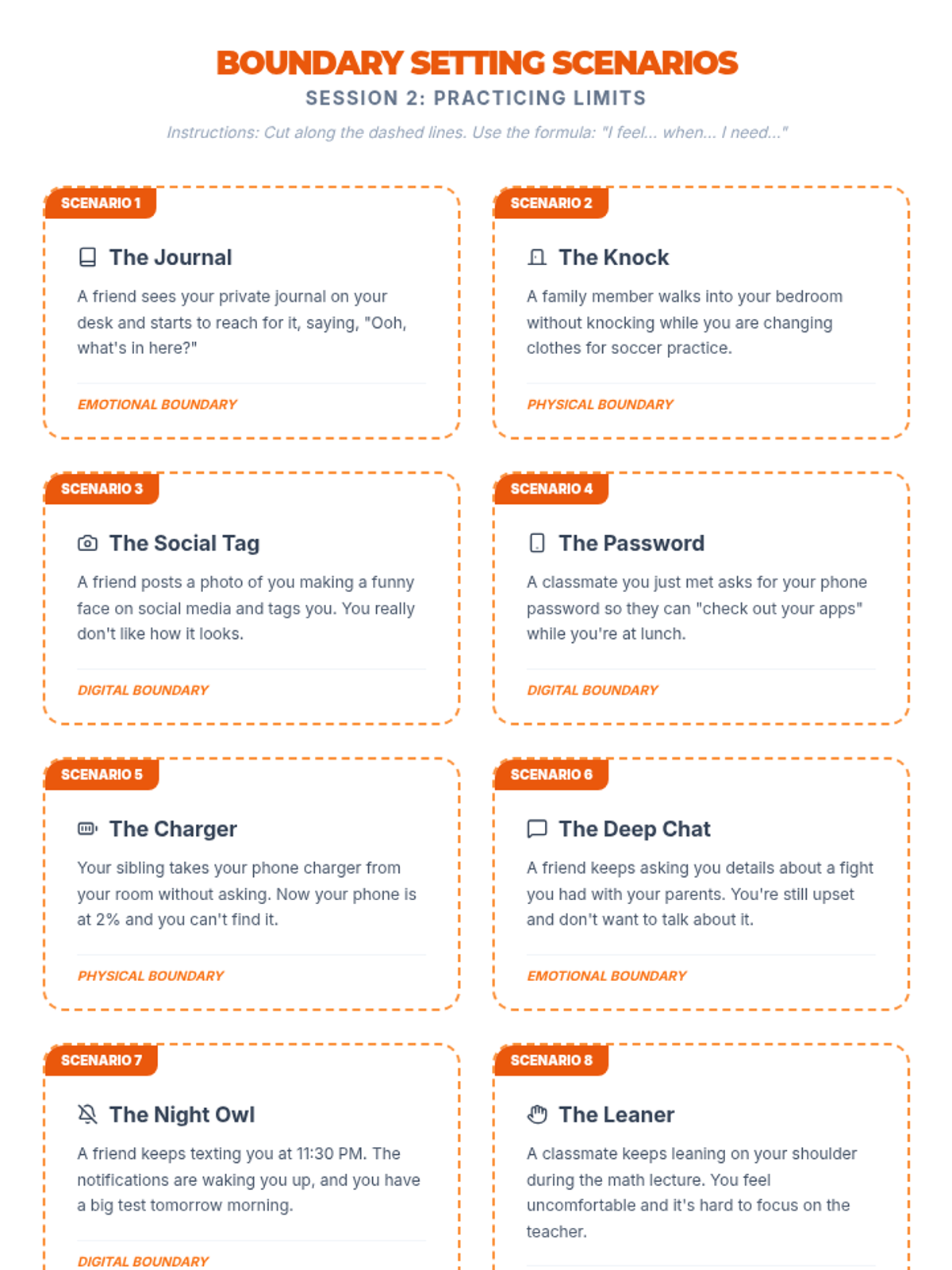
Focuses on defining and identifying different types of personal boundaries—physical, emotional, and digital—and practicing how to set them clearly.
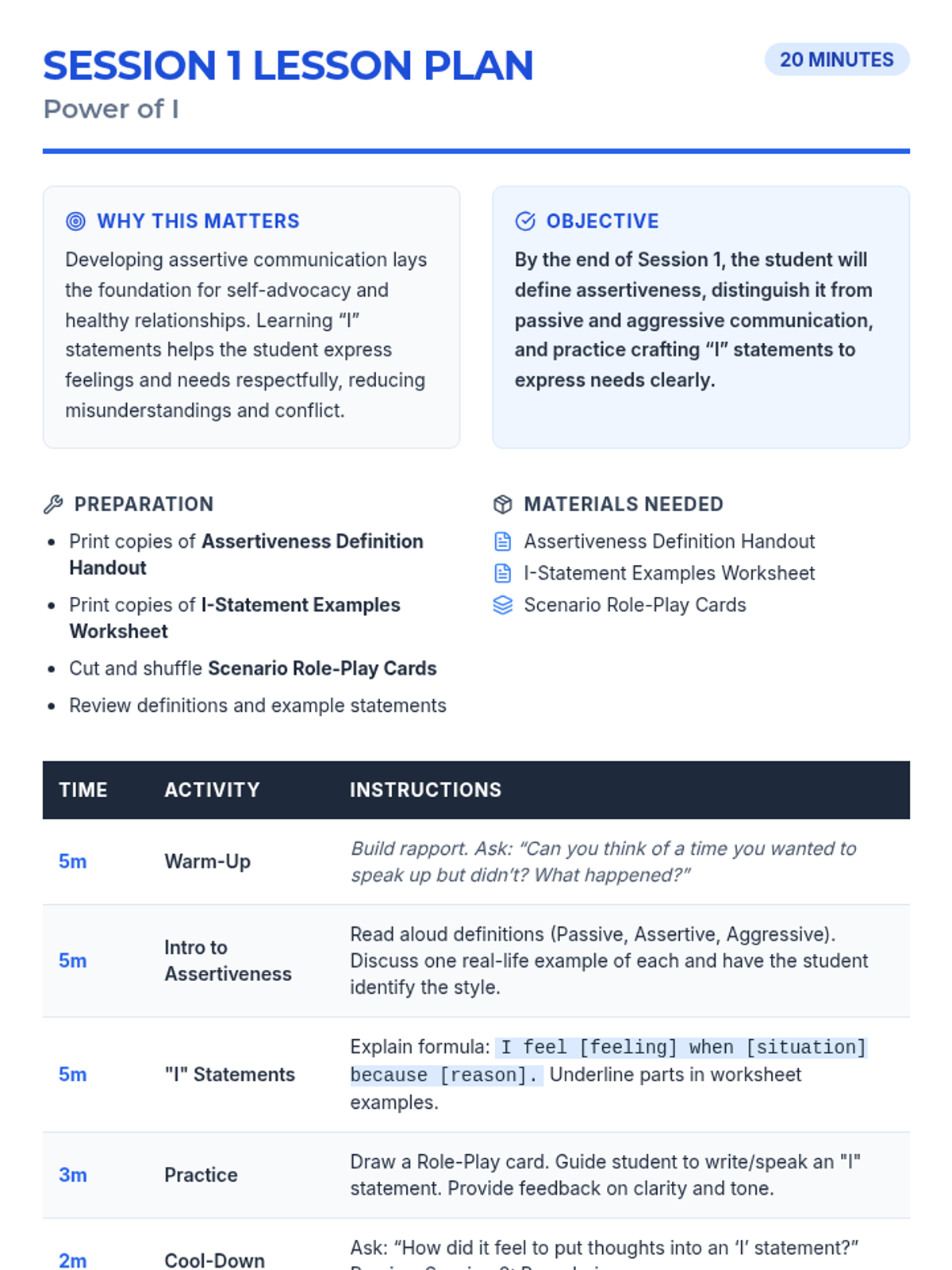
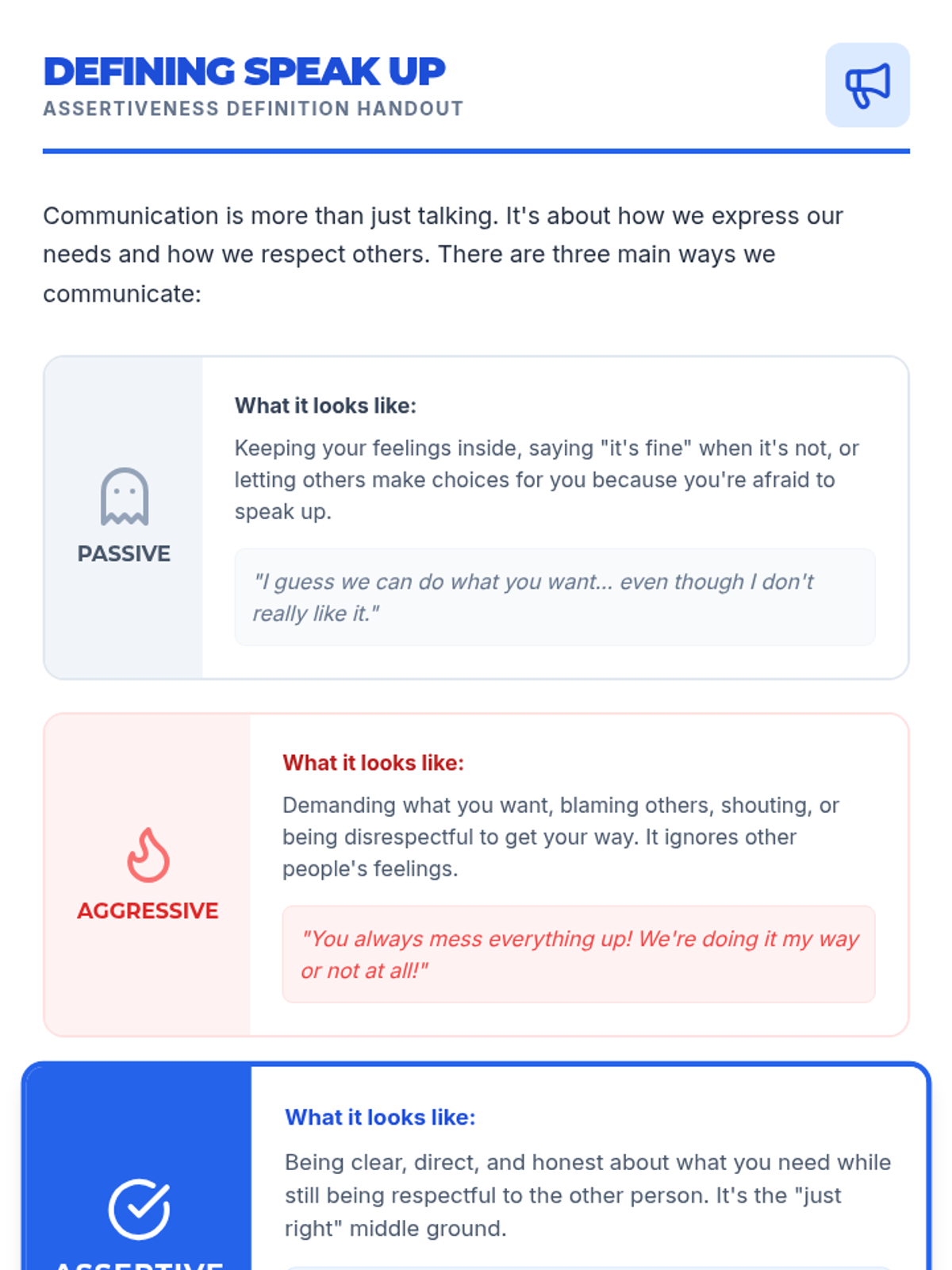
Introduces the concept of assertiveness versus passive and aggressive communication, with a focus on crafting clear I-statements.
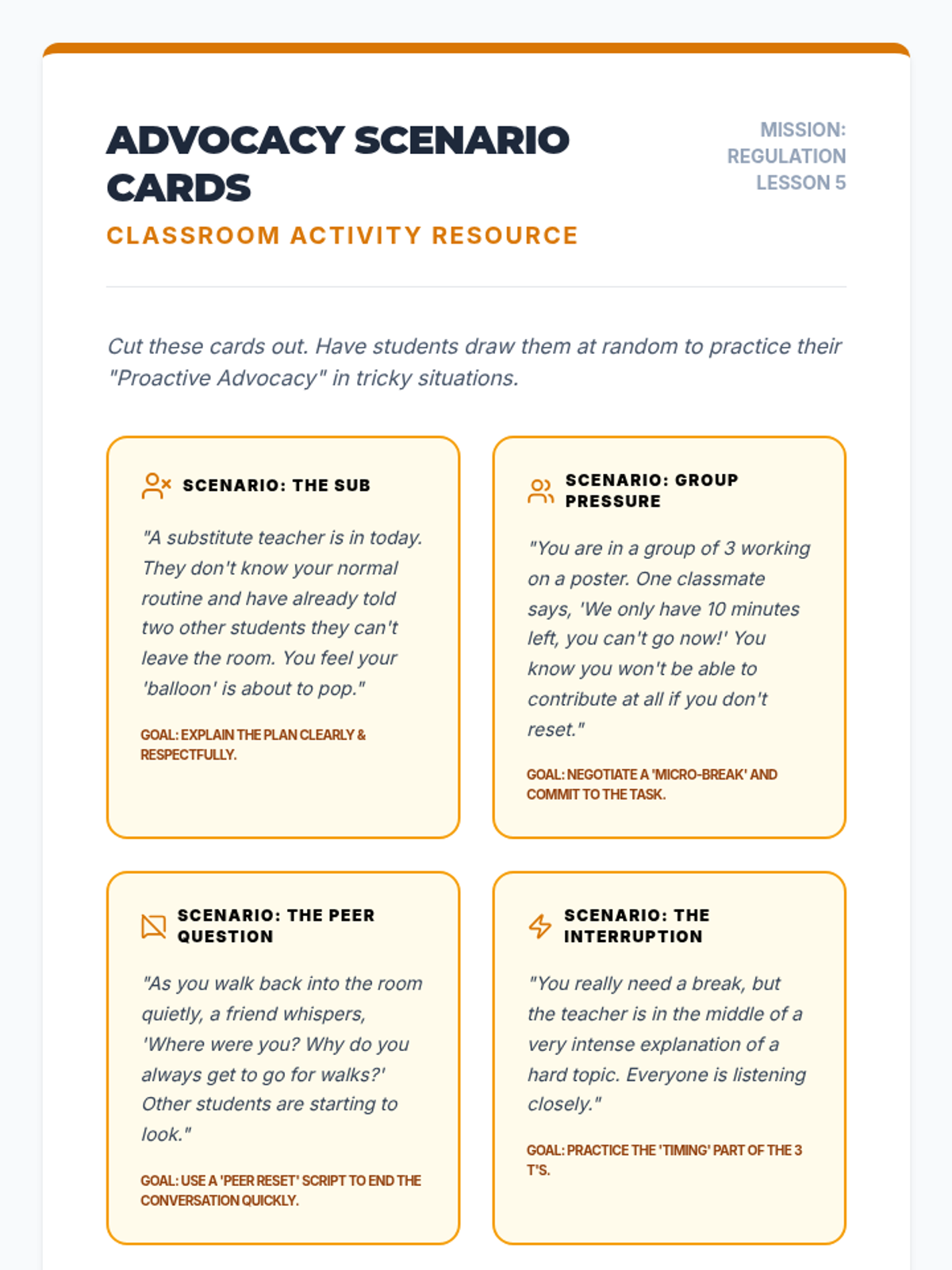
Students apply their skills to complex social situations, including explaining breaks to peers and negotiating needs during collaborative work.
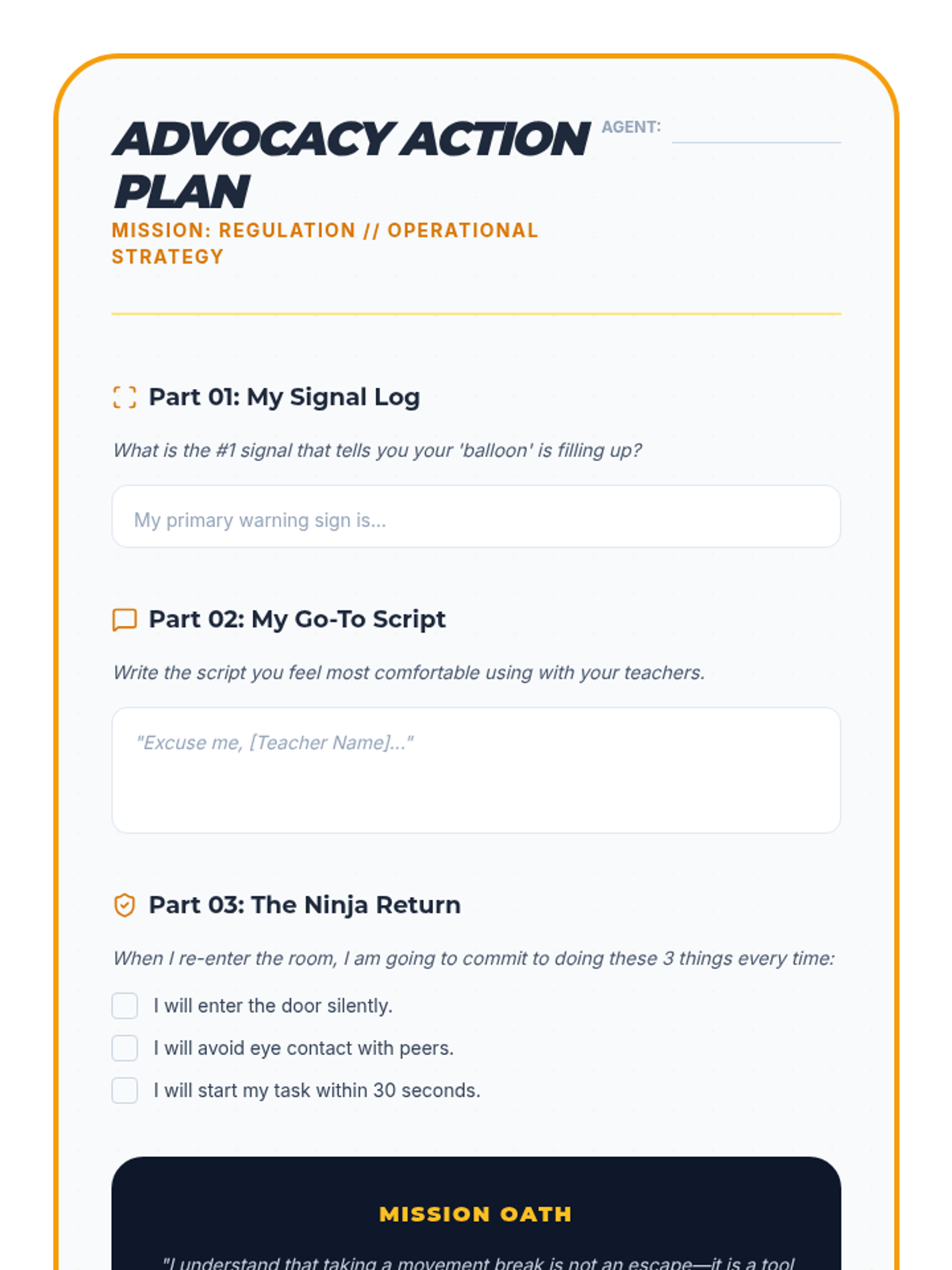
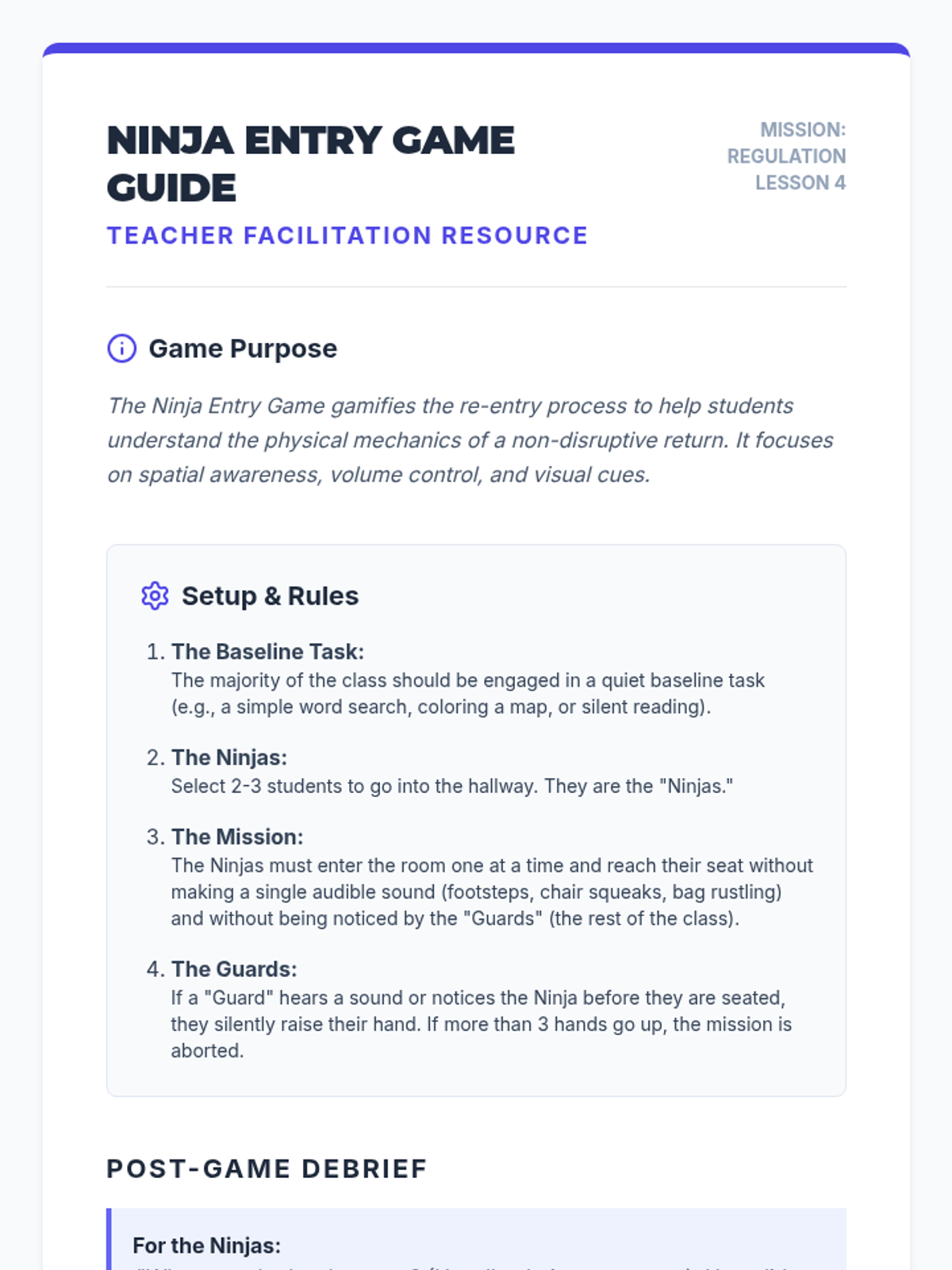
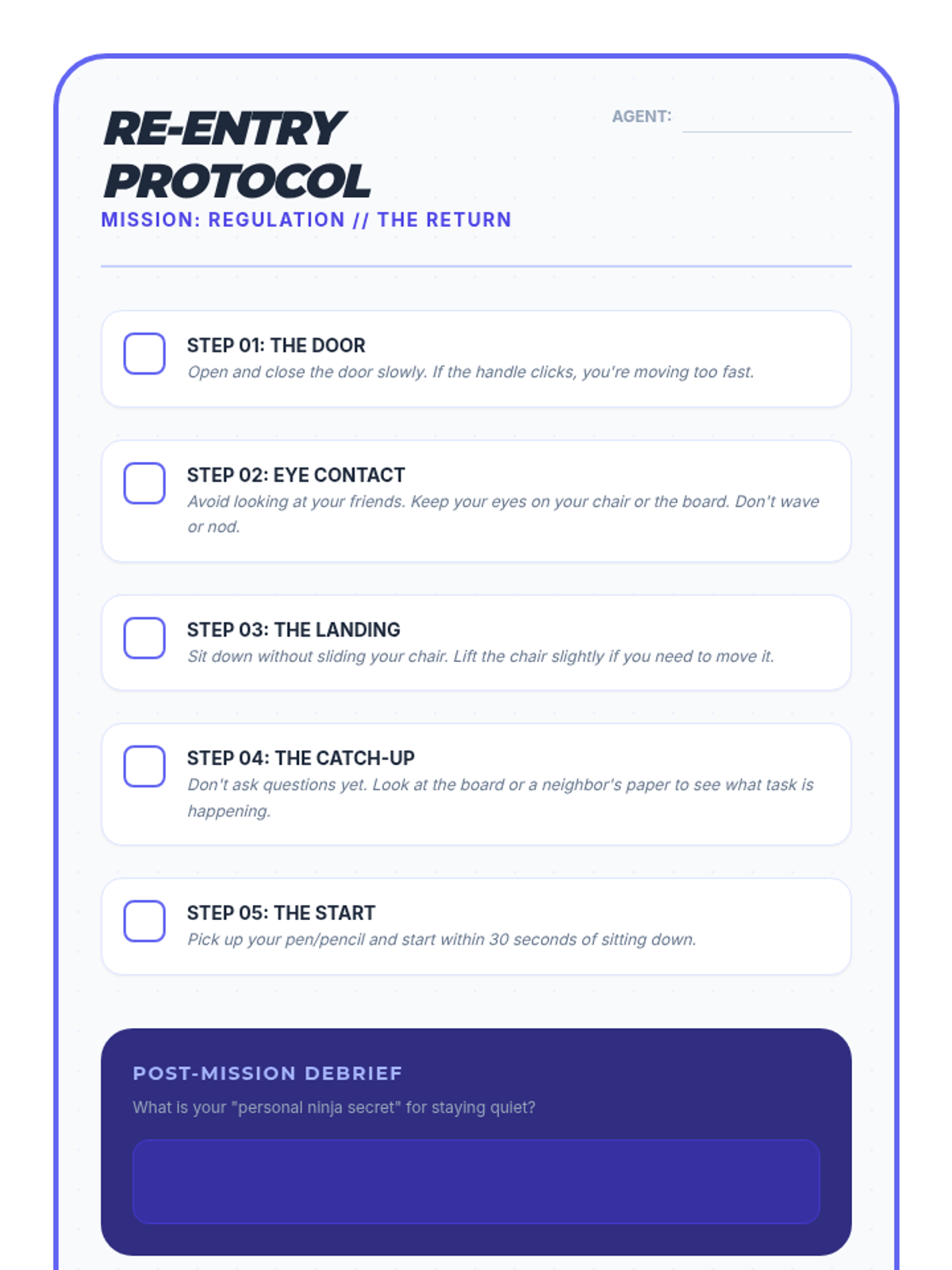
Students develop routines for returning to the classroom after a break to minimize disruption and quickly re-engage with academic tasks.
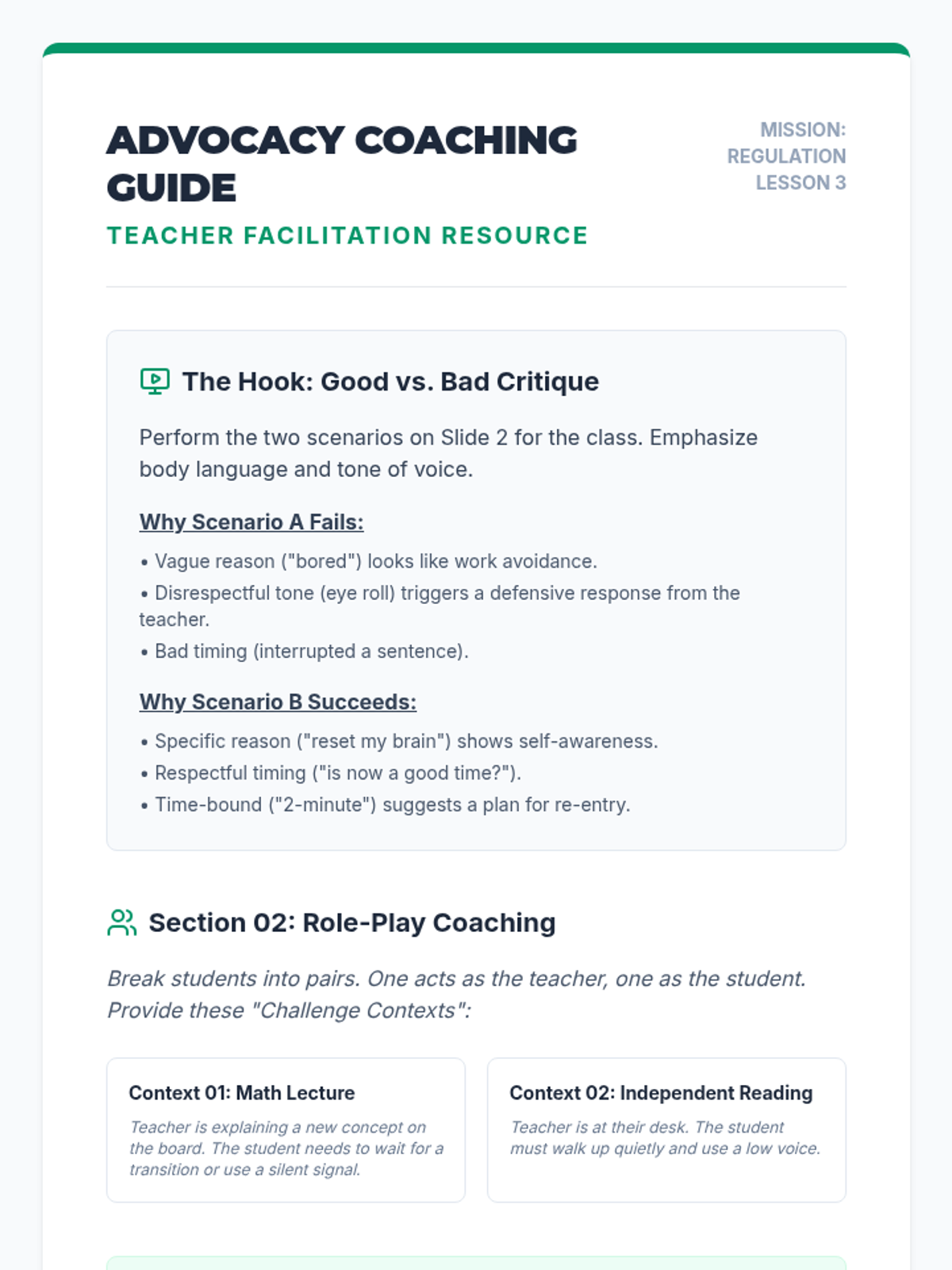
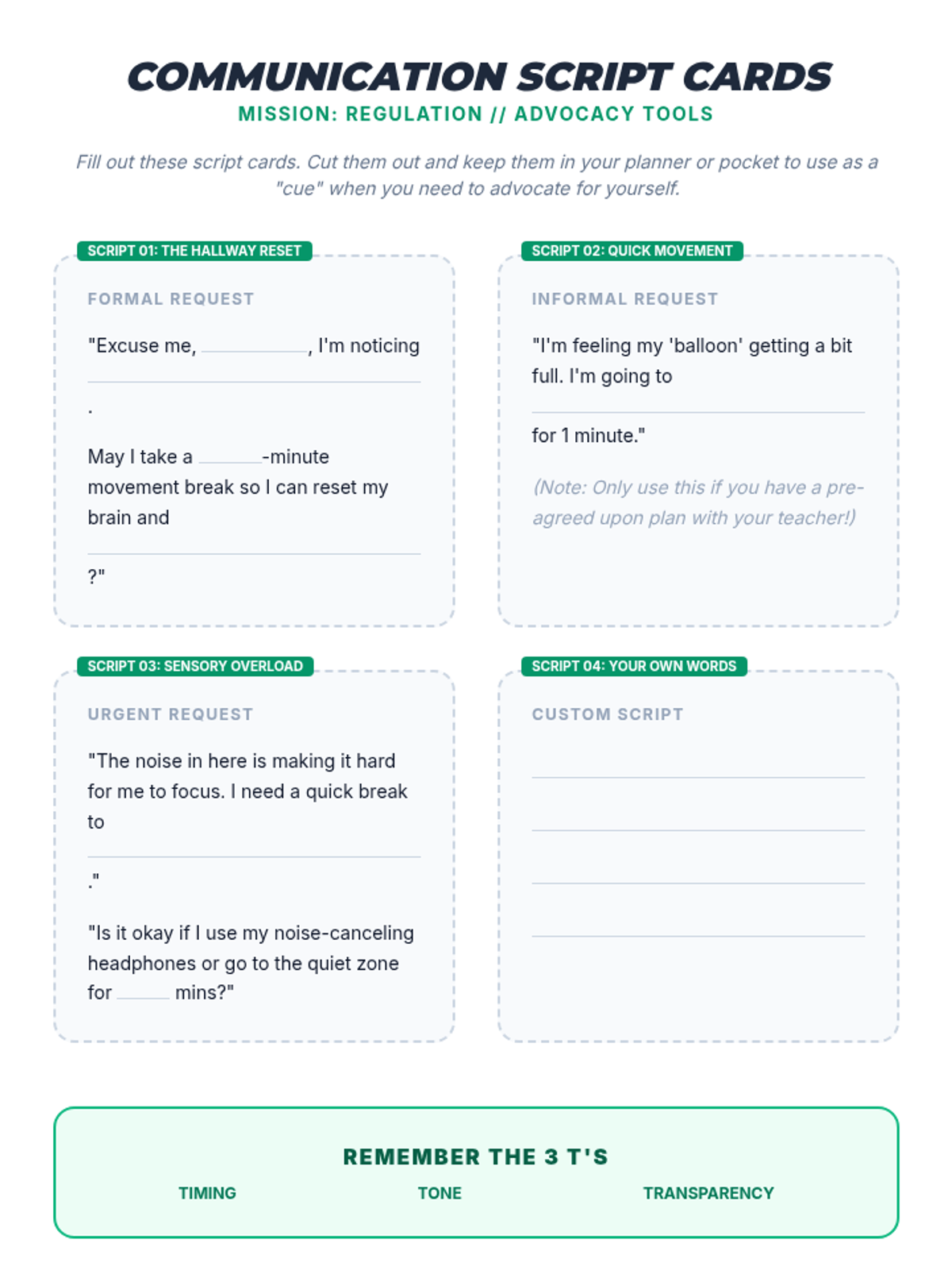
Students practice the verbal skills required to advocate for a break, focusing on tone, timing, and professional communication with authority figures.
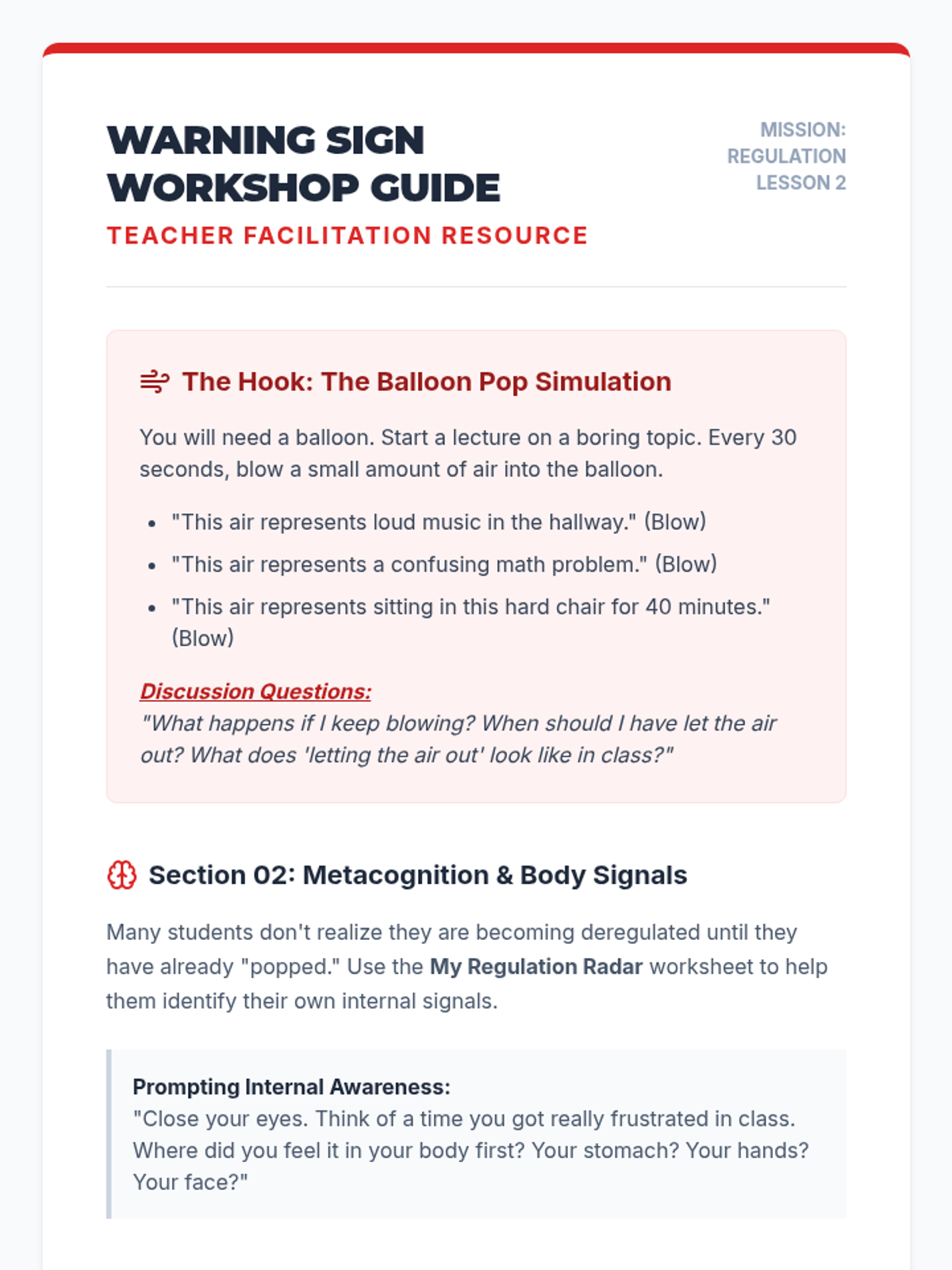
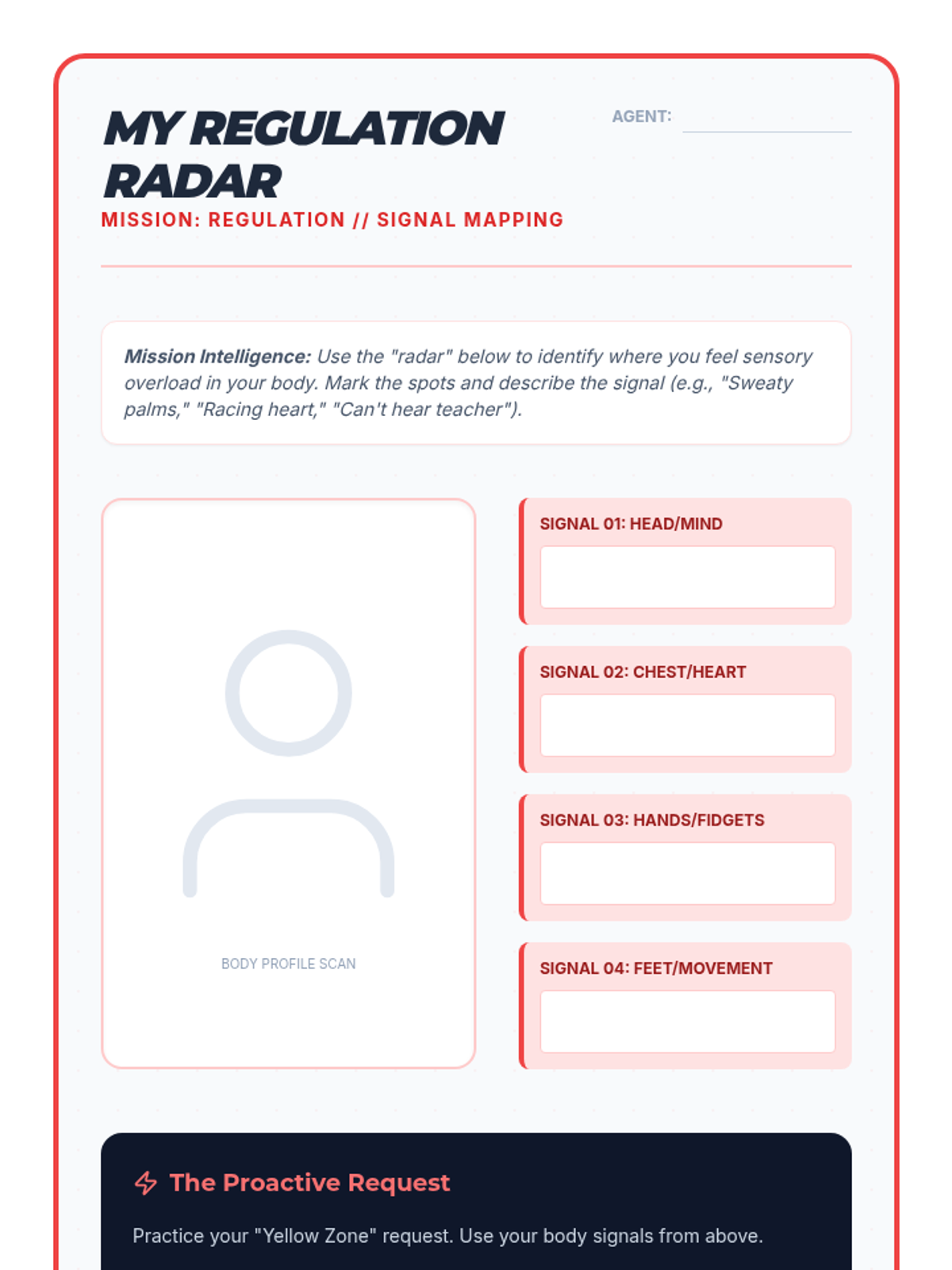
Students learn to identify internal physical and emotional signals that indicate a need for regulation, using the 'Balloon Pop' analogy to understand stress accumulation.
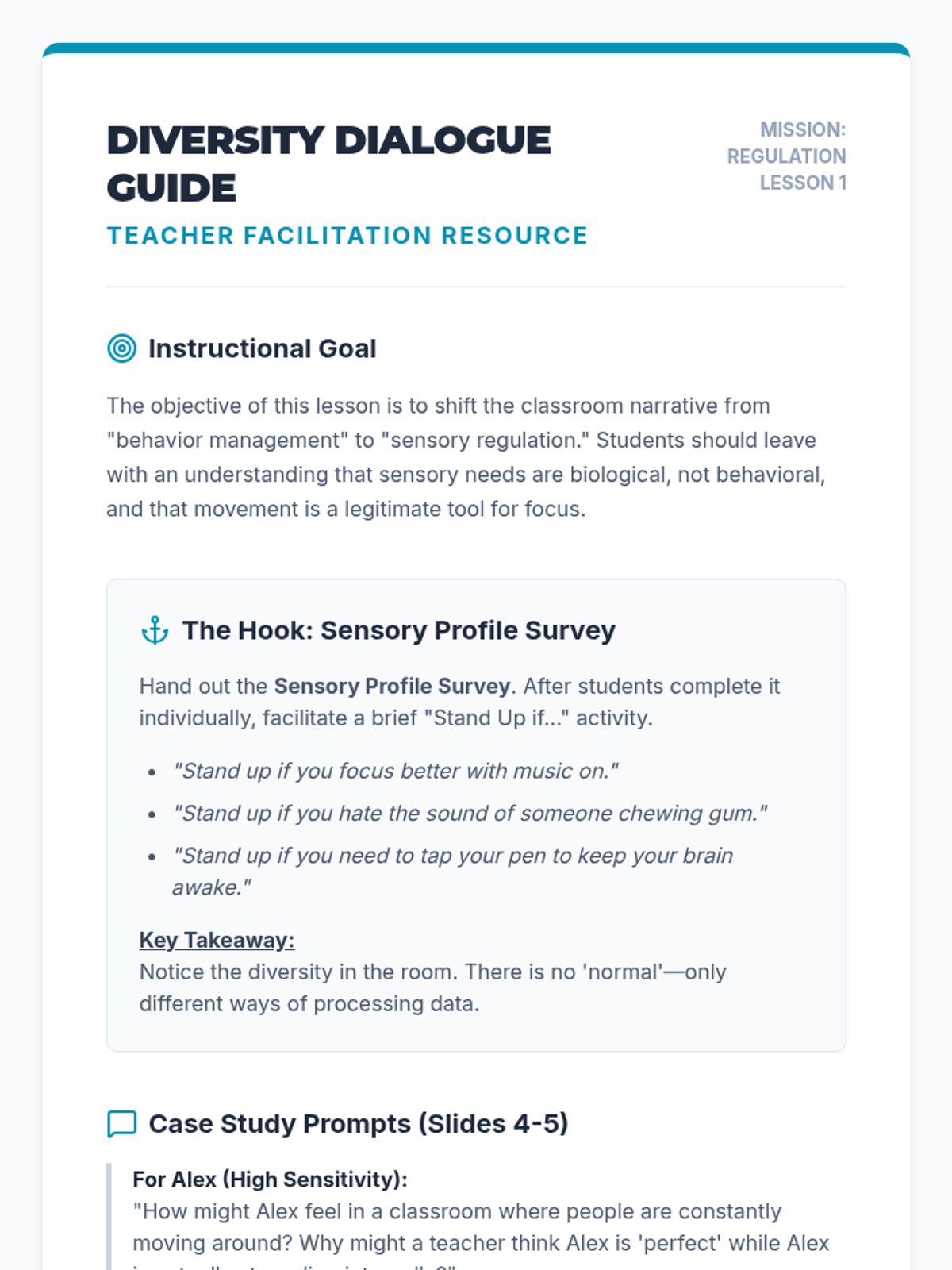
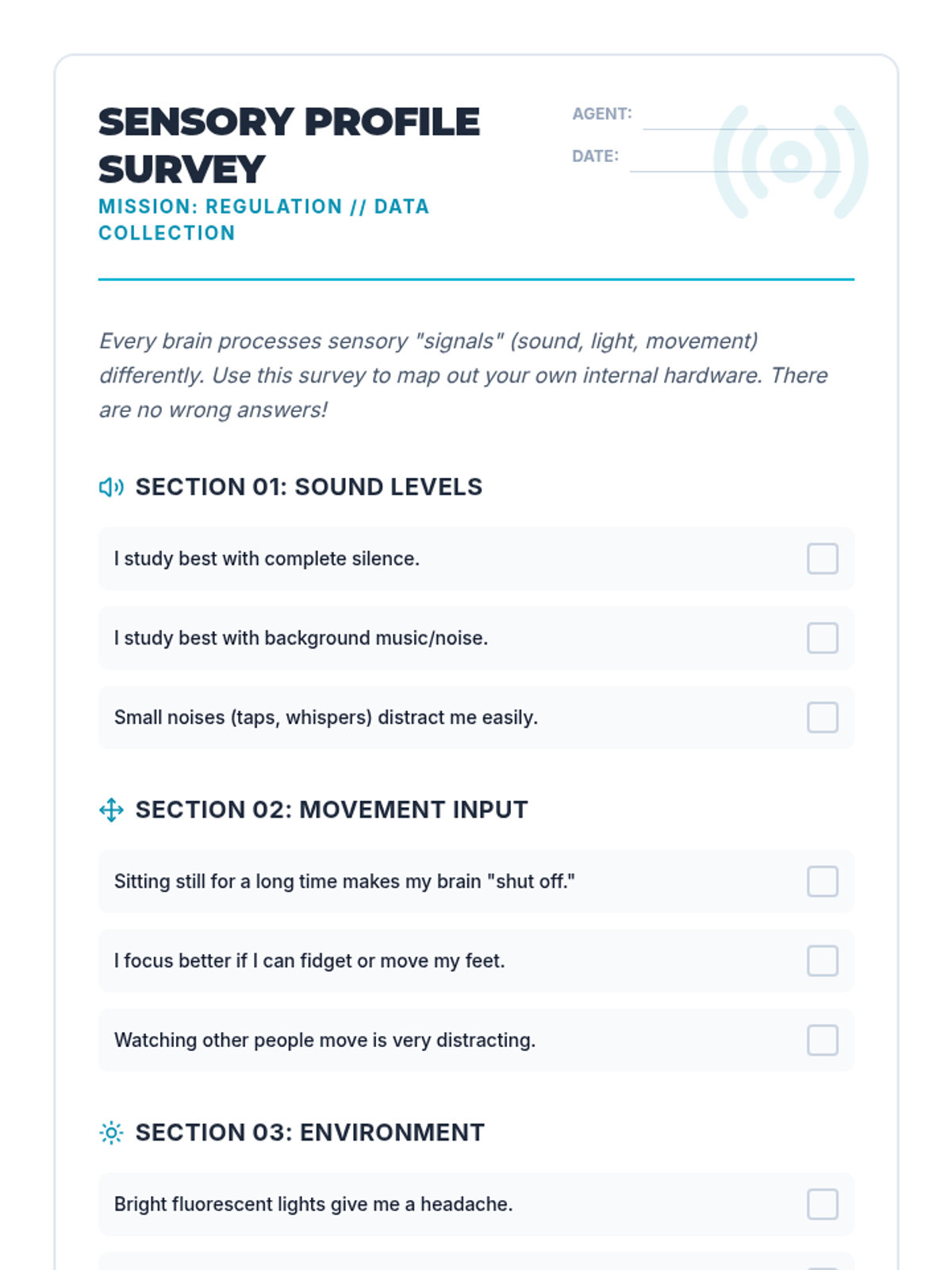
Students explore the concept of neurodiversity and sensory profiles, normalizing the idea that different brains have different movement and environmental needs for optimal learning.
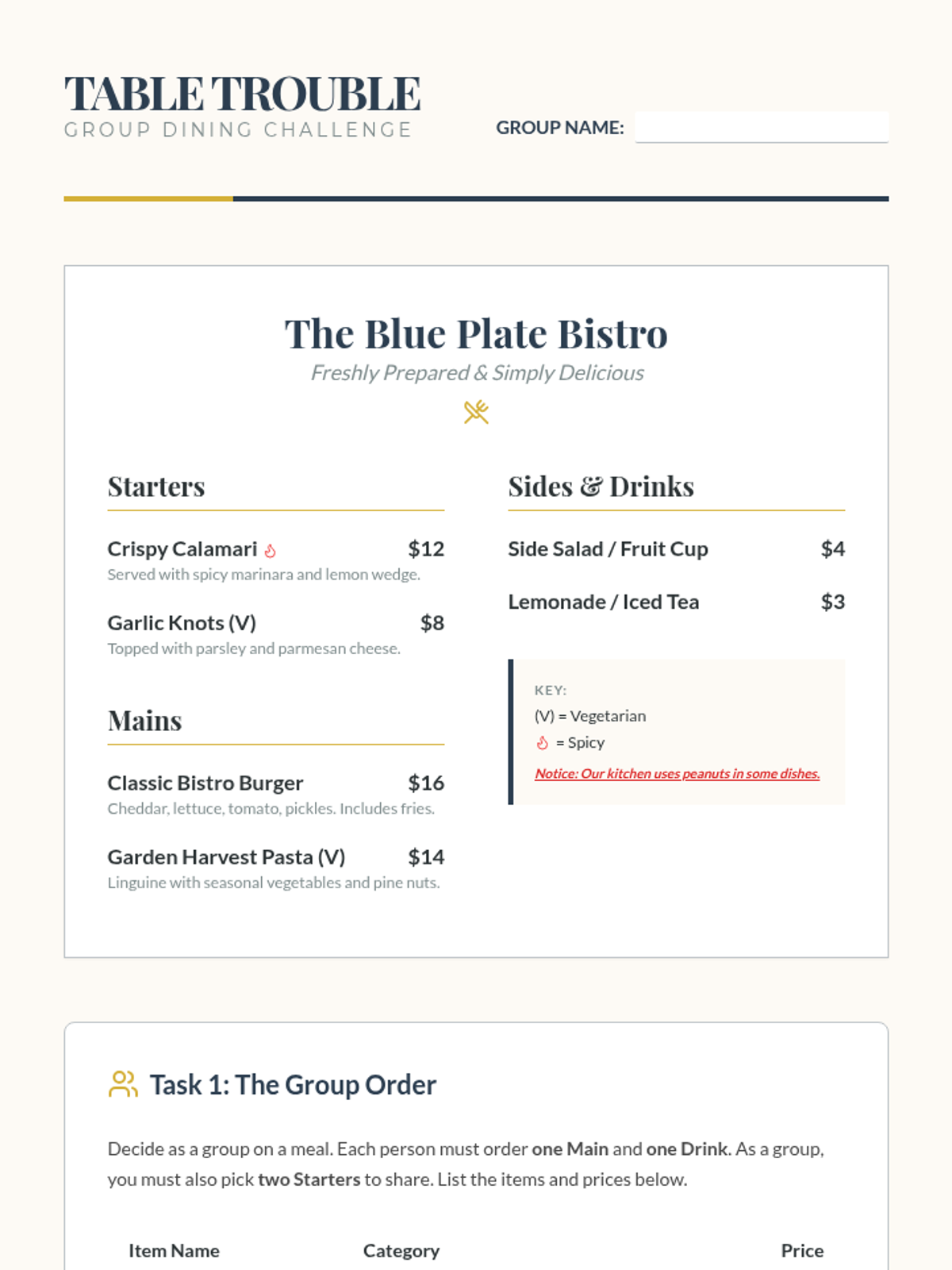
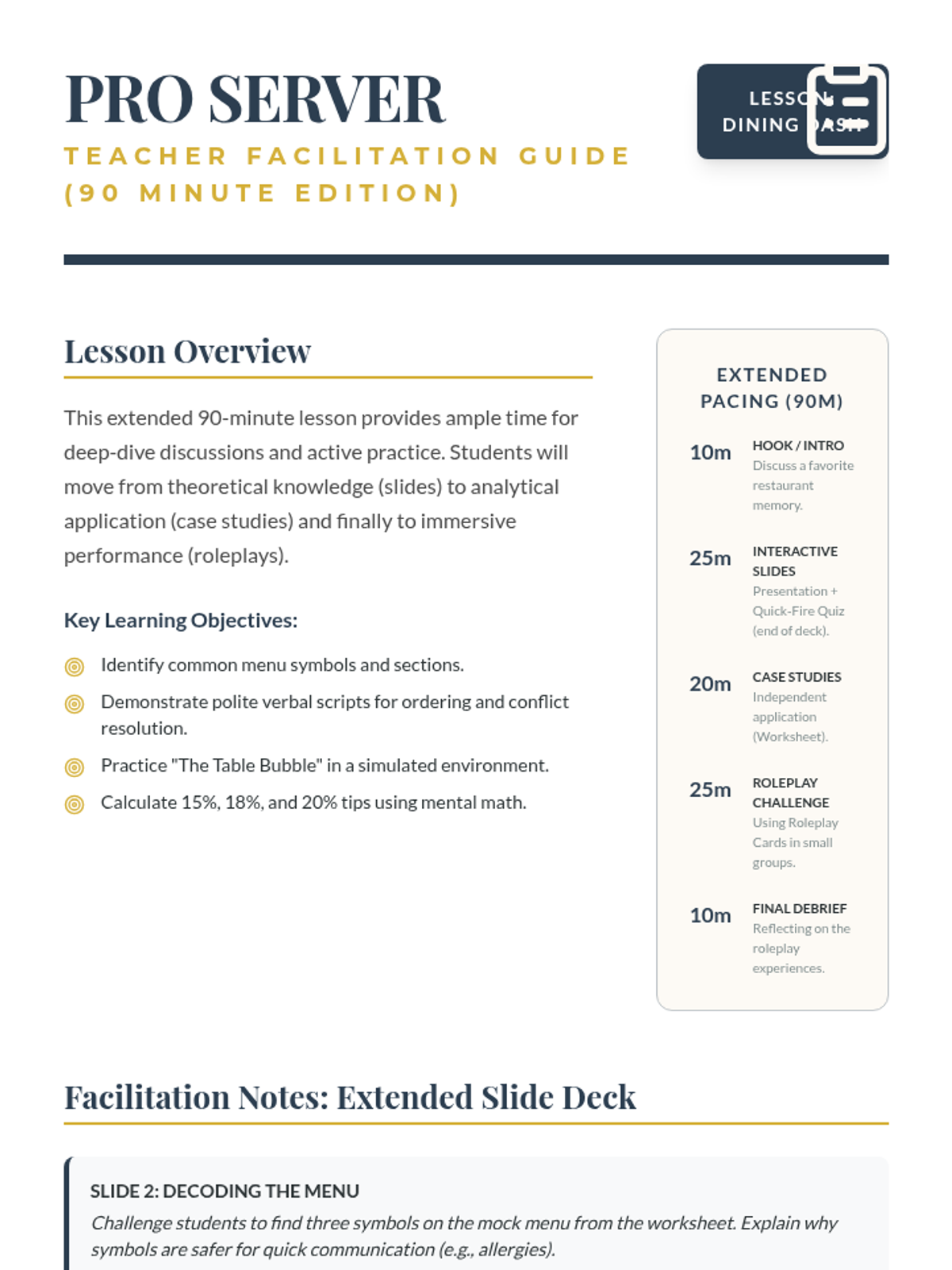
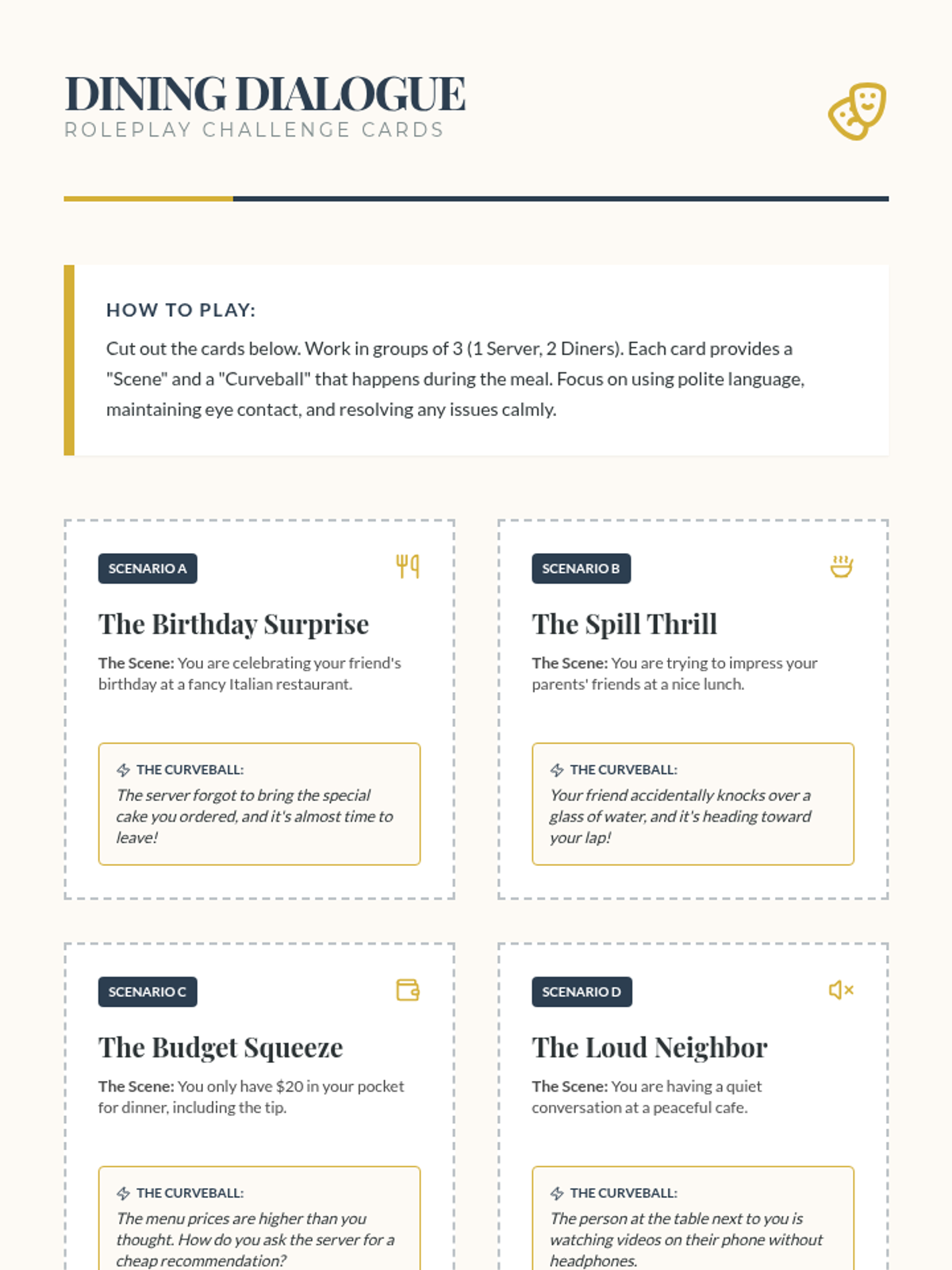
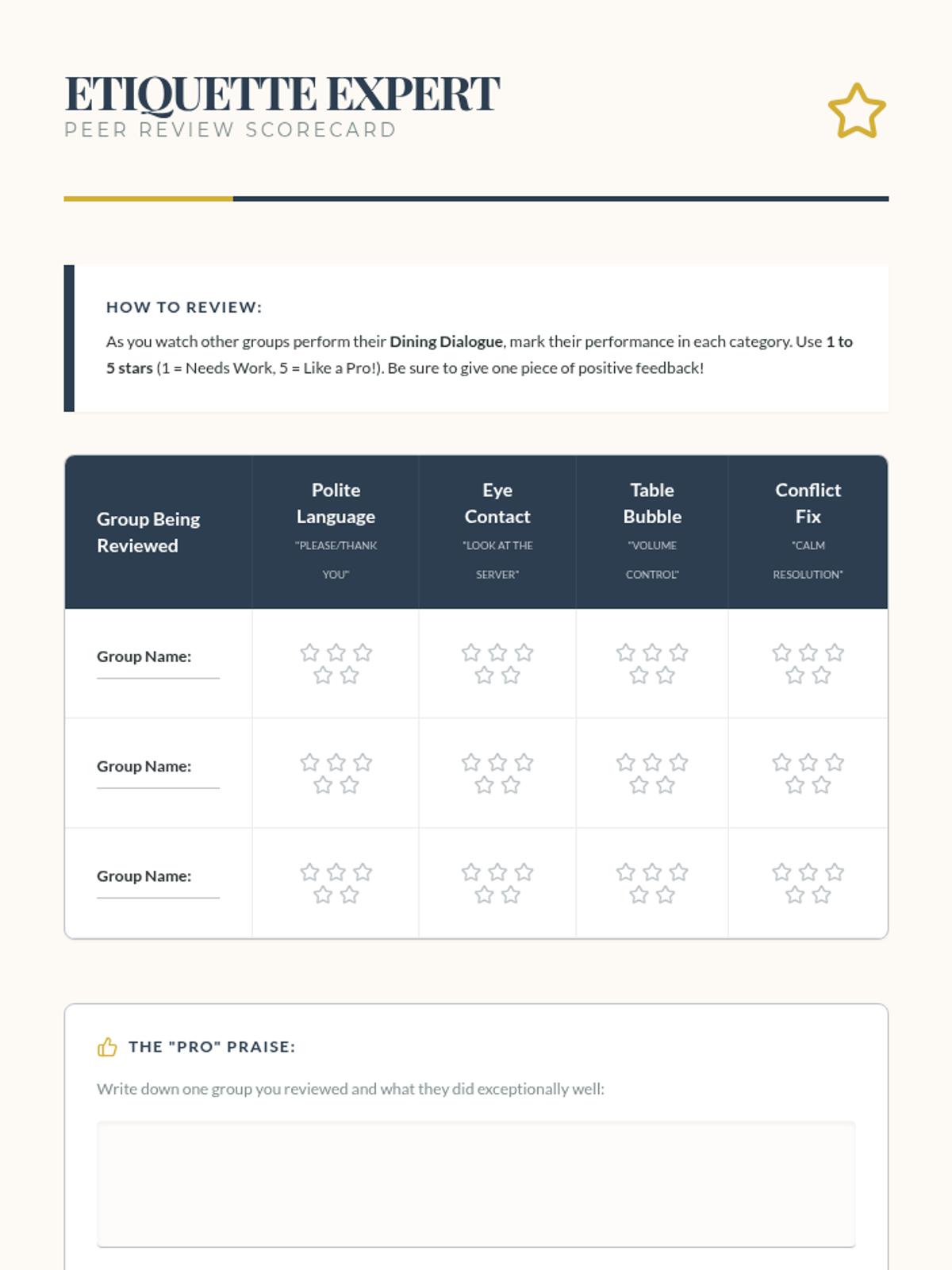
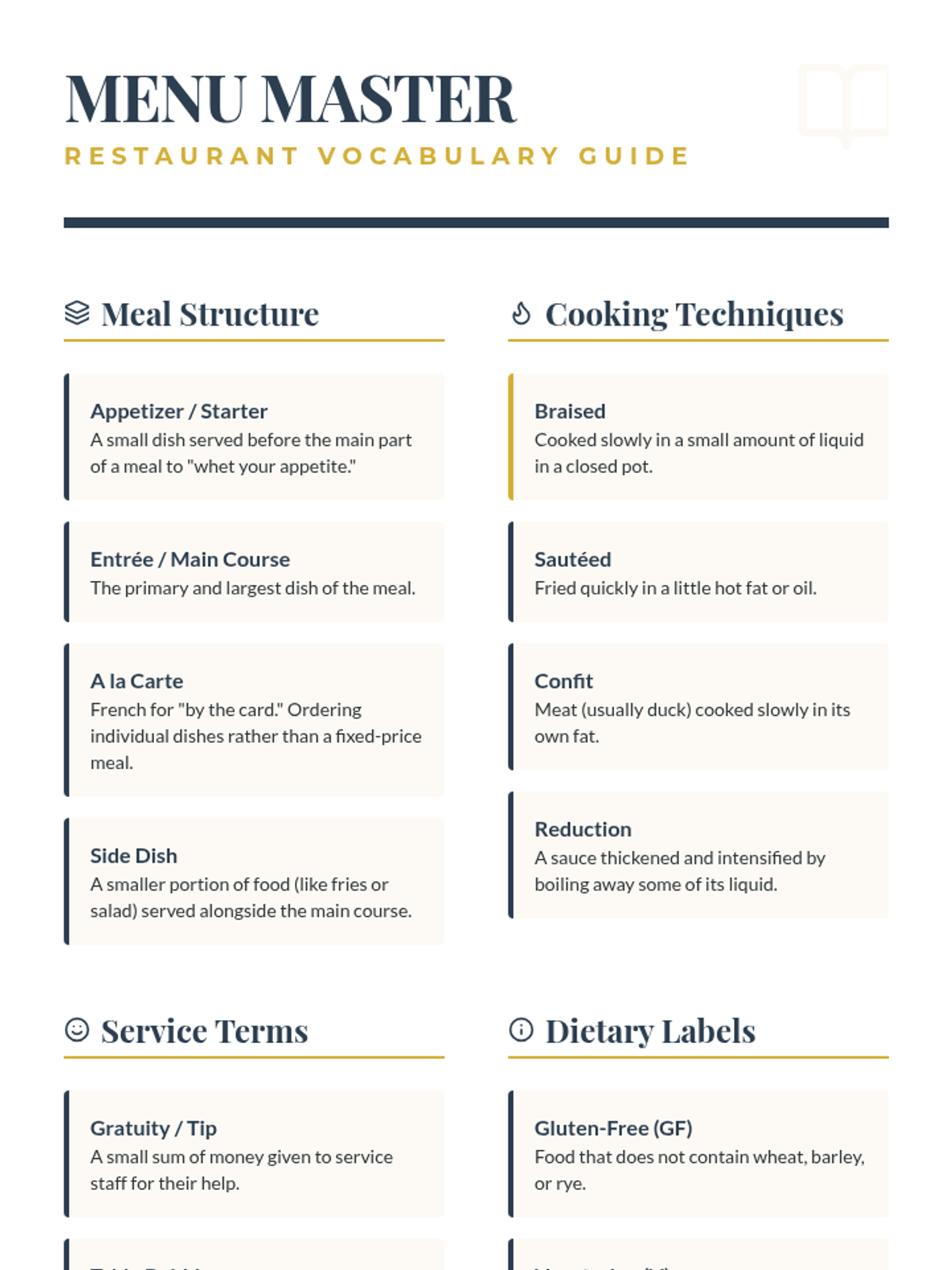
A comprehensive lesson on restaurant etiquette covering menu reading, ordering, manners, volume control, tipping, and conflict resolution.
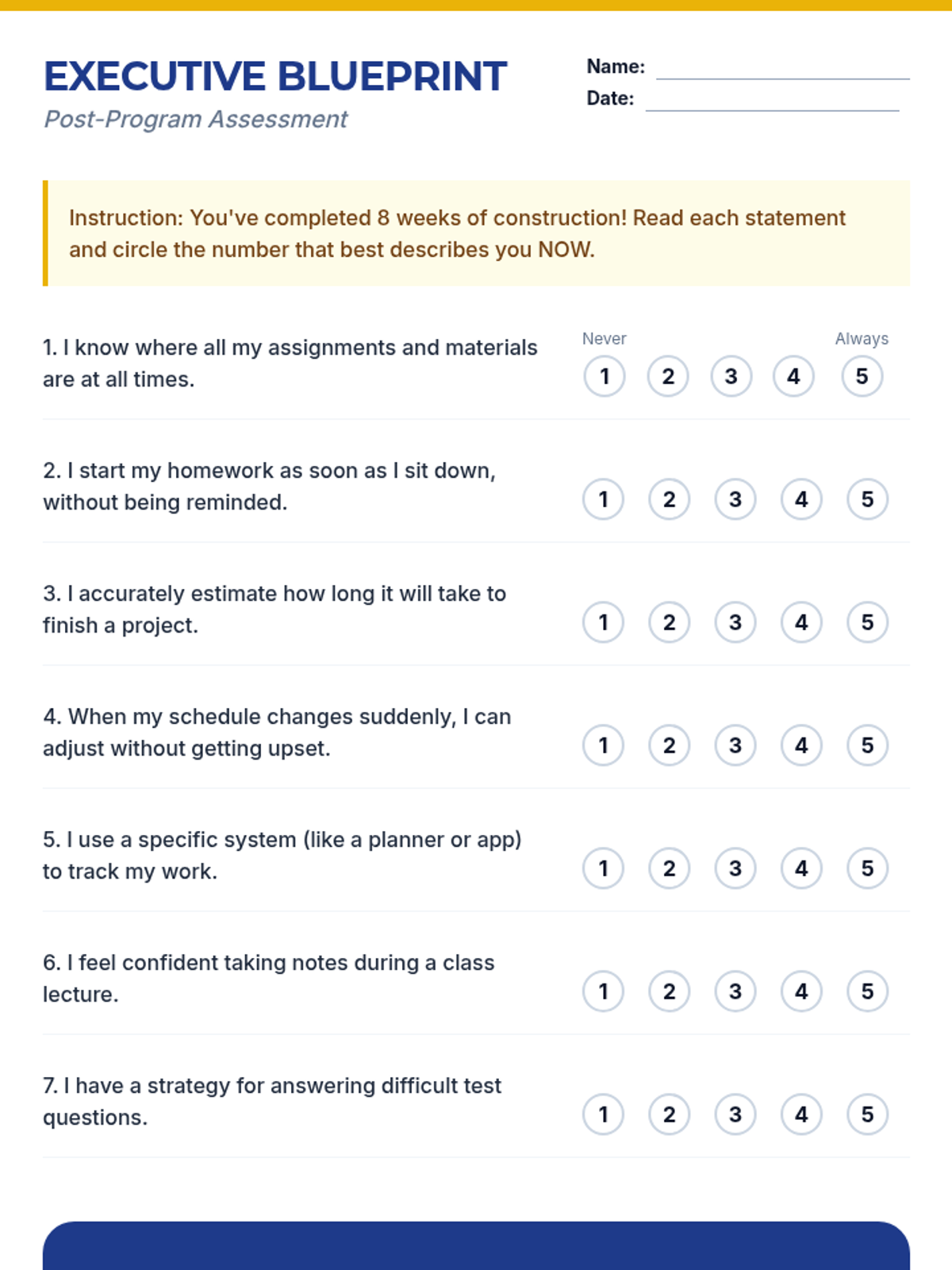
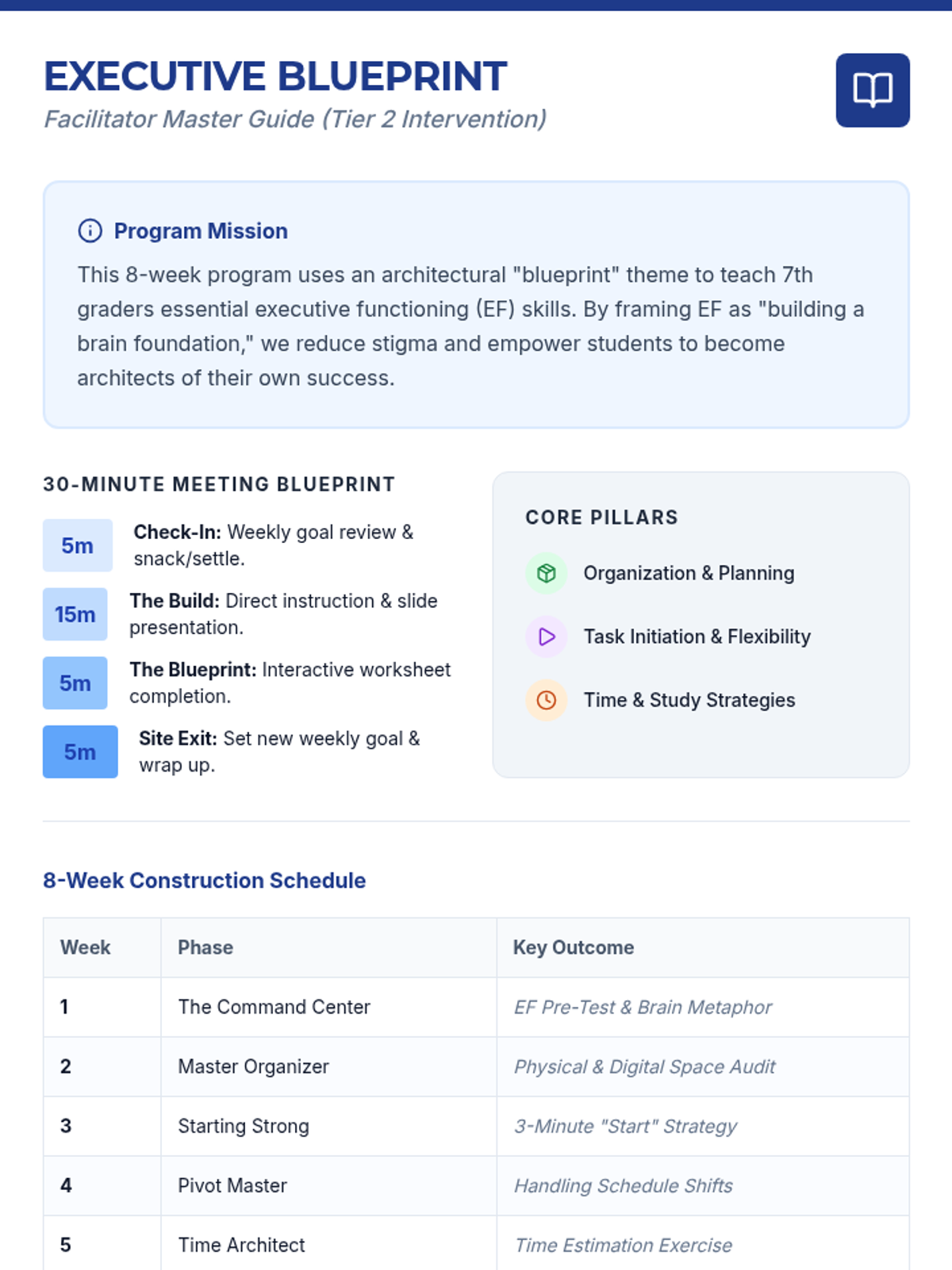
Program review, celebration of growth, and completion of the EF Post-Test.
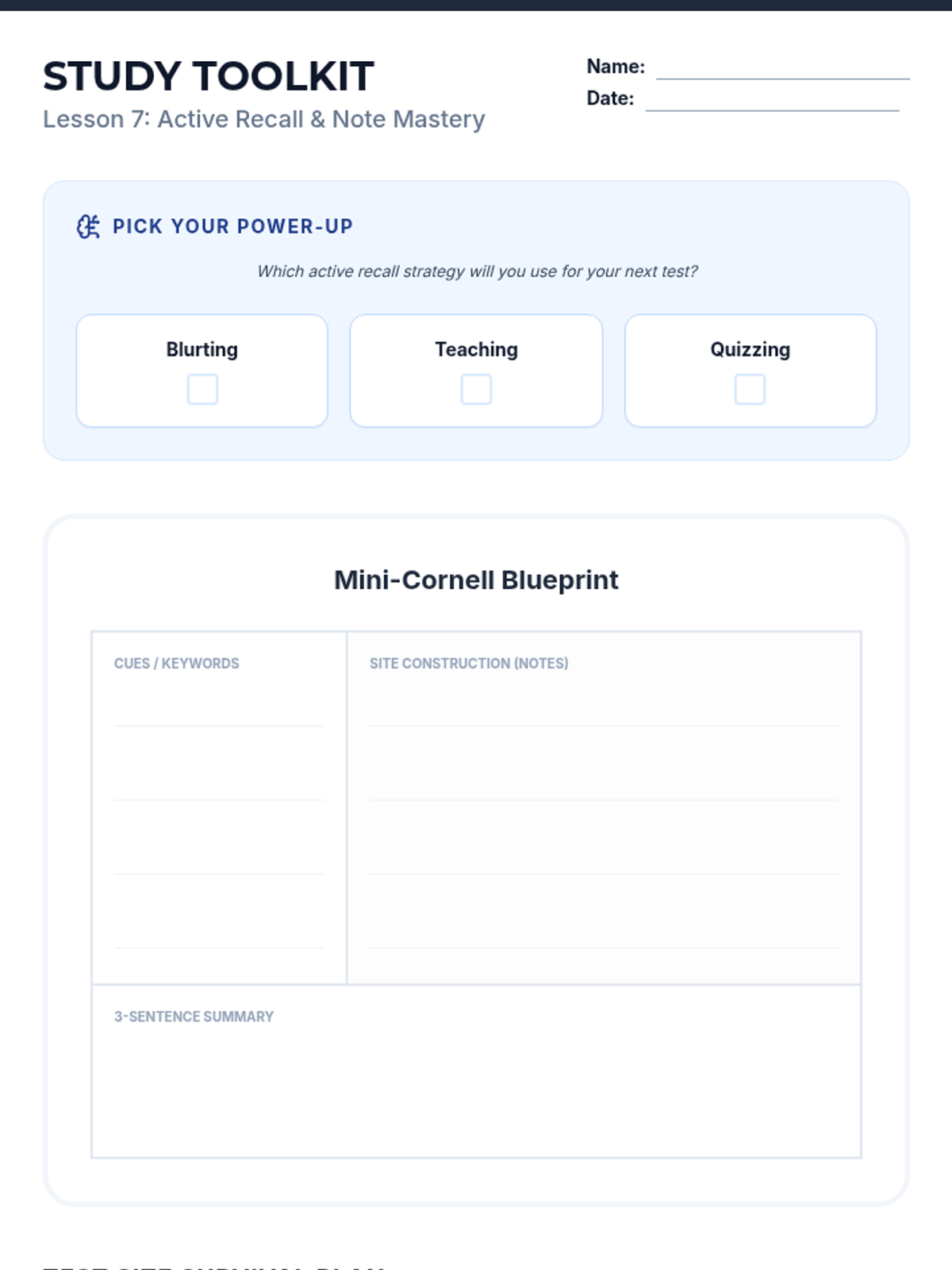
Instruction on effective note-taking and test-taking strategies tailored for middle school.
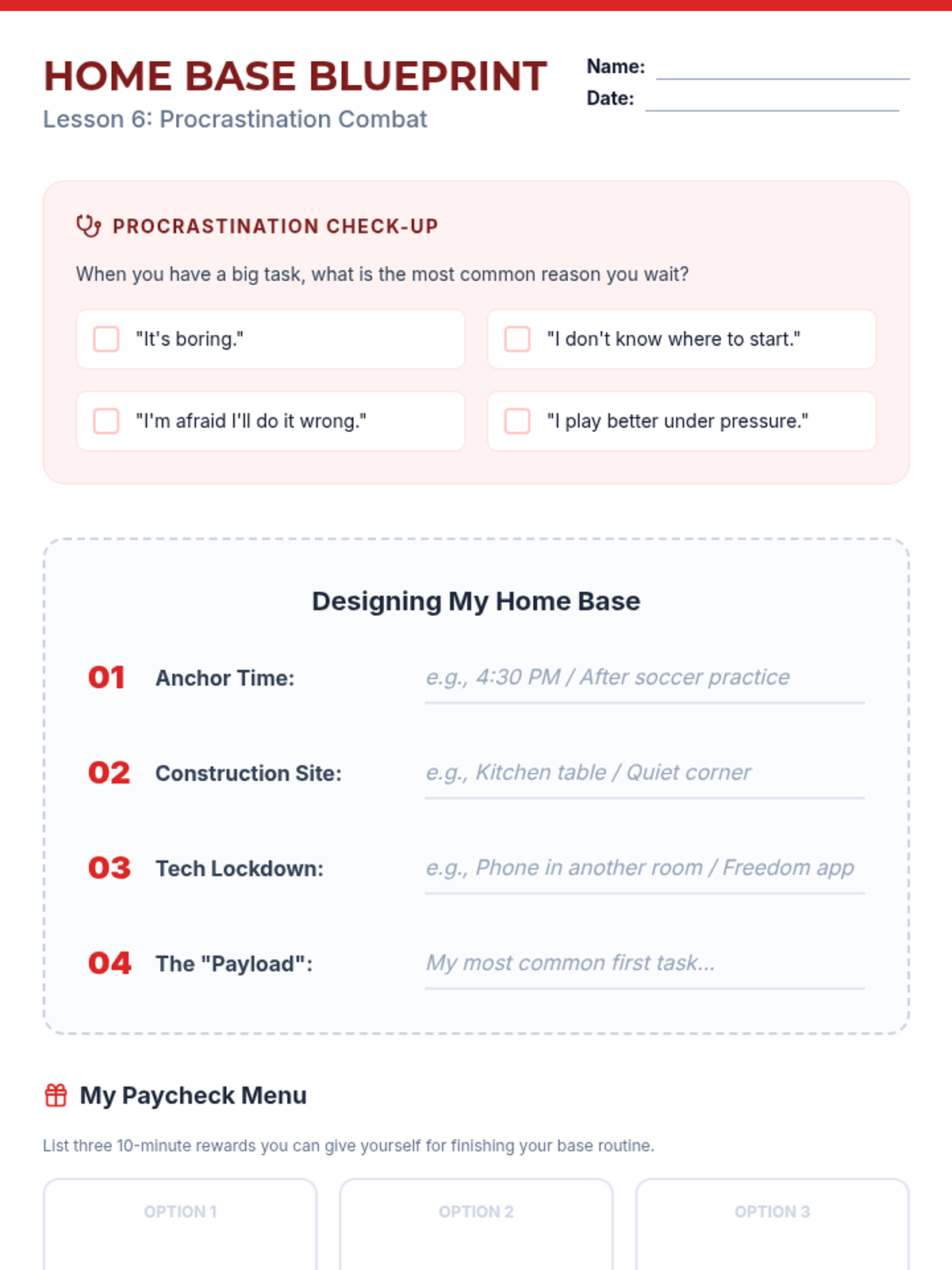
Practical strategies to defeat procrastination and streamline homework routines.
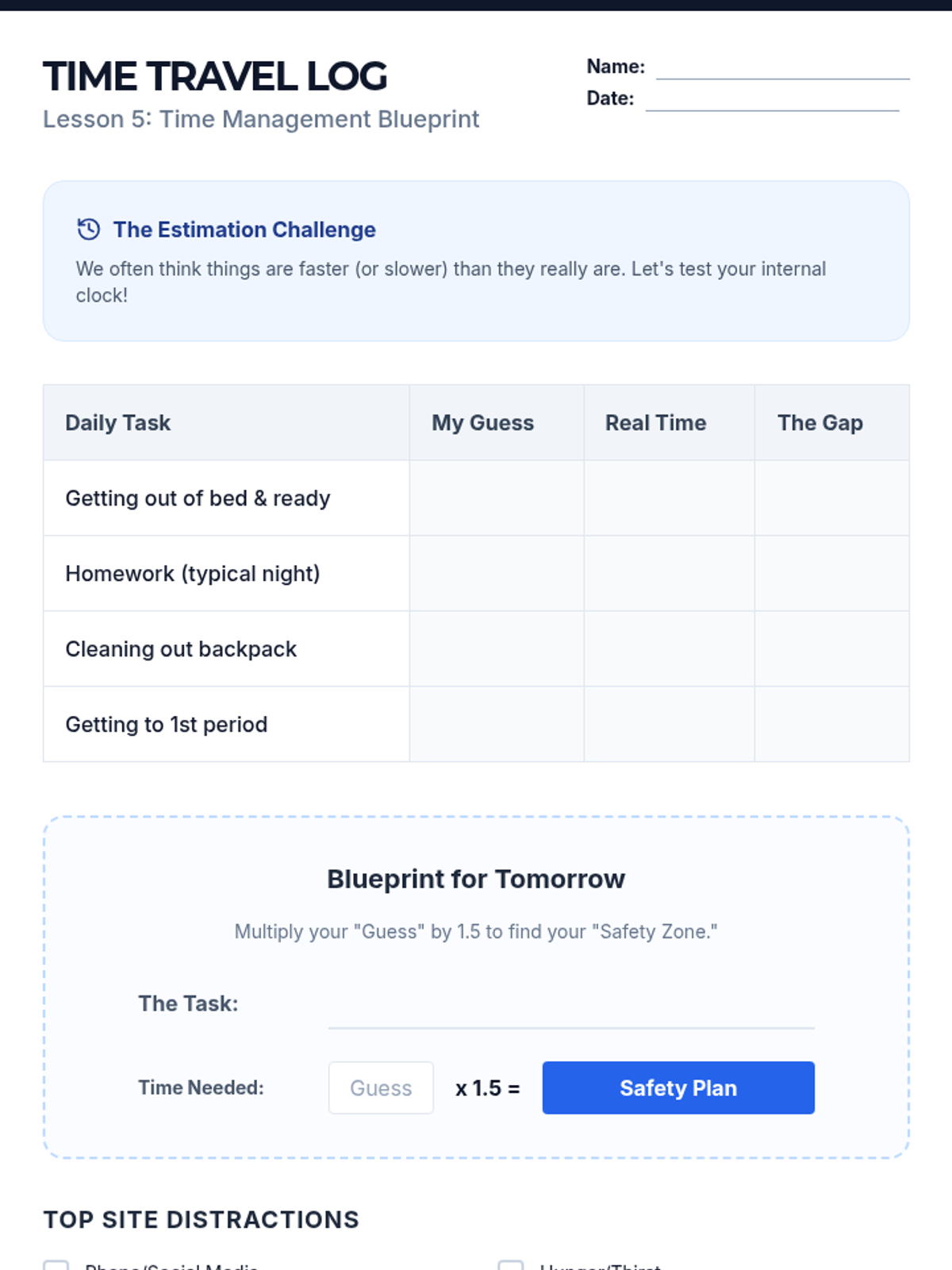
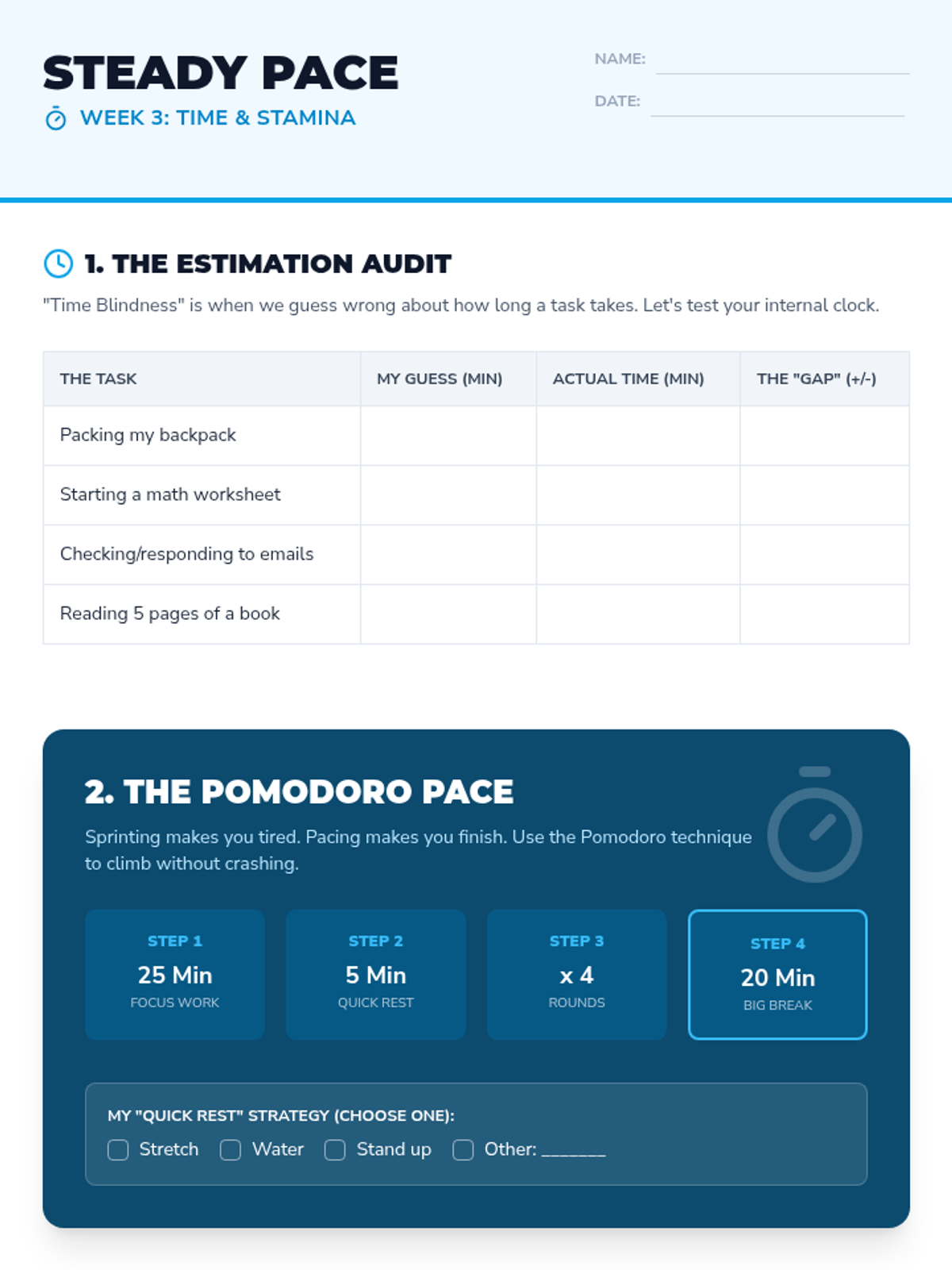
Building an awareness of time and learning how to estimate how long tasks actually take.
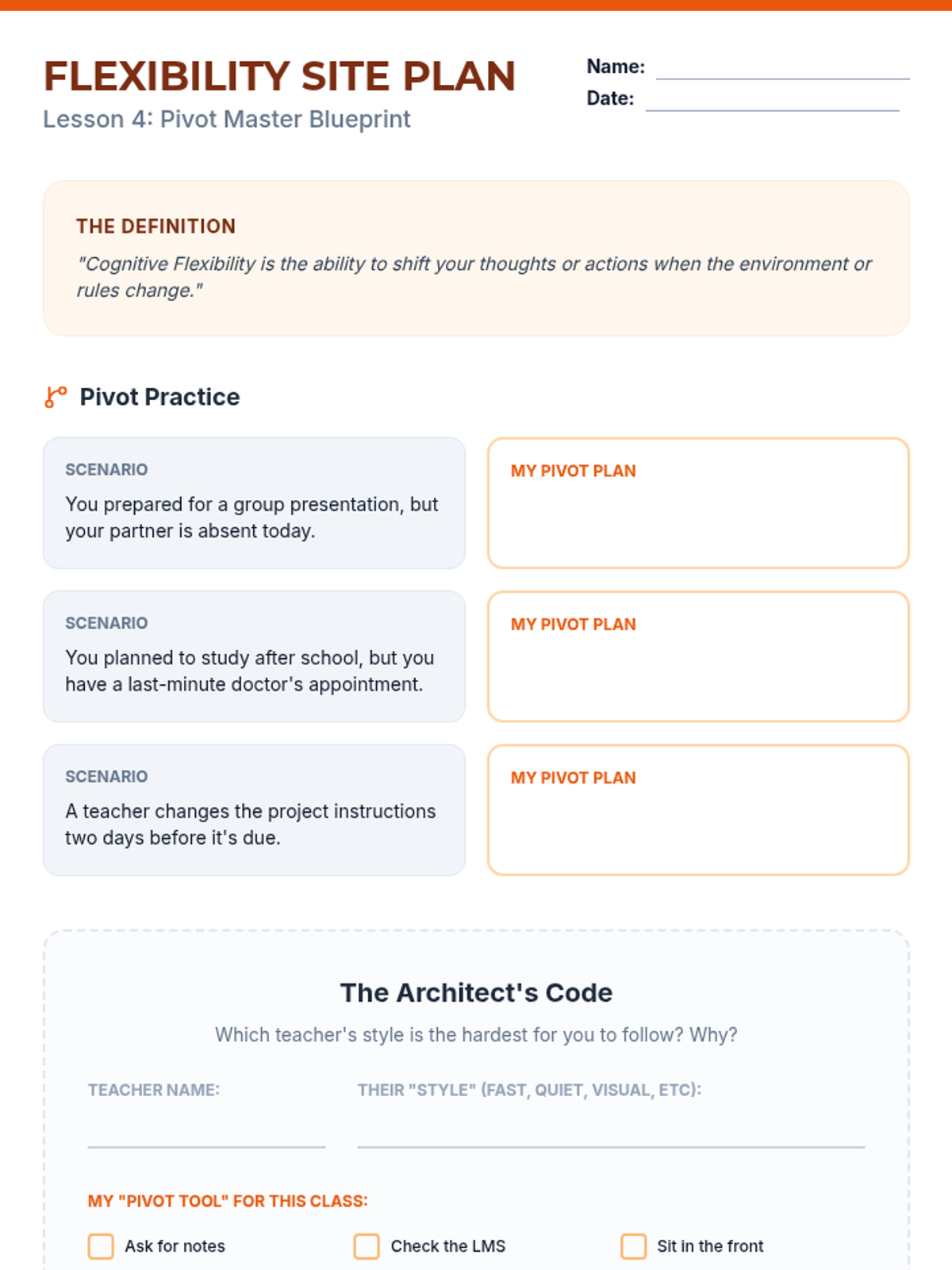
Developing cognitive flexibility to handle changes in schedules and different teaching styles.
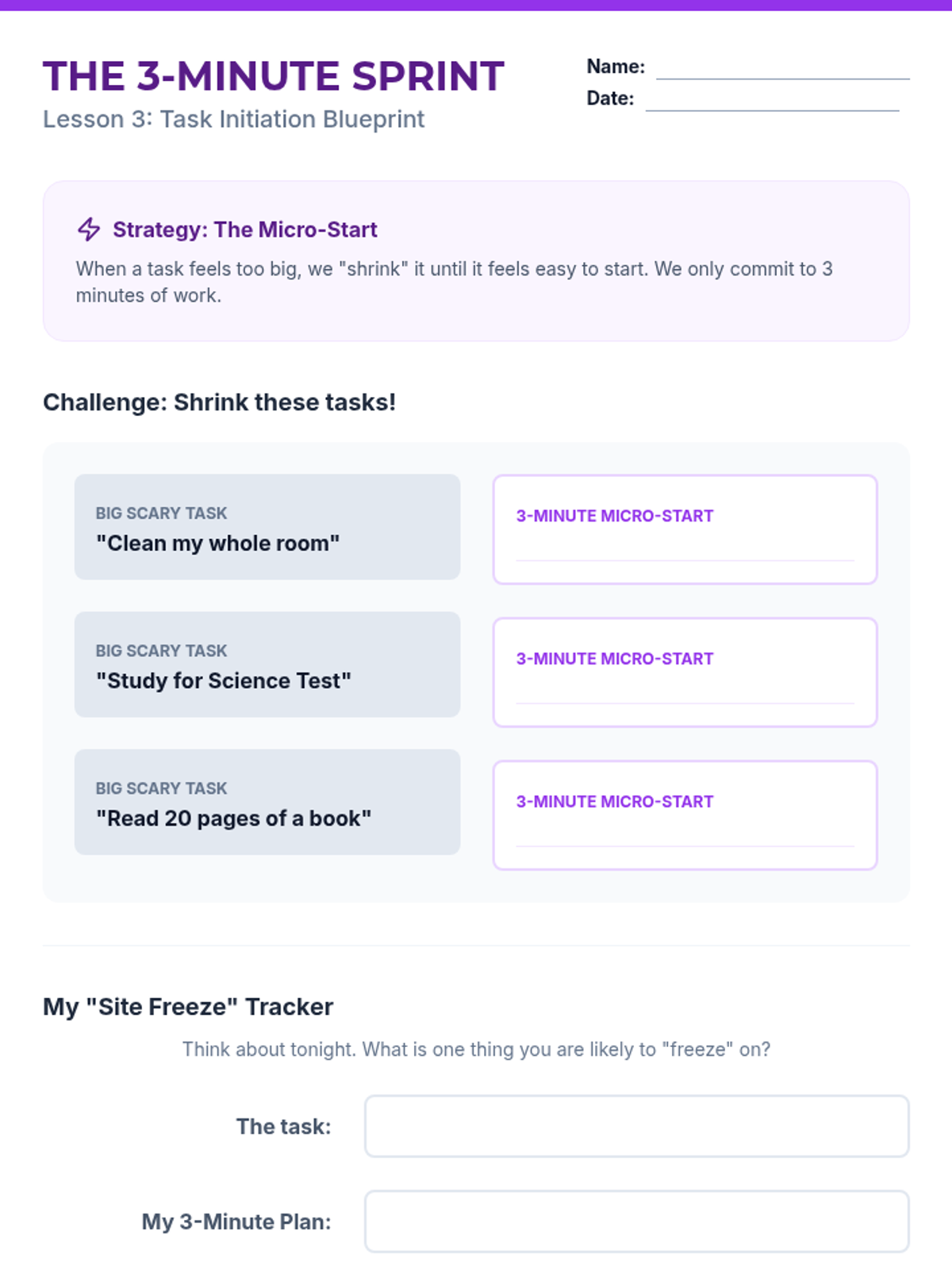
Strategies for overcoming the 'freeze' and getting started on difficult tasks immediately.
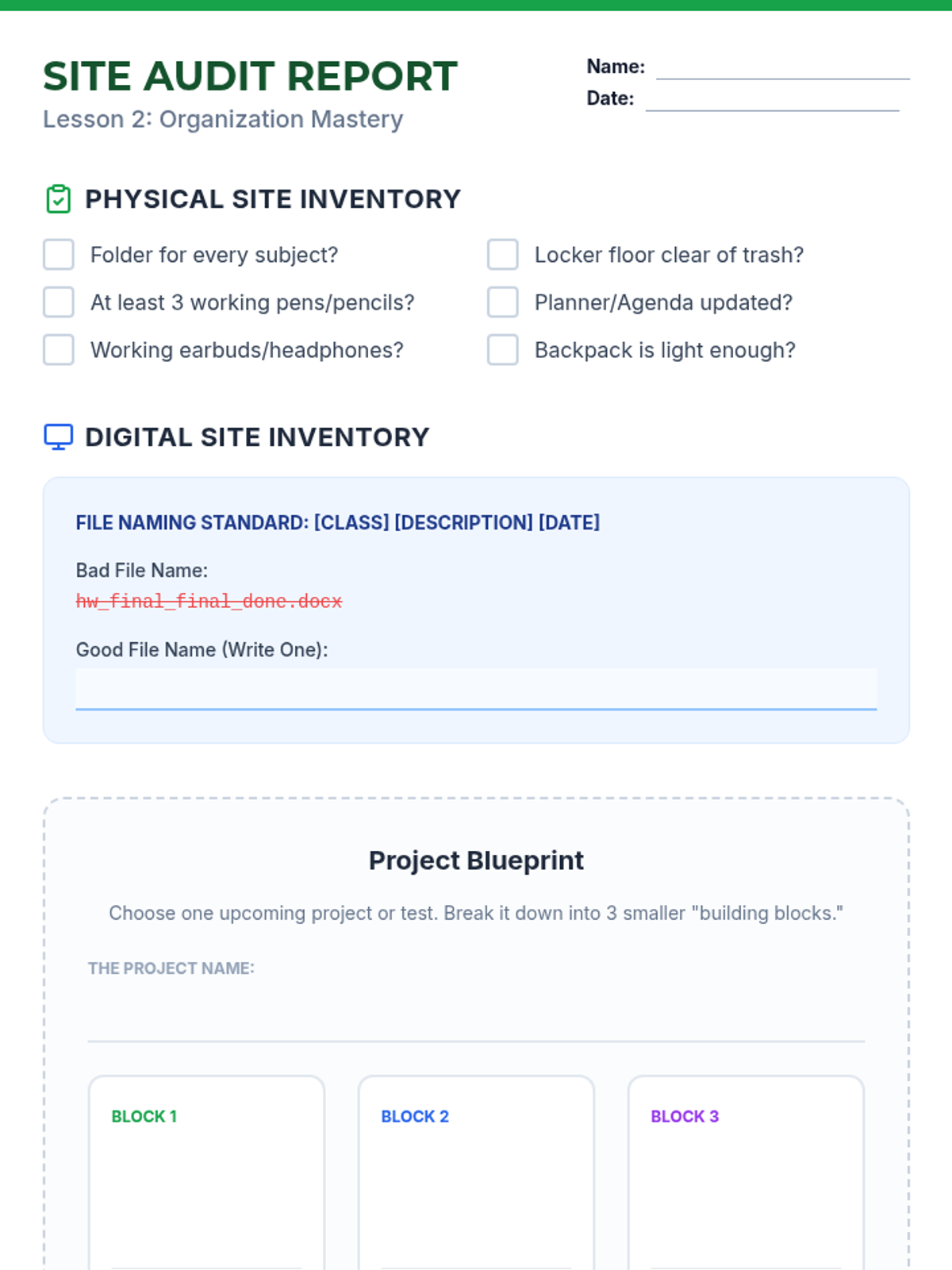
Focuses on organization of physical and digital spaces and long-term project planning.
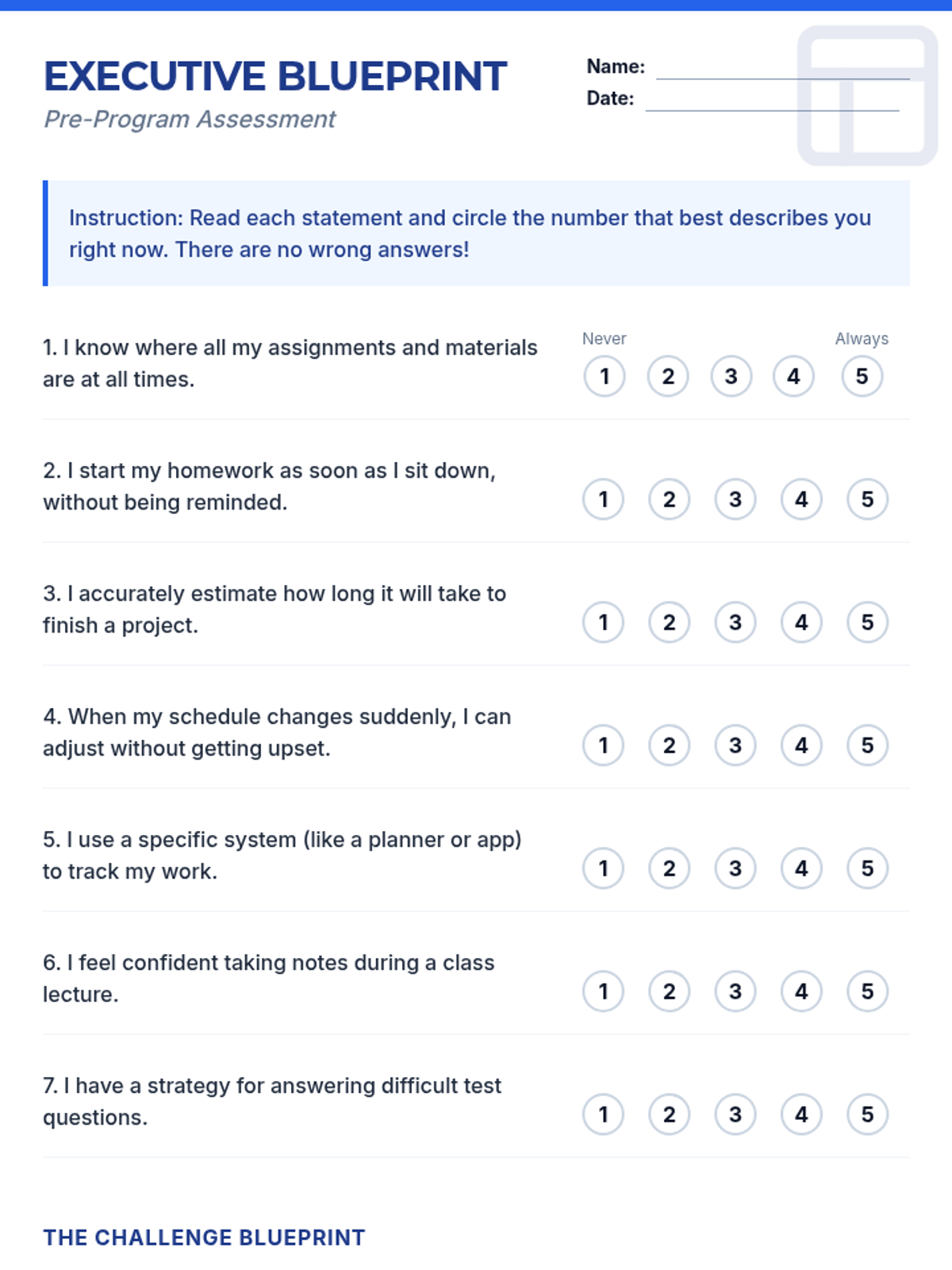
Introduction to the brain's "Command Center," establishing group norms, and completing the EF Pre-Test.
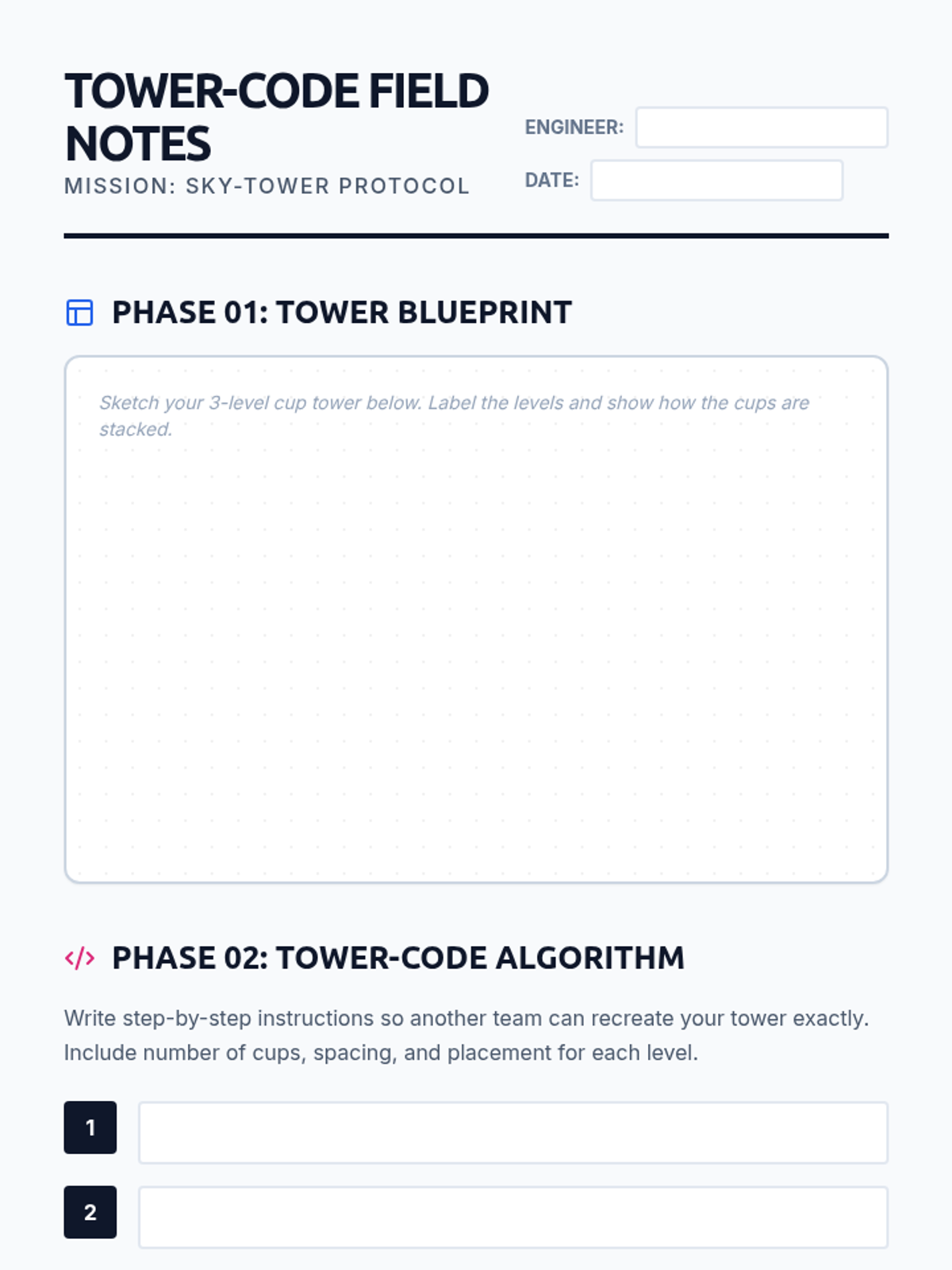
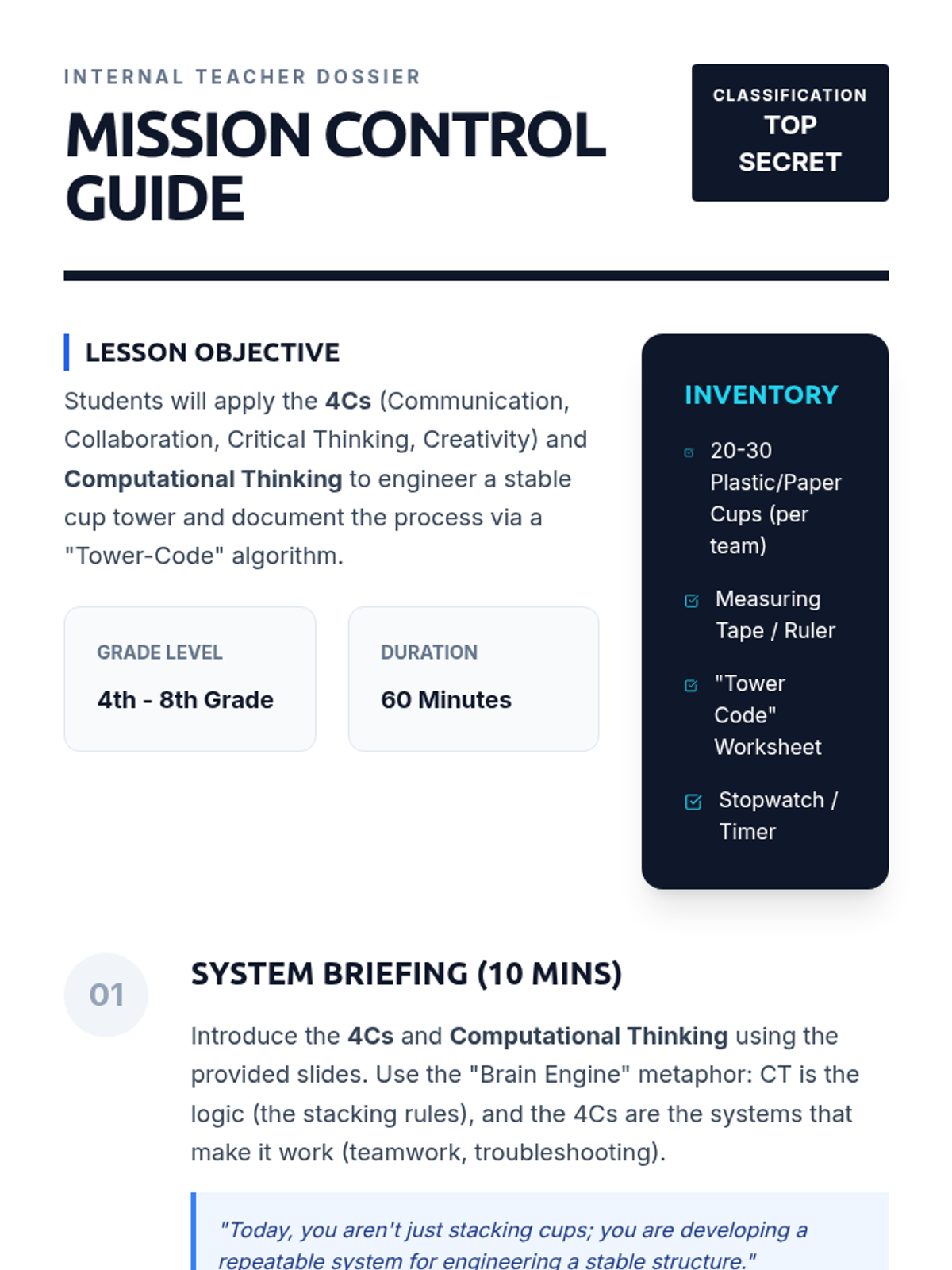
A high-stakes engineering challenge where students use the 4Cs and Computational Thinking to design, build, and document the ultimate cup tower structure.
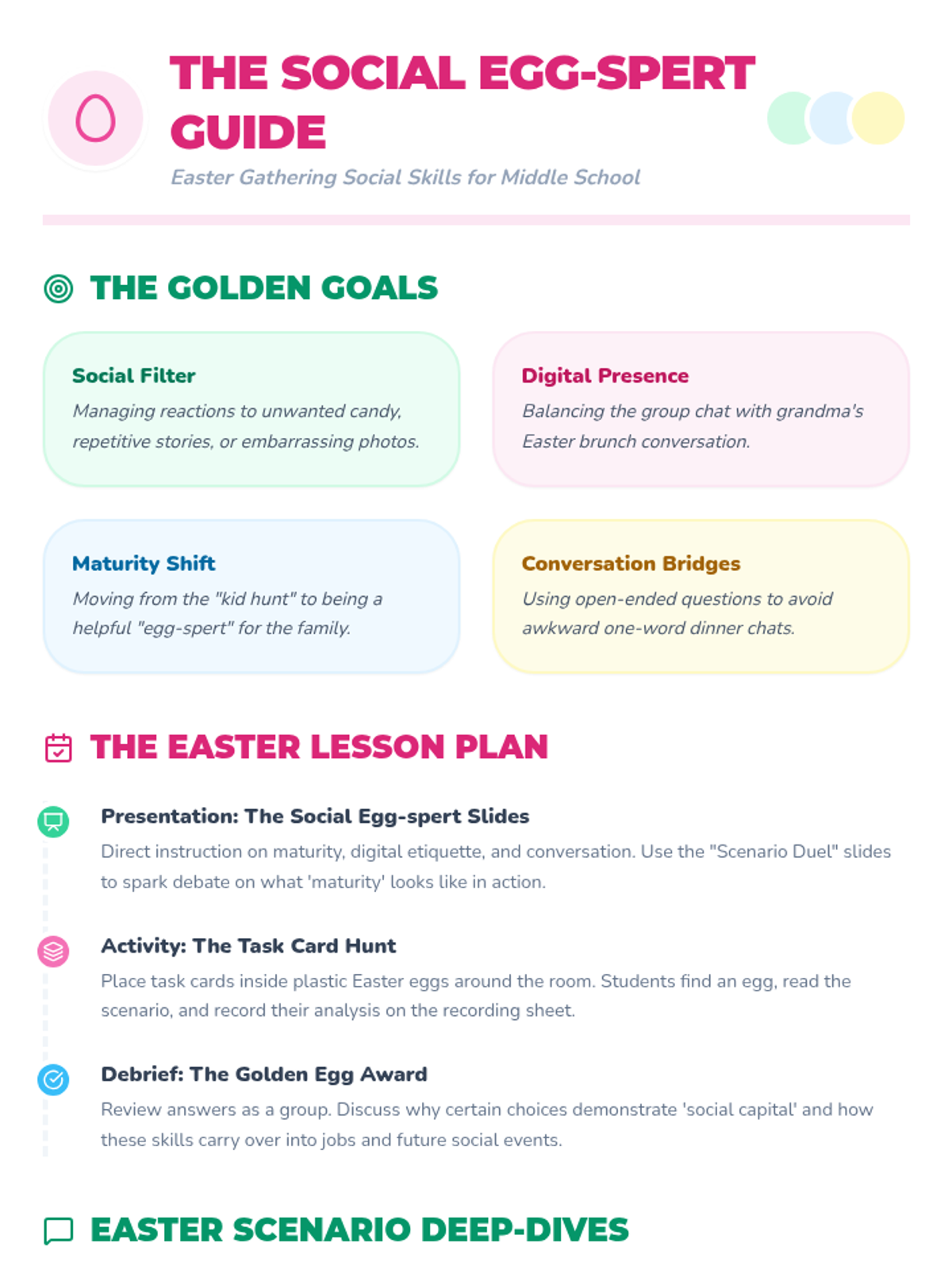
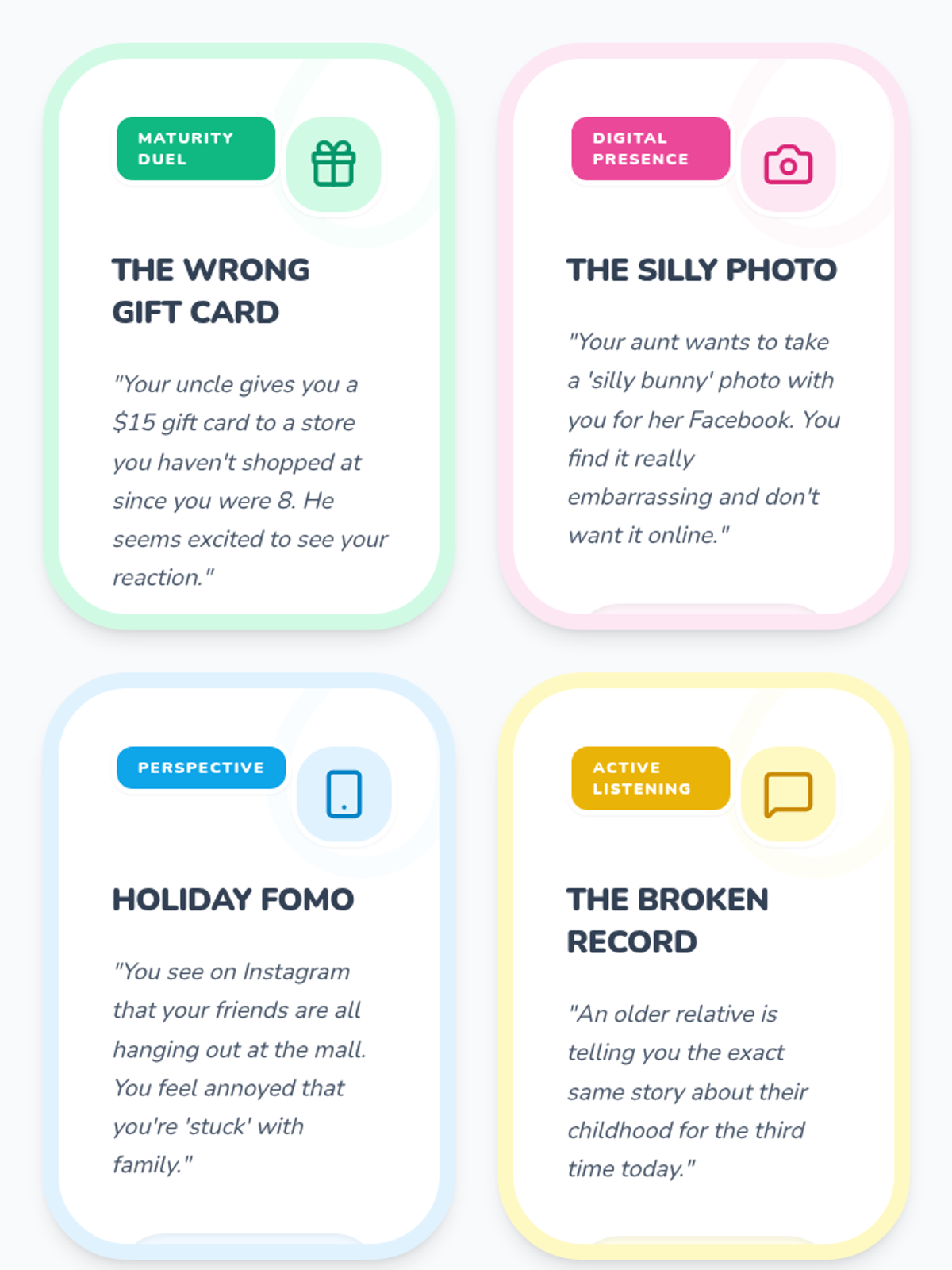
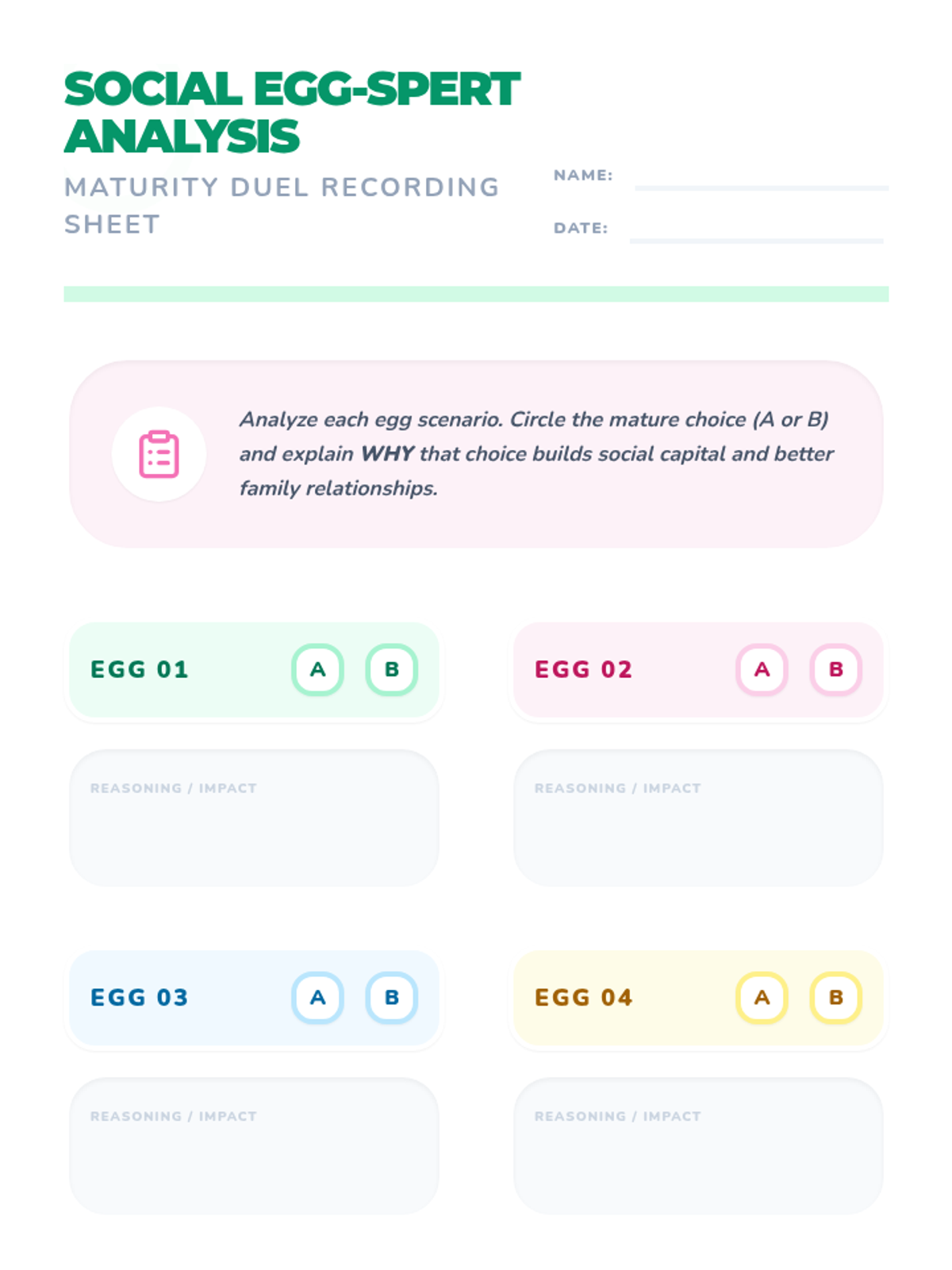
A social skills lesson focused on navigating common holiday situations like family gatherings, egg hunts, and conversations using an Easter theme. Includes interactive slides for group discussion and printable task cards for practice.
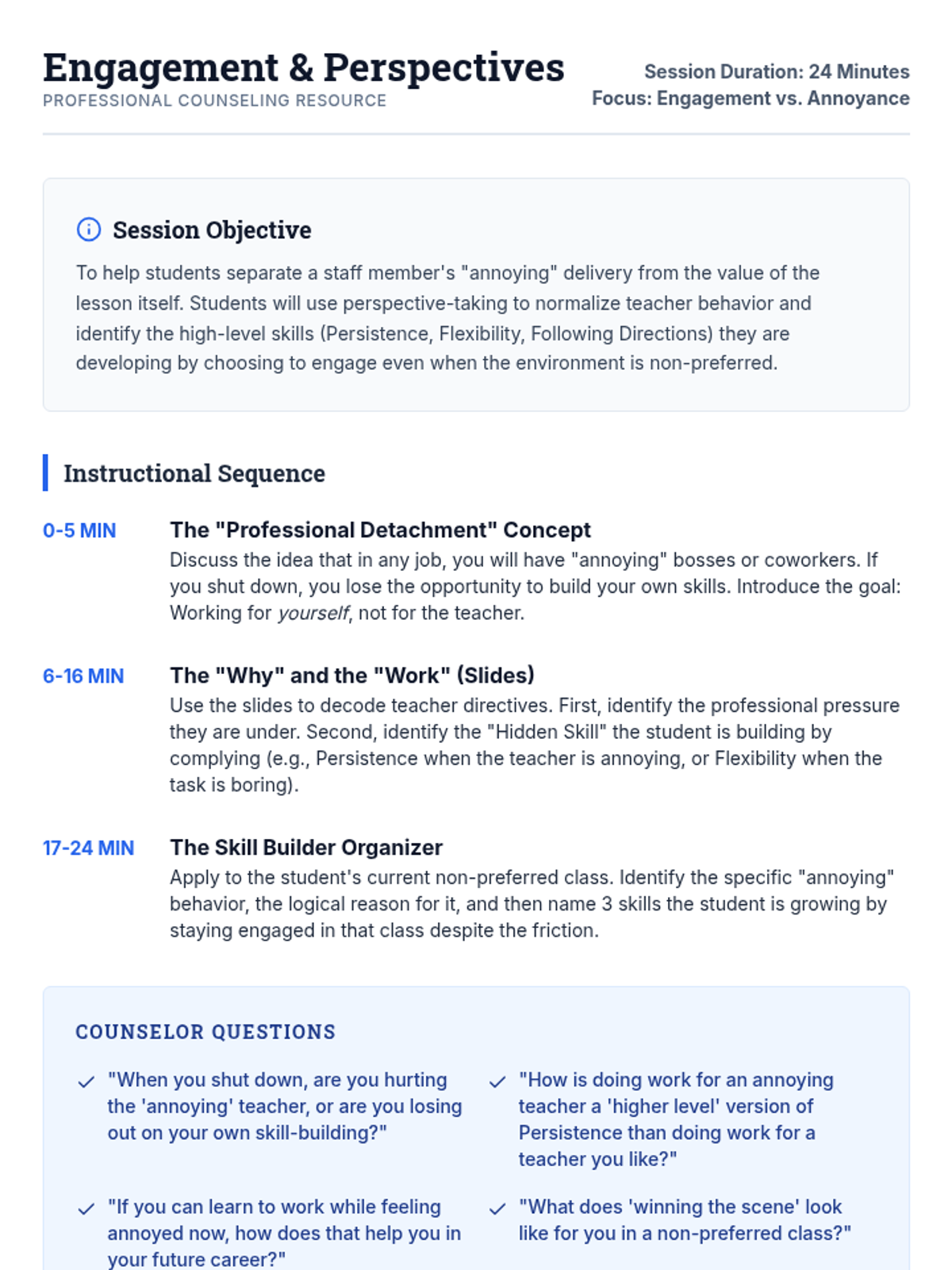
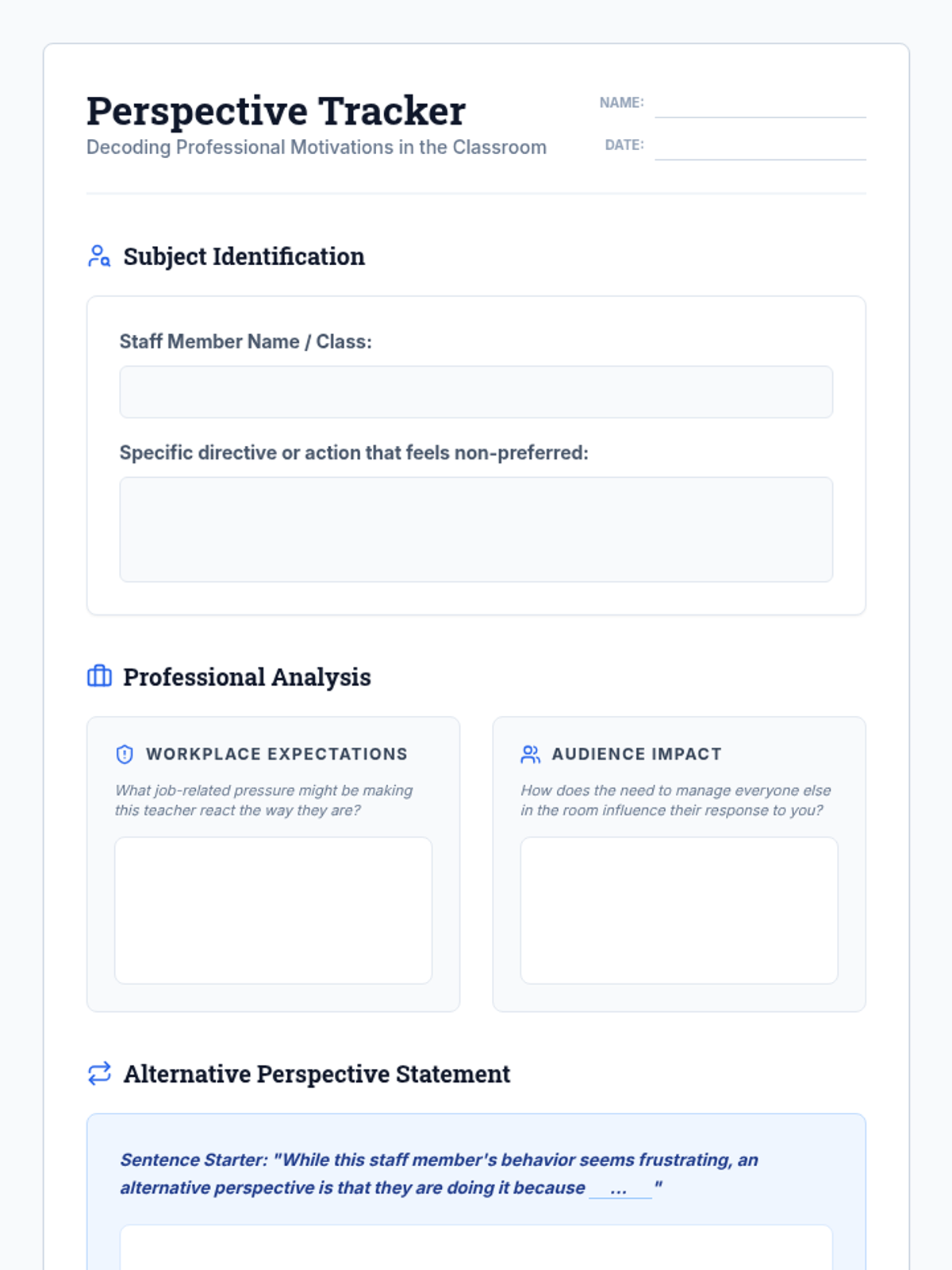
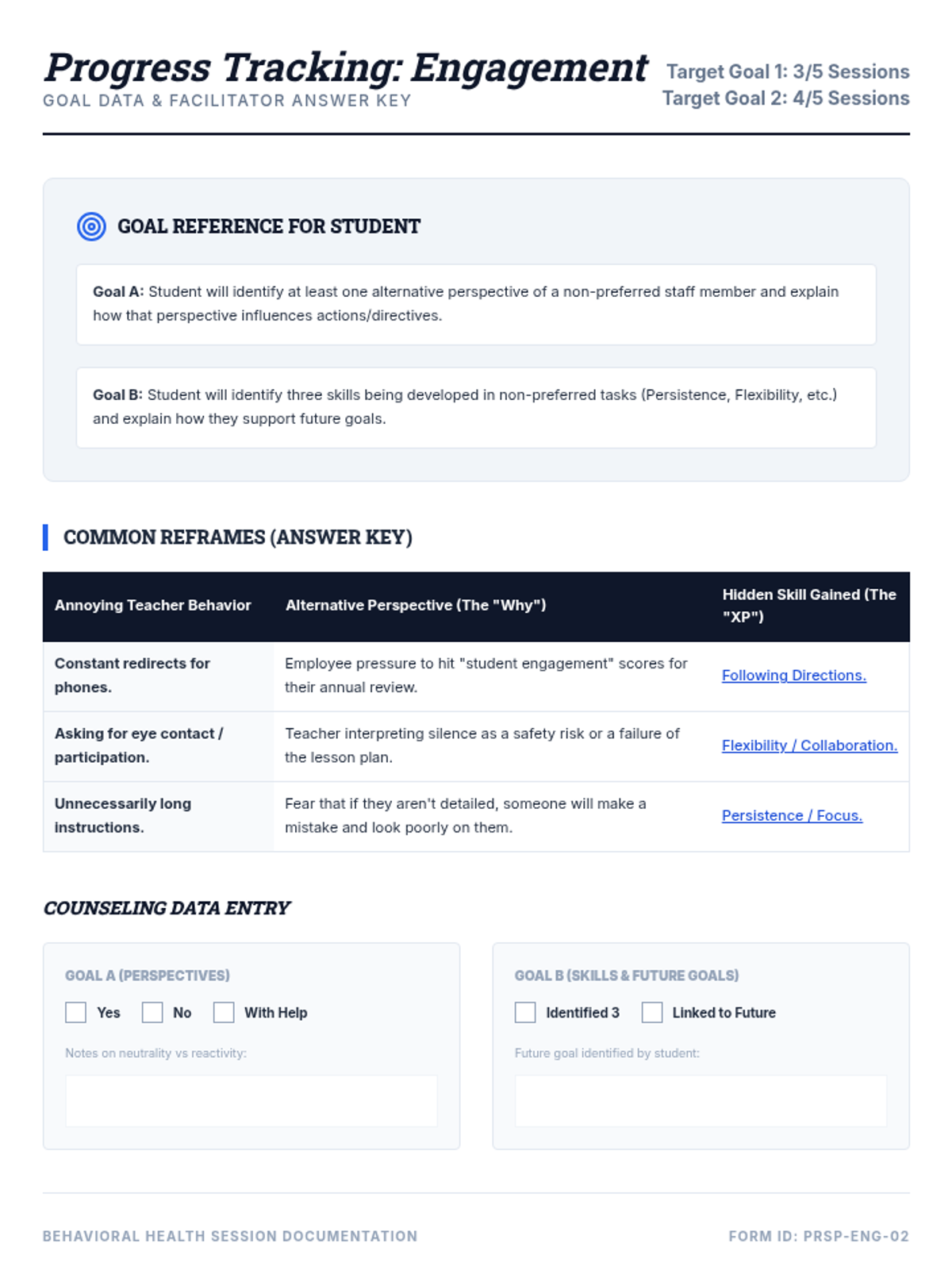
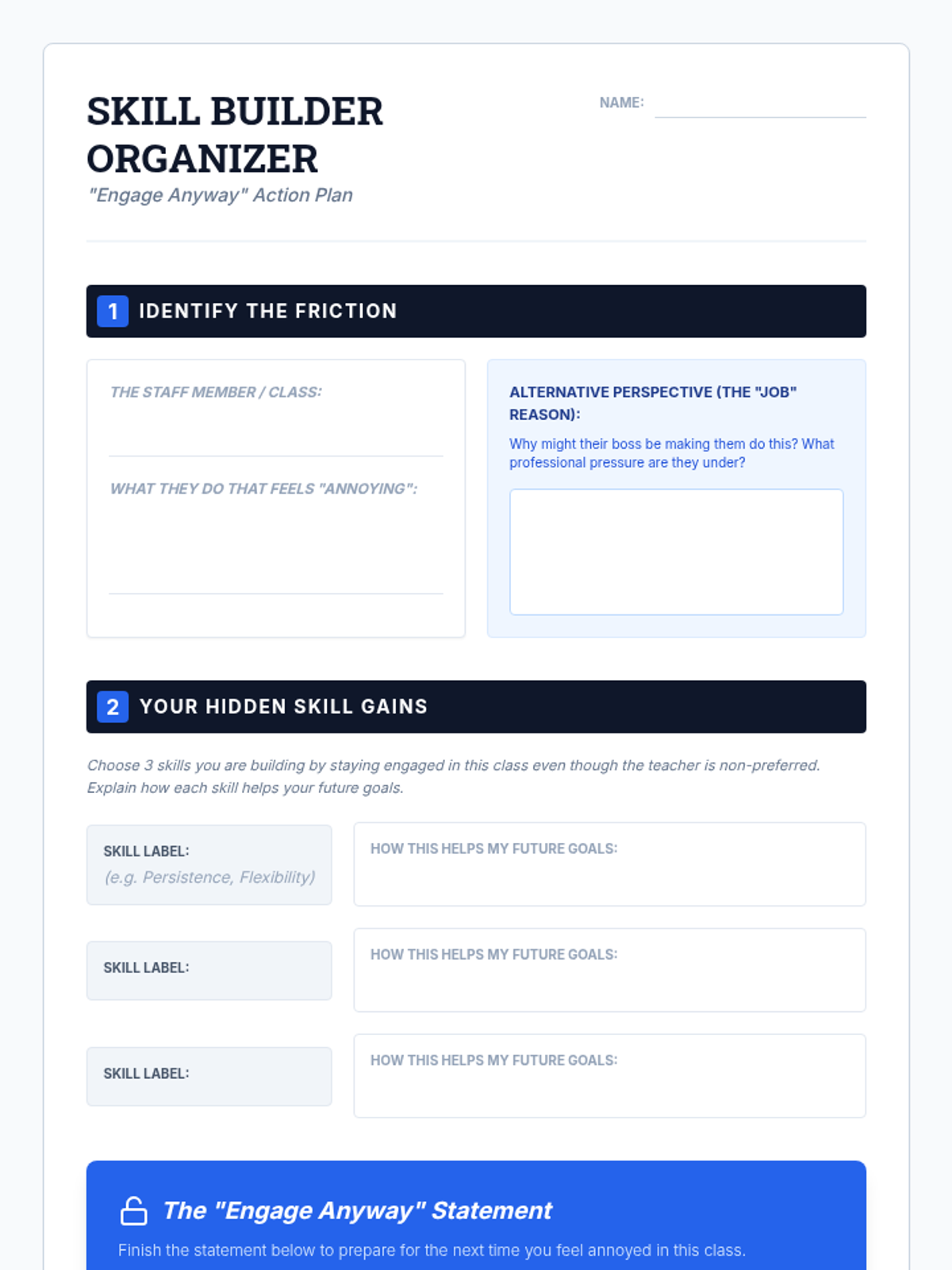
A 24-minute counseling session focused on social perspective-taking, specifically helping students identify the underlying motivations and professional pressures that influence staff member actions and directives.
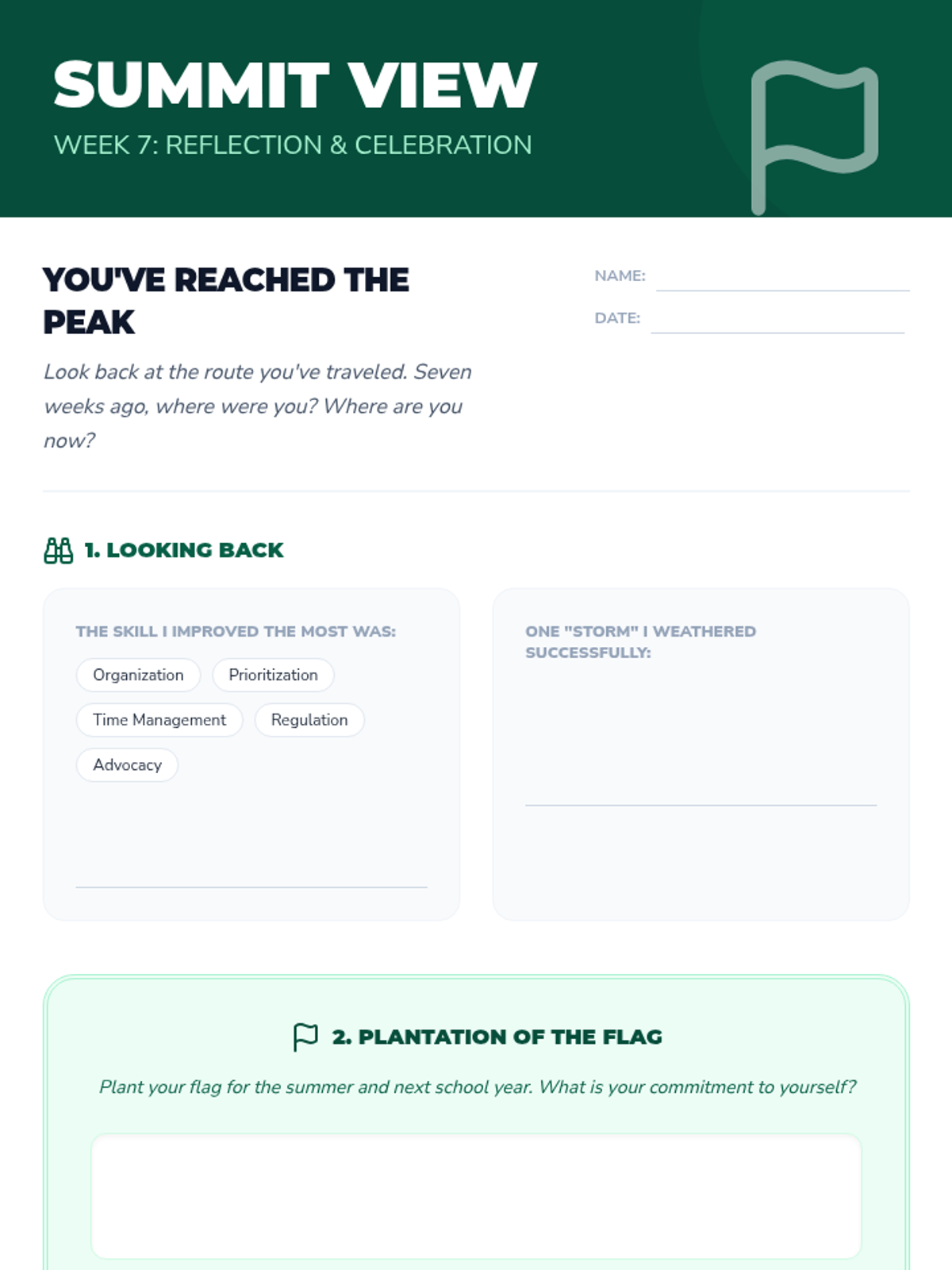
Reviewing accomplishments, celebrating growth, and planning for continued success beyond the program.
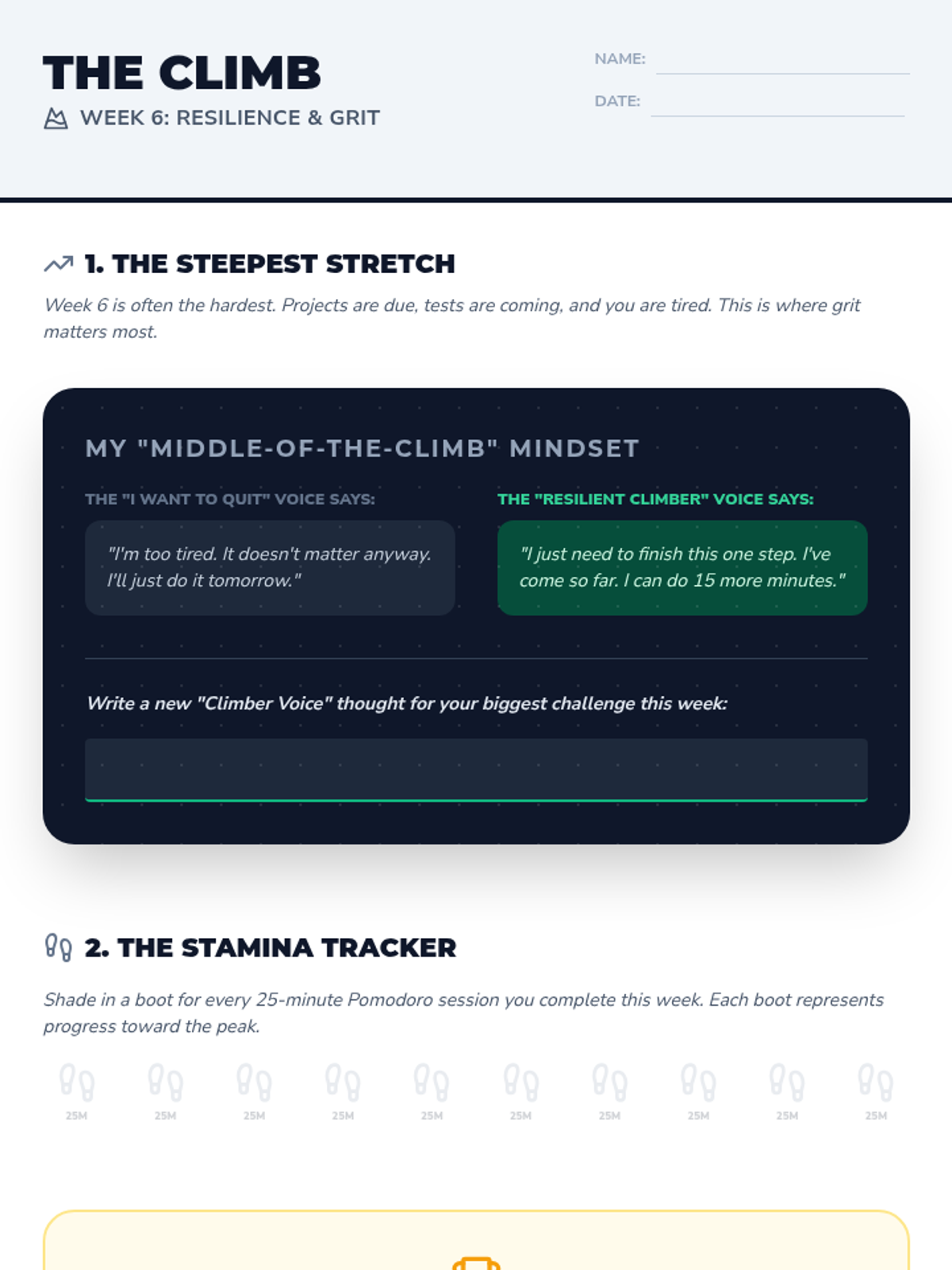
Developing mental resilience and grit to push through the most demanding academic period of the term.
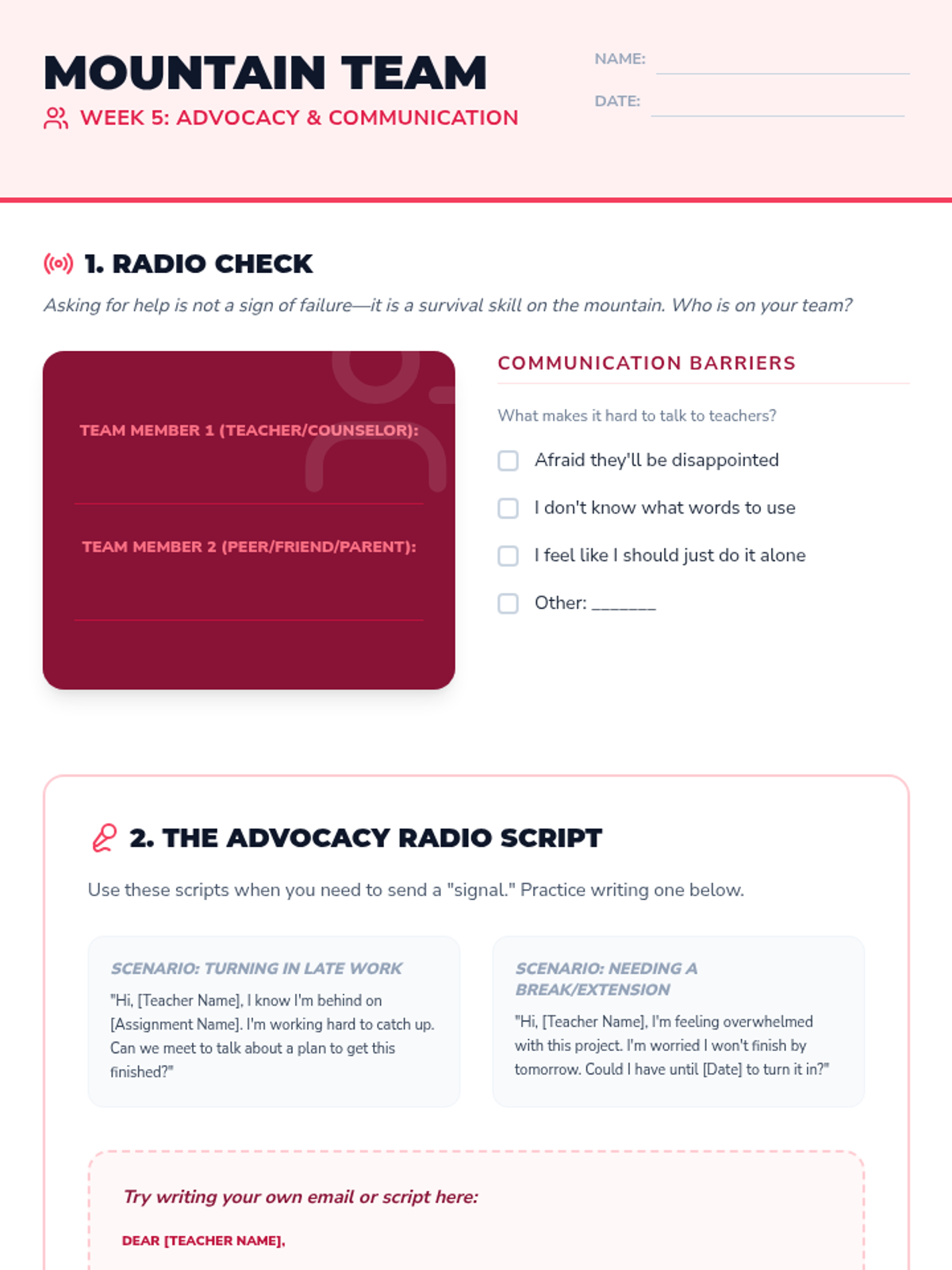
Focuses on building effective communication with teachers and peers to advocate for needs and seek support.
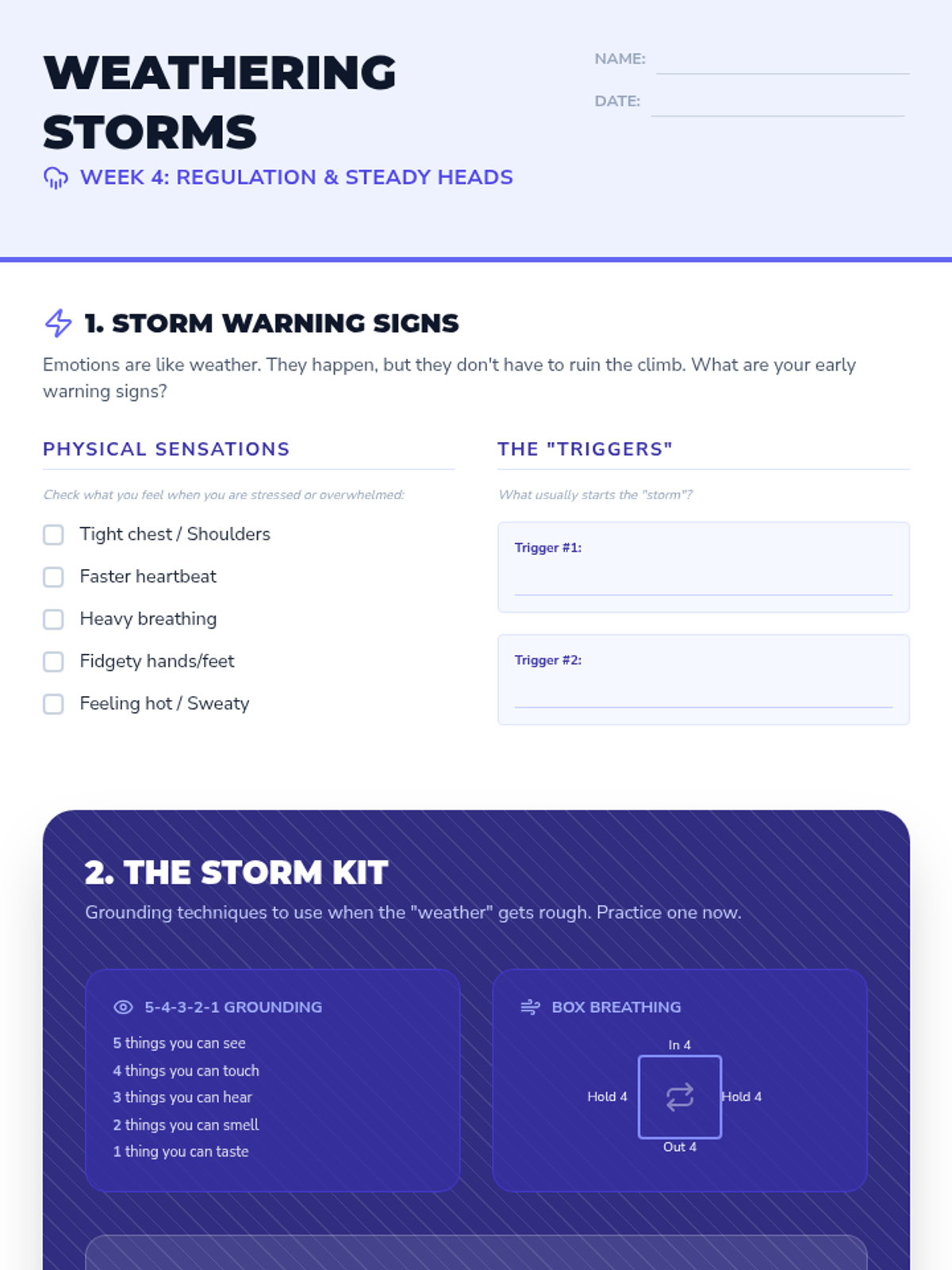
Identification of emotional triggers and the development of a 'toolbox' of regulation strategies for when things get difficult.
Teaching students how to estimate time for tasks and build a sustainable weekly schedule.
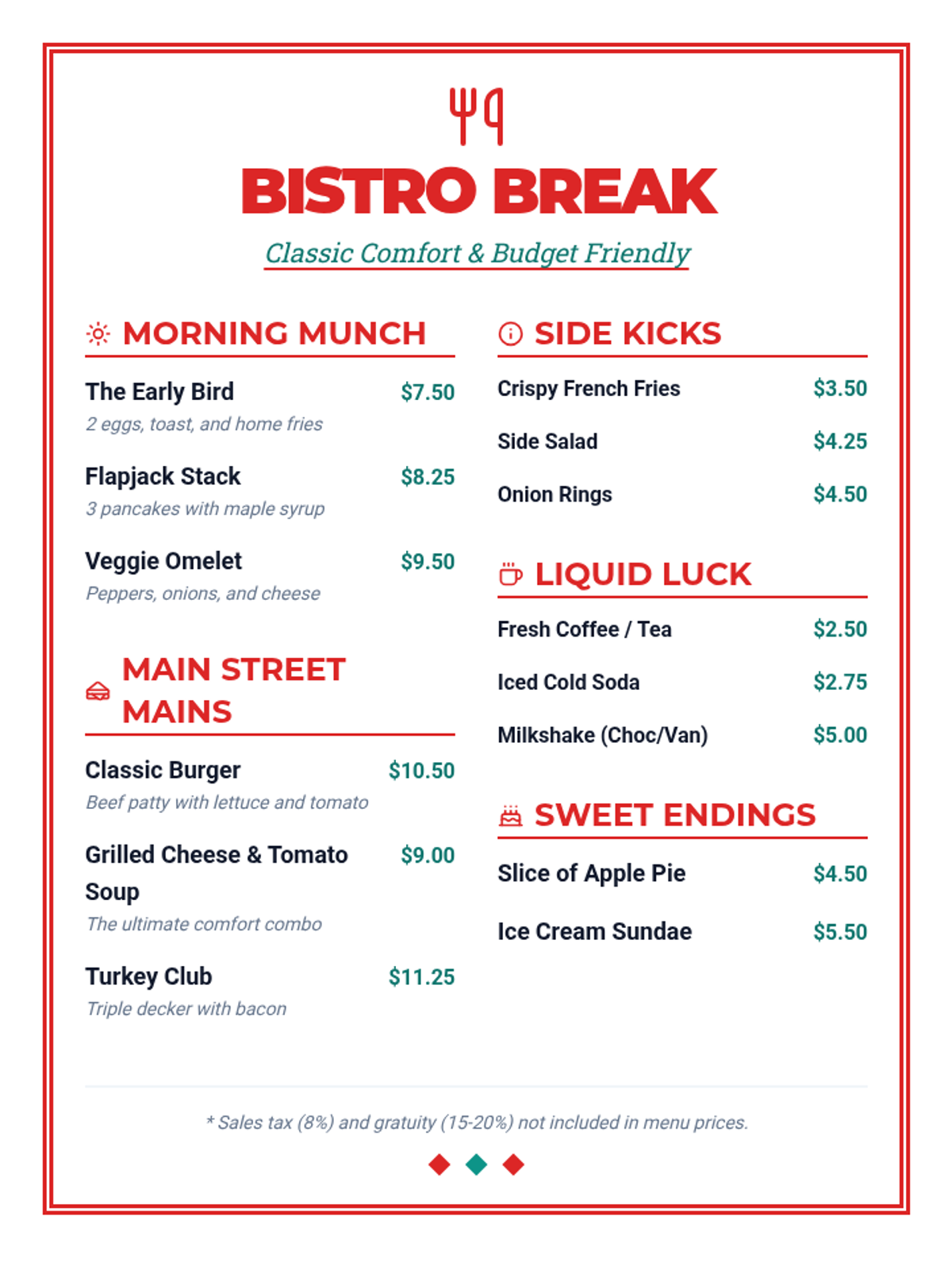
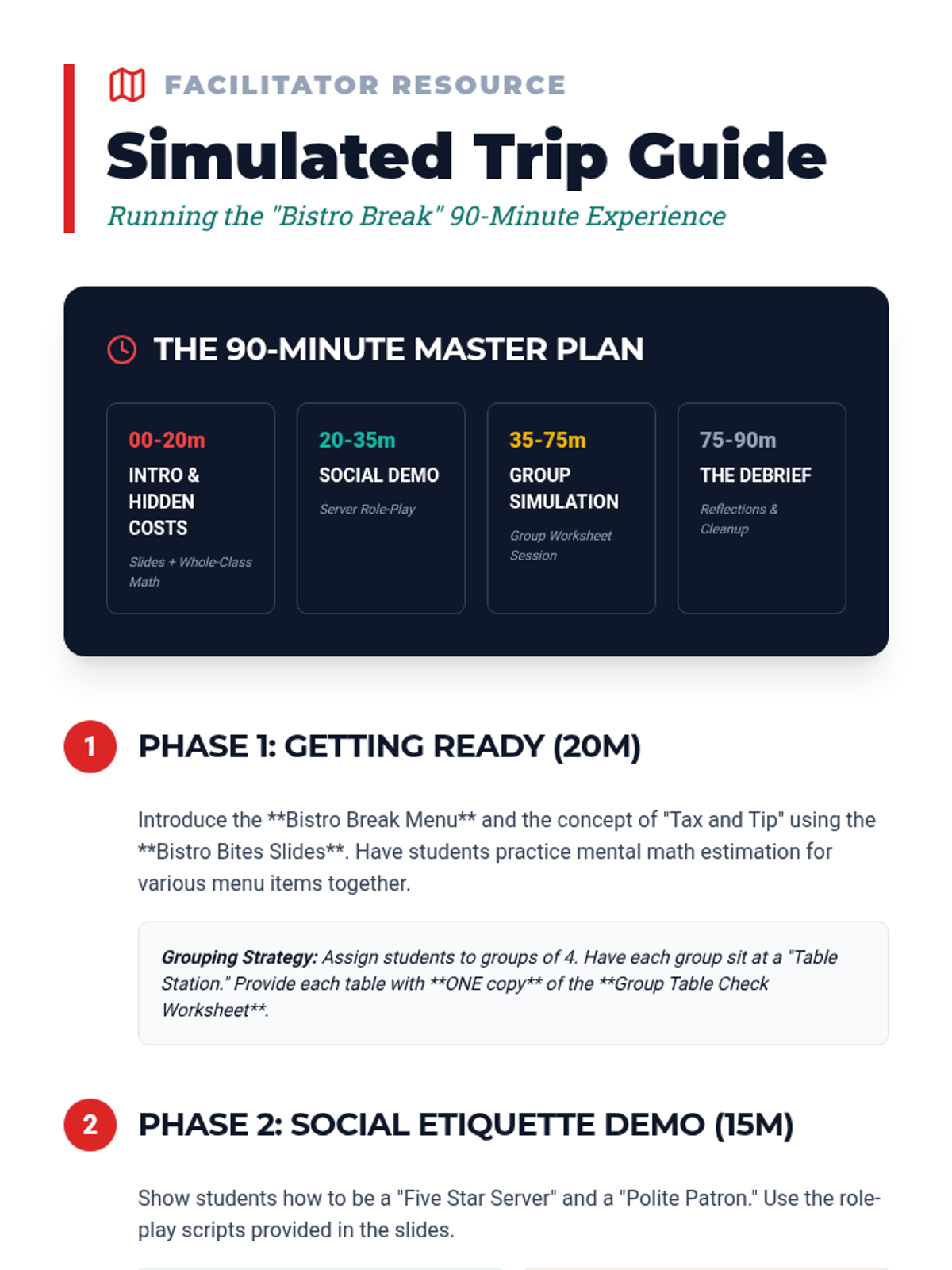
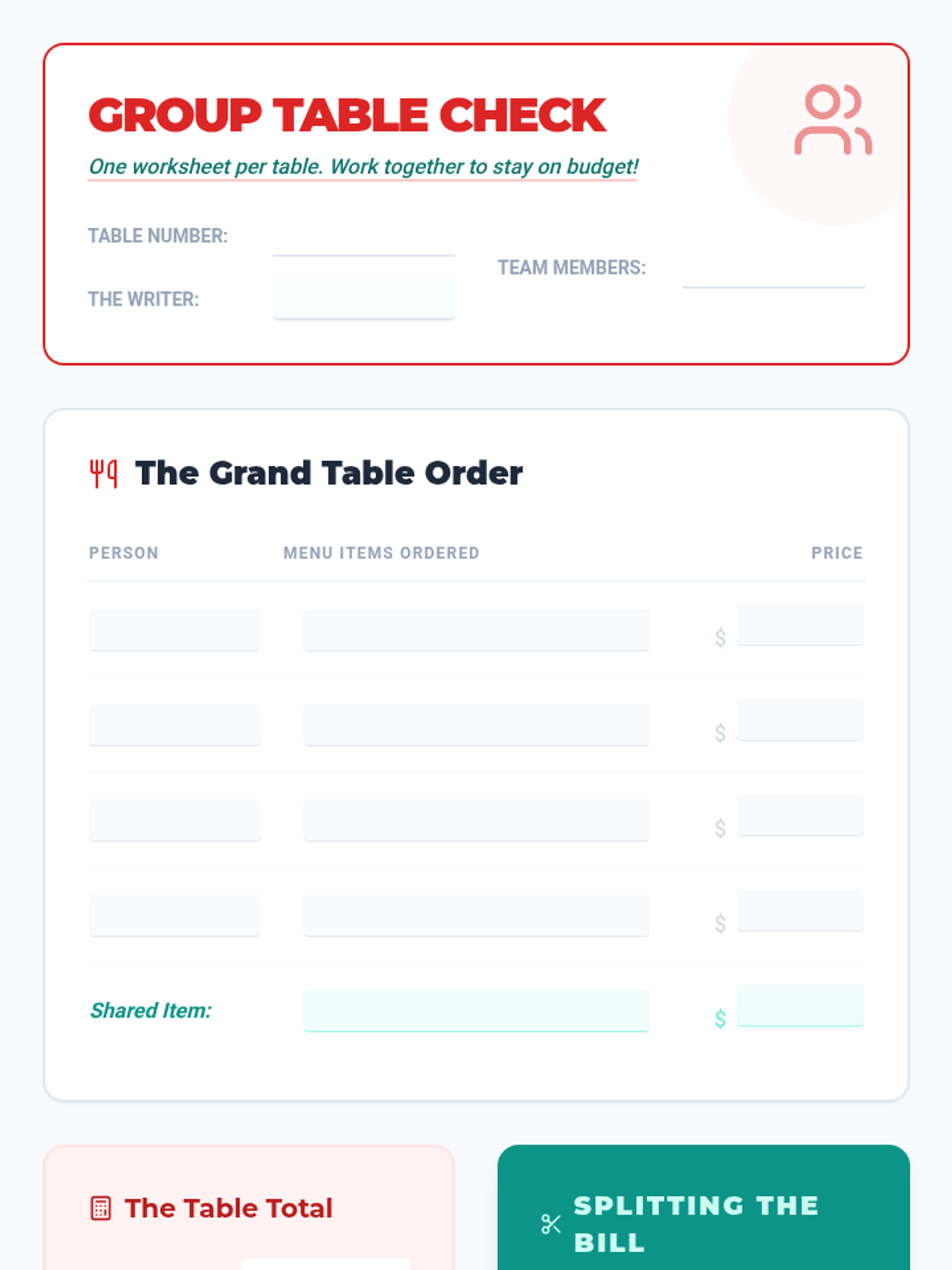
A functional skills lesson focused on navigating a restaurant experience on a budget, covering menu reading, budget planning, social etiquette, and group check splitting.
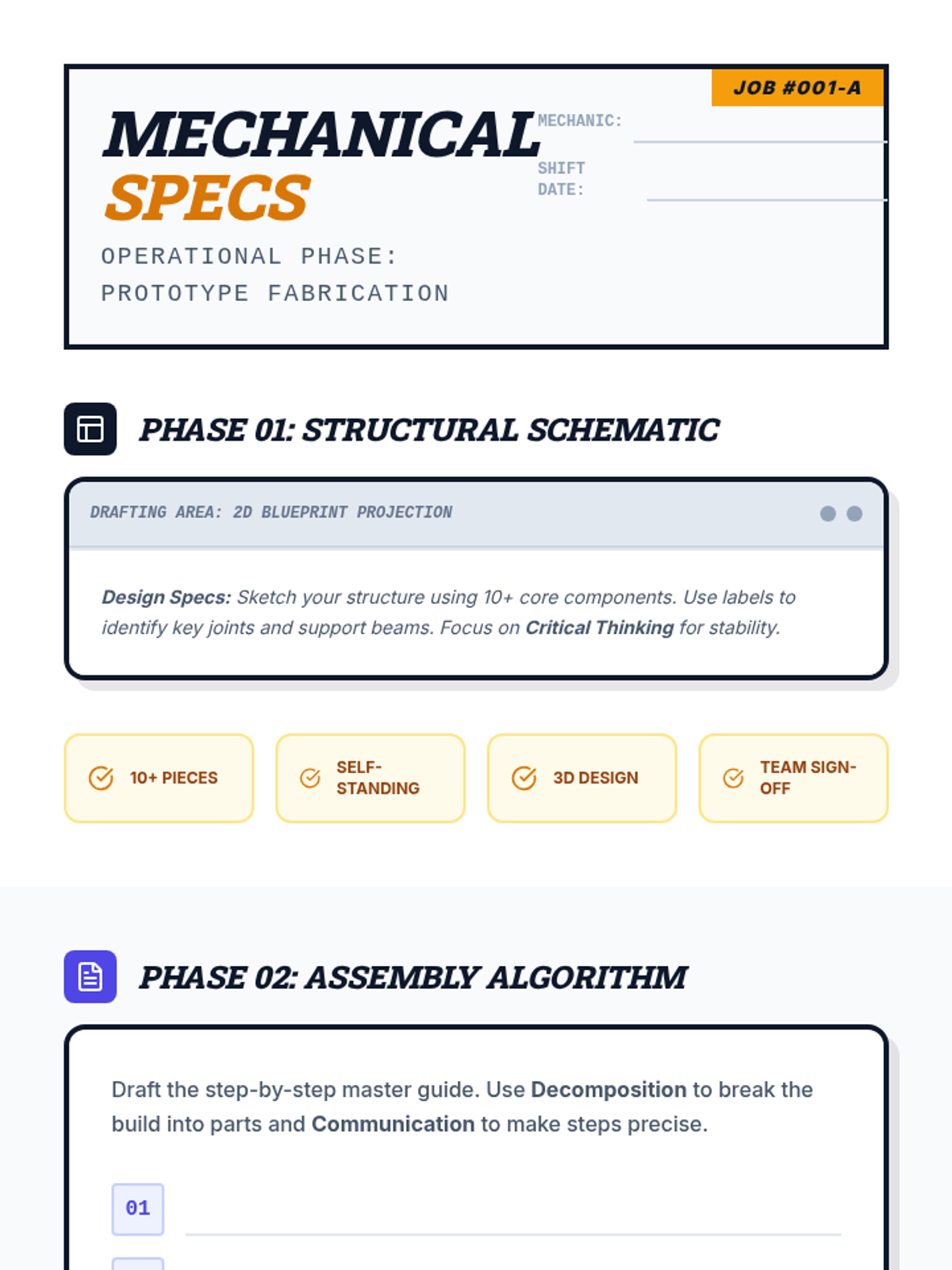
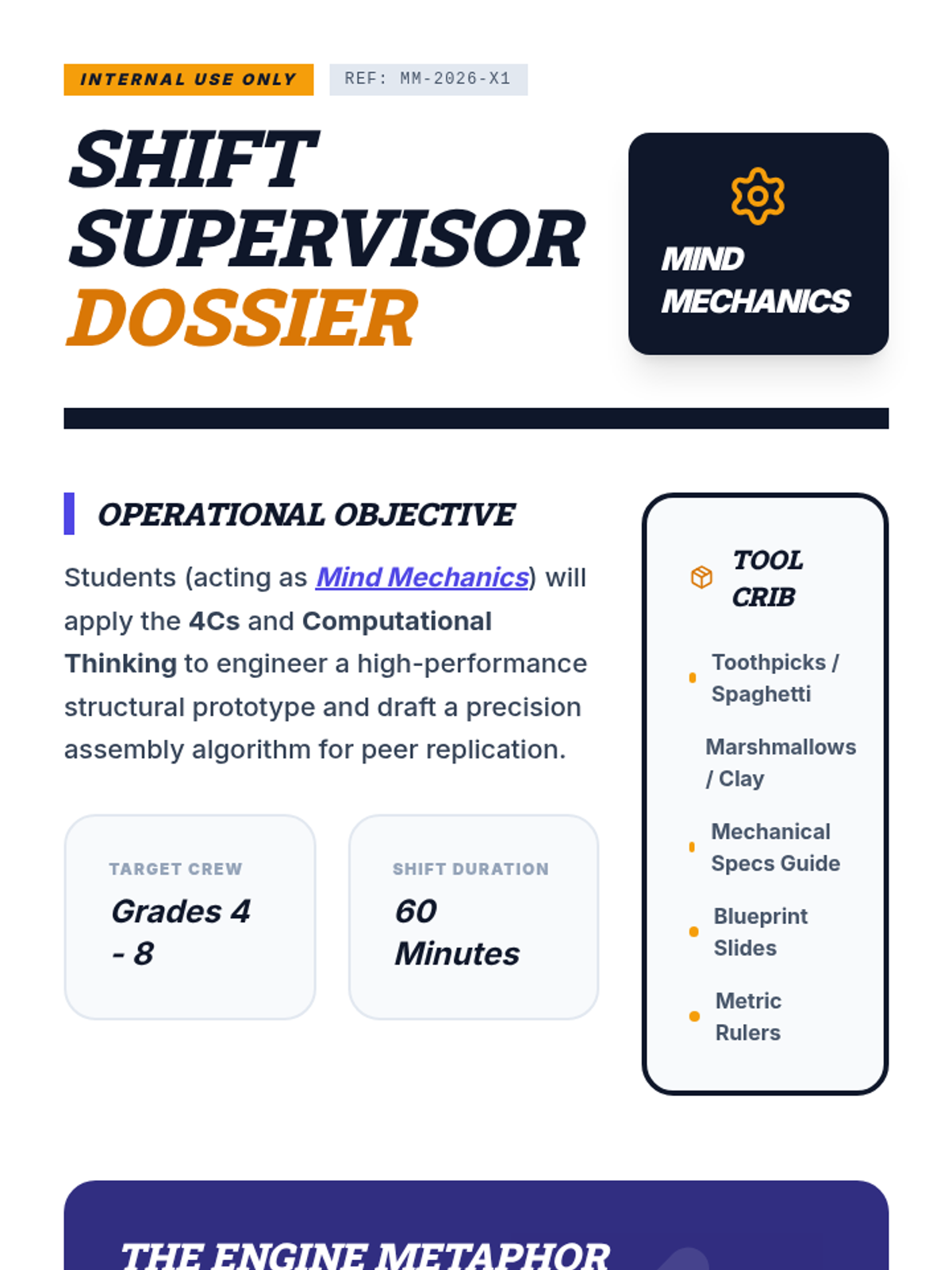
An industrial-themed teamwork lesson where students act as "Mind Mechanics" to apply the 4Cs and Computational Thinking to a complex engineering challenge.
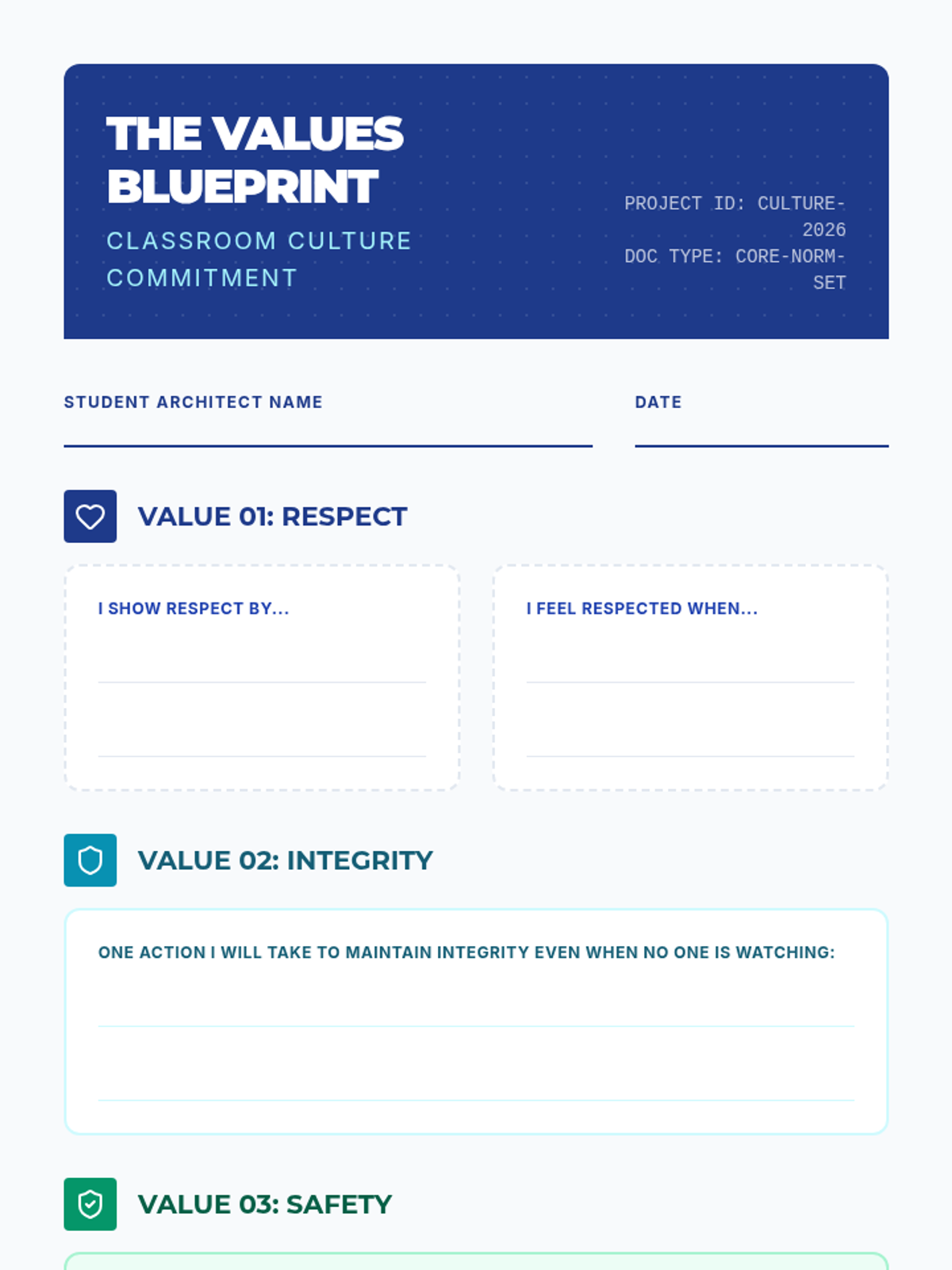
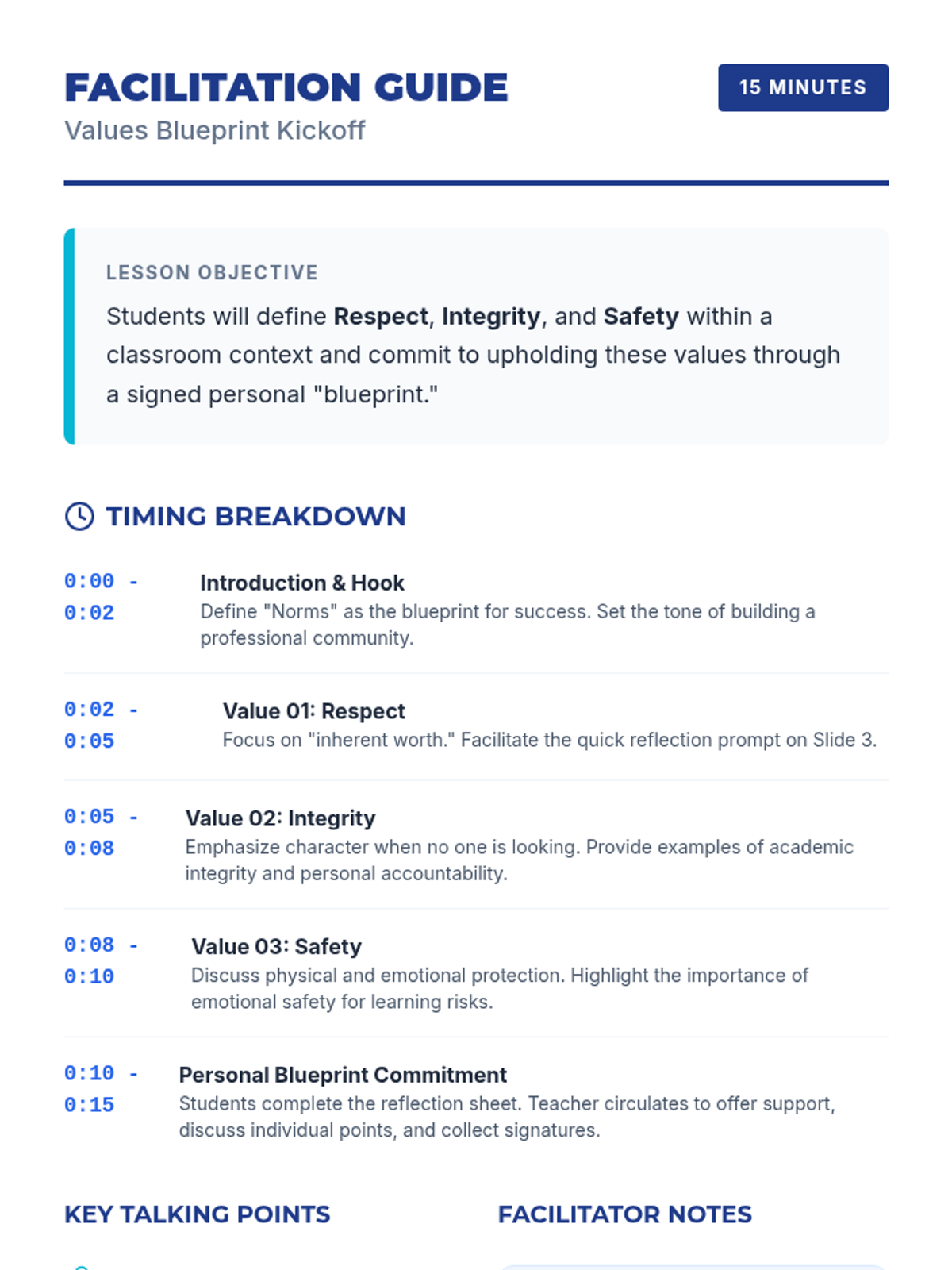
A concise 15-minute introduction to classroom norms centered on the core values of Respect, Integrity, and Safety. Students will define these values and commit to a shared culture of success.
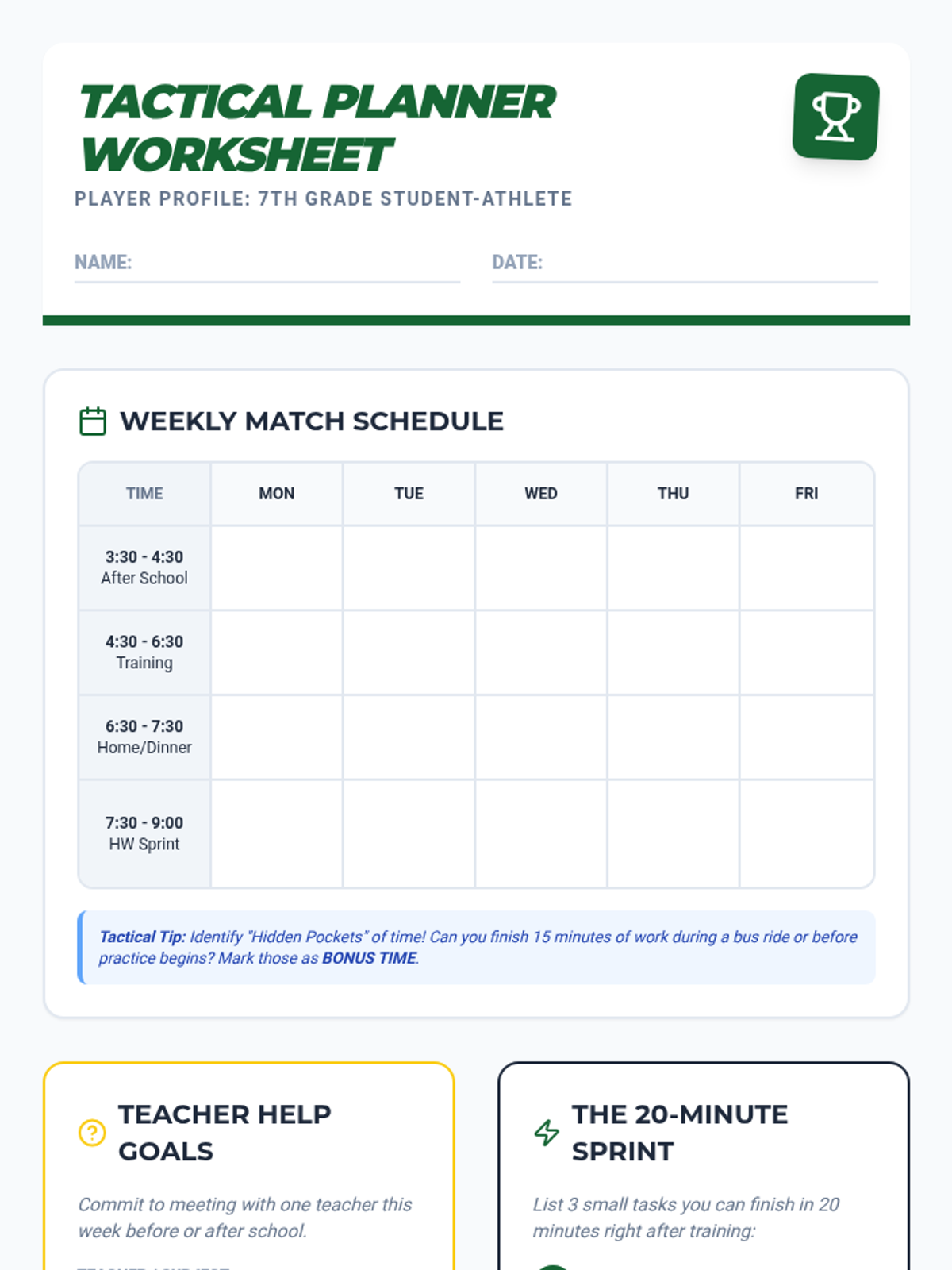
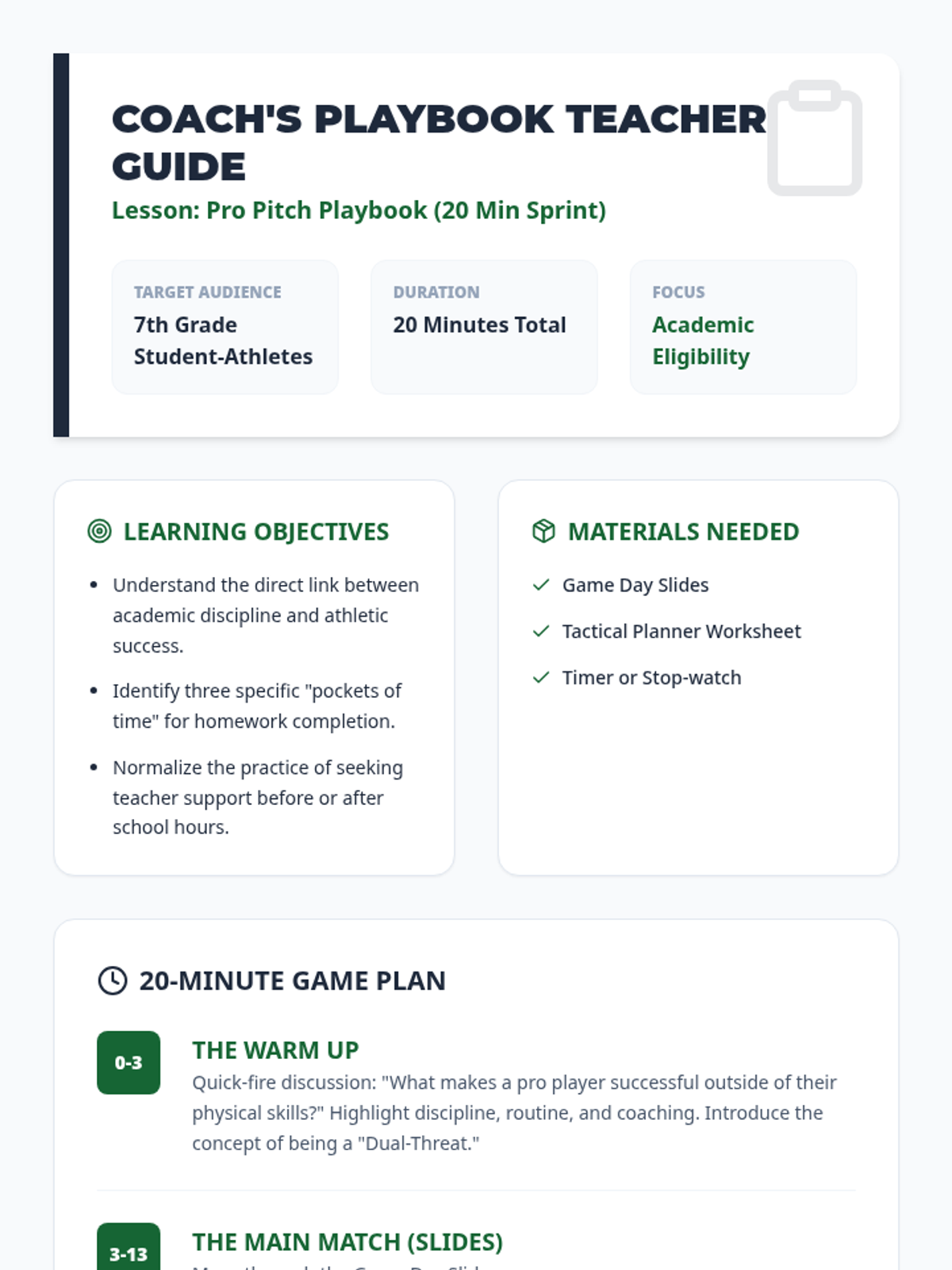
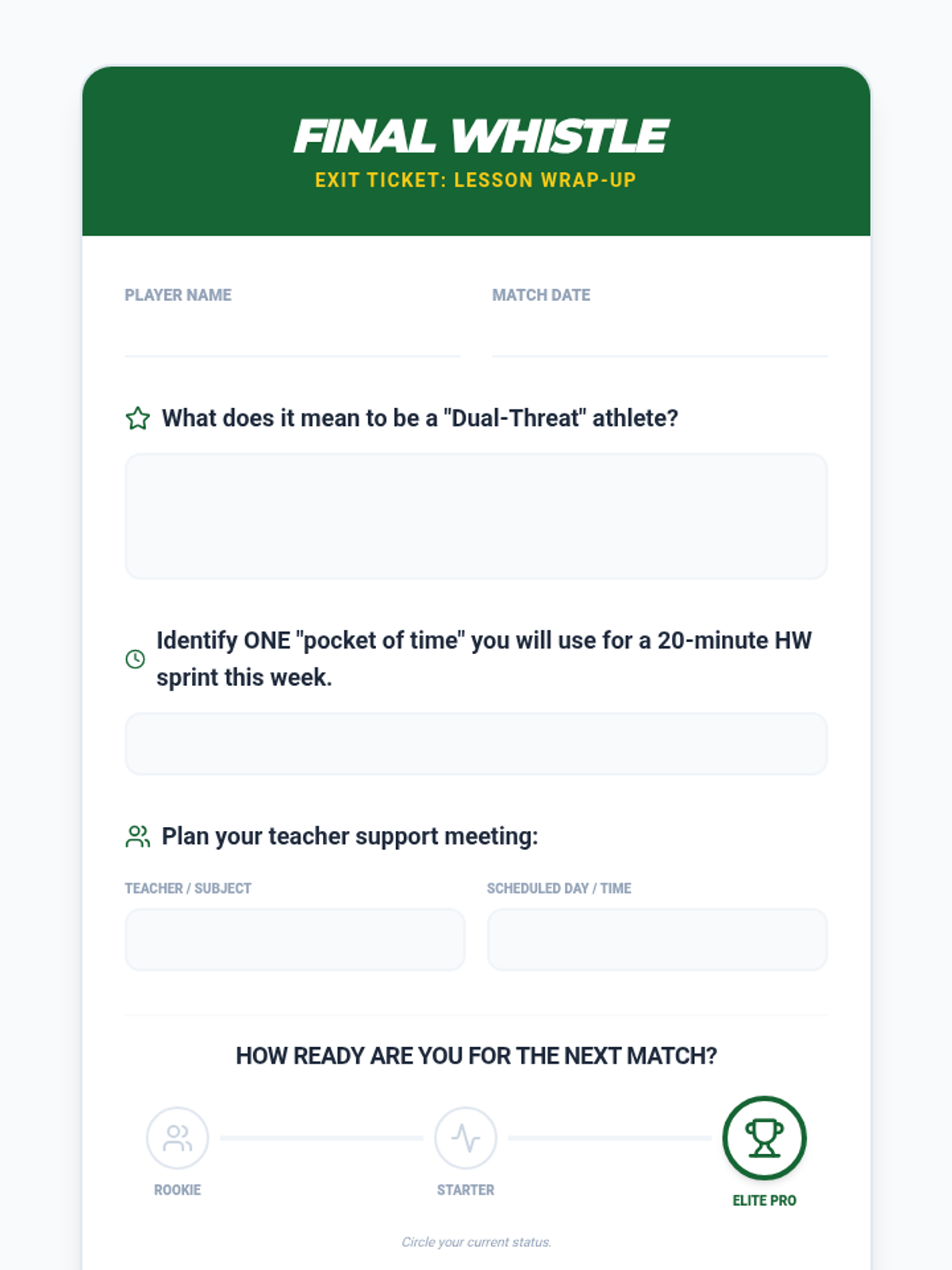
A fast-paced, soccer-themed lesson designed to help student-athletes master their schedule, prioritize homework, and utilize teacher support to maintain academic eligibility and success.
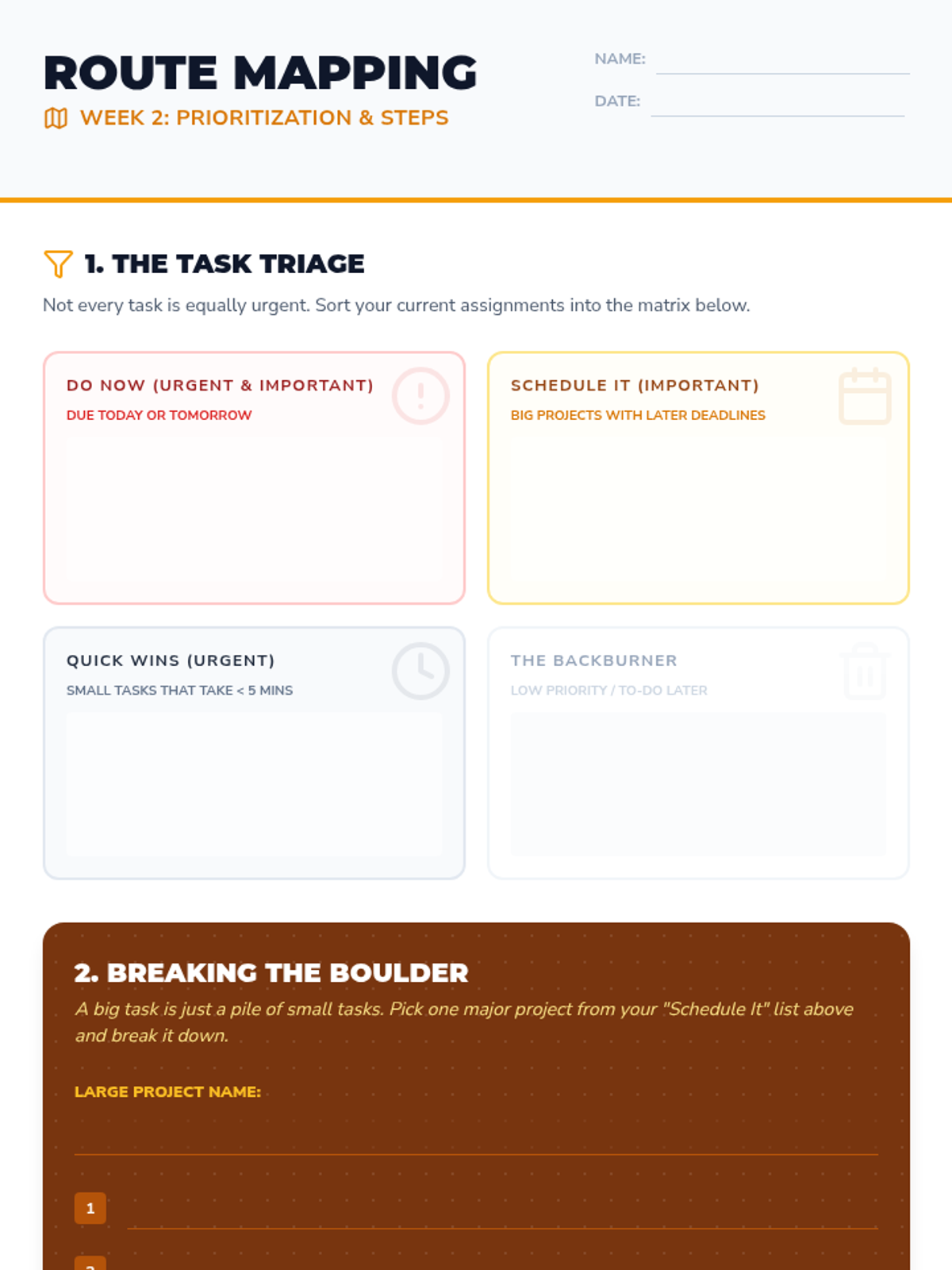
Focuses on breaking down large tasks into smaller, manageable steps and prioritizing work based on deadlines and importance.