Active listening, assertive expression, and boundary-setting strategies for interpersonal success. Develops proficiency in conflict mediation, cooperative teamwork, and the cultivation of healthy romantic and platonic connections.
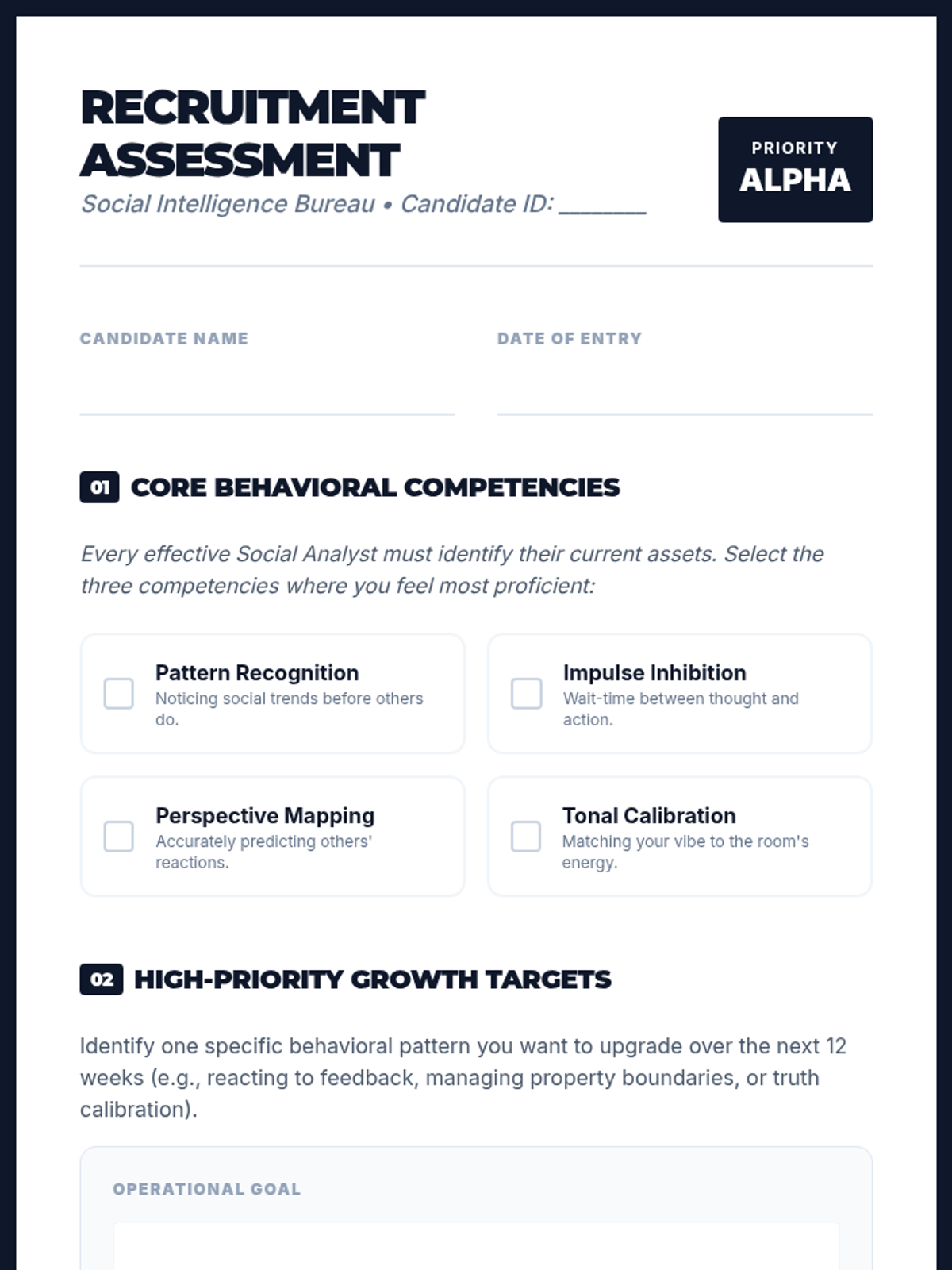
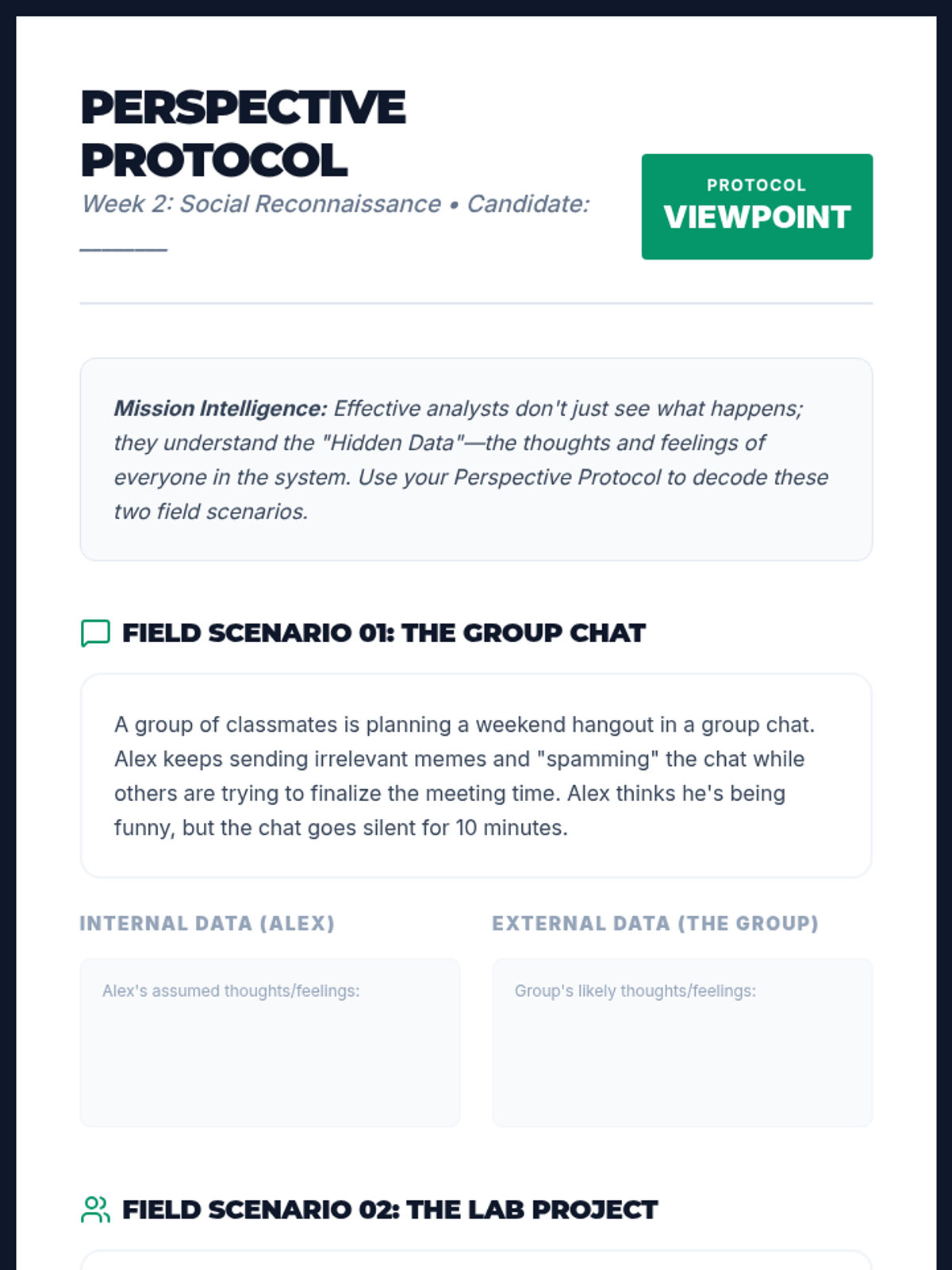
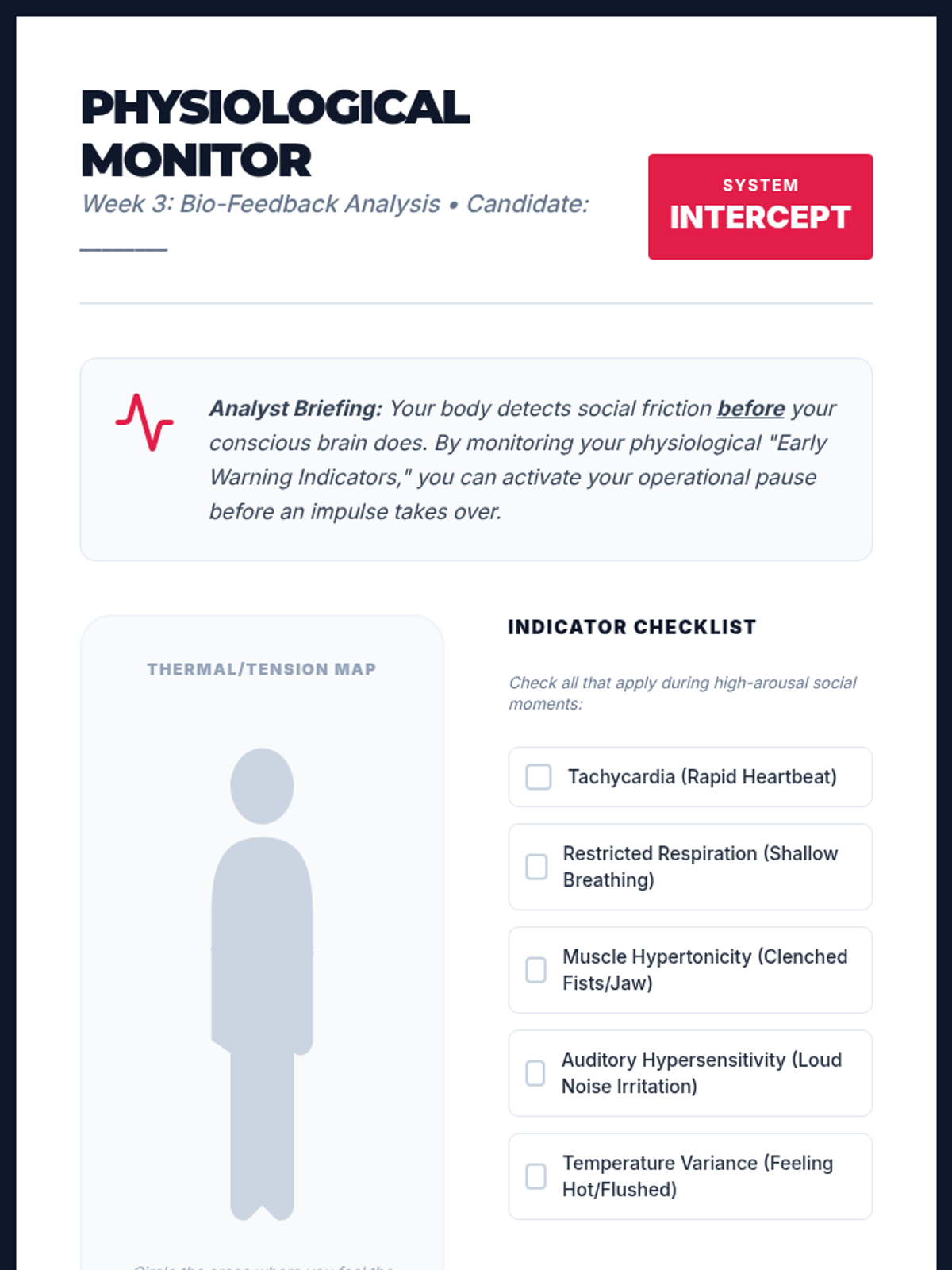
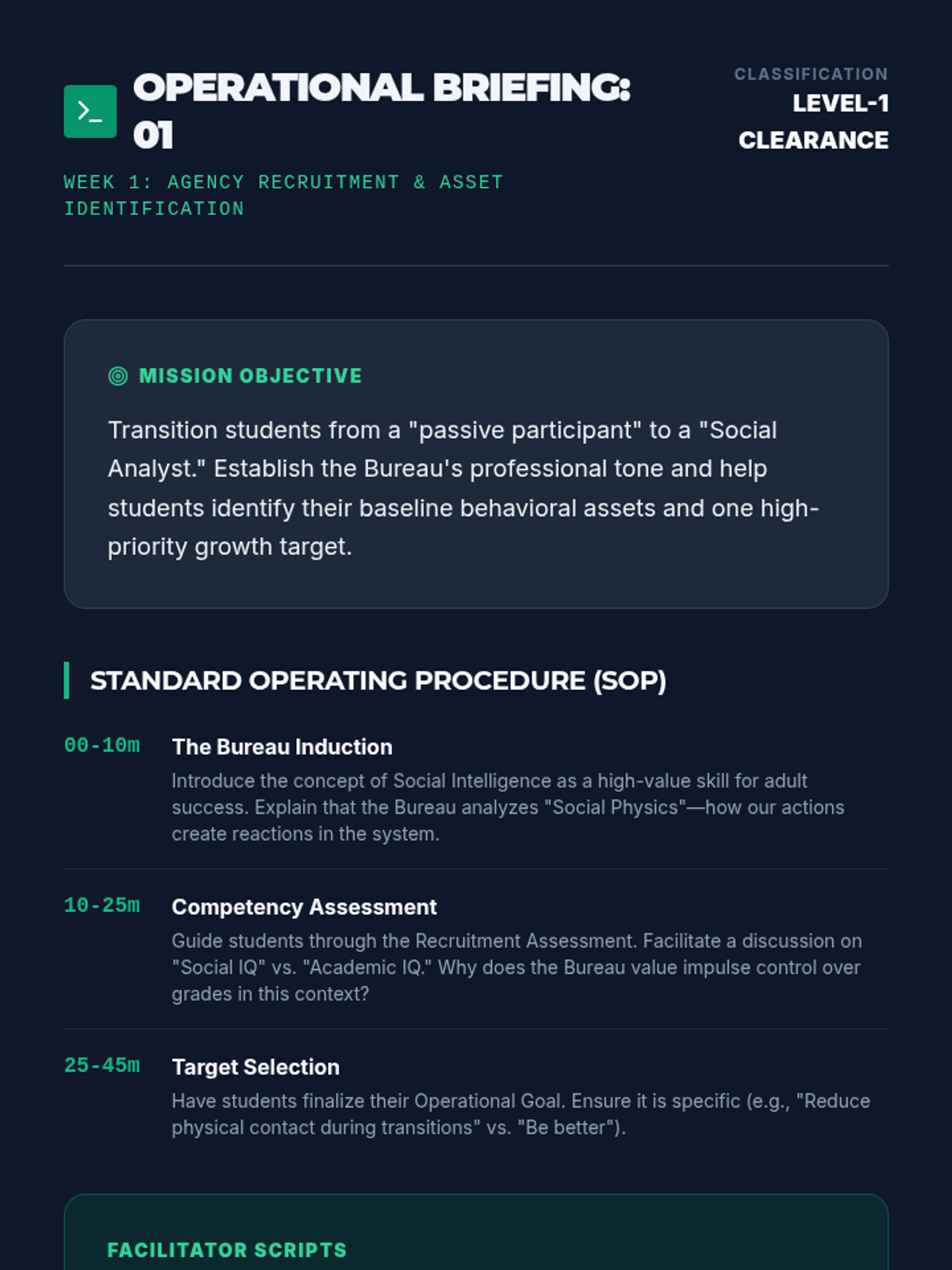
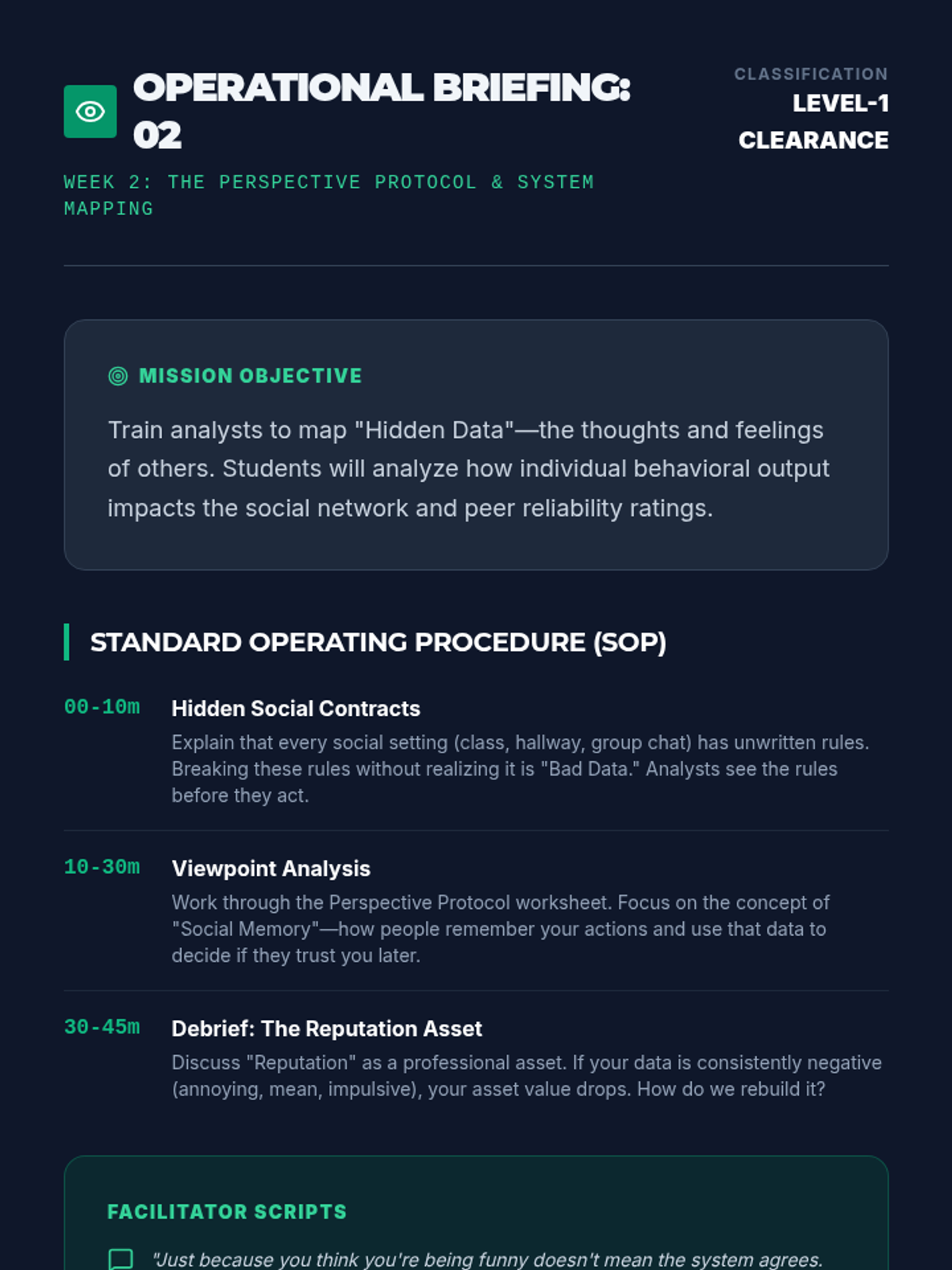
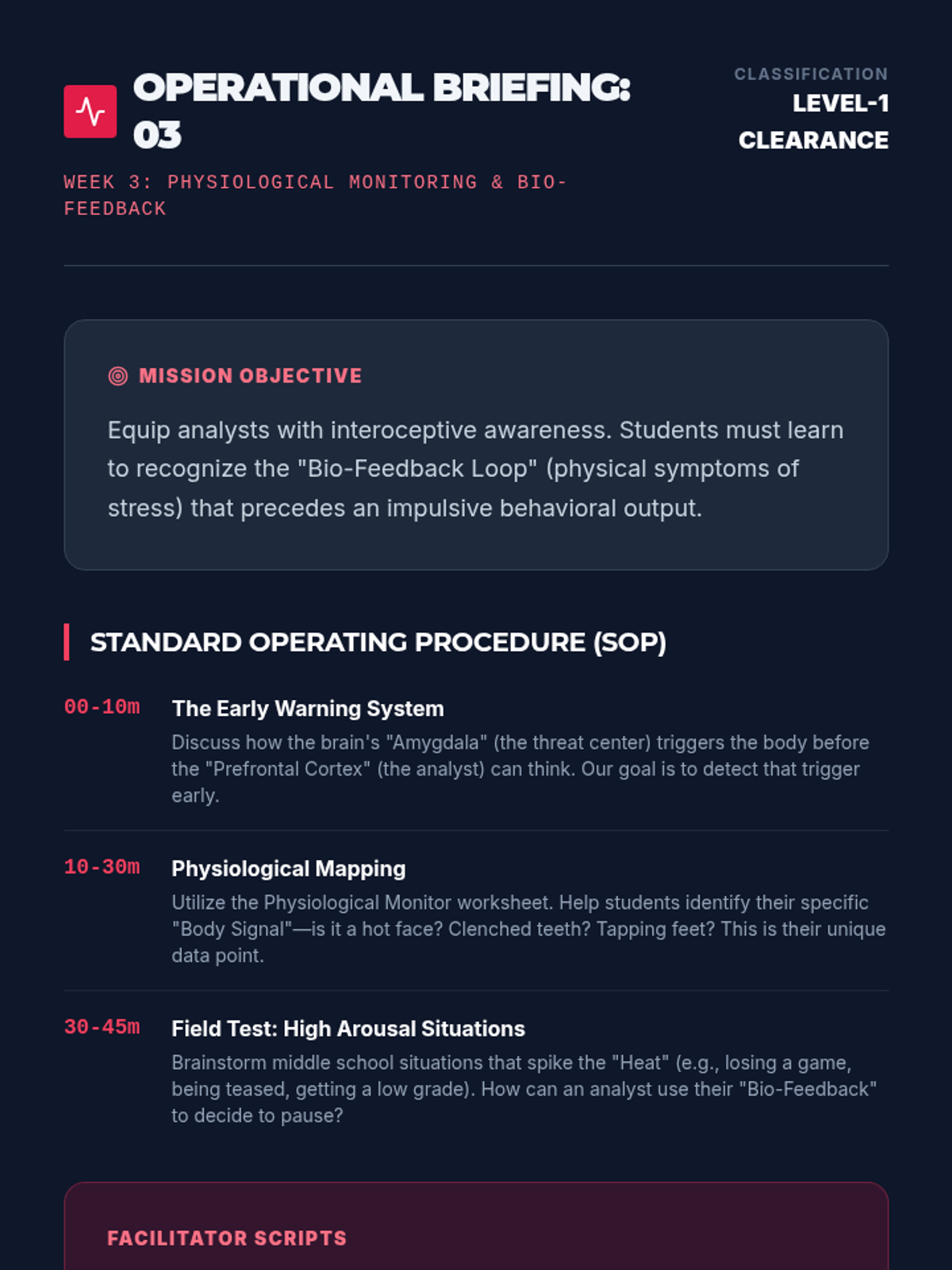
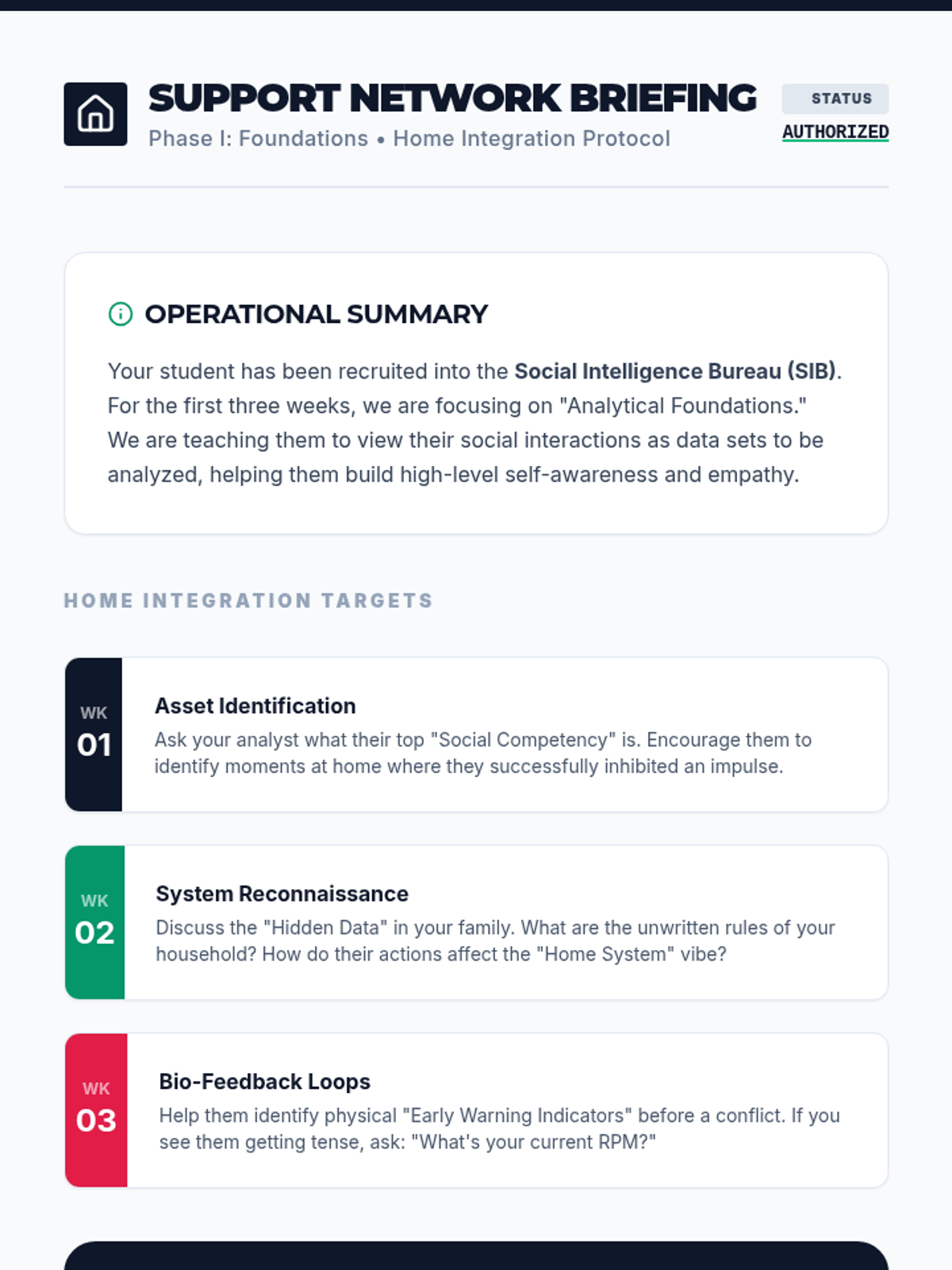
A 12-week sophisticated intervention for middle schoolers (ages 10-13) to master impulse control, emotional intelligence, and interpersonal trust using a behavioral analysis framework.
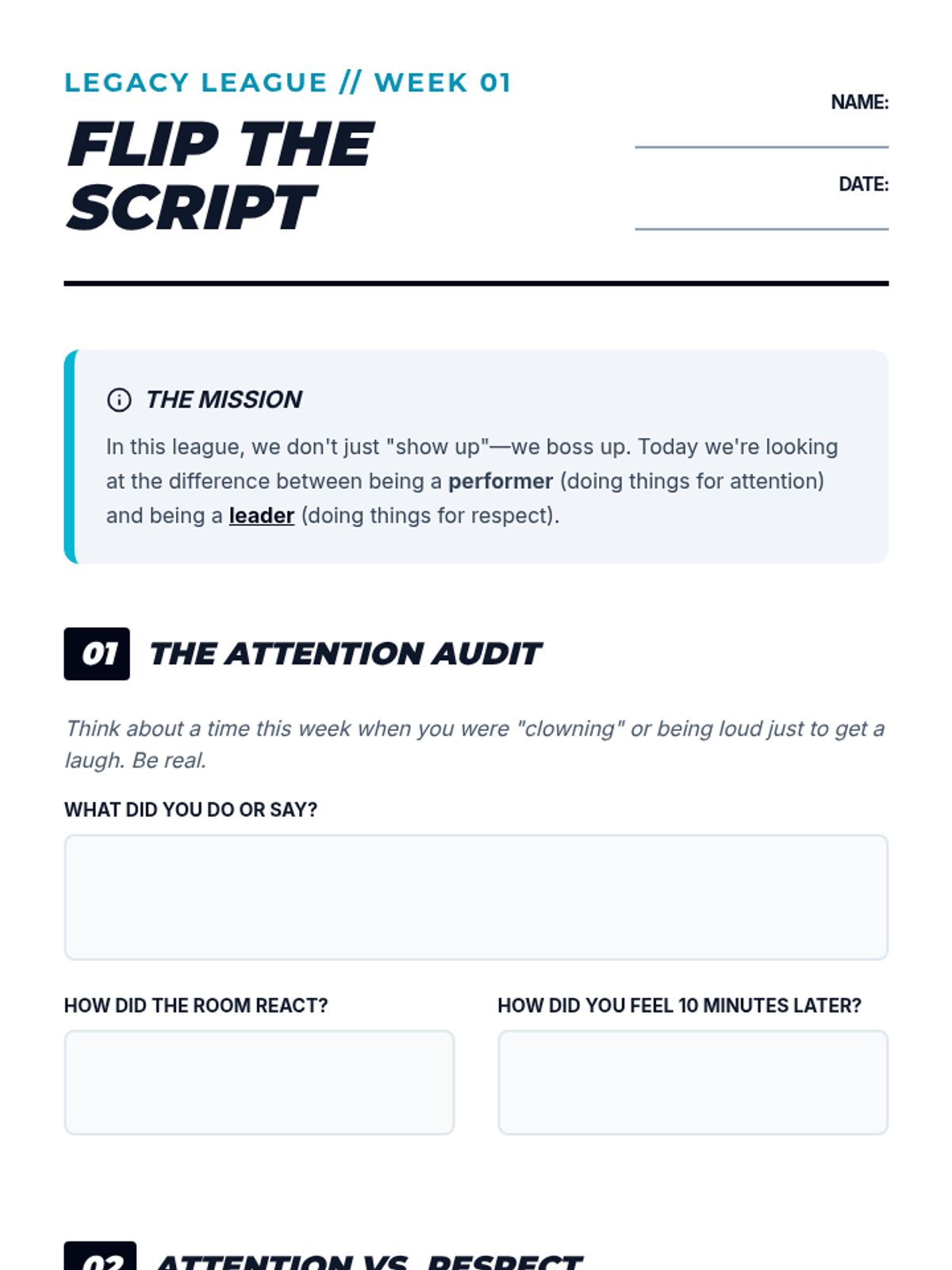
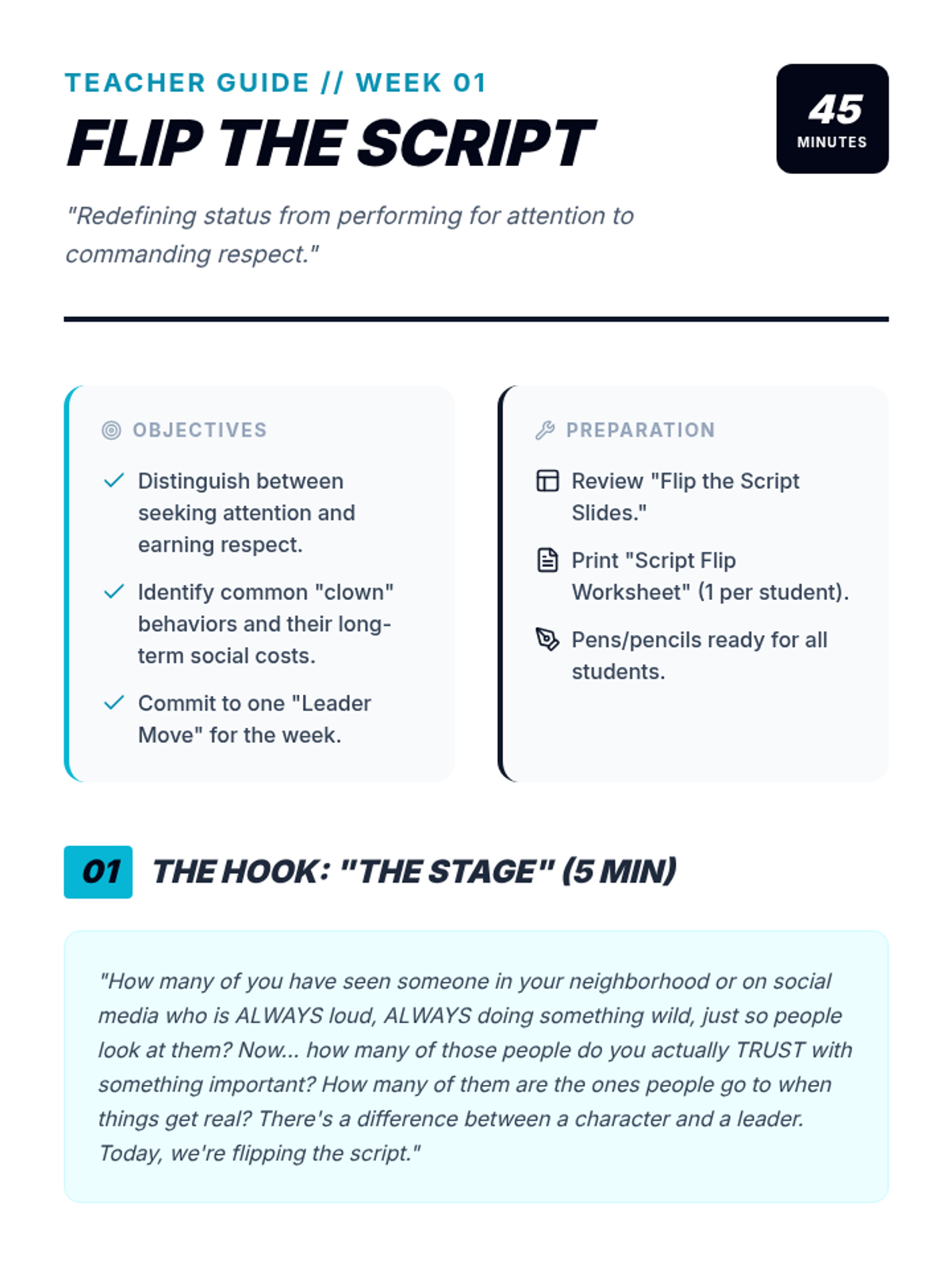
A 5-week social skills and leadership curriculum designed for 7th-grade boys in urban environments. The program transforms 'class clown' energy into positive peer leadership by focusing on respect, social awareness, and personal branding.
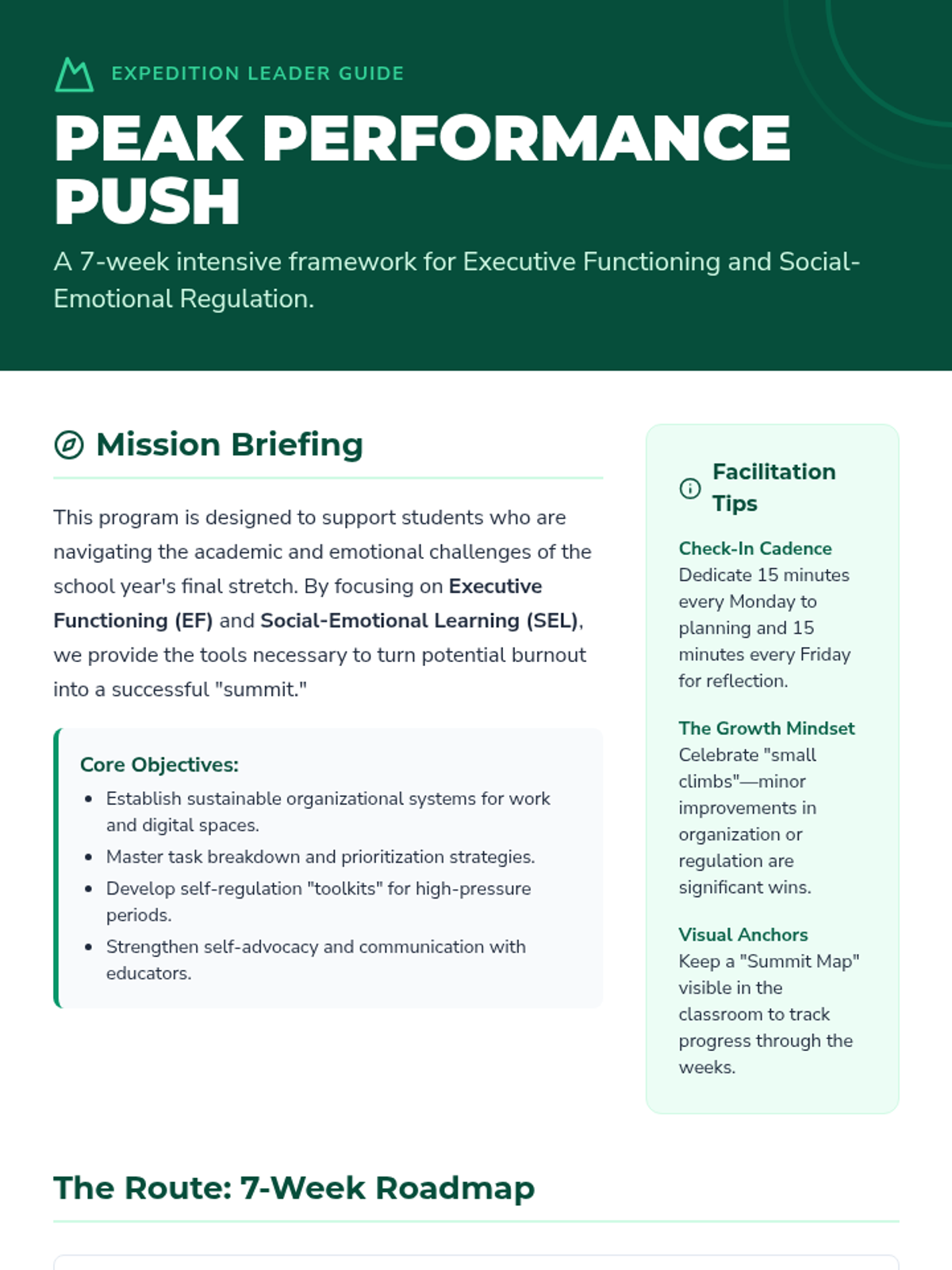
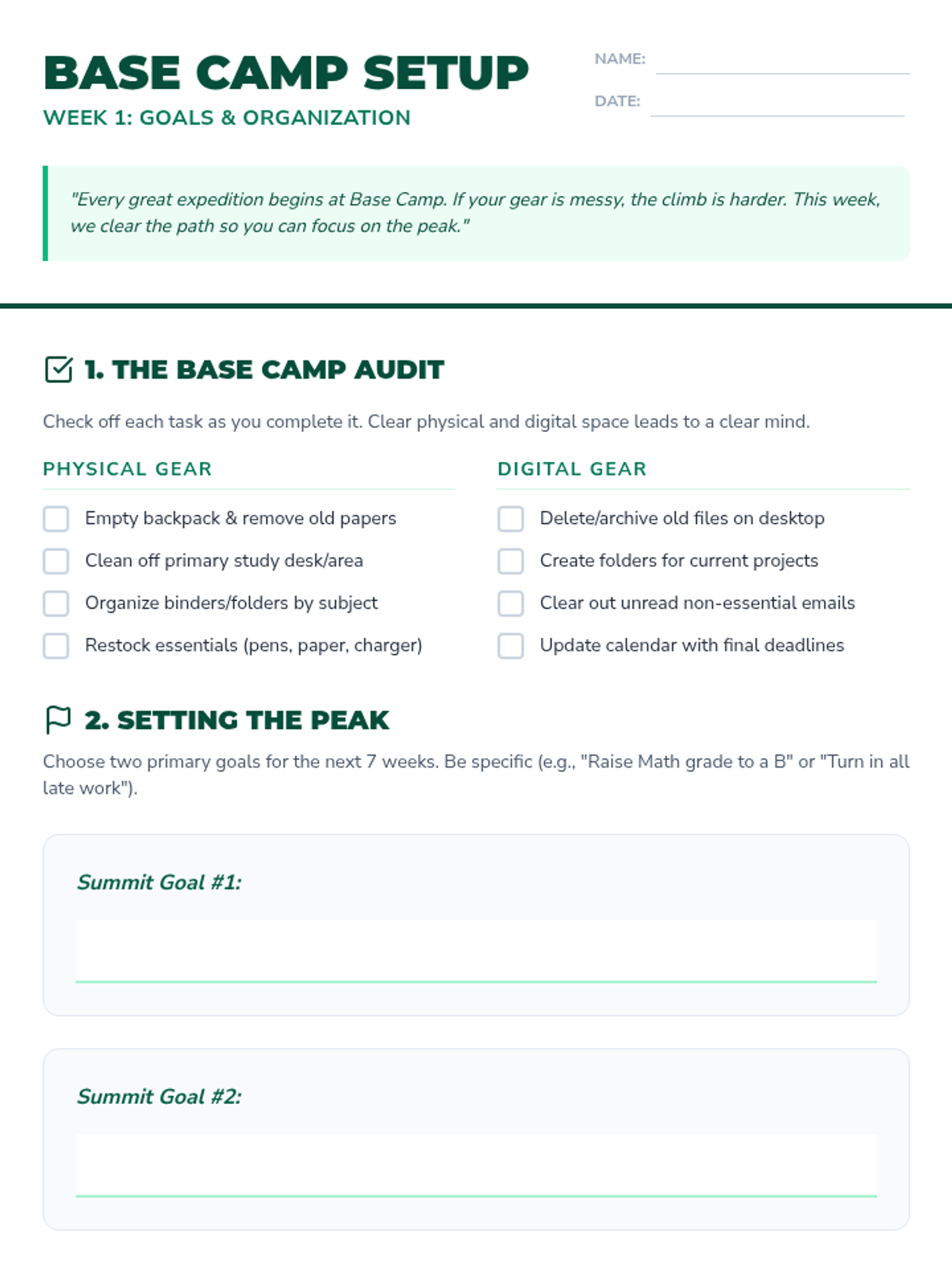
A comprehensive 7-week program designed for students struggling academically and socially-emotionally to improve executive functioning, planning, and emotional regulation.
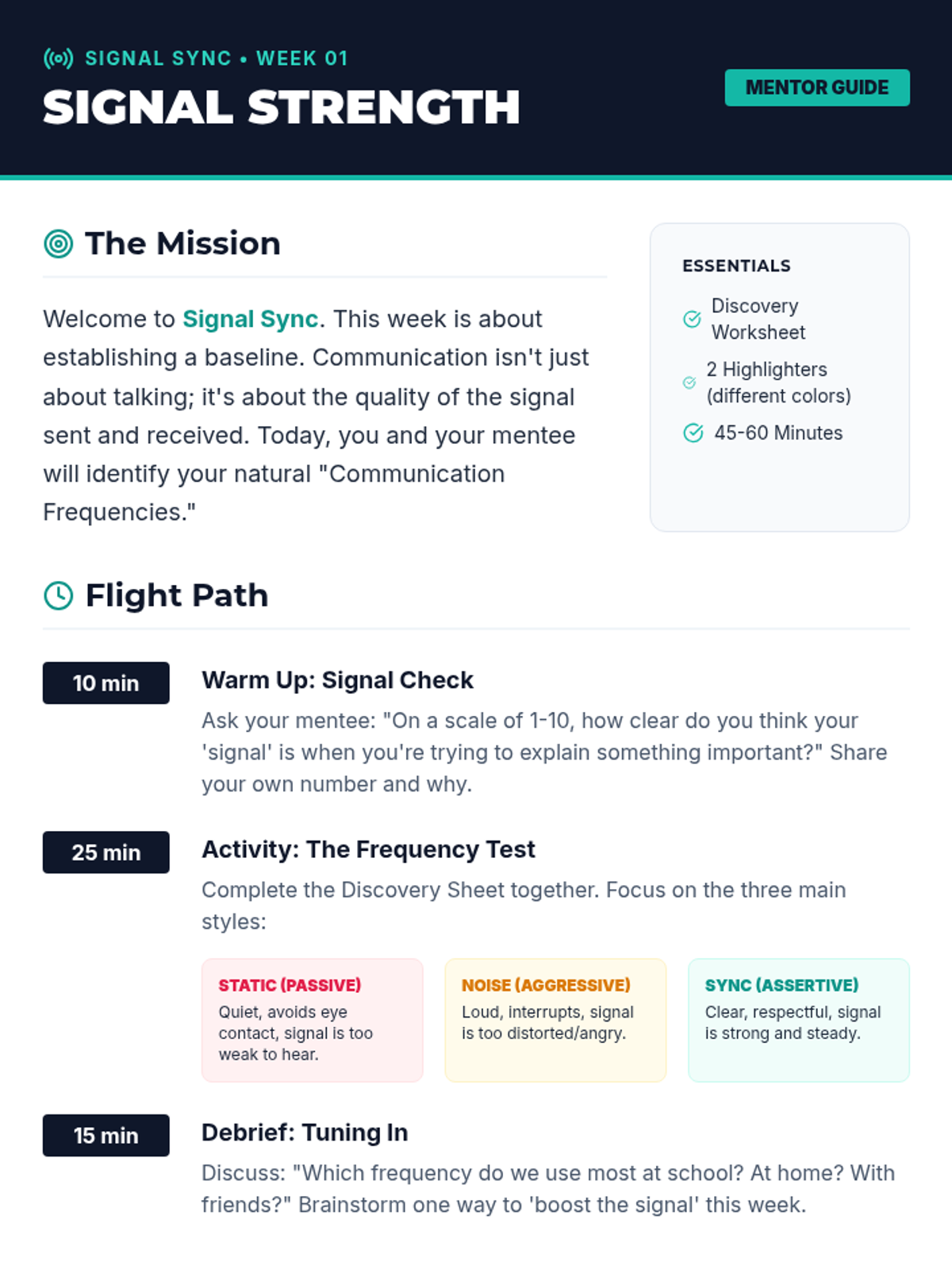
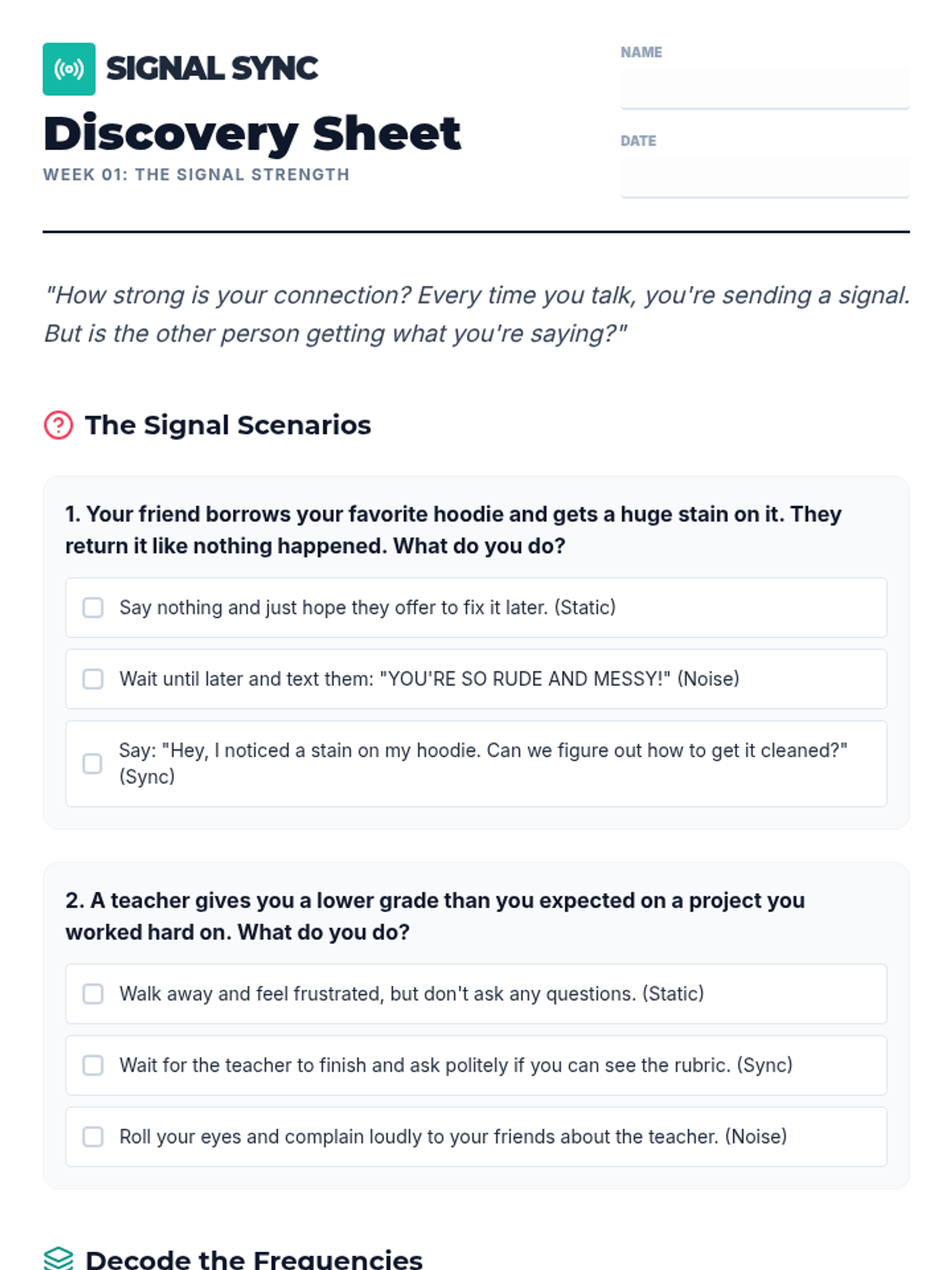
A 10-week comprehensive curriculum for mentors and mentees focusing on building effective communication habits and mastering conflict resolution through the 'Signal Sync' framework.
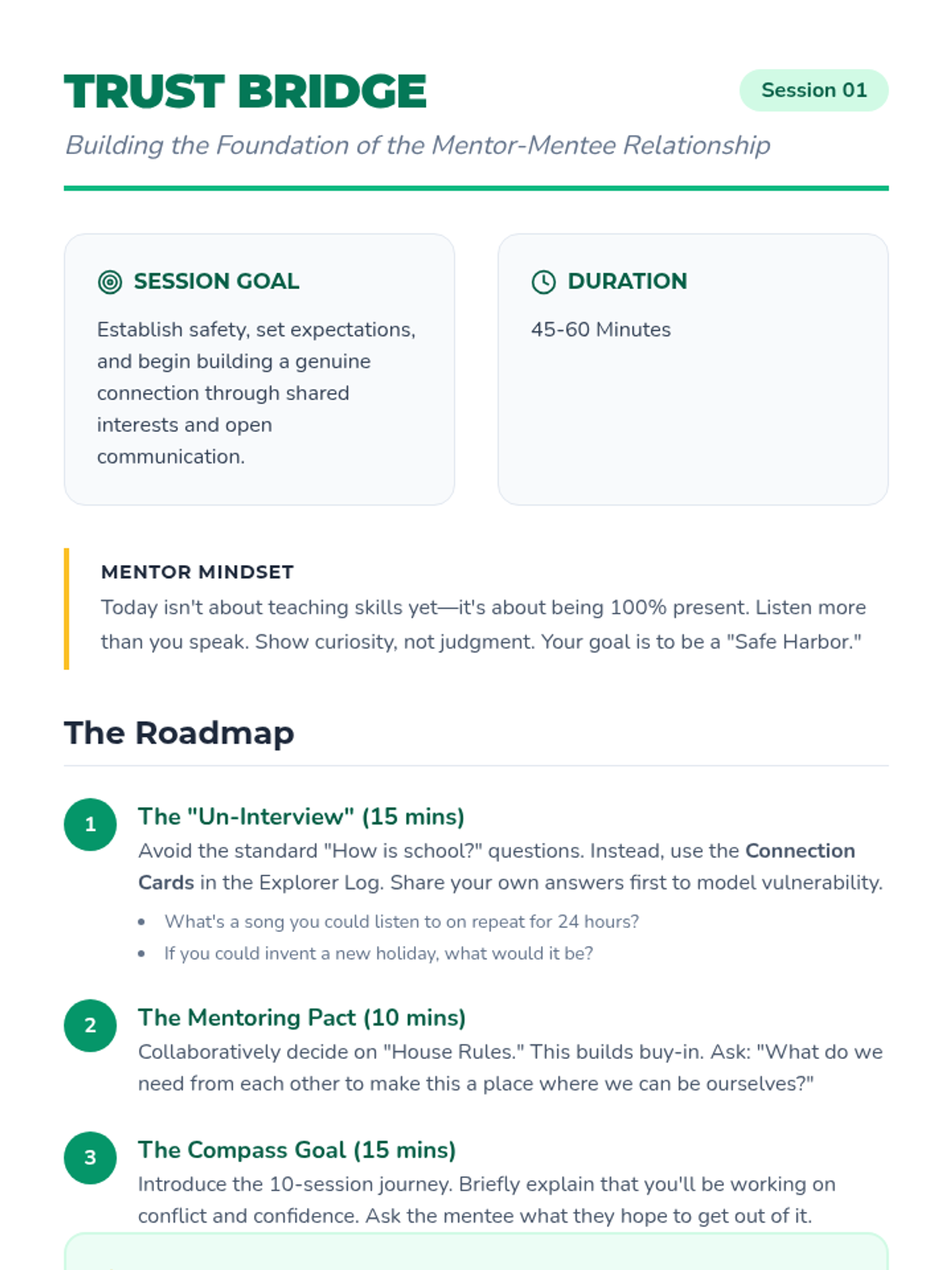
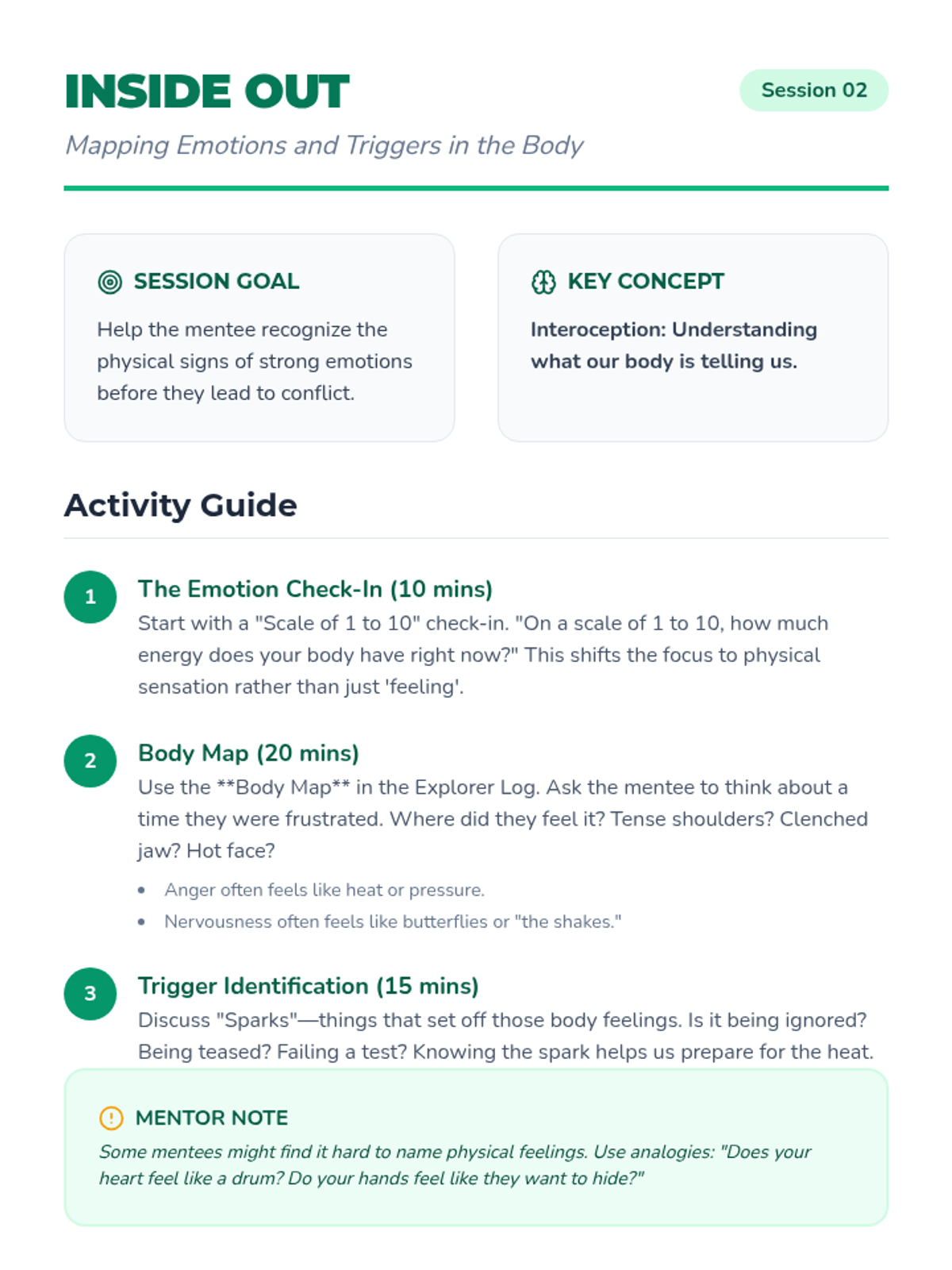
A 10-session mentoring program focused on conflict resolution, coping strategies (breathing, self-talk), and building confidence through a mentor-mentee relationship.
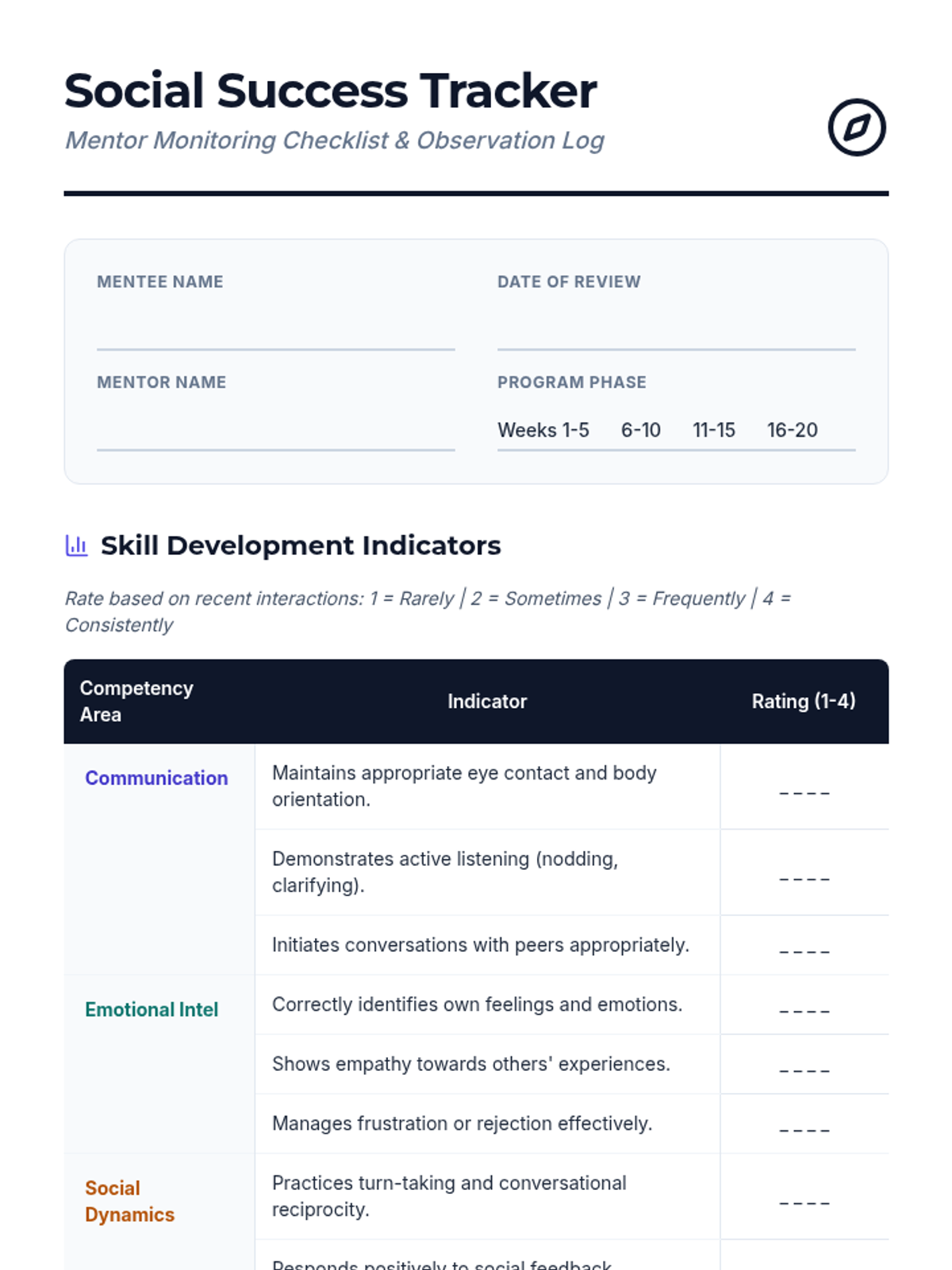
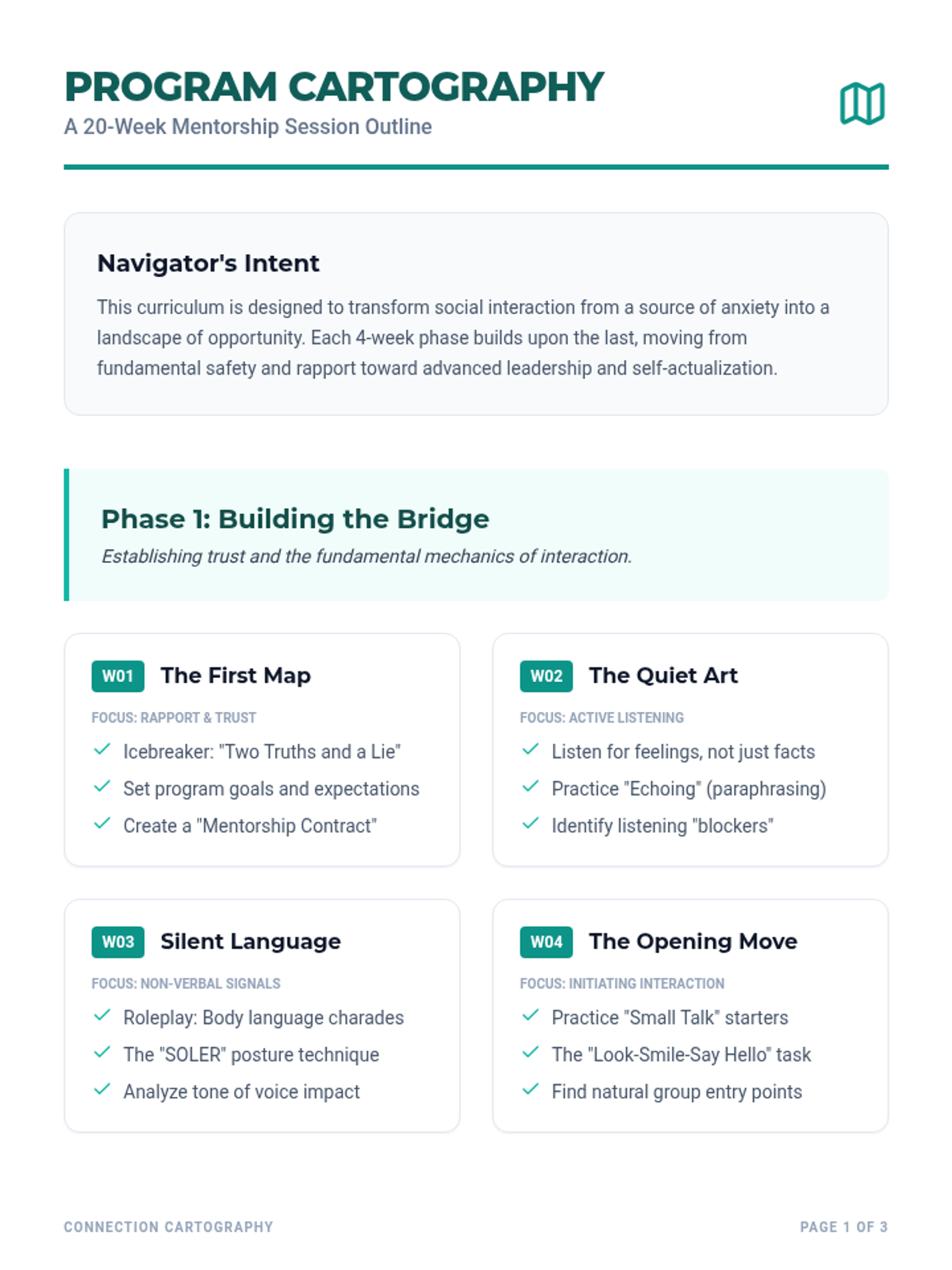
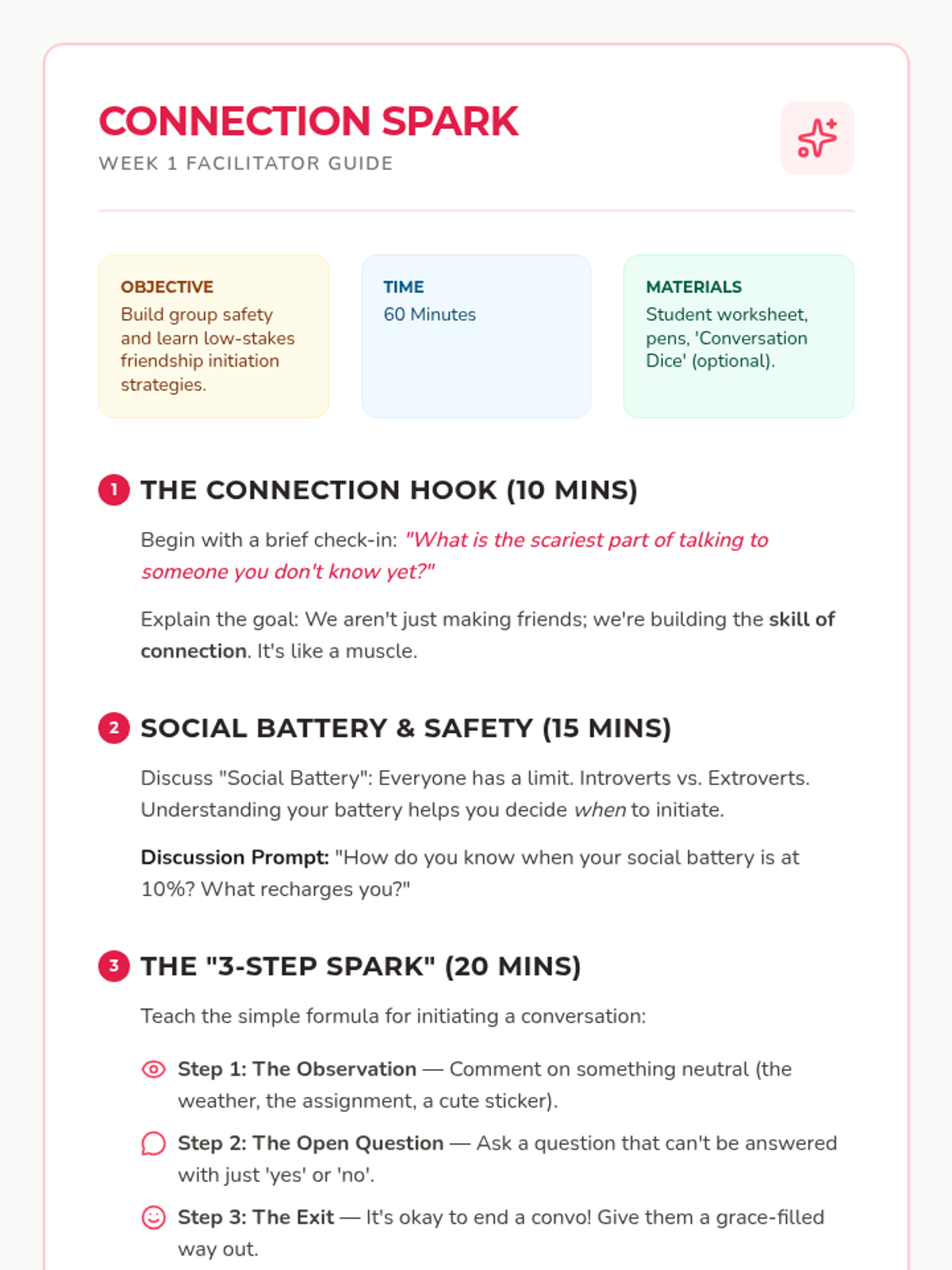
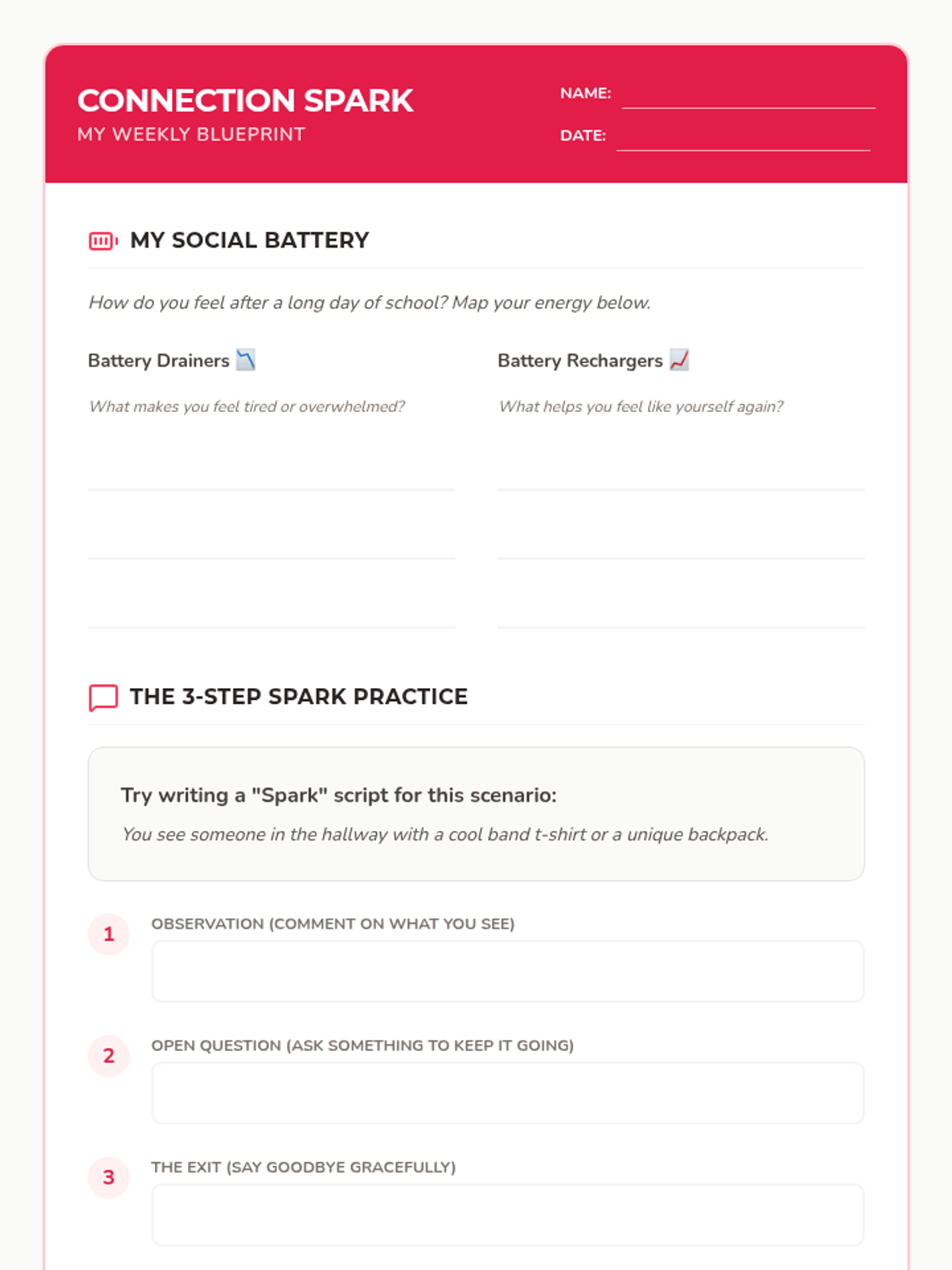
A comprehensive 20-week mentorship program designed to help students navigate social environments, build meaningful friendships, and master communication.
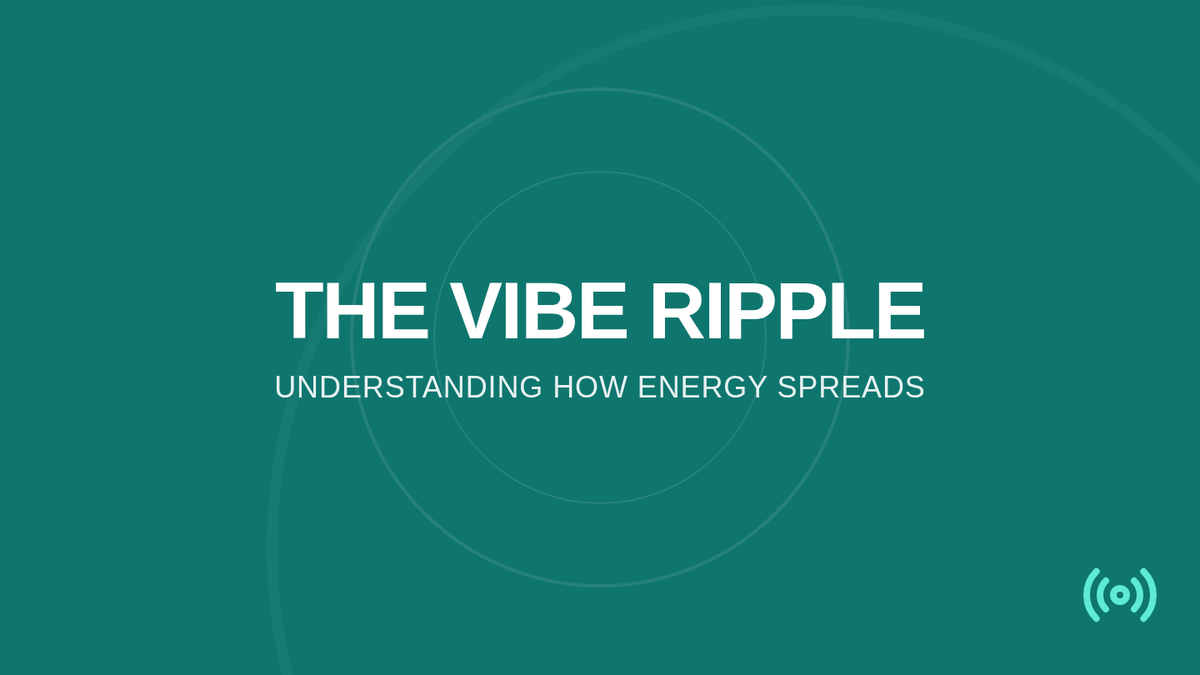
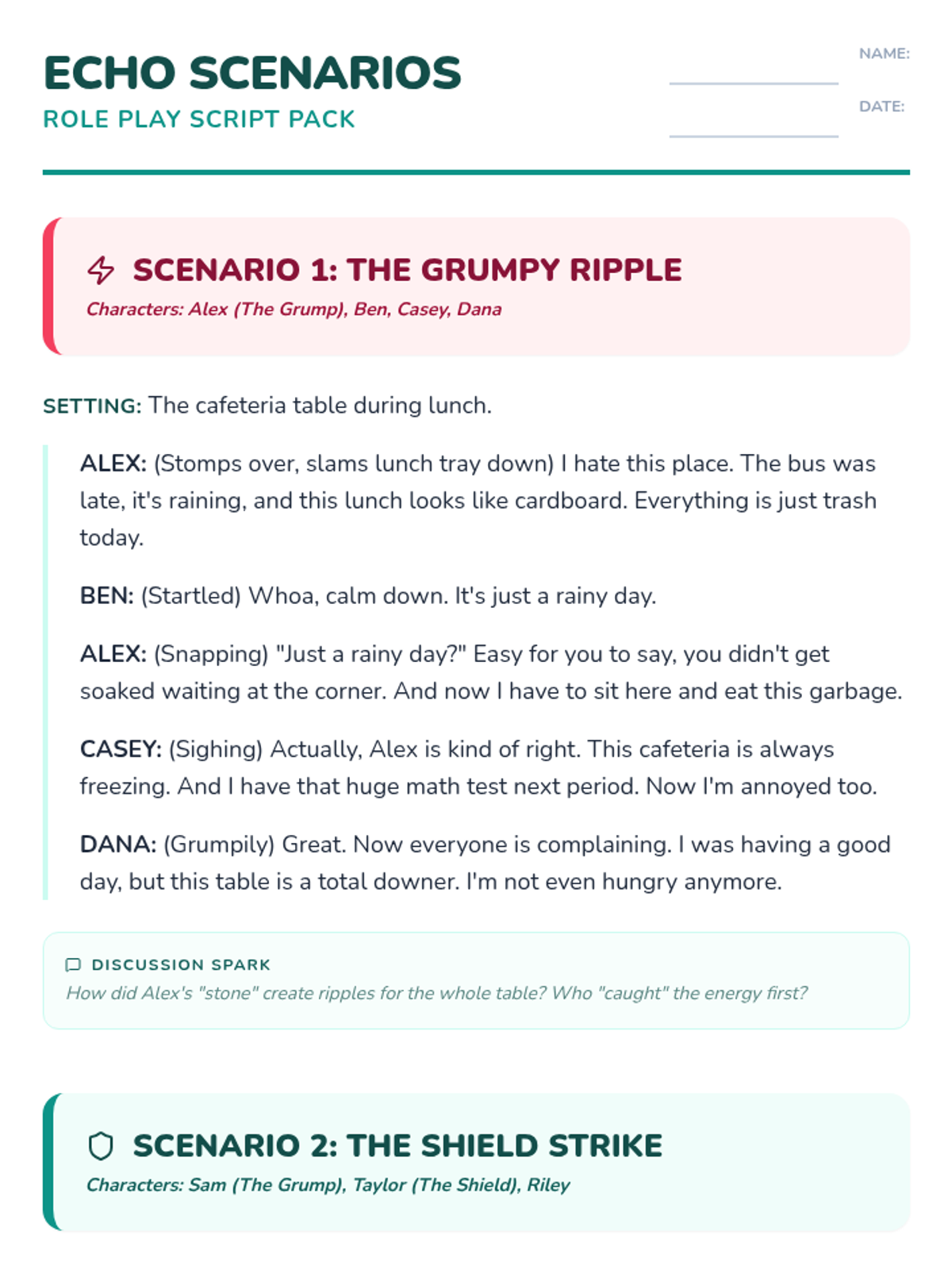
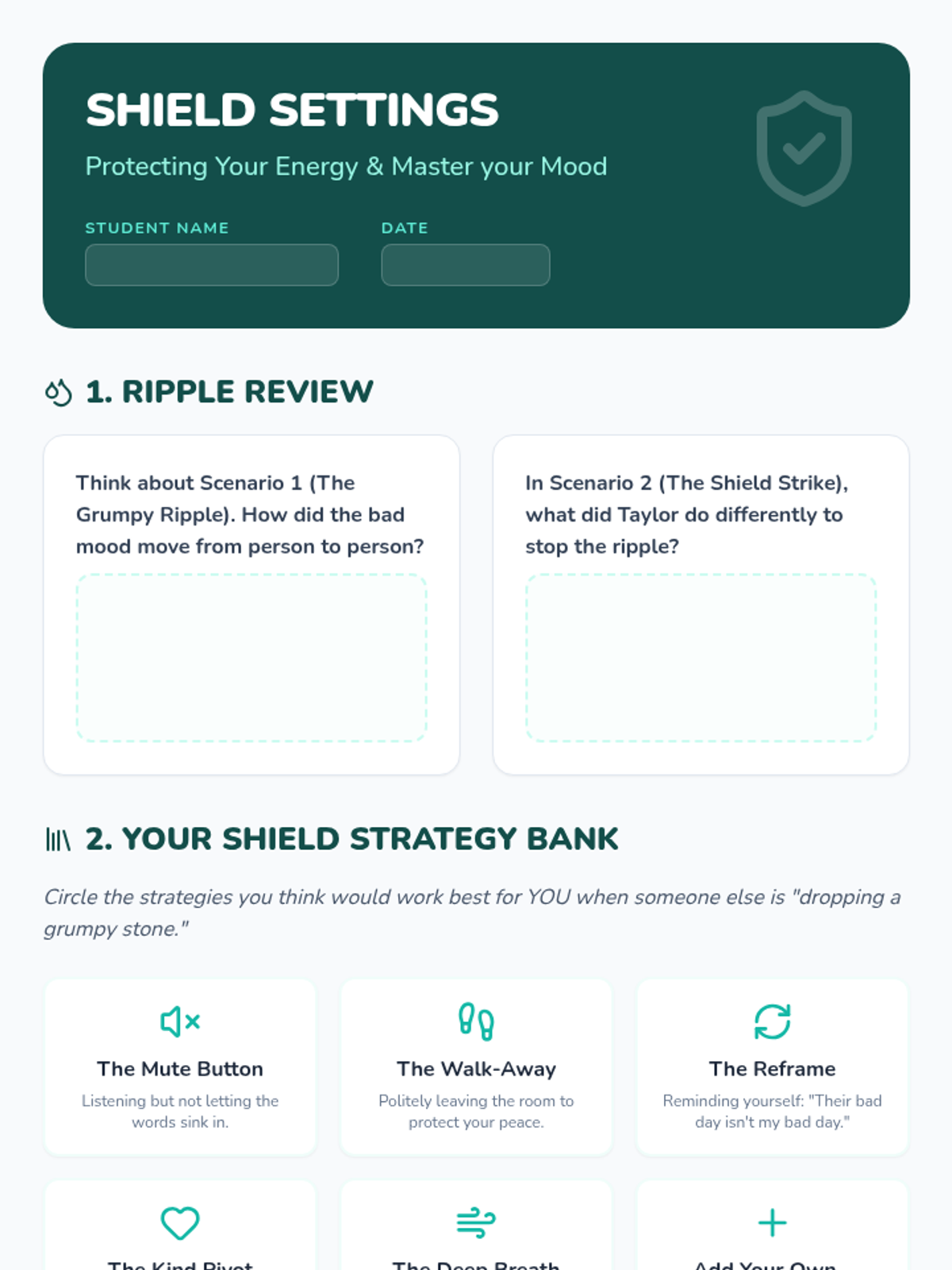
A series of social-emotional learning lessons designed to help students master emotional regulation and interpersonal dynamics. This sequence focuses on the invisible ways emotions move through a group and how individuals can maintain their own emotional equilibrium.
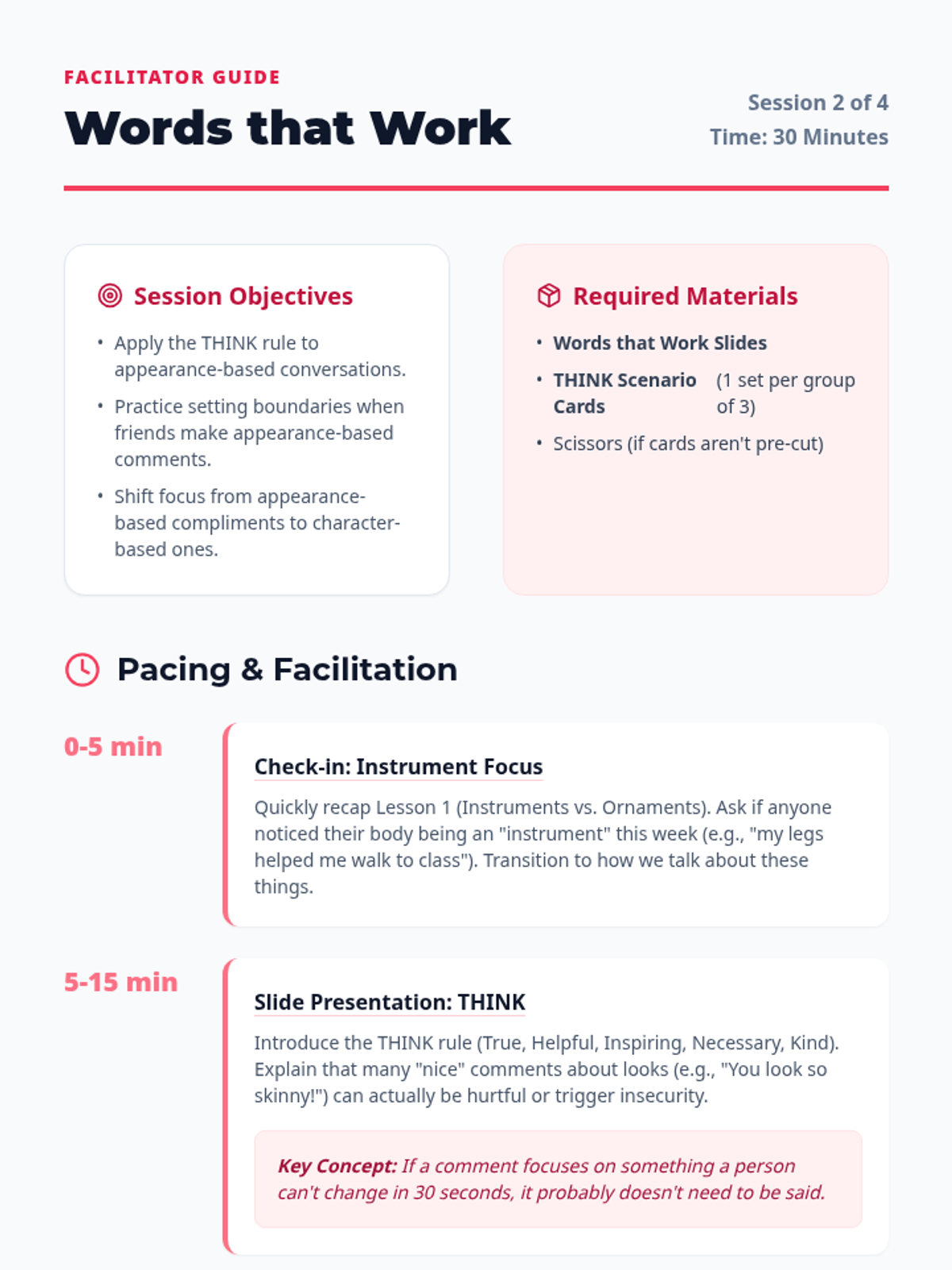
A 4-session social skills group for 6th-grade girls focused on body neutrality, media literacy, digital authenticity, and internal self-compassion. This sequence helps students transition from seeing themselves as "objects to be viewed" to "subjects who experience the world."
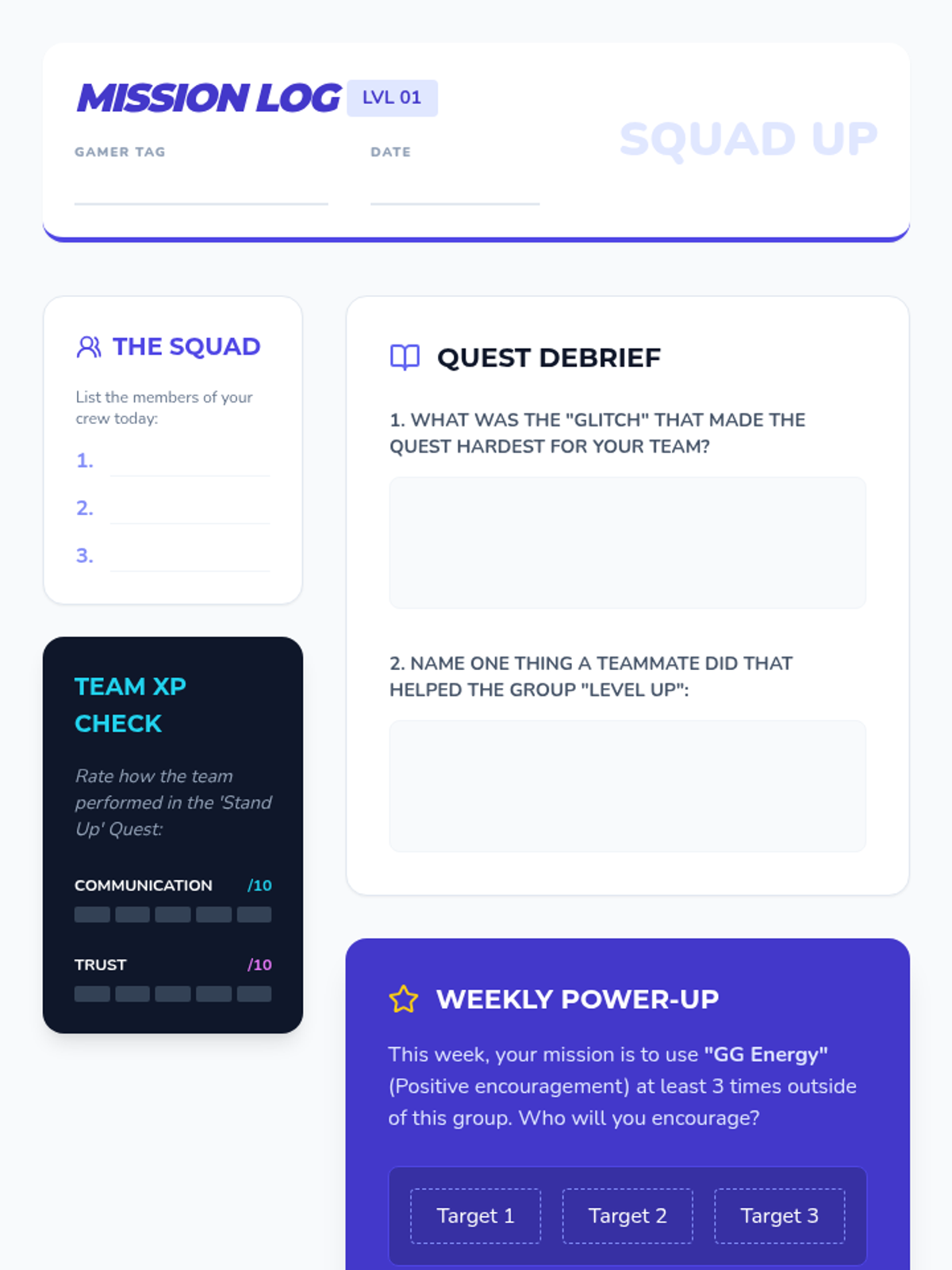
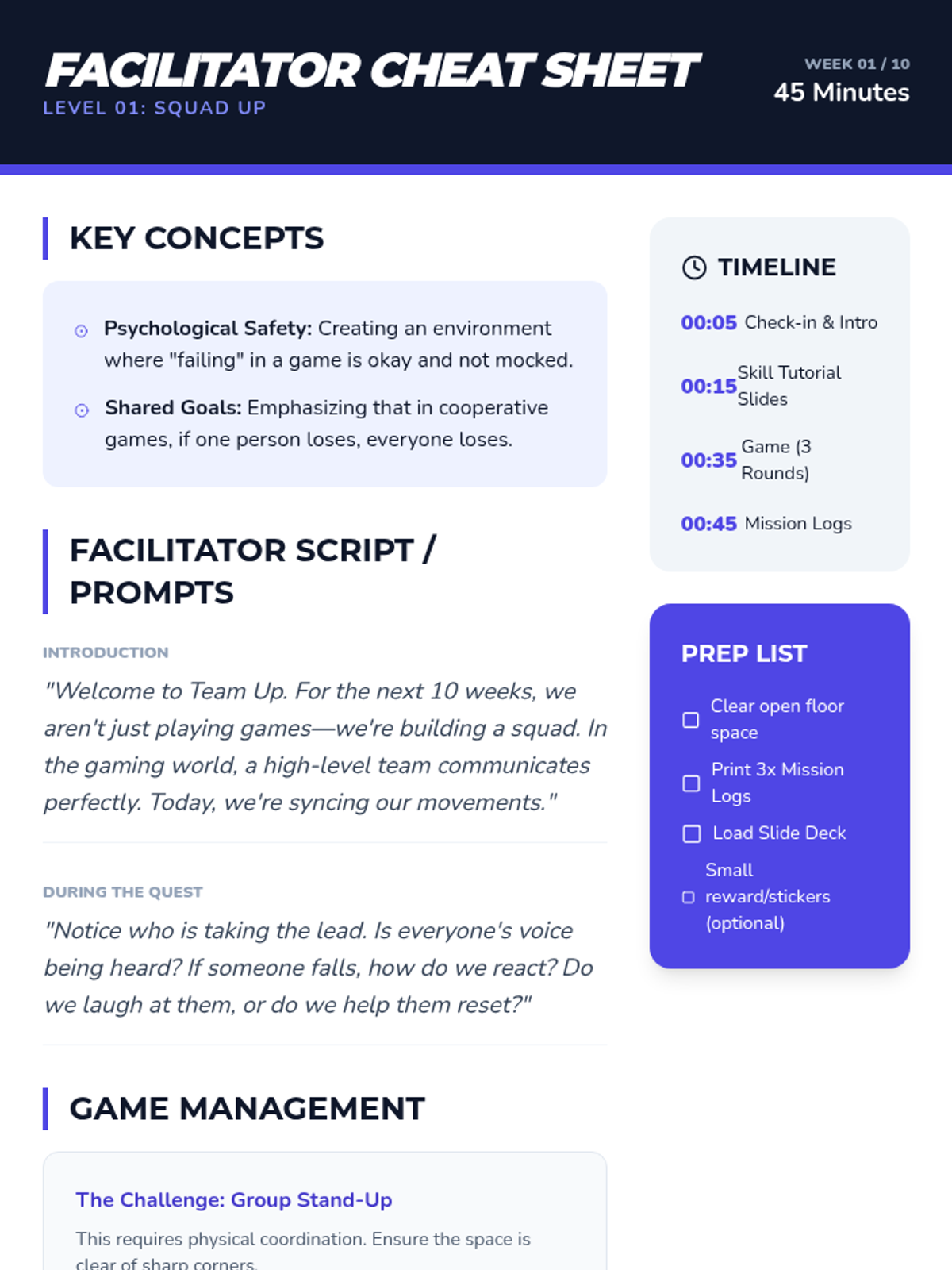
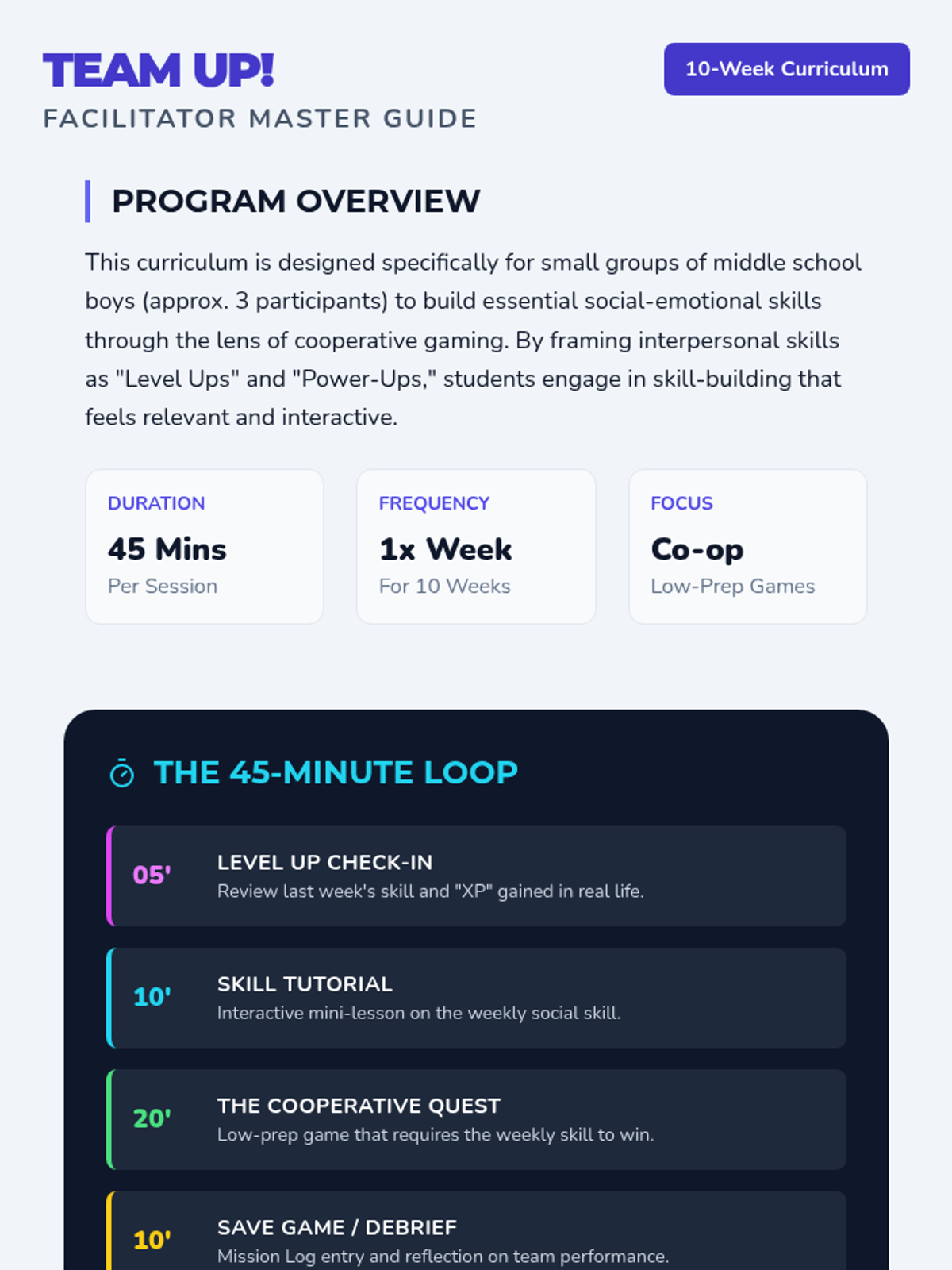
A 10-week social-emotional learning curriculum designed for 7th-grade boys, focusing on conflict resolution, communication, and teamwork through a cooperative gaming lens. Each session uses an 'arcade' theme to engage students in 'leveling up' their interpersonal skills.
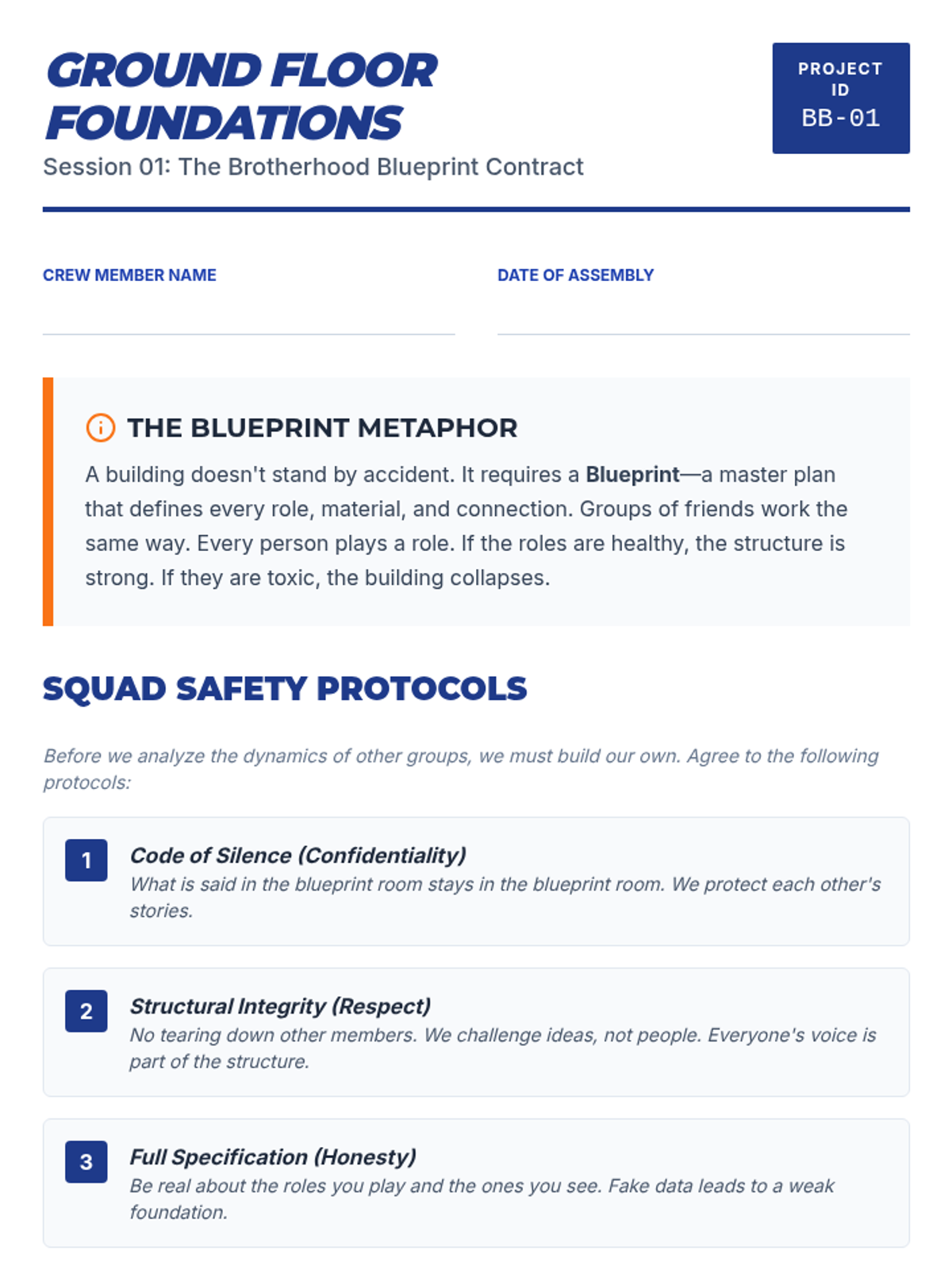
A 30-session group counseling curriculum for adolescent males focusing on social roles, group dynamics, and developing healthy friendship patterns. Through the metaphor of an architectural blueprint, students analyze leadership, support roles, and the difference between positive and negative group influences.
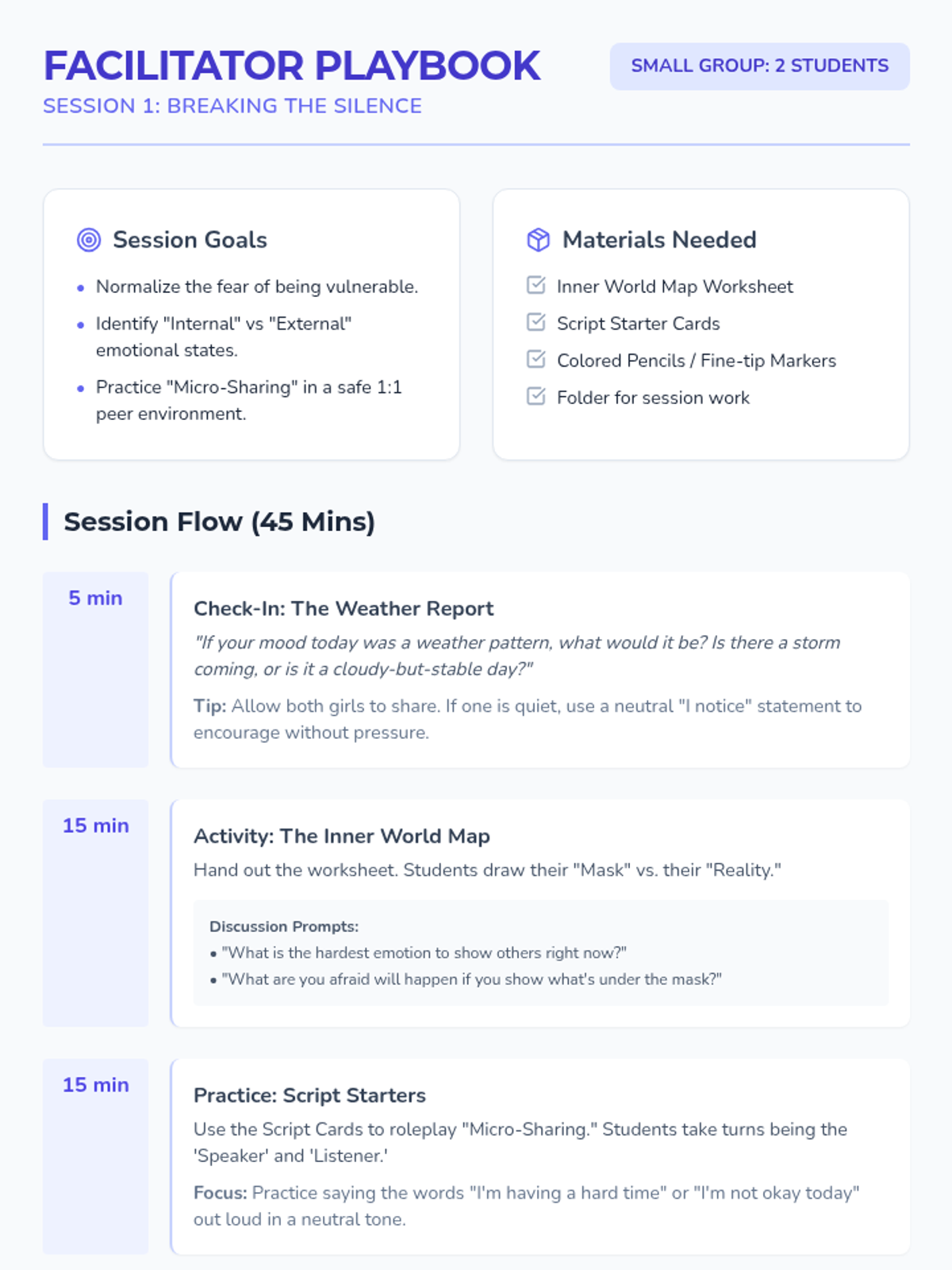
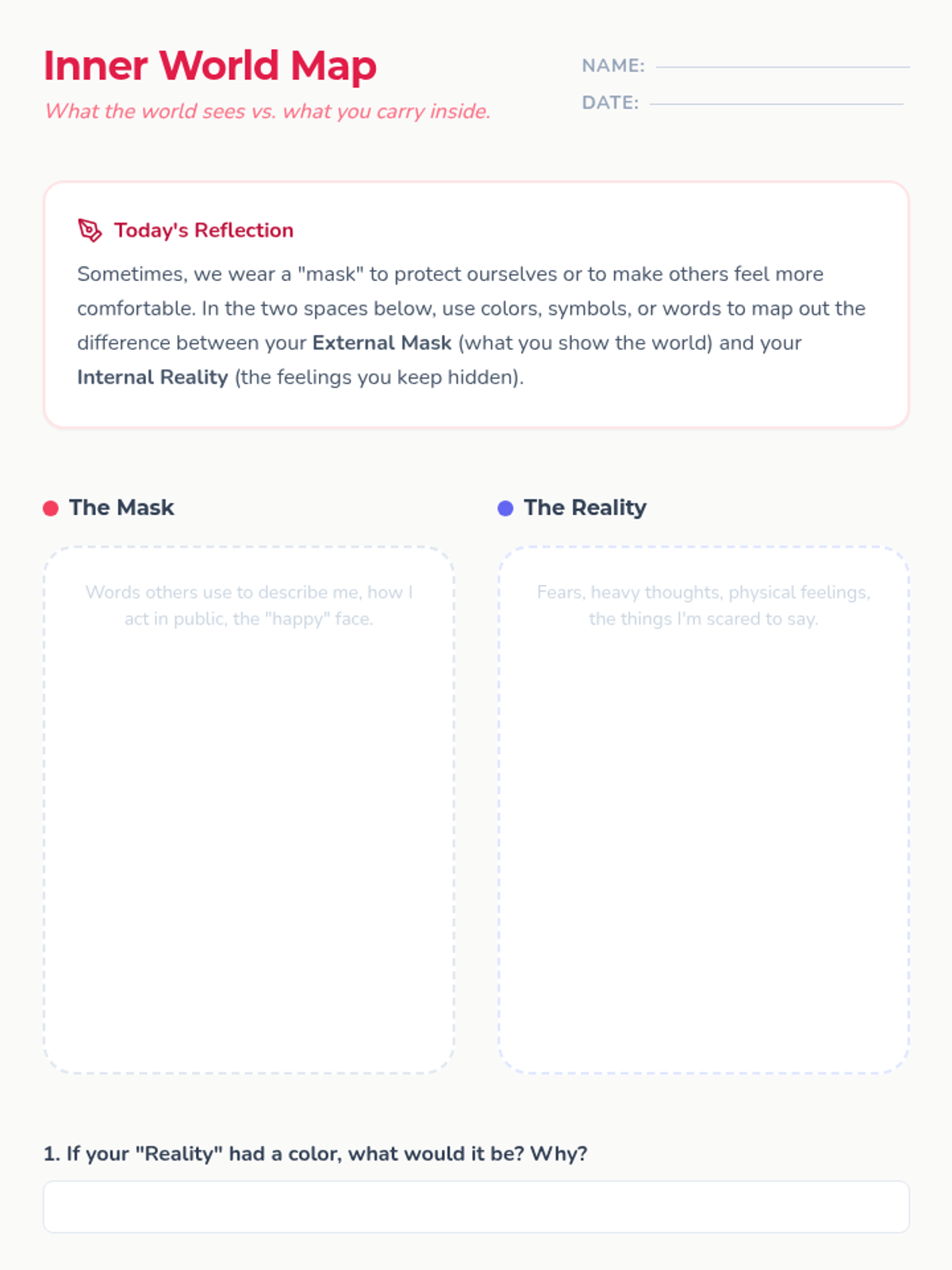
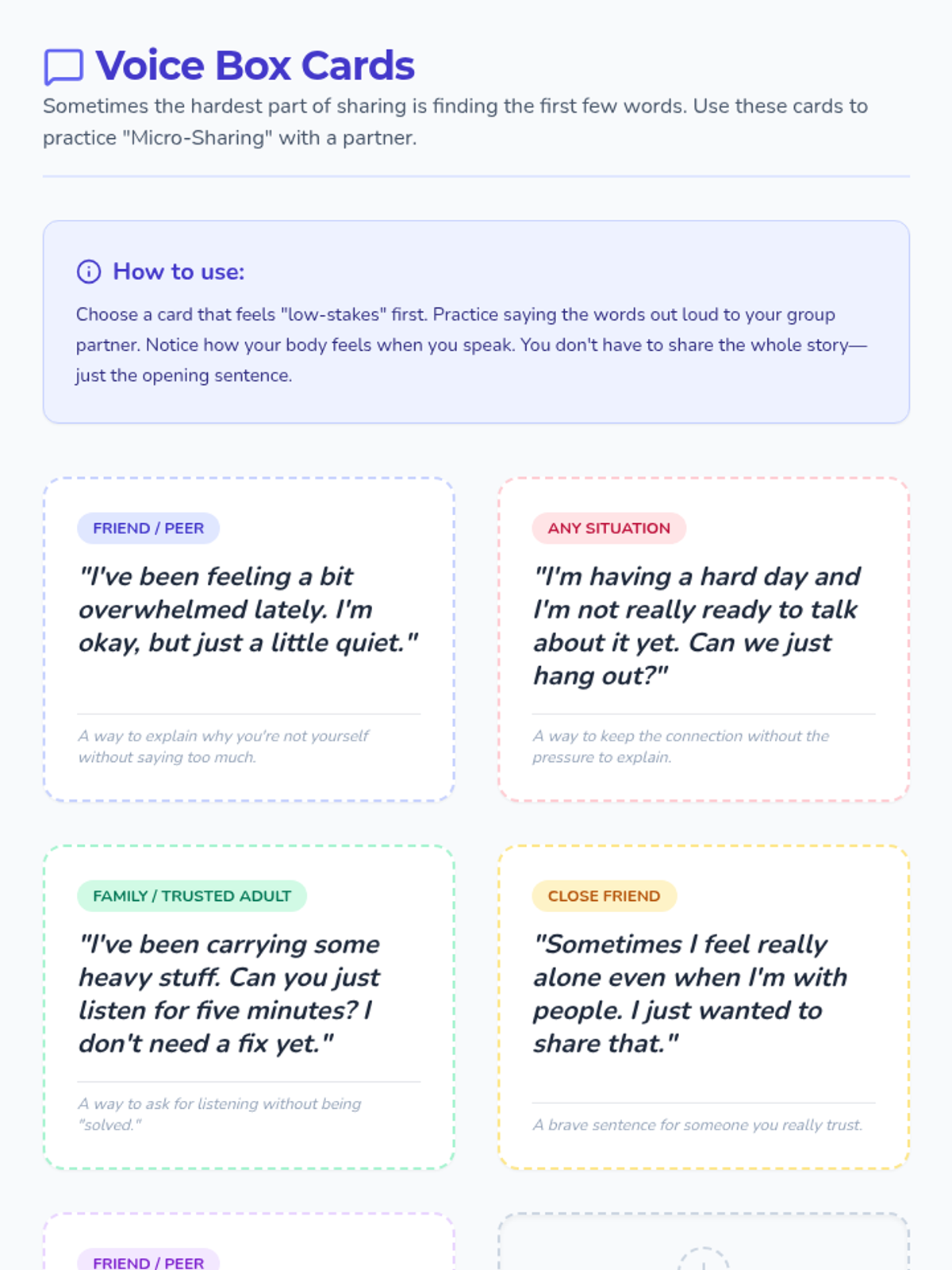
A supportive small-group counseling series designed for middle school girls to navigate depression, overcome the fear of vulnerability, and develop healthy communication skills with friends and family.
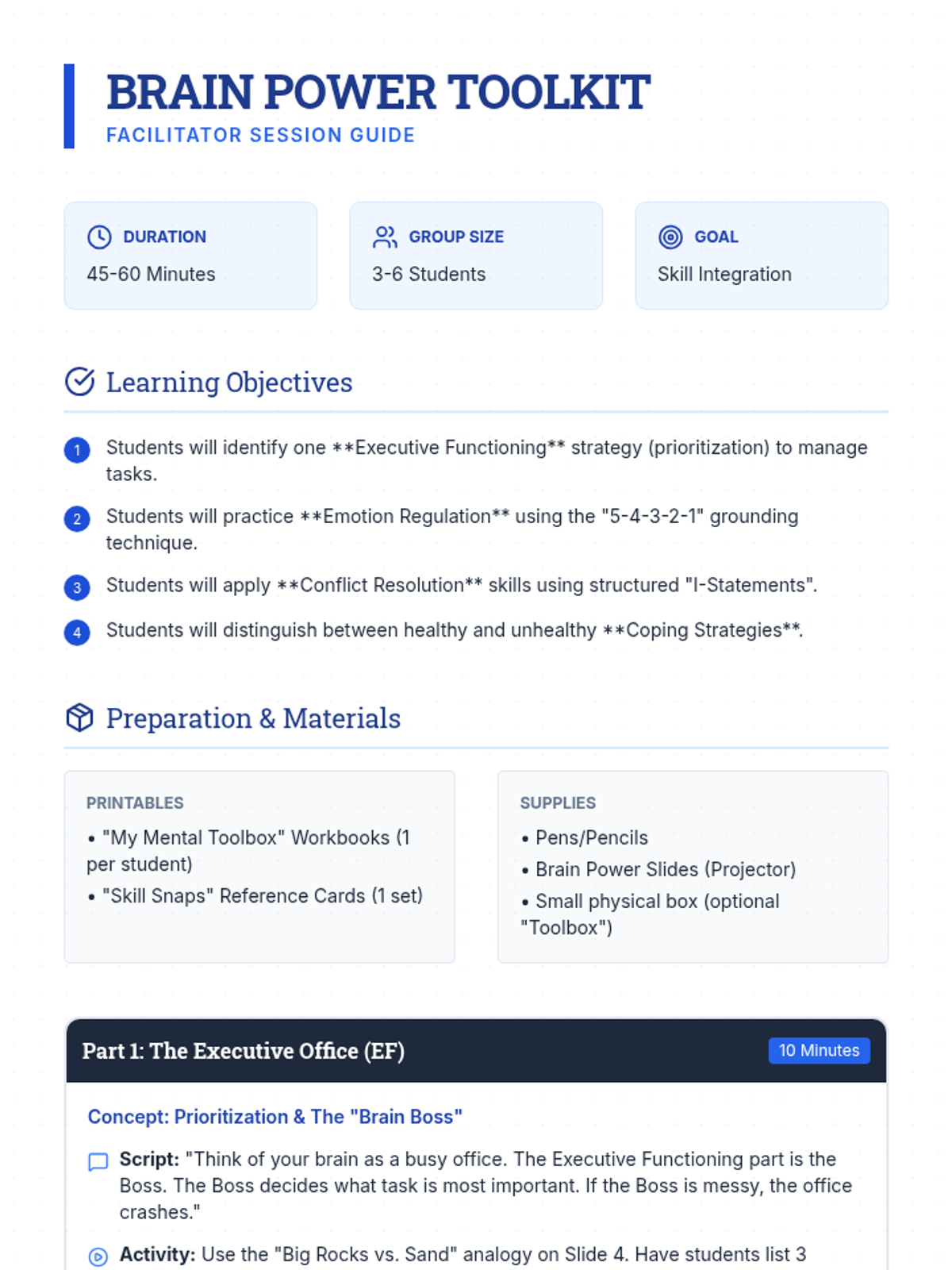
A series of social-emotional learning modules focused on cognitive and emotional mastery for small group settings.
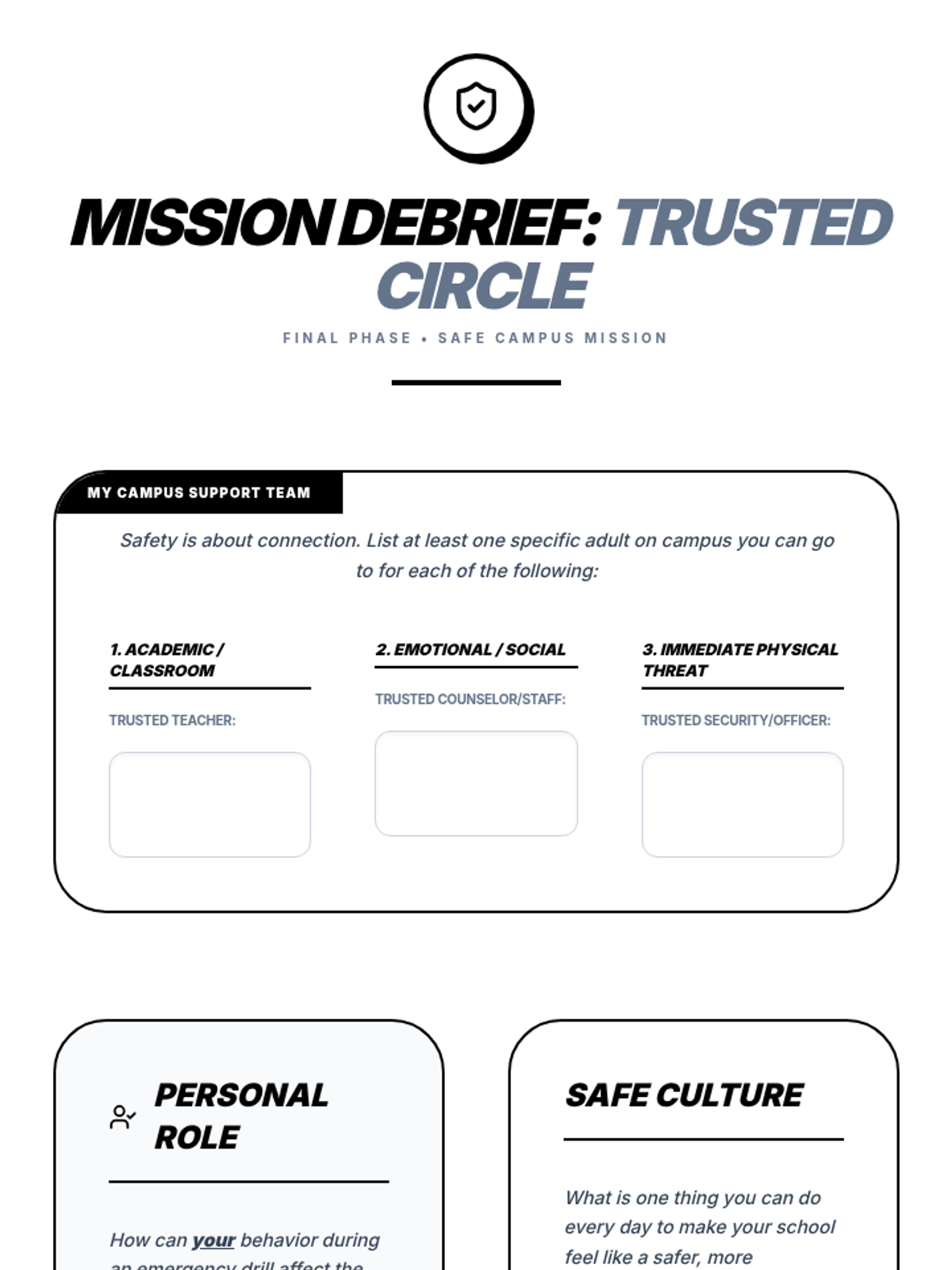
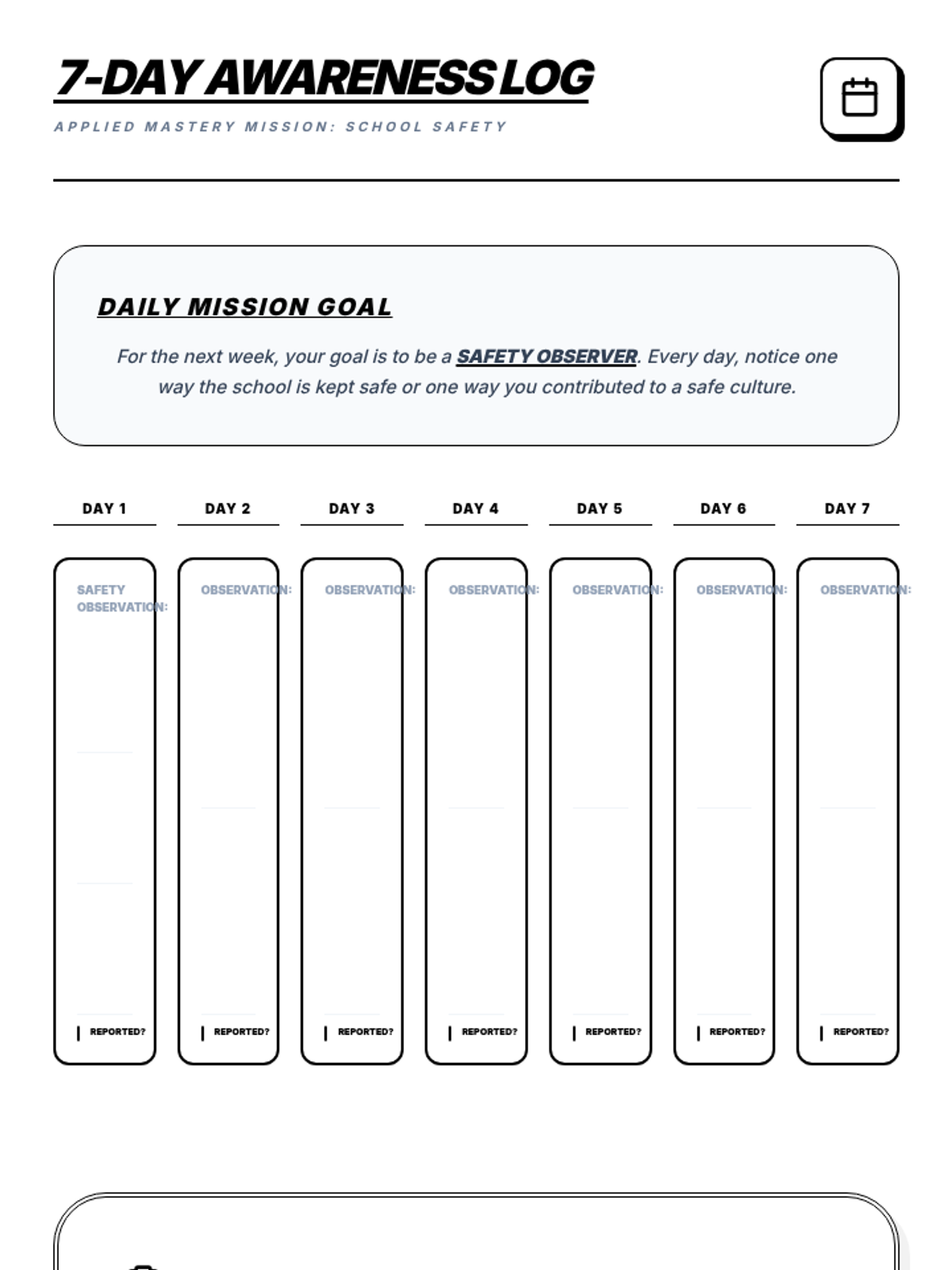
A series of independent social-emotional missions for middle schoolers to develop personal integrity, emotional regulation, and social communication skills.
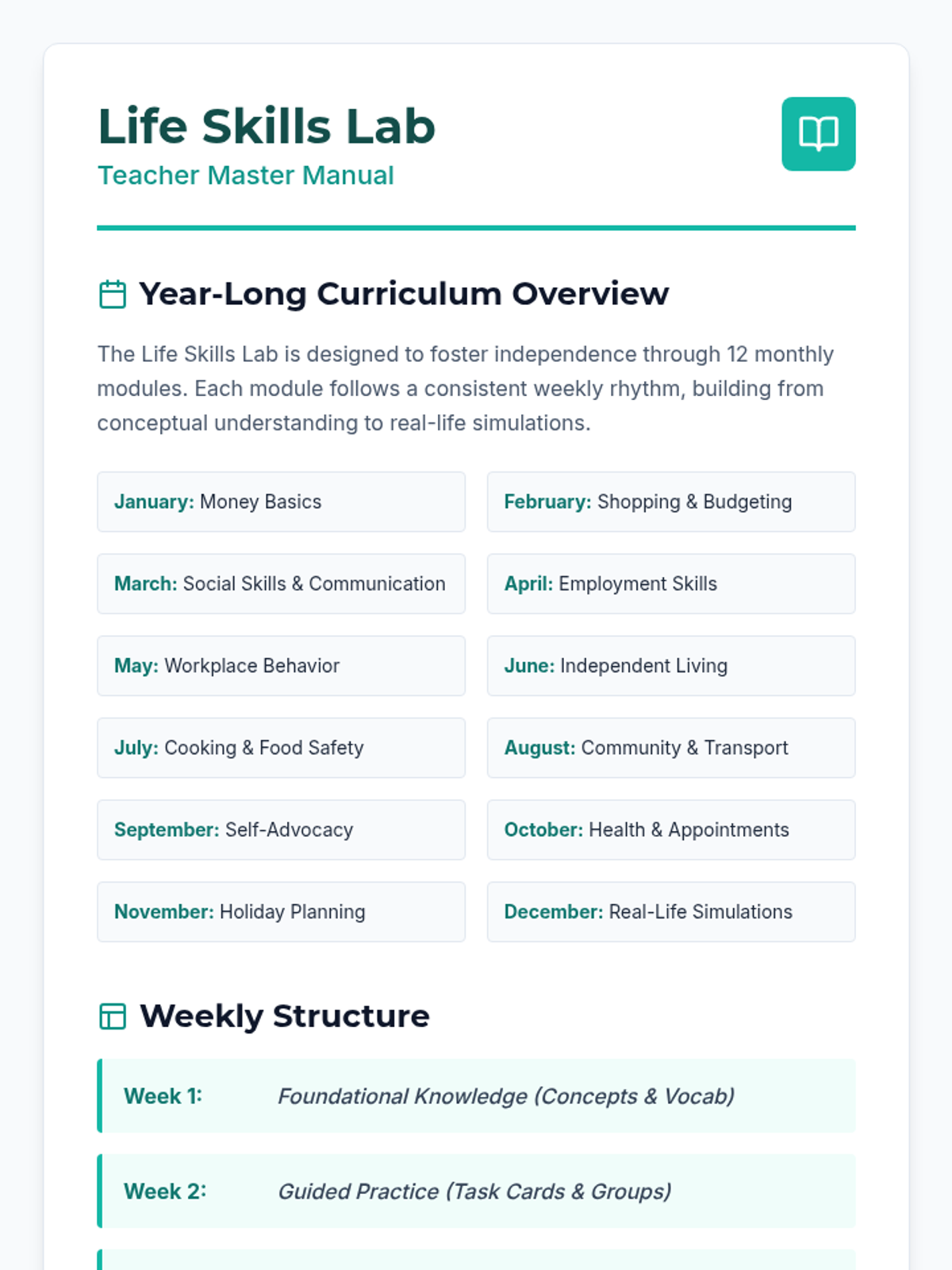
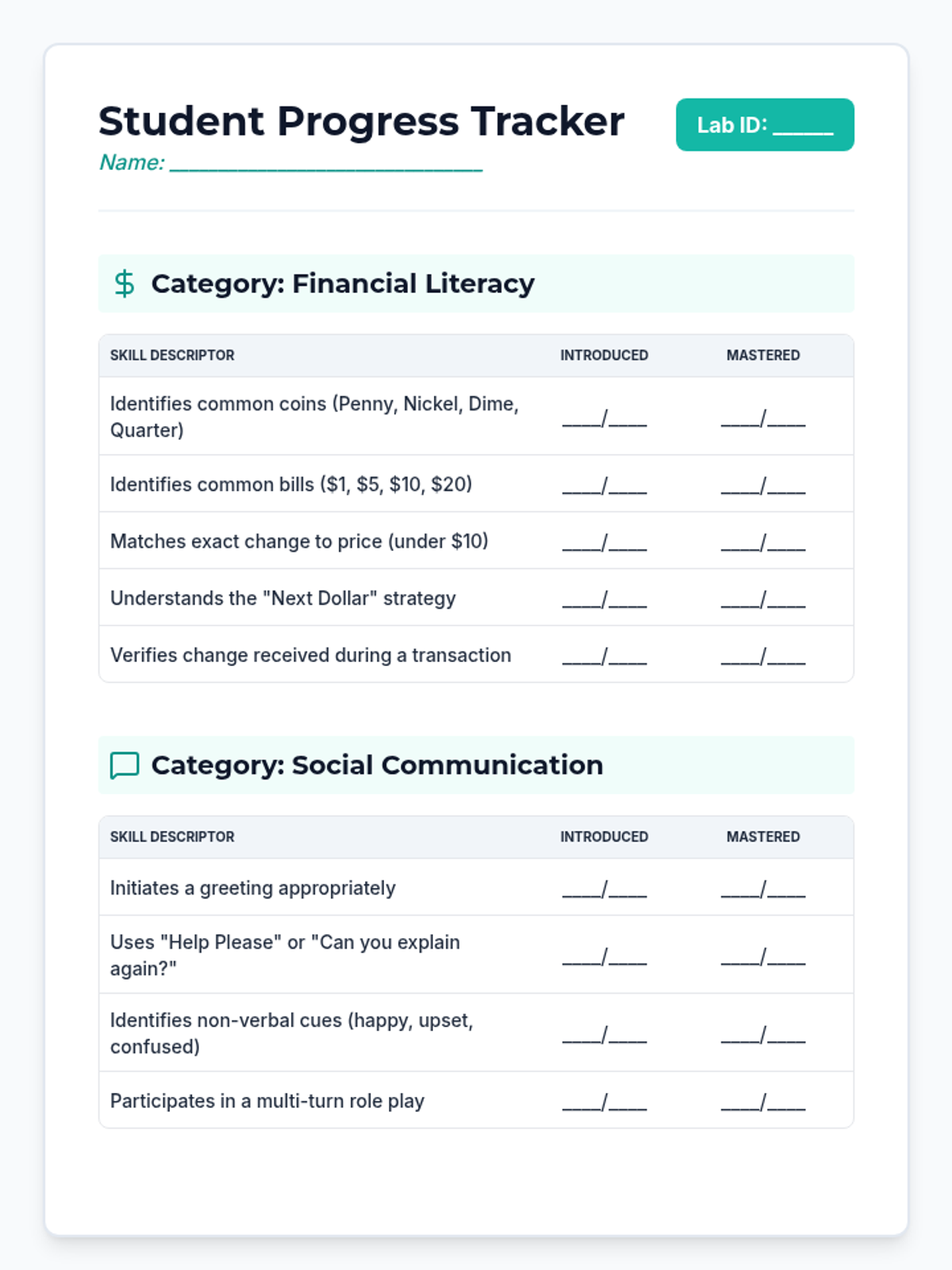
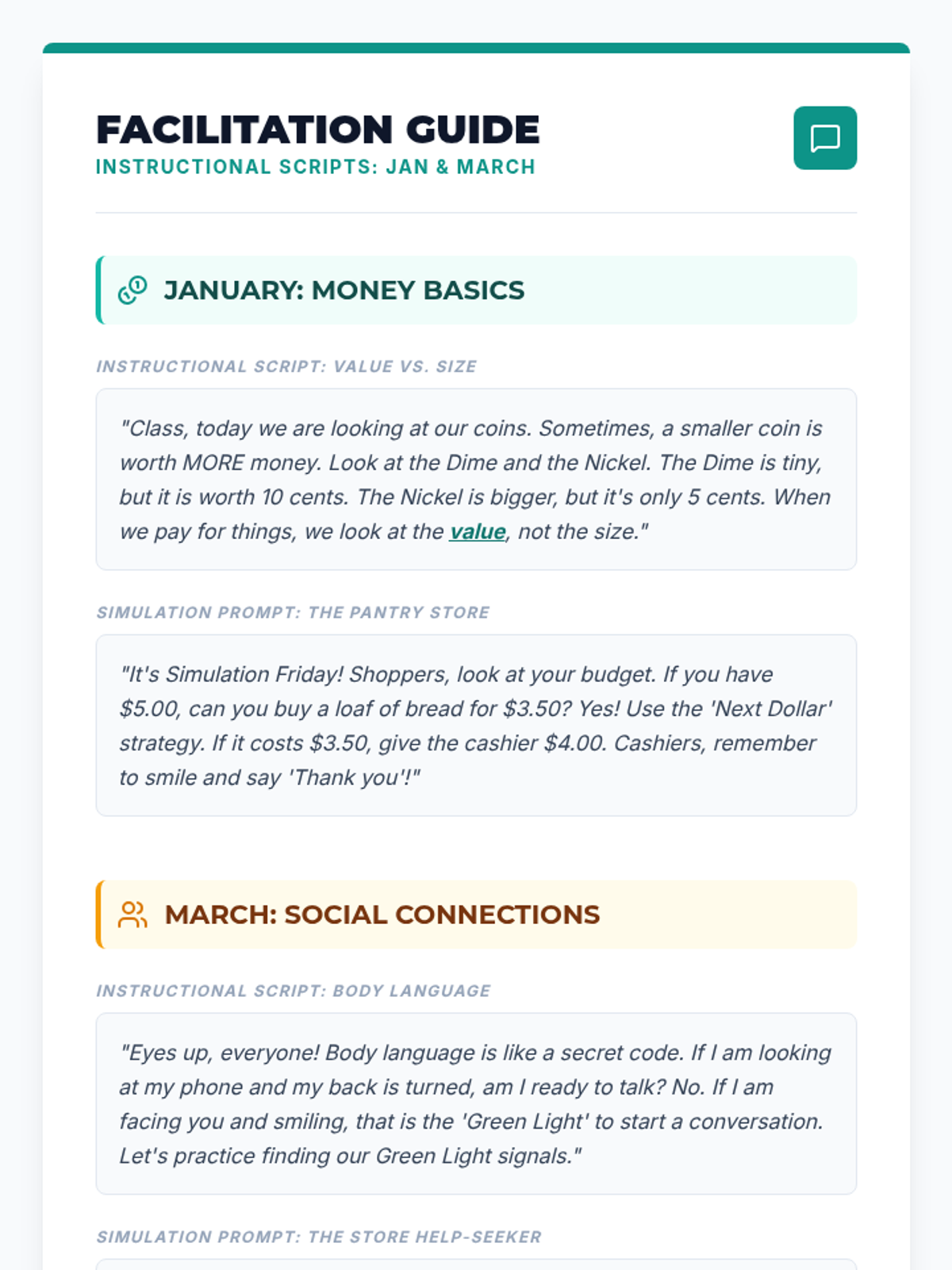
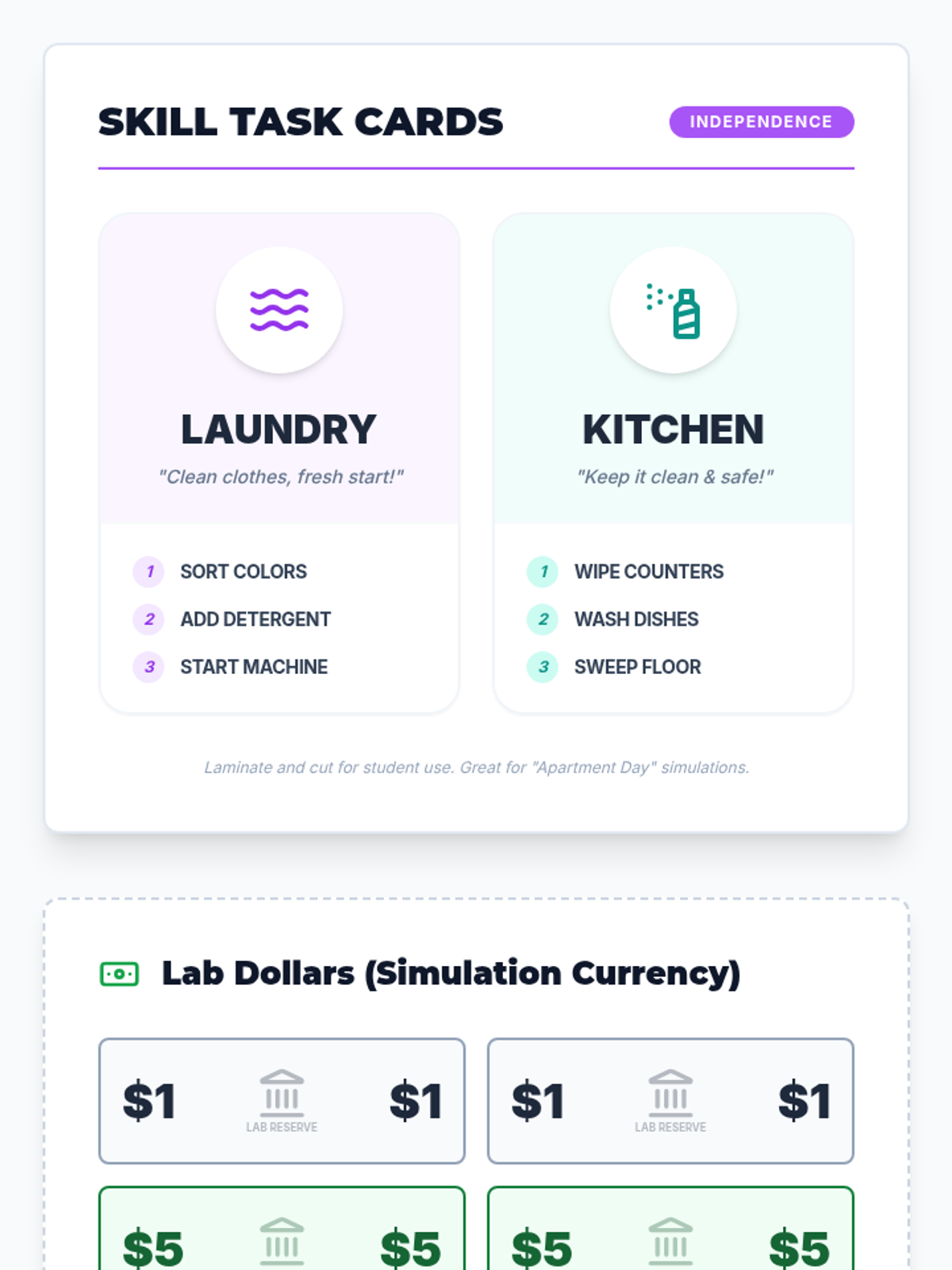
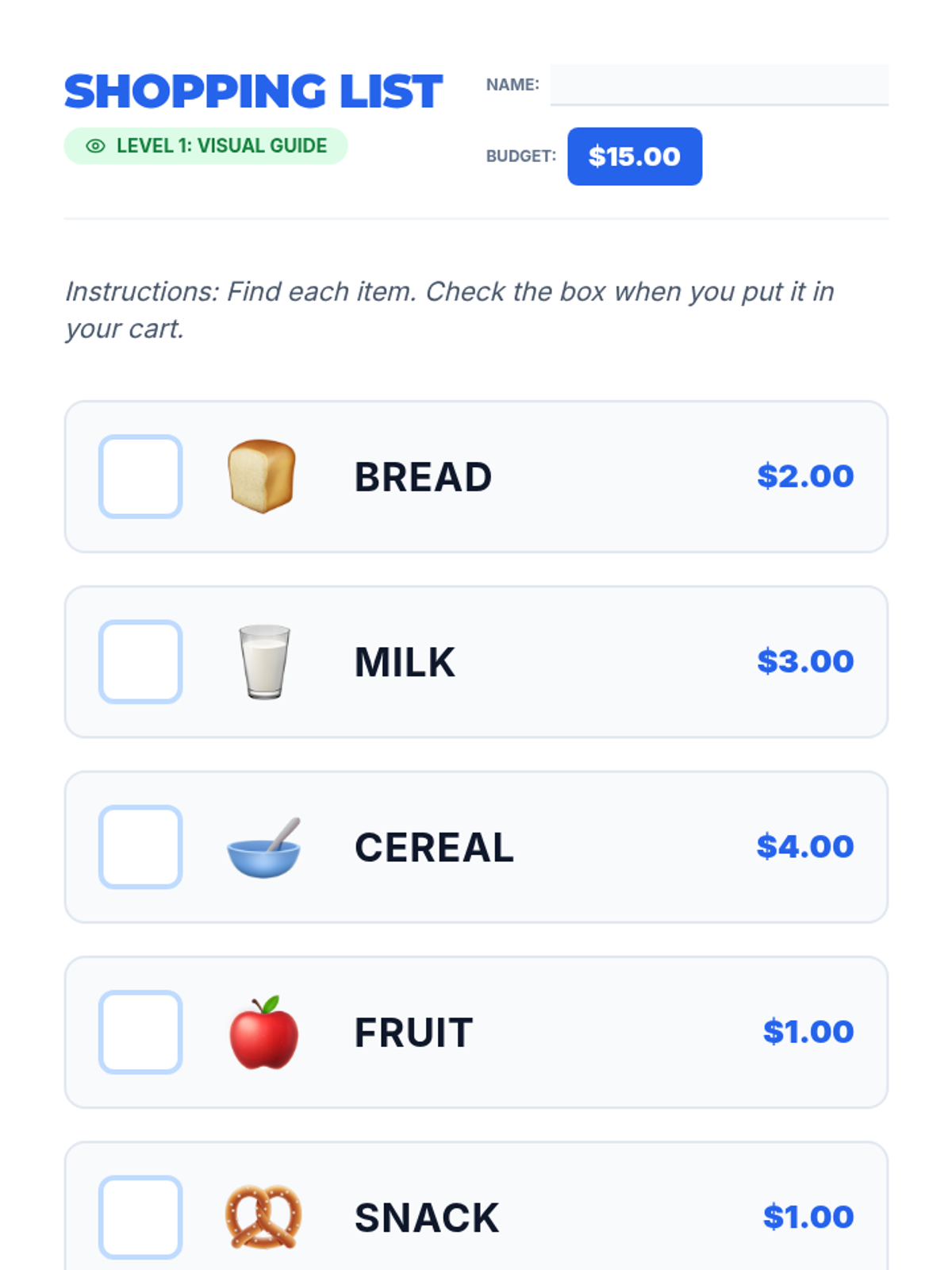
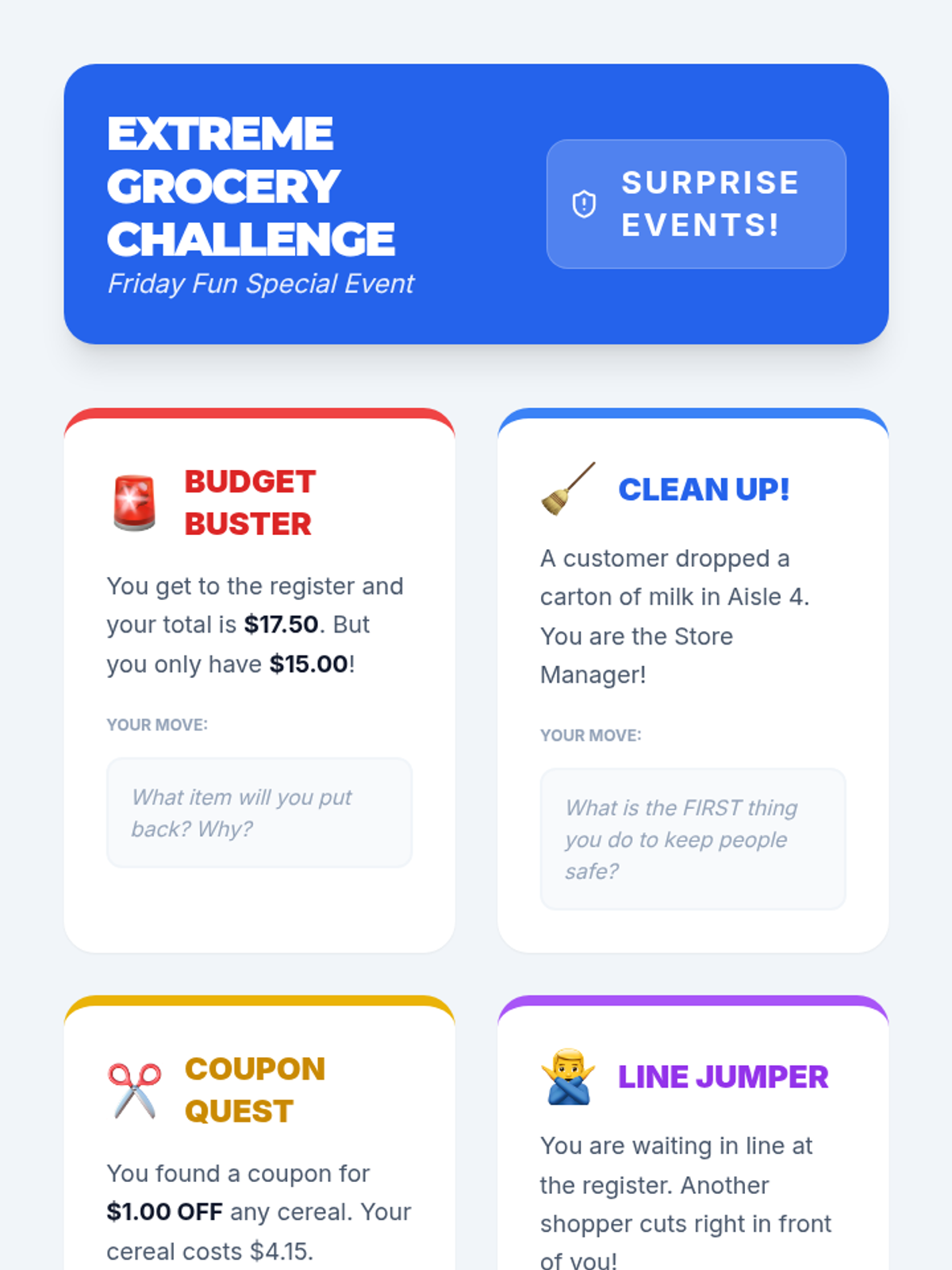
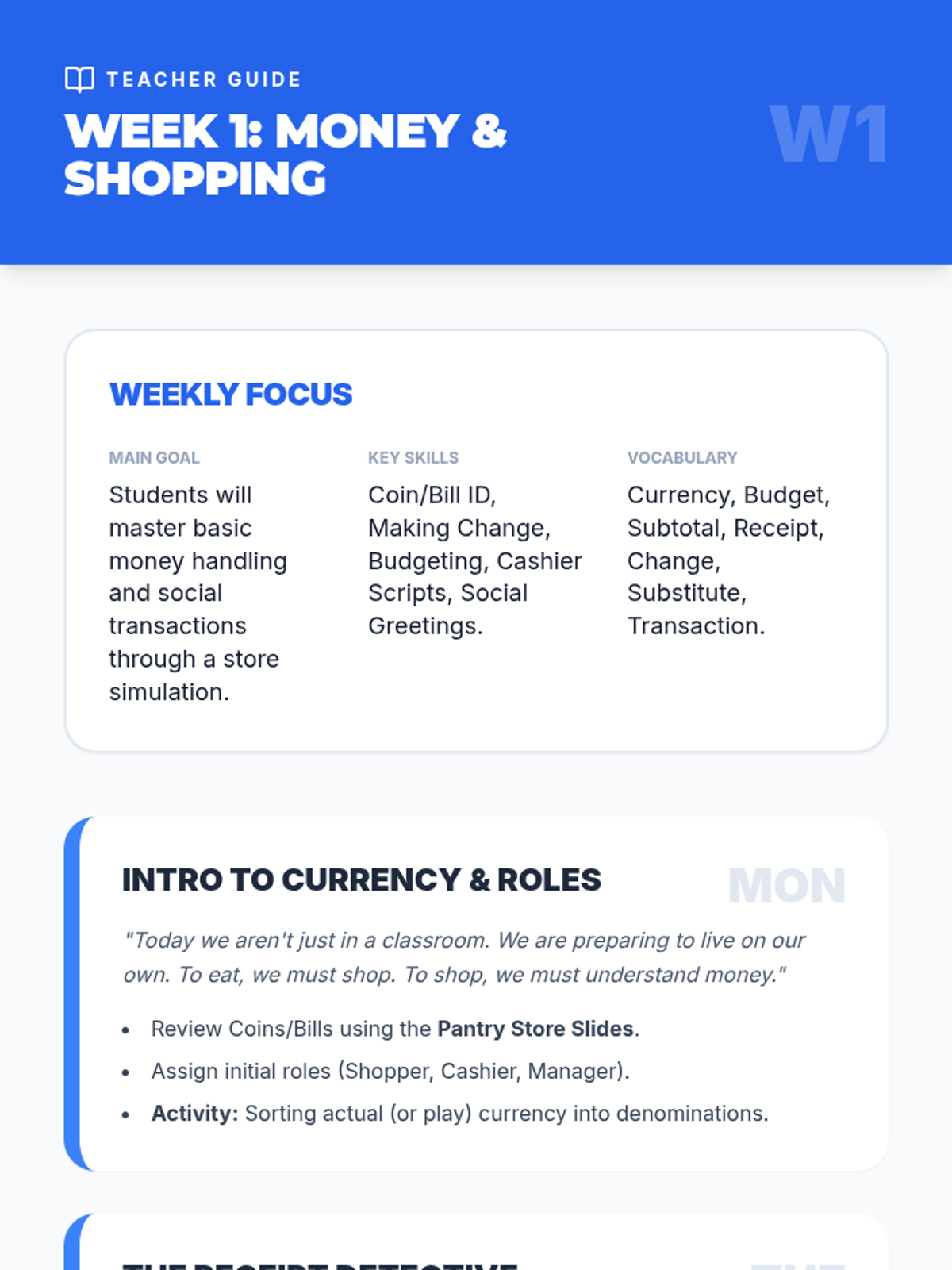
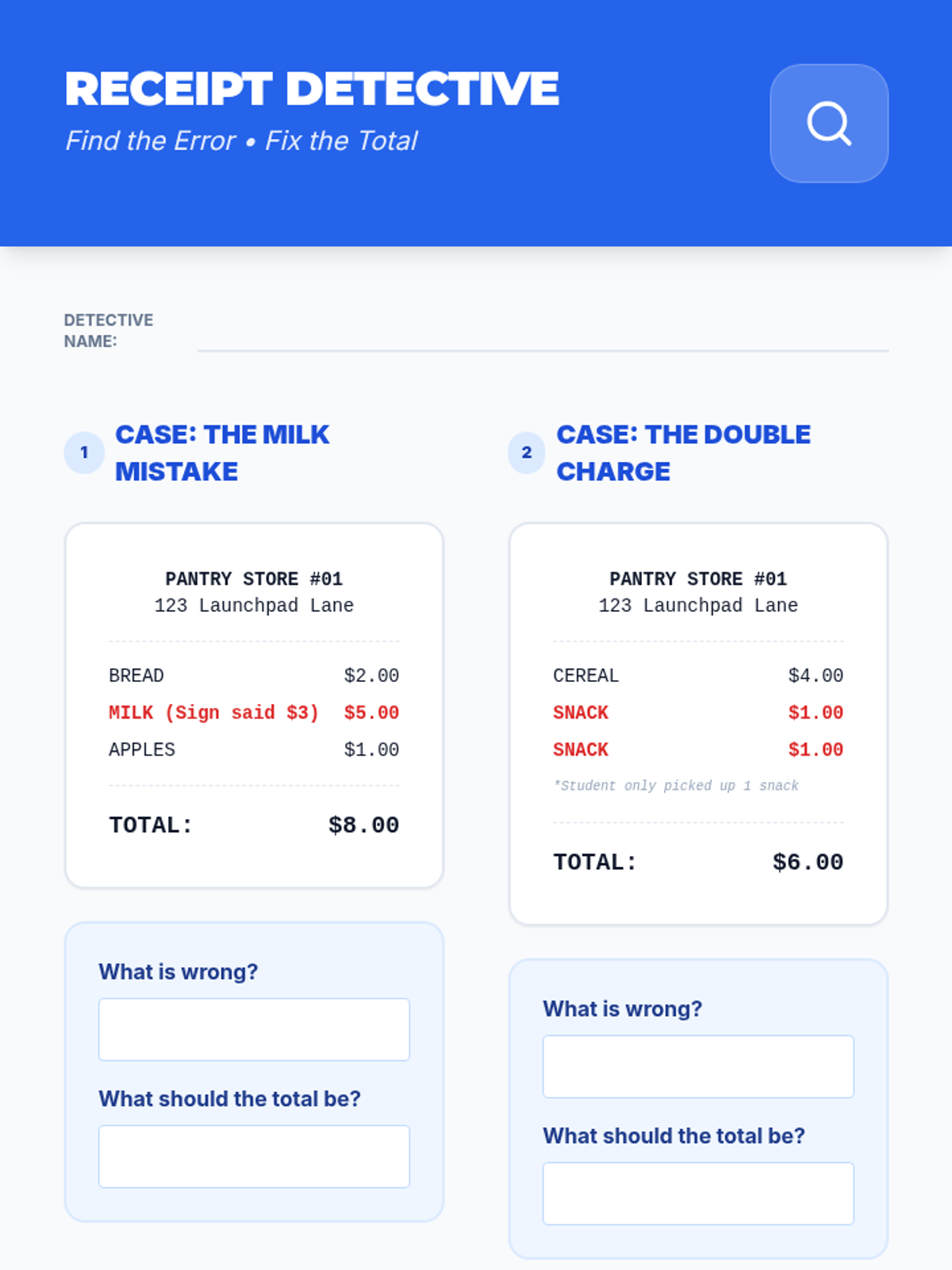
A comprehensive year-long curriculum designed to empower students with essential life skills for independence, focusing on financial literacy, social communication, and real-world simulations.
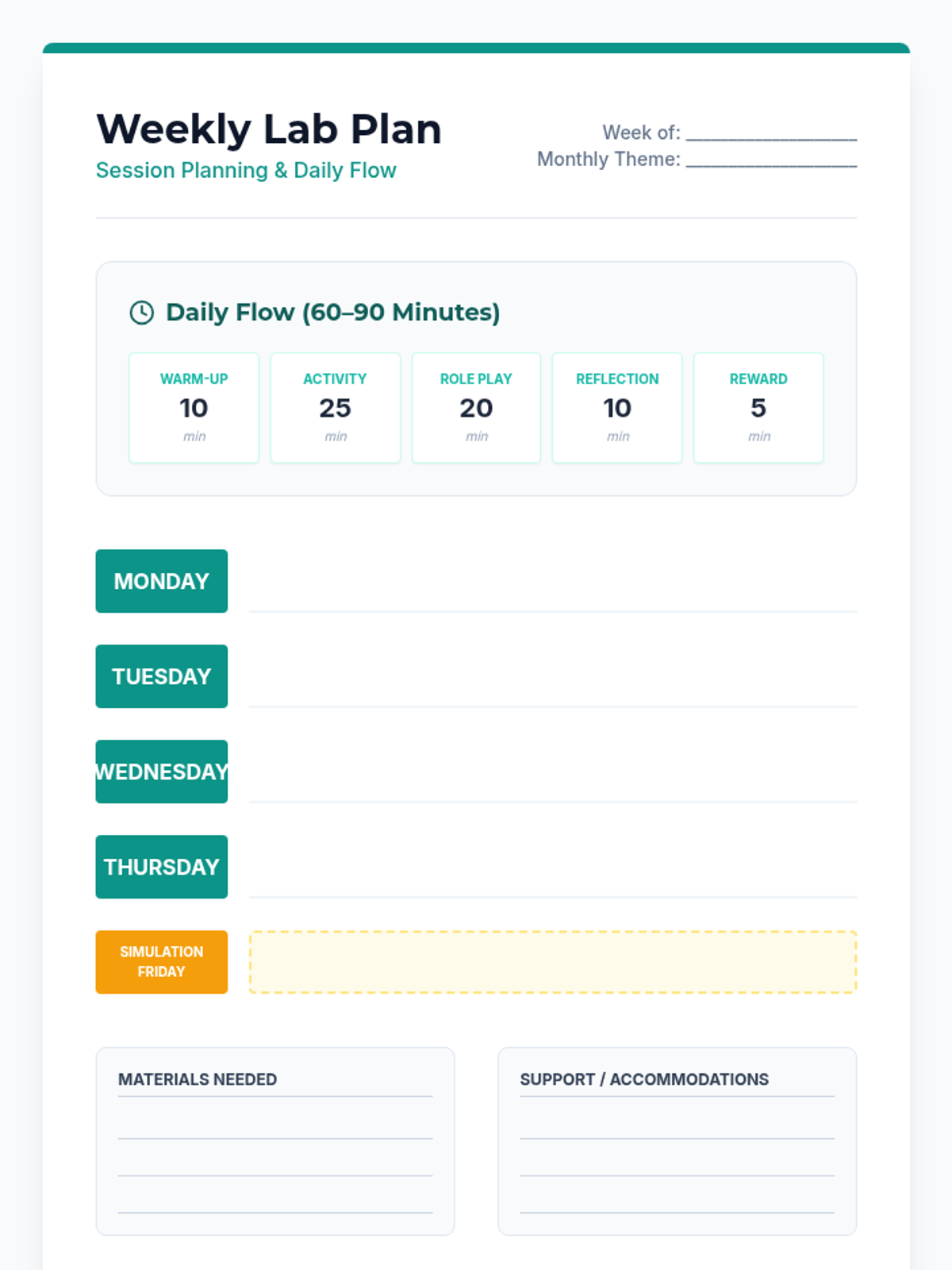
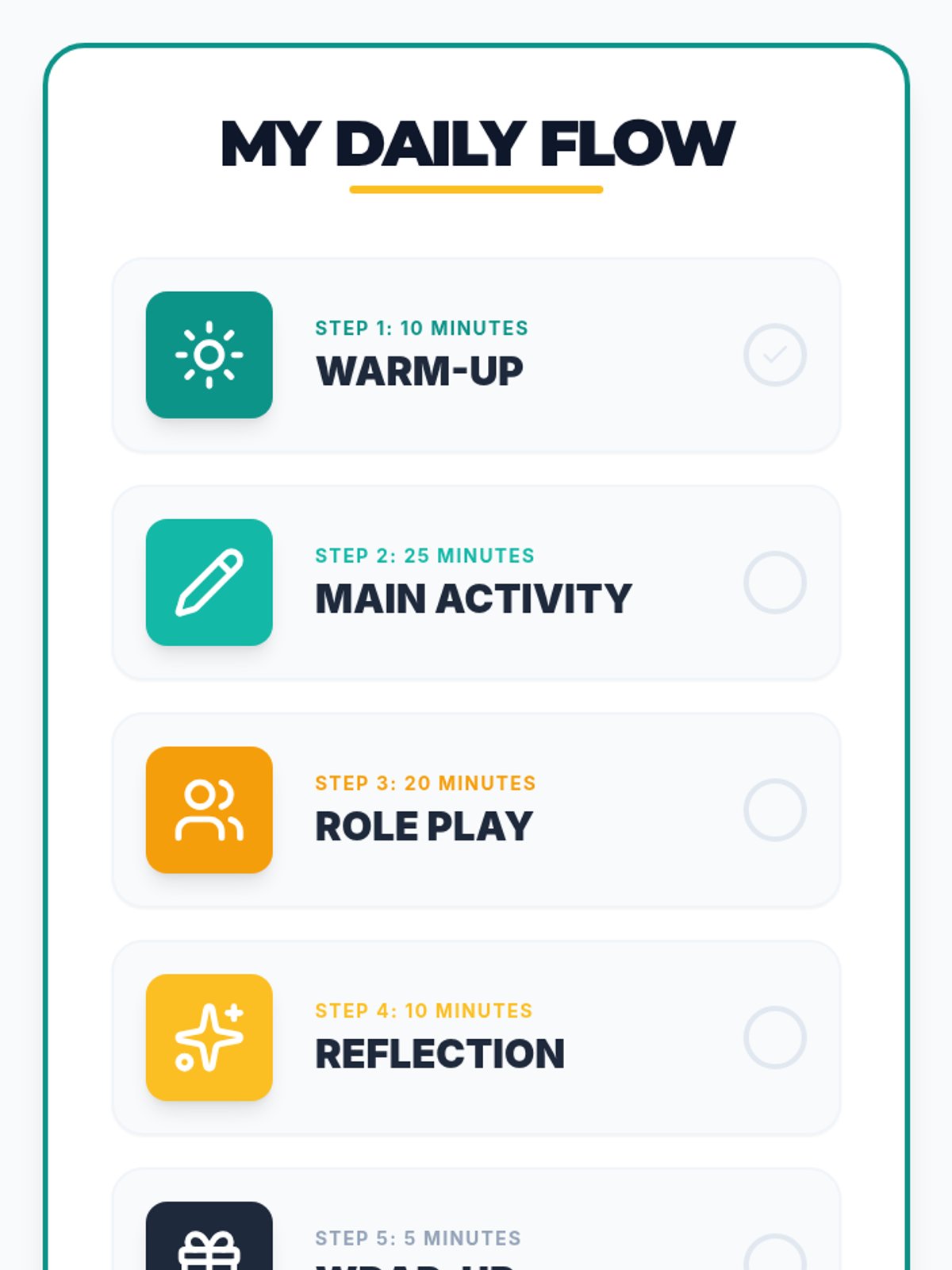
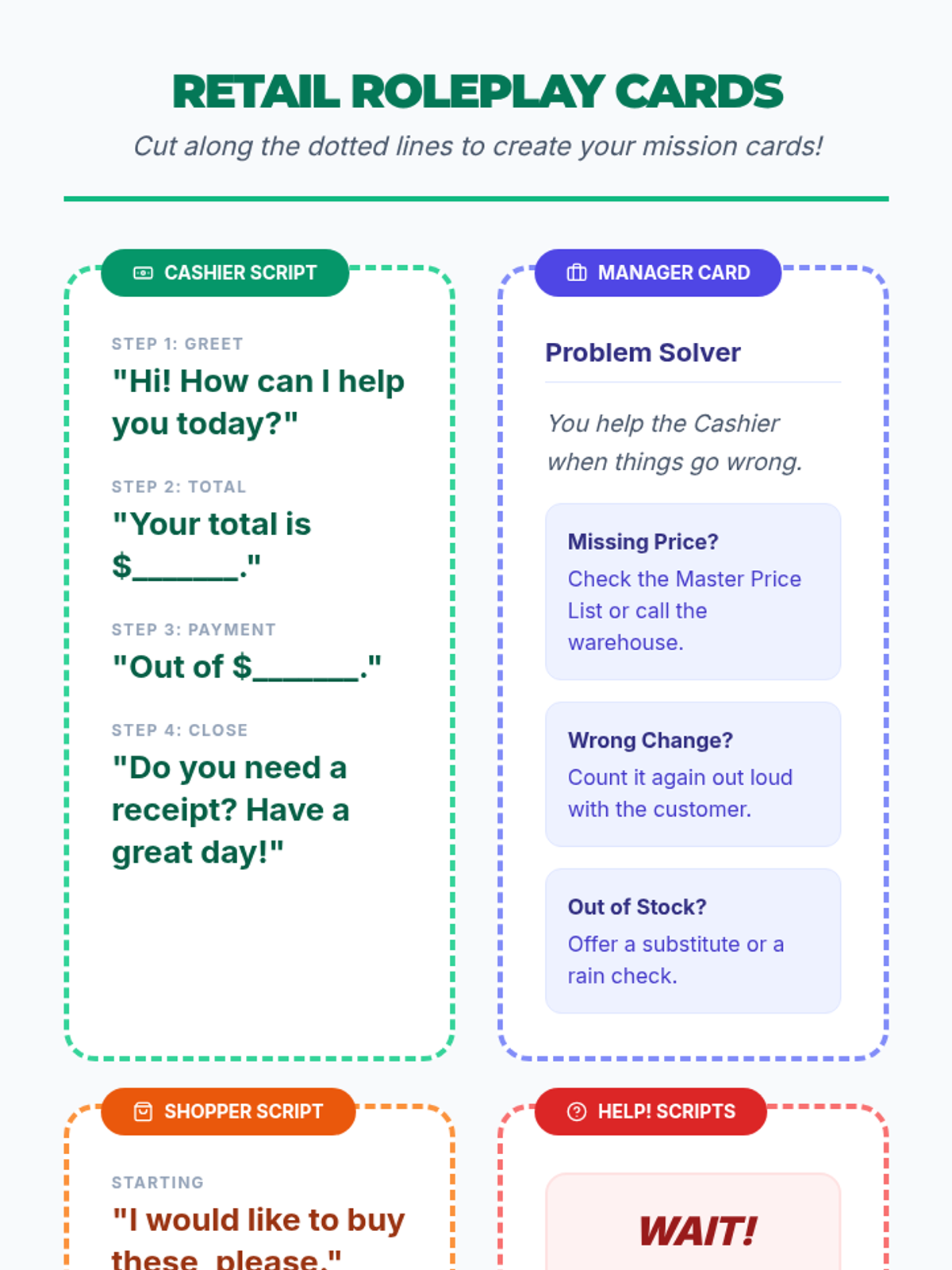
A full-month curriculum focused on developing independence through real-world simulations, role-playing, and practical application of functional life skills.
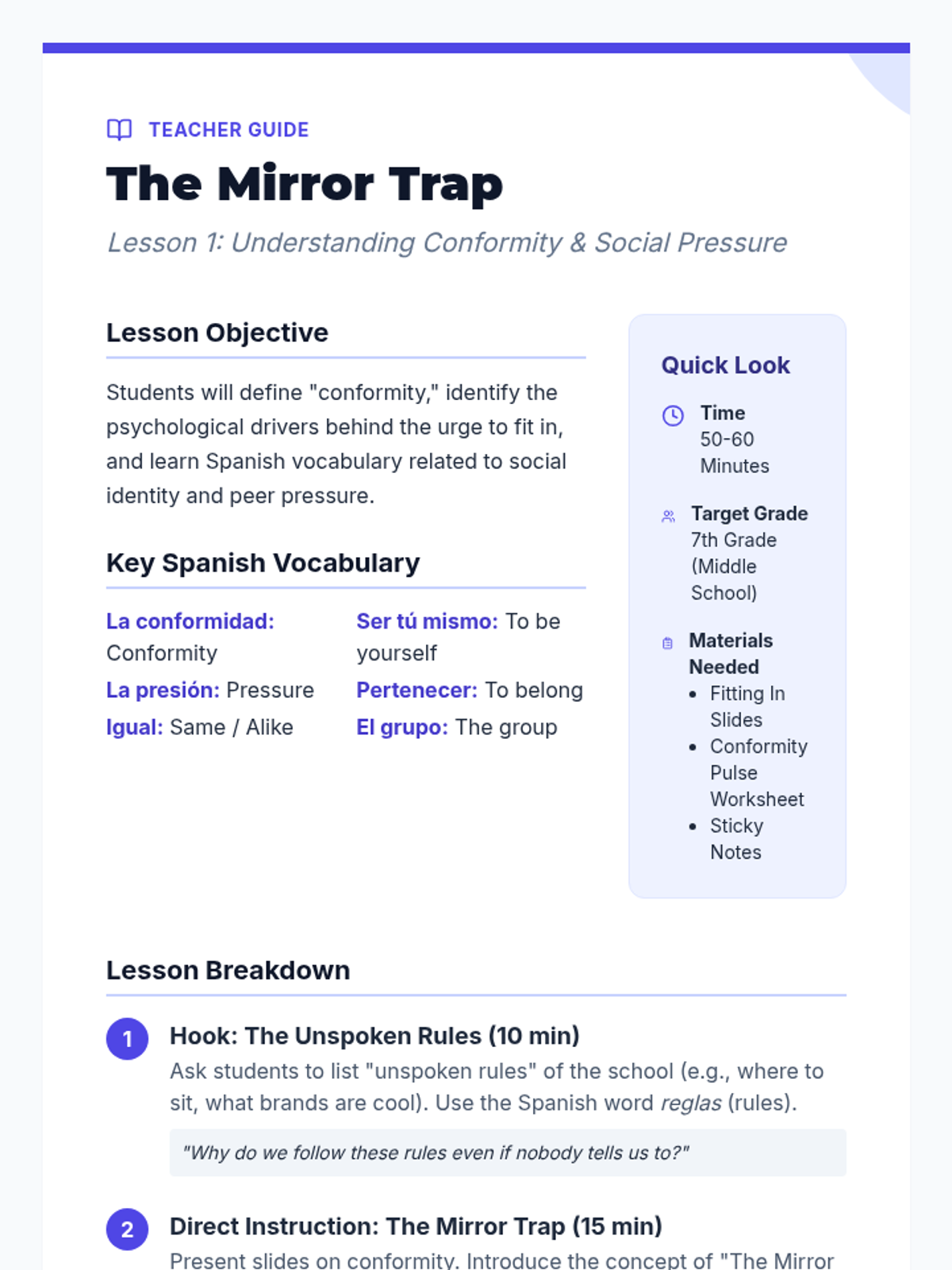
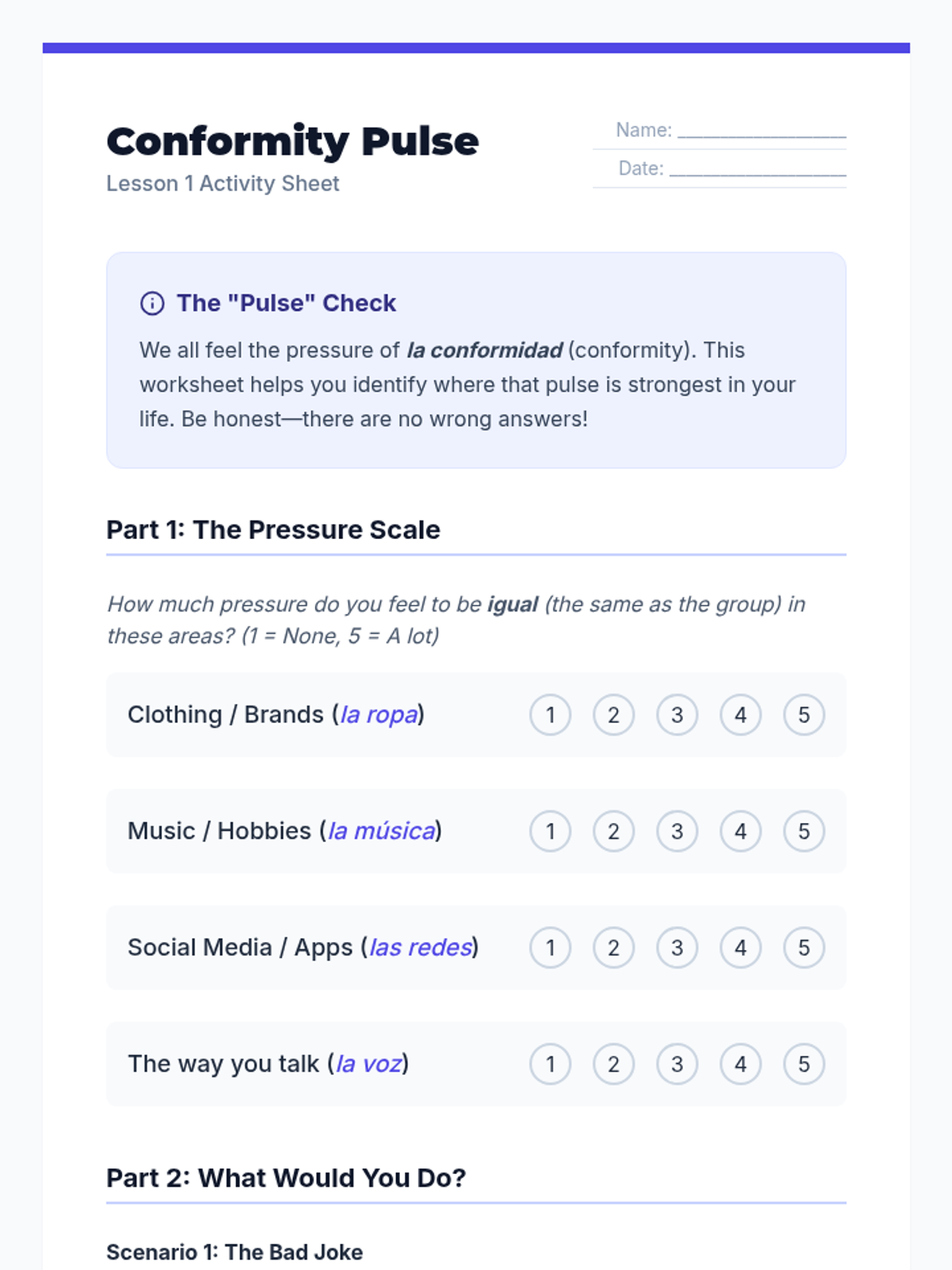
A two-lesson curriculum for middle schoolers exploring the concepts of conformity and the beauty of individual differences, integrating Spanish vocabulary to build self-acceptance and tolerance.
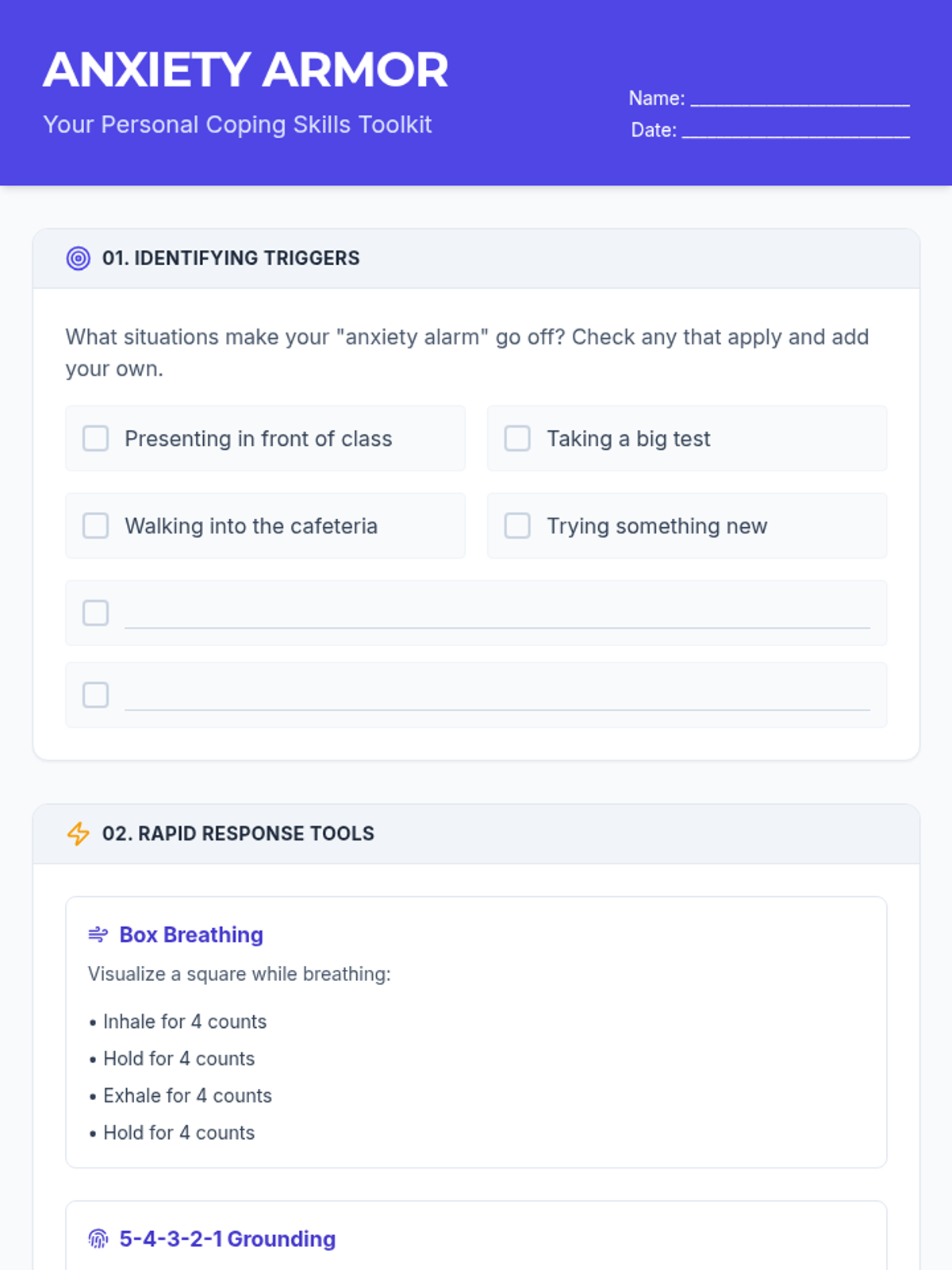
A comprehensive social-emotional learning sequence for middle schoolers, focusing on managing anxiety, reading social cues, developing a growth mindset, and resolving conflicts through de-escalation.
A comprehensive six-week empowerment program for middle school girls focused on building self-confidence, identifying healthy friendship patterns, navigating social hierarchies, and developing self-advocacy skills.
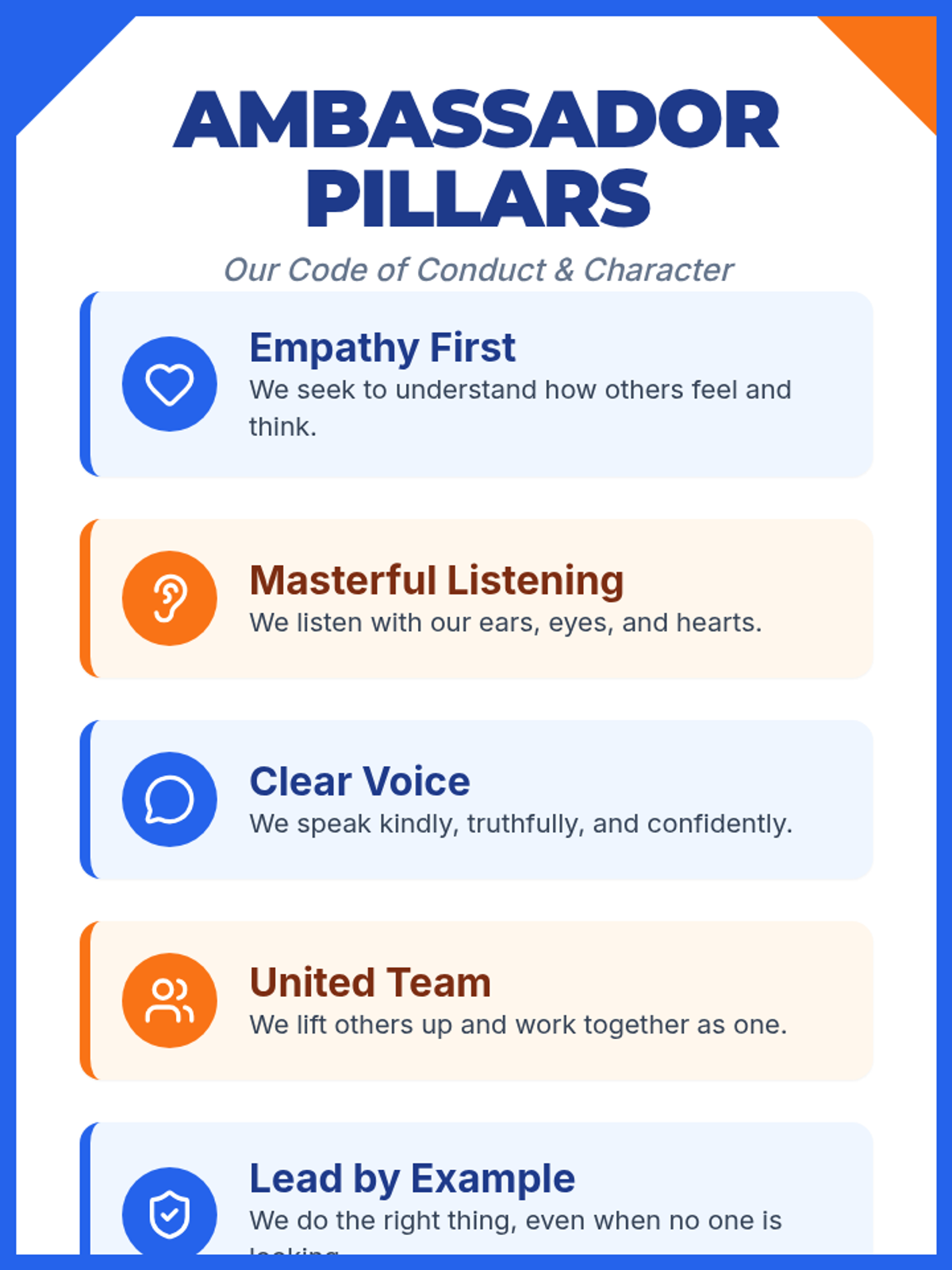
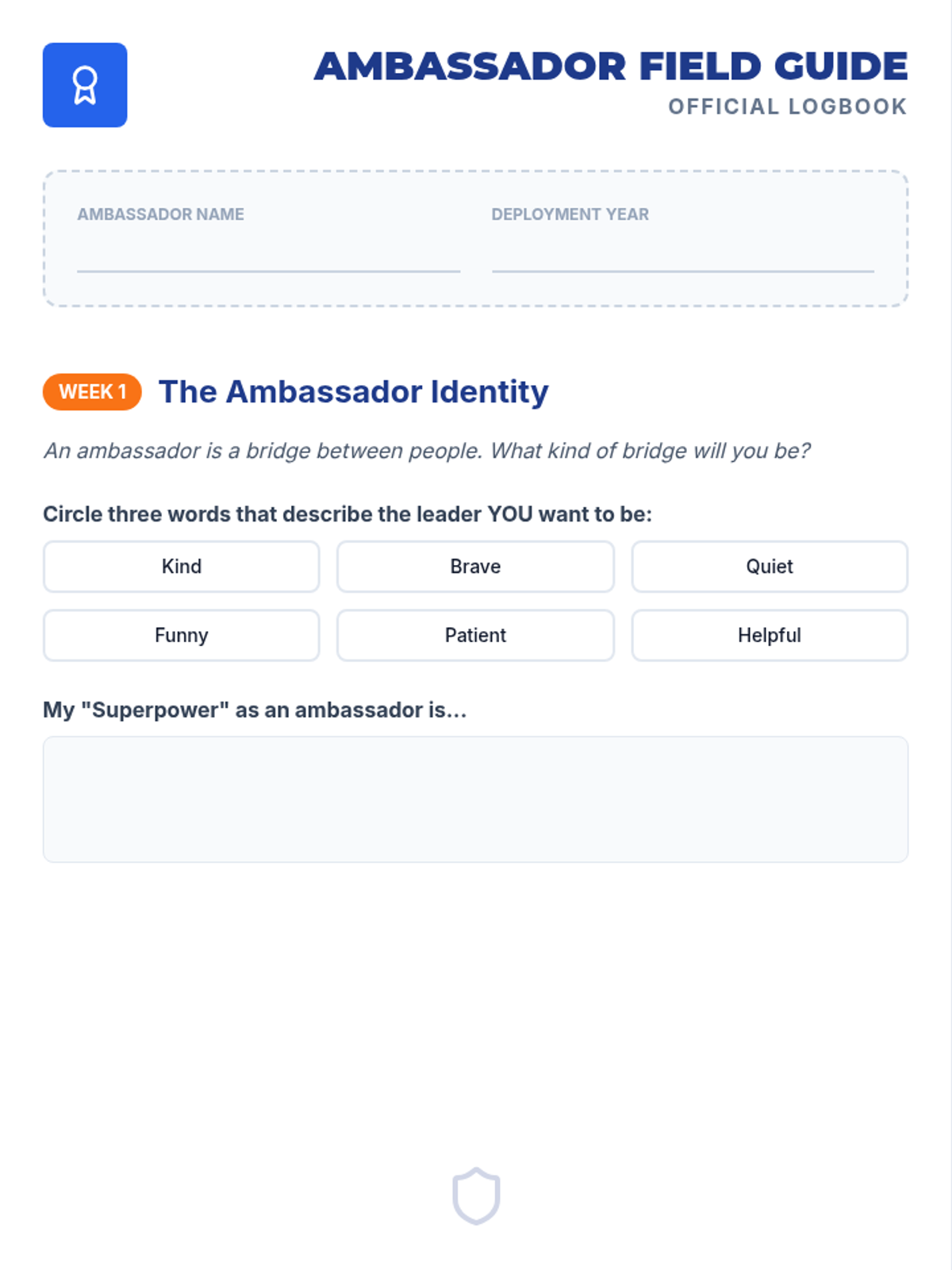
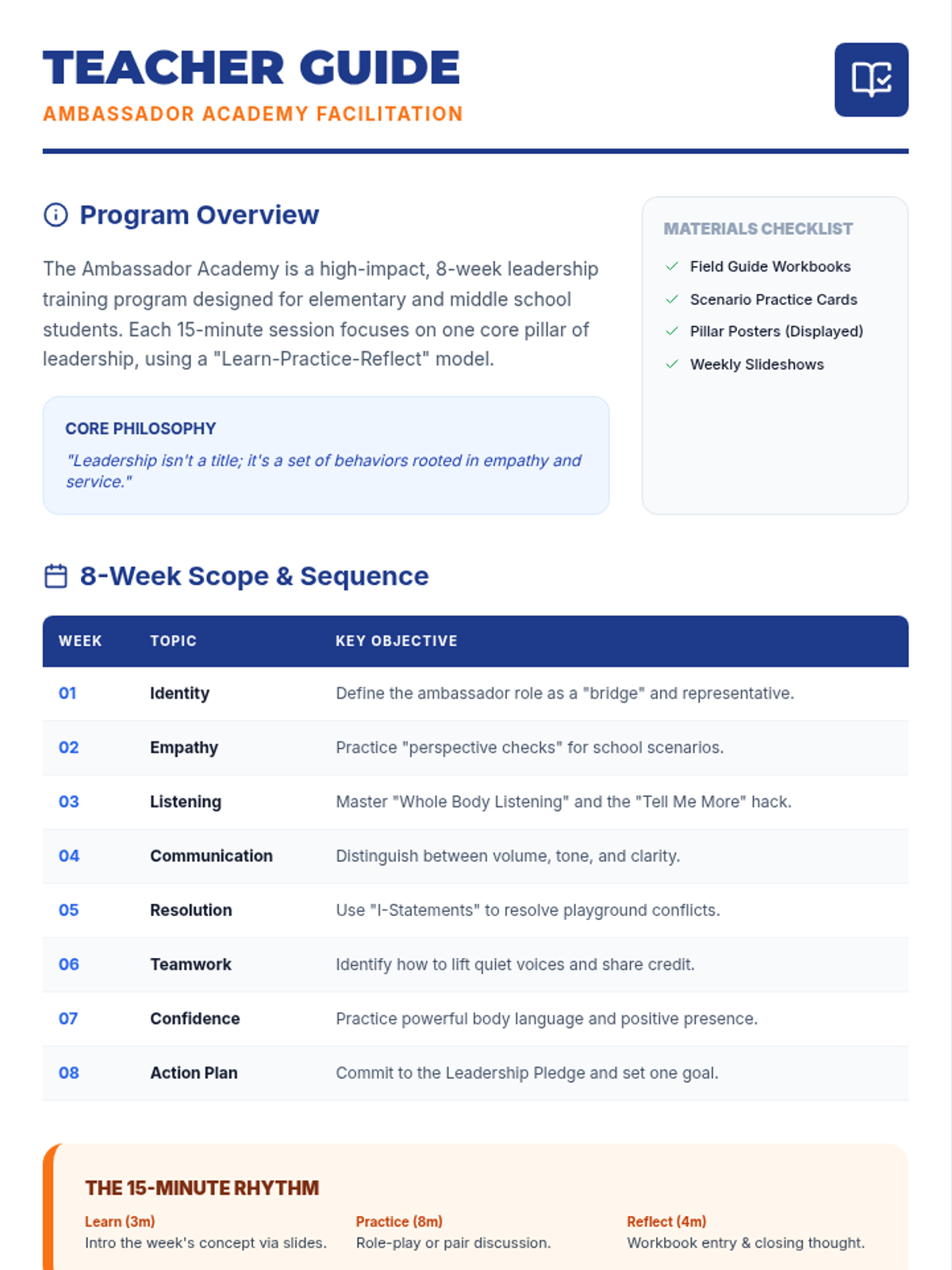
An 8-week leadership training program for school ambassadors, focusing on empathy, communication, and active listening through short, high-impact sessions.
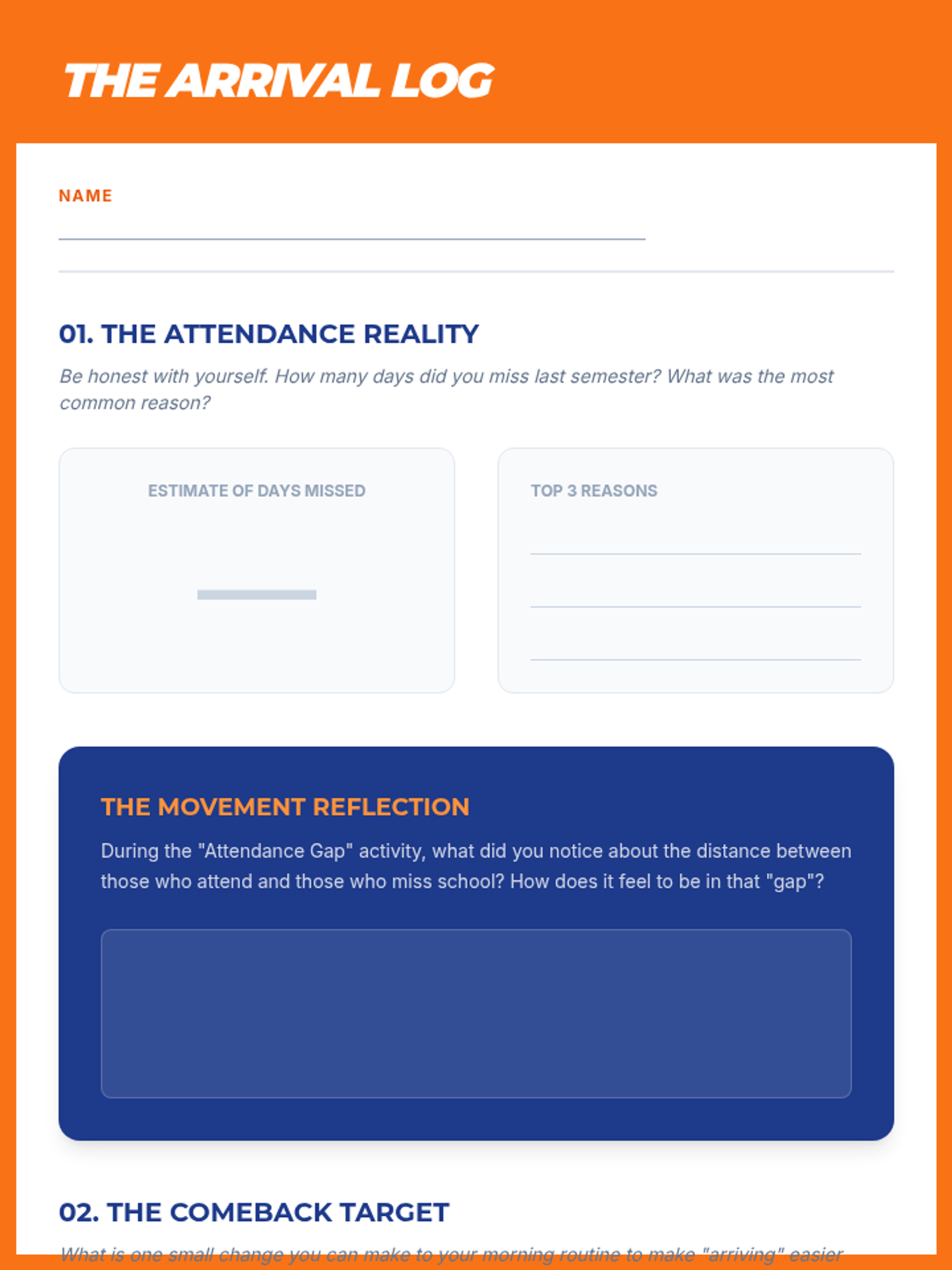
A 6-week academic intervention program for middle schoolers, focusing on attendance, organization, study skills, and self-advocacy through movement-based learning and reflective practice.
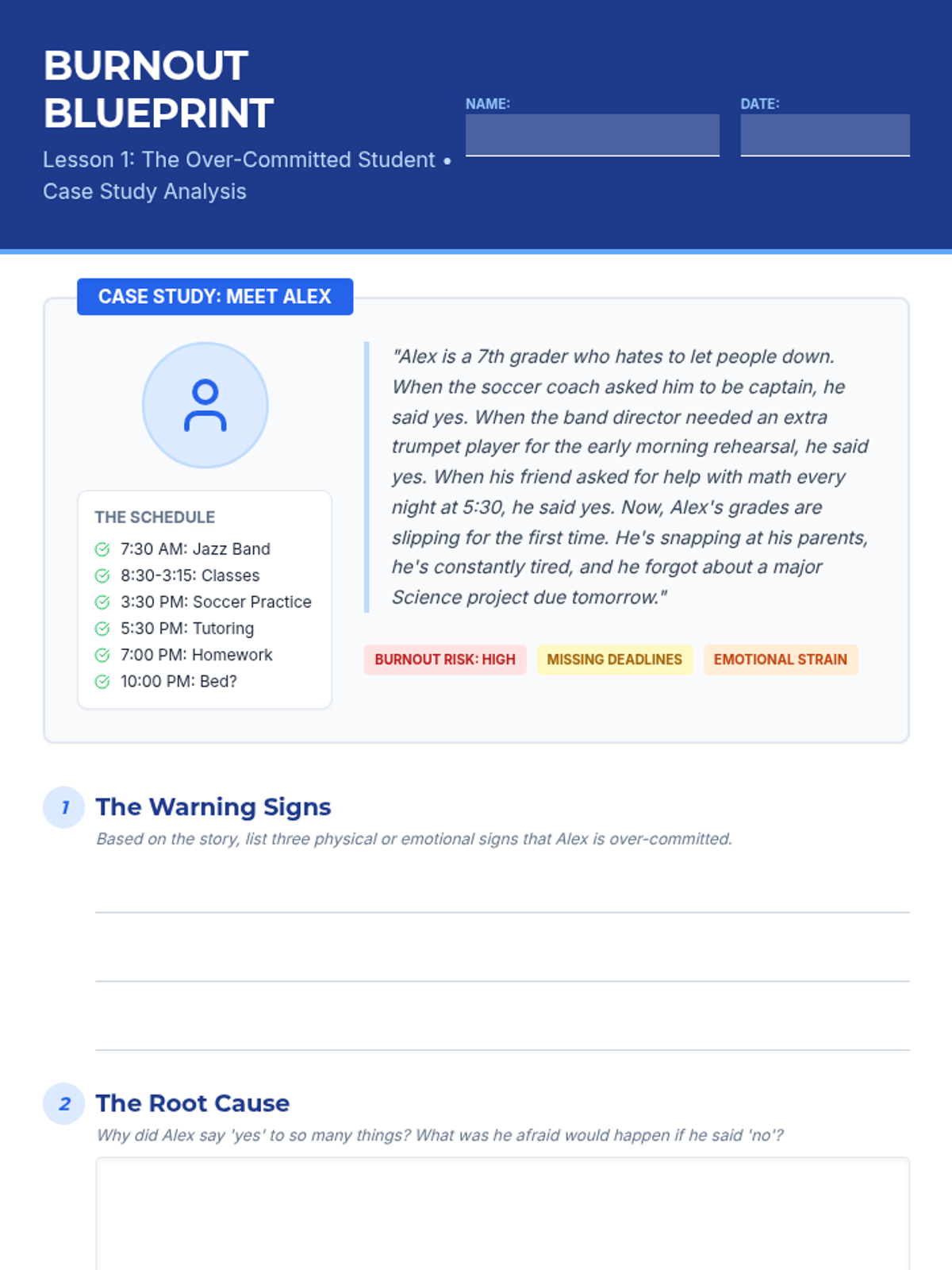
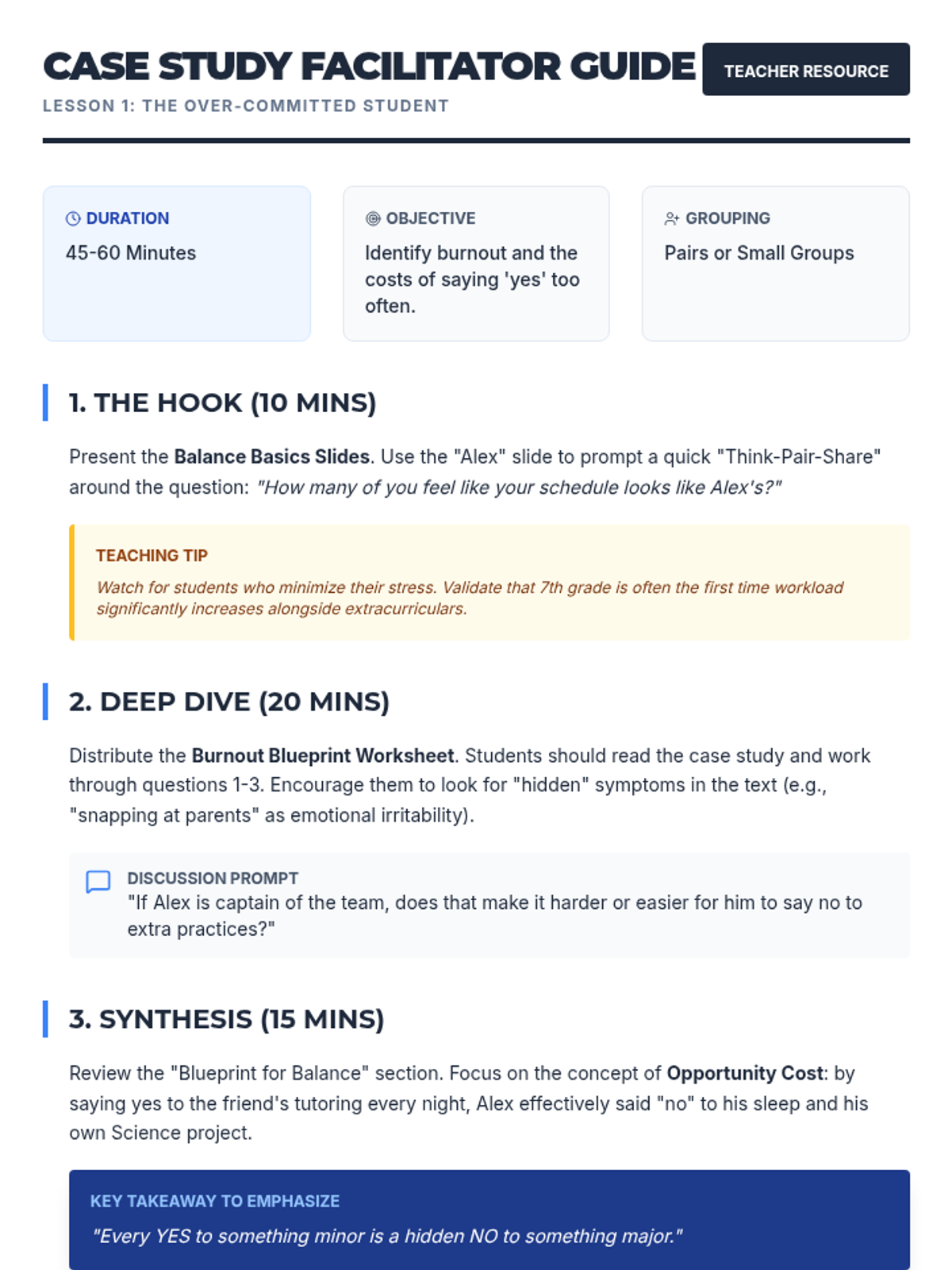
A 5-lesson unit for 7th-grade students focusing on the interpersonal skills required for time management: setting boundaries, communicating overload, and advocating for a balanced schedule. Students progress from identifying burnout to drafting a personal accountability contract.
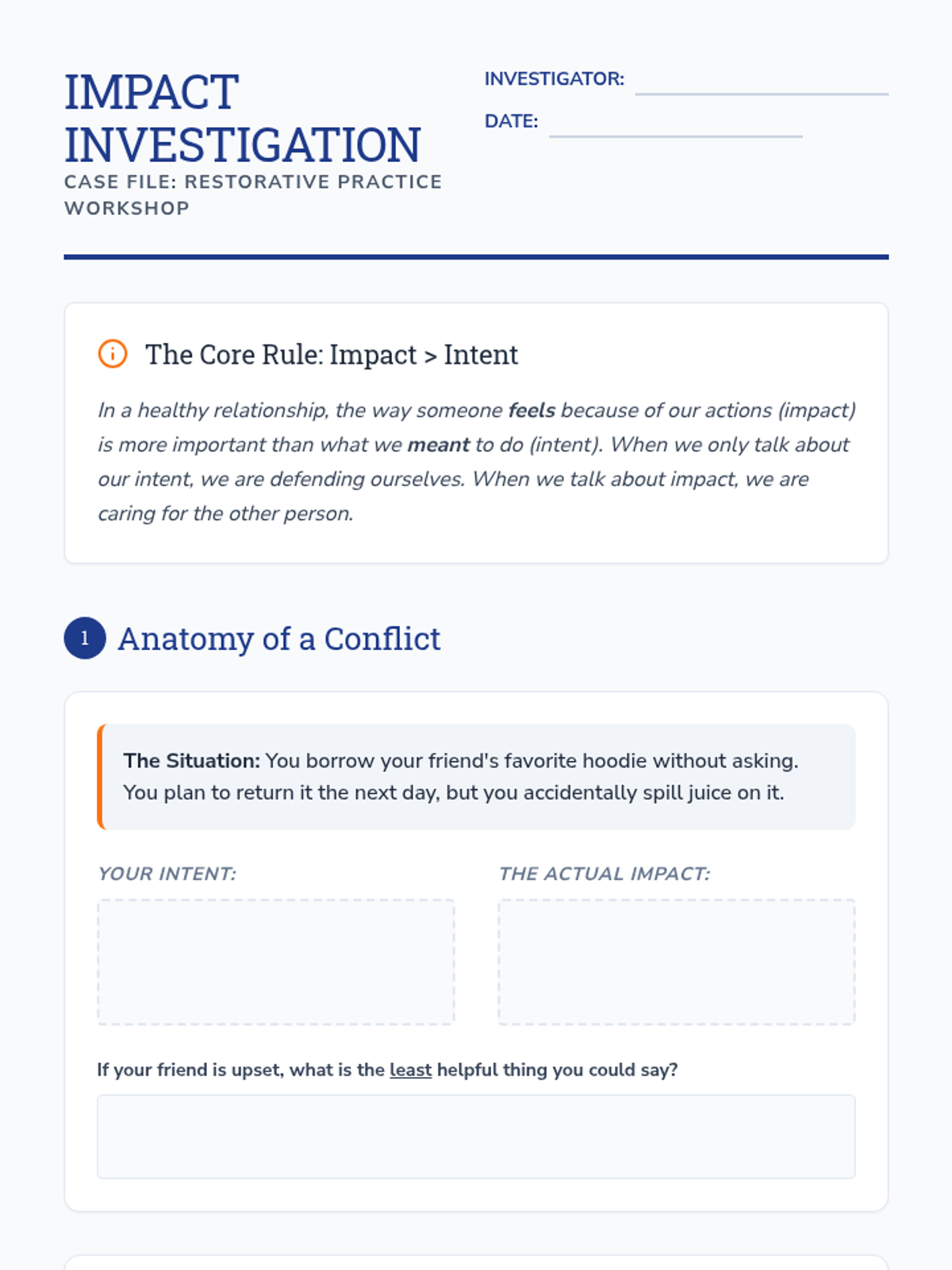
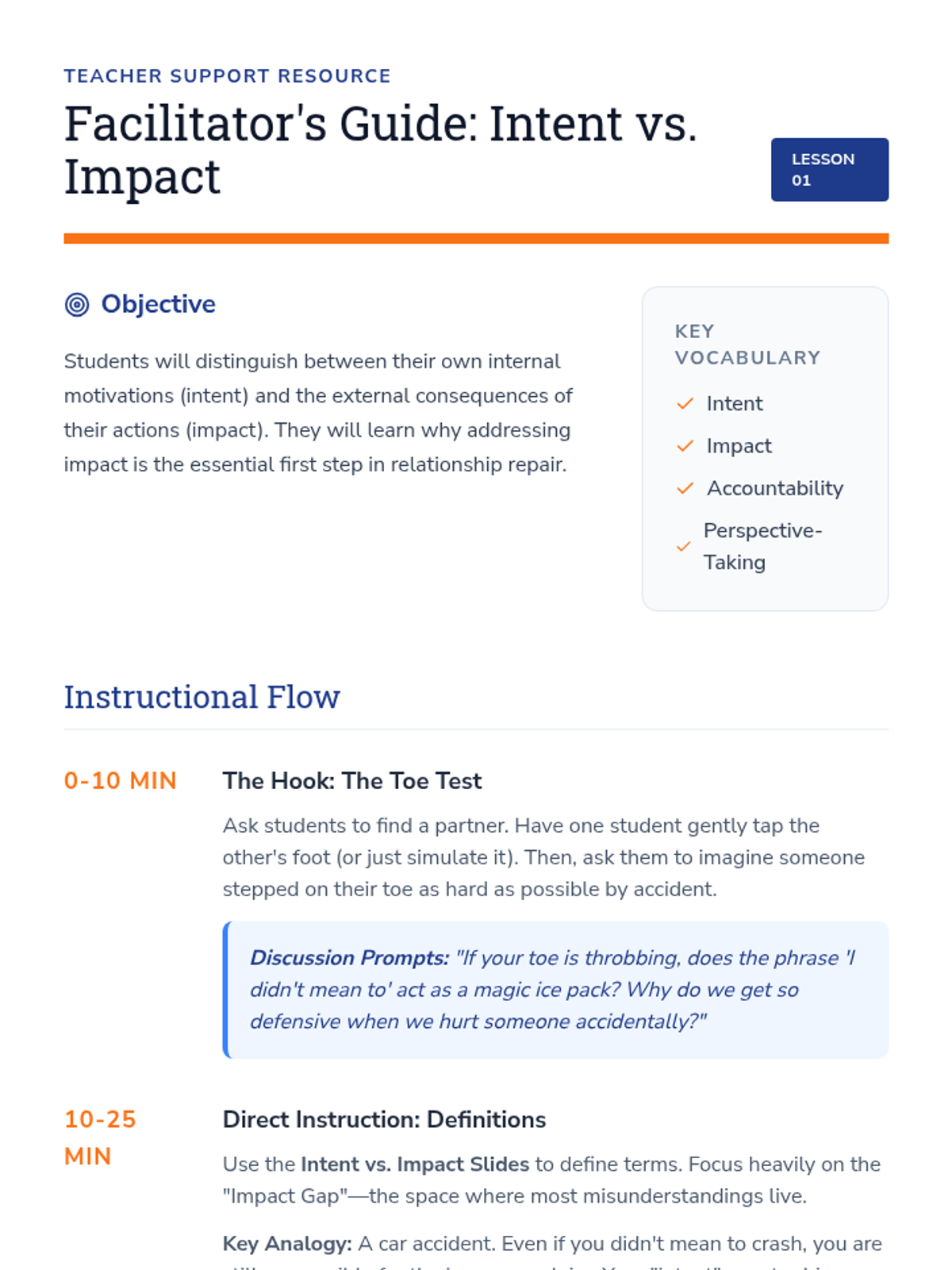
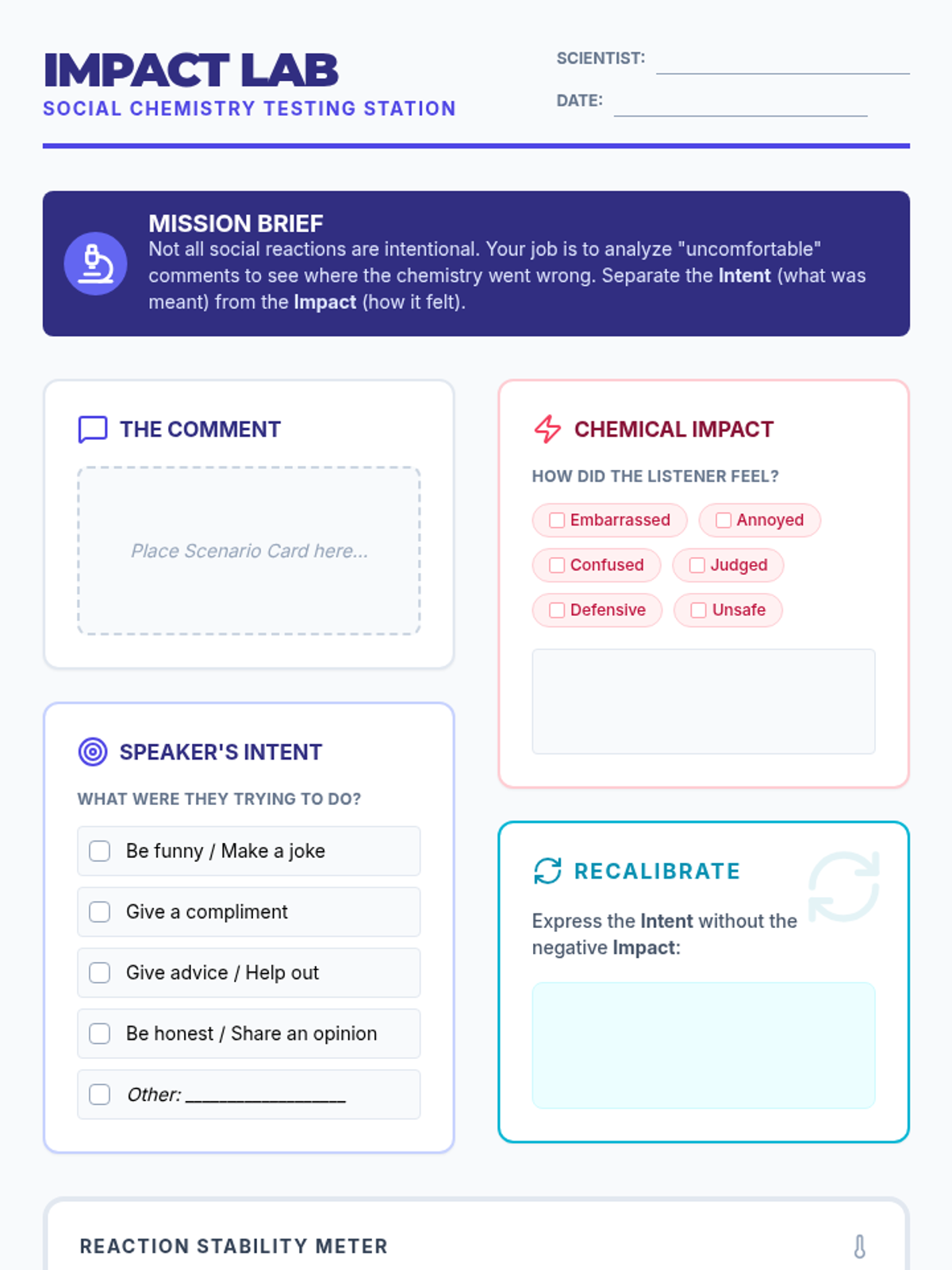
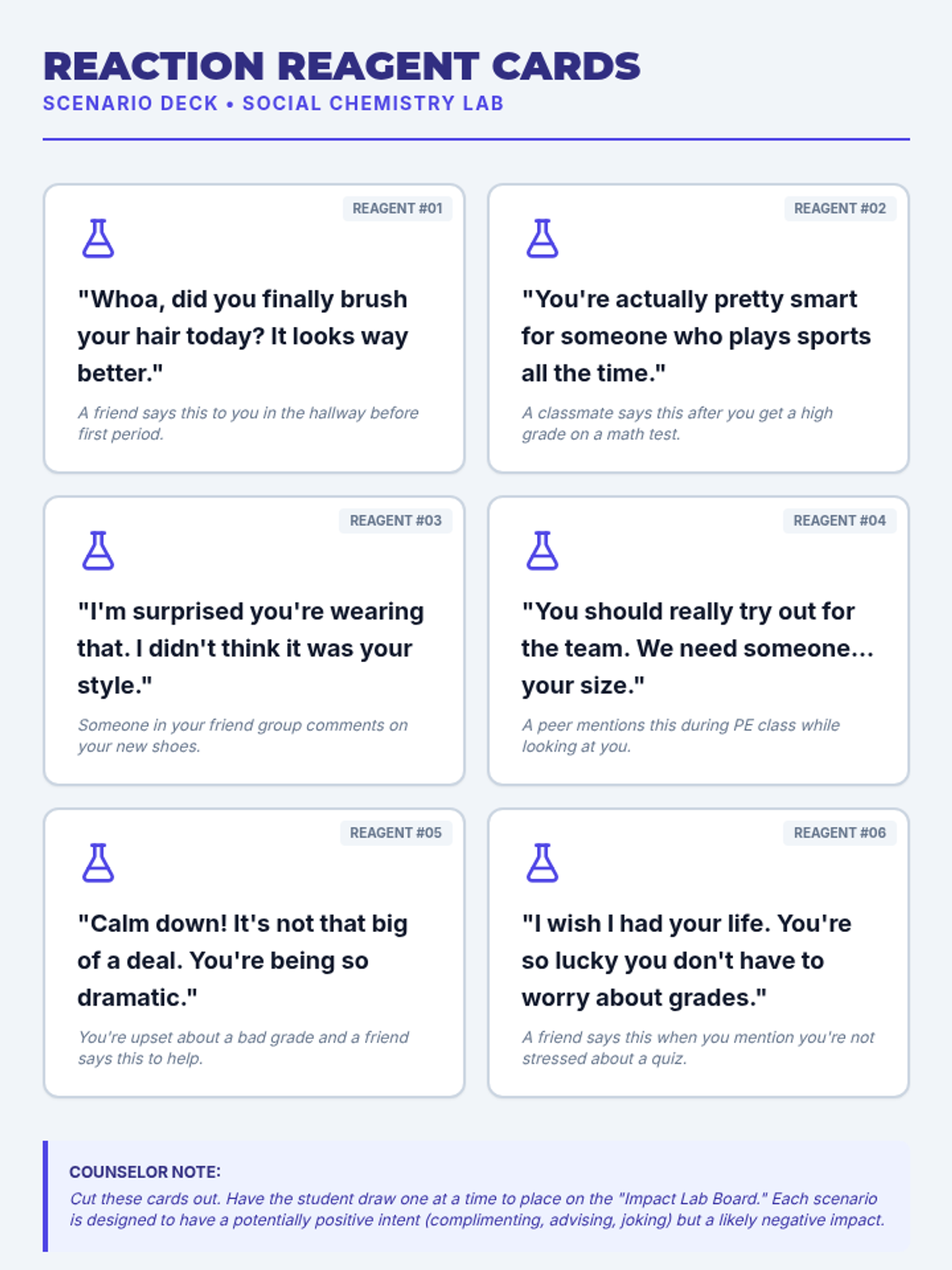
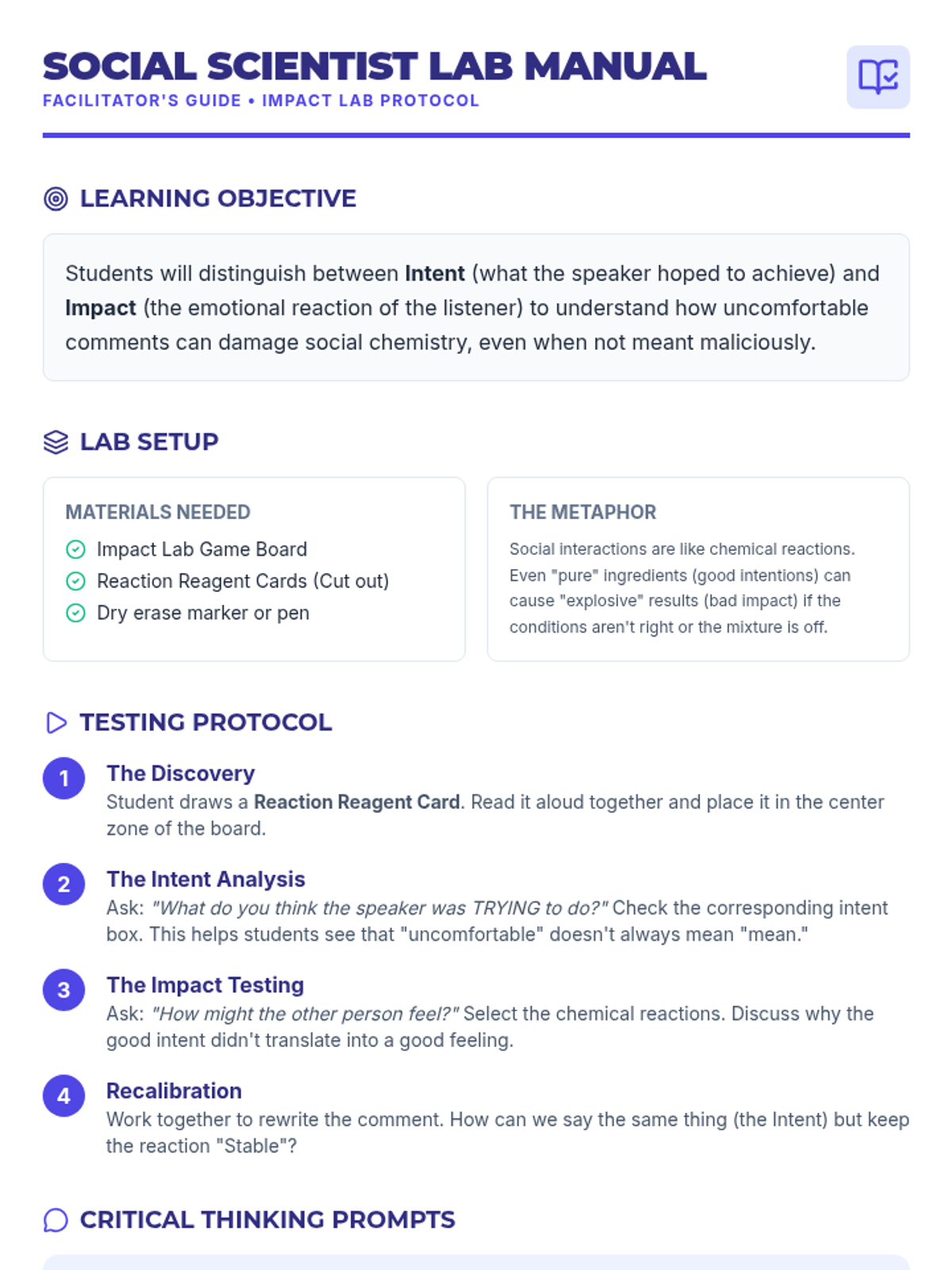
A 5-lesson sequence for 7th grade students focusing on restorative practices, the difference between intent and impact, crafting genuine apologies, and the long-term process of rebuilding trust after conflict.
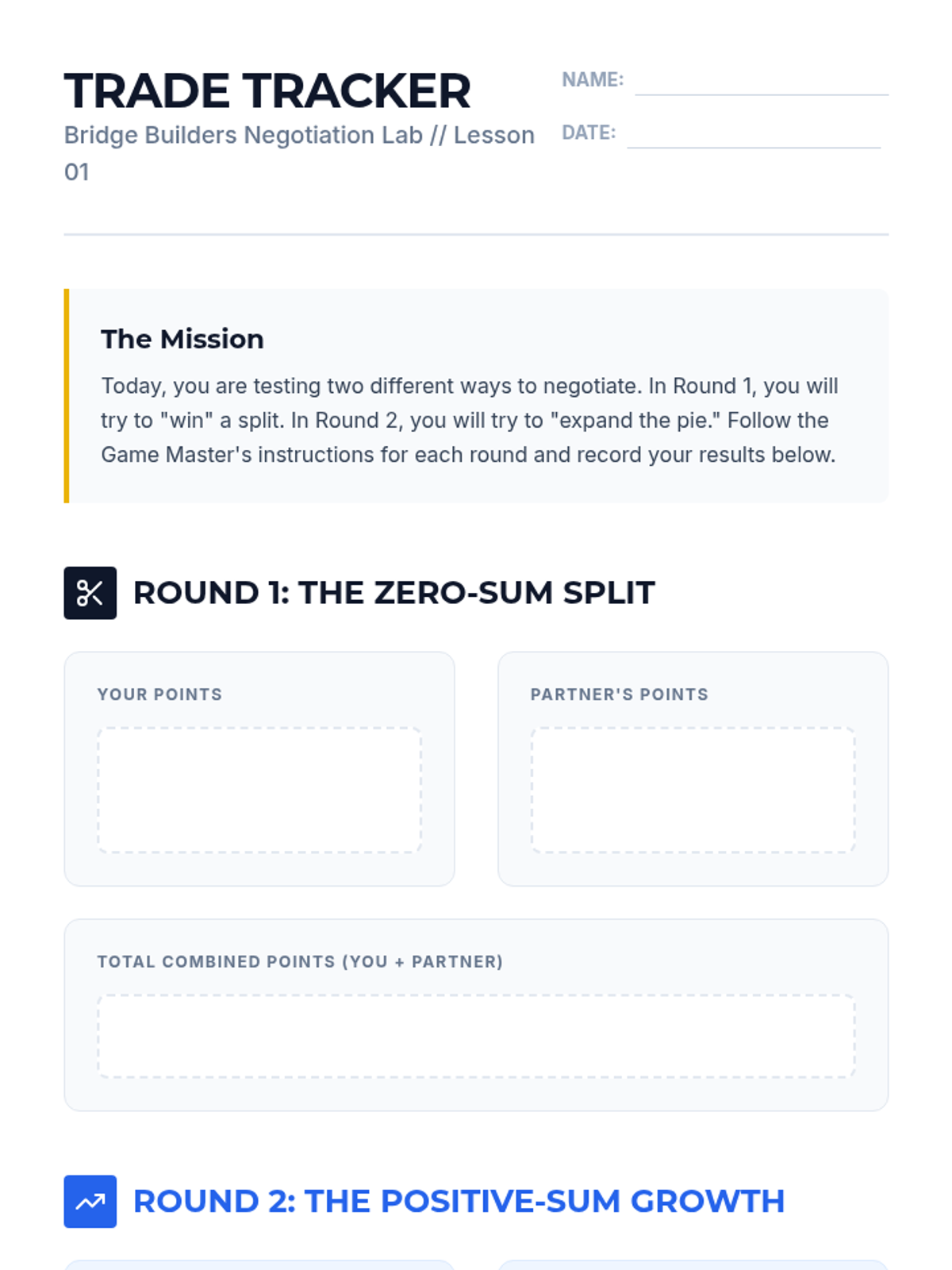
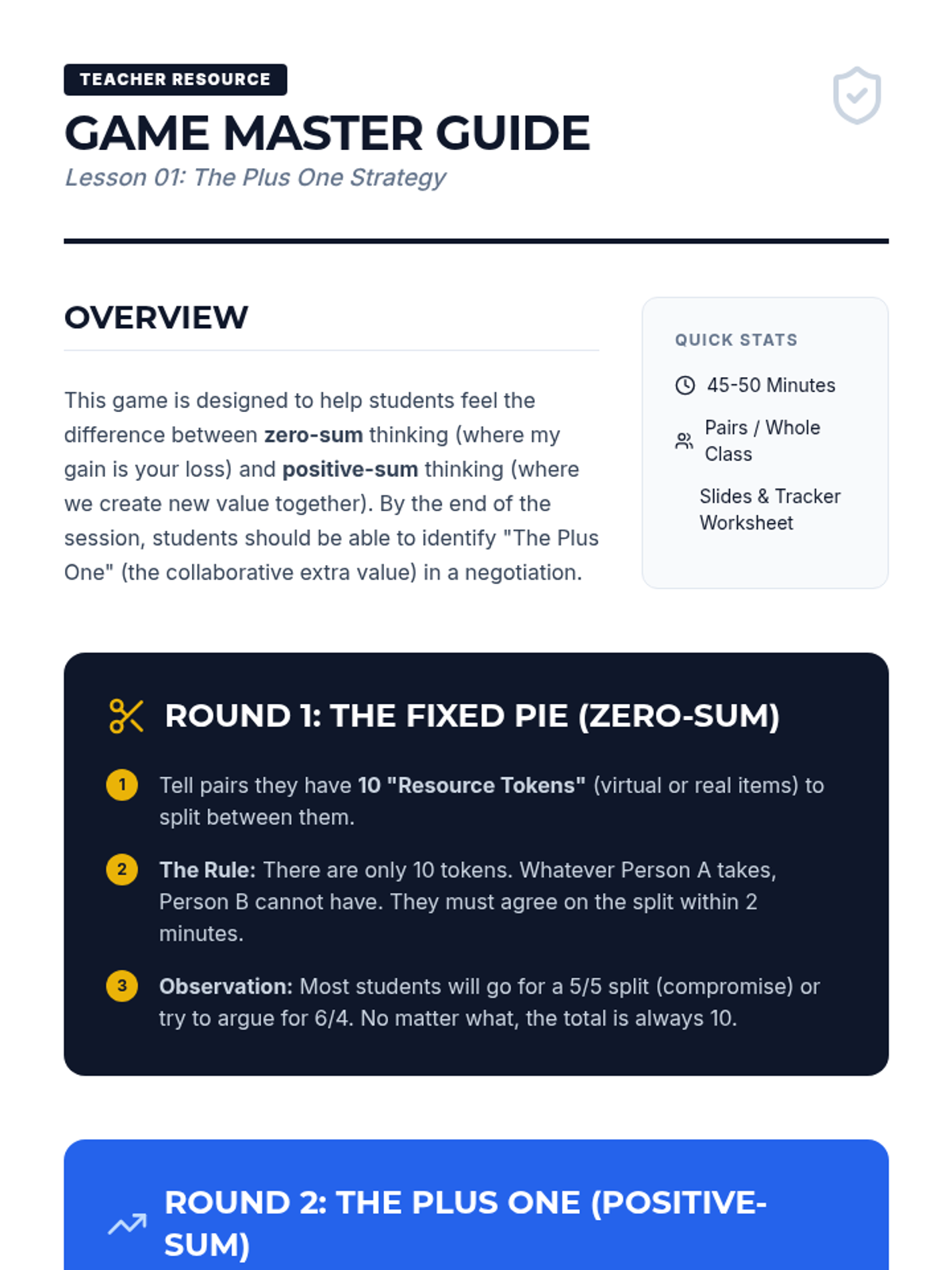
This sequence teaches 7th-grade students how to move beyond simple compromise to collaborative negotiation. Students learn to separate people from problems, brainstorm creative 'win-win' options, use objective criteria for fairness, and develop a BATNA (Best Alternative to a Negotiated Agreement) to handle complex conflicts effectively while preserving relationships.
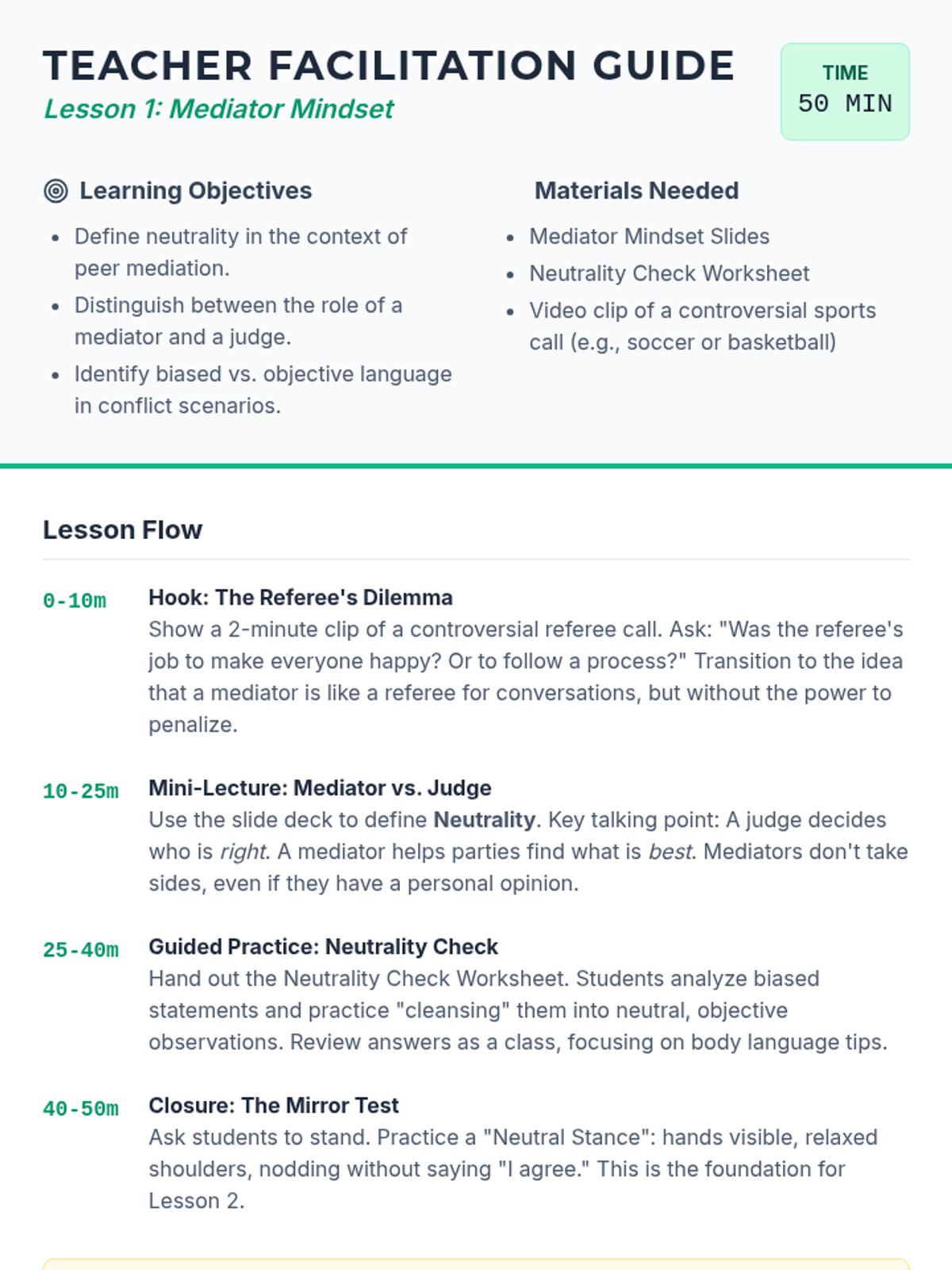
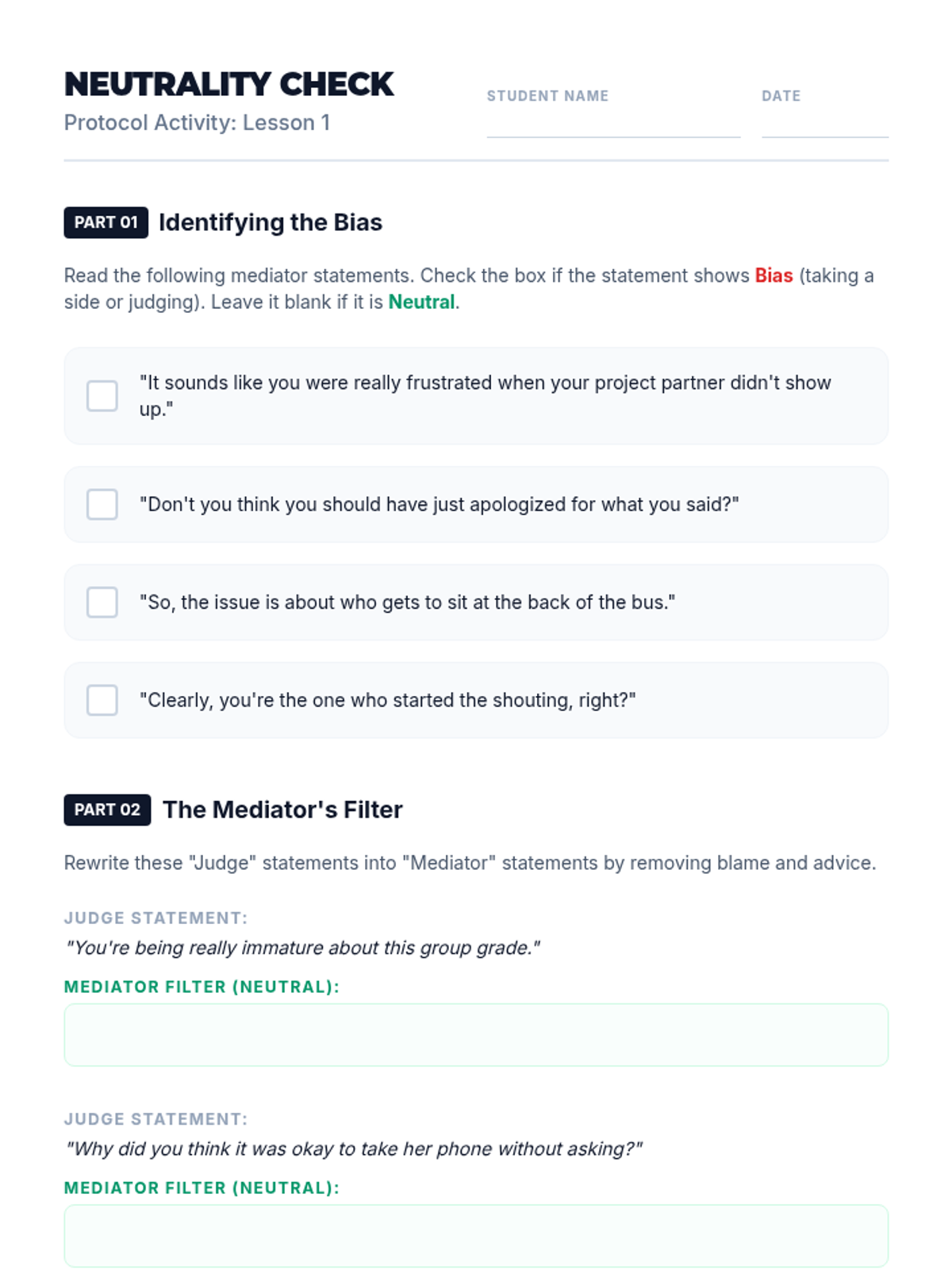
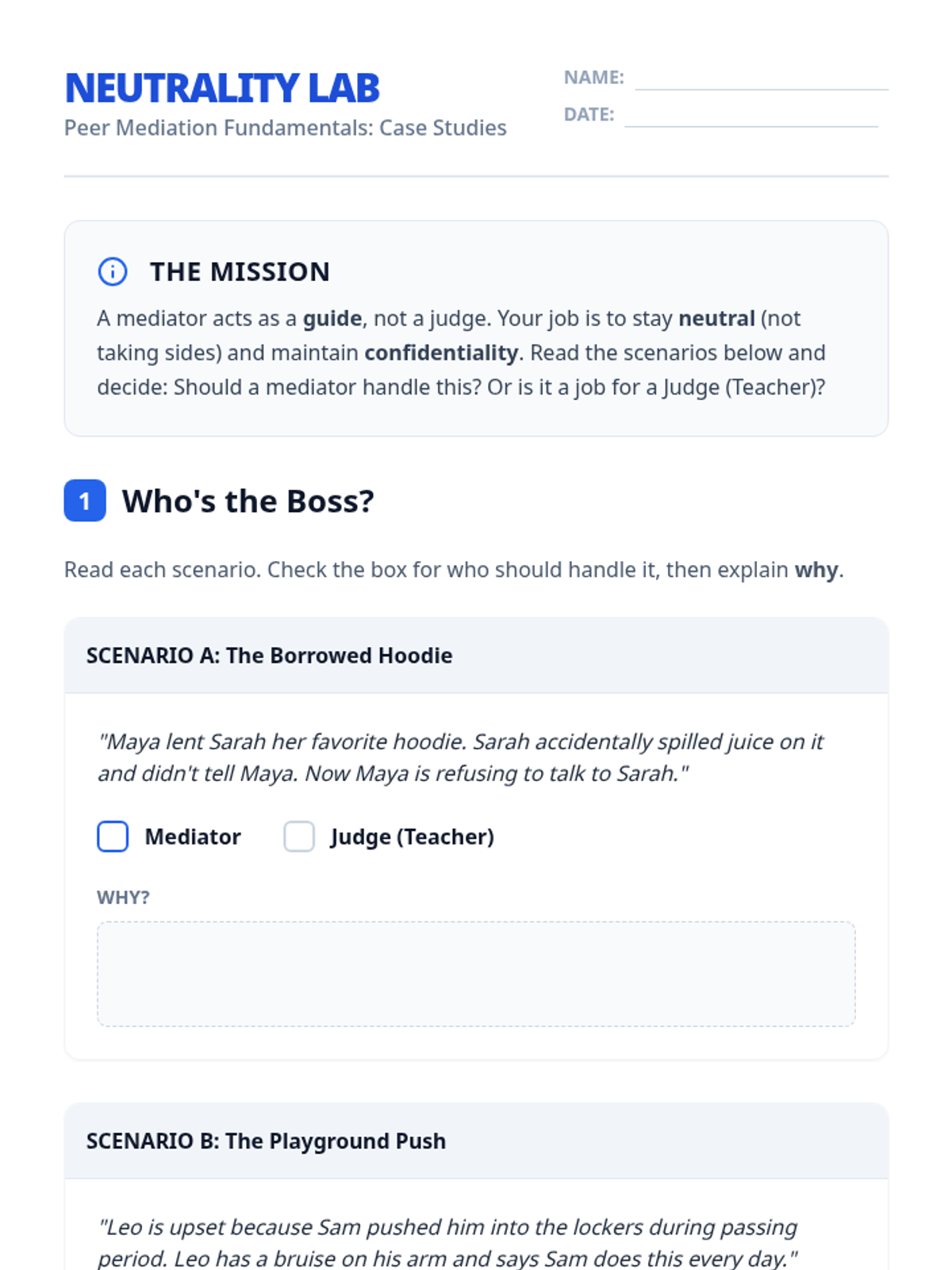
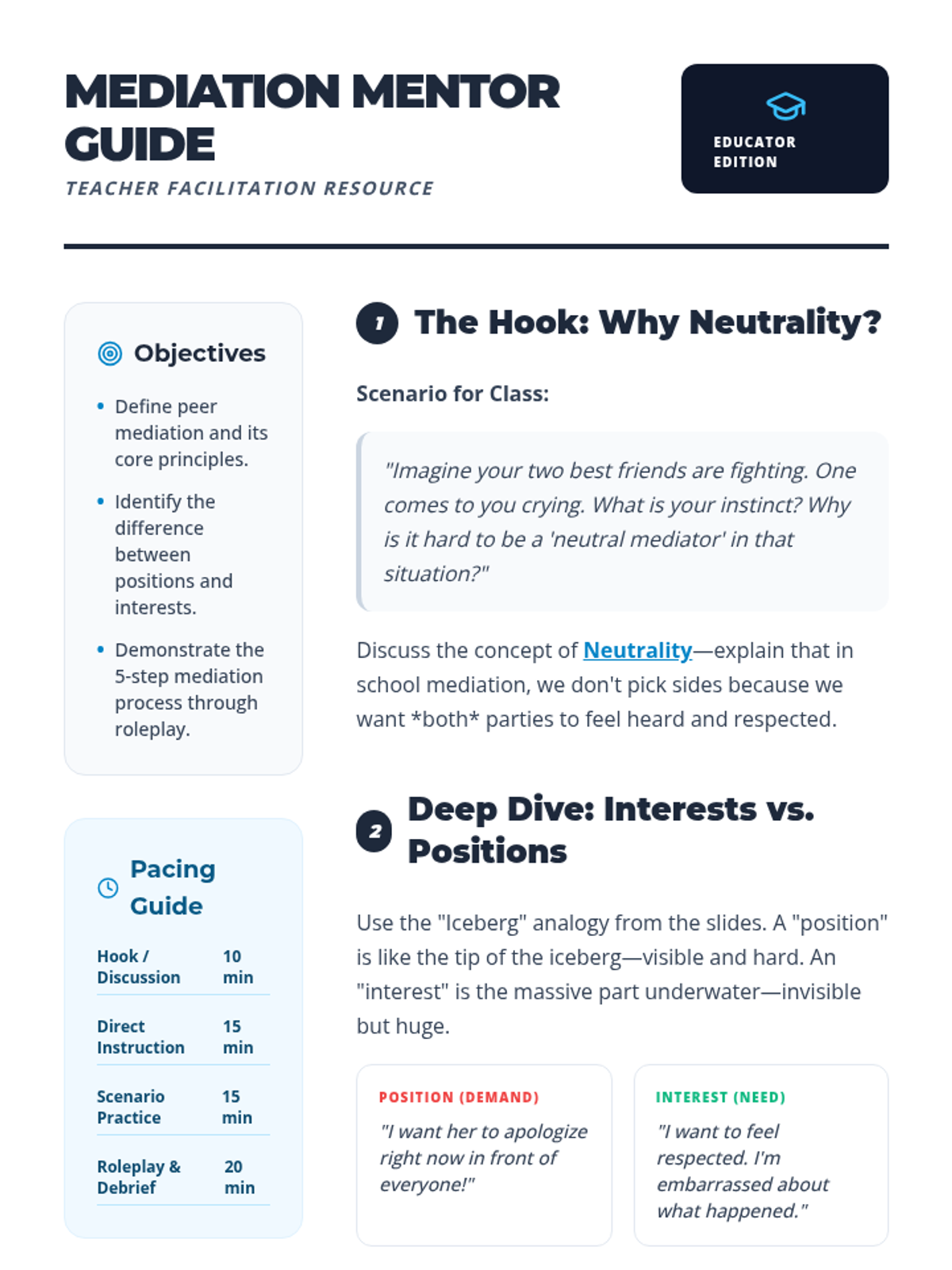
A 5-lesson unit for 7th graders on the formal structure of peer mediation. Students transition from observers to facilitators, learning to maintain neutrality, set ground rules, reframe toxic language, and guide parties toward mutually agreed-upon solutions.
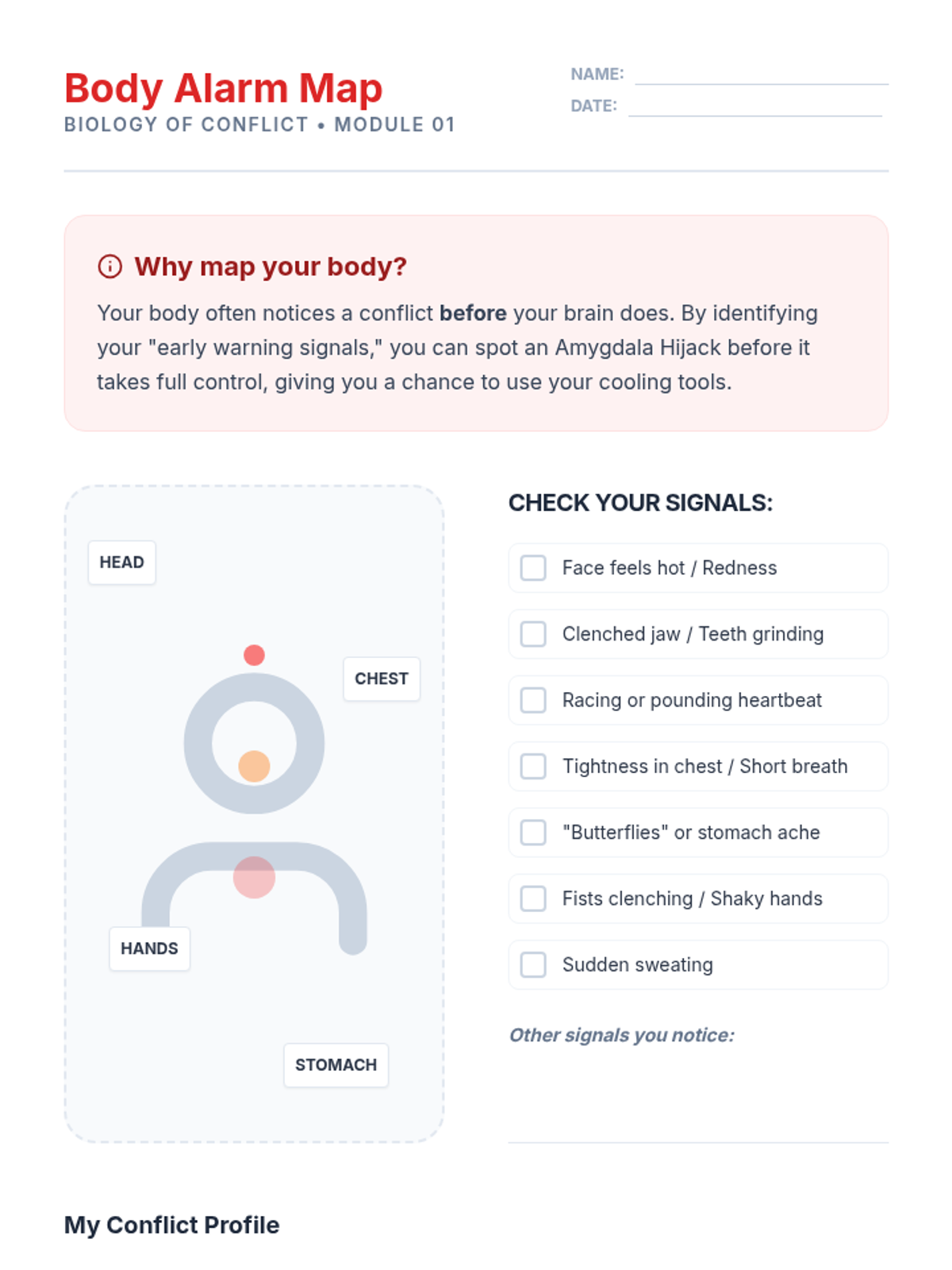
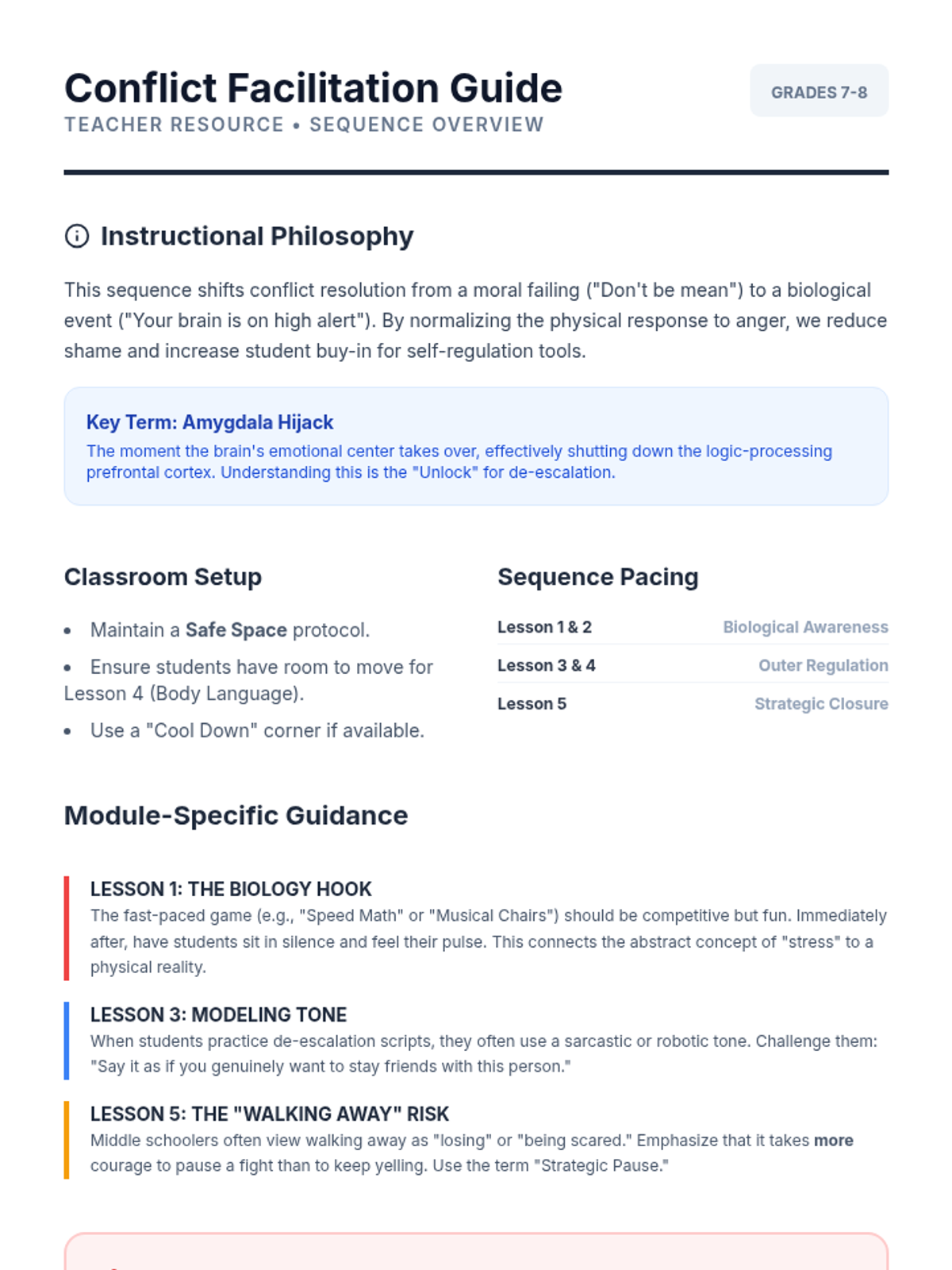
This sequence explores the physiological and psychological aspects of high-conflict situations, providing 7th-grade students with tools for self-regulation, verbal de-escalation, and constructive re-engagement.
A comprehensive 6th-grade sequence on conflict navigation, teaching students to identify root causes, recognize personal conflict styles, practice perspective-taking, understand escalation, and diagnose complex disputes.
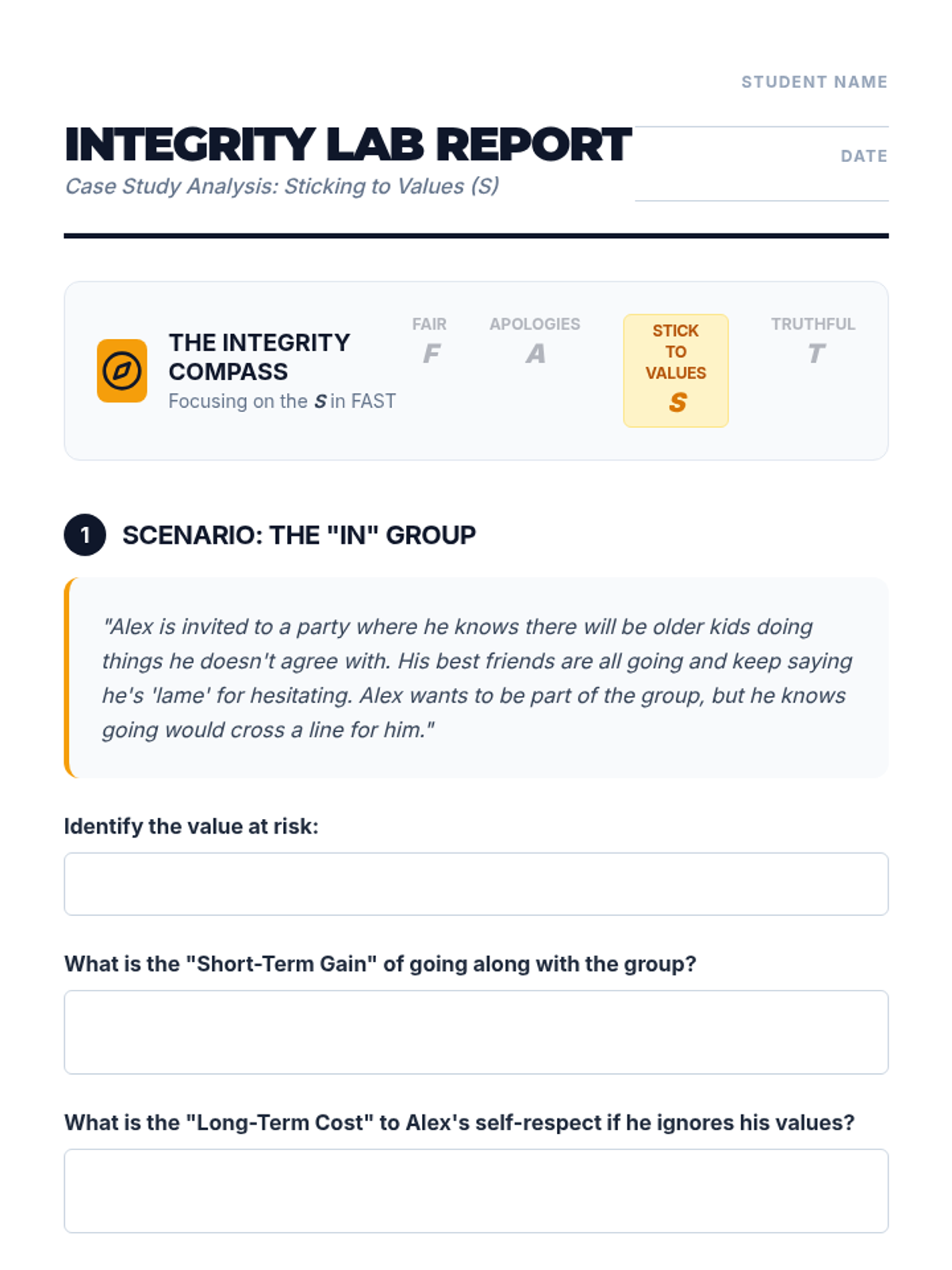
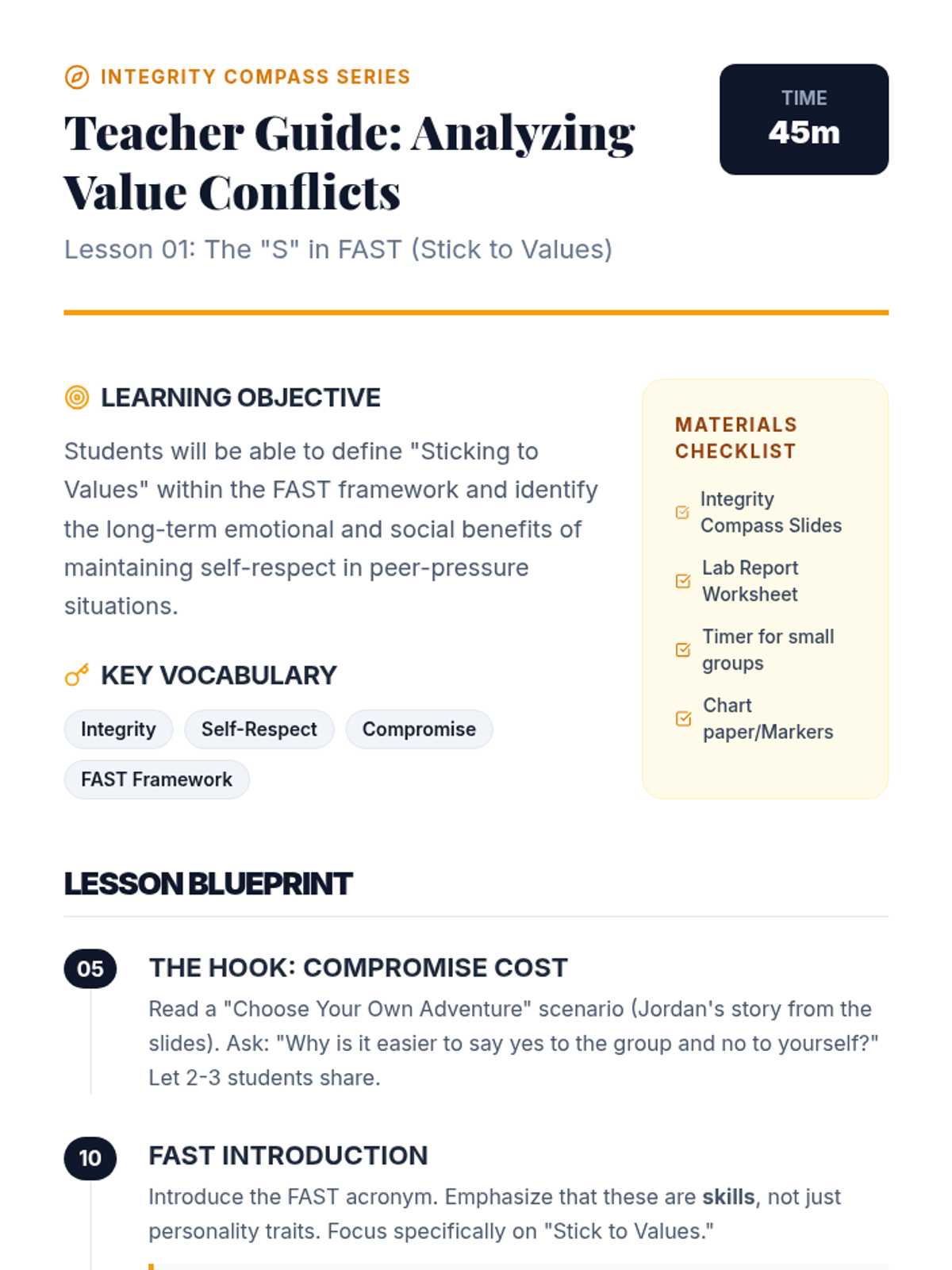
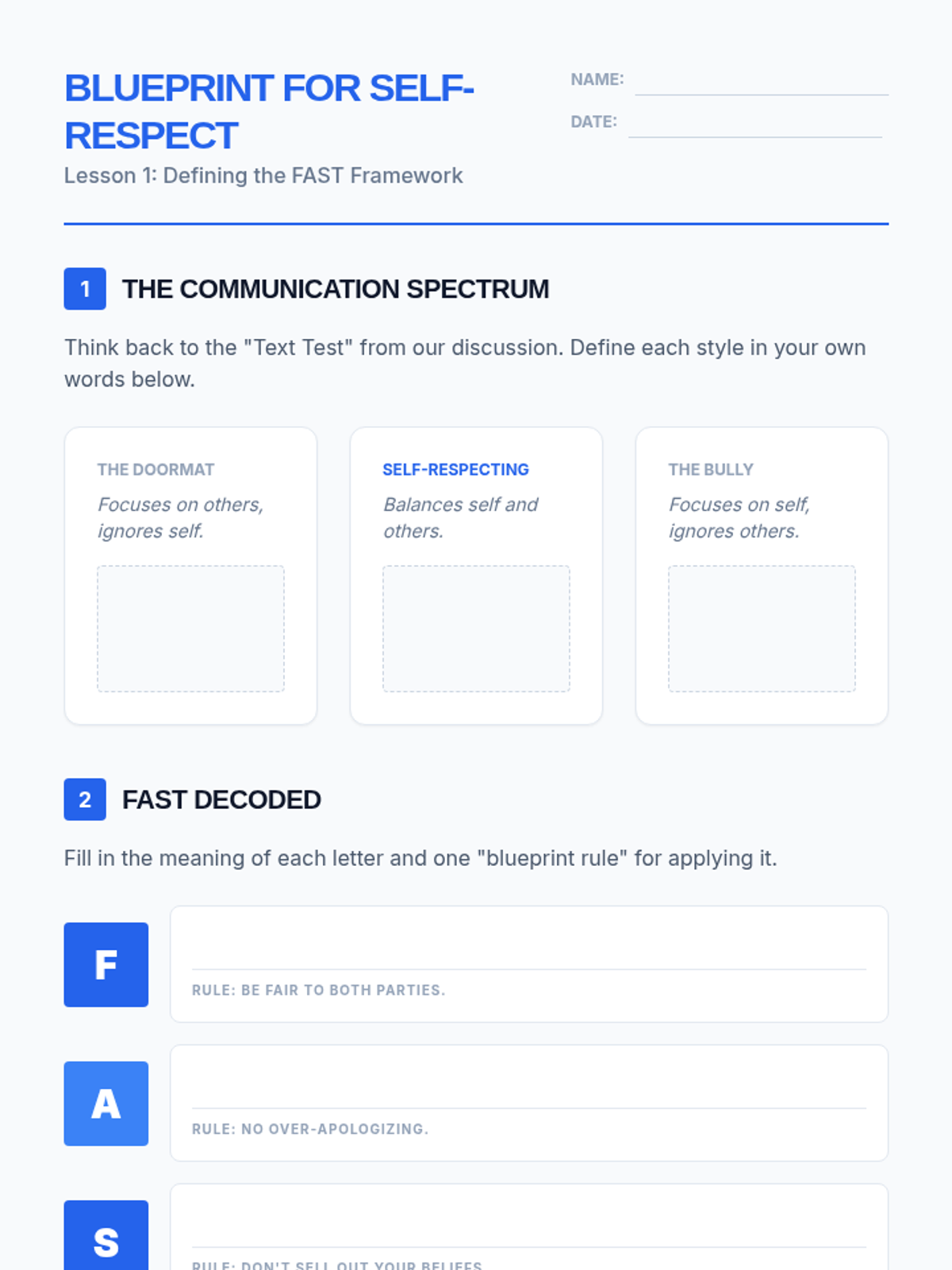
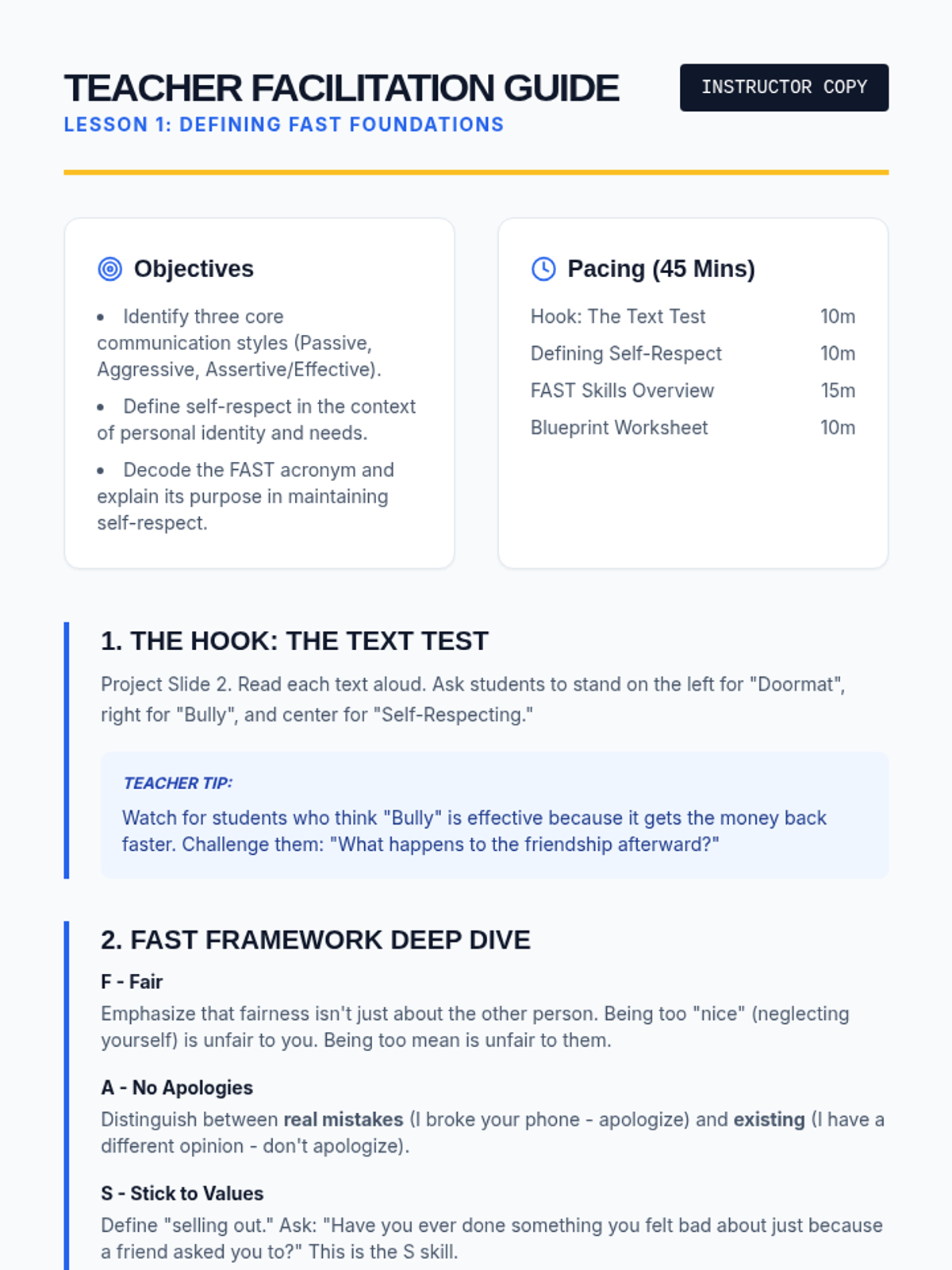
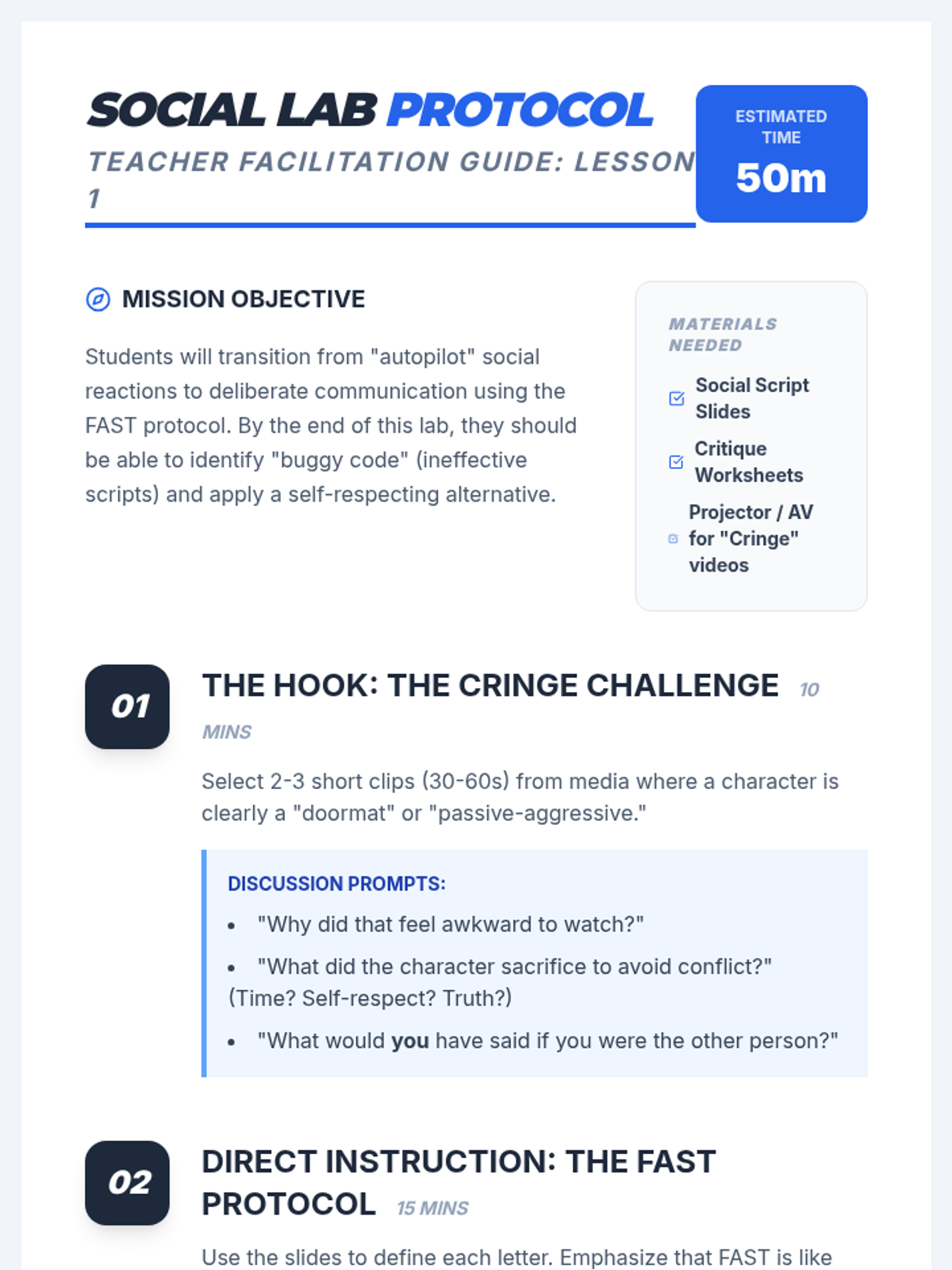
A counseling and life skills sequence for 7th graders focusing on the FAST acronym (Fair, No Apologies, Stick to Values, Truthful) to build self-respect and navigate social dilemmas with integrity.
A comprehensive workshop-style sequence for 7th graders to master the FAST acronym (Fair, No Apologies, Stick to values, Truthful), focusing on maintaining self-respect in social interactions.
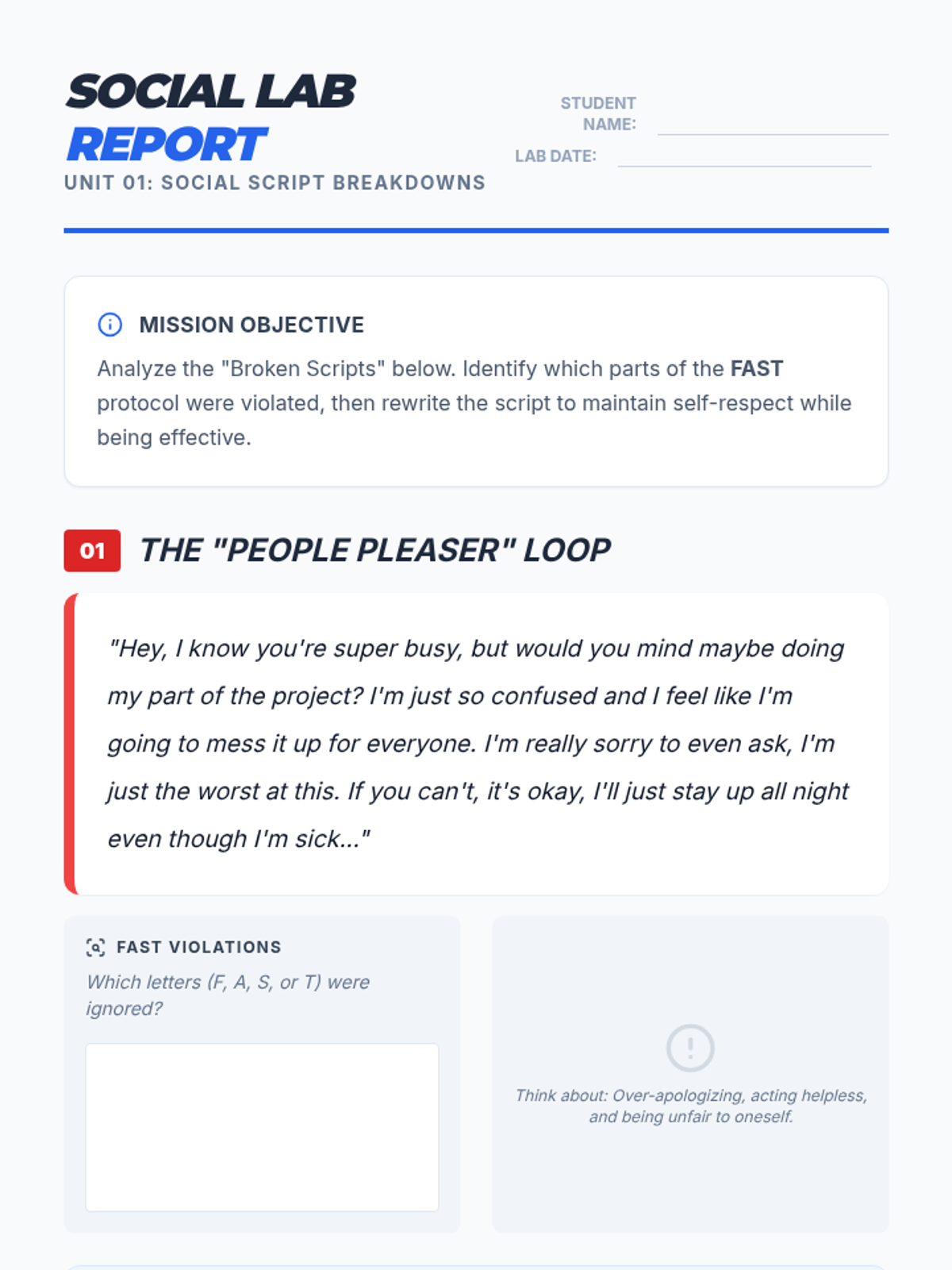
A simulation-heavy sequence for 7th graders to master FAST skills (Fair, Apologies, Stick to values, Truthful) through social labs, role-plays, and pattern recognition.
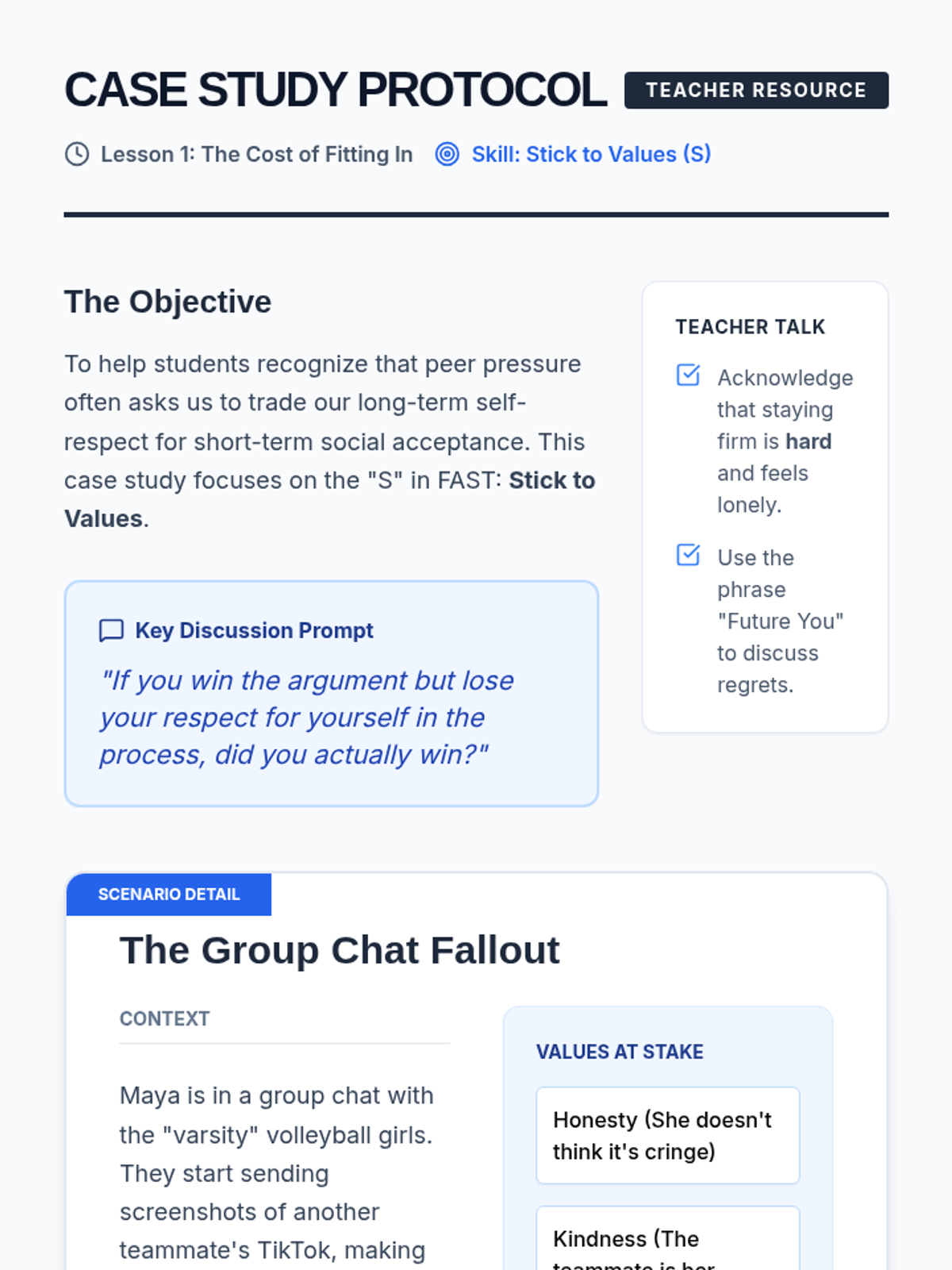
An 8th-grade counseling sequence exploring the FAST skills for self-respect (Fair, No Apologies, Stick to Values, Truthful). Students analyze social pressure, digital authenticity, and conflict resolution through case studies and creative projects.
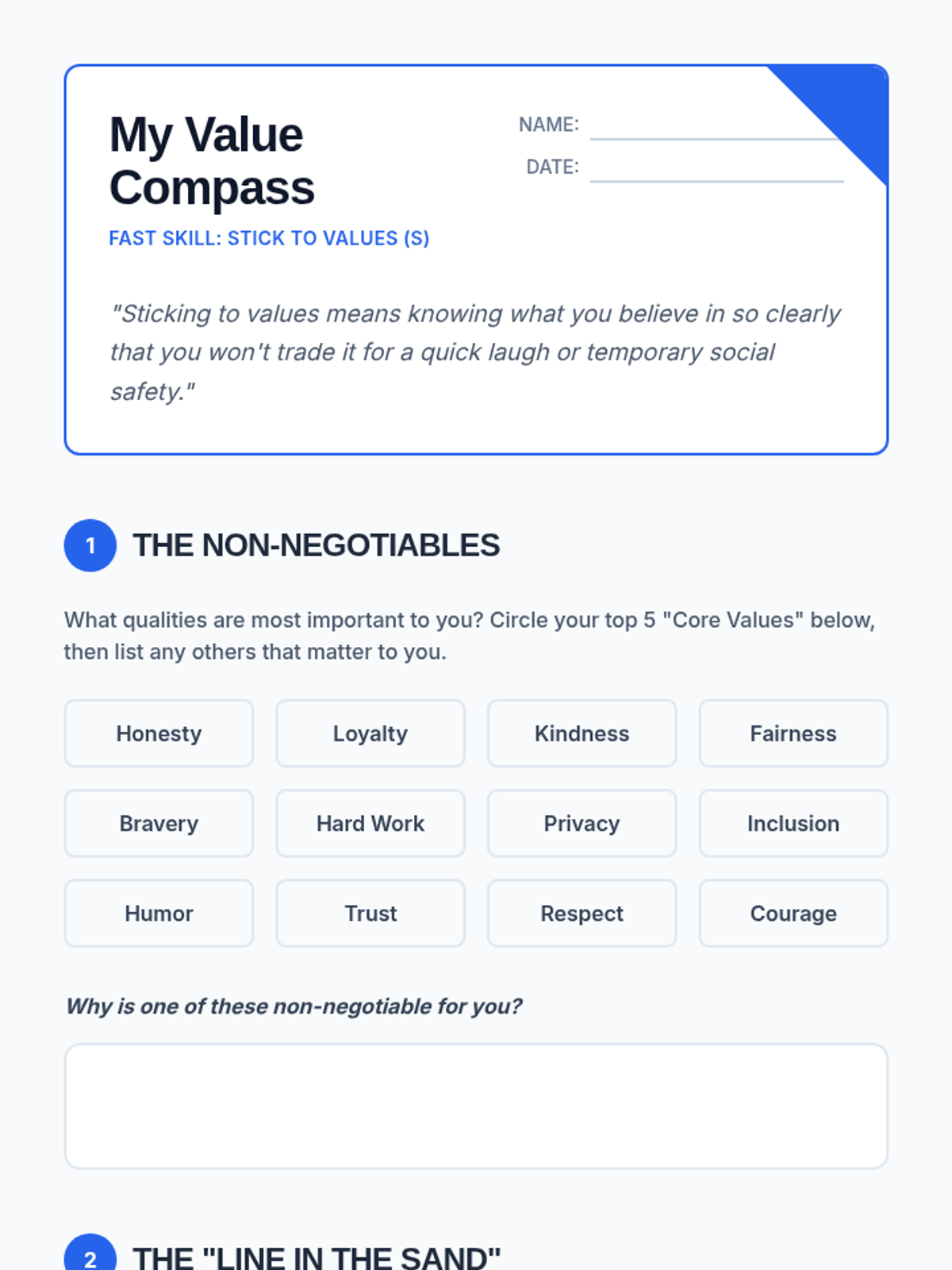
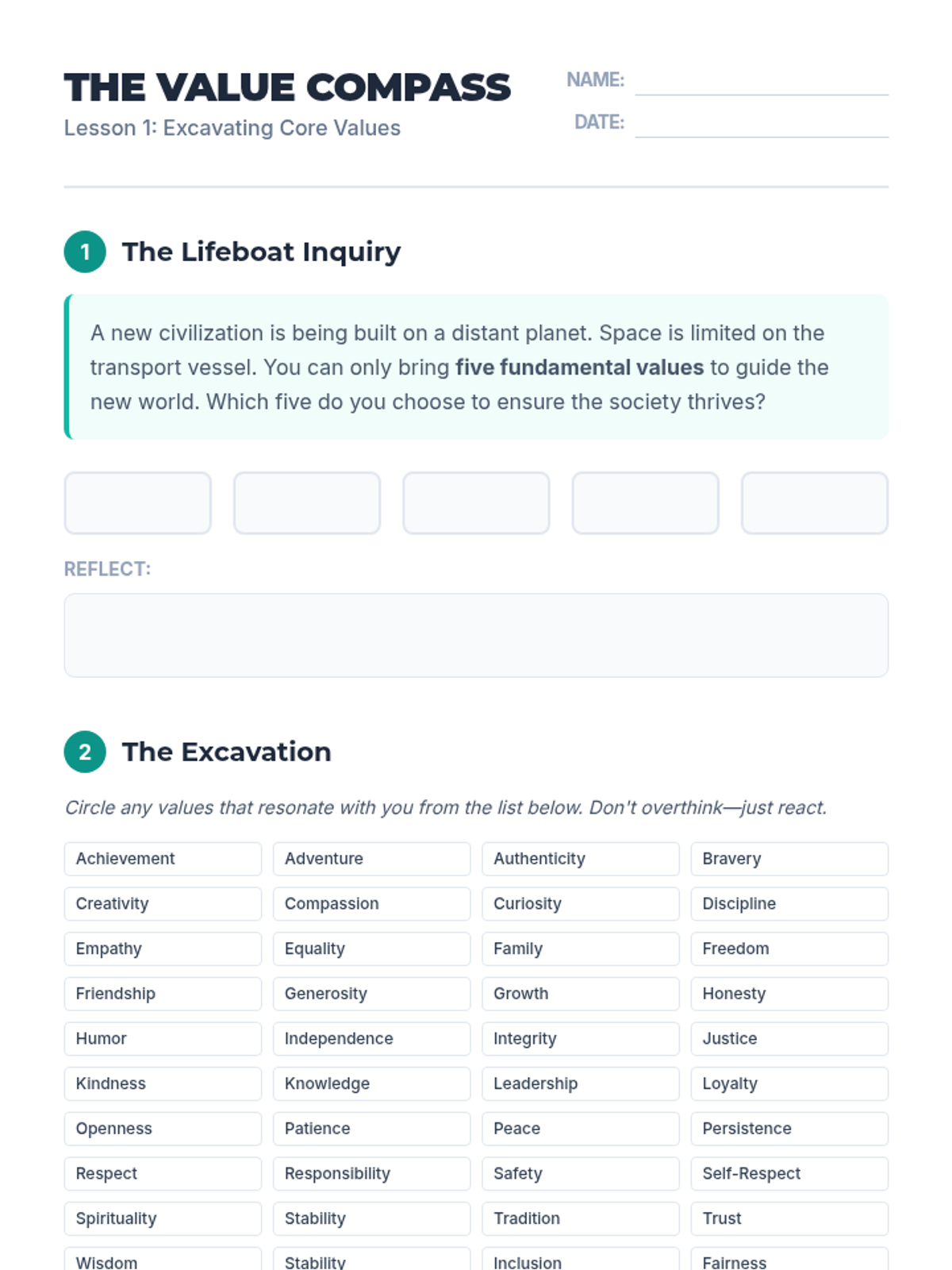
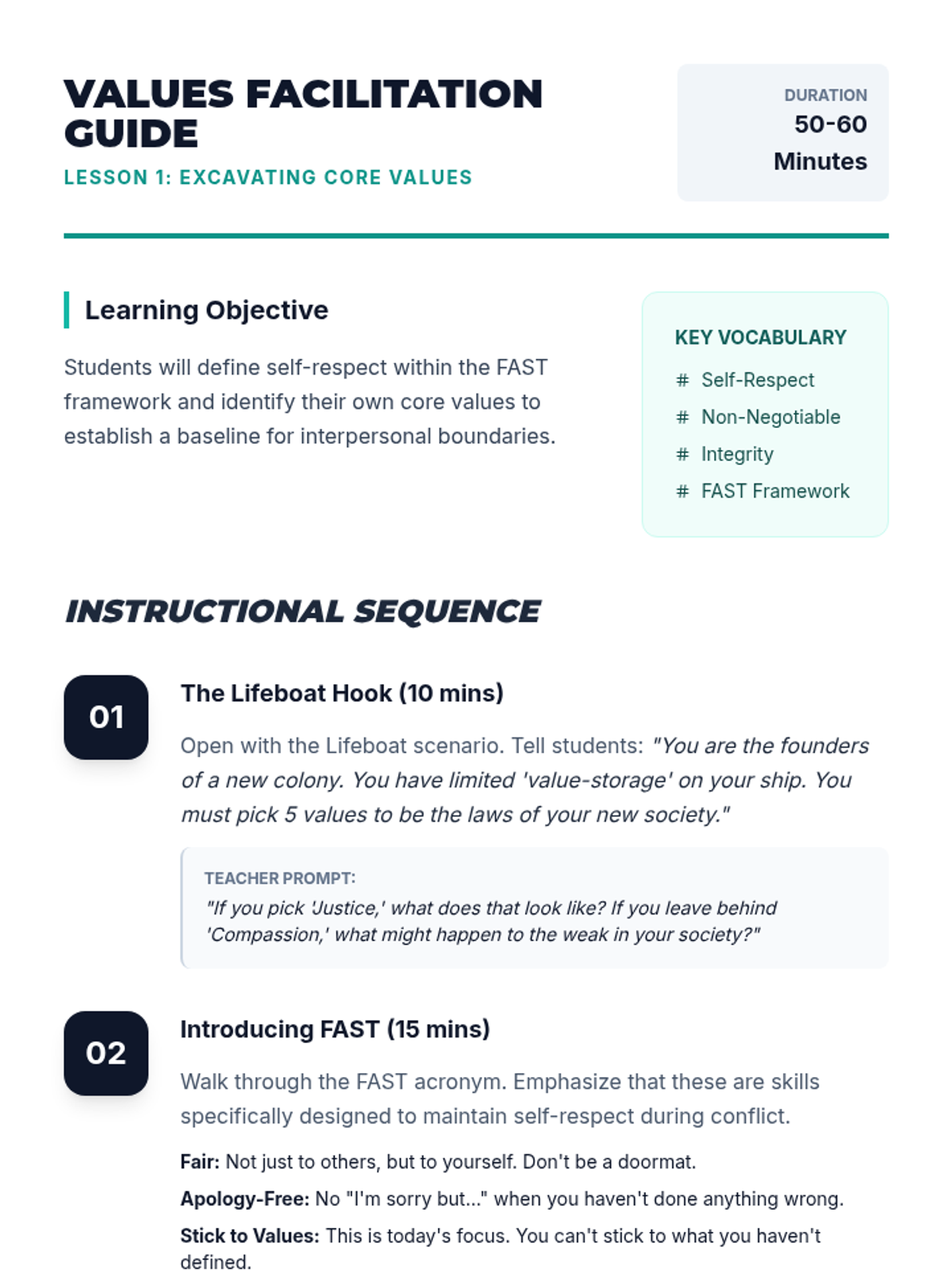
This inquiry and project-based sequence focuses deeply on the 'Stick to Values' aspect of FAST, positing that one cannot defend values they haven't defined. Students bridge abstract values with concrete communication skills, teaching them how to articulate their stances without judgment or apology.
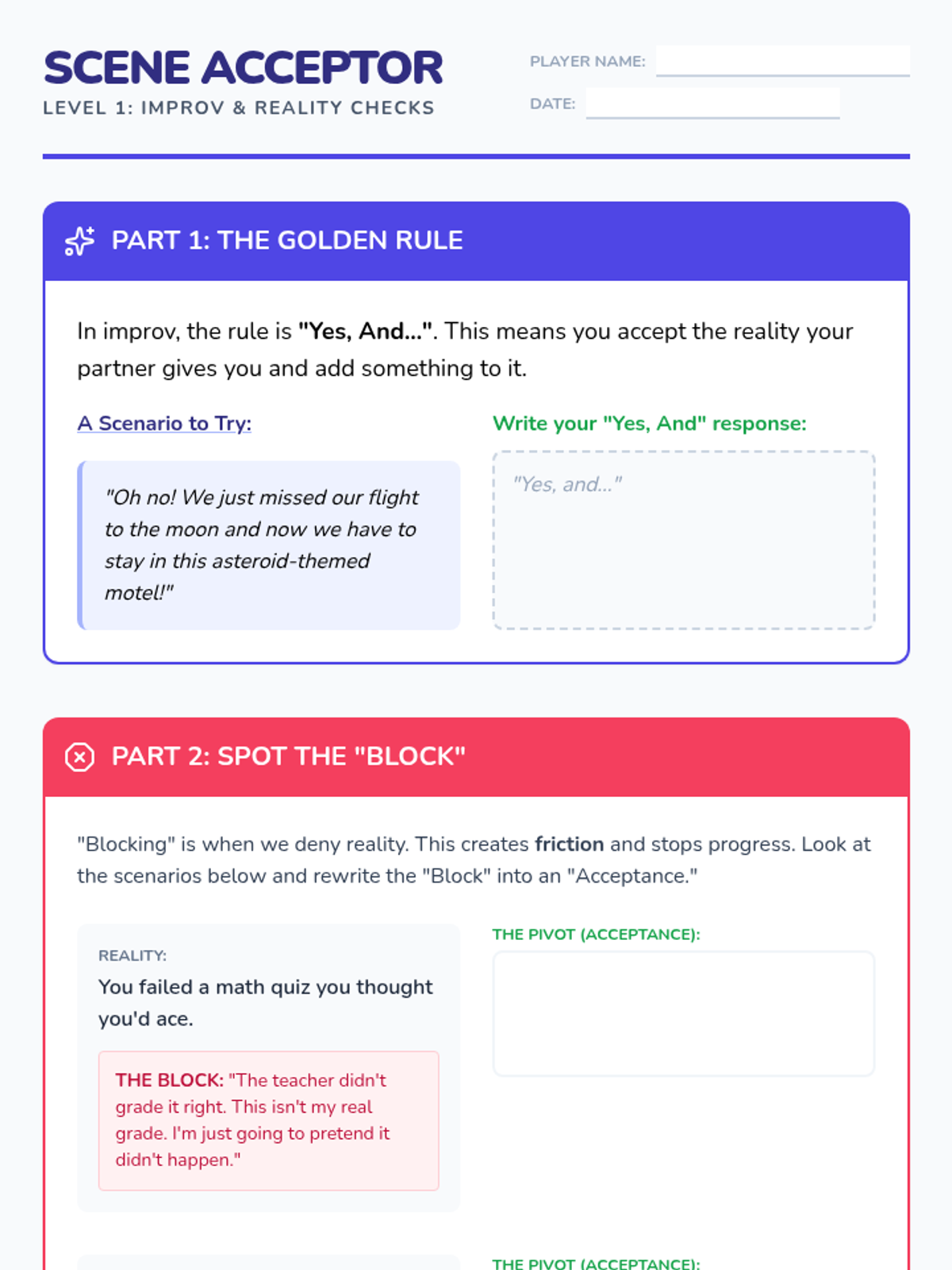
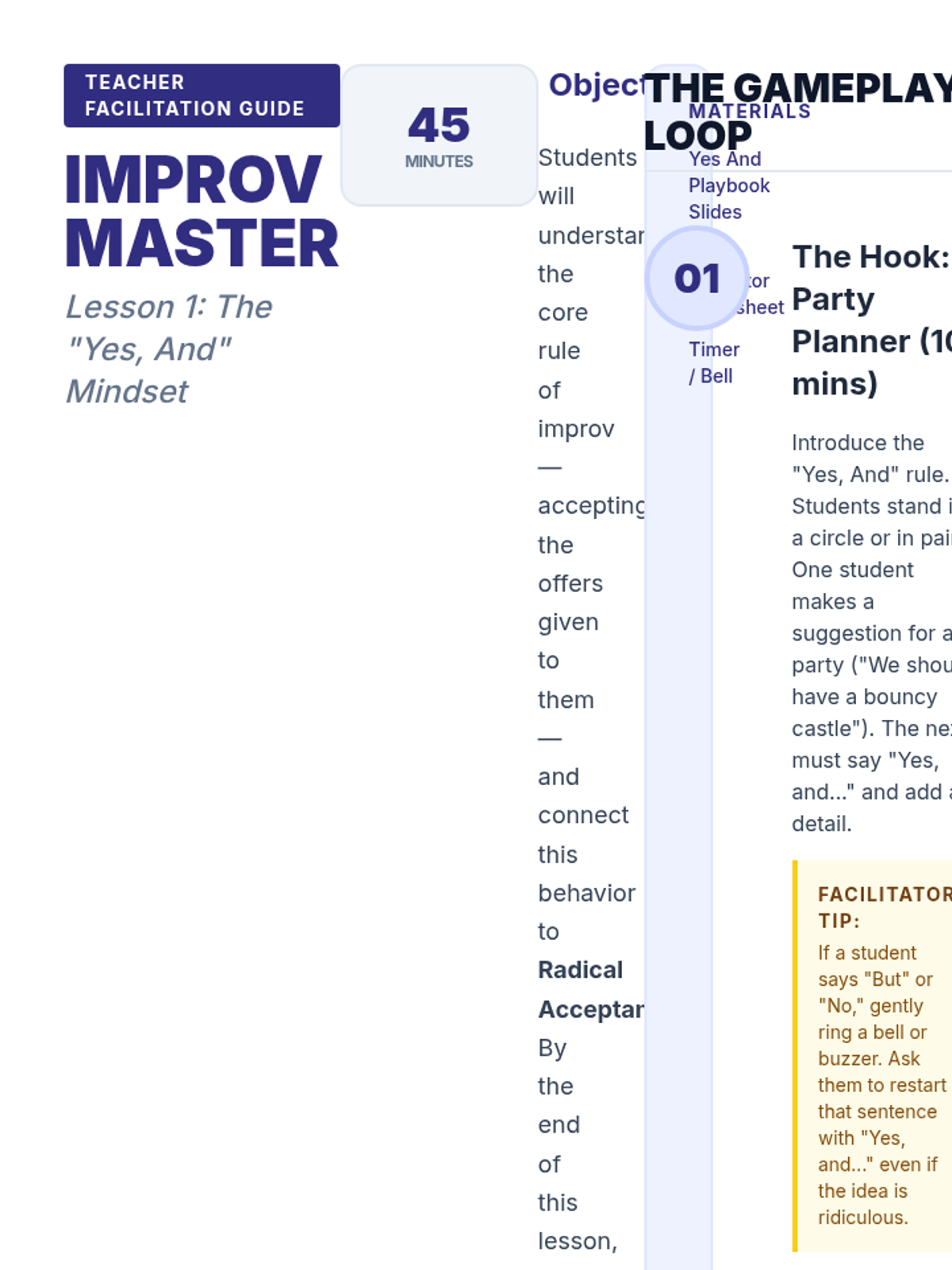
A game-based learning sequence for 7th graders to practice radical acceptance. Through improv, rigged games, and obstacle courses, students learn to accept reality as it is to move forward effectively.
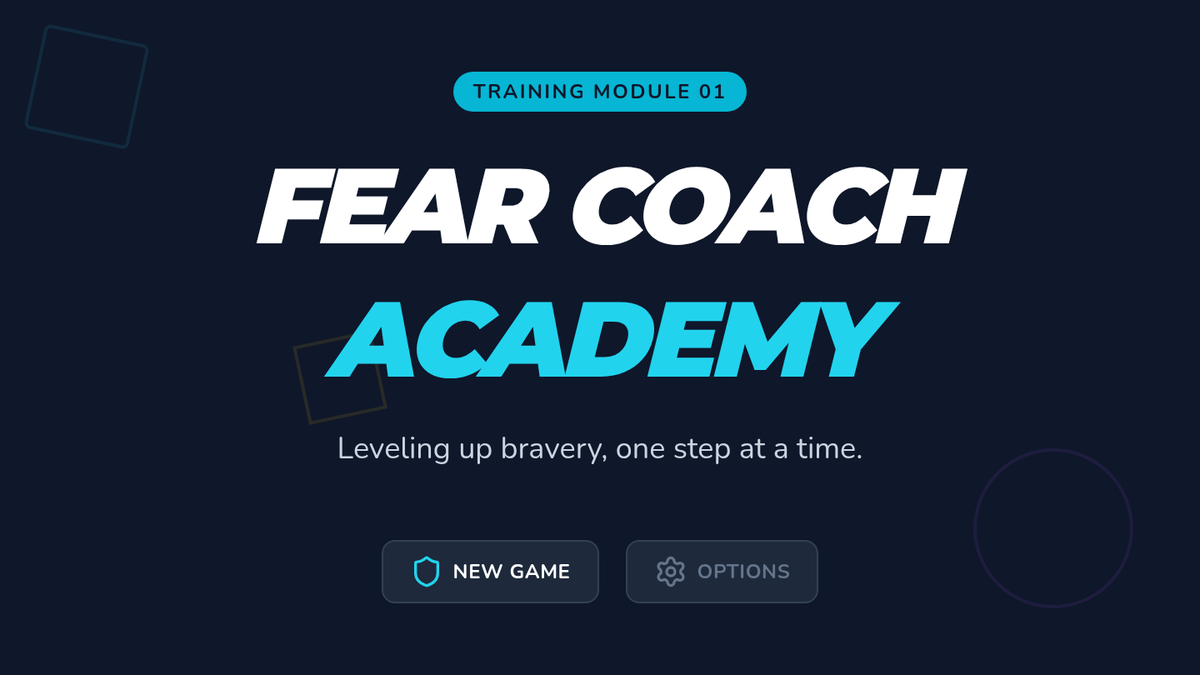
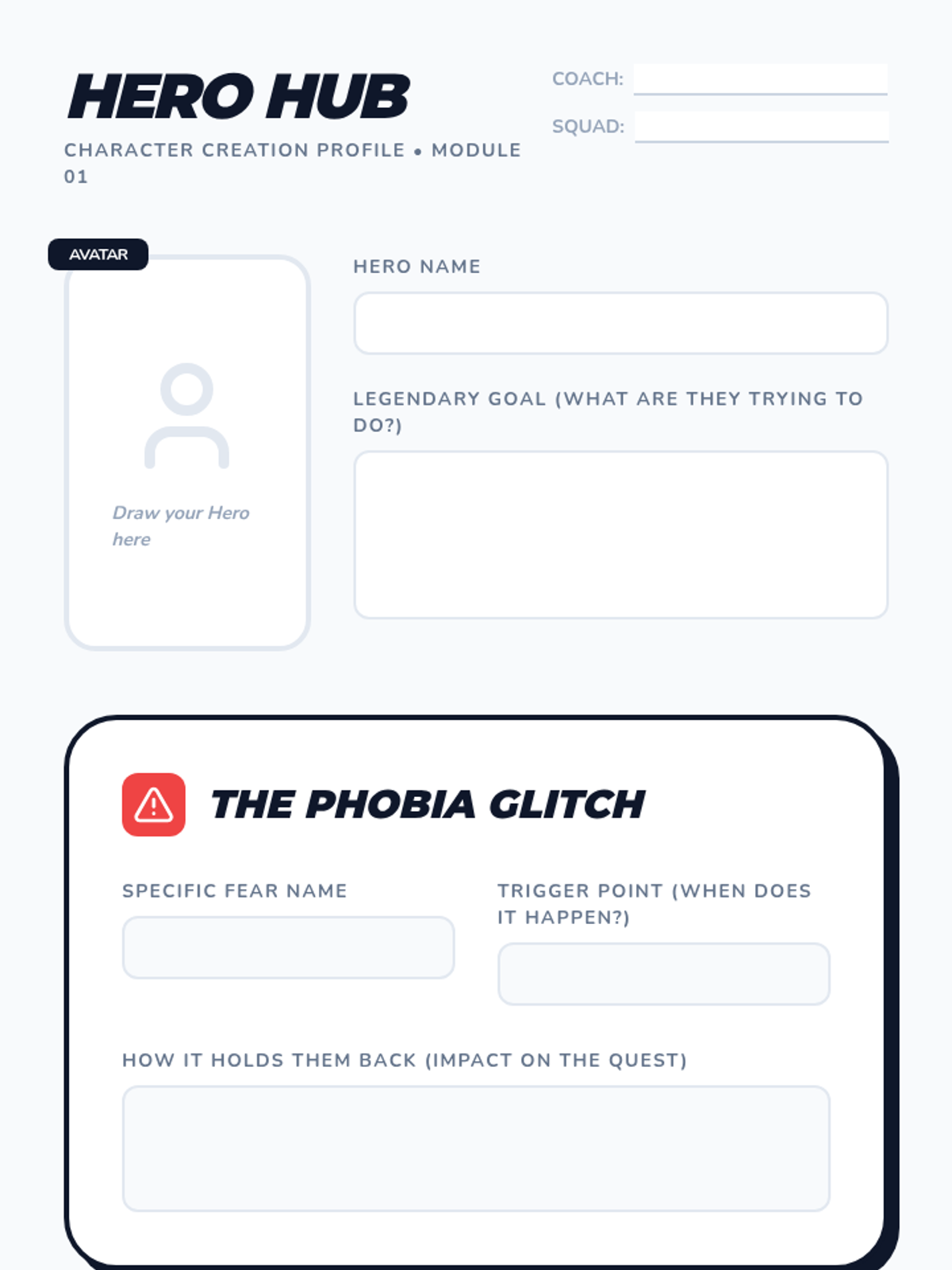
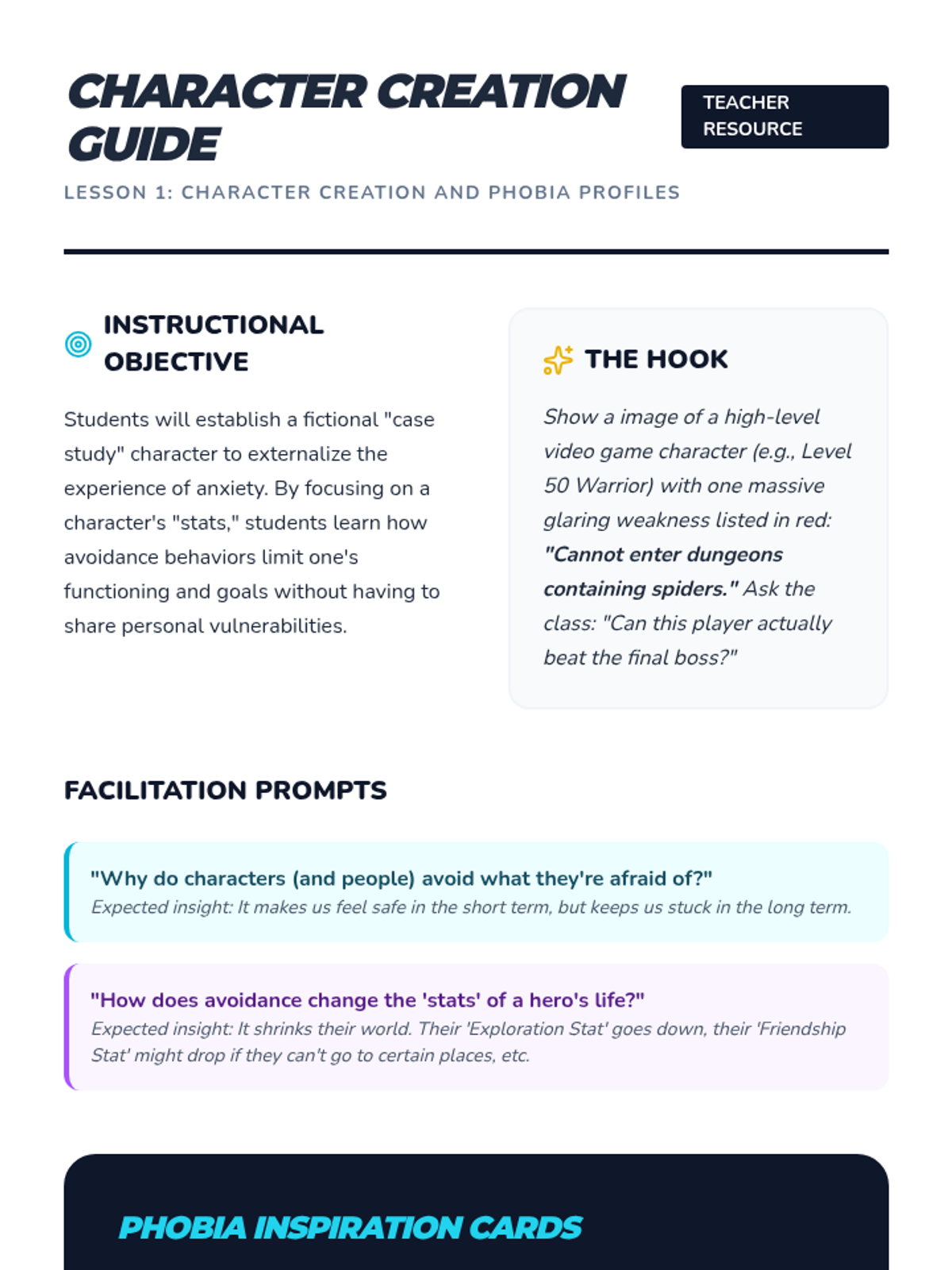
A gamified approach to learning exposure therapy principles where 7th graders act as 'Fear Coaches' for fictional characters, designing graduated hierarchies to help them 'level up' and overcome phobias.
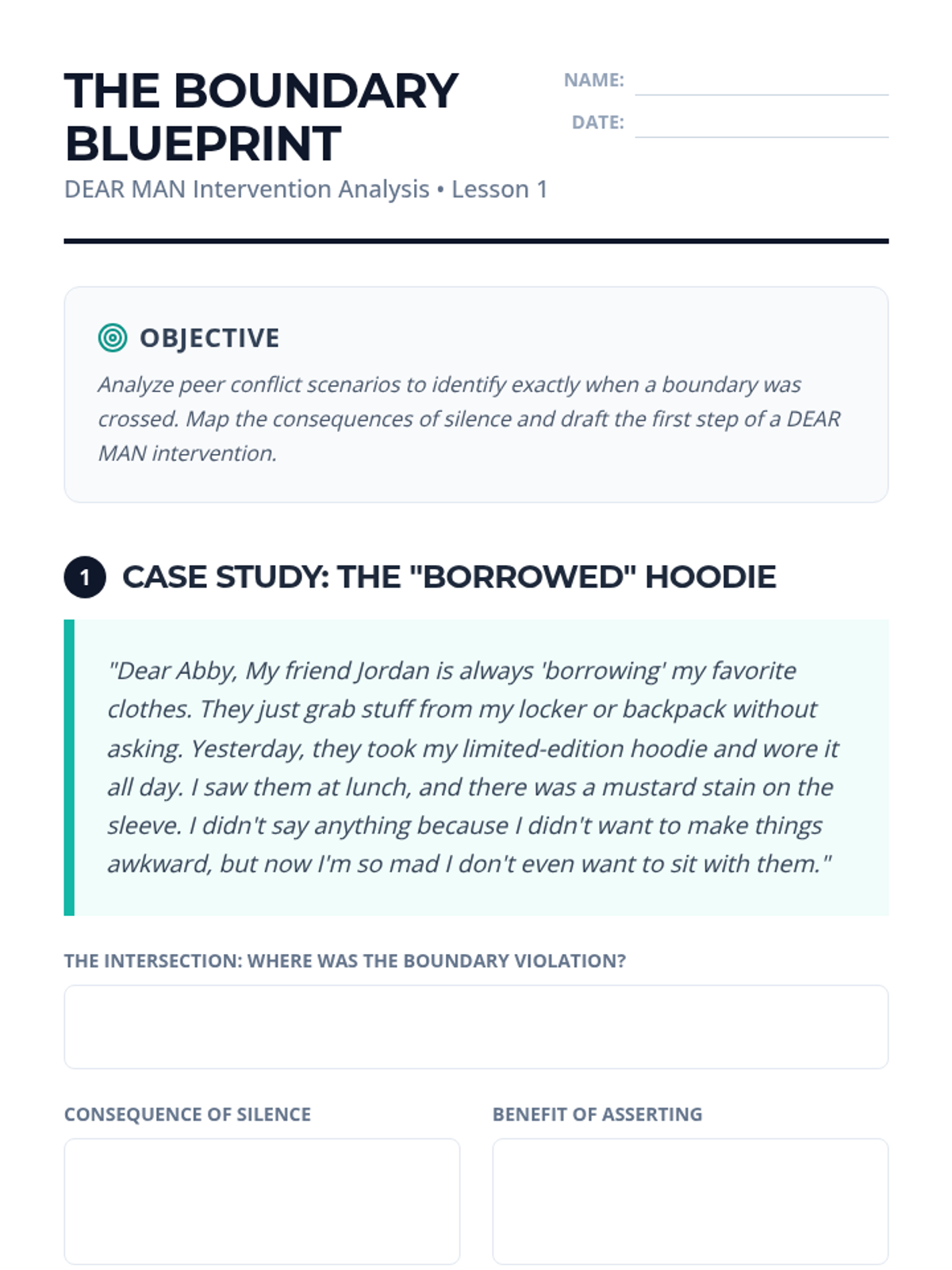
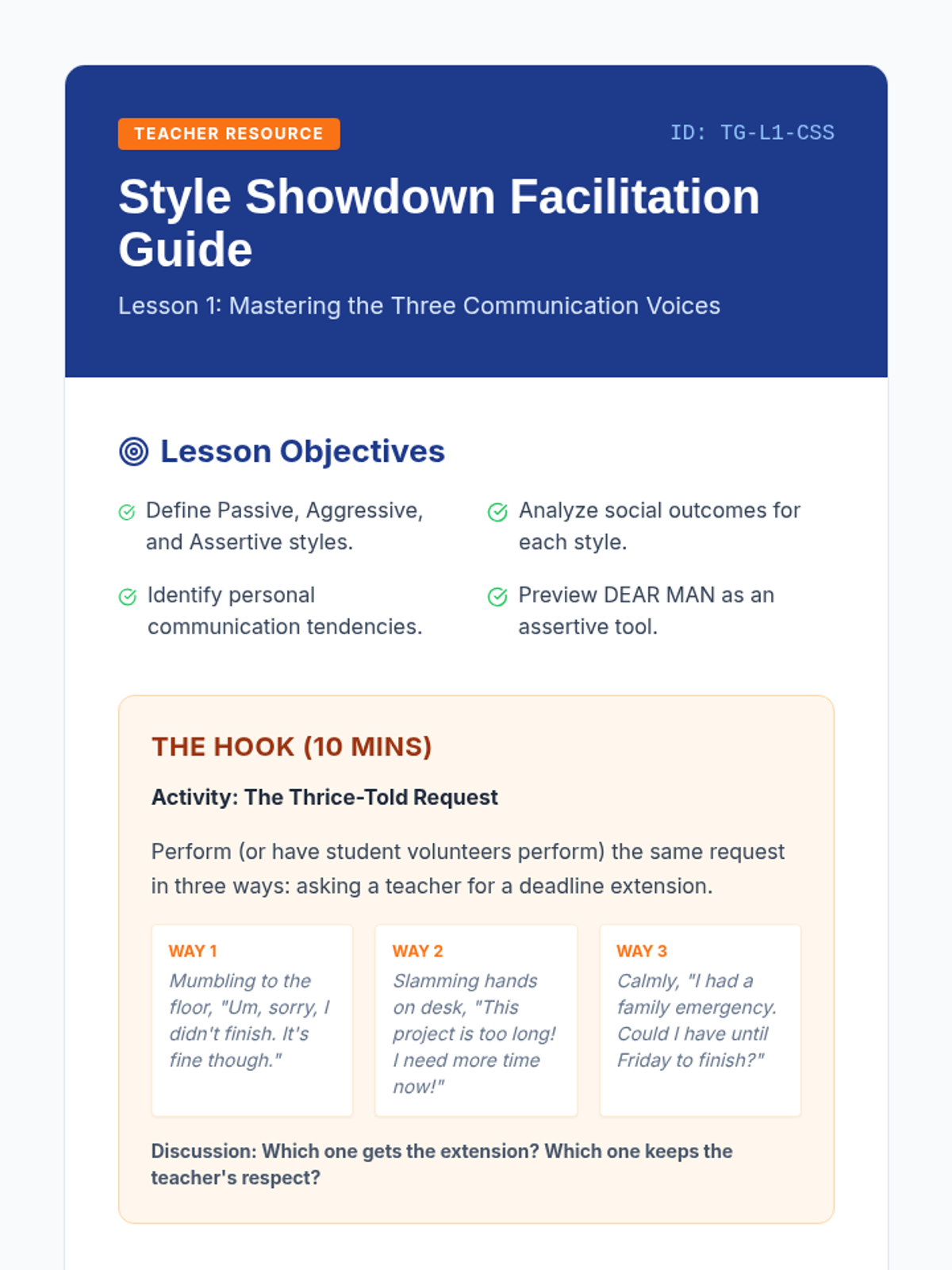
A comprehensive 5-lesson sequence for 7th graders on DEAR MAN communication skills, focusing on boundary setting, refusal techniques, and negotiation in peer conflicts.
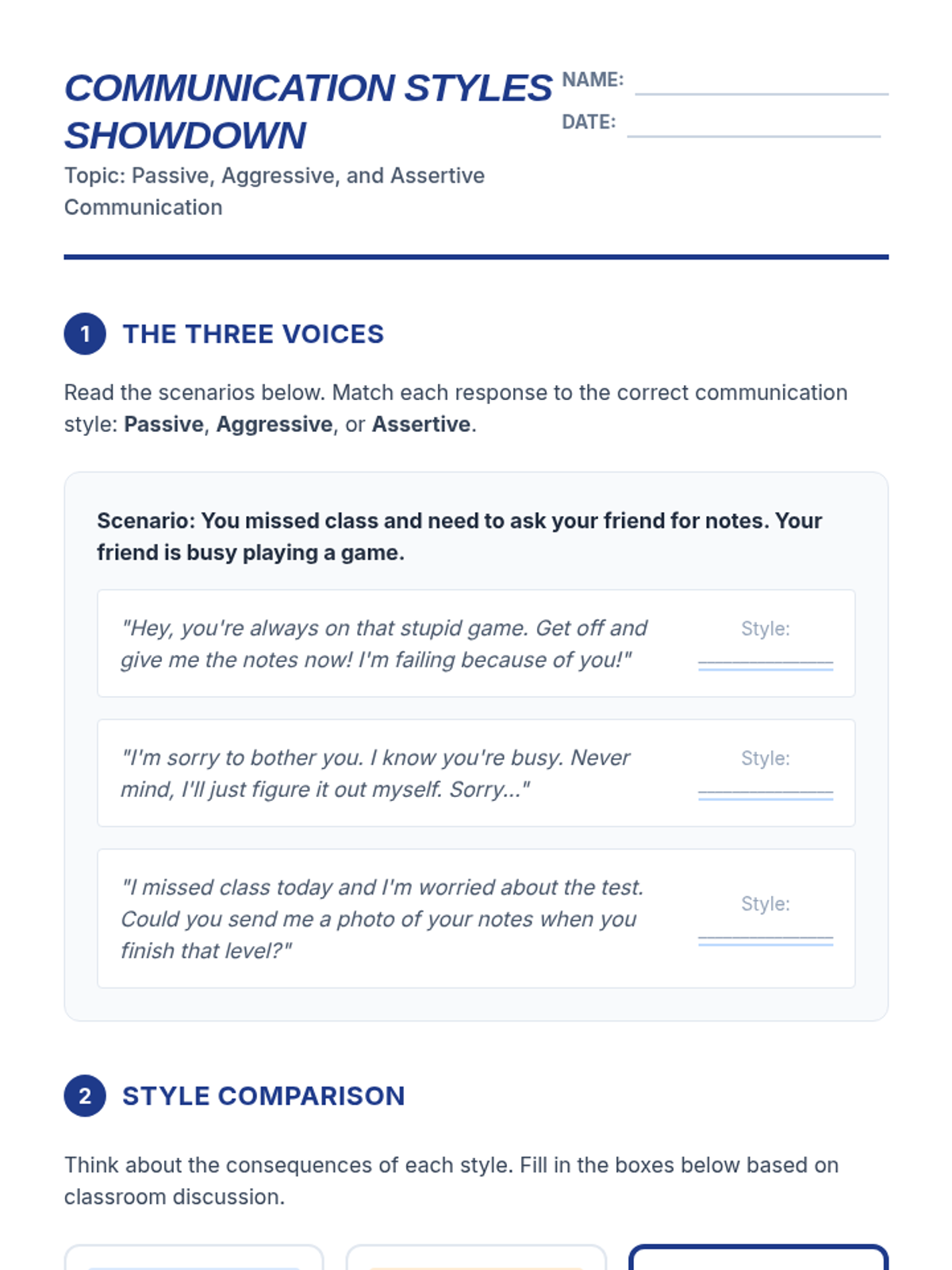
A comprehensive sequence for 7th graders on the DEAR MAN dialectical behavior therapy skill, teaching students to structure assertive requests effectively. Students progress from identifying communication styles to drafting and delivering polished scripts for real-life needs.
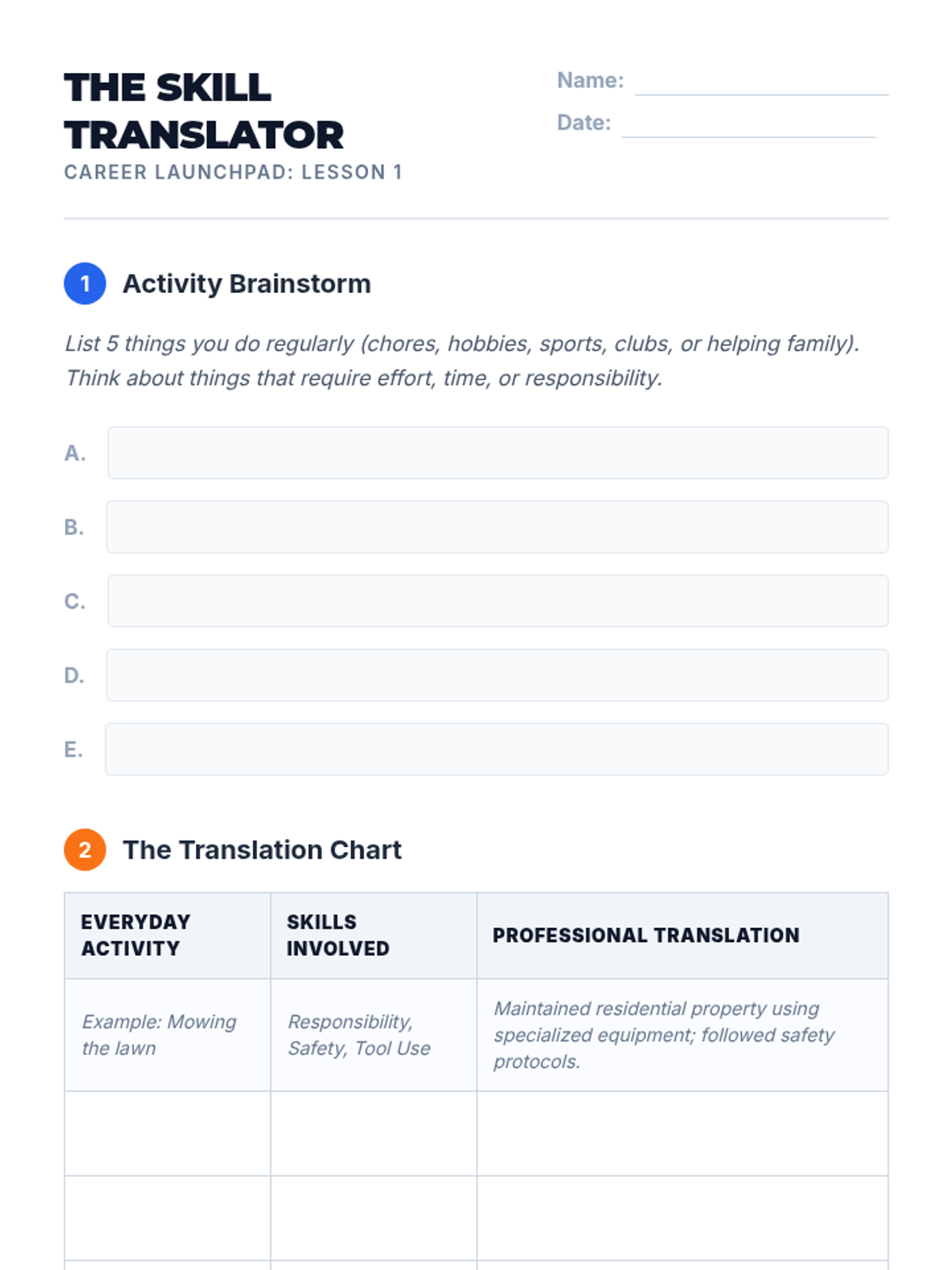
A comprehensive workshop-style unit where 7th-grade students navigate the job-seeking process, from identifying transferable skills and drafting their first resumes to mastering professional etiquette and succeeding in mock interviews. Students will develop tangible professional documents and interpersonal communication skills critical for workforce entry.
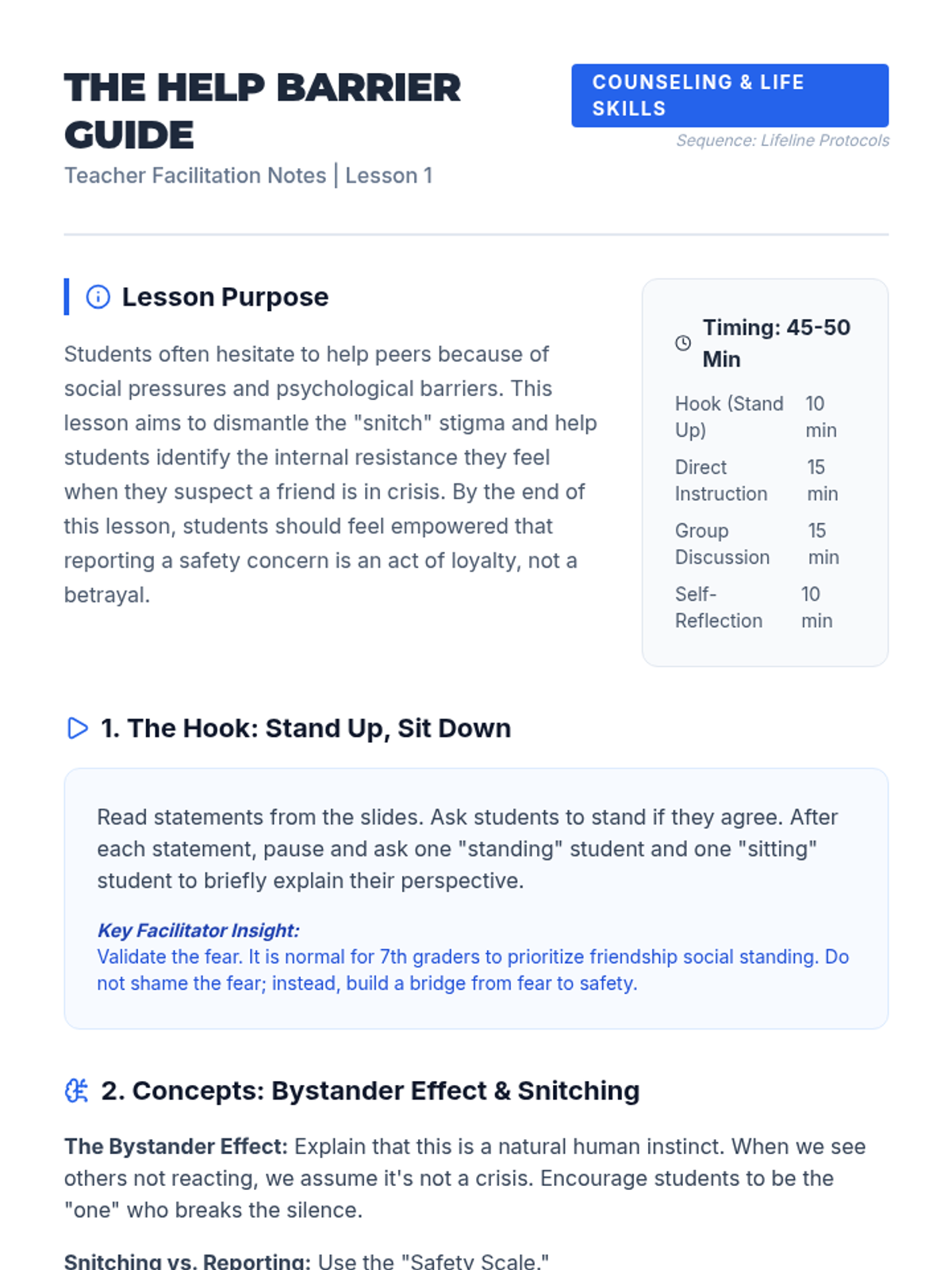
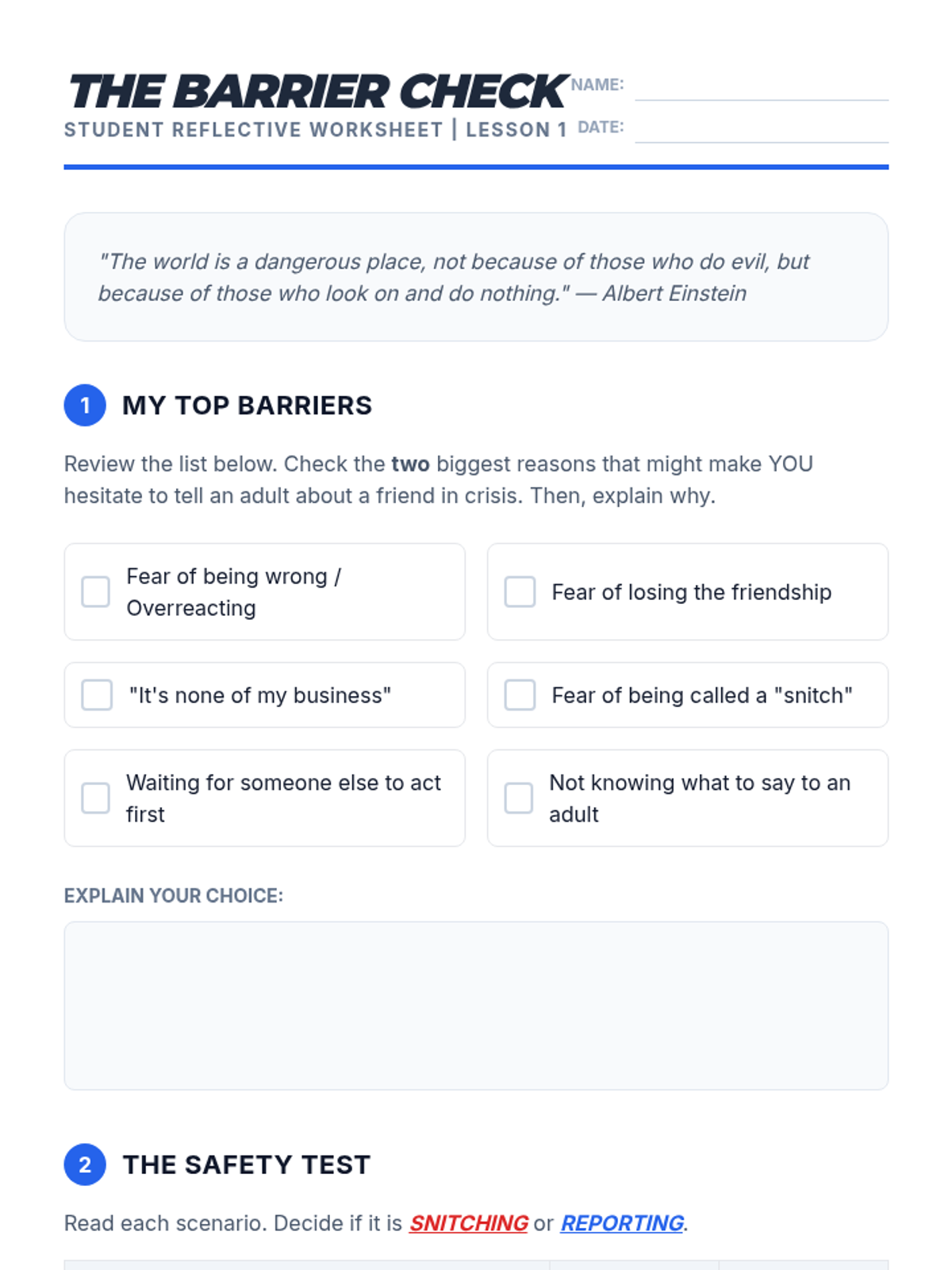
This sequence focuses on teaching 7th-grade students how to safely and effectively help a peer in a mental health crisis using the ACT (Acknowledge, Care, Tell) model. Students move from understanding psychological barriers like the bystander effect to practicing empathetic listening and identifying concrete resources for professional support.
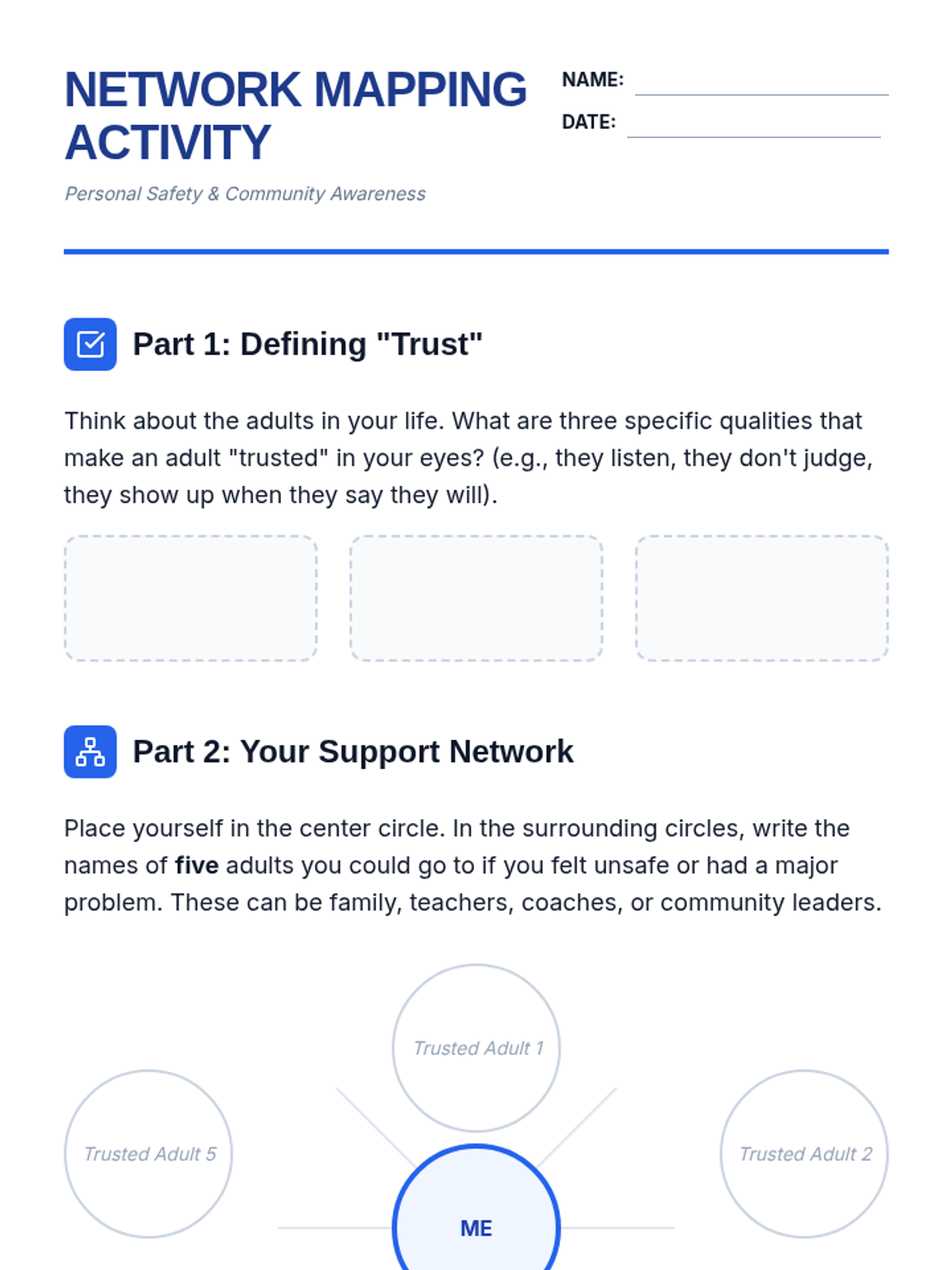
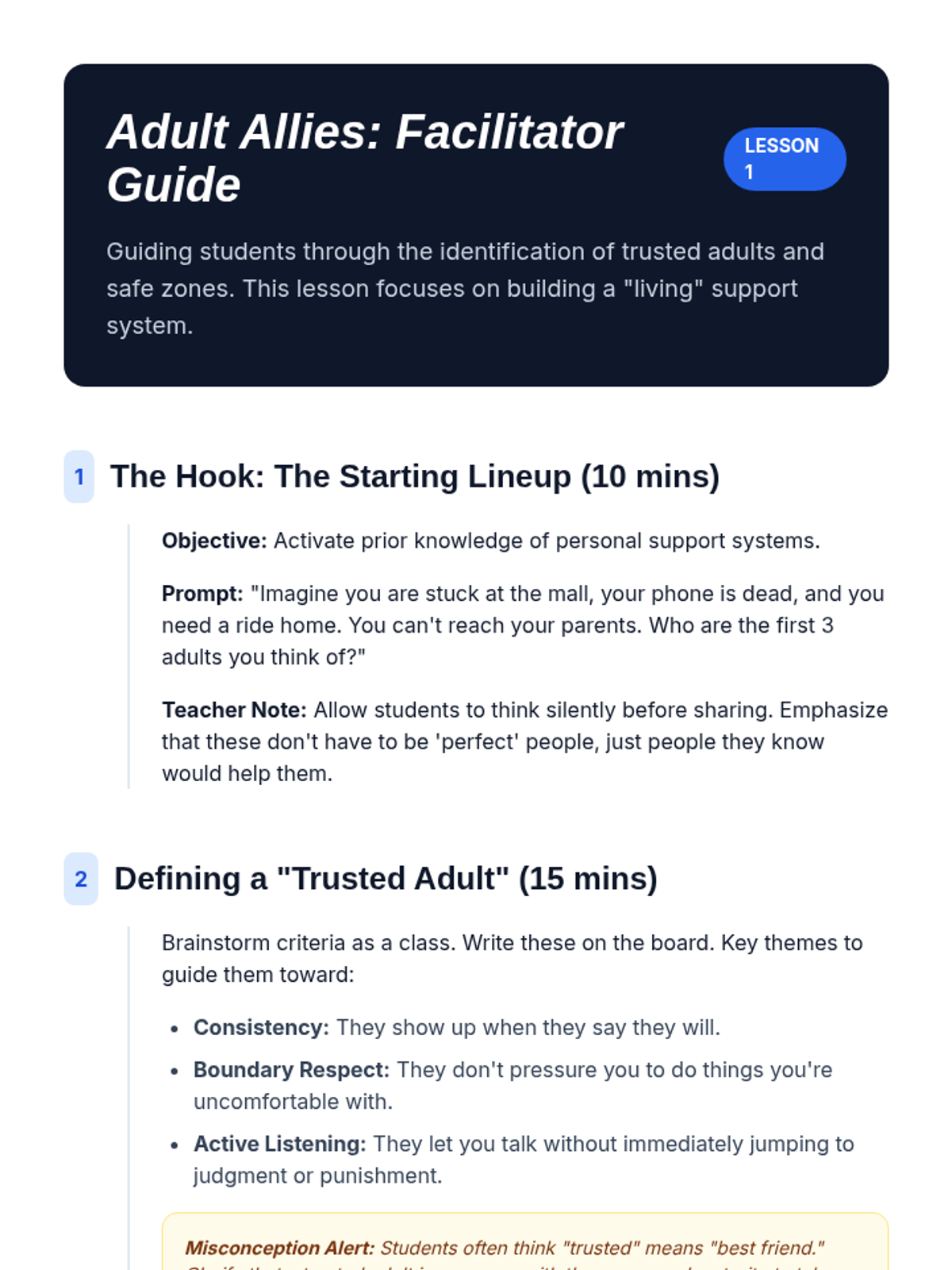
A comprehensive sequence for 7th-grade students focused on actionable safety planning, identifying trusted adults, and understanding reporting protocols related to human and child trafficking. Students move from personal awareness to community advocacy, culminating in the creation of peer-facing safety resources.
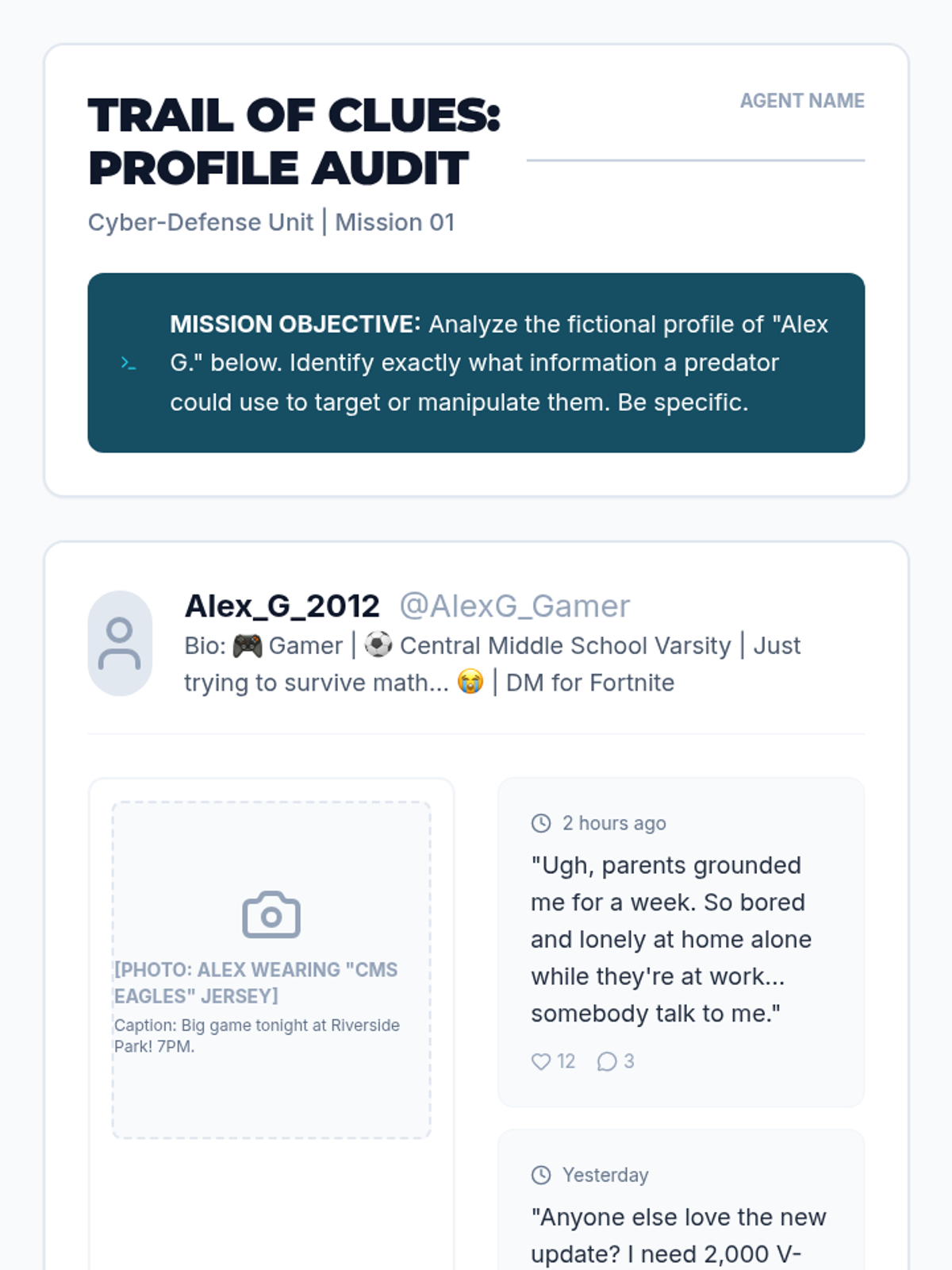
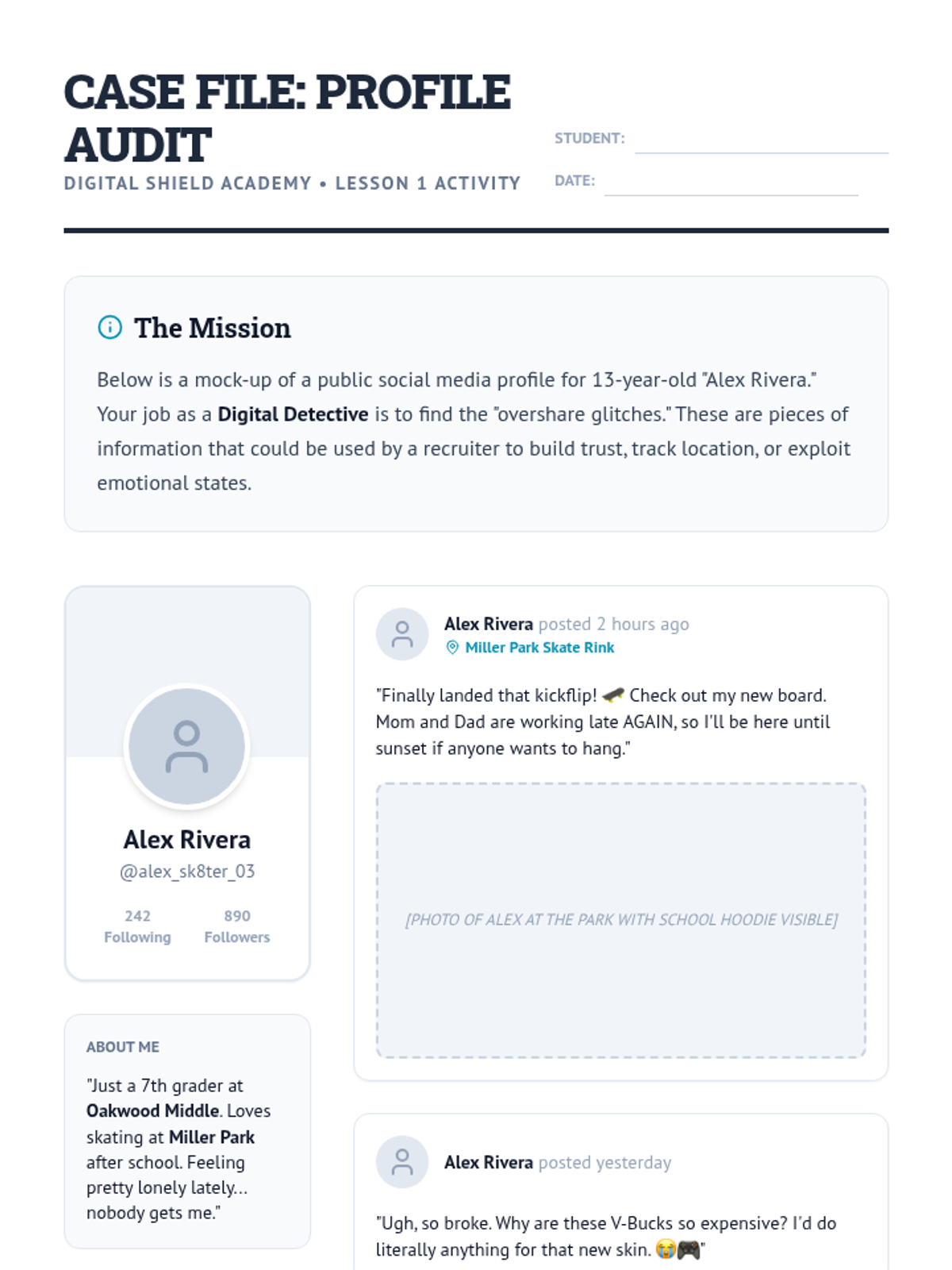
A comprehensive sequence for 7th-grade students focused on identifying and resisting online grooming and recruitment tactics used by traffickers. Students develop digital literacy skills to recognize fake profiles, manipulative lures, and unsafe gaming interactions while creating a personal digital defense protocol.
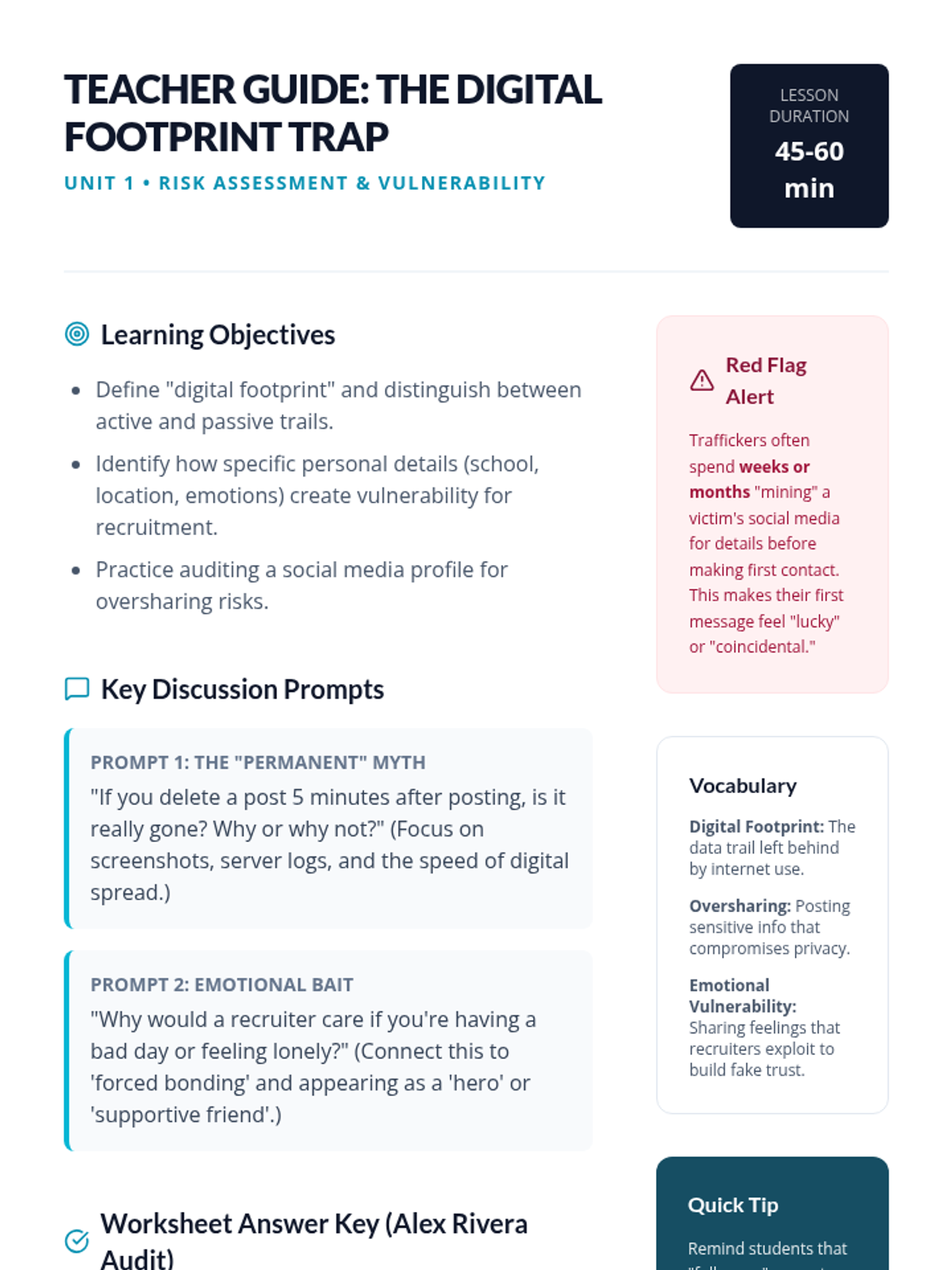
A 5-lesson sequence for 6th graders focusing on identifying online recruitment tactics, understanding digital footprints, and implementing privacy shields to prevent exploitation and trafficking.
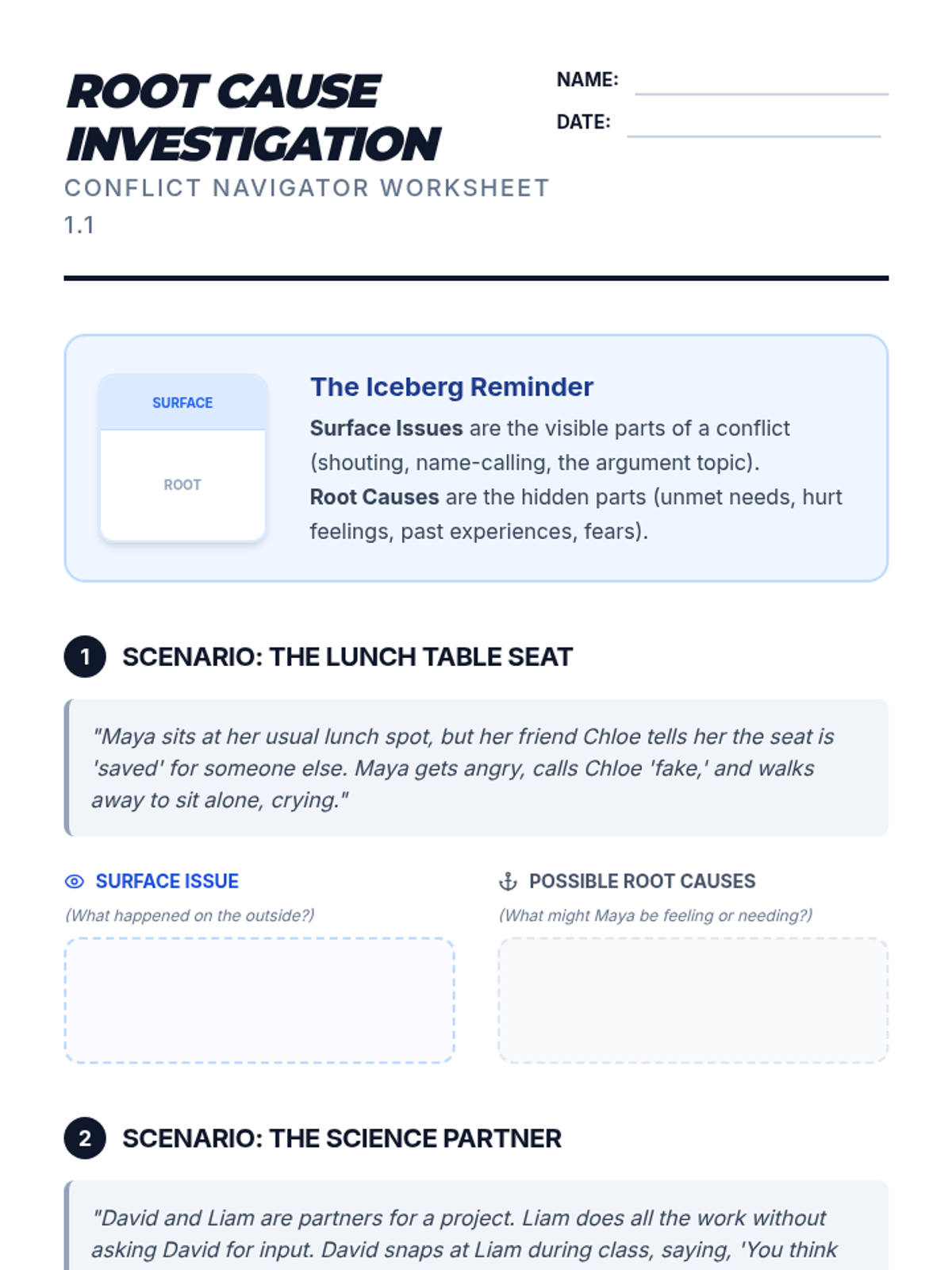
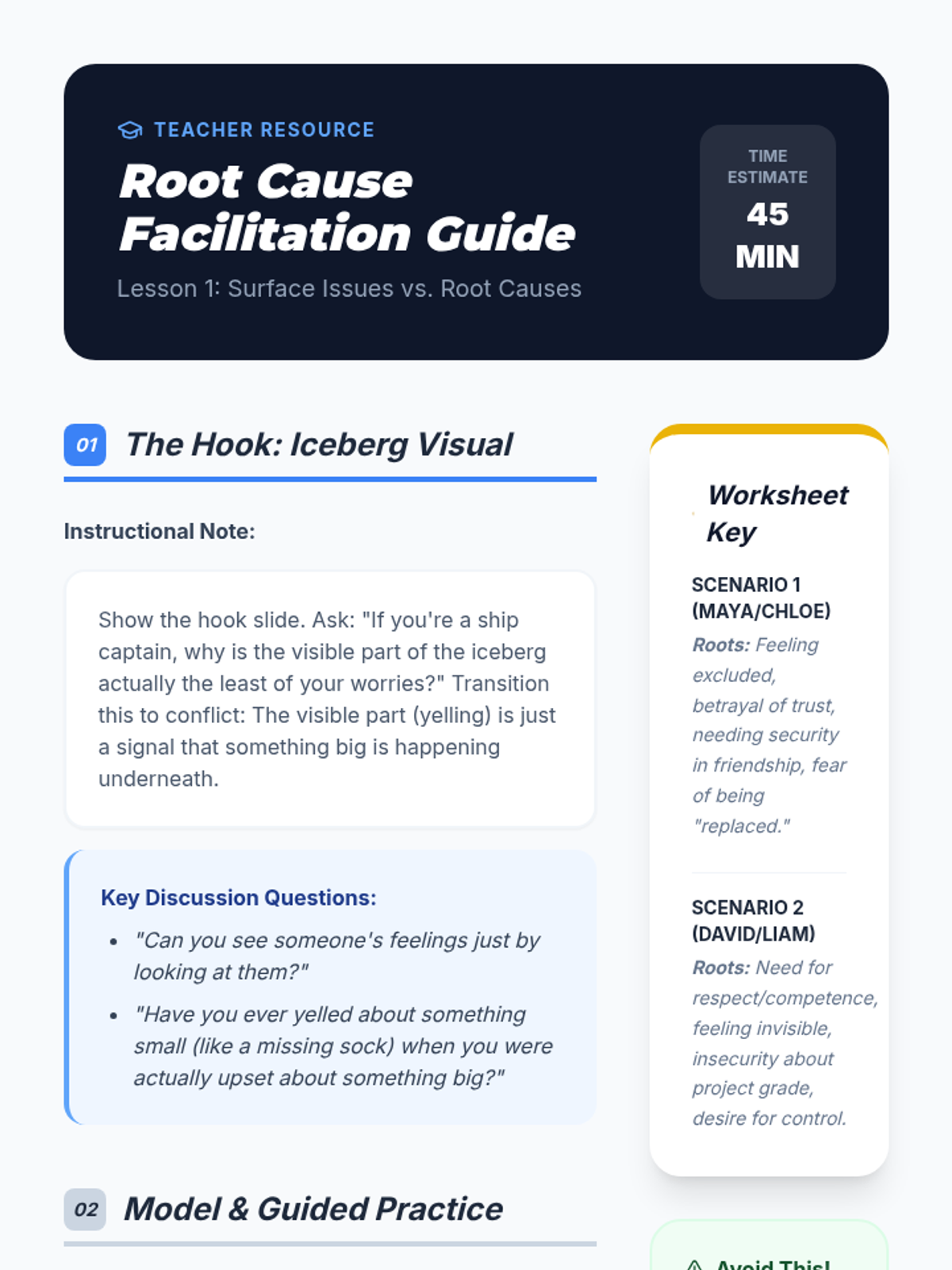
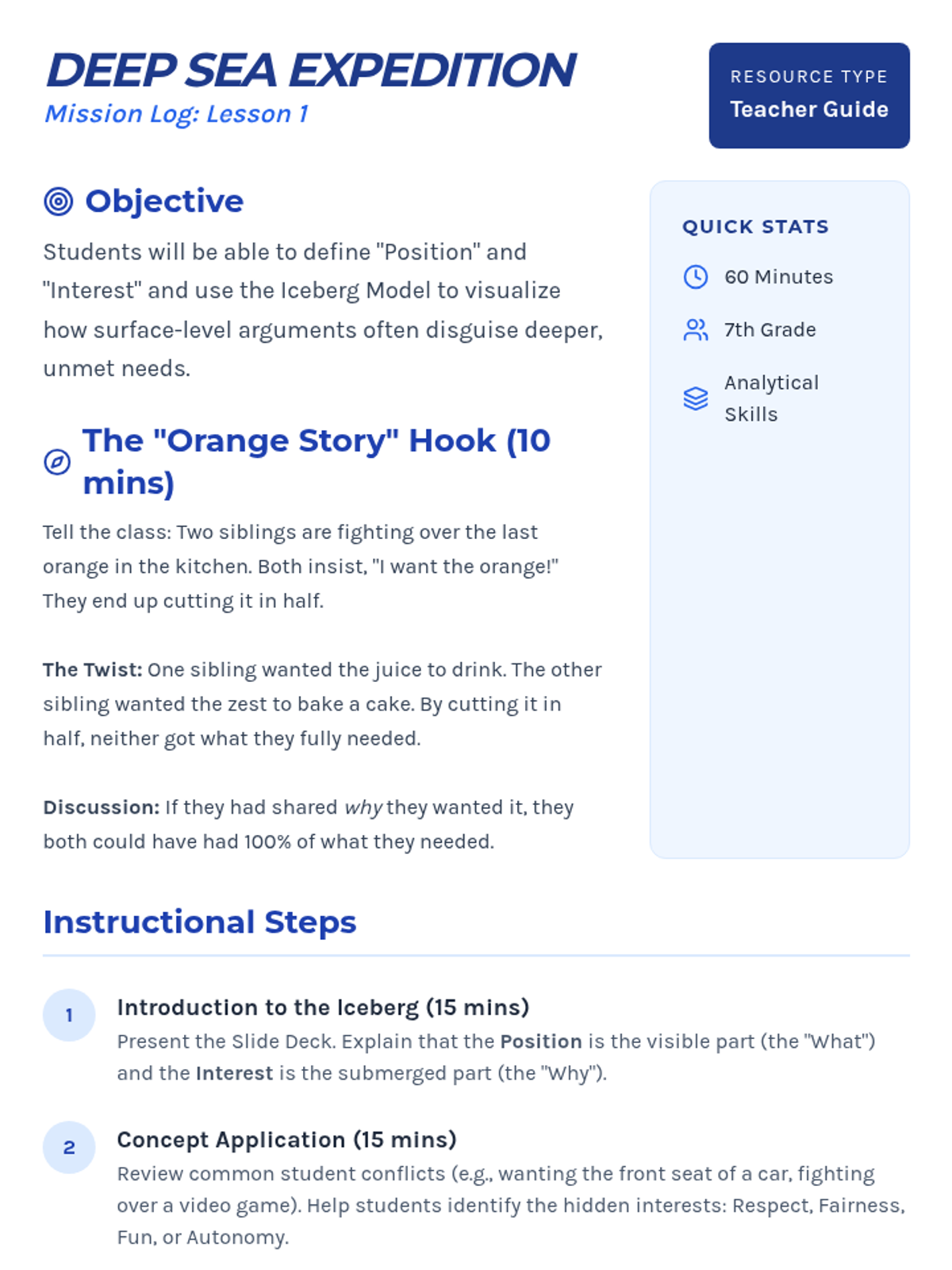
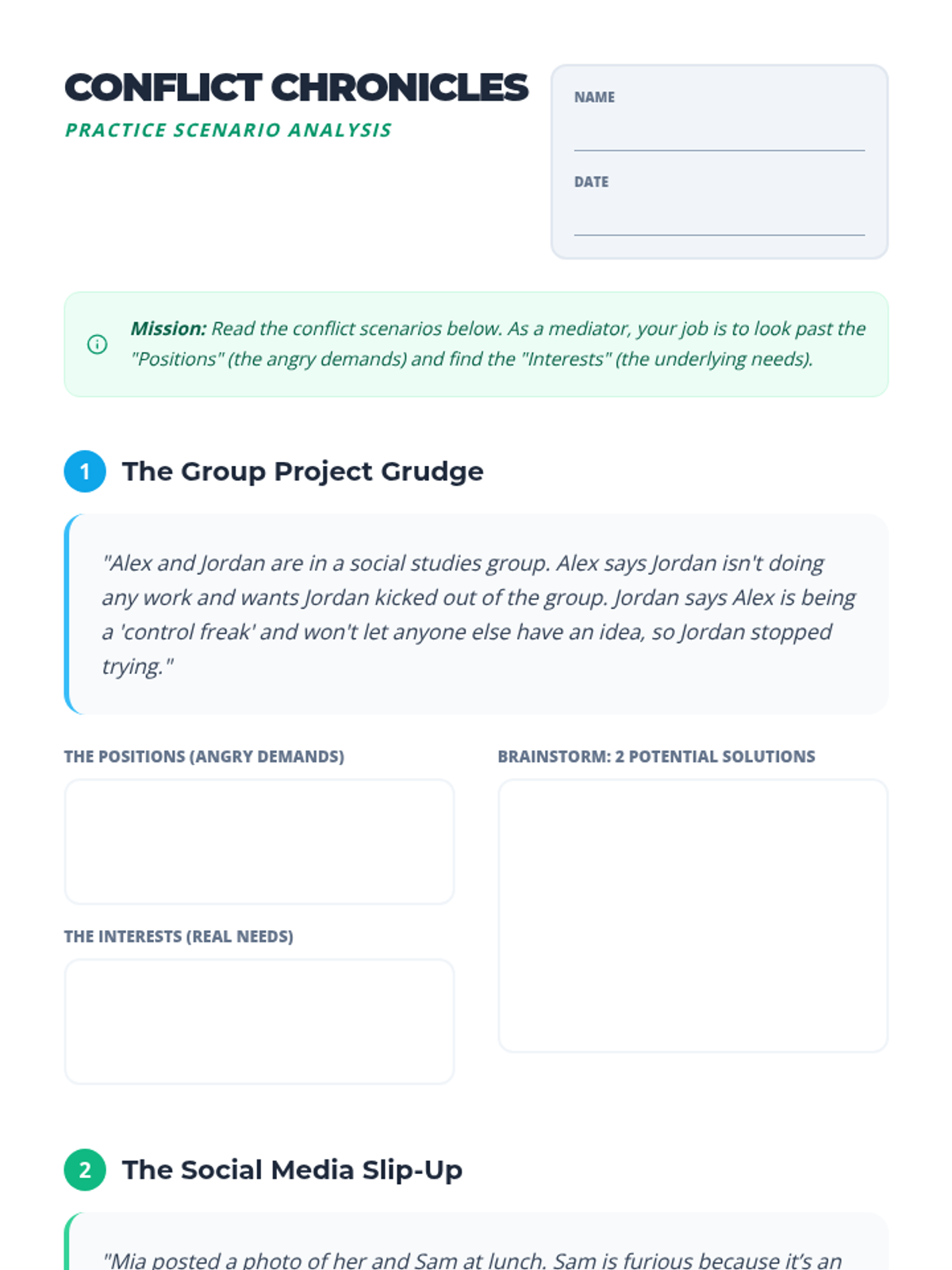
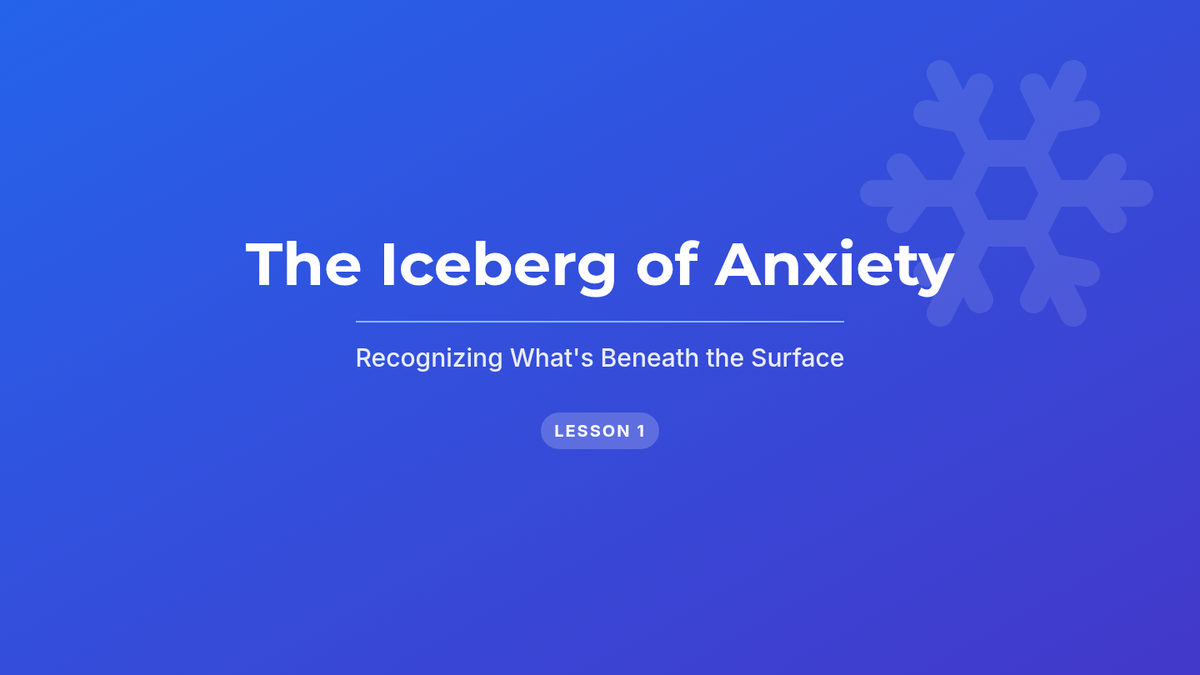
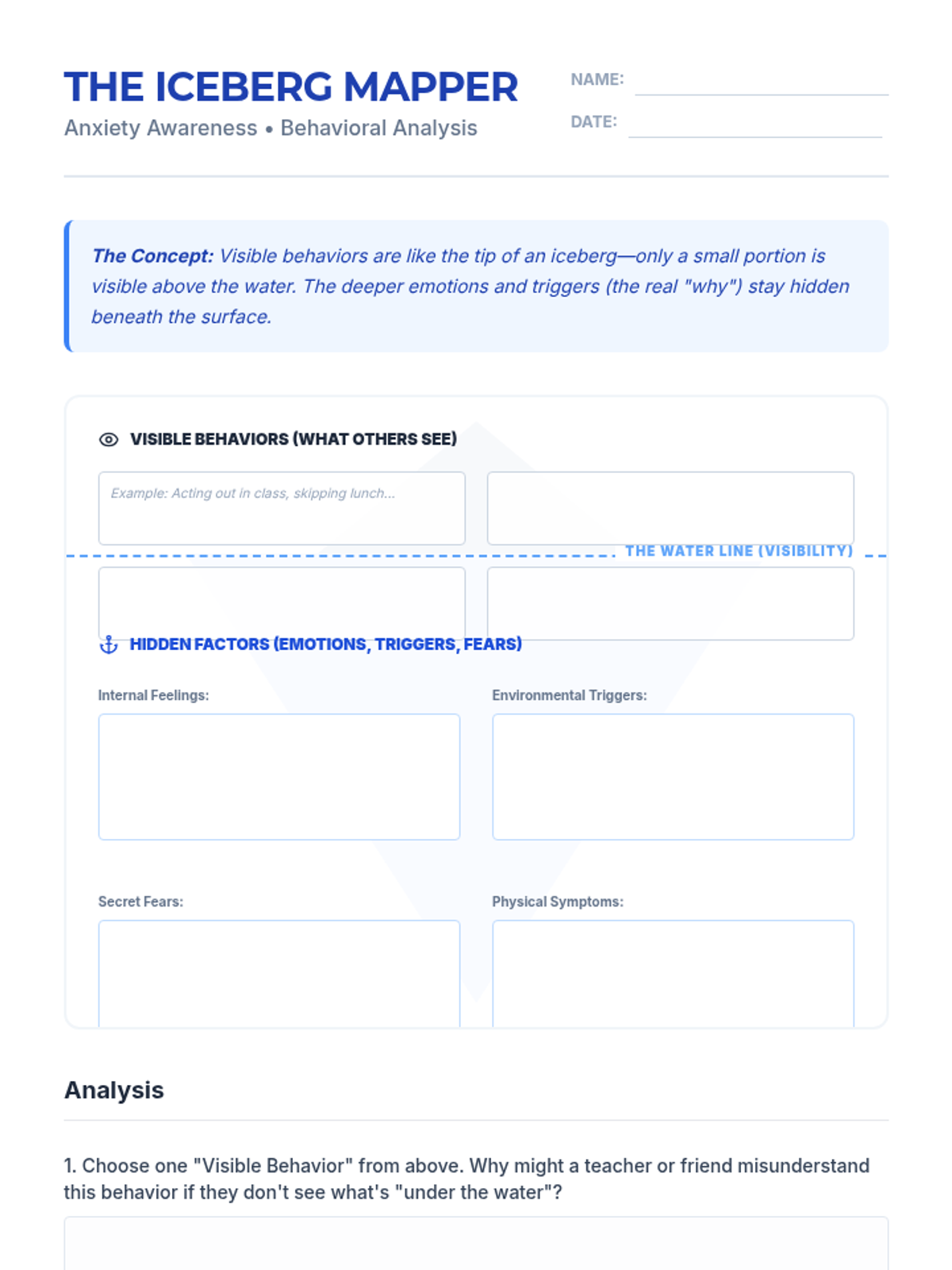
This sequence teaches 7th-grade students to navigate complex conflicts using the Iceberg Model. Students learn to look beneath surface-level arguments ('positions') to identify underlying human needs ('interests') through techniques like the Five Whys, core needs analysis, and multi-party mapping.
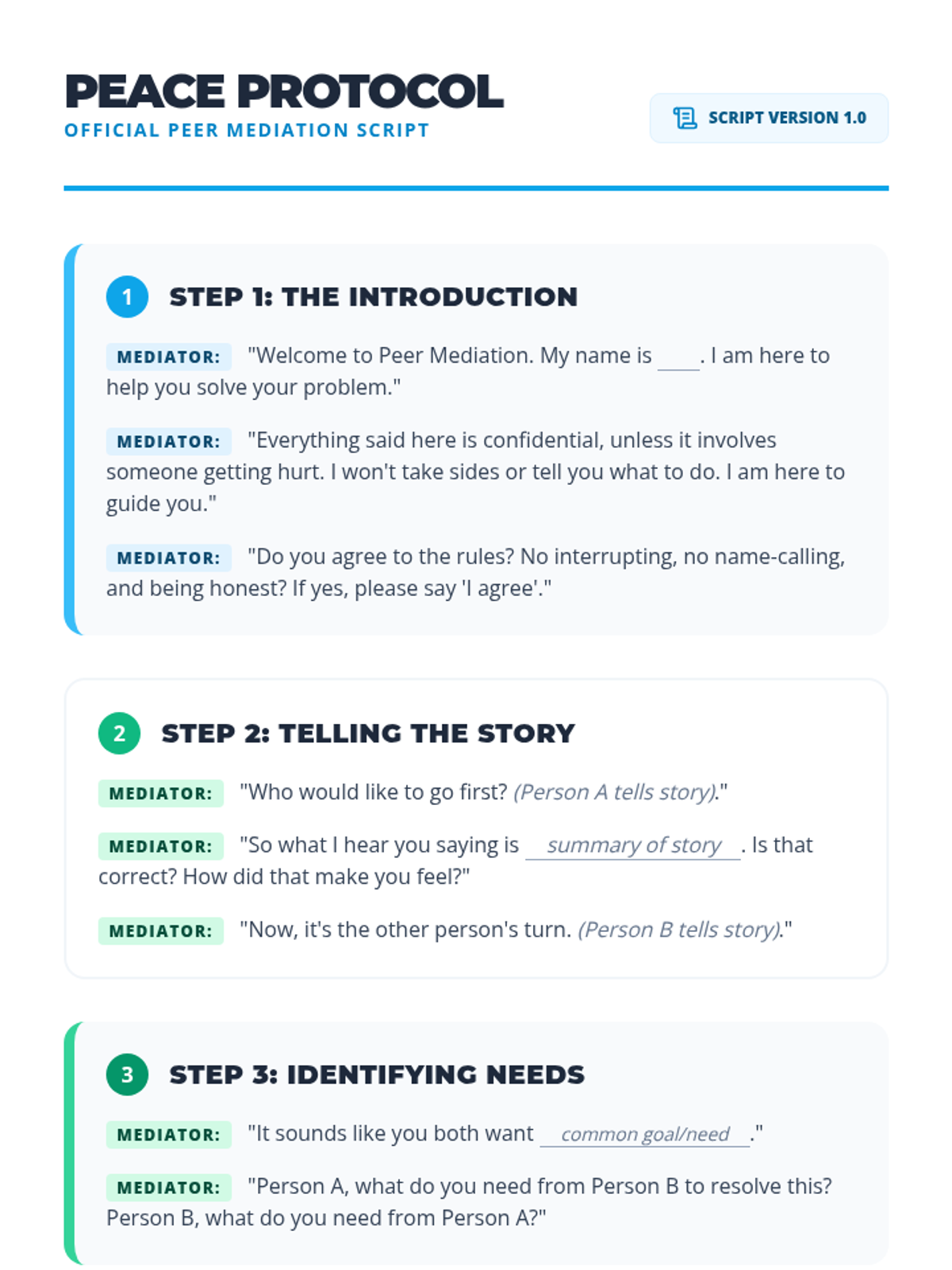
This sequence empowers students to act as third-party neutrals, introducing the specific structure and skills of Peer Mediation. Students learn the distinct phases of a mediation session, the importance of neutrality, and how to facilitate dialogue without taking sides.
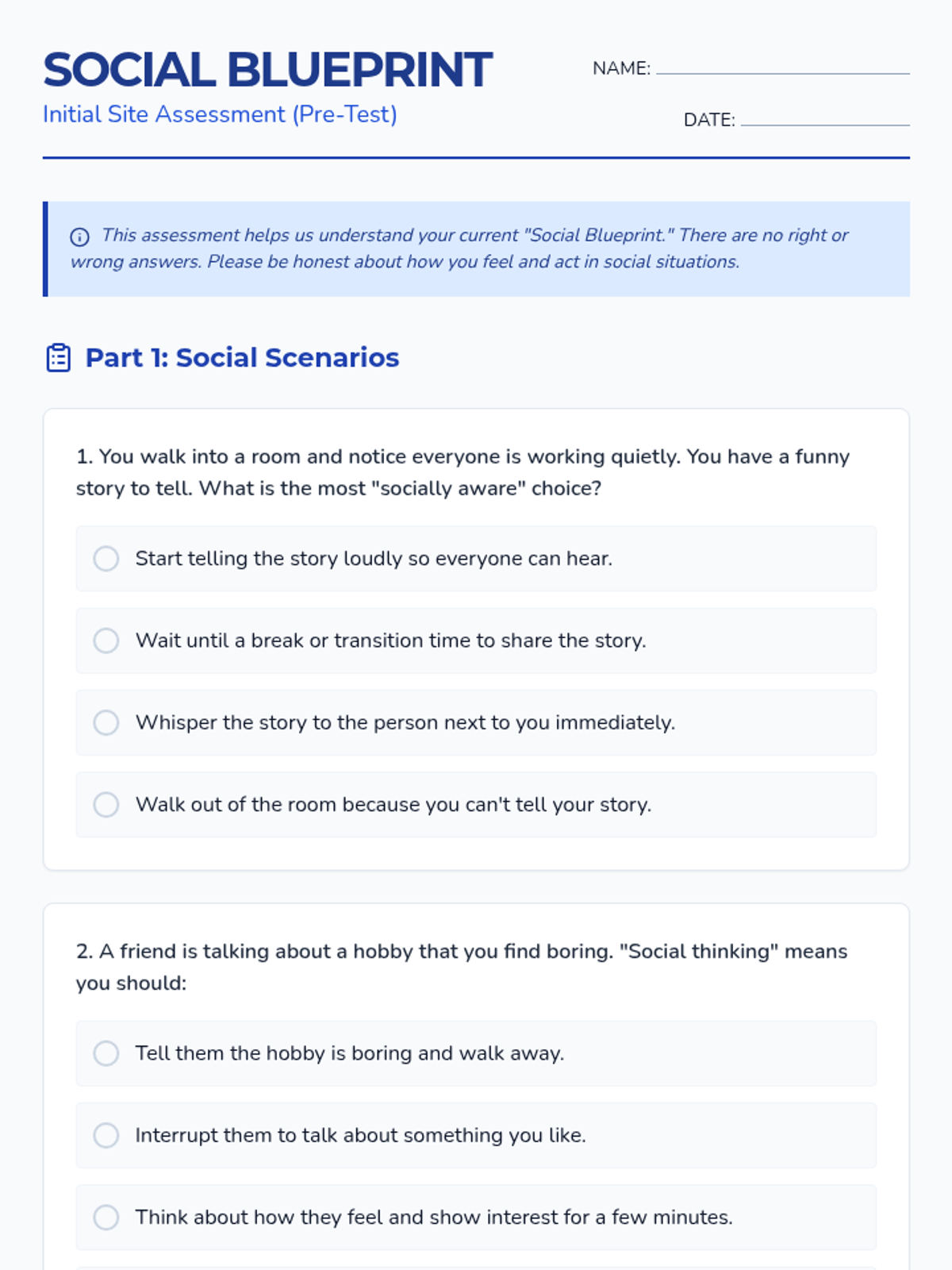
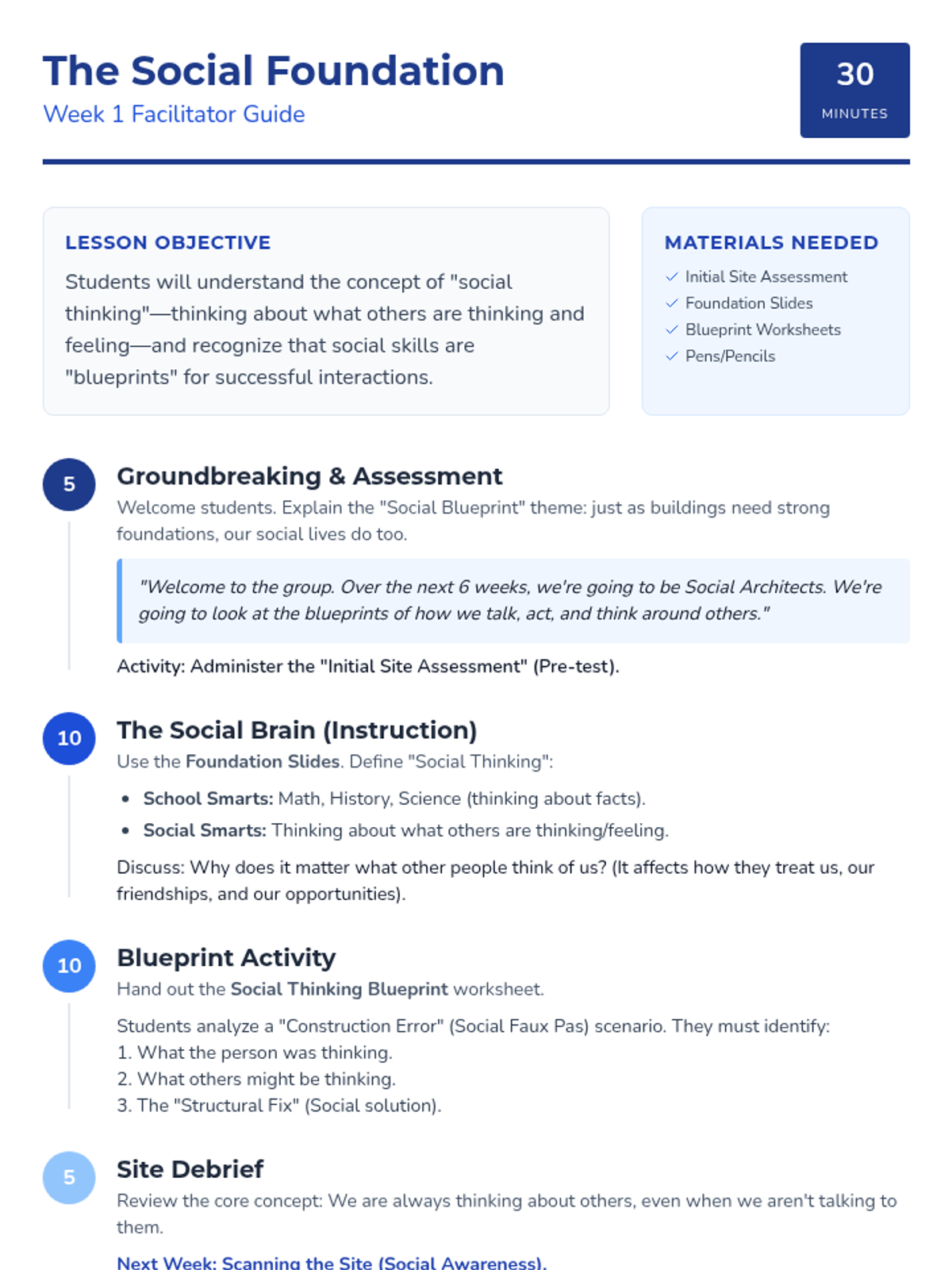
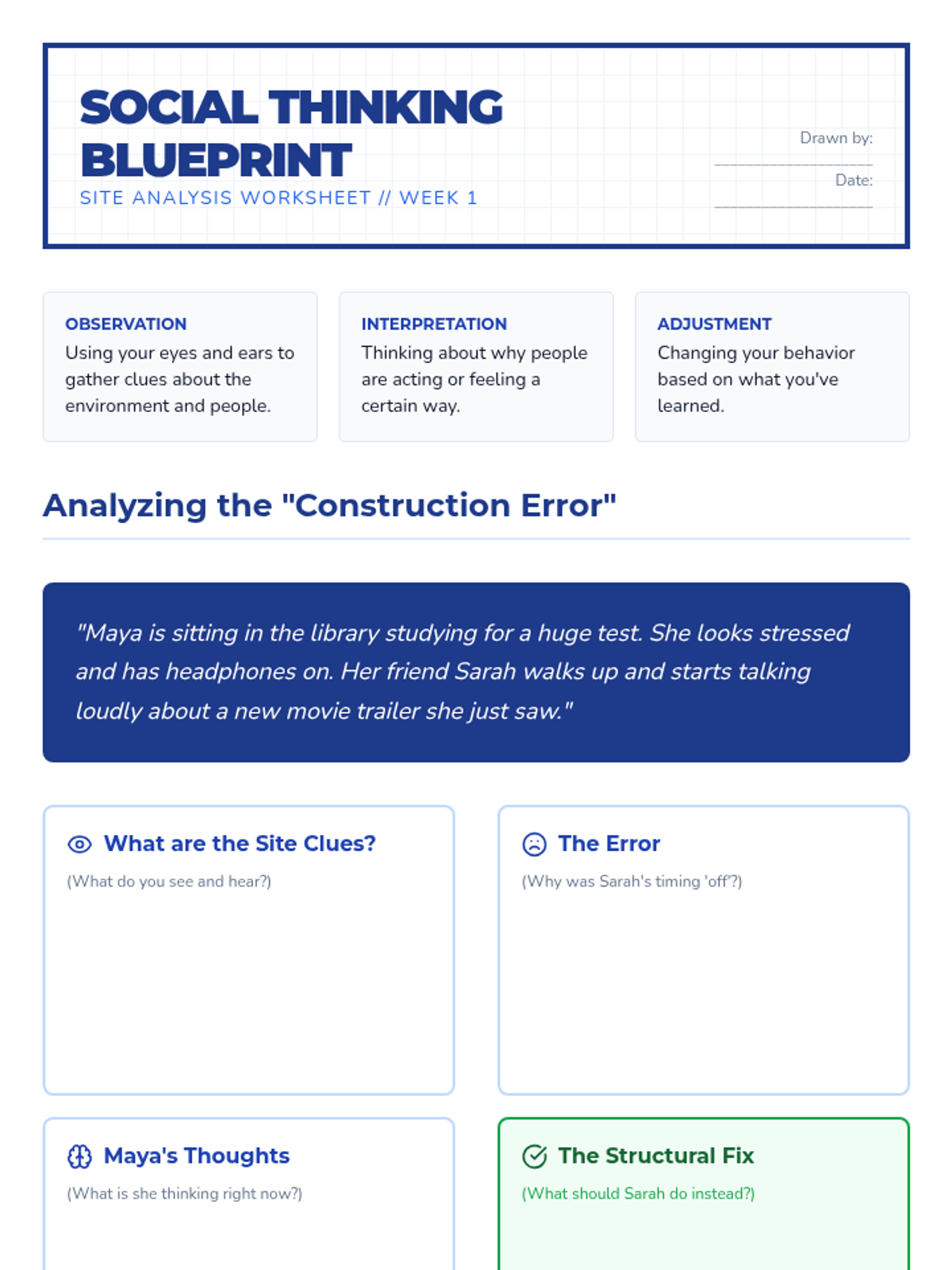
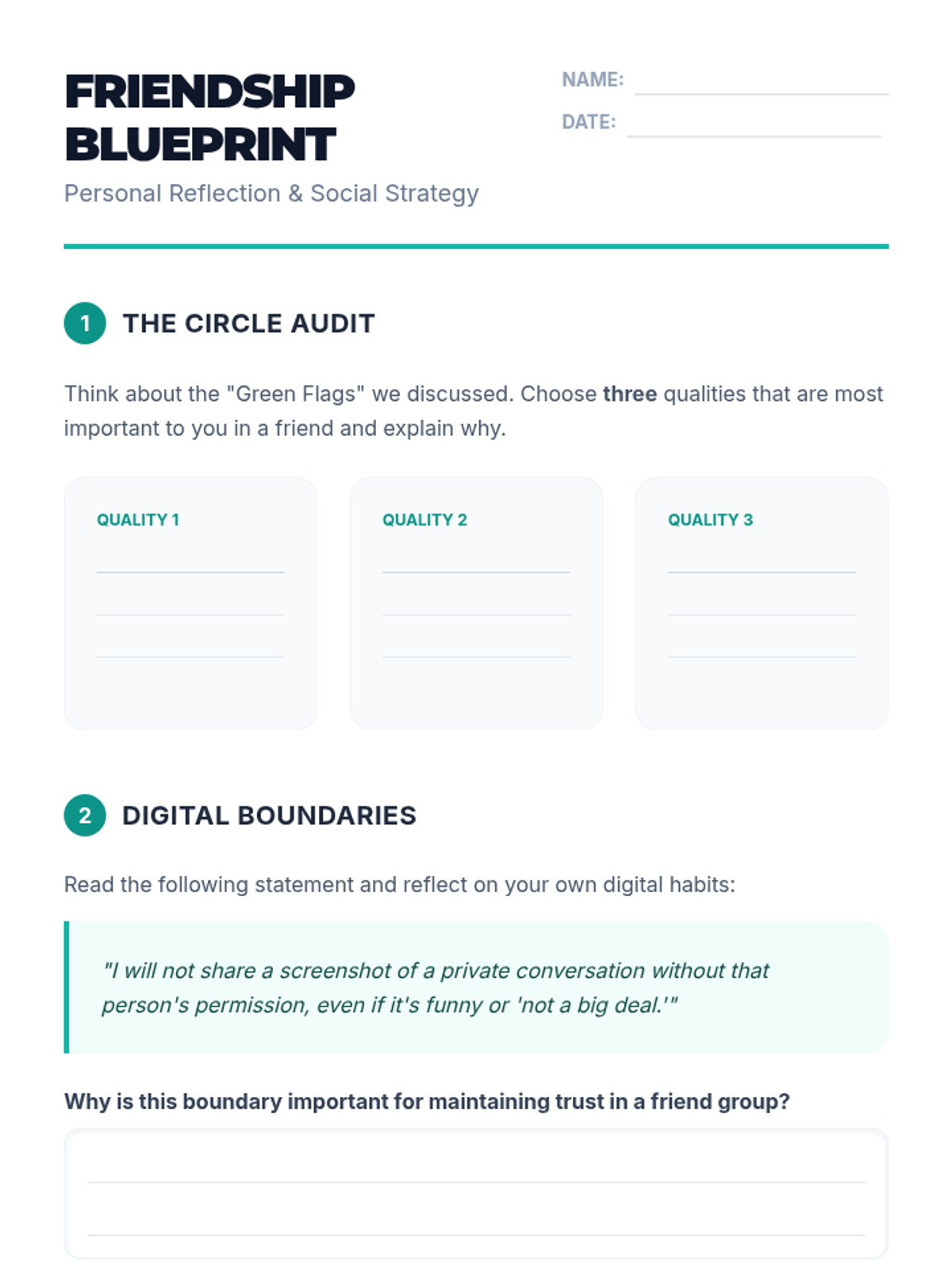
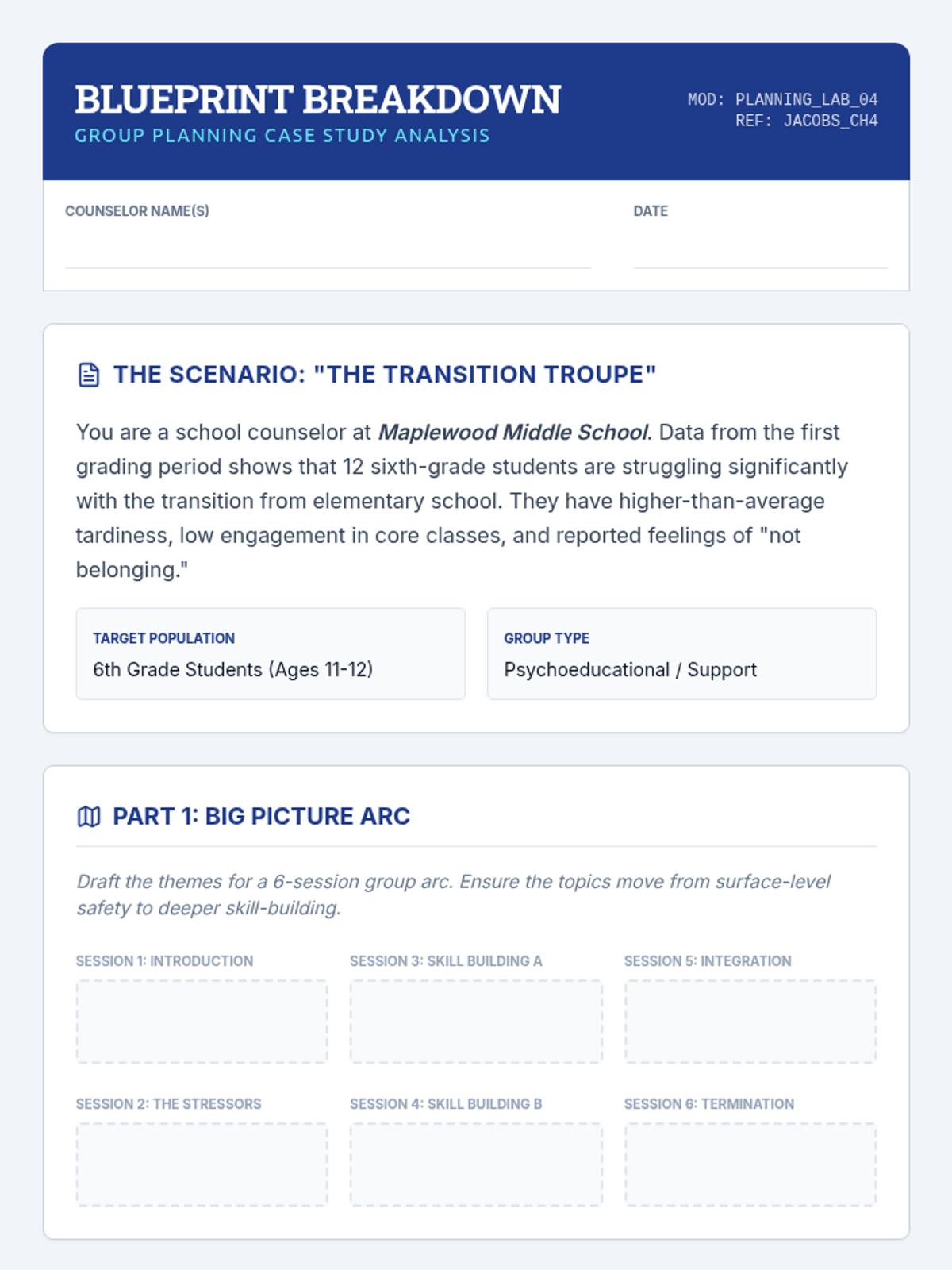
A 6-week social skills curriculum for middle schoolers, focusing on social thinking, awareness, impulse control, and peer socialization through an architectural 'Blueprint' theme.
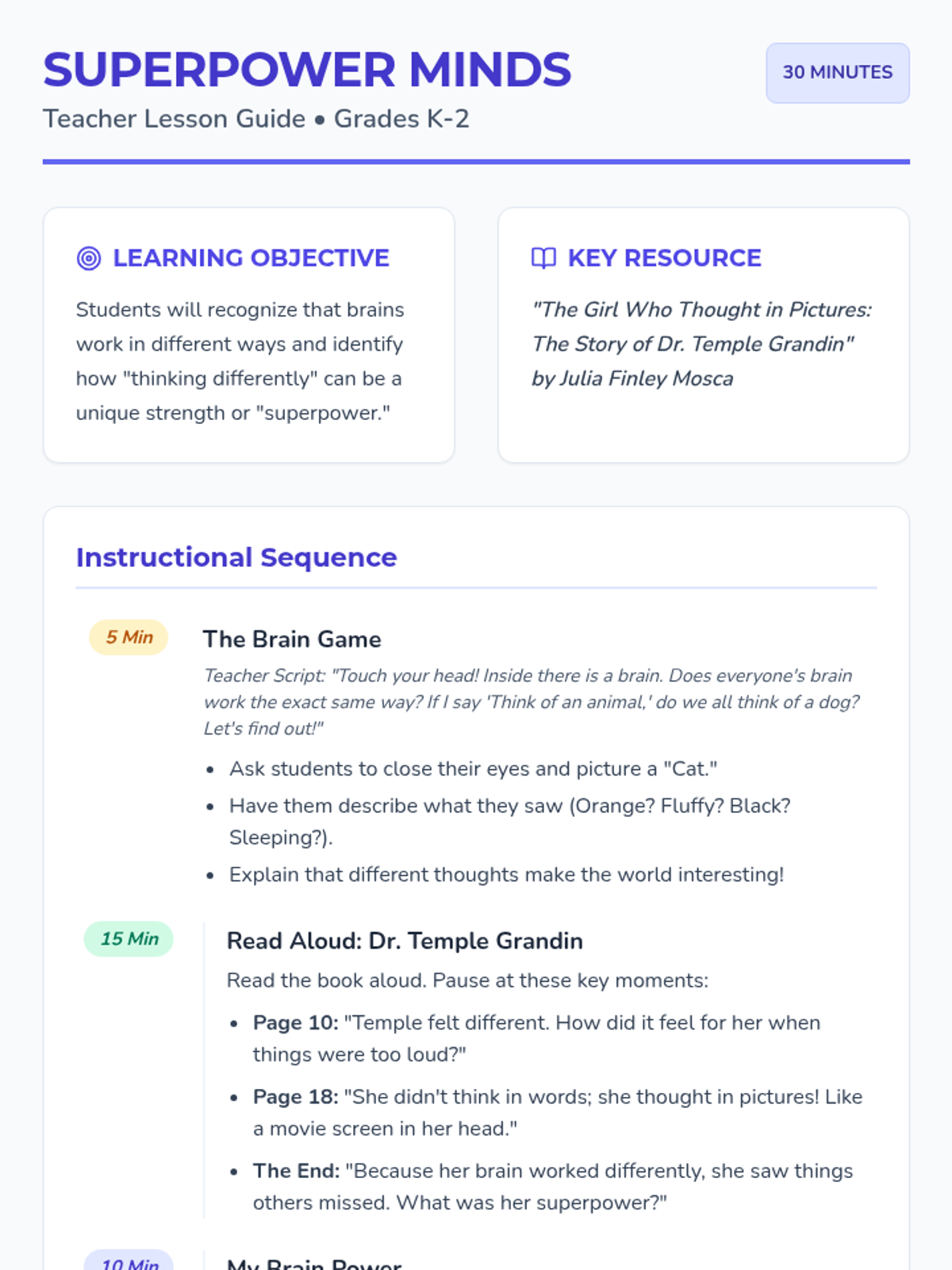
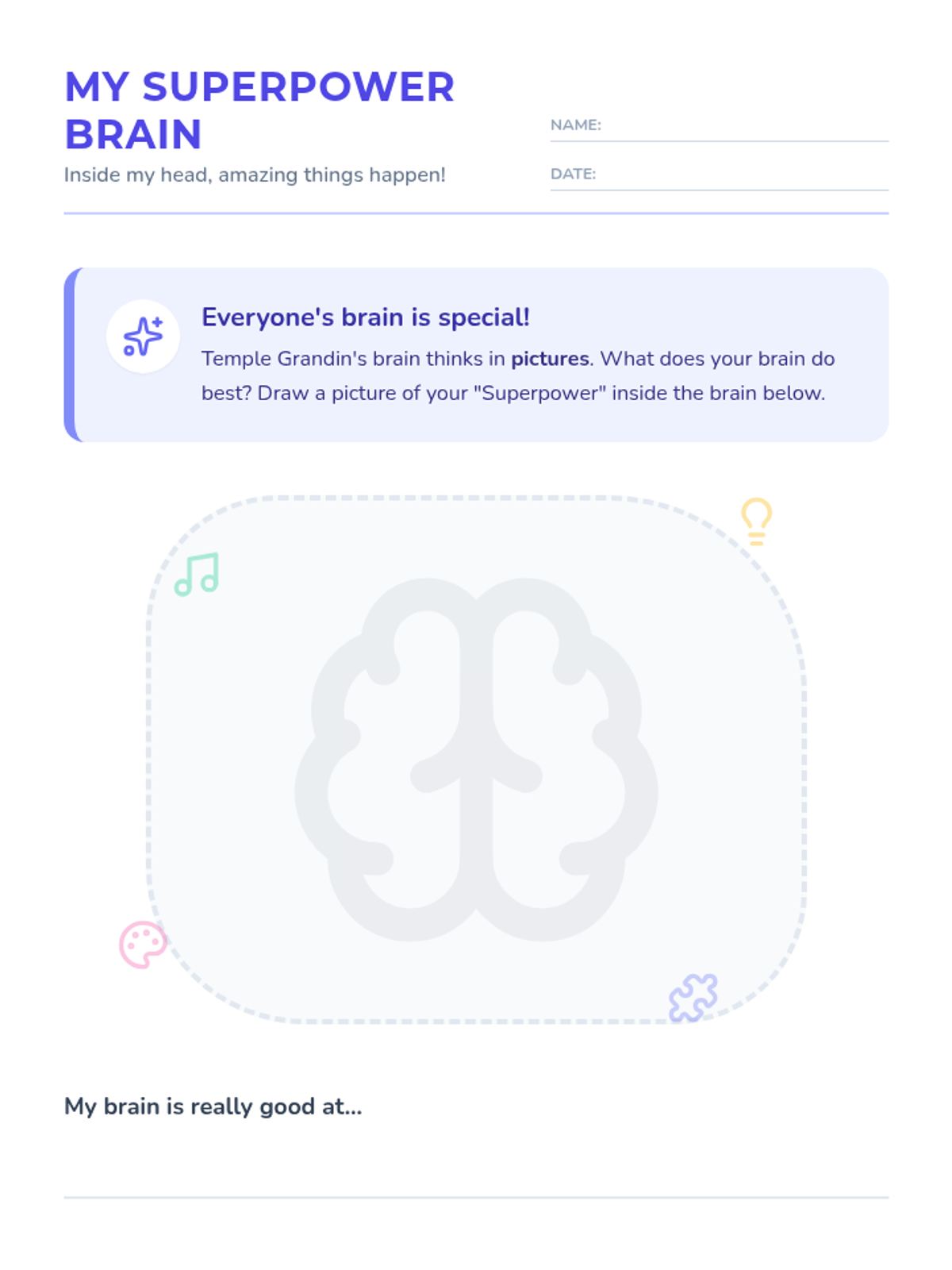
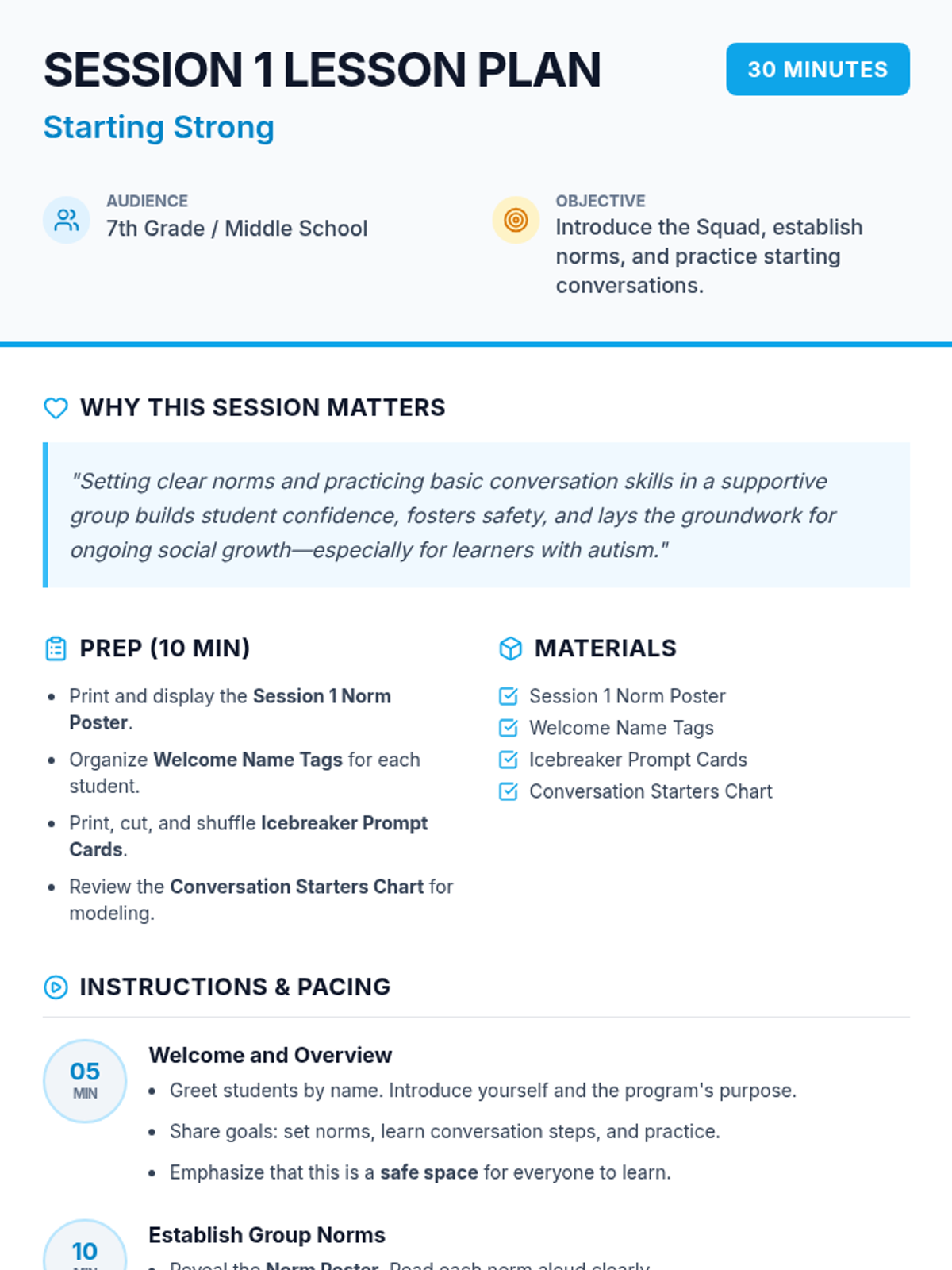
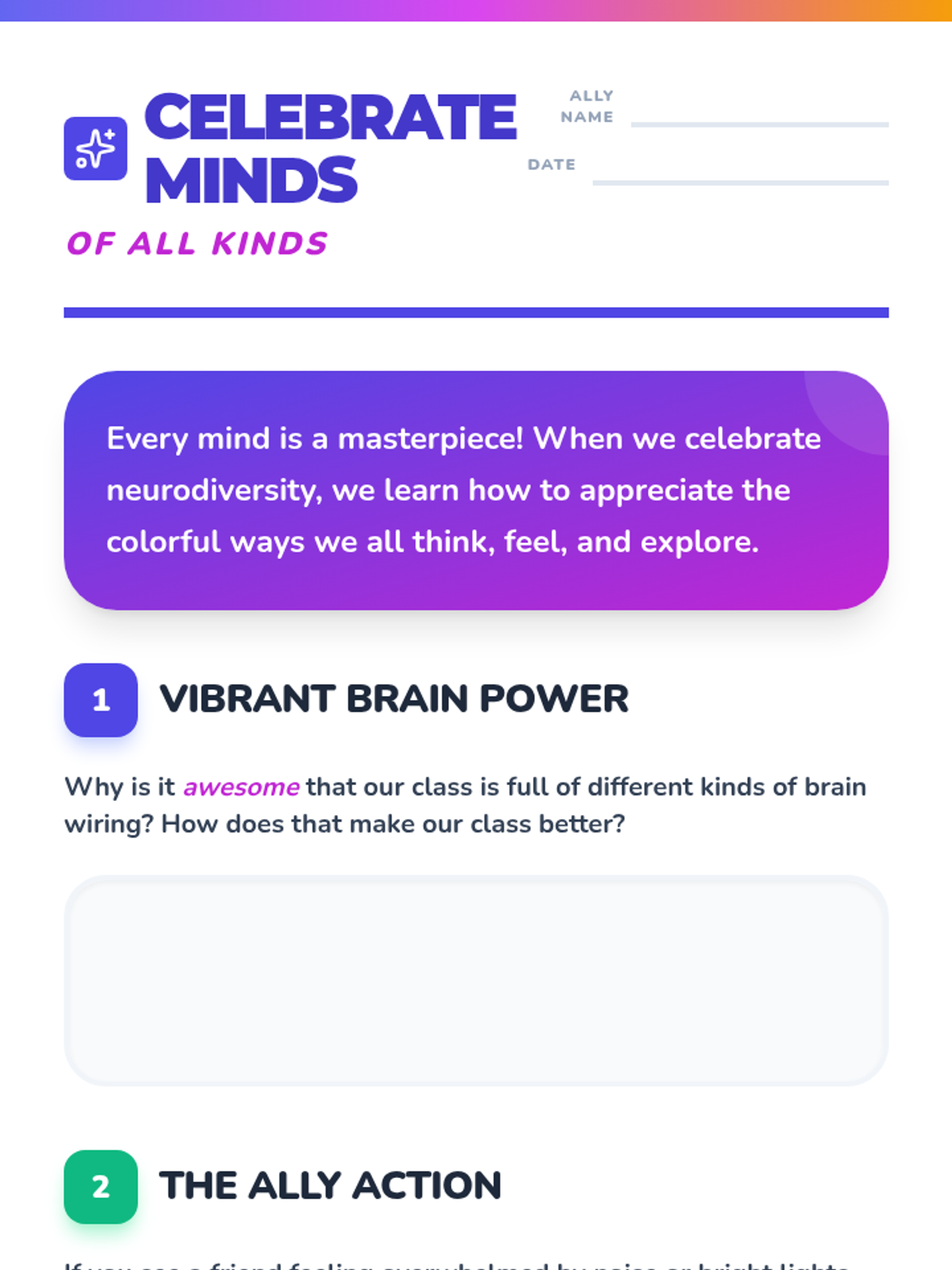
A comprehensive series of 30-minute lessons tailored for different grade levels (K-10) to foster understanding, empathy, and advocacy regarding autism and neurodiversity. Each lesson uses age-appropriate literature to ground the conversation.
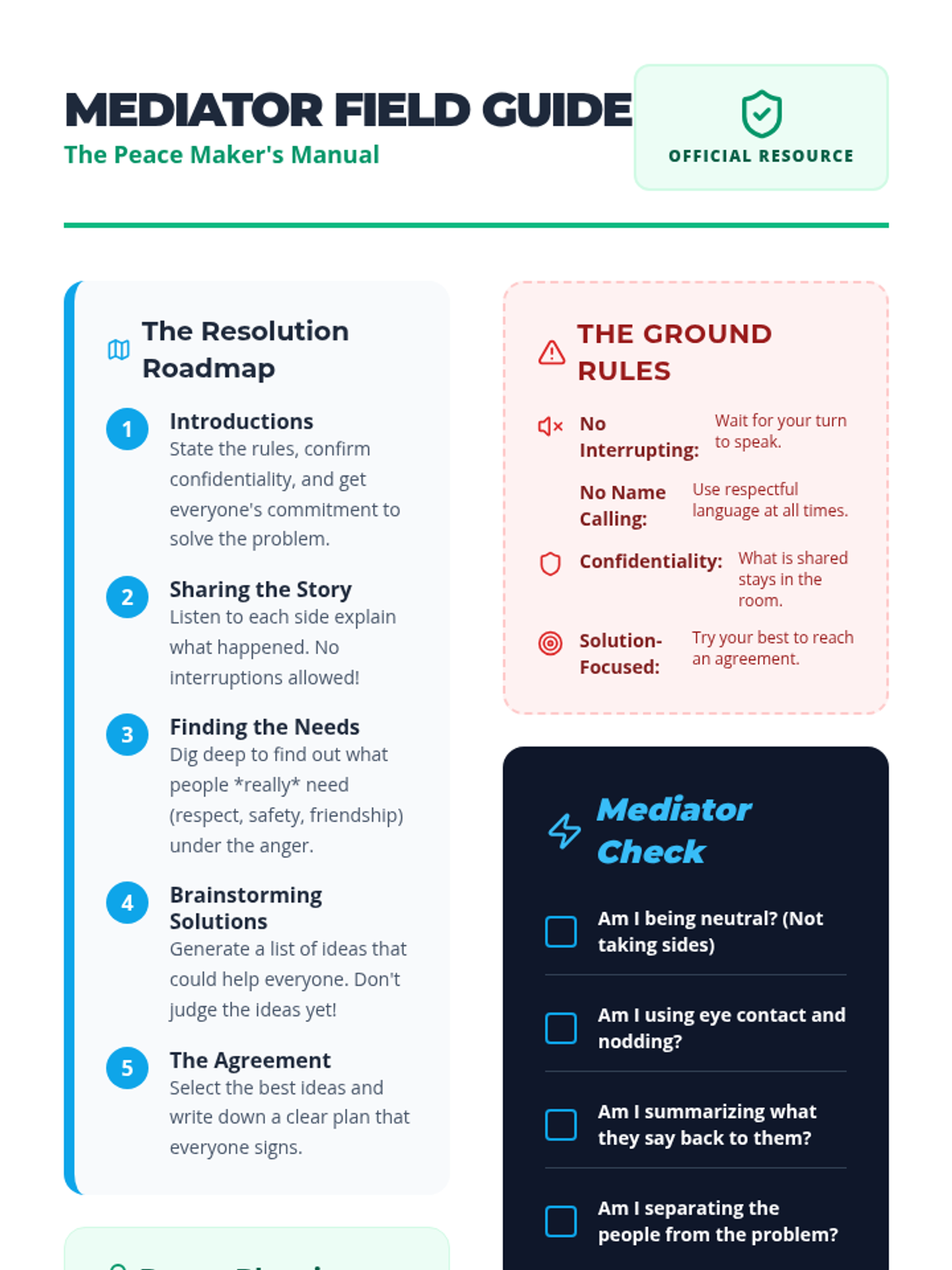
A comprehensive introduction to peer mediation for middle school students, focusing on conflict resolution skills, neutrality, and the structured mediation process. Students learn to facilitate peaceful resolutions through active listening and collaborative problem-solving.
A series of lessons focused on mastering high-frequency academic action verbs like explain, compare, and justify to help students succeed in academic tasks and assessments.
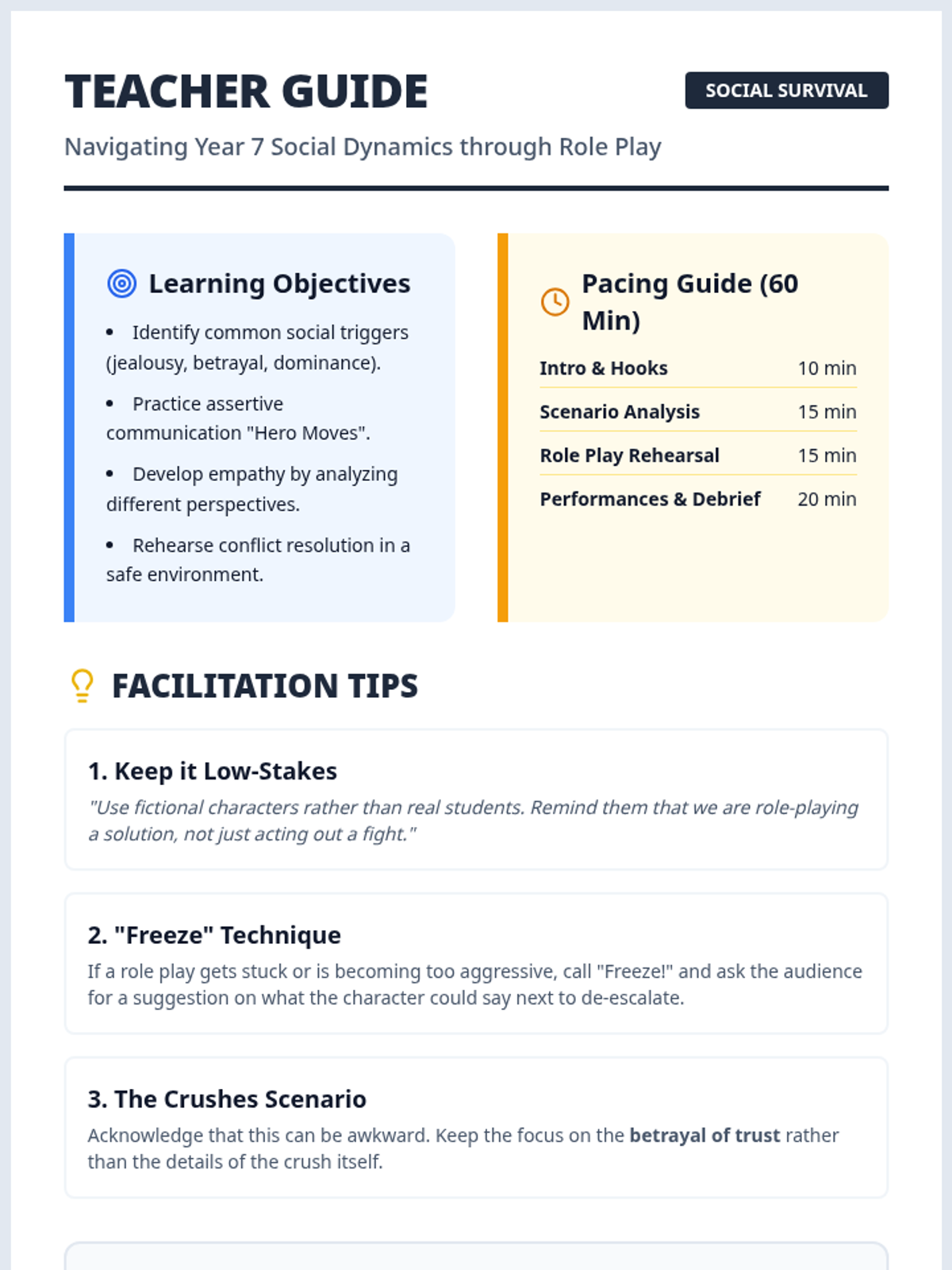
A series of lessons designed to help Year 7 students transition into the social complexities of secondary school, covering friendship, identity, and communication.
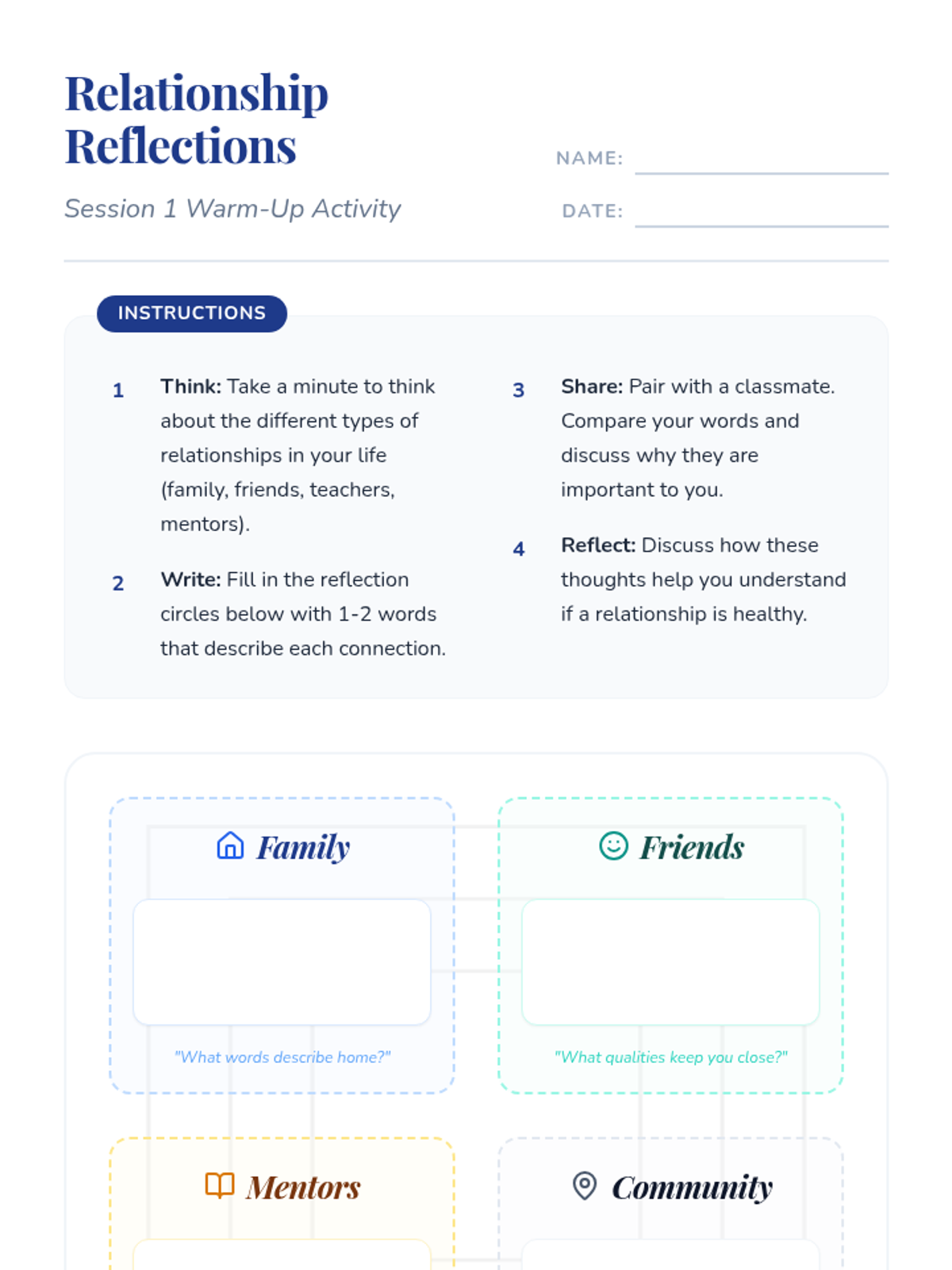
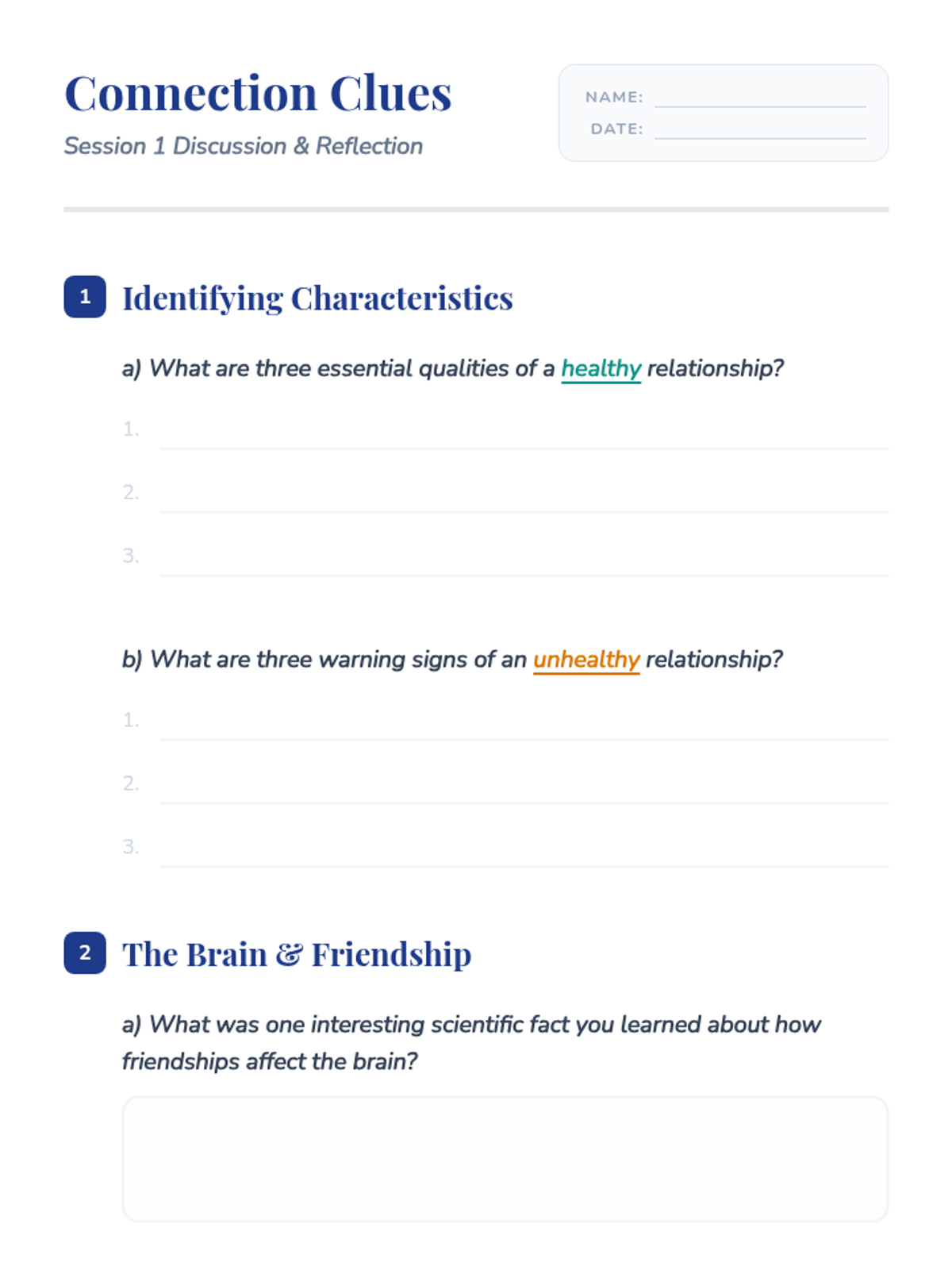
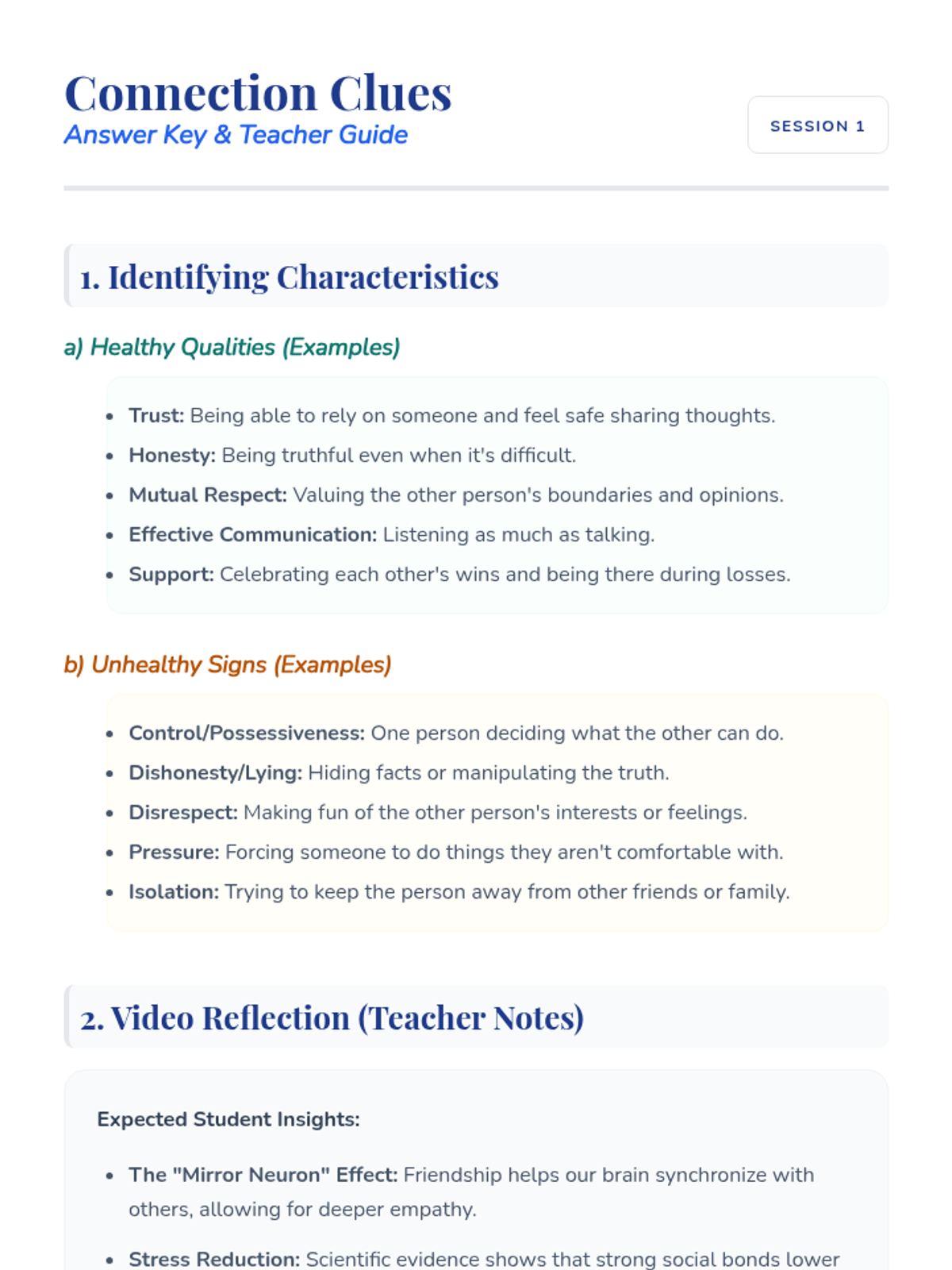
A sequence focused on developing interpersonal communication skills, conflict resolution strategies, and healthy relationship boundaries for middle school students.
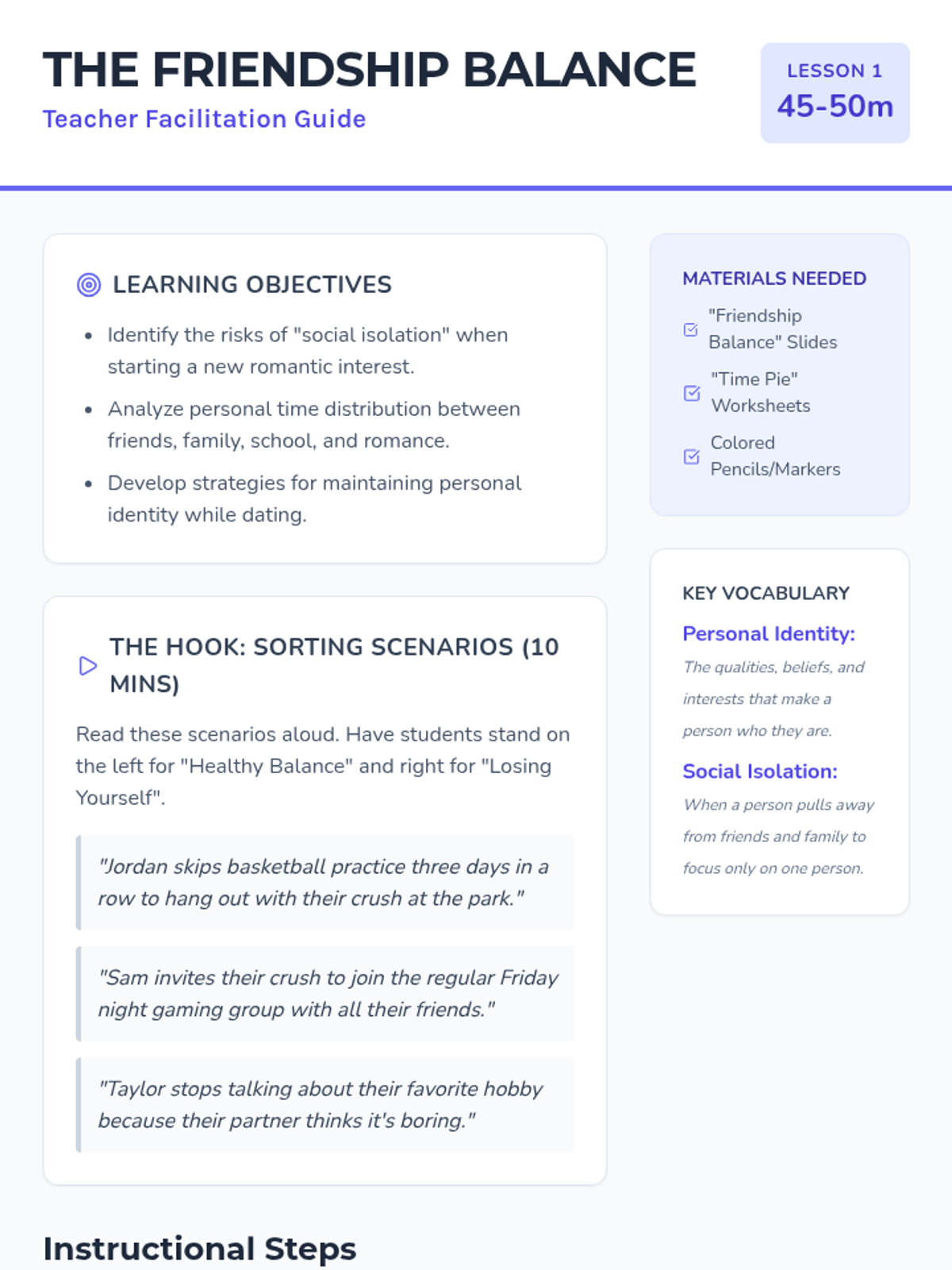
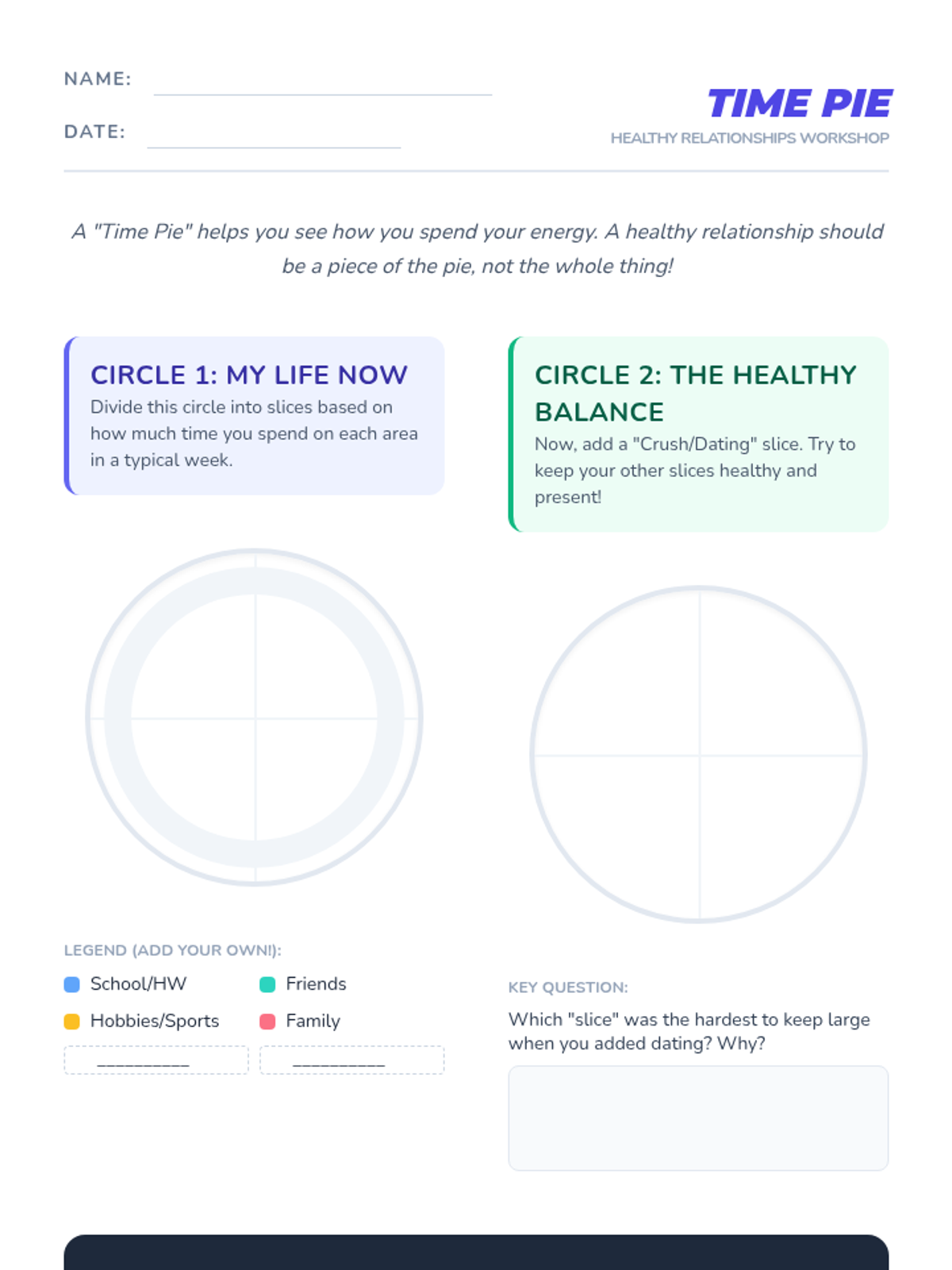
This project-based sequence explores emotional safety and decision-making in relationships. Students learn to balance friendships with romantic interests, trust their intuition, build resilience through rejection, and advocate for equality in their connections, culminating in a personal 'Relationship Rights' zine.
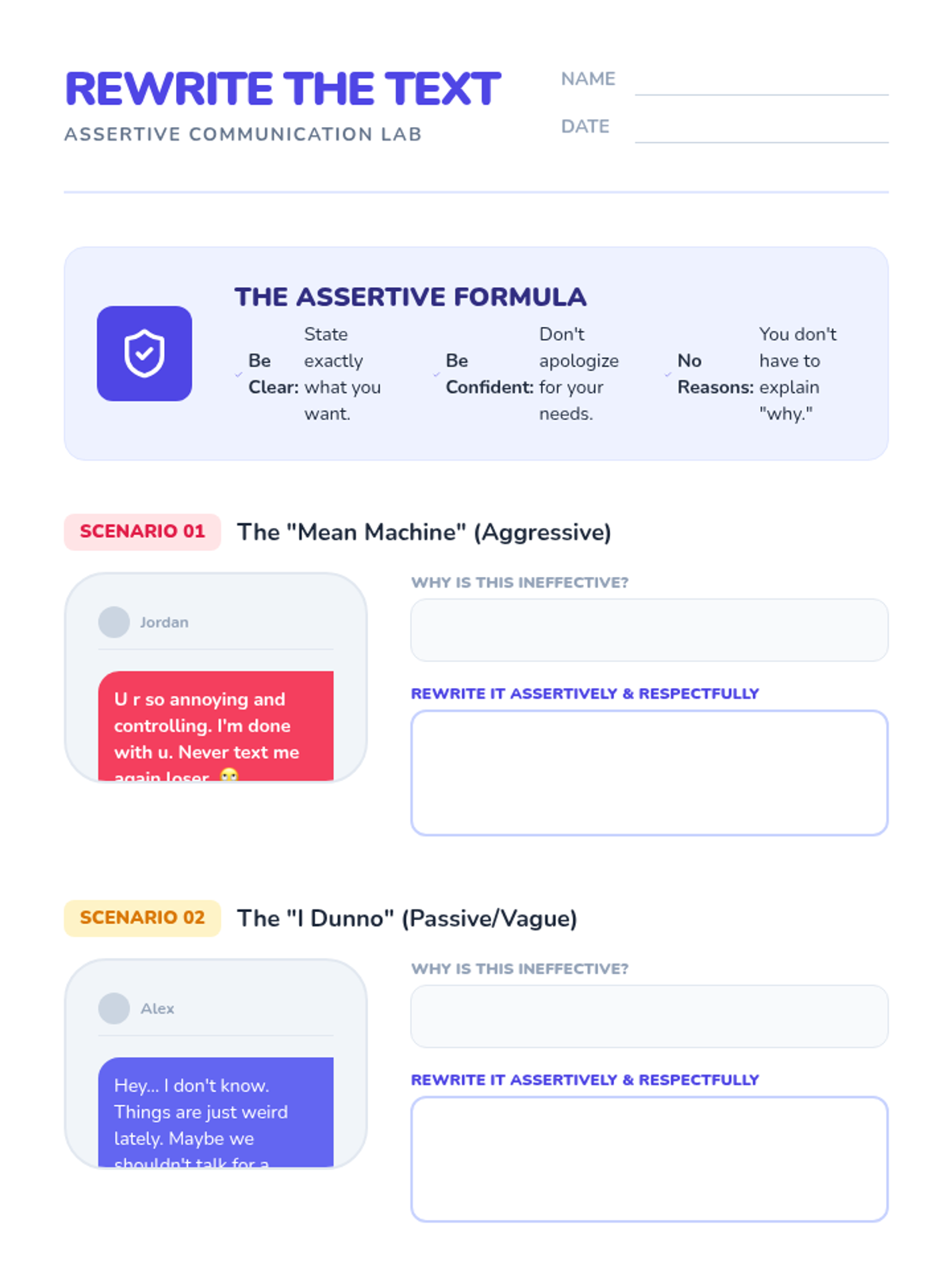
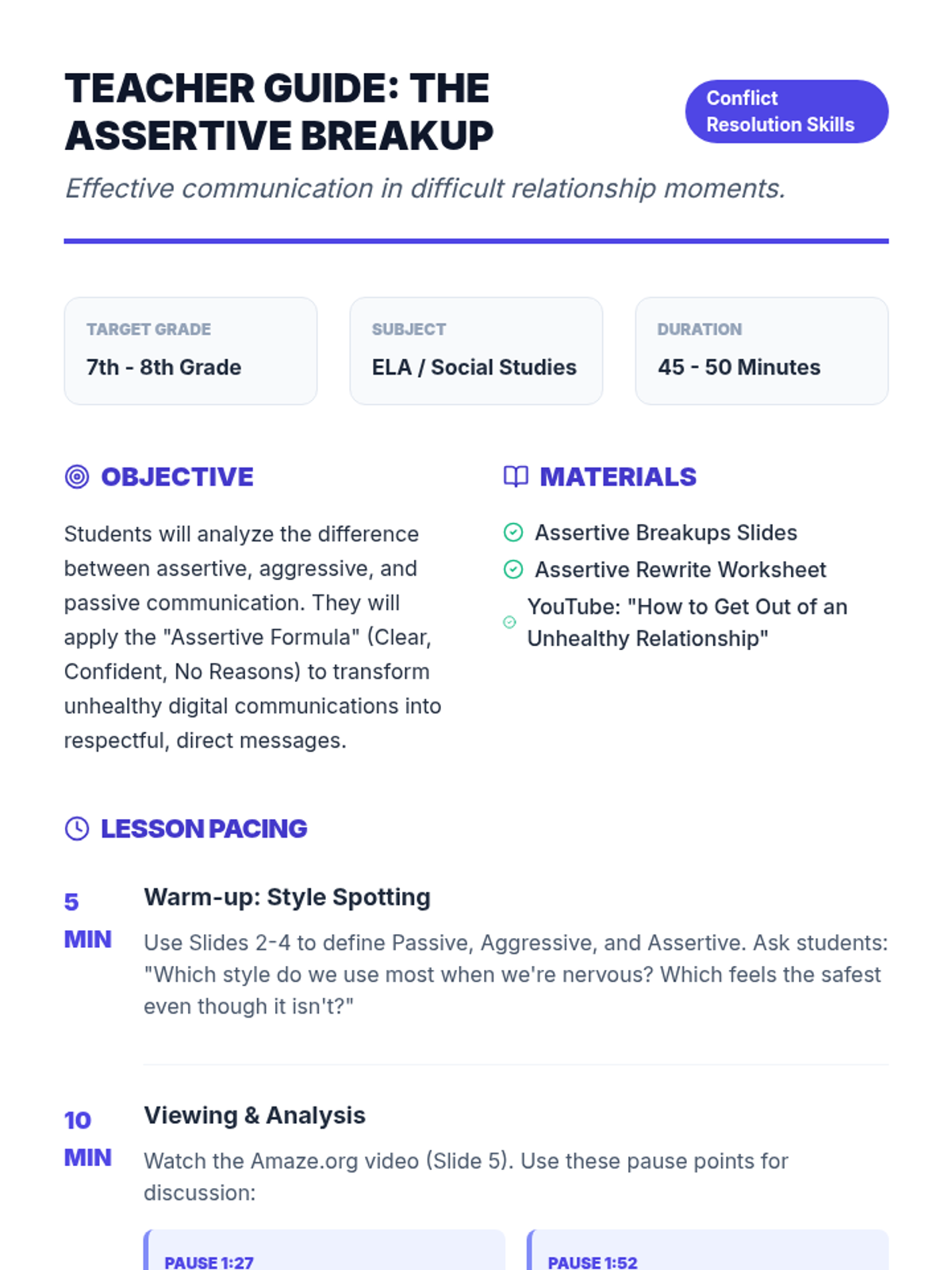
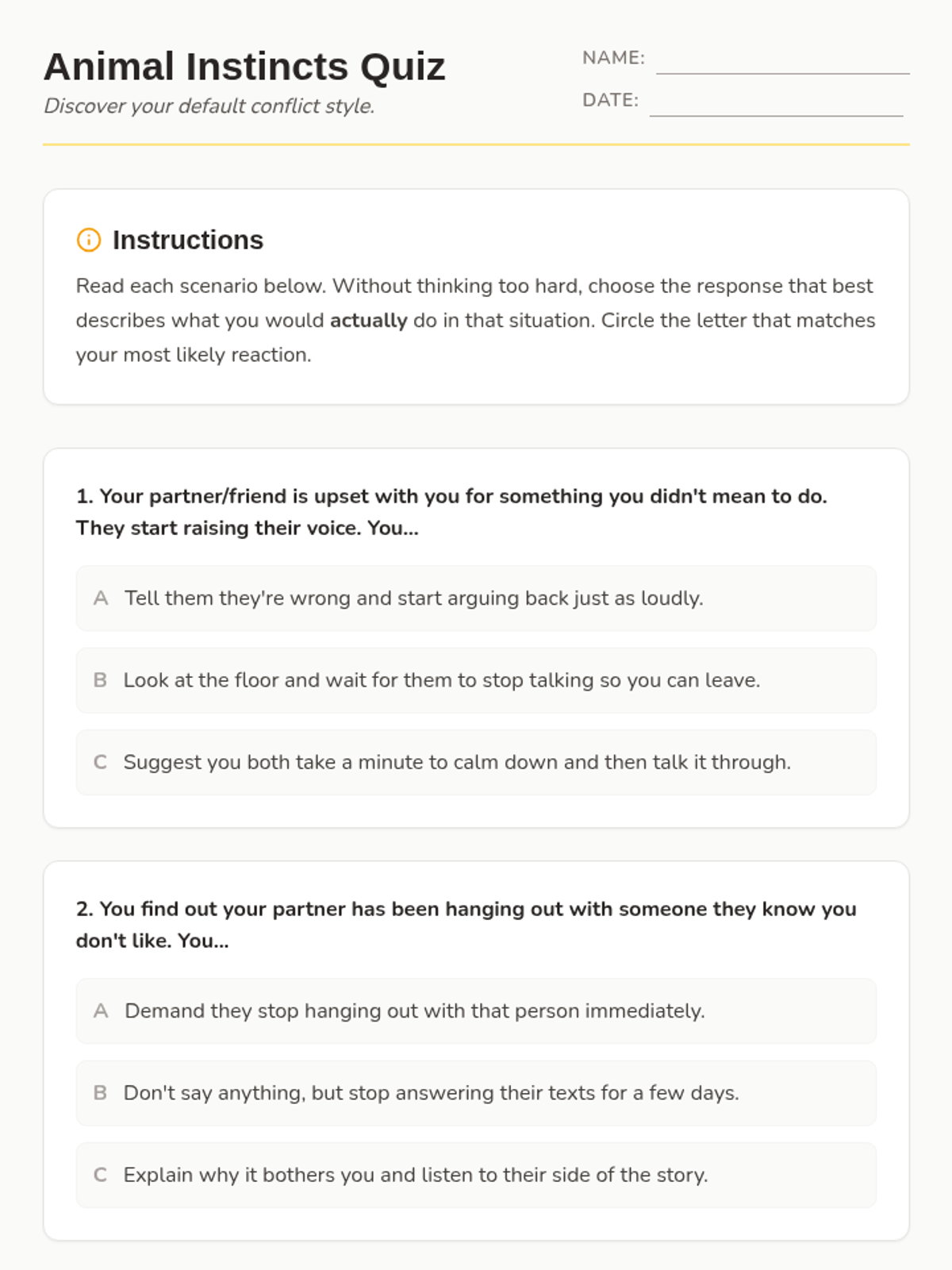
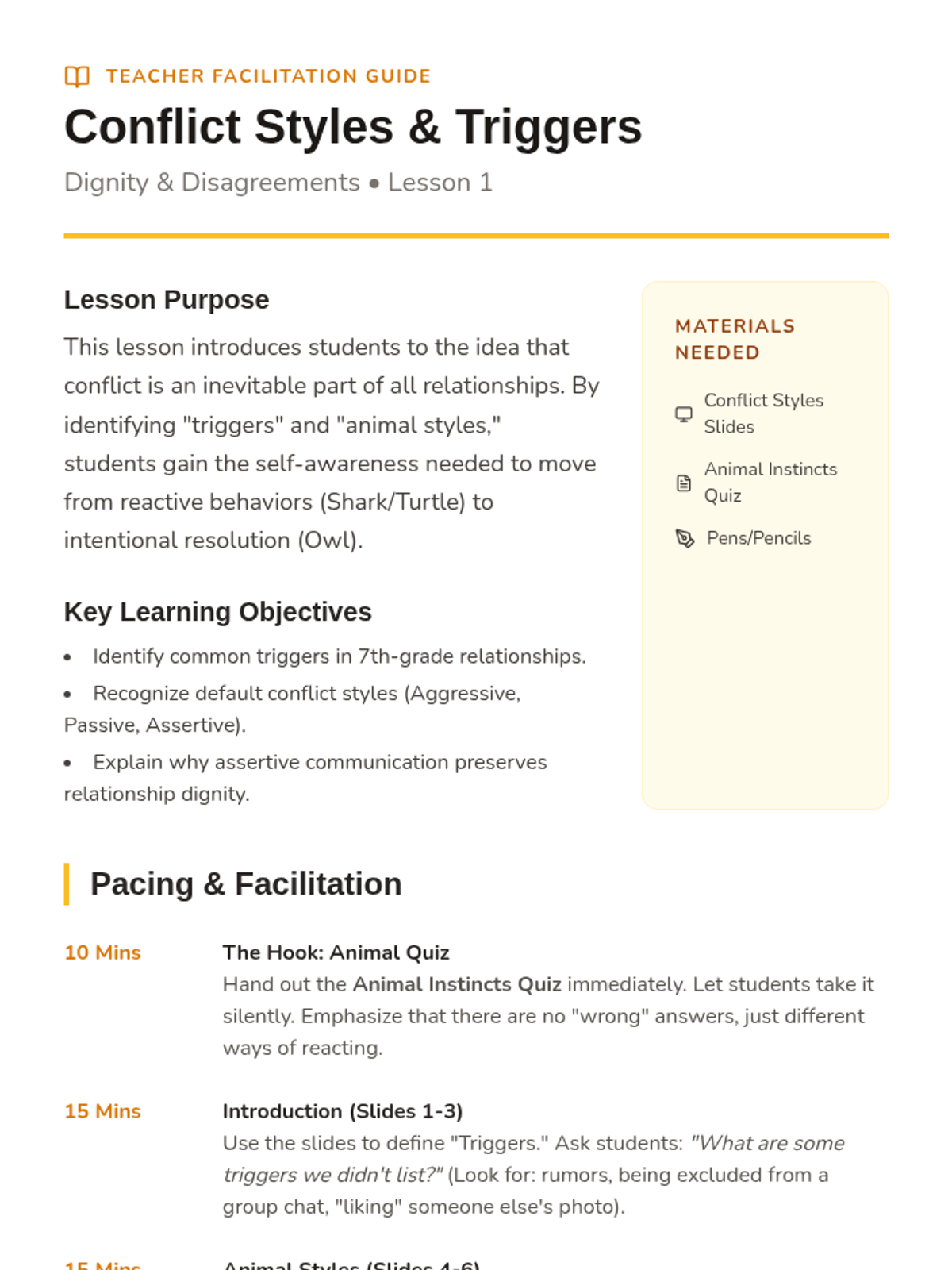
This sequence equips 7th-grade students with the tools to navigate the inevitable conflicts and endings of romantic relationships. Students will learn conflict styles, de-escalation techniques, how to recognize unhealthy patterns, and respectful ways to end a relationship while maintaining emotional safety and dignity.
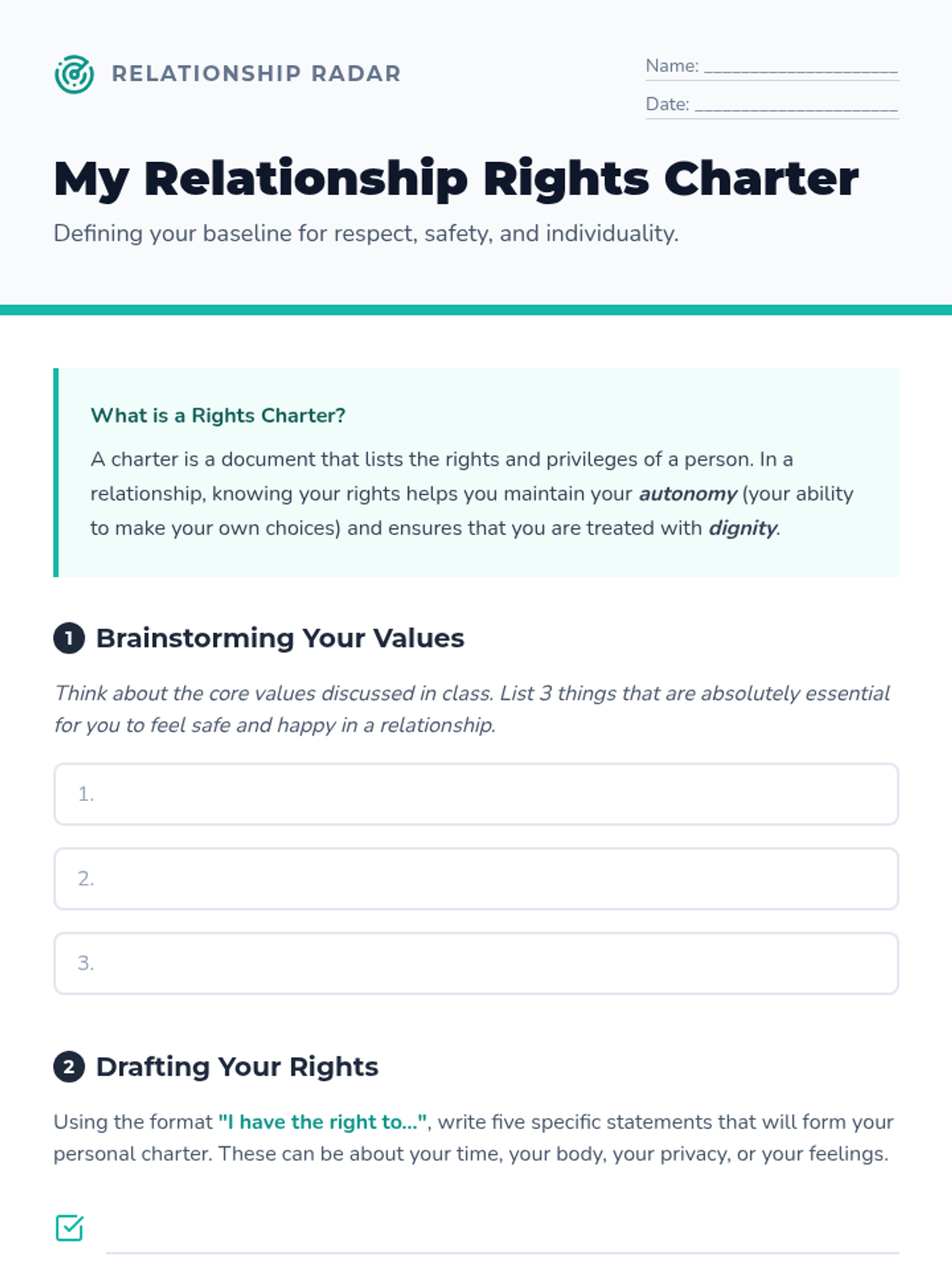
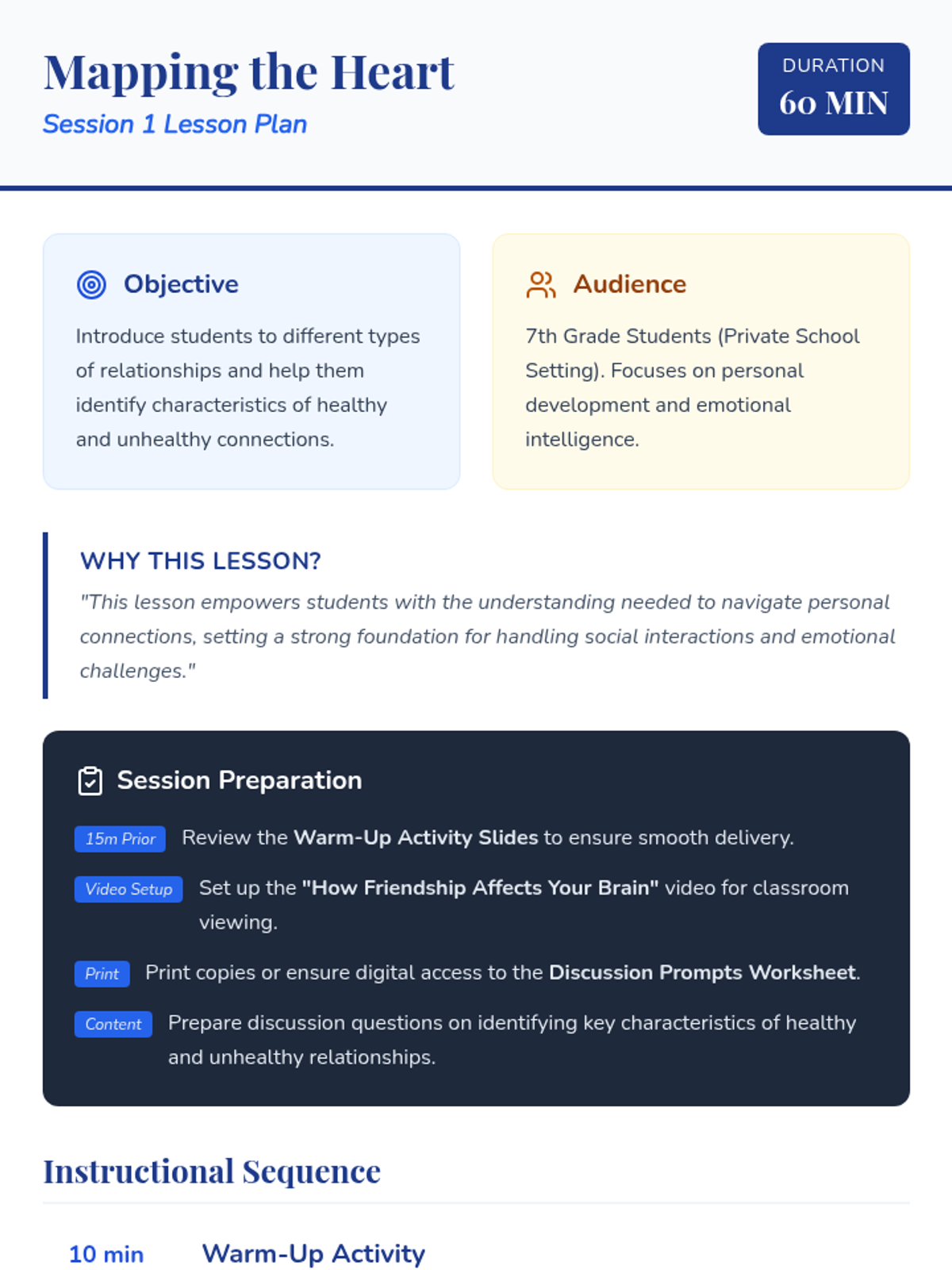
A comprehensive unit for 7th-grade students to identify healthy vs. unhealthy romantic relationship indicators, core values, and personal boundaries. Students will develop a 'Relationship Radar' to navigate social dynamics with emotional safety and autonomy.
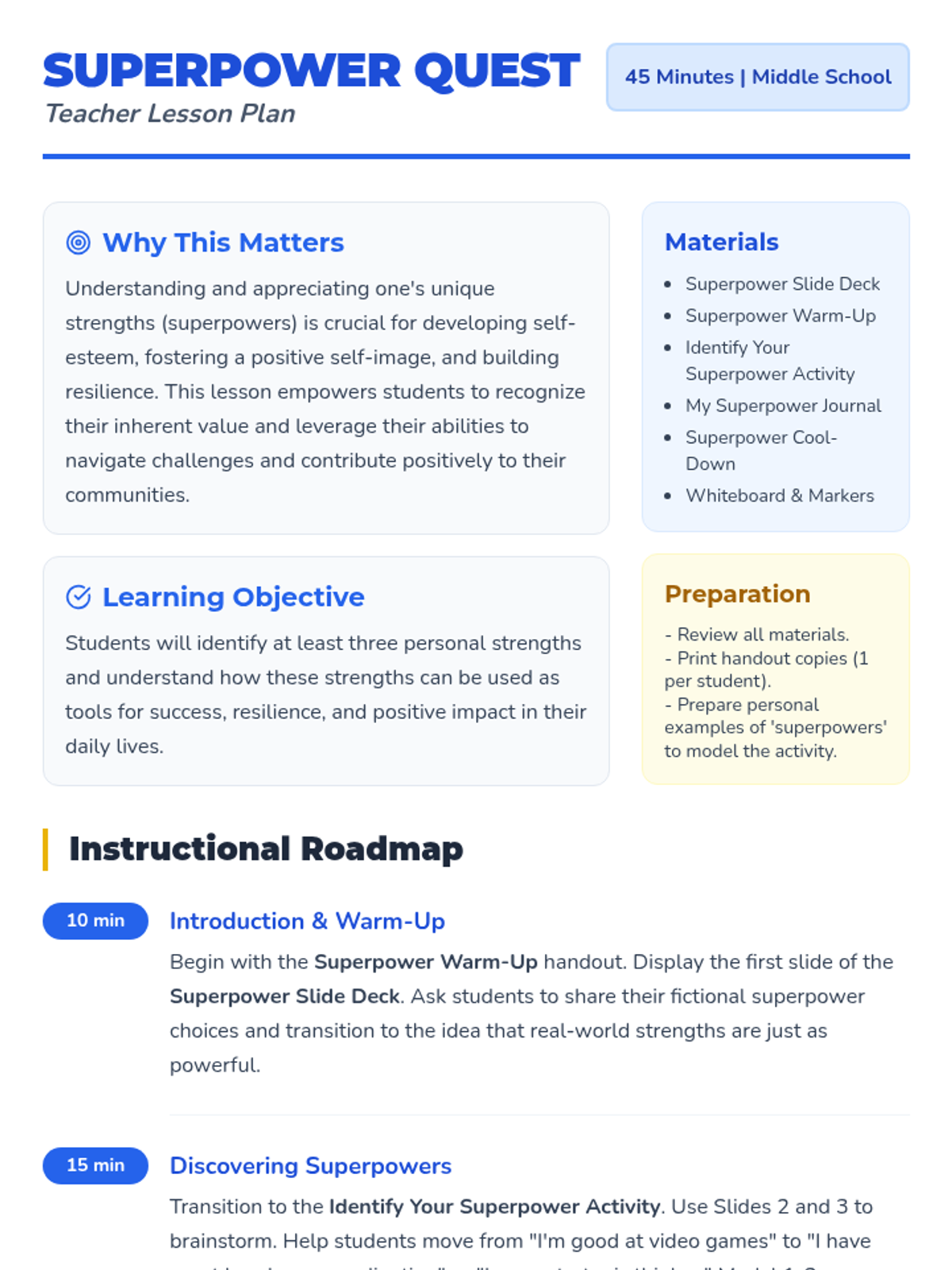
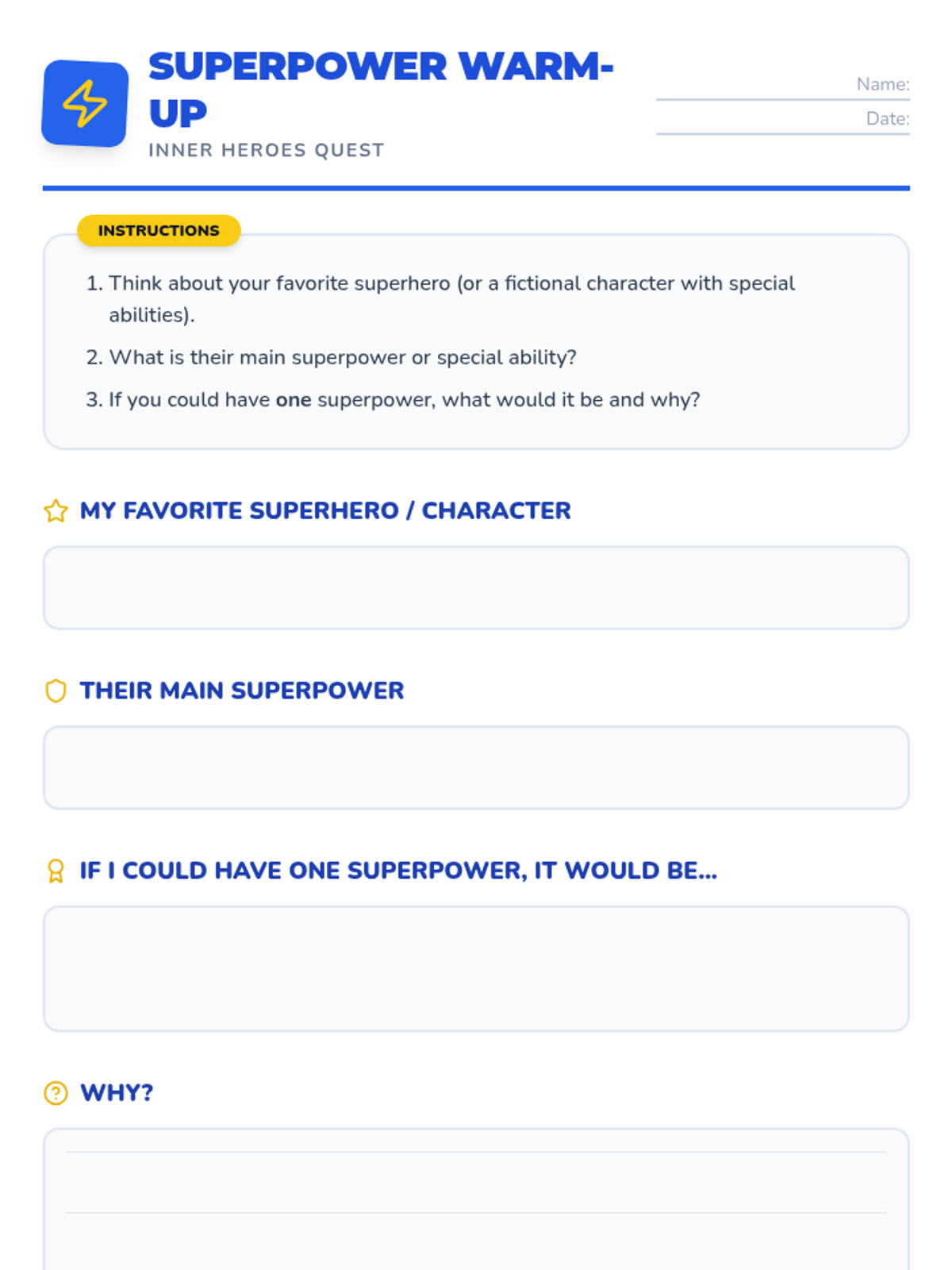
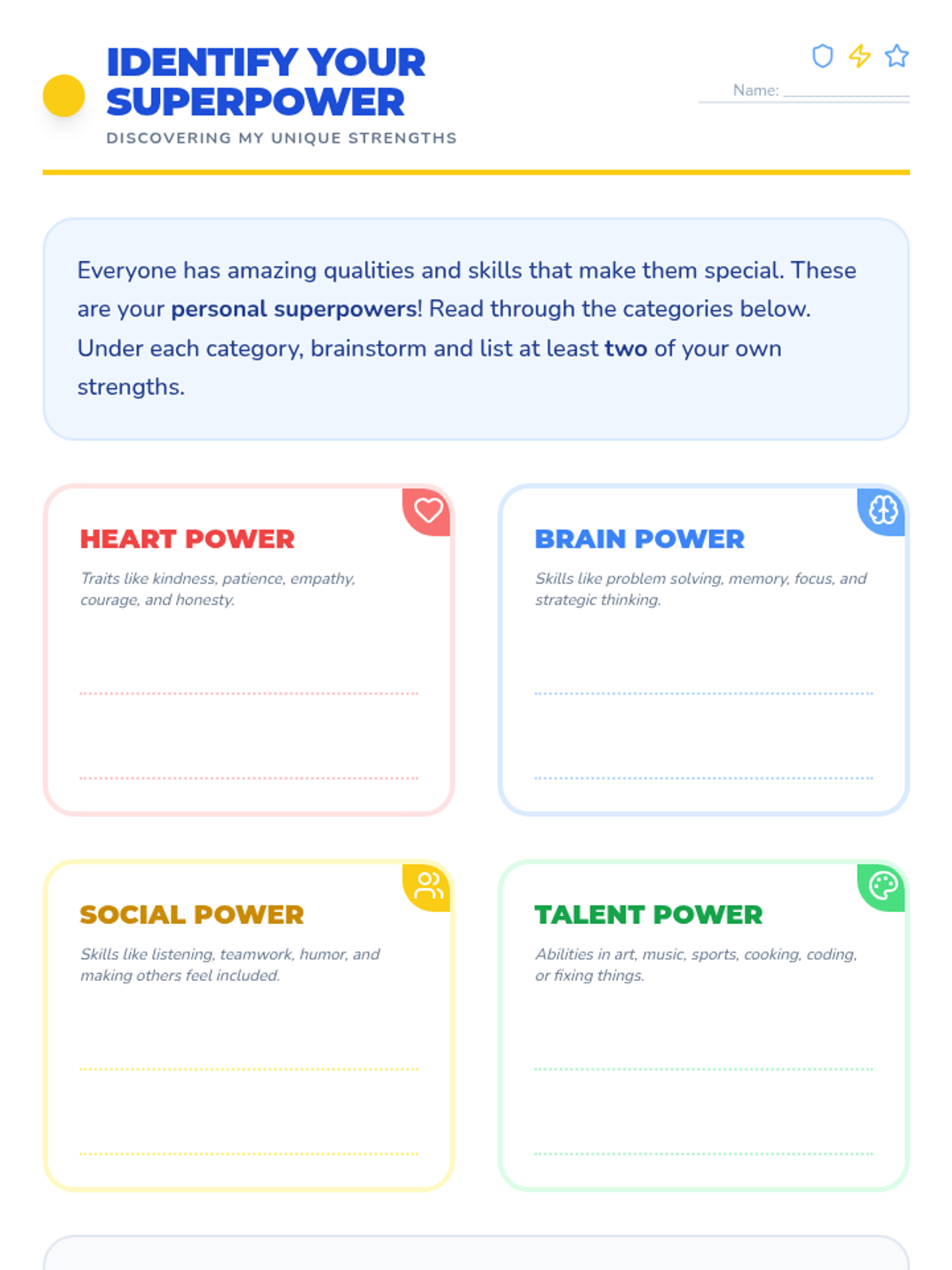
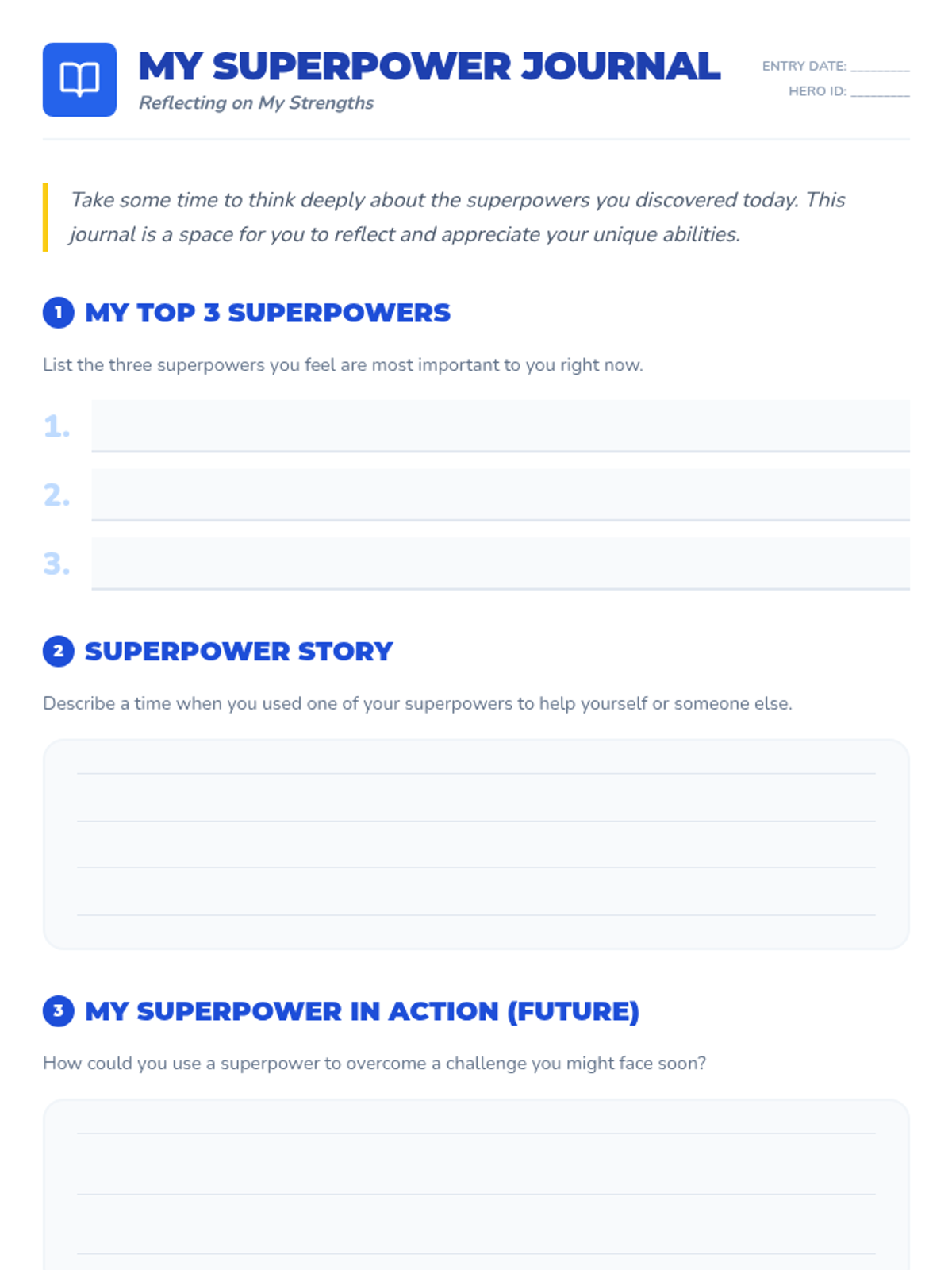
A sequence focused on self-discovery and social health, helping students identify their inner strengths and navigate social boundaries with confidence.
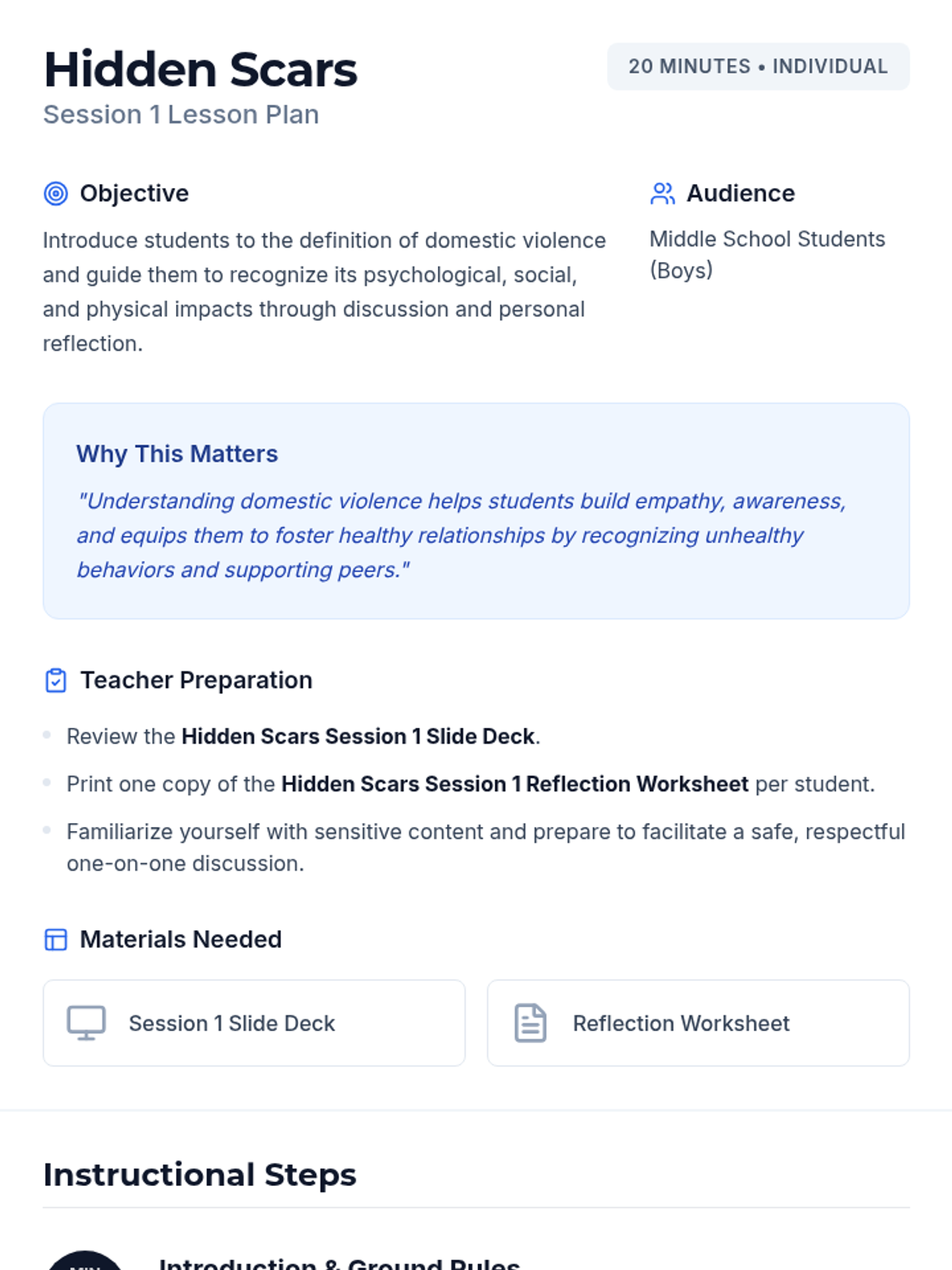
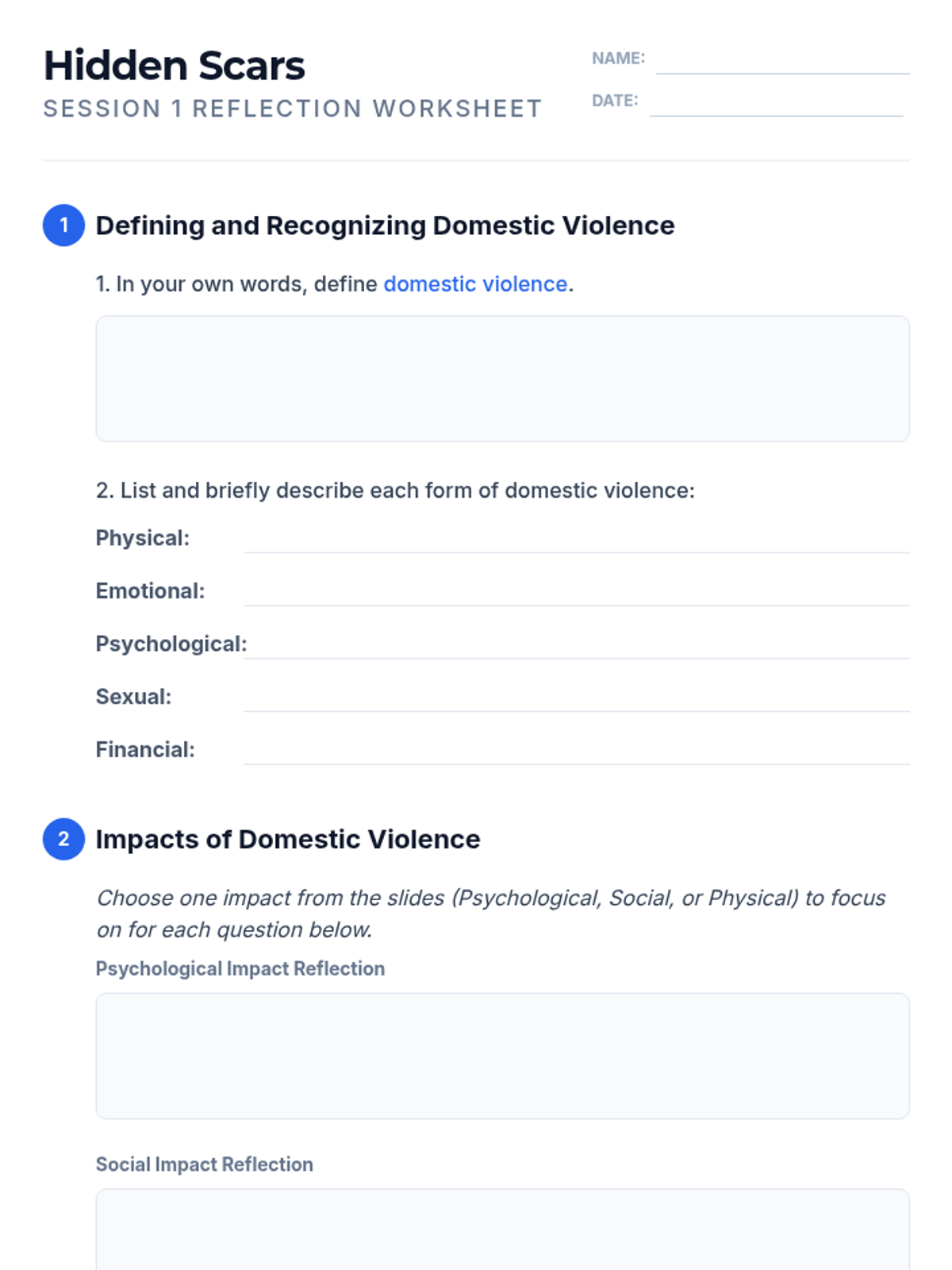
A two-session sequence for middle school boys exploring the psychological, social, and physical impacts of domestic violence while building healthy relationship skills and coping strategies.
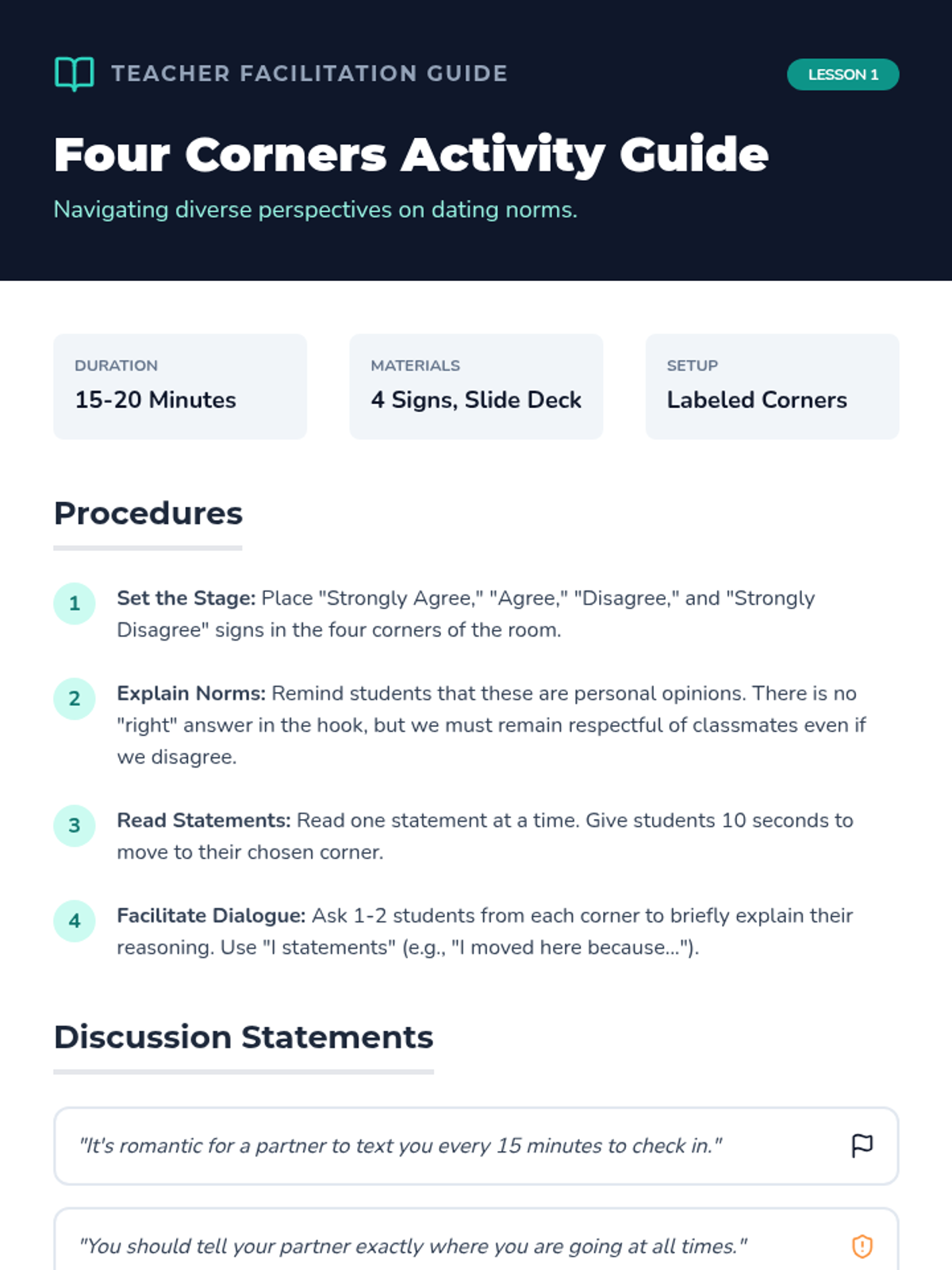
A two-session unit for 7th graders focused on identifying healthy and unhealthy relationship patterns, building communication skills, and practicing conflict resolution through interactive projects and games.
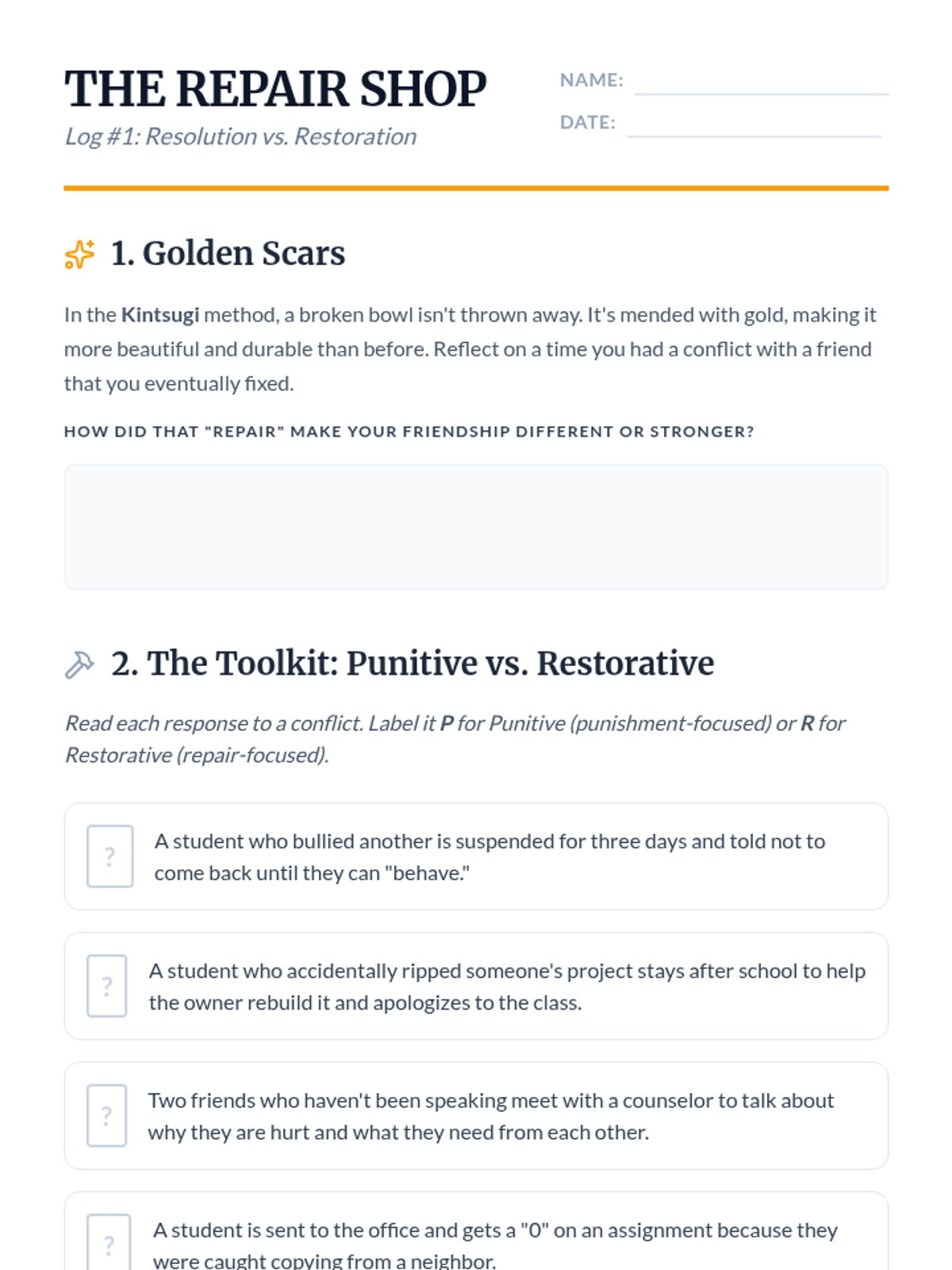
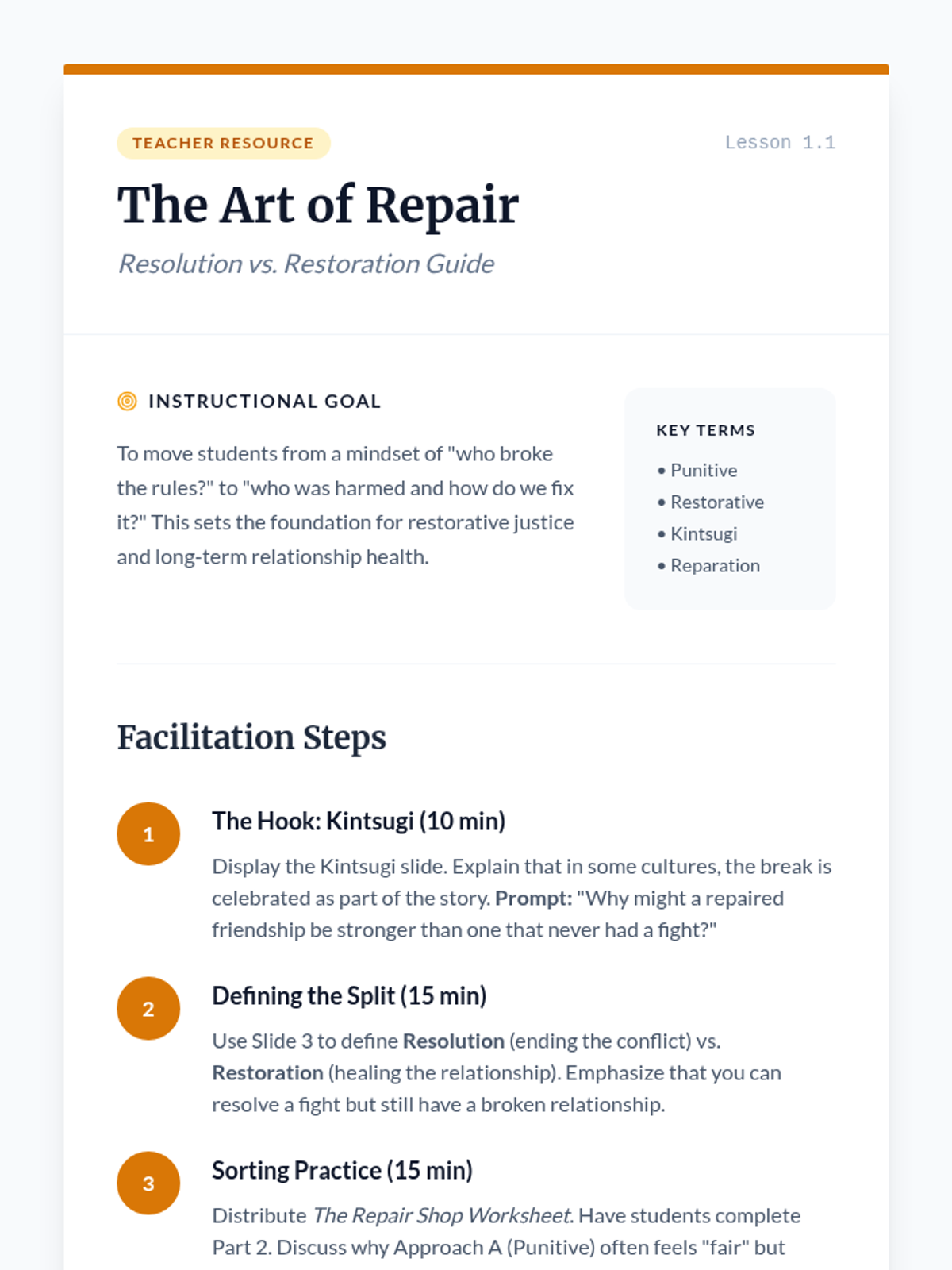
A 5-lesson sequence for 6th graders focusing on the aftermath of conflict: restoration, genuine apologies, sustainable agreements, and rebuilding trust. Students move beyond just 'stopping a fight' to actively repairing relationships and creating long-term peace.
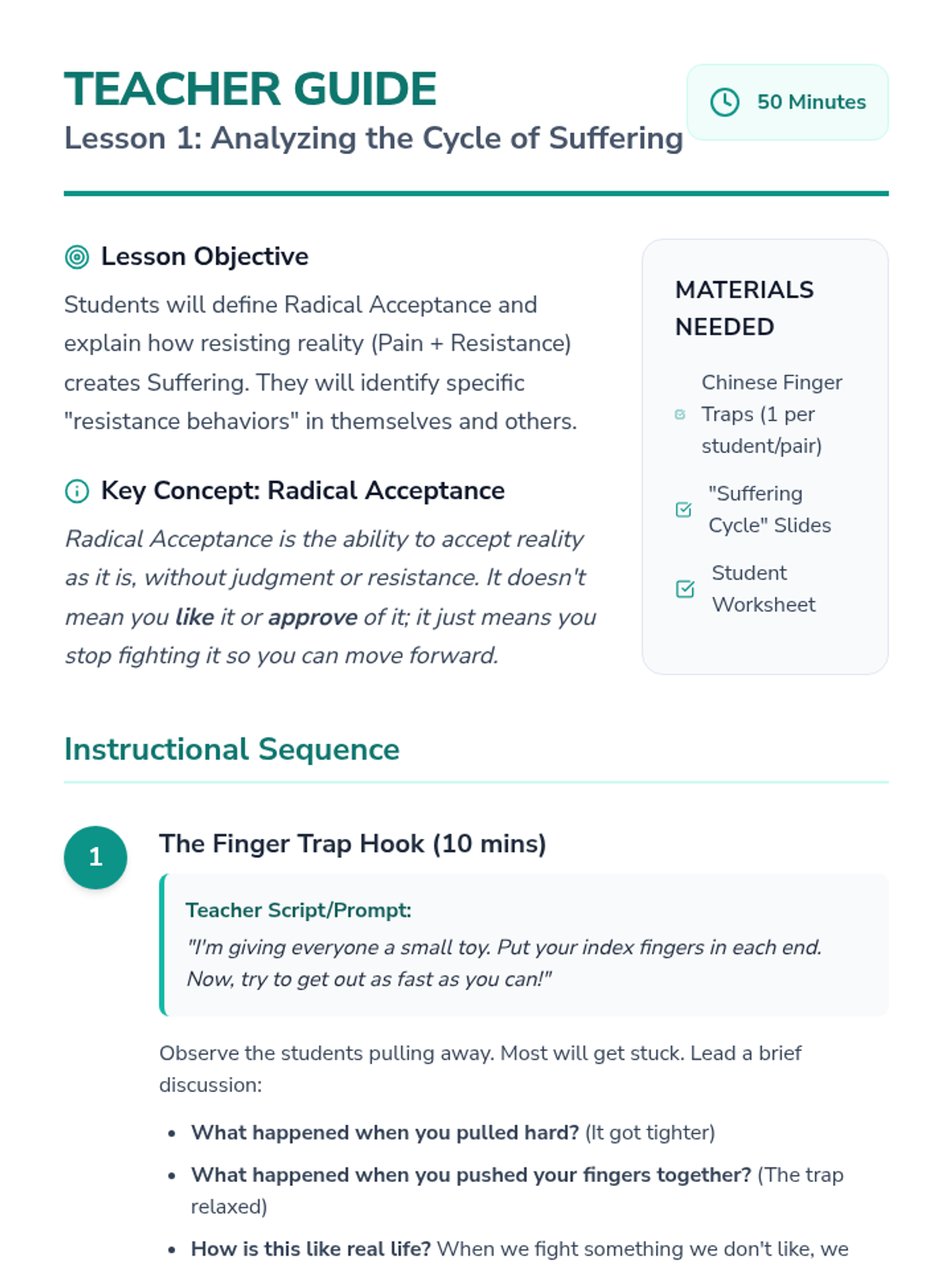
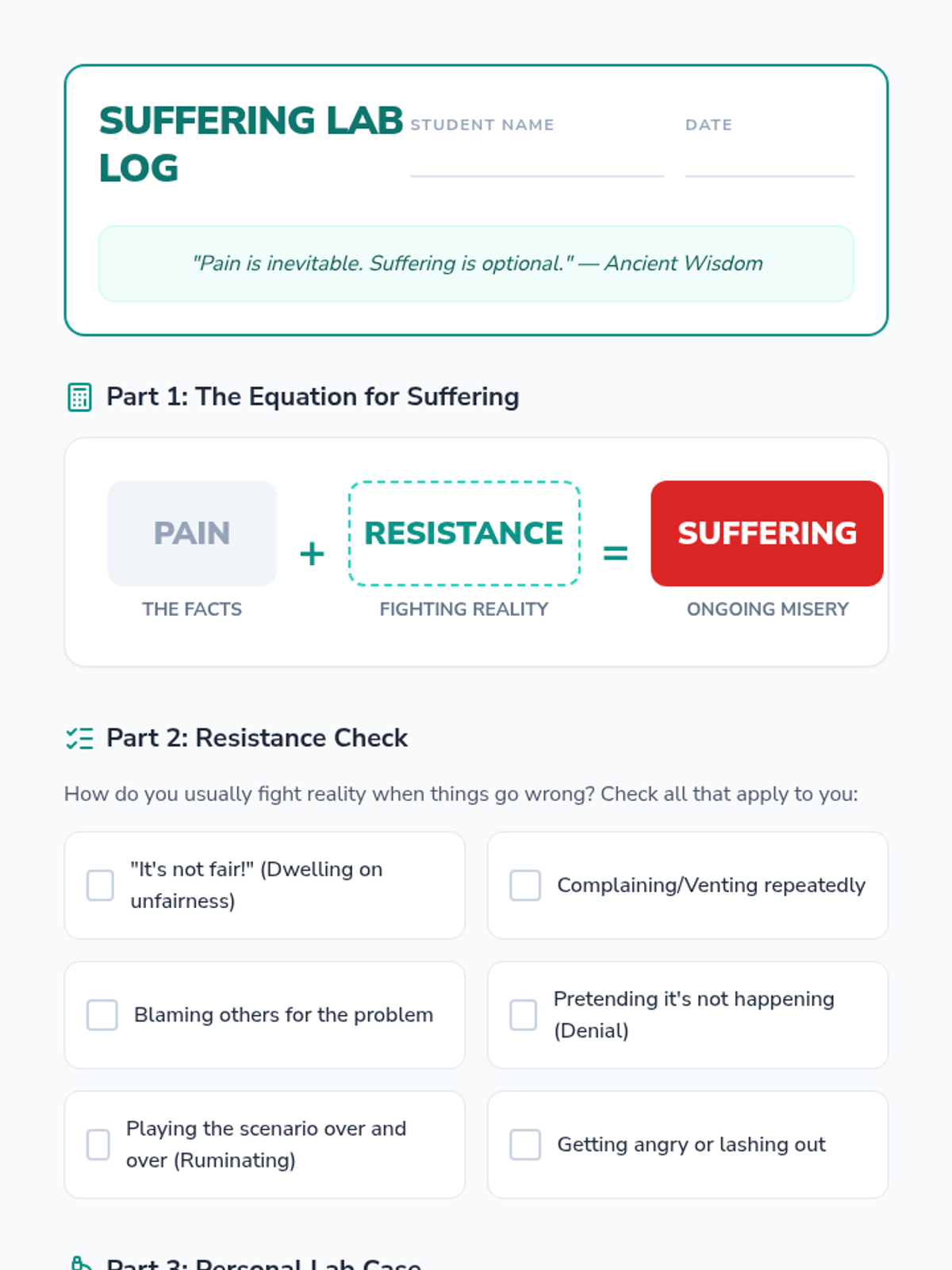
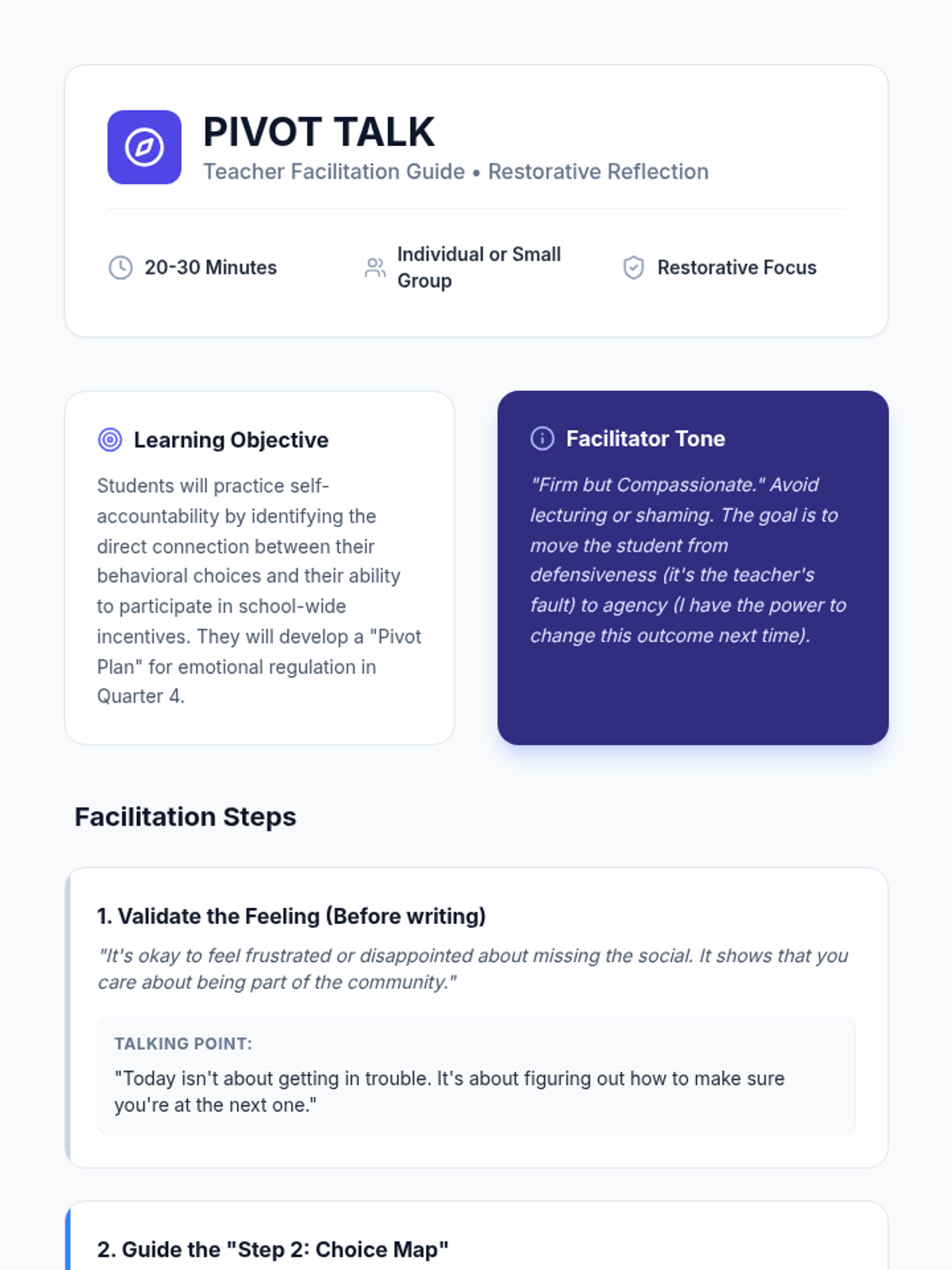
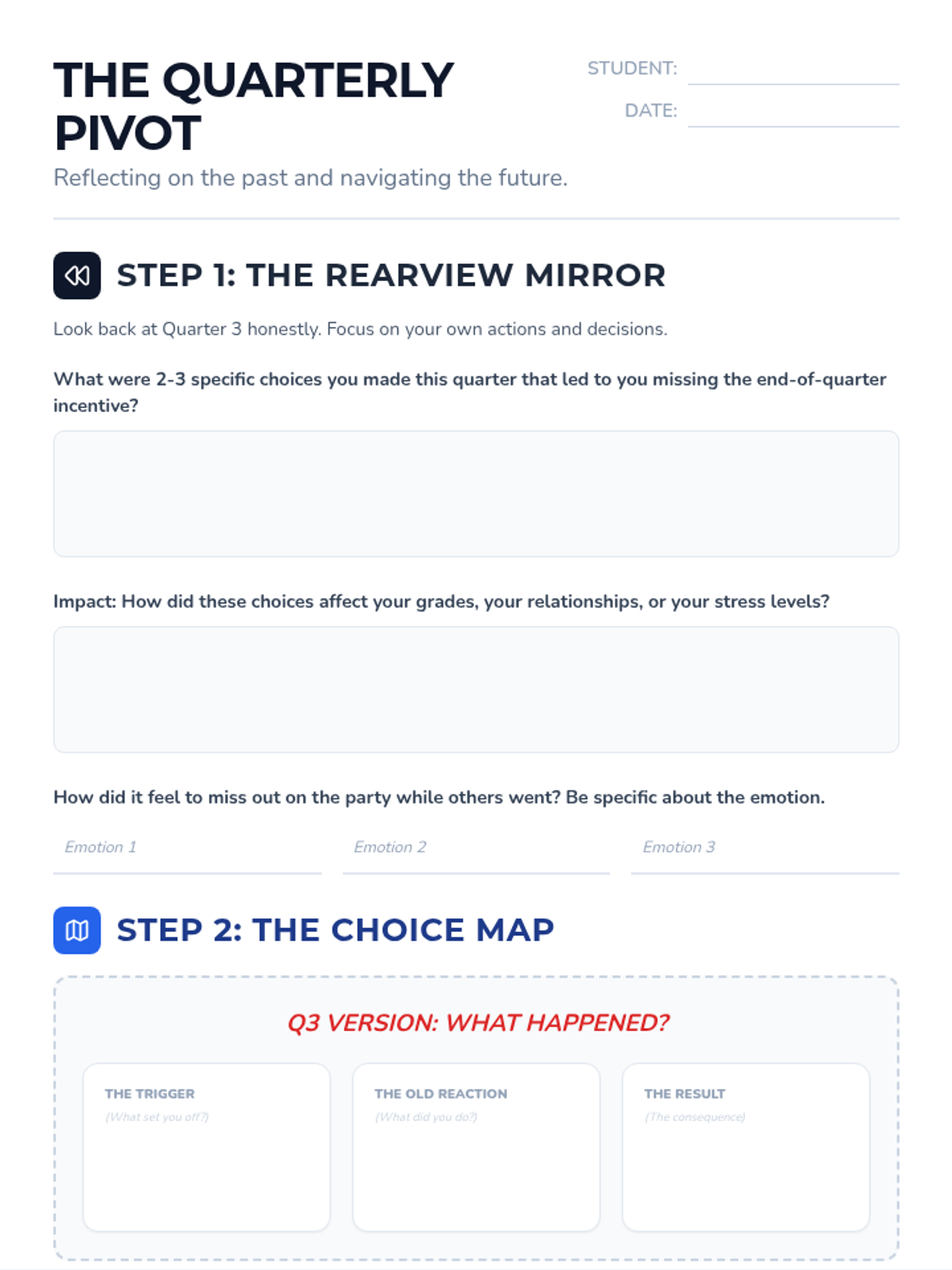
This middle school sequence focuses on building distress tolerance through Radical Acceptance. Students move from understanding the 'Cycle of Suffering' to practicing resilience in academic and social scenarios, ultimately learning to pivot from disappointment to proactive problem-solving.
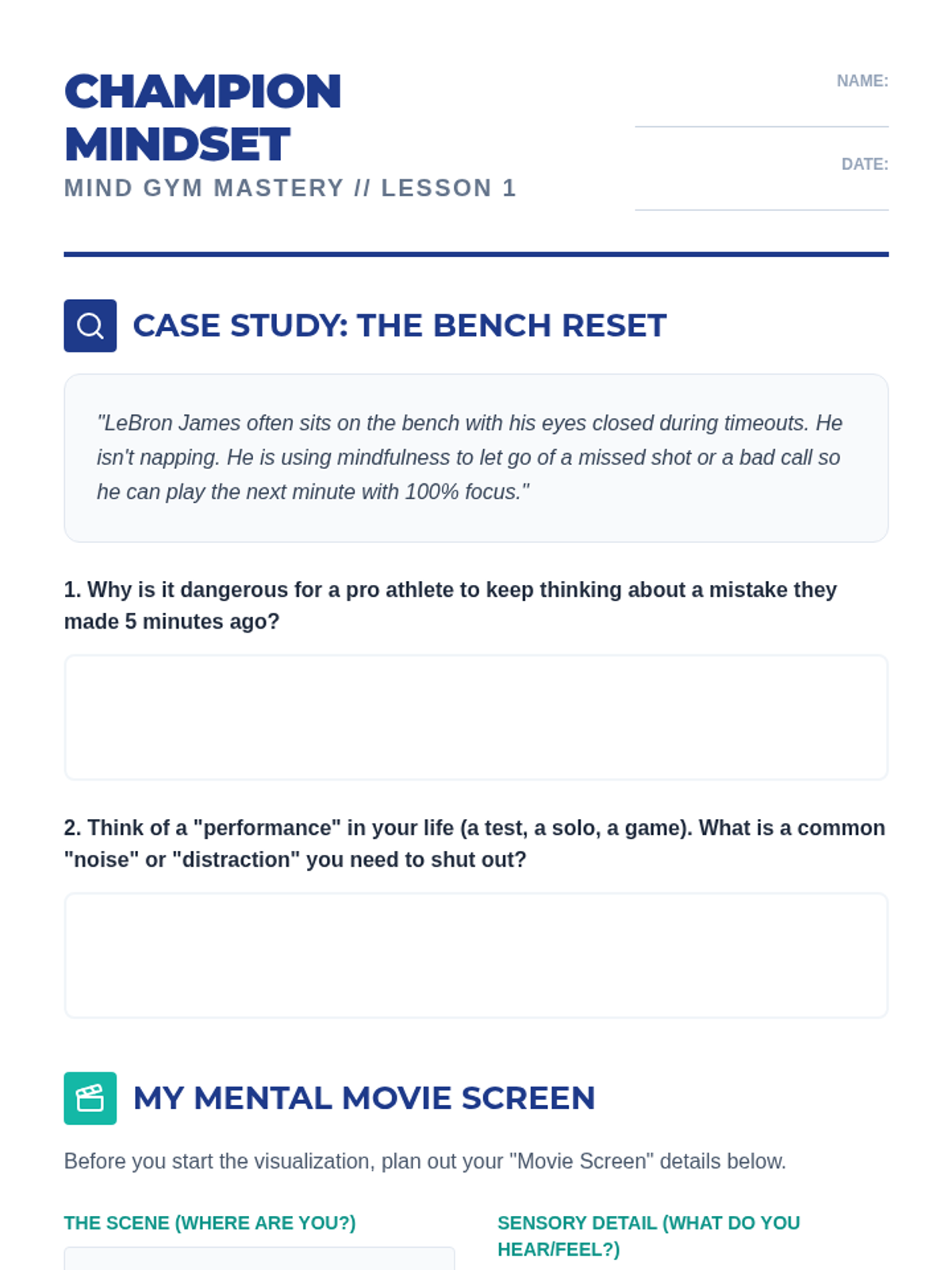
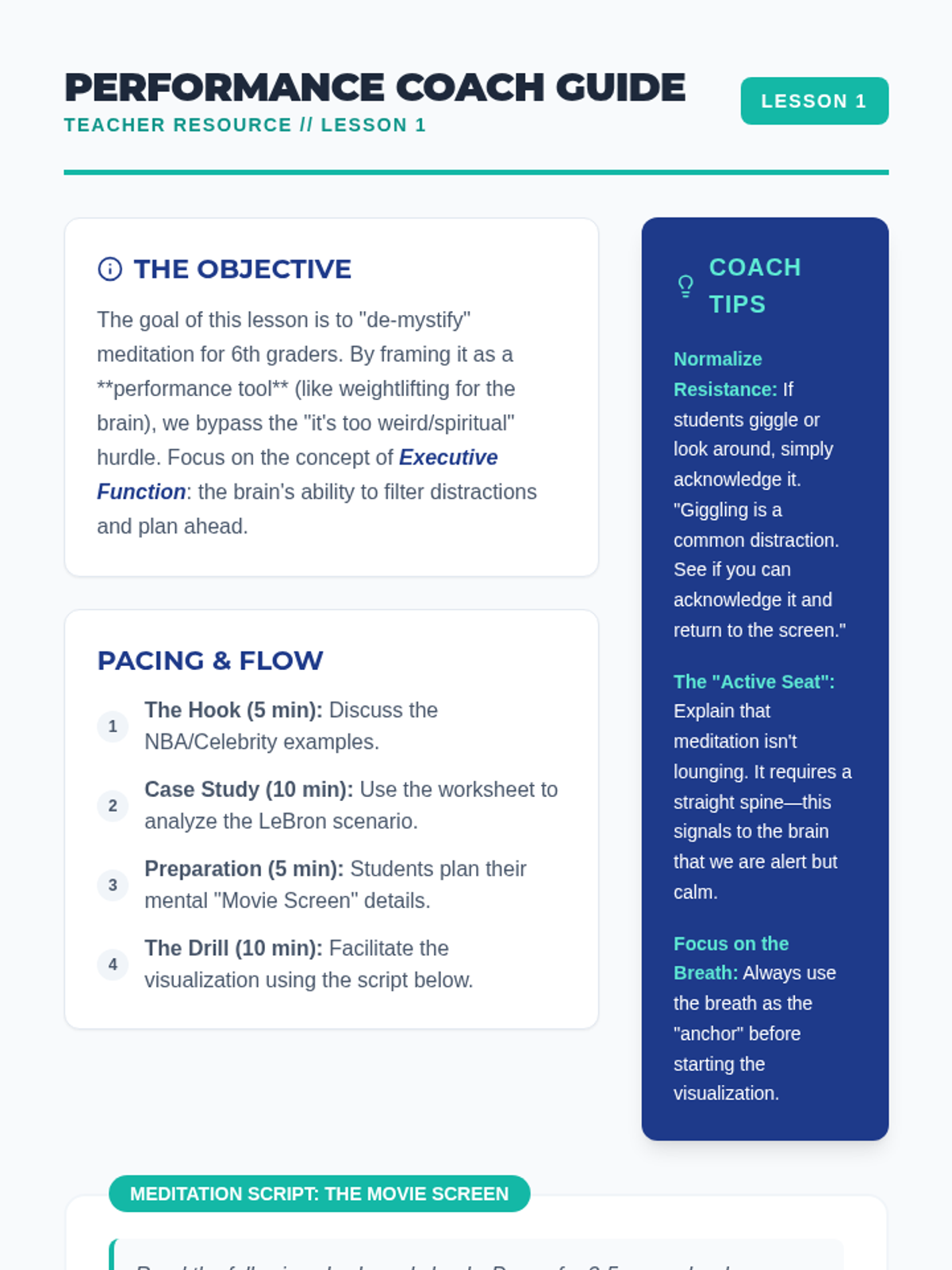
This middle school sequence reframes meditation as a 'performance tool' for academic and social success. Students explore case studies of peak performers, learn the STOP technique for impulse control, develop grounding strategies for test anxiety, and practice empathy through Loving-Kindness meditation, culminating in a real-world scenario challenge.
This sequence focuses on emotional intelligence and self-compassion through a case study approach. Students analyze hypothetical scenarios involving disappointment, anger, or anxiety, and apply mindfulness techniques to navigate them, shifting from reacting impulsively to responding thoughtfully.
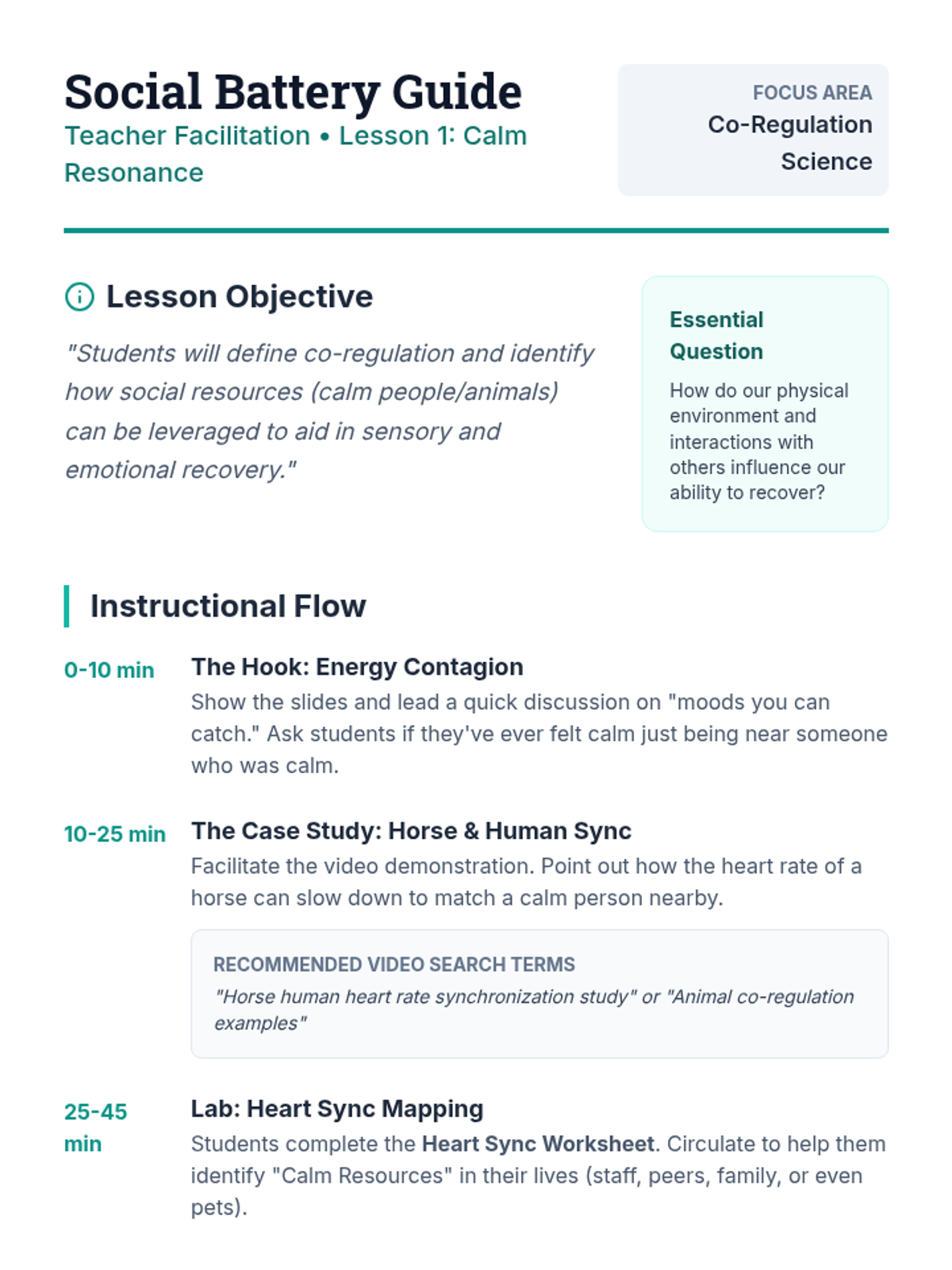
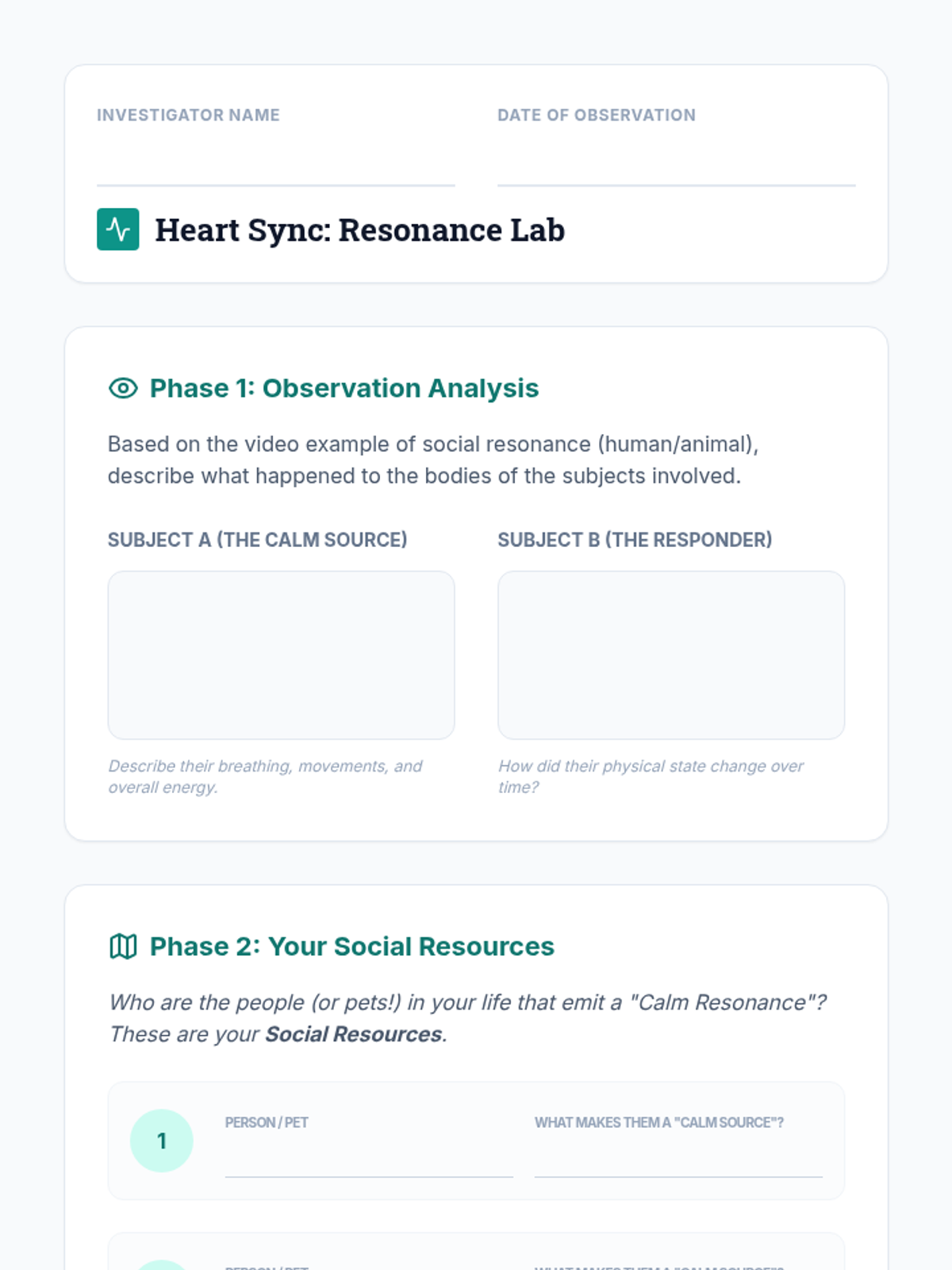
A 5-lesson sequence for 7th-grade students focused on understanding co-regulation and environmental impacts on sensory recovery. Students transition from scientific observation of social resonance to active environmental auditing and final design of a recovery space.
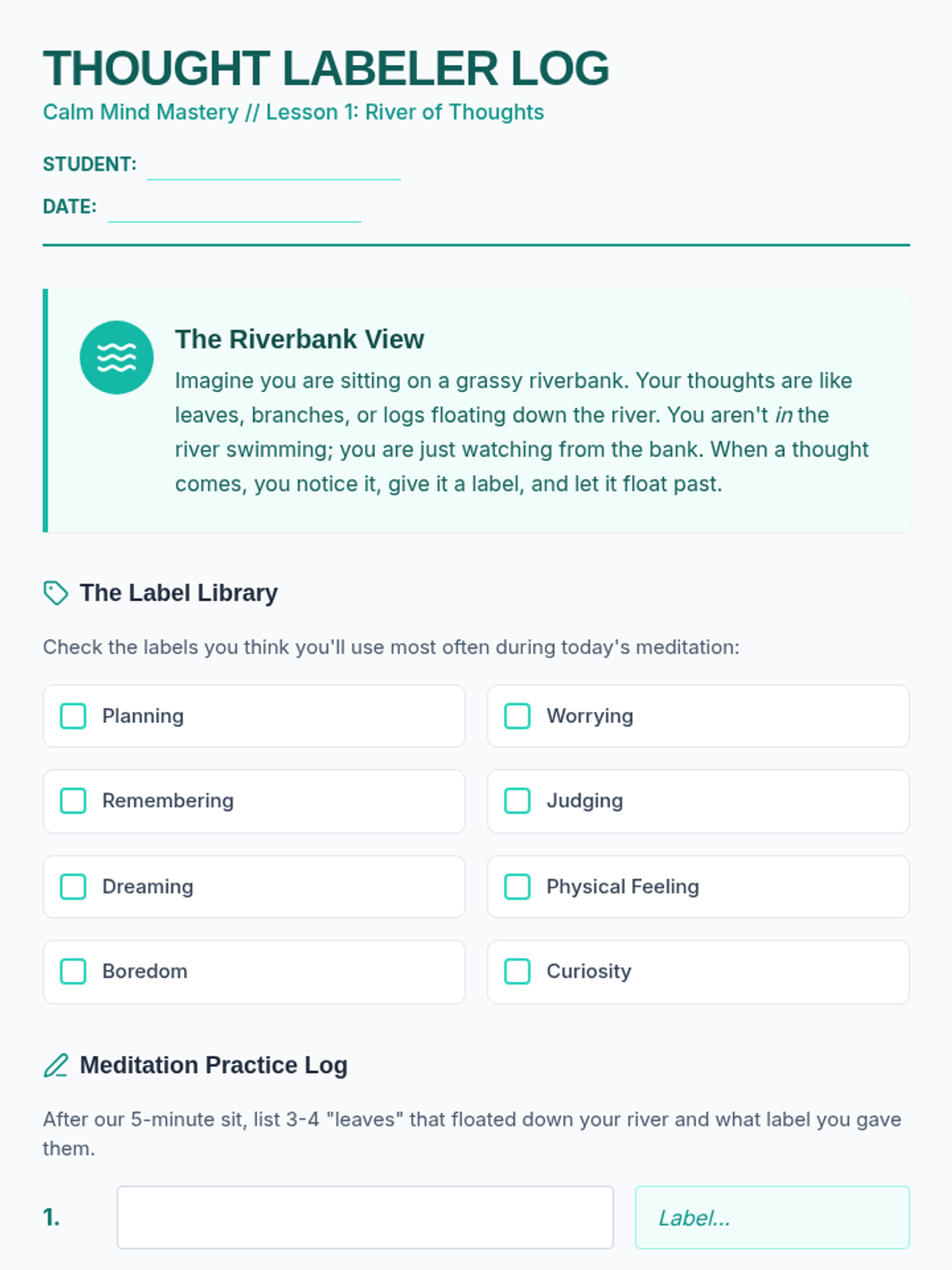
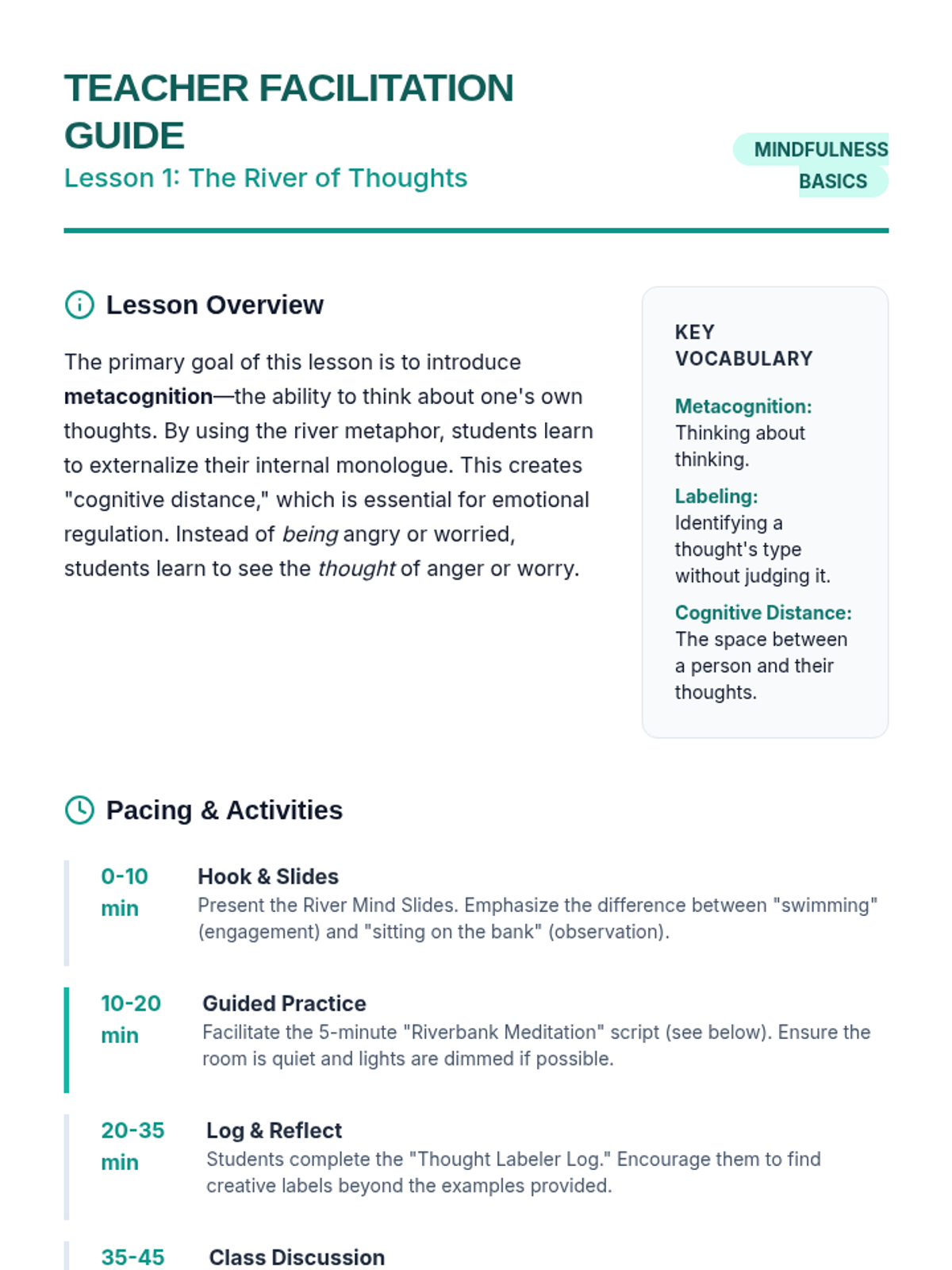
A 5-lesson unit for 7th graders on using meditation for emotional regulation, focus, and interpersonal conflict resolution. Students learn metacognition through metaphors, visualization for performance, empathy through loving-kindness practice, and impulse control via the STOP method.
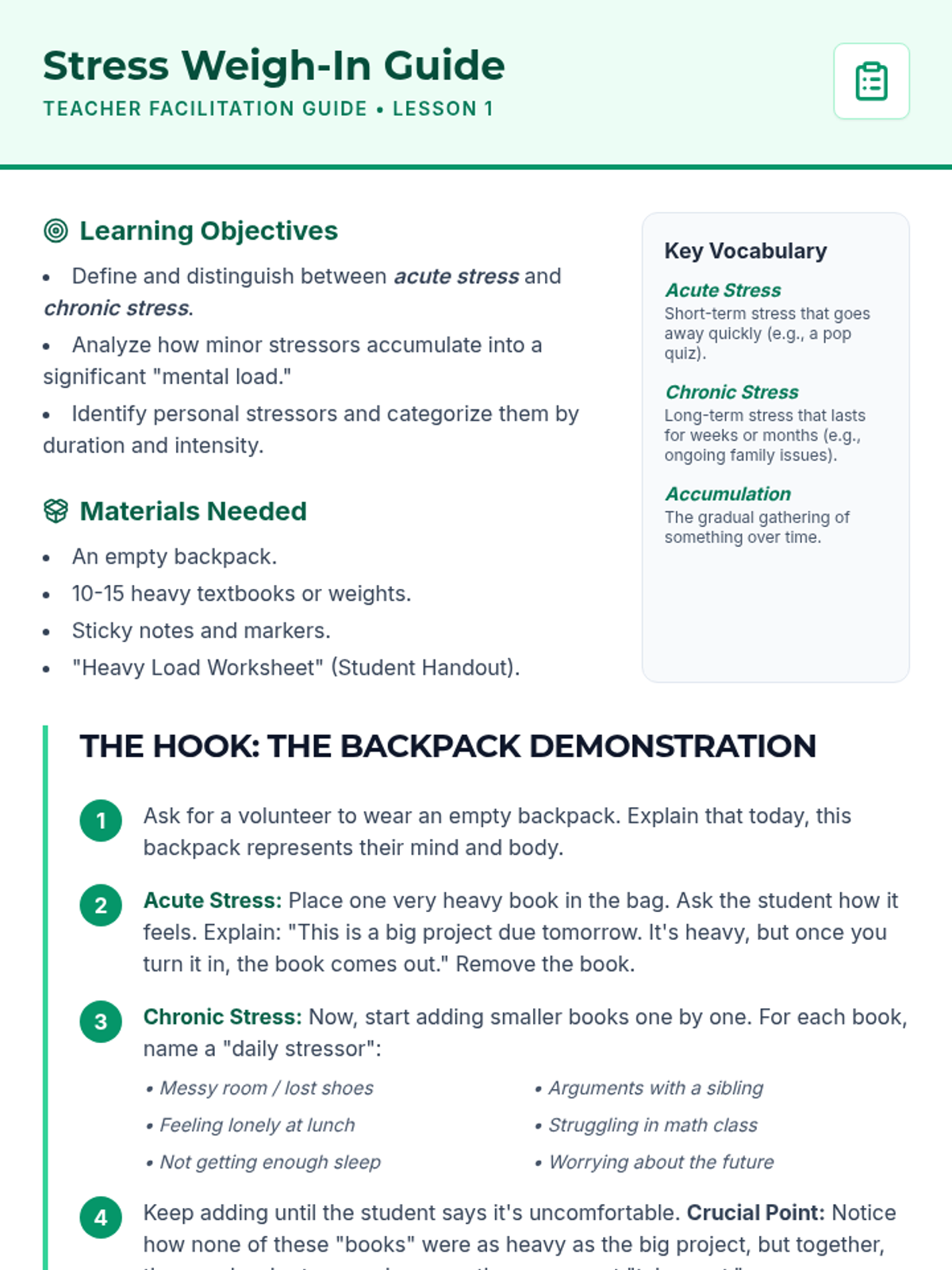
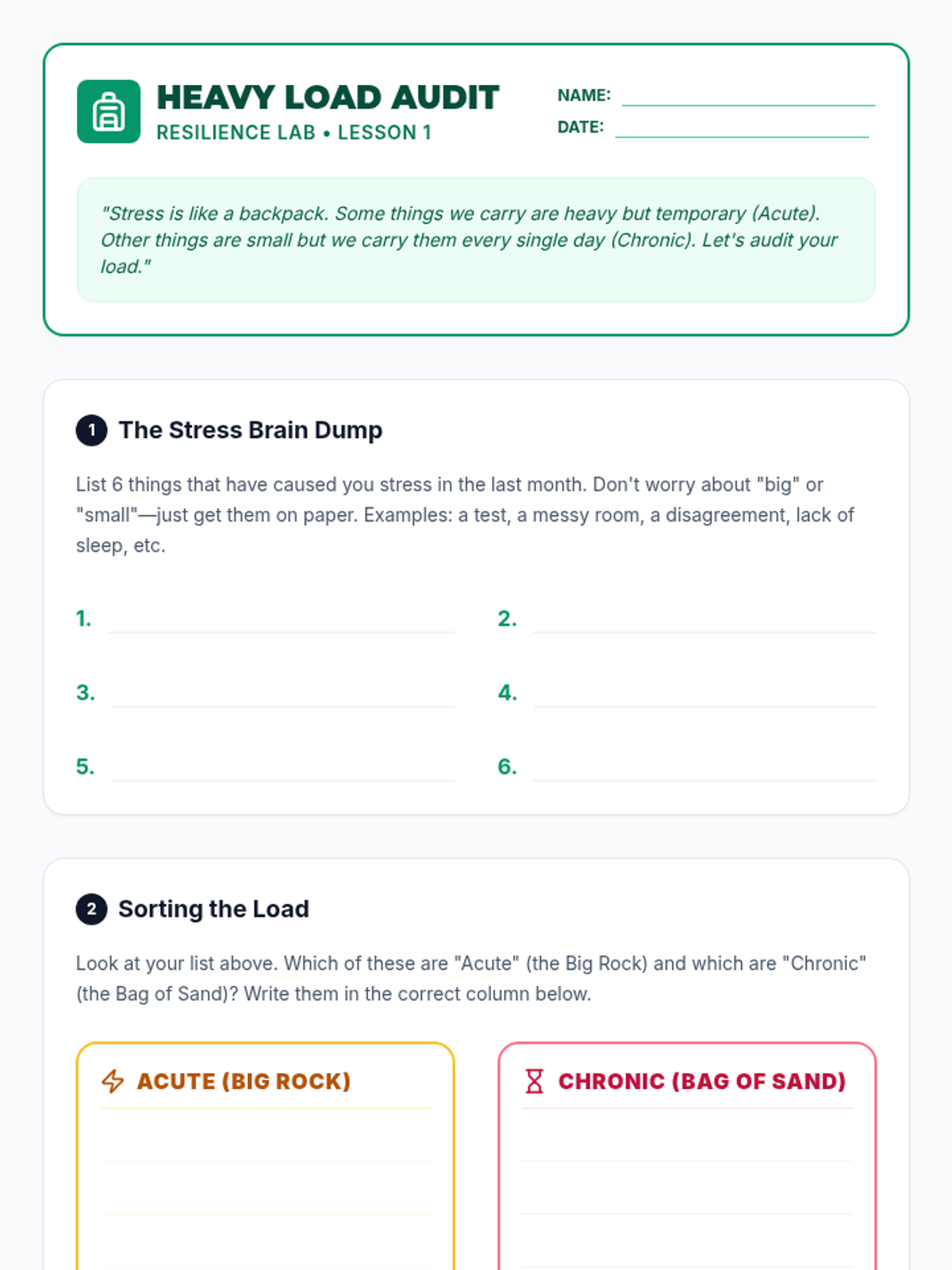
This sequence explores the differences between acute and chronic stress, examines the impact of lifestyle habits on resilience, and culminates in students designing sustainable coping strategies for a balanced life.
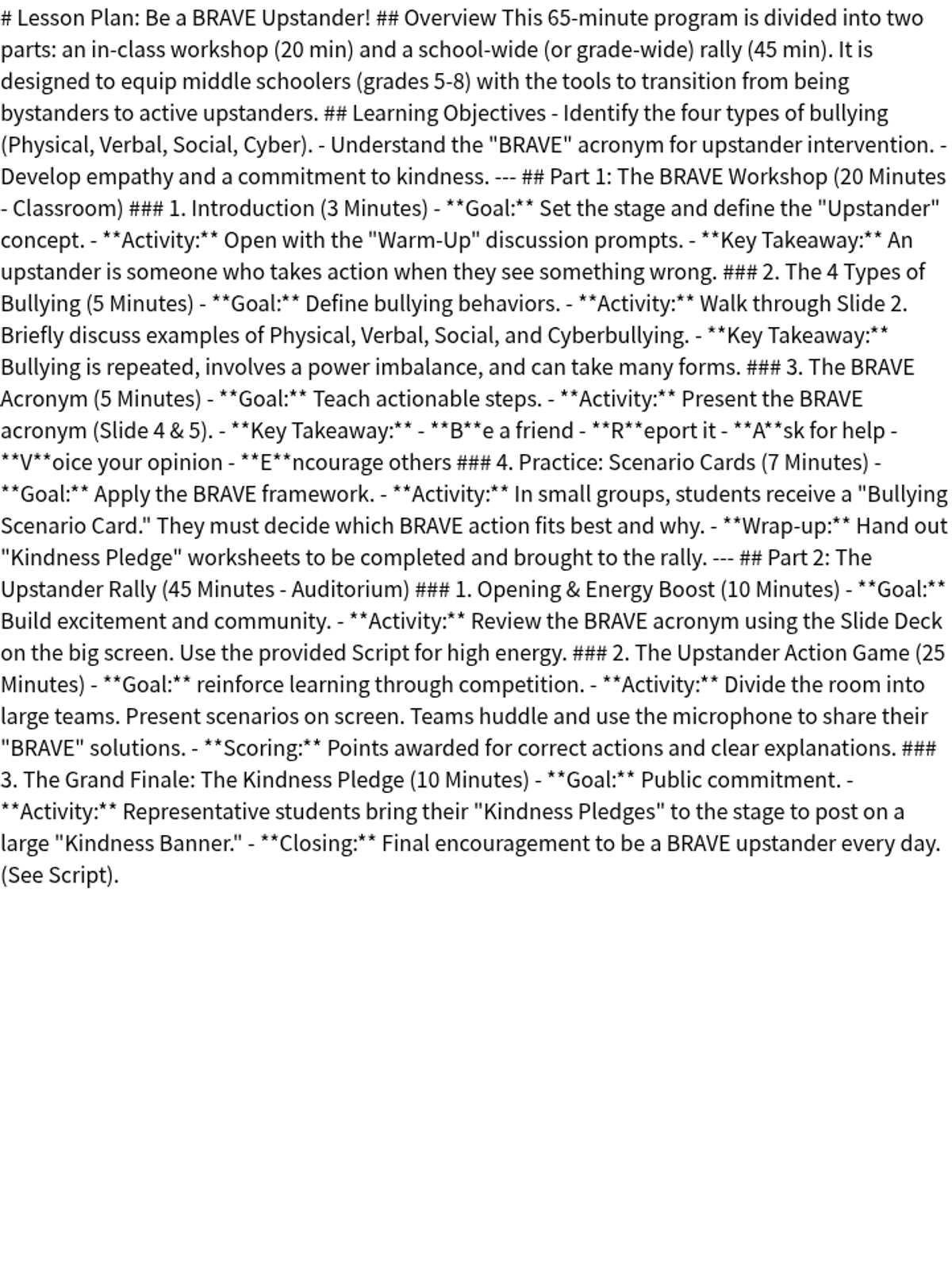
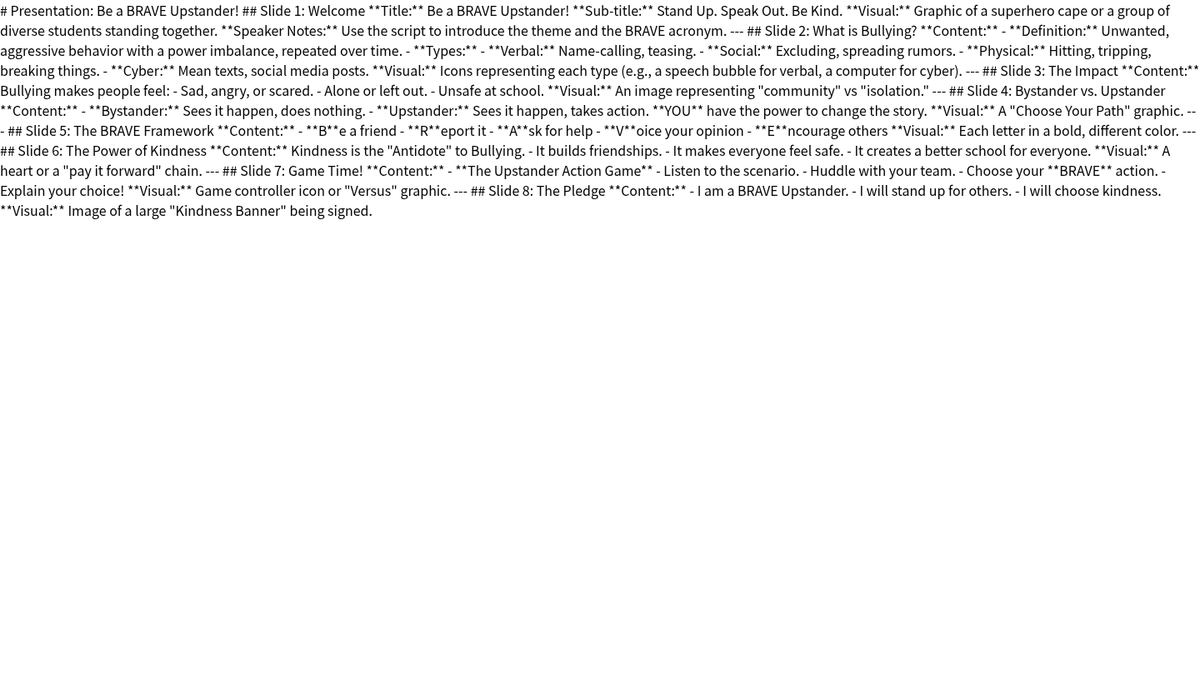
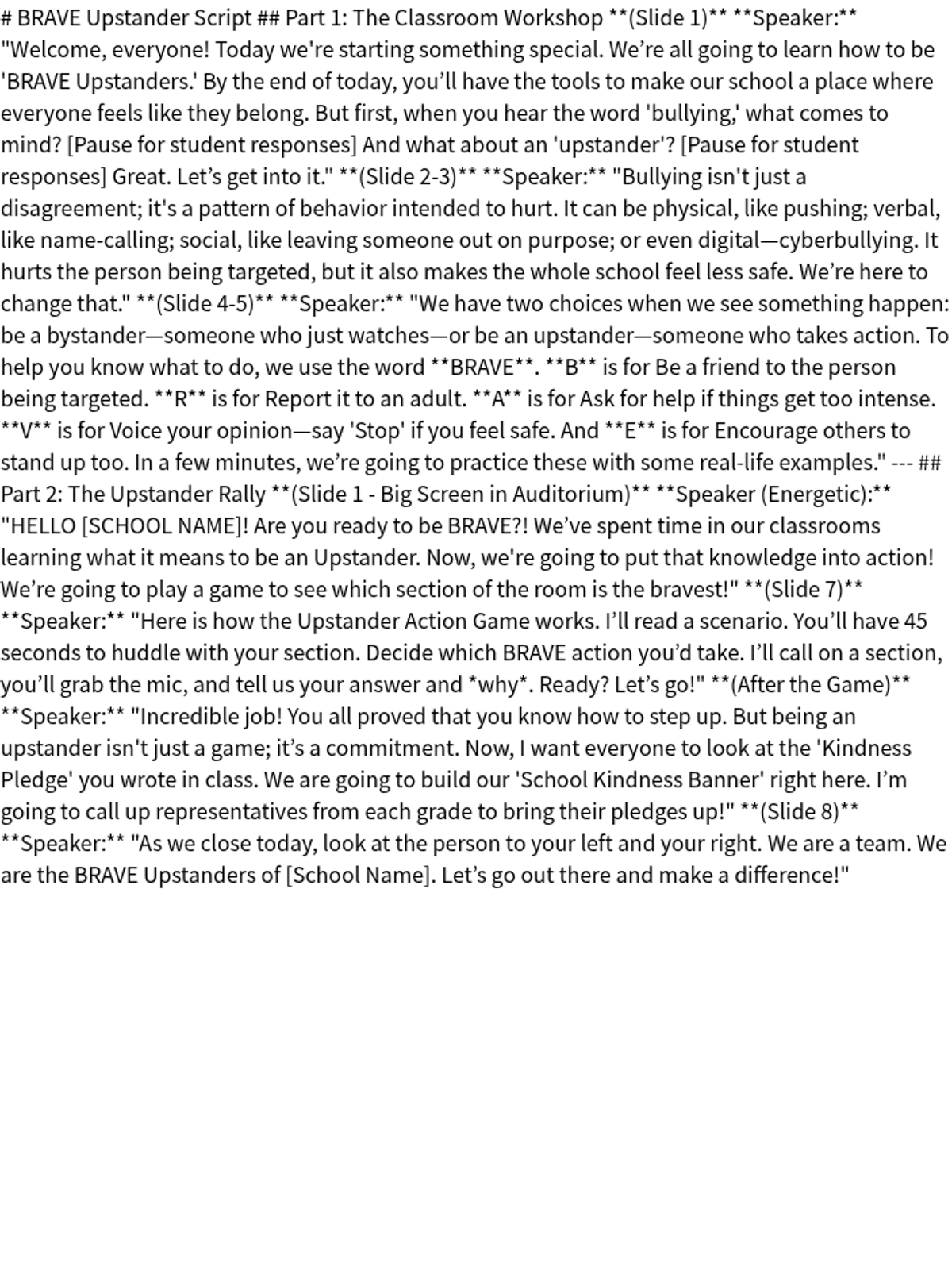
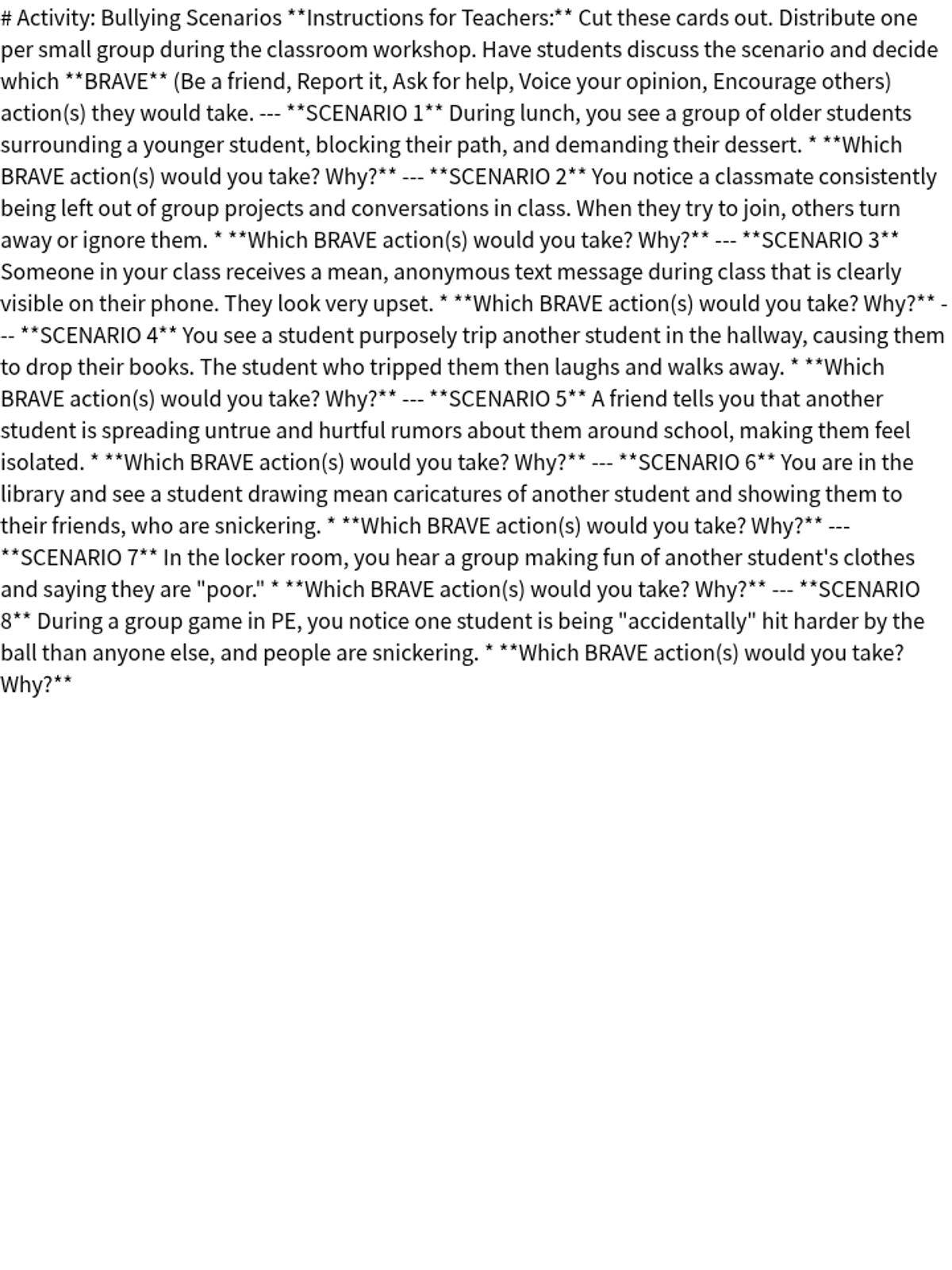
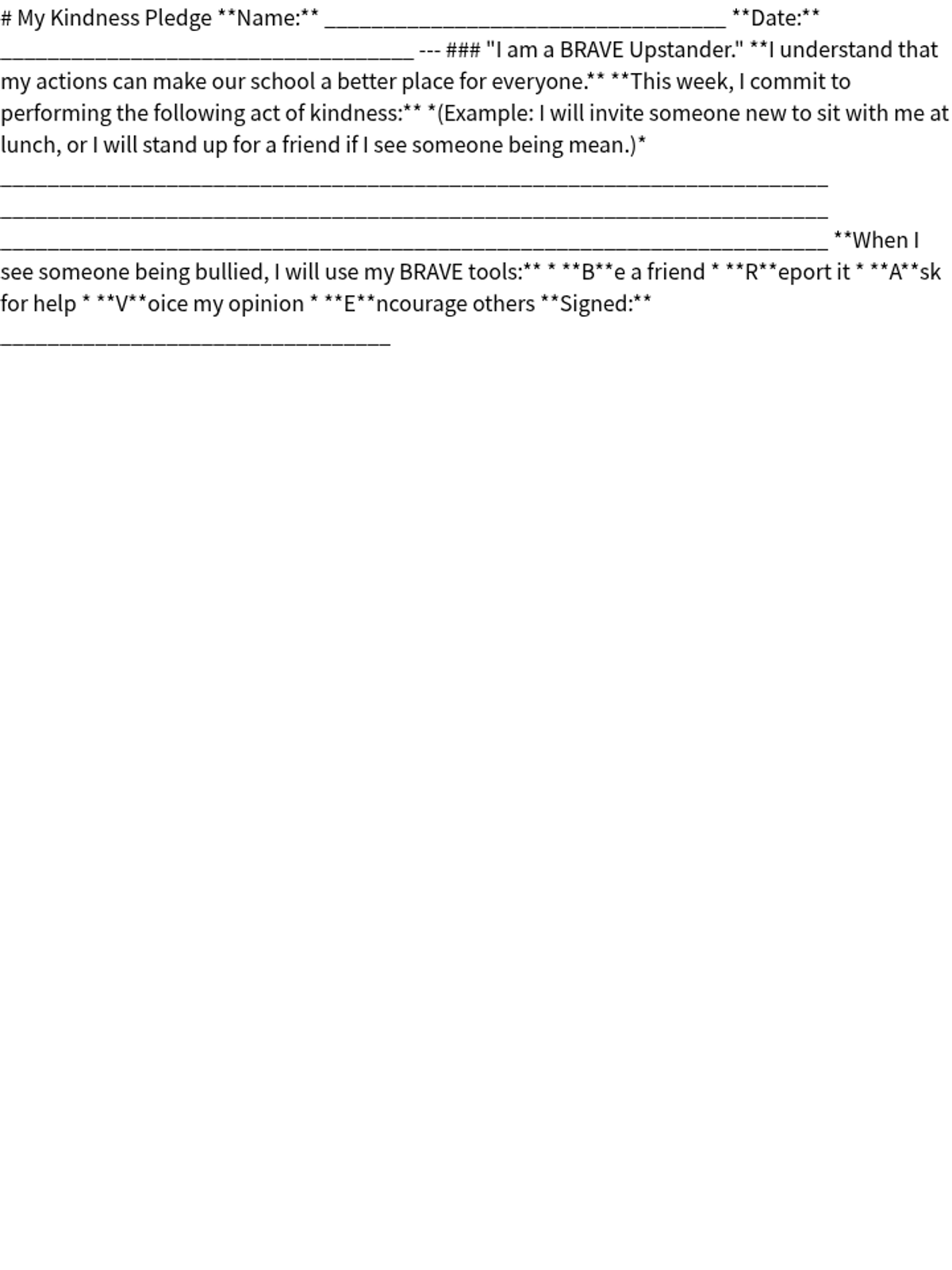
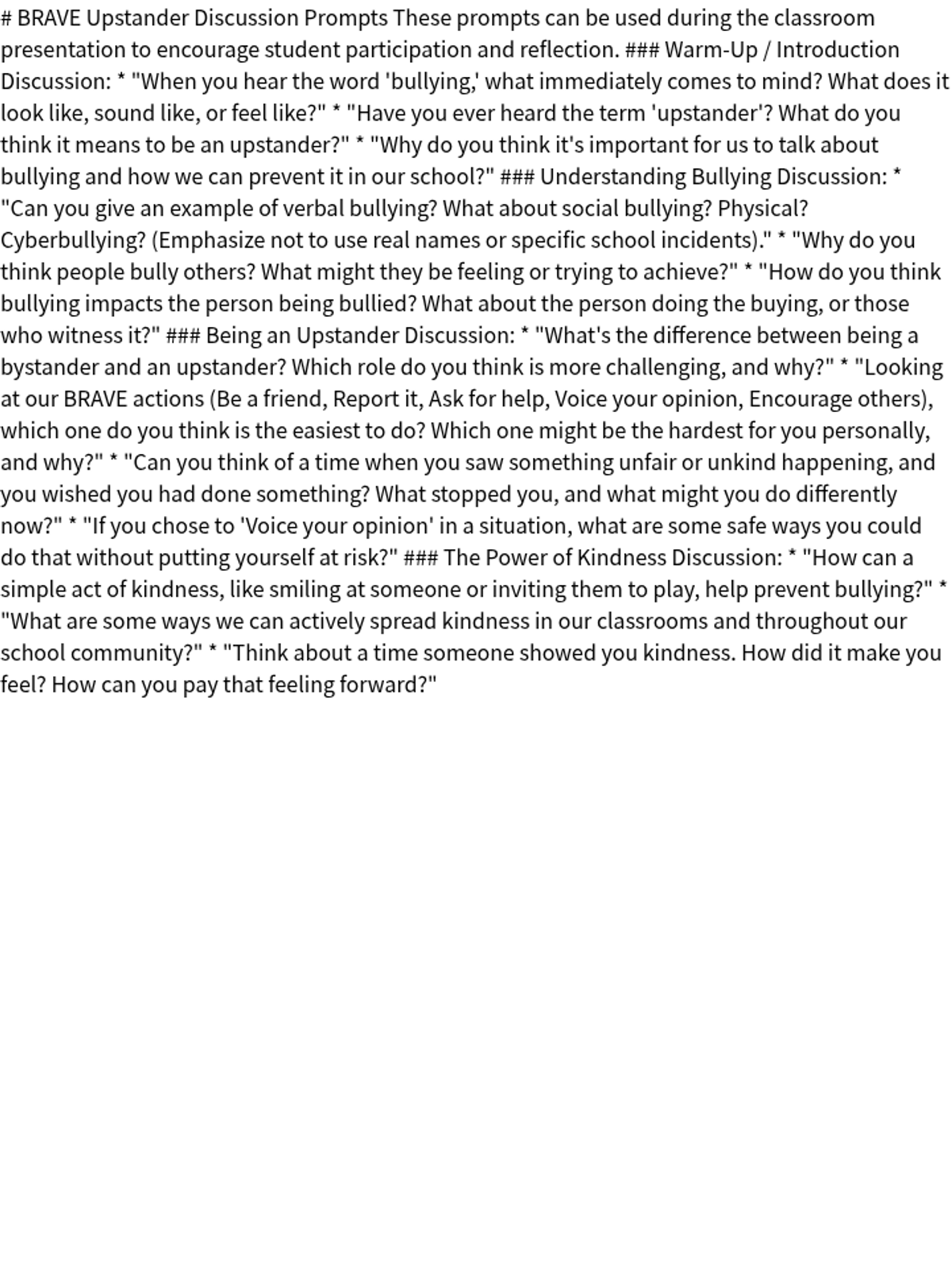
A comprehensive 65-minute educational experience for middle schoolers (grades 5-8). It consists of two parts: a 20-minute classroom presentation/workshop and a 45-minute "Upstander Rally" in an auditorium setting. The program teaches students how to recognize bullying and empowers them to intervene using the BRAVE framework (Be a friend, Report it, Ask for help, Voice your opinion, Encourage others).
A 6-session social skills program for 7th-grade students, focusing on confidence, communication, and friendship-building through structured instruction and practice.
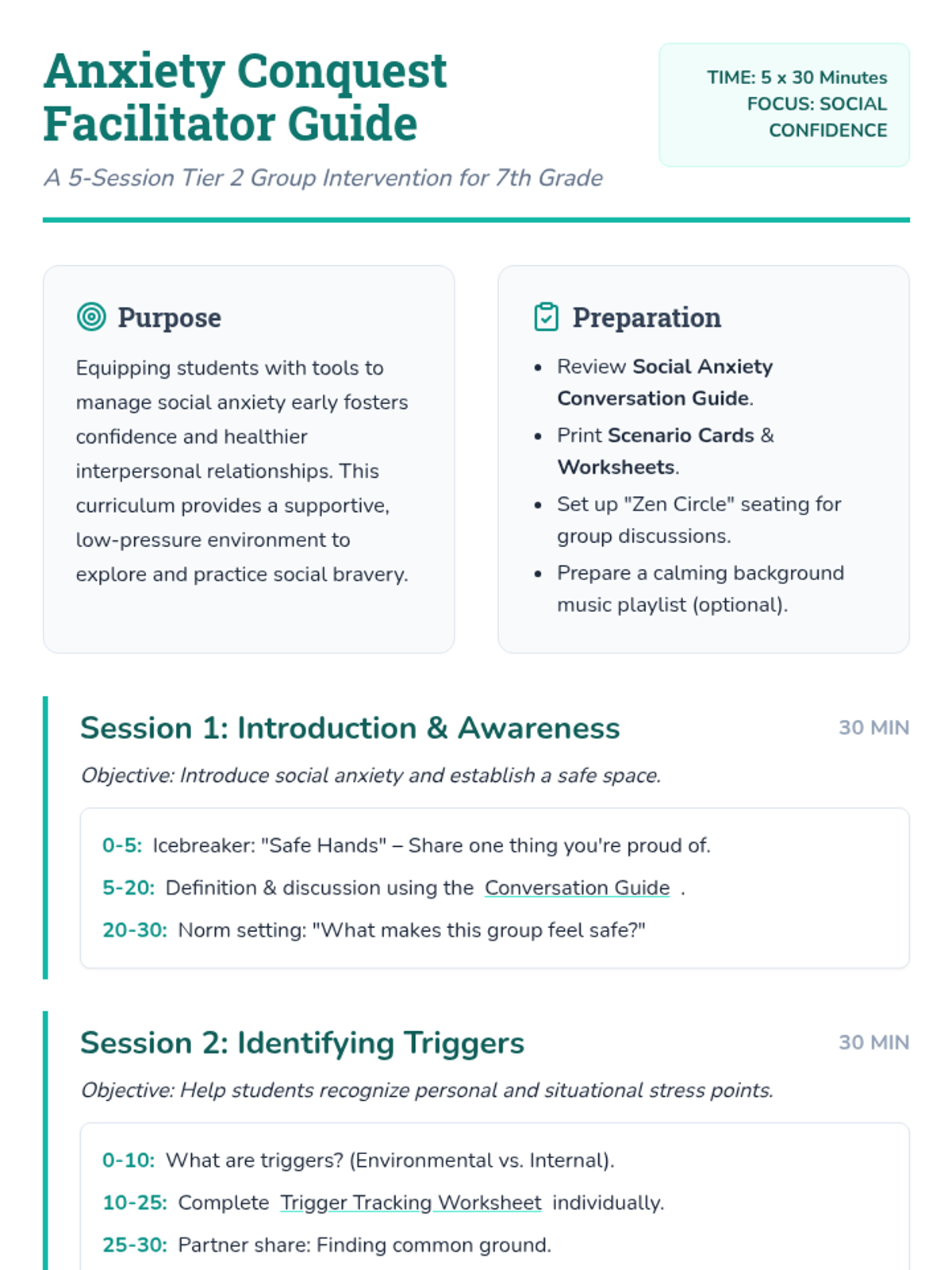
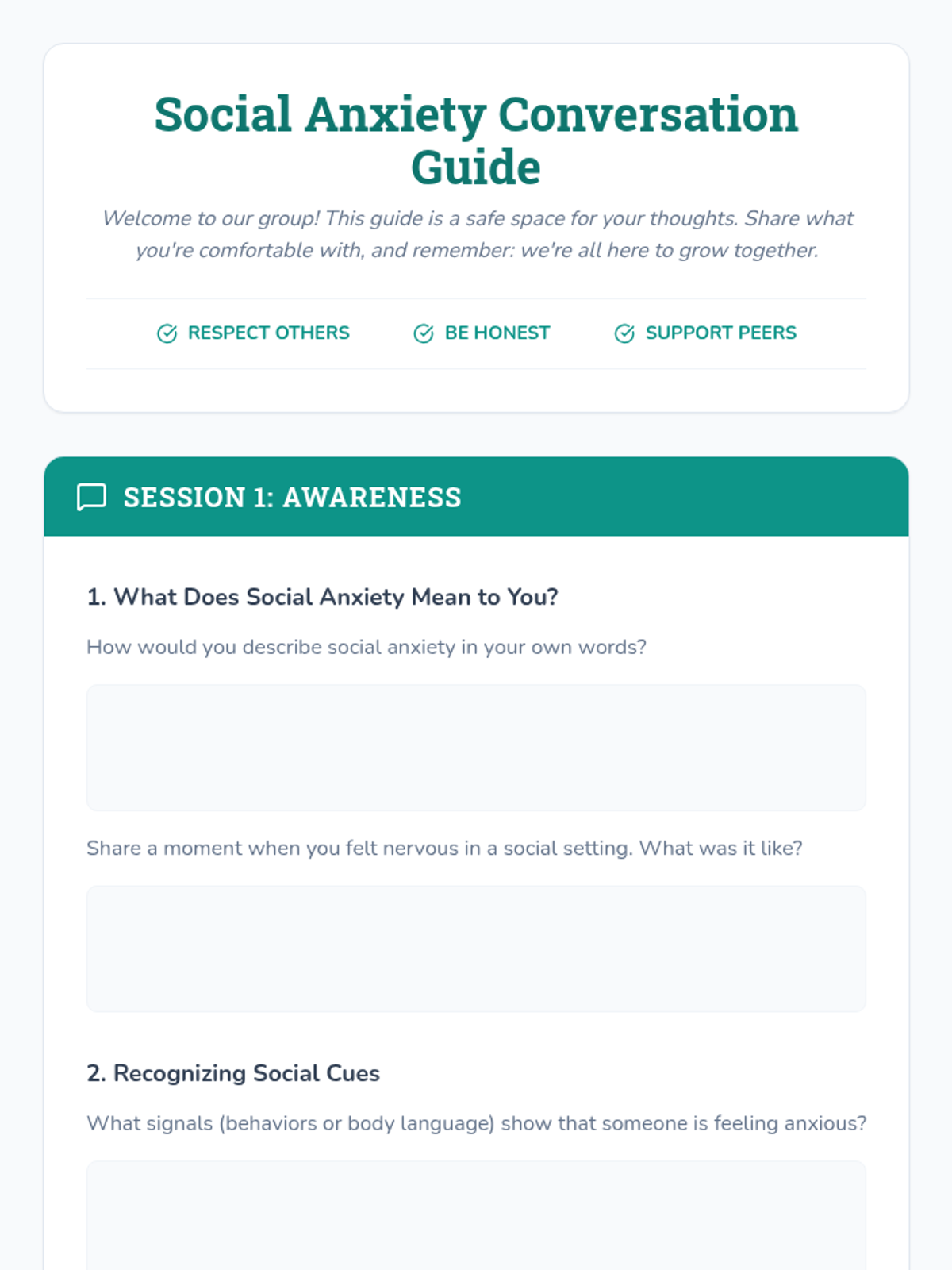
A 5-session group intervention designed for 7th graders to understand social anxiety, identify personal triggers, and master coping strategies through supportive discussion and role-play.
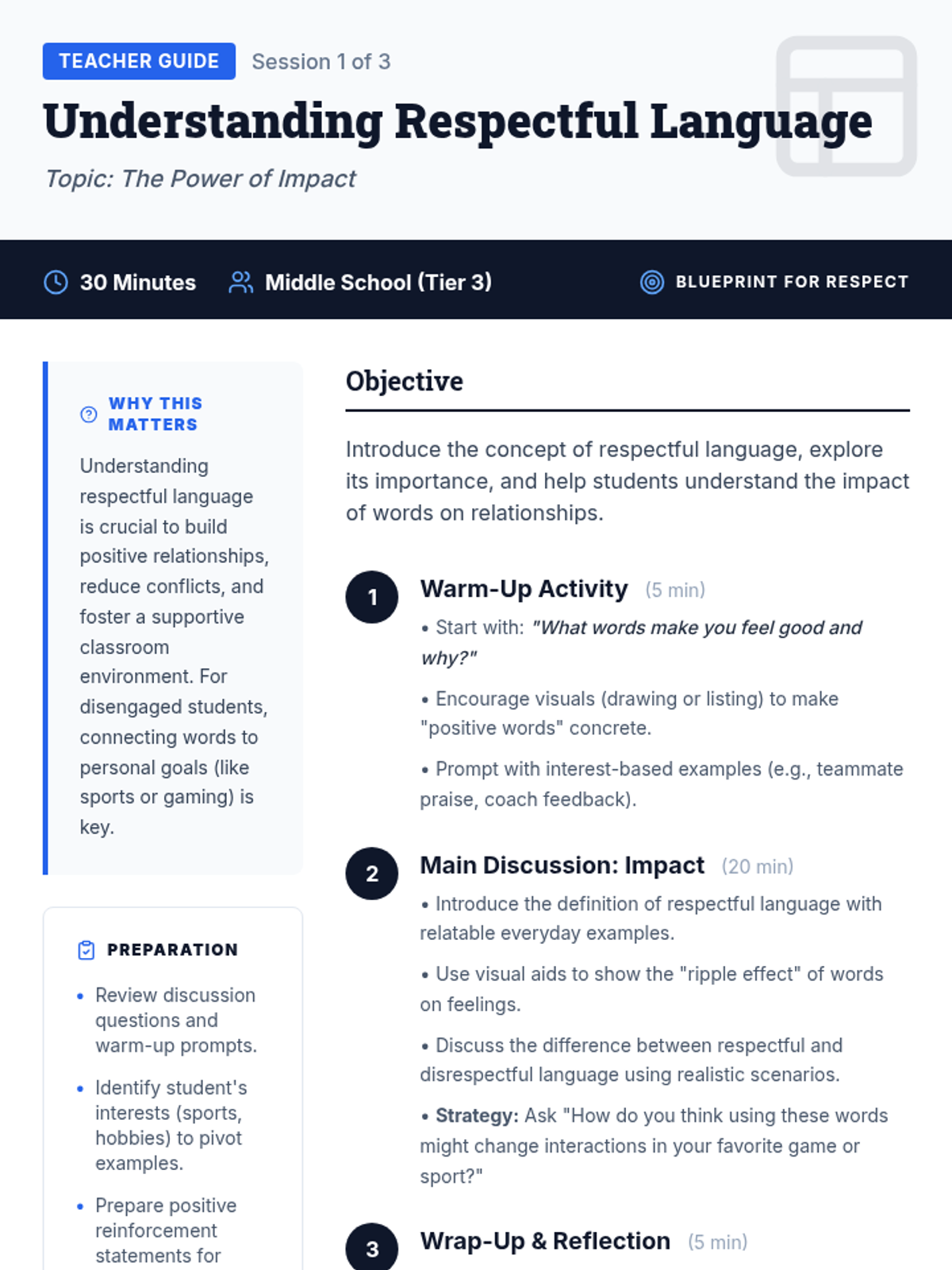
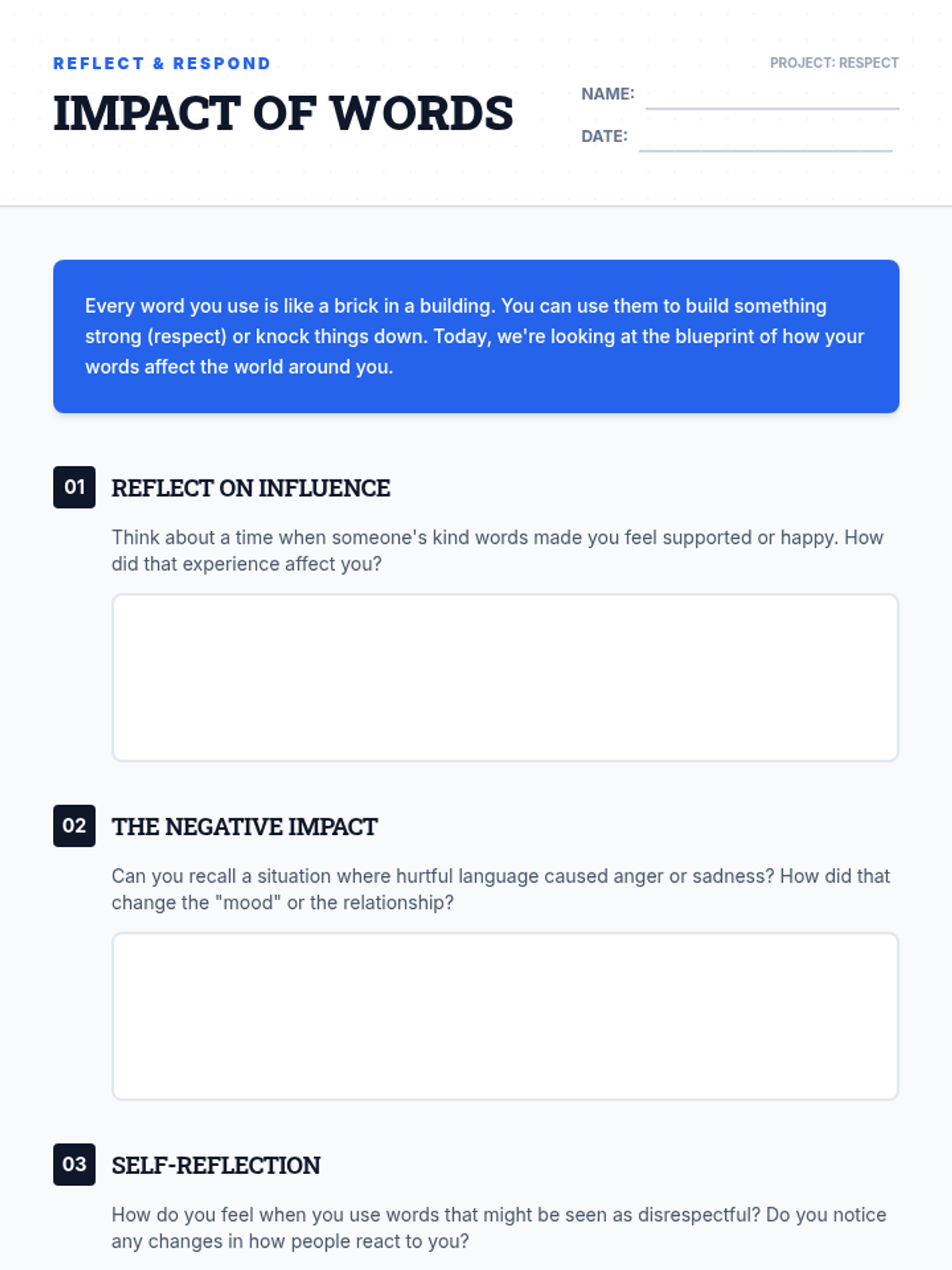
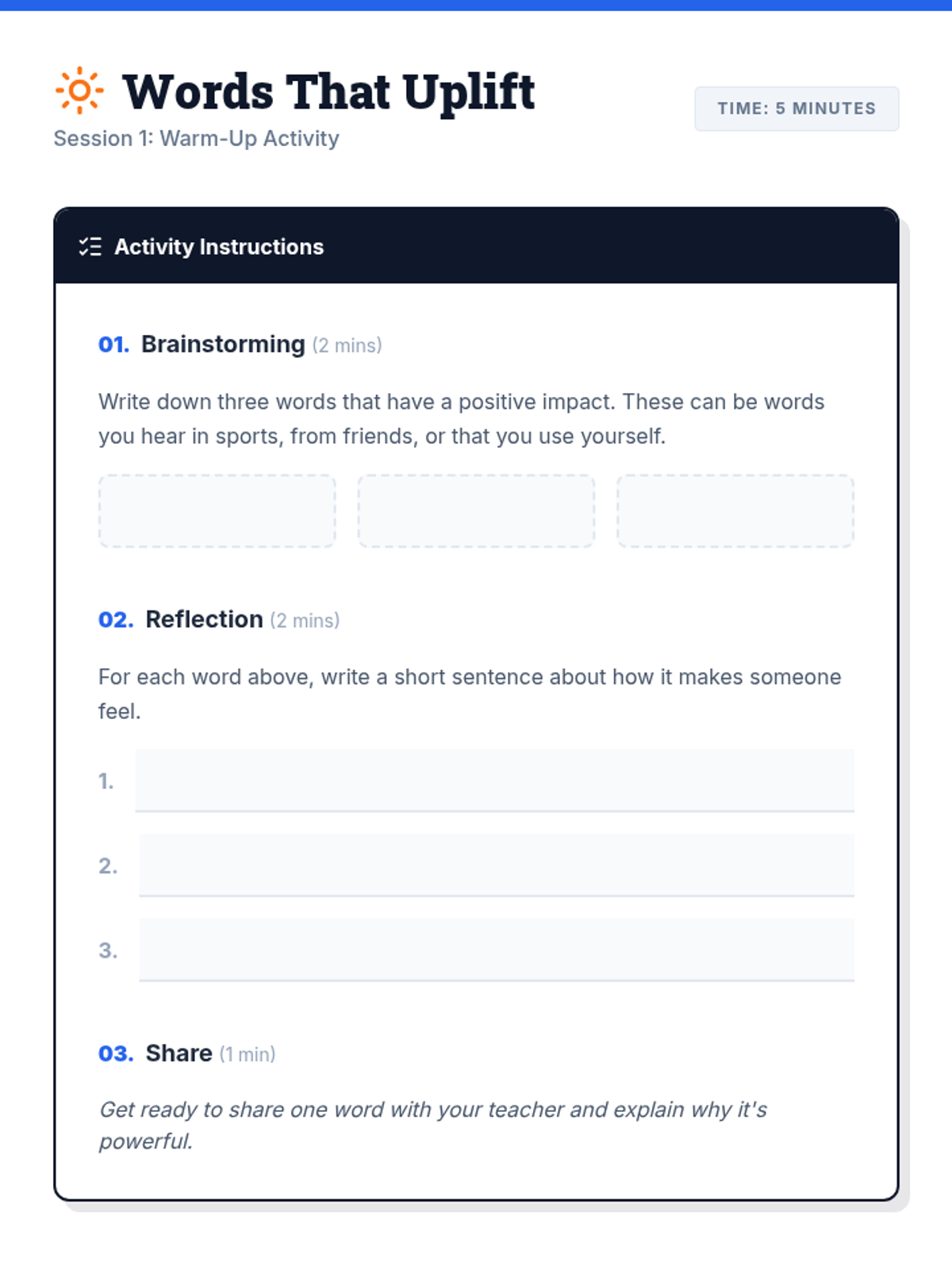
A three-session Tier 3 intervention sequence for middle school students focusing on the power of words, respectful communication, and personal growth in interpersonal interactions.
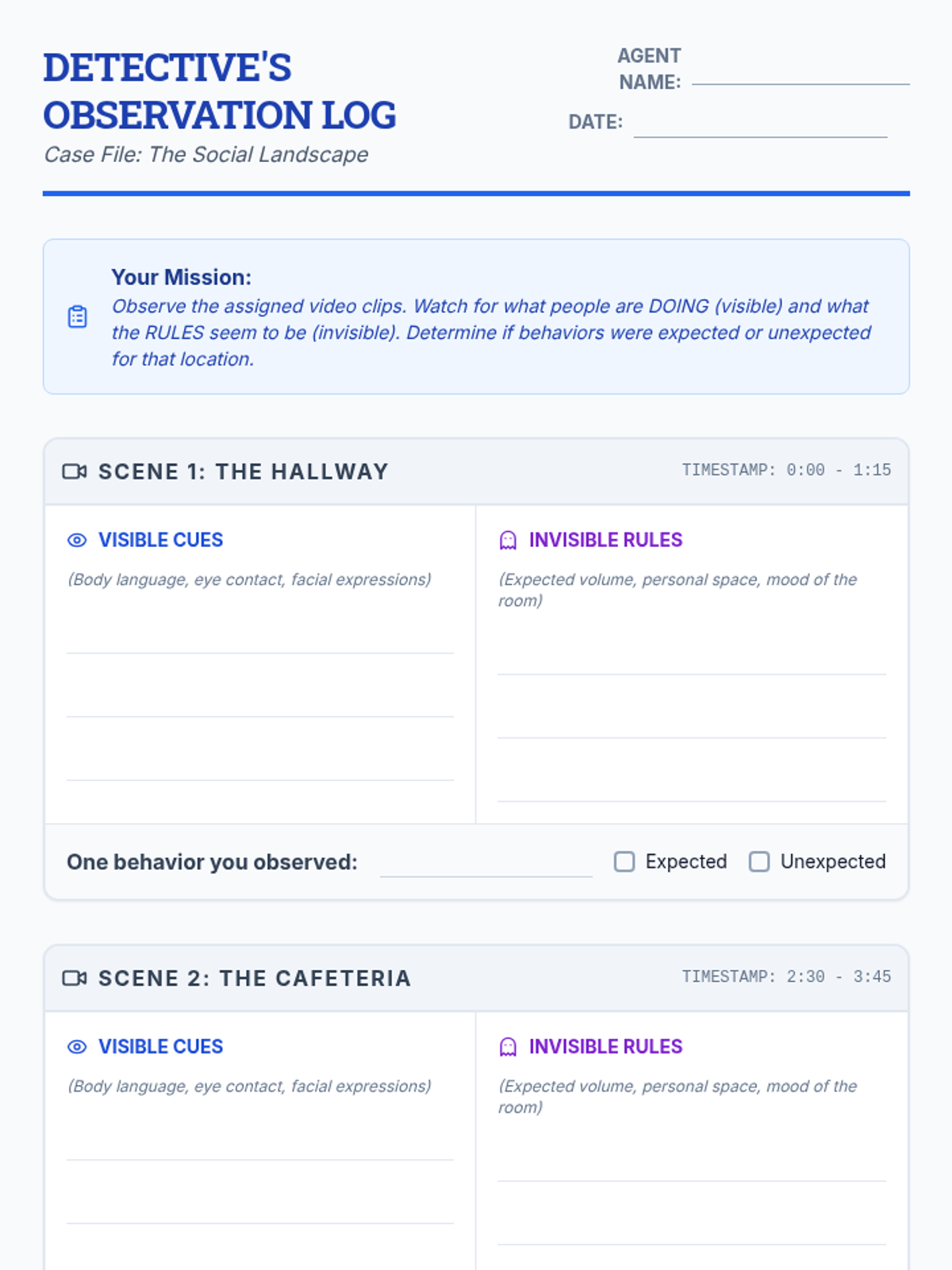
This inquiry-based sequence guides 6th-grade students through decoding the 'hidden curriculum' of middle school social environments. Students observe social cues, identify unwritten rules, explore perspectives, and analyze social narratives to understand the 'why' behind social expectations.
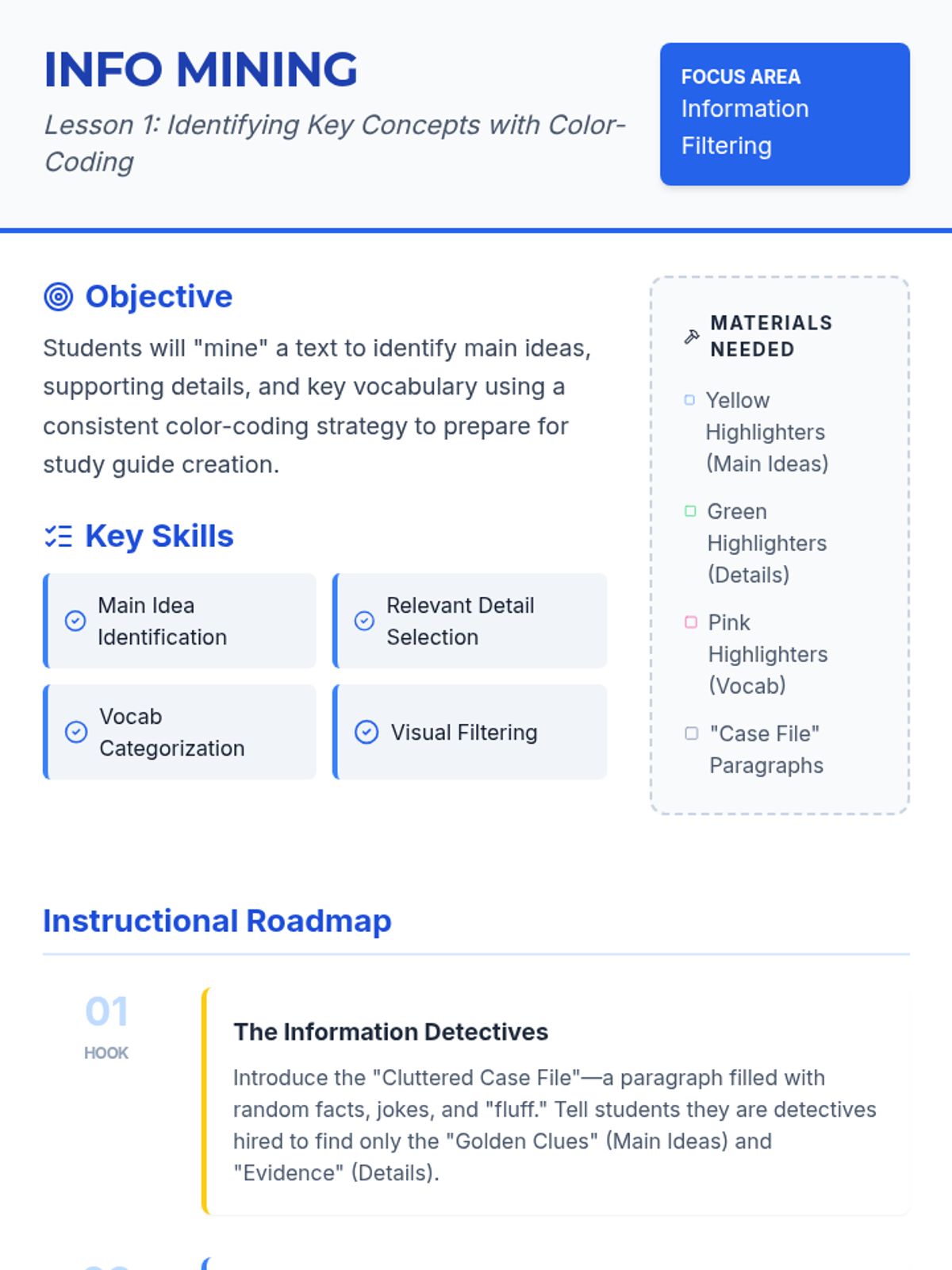
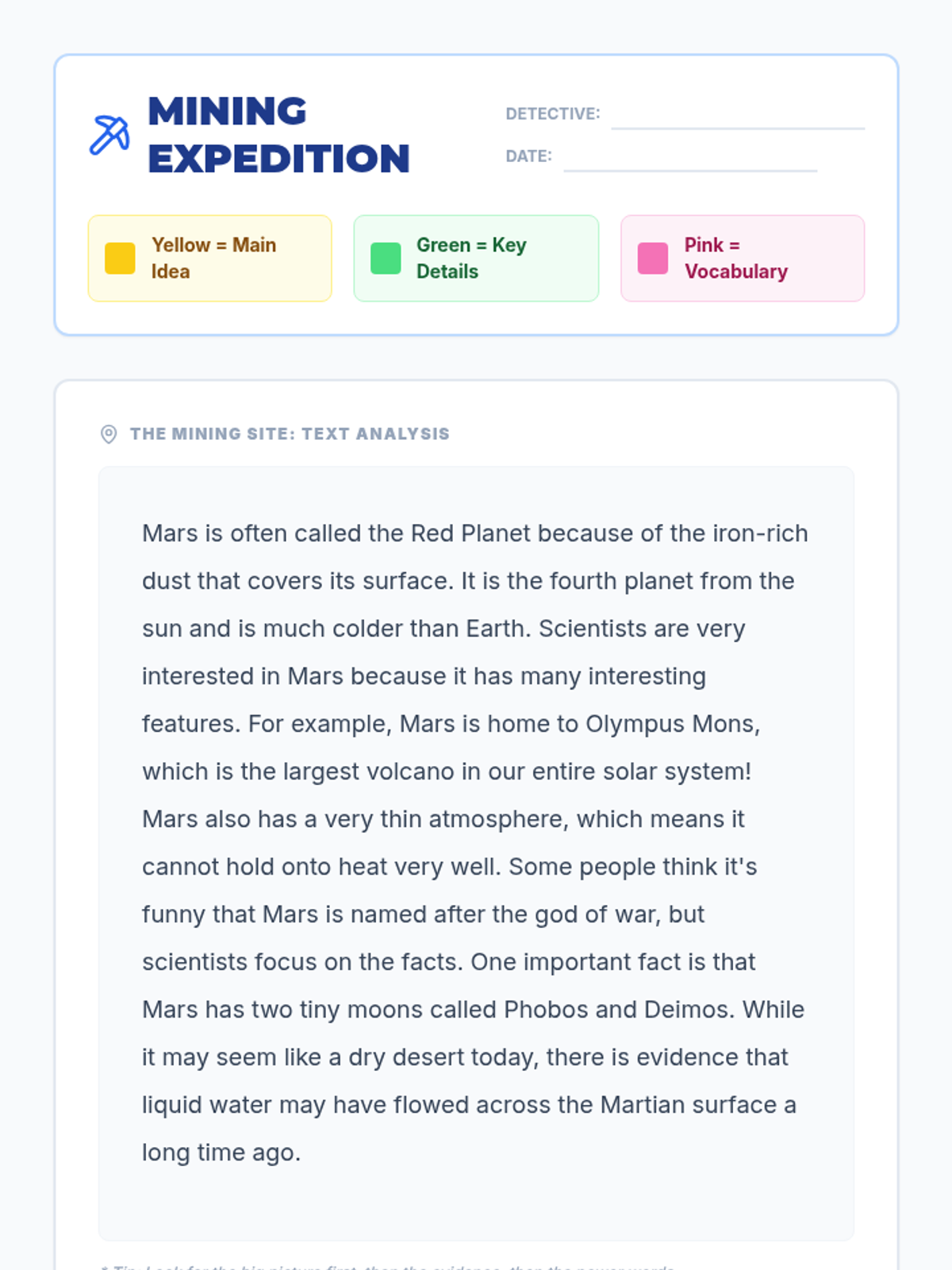
A sequence focused on helping students transform passive reading into active, visual study tools. Students learn color-coding, concept mapping, foldable creation, and comparison charting to organize and retain information.
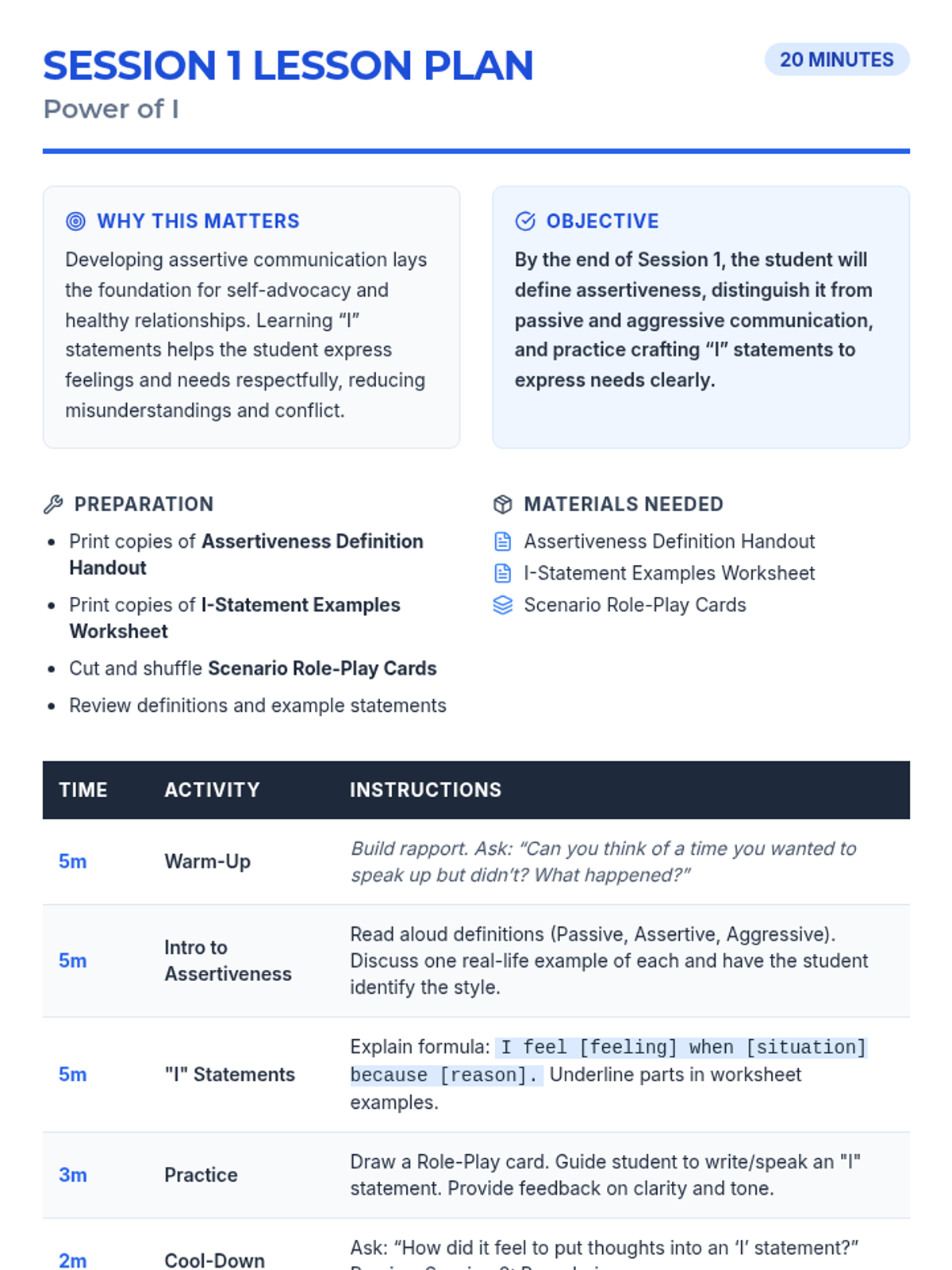
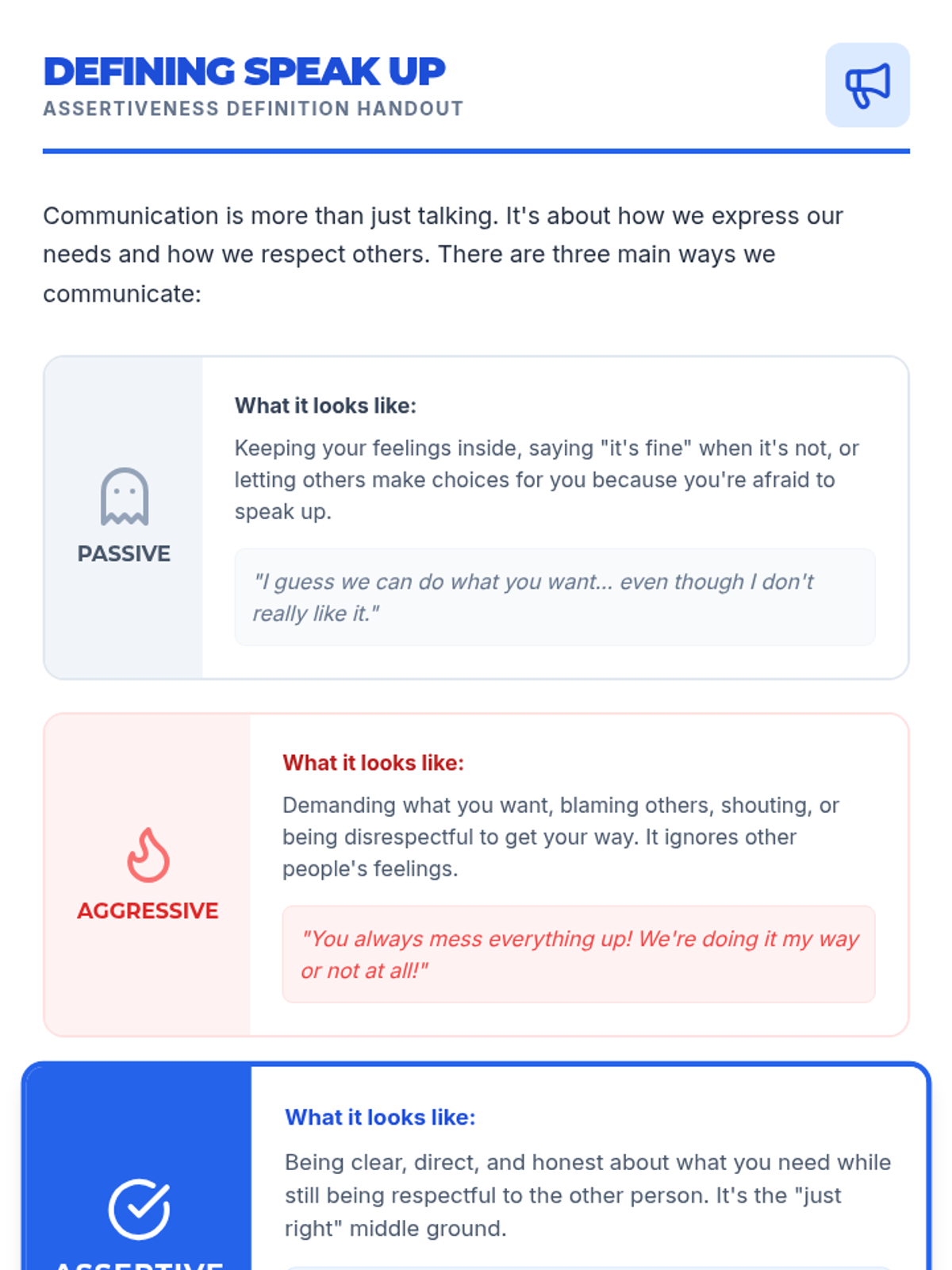
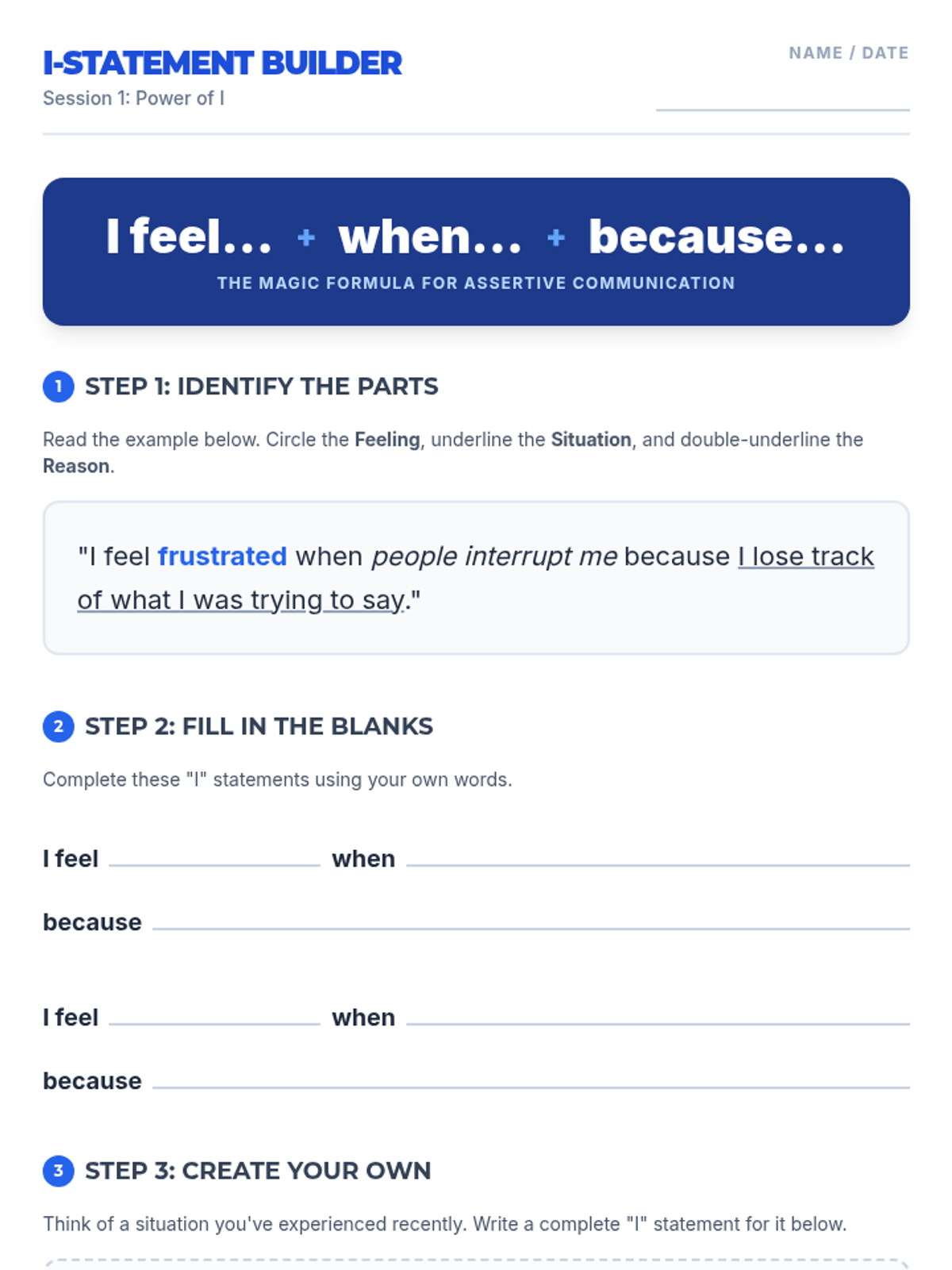
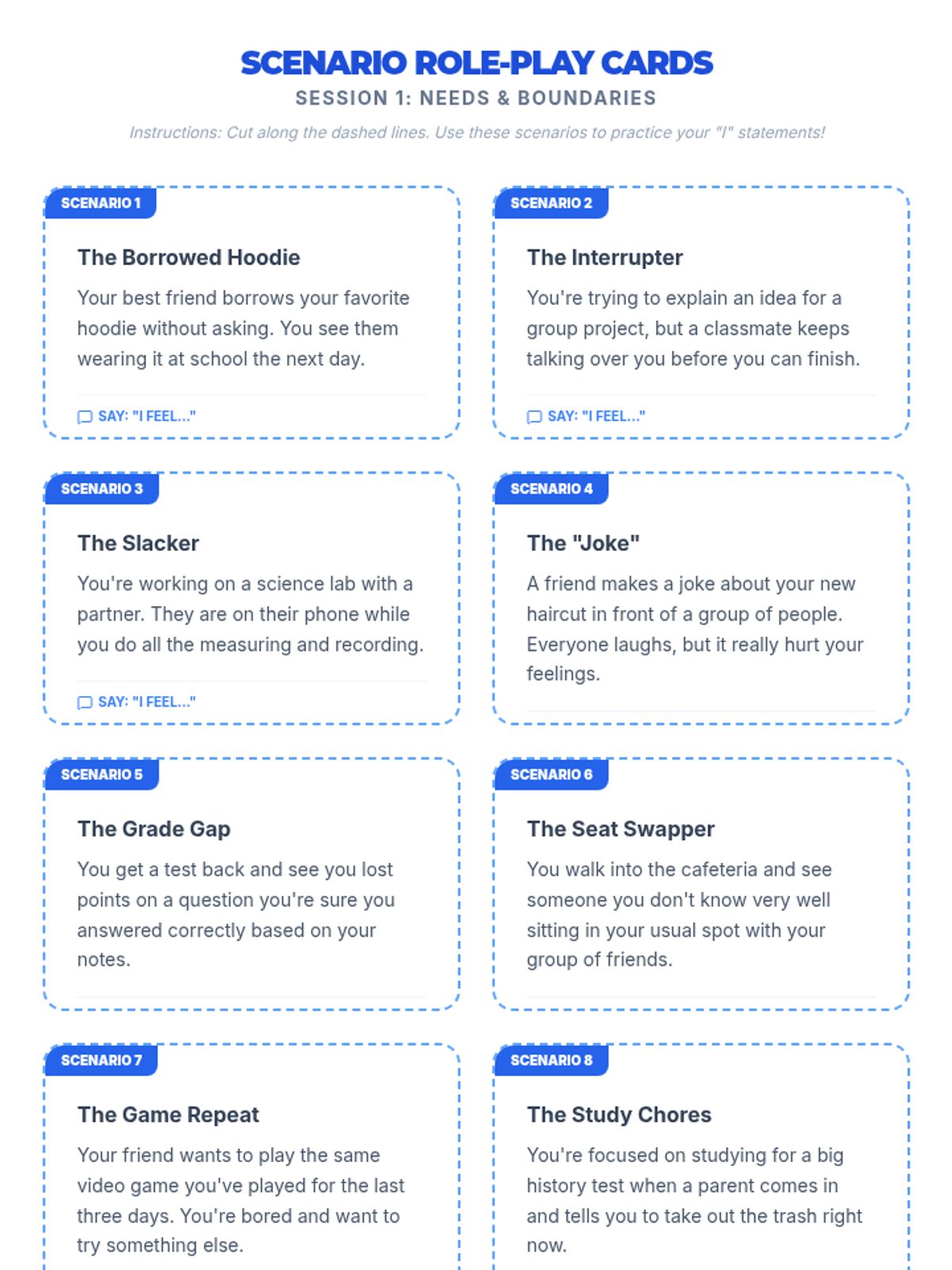
A 5-session intensive for middle school students to develop assertive communication skills, focusing on I-statements, boundaries, refusals, and long-term maintenance.
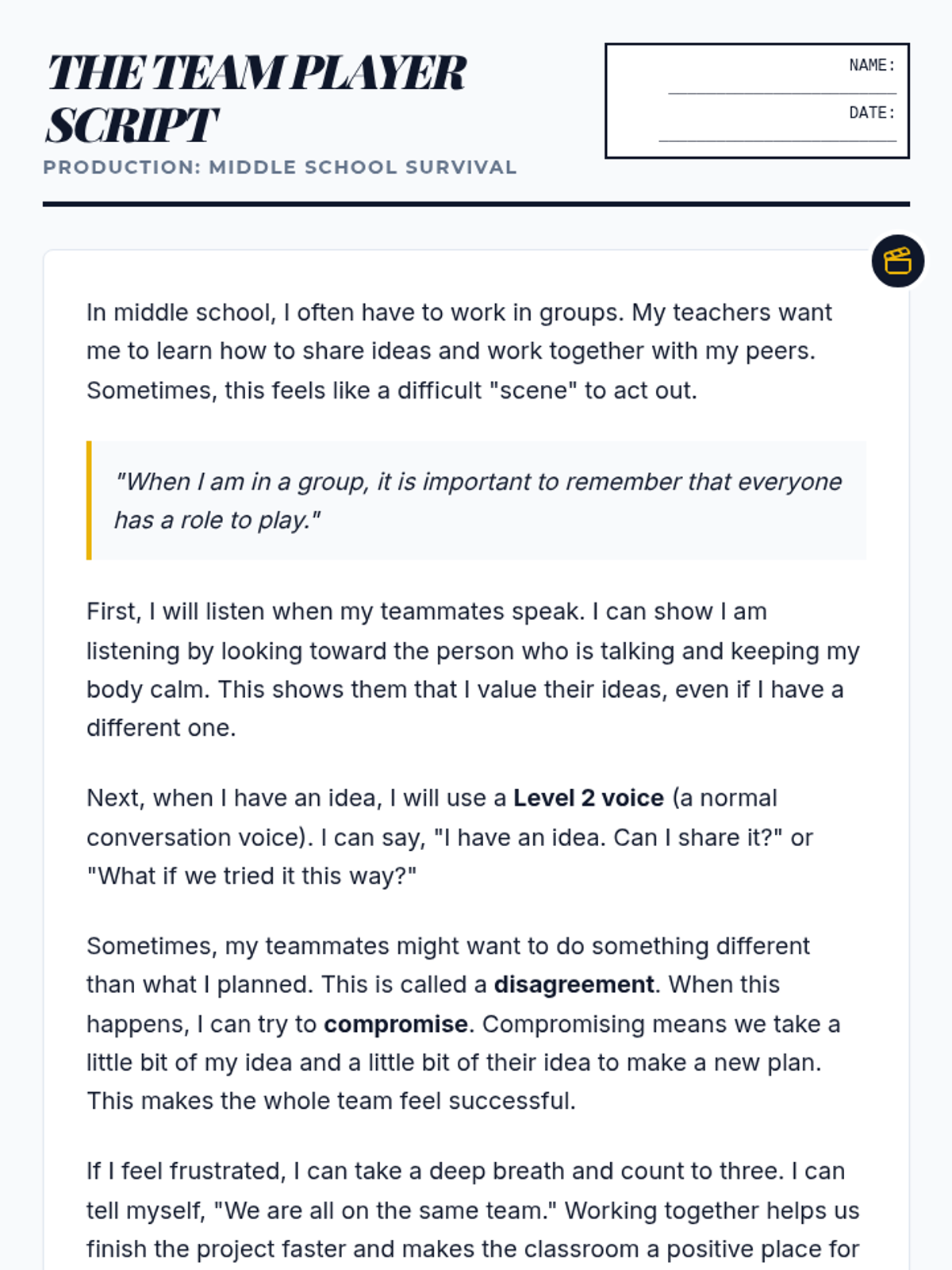
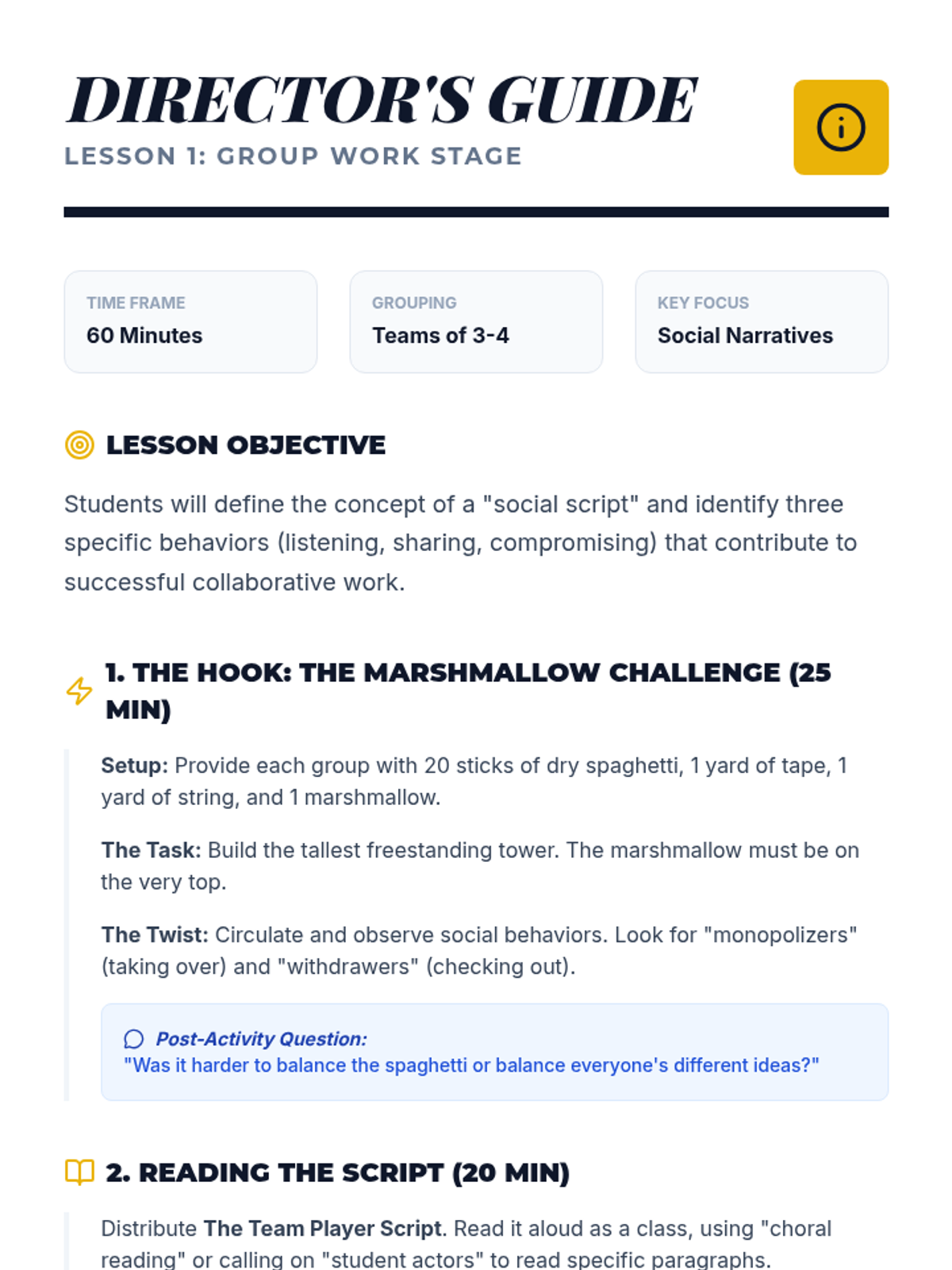
A comprehensive 6th-grade sequence focused on understanding and applying social narratives (Social Stories) to common middle school interactions like group work, sarcasm, conflict, and personal space through a "Director's Cut" cinematic theme.
This sequence teaches 6th-grade students how to participate in and facilitate daily community check-in circles. It focuses on the impact of individual behavior on the group, active listening skills, establishing safety norms, and peer-led facilitation to build a culture of accountability and support.
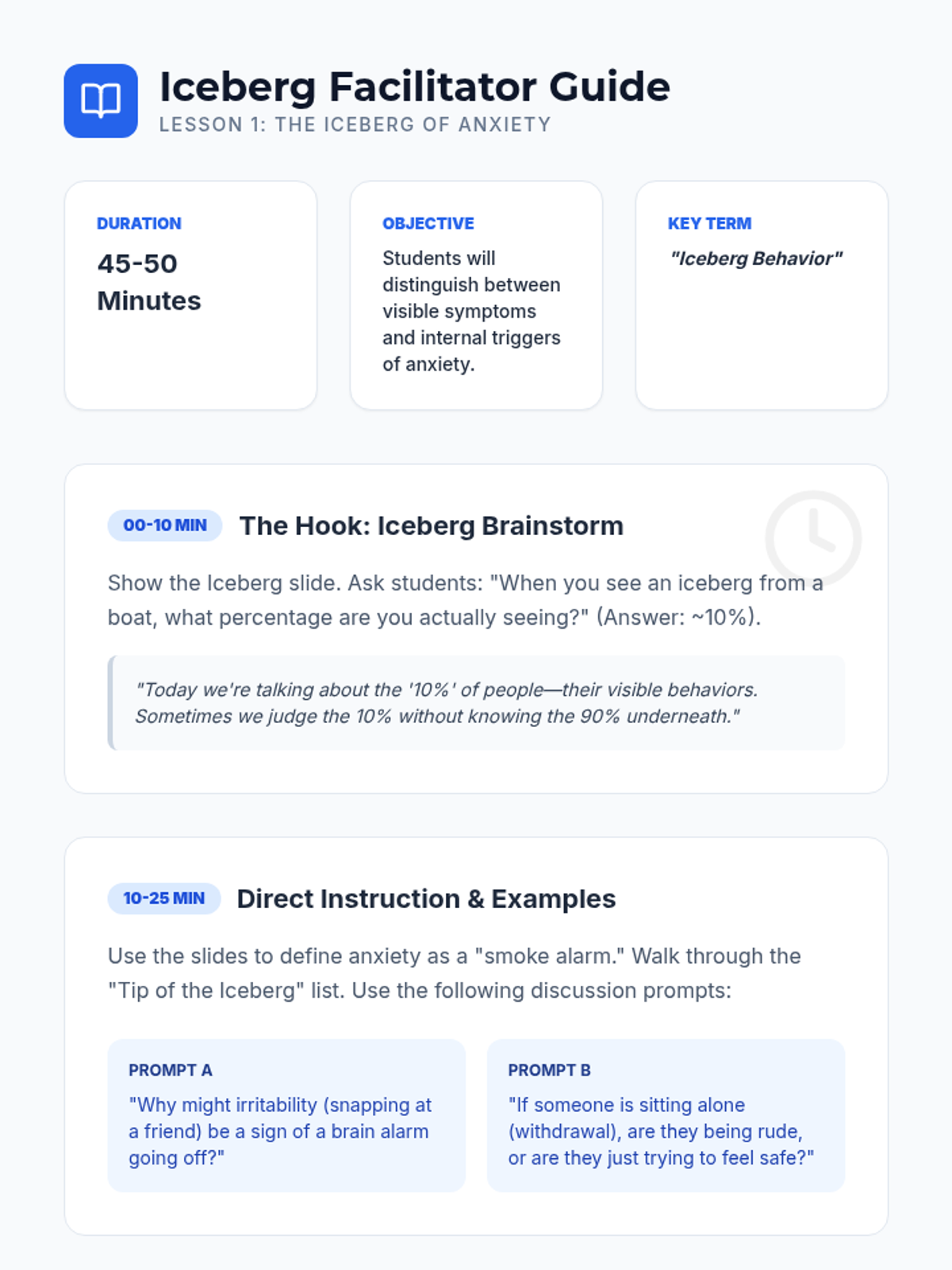
A 5-lesson sequence for 7th graders to identify behavioral symptoms of anxiety in academic and social contexts, moving from observation to empathetic peer support.
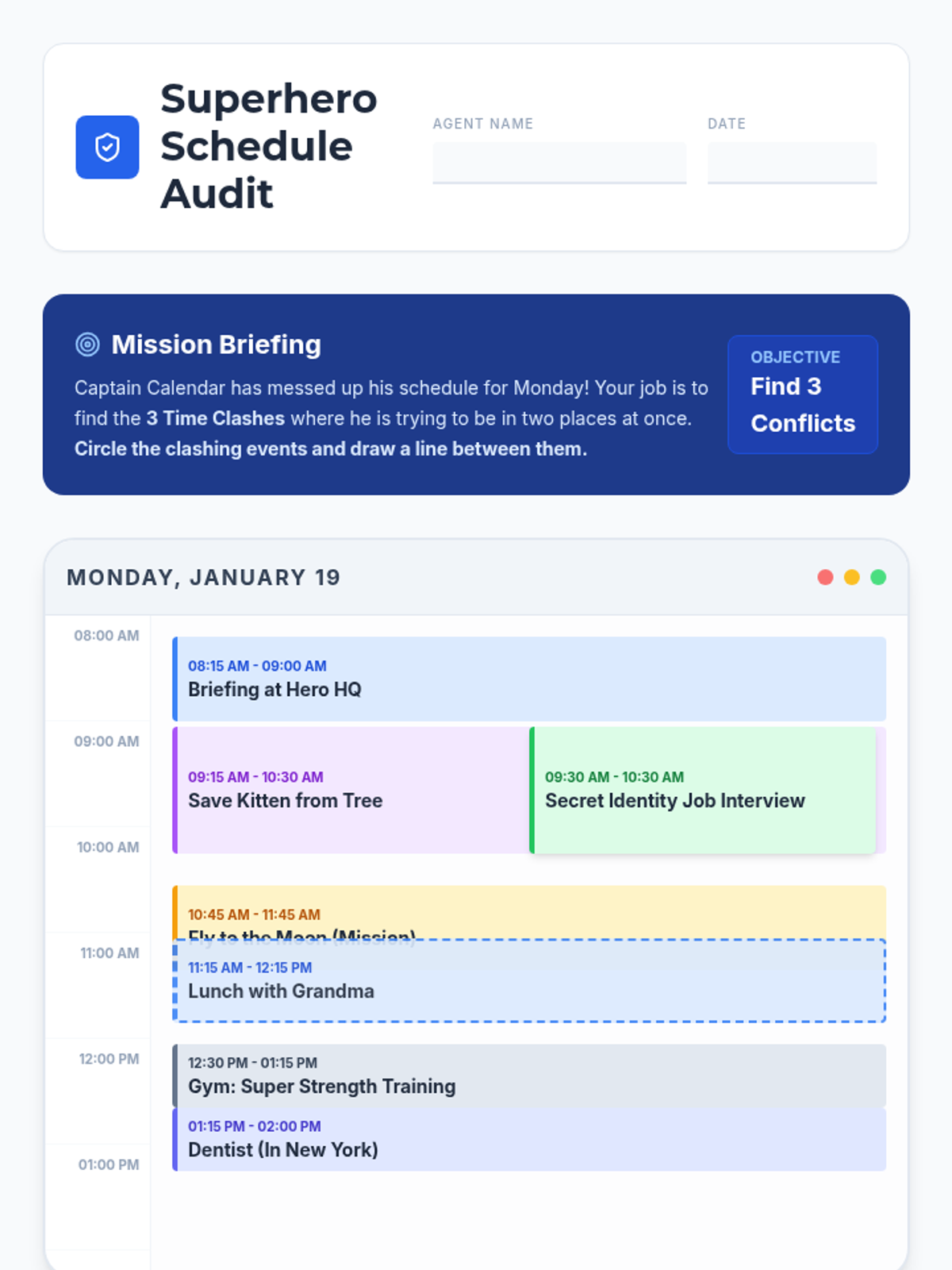
This sequence teaches 7th-grade students with diverse learning needs how to navigate the social and technical complexities of digital calendars. Students learn to identify conflicts, prioritize tasks, use collaboration tools like 'Find a Time', and manage shared calendar layers to coordinate effectively with others.
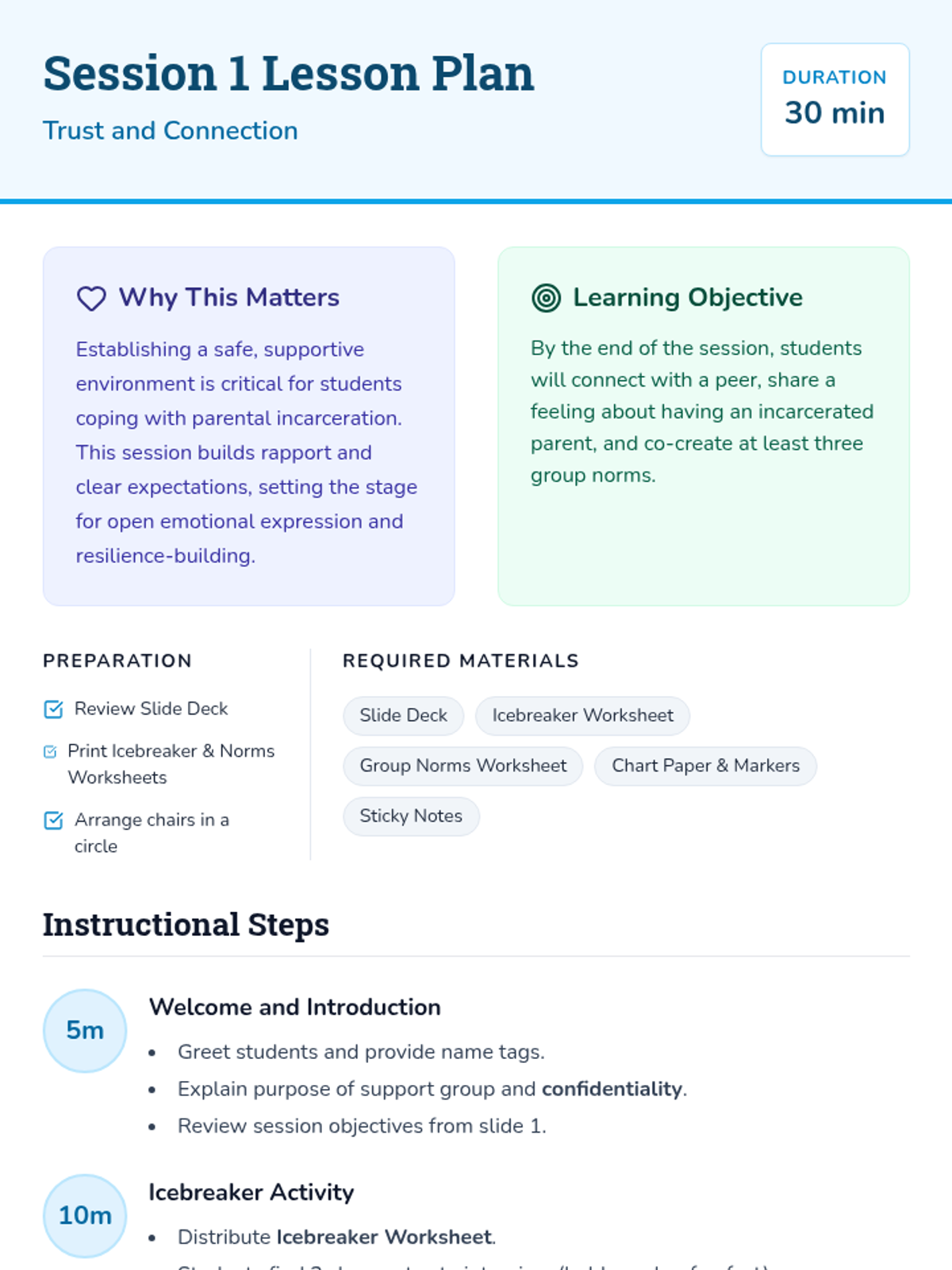
A 4-session small group counseling sequence for middle school students navigating the challenges of parental incarceration, focusing on emotional awareness, coping skills, and resilience.
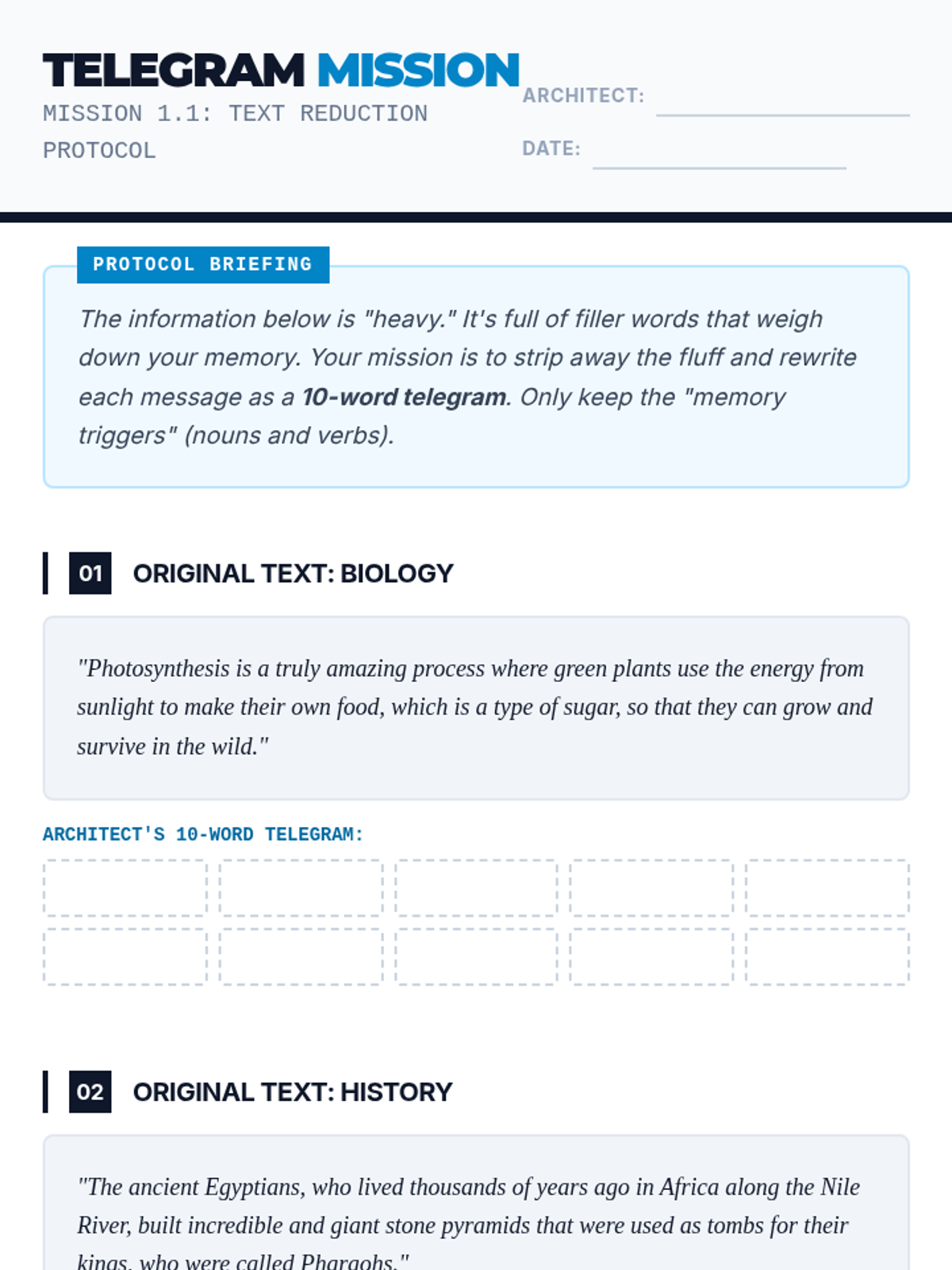
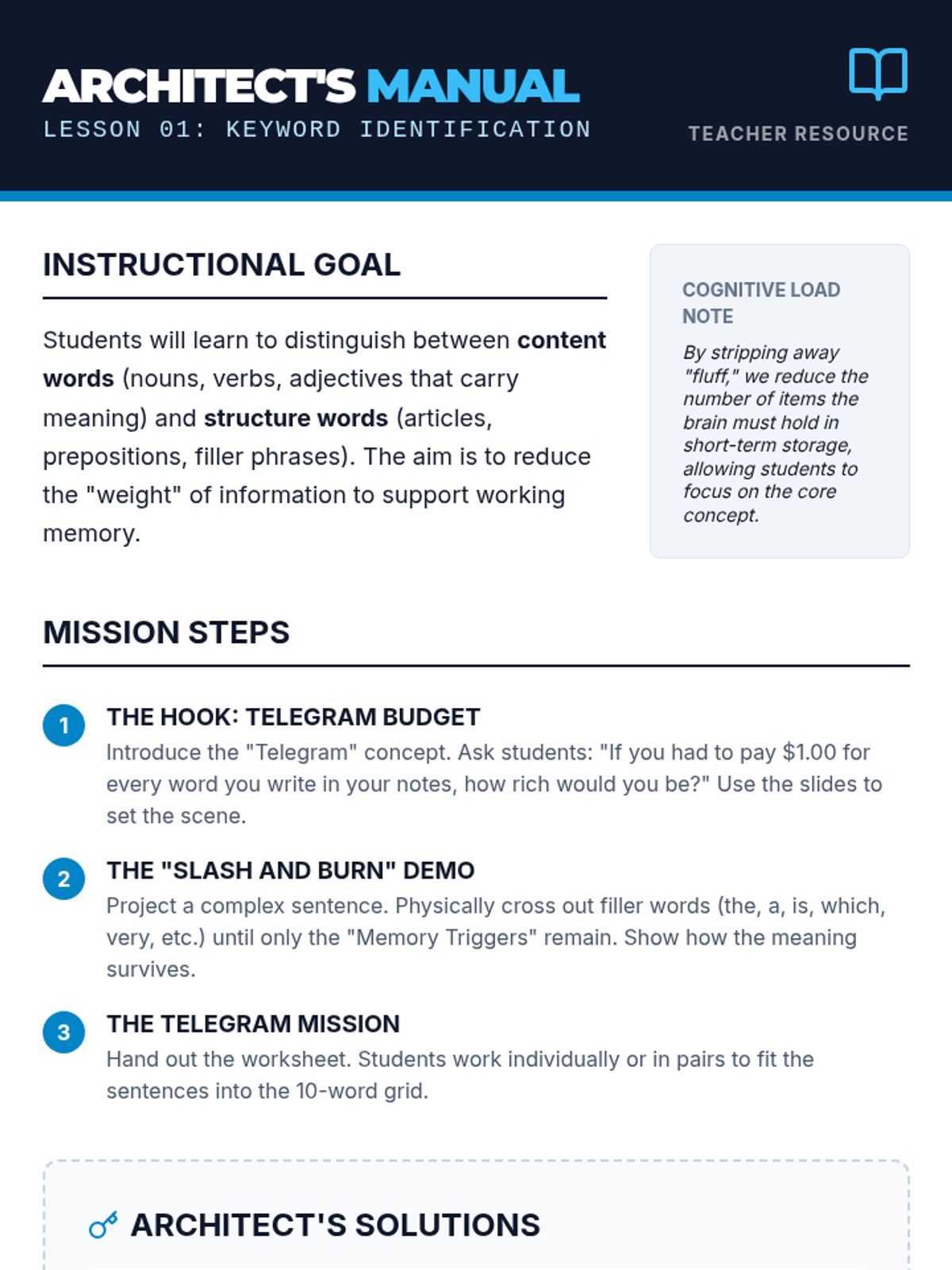
A specialized sequence for 6th-grade students focusing on reducing cognitive load through effective note review, summarization, and paraphrasing. Students learn to become 'Info Architects,' stripping away unnecessary 'fluff' to identify core concepts and strengthen working memory.
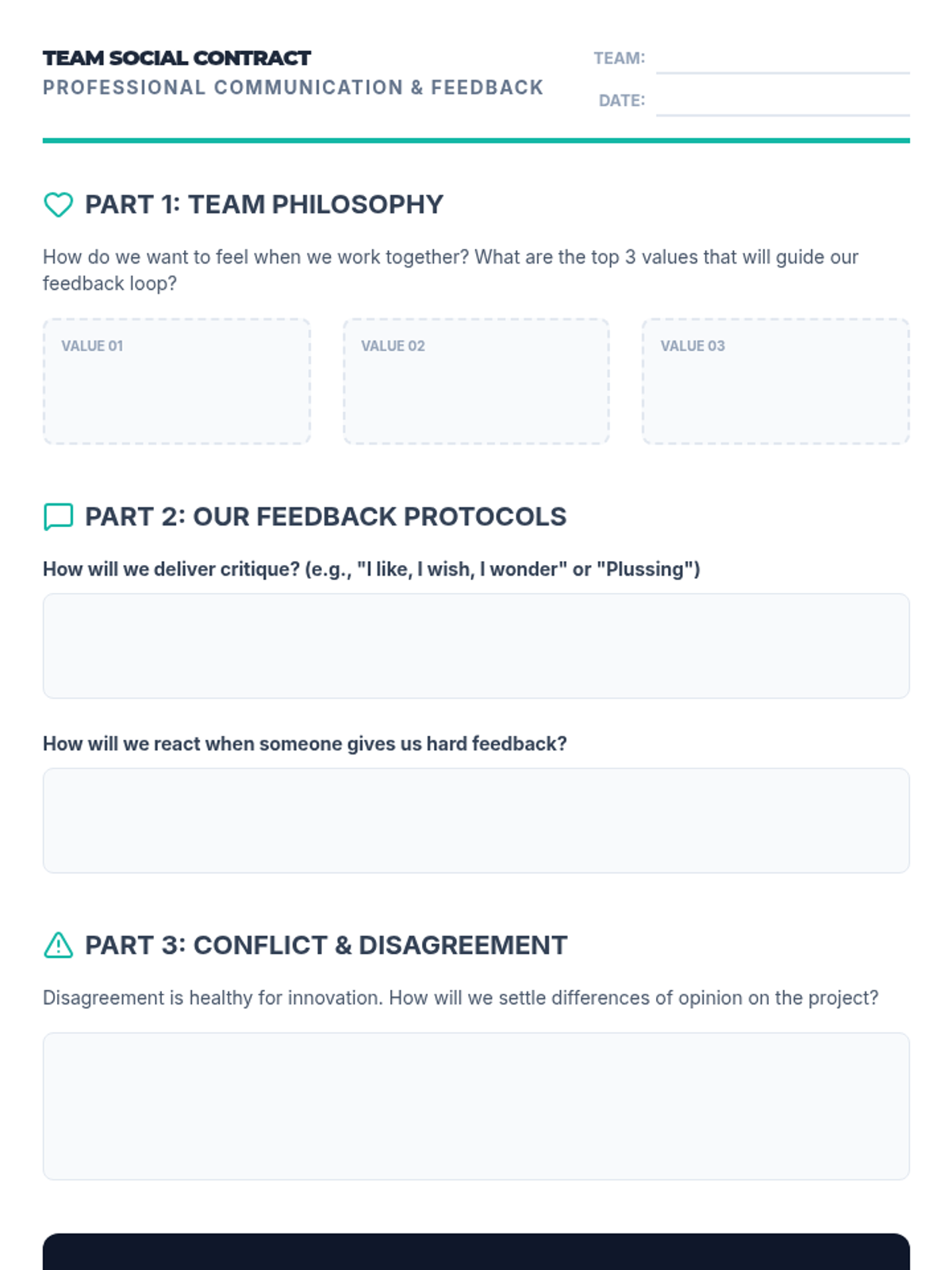
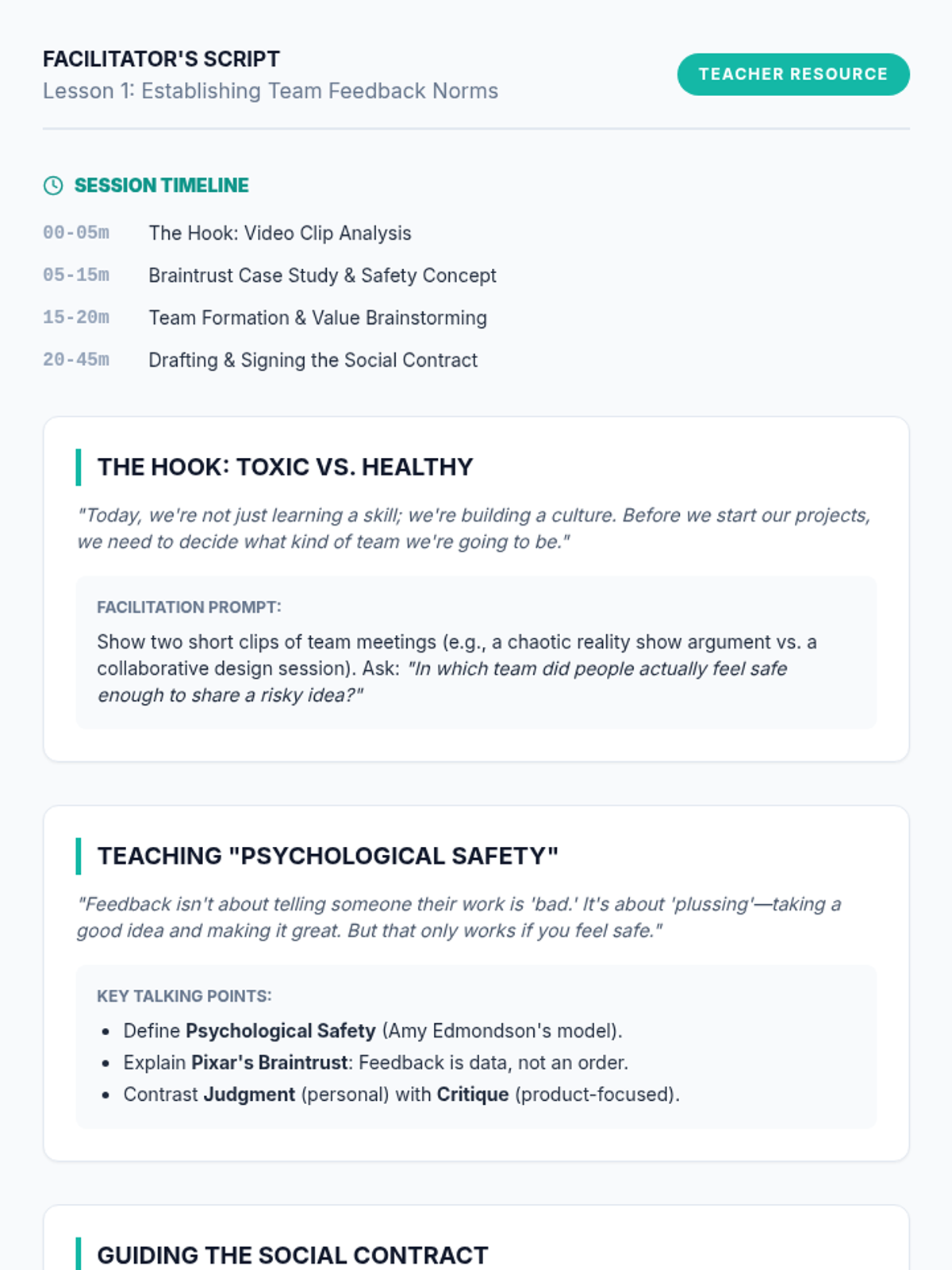
This project-based sequence teaches students the iterative cycle of constructive feedback within a collaborative design environment. Students develop social contracts, engage in rapid prototyping, observe fishbowl critiques, and document their growth through change logs and retrospectives.
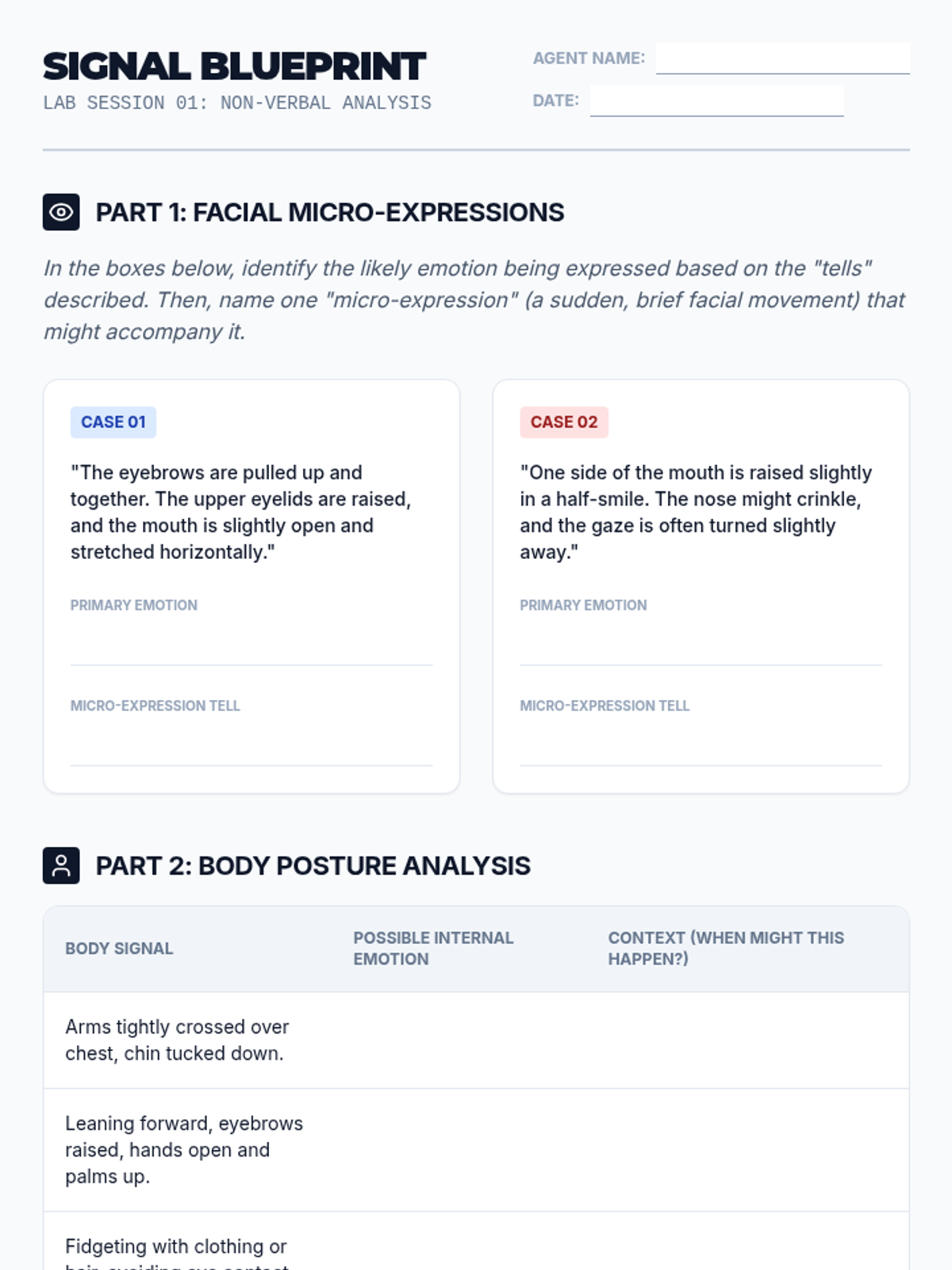
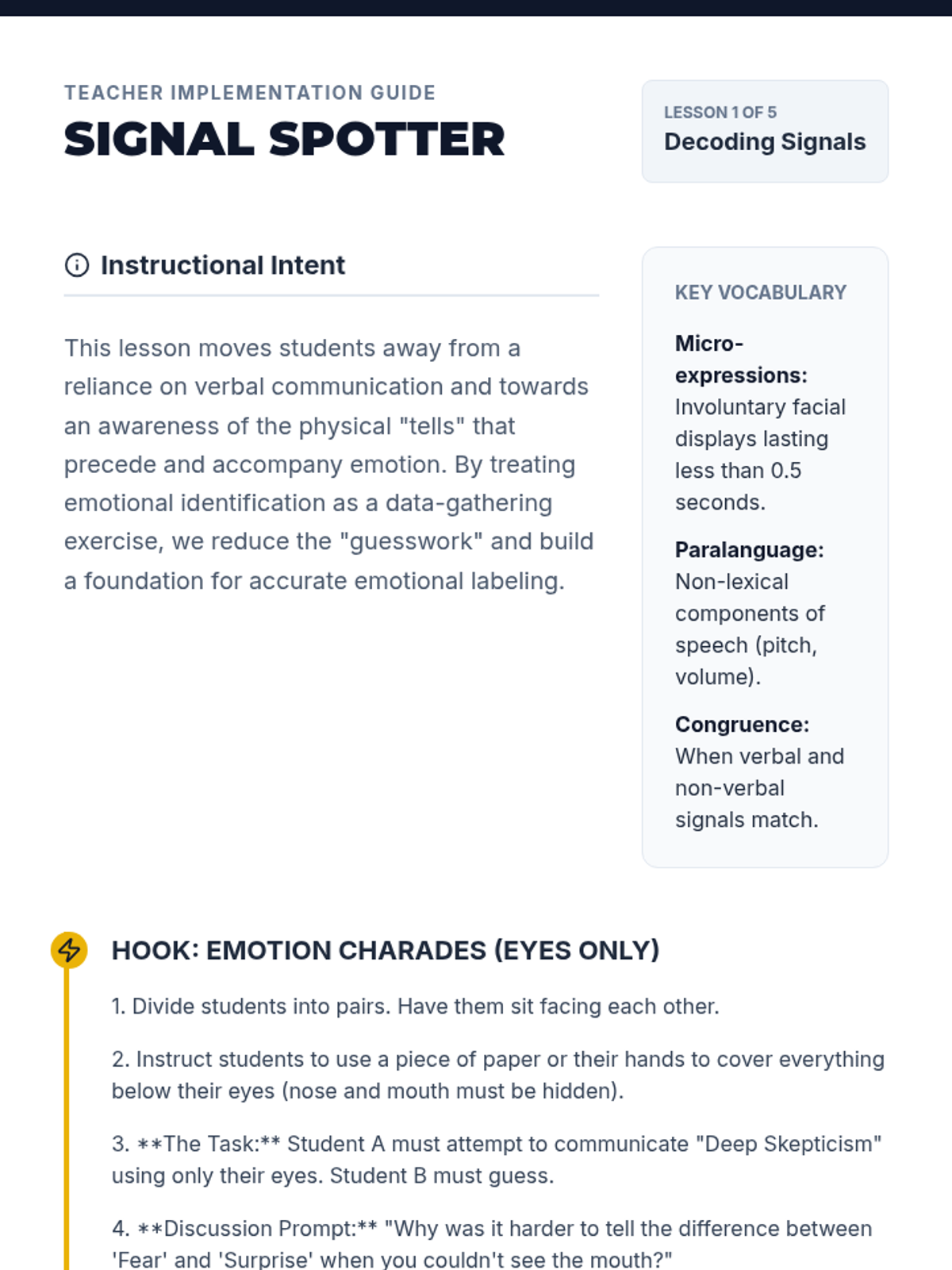
This sequence explores how accurately labeling emotions in oneself and others improves social connections and conflict resolution. Students will advance from identifying non-verbal cues to applying complex emotional literacy in real-world simulations.
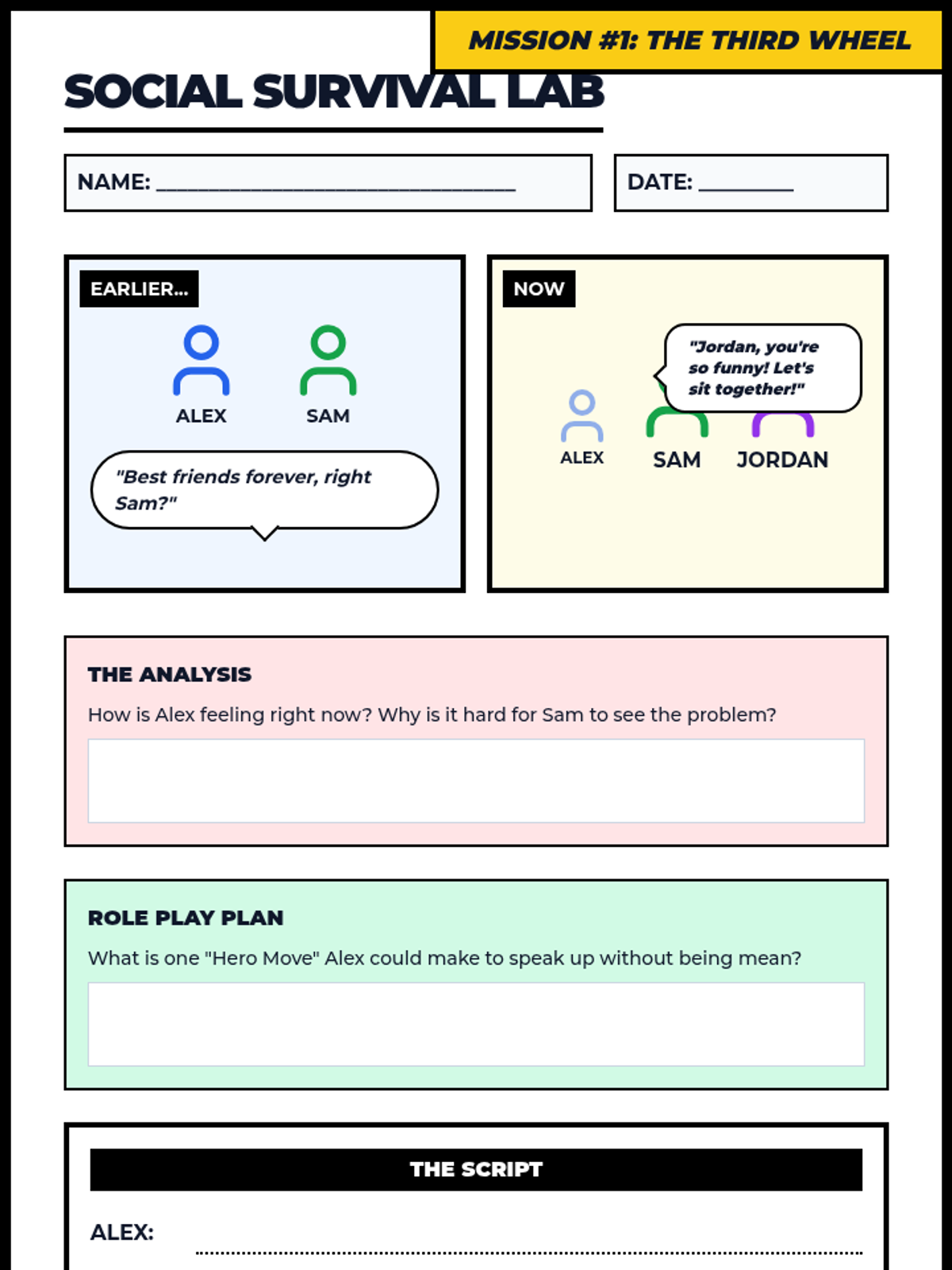
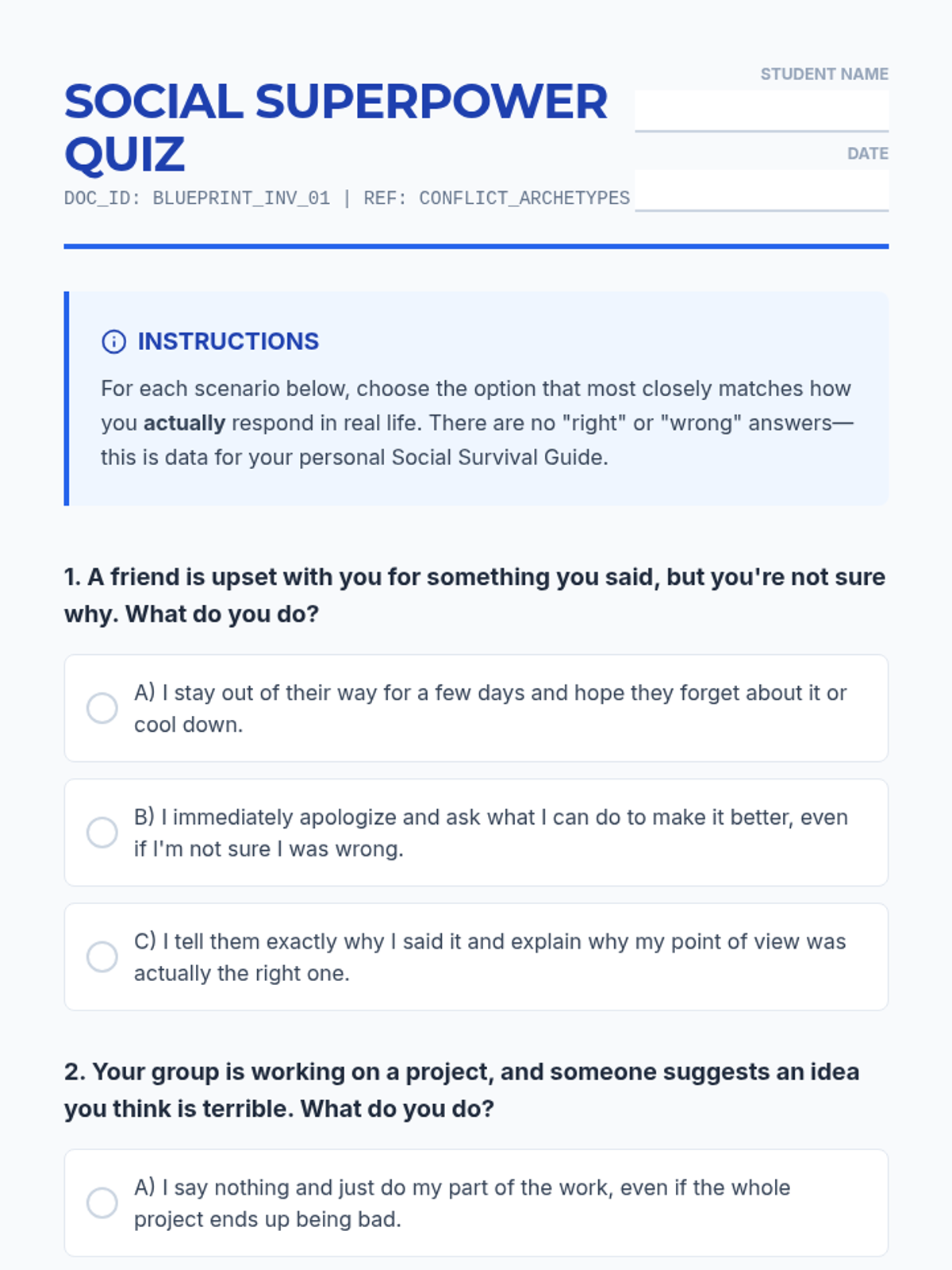
A project-based sequence where 7th-grade students analyze their social styles, past successes, and preferred strategies to build a personalized 'Social Survival Guide' for navigating conflict.
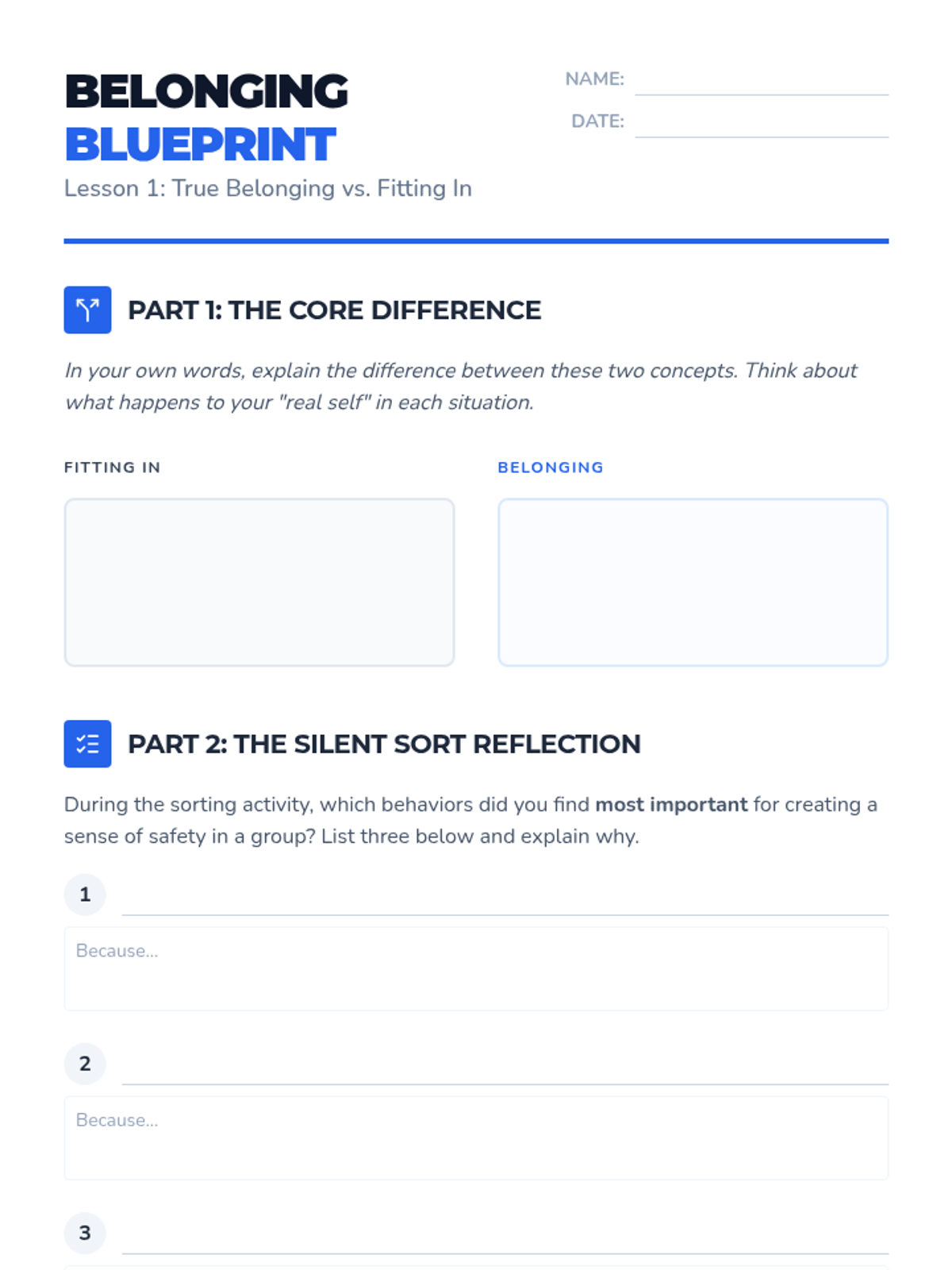
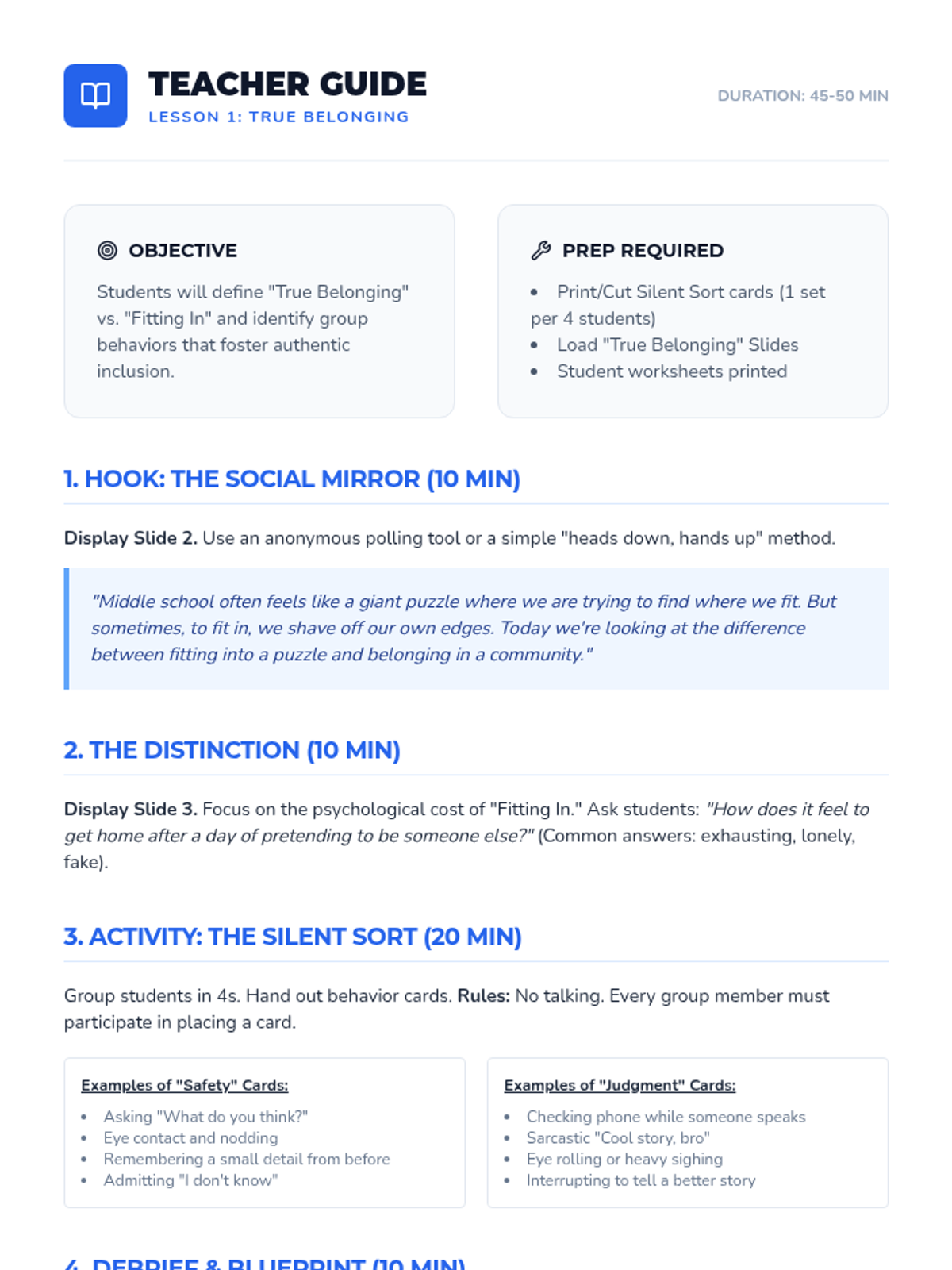
This sequence guides 7th grade students through the process of transforming a collection of individuals into a cohesive, supportive community by exploring the distinction between 'fitting in' and 'belonging', practicing active listening, and creating a shared Community Charter.
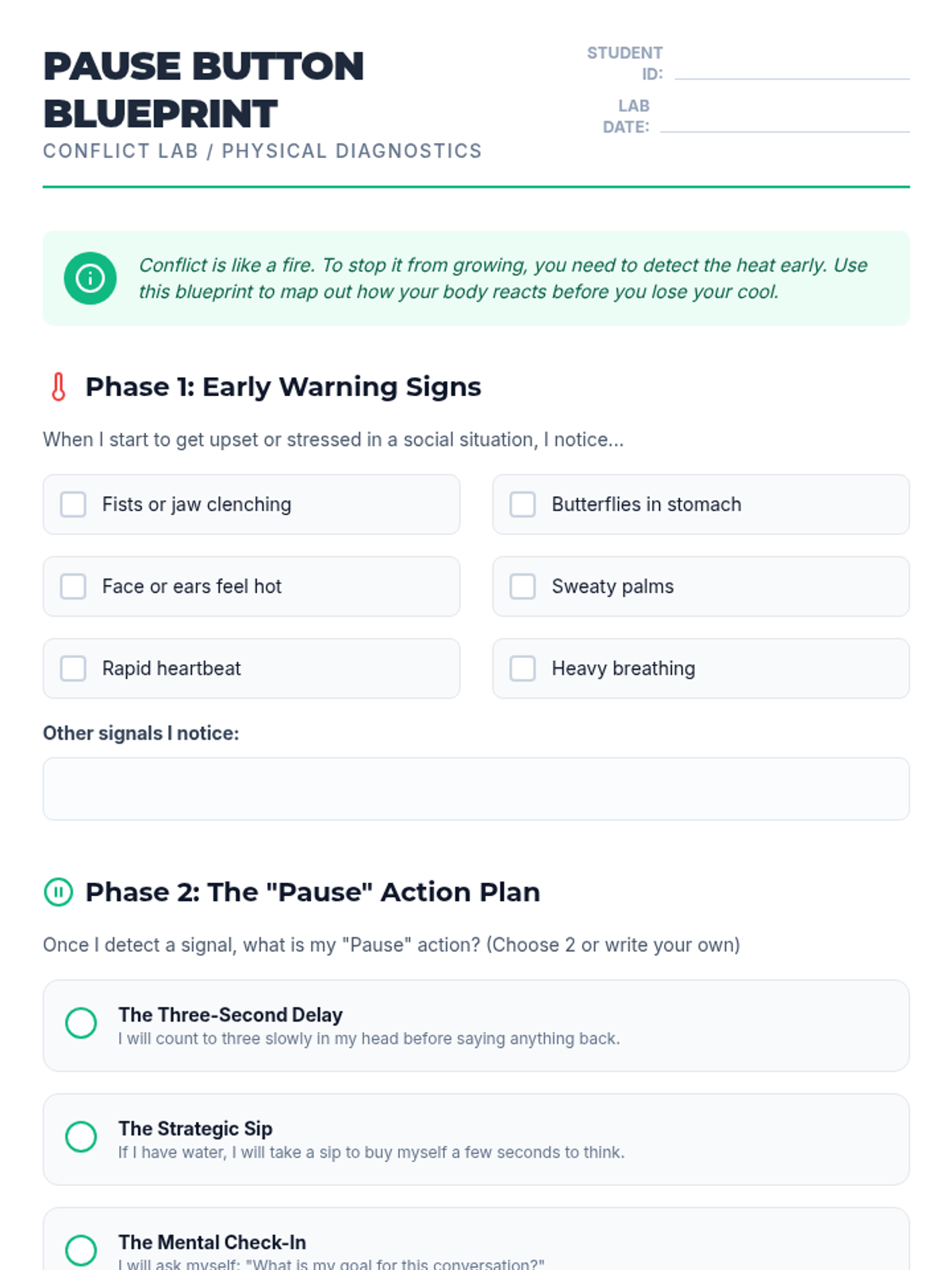
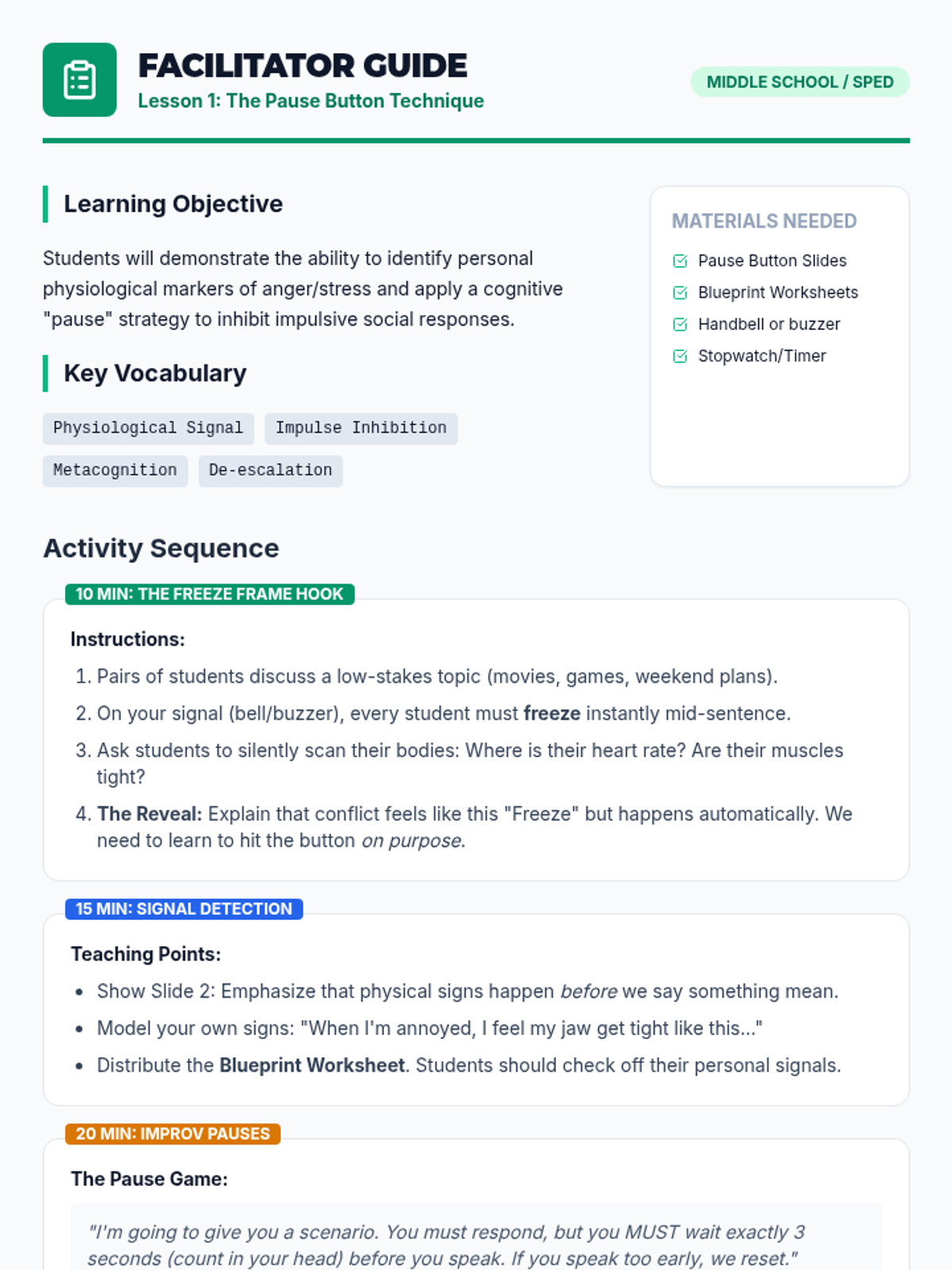
A 5-lesson sequence for 7th-grade students focusing on real-time social problem-solving and conflict resolution through immersive simulations and the 'Pause Button' technique.
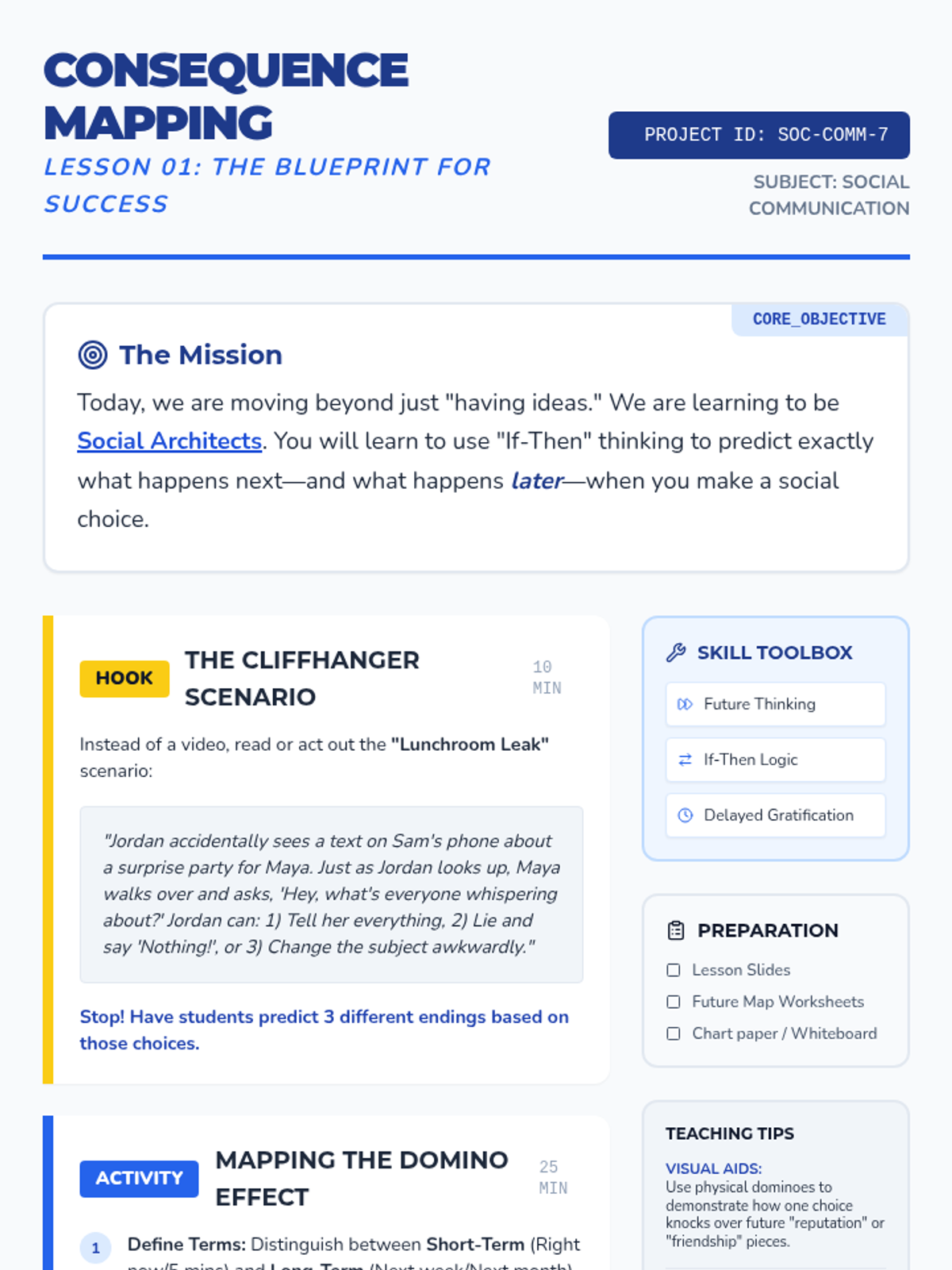
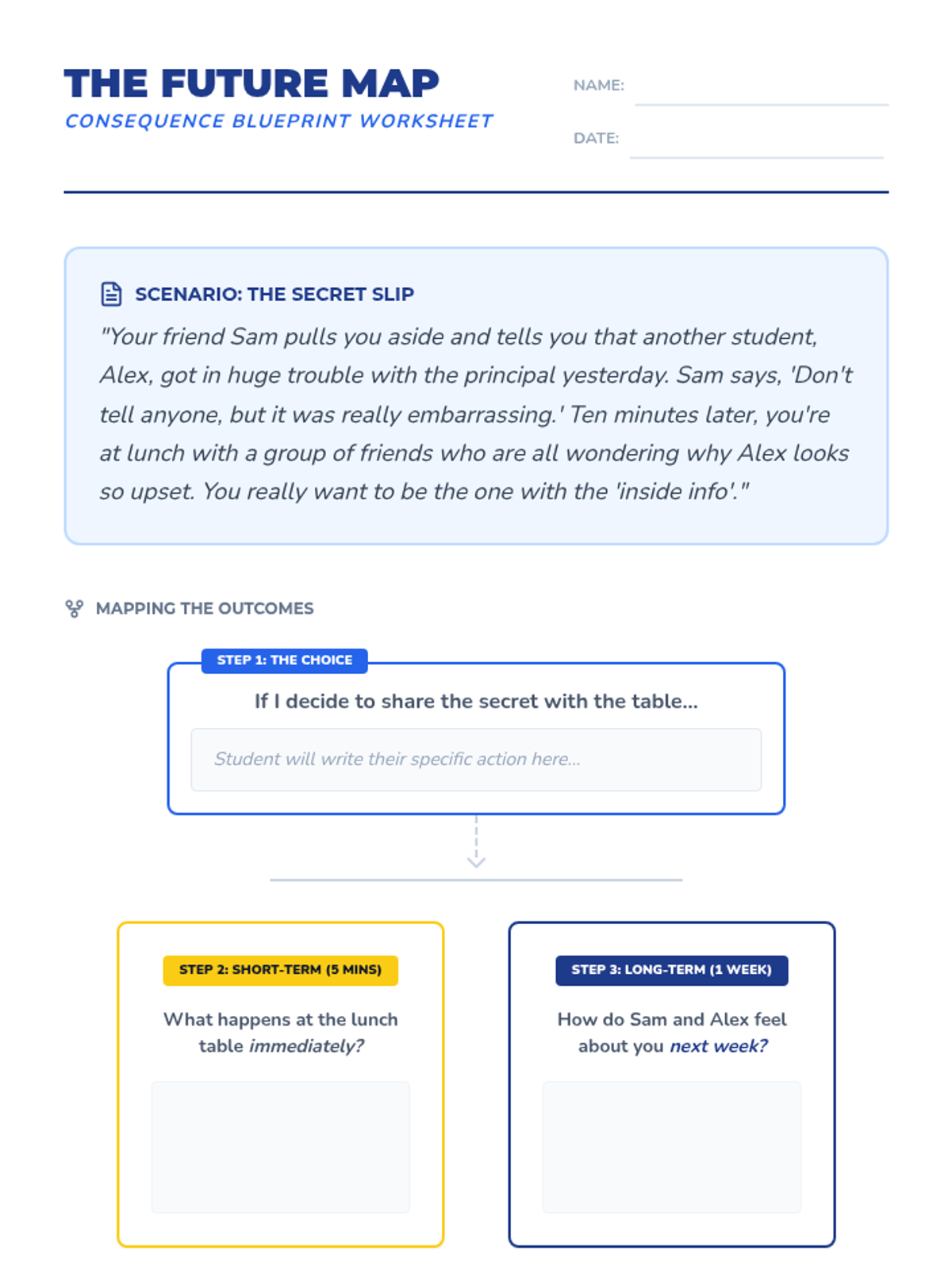
This sequence guides 7th-grade students through the process of evaluating social choices by predicting short- and long-term consequences, understanding the impact on others, and navigating digital communication. Students learn to weigh pros and cons using a 'social capital' framework to make informed, empathetic decisions in complex middle school scenarios.
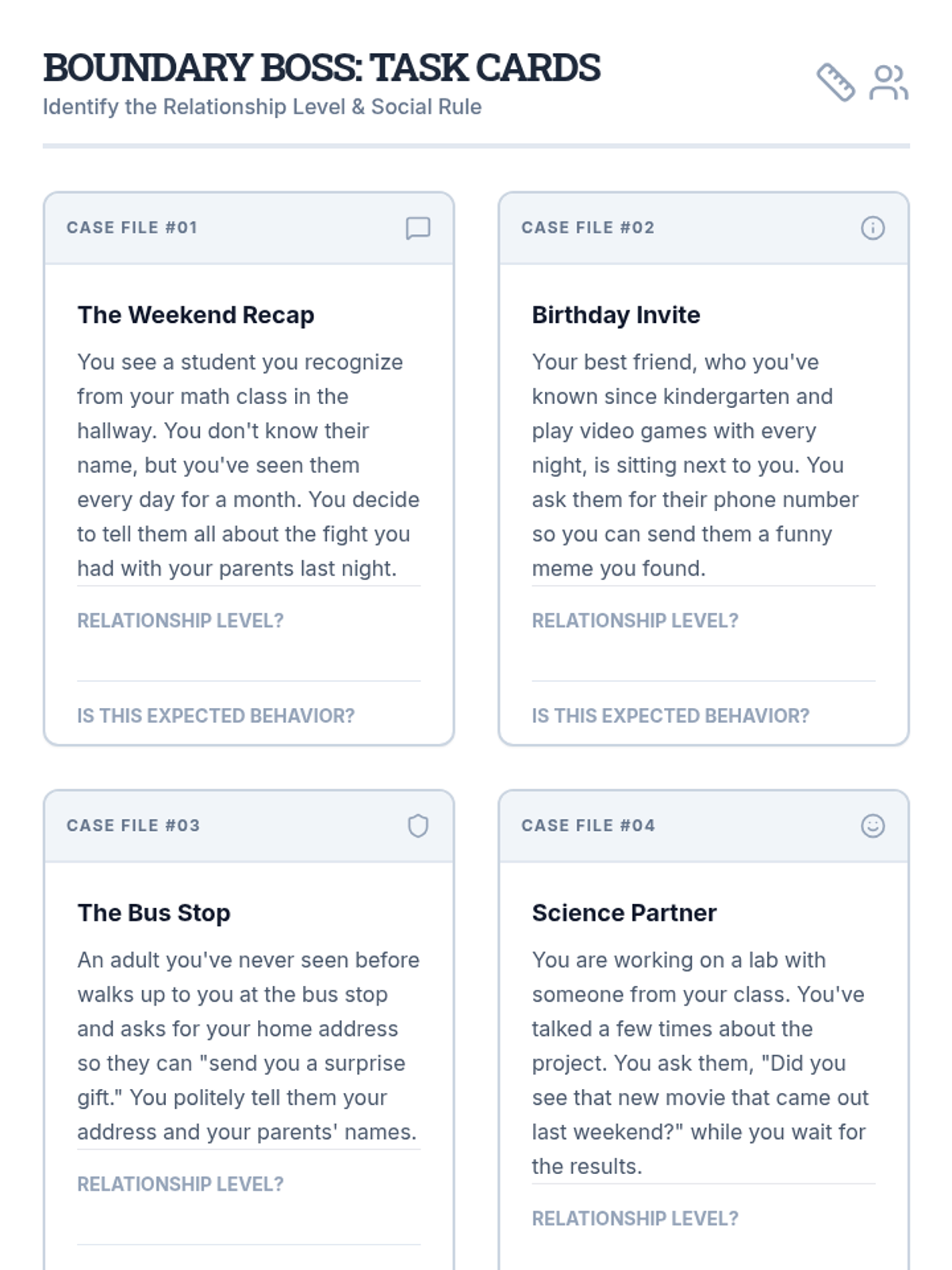
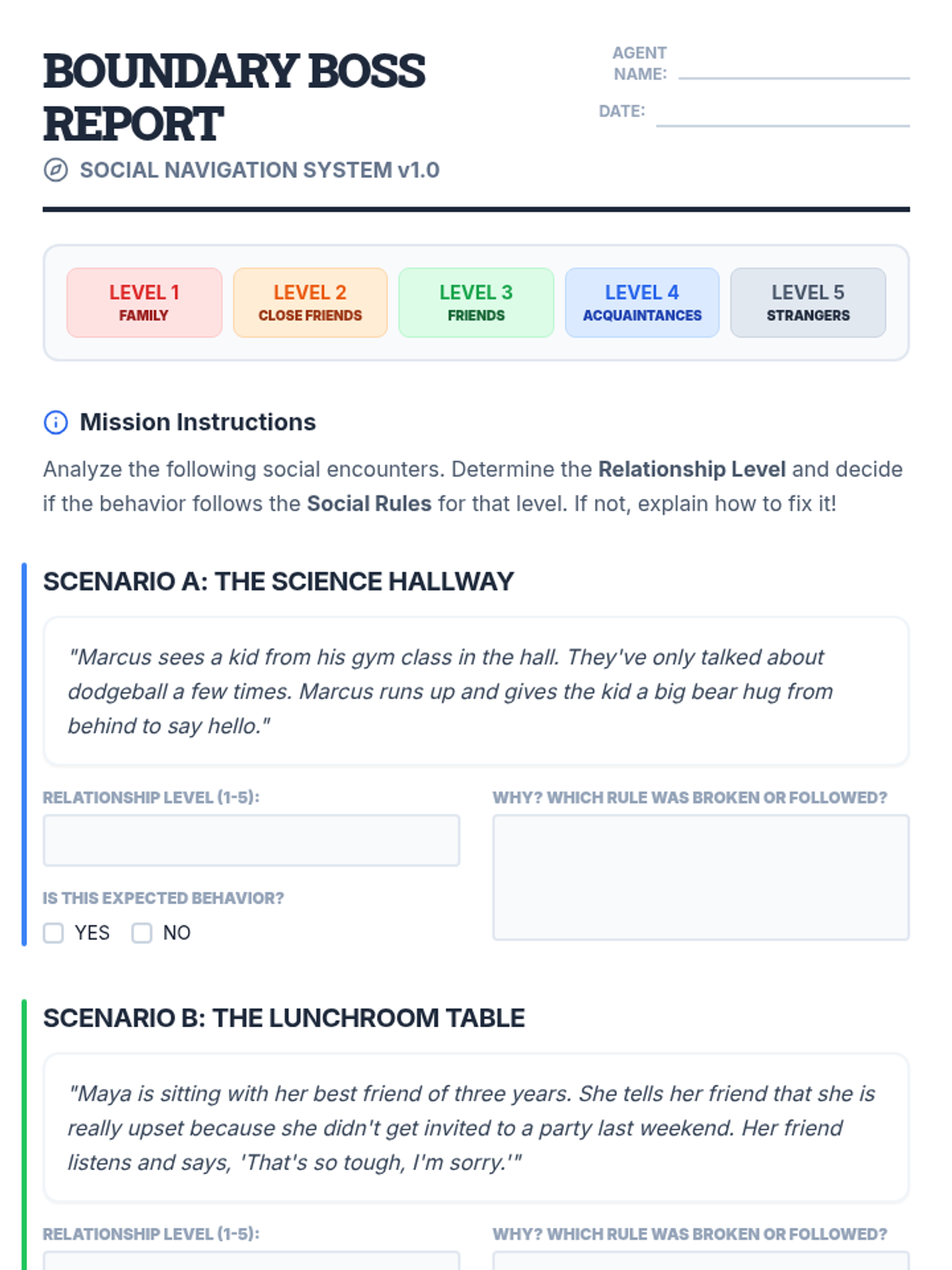
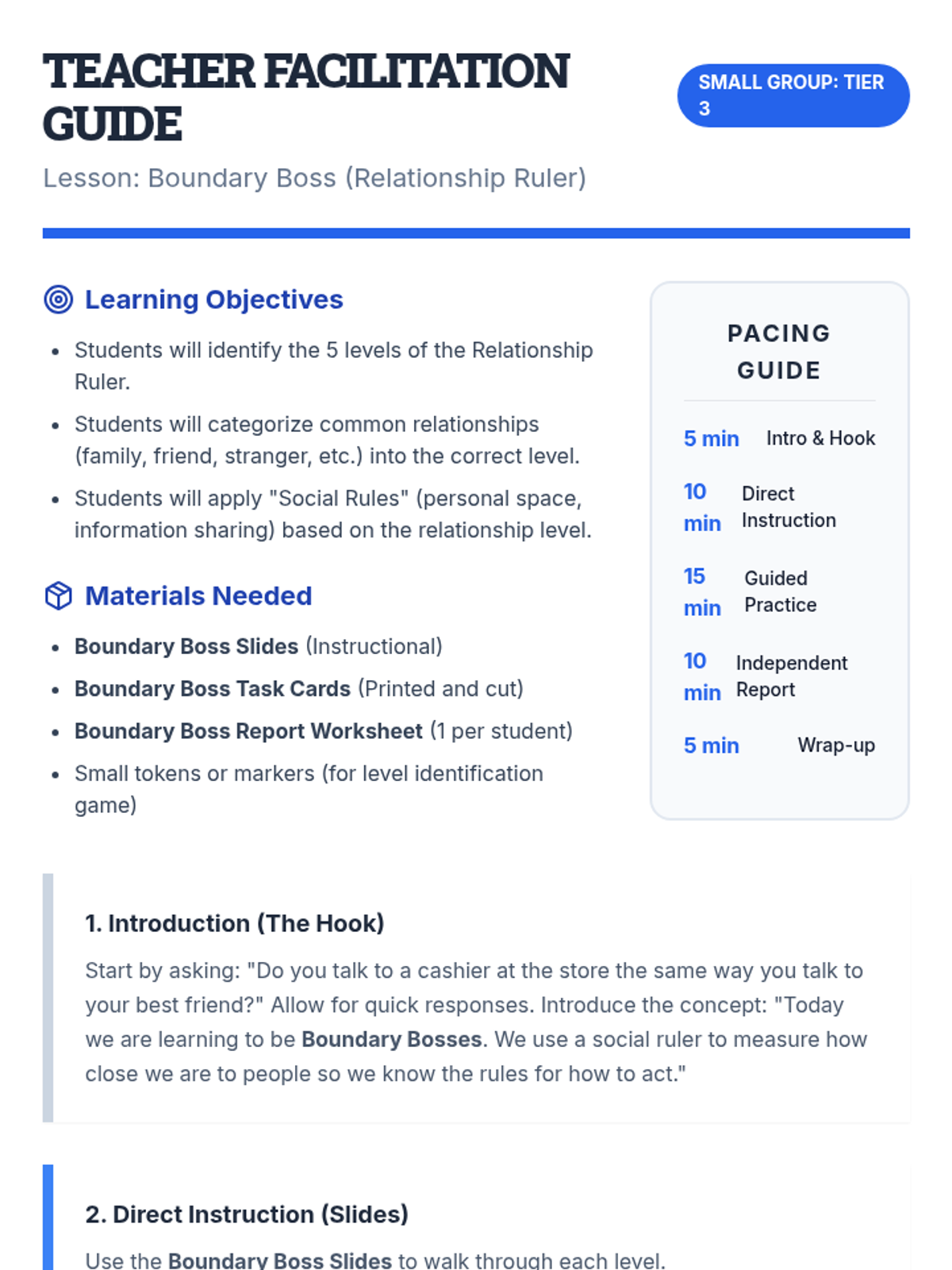
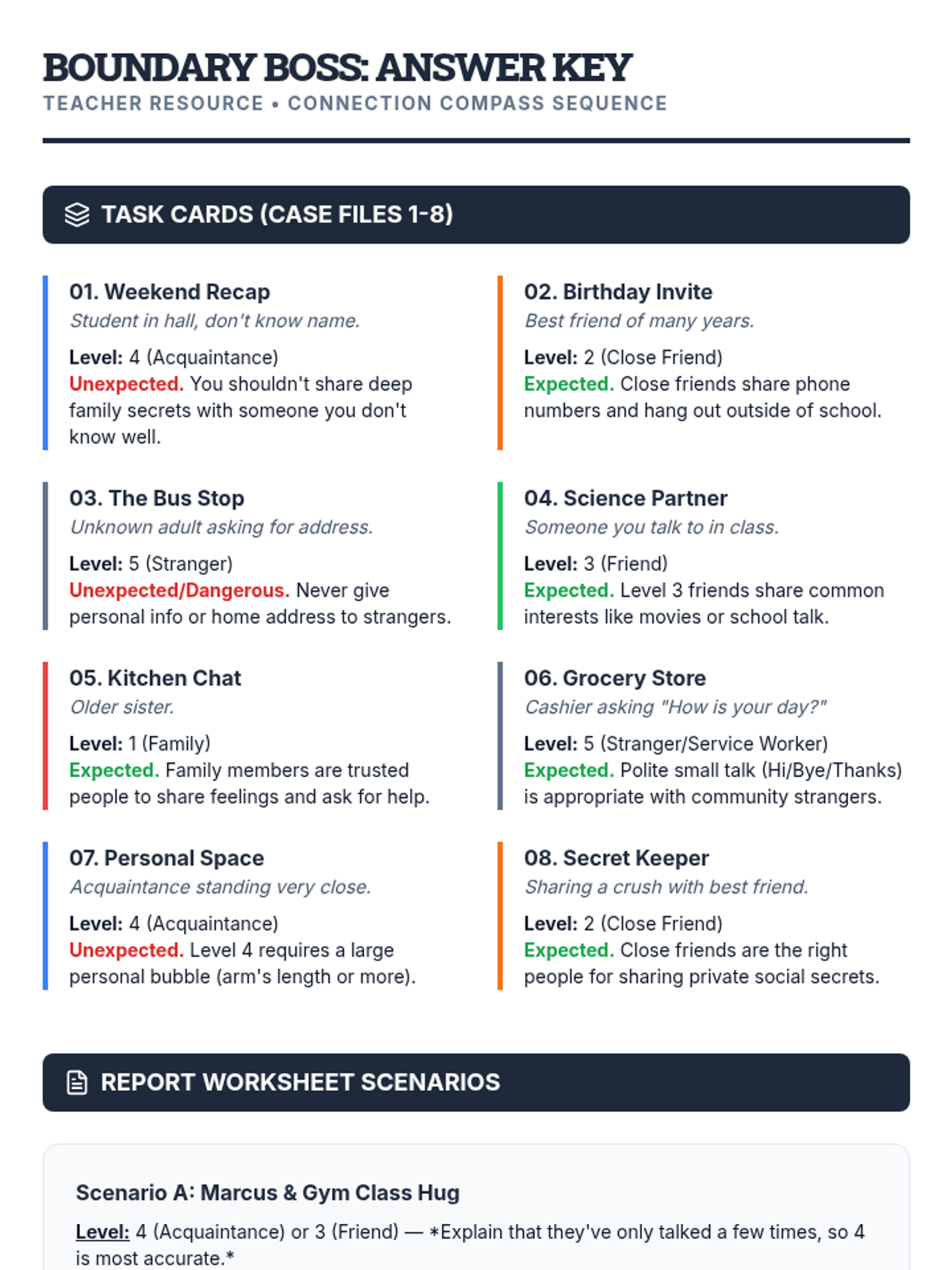
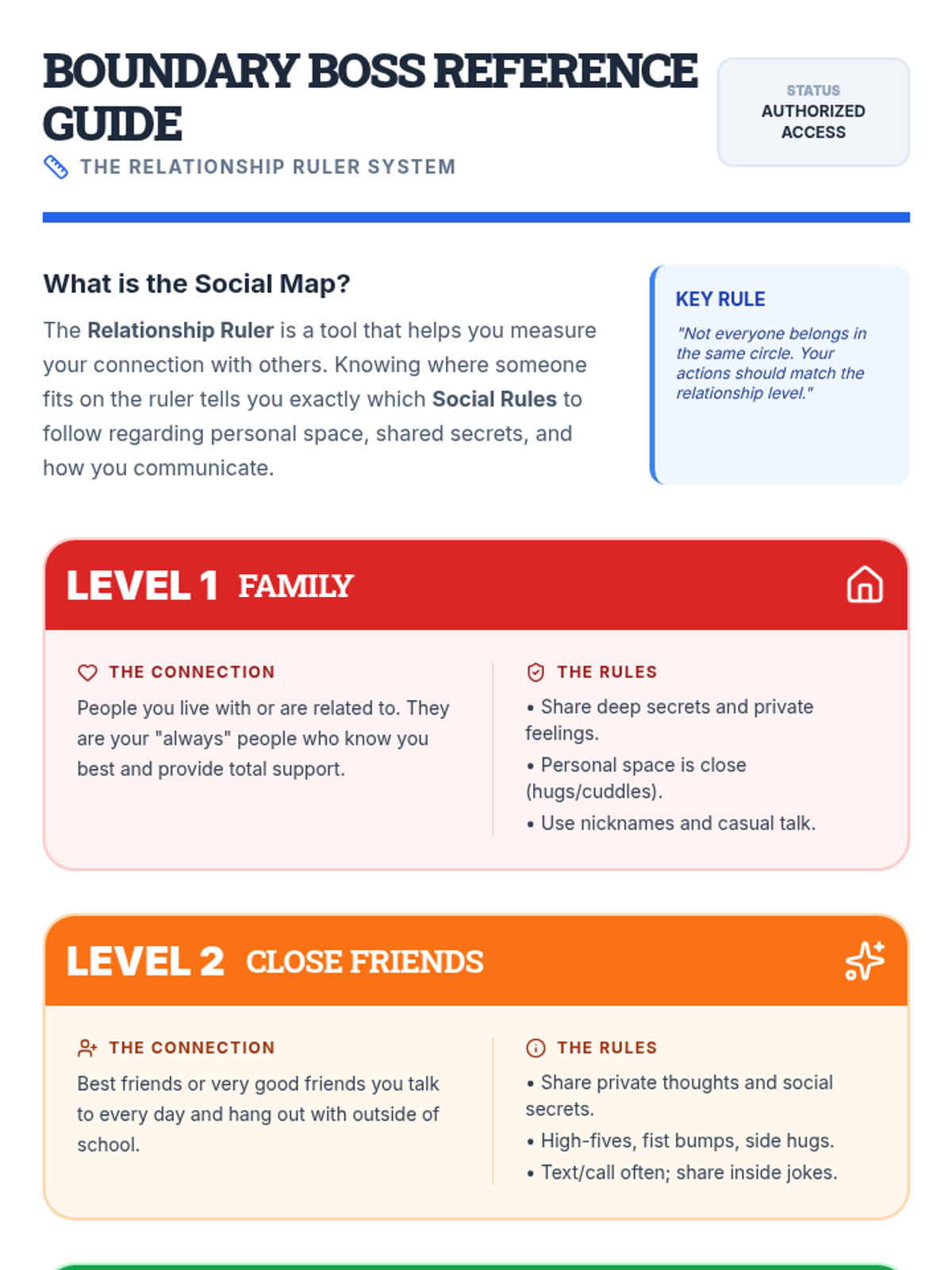
A series of lessons designed to help students navigate the complexities of social interactions, boundaries, and relationship levels.
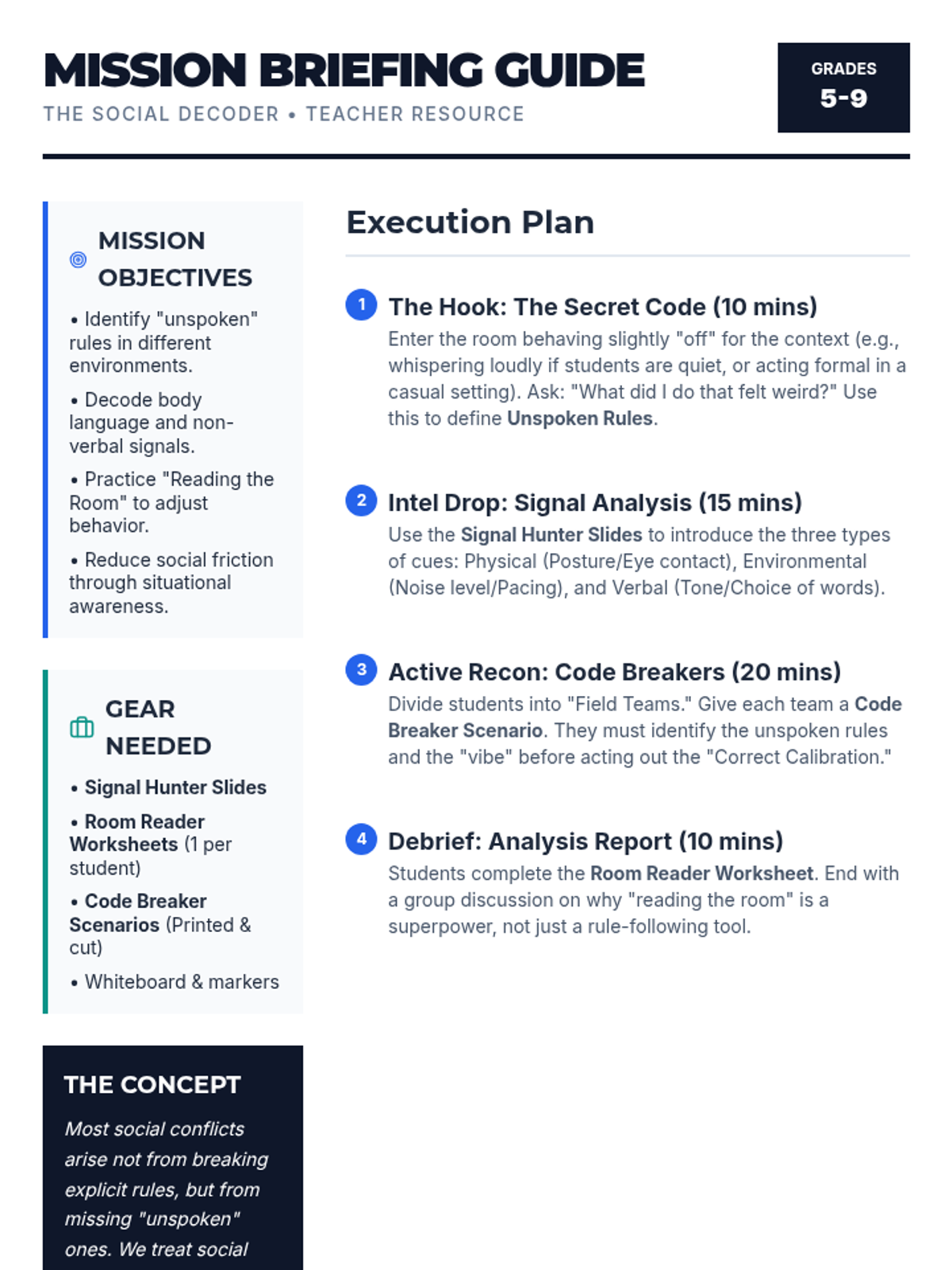
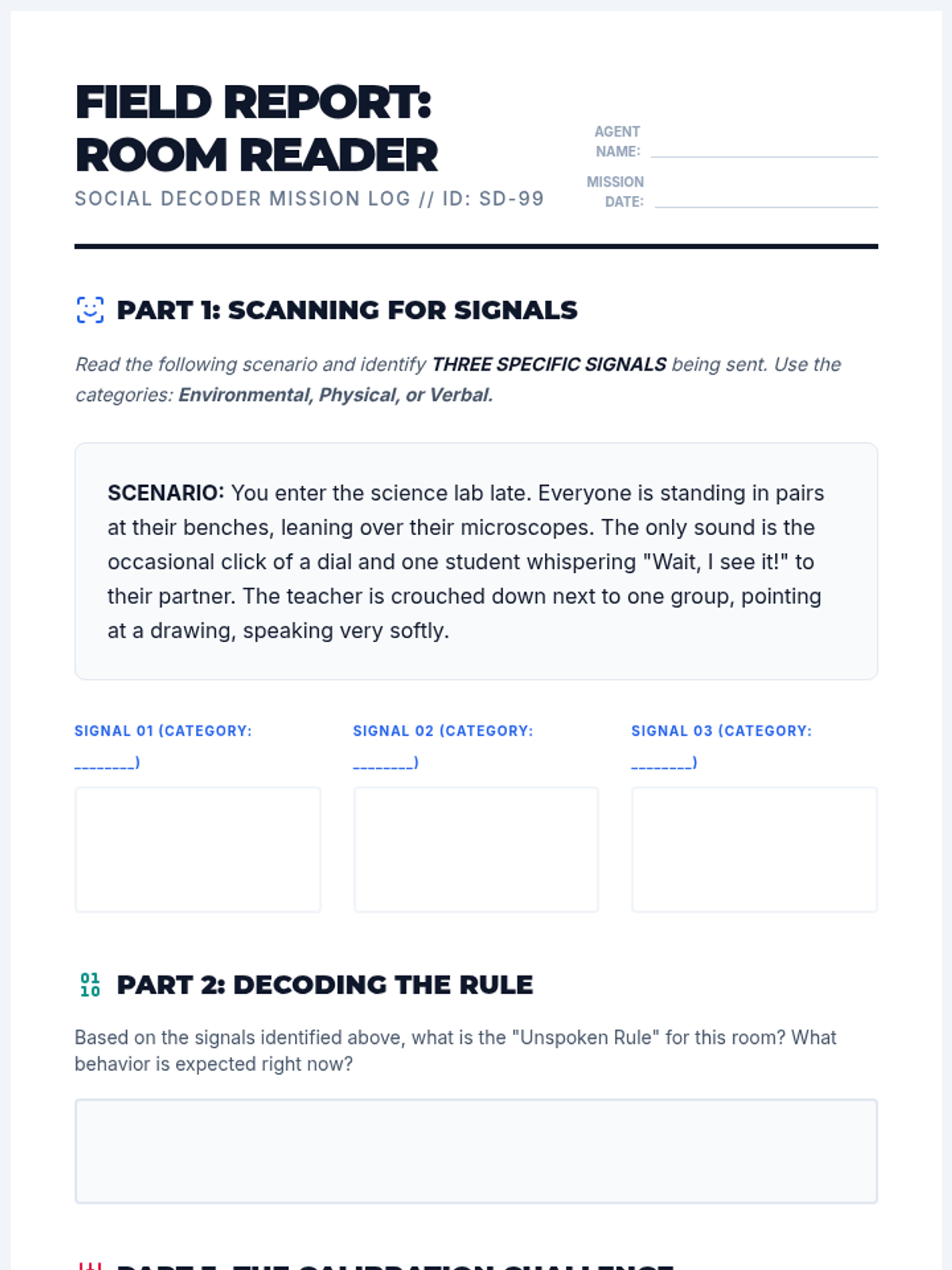
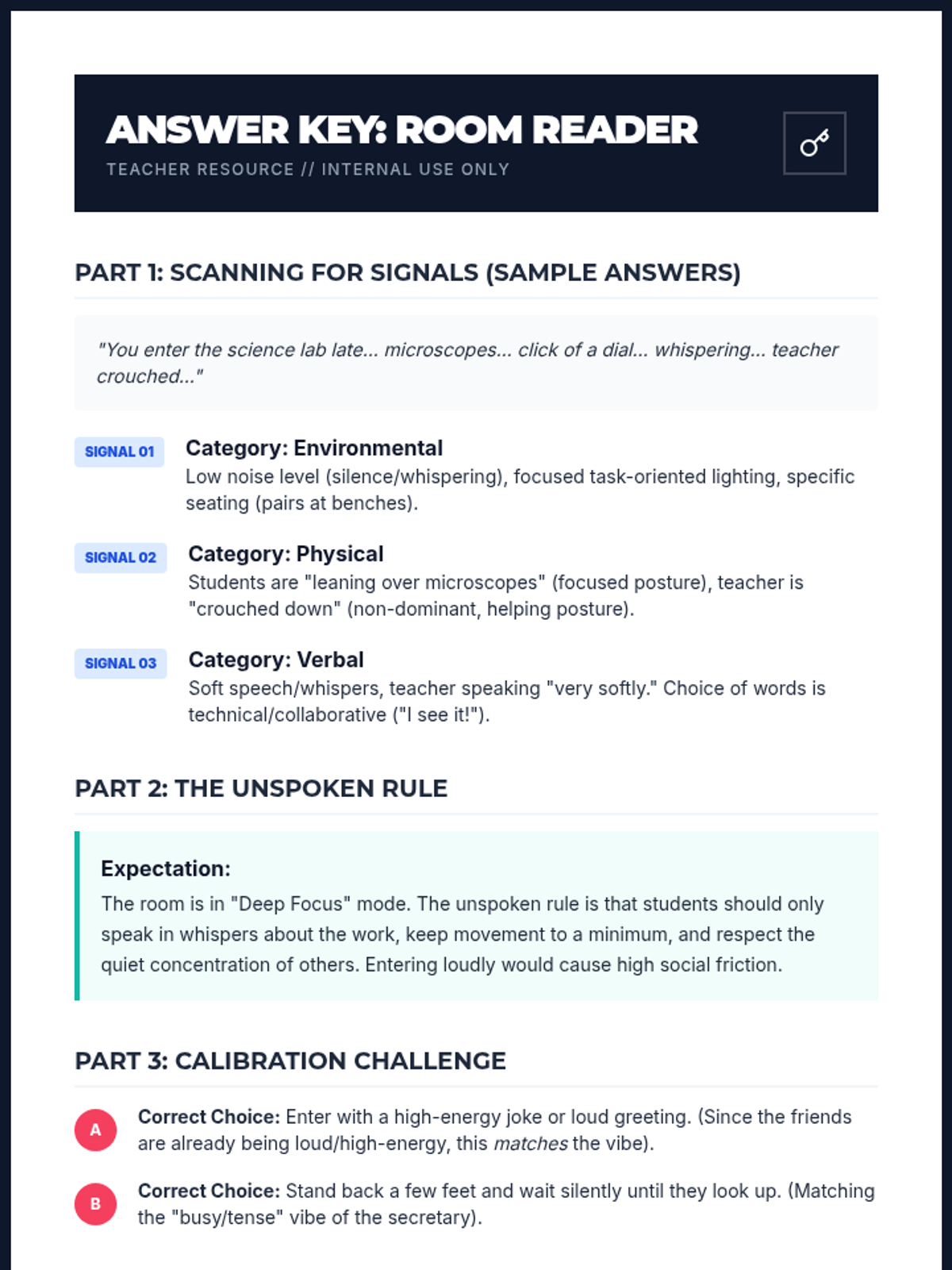
A curriculum designed to help middle and early high school students master the art of situational awareness. By explicitly teaching how to 'read the room' and interpret subtle social cues, this sequence reduces social friction and helps students navigate complex classroom and peer environments with confidence.
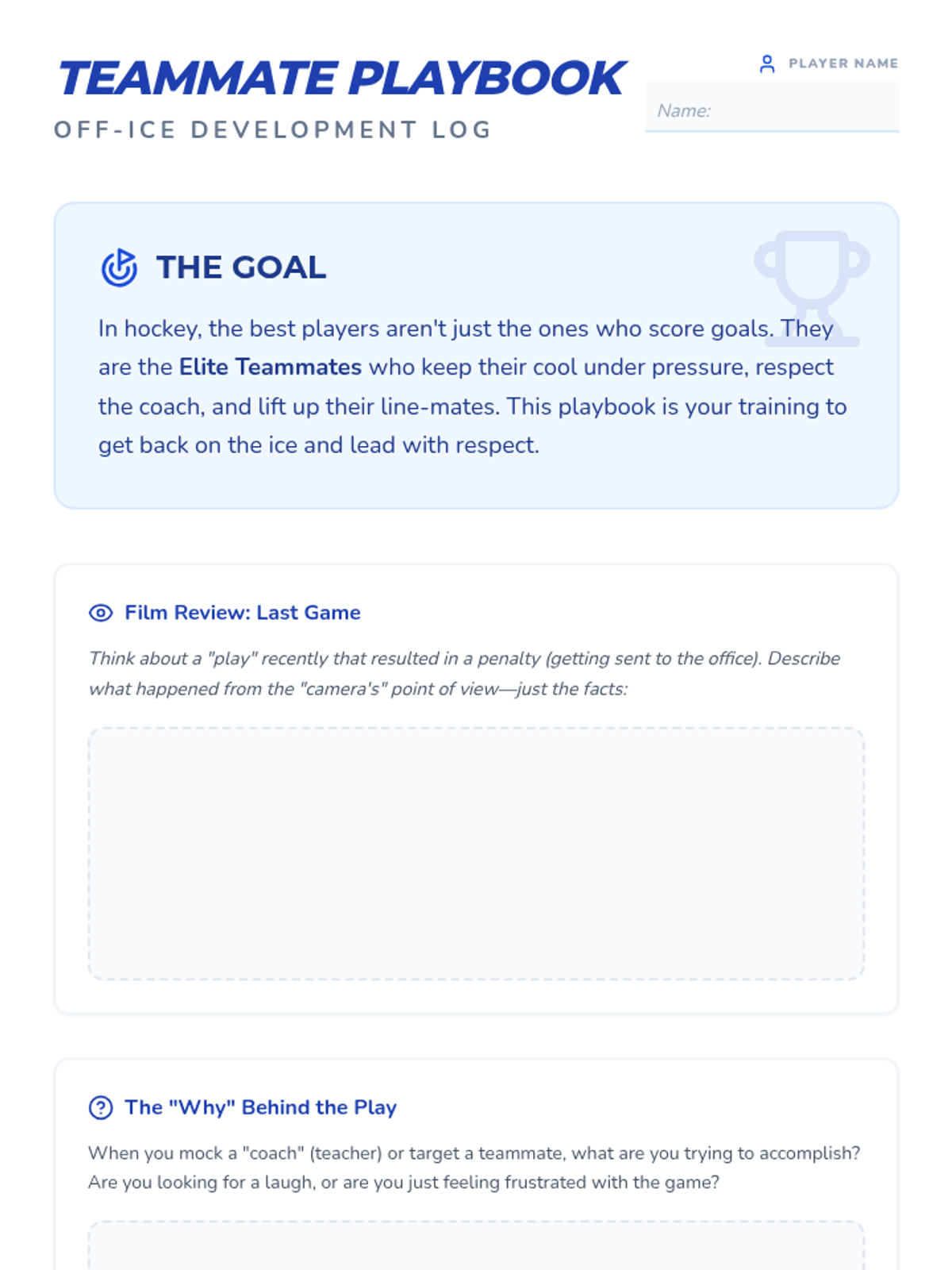
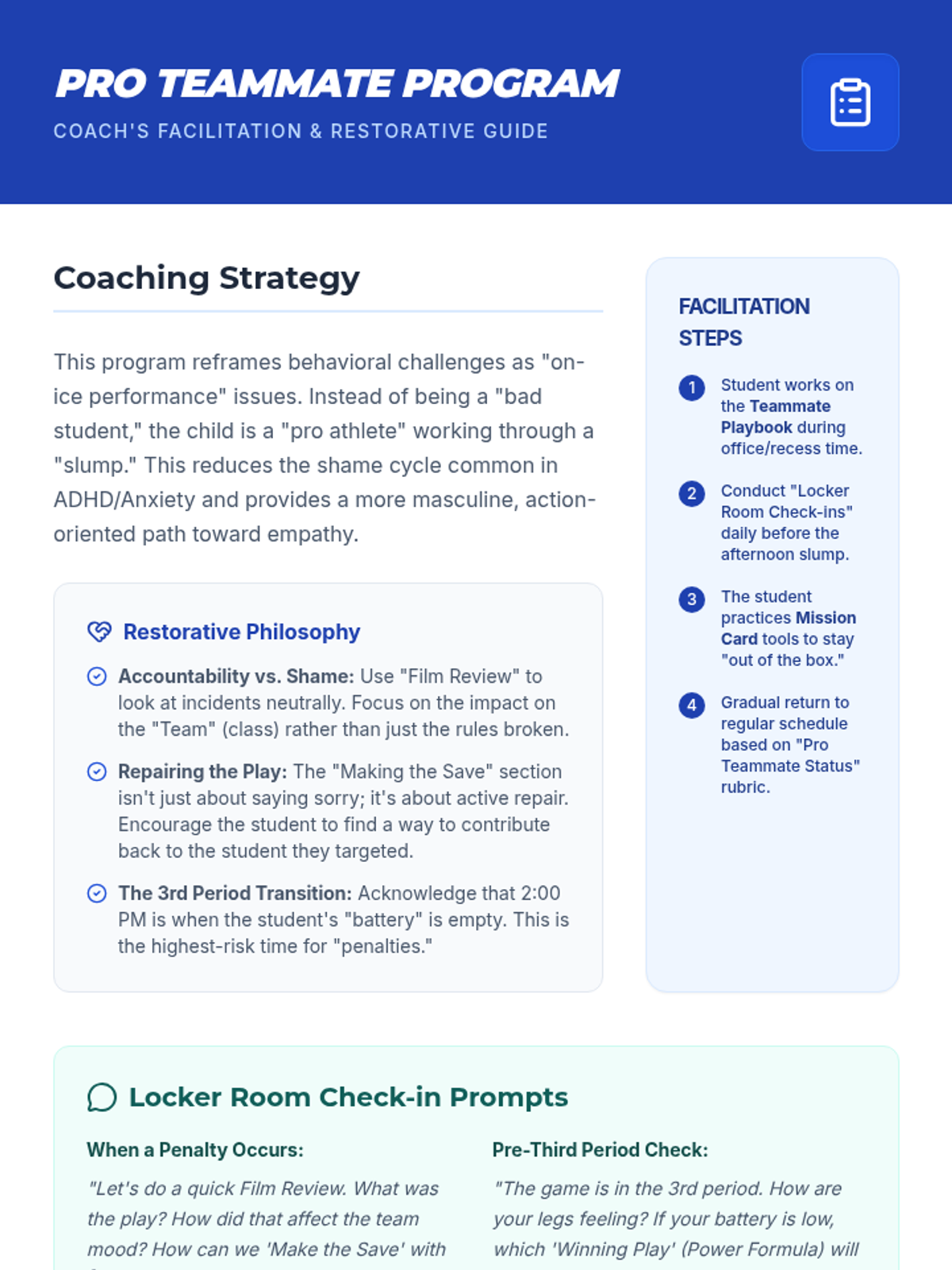
A sports-themed personal growth program focused on improving student behavior, empathy, and communication through the lens of being a 'Pro Teammate.'
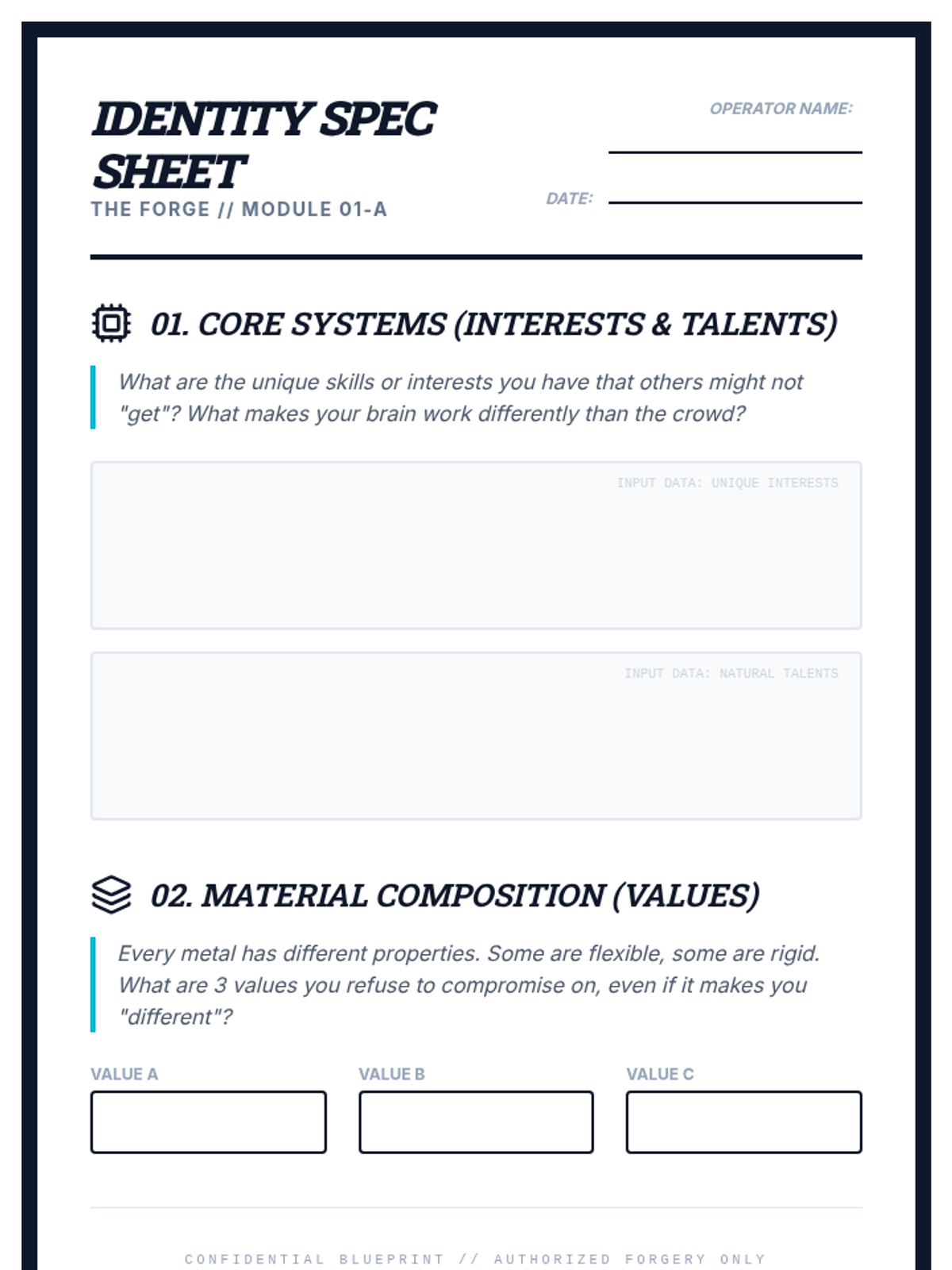
A multi-session workshop series designed for male students to explore identity, emotional intelligence, and social acceptance through the metaphor of industrial design and forging. Students move from understanding their unique 'specifications' to navigating social pressures and finally collaborating on a community-building project.
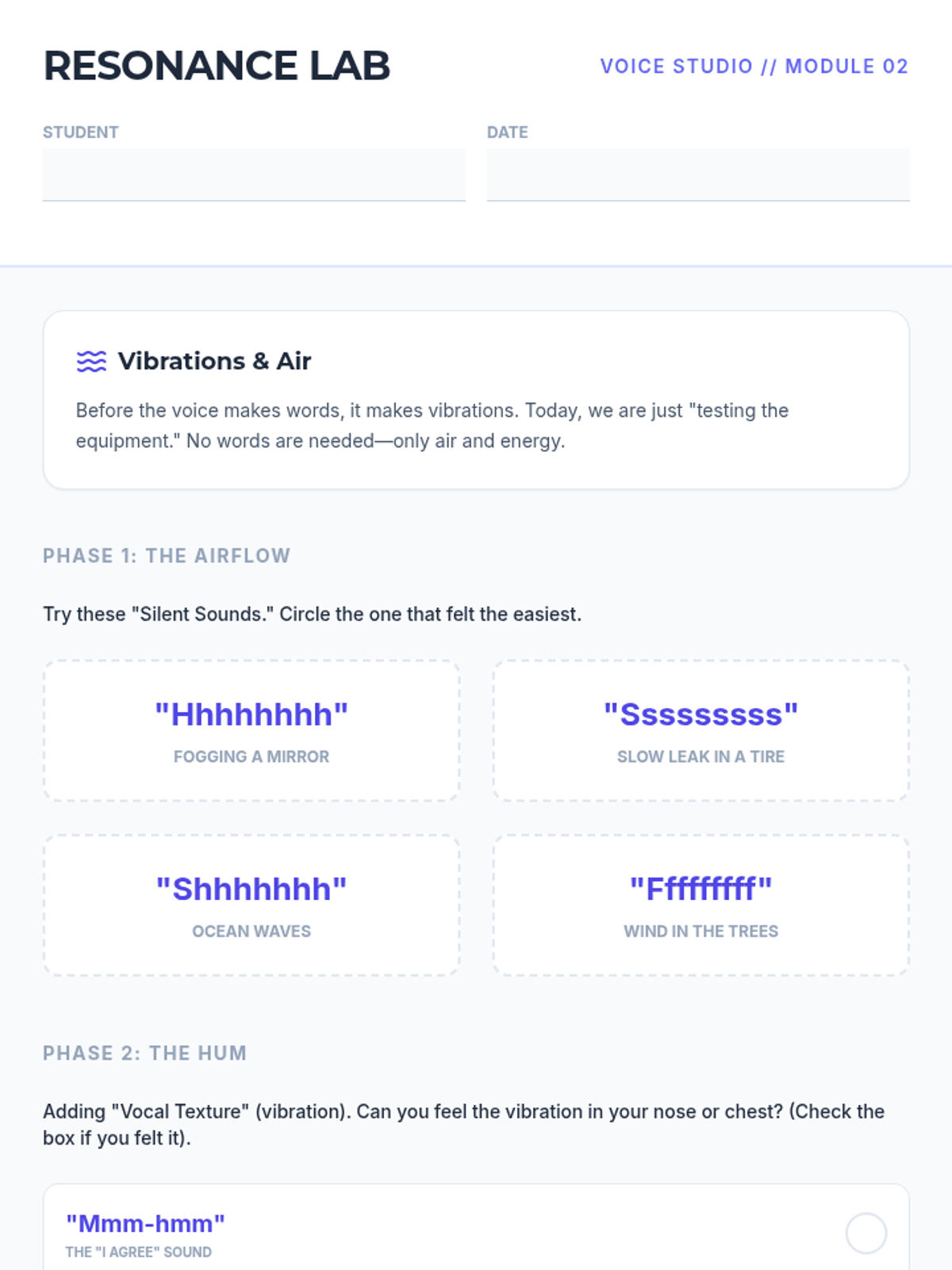
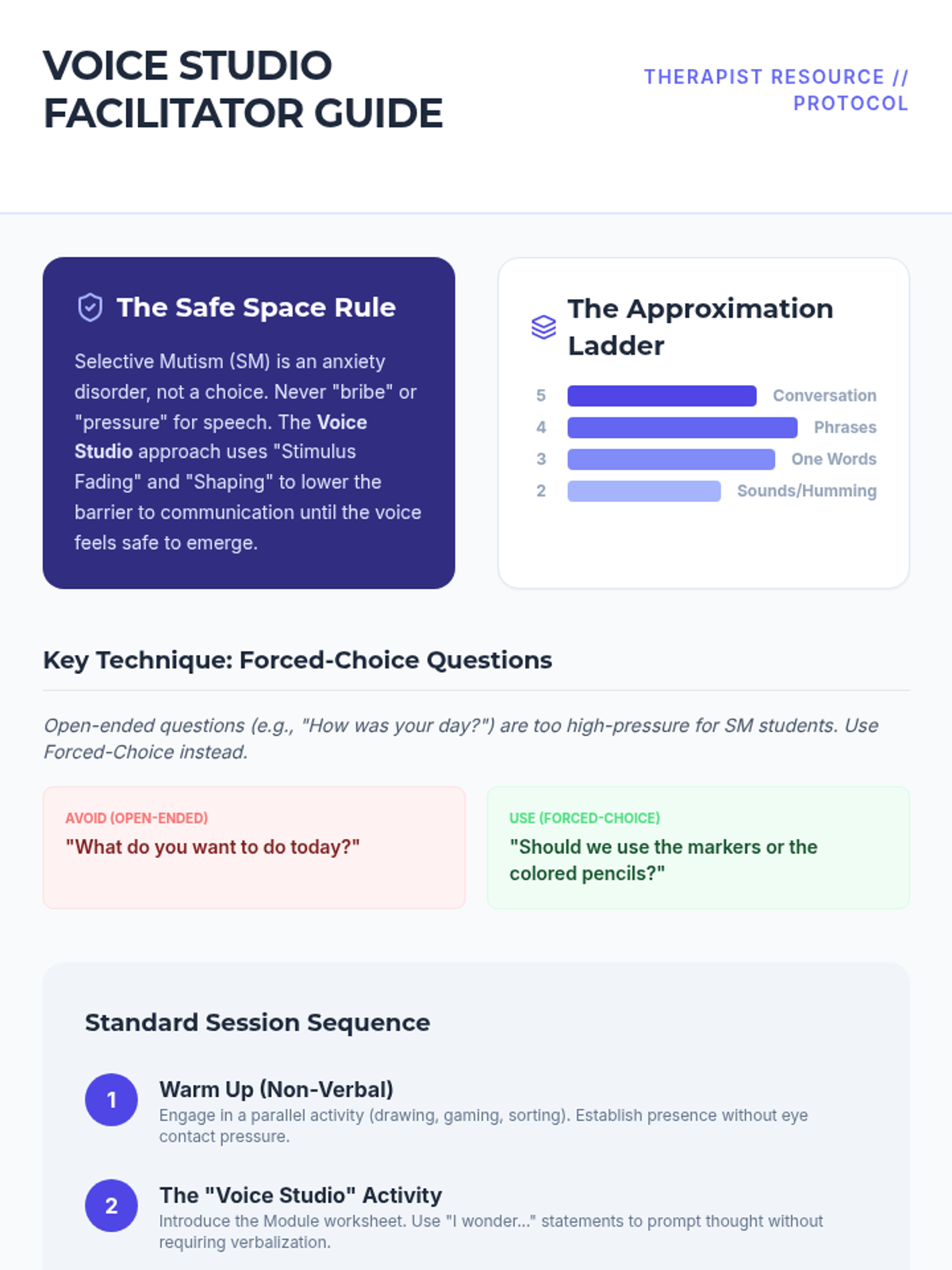
A gentle, evidence-based communication program for teens with Selective Mutism. It uses behavioral shaping and approximations to move from non-verbal rapport to functional vocalization in a low-pressure 1:1 environment.
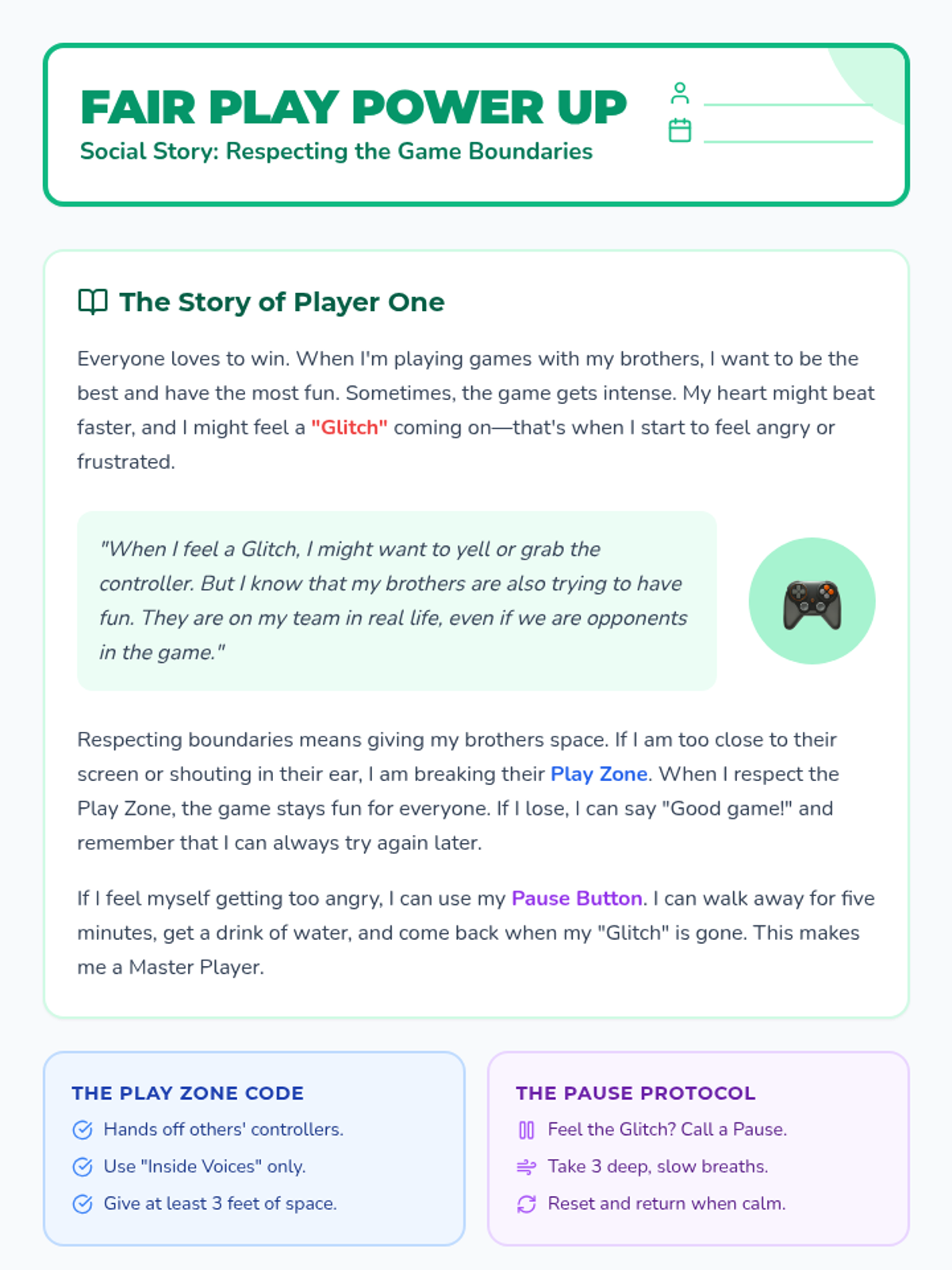
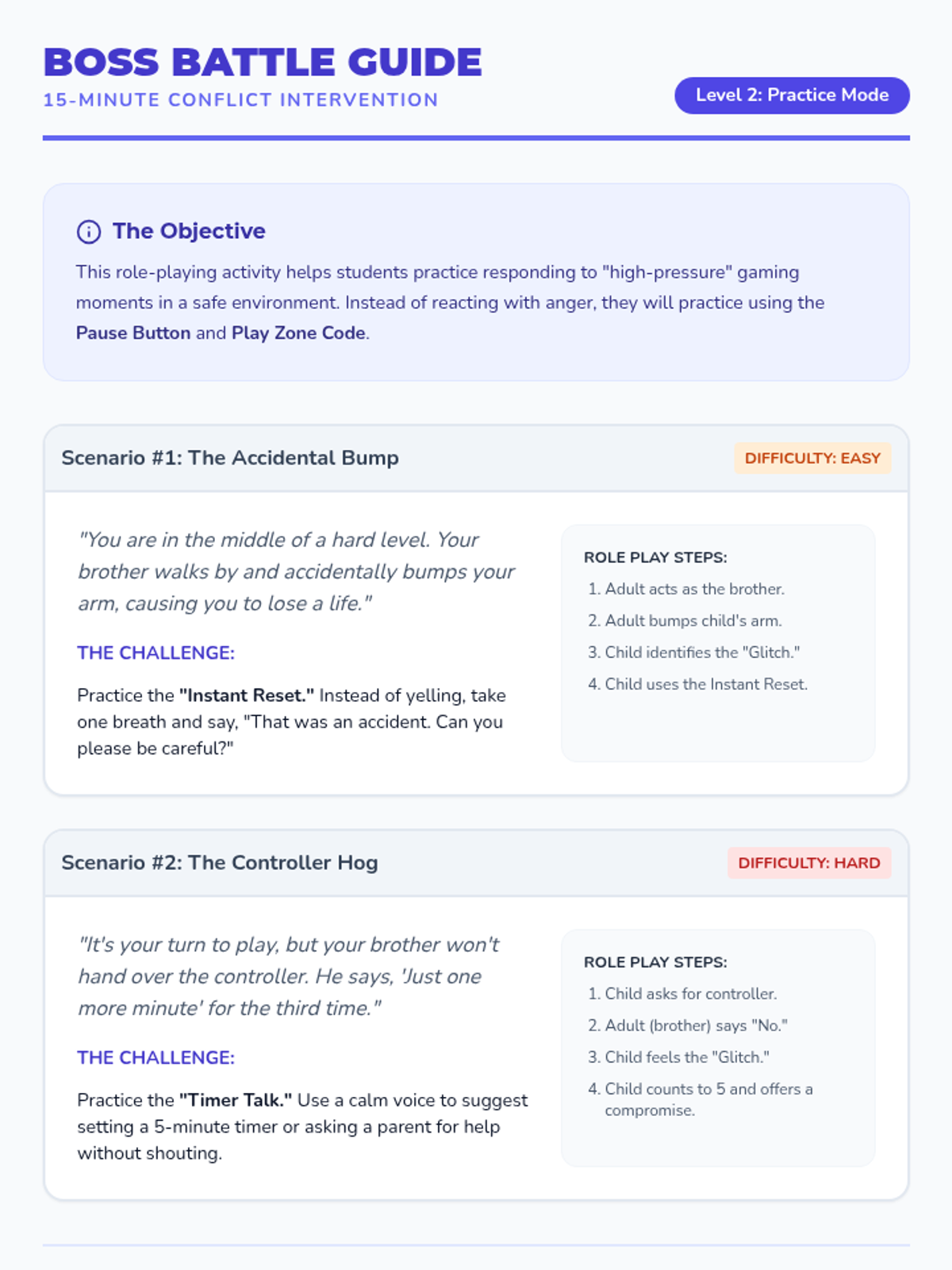
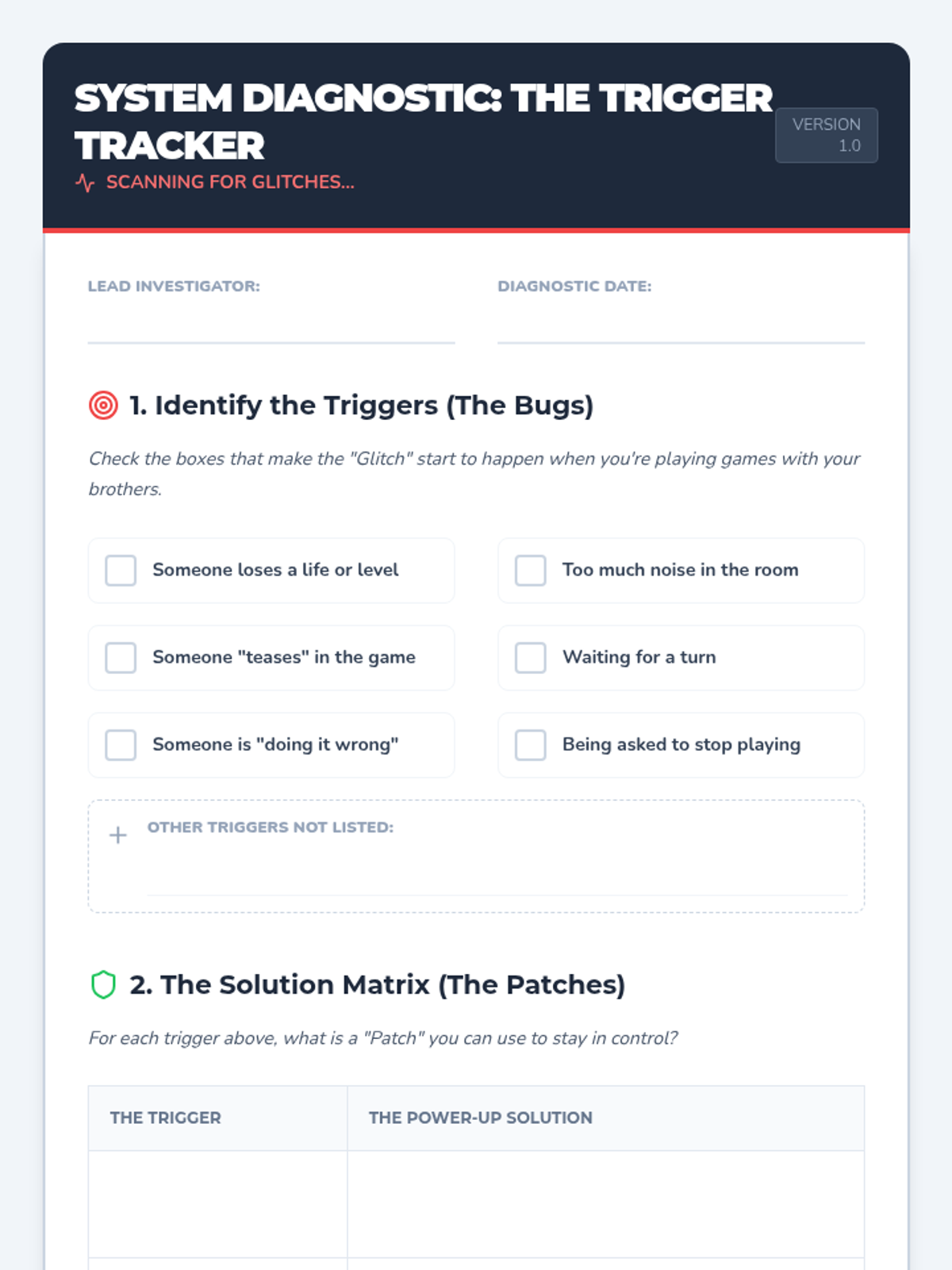
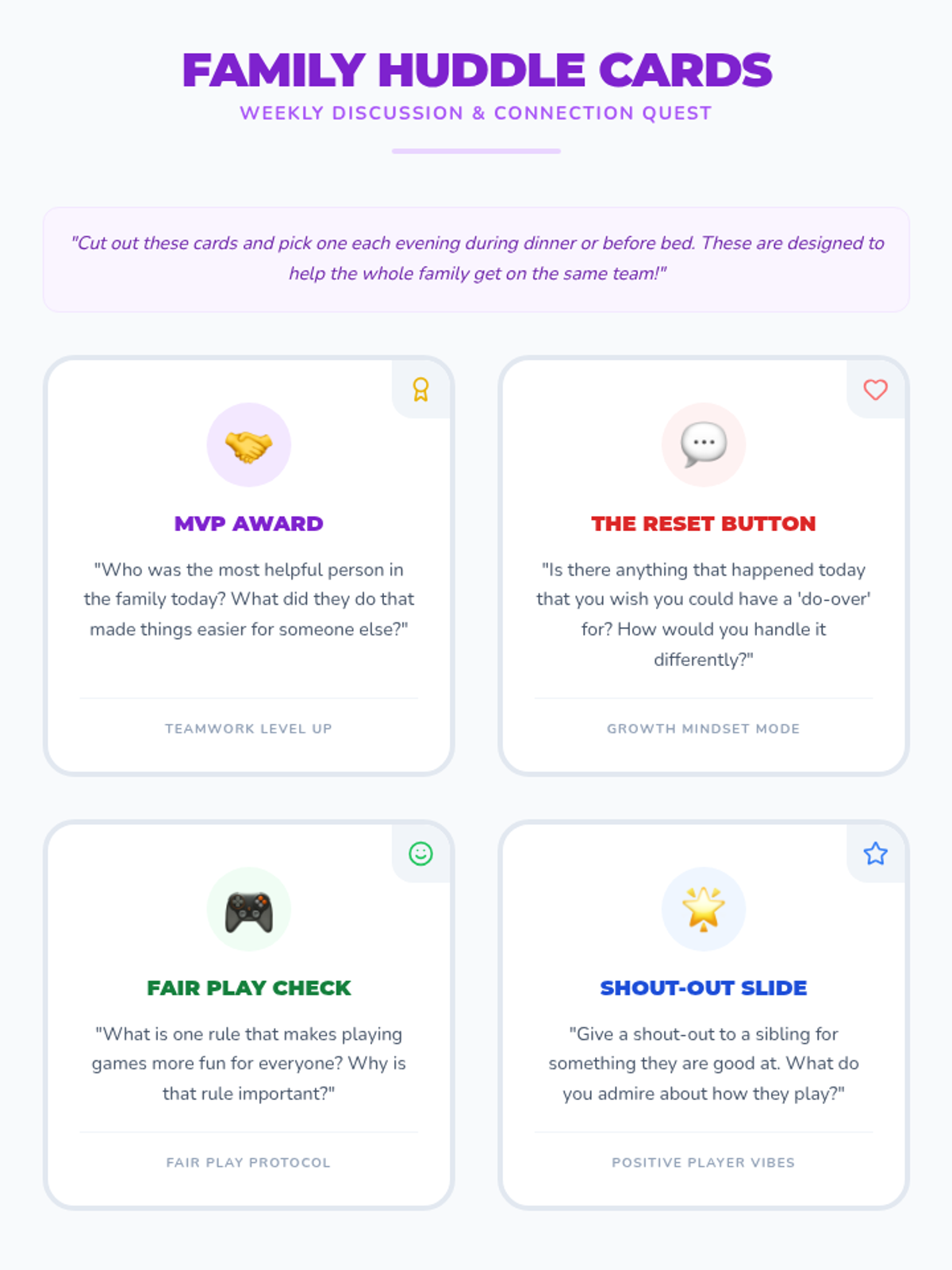
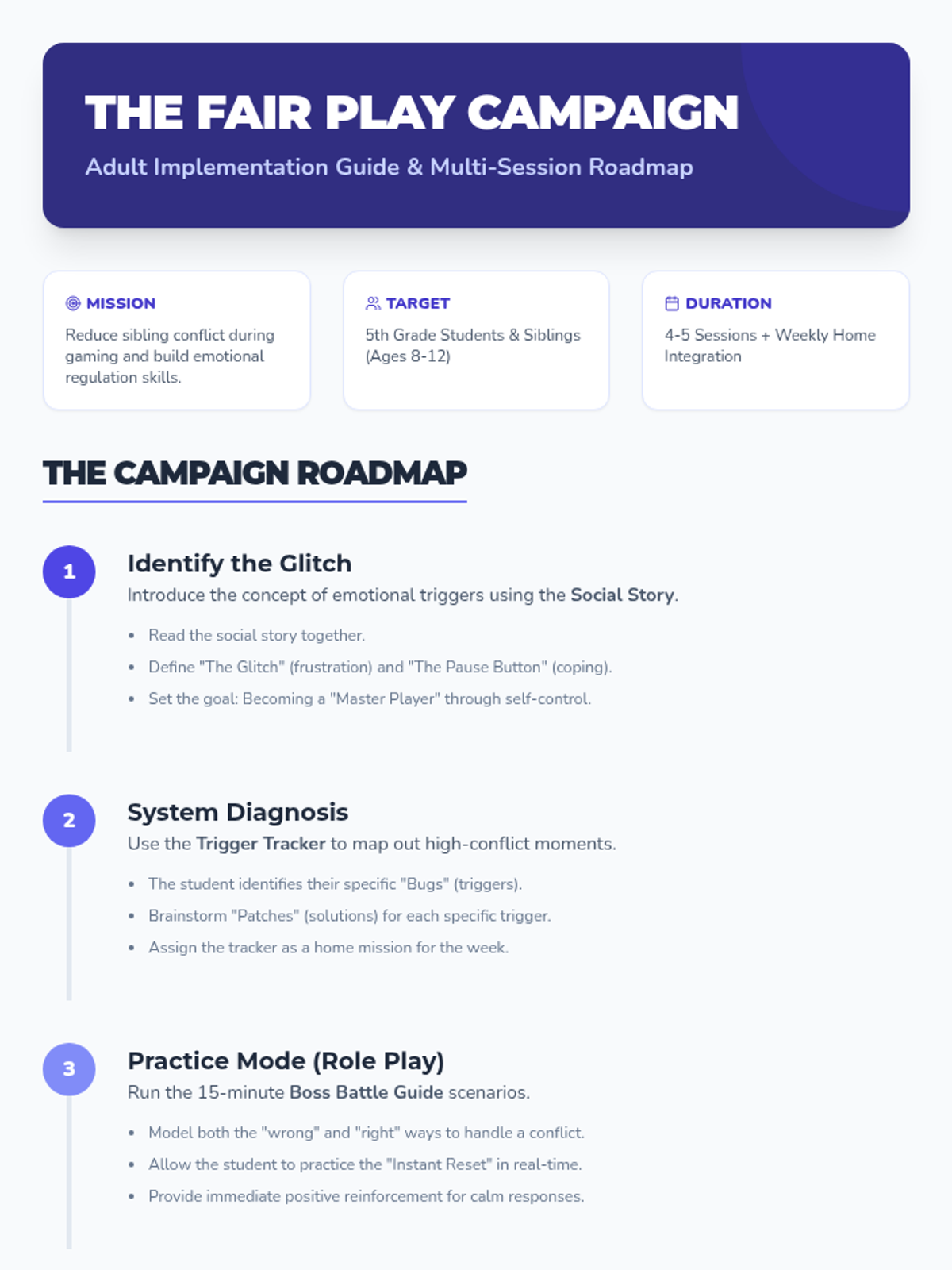
A series of resources designed to help siblings resolve conflicts during gaming, focus on emotional regulation, and build respectful play habits. This sequence moves from identifying triggers to practicing real-time solutions and fostering family-wide communication.
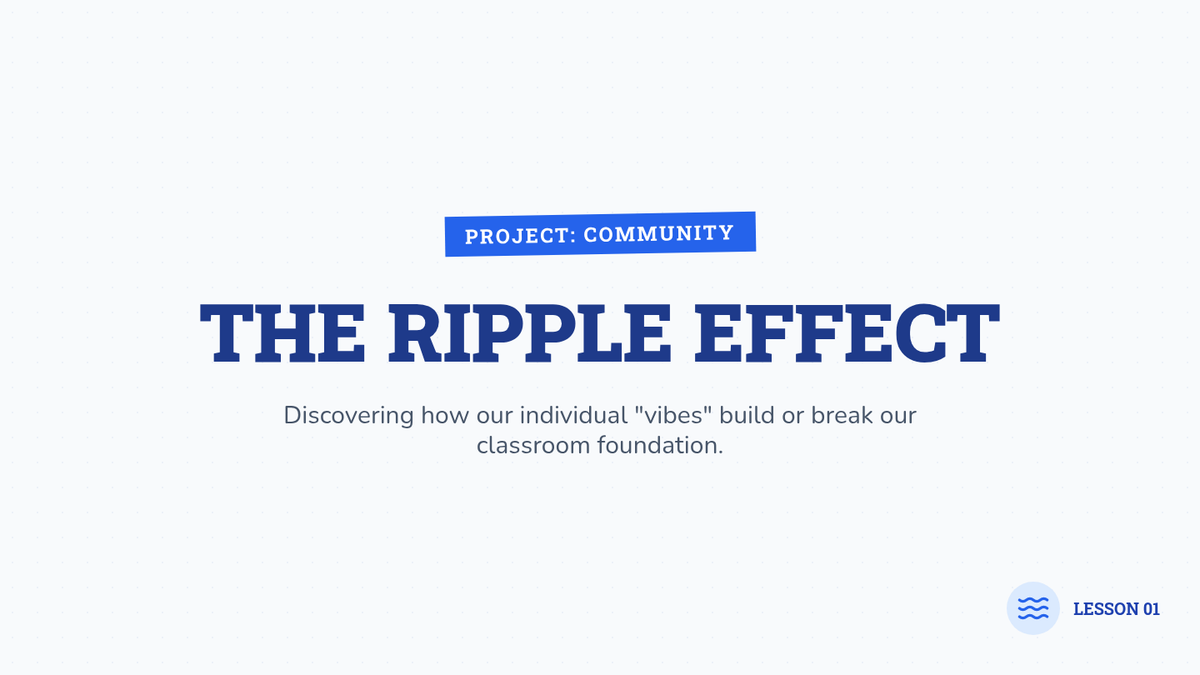
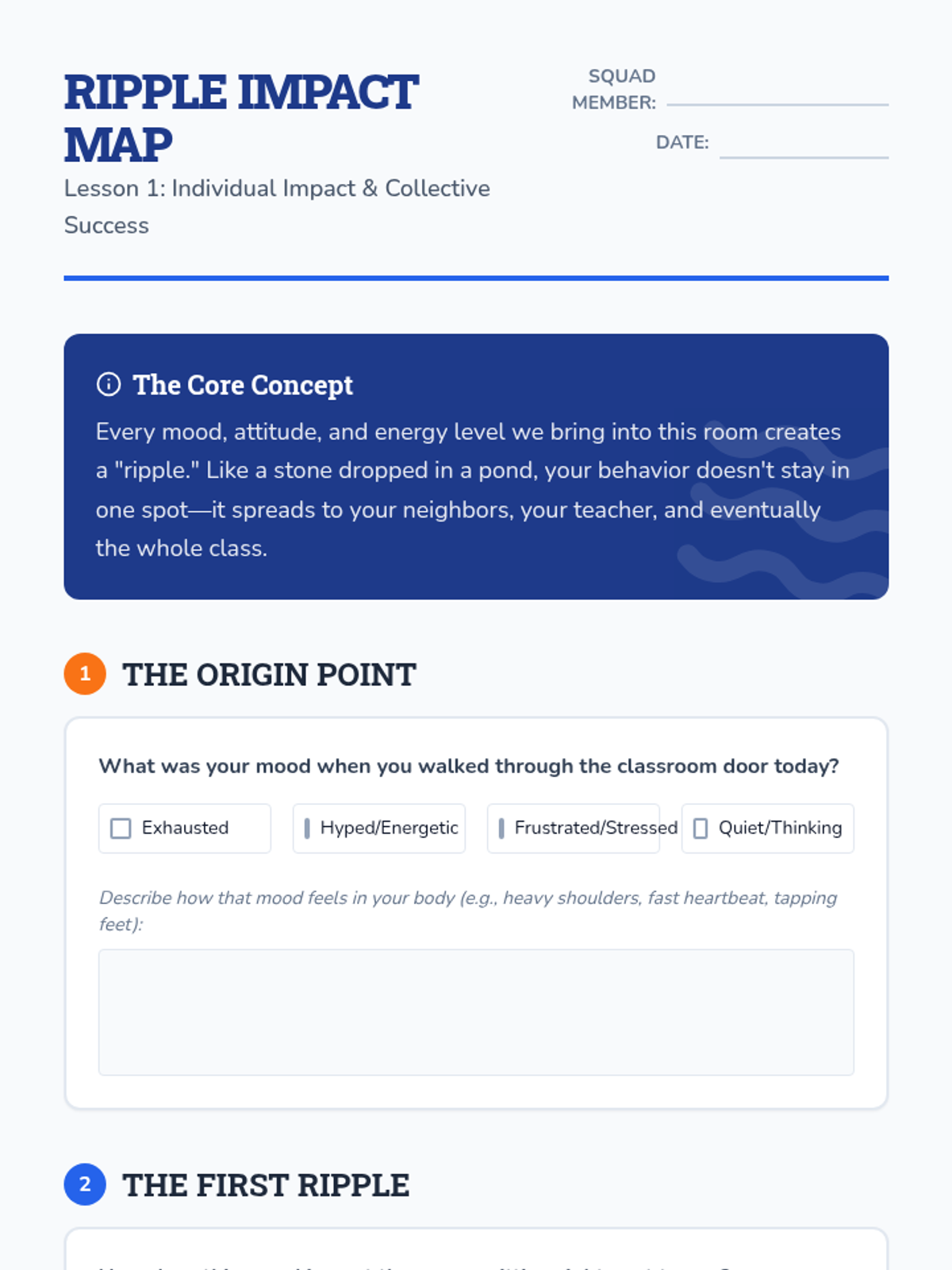
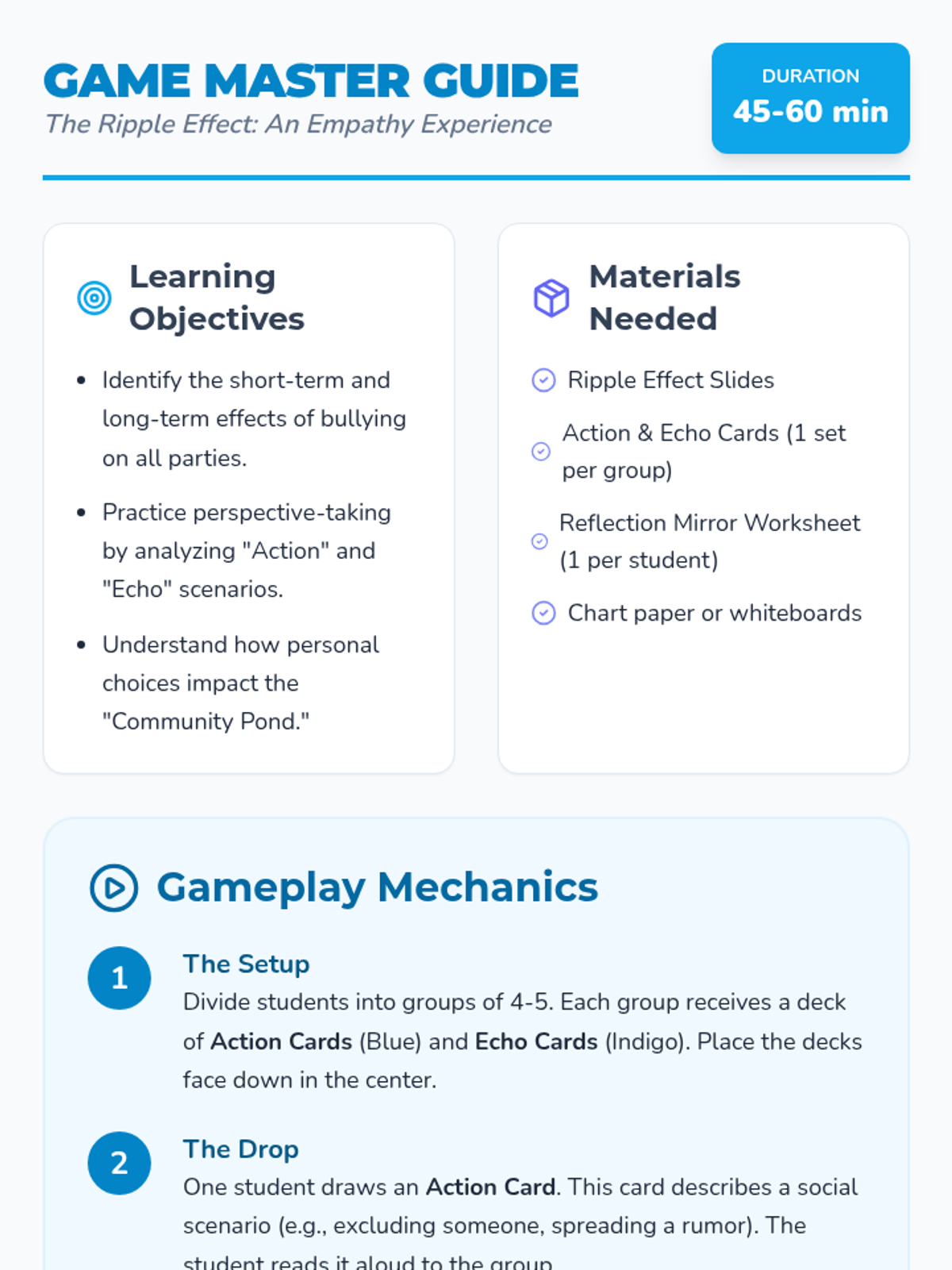
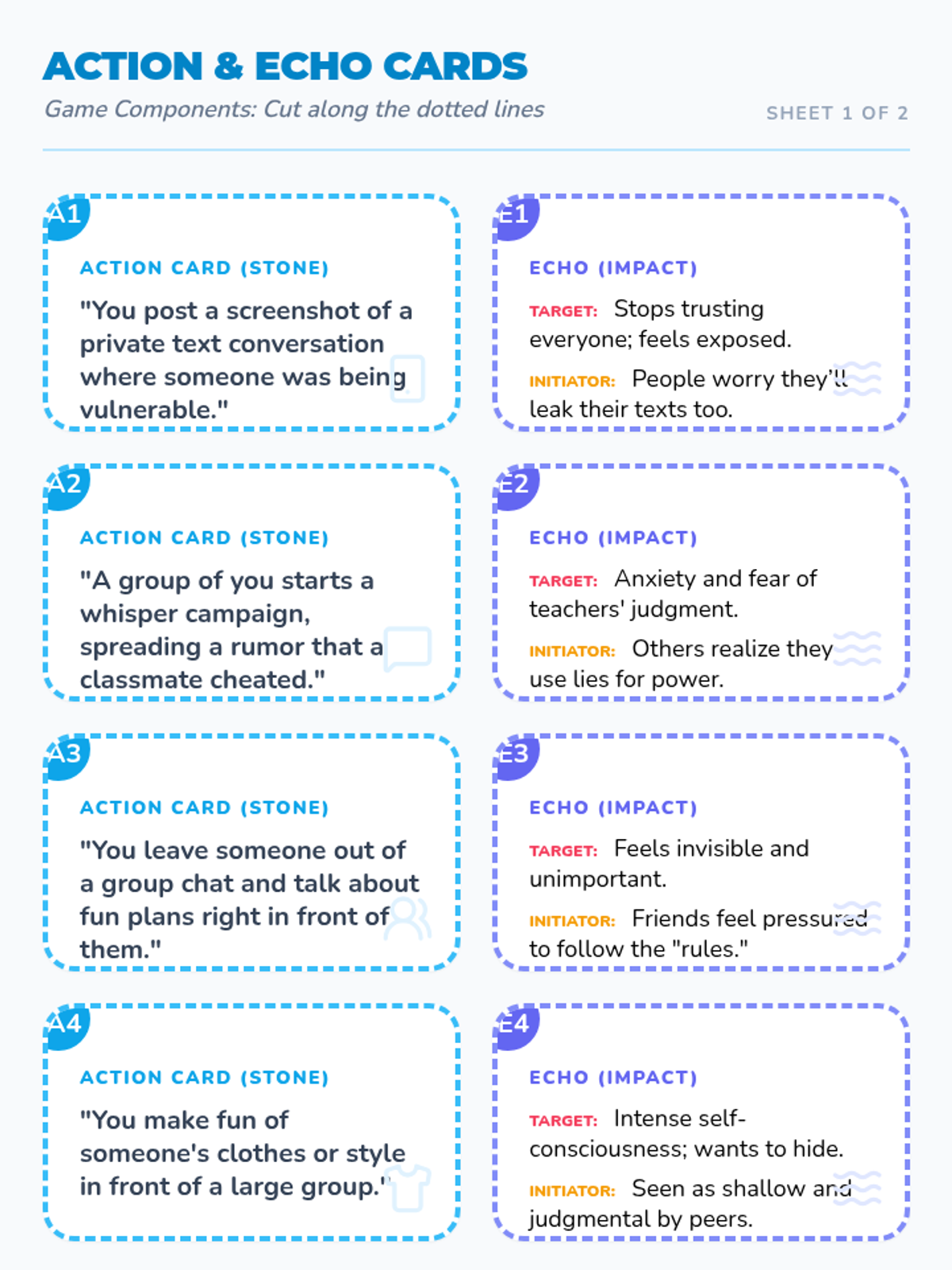
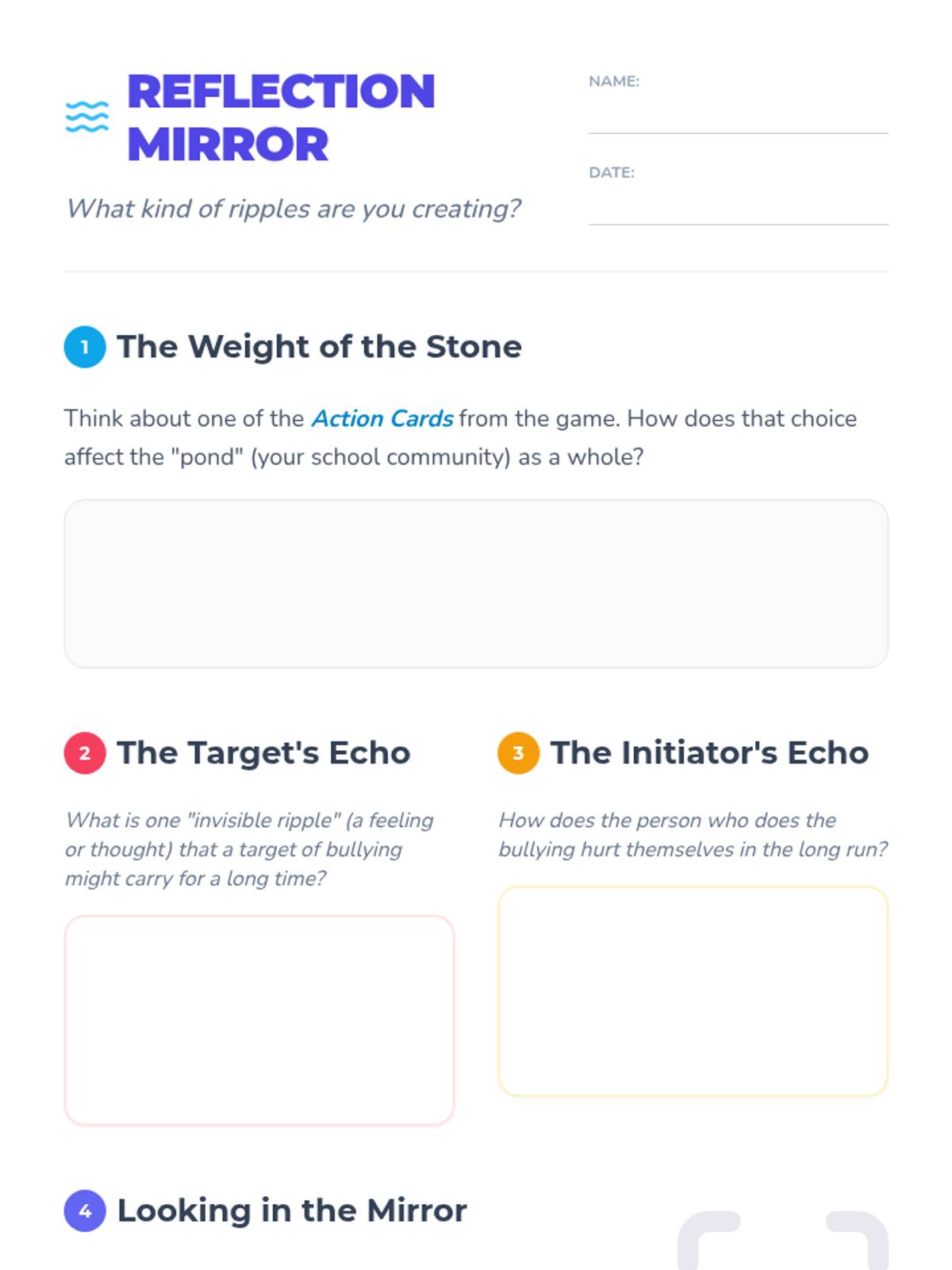
A transformative journey into empathy and self-awareness, exploring how our actions create ripples that affect ourselves and our community. students engage in interactive gameplay and deep reflection to understand the impact of bullying.
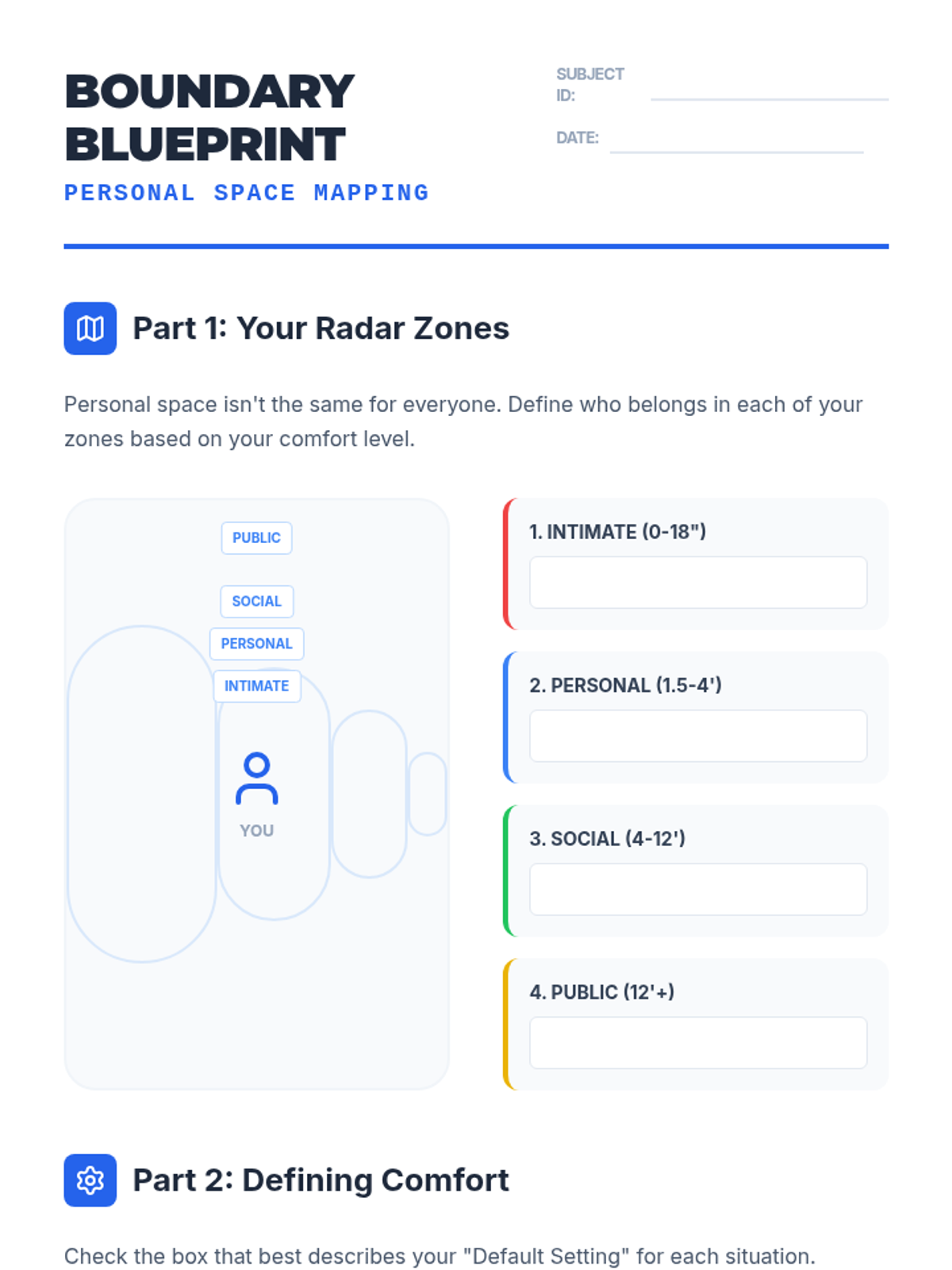
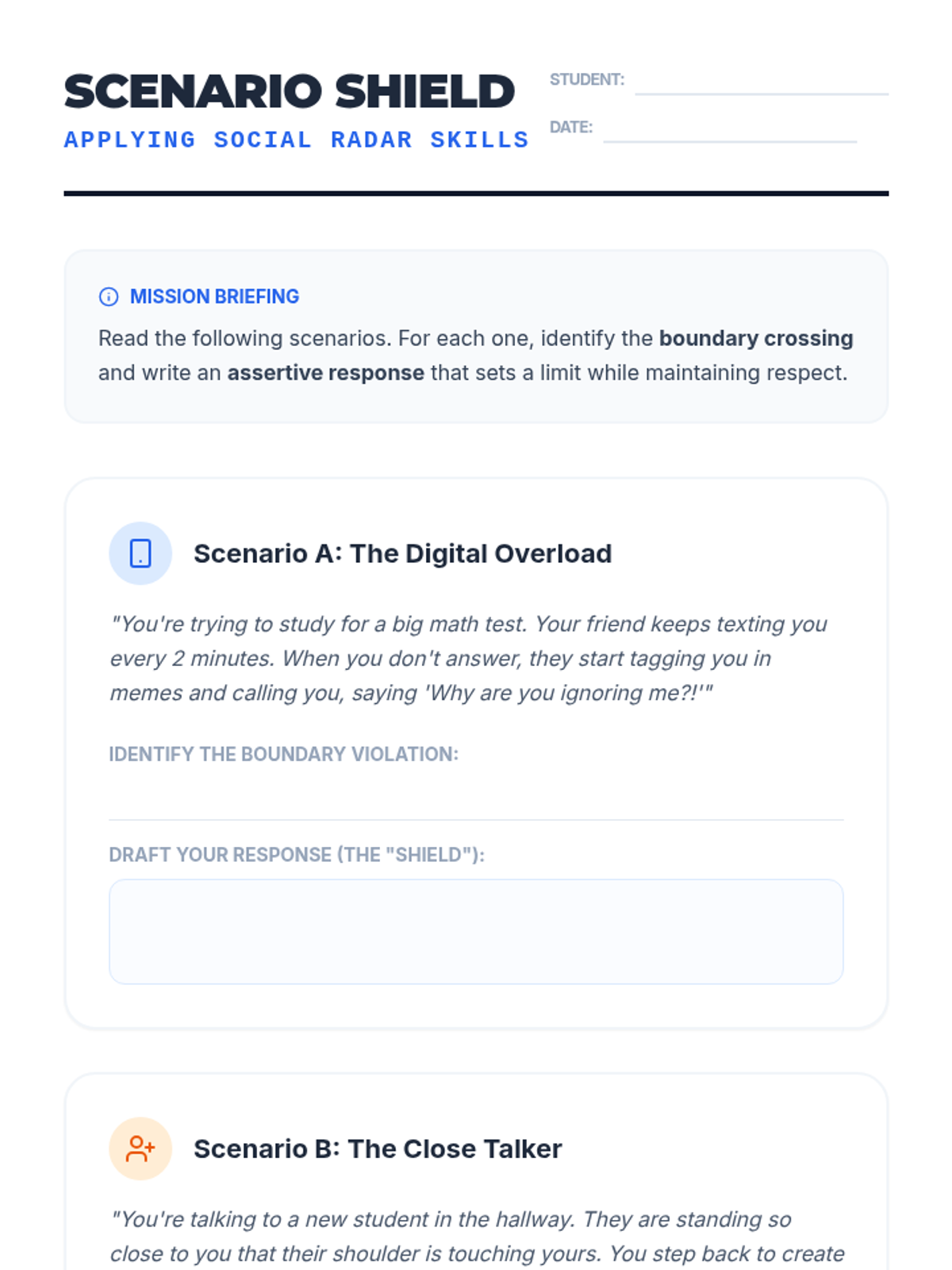
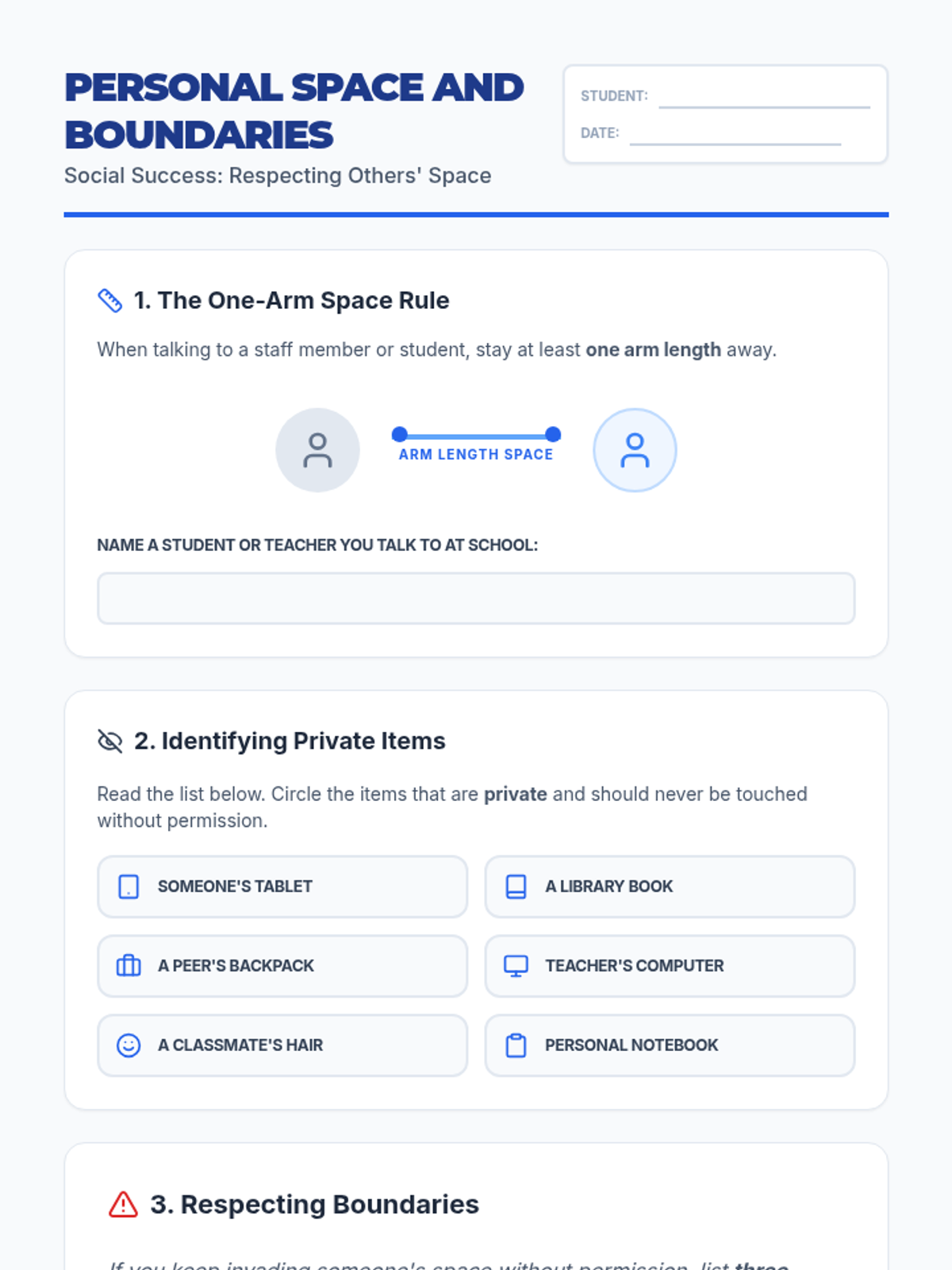
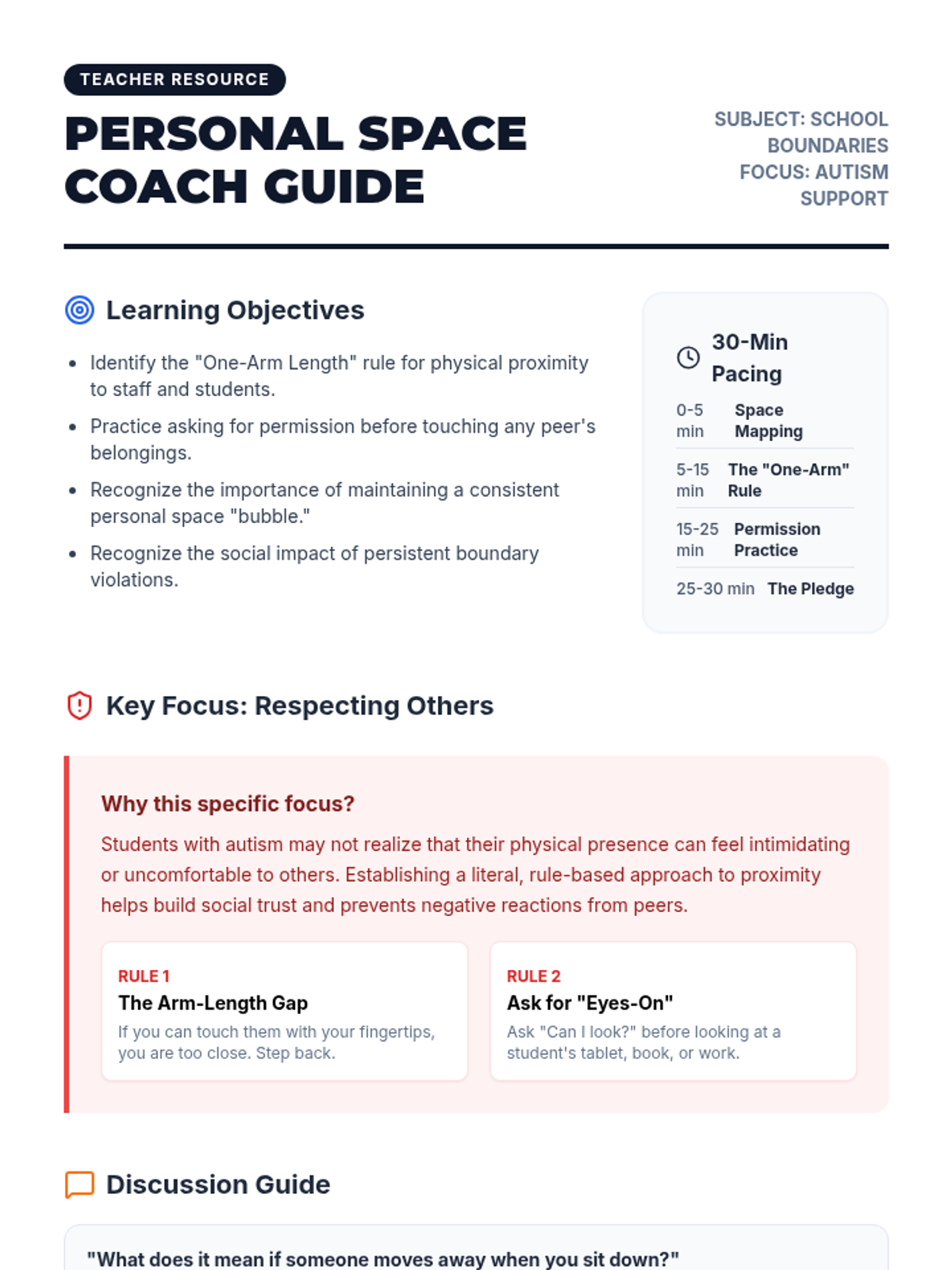
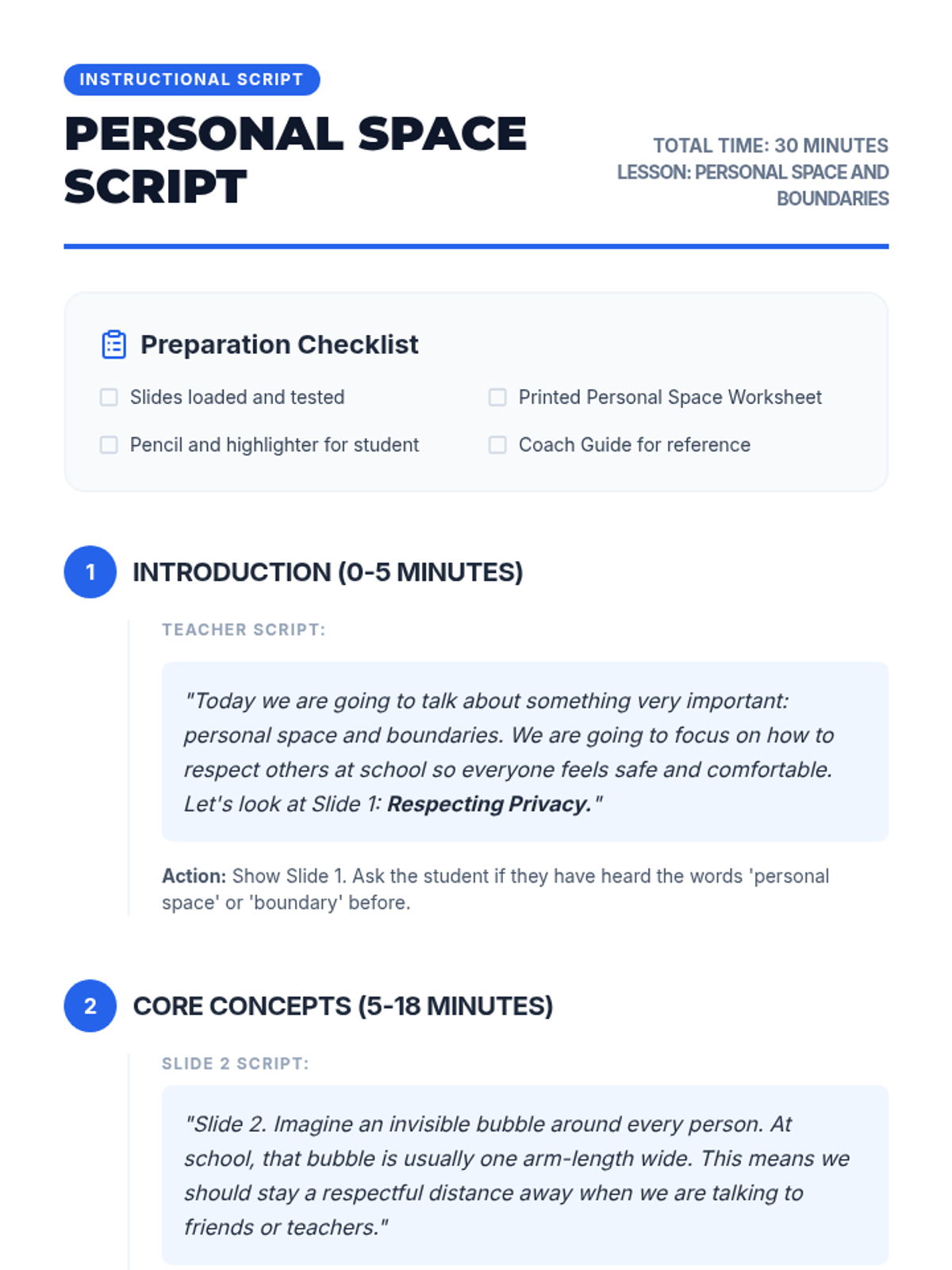
A comprehensive unit on understanding, establishing, and respecting personal space boundaries tailored for adolescents. This sequence covers physical, emotional, and digital boundaries using a 'Social Radar' framework.
A two-part educational series designed to foster autism awareness, understanding, and acceptance among middle-grade students. It features age-appropriate slides and activities tailored for upper elementary and middle school contexts.
A social-emotional learning sequence designed for middle schoolers to navigate complex social interactions, focusing on empathy, communication filters, and the ripple effect of their words.
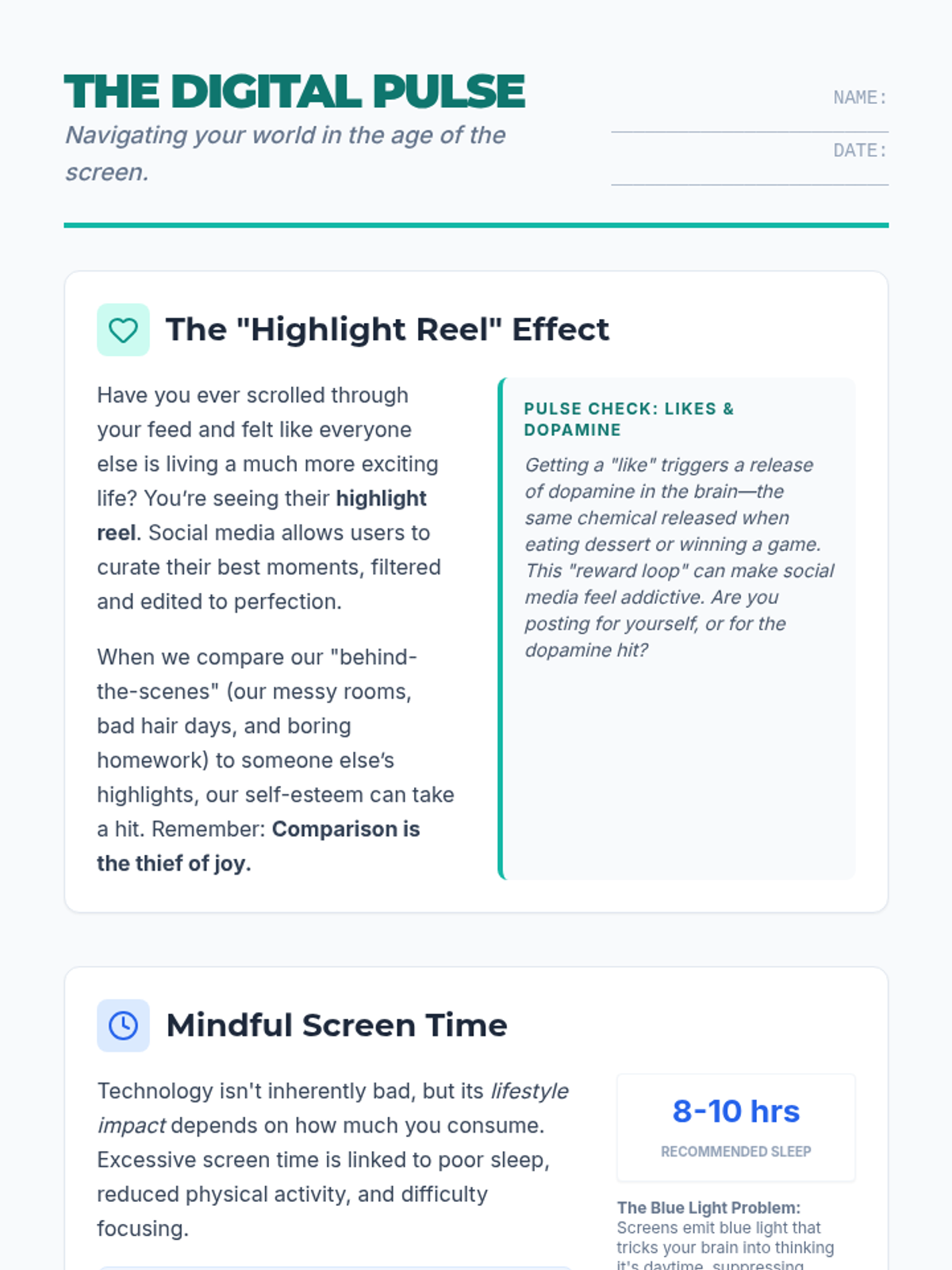
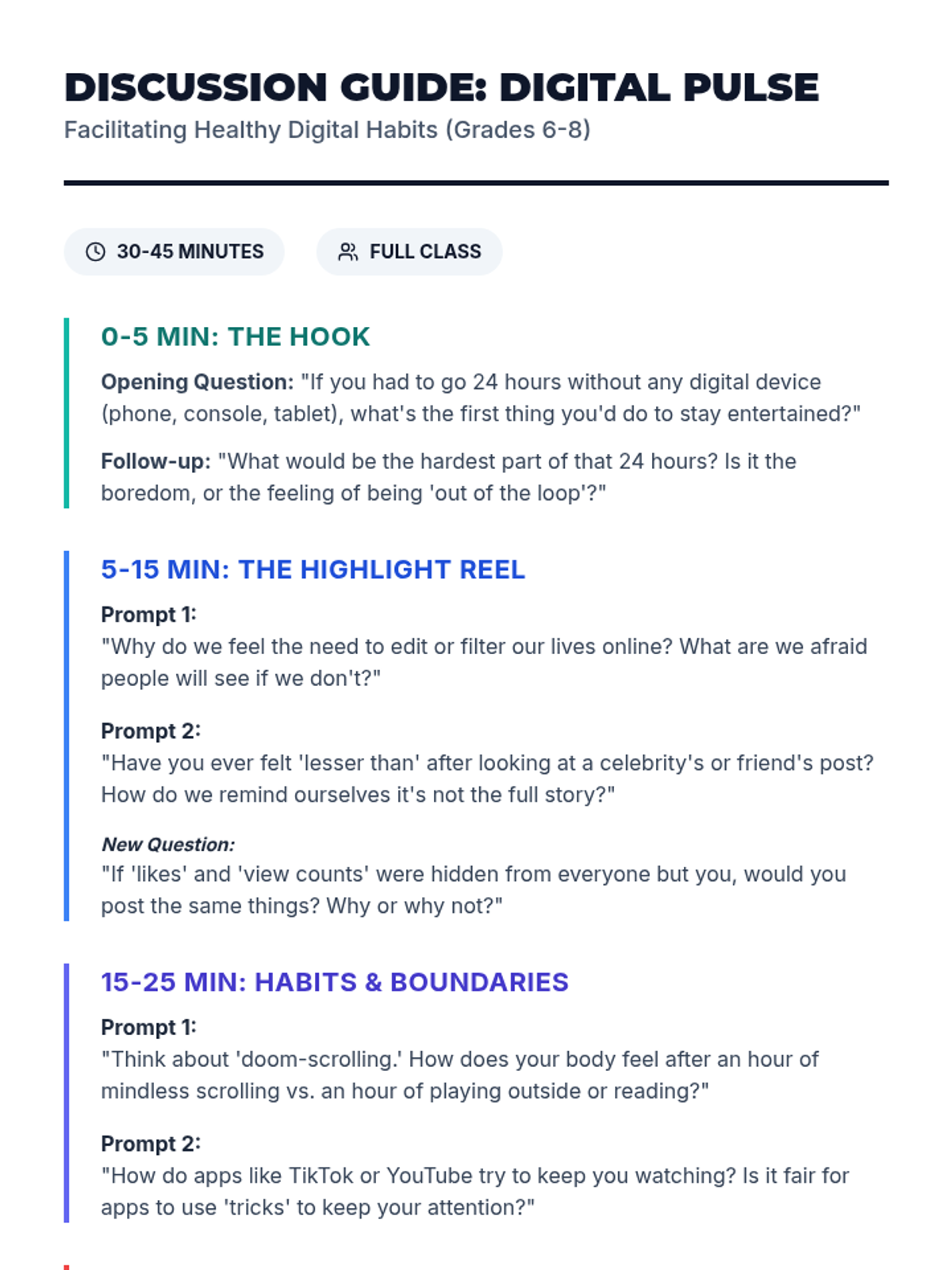
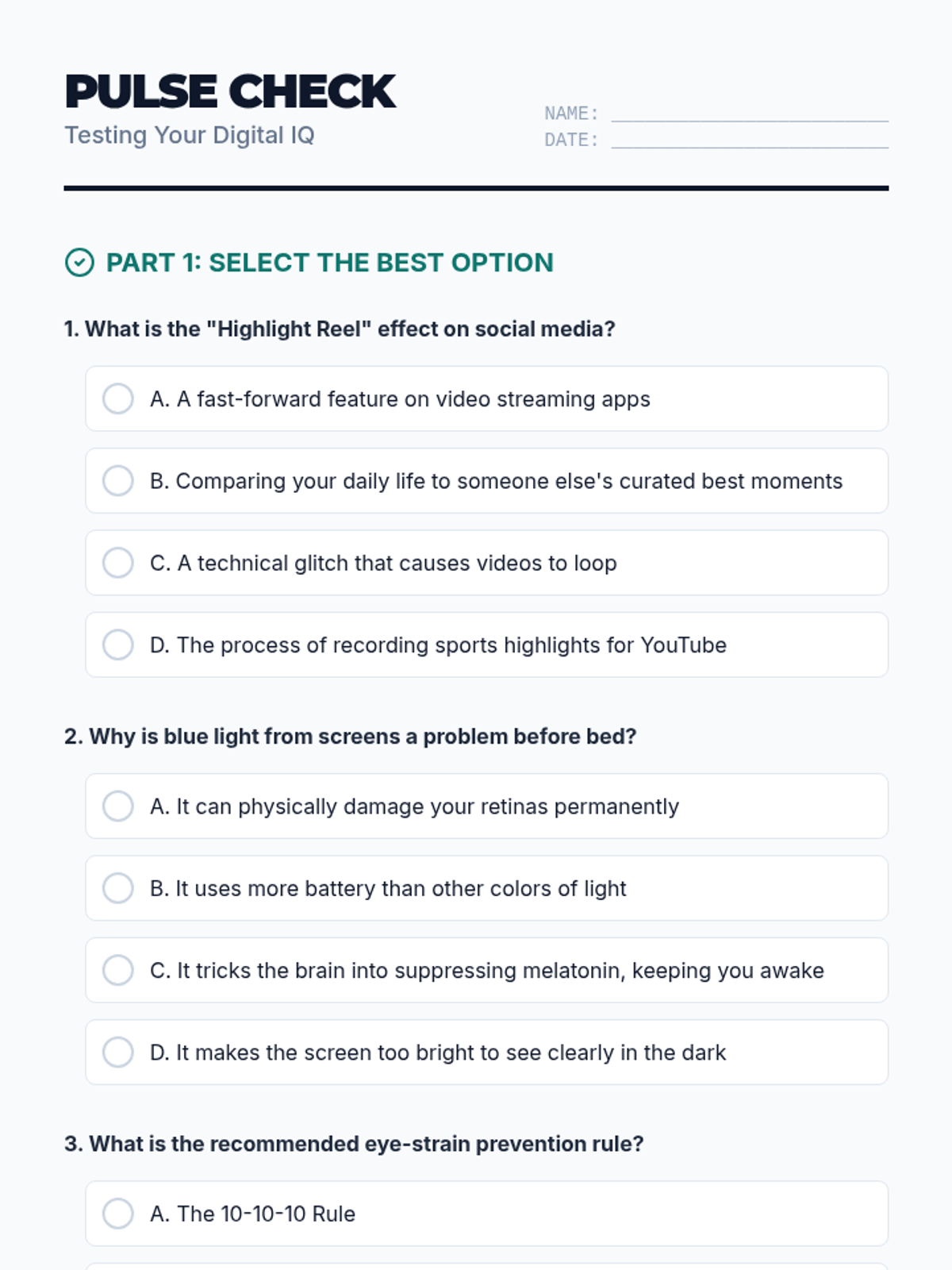
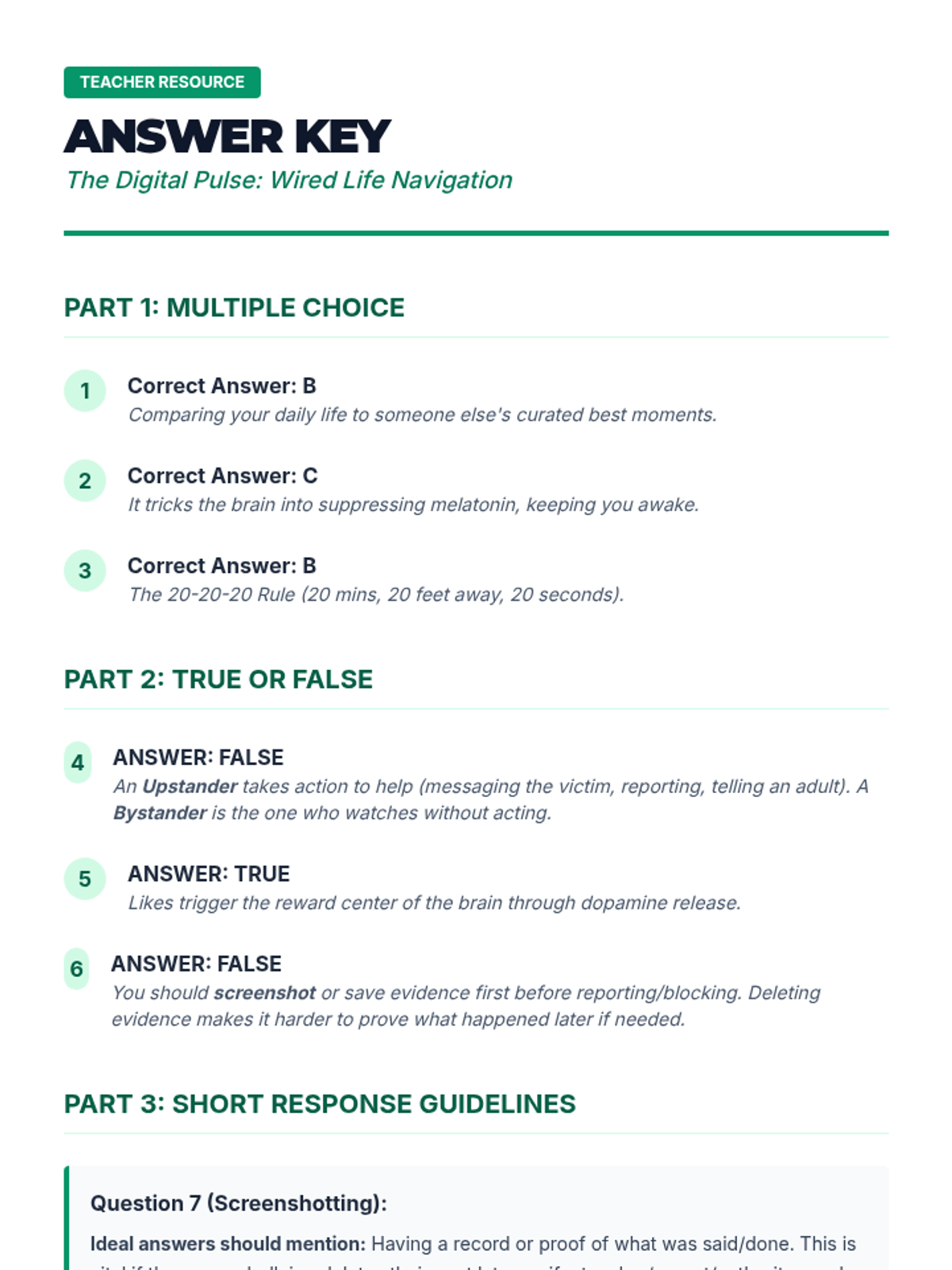
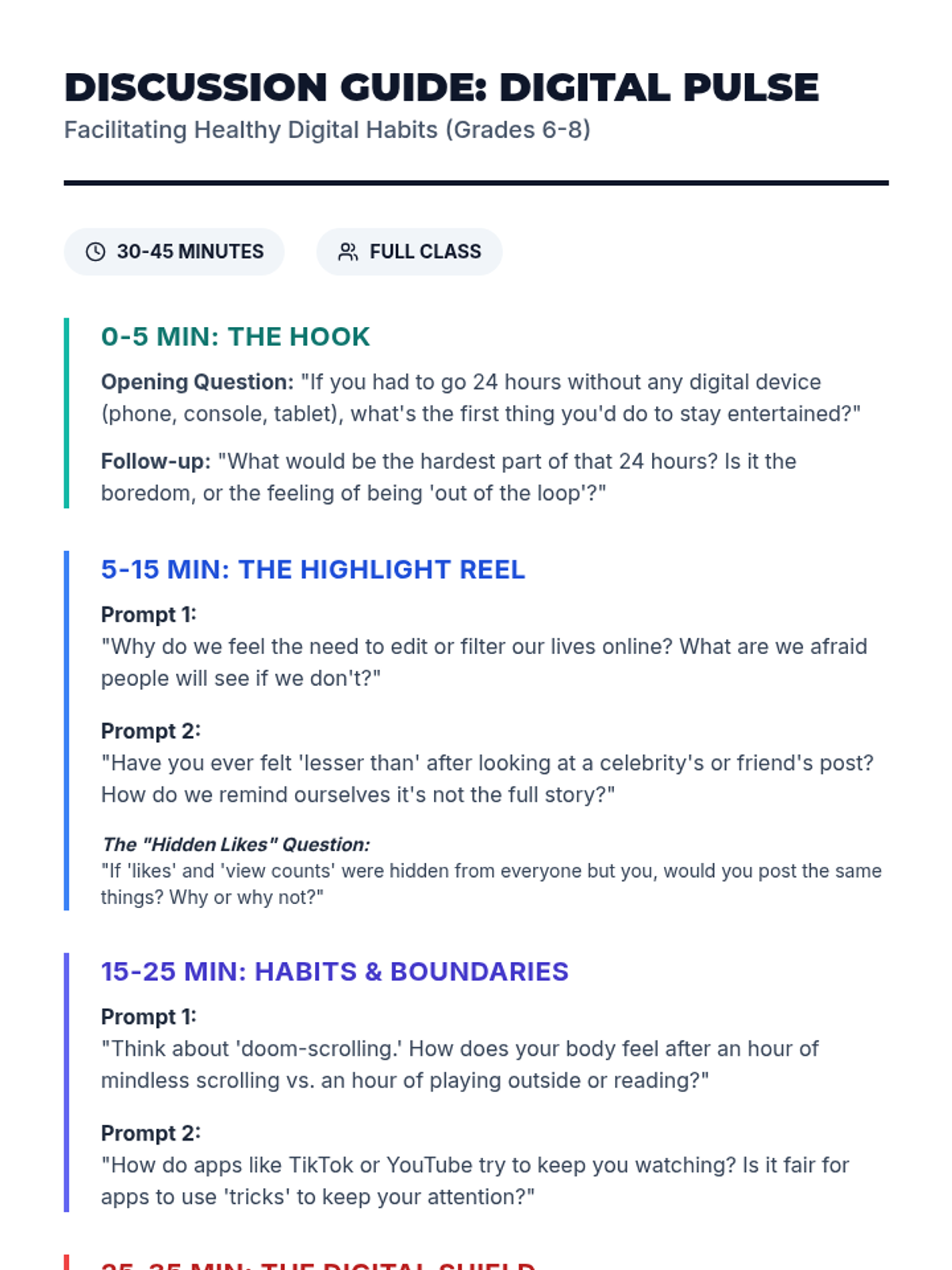
A series of resources designed to help middle school students develop healthy digital habits, maintain self-esteem online, and handle cyberbullying.
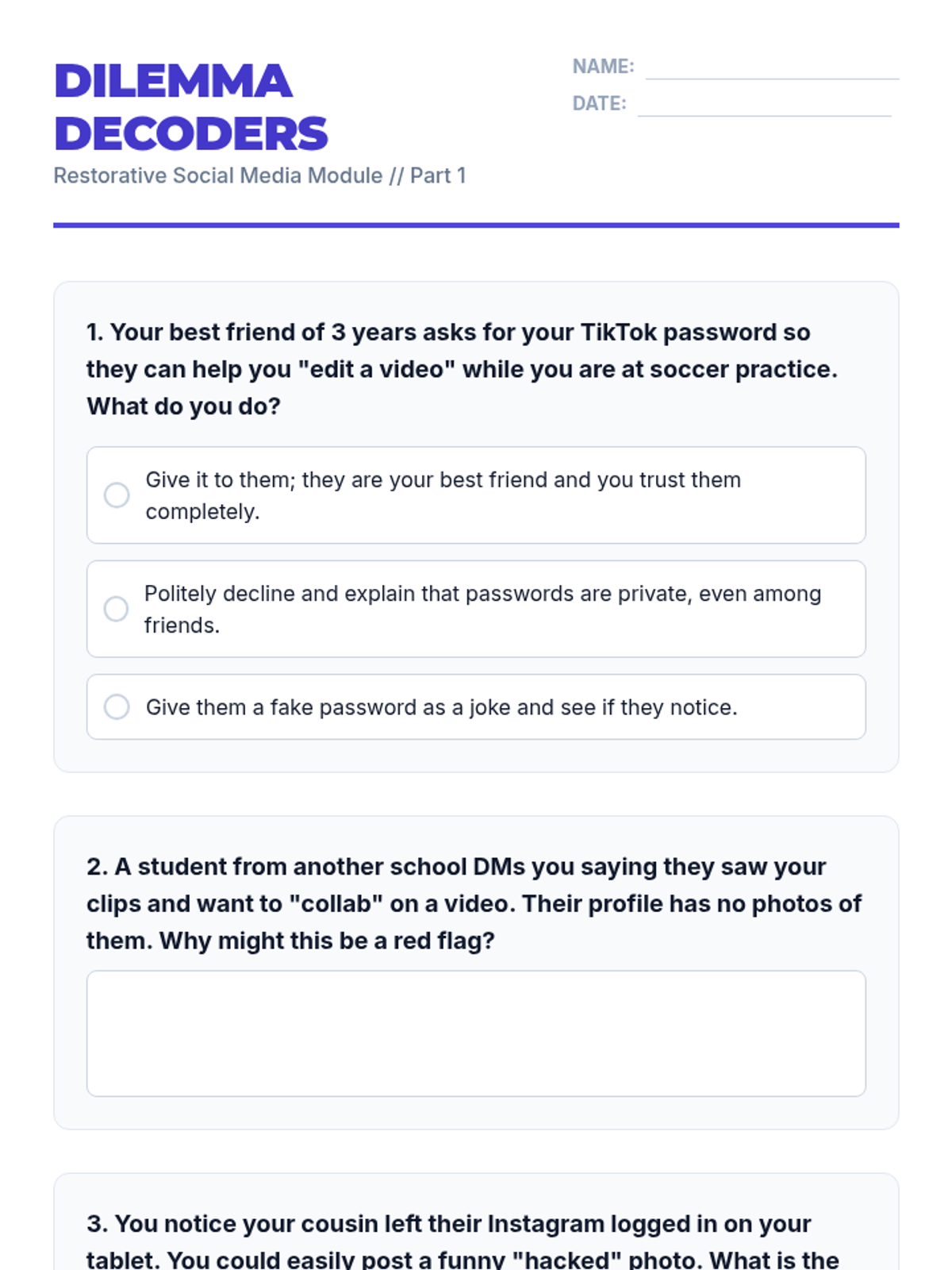
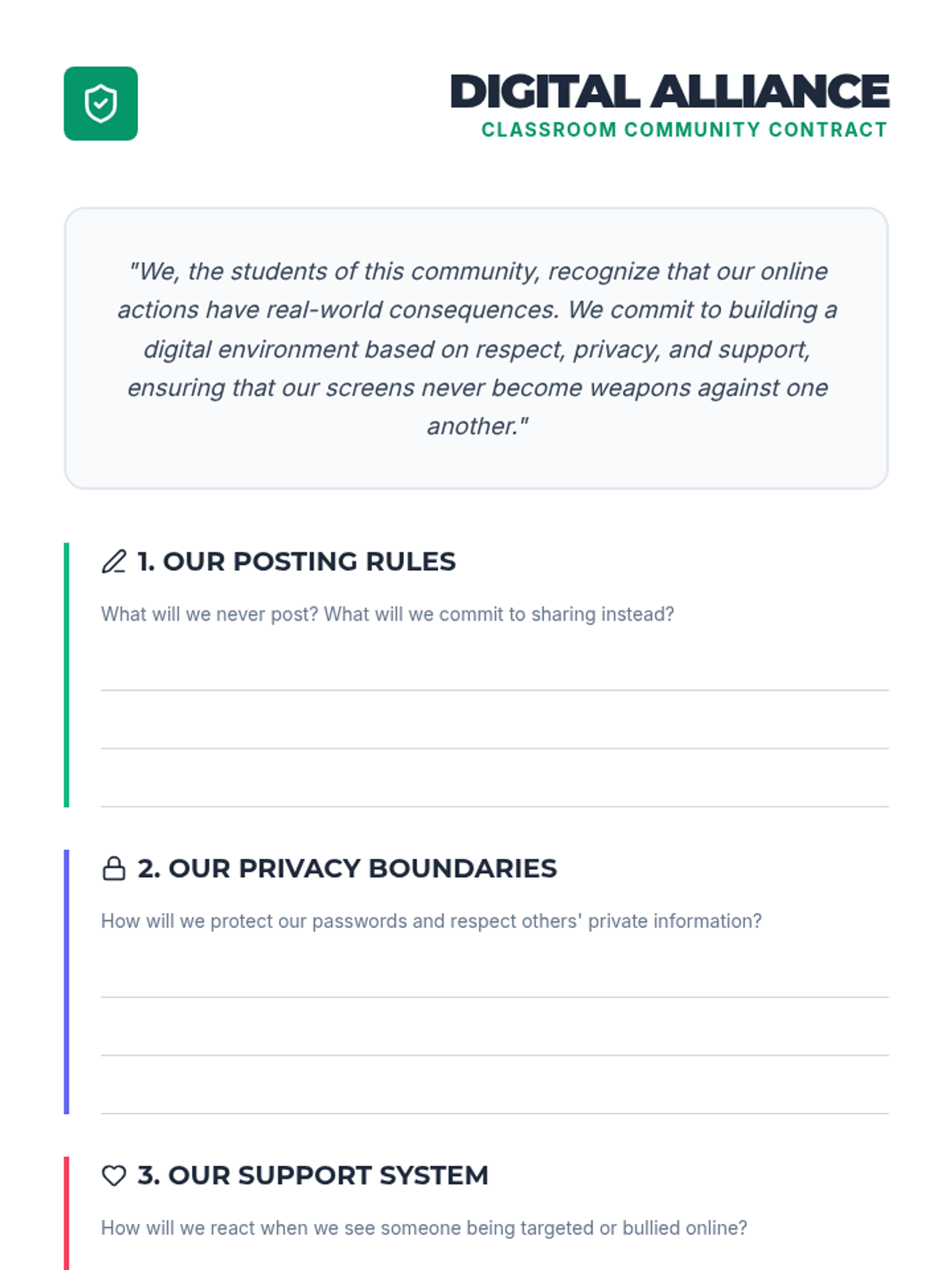
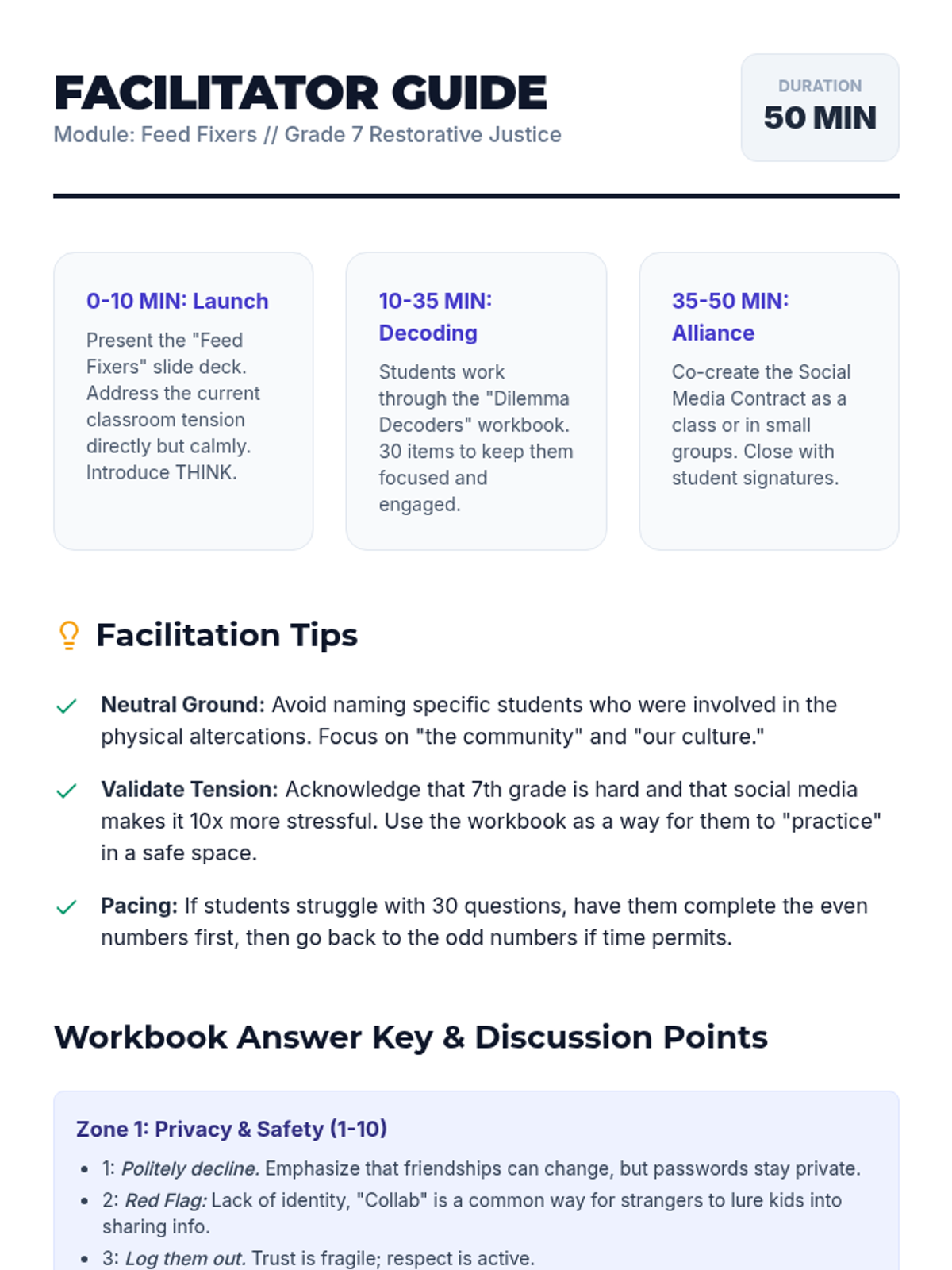
A restorative digital citizenship sequence focused on repairing classroom culture after social media-driven conflicts through empathy, privacy awareness, and structured communication.
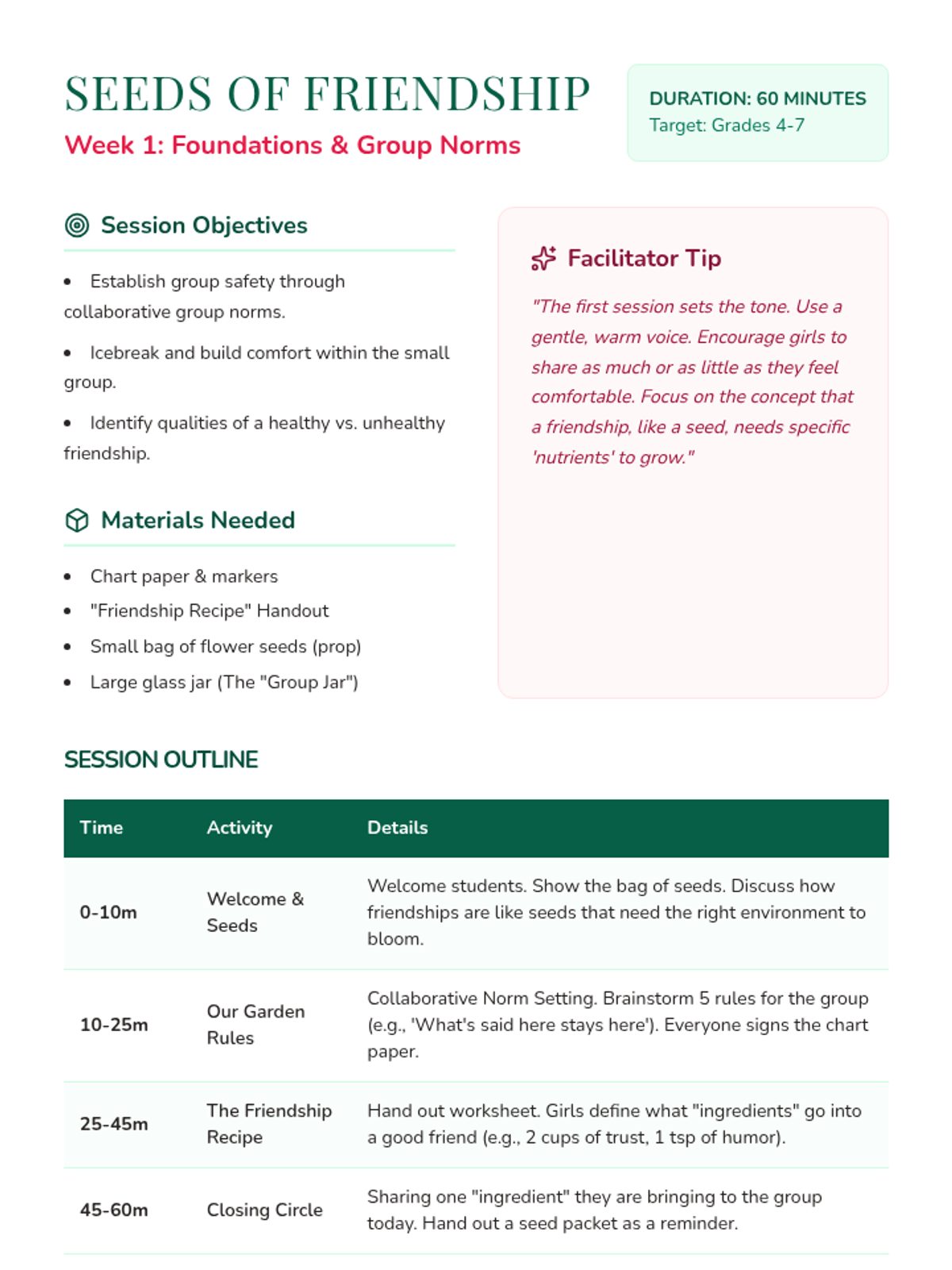
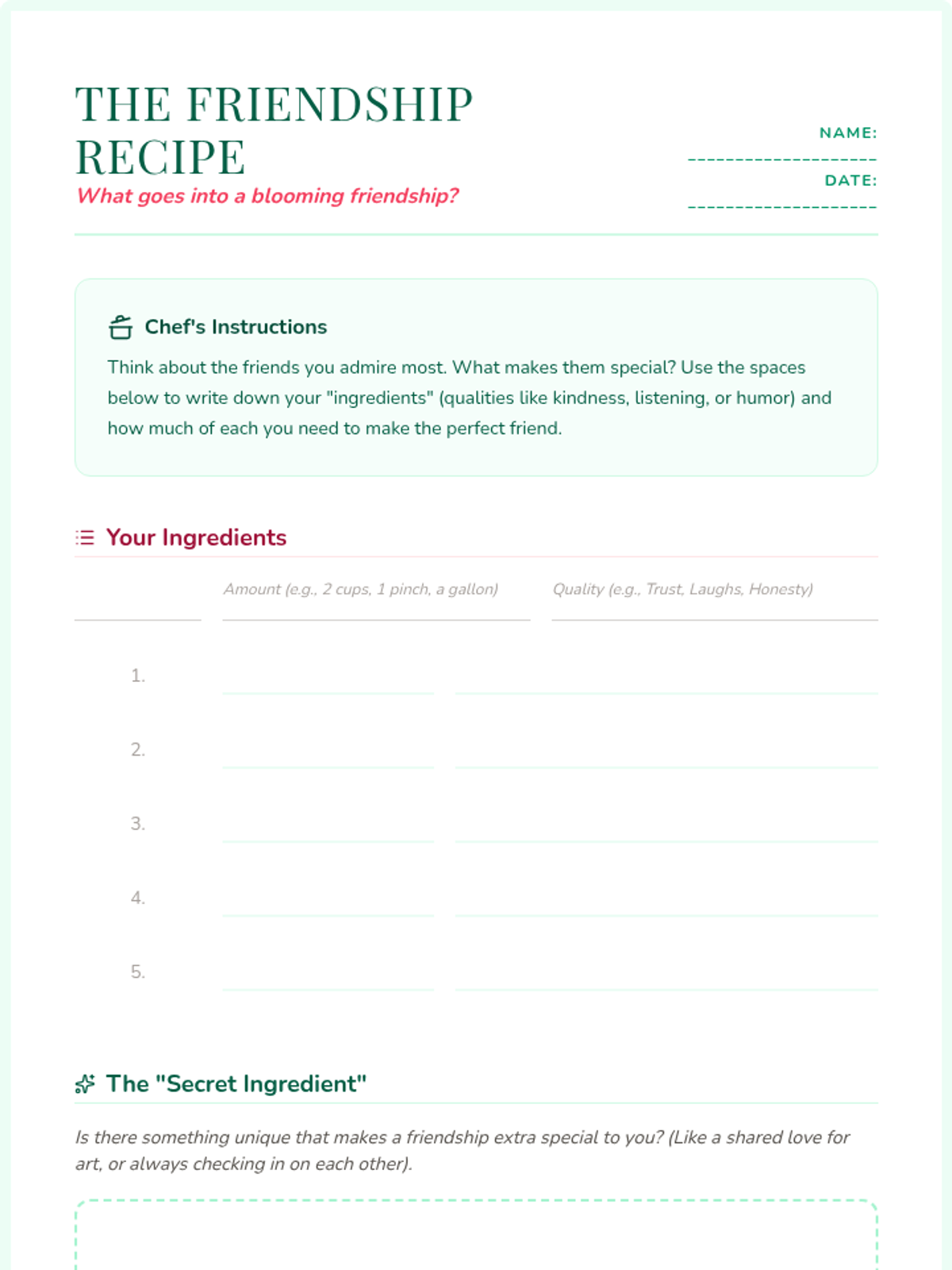
A six-week small group curriculum designed for girls to develop essential social skills, including communication, empathy, conflict resolution, and boundary-setting.
A comprehensive social skills sequence focusing on personal boundaries, respecting peers, and emotional self-regulation strategies for middle school success.
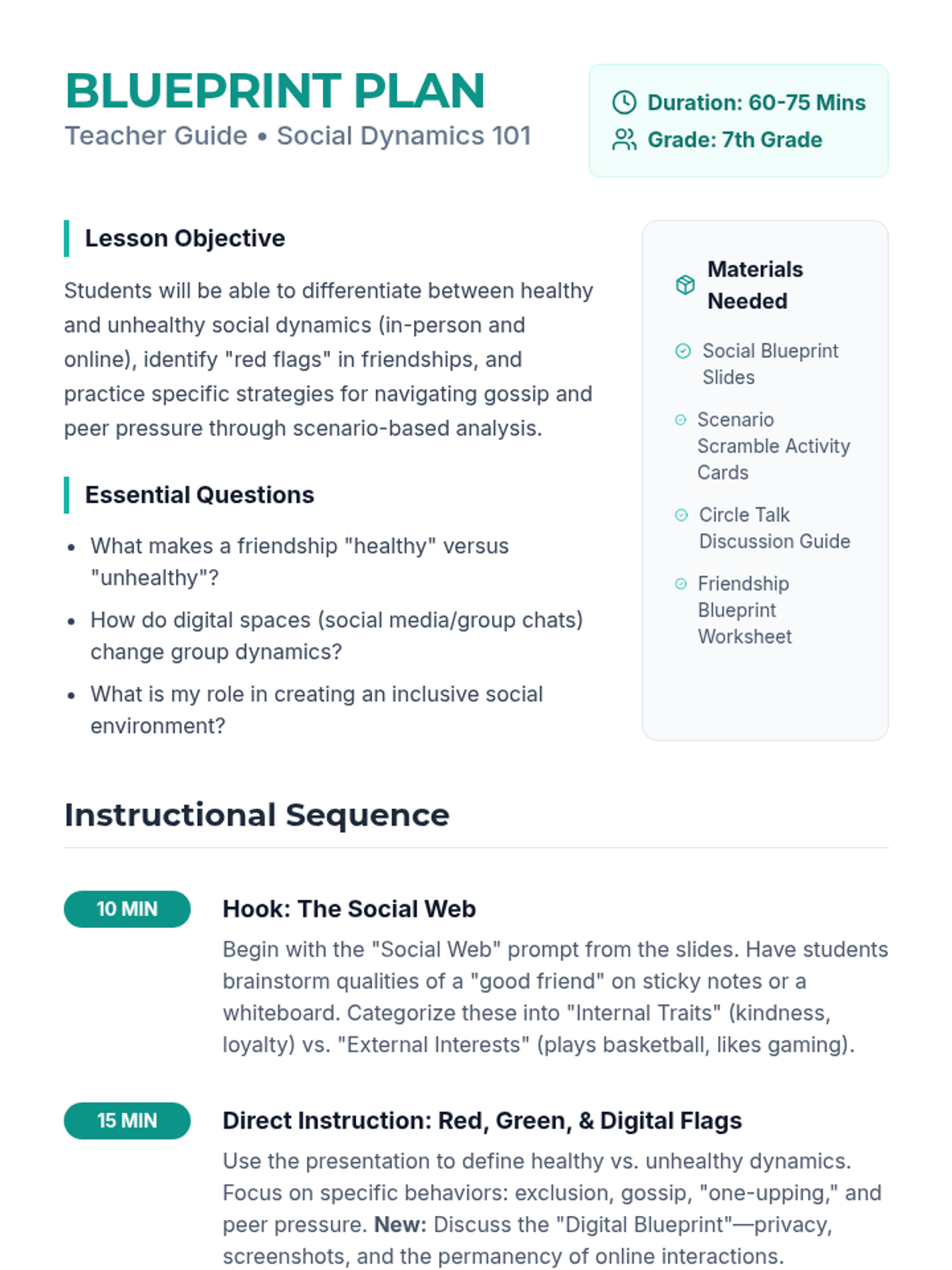
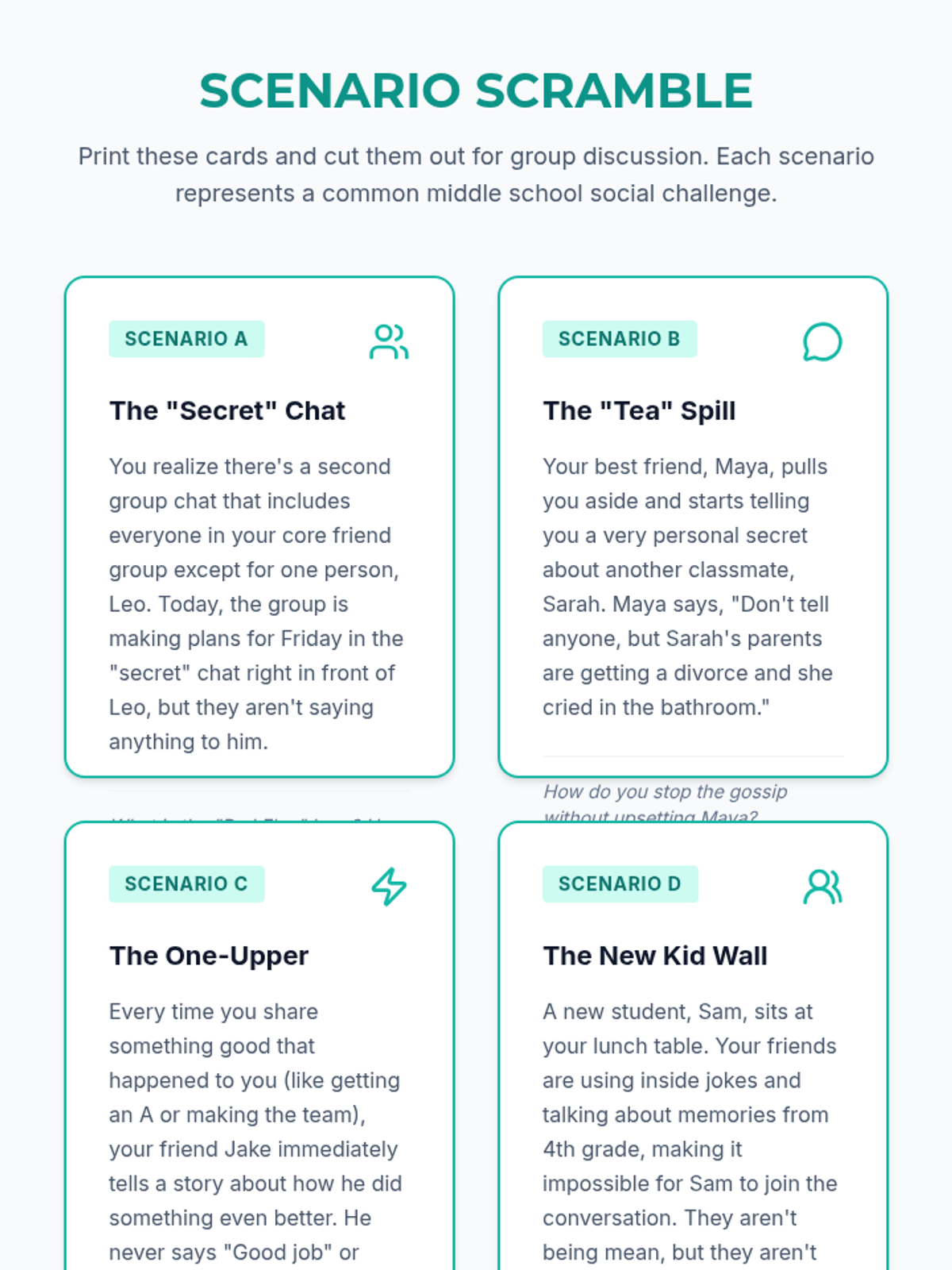
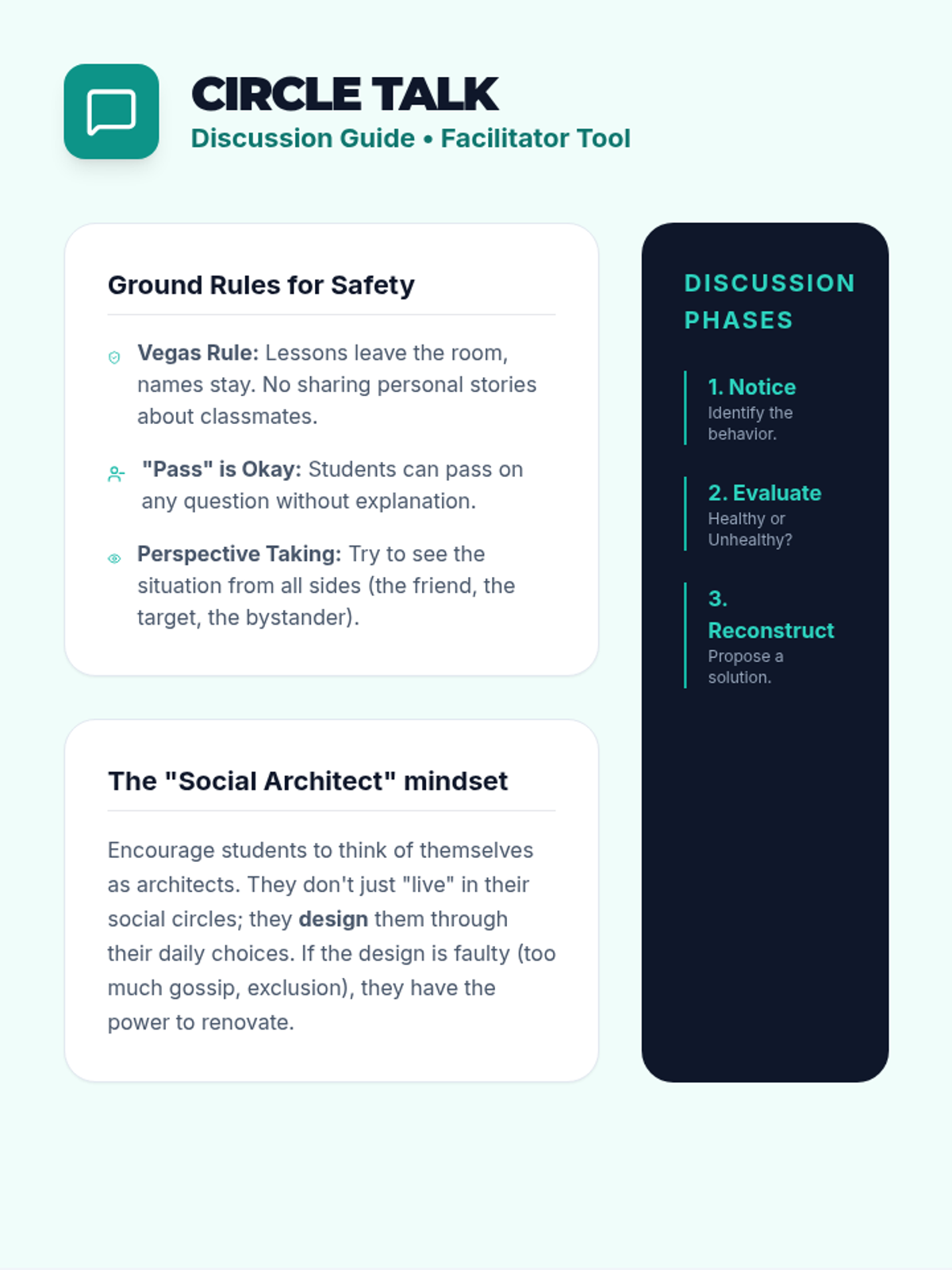
An engaging unit for 7th-grade students focused on understanding social relationships, identifying healthy vs. unhealthy dynamics, and practicing inclusive behaviors. Students will explore peer pressure, gossip, and the power of positive group interactions.
A 5-lesson sequence for 7th graders focusing on self-advocacy and effective communication during daily check-ins. Students learn to identify learning barriers, use non-verbal signals, master 'I statements', negotiate support, and respect peer privacy.
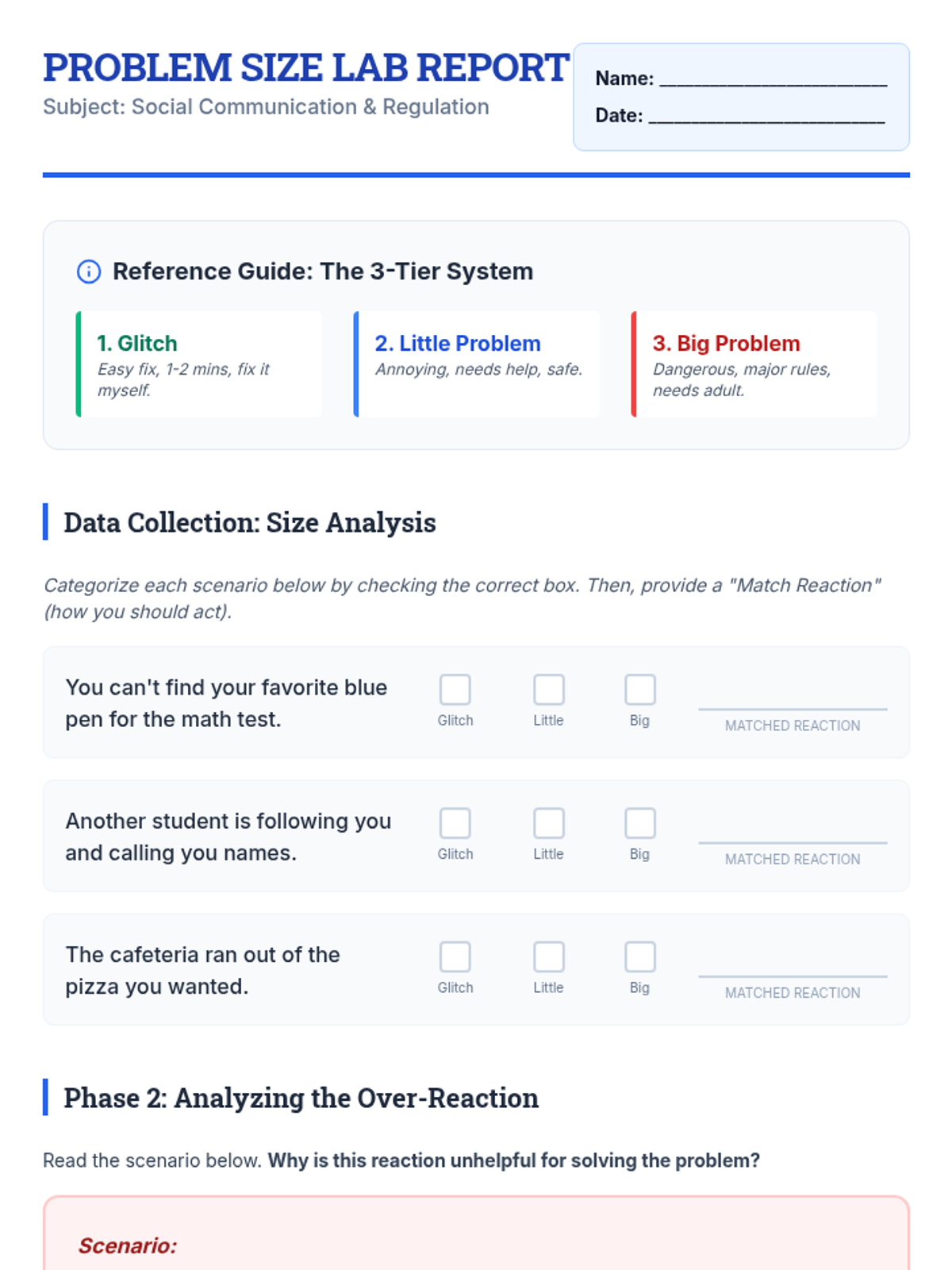
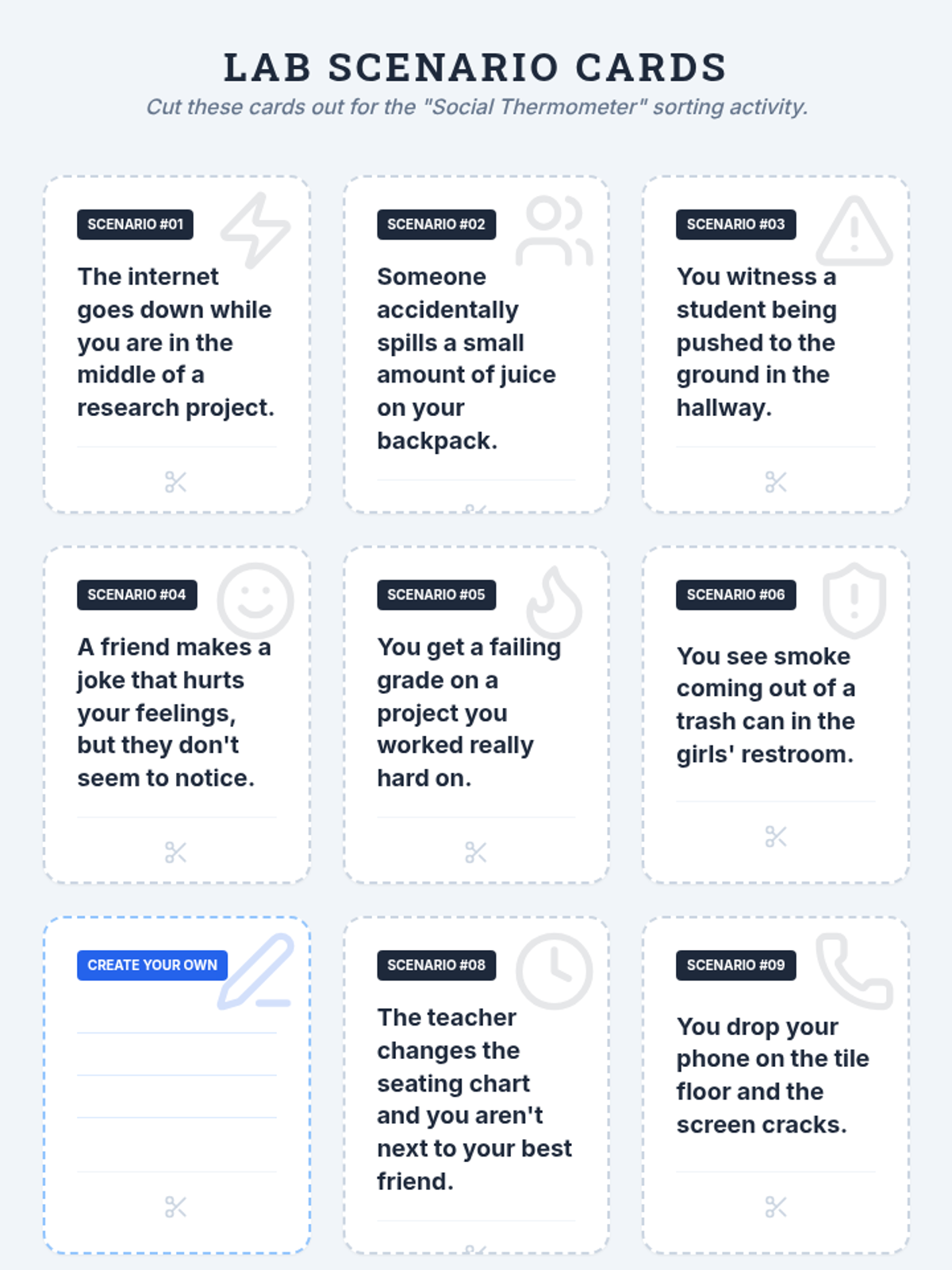
A comprehensive 5-lesson unit for 7th grade students focusing on social problem-solving. This sequence guides students from identifying the size of a conflict to objectively defining facts, brainstorming diverse solutions, and selecting the most assertive and effective response.
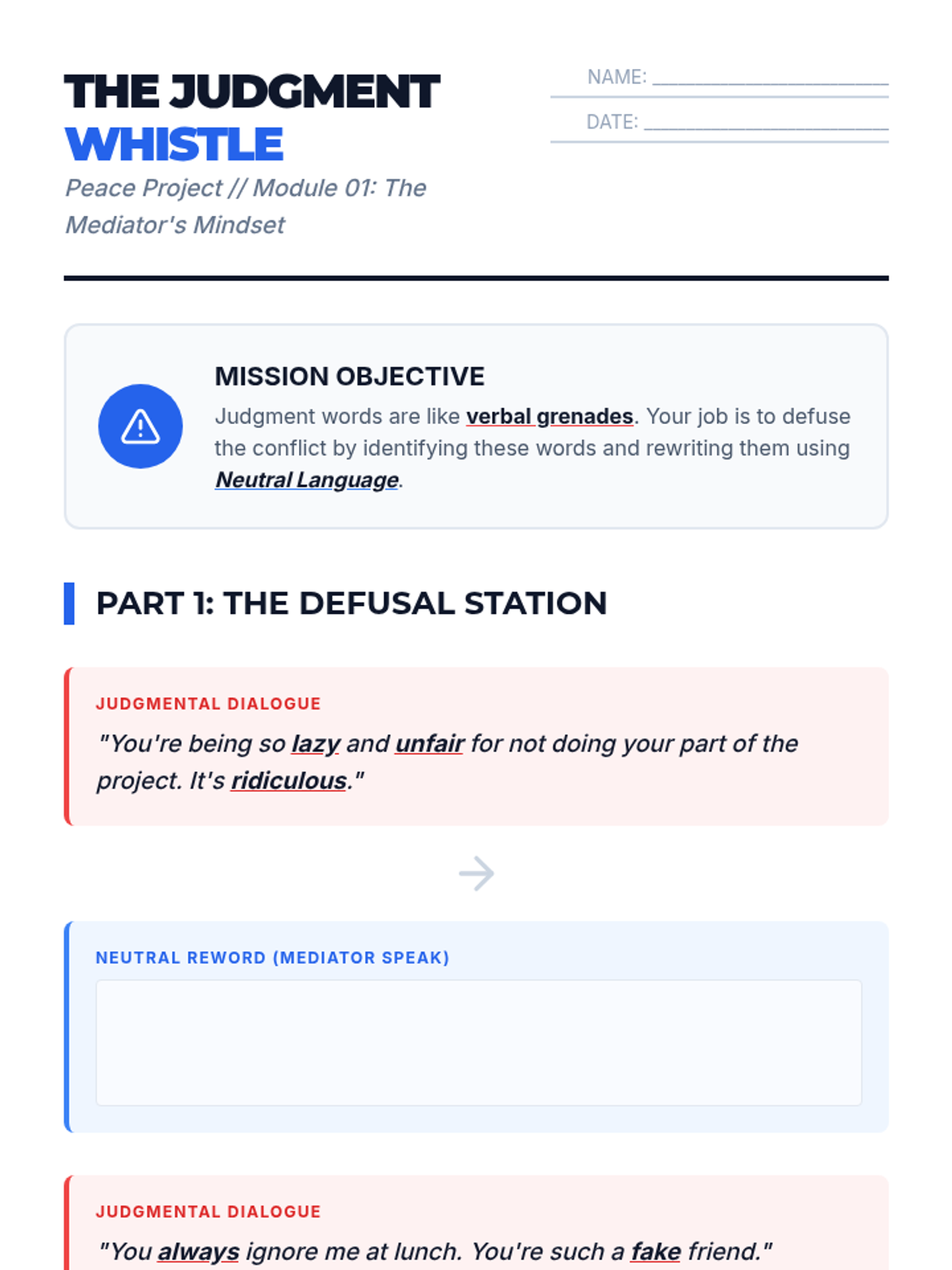
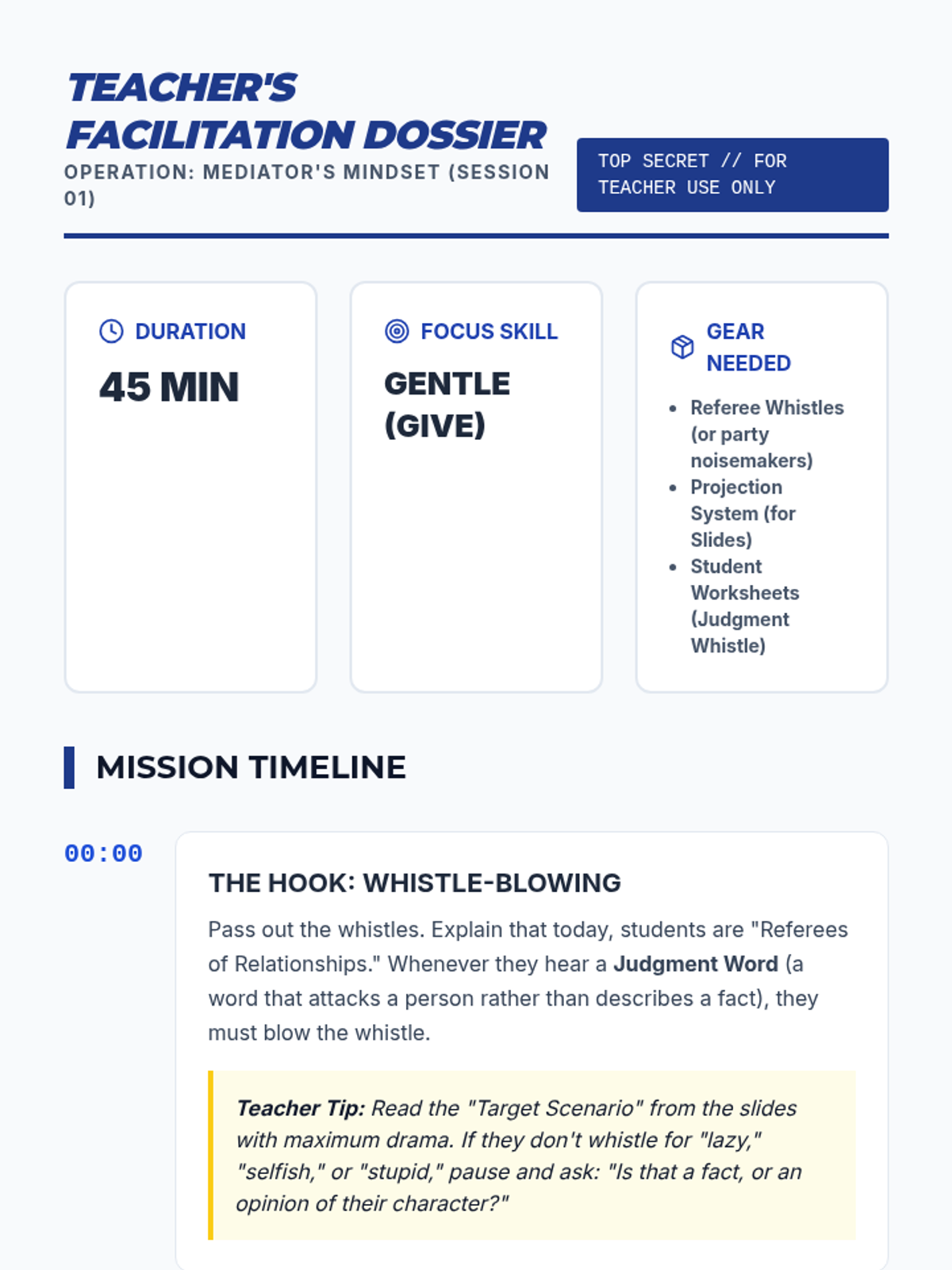
A 5-lesson sequence for 7th graders focusing on GIVE skills (Gentle, Interested, Validate, Easy manner) through the lens of peer mediation and conflict resolution. Students move from identifying judgmental language to applying complex de-escalation techniques in high-stakes simulations.
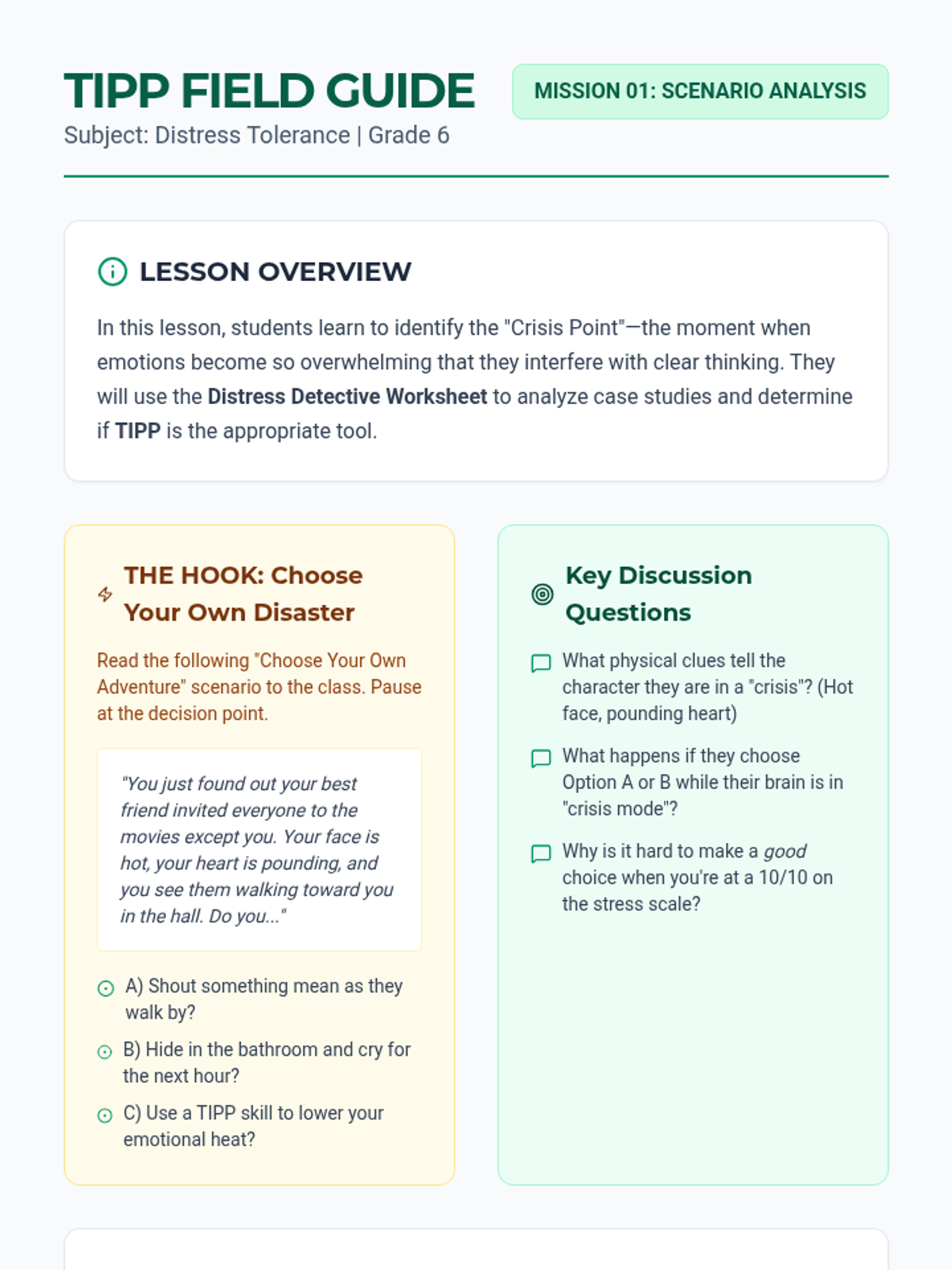
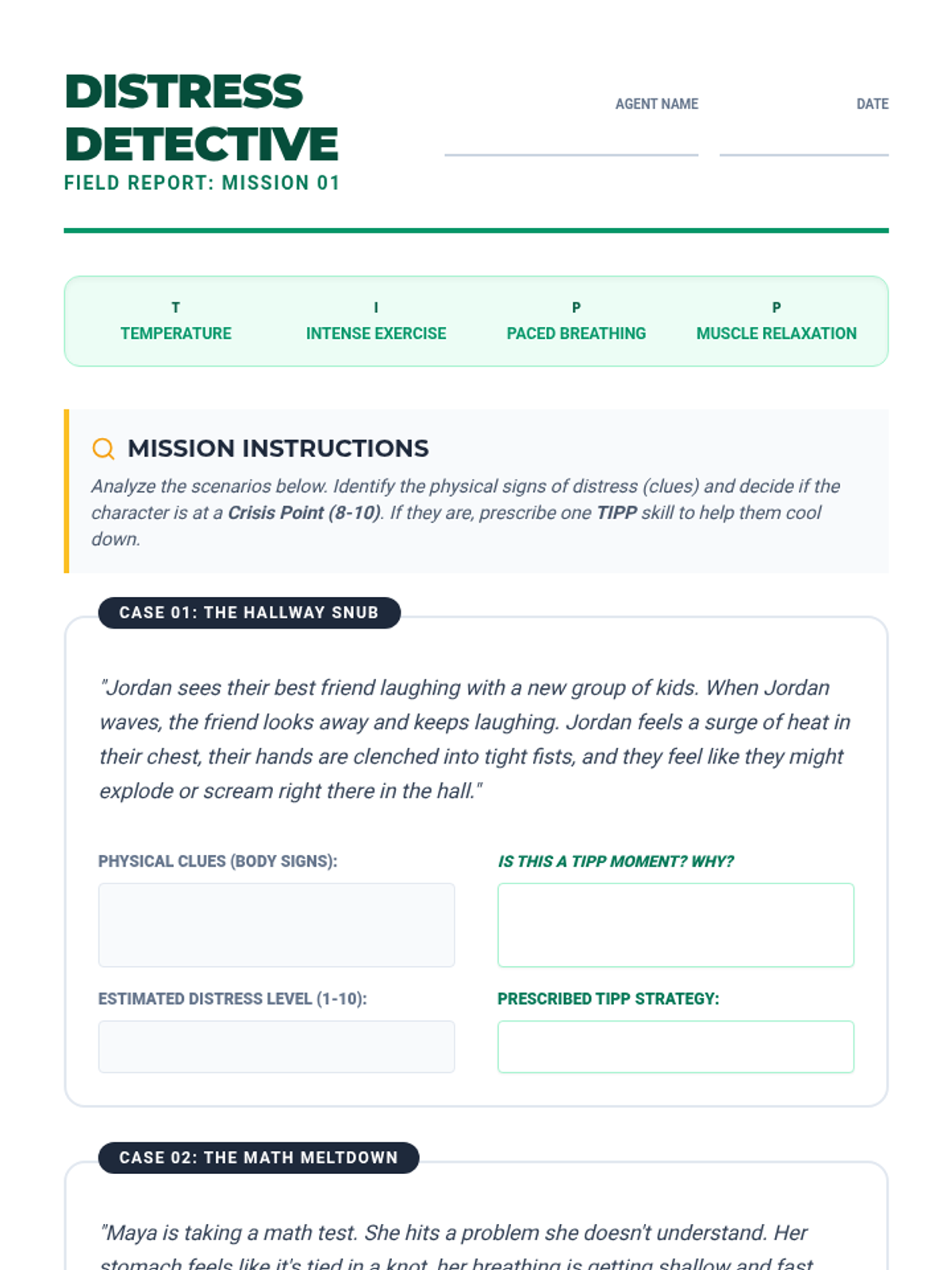
A 5-lesson unit for 6th graders to apply TIPP crisis survival skills (Temperature, Intense Exercise, Paced Breathing, Paired Muscle Relaxation) to real-world social and academic stressors. Students move from analyzing scenarios to simulated practice and peer consulting.
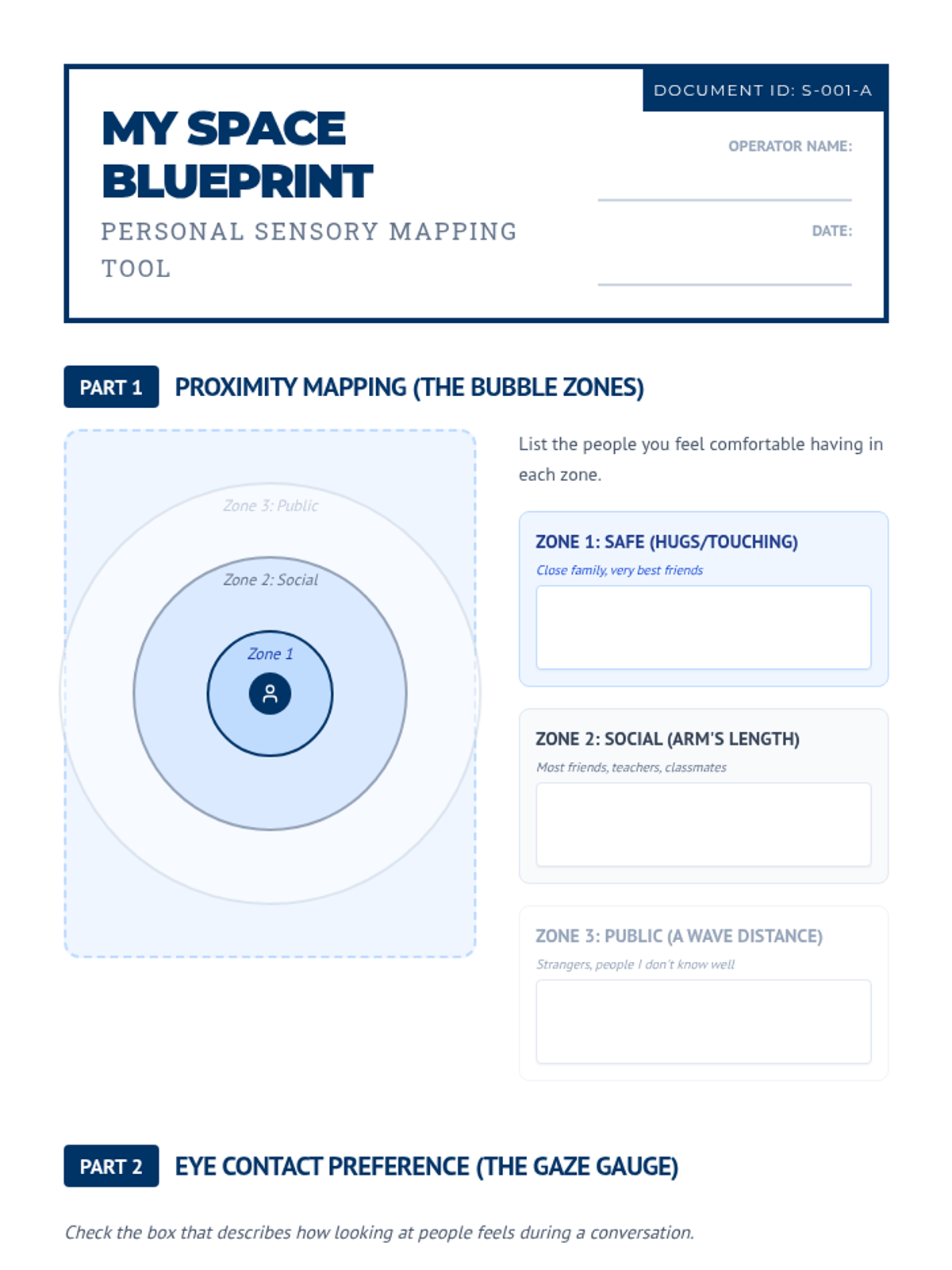
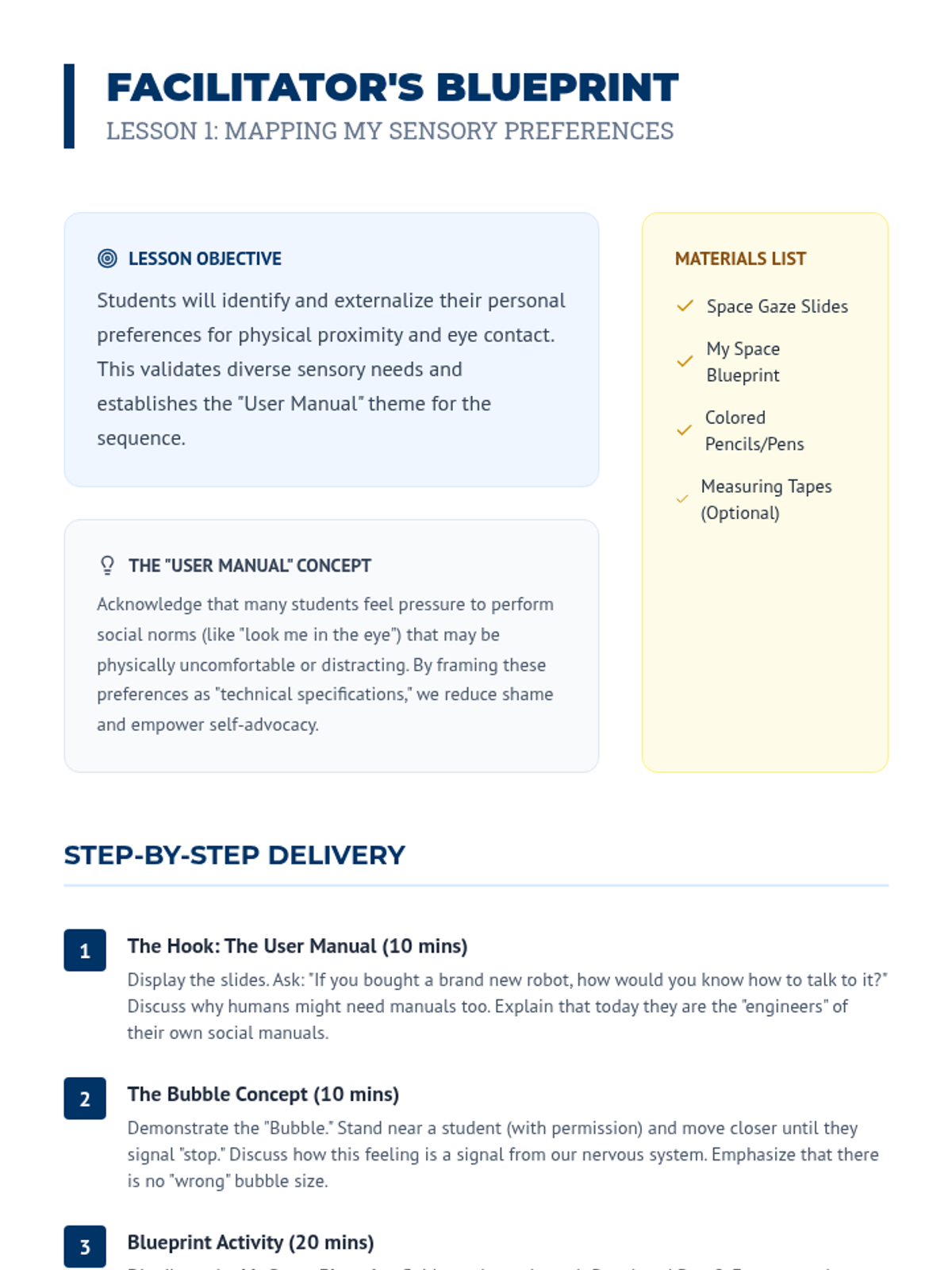
A neurodiversity-affirming sequence for 6th graders to explore their personal space needs and eye contact preferences. Students learn to advocate for their own boundaries while respecting the diverse sensory and cultural needs of others through a 'User Manual' theme.
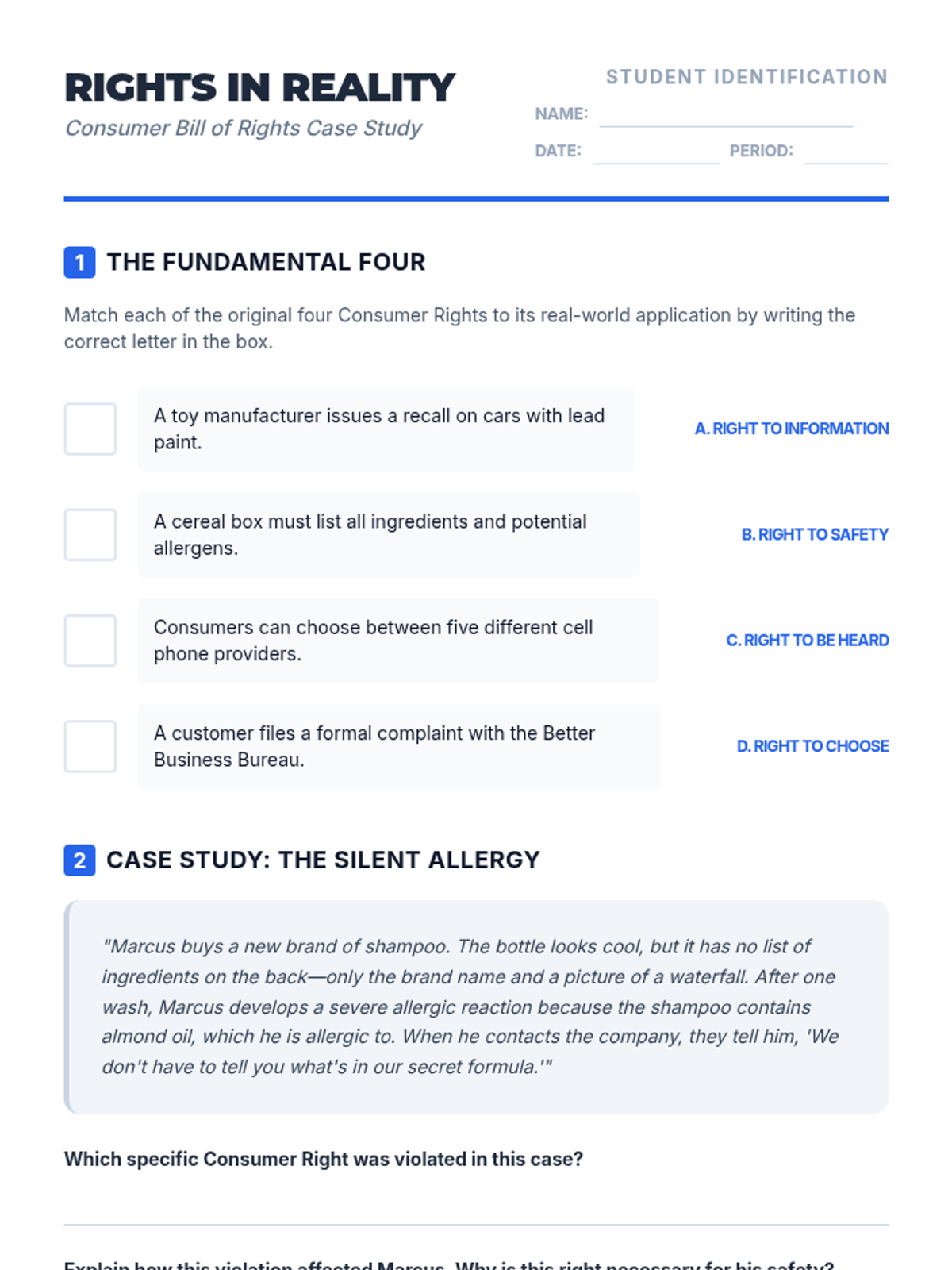
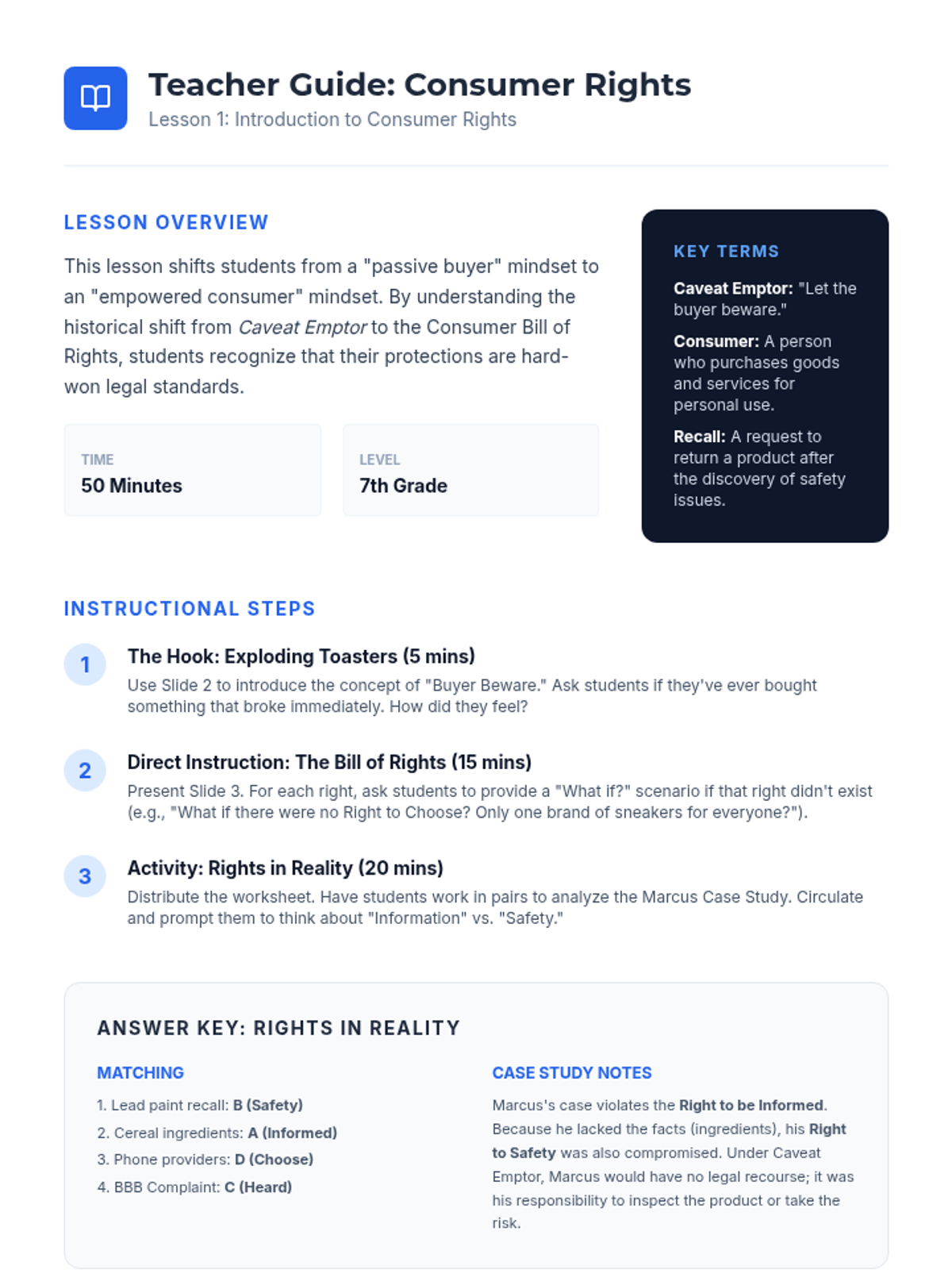
A comprehensive unit on consumer rights, warranties, and the art of professional dispute resolution. Students learn to navigate the legal and ethical framework of the marketplace through case studies, role-plays, and writing workshops.
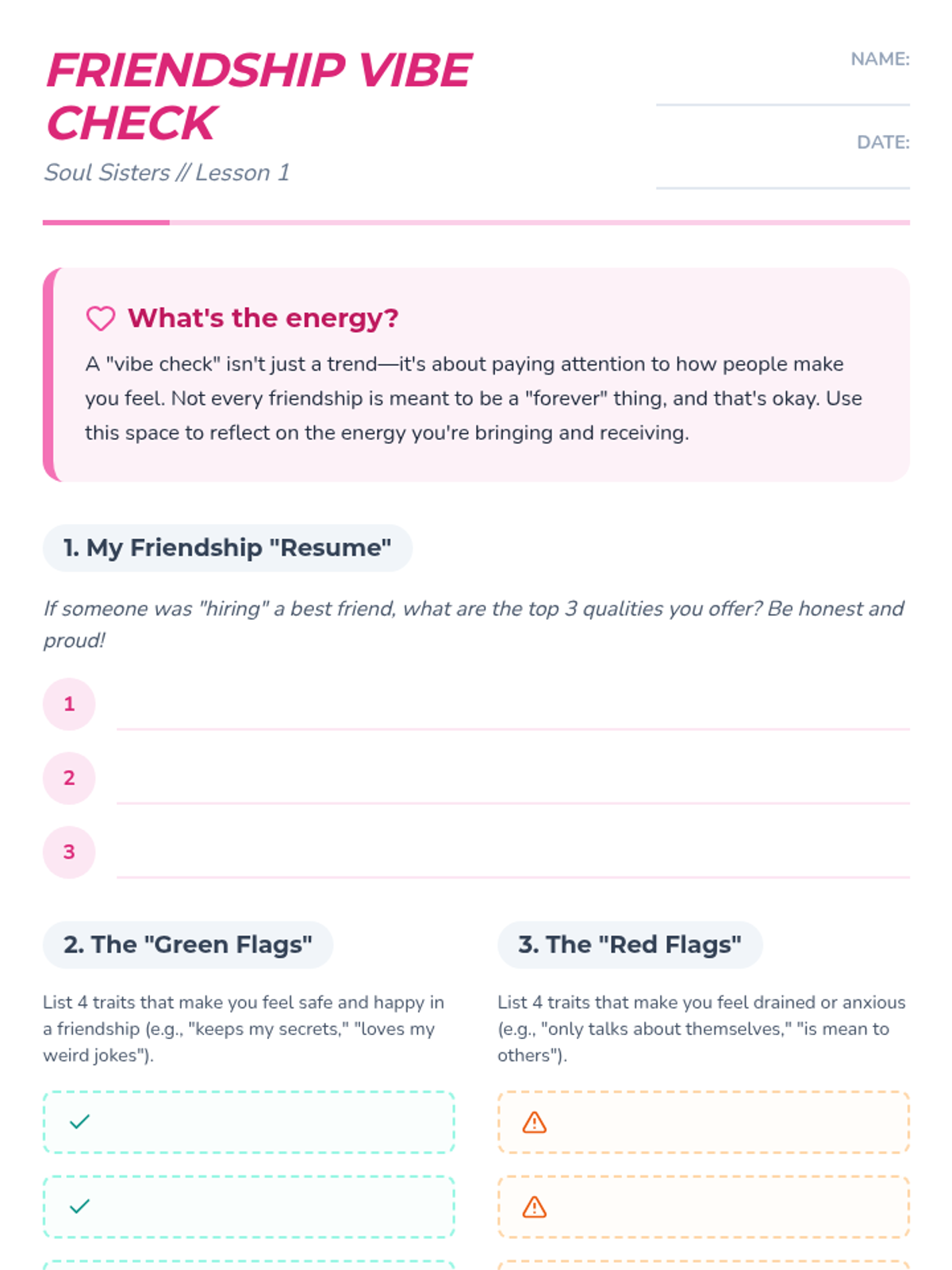
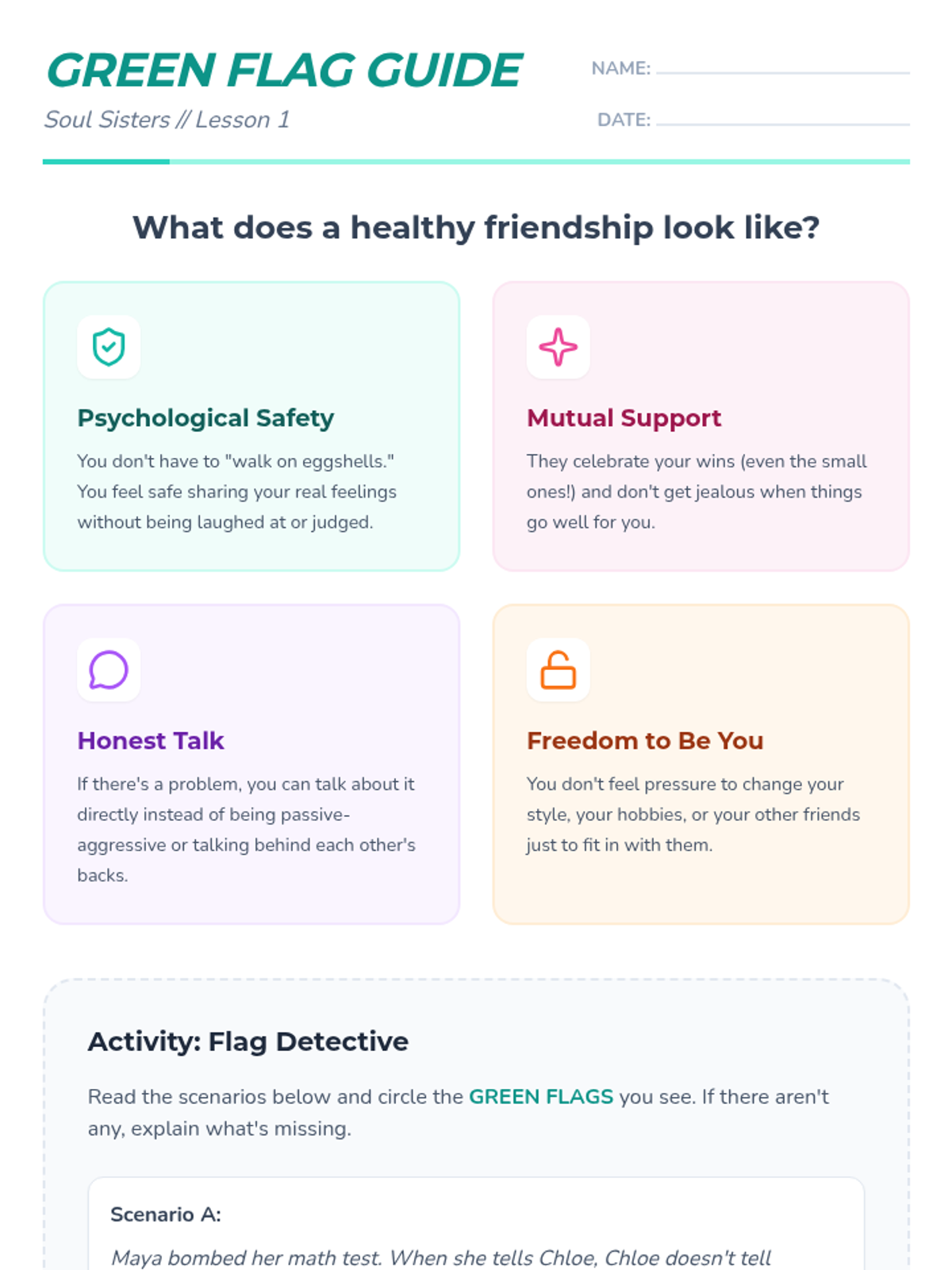
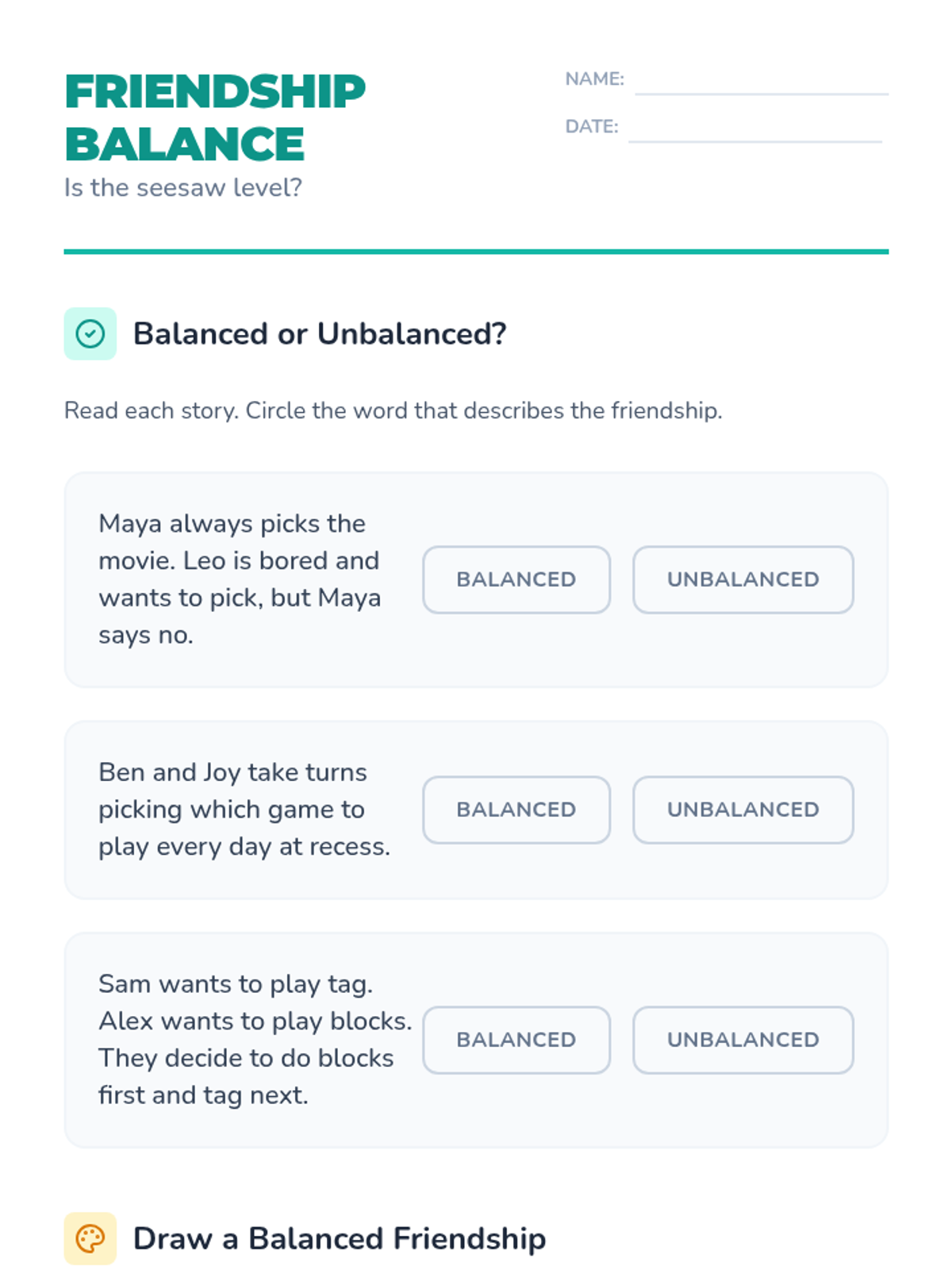
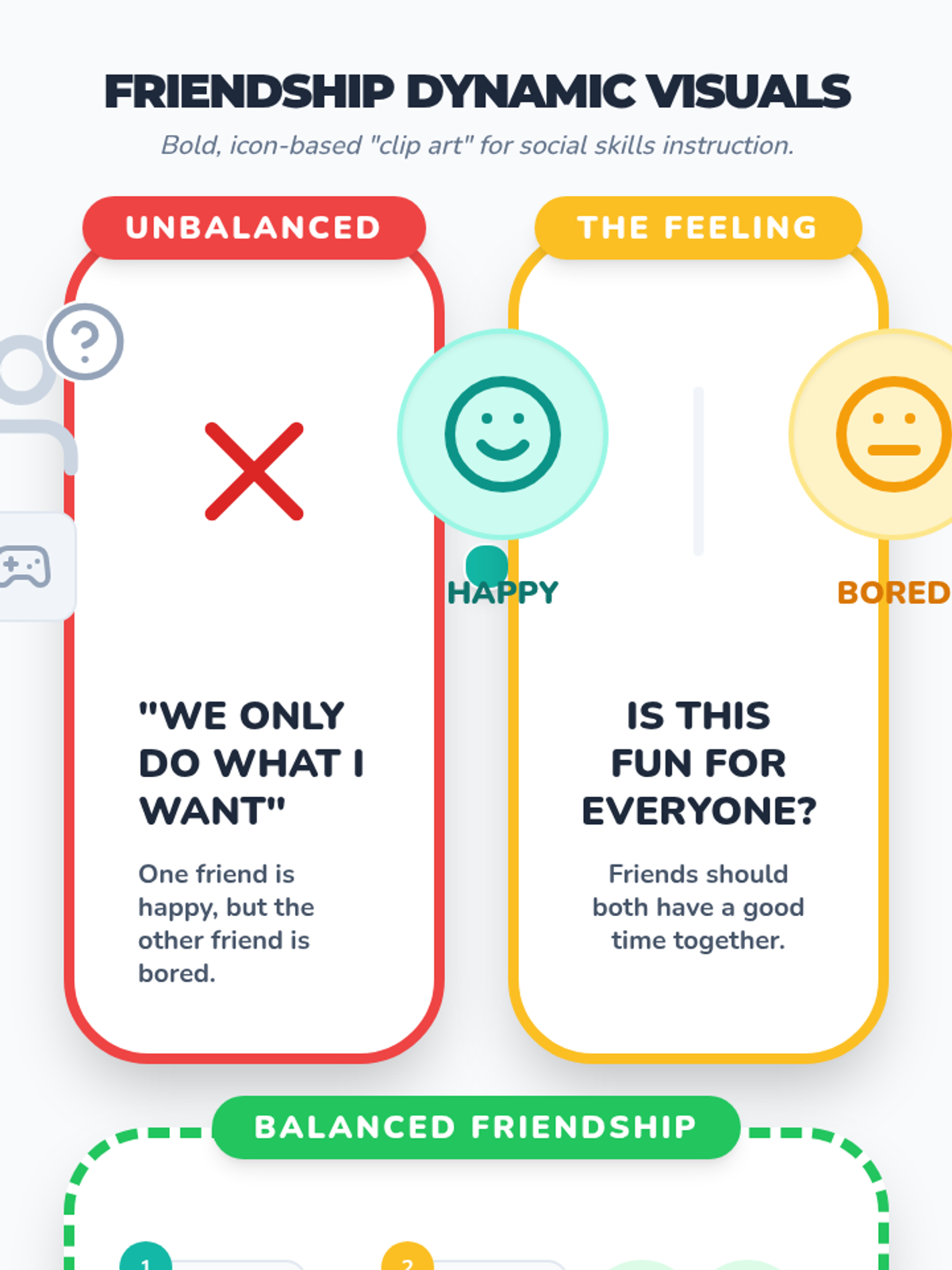
A 4-lesson curriculum designed for middle school girls to build healthy friendships, improve communication, and master conflict resolution through interactive worksheets and reflective activities.
A four-session program designed for an 11-year-old with ADHD and ASD traits to develop self-advocacy skills, focusing on setting boundaries, recognizing emotional triggers, and asking for help.
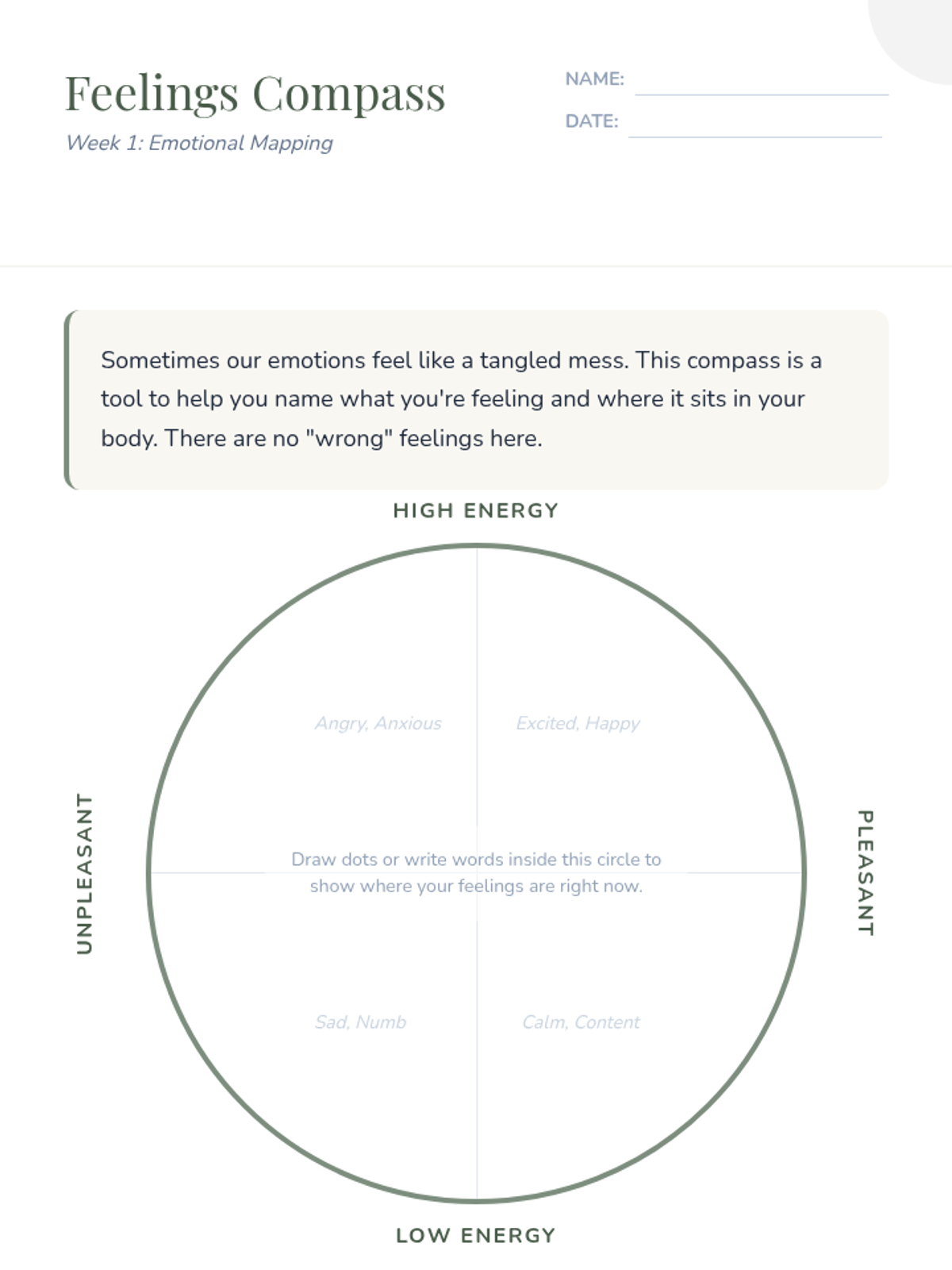
A 6-week educational and reflective journey designed for a 13-year-old girl to explore emotional literacy, develop coping strategies for depression, and navigate complex family dynamics with a focus on self-compassion and boundary setting.
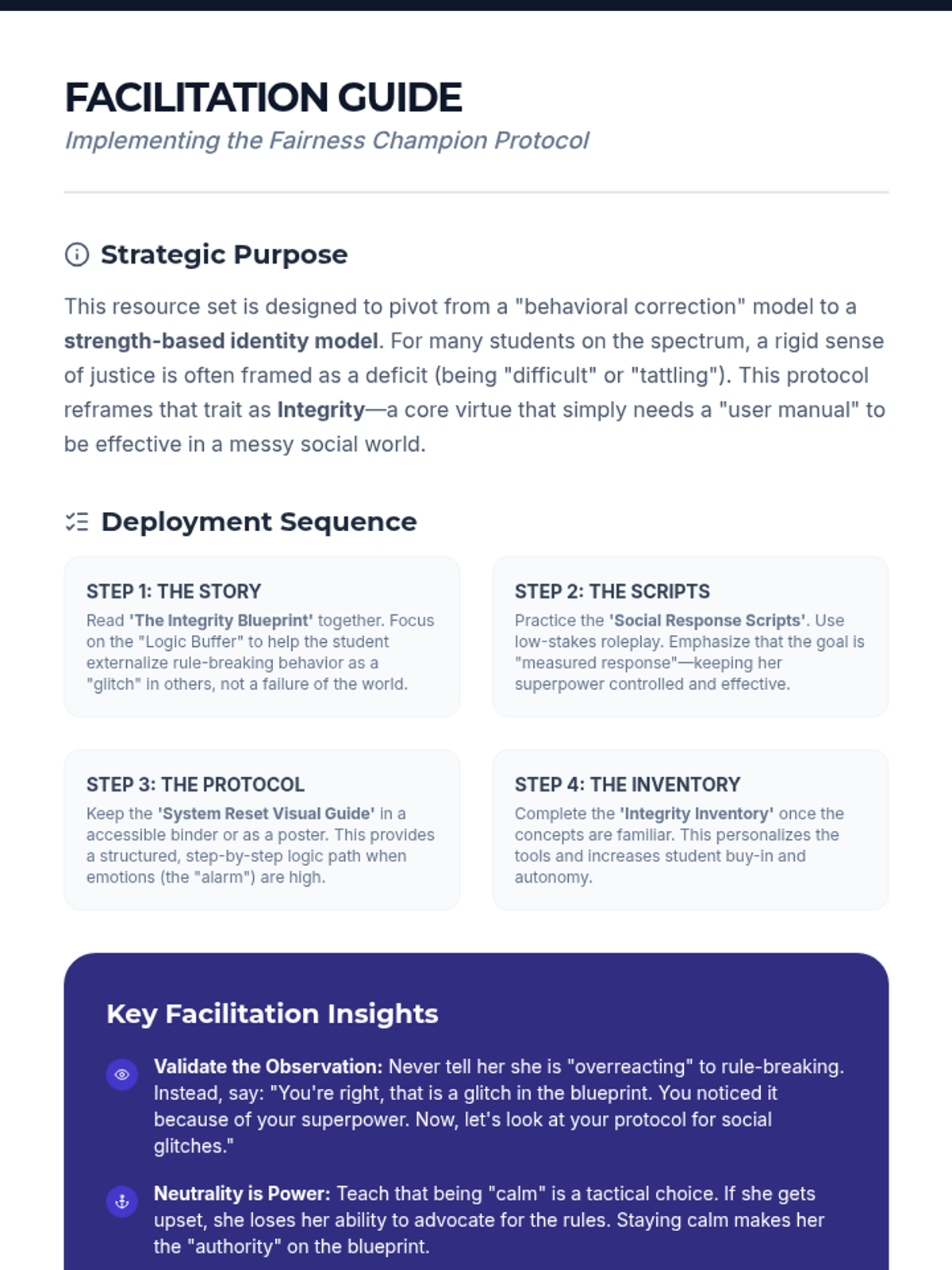
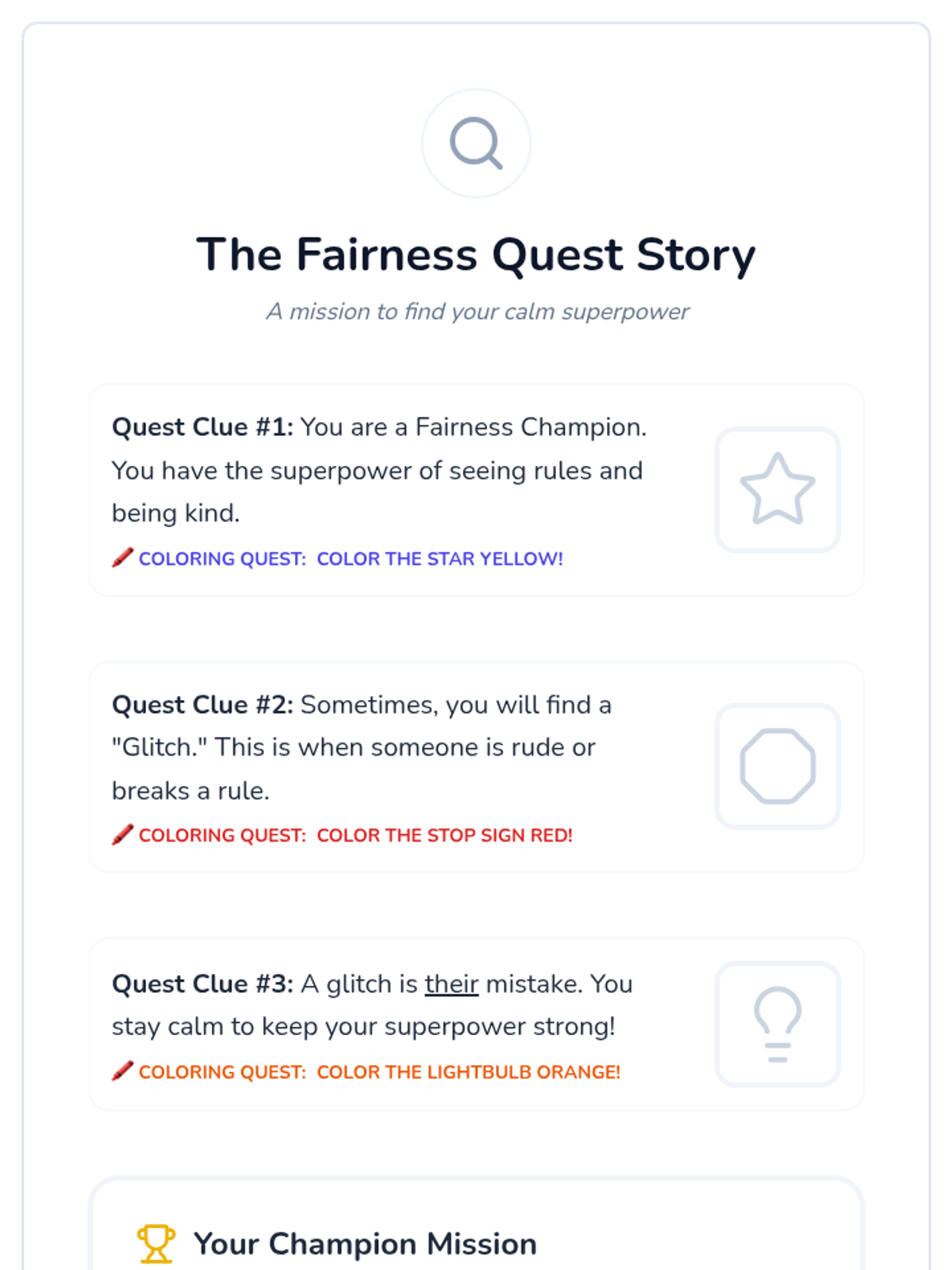
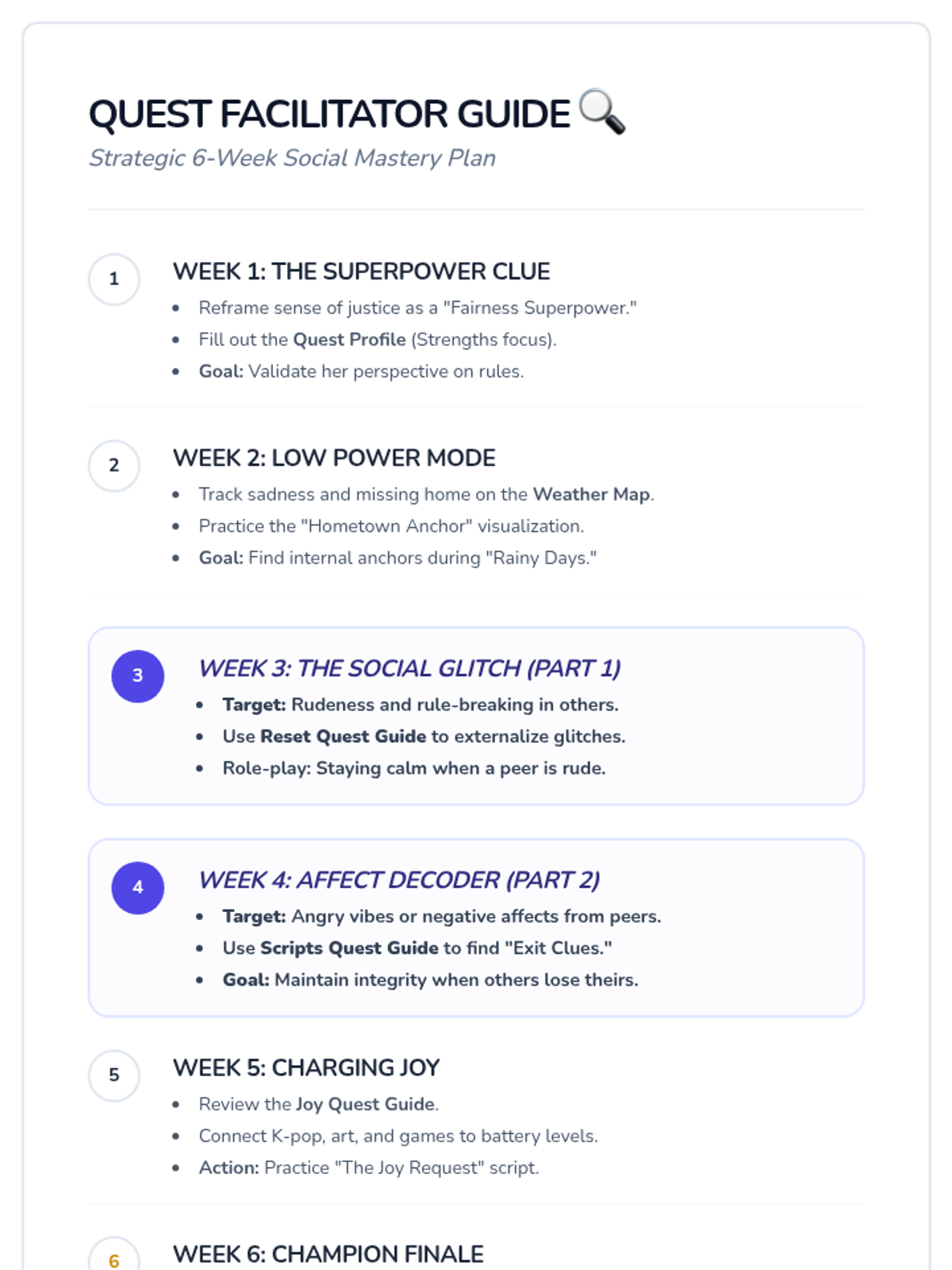
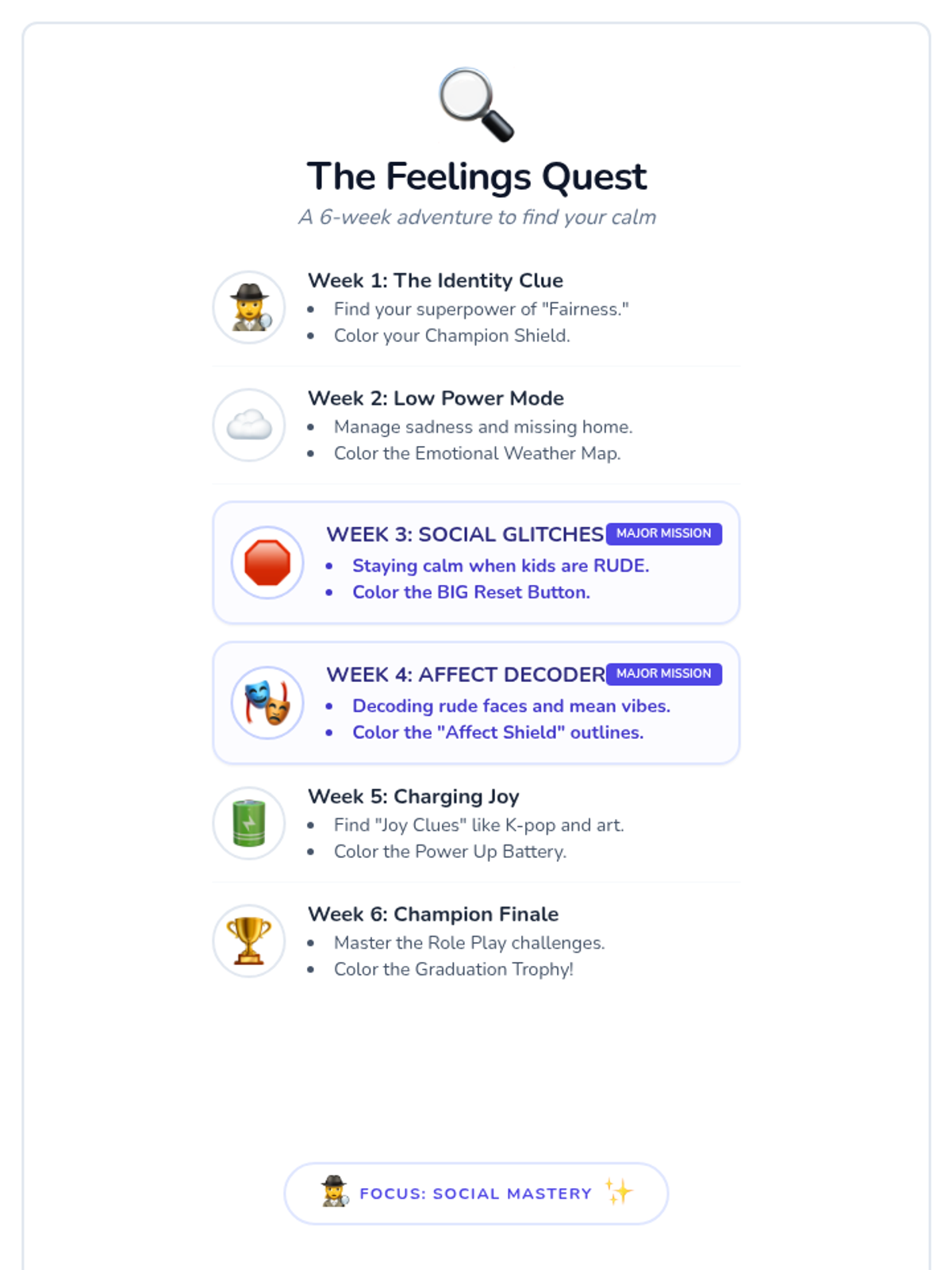
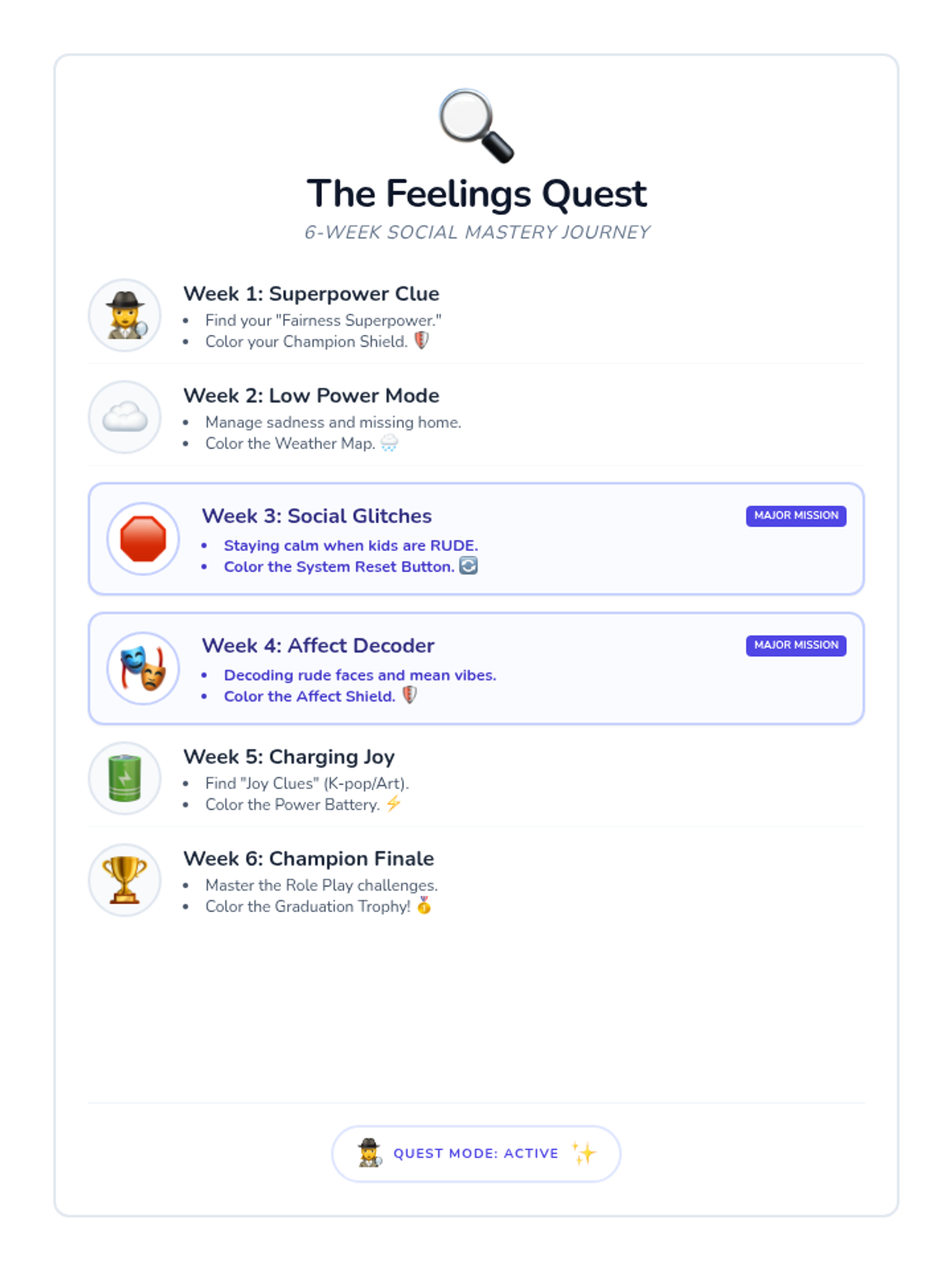
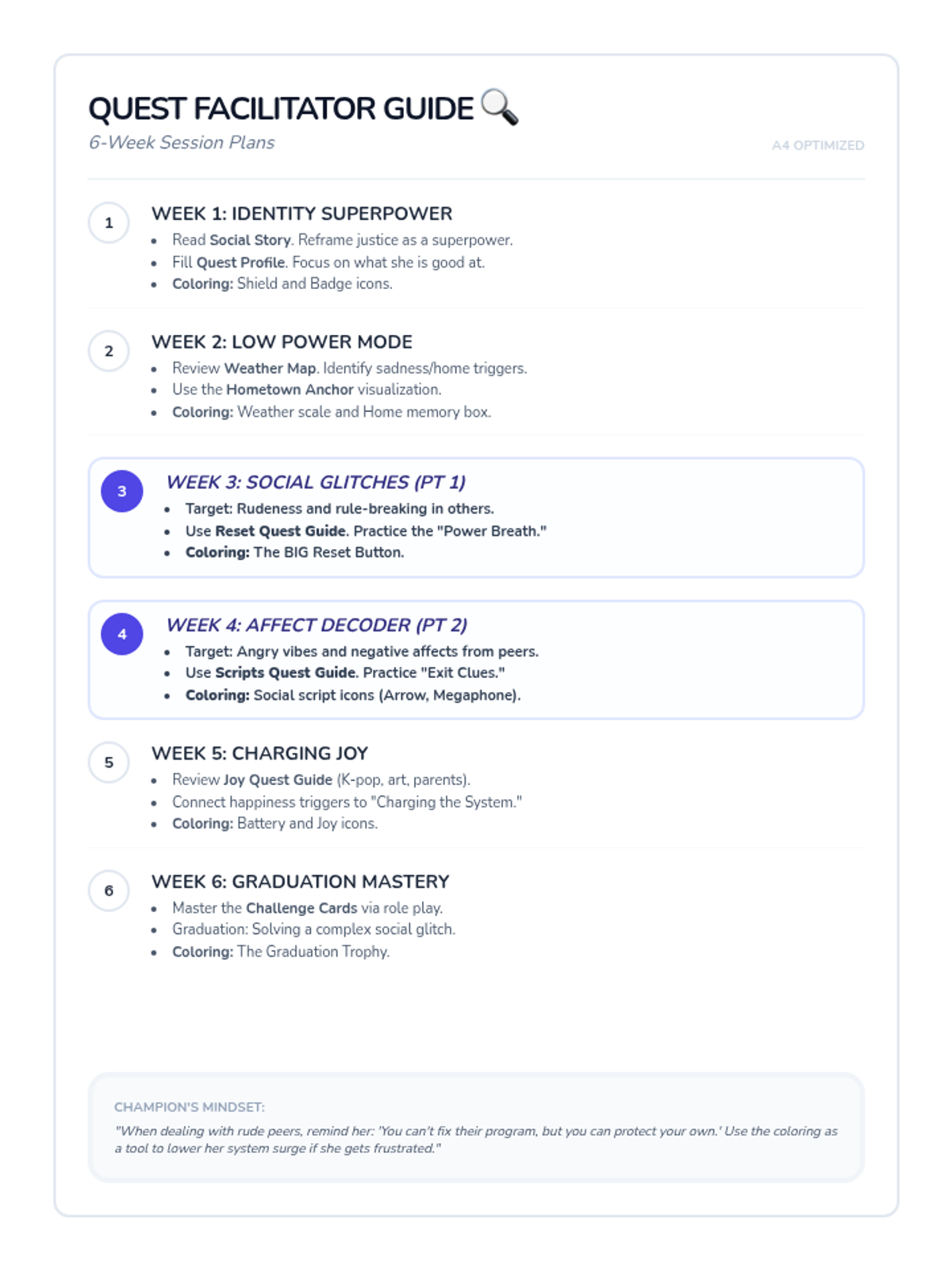
A 6-week social-emotional learning curriculum for a 13-year-old girl on the autism spectrum, focusing on managing specific triggers through a strength-based "Integrity Blueprint" lens.
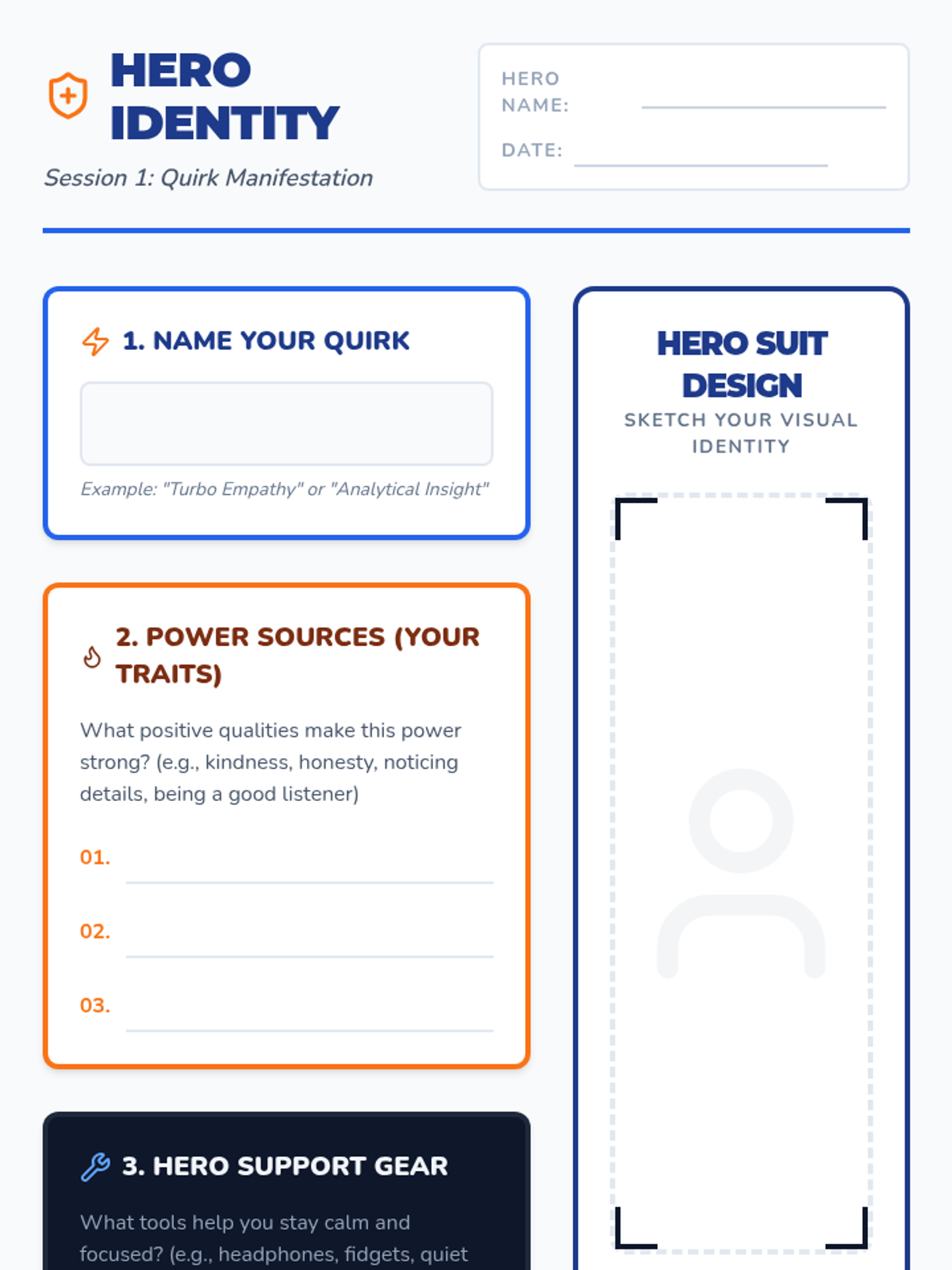
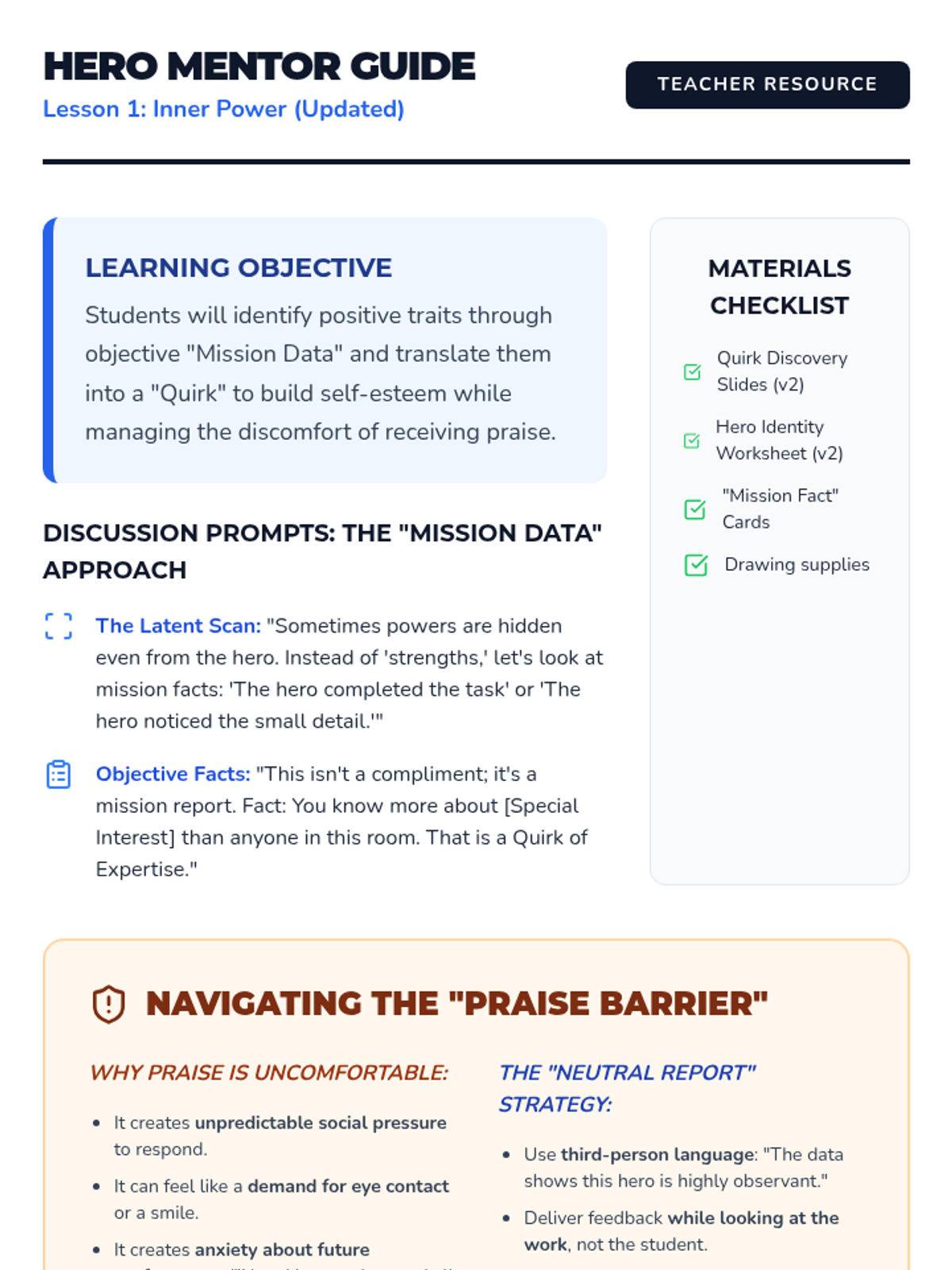
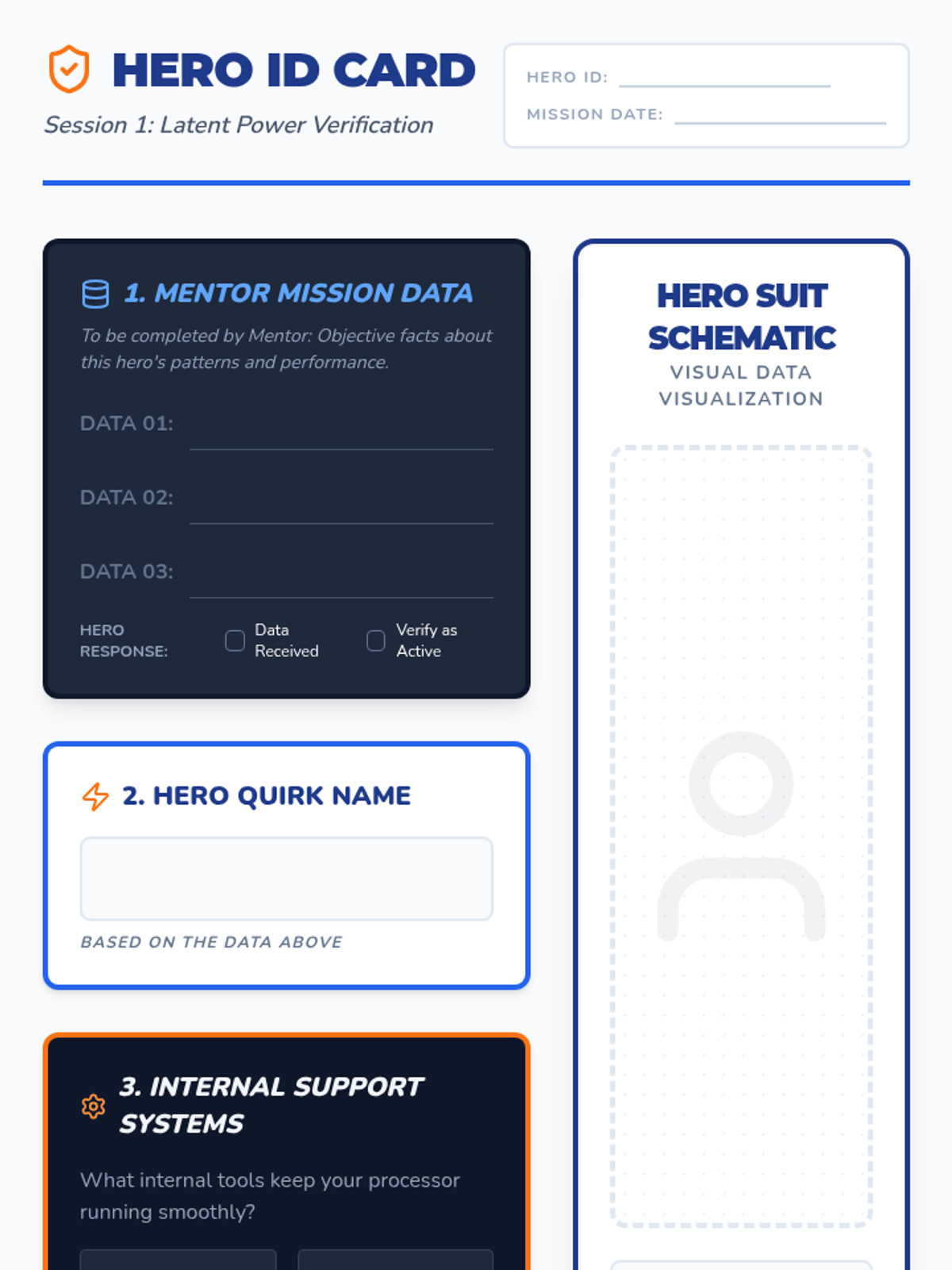
A multi-session social-emotional learning journey using anime themes to build self-esteem, self-advocacy skills, and positive peer interaction strategies for middle school students. Through the lens of hero tropes and fantasy narratives, students identify their own 'quirks' and practice standing up for themselves.
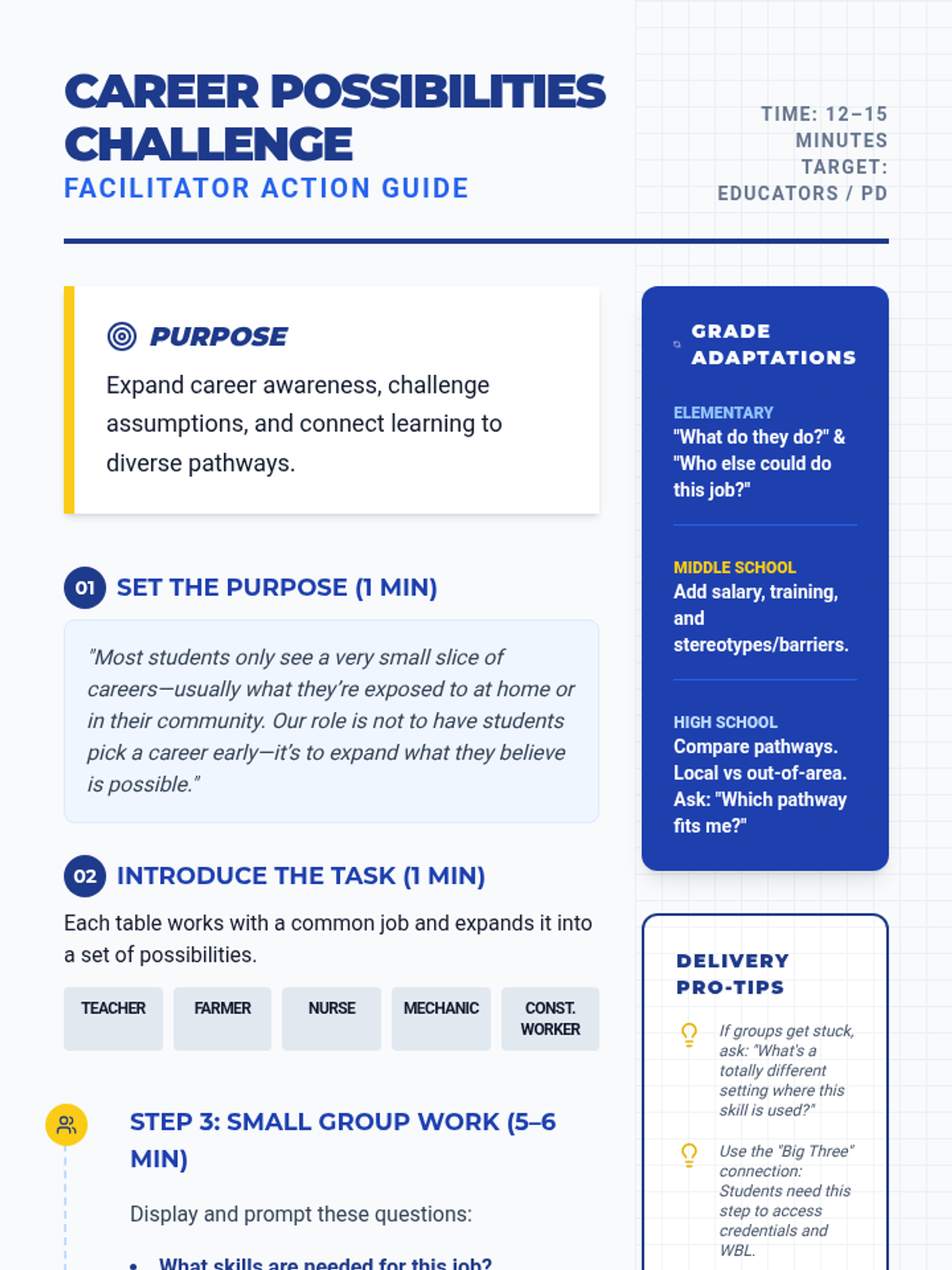
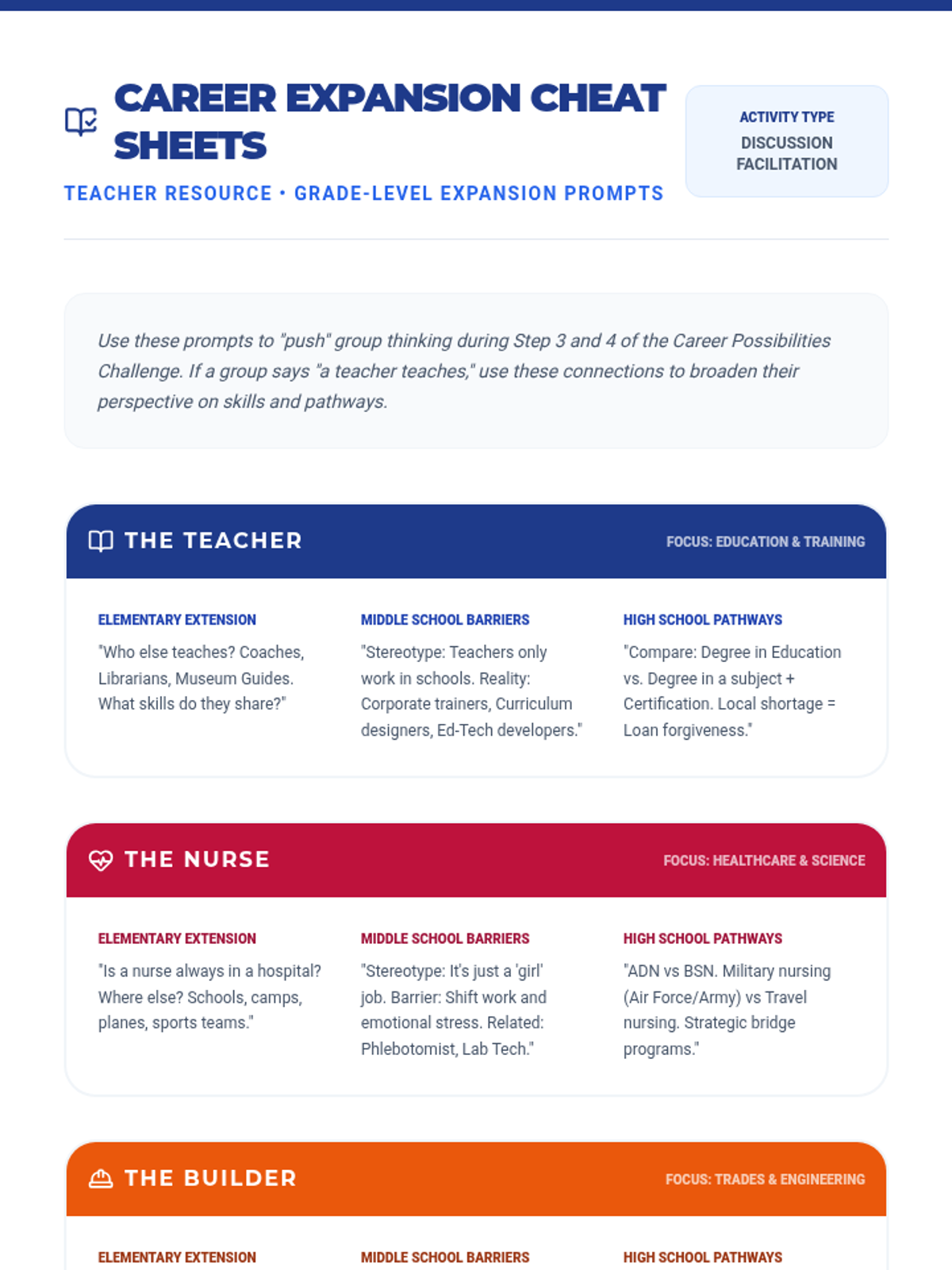
A comprehensive professional development and classroom activity suite designed to expand career awareness across K-12. Educators learn to facilitate the 'Career Possibilities Challenge,' while students engage in grade-appropriate tasks to map skills, pathways, and overcome stereotypes.
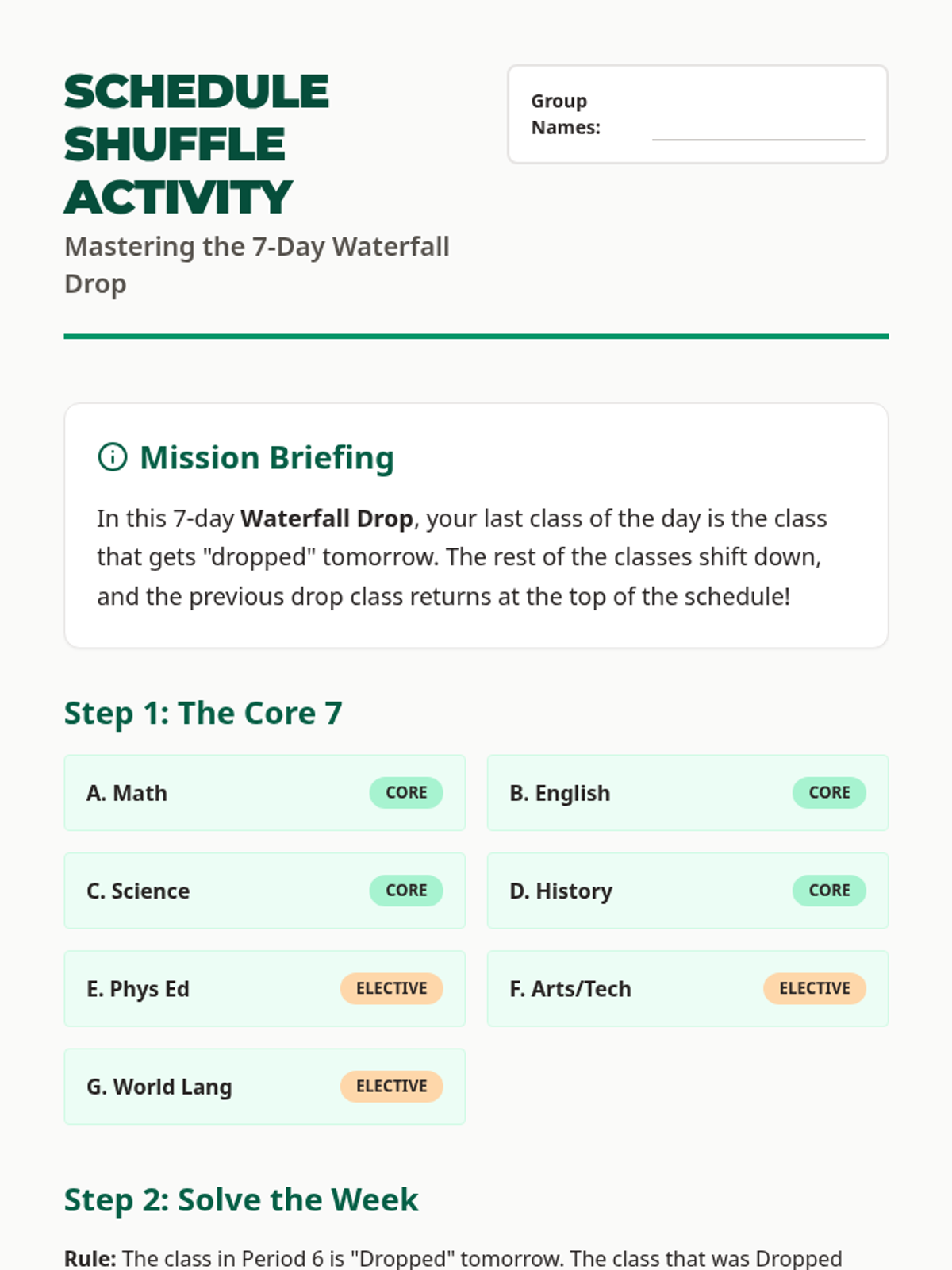
A short unit designed to help rising 7th graders transition to middle school by understanding the shift in teacher dynamics, scheduling complexities, and the social-emotional skills needed to navigate diverse classroom environments.
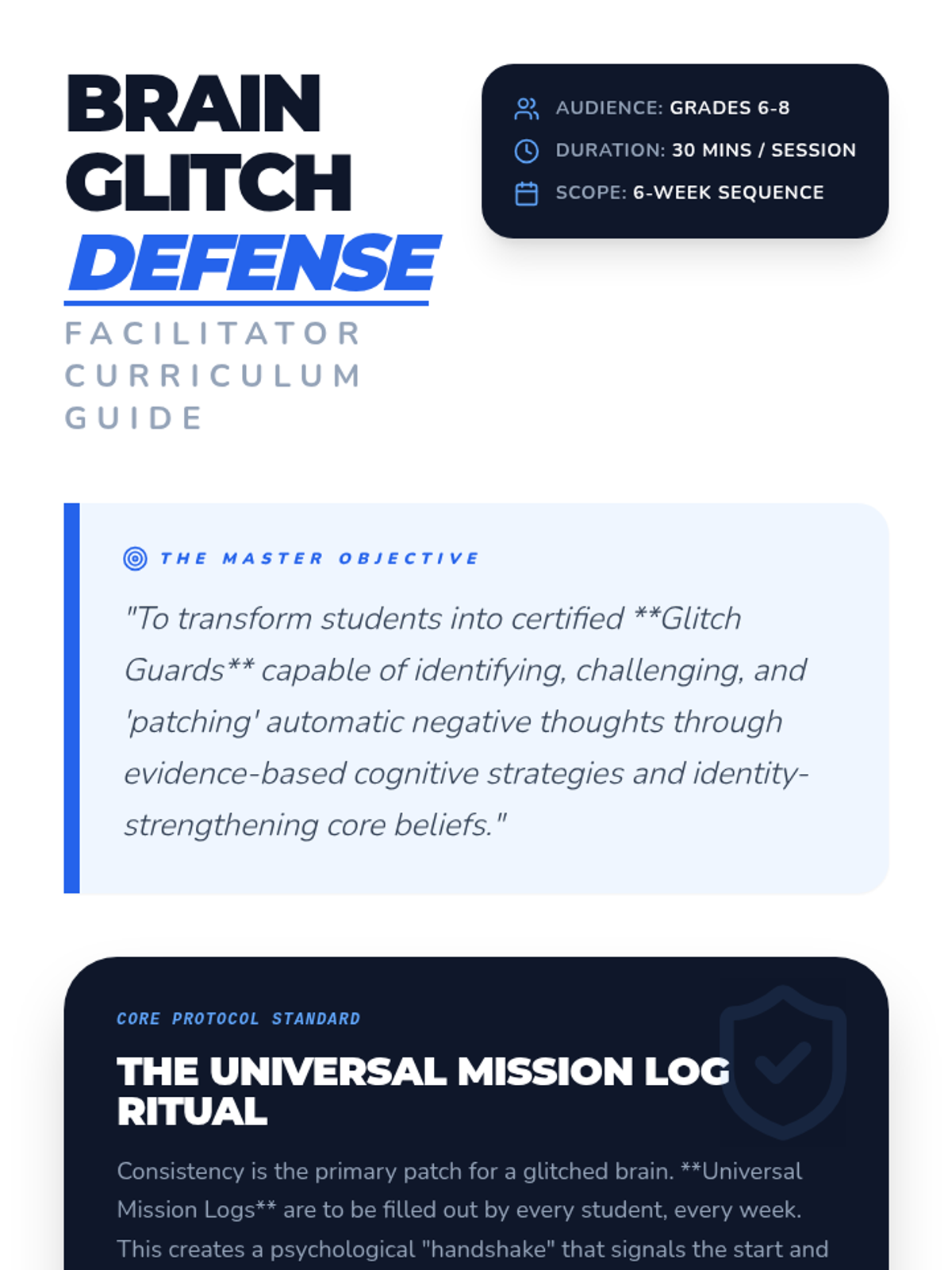
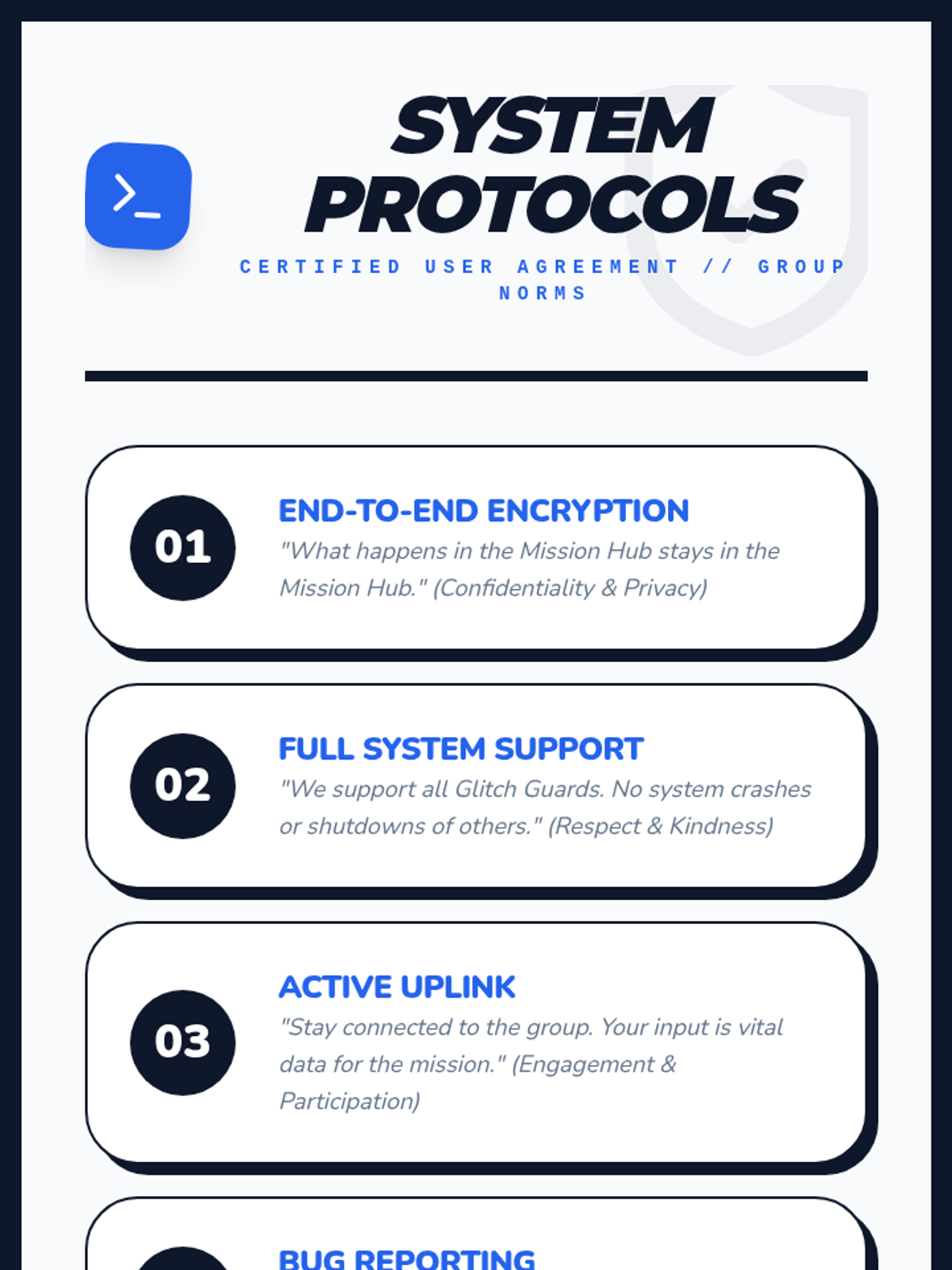
A comprehensive 6-week gamified counseling curriculum for middle schoolers. It uses a 'cyber-defense' theme to help students identify, challenge, and 'patch' cognitive distortions (brain glitches) through interactive games, scenario-based learning, and cognitive-behavioral techniques.
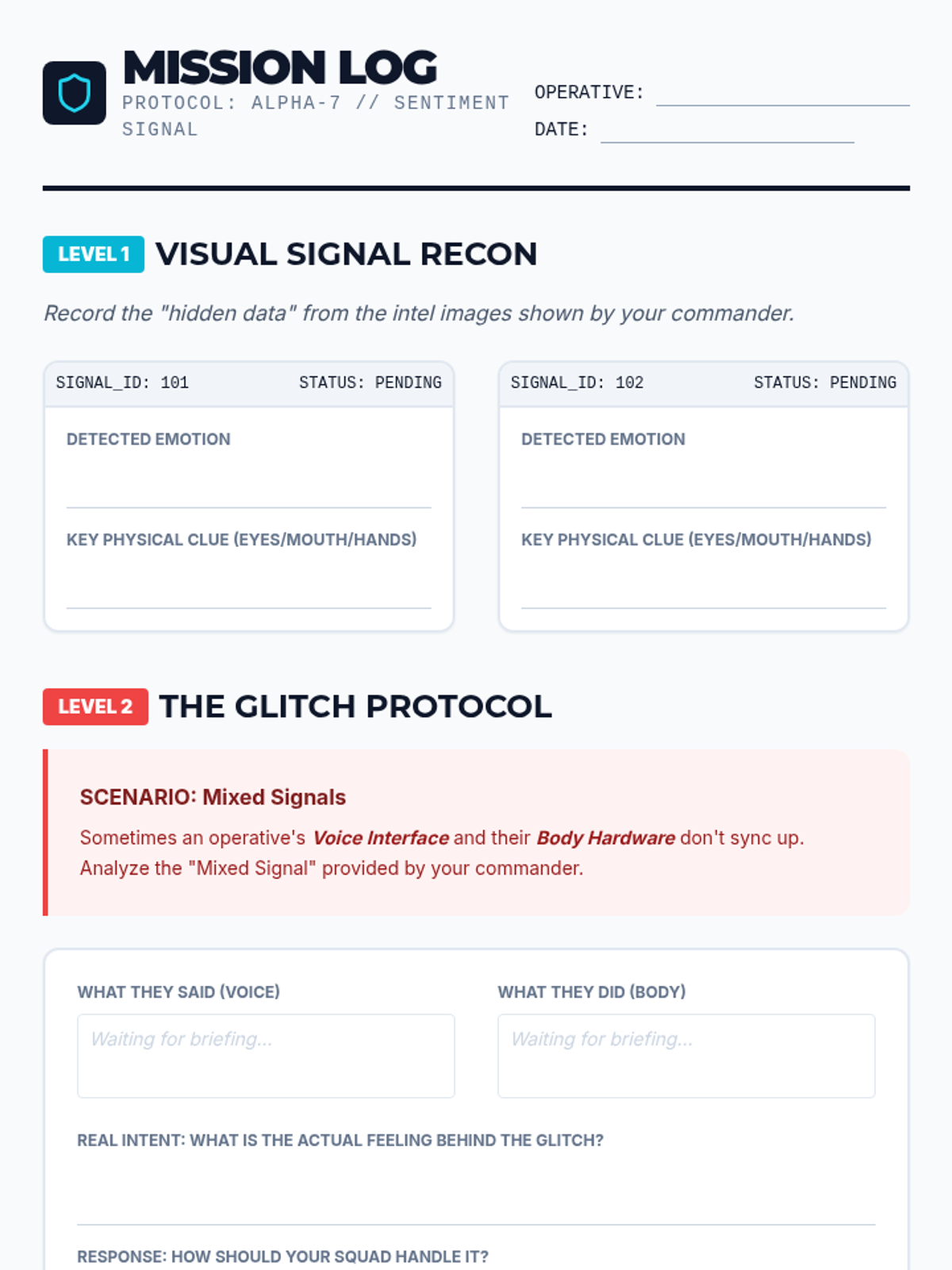
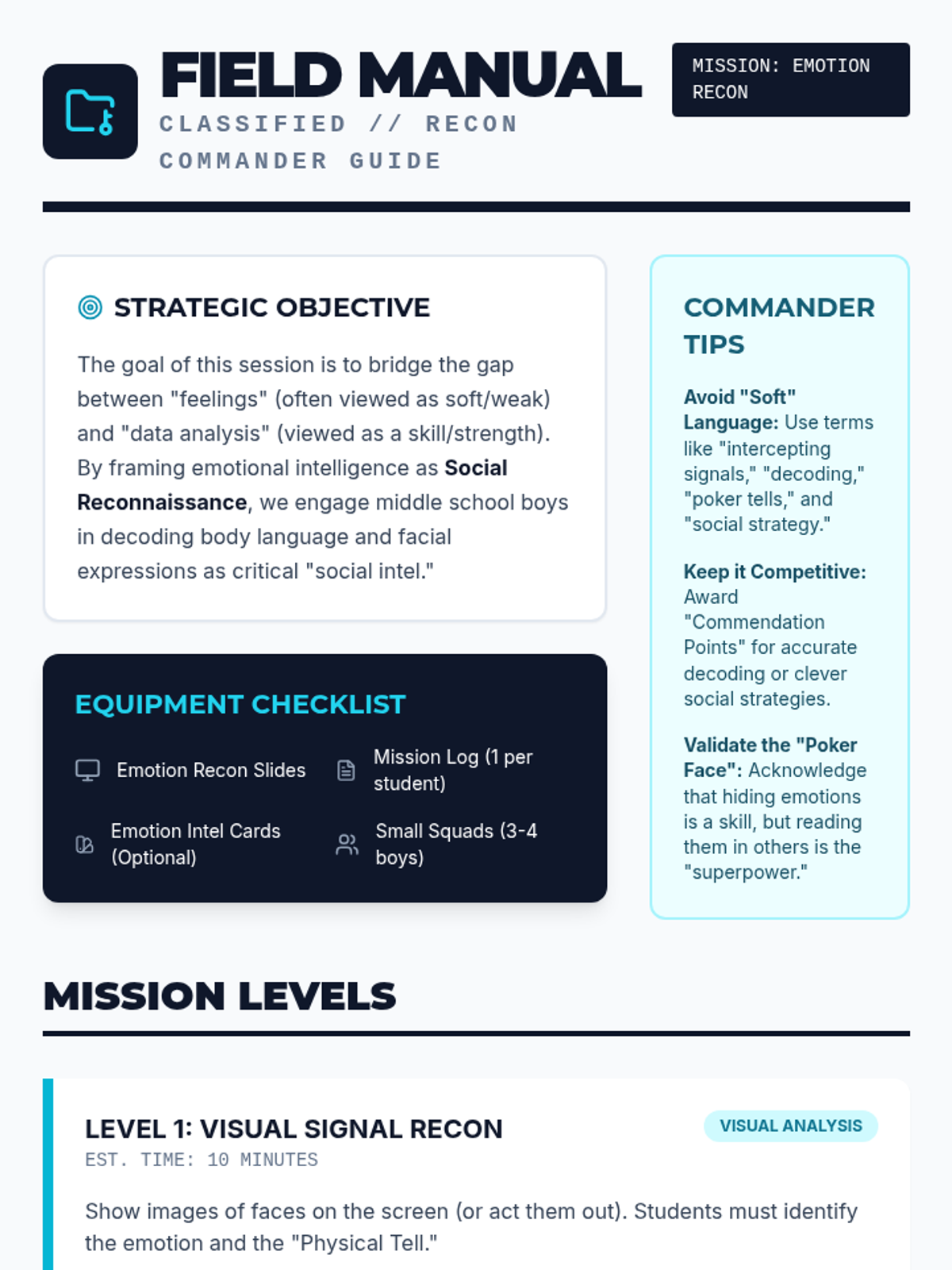
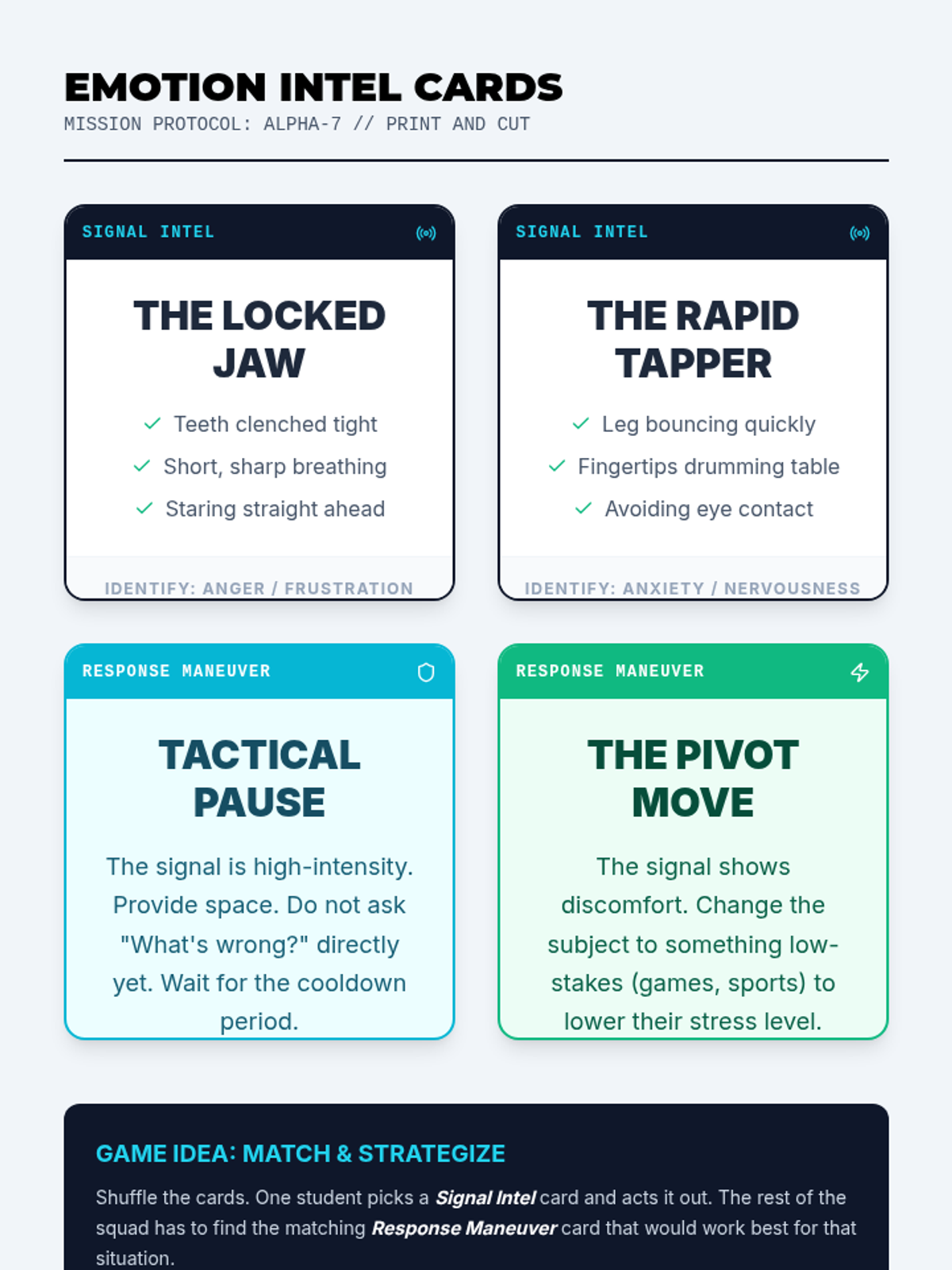
A high-energy, tactical-themed program designed for middle school boys to develop emotional intelligence through interactive 'recon missions' and collaborative games.
A collection of lessons that use modern cultural icons to teach literacy, social-emotional skills, and creative expression to elementary and middle school students.
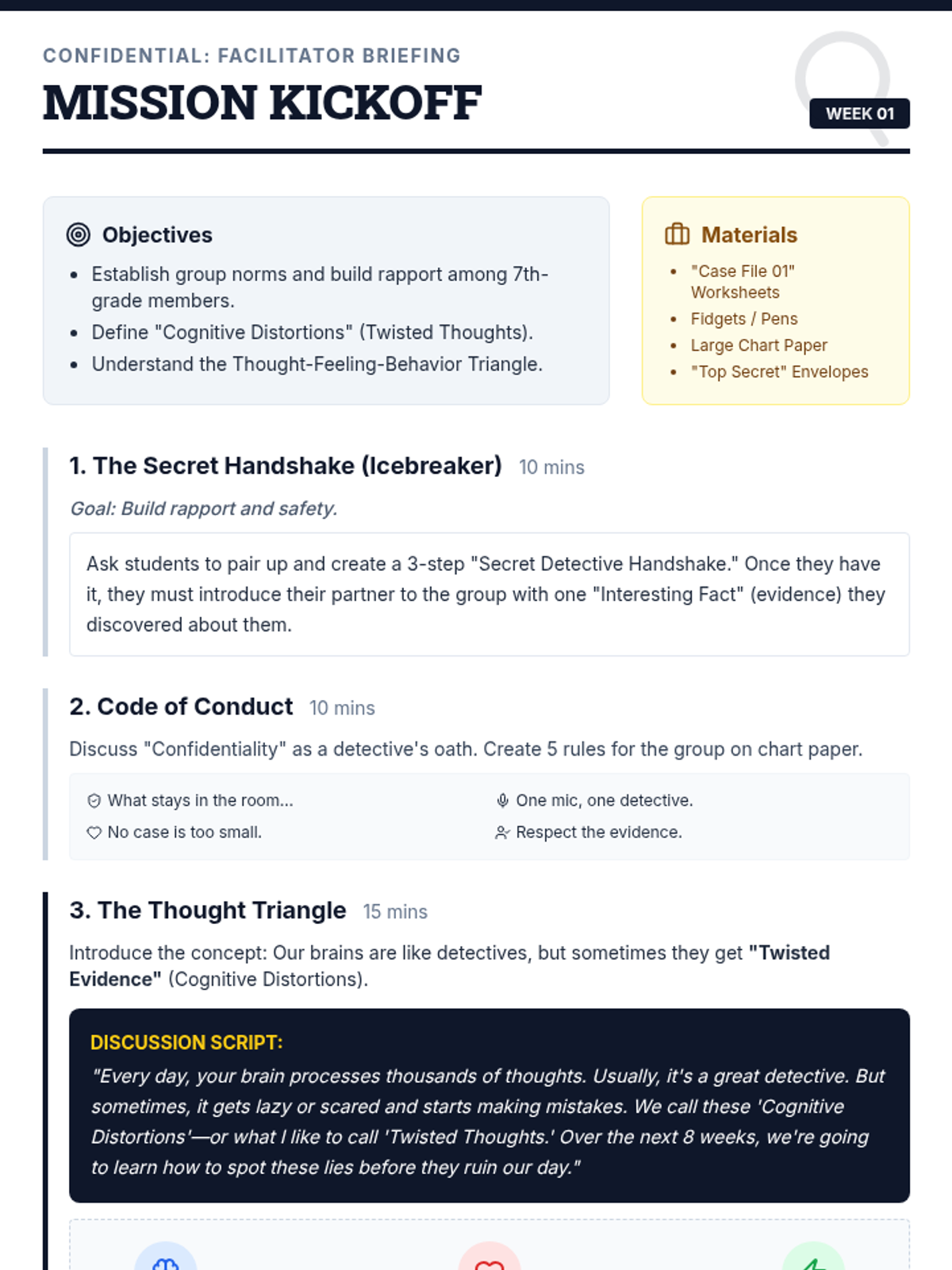
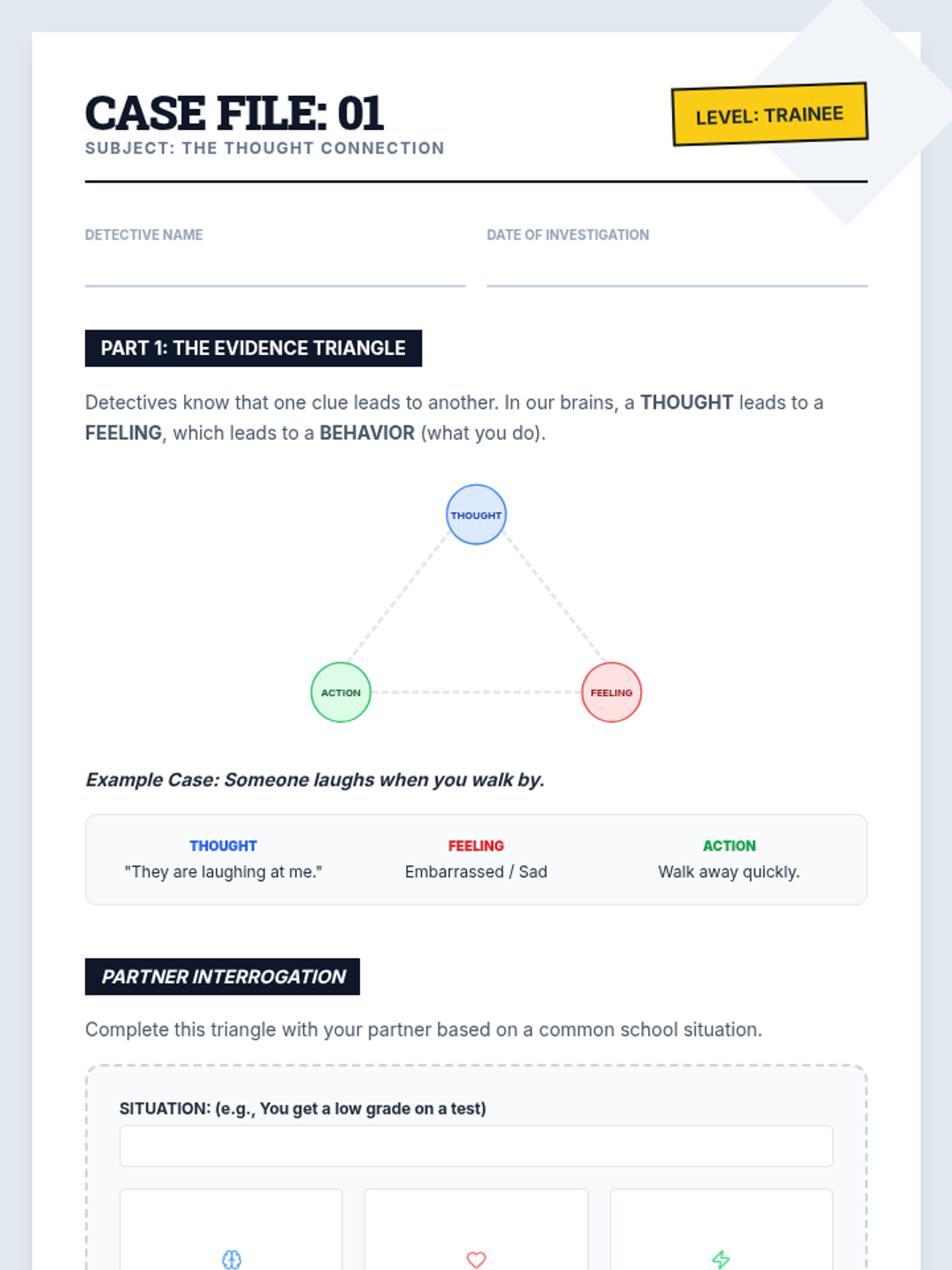
An 8-week cognitive behavioral therapy (CBT) based small group curriculum for 7th graders, focused on identifying and challenging cognitive distortions using a fun detective theme.
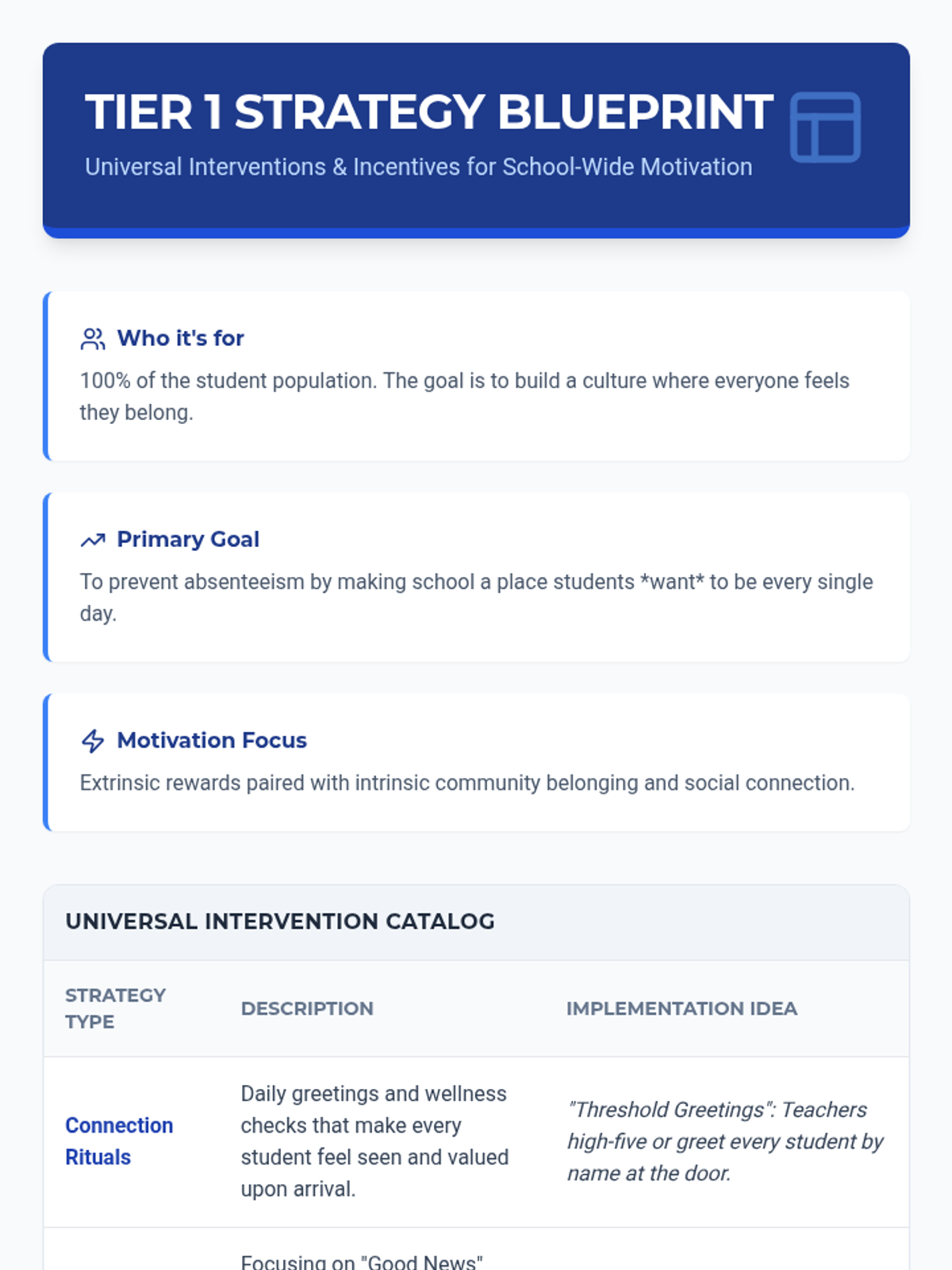
A comprehensive set of attendance interventions and motivation strategies spanning universal, targeted, and intensive support levels to improve student motivation and school connection.
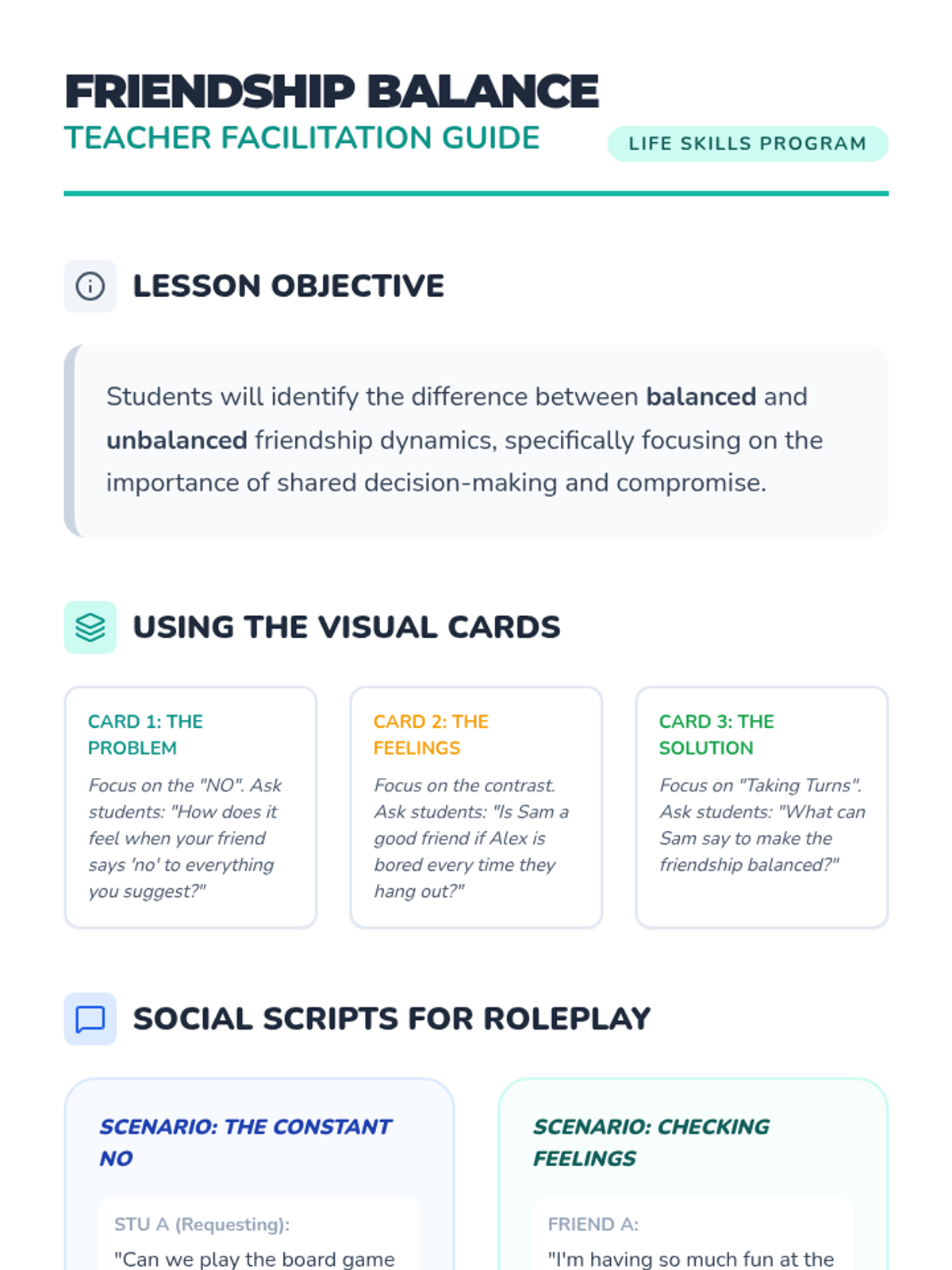
A series of lessons designed to help students in life skills programs navigate social interactions and build healthy relationships.
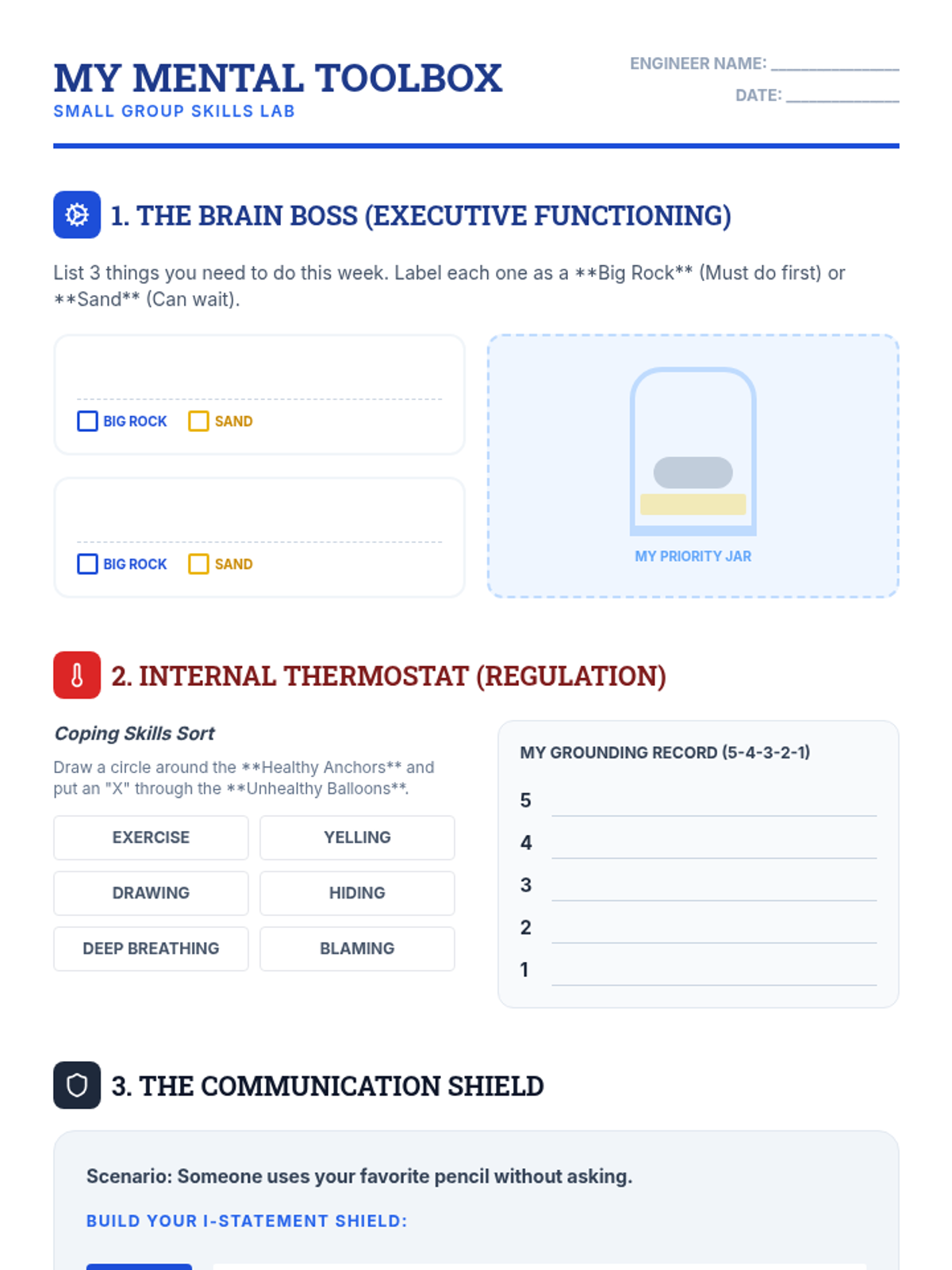
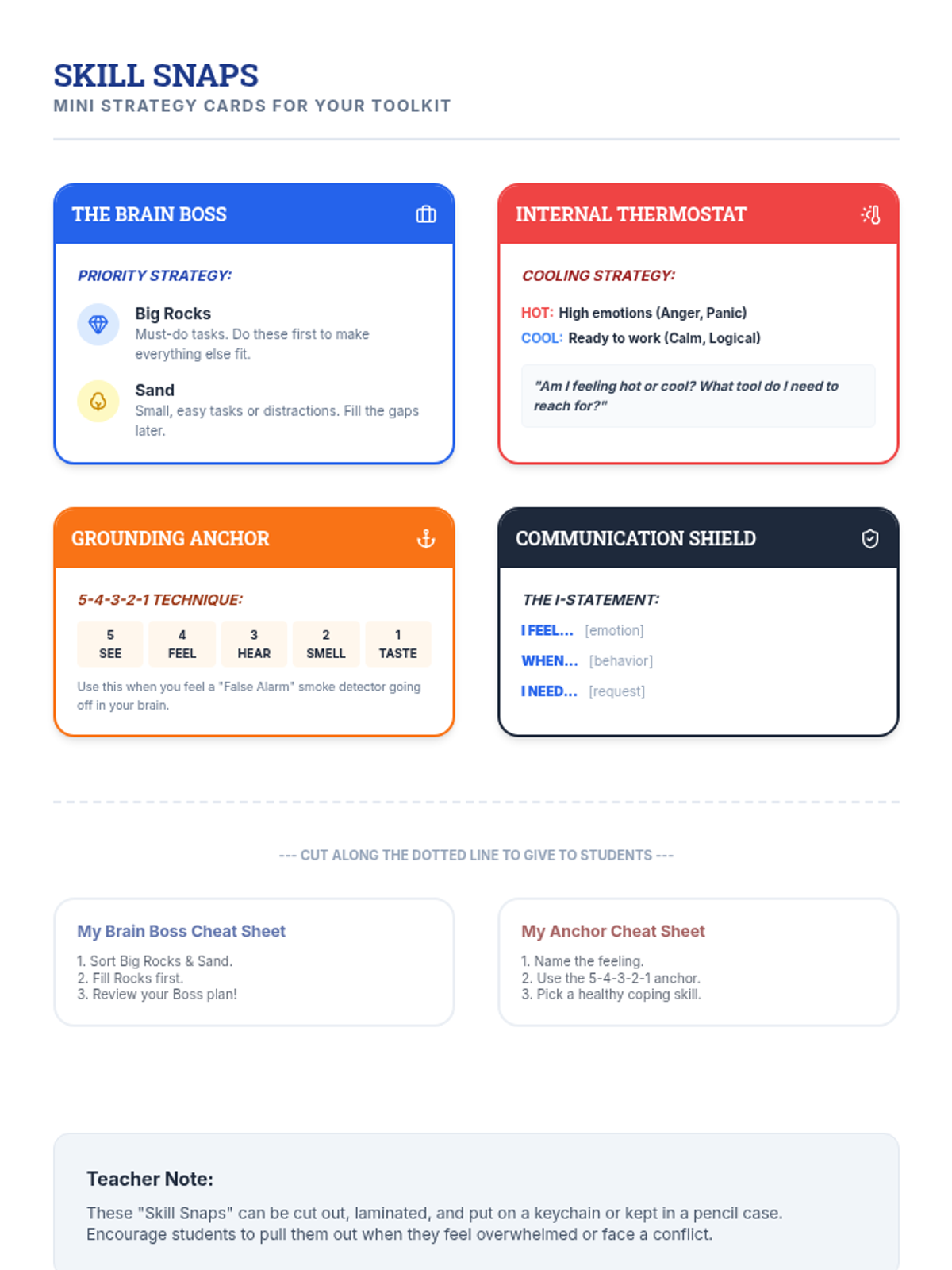
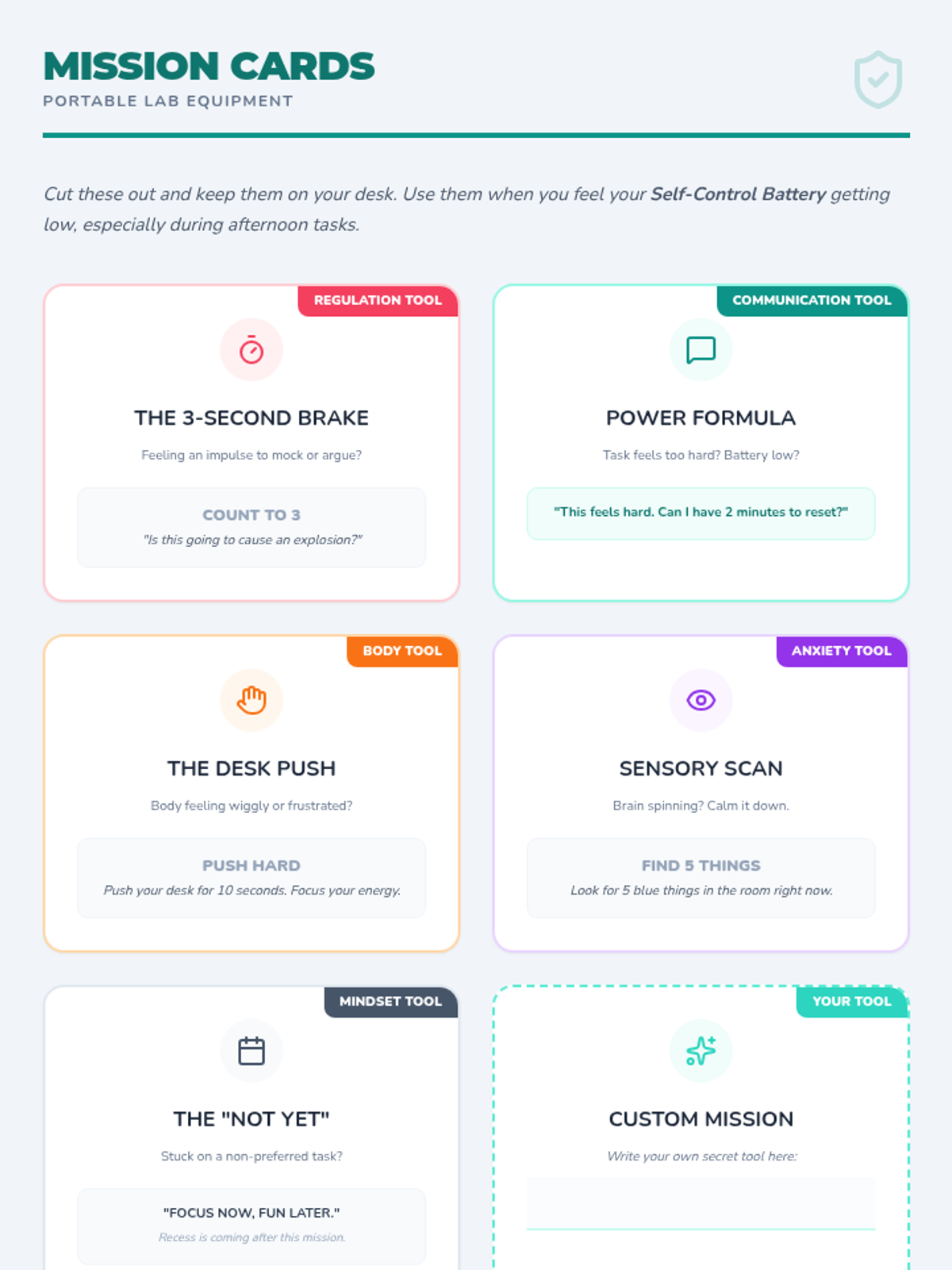
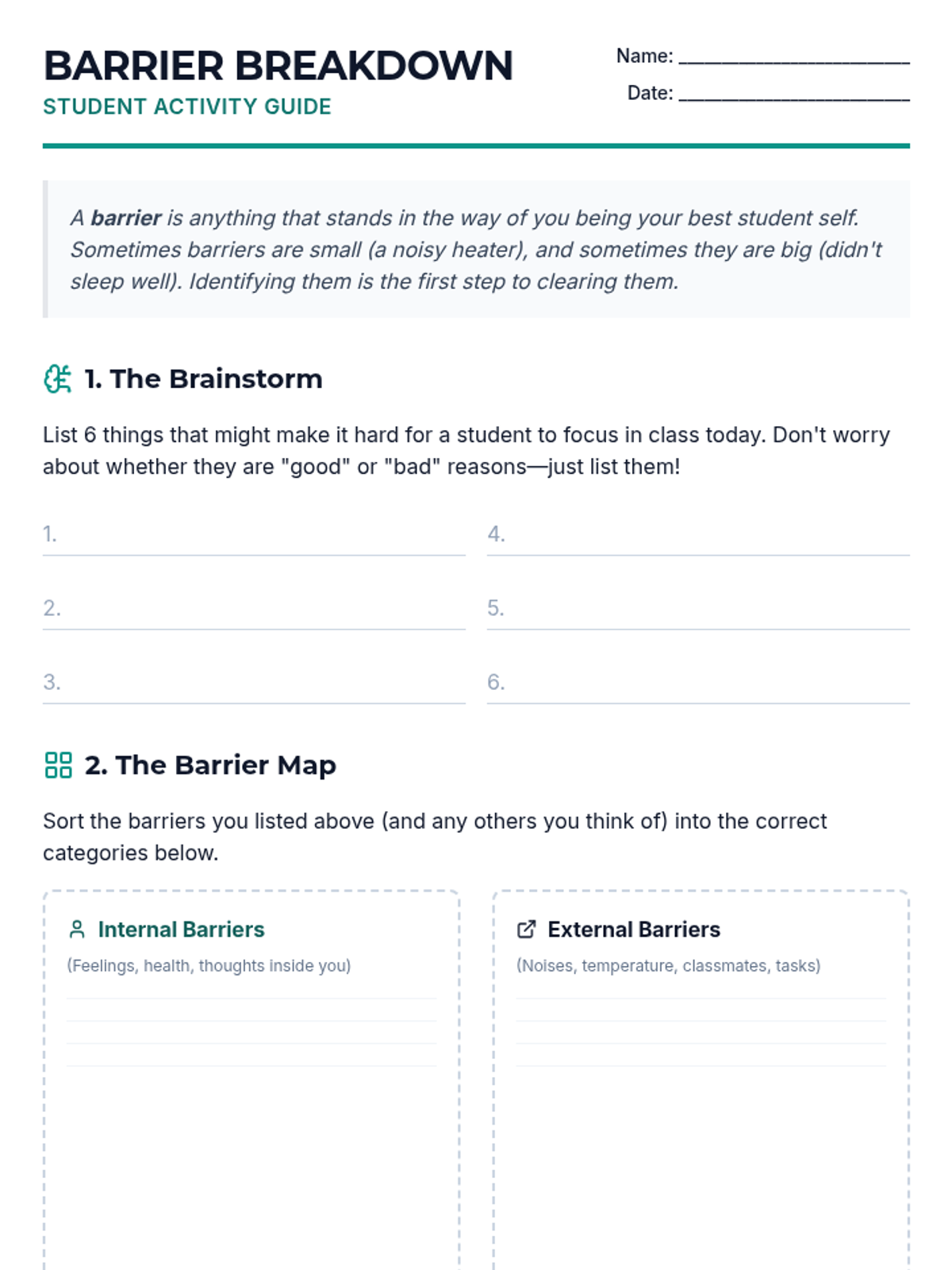
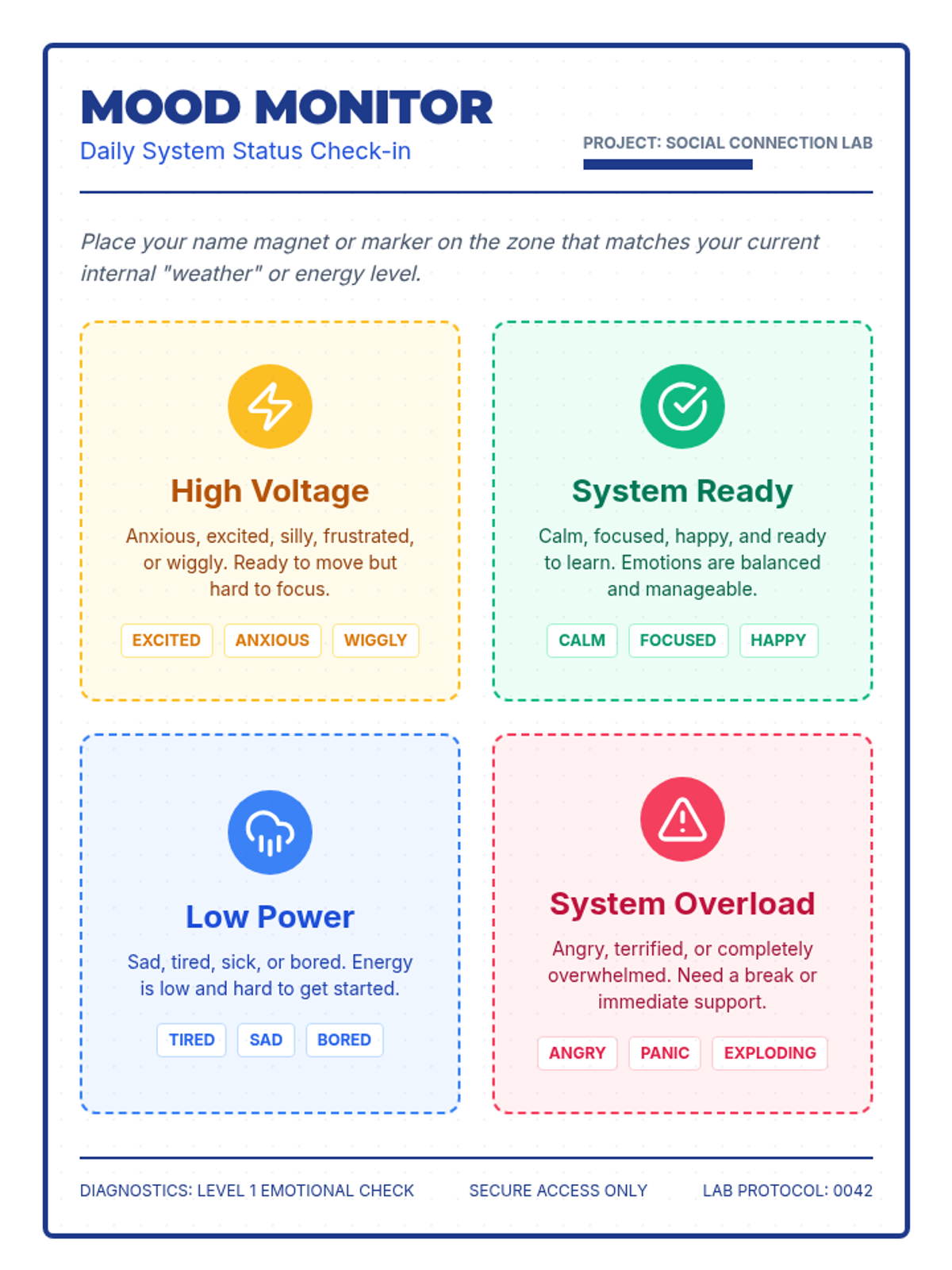
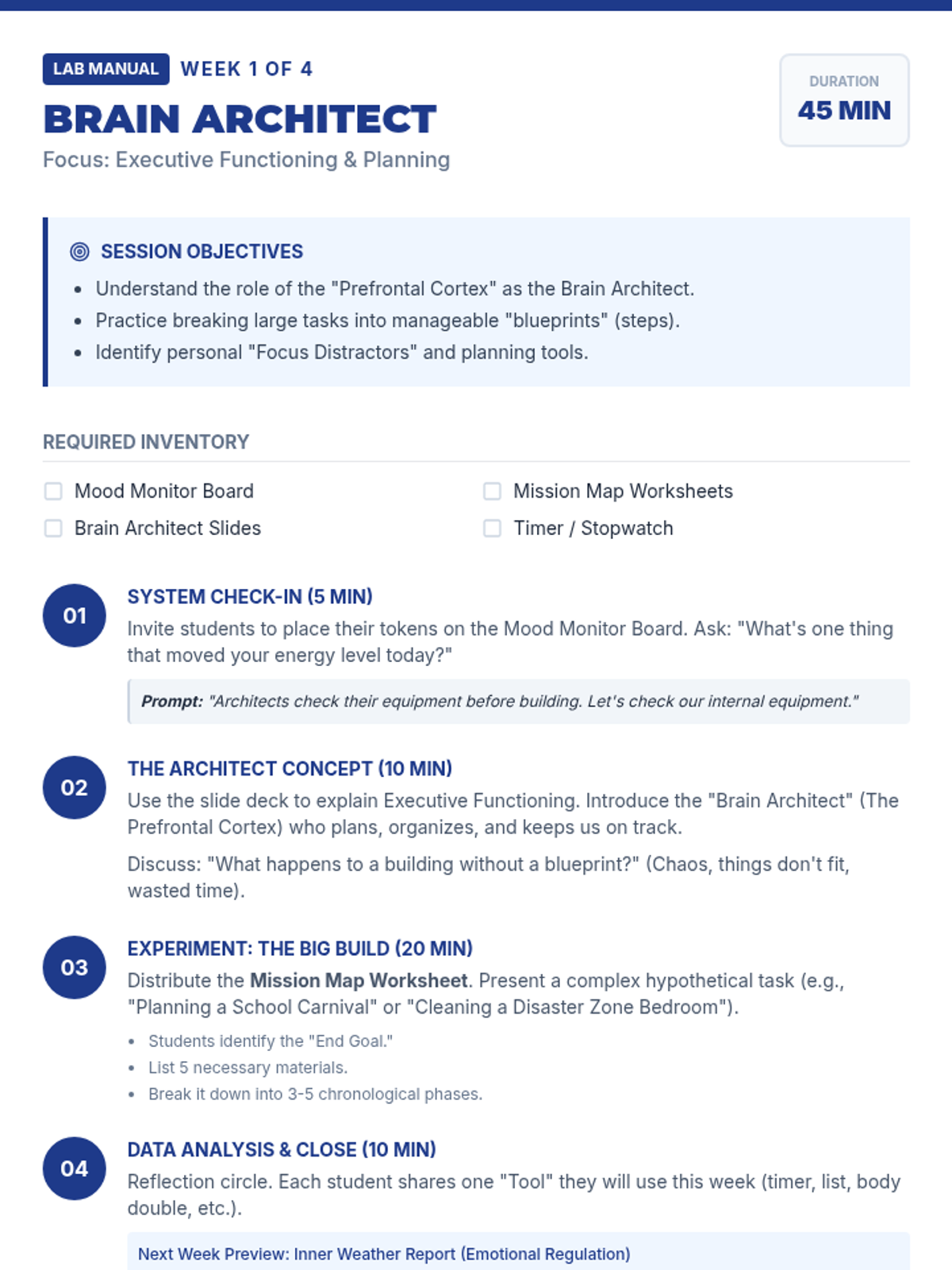
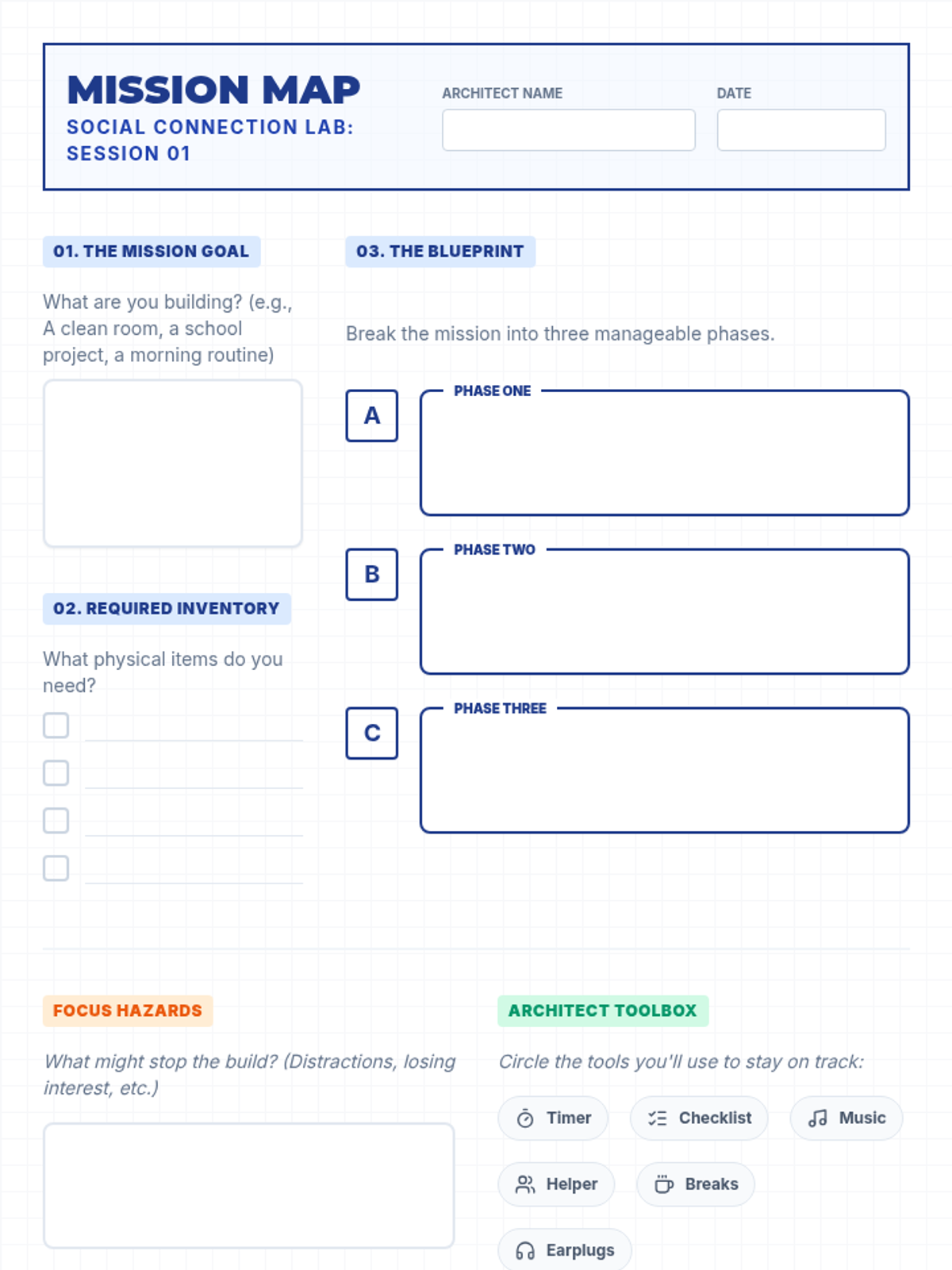
A 4-week group counseling curriculum designed to build essential social and emotional competencies through a 'lab-based' experimental approach. Students explore executive functioning, emotional regulation, friendship dynamics, and conflict resolution using interactive tools and reflective practices.
A comprehensive series of lessons focusing on social-emotional learning, health, and personal accountability, helping students navigate peer pressure and school expectations.