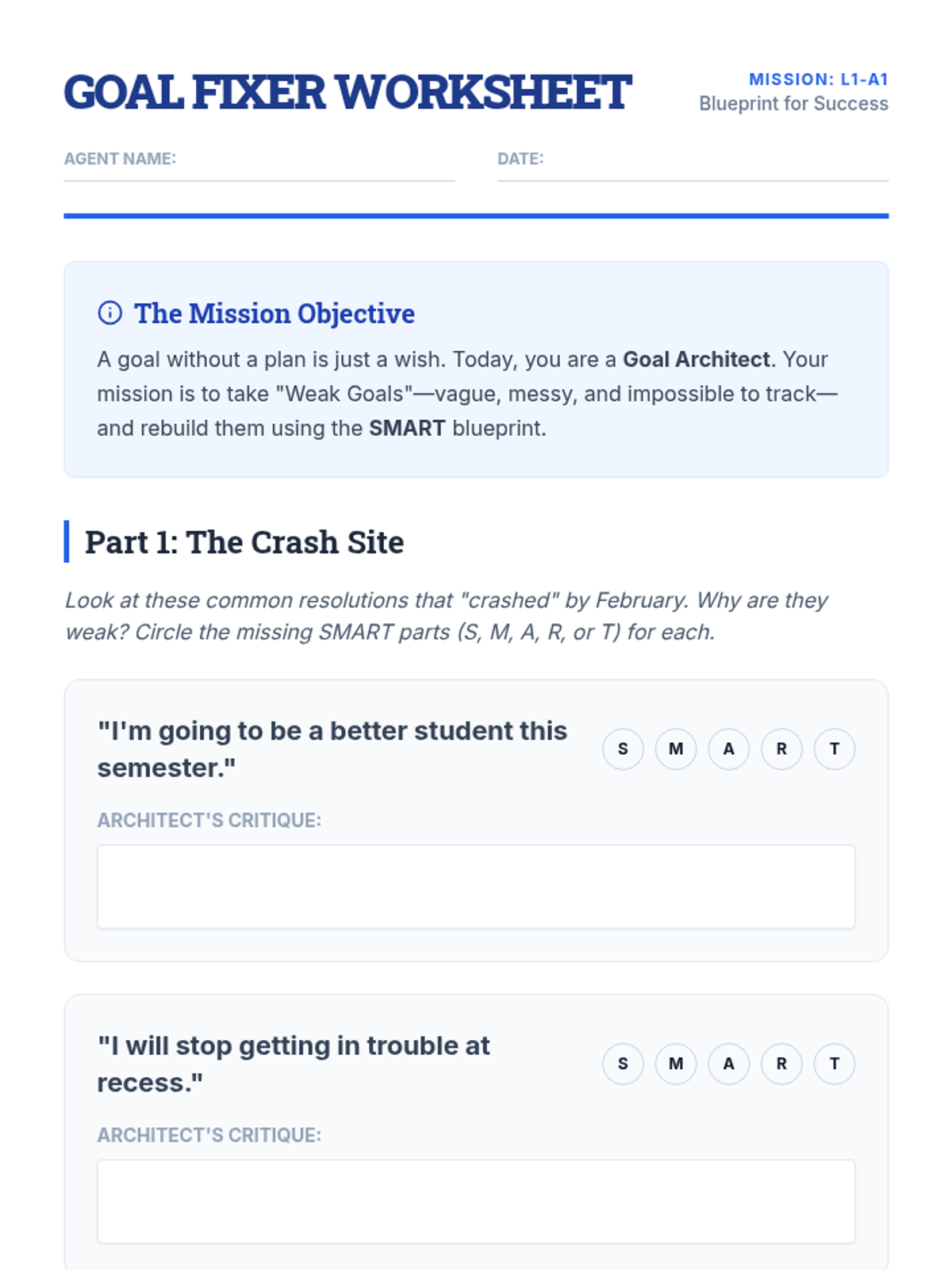
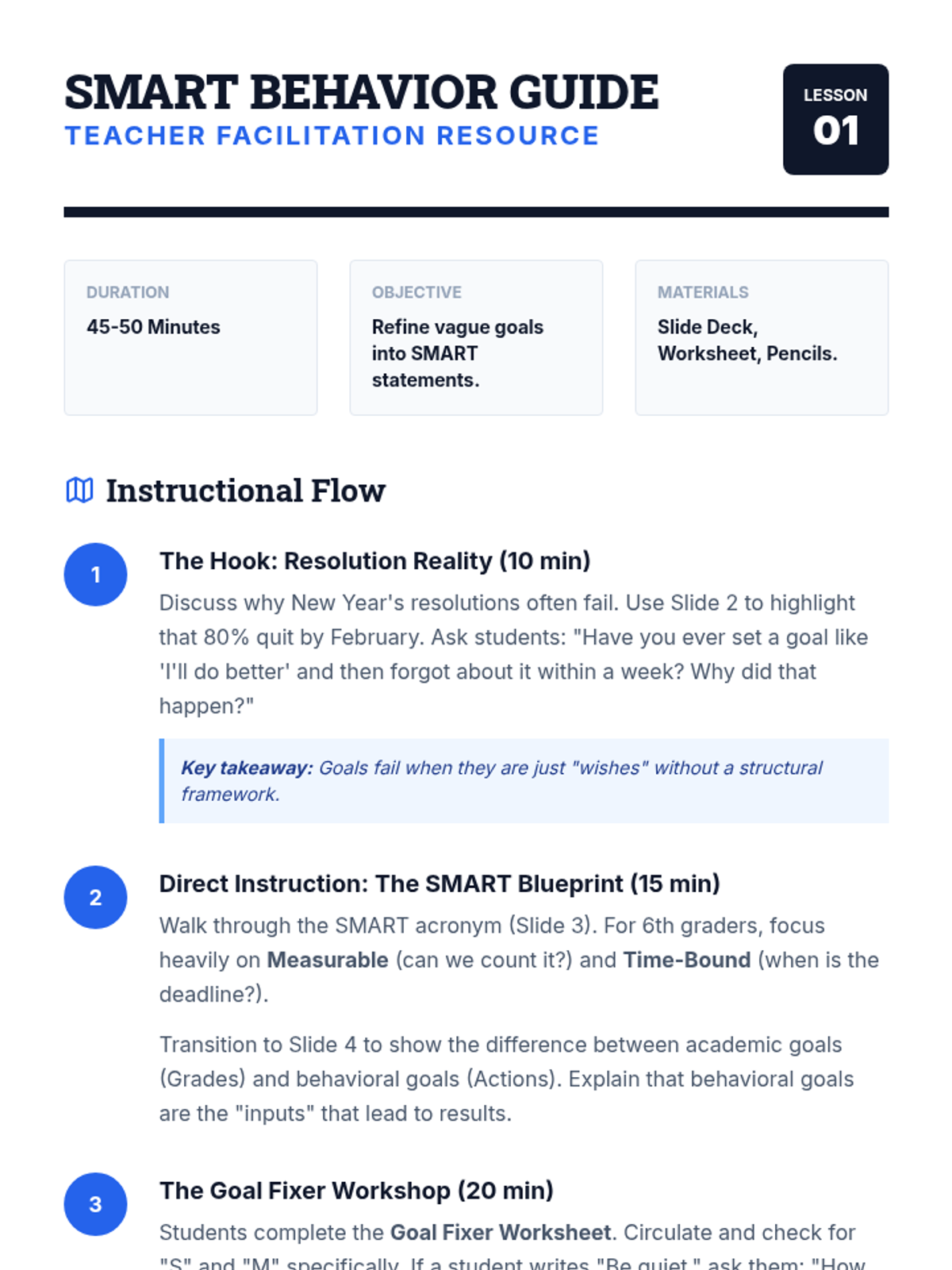
Stop-and-think strategies, impulse management, and SMART goal setting for personal growth. Develops internal motivation, stress reduction techniques, and resilience through proactive planning and monitoring.
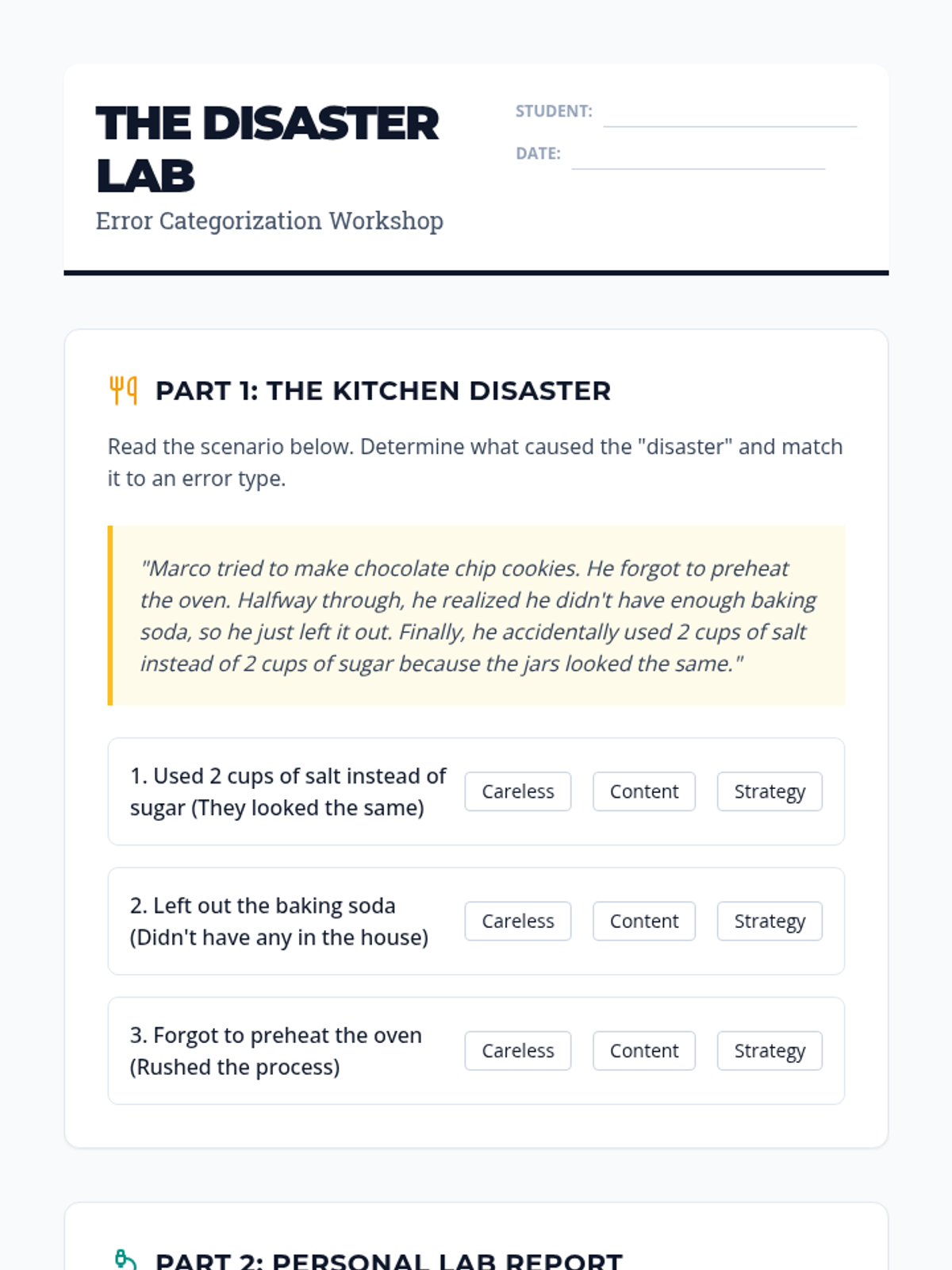
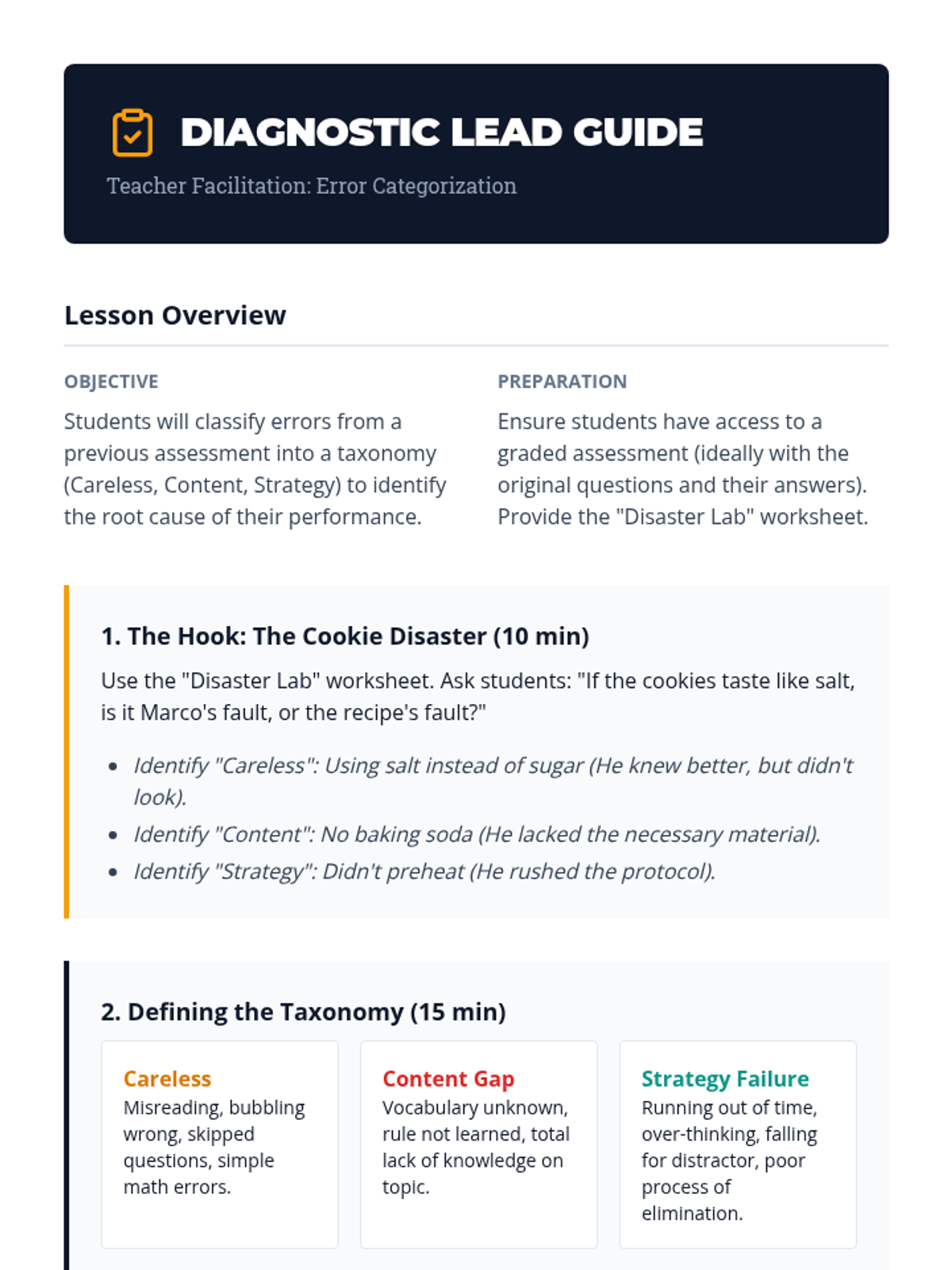
A comprehensive sequence on metacognitive error analysis, teaching students to categorize, analyze, and learn from their mistakes to improve test-taking performance. Students move from simple error classification to deep retrospective correction and personal strategy development.
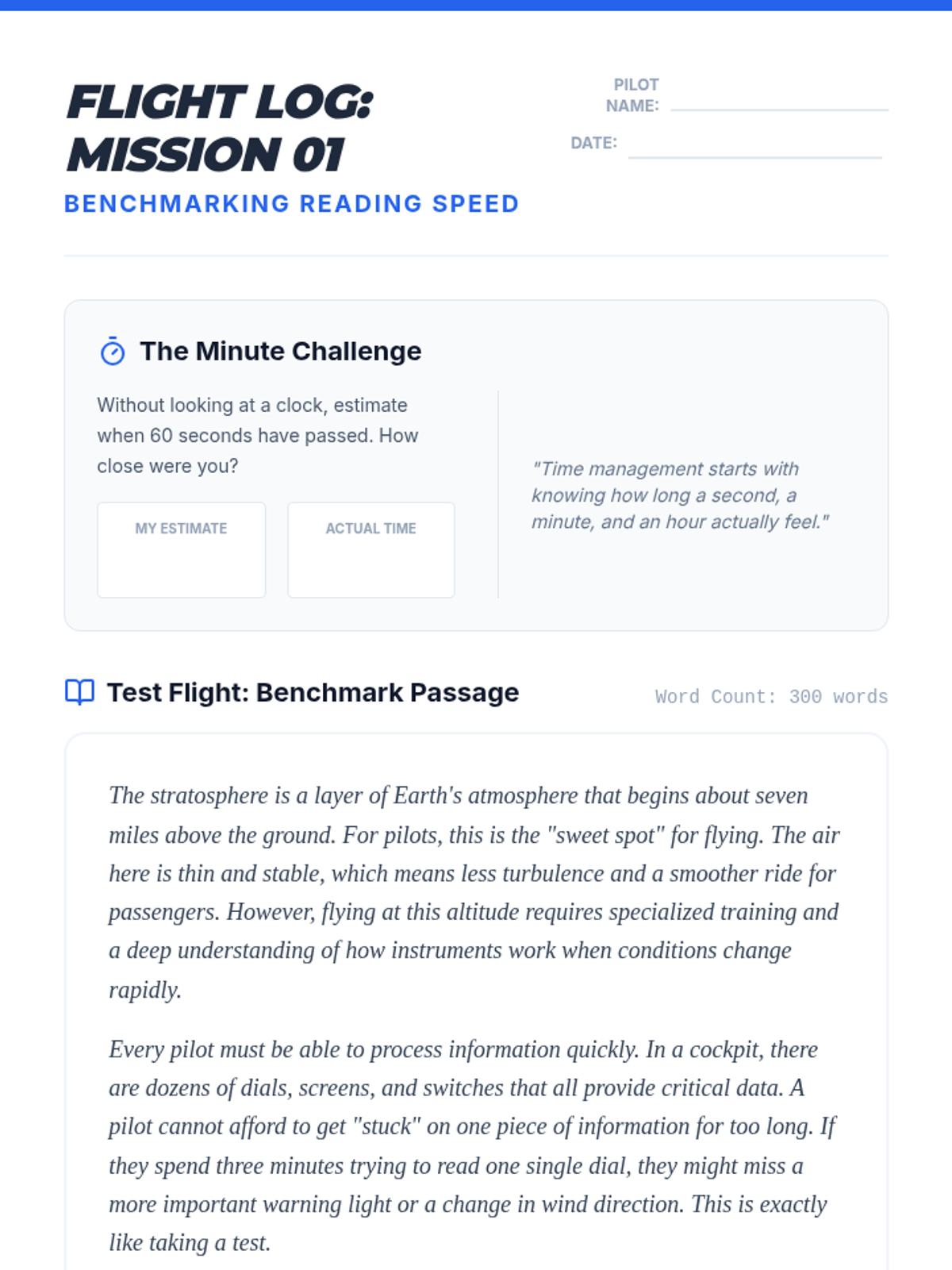
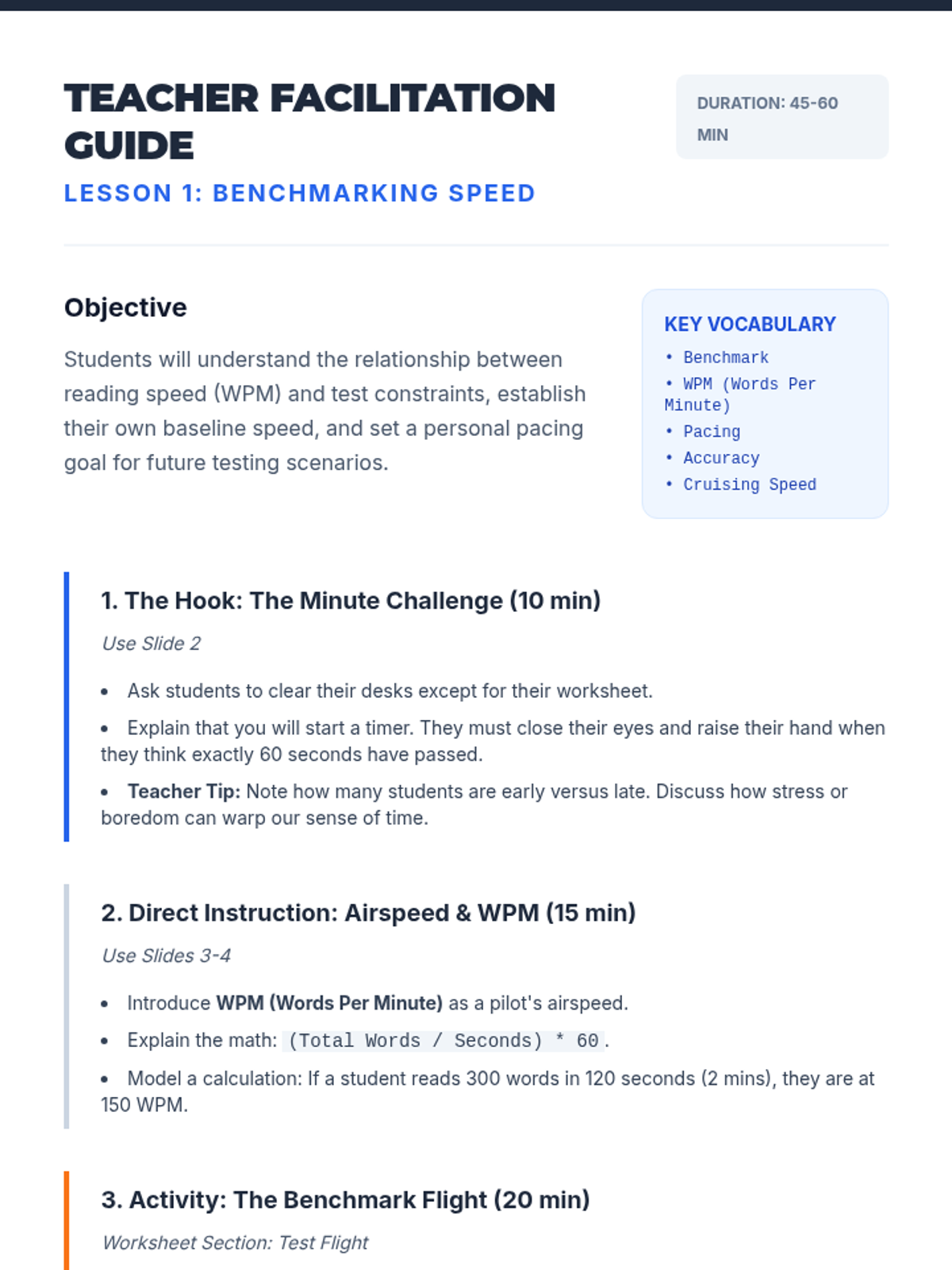
A comprehensive sequence for 7th Grade ESL students focused on developing the executive functioning skills needed for successful test-taking. Students learn to manage time, prioritize questions, annotate for focus, and regulate anxiety through a 'Test Pilot' theme.
This sequence introduces 6th-grade students to visual planning and time management. Students learn to use different tools, distinguish between fixed and flexible time, and develop routines to maintain a personalized organizational system.
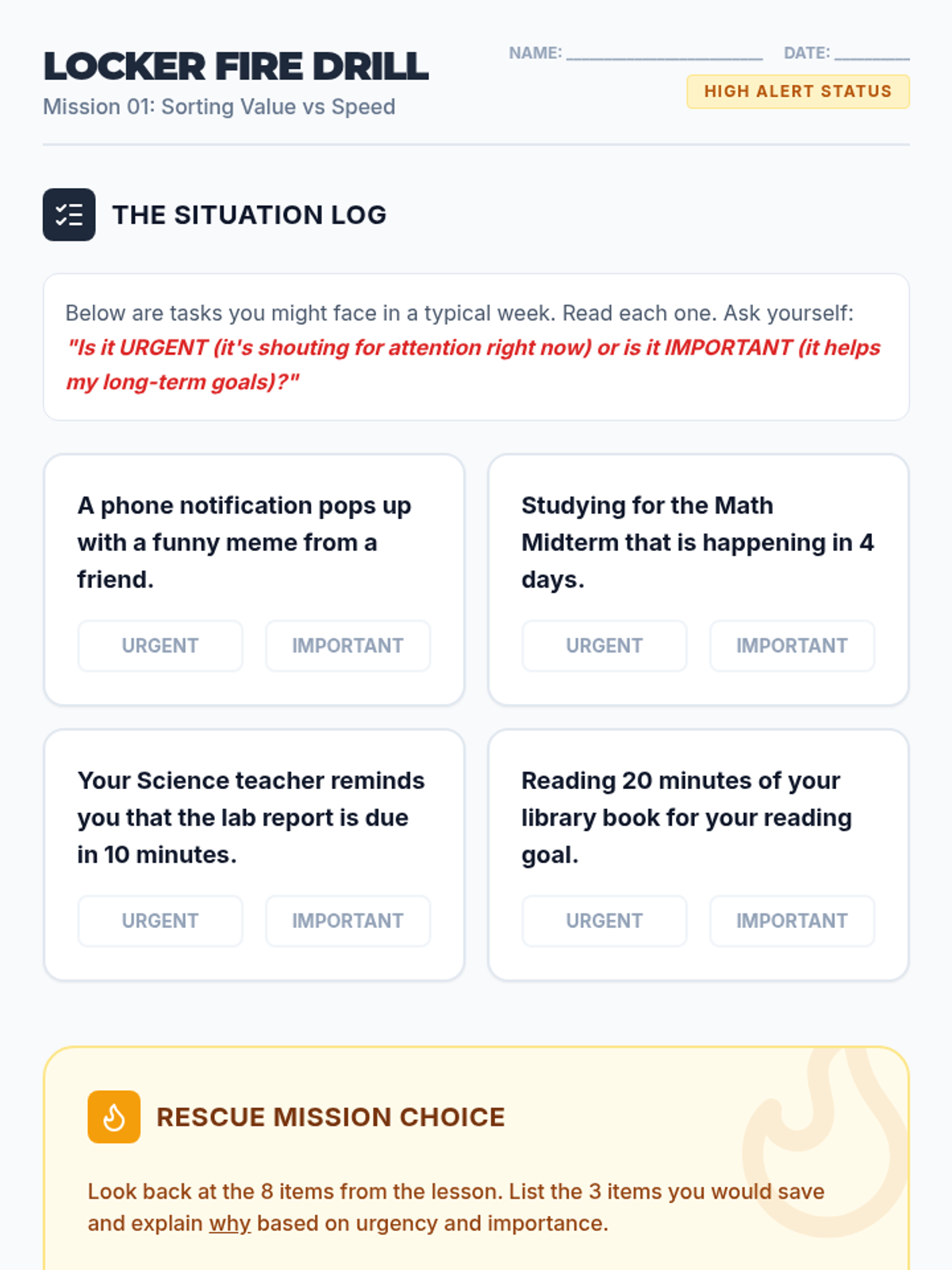
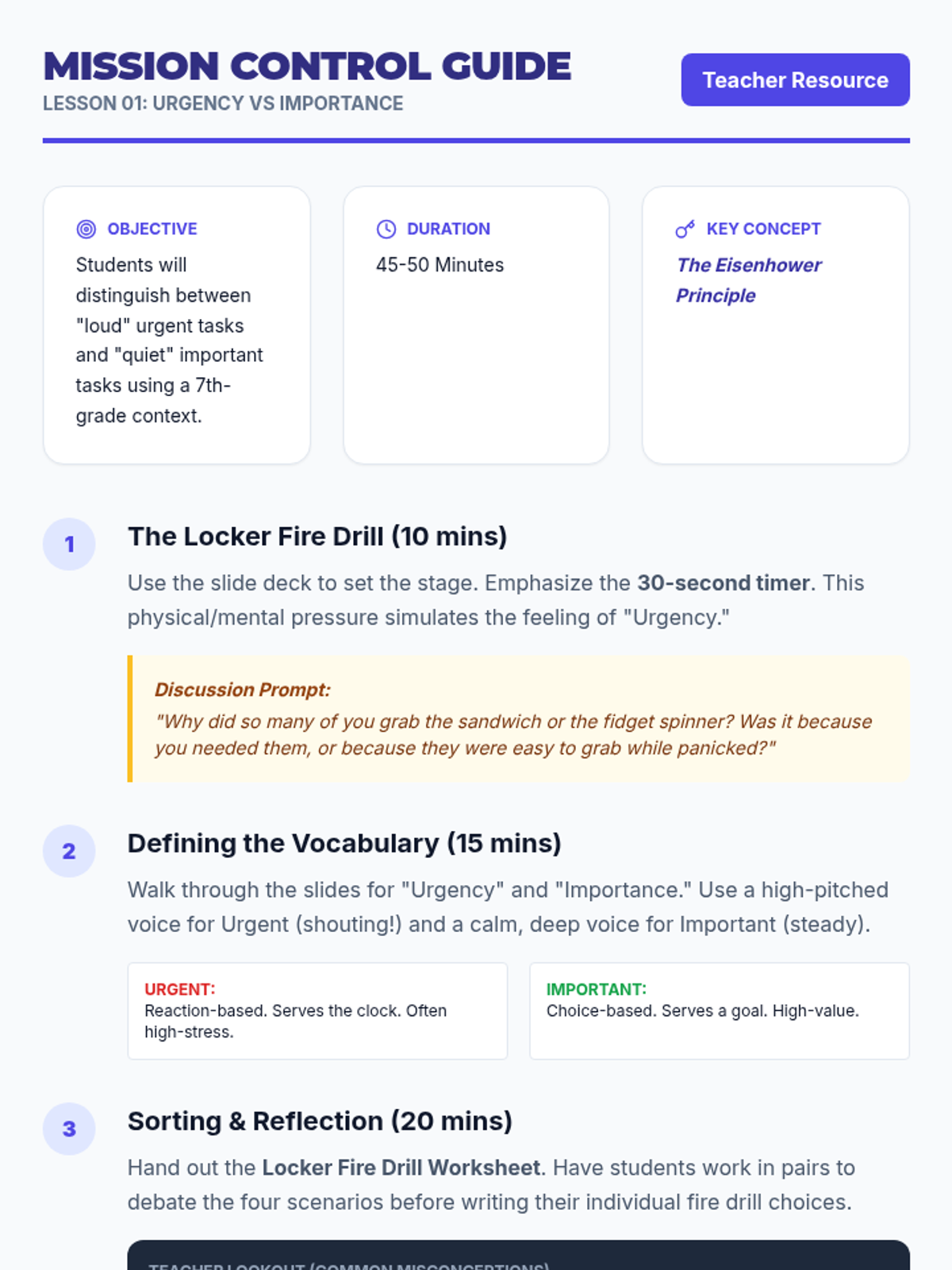
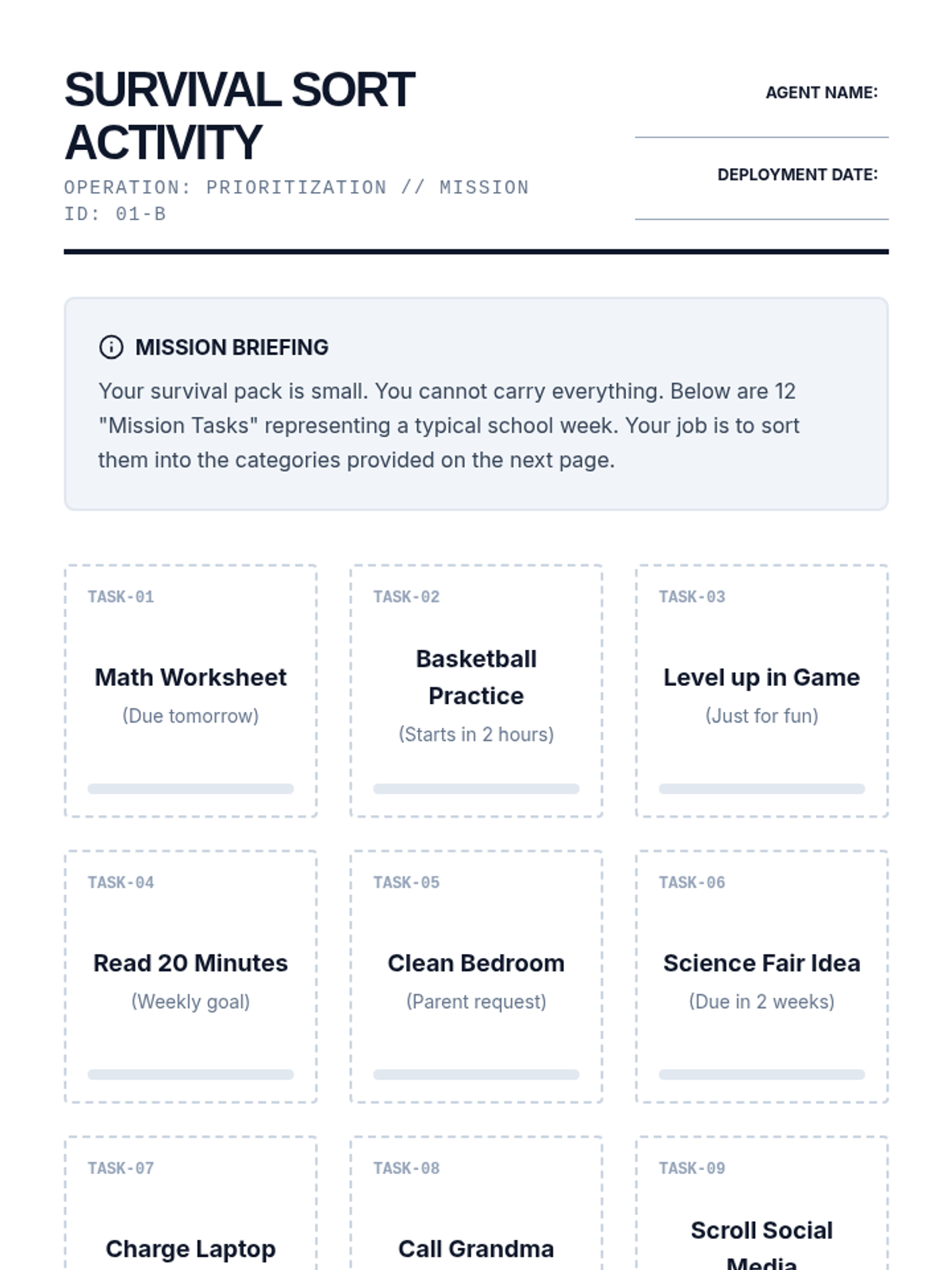
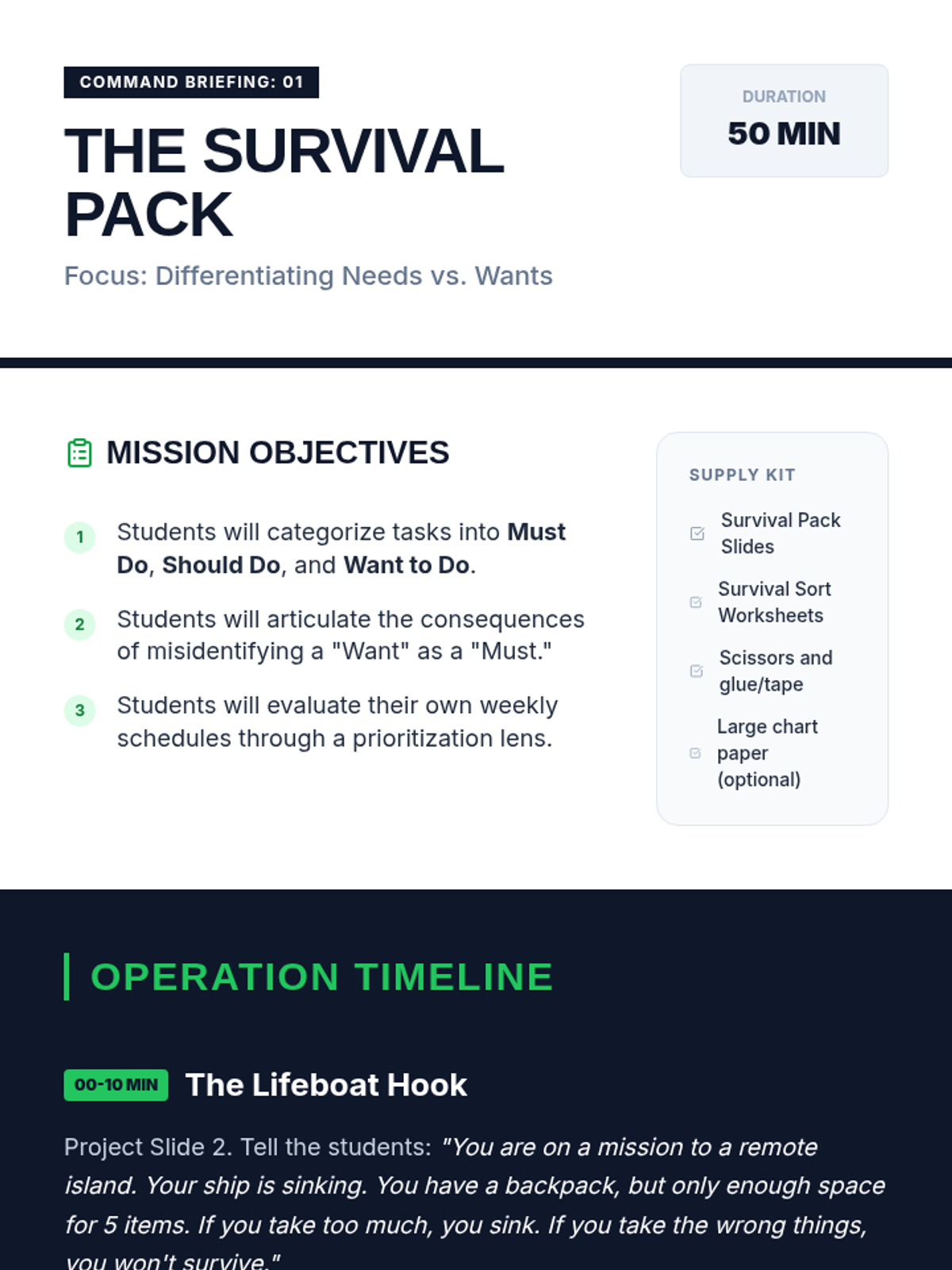
This sequence teaches 6th-grade students how to balance multiple commitments using urgency and importance frameworks. Through game-based simulations and the 'Jar of Rocks' analogy, students develop executive function skills for effective prioritization.
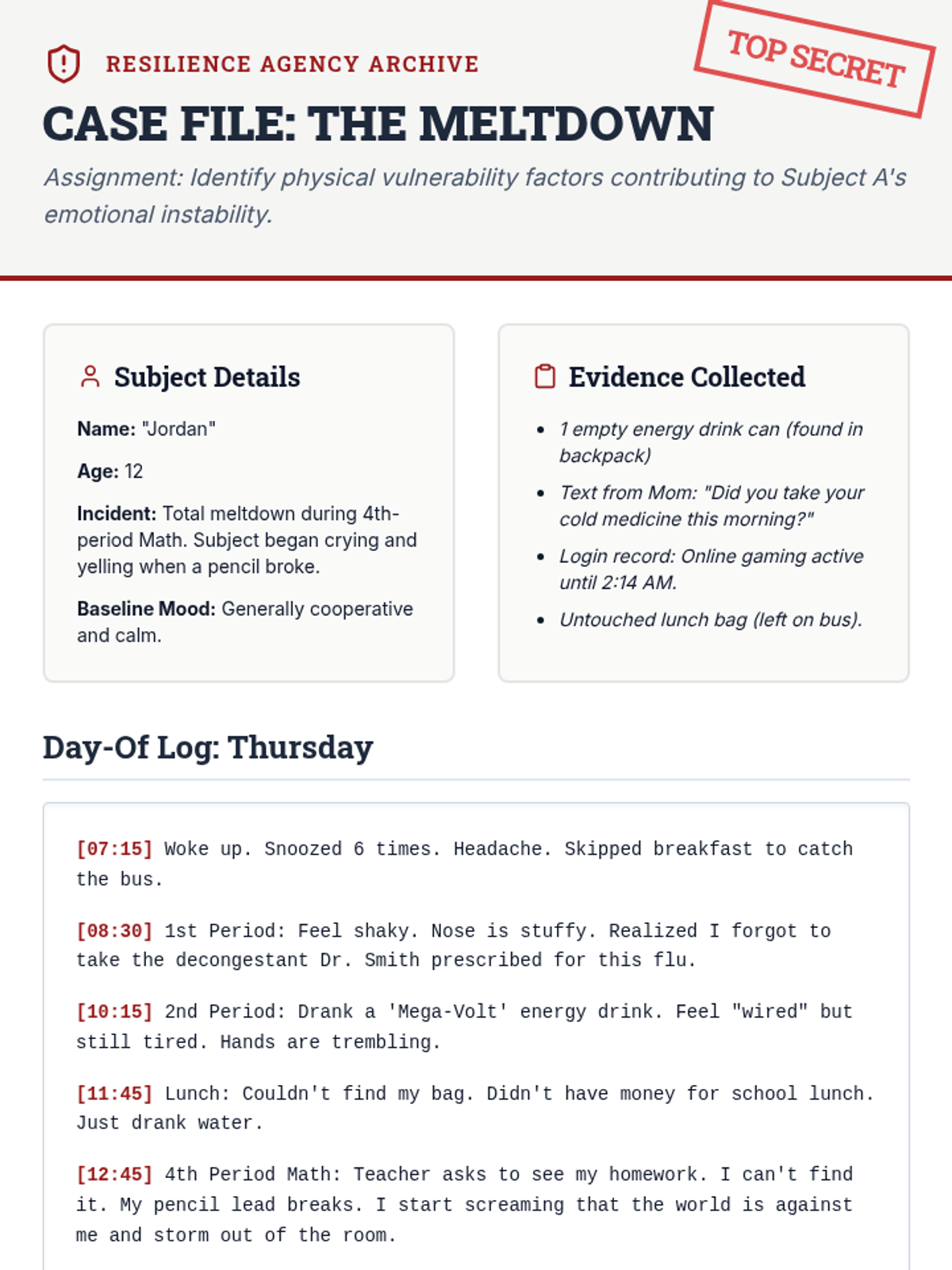
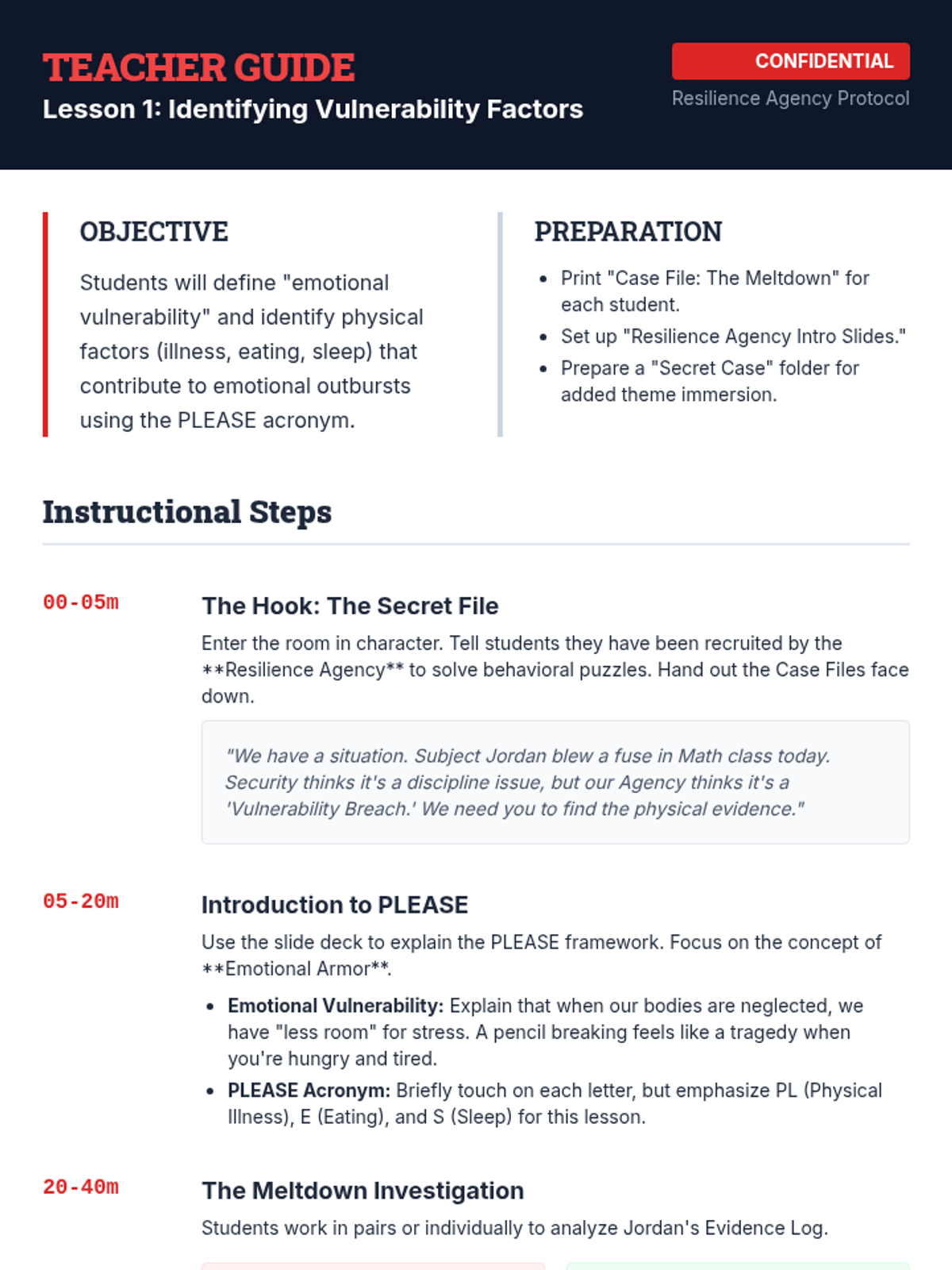
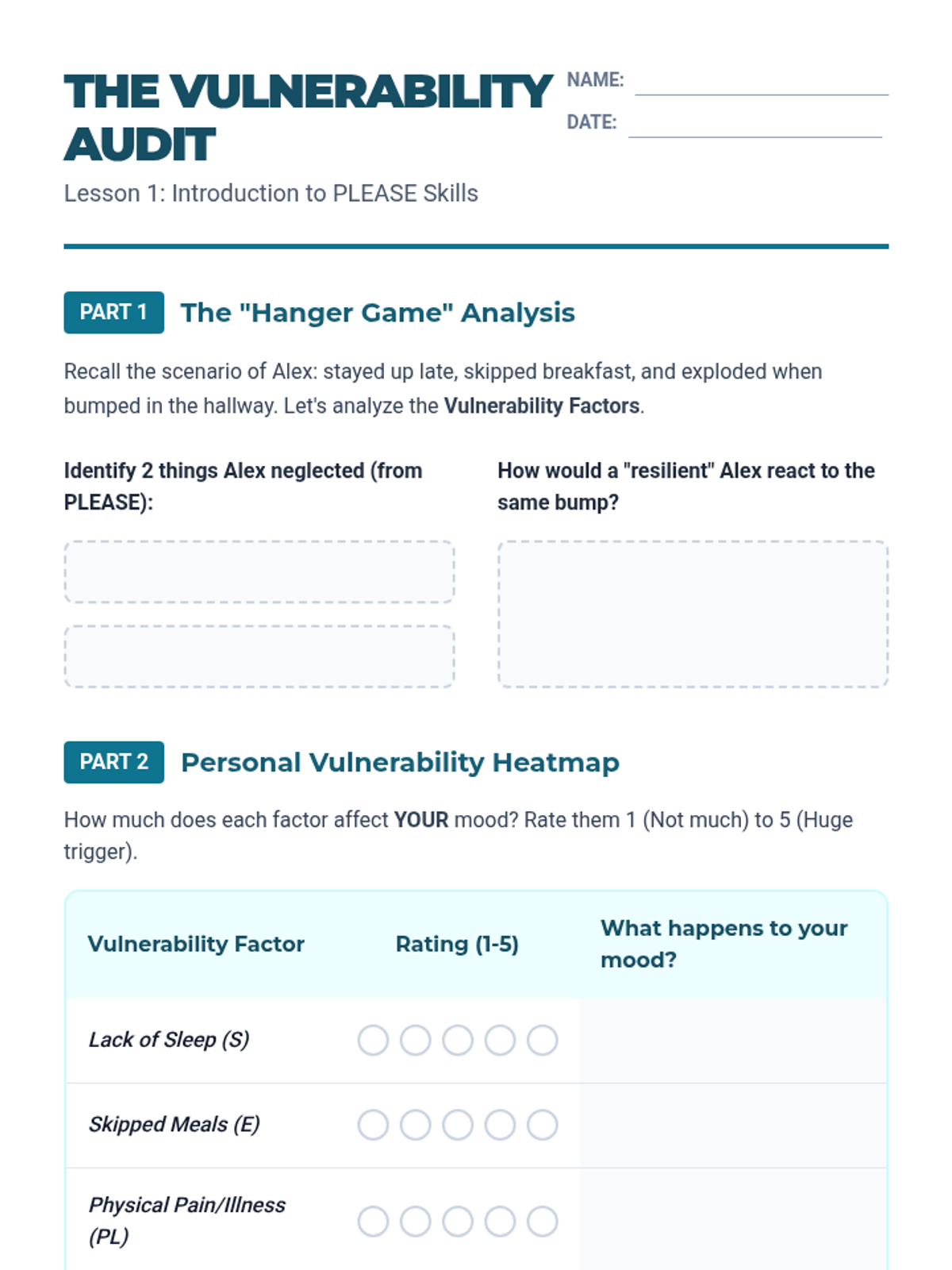
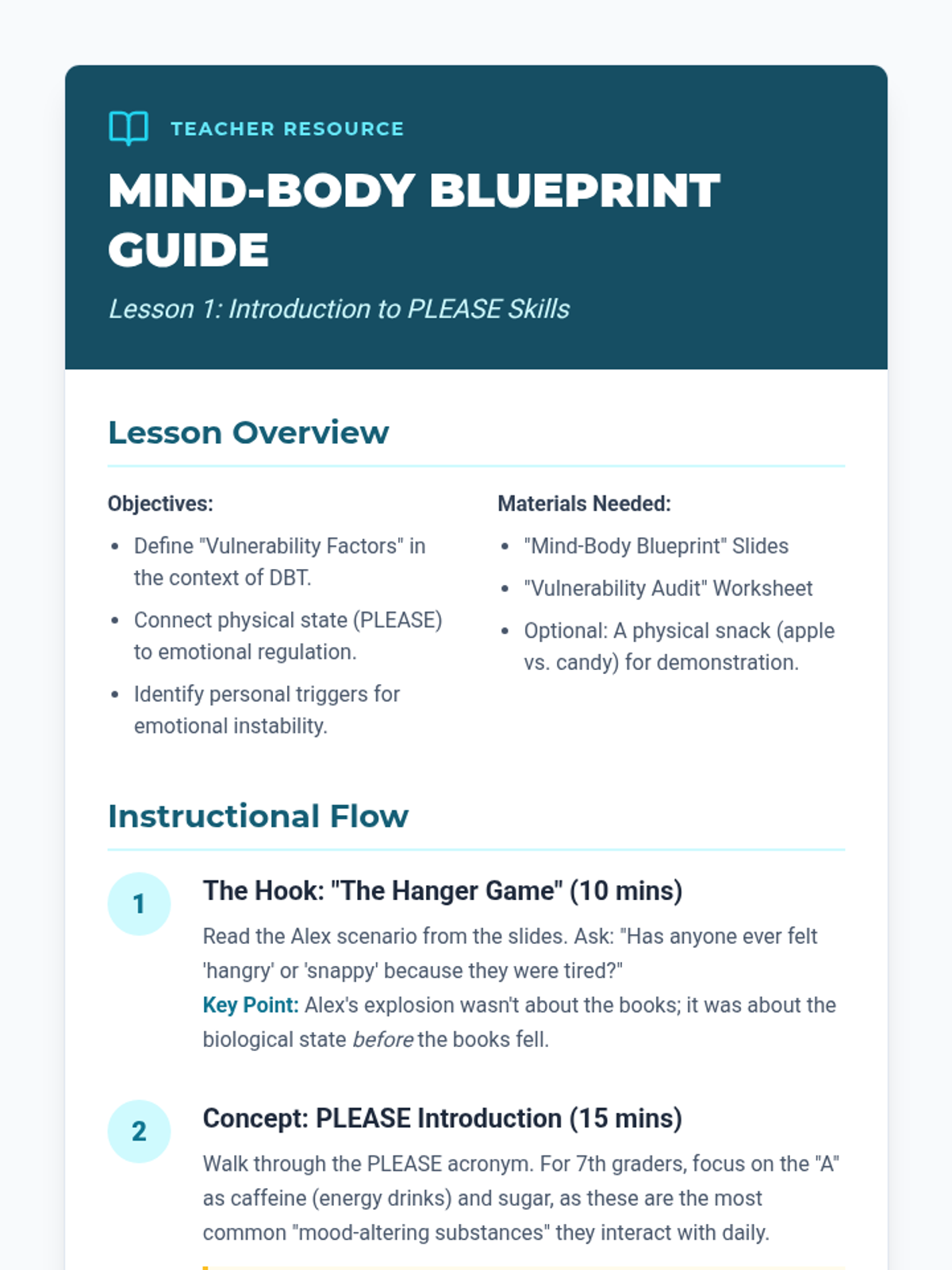
A case study-based sequence where 6th-grade students act as 'Resilience Consultants' to analyze how physical self-care (the PLEASE framework) reduces emotional vulnerability and prevents interpersonal conflict.
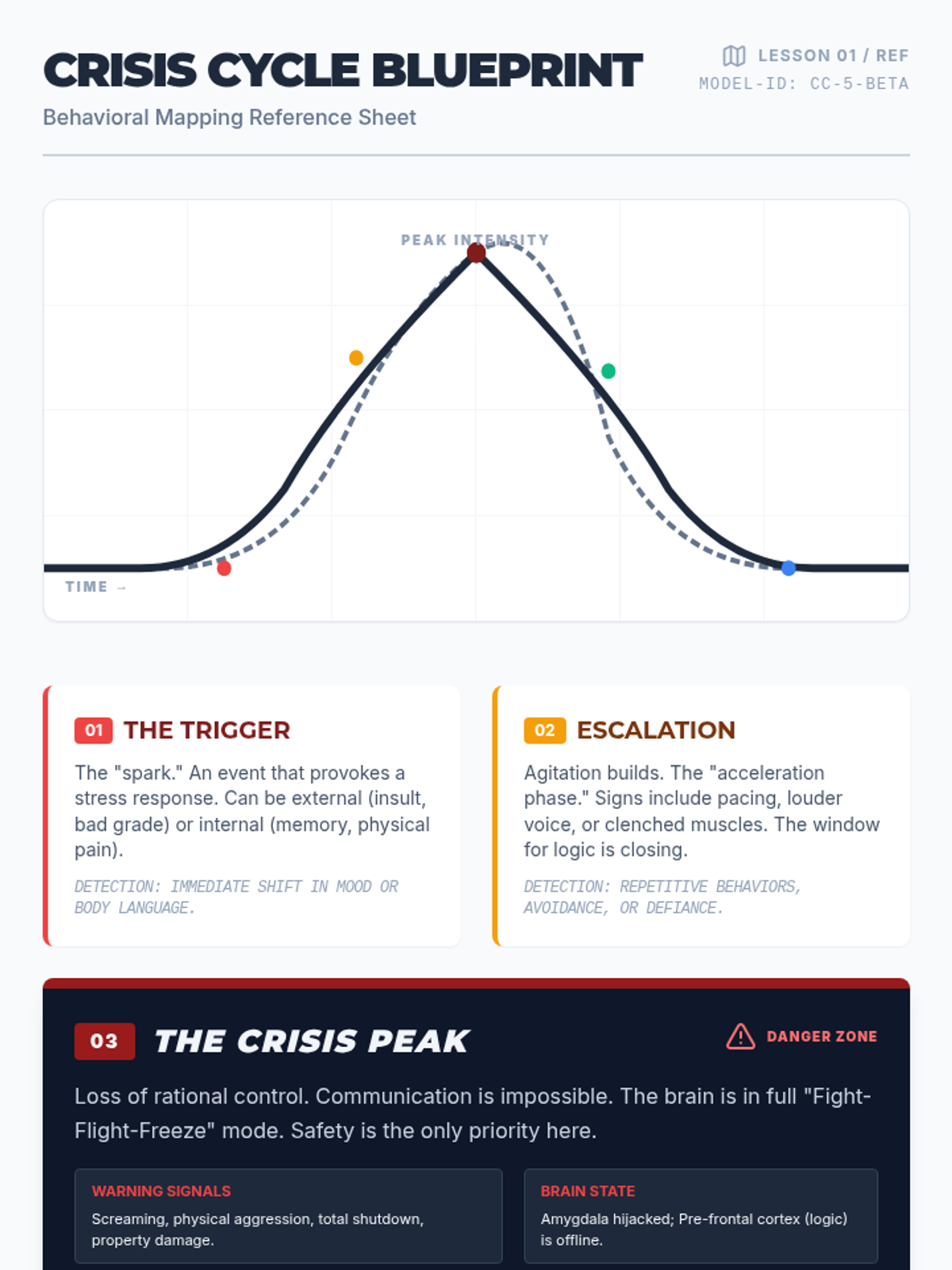
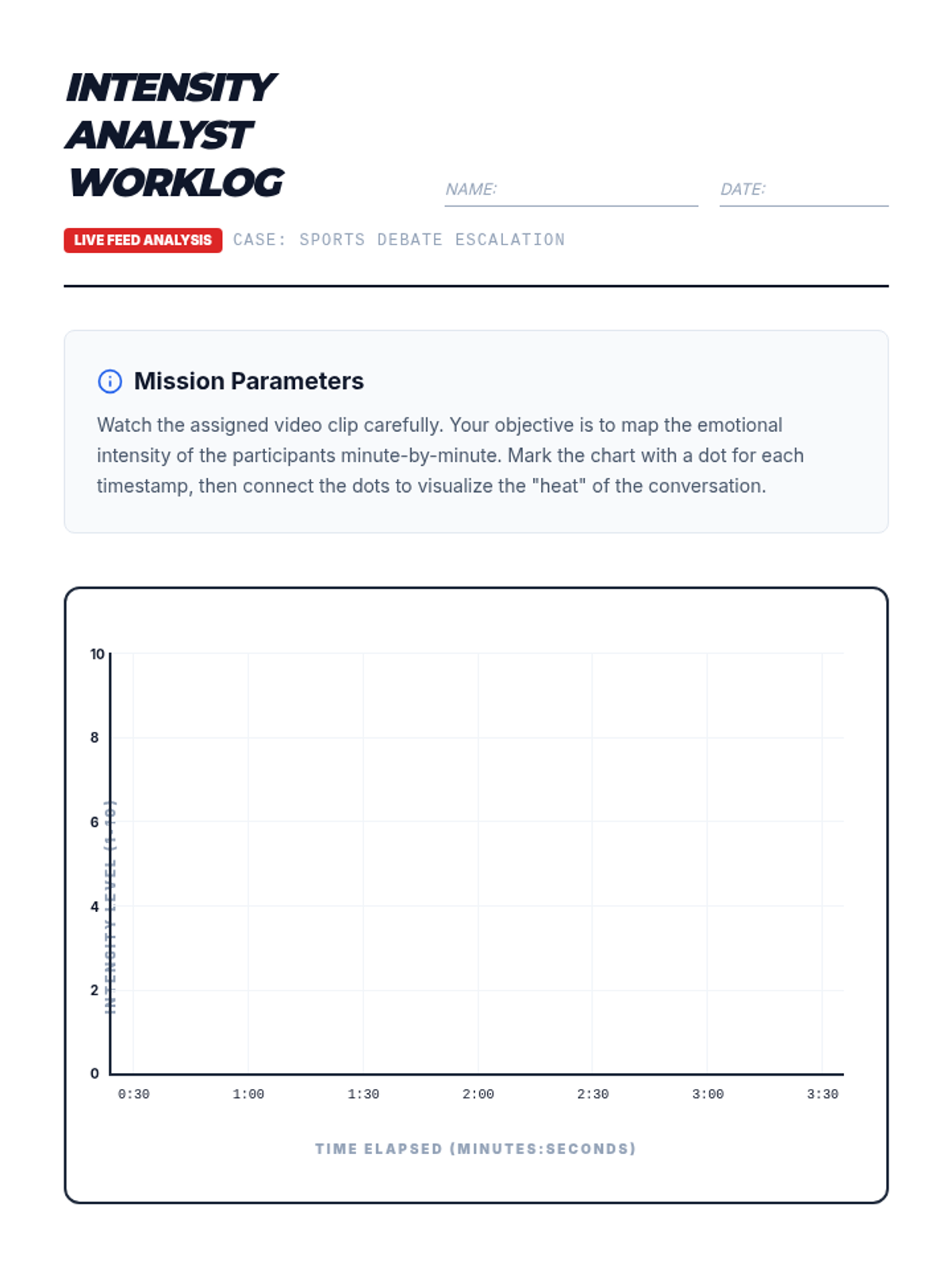
A comprehensive 5-lesson unit on the Crisis Cycle, focusing on identifying triggers, escalation stages, and intervention points through a technical mapping and simulation lens. Students move from theoretical understanding to retroactive detective work to understand behavioral patterns.
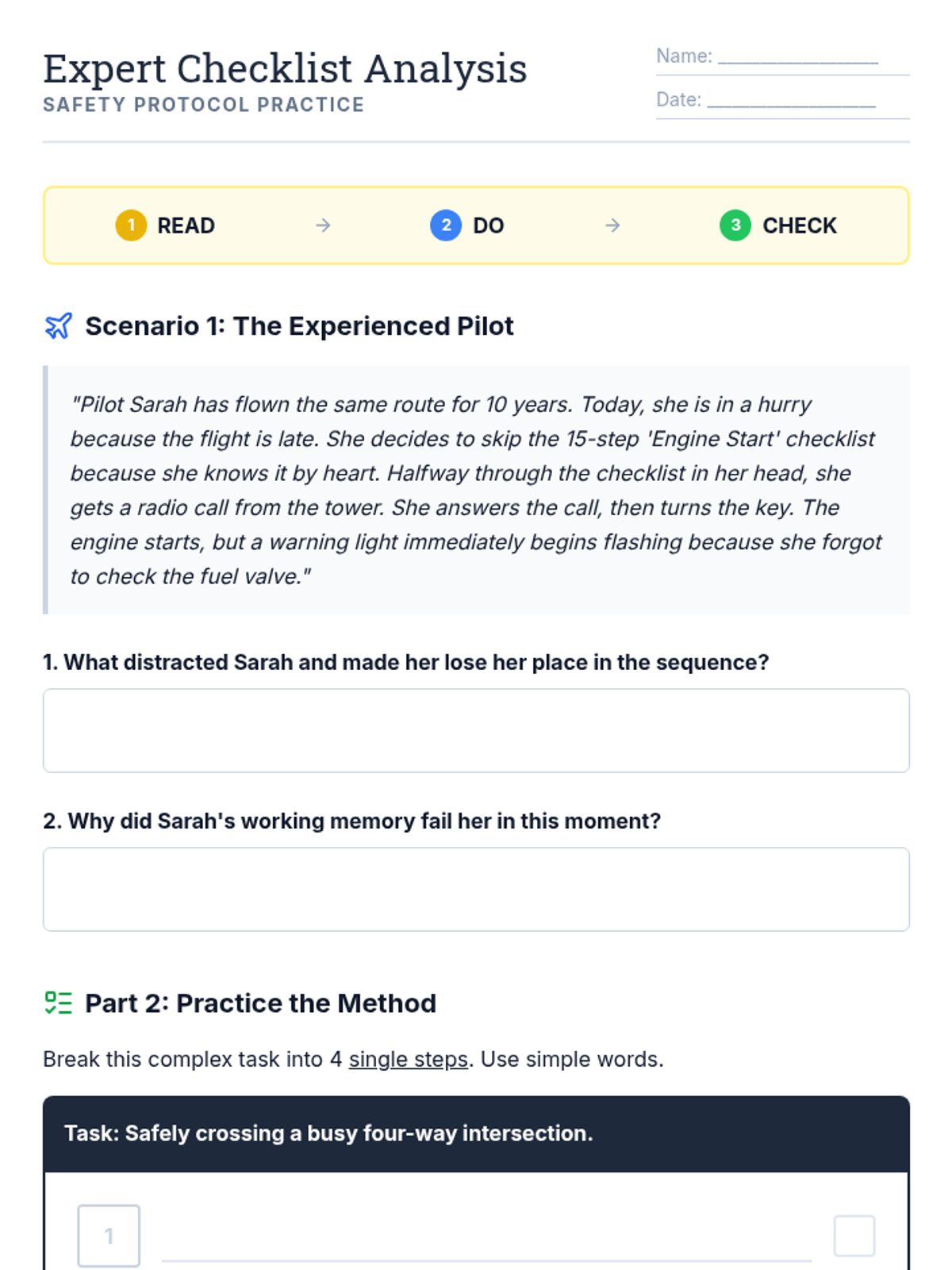
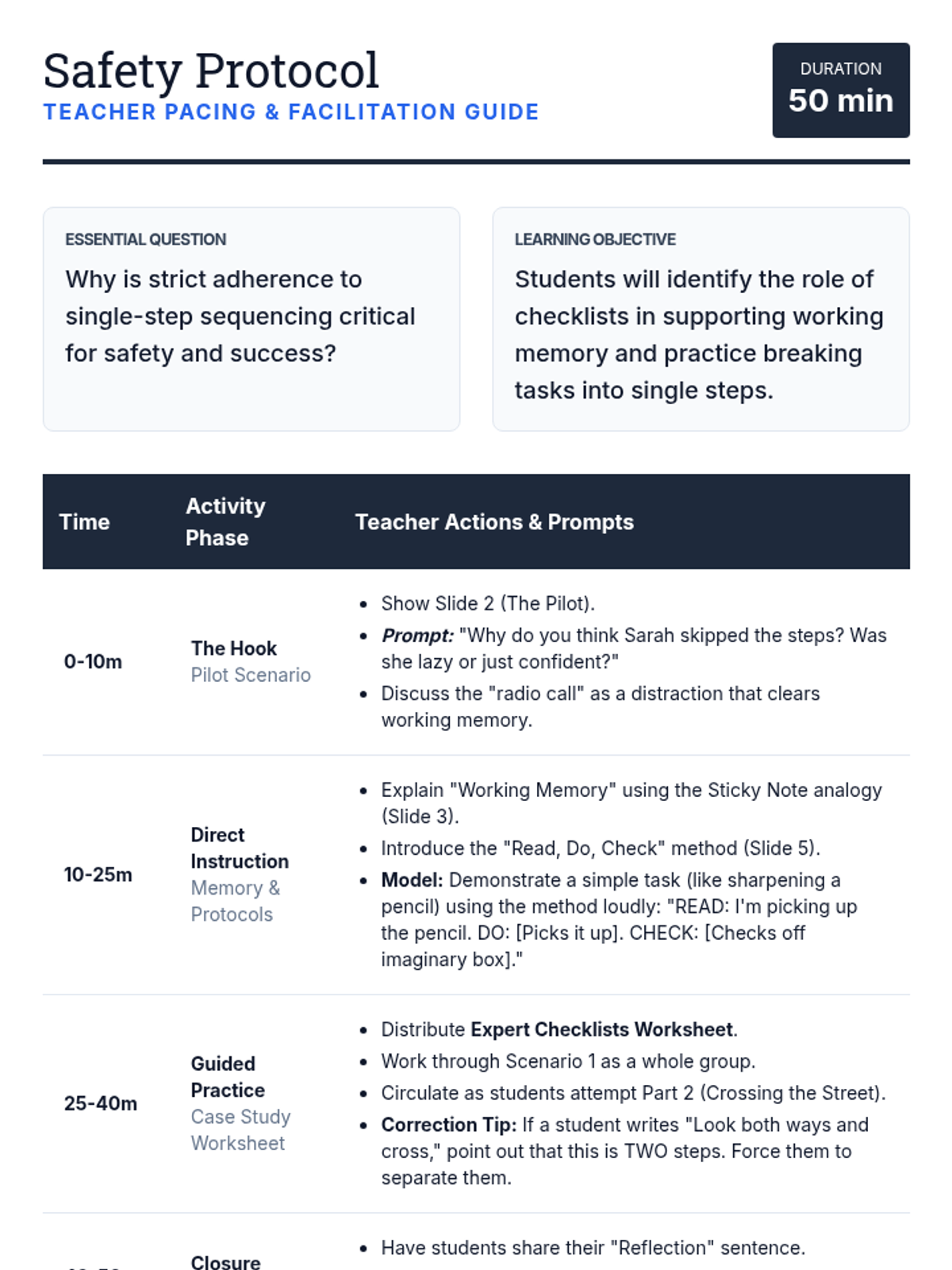
A vocational and life skills sequence for 7th-grade students focusing on working memory through single-step directions. Students explore how strict adherence to sequences ensures safety and success in fields like aviation, cooking, digital security, and emergency response.
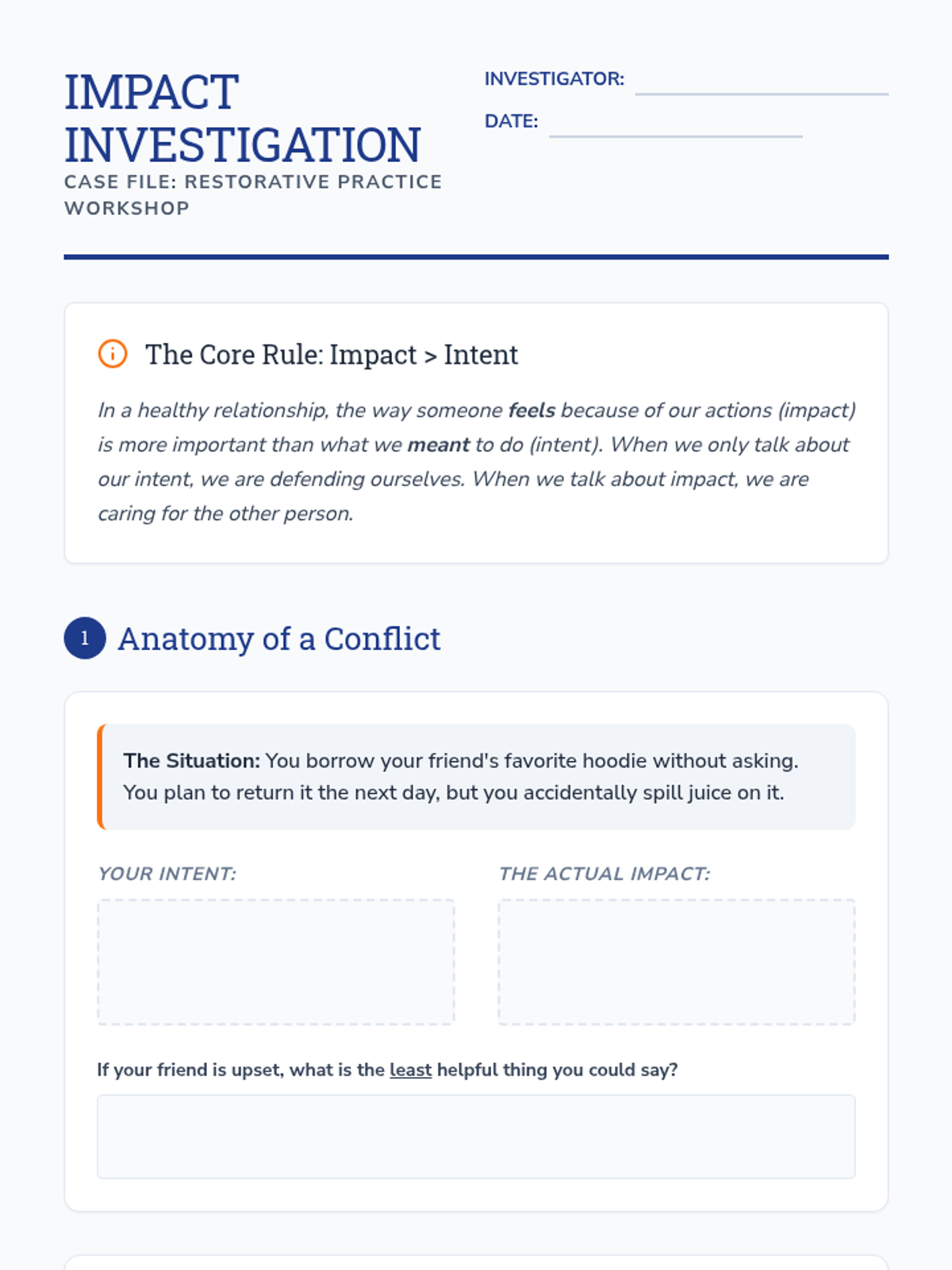
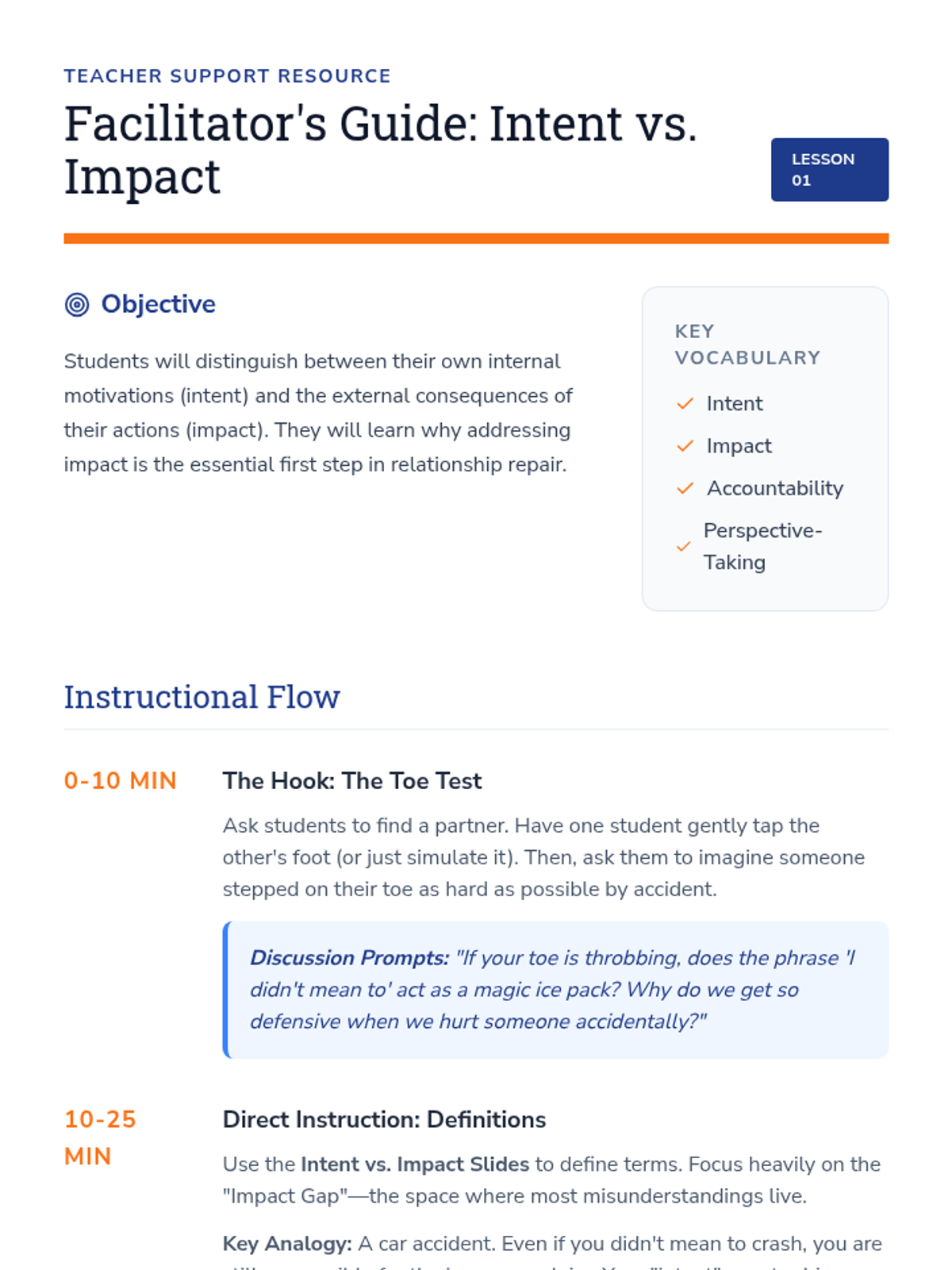
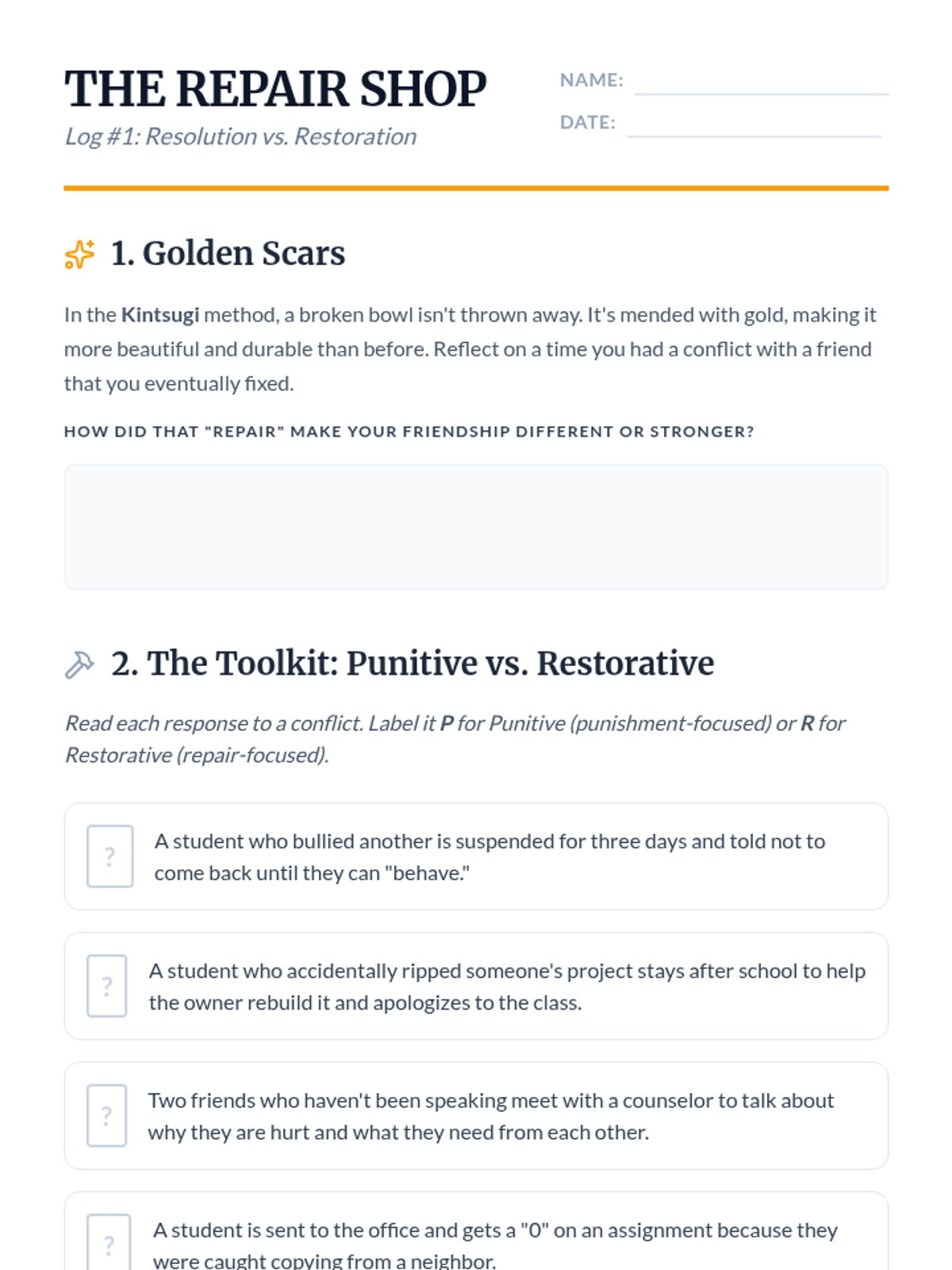
A 5-lesson sequence for 7th grade students focusing on restorative practices, the difference between intent and impact, crafting genuine apologies, and the long-term process of rebuilding trust after conflict.
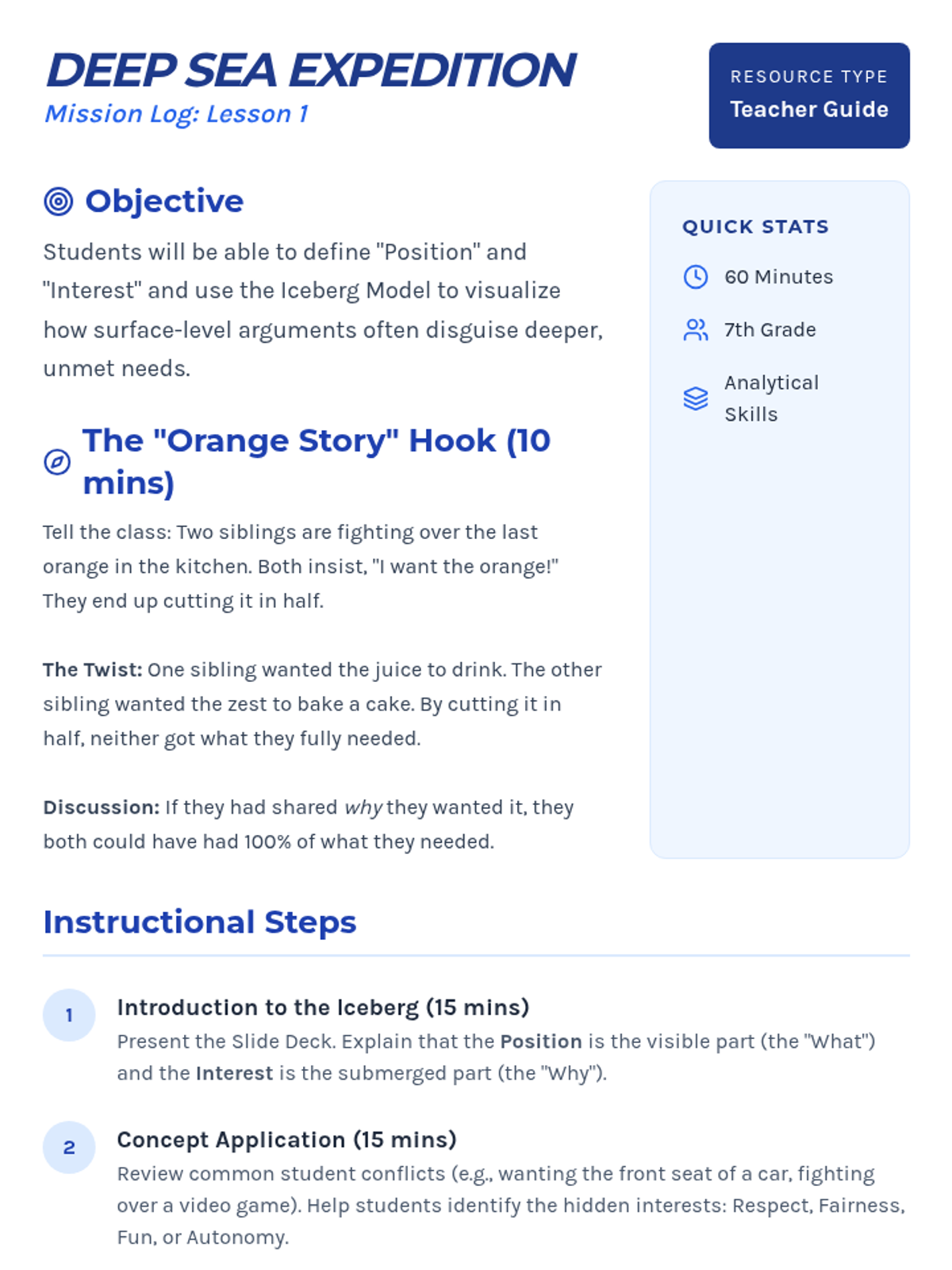
This sequence teaches 7th-grade students to navigate complex conflicts using the Iceberg Model. Students learn to look beneath surface-level arguments ('positions') to identify underlying human needs ('interests') through techniques like the Five Whys, core needs analysis, and multi-party mapping.
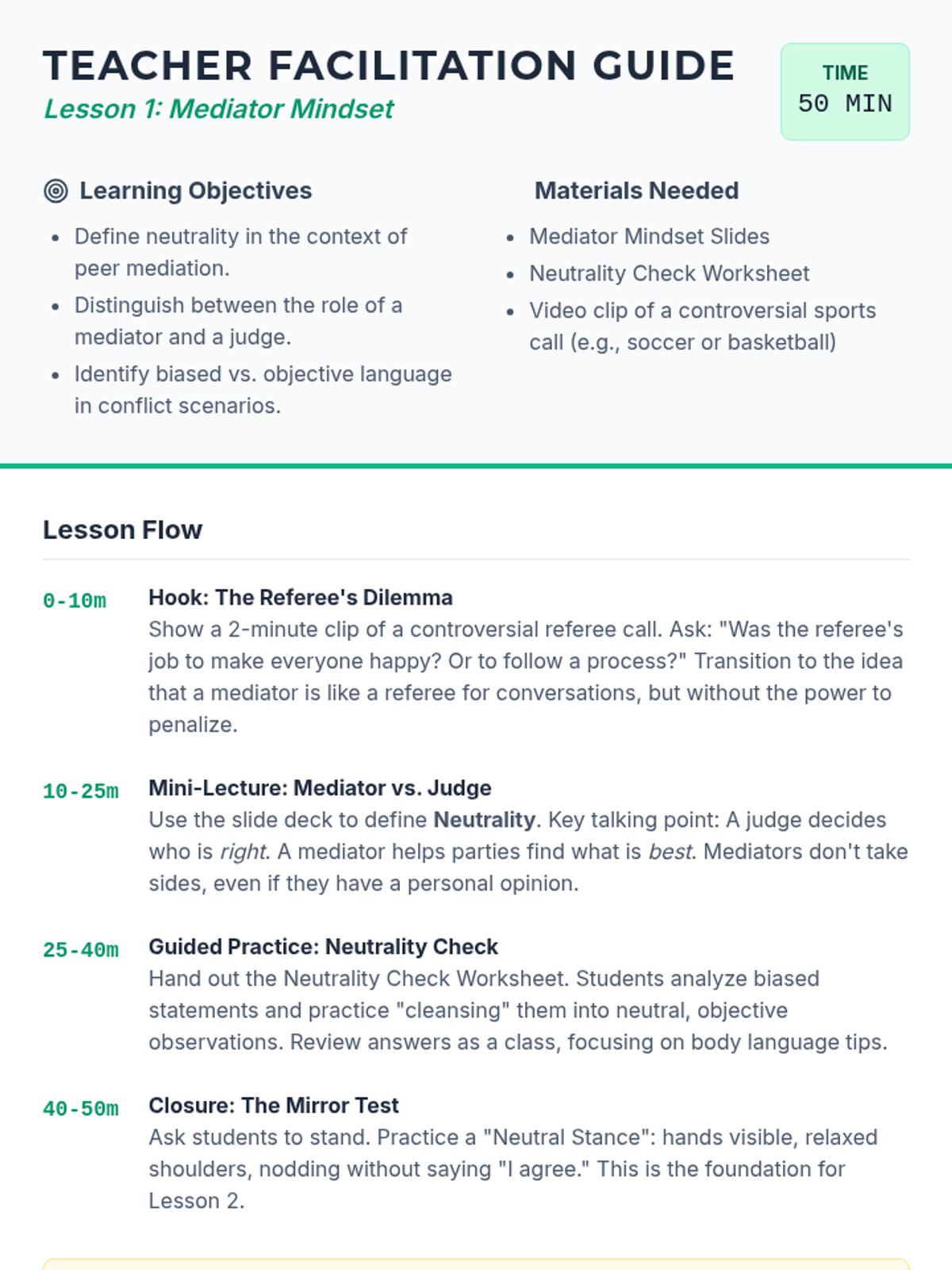
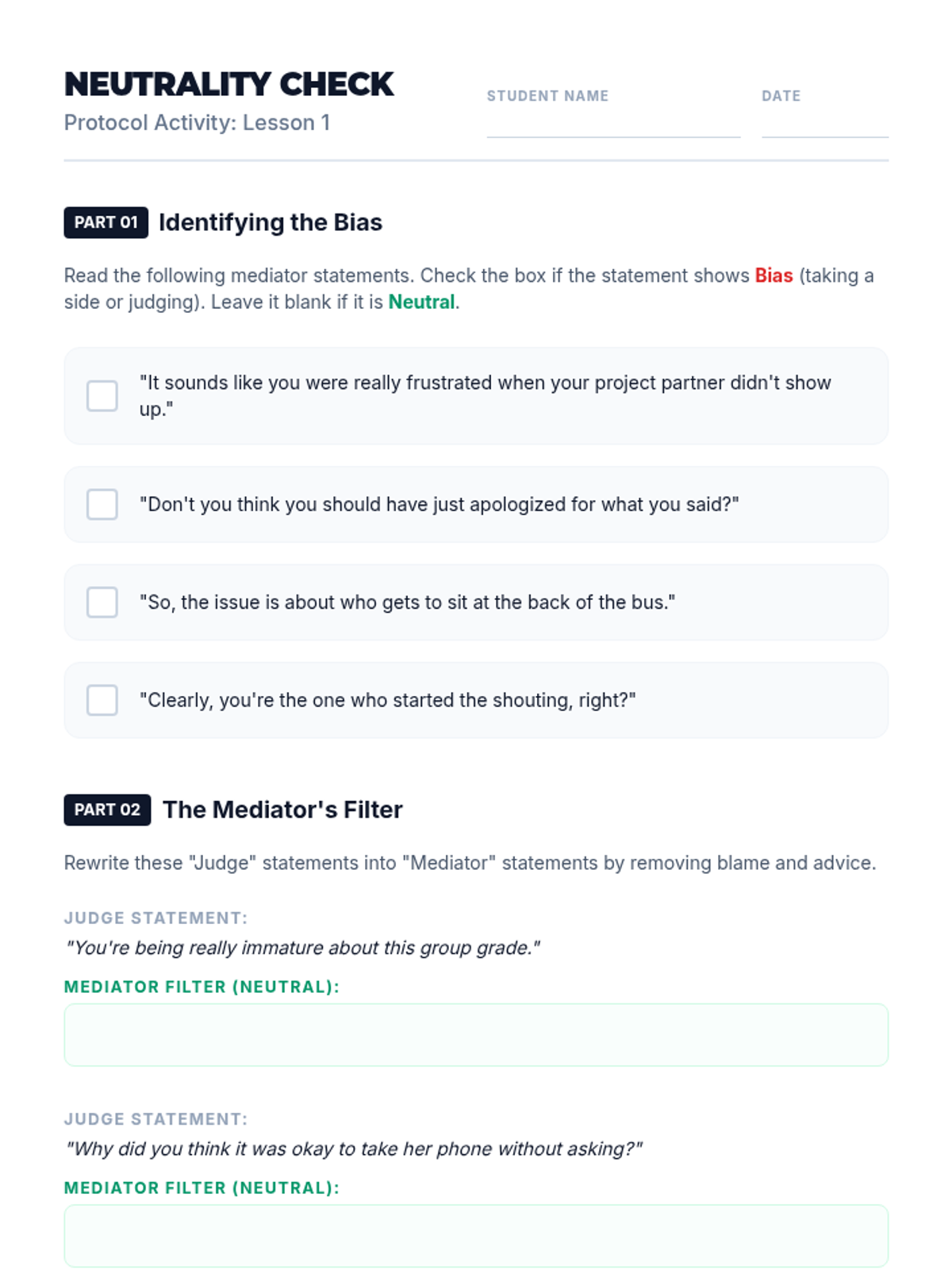
A 5-lesson unit for 7th graders on the formal structure of peer mediation. Students transition from observers to facilitators, learning to maintain neutrality, set ground rules, reframe toxic language, and guide parties toward mutually agreed-upon solutions.
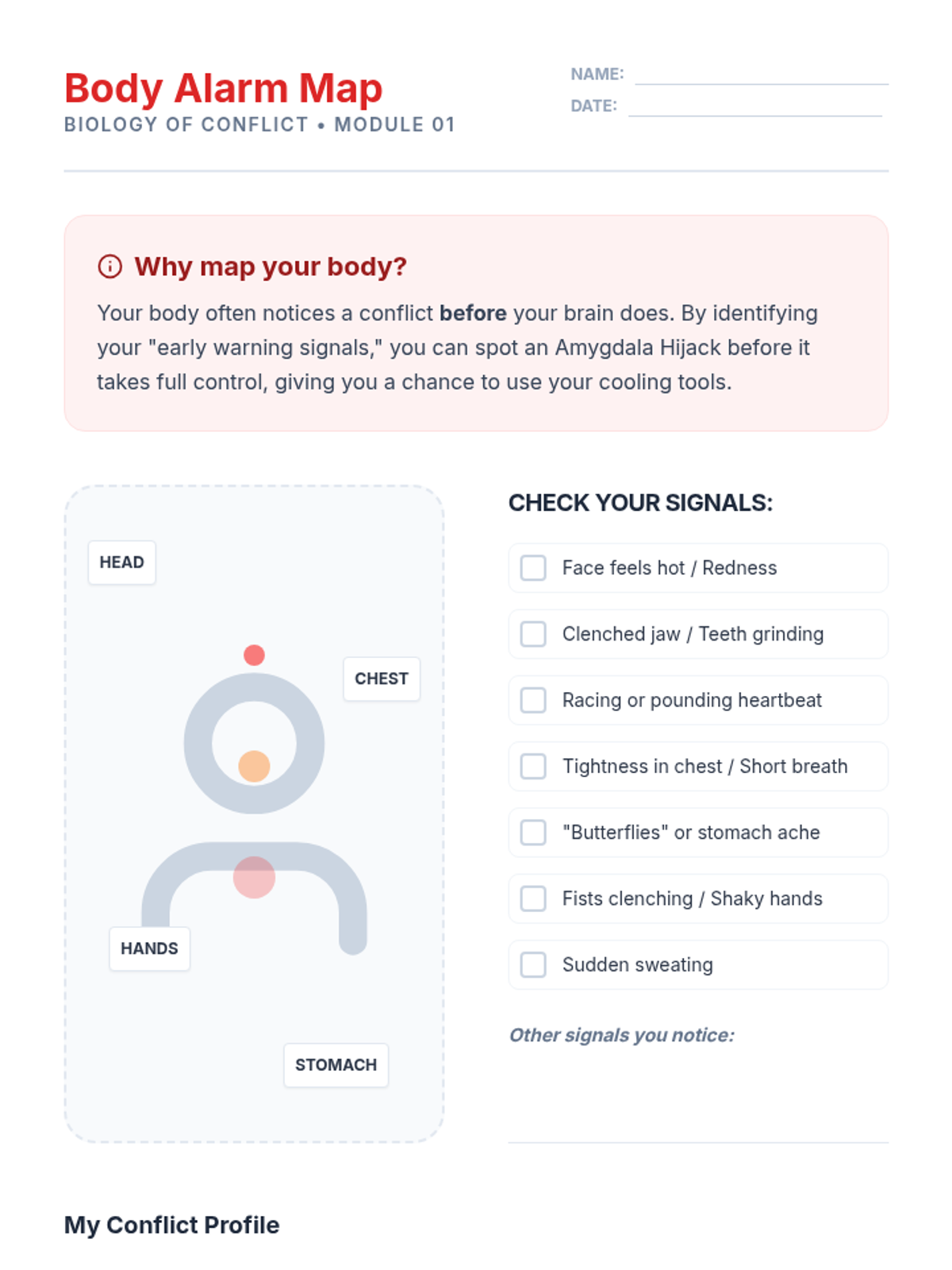
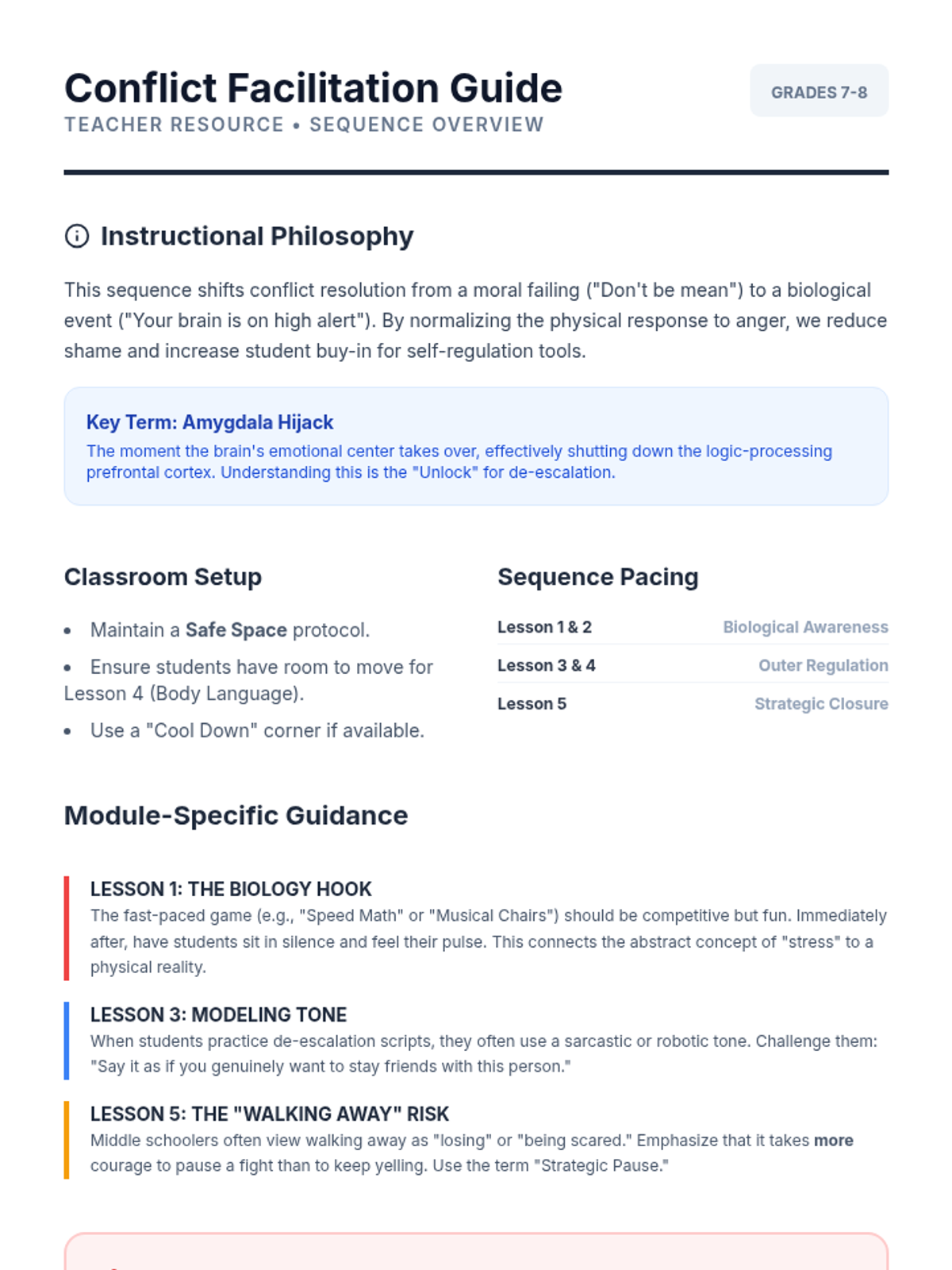
This sequence explores the physiological and psychological aspects of high-conflict situations, providing 7th-grade students with tools for self-regulation, verbal de-escalation, and constructive re-engagement.
A 5-lesson sequence for 6th graders focusing on the aftermath of conflict: restoration, genuine apologies, sustainable agreements, and rebuilding trust. Students move beyond just 'stopping a fight' to actively repairing relationships and creating long-term peace.
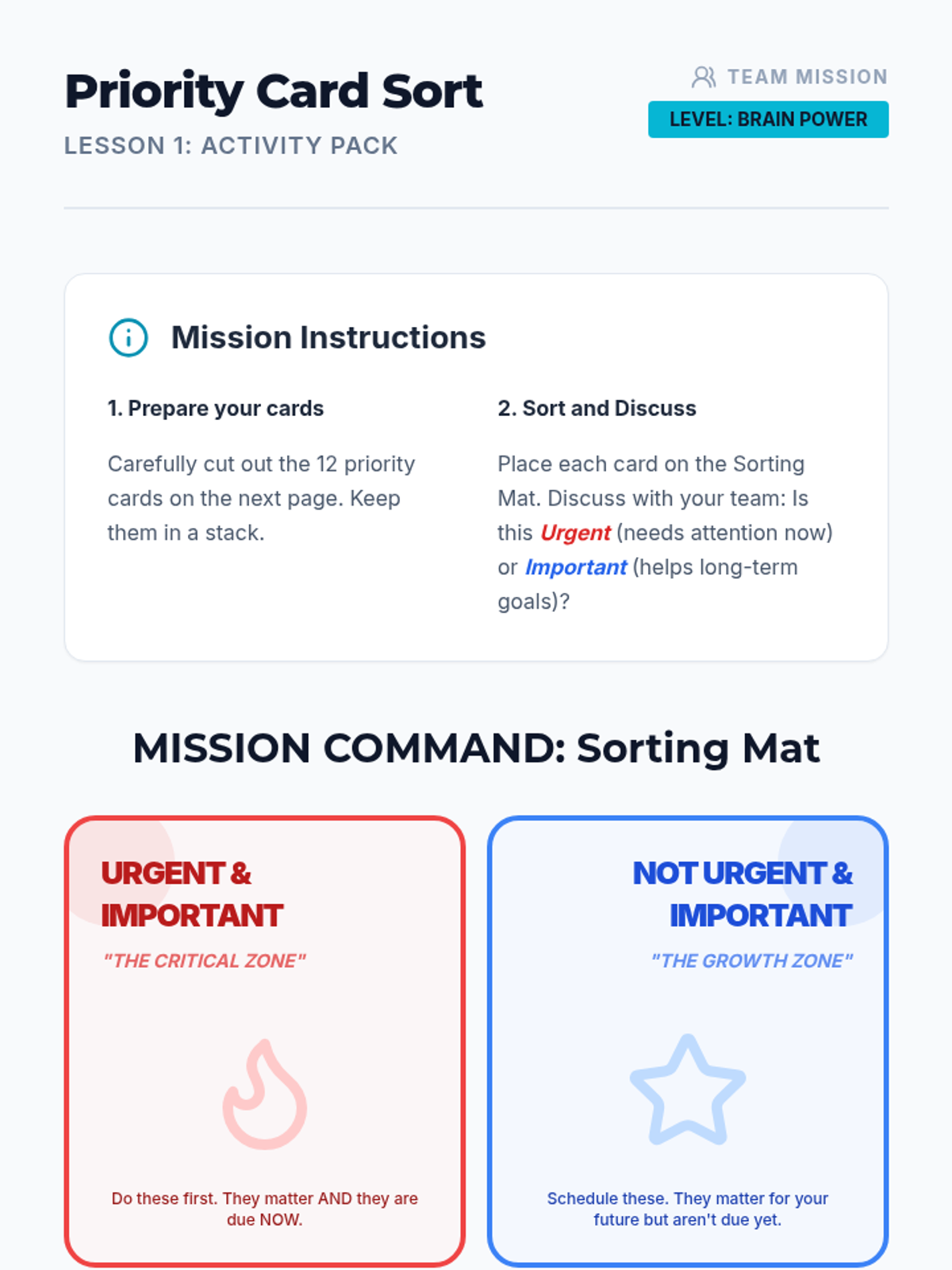
A 5-lesson unit teaching 6th-grade students how to distinguish between urgency and importance using a Decision Matrix (Eisenhower Matrix) to manage their schoolwork and personal life.
A comprehensive executive functioning unit for 7th grade students to master task prioritization using the Eisenhower Matrix. Students move from conceptual understanding to practical, daily application through simulations and personalized planning.
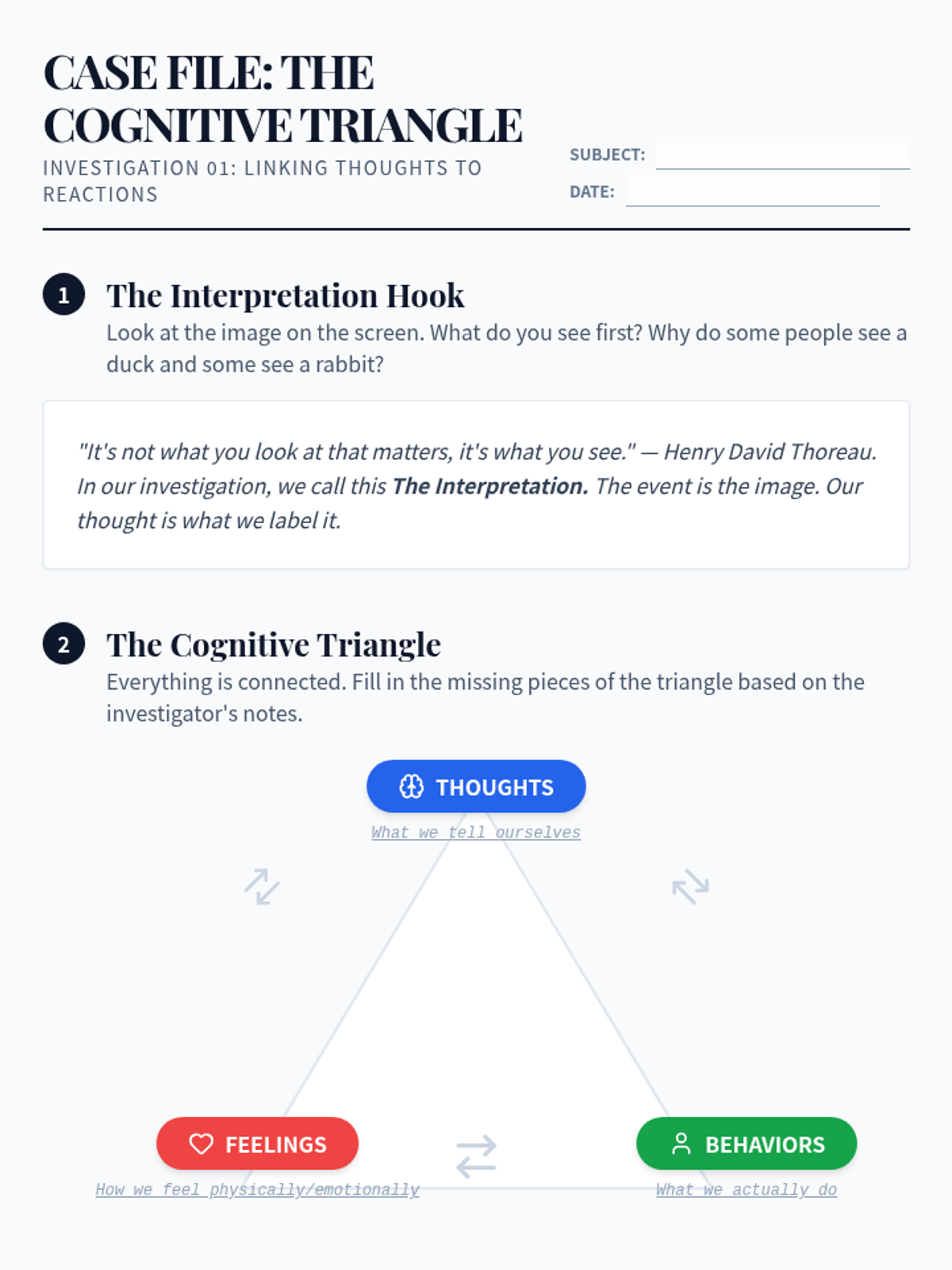
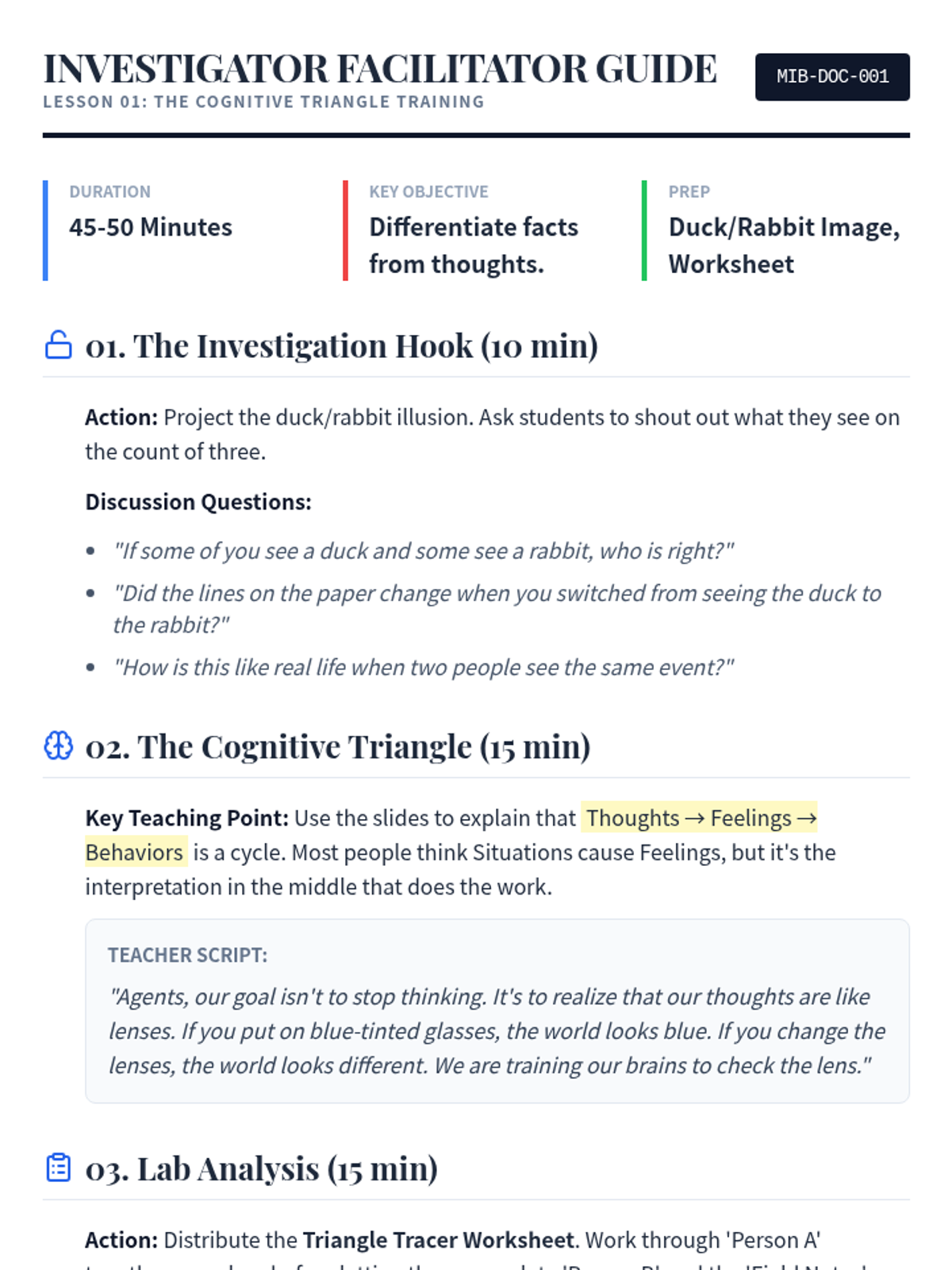
This sequence introduces 7th-grade students to cognitive restructuring through the use of Thought Records. Students will explore the 'Cognitive Triangle,' identify cognitive distortions (ANTs), and learn to evaluate thoughts as hypotheses by examining evidence to generate balanced perspectives and regulate emotional responses.
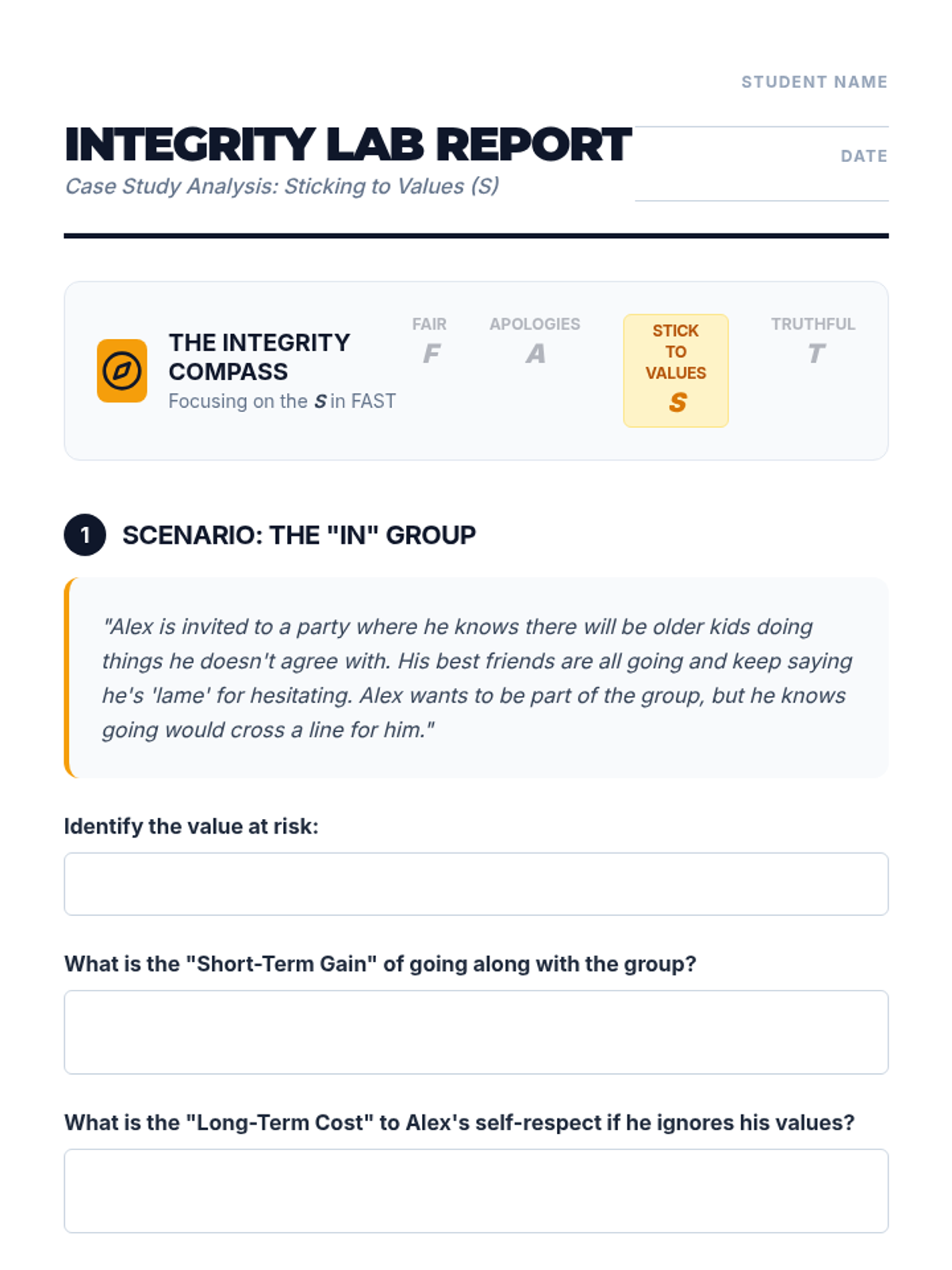
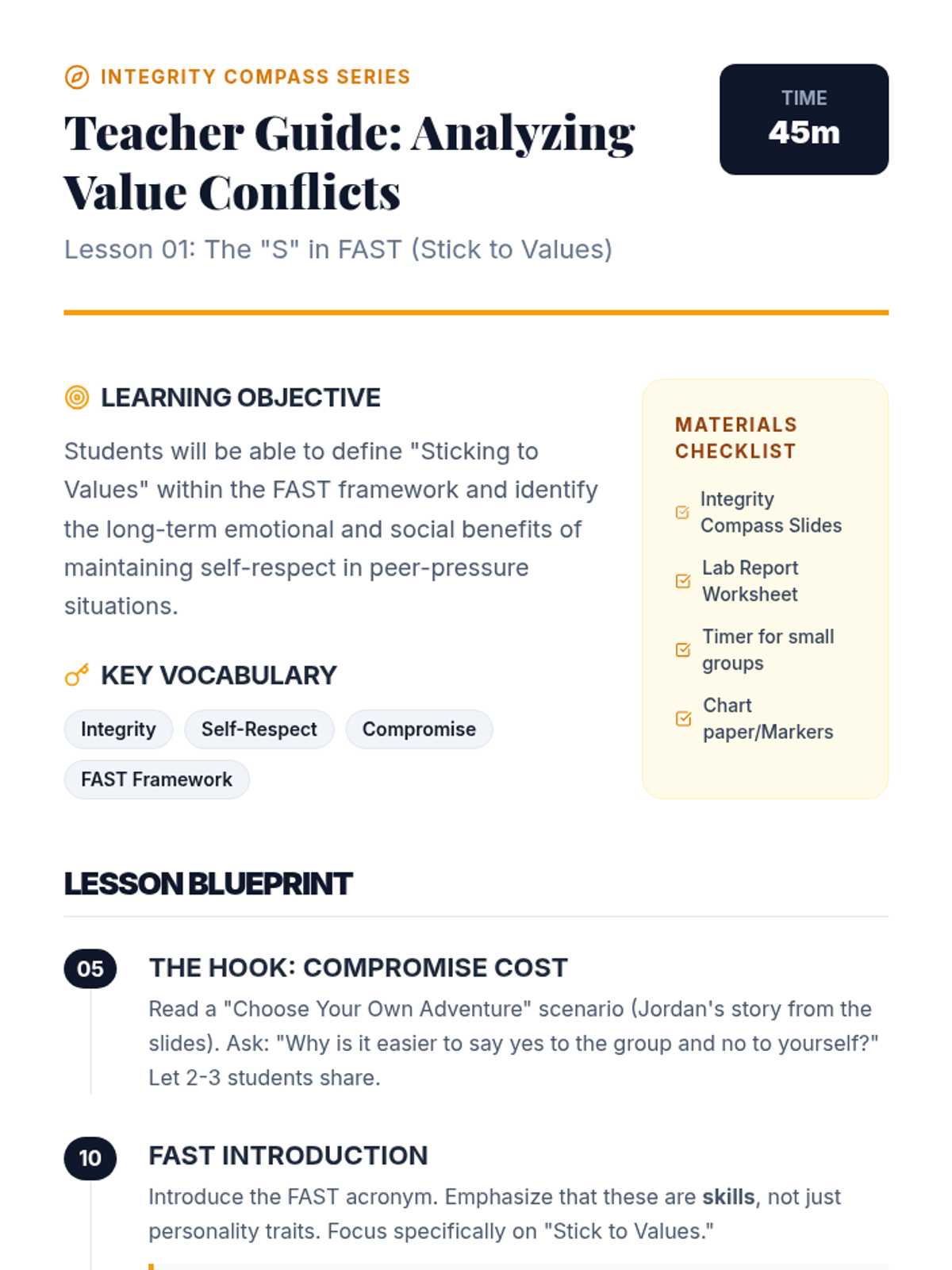
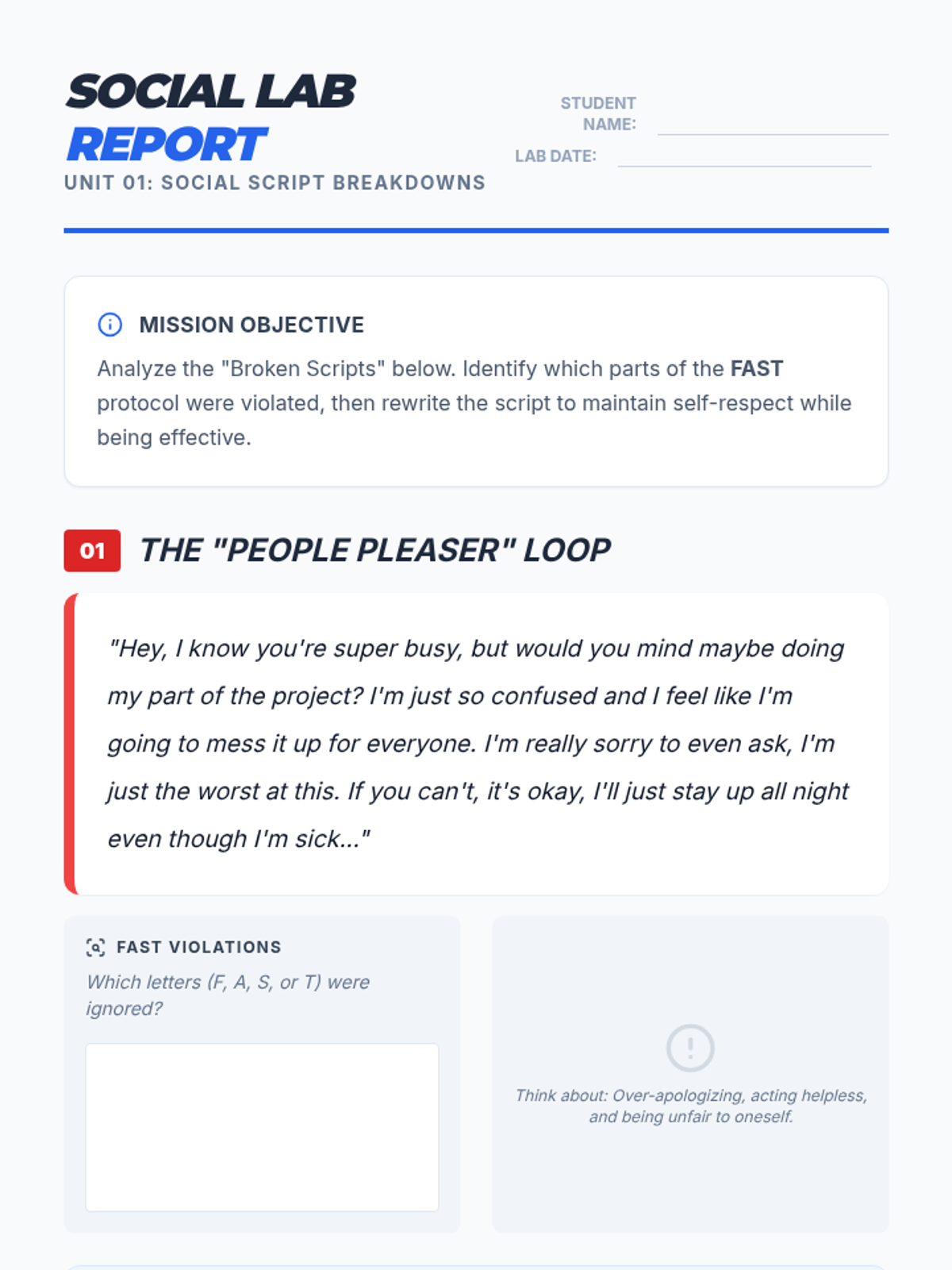
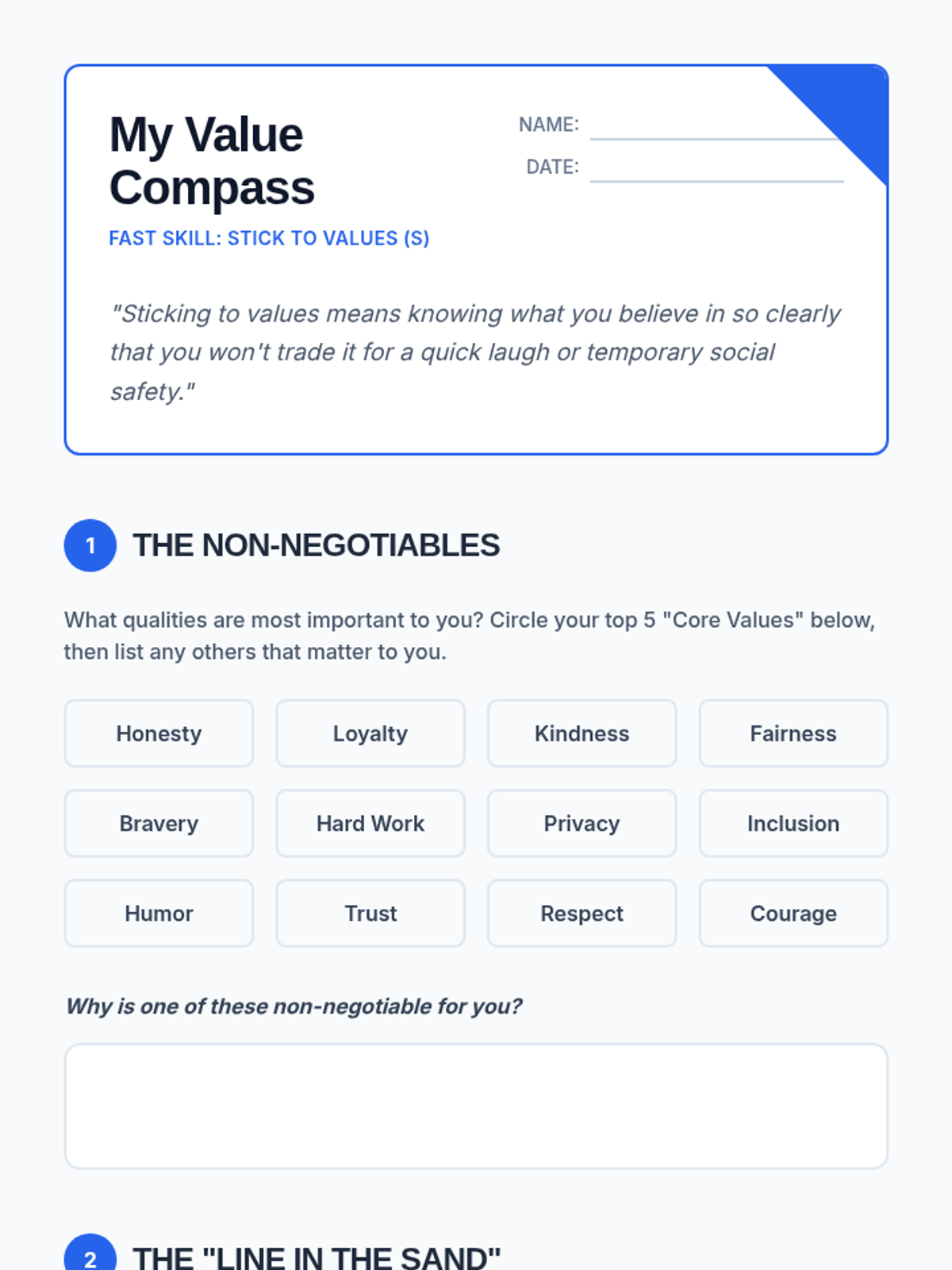
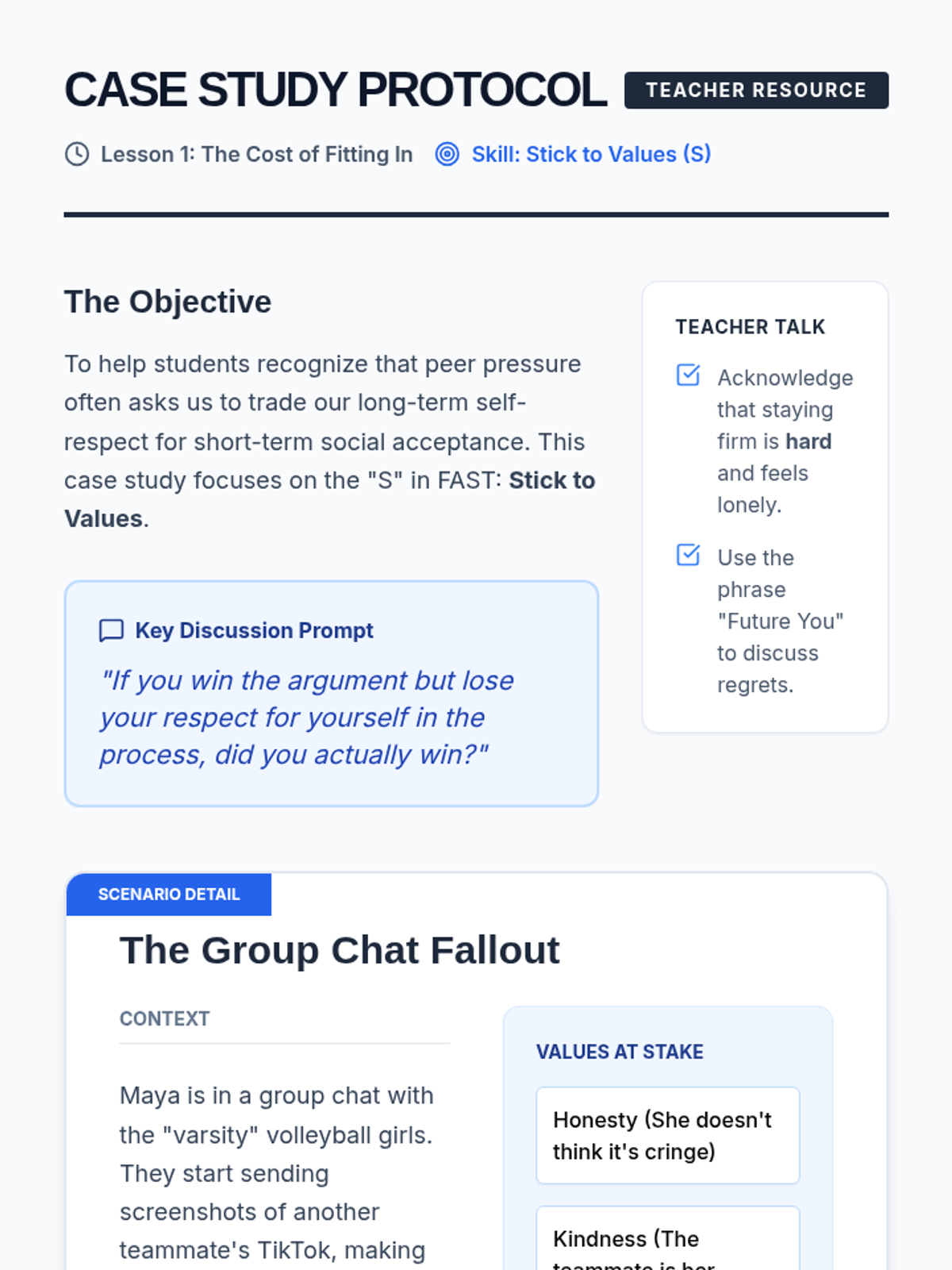
A counseling and life skills sequence for 7th graders focusing on the FAST acronym (Fair, No Apologies, Stick to Values, Truthful) to build self-respect and navigate social dilemmas with integrity.
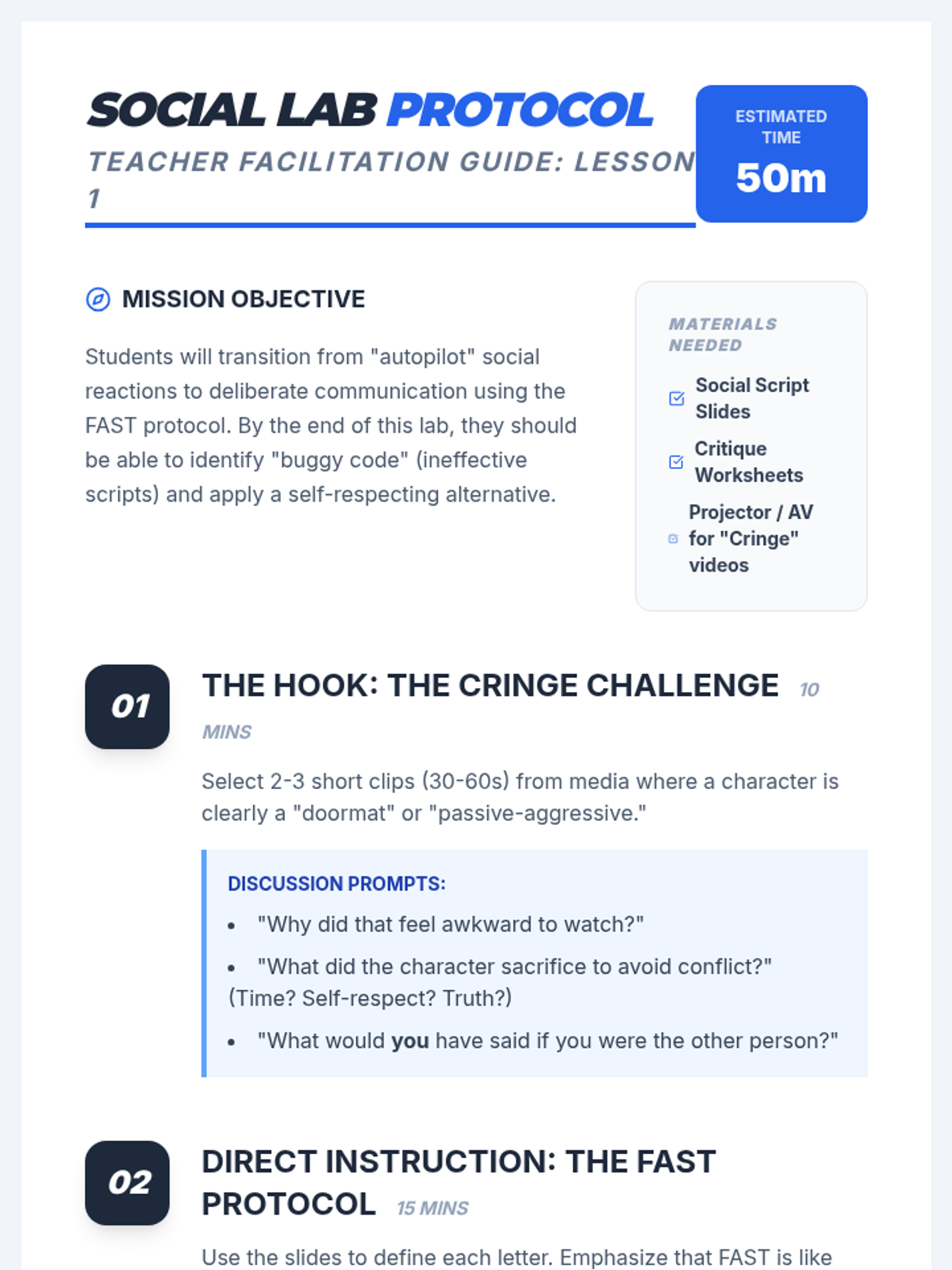
A simulation-heavy sequence for 7th graders to master FAST skills (Fair, Apologies, Stick to values, Truthful) through social labs, role-plays, and pattern recognition.
An 8th-grade counseling sequence exploring the FAST skills for self-respect (Fair, No Apologies, Stick to Values, Truthful). Students analyze social pressure, digital authenticity, and conflict resolution through case studies and creative projects.
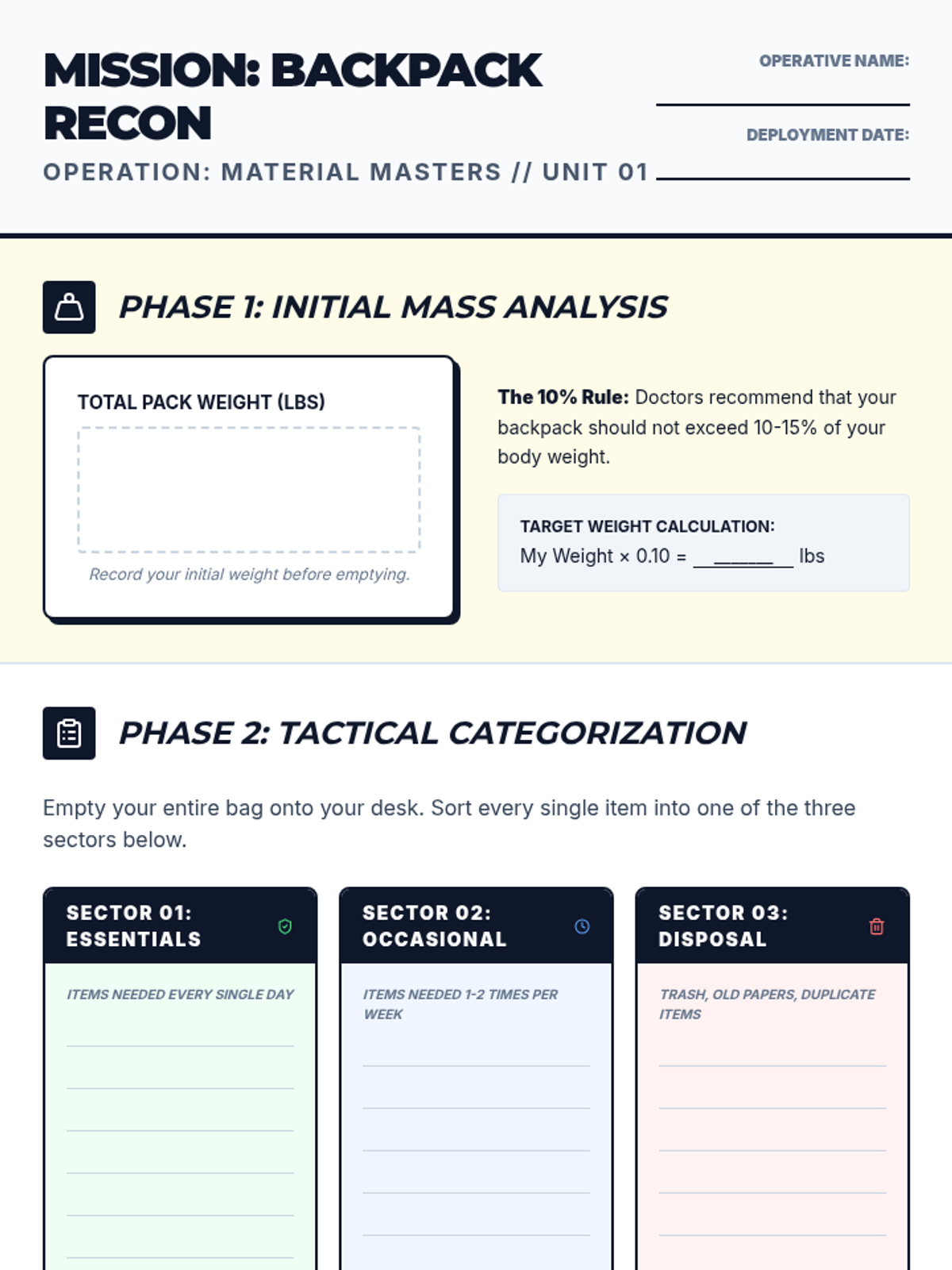
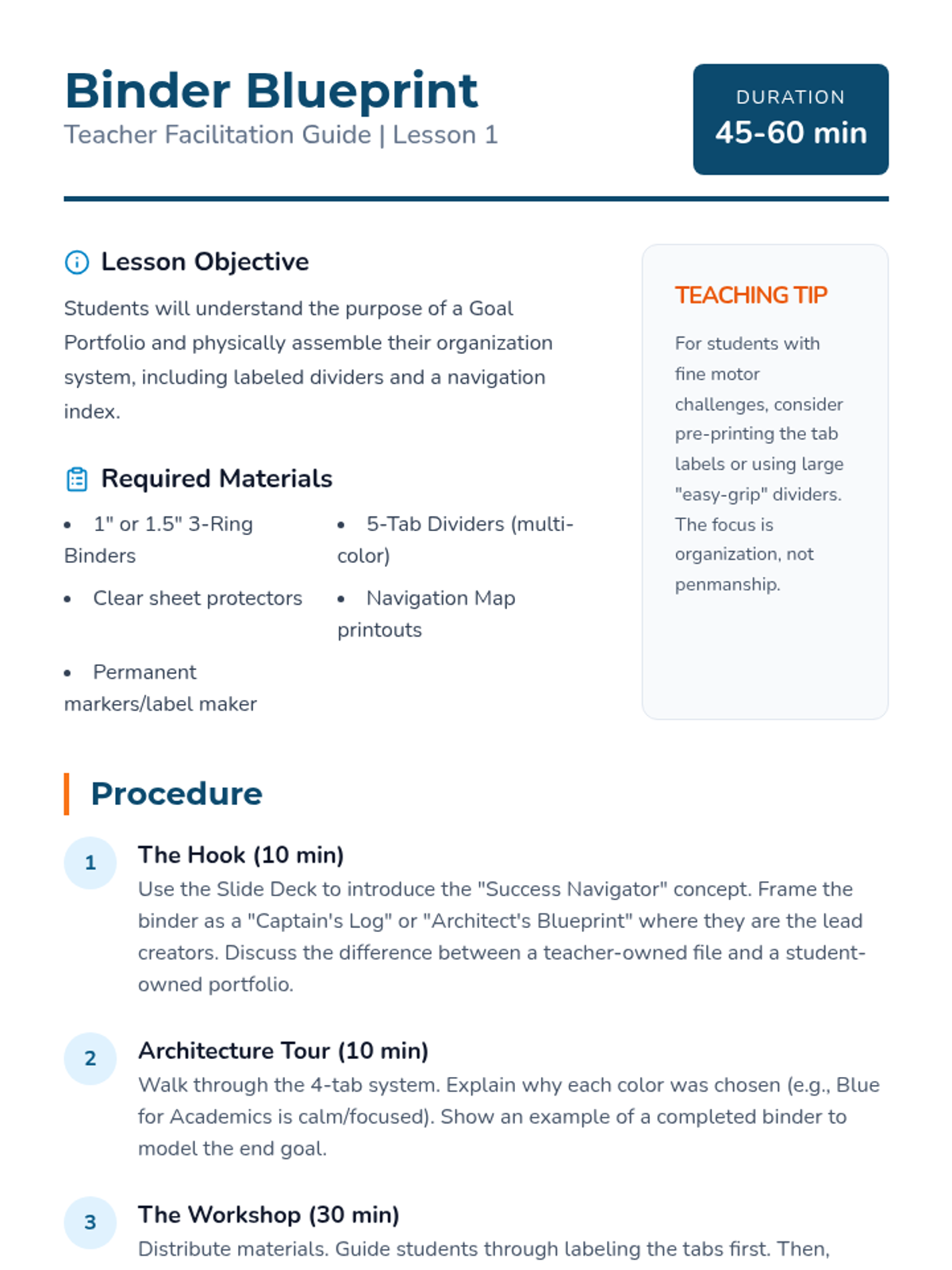
This sequence focuses on the fundamental skills of organizing personal academic materials, specifically backpacks and binder systems. Students begin by auditing their current organizational state, identifying pain points, and move through color-coding, binder architecture, labeling, and establishing daily routines.
A game-based learning sequence for 7th graders to practice radical acceptance. Through improv, rigged games, and obstacle courses, students learn to accept reality as it is to move forward effectively.
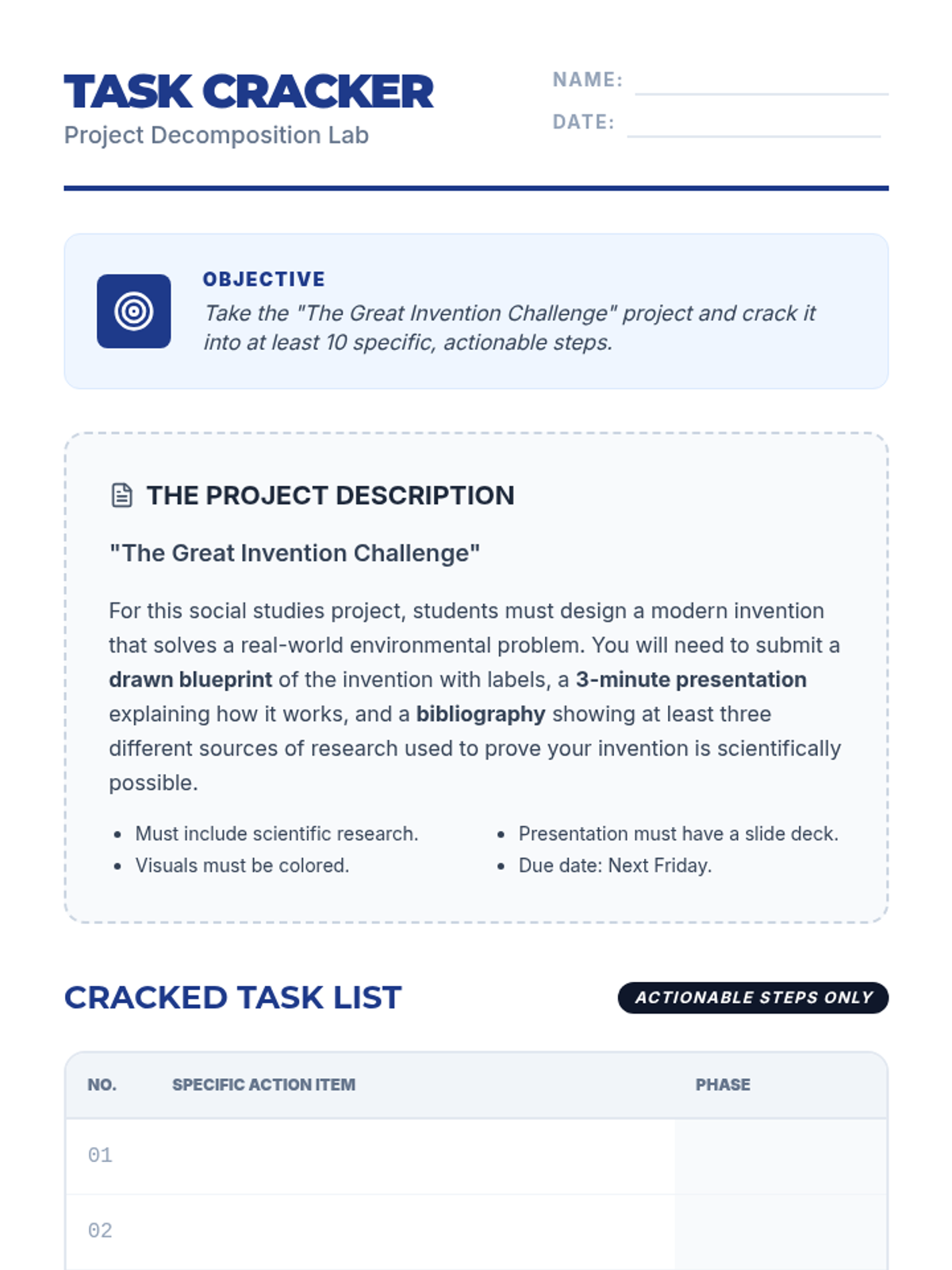
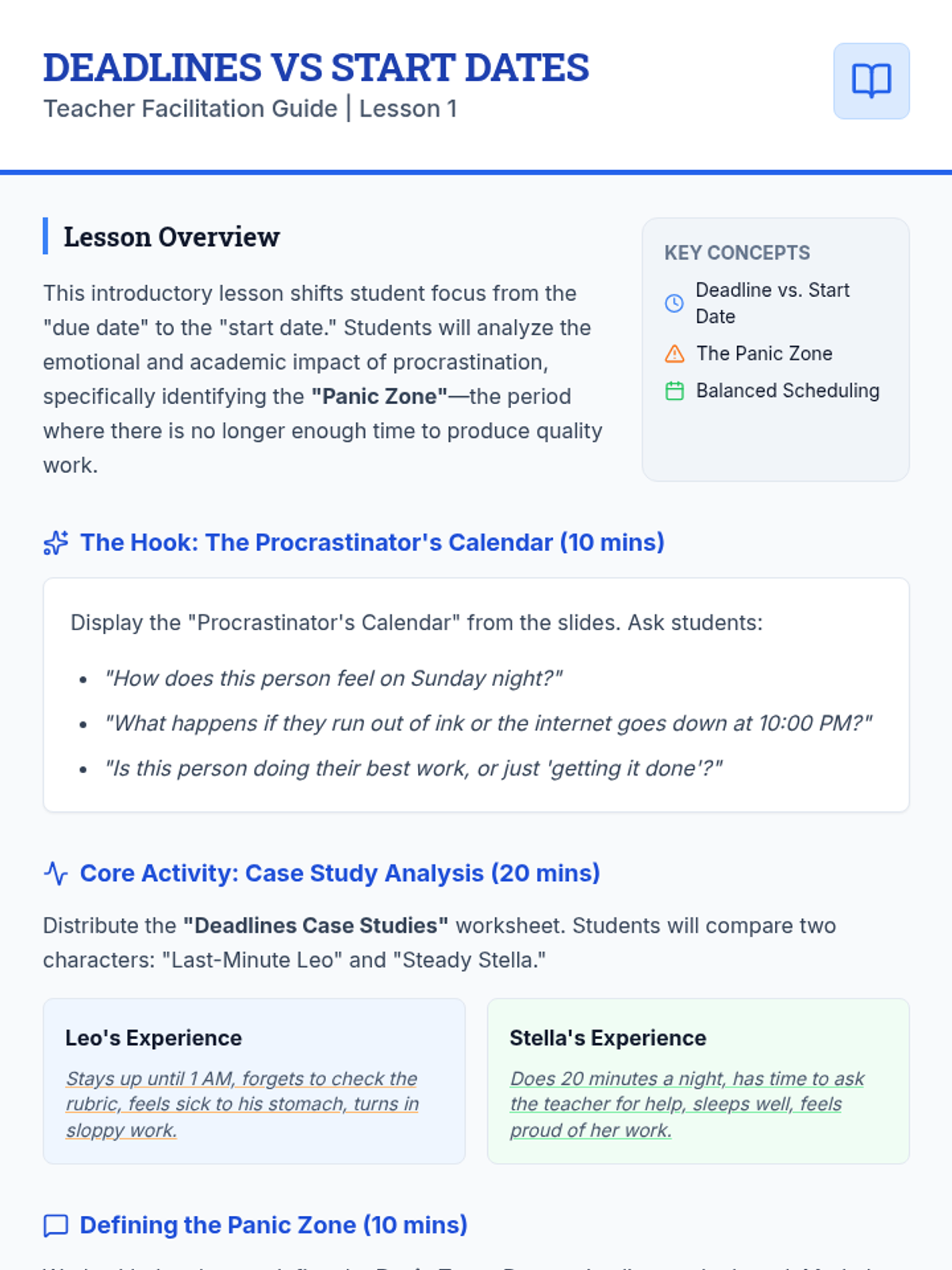
A project-based sequence for 7th-grade students to master 'Backwards Planning' by breaking down complex projects into manageable milestones, estimating time accurately, and developing accountability strategies to overcome procrastination.
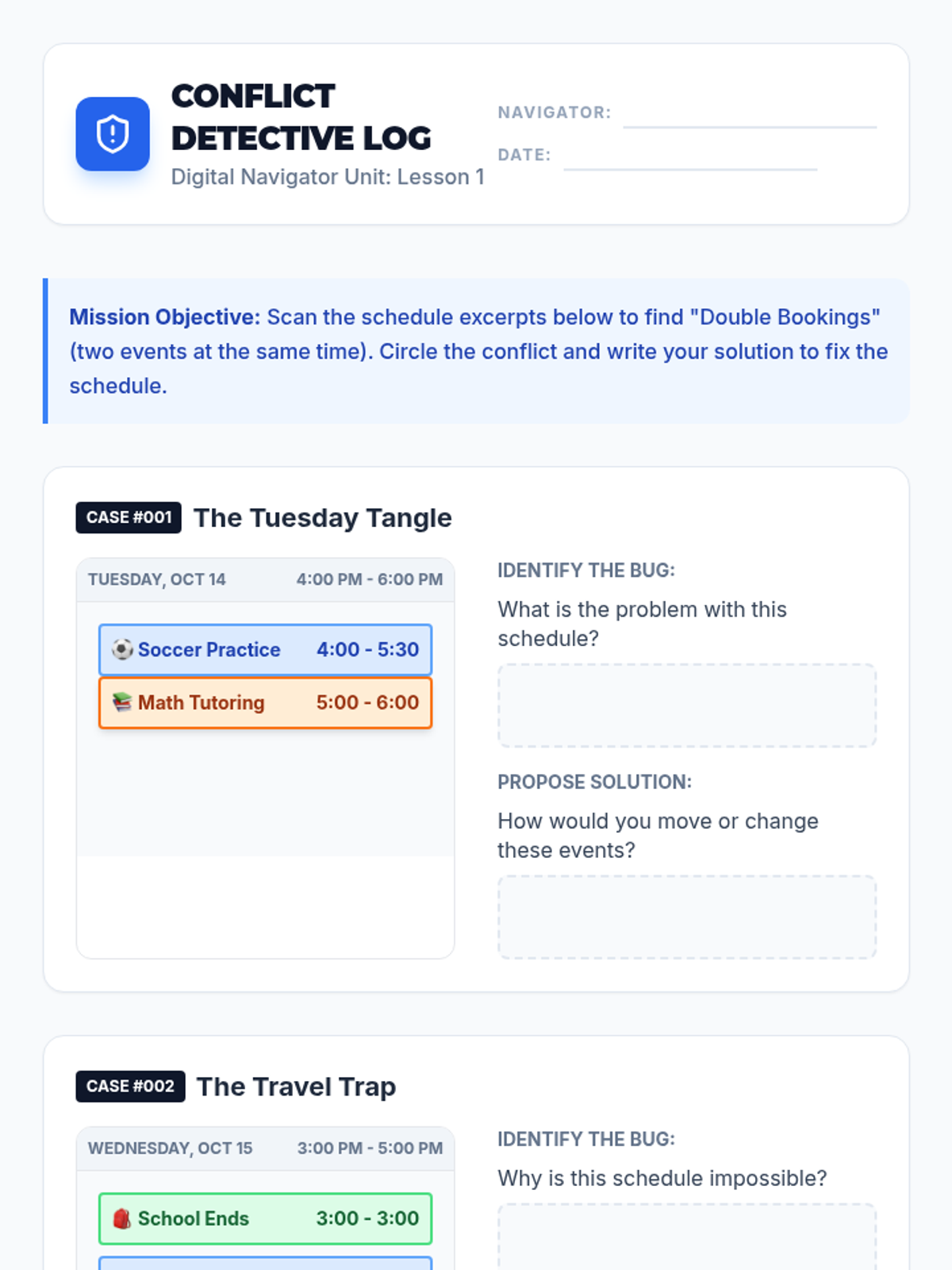
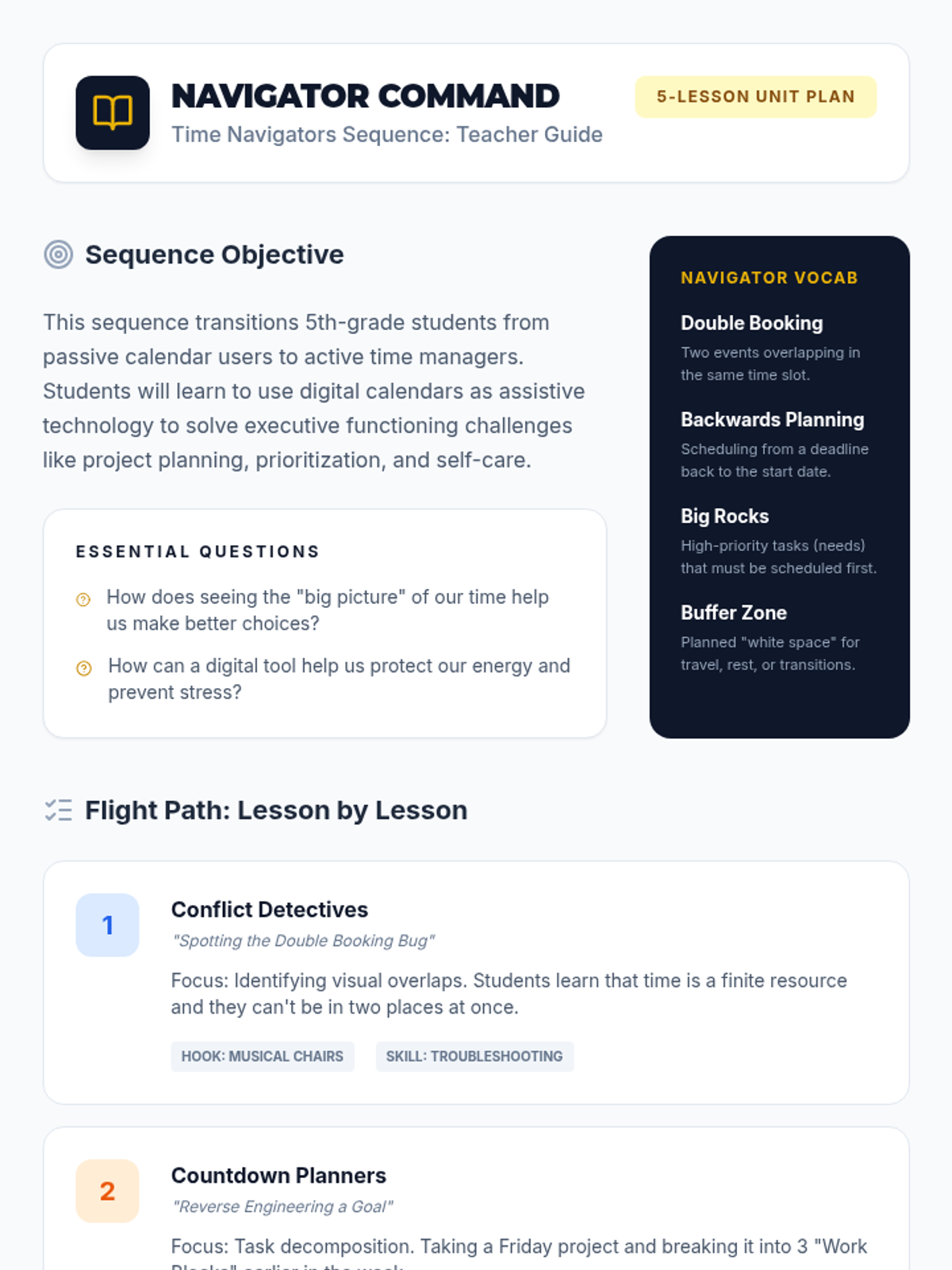
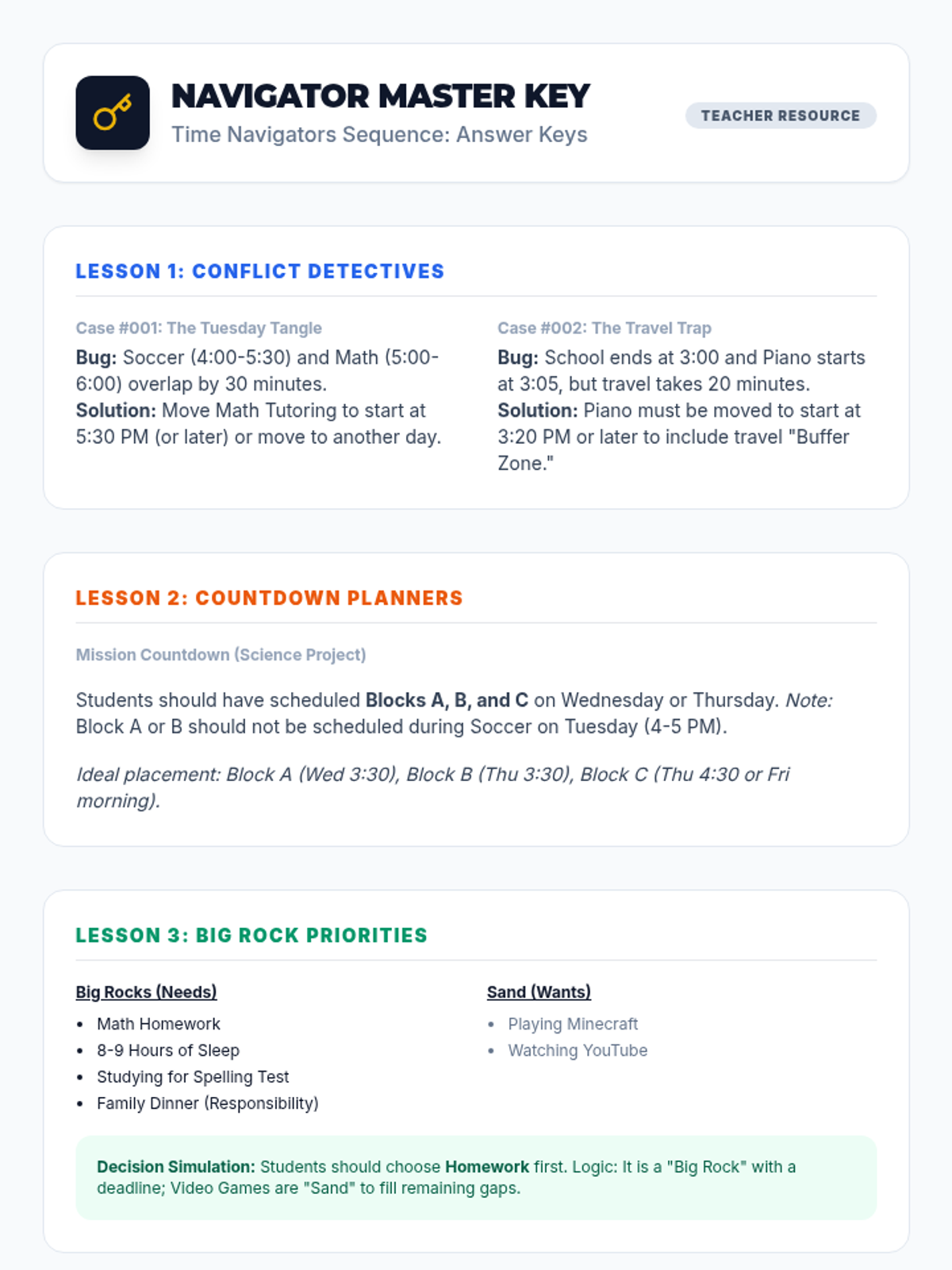
A 5th-grade sequence focusing on using digital calendars for independent planning, conflict resolution, and task prioritization. Students transition from passive scheduling to active time management, preparing them for the organizational demands of middle school.
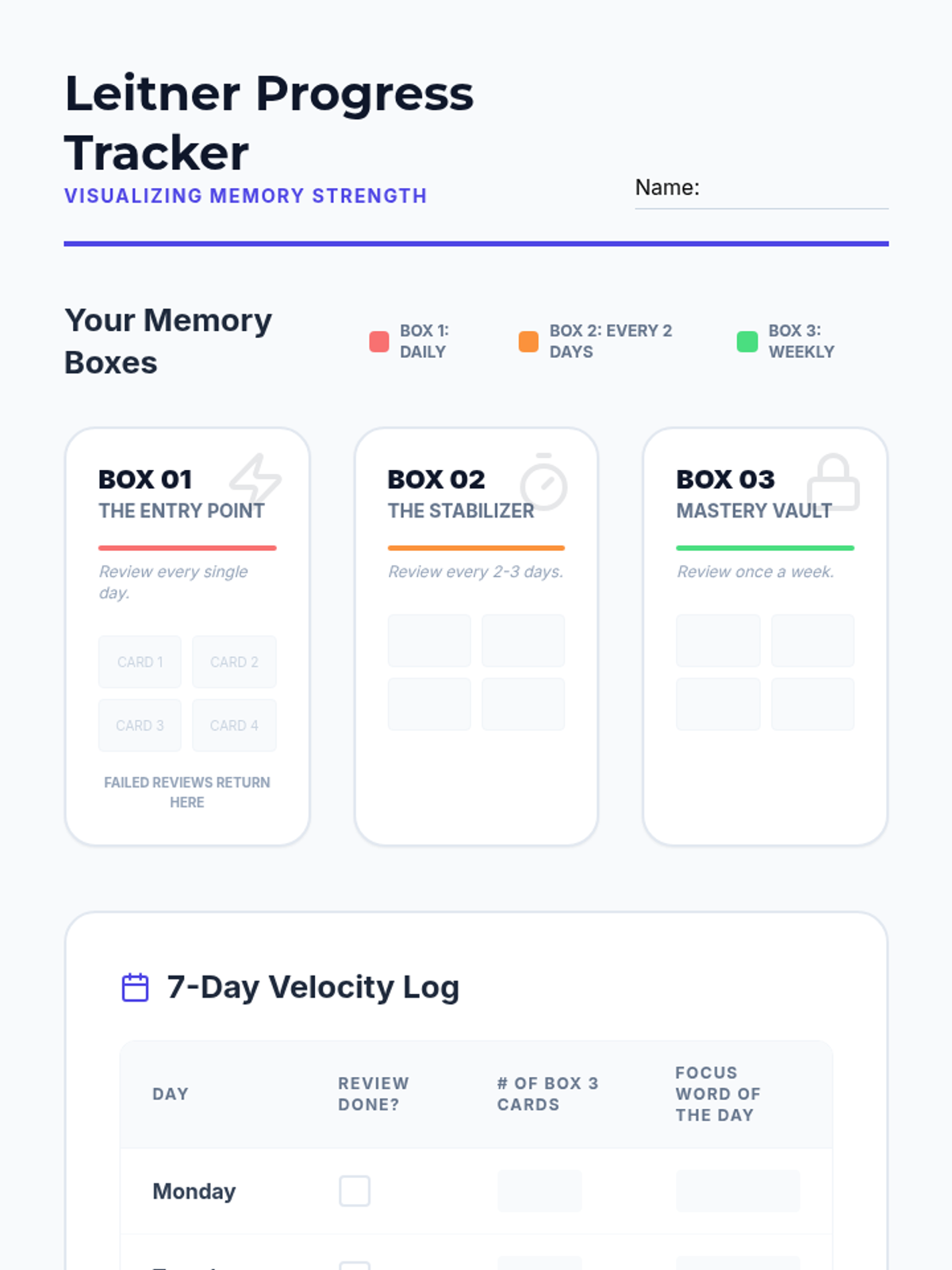
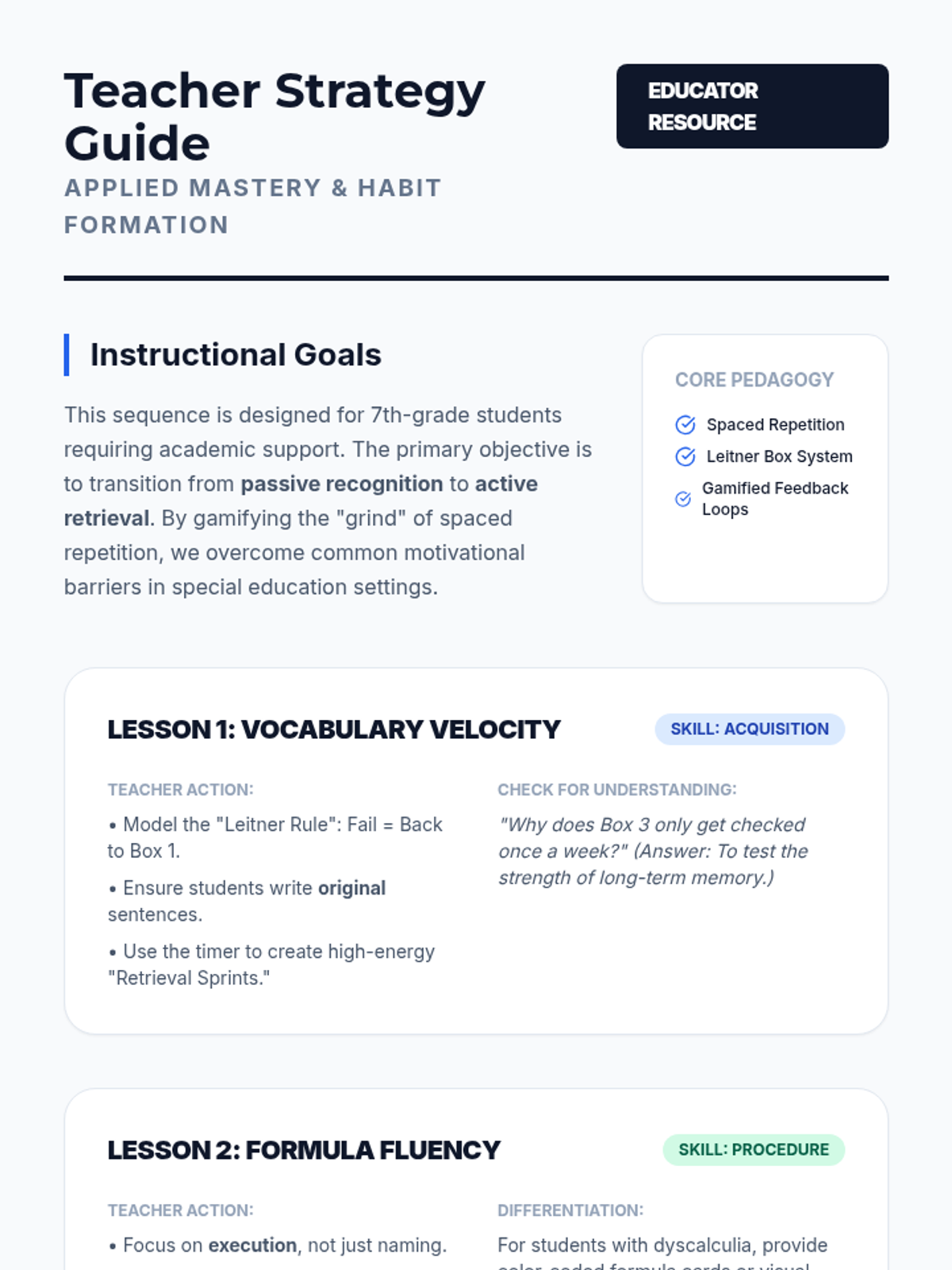
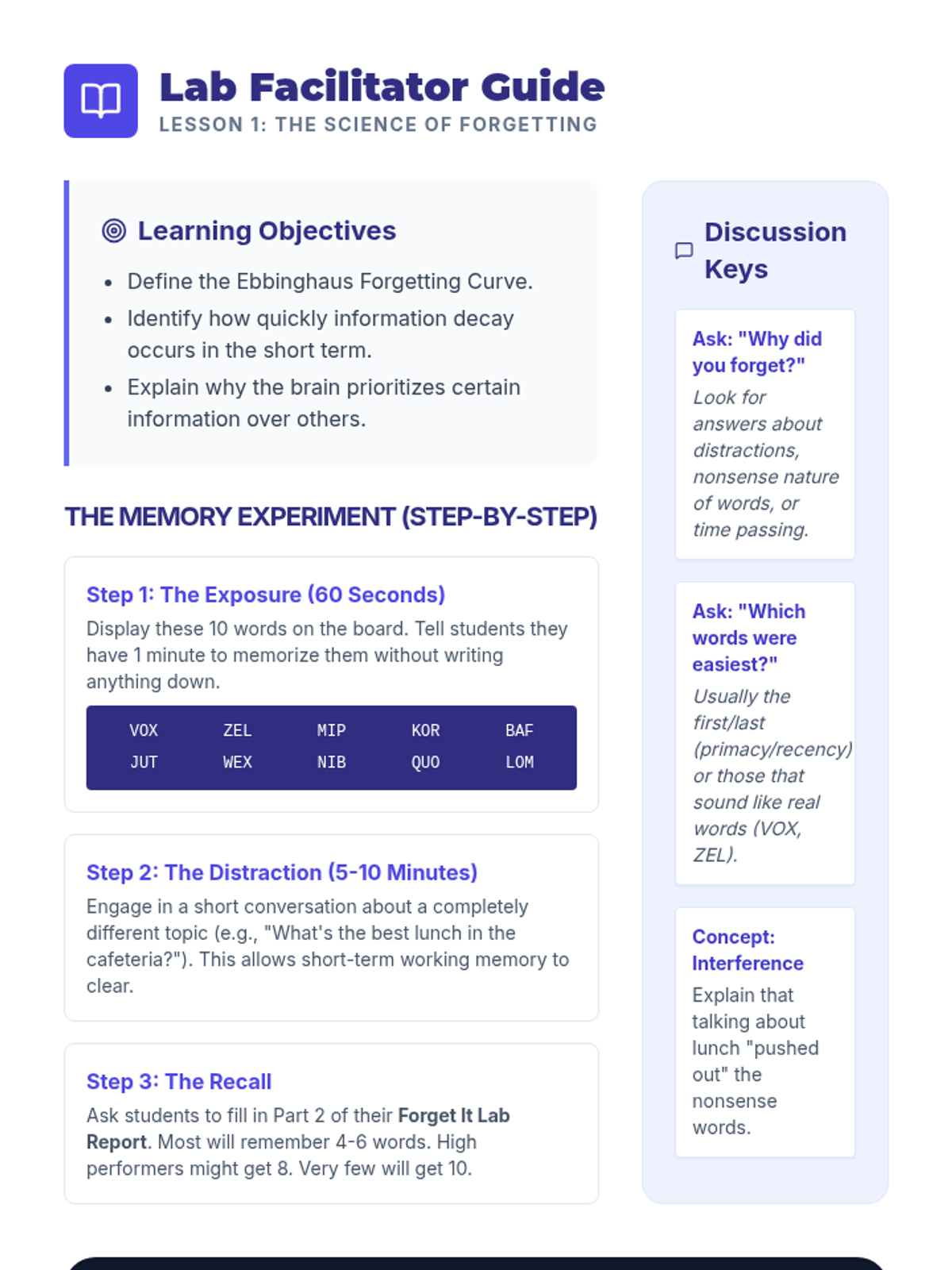
A specialized sequence designed for 6th-grade students to master long-term memory techniques. Students move from understanding why we forget to implementing advanced study systems like the Leitner Box and spaced repetition scheduling.
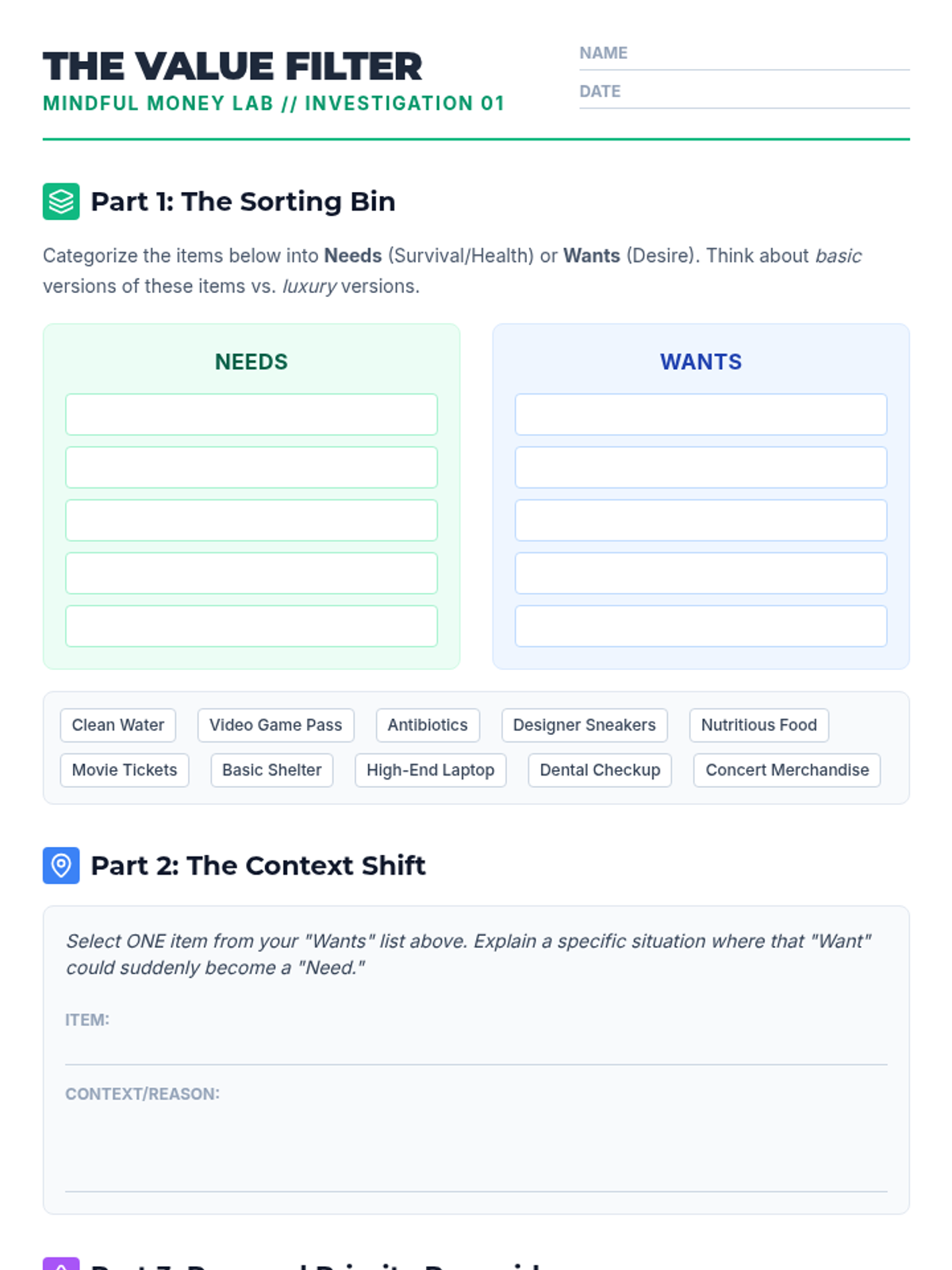
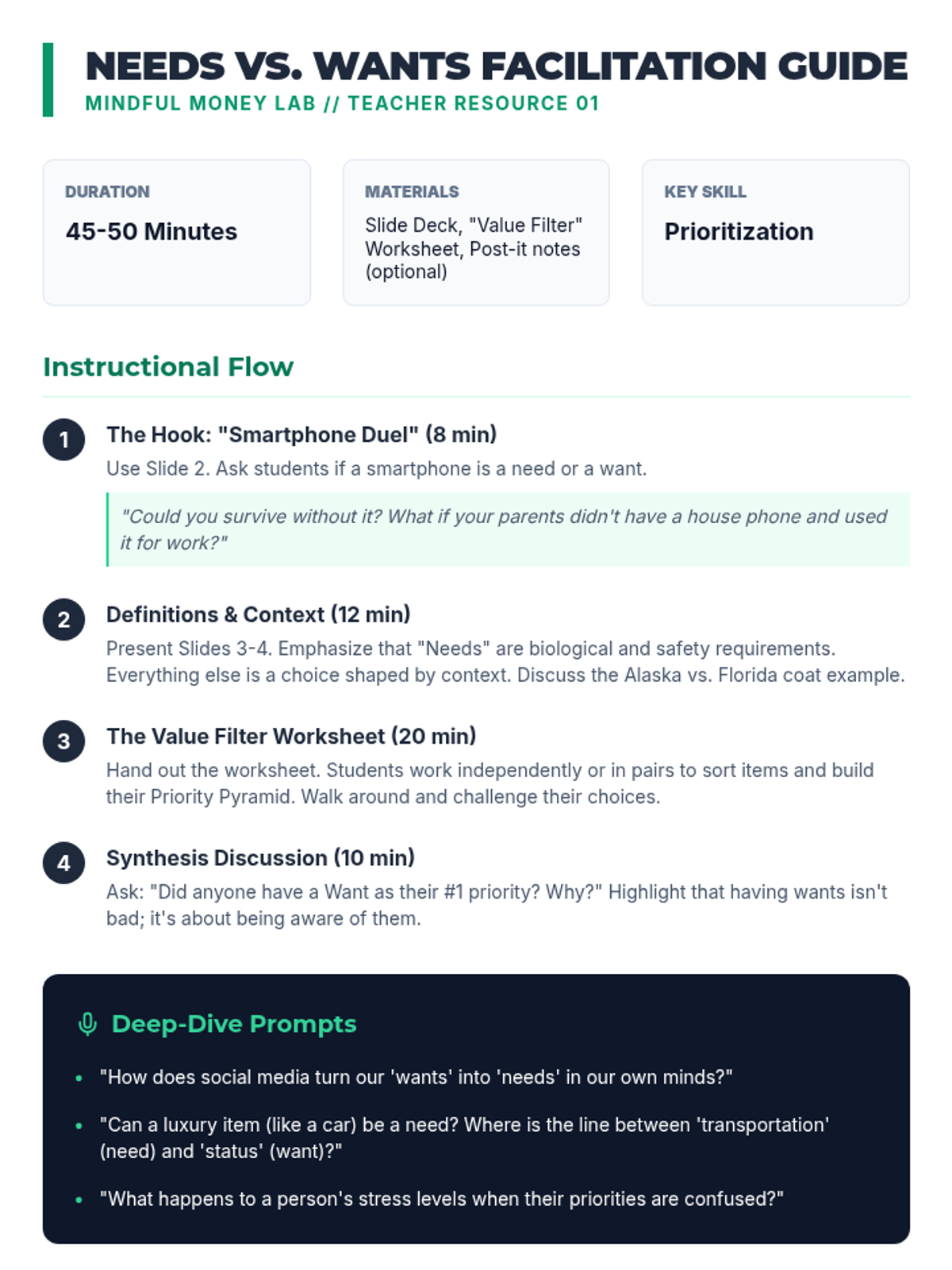
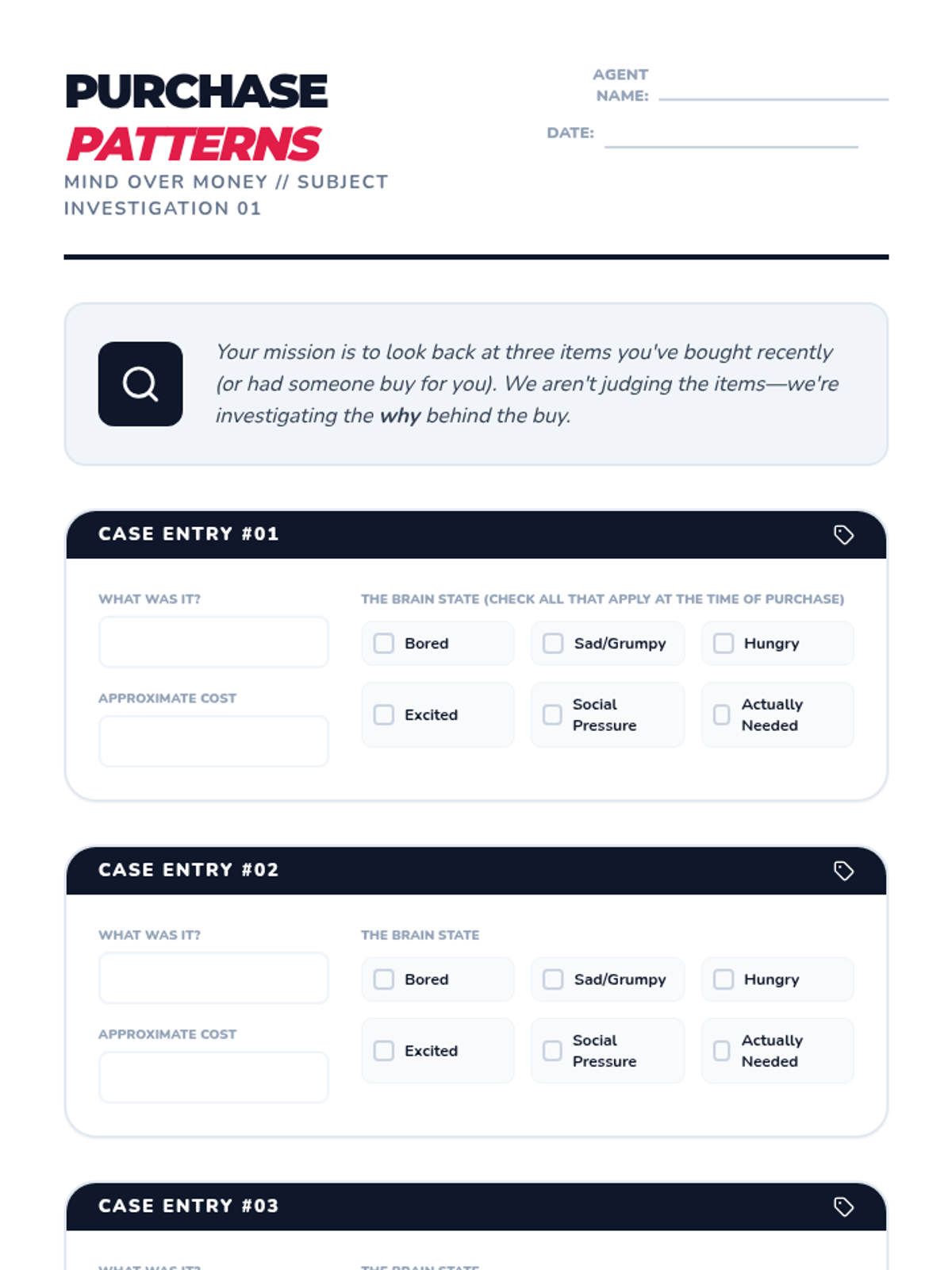
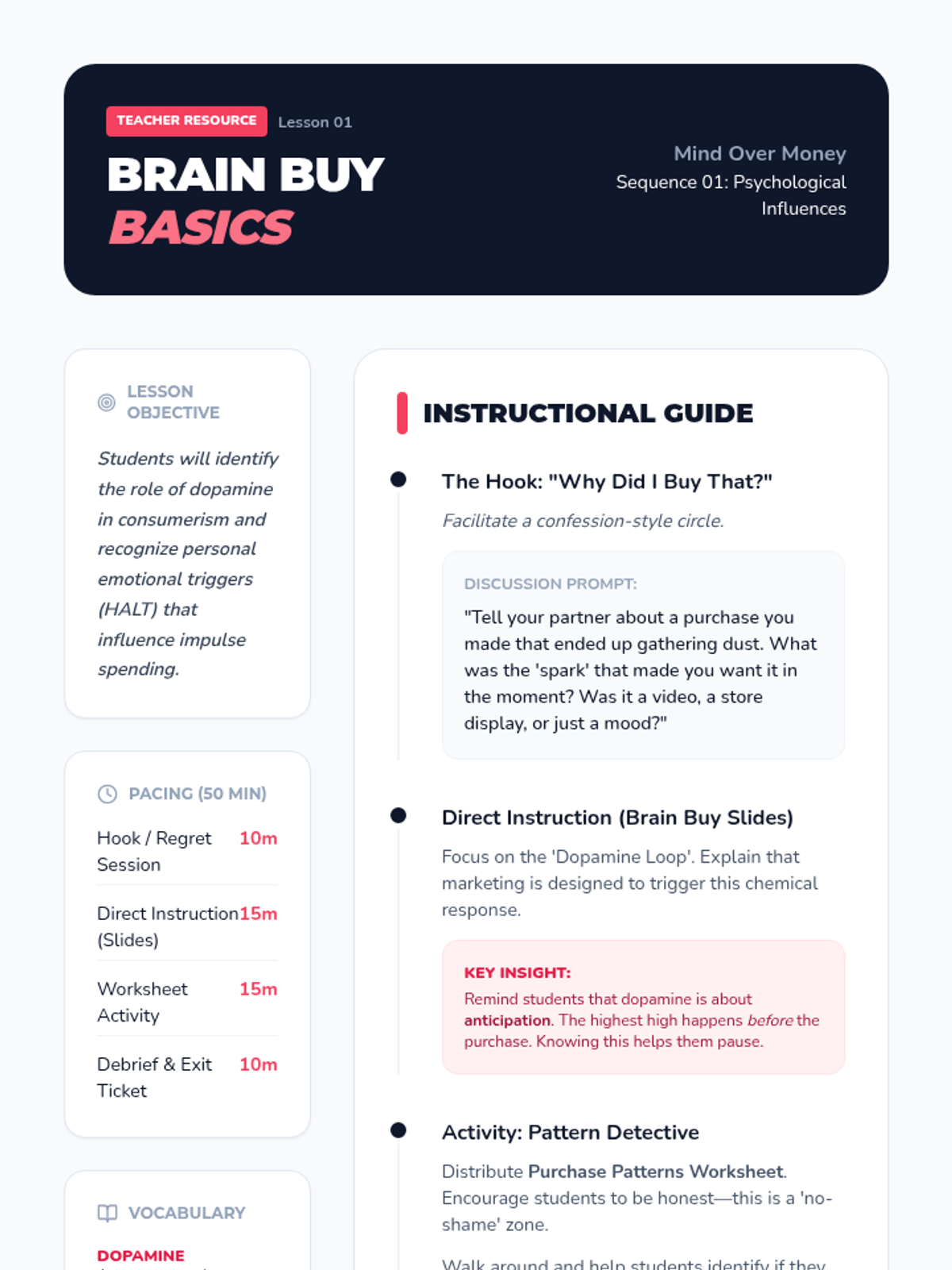
This sequence explores the psychology behind spending, focusing on impulse control, emotional triggers, and the economic concept of opportunity cost. Students move from basic needs/wants categorization to developing a personalized mindful spending plan.
A comprehensive workshop-style sequence exploring the psychology behind consumer habits, focusing on emotional triggers, peer pressure, branding, and environmental impact to help 6th graders develop healthy spending habits.
This sequence guides 6th-grade students through the psychological and practical steps of behavior change. They move from understanding SMART goals and motivation types to designing their own behavior contracts and tracking systems, emphasizing self-regulation and iterative growth.
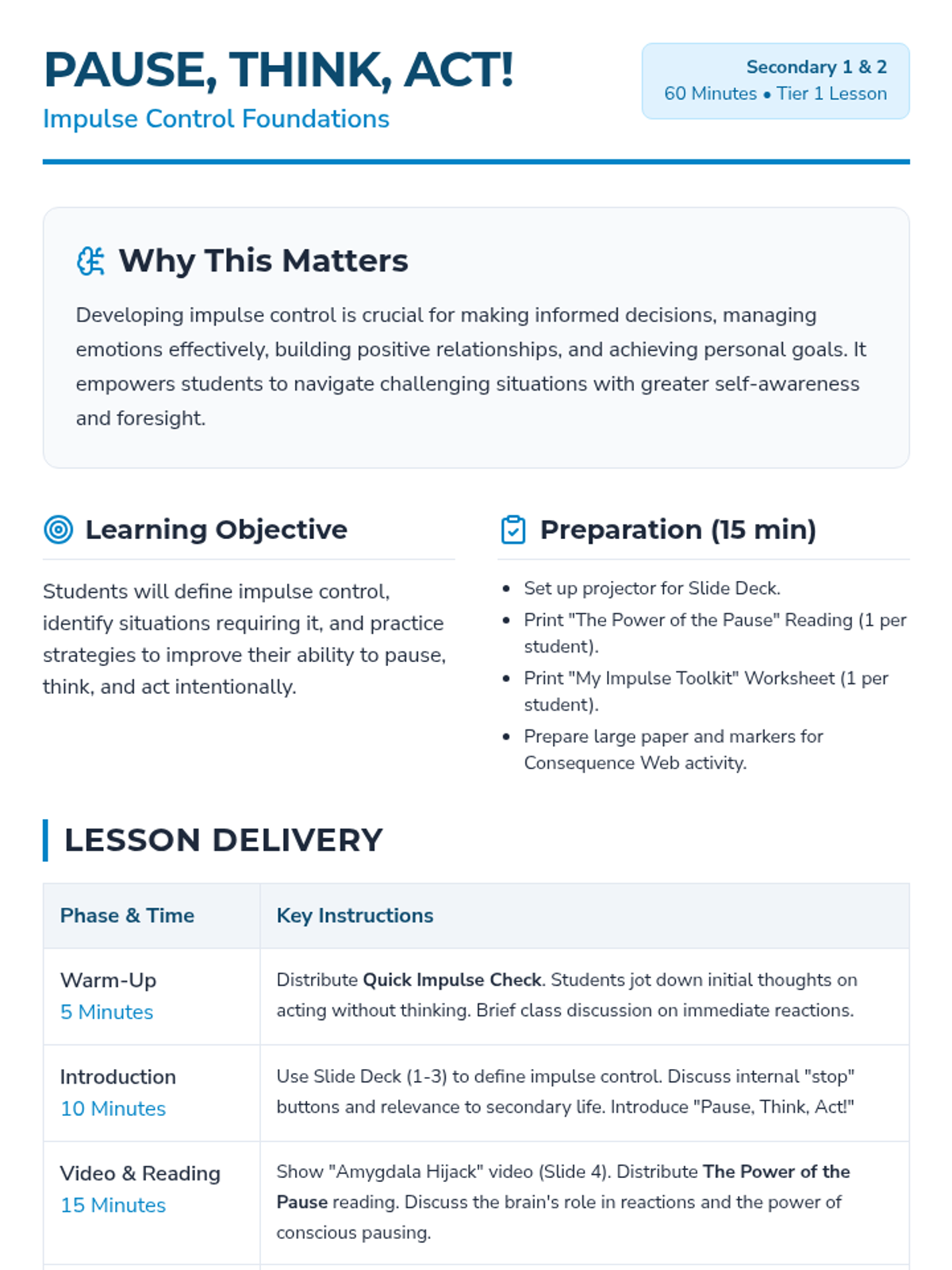
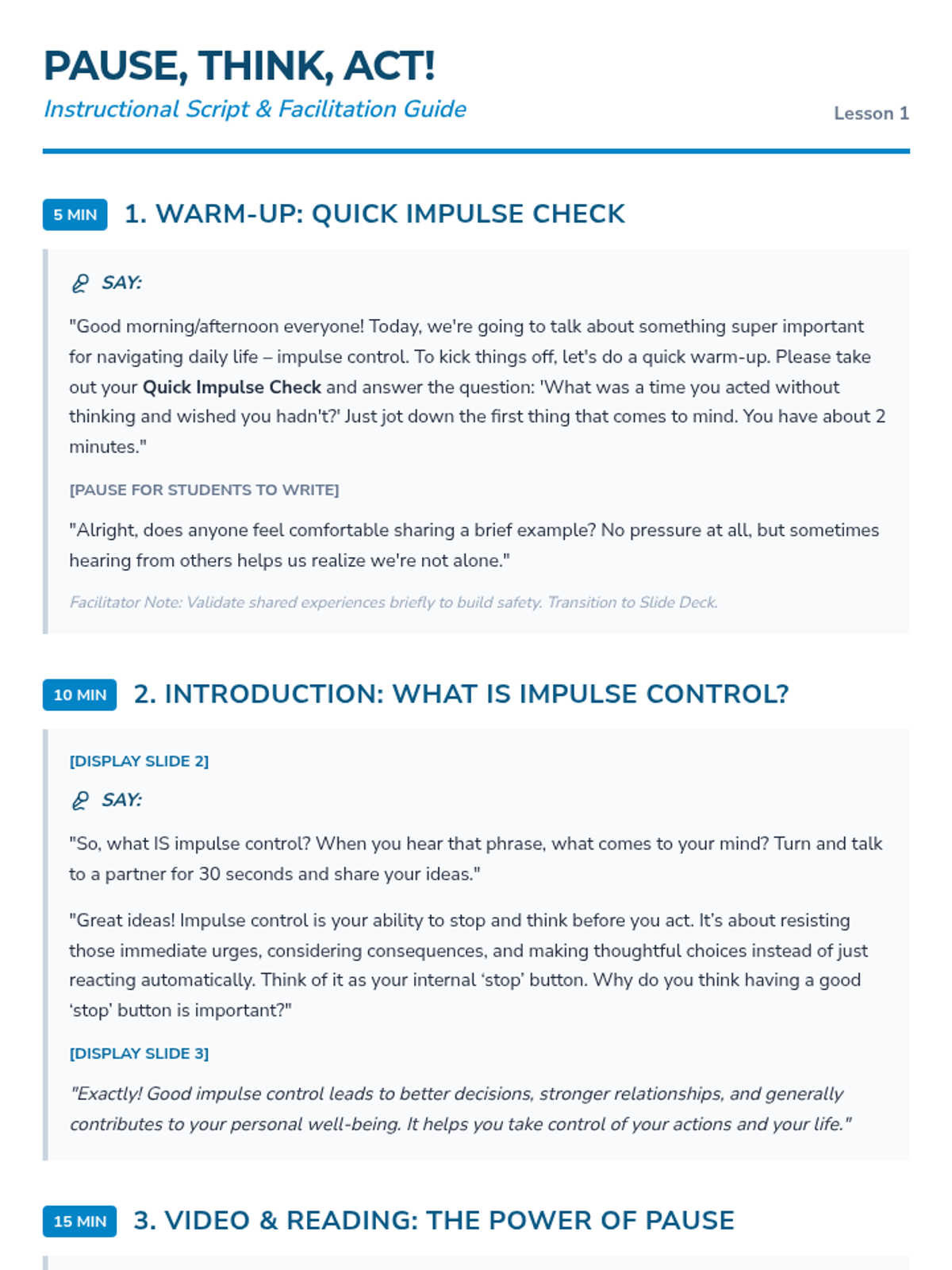
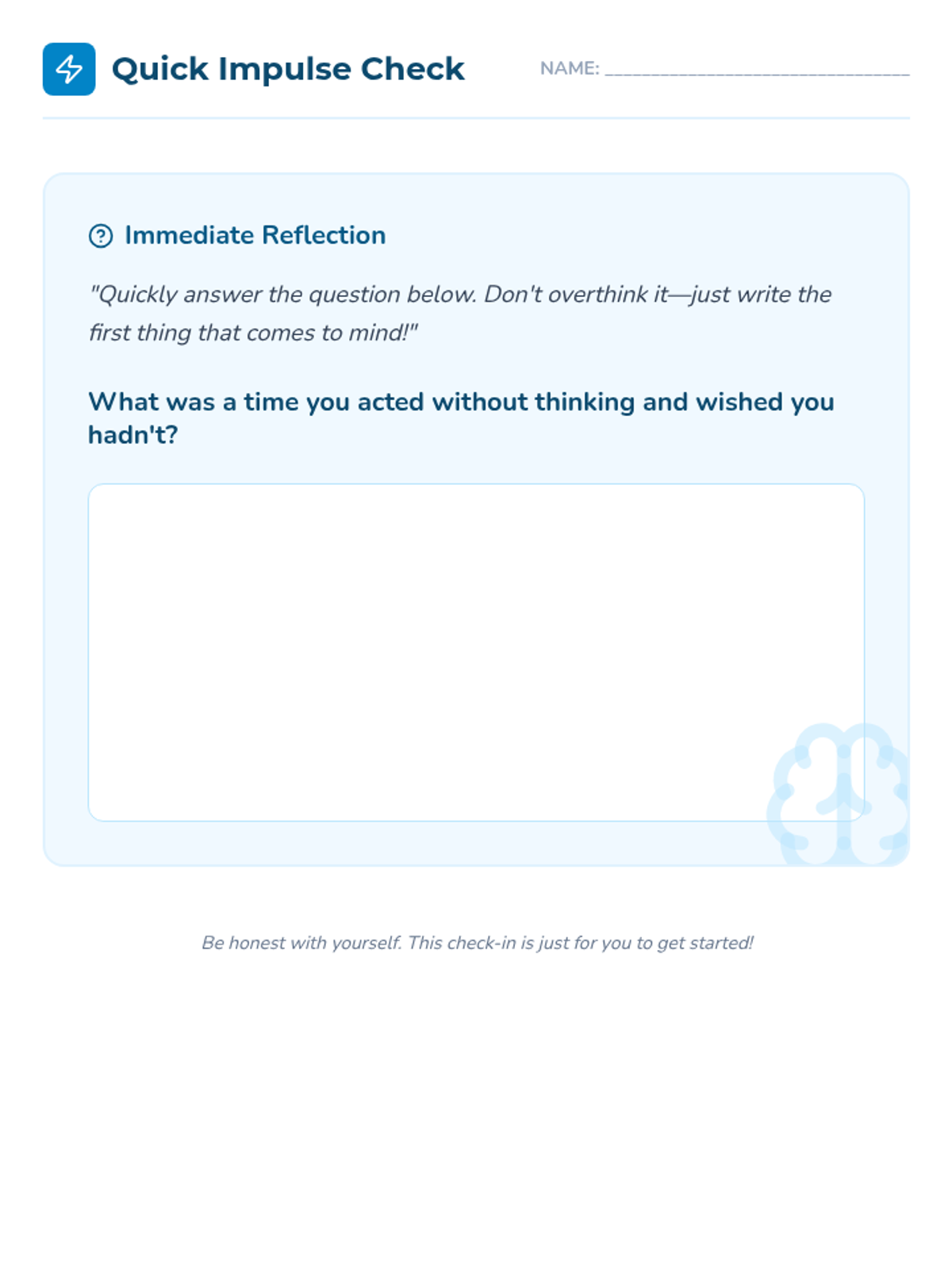
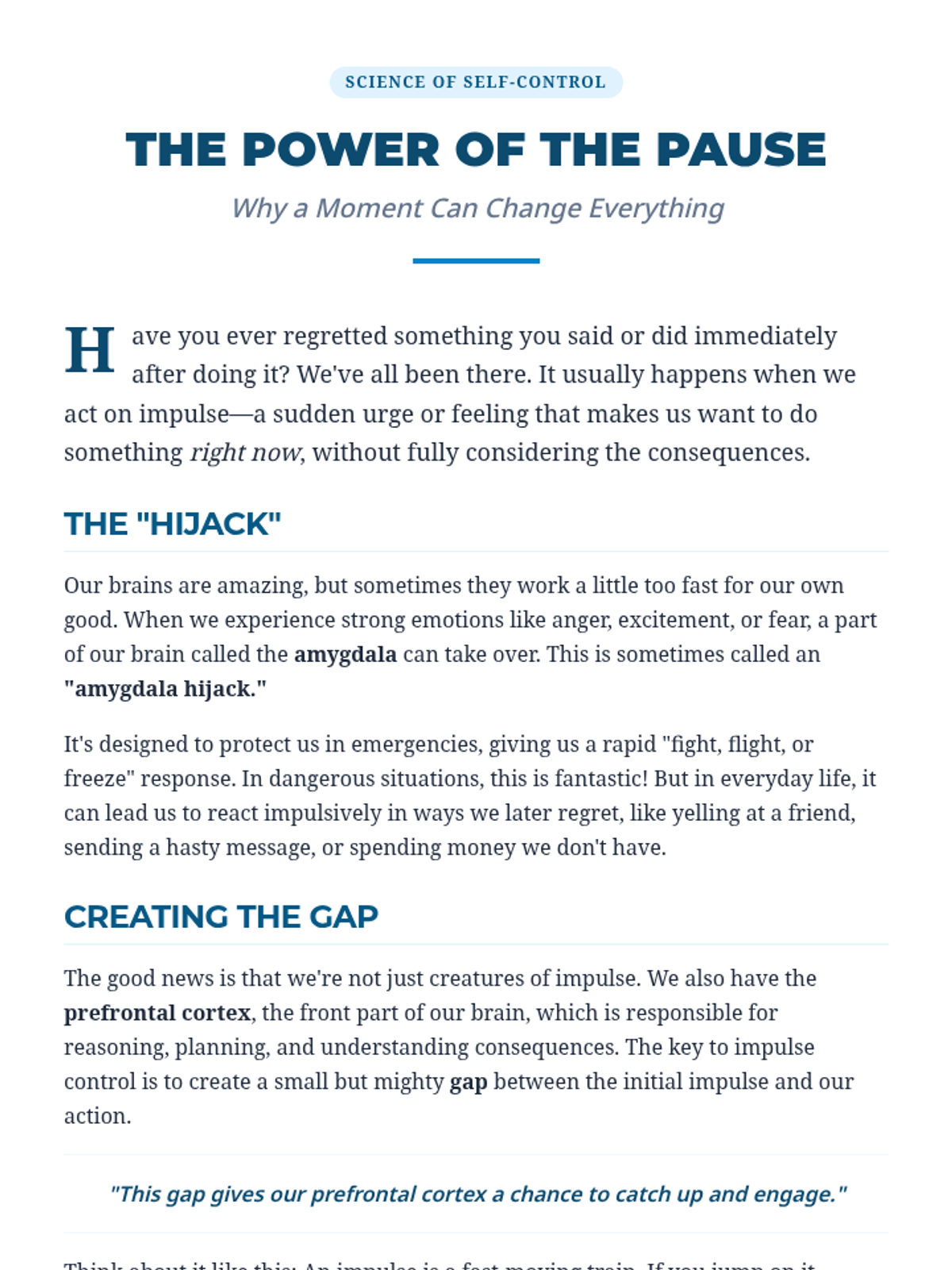
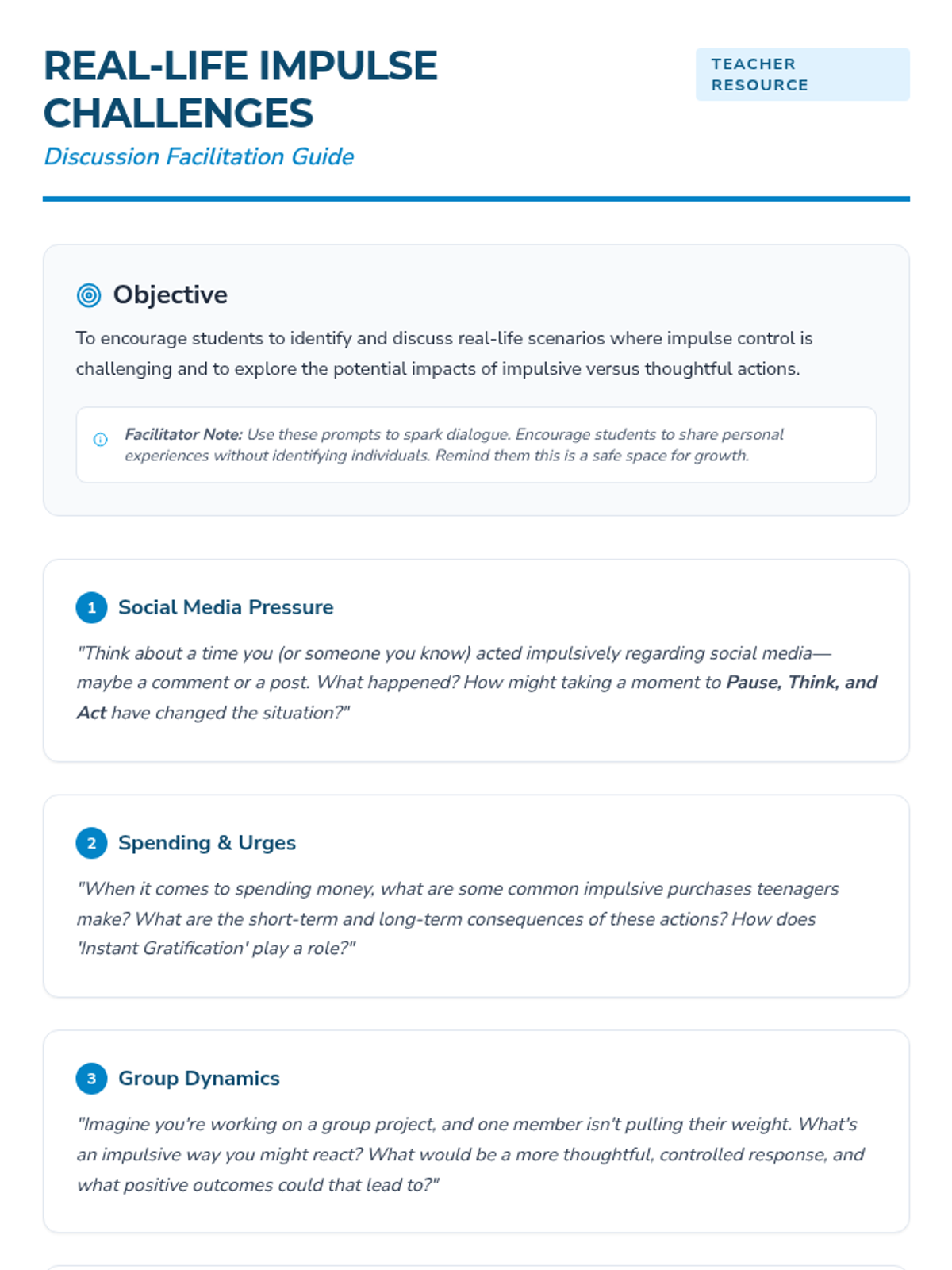
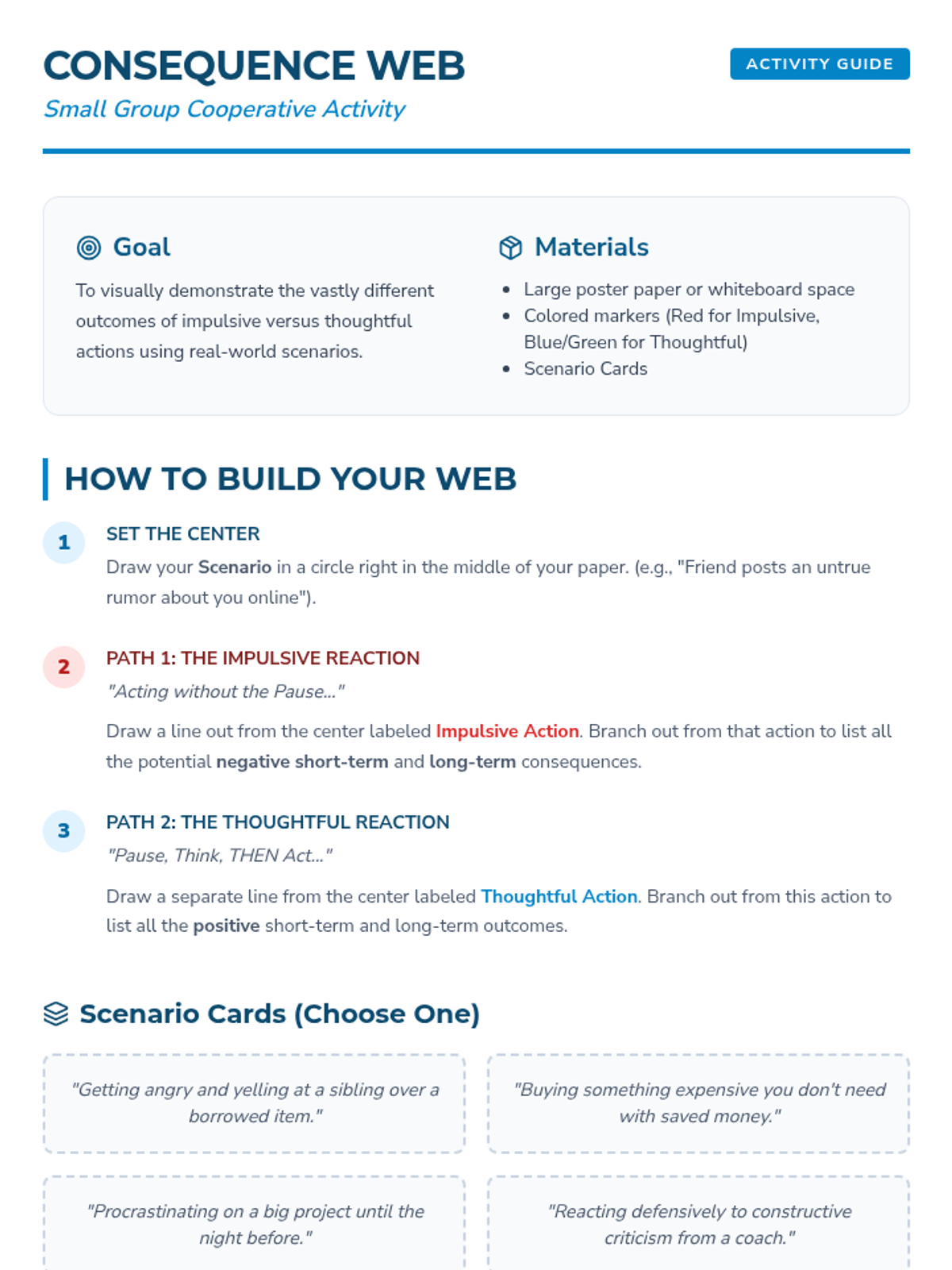
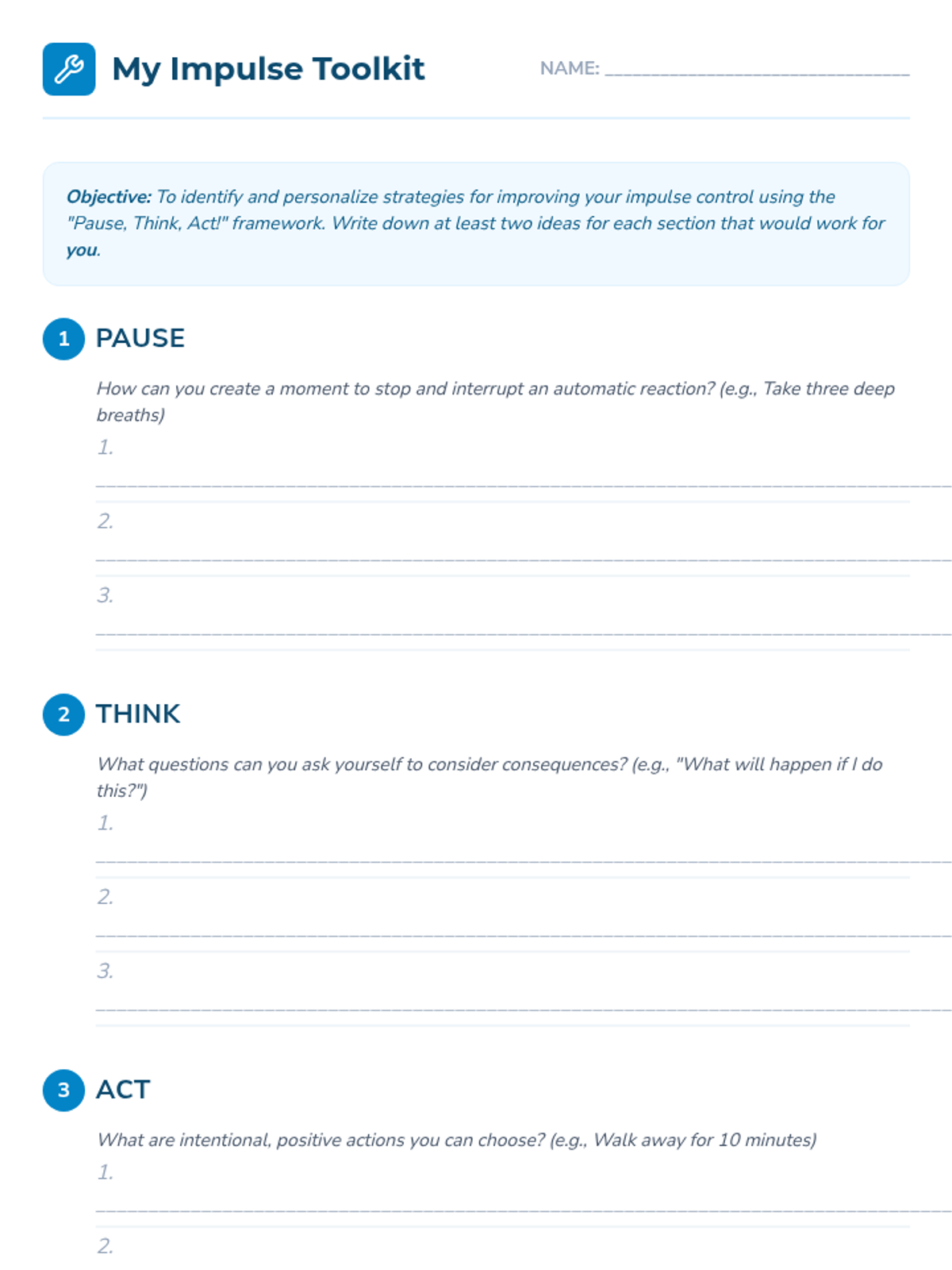
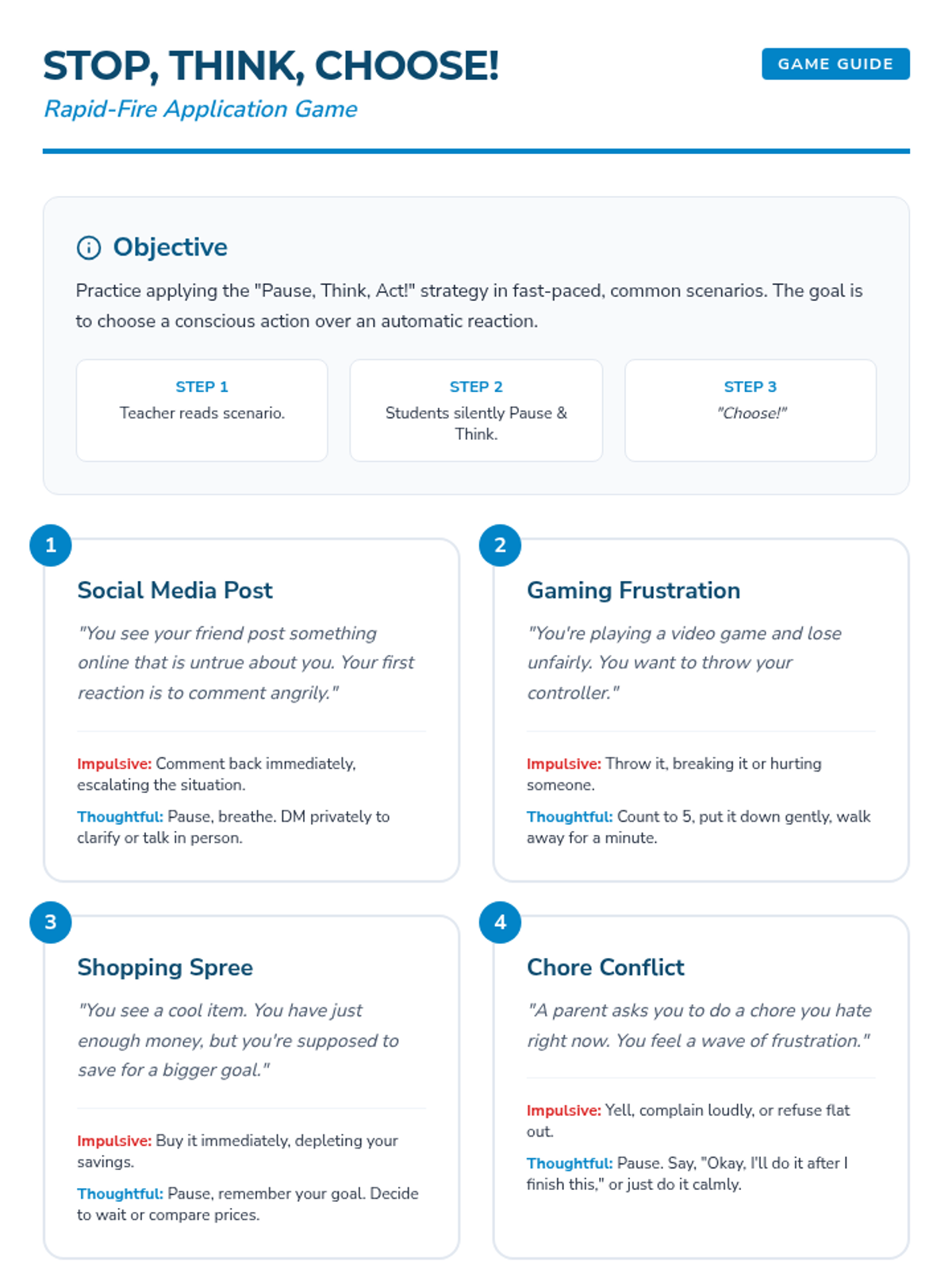
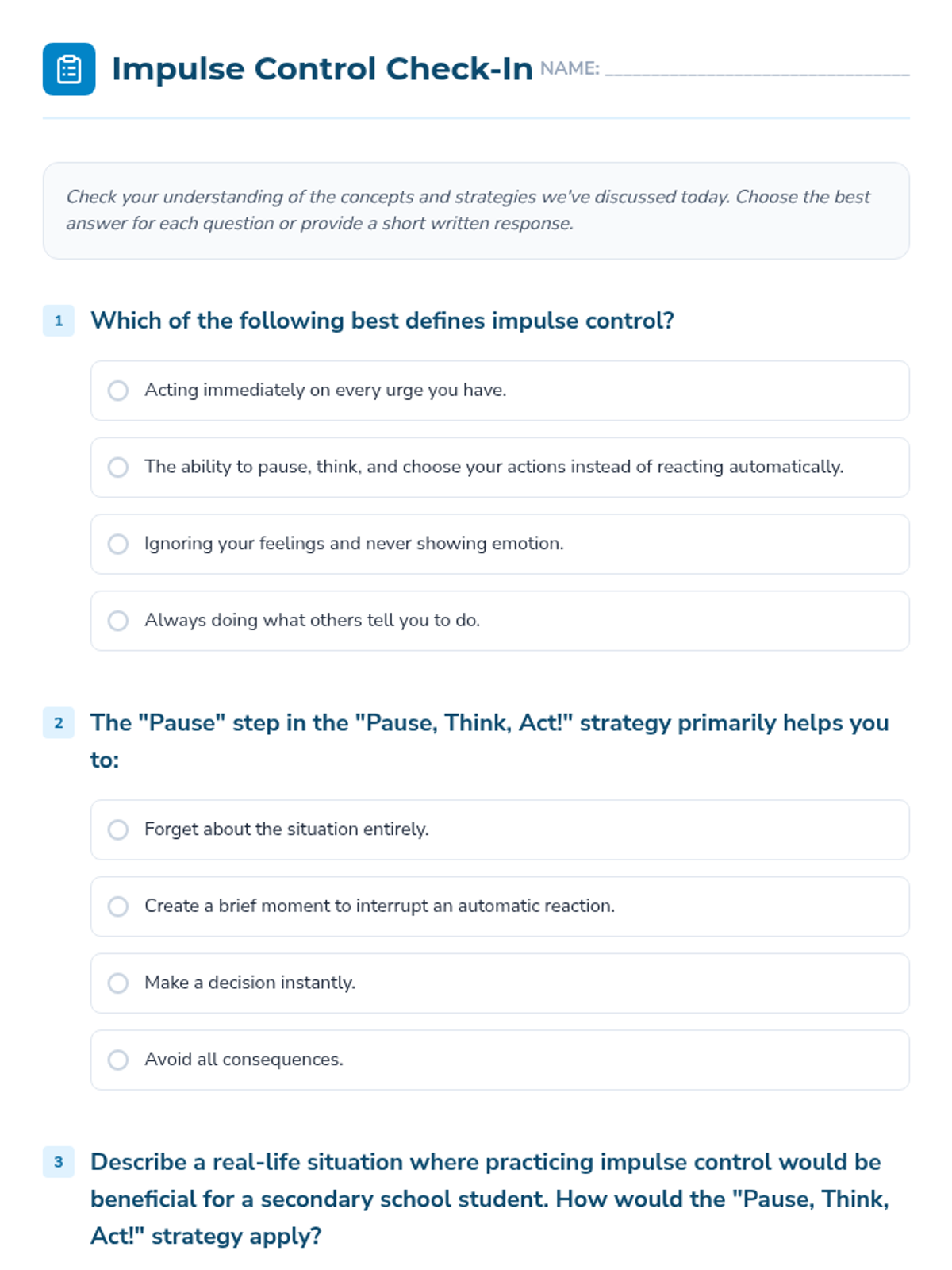
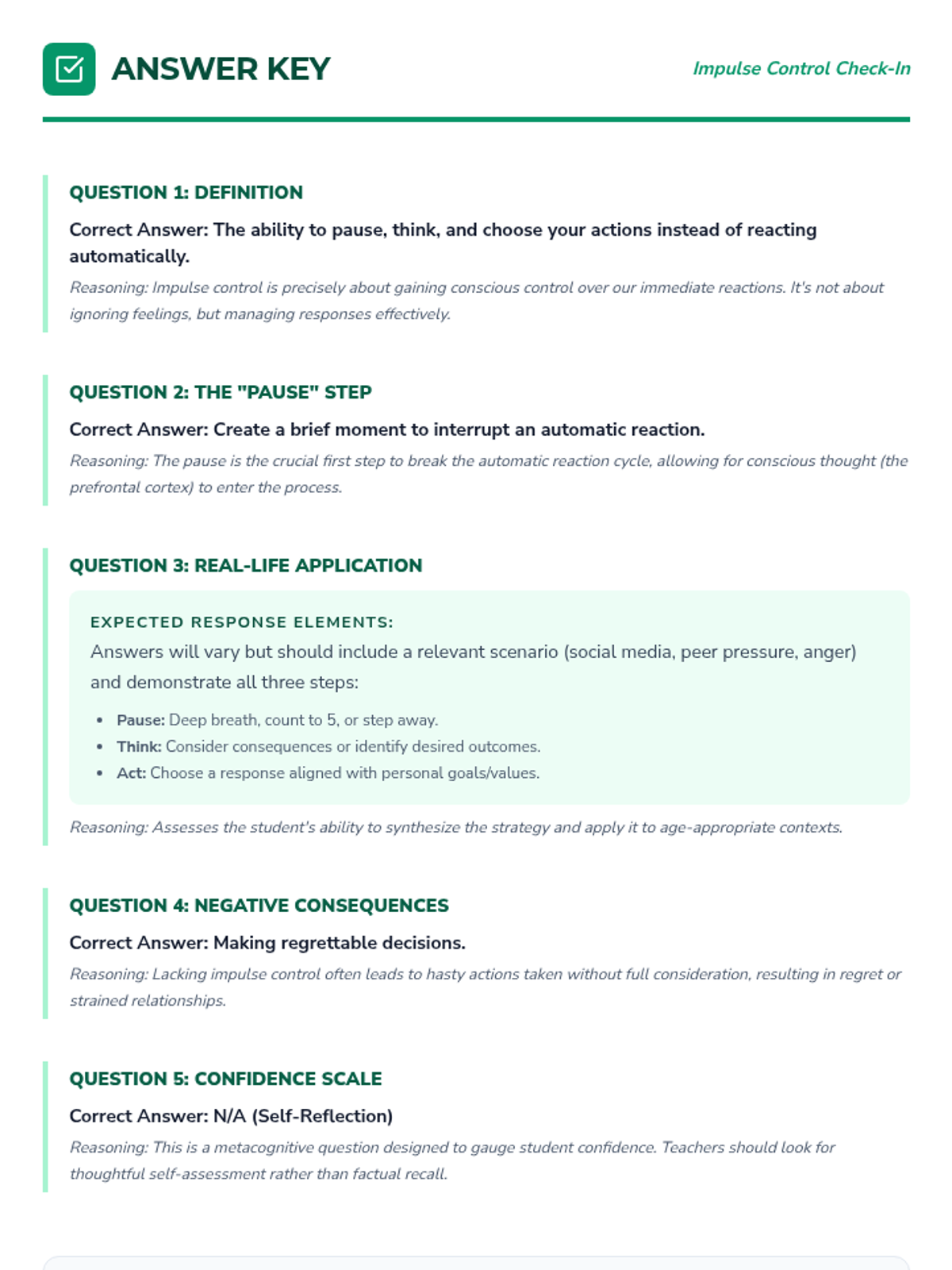
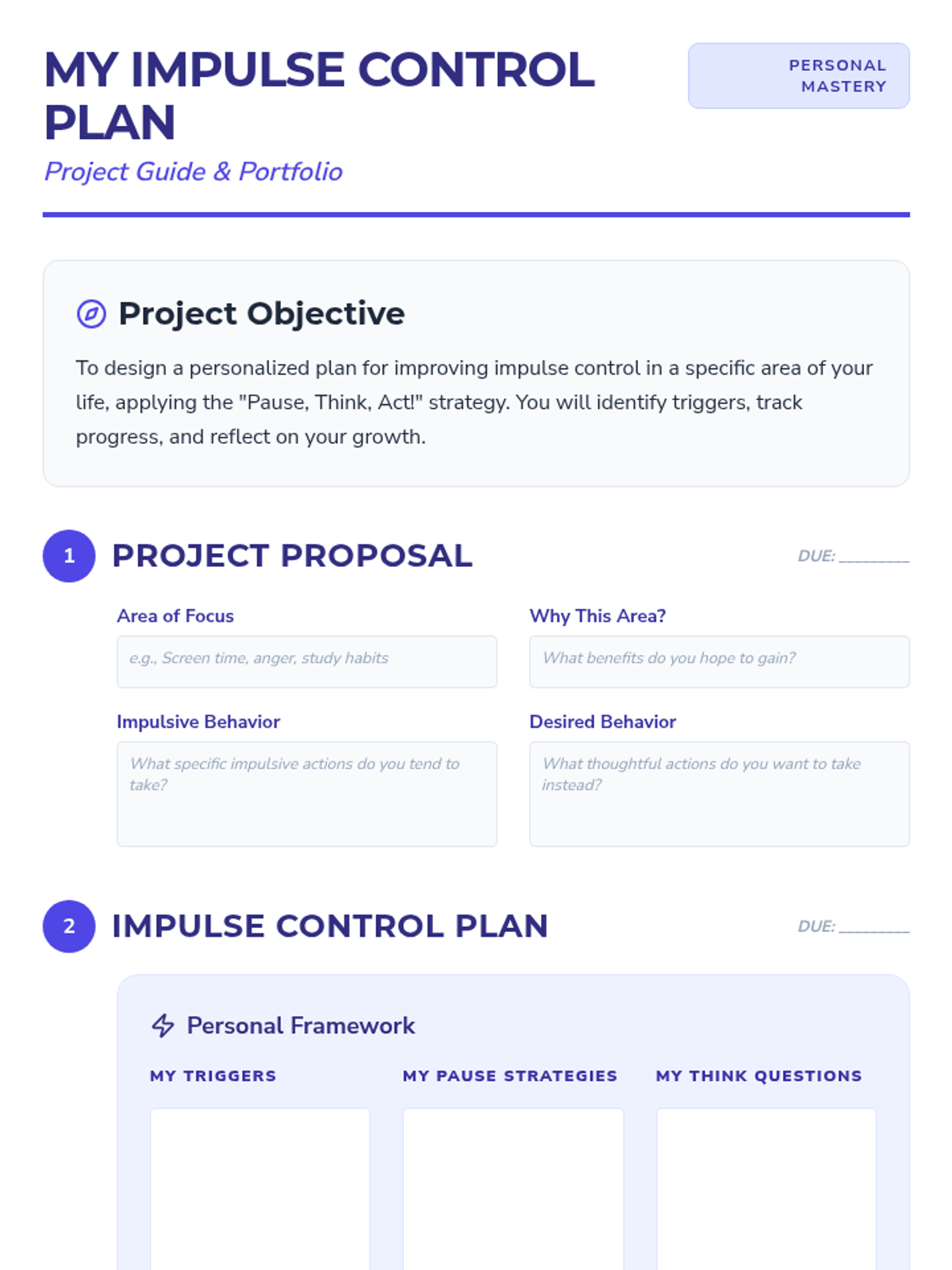
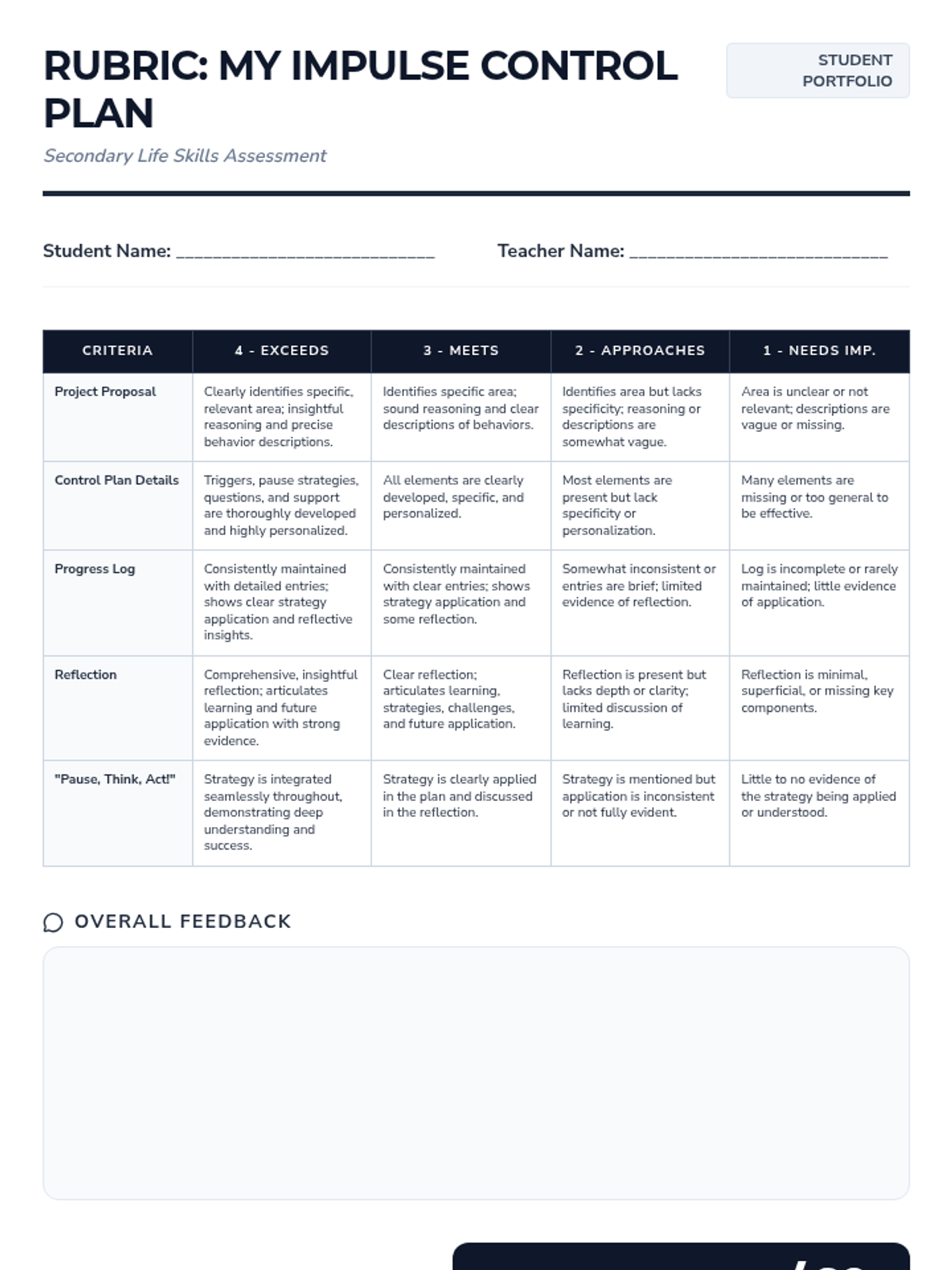
A comprehensive two-part unit for Secondary 1 and 2 students focusing on developing impulse control. Students learn to navigate immediate urges using the 'Pause, Think, Act' and 'Pause, Process, Proceed' frameworks through interactive activities, real-world scenarios, and personal planning.
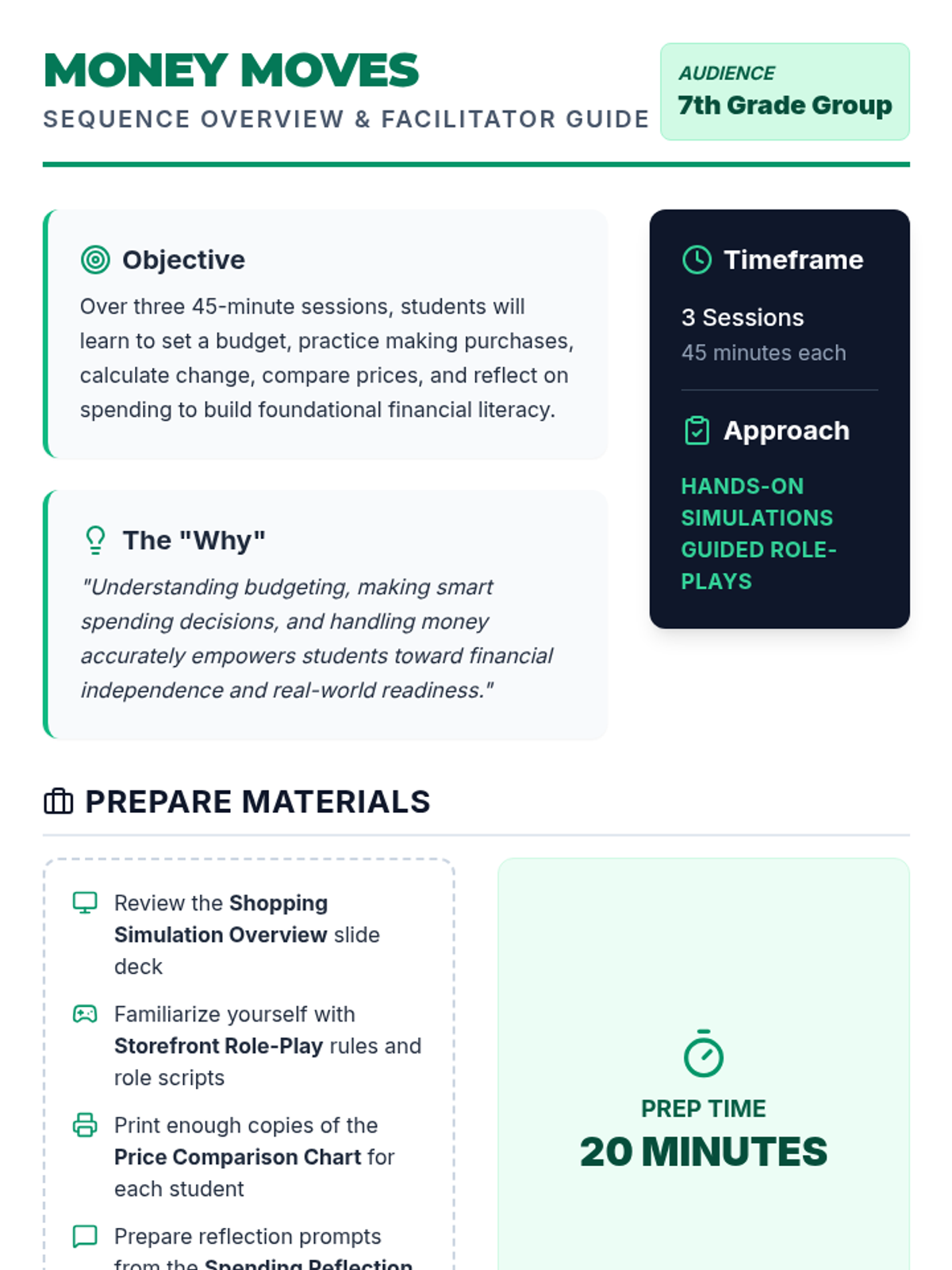
A 3-session module for 7th graders focused on financial literacy, covering budgeting, making purchases, calculating change, and price comparison.
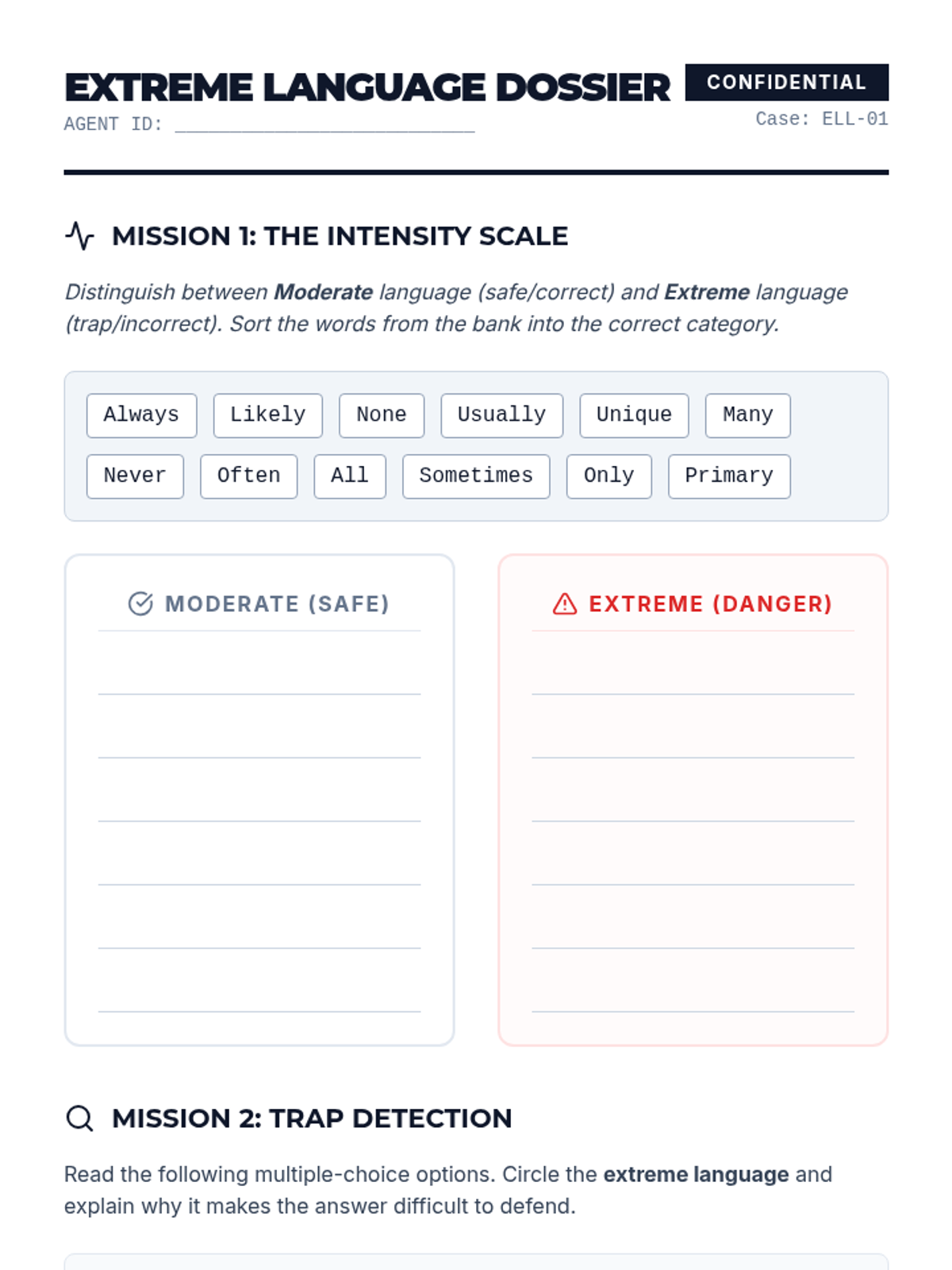
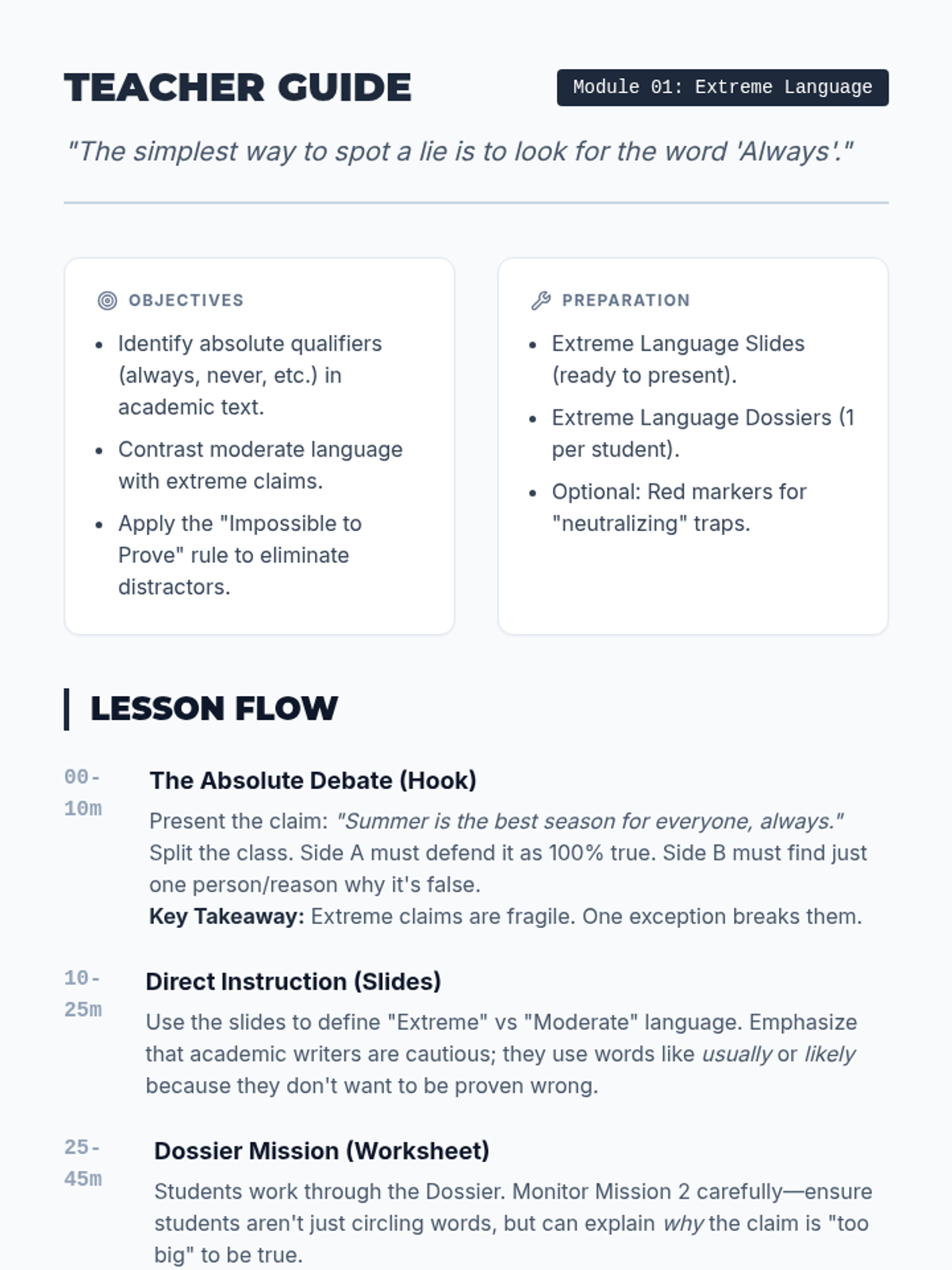
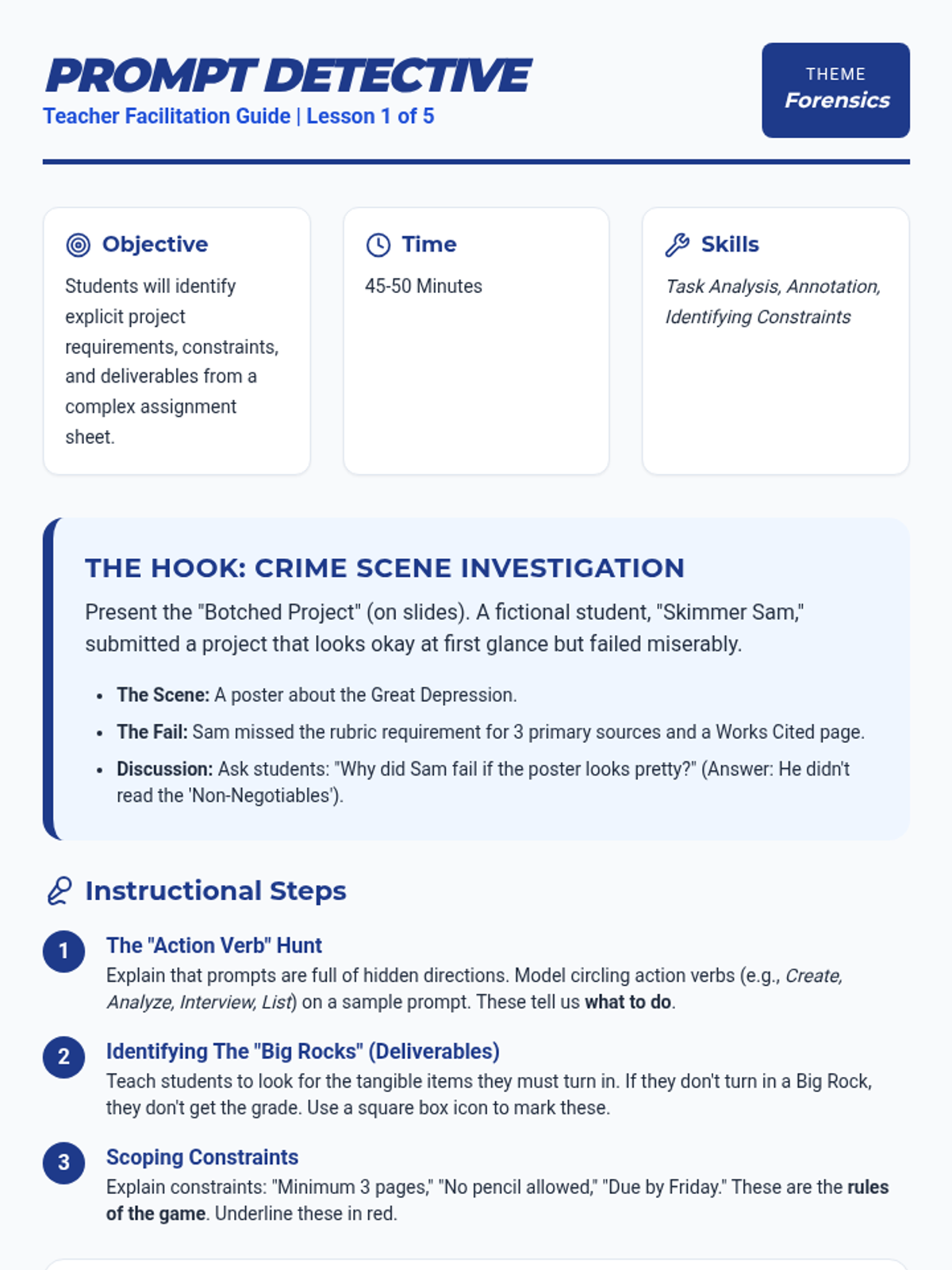
This sequence transforms students into 'Trap Detectives' who can identify and eliminate common distractors in academic tests. Students learn to spot extreme language, half-right traps, and out-of-scope answers through gamified lessons and role-reversal activities.
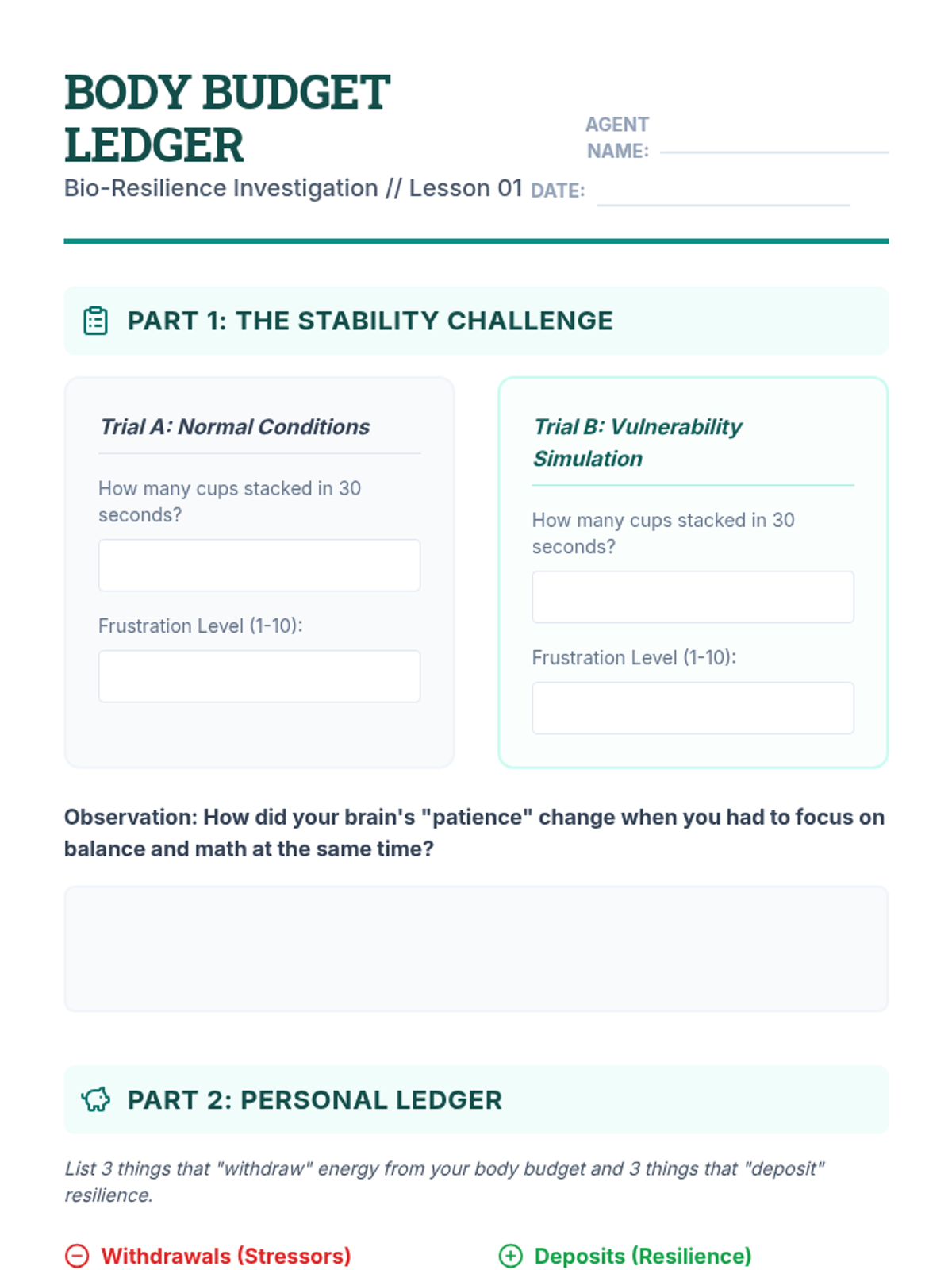
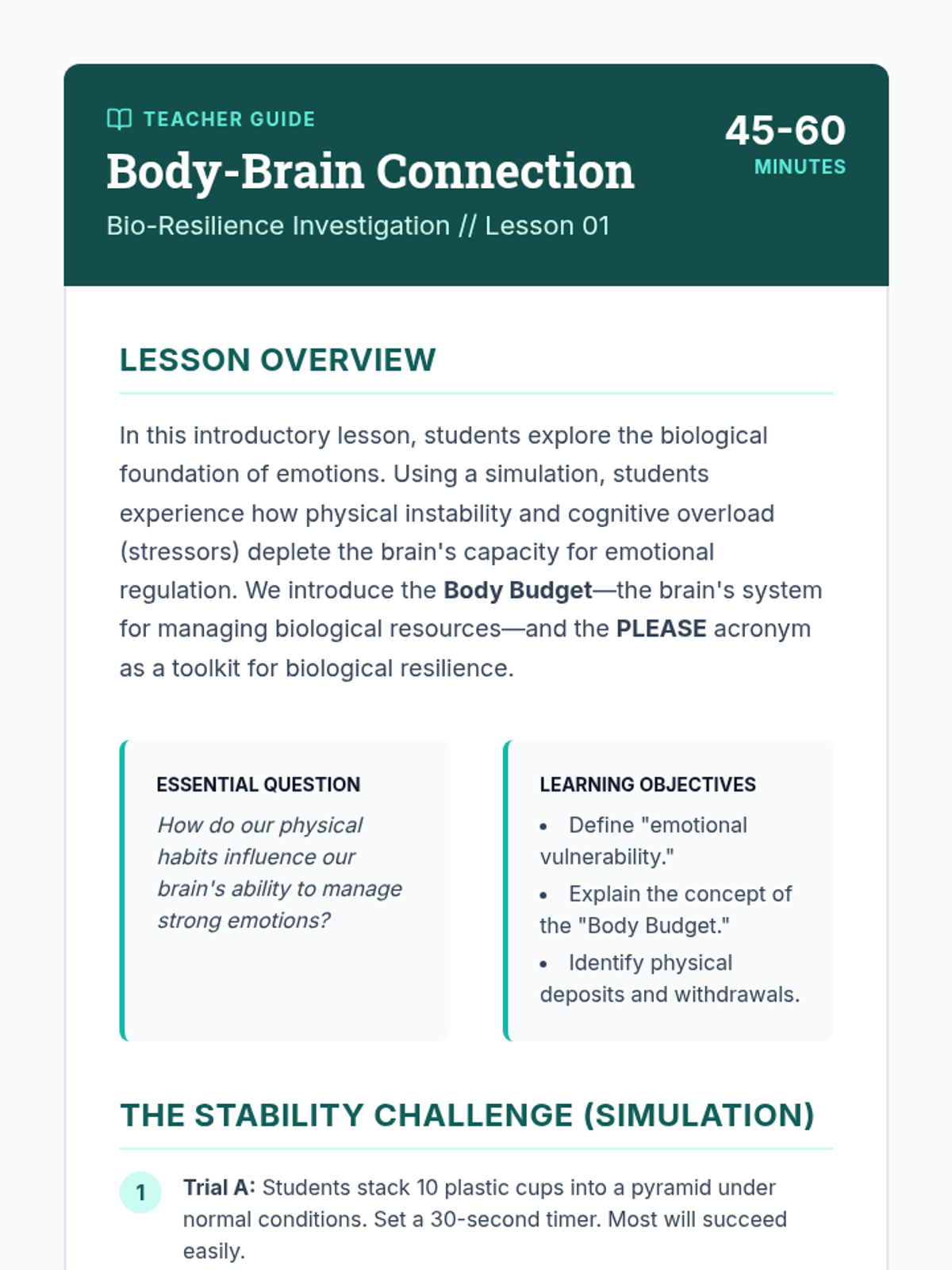
A 5-lesson inquiry into how physical health (the PLEASE skills) creates biological resilience against emotional vulnerability, designed for 6th-grade students.
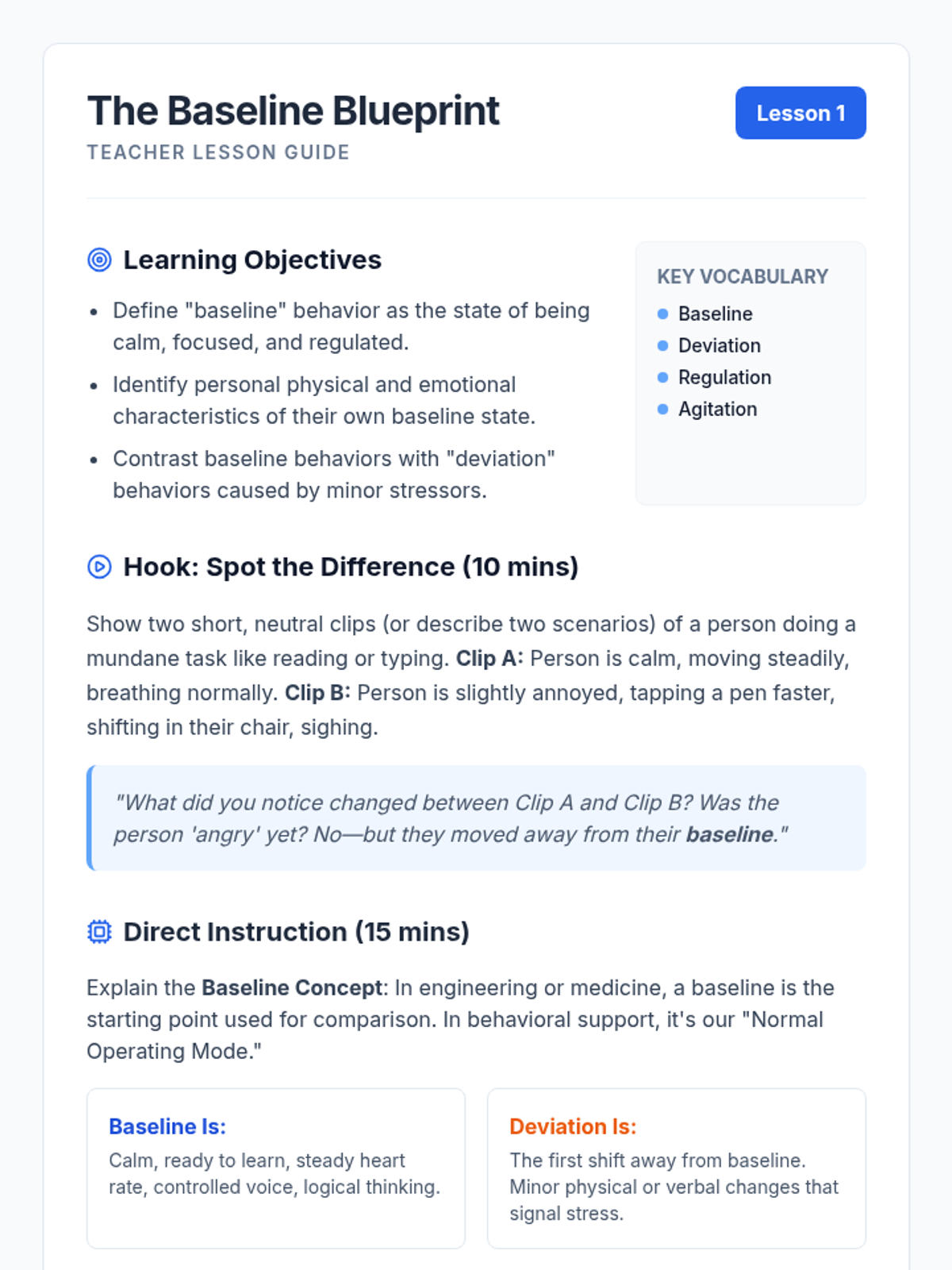
A comprehensive 5-lesson unit for 7th-grade students to identify internal and external signals of emotional escalation. Students move from establishing baseline behaviors to creating a personalized 'Escalation Map' to help them recognize when to engage coping strategies before a crisis occurs.
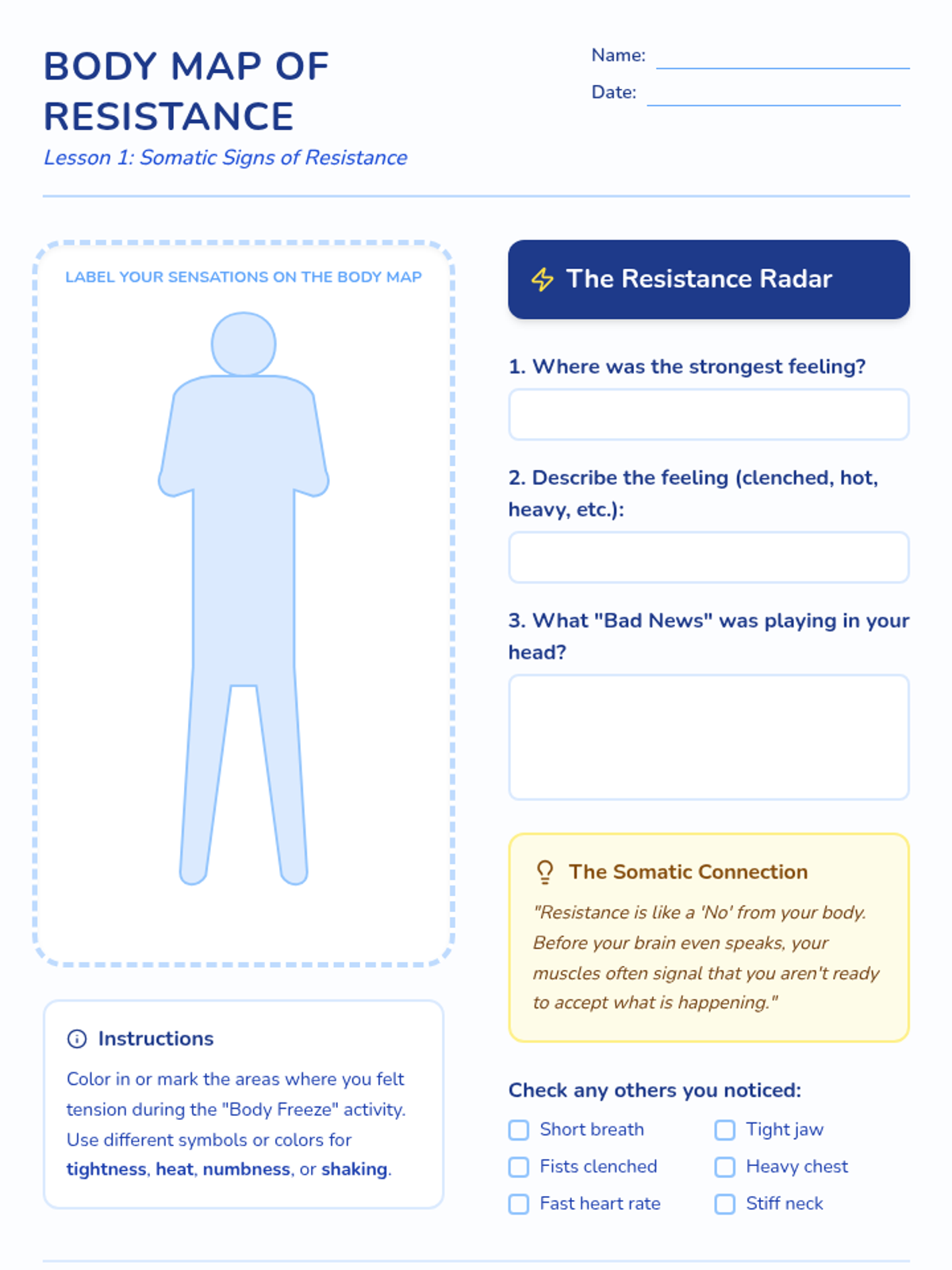
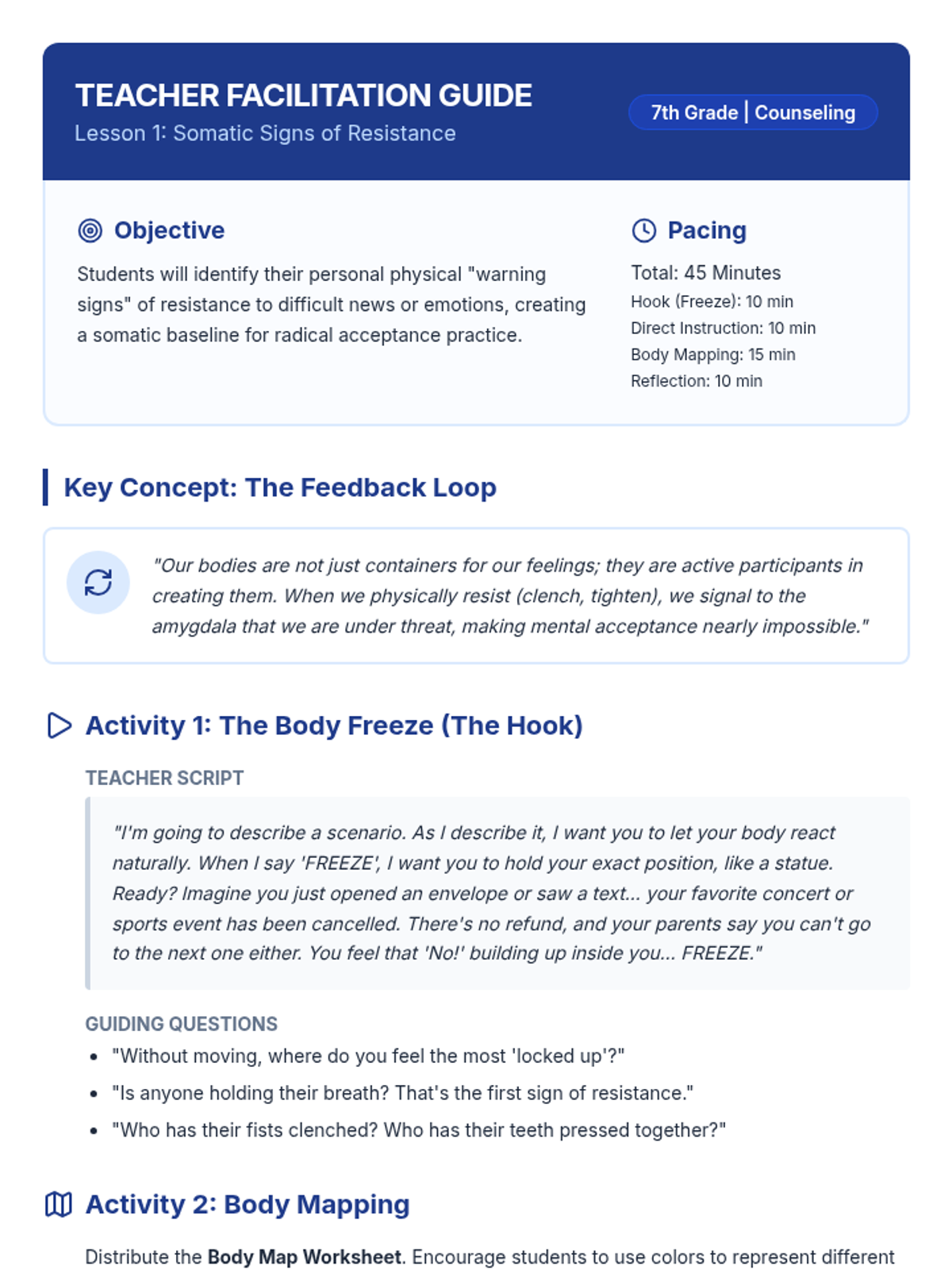
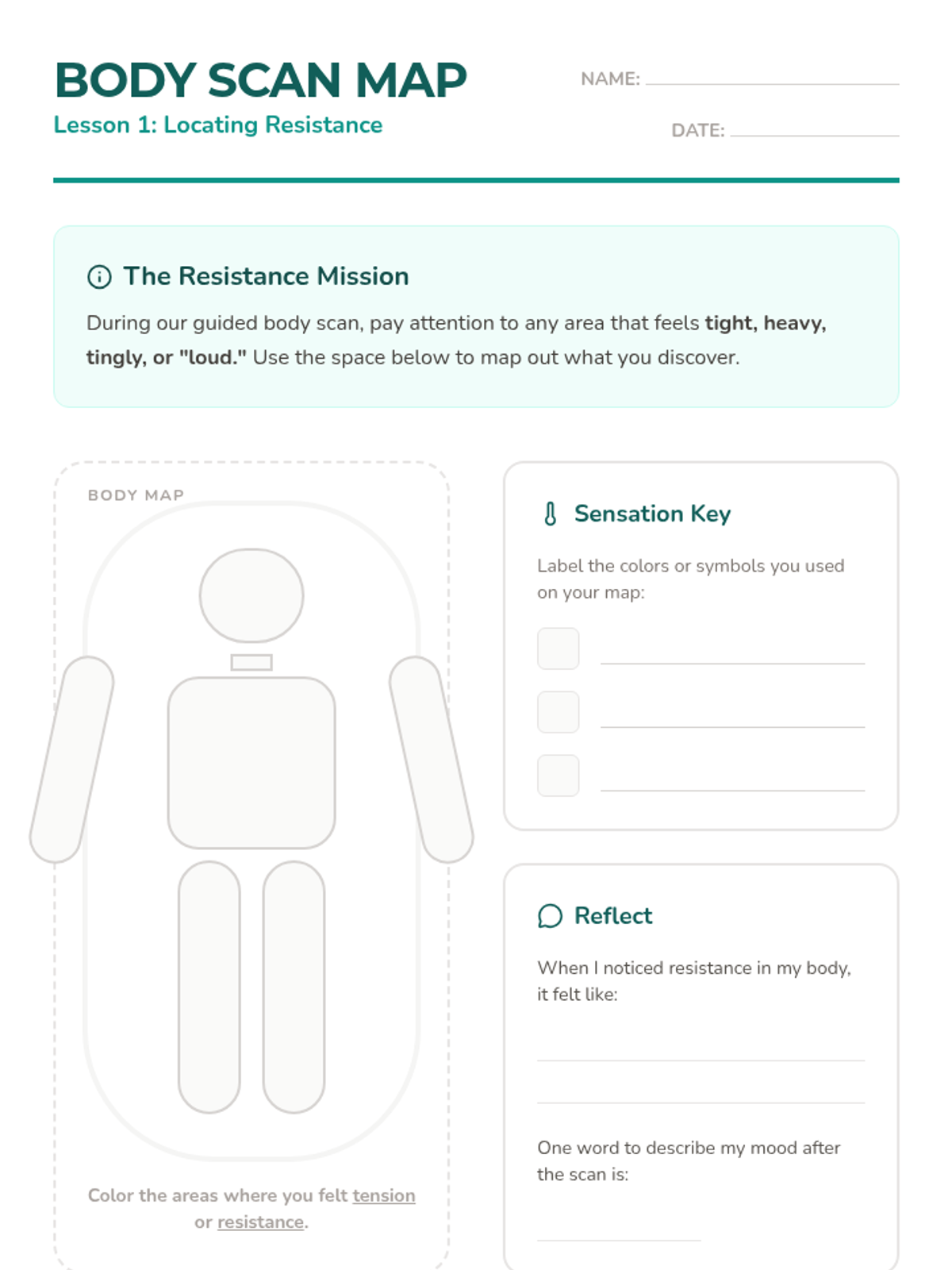
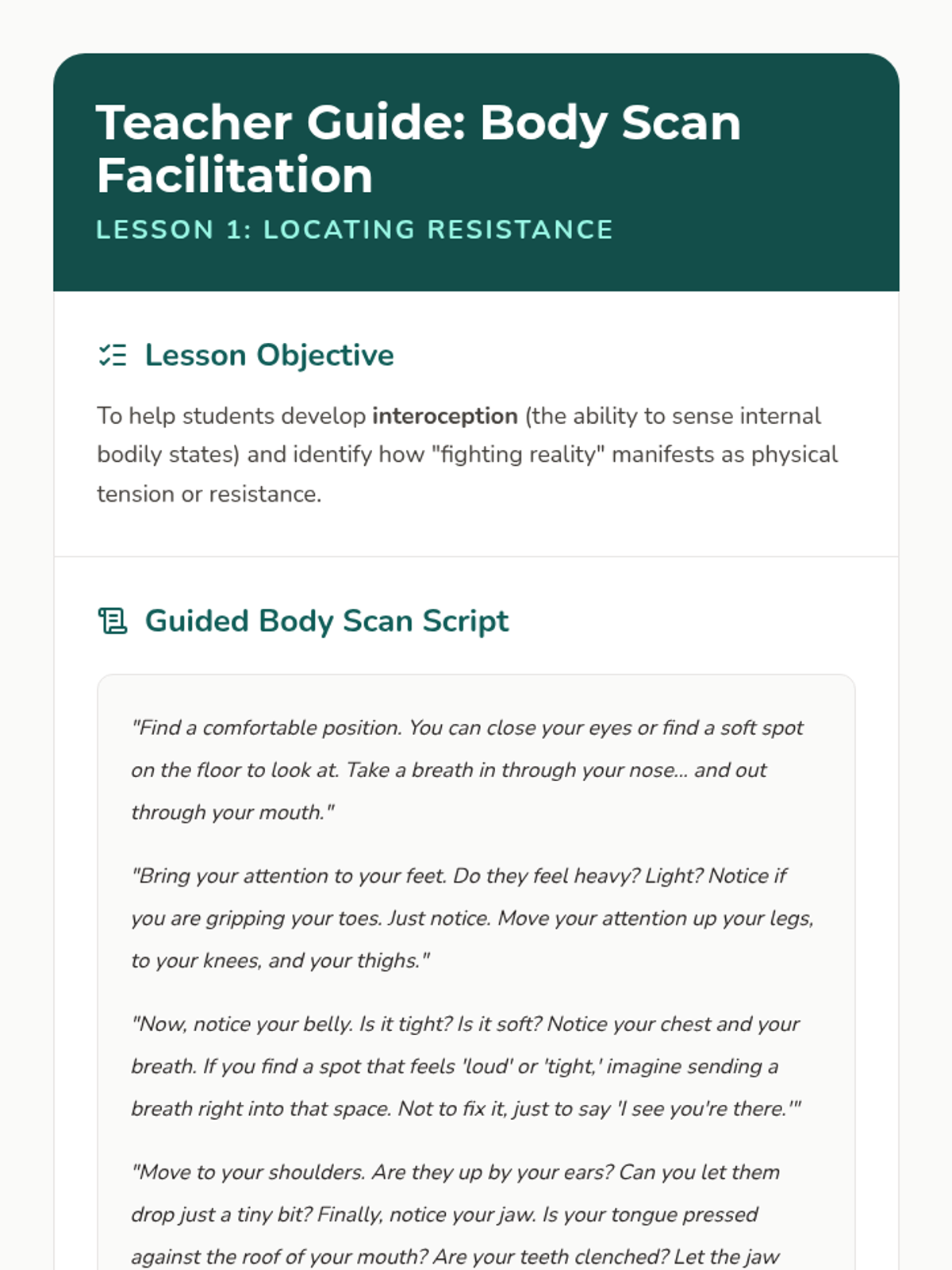
A 5-lesson workshop series focused on the somatic (body-based) connection to radical acceptance. Students learn to identify physical signs of resistance and use specific physiological techniques like Willing Hands and the Half-Smile to influence their emotional state and foster acceptance of difficult situations.
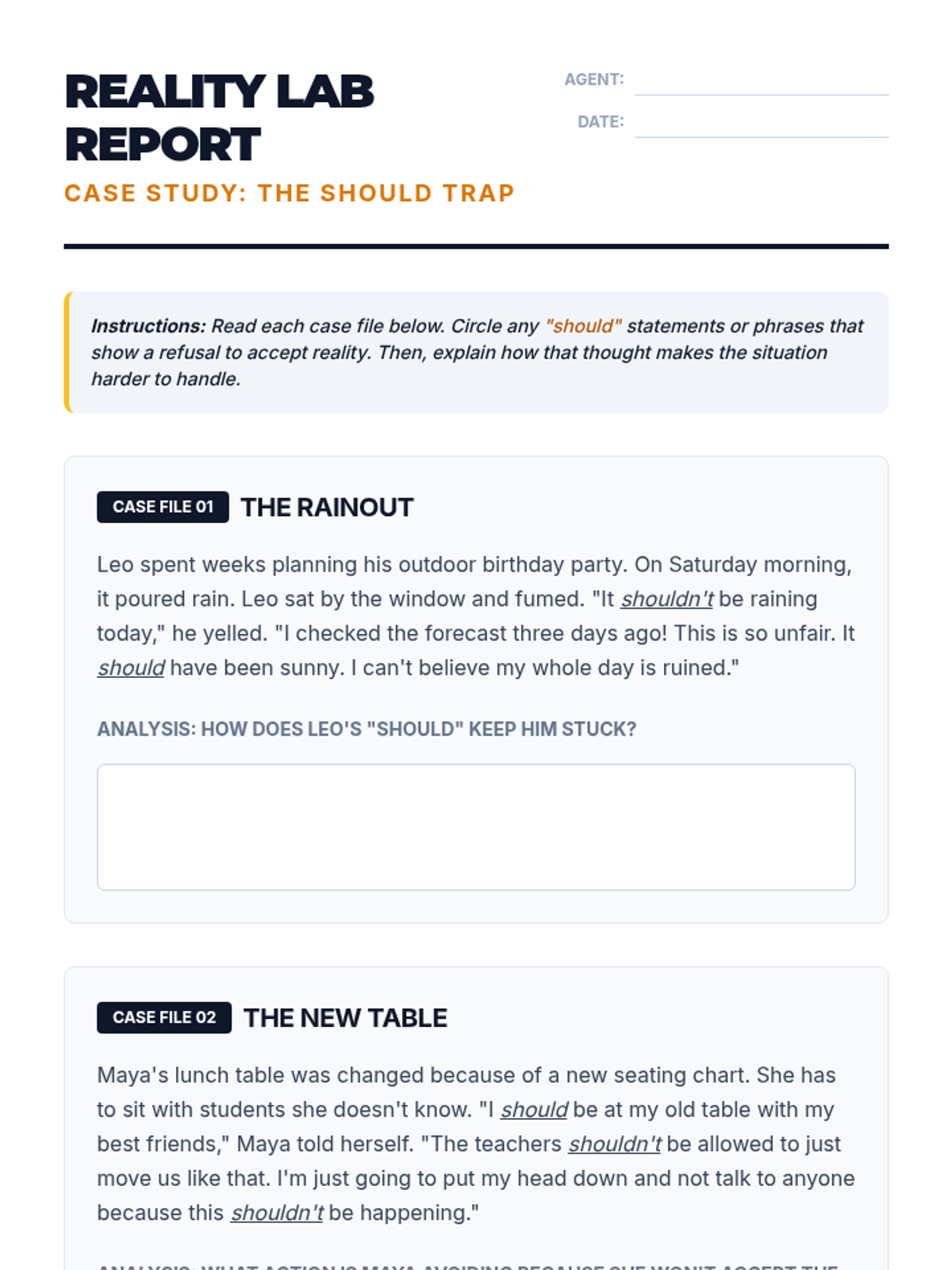
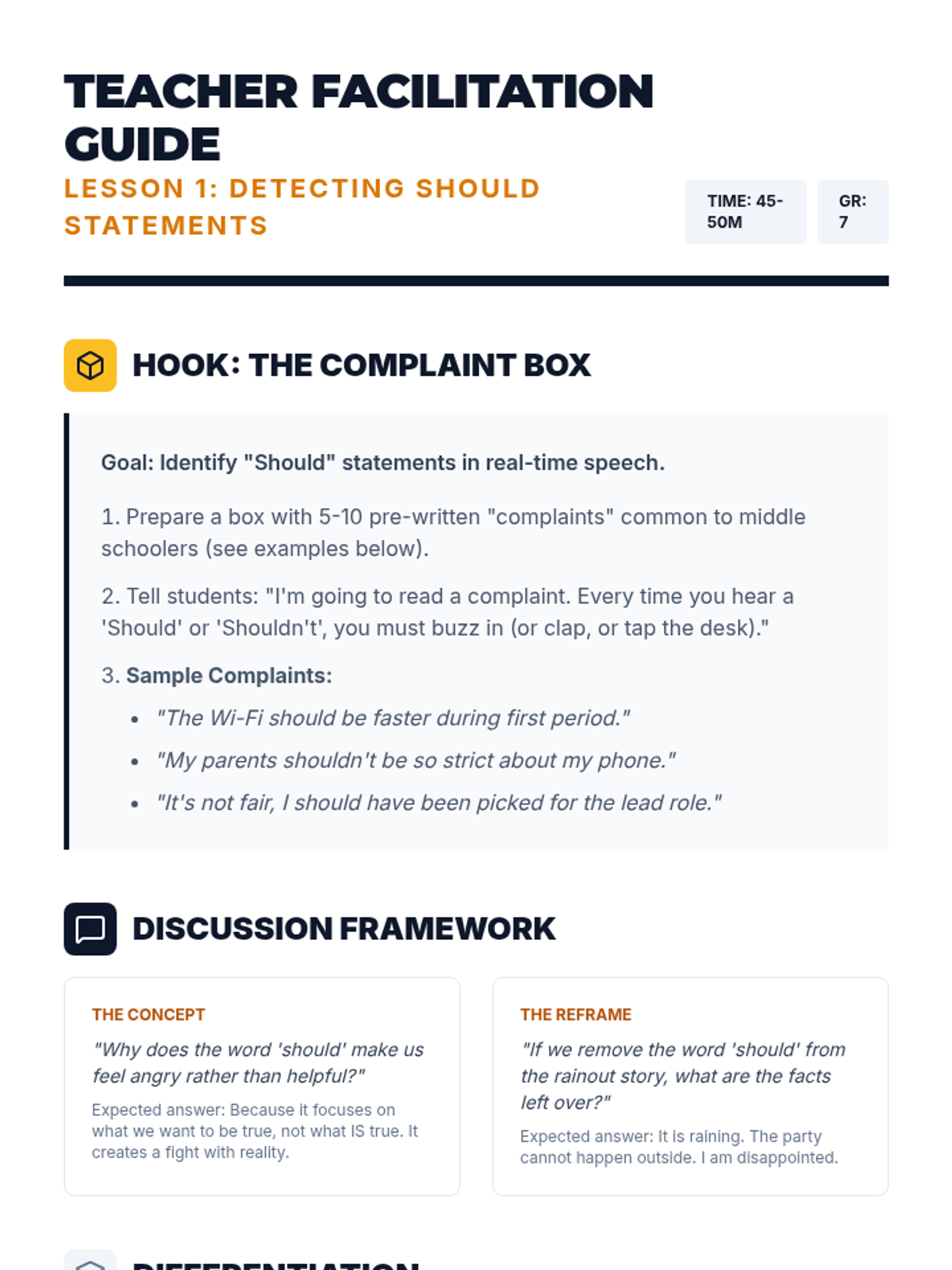
A sequence for 7th-grade students focused on cognitive reframing and distress tolerance. Students learn to identify 'should' statements, distinguish facts from judgments, and use radical acceptance to manage social changes and personal frustrations.
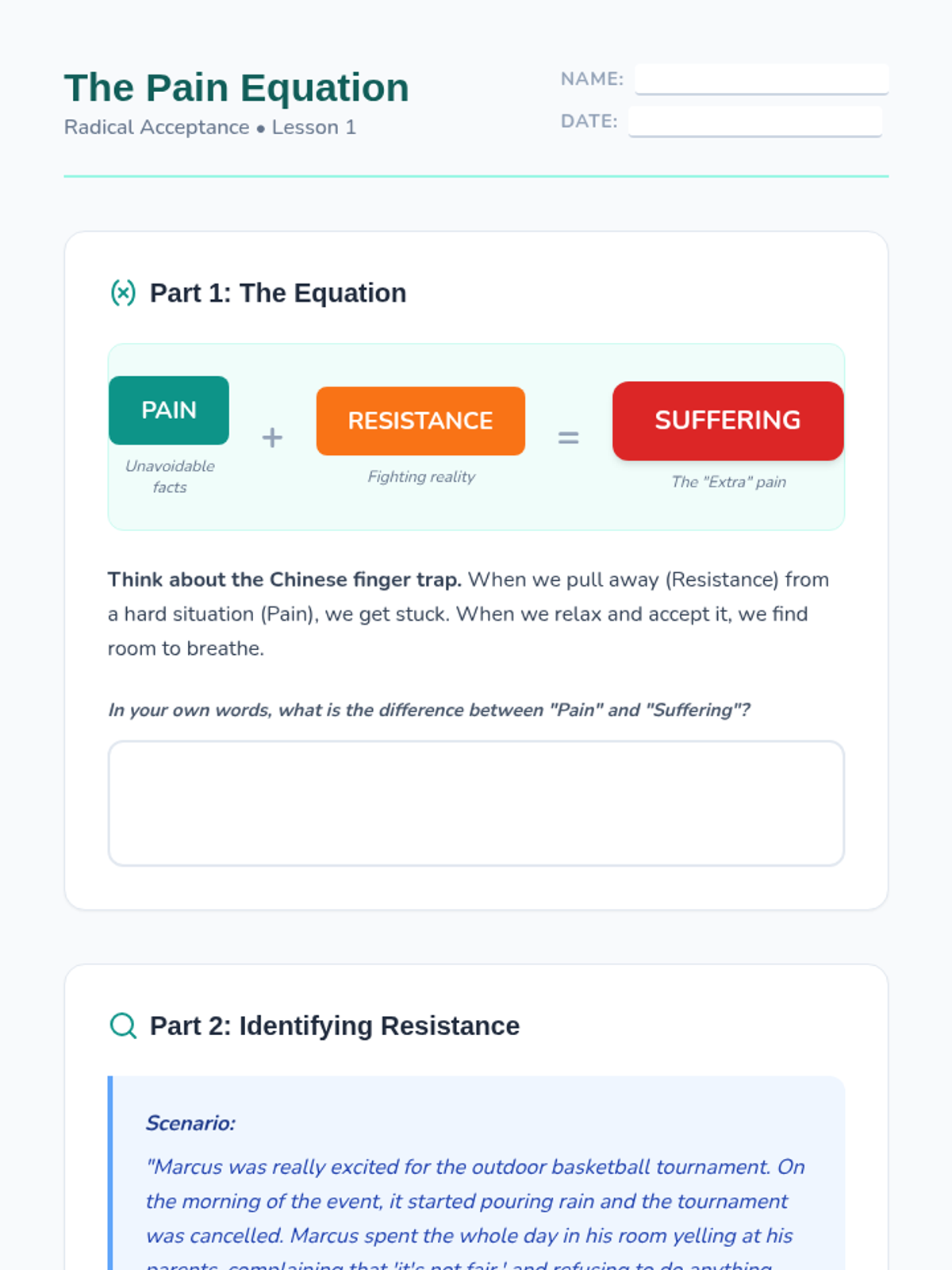
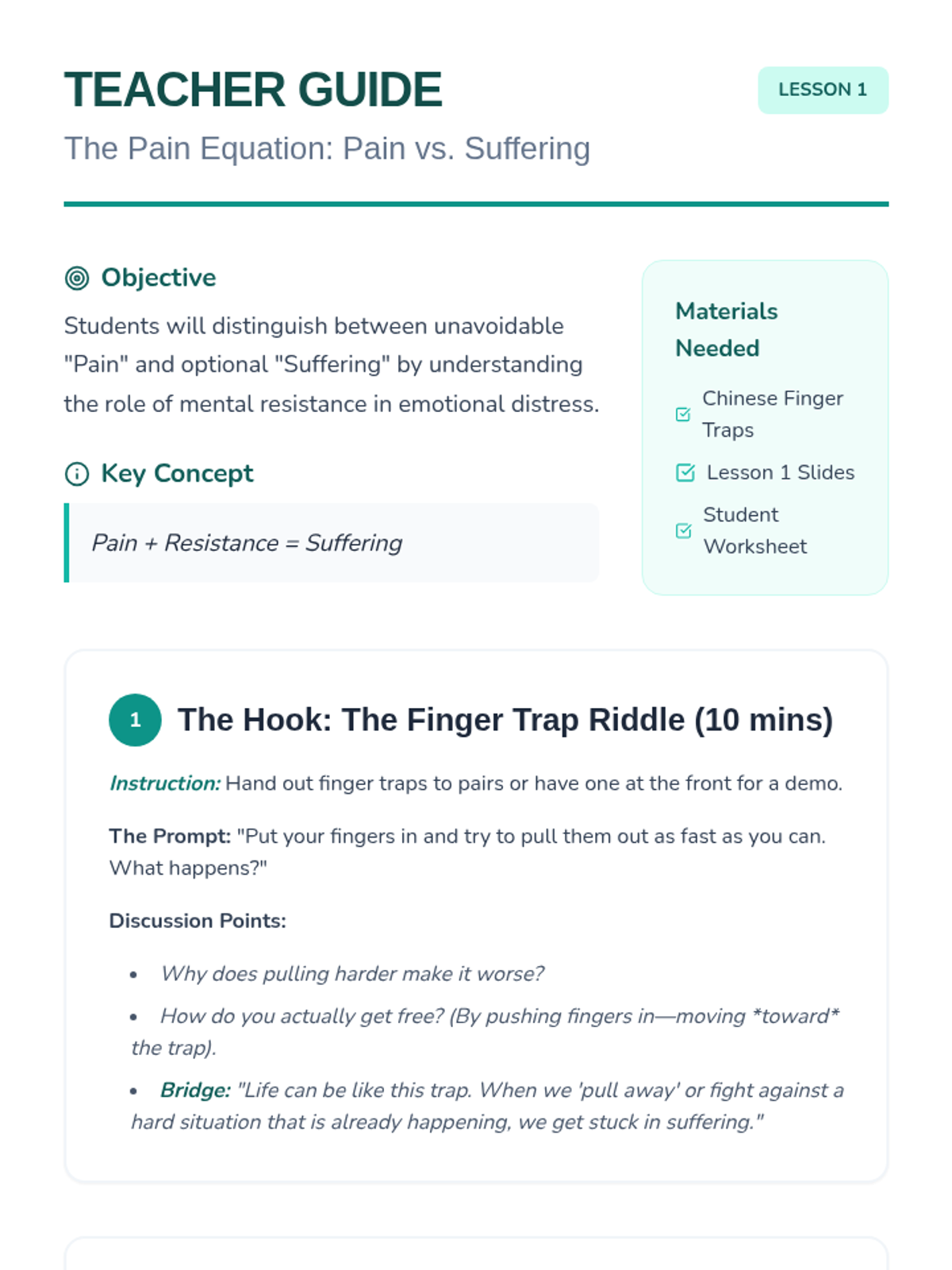
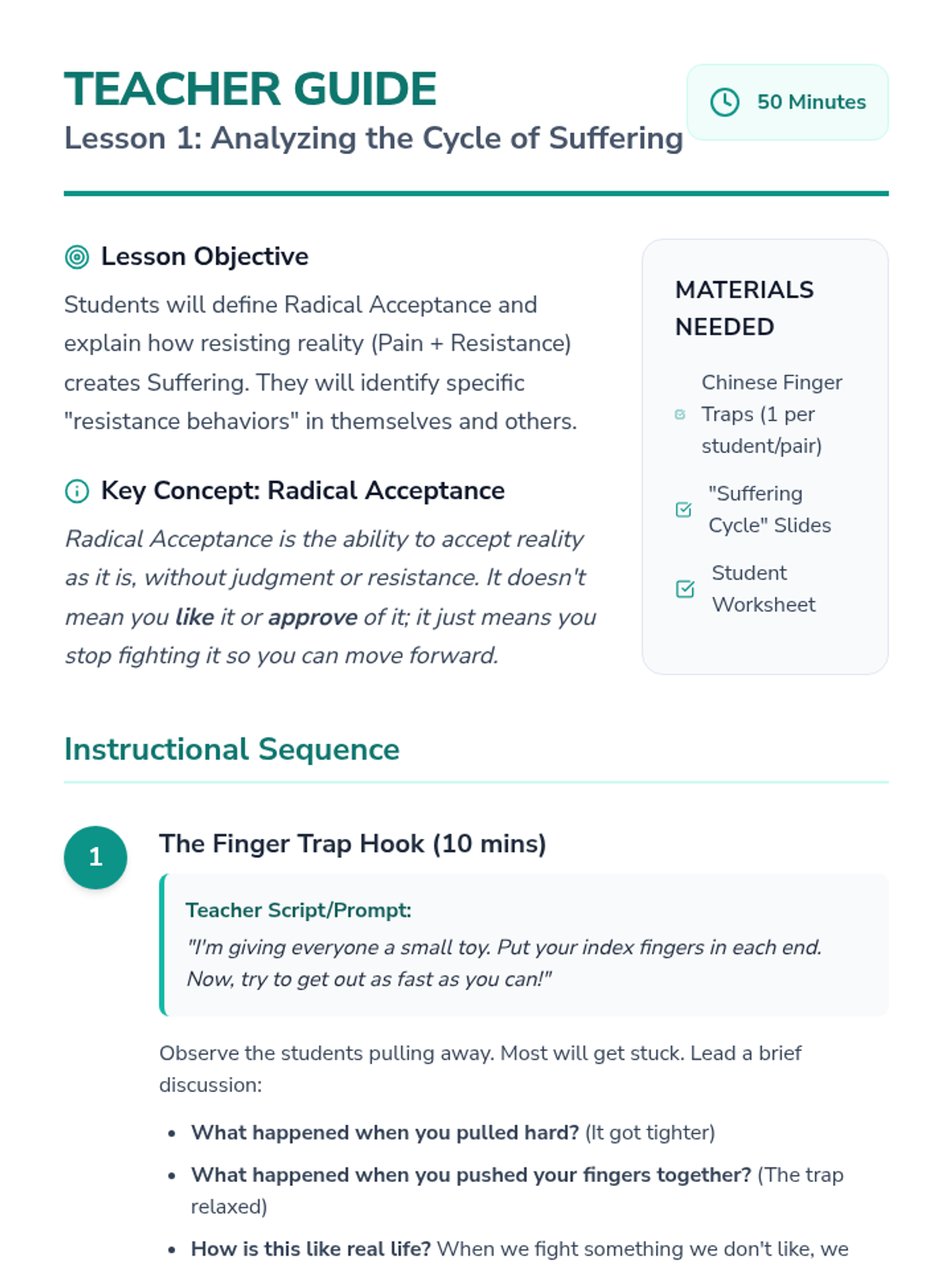
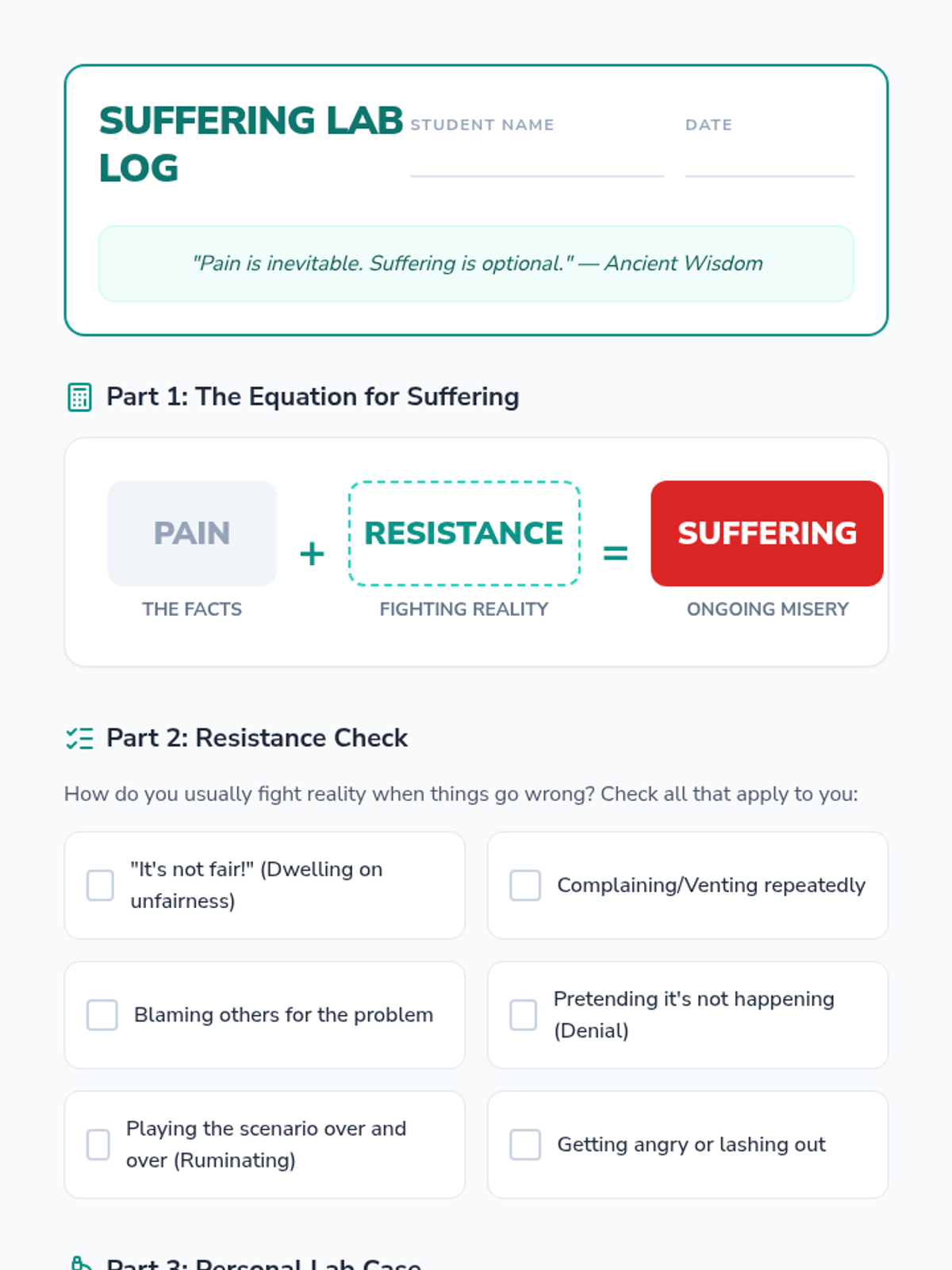
This introductory sequence for 7th-grade students establishes the foundational concepts of Radical Acceptance by distinguishing between pain and suffering. Students learn to move from resisting reality to accepting it through practical skills, the Sphere of Control, and the technique of 'Turning the Mind'.
This 6th-grade sequence teaches students somatic and mindfulness-based techniques for Radical Acceptance. Students explore how body posture, breathing, and observation can help them stay calm and accept difficult realities rather than fighting them.
This middle school sequence focuses on building distress tolerance through Radical Acceptance. Students move from understanding the 'Cycle of Suffering' to practicing resilience in academic and social scenarios, ultimately learning to pivot from disappointment to proactive problem-solving.
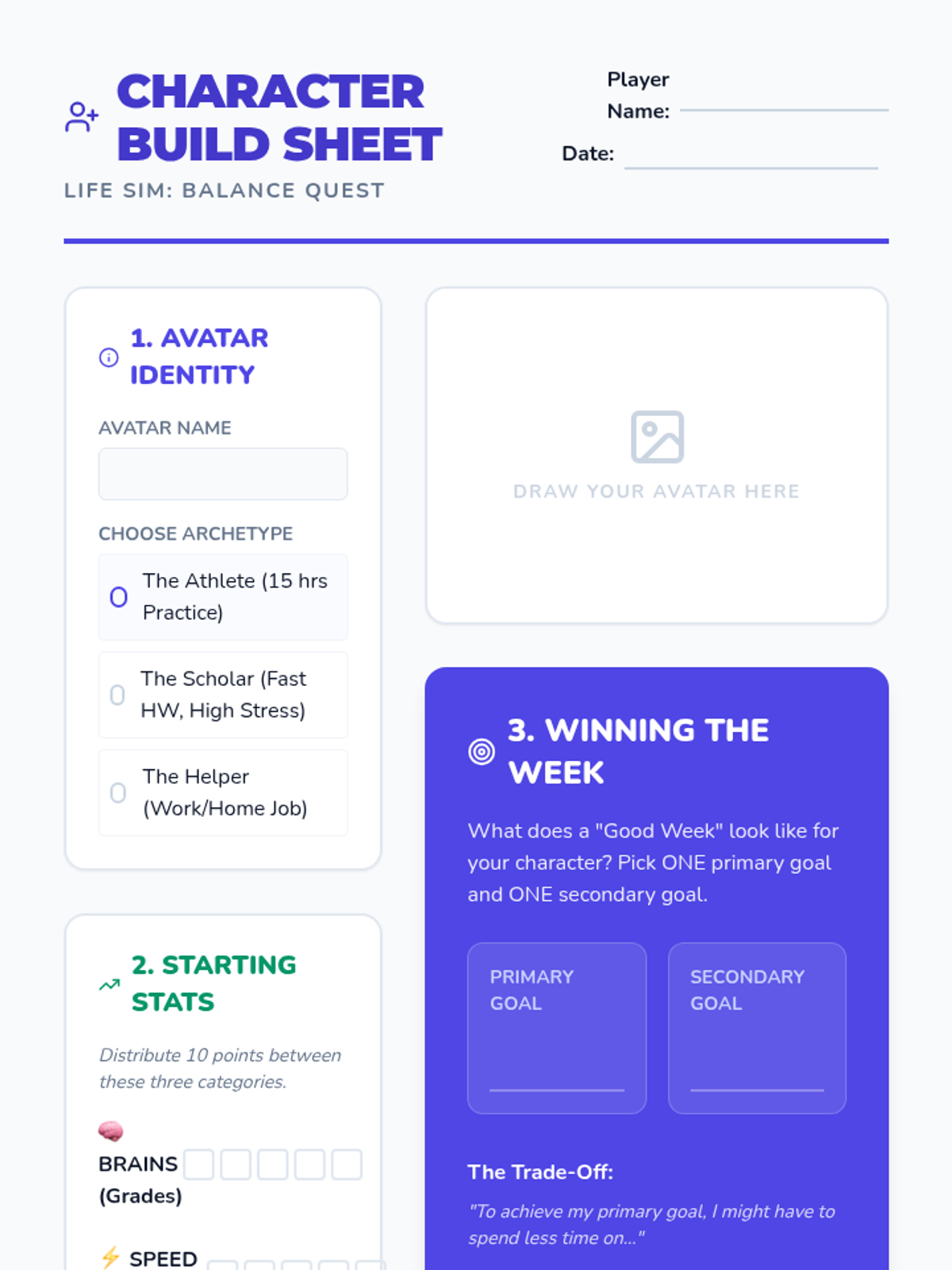
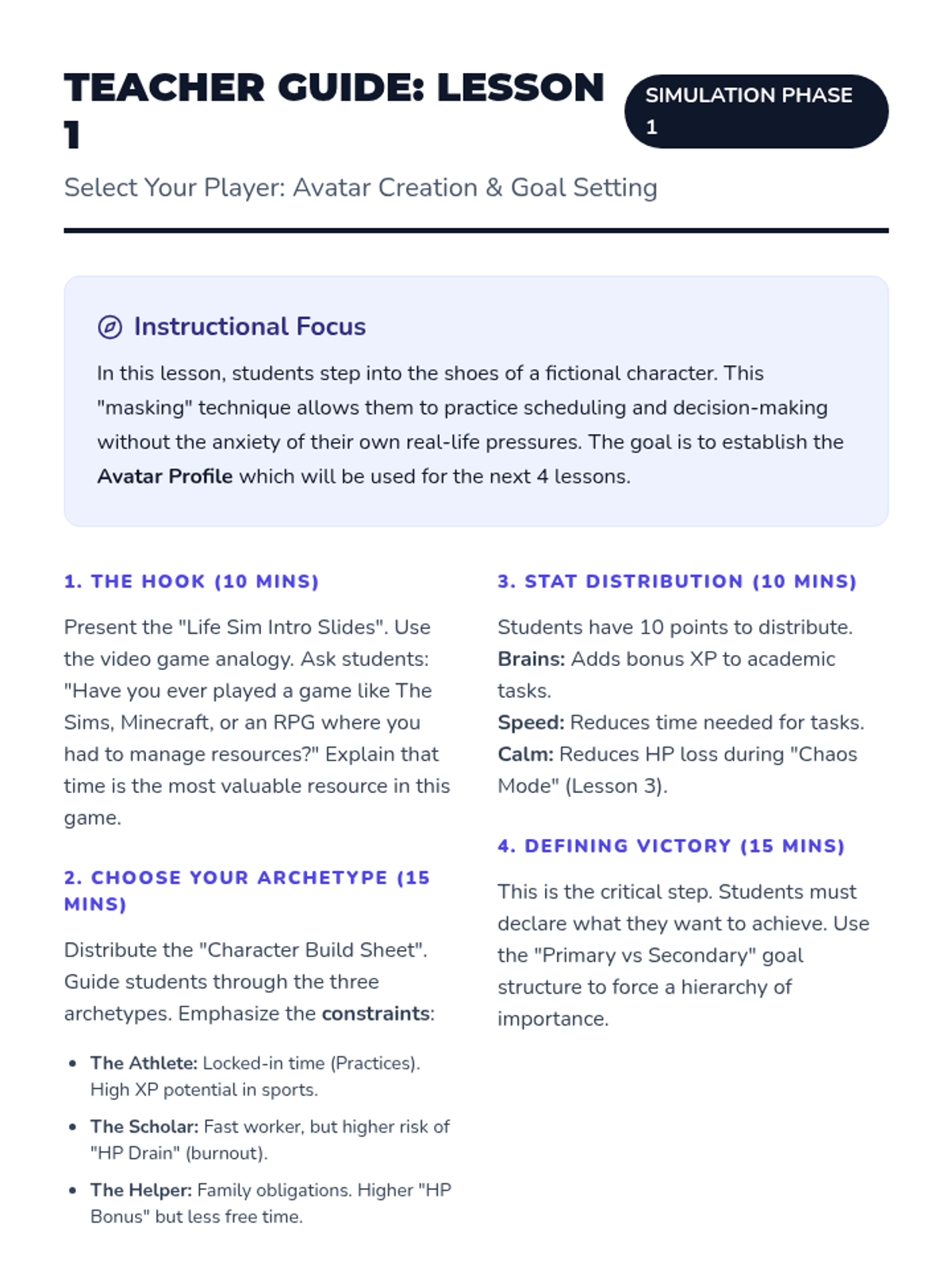
A gamified simulation for 7th-grade students to practice balancing multiple commitments. Students create avatars, navigate a simulated week, and respond to unexpected 'Chance Cards' to learn about trade-offs and priority management.
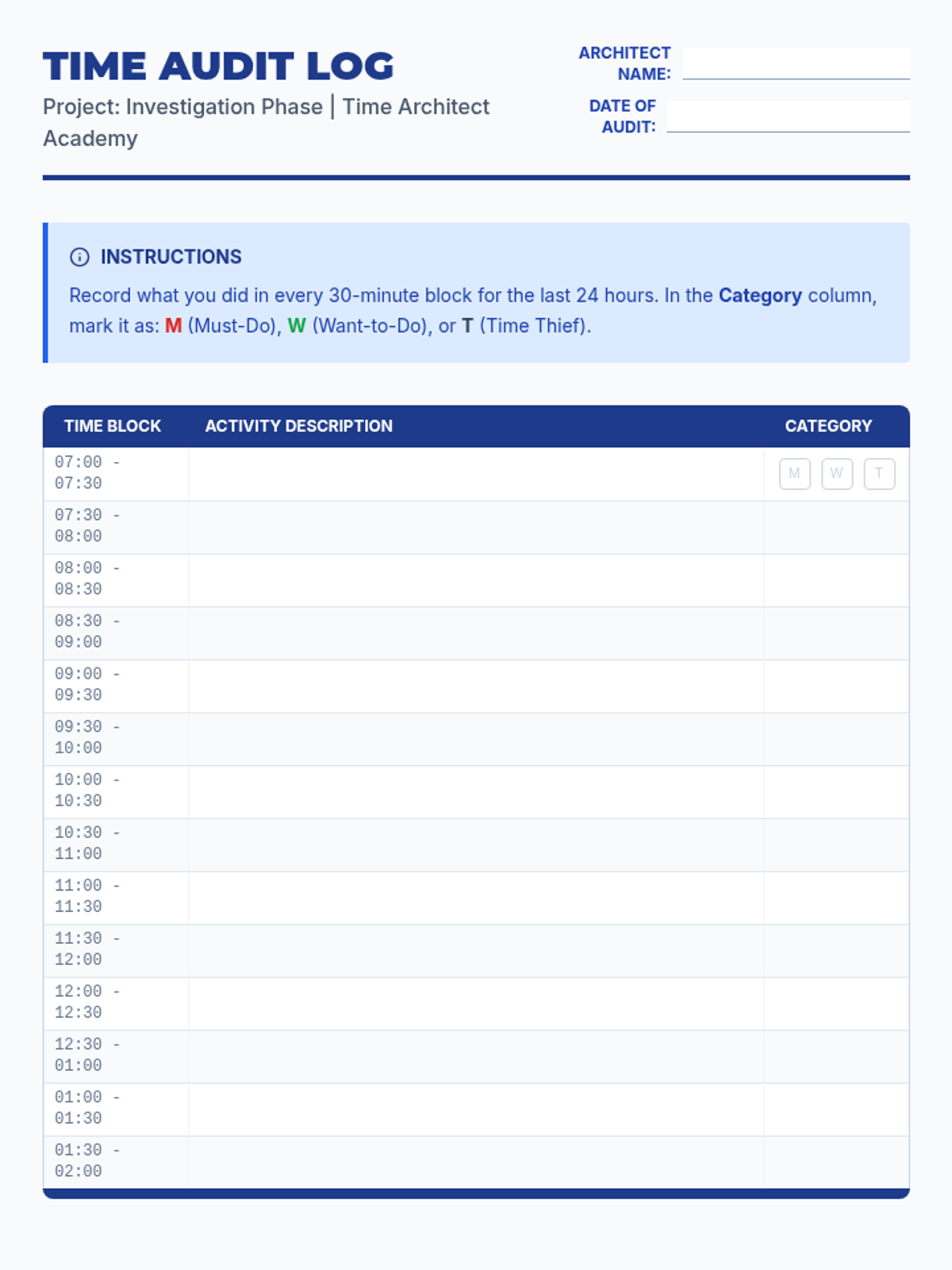
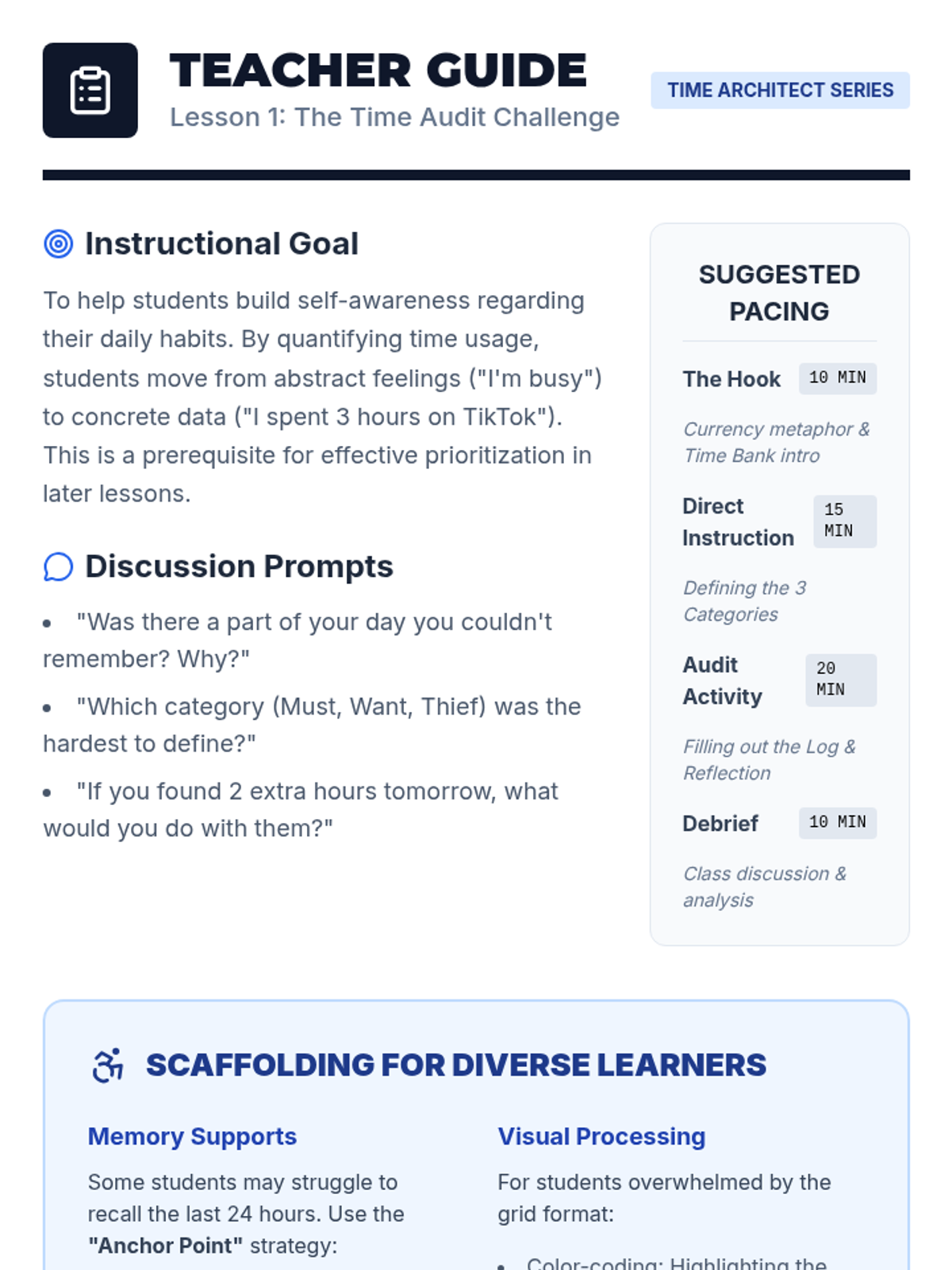
A 5-lesson sequence for 7th-grade students focused on strategic prioritization and time management. Students learn to use the Eisenhower Matrix, identify 'Big Rocks', and create sustainable weekly schedules through a 'Time Architect' theme.
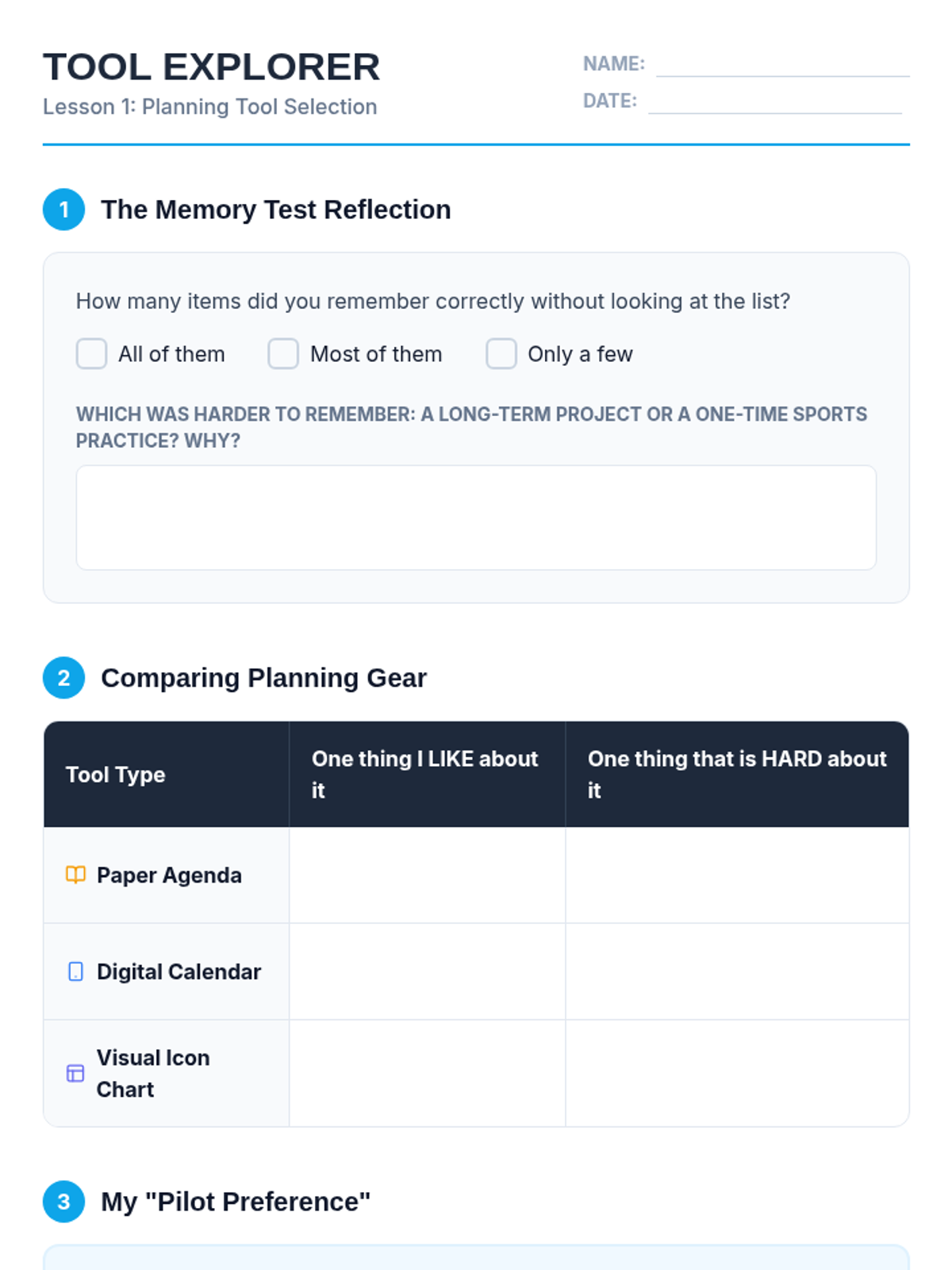
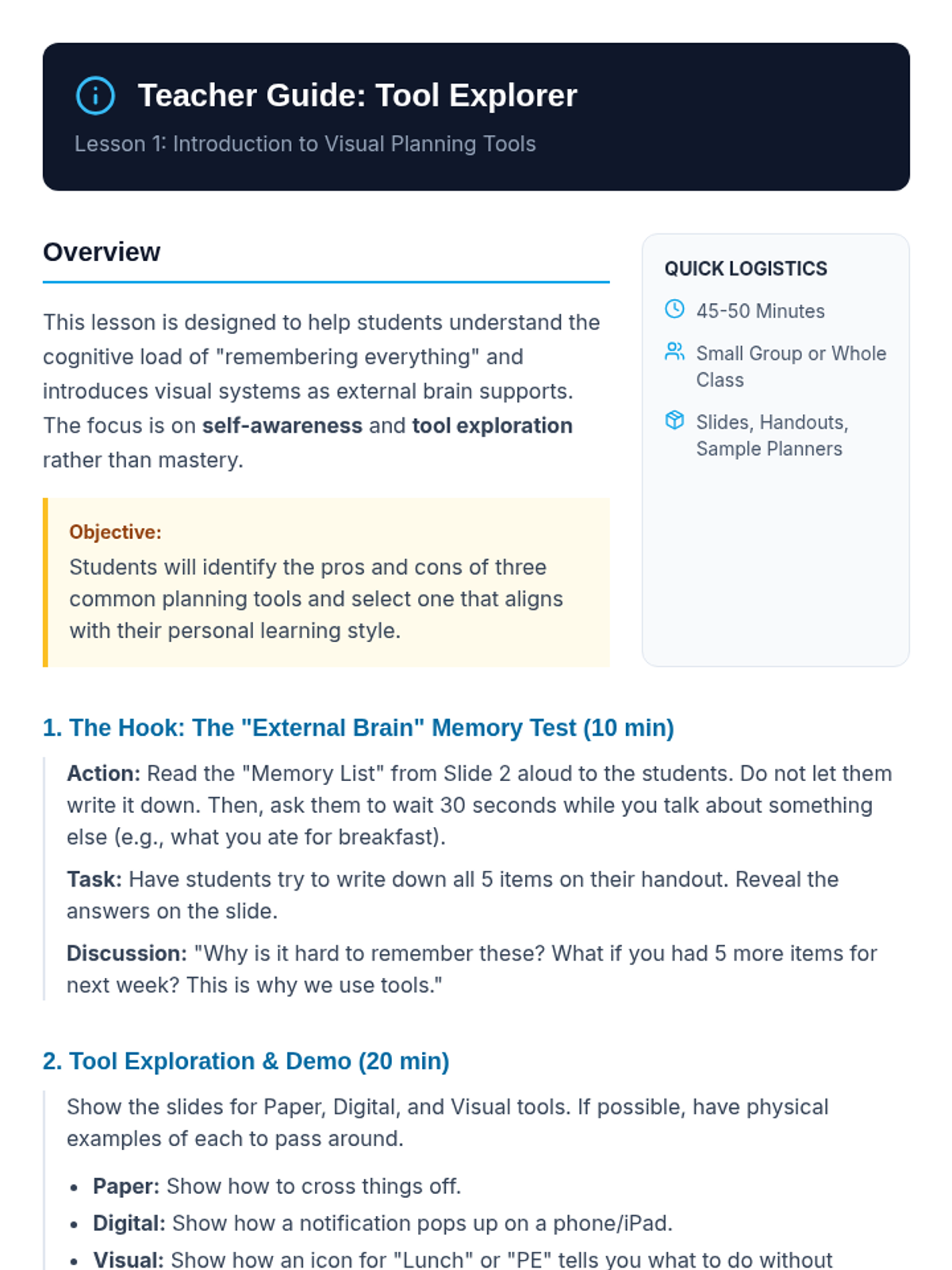
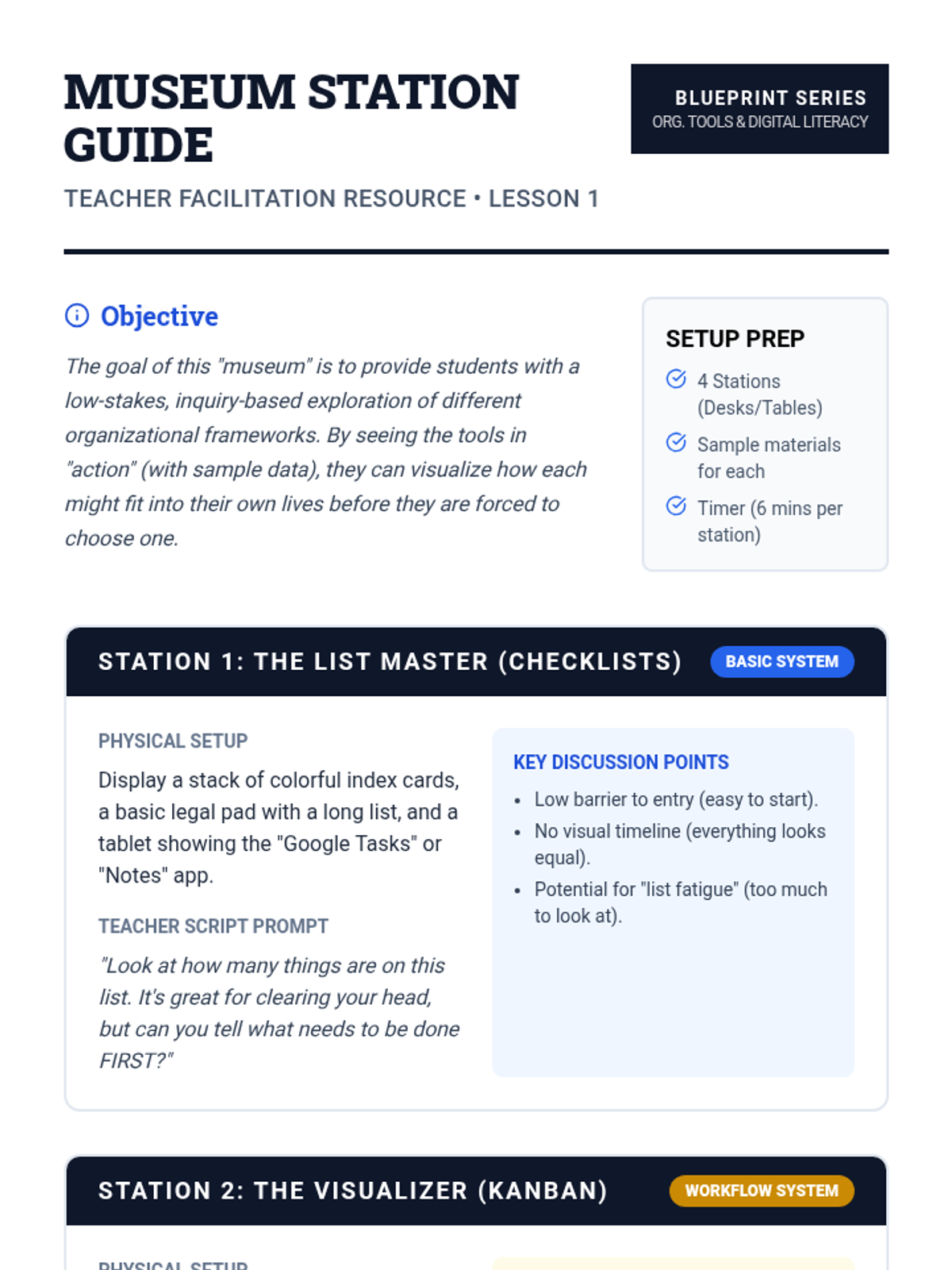
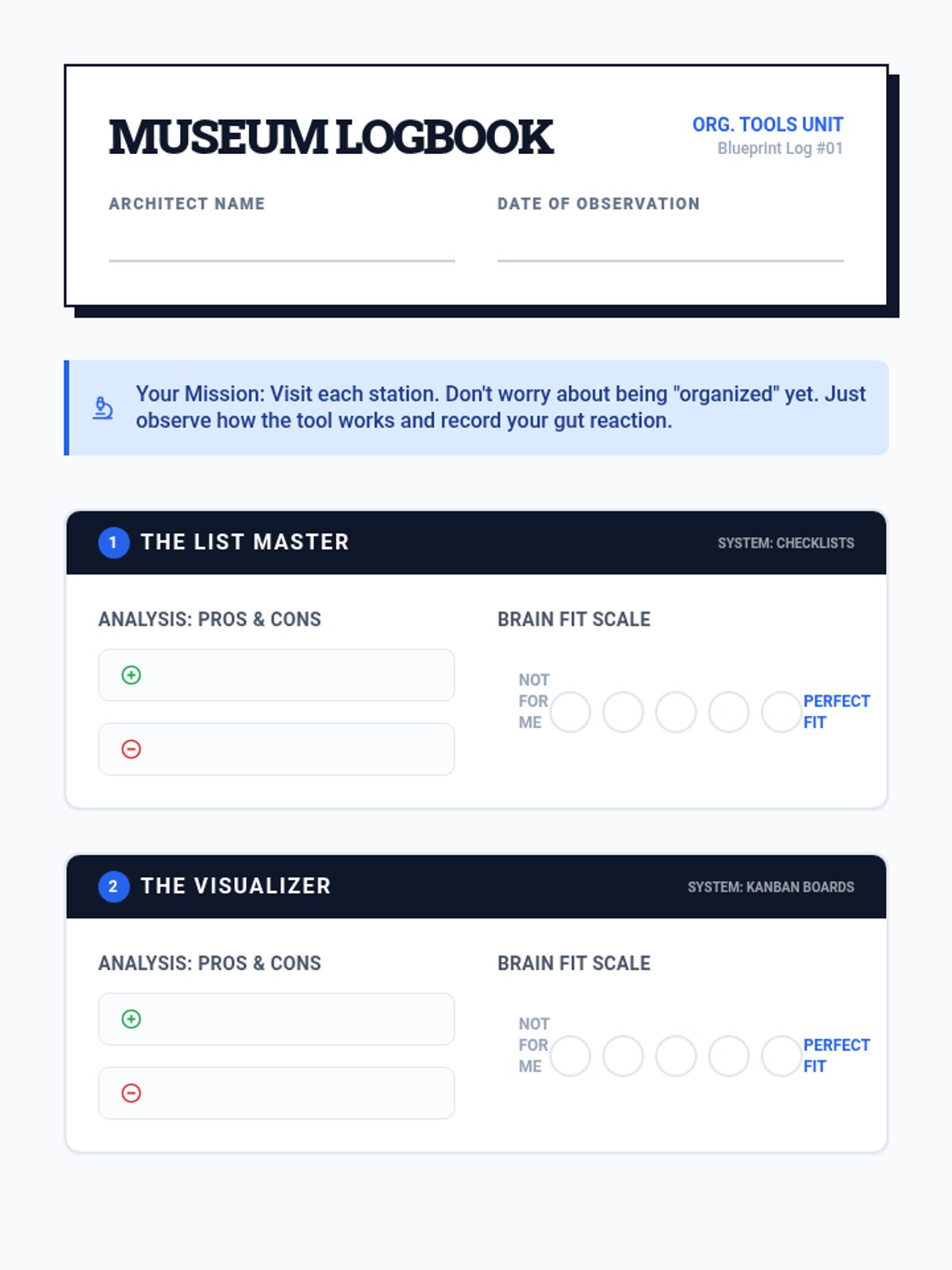
This sequence guides 7th-grade students through discovering, selecting, and maintaining organizational systems. It focuses on the 'tools of the trade'—from paper planners to digital apps—and helps students build personalized workflows to balance multiple school and personal commitments.
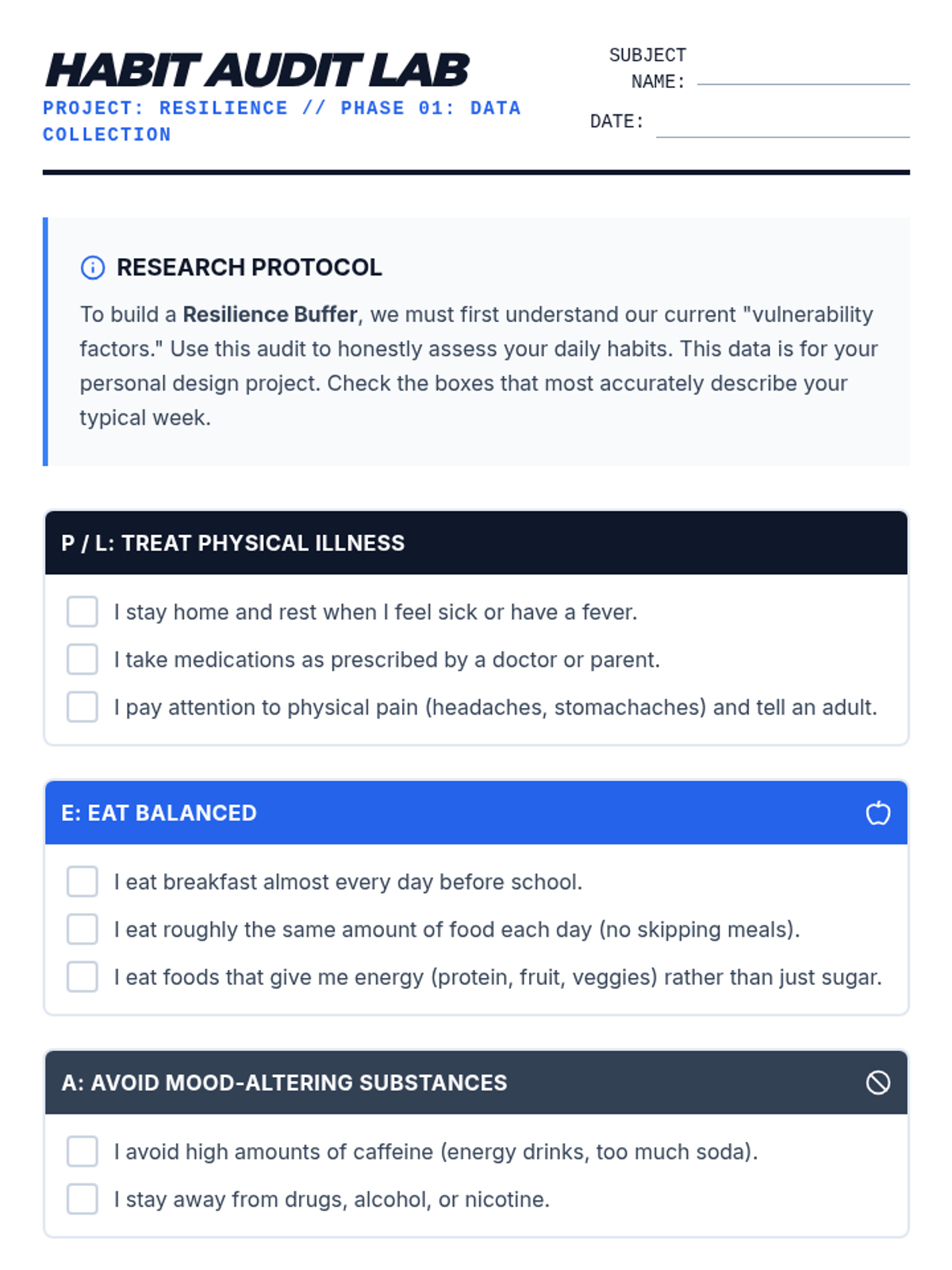
A project-based sequence where 6th-grade students treat their daily routines as a design challenge to reduce emotional vulnerability. Using the DBT PLEASE skills, students audit their habits and design a personalized 'Resilience Routine' for physical and emotional wellness.
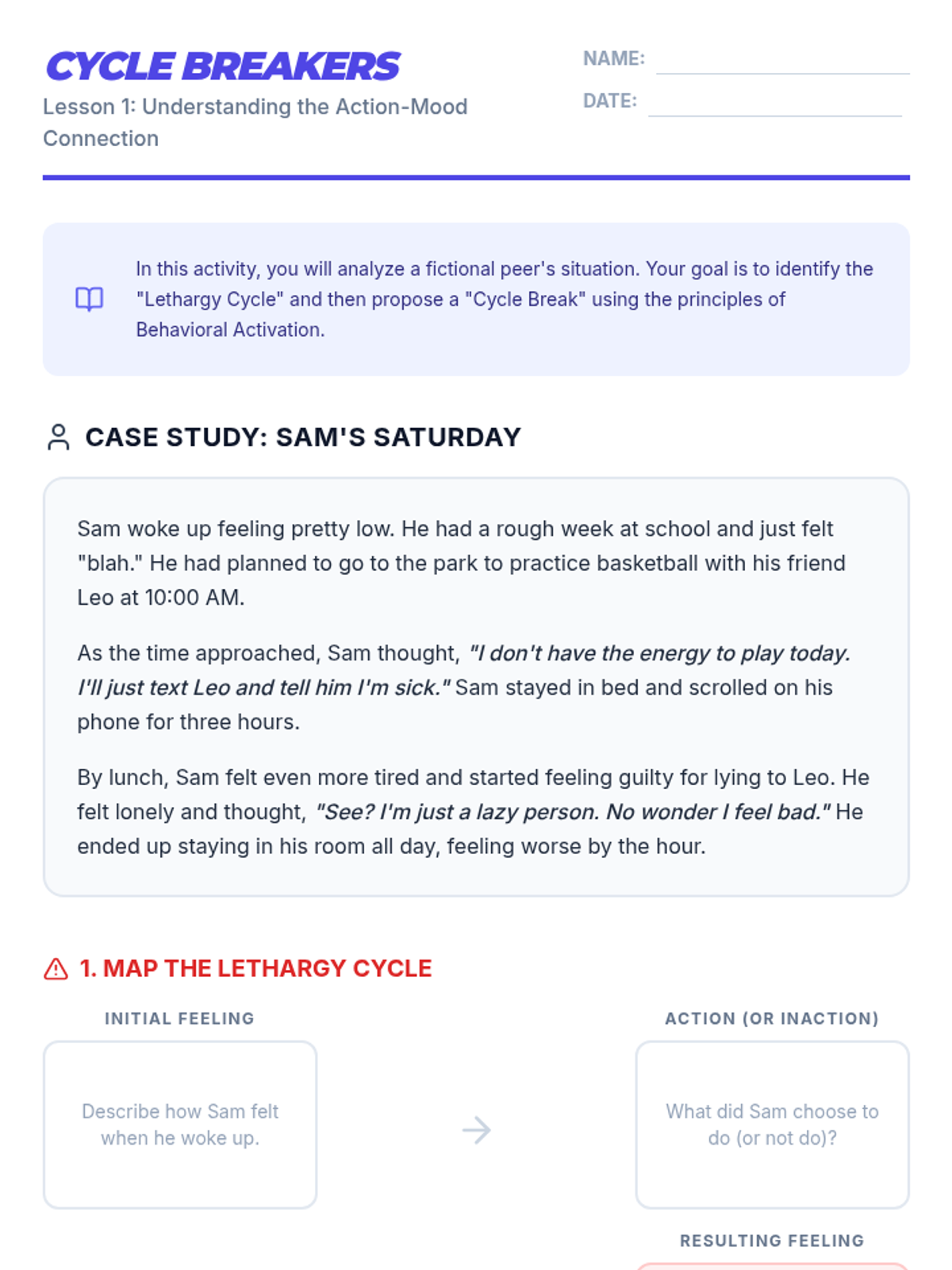
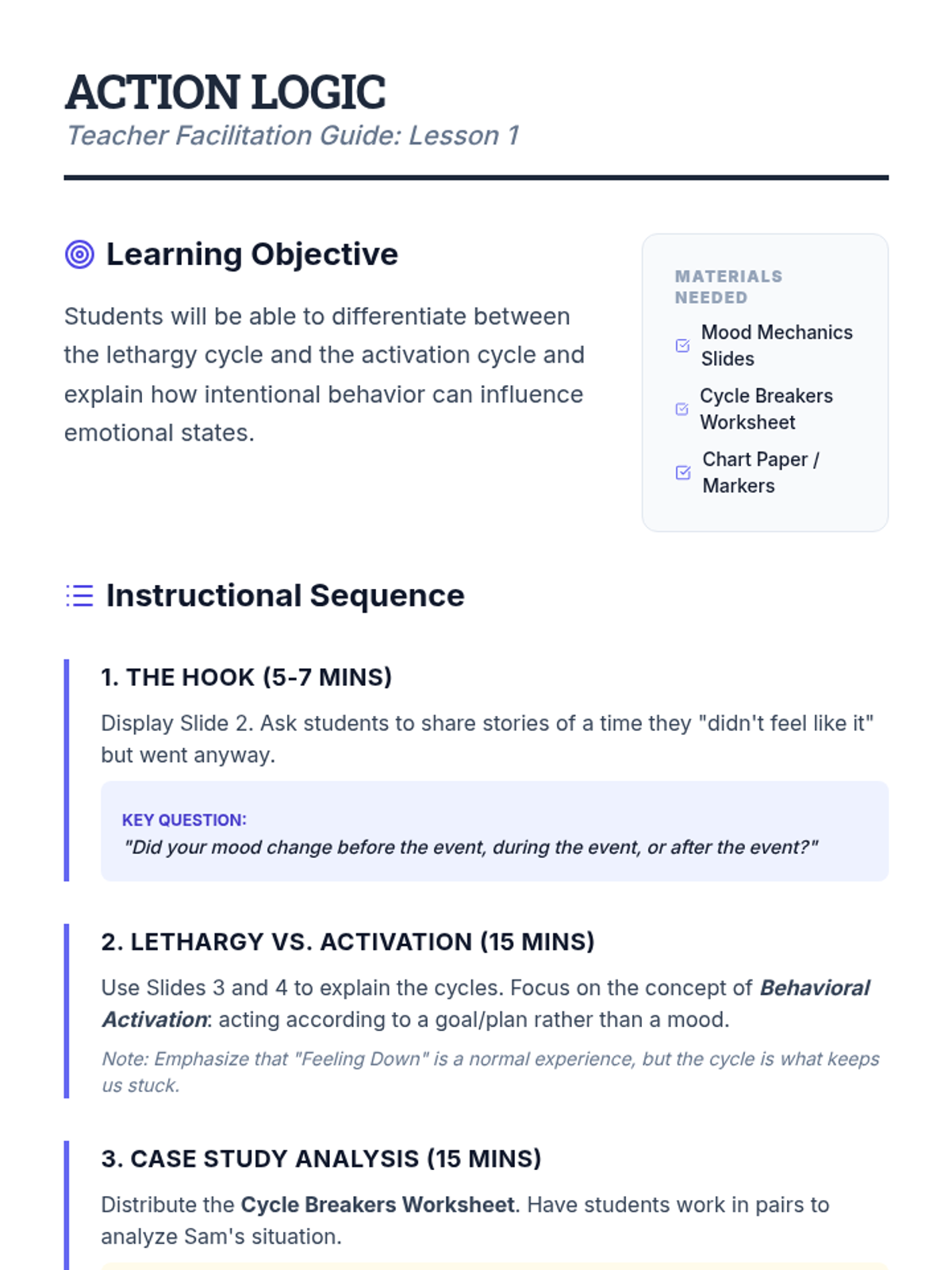
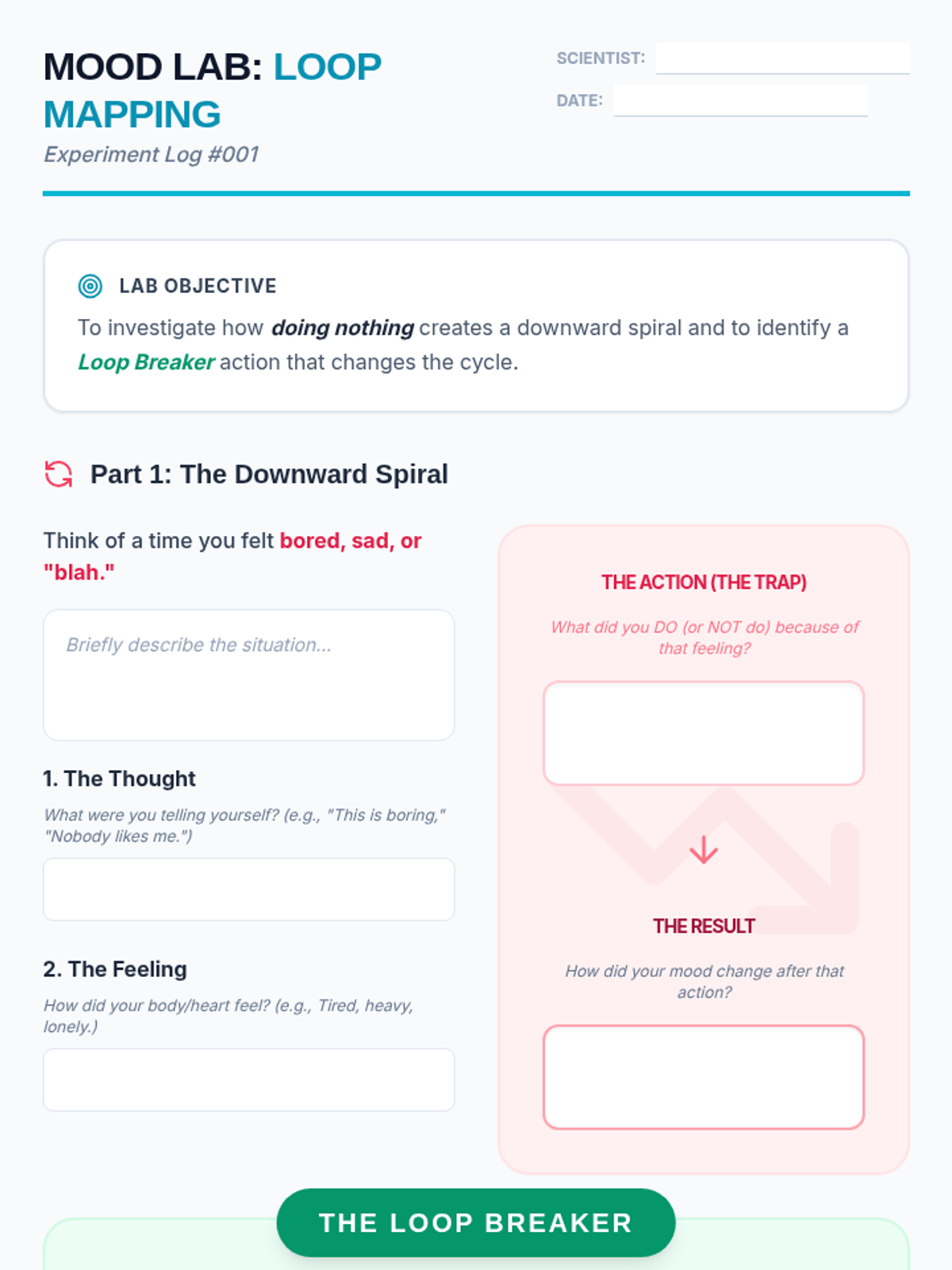
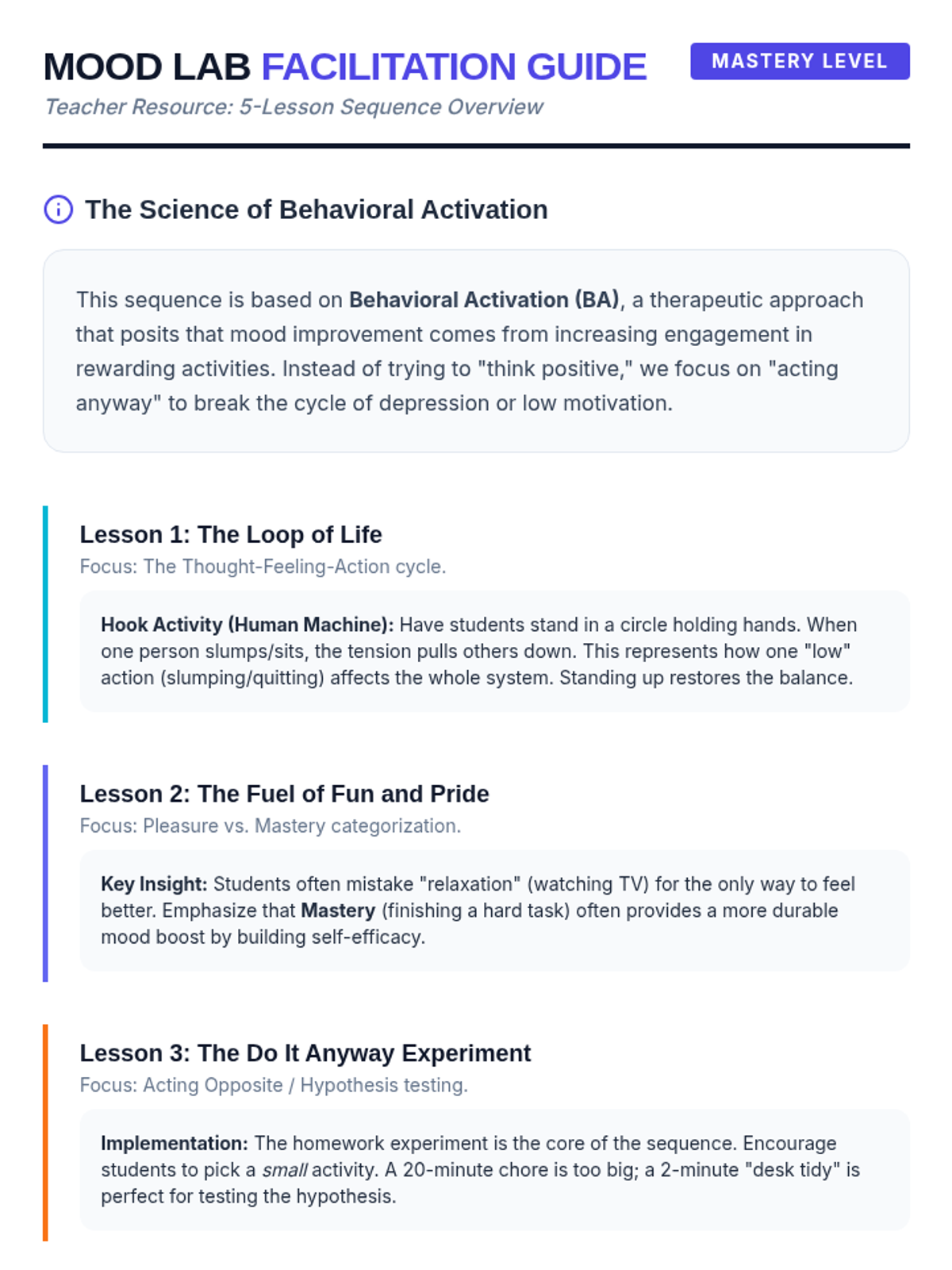
This 7th-grade sequence teaches the principles of behavioral activation, helping students understand how their actions influence their moods. Through self-monitoring, activity categorization, and strategic planning, students develop a toolkit for proactively managing their mental well-being.
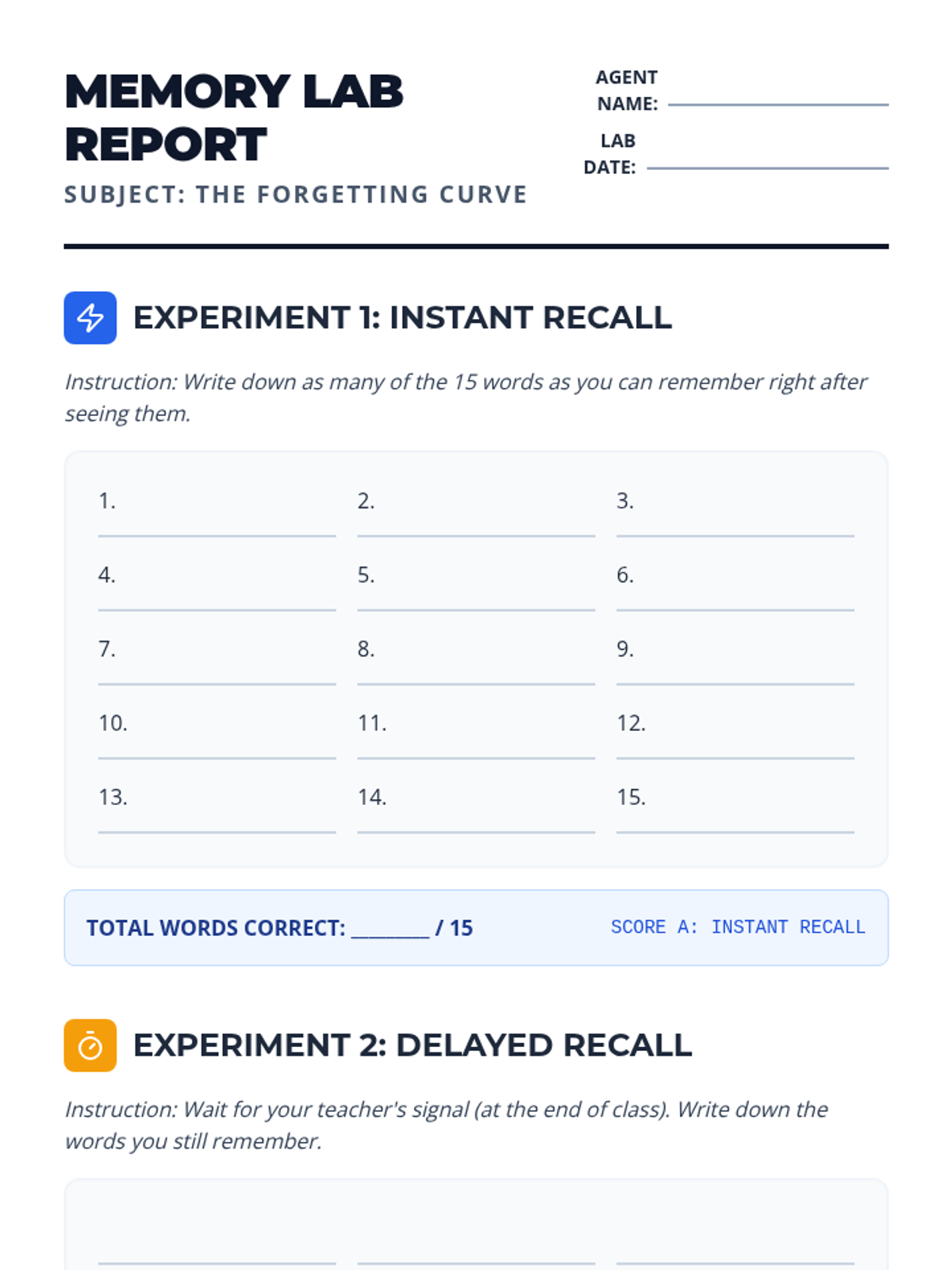
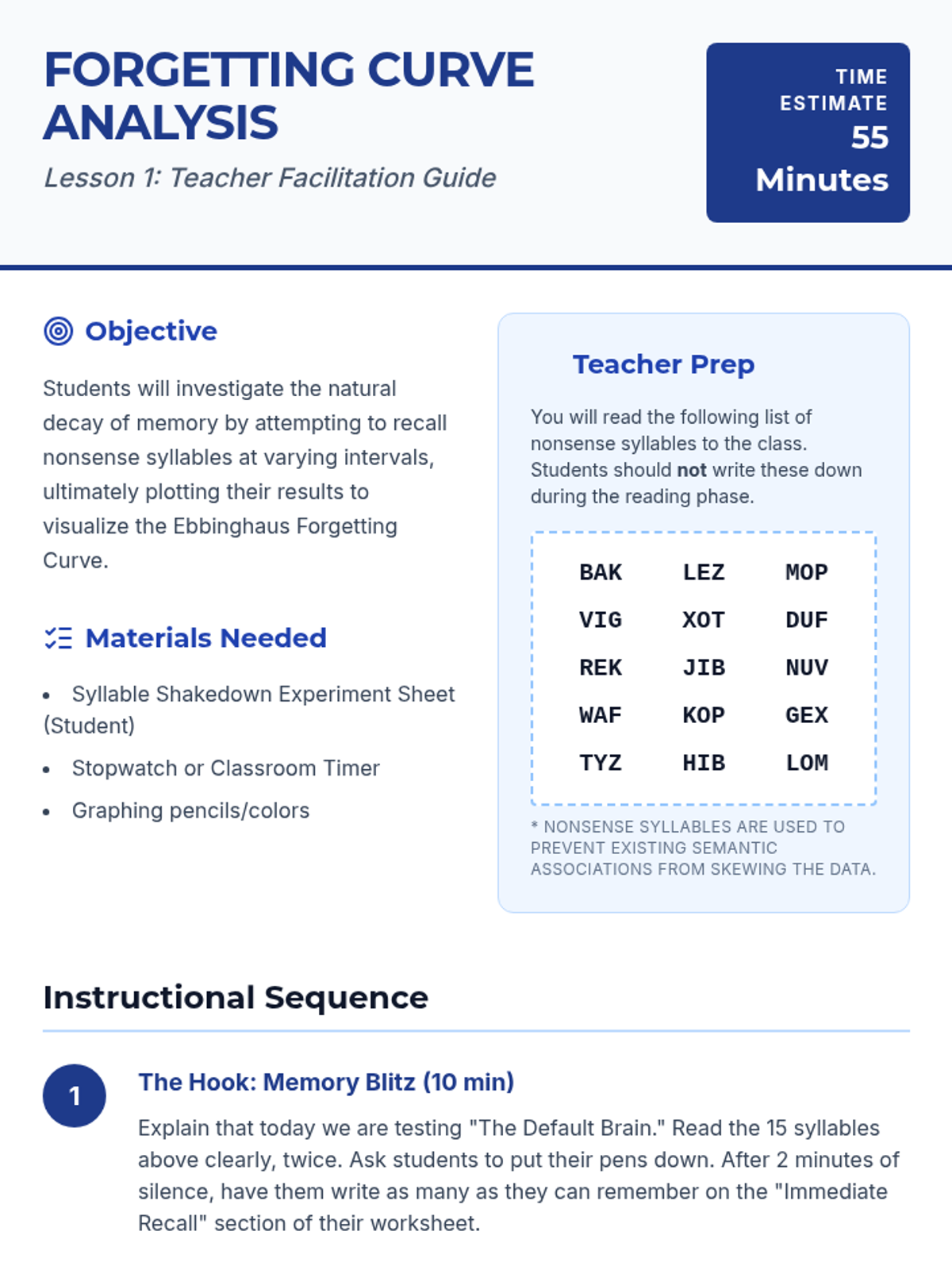
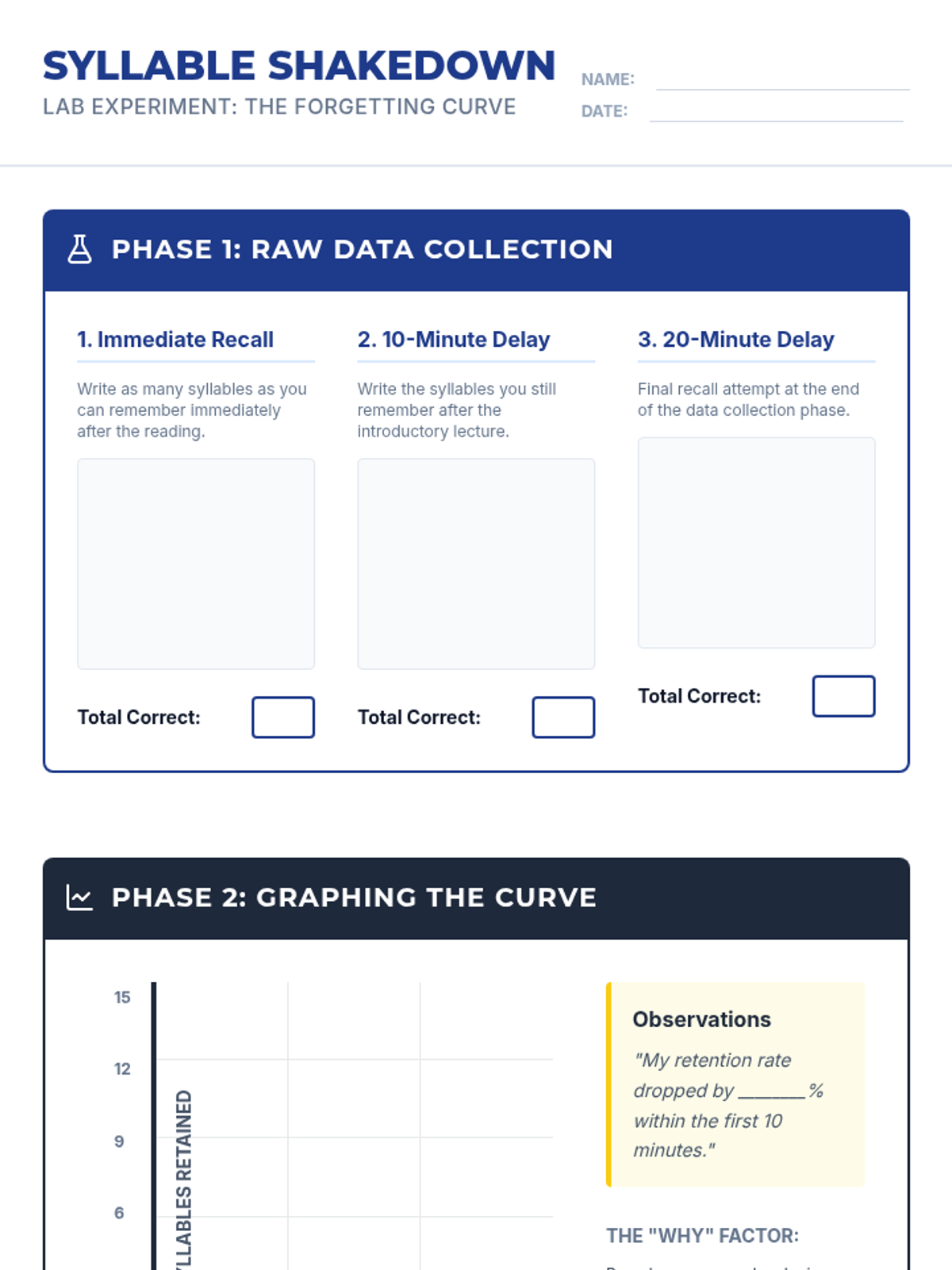
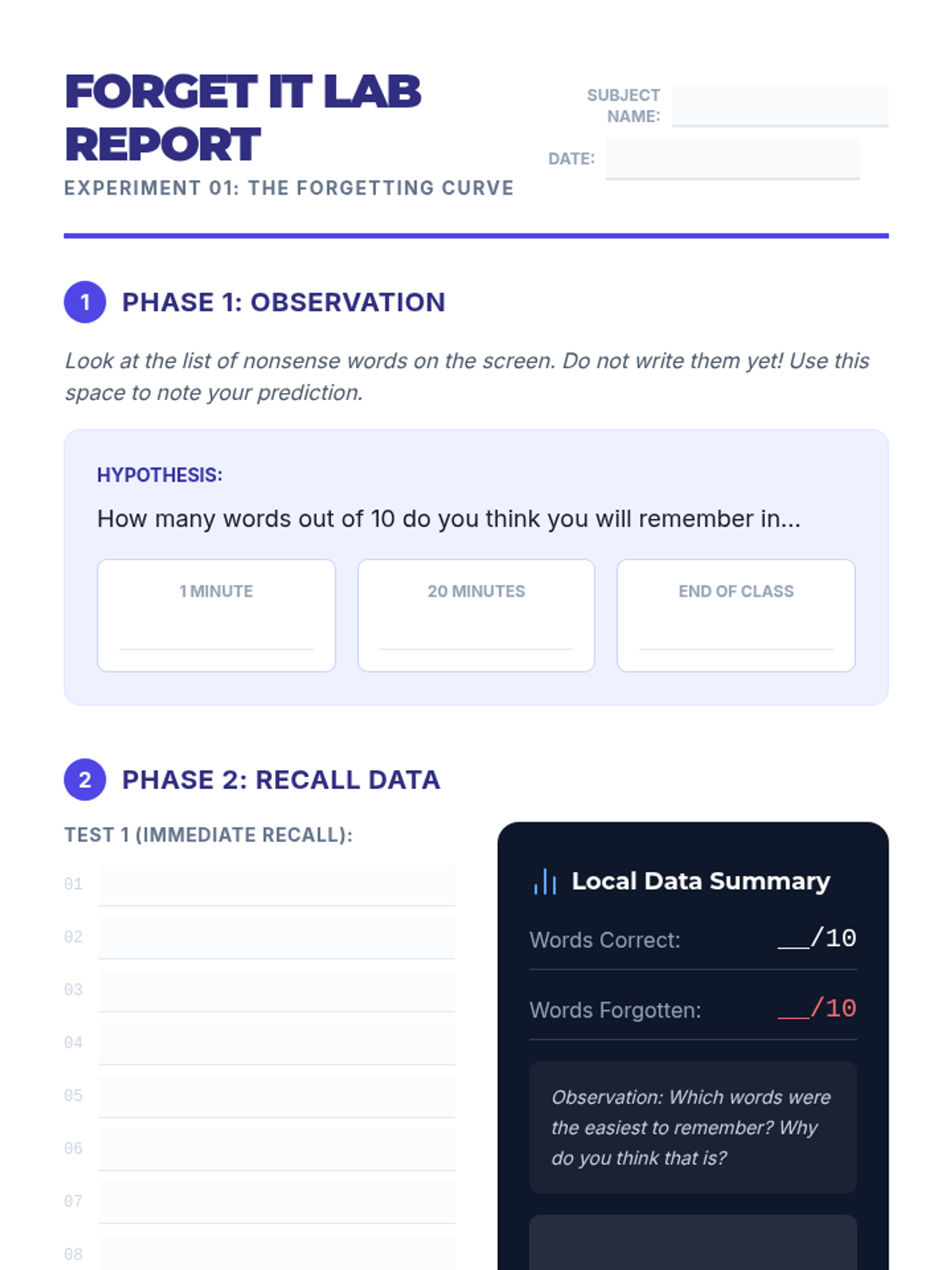
An inquiry-based exploration into the neuroscience of memory, focusing on the Forgetting Curve and how spaced repetition can 'hack' the brain for long-term retention. Students move from understanding memory decay to designing their own efficient study schedules based on biological principles.
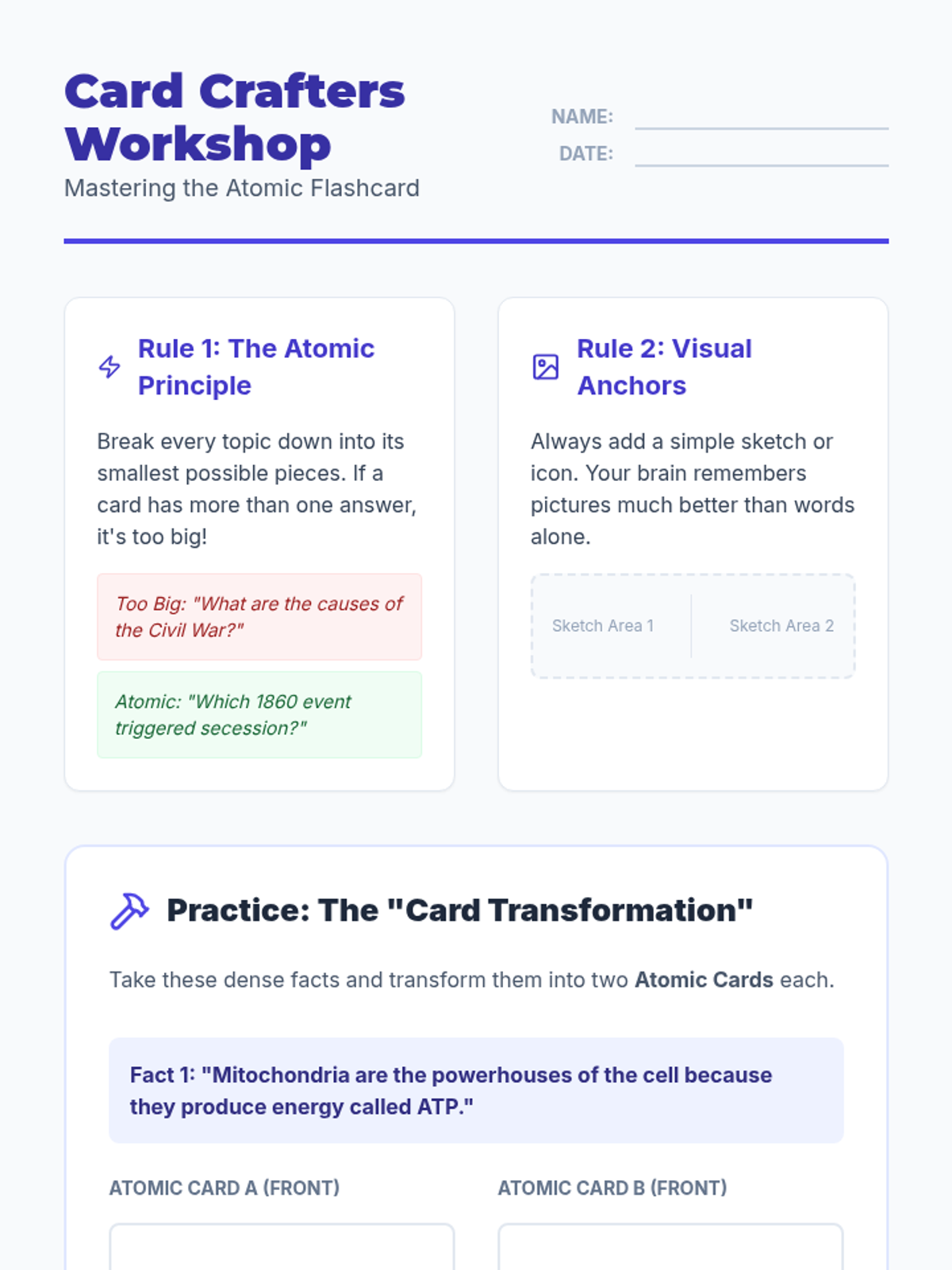
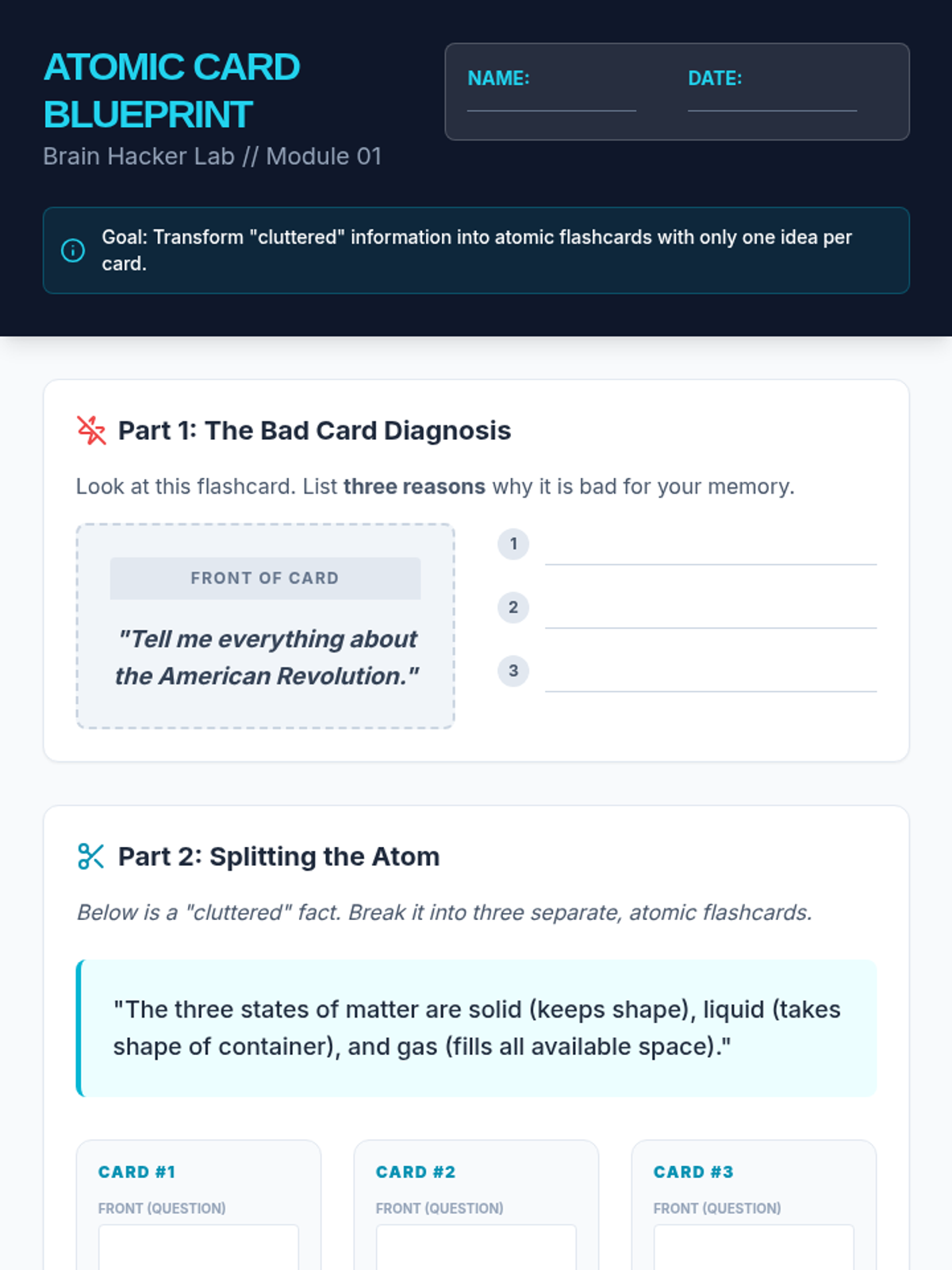
A comprehensive workshop sequence for 6th-grade students to master the Leitner System of spaced repetition. Students learn to create high-quality flashcards, set up a physical multi-box system, and implement a daily sorting routine to move information from short-term to long-term memory.
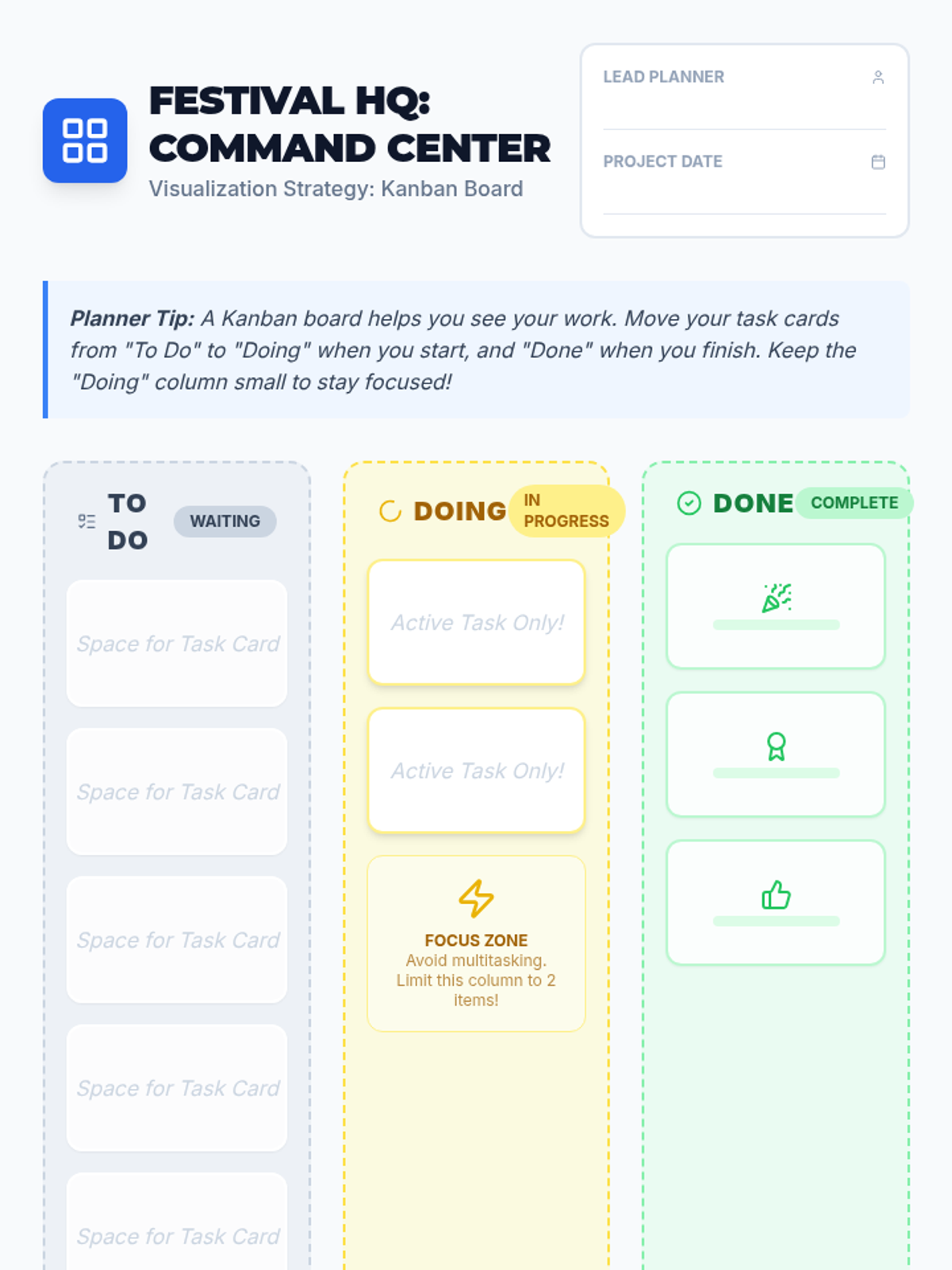
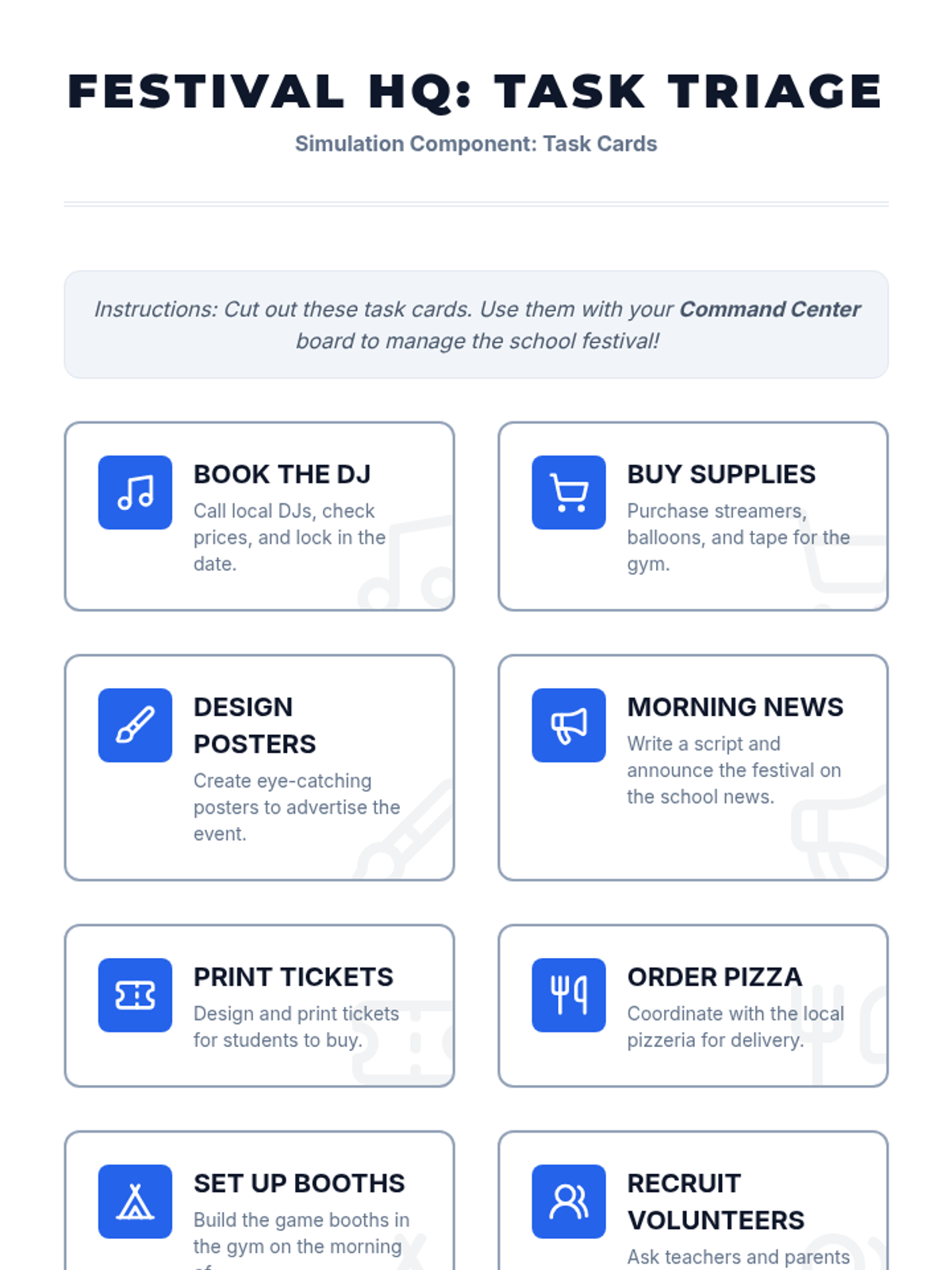
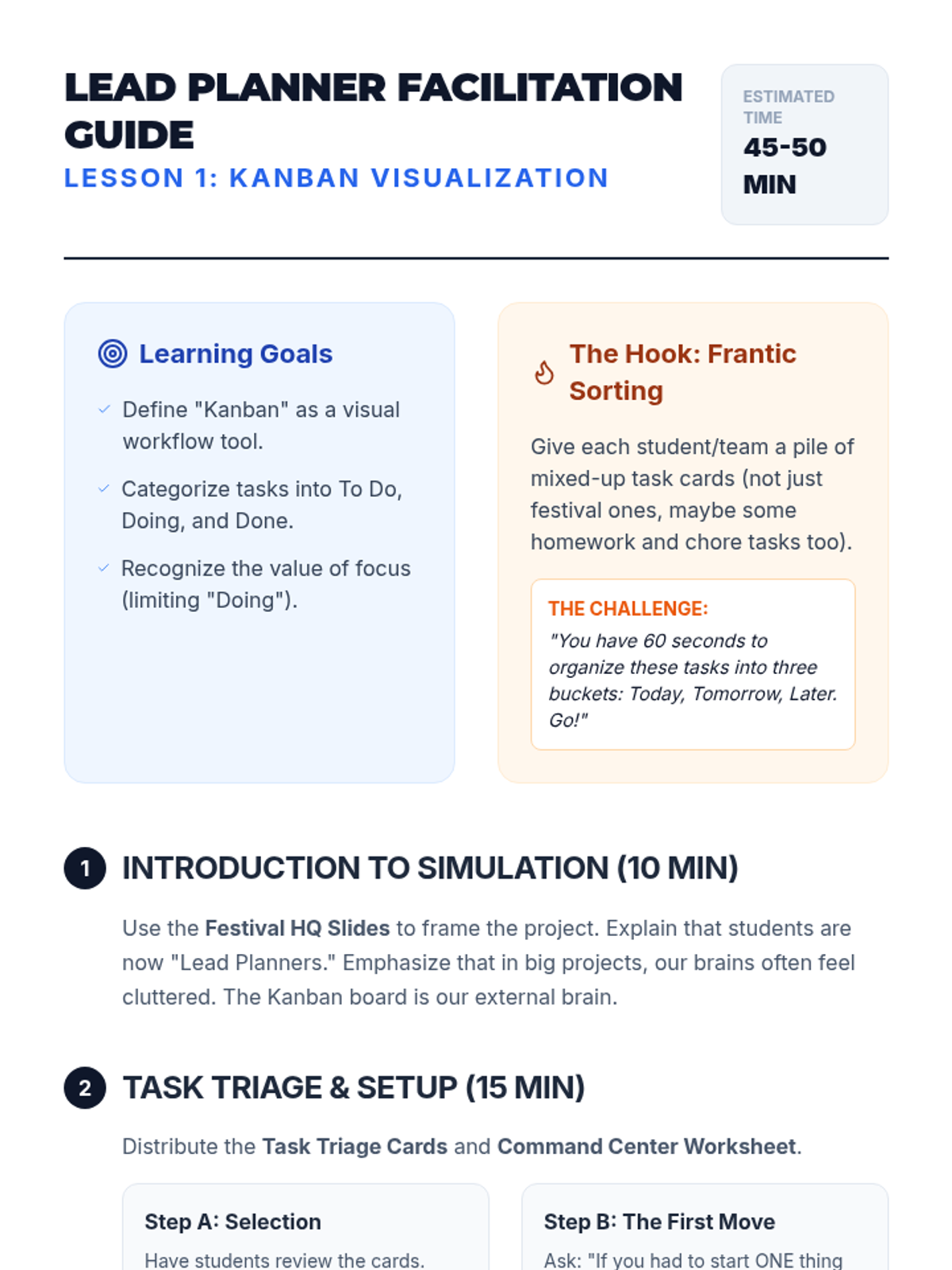
A simulation-based sequence where 6th-grade students act as Event Planners for a school festival to master multi-day project management, workflow visualization, and adaptability.
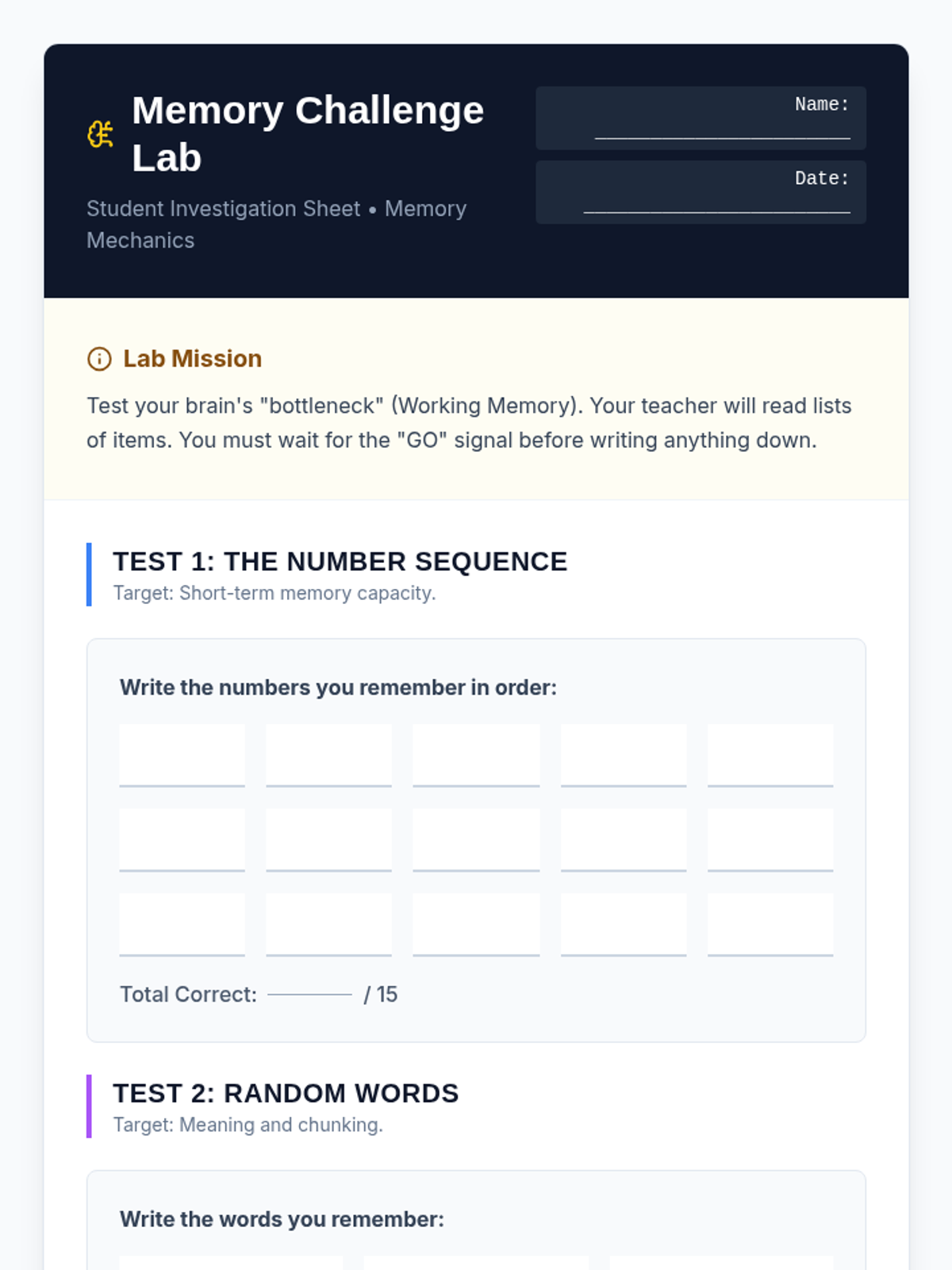
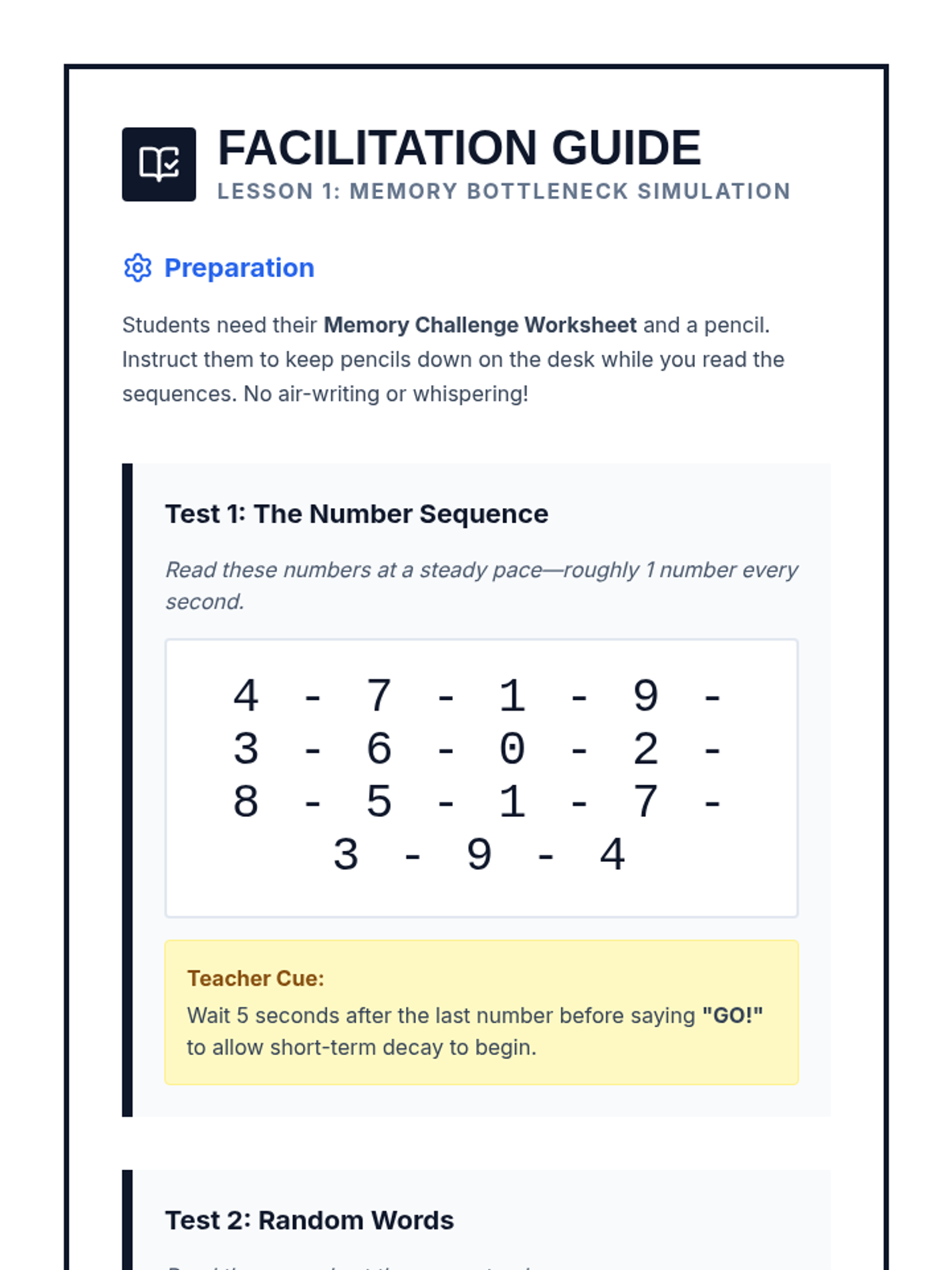
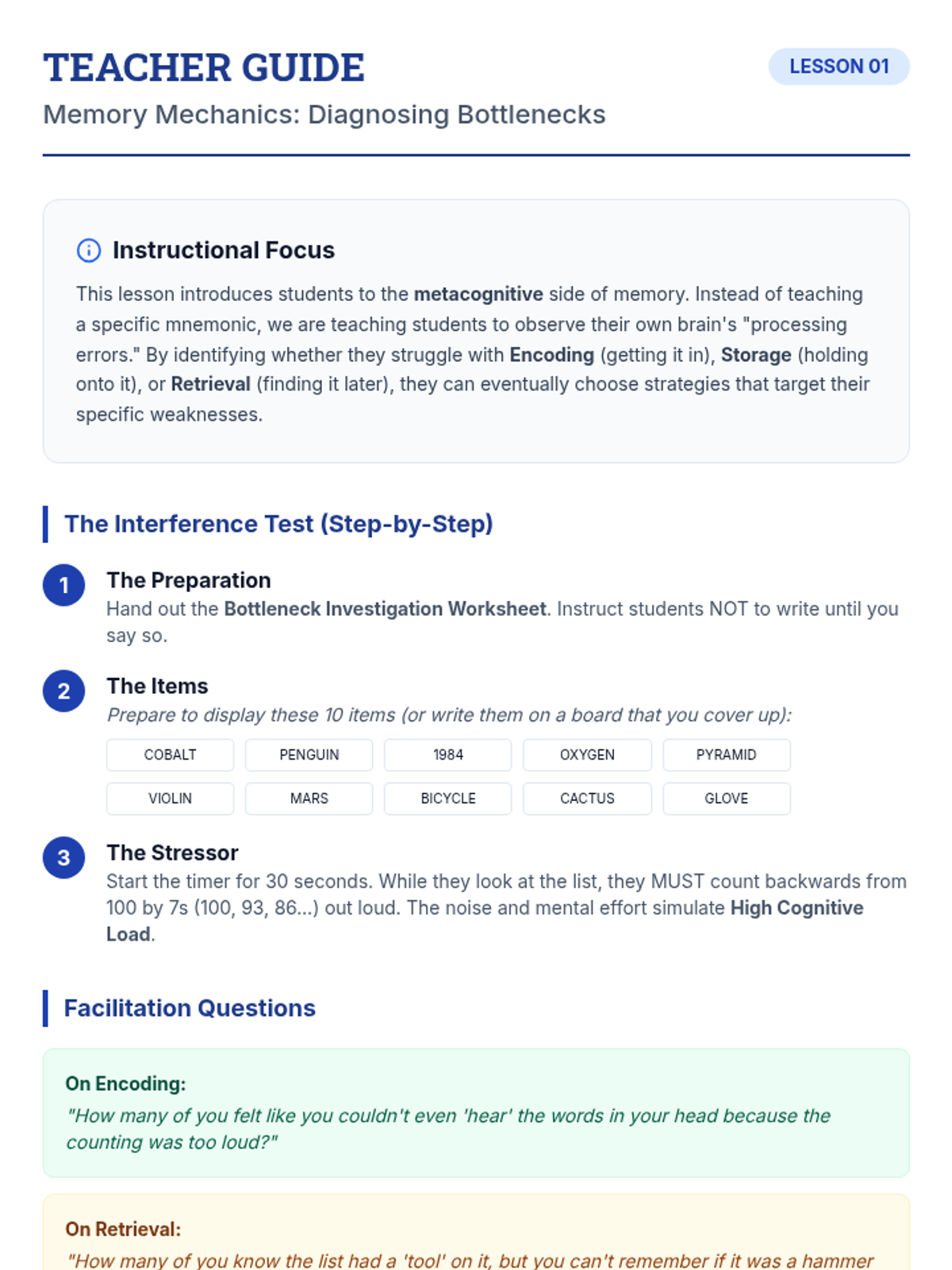
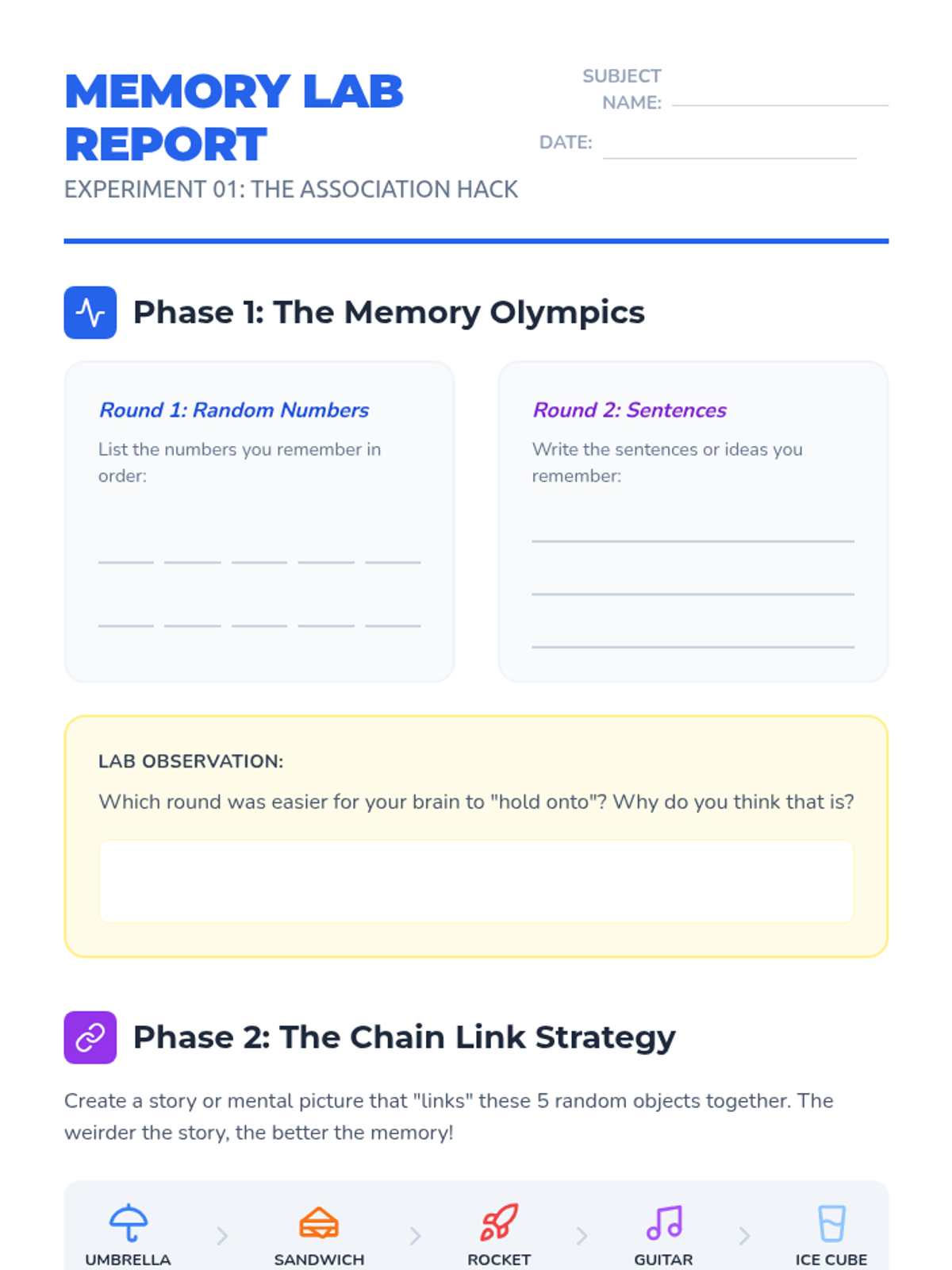
A sequence for 6th-grade students on memory mechanics, the forgetting curve, and the power of spaced repetition to improve retention. Students explore how their brains store information through hands-on simulations, data tracking, and strategic planning.
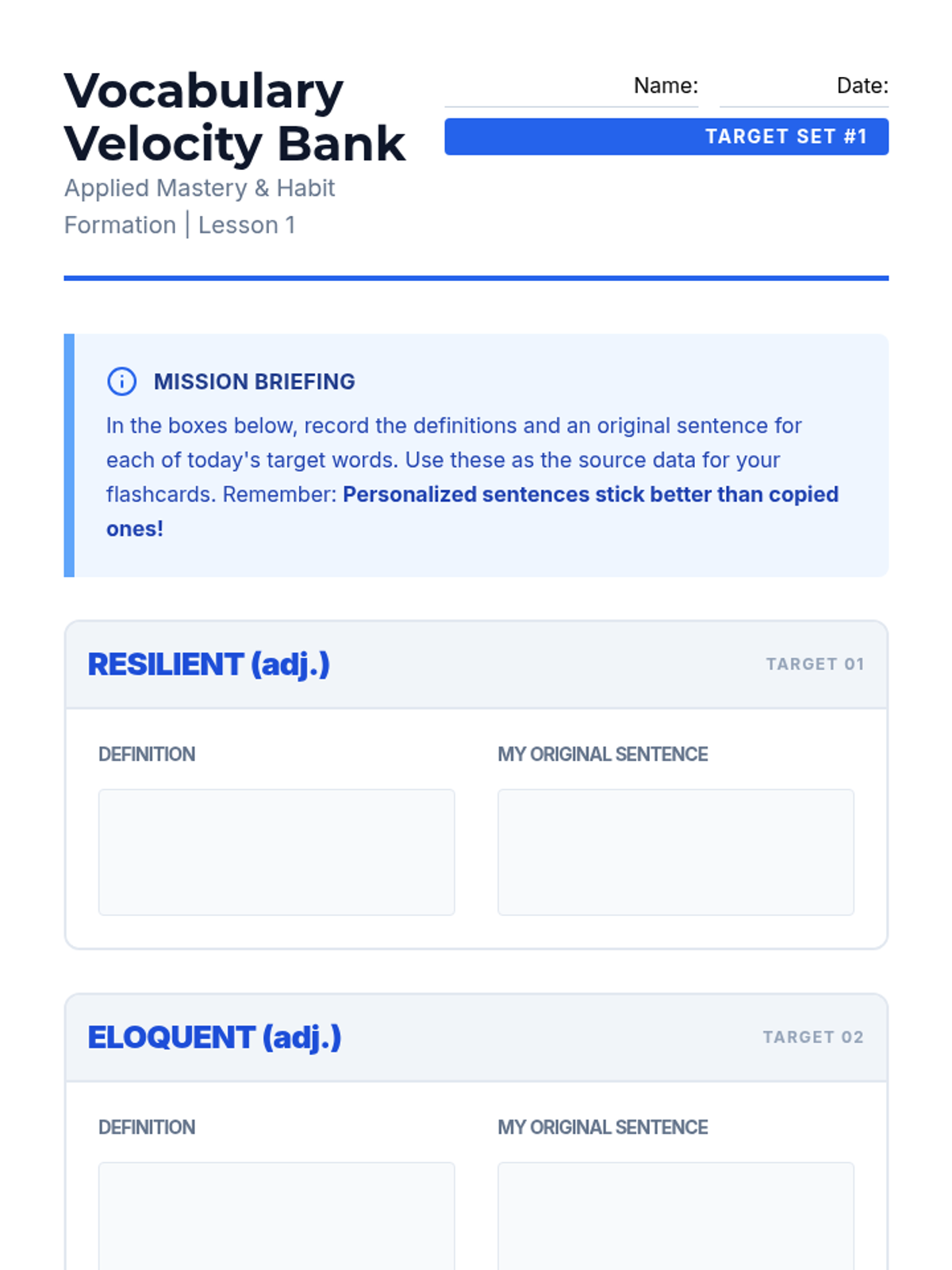
This sequence integrates spaced repetition strategies directly into current academic content, turning the practice into a habit through gamification and mastery tracking. Students apply their systems to vocabulary, math facts, and core concepts relevant to their grade level, helping them visualize their growth over time.
This sequence introduces 7th-grade students to the biological and psychological foundations of memory, specifically focusing on the Ebbinghaus Forgetting Curve and the power of spaced repetition. Students will move from understanding why forgetting happens to developing personalized strategies for long-term retention using active recall and spaced practice.
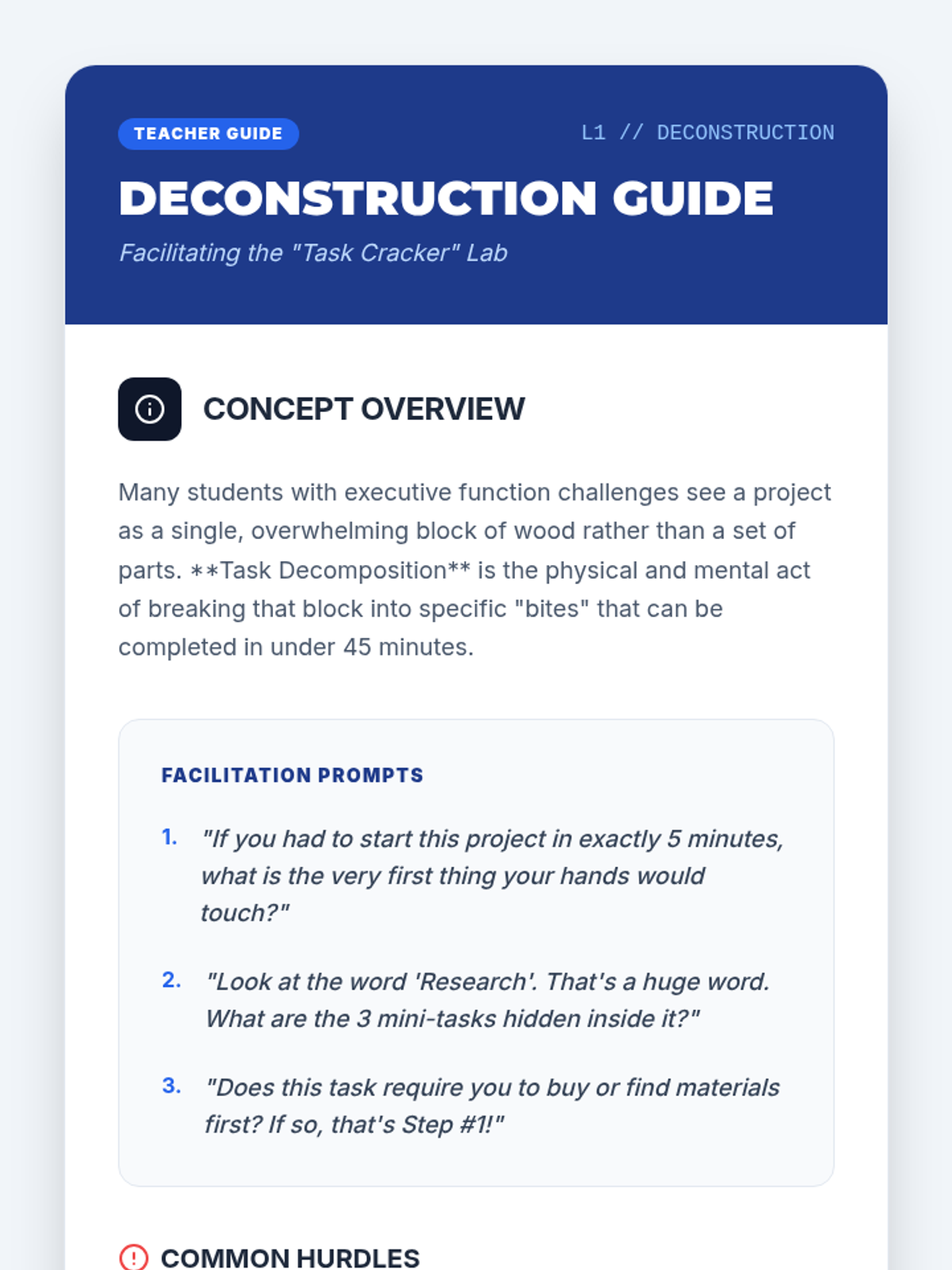
A 5-lesson executive function bootcamp for 7th-grade students, focusing on breaking down complex projects, backwards planning, and visual task management. Students learn to transition from reactive to proactive habits through hands-on activities and visual tracking systems.
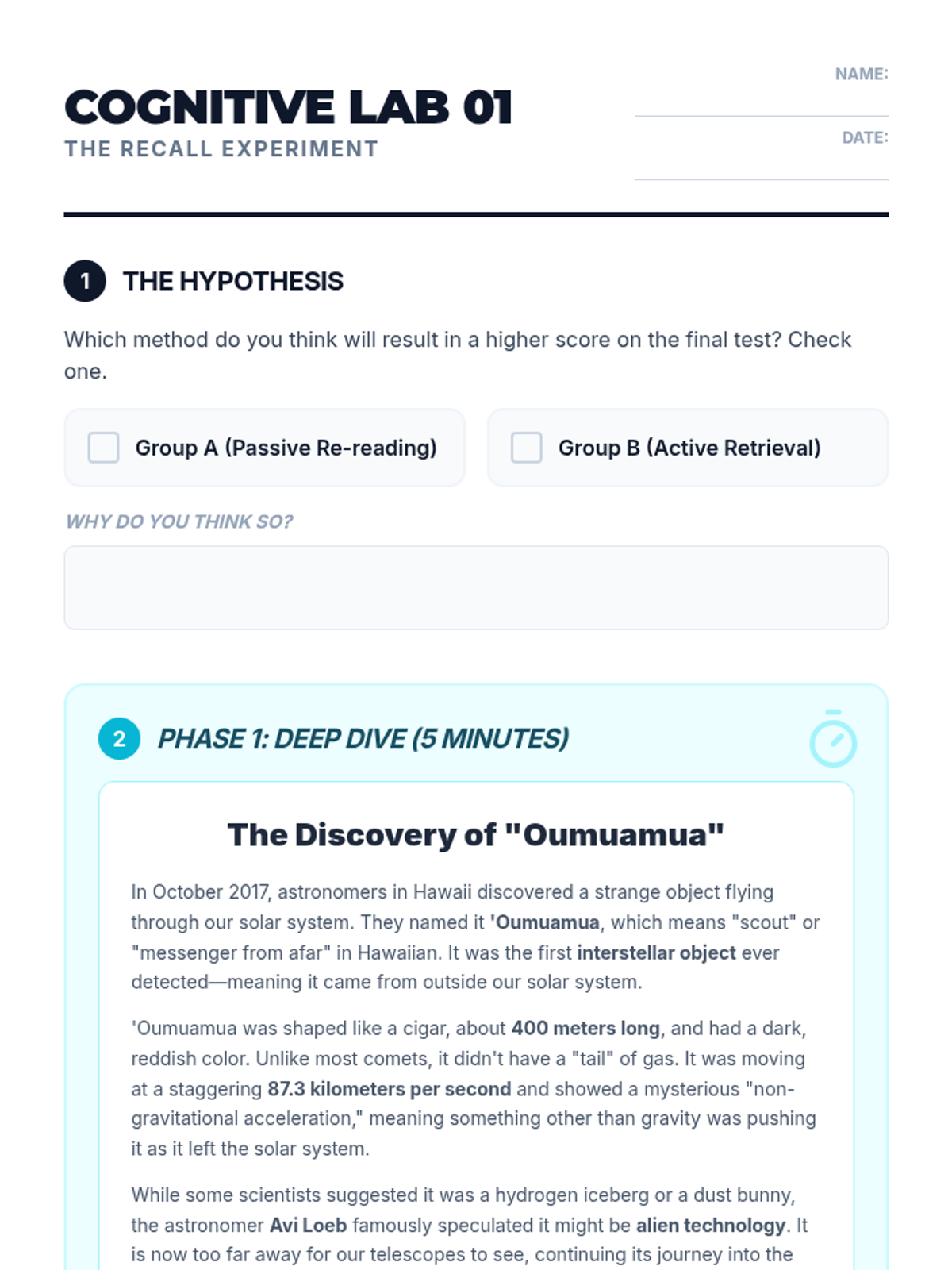
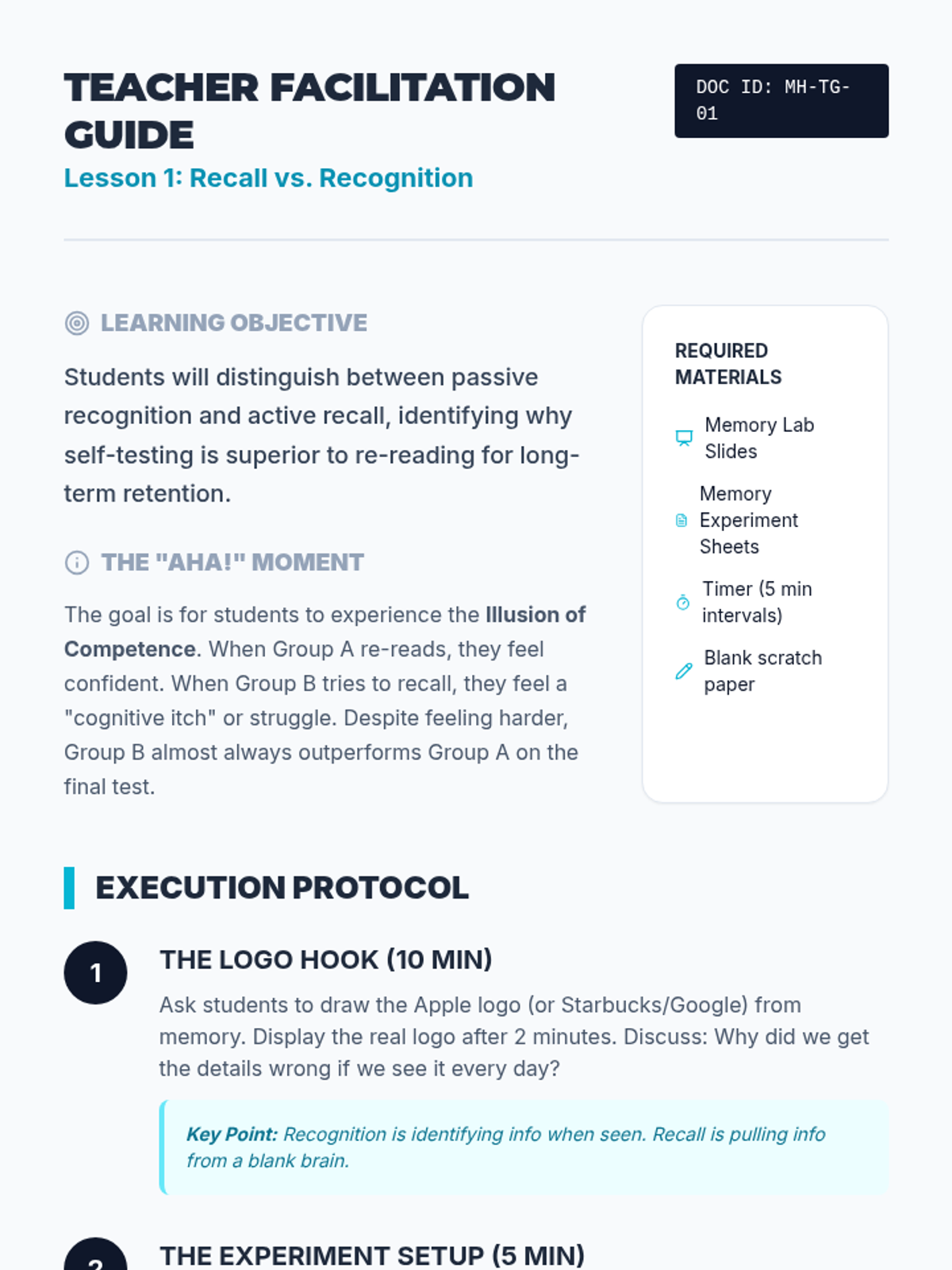
This sequence shifts focus from the design of the study guide to its utility, emphasizing active recall and self-testing strategies to help students distinguish between familiarity and actual mastery of material.
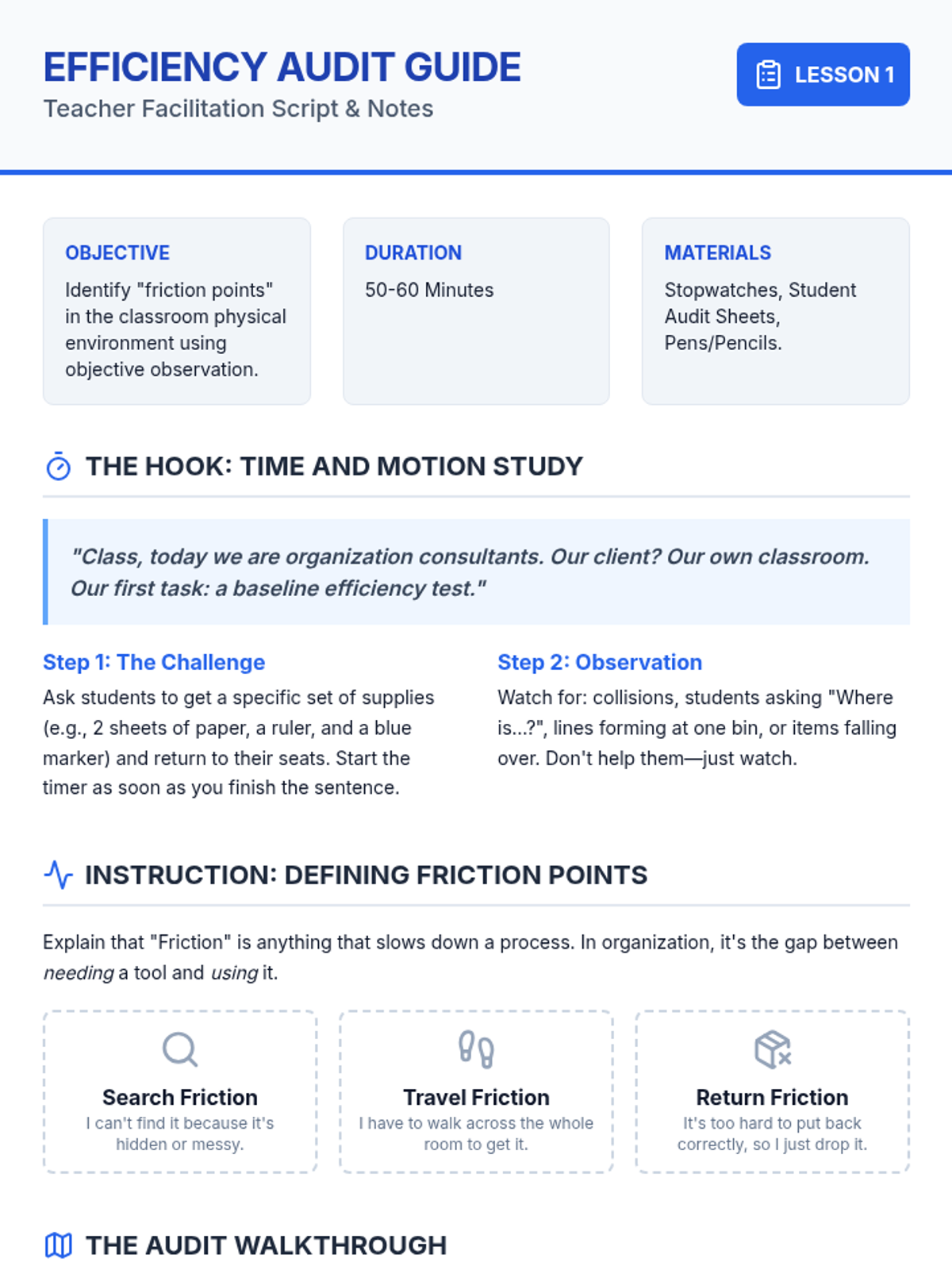
A project-based unit where students act as organization consultants to evaluate, redesign, and implement efficient physical systems in their classroom. Students learn systems thinking, visual communication, and the psychology of environmental design to create a more functional learning space.
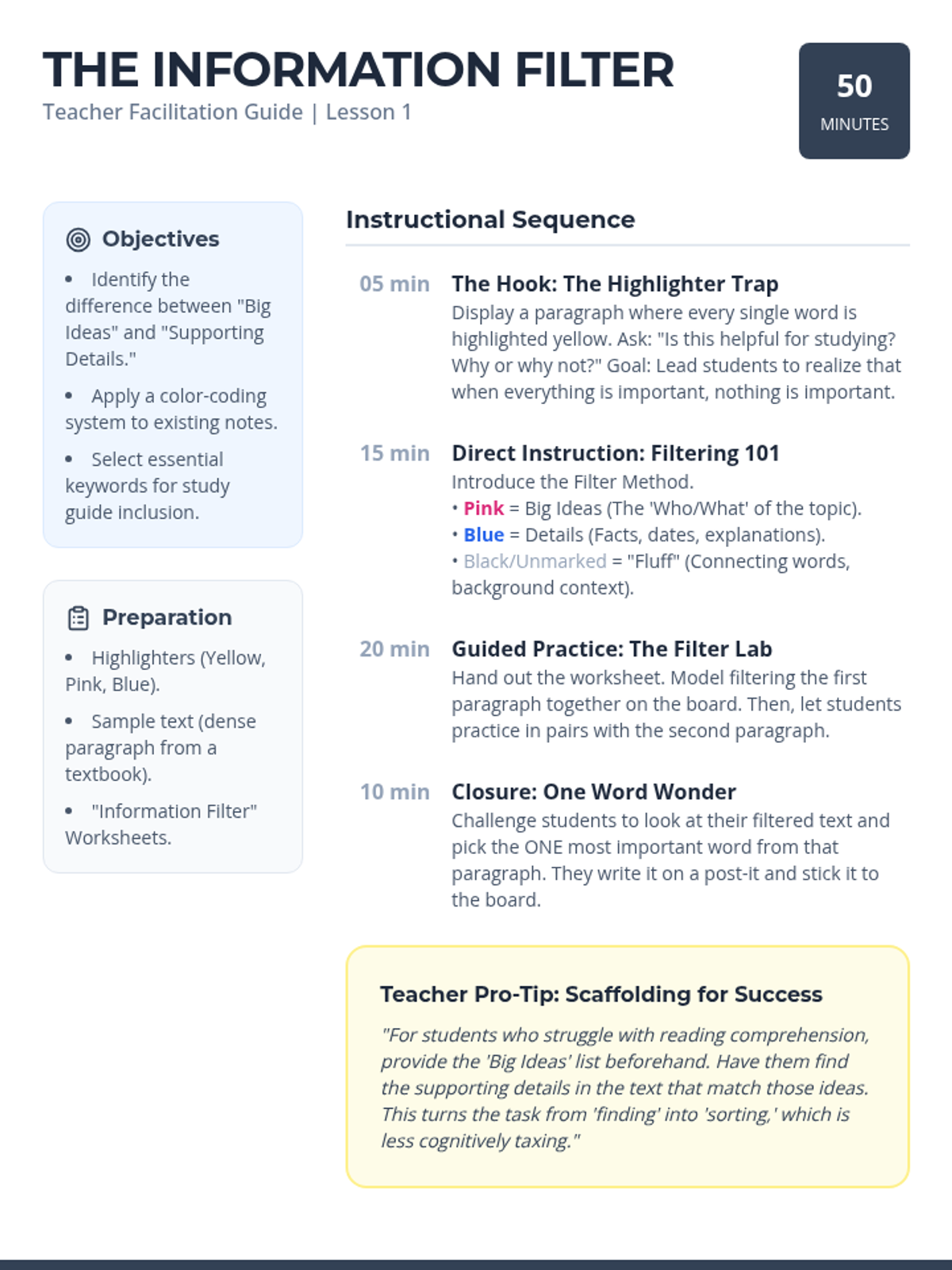
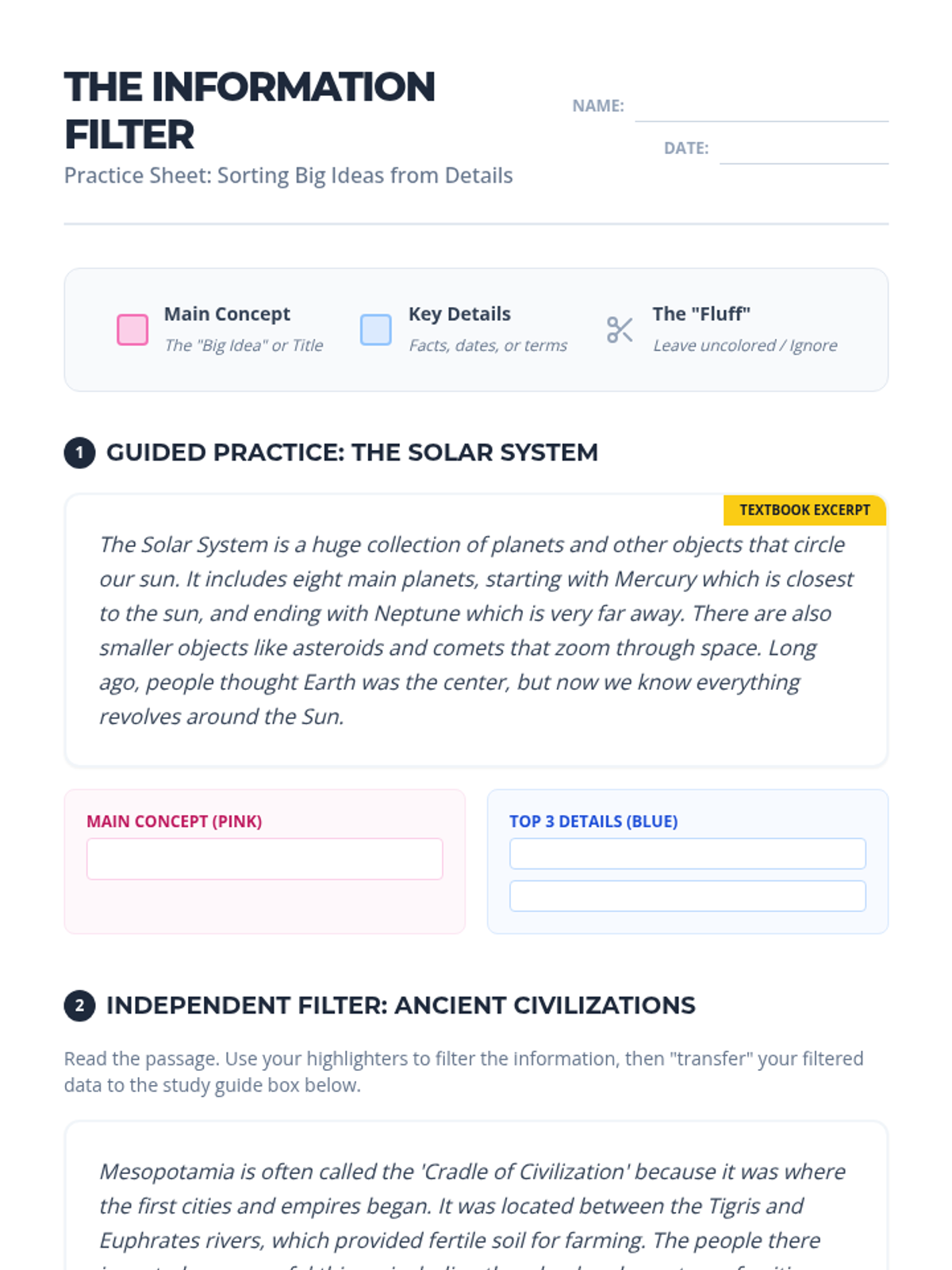
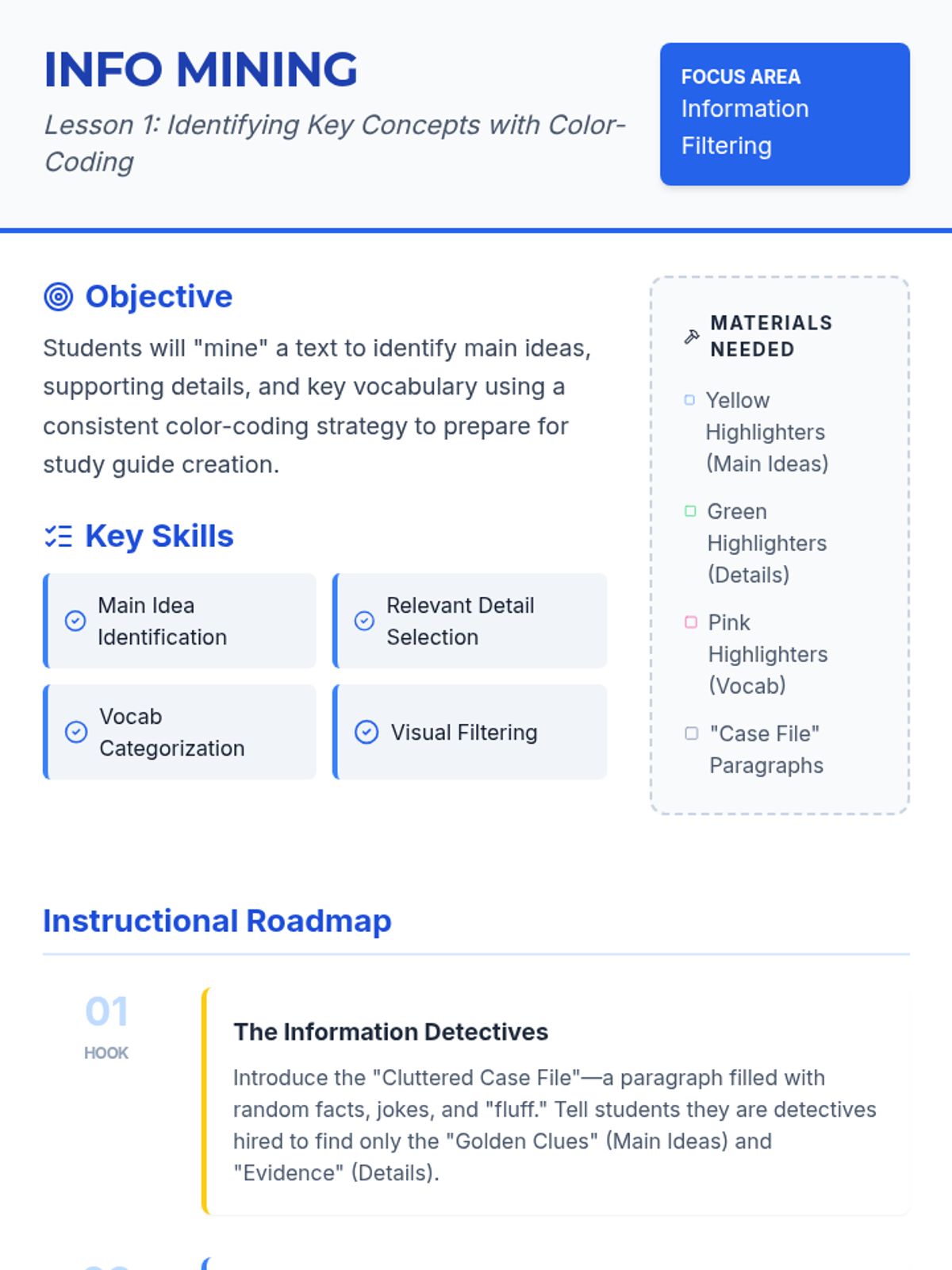
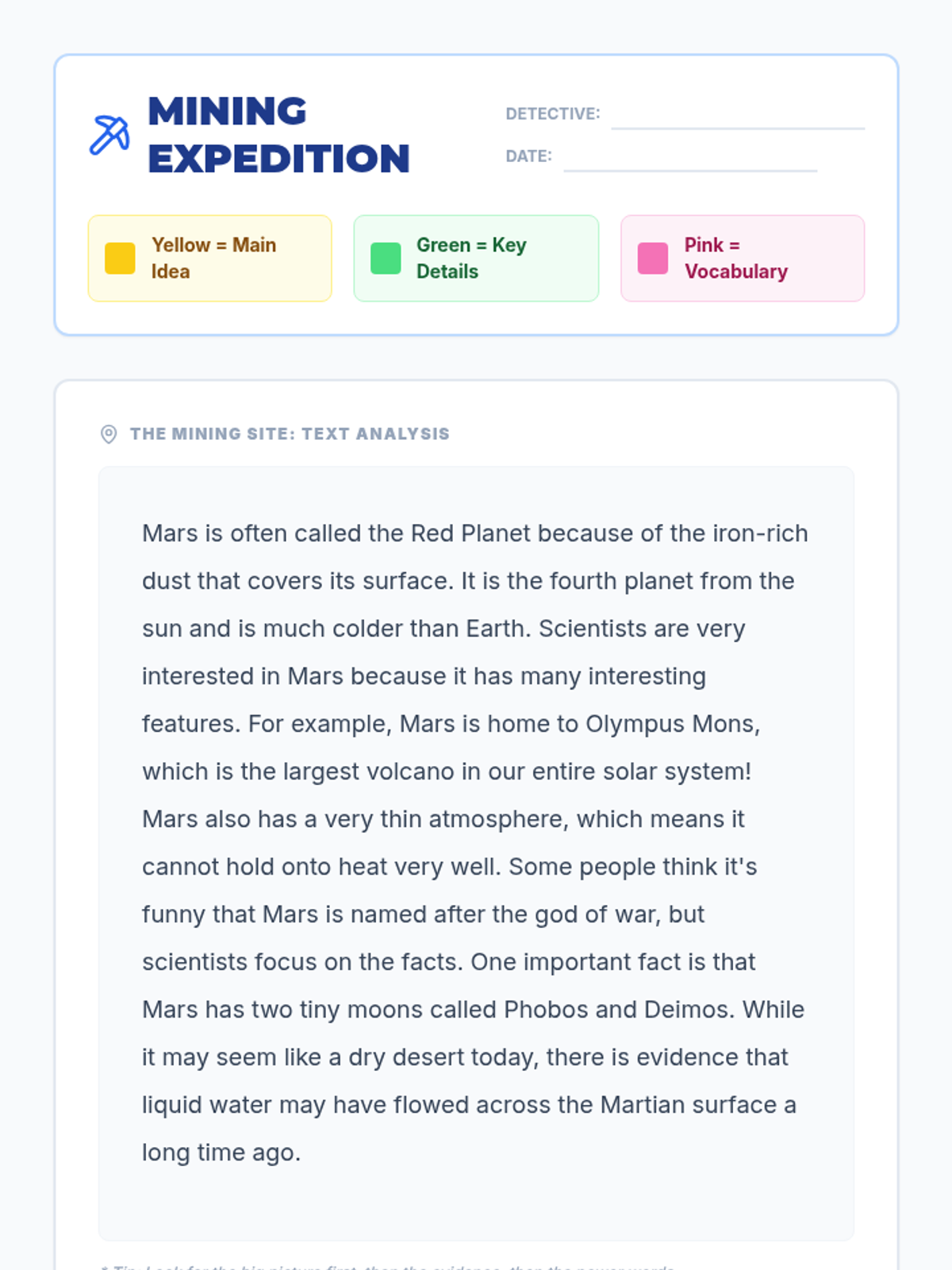
A structured 5-lesson sequence designed to transition 7th-grade students from passive review to active study guide creation. Using a multisensory workshop model, students learn to filter information, use graphic organizers, create mnemonics, and design interactive tools for personalized learning.
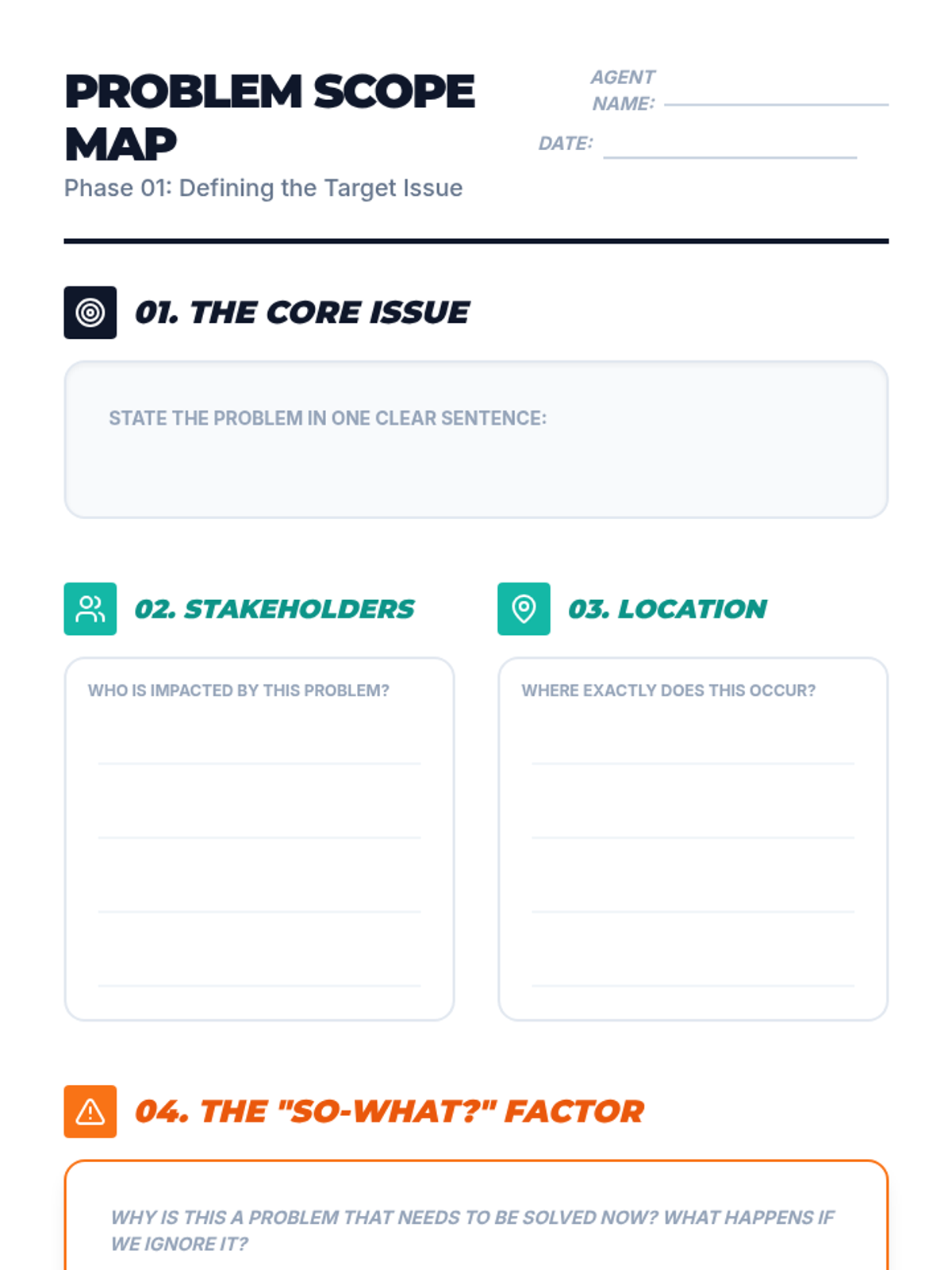
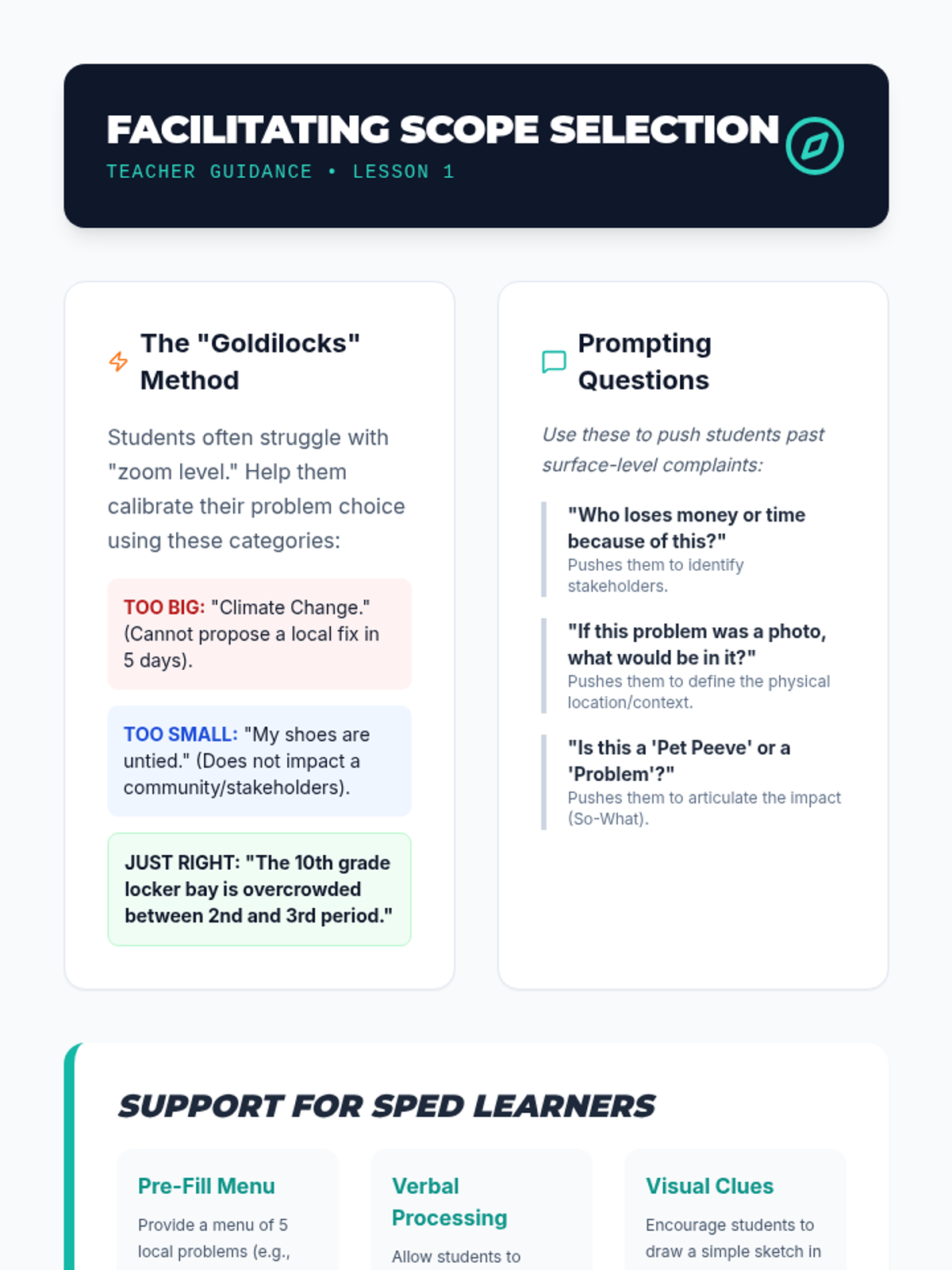
A project-based unit where students act as systems analysts, using cause-and-effect and problem-solution graphic organizers to investigate real-world community issues and propose evidence-based solutions.
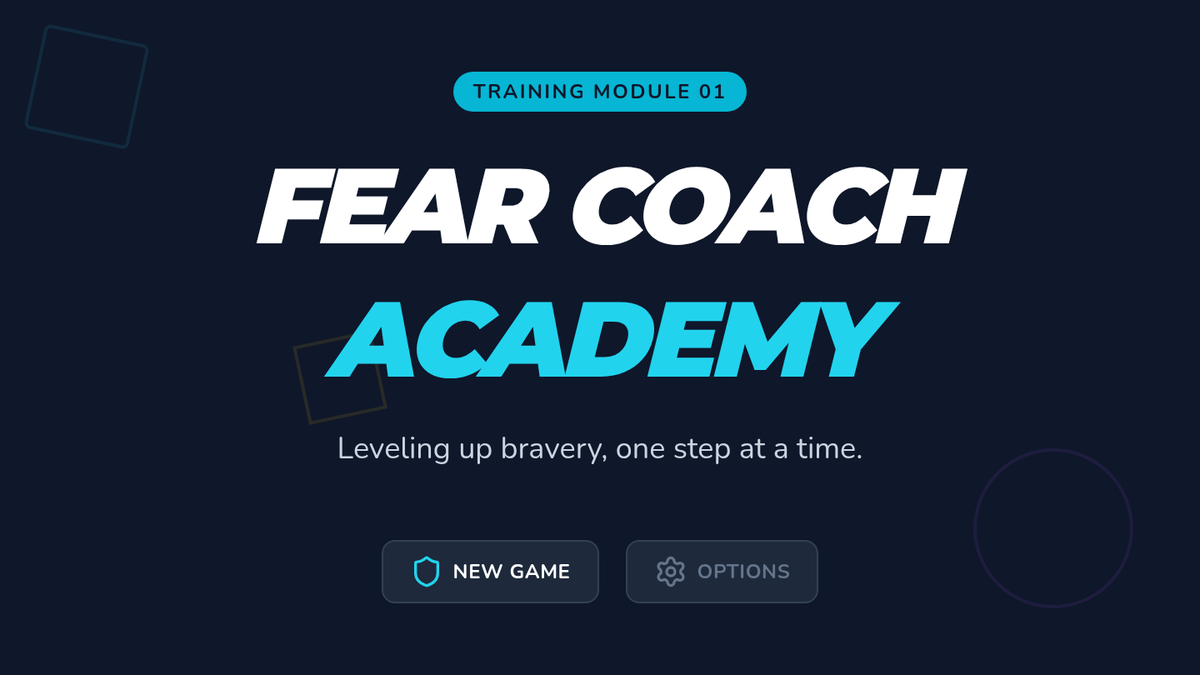
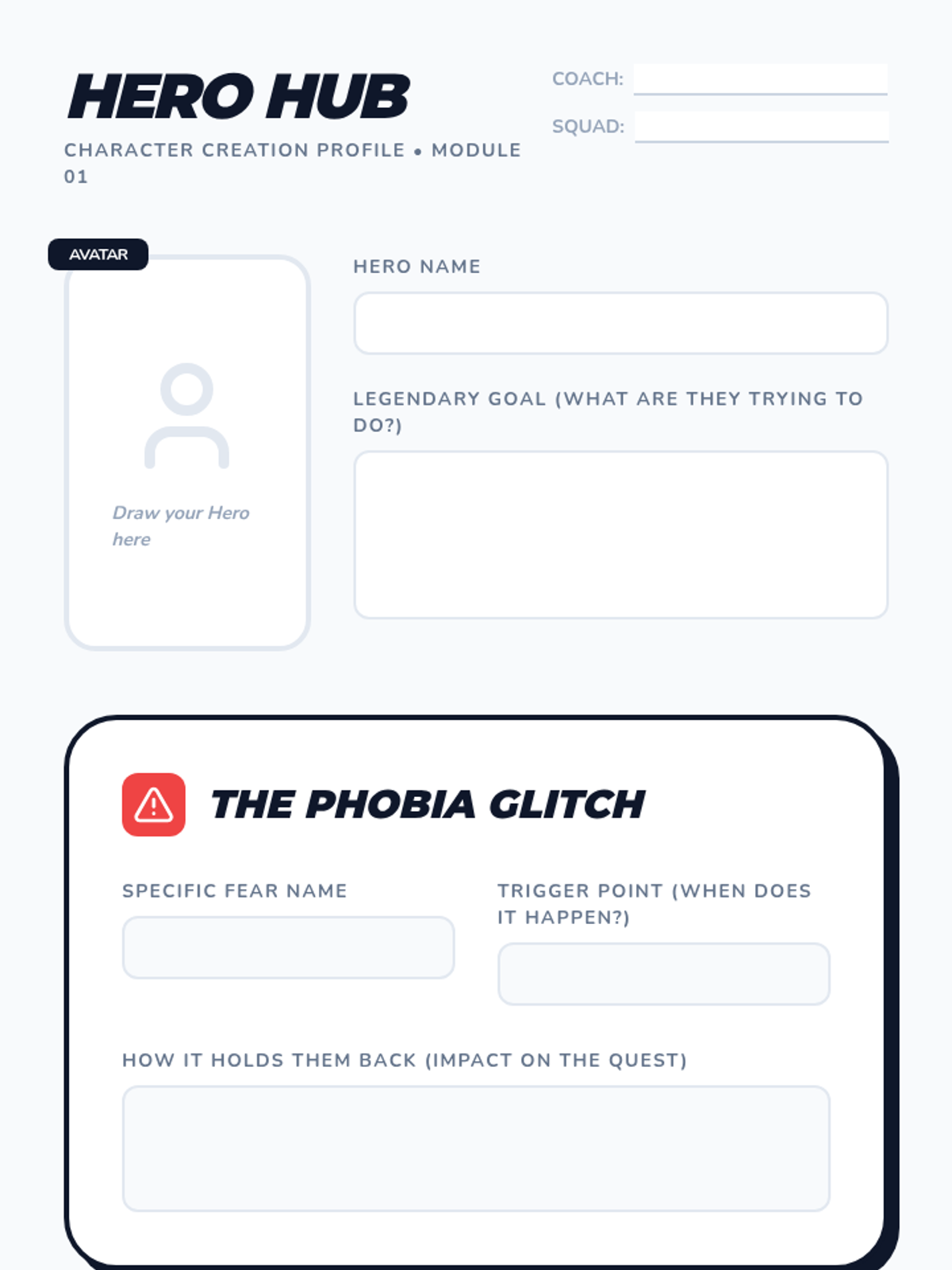
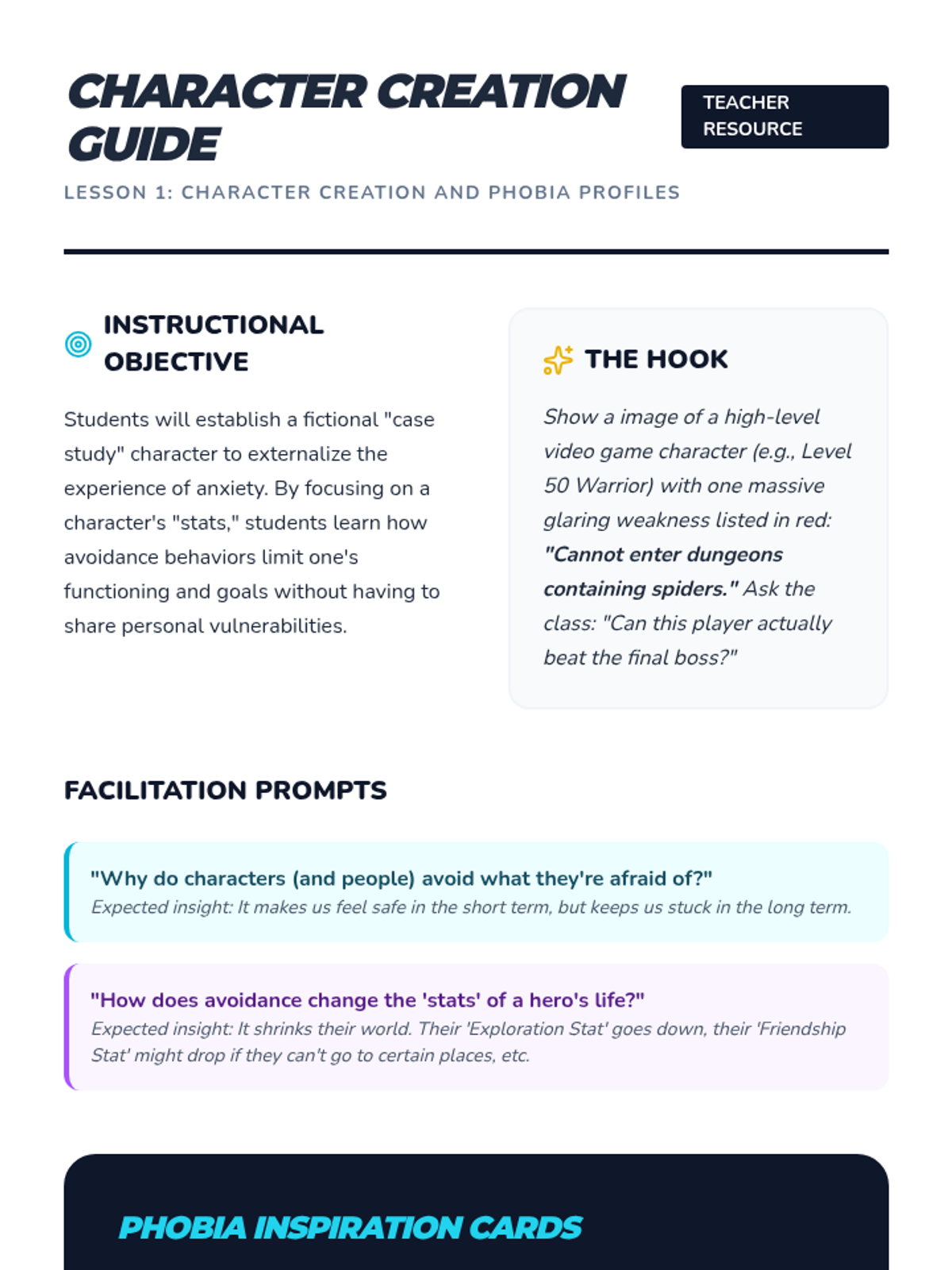
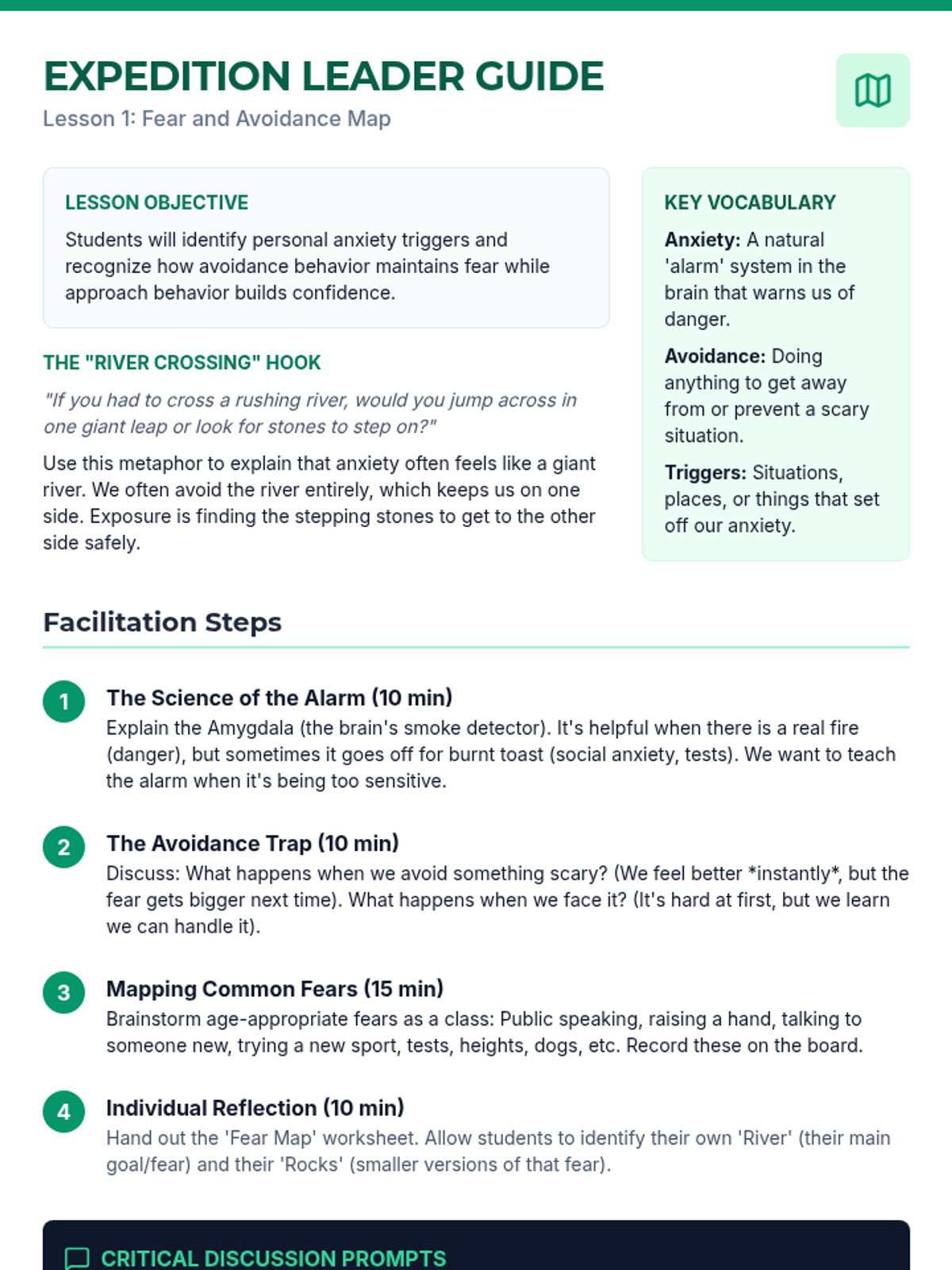
A gamified approach to learning exposure therapy principles where 7th graders act as 'Fear Coaches' for fictional characters, designing graduated hierarchies to help them 'level up' and overcome phobias.
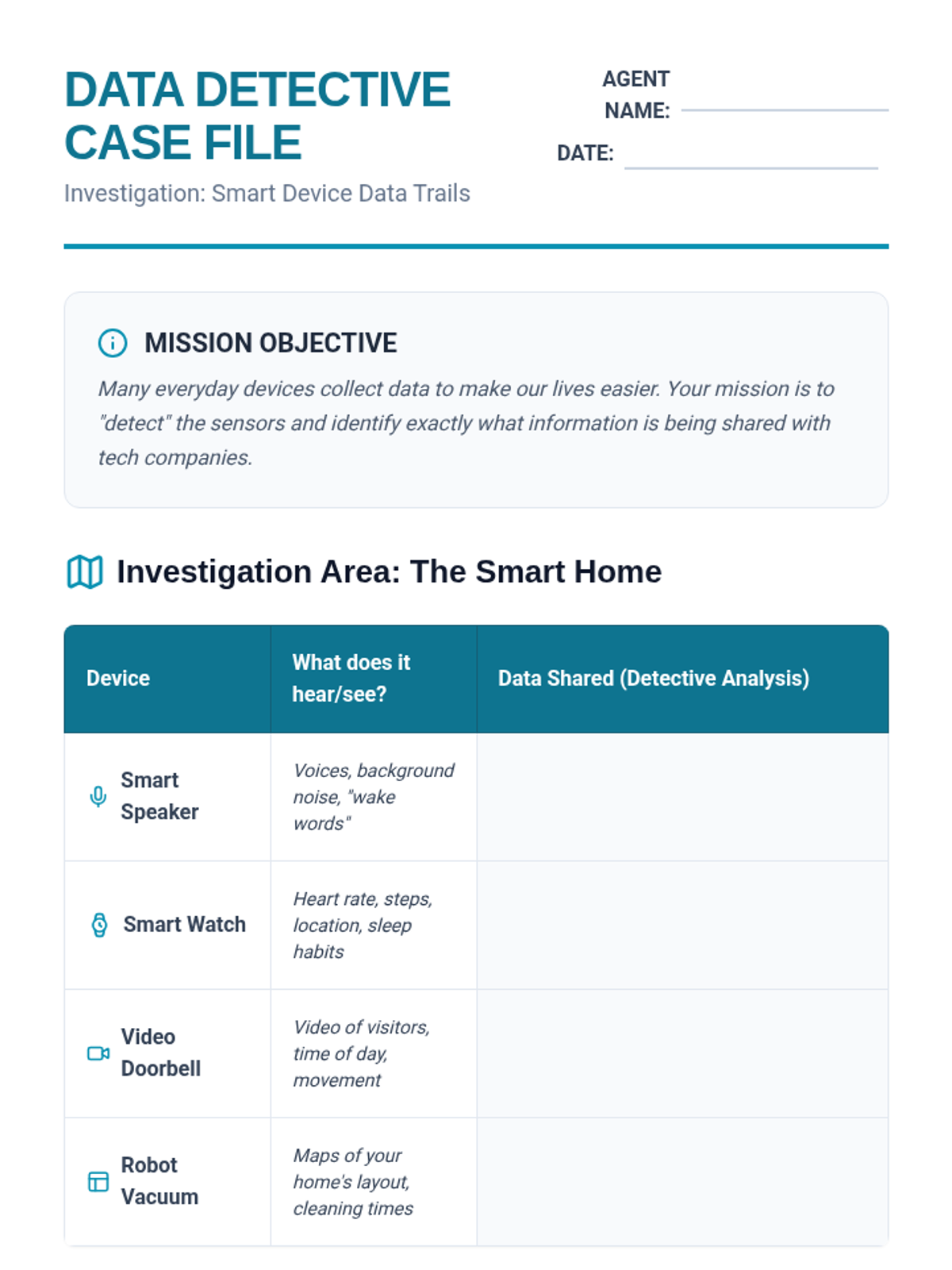
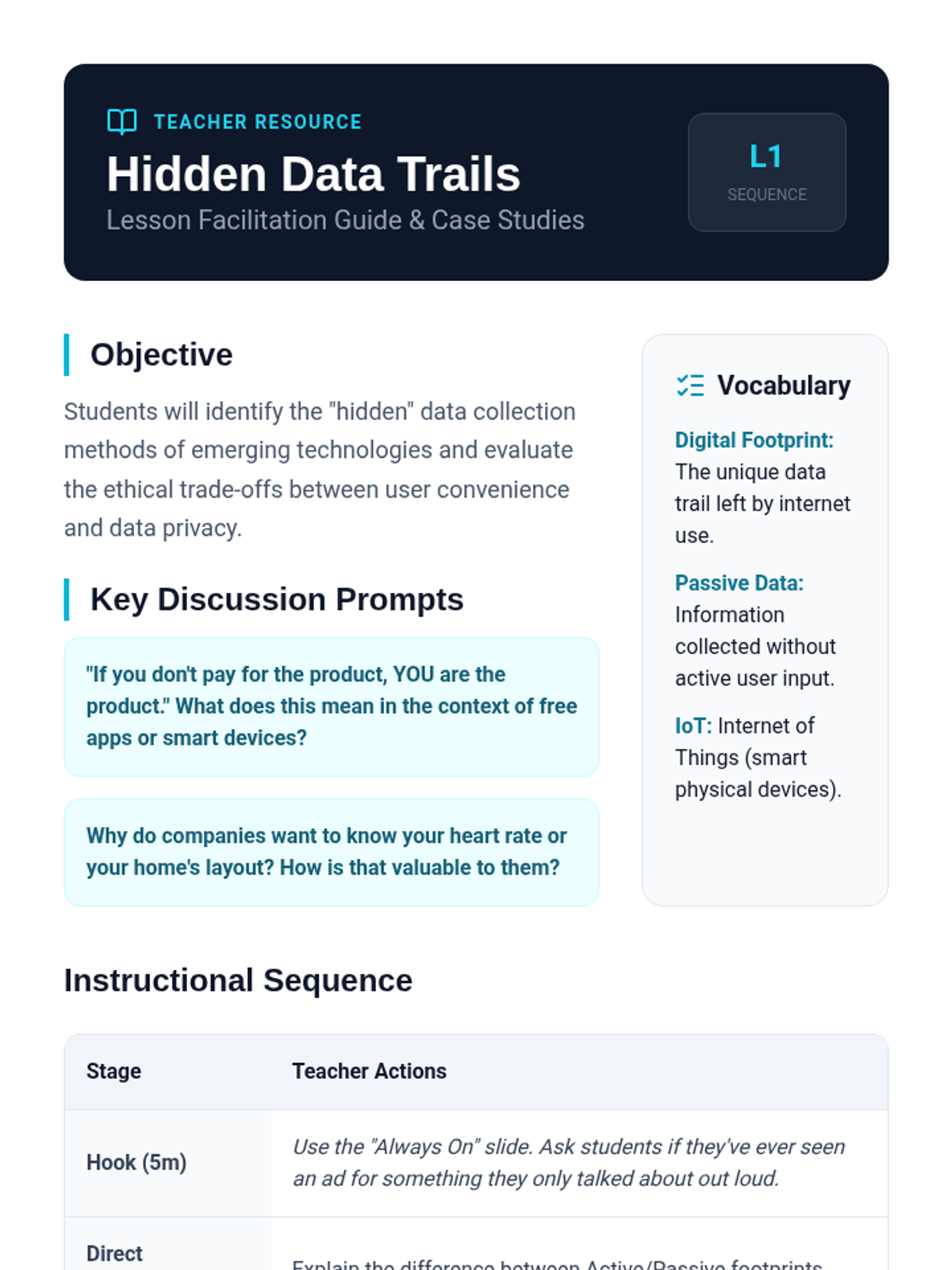
A comprehensive unit for 6th-grade students exploring the ethical, privacy, and career implications of emerging technologies like AI, deepfakes, and automation. Students move from understanding personal data footprints to creating a personal 'Future Readiness Charter' for safe and productive digital living.
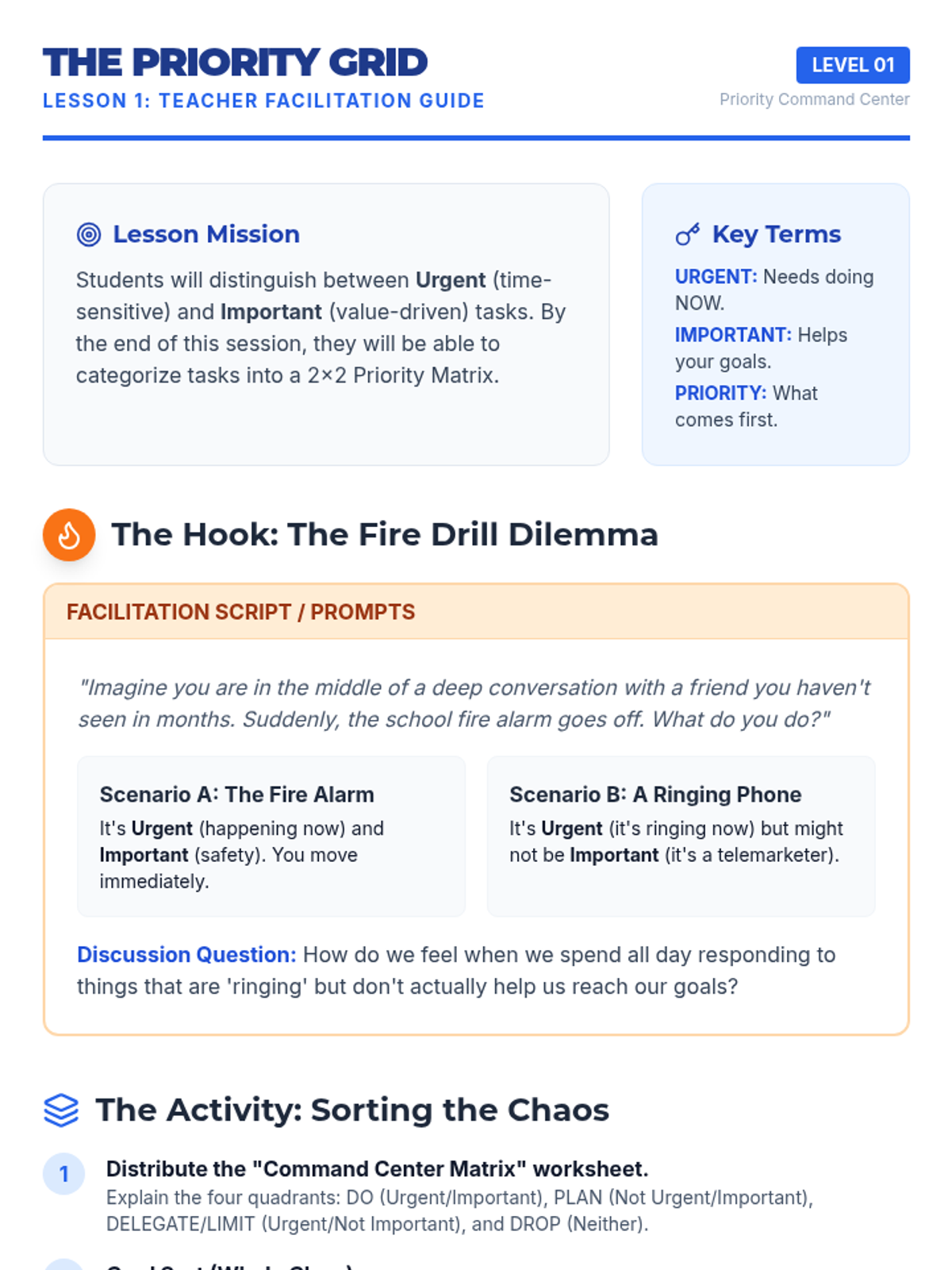
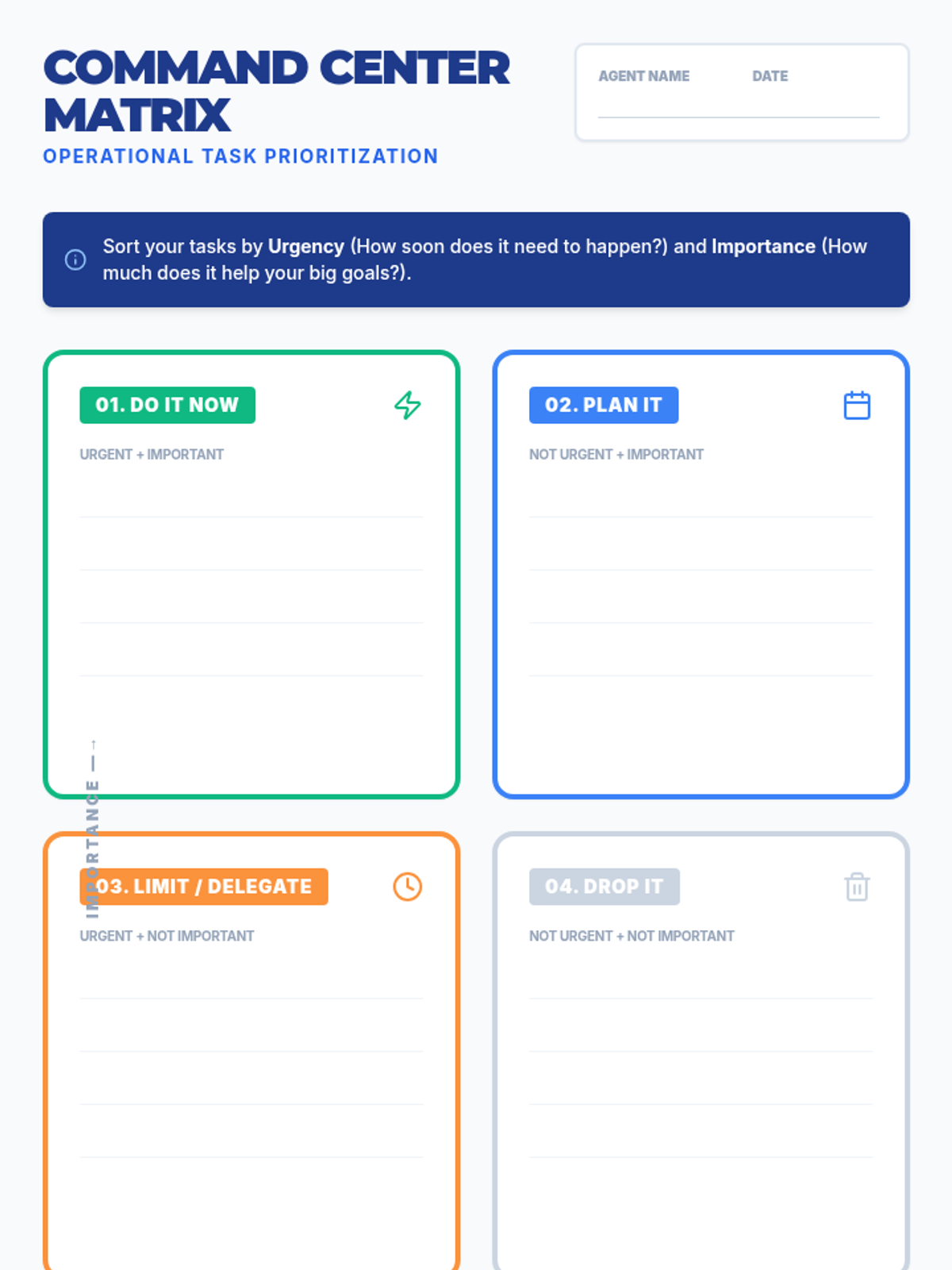
A comprehensive sequence for 7th-grade students focusing on prioritization, decision-making, and adaptive scheduling. Students use a 'Command Center' theme to learn how to categorize tasks, use the Eisenhower Matrix, and pivot when plans are disrupted.
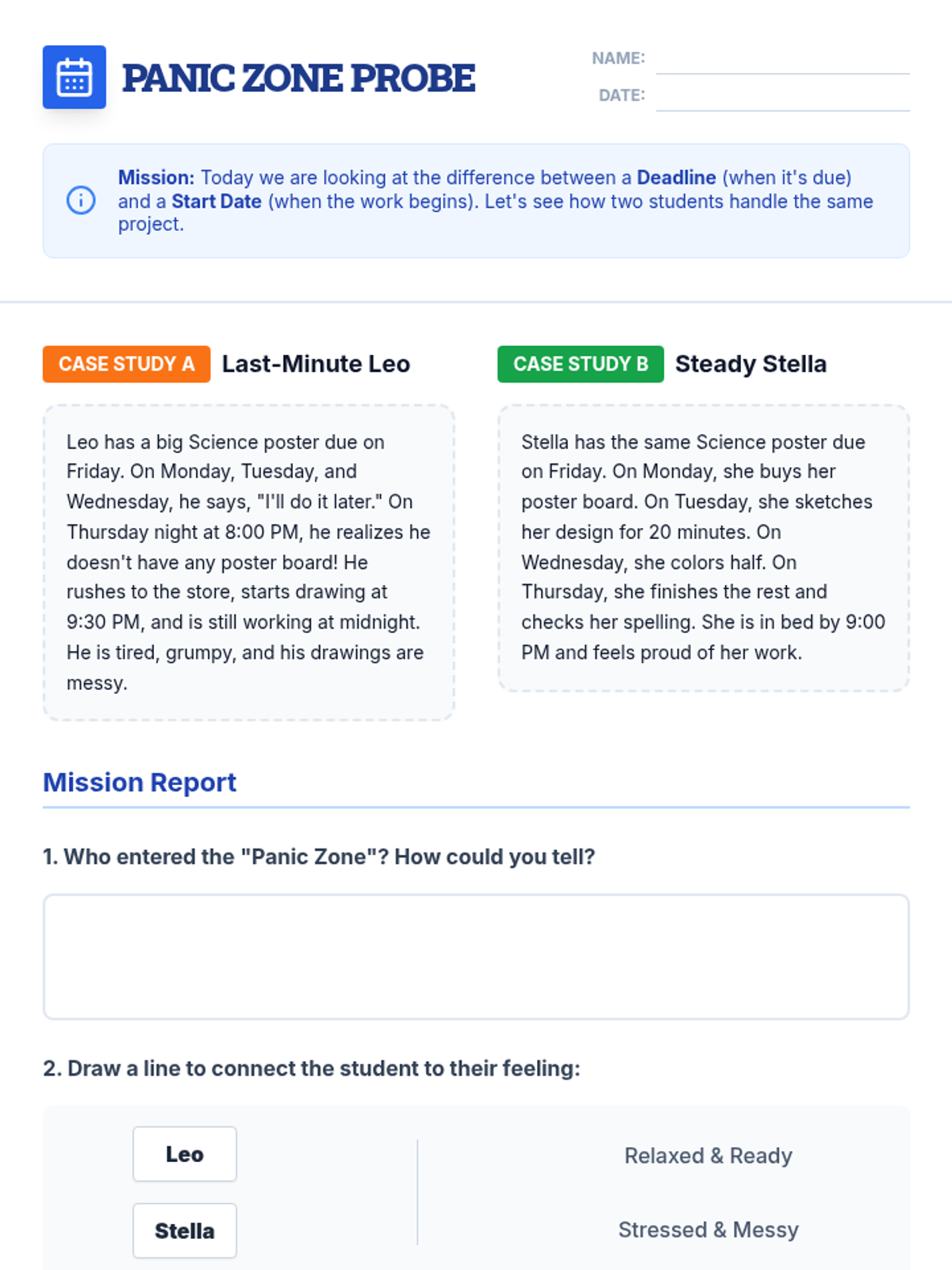
A 5-lesson sequence for 7th-grade students on project planning through backward design. Students learn to map deadlines, set milestones, visualize workflows, and establish review routines to reduce stress and avoid the 'panic zone'.
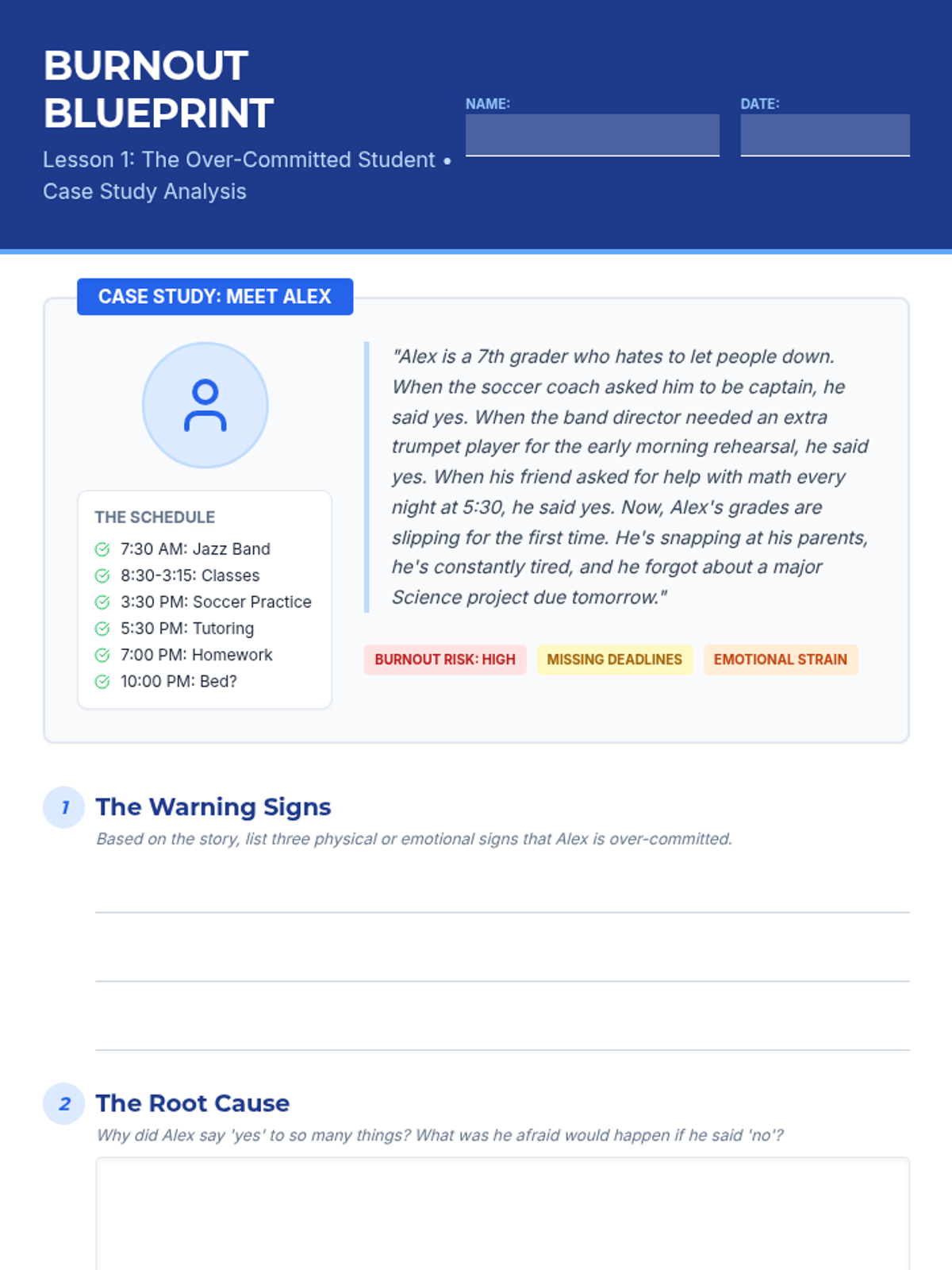
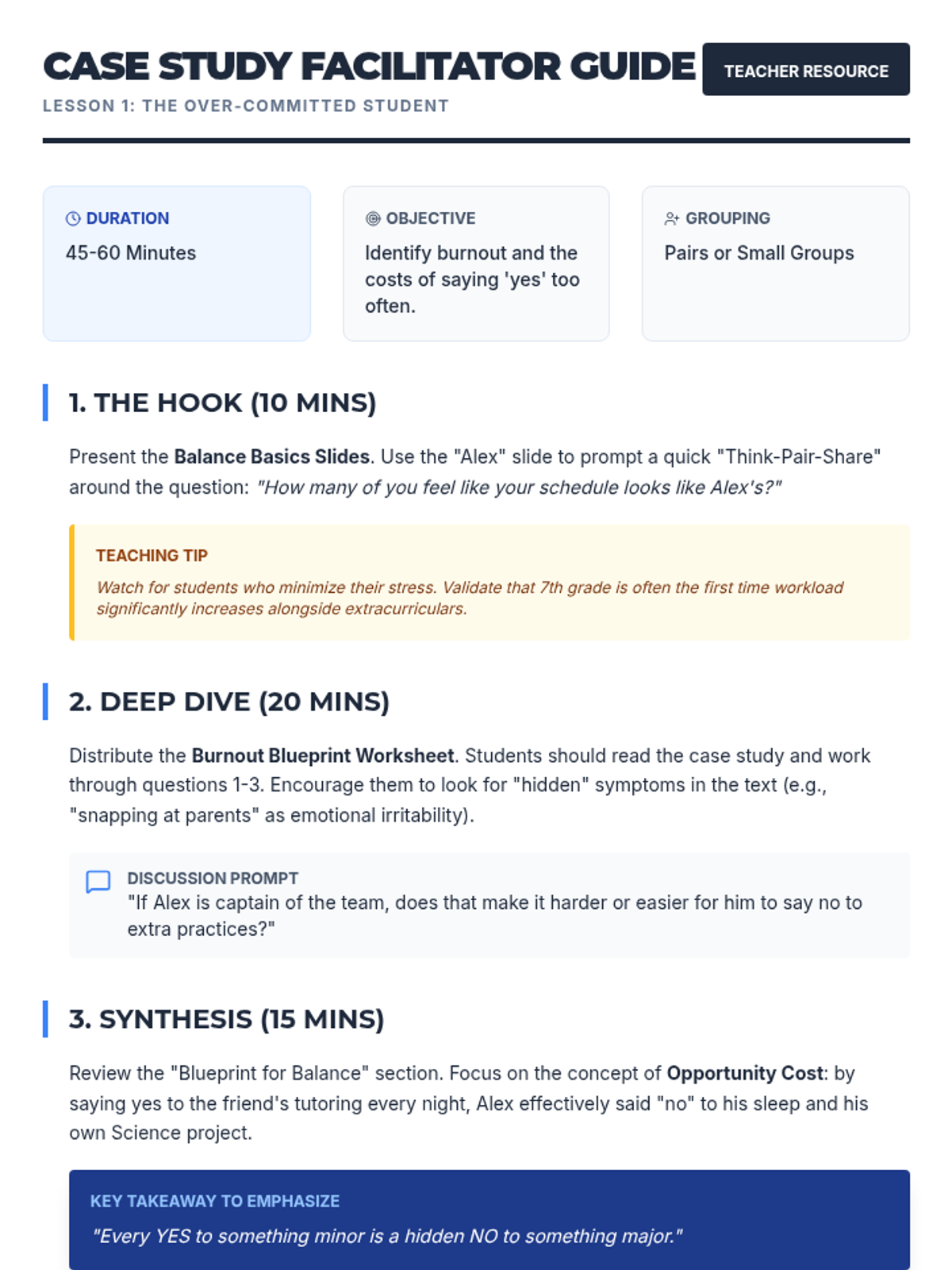
A 5-lesson unit for 7th-grade students focusing on the interpersonal skills required for time management: setting boundaries, communicating overload, and advocating for a balanced schedule. Students progress from identifying burnout to drafting a personal accountability contract.
A comprehensive 5-lesson sequence for 7th graders on the DBT PLEASE skills, focusing on the connection between physical health and emotional regulation to reduce vulnerability to stress and intense emotions.
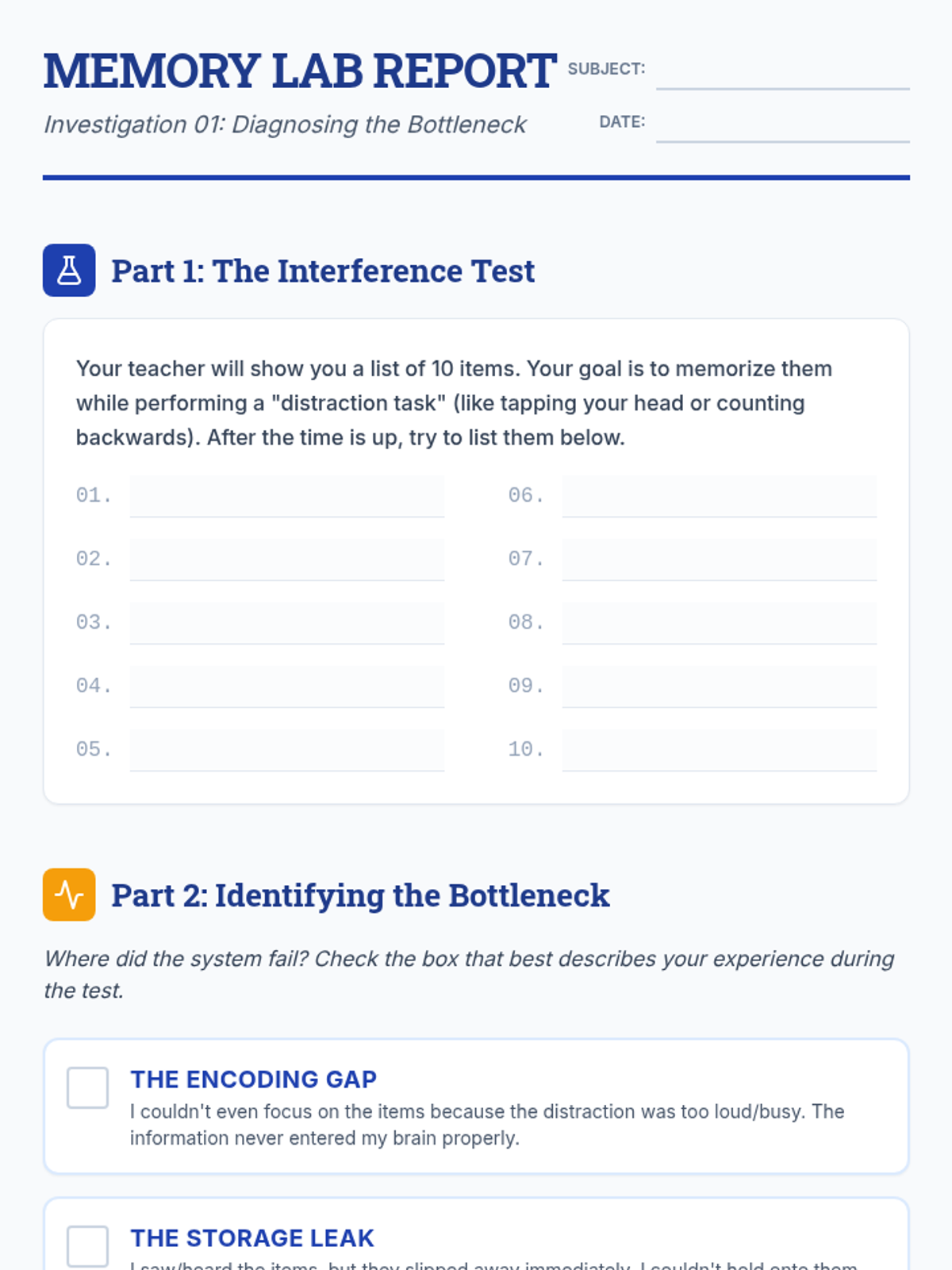
This sequence guides 7th-grade students through evaluating and selecting mnemonic strategies to support working memory. Students transition from understanding their own memory bottlenecks to building a personalized 'Executive Function Toolkit' for independent academic success.
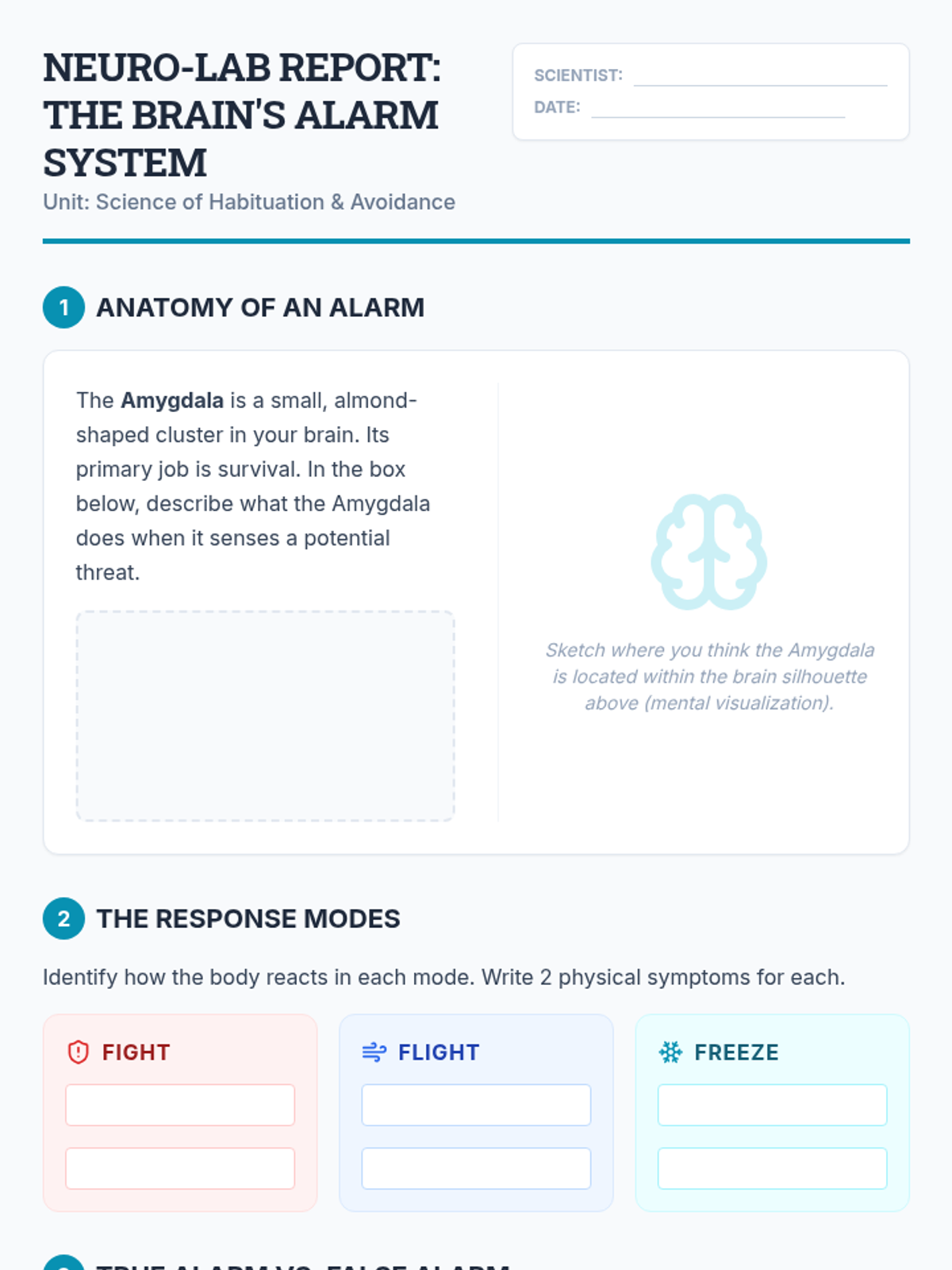
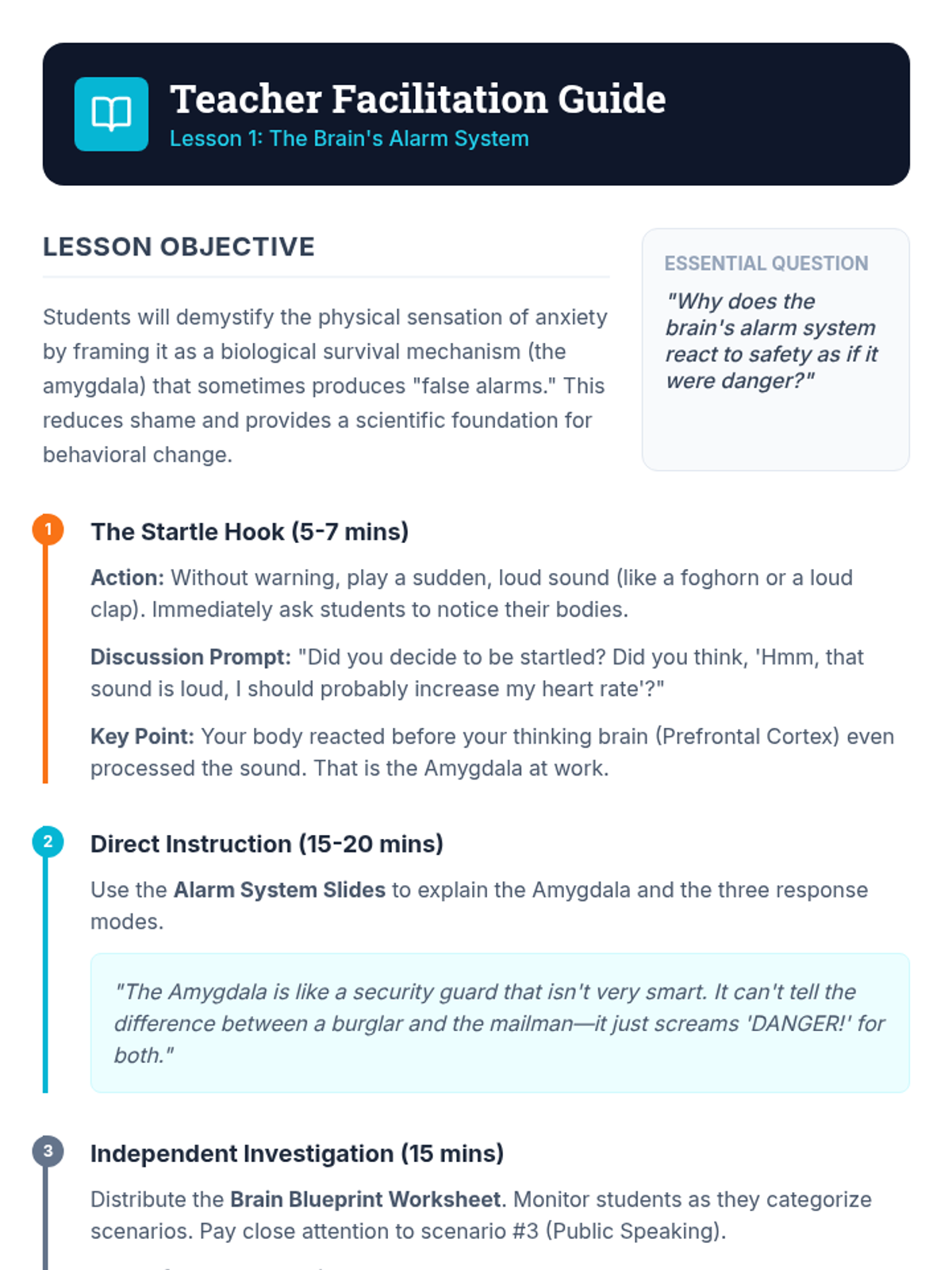
A scientific, inquiry-based exploration of anxiety, the amygdala, and habituation. Students learn how the brain's alarm system works and how to retrain it through evidence-based exposure hierarchies.
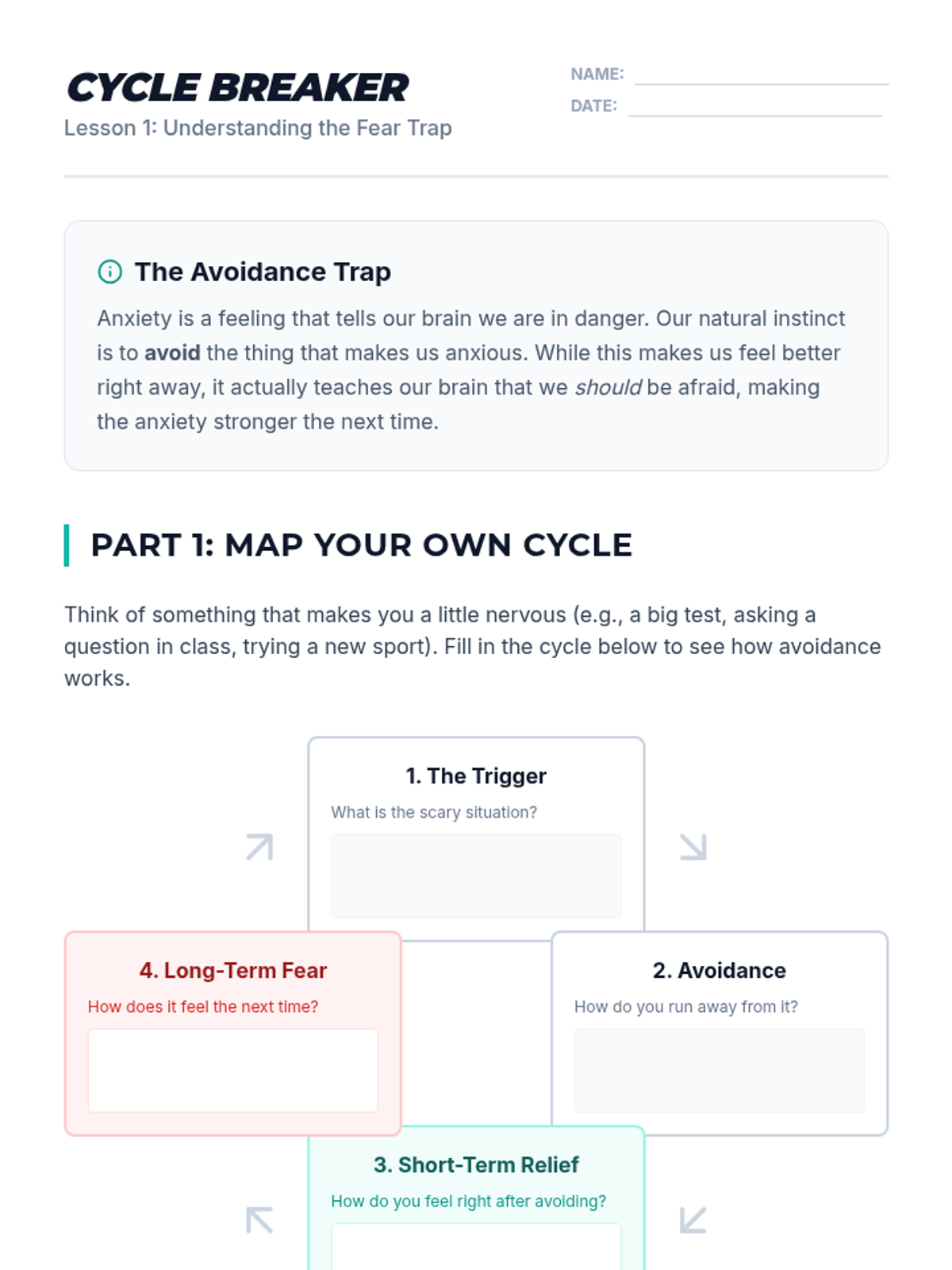
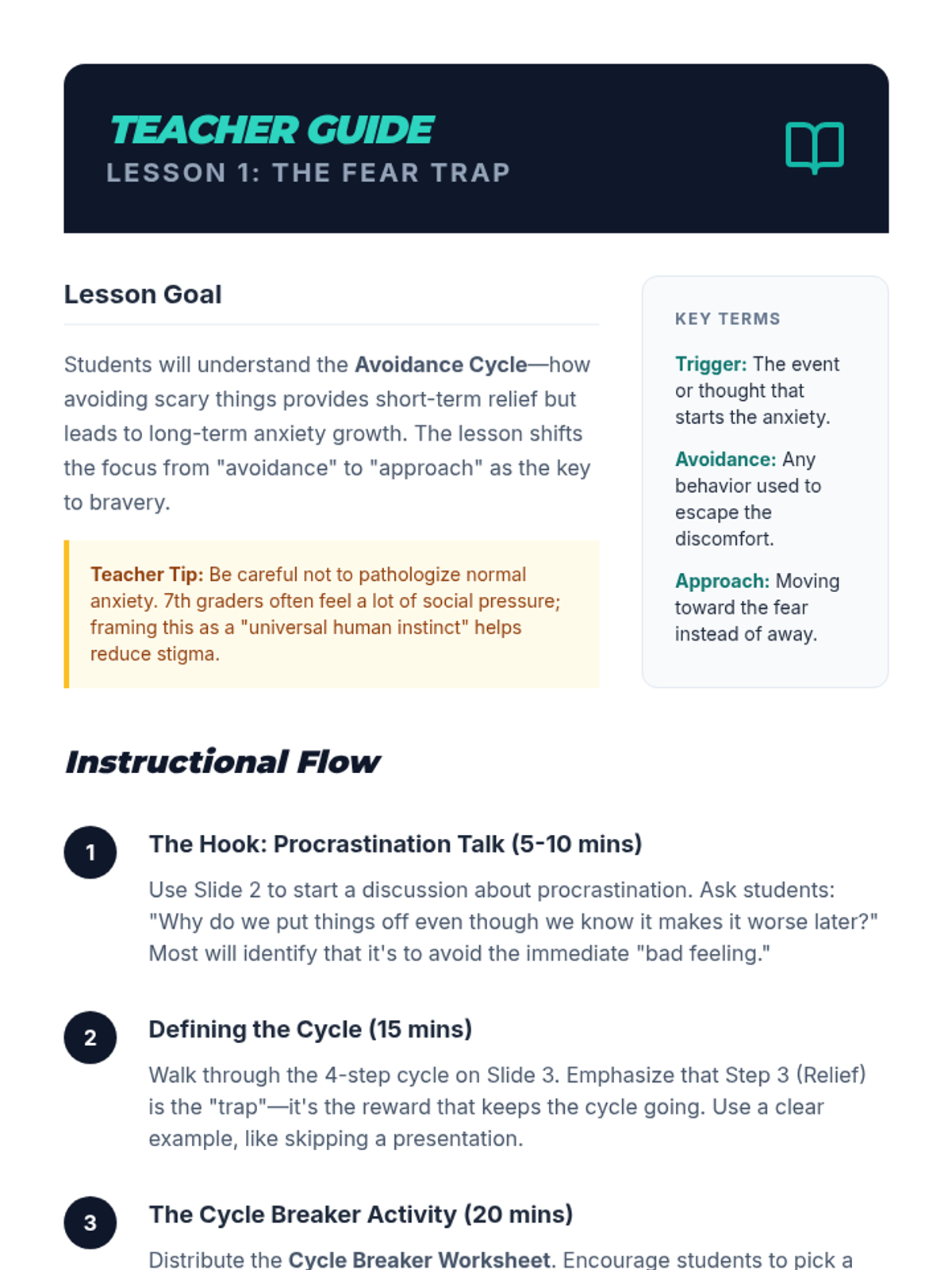
A 5-lesson unit for 7th graders that introduces the mechanics of exposure therapy. Students learn to identify avoidance cycles, measure distress using the SUDS scale, build fear ladders, and practice habituation through guided simulations.
A comprehensive workshop-style sequence where 6th-grade students learn the mechanics of exposure therapy by creating personalized 'Bravery Ladders.' Students learn to measure distress using the SUDS scale, deconstruct fears into manageable steps, and apply coping strategies to build resilience.
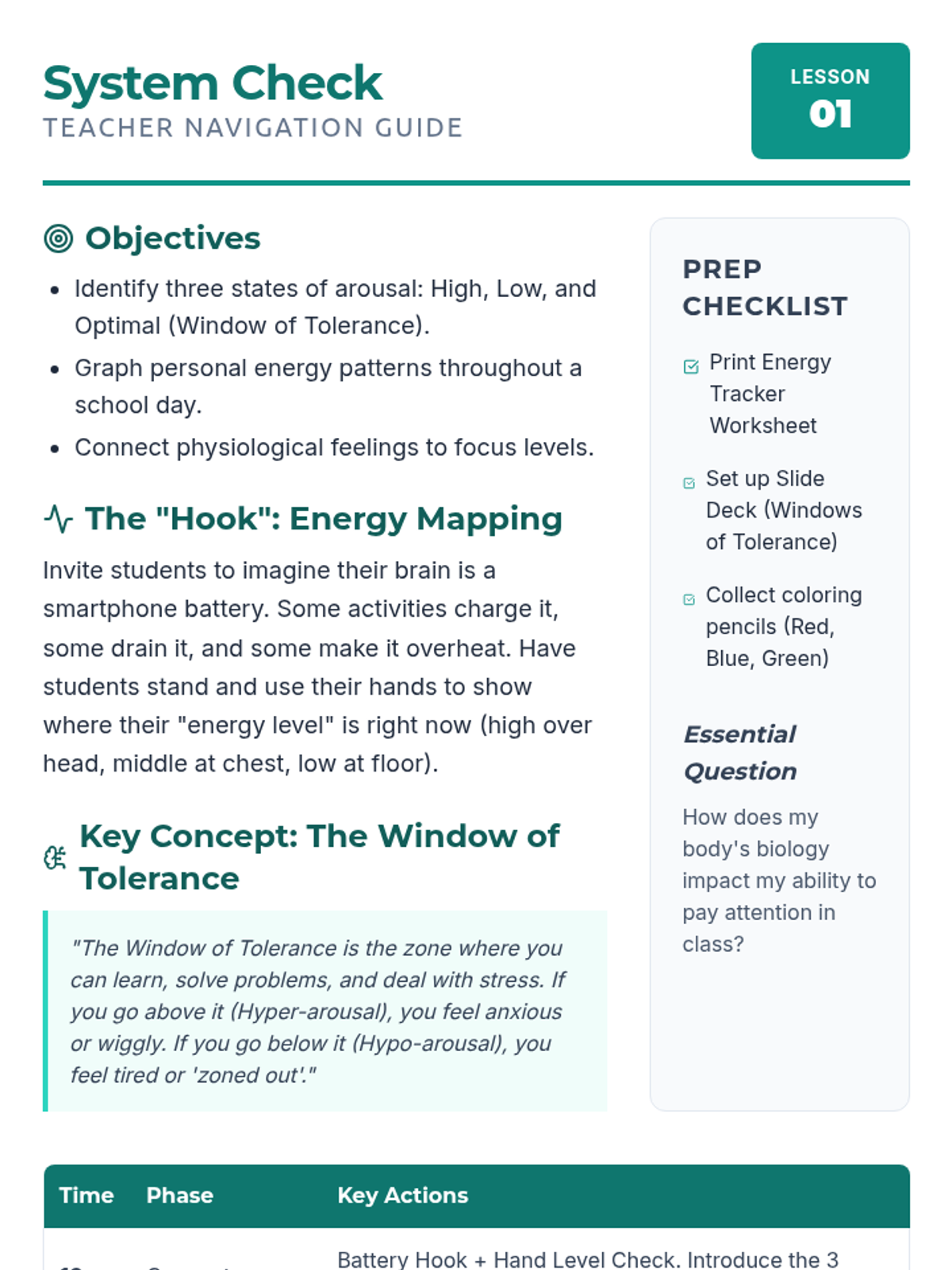
A comprehensive 5-lesson unit designed to transition 6th-grade students from teacher-directed regulation to independent sensory self-monitoring. Students explore the biology of their nervous system, experiment with diverse sensory inputs, and create personalized proactive break systems.
In this inquiry-driven sequence, students explore behavioral activation, investigating how their actions influence their emotions. They learn to distinguish between pleasure and mastery activities, conduct personal experiments to track mood changes, and create a personalized evidence-based plan for mood regulation.
A comprehensive sequence designed to teach 7th-grade students the science and practice of spaced repetition. Students learn to design effective flashcards, build a physical Leitner Box system, and master the sorting algorithms required for long-term memory retention.
A sequence designed to empower 6th-grade students to take ownership of their progress through the creation and maintenance of a Goal Portfolio. Students learn physical and digital organization, data tracking, and how to present their growth to others.
A comprehensive unit for 6th-grade students focused on cognitive strategies, mnemonic devices, and gamification to enhance study habits and information retention. Students move from understanding the science of memory to creating their own interactive review games.
A sequence focused on helping students transform passive reading into active, visual study tools. Students learn color-coding, concept mapping, foldable creation, and comparison charting to organize and retain information.
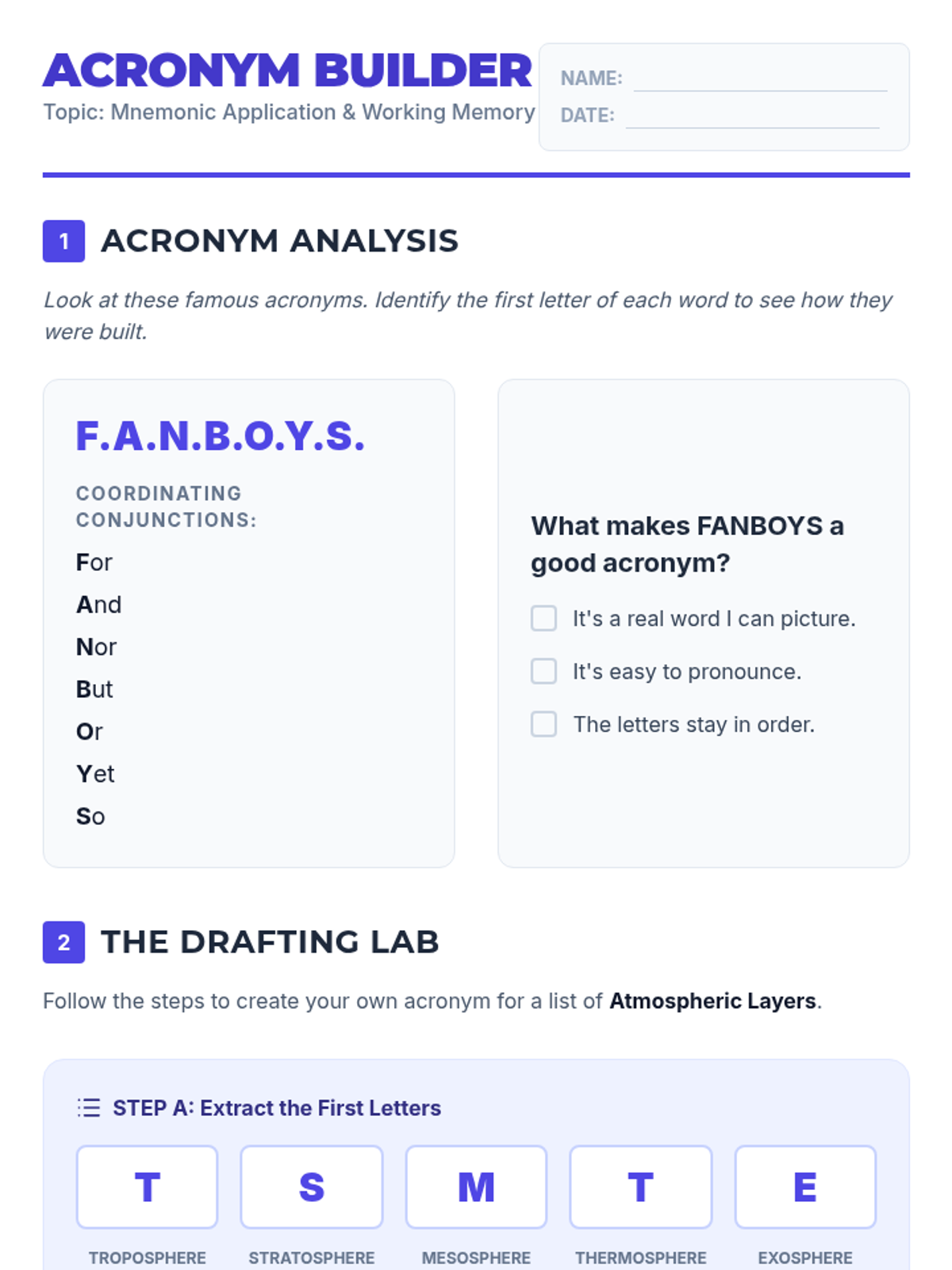
This sequence introduces 7th-grade students to the mechanics of mnemonic devices, specifically acronyms and acrostics, to support working memory and enhance academic recall in science and history.
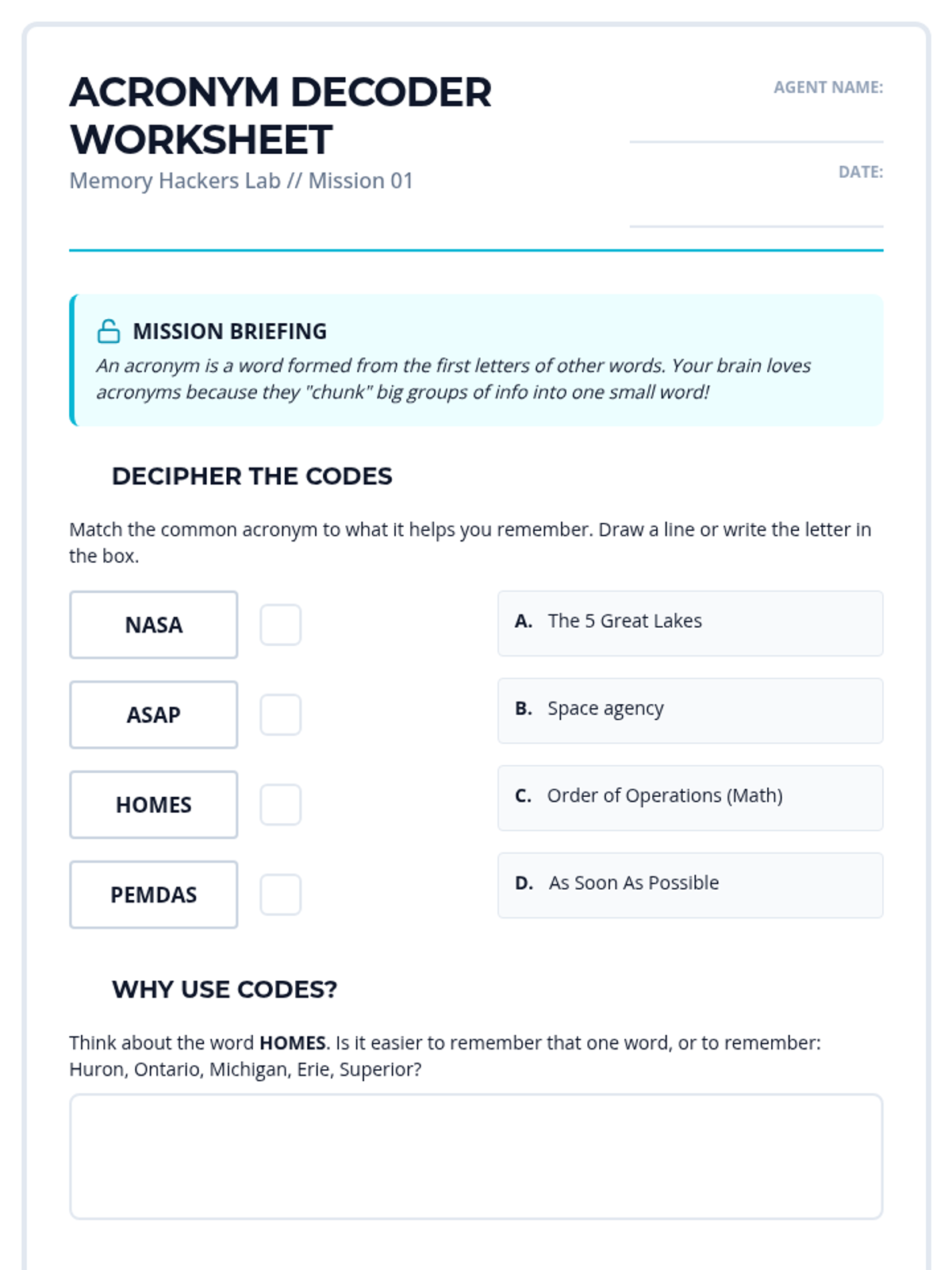
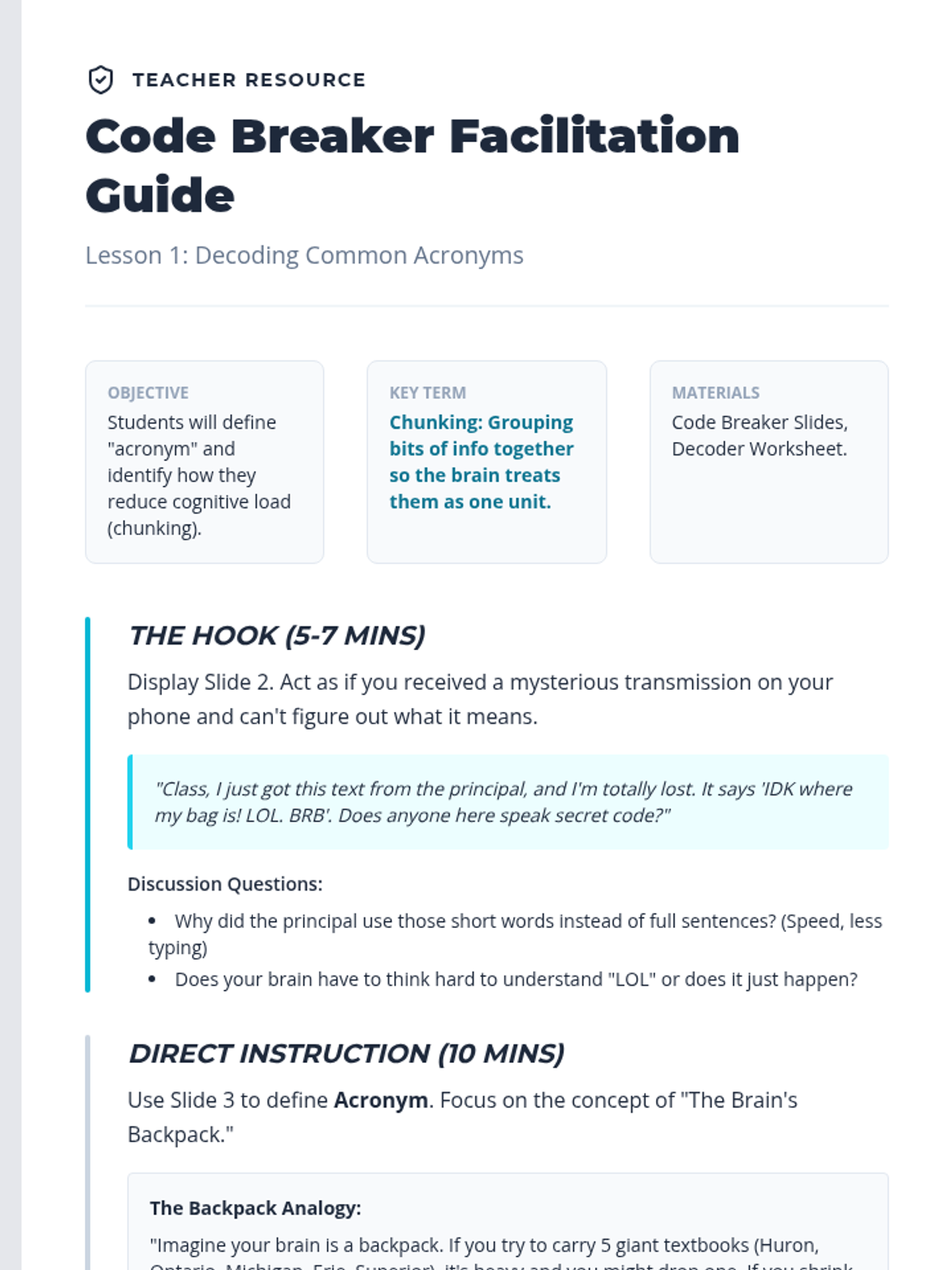
Students master the art of creating and using mnemonic acronyms to reduce cognitive load and improve concept retrieval. The sequence progresses from decoding common acronyms to engineering personal and academic ones, culminating in a mastery arcade.
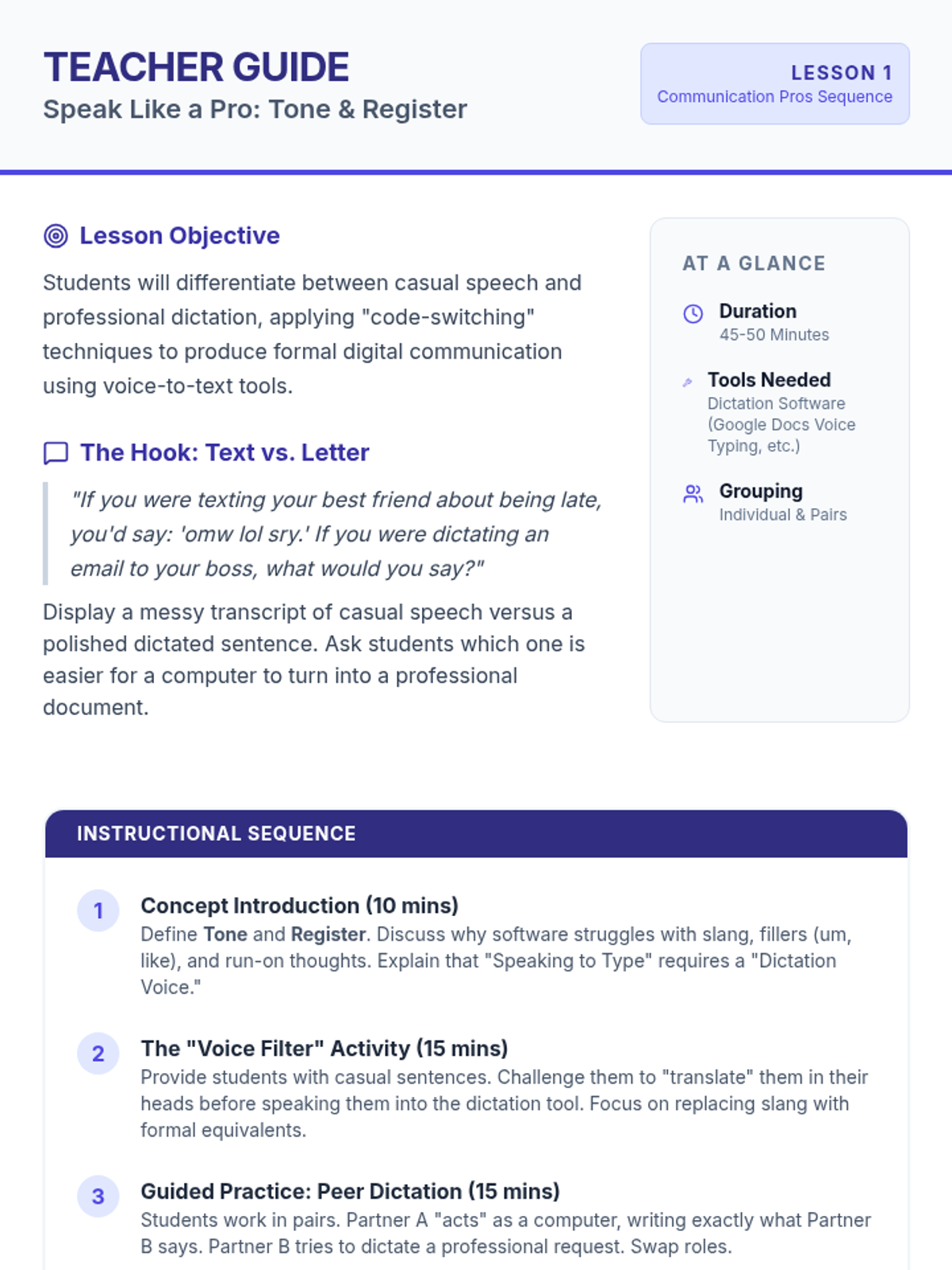
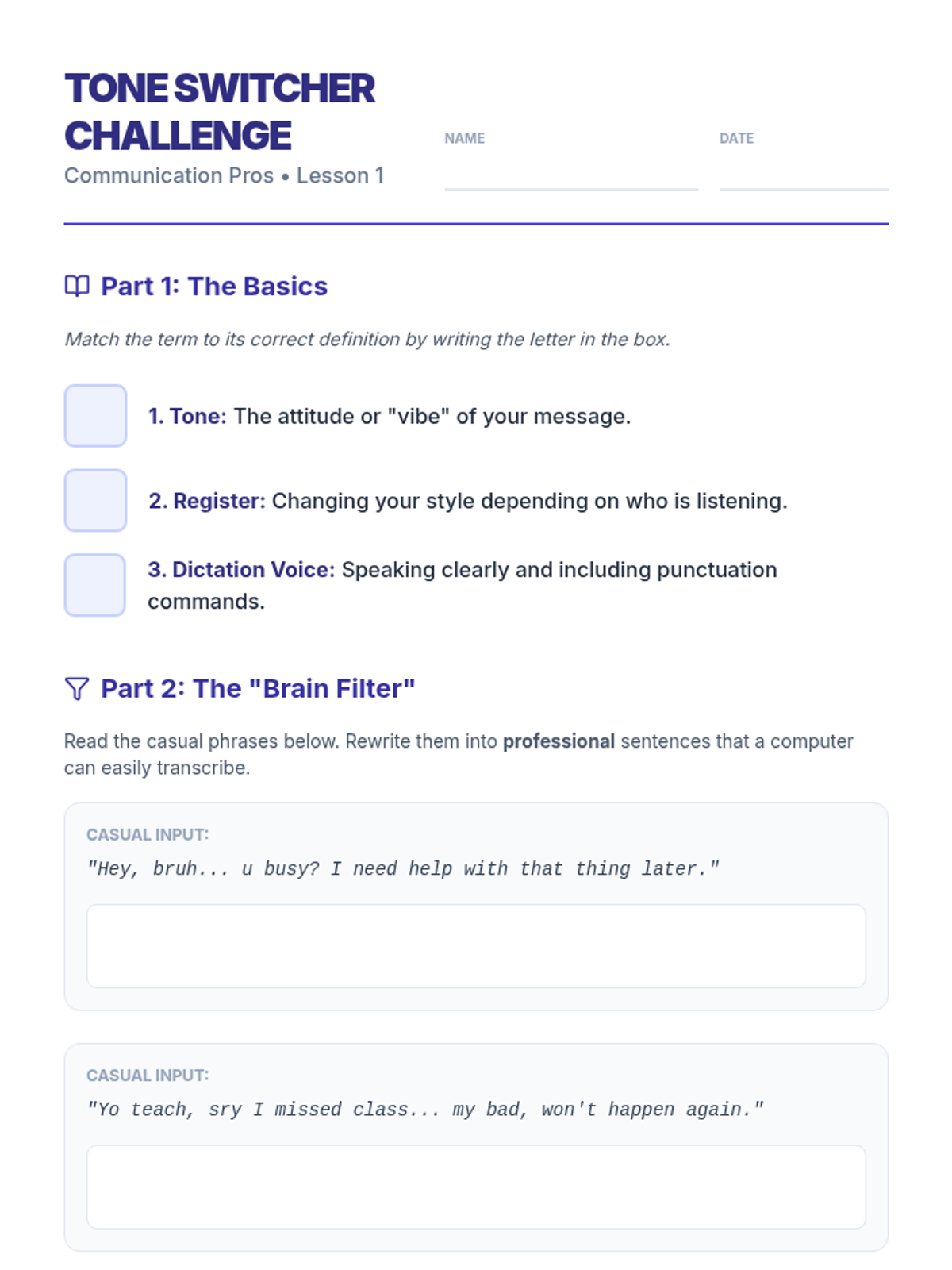
A 5-lesson unit for 7th-grade students focusing on the professional application of dictation technology. Students transition from casual speech to formal digital communication, mastering email efficiency, technical troubleshooting, and self-advocacy skills through workplace simulations.
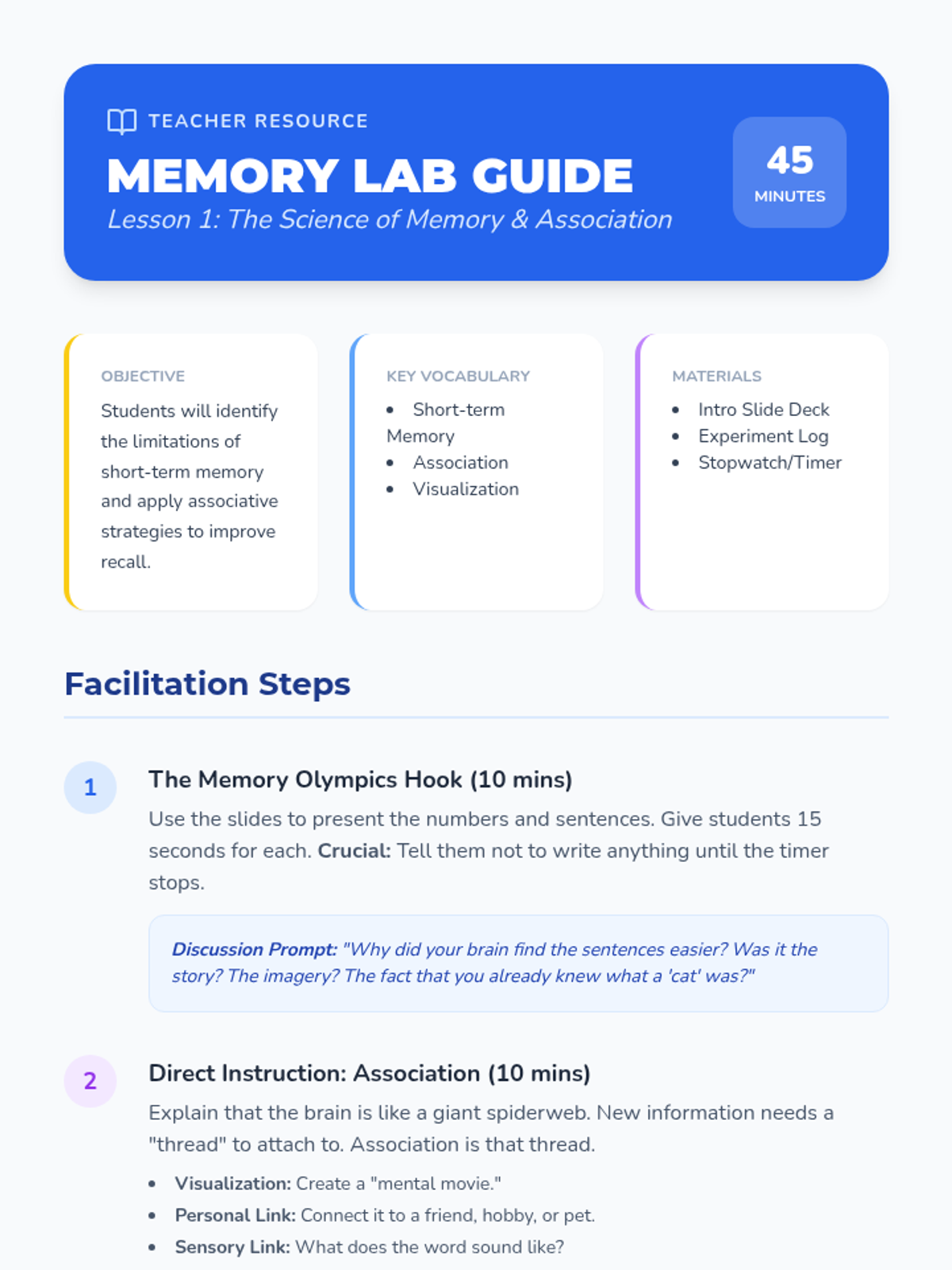
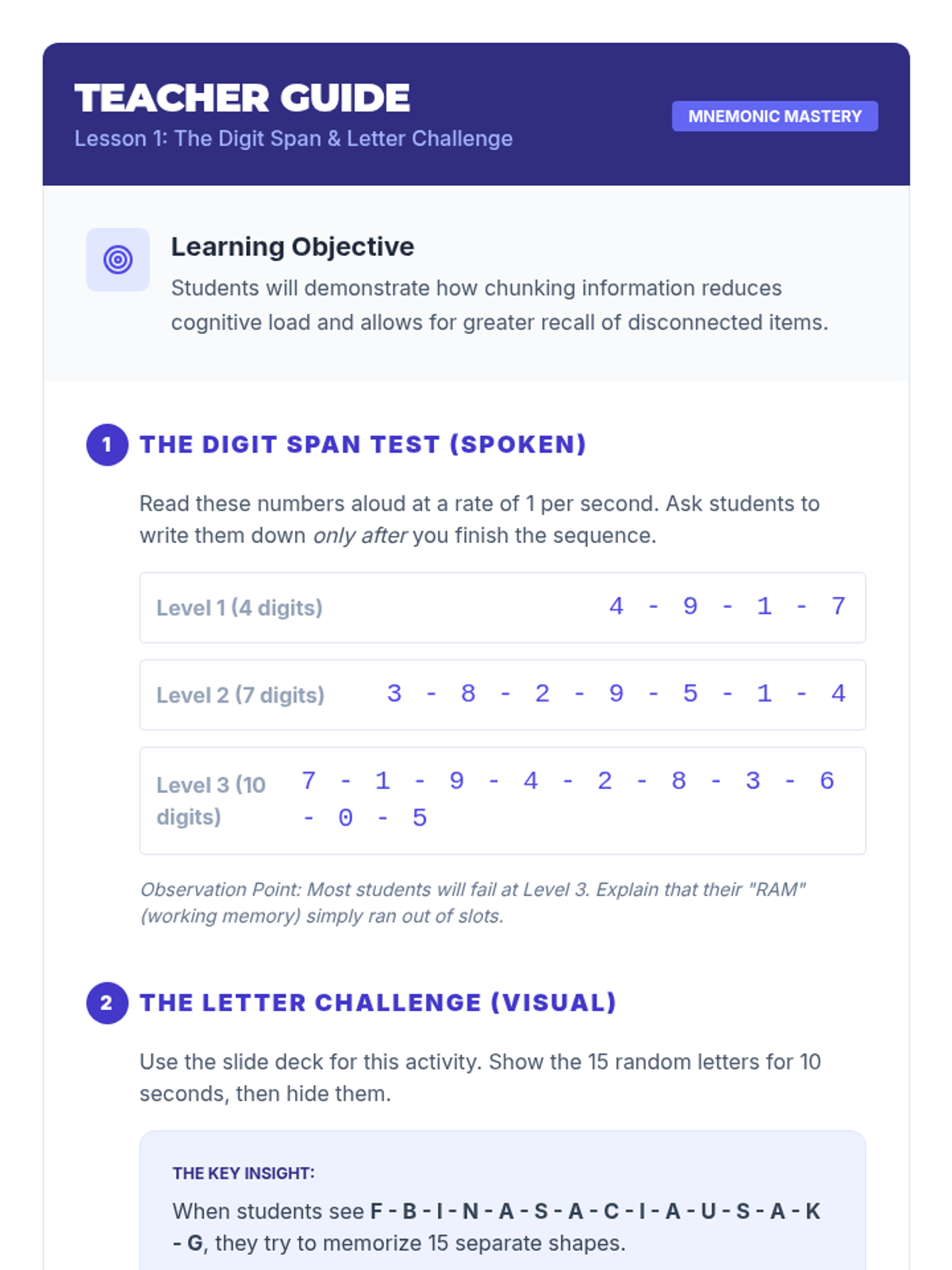
This sequence helps students understand and apply chunking and association strategies to overcome working memory limitations. Through a series of game-based lessons, students will learn to organize data into manageable patterns to increase their cognitive processing capacity.
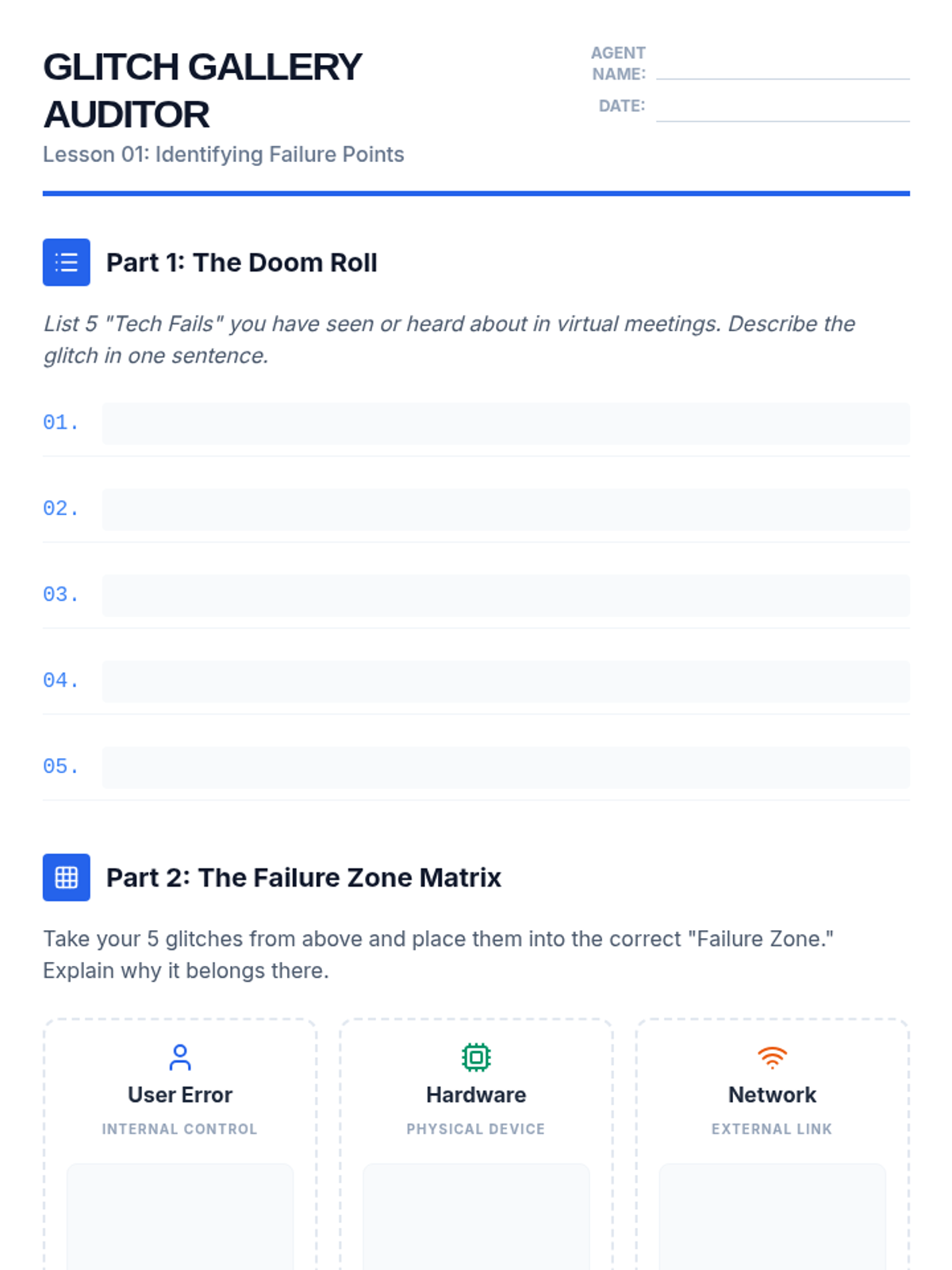
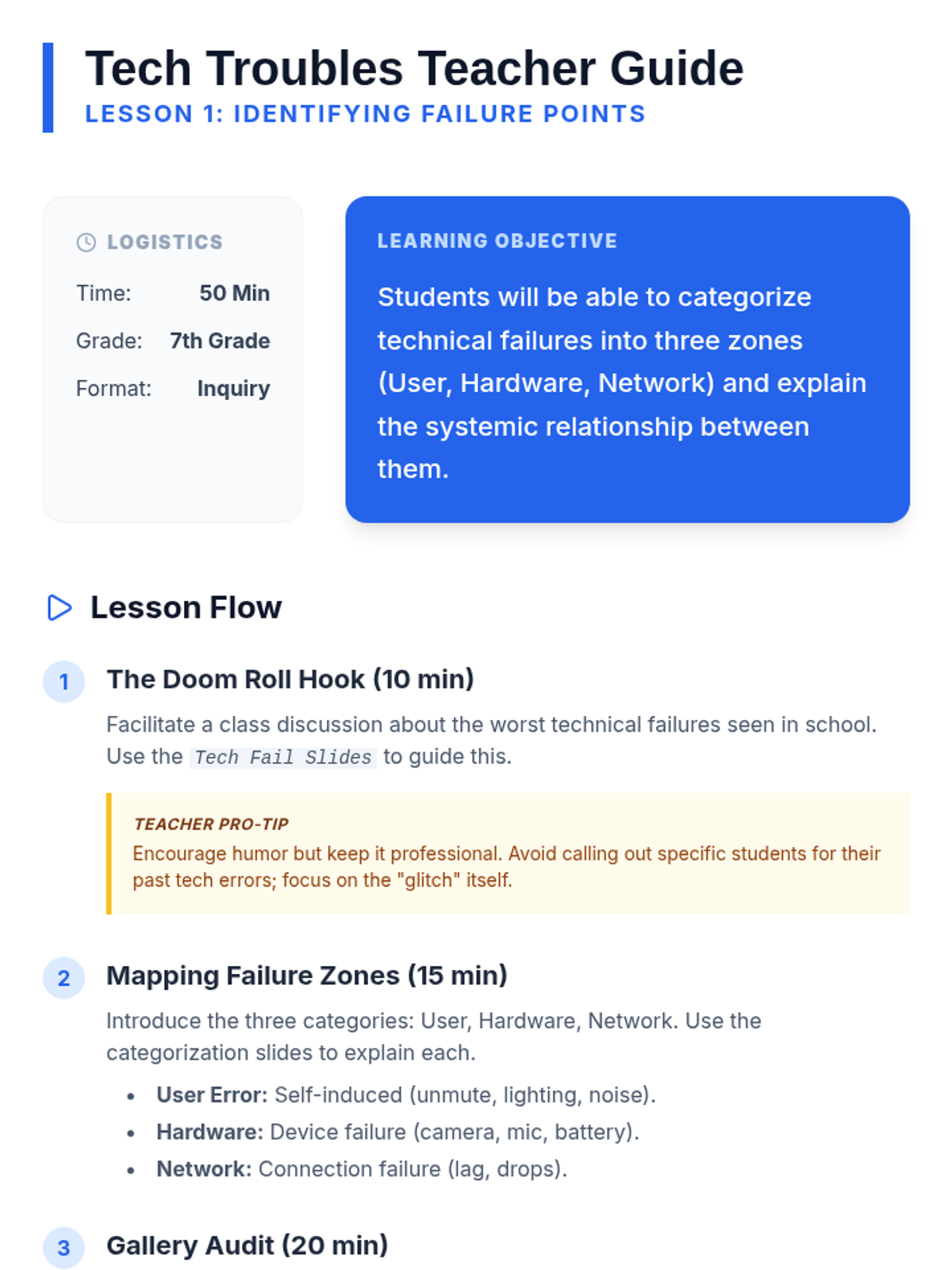
A 5-lesson unit designed for 7th-grade students to master the art of handling technical glitches during virtual interviews with professionalism, composure, and strategic troubleshooting.
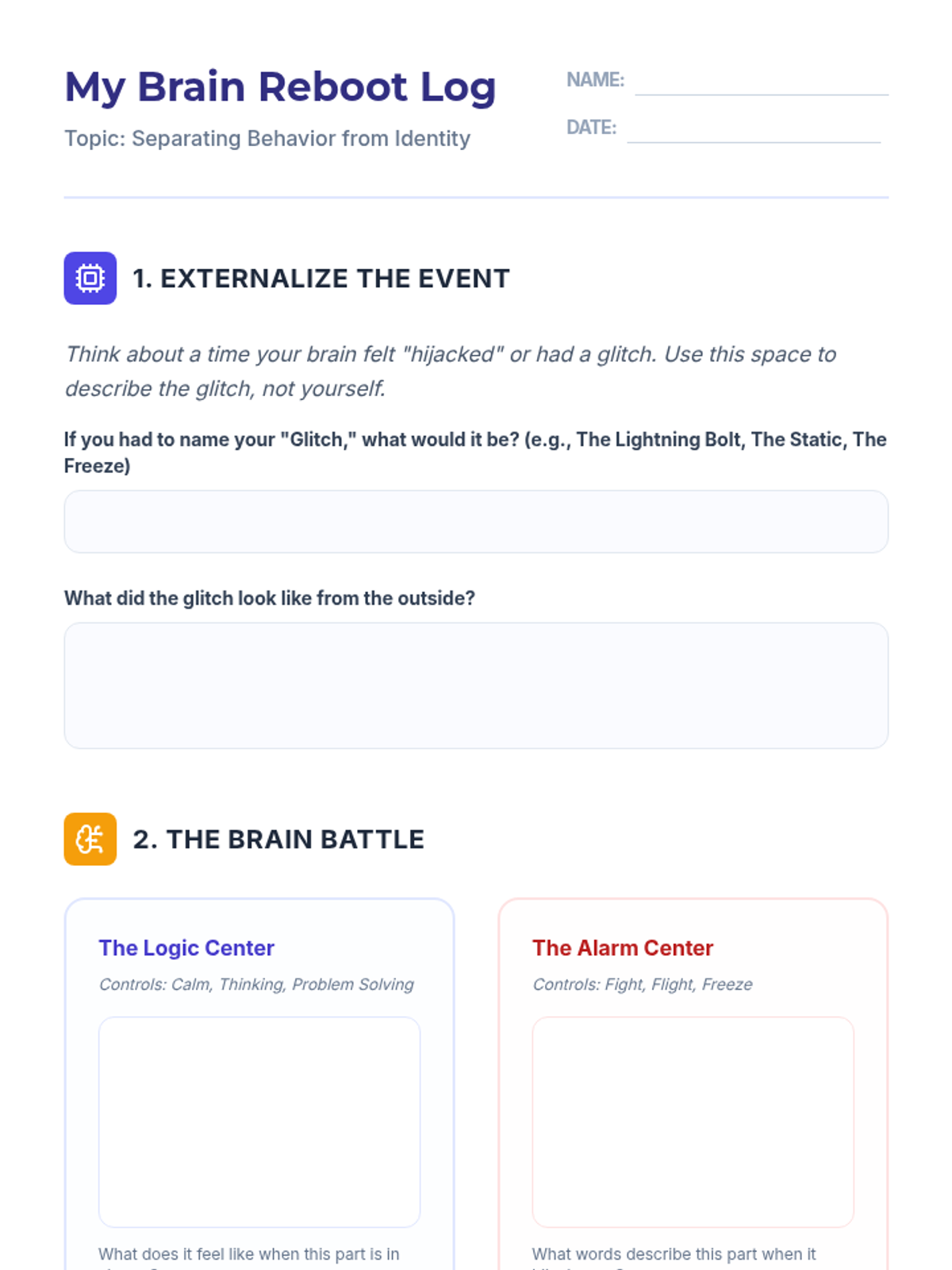
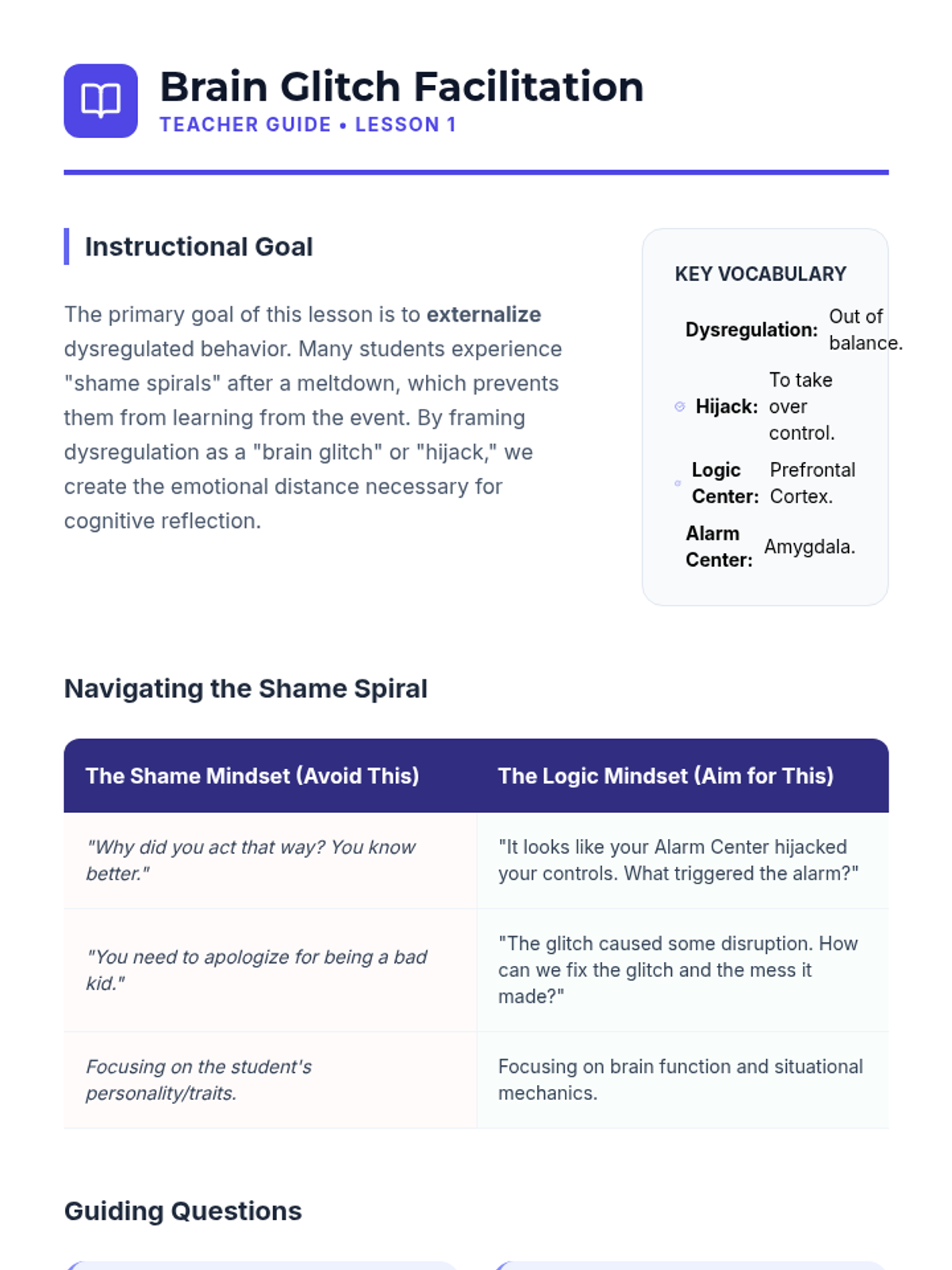
A 5-lesson sequence for 5th-grade students focused on post-dysregulation recovery. This series helps students move from shame to logic by externalizing behaviors, analyzing event timelines, practicing restorative apologies, and planning for future success.