Stop-and-think strategies, impulse management, and SMART goal setting for personal growth. Develops internal motivation, stress reduction techniques, and resilience through proactive planning and monitoring.
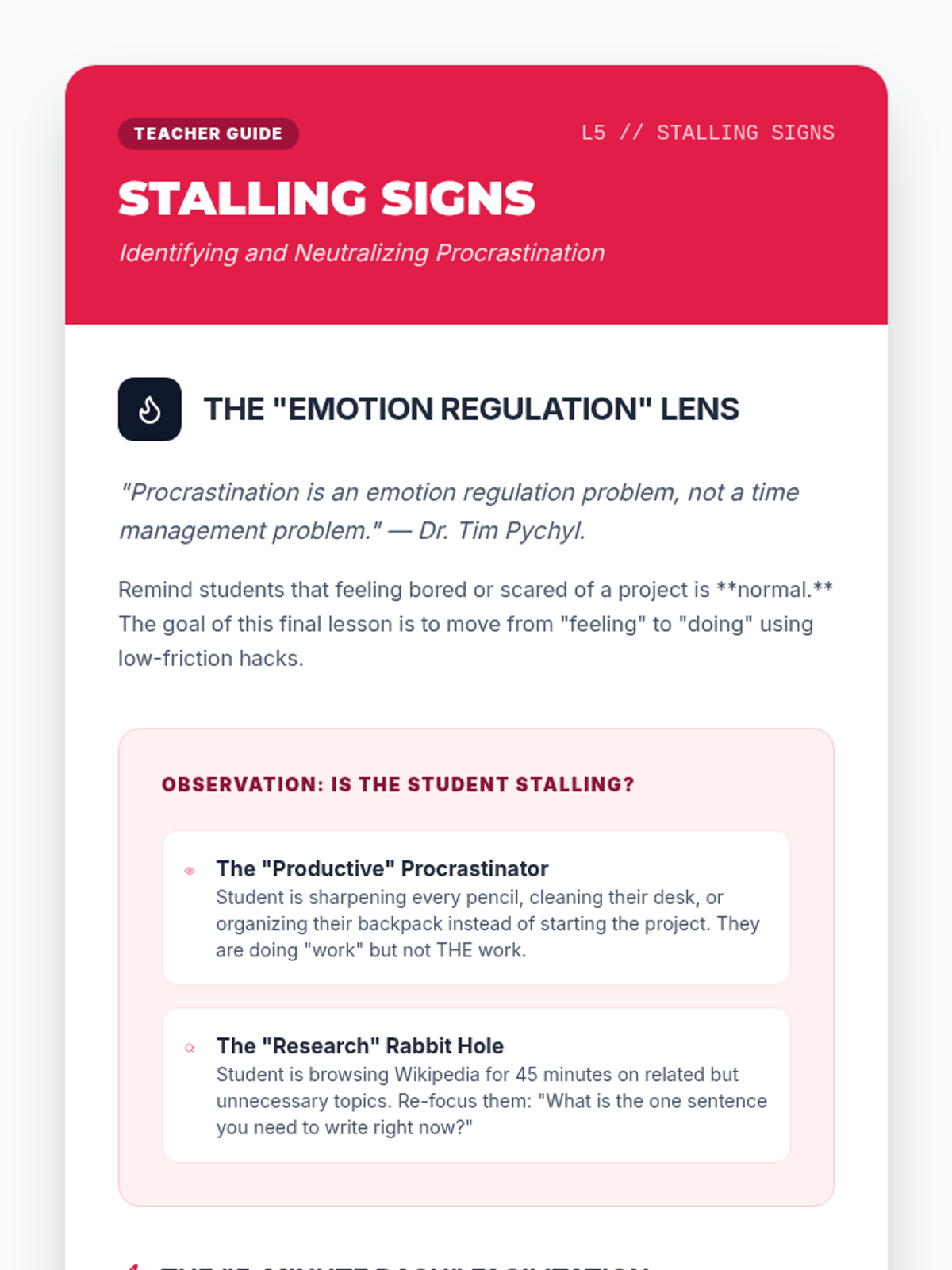
A teacher guide for Lesson 5, focusing on identifying signs of procrastination (like 'Productive Procrastination') and facilitating the '5-Minute Dash' to help students overcome the friction of starting.
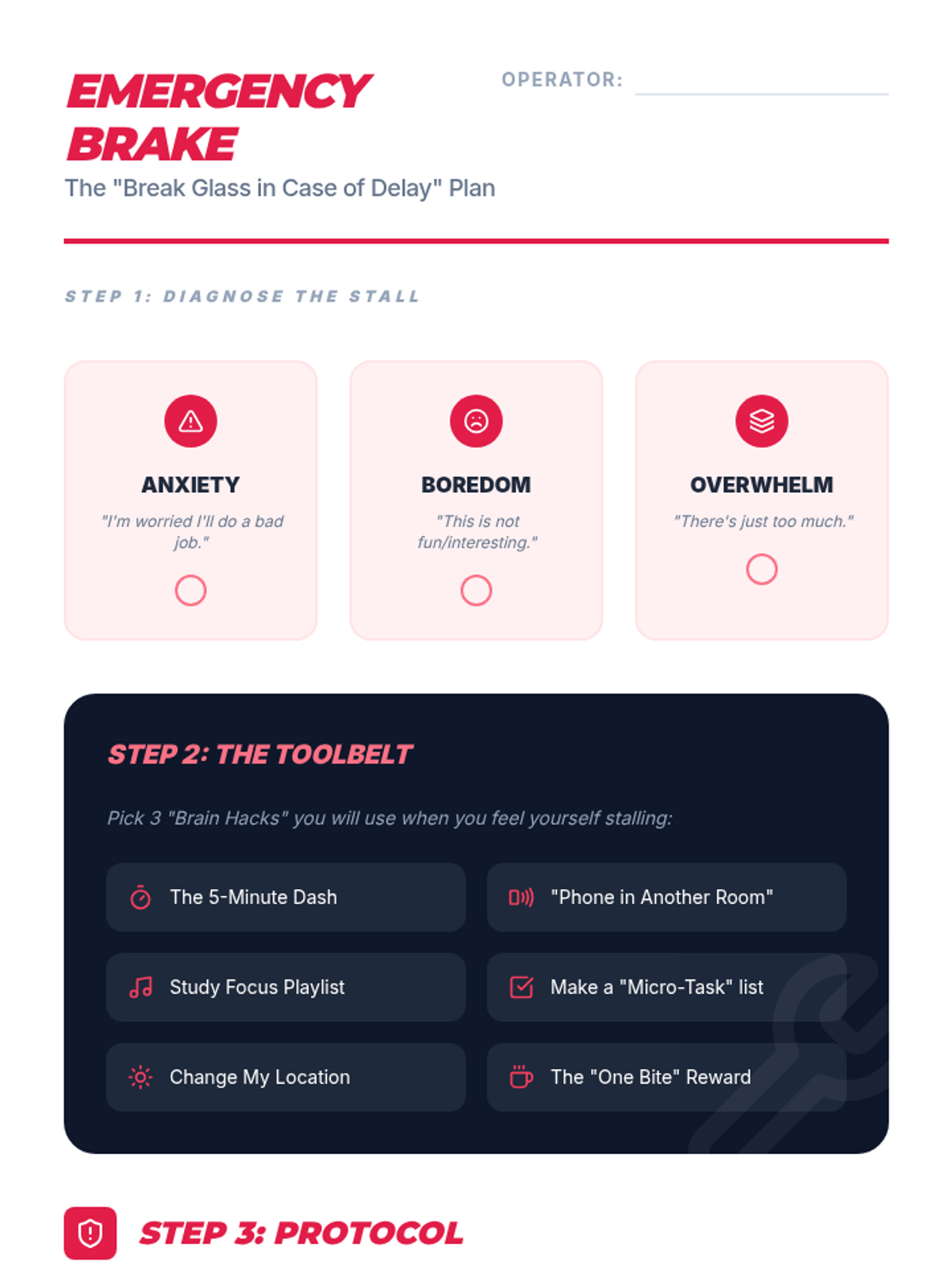
A student action plan for handling procrastination, featuring a trigger diagnostic, a 'Brain Hack' toolbelt selection, and specific protocols for when they fall behind on their project timeline.
A presentation identifying the psychological triggers of procrastination (anxiety, boredom, overwhelm) and providing 'Brain Hacks' and an 'Emergency Plan' strategy to overcome them.
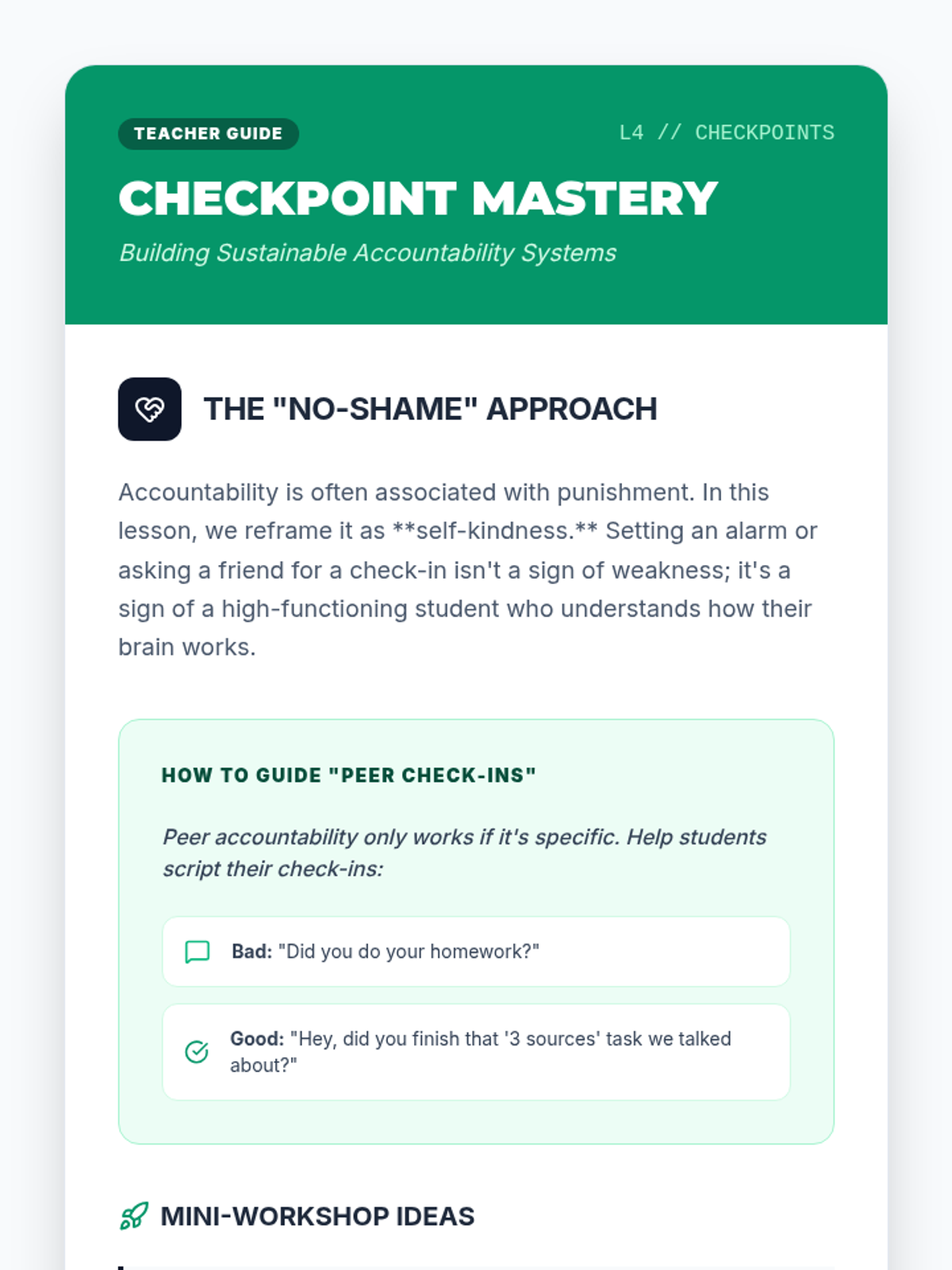
A teacher guide for Lesson 4, providing scripts for peer check-ins, a guide for an 'Alarm Demo' workshop, and strategies to reframe accountability as self-kindness.
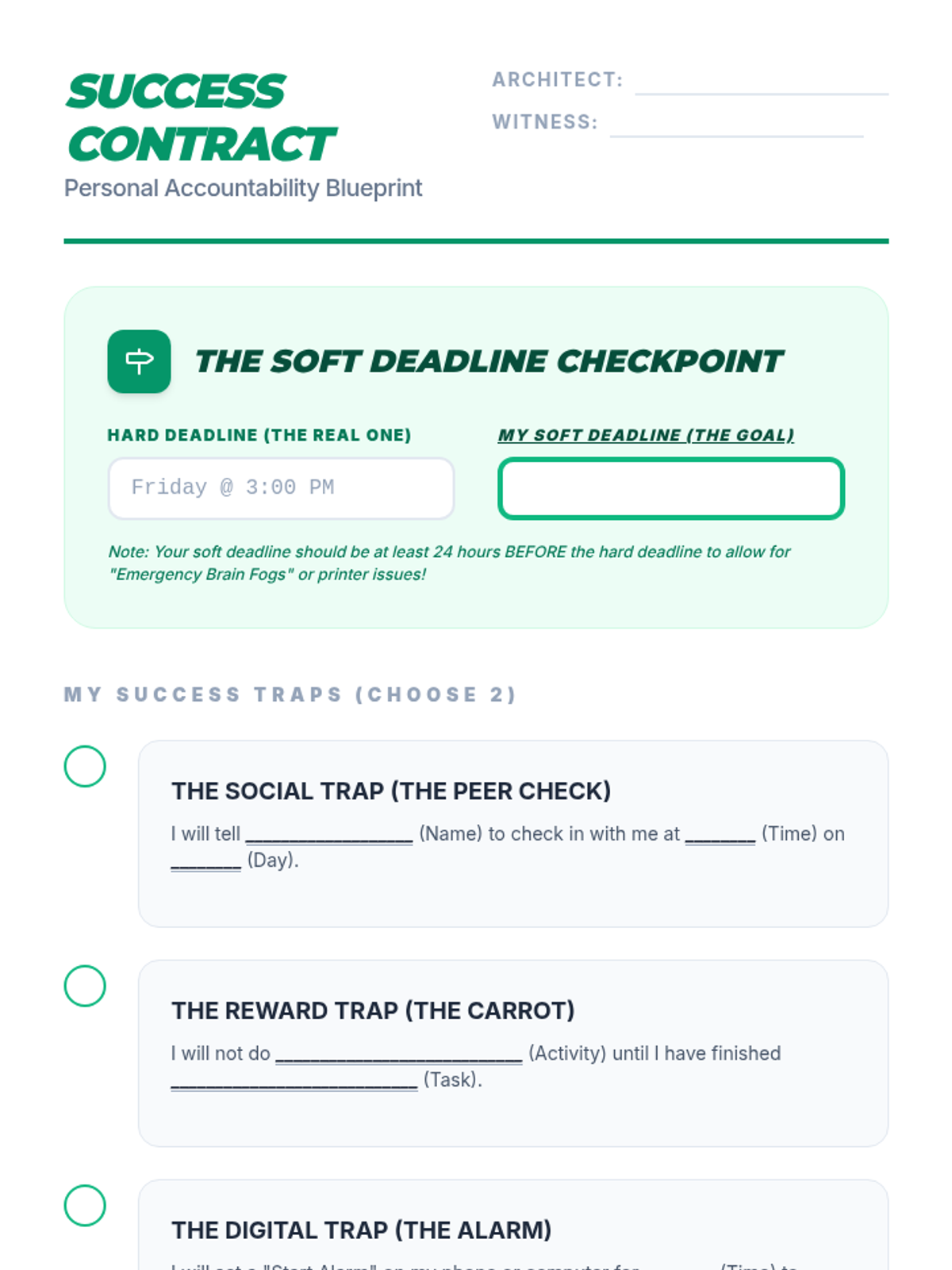
A formal accountability contract where students commit to 'soft deadlines' and select specific peer-check, reward, or alarm strategies to stay on track.
A presentation on accountability mechanisms, introducing 'Soft Deadlines' and strategies like peer check-ins and reward systems to help students stay committed to their plans.
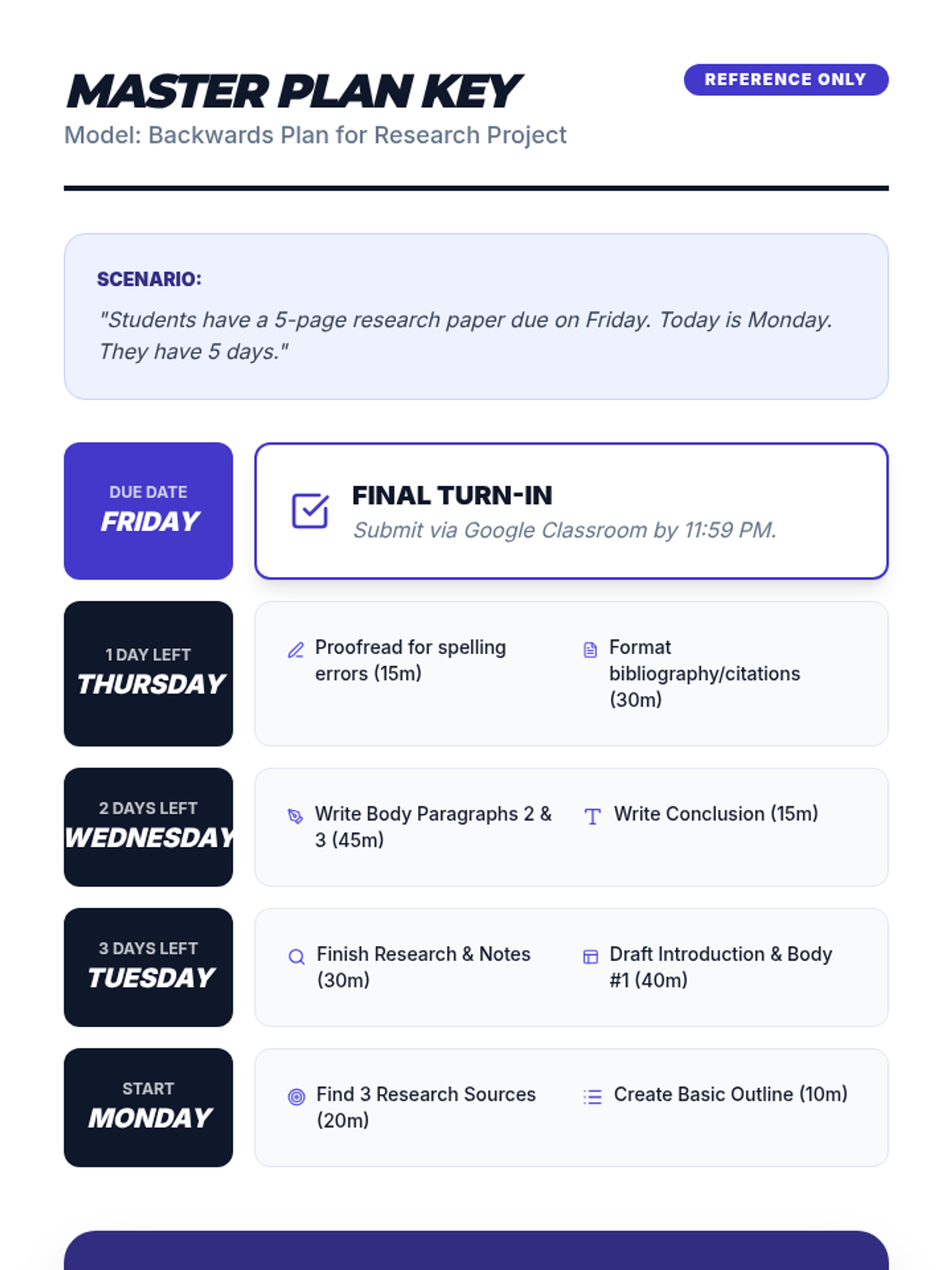
A teacher reference material showing a completed backwards plan for a typical research project. It demonstrates how to distribute workload evenly across a week.
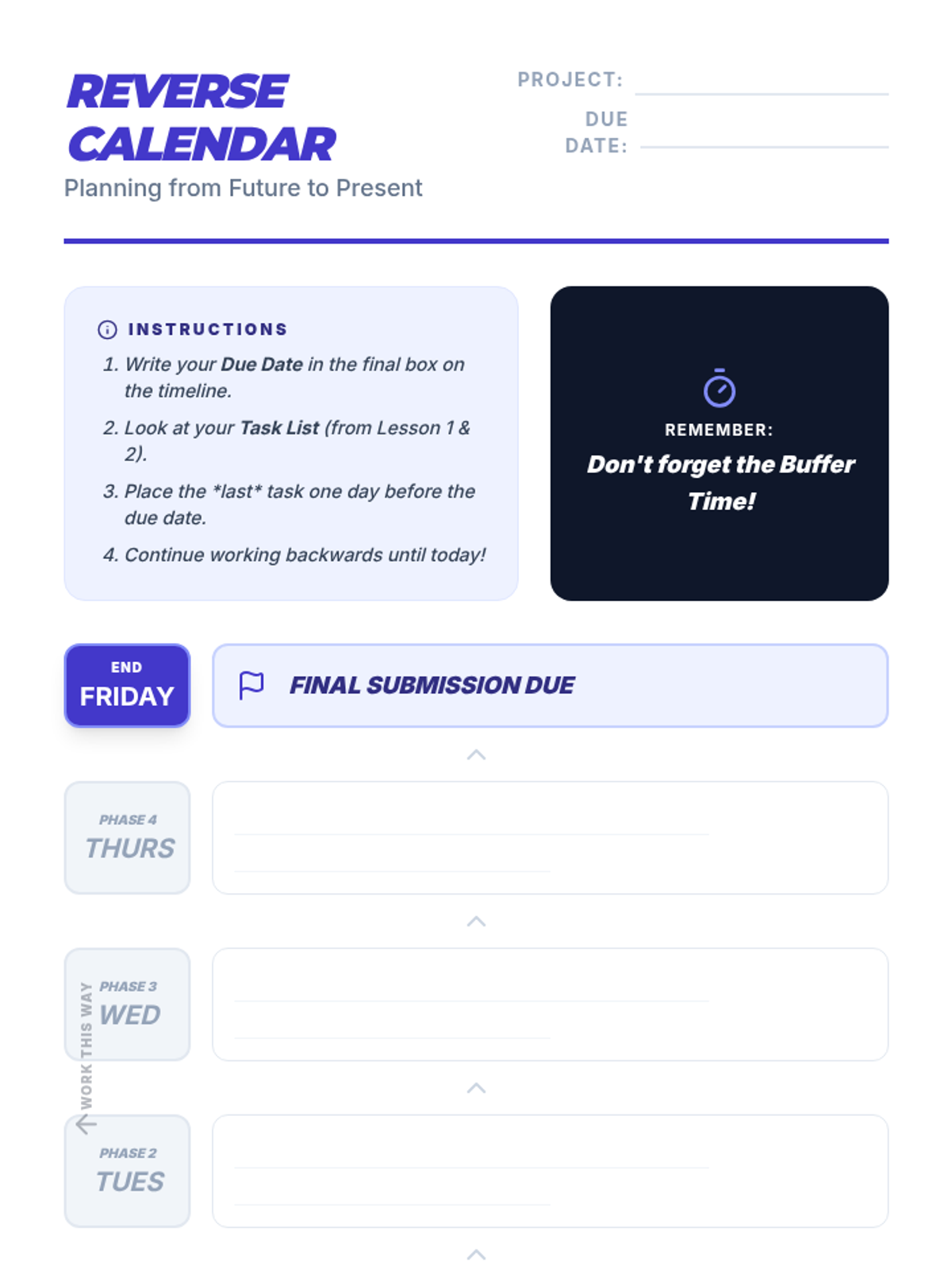
A specialized timeline worksheet that forces students to plan in reverse, starting from a Friday due date and working backward to the current day.
A visual guide to 'Backwards Planning', teaching students to start from a deadline and work backward to distribute tasks across a timeline. It emphasizes the 'Time Travel' method to avoid cramming.
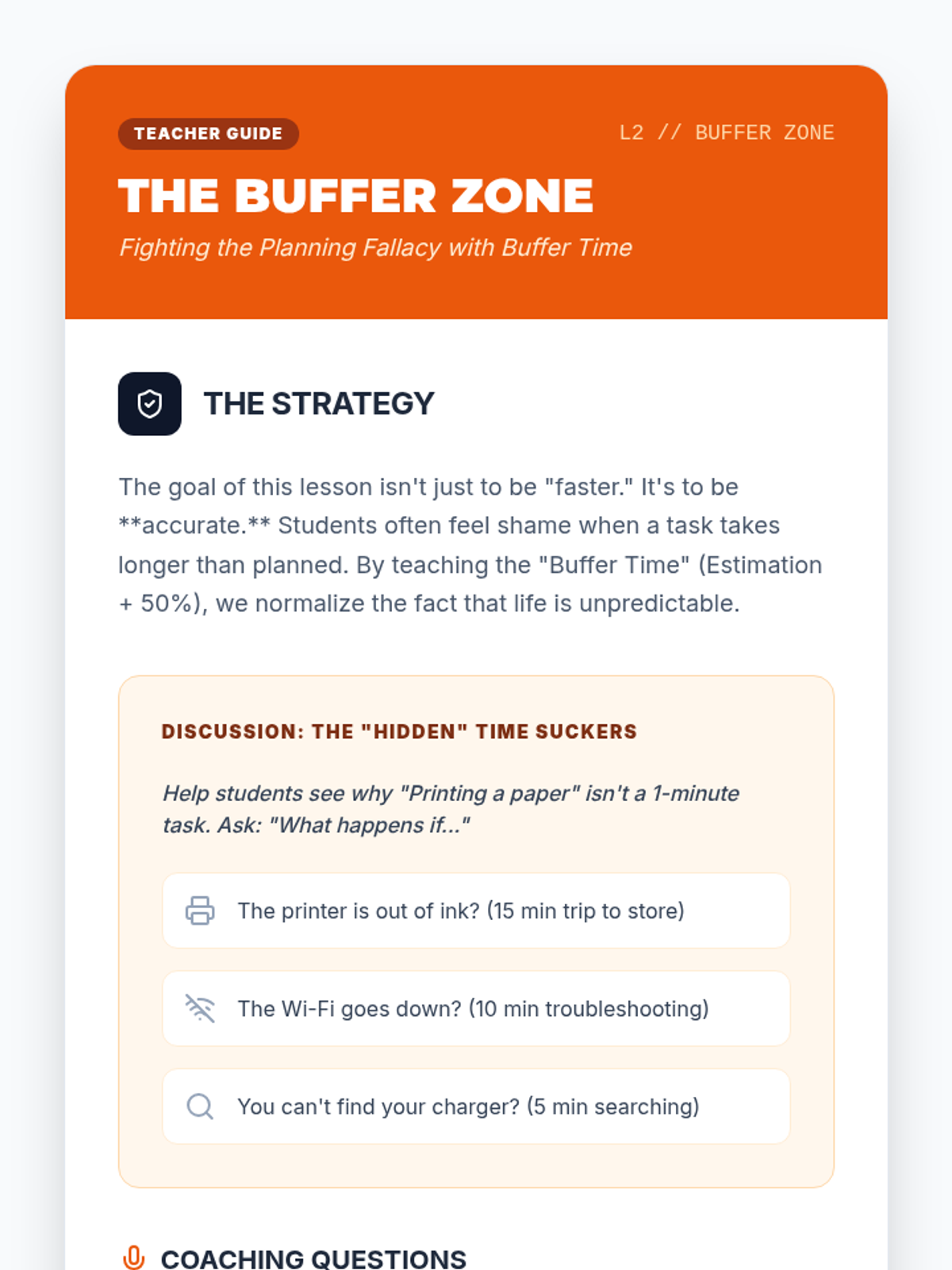
A teacher guide focused on instructional strategies for Lesson 2, including the 'Hidden Time Suckers' exercise and coaching questions to help students develop realistic time estimation skills.
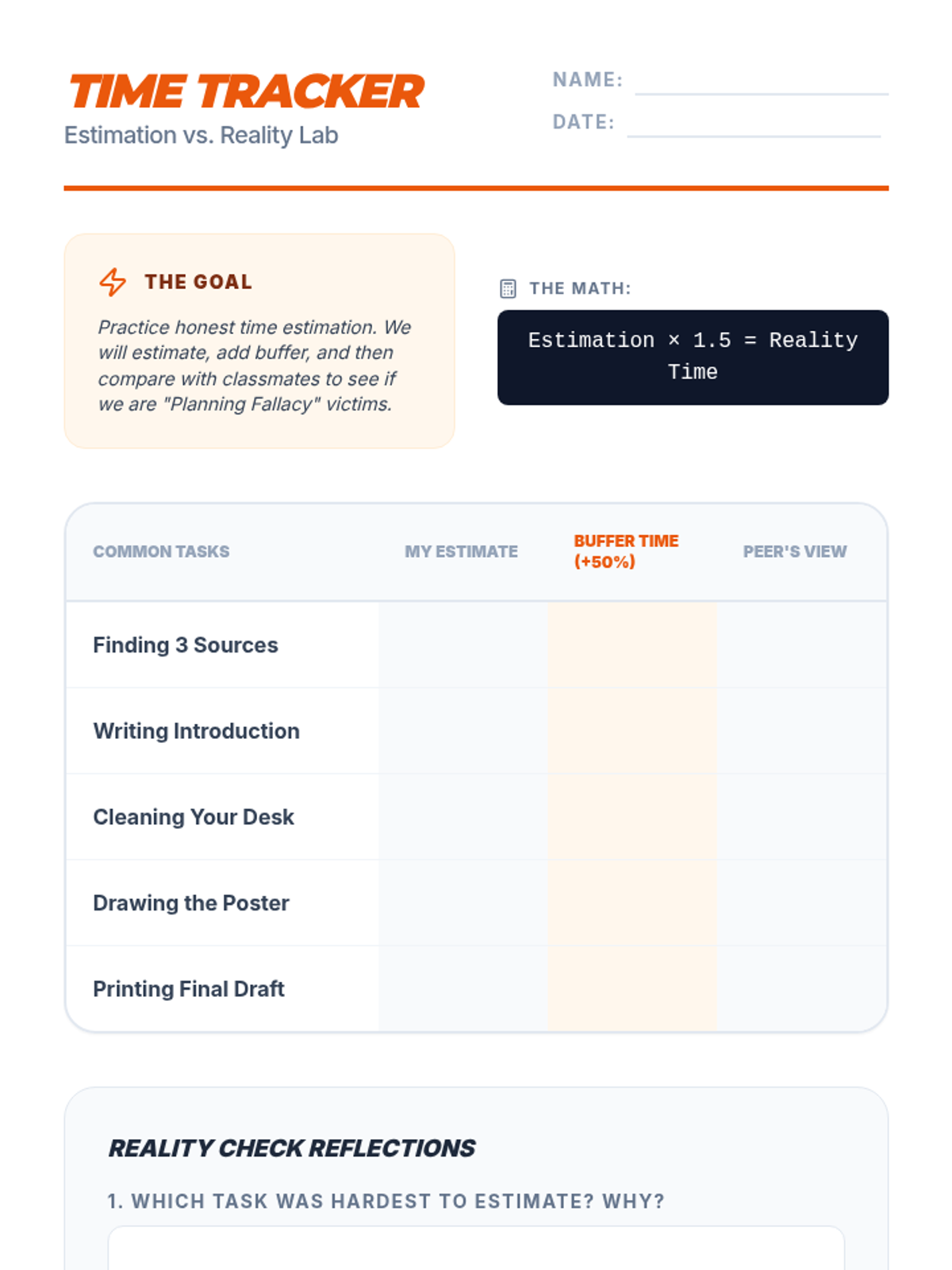
A student worksheet for practicing time estimation and calculating buffer time. It includes a collaborative component for peer feedback on the realism of estimated times.
A slide presentation introducing the 'Planning Fallacy' and the psychological reasons why students underestimate task time. It introduces 'Buffer Time' as a strategy for realistic planning.
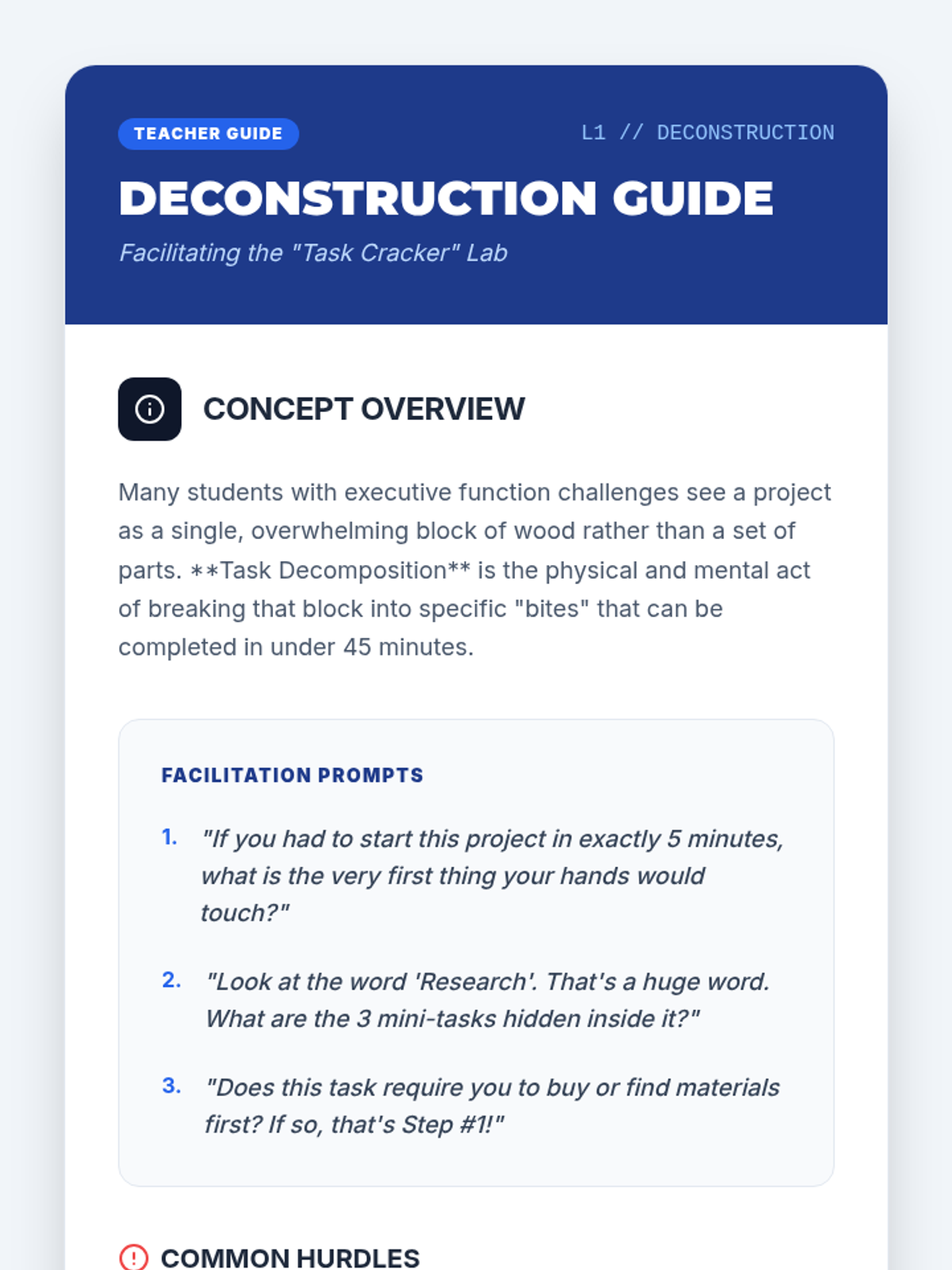
A teacher-facing guide to facilitate Lesson 1, including instructional prompts, common student misconceptions about task decomposition, and differentiation strategies.
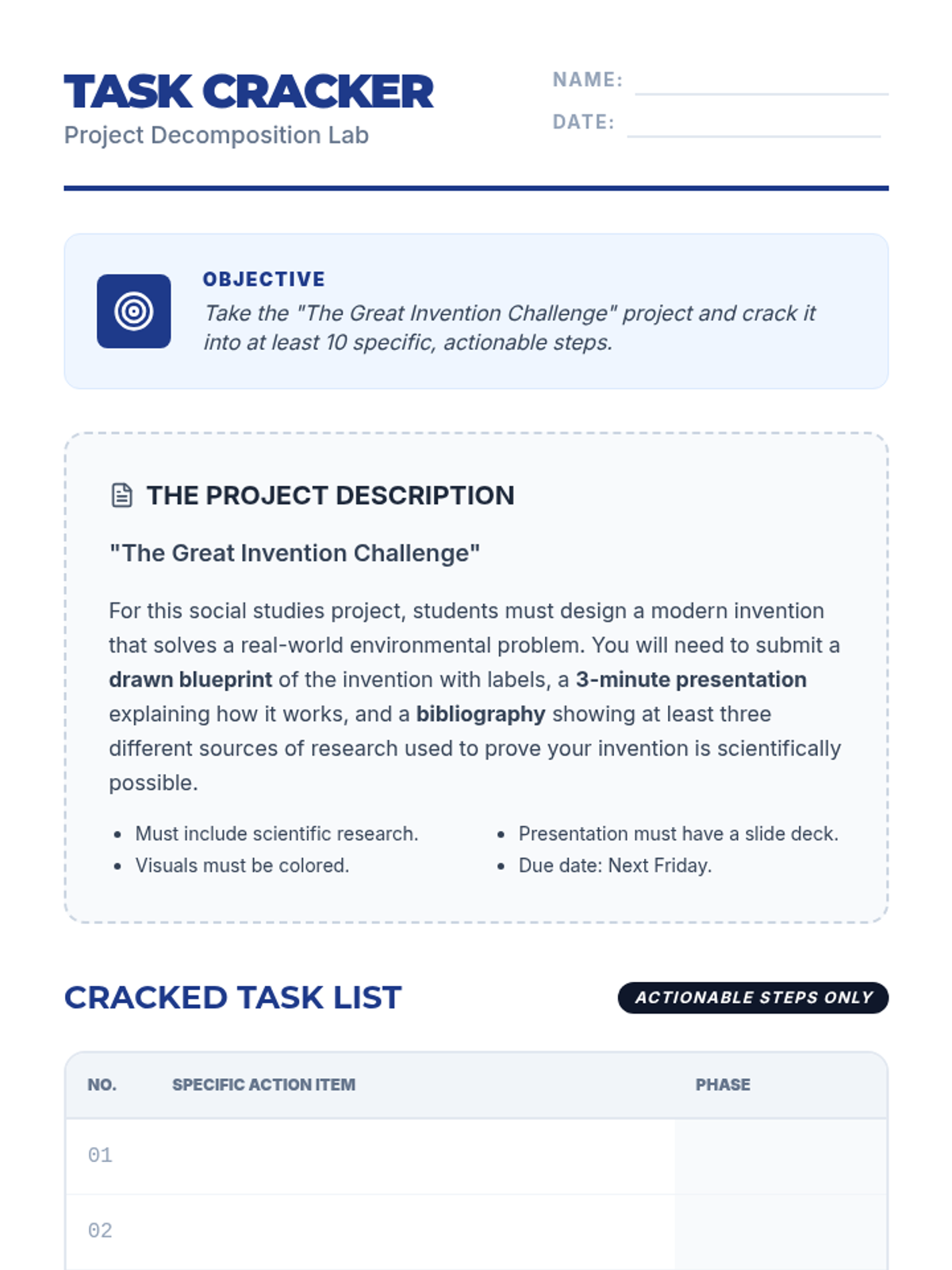
A student worksheet designed to practice task decomposition by breaking down a hypothetical 'Great Invention Challenge' project rubric into at least 10 specific, actionable steps.
A visual presentation introducing the concept of task decomposition, using the analogy of 'eating an elephant' to explain how to break down complex projects into manageable parts.
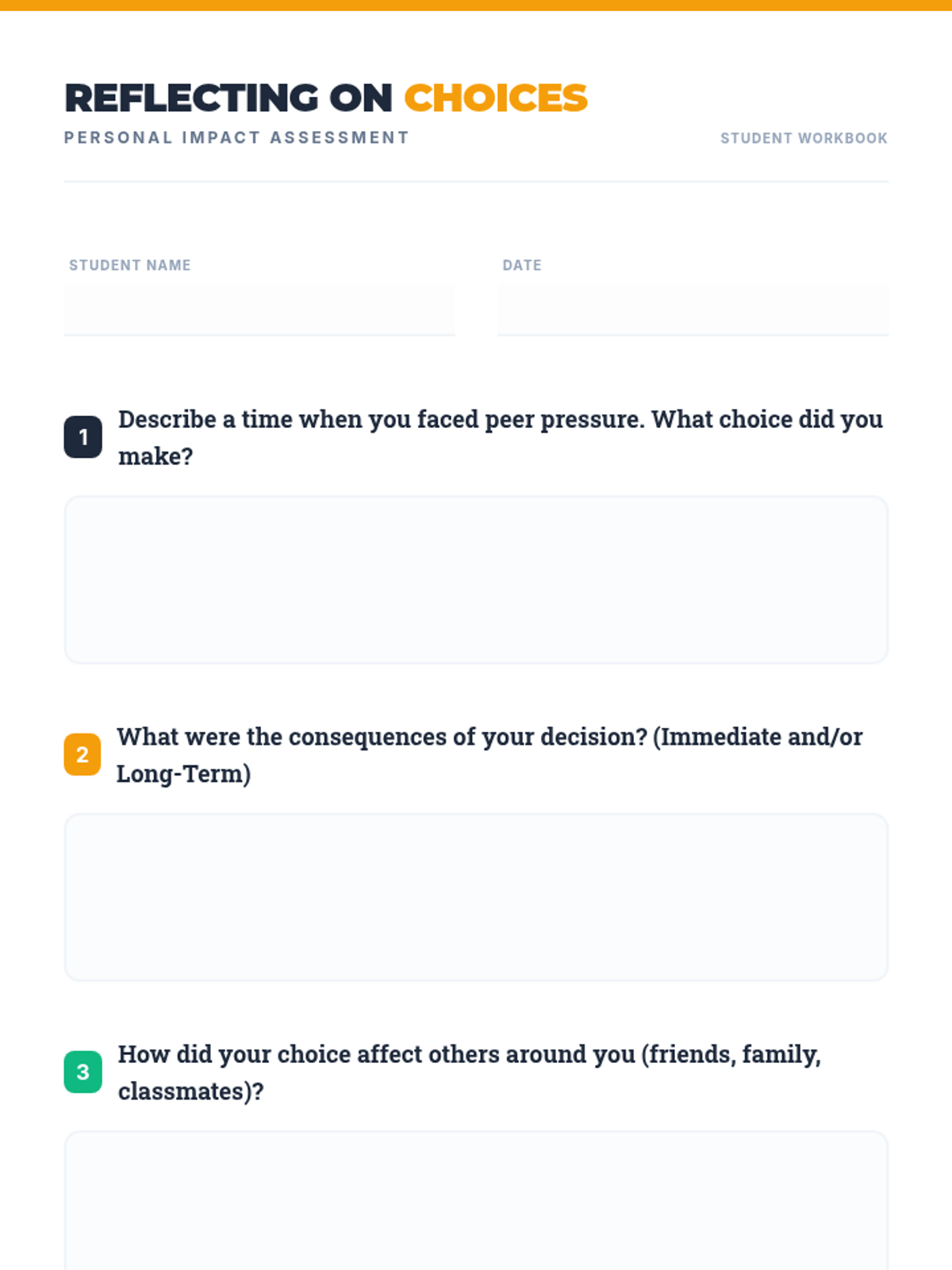
A reflection worksheet designed to help students map out their personal experiences with peer pressure and analyze the resulting consequences.
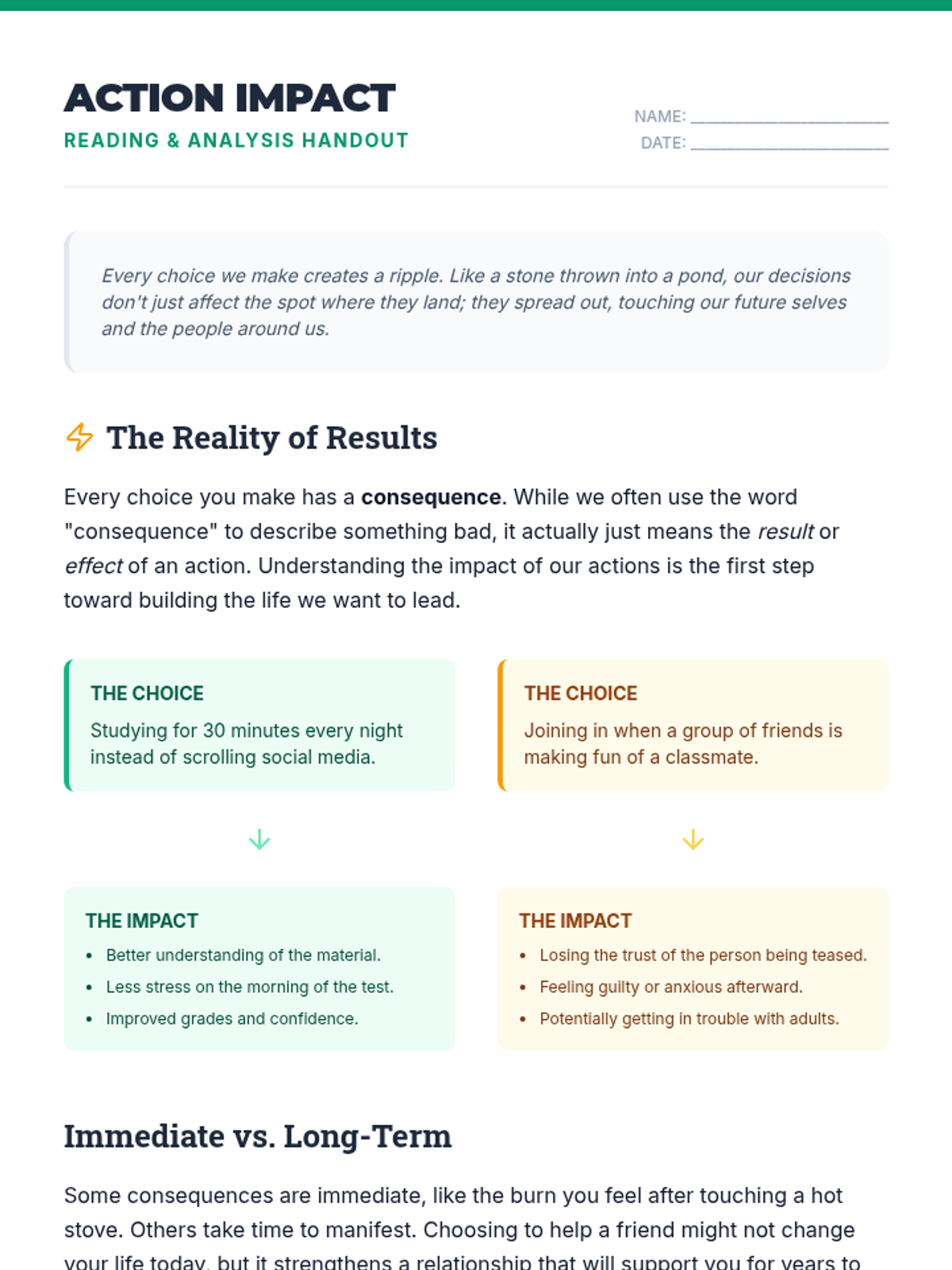
An engaging reading handout that explores the concept of consequences with concrete examples and reflection prompts.
A visual presentation to guide the 'Choices and Consequences' lesson, covering key definitions, discussion prompts, and a placeholder for the instructional video.
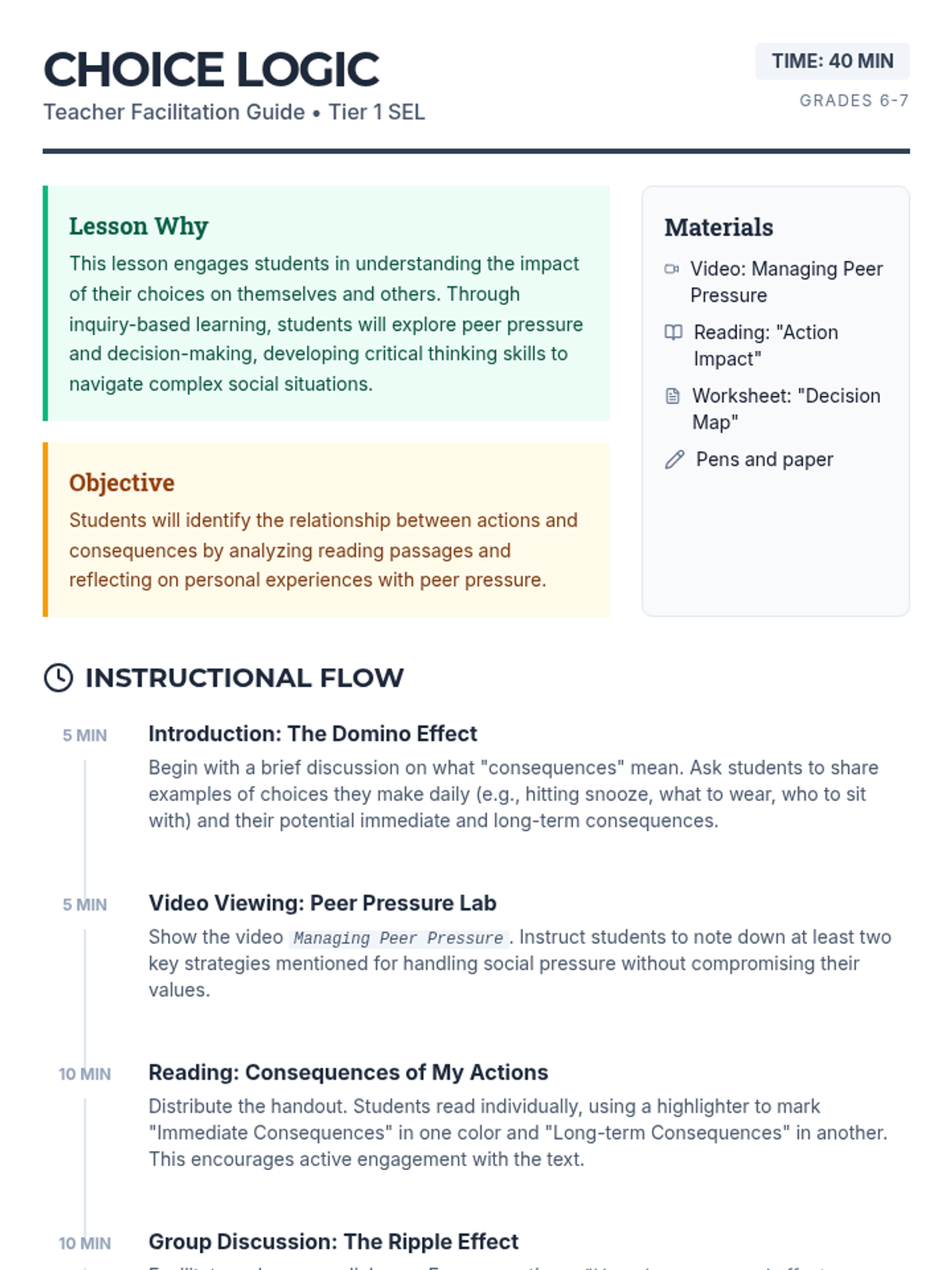
A comprehensive teacher facilitation guide for the 'Choices and Consequences' lesson, featuring a timed instructional flow and inquiry-based discussion prompts.
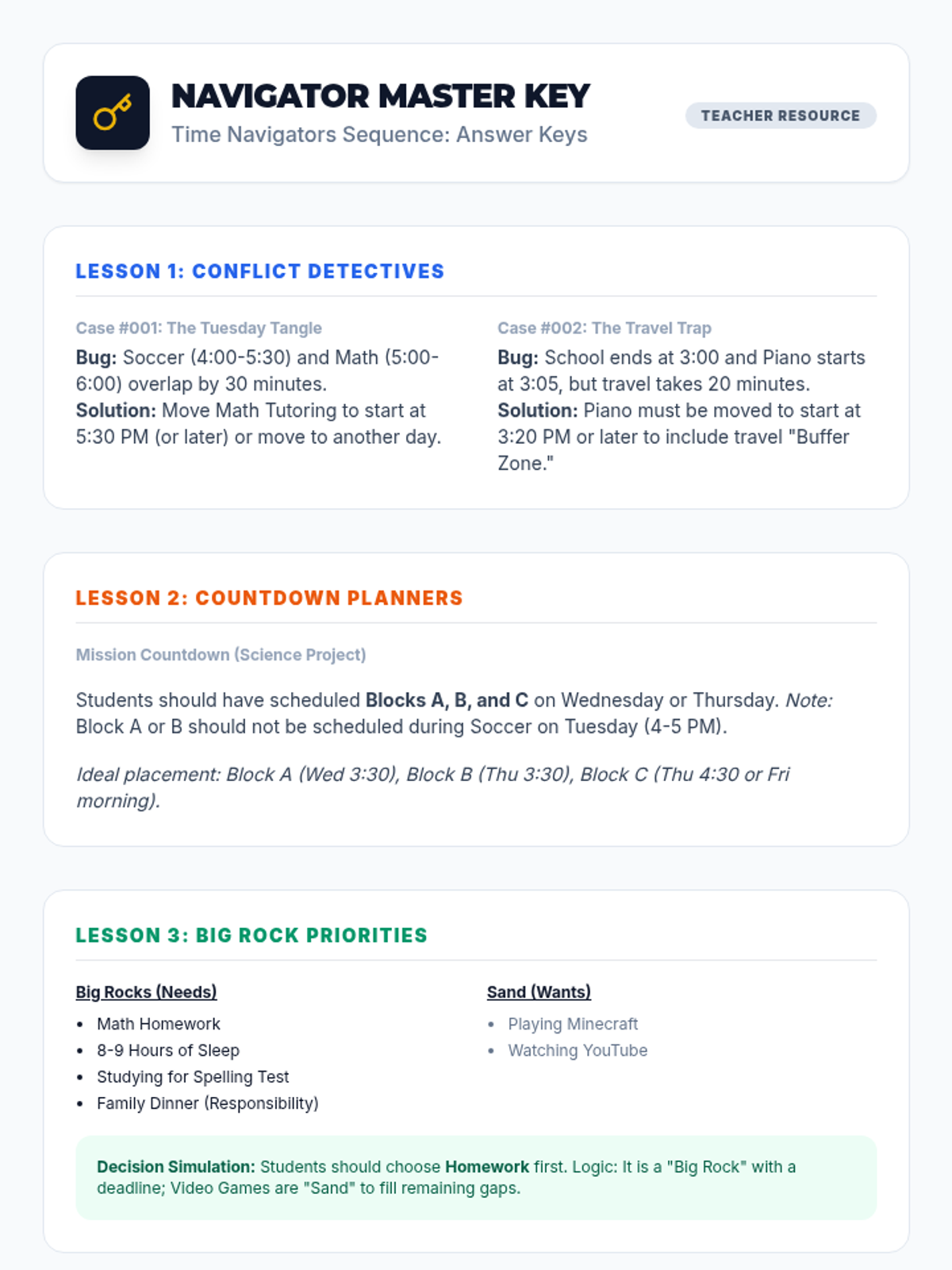
Answer key for all lesson worksheets in the Time Navigators unit, providing teachers with clear solutions for the Case Studies, Priority Sorts, and Schedule Audits.
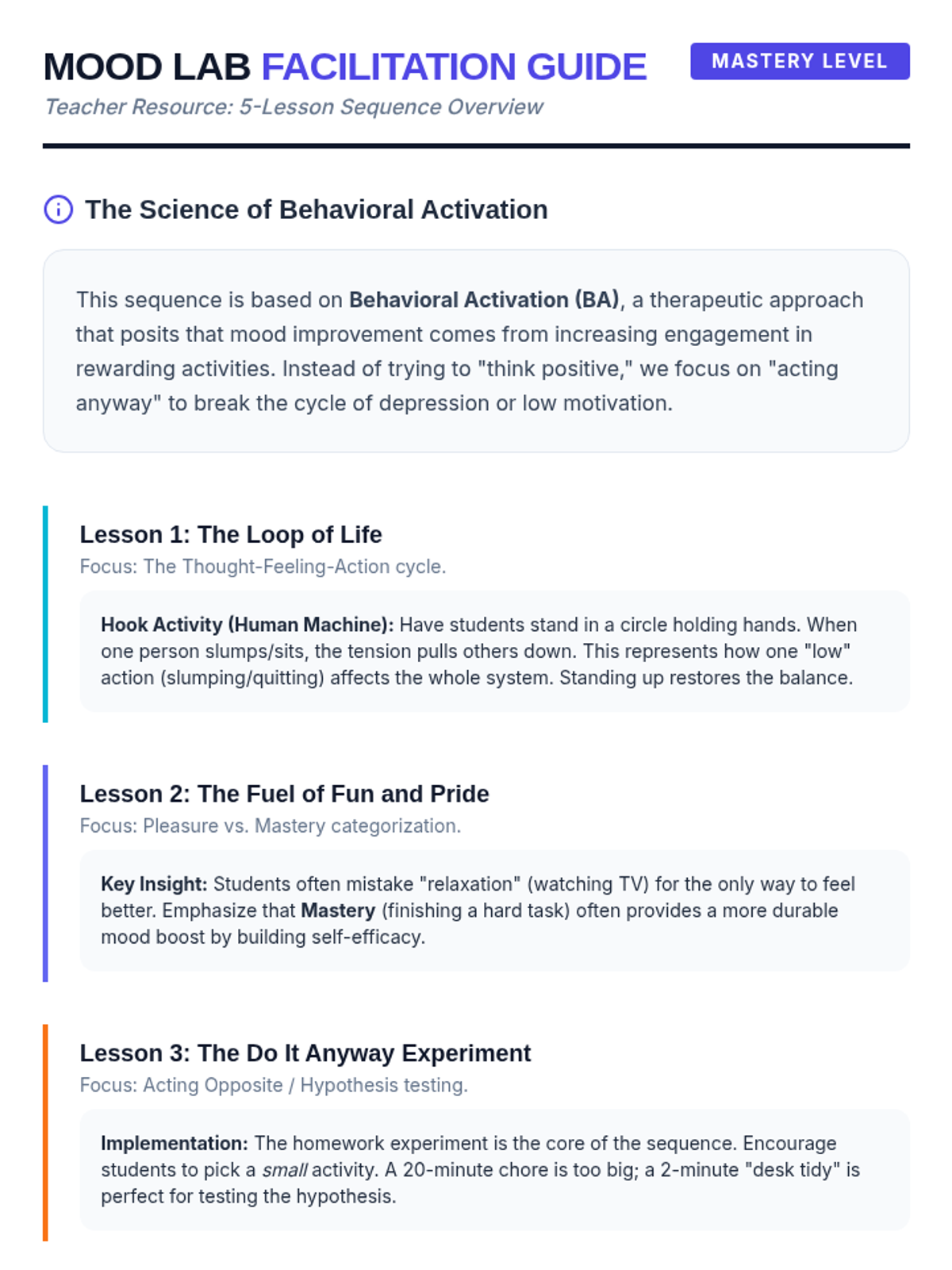
A teacher facilitation guide for the 'Mood Lab Experiment' sequence, providing therapeutic context, hook instructions, and tips for each lesson.
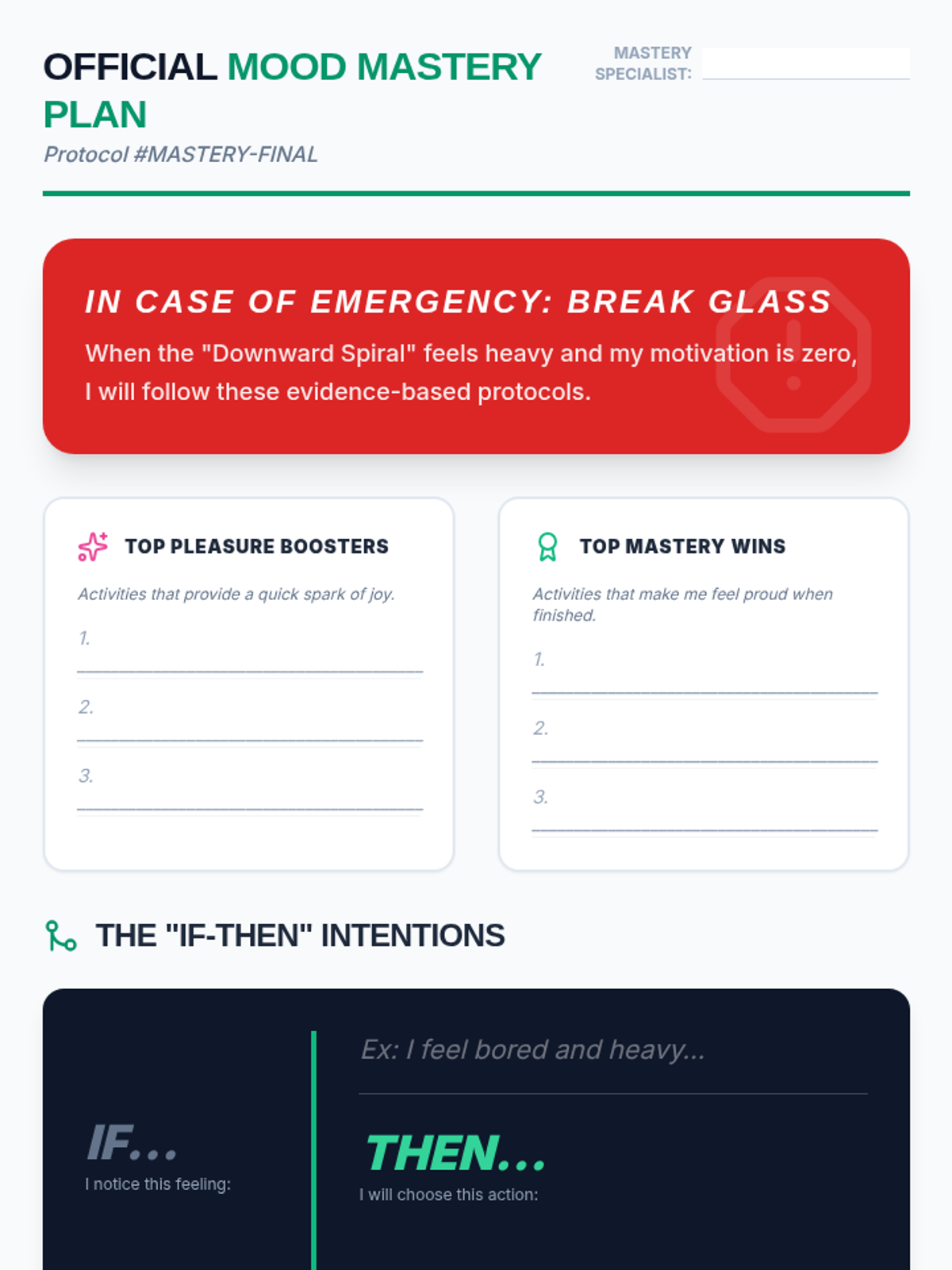
A comprehensive 'Break the Glass' emergency plan worksheet where students synthesize their findings into specific 'If-Then' implementation intentions for mood regulation.
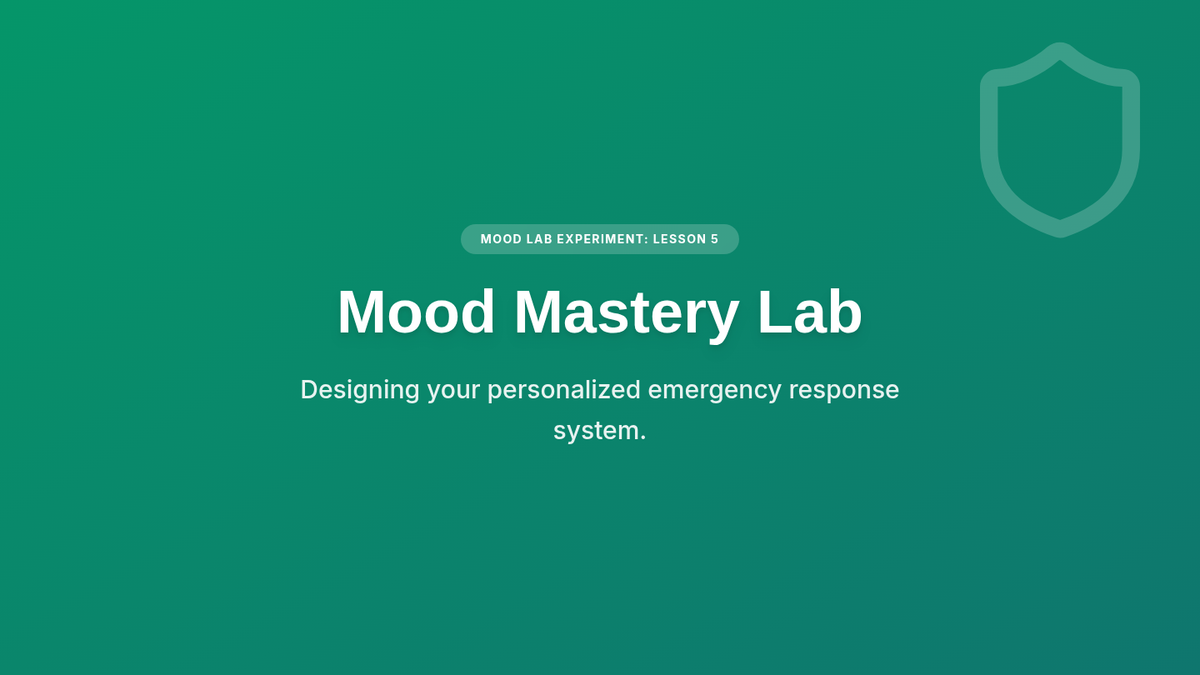
Final slide deck for the 'Mood Mastery Lab' lesson, teaching students how to create implementation intentions and synthesize their learning into an emergency activation plan.
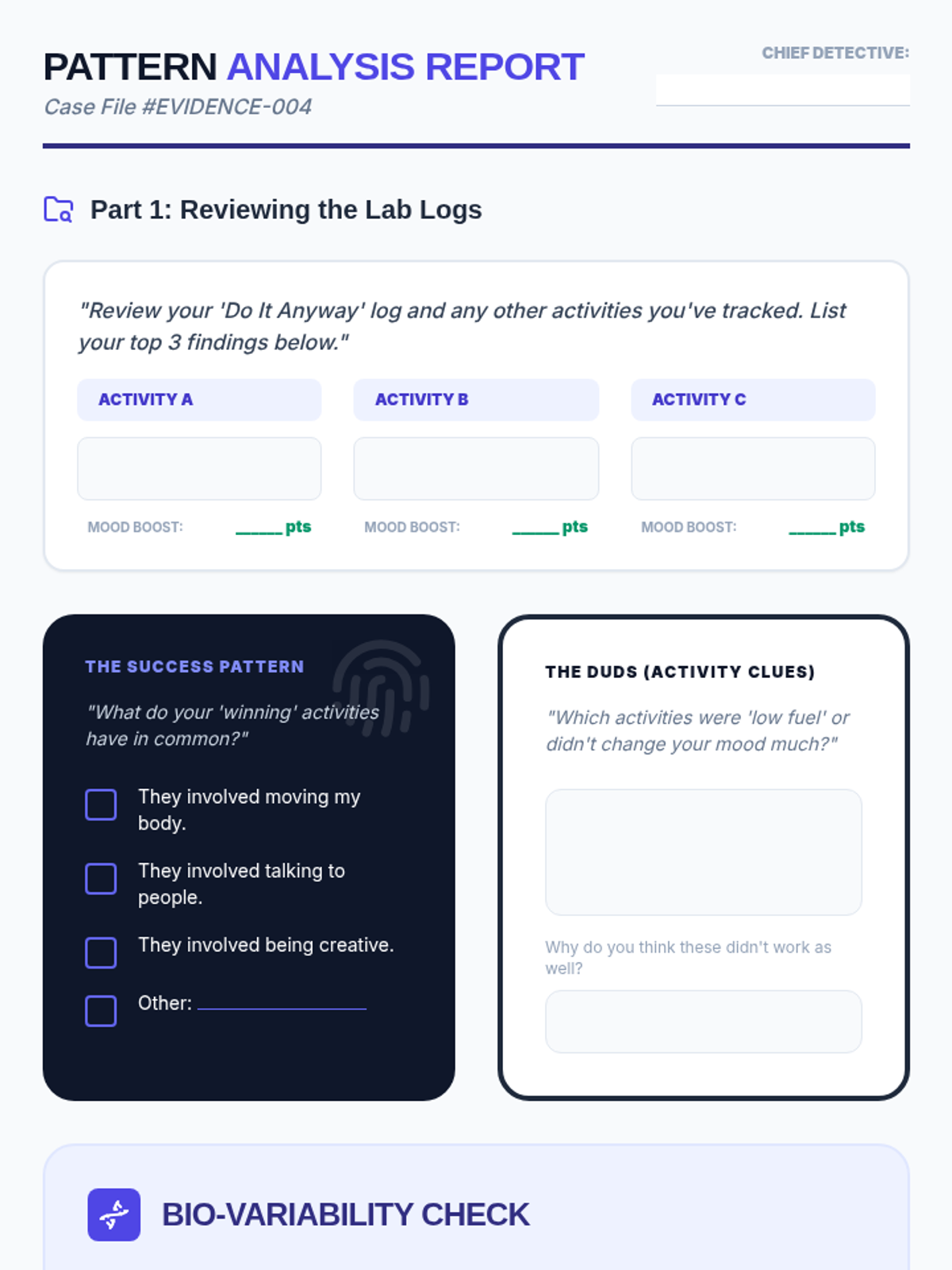
A lab report worksheet for students to analyze their experiment data, identify patterns in effective activities, and reflect on individual differences.
Introductory slides for the 'Mood Pattern Detectives' lesson, helping students analyze their data and understand the concept of individual variability in activity effectiveness.
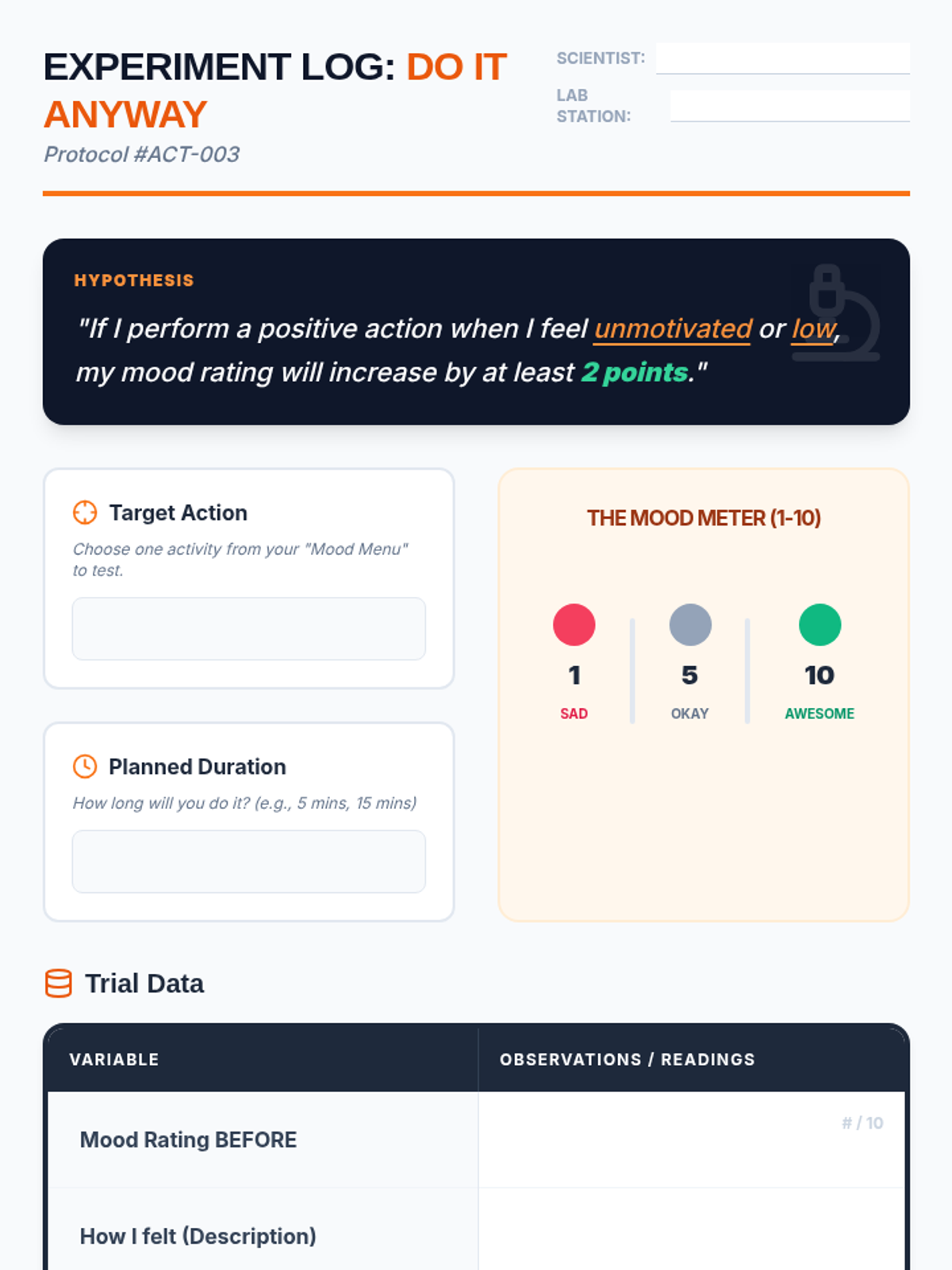
A data collection log for the 'Do It Anyway' experiment, allowing students to track their mood ratings before and after engaging in a positive action.
Introductory slides for the 'Do It Anyway' experiment, explaining the concept of 'acting opposite' and how to track mood data for a personal science experiment.
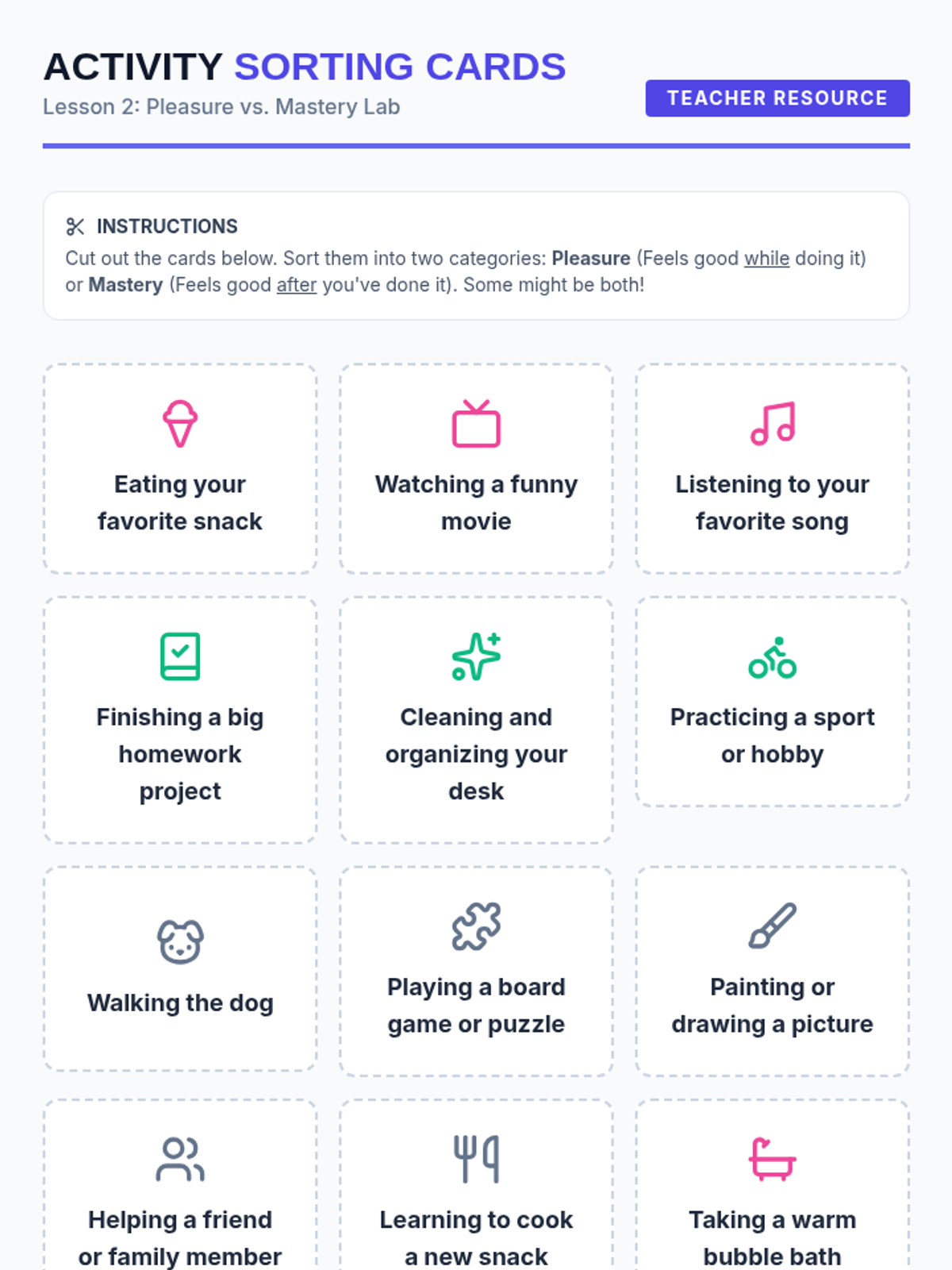
Sorting cards and a categorization t-chart for Lesson 2, helping students distinguish between pleasure-based and mastery-based activities.
Introductory slides for the 'Pleasure and Mastery' lesson, explaining the difference between 'Fun fuel' and 'Proud fuel' and the importance of a balanced activity diet.
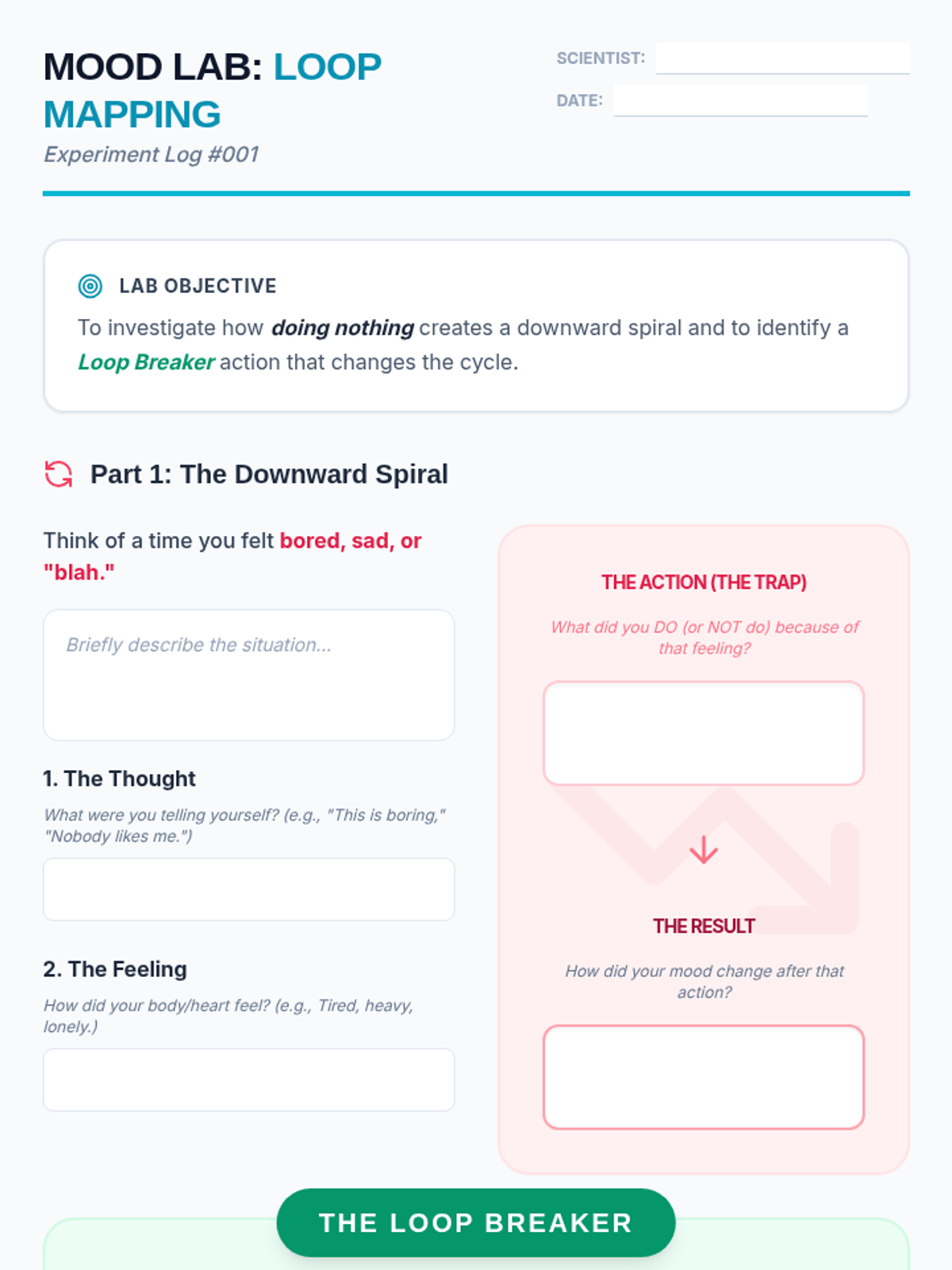
A lab notebook style worksheet for students to map out their own action-emotion loop, identifying a 'downward spiral' moment and a 'loop breaker' action.
Introductory slides for the 'Loop of Life' lesson, featuring the human machine hook and visual representations of the thought-feeling-action cycle.
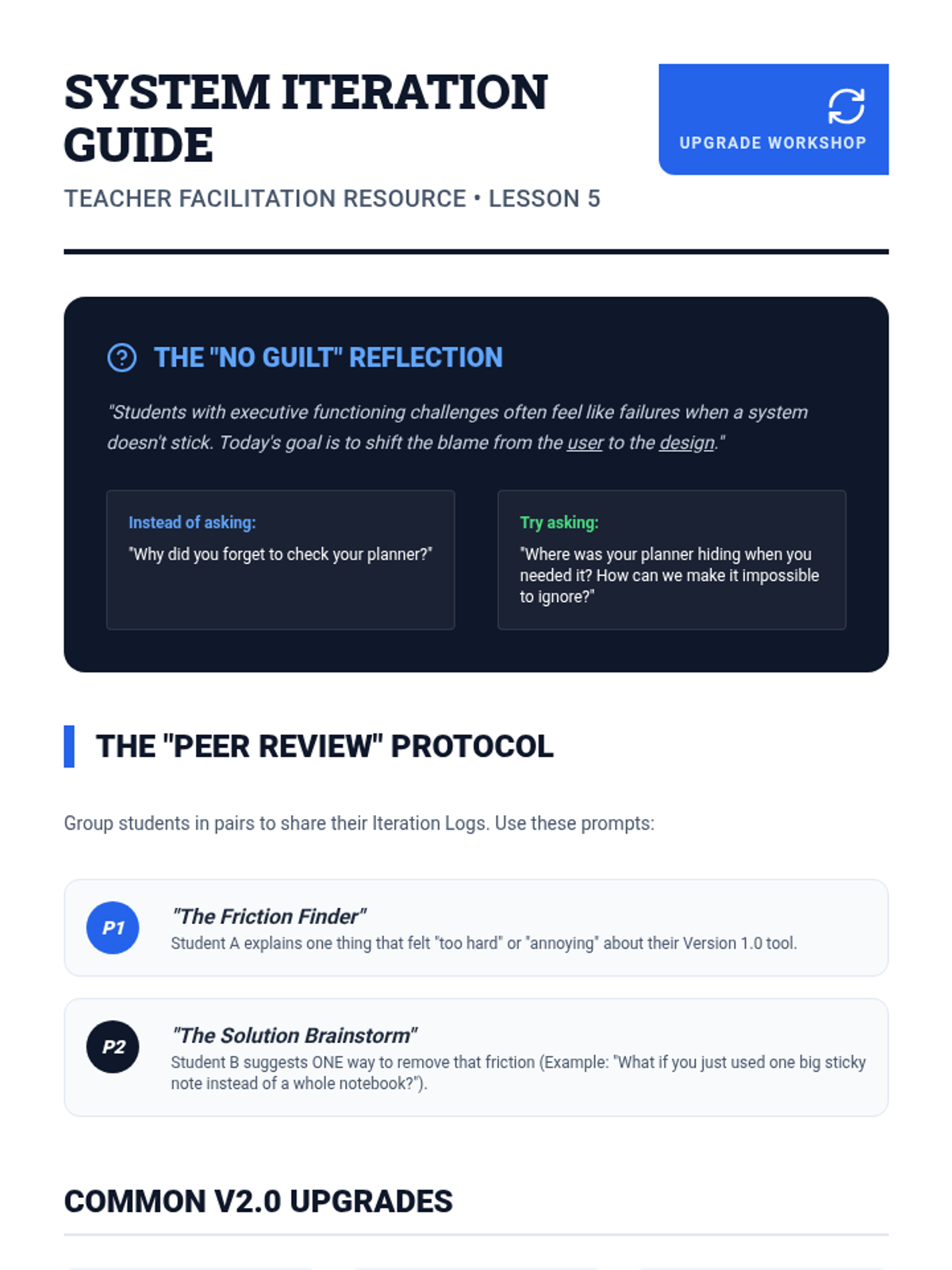
Teacher-facing guide for the 'System Stress Test' lesson, focusing on facilitating student feedback sessions, managing "no-guilt" reflections, and guiding the iteration process.
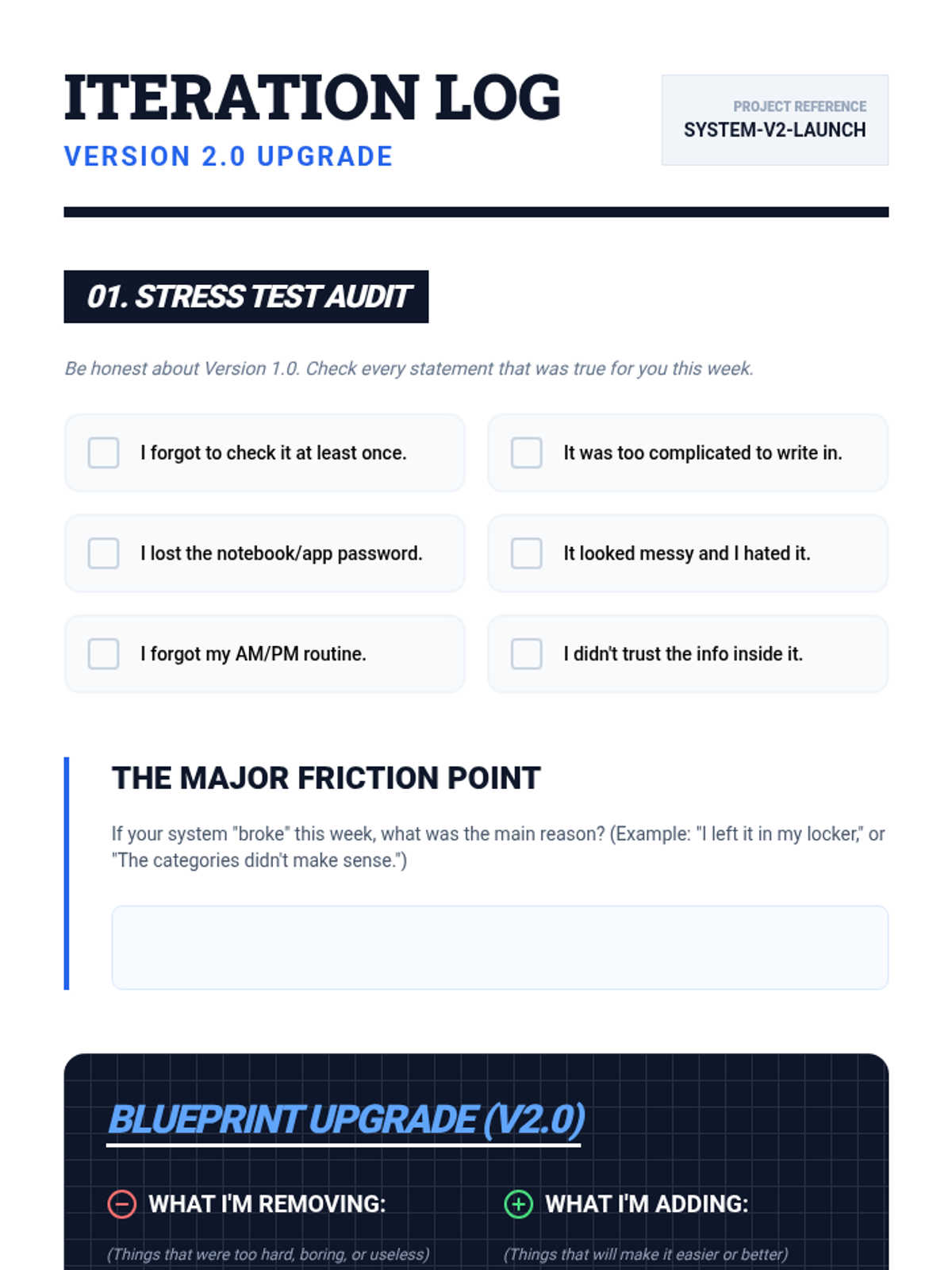
Student iteration log for 'System Stress Test', focusing on evaluating their initial organizational system (Version 1.0) and planning upgrades for better long-term adherence (Version 2.0).
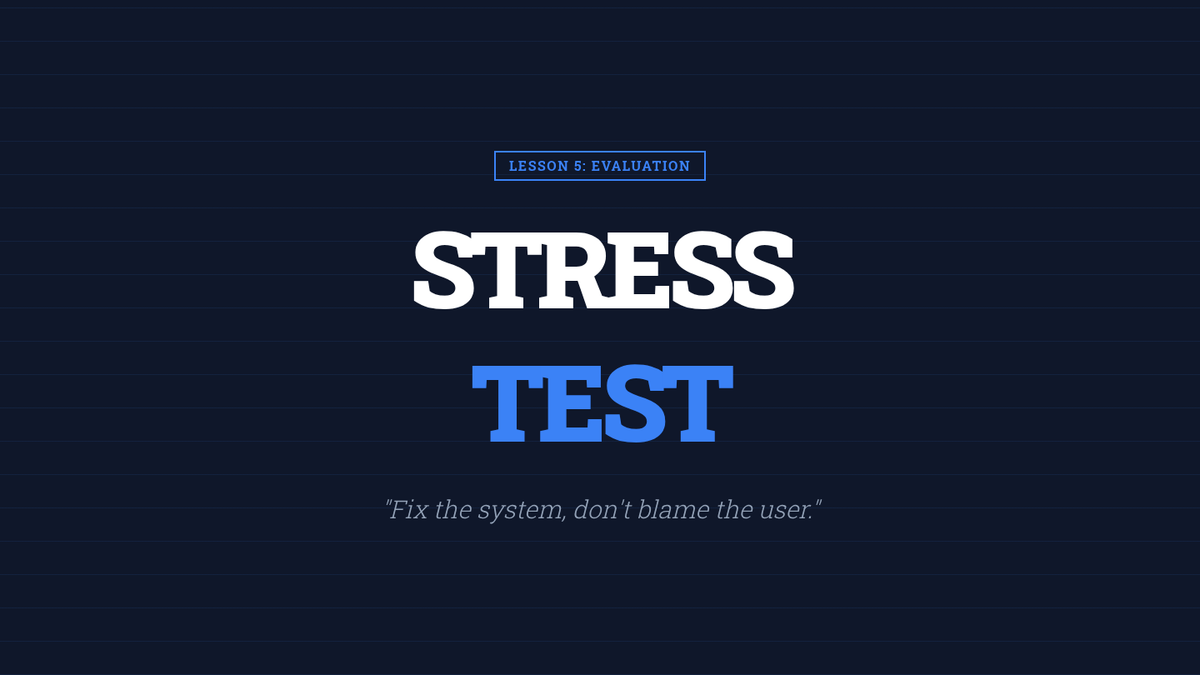
Final presentation for 'System Stress Test', focusing on troubleshooting organizational systems and iterating on designs for better long-term success.
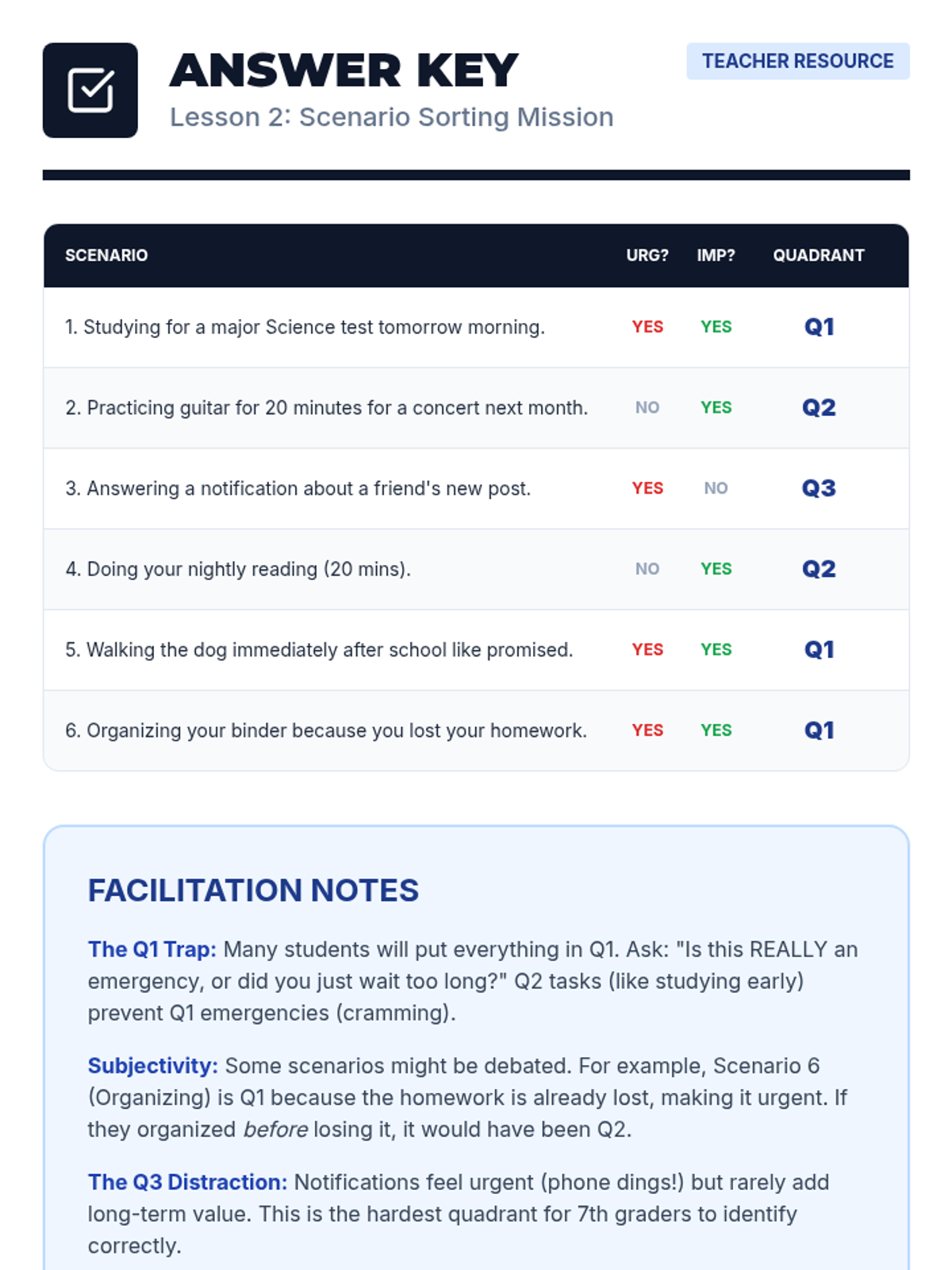
Answer key and facilitation notes for the Matrix Sorting activity, including explanations for potentially subjective scenarios.
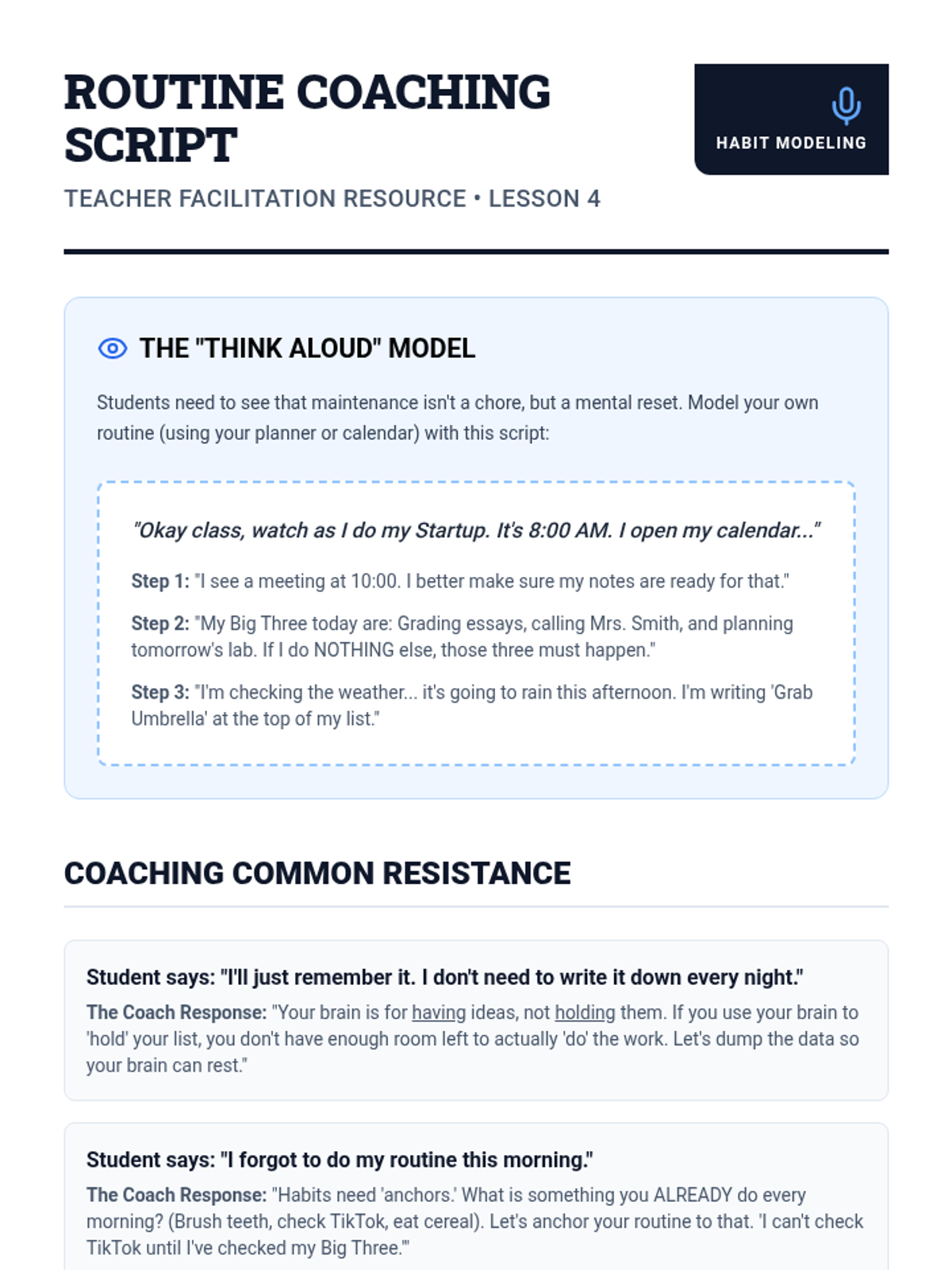
Teacher-facing coaching script and facilitation guide for Lesson 4, focusing on modeling organizational routines and overcoming student resistance to habit formation.
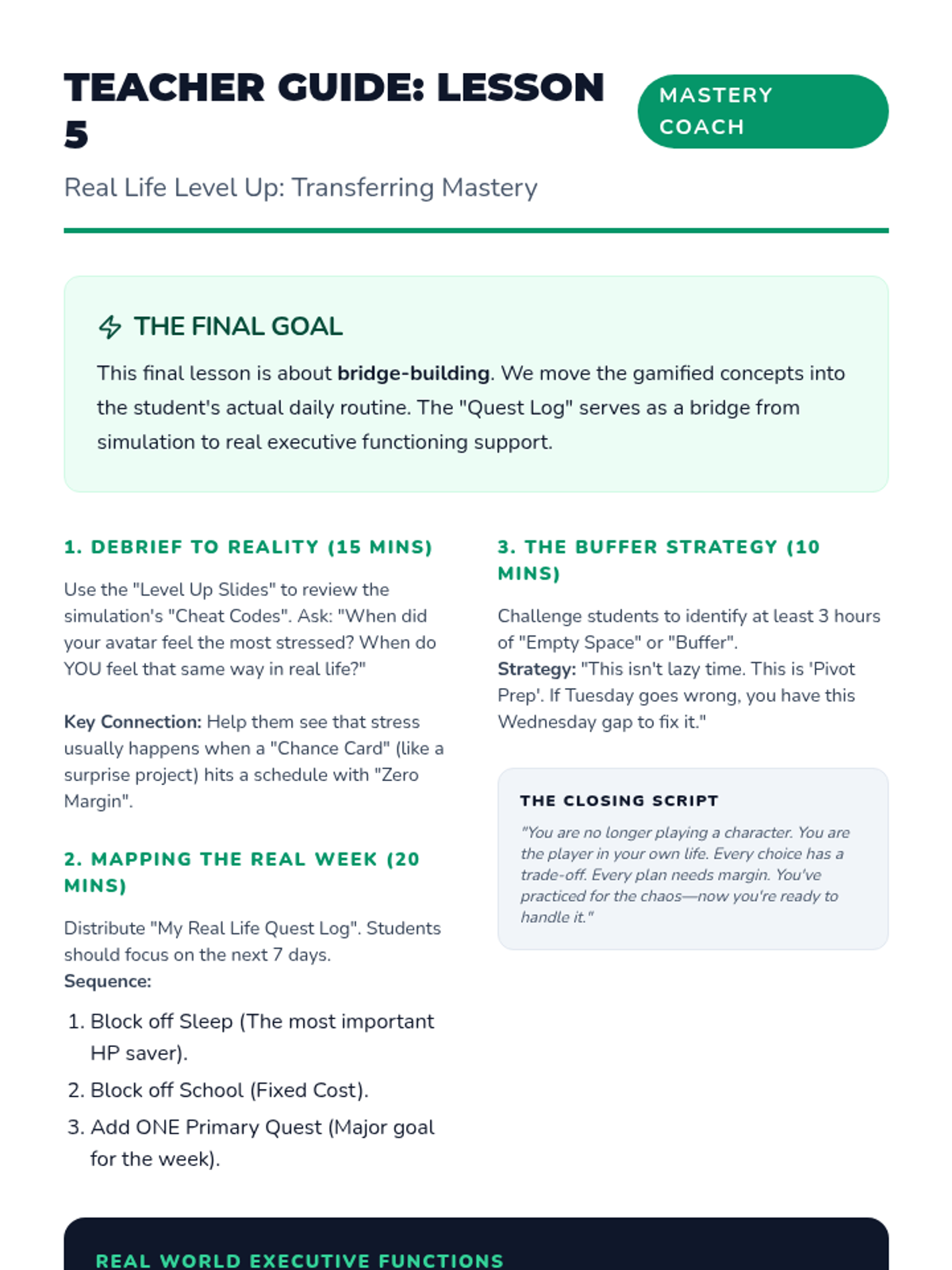
Facilitation guide for Lesson 5, focusing on connecting simulation concepts to real-life habits and guiding the final reflection.
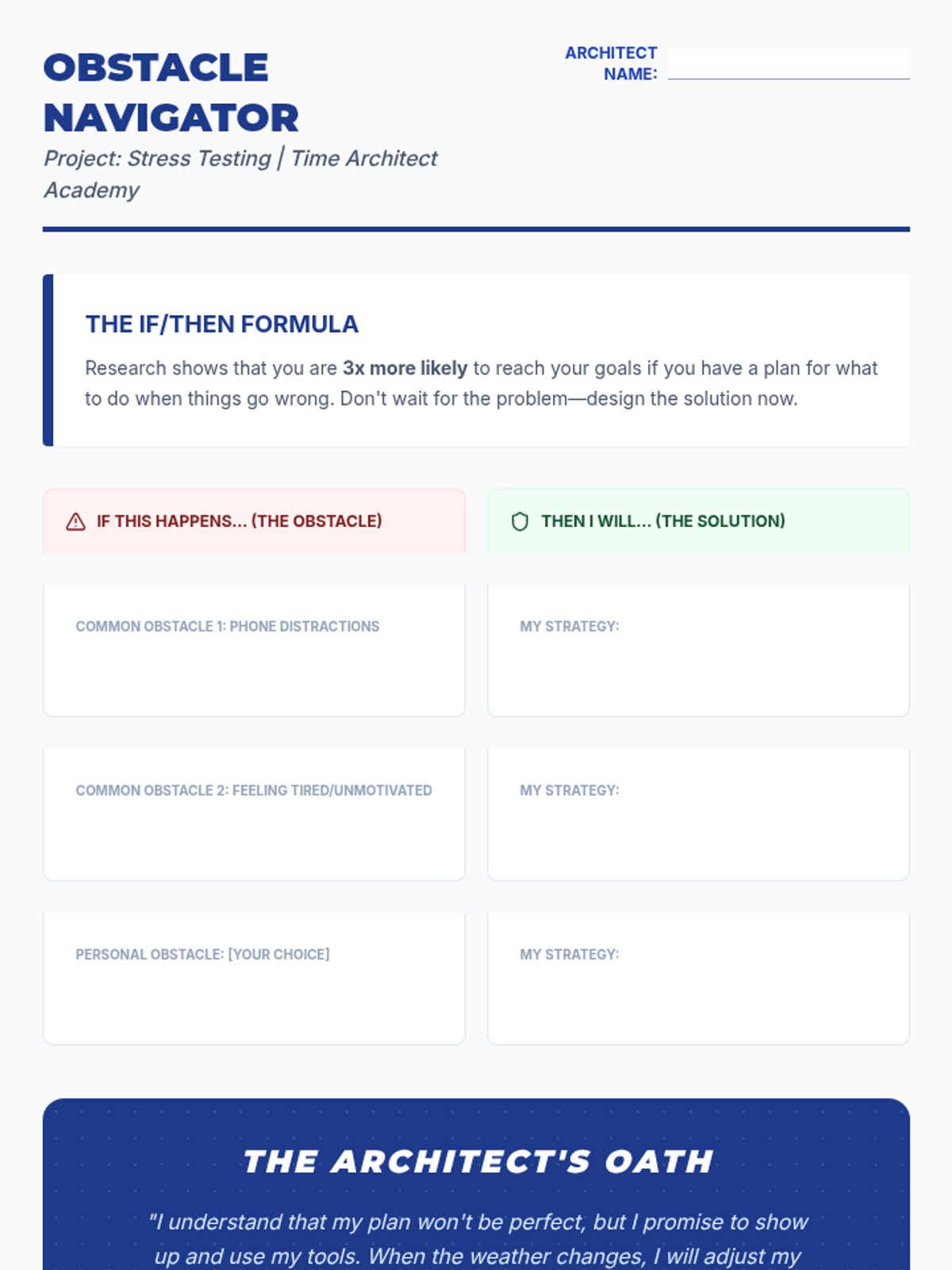
A student worksheet for defining specific strategies to handle common time management obstacles using the 'If/Then' formula.
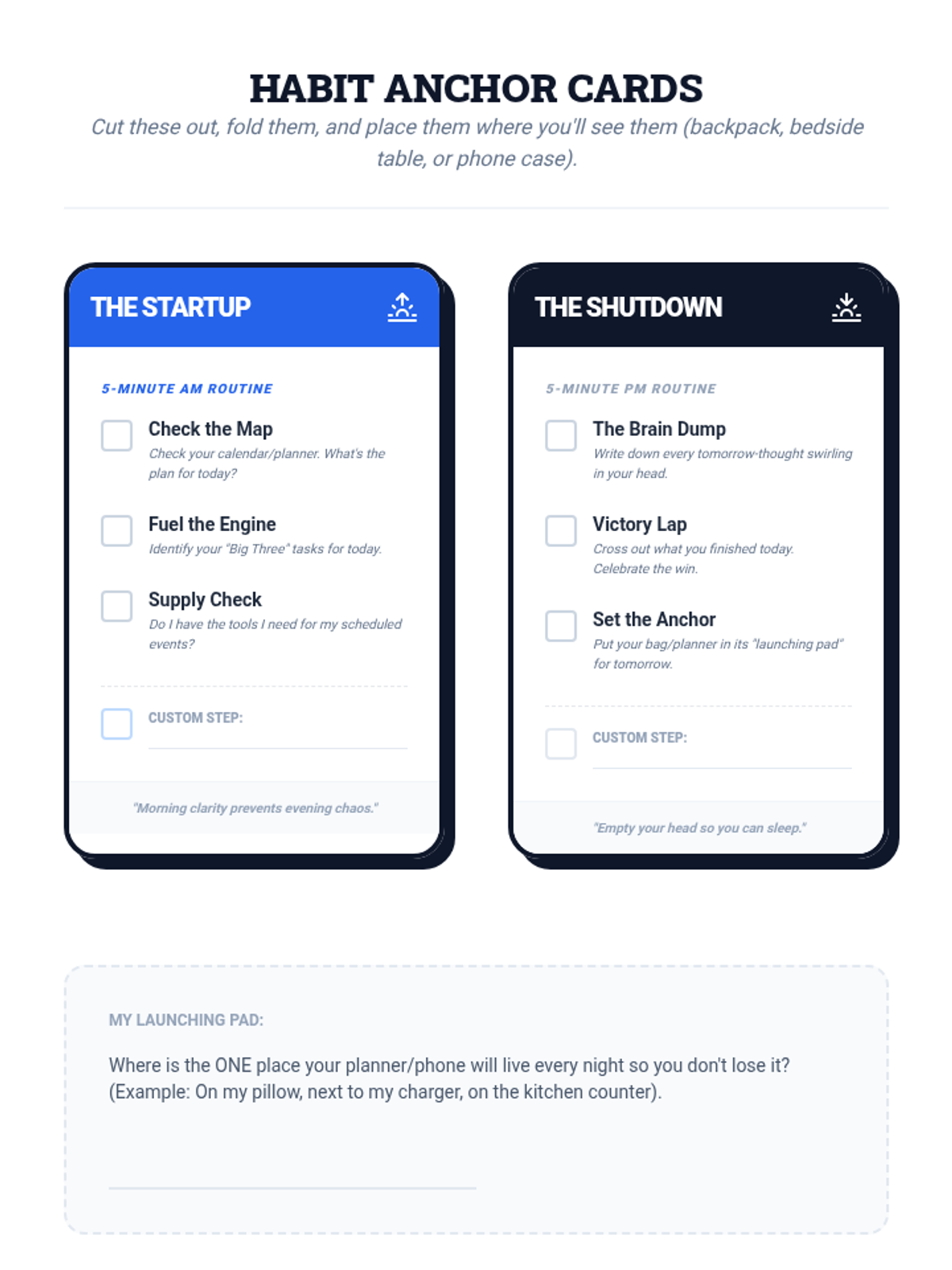
Student activity sheet with printable habit reminder cards for daily organizational system maintenance routines.
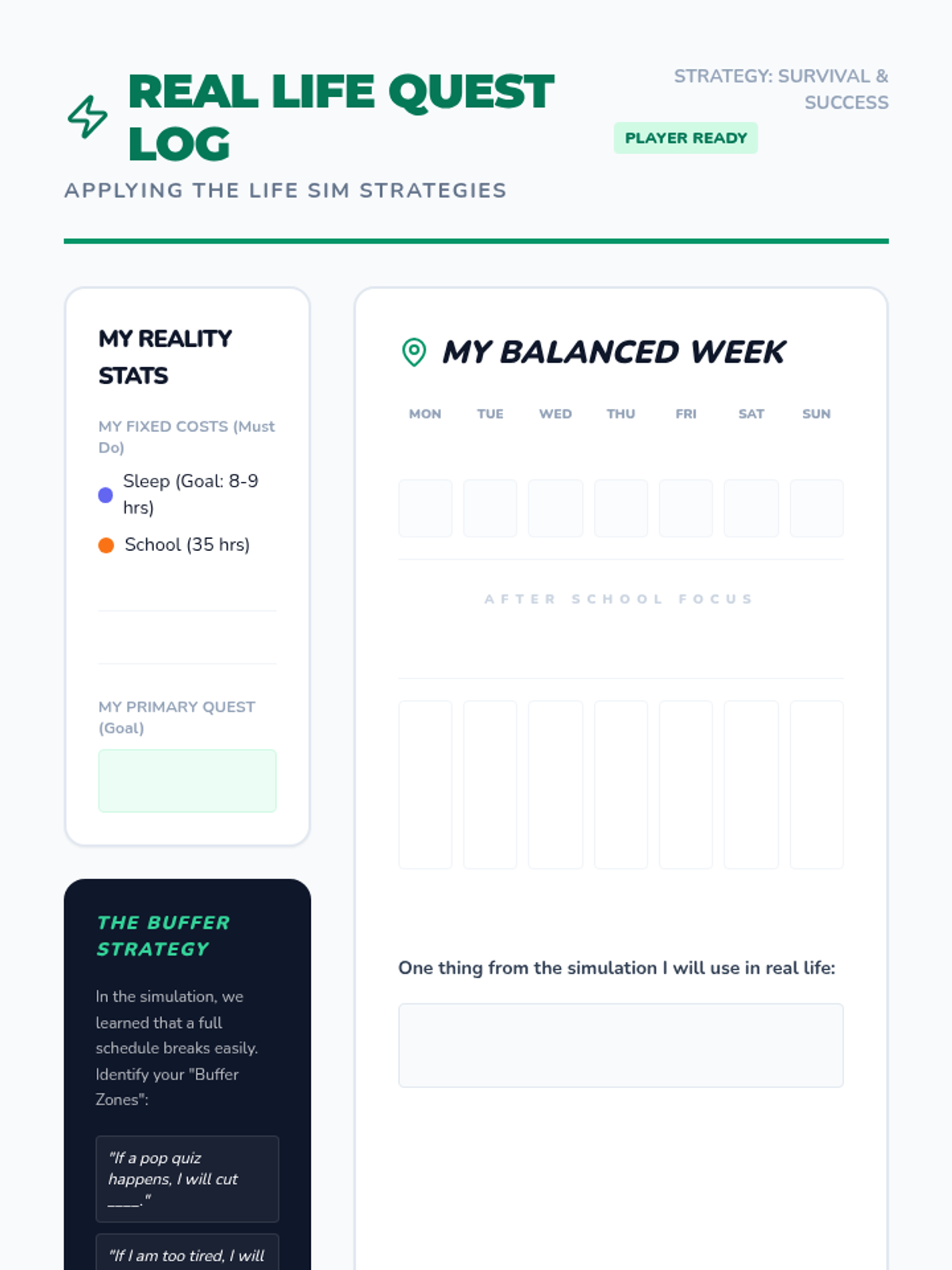
A student planning worksheet that applies simulation strategies (Fixed Costs, Buffer Zones, and Priority Quests) to the student's actual upcoming week.
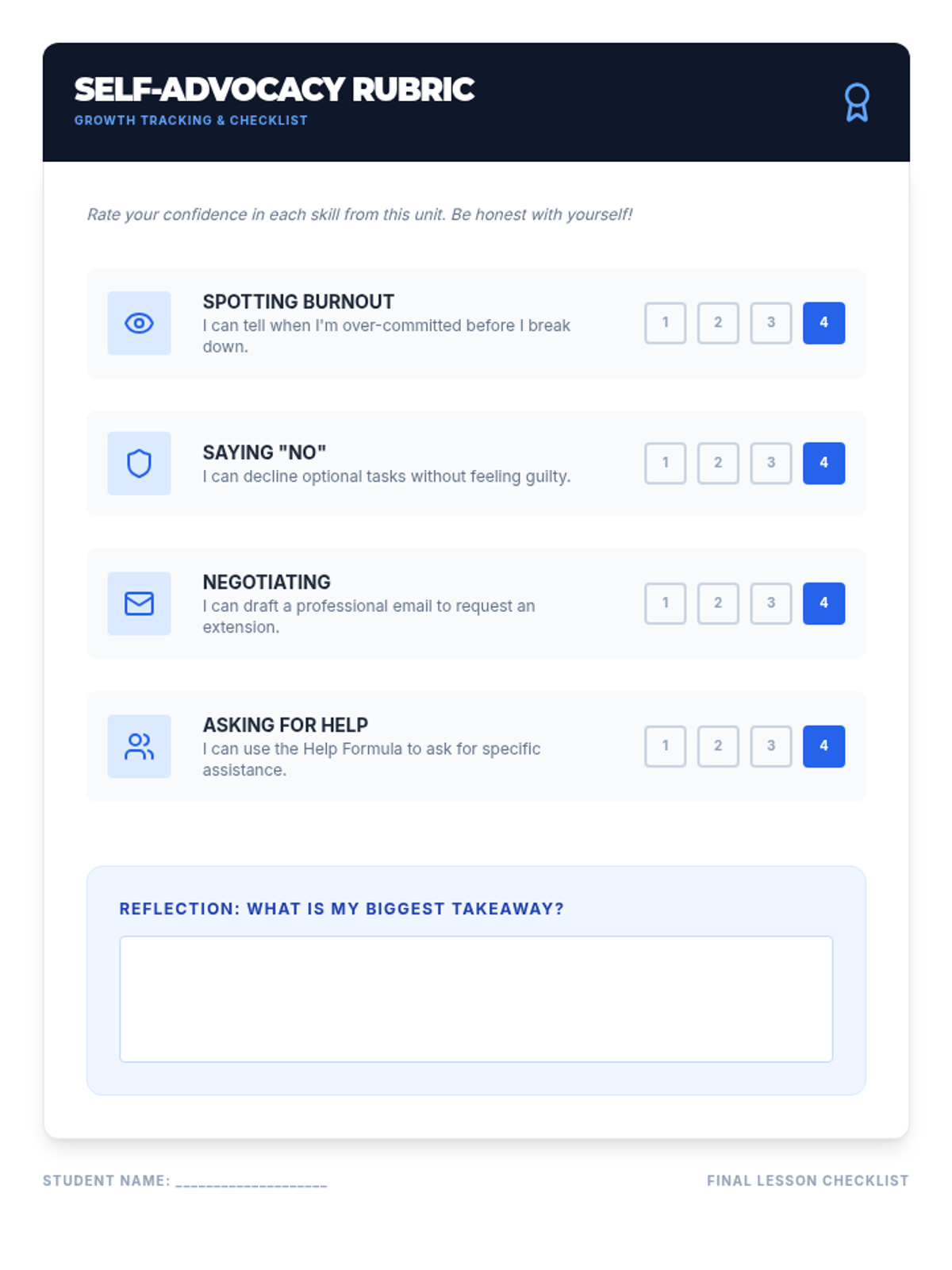
A self-assessment rubric for students to track their growth in identifying burnout, setting boundaries, negotiating deadlines, and asking for help.
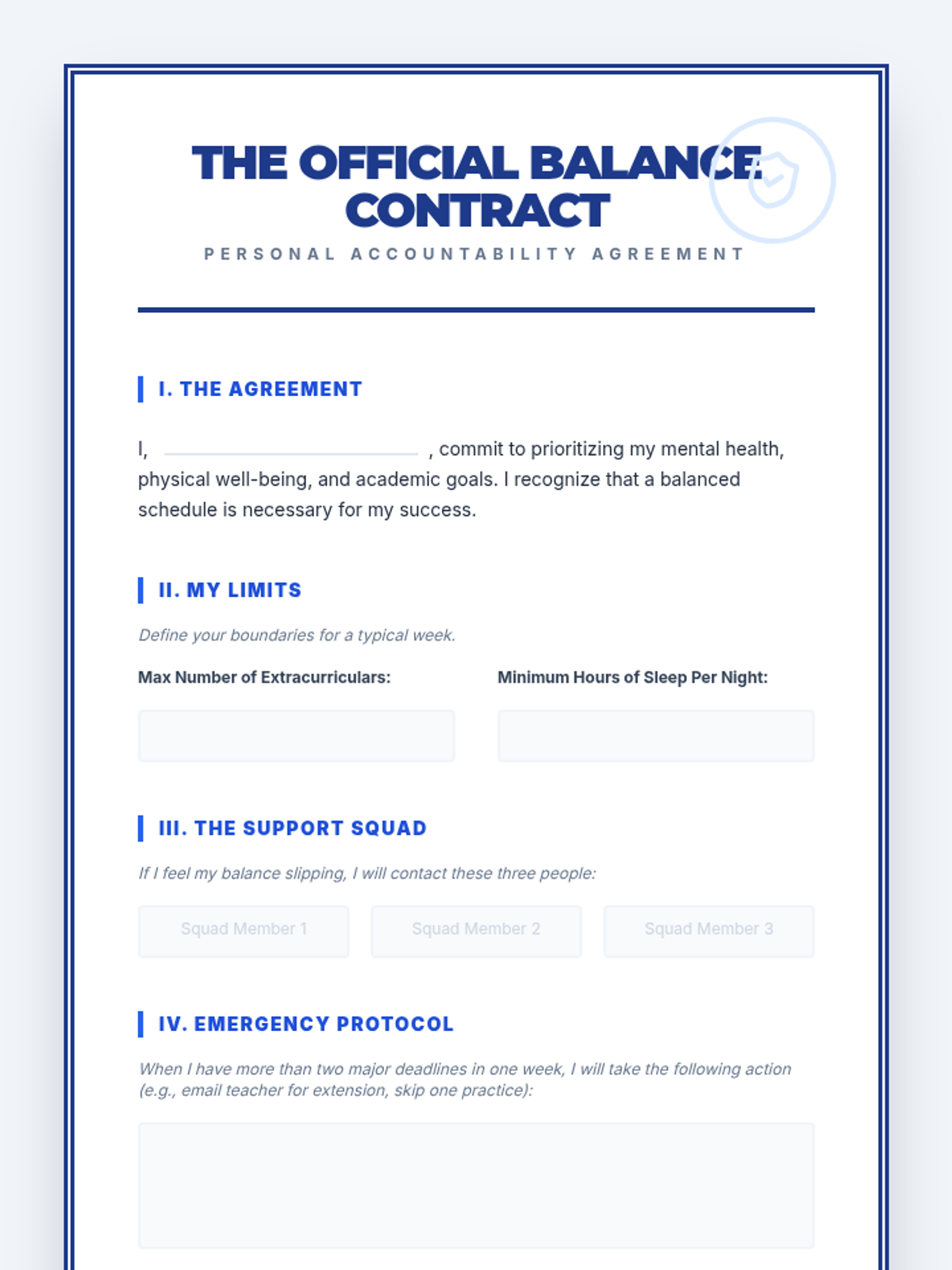
A personal 'Balance Contract' to outline their limits and establish a protocol for managing future stress.
Reviewing the unit and preparing for the final project: the personal Balance Contract.
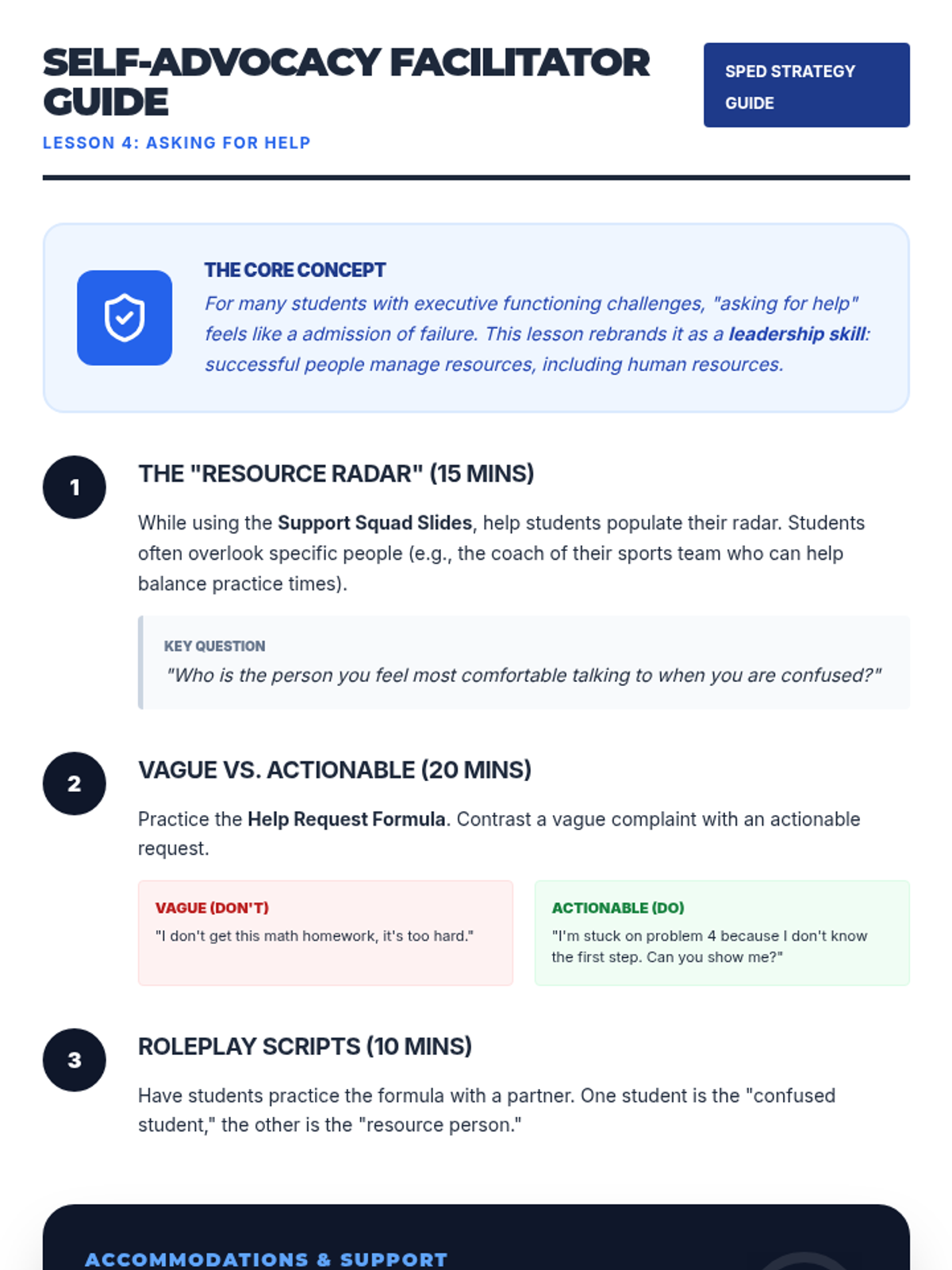
Strategies for teachers to teach self-advocacy and specific help-seeking behaviors to students, particularly those with Special Education needs.
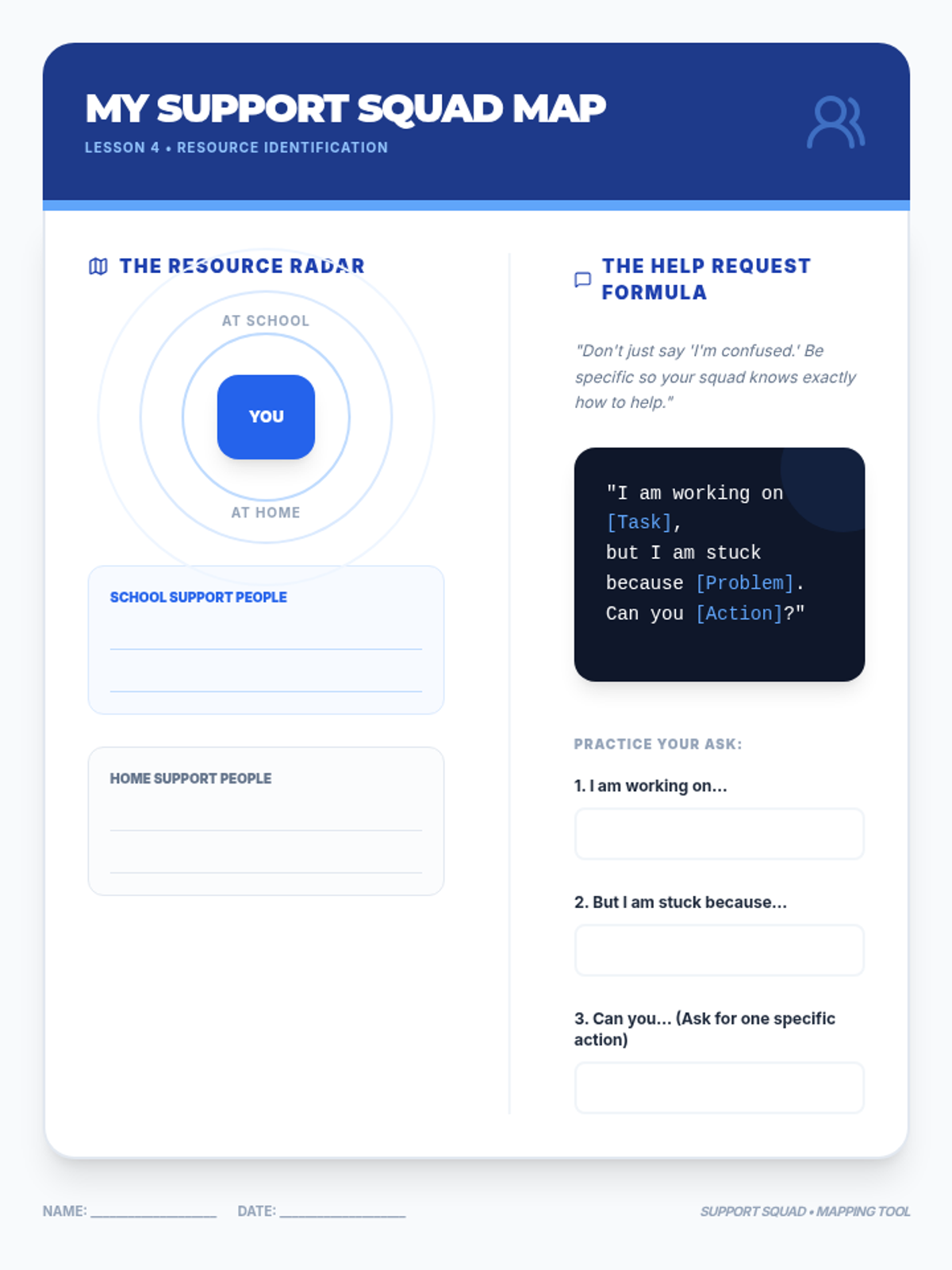
A visual organizer for resources and a help request formula to help students identify their support network and practice making specific help requests.
Identifying who is on the team and how to ask for specific, actionable help.
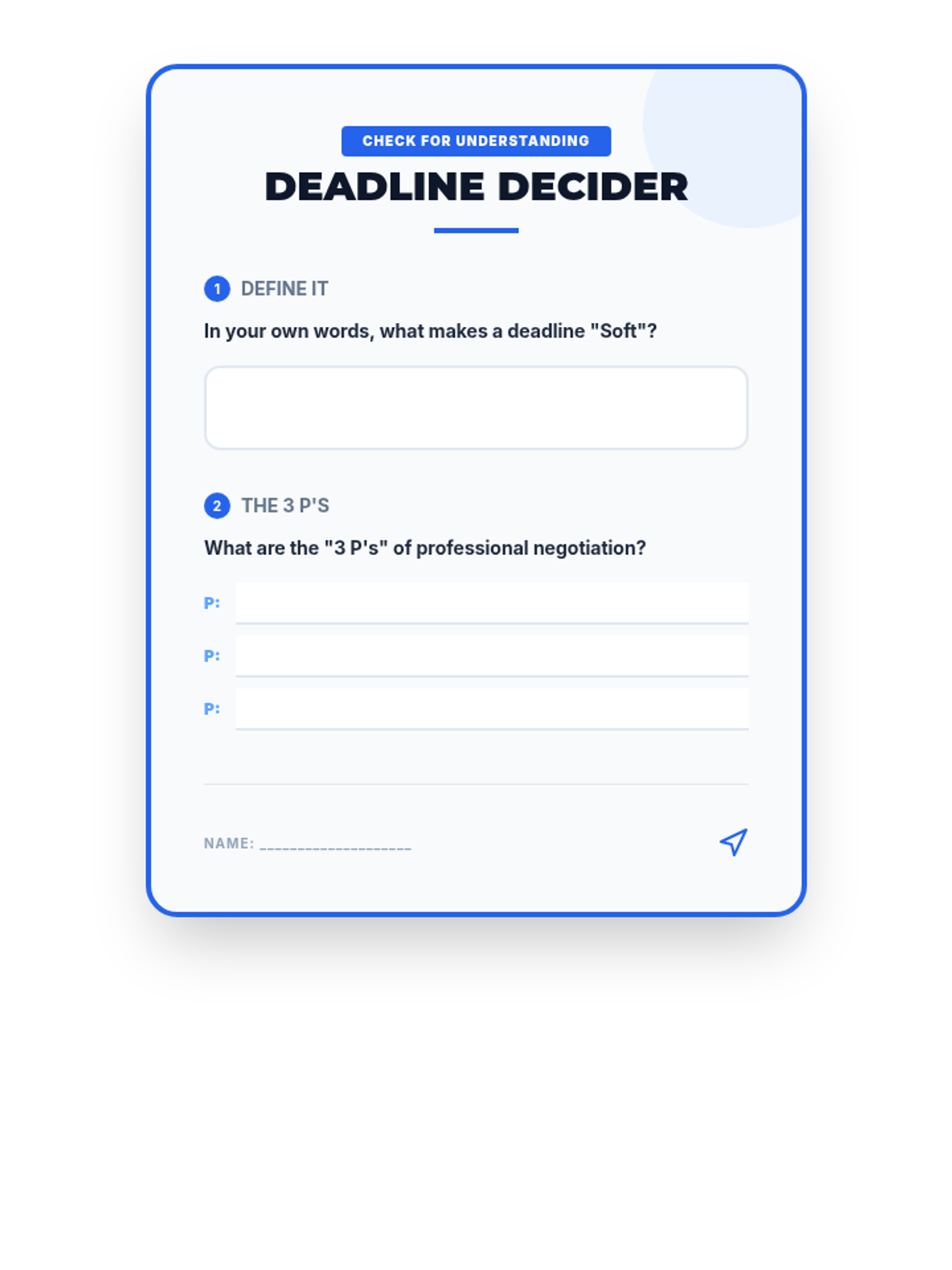
A quick exit ticket for Lesson 3 to assess student understanding of soft deadlines and the principles of professional negotiation.
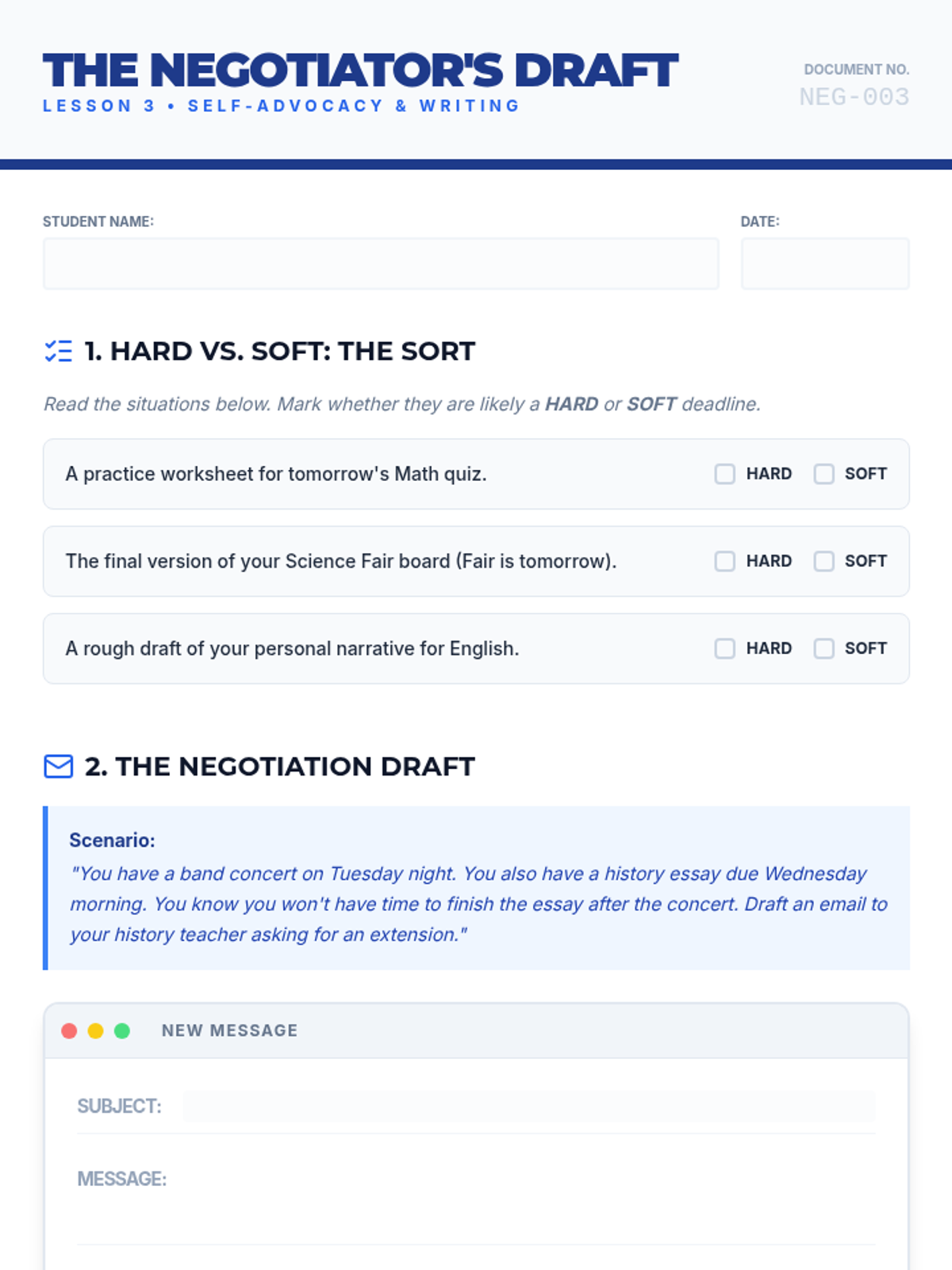
A worksheet for students to differentiate between hard and soft deadlines and practice drafting professional email requests for deadline extensions.
Slide deck for Lesson 3 covering the difference between hard and soft deadlines and the "3 P's" of professional email negotiation.
Instructional slide deck for Lesson 5, focusing on problem-solving with 'If/Then' planning and the importance of reviewing and adjusting schedules when life happens.
Introductory presentation for 'The Maintenance Routine', using the Ferrari analogy to explain the importance of daily startup and shutdown habits for organizational systems.
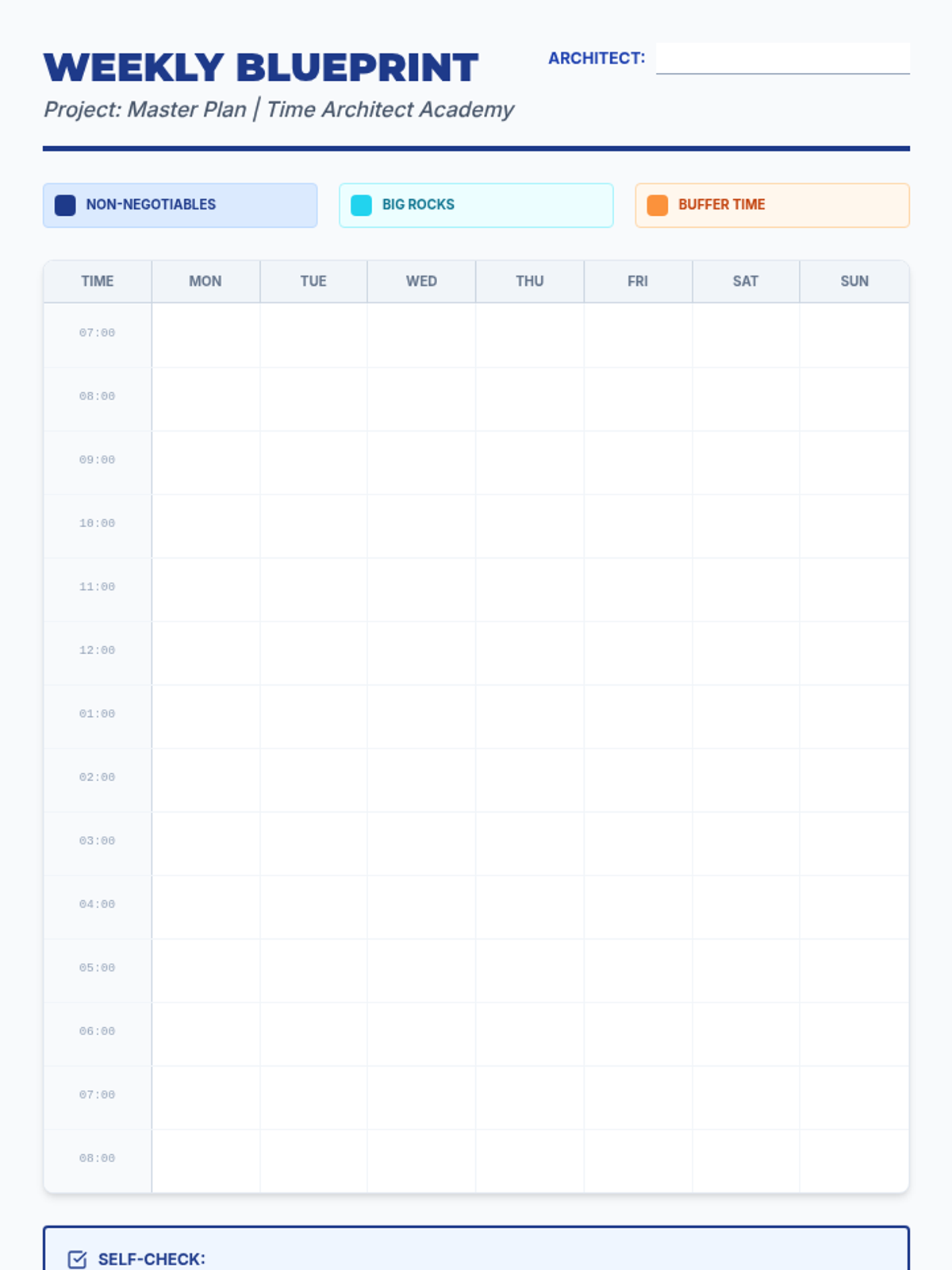
A comprehensive weekly planner template for students to draft their 'Ideal Week' by scheduling non-negotiables, big rocks, and buffer time.
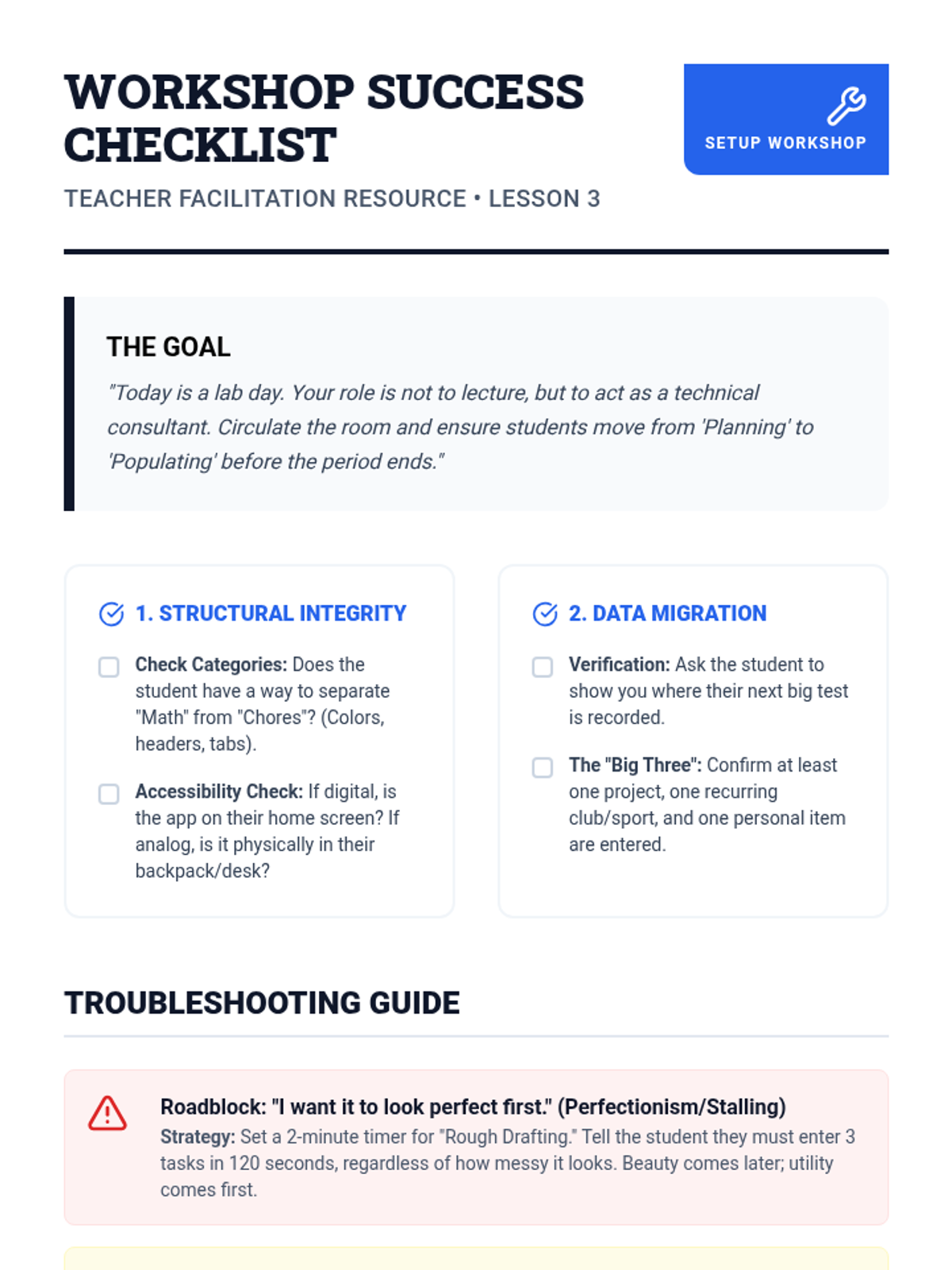
Teacher-facing checklist and facilitation guide for the 'Prototyping a System' workshop, including troubleshooting tips for common student roadblocks like perfectionism or over-engineering.
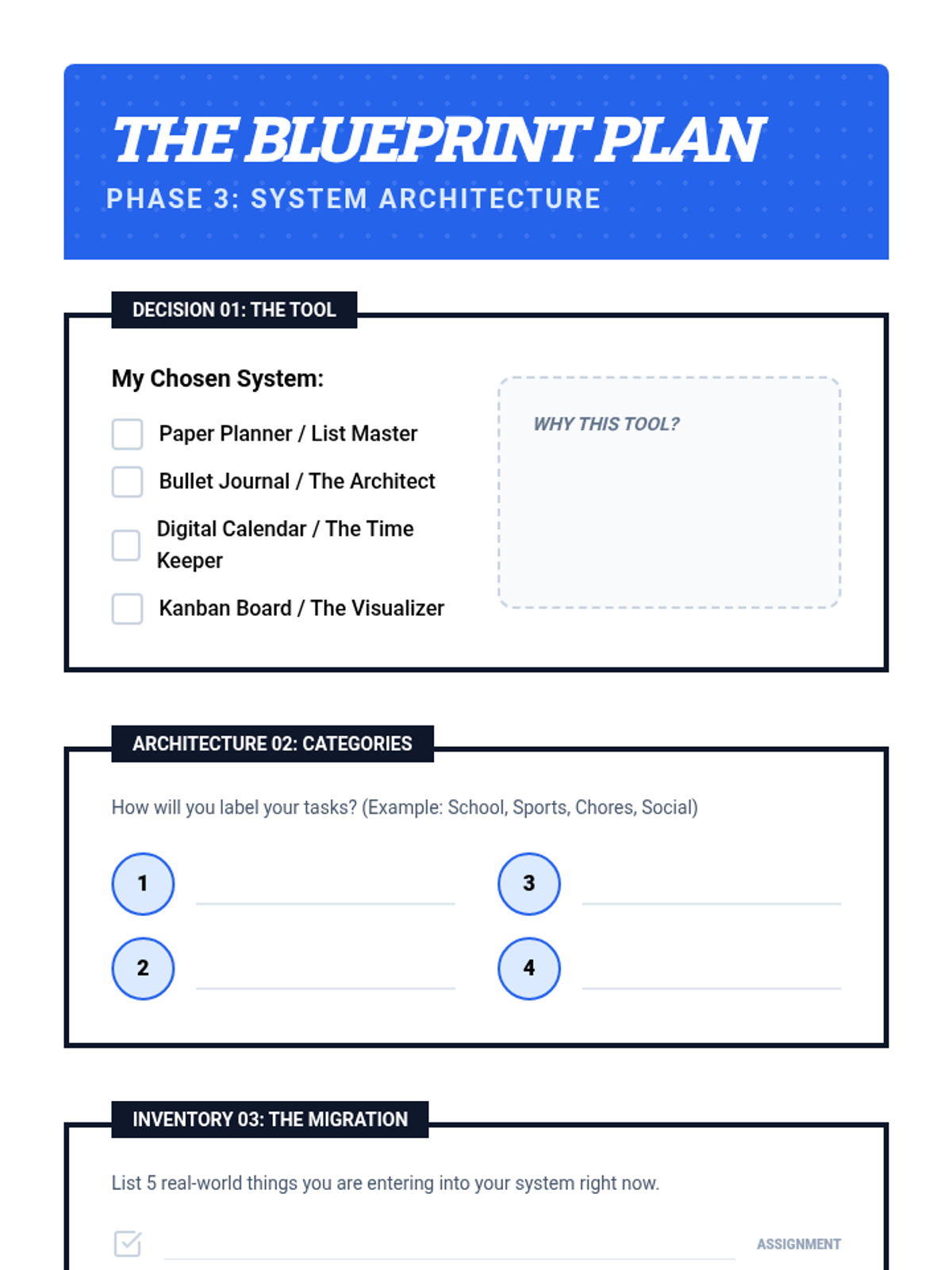
Student blueprint planning sheet for 'Prototyping a System', guiding students through tool choice, category definition, and initial data migration.
Instructional slide deck for Lesson 4, explaining how to create a realistic schedule by placing non-negotiables first, followed by big rocks and buffer time.
Introductory presentation for 'Prototyping a System', guiding students through the setup of their chosen organizational tool.
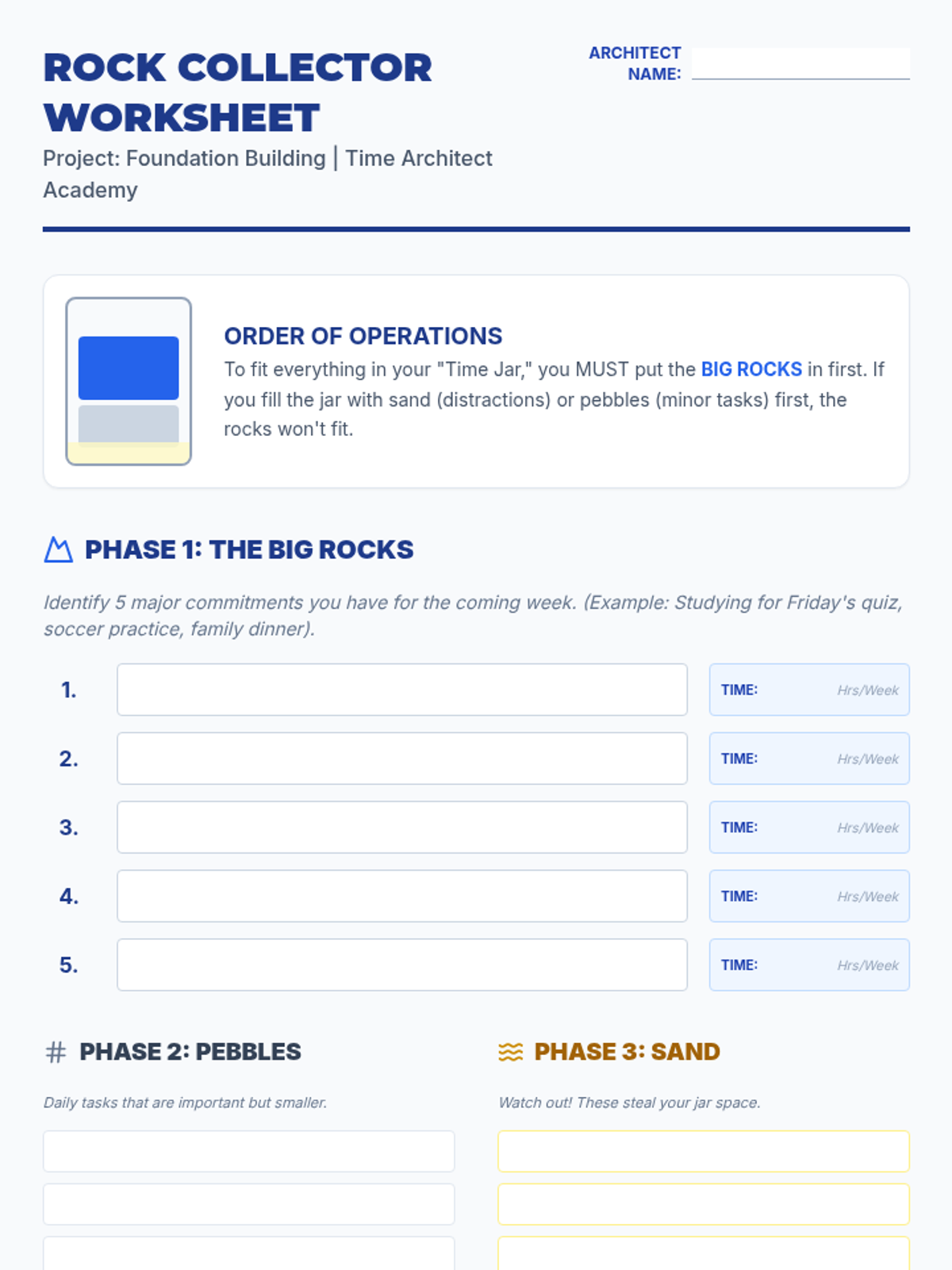
A student worksheet for identifying and quantifying their personal 'Big Rocks', 'Pebbles', and 'Sand' for the upcoming week.
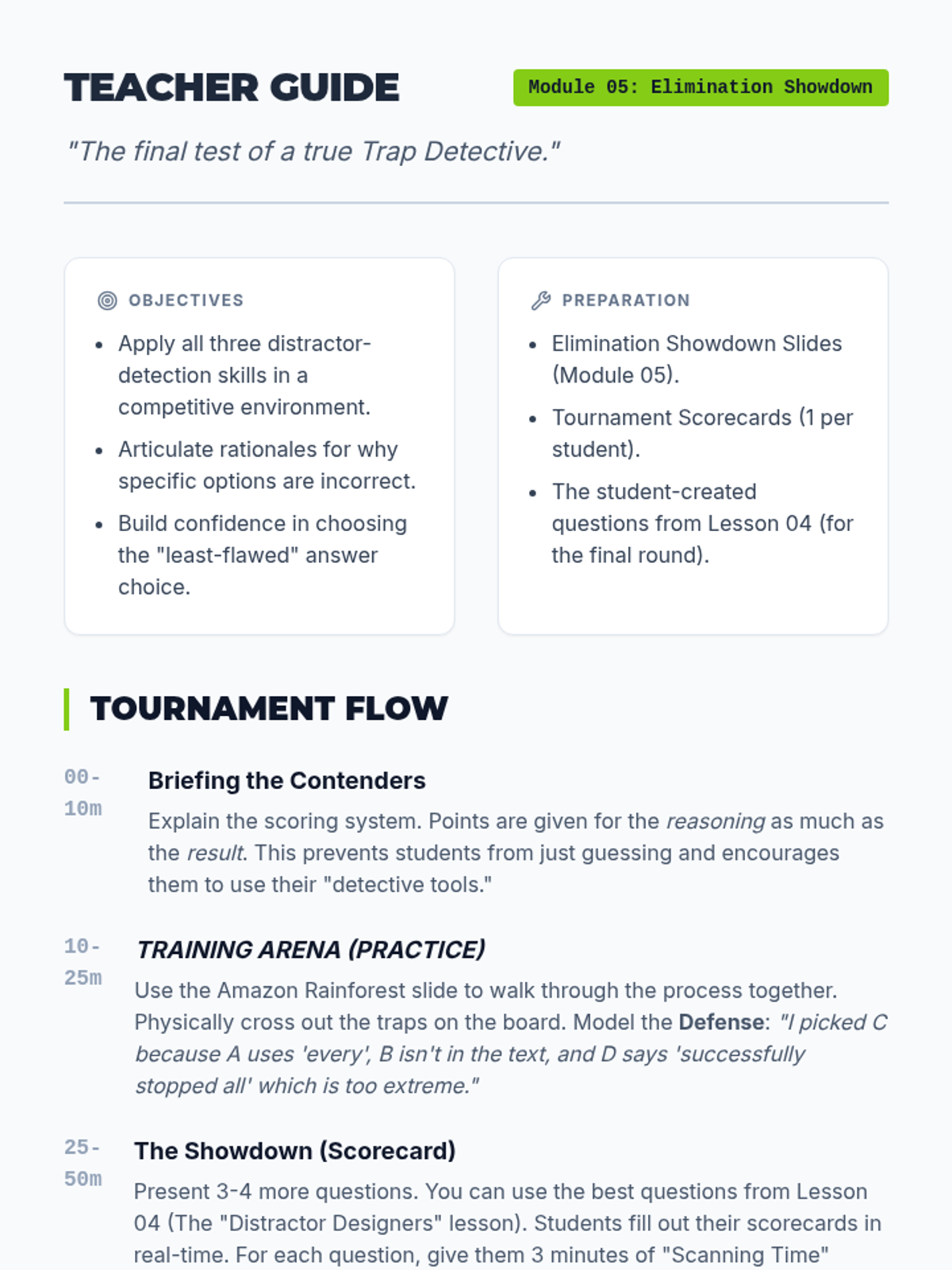
Teacher guide for 'Elimination Showdown'. Includes lesson flow, tournament scoring mechanics, and a detailed analysis of the practice question.
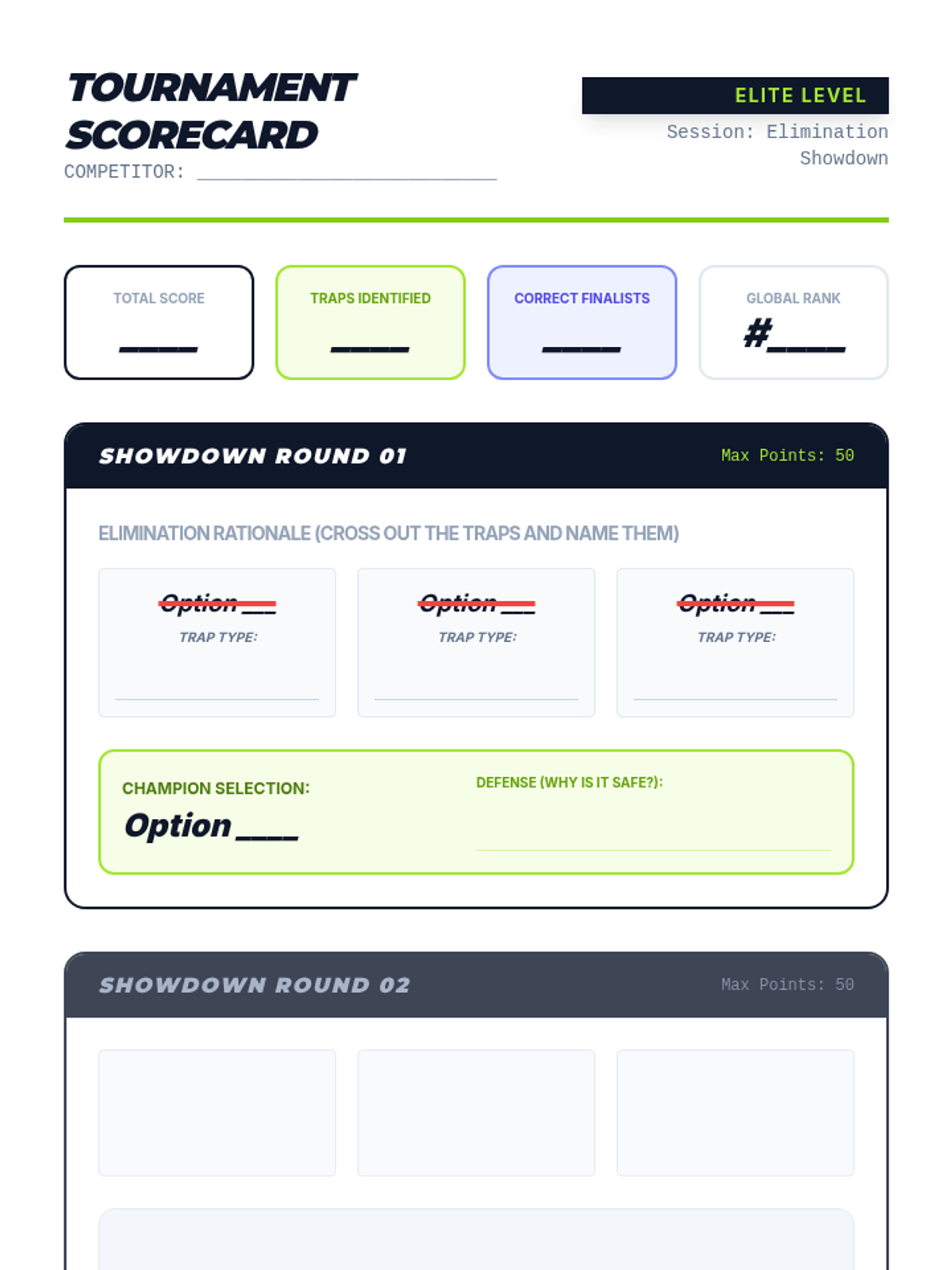
A student tournament scorecard for the final showdown. Features sections for tracking points, identifying trap types for each distractor, and selecting the 'Champion' (correct) answer with a defense.
Introductory slides for 'Elimination Showdown'. Features tournament rules and a walk-through of the 'Elimination Showdown' process with a practice question.
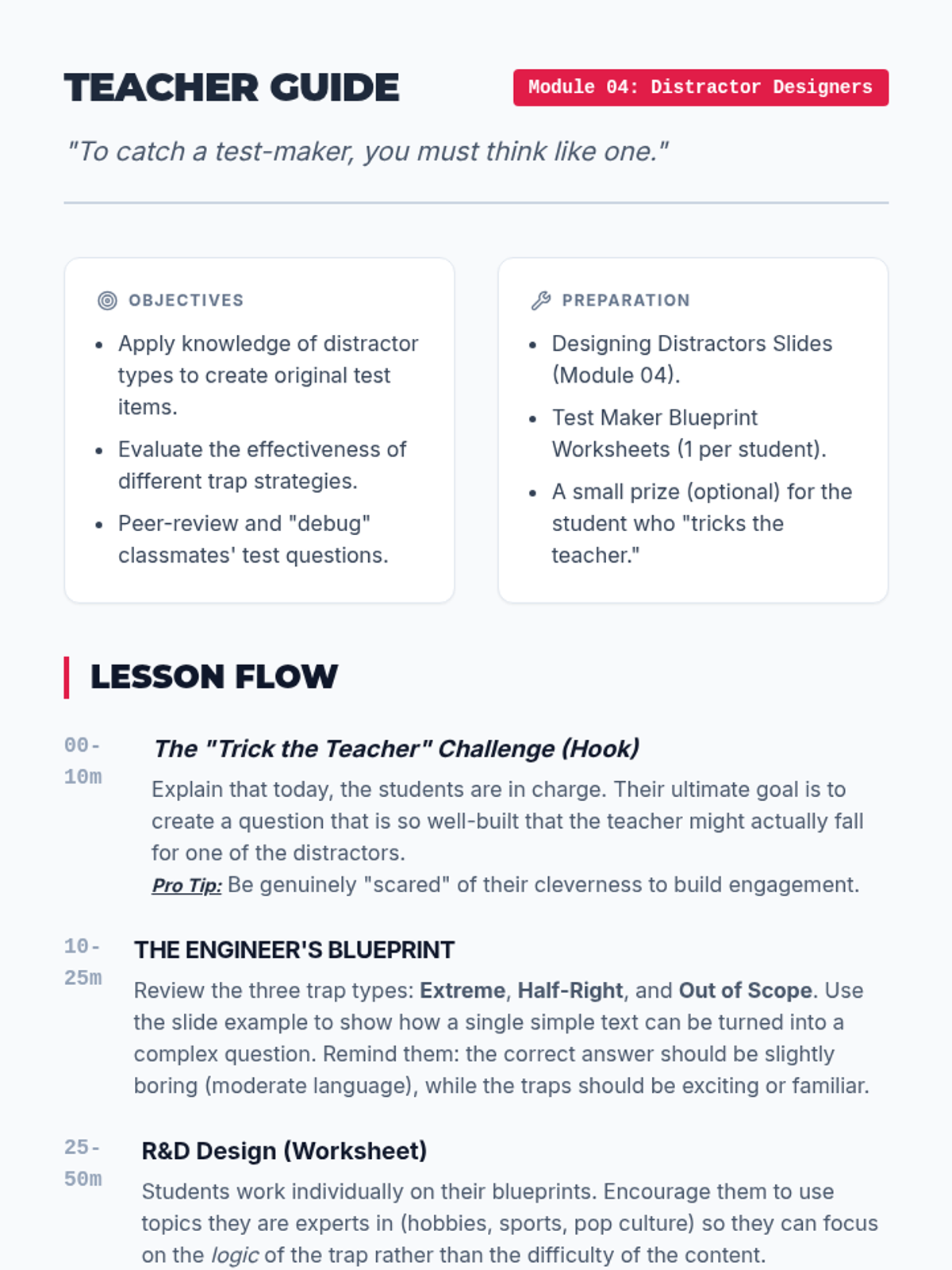
Teacher guide for 'Distractor Designers'. Includes pacing, rubric for the student worksheet, and instructions for the peer-testing phase of the lesson.
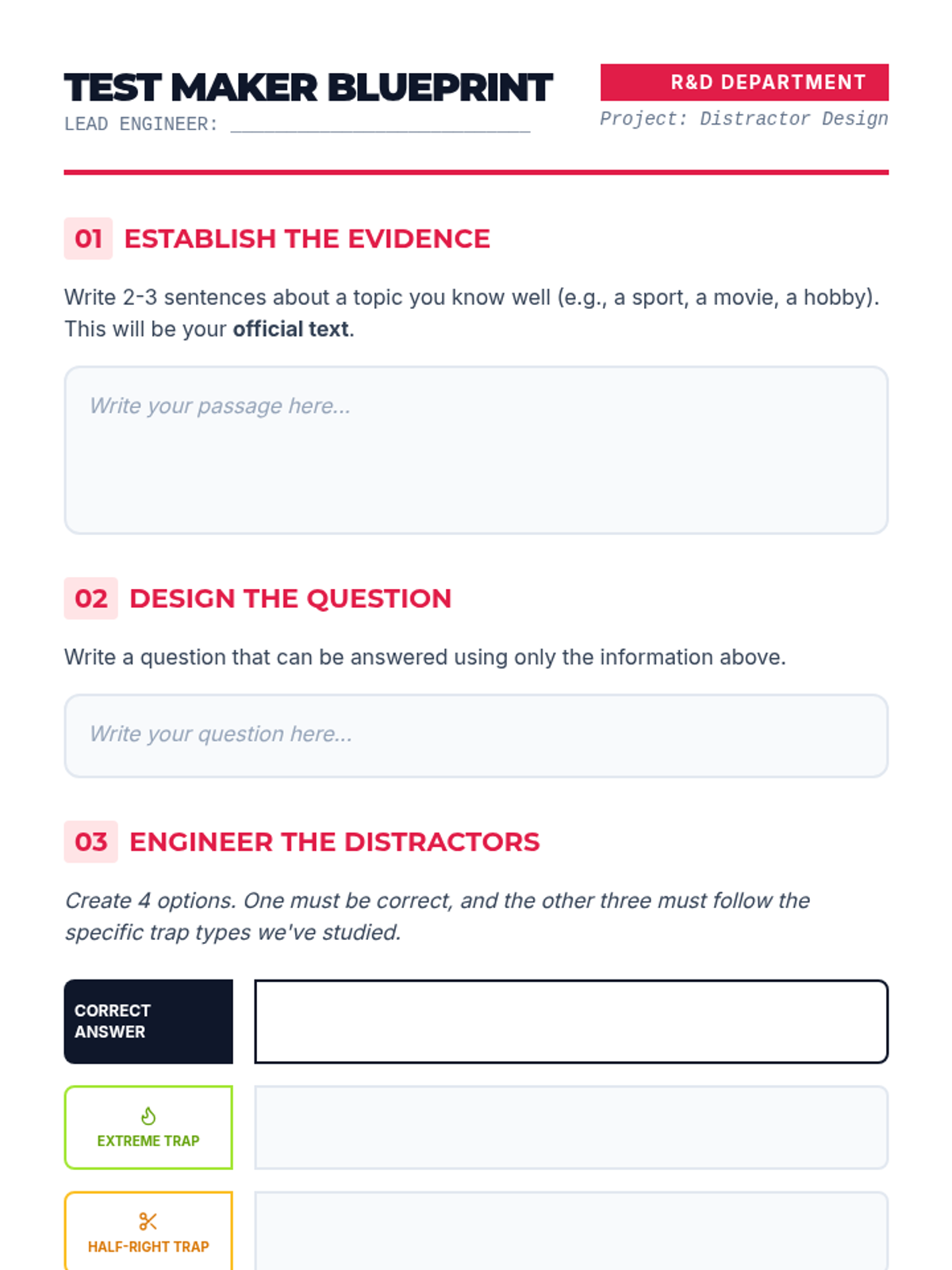
A student design sheet where they create their own multiple-choice question. Students must provide a short text and then engineer four options: one correct answer and three specific distractor types (Extreme, Half-Right, and Out of Scope).
Introductory slides for 'Distractor Designers'. Explains how to create 'Extreme', 'Half-Right', and 'Out of Scope' distractors by thinking like a test-maker.
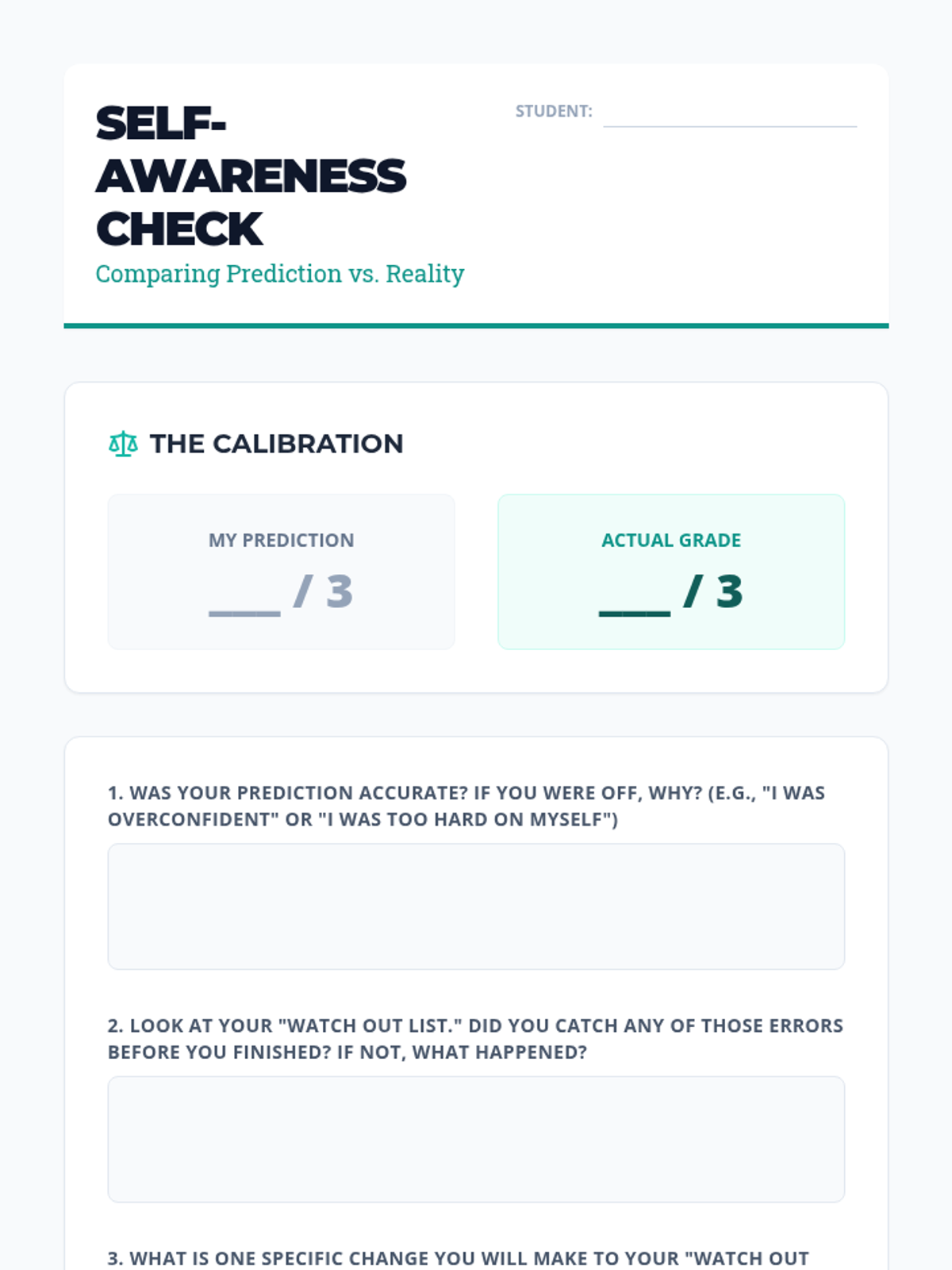
A final reflection sheet for students to compare their quiz predictions with their actual grades, evaluating the effectiveness of their metacognitive strategies.
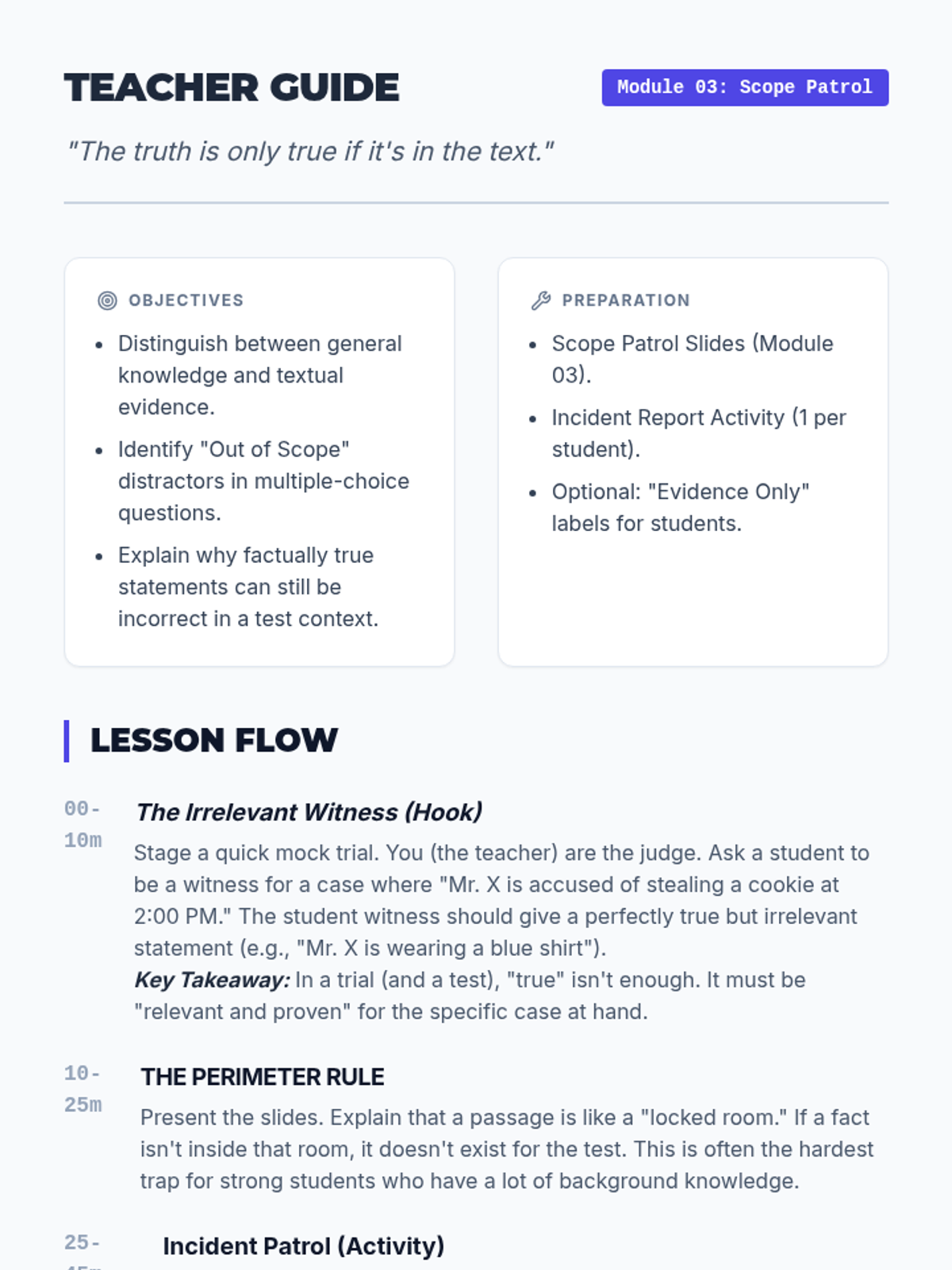
Teacher guide for 'Scope Patrol'. Includes lesson flow, mock trial hook instructions, and a detailed answer key for the Incident Report activity.
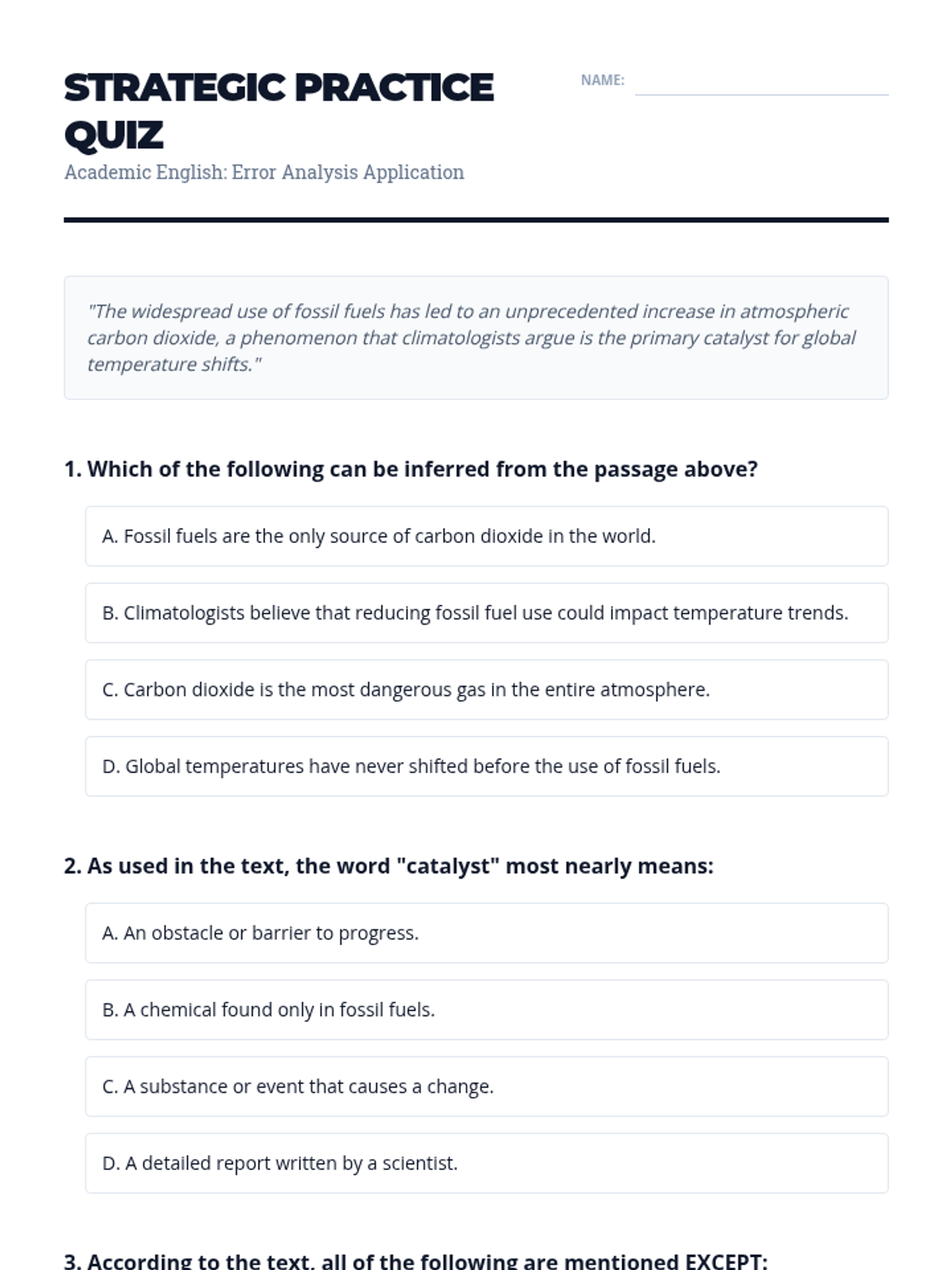
A short Academic English quiz designed to test students' application of their "Watch Out List," including a mandatory pre-grading self-reflection and score prediction section.
Final slides for the sequence focusing on the "Showtime" assessment. It introduces the score prediction challenge and real-time error analysis.
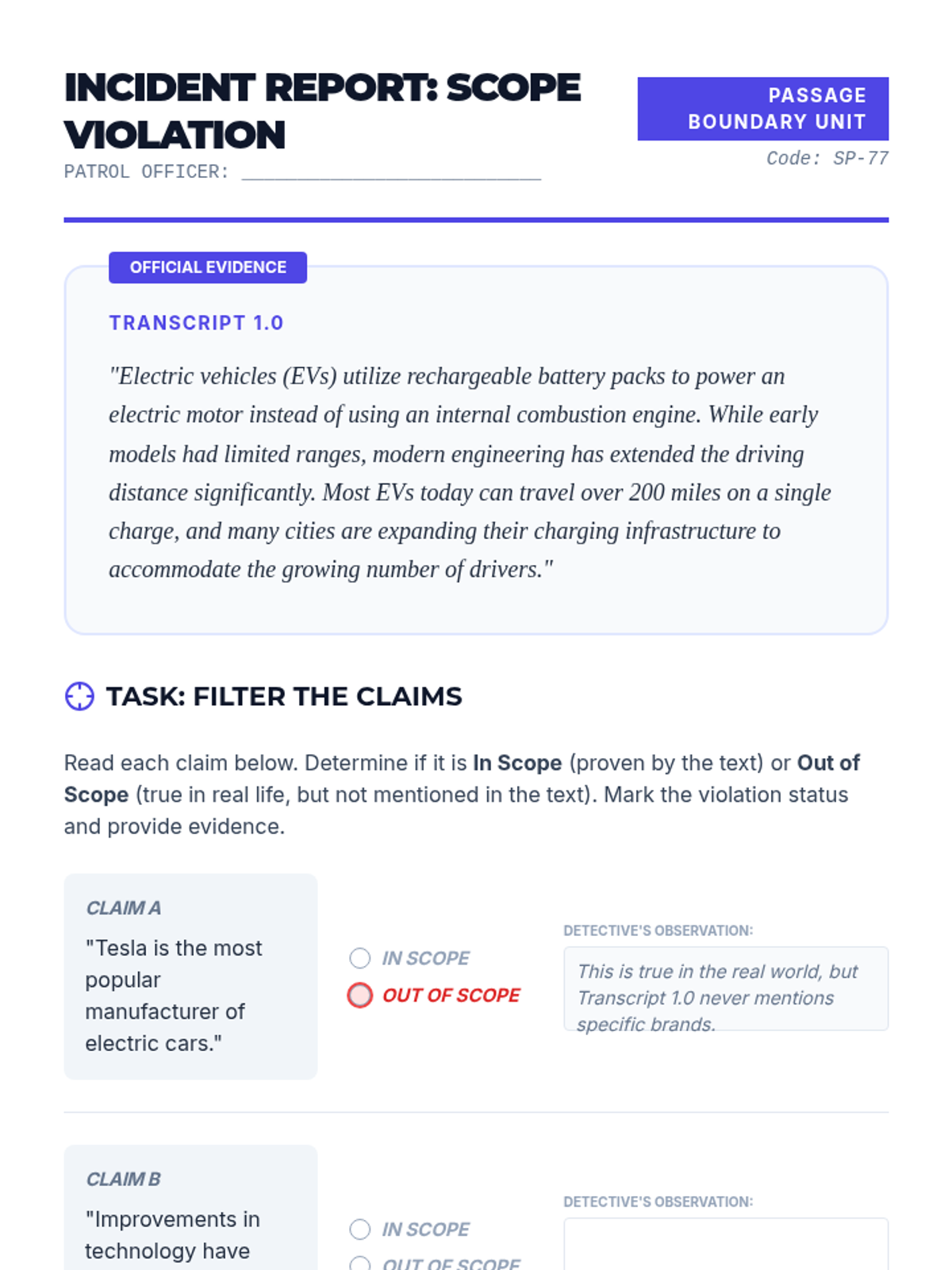
A student activity for identifying out-of-scope distractors. Features an evidence passage and a 'Incident Report' where students categorize claims as 'In Scope' or 'Out of Scope' based on textual evidence.
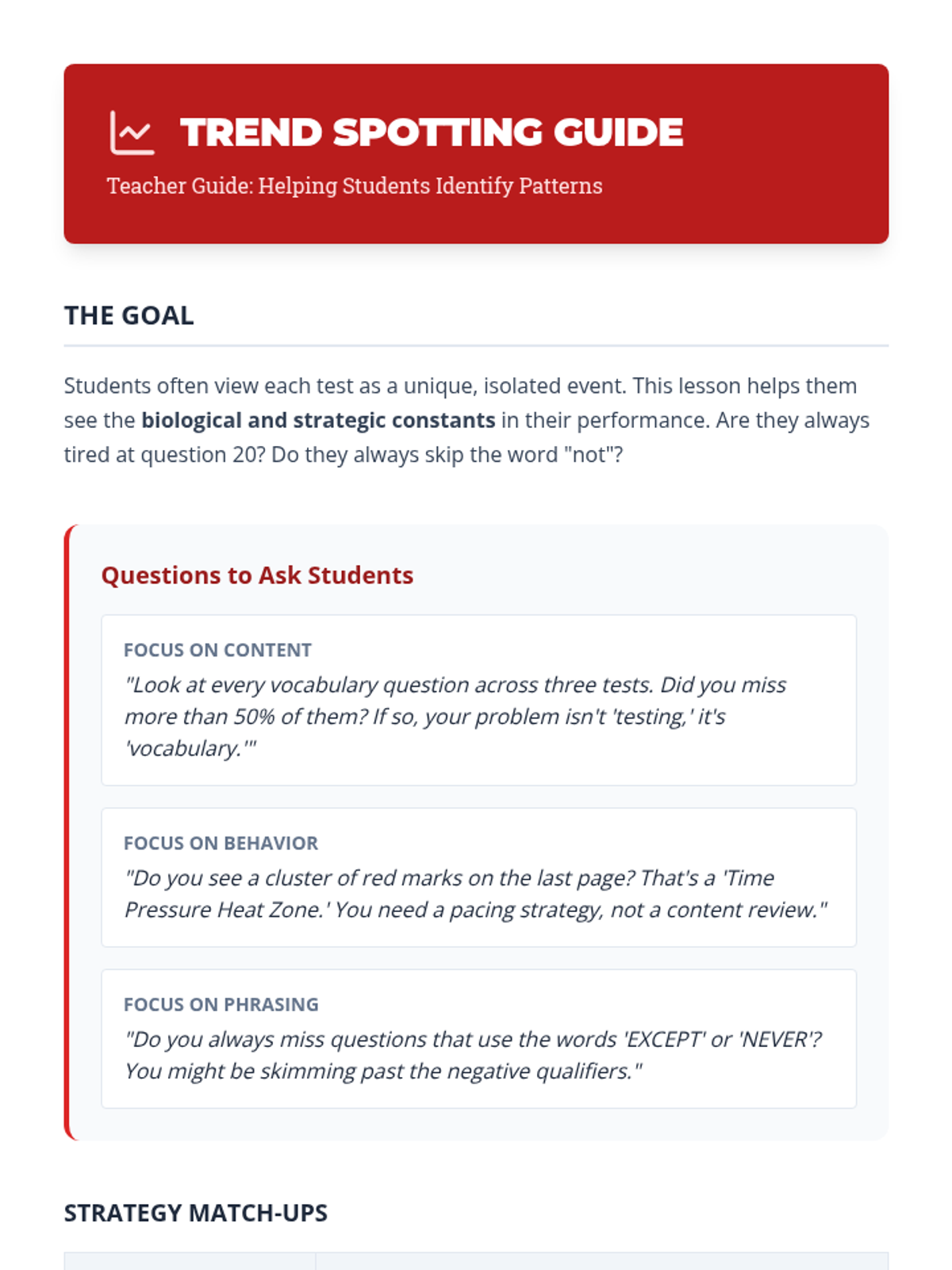
A guide for teachers to help students interpret their error data and connect patterns to specific defensive strategies.
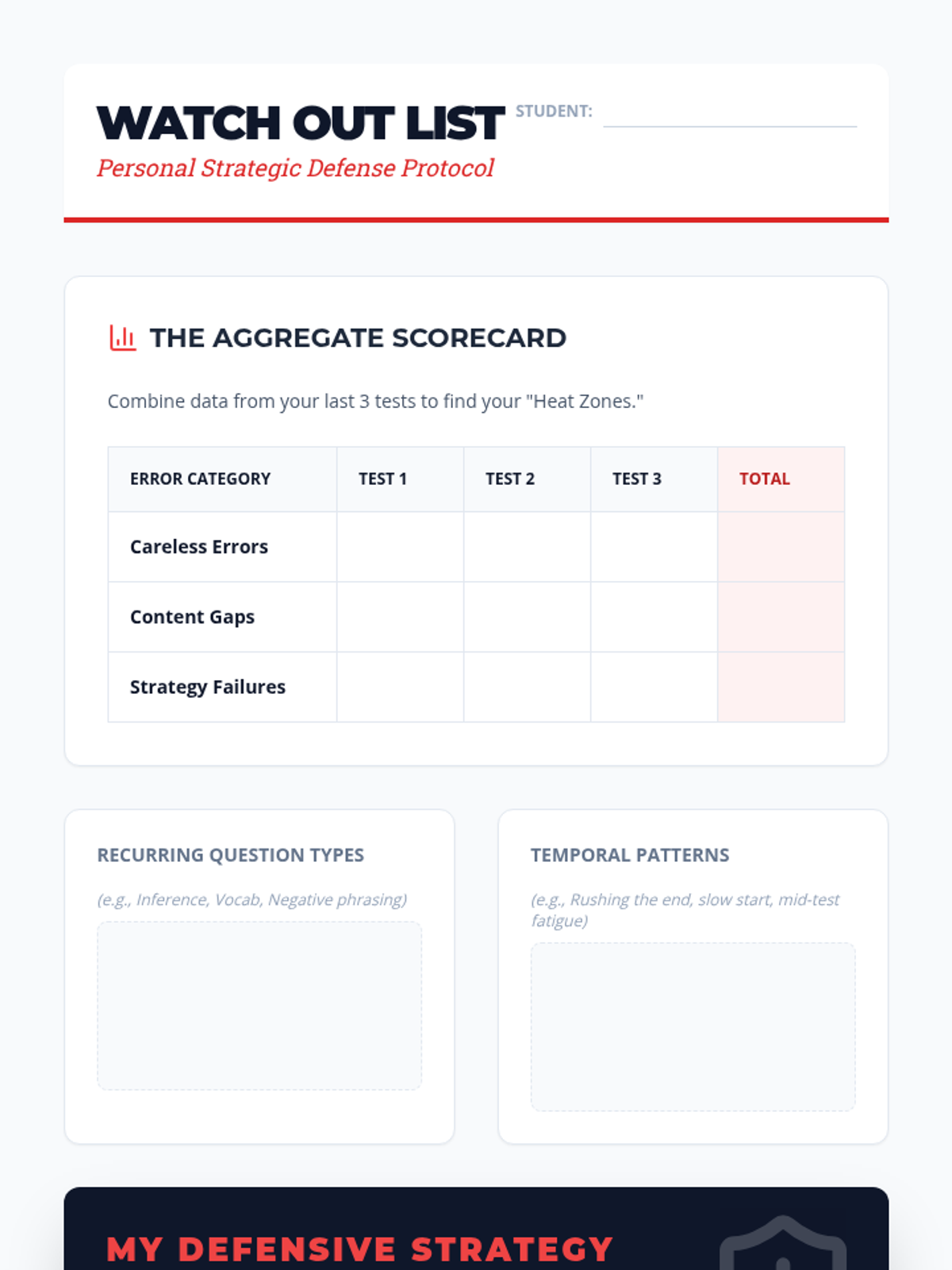
A student worksheet for aggregating error data across multiple assessments and distilling those patterns into a "Watch Out List" for future defense.
Introductory slides for 'Scope Patrol'. Explains the concept of 'Out of Scope' distractors—statements that are factually true but not supported by the specific text provided.
Slides for Lesson 4 that use a "Heatmap" analogy to teach students how to aggregate error data and identify recurring personal patterns.
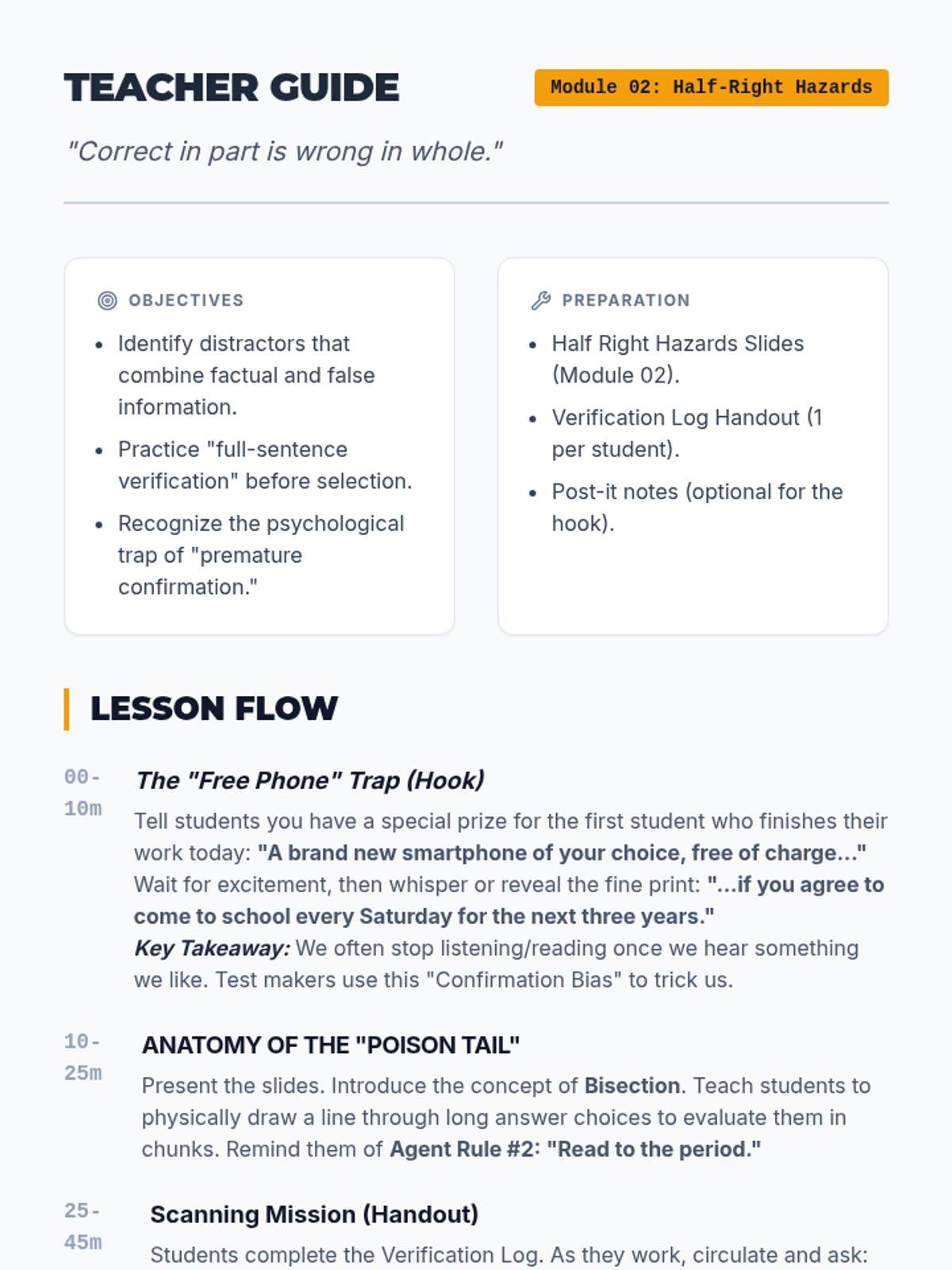
Teacher guide for 'Half Right Hazards'. Includes hook instructions (the 'Free Phone' offer), pacing guide, and detailed answer key for the Verification Log handout.
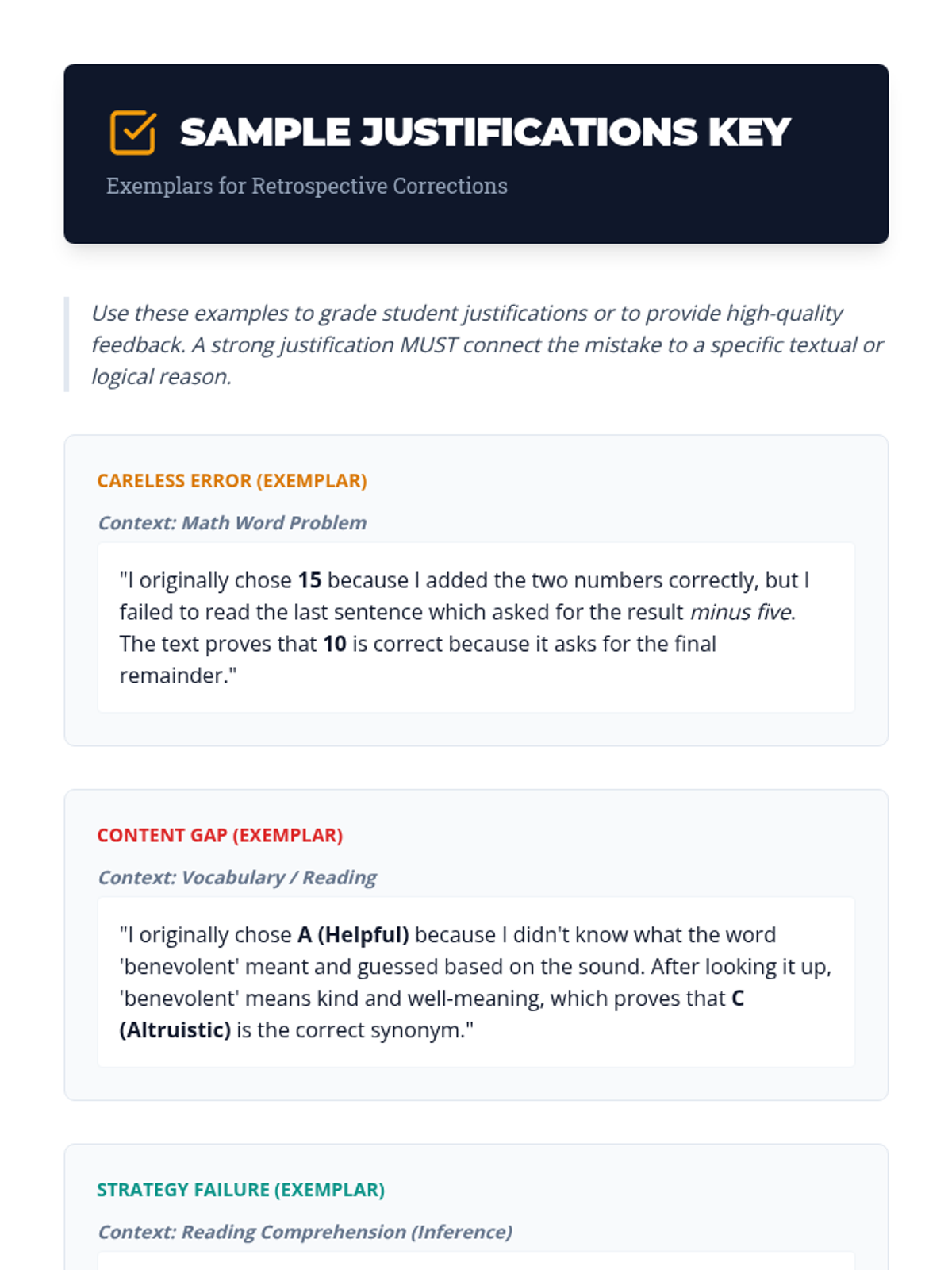
An answer key/exemplar guide for teachers to evaluate student justification statements, showing the difference between weak and mastery-level corrections.
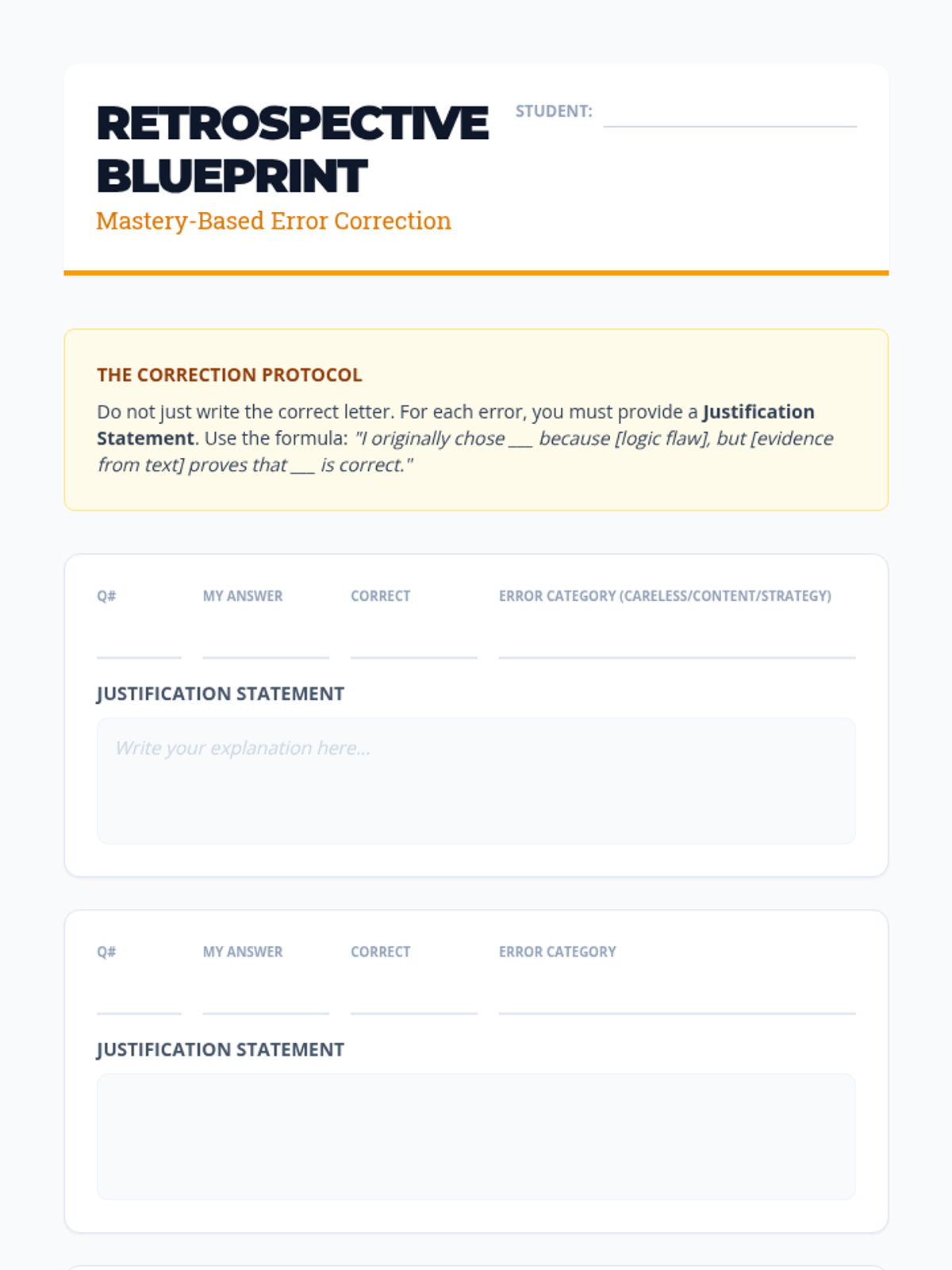
A template for students to perform deep error corrections, requiring them to write justification statements using a specific logic-based formula.
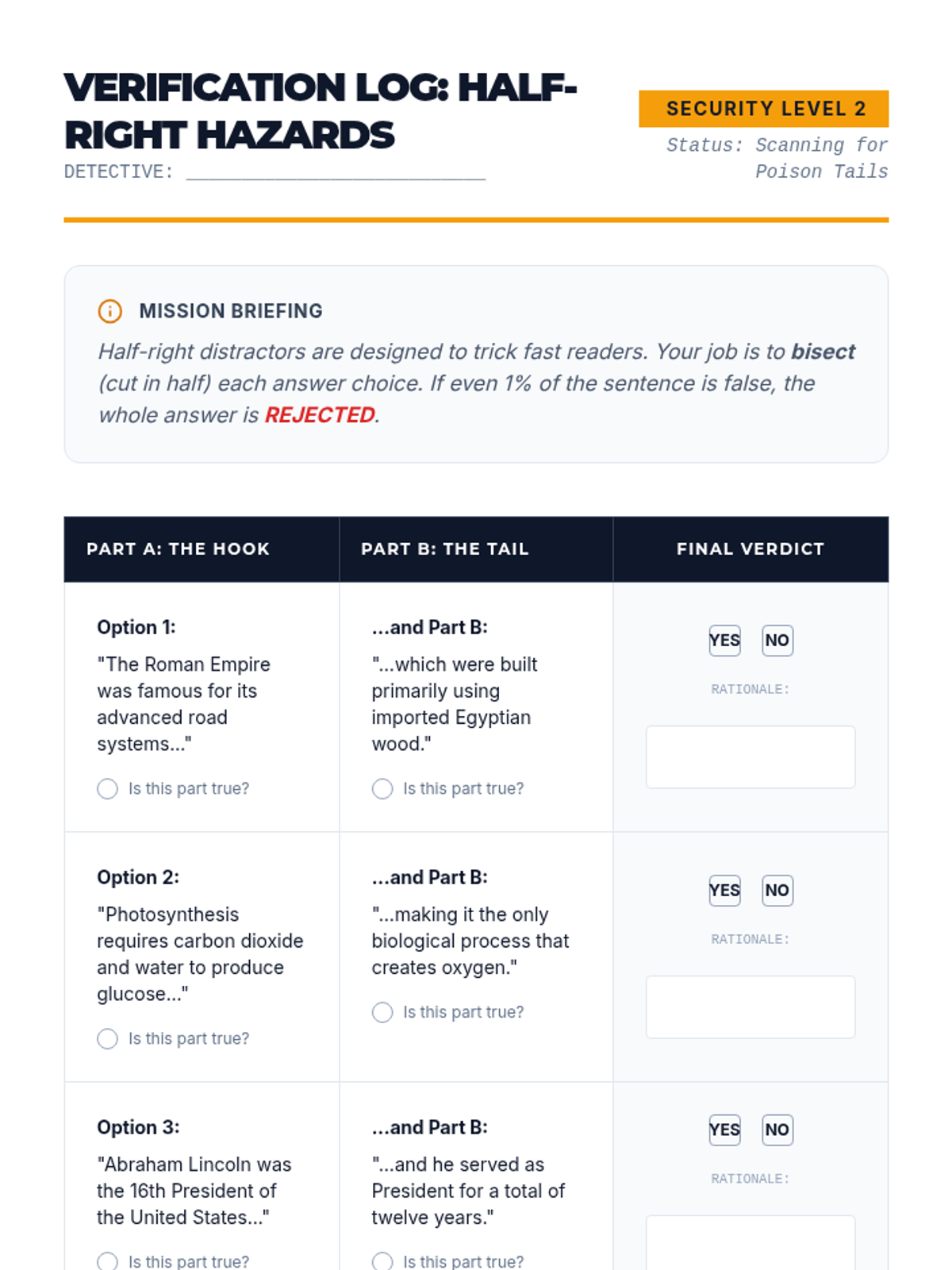
A student worksheet for identifying half-right distractors. Features a 'Verification Log' table where students dissect answer choices into two parts and evaluate the accuracy of each half.
Slides for Lesson 3 introducing the "Justified Fix" method. It emphasizes that students must explain why they were wrong and why the new answer is right using evidence.
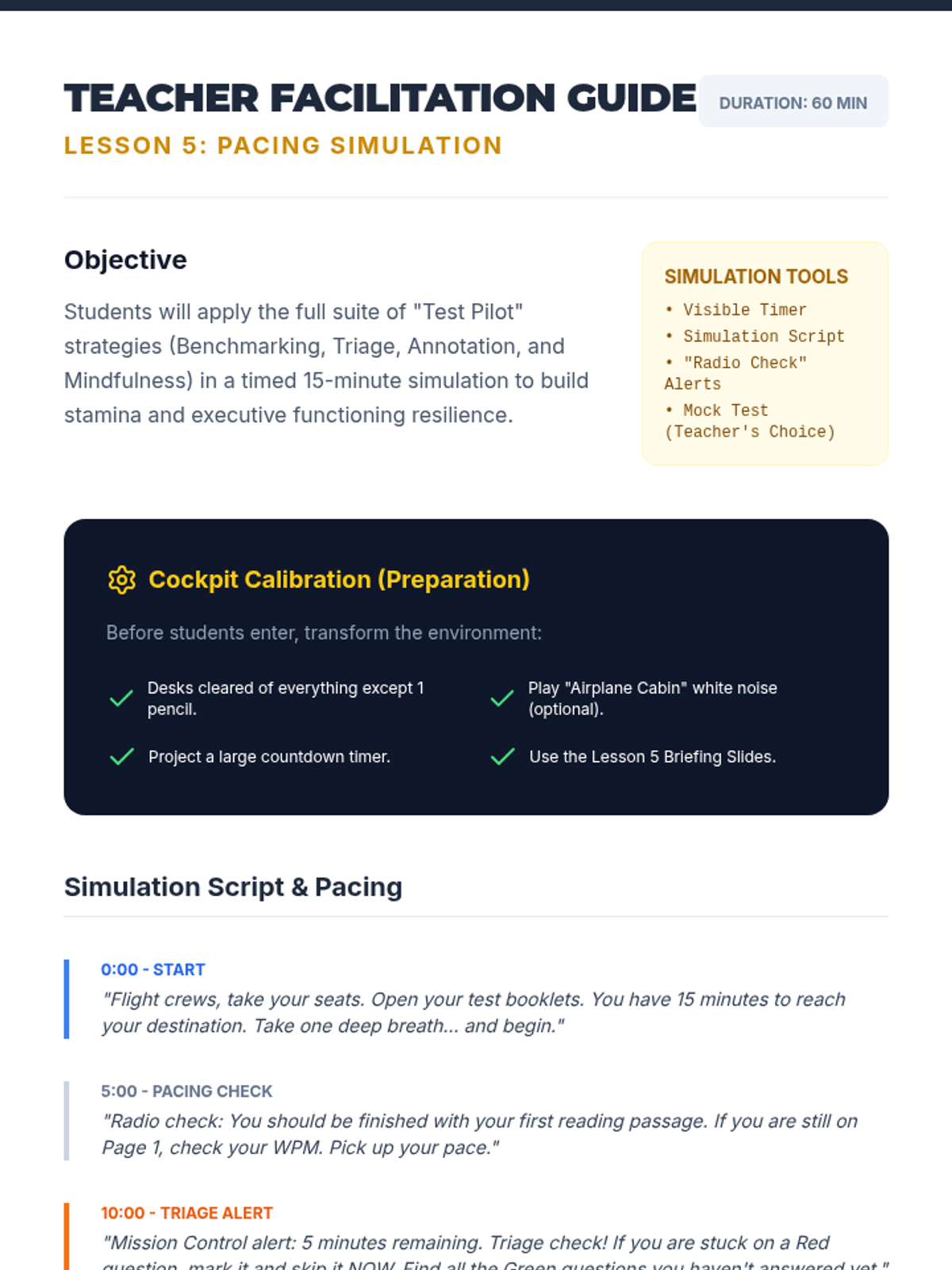
A teacher guide for Lesson 5 including the simulation script, timing intervals, and a guide for the post-simulation debrief and student certification.
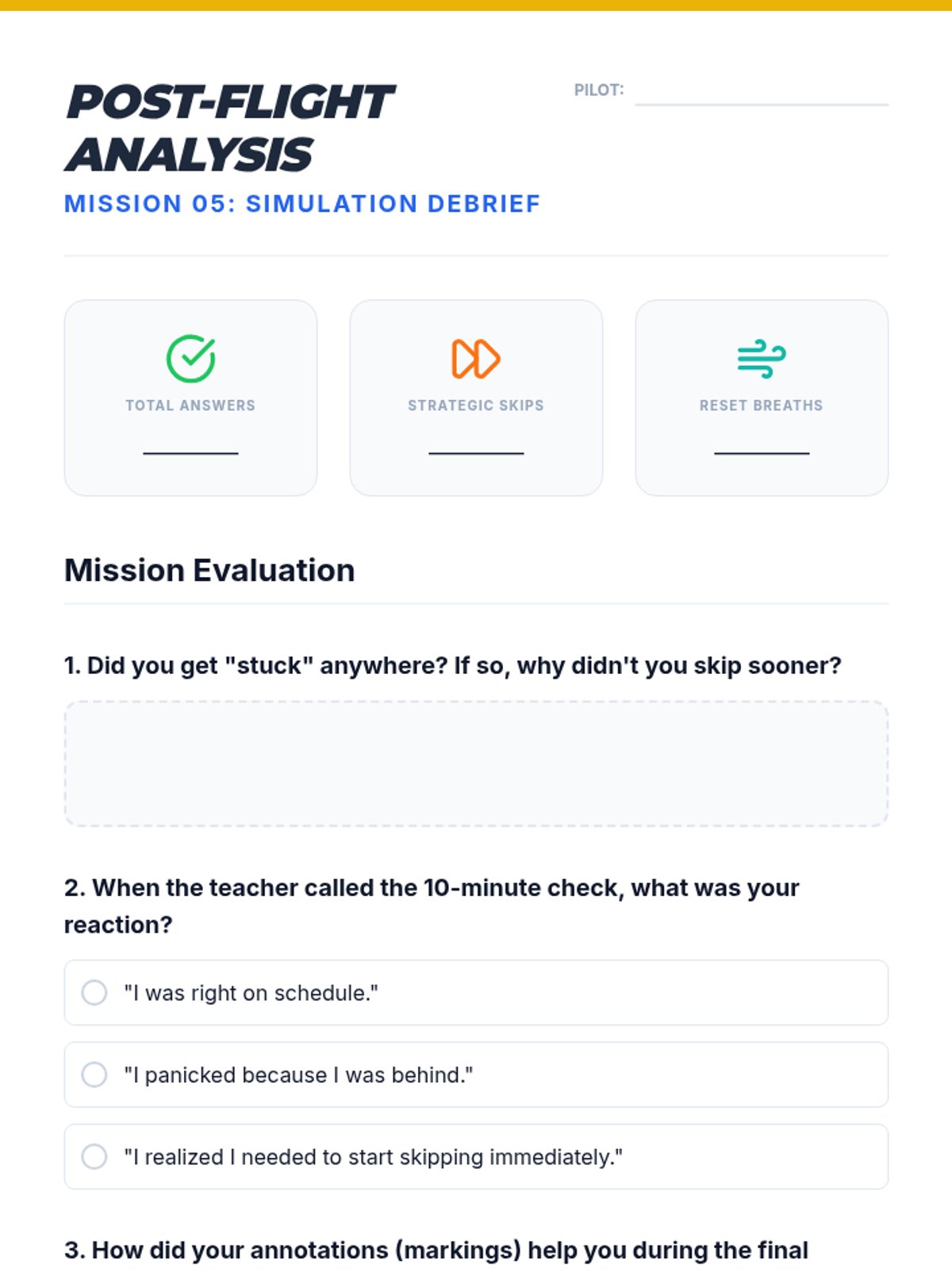
A student reflection sheet and goal-setting document for the final pacing simulation, helping students create a personalized 'Test Protocol' for future exams.
Slides for Lesson 5, the final simulation briefing, reviewing all Test Pilot Academy strategies and providing time-check benchmarks for the mock exam.
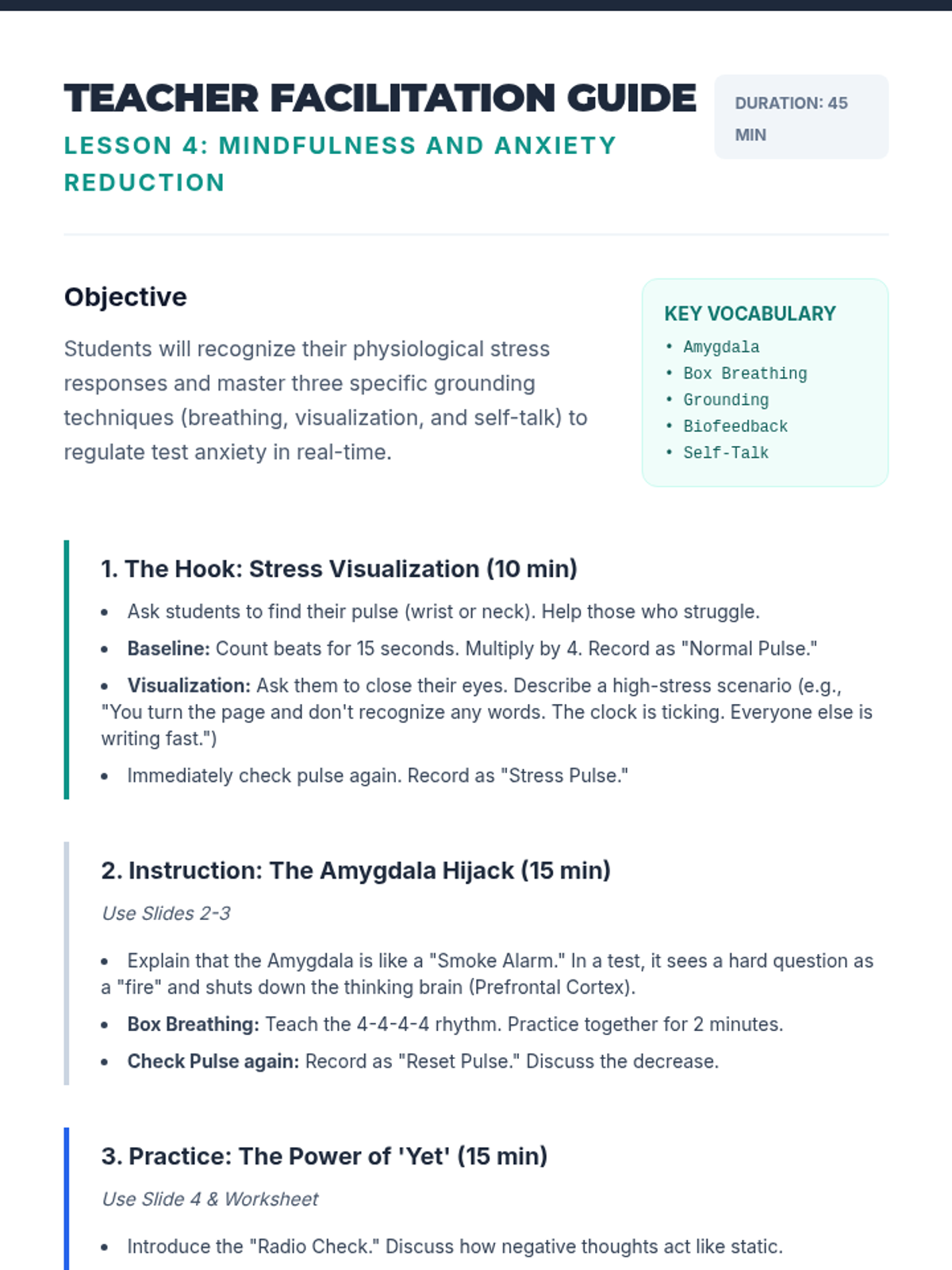
A teacher guide for Lesson 4 including instructions for the biofeedback pulse check, grounding exercise facilitation, and strategies for student buy-in using the Test Pilot theme.
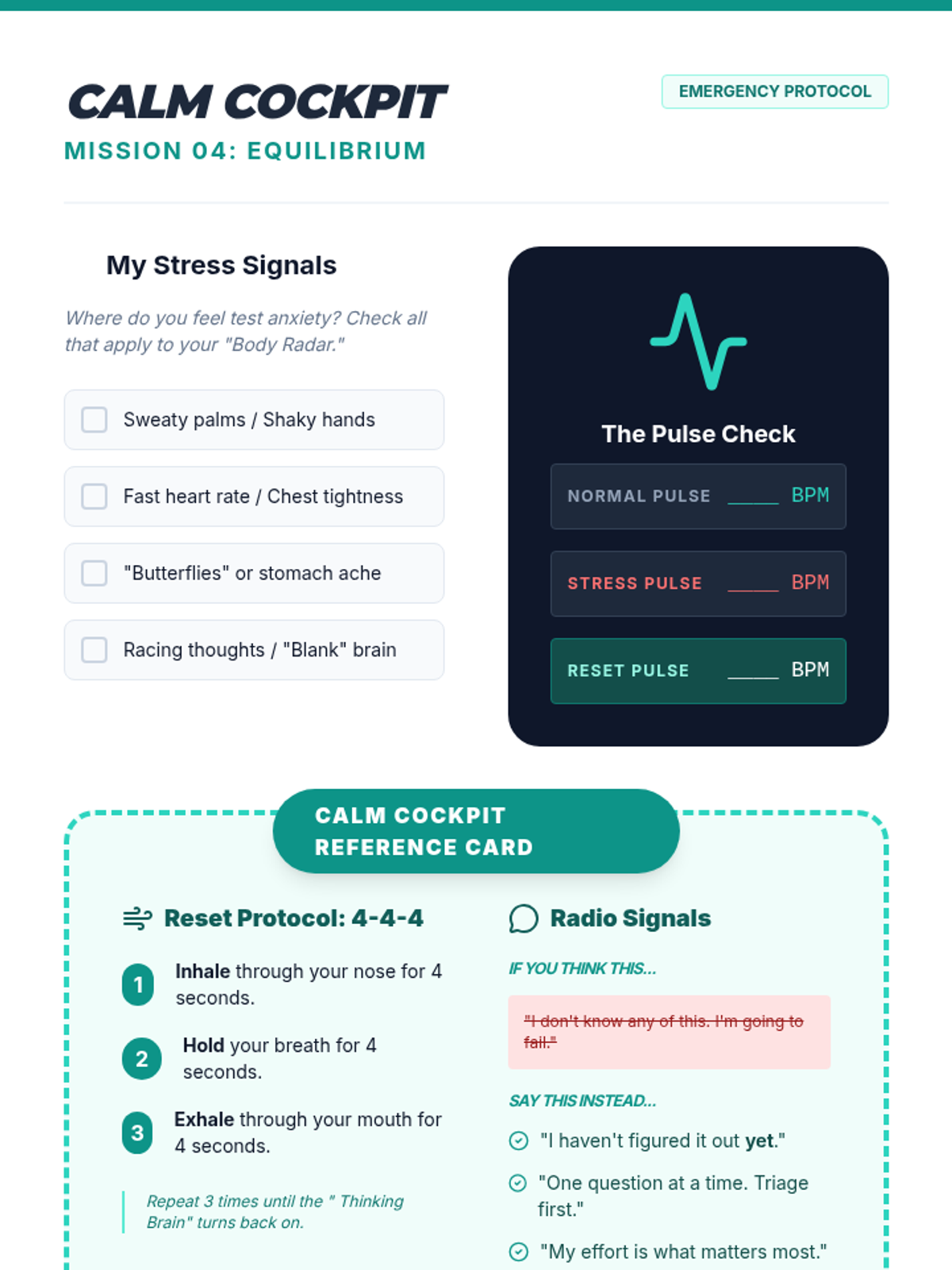
A student resource featuring an anxiety-mapping activity and a cutout 'Calm Cockpit' reference card with grounding techniques and positive self-talk prompts.
Slides for Lesson 4 teaching mindfulness and anxiety reduction techniques for testing, focusing on the physiology of stress and grounding exercises.
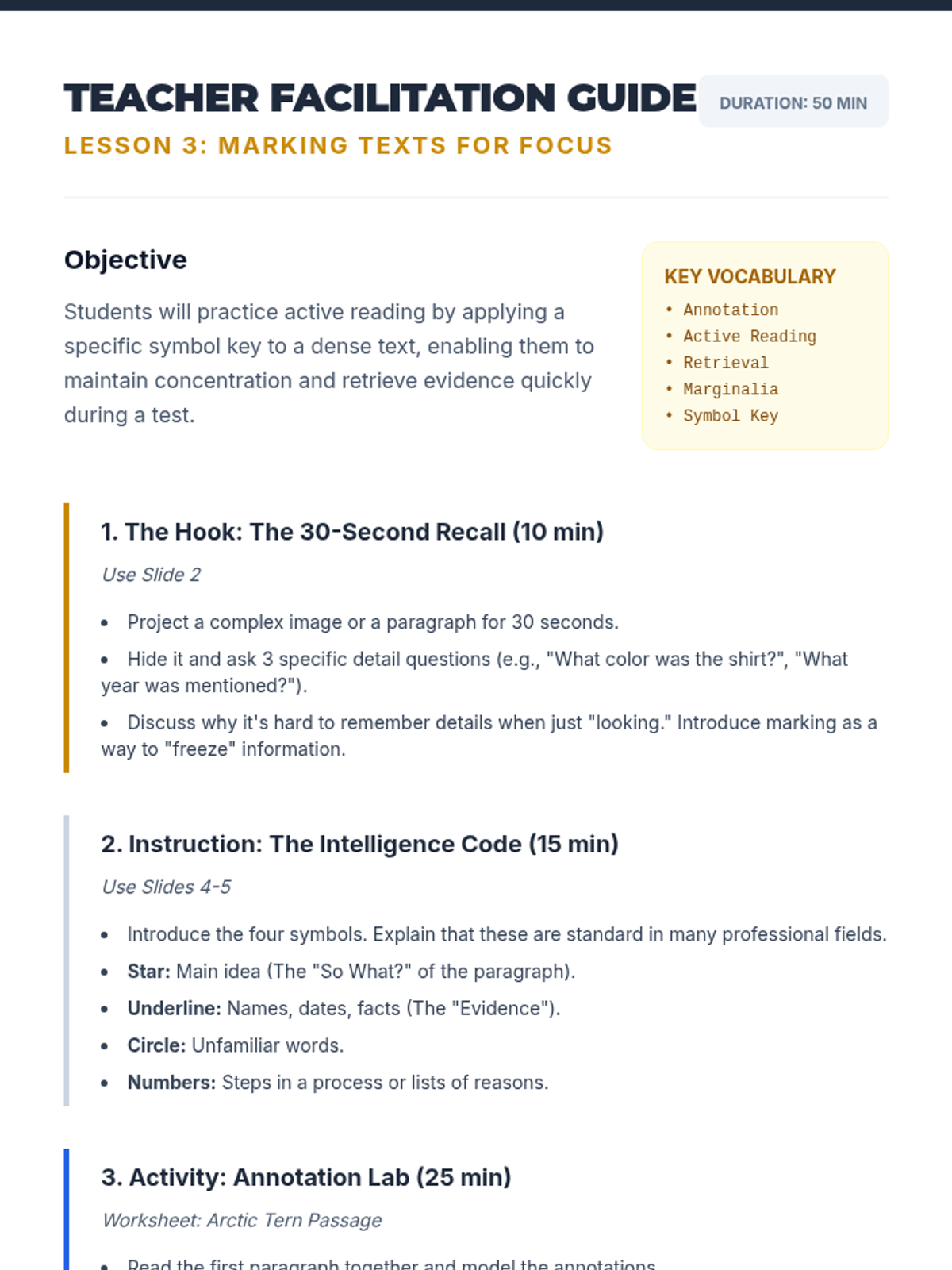
A teacher guide for Lesson 3 including instructions for the recall challenge, a model of the annotated passage, and an answer key for retrieval questions.
A student worksheet for practicing text annotation using a specific symbol key, featuring a dense passage about Arctic Tern migration and retrieval questions.
Slides for Lesson 3 teaching active reading strategies through the 'Intelligence Gathering' theme, focusing on a specific annotation symbol key for testing.
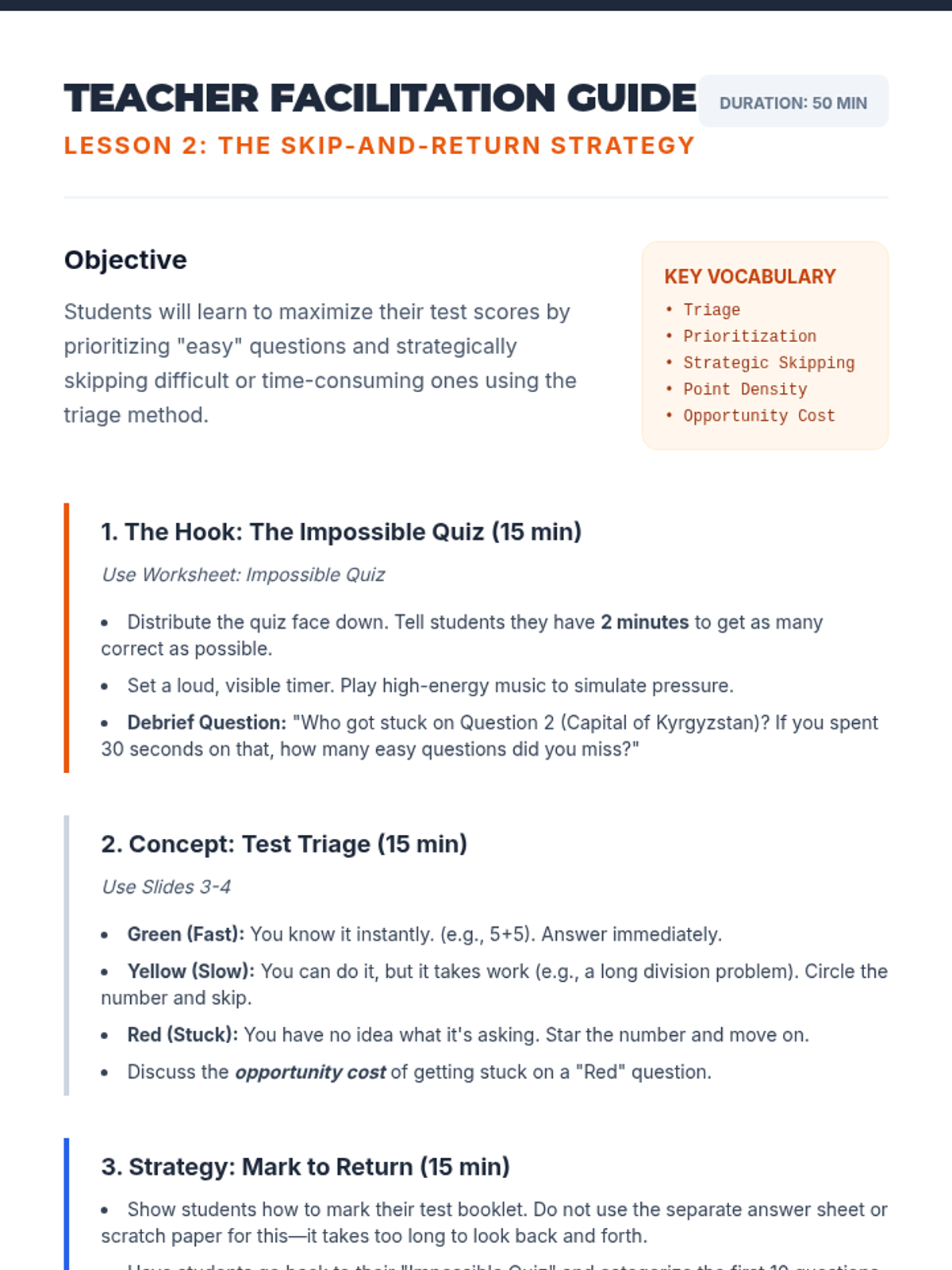
A teacher guide for Lesson 2 focusing on the triage method, managing the 'Impossible Quiz' activity, and addressing common student psychological barriers to skipping questions.
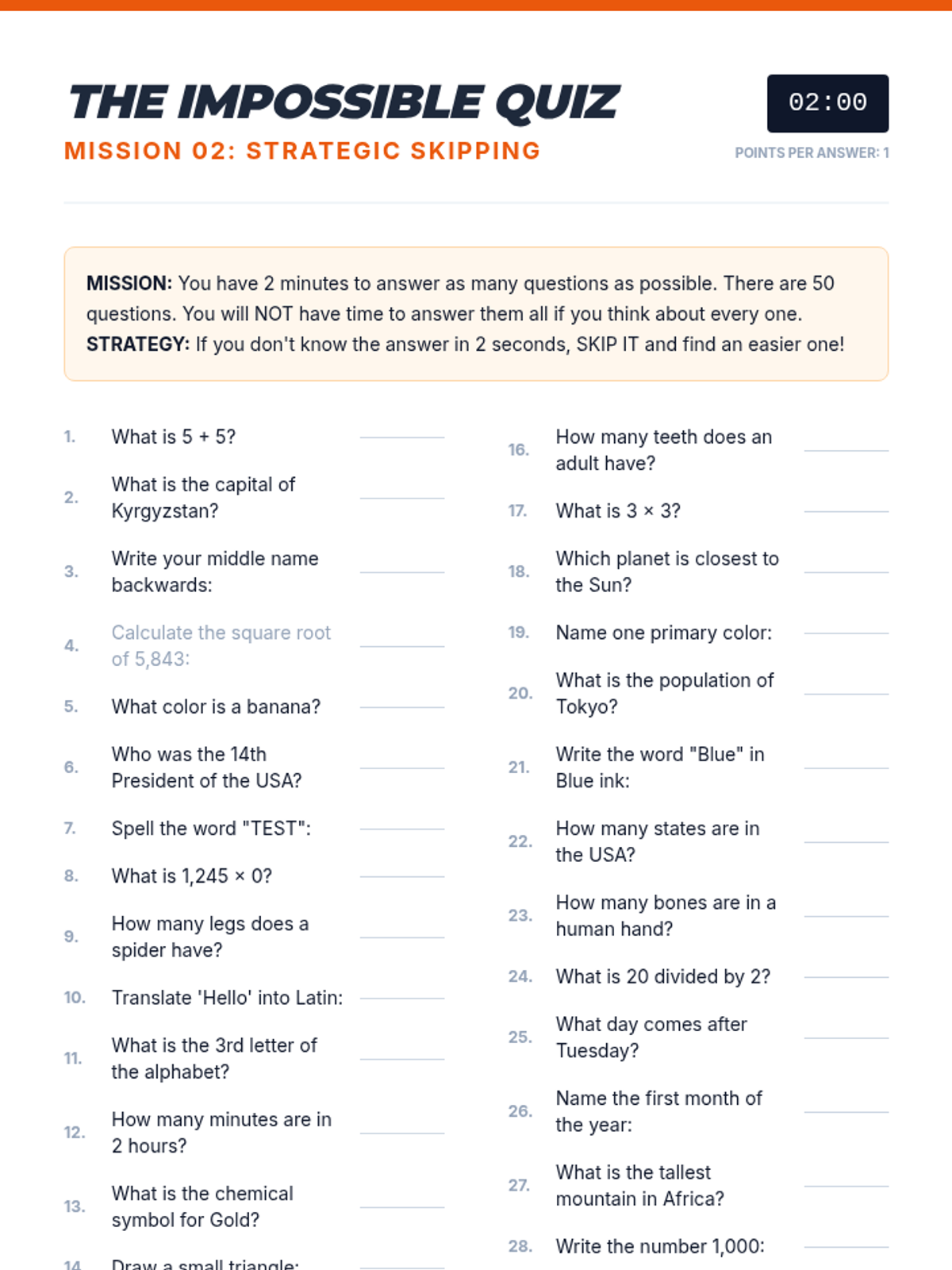
An activity sheet featuring the 'Impossible Quiz' challenge, designed to force students to use skipping and prioritization strategies under a tight time limit.
Slide deck for Lesson 5, translating simulation strategies like "Margin" and "Pivoting" to real-life weekly planning for 7th grade students.
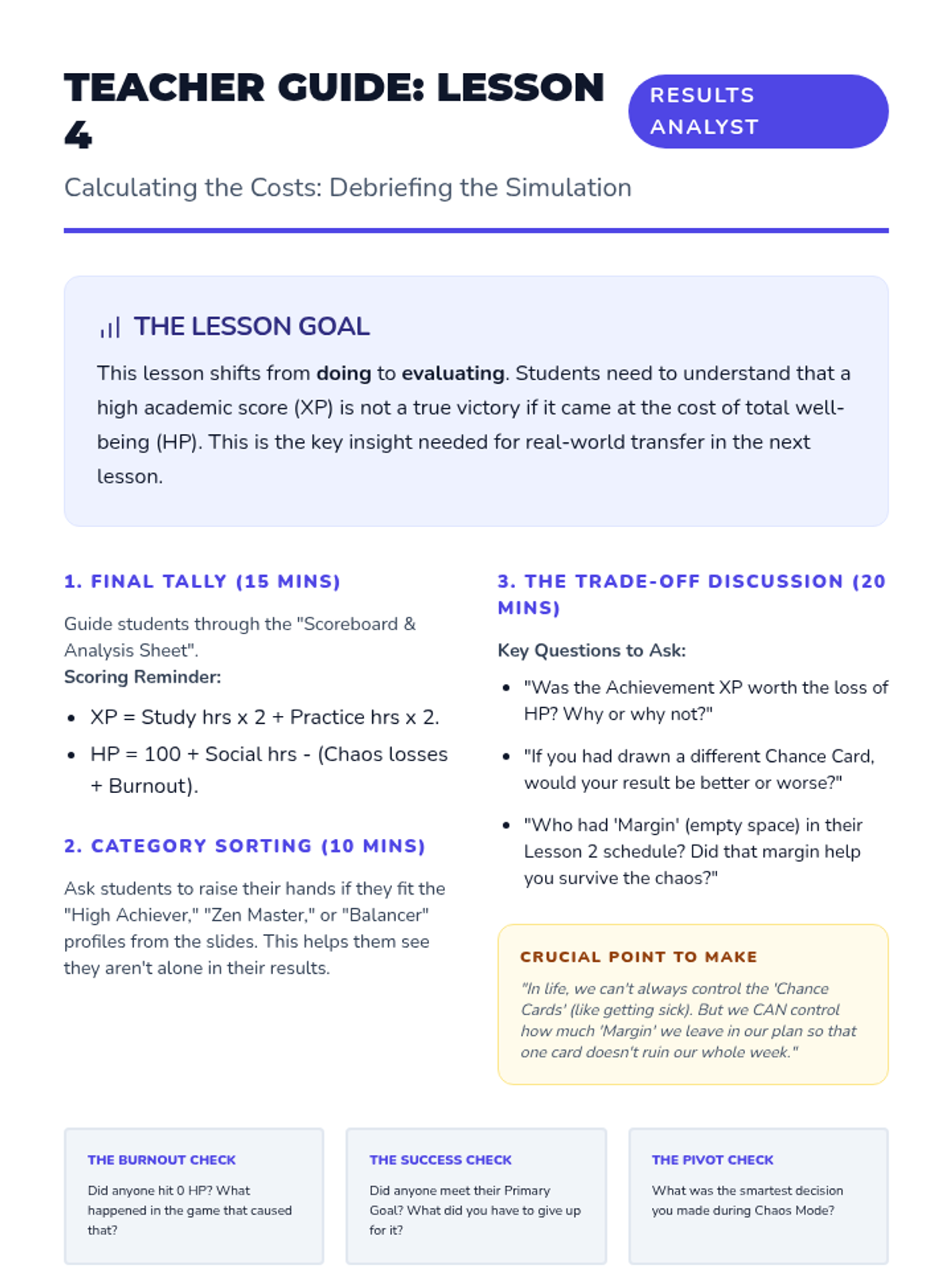
Facilitation guide for Lesson 4, focusing on the scoring debrief, analyzing trade-offs (Achievement vs. Well-being), and leading the post-simulation discussion.
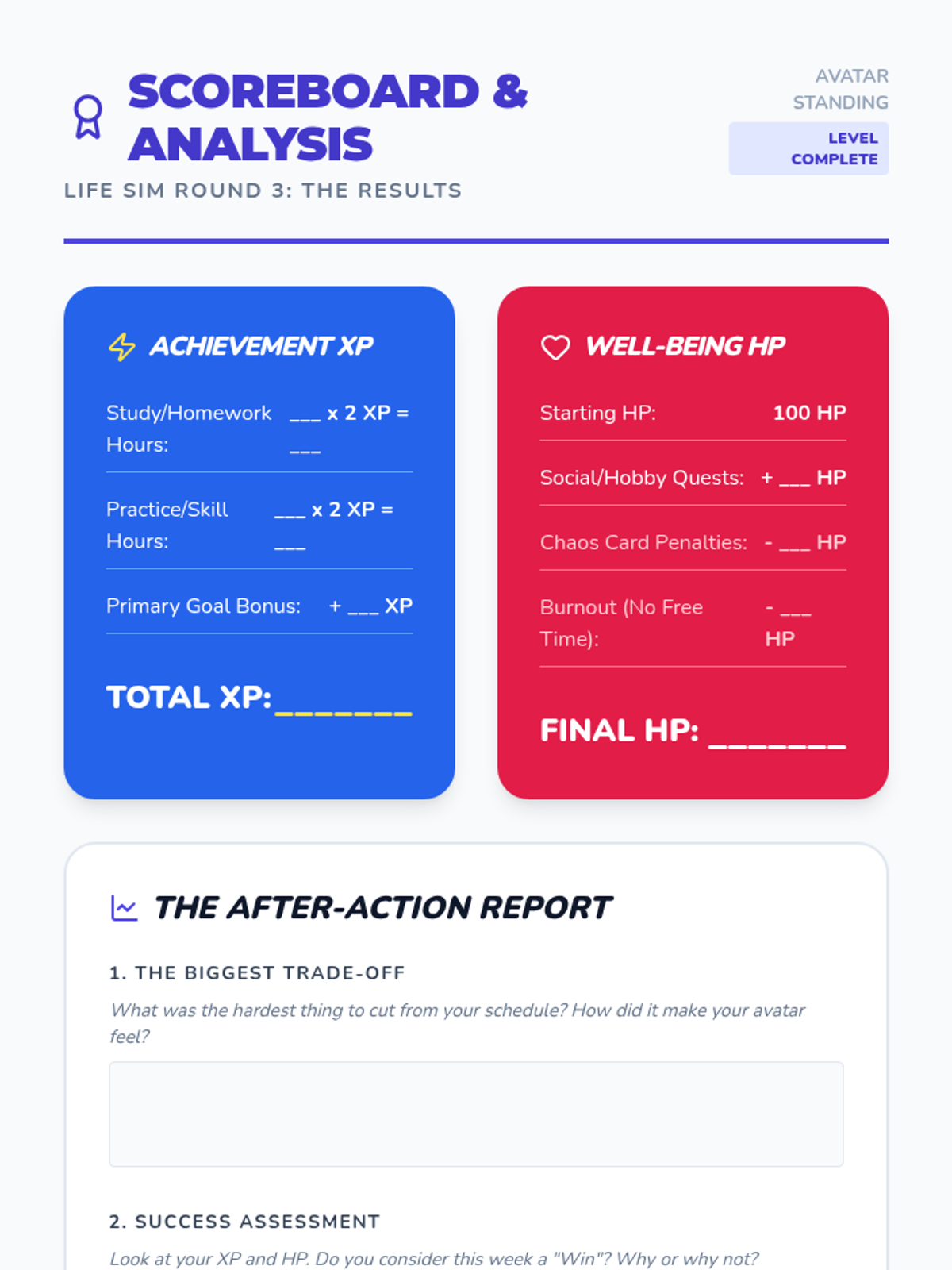
A student worksheet for calculating final simulation scores (XP vs HP) and reflecting on the impact of trade-offs and priority management decisions.
Slides for Lesson 2 teaching the 'triage' method of test-taking, categorizing questions into Fast, Slow, and Stuck to maximize points within time limits.
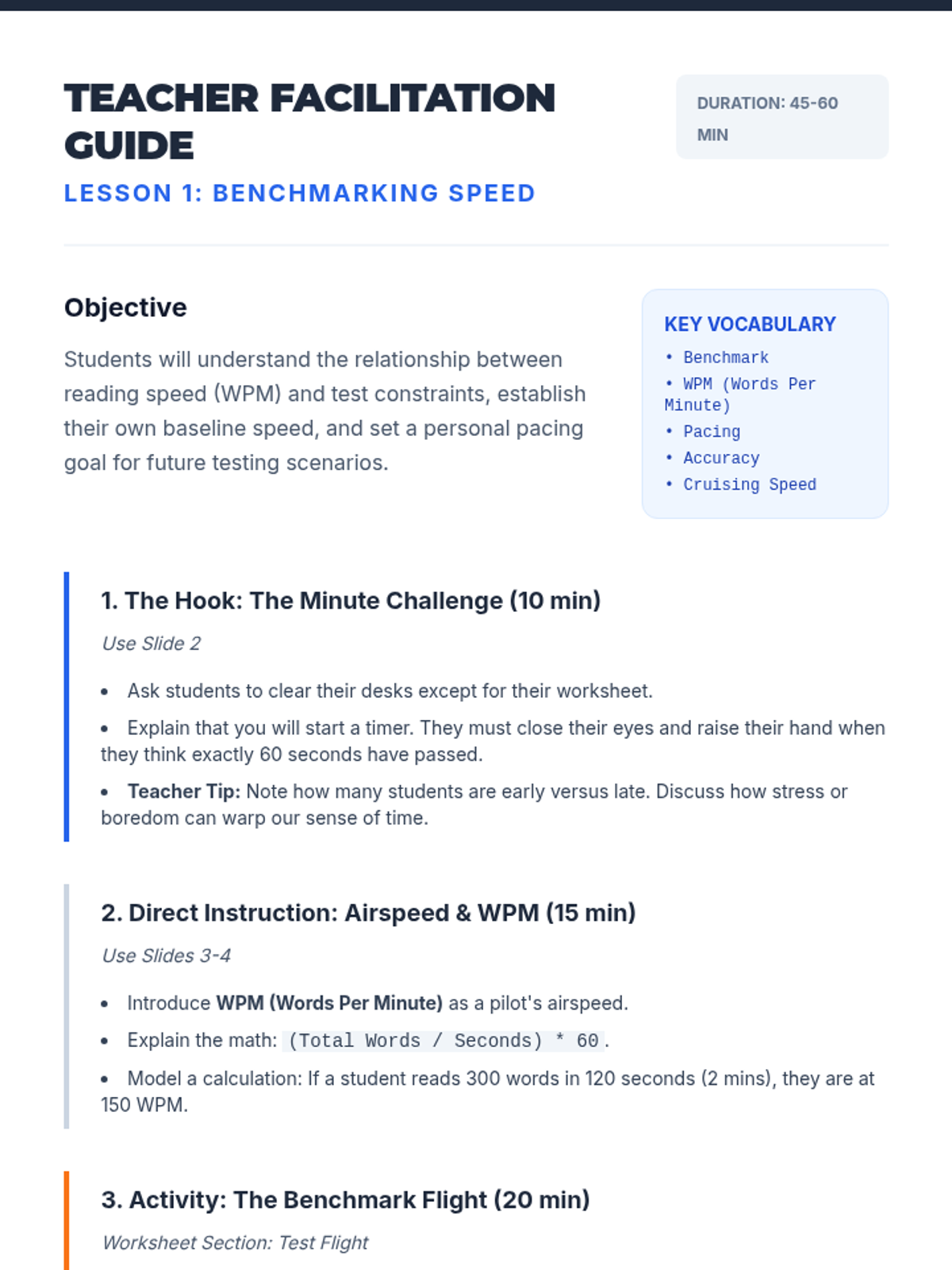
A comprehensive teacher guide for Lesson 1, including objective, procedural steps for the stopwatch challenge, WPM calculation modeling, answer key, and differentiation strategies.
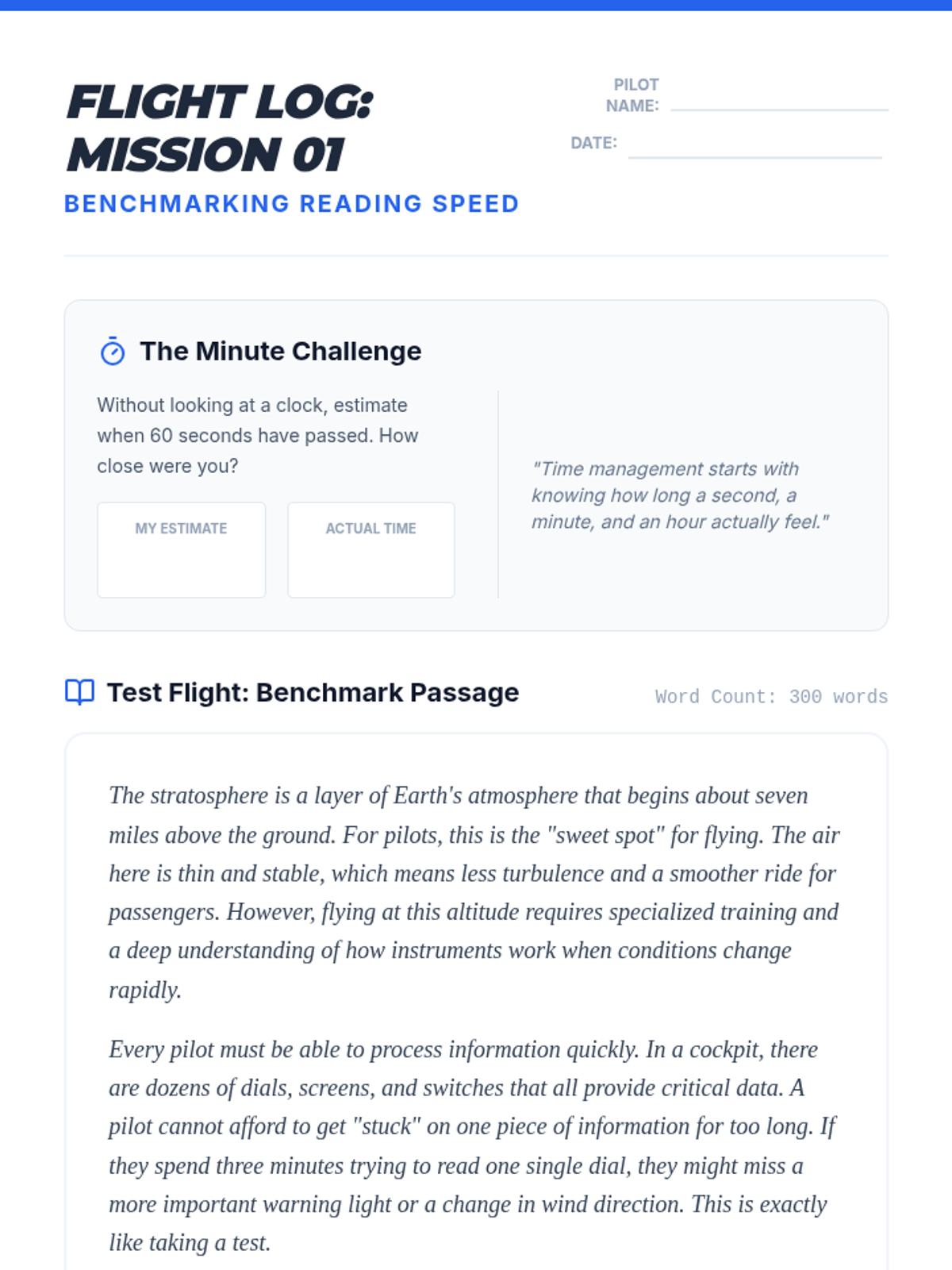
A student worksheet for establishing a reading speed baseline, featuring a themed 'Flight Log' layout, a reading passage, WPM calculation tools, and comprehension questions.
Introductory slides for the Test Pilot Academy sequence, establishing the theme and teaching students how to calculate and analyze their reading speed (WPM) for standardized tests.