Peer relationship navigation, conversational turn-taking, and stress management strategies within supportive group settings. Develops communal belonging through shared mental health education and collaborative skill practice.
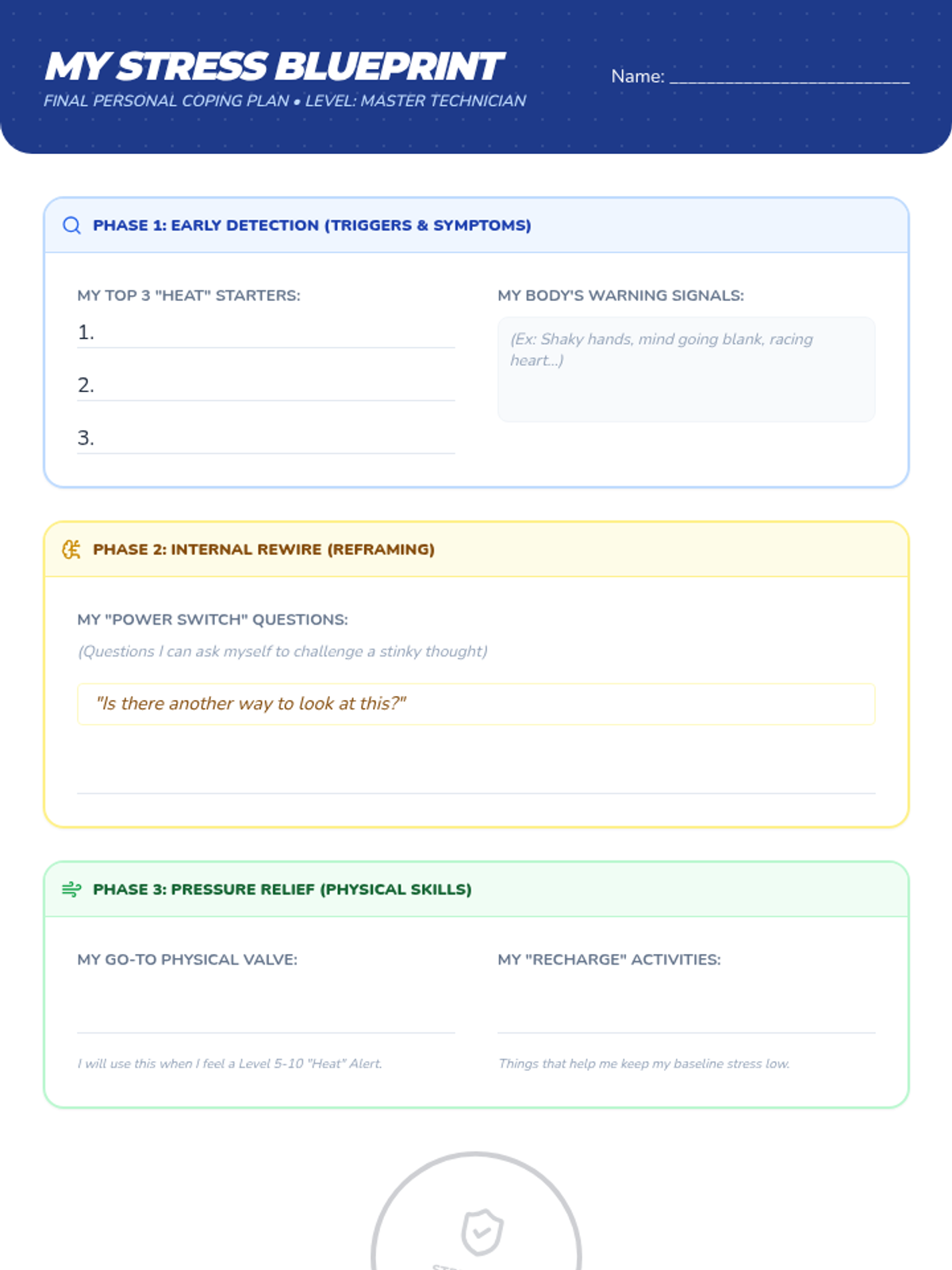
The final personal coping plan document for students, allowing them to synthesize their learning from all four sessions into a single "blueprint" for future use.
Slide presentation for Session 4, reviewing the unit's core concepts (Detection, Reframing, Regulation) and guiding students through the creation of their personal coping blueprints.
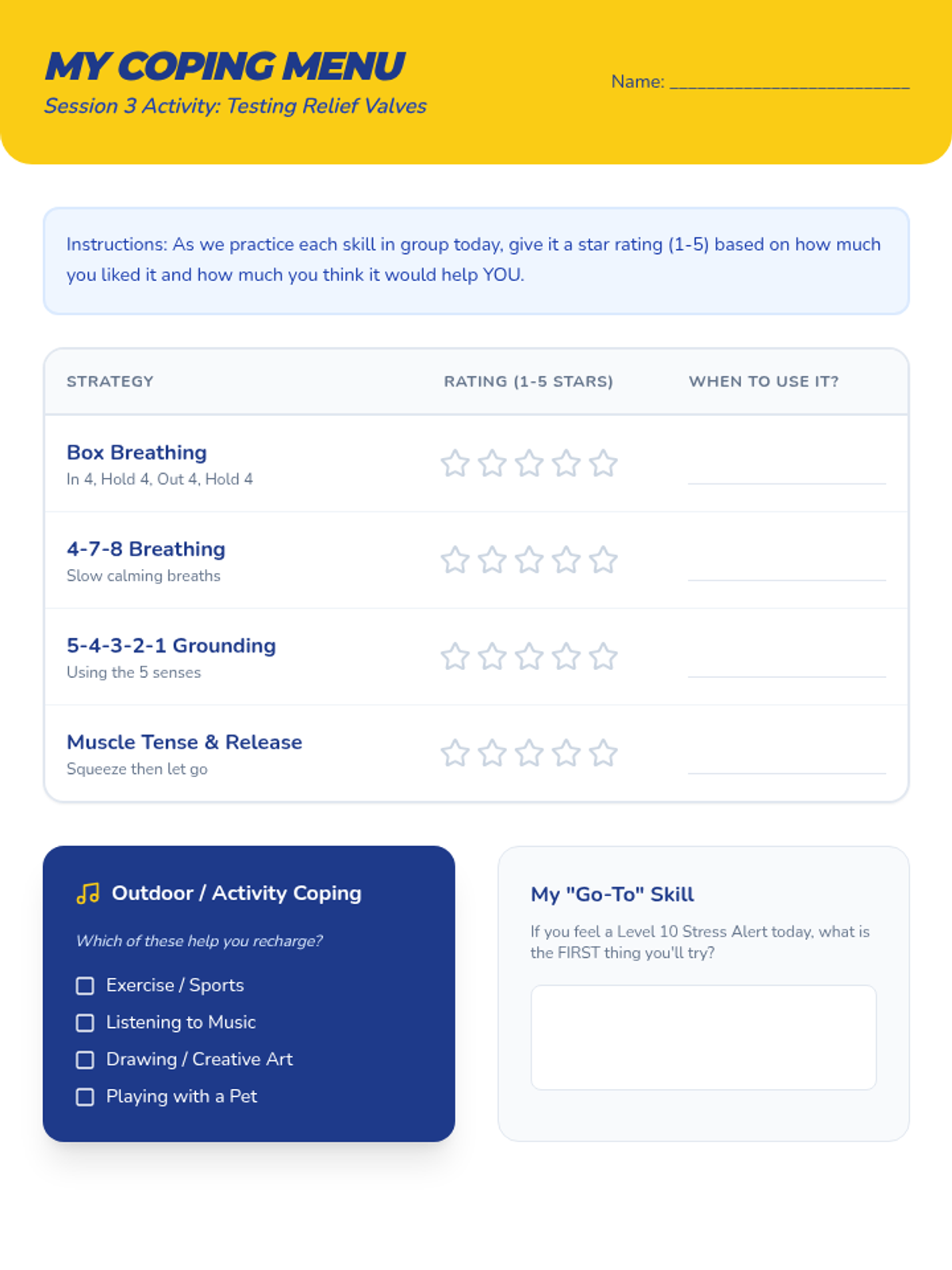
Coping strategy menu for students to trial and rate different physical and grounding techniques (e.g., box breathing, grounding) to identify what works best for them.
Slide presentation for Session 3, introducing physical coping mechanisms like controlled breathing, the 5-4-3-2-1 grounding technique, and explaining the physiological benefits of these strategies.
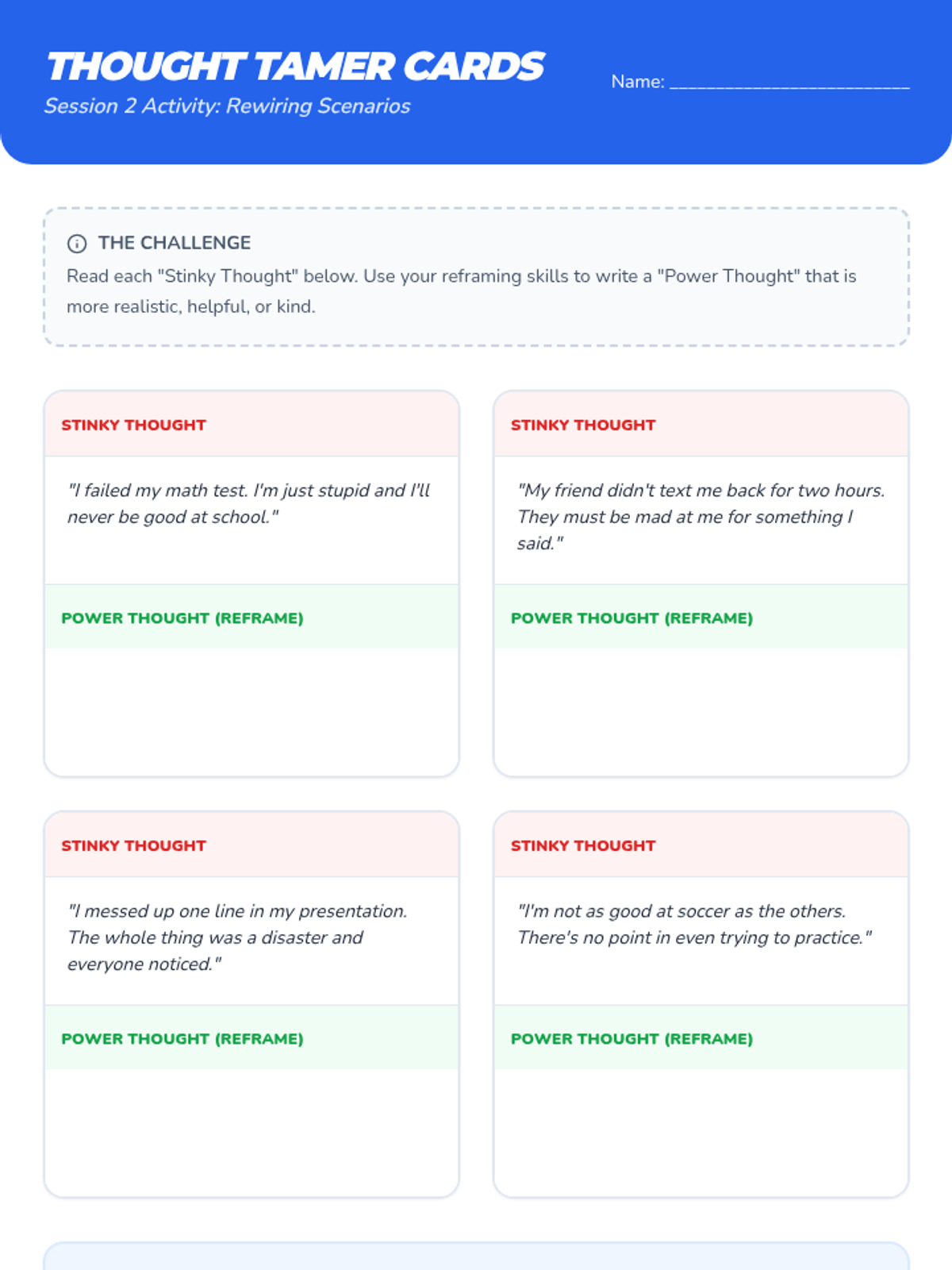
Student worksheet featuring common middle school stressors as "Stinky Thoughts" scenarios. Students practice cognitive reframing by writing realistic and positive "Power Thoughts" for each situation.
Slide presentation for Session 2, focusing on the connection between thoughts, feelings, and behaviors, and teaching students how to identify and reframe cognitive distortions.
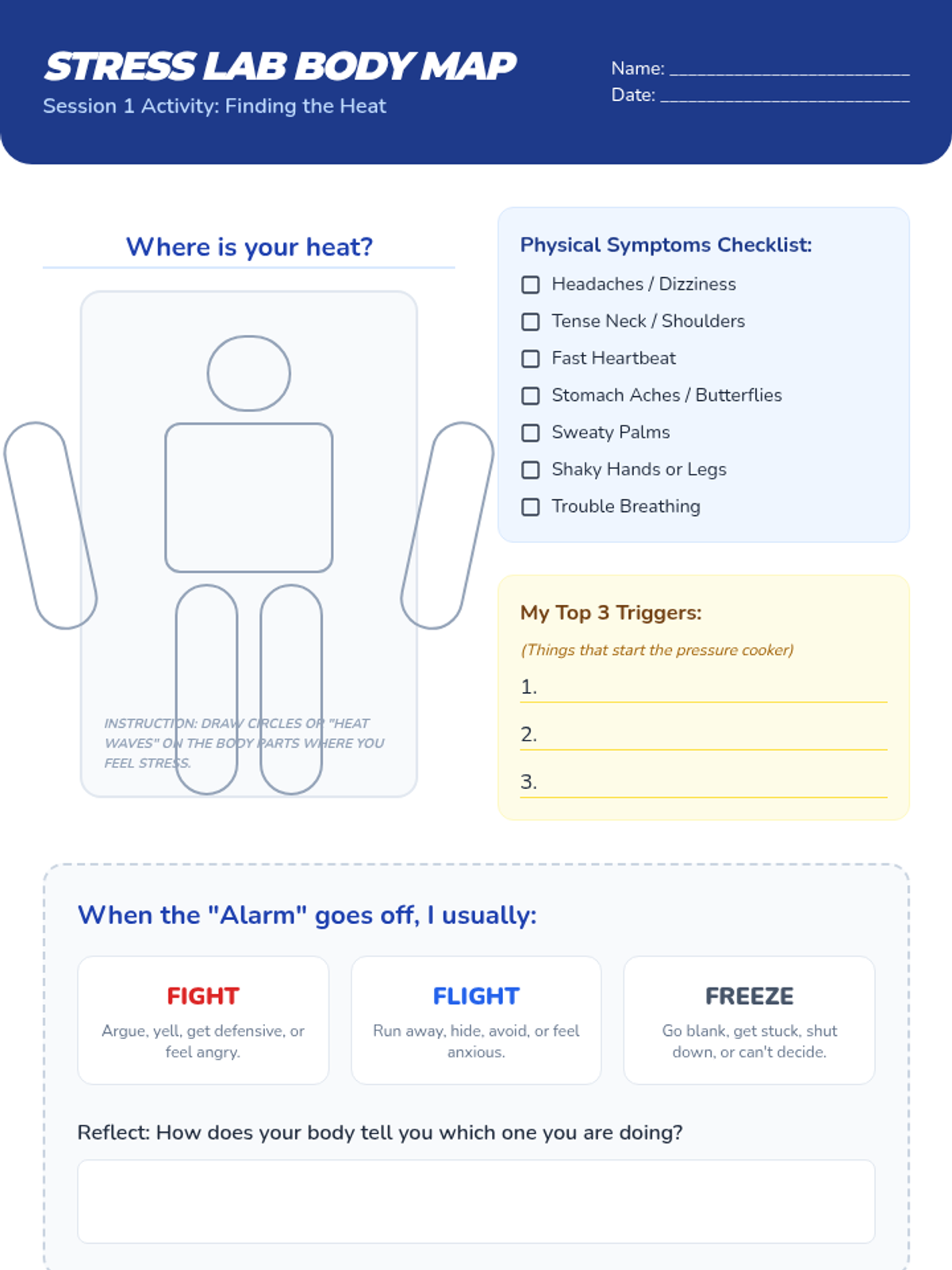
Student activity sheet for Session 1. Students identify their physical stress symptoms on a body map and list their primary personal triggers.
Slide presentation for Session 1, introducing the concept of stress using the pressure cooker analogy and explaining the body's fight/flight/freeze response.
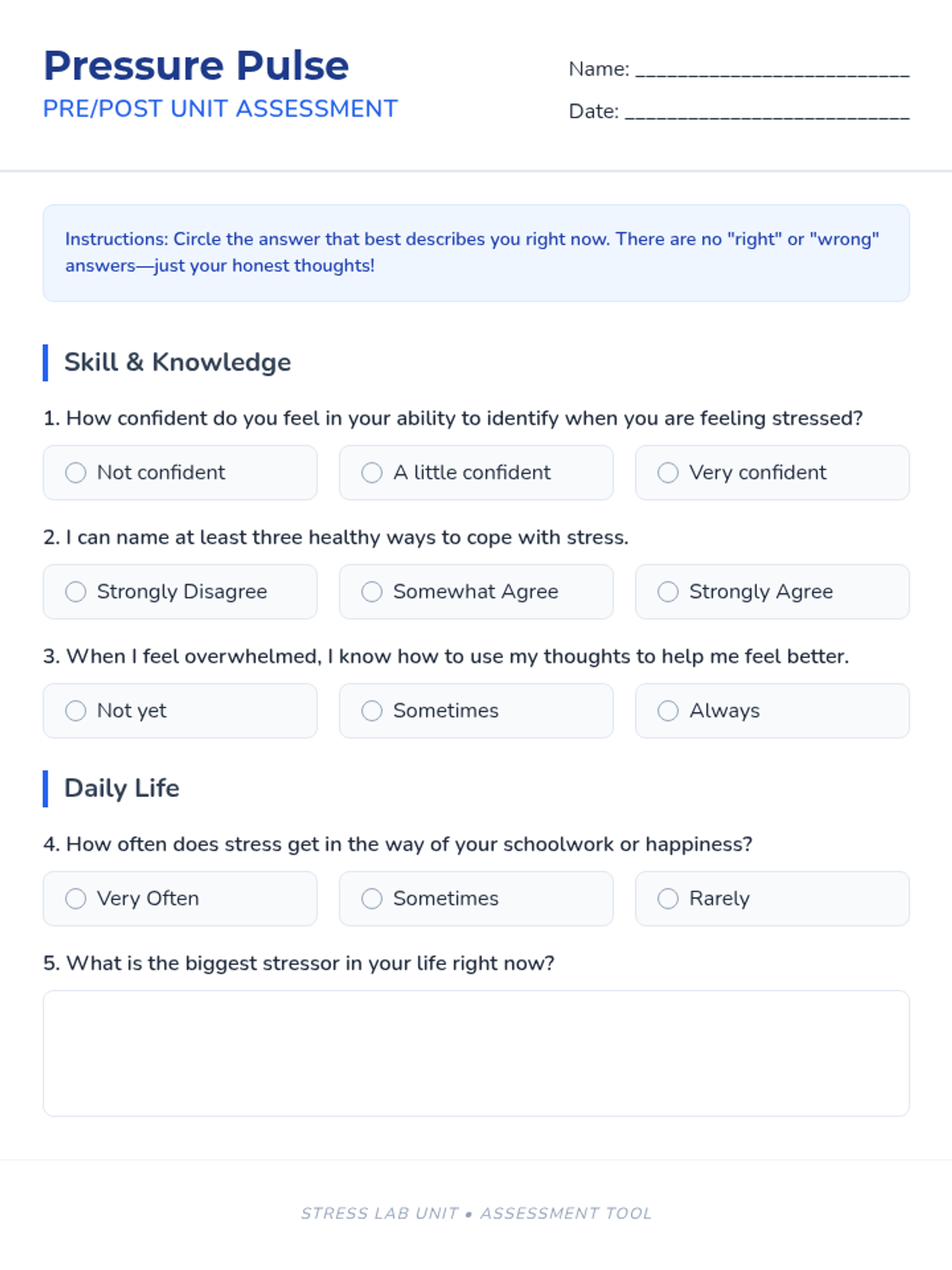
Unit pre- and post-assessment to measure student growth in identifying stressors and coping strategies.
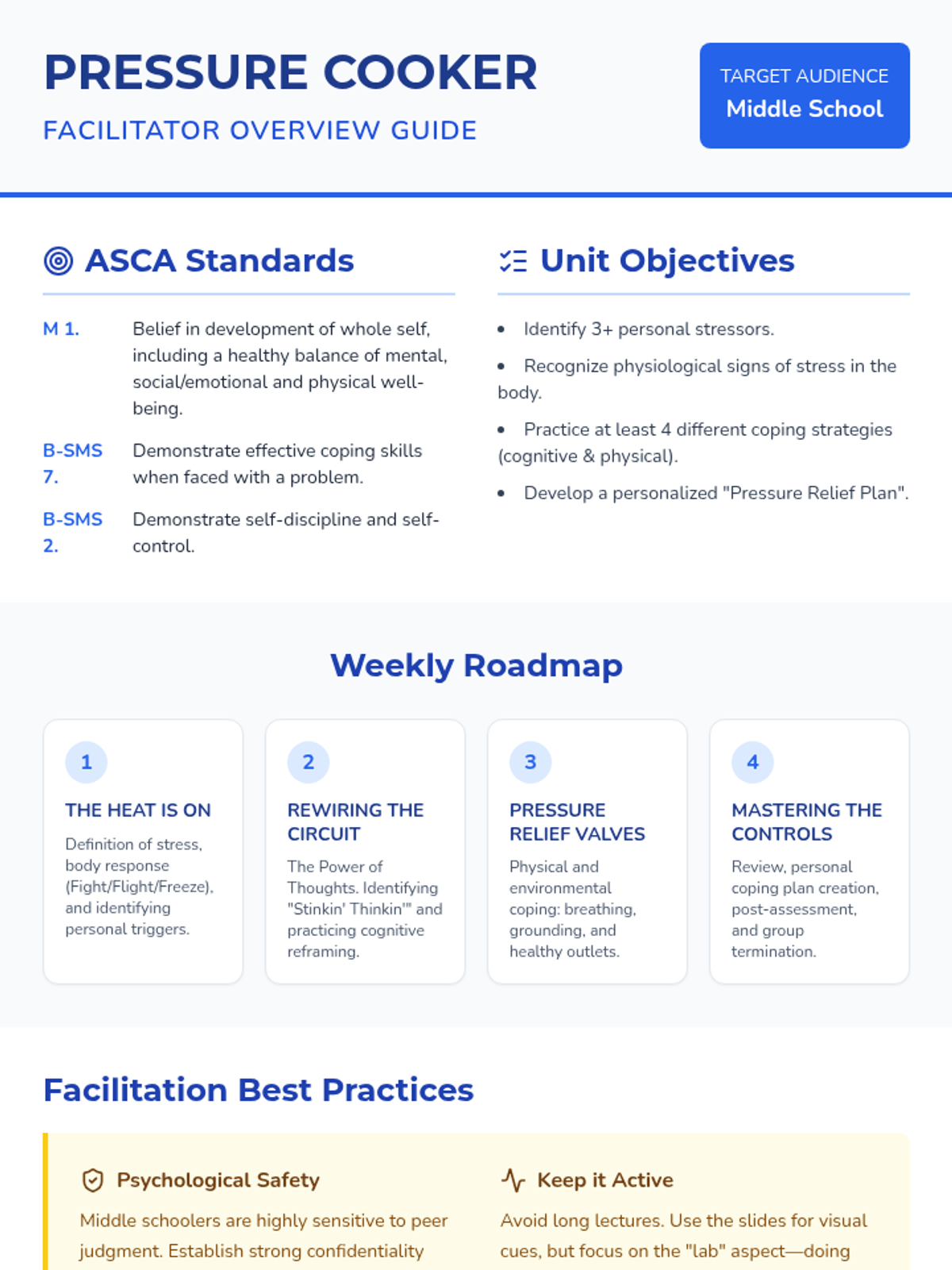
Facilitator guide for the 4-week unit, including ASCA alignment, objectives, and weekly plans.
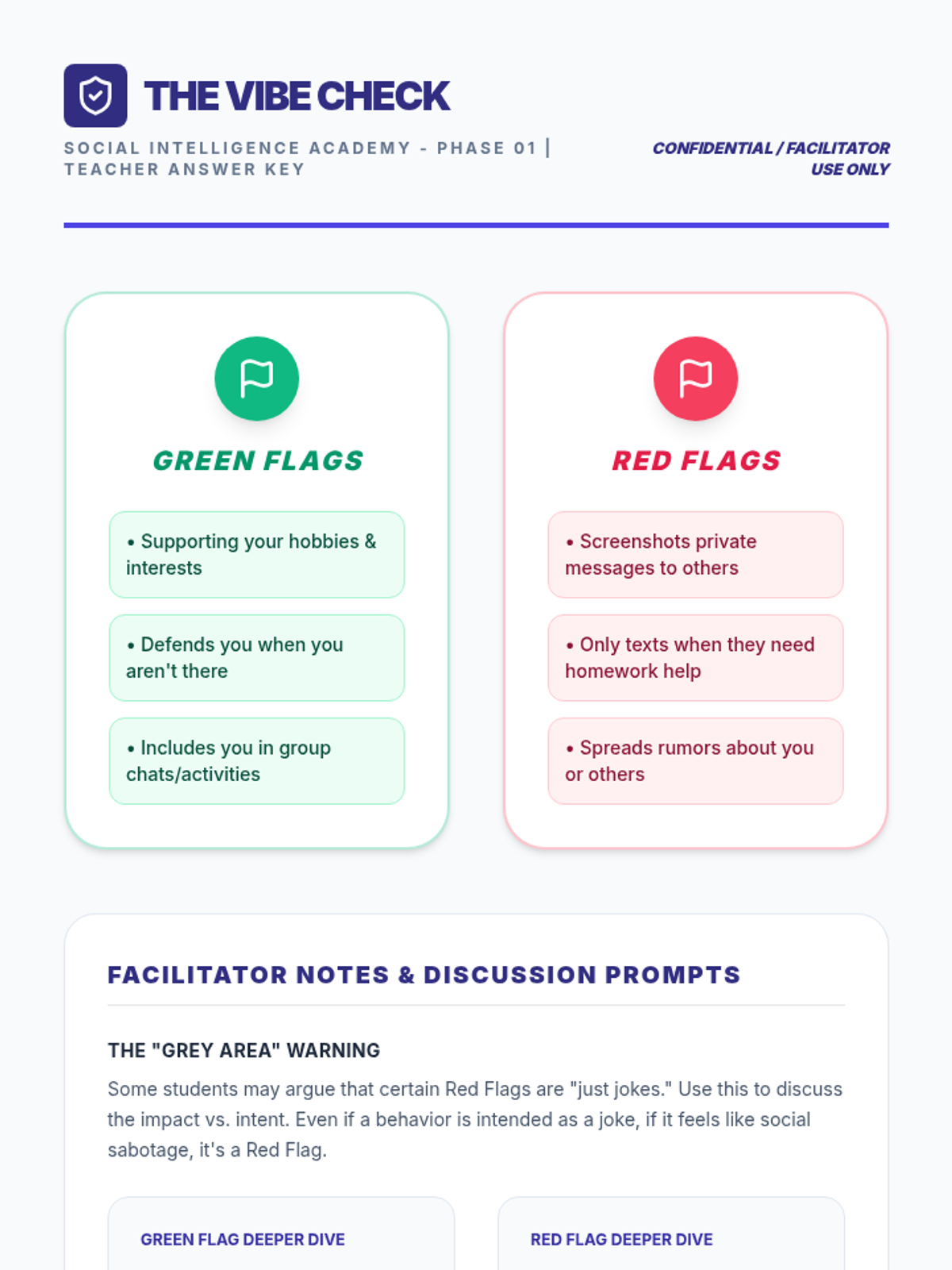
The facilitator's key for the Vibe Check worksheet, including correct categorization of behaviors and discussion prompts for a whole-class setting.
A modern, tech-inspired 9-slide presentation for Session 1 of the Social Intelligence Academy, focusing on "Vibe Checks" and healthy friendship markers for 6th graders.
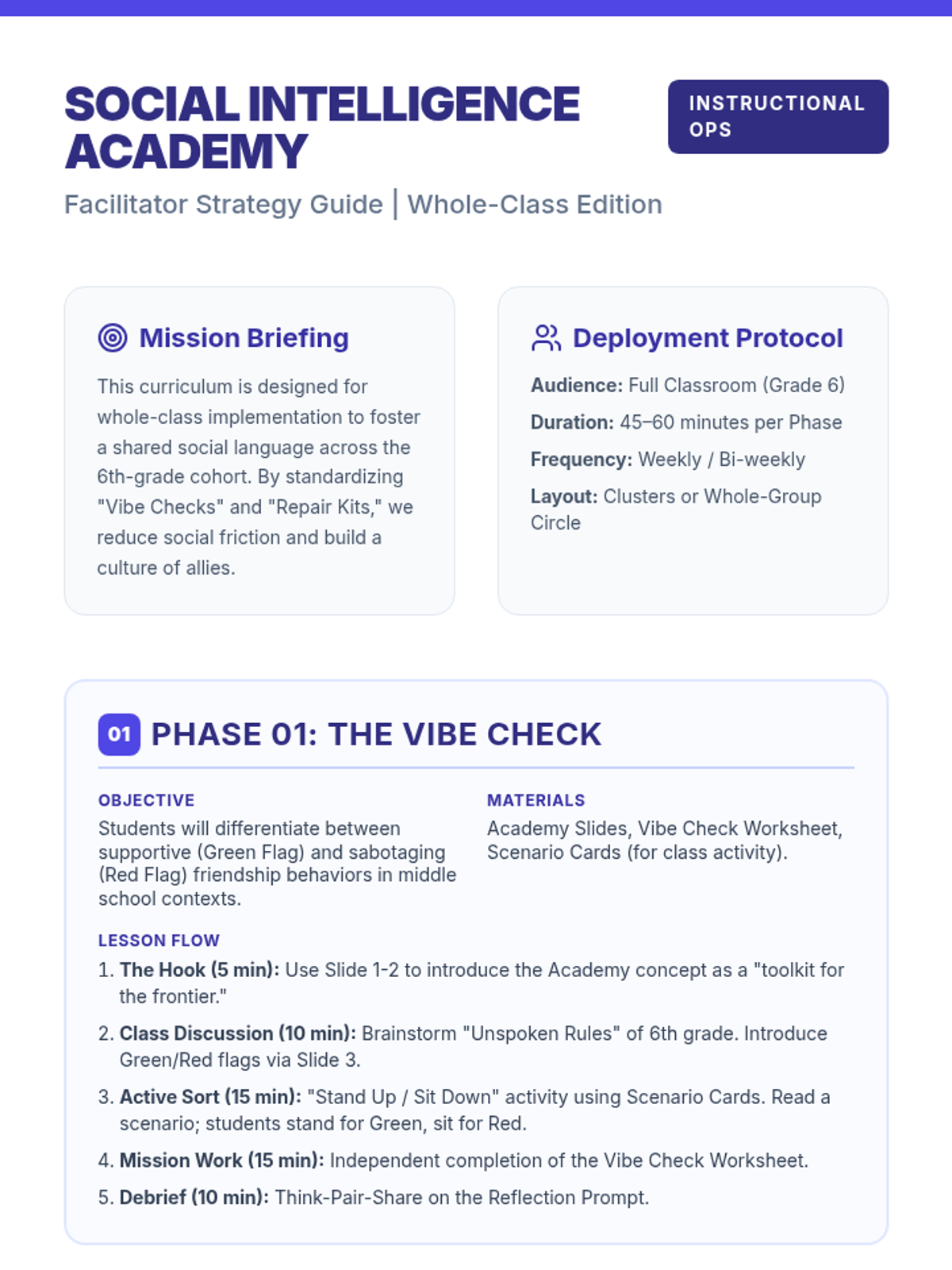
A sophisticated 3-page guide for middle school educators, adapting the Social Intelligence Academy curriculum for whole-class implementation with a focus on shared cohort culture, digital dynamics, and cohort-wide conflict resolution.
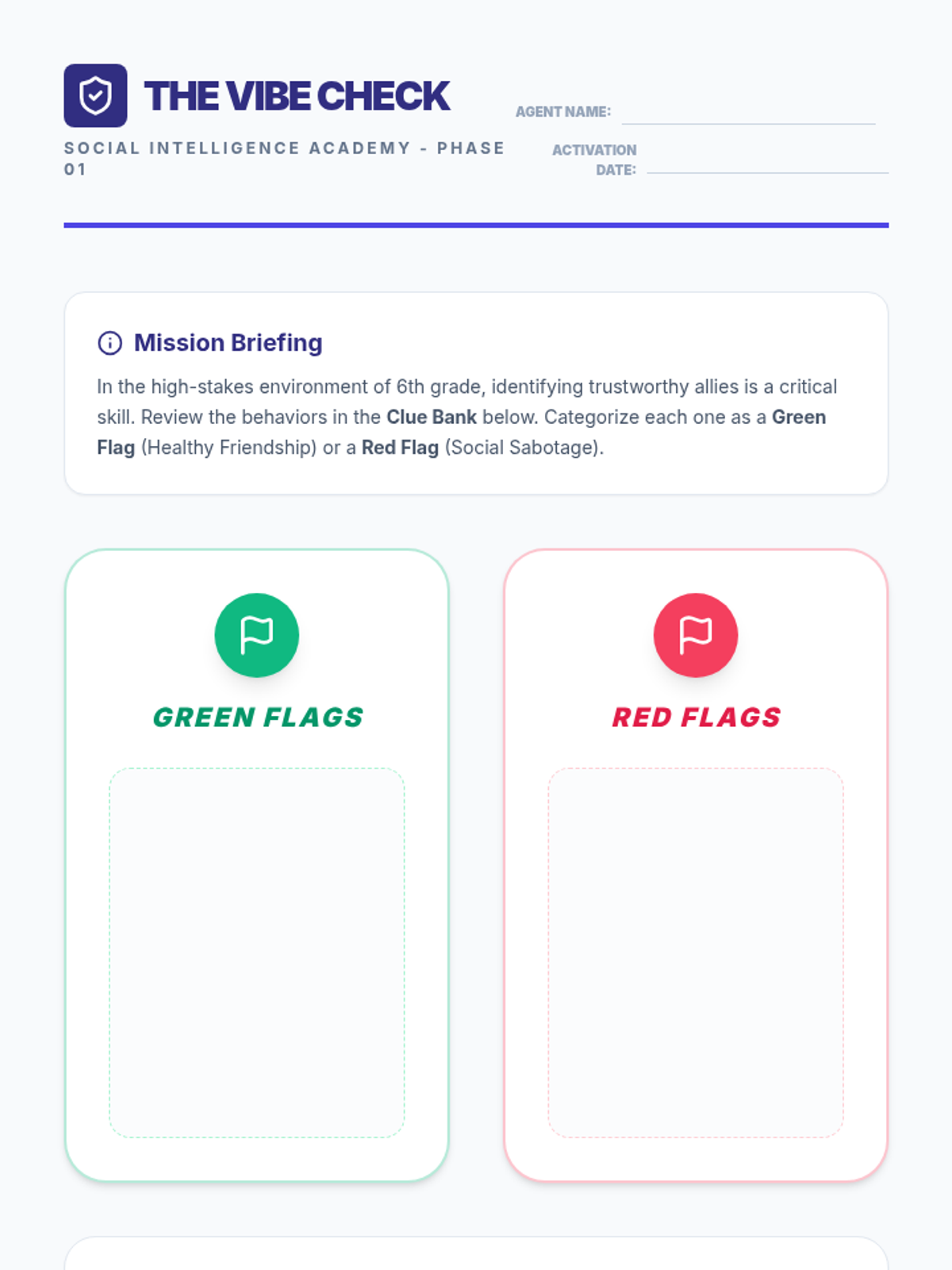
A sophisticated Session 1 worksheet for 6th graders where they categorize friendship behaviors as Green Flags or Red Flags, focusing on realistic middle school scenarios like group chats and rumors.
A modern, tech-inspired 4-slide presentation for Session 1 of the Social Intelligence Academy, focusing on "Vibe Checks" and healthy friendship markers for 6th graders.
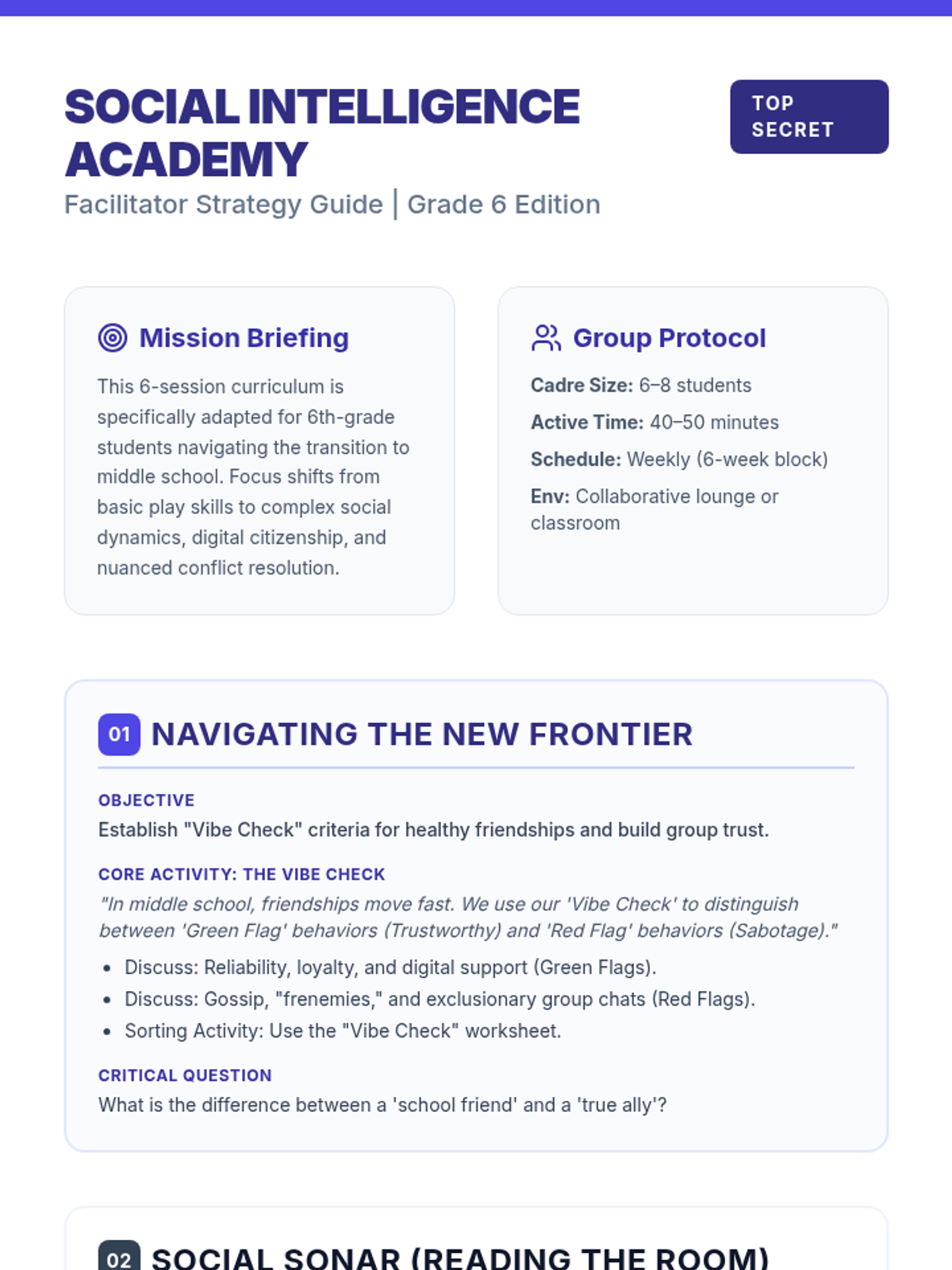
A sophisticated 3-page guide for middle school educators, adapting the Social Intelligence Academy curriculum for 6th graders with a focus on digital dynamics, nuanced social cues, and mature conflict resolution.
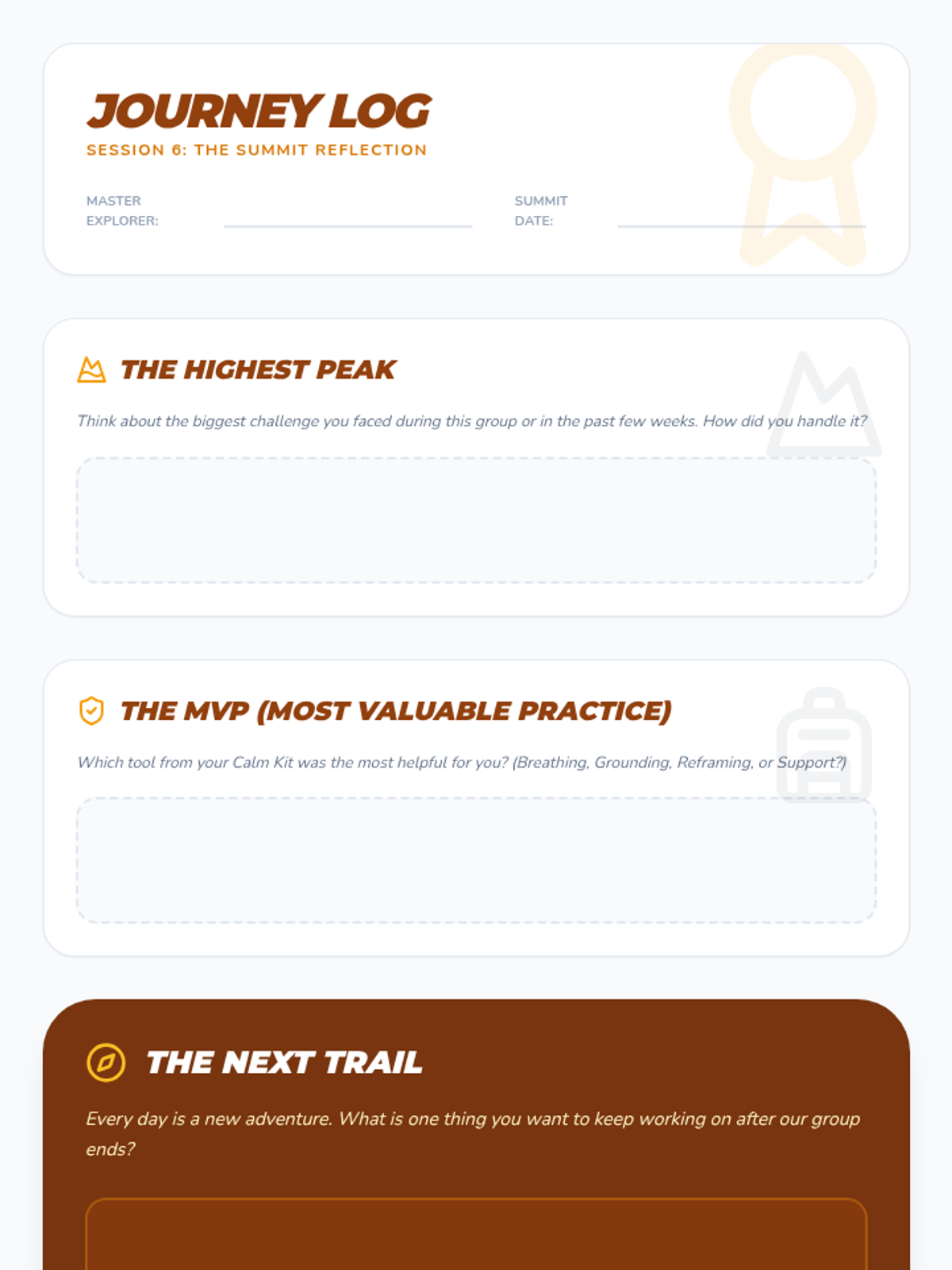
A student-facing reflection sheet for the final session, focusing on growth, accomplishments, and future goal setting.
A visual presentation for Session 6 of the Calm Explorers group, reflecting on growth, confidentiality, and celebrating the completion of the program.
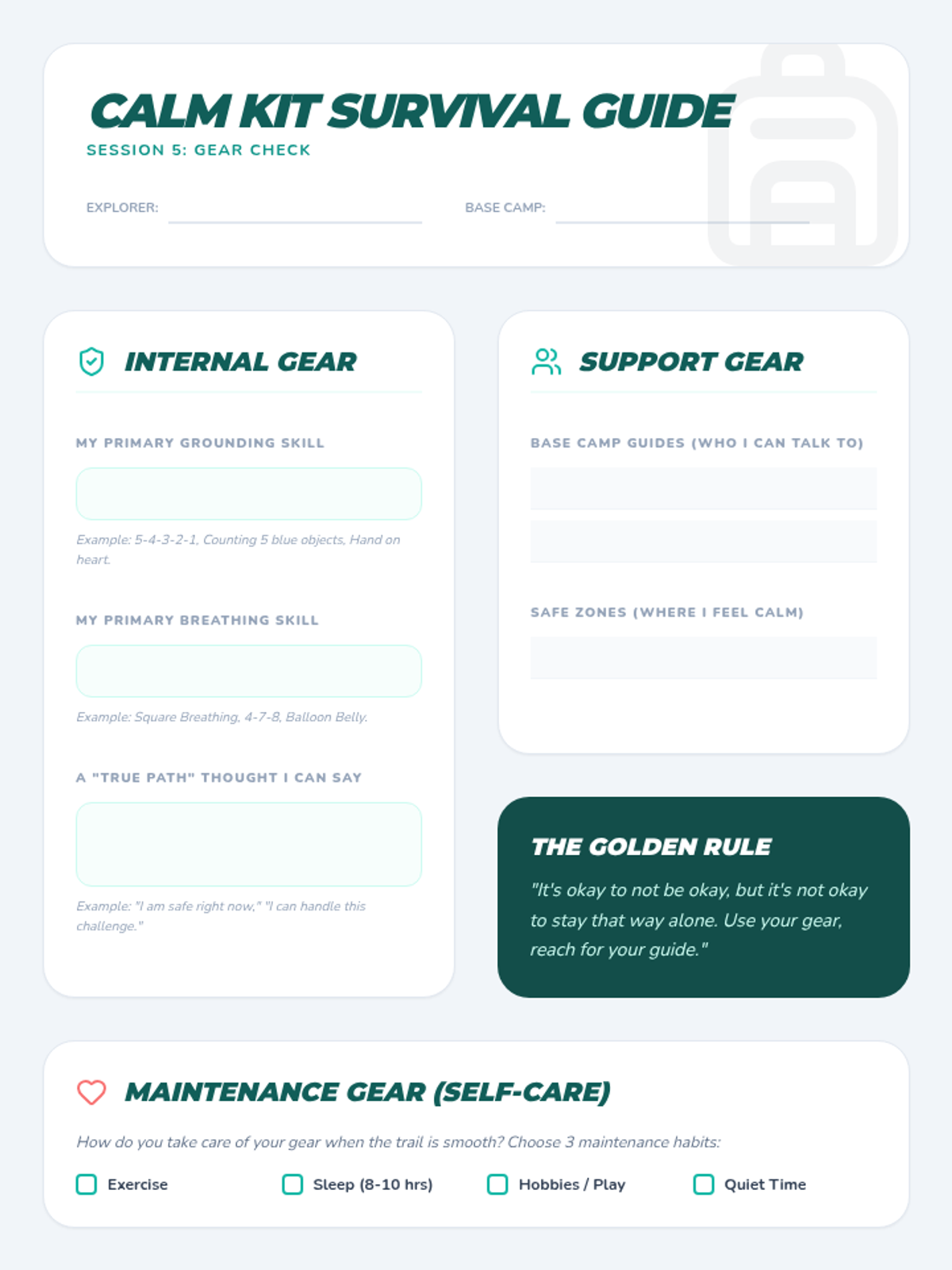
A student-facing planning sheet for identifying personalized coping strategies, support people, and self-care habits.
A visual presentation for Session 5 of the Calm Explorers group, reviewing skills, confidentiality, and planning a personalized 'Calm Kit'.
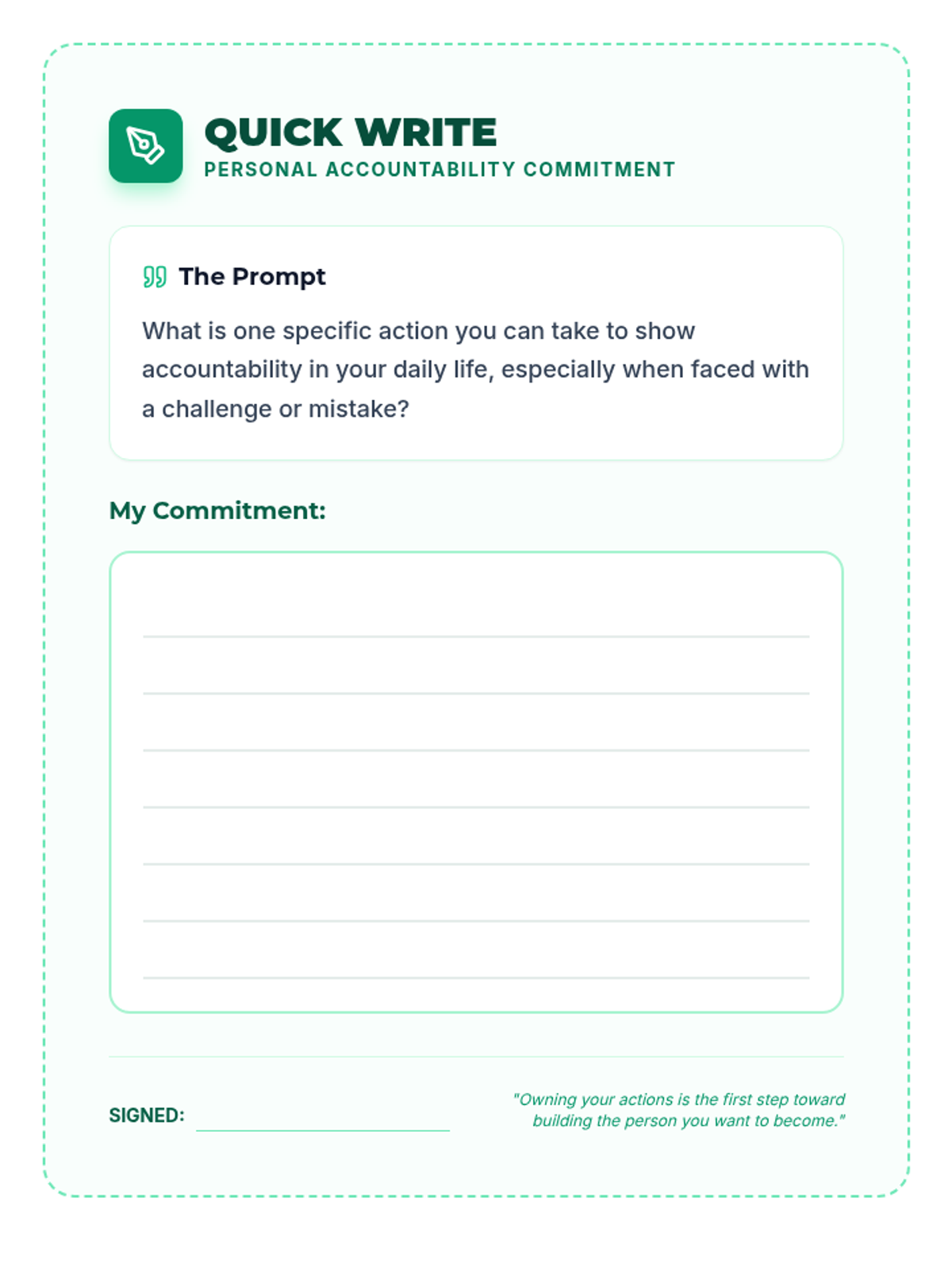
A concise exit ticket where students commit to one specific action they can take to demonstrate personal accountability in their daily lives.
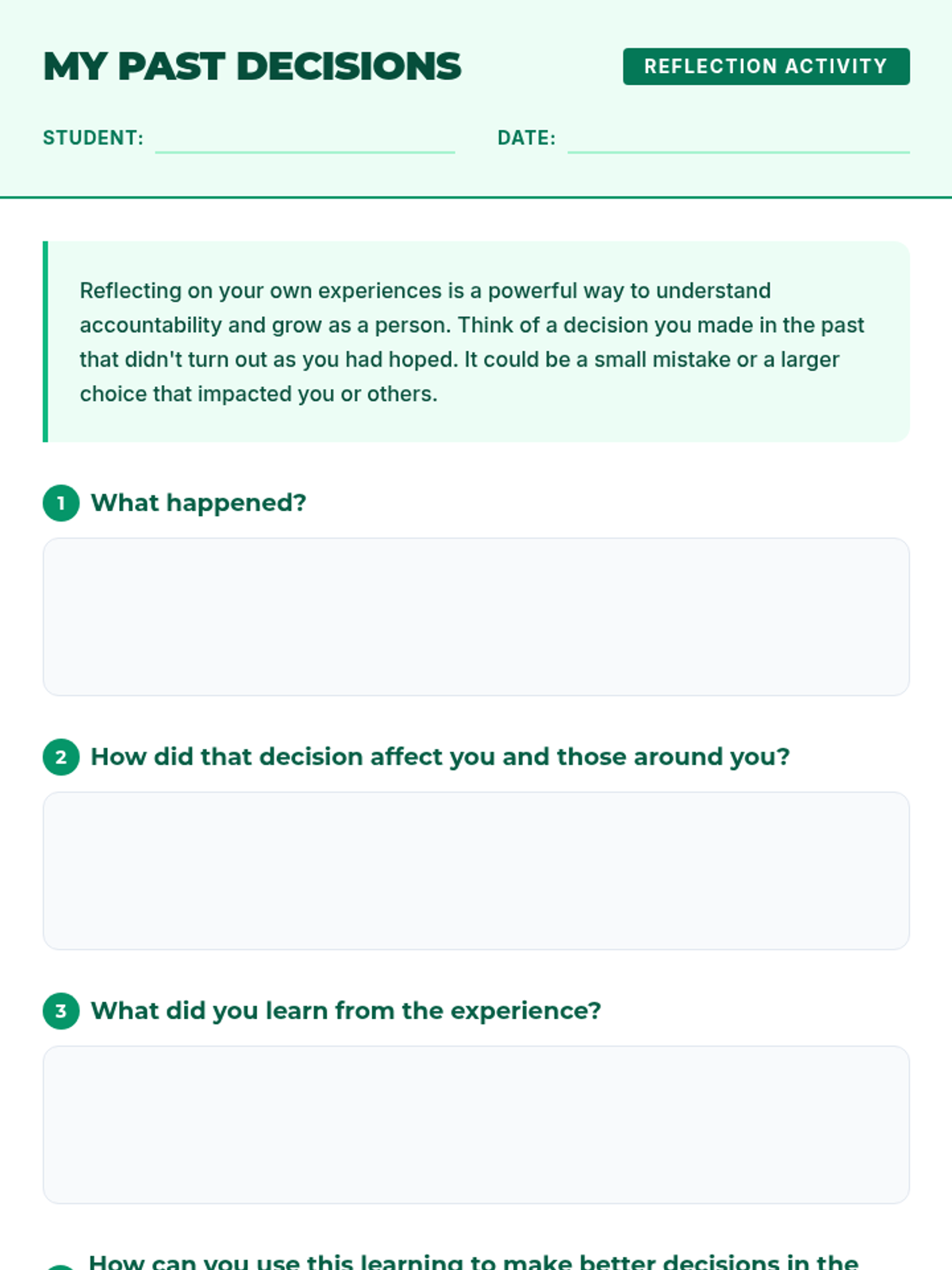
A student reflection worksheet focusing on past decisions, the impact of choices, and lessons learned for future personal growth.
A 6-slide visual presentation featuring real-life scenarios to facilitate group discussions on personal responsibility, trust-building, and accountability.
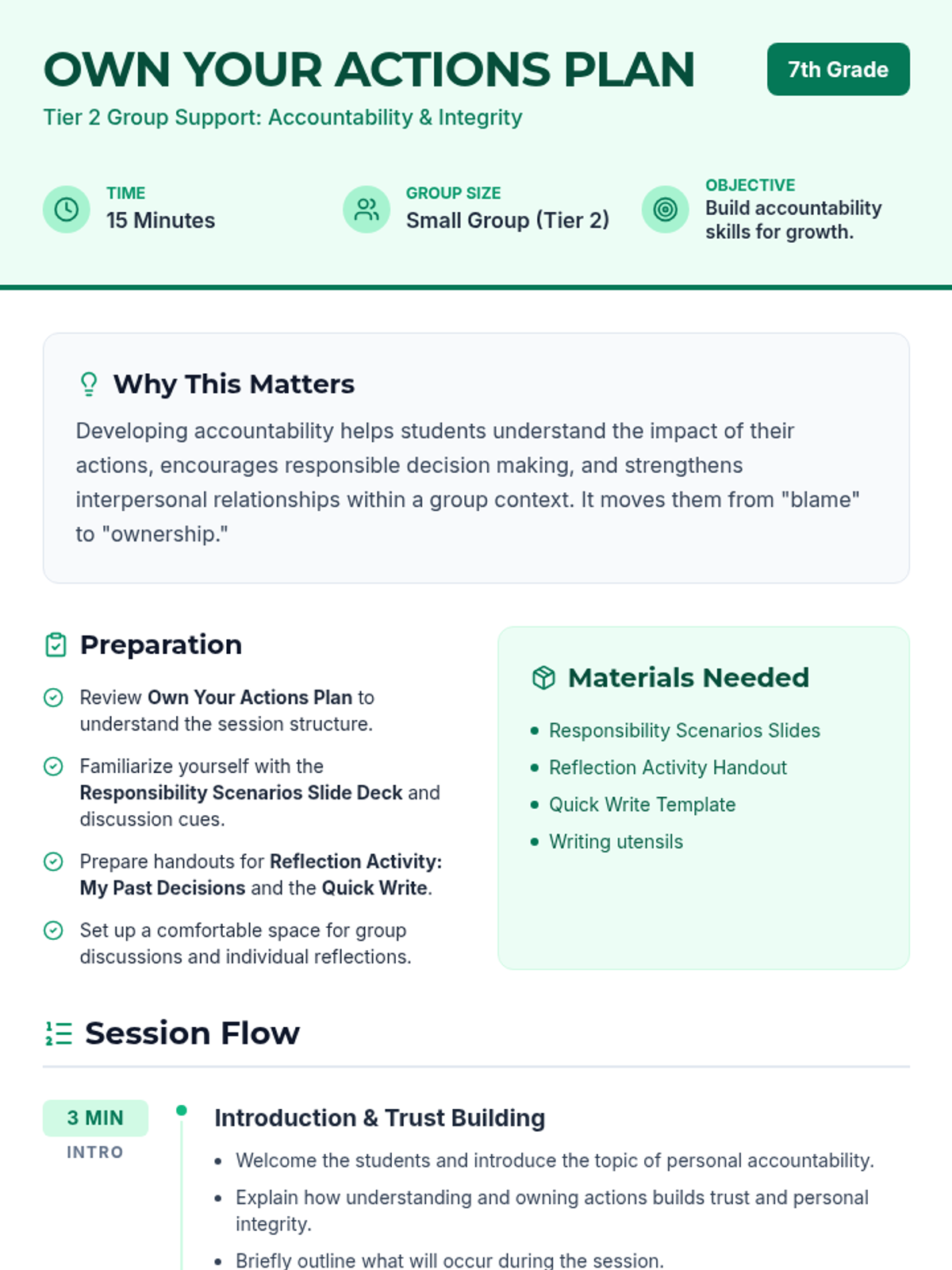
A detailed instructional guide for a 15-minute small group session on personal accountability, including preparation steps, timed activities, and teaching notes.
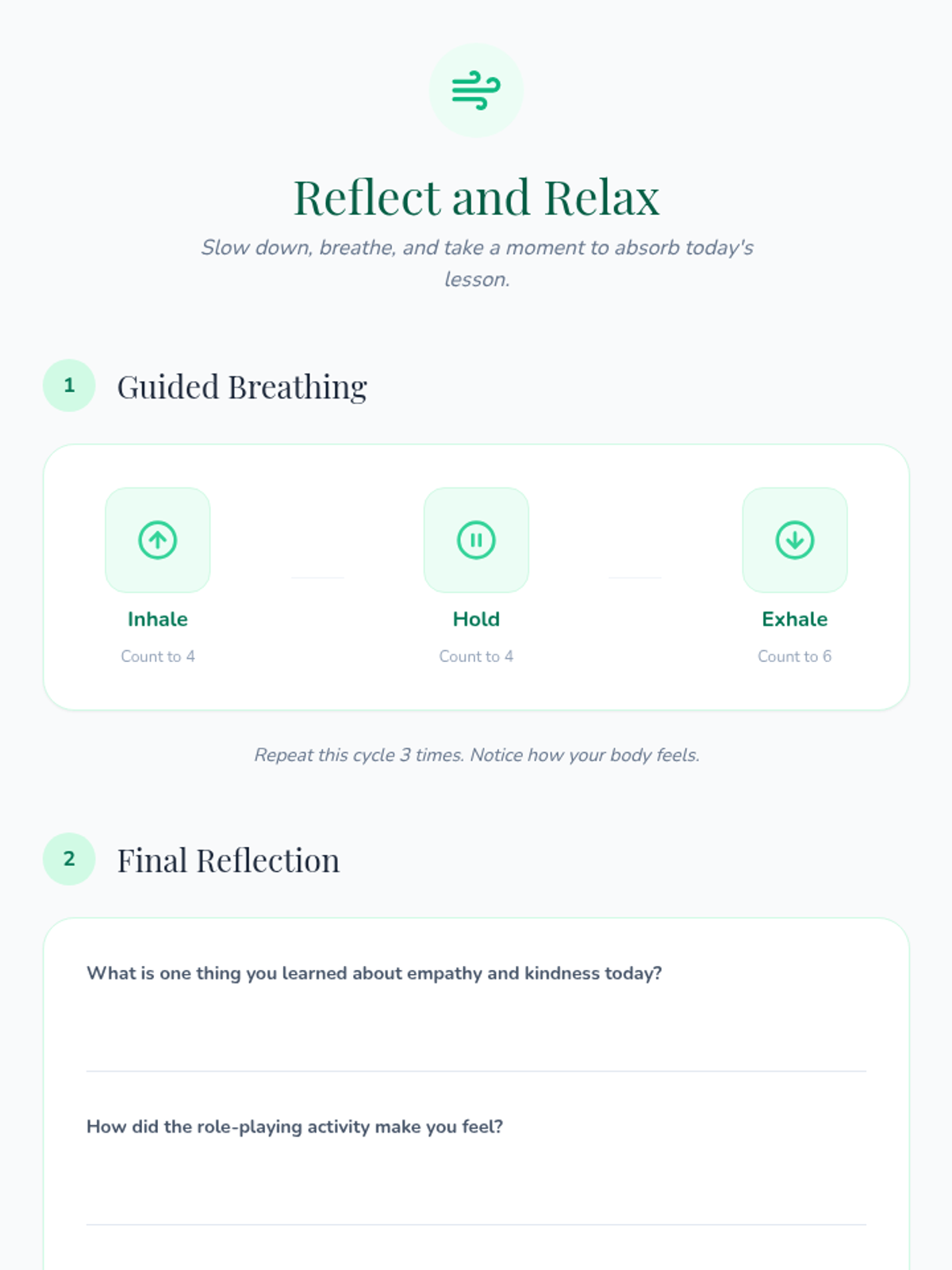
A cool-down guide for mindfulness and reflection following an empathy lesson. Includes a guided breathing exercise and prompts for final takeaways.
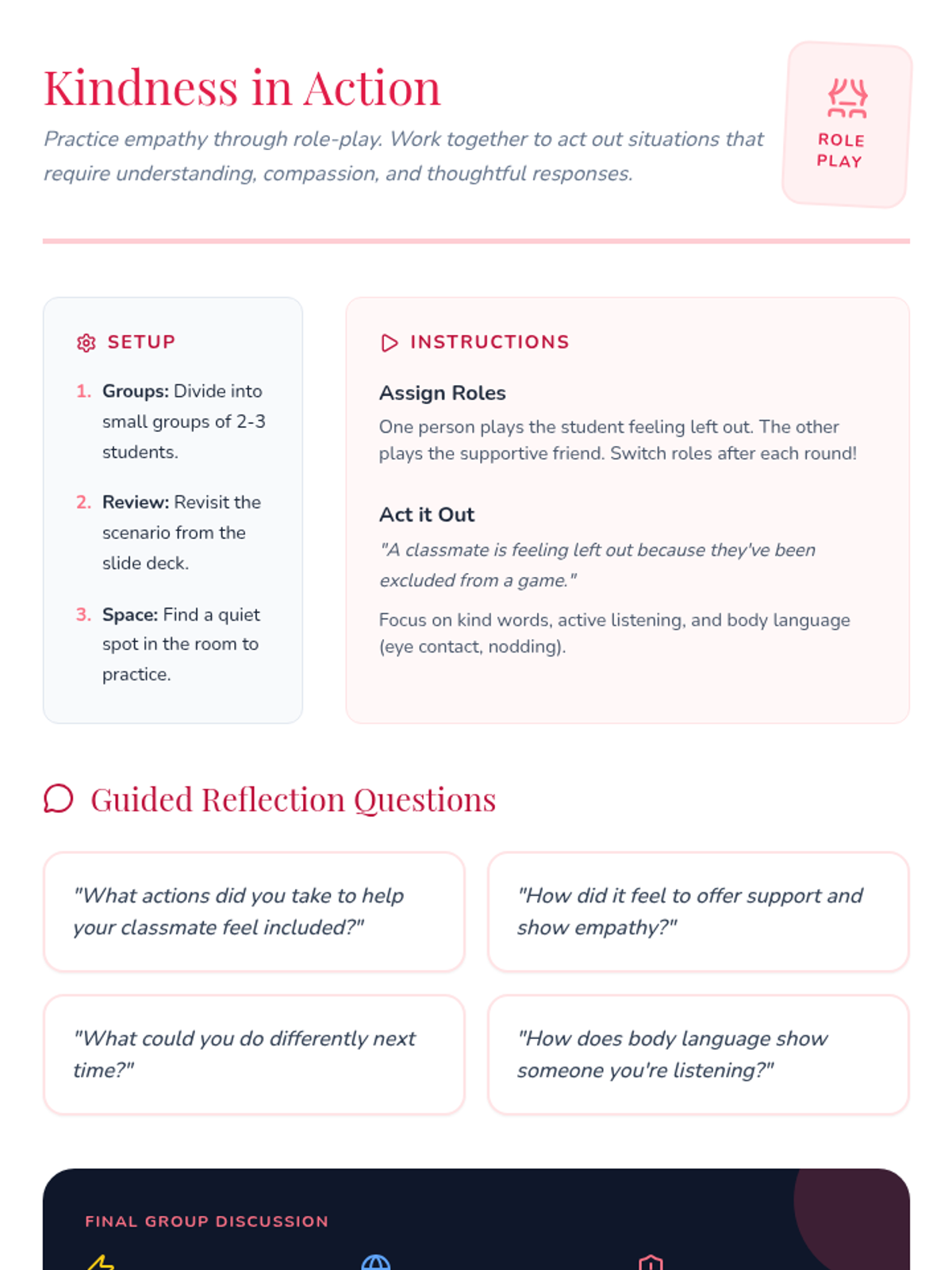
A guide for a role-playing activity where students practice showing empathy in real-world scenarios. Includes setup instructions, role-play steps, and discussion prompts.
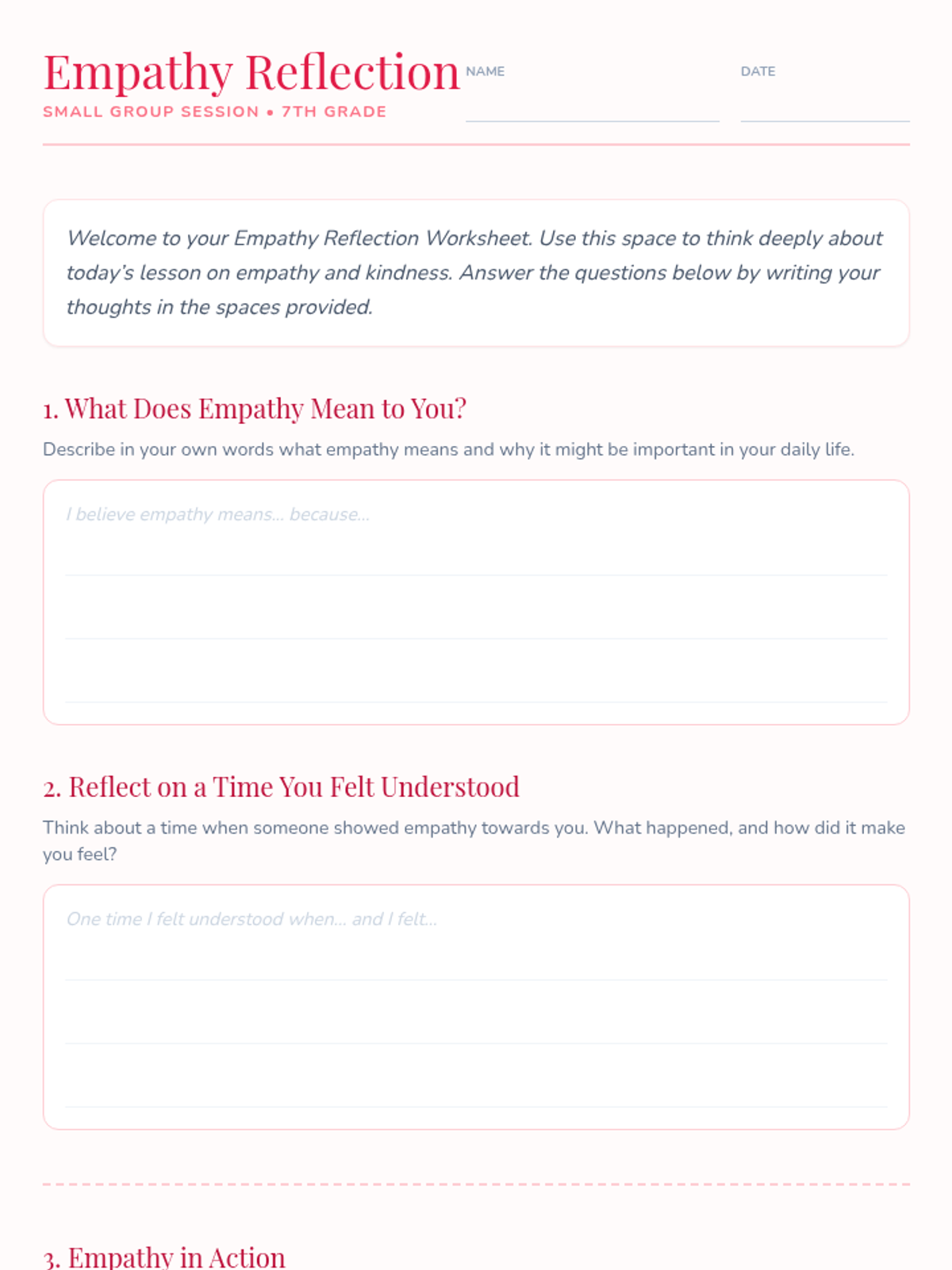
A reflective worksheet for students to process the concept of empathy, recall personal experiences, and plan kind actions for the future. Includes sentence stems and ample writing space.
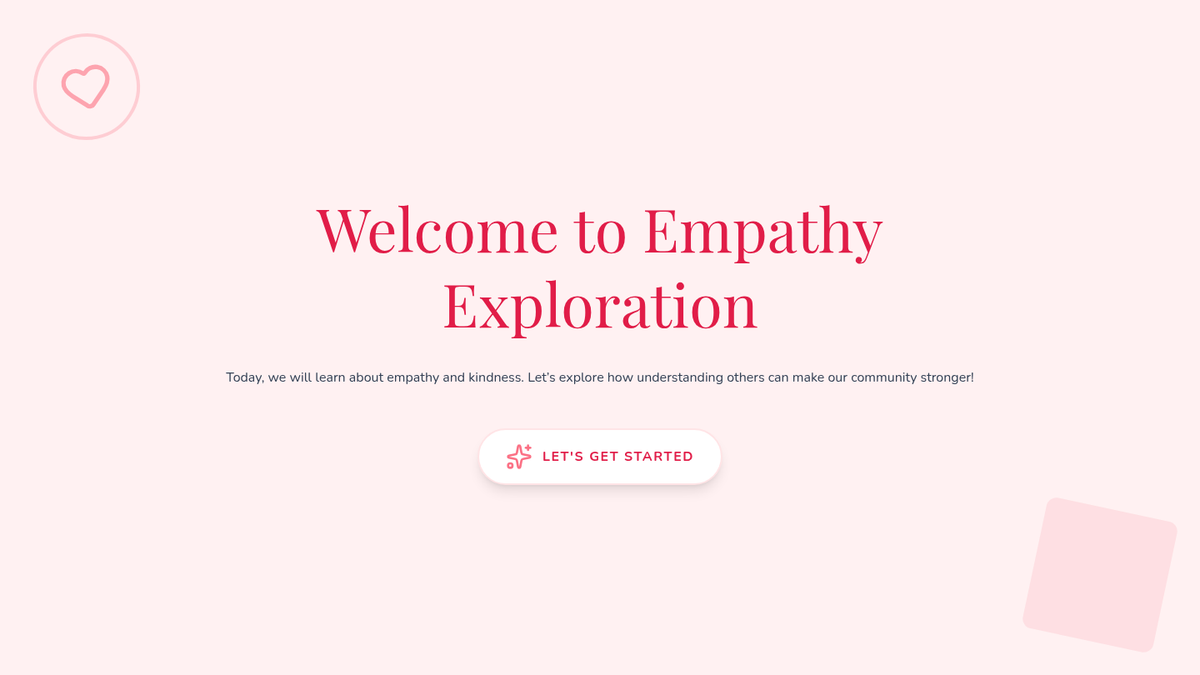
An engaging 4-slide presentation for a small group session on empathy. Includes a definition of empathy, a scenario for discussion, and a call to action for students to share ideas for daily kindness.
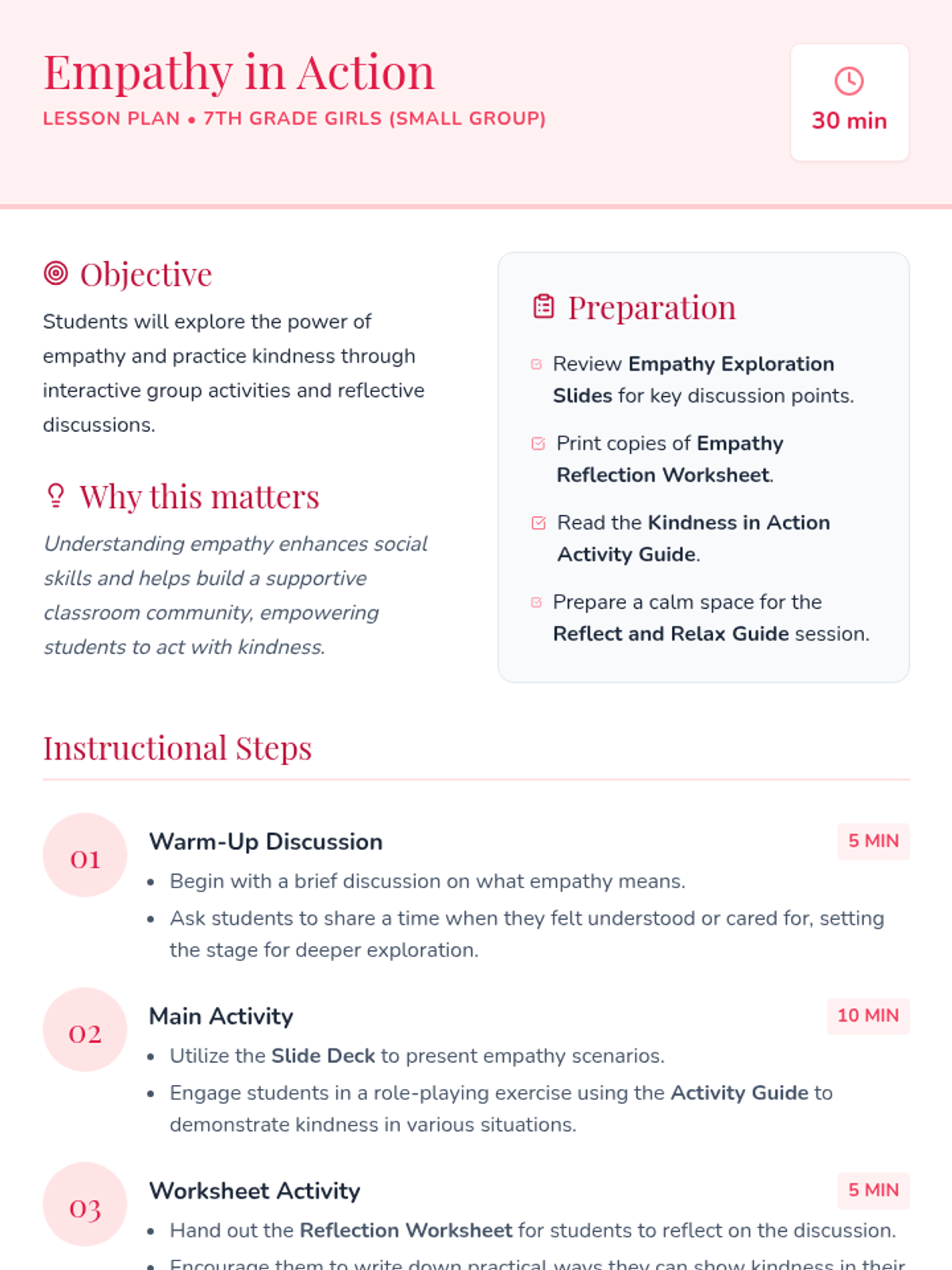
A comprehensive lesson plan for a 30-minute Tier 2 group session focusing on empathy and kindness for 7th-grade girls. Includes timing, objectives, and a step-by-step instructional sequence.
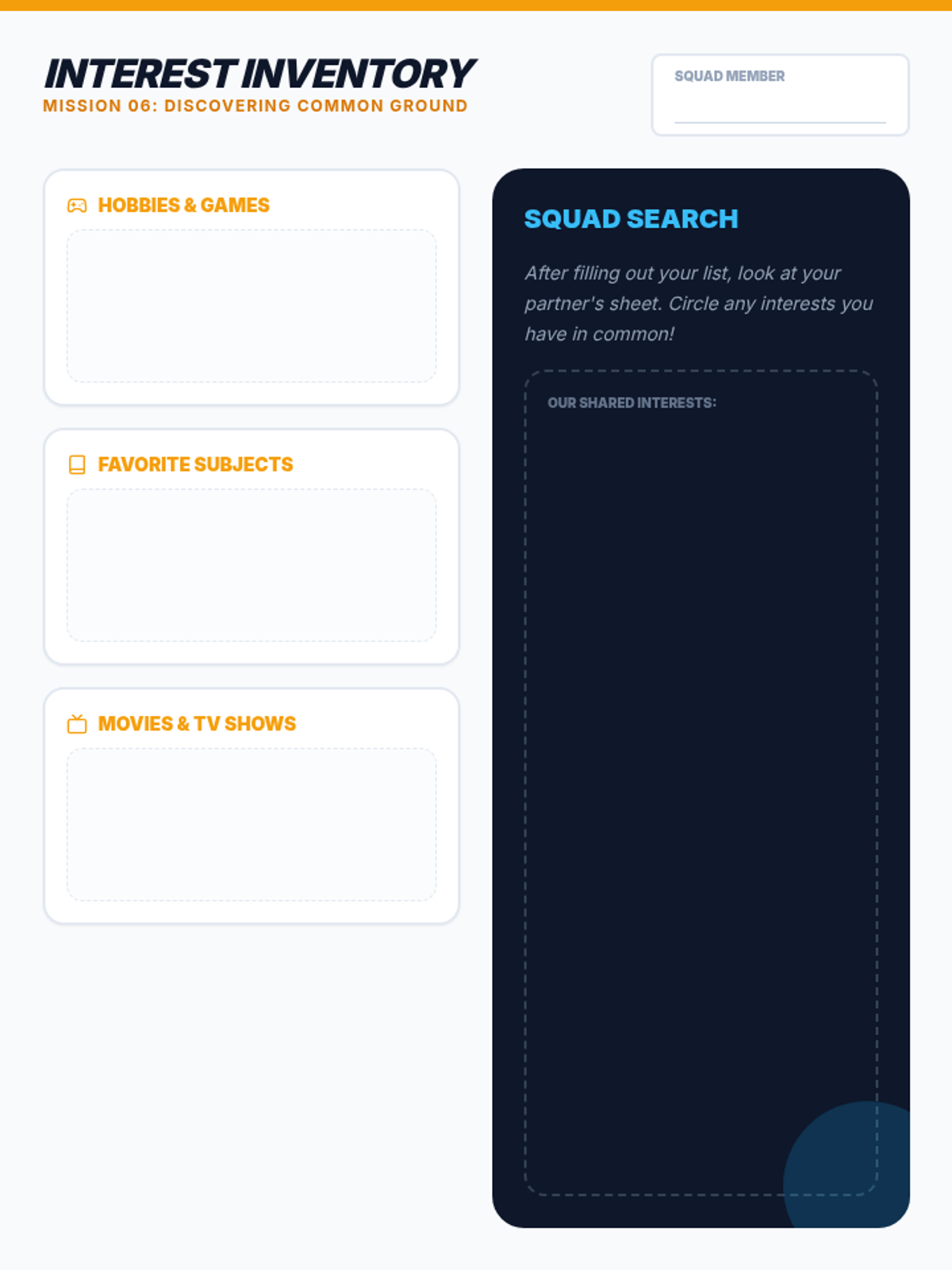
Worksheets for Session 6 including an interest inventory, activity planning template, and final reflection card.
Visual presentation for Session 6, identifying shared interests and planning collaborative friendship activities.
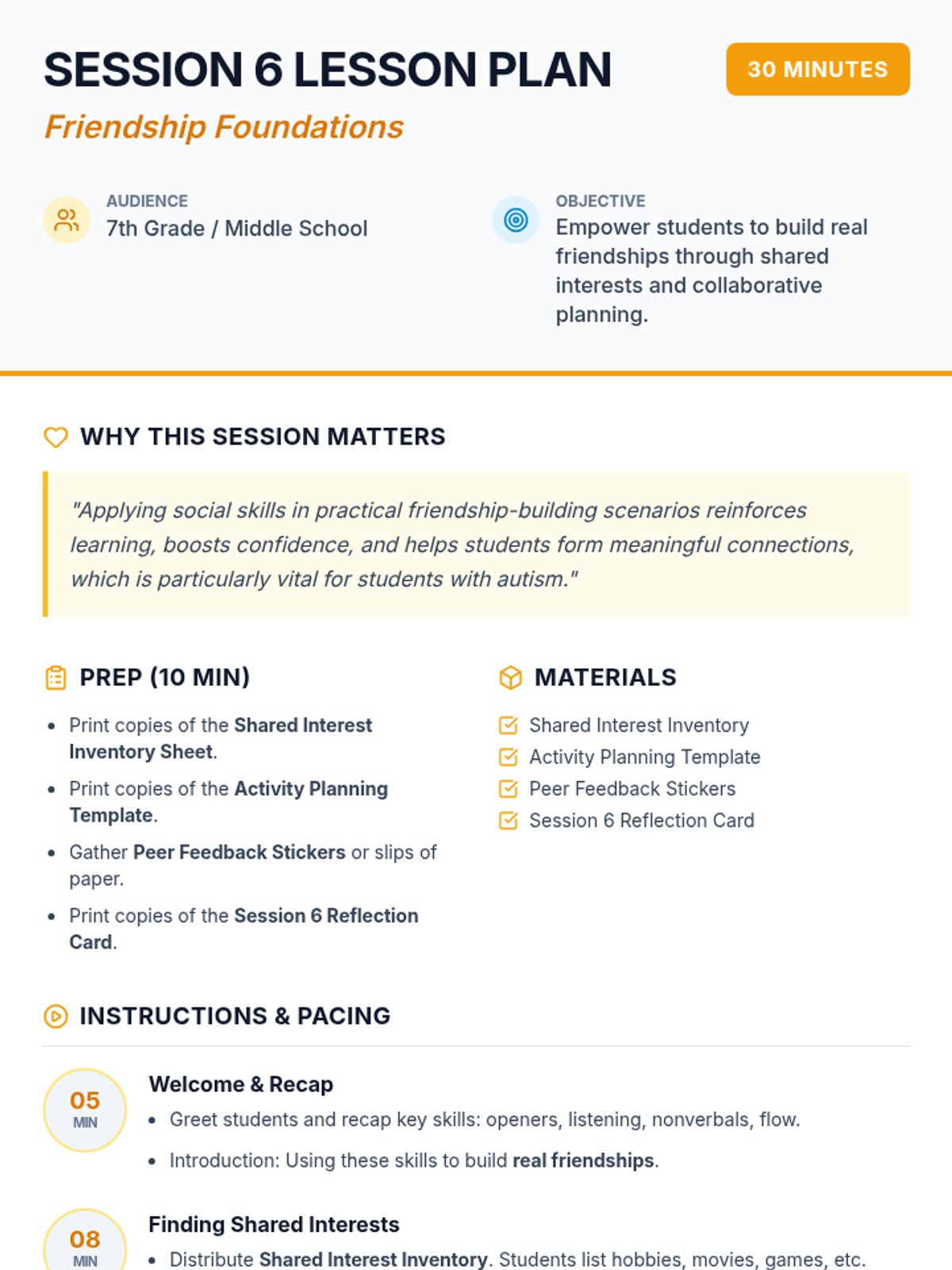
Detailed lesson plan for Session 6 including timing, objectives, and specific instructional steps.
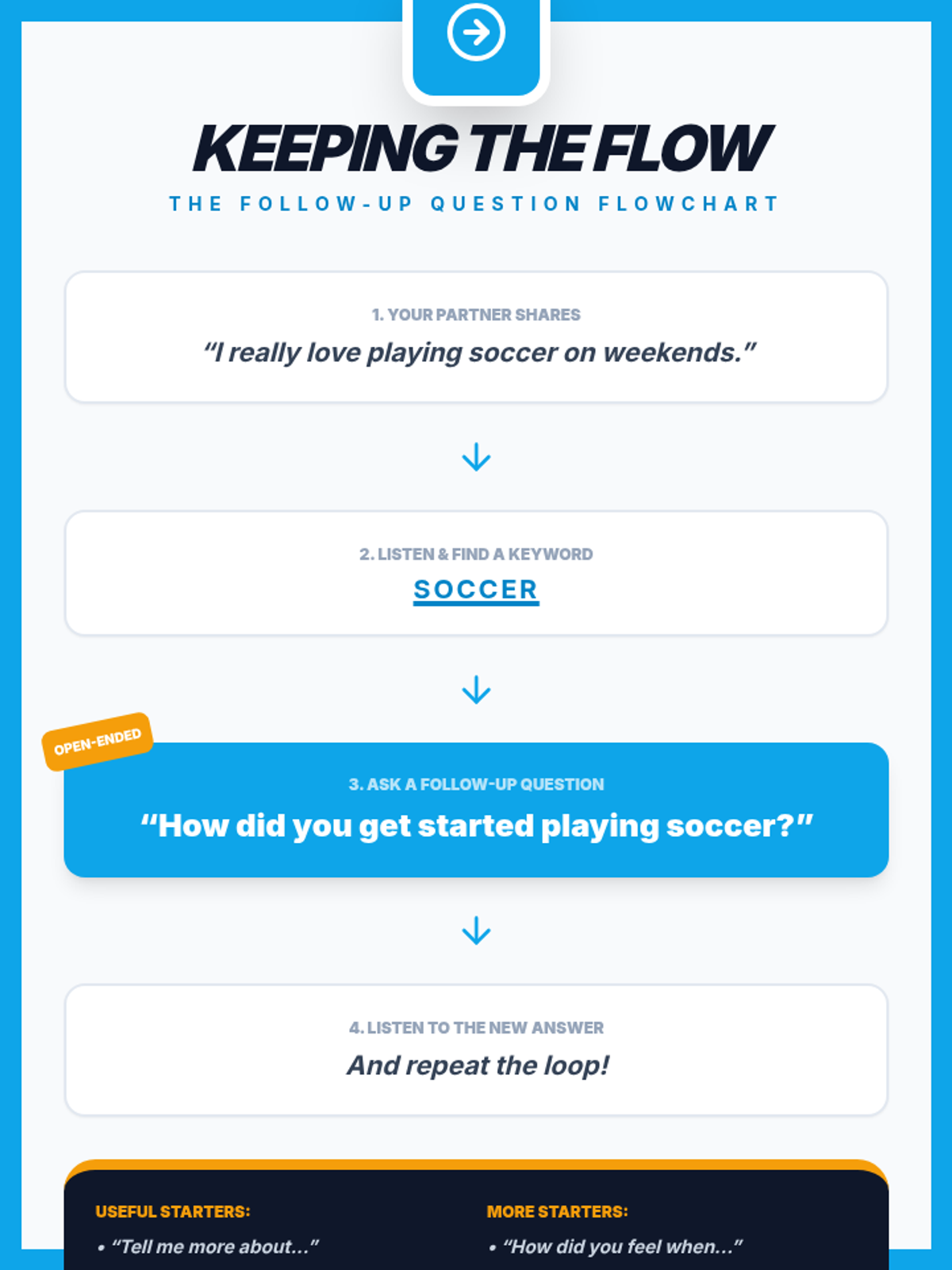
Visual flowchart for follow-up questions, topic-shift cards, conversation summary template, and reflection cards for Session 5.
Visual presentation for Session 5, covering active listening skills, role-play instructions, and follow-up question practice.
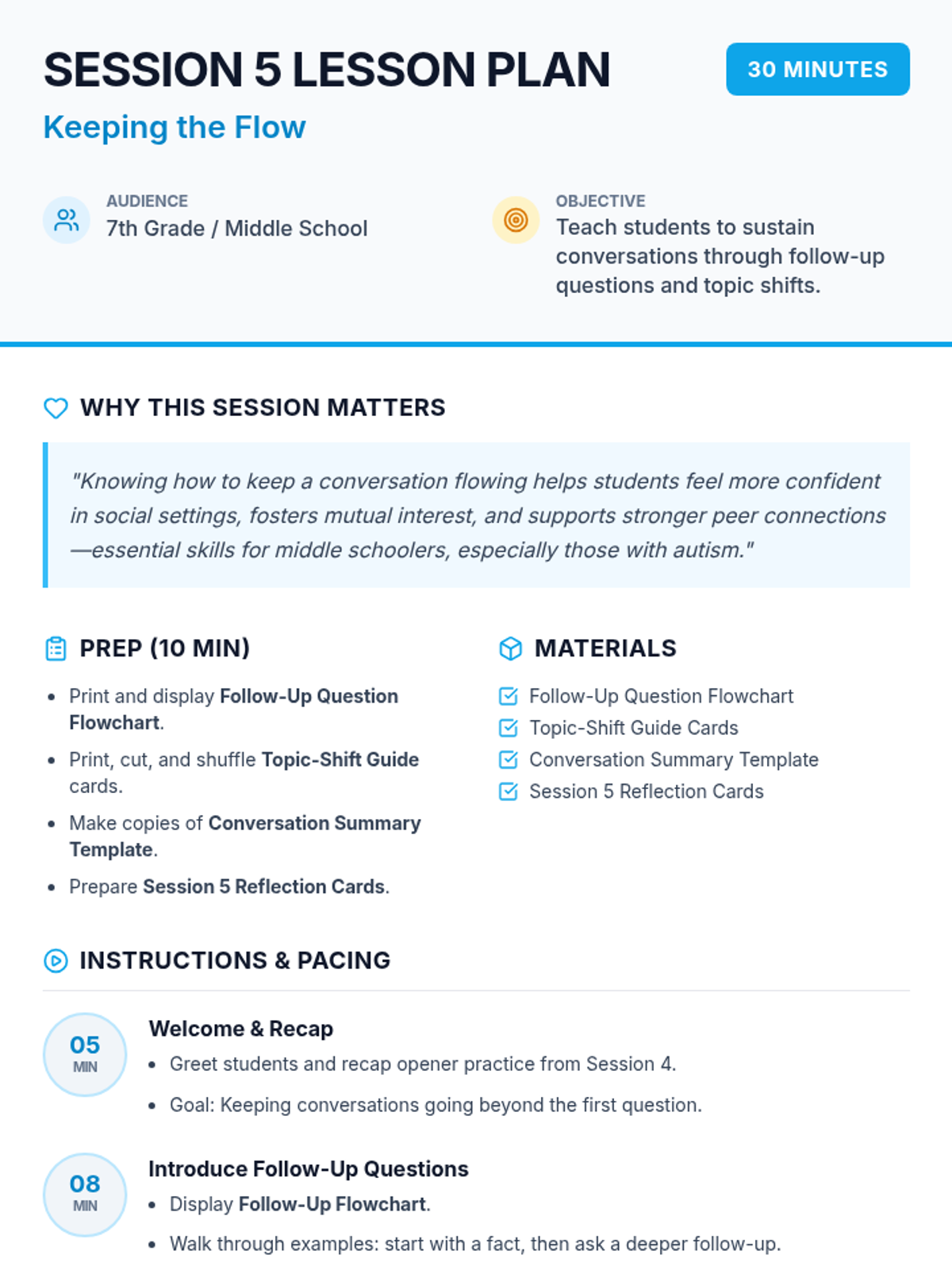
Detailed lesson plan for Session 5 including timing, objectives, and specific instructional steps.
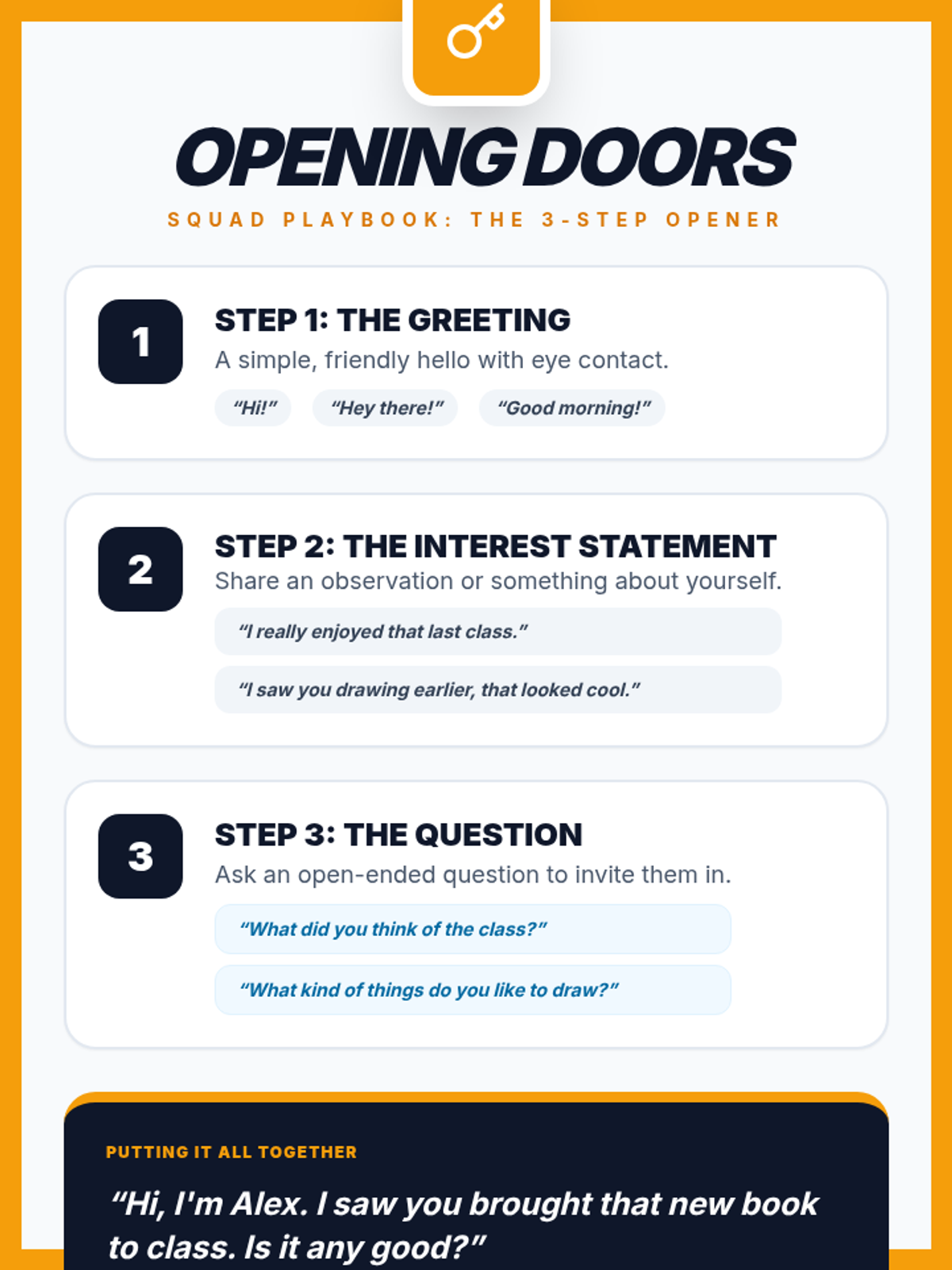
Printable conversation opener guide, scenario cards, self-confidence checklist, and peer feedback sticker templates.
Visual presentation for Session 4, covering active listening skills, role-play instructions, and follow-up question practice.
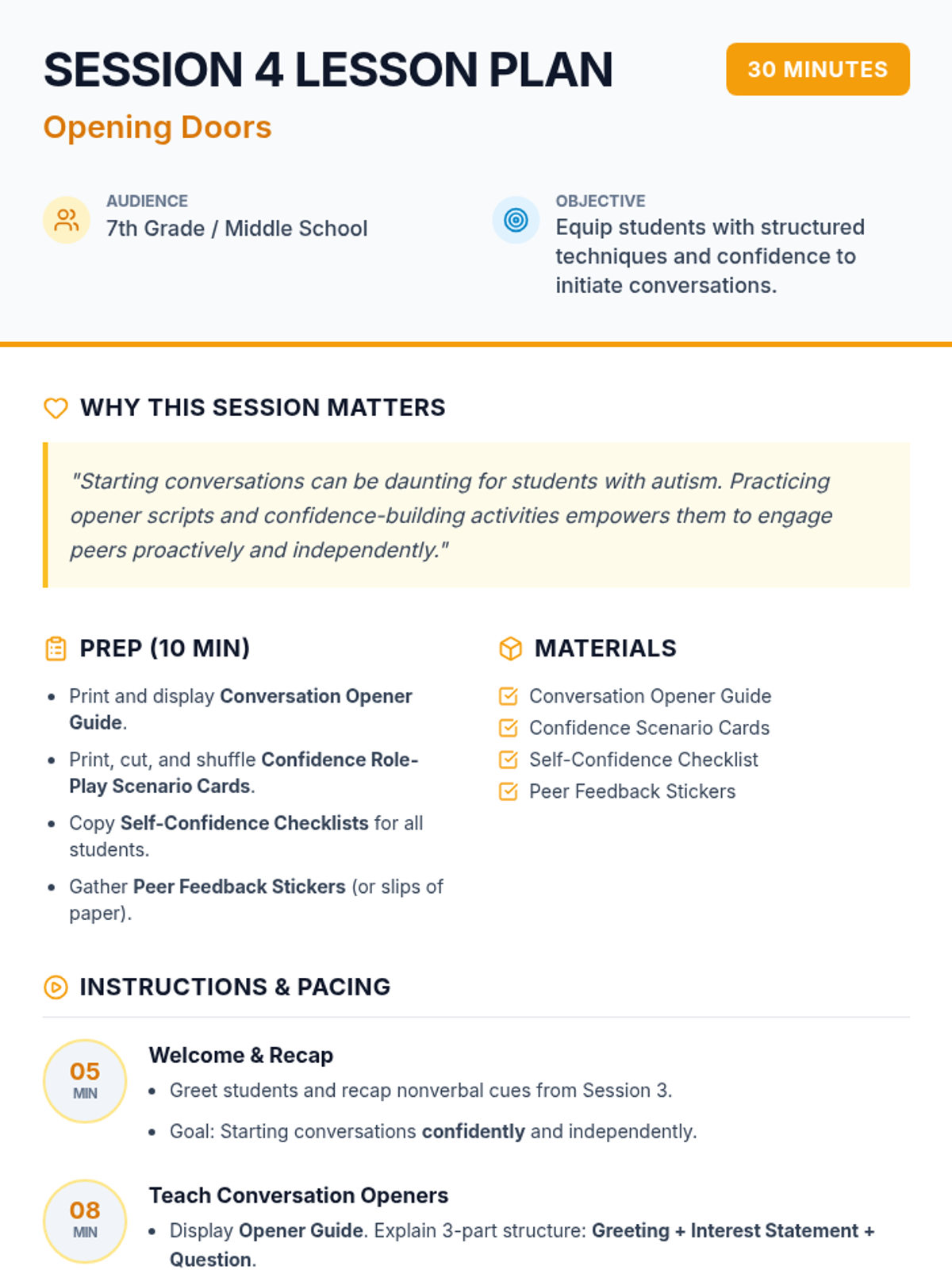
Detailed lesson plan for Session 4 including timing, objectives, and specific instructional steps.
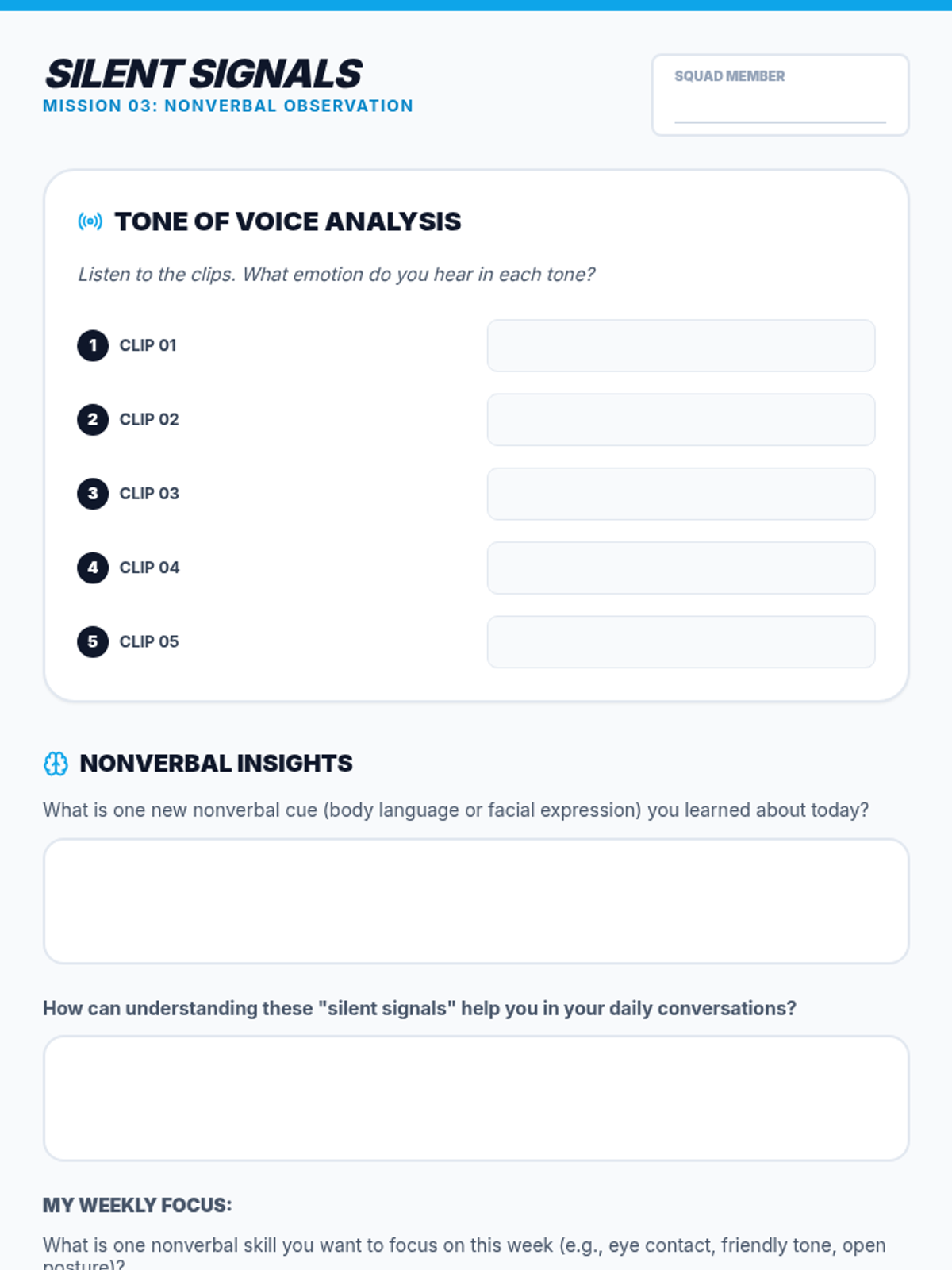
Nonverbal observation worksheet for students to record their analysis of tone of voice clips and reflect on key nonverbal cues.
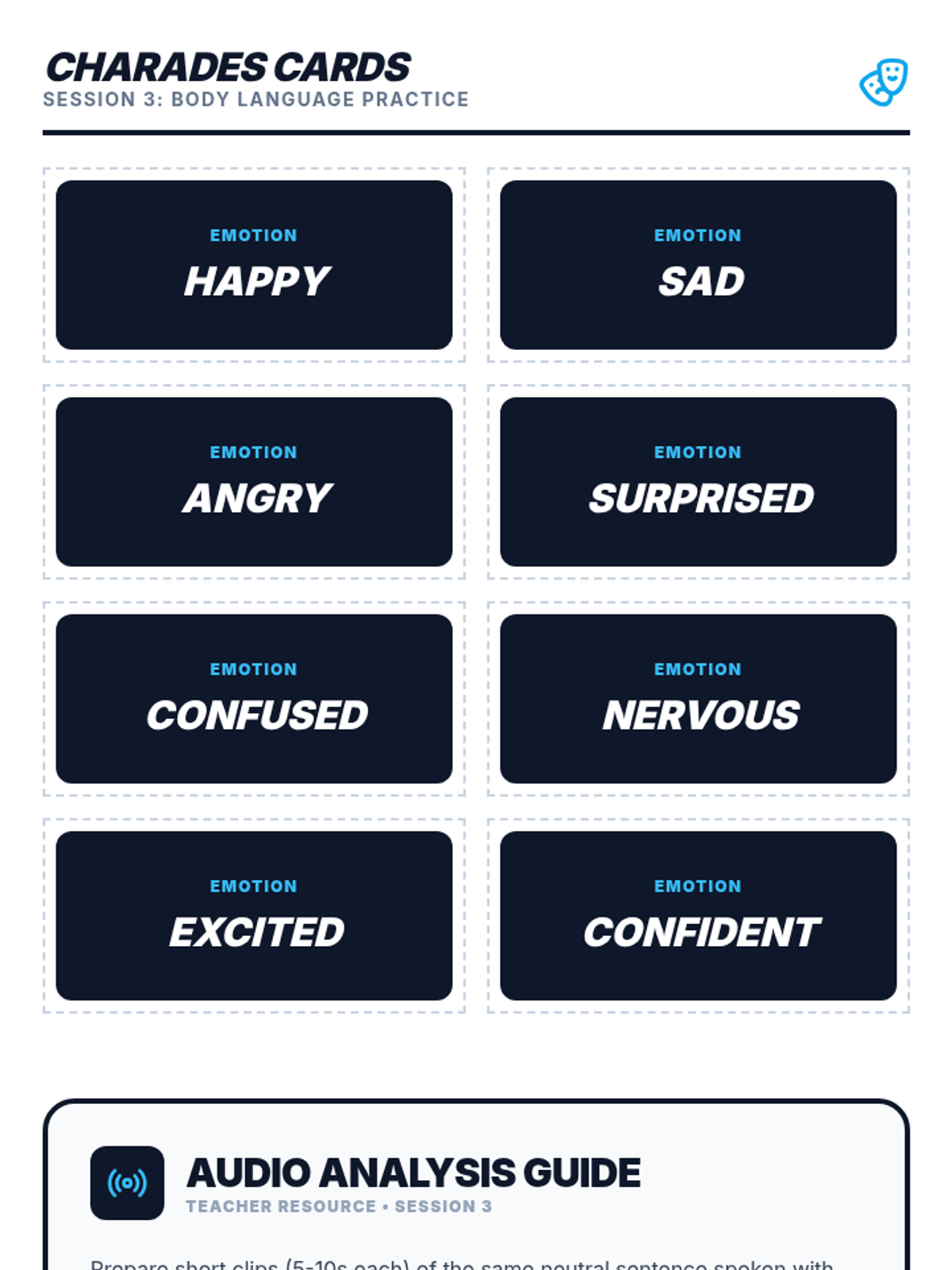
Printable charades cards for body language practice and a teacher guide for the tone of voice audio analysis activity.
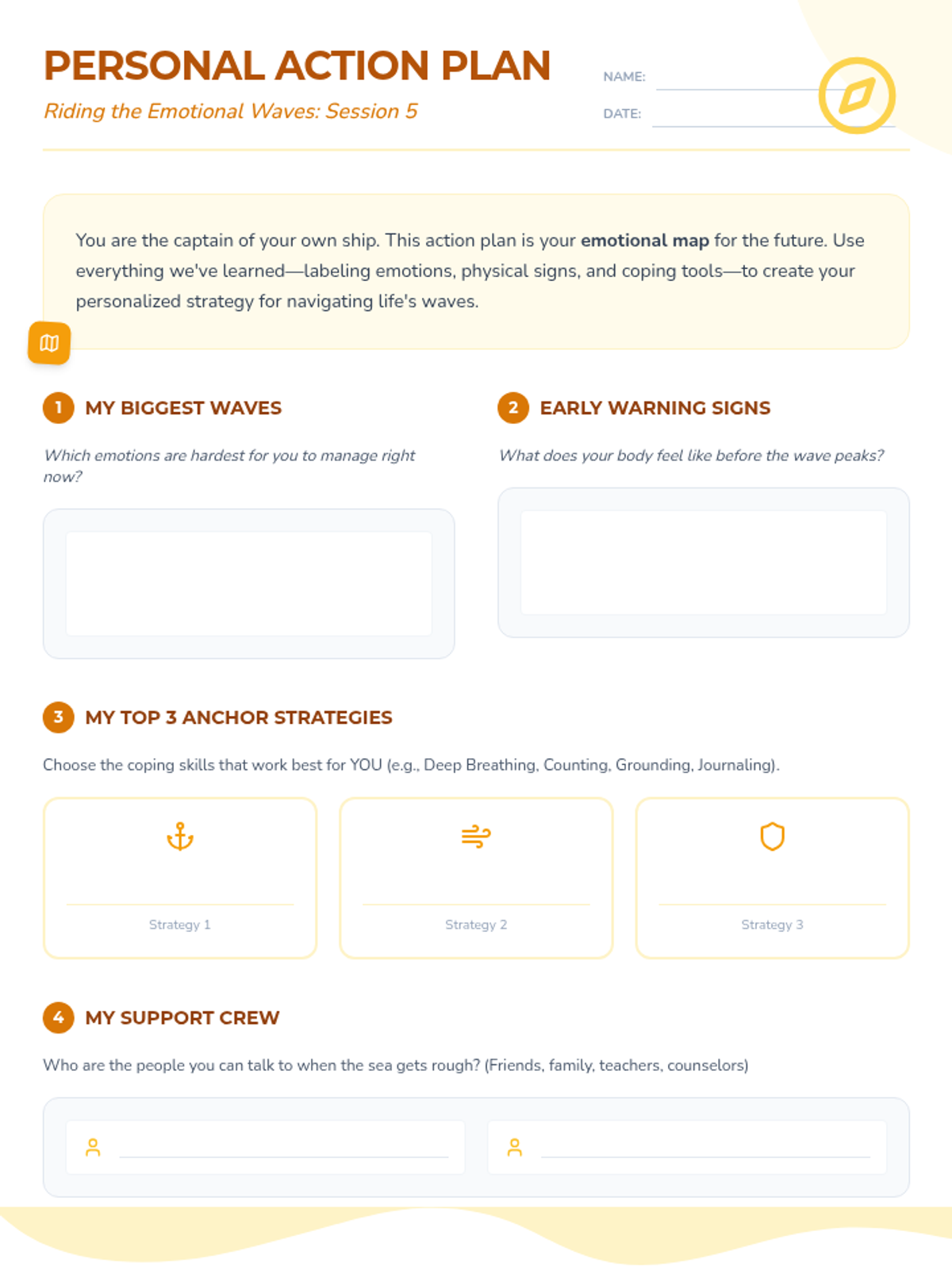
A final project worksheet for Session 5 where students synthesize their learning into a personalized emotional regulation action plan.
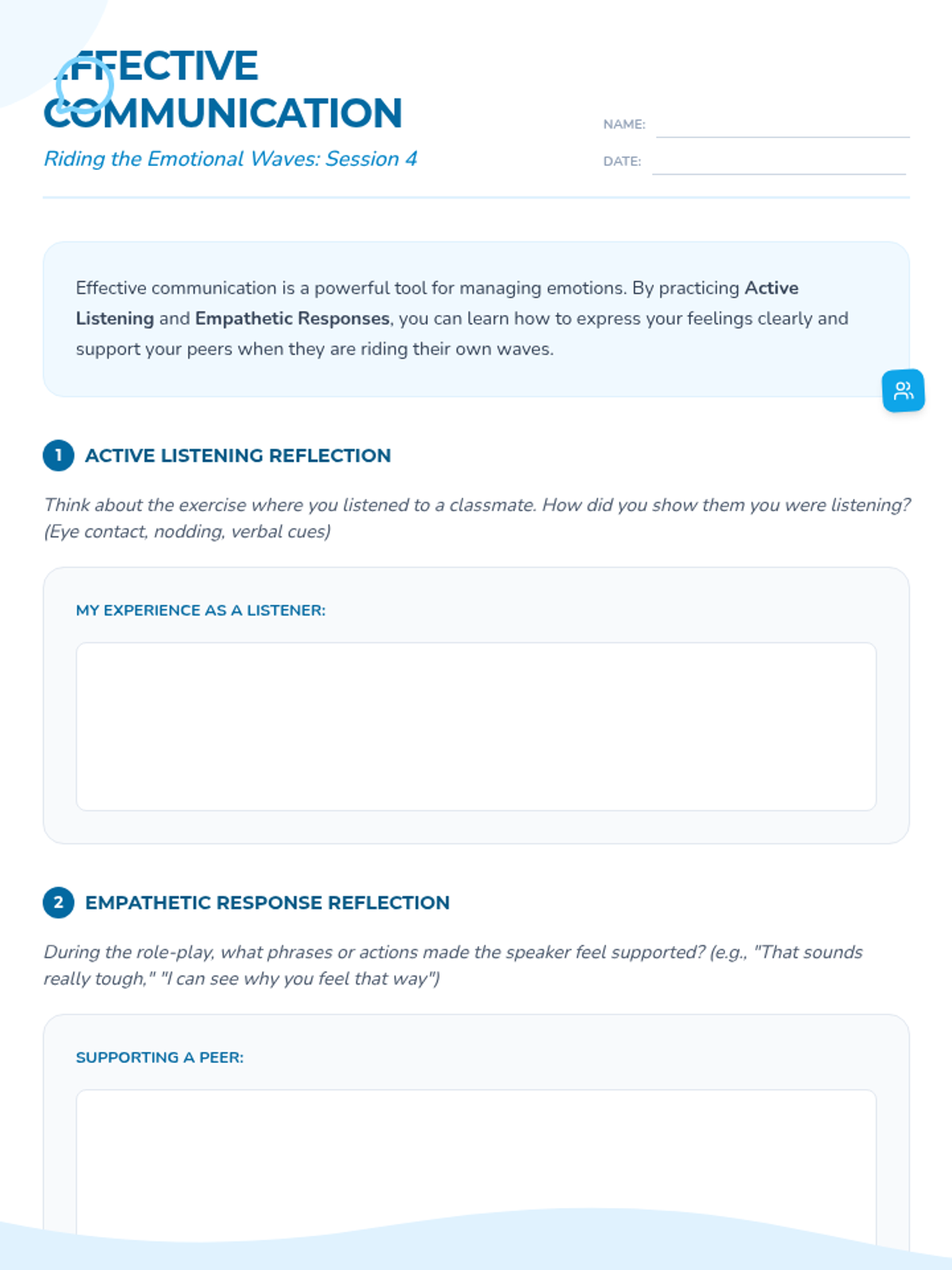
A student activity worksheet for Session 4 focused on practicing active listening and empathetic responses.
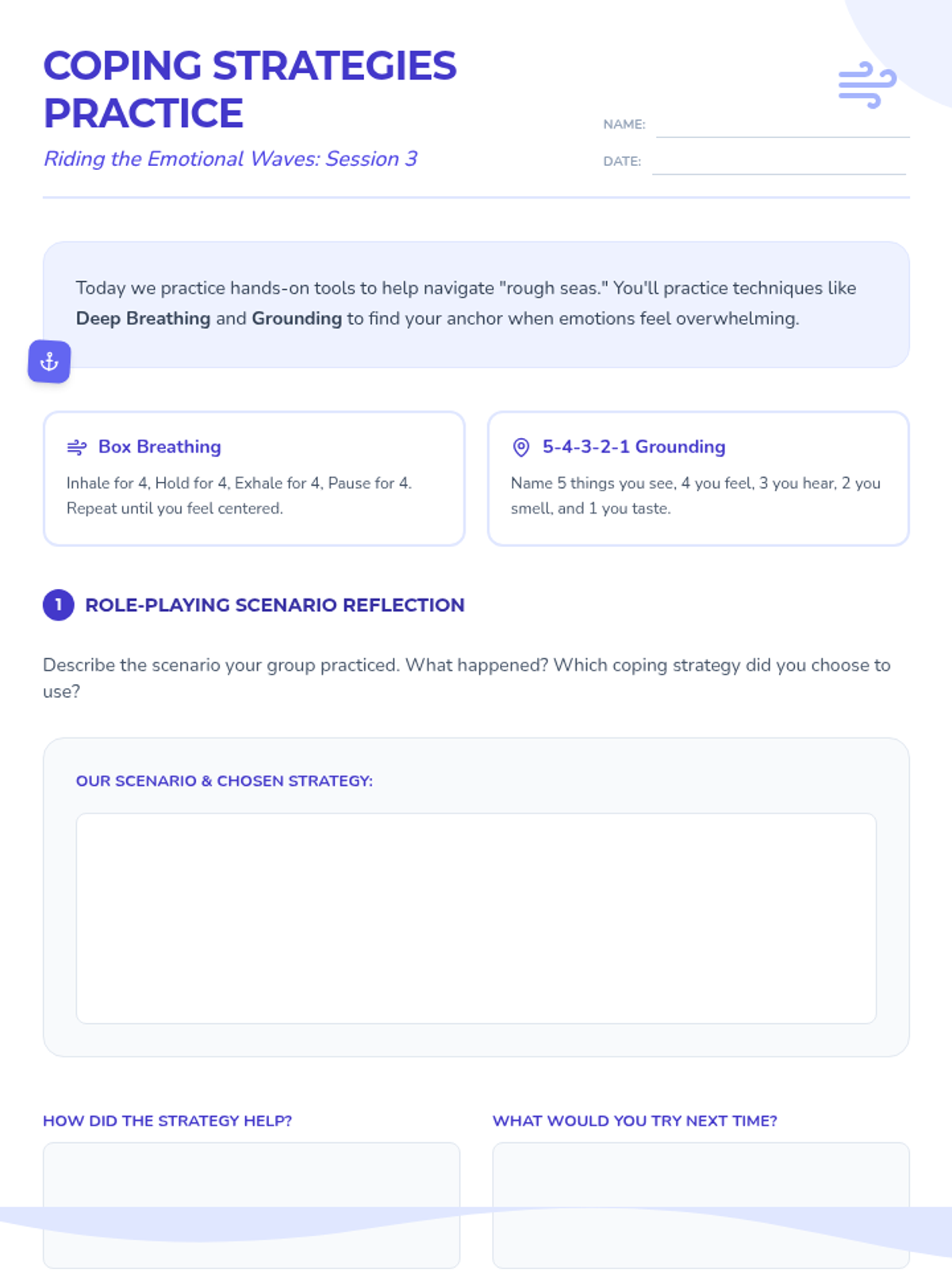
A student practice worksheet for Session 3 focused on rehearsing and reflecting on coping strategies like deep breathing and grounding.
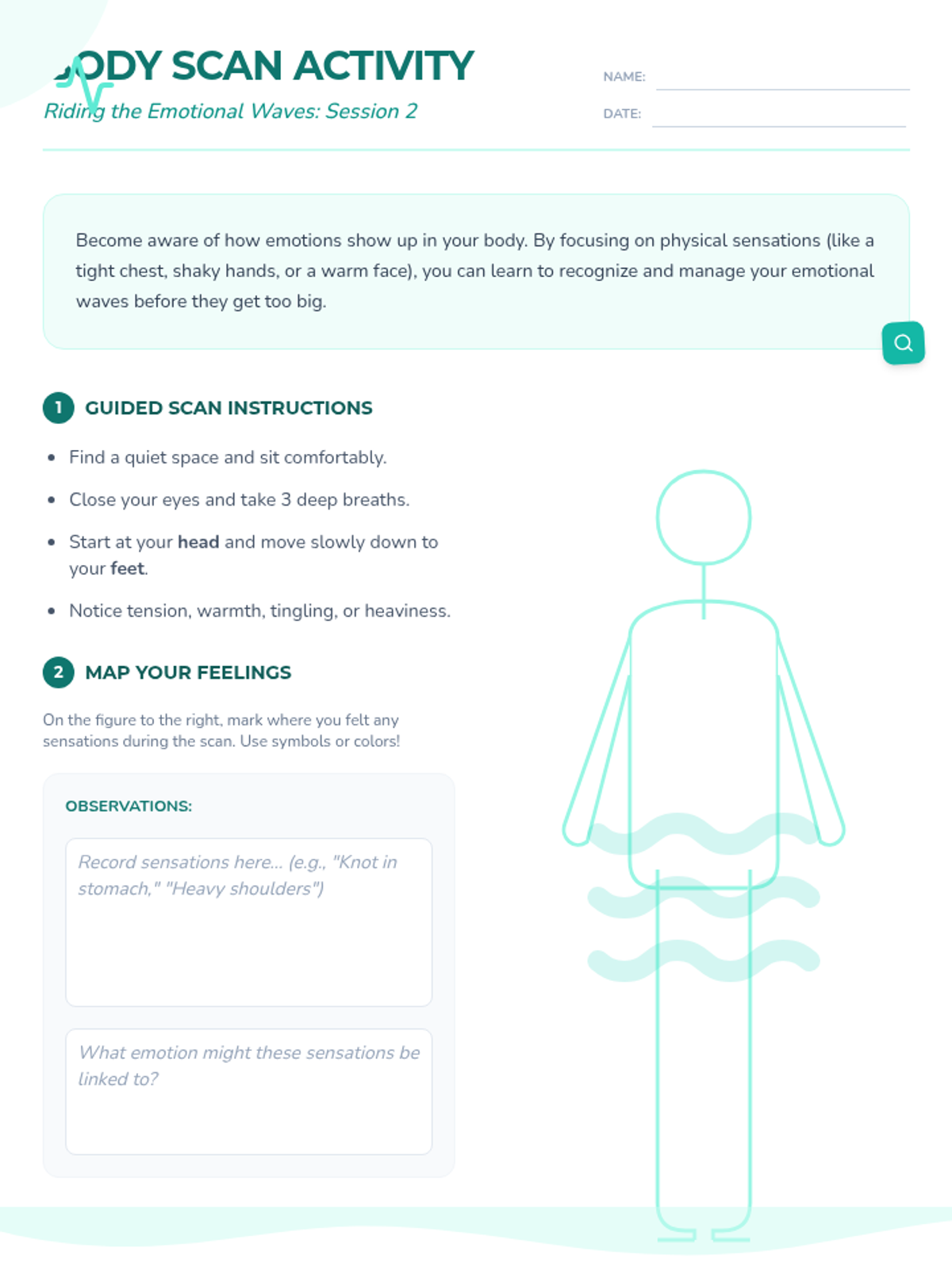
A worksheet for Session 2 that guides students through a body scan to identify physical sensations related to emotions.
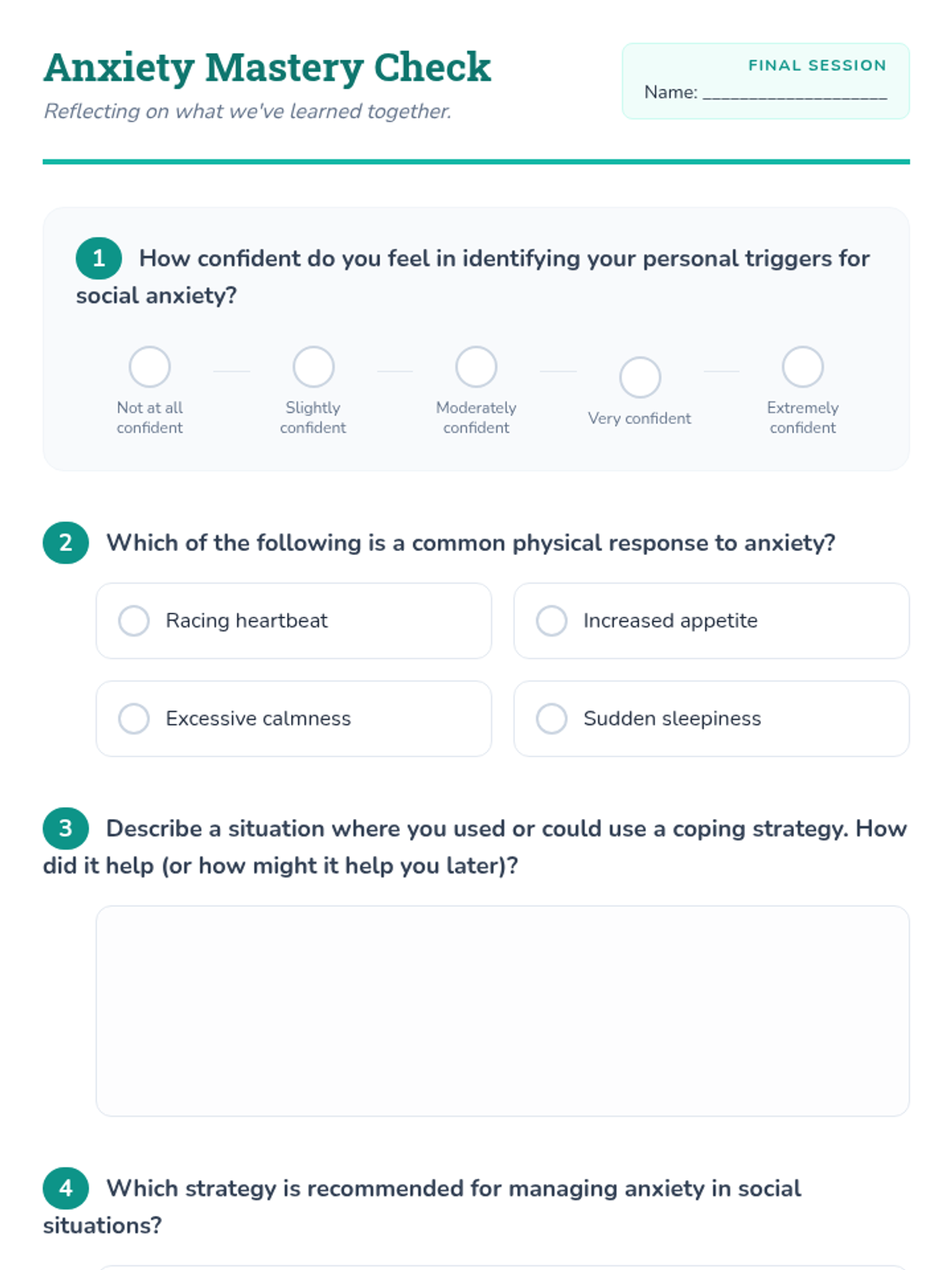
Final assessment to evaluate student understanding of social anxiety triggers, physical responses, and coping strategies.
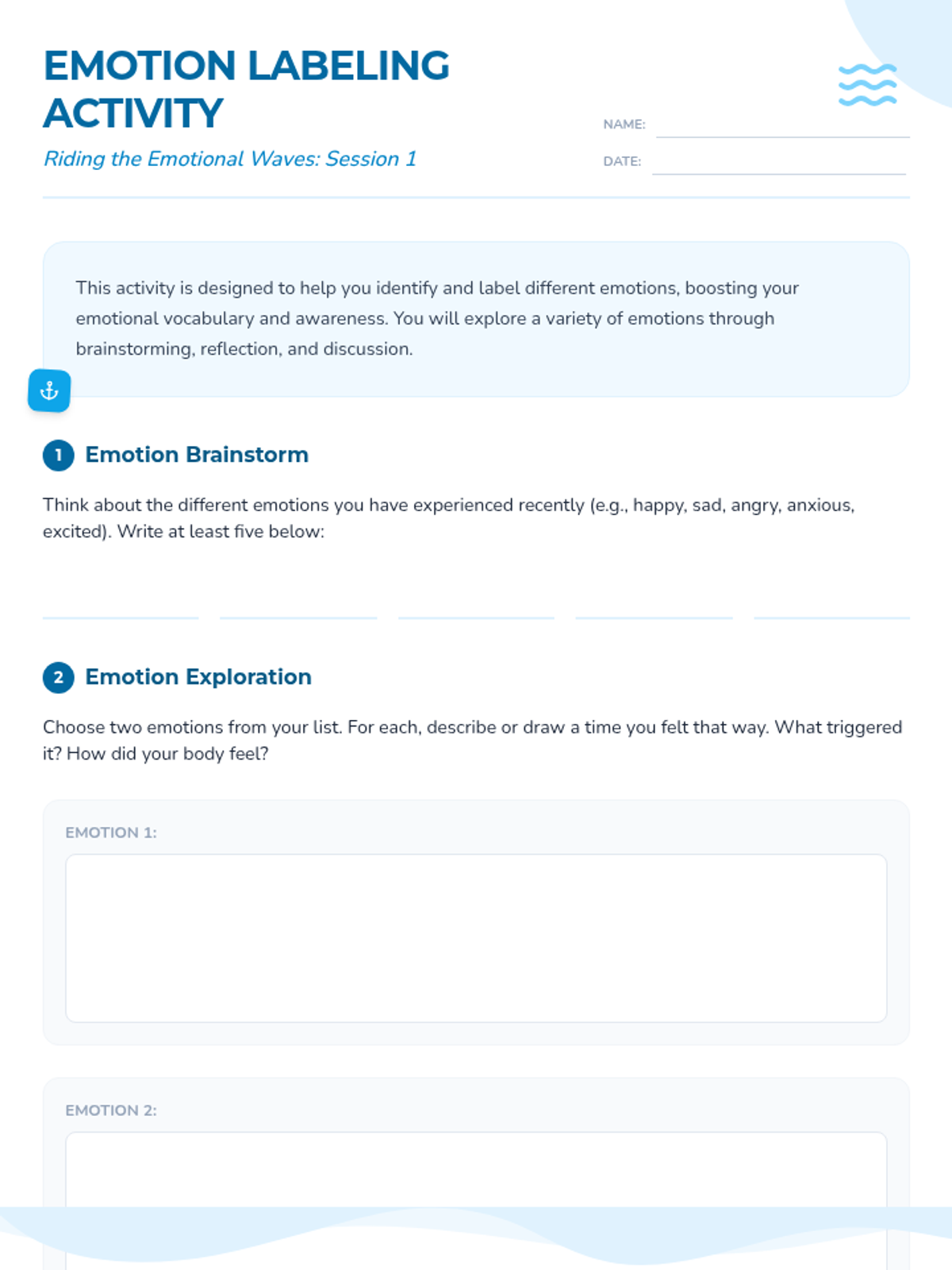
A student worksheet for Session 1 that helps students identify and label emotions through brainstorming and reflection.
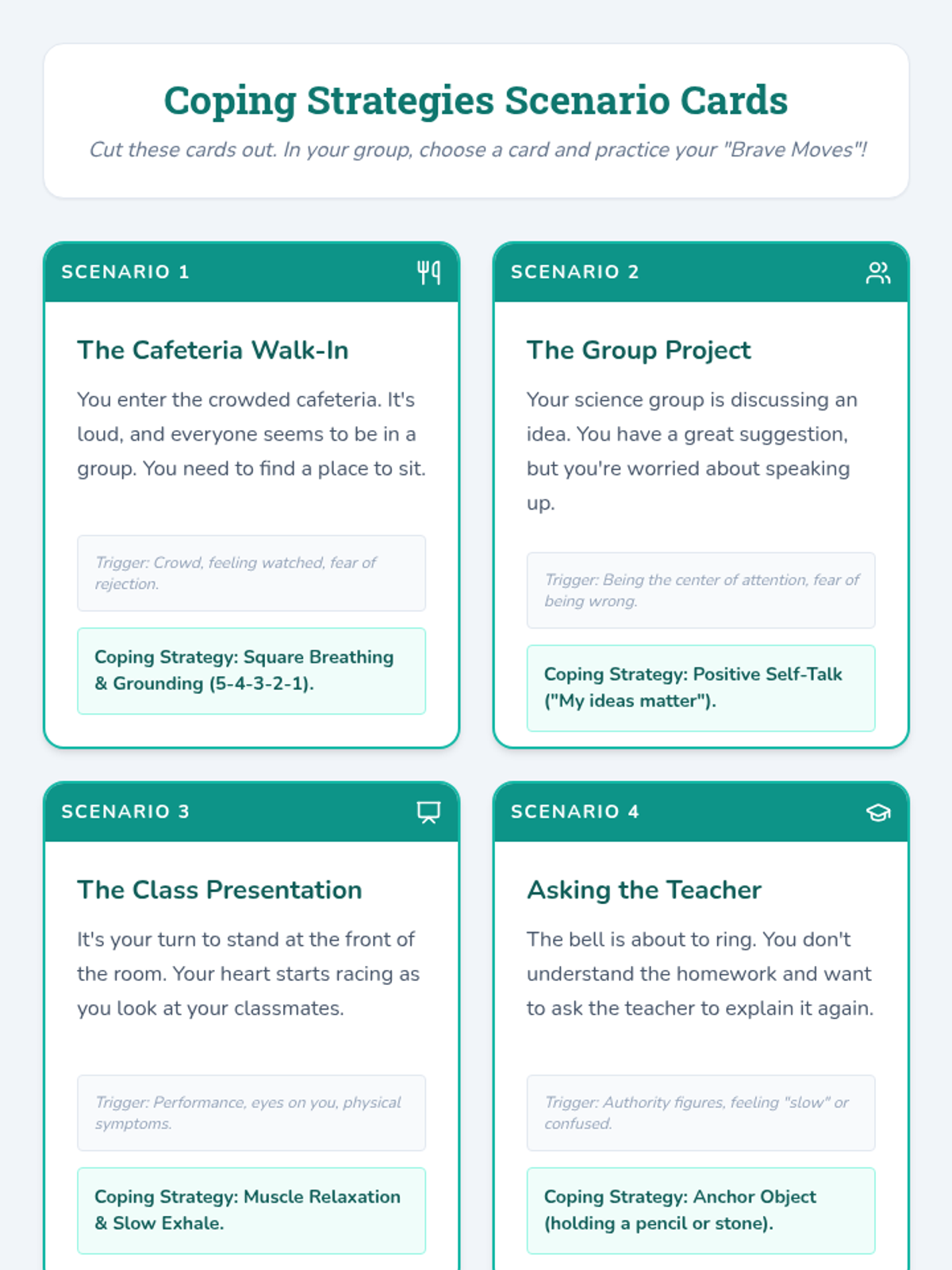
Scenarios where students can practice social bravery and coping skills. Includes triggers and suggested strategies for 7th grade social situations.
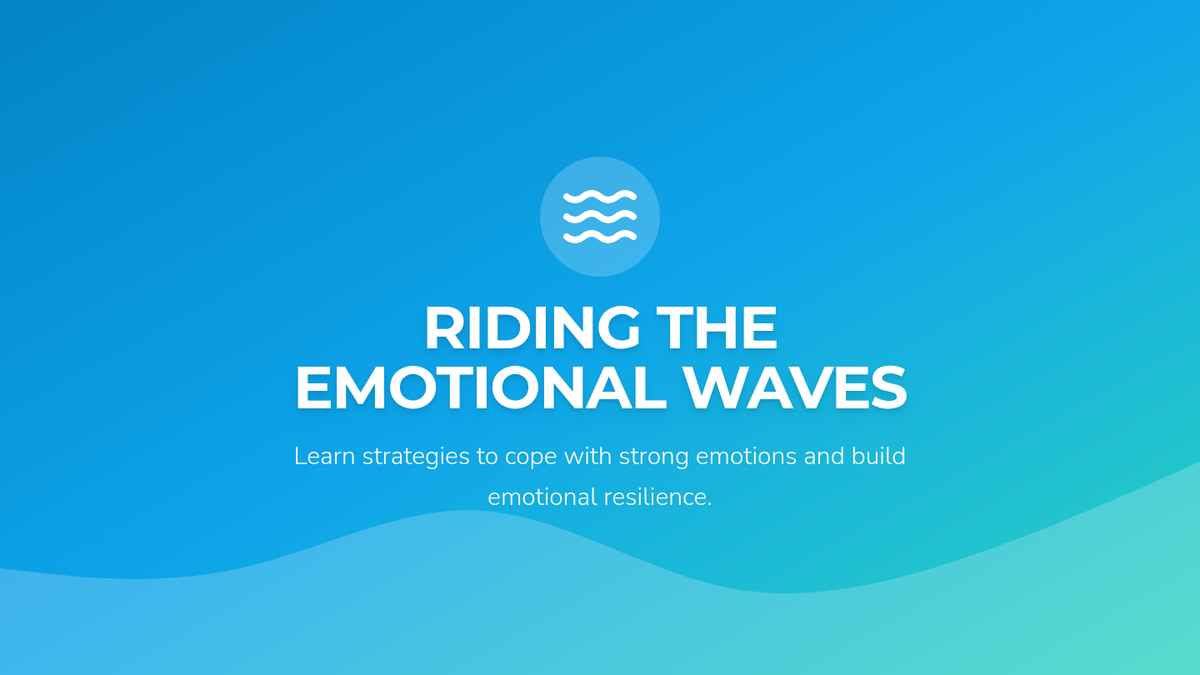
A visual presentation for the 5-session 'Riding the Emotional Waves' unit, featuring ocean-themed metaphors and an embedded video on active listening.
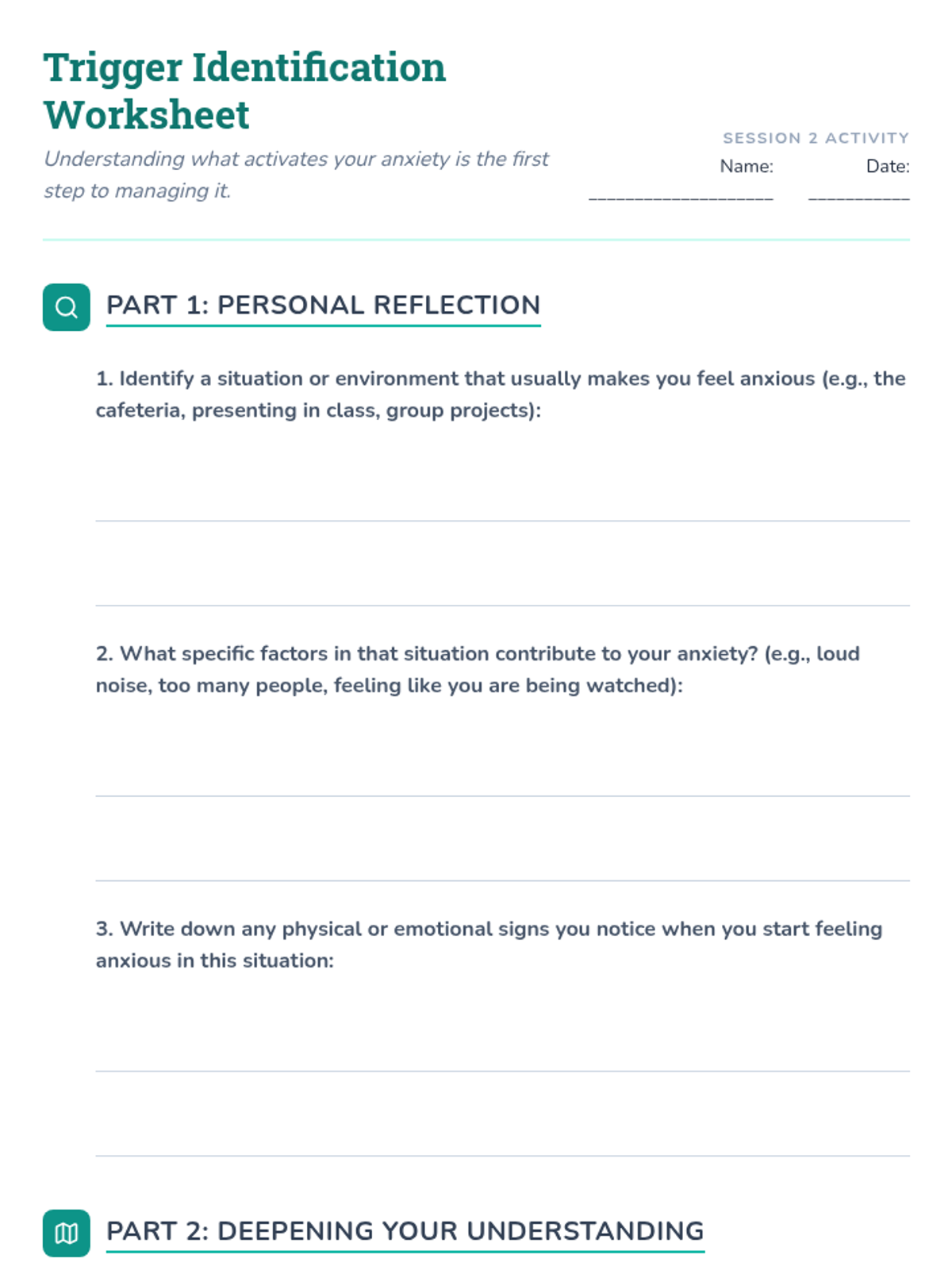
Worksheet for identifying personal and situational triggers of social anxiety, with sections for reflection, group discussion, and future strategy planning.
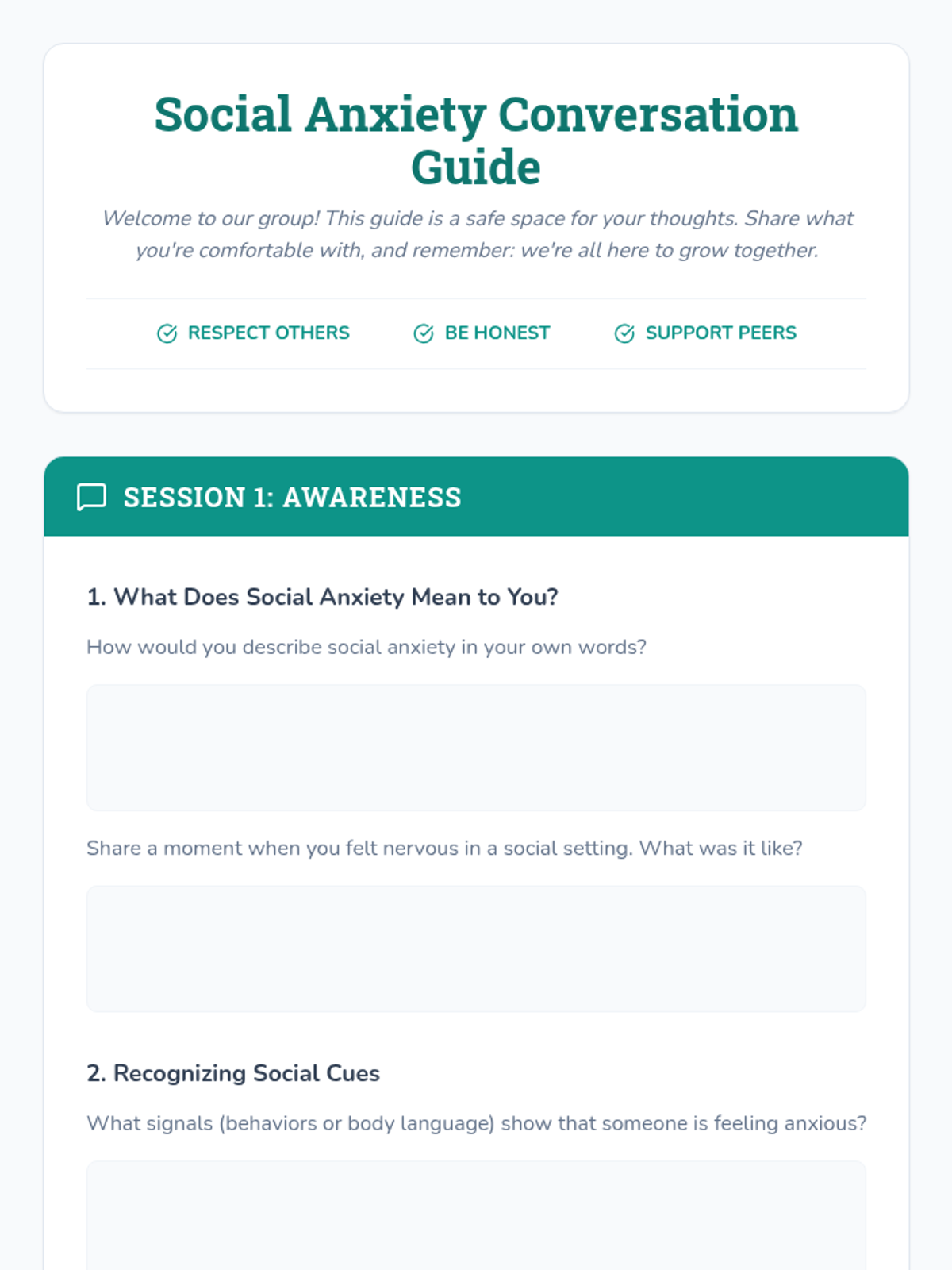
Discussion guide for group sessions, featuring structured prompts and reflection spaces for students to document their journey through the 5 sessions.
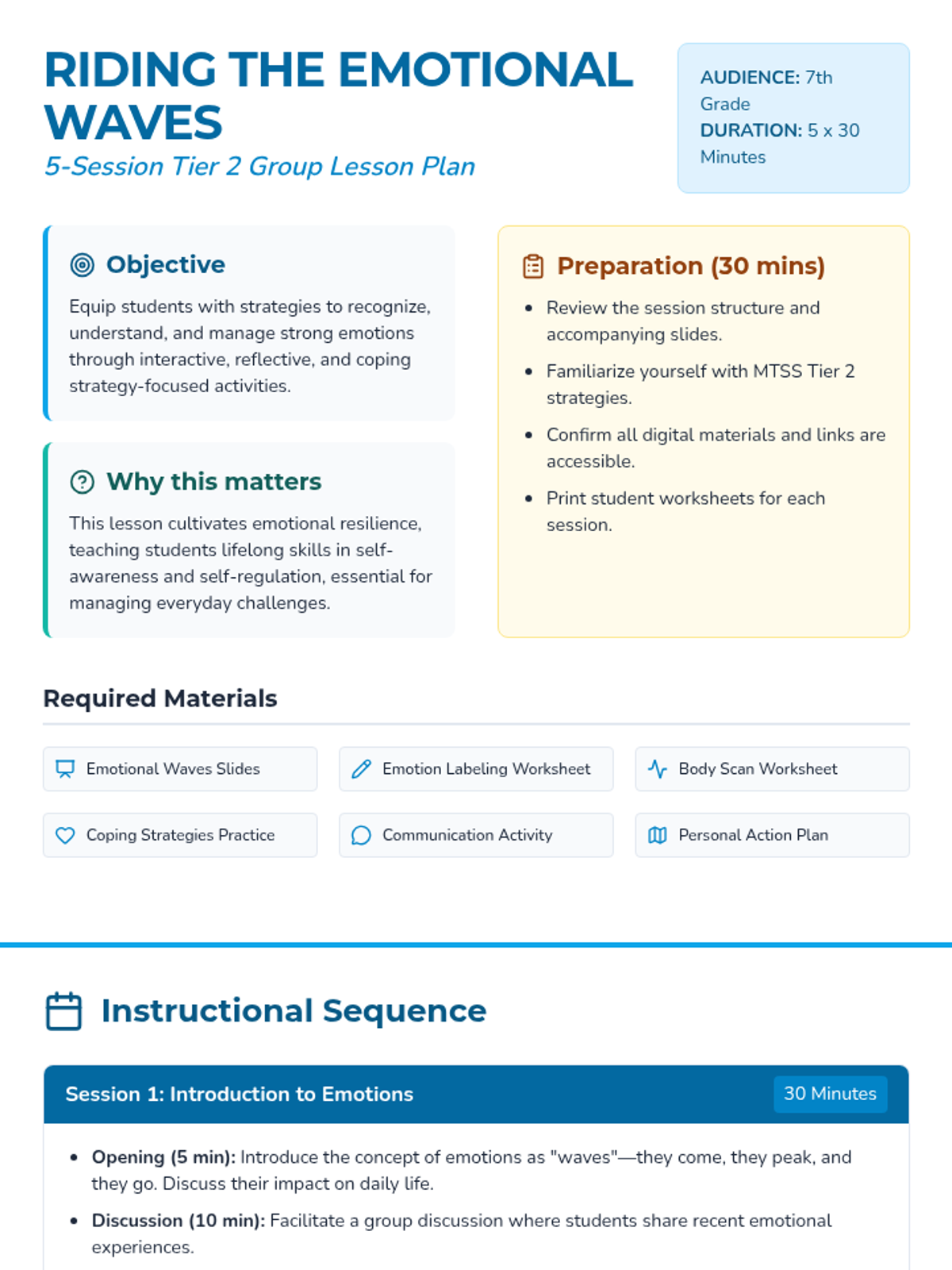
A comprehensive 5-session lesson plan for a Tier 2 emotional resilience group, featuring instructional sequences and preparation steps.
Visual presentation for the 5-session Anxiety Conquest group intervention, featuring key concepts, reflection prompts, and session summaries for 7th graders.
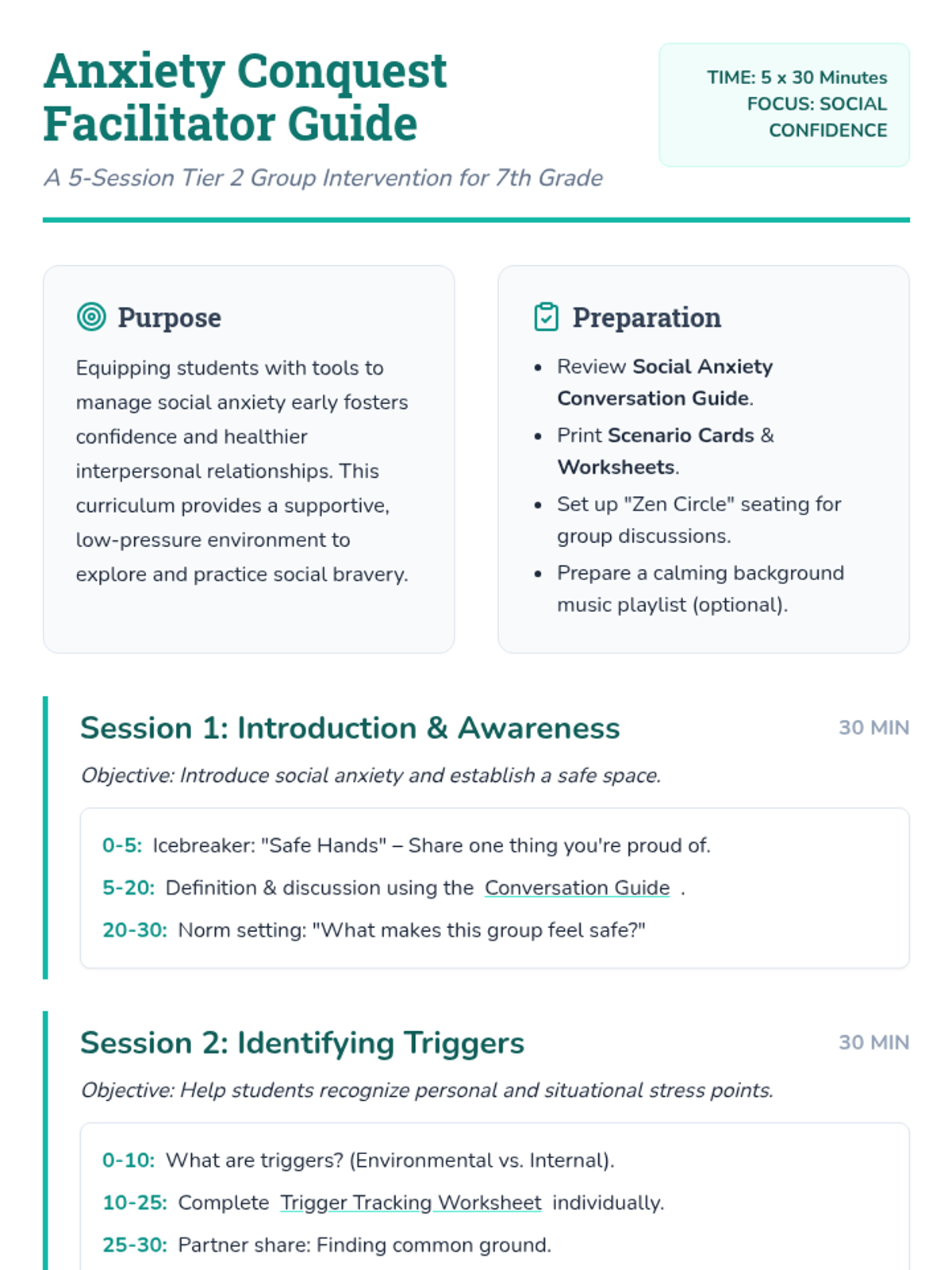
Comprehensive 5-session facilitator guide for leading a social anxiety group intervention with 7th graders, including time breakdowns and objective for each session.
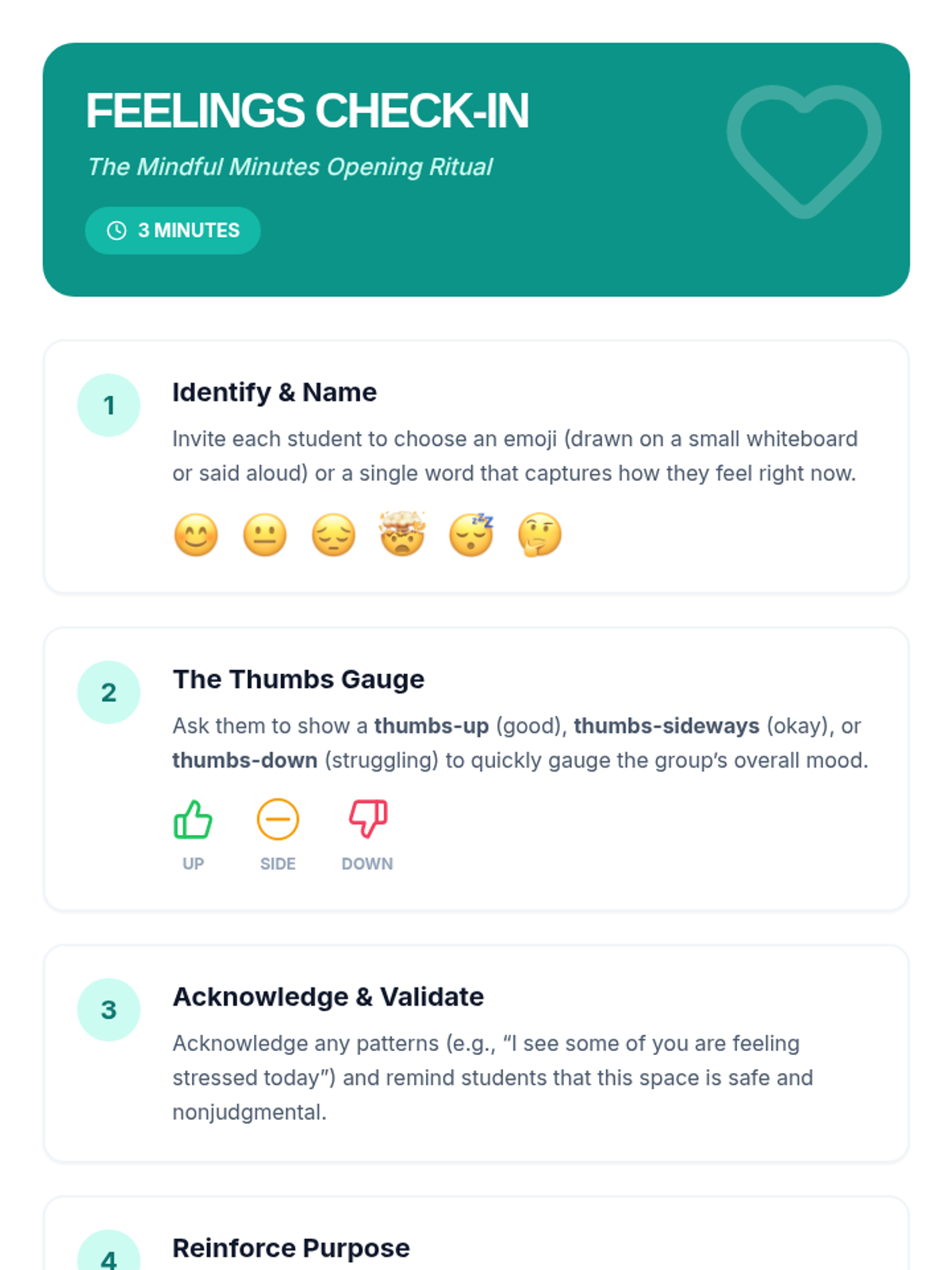
A guide for a quick, 3-minute warm-up activity where students identify and share their current emotional state using emojis and simple hand signals.
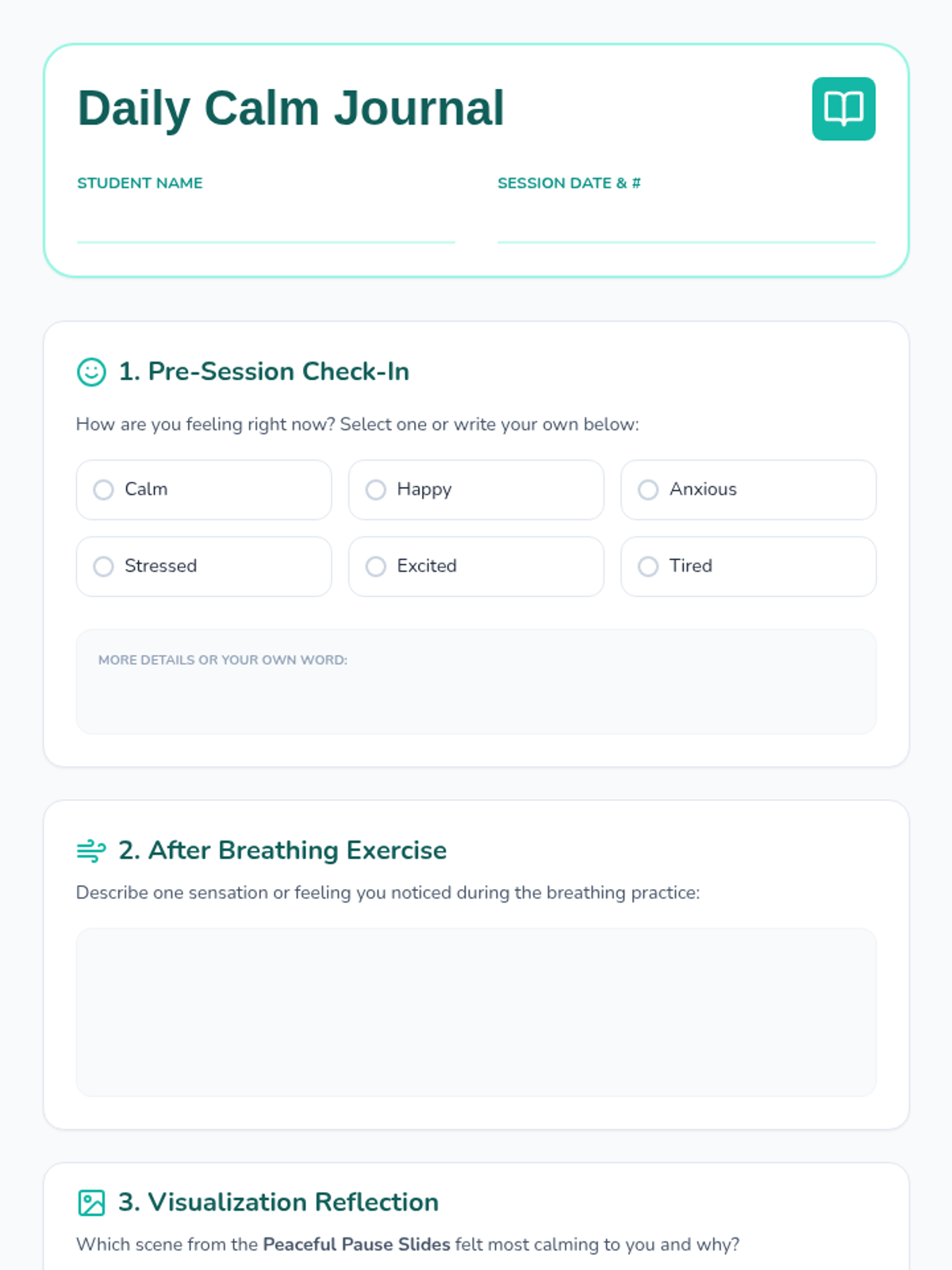
A student journal for reflecting on mindfulness practices, featuring check-ins, reflection prompts for visualization and breathing, and personal strategy planning.
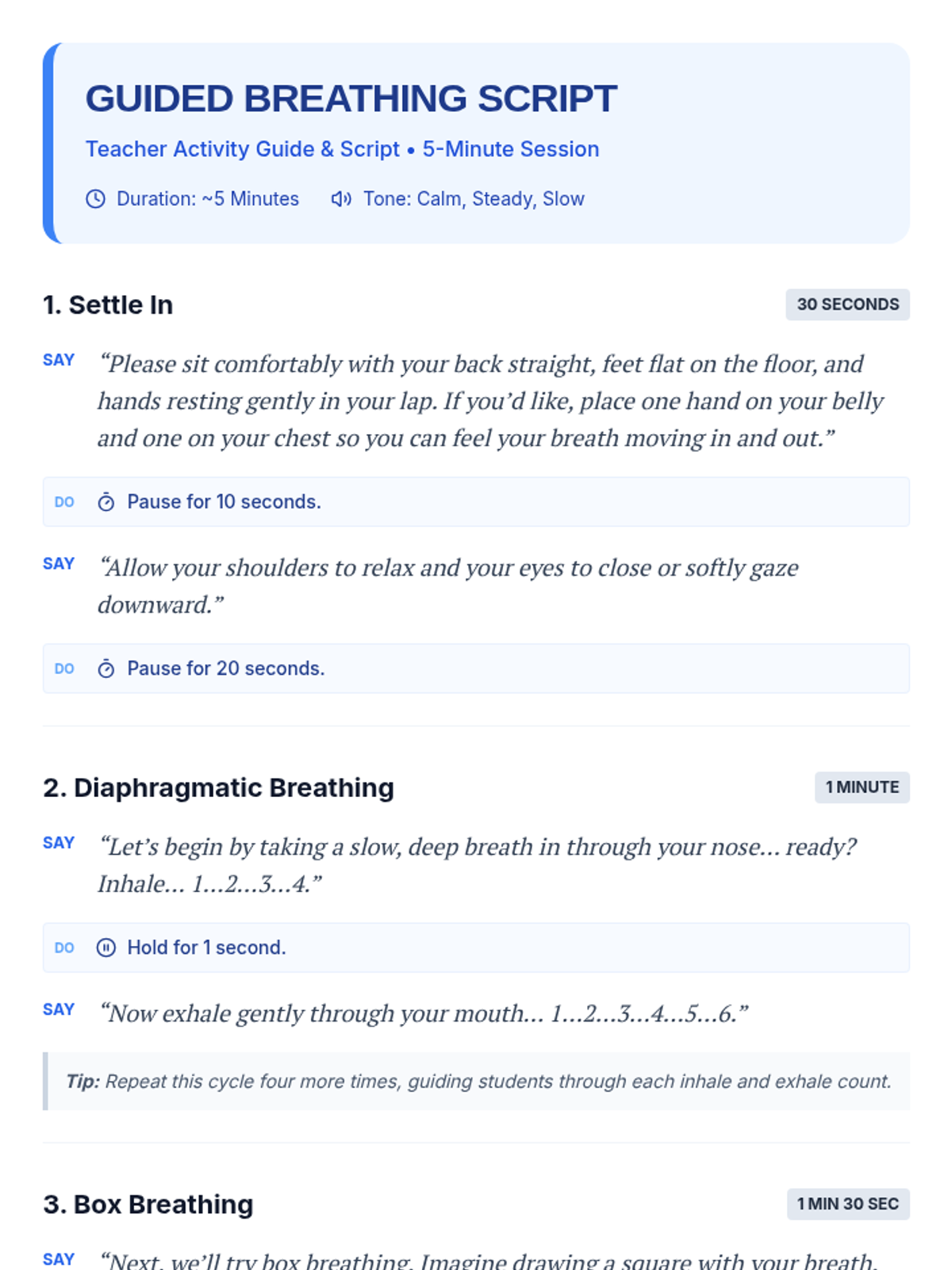
A detailed script for facilitating breathing exercises, including settling-in prompts, diaphragmatic breathing, box breathing, and transition cues.
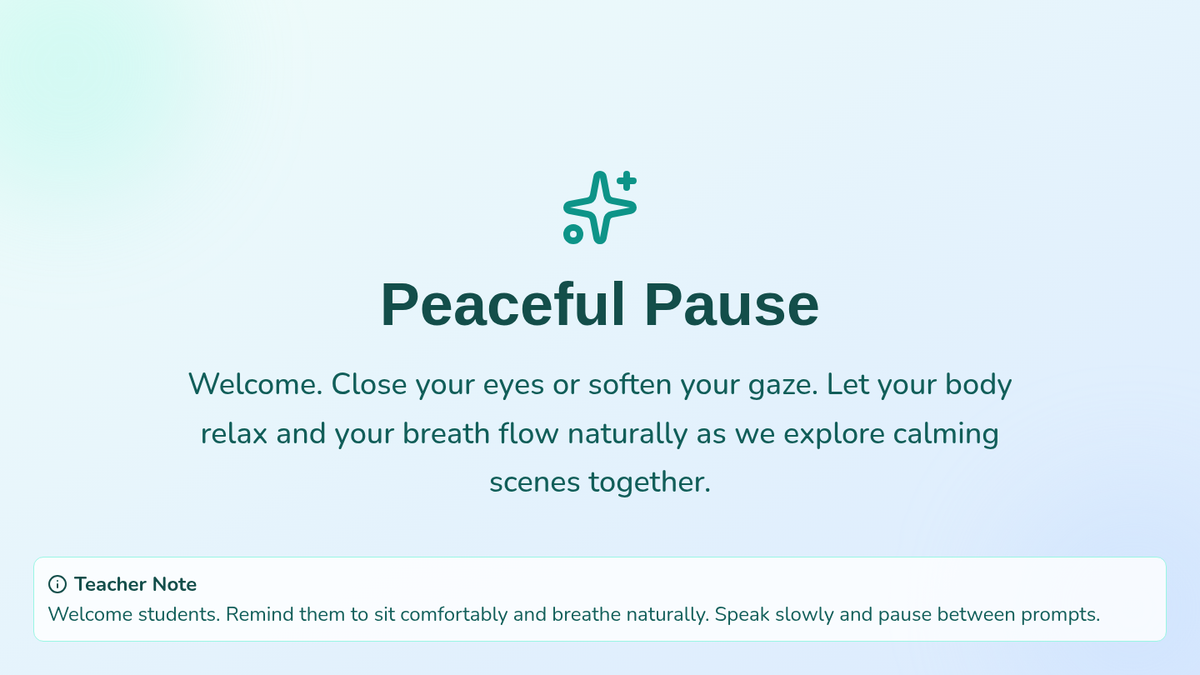
A visual presentation for the visualization segment of Mindful Minutes, featuring calming prompts and teacher guidance for several relaxing environments.
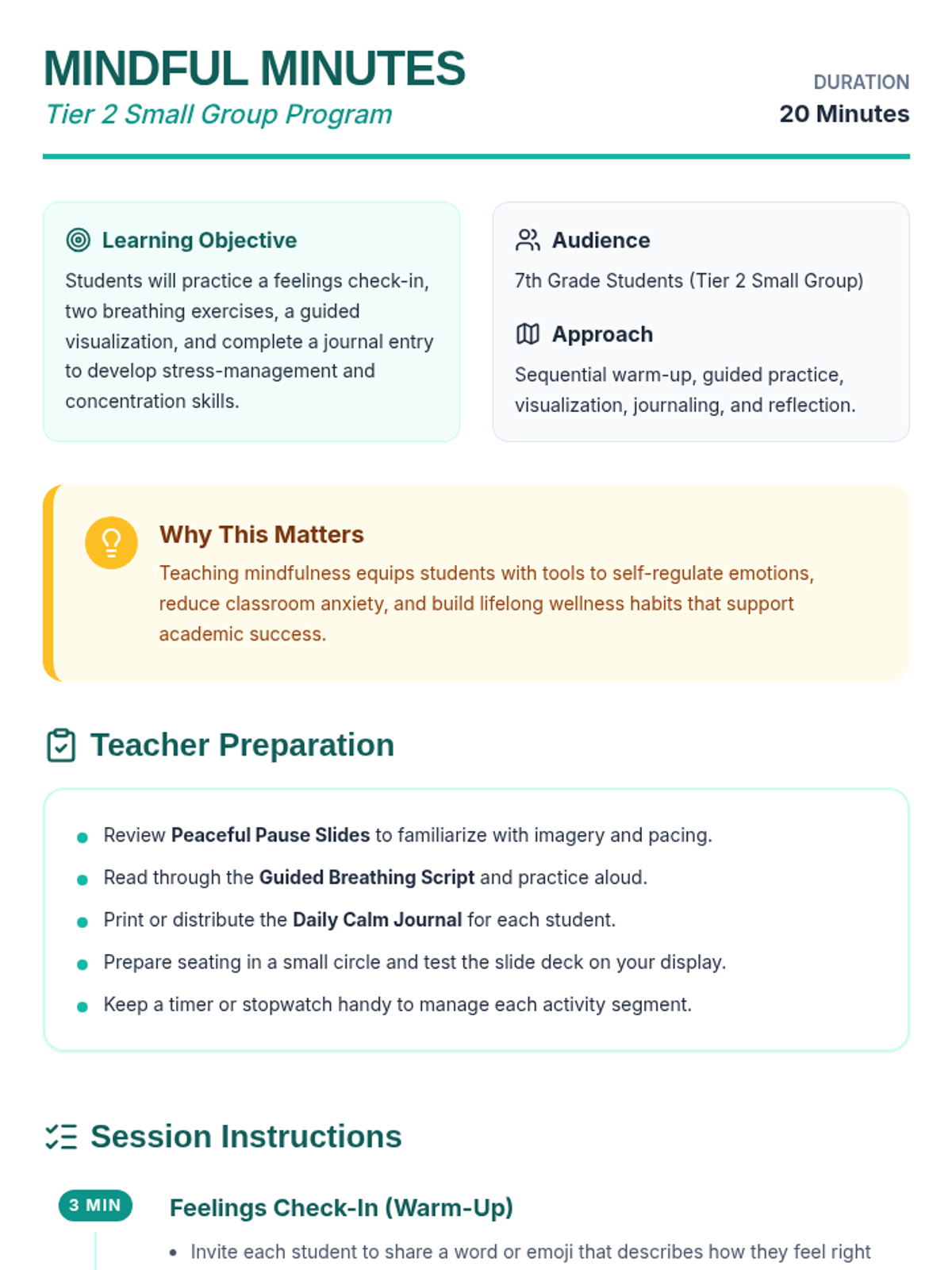
A comprehensive session plan for Mindful Minutes, covering preparation, objectives, and a step-by-step instructional sequence for a 20-minute small group session.
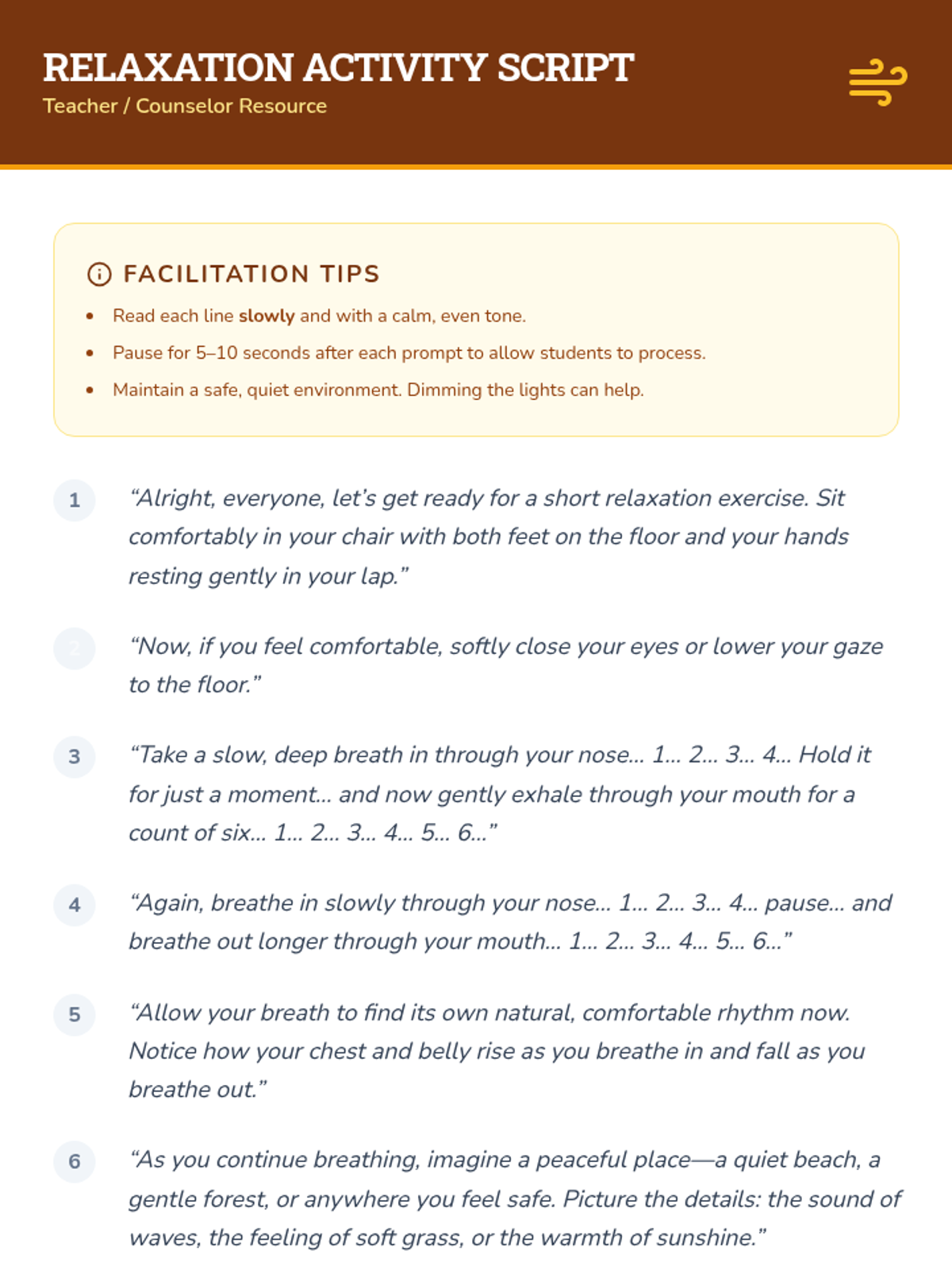
A script for a guided relaxation activity focusing on deep breathing and visualization to help students manage stress.
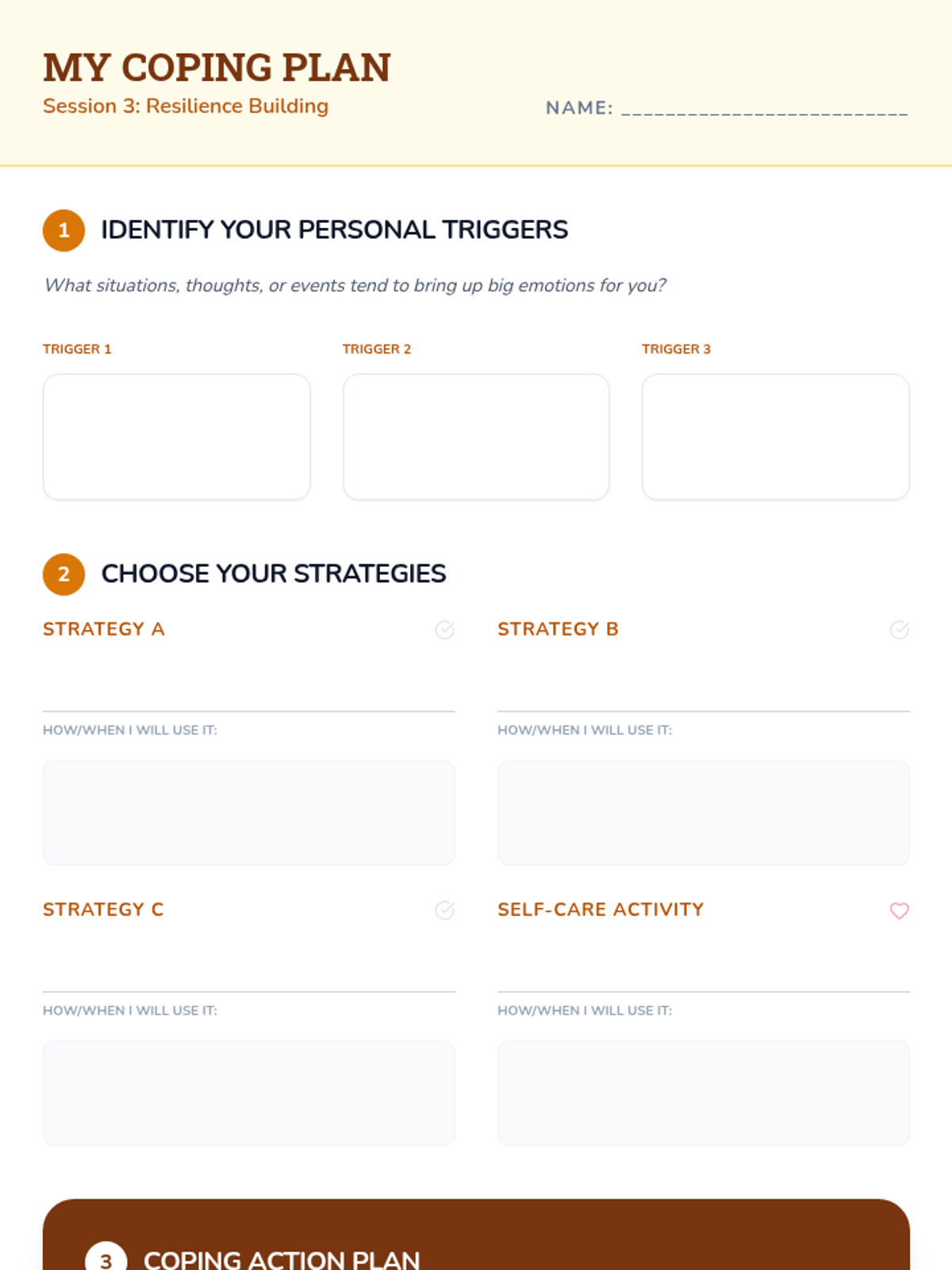
A worksheet for students to identify personal triggers and map out specific coping strategies and a support plan.
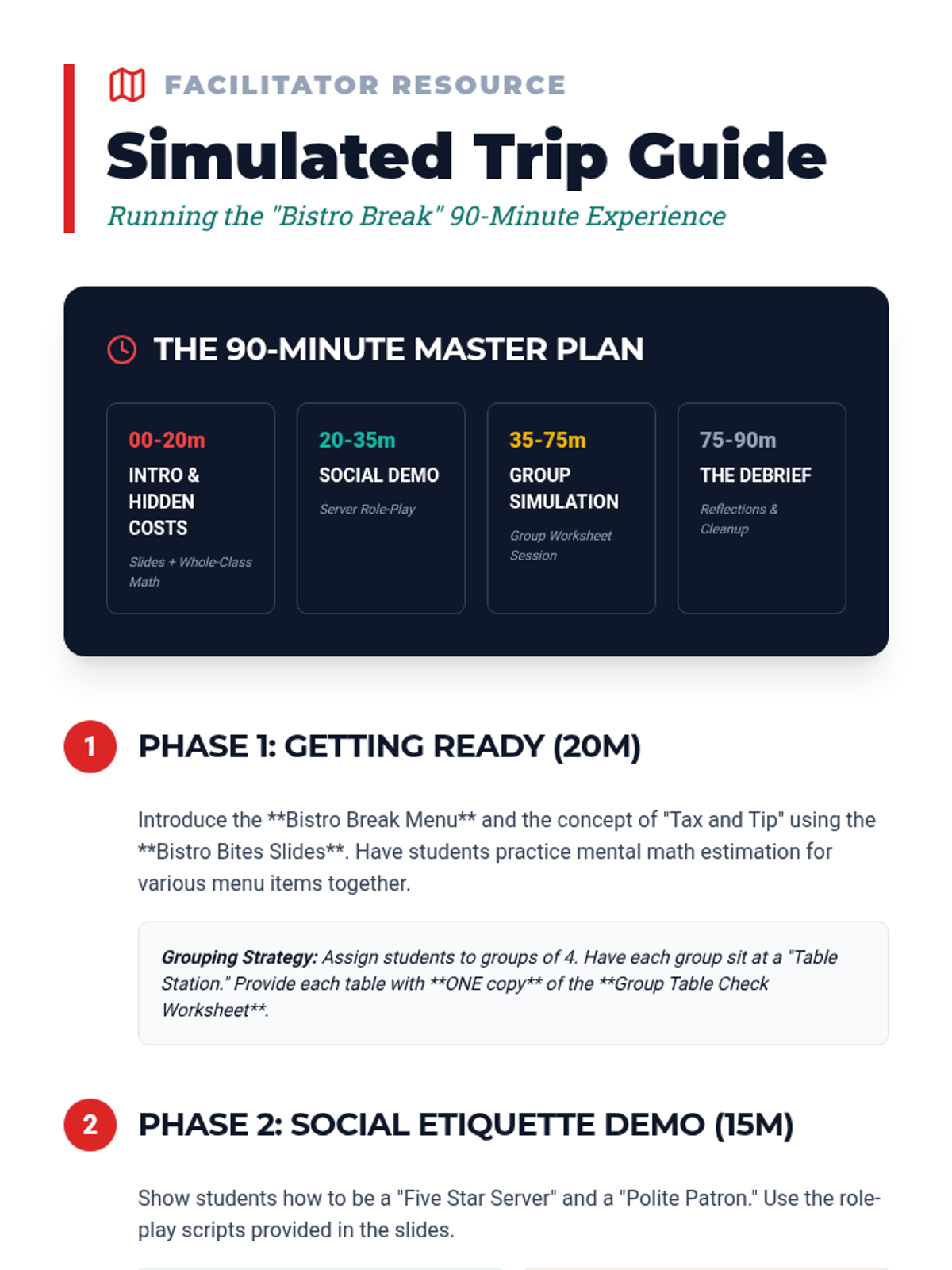
A facilitator's guide for conducting a simulated restaurant field trip in the classroom, including role-play scripts and setup instructions.
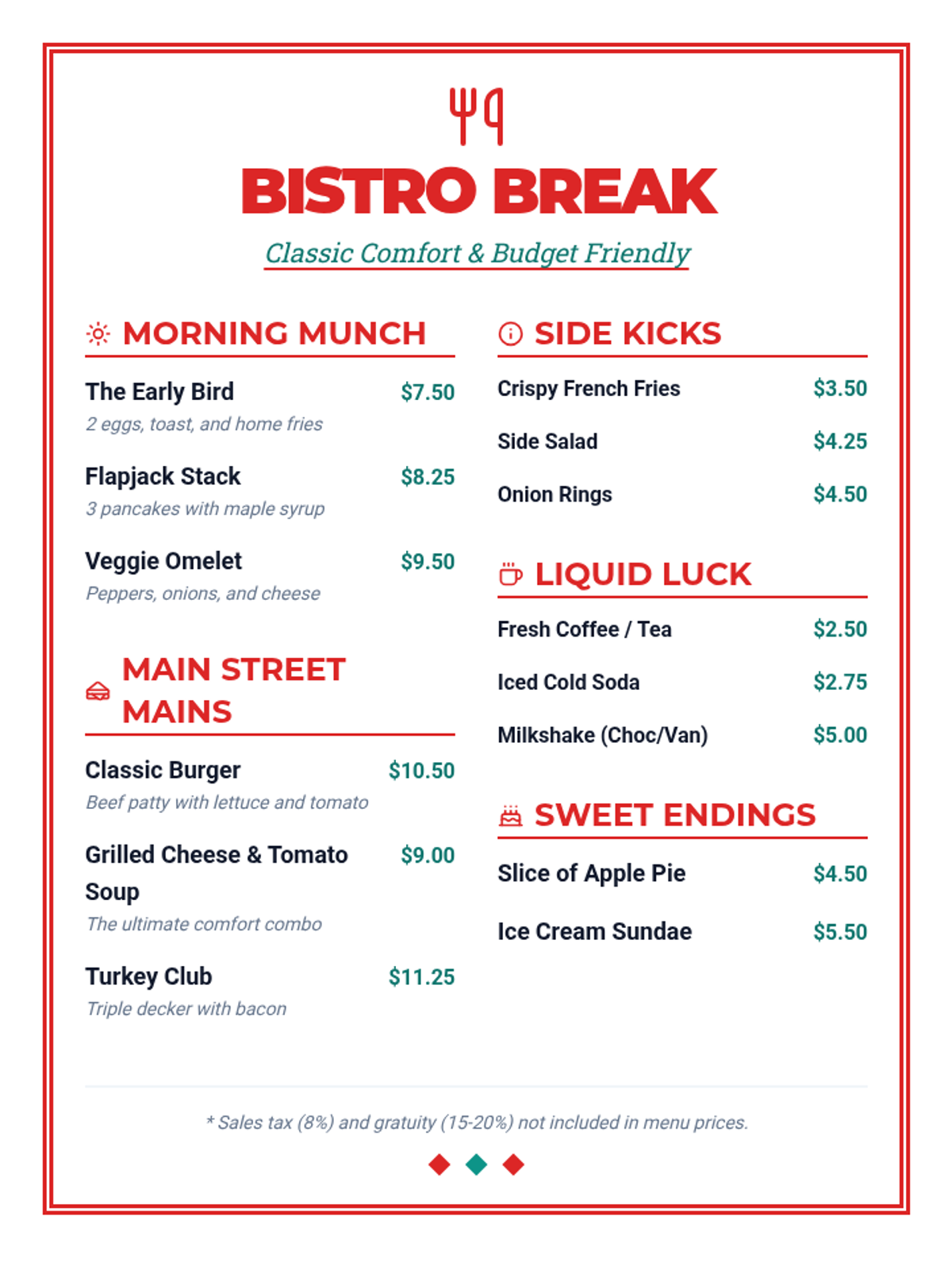
A retro-style bistro menu featuring breakfast, main courses, sides, drinks, and desserts with clear pricing for use in budget and math exercises.
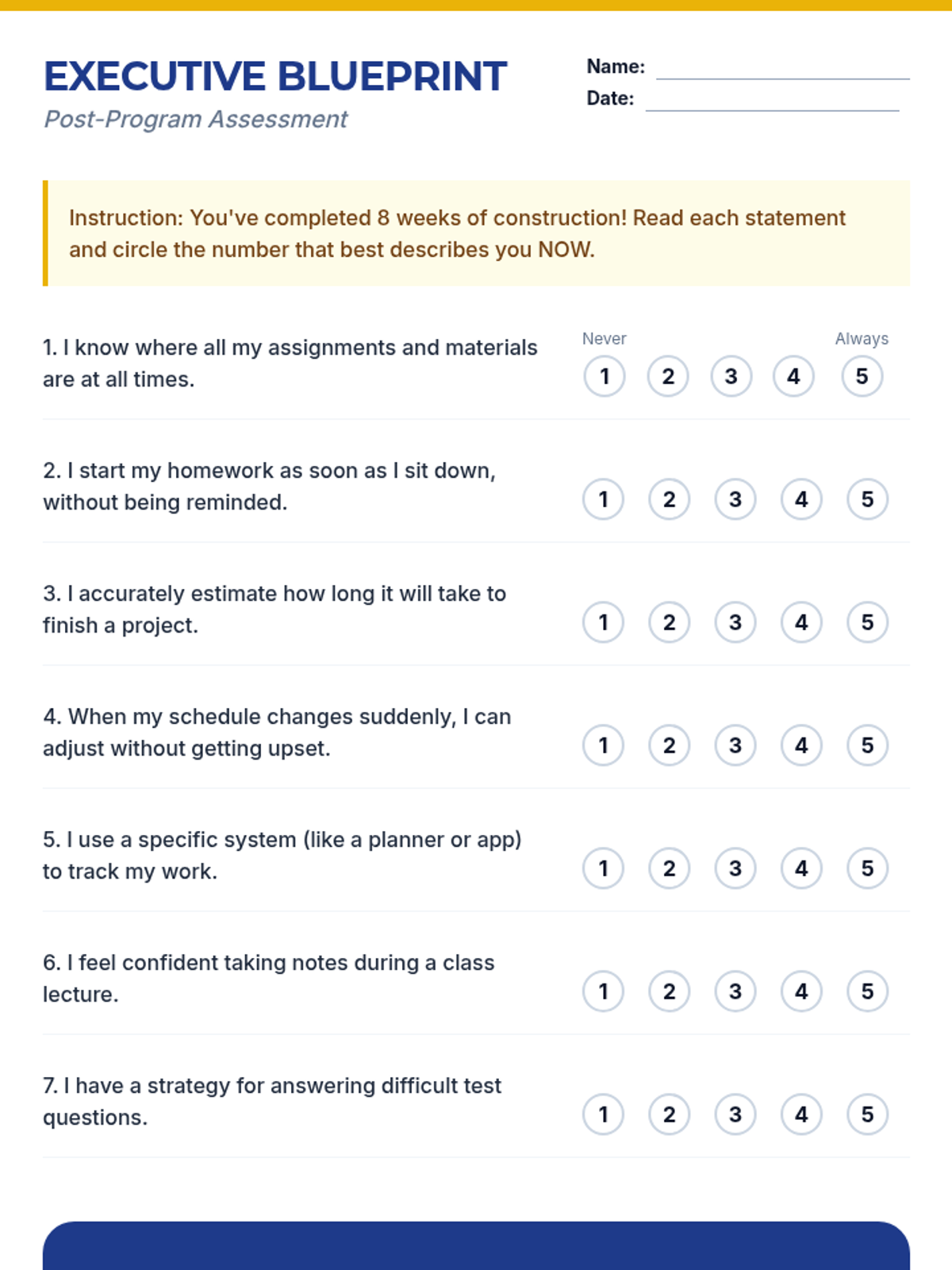
A two-page student document featuring an Executive Functioning Post-Assessment and a reflection section for the final session of the Executive Blueprint program.
Instructional slides for the final Lesson 8, celebrating growth and reviewing the core strategies learned throughout the 8-week Executive Blueprint program.
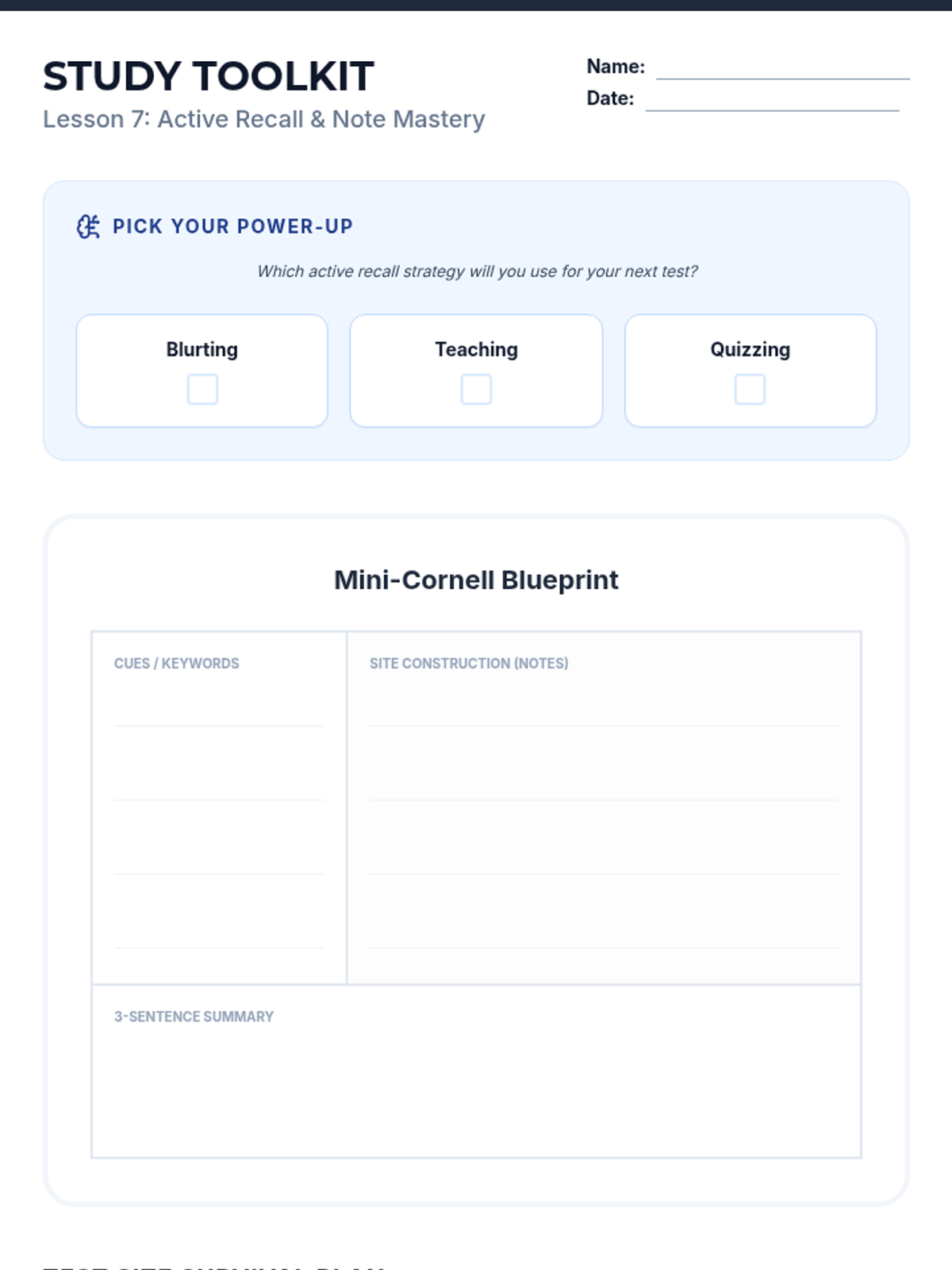
A student worksheet featuring a simplified Cornell note-taking template and a toolkit for active recall and test-taking strategies.
Instructional slides for Lesson 7 focusing on active recall study techniques, simplified Cornell note-taking, and test-taking "survival" strategies.
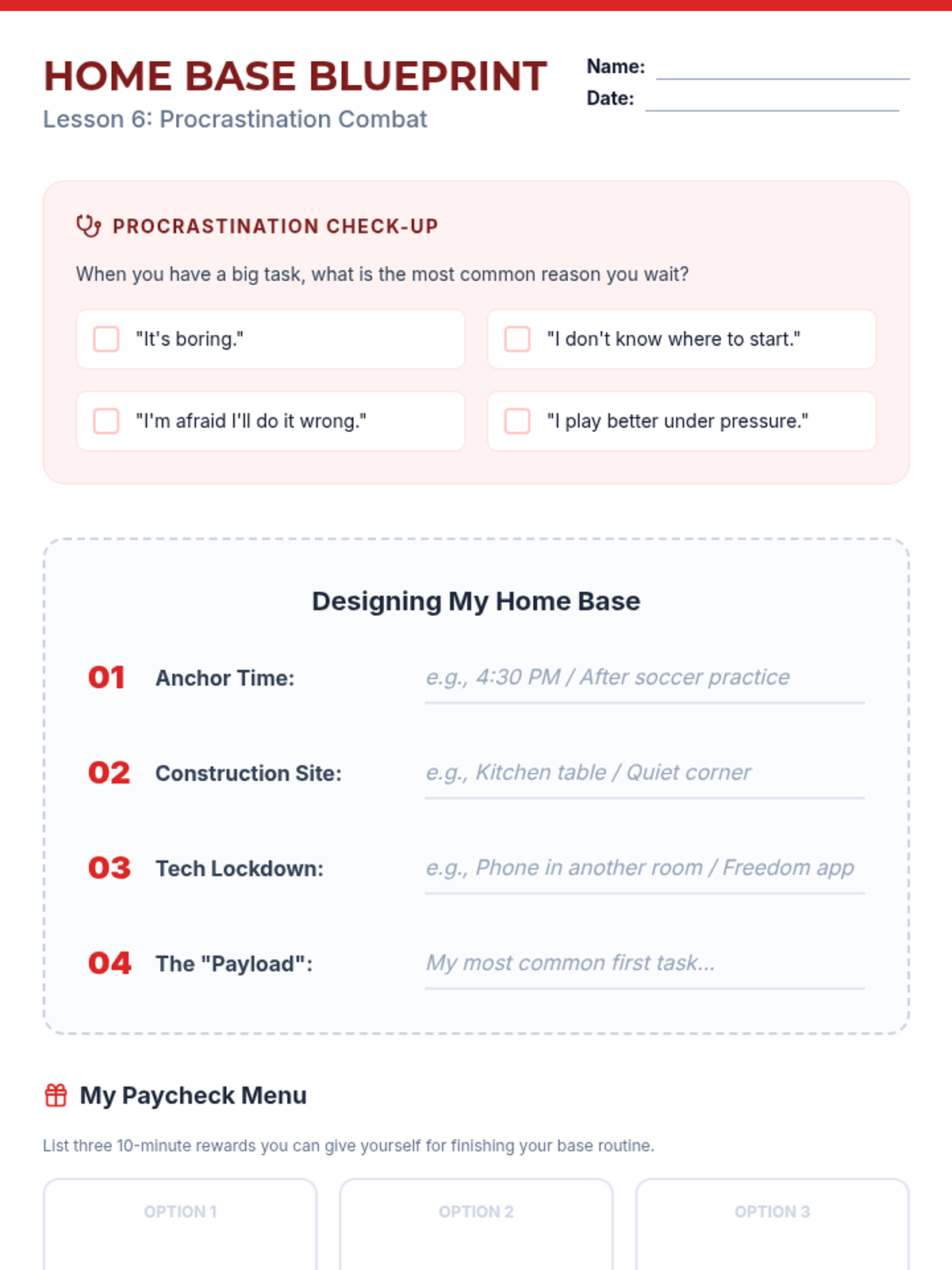
A student worksheet for designing a personalized "Home Base" homework routine, identifying personal procrastination triggers, and creating a "Reward Menu."
Instructional slides for Lesson 6 on overcoming procrastination, identifying procrastination types, and establishing a consistent "Home Base" routine.
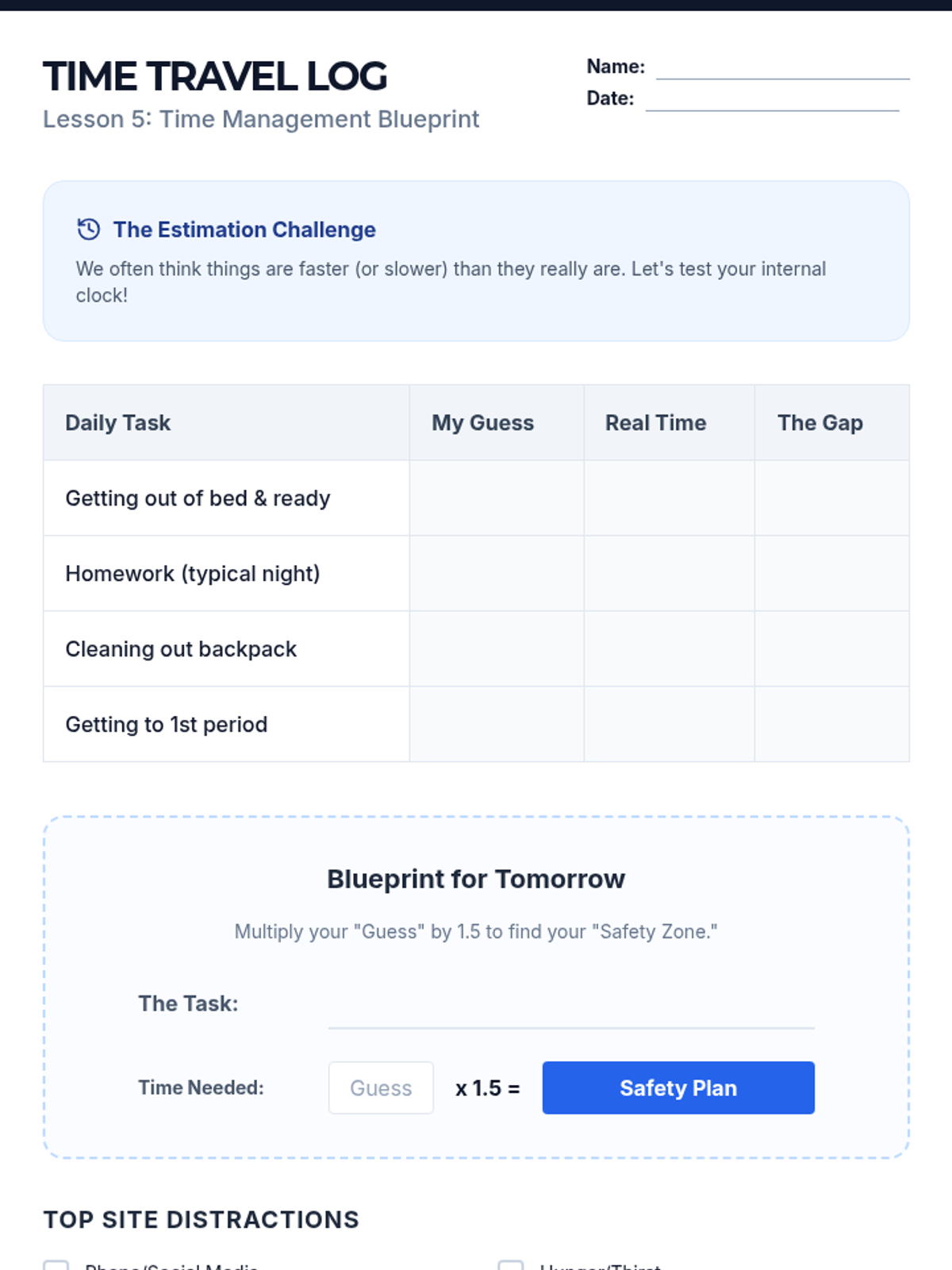
A student worksheet for tracking time estimation vs. reality and identifying "Time Thieves" that disrupt academic productivity.
Instructional slides for Lesson 5 on time management, defining "Time Blindness" and introducing the "Rule of 1.5x" for better task estimation.
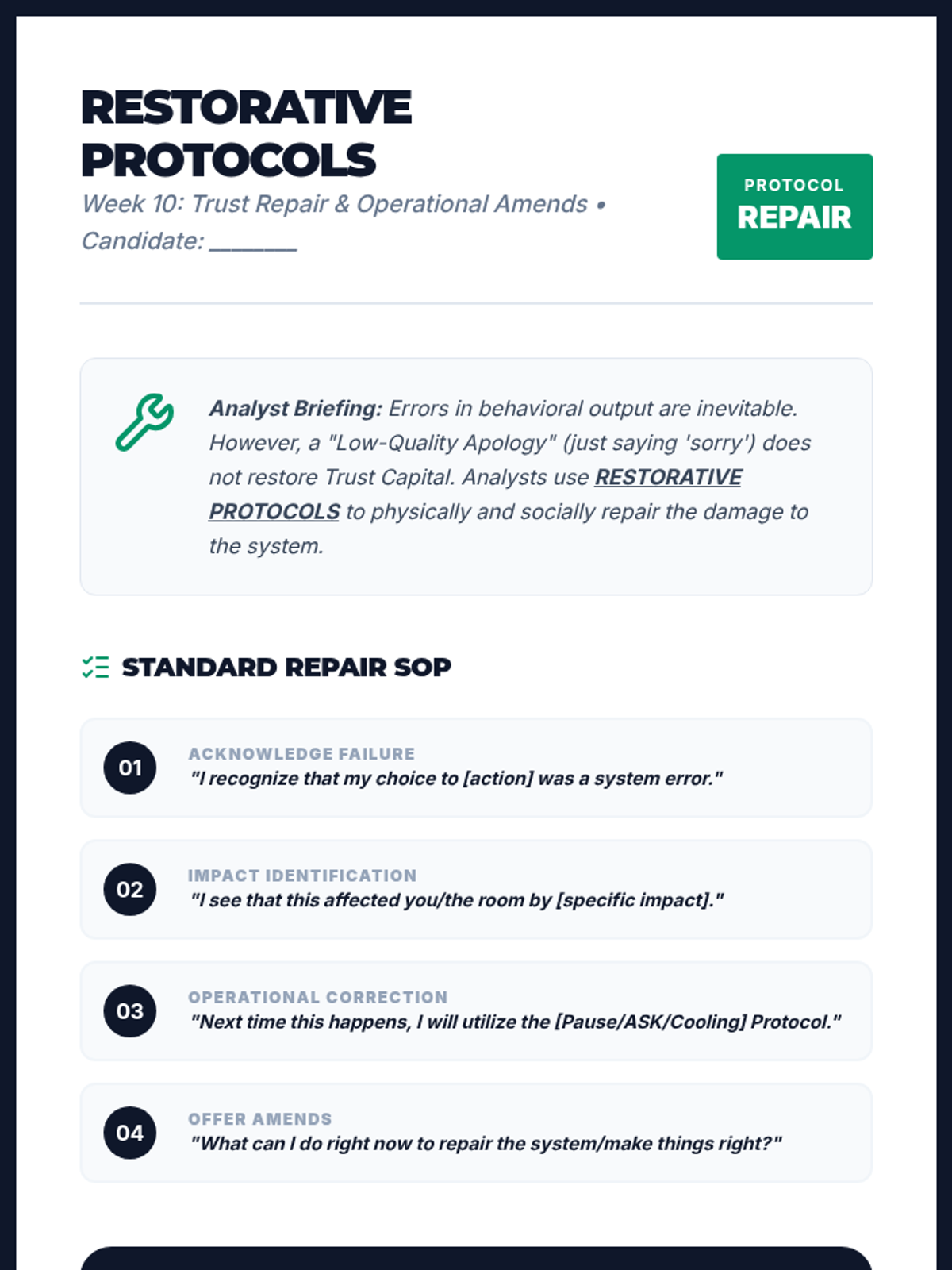
A Week 10 worksheet teaching restorative justice and the steps of a meaningful apology, moving beyond a simple "sorry" to repair trust.
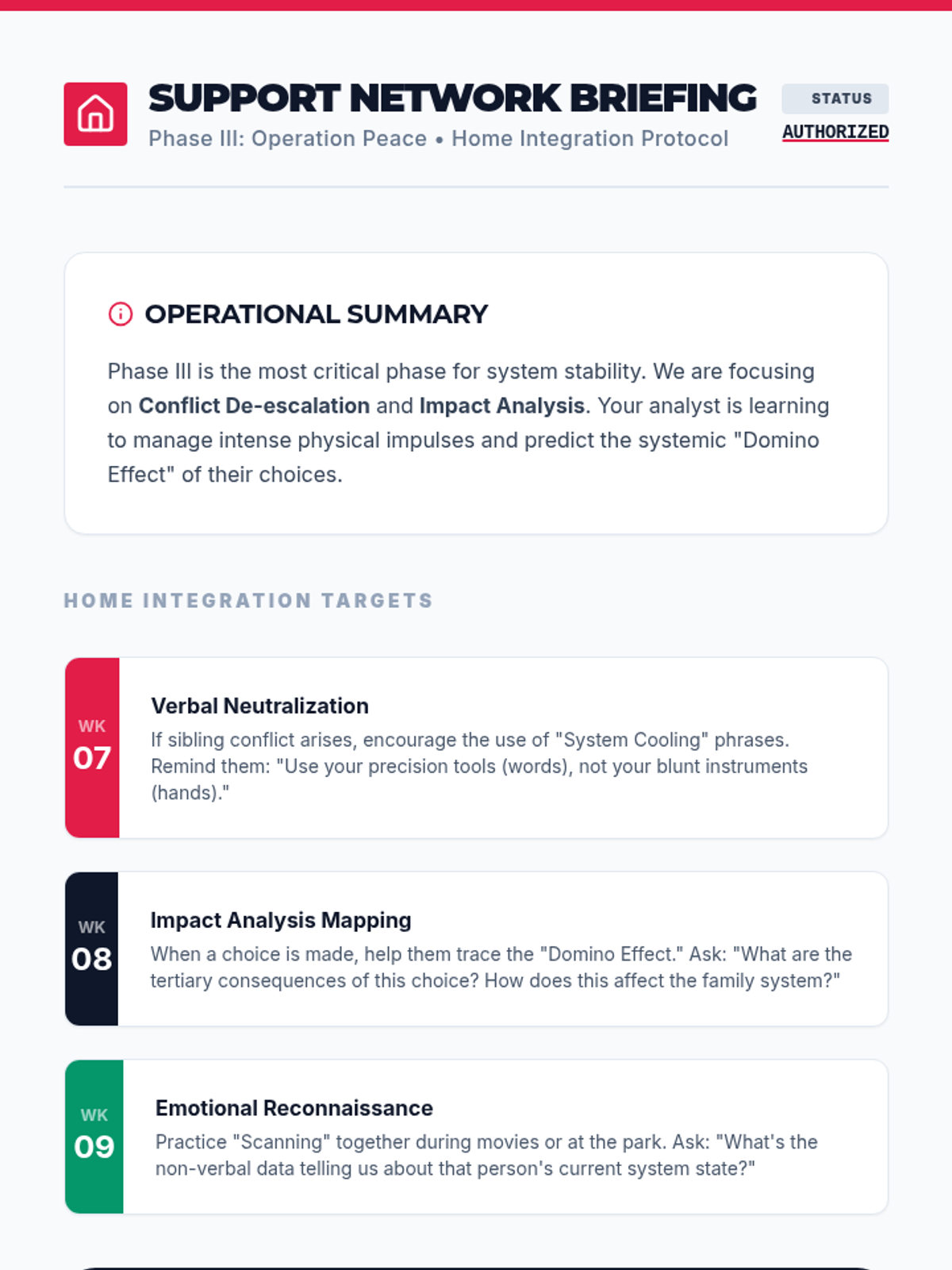
A parent guide for Weeks 7-9 of the Social Detective intervention, focusing on personal boundaries, cause-and-effect reasoning, and decoding non-verbal social clues.
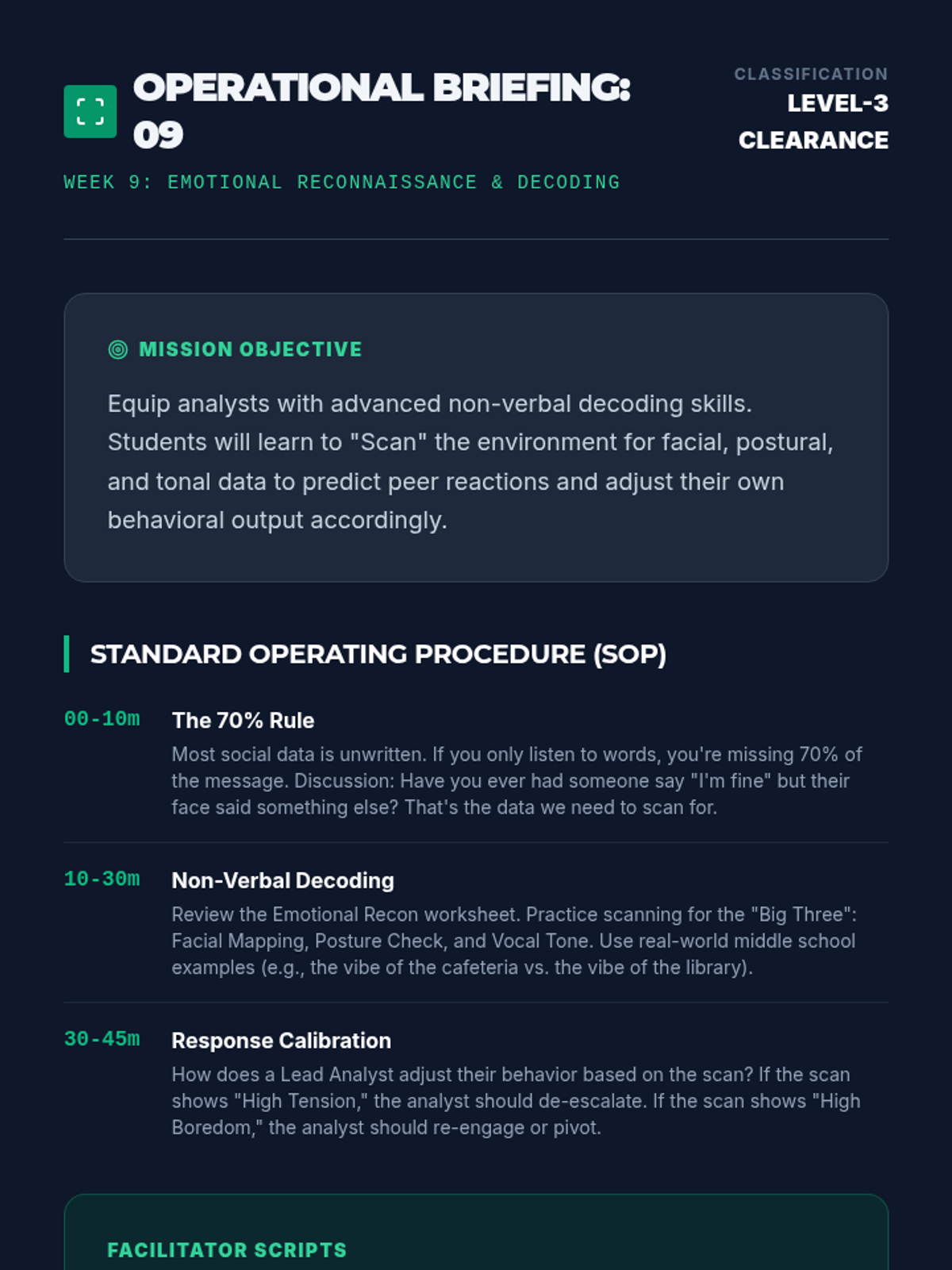
A Week 9 facilitator guide focused on decoding non-verbal social clues and responding with empathy and appropriate social actions.
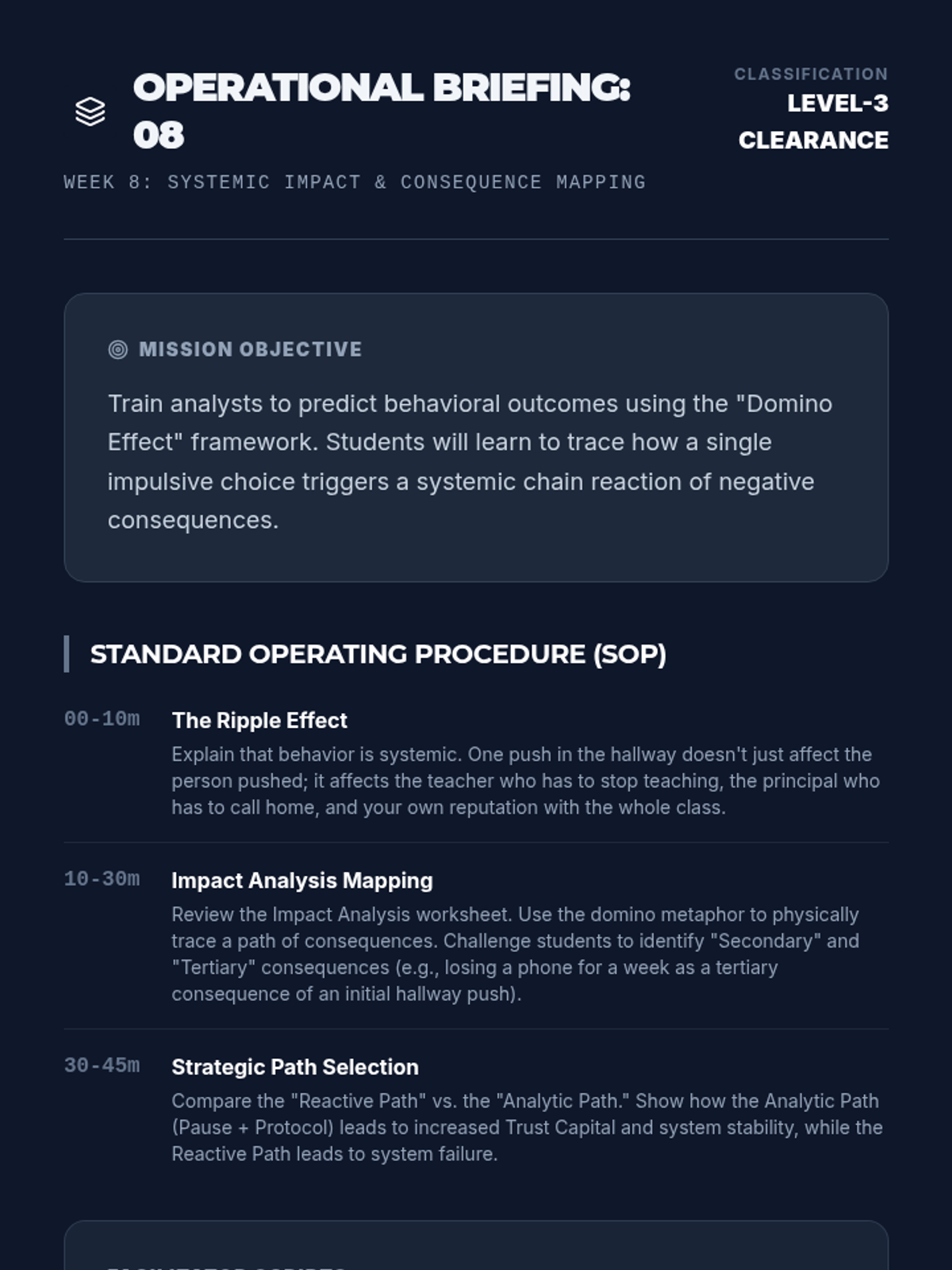
A Week 8 facilitator guide focusing on cause-and-effect reasoning, using the domino metaphor to help students predict behavioral outcomes.
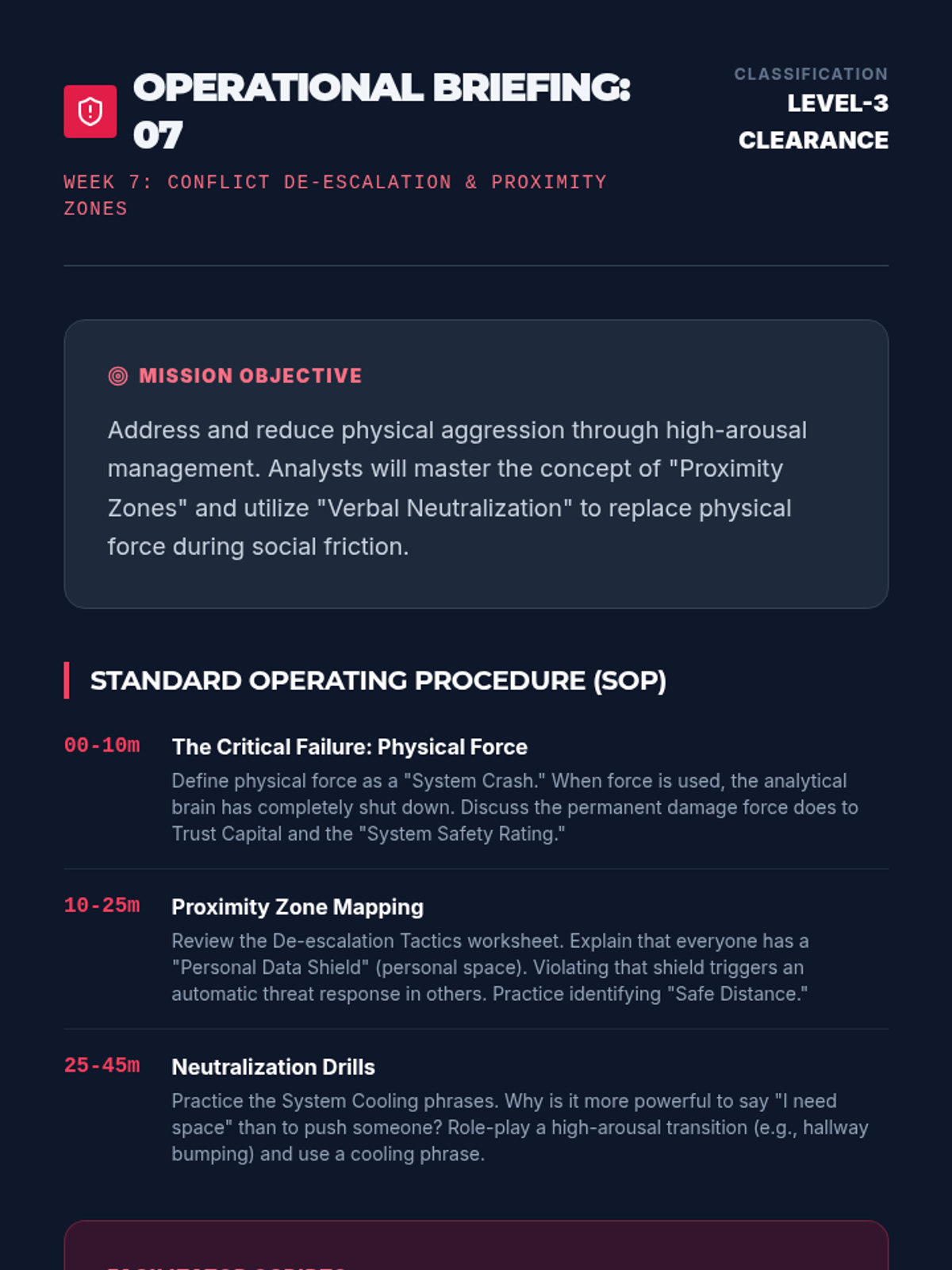
A Week 7 facilitator guide focused on reducing physical aggression through the concept of personal bubbles and verbal conflict resolution tools.
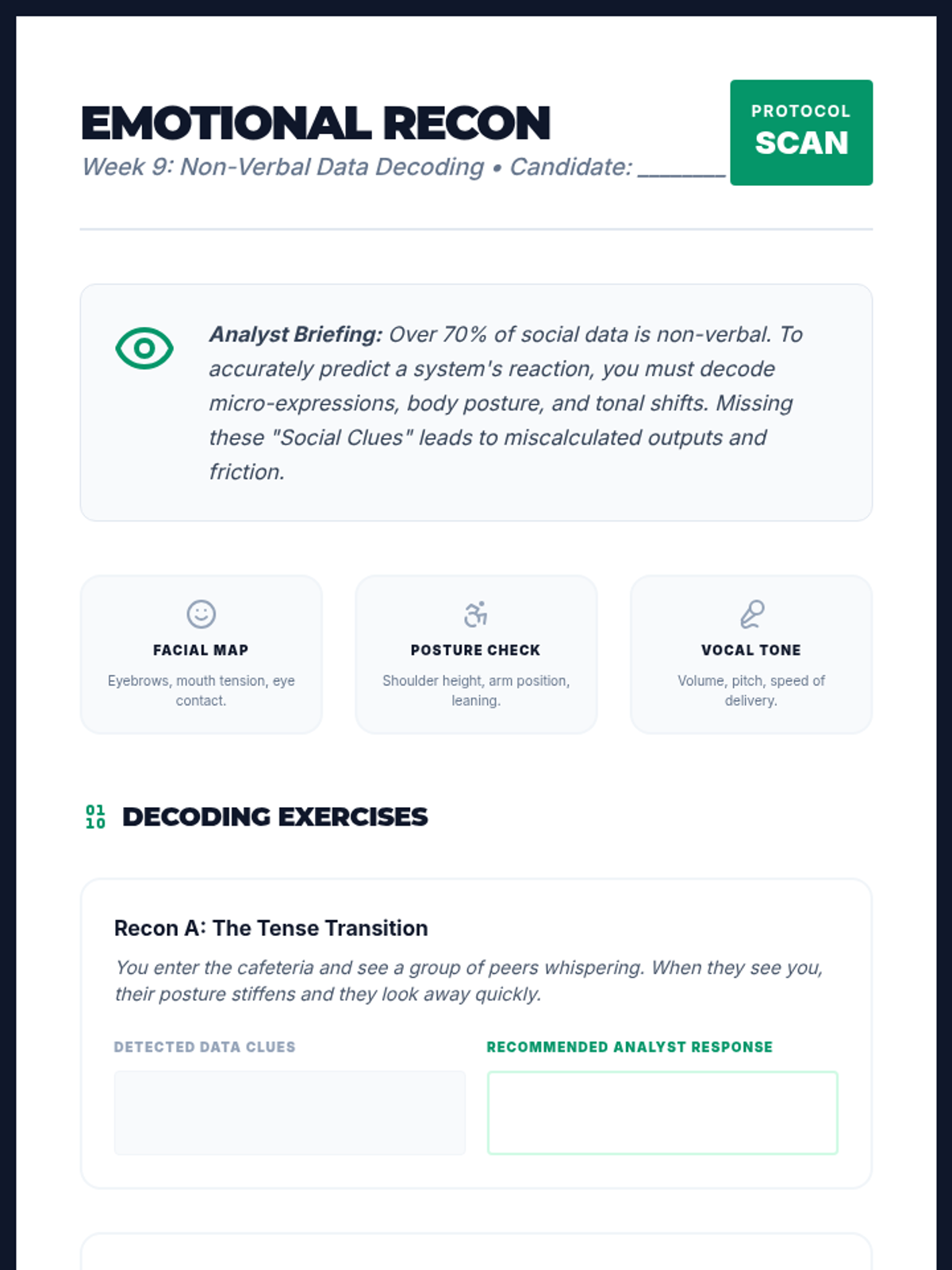
A Week 9 worksheet helping students identify and interpret non-verbal social clues like facial expressions, body language, and tone of voice.
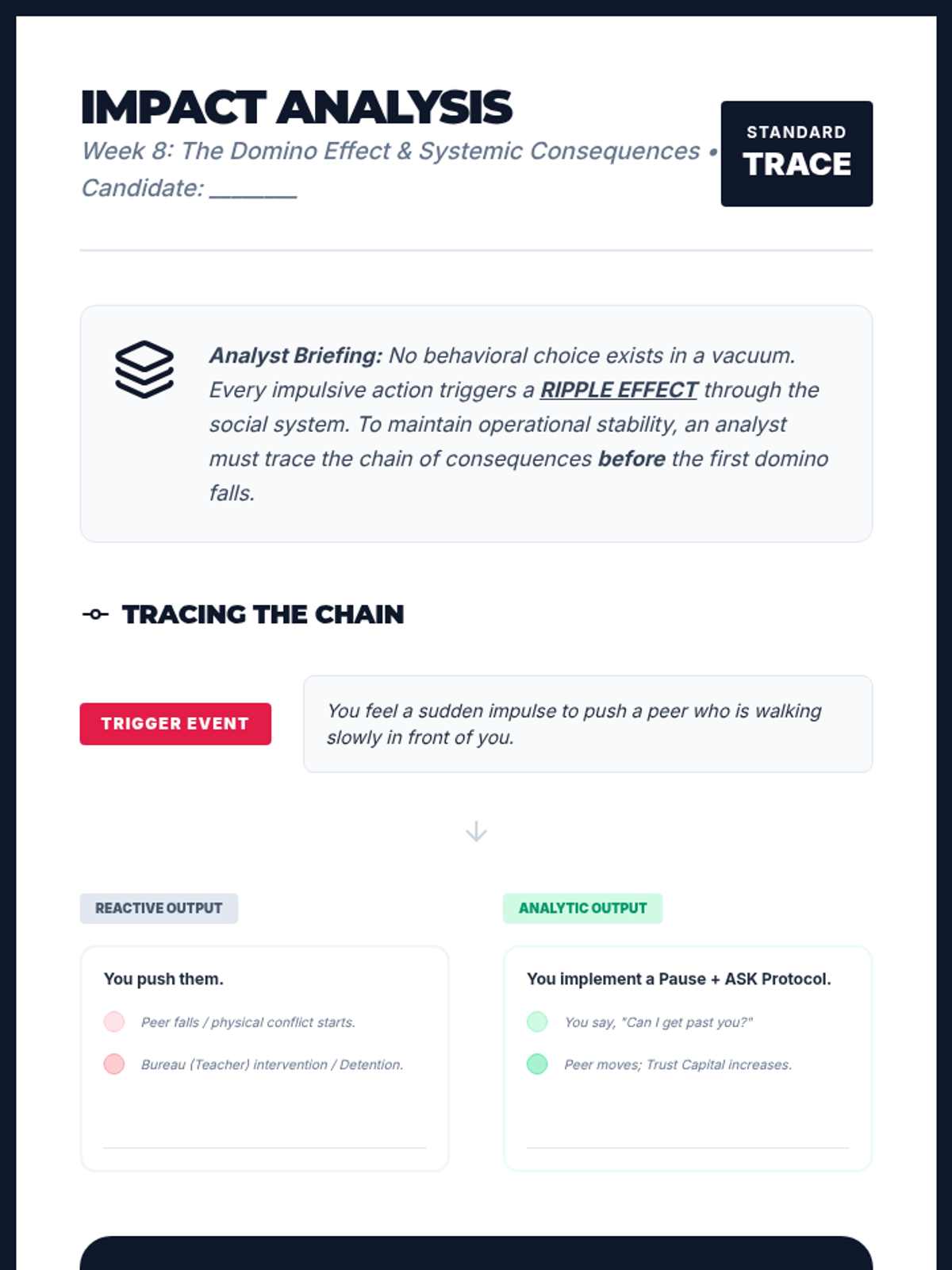
A Week 8 worksheet teaching students about consequences through the 'Domino Effect' metaphor, helping them visualize how one impulsive choice leads to a chain reaction.
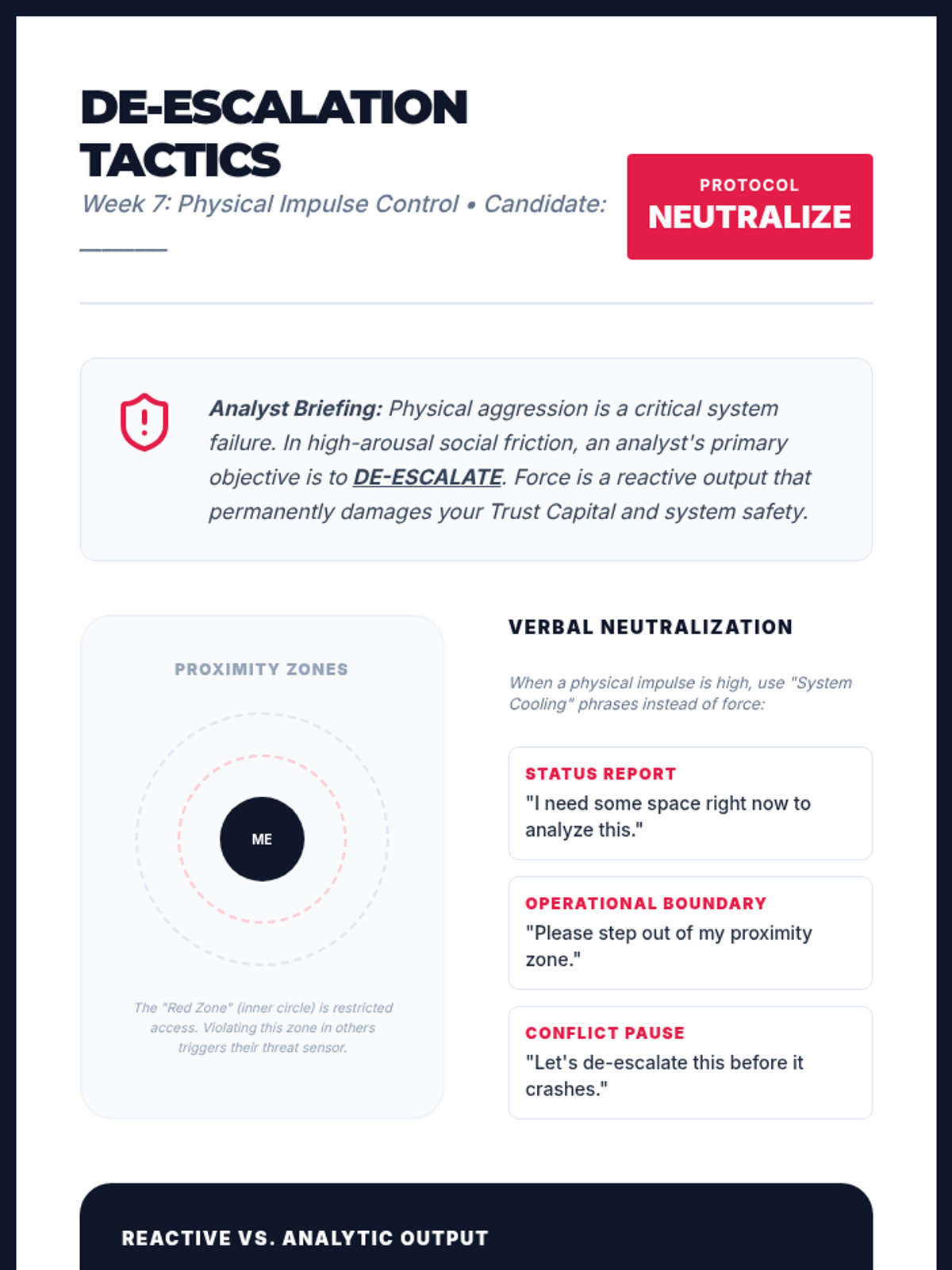
A Week 7 worksheet focusing on personal space and physical aggression, providing students with alternatives to force and space to rehearse peaceful responses.
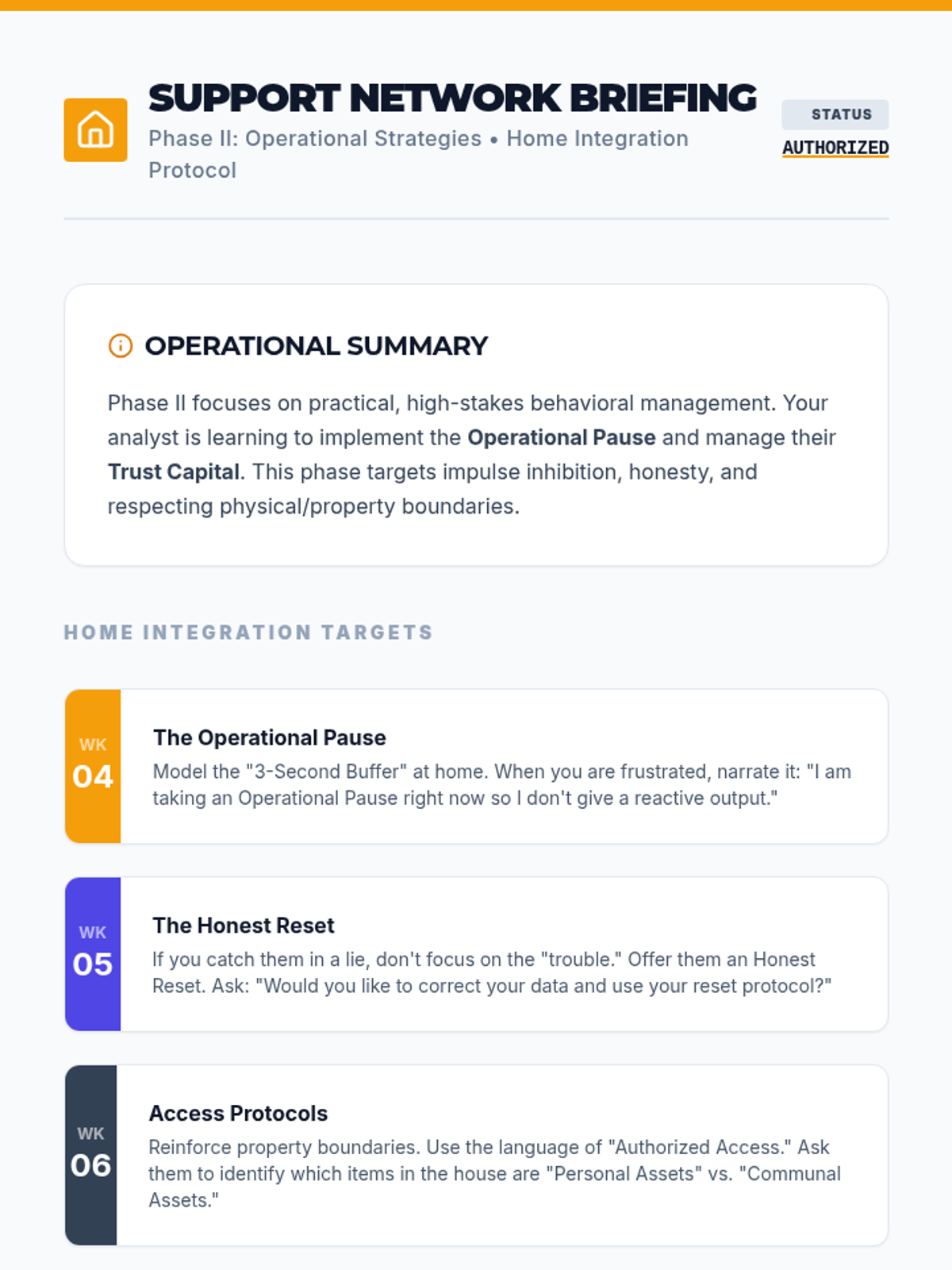
A parent guide for Weeks 4-6 of the Social Detective intervention, focusing on the Pause Button, encouraging honesty, and respecting property boundaries.
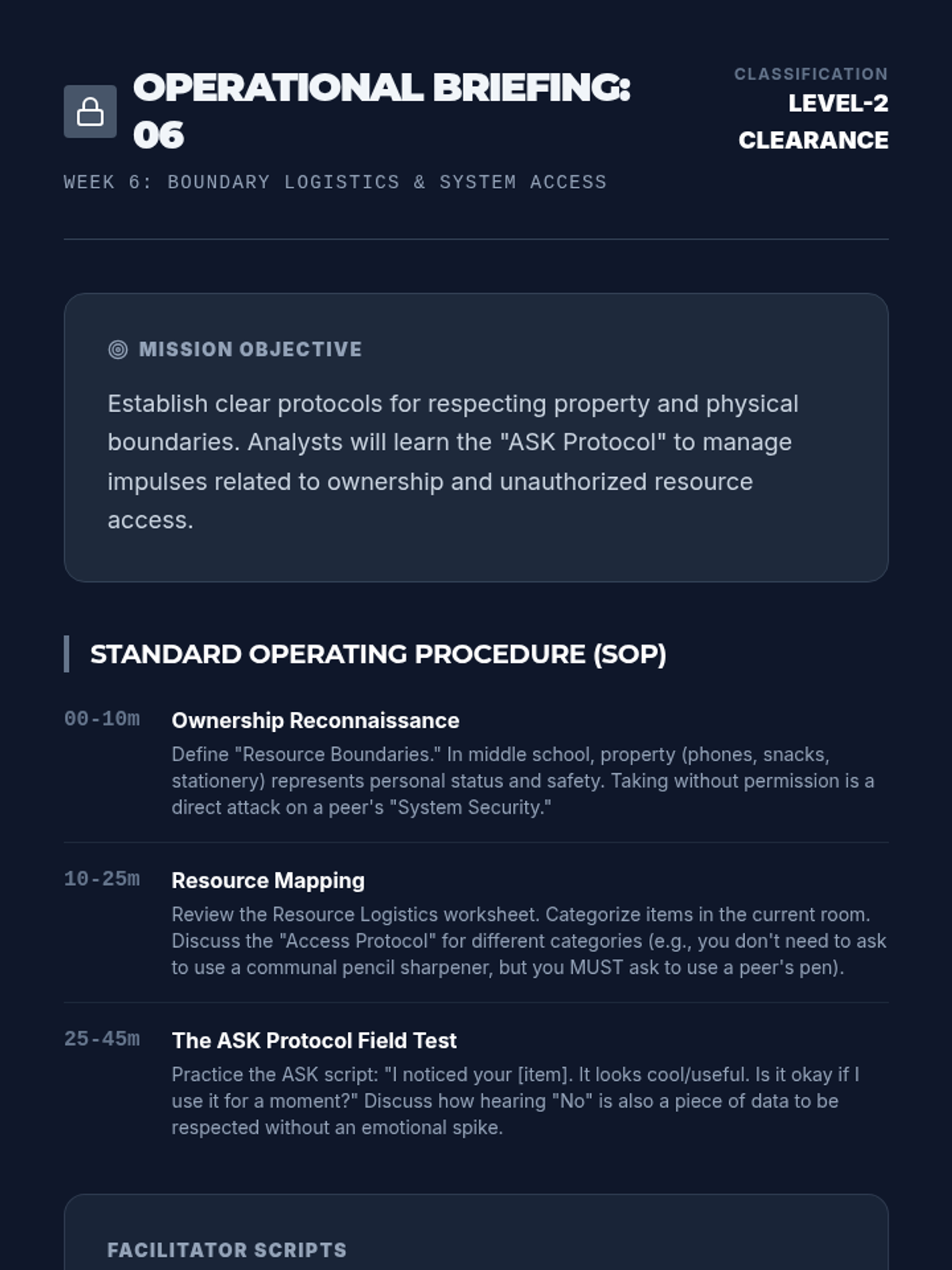
A Week 6 facilitator guide focusing on property boundaries, ownership concepts, and the 'ASK' strategy to prevent impulsive taking of items.
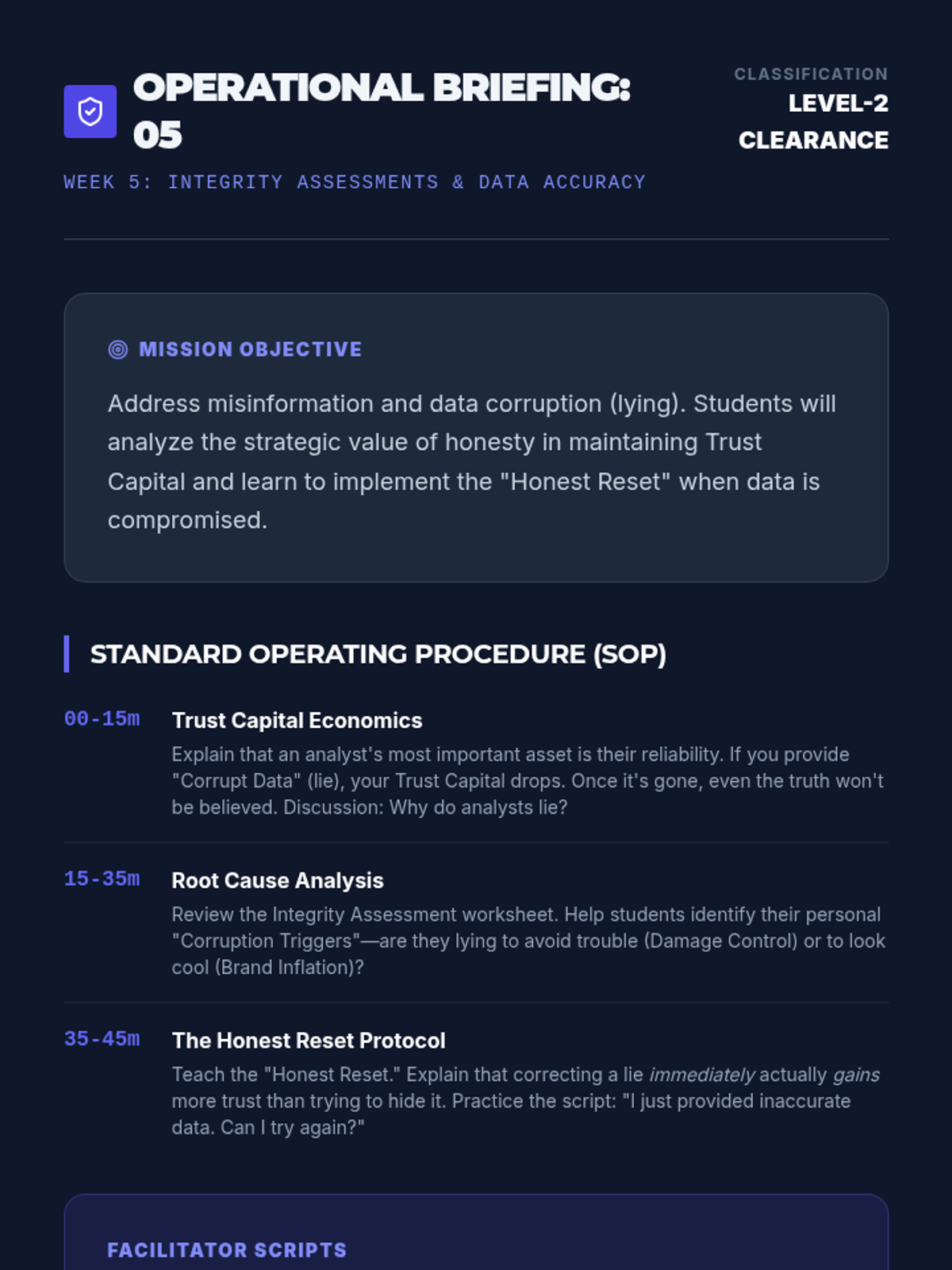
A Week 5 facilitator guide addressing honesty, focusing on the motives behind lying and strategies for making 'honest resets'.
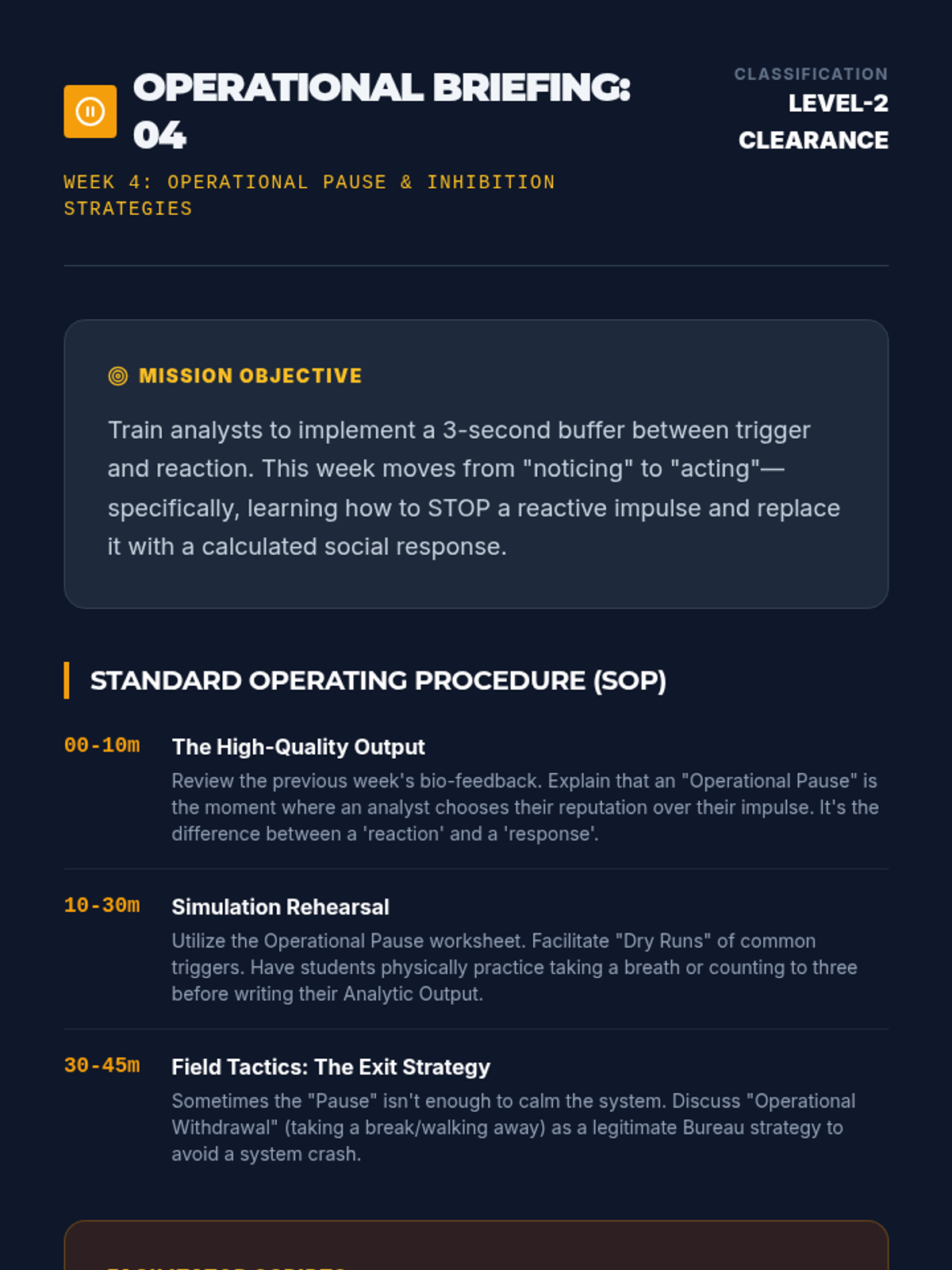
A Week 4 facilitator guide focusing on the 'Pause Button' strategy, providing a structured session flow for rehearsing impulse control.
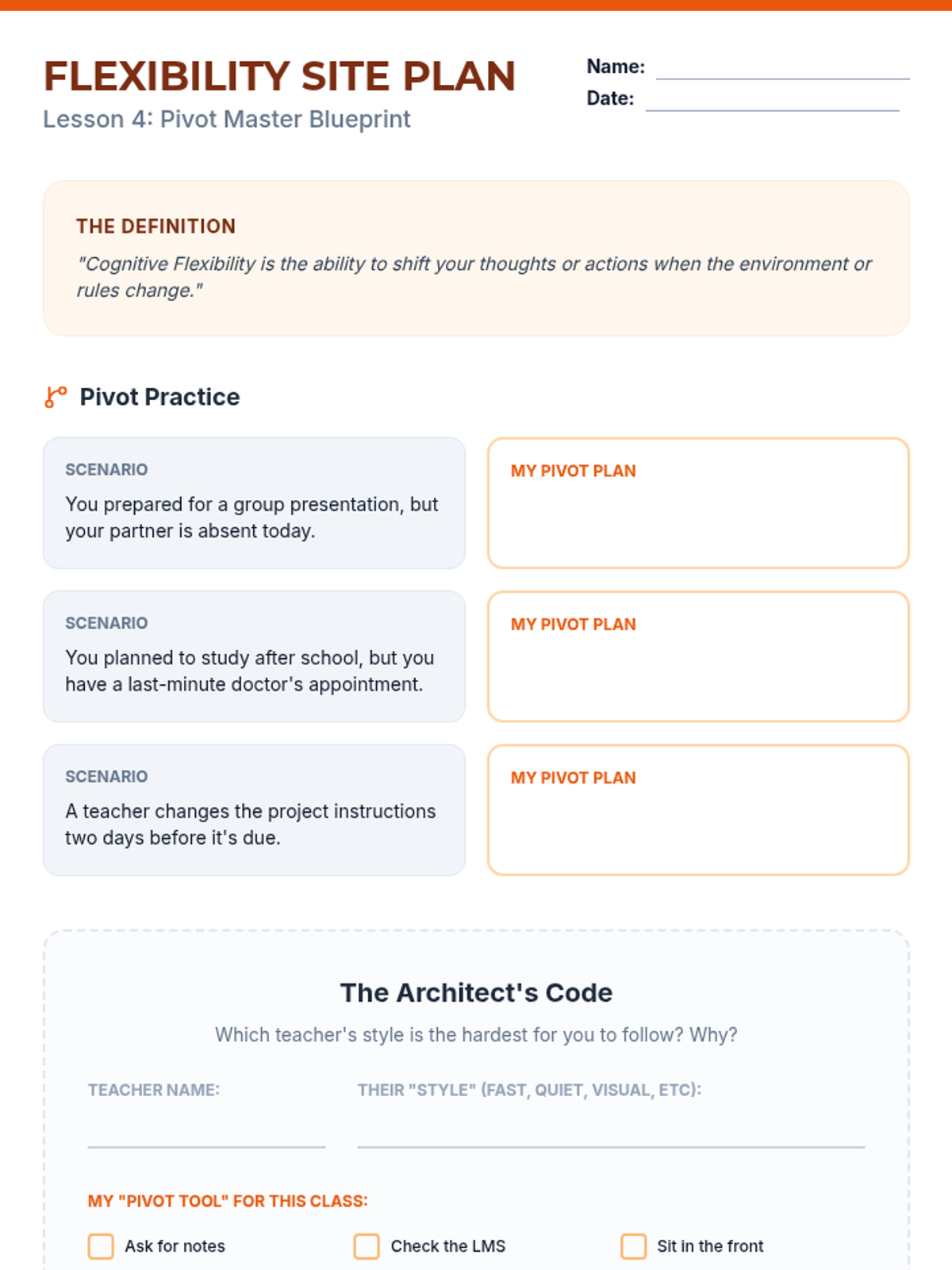
A student worksheet for practicing cognitive flexibility, including scenarios for "Pivoting" and an audit of teacher styles to help students adapt to different learning environments.
Instructional slides for Lesson 4 on cognitive flexibility, teaching students to adapt to schedule changes and different teaching styles using the "What Else?" strategy.