Identifies mental health crises and suicide warning signs while developing personal safety plans and grounding techniques. Equips users with peer gatekeeper skills and direct pathways to professional crisis resources and hotlines.
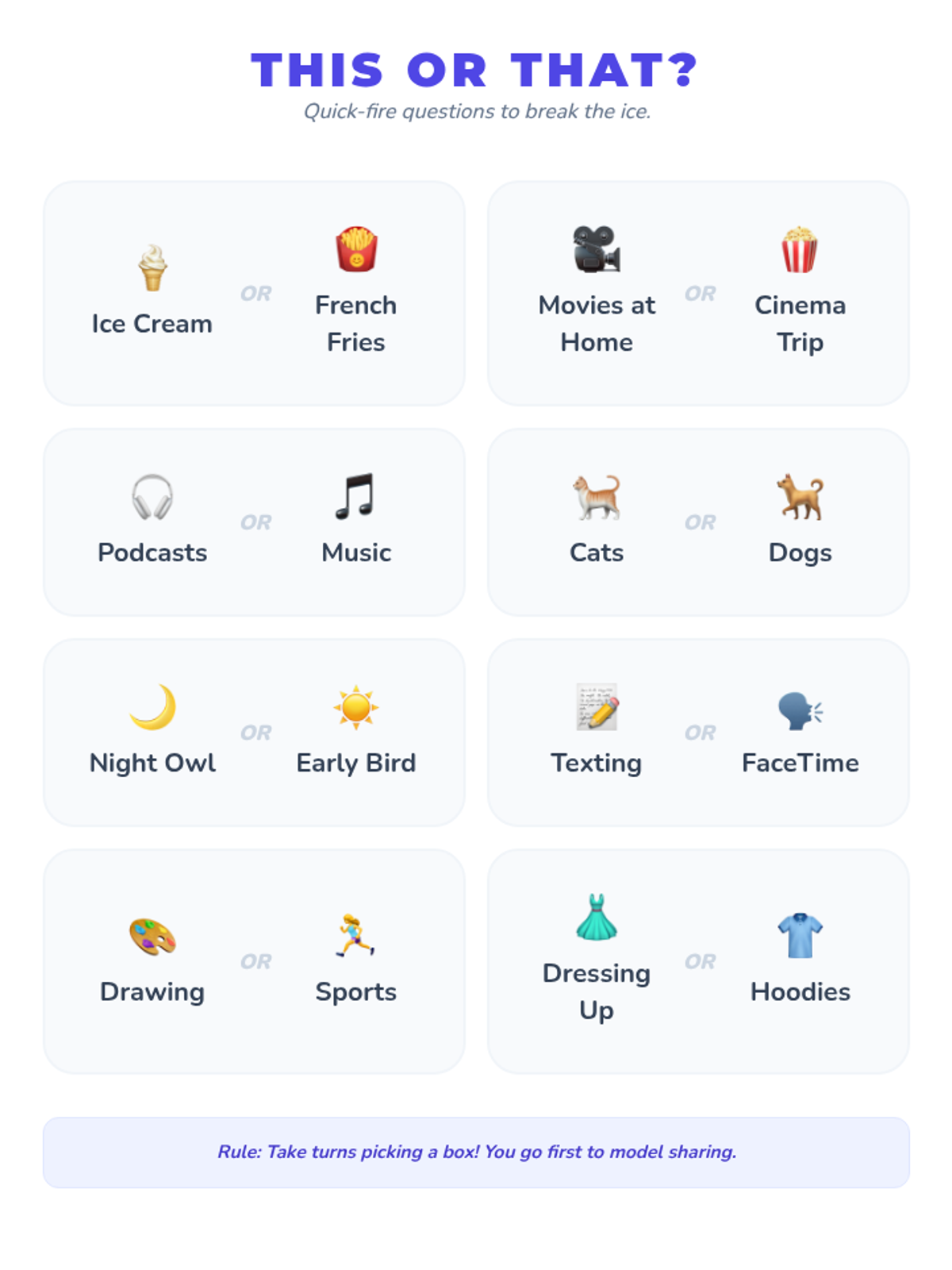
A fun, visual "This or That" game designed for a quick icebreaker. It uses emojis and simple choices to help build rapport and discover preferences in a low-pressure way.
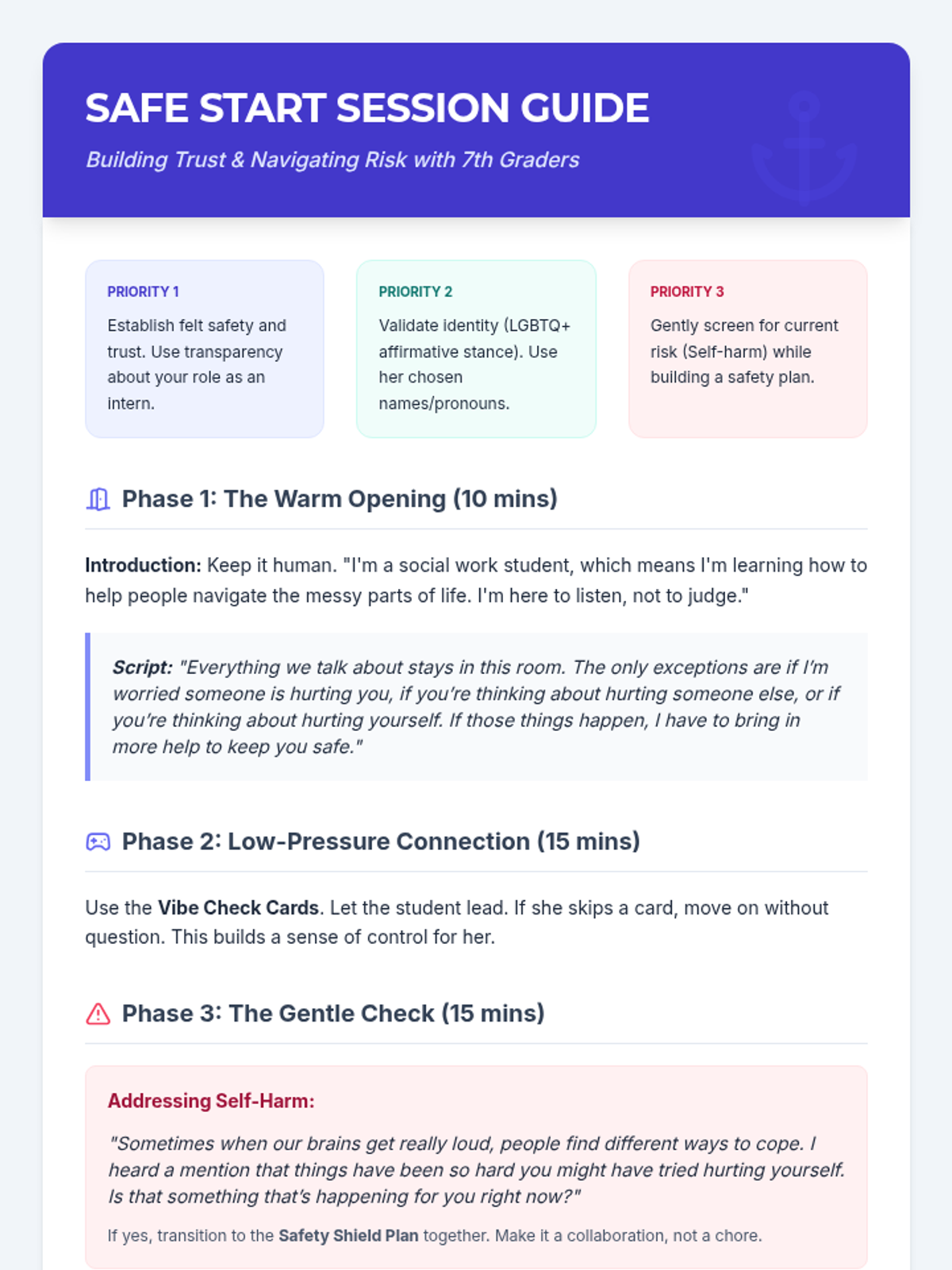
A clinical facilitator's guide for school social work interns to navigate a first session with a 7th grader. It includes specific scripts for confidentiality, rapport building, and addressing self-harm reports with sensitivity.
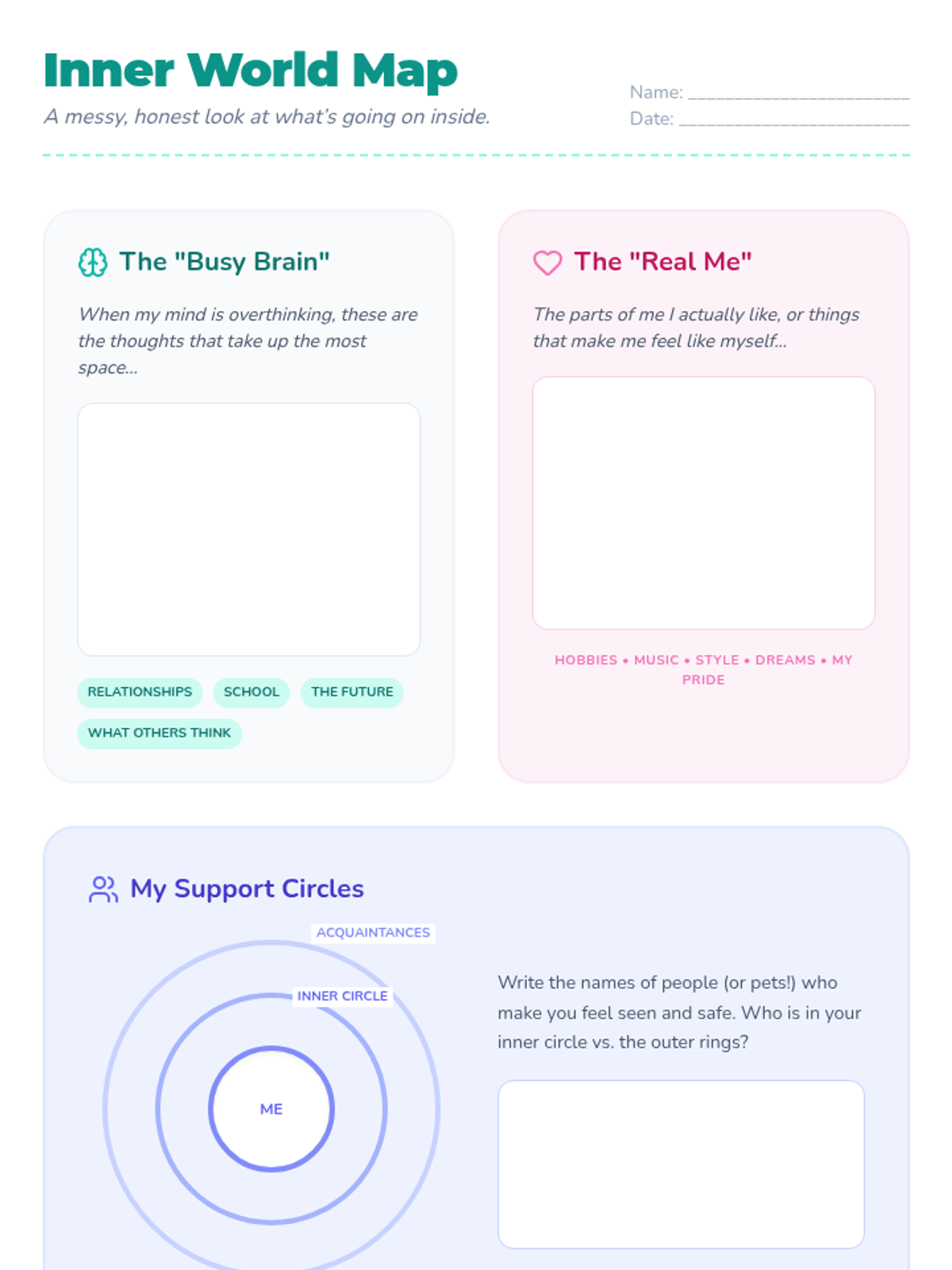
A visual "Inner World Map" worksheet designed for a 7th-grade student to explore their thoughts, identity, and relationships. It includes sections for overthinking, personal identity, and support circles.
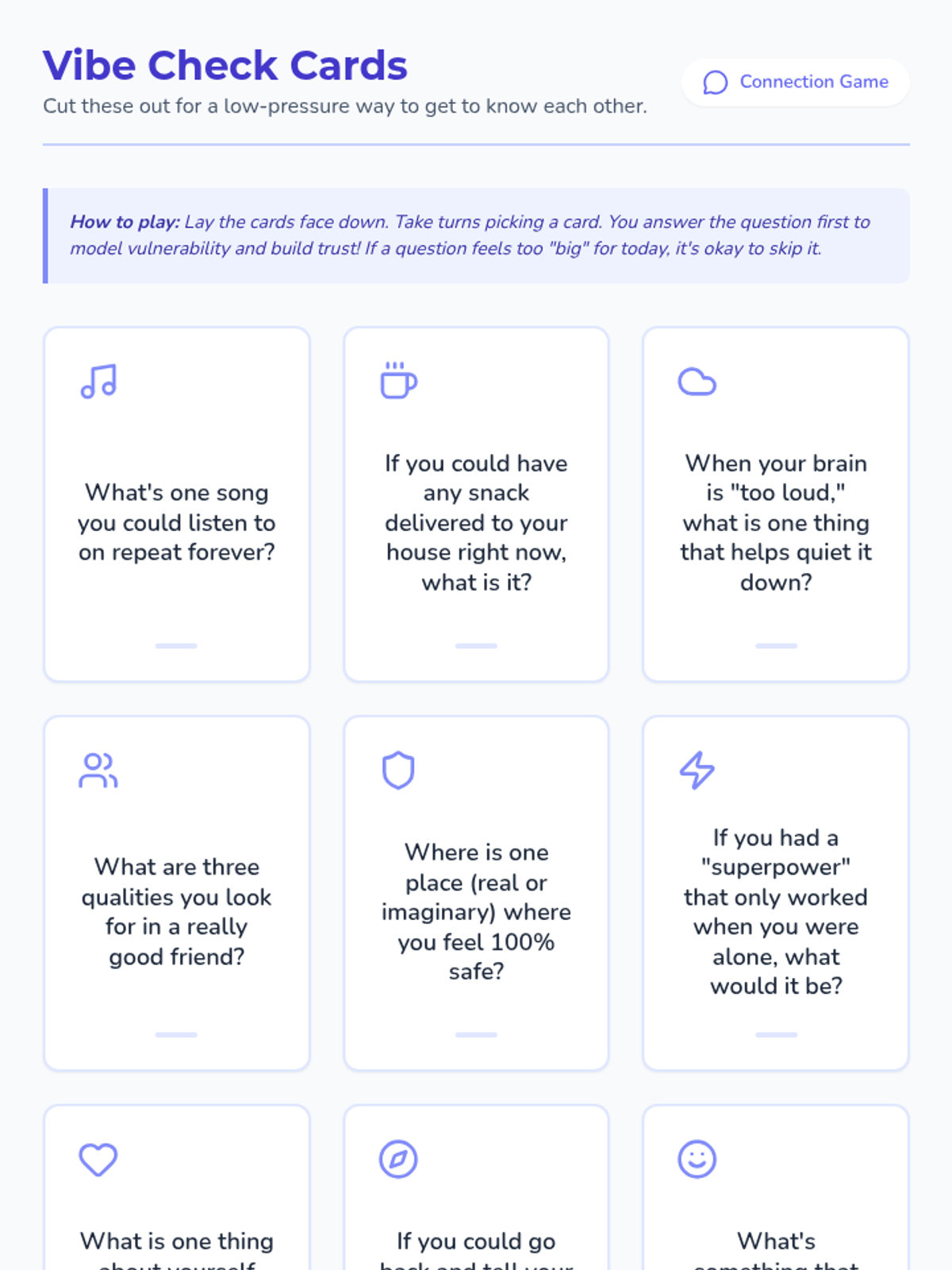
A set of printable "Vibe Check" cards designed as a low-pressure rapport-building game. Each card contains a mix of lighthearted and slightly more reflective questions to help a 7th grader feel comfortable sharing their personality and thoughts.
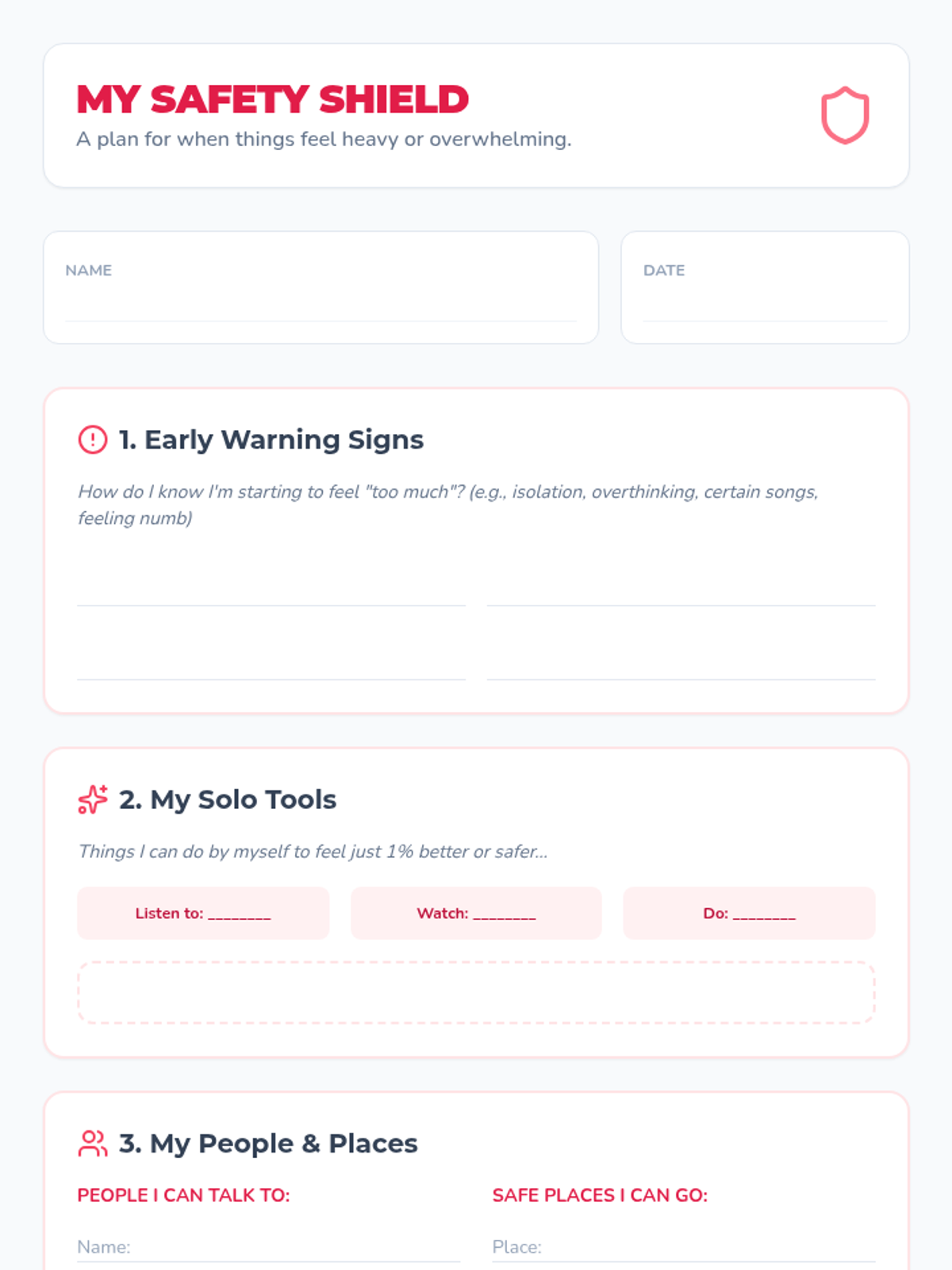
A student-friendly safety plan designed for a 7th grader. It covers warning signs, internal coping strategies, safe people/places, and professional crisis resources, including LGBTQ+ specific support (The Trevor Project).
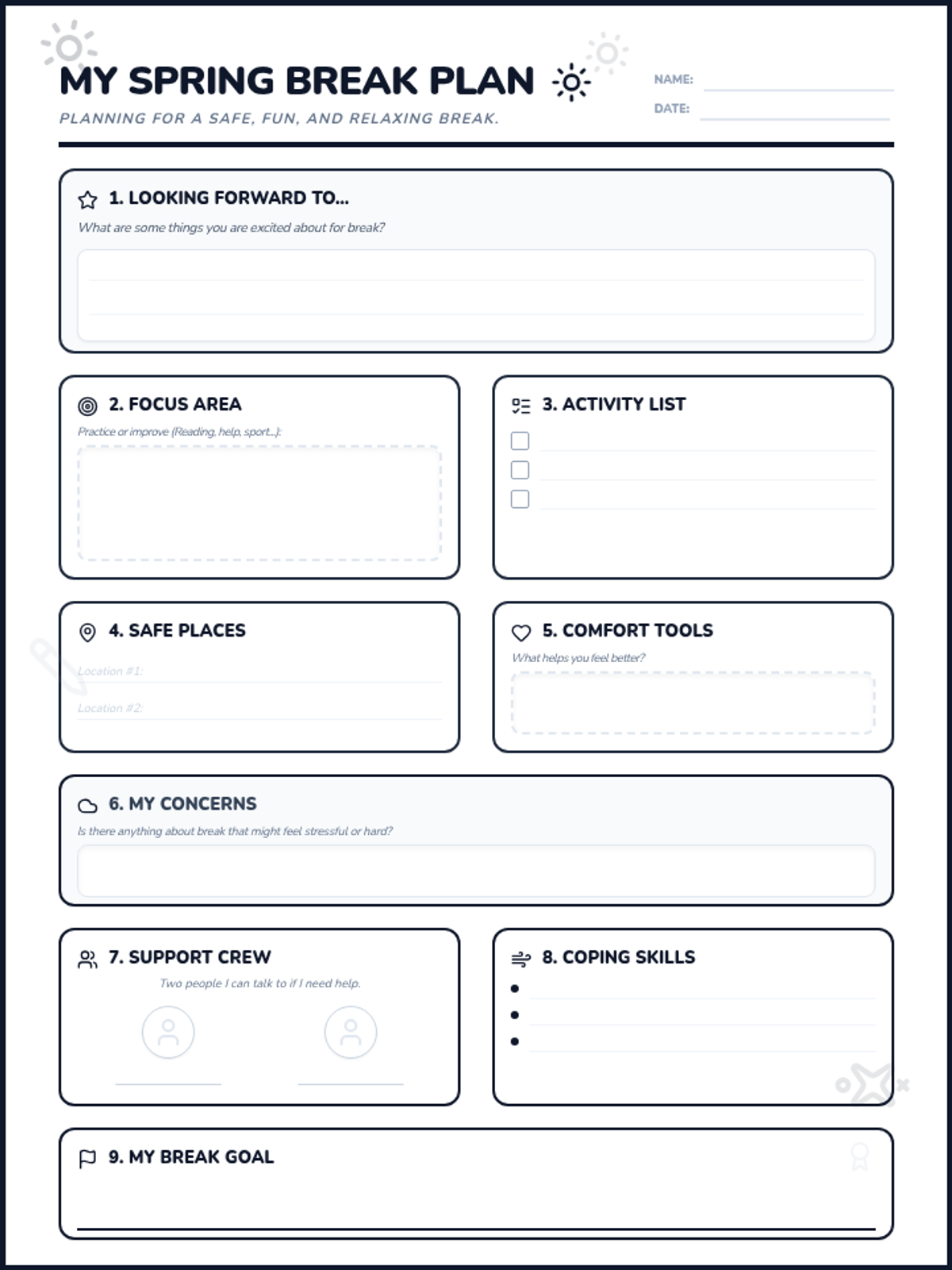
A finalized, single-page Spring Break Planner for middle school counseling. It features 9 journal-style sections optimized for black and white printing with a sun-themed aesthetic and explicitly listed crisis resources in a discrete footer.
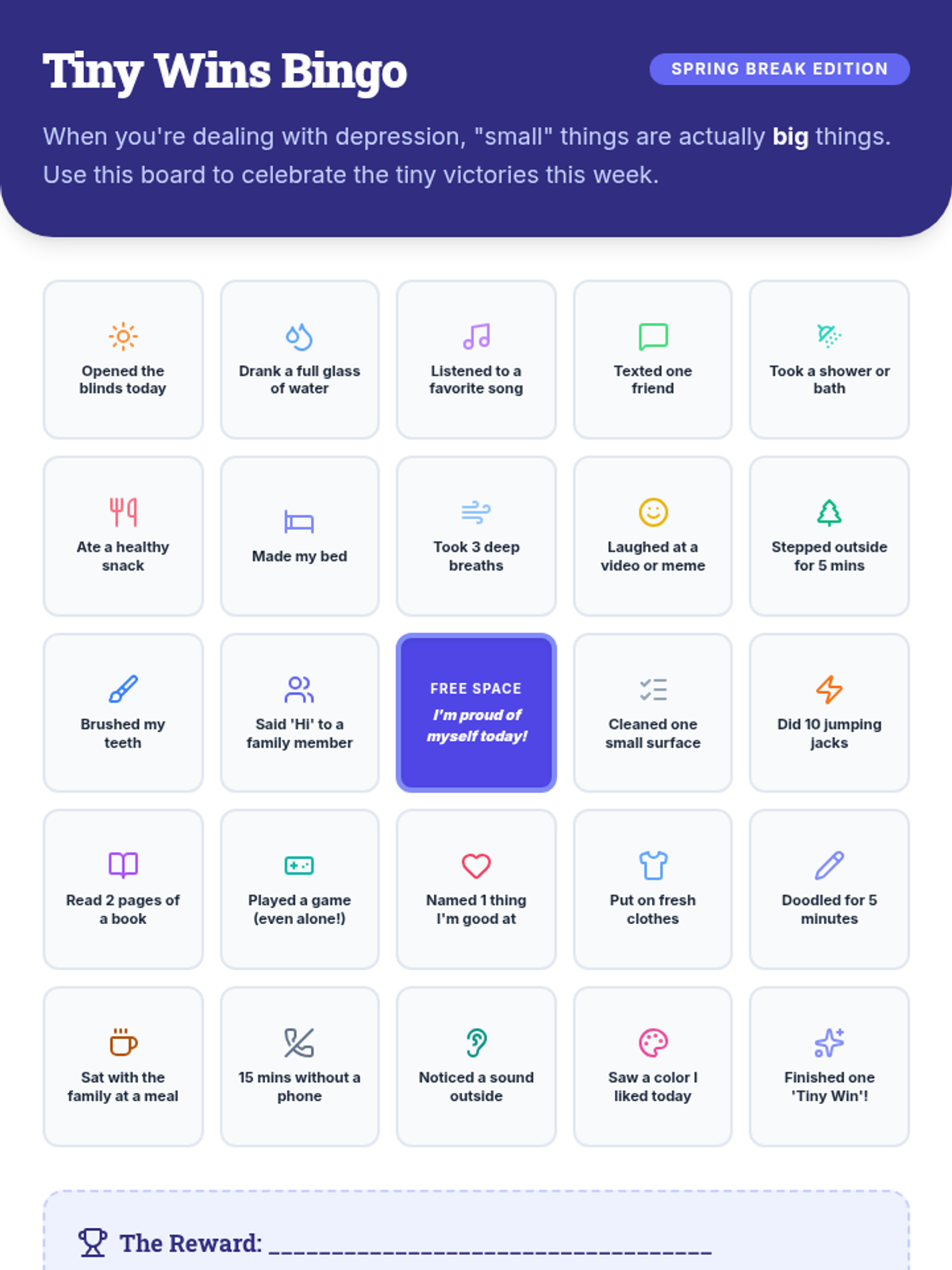
A motivational 'Tiny Wins Bingo' activity for students with depression, encouraging them to track and celebrate small daily achievements during spring break with parent support.
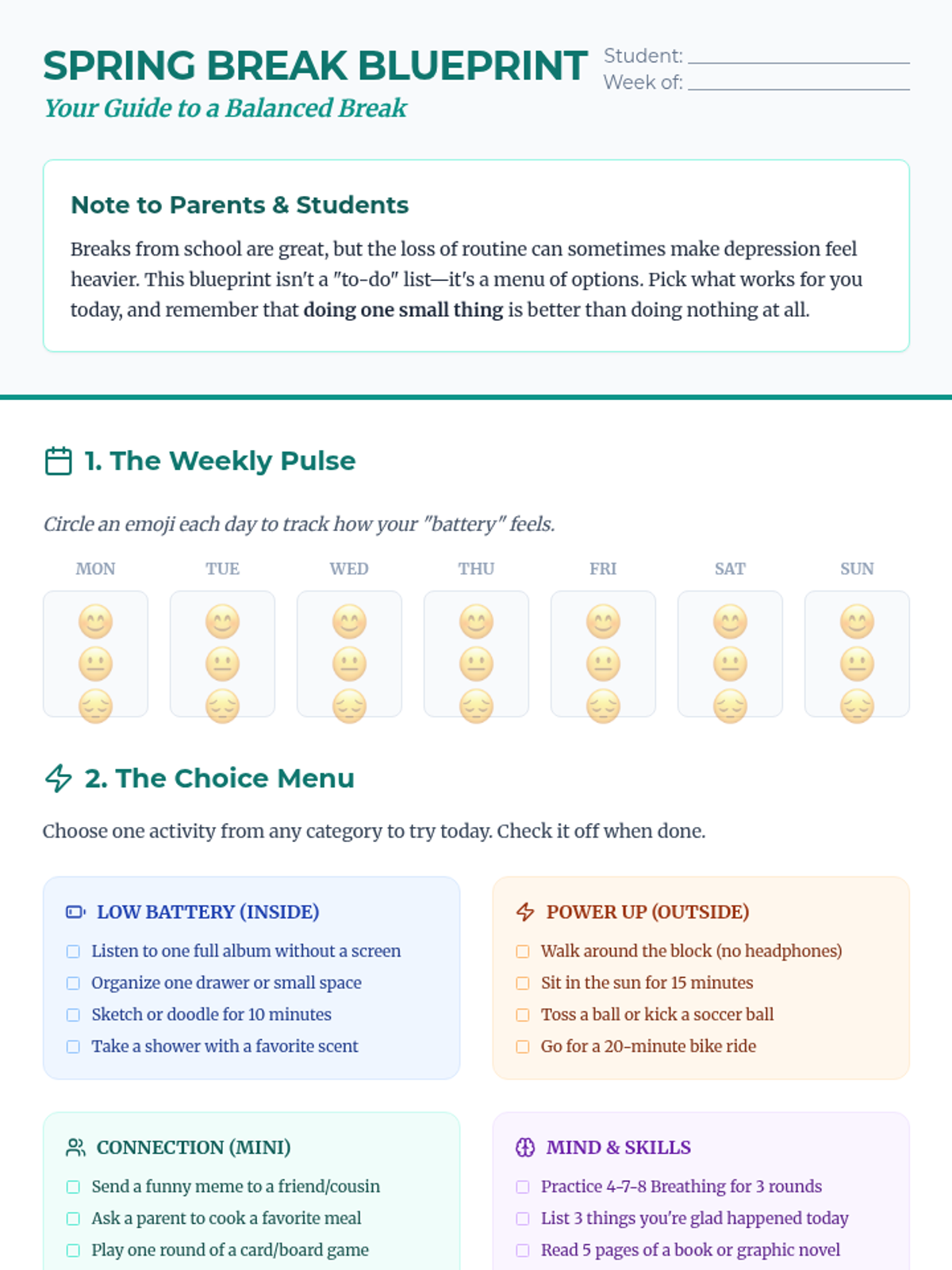
A supportive spring break toolkit for 7th-grade boys and their parents, featuring mood tracking, low-energy activity menus, grounding techniques, and a personal support map.
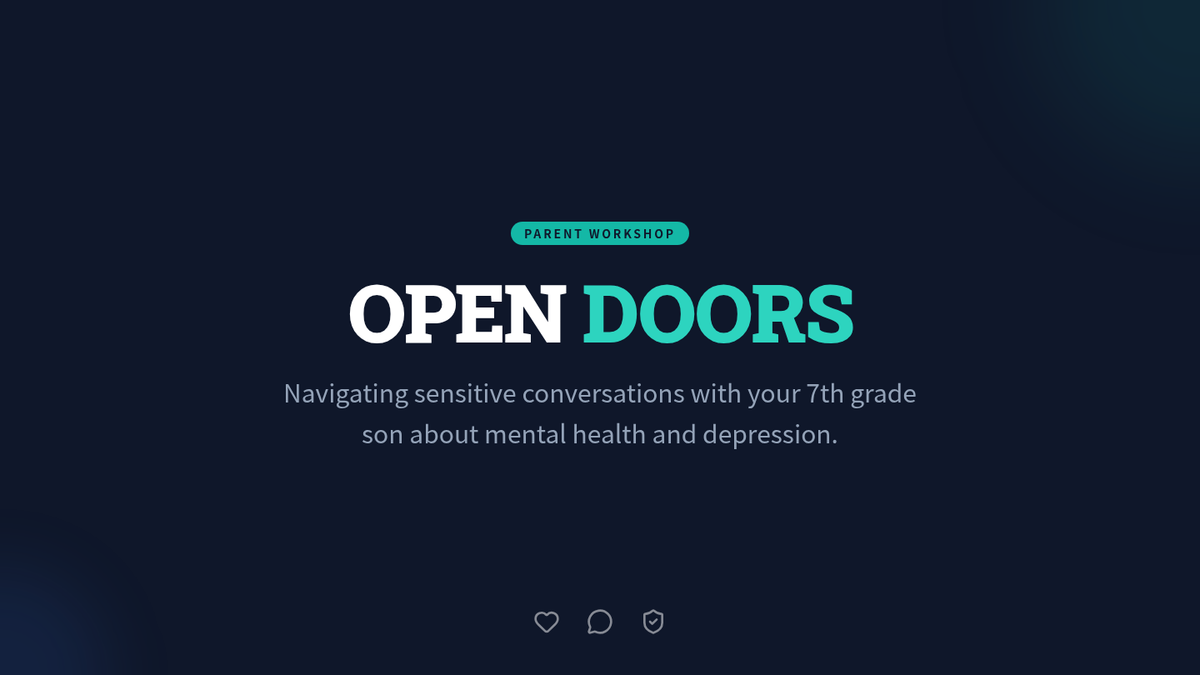
Visual presentation slides for the parent workshop, including key concepts, the LEAP framework, and group discussion prompts.
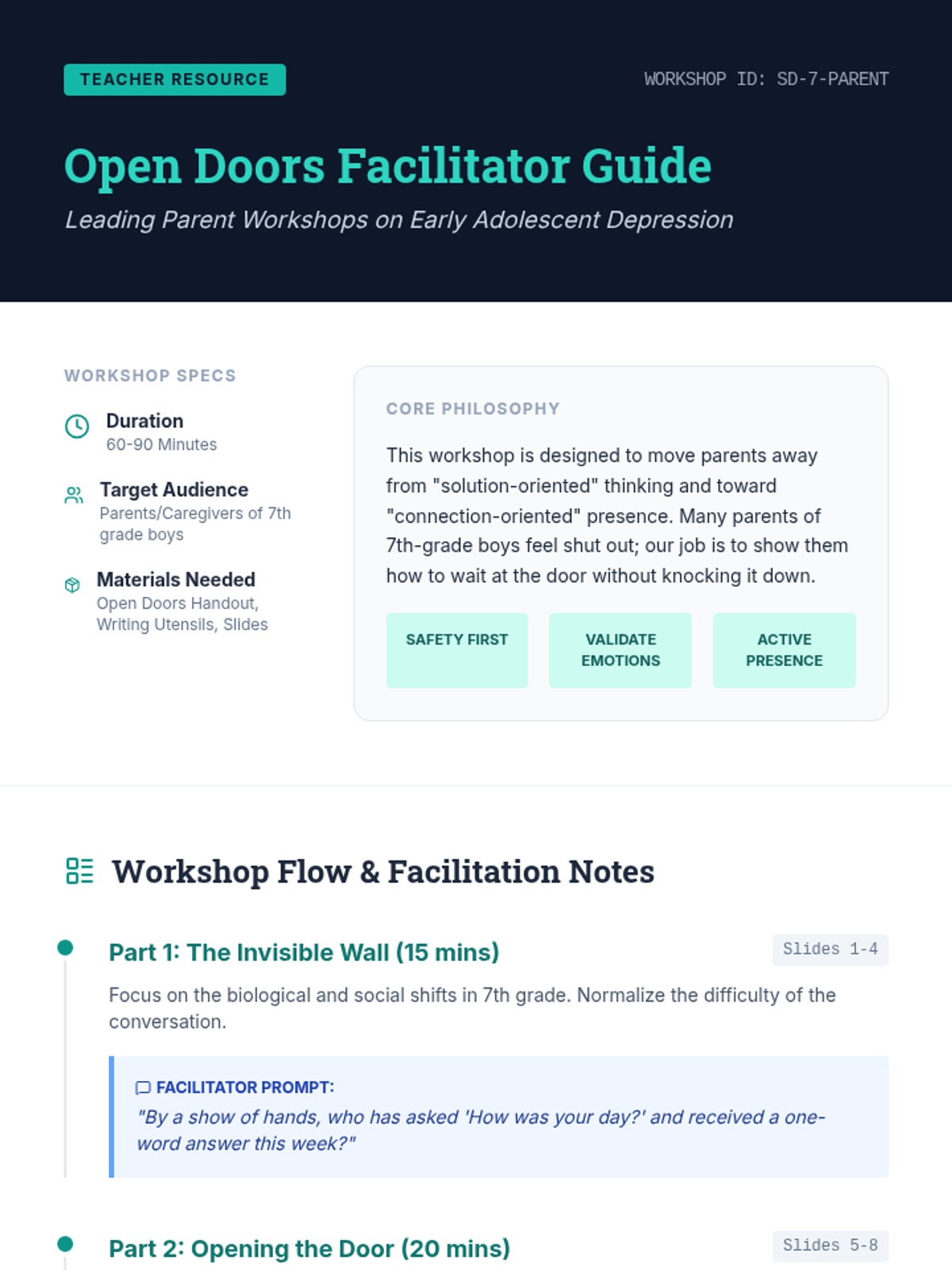
A detailed guide for workshop leaders to facilitate discussions, manage activities, and provide additional context for parents supporting their sons through depression.
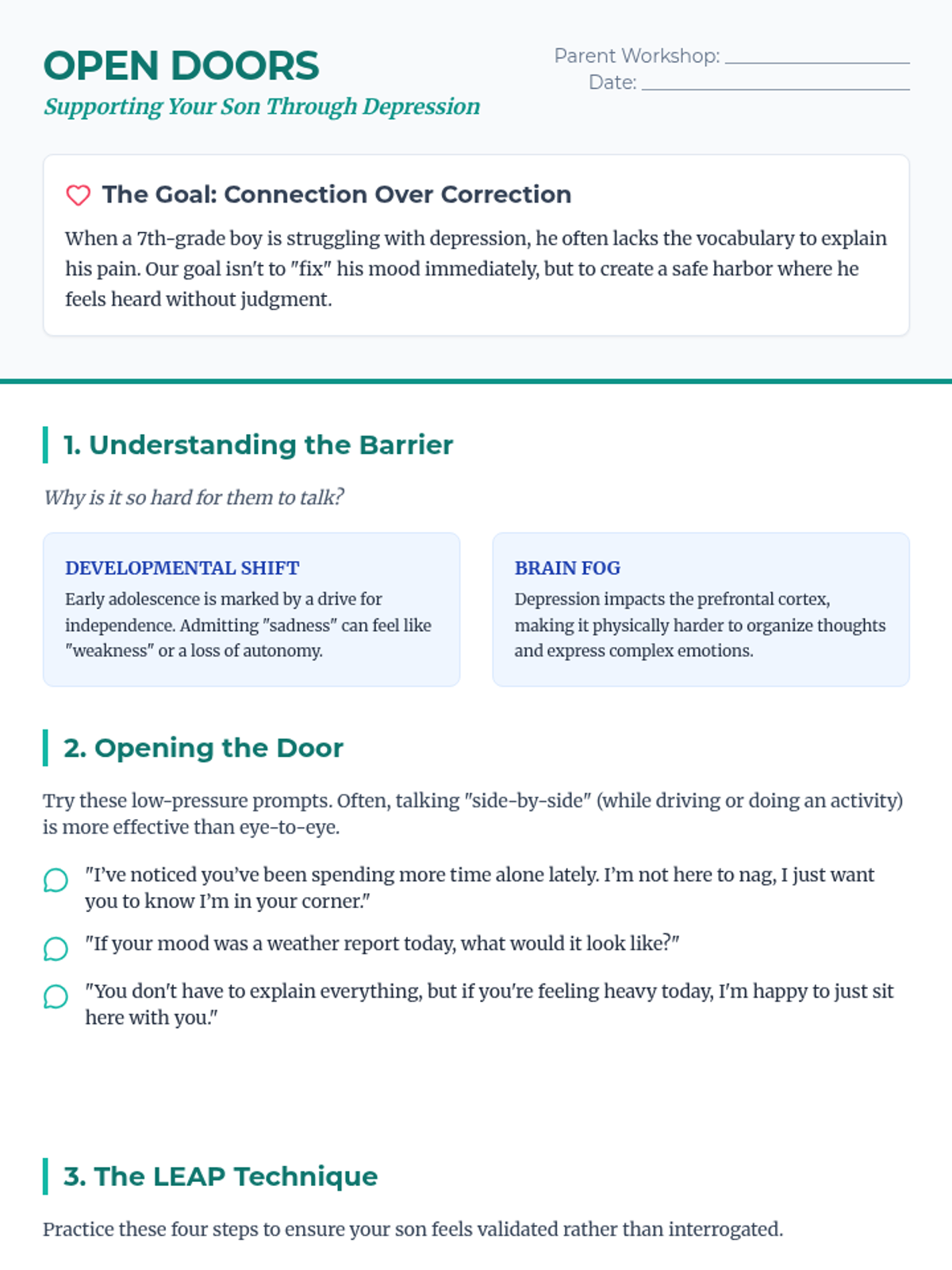
A supportive workshop handout for parents of 7th-grade boys, focusing on empathetic communication, active listening techniques (LEAP), and conversation starters for addressing depression.
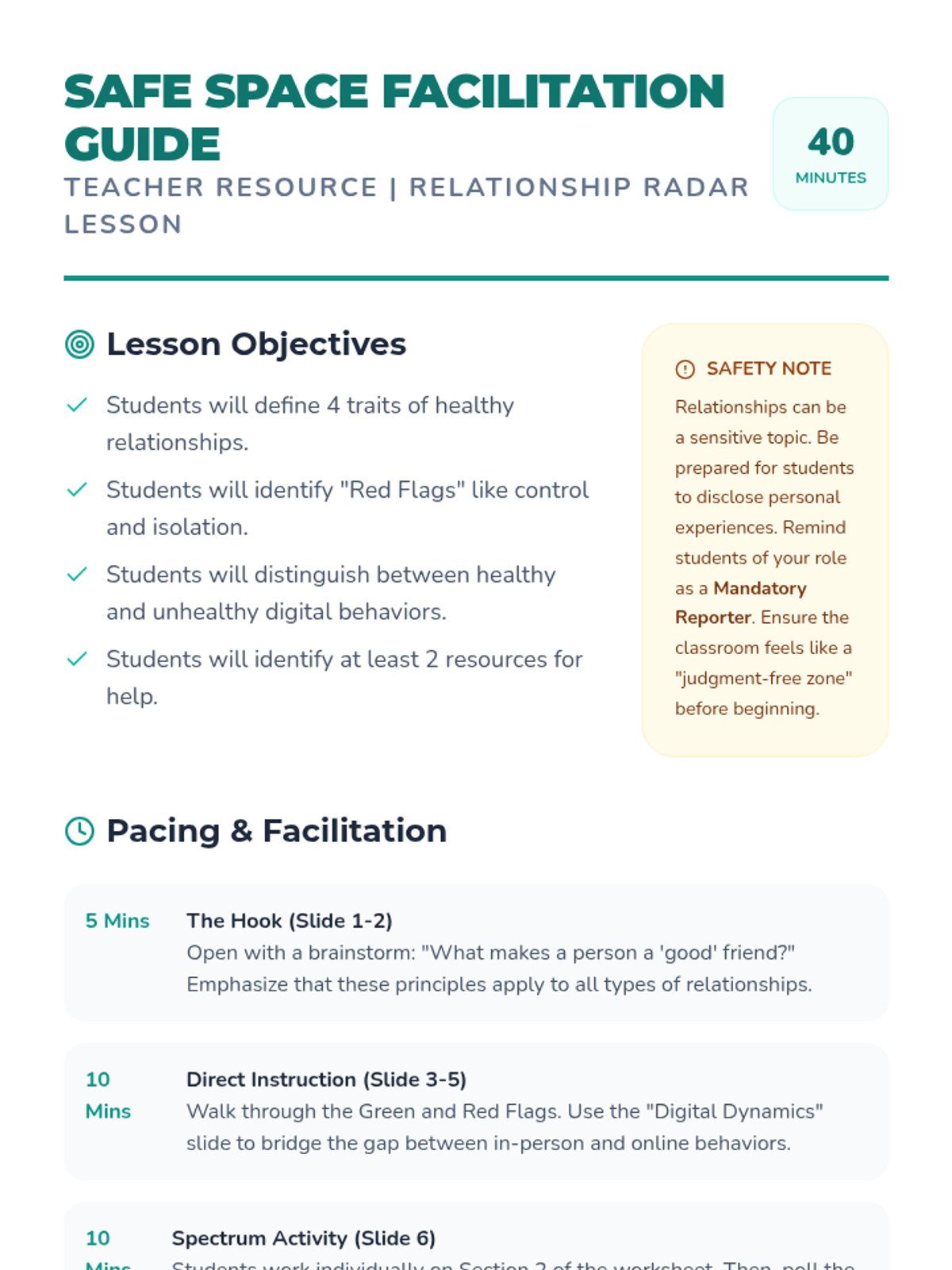
A comprehensive teacher facilitation guide providing pacing, discussion prompts, safety notes, and an answer key for the Relationship Radar lesson.
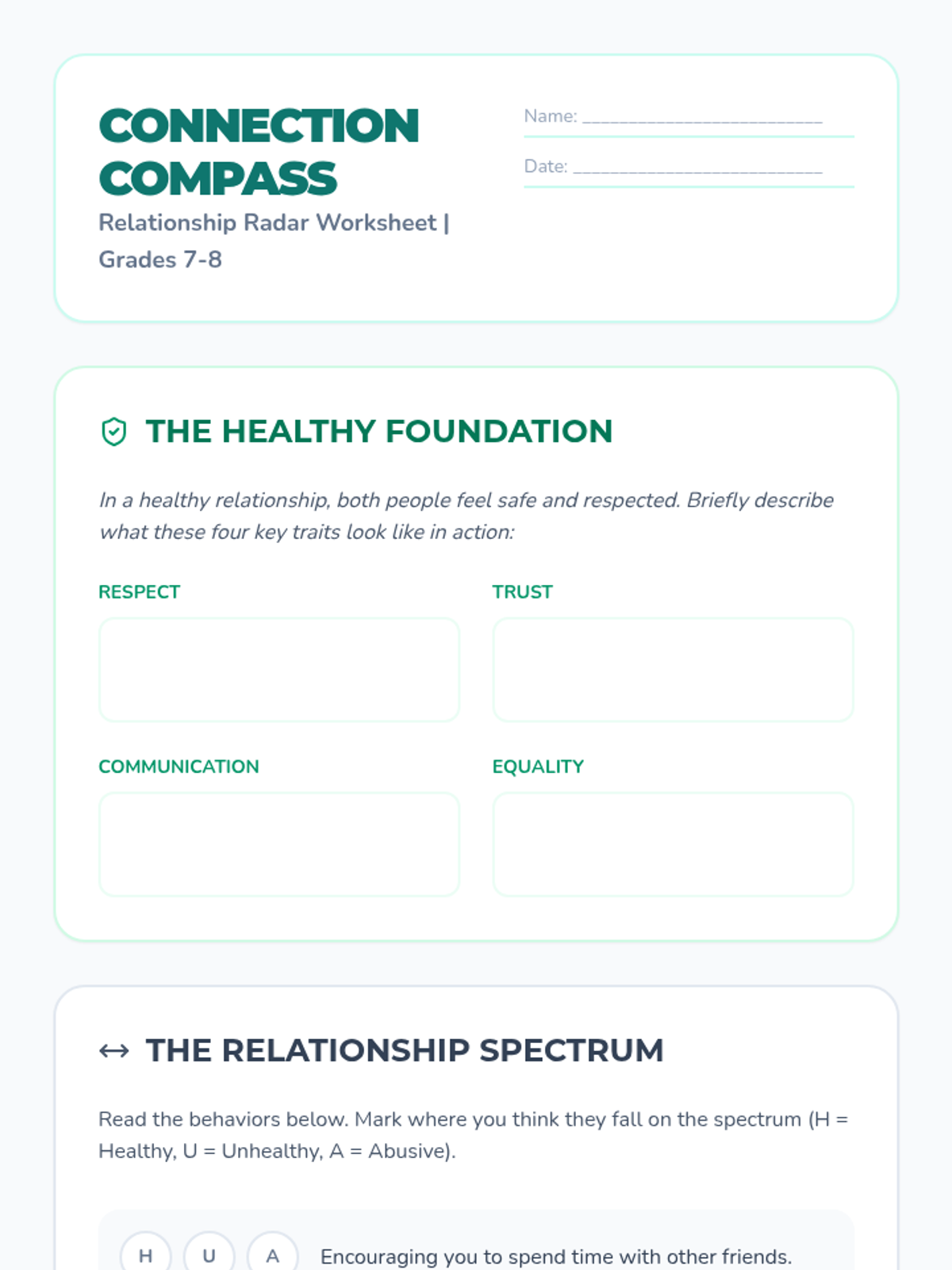
A student activity worksheet designed to accompany the Relationship Radar lesson, including spectrum exercises, digital checklists, and scenario analysis.
A visually engaging slide deck for middle schoolers about healthy and unhealthy relationships, featuring the relationship spectrum, digital dynamics, and support resources.
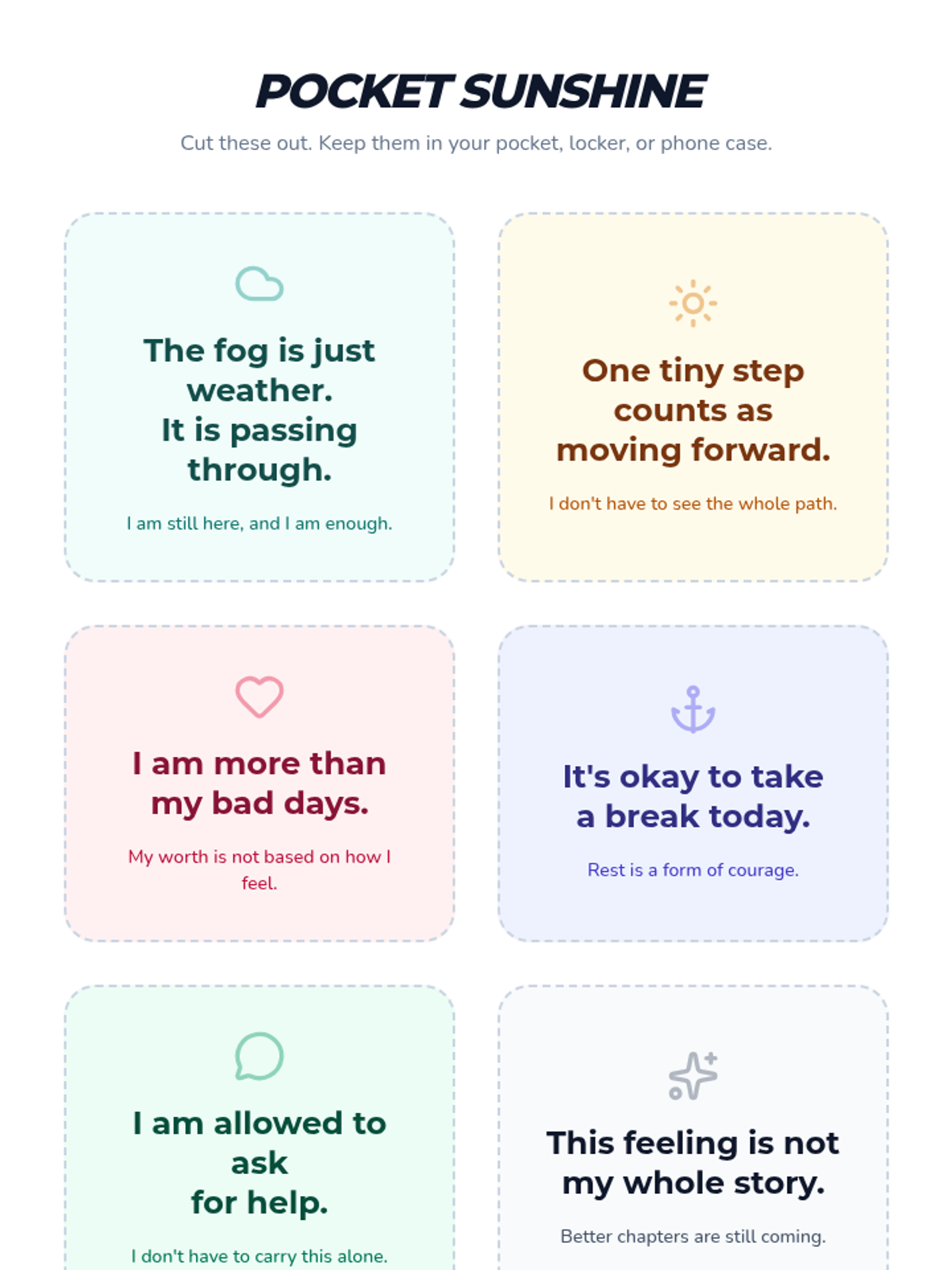
A collection of cut-out affirmation cards providing encouragement and supportive reminders for students navigating depression.
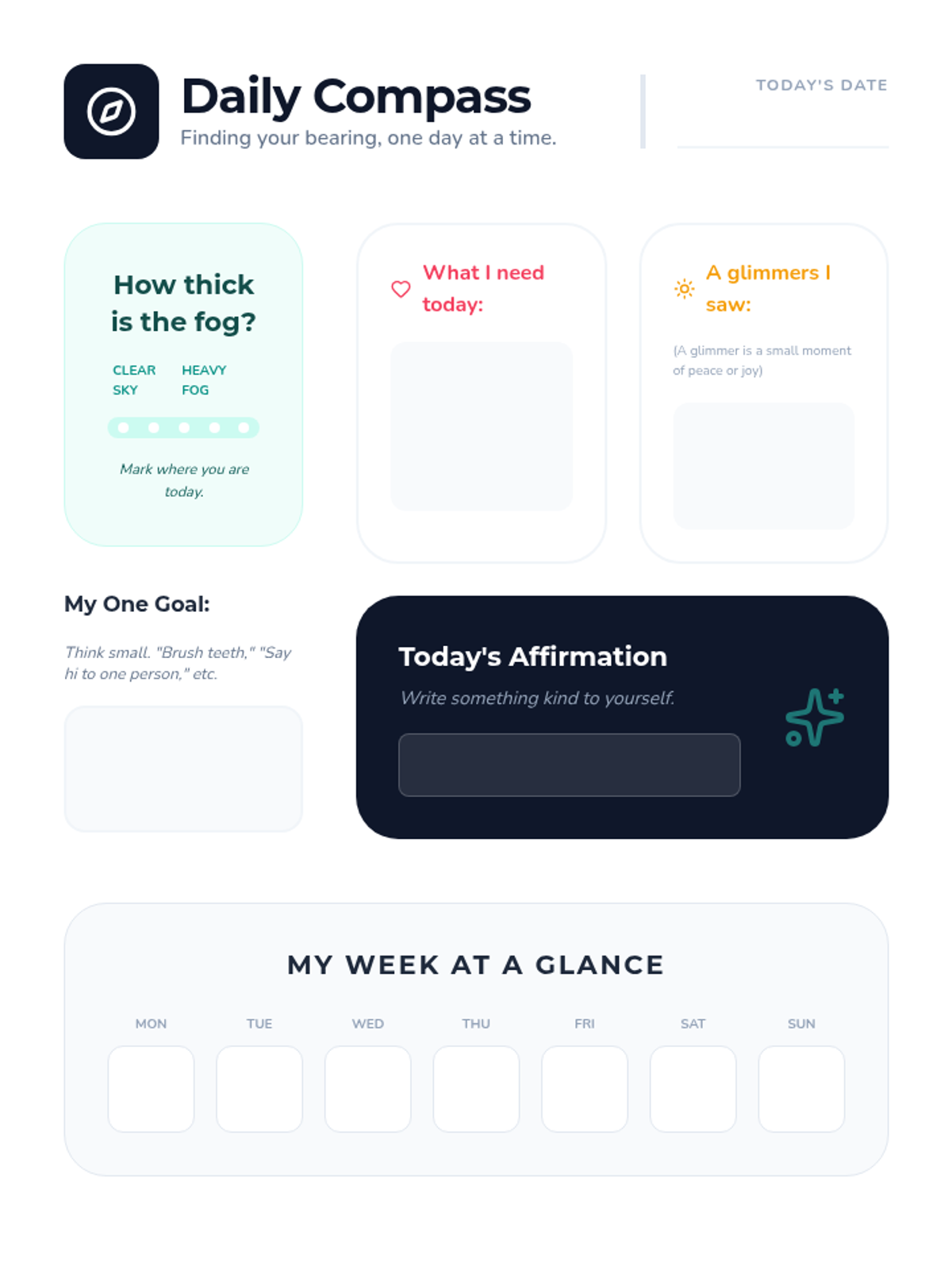
A daily check-in tool designed for students to track their mood fog, set small goals, identify daily needs, and note "glimmers" of positivity.
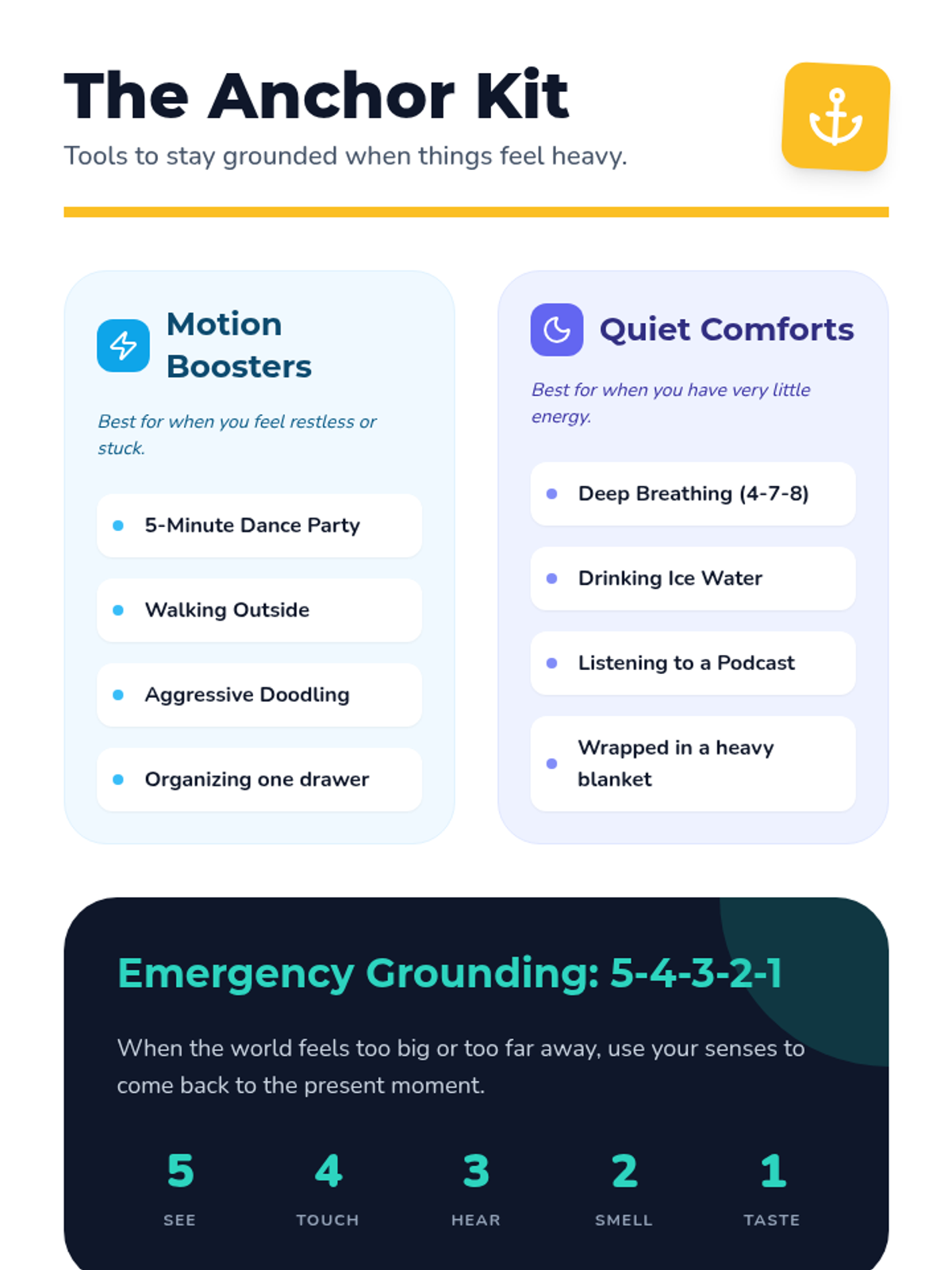
A visually engaging handout featuring a menu of high-energy and low-energy coping skills, plus sensory grounding techniques for managing depression and anxiety.
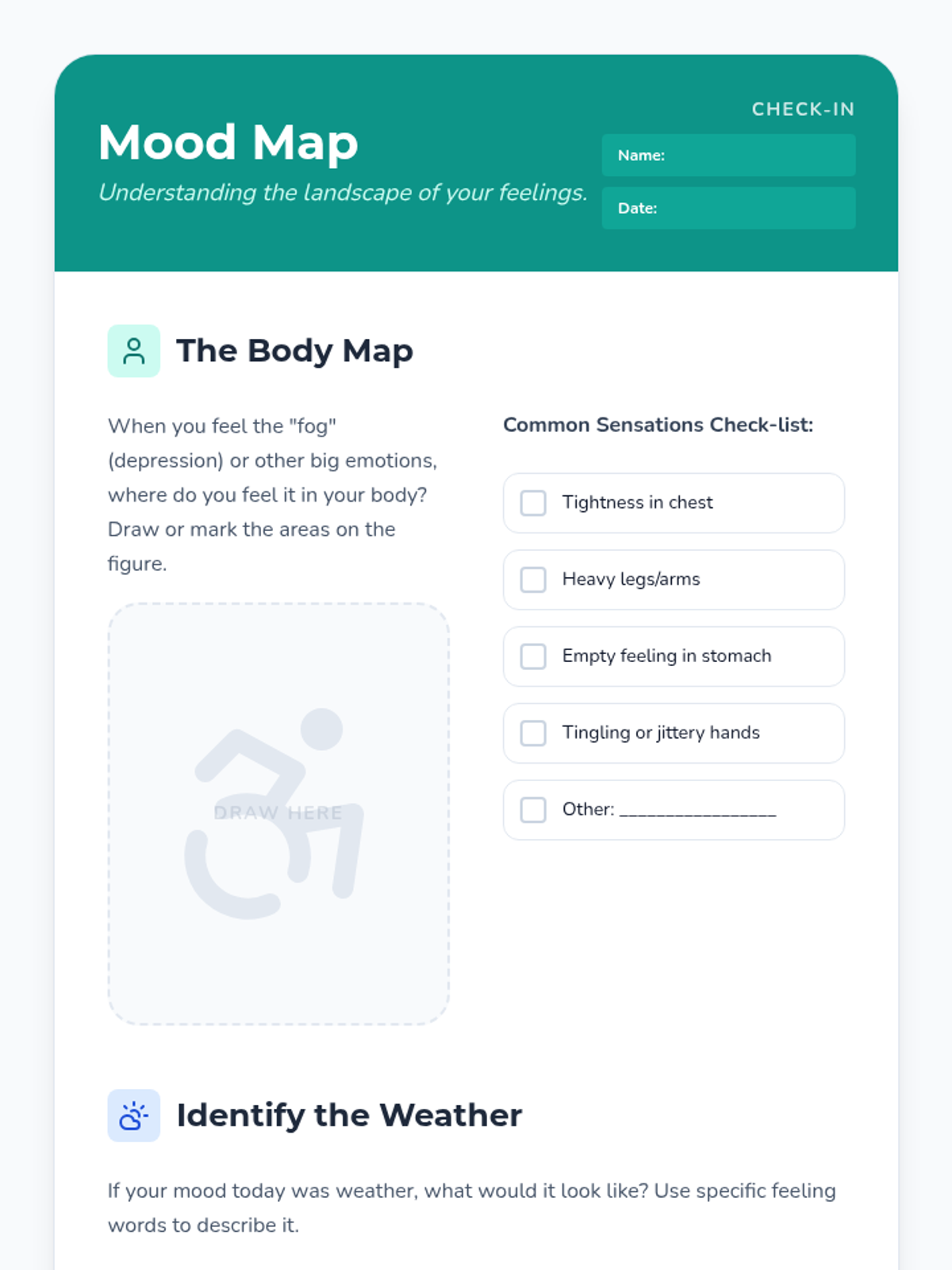
A reflective worksheet for identifying emotions, physical sensations, and safe resources when experiencing depression or heavy moods.
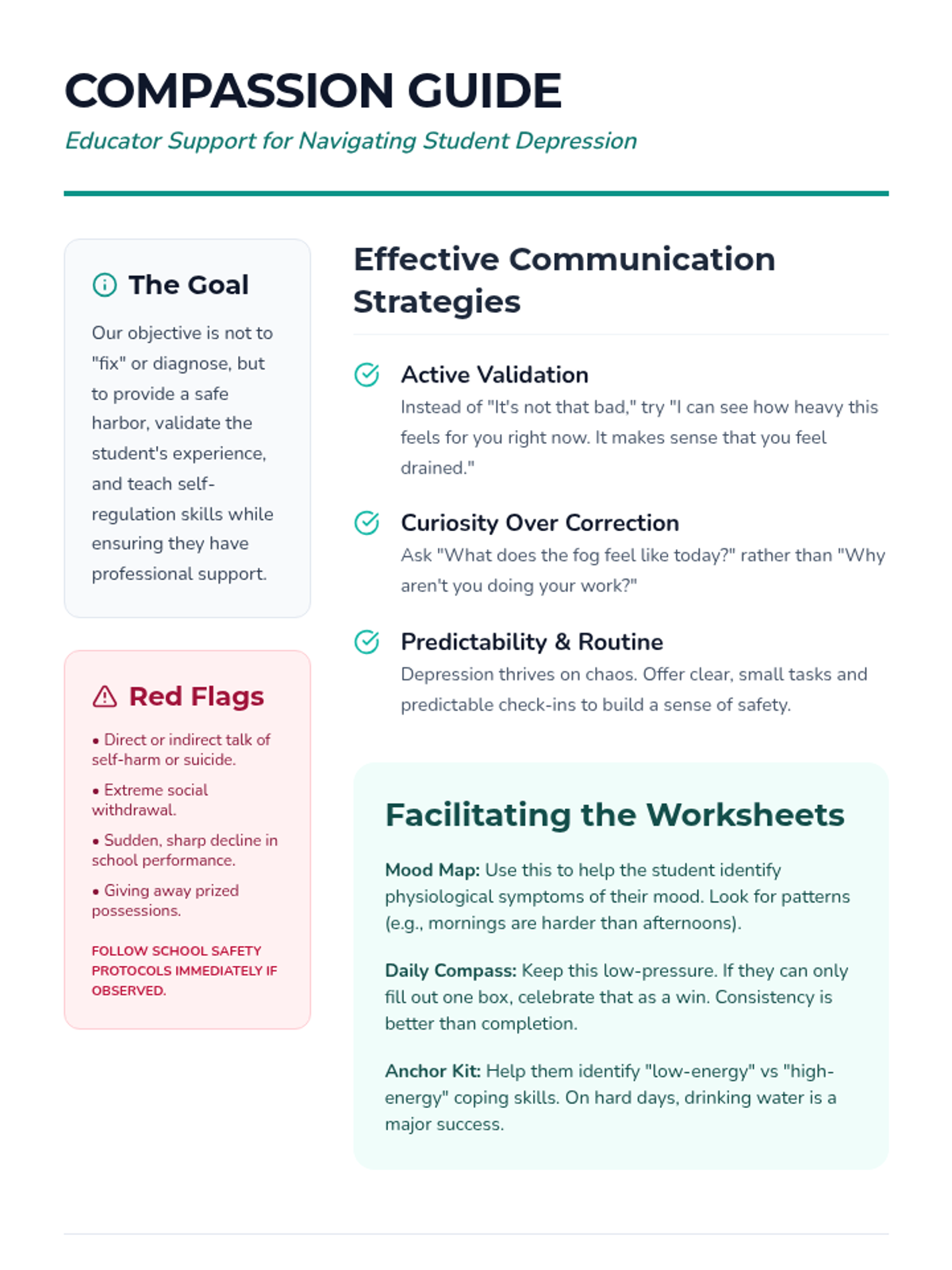
A comprehensive teacher guide for educators working with students experiencing depression, including communication strategies, red flags, and facilitation tips for activities.
A presentation guide for 7th-grade students to help them understand depression, identify feelings, and build a toolkit of coping strategies.
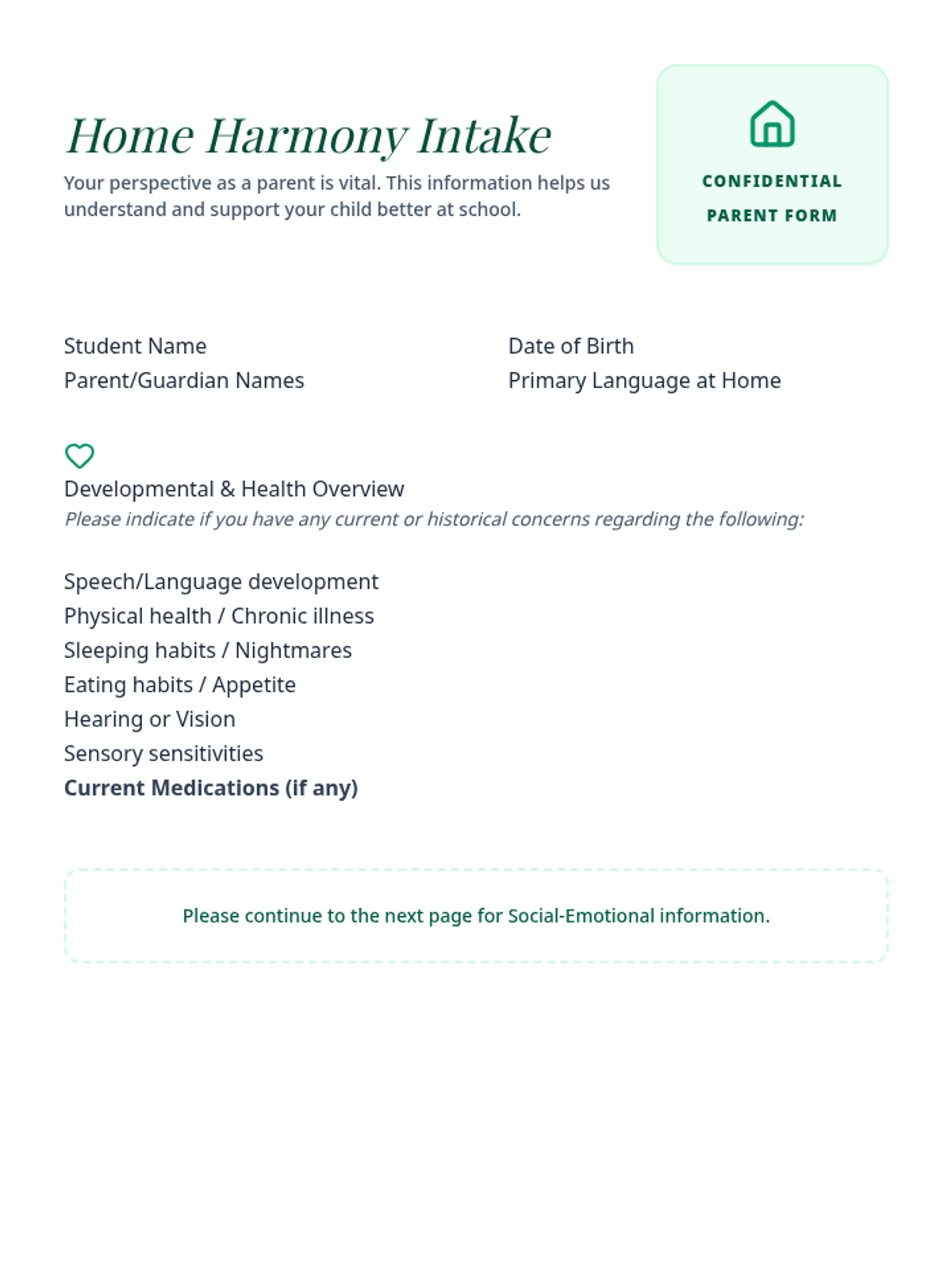
A comprehensive parent intake form for school counseling services. It collects developmental history, family dynamics, social-emotional background, and parental goals for their child's counseling experience.
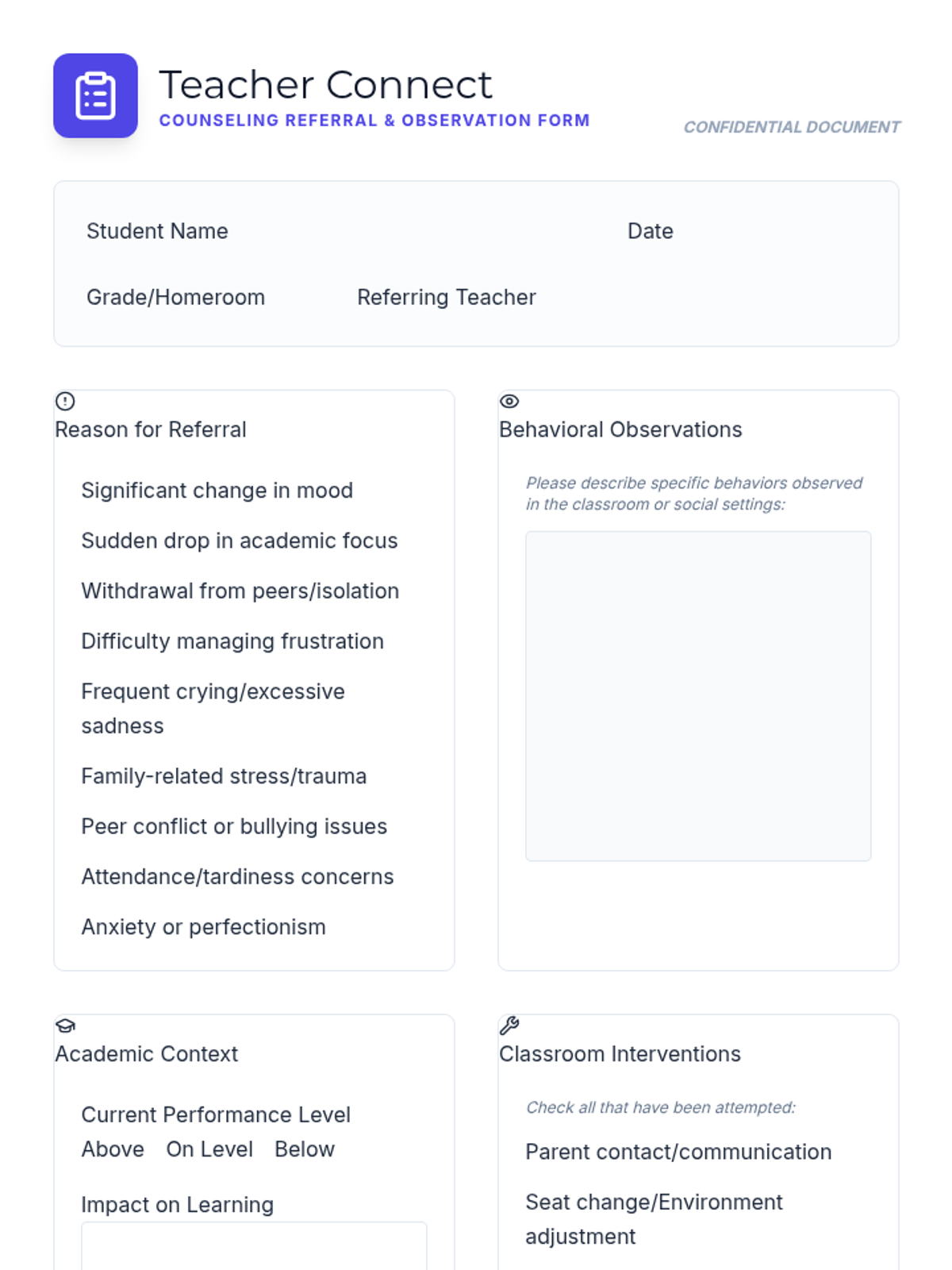
A professional referral form for teachers to use when referring students for counseling services. It includes sections for student demographics, reasons for referral, behavioral observations, academic context, and attempted interventions.
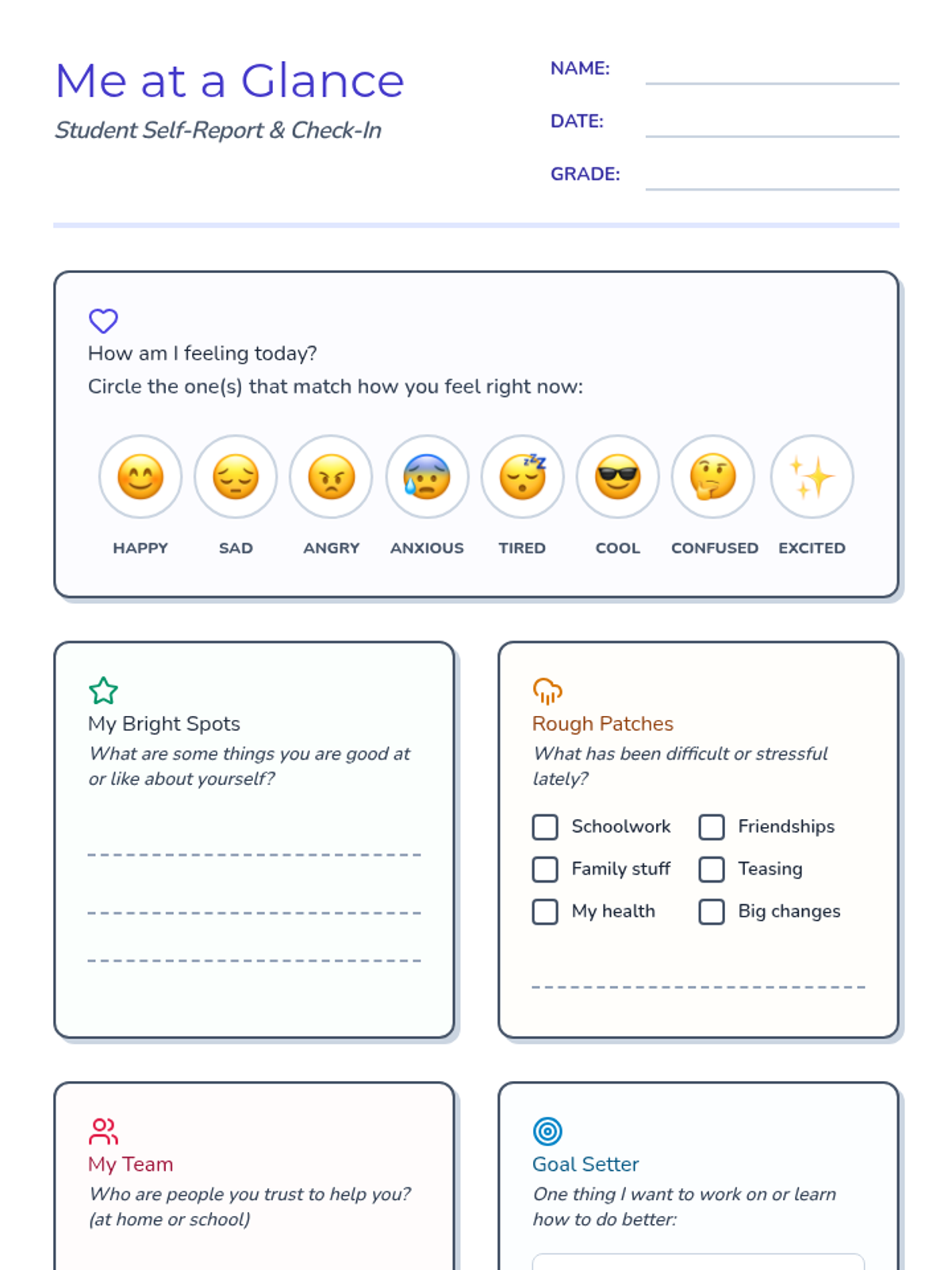
A student-friendly self-report intake form for school counseling focused on social-emotional learning. It includes sections for current feelings, strengths, challenges, goals, support systems, and a large creative space for drawing or additional thoughts.
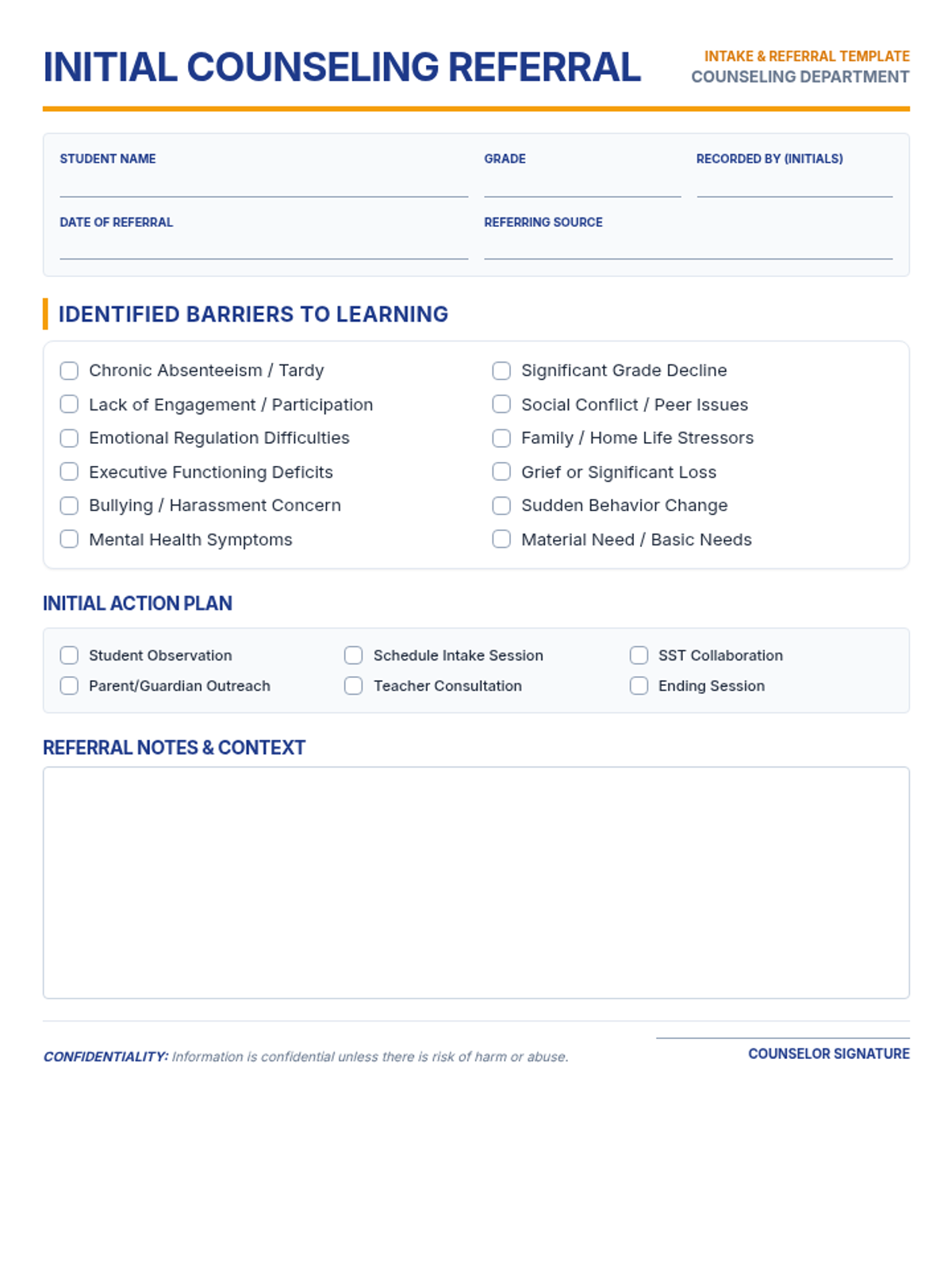
New Initial Counseling Referral Template with 'Recorded by (initials)' field, checkboxes for 'Barriers to Learning', and an initial action plan. Branding for the Counseling Department.
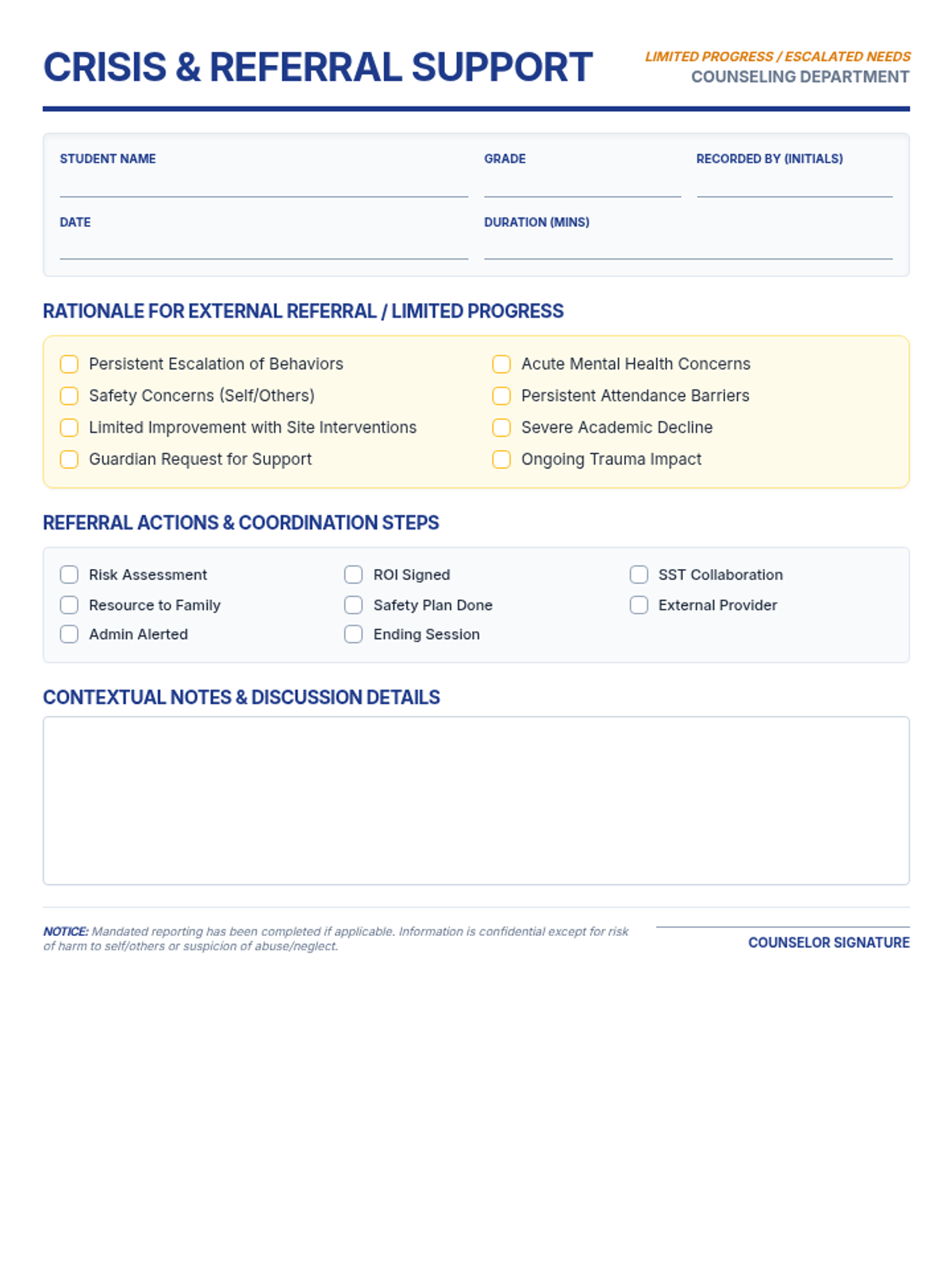
Updated Crisis & Referral Note Template with 'Recorded by (initials)' field and 'Ending Session' checkbox. Removed 'Location' and 'Counselor' fields. SST Collaboration remains in the action steps.
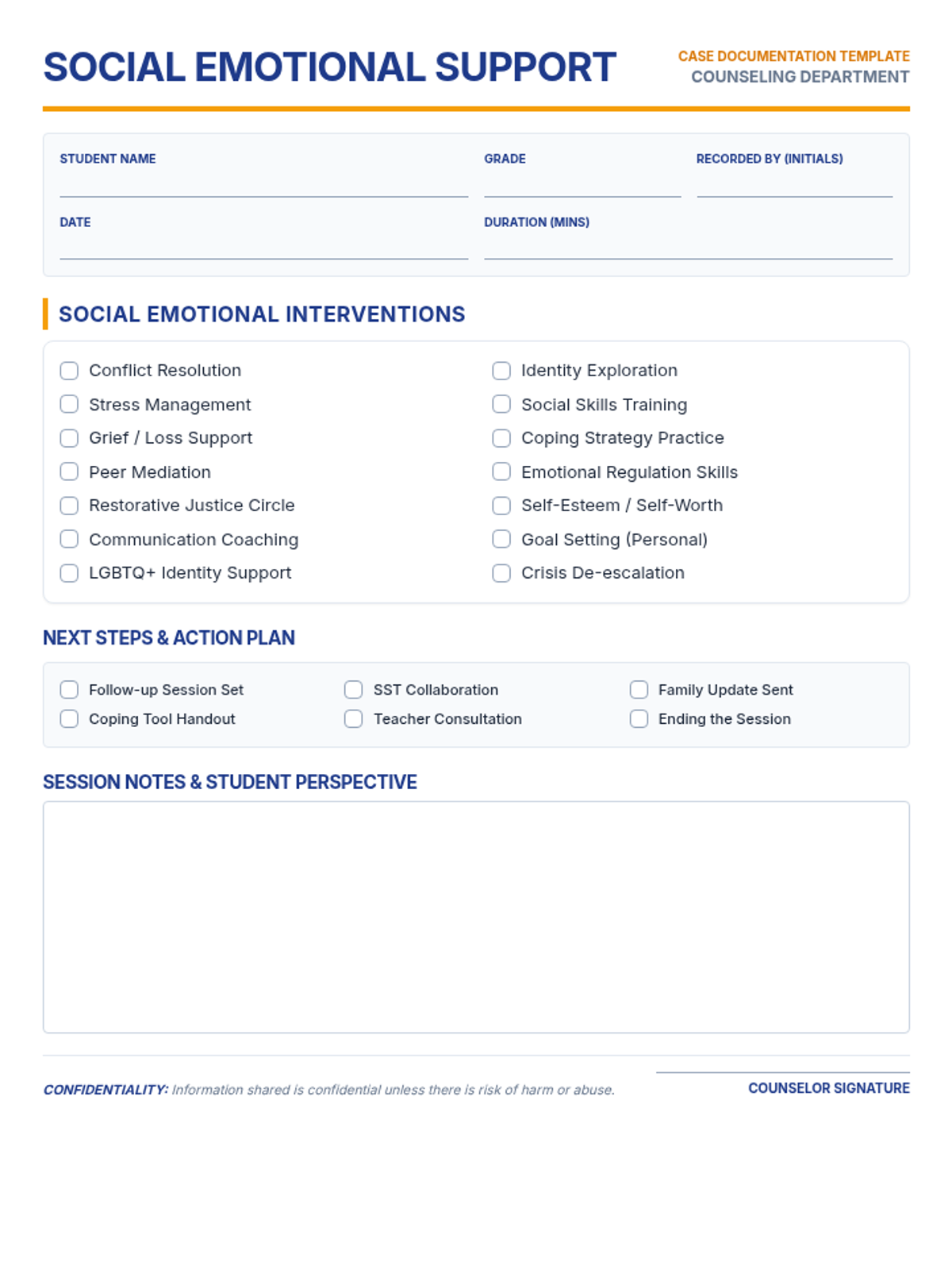
Updated Social Emotional Note Template with 'Recorded by (initials)' field, Mindfulness removed, SST Collaboration moved to action plan, and 'Ending the Session' checkbox added. Removed 'Location' and 'Counselor' fields.
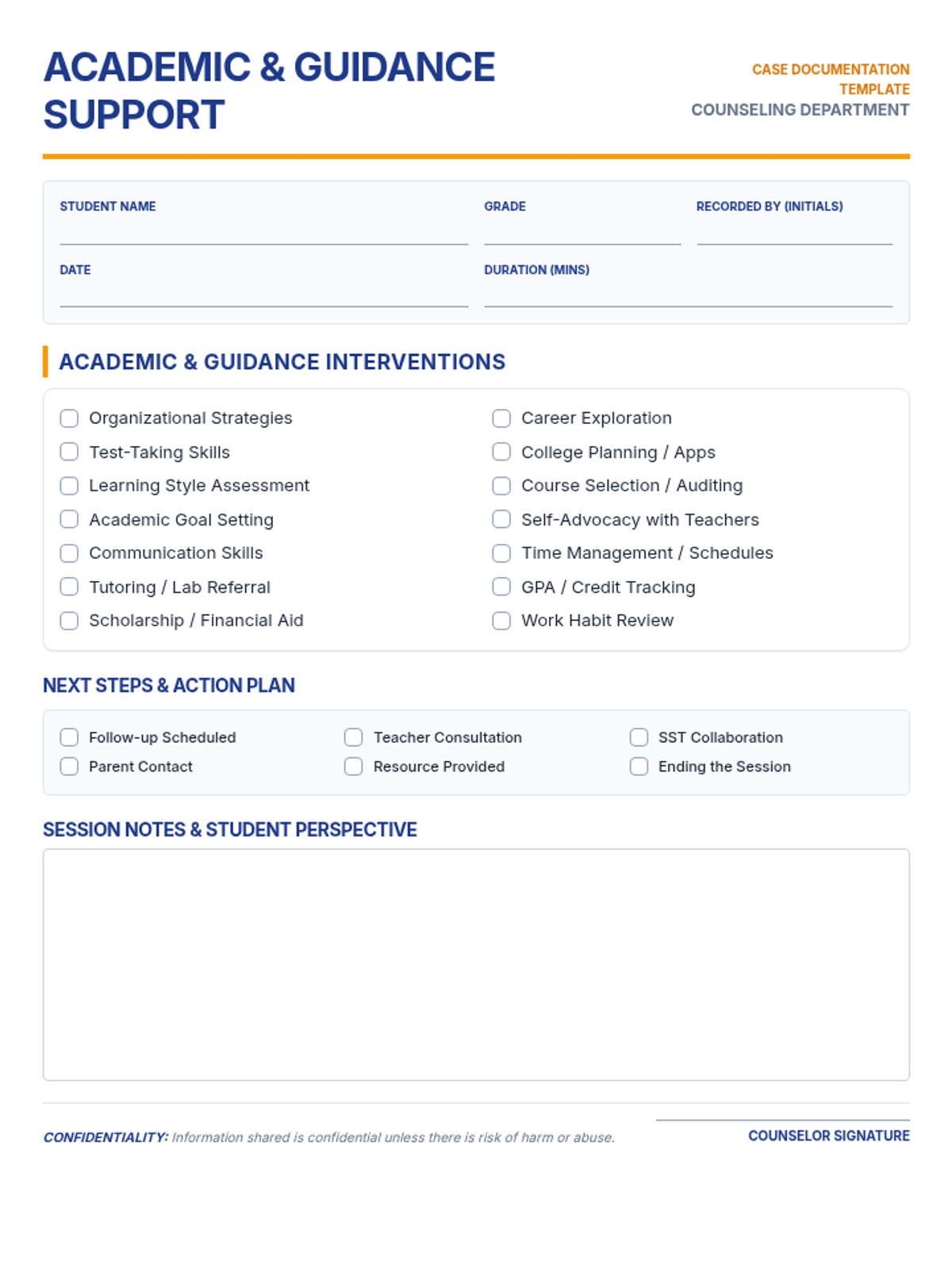
Updated Academic Guidance Note Template with 'Recorded by (initials)' field, SST Collaboration moved to action plan, and 'Ending the Session' checkbox added. Removed 'Location' and 'Counselor' fields.
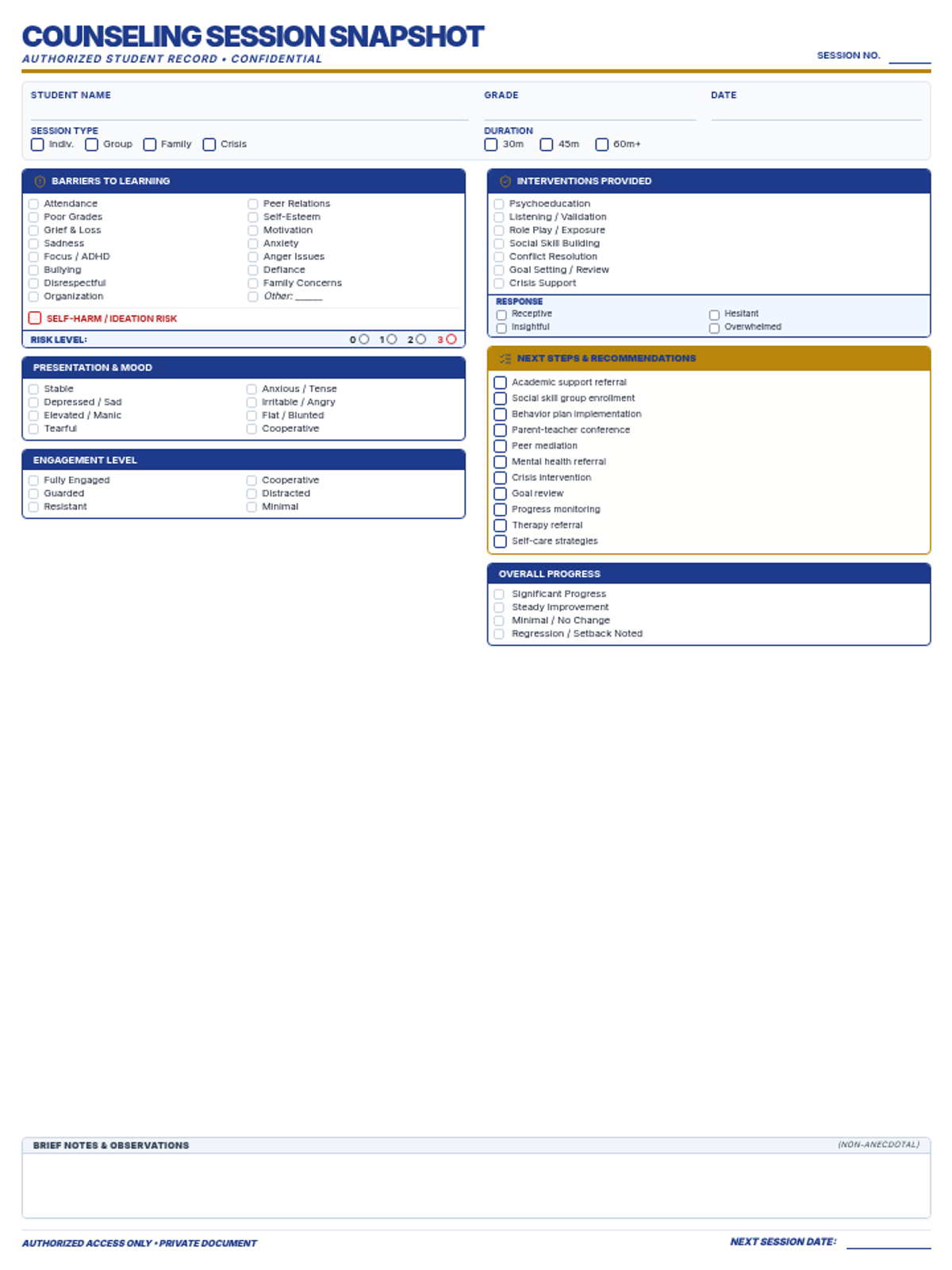
An optimized one-page school counseling session record with reduced spacing to fit A4 paper. It maintains the professional blue and gold theme while consolidating intake barriers, mood assessment, interventions, and next-step recommendations into a clean, checkbox-driven layout.
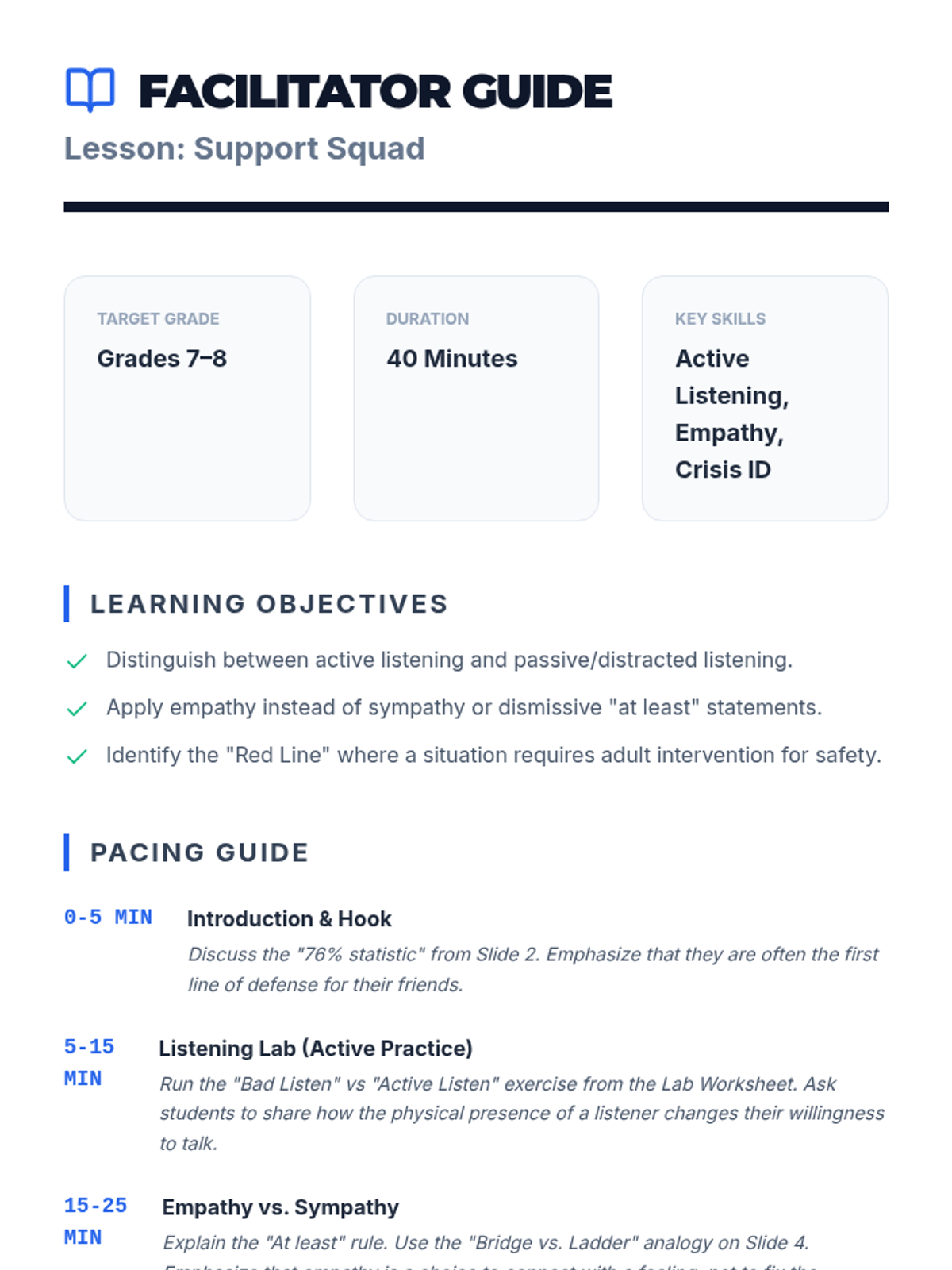
A teacher guide for the Support Squad lesson, including pacing, facilitation tips for active listening and empathy exercises, and guidance on handling safety "Red Line" discussions.
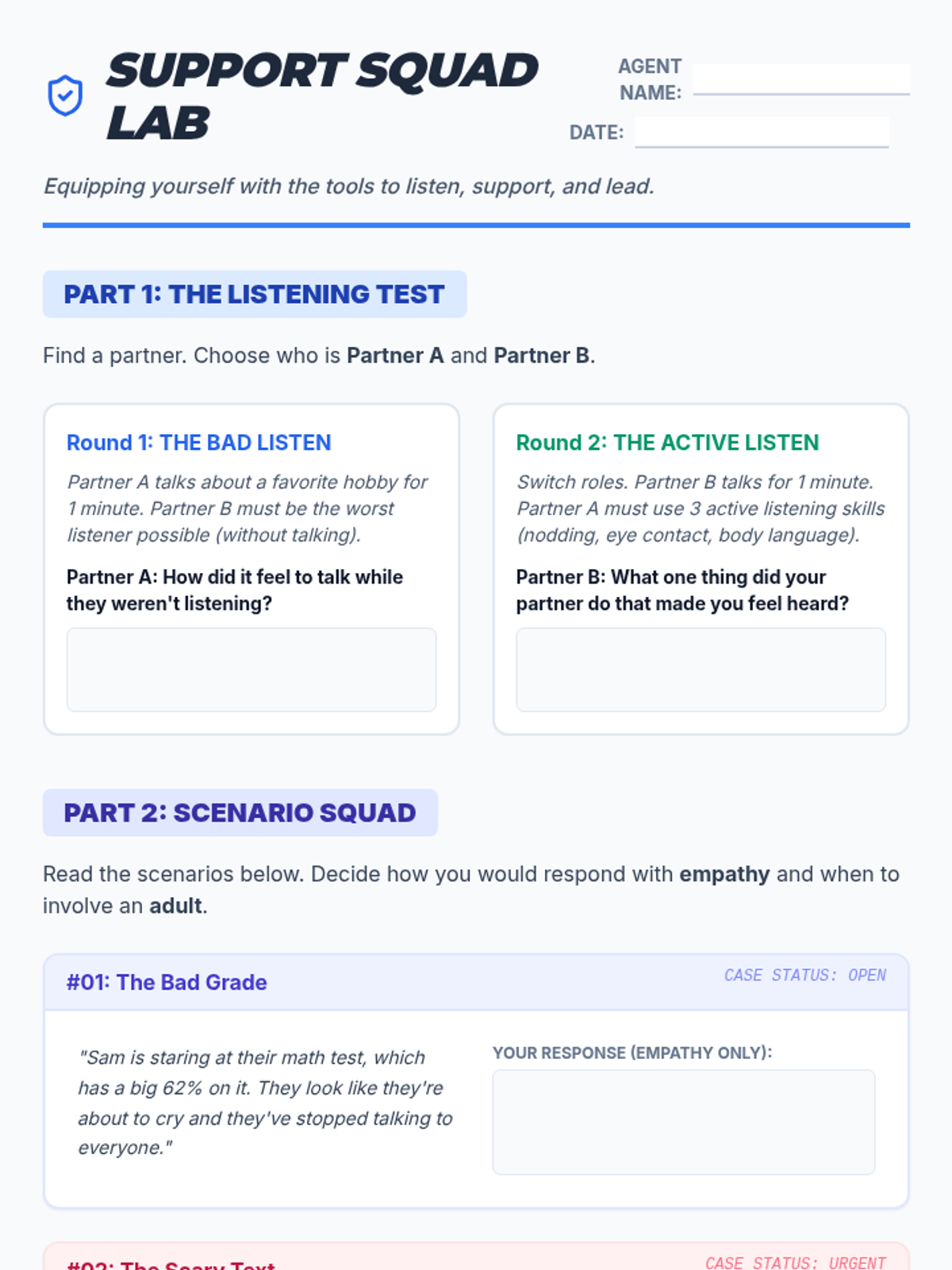
A student worksheet for the Support Squad lesson featuring listening exercises, real-world empathy scenarios, and a printable peer support commitment card.
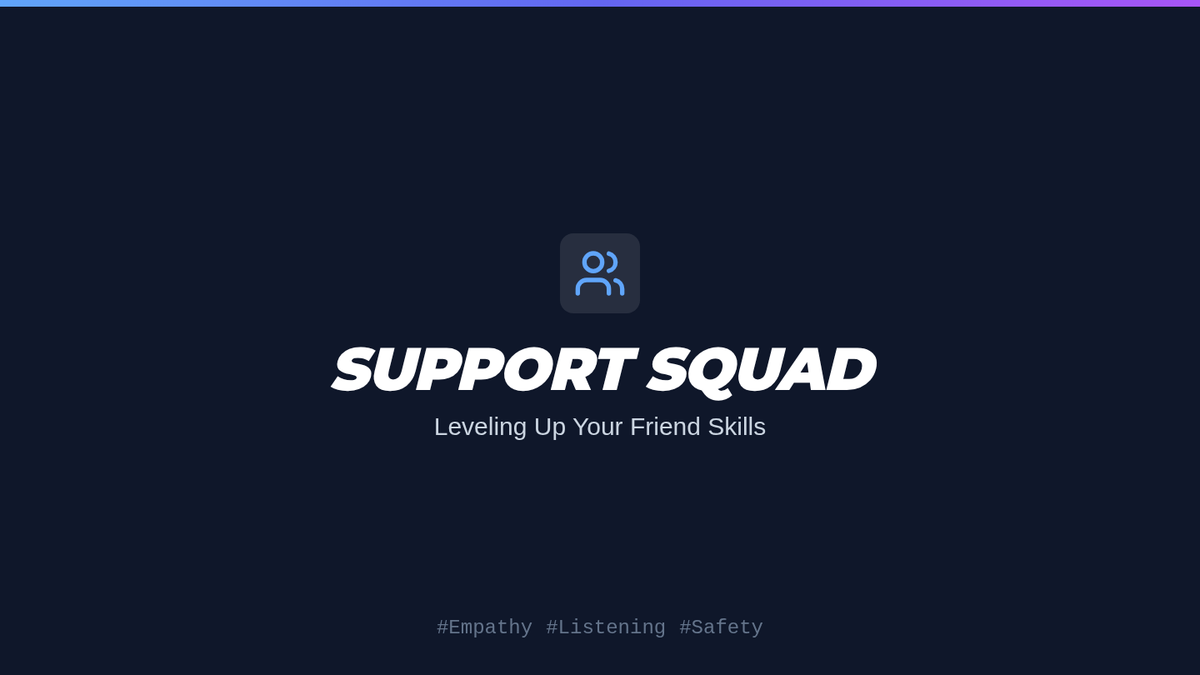
A vibrant slide deck for middle schoolers focusing on active listening, empathy, check-in scripts, and safety protocols for peer support.
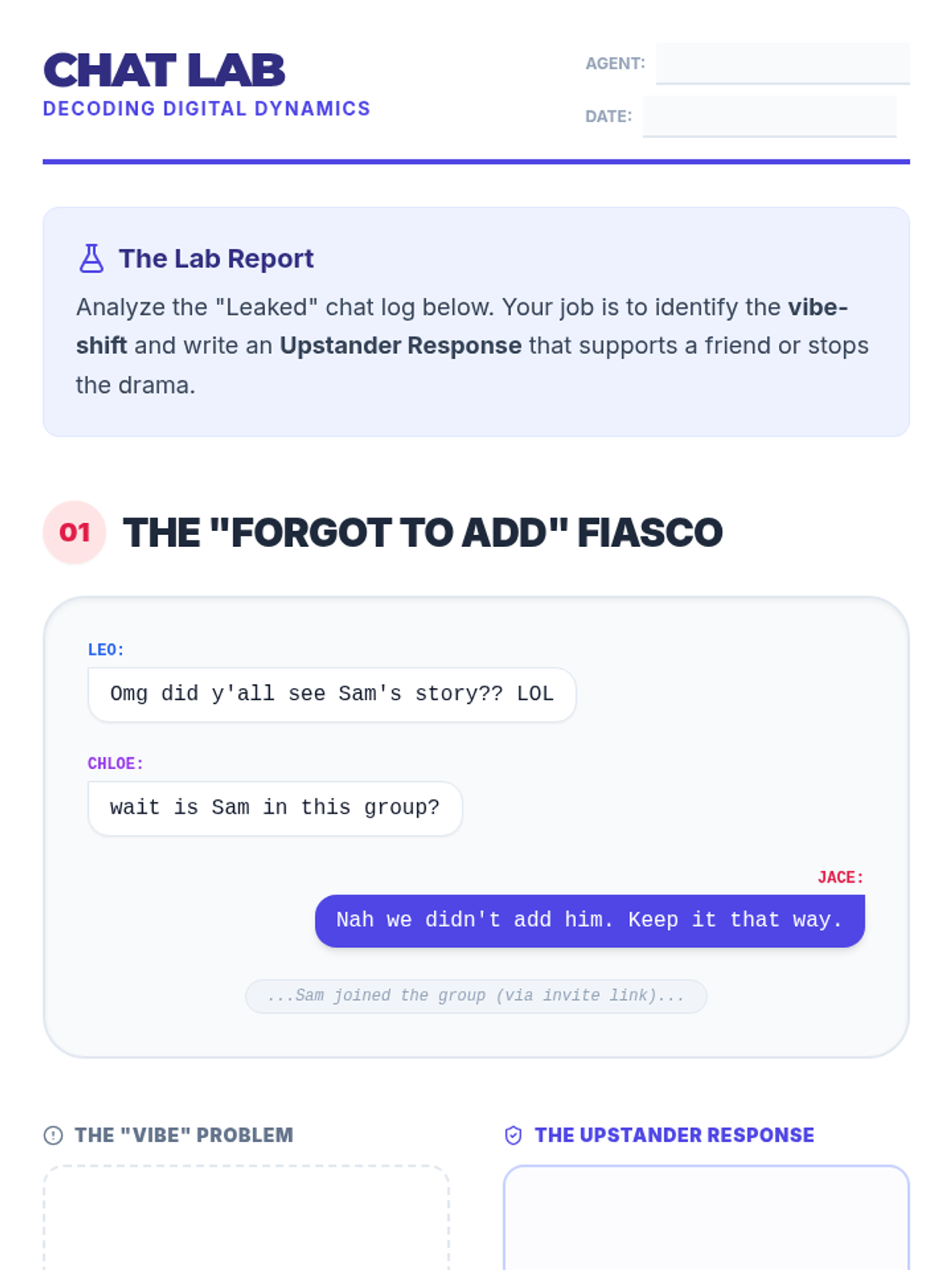
An optimized single-page version of the Chat Lab worksheet, featuring one focused text exchange scenario, large student work areas, and a final reflection task.
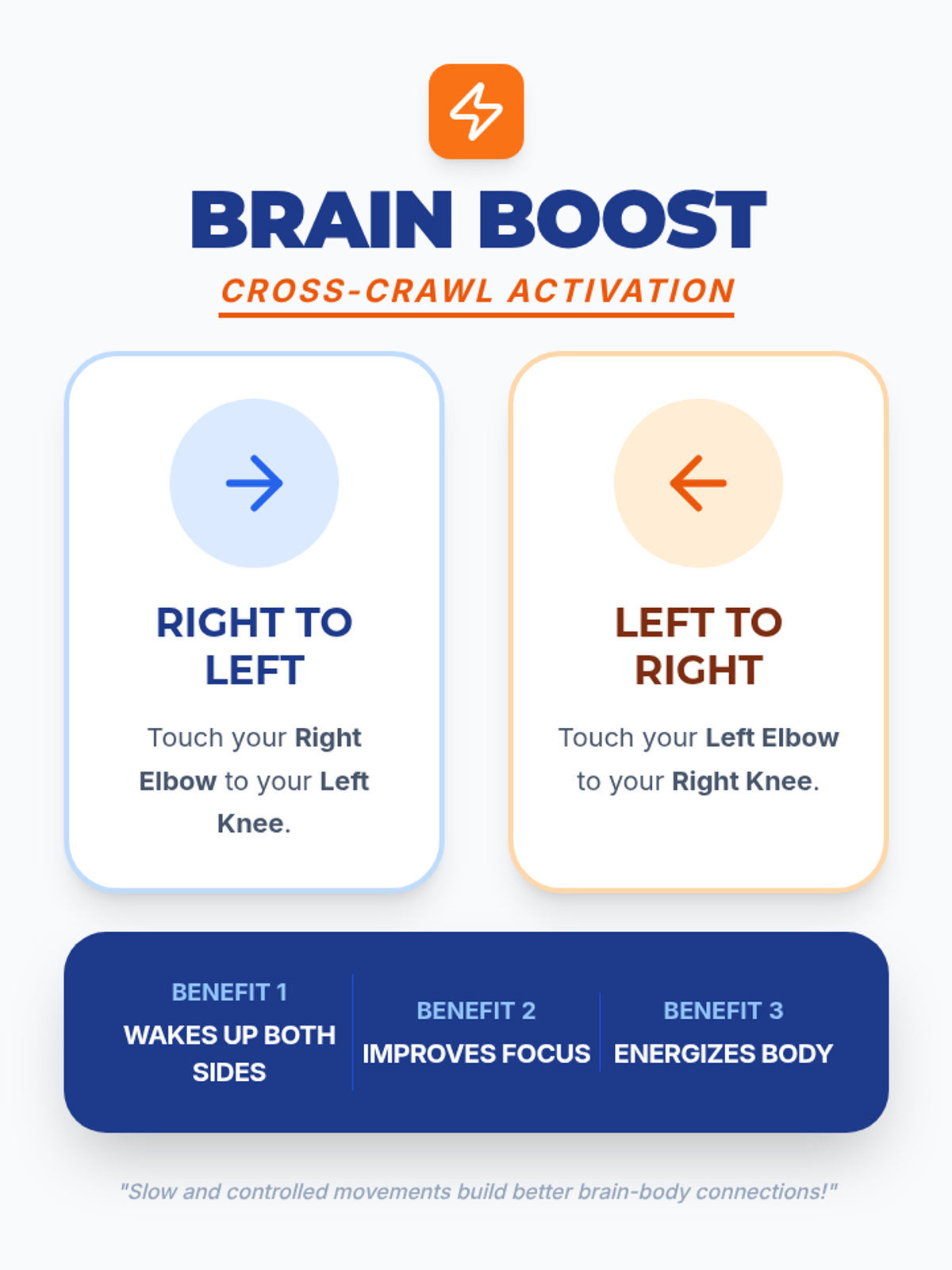
High-contrast instructional visual for the "Cross-Crawl" warm-up activity. Designed to be projected or held up by the teacher to guide students through the brain-body midline crossing movement.
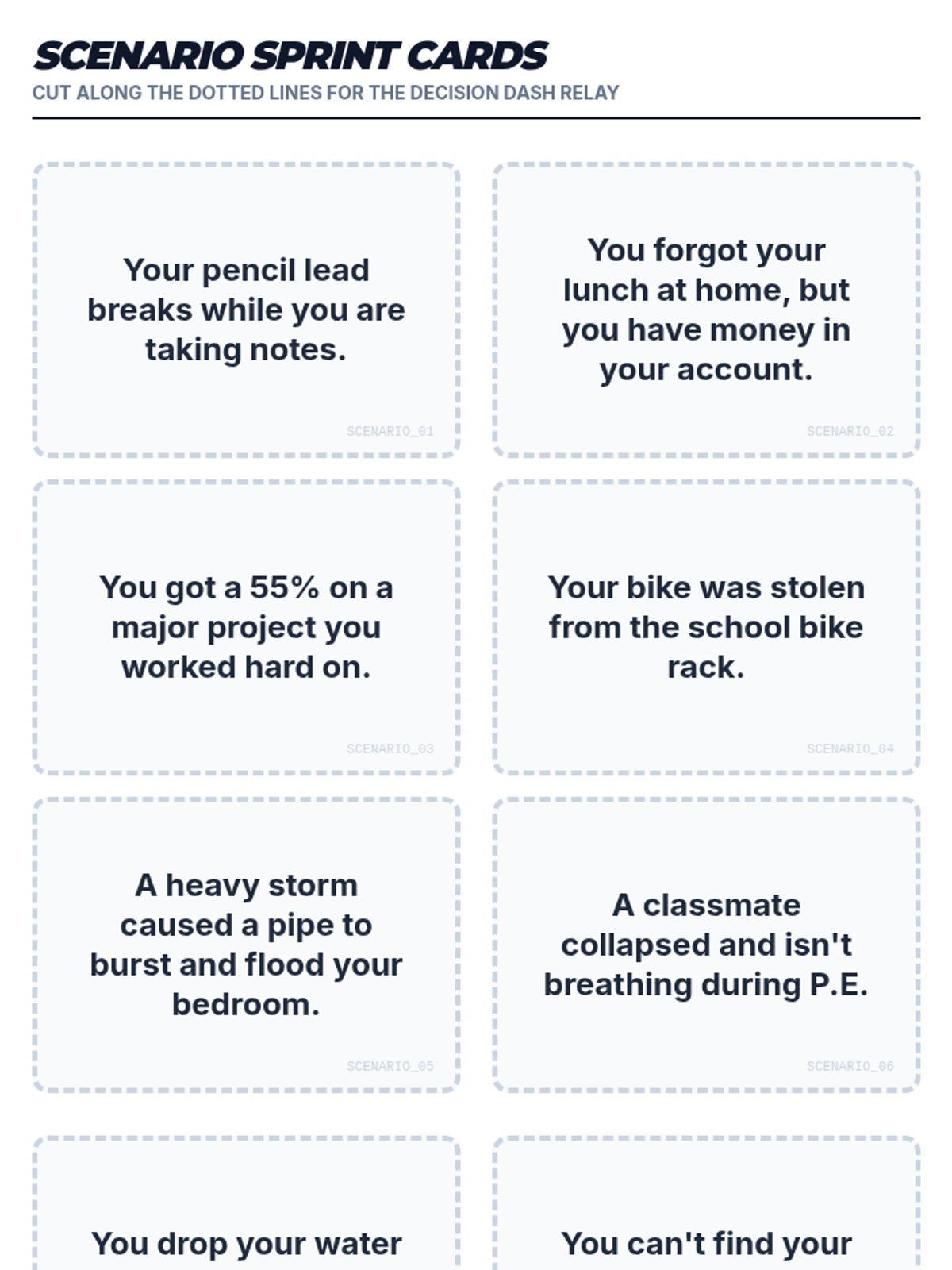
Set of 18 scenario cards varying in severity from Level 0 to Level 5. Designed to be cut out and used in the relay game to test students' ability to categorize problem sizes.
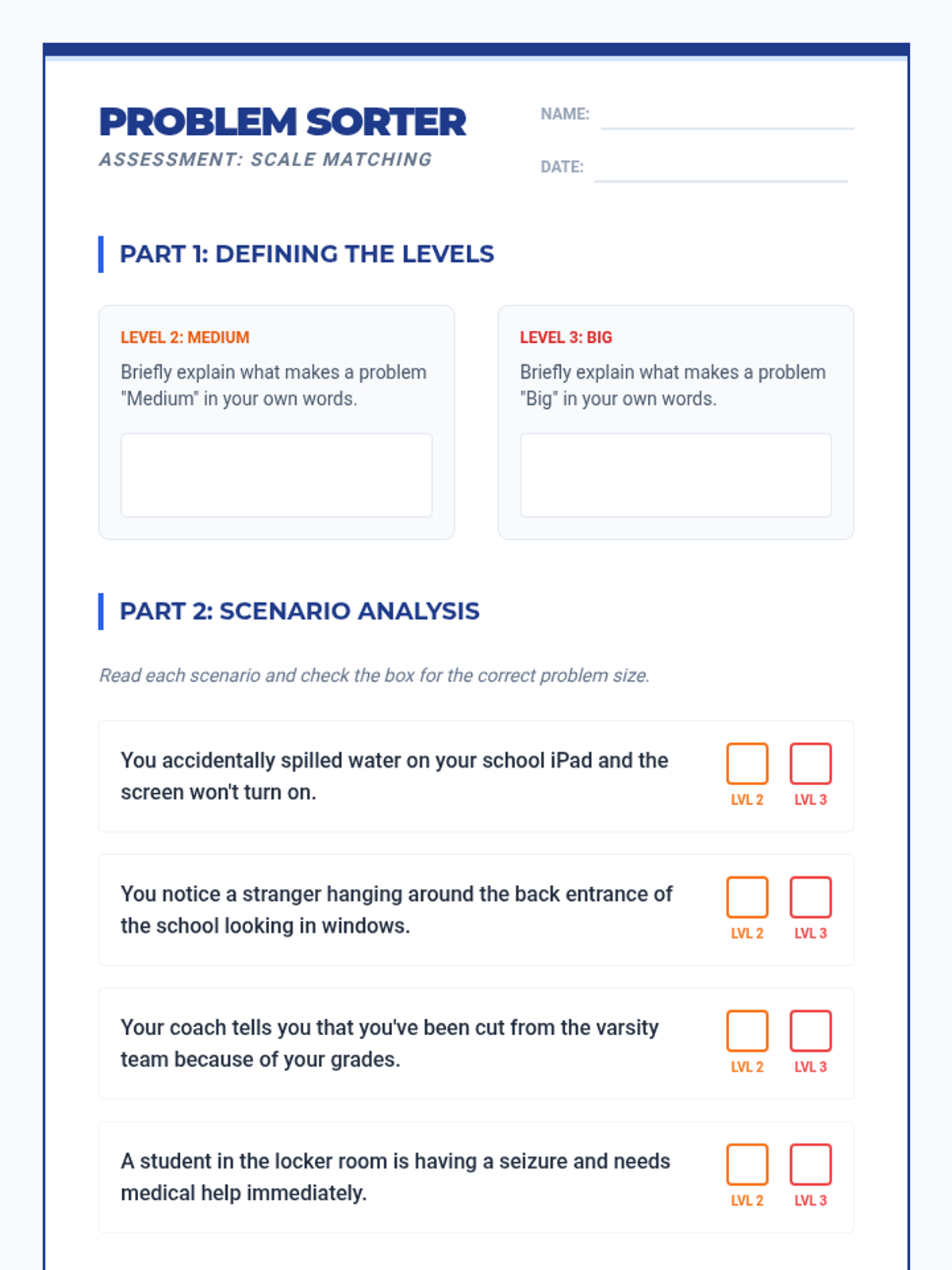
A practice worksheet for students to define and classify Medium (Level 2) and Big (Level 3) problems. Includes scenario matching and a reflection question on appropriate emotional responses.
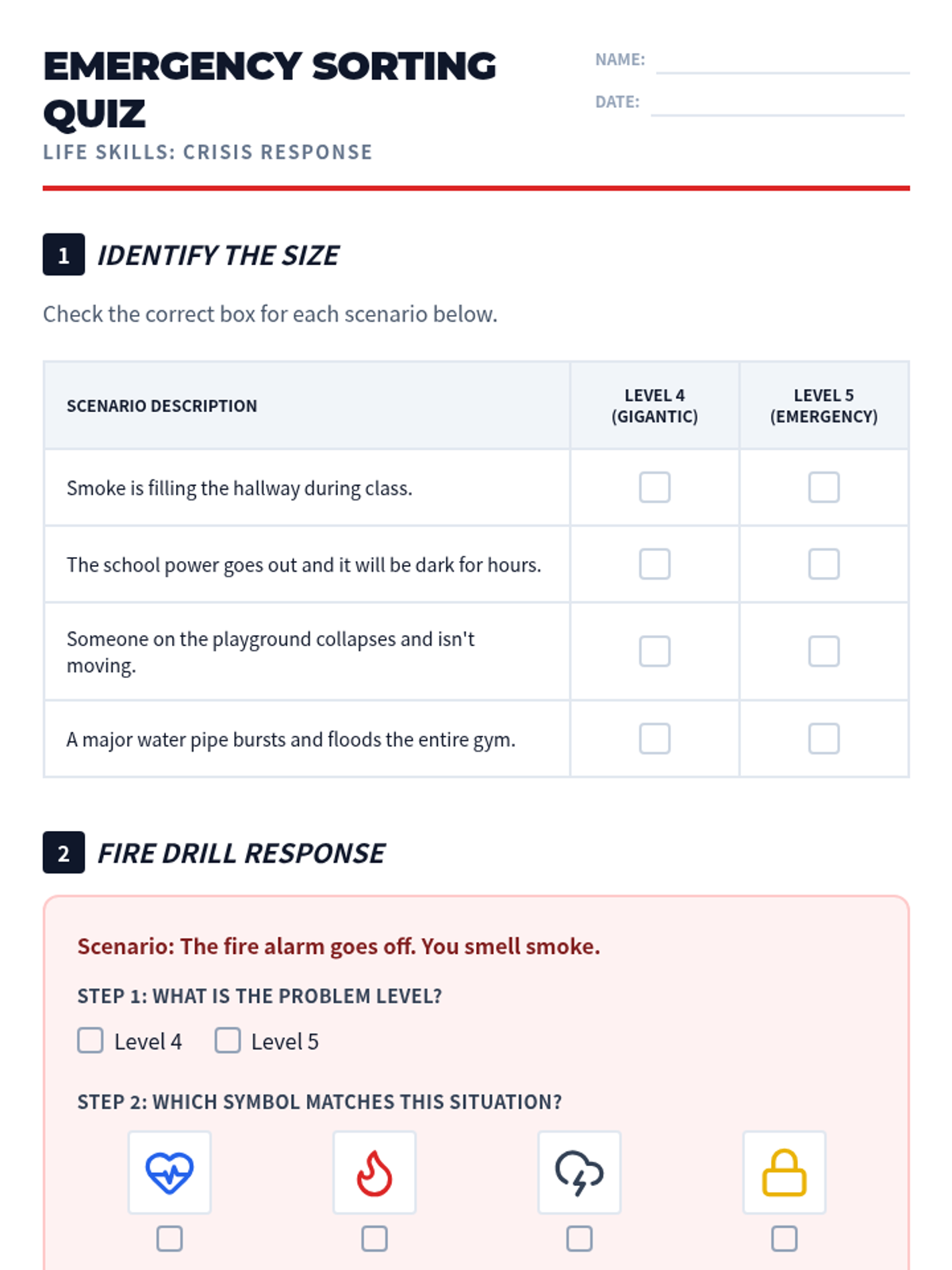
An assessment tool for students to categorize Gigantic vs. Emergency scenarios, select appropriate safety symbols, and describe immediate emergency actions.
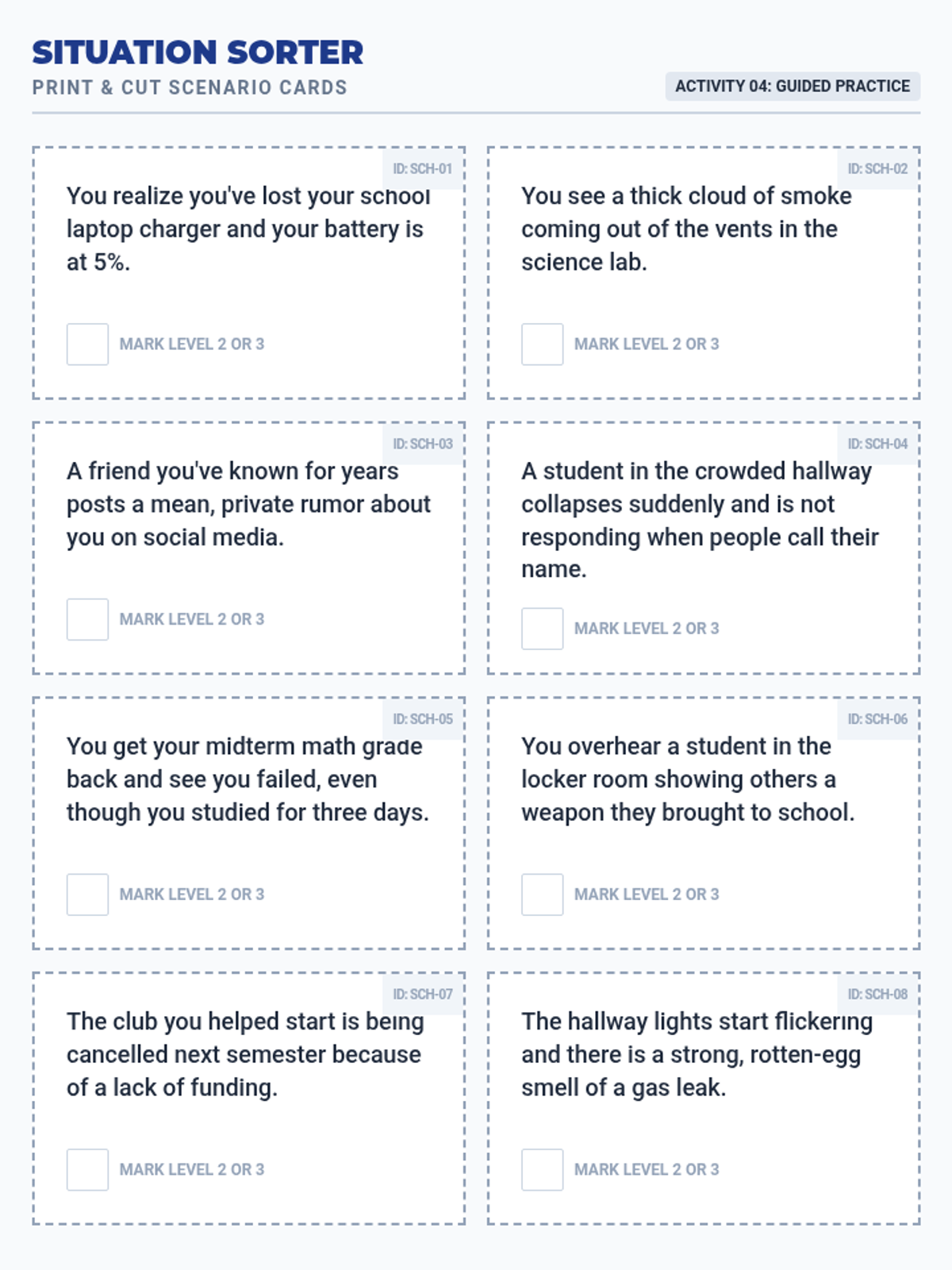
Printable cards with school-based scenarios for students to sort into Level 2 (Medium) or Level 3 (Big) problems. Includes 8 distinct scenarios ranging from lost items to emergencies.
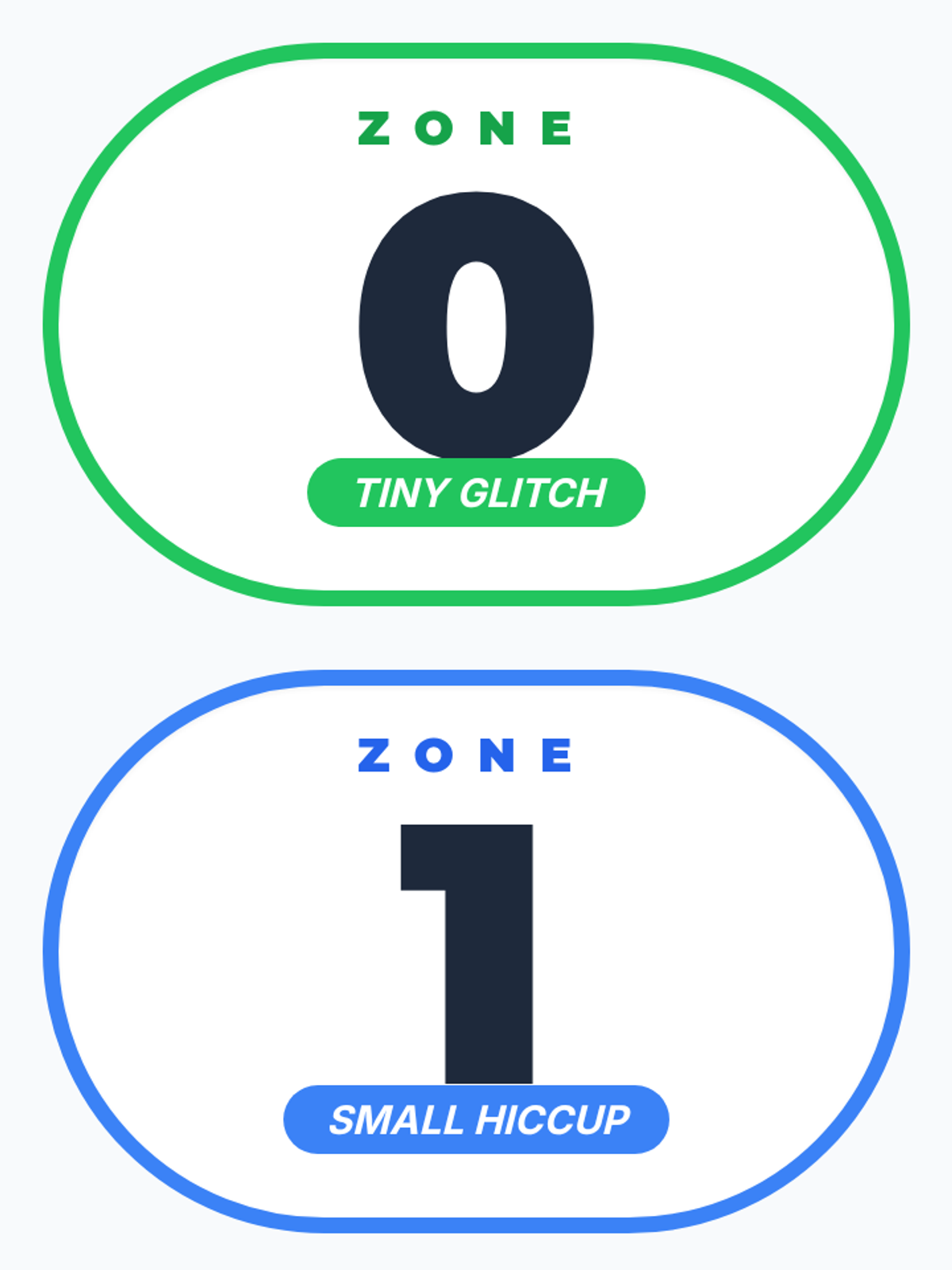
Large, high-visibility circular labels for floor hula hoops, numbered 0-5. Designed for the active relay game to provide clear "landing zones" for categorized scenario cards.
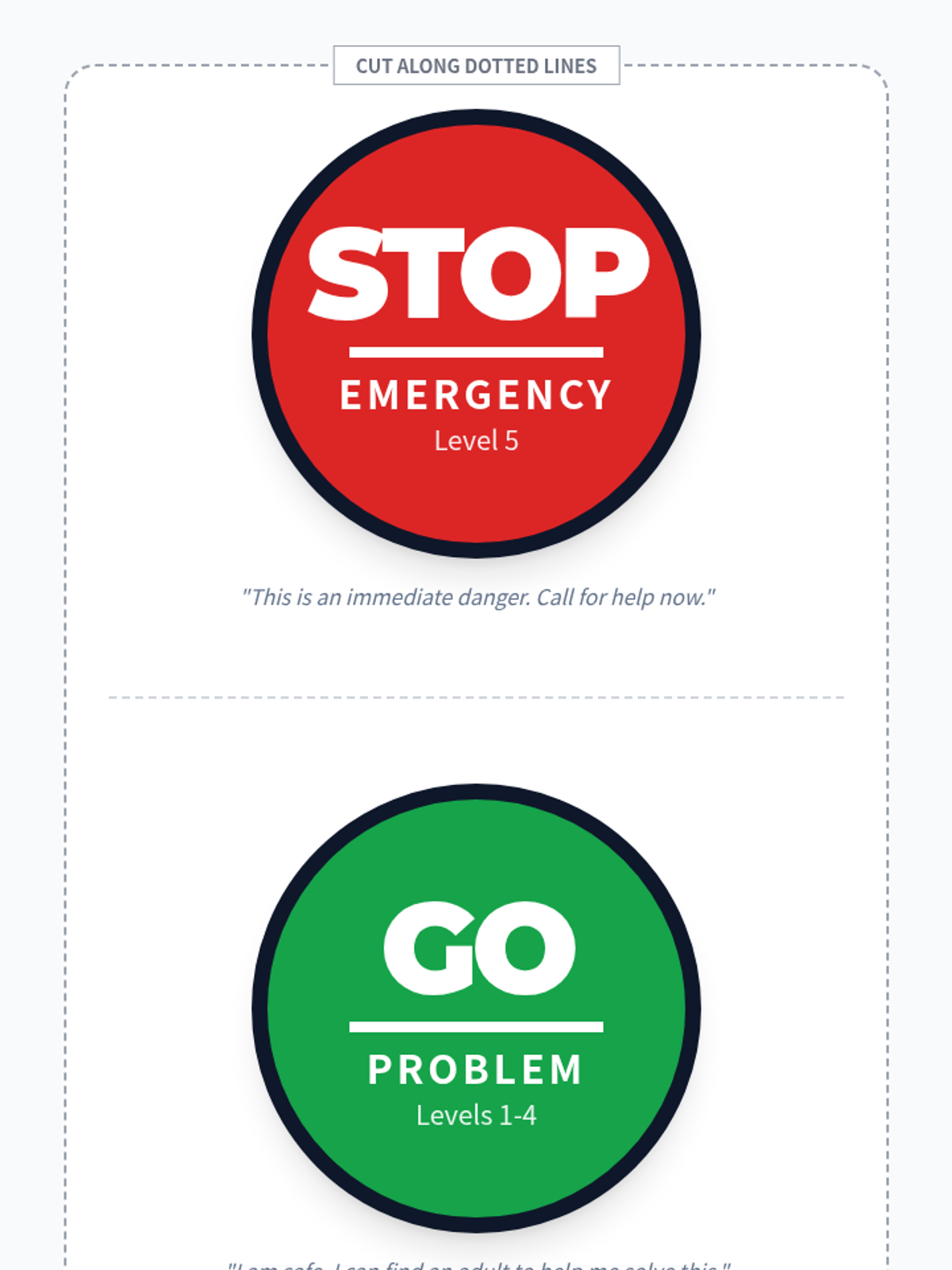
A printable set of "Stop" (Emergency) and "Go" (Problem) paddle faces for a classroom response game to practice identifying problem sizes.
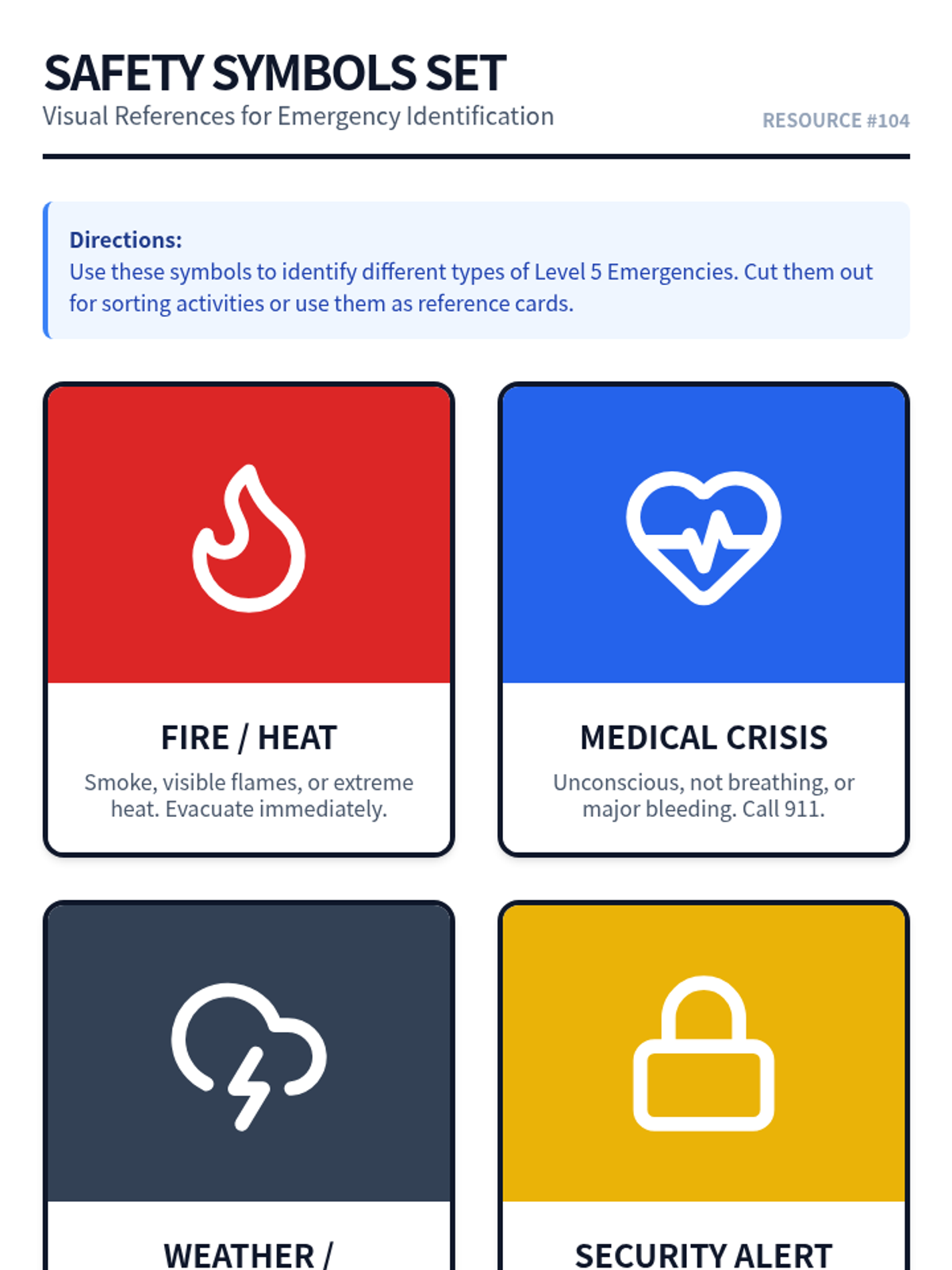
A set of four large visual symbols representing different types of Level 5 emergencies (Fire, Medical, Weather, Security) to be used as reference cards or sorting materials.
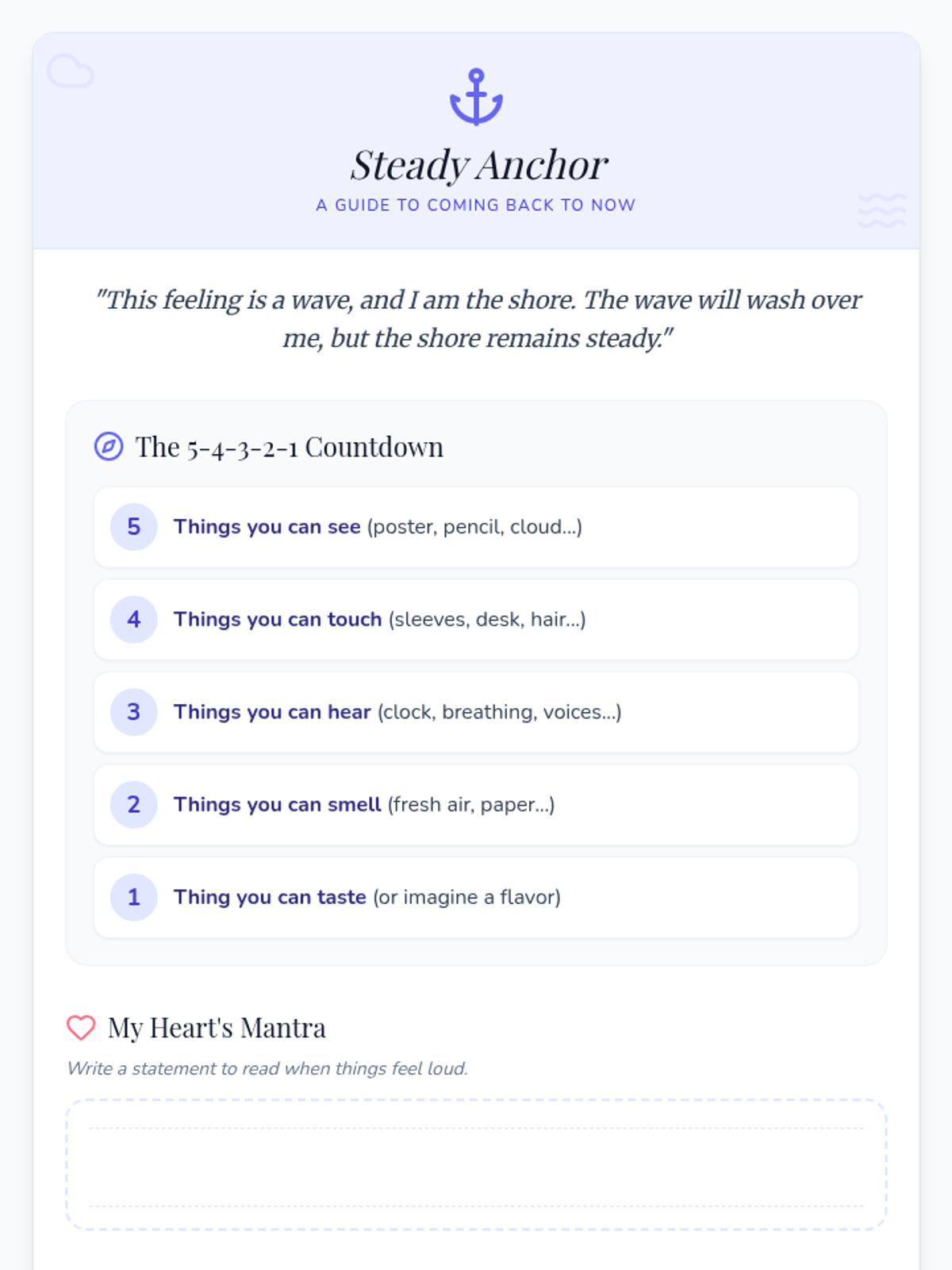
A compact grounding reference sheet featuring the 5-4-3-2-1 technique, square breathing visual, a mantra writing area, and a "Just 5 Minutes" challenge. Designed to fit easily on a single page for quick student reference.
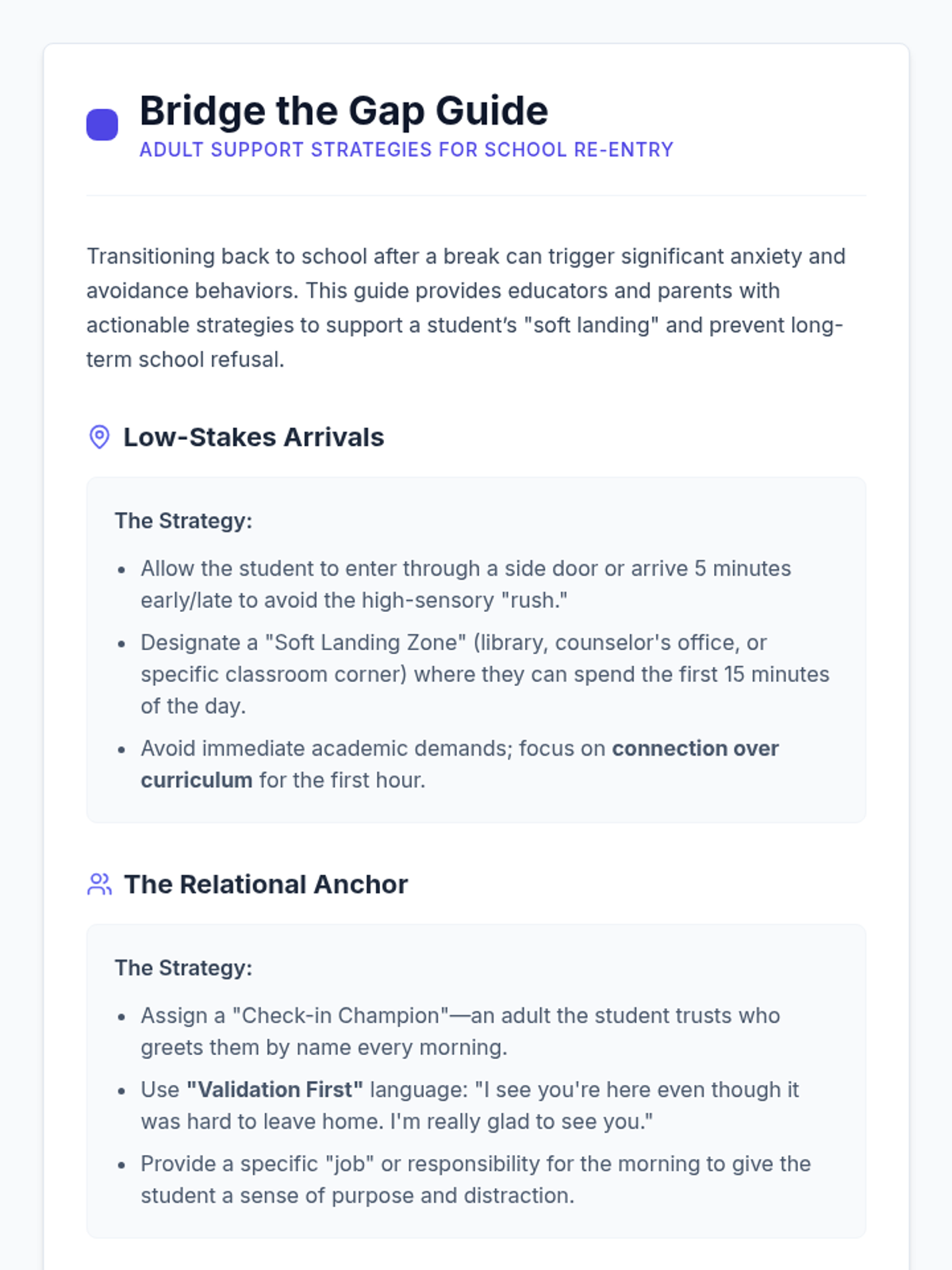
A teacher and parent-facing guide providing evidence-based strategies to support students struggling with school re-entry and school avoidance behaviors.
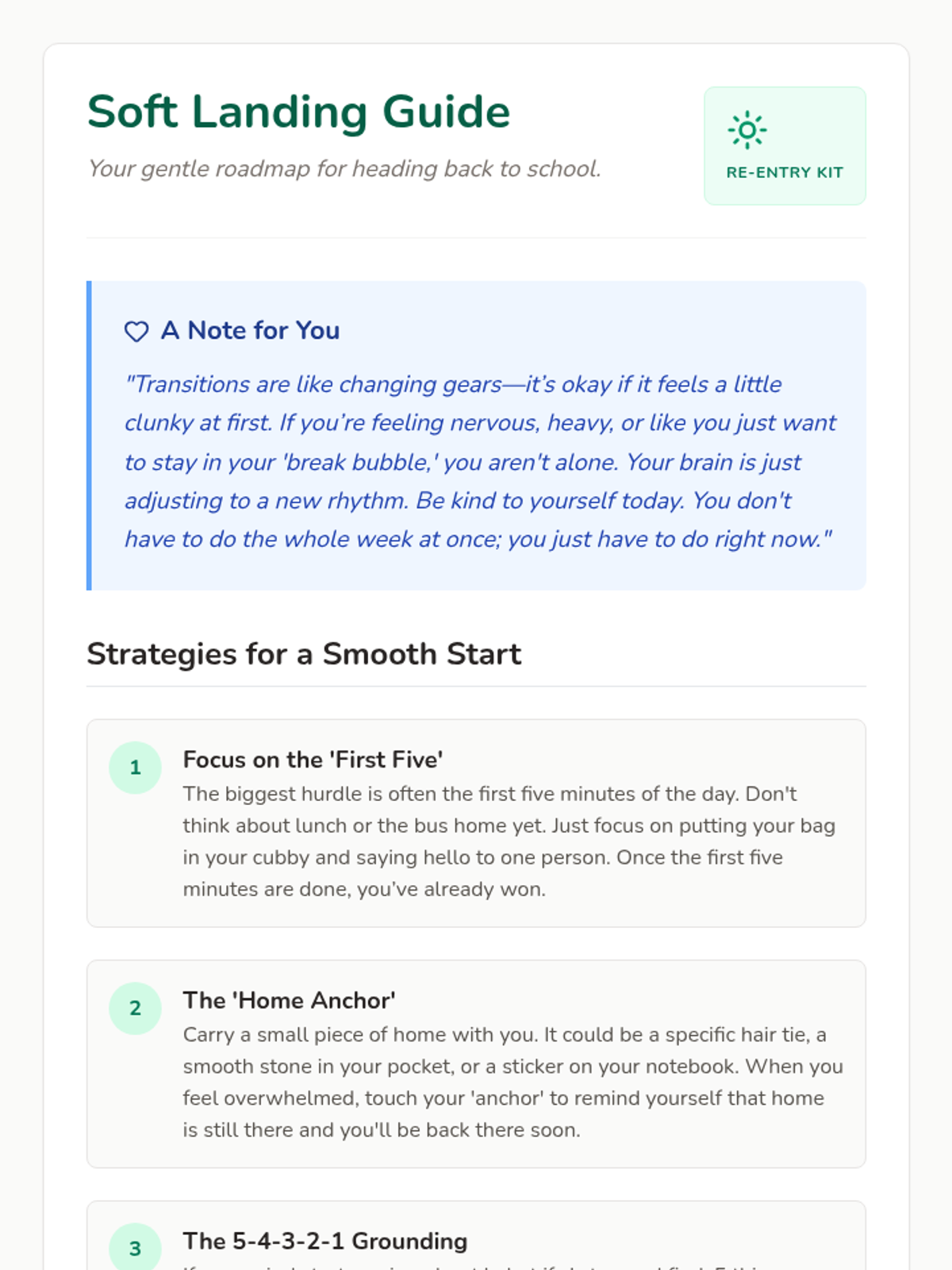
A supportive two-page document for students transitioning back to school, featuring a positive message, coping strategies for anxiety, and a personal planning worksheet.
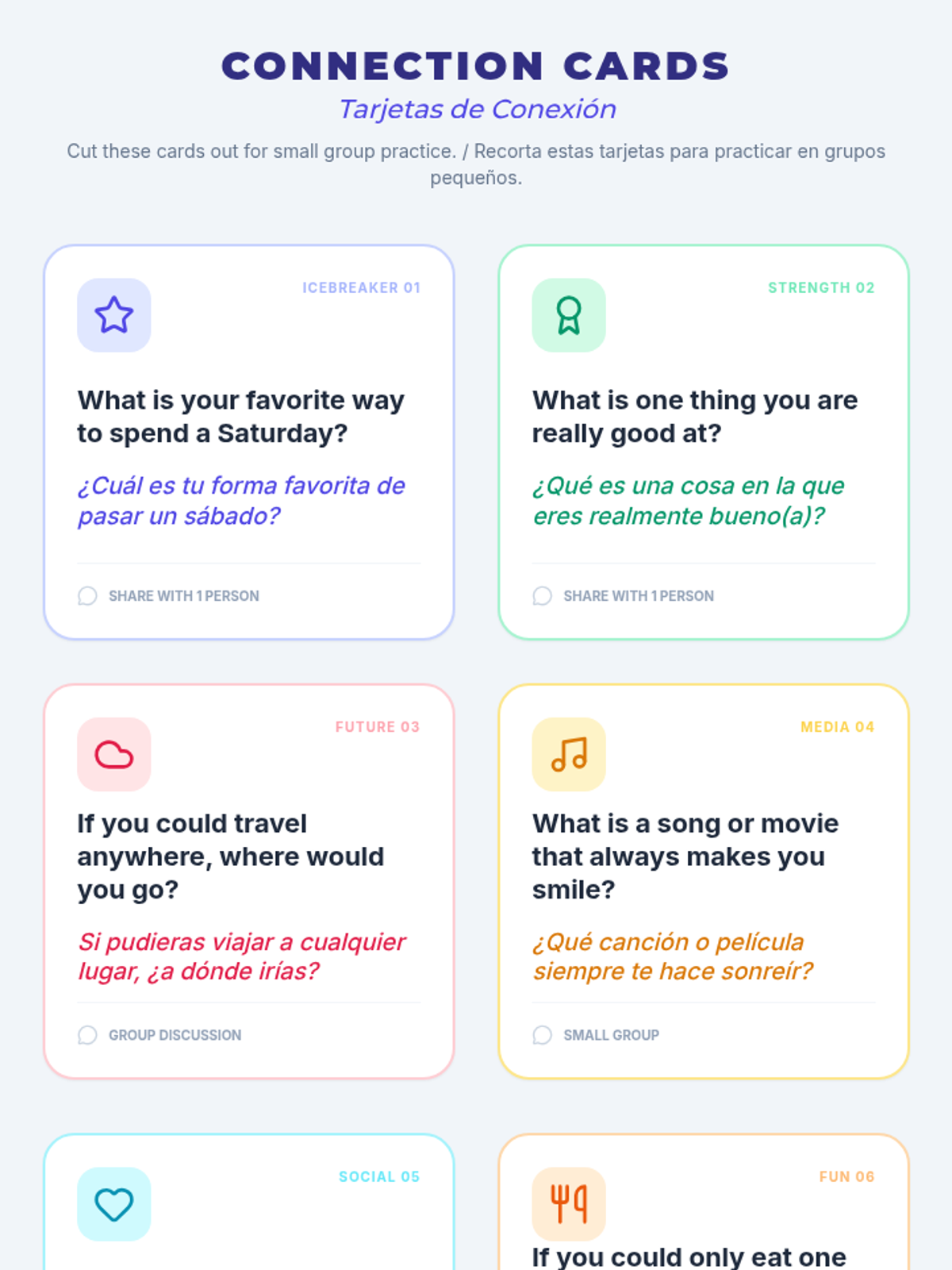
A set of printable, bilingual icebreaker cards featuring low-pressure discussion prompts to help students practice social interaction in small group settings.
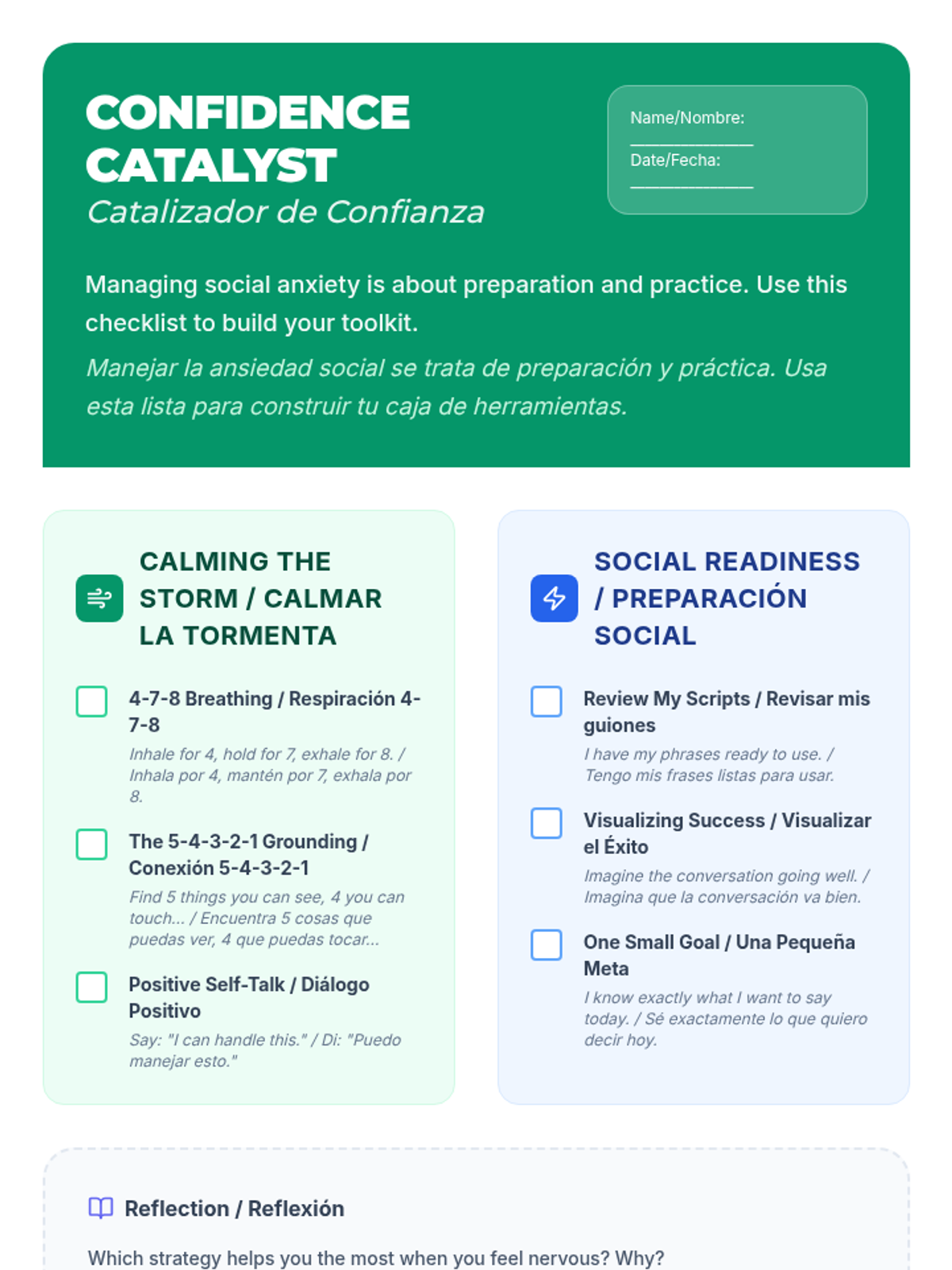
A comprehensive confidence-building checklist that provides bilingual strategies for managing social anxiety and preparing for social interactions.
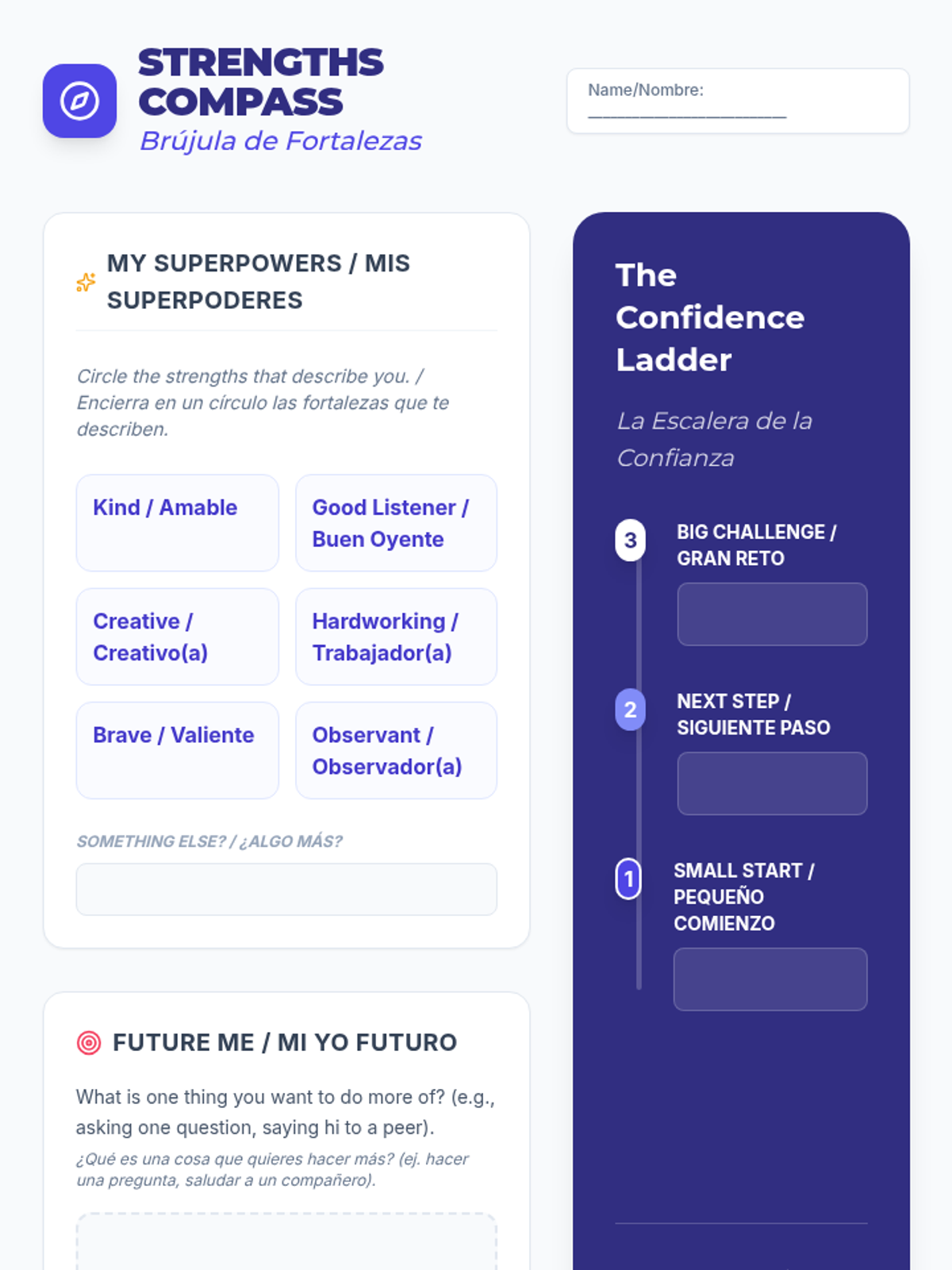
A visual goal-setting worksheet using a 'Confidence Ladder' metaphor to help students identify their strengths and set manageable social goals in both English and Spanish.
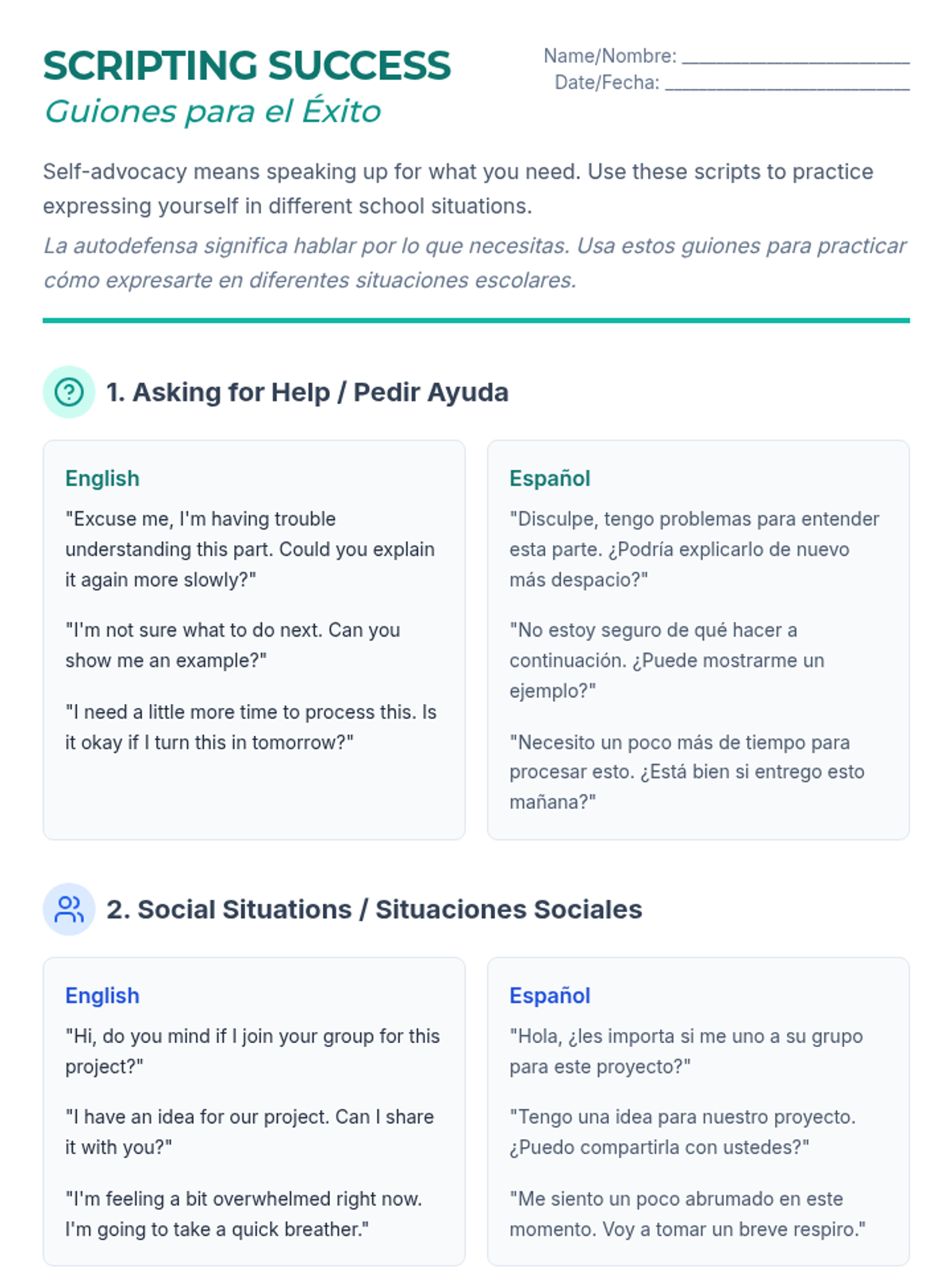
A bilingual (English/Spanish) guide featuring practical scripts for self-advocacy in classroom and social settings, designed for shy students to practice speaking up.
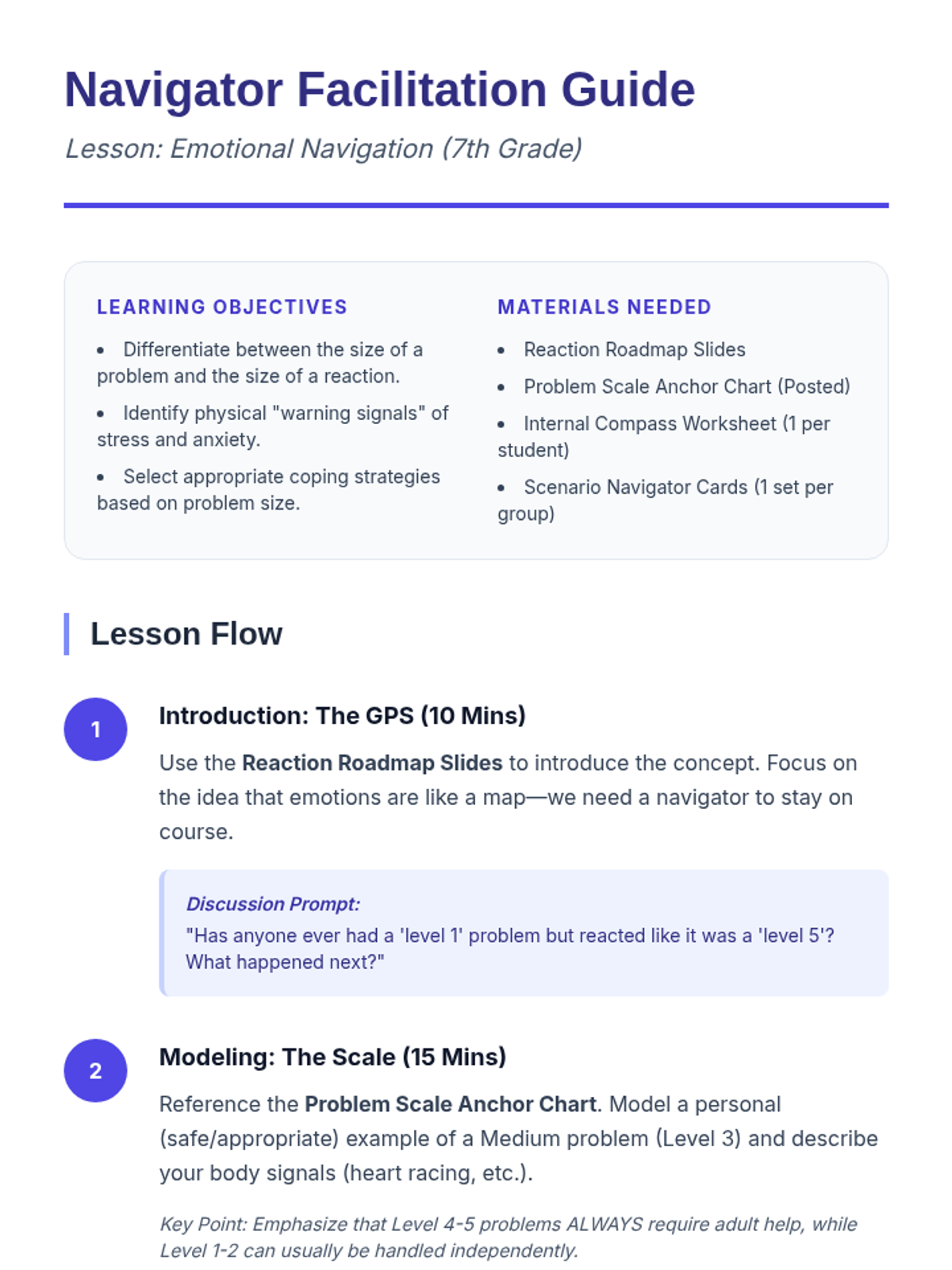
A comprehensive facilitation guide for teachers to deliver the 'Emotional Navigation' lesson, including learning objectives, a step-by-step flow, and differentiation tips.
An updated introductory slide deck for the 'Emotional Navigation' lesson, explaining problem vs. reaction size with minimum 24px font sizes for optimal visibility.
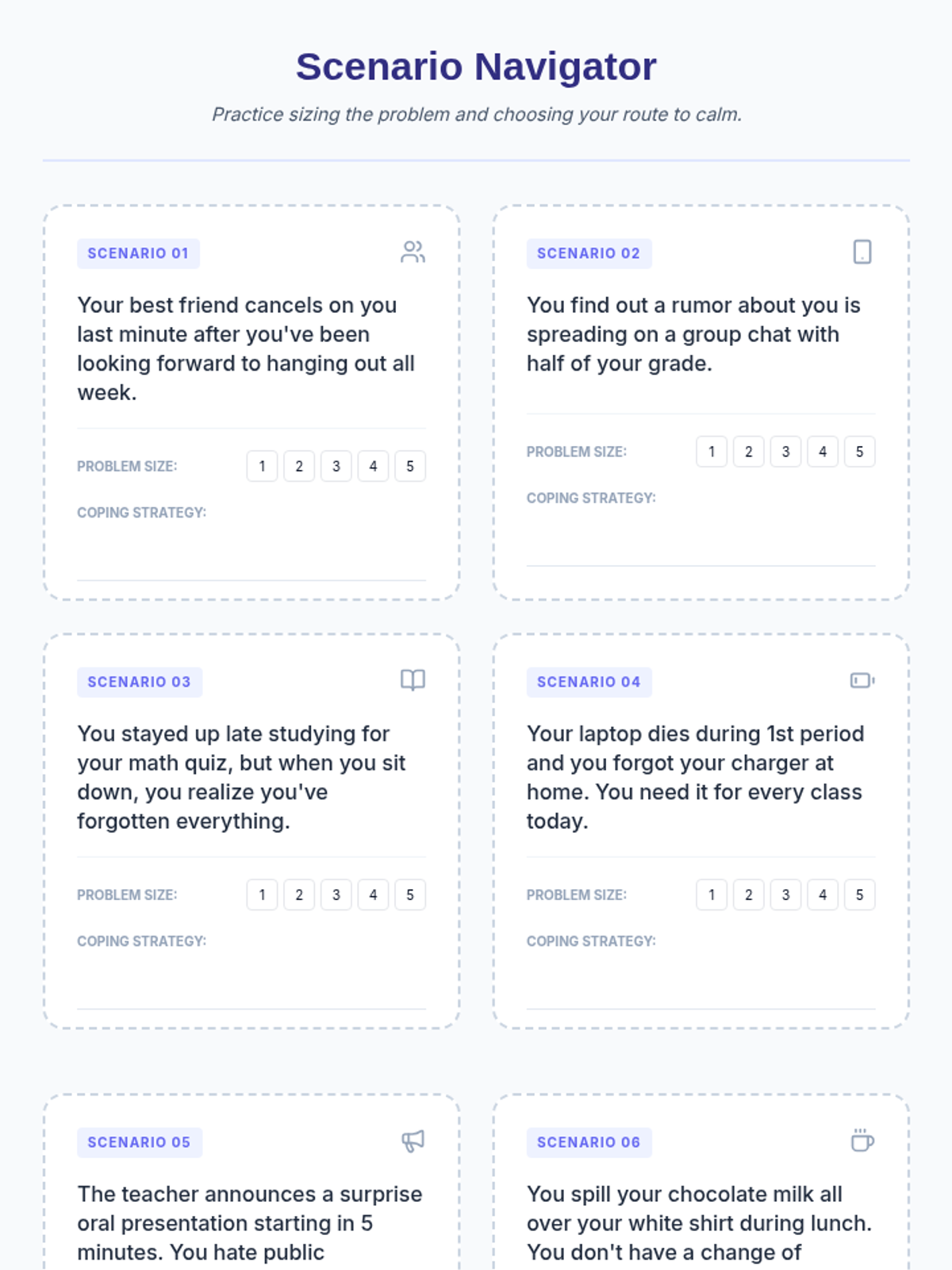
A set of printable scenario cards for middle school students to practice identifying problem sizes and selecting appropriate coping strategies.
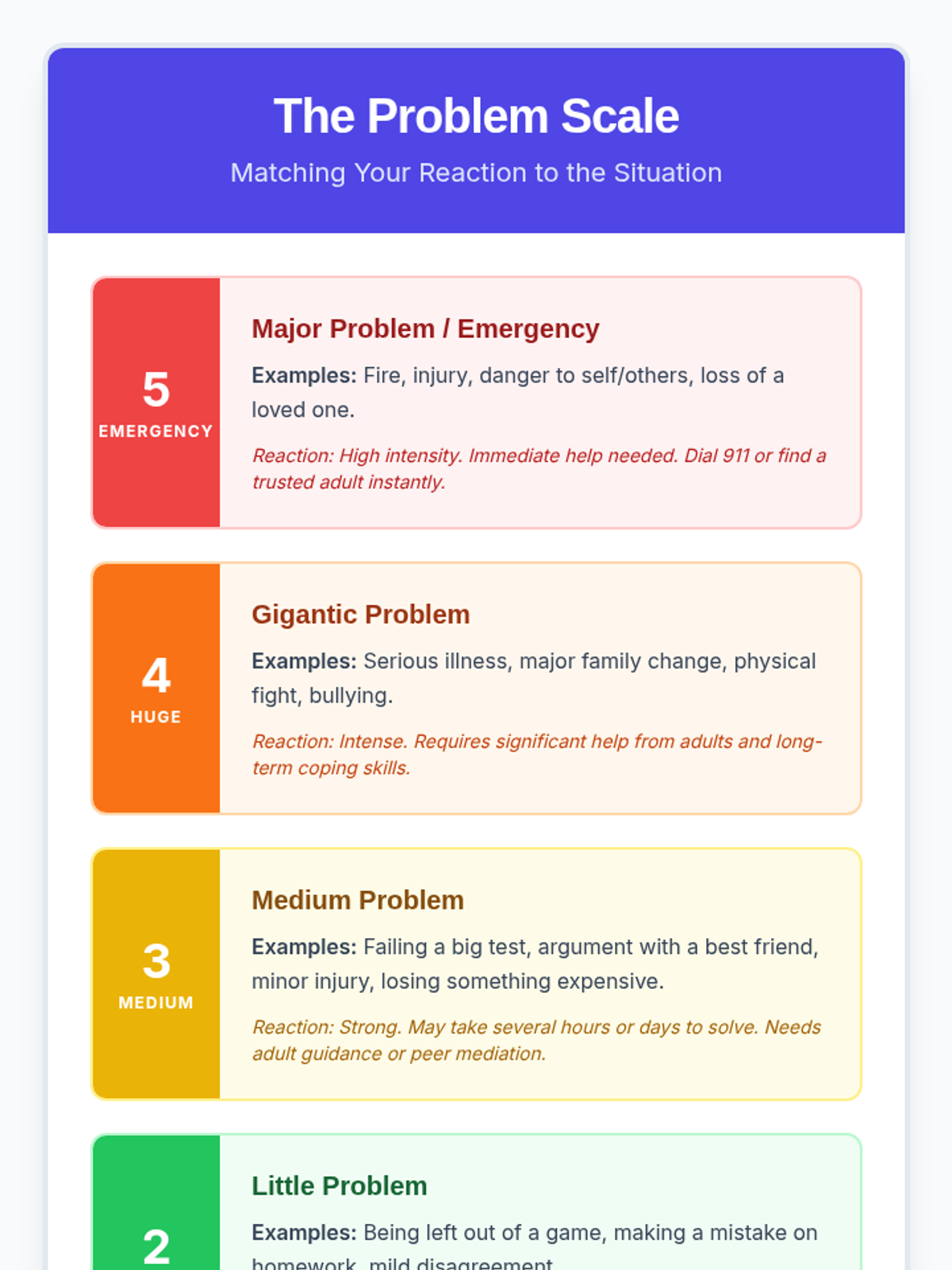
A 1-5 scale anchor chart for the classroom to help students identify the 'size' of their problems and match their reactions accordingly.
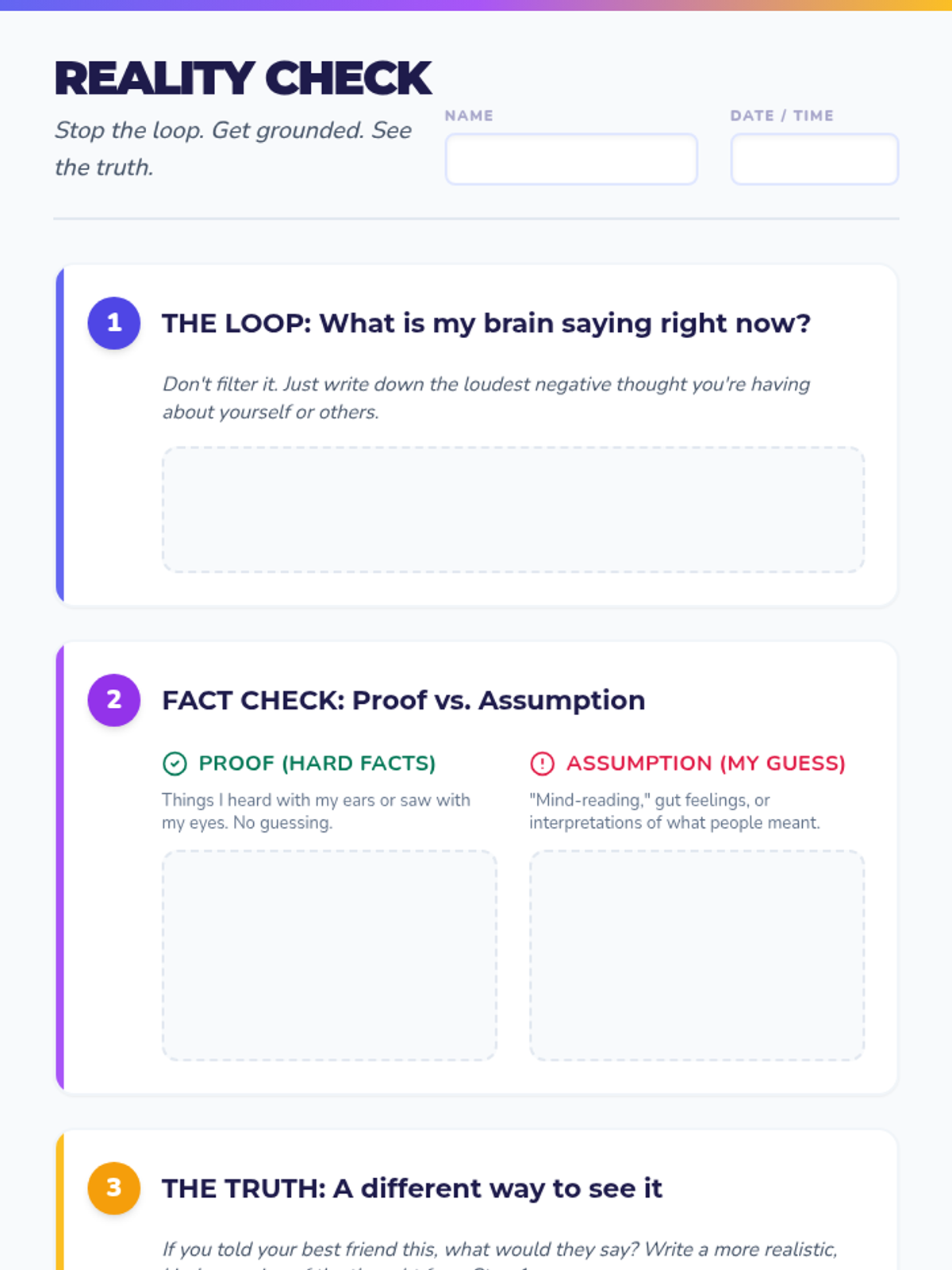
A revised crisis management worksheet for a 12-year-old student, featuring a clear 5-step process to navigate mental loops, verify facts, practice grounding, and recall personal strengths.
A single consolidated 4-page assignment for the Mind Mechanics unit. Page 1 & 2 provide comprehensive reading on the machine analogy, neuroplasticity, stigma, and internal alerts. Page 3 features the detailed visual Coping Toolbox. Page 4 features a 10-question quiz (9 MC/TF and 1 high-quality short answer). Terminology updated to 'Good Coping' and 'Bad Coping' throughout. No red backgrounds. All answer options share identical styling. Updated to be printer-friendly with white and very light gray backgrounds. Q8 corrected to have two options. Q10 provided with a large white handwriting area.
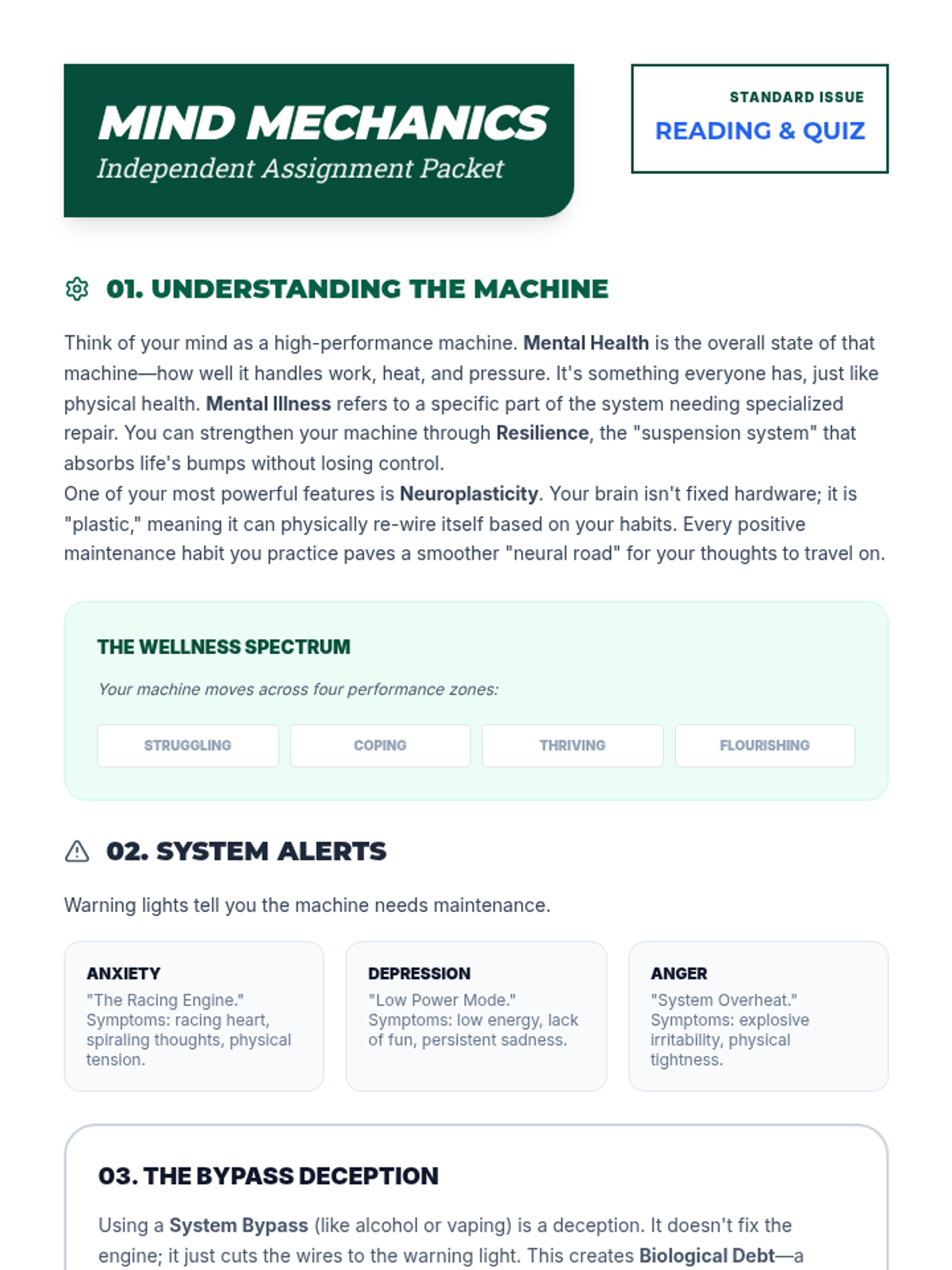
A straightforward, all-in-one independent assignment packet for the Mind Mechanics unit. Page 1 contains a concise reading text covering the machine analogy and neuroplasticity, Page 2 provides a visual tool reference, and Page 3 features a 10-question multiple-choice/true-false assessment. All red backgrounds removed for clear printing. Part of the comprehensive Mind Mechanics unit.
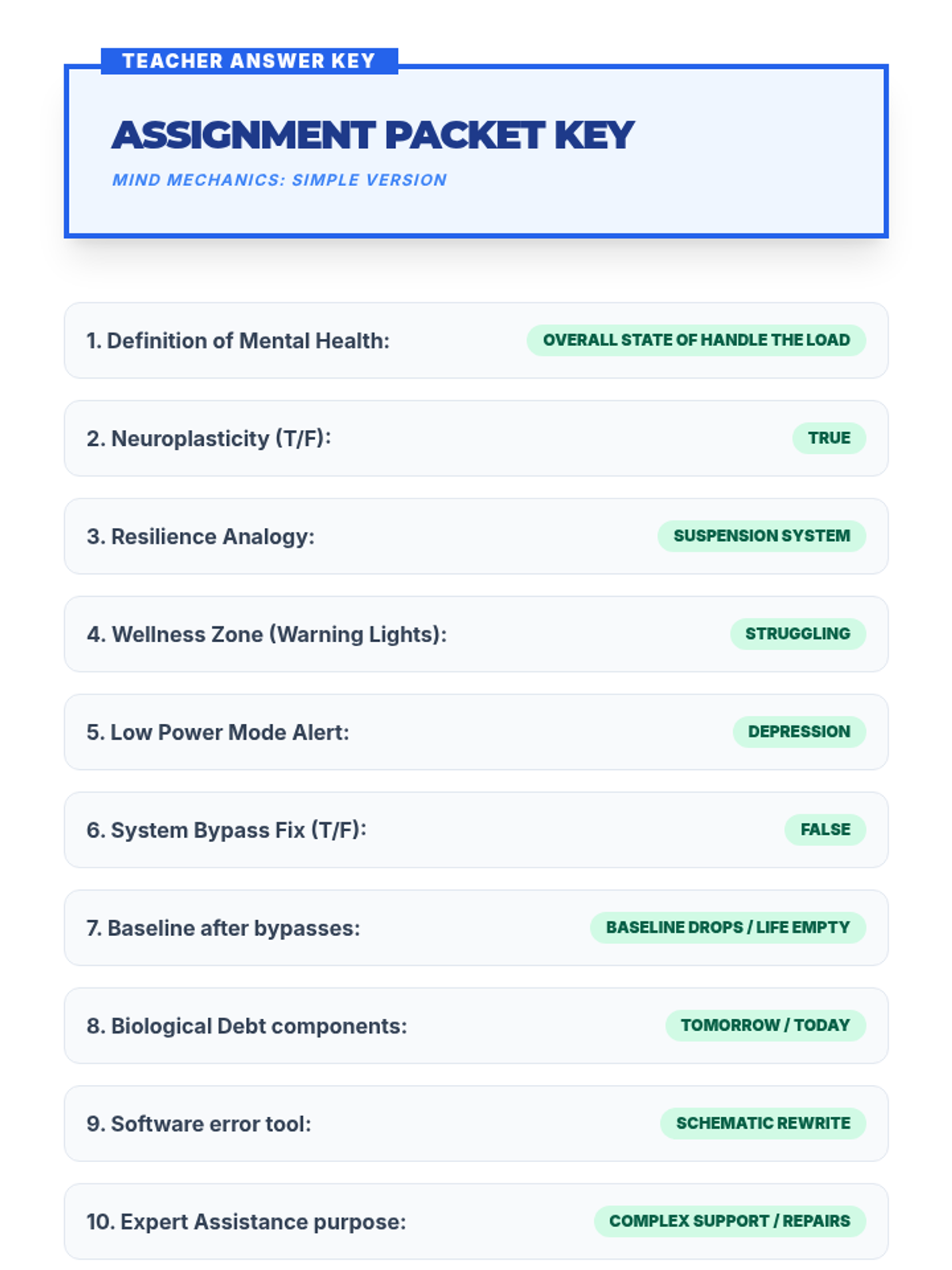
Complete answer key for the simple 10-question Mind Mechanics assignment packet. Provides clear, easy-to-grade answers for the multiple-choice and true/false questions. Updated to match the revised assignment quiz questions.
The master slideshow for the comprehensive Mind Mechanics unit. Covers the Machine Analogy, Wellness Spectrum, Neuroplasticity, detailed System Alerts (Anxiety, Depression, Anger), the Bypass Deception (substances/Biological Debt), and all 4 Proactive Tools aligned with the Coping Toolbox. Updated with "Good Coping" and "Bad Coping" terminology.
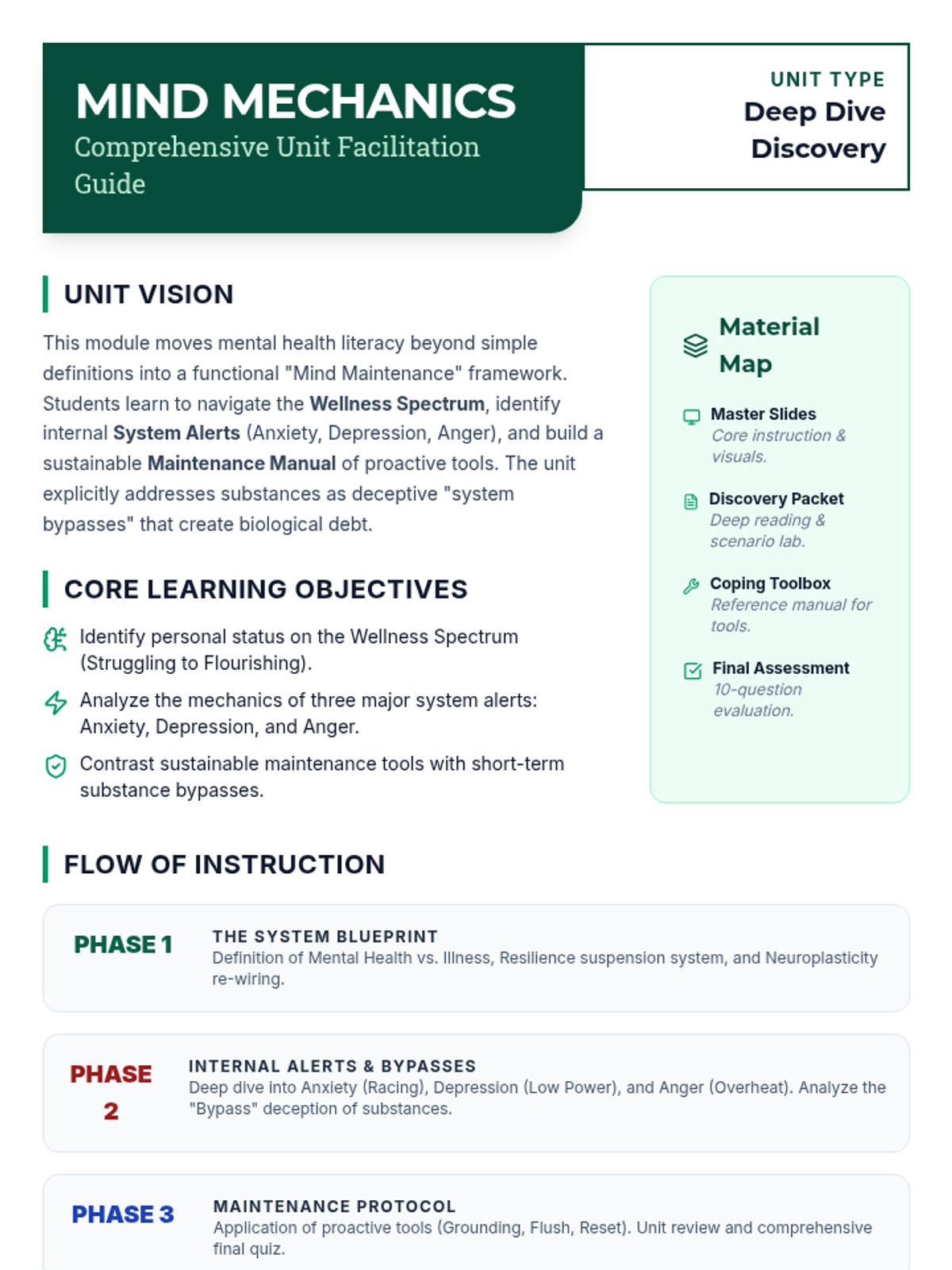
A master facilitation guide for the comprehensive Mind Mechanics unit, updated with "Good Coping" and "Bad Coping" terminology. Covers the Wellness Spectrum, internal alerts, and biological debt.
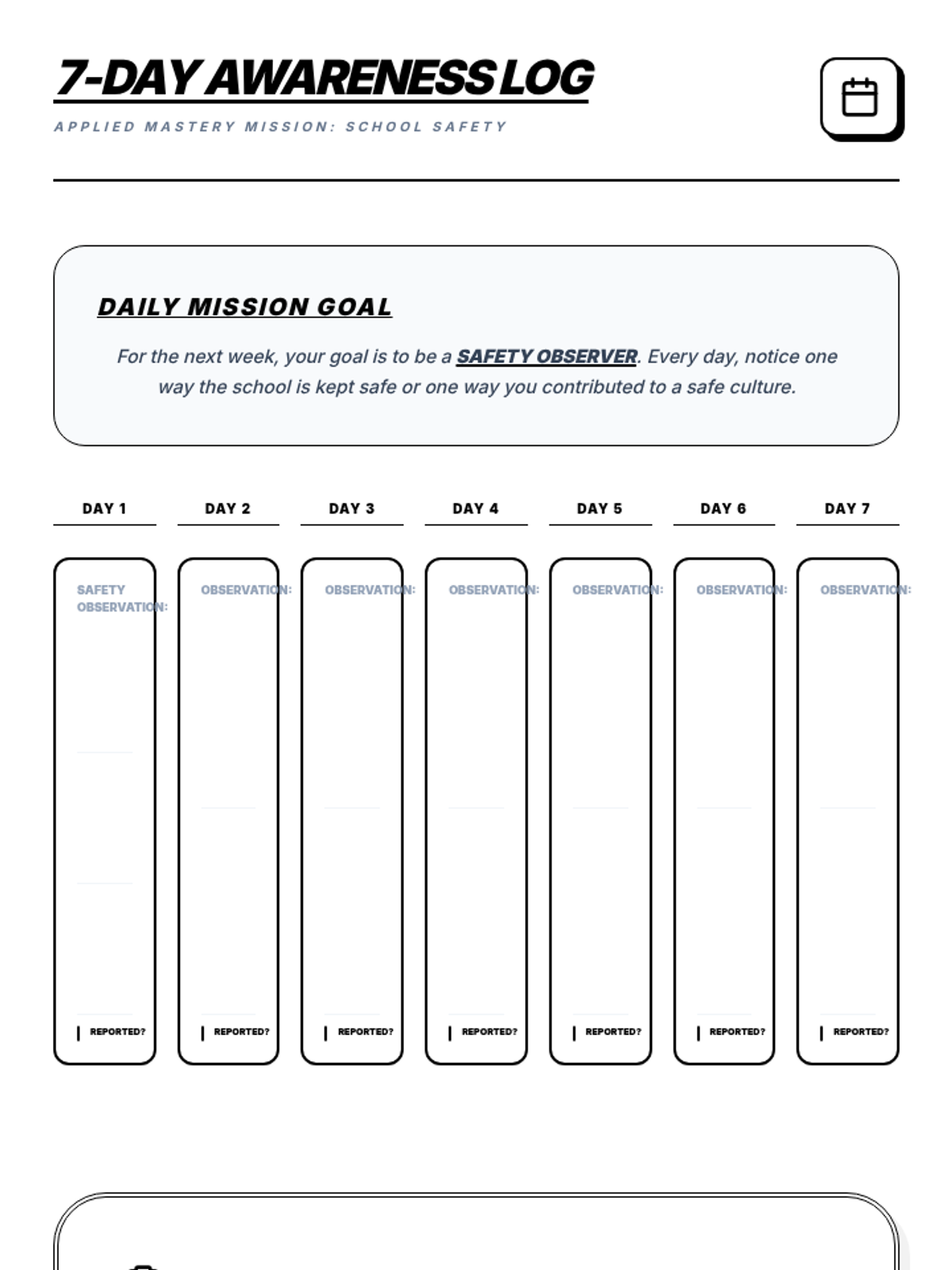
A black ink on white 7-day tracking activity and reflection journal for middle school students to intentionally practice situational awareness and school safety.
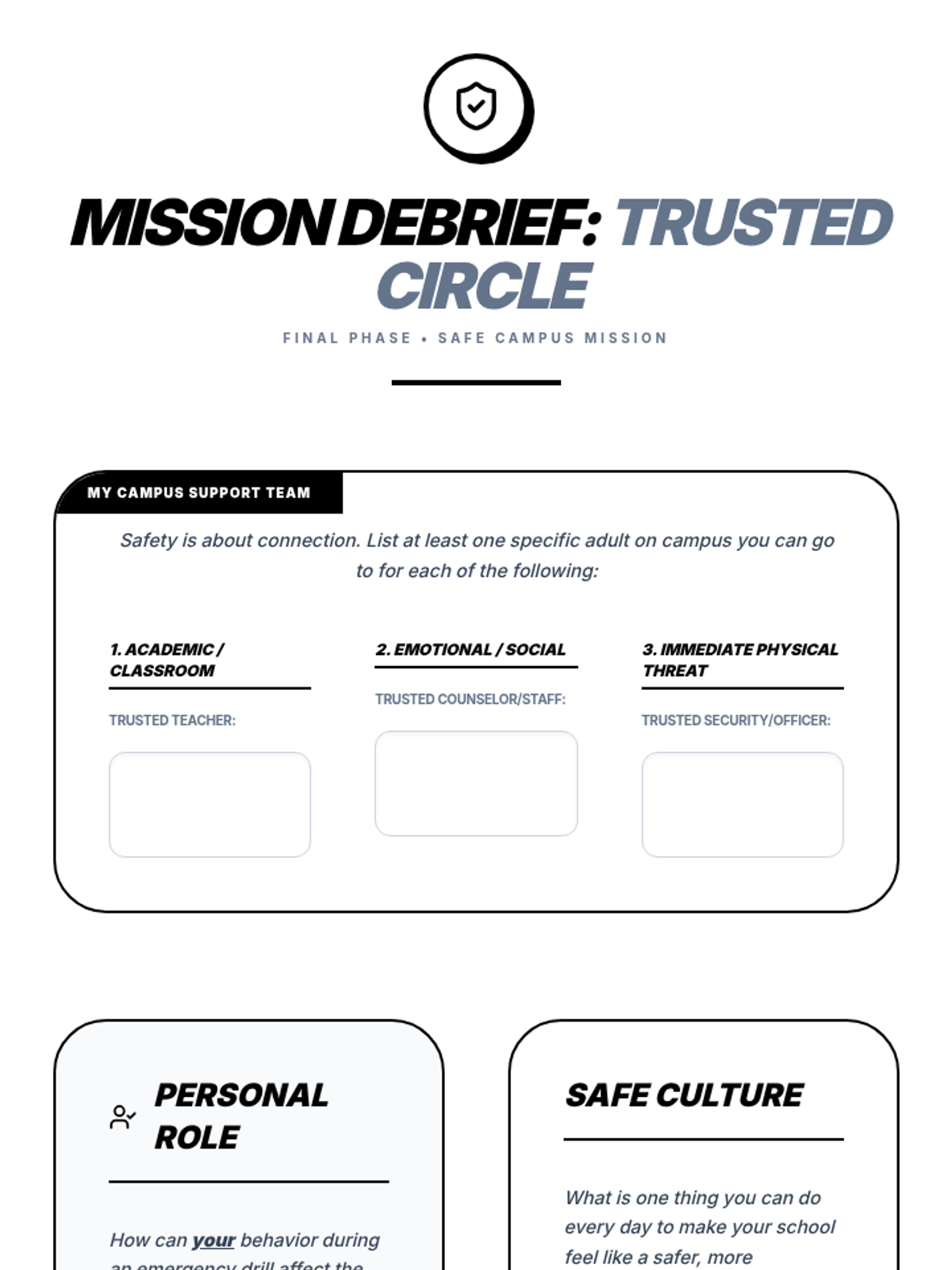
A black ink on white reflection worksheet for middle schoolers to identify trusted campus adults and commit to school safety protocols.
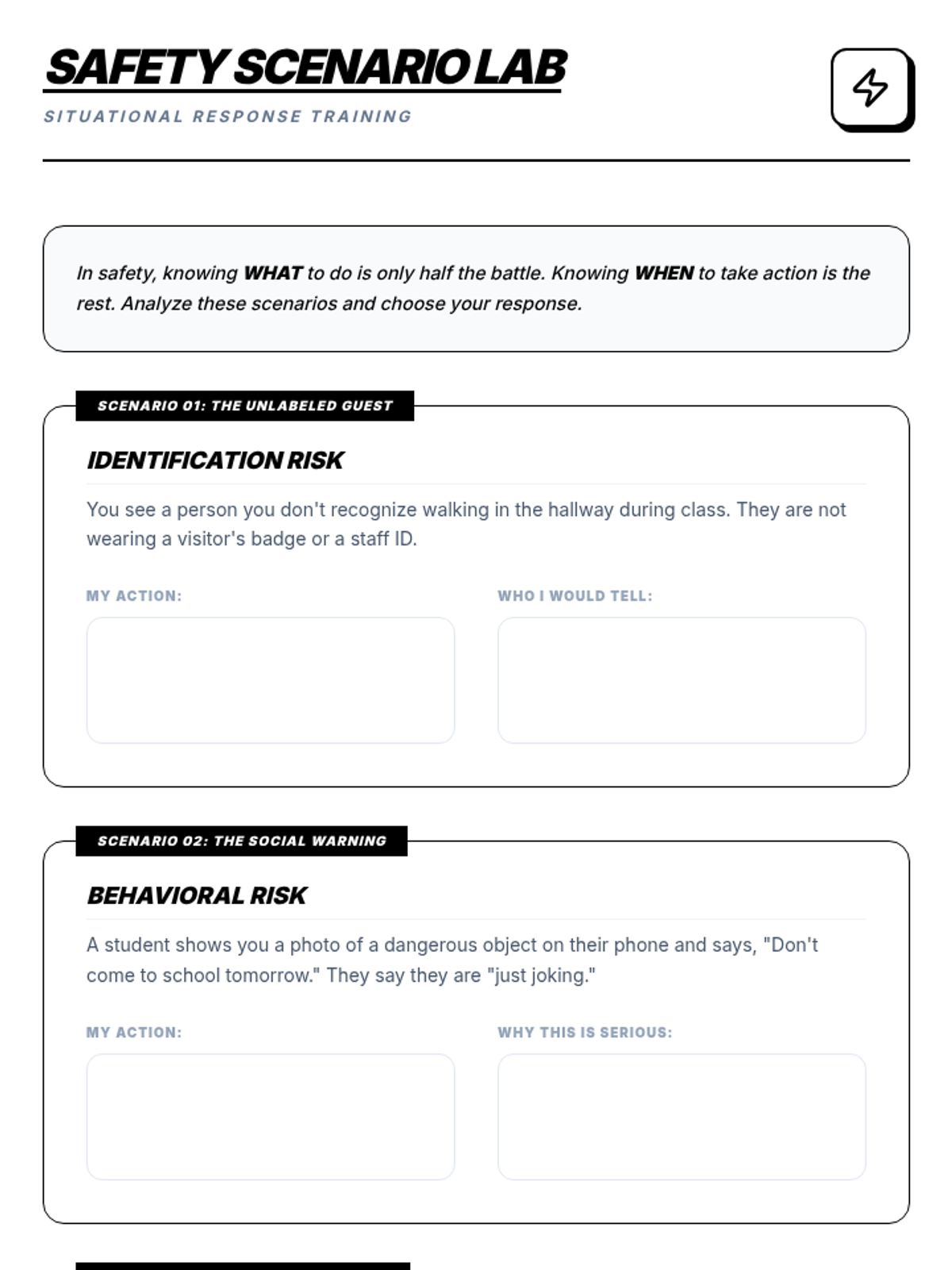
A black ink on white scenario-based worksheet for middle schoolers to practice responding to various school safety situations, distinguishing between tattling and reporting.
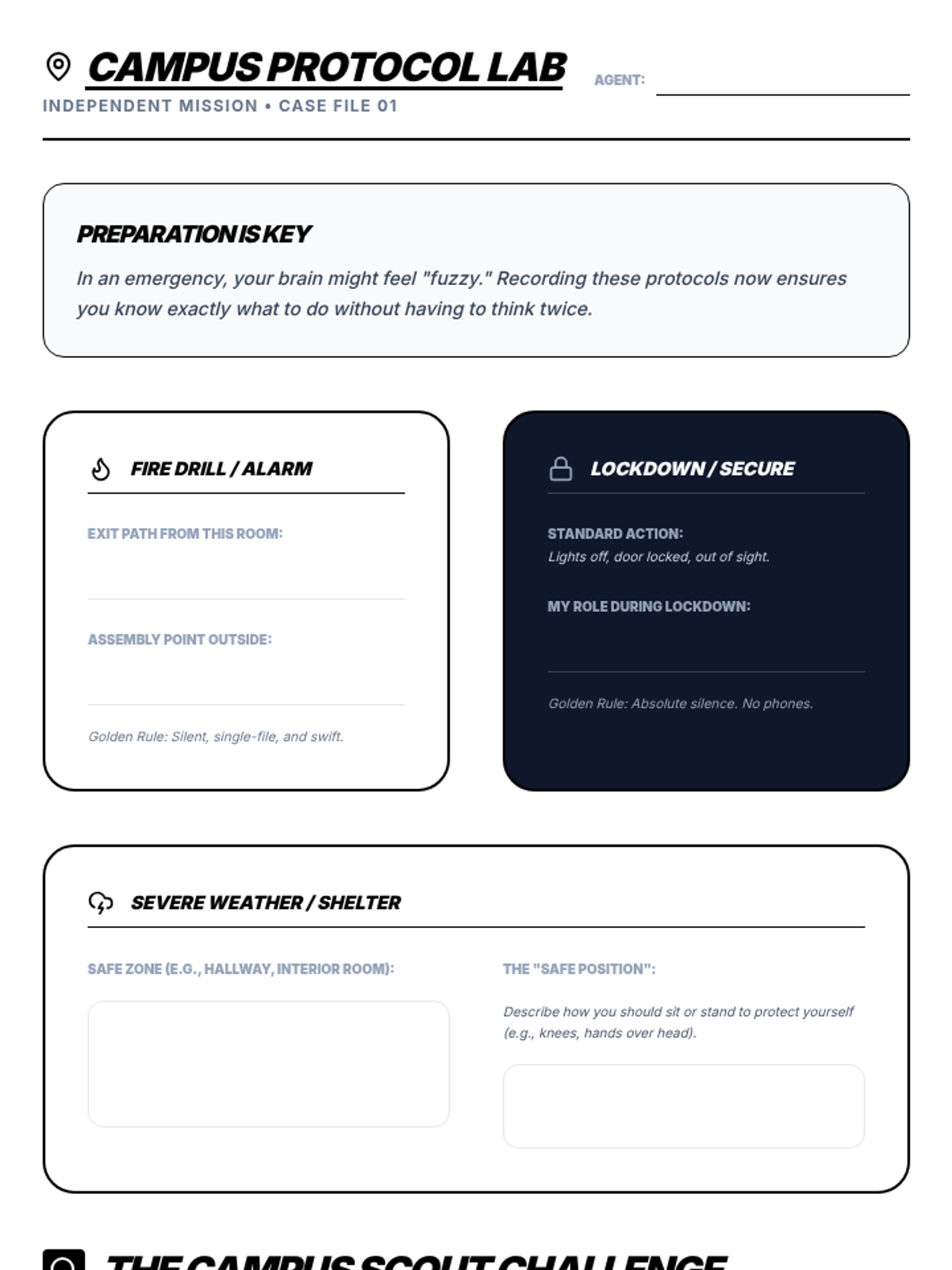
A black ink on white independent worksheet for middle school students to record campus emergency protocols and identify safety features.
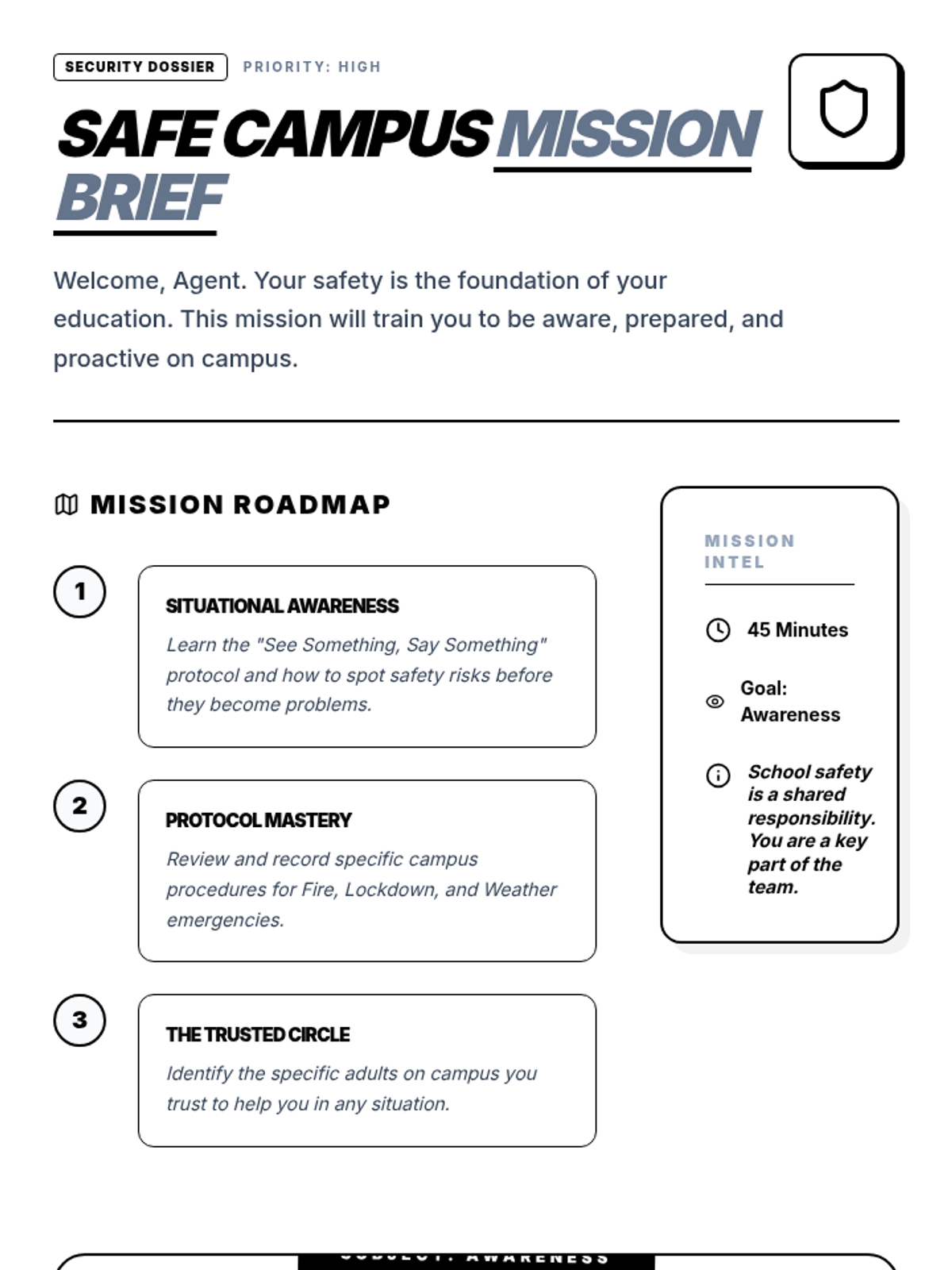
A black ink on white independent mission brief for middle school students, introducing the concept of situational awareness and the importance of proactive school safety.
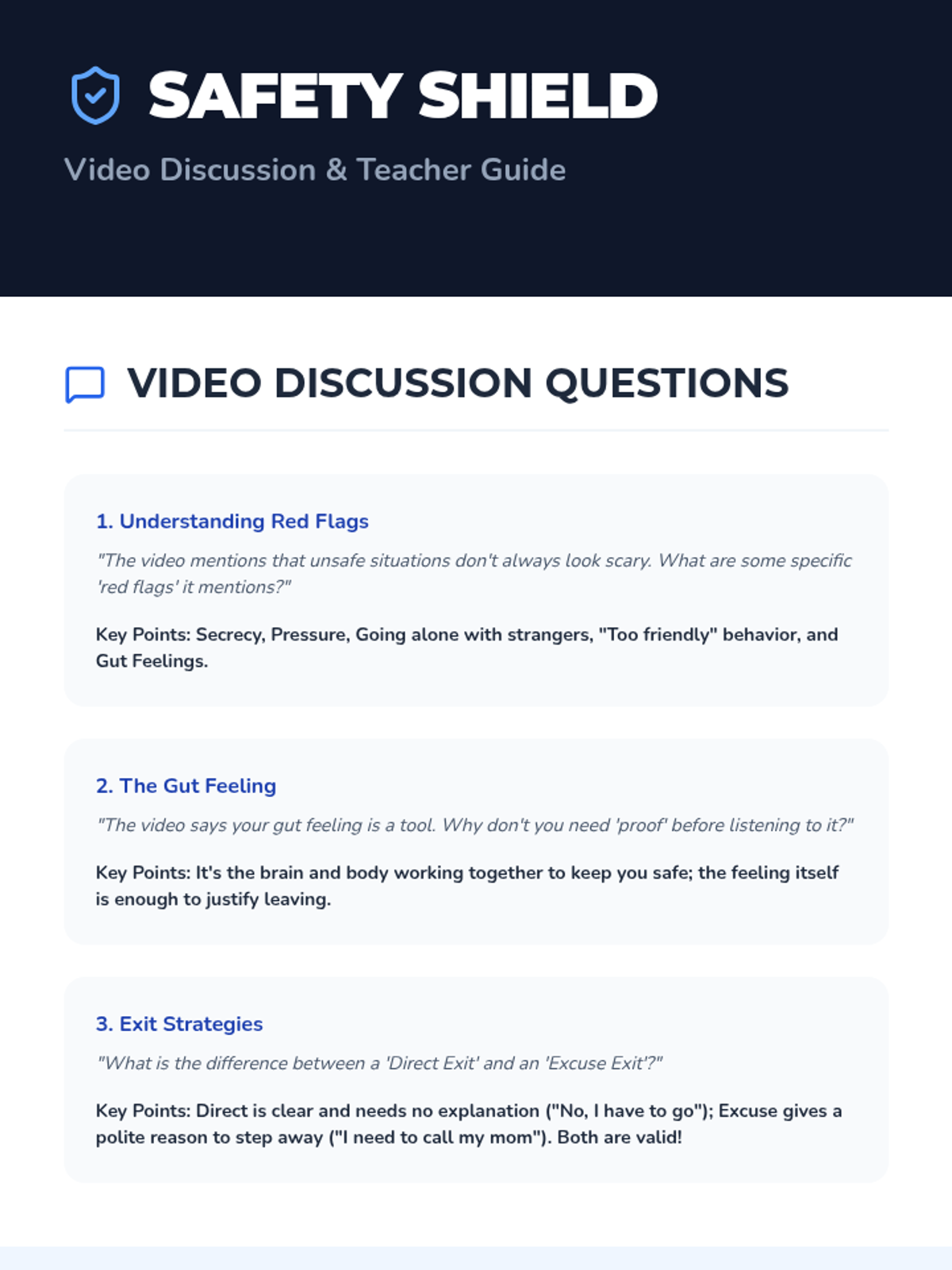
A comprehensive teacher guide updated with video discussion questions, a detailed summary of exit strategies (Direct, Excuse, Distraction, Help-seeking), and an answer key for the worksheet.
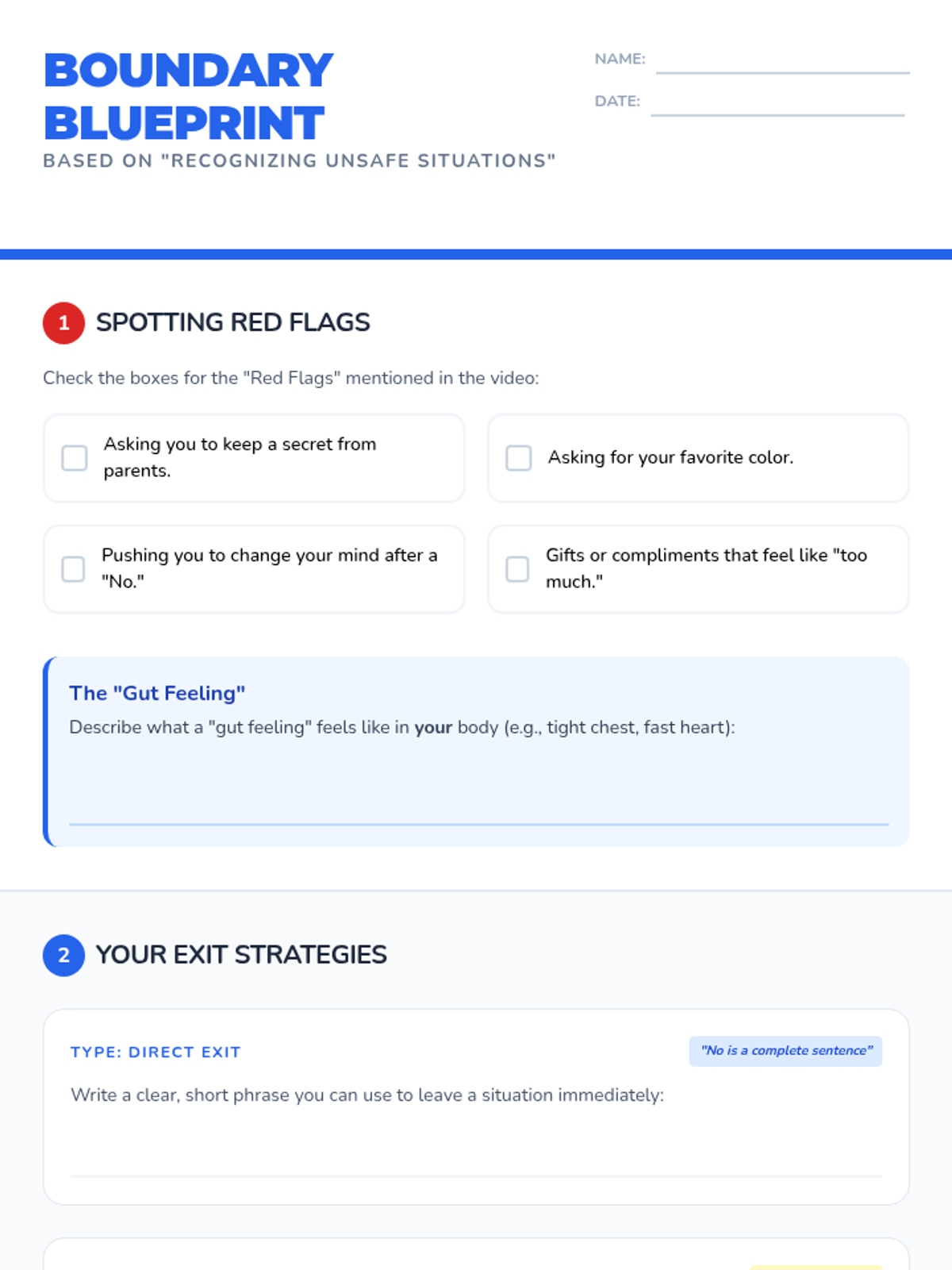
An updated student worksheet aligned with the video's framework, including red flag checklists, exit strategy practice (Direct, Excuse, Help-seeking), and a trusted adult identification section.
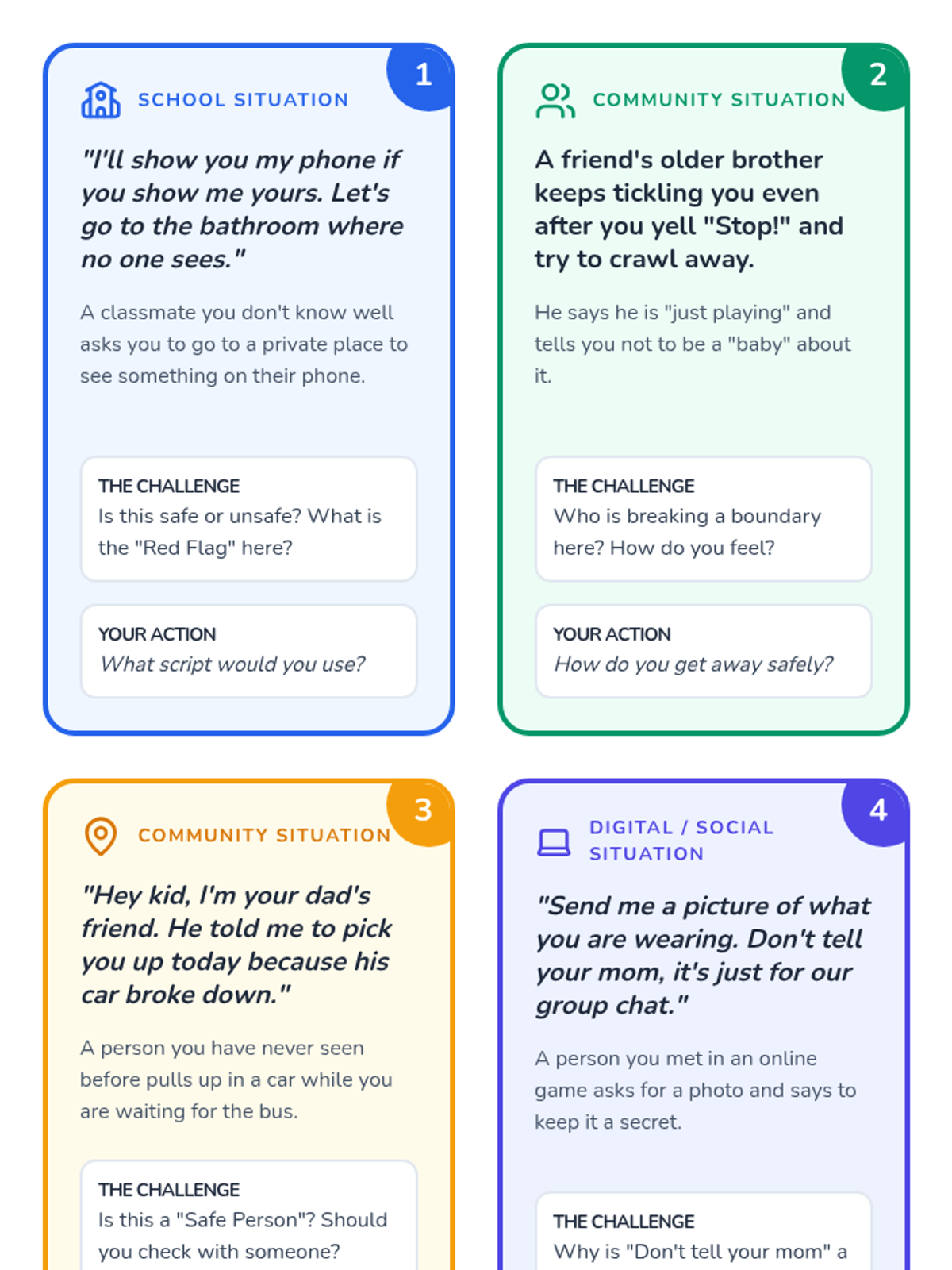
A set of 8 printable scenario-based task cards focusing on social safety, physical boundaries, and community safety for school-aged children.
An updated presentation based on the safety video transcript, featuring red flags, gut feelings, specific exit strategies (Direct, Excuse, Help-seeking), and trusted adult identification.
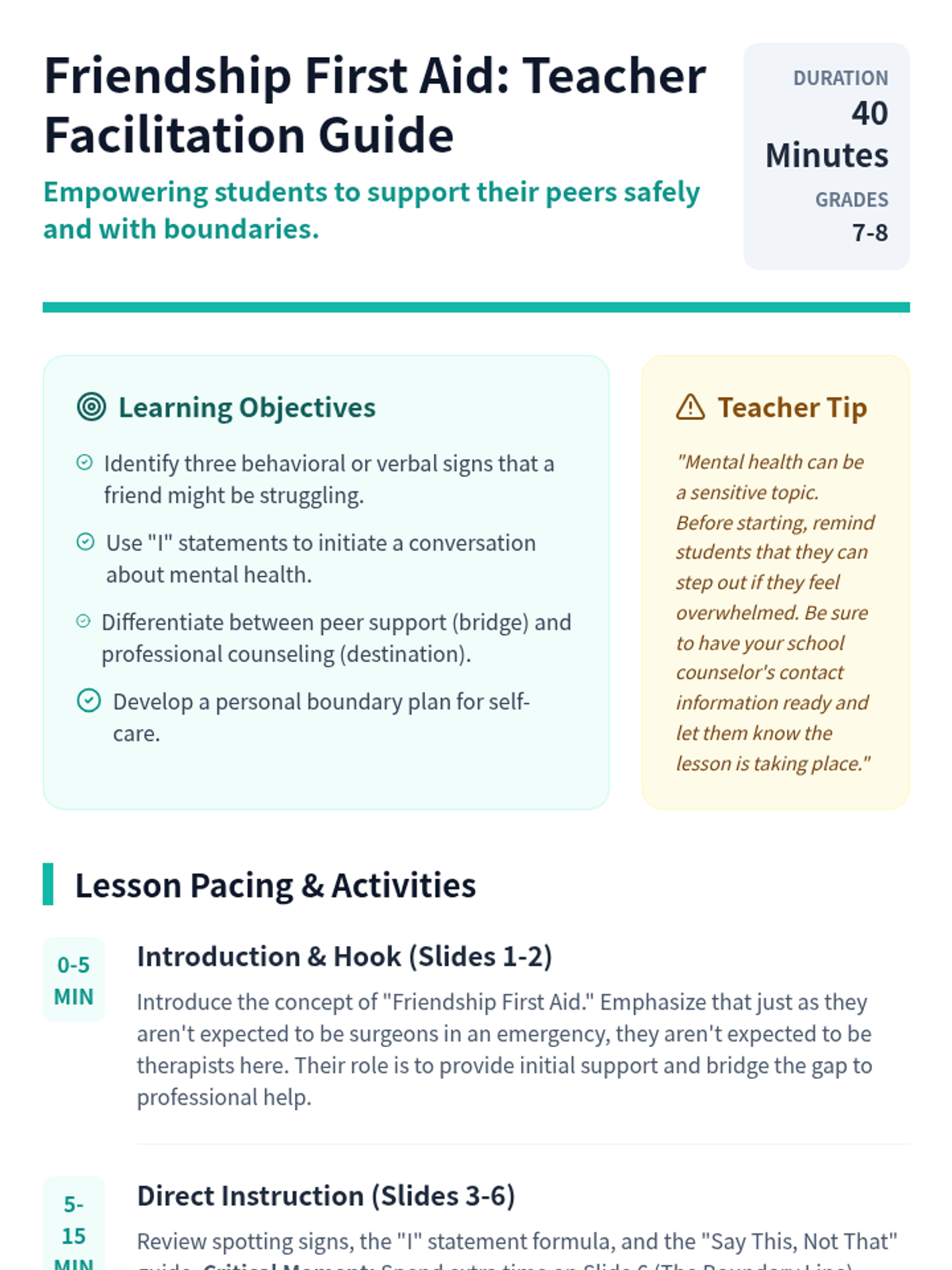
A facilitation guide for teachers leading the Friendship First Aid lesson, including pacing, learning objectives, and discussion prompts.
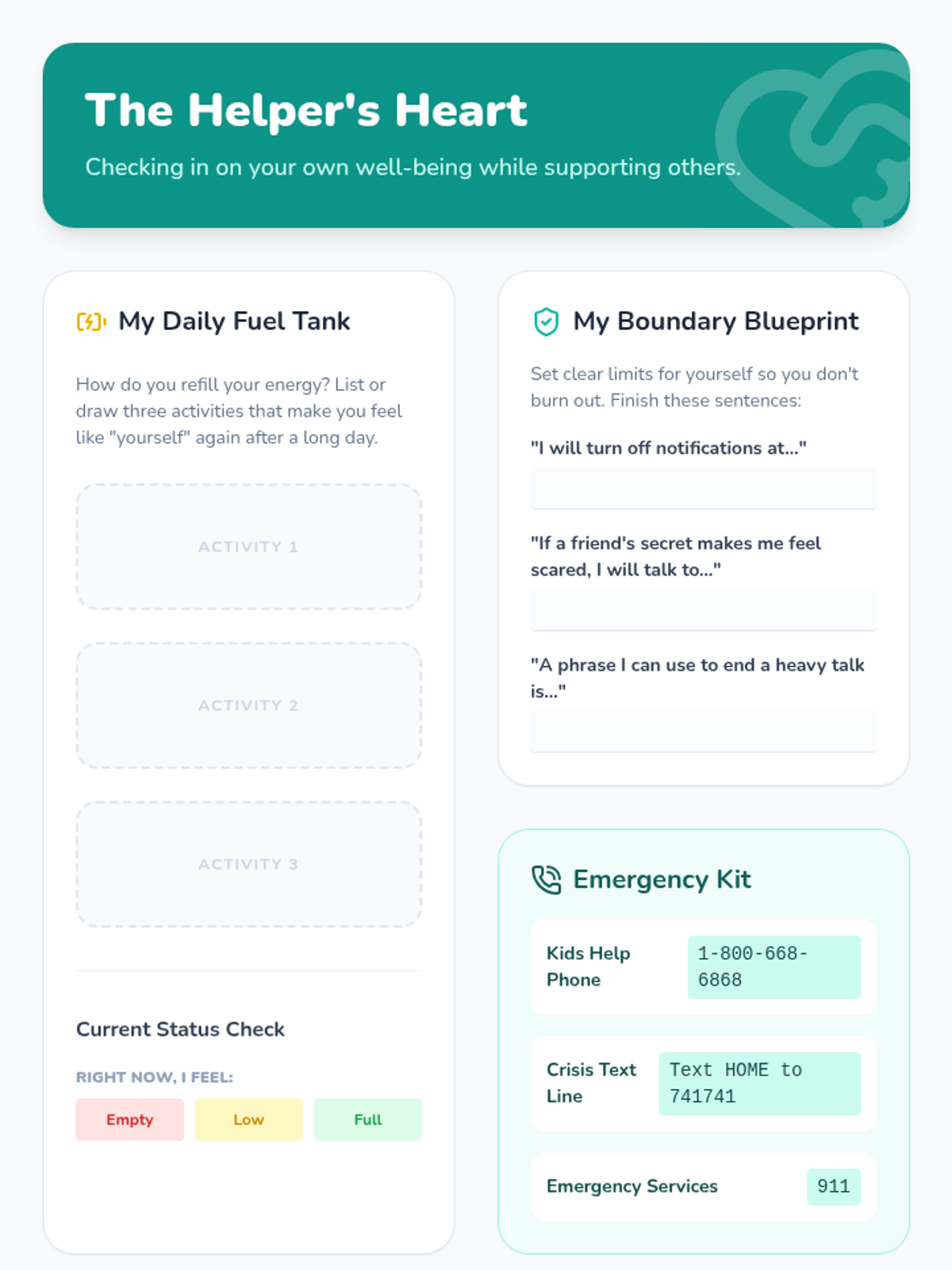
A self-care and boundary-setting worksheet for middle schoolers, designed to help them reflect on their own mental health while supporting friends.
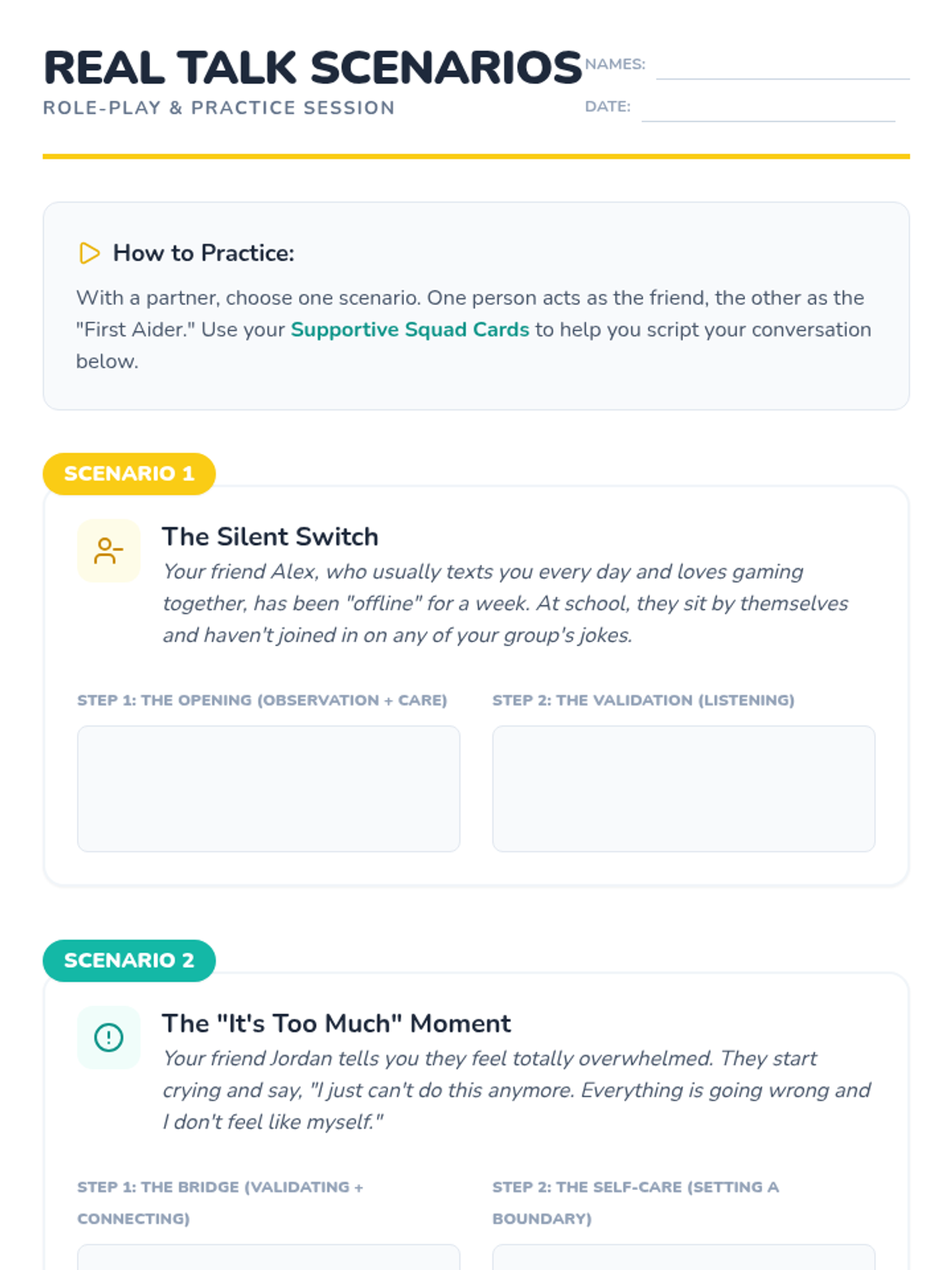
A role-play practice worksheet for middle school students featuring three realistic scenarios to practice supporting a friend with mental health challenges.
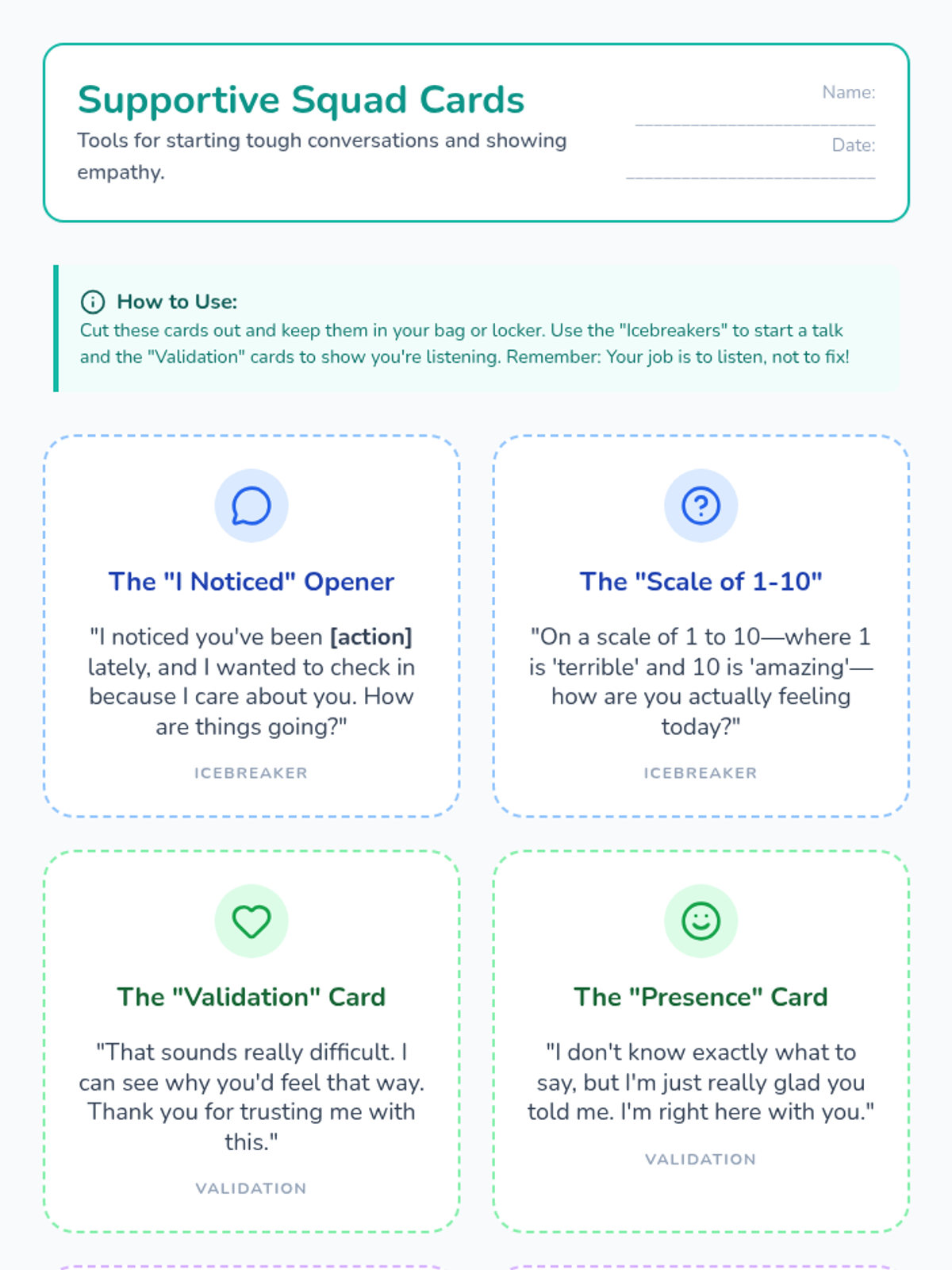
A set of printable conversation starter and empathy booster cards for middle school students to use when supporting friends with mental health challenges.
A comprehensive slide deck for teaching middle schoolers how to support friends with mental health challenges, covering signs to watch for, conversation techniques, and personal boundaries.
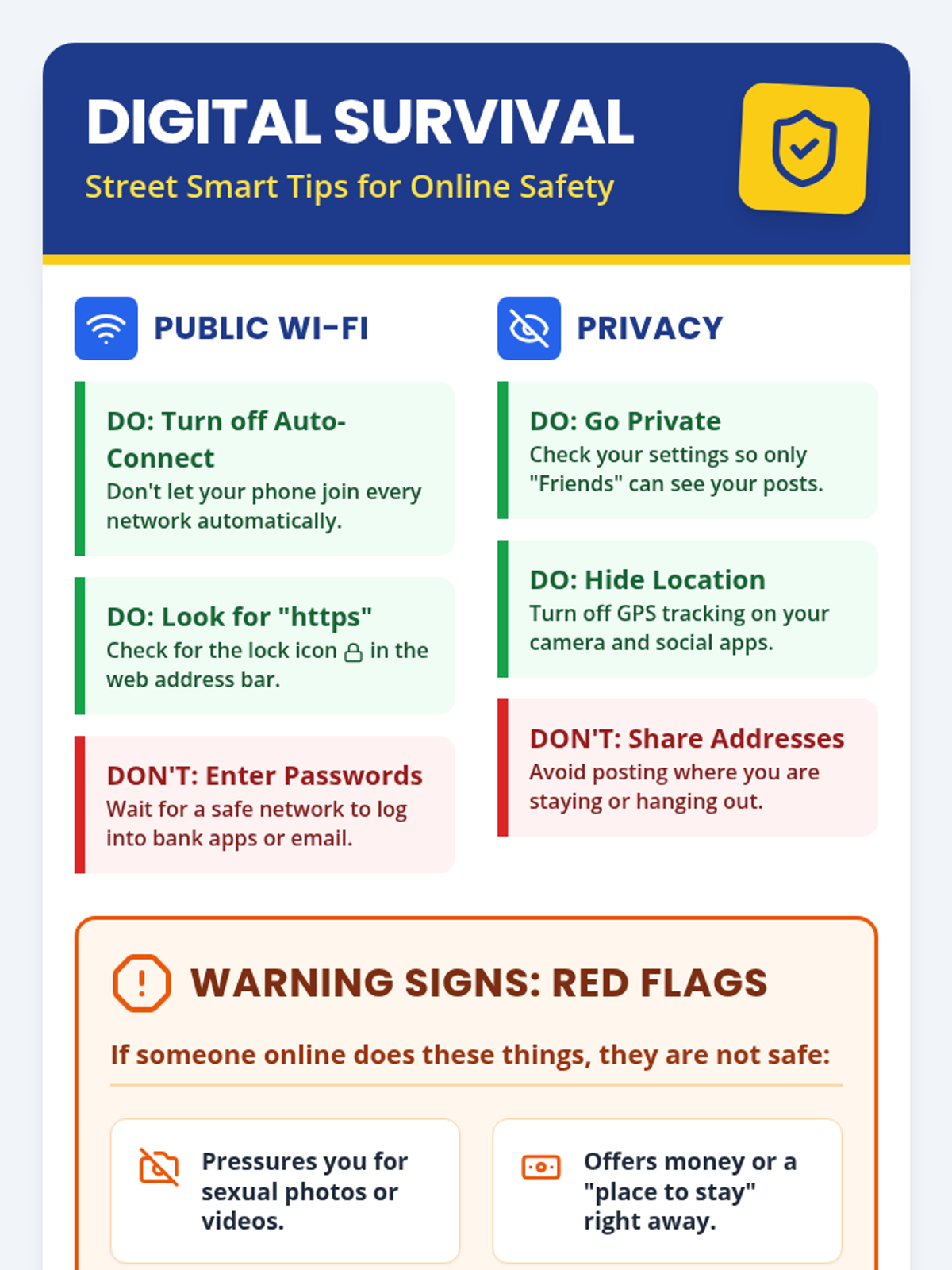
A high-contrast, visual infographic poster designed for neurodivergent youth experiencing homelessness. It provides clear, direct guidance on public Wi-Fi safety, social media privacy, identifying predatory red flags, and safe protocols for meeting online friends in person.
A visual presentation to introduce the concept of problem sizing (Glitch, Hiccup, Emergency) and proportional reactions. Includes definitions, middle-school examples, and activity instructions.
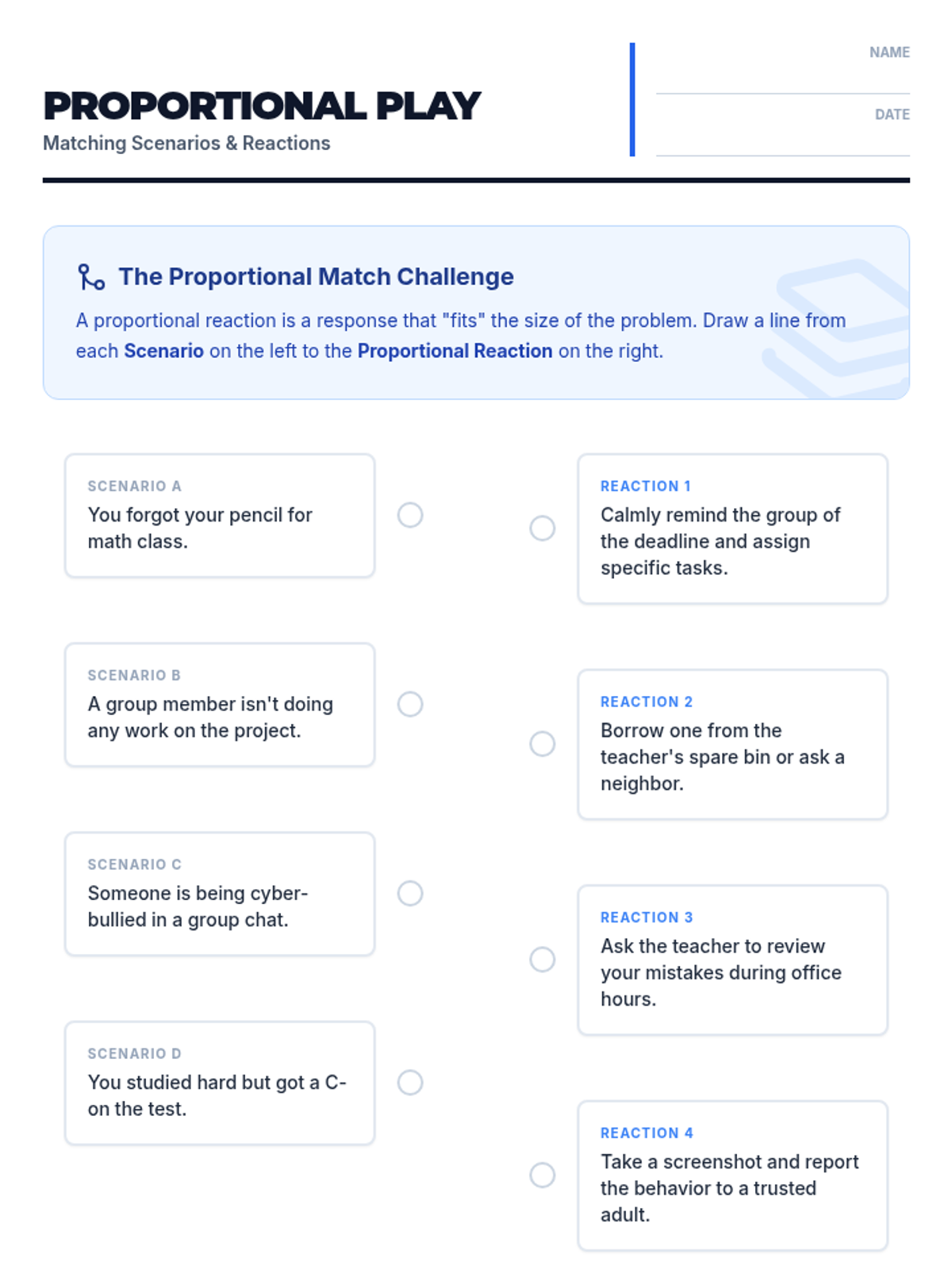
A matching worksheet where students connect middle school scenarios to their proportional reactions. Includes a section for students to explain their reasoning. Revised for improved spacing and visual flow.
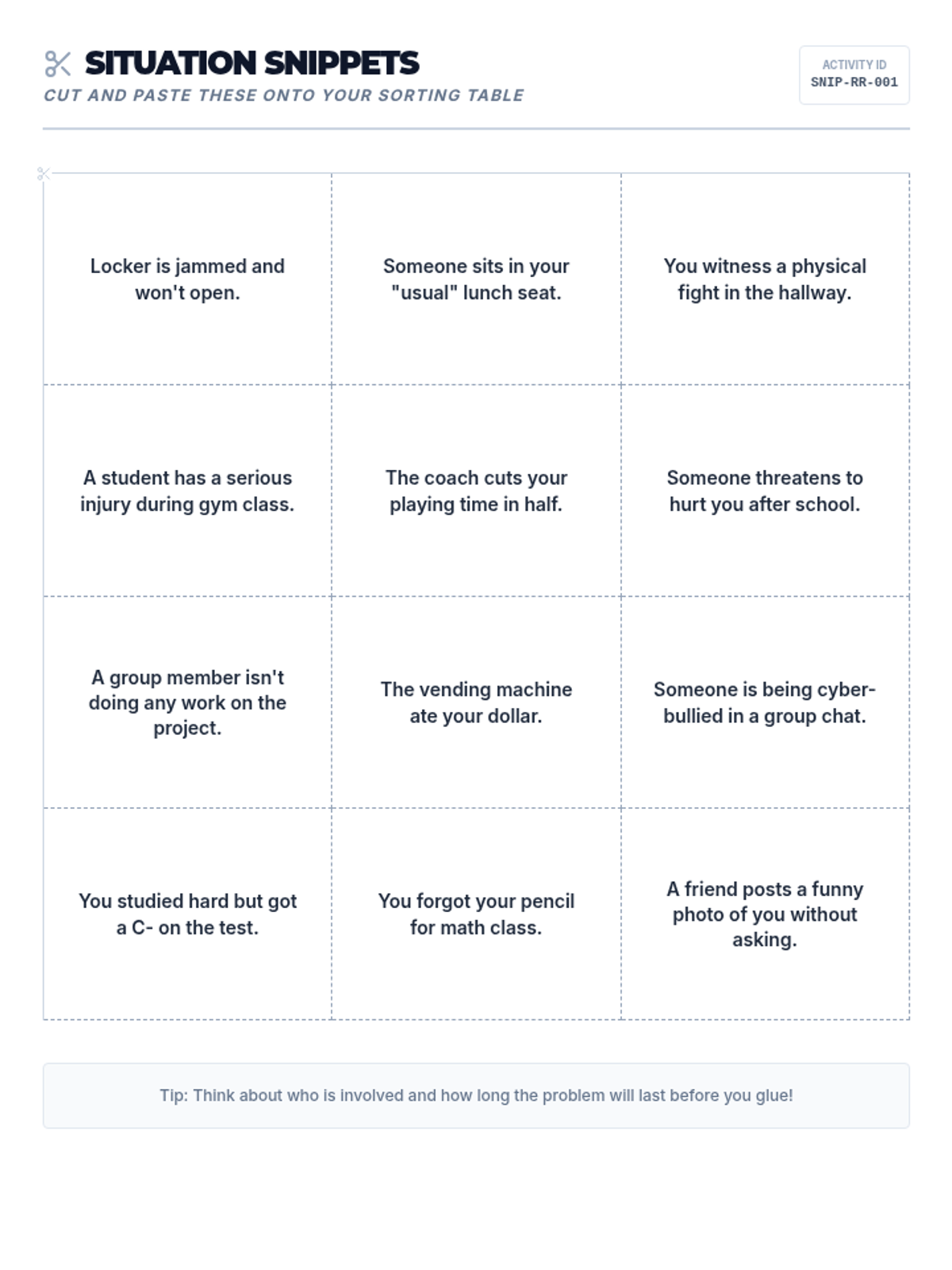
A collection of 12 middle school scenarios designed to be cut out and sorted into the Scaling Situations Table. Scenarios cover social, academic, and extracurricular themes. Revised for better cutting lines.
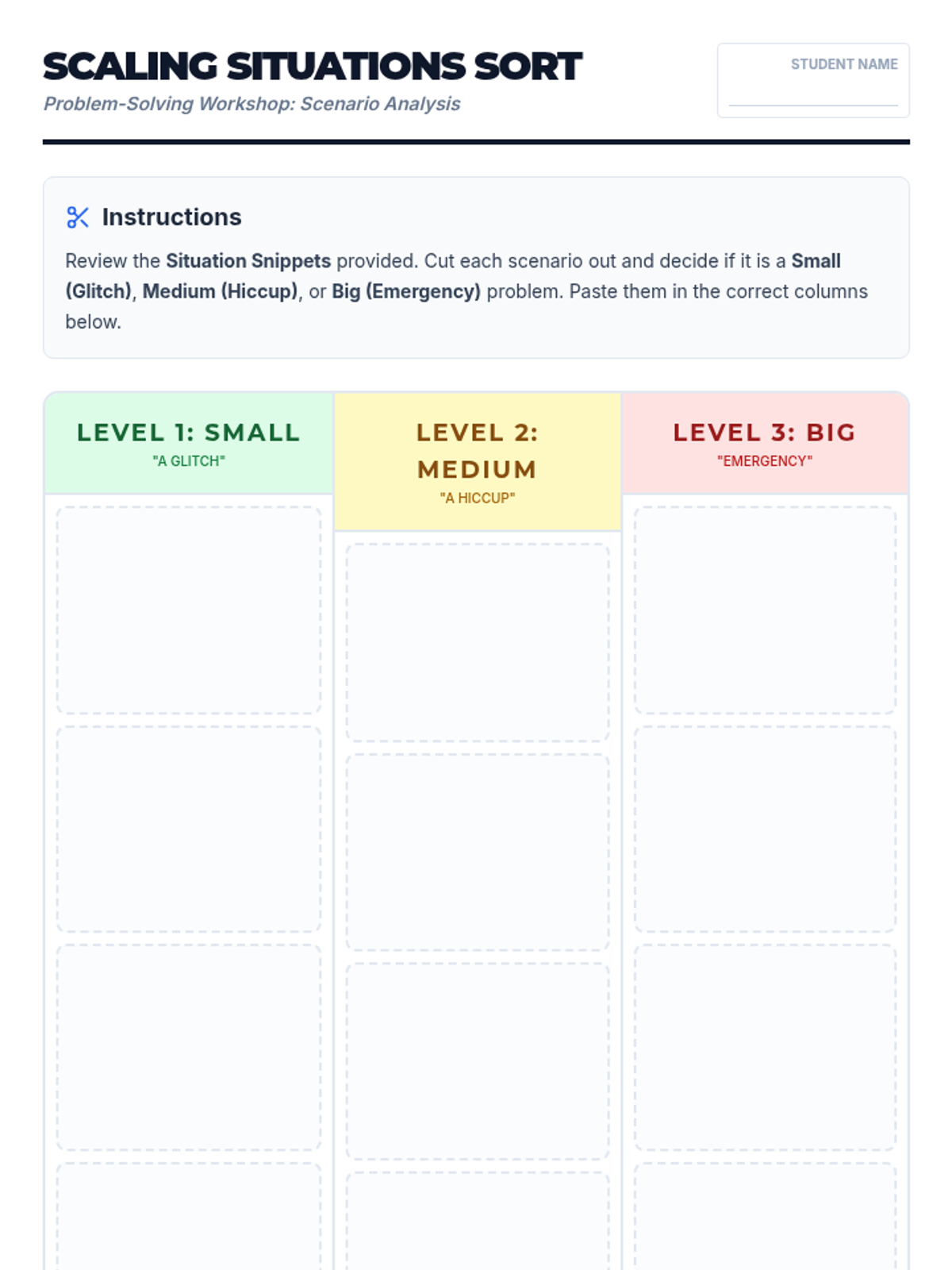
A sorting table for students to categorize middle school scenarios into Small, Medium, and Big problem levels. Includes labeled columns and dashed areas for pasting situation snippets.
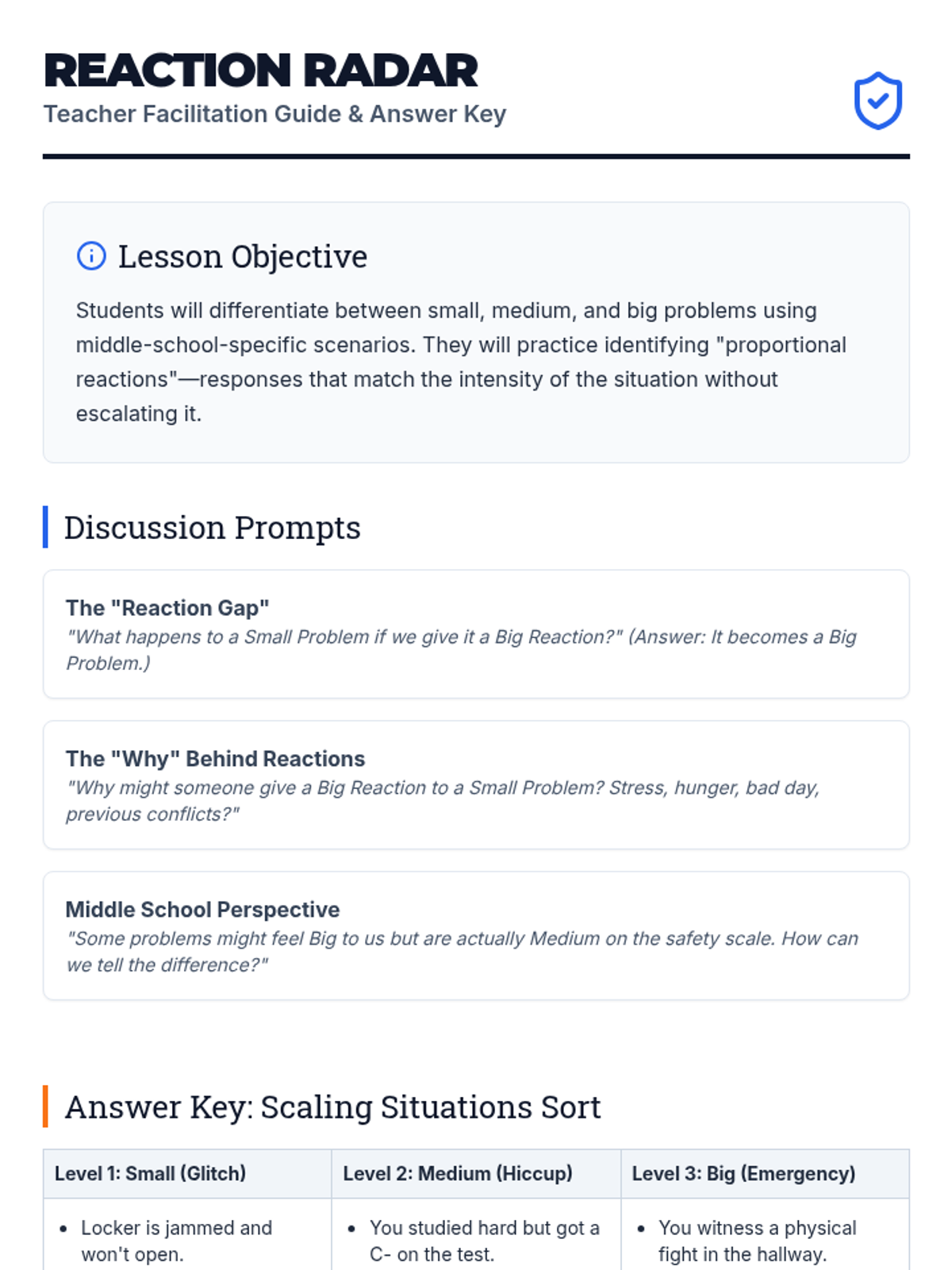
A comprehensive teacher guide for the Reaction Radar lesson, including definitions for problem levels (Glitch, Hiccup, Emergency) and full answer keys for the sorting and matching activities.
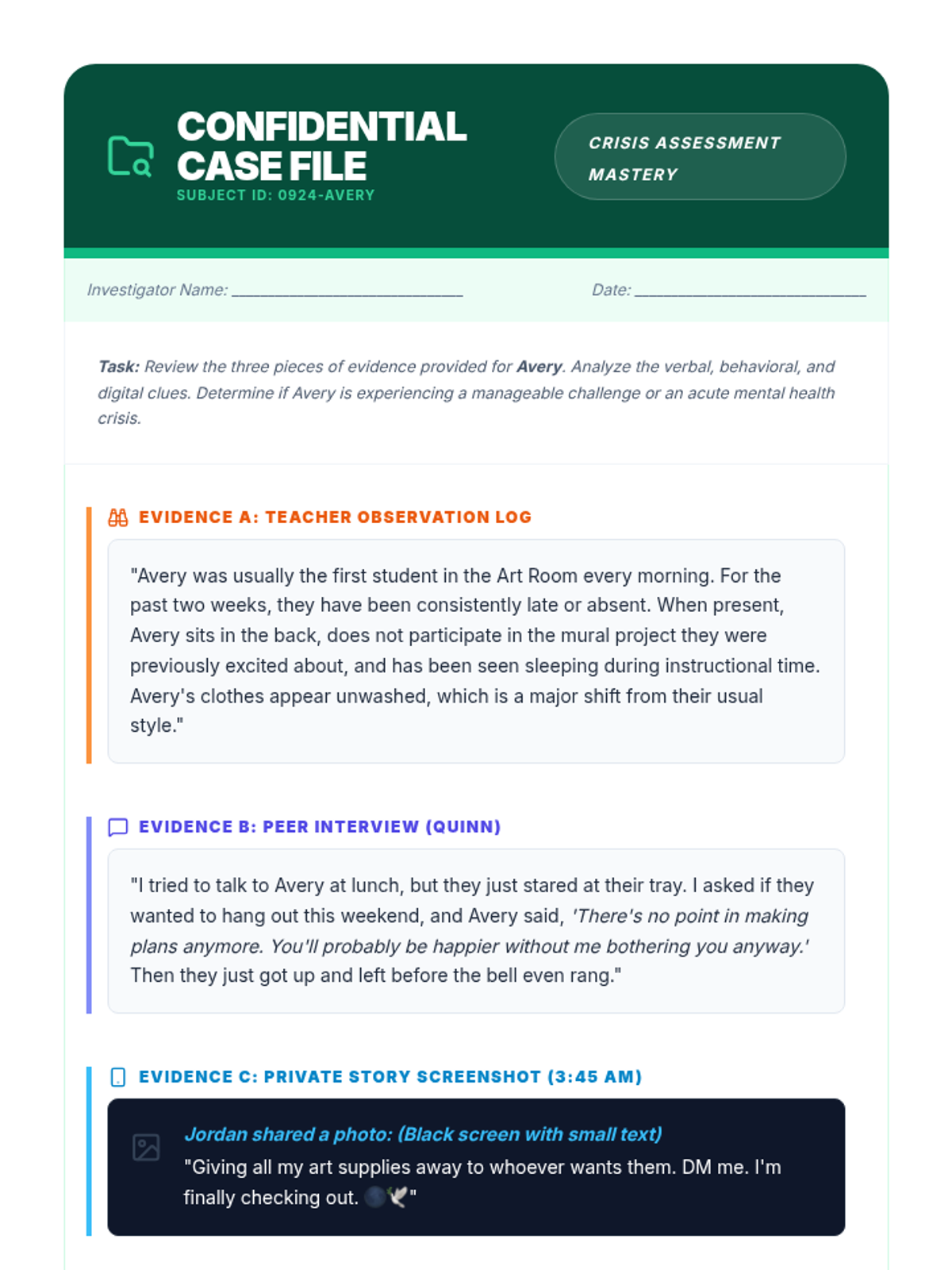
Students synthesize various indicators (verbal, behavioral, digital) to assess a complex case file for a student named Avery and determine if adult intervention is necessary.
Slides for Lesson 5, helping students synthesize various warning signs and understand the importance of early intervention.
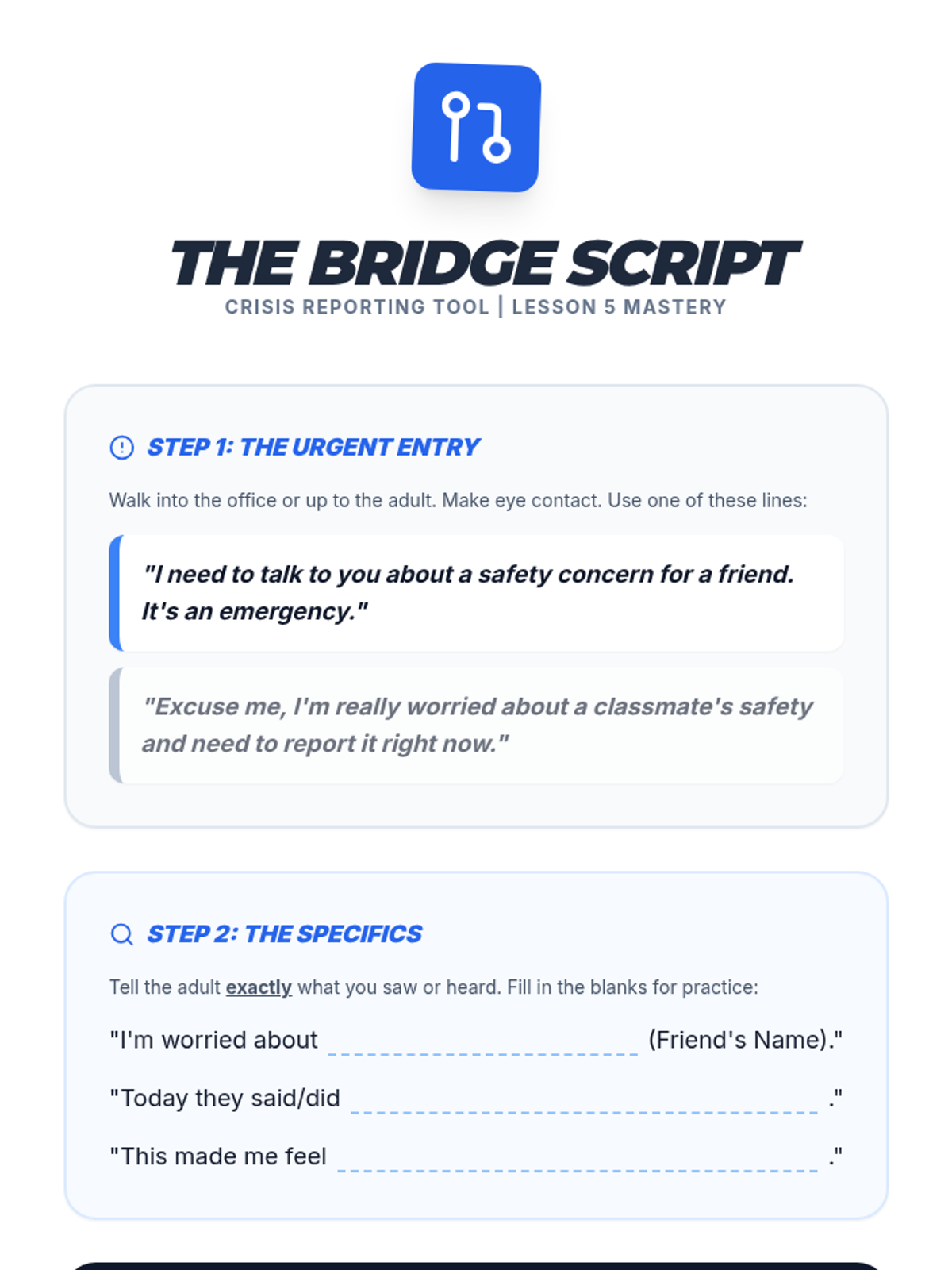
A student mastery tool for Lesson 5 that provides a structured script for reporting a crisis to an adult, including fill-in-the-blank practice and a mastery checklist.
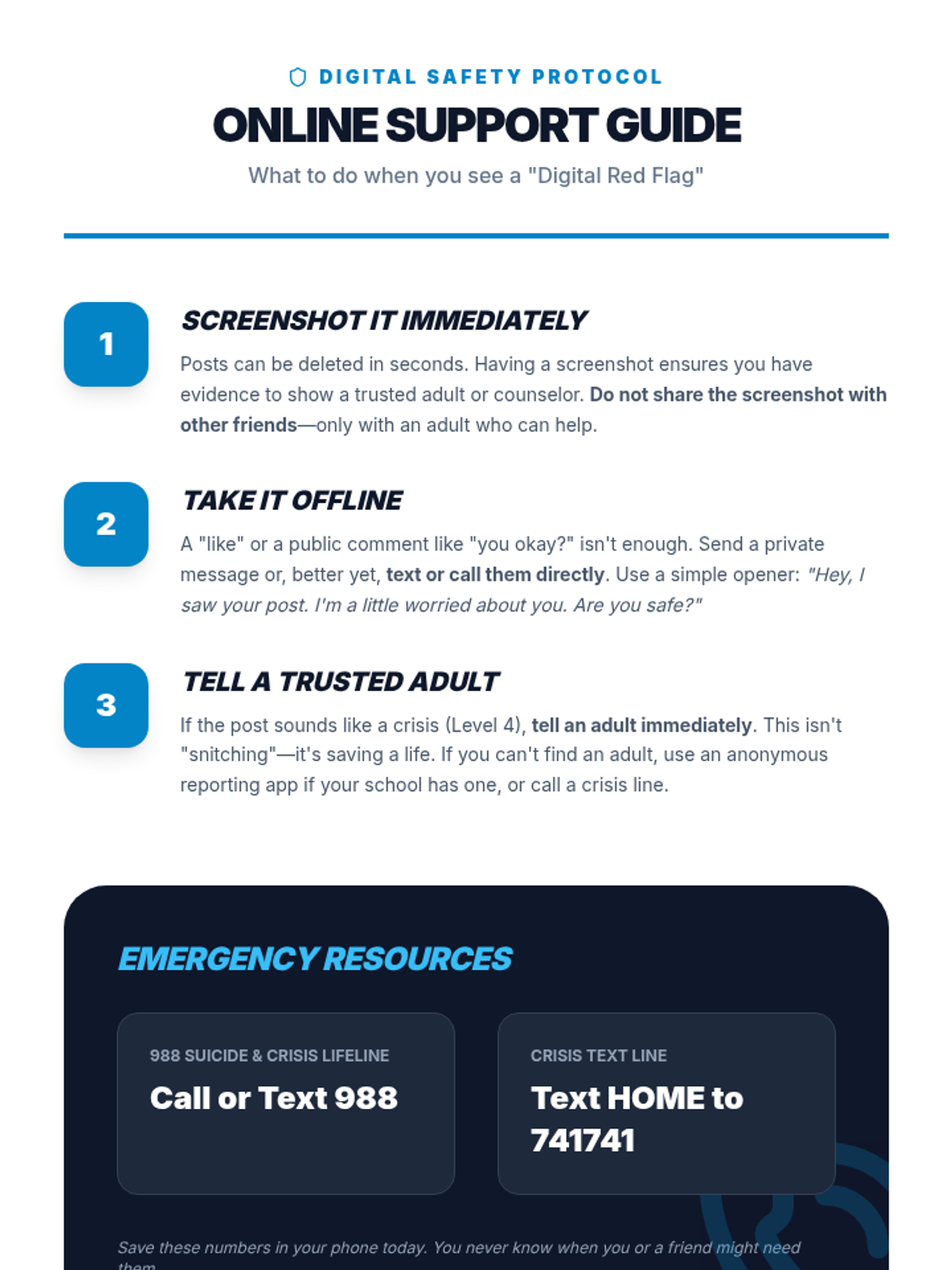
A guide for students on how to respond to concerning social media posts and where to find help.
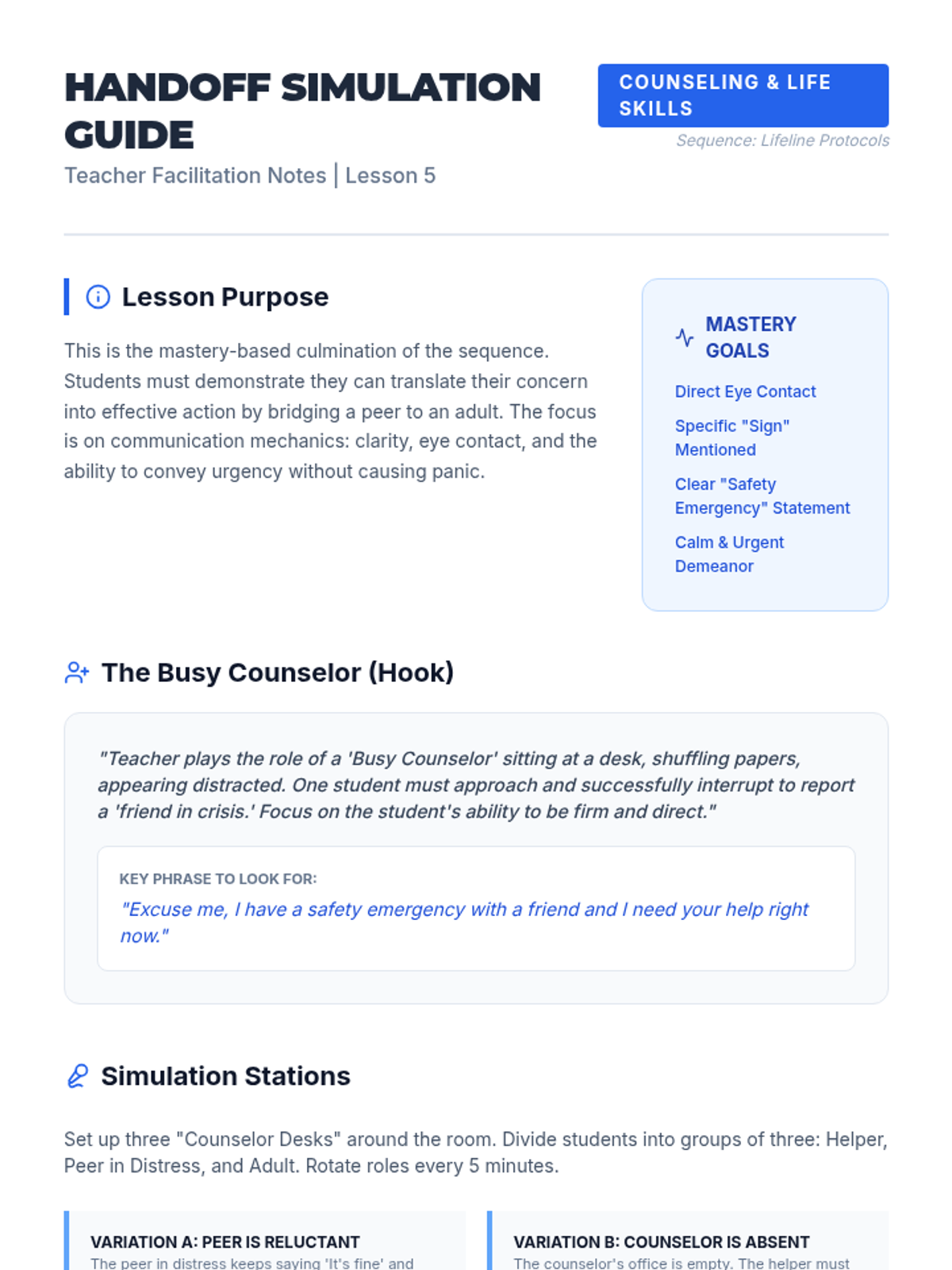
A teacher facilitation guide for Lesson 5, featuring instructions for 'The Busy Counselor' hook, simulation variations, and a mastery rubric for evaluating students' handoff skills.
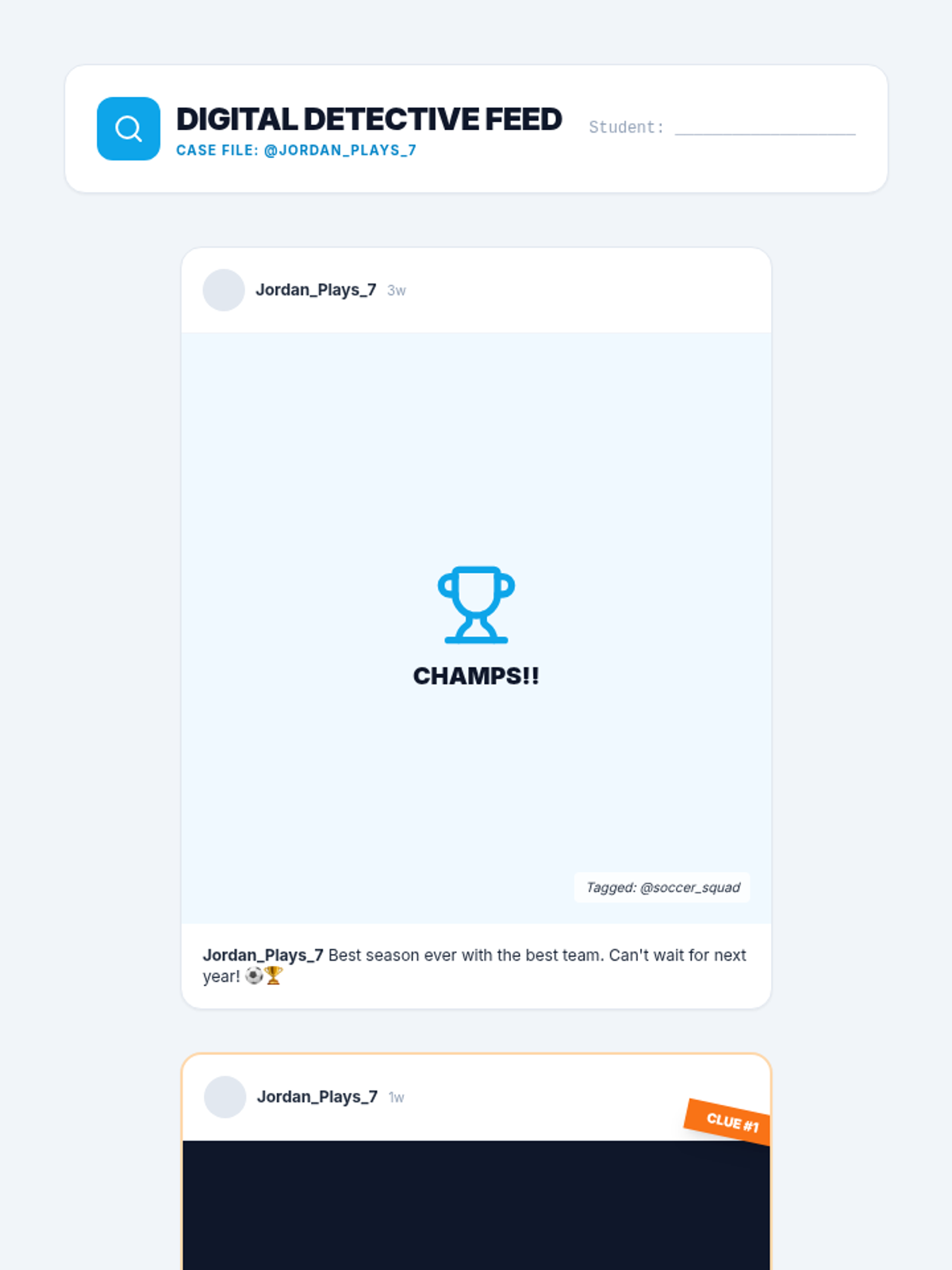
Students analyze mock social media profiles to identify concerning posts, images, and captions that signal a need for support.
A visual presentation for Lesson 5 focusing on the 'handoff' simulation, providing students with specific language for reporting a crisis to school staff and strategies for communicating urgency.
Slides for Lesson 4, teaching students to identify digital warning signs and how to respond to concerning online content.
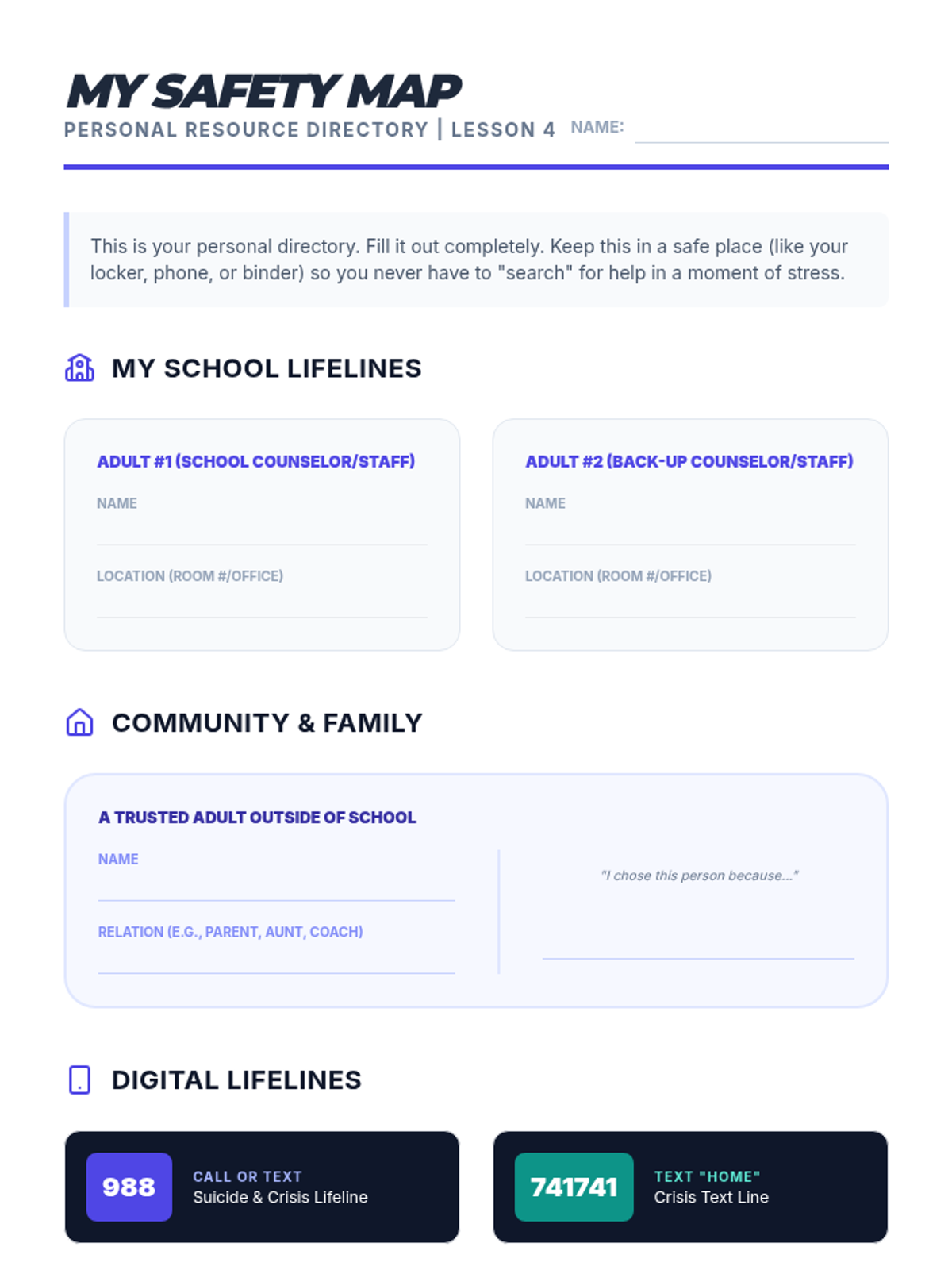
A student project template for Lesson 4 that guides students to identify specific trusted adults at school and in their community, while recording national digital crisis resources.
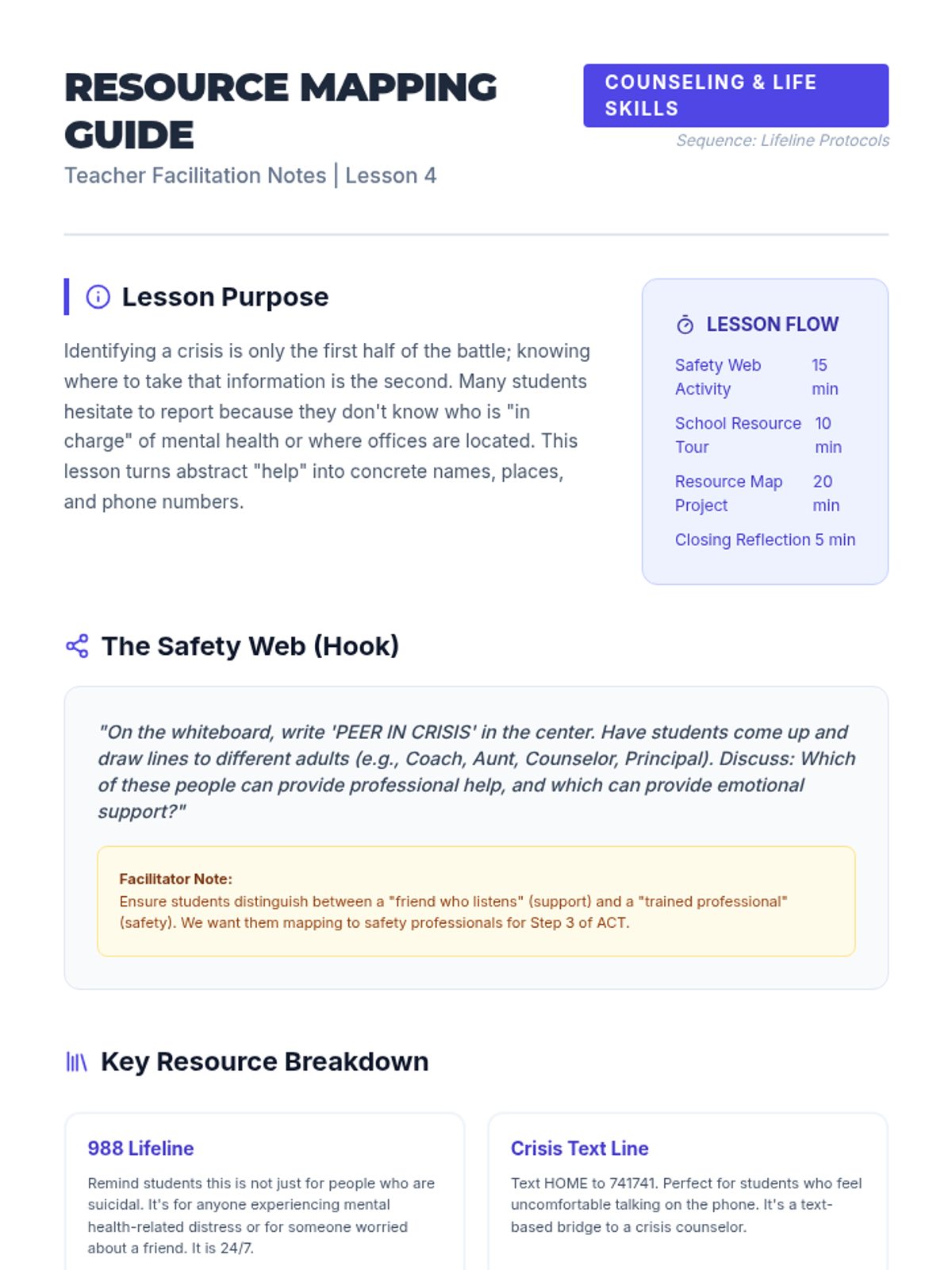
A teacher facilitation guide for Lesson 4, focusing on the Safety Web hook, a breakdown of 988 and the Crisis Text Line, and instructions for customizing the Safety Map project with local school data.
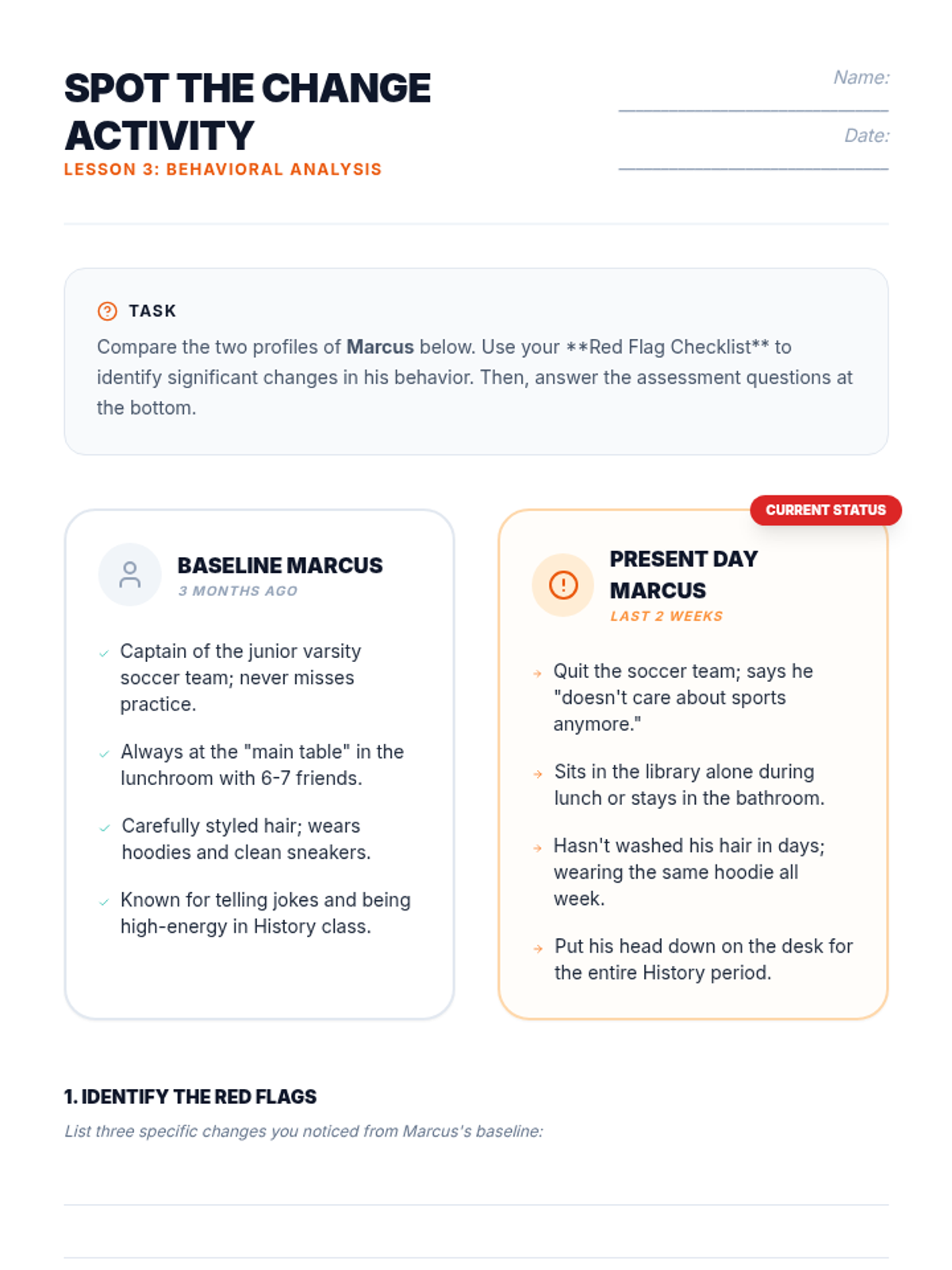
A case study activity where students compare a character's baseline behavior with their current behavior to identify behavioral red flags.
A visual presentation for Lesson 4 that defines 'trusted adults,' highlights school-based mental health resources, and introduces national crisis lifelines like 988.
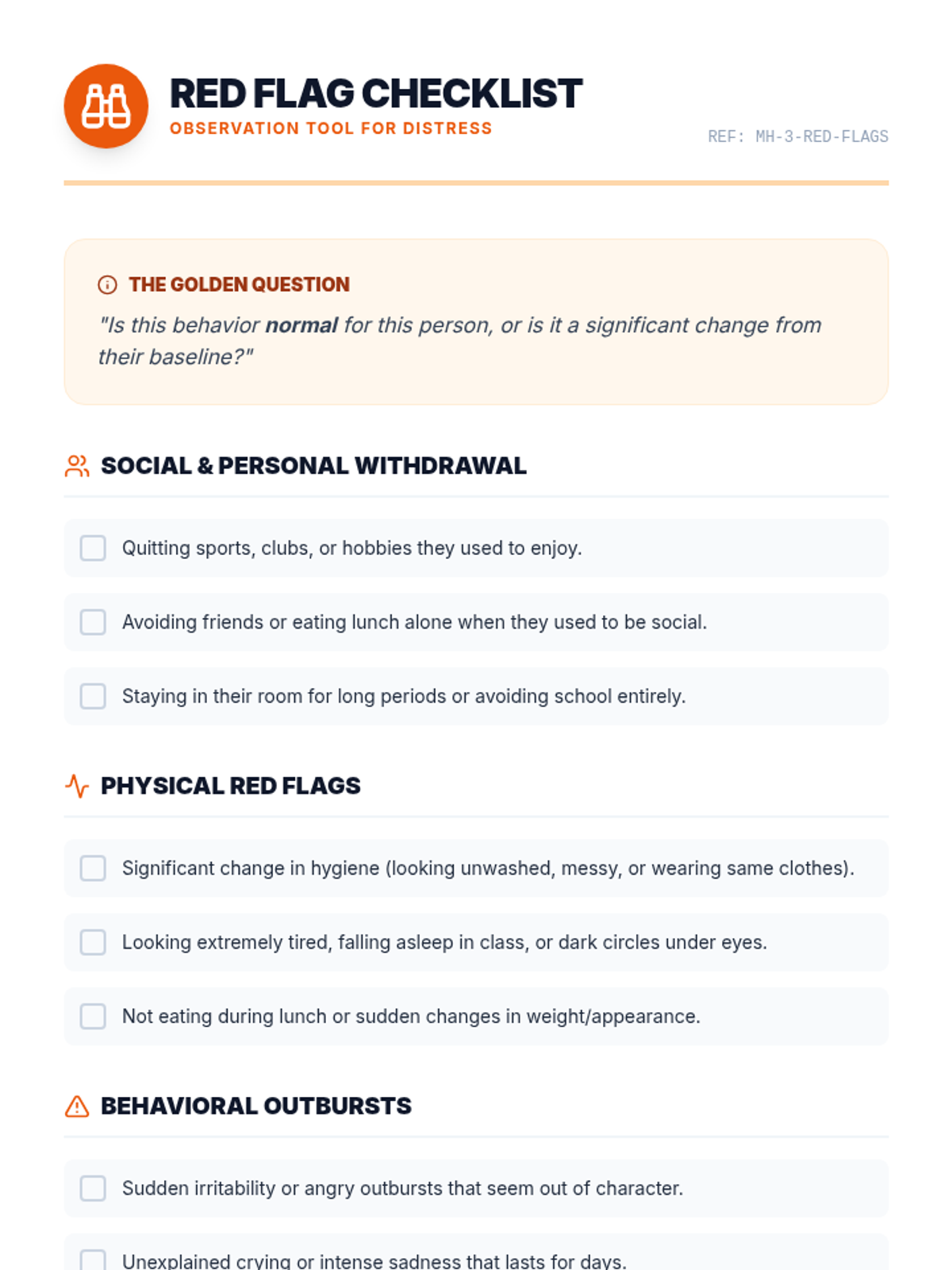
A reference checklist for students to identify non-verbal behavioral red flags, withdrawal, and physical shifts in peers.
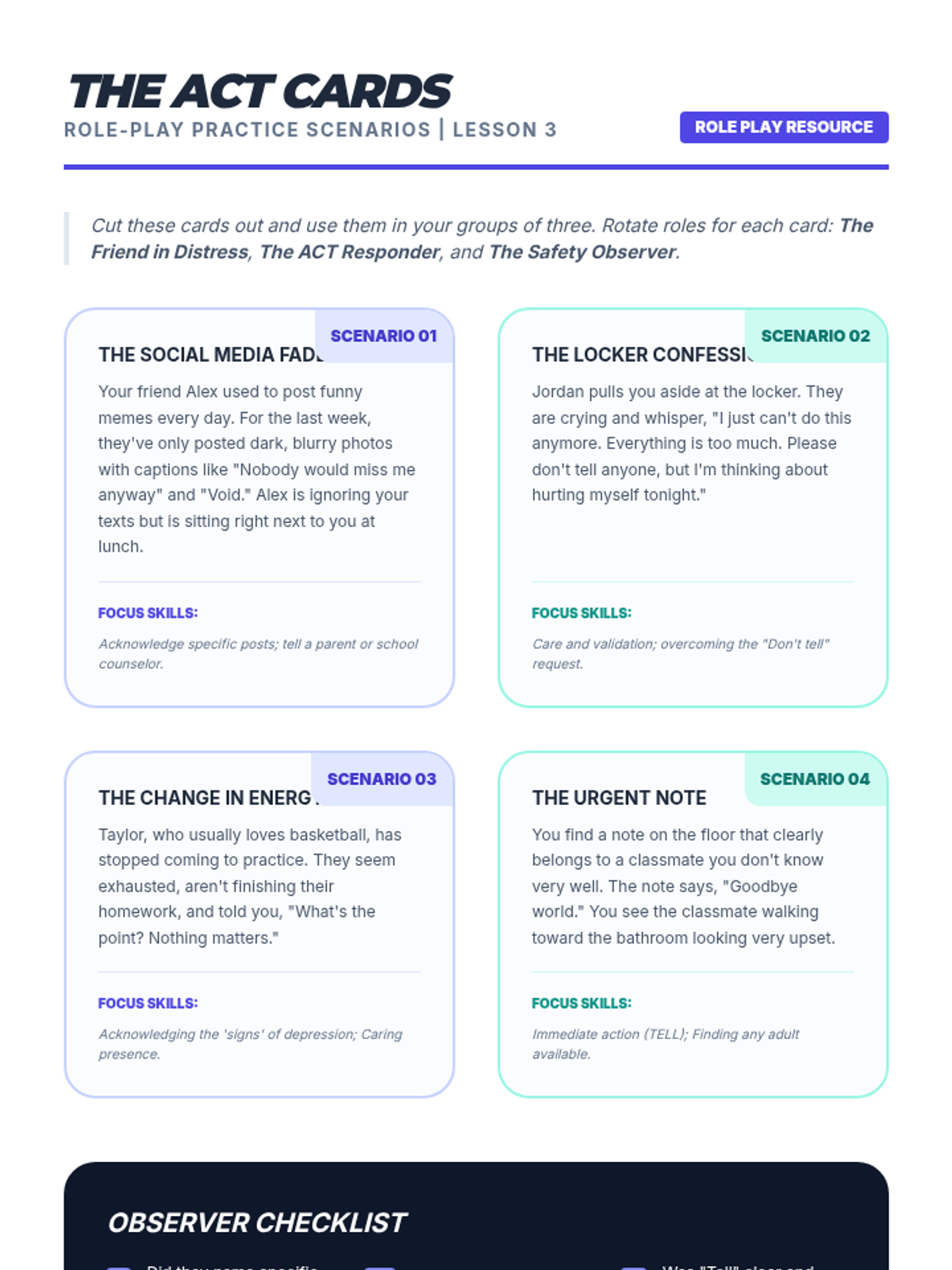
A set of role-play scenario cards for students to practice the ACT protocol, featuring diverse crisis situations and a built-in observer checklist for peer feedback.
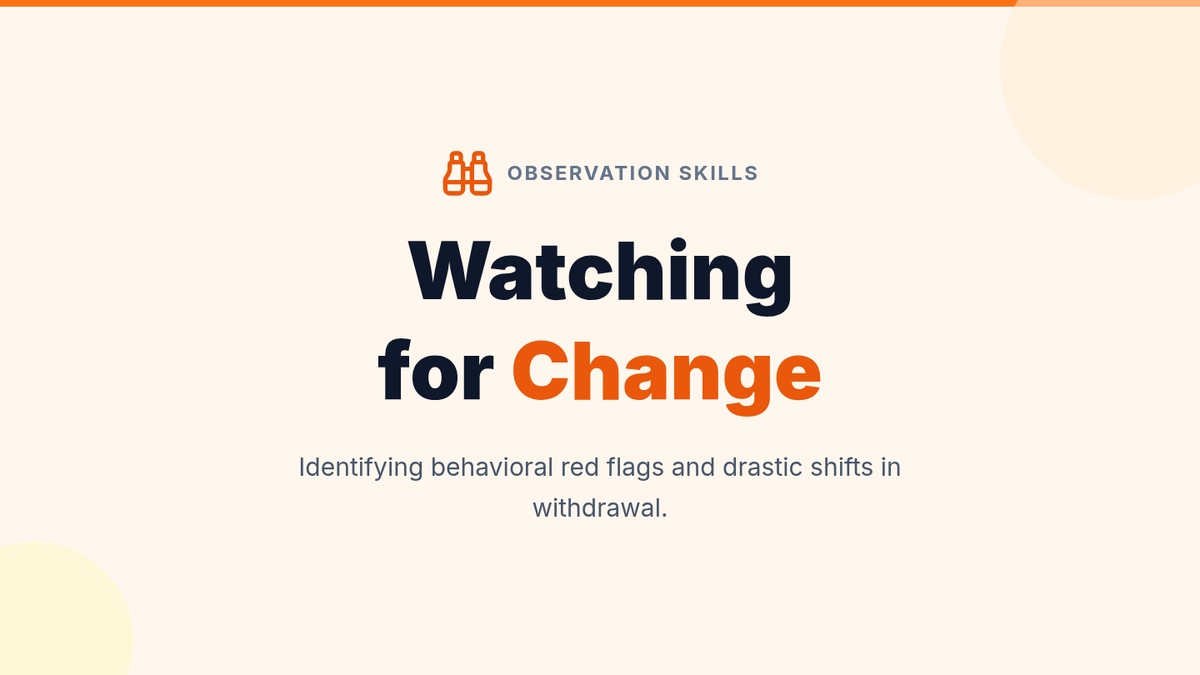
Slides for Lesson 3, teaching students to identify non-verbal behavioral red flags and withdrawal.
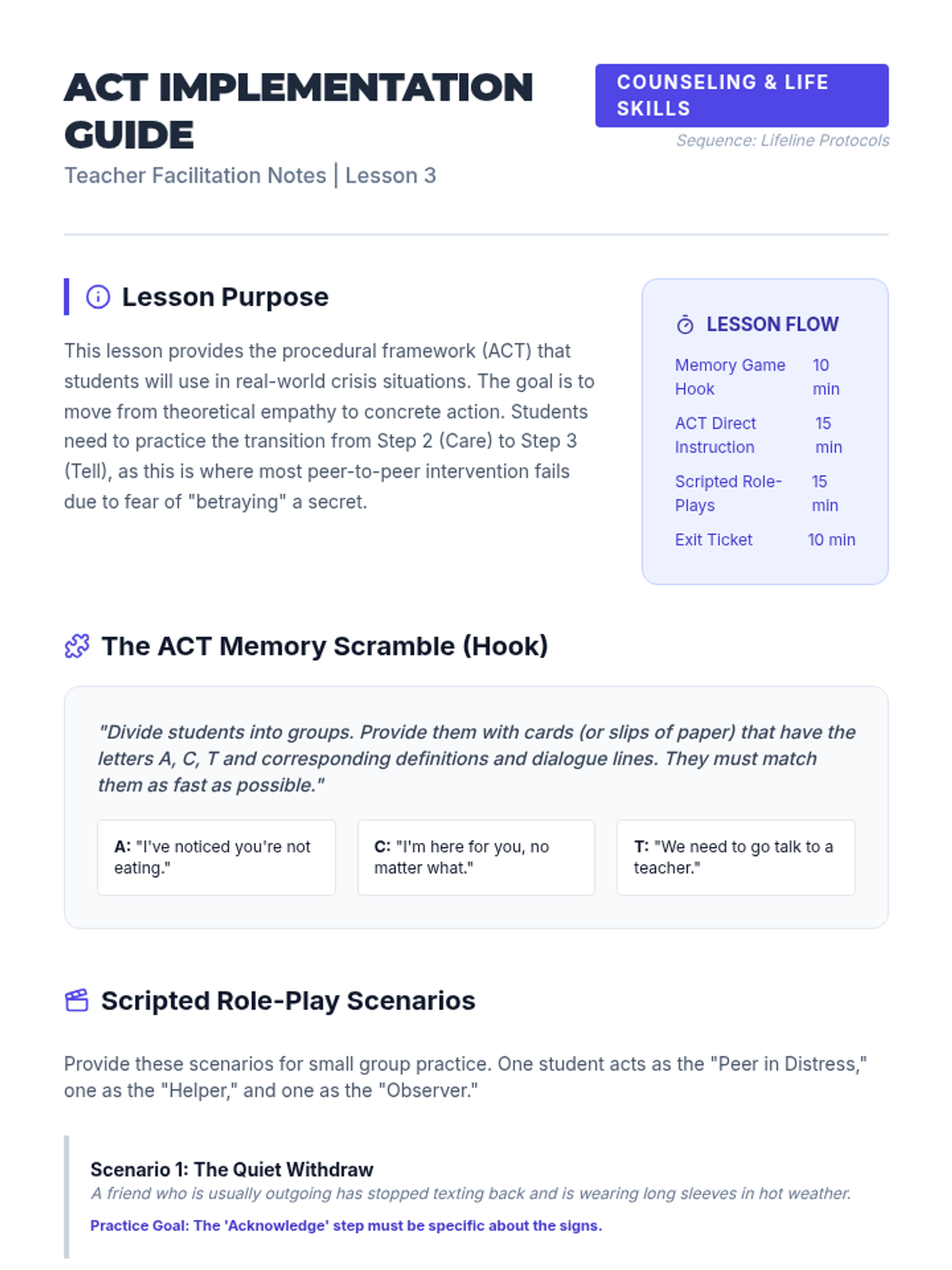
A teacher facilitation guide for Lesson 3, featuring instructions for the ACT Memory Game hook, scripted role-play scenarios, and strategies for navigating the 'Secret Trap.'
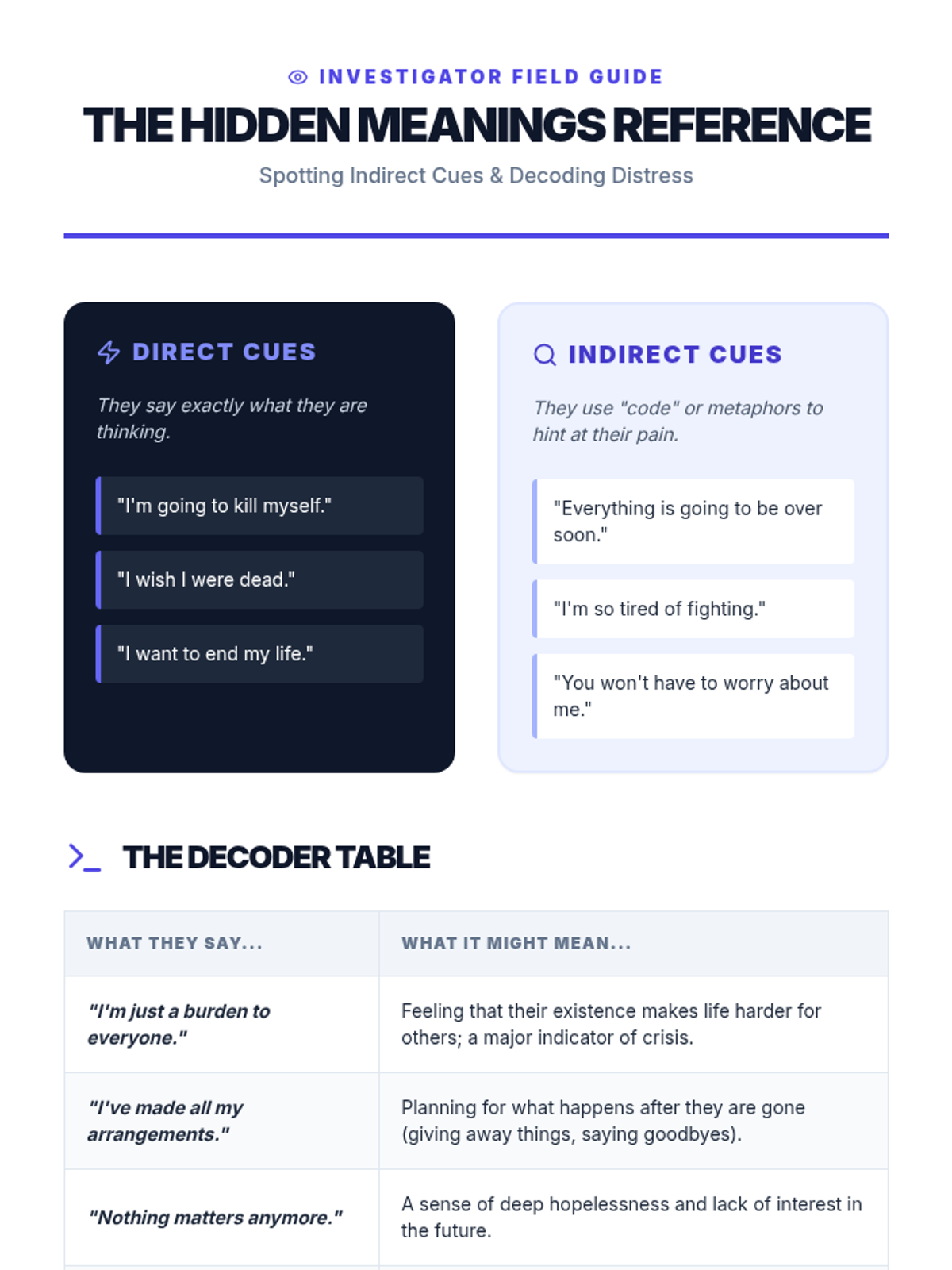
A reference sheet for students listing common indirect verbal cues of distress and explaining their potential underlying meanings.
A visual presentation for Lesson 3 that introduces and breaks down the ACT (Acknowledge, Care, Tell) model for crisis response, providing specific dialogue examples for each step.
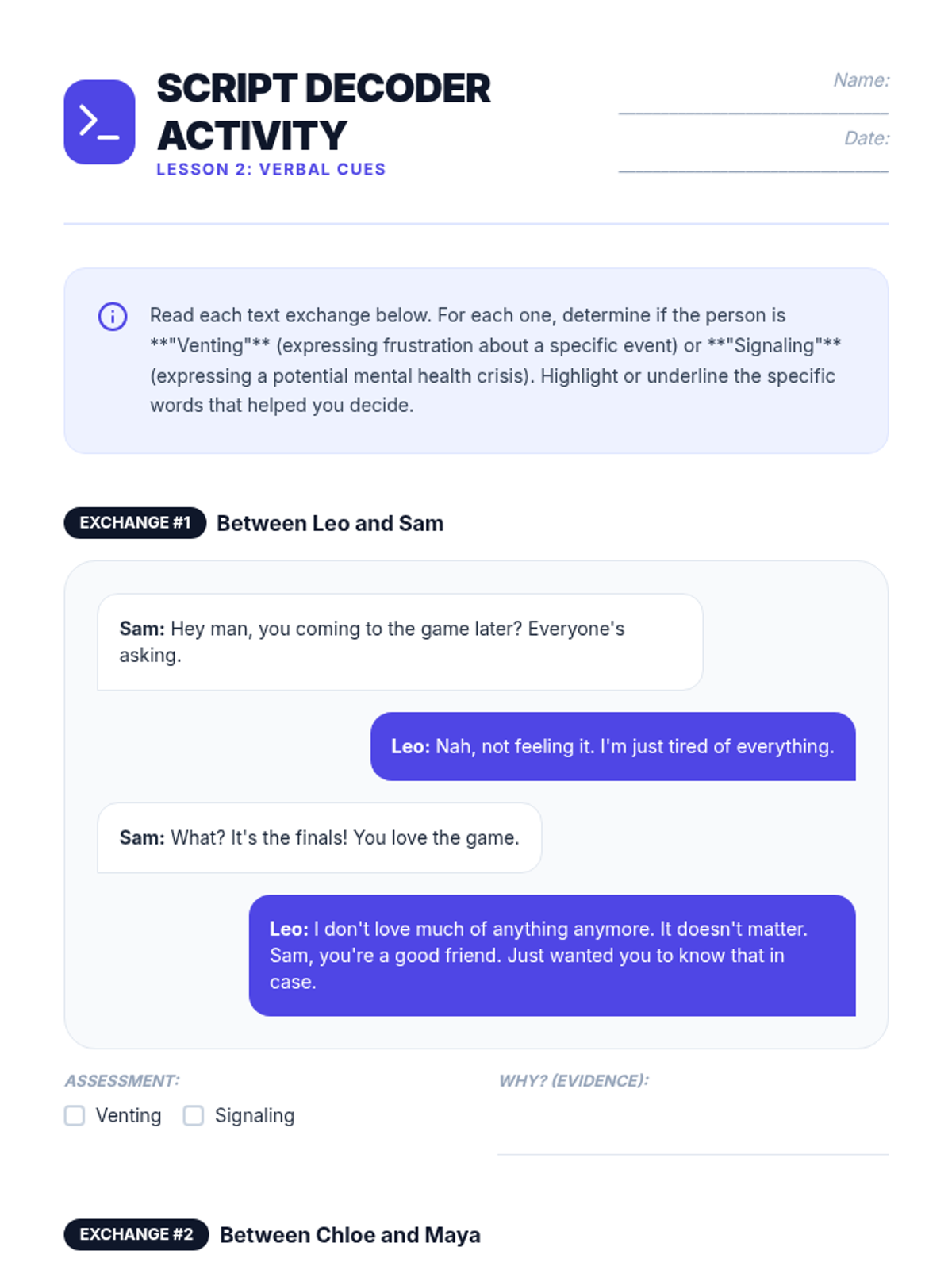
Students read and analyze text message exchanges to distinguish between venting and signaling a mental health crisis.
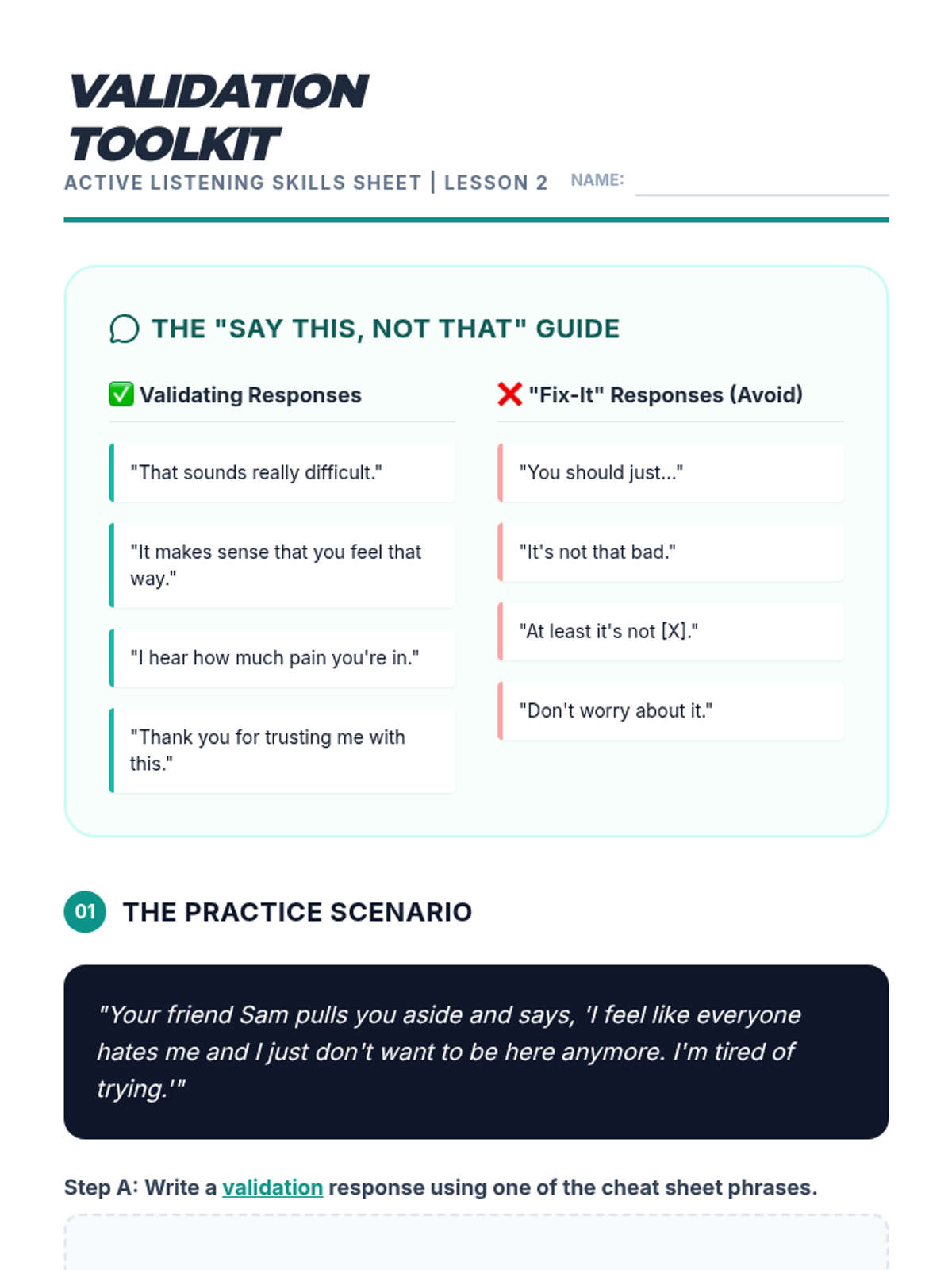
A student practice worksheet for Lesson 2 that includes a 'Say This, Not That' cheat sheet, a practice scenario for writing validating responses, and a reflection on the dangers of 'Fix-It' mode.
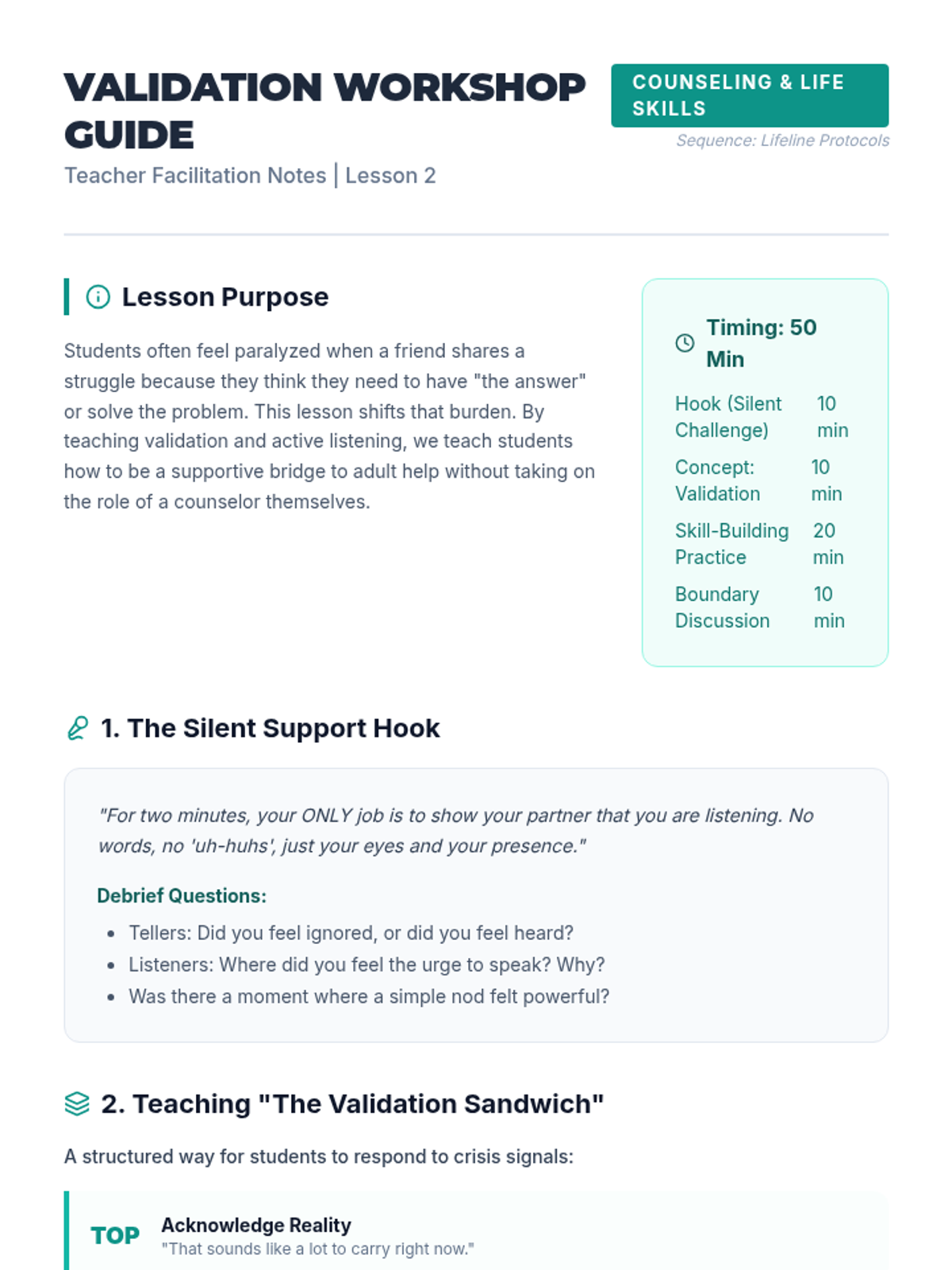
A detailed teacher facilitation guide for Lesson 2, focusing on active listening exercises, the 'Validation Sandwich' technique, and the 'Lifeboat Metaphor' to establish healthy boundaries.
A visual presentation for Lesson 2 that teaches students active listening skills, the difference between validation and 'fixing,' and how to maintain healthy boundaries when a peer is in distress.
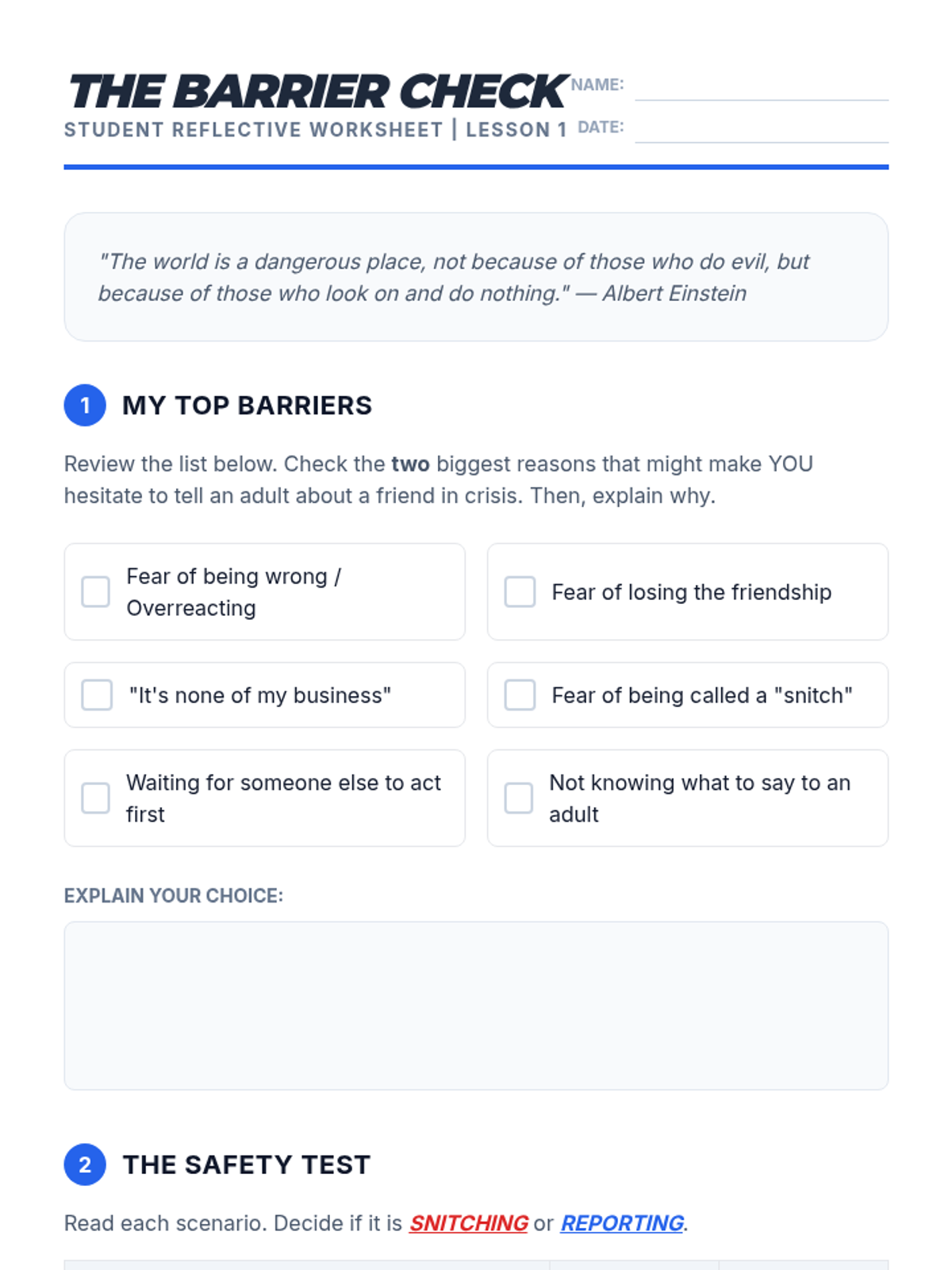
A student worksheet for Lesson 1 that helps students identify their personal barriers to helping, practice distinguishing between snitching and reporting, and reflect on the bystander effect.
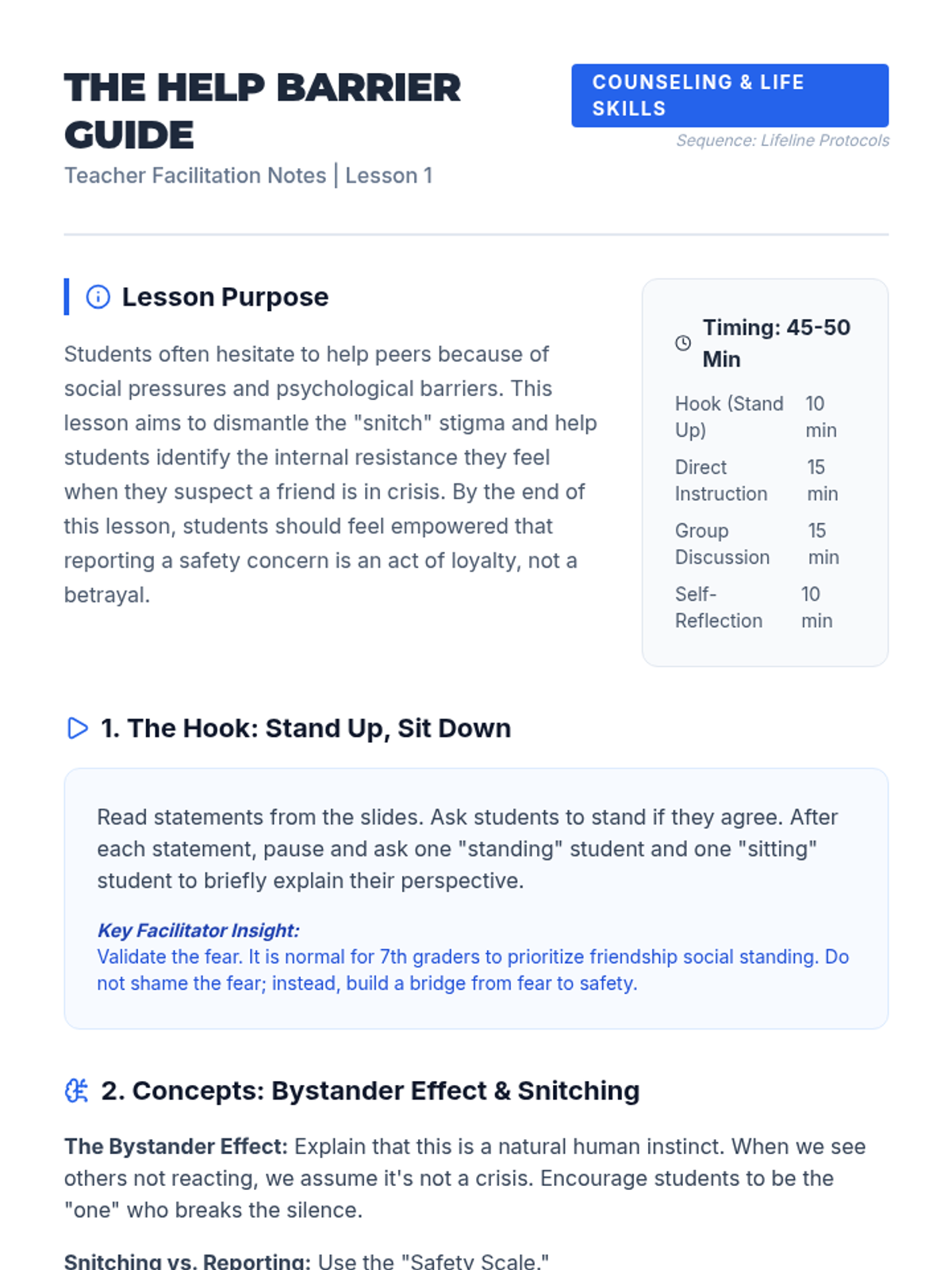
A comprehensive teacher facilitation guide for Lesson 1, including timing, discussion prompts, and strategies for handling common student misconceptions about the bystander effect and 'snitching.'
A visual presentation for Lesson 1 that introduces students to the bystander effect, psychological barriers to helping, and the critical distinction between snitching and reporting.
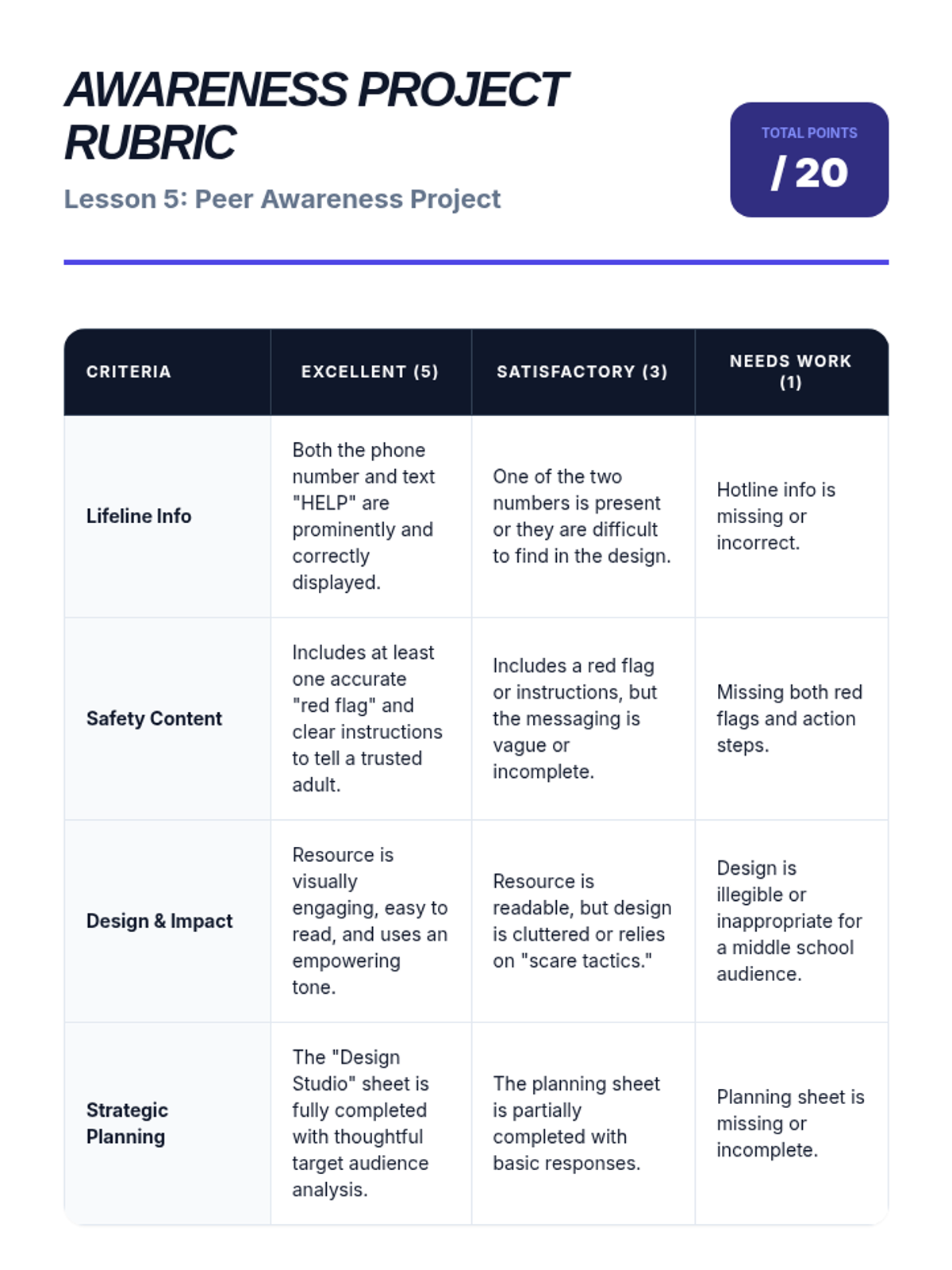
A comprehensive rubric for assessing the Peer Awareness Project, focusing on hotline information, safety content, design impact, and strategic planning.
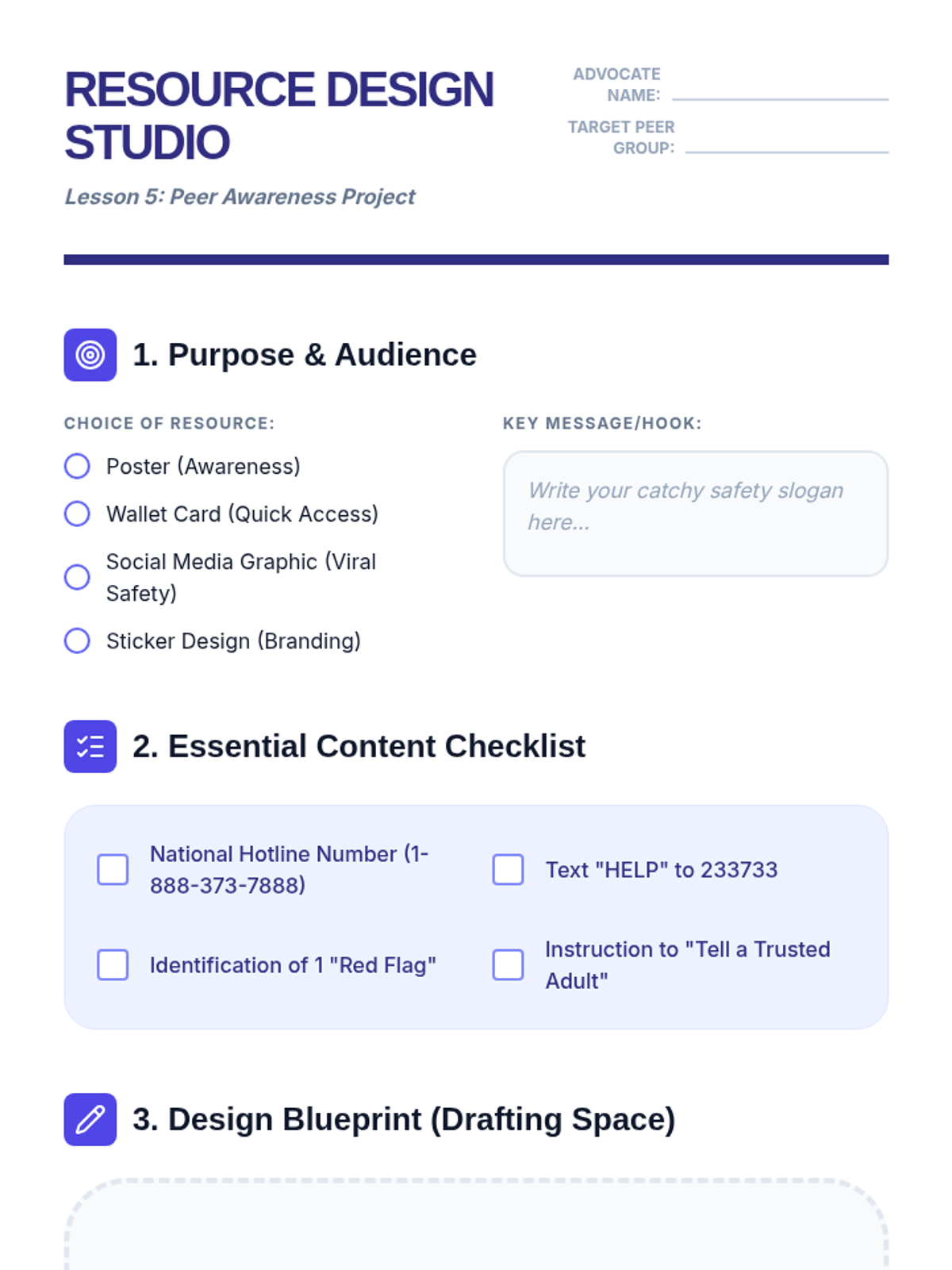
A project planning sheet for students to brainstorm and draft their peer awareness resources, including a content checklist and sketching space.
A visual presentation for the culminating Advocacy Project, detailing the project mission, required elements, and design principles for creating peer-facing safety resources.
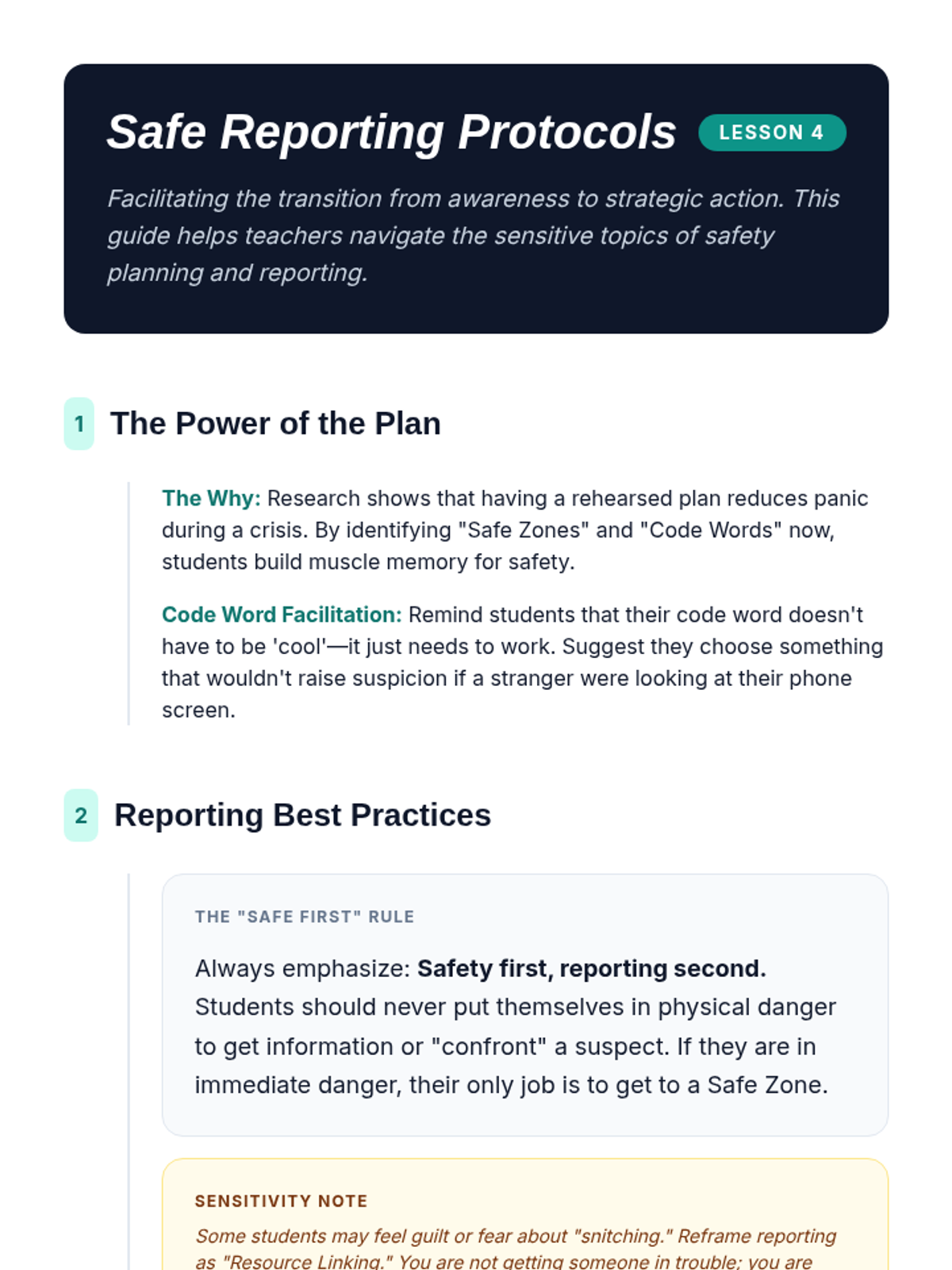
A teacher guide for Lesson 4 on facilitating safety planning and reporting protocols, including tips for reframing reporting and managing sensitive discussions.
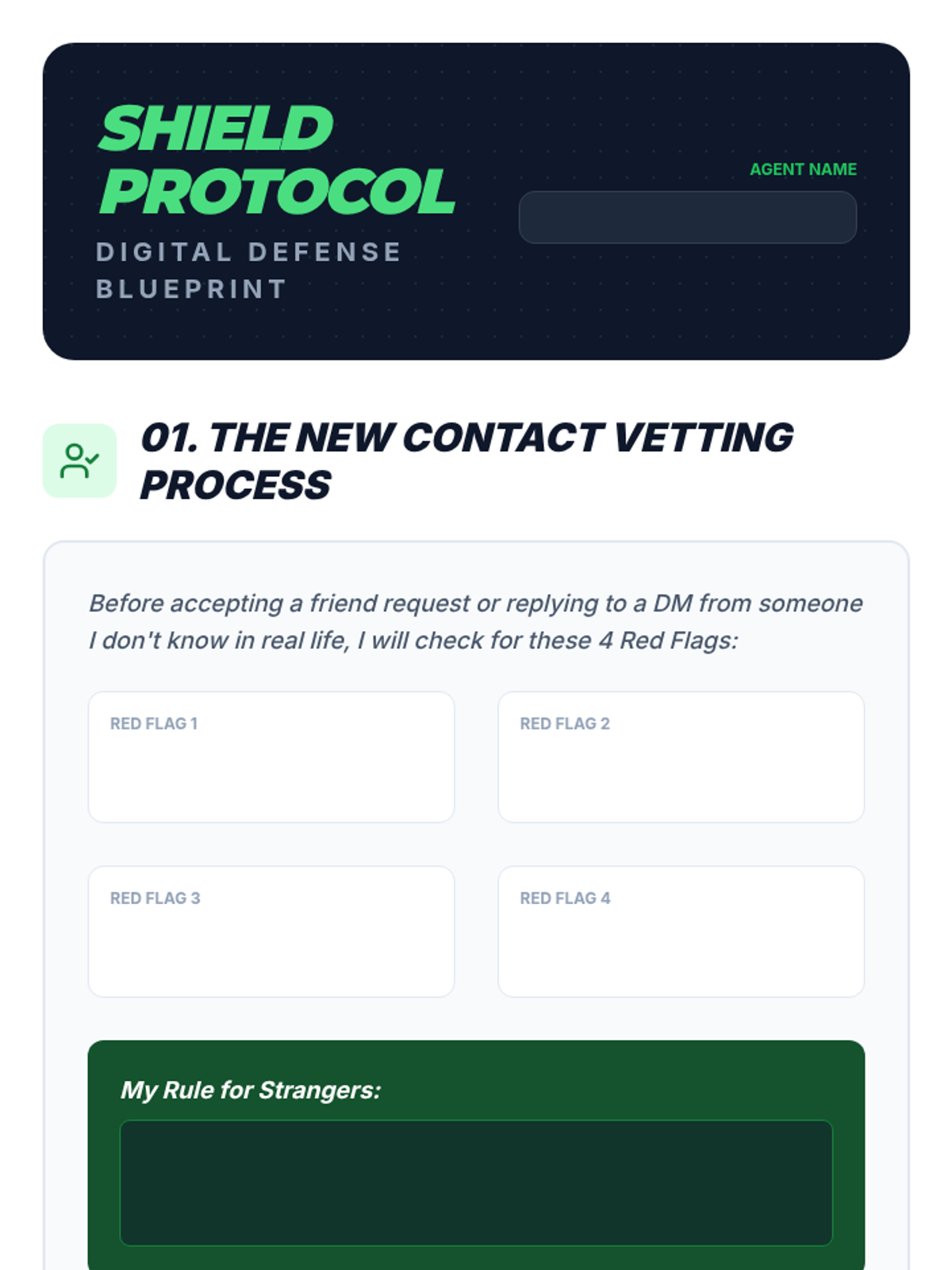
Final project worksheet for Lesson 5 where students synthesize their learning into a personal digital defense blueprint. Improved spacing for student work areas.
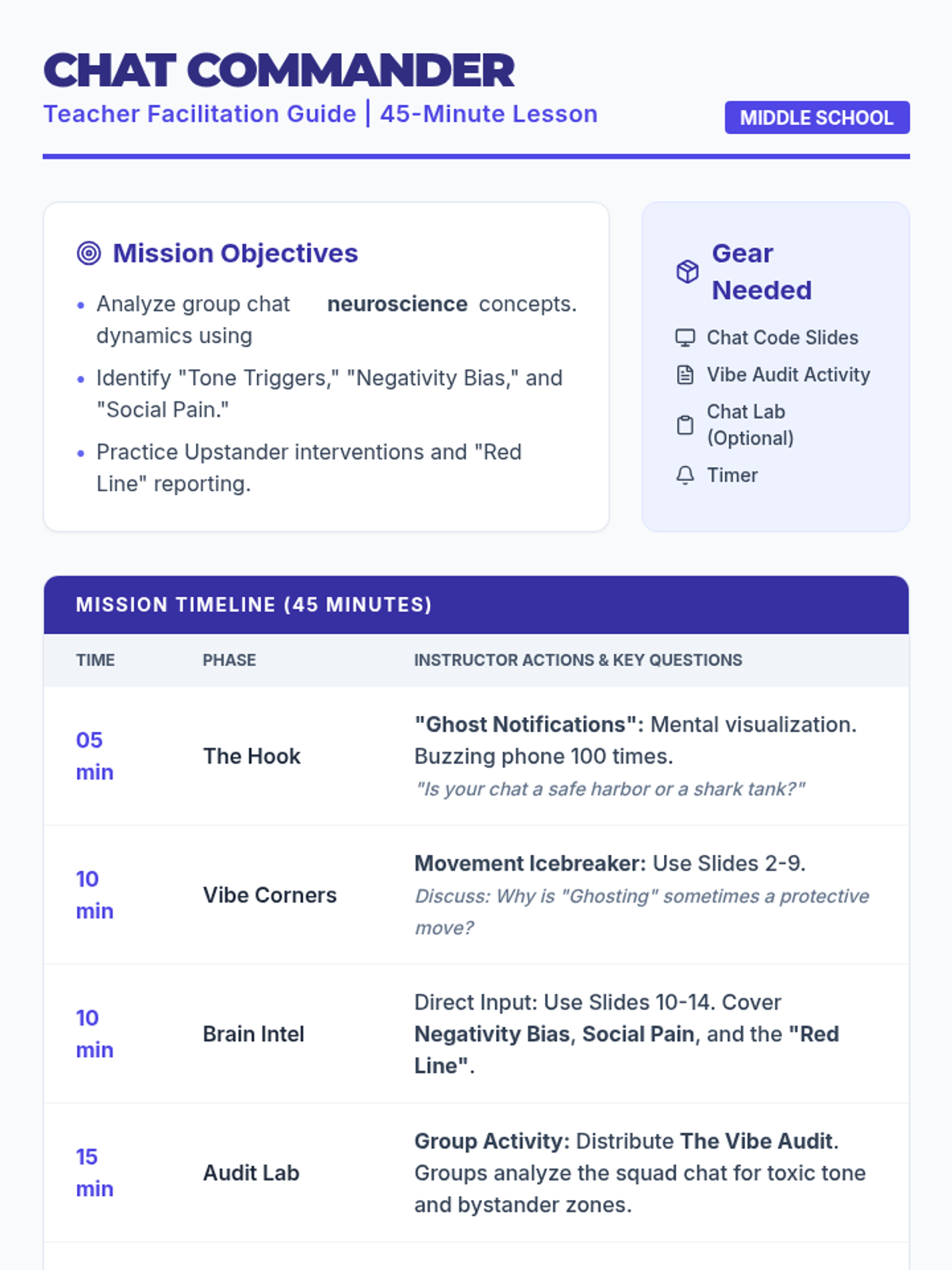
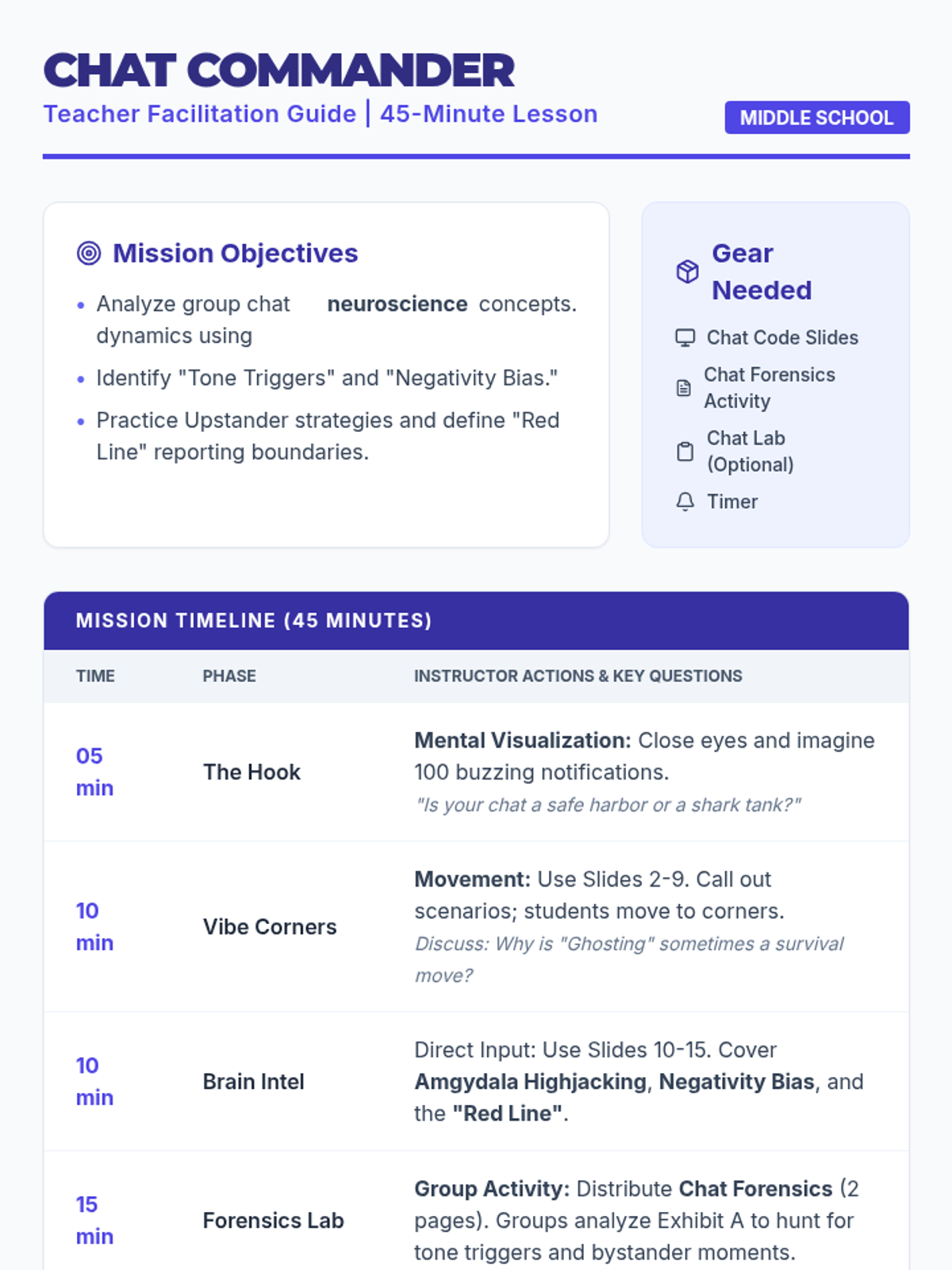
Updated teacher facilitation guide for the Chat Code lesson, now incorporating the 'Vibe Corners' icebreaker, neuroscience-focused instruction, and the 'Chat Forensics' group activity.
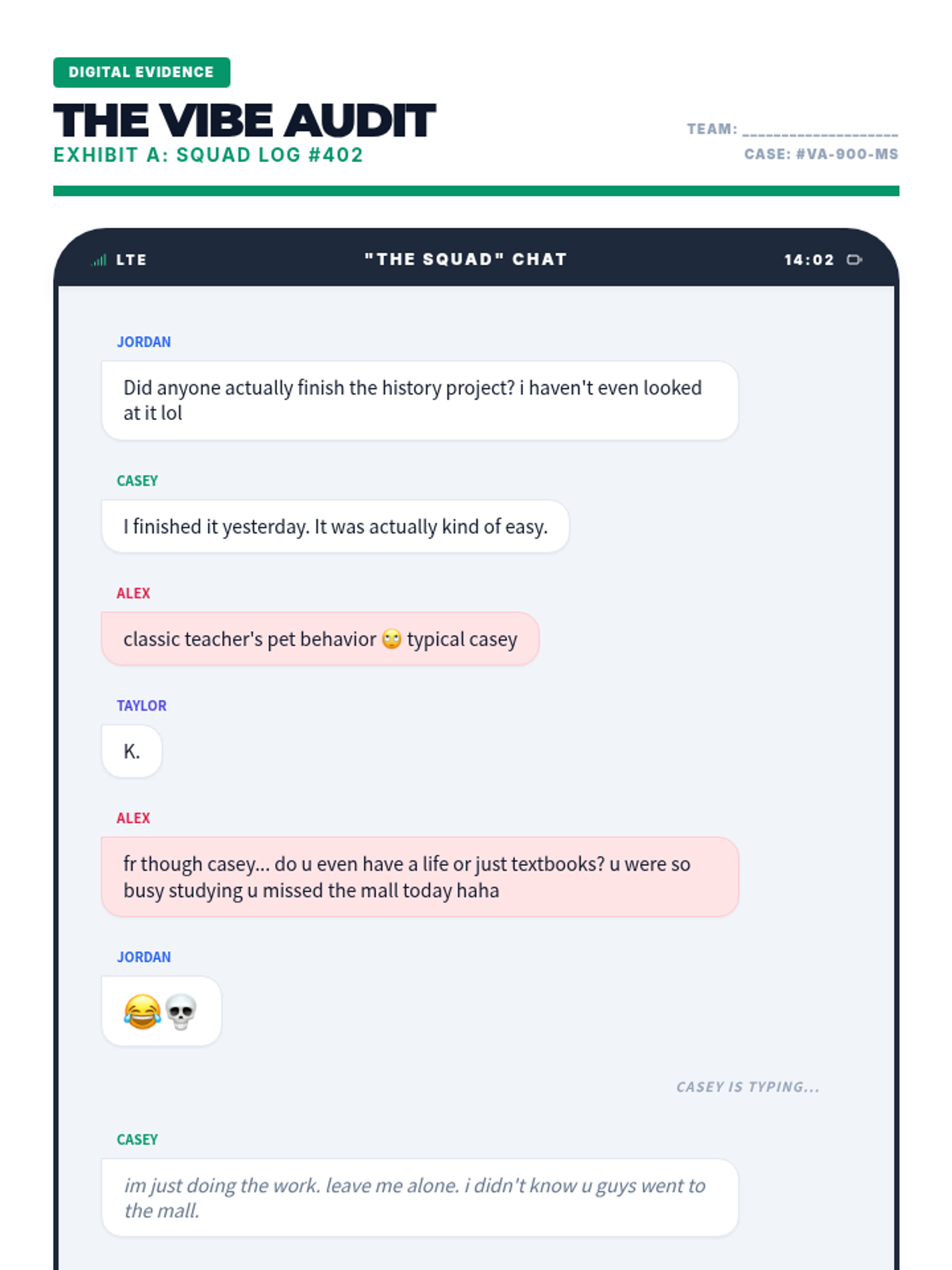
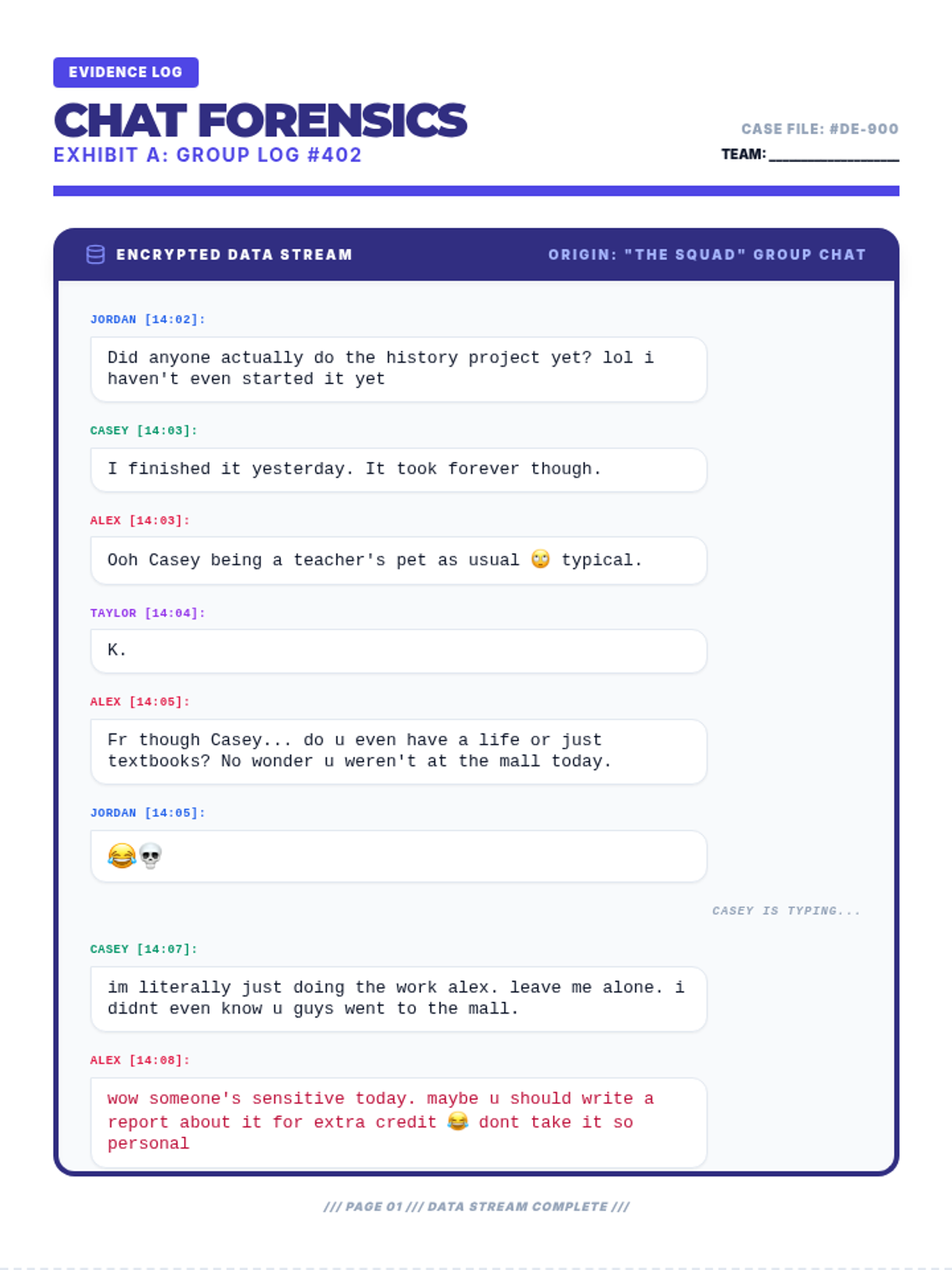
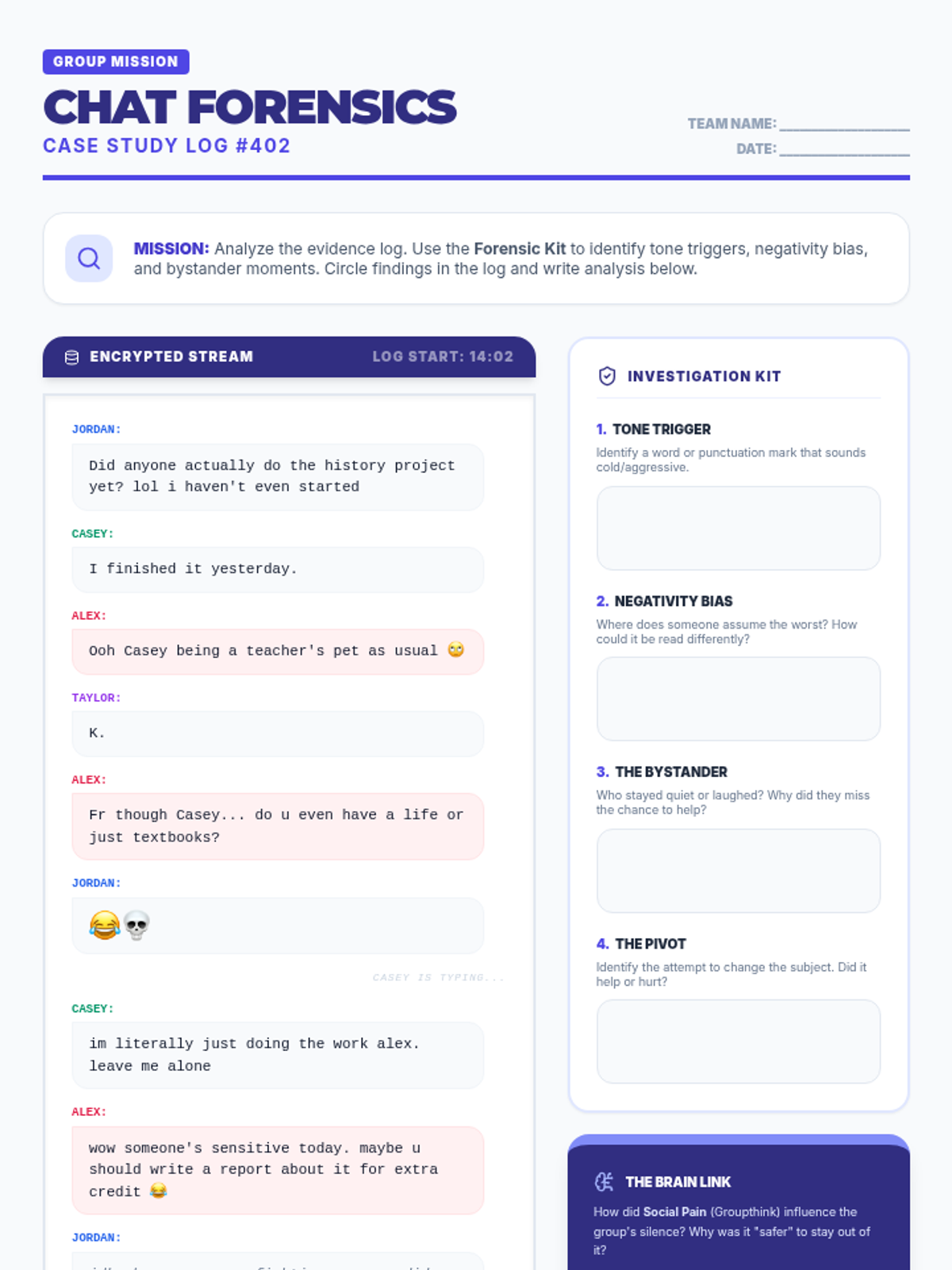
A complete two-page version of 'The Vibe Audit' group activity. Page 1 presents an immersive, phone-style chat log evidence stream, and Page 2 provides the detailed investigation checklist and reconstruction task for middle school teams.
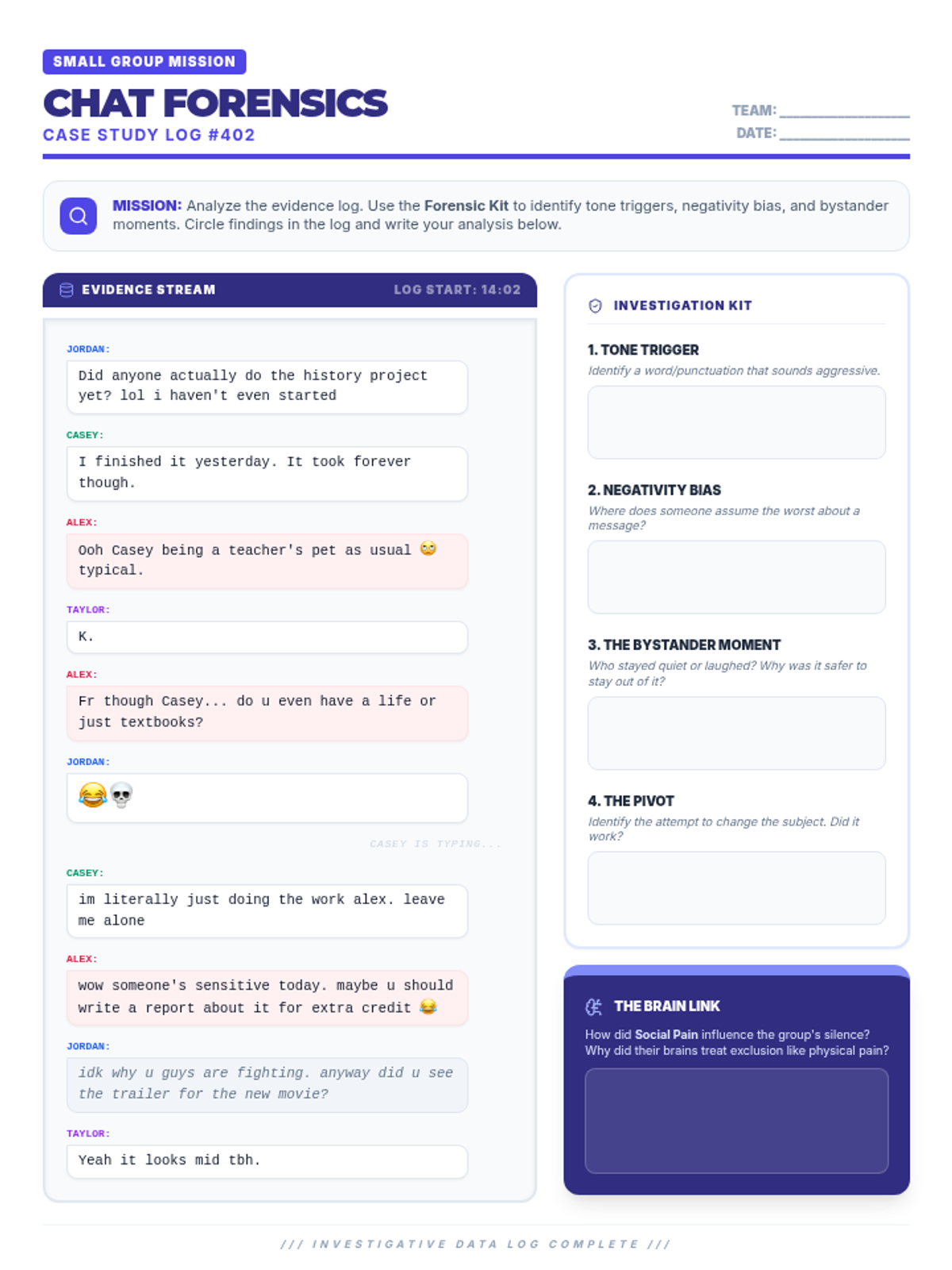
A strictly single-page version of the Chat Forensics activity, combining the full chat log evidence and the investigative kit tasks into a space-efficient layout for standard 8.5x11 printing.
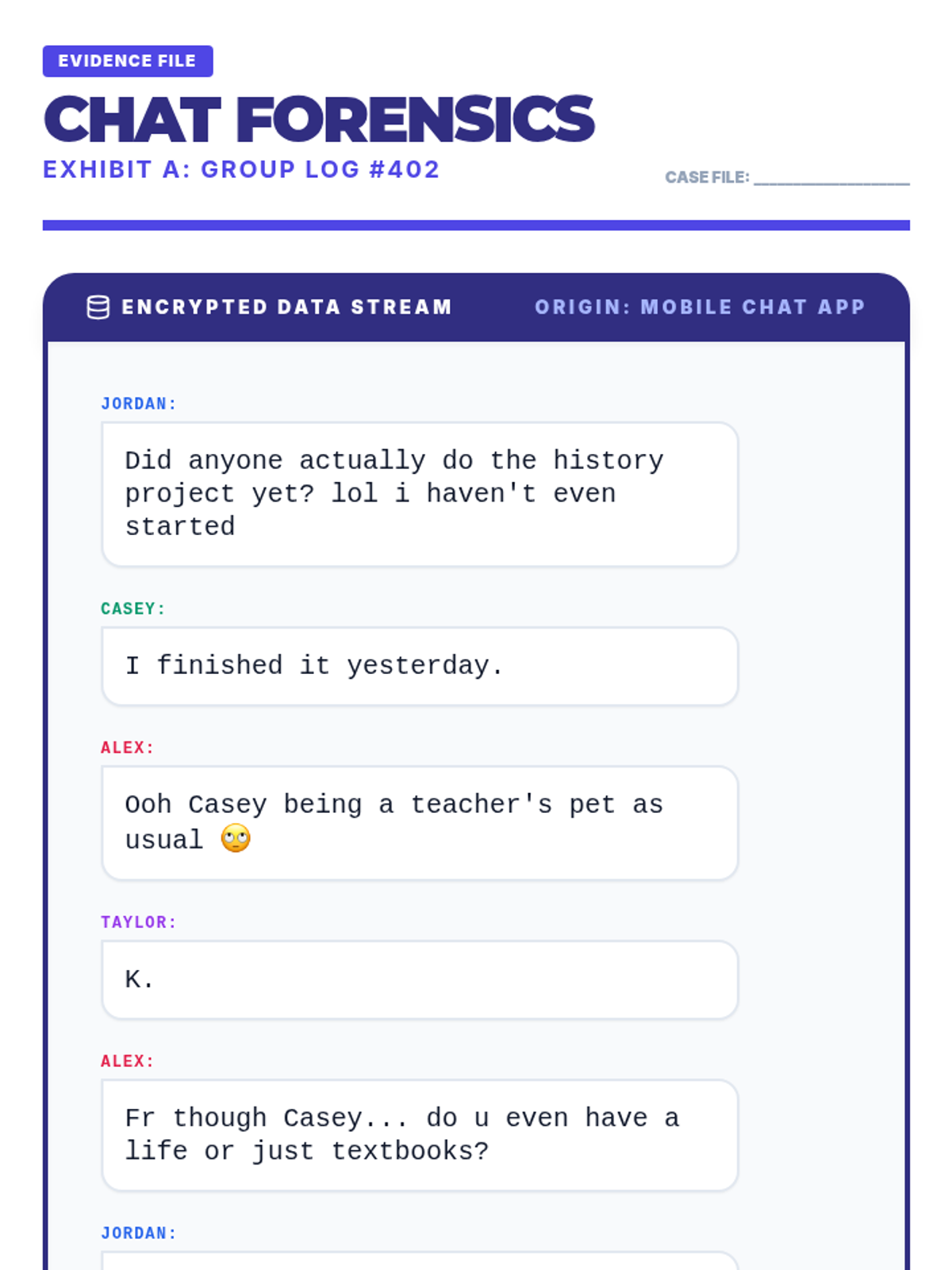
The complete Chat Forensics activity split into two distinct pages: Page 1 provides the full text exchange (Evidence Log), and Page 2 contains the detailed analysis tasks (Forensic Kit).
A two-page collaborative group activity where students analyze a chat log (Page 1: Evidence Log) and use digital forensic tools to identify tone triggers and social dynamics (Page 2: Forensic Kit).
A polished, single-page group activity where students analyze a chat log for tone triggers, negativity bias, and bystander behavior in a collaborative forensic detective theme.
Updated Chat Code slides without the archetypes slide, focusing on the neuroscience of misinterpretation and the social courage needed to be an upstander.