Root cause analysis and brainstorming techniques for everyday problem-solving. Equips learners with ethical frameworks and risk-benefit evaluation skills to predict consequences and make informed choices.
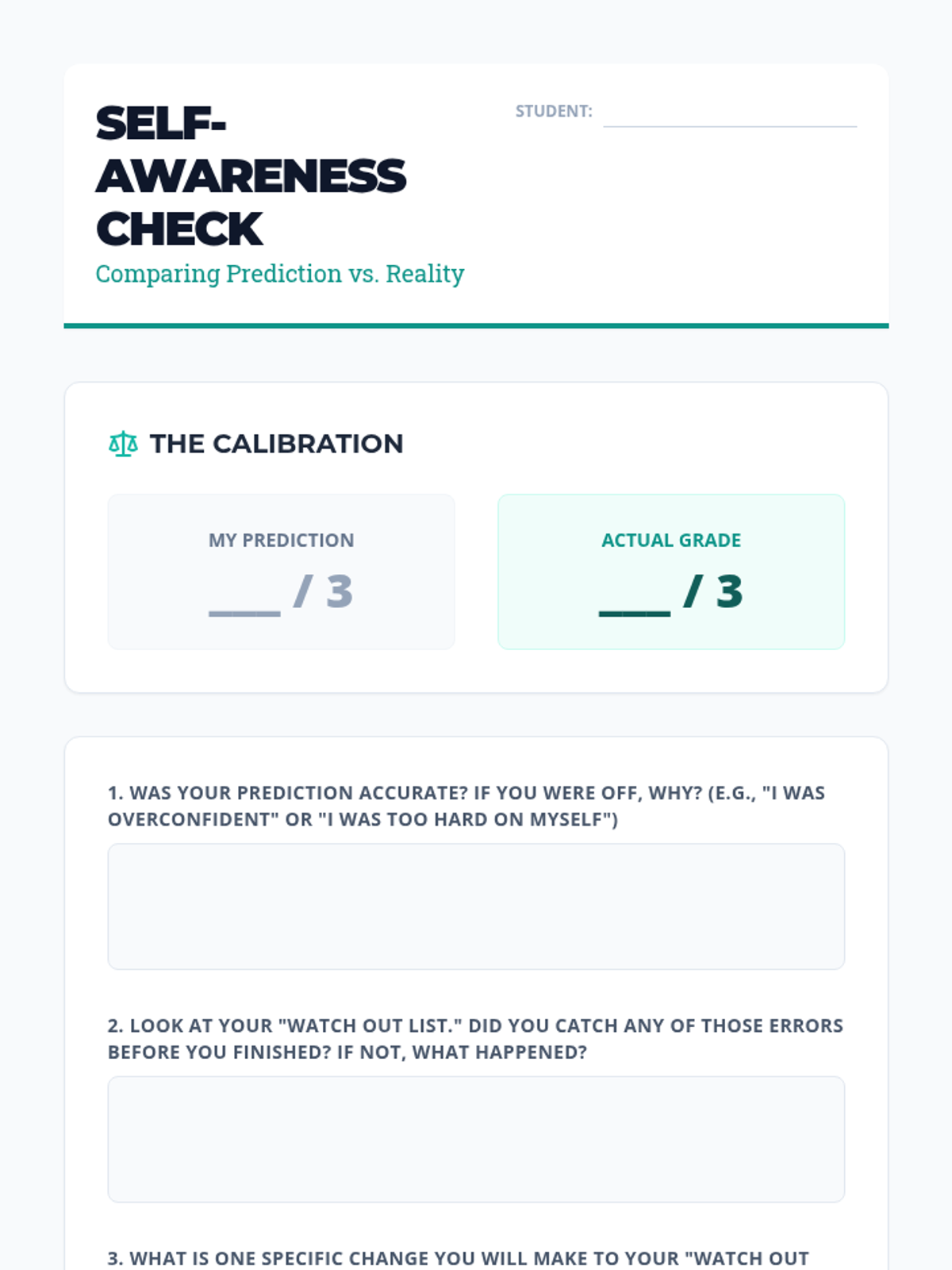
A final reflection sheet for students to compare their quiz predictions with their actual grades, evaluating the effectiveness of their metacognitive strategies.
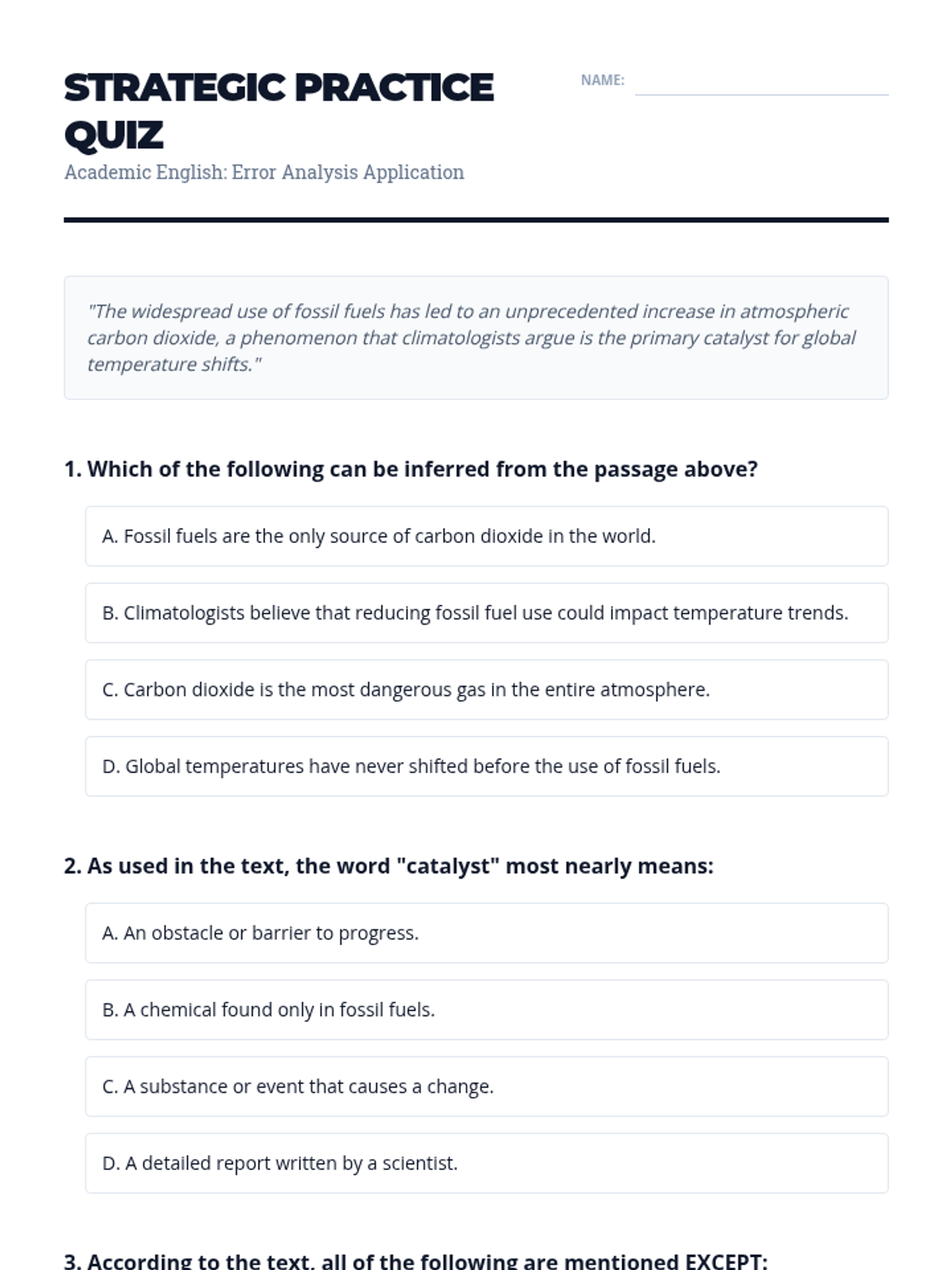
A short Academic English quiz designed to test students' application of their "Watch Out List," including a mandatory pre-grading self-reflection and score prediction section.
Final slides for the sequence focusing on the "Showtime" assessment. It introduces the score prediction challenge and real-time error analysis.
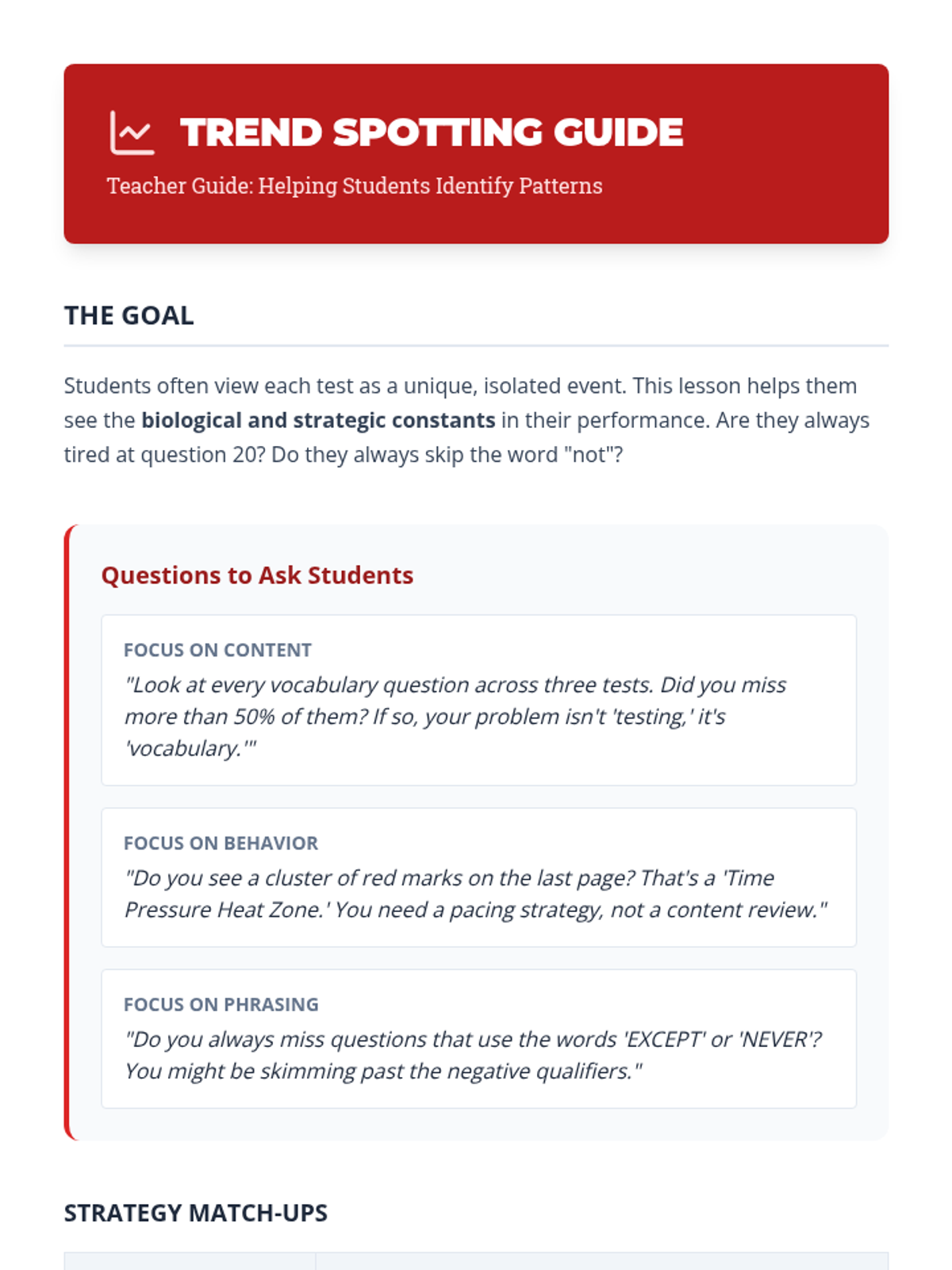
A guide for teachers to help students interpret their error data and connect patterns to specific defensive strategies.
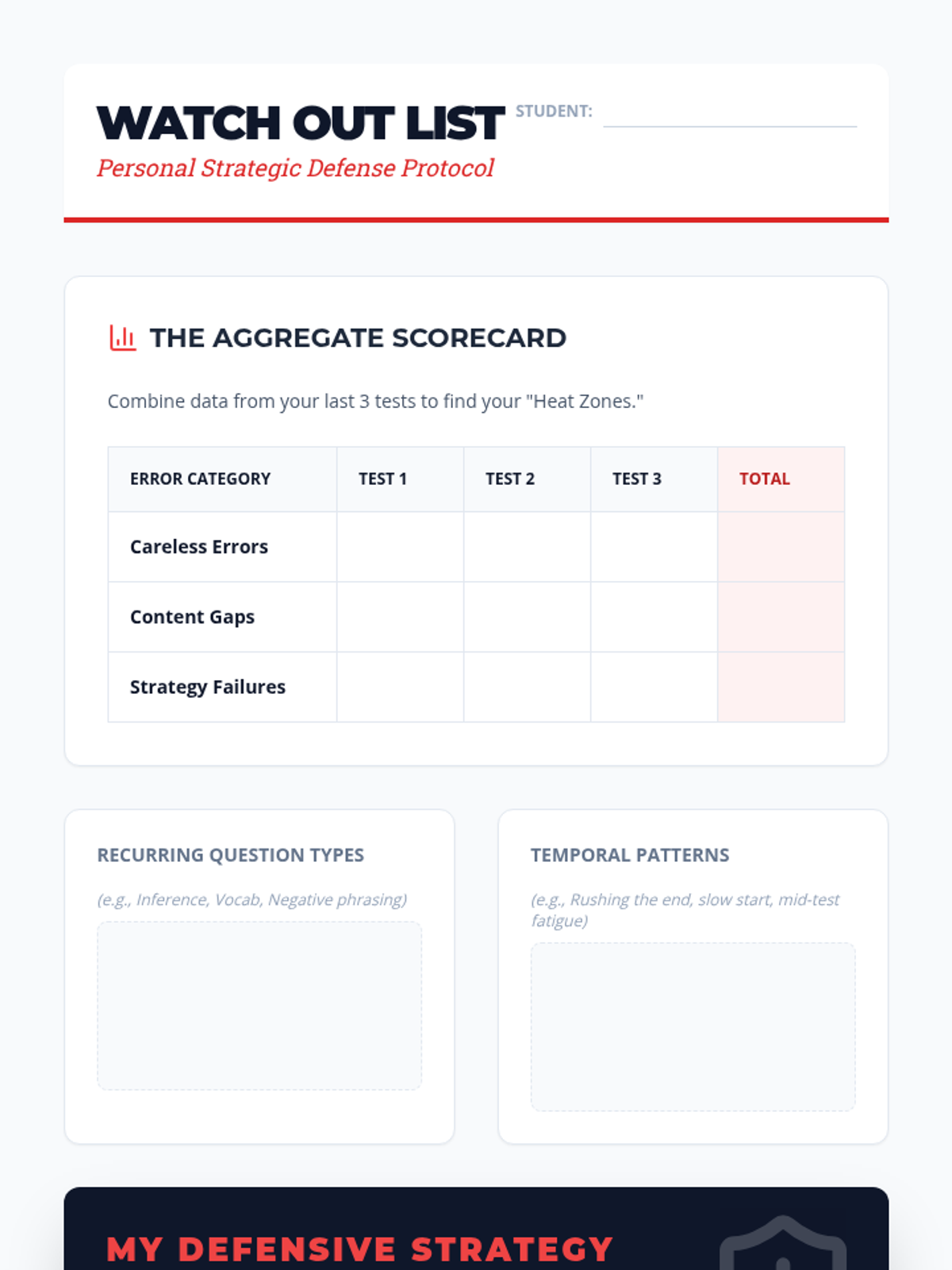
A student worksheet for aggregating error data across multiple assessments and distilling those patterns into a "Watch Out List" for future defense.
Slides for Lesson 4 that use a "Heatmap" analogy to teach students how to aggregate error data and identify recurring personal patterns.
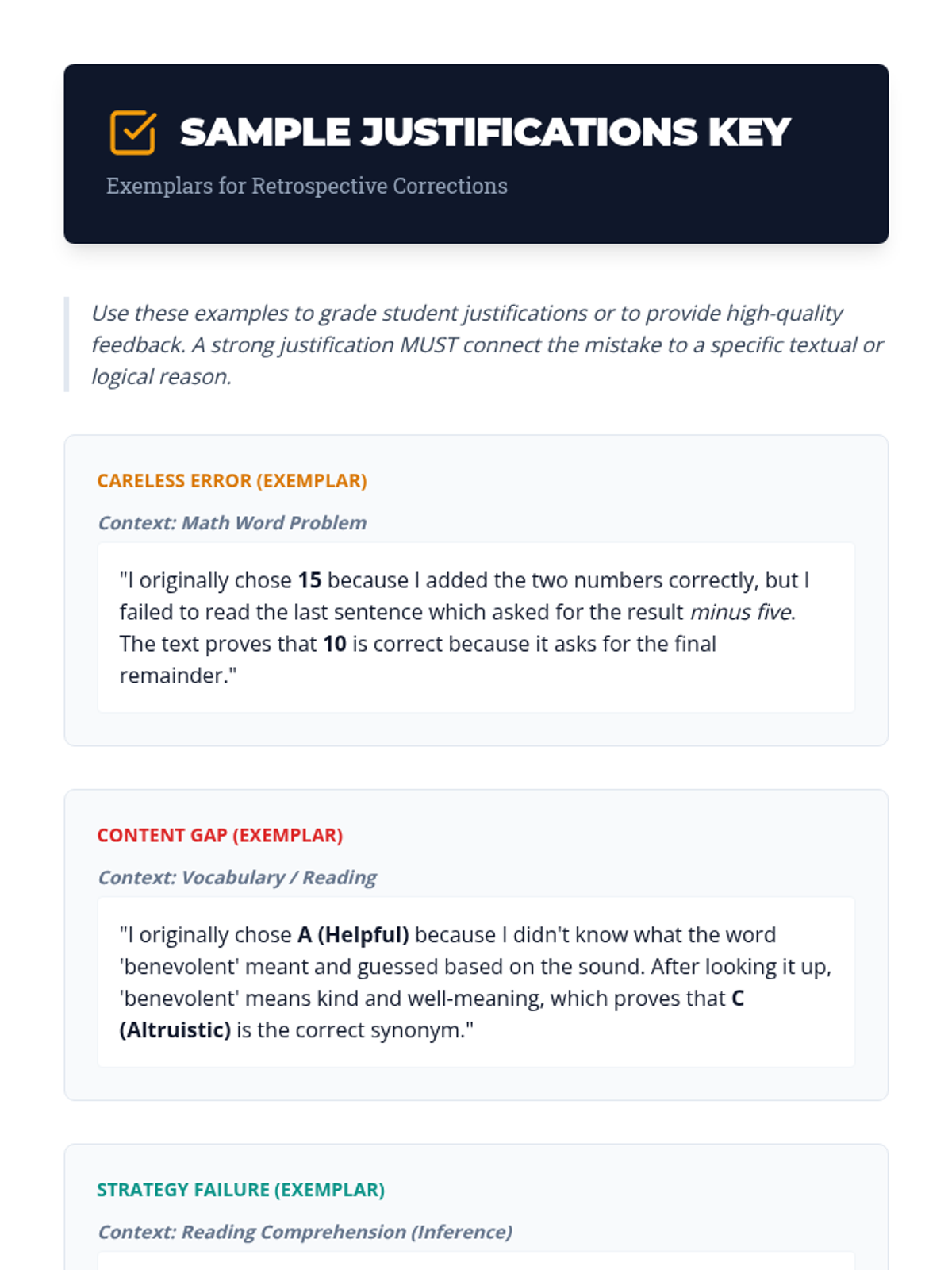
An answer key/exemplar guide for teachers to evaluate student justification statements, showing the difference between weak and mastery-level corrections.
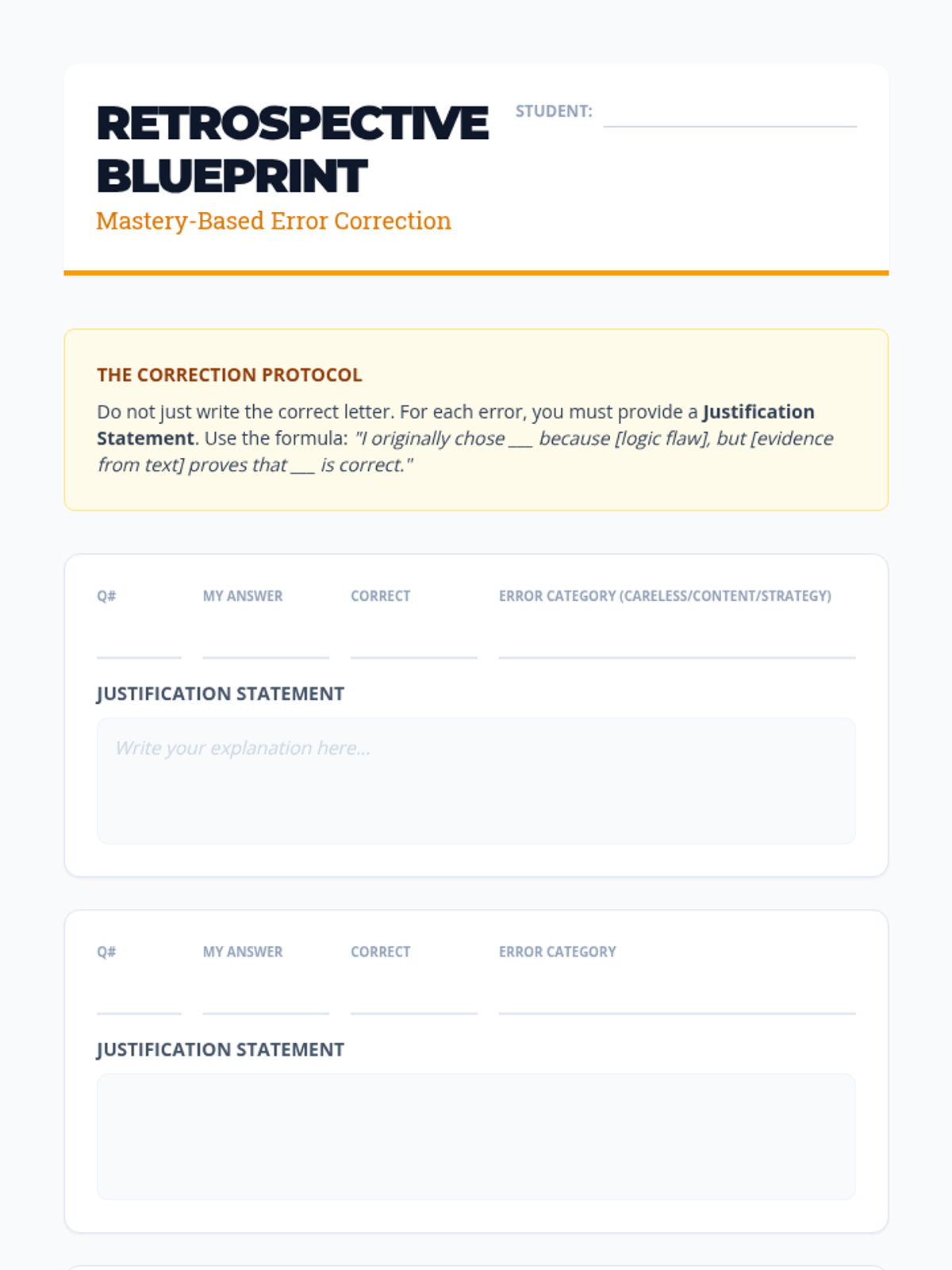
A template for students to perform deep error corrections, requiring them to write justification statements using a specific logic-based formula.
Slides for Lesson 3 introducing the "Justified Fix" method. It emphasizes that students must explain why they were wrong and why the new answer is right using evidence.
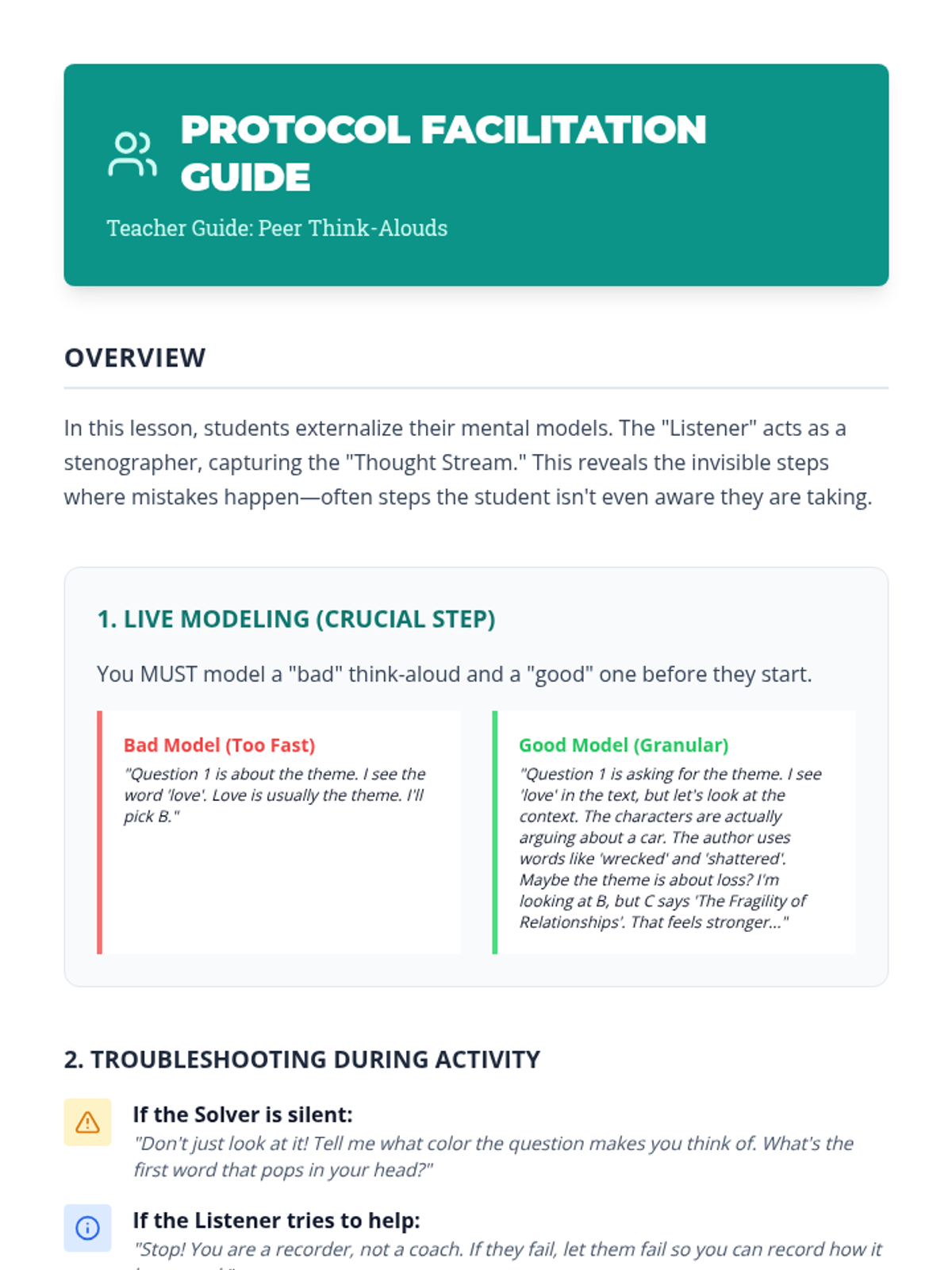
A facilitation guide for teachers to lead the "Think-Aloud" protocol, including scripts for modeling and tips for troubleshooting silent students.
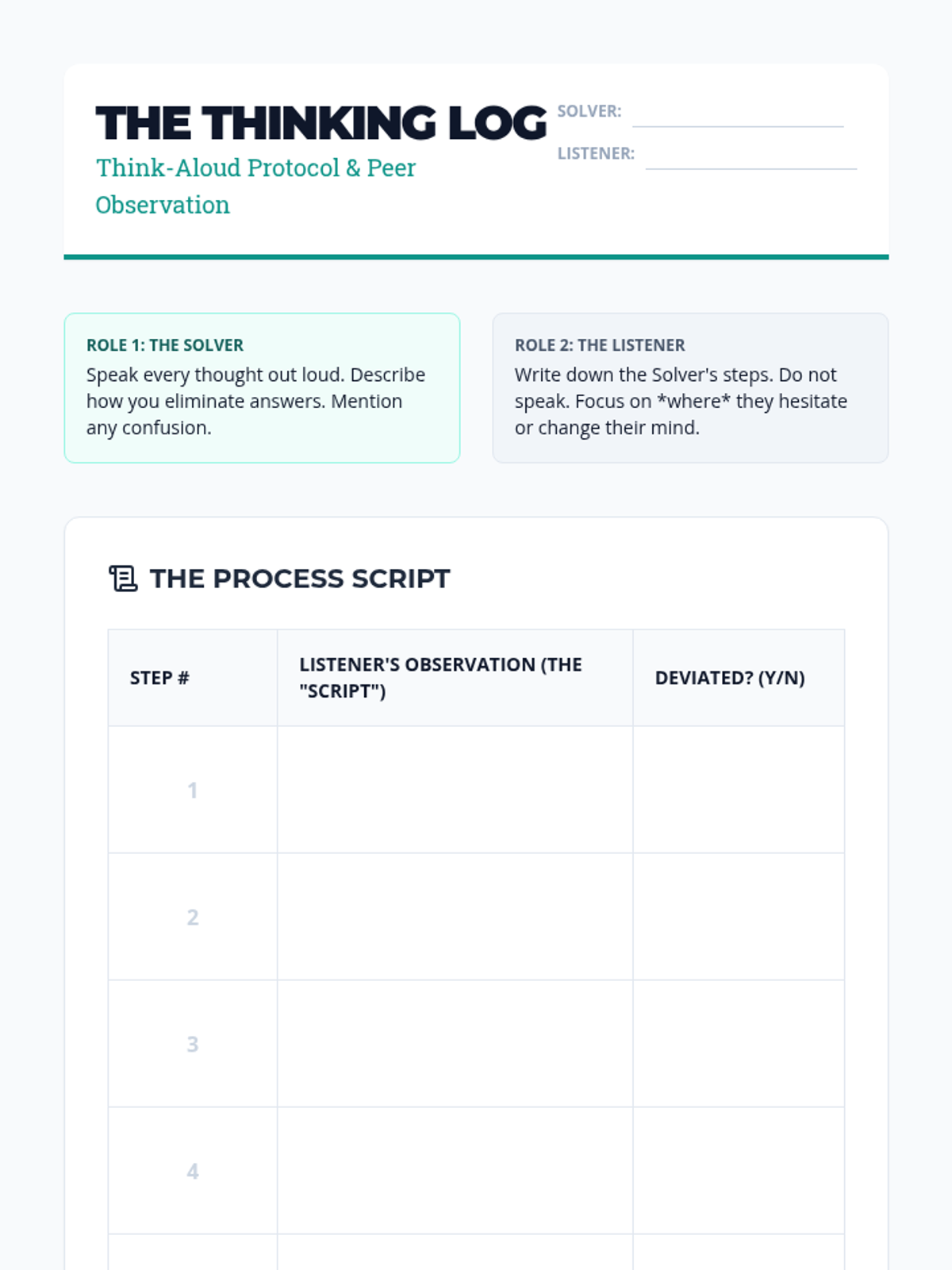
A peer-observation worksheet where students record their partner's "Think-Aloud" steps and analyze where their logic deviated from the correct path.
Slides for Lesson 2 that introduce the "Think-Aloud" protocol using a gamer commentary analogy. It outlines the roles of "The Solver" and "The Listener."
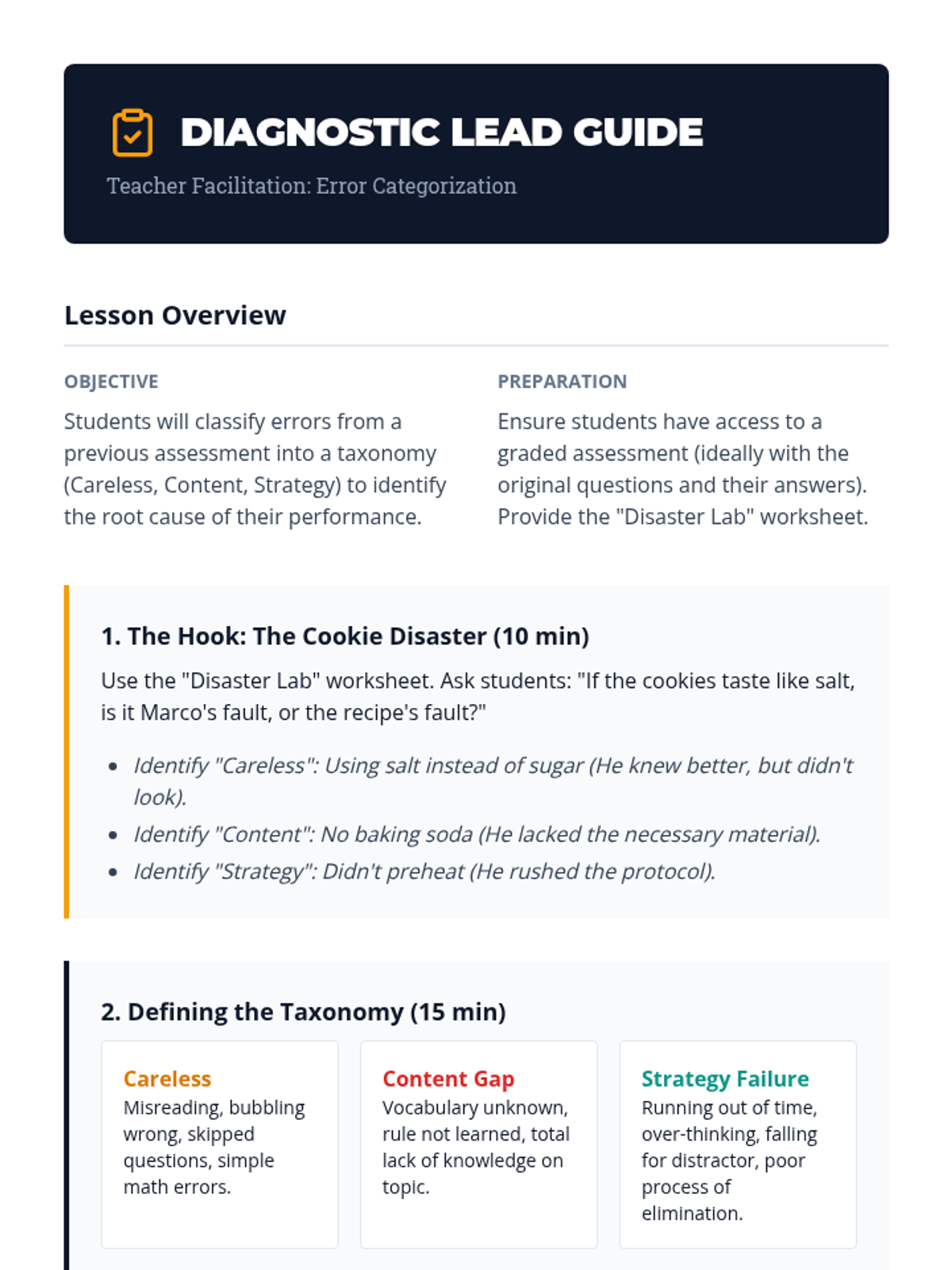
A teacher facilitation guide for Lesson 1, providing instructional prompts and definitions for error taxonomy.
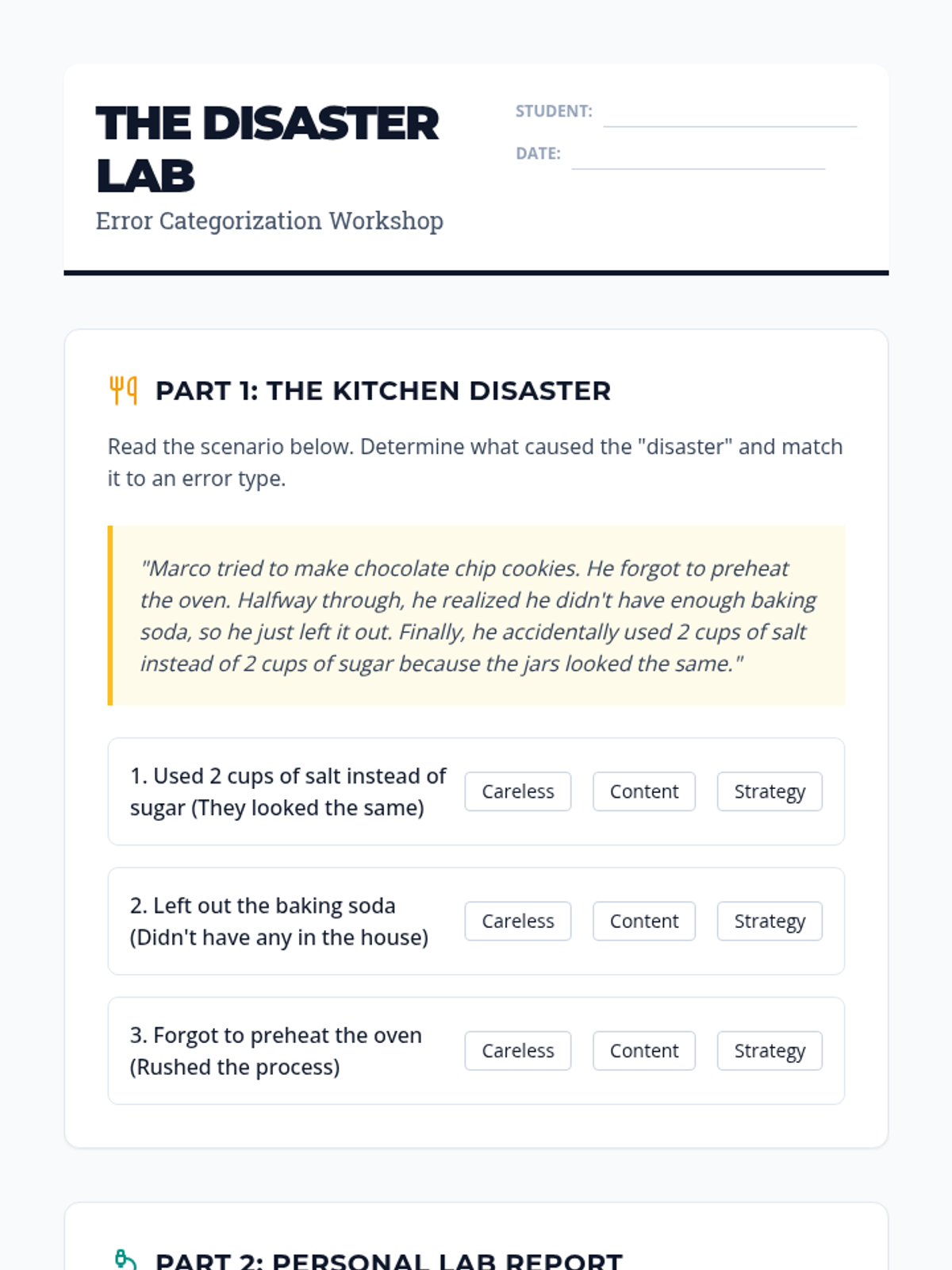
A student worksheet for the first lesson that uses a cookie recipe disaster to hook students into error categorization, followed by a table for analyzing their own test mistakes.
An introductory slide deck explaining the three main types of errors: Careless, Content Gap, and Strategy Failure, using a recipe disaster analogy.
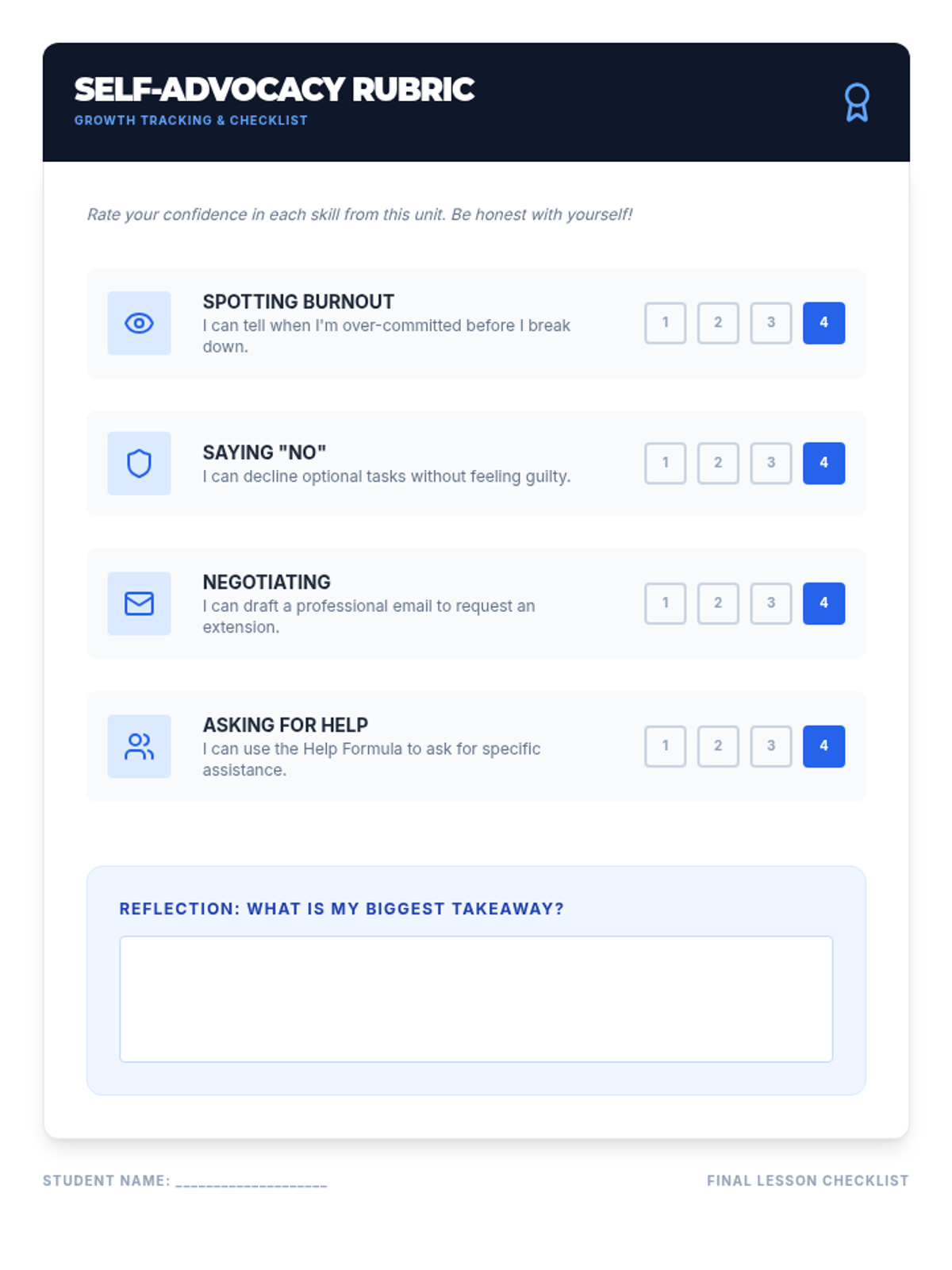
A self-assessment rubric for students to track their growth in identifying burnout, setting boundaries, negotiating deadlines, and asking for help.
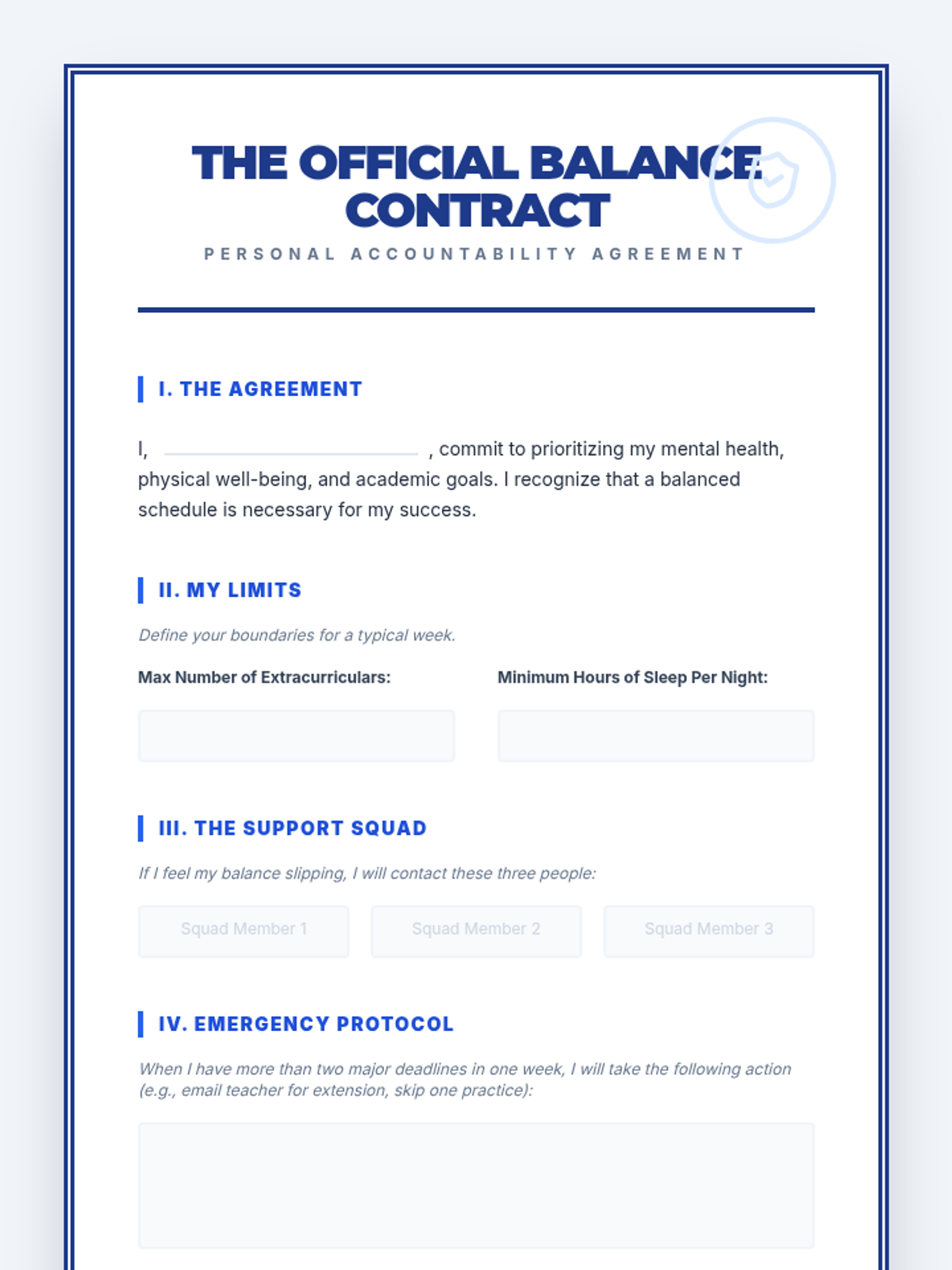
A personal 'Balance Contract' to outline their limits and establish a protocol for managing future stress.
Reviewing the unit and preparing for the final project: the personal Balance Contract.
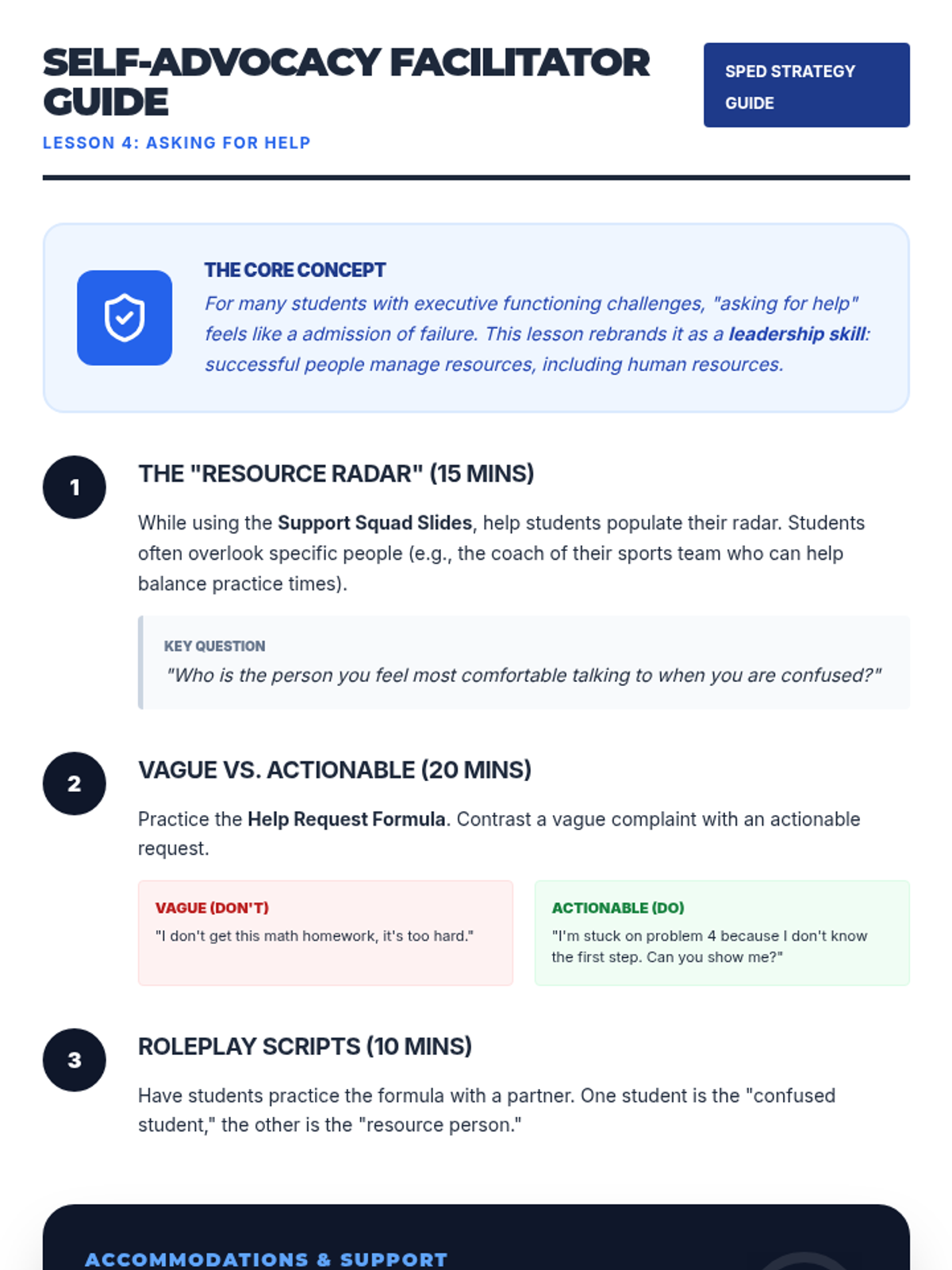
Strategies for teachers to teach self-advocacy and specific help-seeking behaviors to students, particularly those with Special Education needs.
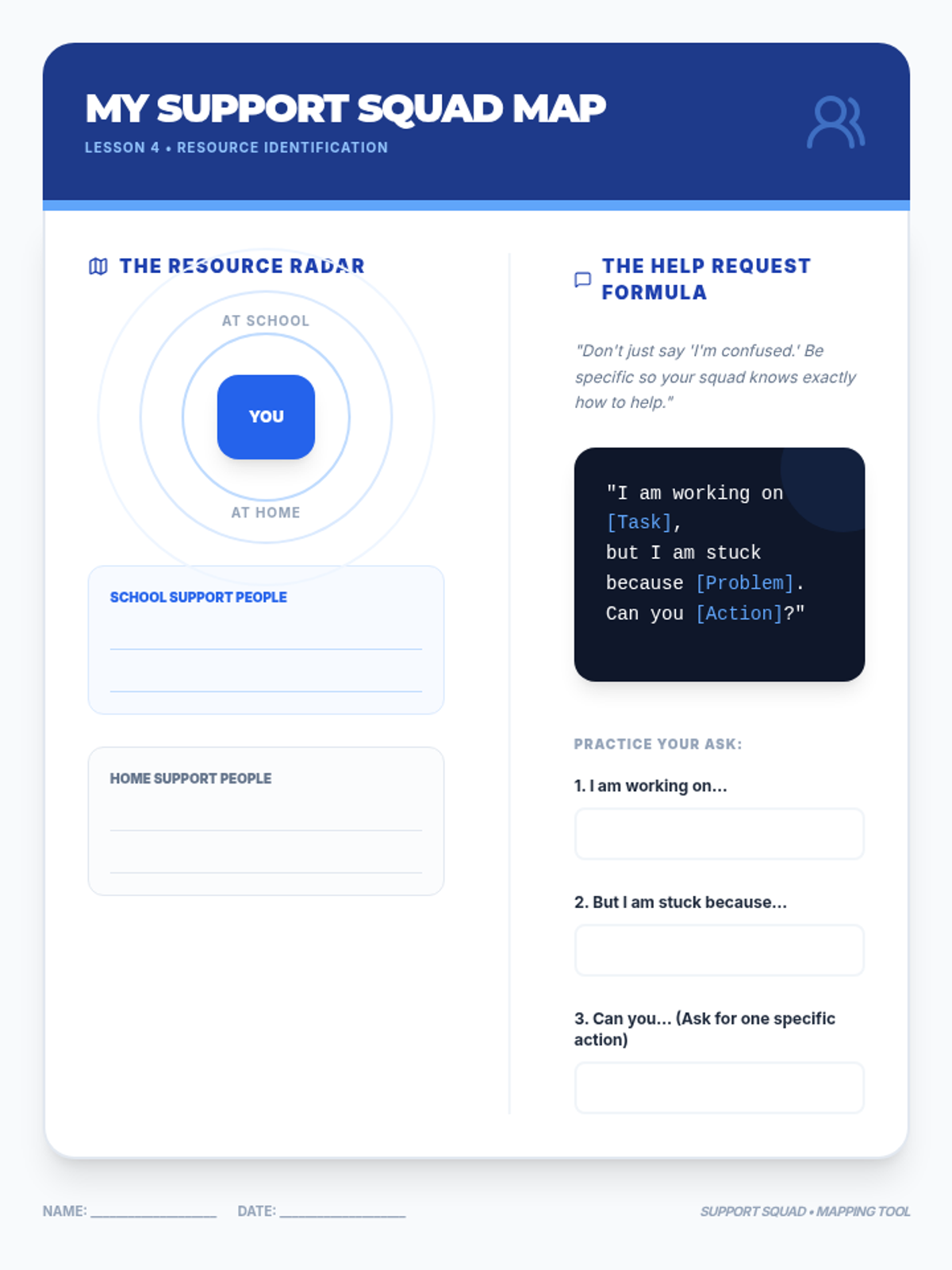
A visual organizer for resources and a help request formula to help students identify their support network and practice making specific help requests.
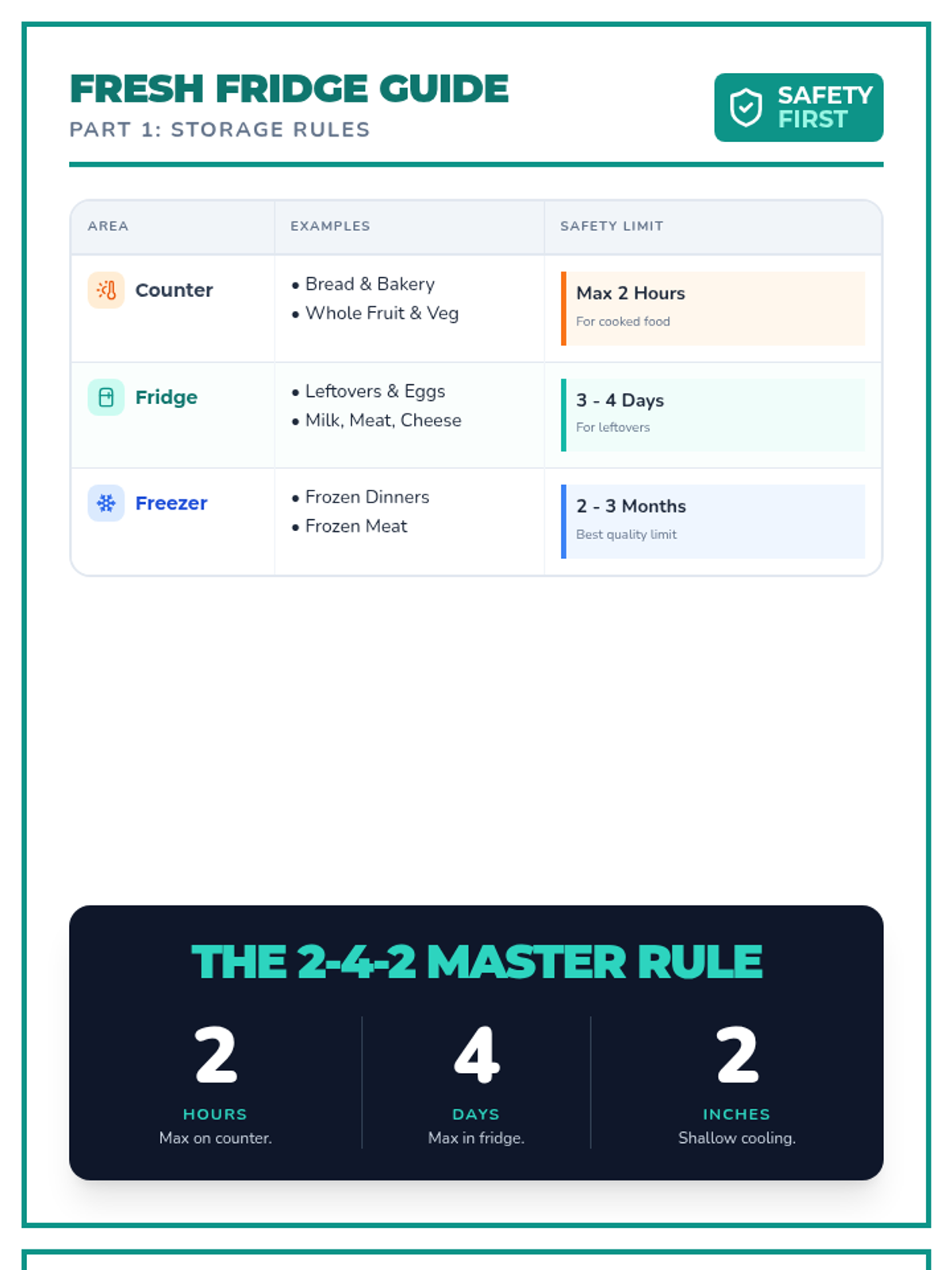
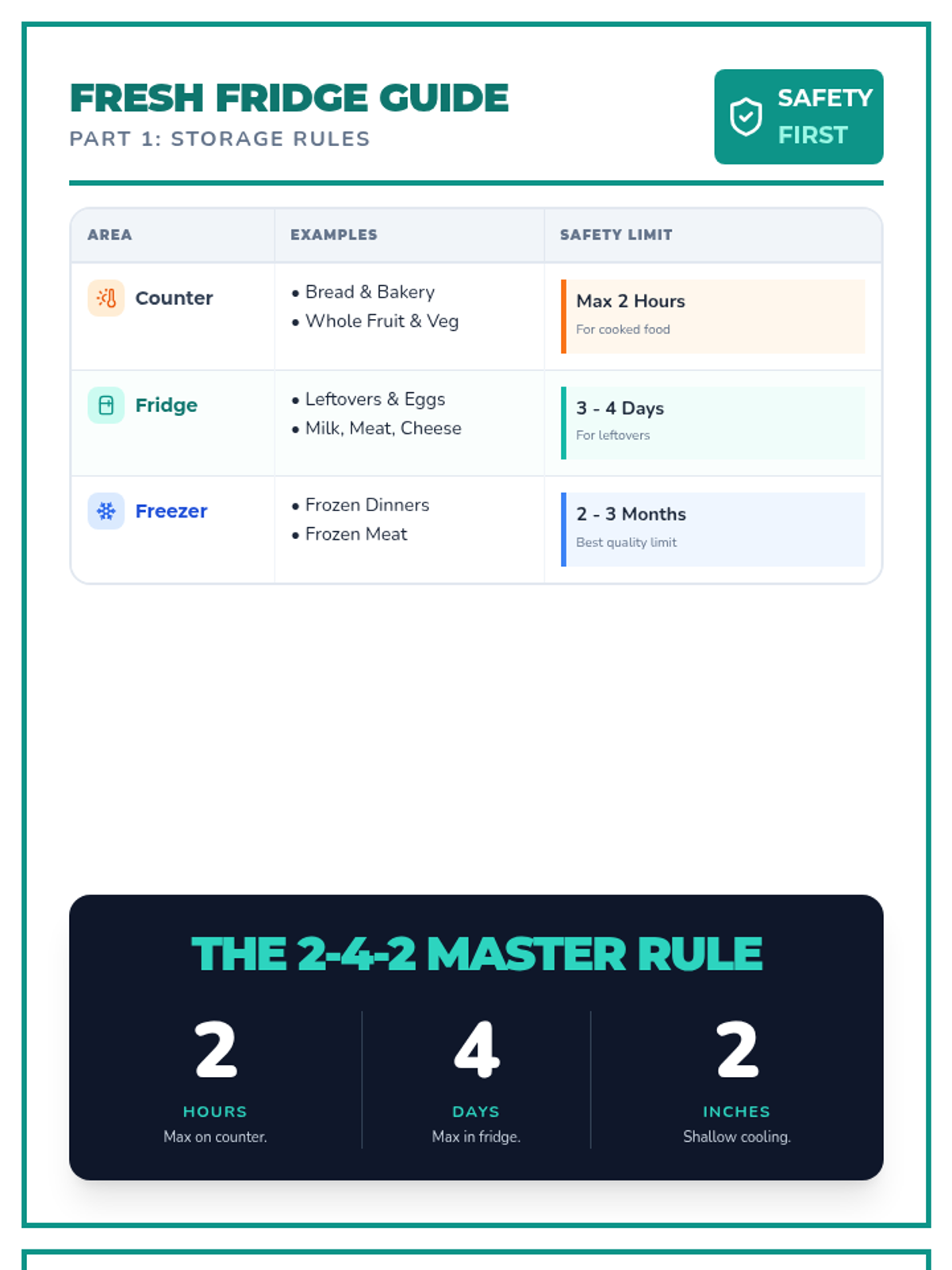
A reorganized visual guide for food storage and safety, featuring a clear tabular storage chart, the '2-4-2' rule, discard criteria, and a labeling tutorial with significantly increased font sizes for maximum readability.
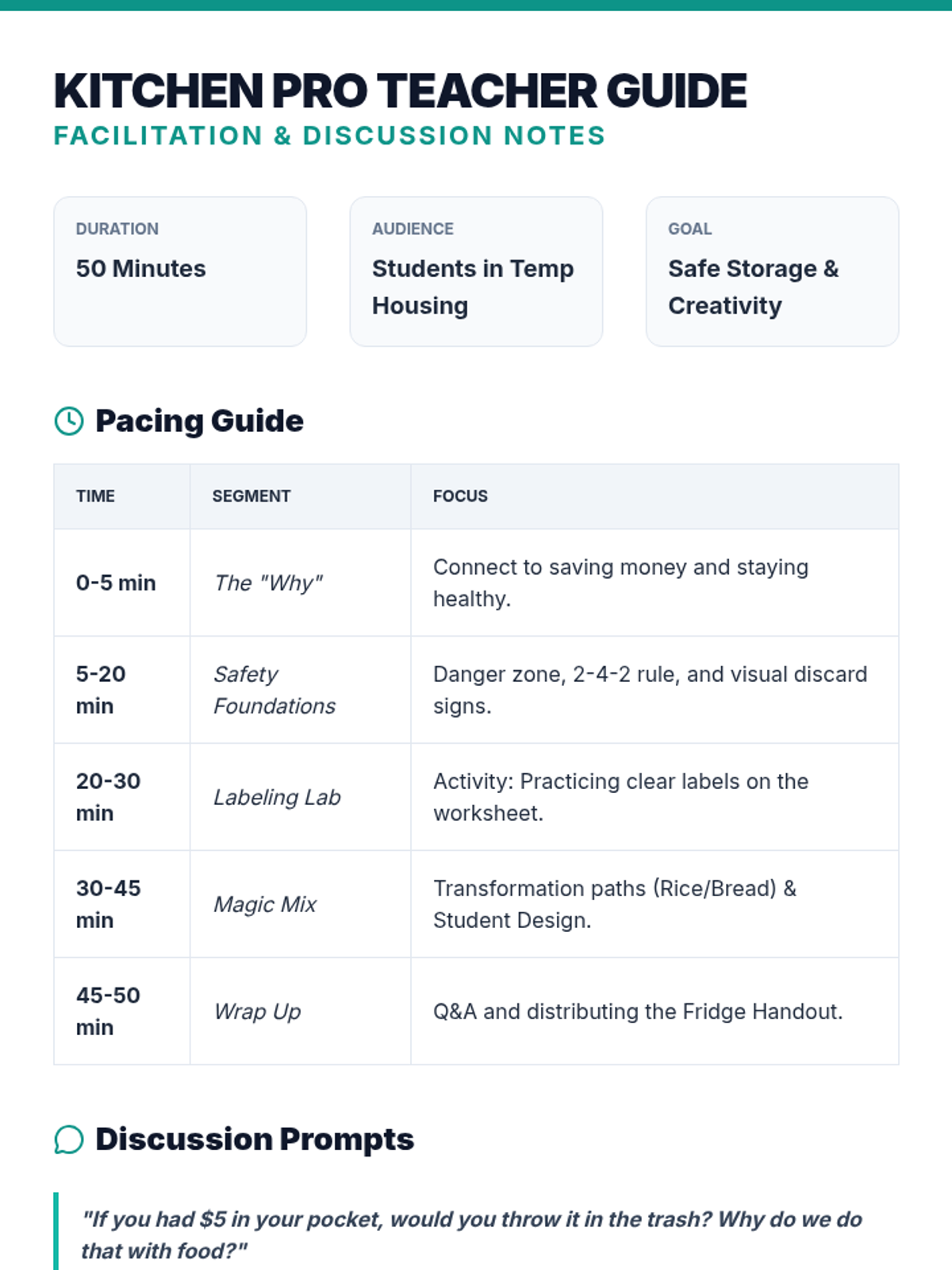
A comprehensive teacher's guide for the Kitchen Hacks lesson, including a 50-minute pacing guide, discussion prompts, and strategies for neurodiverse learners and students in temporary housing.
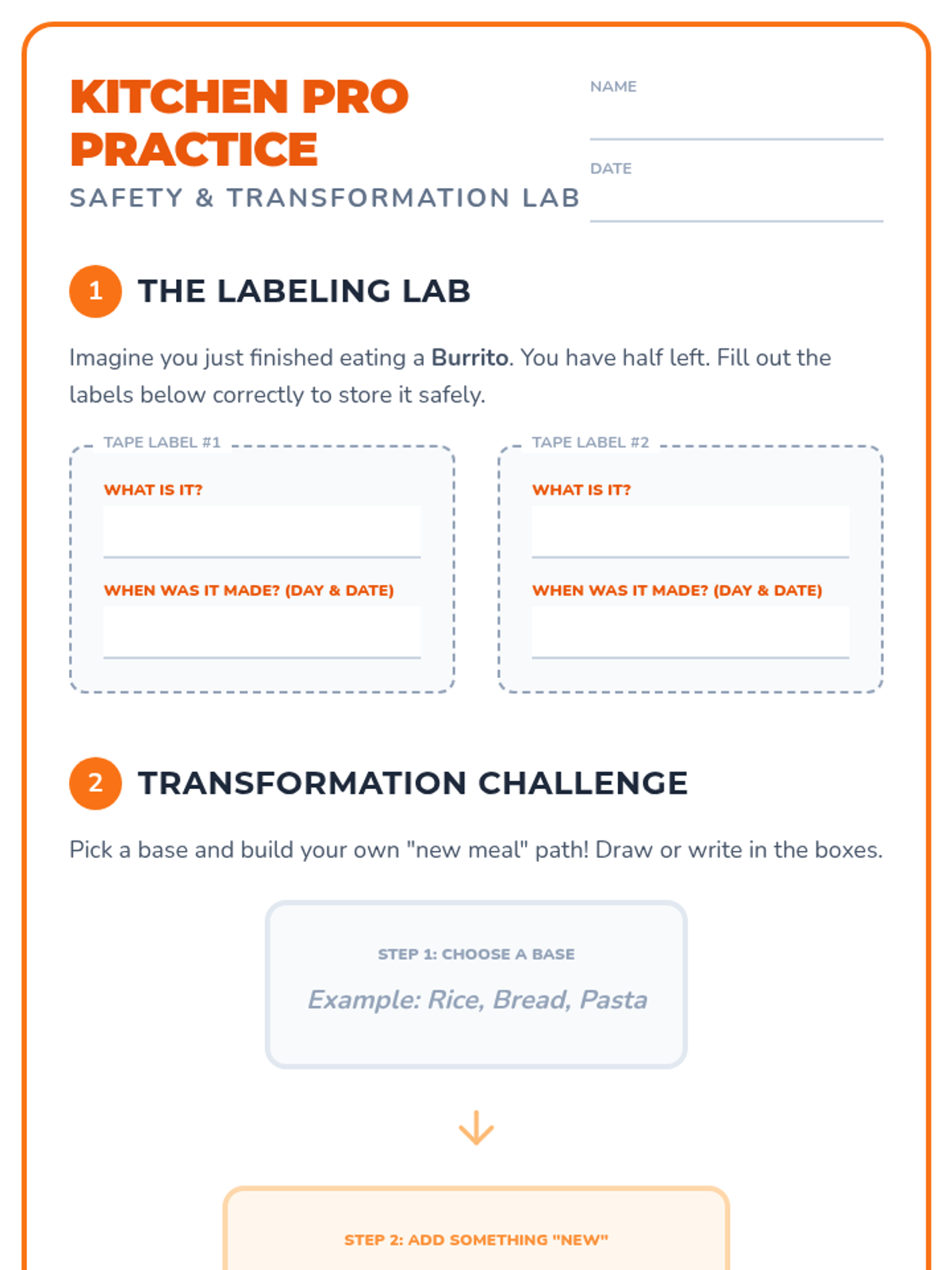
A student practice sheet for applying kitchen safety skills, including labeling exercises and a transformation flowchart activity.
A visually-driven slide deck for a 50-minute session on kitchen safety and food transformation, featuring the 2-4-2 rule and leftover flowcharts.
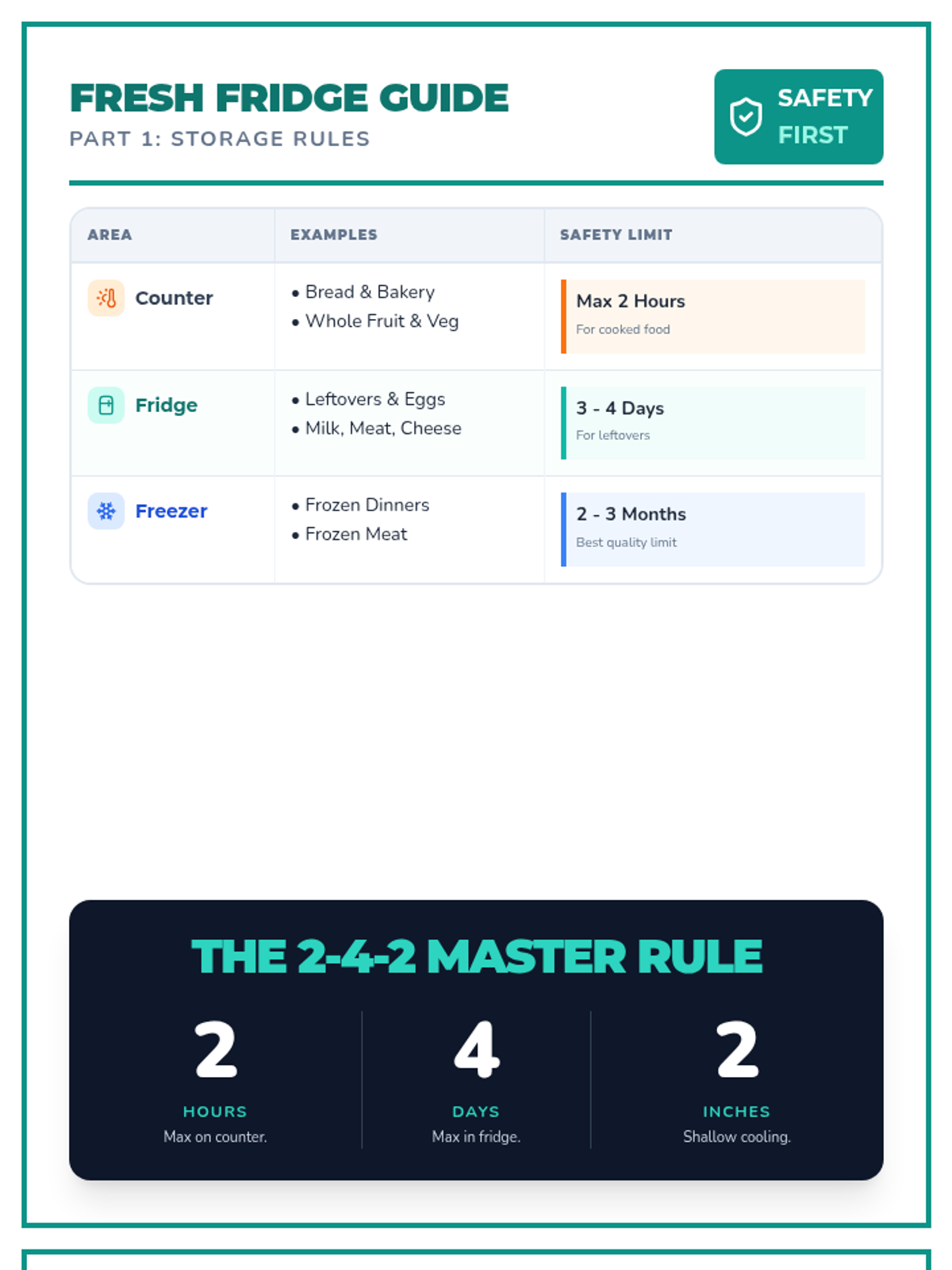
A reorganized visual guide for food storage and safety, featuring a clear tabular storage chart, the '2-4-2' rule, discard criteria, and a labeling tutorial with increased font sizes for readability.
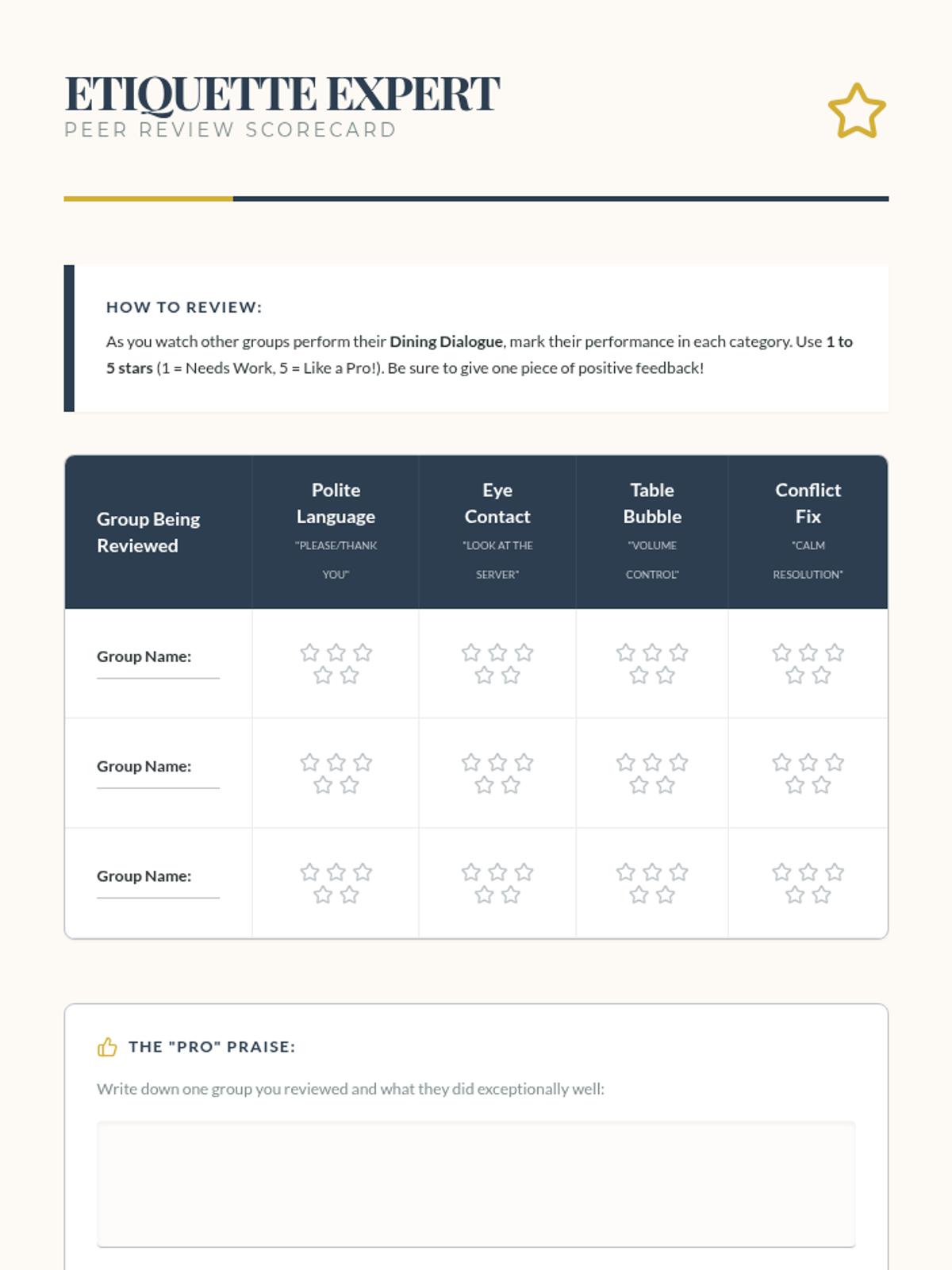
A peer review evaluation sheet for students to score each other's etiquette skills during the roleplay portion of the lesson.
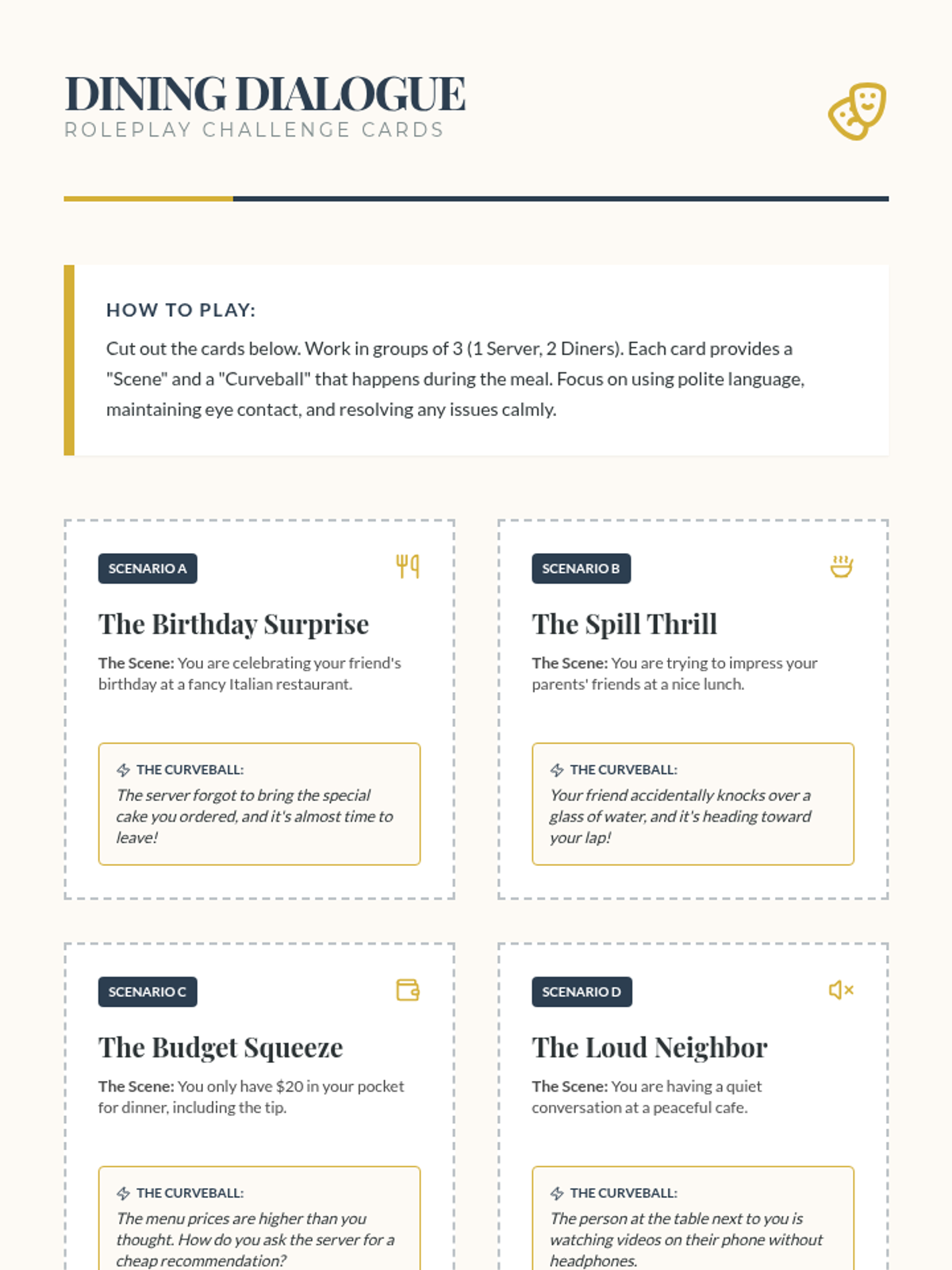
A set of four roleplay challenge cards for students to practice ordering, manners, and conflict resolution in various restaurant scenarios.
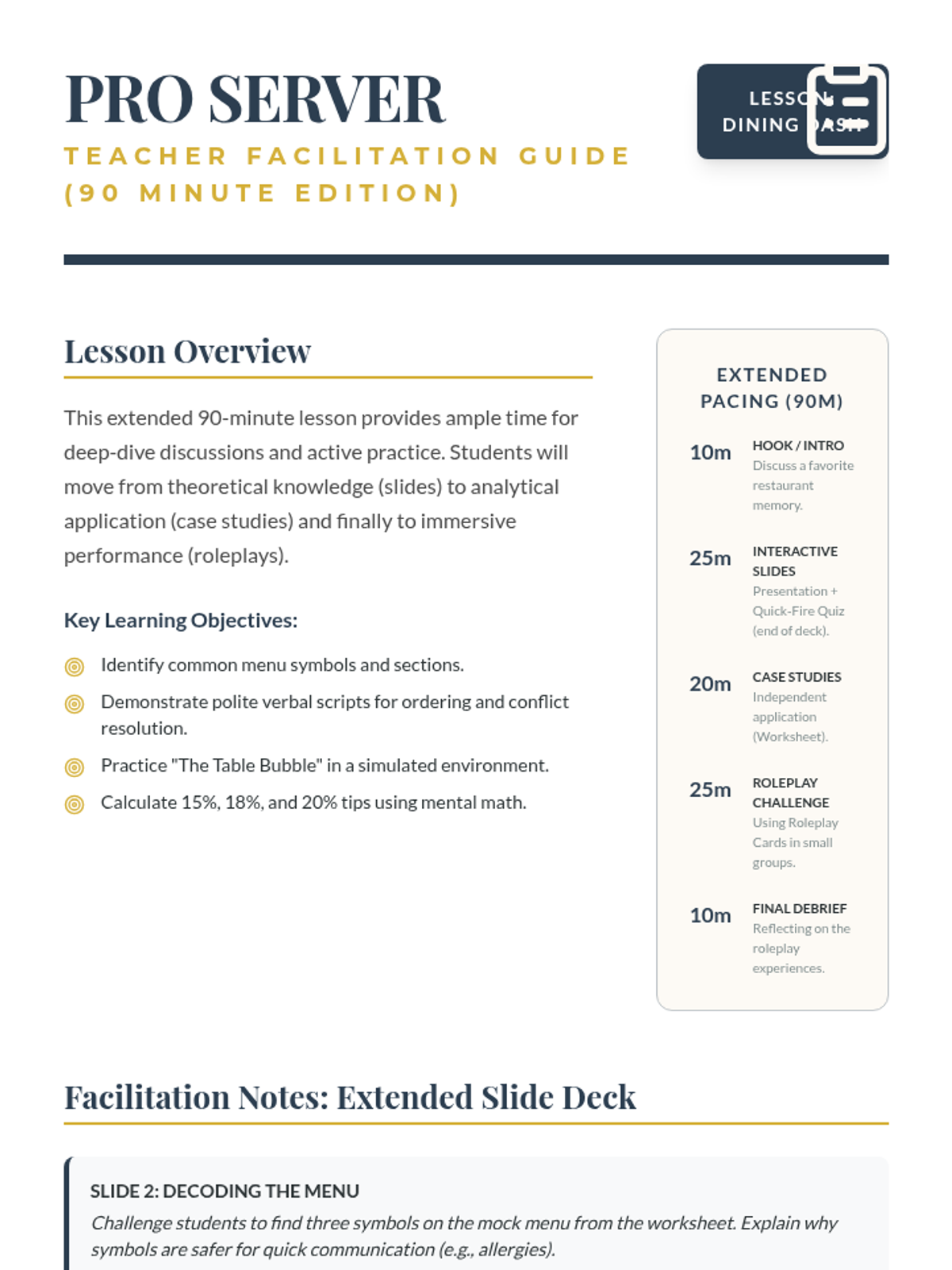
A teacher guide featuring lesson objectives, pacing suggestions, slide-by-slide discussion prompts, and a detailed answer key for the case studies.
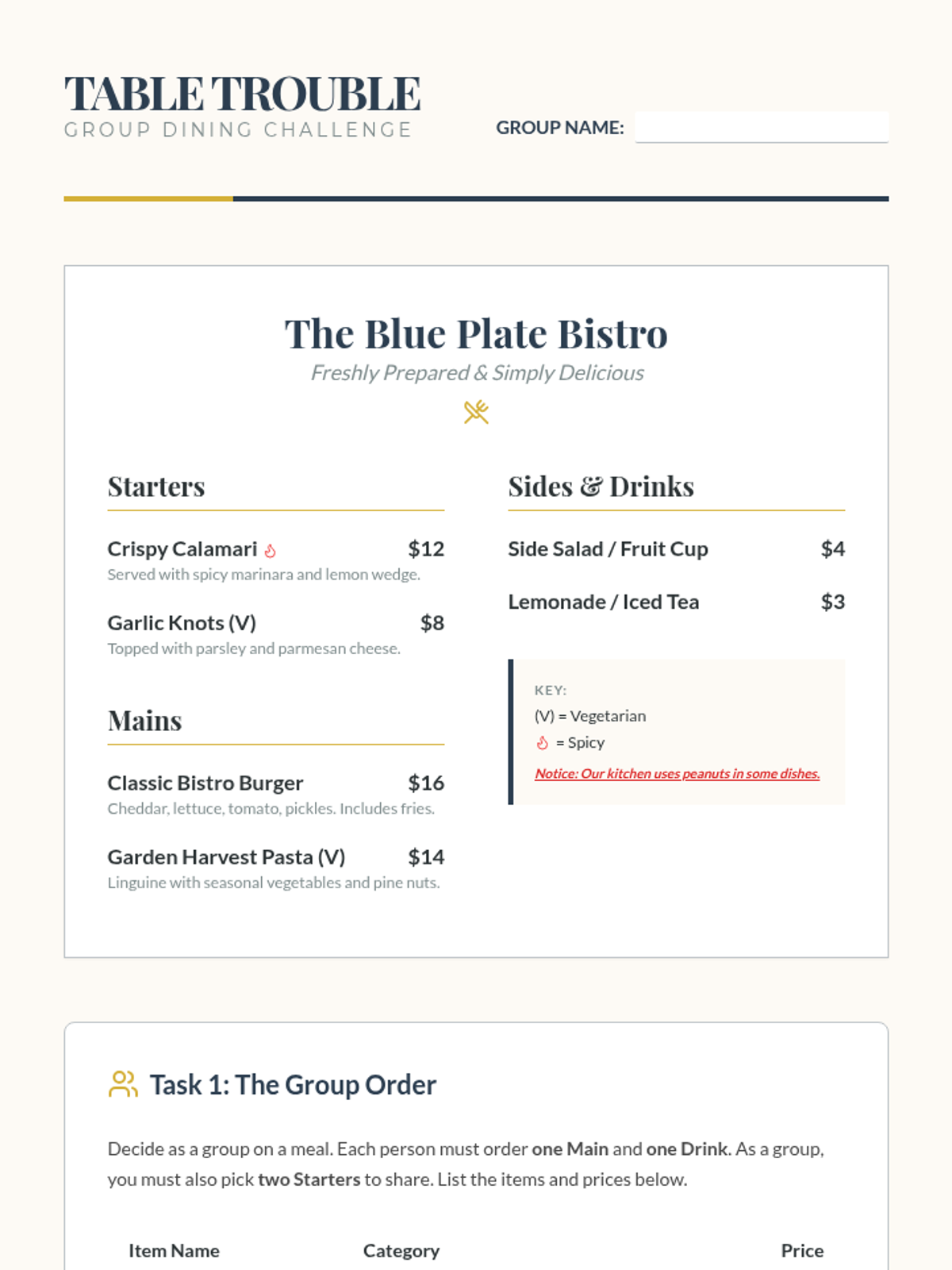
A group-focused student worksheet featuring a mock menu, a collective ordering challenge, group bill calculations, and collaborative restaurant scenarios.
A visual slide deck teaching restaurant etiquette, including menu reading, ordering scripts, table manners, volume control, tipping, and conflict resolution. Separates quiz questions and answers for better engagement.
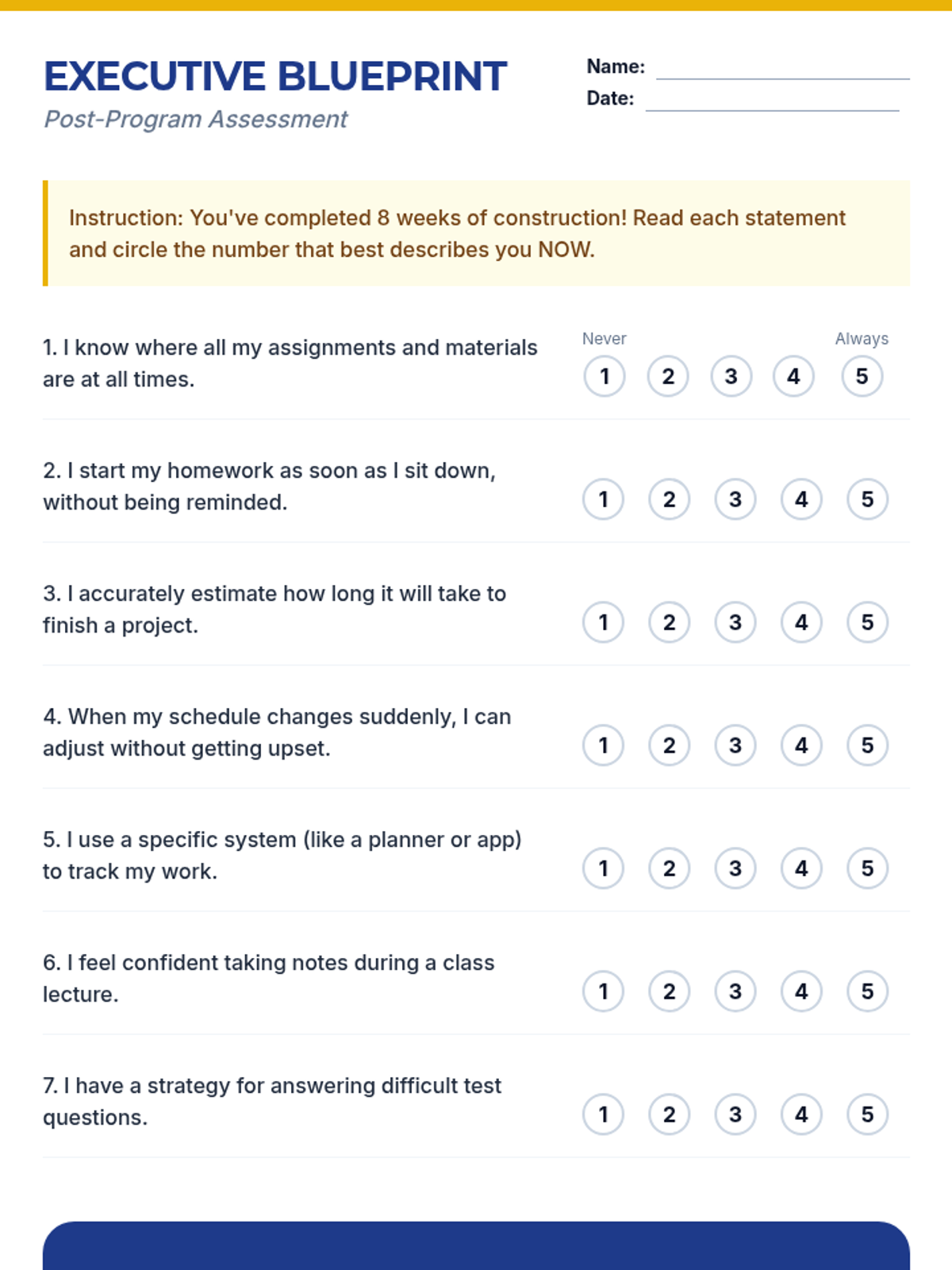
A two-page student document featuring an Executive Functioning Post-Assessment and a reflection section for the final session of the Executive Blueprint program.
Instructional slides for the final Lesson 8, celebrating growth and reviewing the core strategies learned throughout the 8-week Executive Blueprint program.
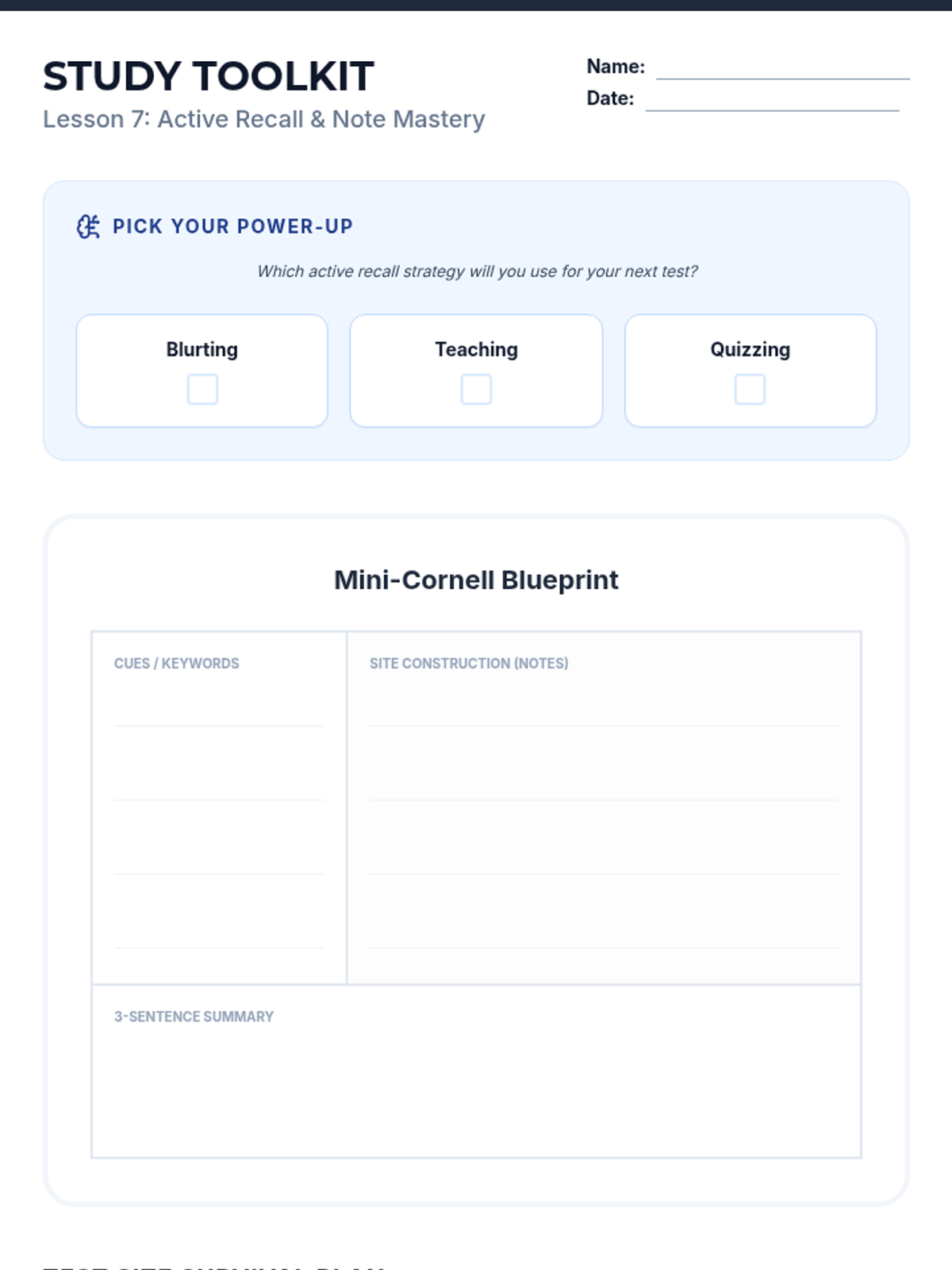
A student worksheet featuring a simplified Cornell note-taking template and a toolkit for active recall and test-taking strategies.
Instructional slides for Lesson 7 focusing on active recall study techniques, simplified Cornell note-taking, and test-taking "survival" strategies.
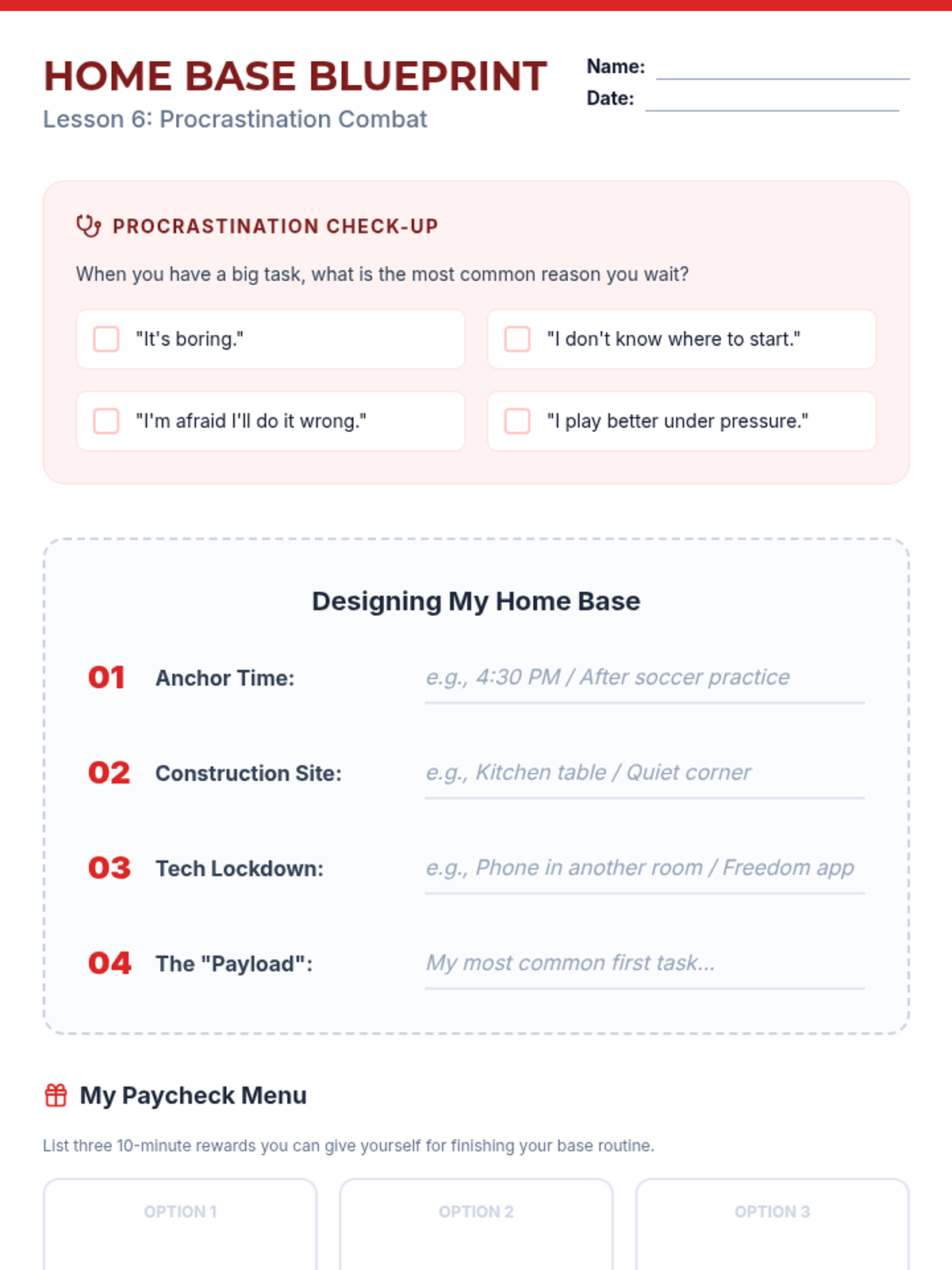
A student worksheet for designing a personalized "Home Base" homework routine, identifying personal procrastination triggers, and creating a "Reward Menu."
Instructional slides for Lesson 6 on overcoming procrastination, identifying procrastination types, and establishing a consistent "Home Base" routine.
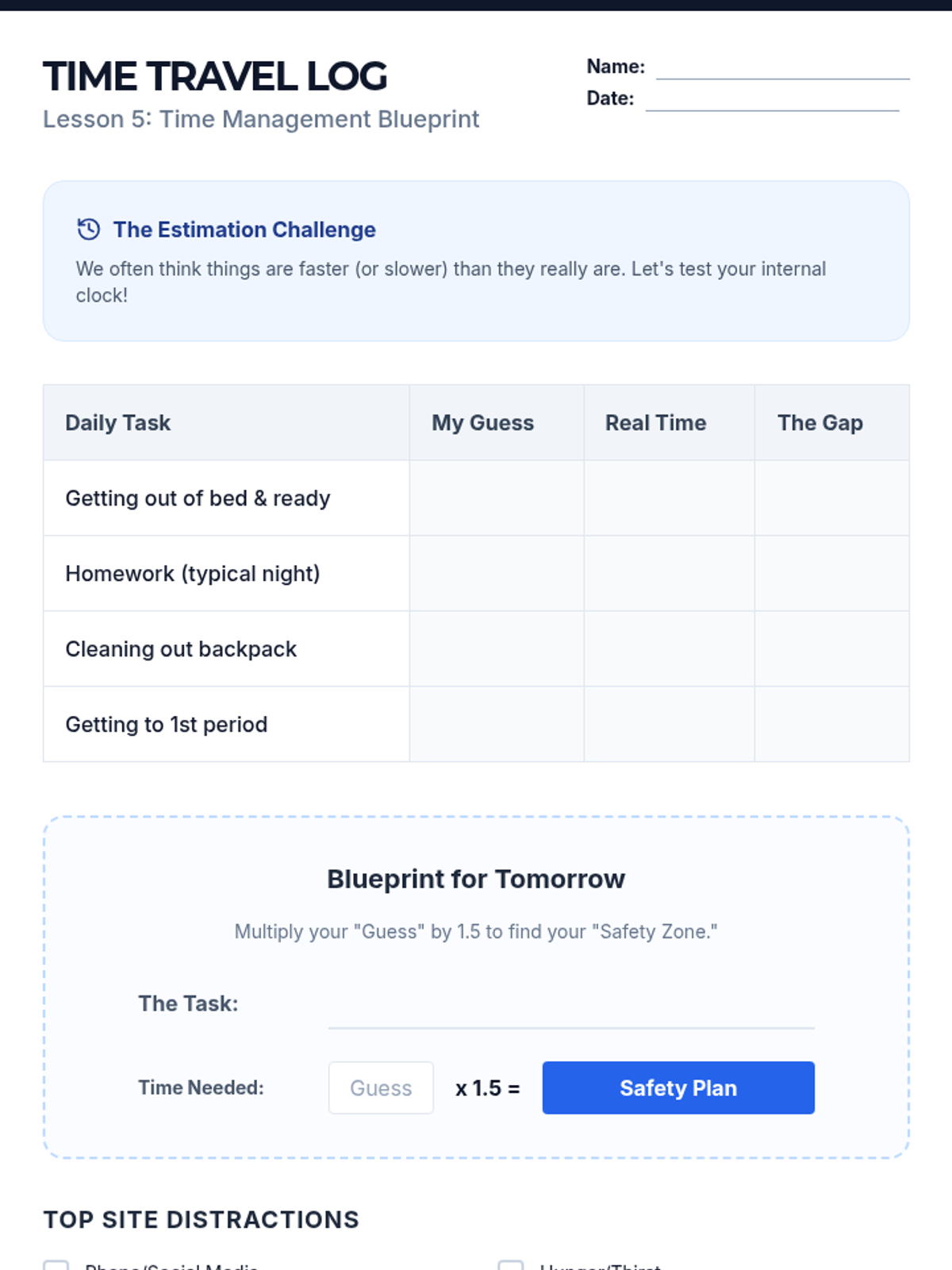
A student worksheet for tracking time estimation vs. reality and identifying "Time Thieves" that disrupt academic productivity.
Instructional slides for Lesson 5 on time management, defining "Time Blindness" and introducing the "Rule of 1.5x" for better task estimation.
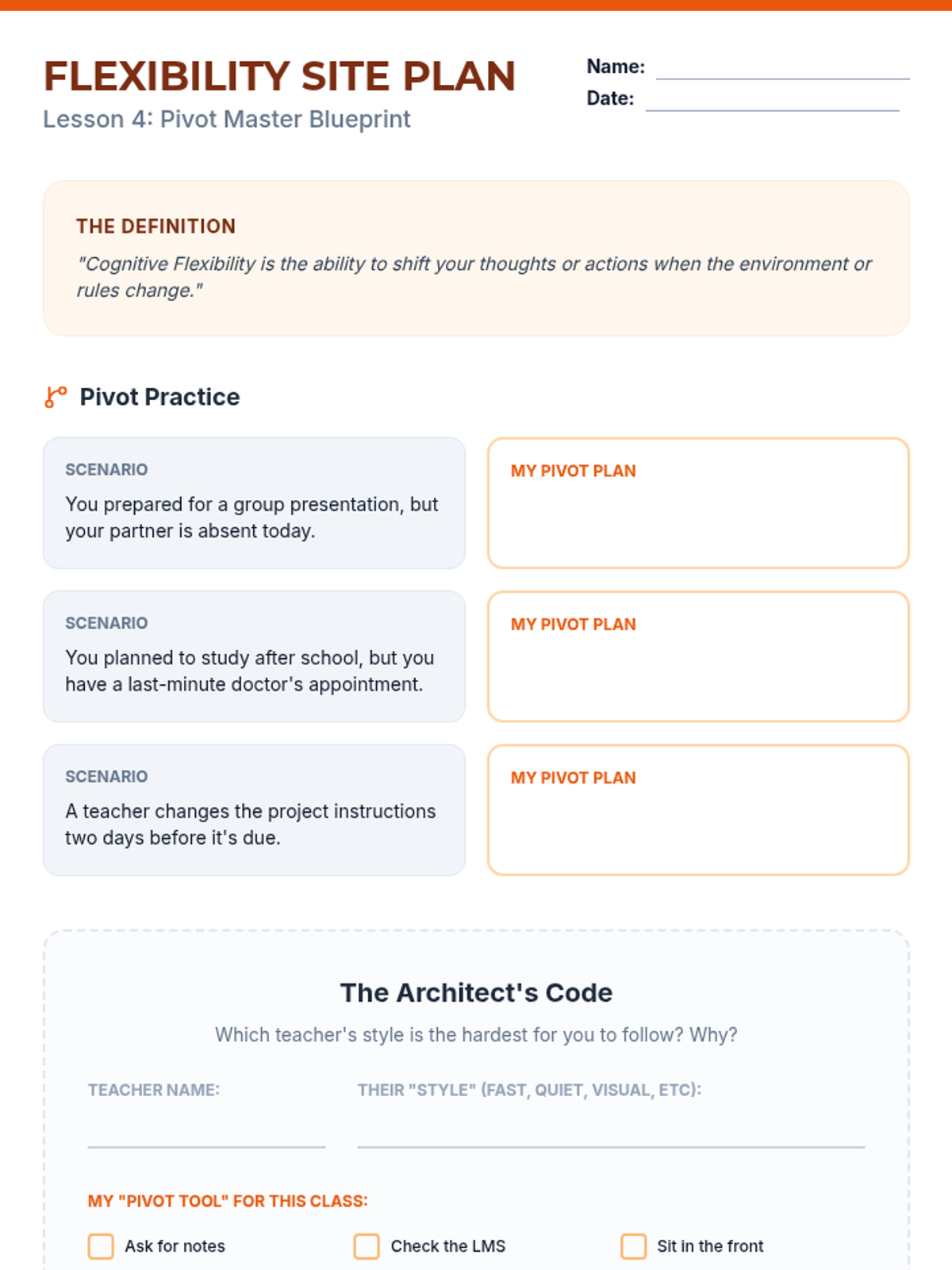
A student worksheet for practicing cognitive flexibility, including scenarios for "Pivoting" and an audit of teacher styles to help students adapt to different learning environments.
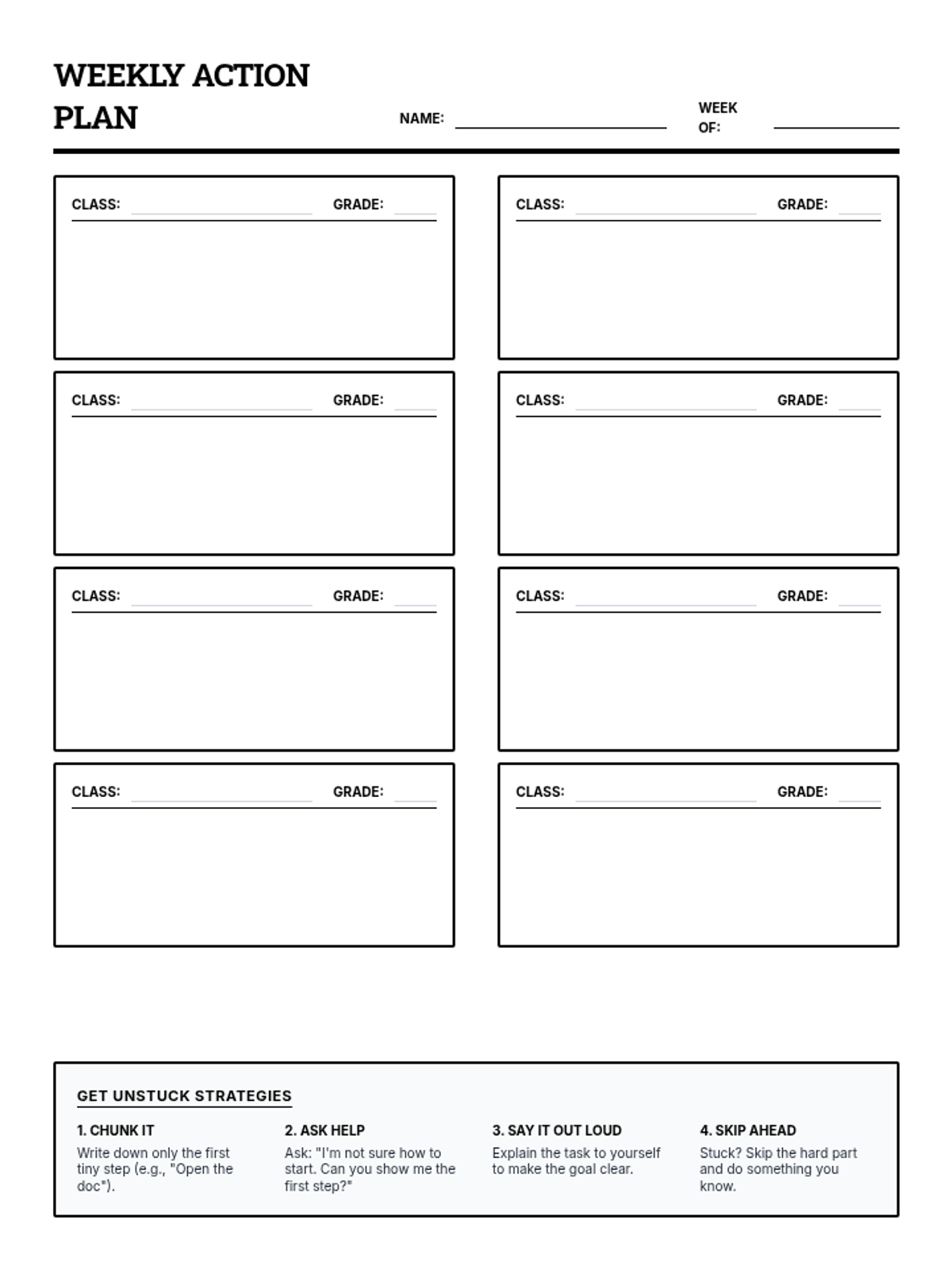
A highly efficient, single-page Weekly Action Plan designed for students with executive functioning needs. It features 8 streamlined class boxes with space for subjects and grades, plus a concise footer with 'Get Unstuck' strategies, all formatted to fit within a single printable page.
A revised 10-slide presentation using simple, concrete language to teach students about three zones of control: In My Control, May be in My Control, and Out of My Control. All violent or aggressive metaphors have been removed.
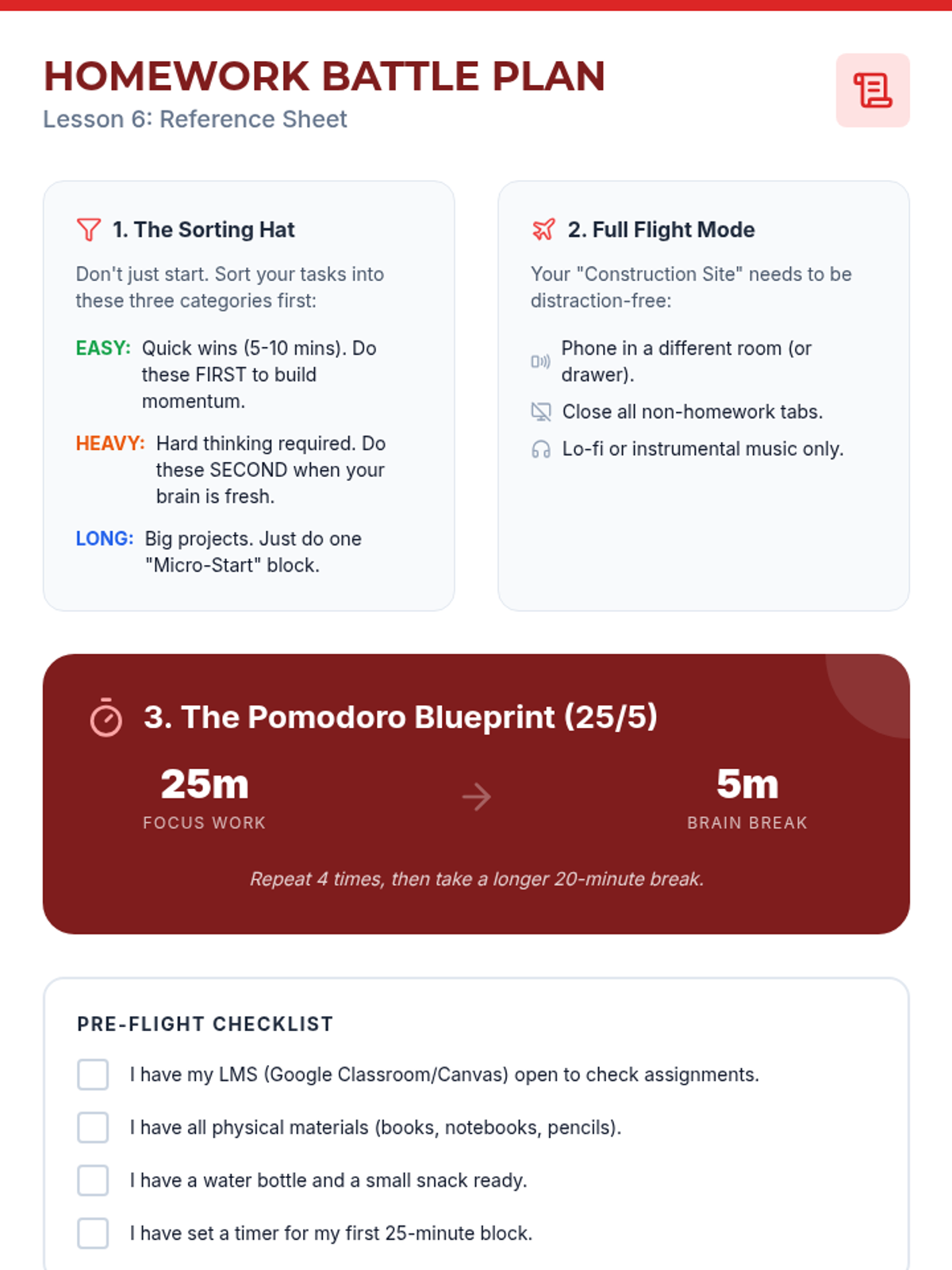
A comprehensive homework strategy guide featuring task sorting, distraction management, the Pomodoro method, and a pre-study checklist.
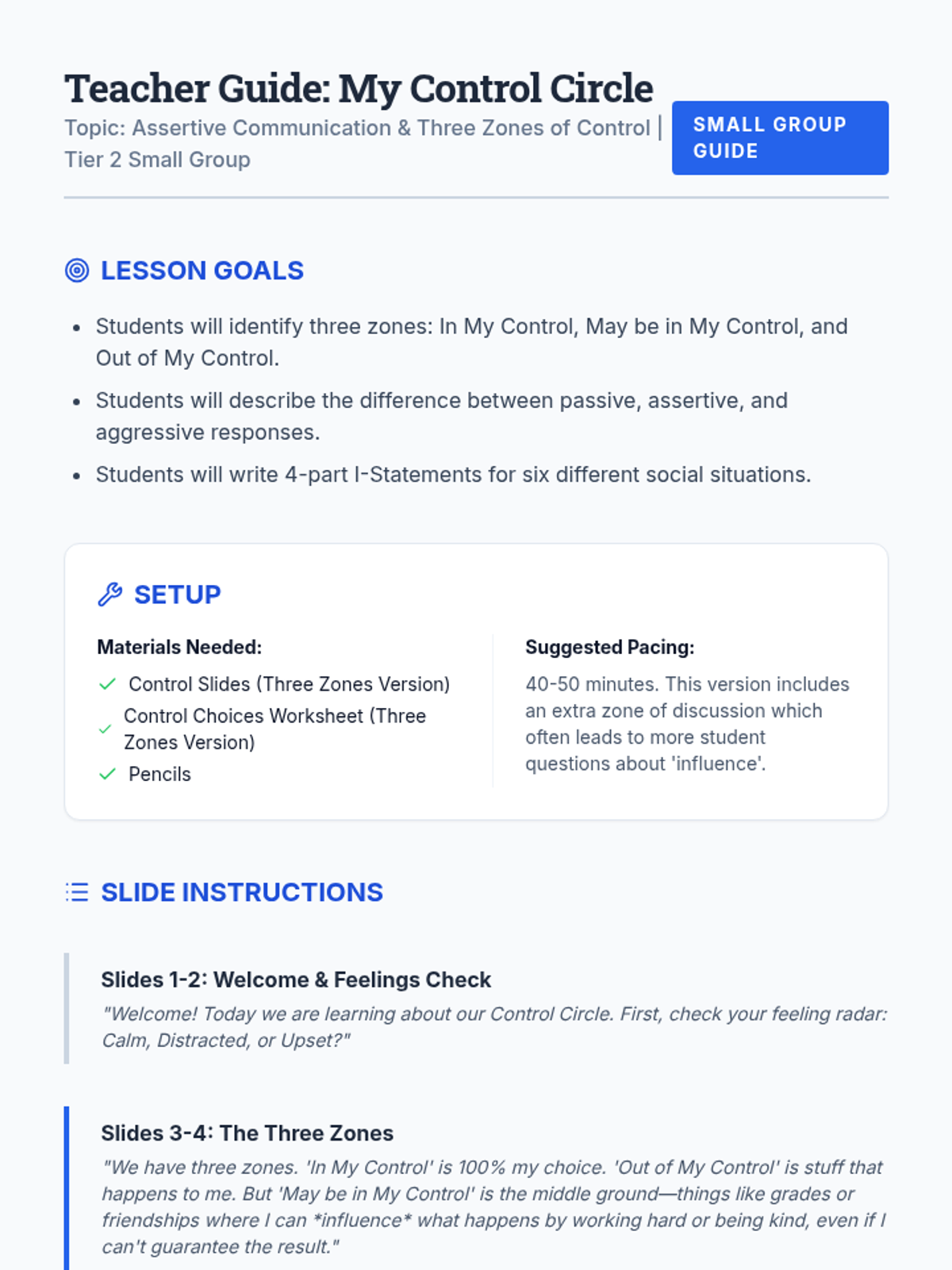
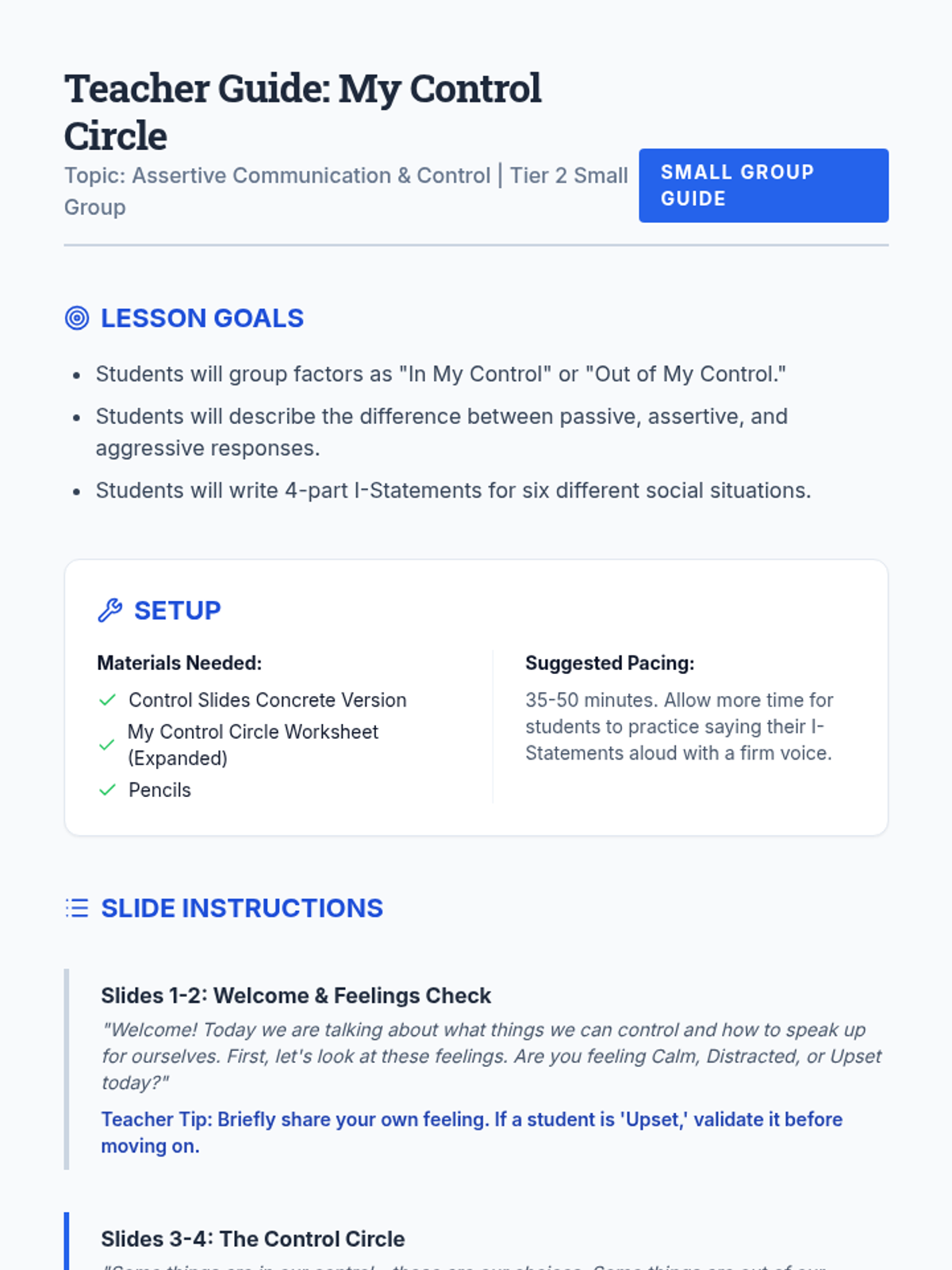
A revised teacher guide matching the three-zone model (In Control, May be in Control, Out of Control) and updated for the 6 practice scenarios.
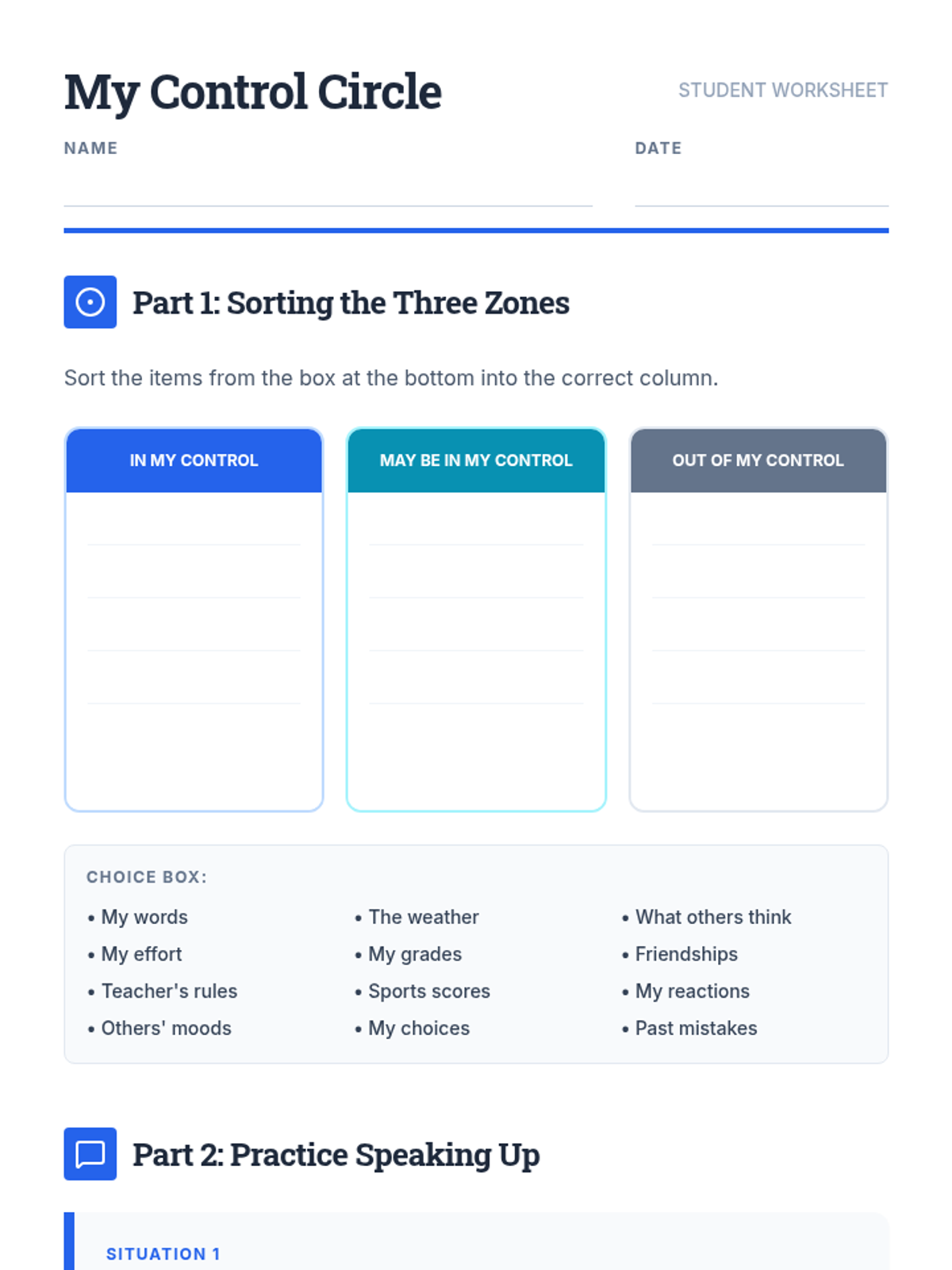
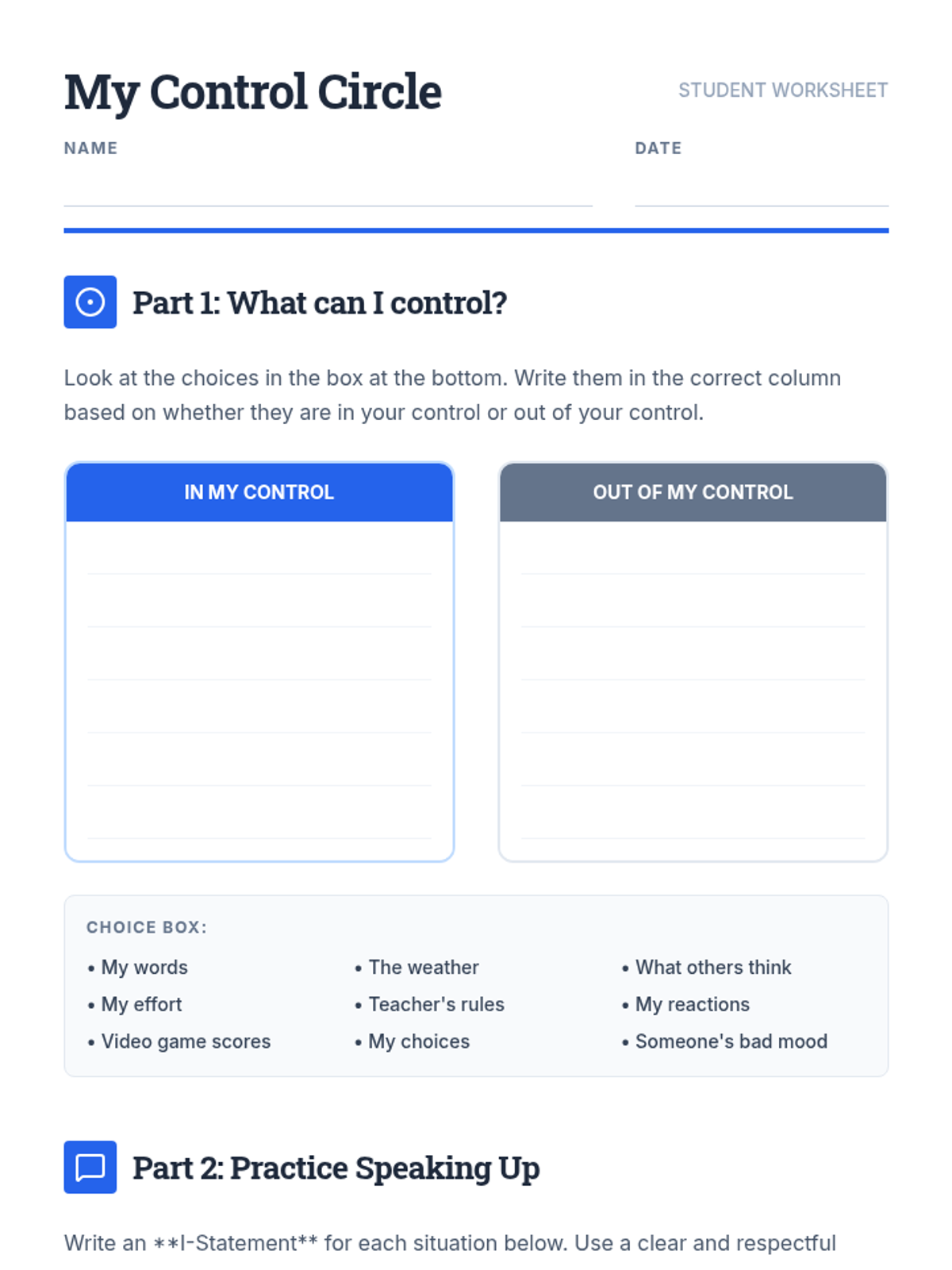
A concrete worksheet for 6th graders to practice identifying things in their control, what may be in their control, and writing assertive I-statements.
A revised 10-slide presentation using simple, concrete language to teach students about three zones of control: In My Control, May be in My Control, and Out of My Control.
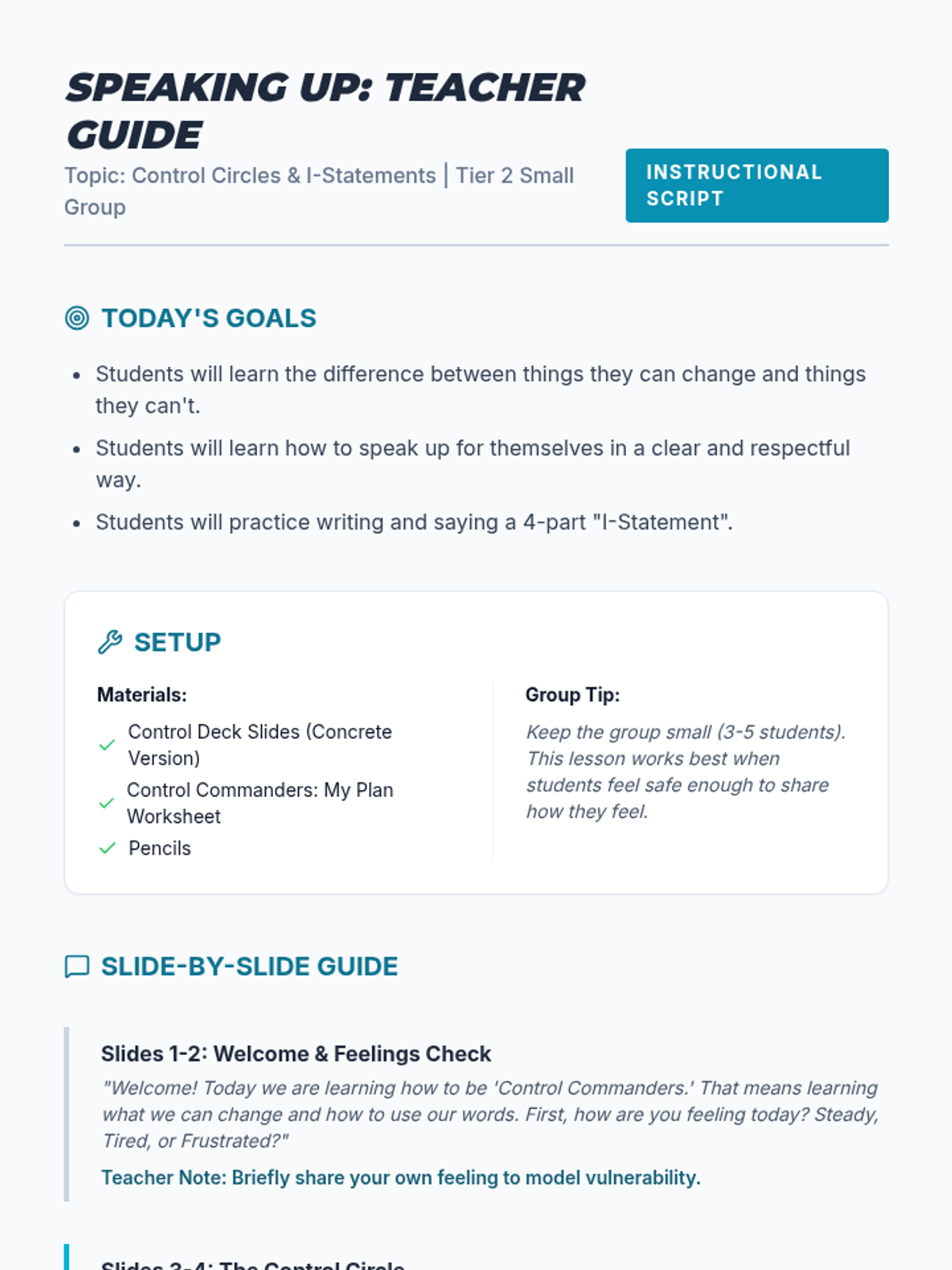
A revised teacher guide matching the concrete, analogy-free version of the control and assertiveness lesson, updated to include 6 practice situations.
An expanded worksheet for 6th graders with 6 practice situations for identifying control and writing assertive I-statements without analogies.
A revised 10-slide presentation using simple, concrete language to teach students about what is in their control and how to use assertive I-statements without analogies.
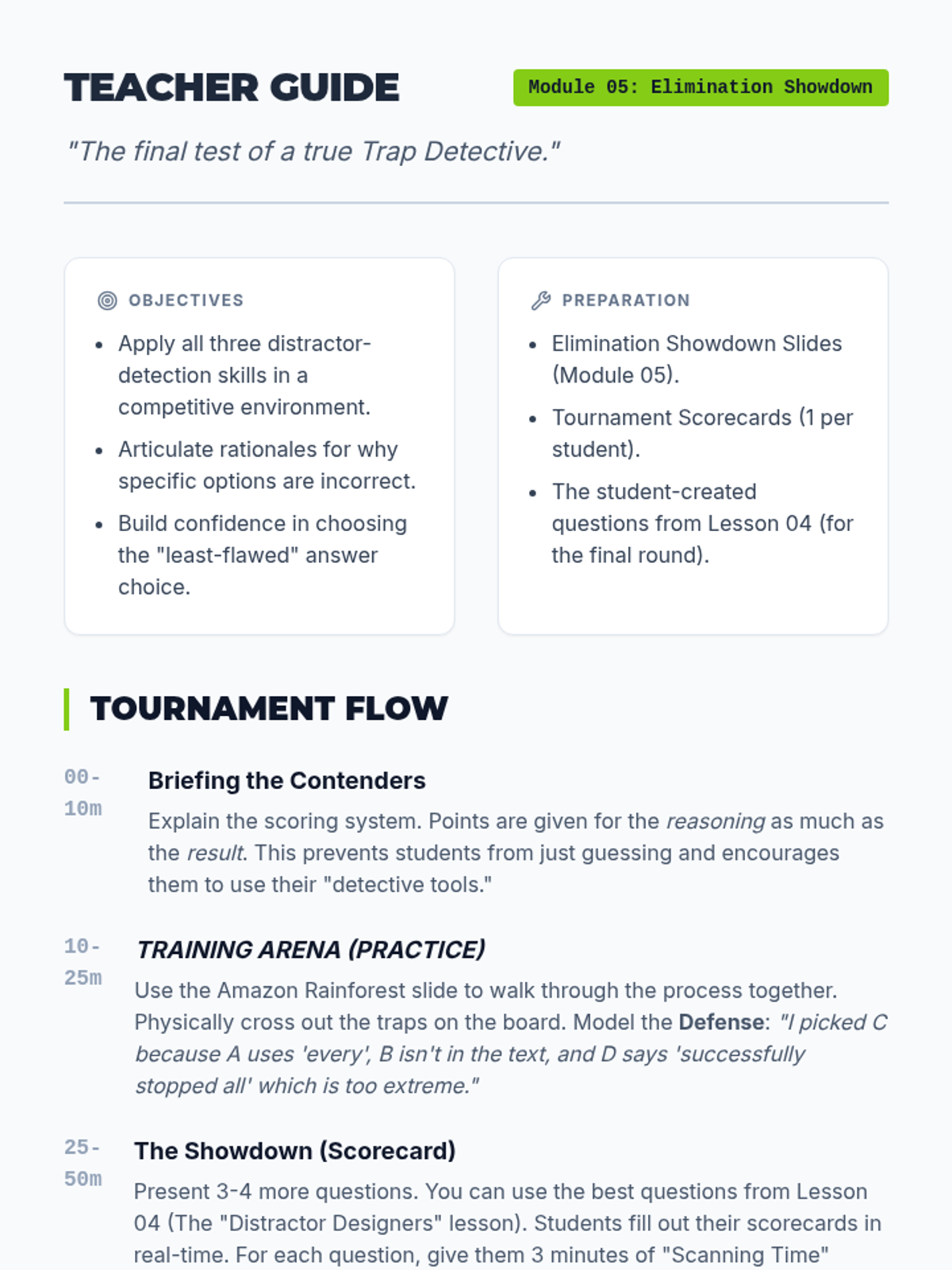
Teacher guide for 'Elimination Showdown'. Includes lesson flow, tournament scoring mechanics, and a detailed analysis of the practice question.
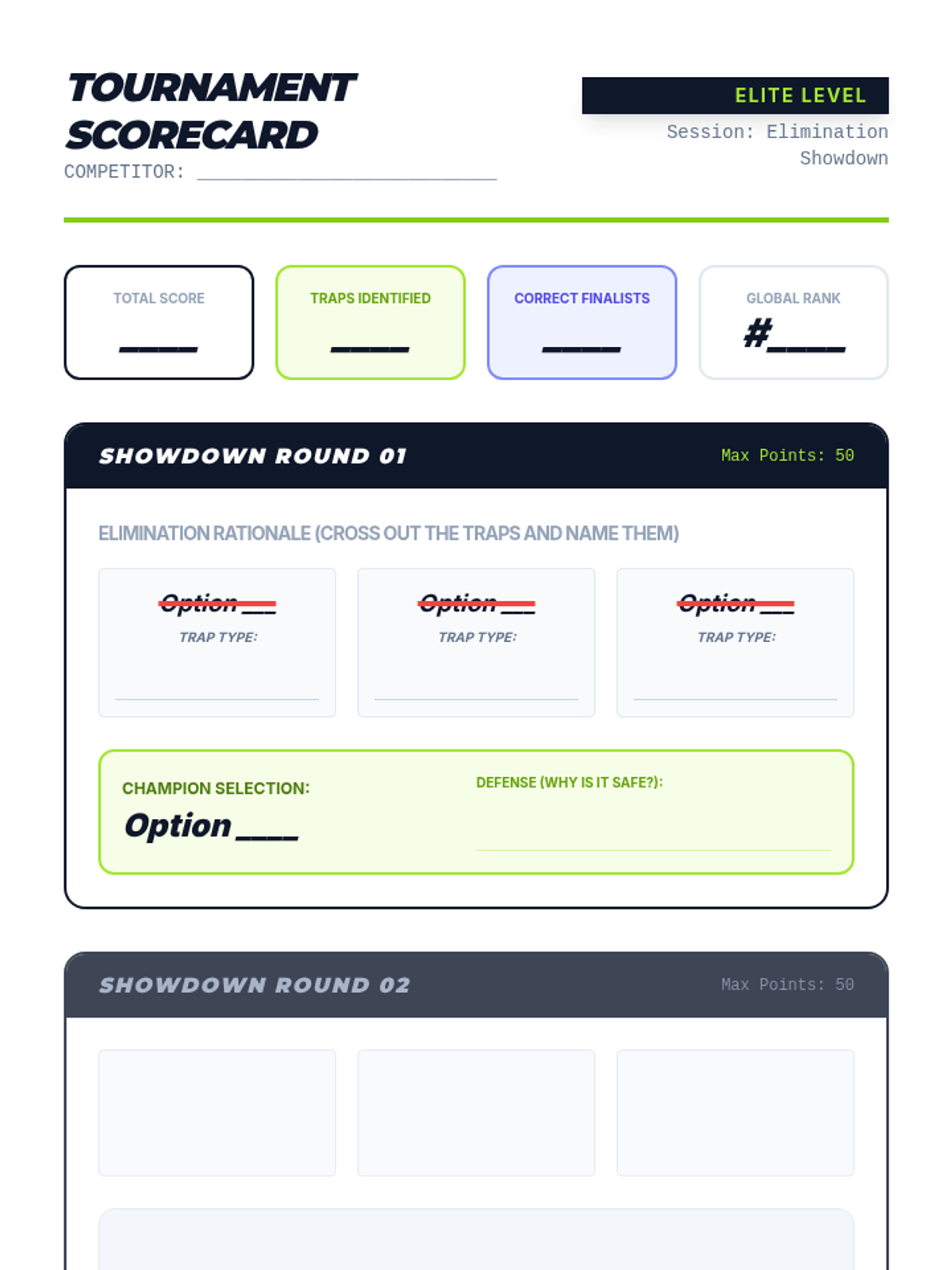
A student tournament scorecard for the final showdown. Features sections for tracking points, identifying trap types for each distractor, and selecting the 'Champion' (correct) answer with a defense.
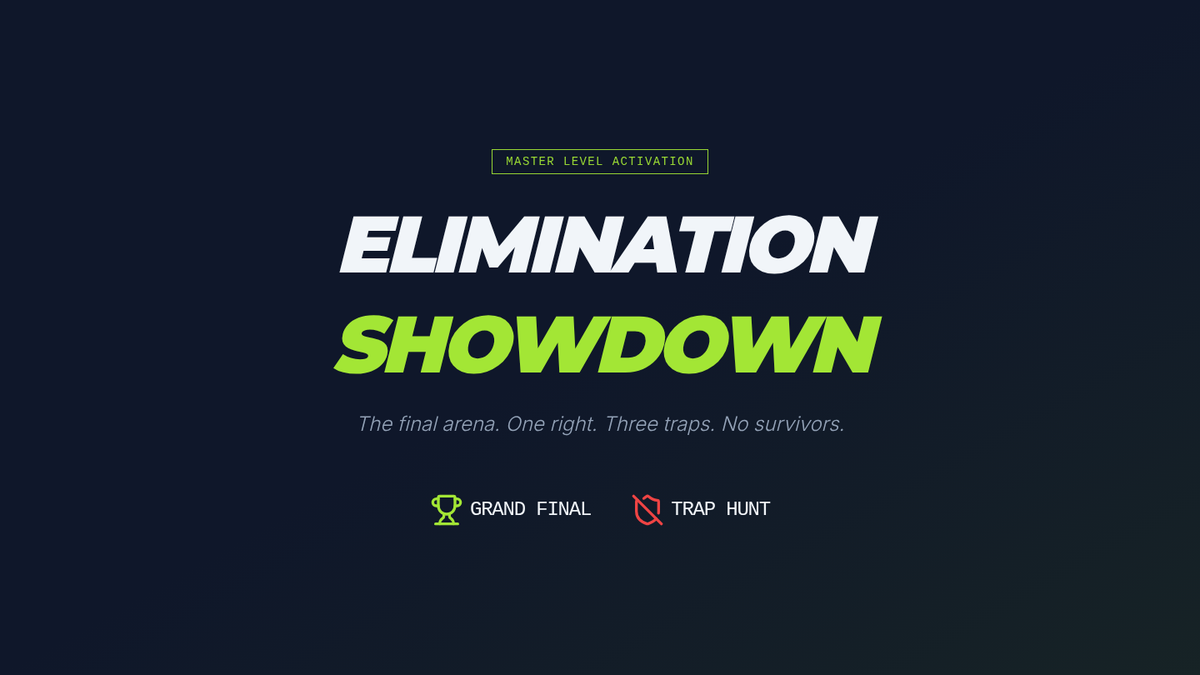
Introductory slides for 'Elimination Showdown'. Features tournament rules and a walk-through of the 'Elimination Showdown' process with a practice question.
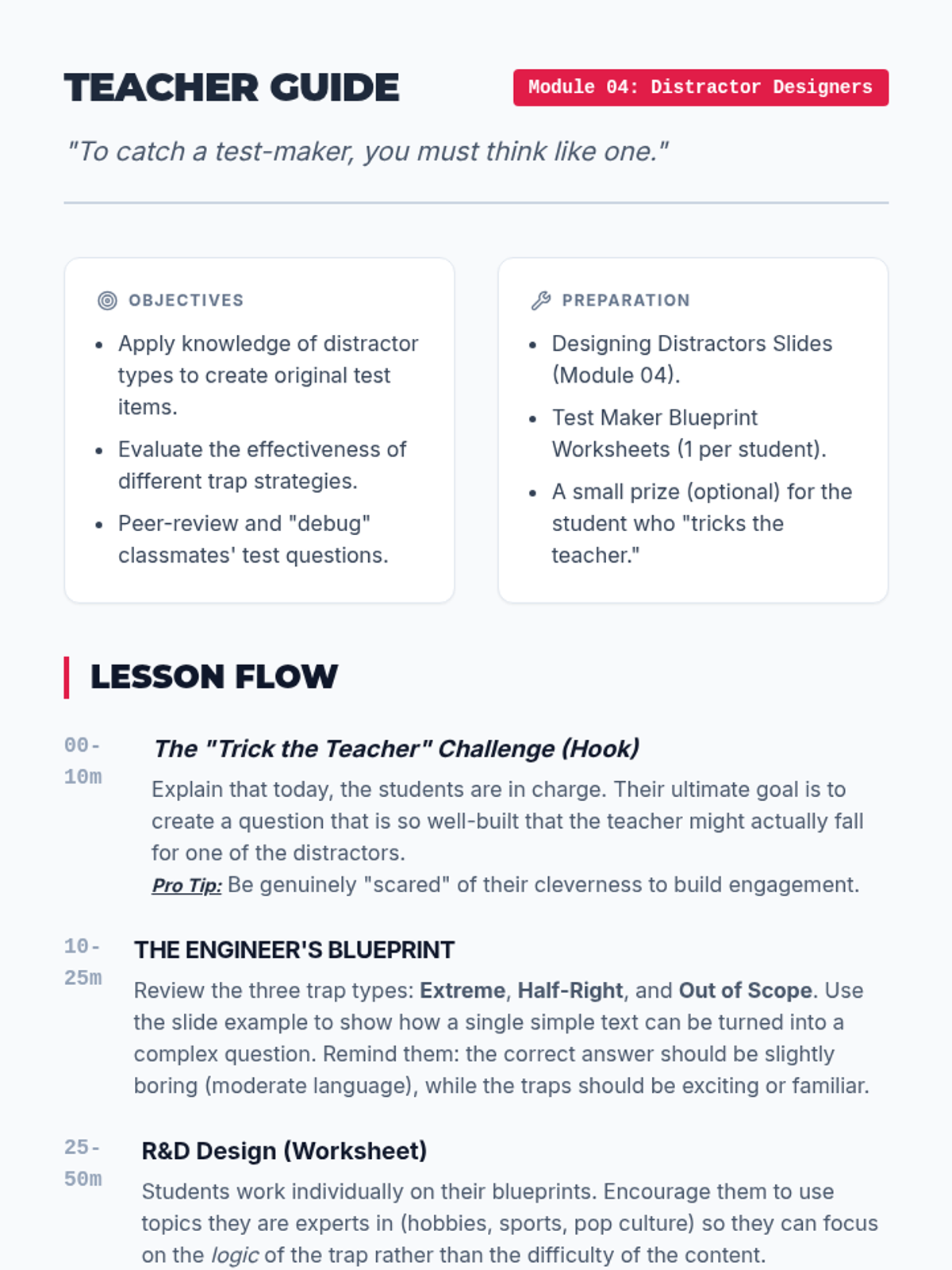
Teacher guide for 'Distractor Designers'. Includes pacing, rubric for the student worksheet, and instructions for the peer-testing phase of the lesson.
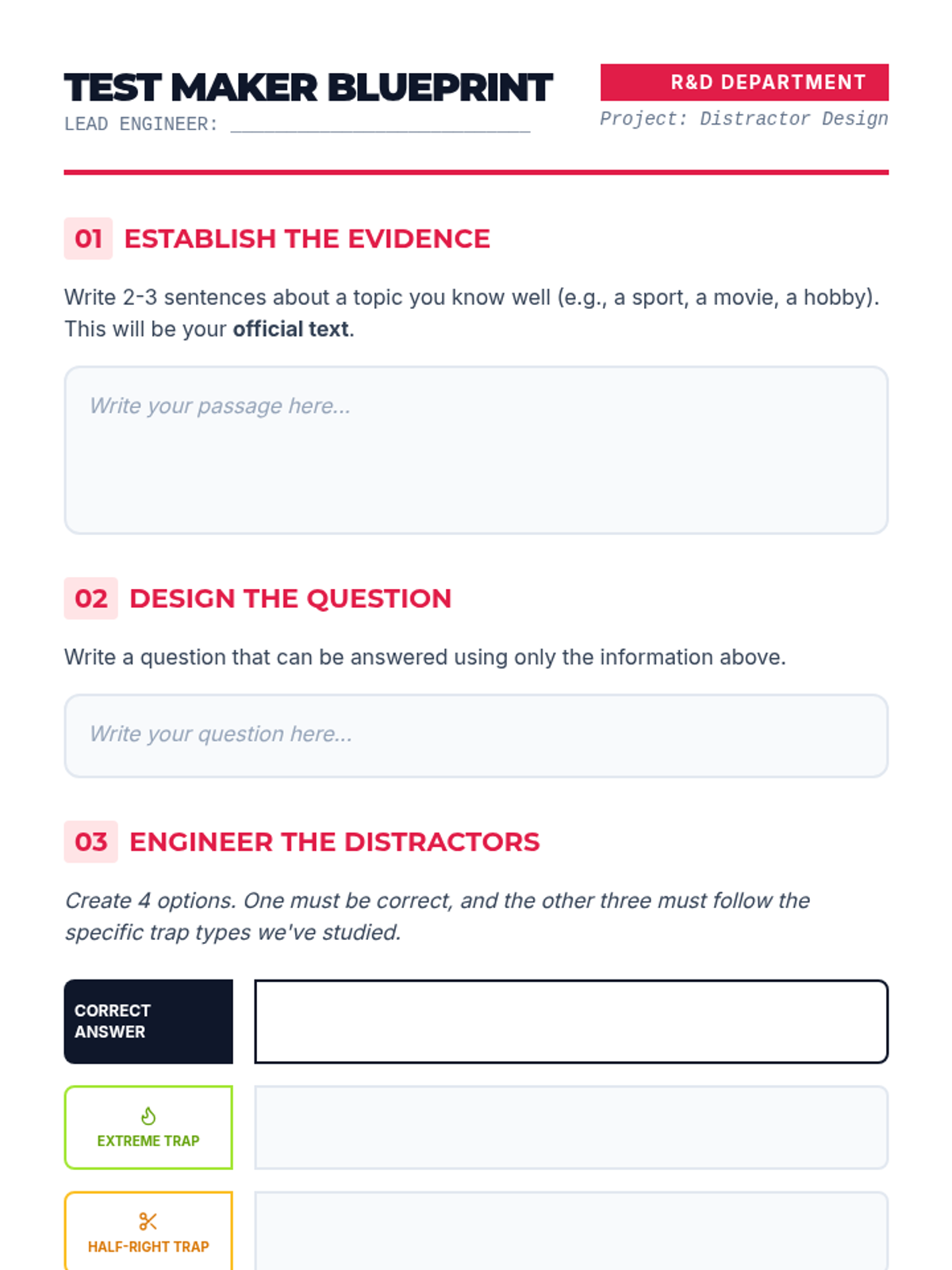
A student design sheet where they create their own multiple-choice question. Students must provide a short text and then engineer four options: one correct answer and three specific distractor types (Extreme, Half-Right, and Out of Scope).
Introductory slides for 'Distractor Designers'. Explains how to create 'Extreme', 'Half-Right', and 'Out of Scope' distractors by thinking like a test-maker.
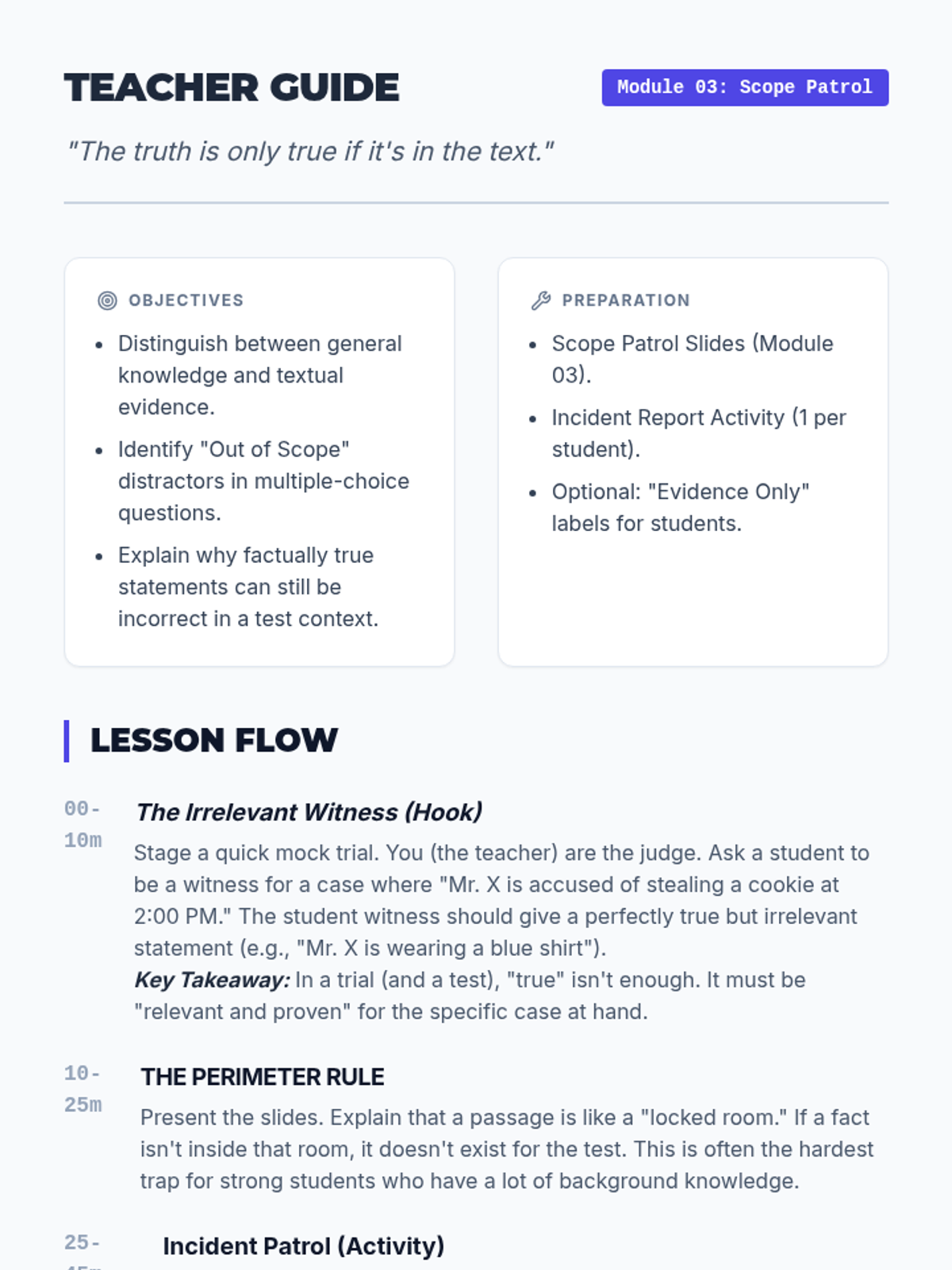
Teacher guide for 'Scope Patrol'. Includes lesson flow, mock trial hook instructions, and a detailed answer key for the Incident Report activity.
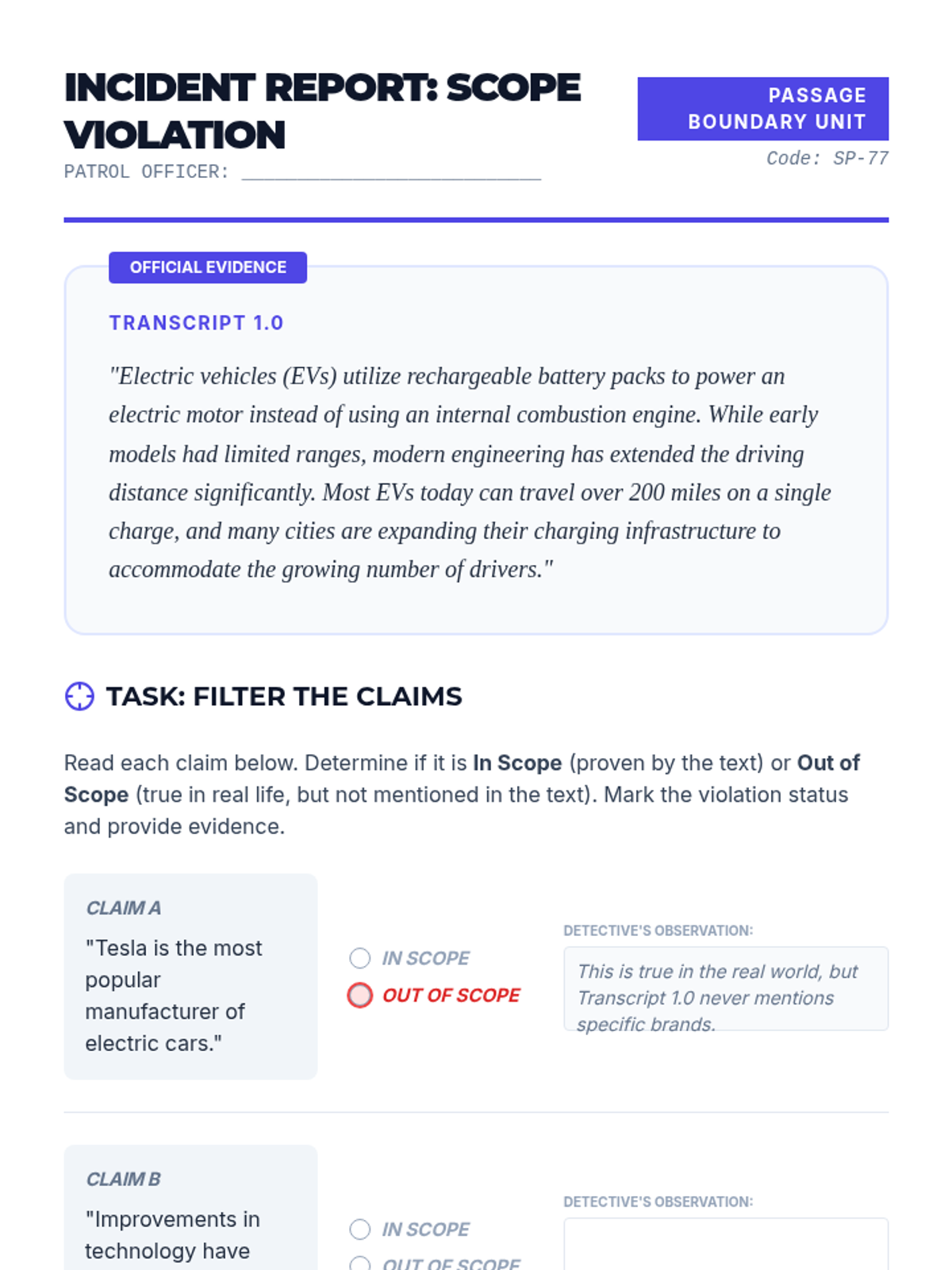
A student activity for identifying out-of-scope distractors. Features an evidence passage and a 'Incident Report' where students categorize claims as 'In Scope' or 'Out of Scope' based on textual evidence.
Introductory slides for 'Scope Patrol'. Explains the concept of 'Out of Scope' distractors—statements that are factually true but not supported by the specific text provided.
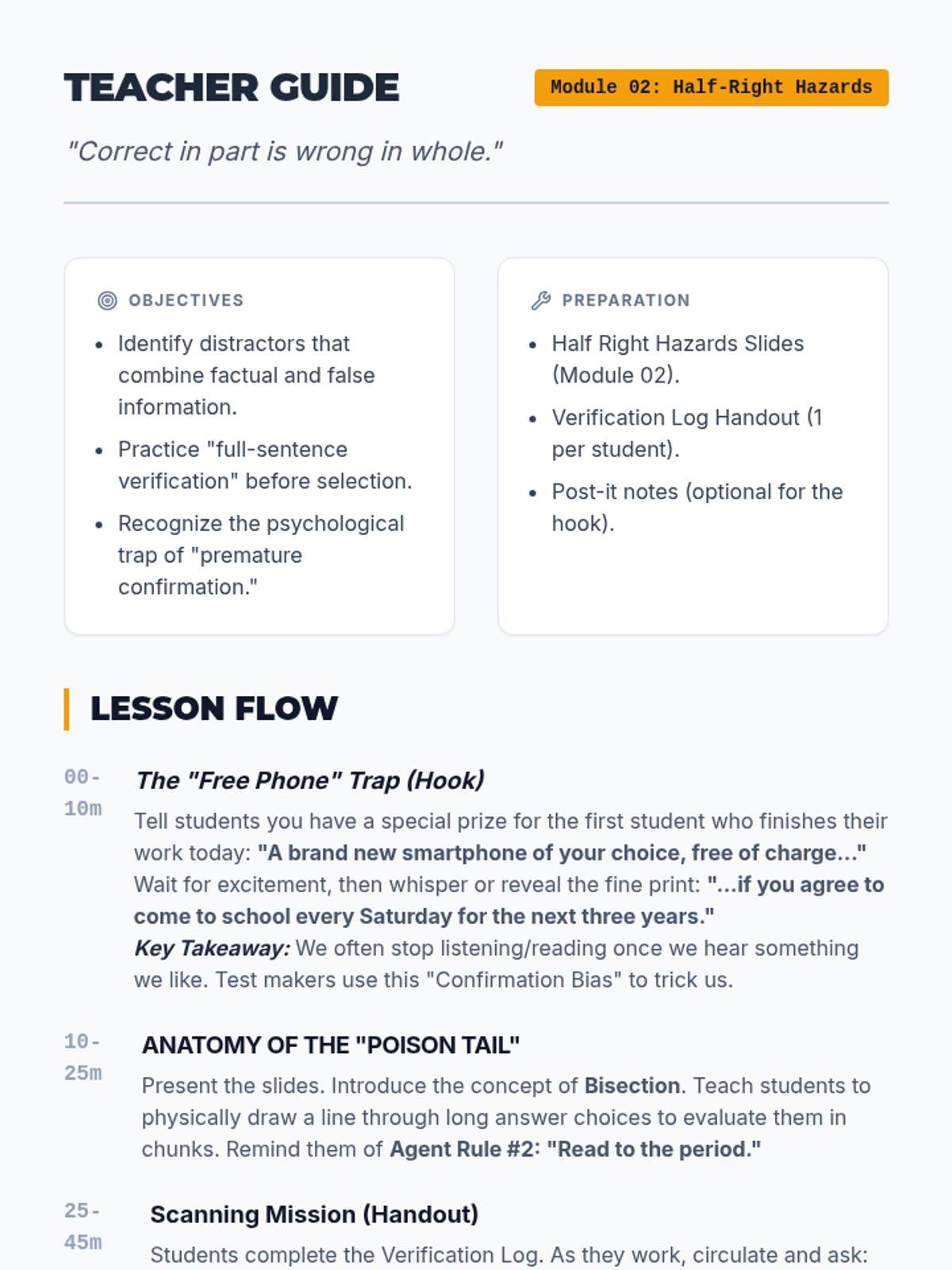
Teacher guide for 'Half Right Hazards'. Includes hook instructions (the 'Free Phone' offer), pacing guide, and detailed answer key for the Verification Log handout.
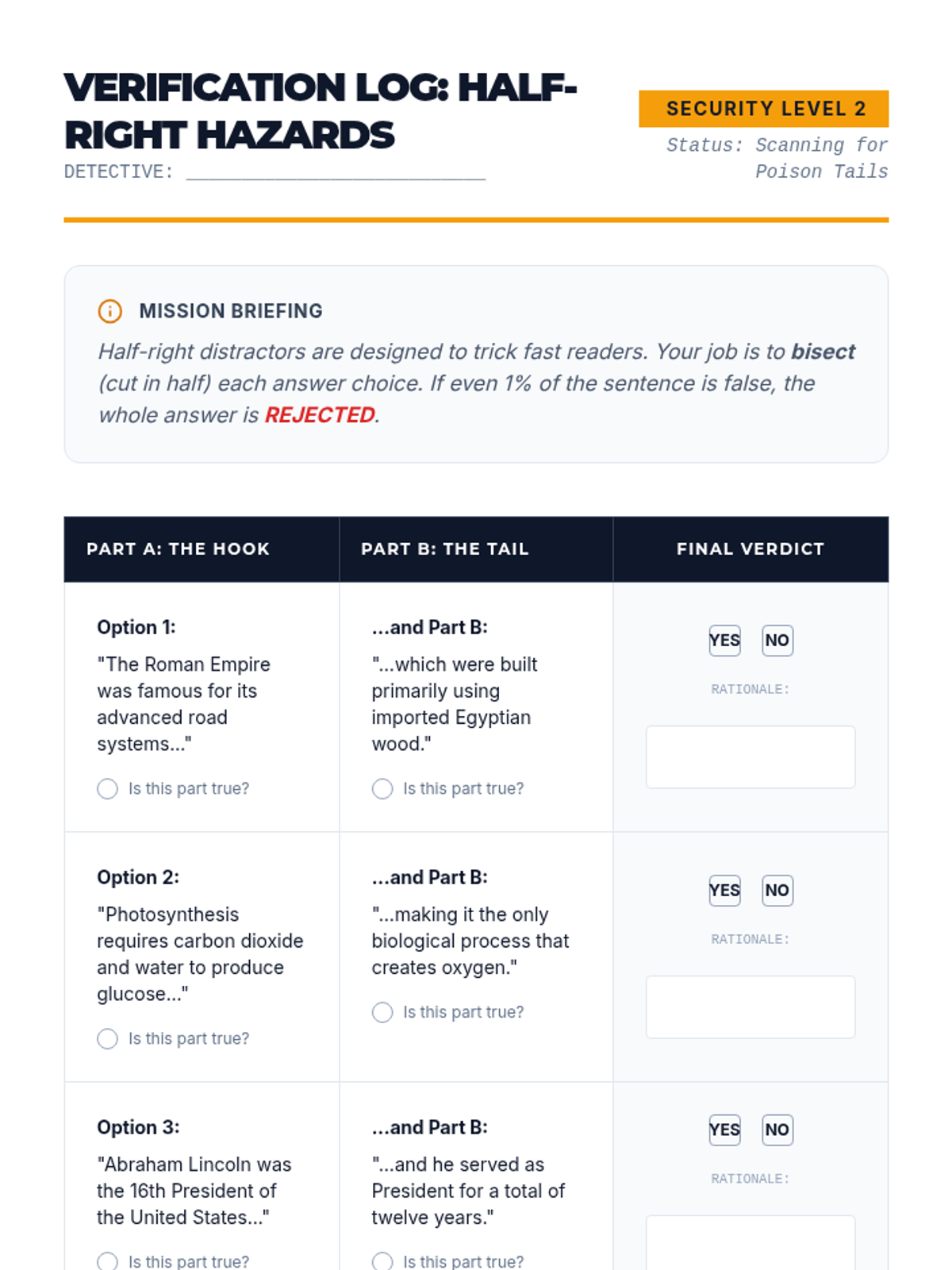
A student worksheet for identifying half-right distractors. Features a 'Verification Log' table where students dissect answer choices into two parts and evaluate the accuracy of each half.
Introductory slides for 'Half Right Hazards'. Explains the 'Poison Tail' concept—where an answer choice begins correctly but ends with a false detail—and emphasizes reading to the end.
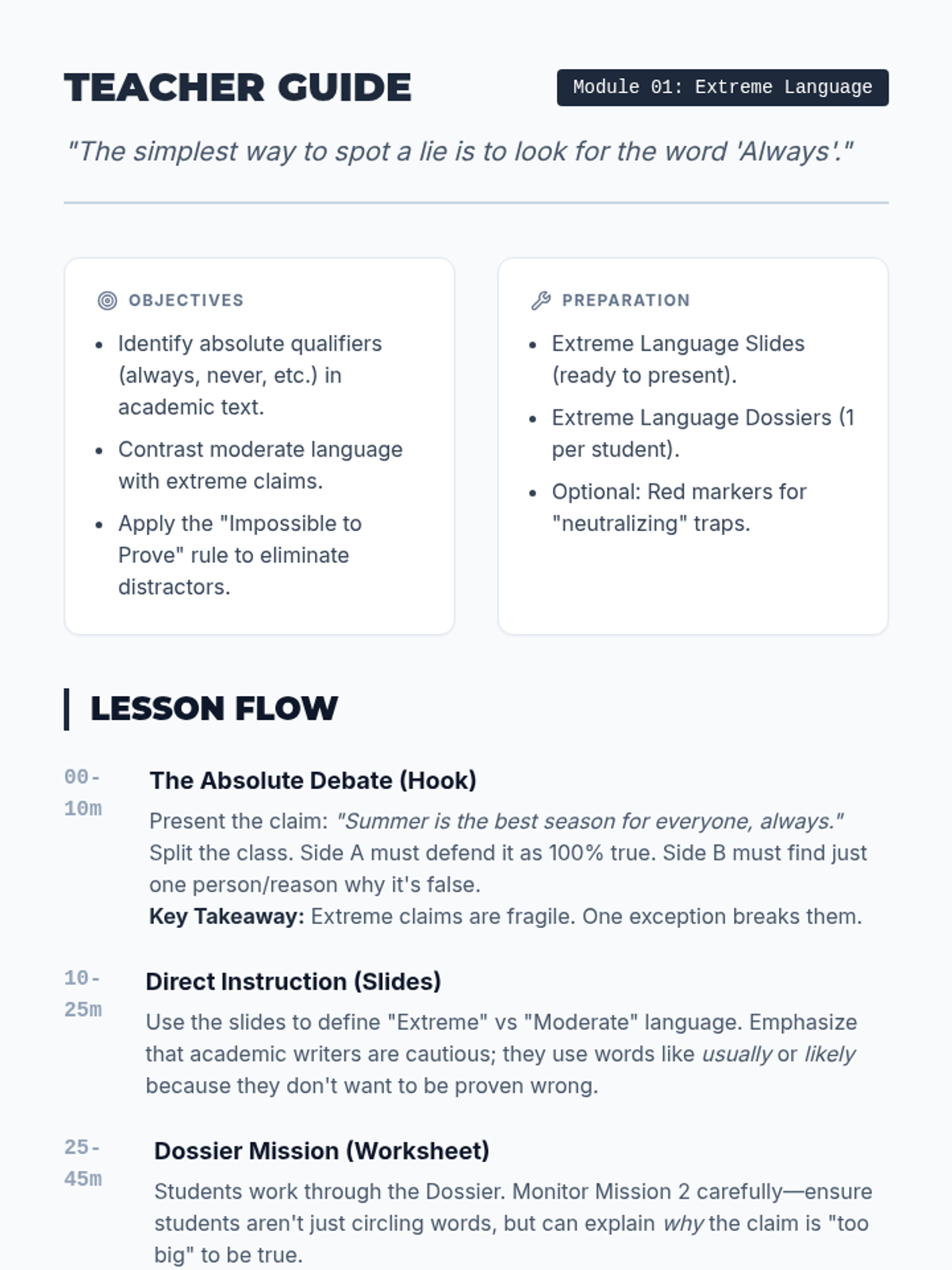
A comprehensive teacher guide for the 'Extreme Language Lab' lesson. Includes lesson objectives, a detailed pacing guide, hook instructions, and a full answer key for the student worksheet.
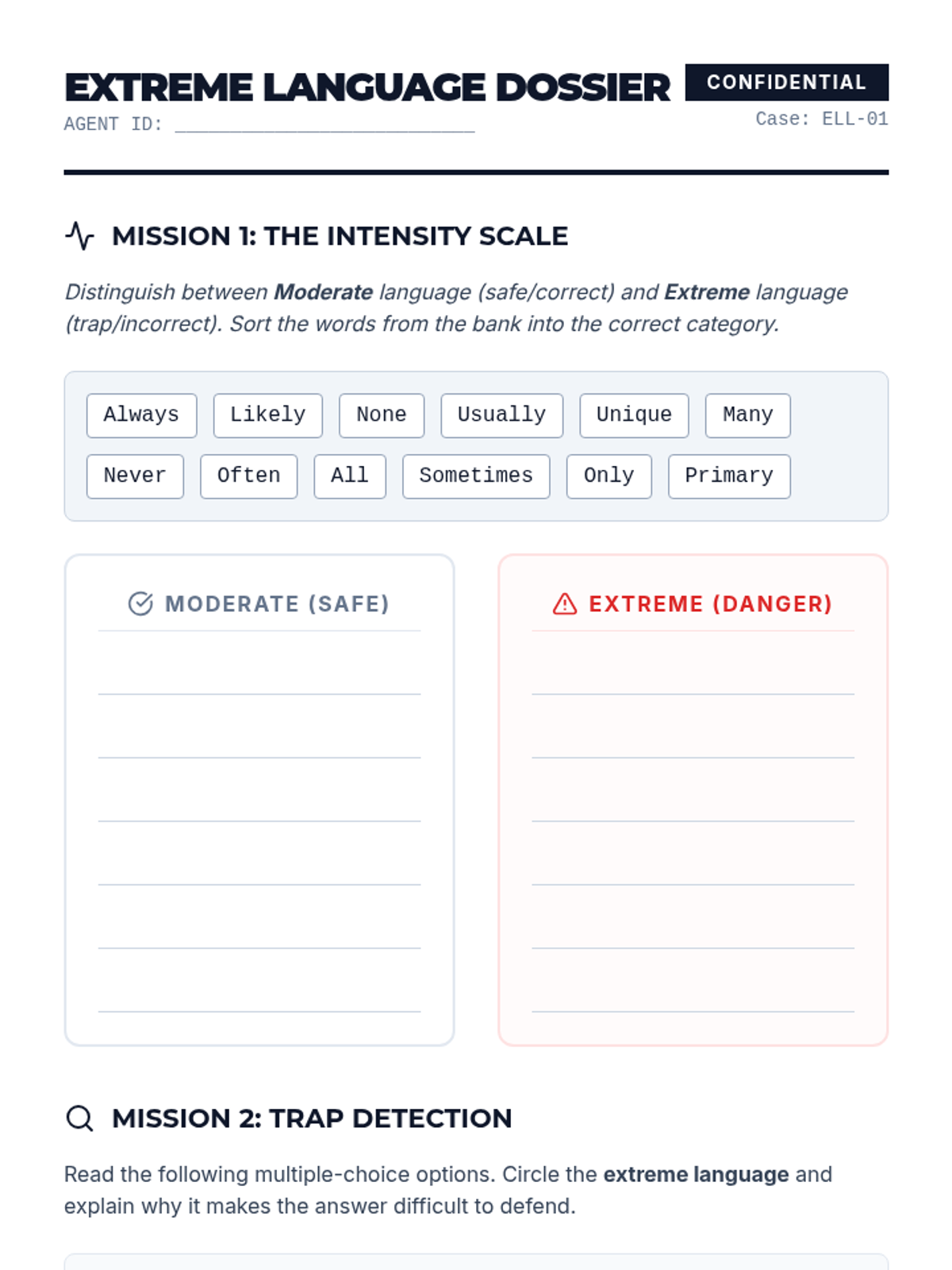
A student worksheet for identifying and neutralizing extreme language traps. Includes word sorting, rationalization exercises, and claim revision.
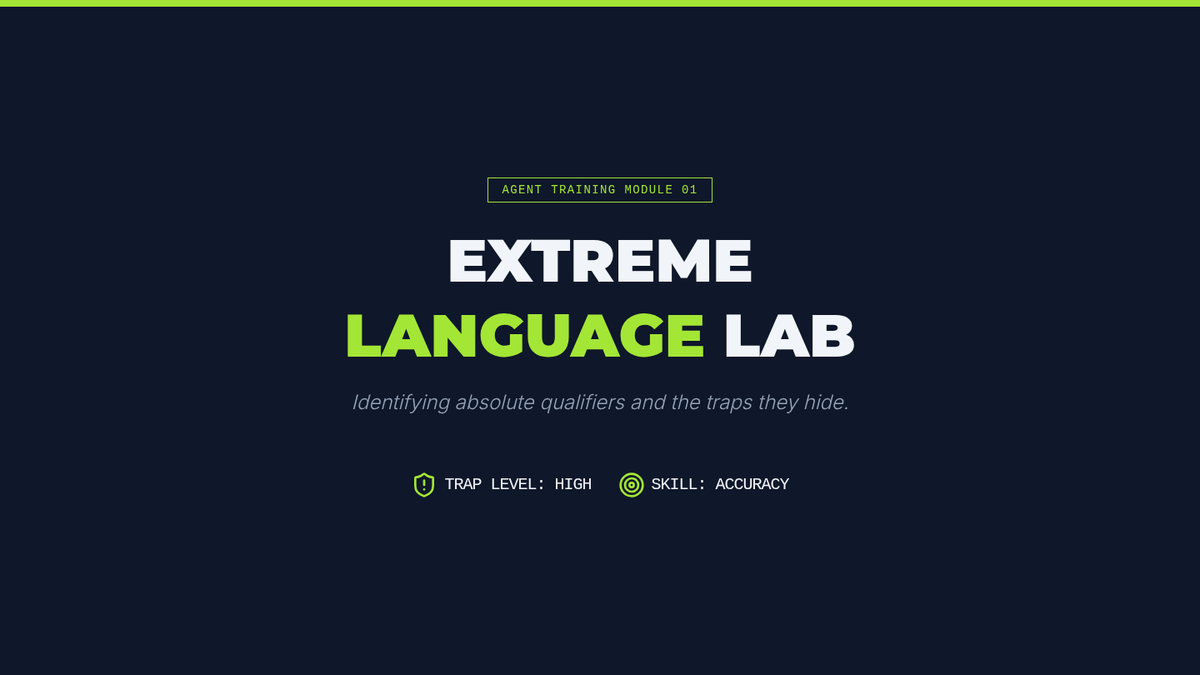
Introductory slides for the 'Extreme Language Lab' lesson, featuring the TSA/Trap Detector Academy theme. Covers the difference between absolute and moderate language in test questions.
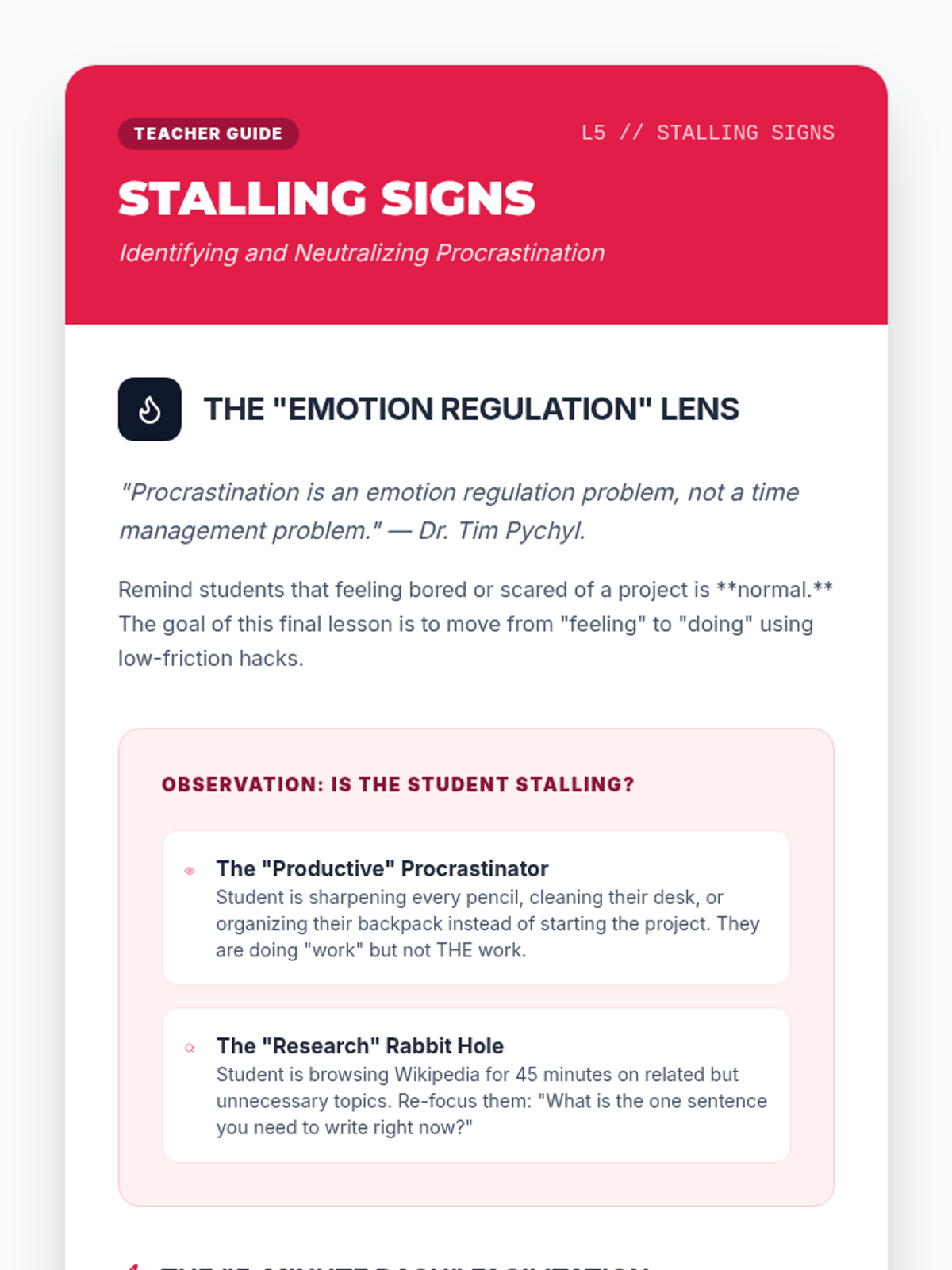
A teacher guide for Lesson 5, focusing on identifying signs of procrastination (like 'Productive Procrastination') and facilitating the '5-Minute Dash' to help students overcome the friction of starting.
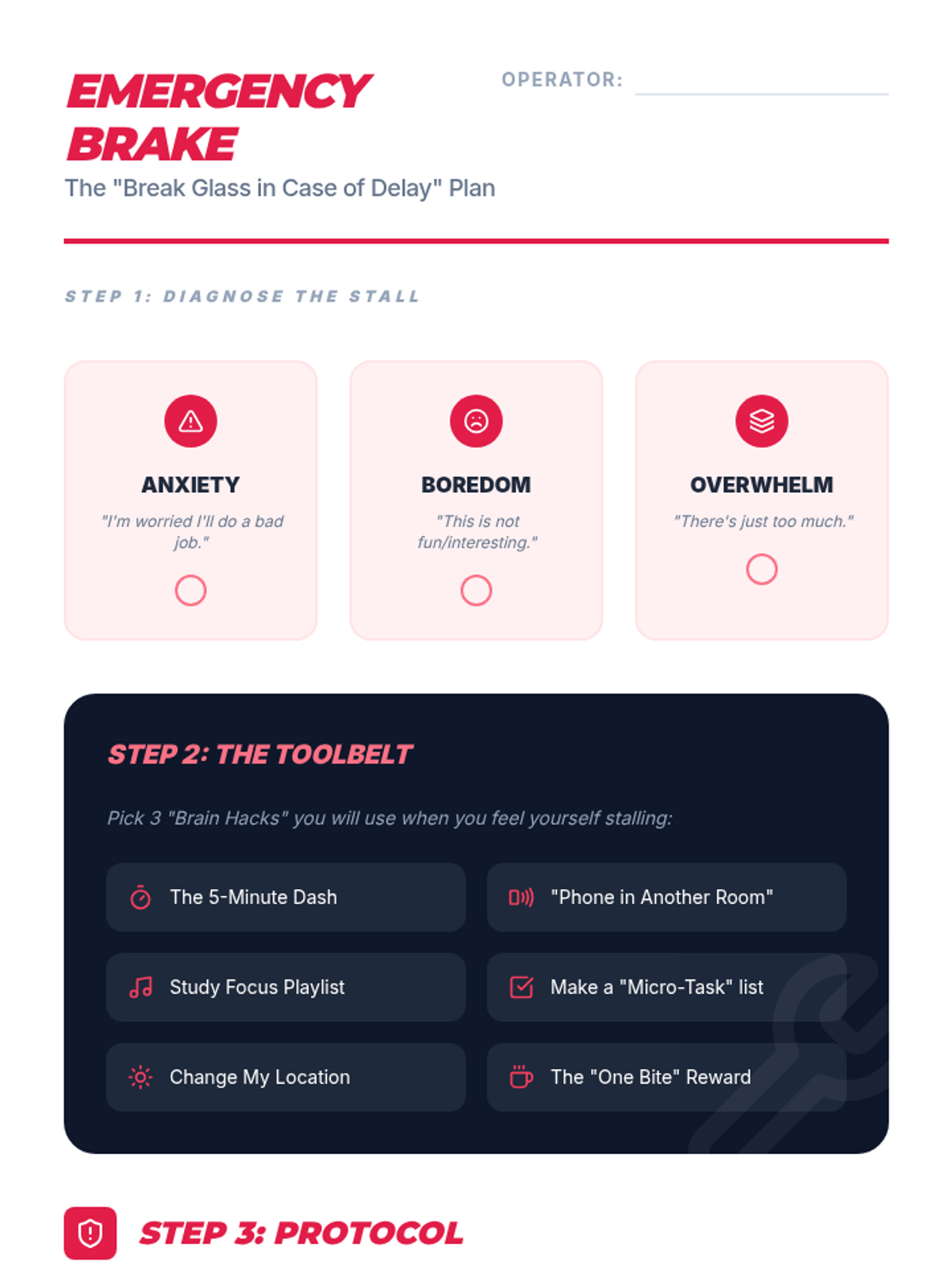
A student action plan for handling procrastination, featuring a trigger diagnostic, a 'Brain Hack' toolbelt selection, and specific protocols for when they fall behind on their project timeline.
A presentation identifying the psychological triggers of procrastination (anxiety, boredom, overwhelm) and providing 'Brain Hacks' and an 'Emergency Plan' strategy to overcome them.
A revised facilitator guide for the Control Commanders lesson using more concrete language and matching the updated slide and worksheet versions.
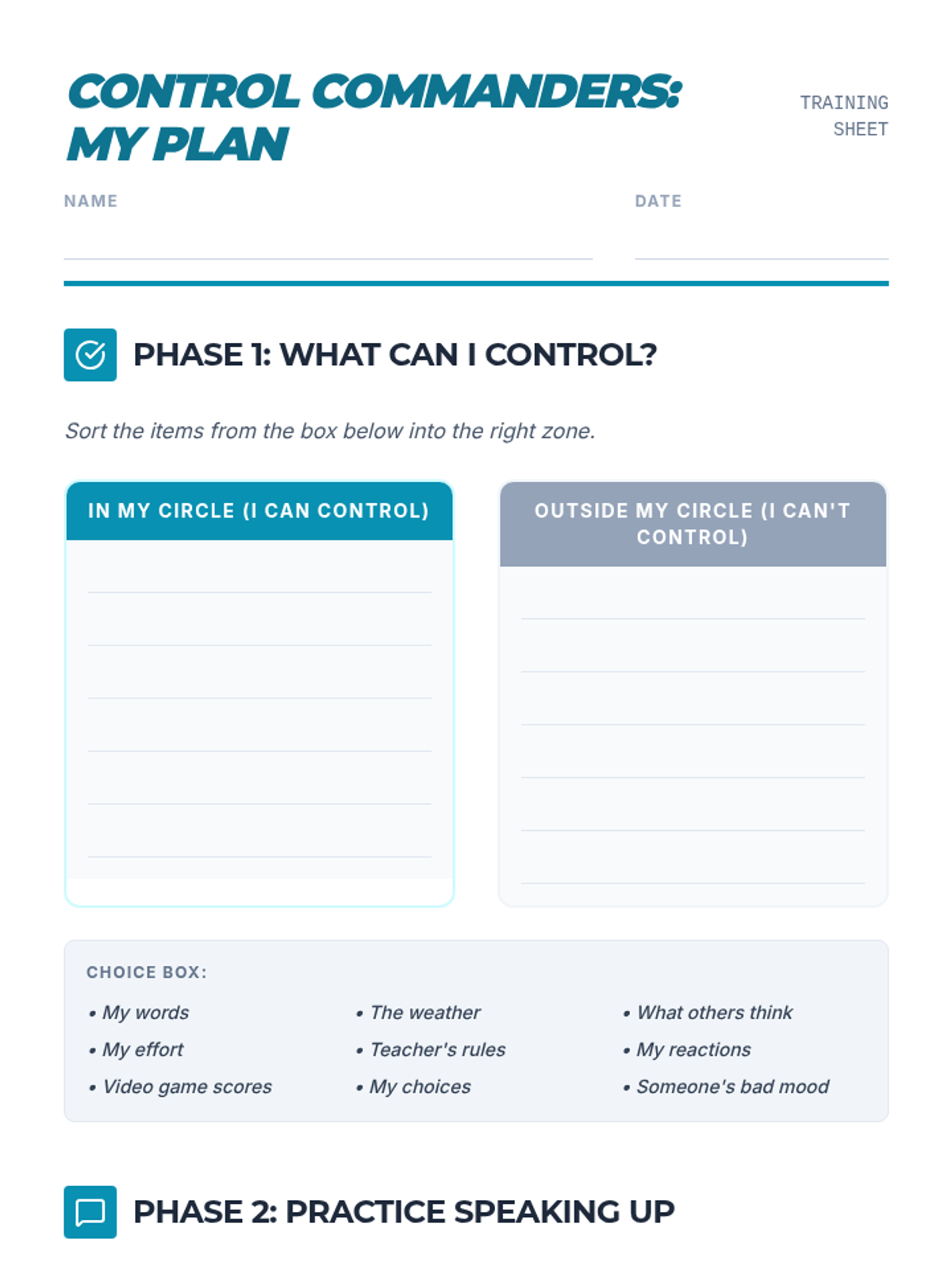
A revised graphic organizer for 6th grade students with concrete language to categorize control factors and practice drafting I-Statements.
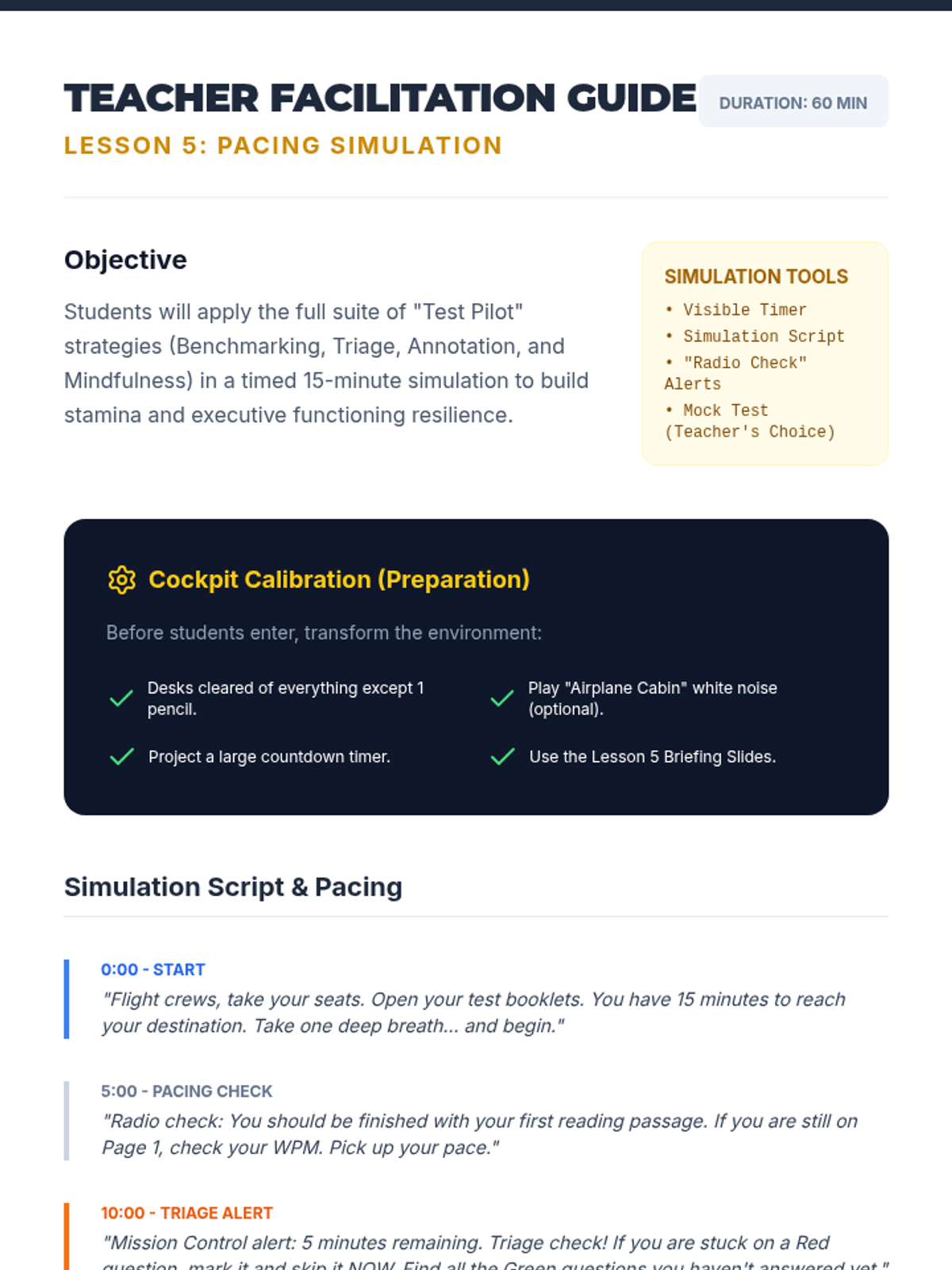
A teacher guide for Lesson 5 including the simulation script, timing intervals, and a guide for the post-simulation debrief and student certification.
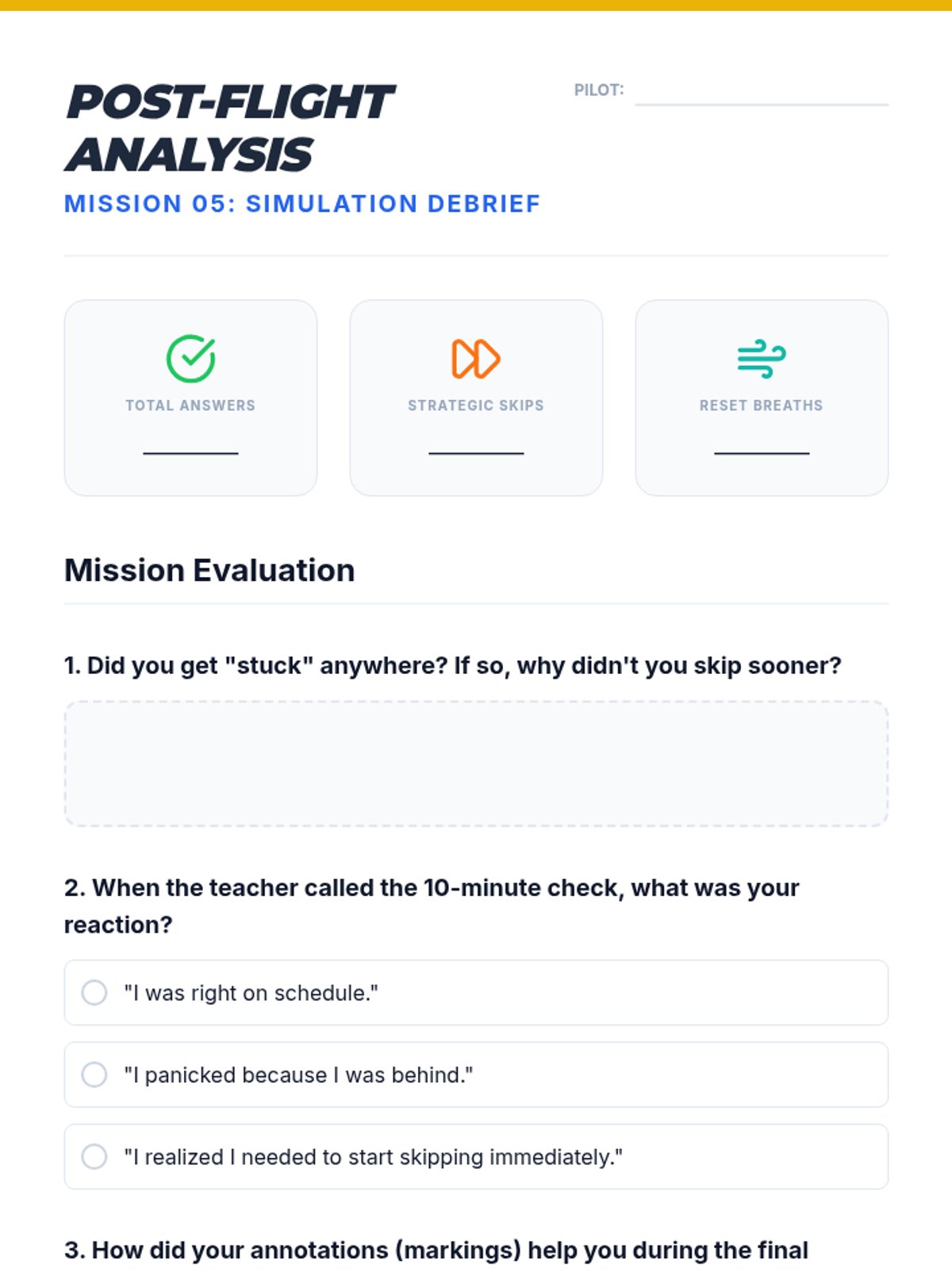
A student reflection sheet and goal-setting document for the final pacing simulation, helping students create a personalized 'Test Protocol' for future exams.
Slides for Lesson 5, the final simulation briefing, reviewing all Test Pilot Academy strategies and providing time-check benchmarks for the mock exam.
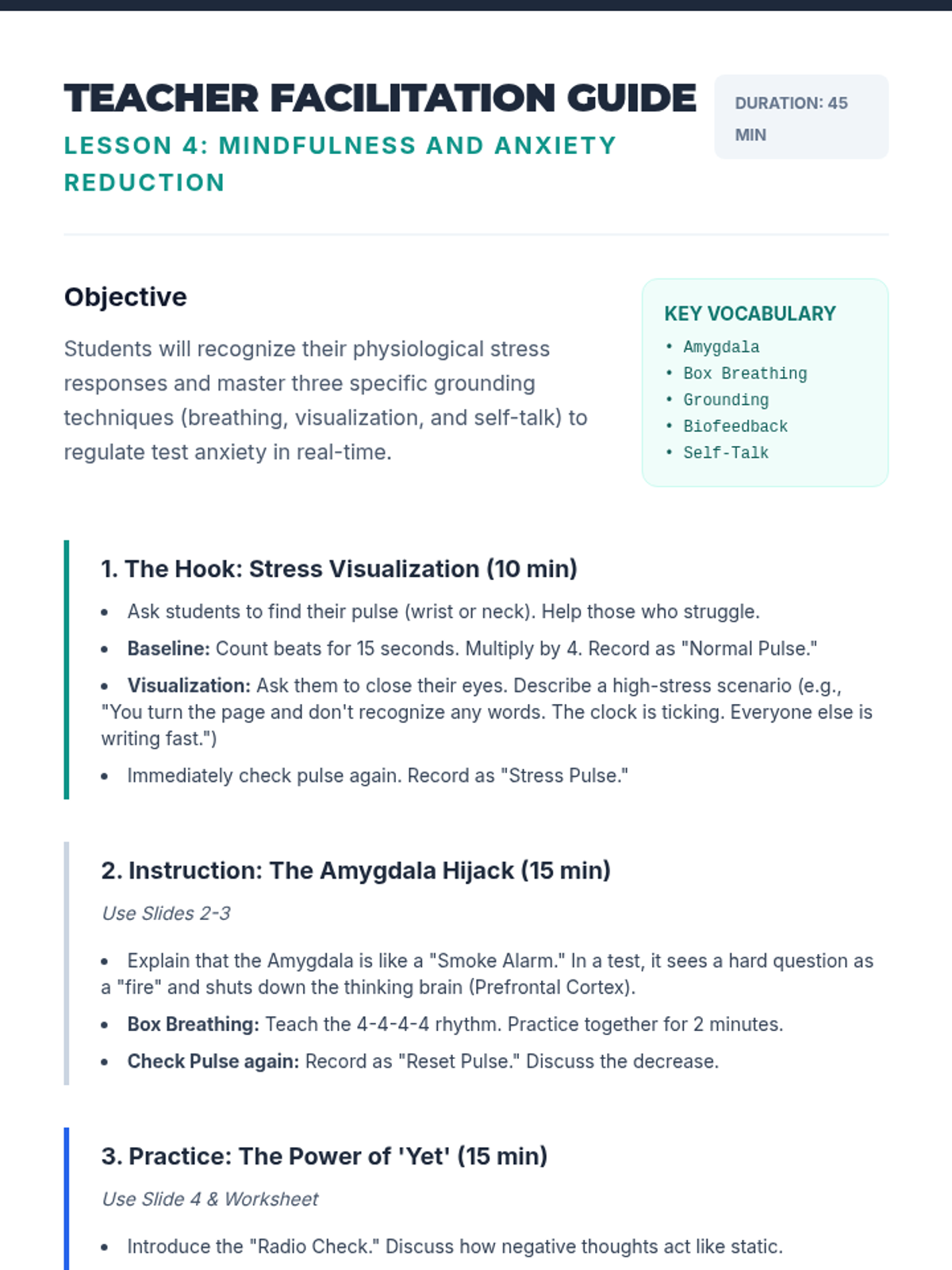
A teacher guide for Lesson 4 including instructions for the biofeedback pulse check, grounding exercise facilitation, and strategies for student buy-in using the Test Pilot theme.
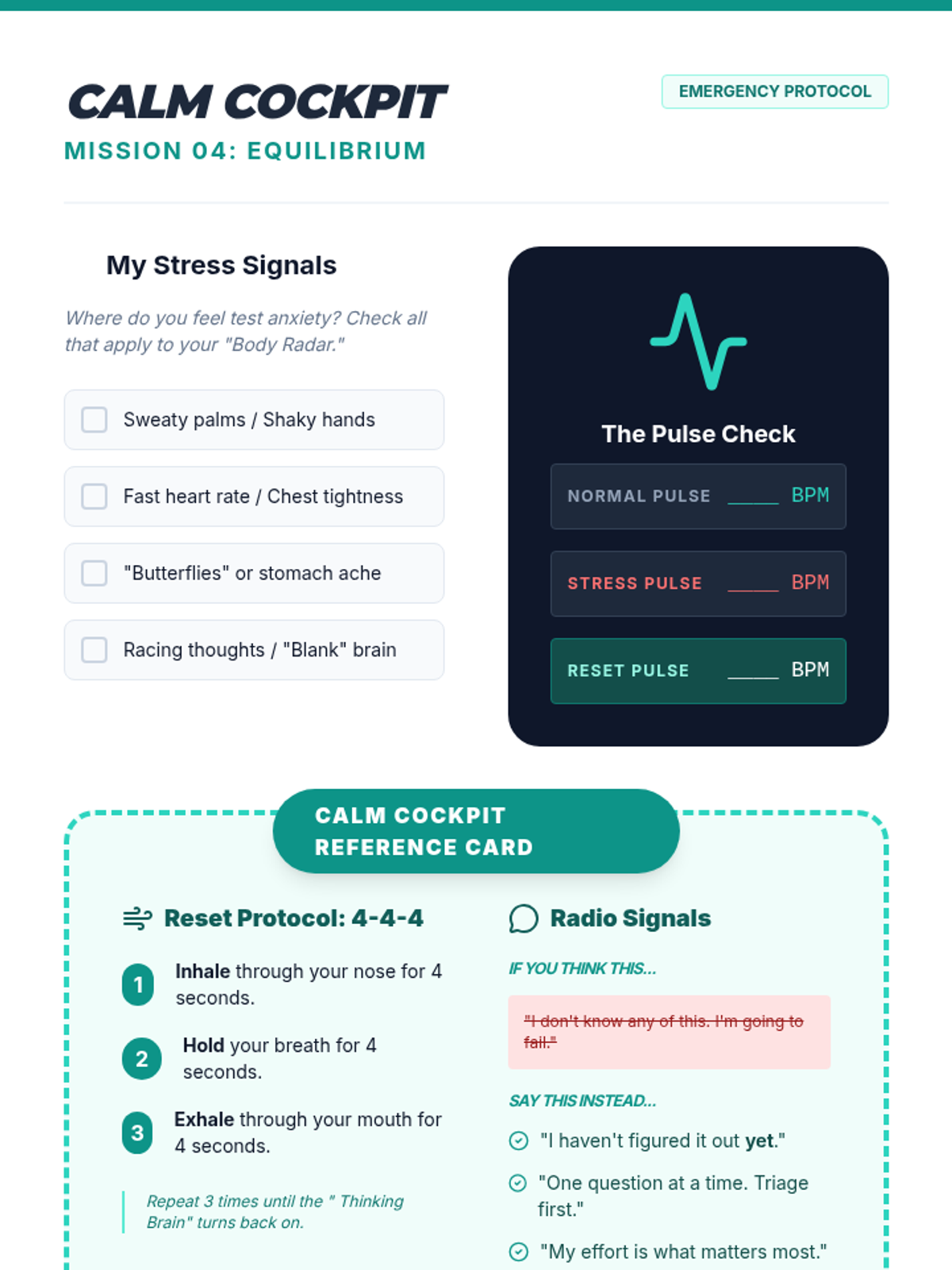
A student resource featuring an anxiety-mapping activity and a cutout 'Calm Cockpit' reference card with grounding techniques and positive self-talk prompts.
Slides for Lesson 4 teaching mindfulness and anxiety reduction techniques for testing, focusing on the physiology of stress and grounding exercises.
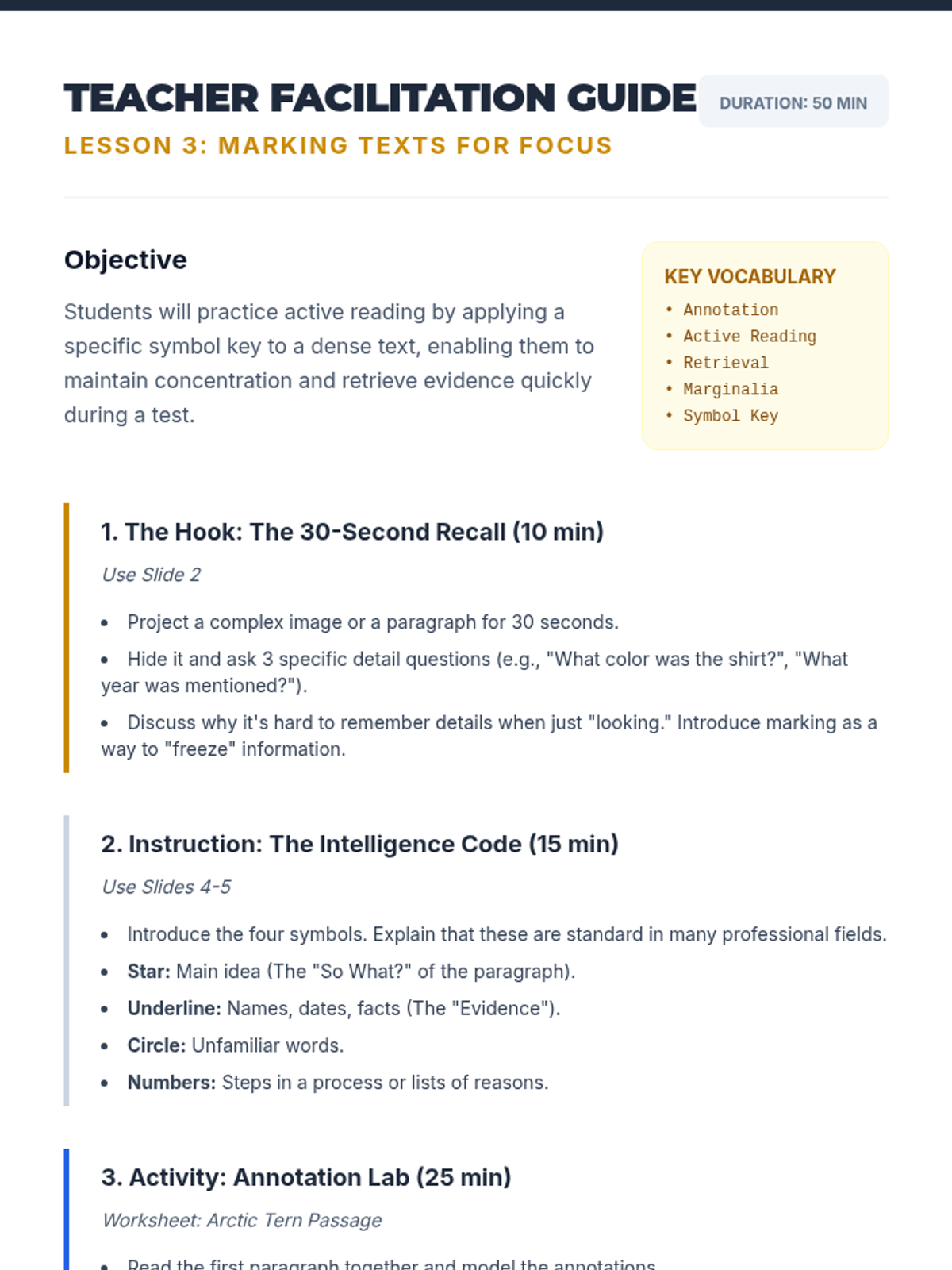
A teacher guide for Lesson 3 including instructions for the recall challenge, a model of the annotated passage, and an answer key for retrieval questions.
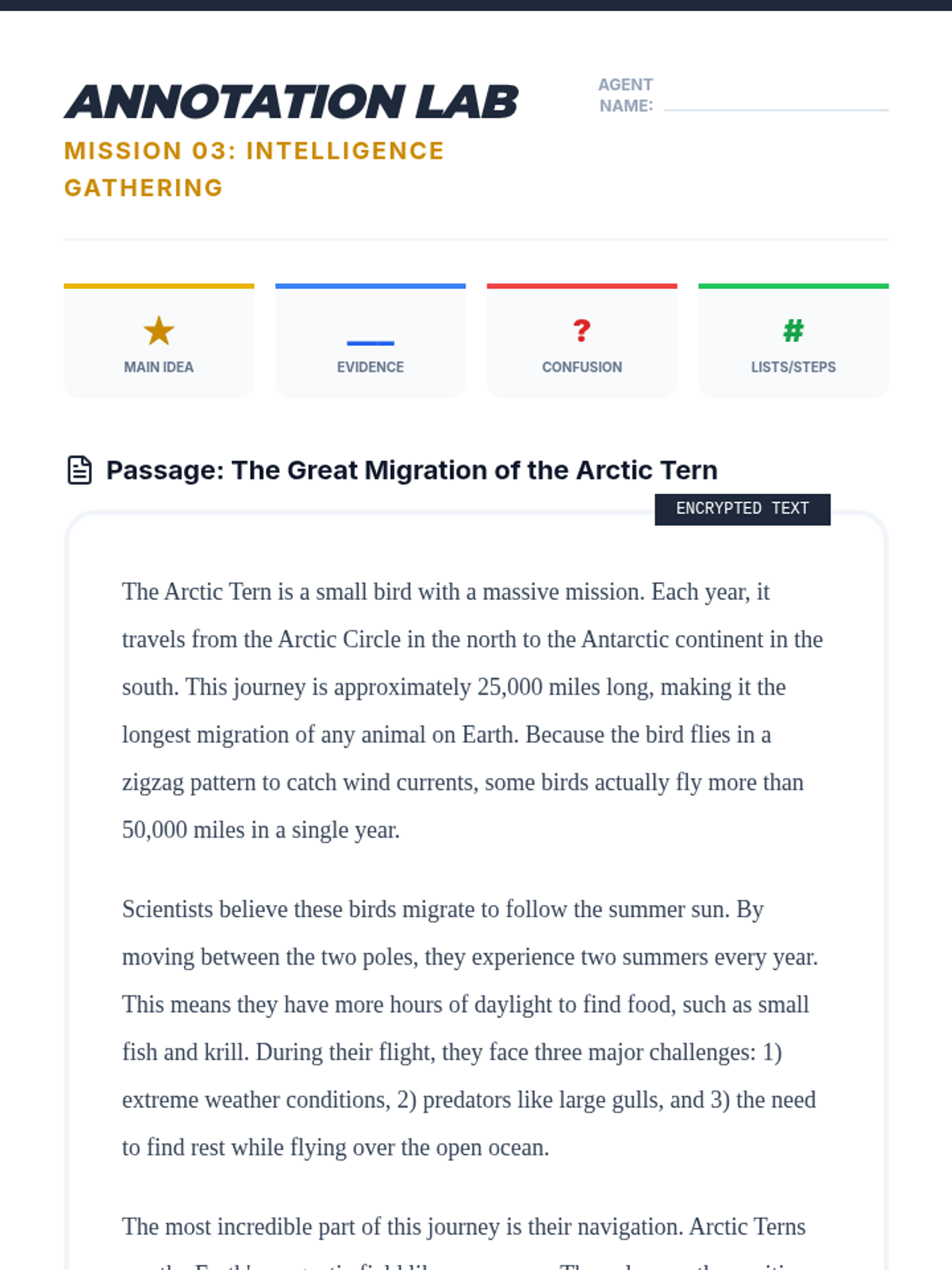
A student worksheet for practicing text annotation using a specific symbol key, featuring a dense passage about Arctic Tern migration and retrieval questions.
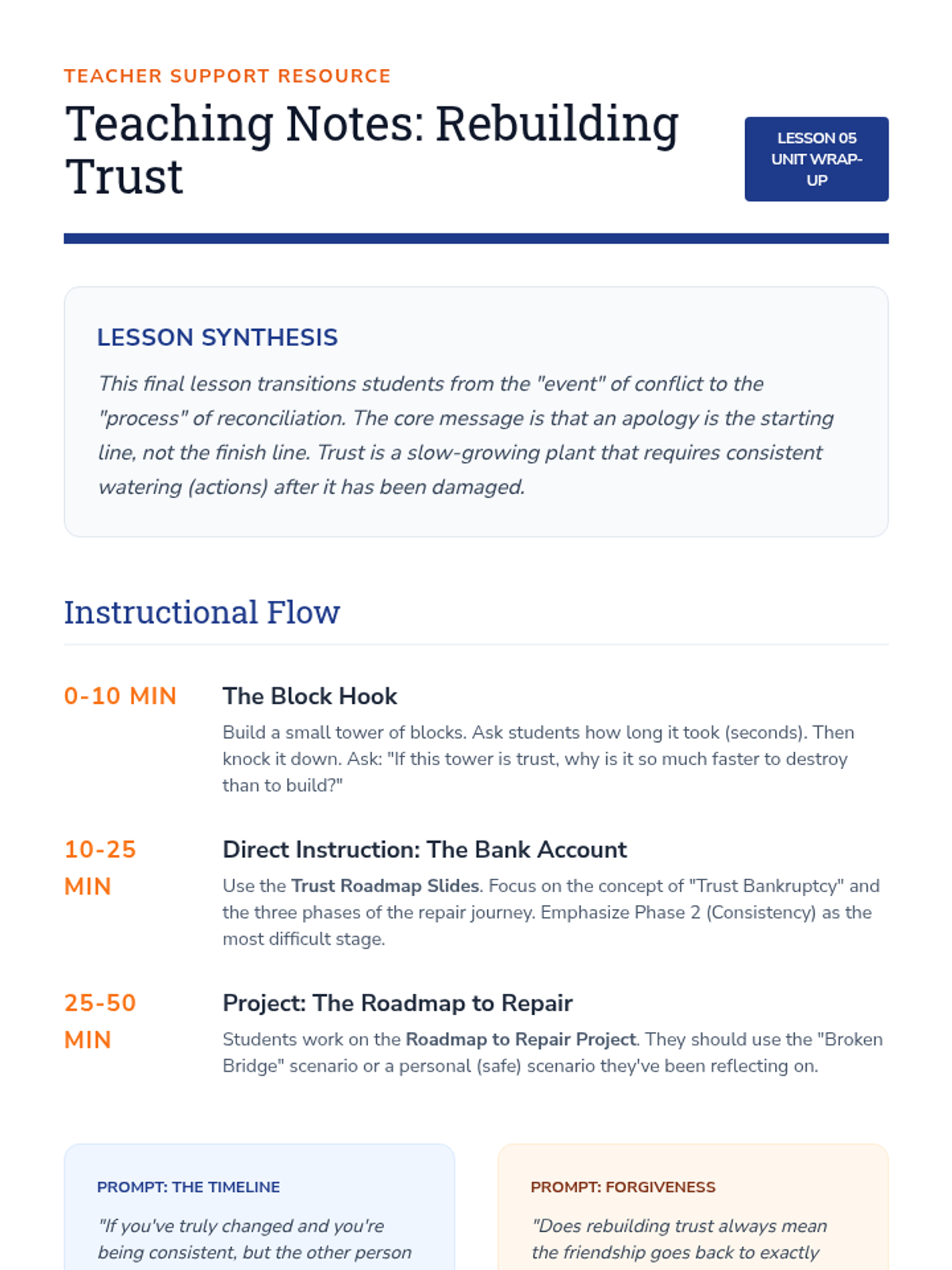
Teaching notes for Lesson 5, including summary of the 'Trust Bank Account' analogy, pacing for the final project, and unit wrap-up discussion prompts.
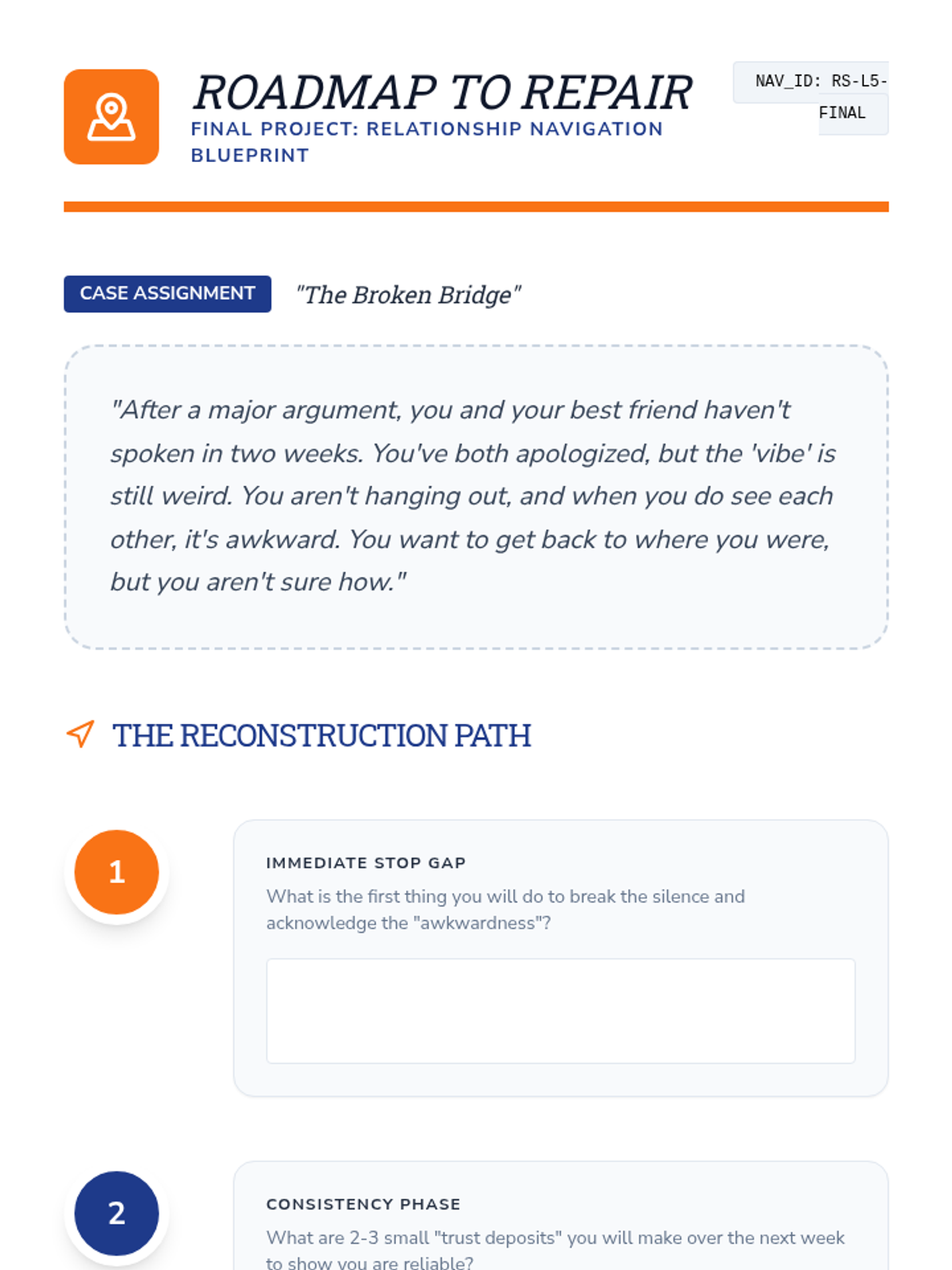
Final project worksheet for Lesson 5, guiding students to create a step-by-step visual 'Roadmap to Repair' for a fictional relationship scenario.
Visual slide deck for Lesson 5: Rebuilding Trust Over Time, introducing the concept of trust as a bank account and the long-term phases of relationship repair.
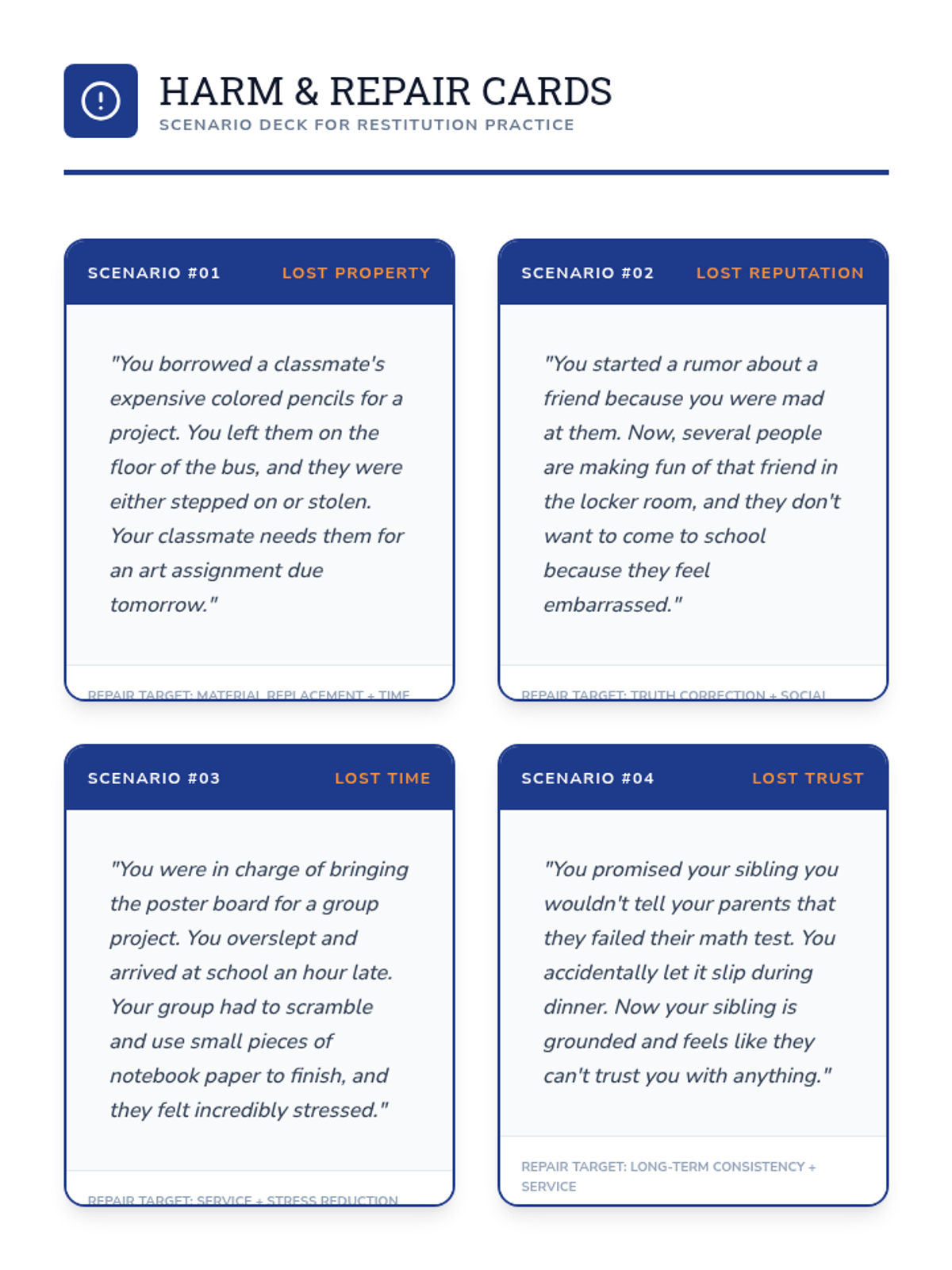
Scenarios of harm for students to analyze and use for designing restitution plans on their blueprints.
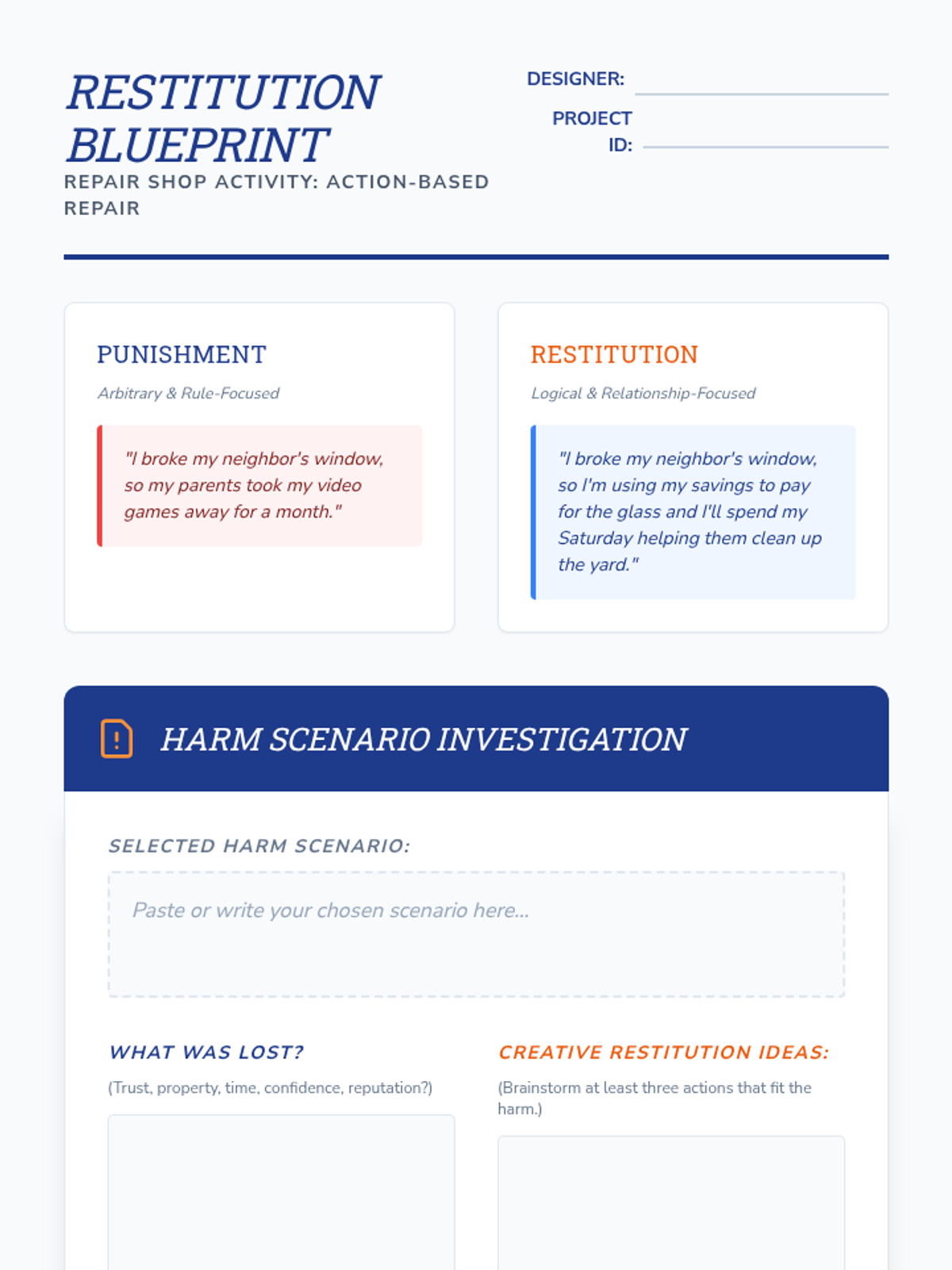
Creative project worksheet for Lesson 4, guiding students to design logical and relationship-focused restitution plans for specific harm scenarios.
Visual slide deck for Lesson 4: Making Amends and Restitution, introducing the concept of restitution versus punishment and brainstorming creative ways to 'make it right'.
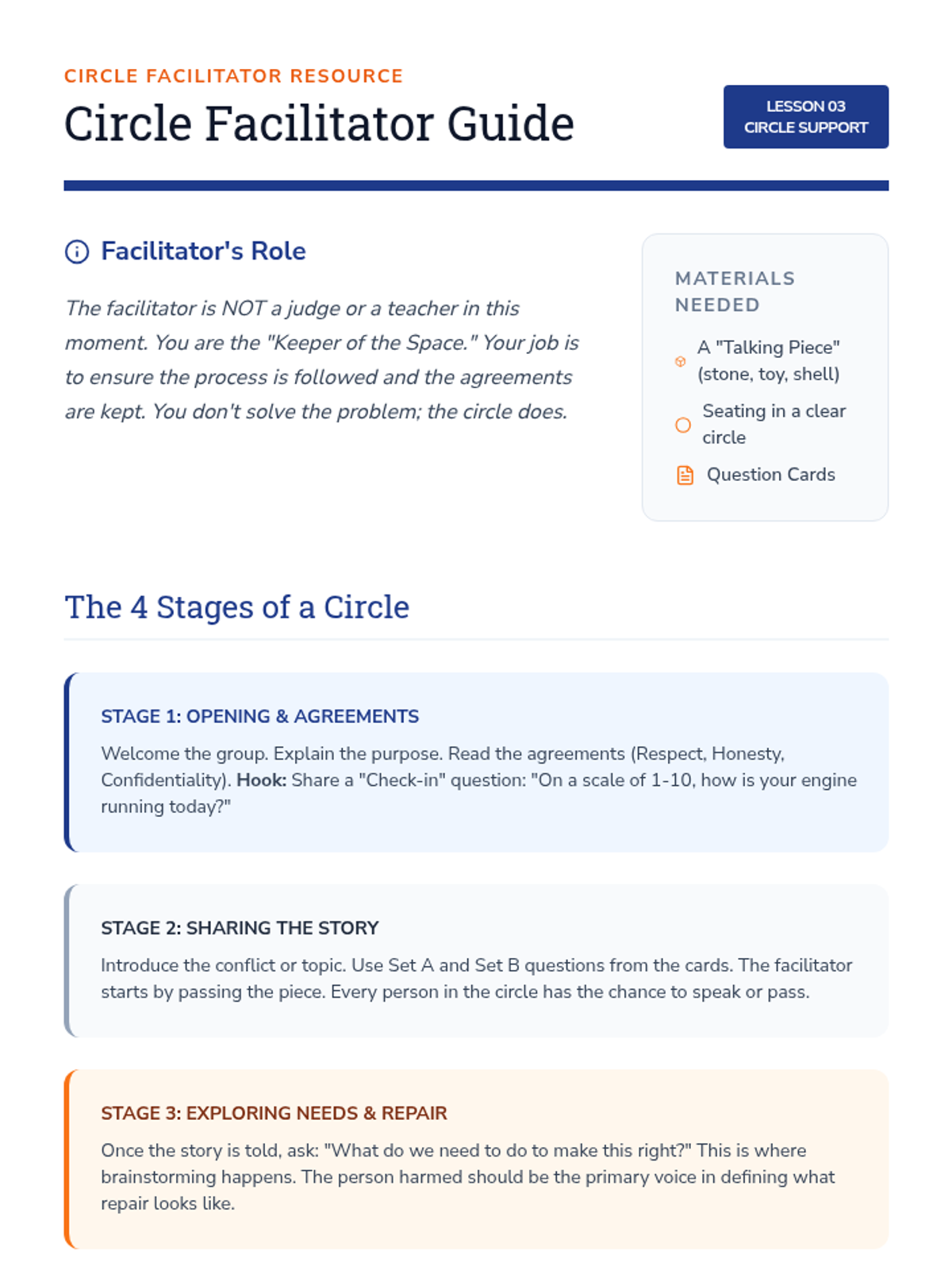
Comprehensive facilitation guide for teachers on how to lead a restorative dialogue circle, including stages, scripts, and troubleshooting tips.
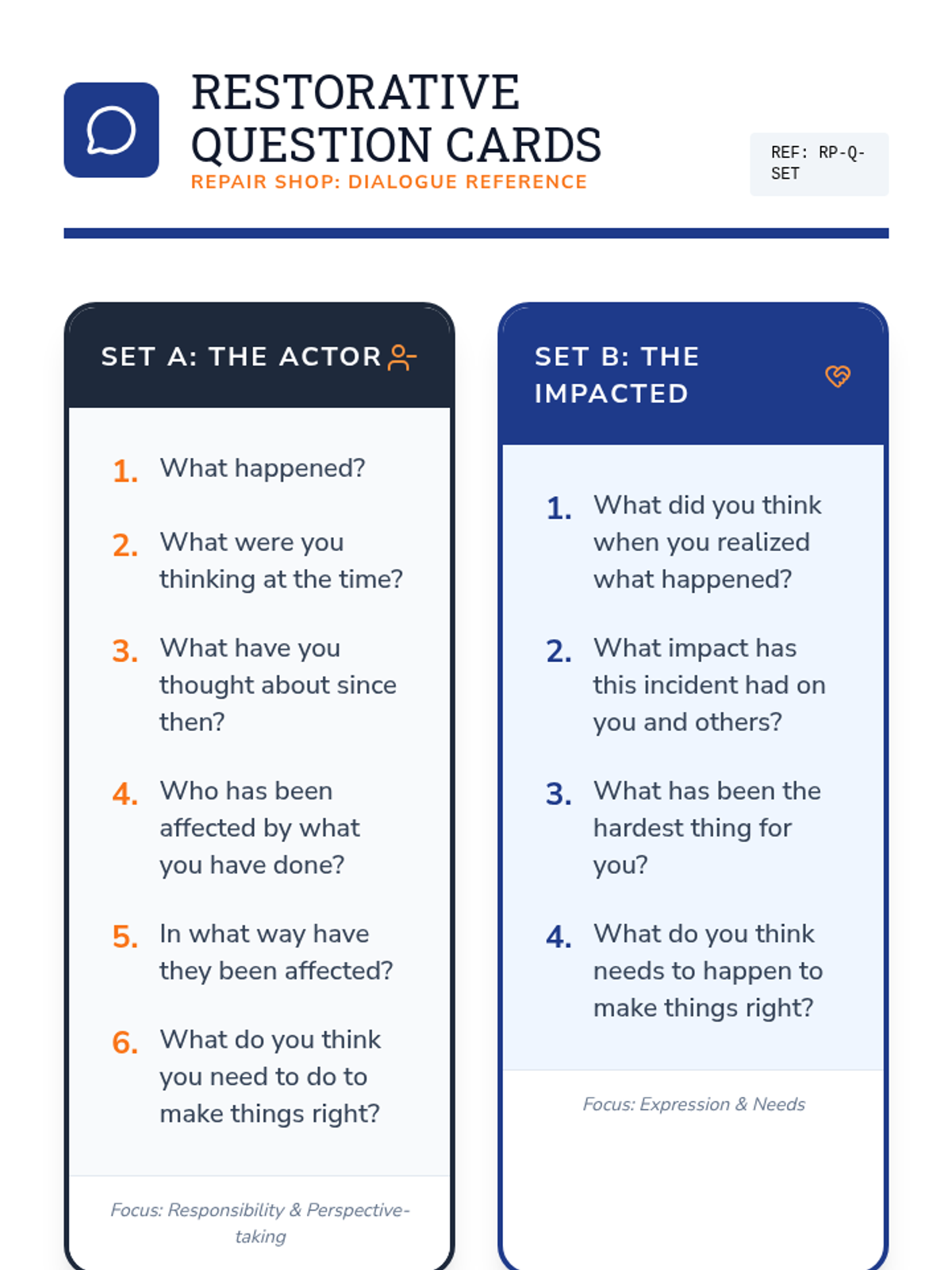
Set of standard restorative justice questions for both the person who caused harm and the person affected, designed for student use during dialogue circles.
Visual slide deck for Lesson 3: Restorative Dialogue Circles, introducing the circle process, talking pieces, and the core restorative questions.
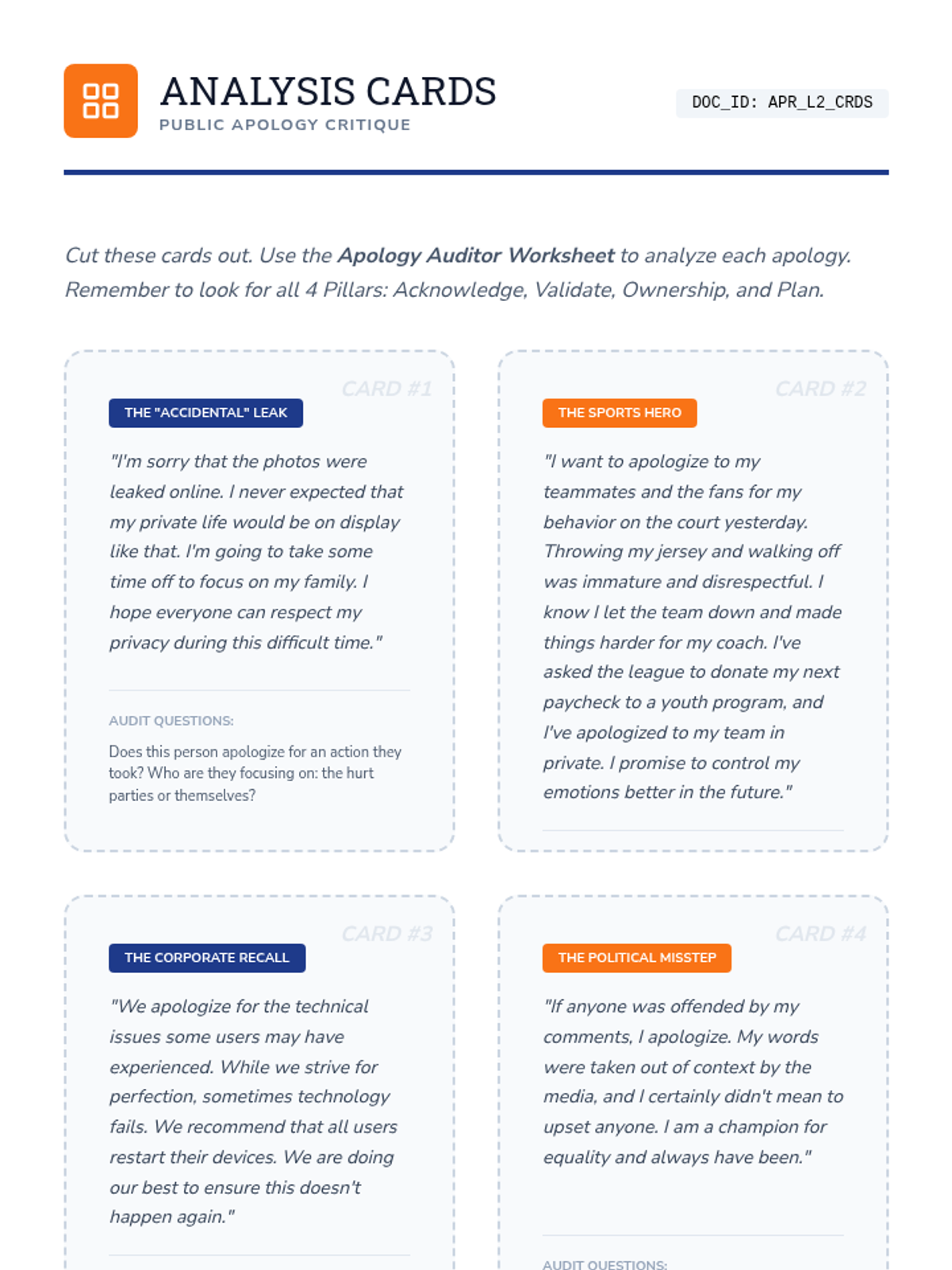
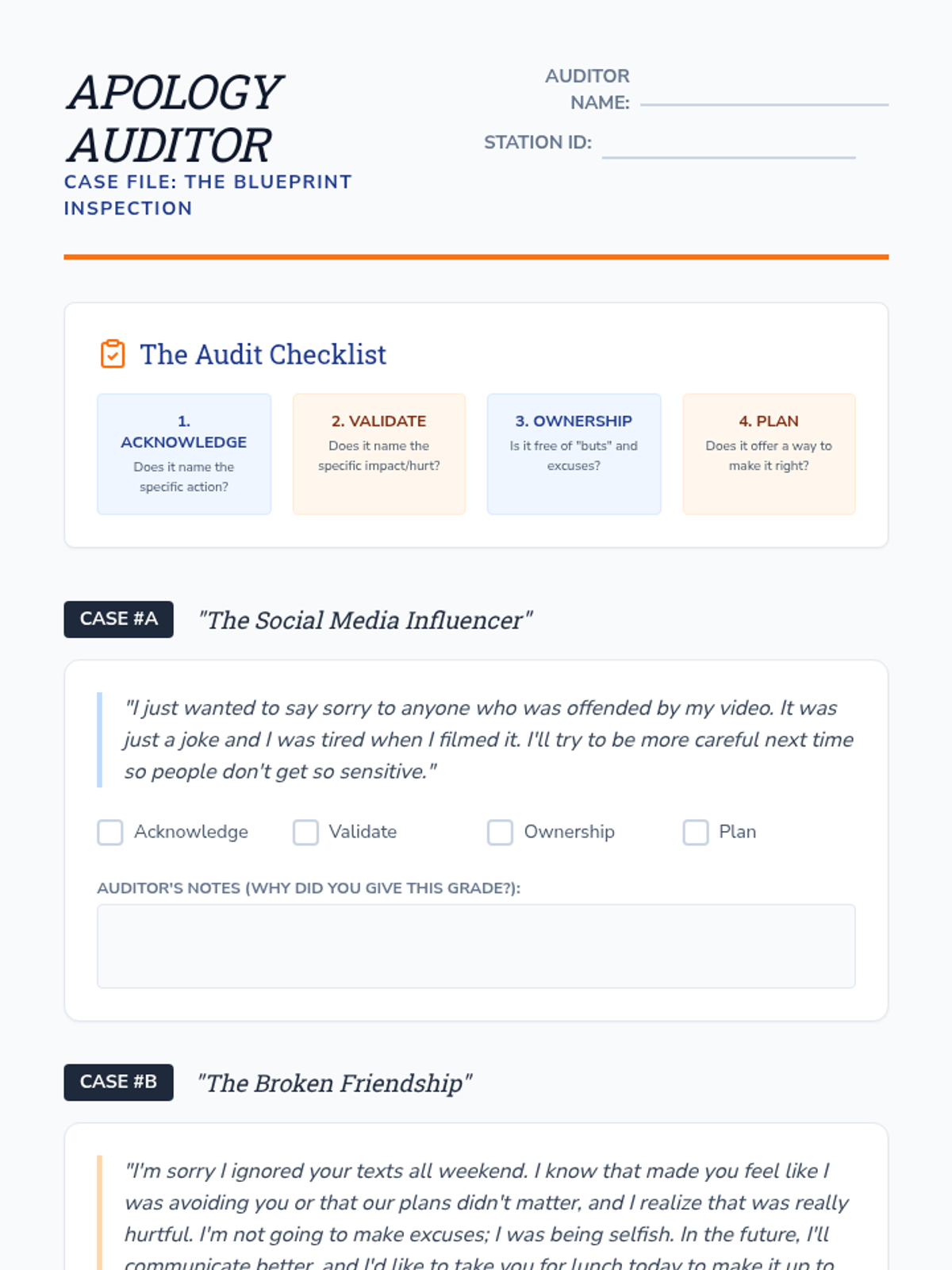
Analysis cards featuring fictionalized but realistic public apologies for students to critique using the Apology Auditor worksheet.
Worksheet for auditing apologies based on the 4 Pillars of a genuine apology. Includes analysis of two case studies and a creative writing task.
Visual slide deck for Lesson 2: Architecture of Apology, introducing the 4 Pillars of a genuine apology and contrasting them with "non-apologies".
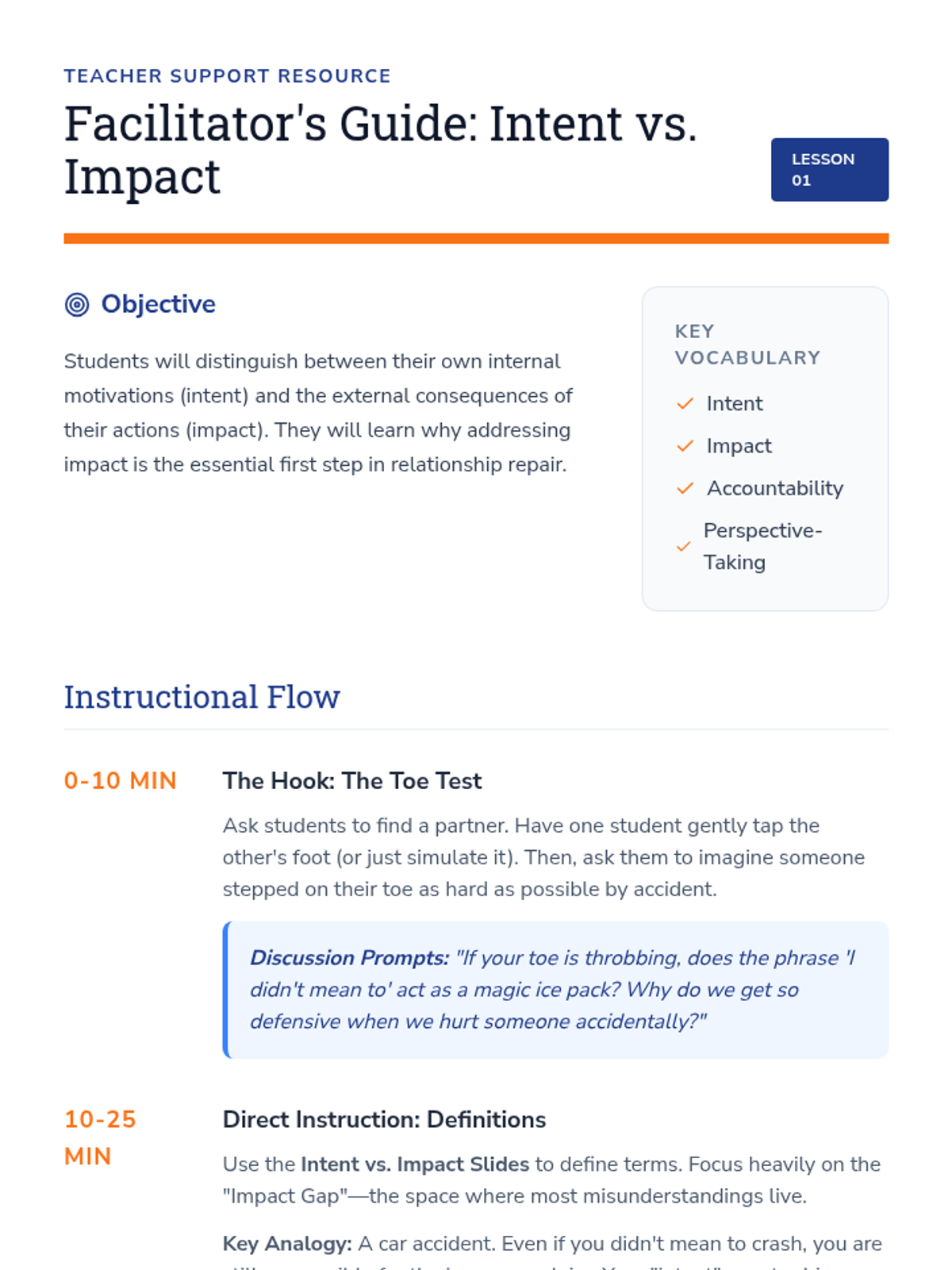
Comprehensive facilitation guide for Lesson 1, including pacing, discussion prompts, analogies, and strategies for addressing student misconceptions about intent and impact.
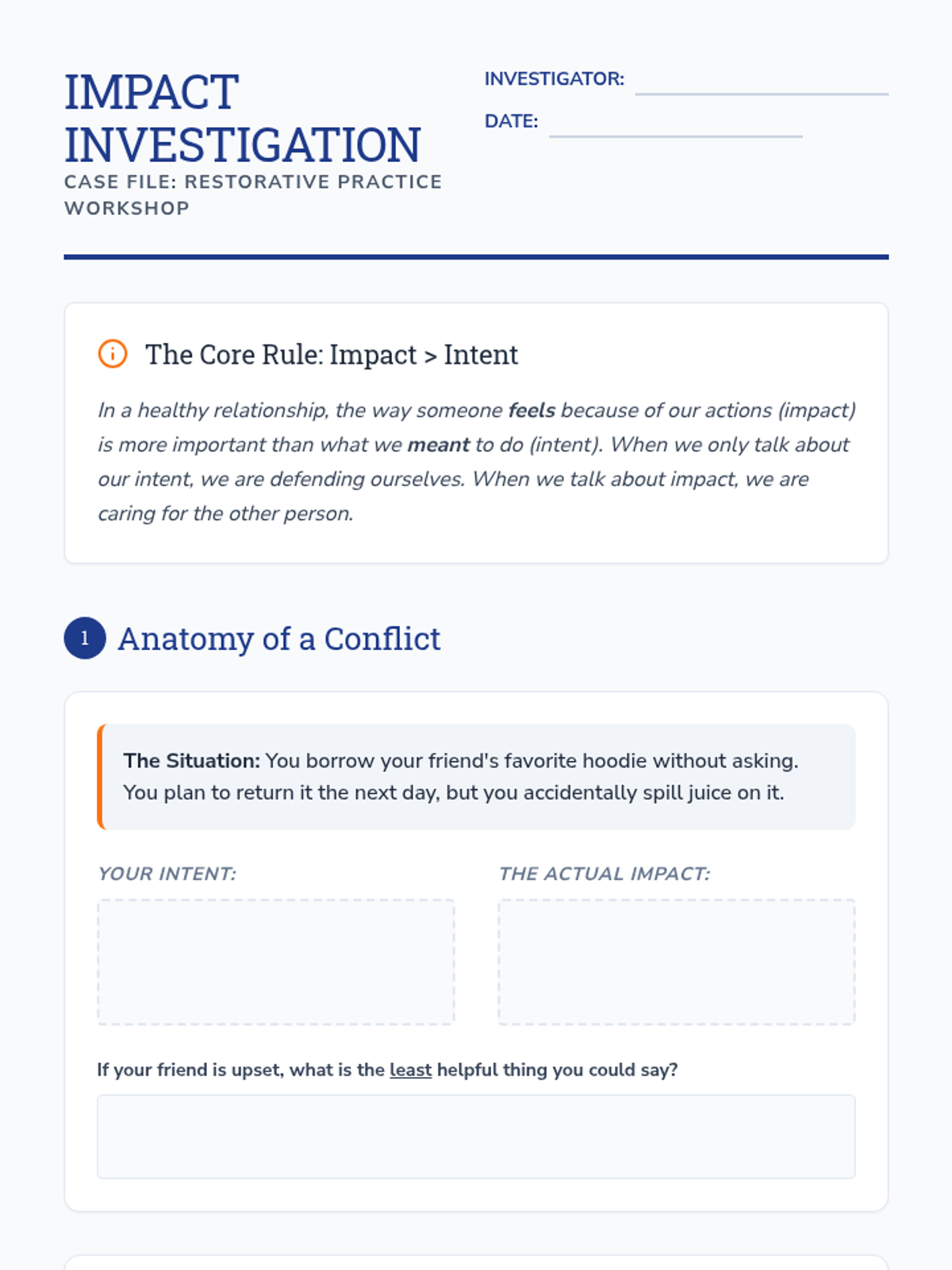
Case study worksheet for Lesson 1, where students analyze scenarios to distinguish between intent and impact and practice crafting impact-focused responses.
Visual slide deck for Lesson 1: Intent vs Impact, introducing the core concepts using the 'Toe Test' hook and a real-world case study.
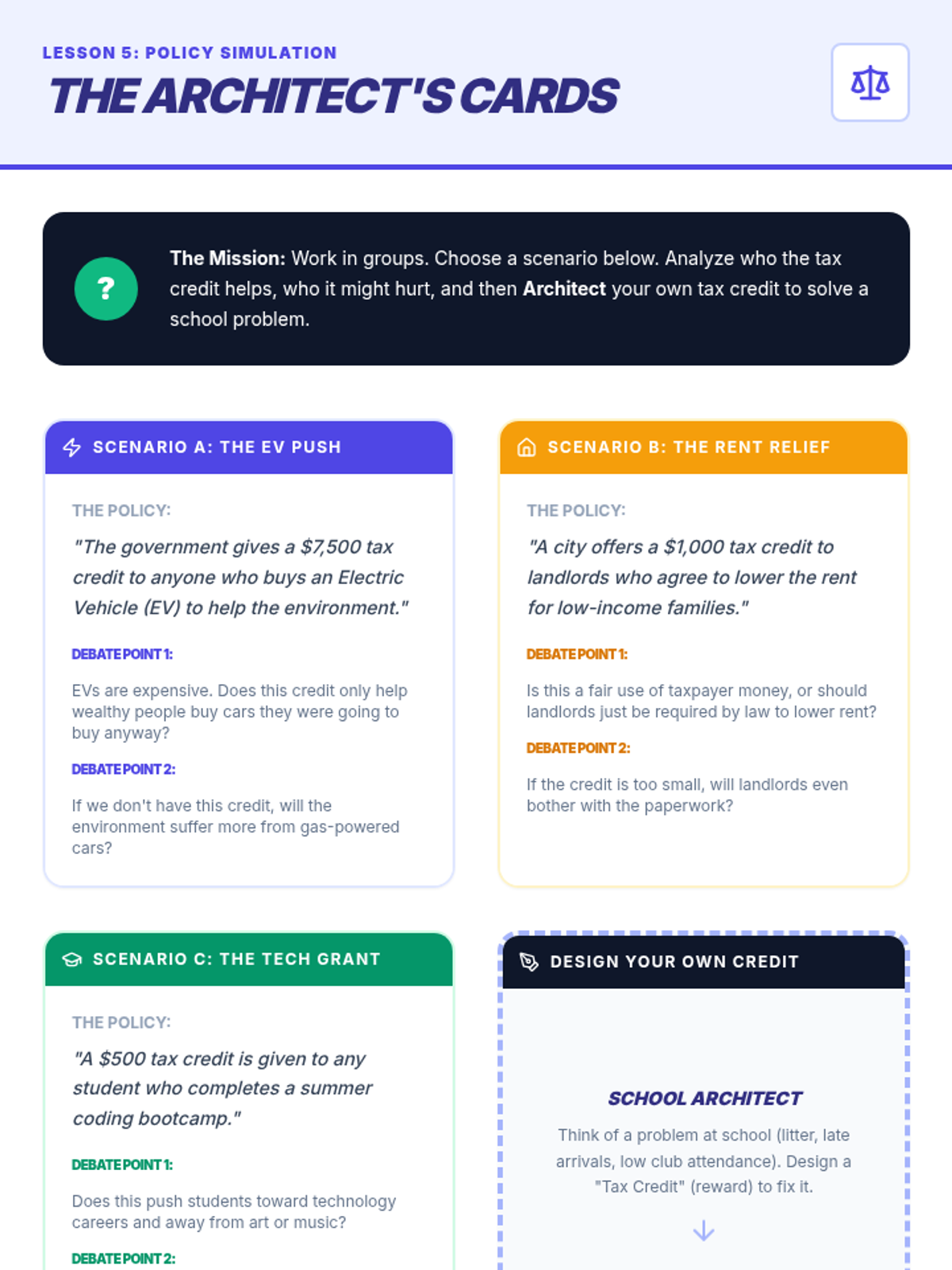
Discussion and activity cards for Lesson 5, guiding students through ethical debates and a policy-design simulation on tax credits.
Visual presentation for Lesson 5 explaining tax credits, behavioral economics, and setting up the final debate activity.
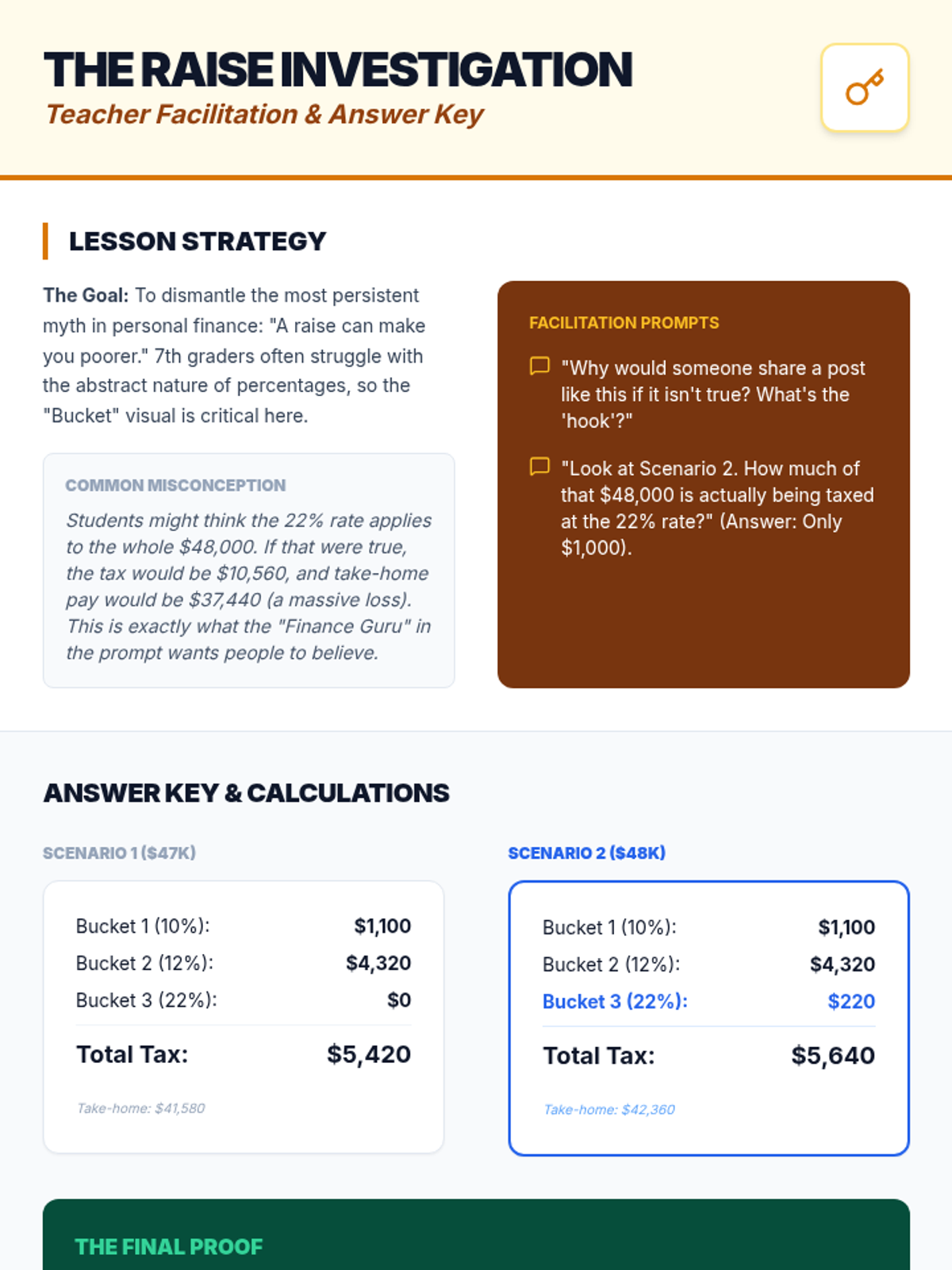
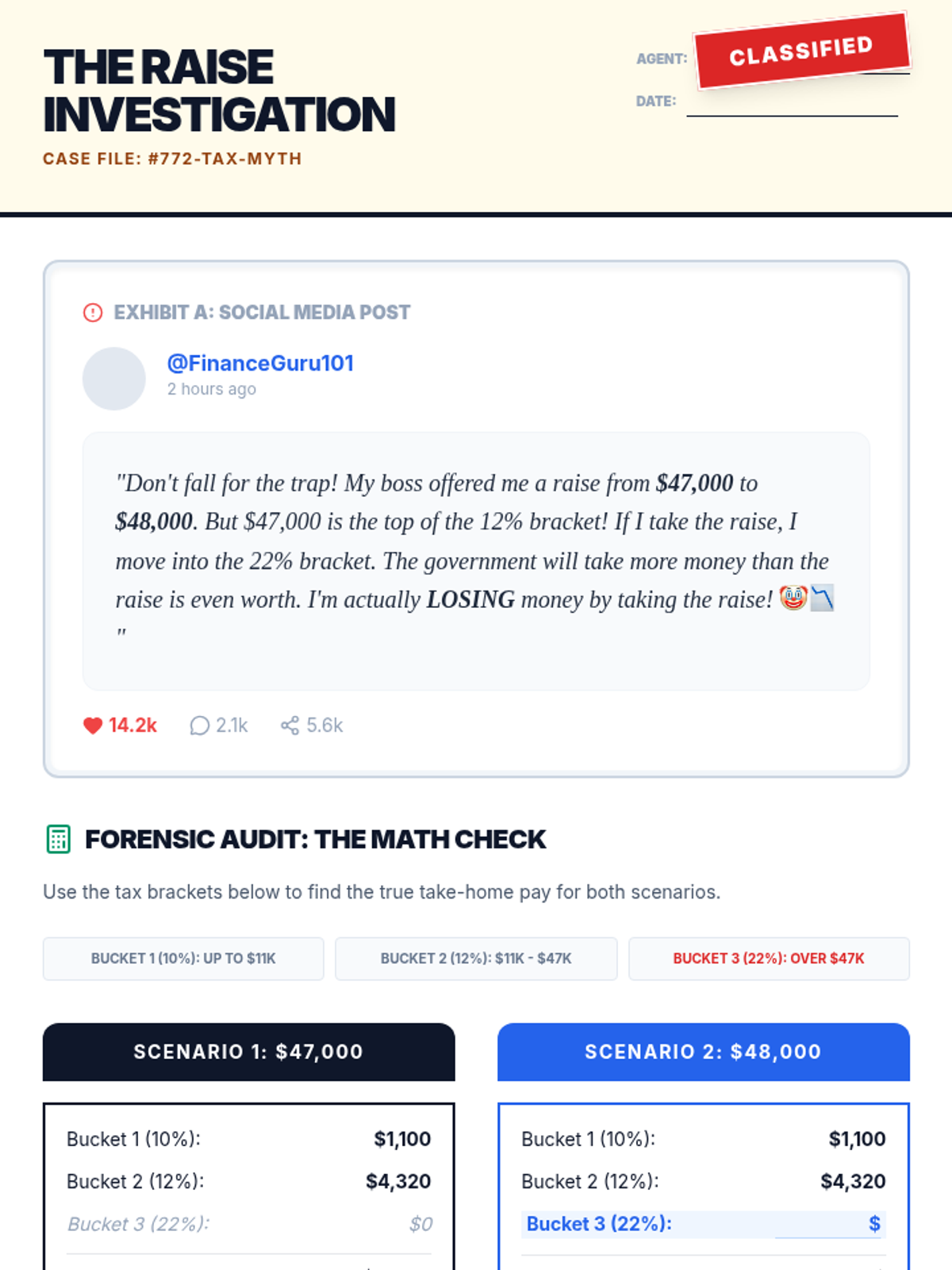
Teacher answer key and facilitation guide for the Raise Dilemma case study, including step-by-step math proofs.
Student worksheet for Lesson 4 where students debunk a viral tax myth about pay raises using calculation and logic.
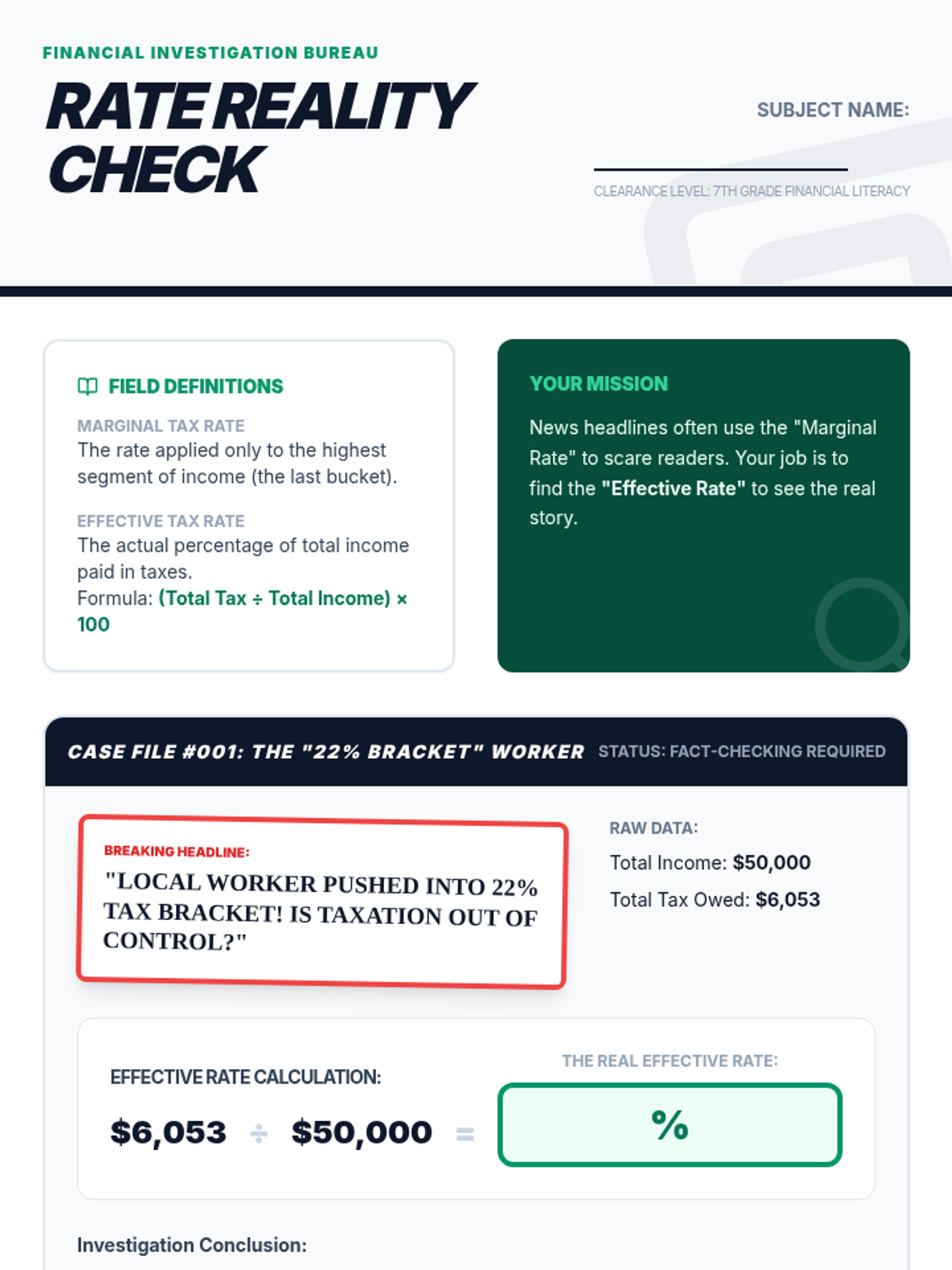
Student worksheet for Lesson 3 where students calculate effective tax rates to debunk sensationalized news headlines about tax brackets.