Mindful breathing and body scan meditation techniques integrated with daily self-care routines. Develops strategies for balancing life demands and advocating for personal wellness needs.
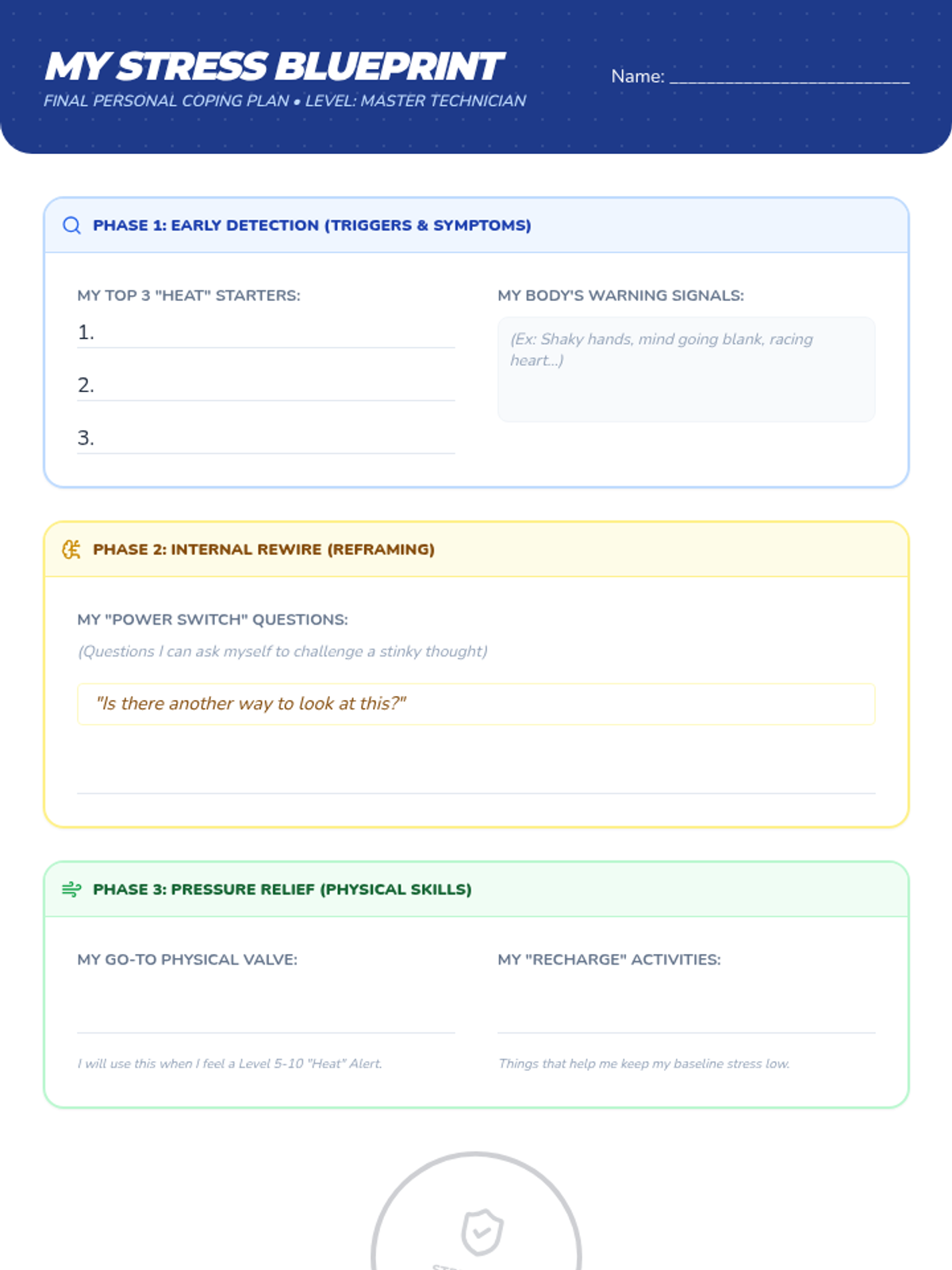
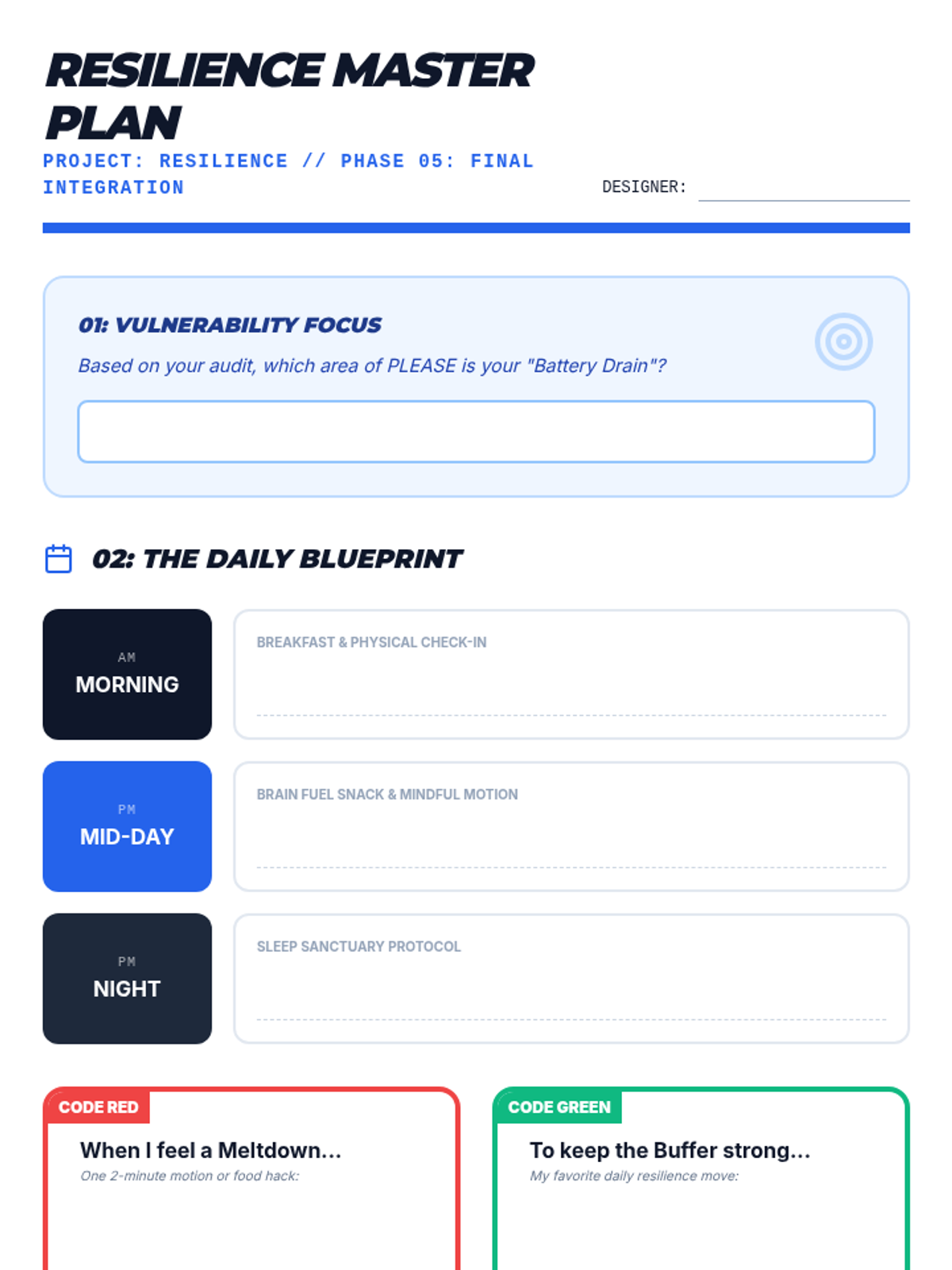
The final personal coping plan document for students, allowing them to synthesize their learning from all four sessions into a single "blueprint" for future use.
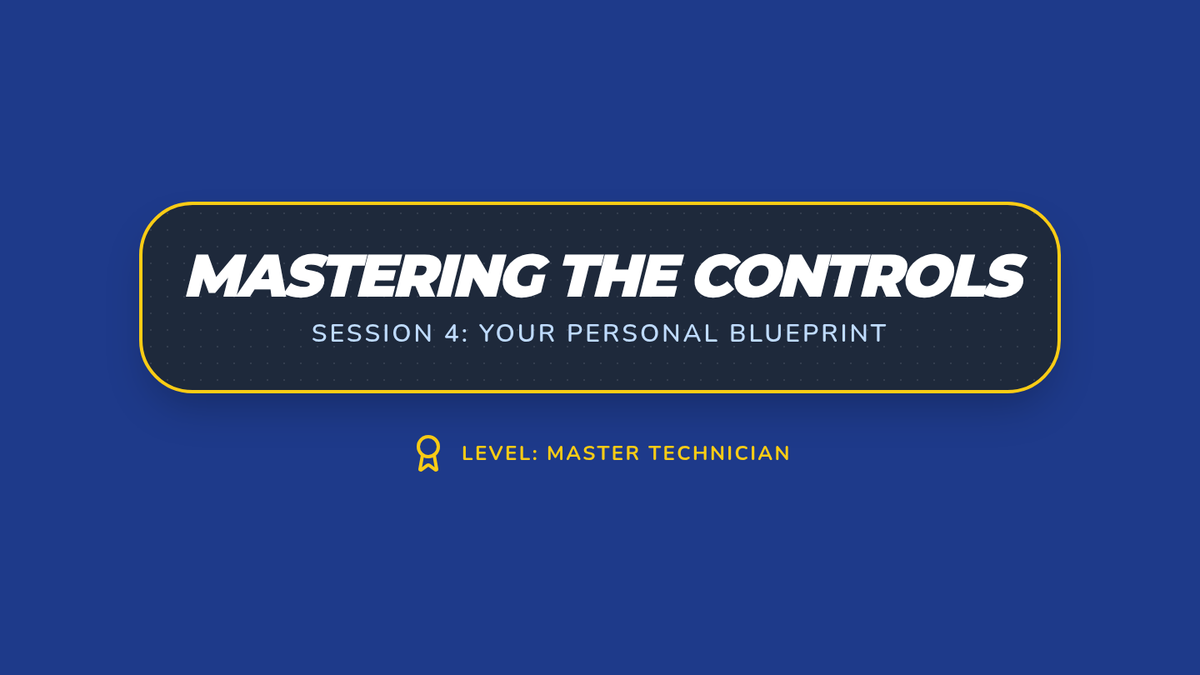
Slide presentation for Session 4, reviewing the unit's core concepts (Detection, Reframing, Regulation) and guiding students through the creation of their personal coping blueprints.
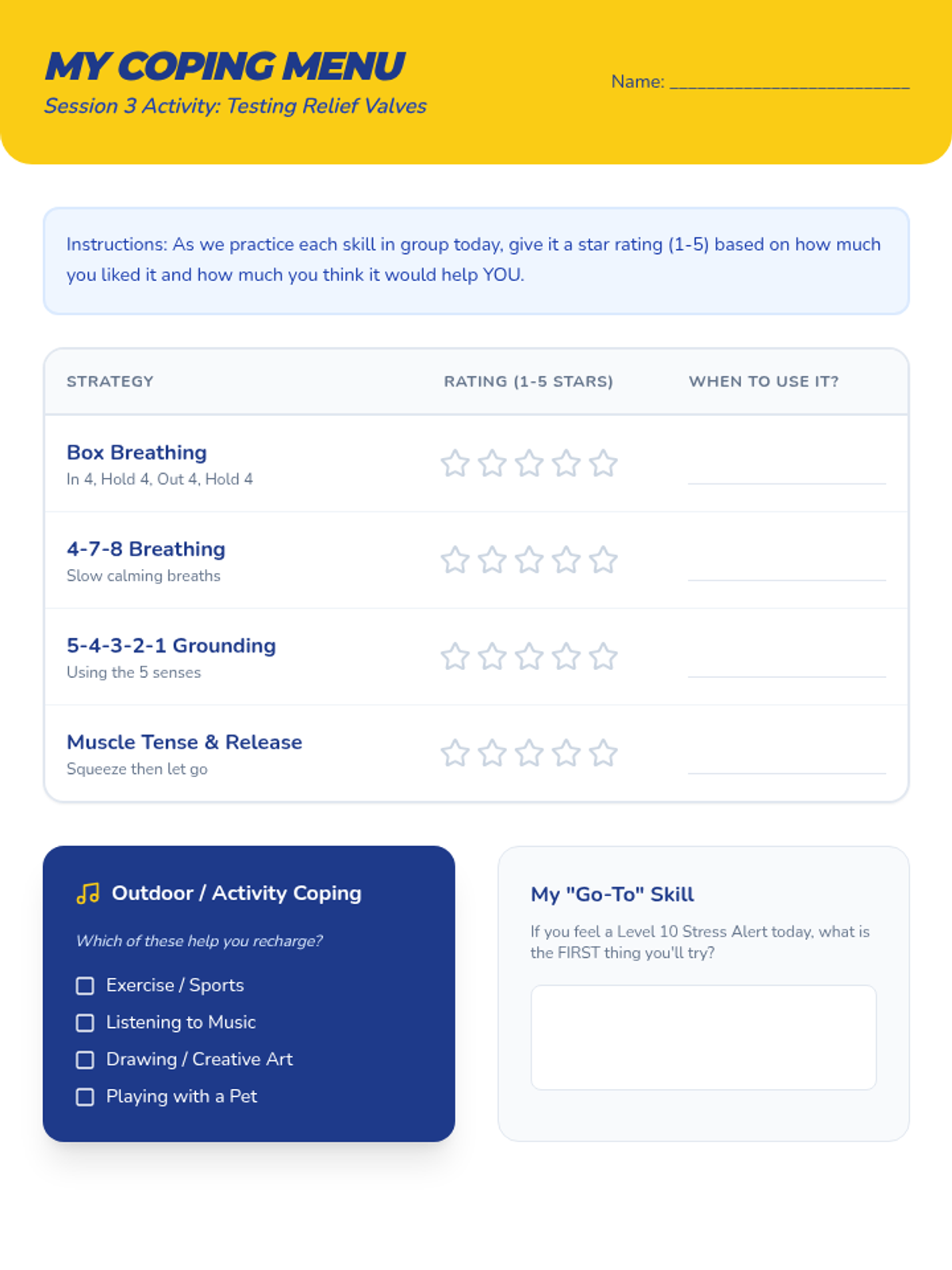
Coping strategy menu for students to trial and rate different physical and grounding techniques (e.g., box breathing, grounding) to identify what works best for them.
Slide presentation for Session 3, introducing physical coping mechanisms like controlled breathing, the 5-4-3-2-1 grounding technique, and explaining the physiological benefits of these strategies.
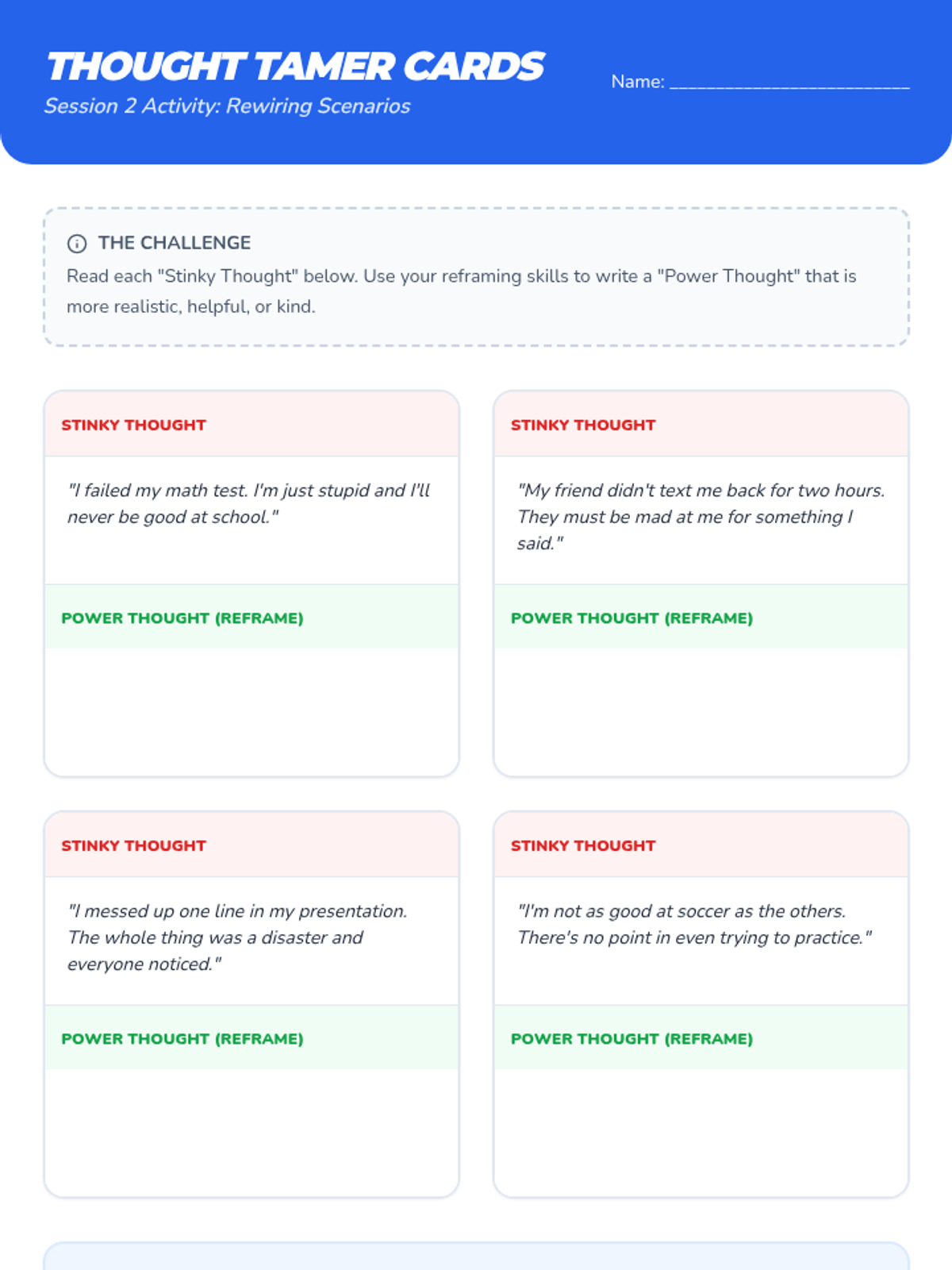
Student worksheet featuring common middle school stressors as "Stinky Thoughts" scenarios. Students practice cognitive reframing by writing realistic and positive "Power Thoughts" for each situation.
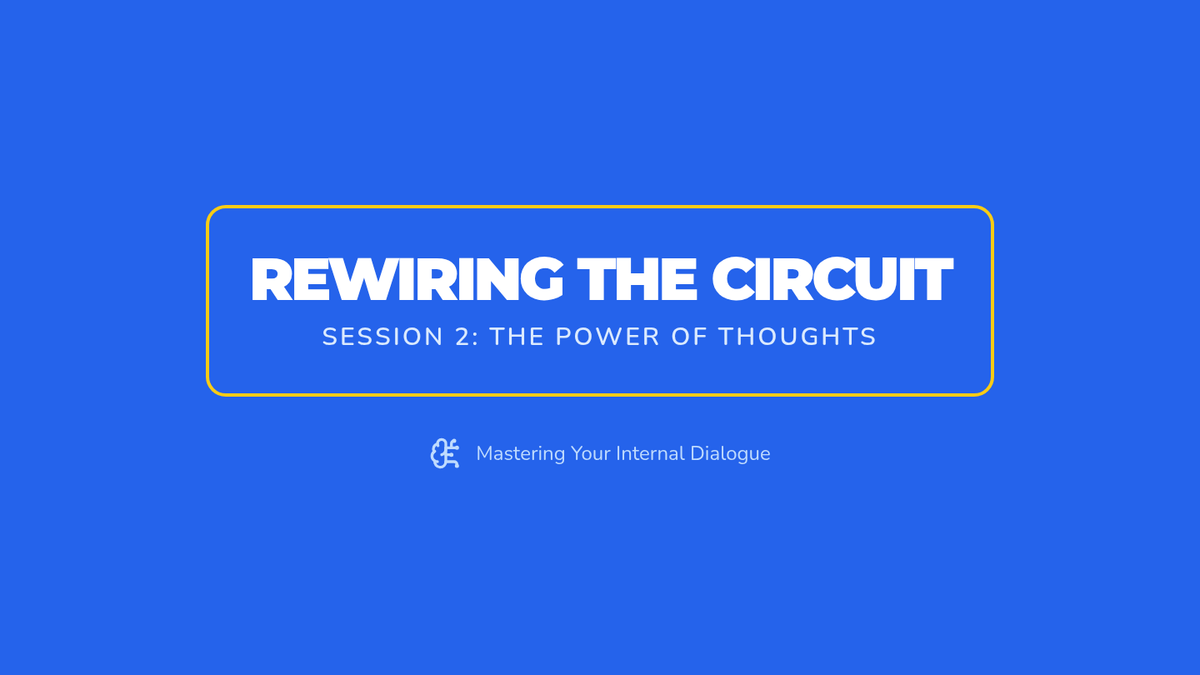
Slide presentation for Session 2, focusing on the connection between thoughts, feelings, and behaviors, and teaching students how to identify and reframe cognitive distortions.
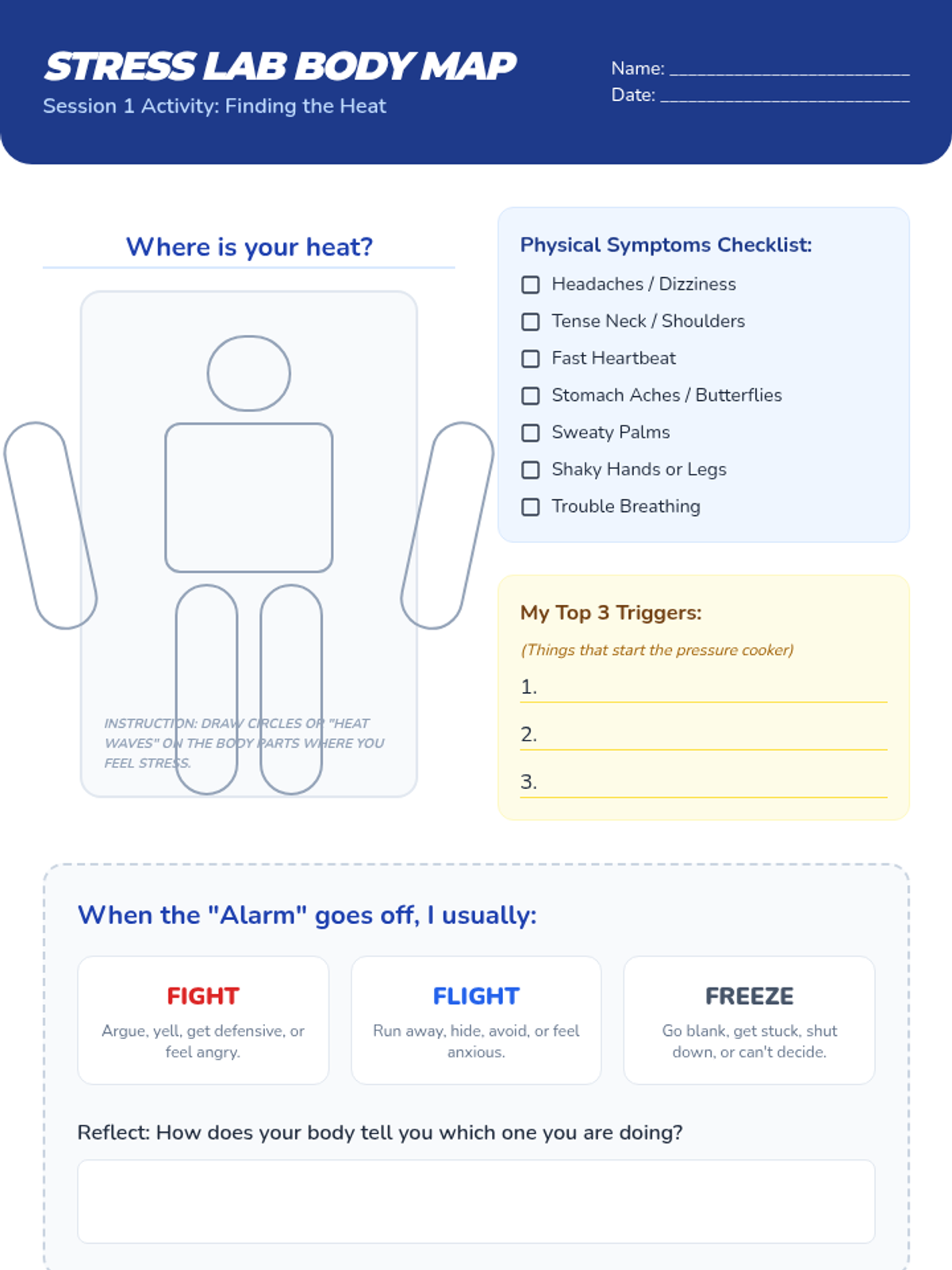
Student activity sheet for Session 1. Students identify their physical stress symptoms on a body map and list their primary personal triggers.
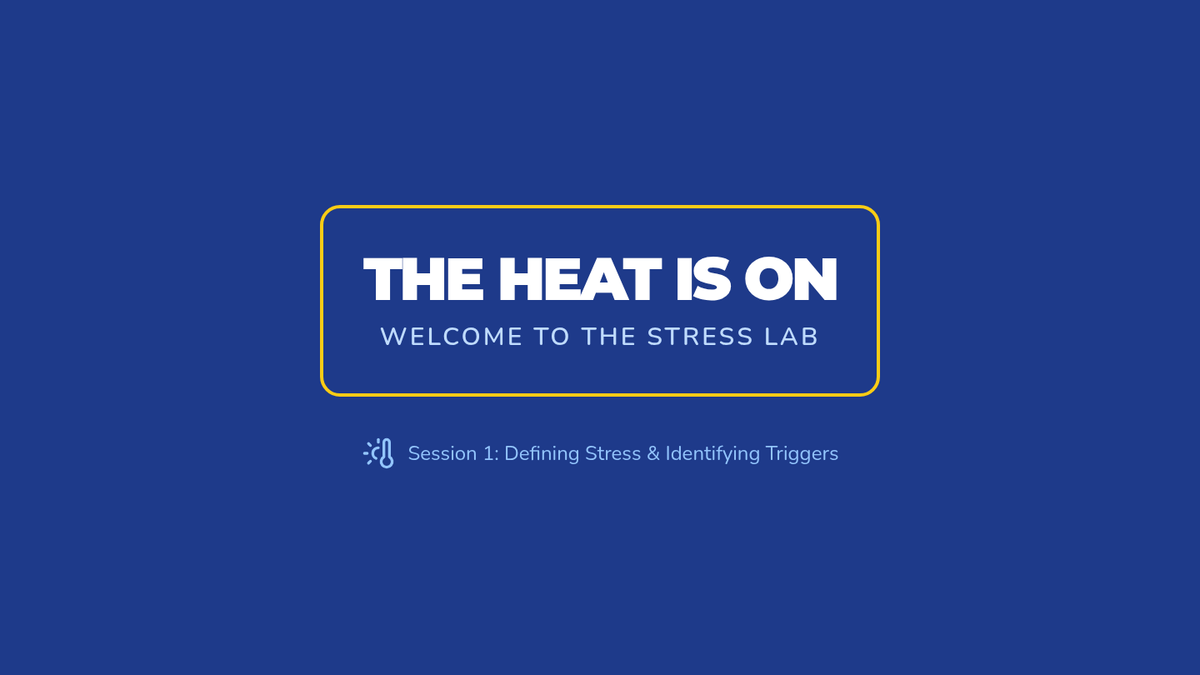
Slide presentation for Session 1, introducing the concept of stress using the pressure cooker analogy and explaining the body's fight/flight/freeze response.
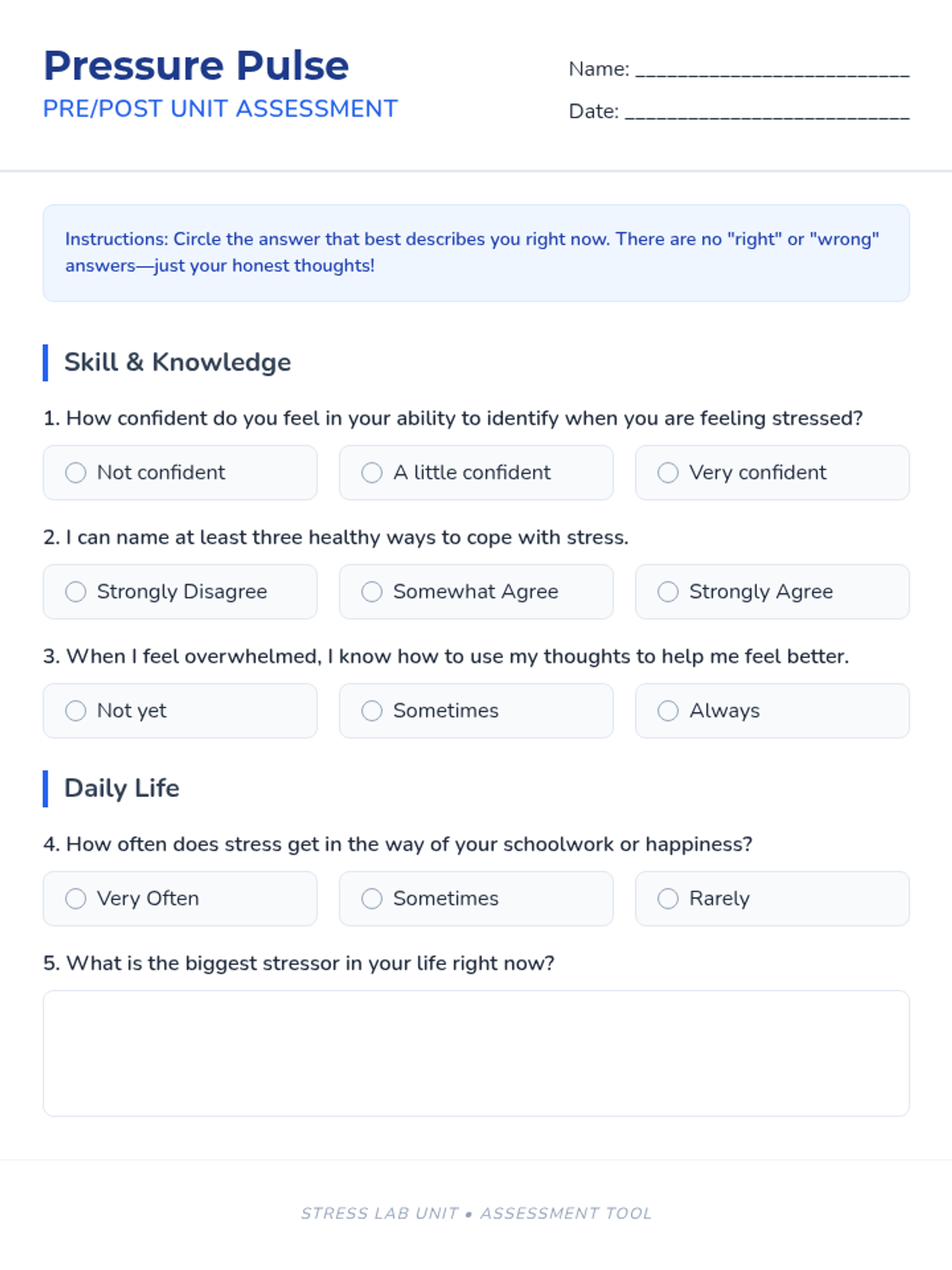
Unit pre- and post-assessment to measure student growth in identifying stressors and coping strategies.
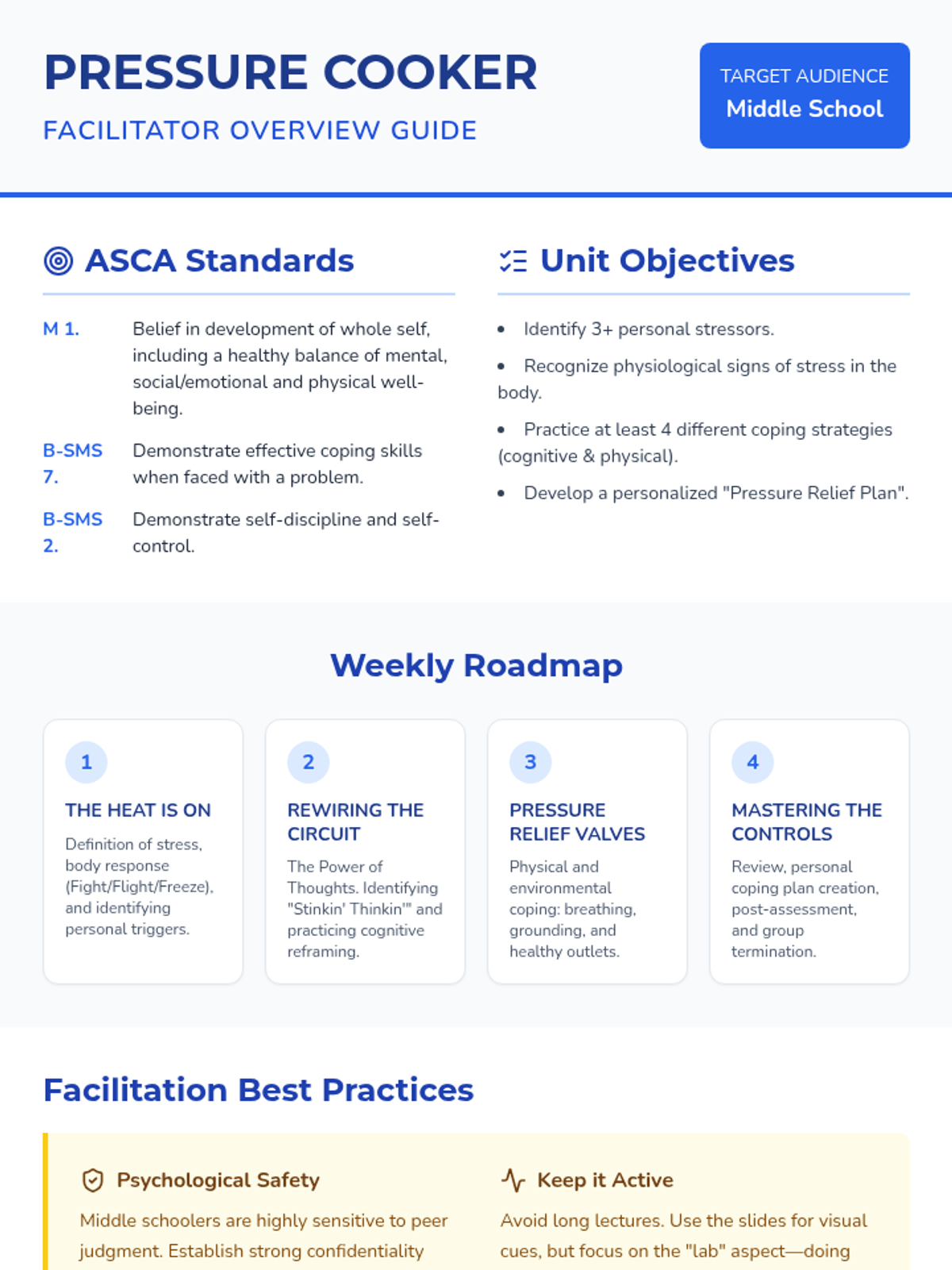
Facilitator guide for the 4-week unit, including ASCA alignment, objectives, and weekly plans.
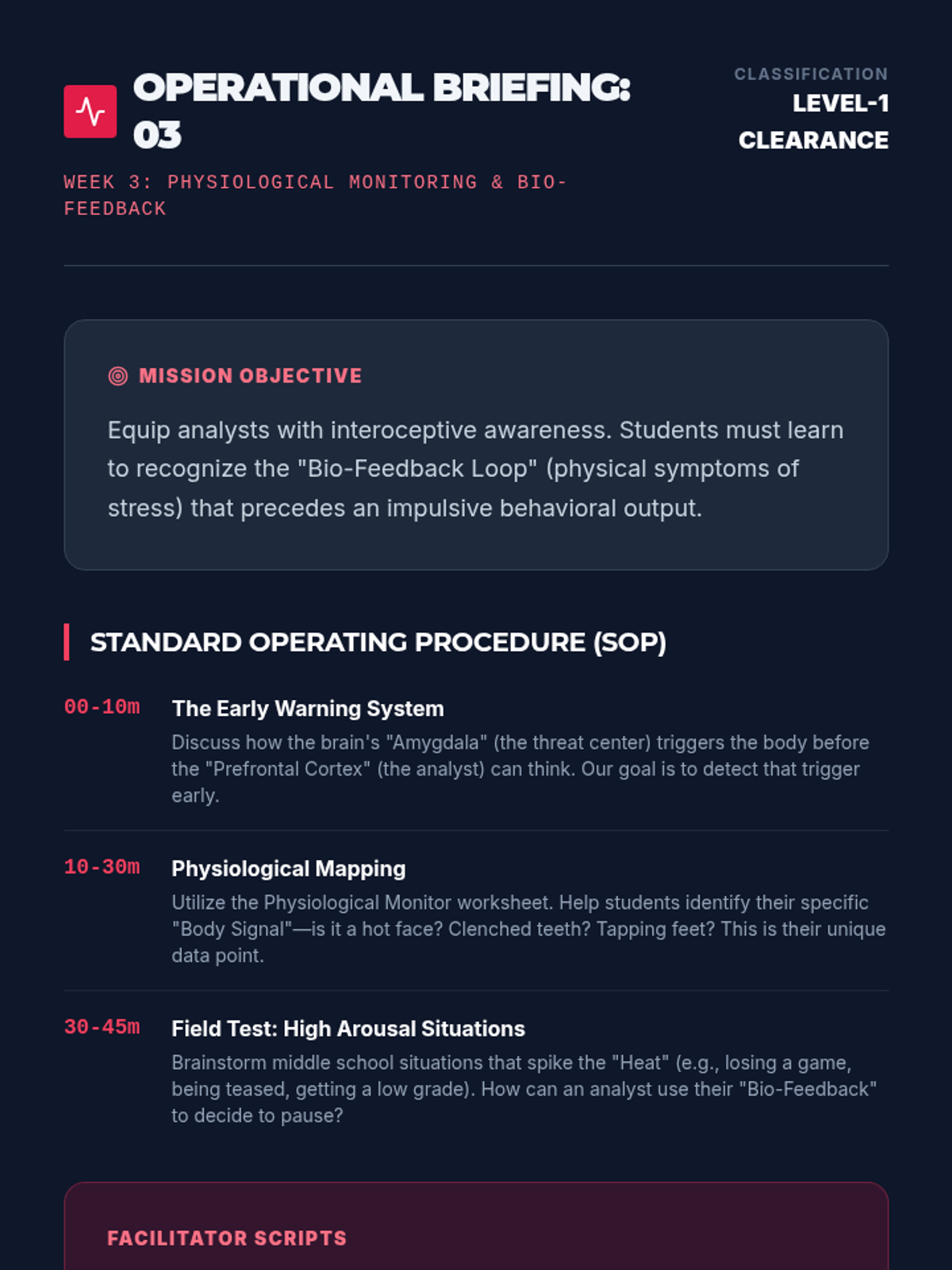
A Week 3 facilitator guide focused on interoceptive awareness, helping students map physical sensations to impulsive triggers.
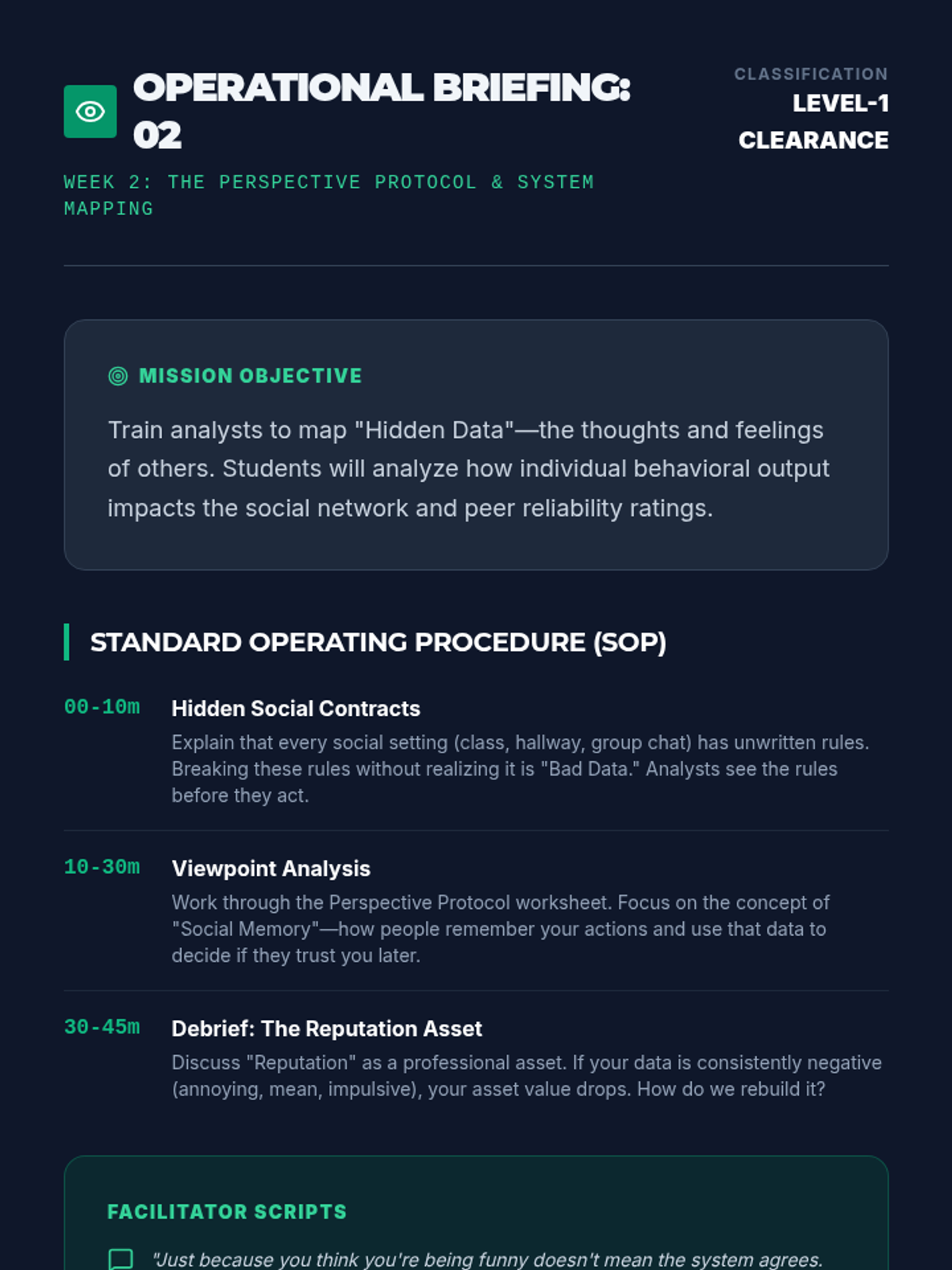
A Week 2 facilitator guide focusing on perspective-taking and helping students understand how their actions influence others' thoughts and feelings.
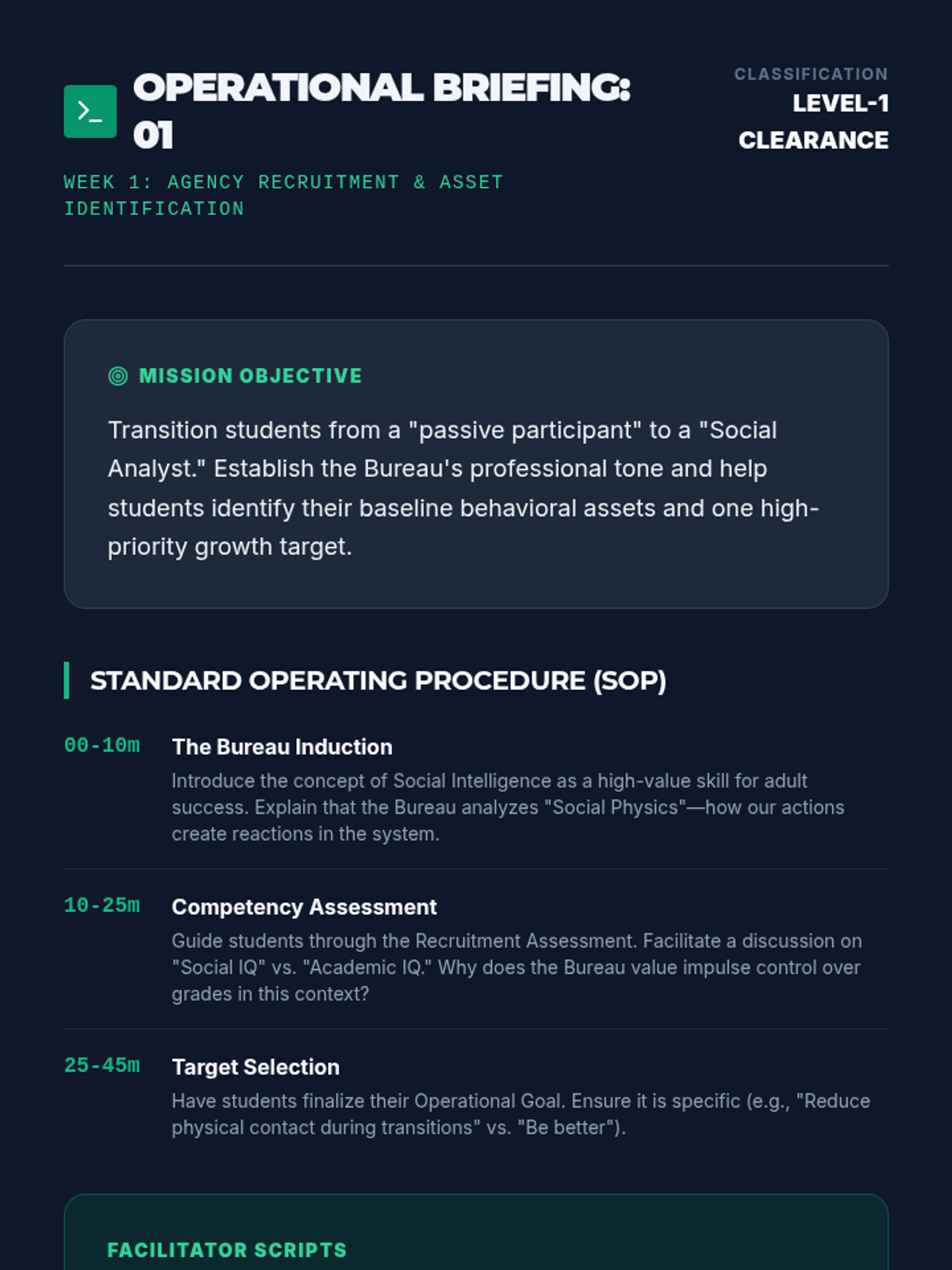
A Week 1 facilitator guide providing objective, session flow, and specific prompts to help educators introduce the Social Detective concept and set initial goals.
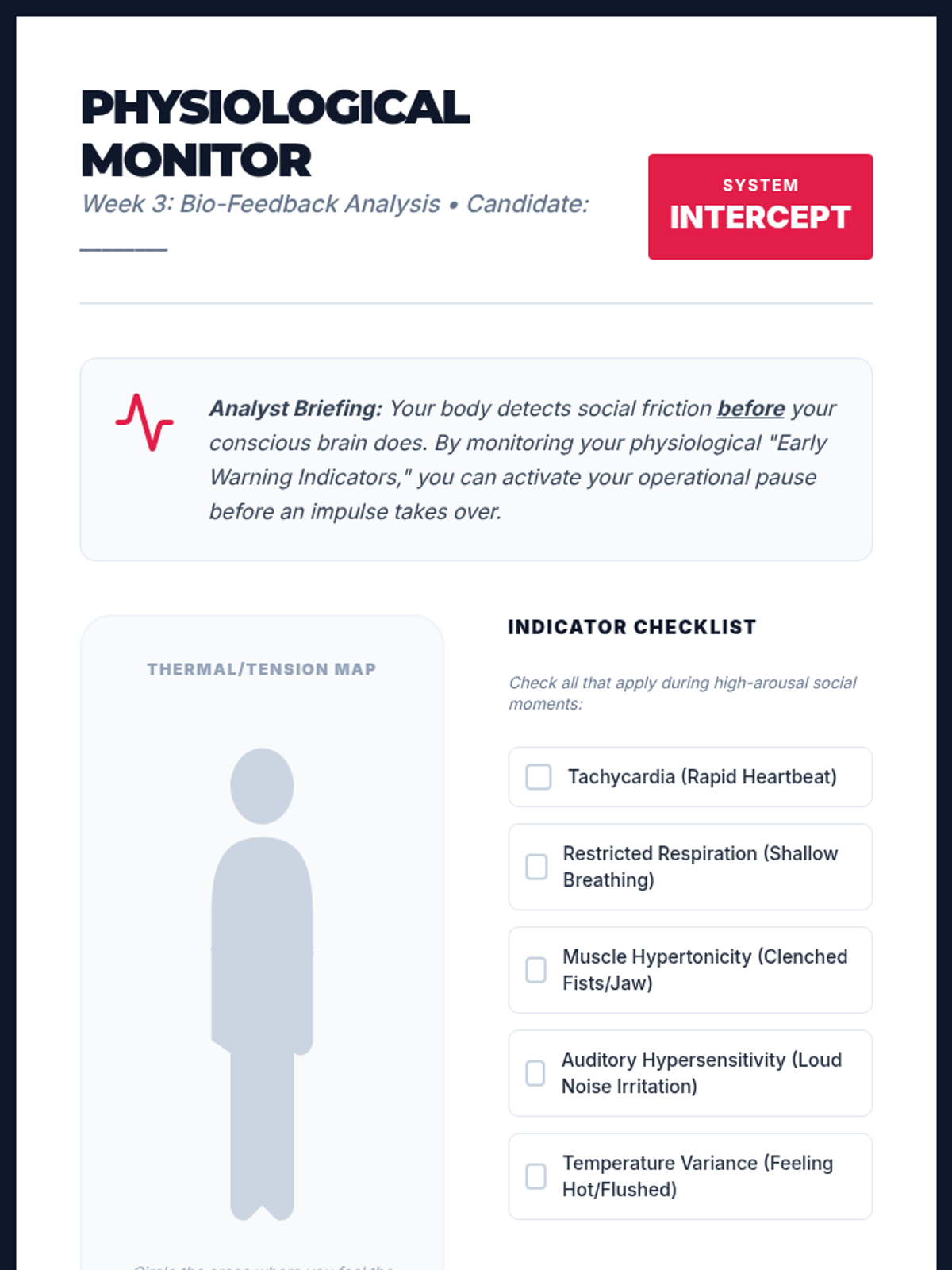
A Week 3 worksheet focused on body awareness and identifying physical sensations associated with impulses and emotions.
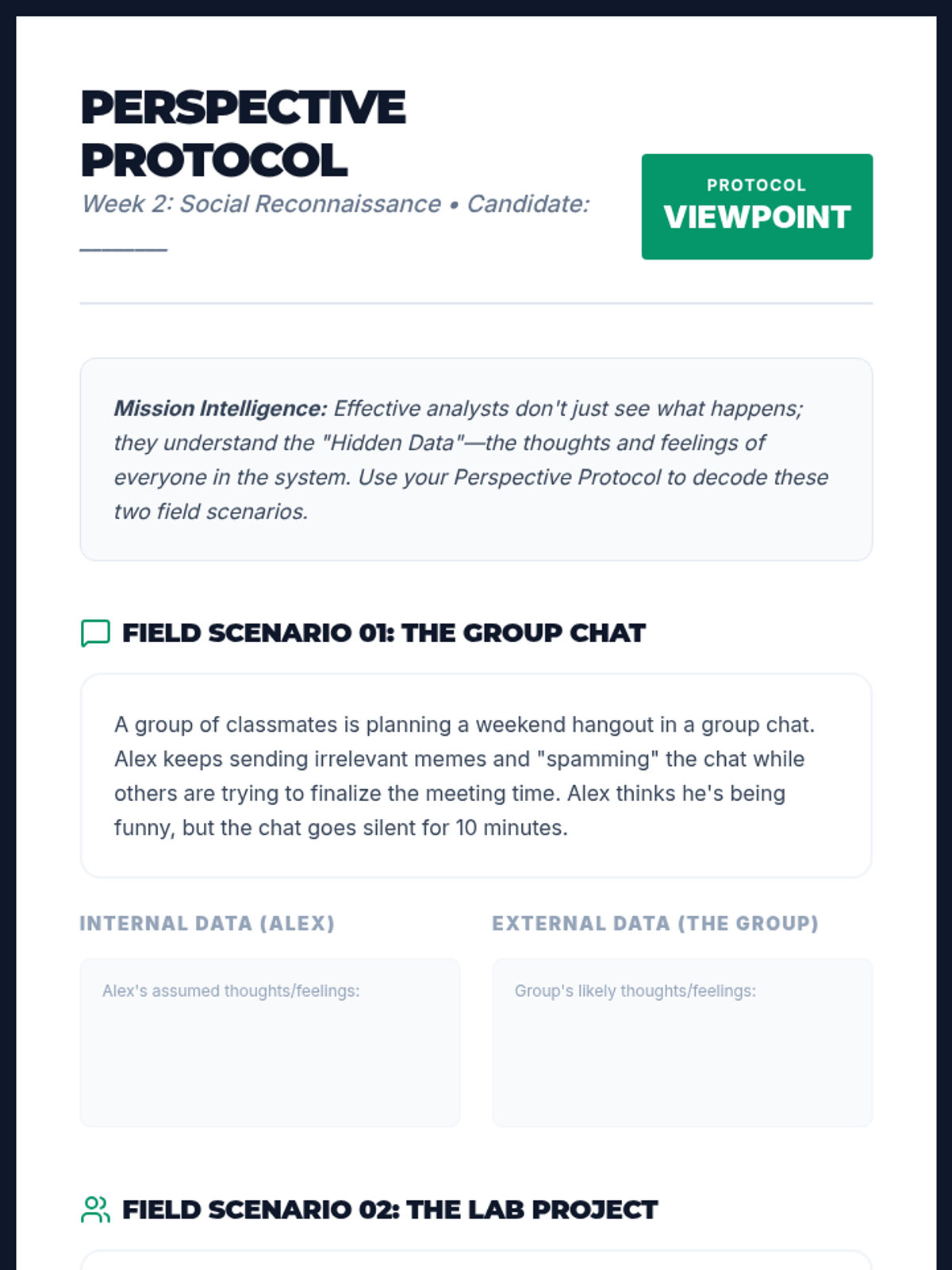
A Week 2 worksheet focusing on empathy and perspective-taking, asking students to analyze thoughts and feelings in social snapshots.
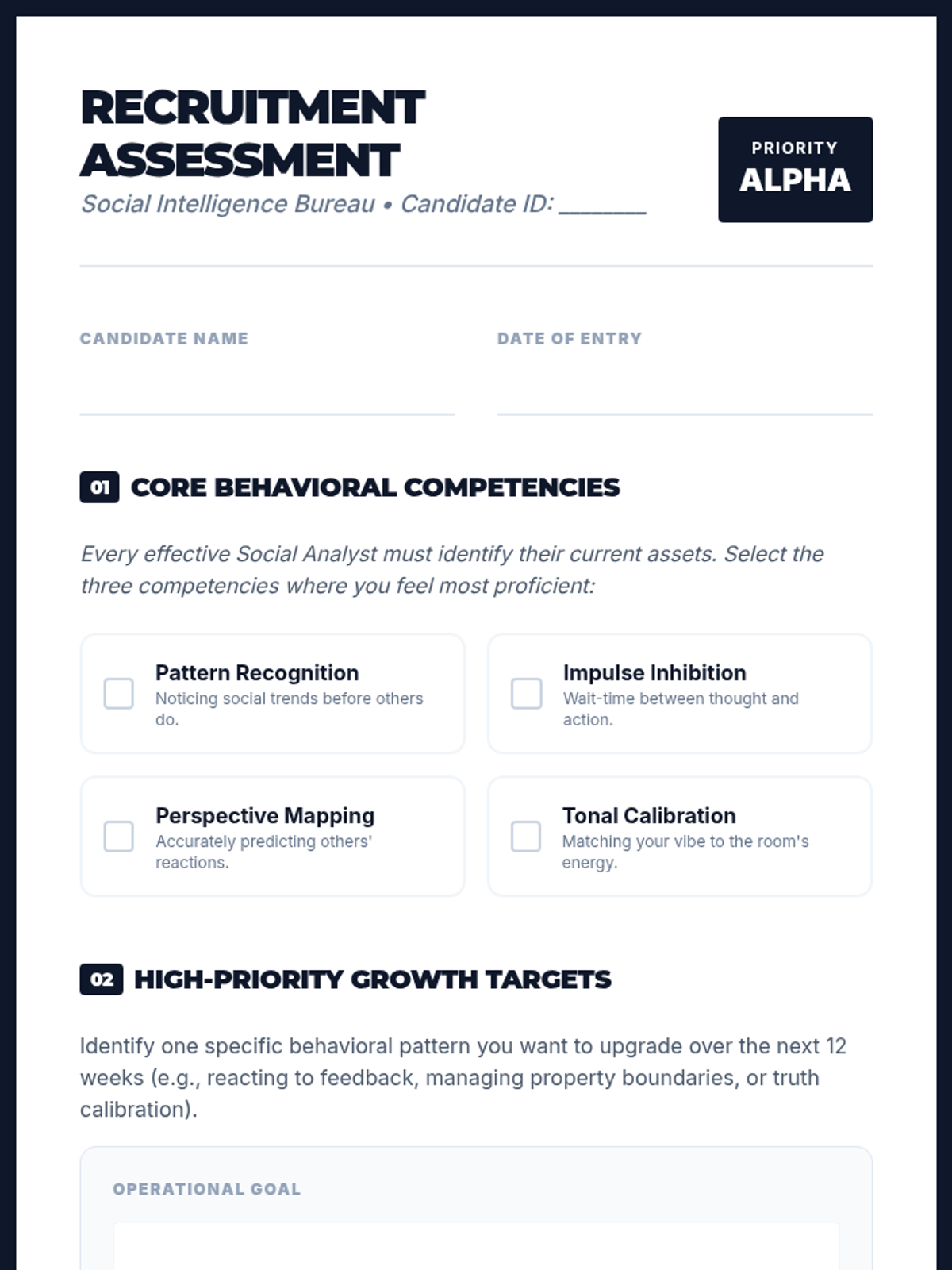
A sophisticated recruitment-style assessment for middle schoolers to identify their social competencies and set a professional behavioral goal for the 12-week intervention.
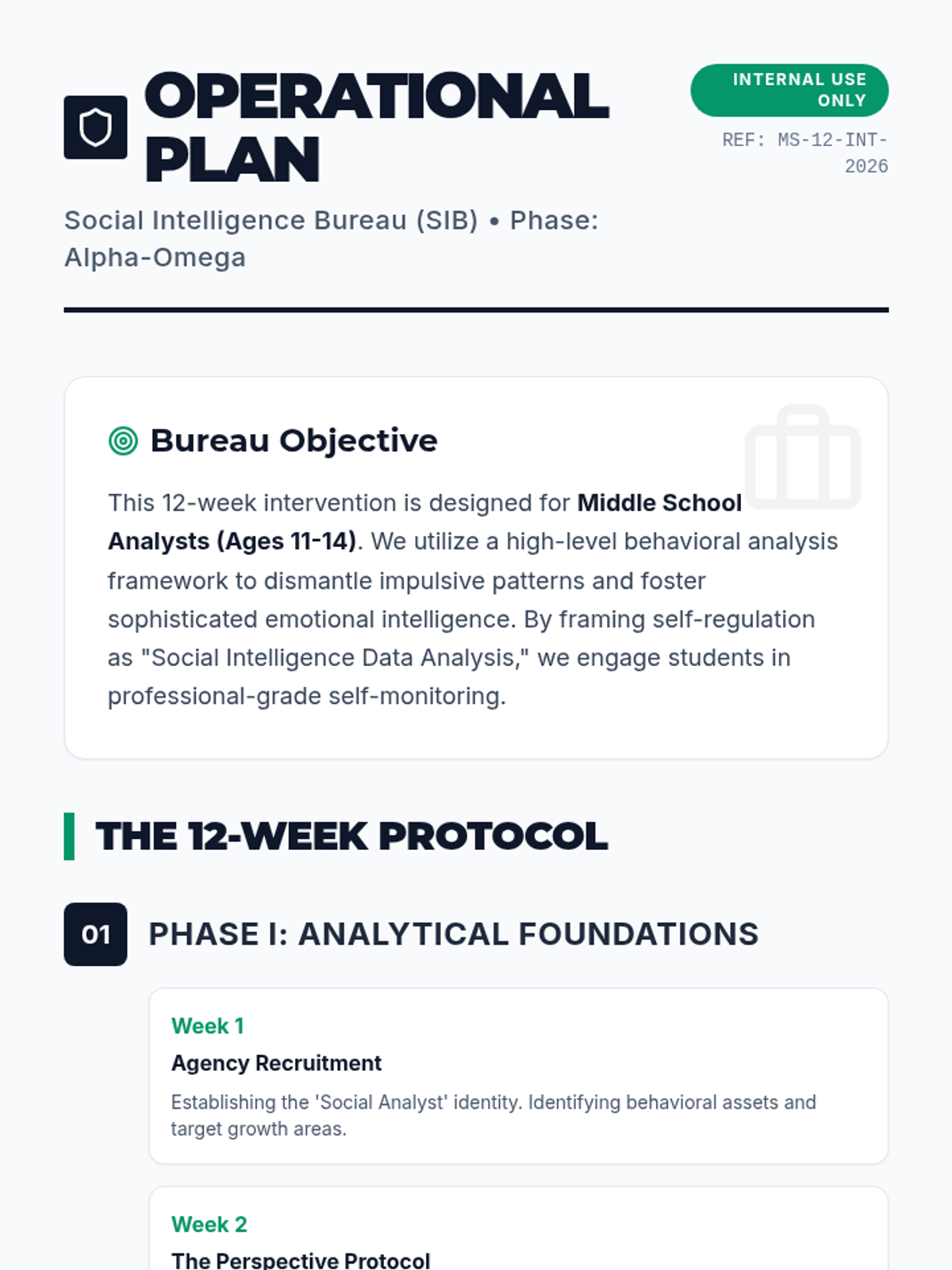
A high-level, 12-week operational guide for the Social Intelligence Bureau intervention, specifically designed for middle school facilitators managing behavioral analysis for students ages 11-14.
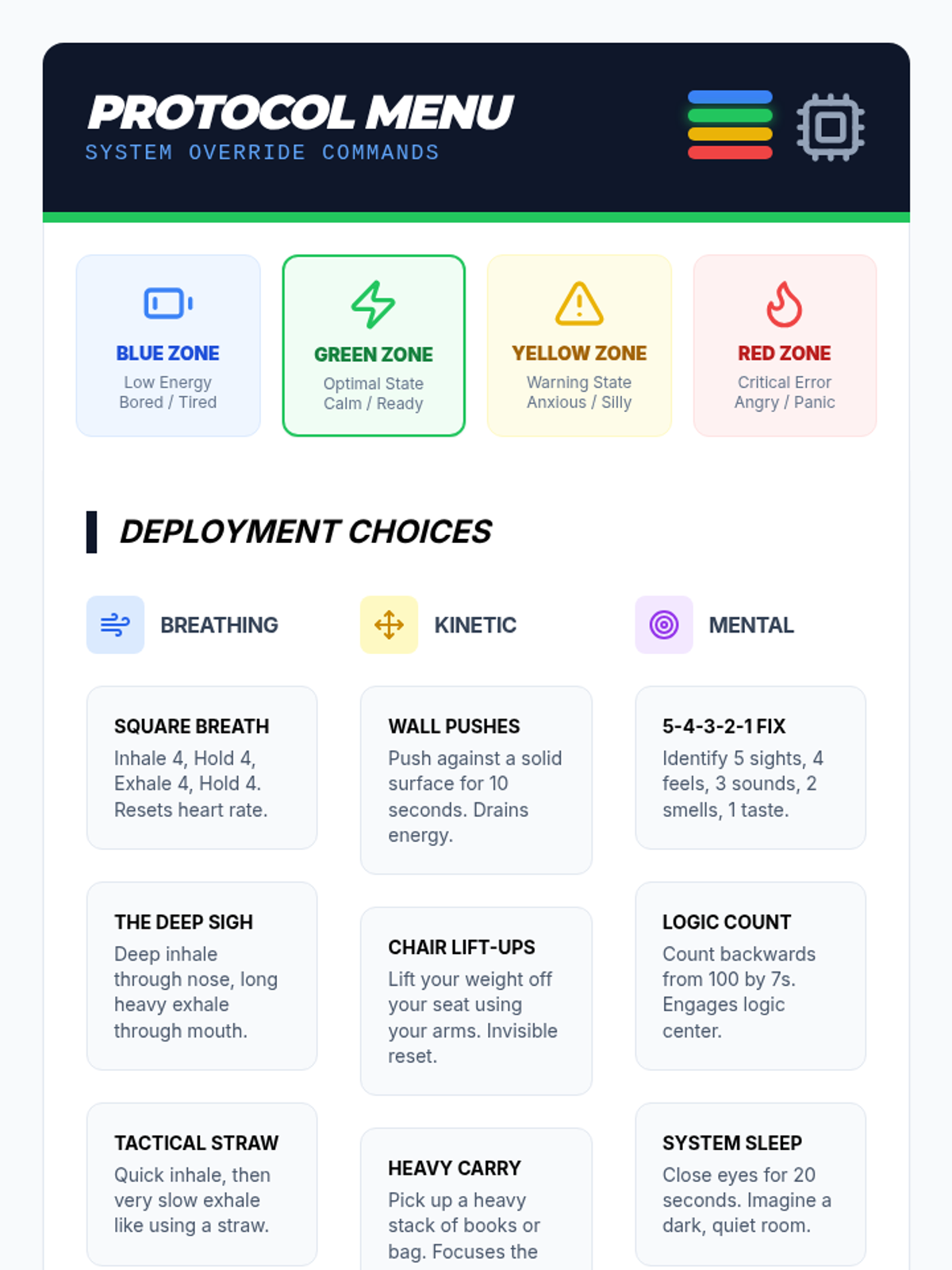
A visual strategy chart for students featuring emotional regulation zones and a menu of self-initiated overrides (breathing, kinetic, mental).
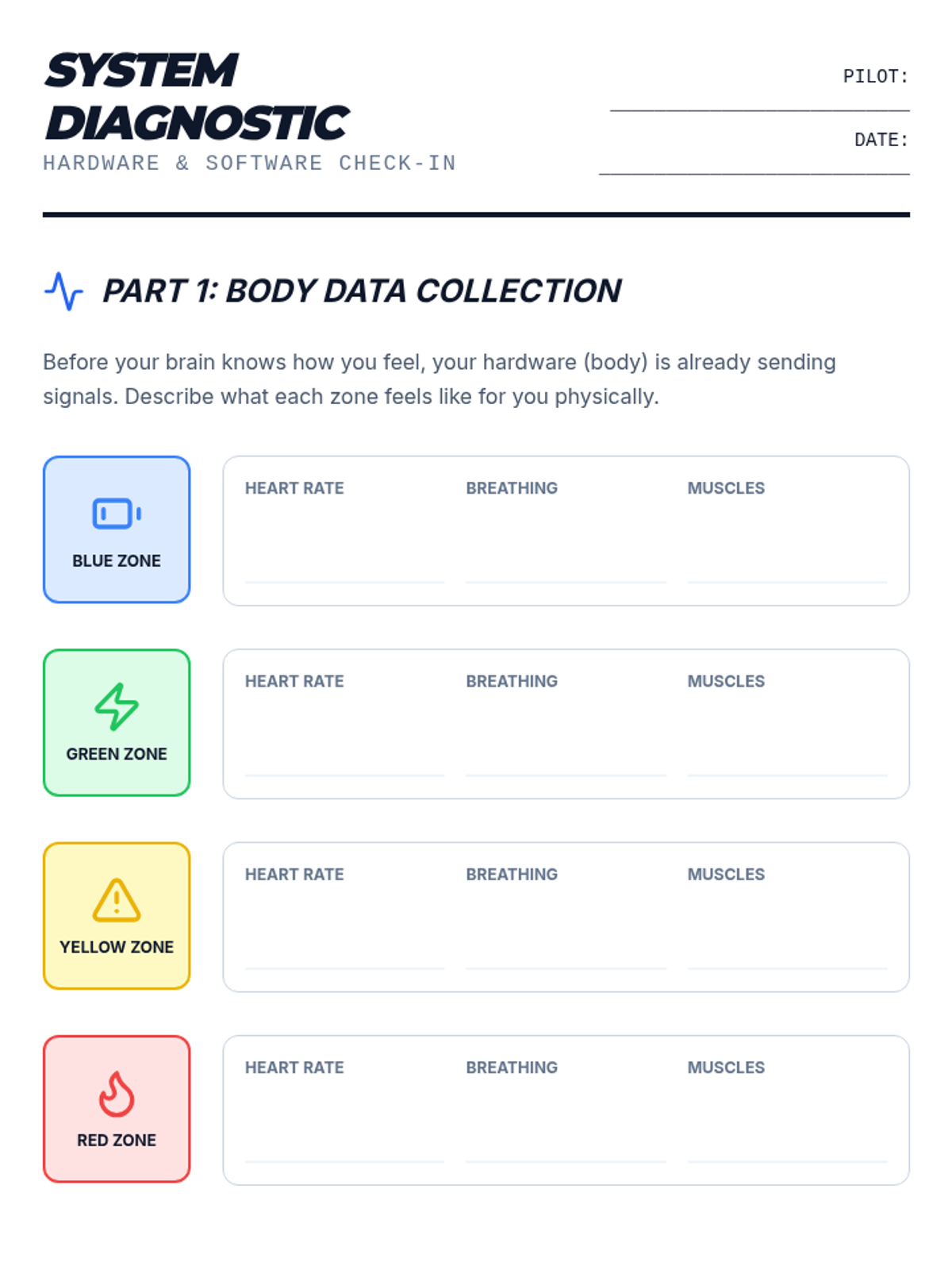
A diagnostic worksheet for students to identify their physical and mental cues across different emotional regulation zones using a tech metaphor.
A presentation introducing emotional regulation zones through a system dashboard metaphor, including breathing and physical override strategies.
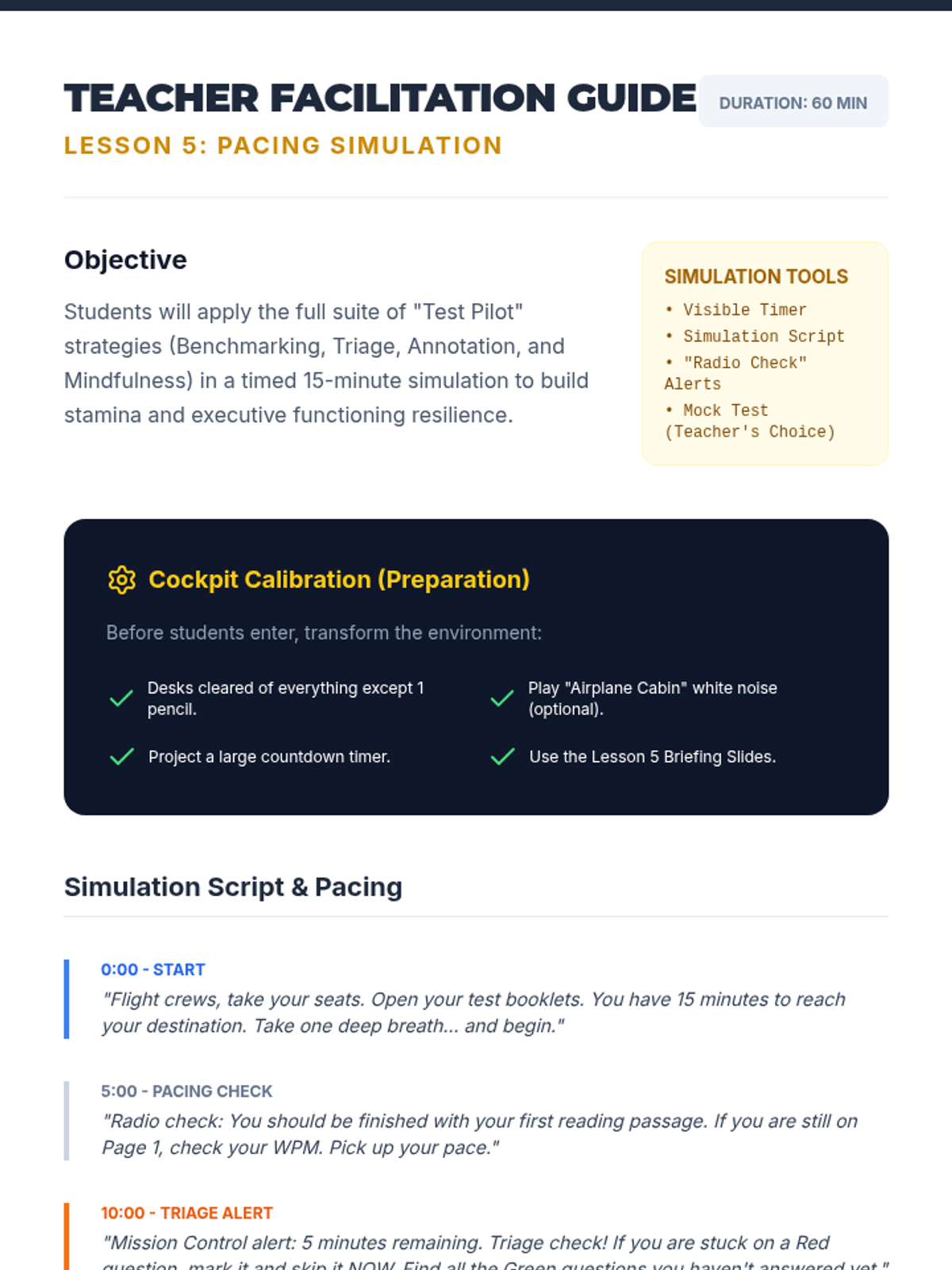
A teacher guide for Lesson 5 including the simulation script, timing intervals, and a guide for the post-simulation debrief and student certification.
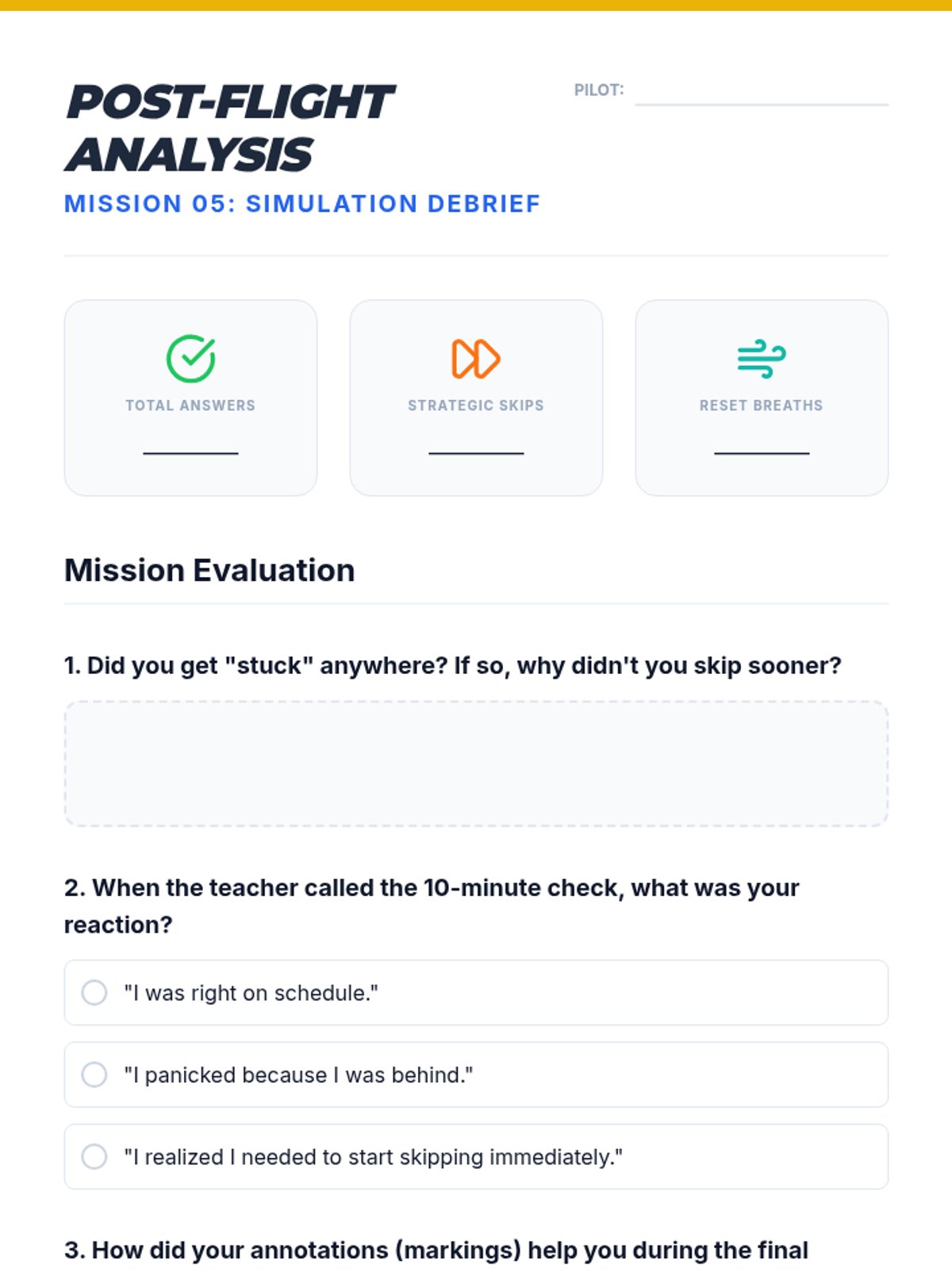
A student reflection sheet and goal-setting document for the final pacing simulation, helping students create a personalized 'Test Protocol' for future exams.
Slides for Lesson 5, the final simulation briefing, reviewing all Test Pilot Academy strategies and providing time-check benchmarks for the mock exam.
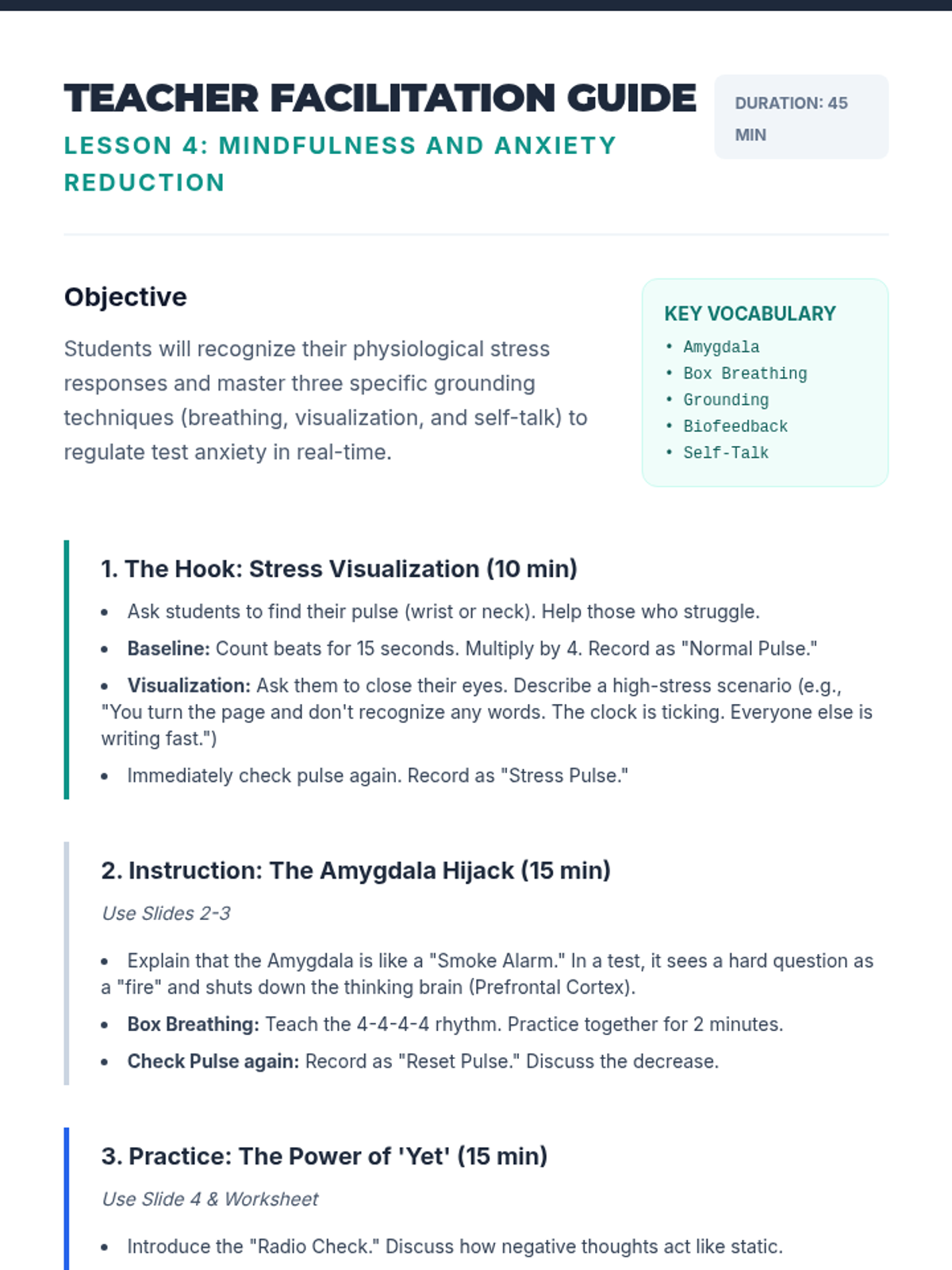
A teacher guide for Lesson 4 including instructions for the biofeedback pulse check, grounding exercise facilitation, and strategies for student buy-in using the Test Pilot theme.
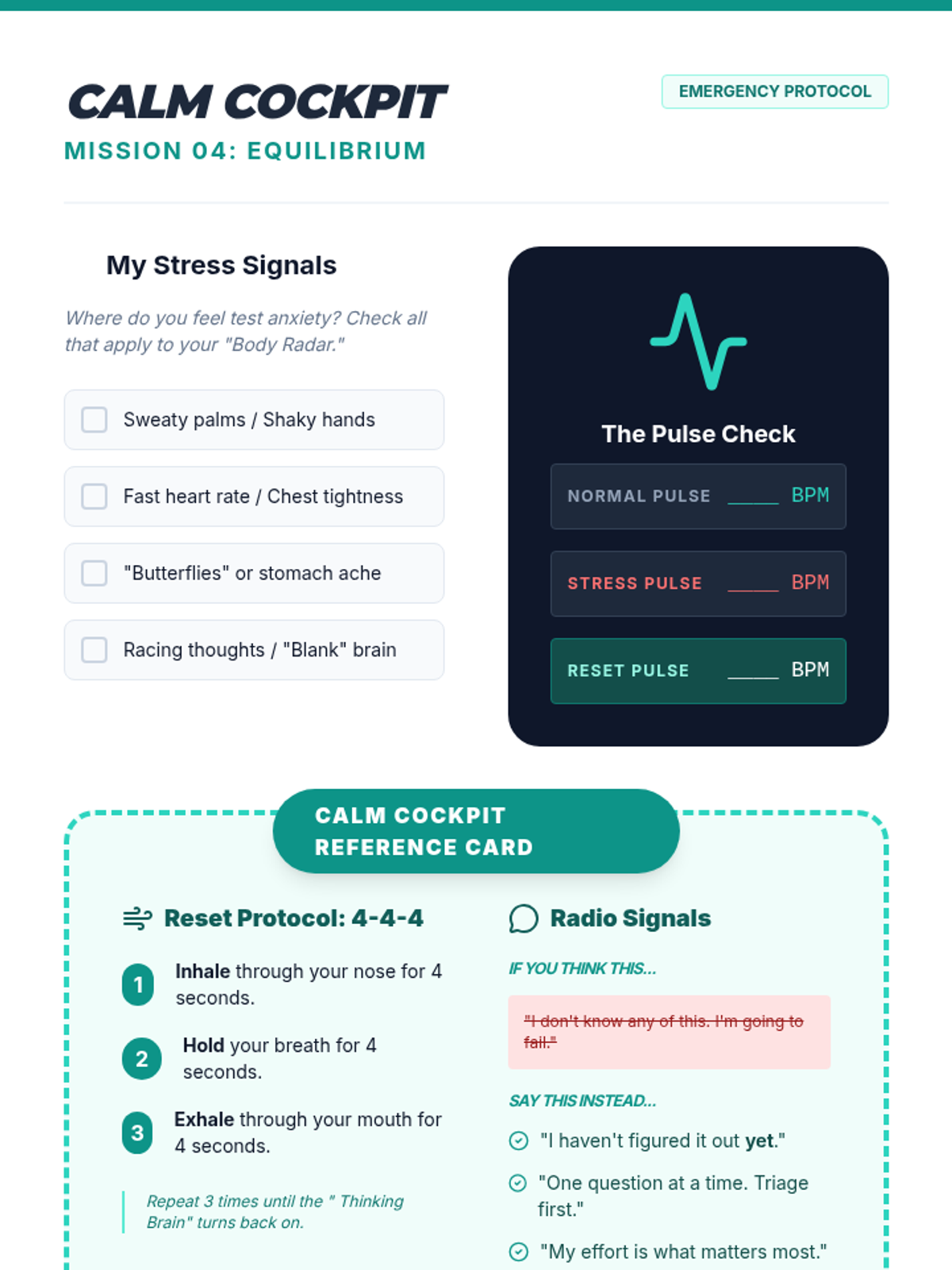
A student resource featuring an anxiety-mapping activity and a cutout 'Calm Cockpit' reference card with grounding techniques and positive self-talk prompts.
Slides for Lesson 4 teaching mindfulness and anxiety reduction techniques for testing, focusing on the physiology of stress and grounding exercises.
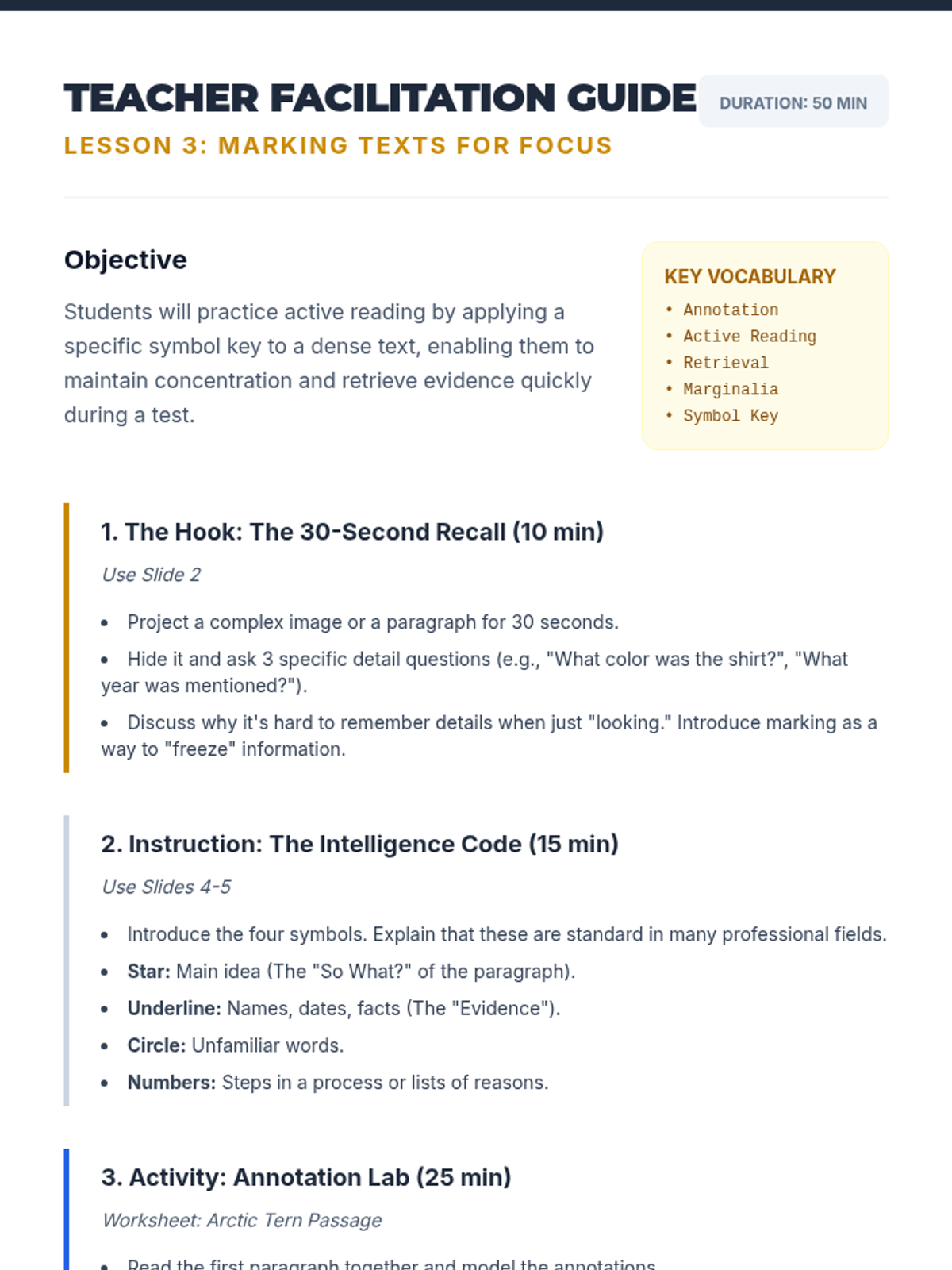
A teacher guide for Lesson 3 including instructions for the recall challenge, a model of the annotated passage, and an answer key for retrieval questions.
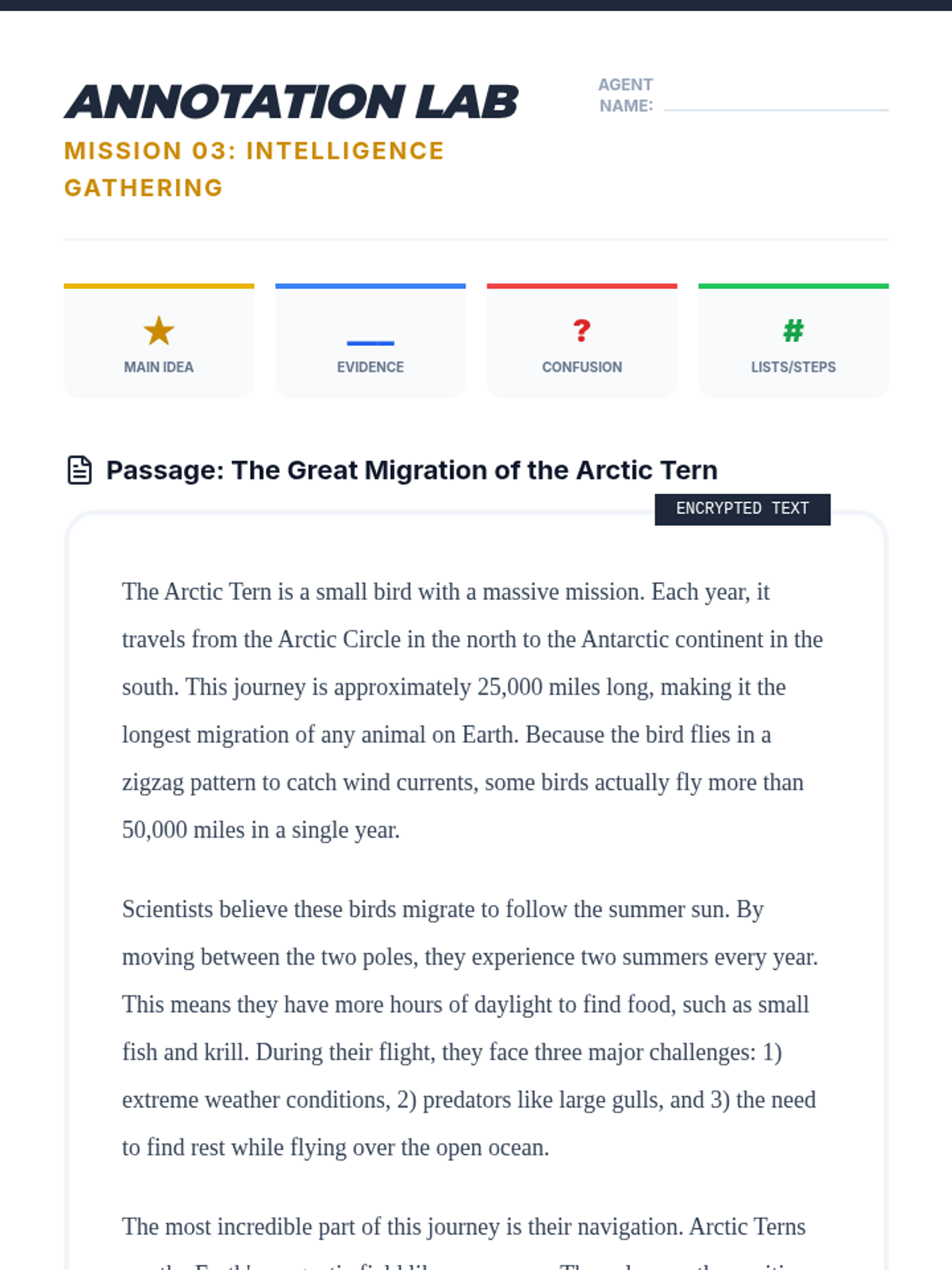
A student worksheet for practicing text annotation using a specific symbol key, featuring a dense passage about Arctic Tern migration and retrieval questions.
Slides for Lesson 3 teaching active reading strategies through the 'Intelligence Gathering' theme, focusing on a specific annotation symbol key for testing.
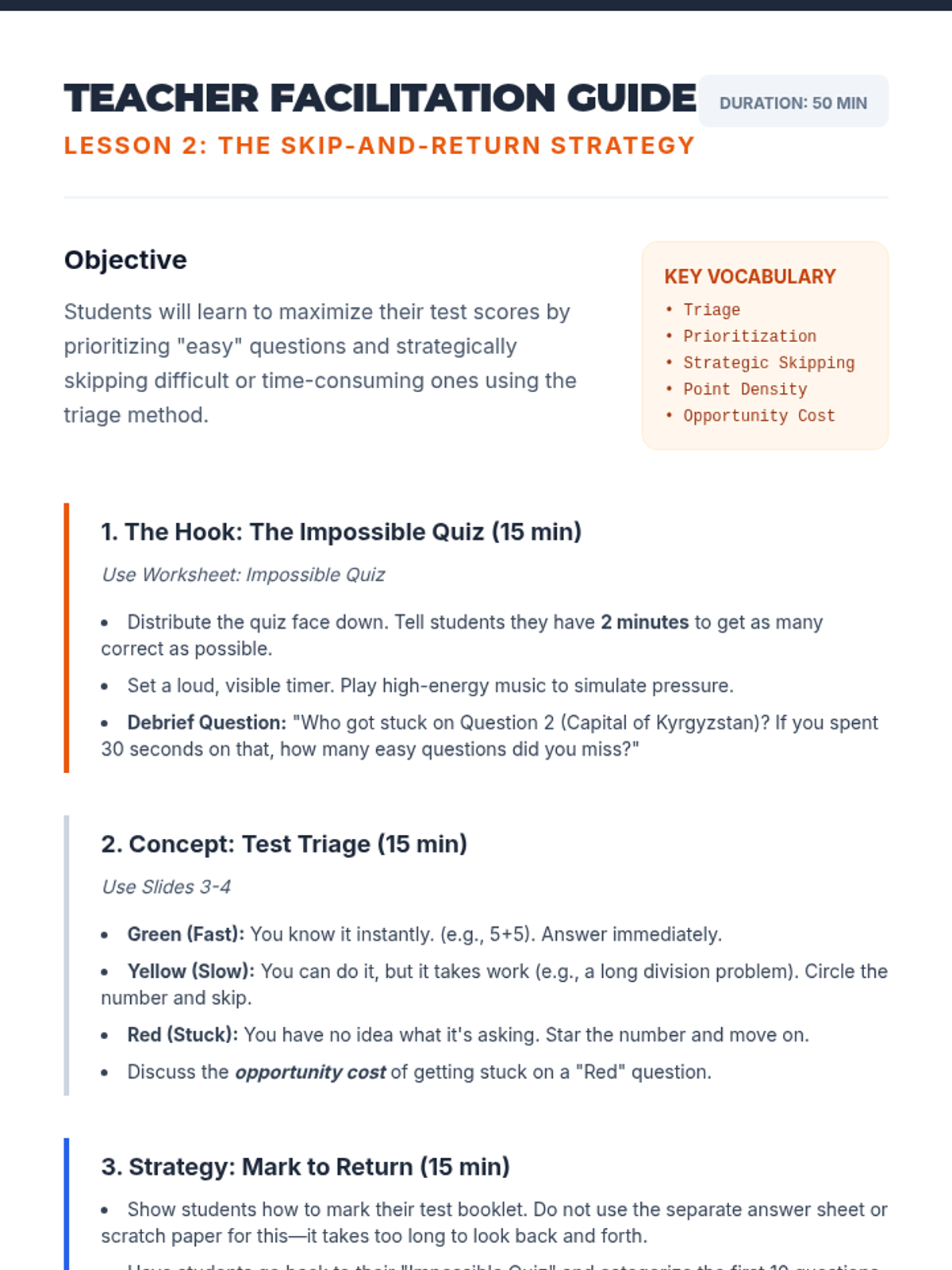
A teacher guide for Lesson 2 focusing on the triage method, managing the 'Impossible Quiz' activity, and addressing common student psychological barriers to skipping questions.
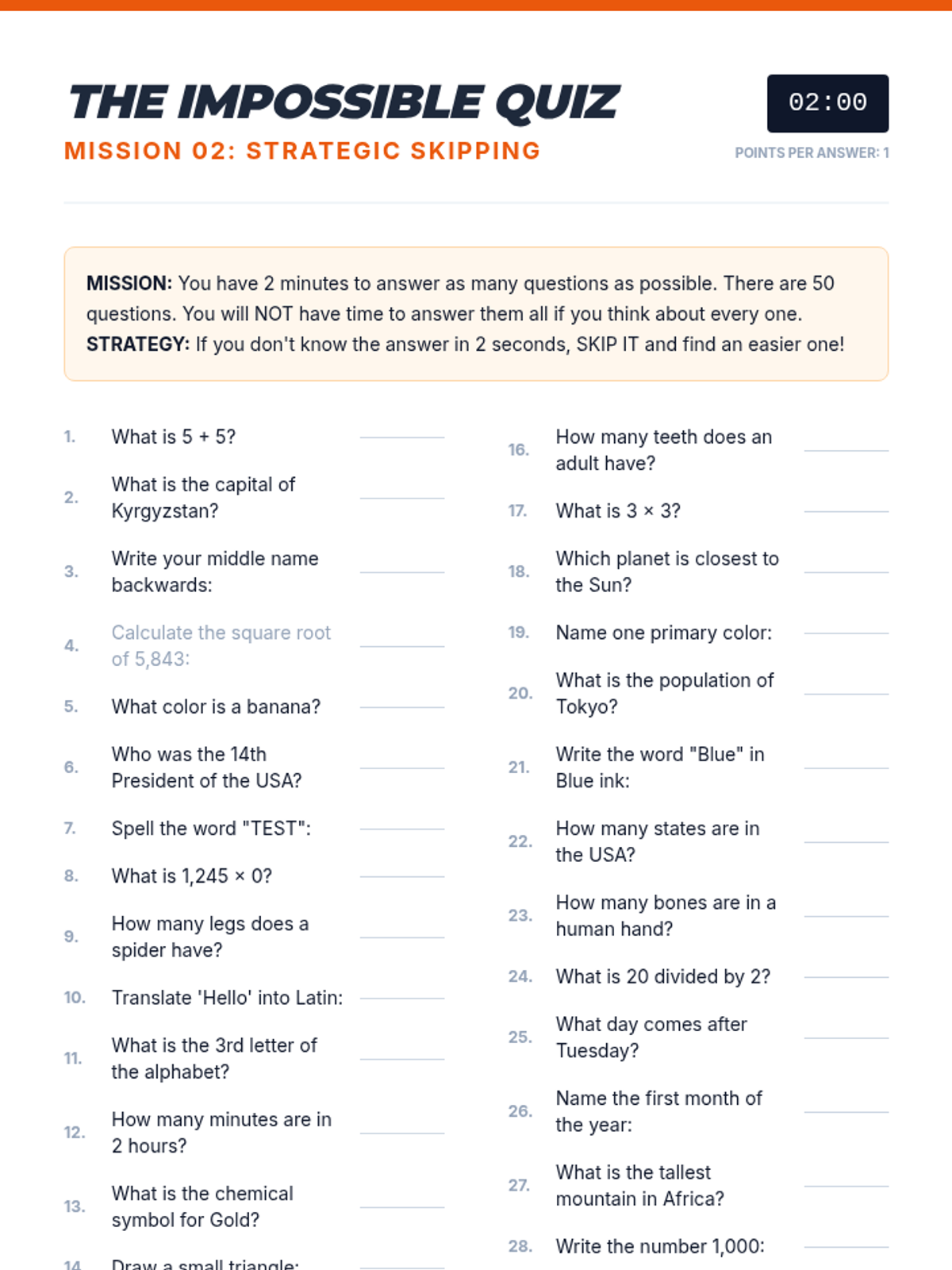
An activity sheet featuring the 'Impossible Quiz' challenge, designed to force students to use skipping and prioritization strategies under a tight time limit.
Slides for Lesson 2 teaching the 'triage' method of test-taking, categorizing questions into Fast, Slow, and Stuck to maximize points within time limits.
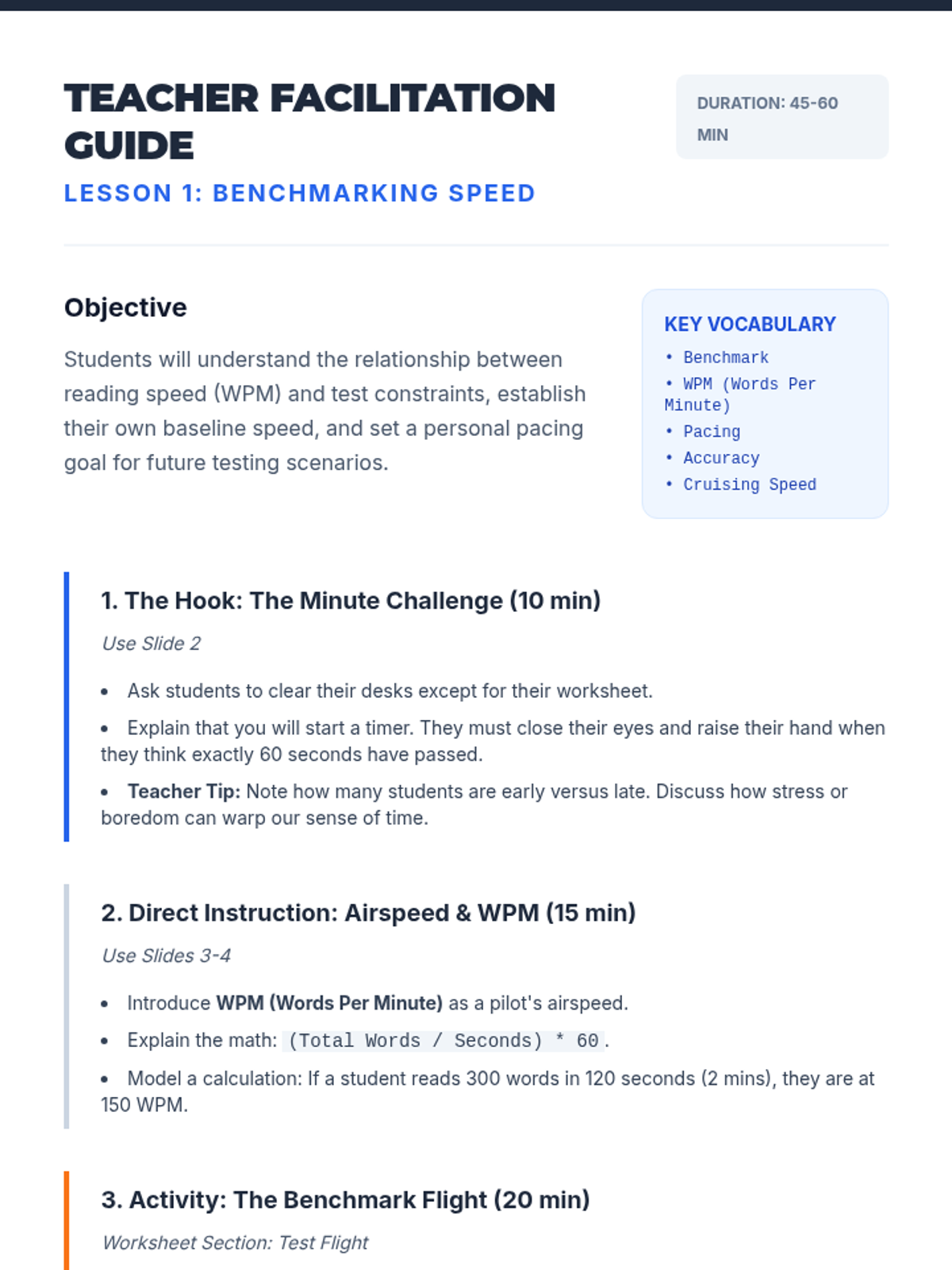
A comprehensive teacher guide for Lesson 1, including objective, procedural steps for the stopwatch challenge, WPM calculation modeling, answer key, and differentiation strategies.
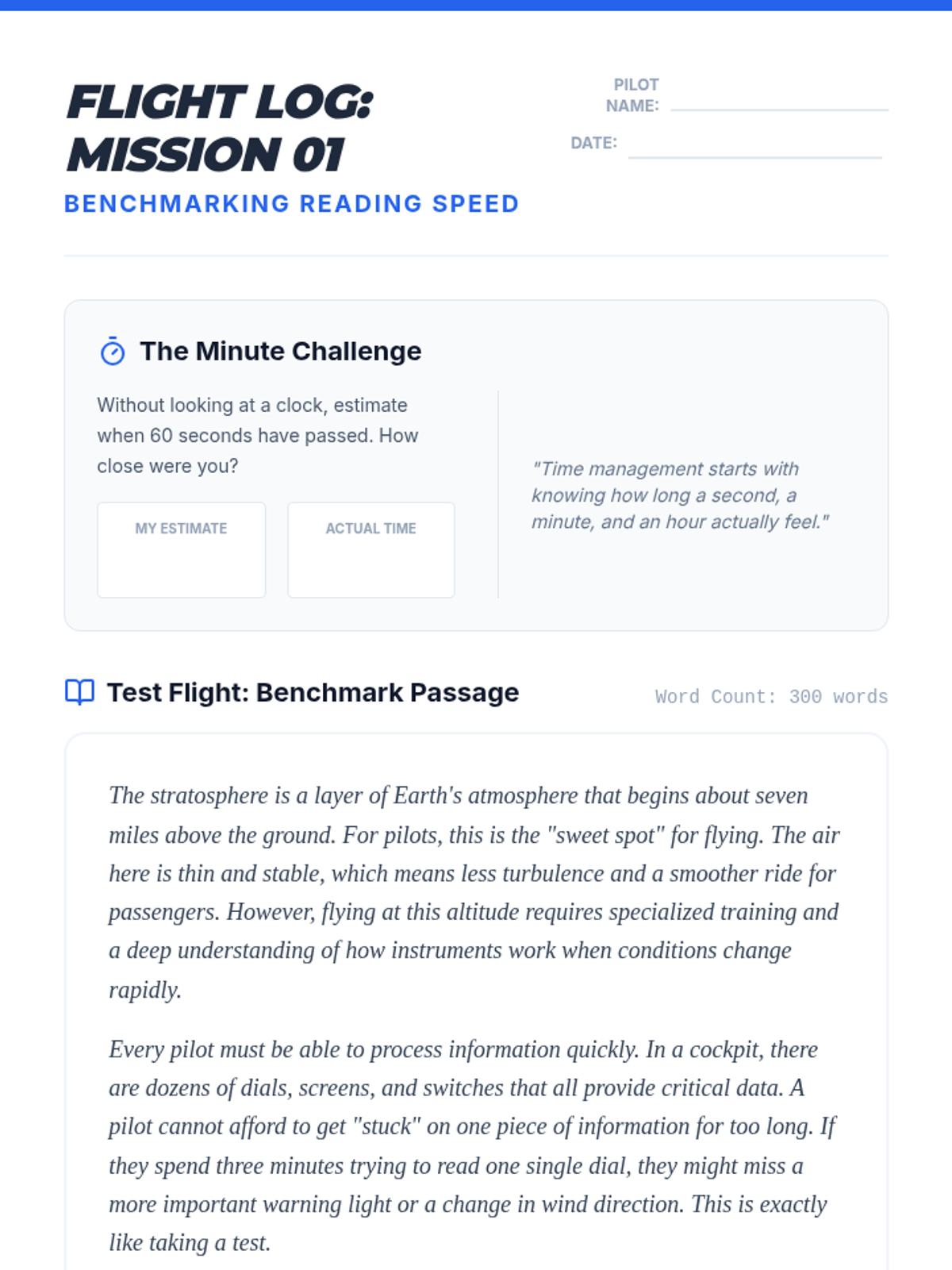
A student worksheet for establishing a reading speed baseline, featuring a themed 'Flight Log' layout, a reading passage, WPM calculation tools, and comprehension questions.
Introductory slides for the Test Pilot Academy sequence, establishing the theme and teaching students how to calculate and analyze their reading speed (WPM) for standardized tests.
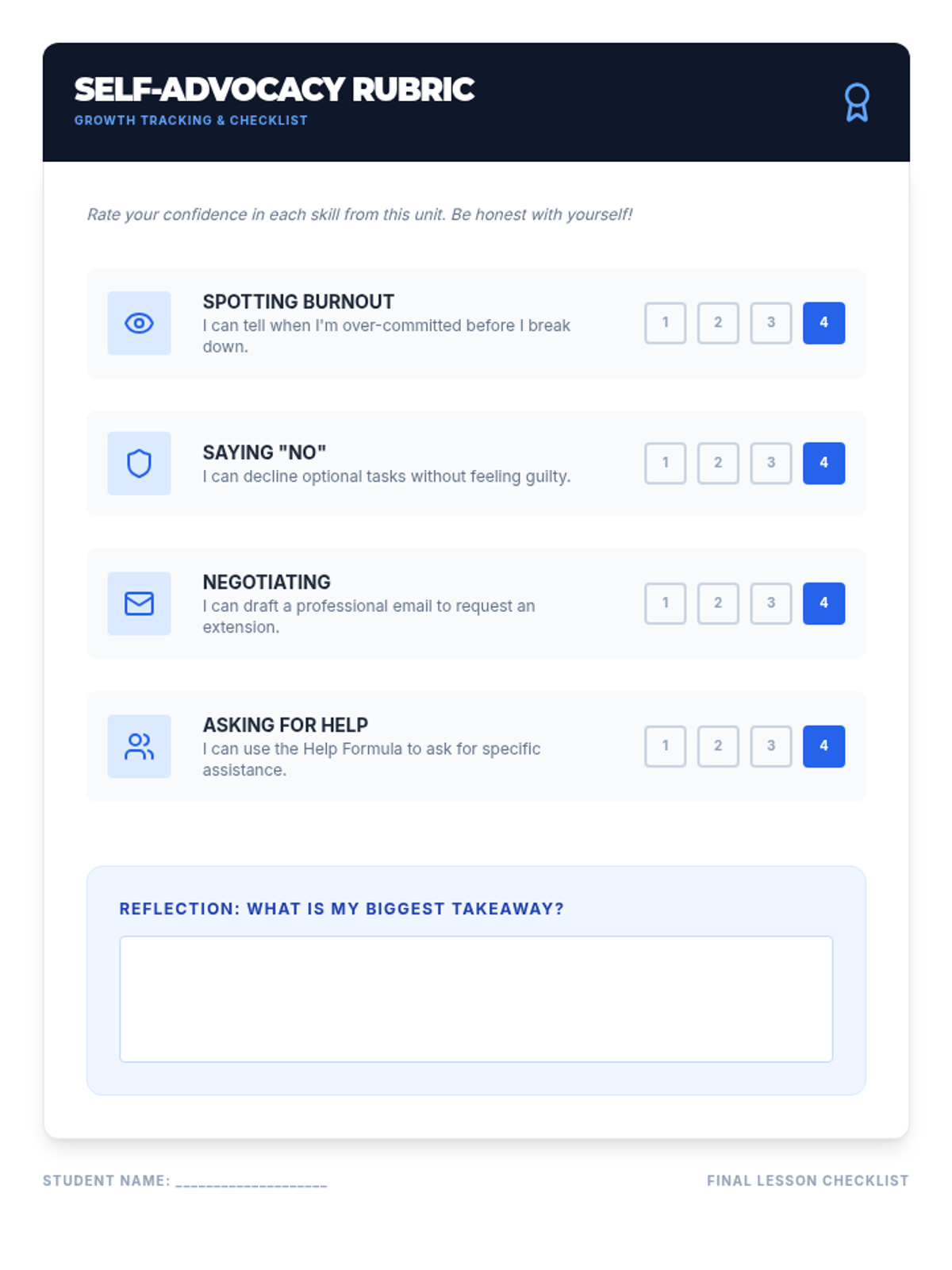
A self-assessment rubric for students to track their growth in identifying burnout, setting boundaries, negotiating deadlines, and asking for help.
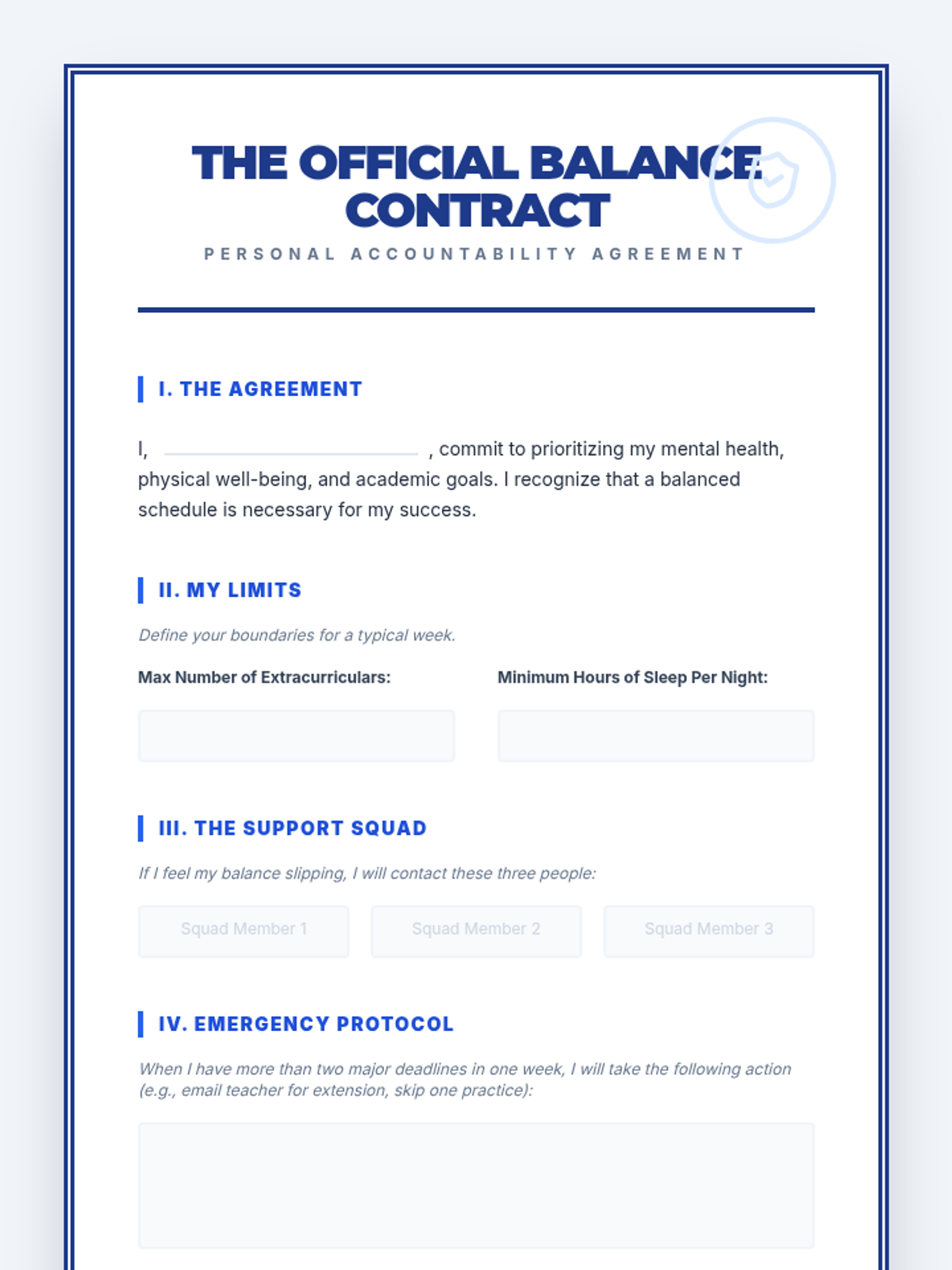
A personal 'Balance Contract' to outline their limits and establish a protocol for managing future stress.
Reviewing the unit and preparing for the final project: the personal Balance Contract.
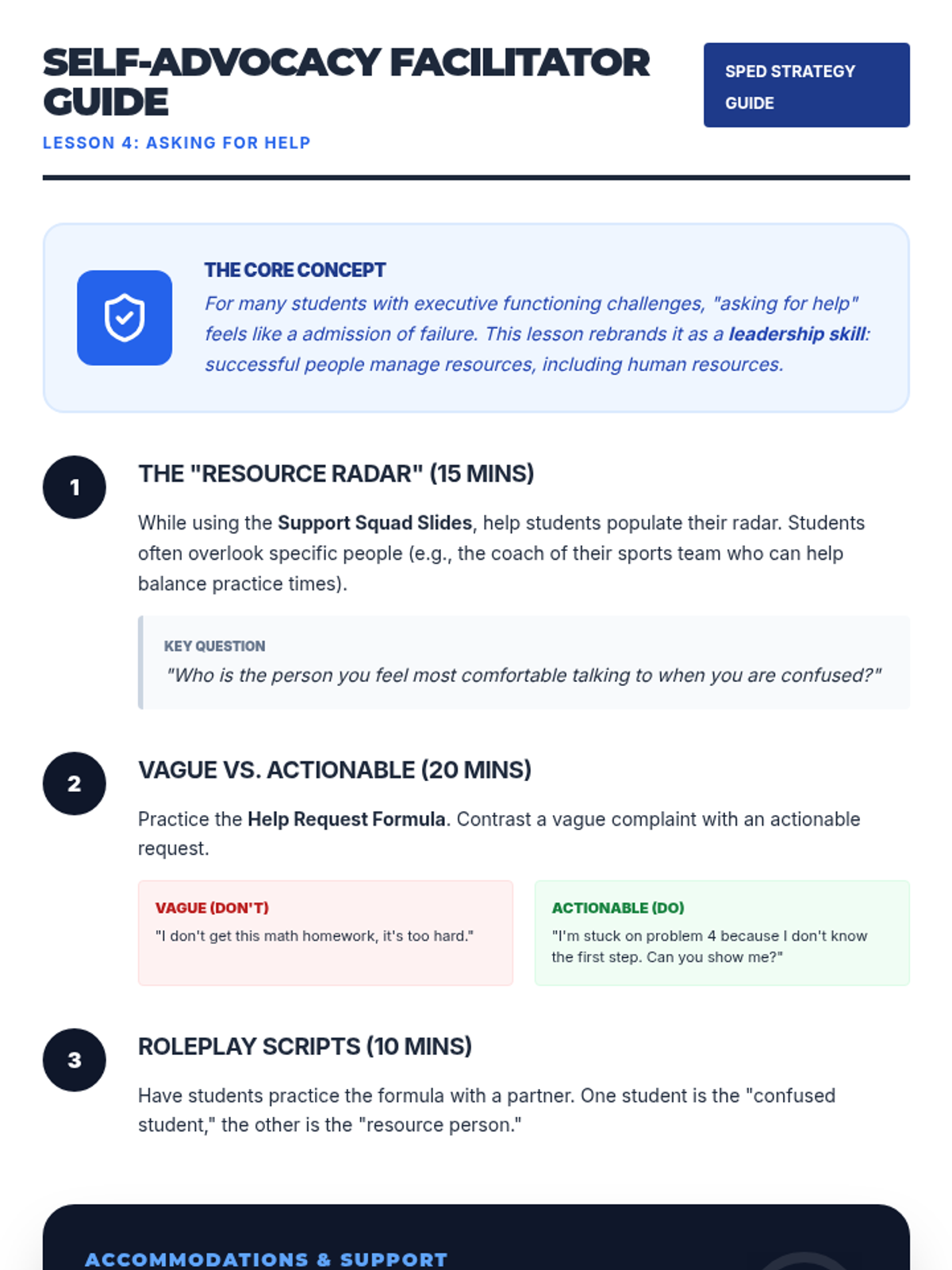
Strategies for teachers to teach self-advocacy and specific help-seeking behaviors to students, particularly those with Special Education needs.
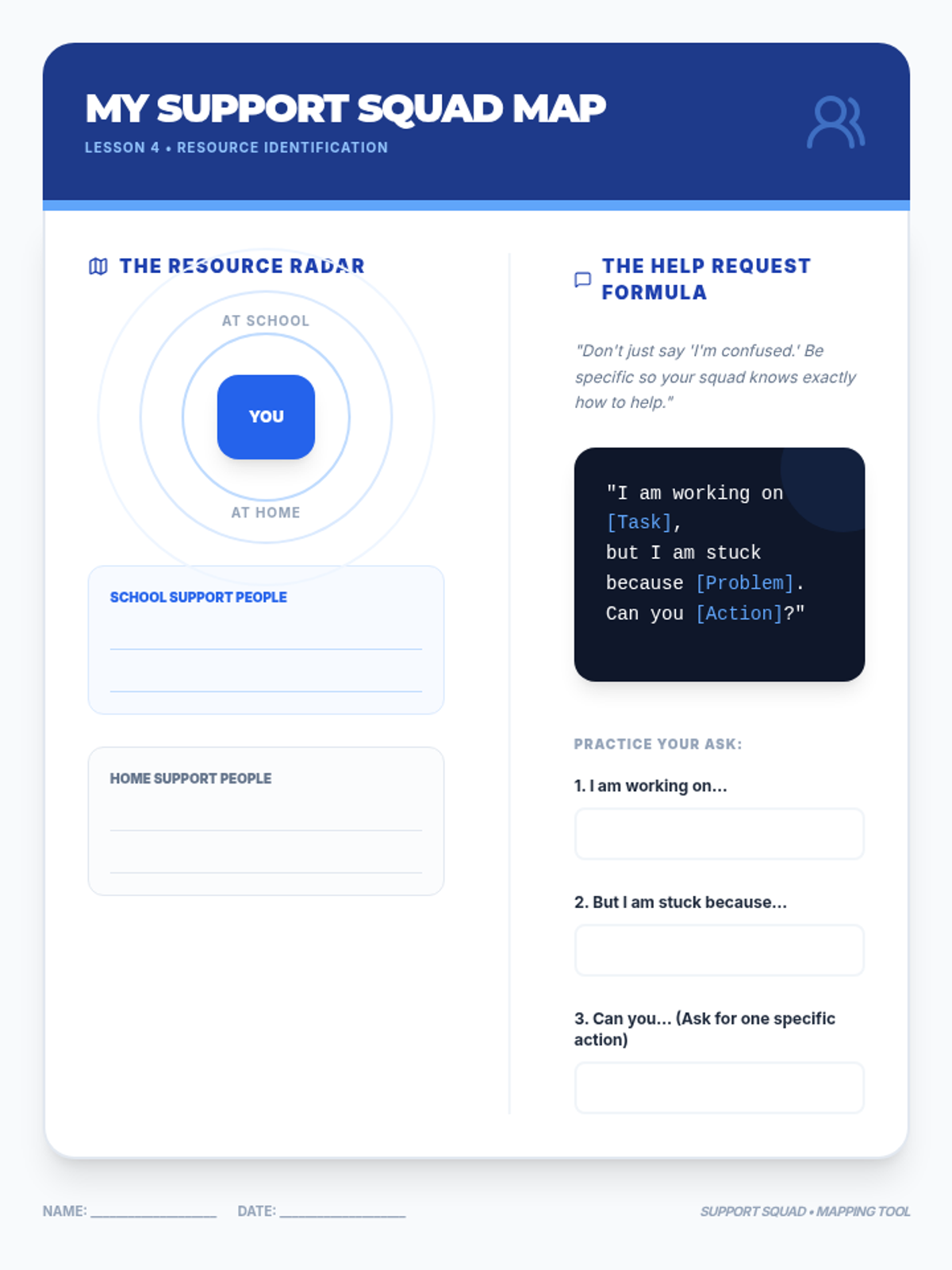
A visual organizer for resources and a help request formula to help students identify their support network and practice making specific help requests.
A comprehensive final project document where students synthesize their PLEASE routine, track their habits over 7 days, and write a letter of intent to their future selves.
A slide deck for the final lesson that synthesizes the PLEASE skills and introduces the Resilience Master Plan, Visual Tracker, and Letter to Self activities.
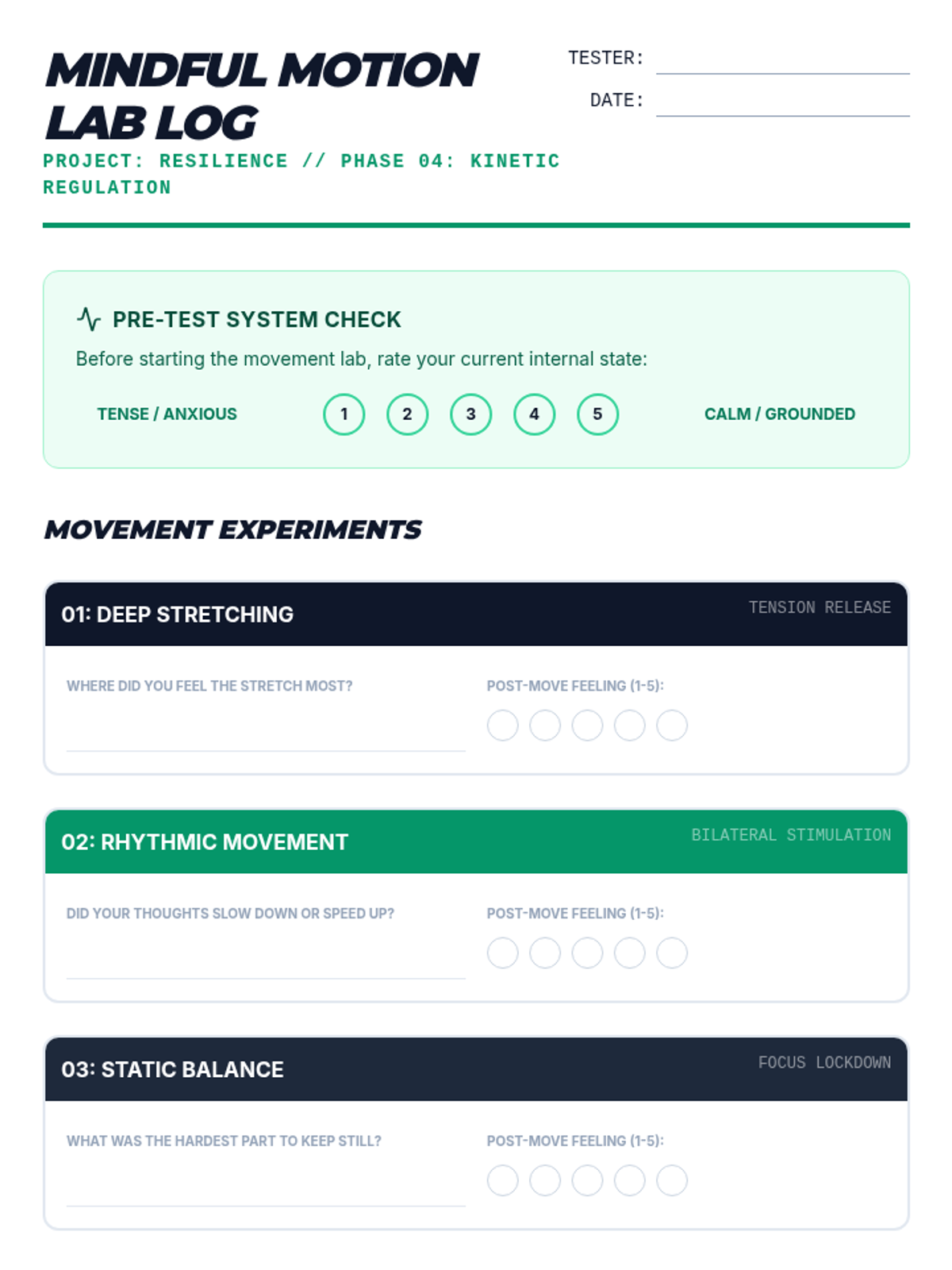
A movement log worksheet where students track their physical and emotional responses to different types of mindful motion.
A slide deck exploring non-competitive movement as a tool for emotional regulation, distinguishing mindful motion from competitive sports.
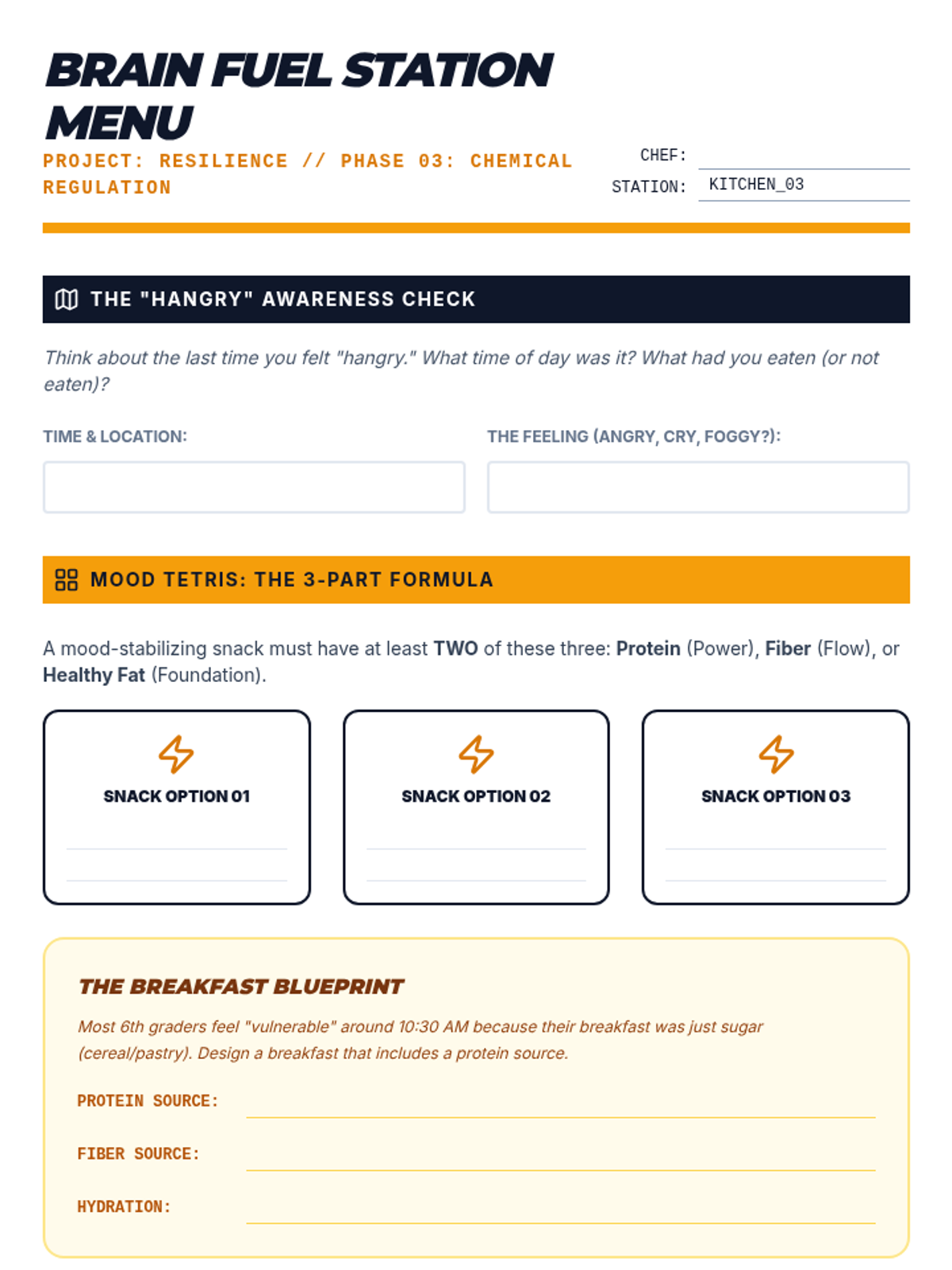
A menu-design worksheet where students plan balanced snacks and meals to prevent mood instability and 'hangry' emotional outbursts.
Identifying who is on the team and how to ask for specific, actionable help.
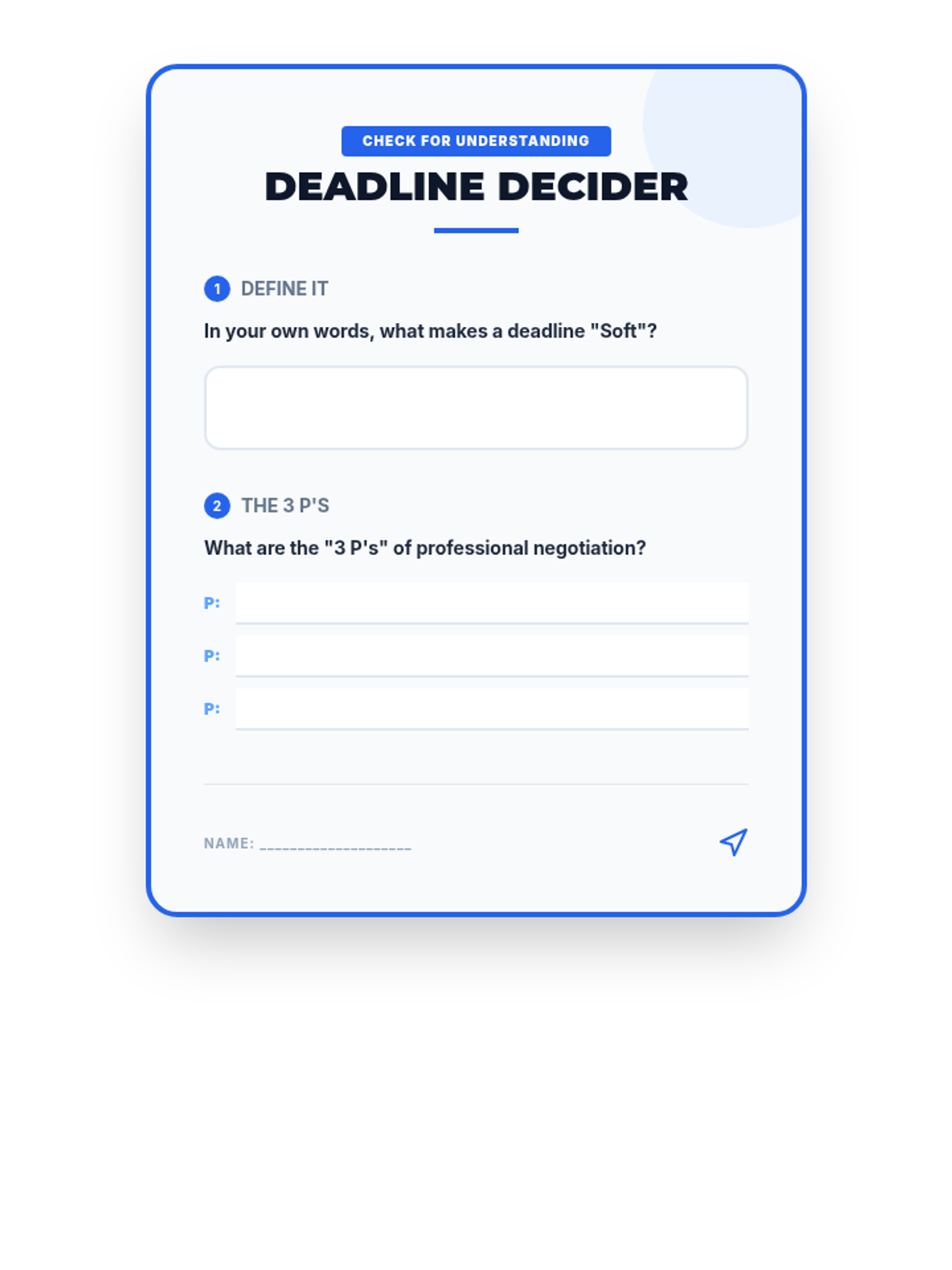
A quick exit ticket for Lesson 3 to assess student understanding of soft deadlines and the principles of professional negotiation.
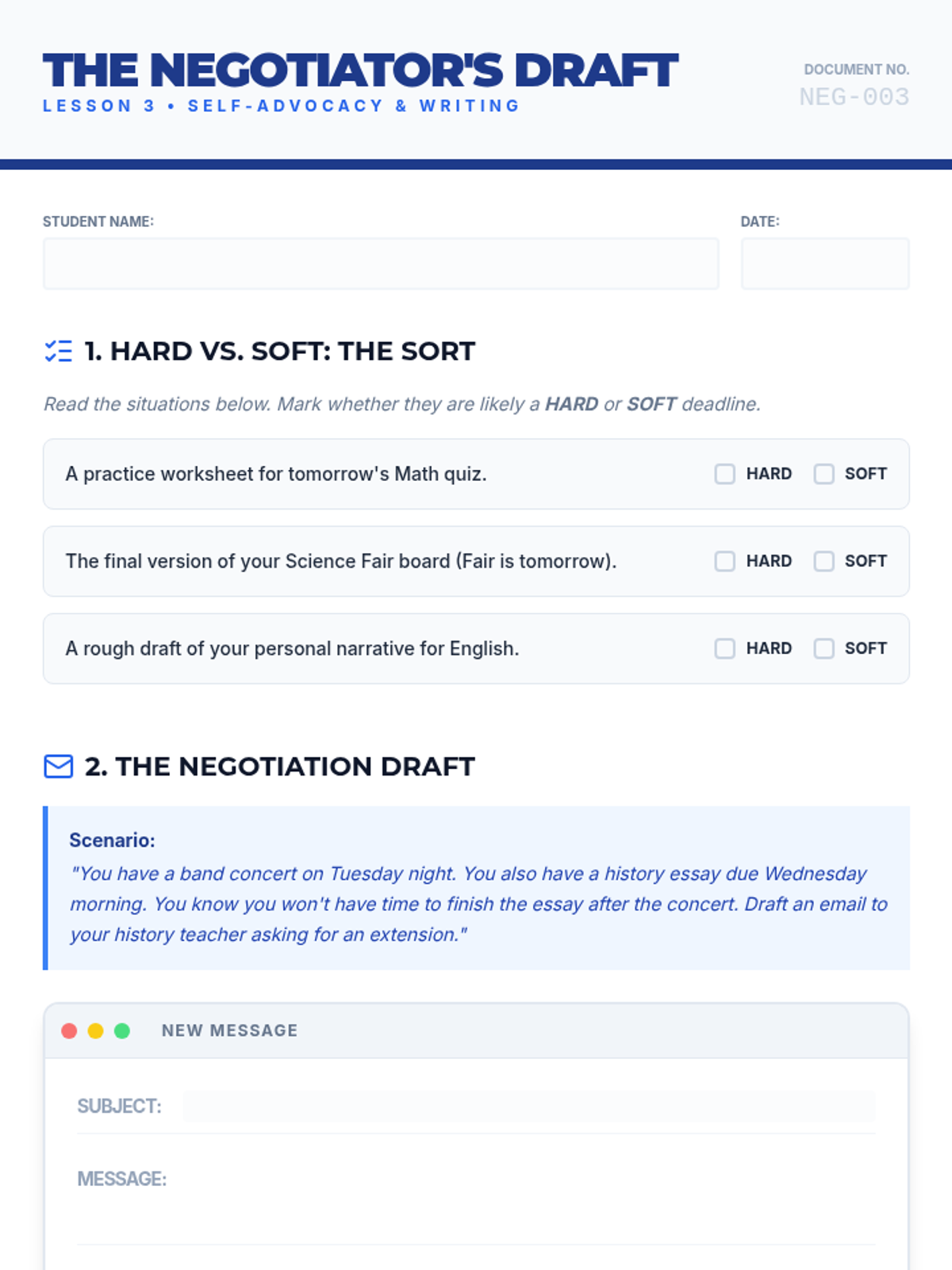
A worksheet for students to differentiate between hard and soft deadlines and practice drafting professional email requests for deadline extensions.
Slide deck for Lesson 3 covering the difference between hard and soft deadlines and the "3 P's" of professional email negotiation.
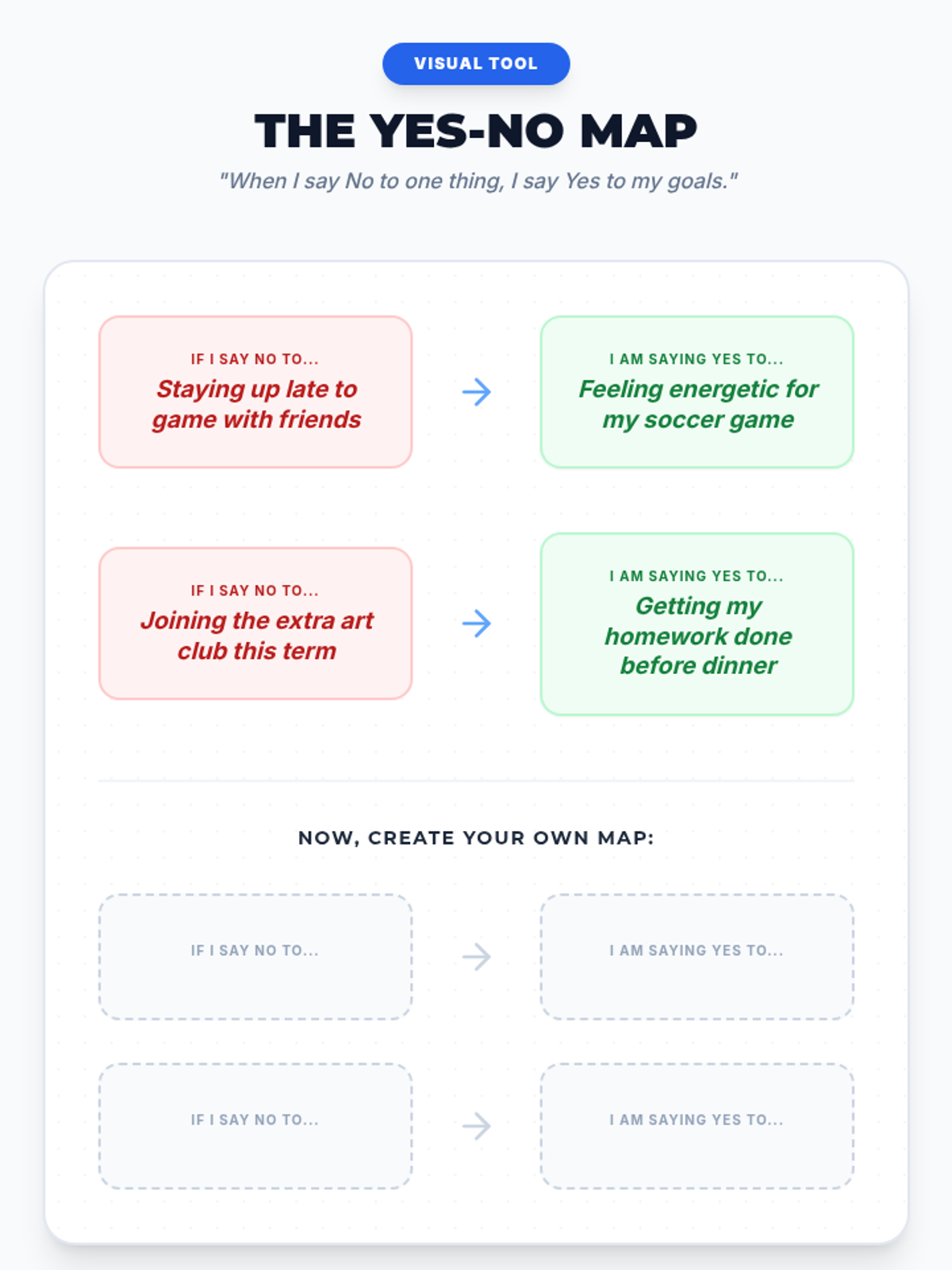
A visual tool to help students understand the trade-offs of their choices by mapping what they are saying "yes" to when they say "no" to a commitment.
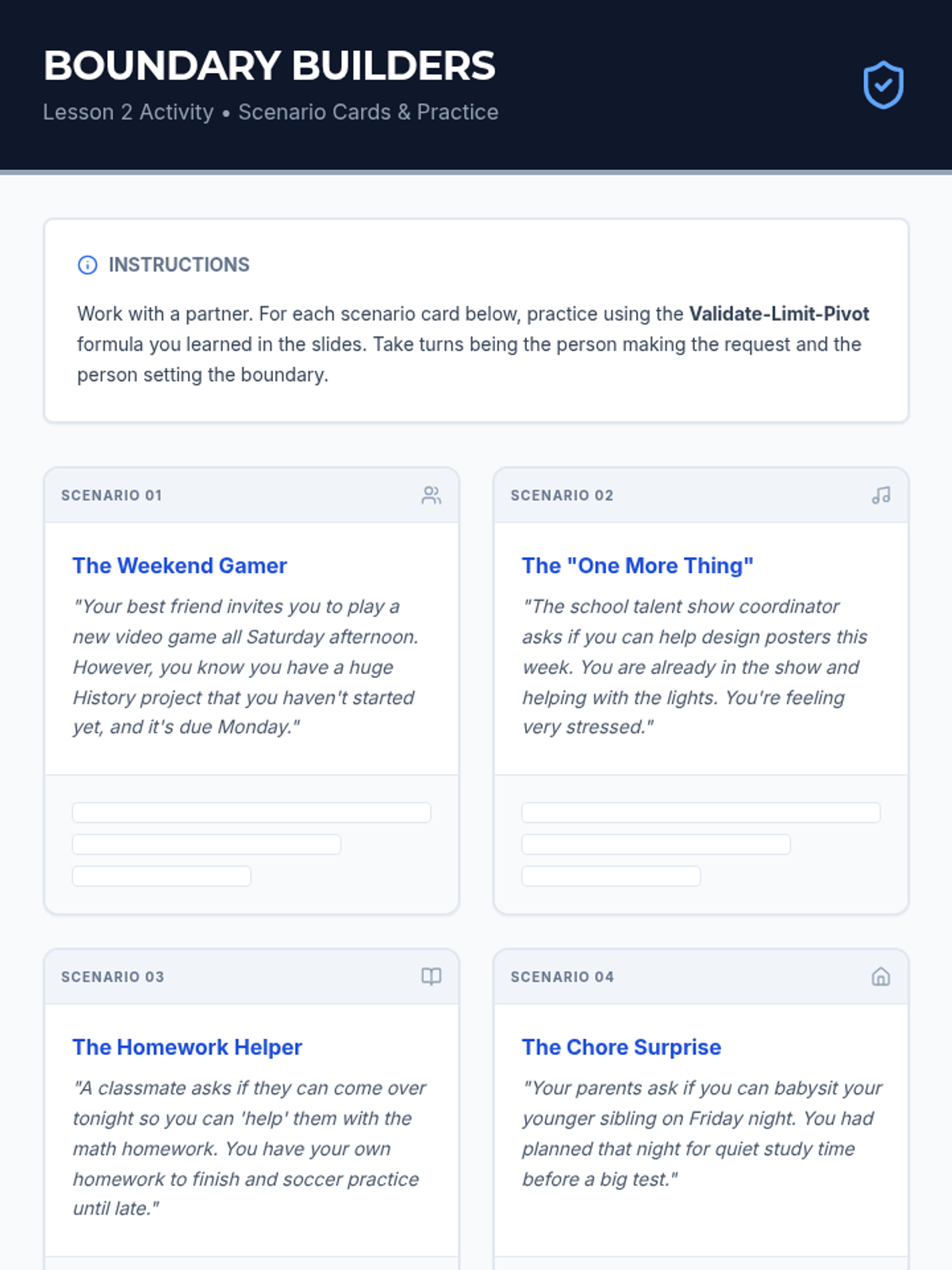
A role-playing activity featuring scenario cards that prompt students to practice declining commitments using professional communication scripts.
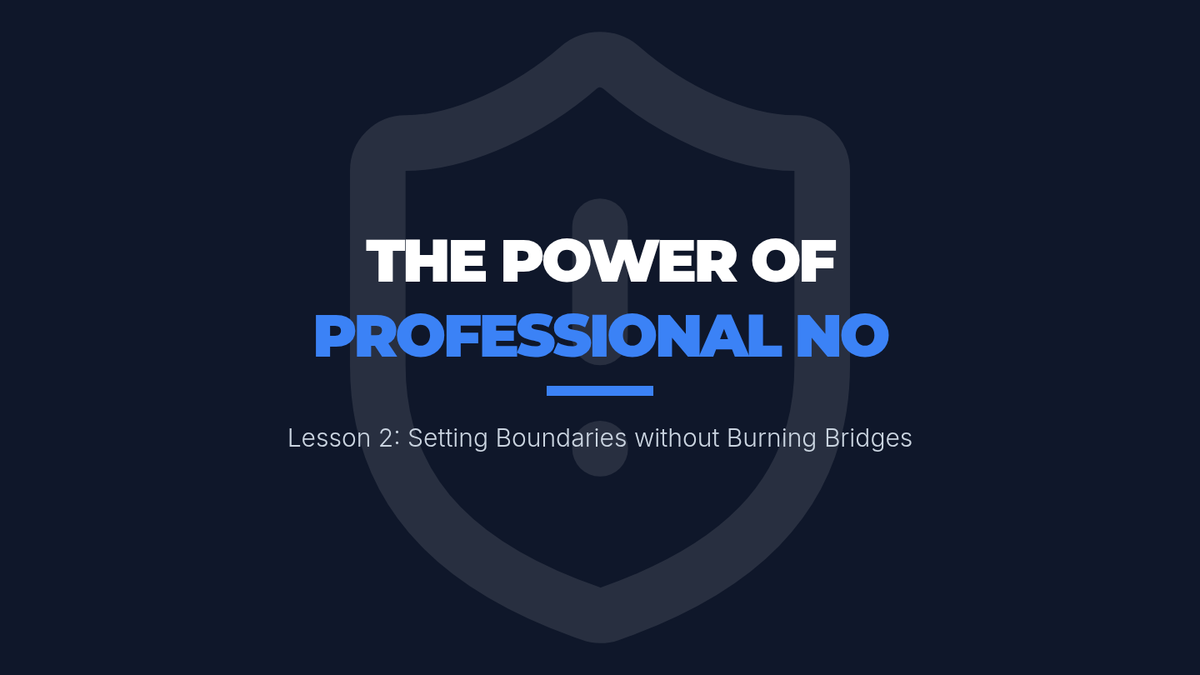
Slide deck for Lesson 2 covering the concept of trade-offs, the "Validation-Limit-Pivot" script formula, and real-world examples of saying no.
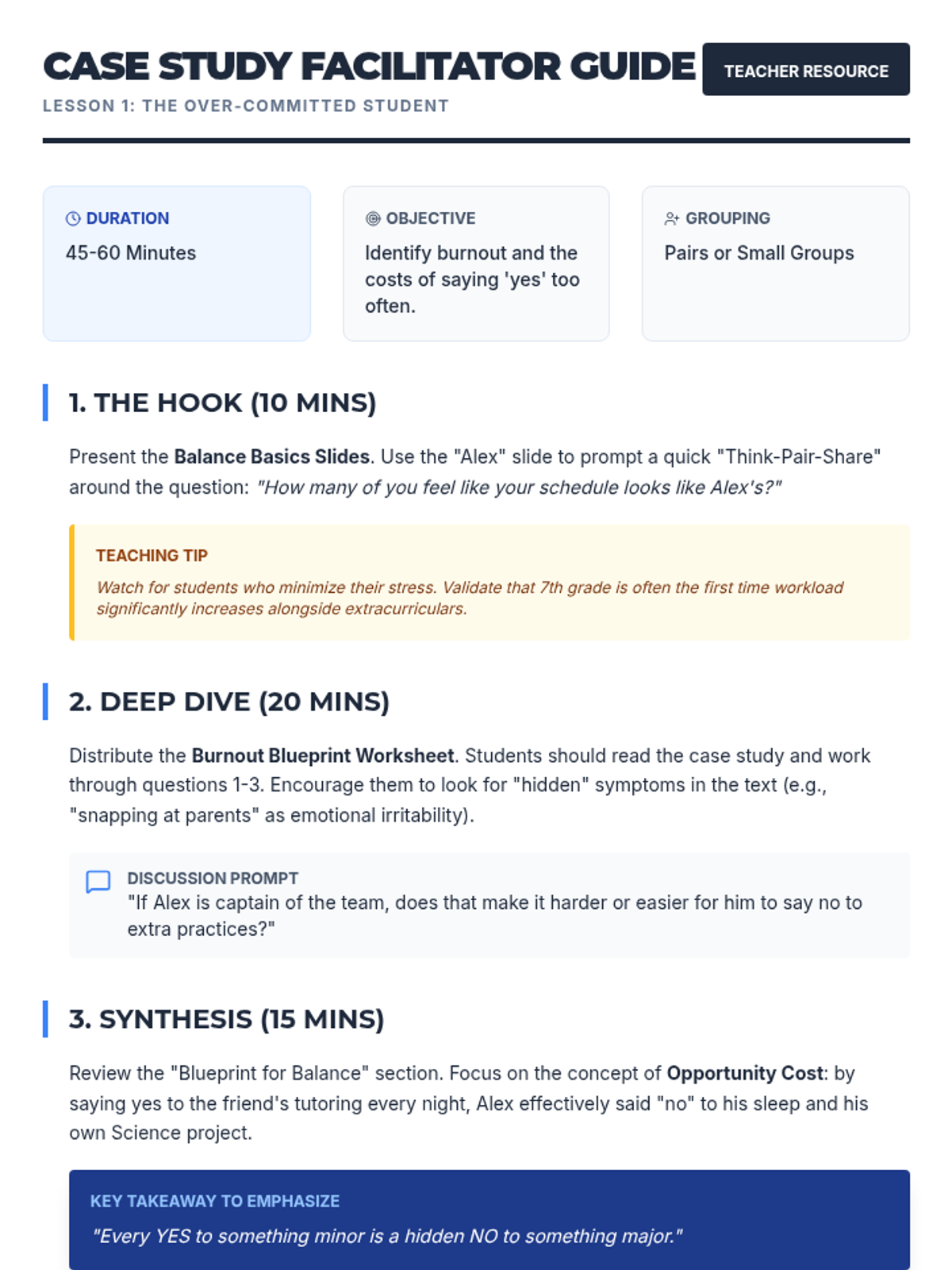
Instructional guide for teachers to facilitate the Lesson 1 case study discussion, including timing, discussion prompts, and differentiation strategies.
Introductory slide deck for Lesson 1 covering the "Yes" trap, burnout warning signs, and the psychological reasons behind over-commitment.
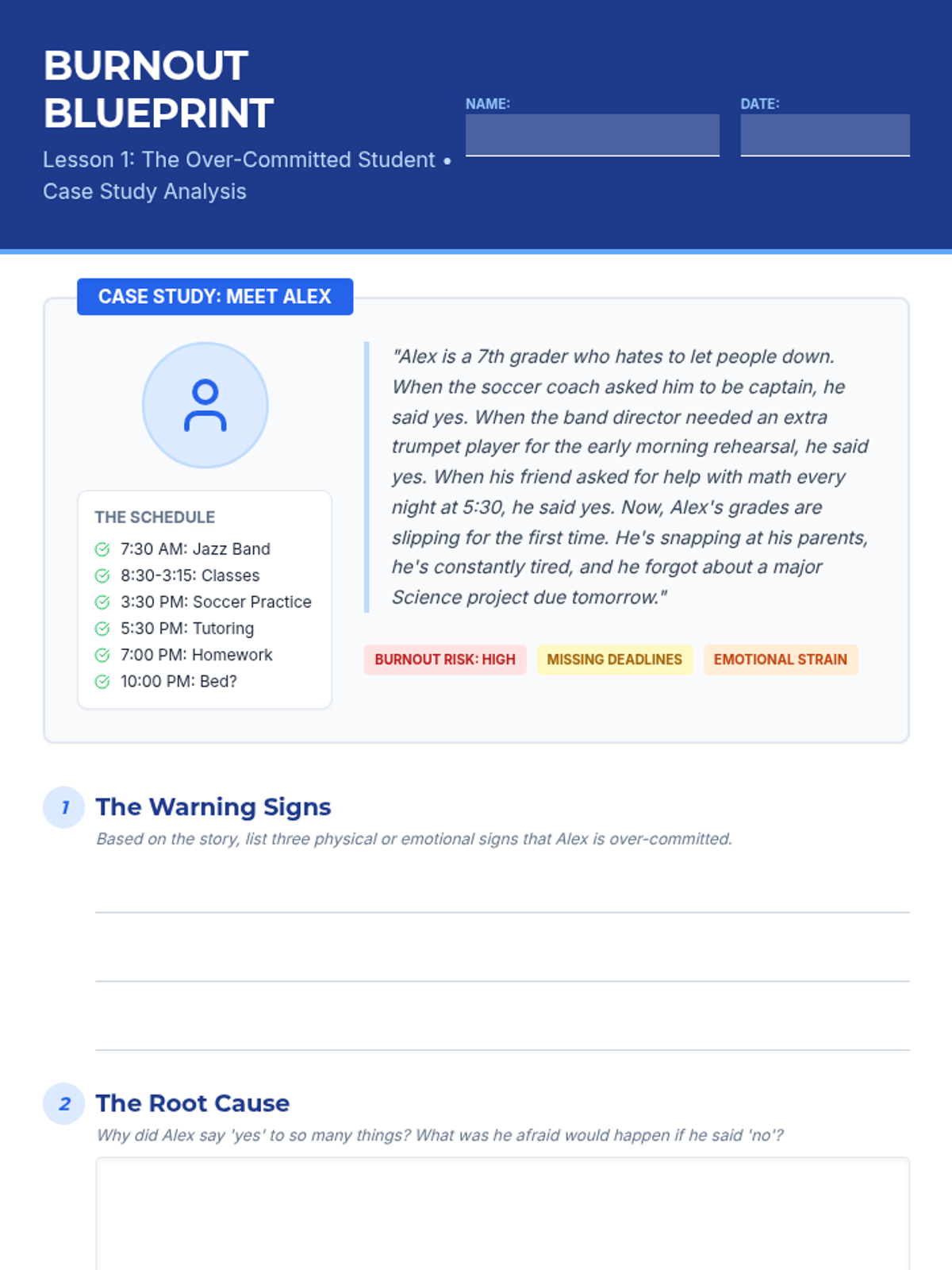
A case study worksheet analyzing a fictional student's struggle with over-commitment and burnout, featuring analysis questions and a reflection section.
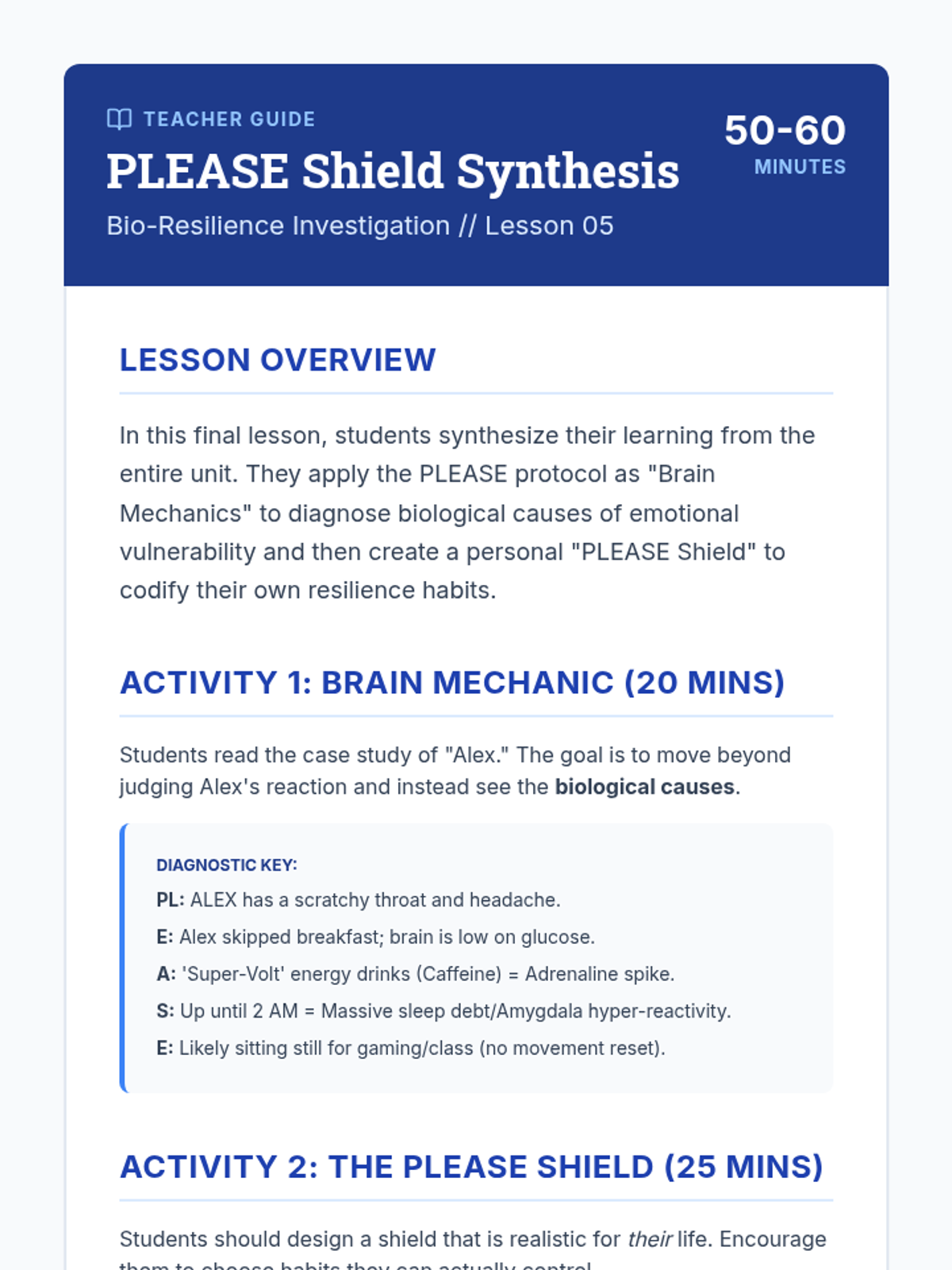
A teacher facilitation guide for Lesson 5, including a diagnostic key for the Brain Mechanic activity and project success criteria.
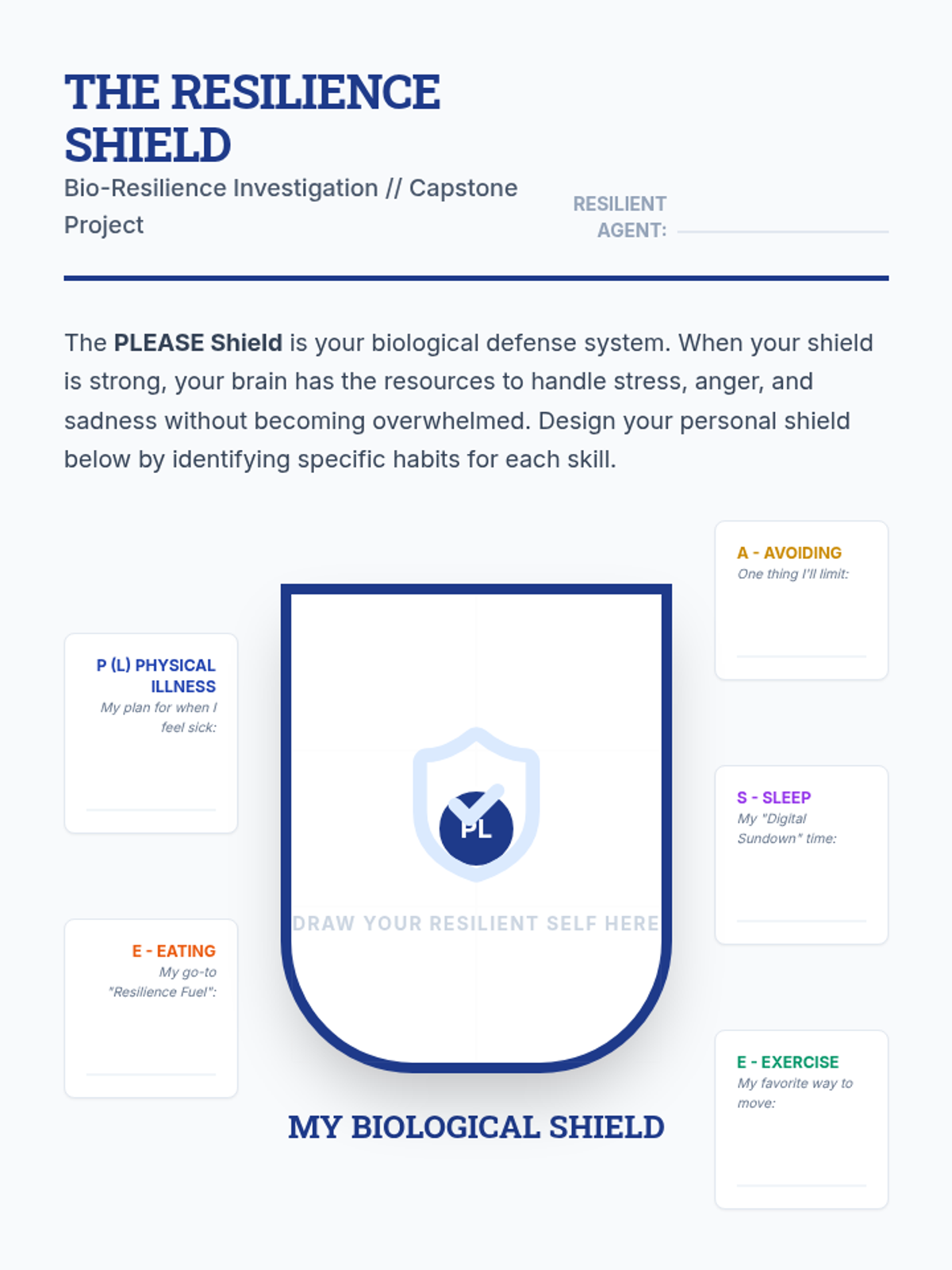
A student project worksheet for designing a personal 'PLEASE Shield' by identifying specific physical health habits that build emotional resilience.
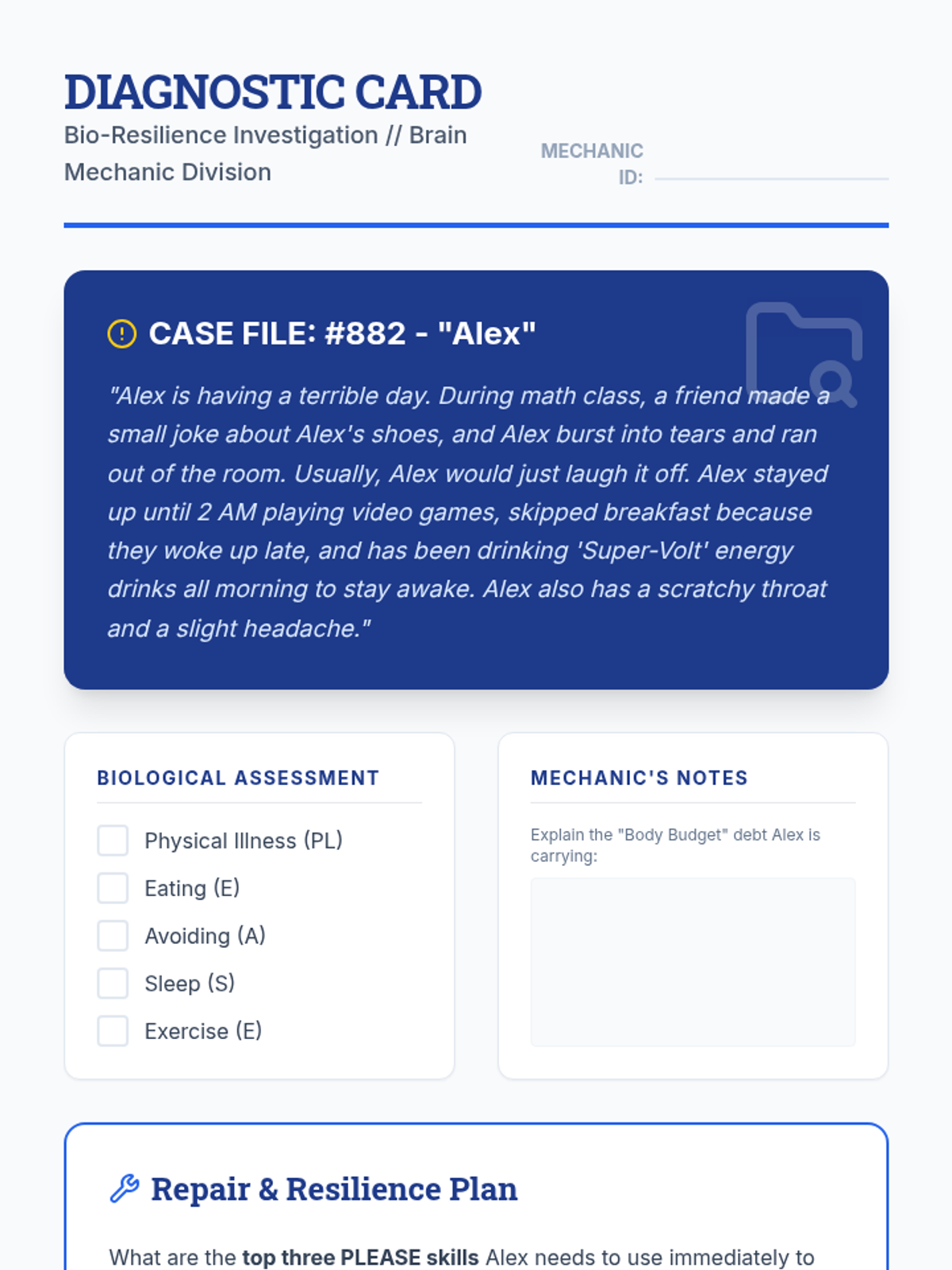
A student diagnostic worksheet where they act as 'Brain Mechanics' to identify and fix biological causes of emotional vulnerability in a fictional character.
A sleek, tech-inspired student workbook that guides teenage boys through reframing their self-talk as an 'Internal OS' and auditing their digital wellness and sleep habits. Features specialized work areas for system optimization protocols and now includes a video game performance audit and tilt management page.
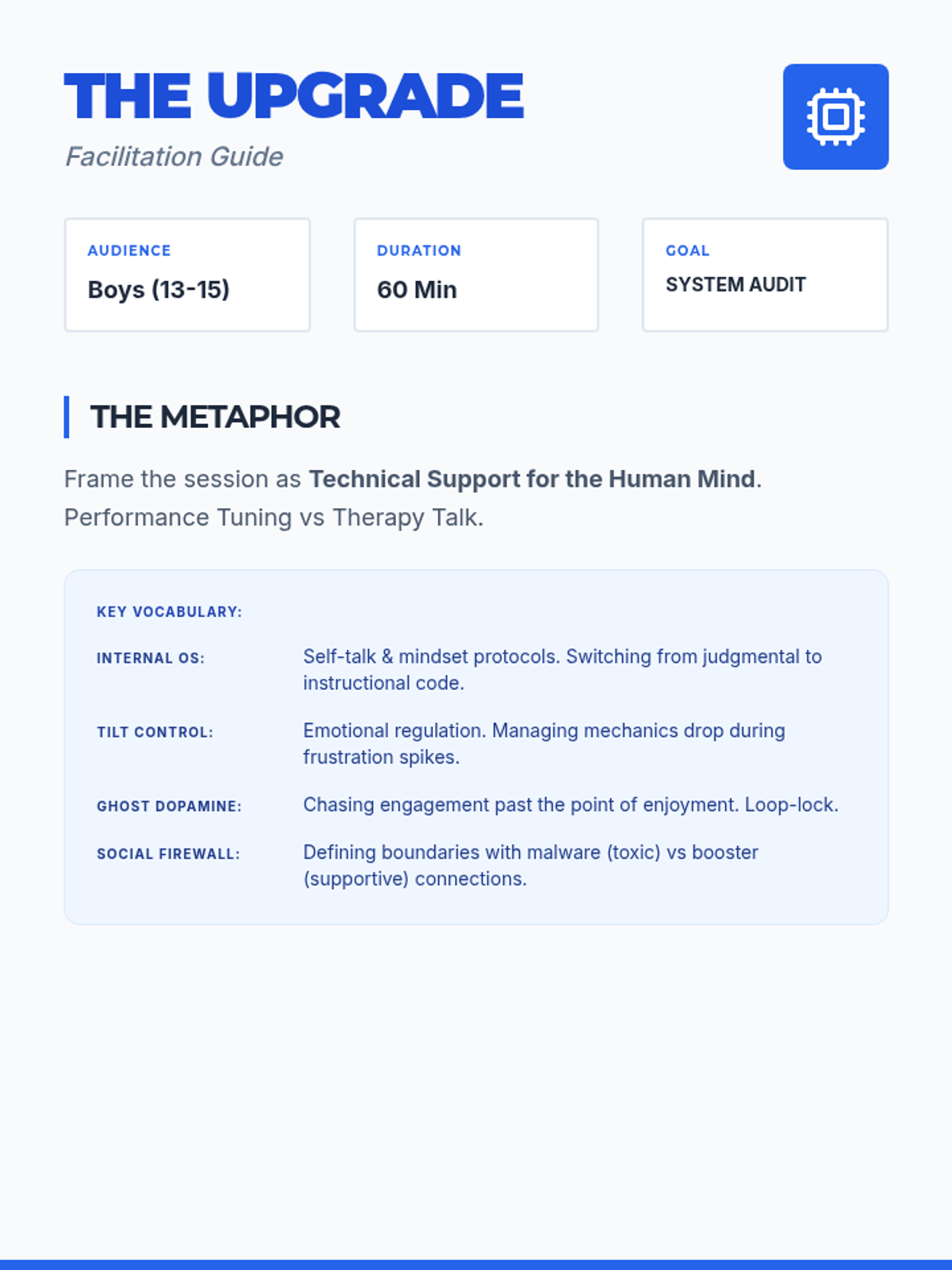
A professional facilitation guide for counselors that frames self-care and positive self-talk through a 'system optimization' metaphor designed to engage 14-year-old boys. It includes discussion prompts, key vocabulary, and psychological reframing strategies.
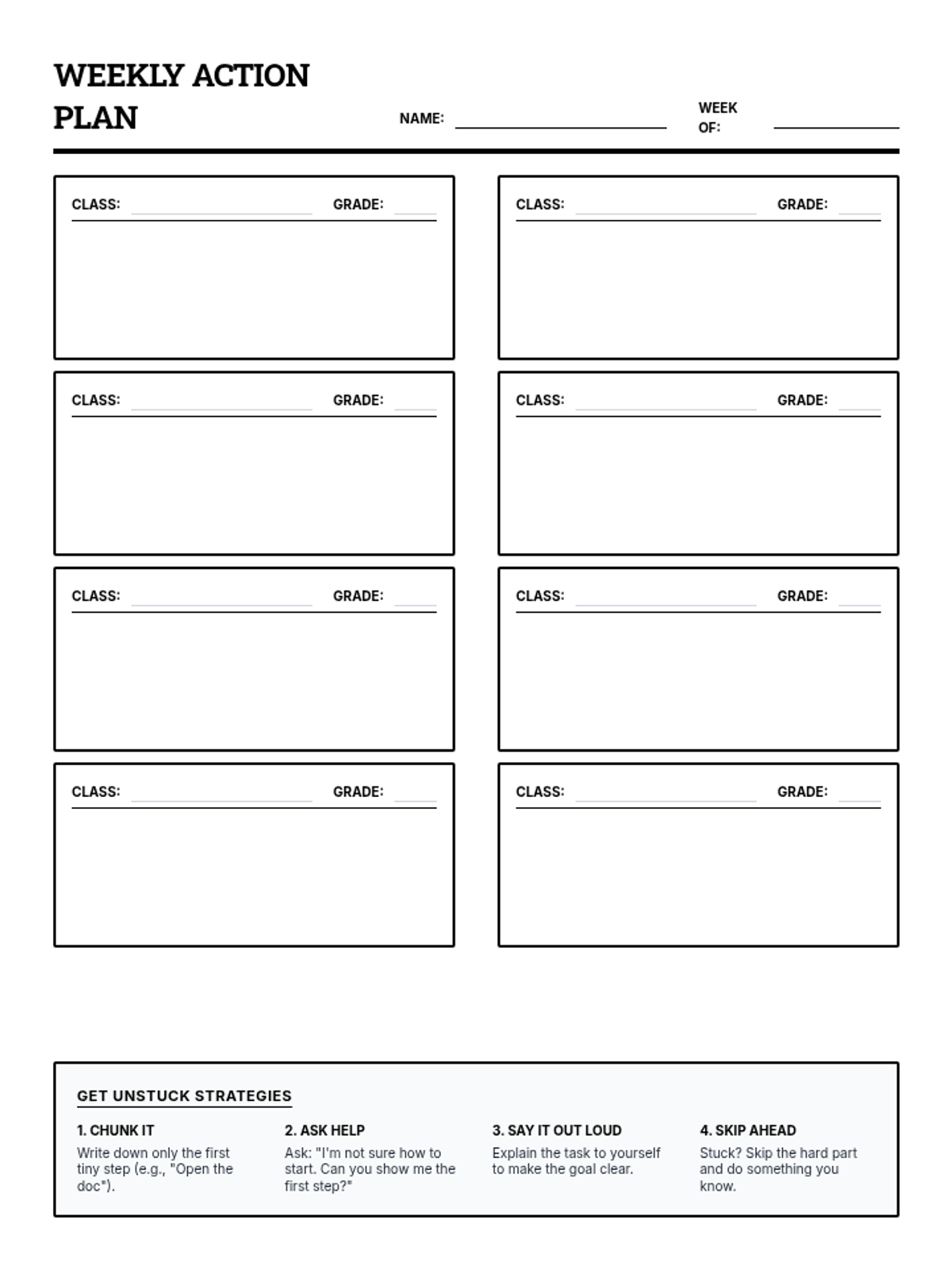
A highly efficient, single-page Weekly Action Plan designed for students with executive functioning needs. It features 8 streamlined class boxes with space for subjects and grades, plus a concise footer with 'Get Unstuck' strategies, all formatted to fit within a single printable page.
Instructional slide deck for the Budget Bites lesson, covering the 90-minute agenda, hidden costs (tax and tip), and restaurant social etiquette.
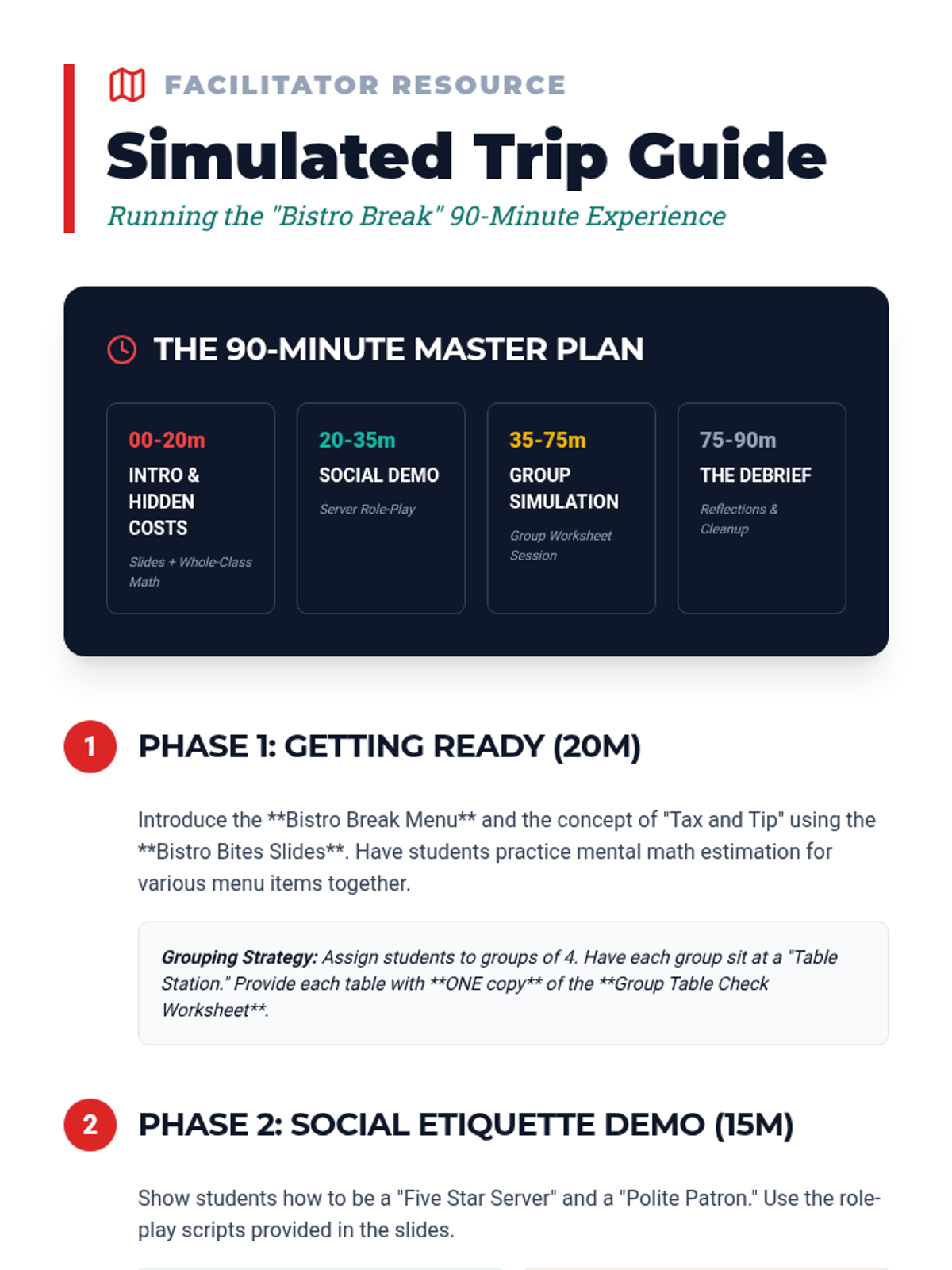
A facilitator's guide for conducting a simulated restaurant field trip in the classroom, including role-play scripts and setup instructions.
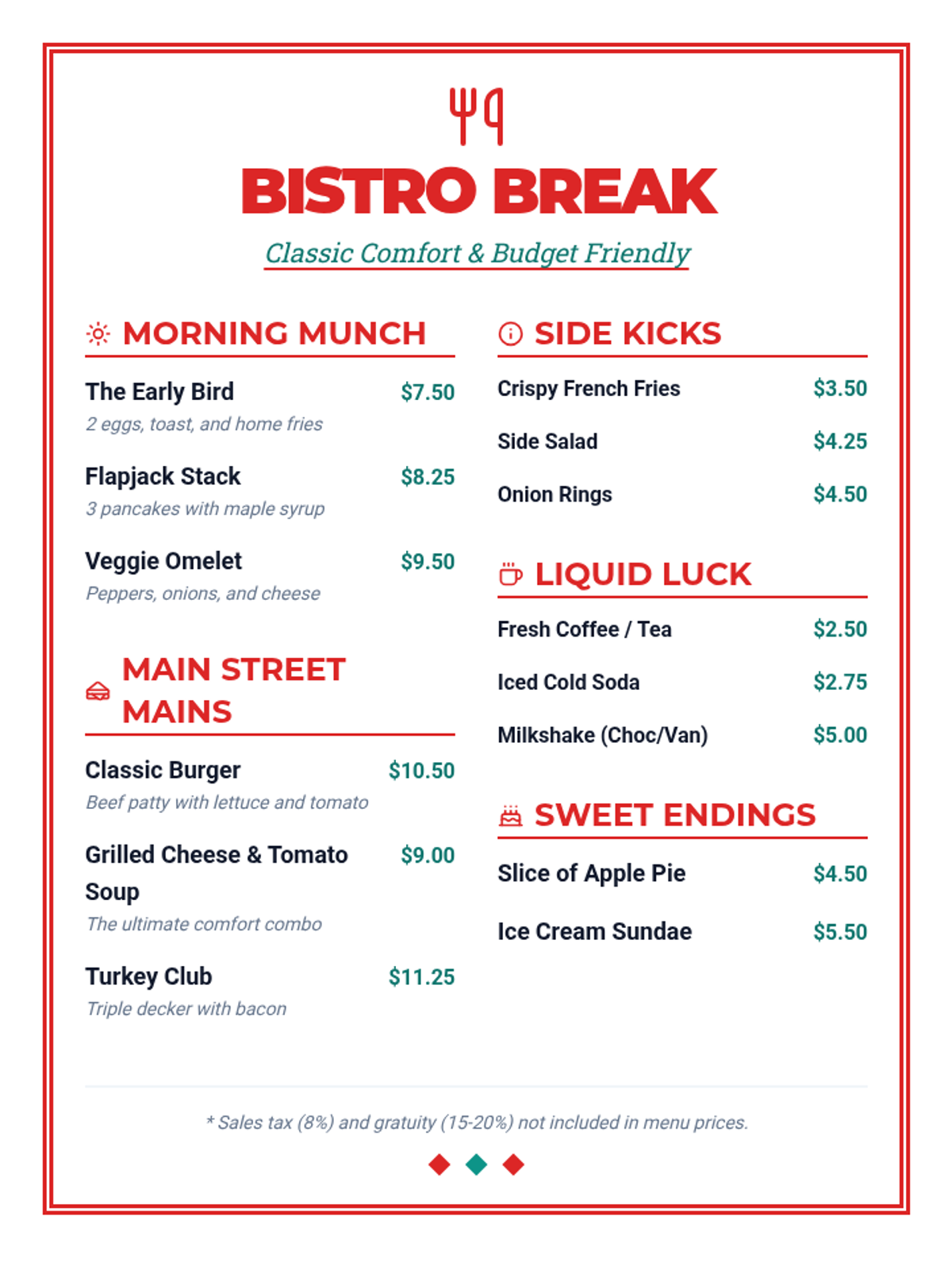
A retro-style bistro menu featuring breakfast, main courses, sides, drinks, and desserts with clear pricing for use in budget and math exercises.
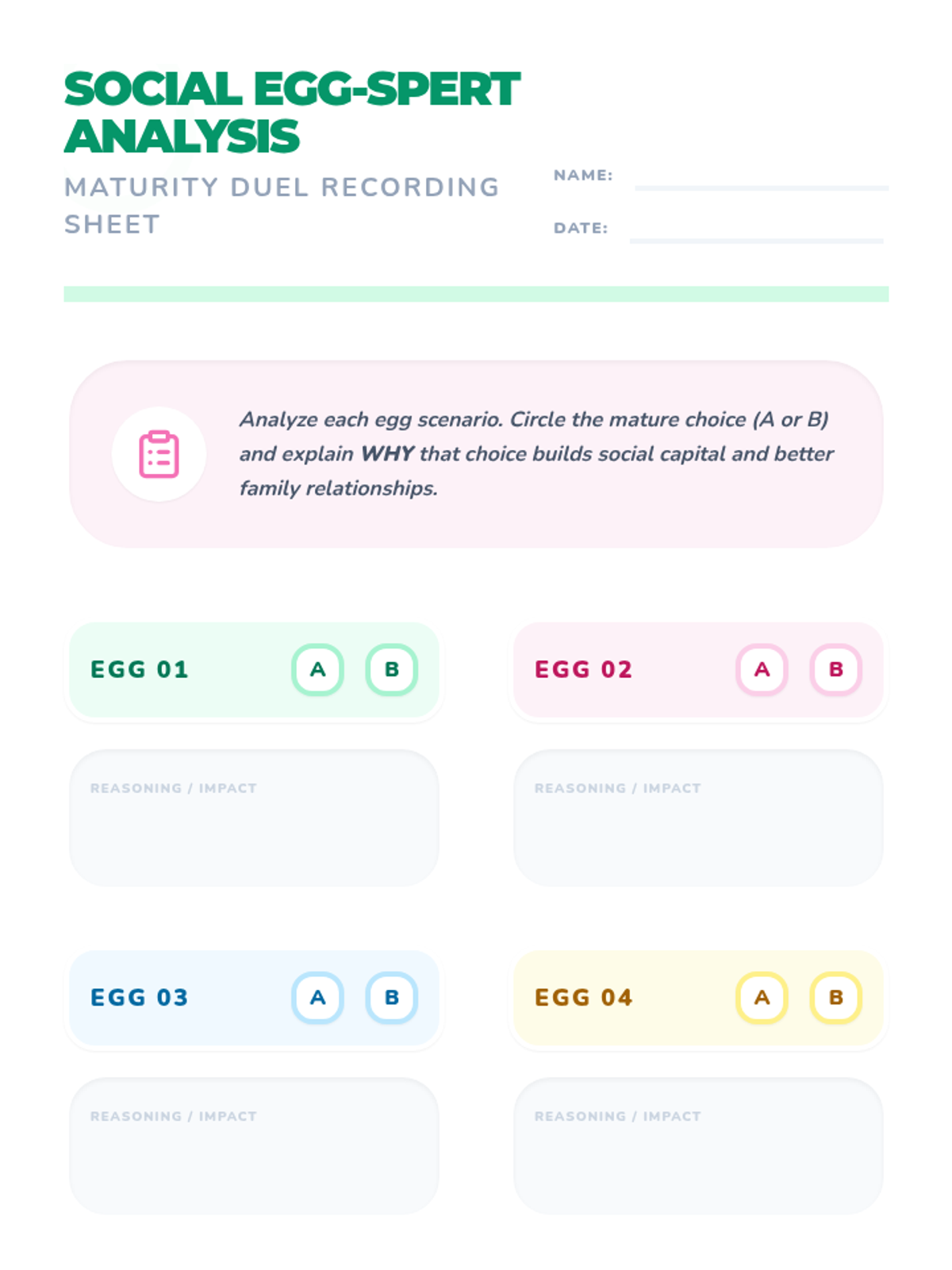
A student-facing recording sheet redesigned for middle school, emphasizing social analysis, reasoning, and reflection on maturity and perspective-taking. Now with an Easter-themed design.
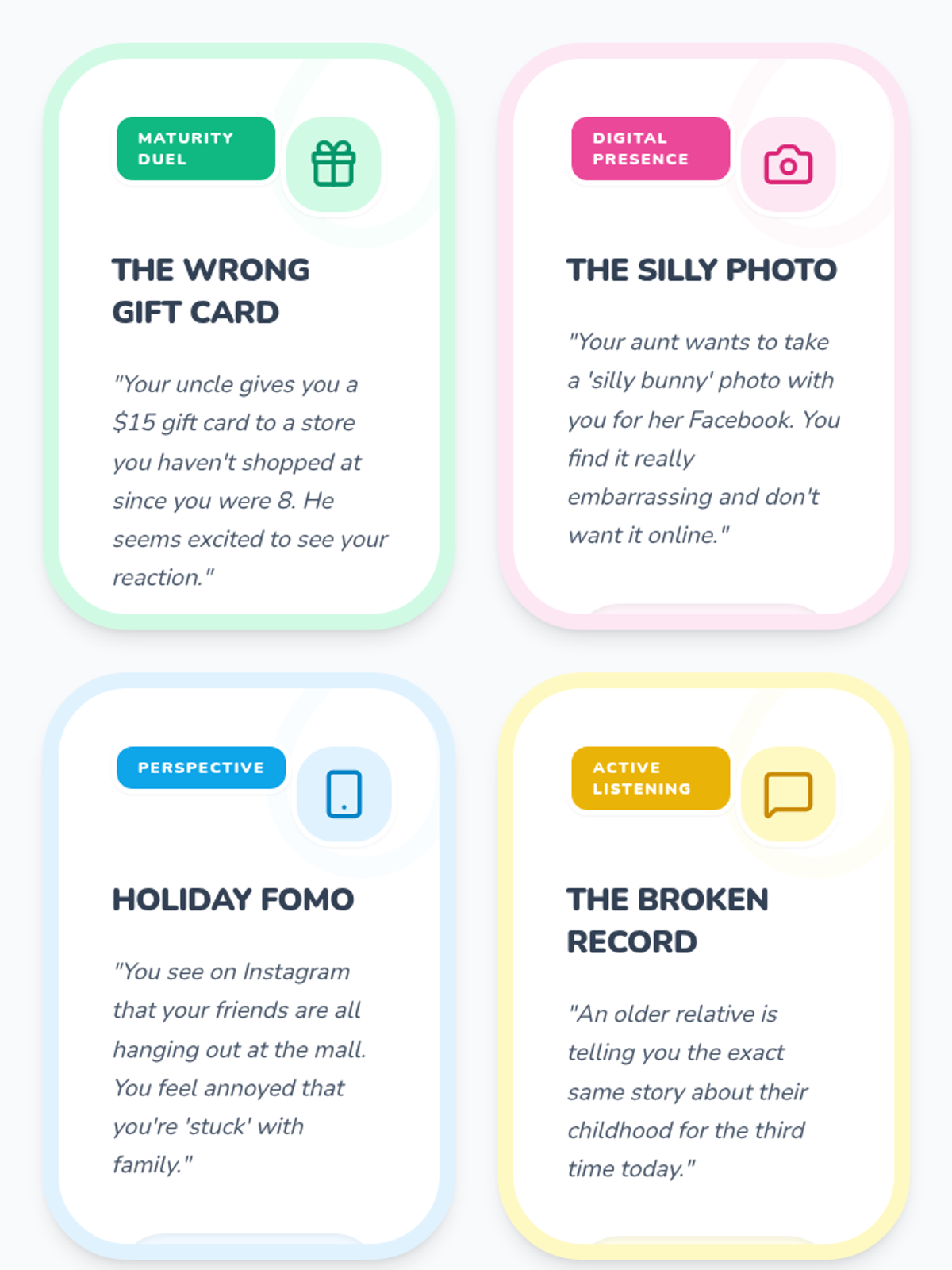
A set of 8 social skills task cards redesigned for middle school students, focusing on digital etiquette, social media boundaries, maturity, and complex family dynamics. Now featuring a heavy Easter theme with eggs and pastel borders.
An expanded slide deck that includes 8 scenario practice slides based on the task cards. Each practice slide features a tricky spring situation and two identical-looking choices for group discussion. Redesigned with a heavy Easter theme and optimized font sizes for visibility. All scenario prompts and options have been resized to ensure they fit correctly within the slides. All text is at least 24px (text-2xl).
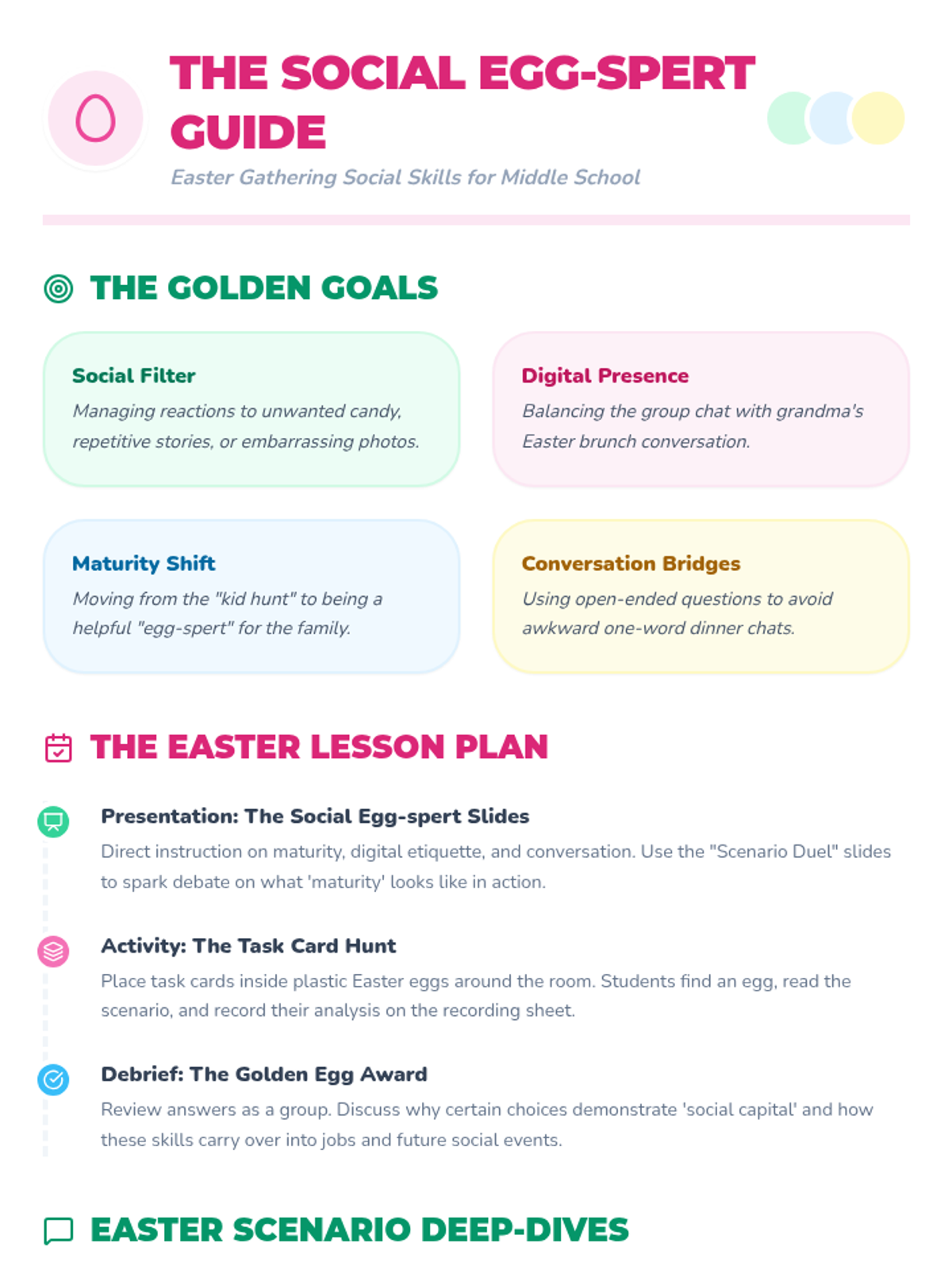
A teacher-facing guide outlining the learning objectives and facilitation strategies for the Spring Social Skills lesson. Redesigned with a heavy Easter theme (eggs, pastels, and terminology) for middle schoolers.
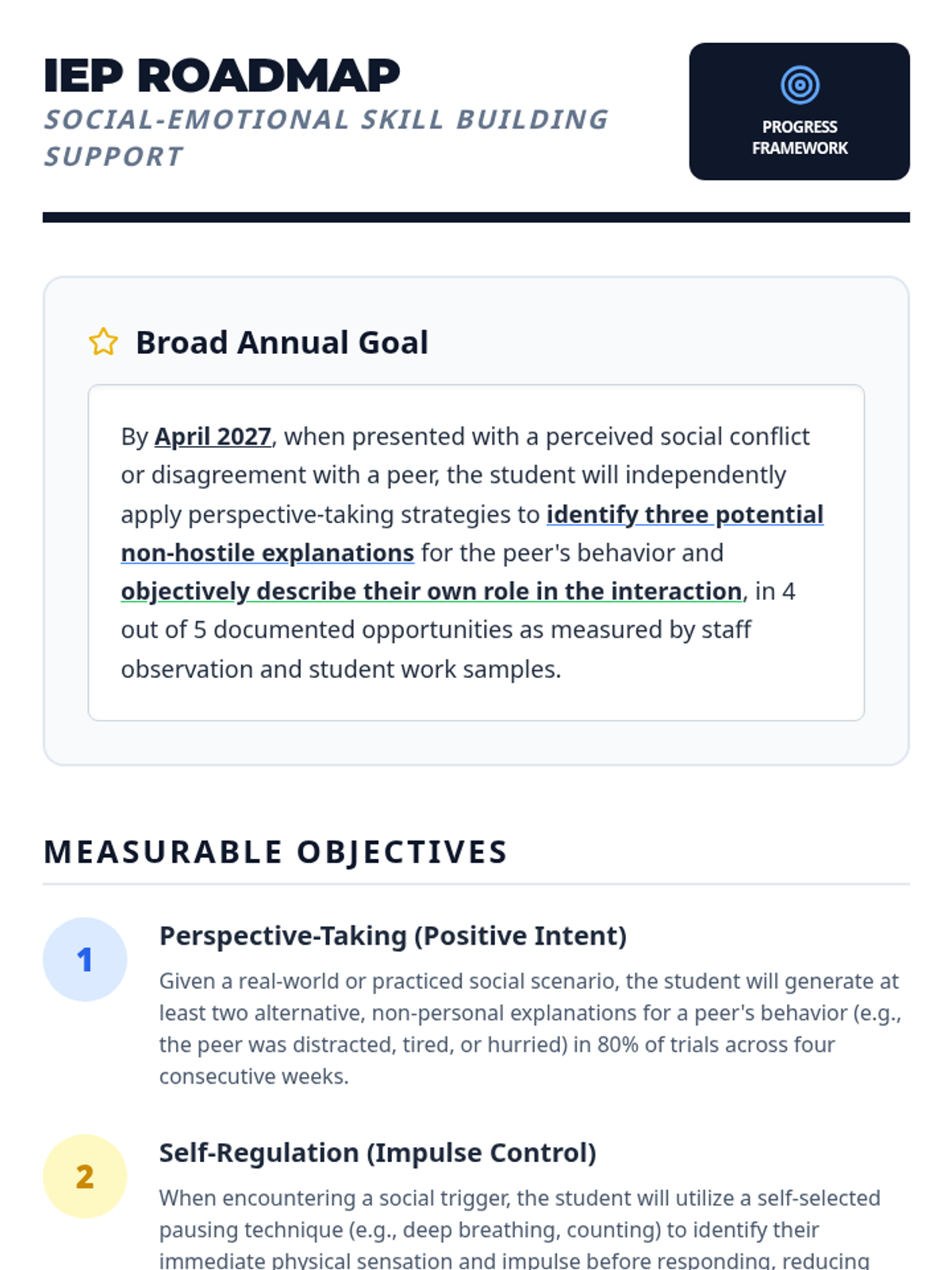
A finalized IEP Roadmap with generalized skill-building language for perspective-taking, self-regulation, and objective self-reflection, designed to support students with social perception challenges.
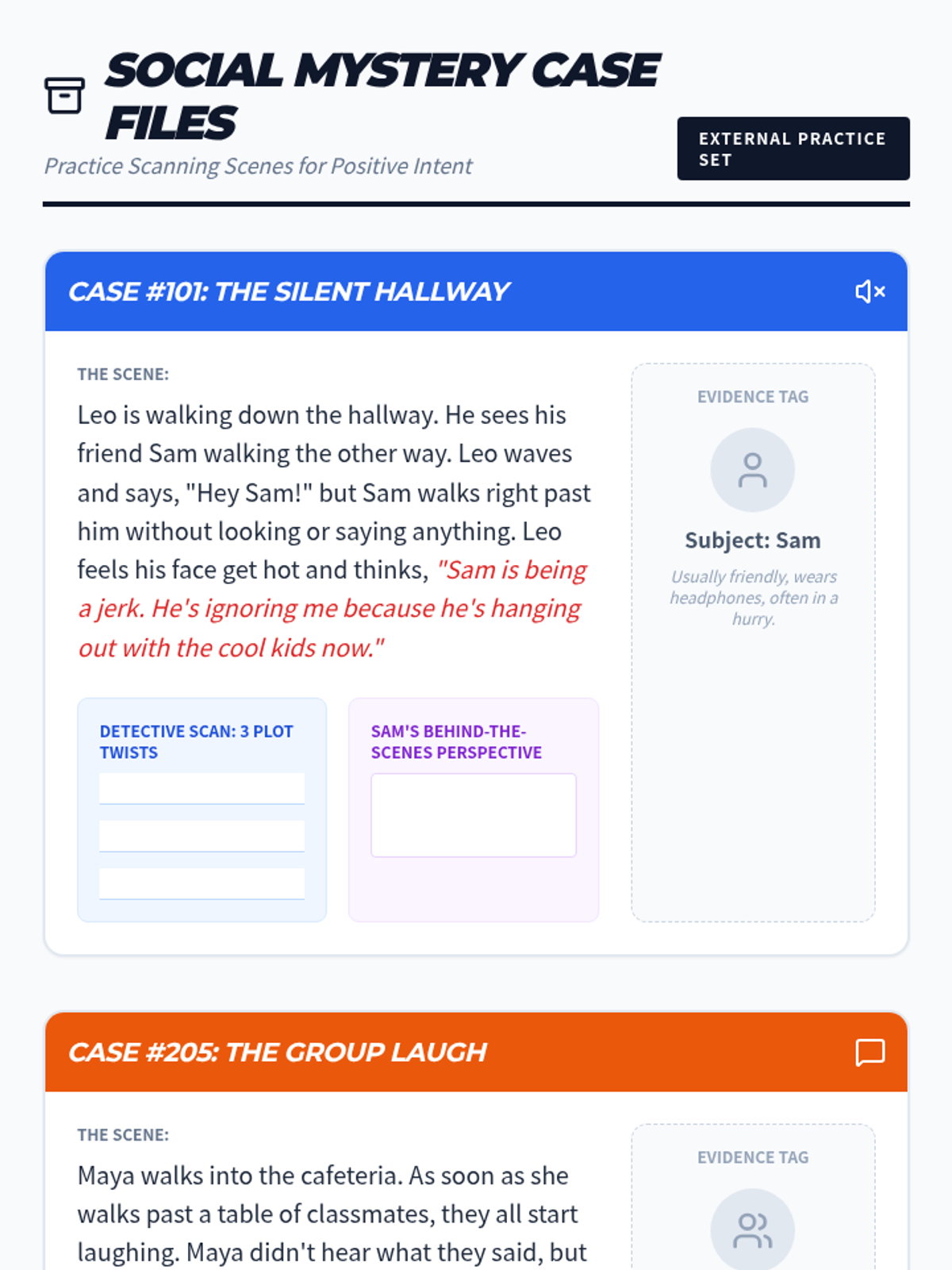
A multi-page set of 'Social Mystery Case Files' with four distinct practice scenarios. Each case includes a 'The Scene' description, an 'Evidence Tag' with extra clues, and space for students to brainstorm three 'Plot Twists' (positive intent explanations) and analyze the situation from an objective 'Camera View'.
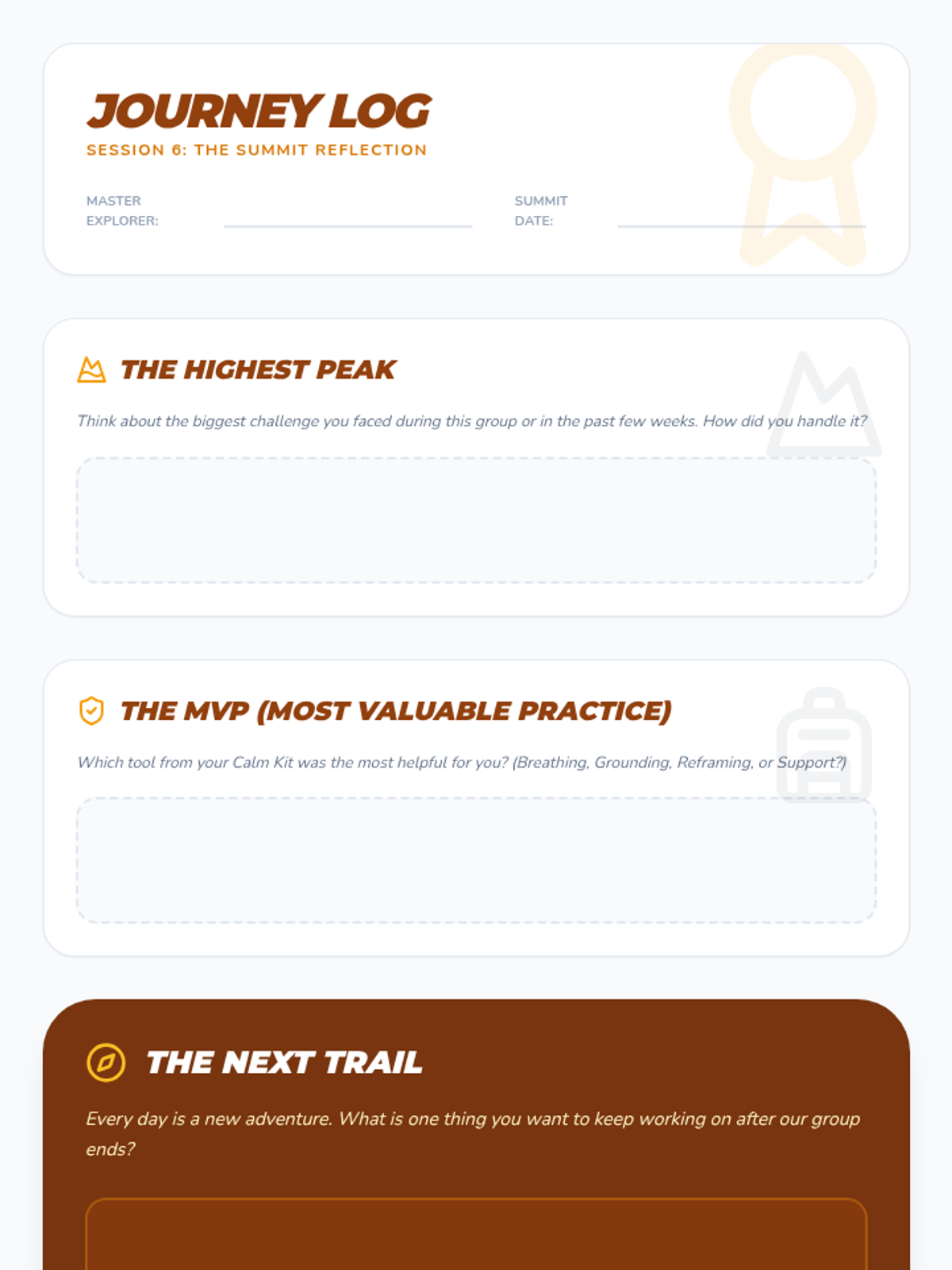
A student-facing reflection sheet for the final session, focusing on growth, accomplishments, and future goal setting.
A visual presentation for Session 6 of the Calm Explorers group, reflecting on growth, confidentiality, and celebrating the completion of the program.
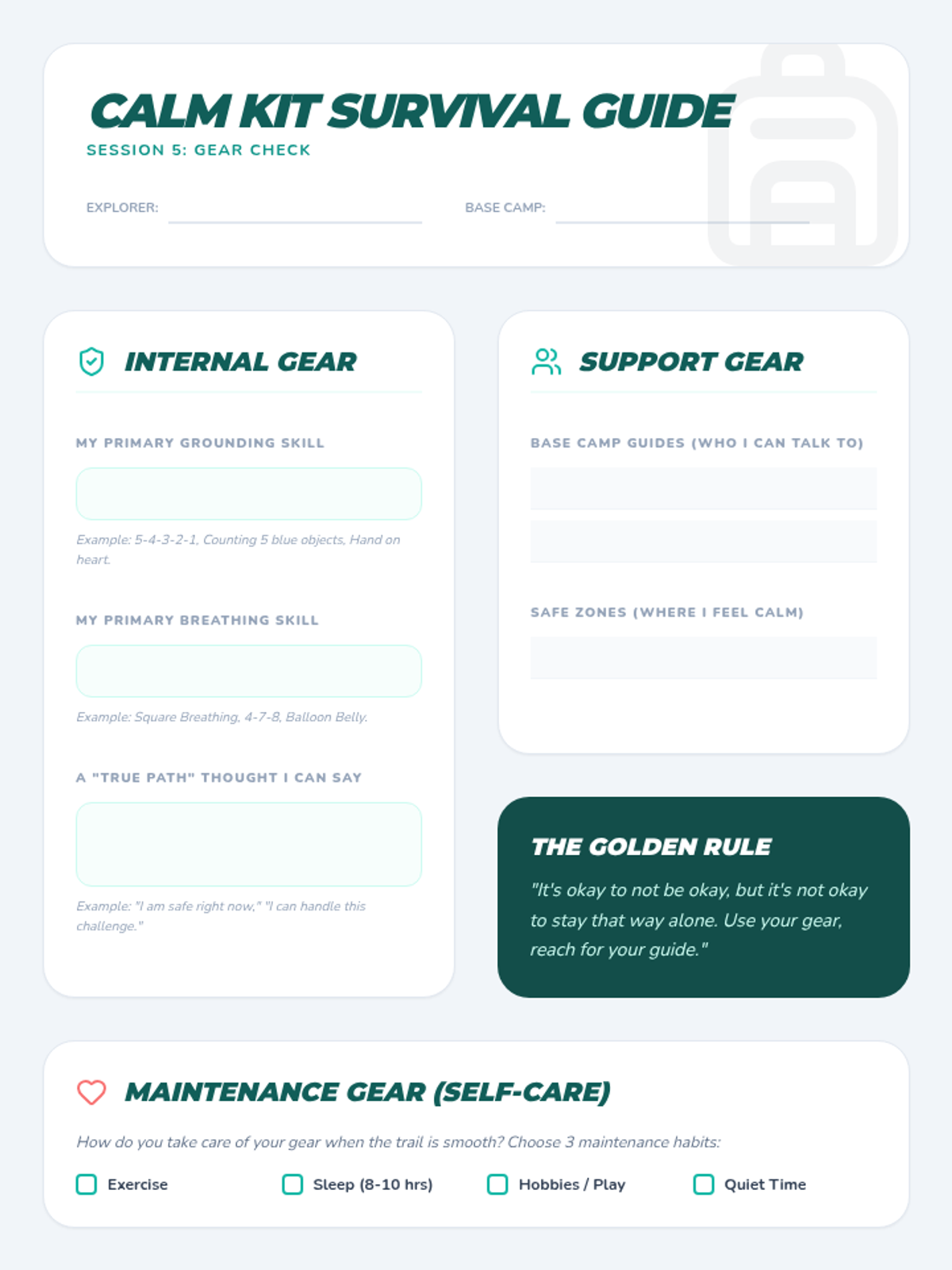
A student-facing planning sheet for identifying personalized coping strategies, support people, and self-care habits.
A visual presentation for Session 5 of the Calm Explorers group, reviewing skills, confidentiality, and planning a personalized 'Calm Kit'.
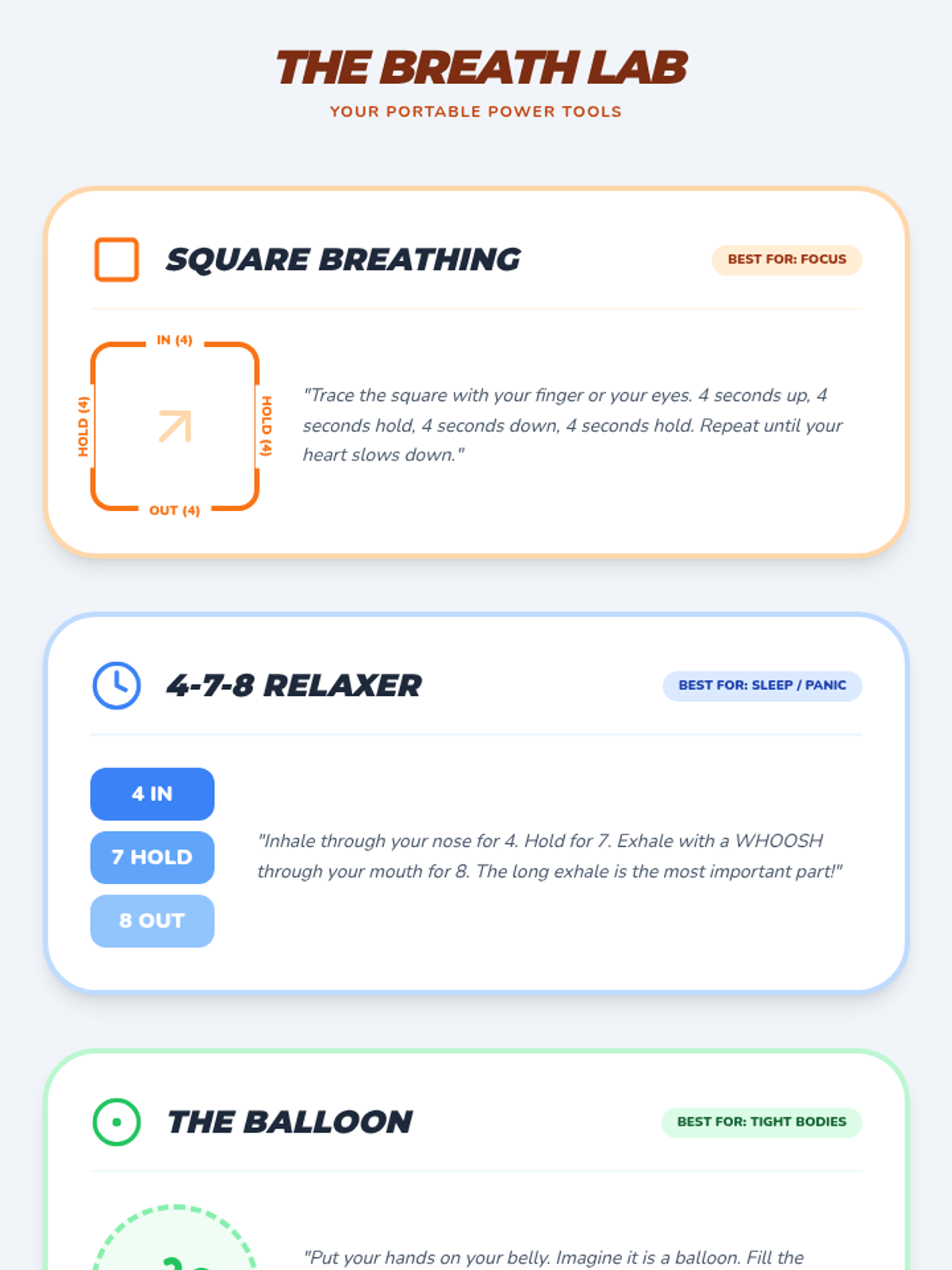
A student-facing reference card for various breathing techniques used as self-regulation tools for anxiety and stress.
A visual presentation for Session 4 of the Calm Explorers group, focusing on the power of breath, confidentiality, and mindfulness.
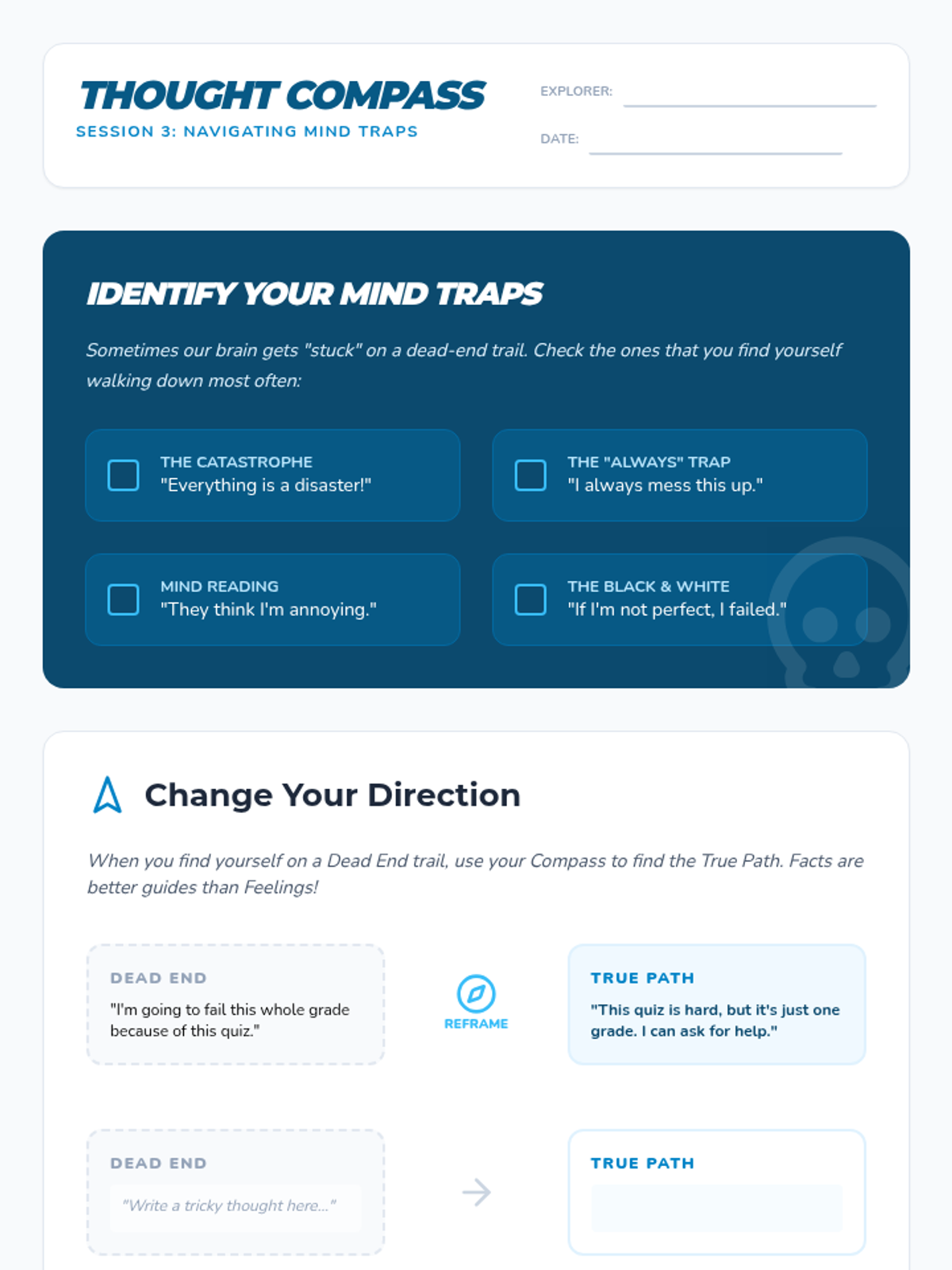
A student-facing activity sheet for practicing cognitive reframing by identifying 'mind traps' and finding 'true paths'.
A visual presentation for Session 3 of the Calm Explorers group, focusing on identifying mind traps, confidentiality, and cognitive reframing.
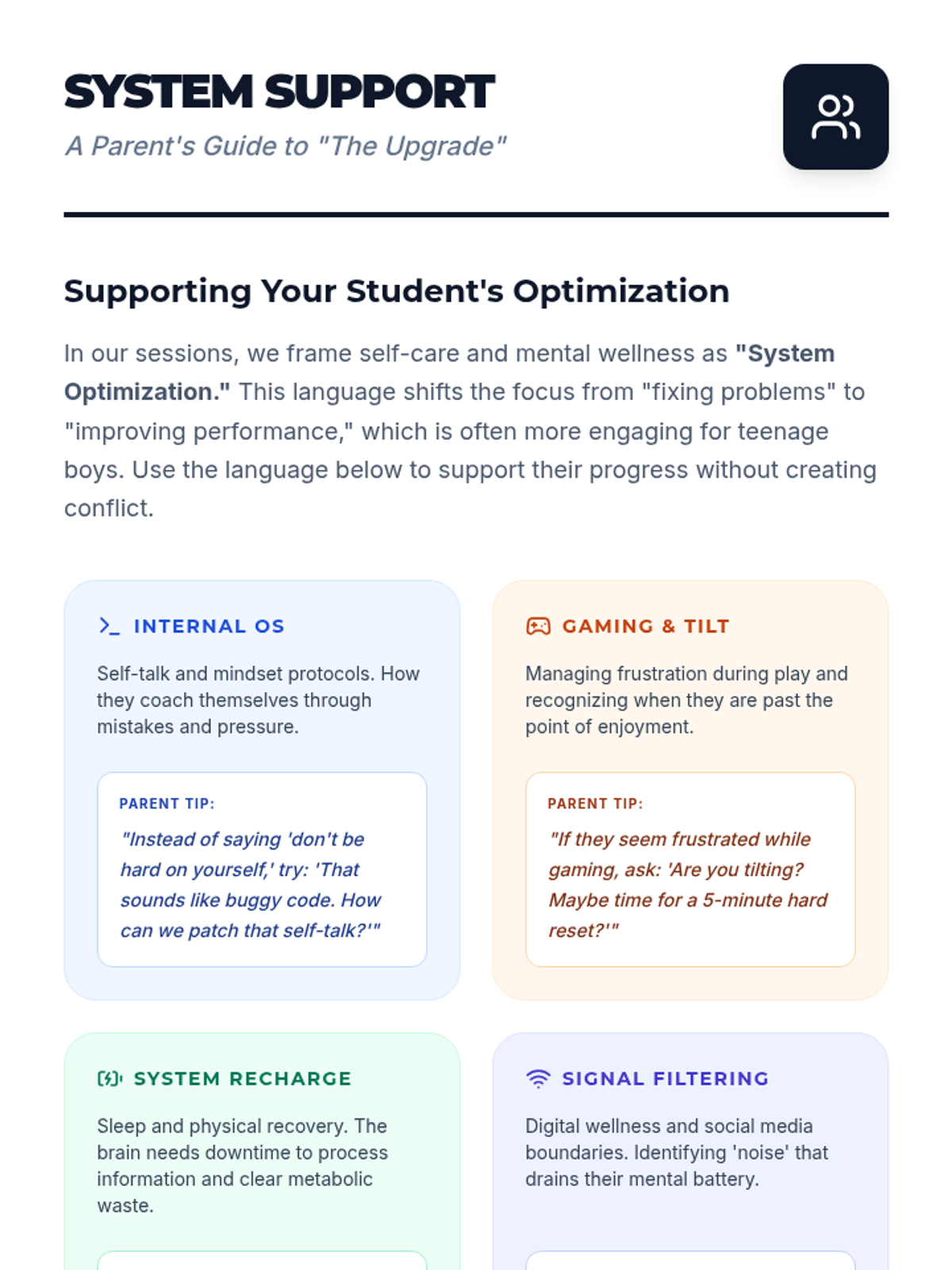
A parent-facing handout that explains the 'System Optimization' metaphor used in the lesson. It provides practical tips for parents to support their son's self-care using the same tech-inspired language to reduce conflict and increase engagement.
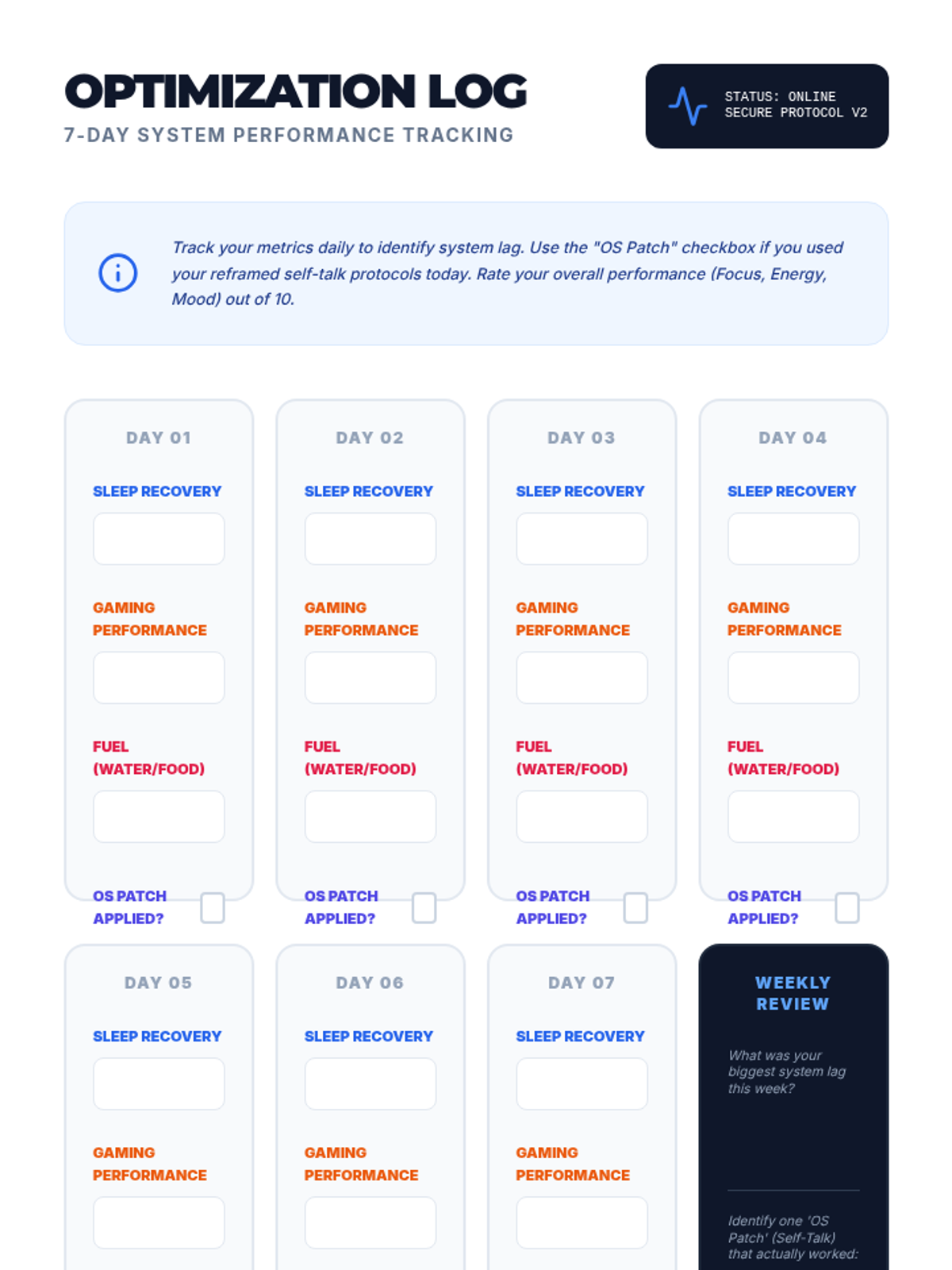
A high-tech student tracking sheet for monitoring sleep, gaming time, nutrition, and self-talk updates over a 7-day period. Designed to look like a system performance dashboard. It features large handwriting areas and clear, readable text.