Active listening, assertive expression, and boundary-setting strategies for interpersonal success. Develops proficiency in conflict mediation, cooperative teamwork, and the cultivation of healthy romantic and platonic connections.
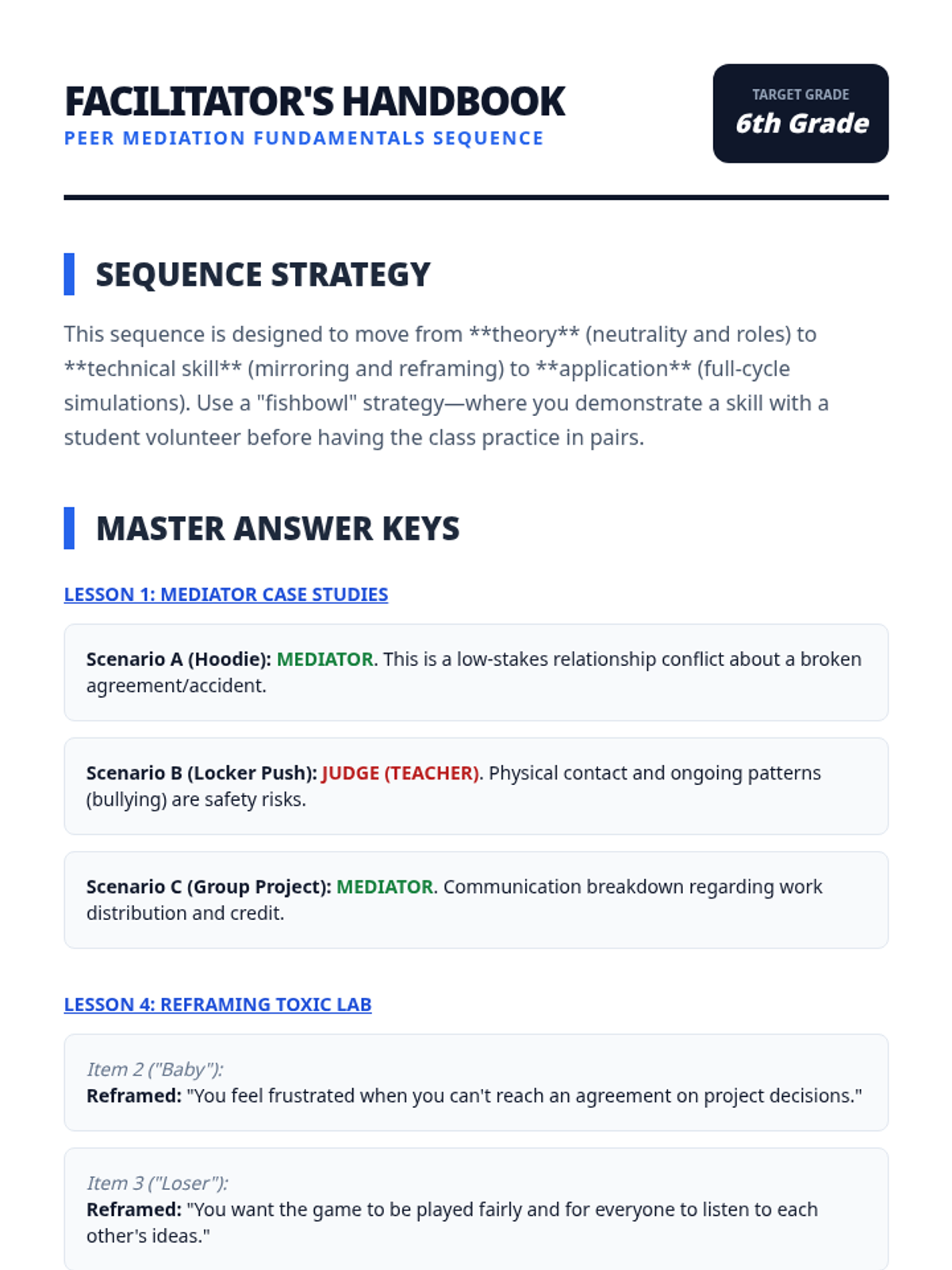
Teacher-facing facilitation guide and answer keys for the entire Peer Mediation sequence, including coaching tips for mock mediations.
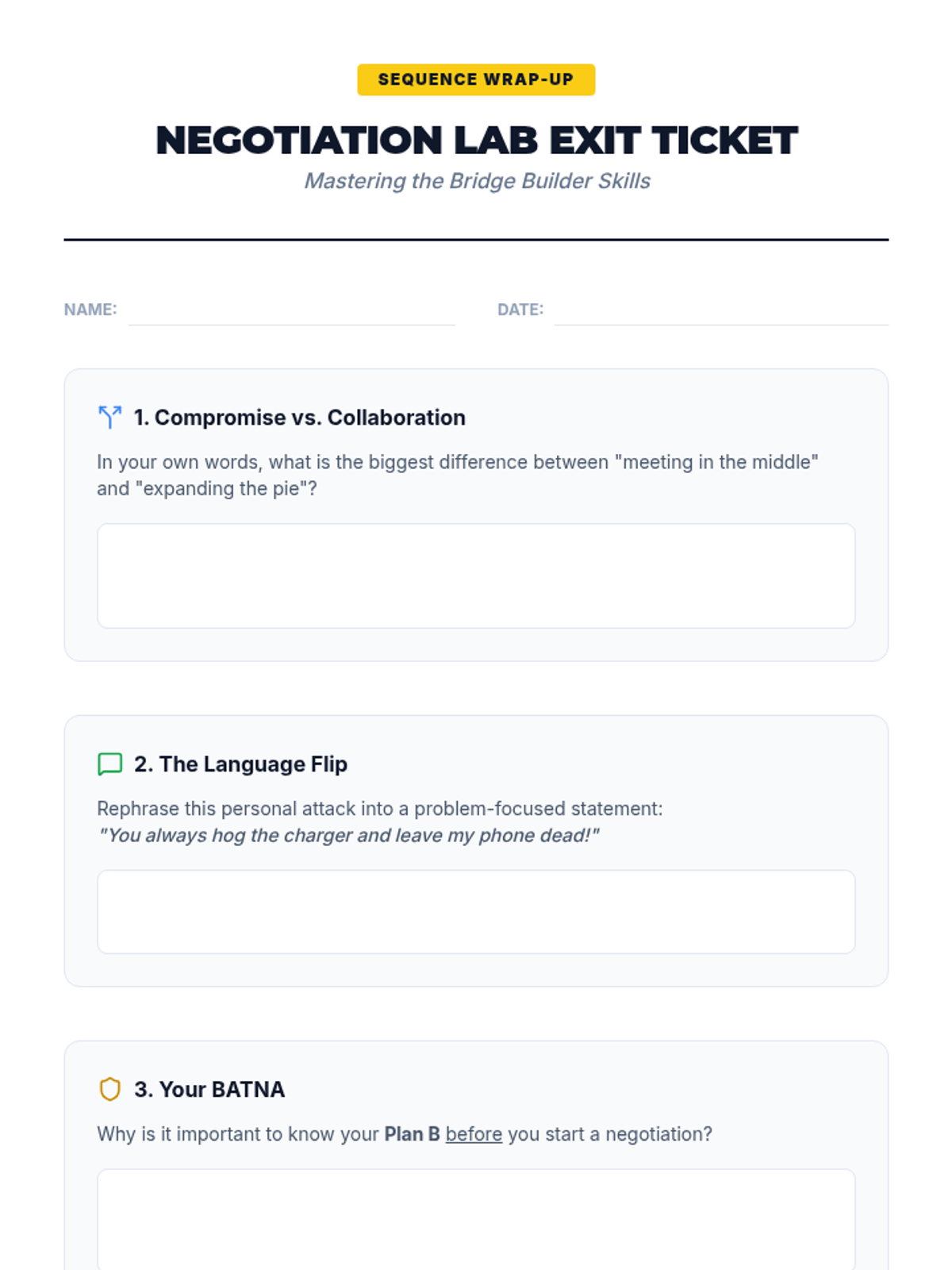
Final exit ticket for the negotiation sequence, assessing students' understanding of compromise, externalizing language, and BATNA.
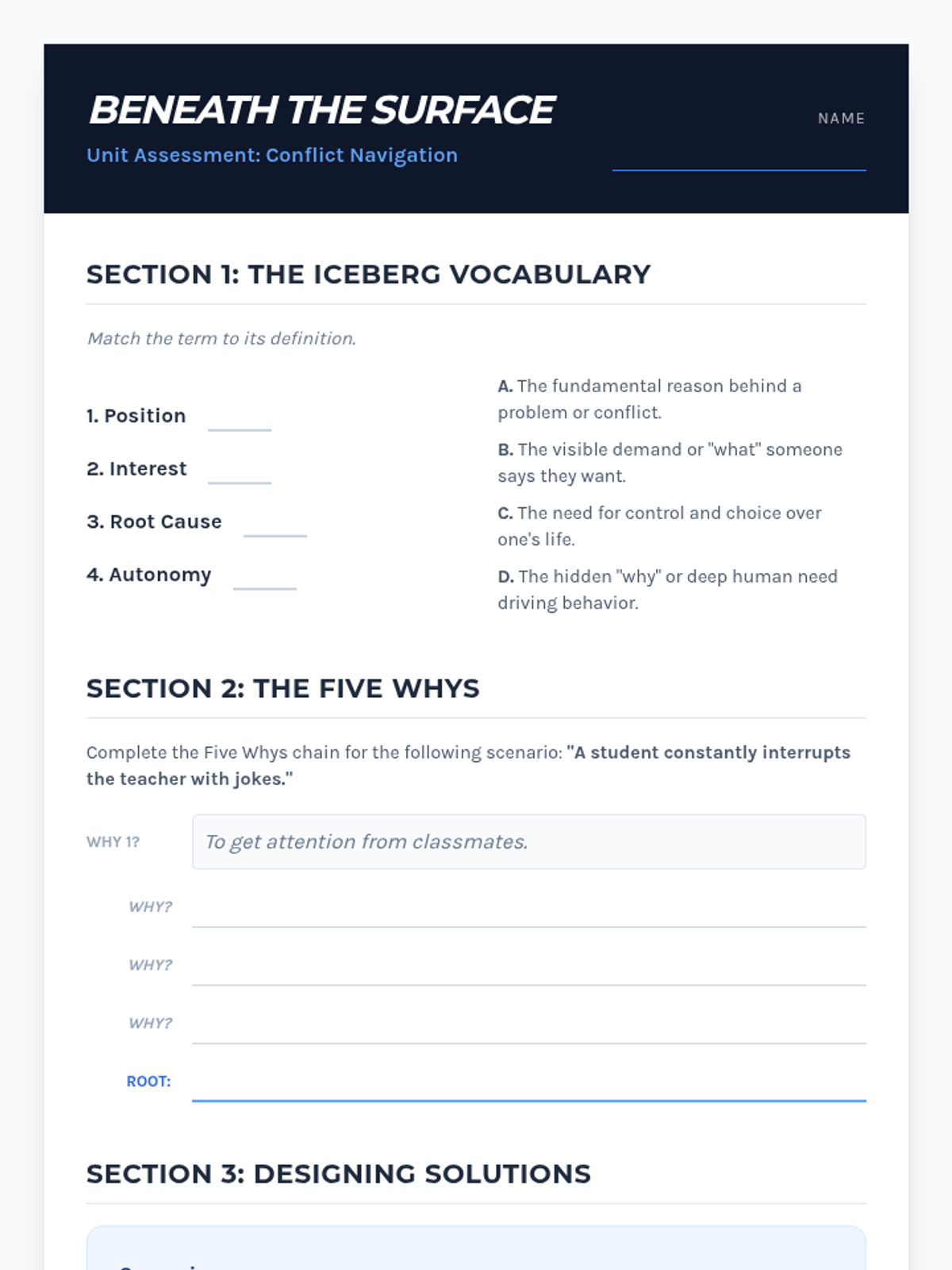
Final mastery assessment for the unit, testing vocabulary, the Five Whys technique, and deep solution generation.
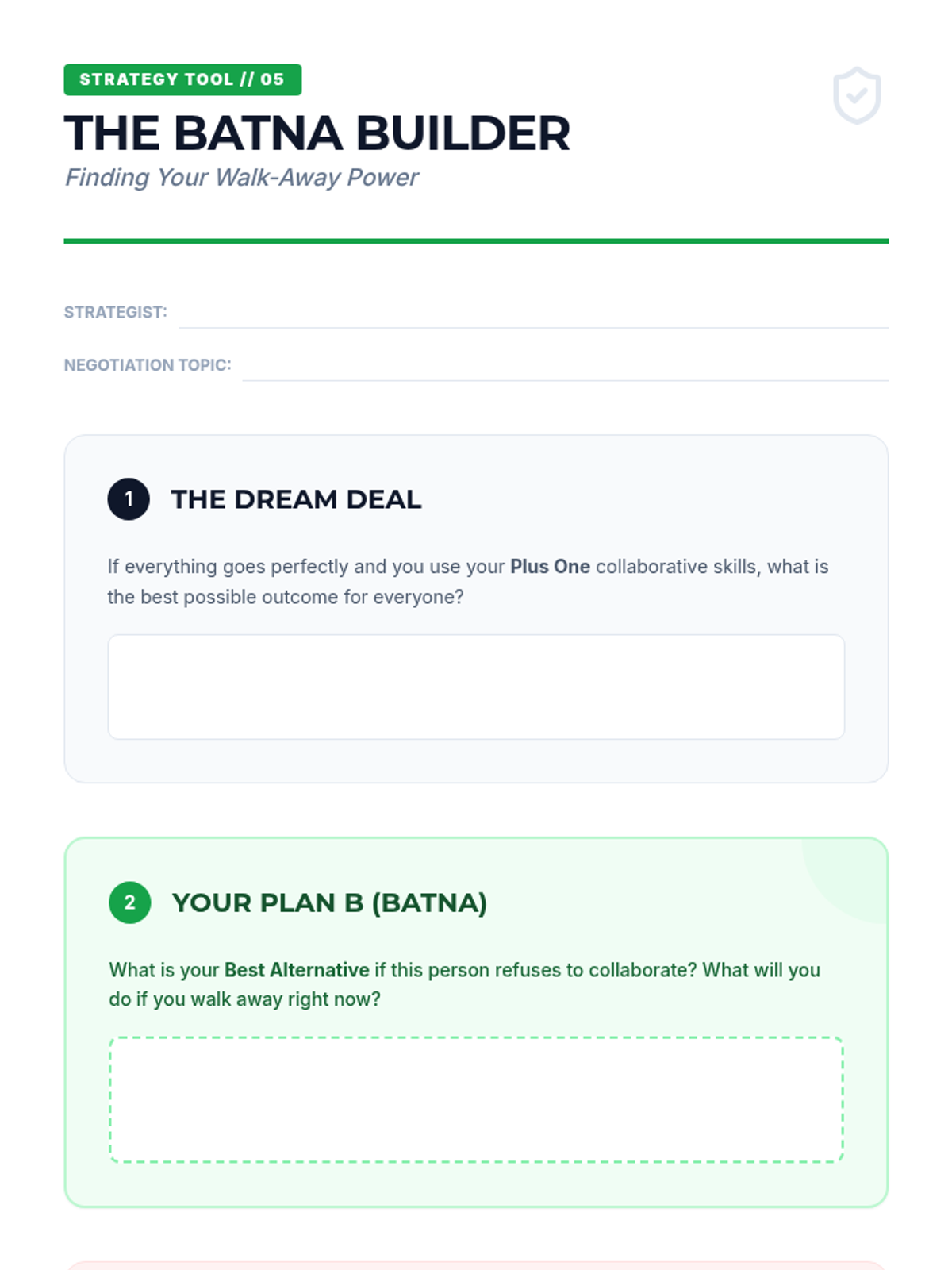
Student worksheet for identifying and strengthening their BATNA (Best Alternative to a Negotiated Agreement) before entering a conflict resolution.
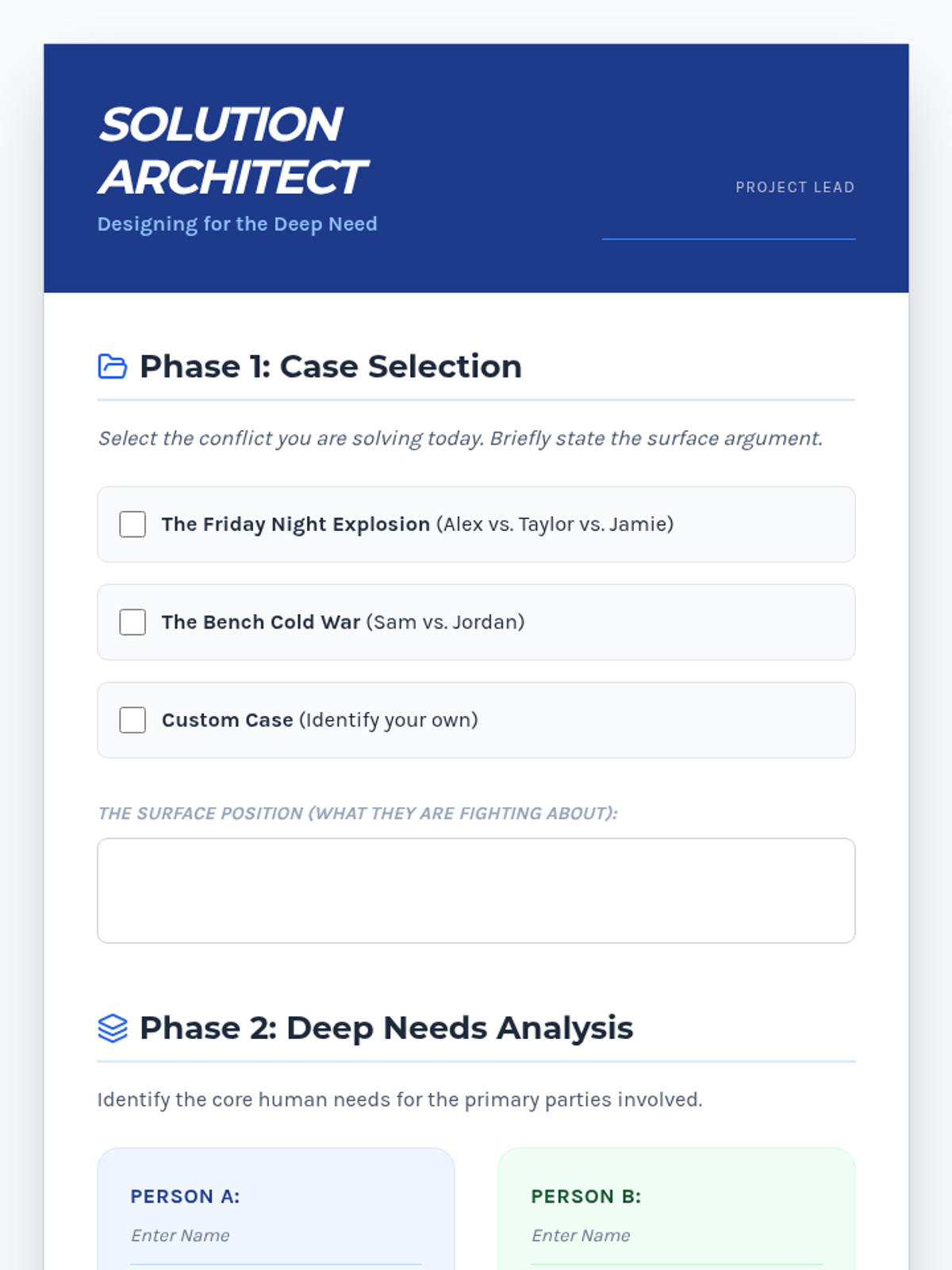
A worksheet where students identify positions and interests for a specific case study and pitch a solution that addresses underlying human needs.
Visual aids for Lesson 5 explaining the concept of BATNA (Best Alternative to a Negotiated Agreement) to understand their 'walk-away' power.
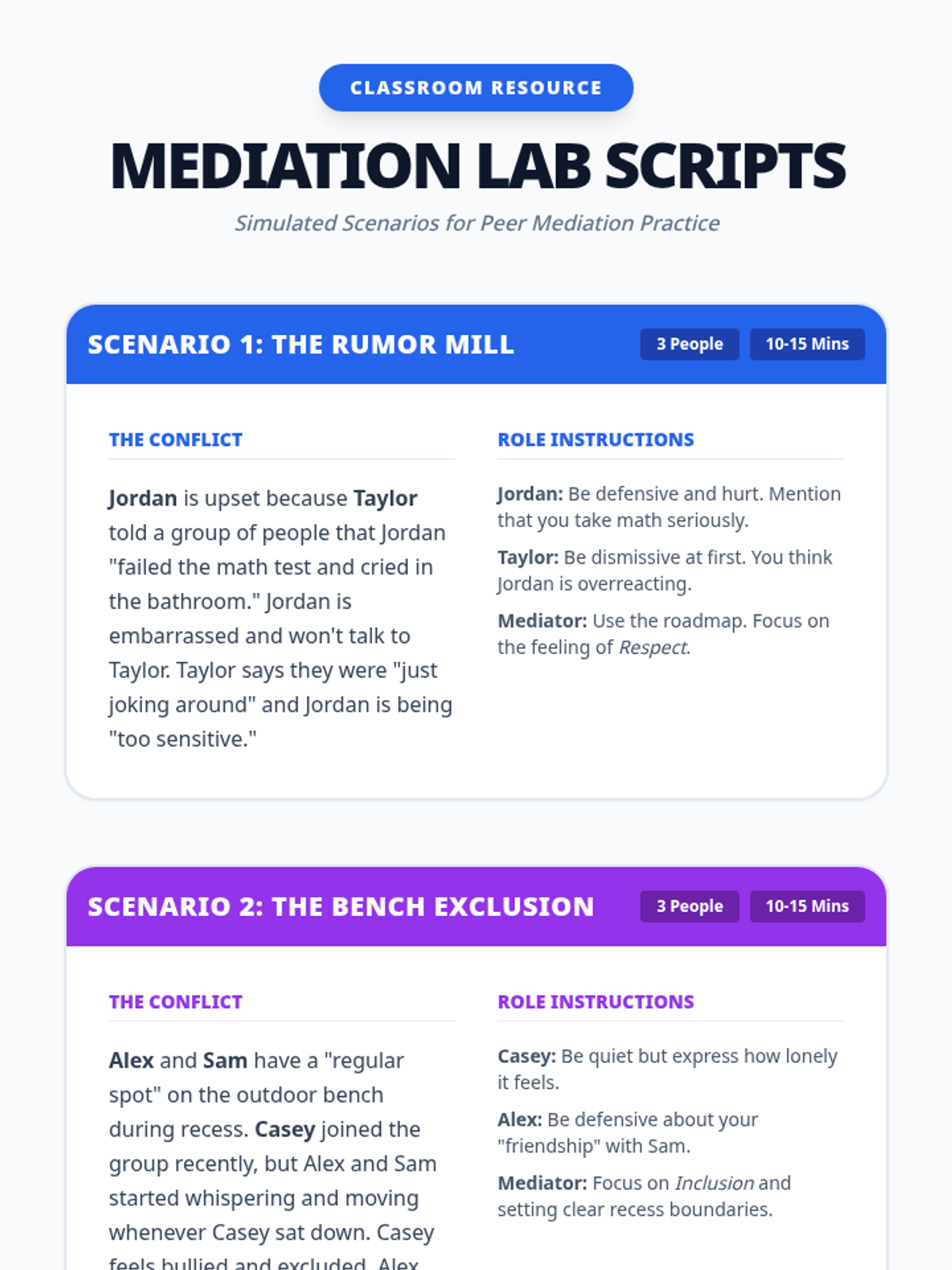
Role-play scenarios based on common middle school conflicts to be used during the Mediation Lab simulation.
Visual presentation for Lesson 5, focusing on generating deep solutions that address underlying interests rather than surface-level compromises.
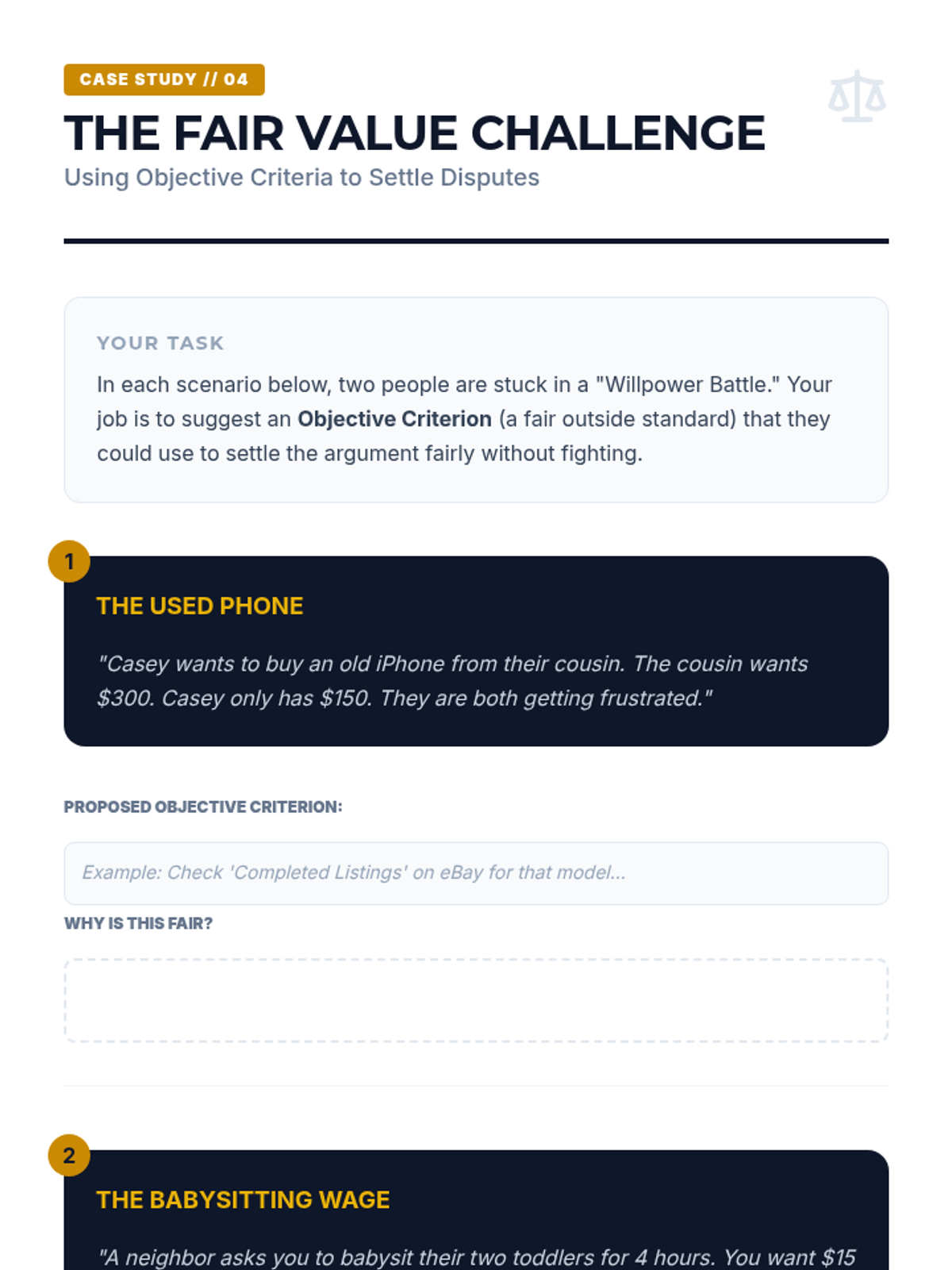
Student worksheet for applying objective criteria to resolve three different common disputes fairly and professionally.
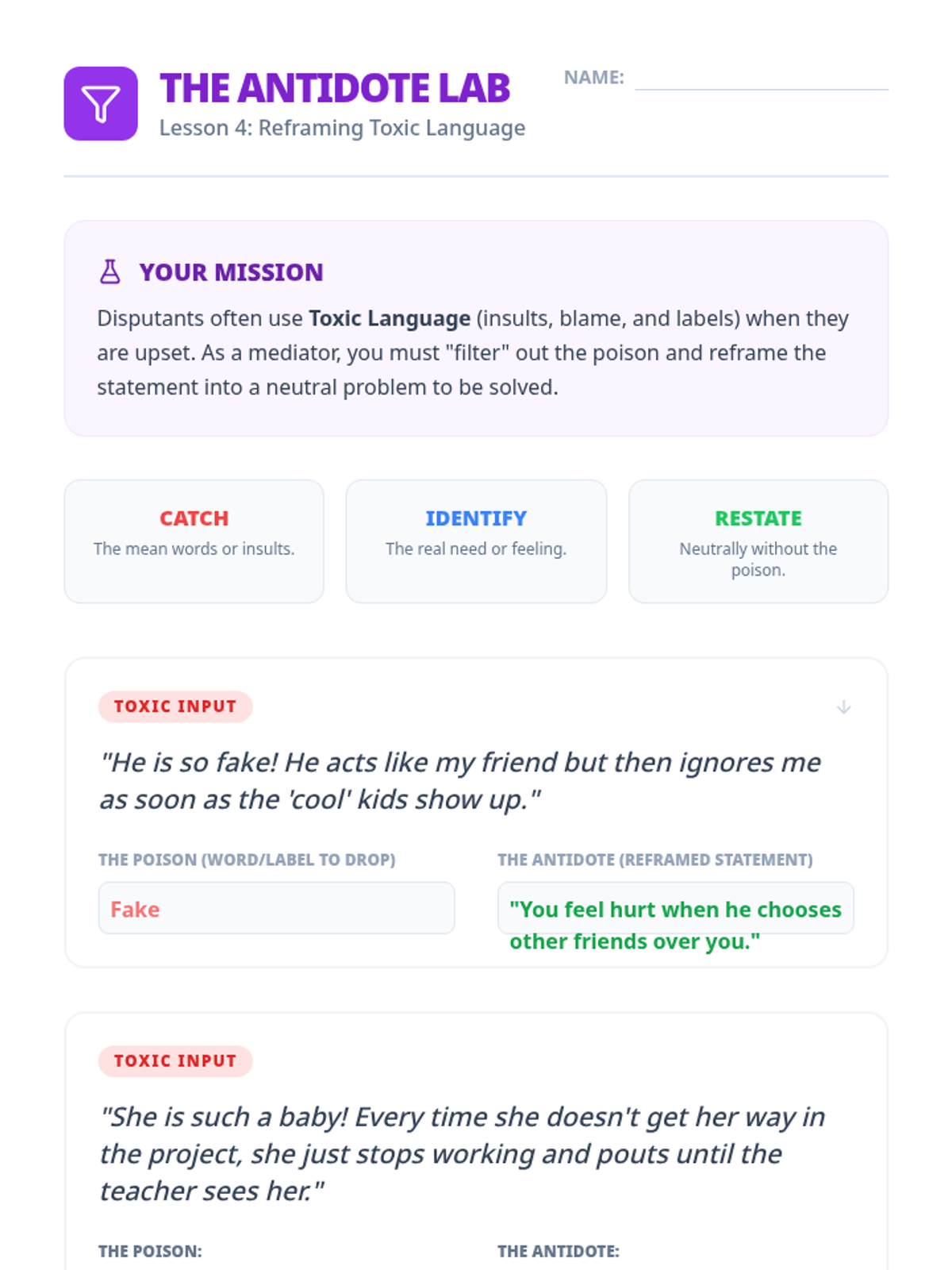
Advanced practice worksheet where students identify toxic labels and absolutes in conflict statements and reframe them into neutral needs or feelings.
Visual aids for Lesson 4 explaining the importance of objective criteria (precedent, market value, expert opinion) in resolving disputes fairly.
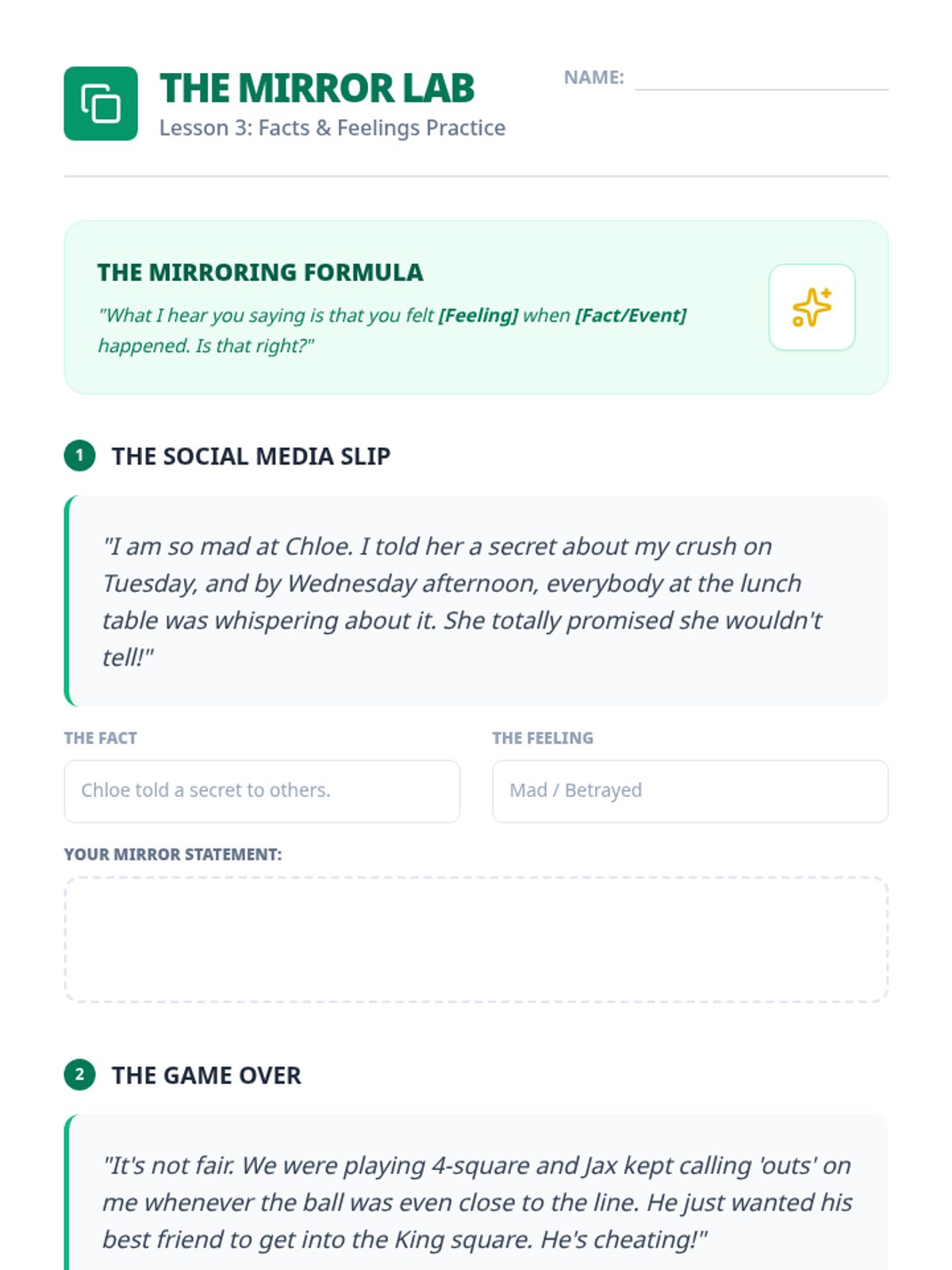
Worksheet for students to practice identifying facts and feelings in conflict statements and crafting neutral mirroring responses.
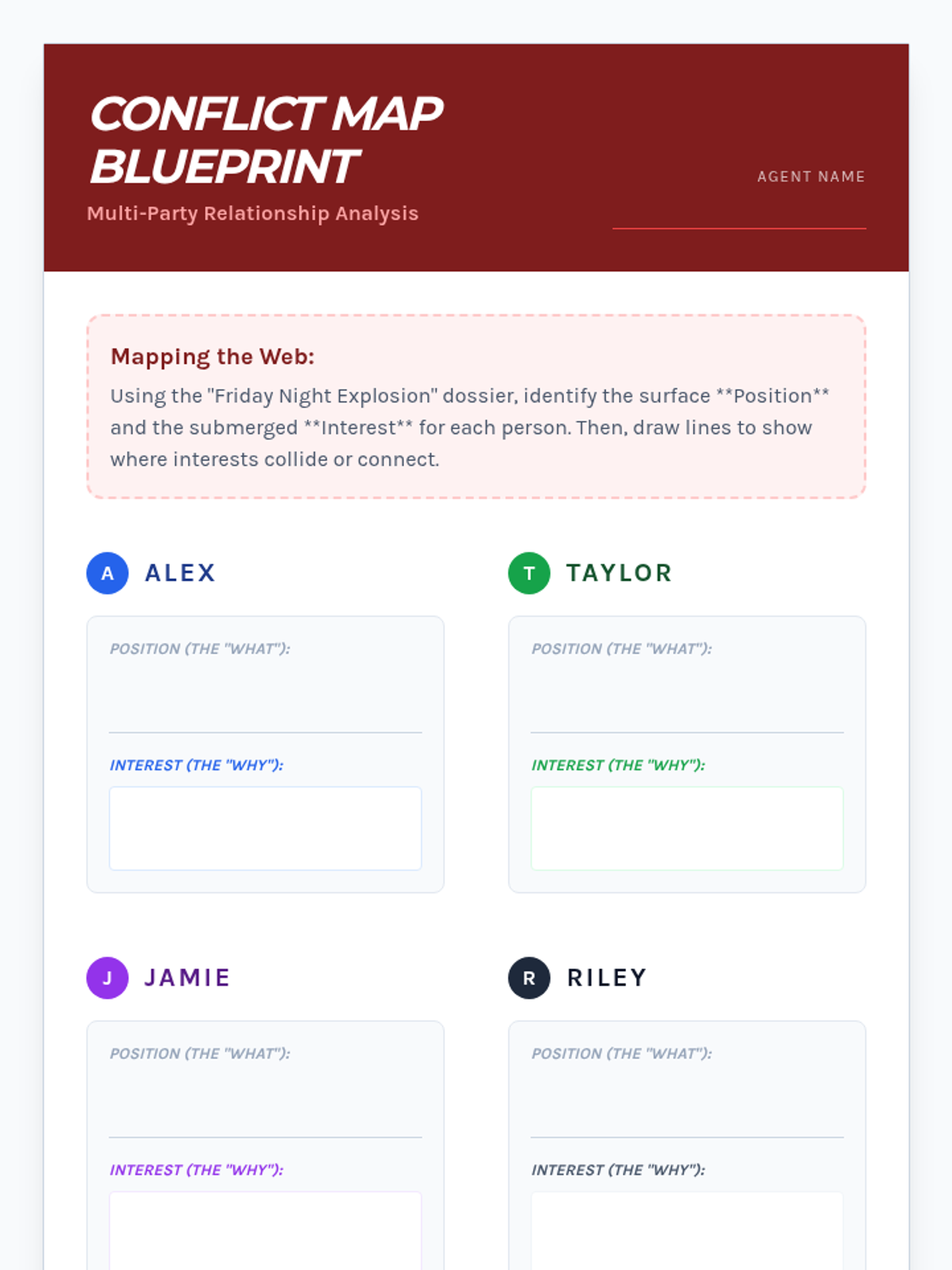
A visual mapping worksheet where students identify positions and interests for multiple parties in a complex conflict and analyze the underlying web of relationships.
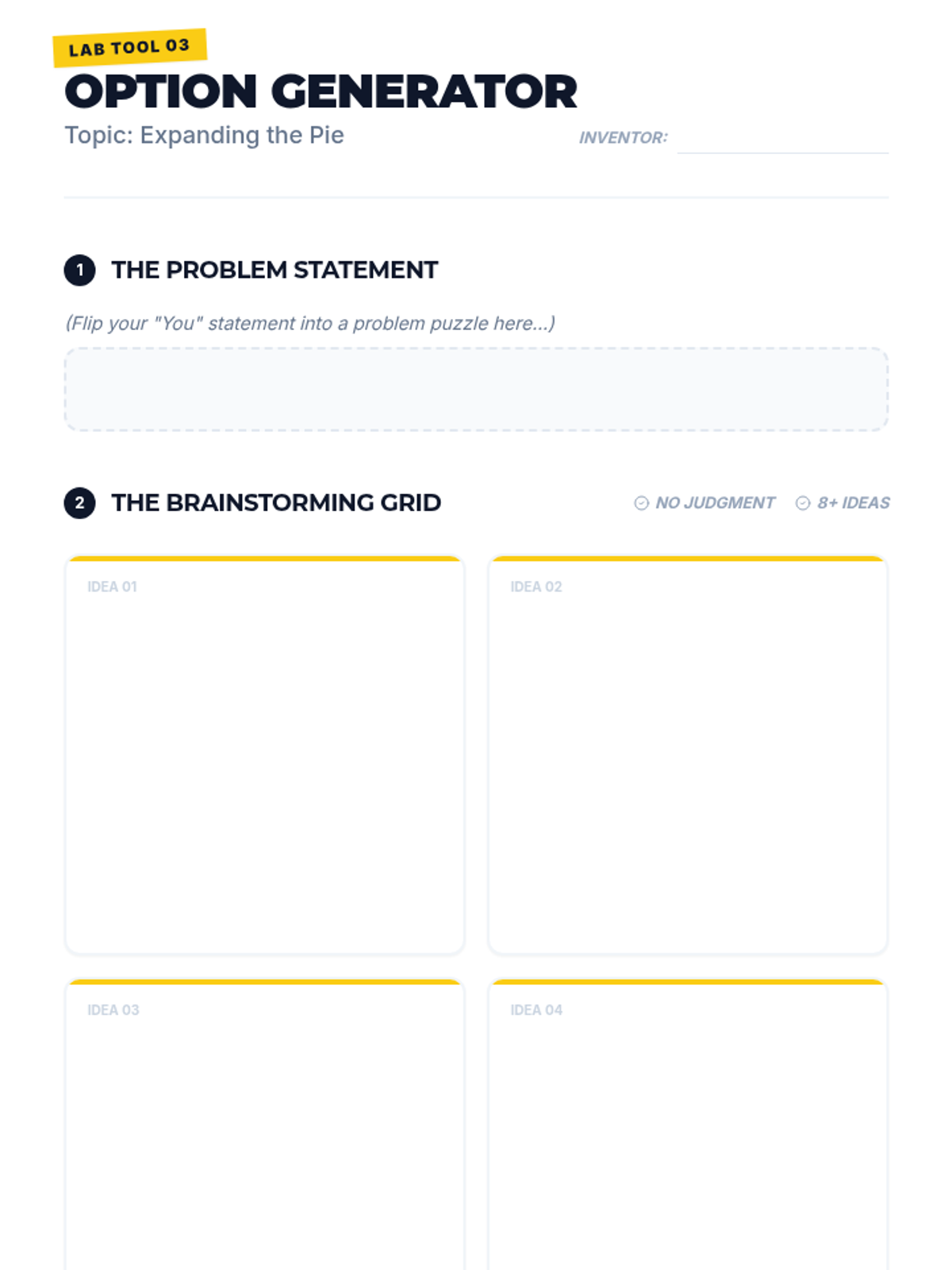
Student worksheet for brainstorming multiple creative solutions to a conflict, using a grid system and evaluation filters.
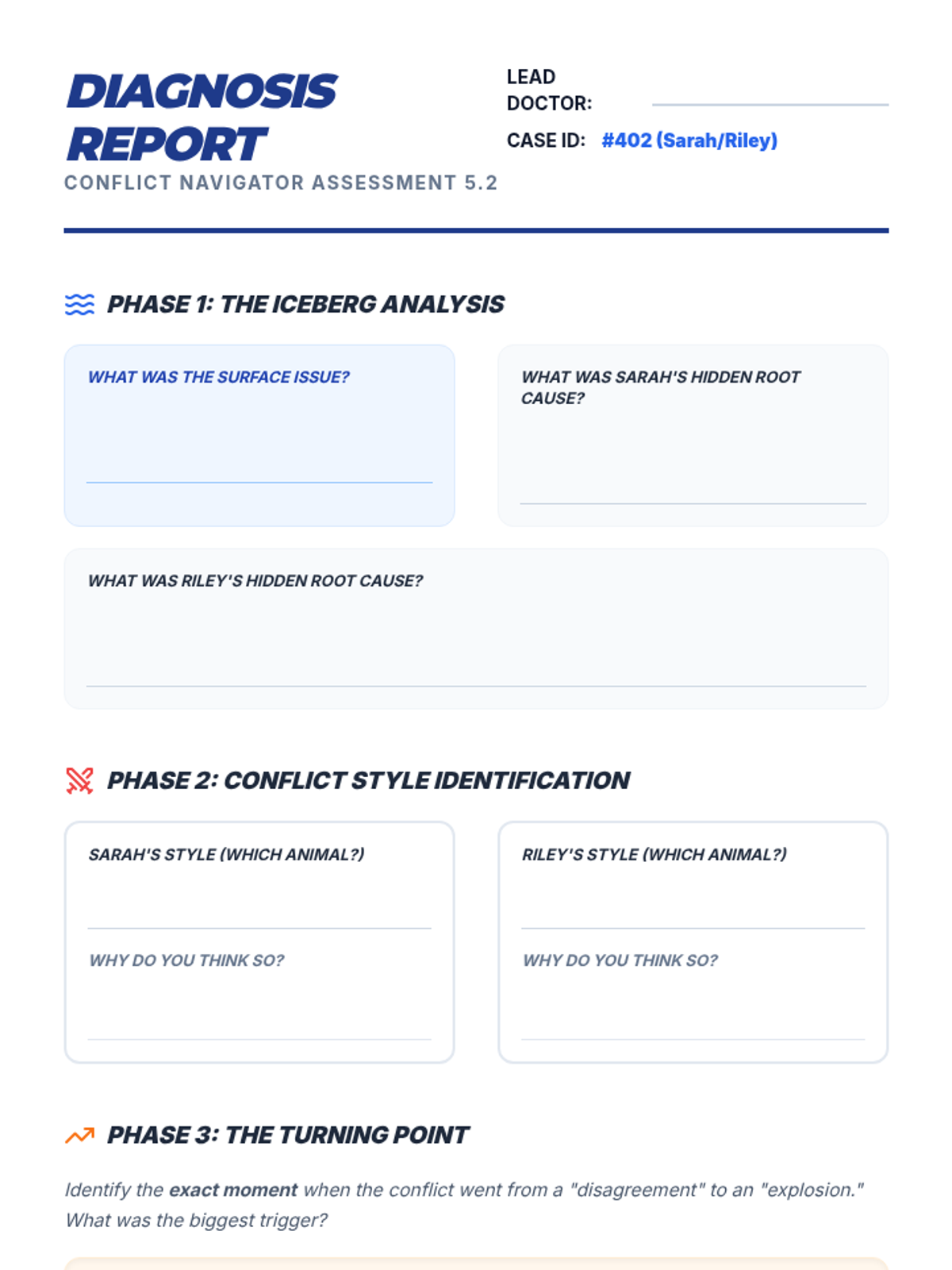
The final assessment form for students to synthesize their learning by diagnosing the Sarah/Riley case study, identifying root causes, styles, and intervention strategies.
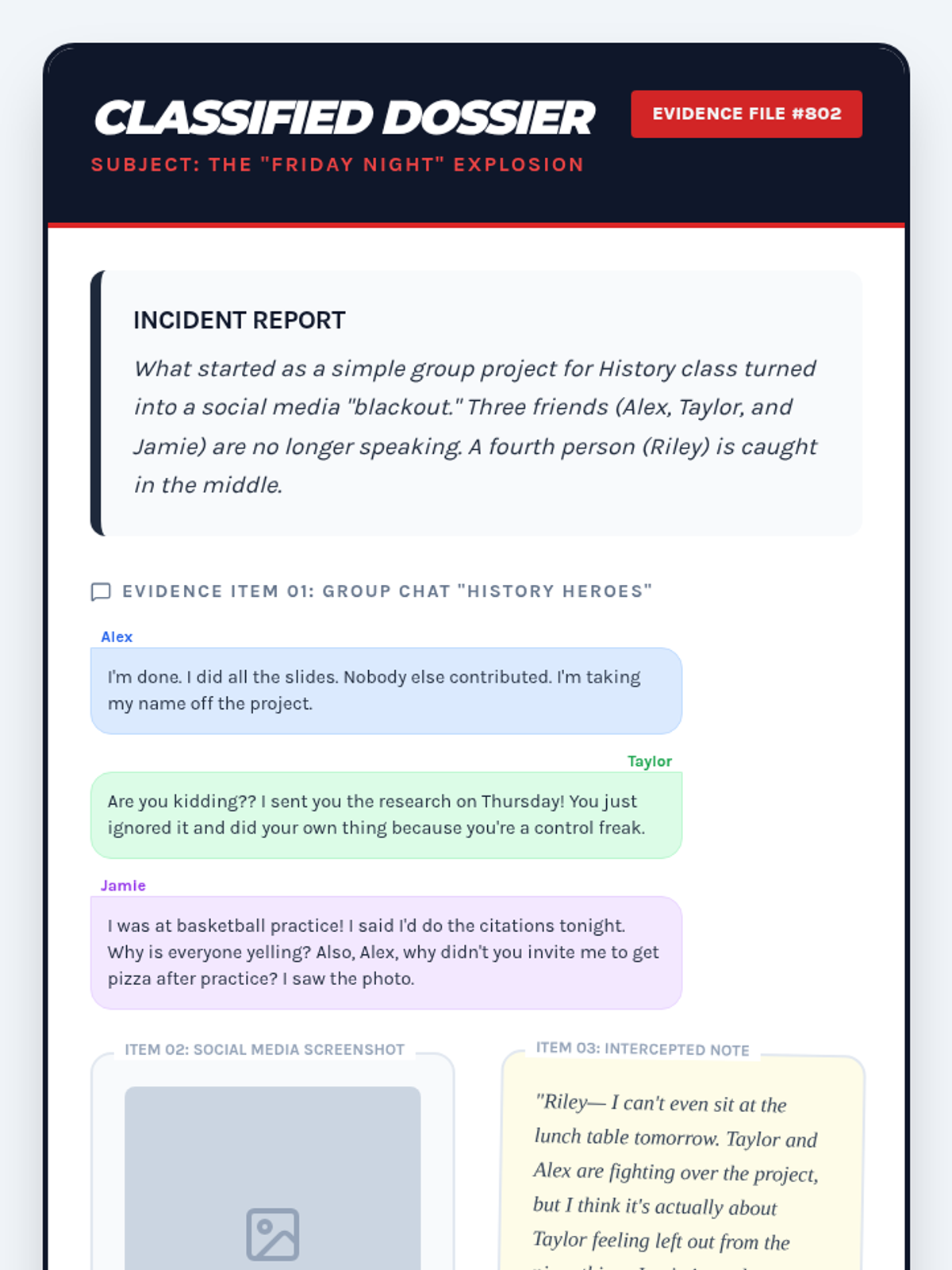
Students receive a dossier of text messages and notes from a fictional 'group chat' explosion and must map out who is mad at whom and why.
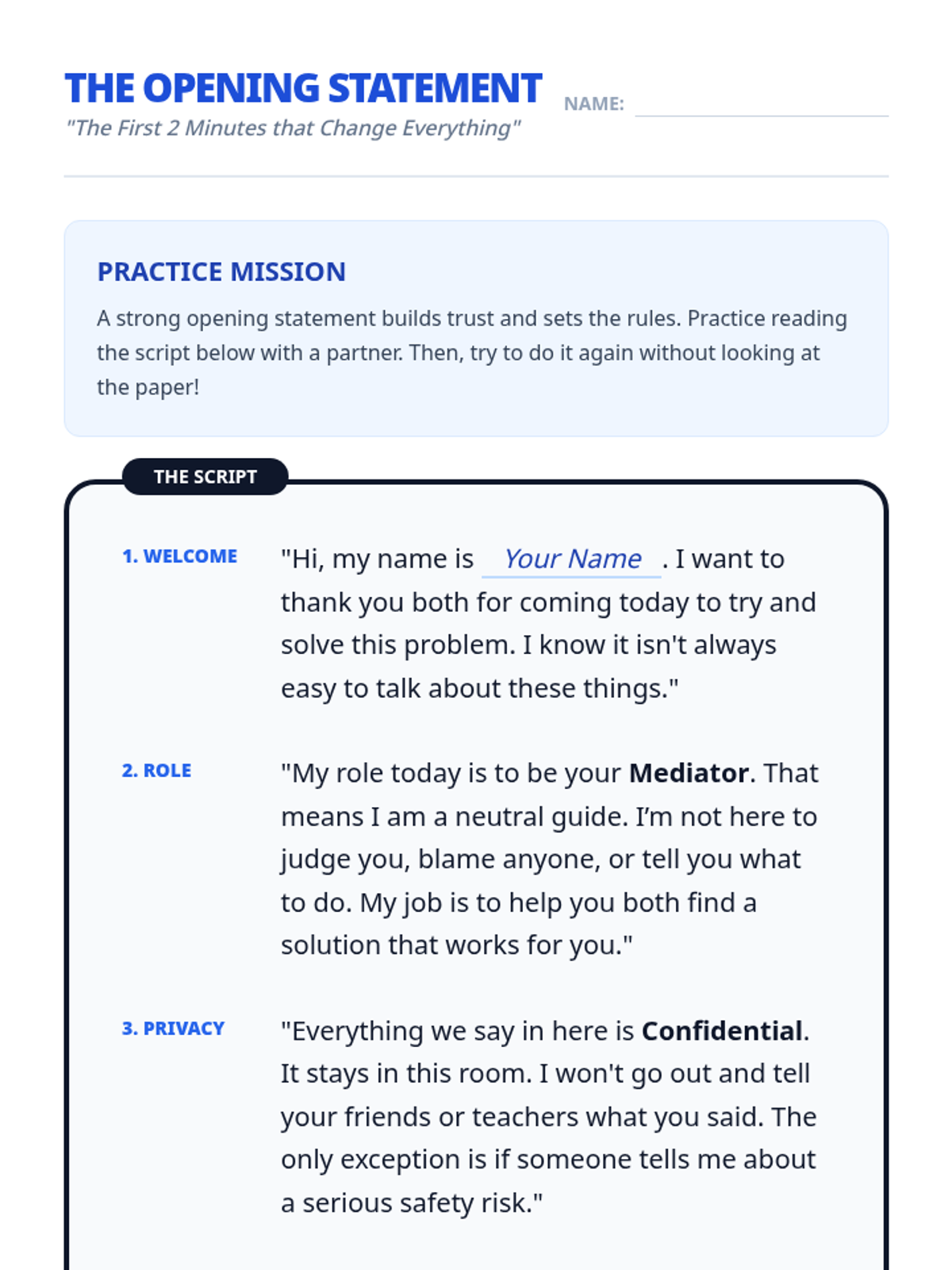
Student-facing script and practice guide for delivering a mediation opening statement, including ground rules and neutrality reminders.
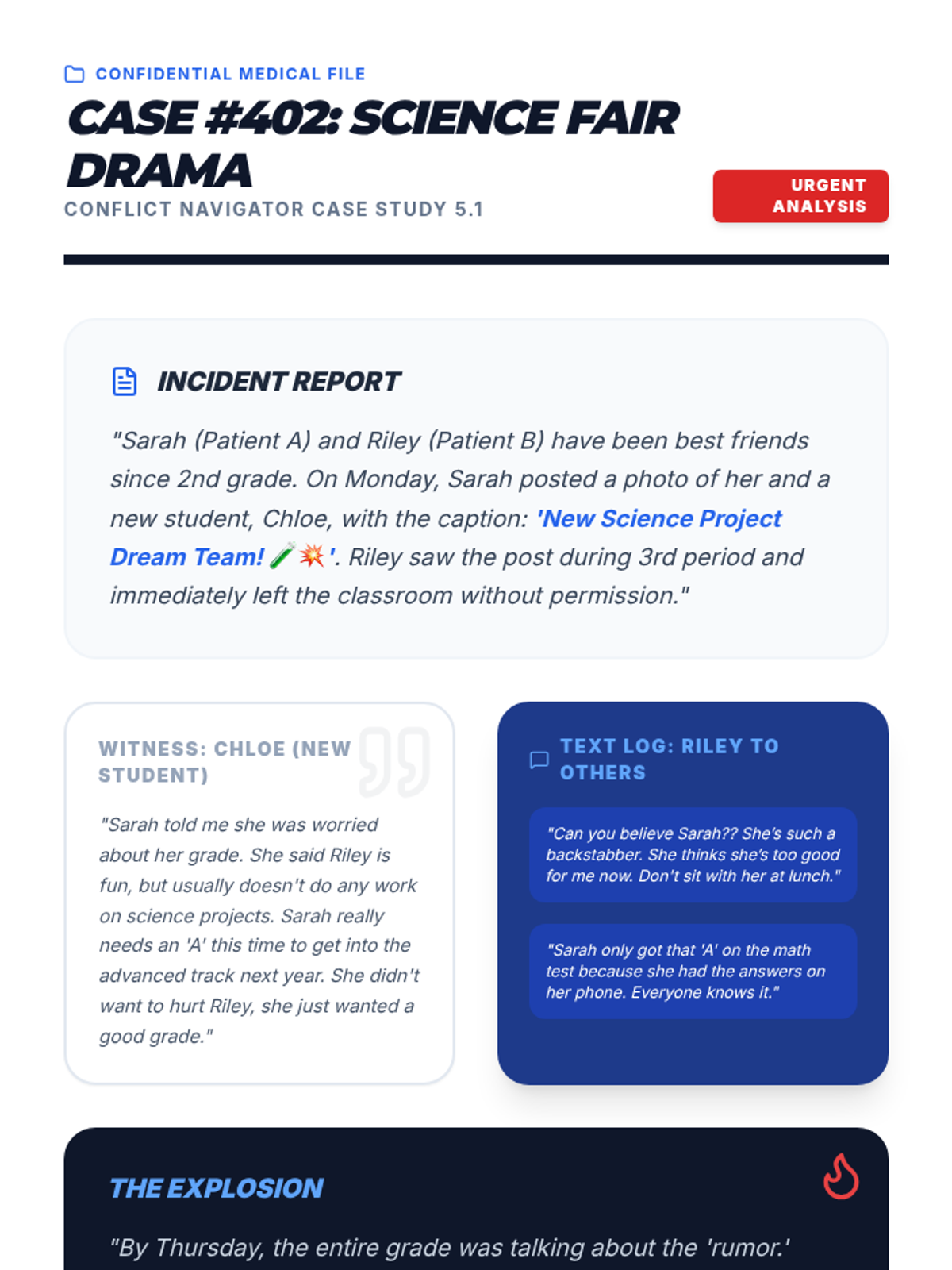
A detailed fictional case study for the final lesson, providing students with witness statements, text logs, and incident reports to analyze a complex middle school conflict.
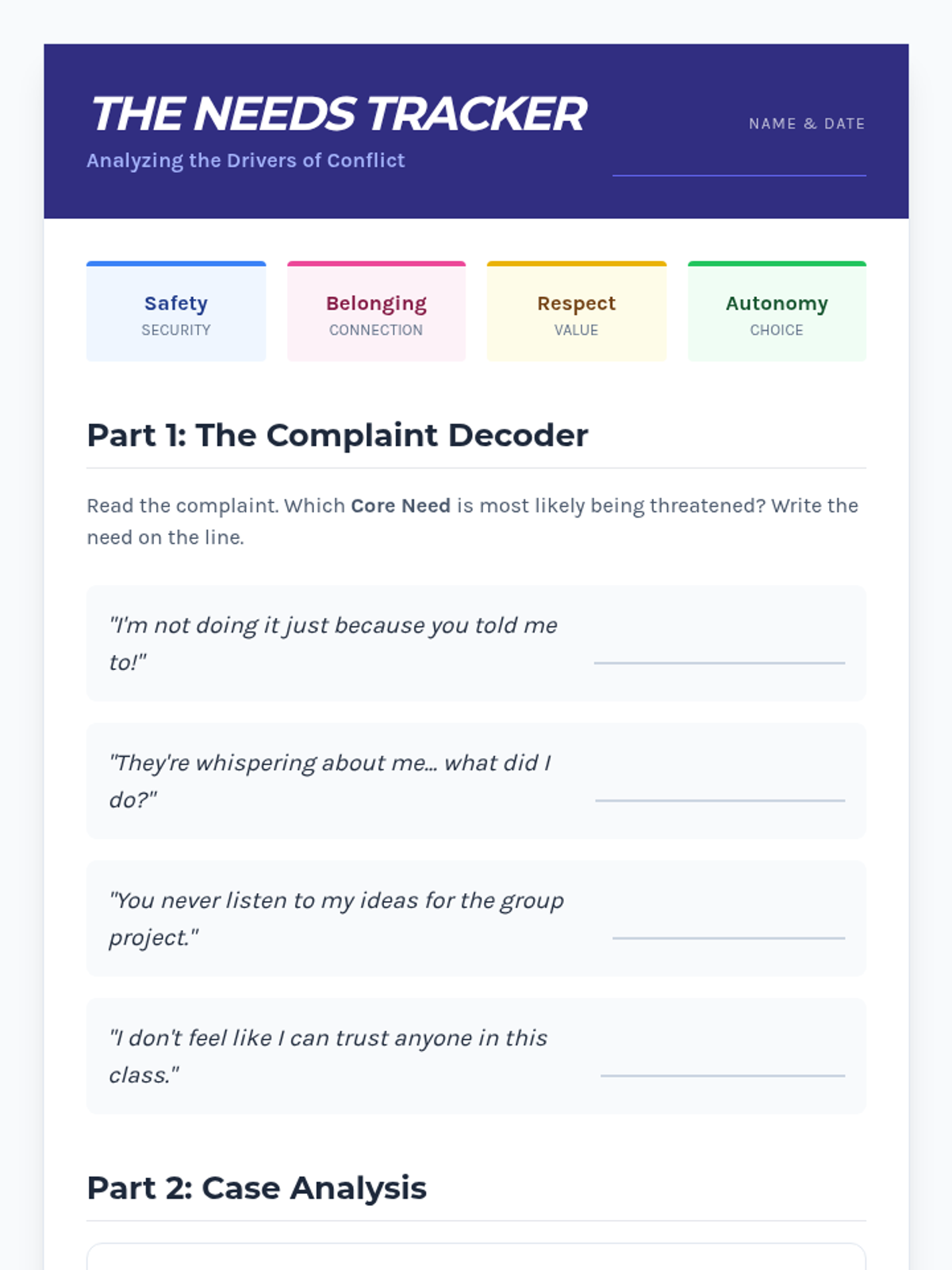
A worksheet for students to categorize common complaints into core needs (Safety, Belonging, Respect, Autonomy) and analyze fictional case studies.
Visual aids for Lesson 3 focusing on the ideation phase, including the 'Bad Idea' hook and the classic Orange Dispute story.
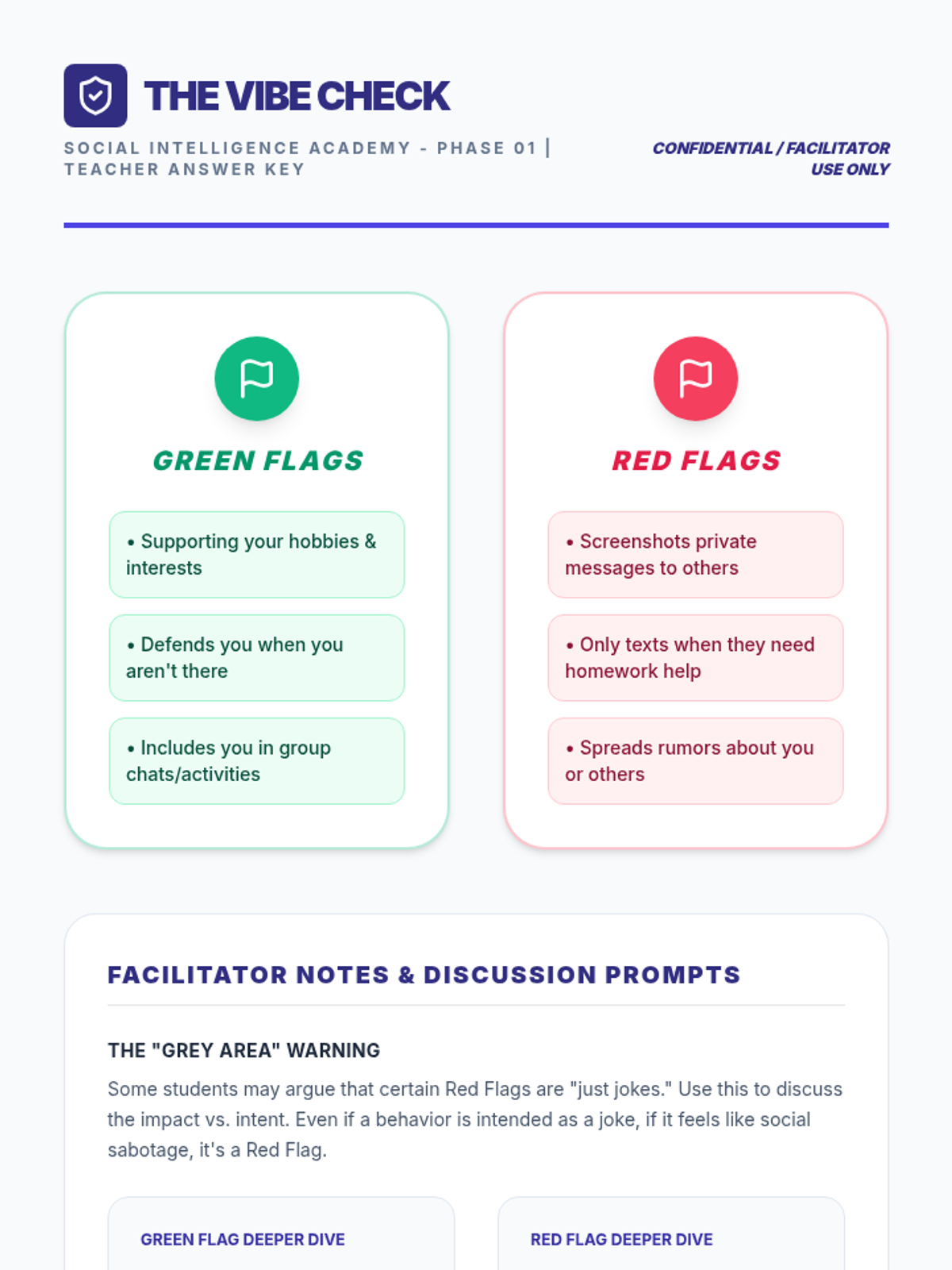
The facilitator's key for the Vibe Check worksheet, including correct categorization of behaviors and discussion prompts for a whole-class setting.
A modern, tech-inspired 9-slide presentation for Session 1 of the Social Intelligence Academy, focusing on "Vibe Checks" and healthy friendship markers for 6th graders.
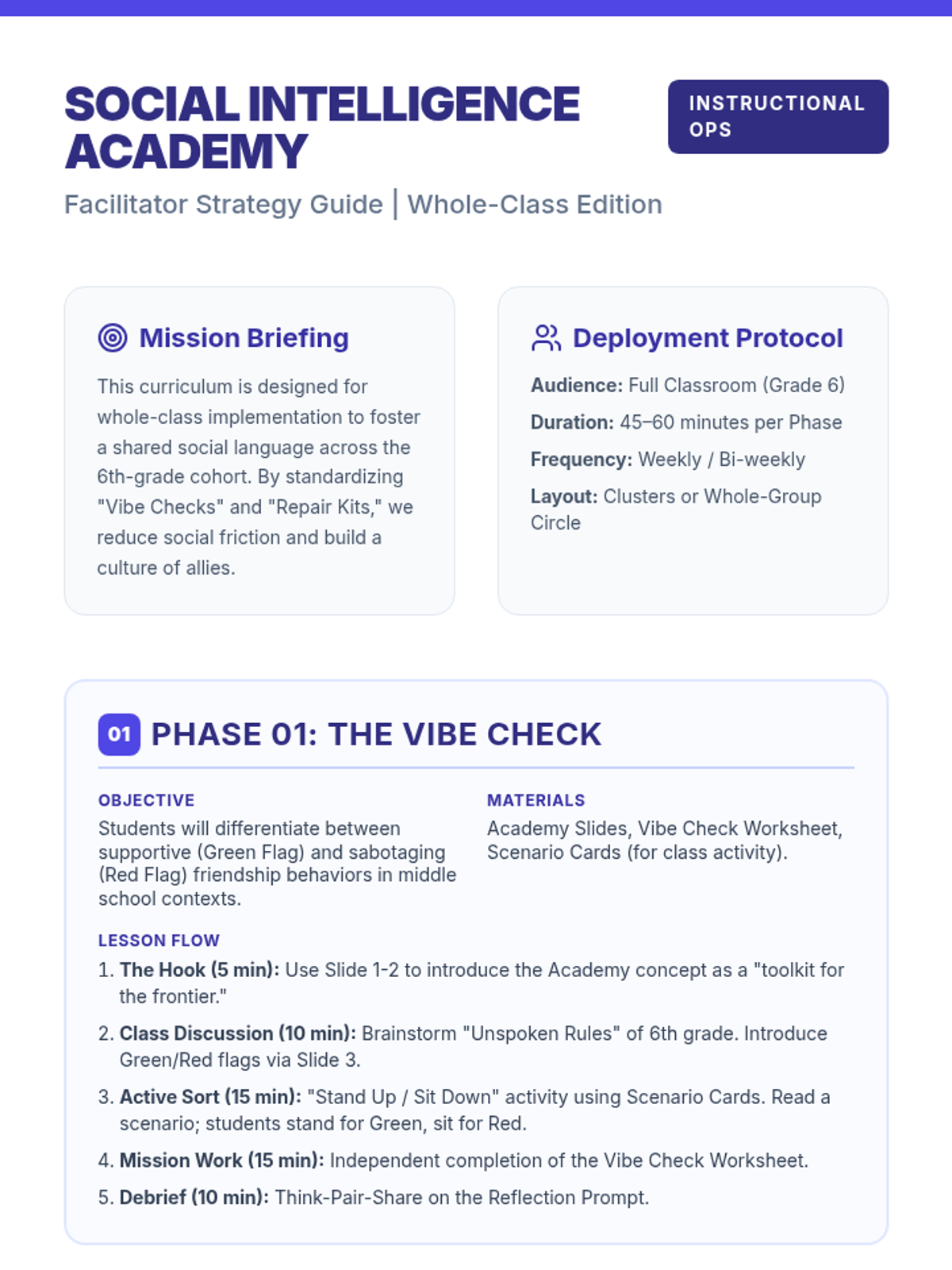
A sophisticated 3-page guide for middle school educators, adapting the Social Intelligence Academy curriculum for whole-class implementation with a focus on shared cohort culture, digital dynamics, and cohort-wide conflict resolution.
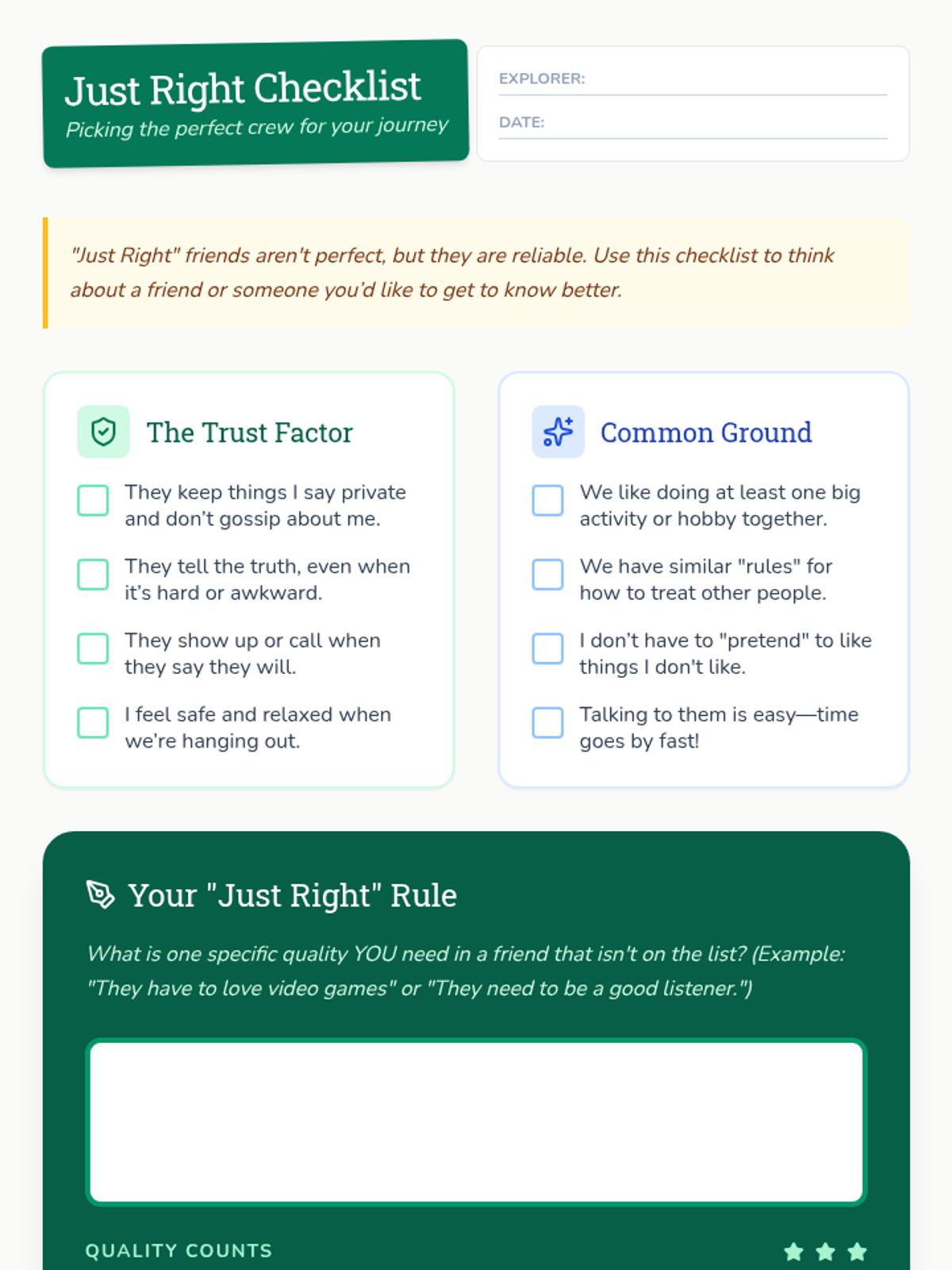
A student-friendly evaluation tool featuring clear indicators for trust and common interests, with a personalized reflection area for specific friendship needs.
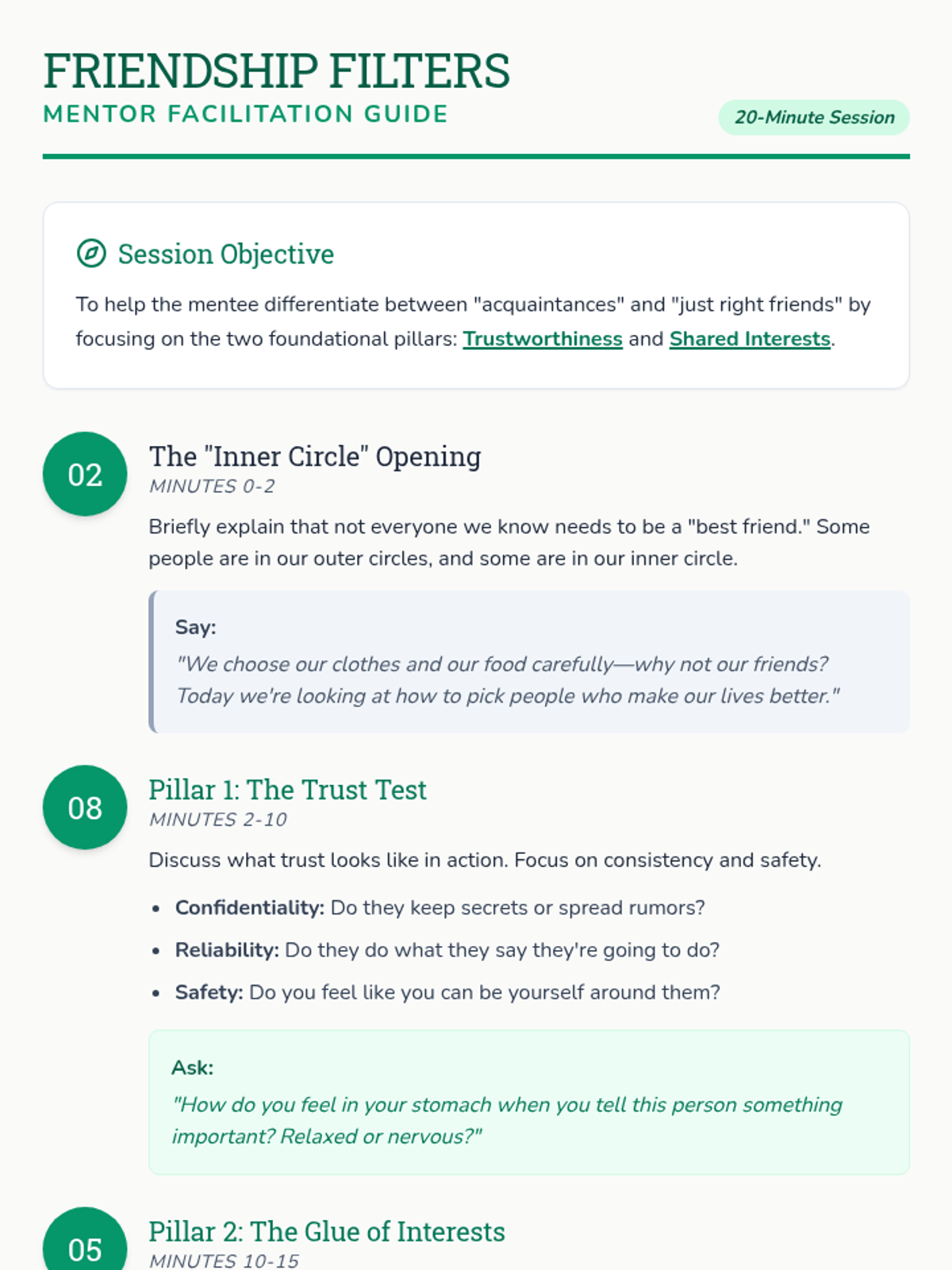
A concise 20-minute mentor facilitation guide designed to lead a focused discussion on choosing high-quality friends based on trust and common ground.
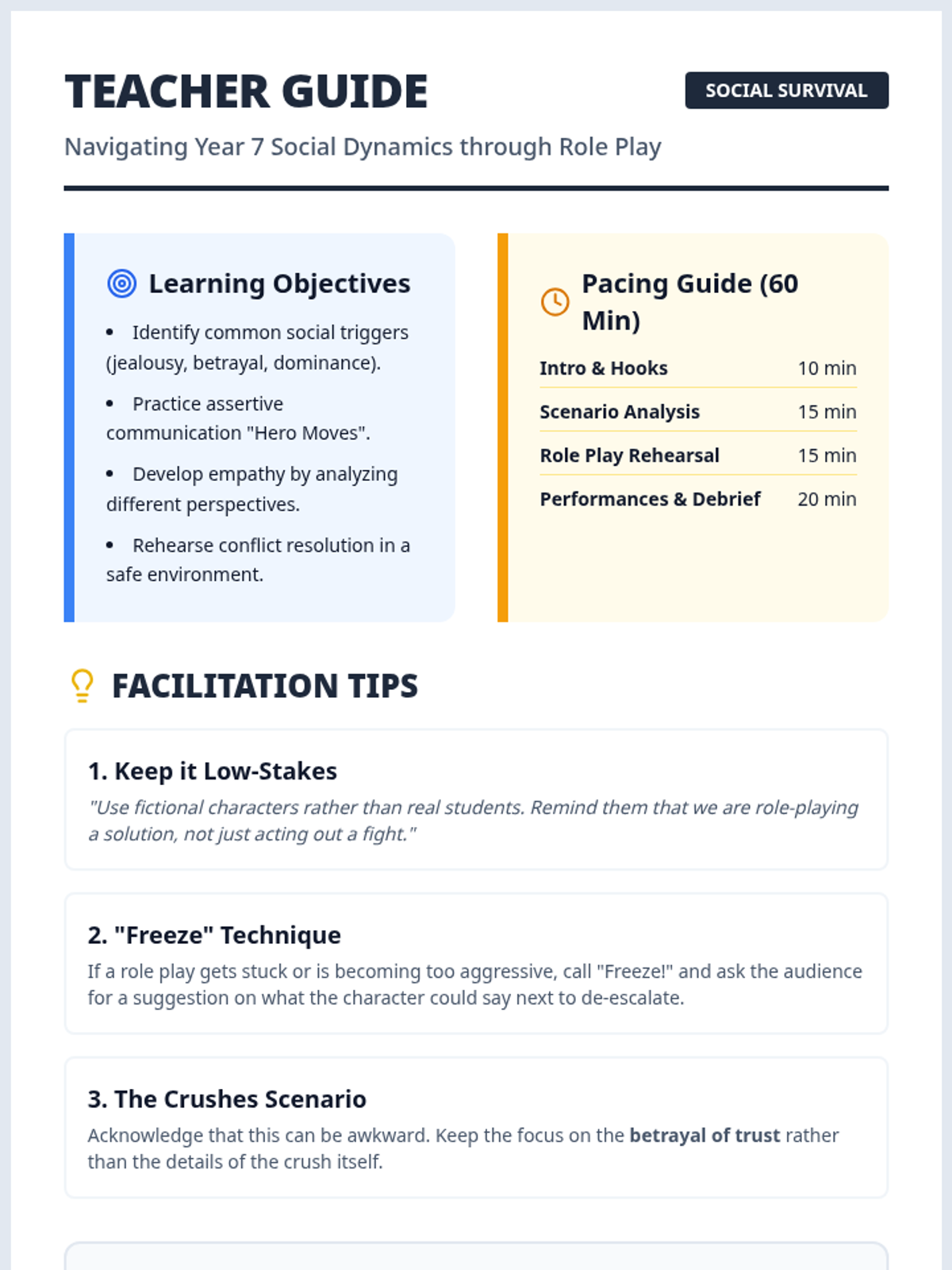
A comprehensive teacher guide for facilitating the Social Survival lesson, including pacing, learning objectives, discussion prompts, and management tips for role-play activities.
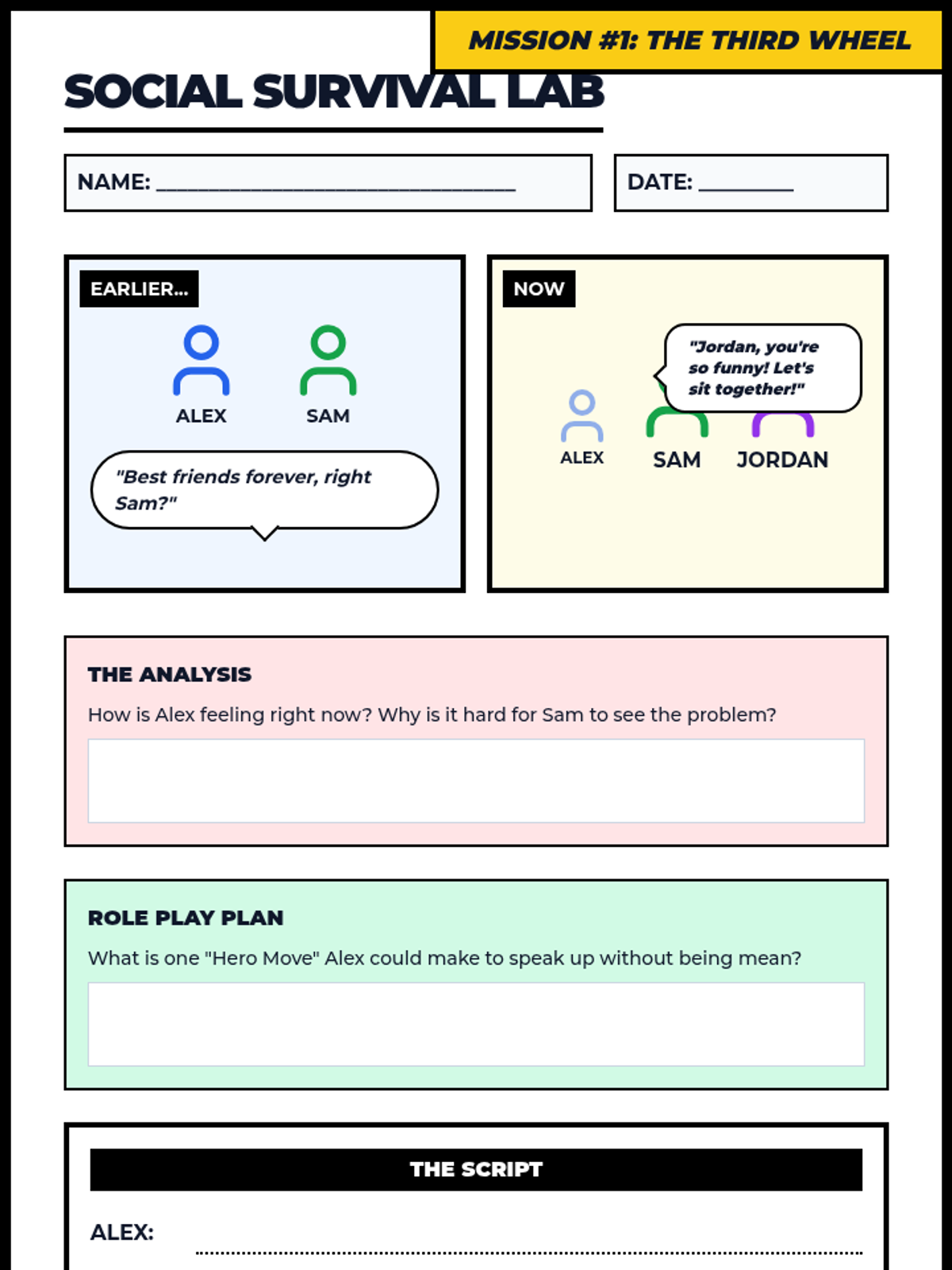
A set of three comic-strip-style role-play worksheets for Year 7 students, covering friendship jealousy, secret-sharing (crushes), and classroom group dynamics.
A vibrant, comic-book-inspired slide deck to introduce Year 7 students to common friendship challenges and the basics of role-playing resolutions.
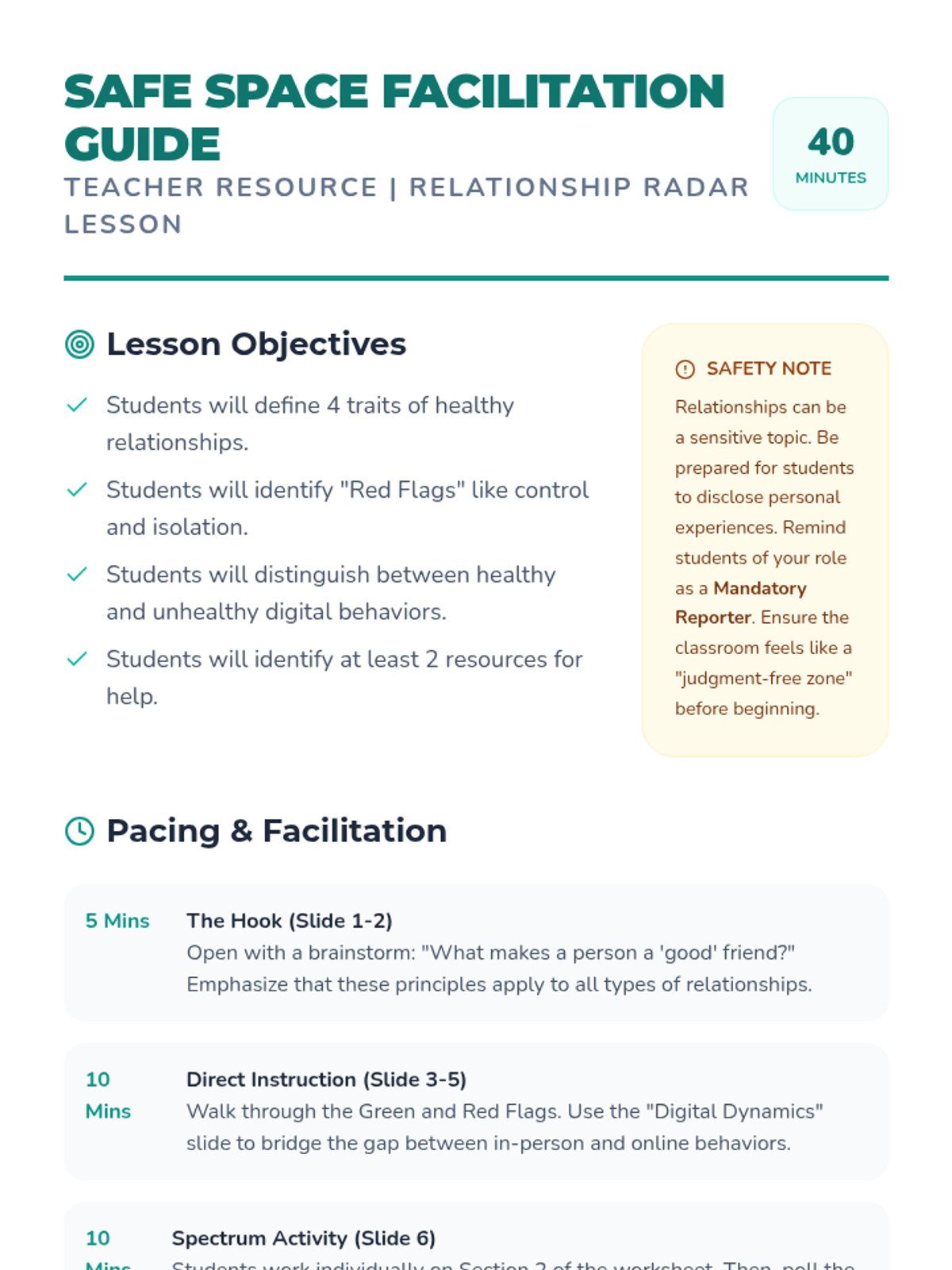
A comprehensive teacher facilitation guide providing pacing, discussion prompts, safety notes, and an answer key for the Relationship Radar lesson.
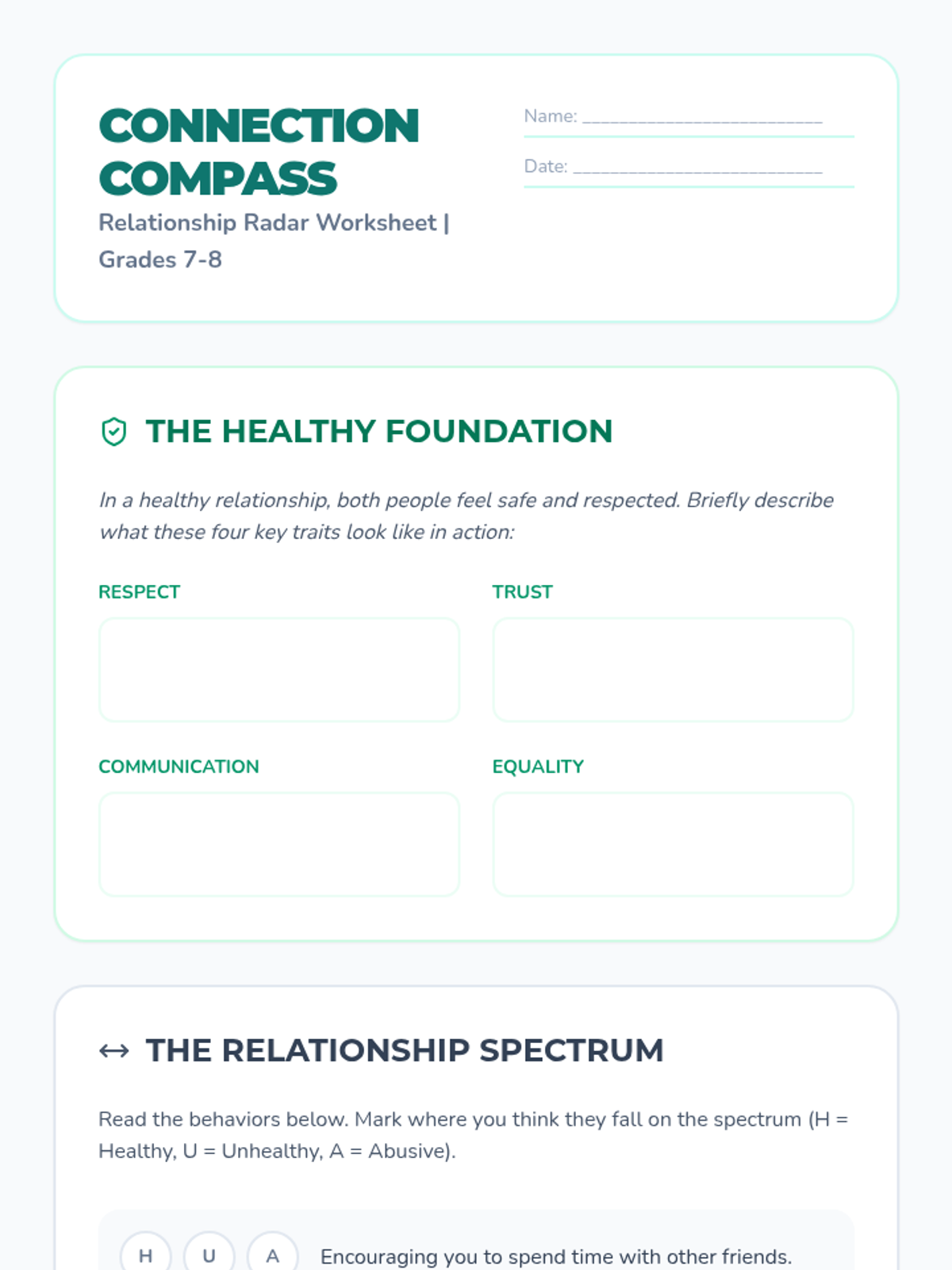
A student activity worksheet designed to accompany the Relationship Radar lesson, including spectrum exercises, digital checklists, and scenario analysis.
A visually engaging slide deck for middle schoolers about healthy and unhealthy relationships, featuring the relationship spectrum, digital dynamics, and support resources.
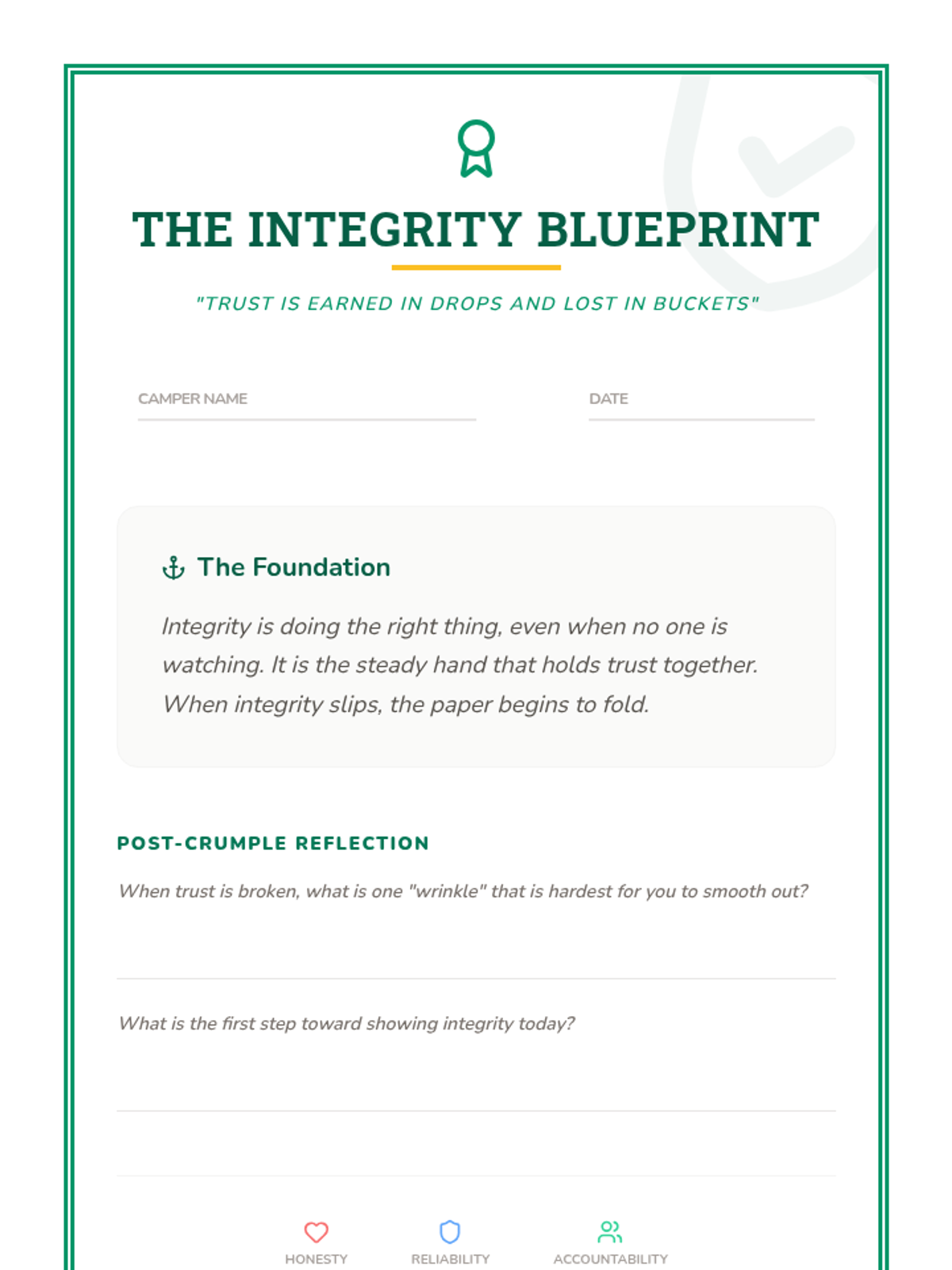
A student reflection handout designed to be 'perfectly' clean initially, then crumpled and smoothed out as part of the lesson's core metaphor.
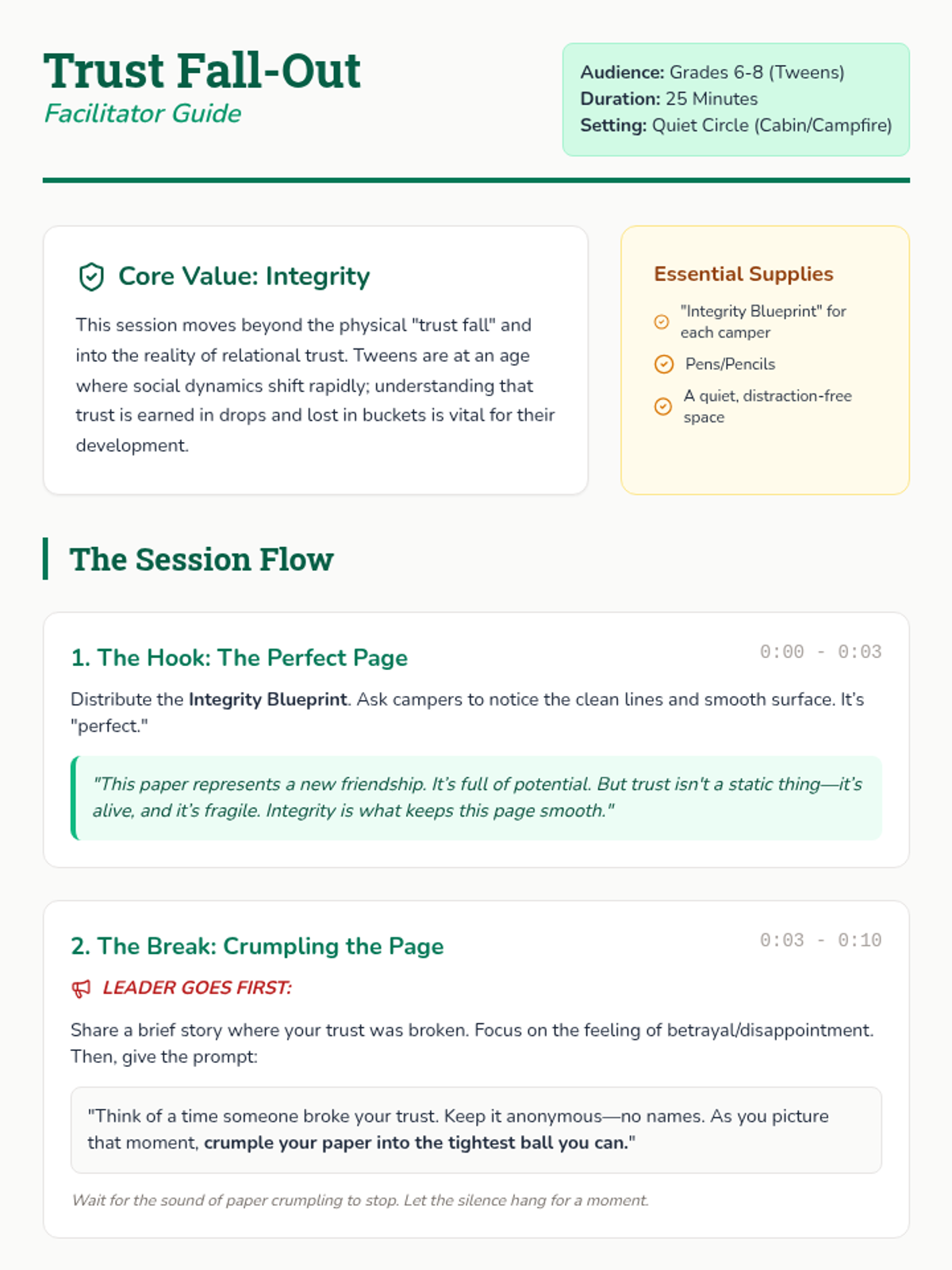
A detailed facilitator guide for camp counselors to lead a 25-minute discussion on trust, integrity, and the metaphorical 'wrinkles' caused by broken trust.
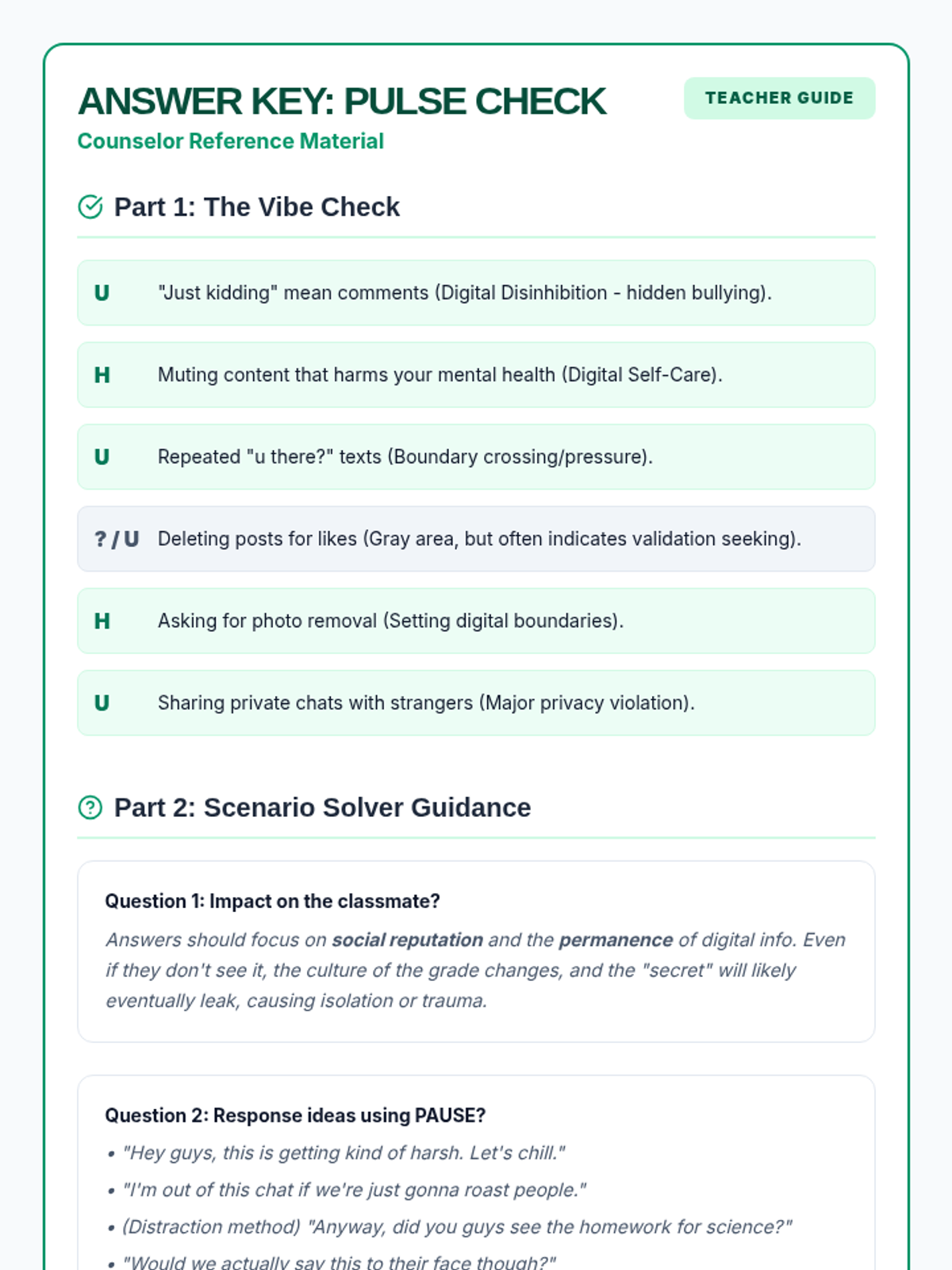
An answer key and facilitator reference for the Pulse Check activity, providing suggested responses, behavioral analysis, and teaching tips for digital citizenship discussions.
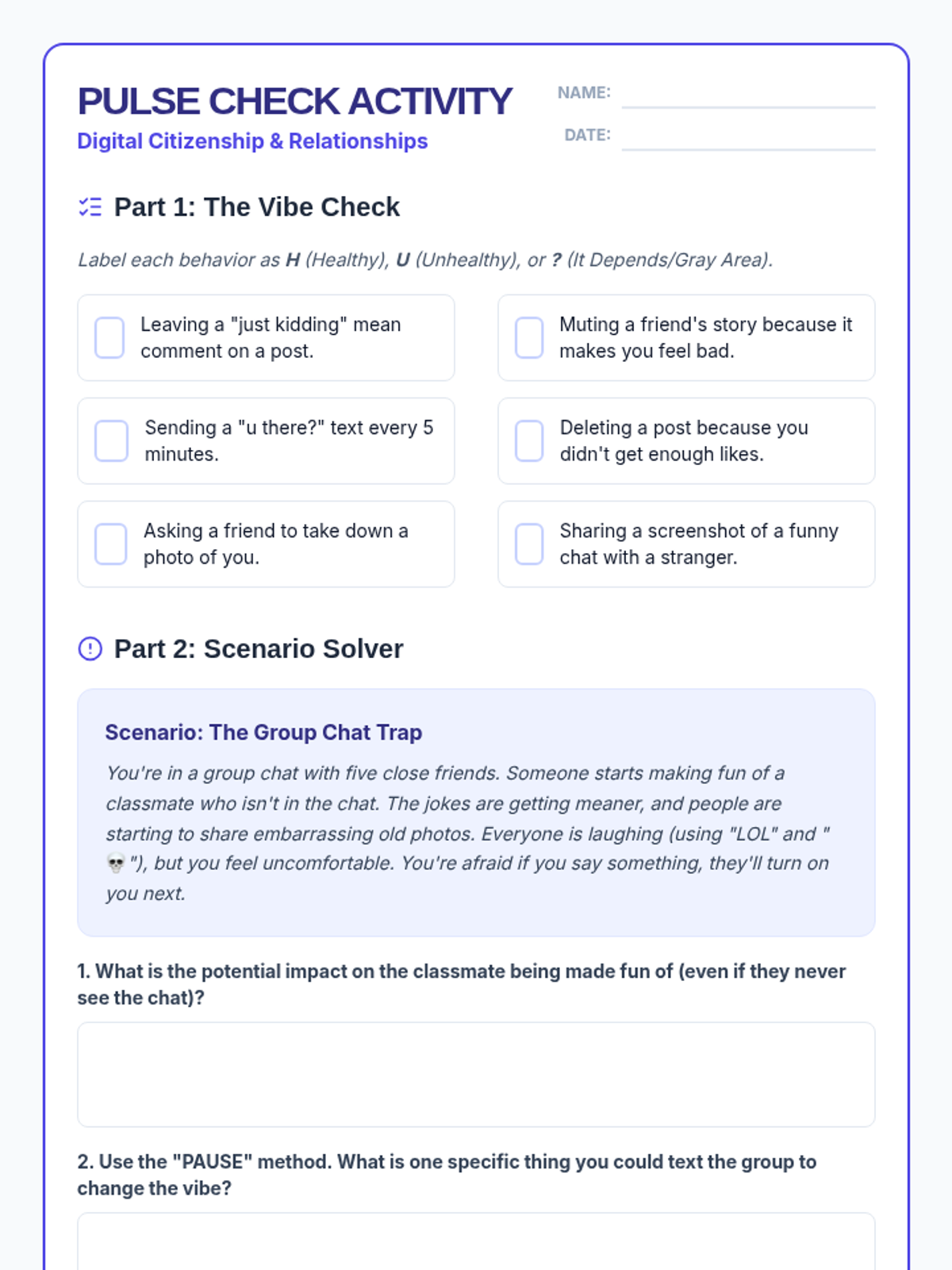
A student worksheet titled 'Pulse Check Activity' that helps middle schoolers analyze digital behaviors, solve social media scenarios using the PAUSE method, and commit to a digital wellness pledge.
An engaging slide deck for middle schoolers exploring digital citizenship, defining the 'digital heartbeat', contrasting healthy and unhealthy online behaviors, and introducing the 'PAUSE' method for digital communication.
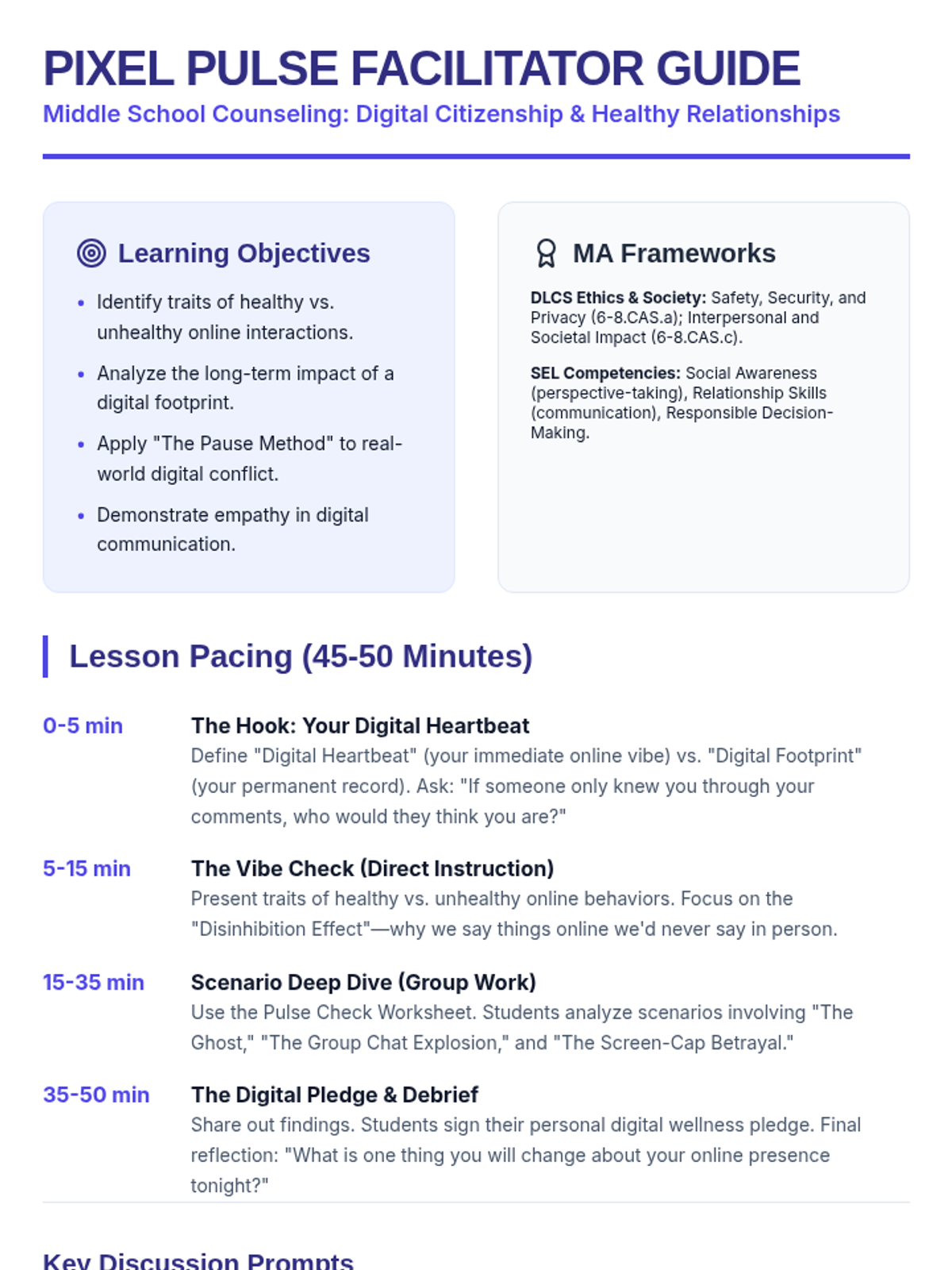
A comprehensive facilitator guide for middle school counselors, outlining lesson pacing, Massachusetts framework alignment, learning objectives, and key discussion prompts for teaching digital citizenship.
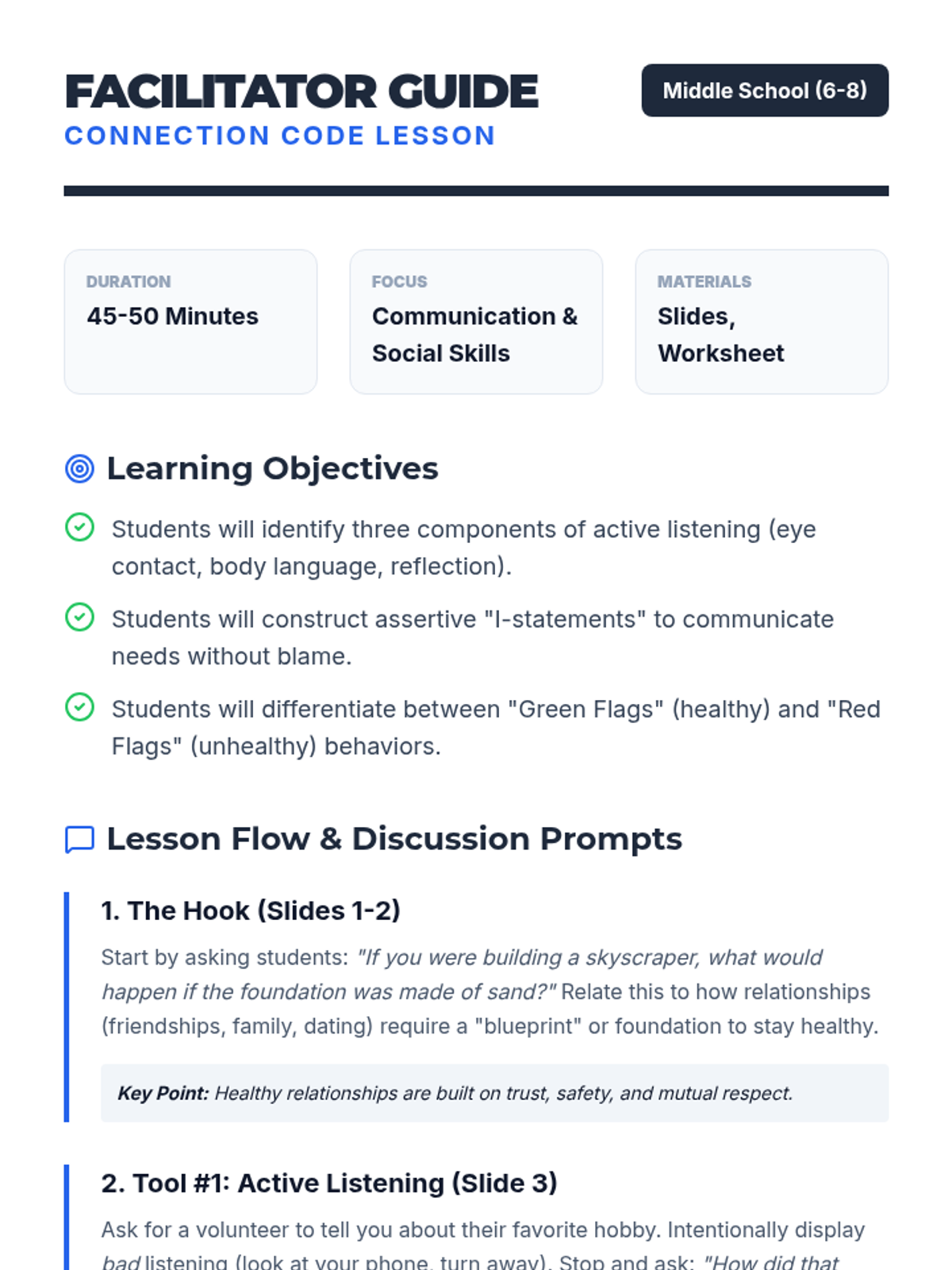
A comprehensive teacher guide for the Connection Code lesson, including learning objectives, a slide-by-slide script, discussion prompts, and an answer key for the student worksheet.
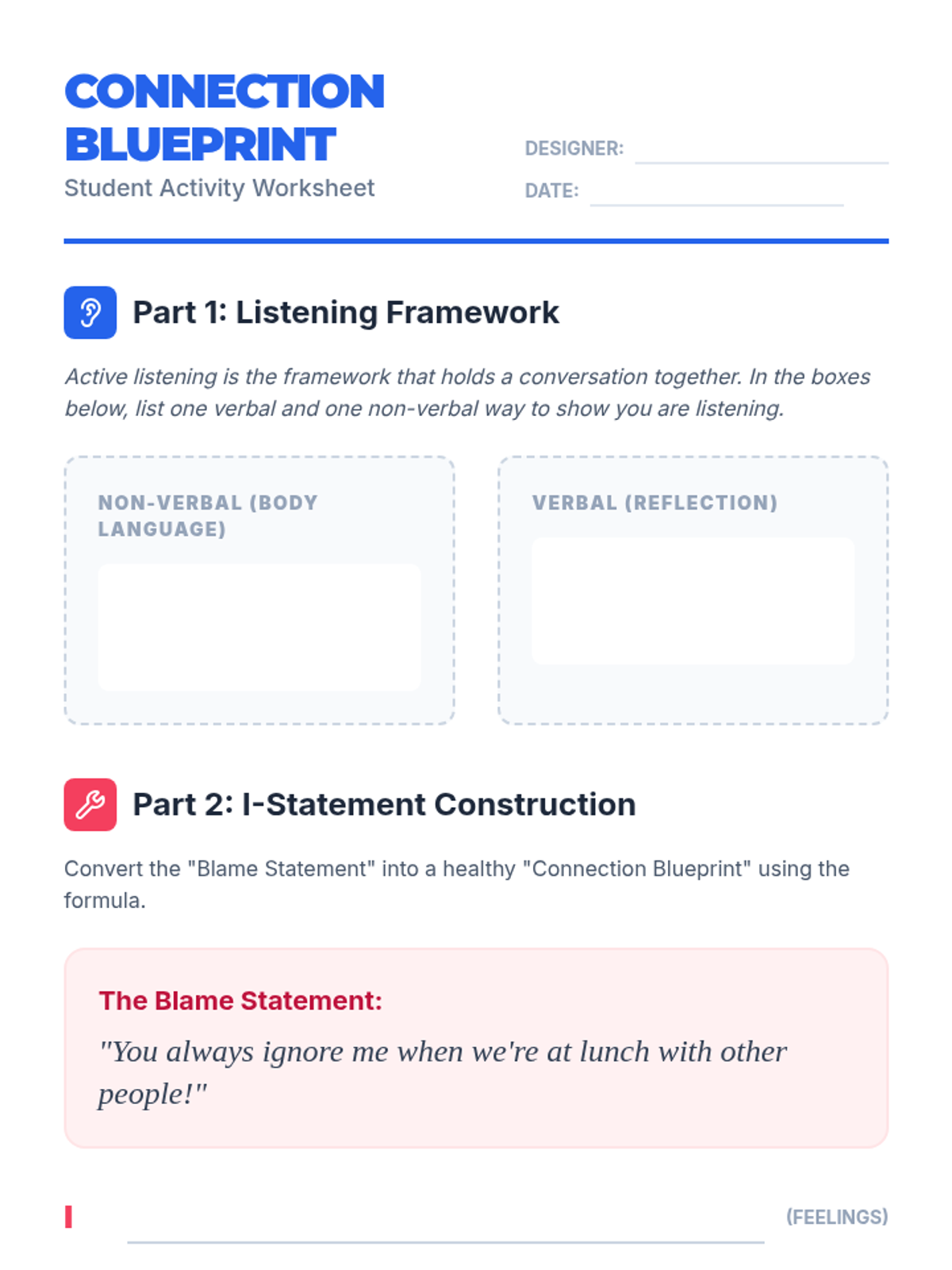
A student activity worksheet designed like an architectural blueprint for students to practice active listening, I-statements, and flag identification.
A visual slide deck introducing the "Connection Blueprint" framework for healthy relationships, active listening techniques, and the I-statement formula.
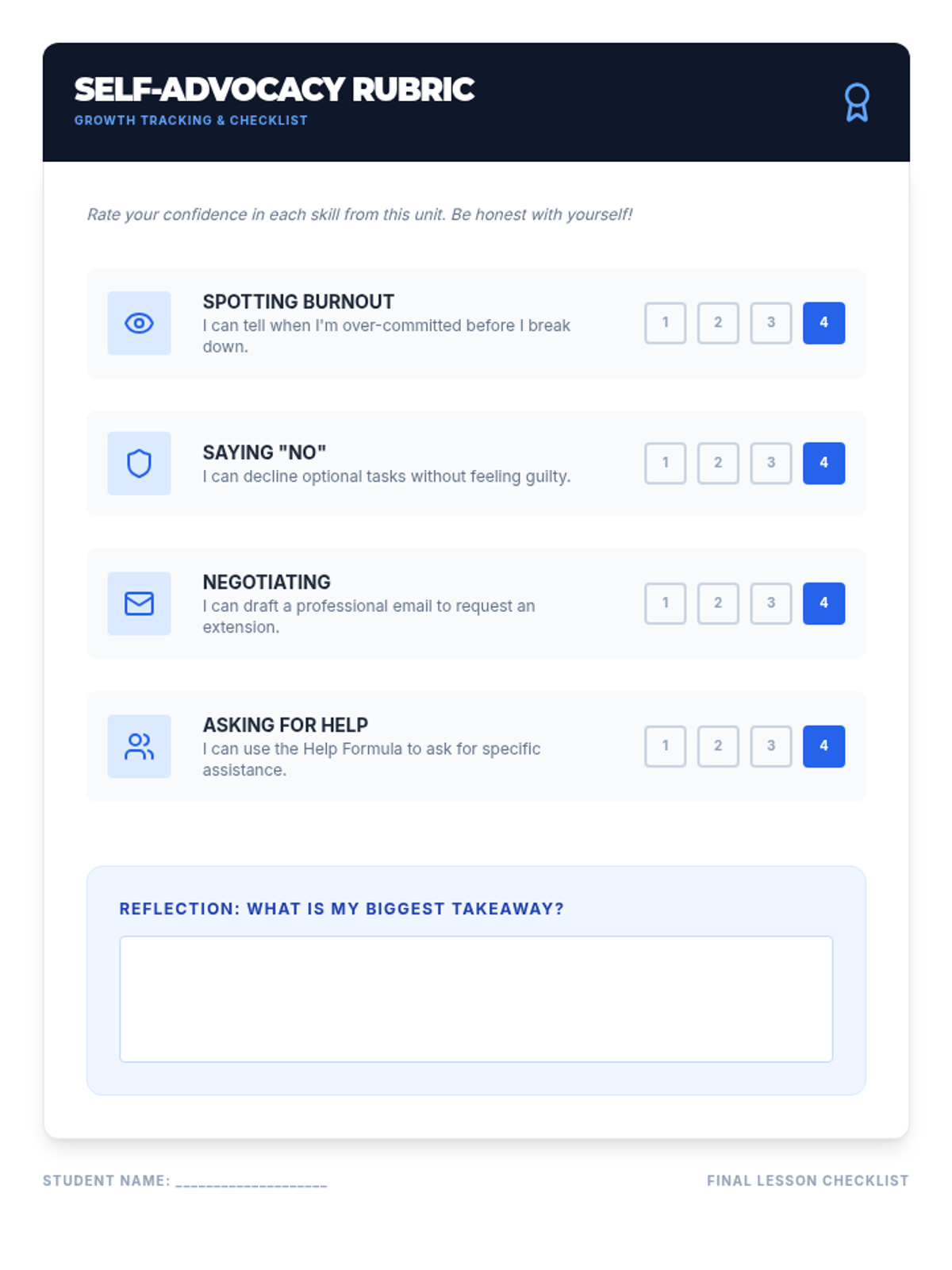
A self-assessment rubric for students to track their growth in identifying burnout, setting boundaries, negotiating deadlines, and asking for help.
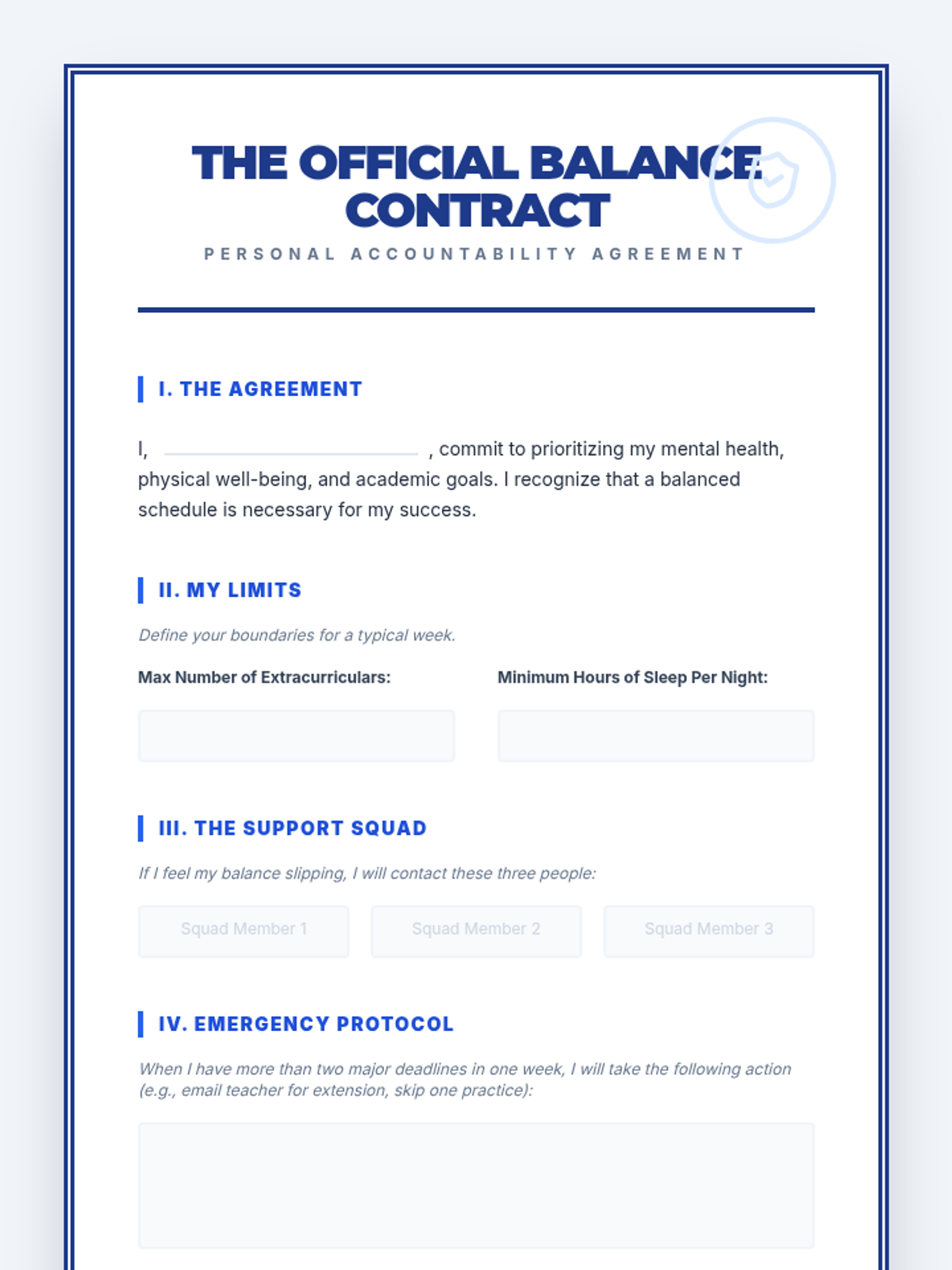
A personal 'Balance Contract' to outline their limits and establish a protocol for managing future stress.
Reviewing the unit and preparing for the final project: the personal Balance Contract.
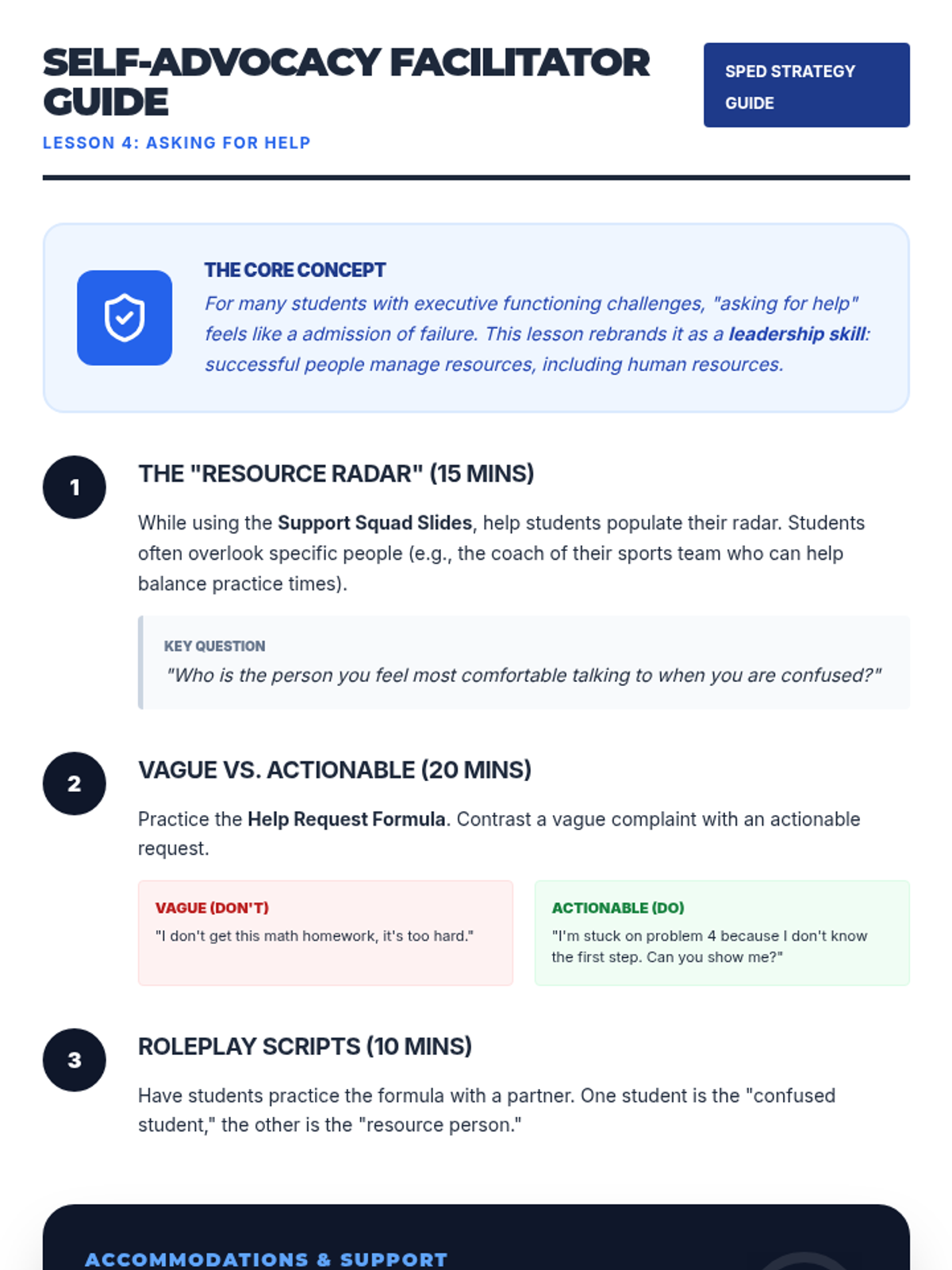
Strategies for teachers to teach self-advocacy and specific help-seeking behaviors to students, particularly those with Special Education needs.
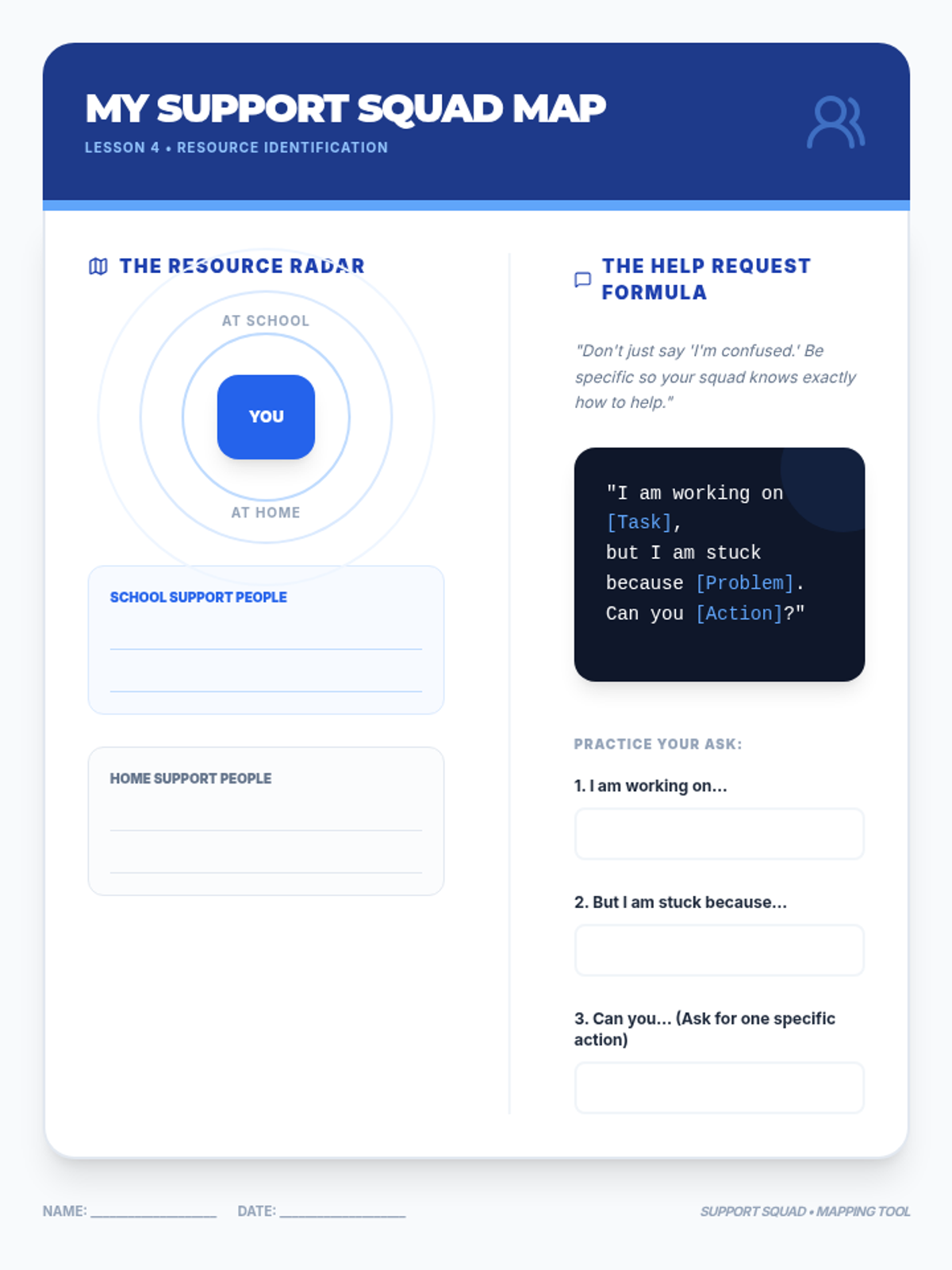
A visual organizer for resources and a help request formula to help students identify their support network and practice making specific help requests.
Identifying who is on the team and how to ask for specific, actionable help.
A quick exit ticket for Lesson 3 to assess student understanding of soft deadlines and the principles of professional negotiation.
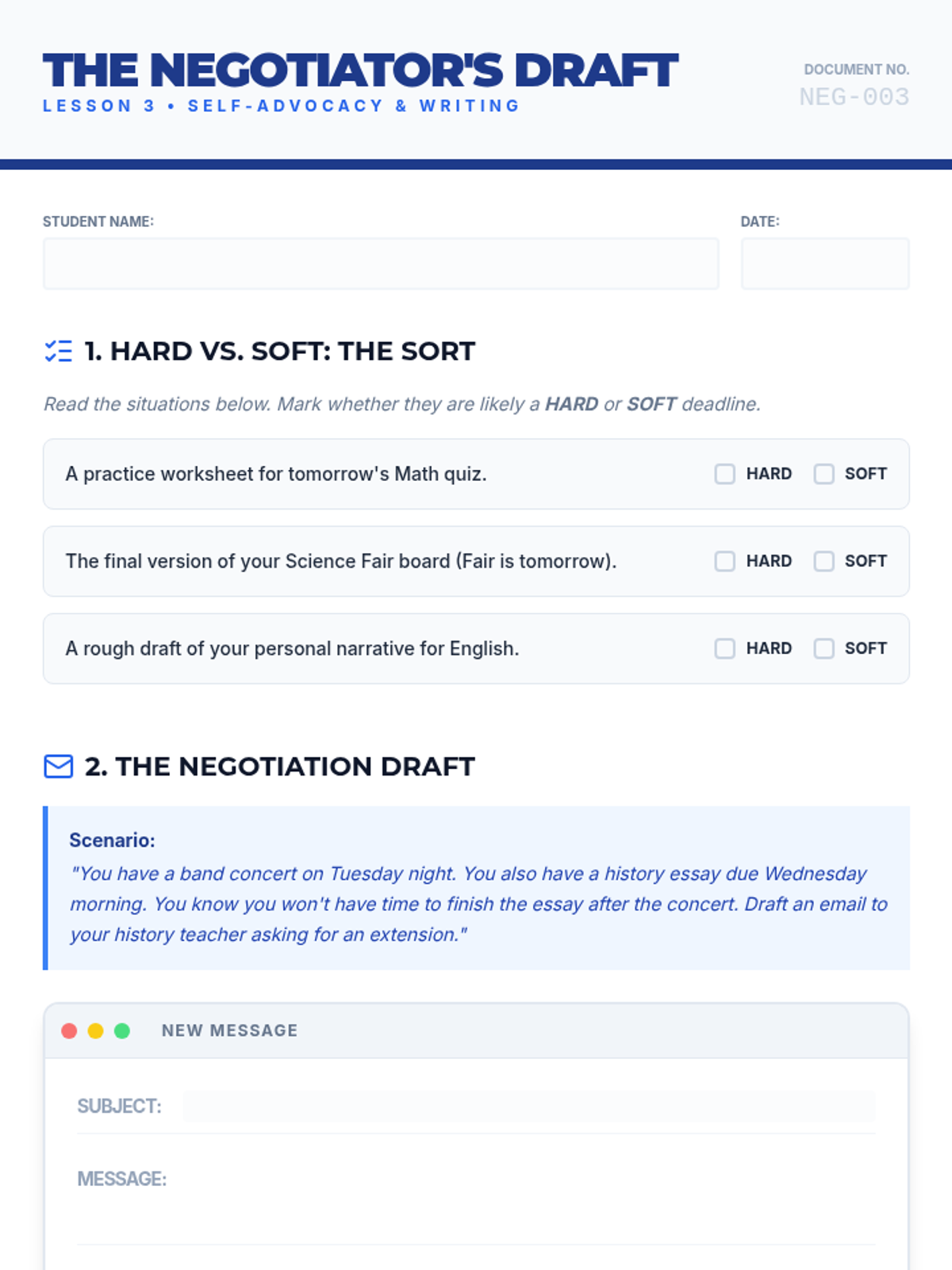
A worksheet for students to differentiate between hard and soft deadlines and practice drafting professional email requests for deadline extensions.
Slide deck for Lesson 3 covering the difference between hard and soft deadlines and the "3 P's" of professional email negotiation.
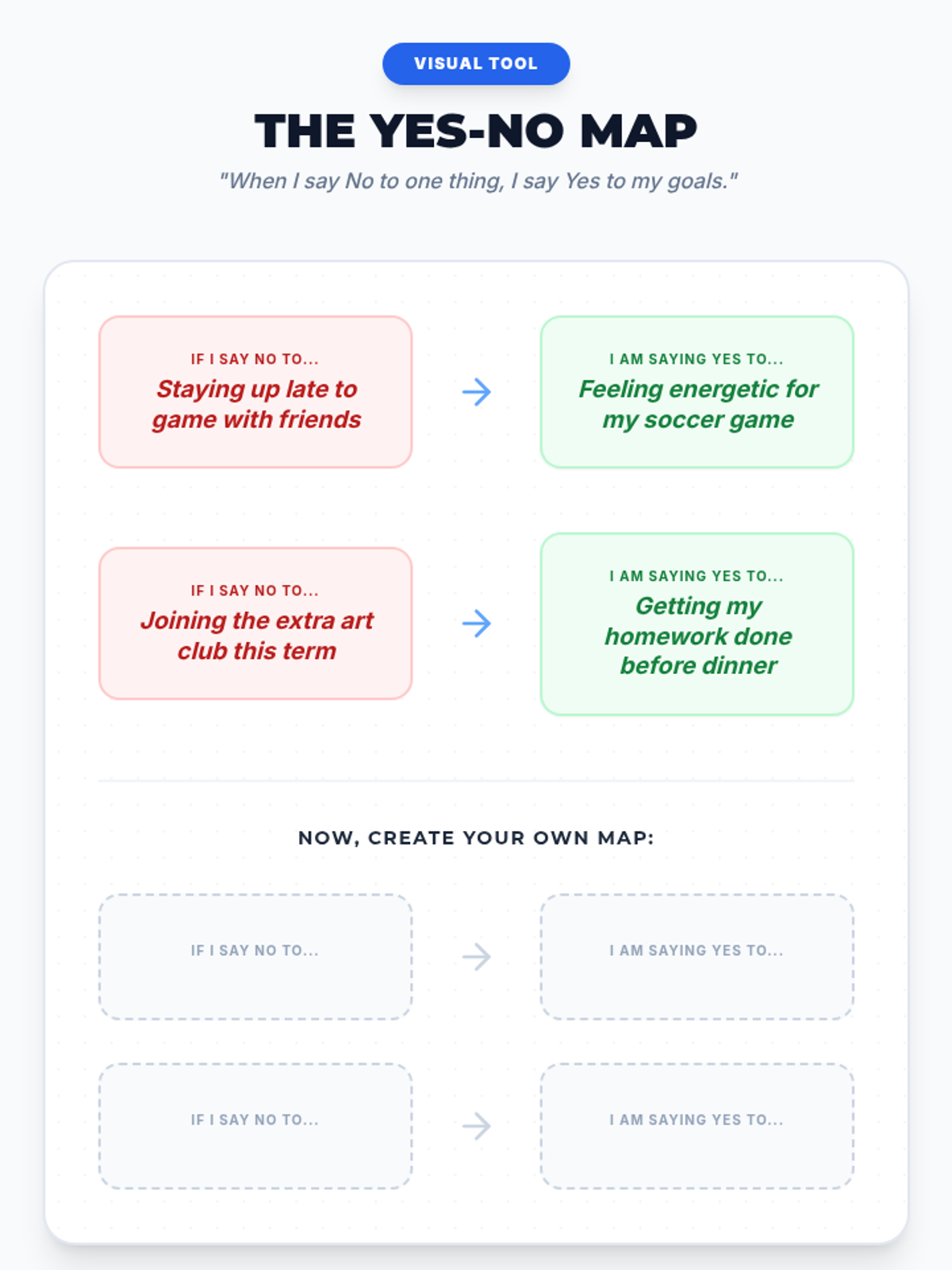
A visual tool to help students understand the trade-offs of their choices by mapping what they are saying "yes" to when they say "no" to a commitment.
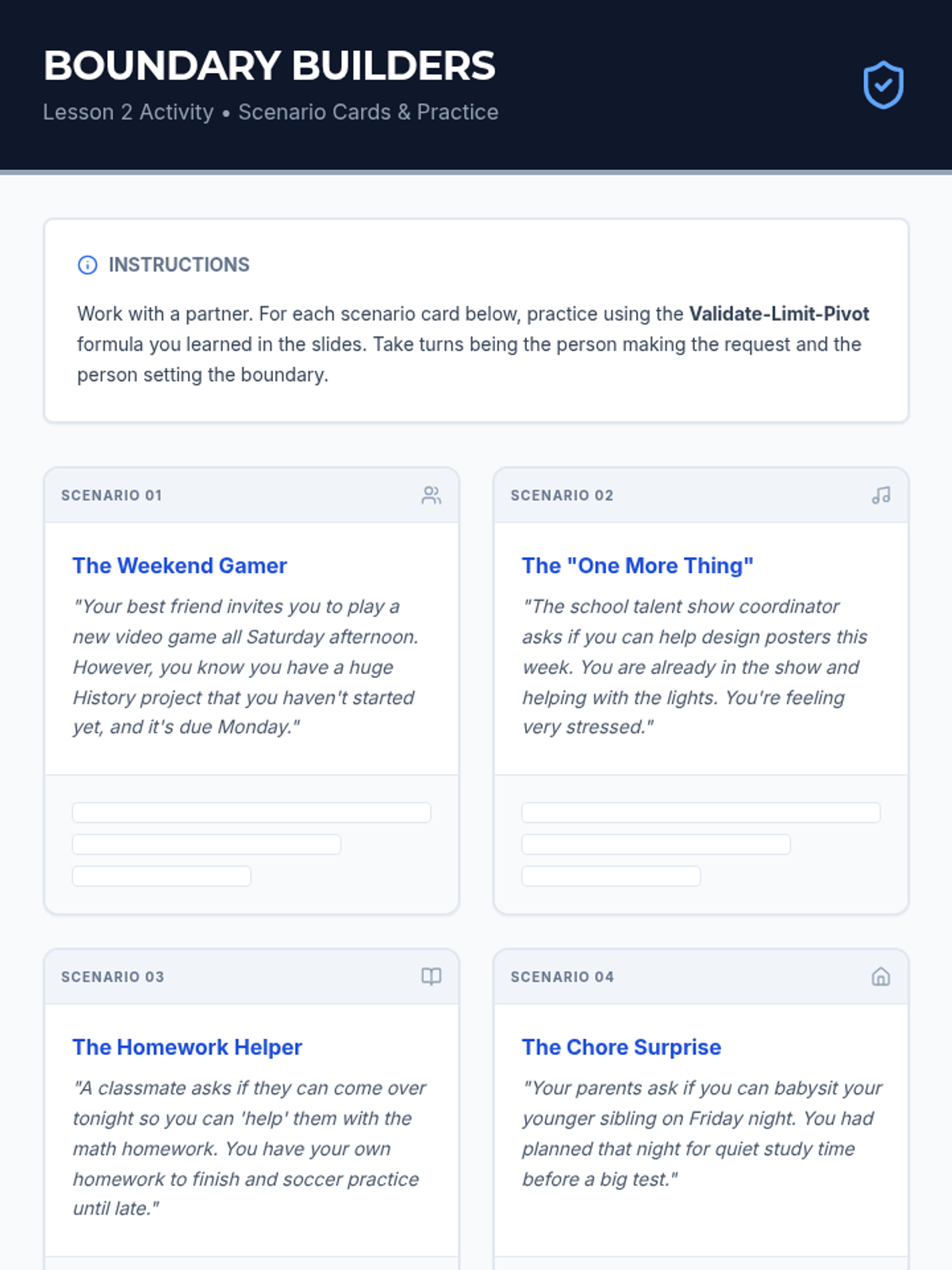
A role-playing activity featuring scenario cards that prompt students to practice declining commitments using professional communication scripts.
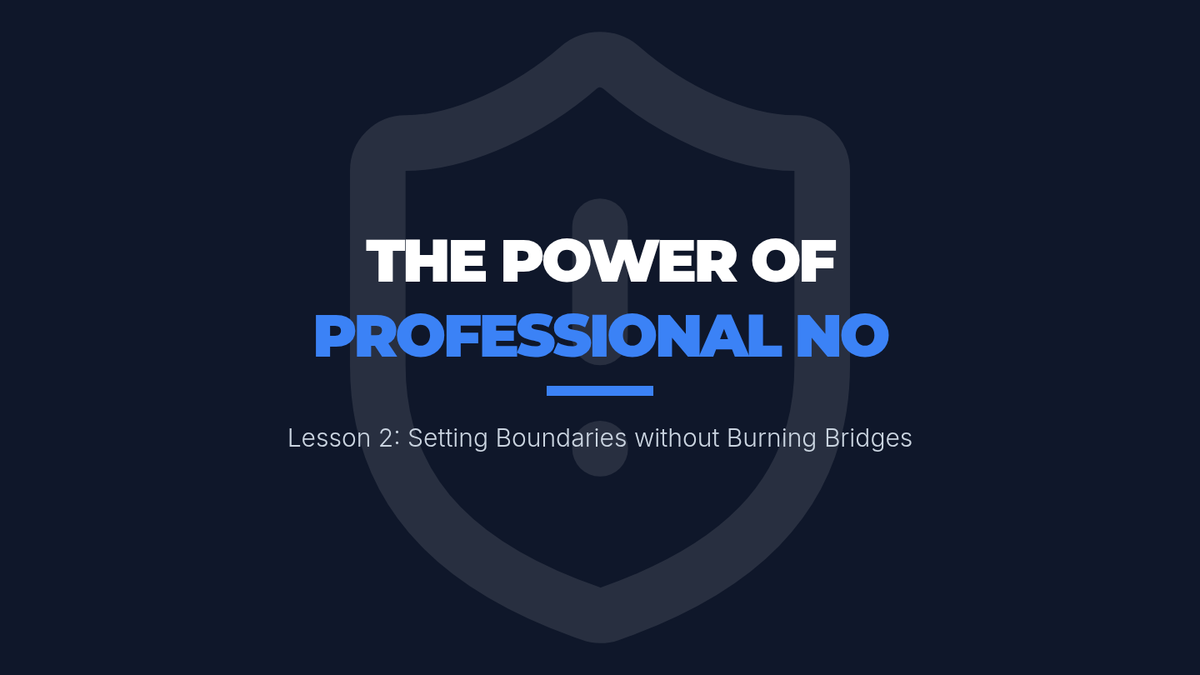
Slide deck for Lesson 2 covering the concept of trade-offs, the "Validation-Limit-Pivot" script formula, and real-world examples of saying no.
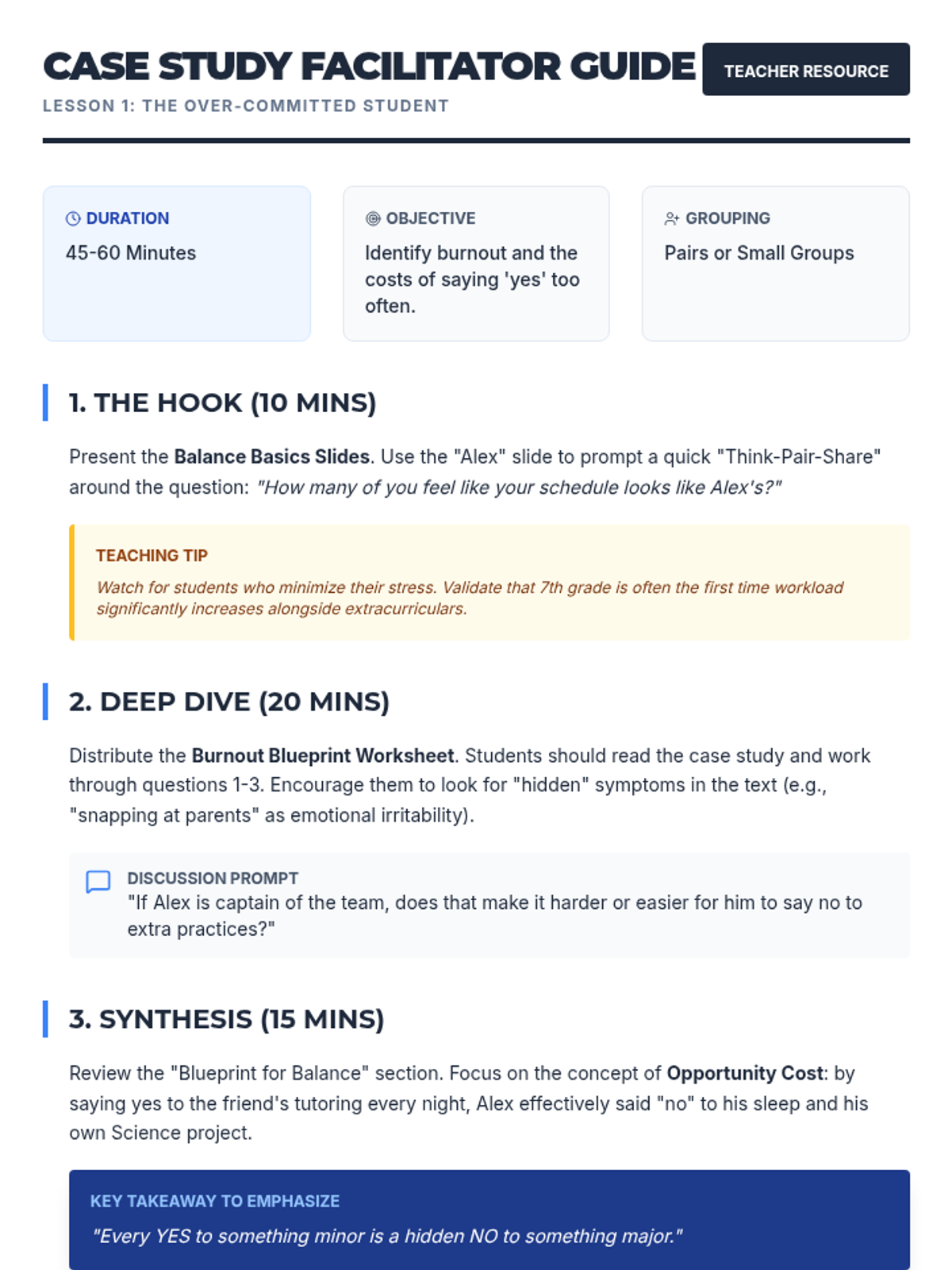
Instructional guide for teachers to facilitate the Lesson 1 case study discussion, including timing, discussion prompts, and differentiation strategies.
Introductory slide deck for Lesson 1 covering the "Yes" trap, burnout warning signs, and the psychological reasons behind over-commitment.
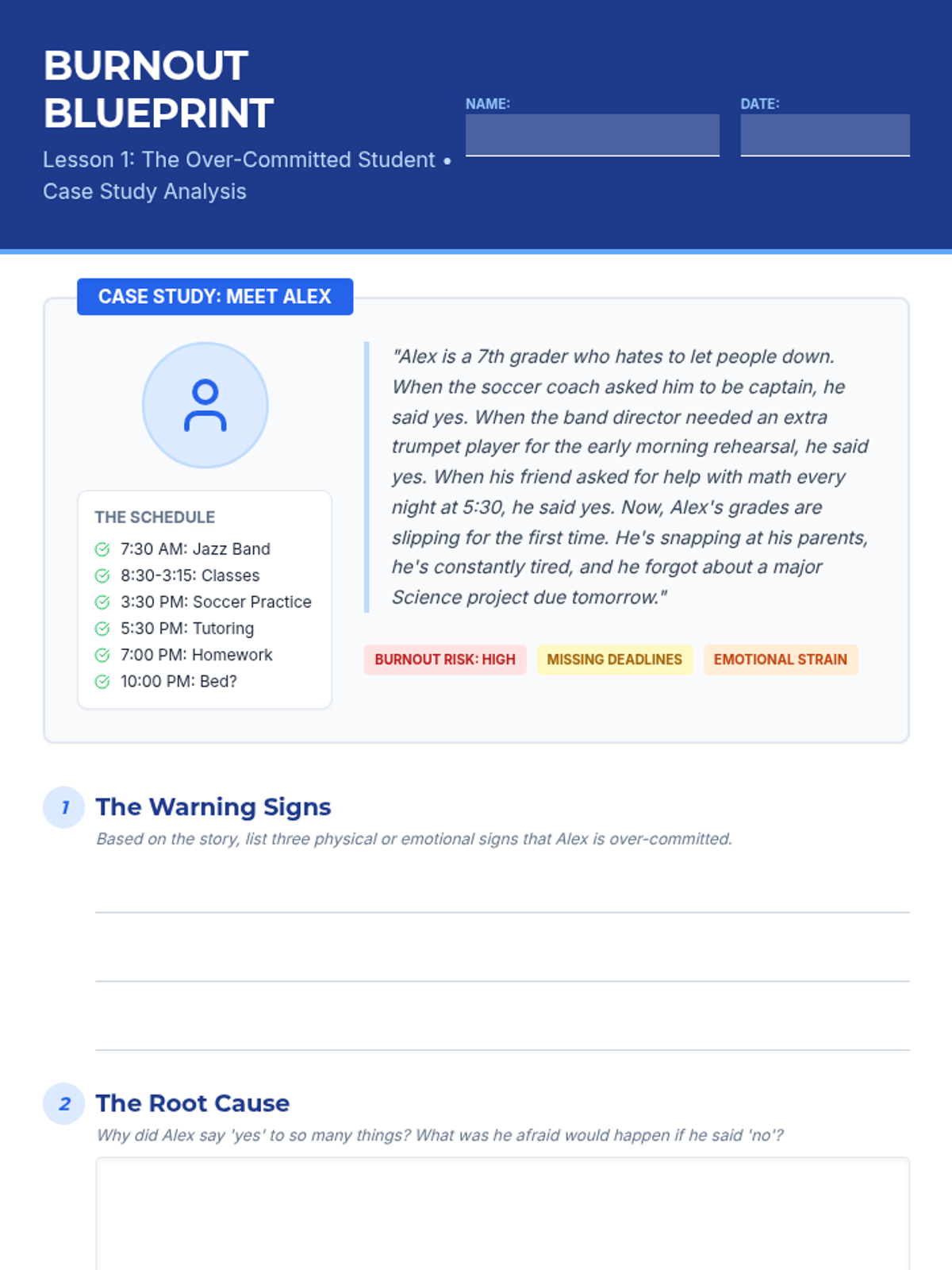
A case study worksheet analyzing a fictional student's struggle with over-commitment and burnout, featuring analysis questions and a reflection section.
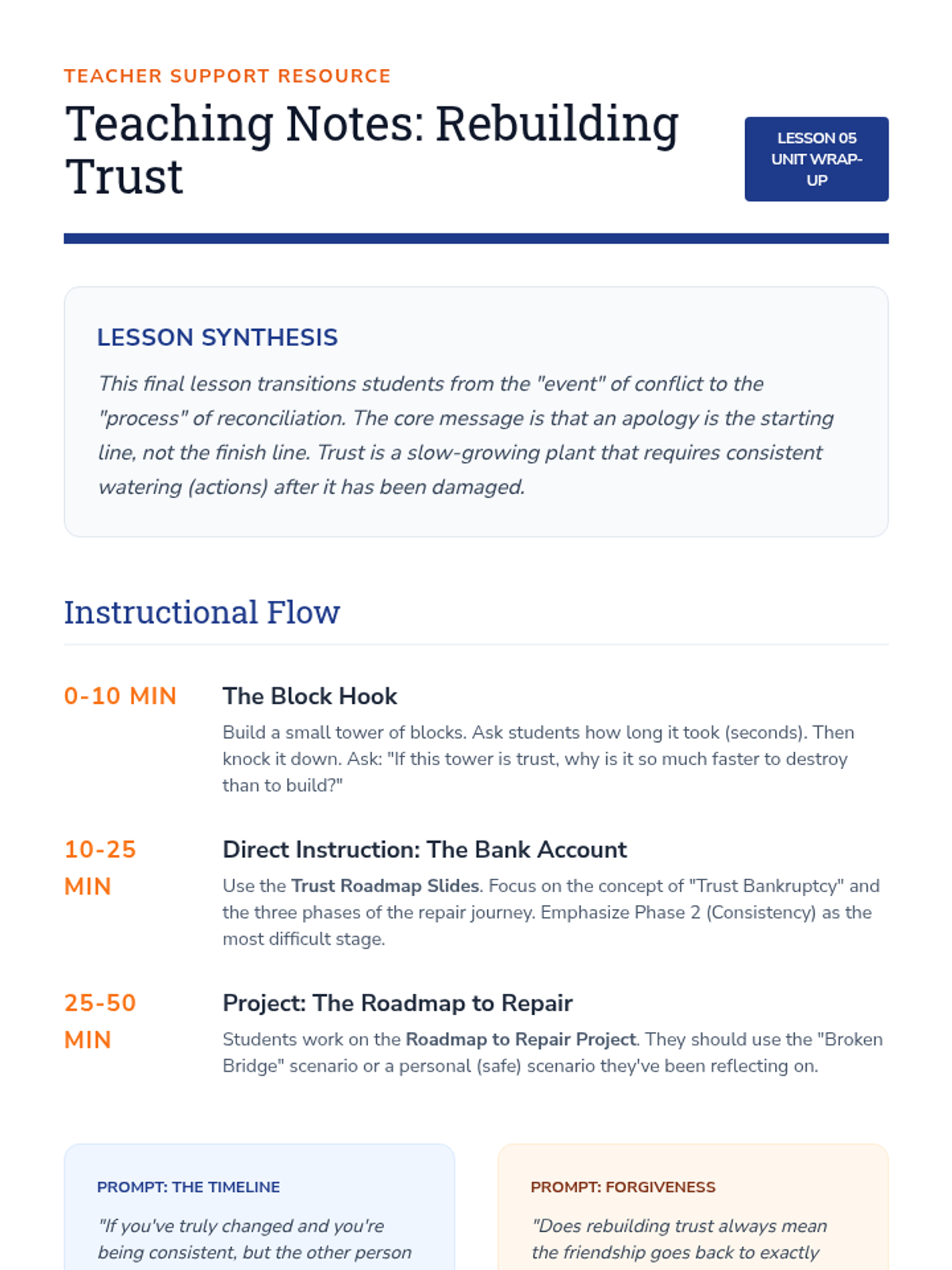
Teaching notes for Lesson 5, including summary of the 'Trust Bank Account' analogy, pacing for the final project, and unit wrap-up discussion prompts.
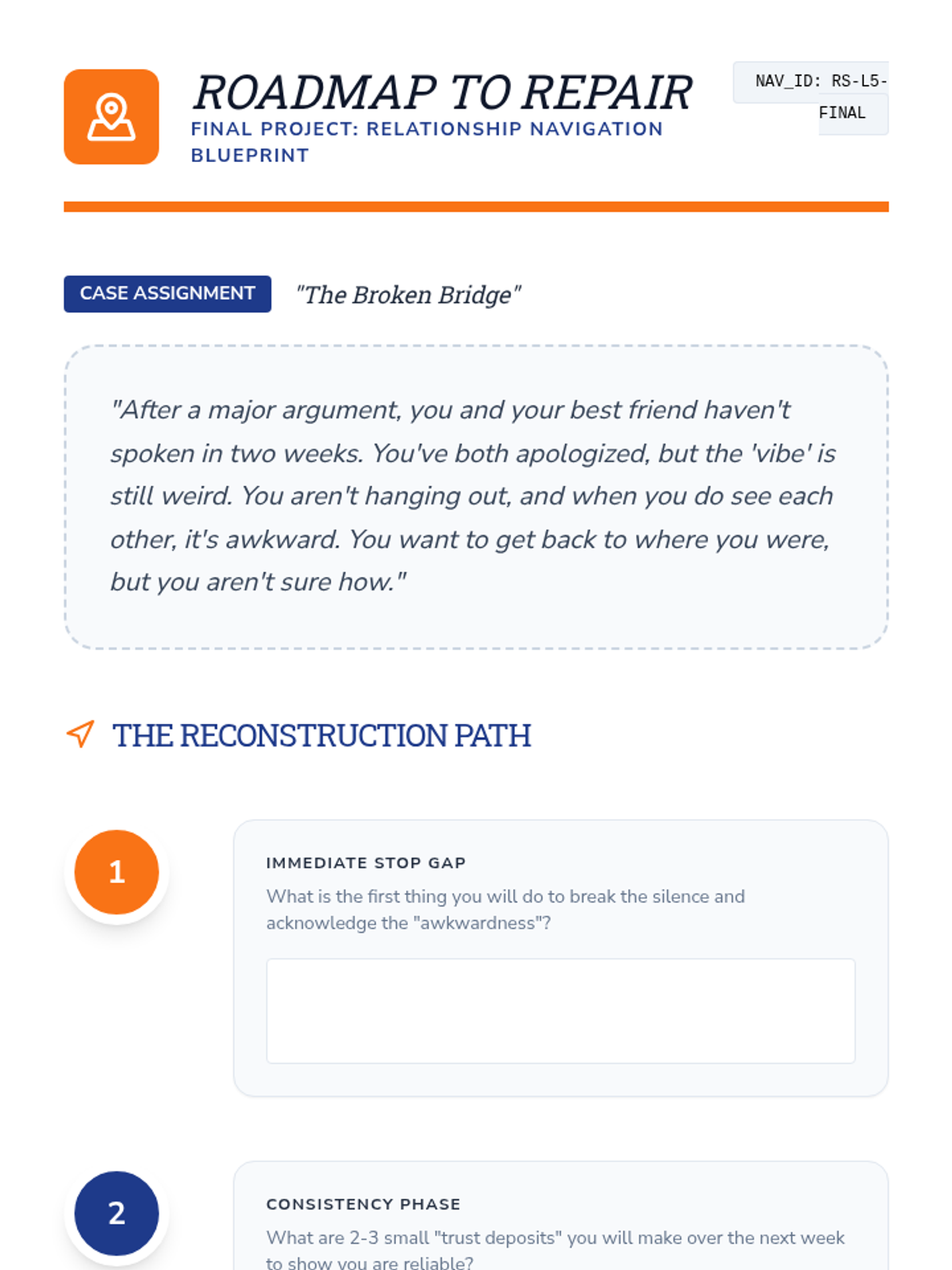
Final project worksheet for Lesson 5, guiding students to create a step-by-step visual 'Roadmap to Repair' for a fictional relationship scenario.
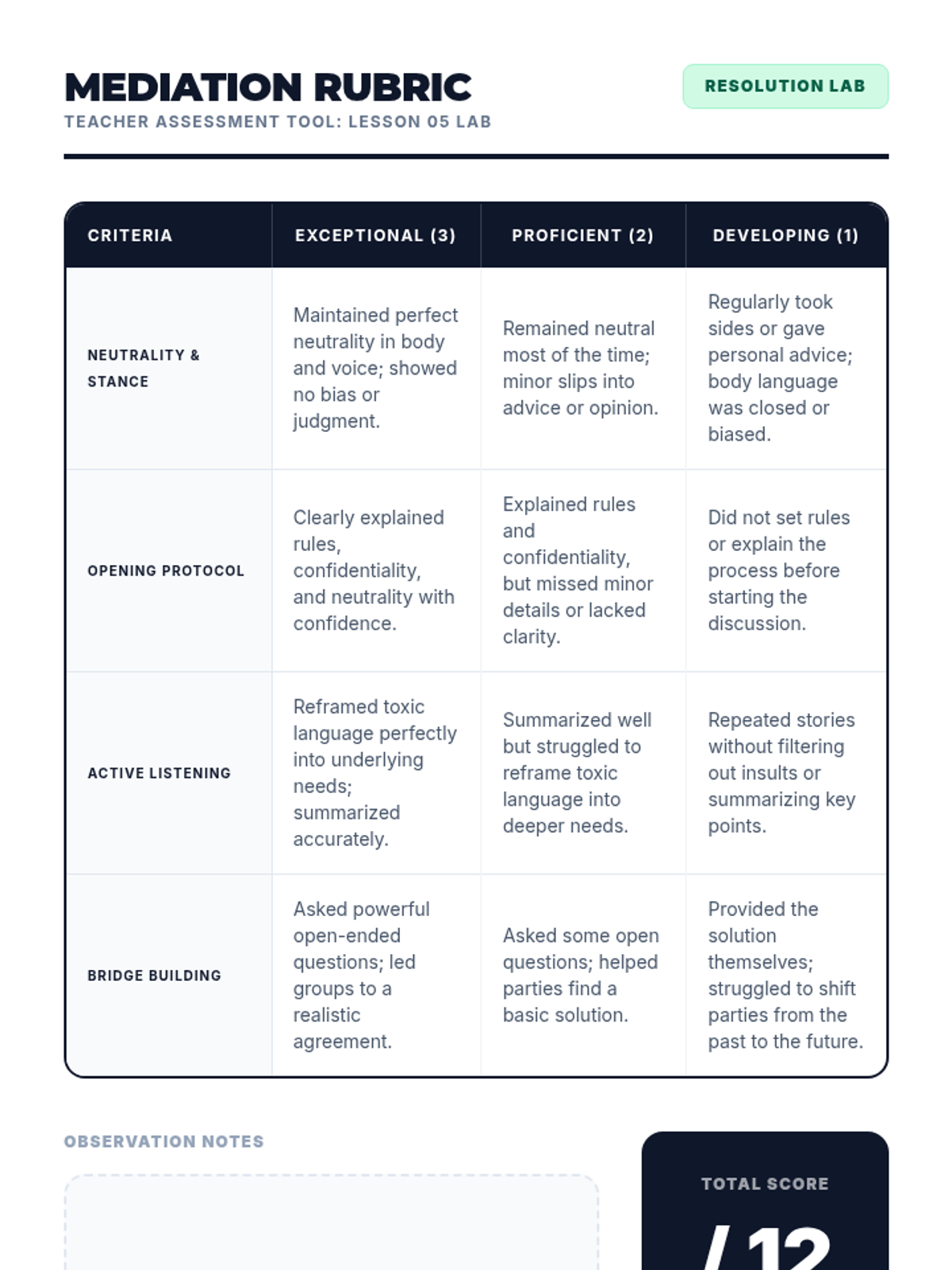
A comprehensive rubric for teachers to assess student facilitators during the final mock mediation Resolution Lab.
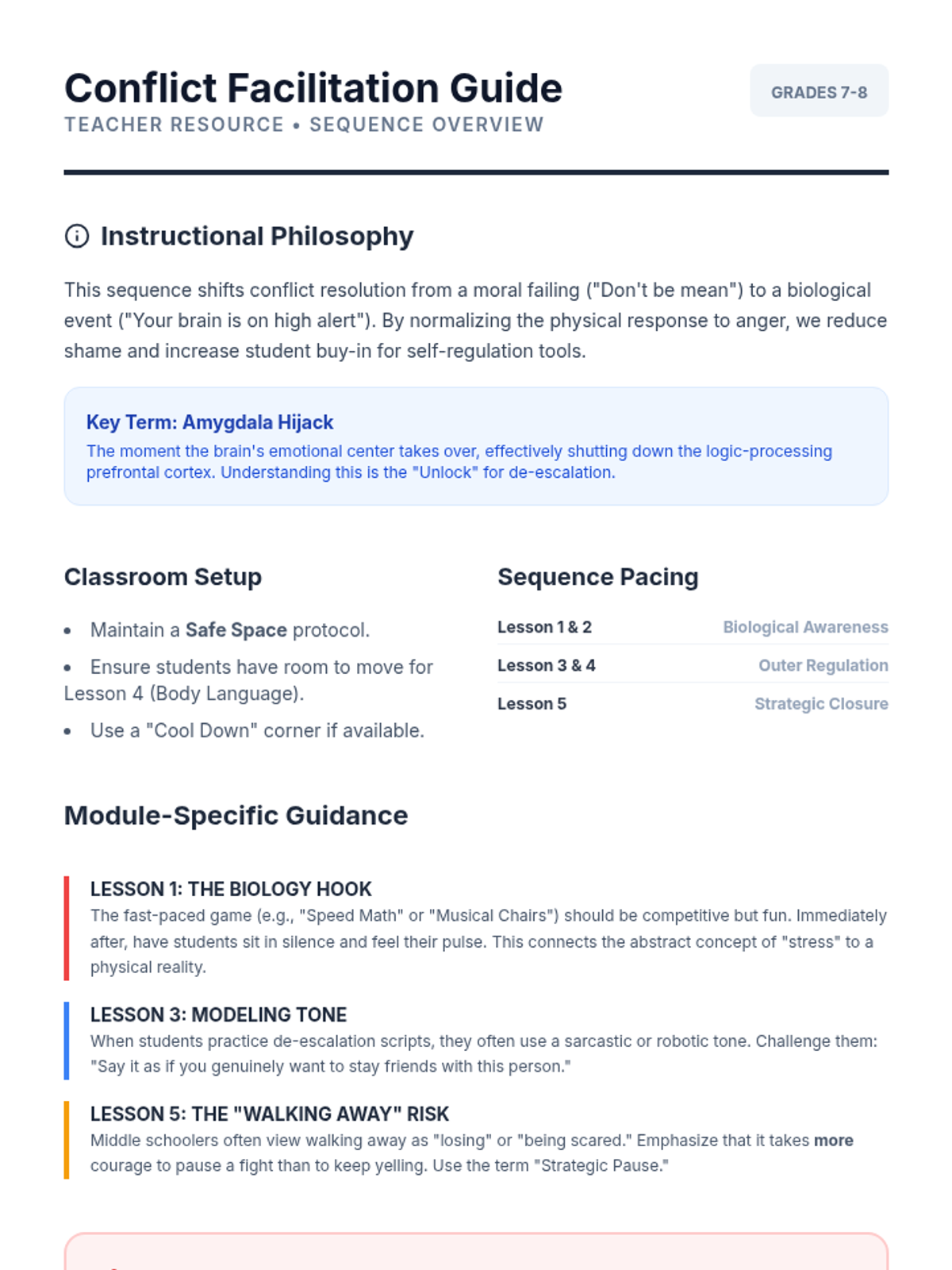
A comprehensive teacher's guide for the Conflict Navigation sequence, providing instructional philosophy, facilitation tips, and pacing guidance for all five lessons.
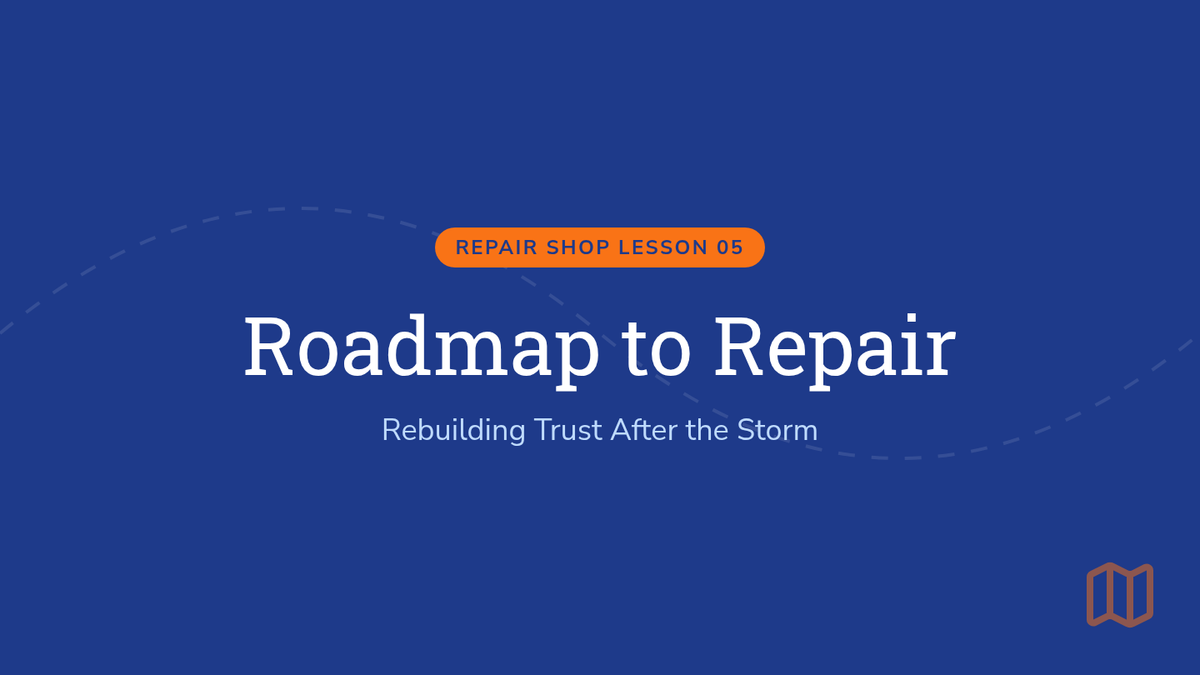
Visual slide deck for Lesson 5: Rebuilding Trust Over Time, introducing the concept of trust as a bank account and the long-term phases of relationship repair.
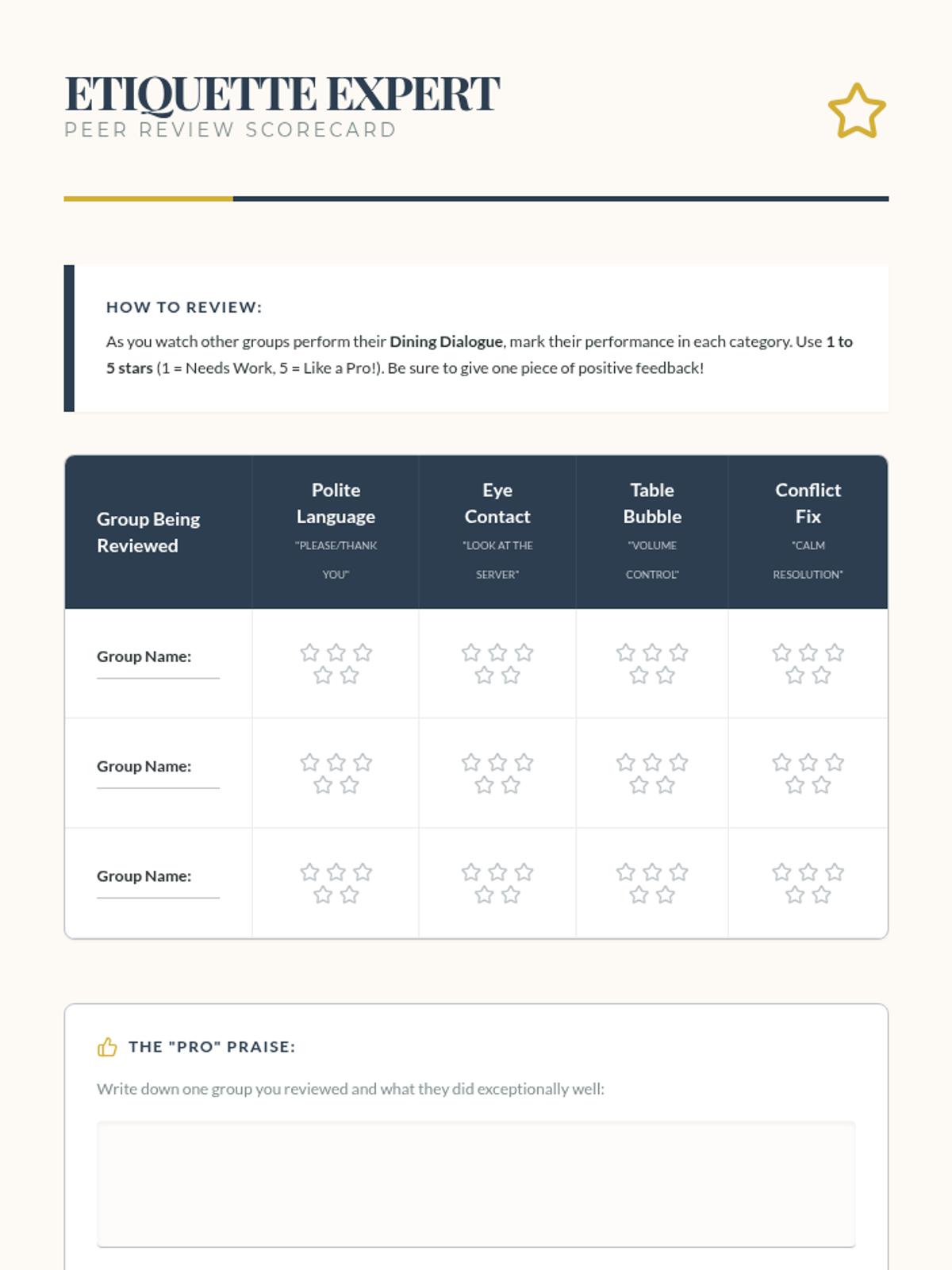
A peer review evaluation sheet for students to score each other's etiquette skills during the roleplay portion of the lesson.
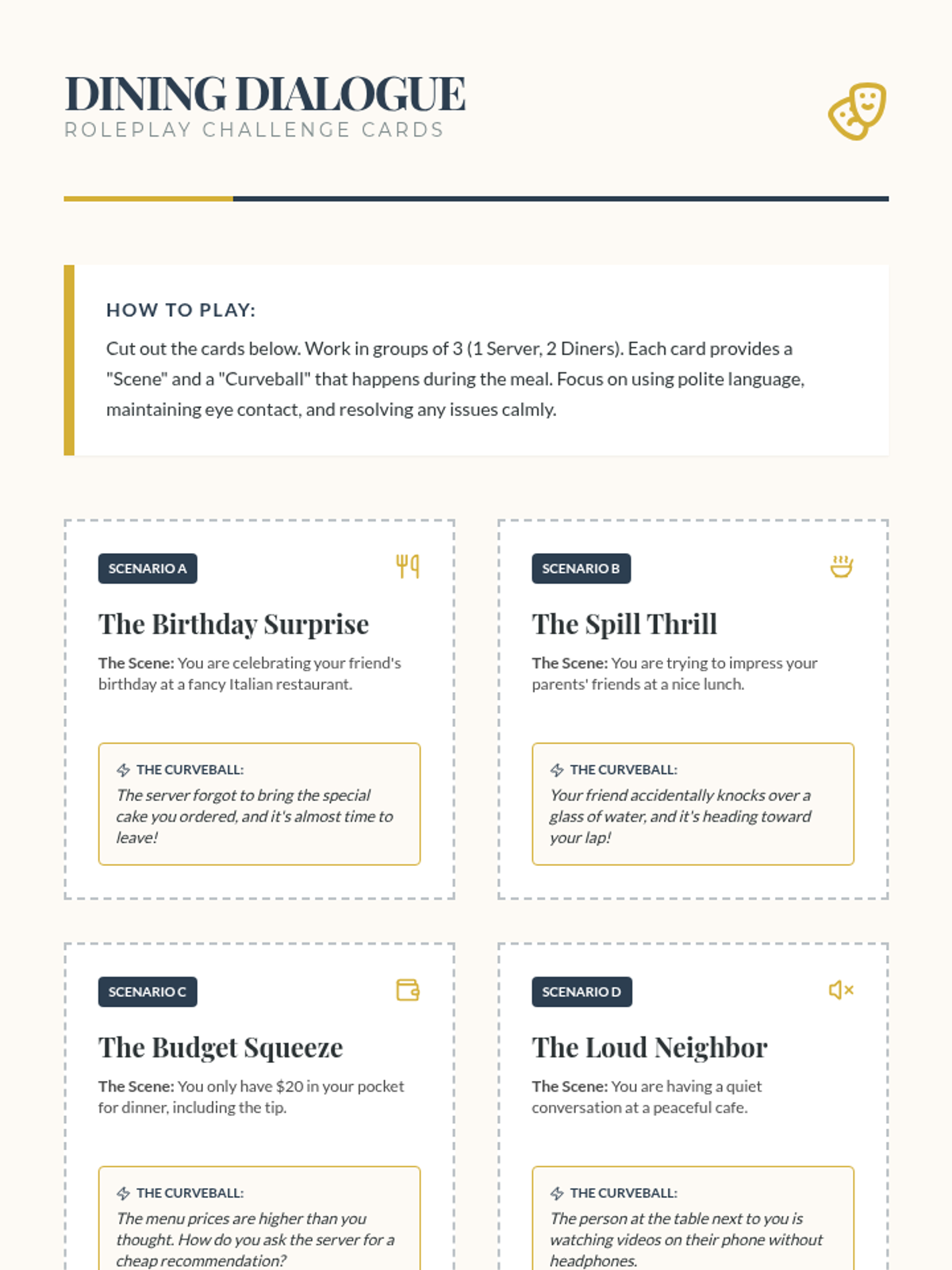
A set of four roleplay challenge cards for students to practice ordering, manners, and conflict resolution in various restaurant scenarios.
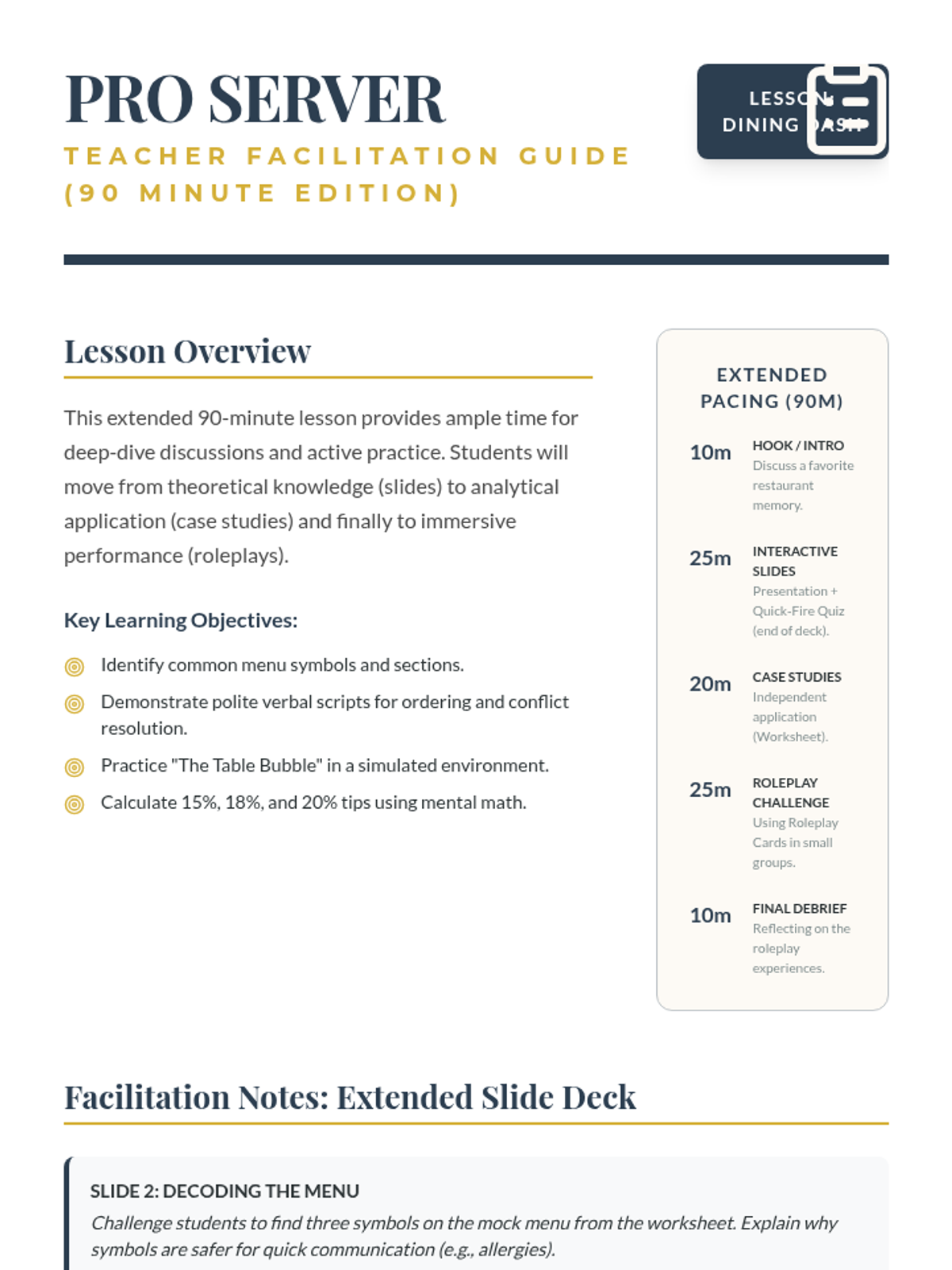
A teacher guide featuring lesson objectives, pacing suggestions, slide-by-slide discussion prompts, and a detailed answer key for the case studies.
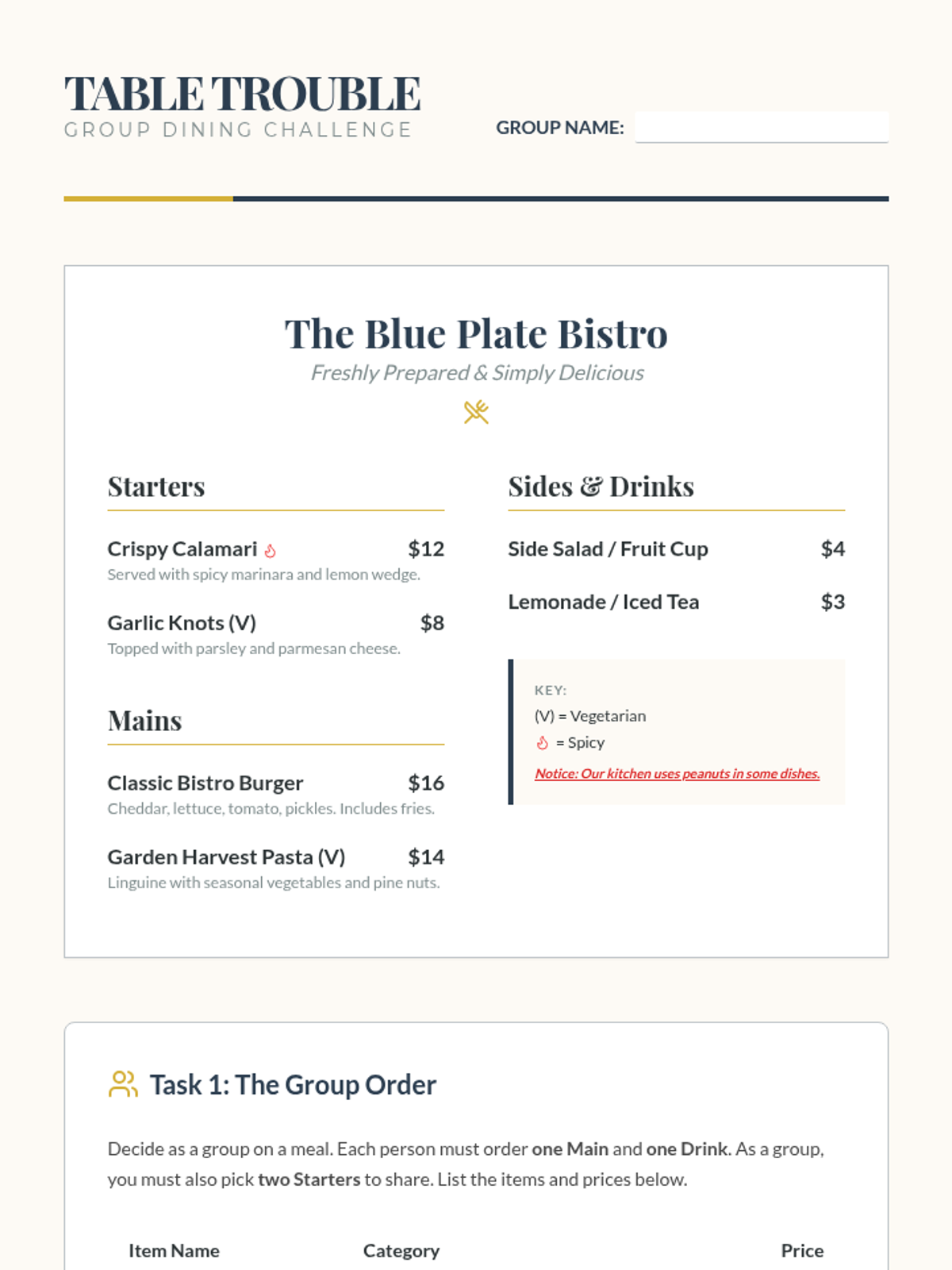
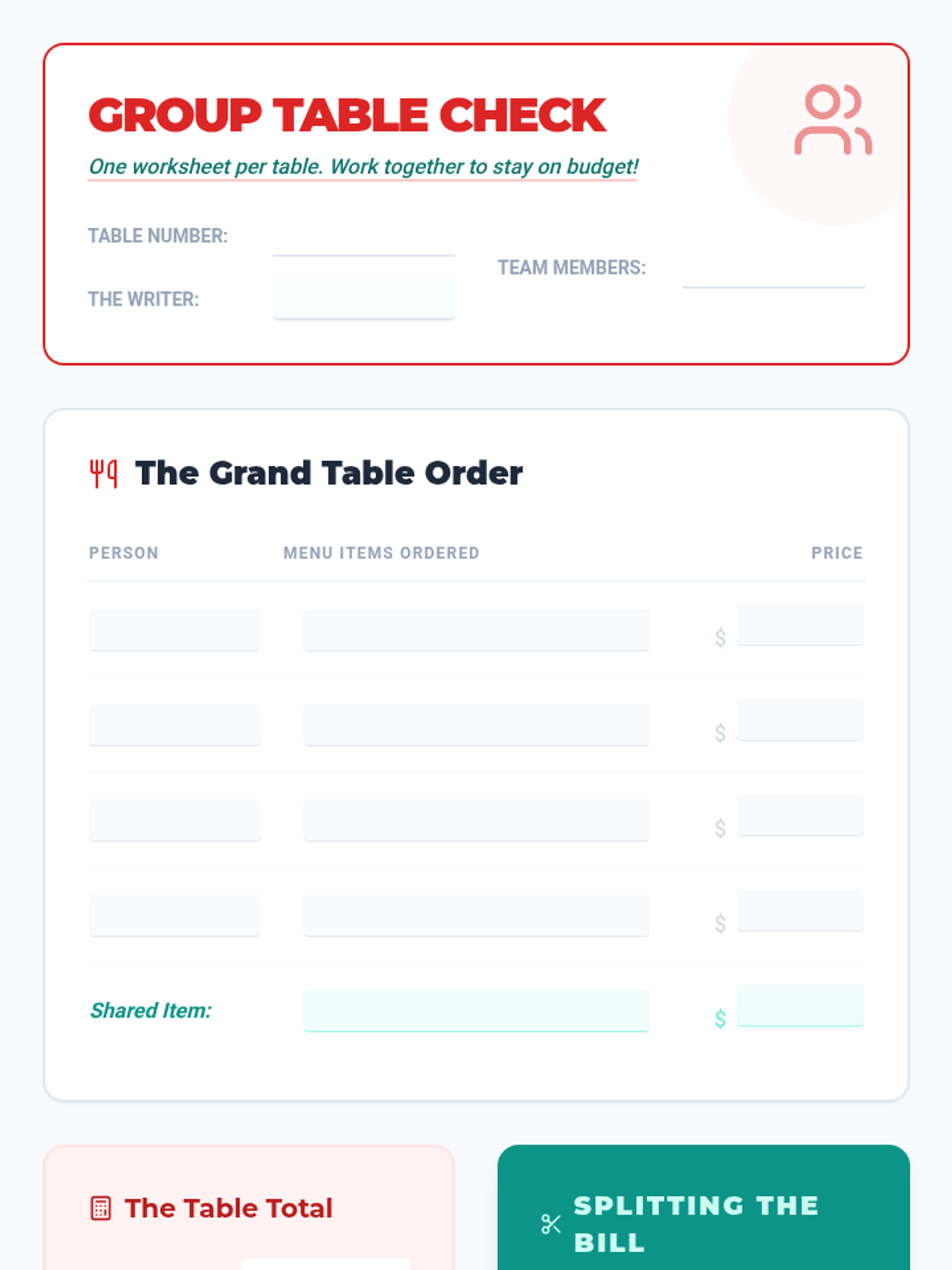
A group-focused student worksheet featuring a mock menu, a collective ordering challenge, group bill calculations, and collaborative restaurant scenarios.
A visual slide deck teaching restaurant etiquette, including menu reading, ordering scripts, table manners, volume control, tipping, and conflict resolution. Separates quiz questions and answers for better engagement.
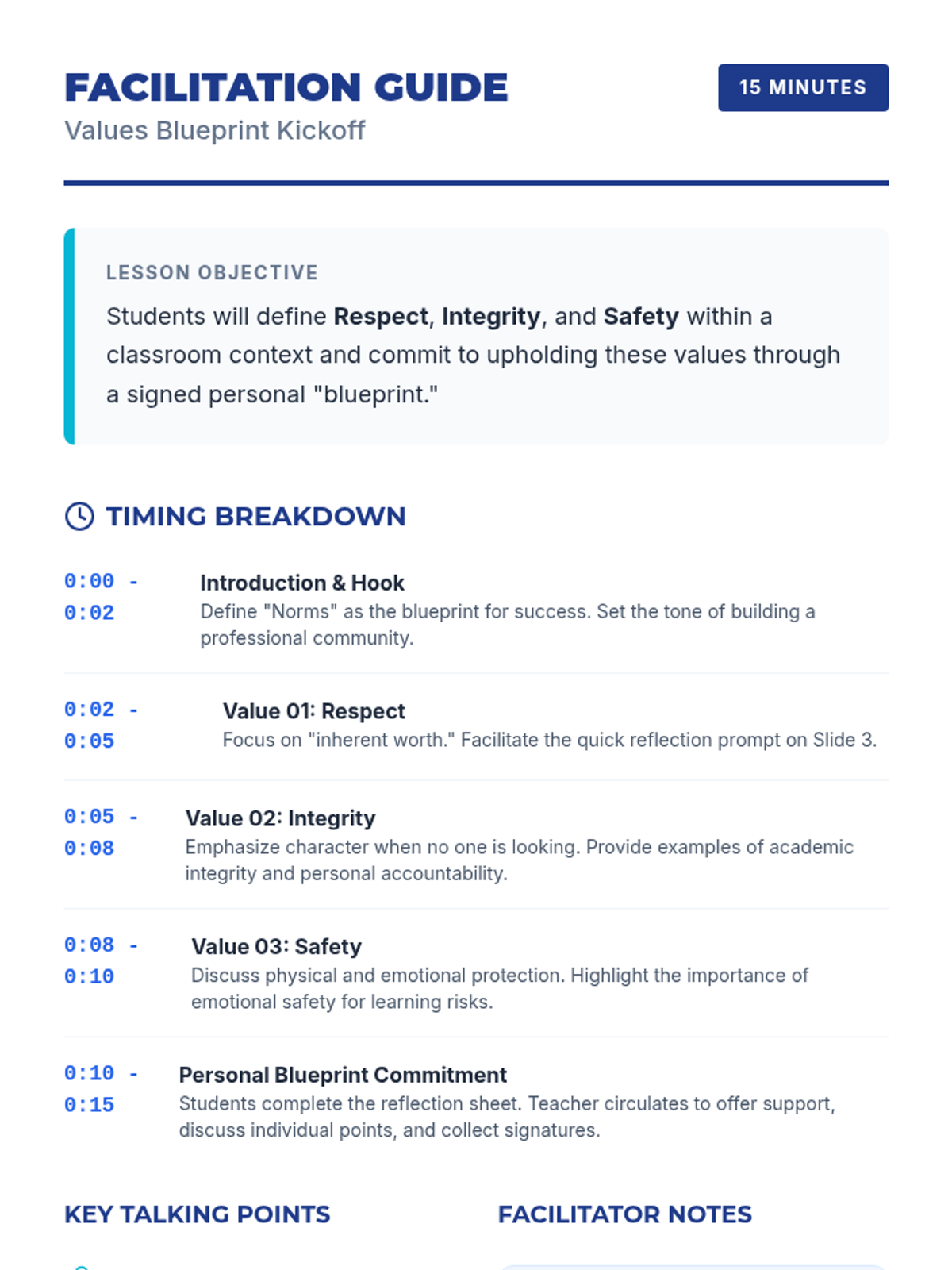
A concise facilitation guide for teachers to lead the 15-minute Values Blueprint Kickoff. Includes a minute-by-minute breakdown, key talking points, and strategies for handling student misconceptions.
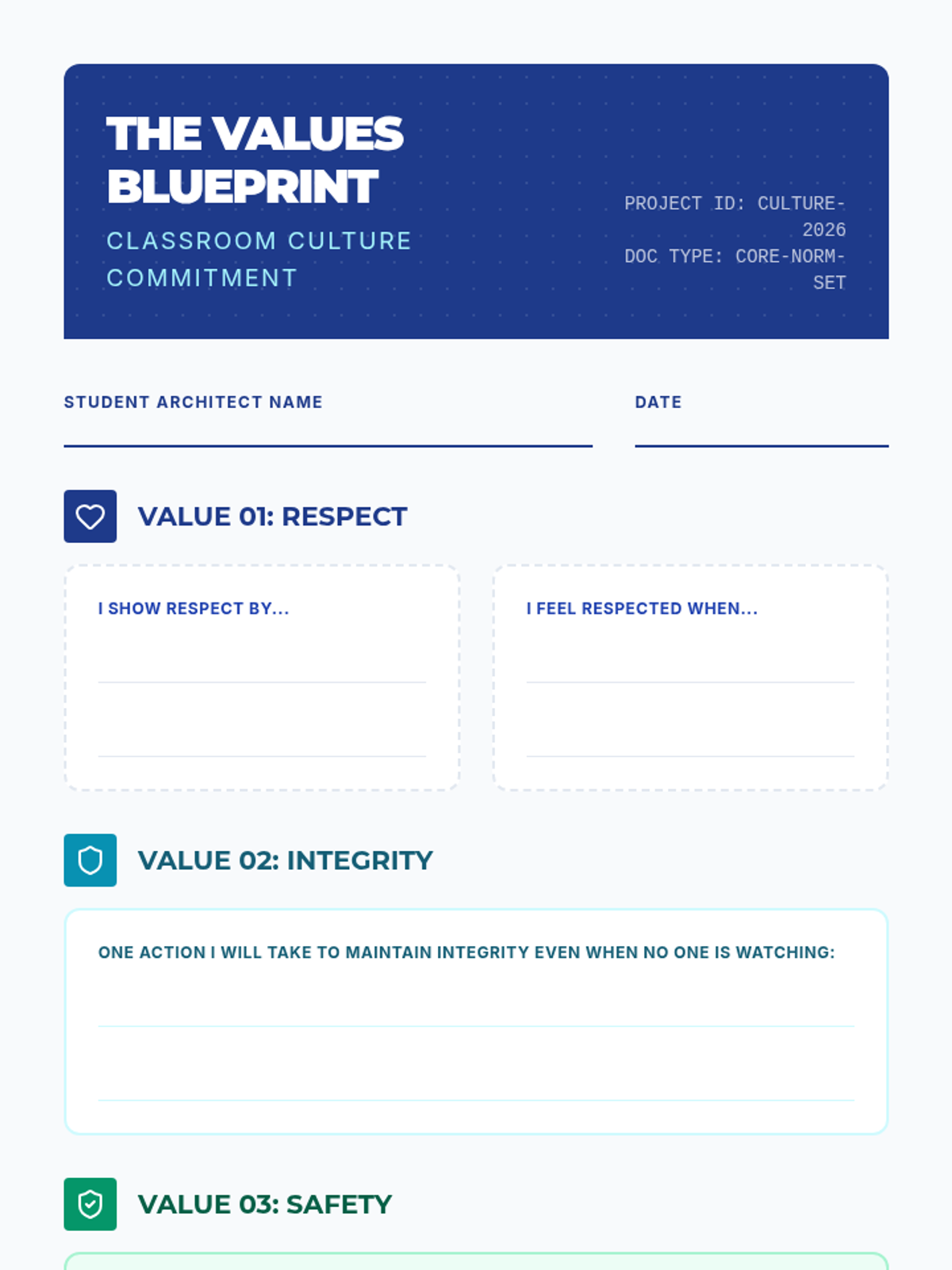
A student reflection sheet that reinforces the classroom values of Respect, Integrity, and Safety. Includes guided prompts and designated spaces for students to define their personal commitment to the classroom 'blueprint'.
A high-impact 7-slide presentation designed to introduce the core classroom values of Respect, Integrity, and Safety through a 'Blueprint' aesthetic. Includes clear definitions, practical examples, and a collective commitment.
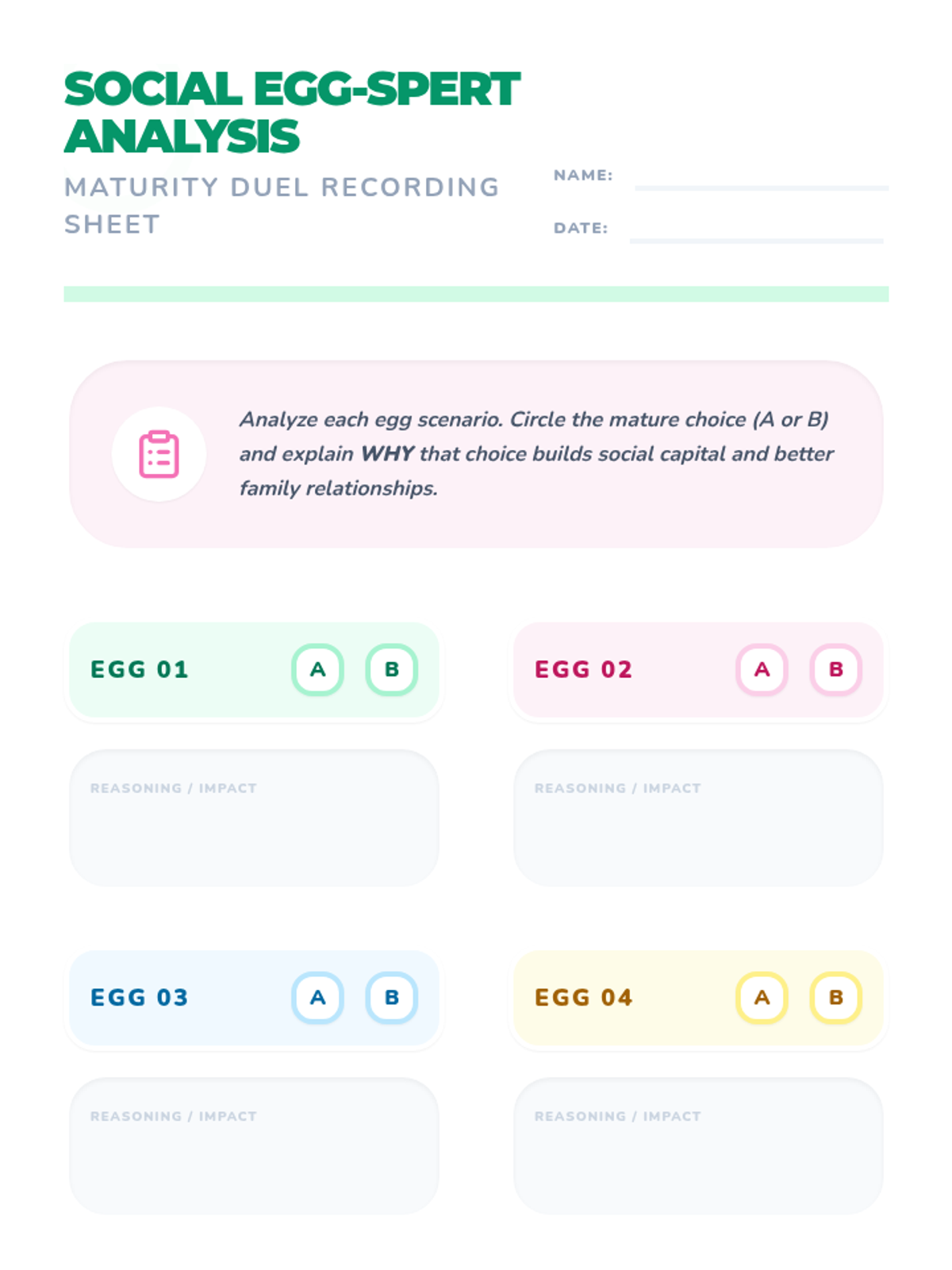
A student-facing recording sheet redesigned for middle school, emphasizing social analysis, reasoning, and reflection on maturity and perspective-taking. Now with an Easter-themed design.
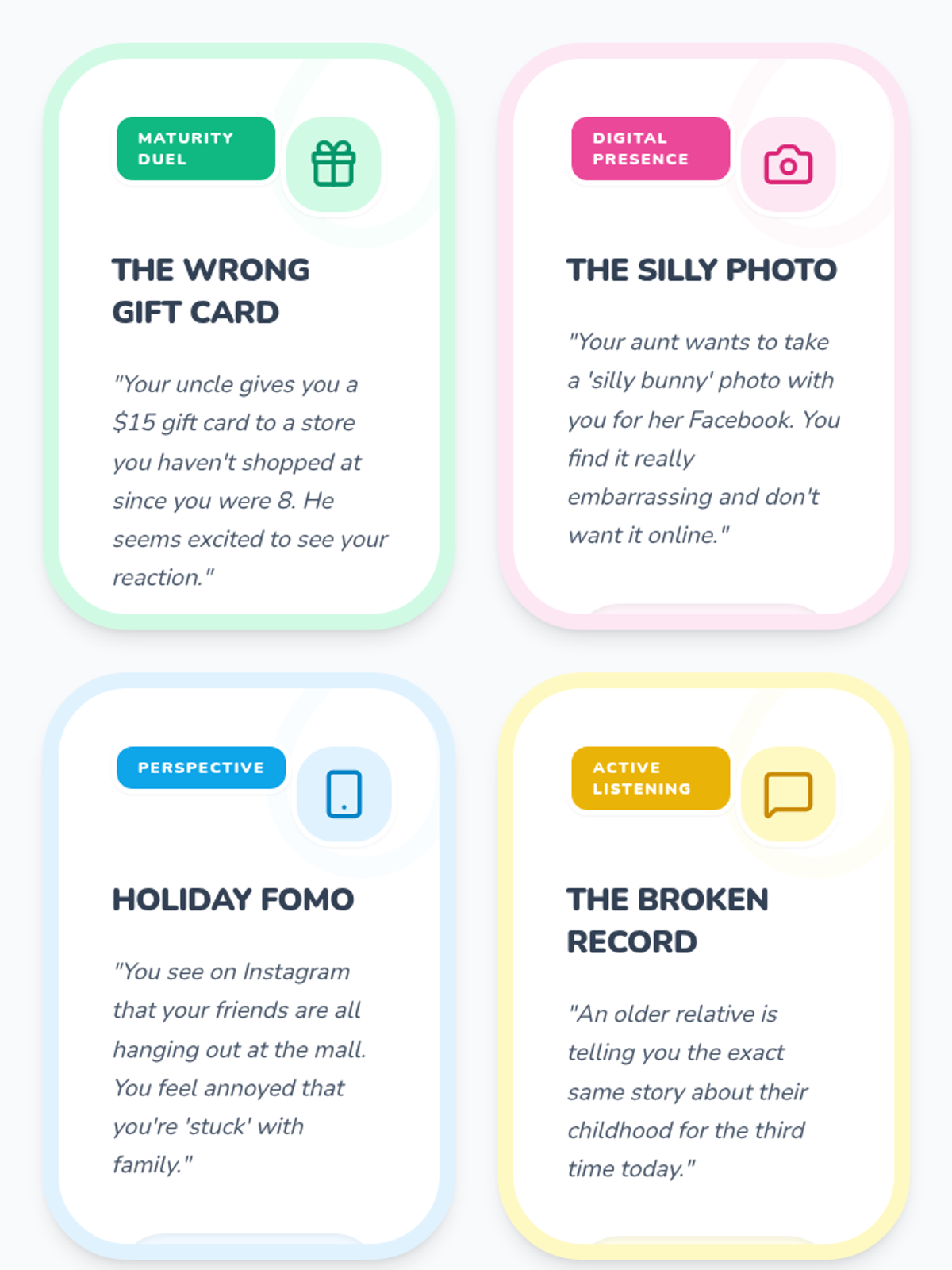
A set of 8 social skills task cards redesigned for middle school students, focusing on digital etiquette, social media boundaries, maturity, and complex family dynamics. Now featuring a heavy Easter theme with eggs and pastel borders.
An expanded slide deck that includes 8 scenario practice slides based on the task cards. Each practice slide features a tricky spring situation and two identical-looking choices for group discussion. Redesigned with a heavy Easter theme and optimized font sizes for visibility. All scenario prompts and options have been resized to ensure they fit correctly within the slides. All text is at least 24px (text-2xl).
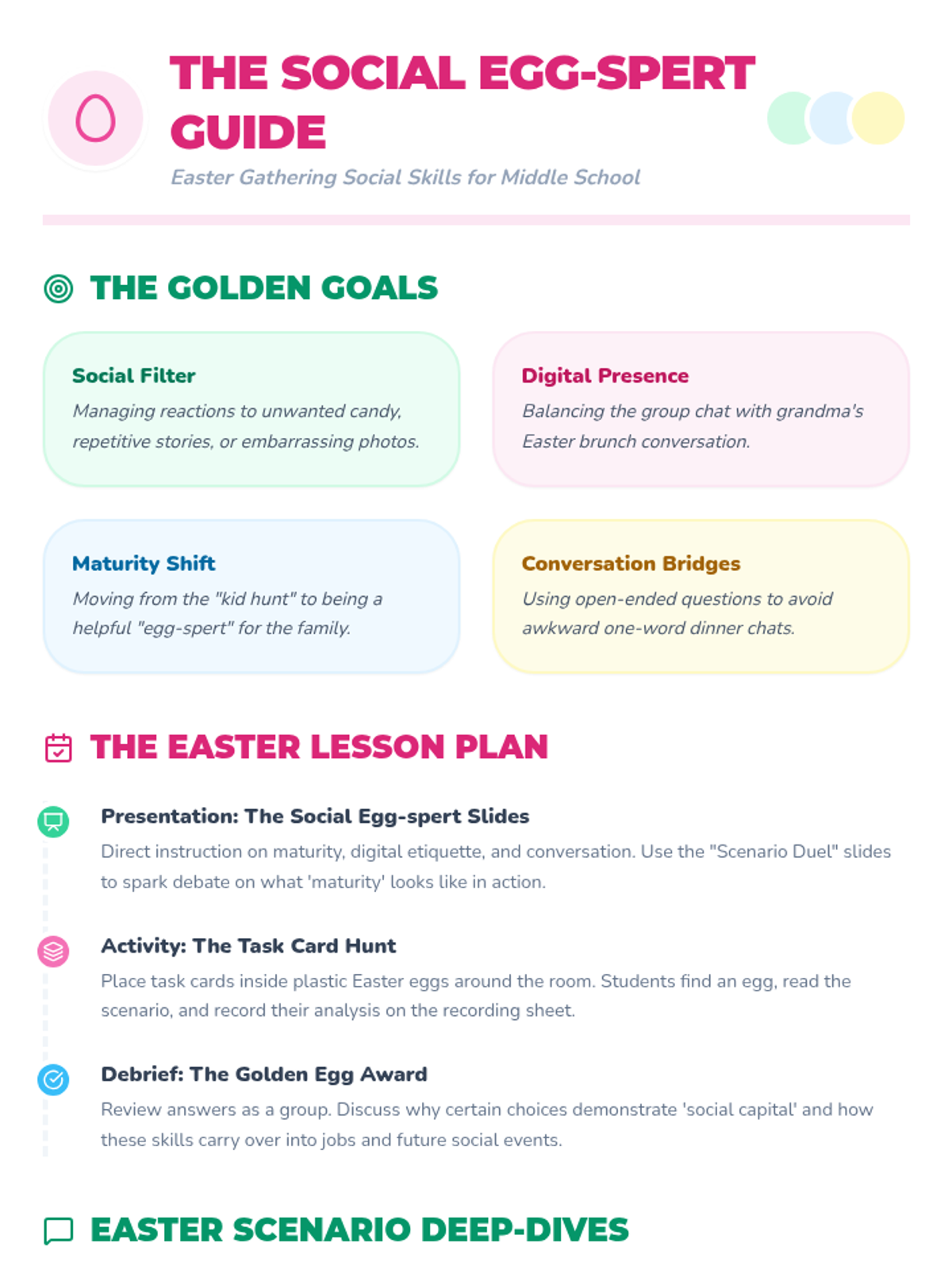
A teacher-facing guide outlining the learning objectives and facilitation strategies for the Spring Social Skills lesson. Redesigned with a heavy Easter theme (eggs, pastels, and terminology) for middle schoolers.
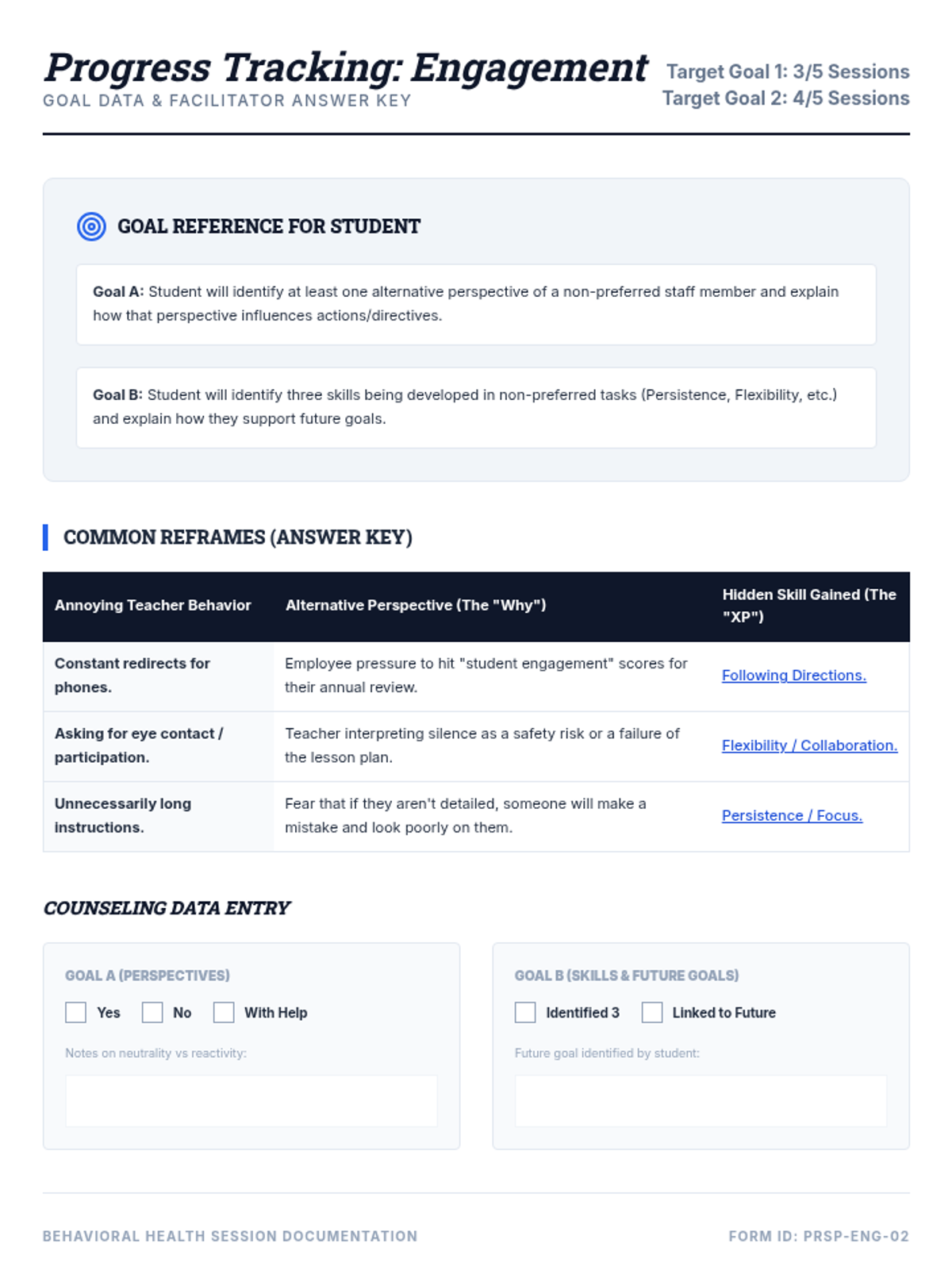
A tracking sheet and answer key for counselors to monitor student progress on perspective-taking and identifying skills (Persistence, Flexibility) developed during non-preferred tasks.
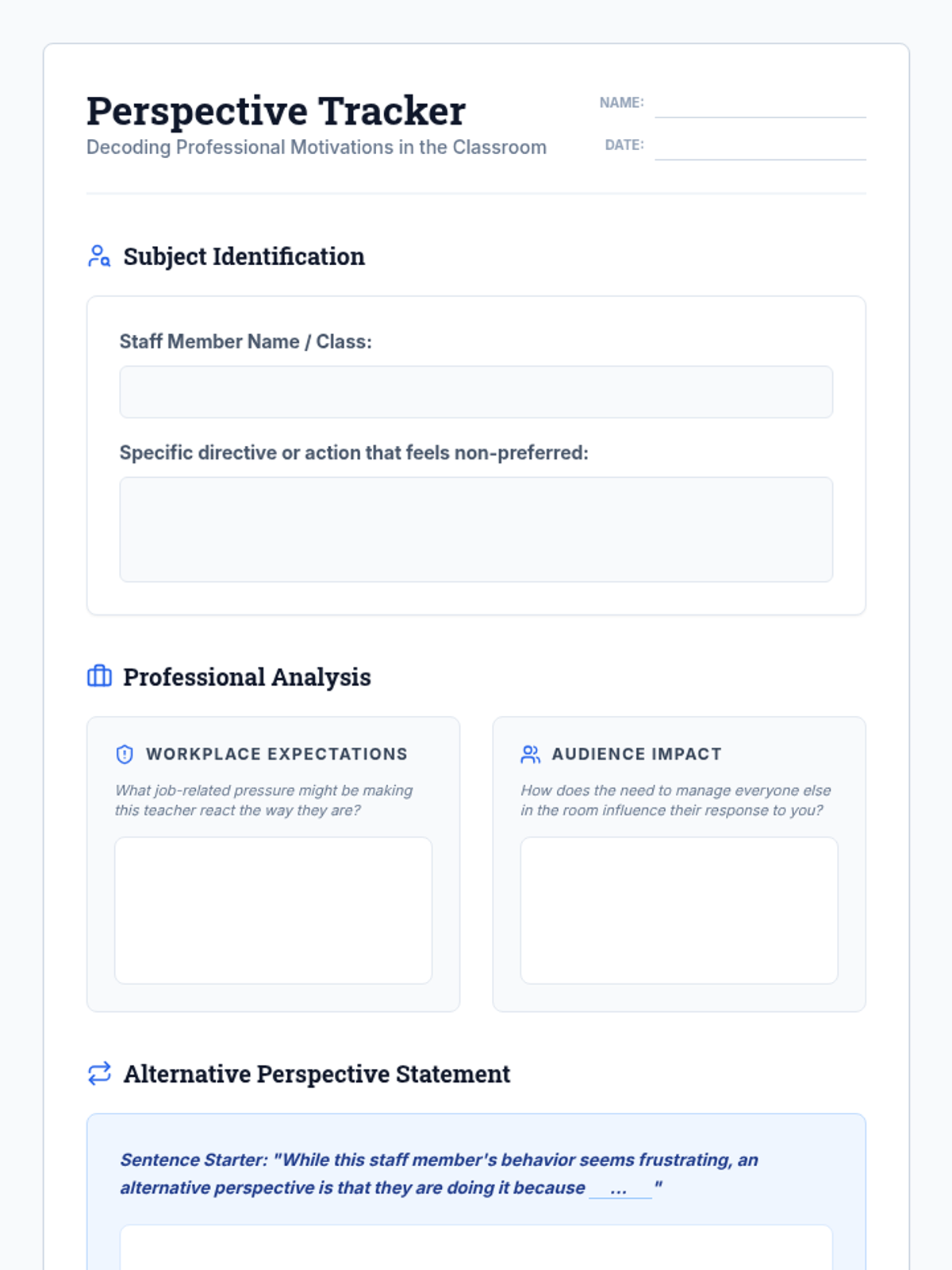
A student worksheet designed as a "Director's Script Organizer" to help students analyze staff member motivations and perspectives.
A presentation that reframes "annoying" staff behavior and focuses on the high-value skills (Persistence, Flexibility) students build by choosing to engage.
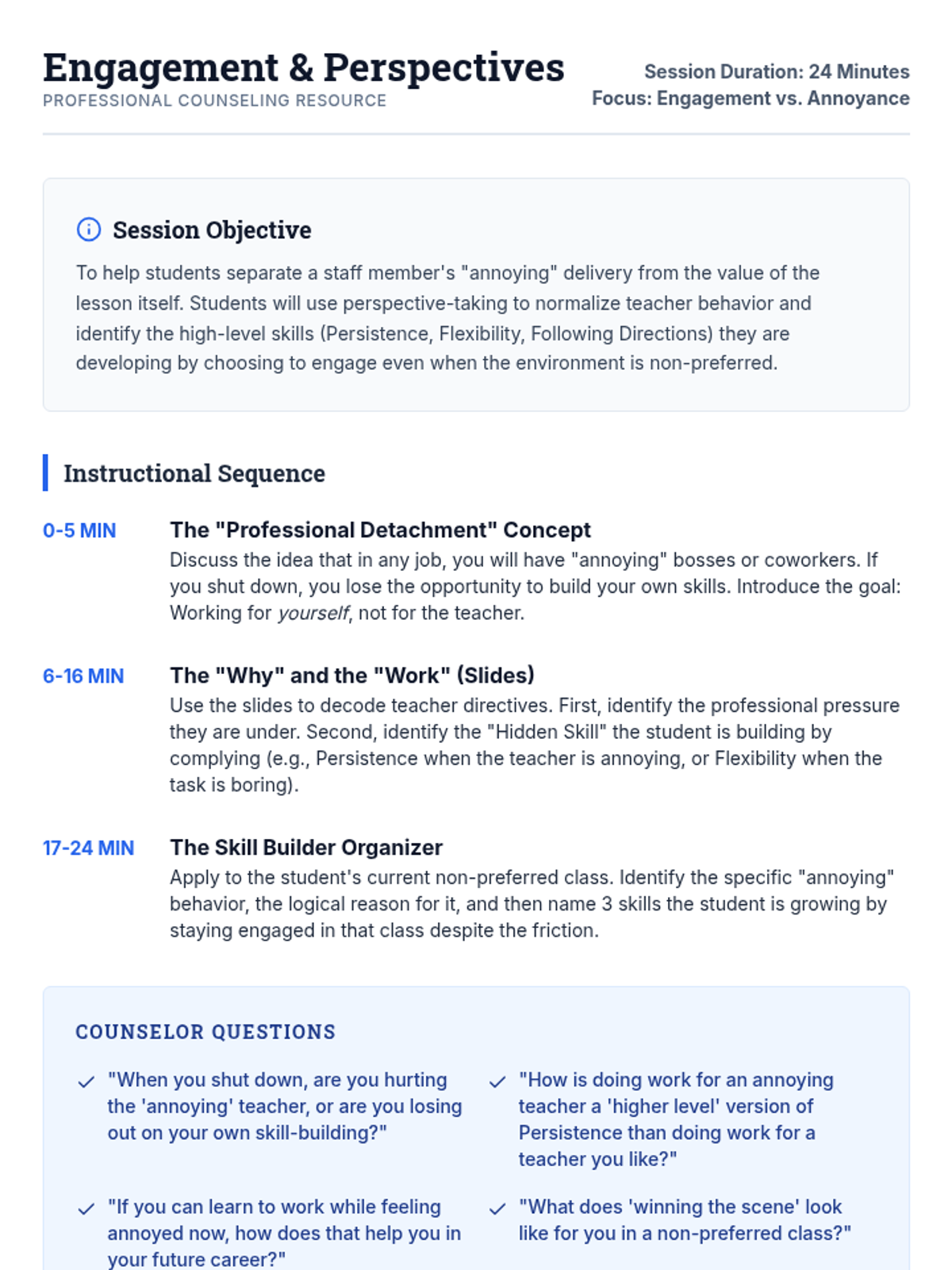
A facilitator's guide for a 24-minute counseling session focused on engaging in lessons despite feeling "annoyed" by staff, by identifying professional perspectives and personal skill-building.
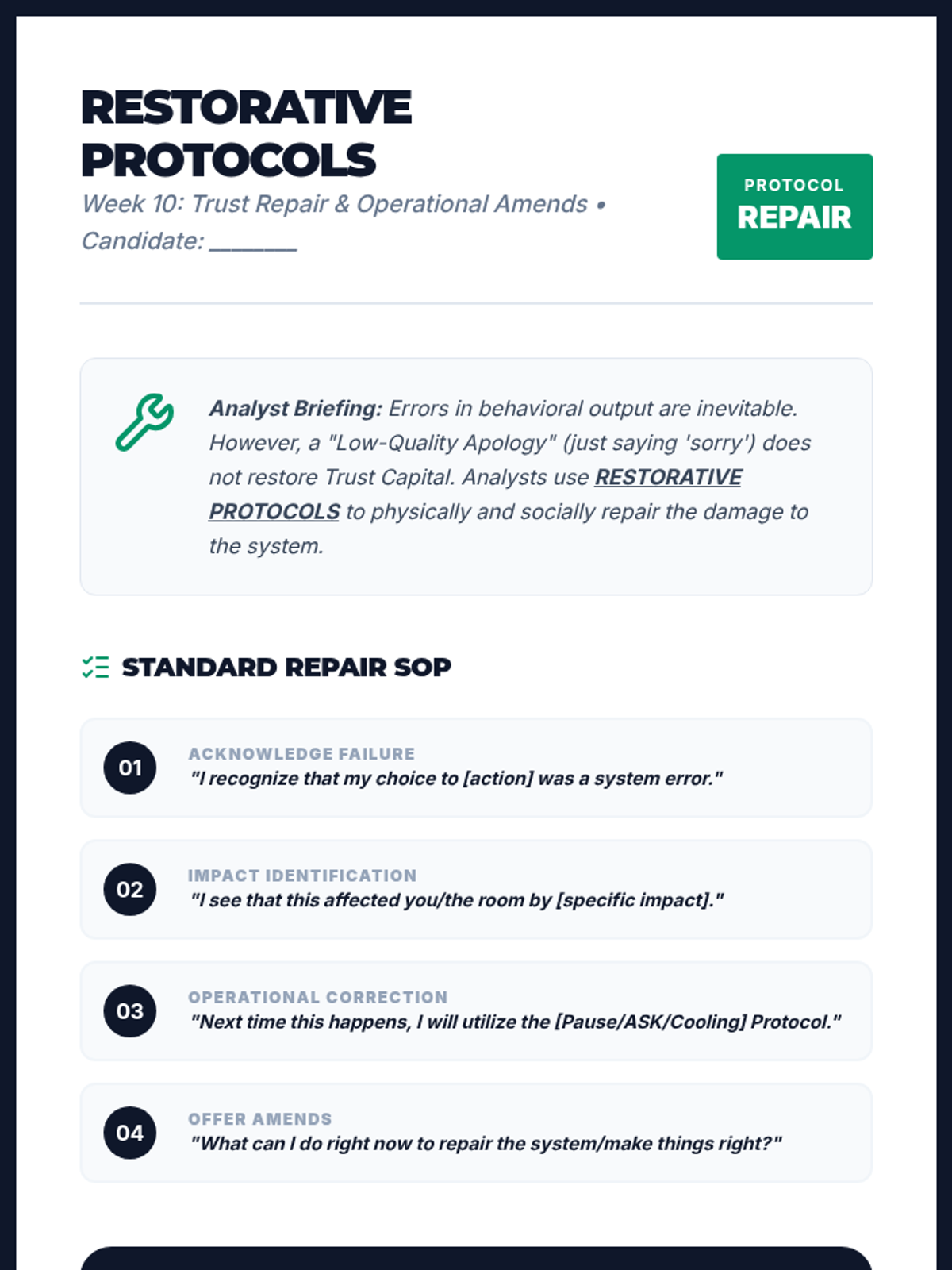
A Week 10 worksheet teaching restorative justice and the steps of a meaningful apology, moving beyond a simple "sorry" to repair trust.
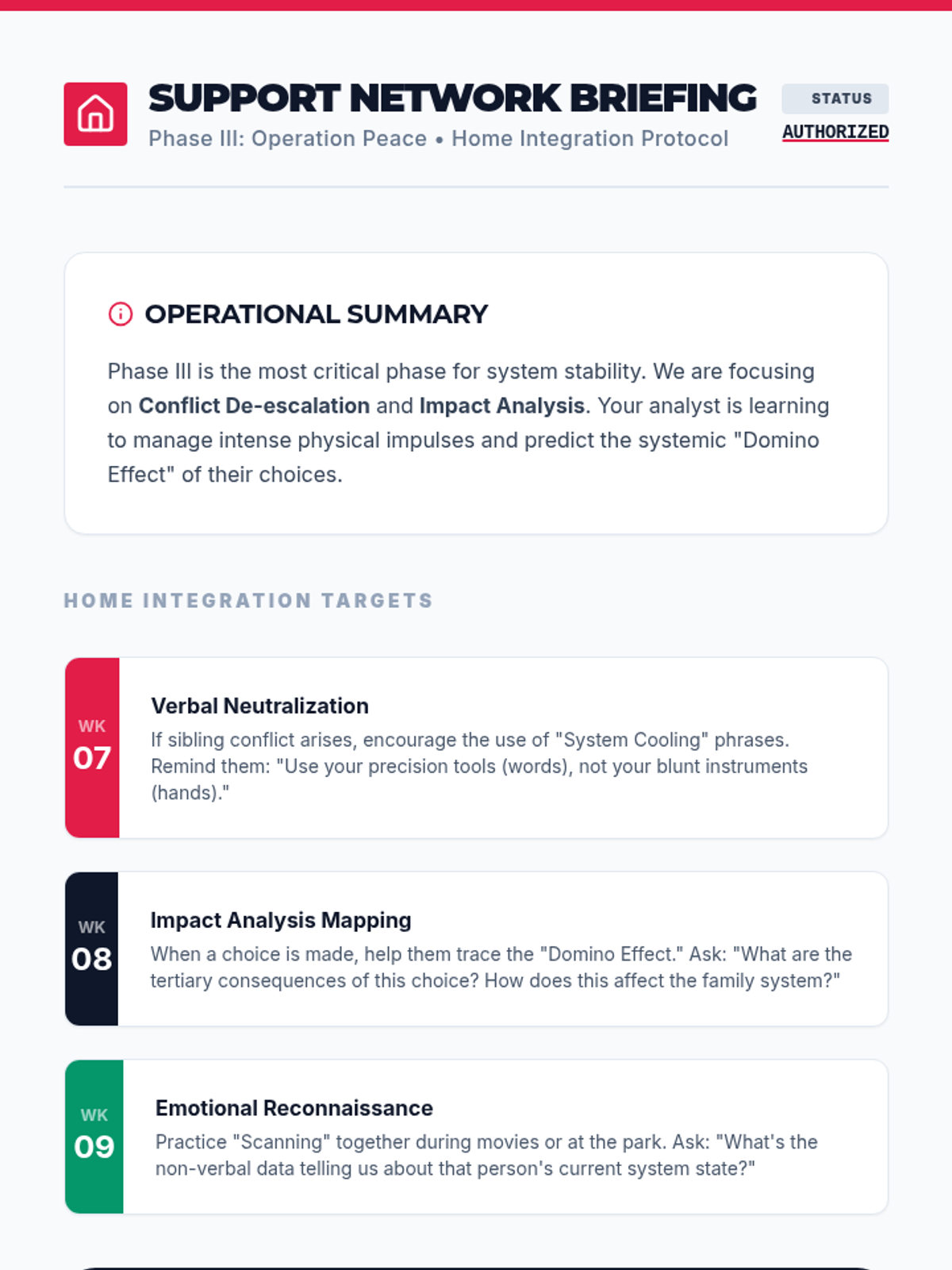
A parent guide for Weeks 7-9 of the Social Detective intervention, focusing on personal boundaries, cause-and-effect reasoning, and decoding non-verbal social clues.
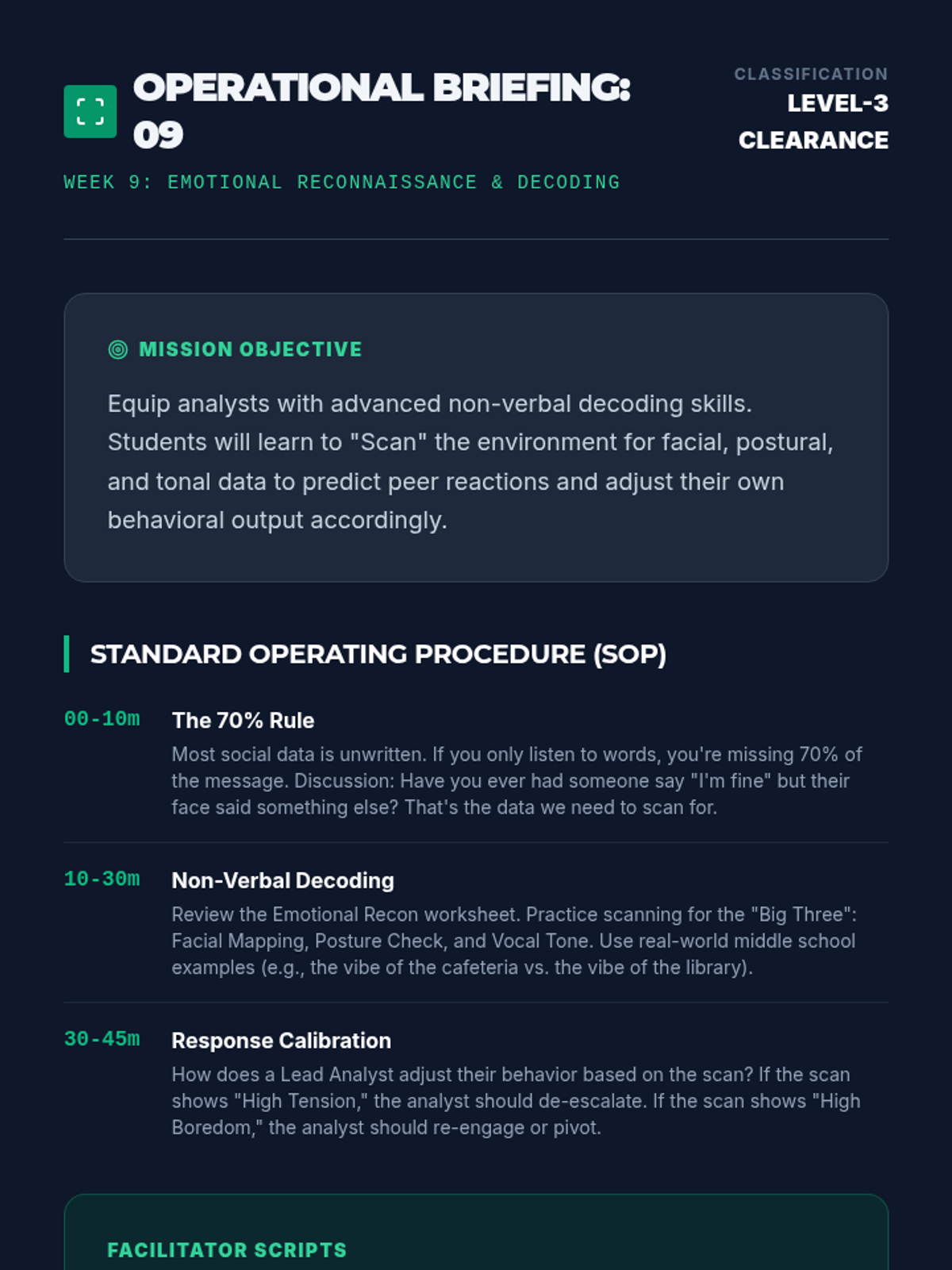
A Week 9 facilitator guide focused on decoding non-verbal social clues and responding with empathy and appropriate social actions.
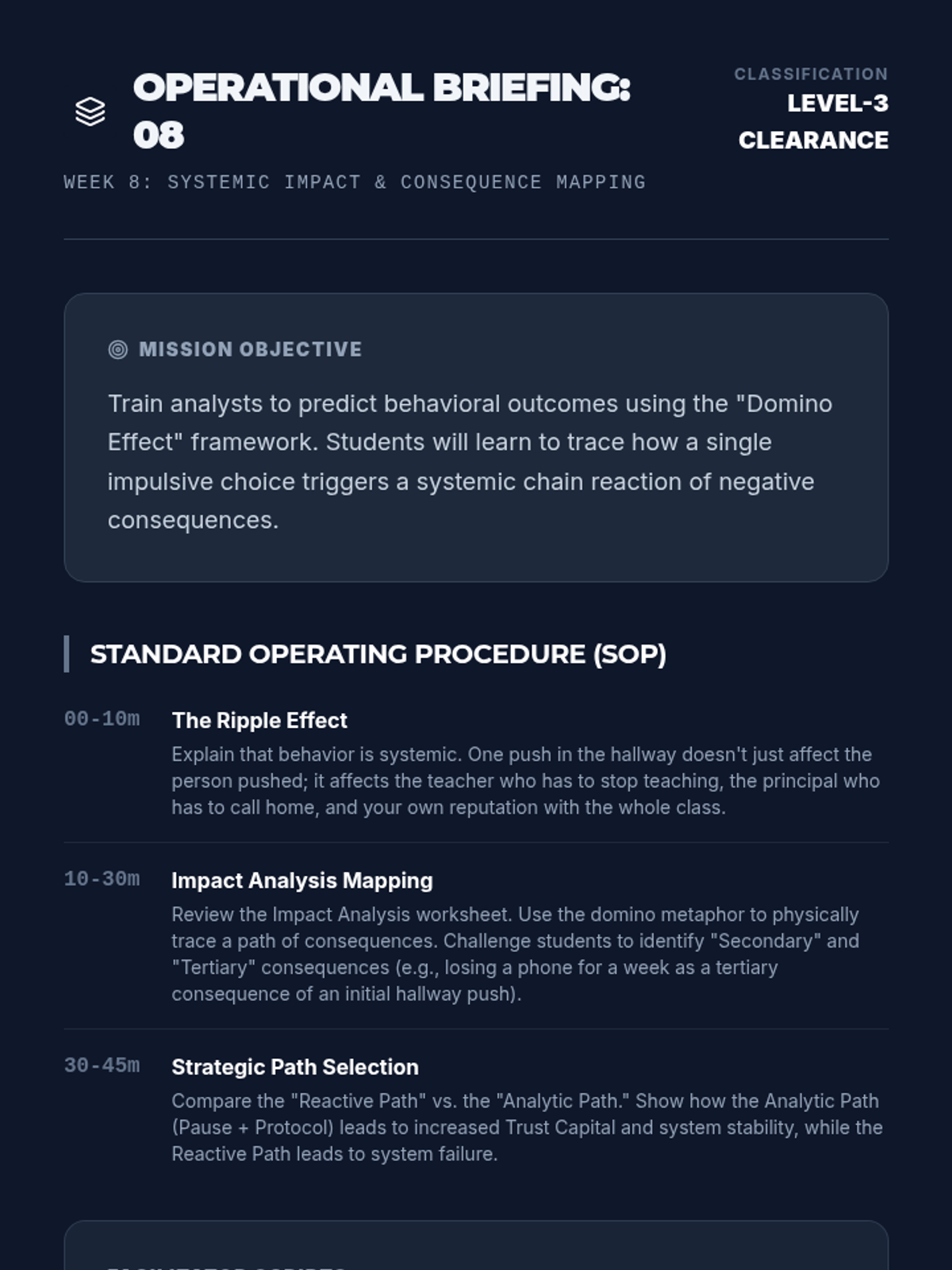
A Week 8 facilitator guide focusing on cause-and-effect reasoning, using the domino metaphor to help students predict behavioral outcomes.
A revised 10-slide presentation using simple, concrete language to teach students about three zones of control: In My Control, May be in My Control, and Out of My Control. All violent or aggressive metaphors have been removed.
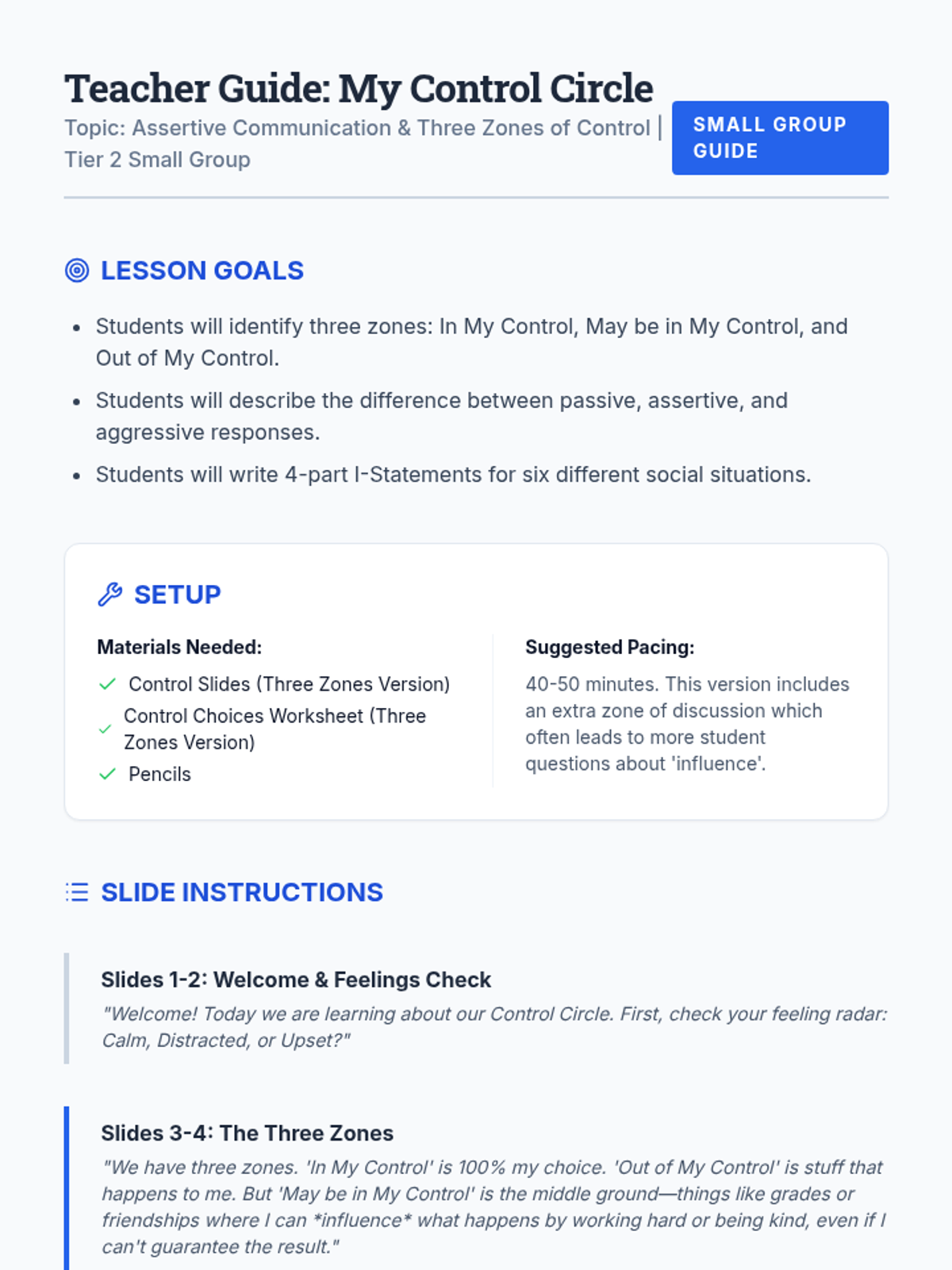
A revised teacher guide matching the three-zone model (In Control, May be in Control, Out of Control) and updated for the 6 practice scenarios.
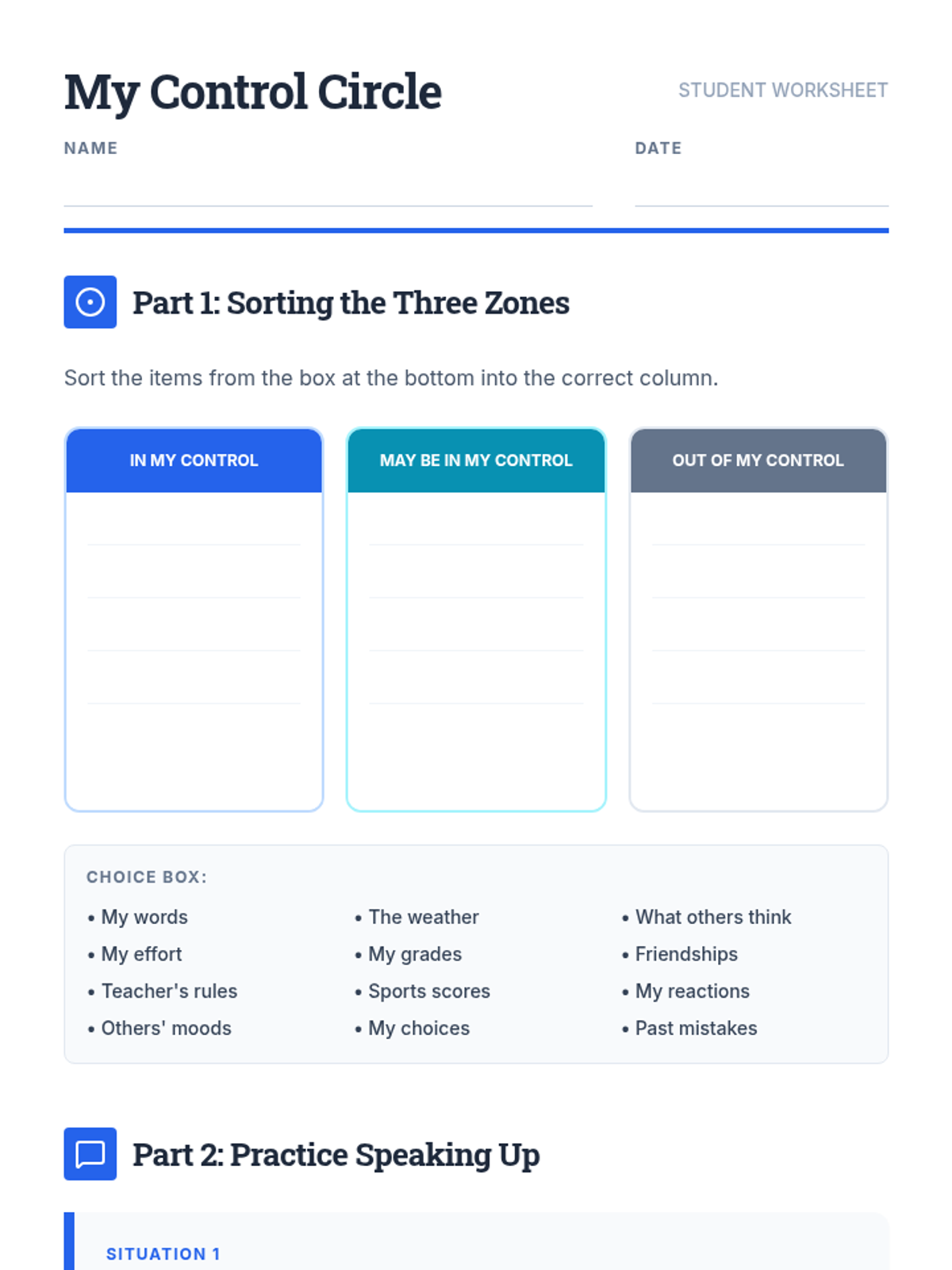
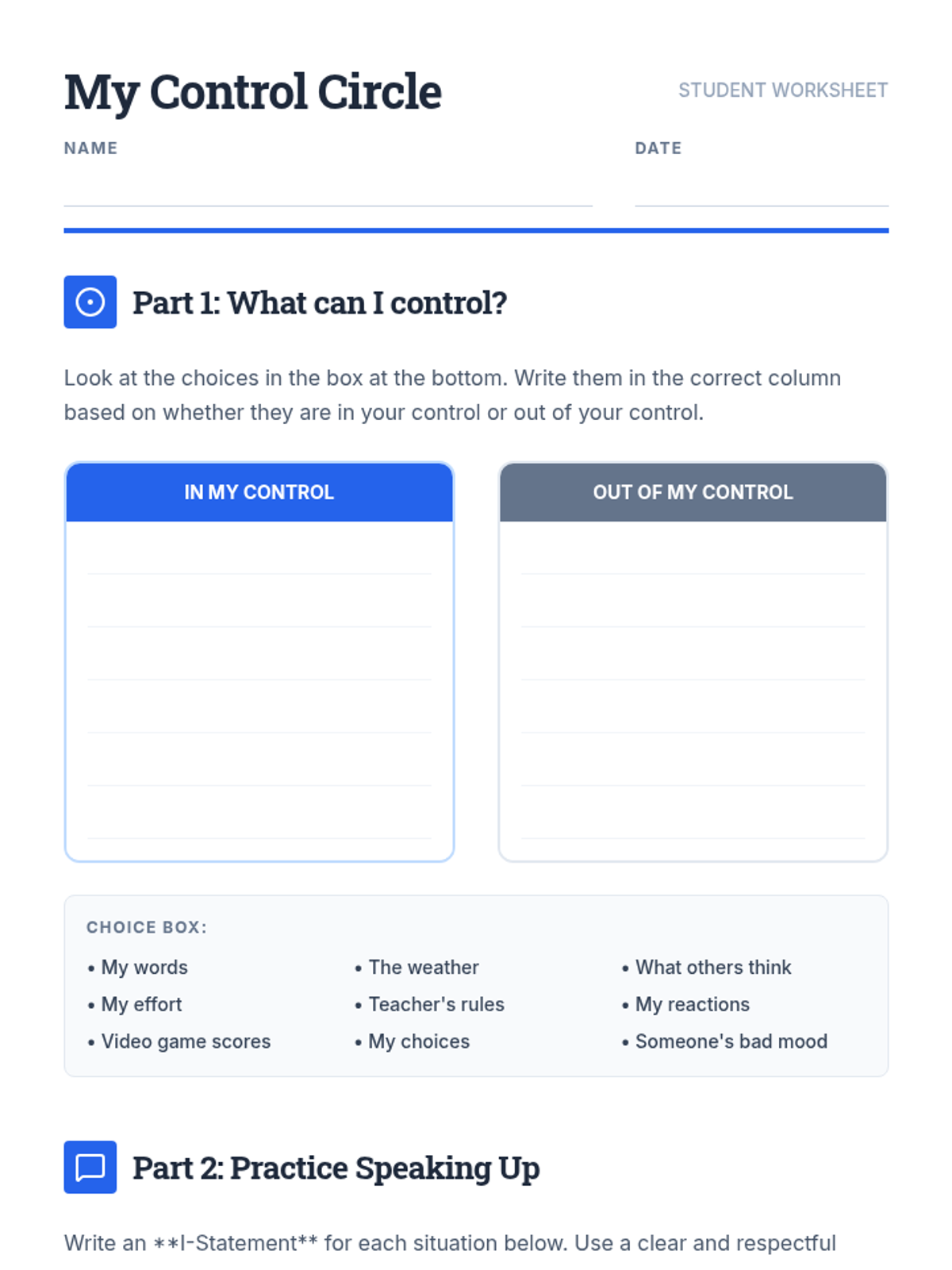
A concrete worksheet for 6th graders to practice identifying things in their control, what may be in their control, and writing assertive I-statements.
A revised 10-slide presentation using simple, concrete language to teach students about three zones of control: In My Control, May be in My Control, and Out of My Control.
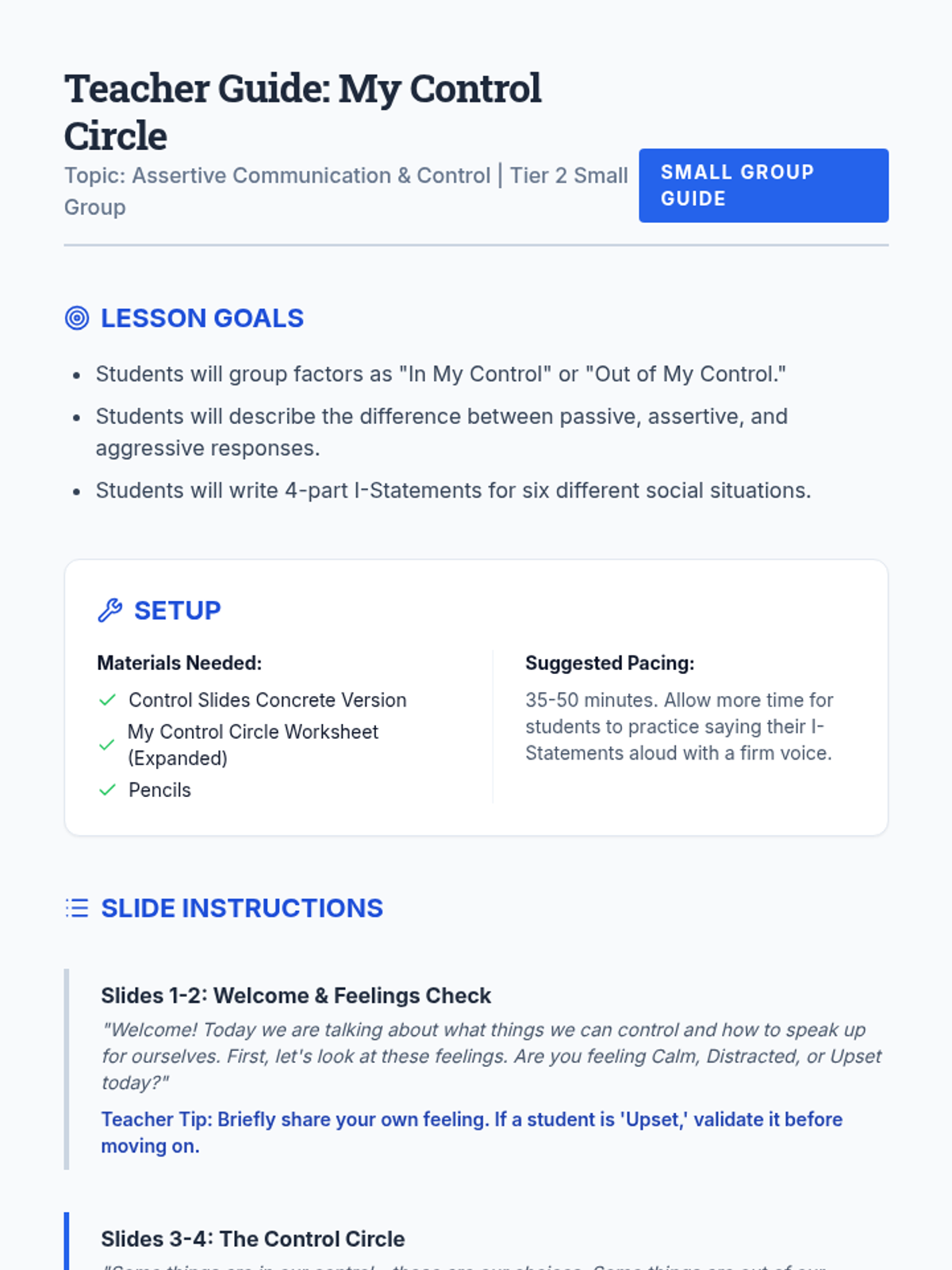
A revised teacher guide matching the concrete, analogy-free version of the control and assertiveness lesson, updated to include 6 practice situations.
An expanded worksheet for 6th graders with 6 practice situations for identifying control and writing assertive I-statements without analogies.
A revised 10-slide presentation using simple, concrete language to teach students about what is in their control and how to use assertive I-statements without analogies.
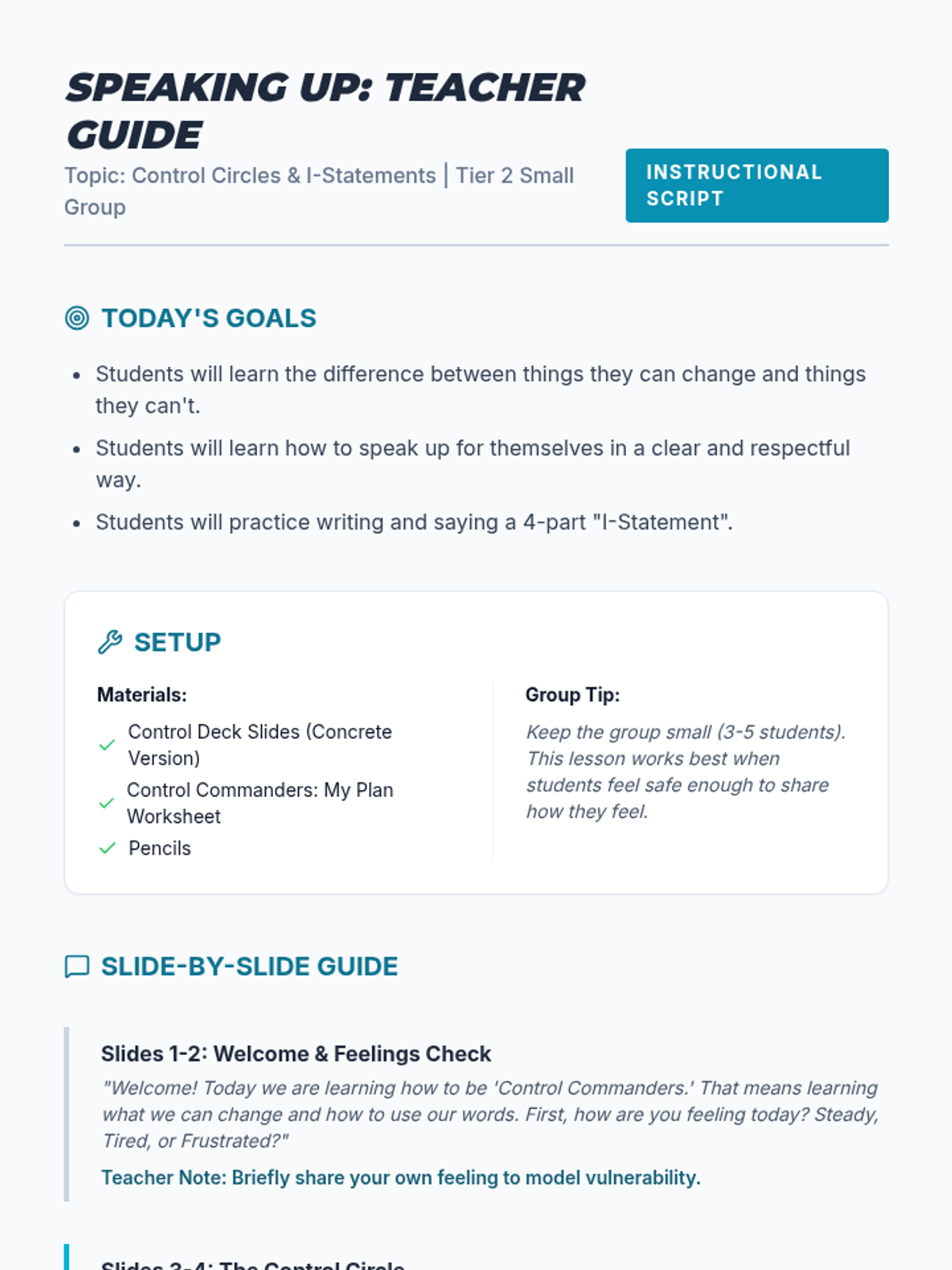
A revised facilitator guide for the Control Commanders lesson using more concrete language and matching the updated slide and worksheet versions.
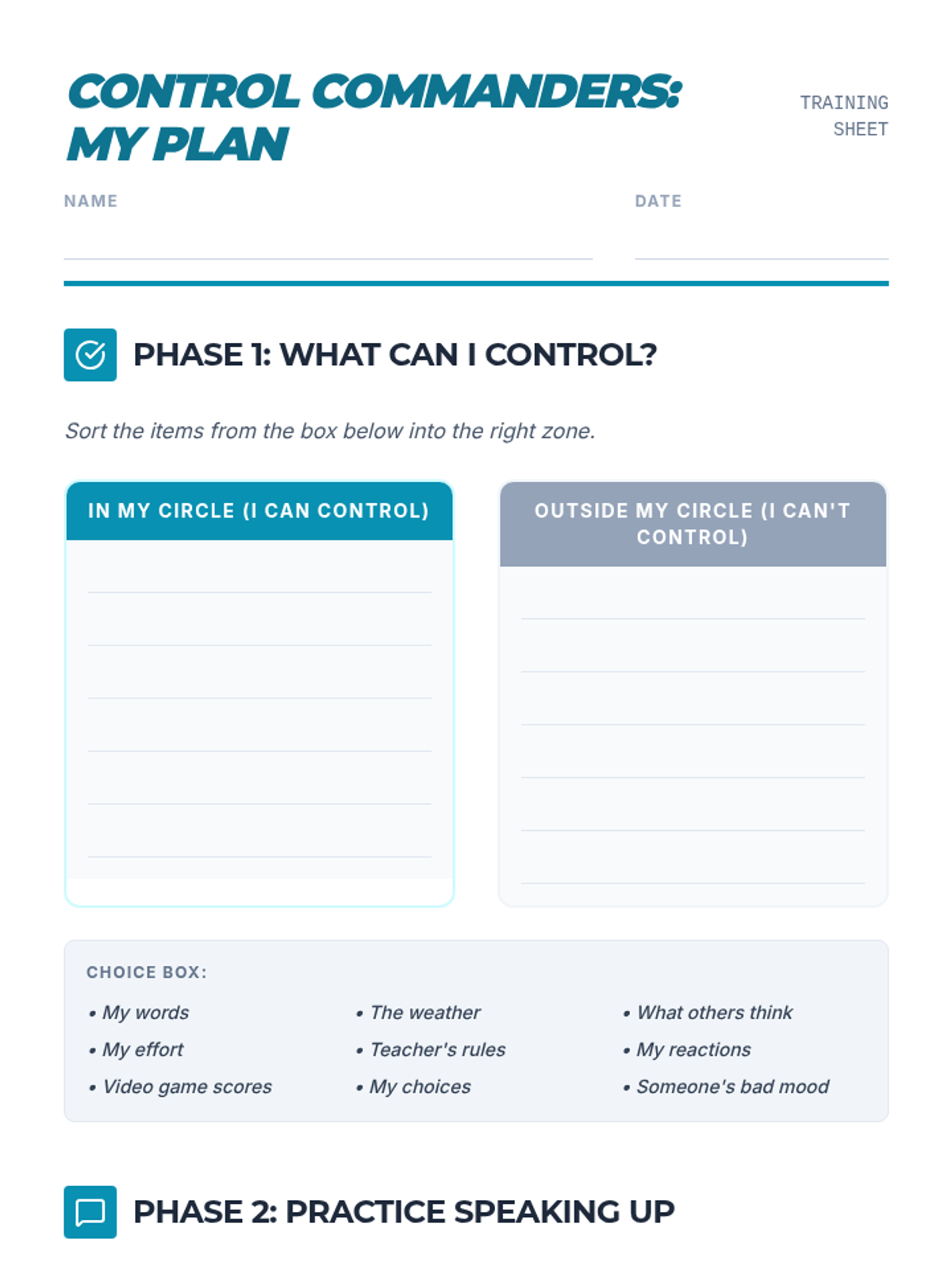
A revised graphic organizer for 6th grade students with concrete language to categorize control factors and practice drafting I-Statements.
A revised 10-slide presentation using more concrete, direct language to help 6th grade Tier 2 students understand control circles and I-Statements.
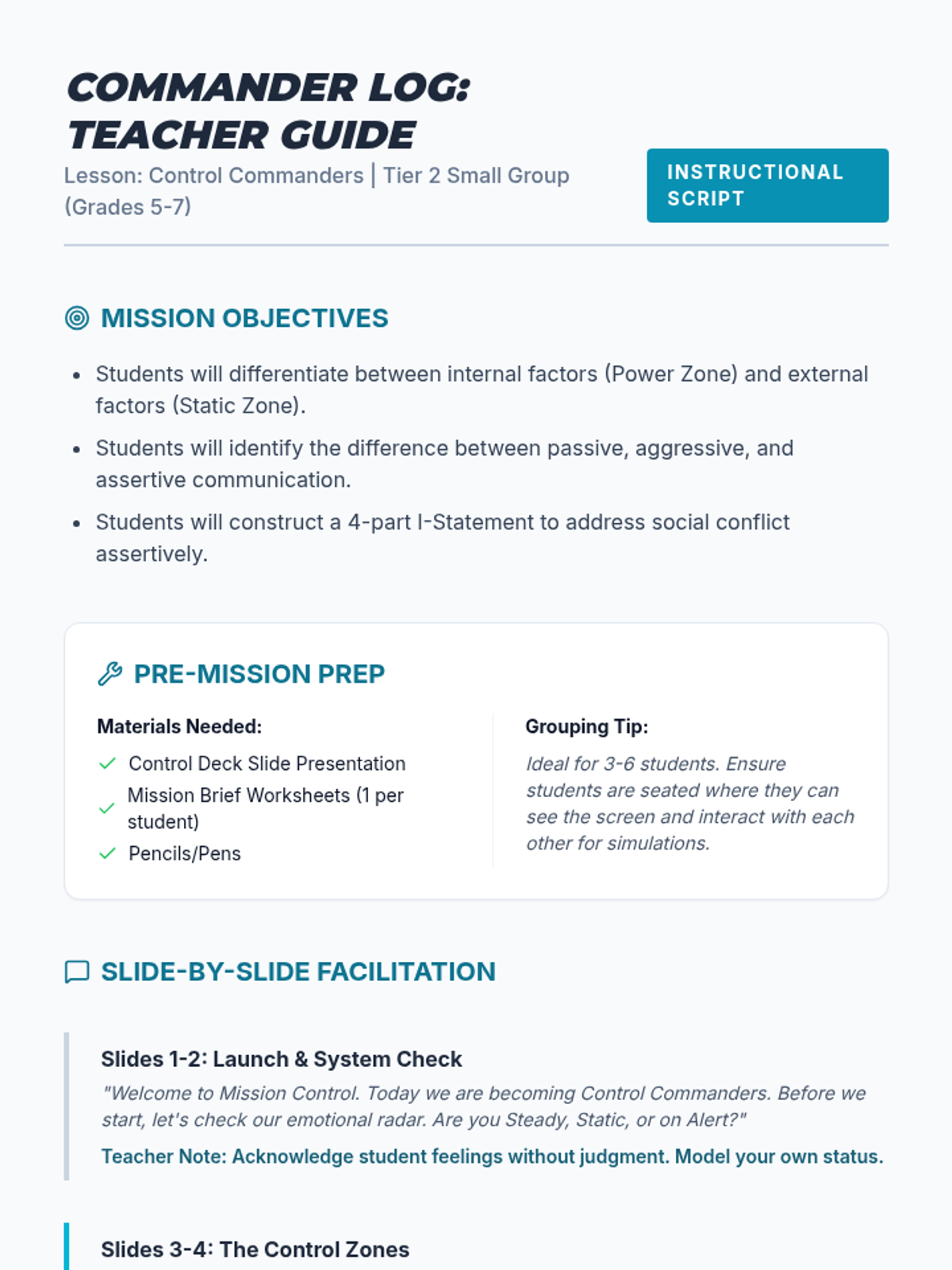
A facilitator guide for the Control Commanders lesson, providing slide-by-slide scripts, discussion prompts, and differentiation strategies for Tier 2 small groups.
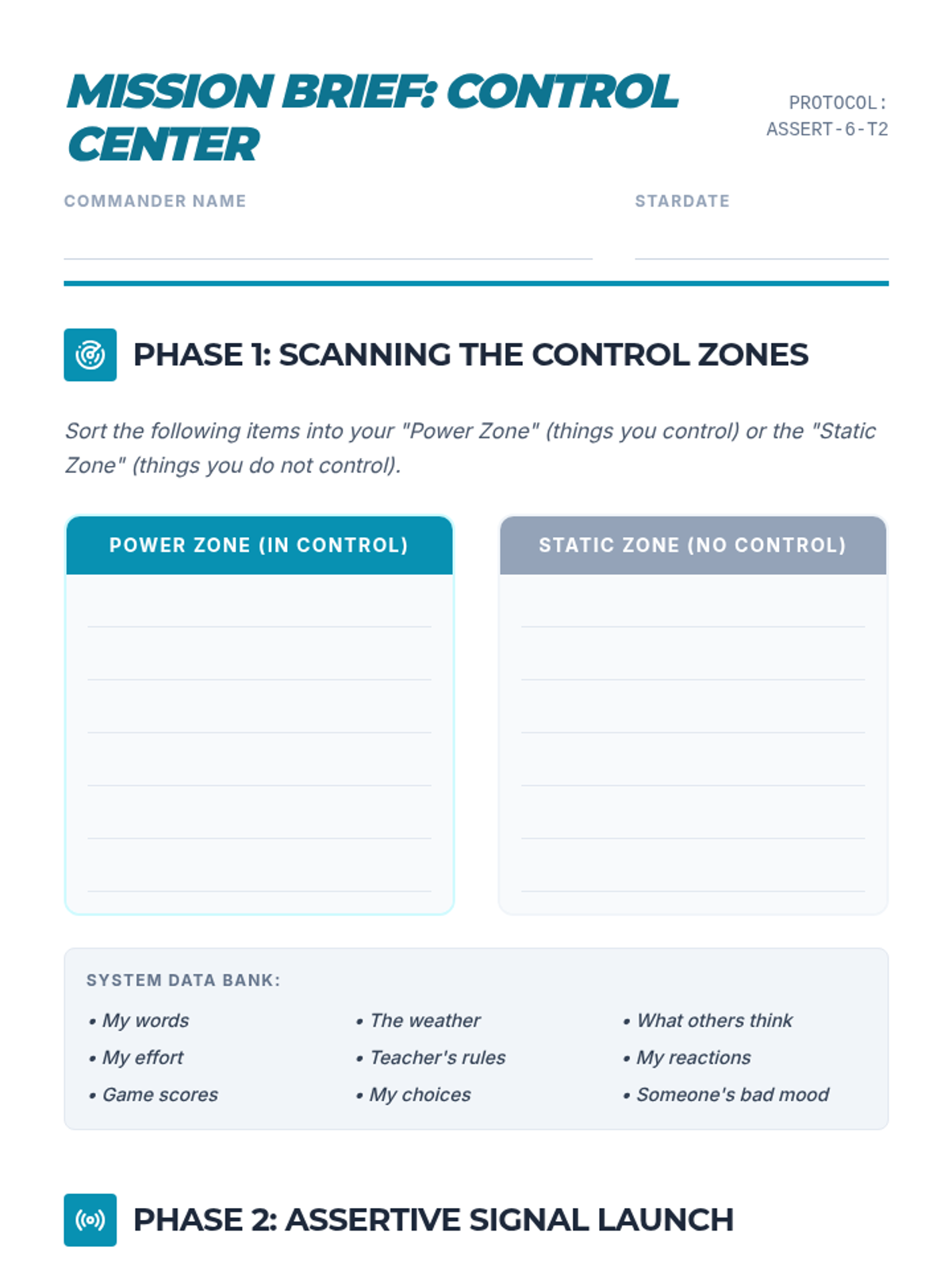
A graphic organizer for 6th grade students to categorize internal and external control factors and practice drafting I-Statements for social scenarios.
A 10-slide presentation using a high-tech "Mission Control" theme to teach students about internal vs. external control and the structure of assertive I-Statements.
Visual presentation for Lesson 3, introducing and exploring the four core human needs (Safety, Belonging, Respect, Autonomy) as drivers of conflict.
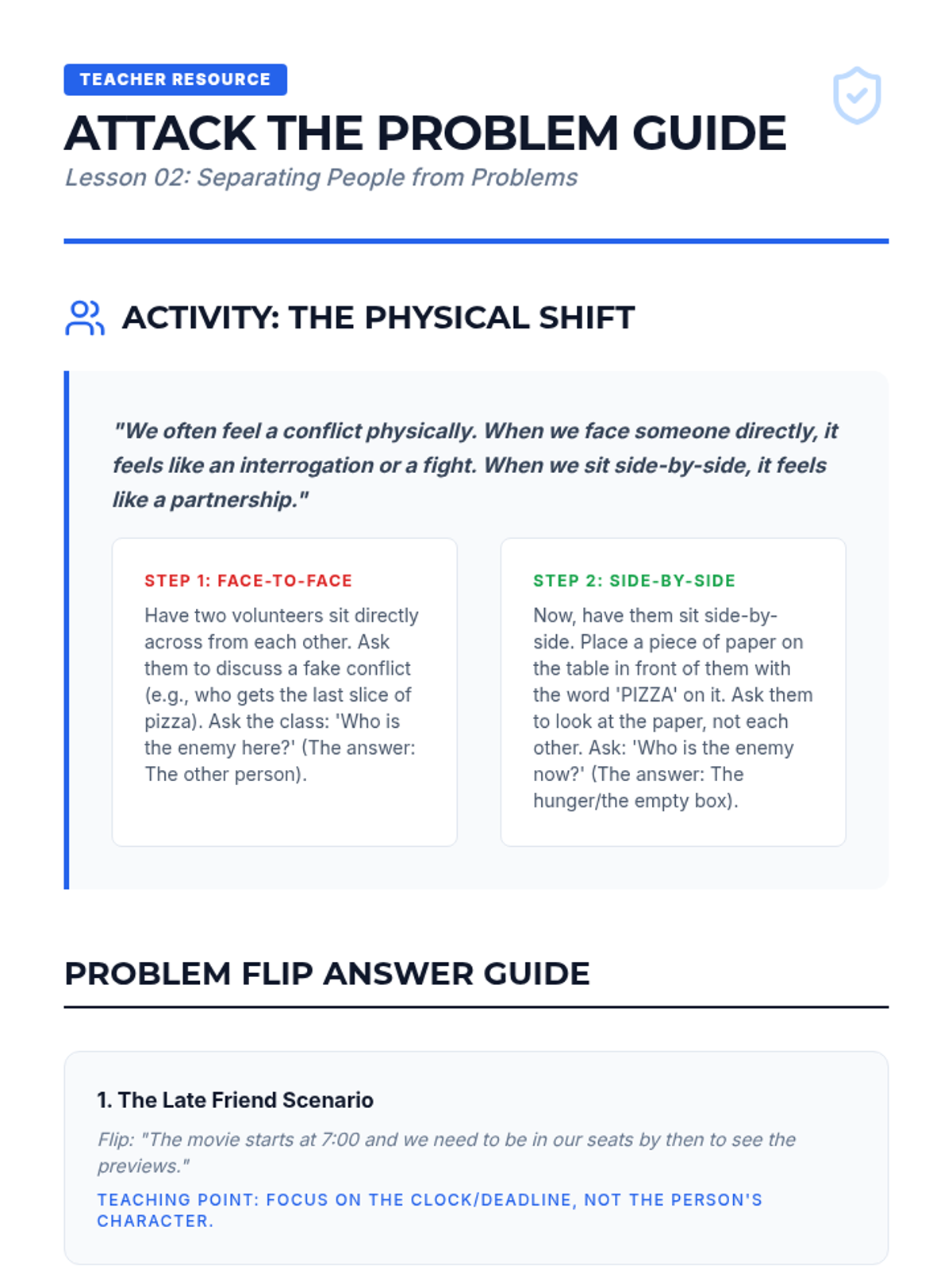
Teacher instructions for Lesson 2, including the physical side-by-side activity and an answer key for the Problem Flip Workshop.
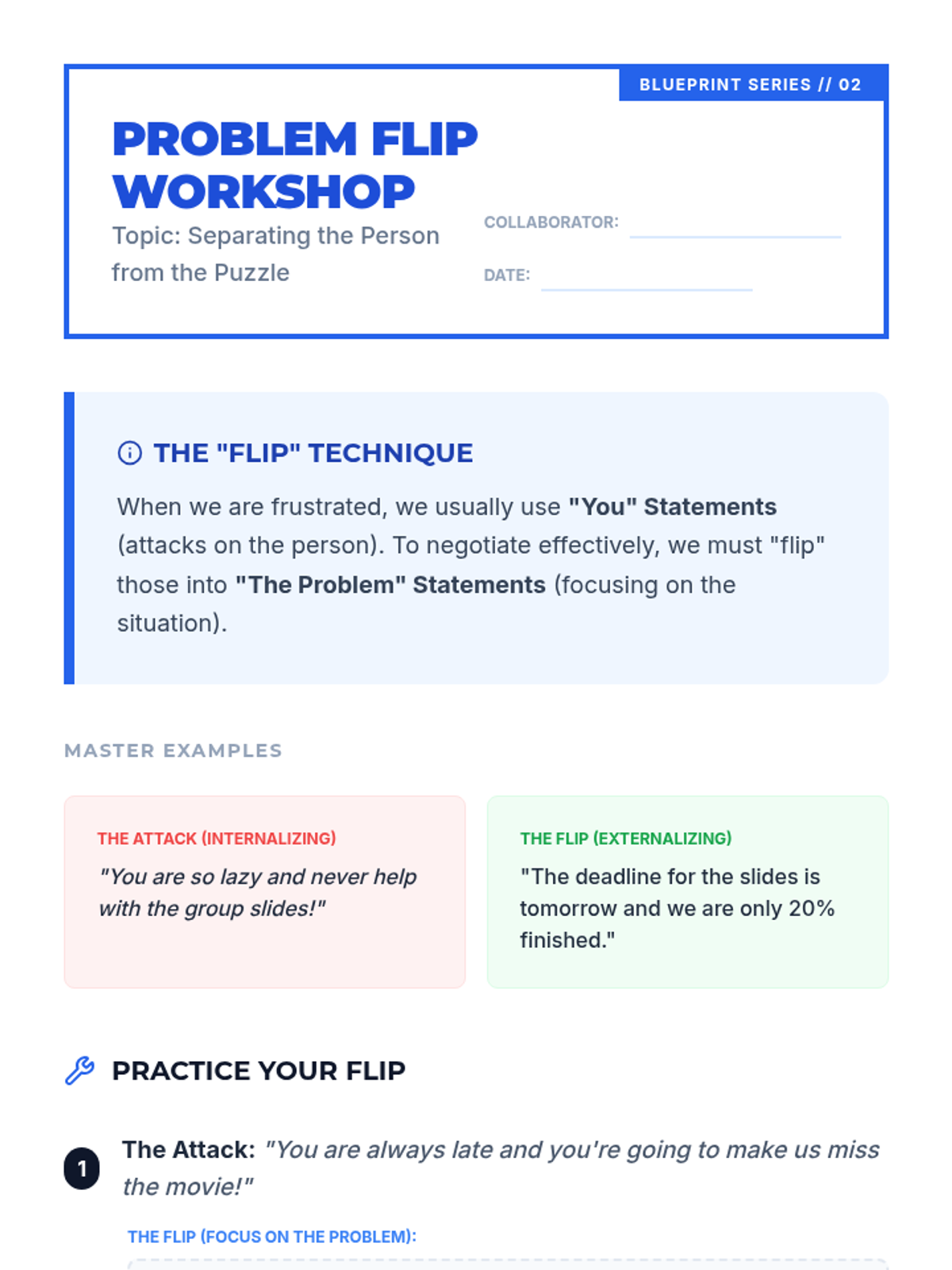
Student worksheet for practicing rephrasing personal attacks into objective problem statements using externalizing language.
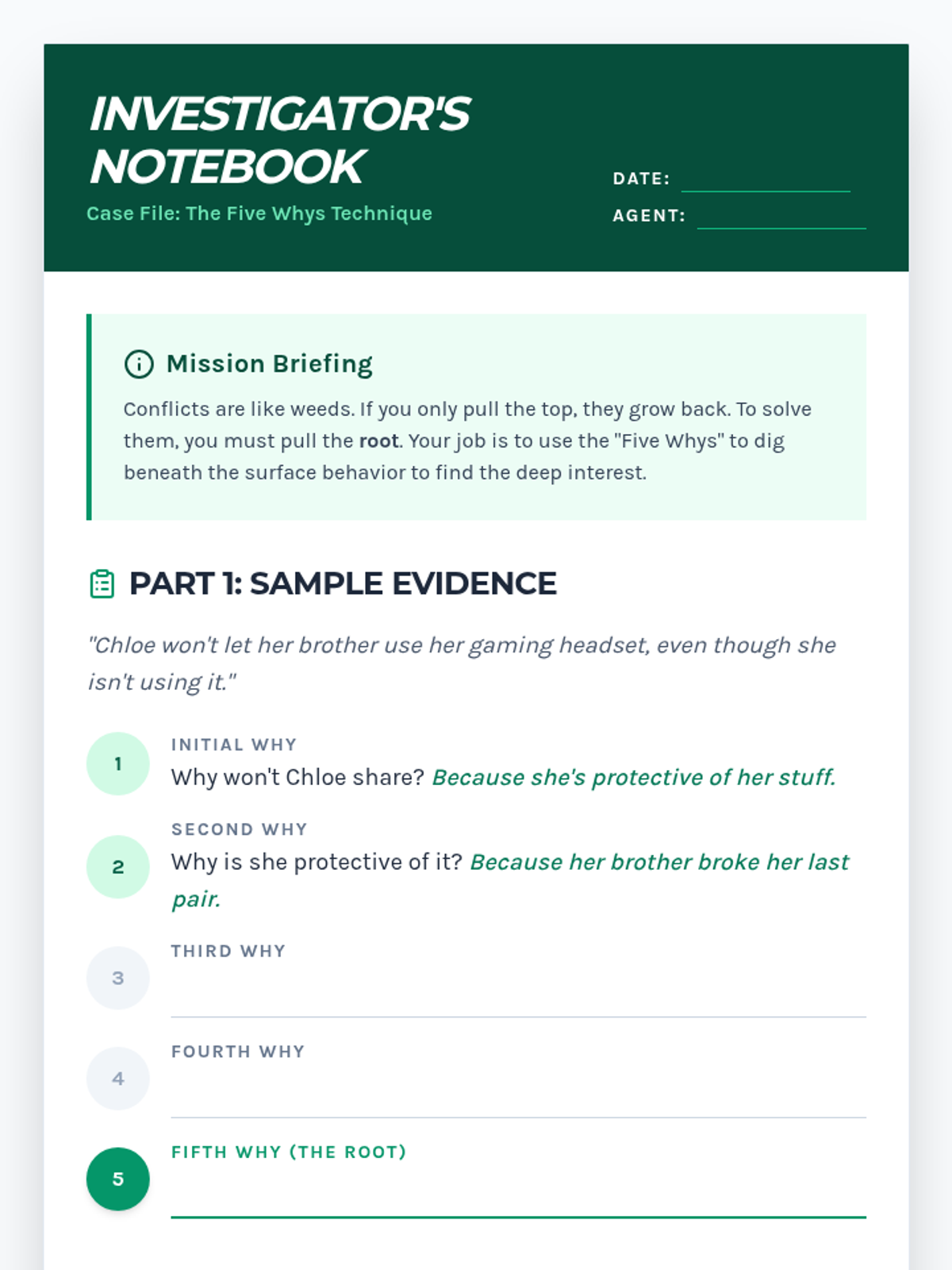
A detective-themed worksheet for students to practice the Five Whys technique, including a sample case and a partner interview section.
Visual aids for Lesson 2 explaining the difference between attacking people and attacking problems, including the physical shift and externalizing language.
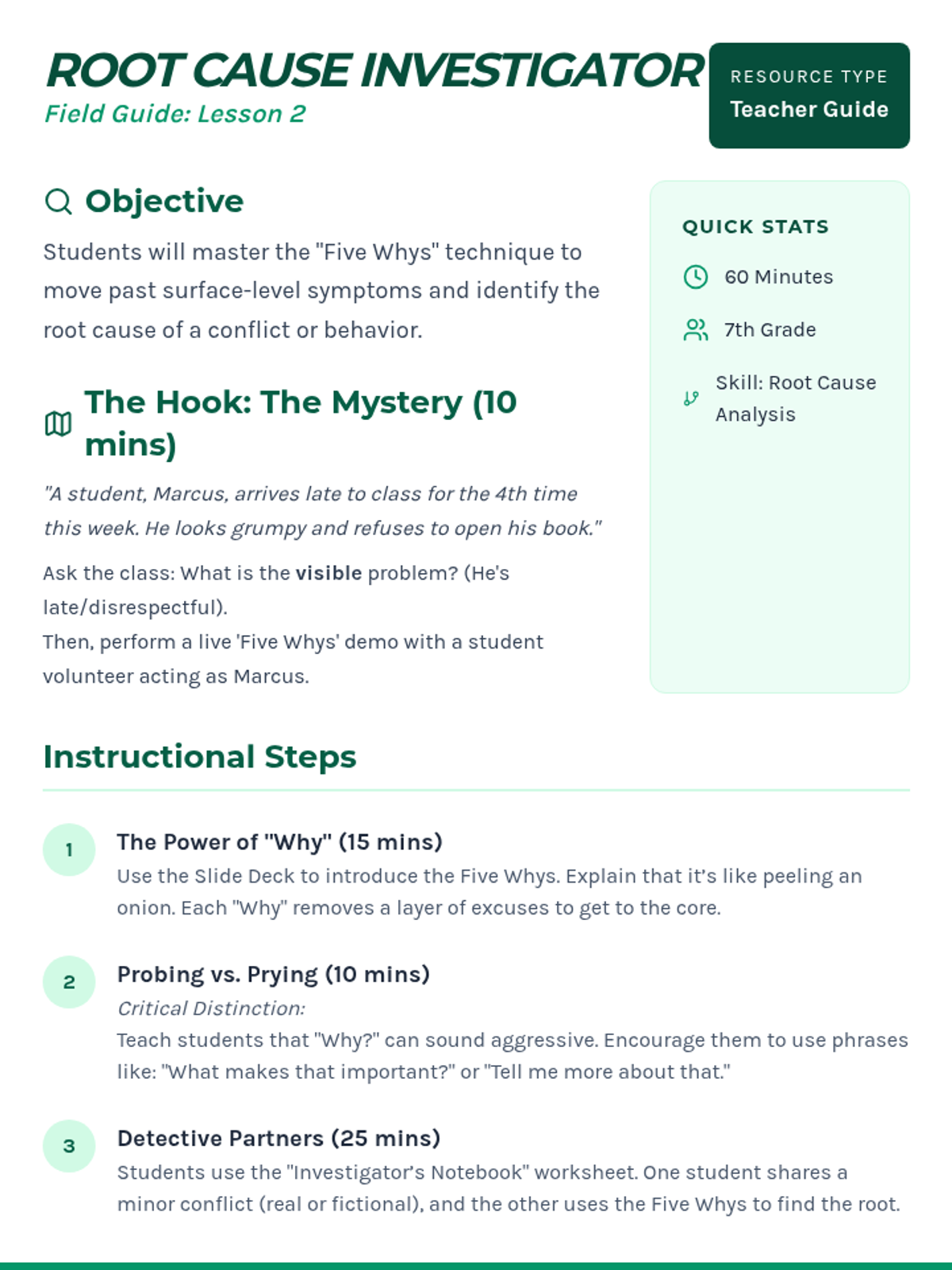
A guide for teachers to facilitate Lesson 2, including the 'Late Marcus' mystery example and tips for managing the Five Whys activity.
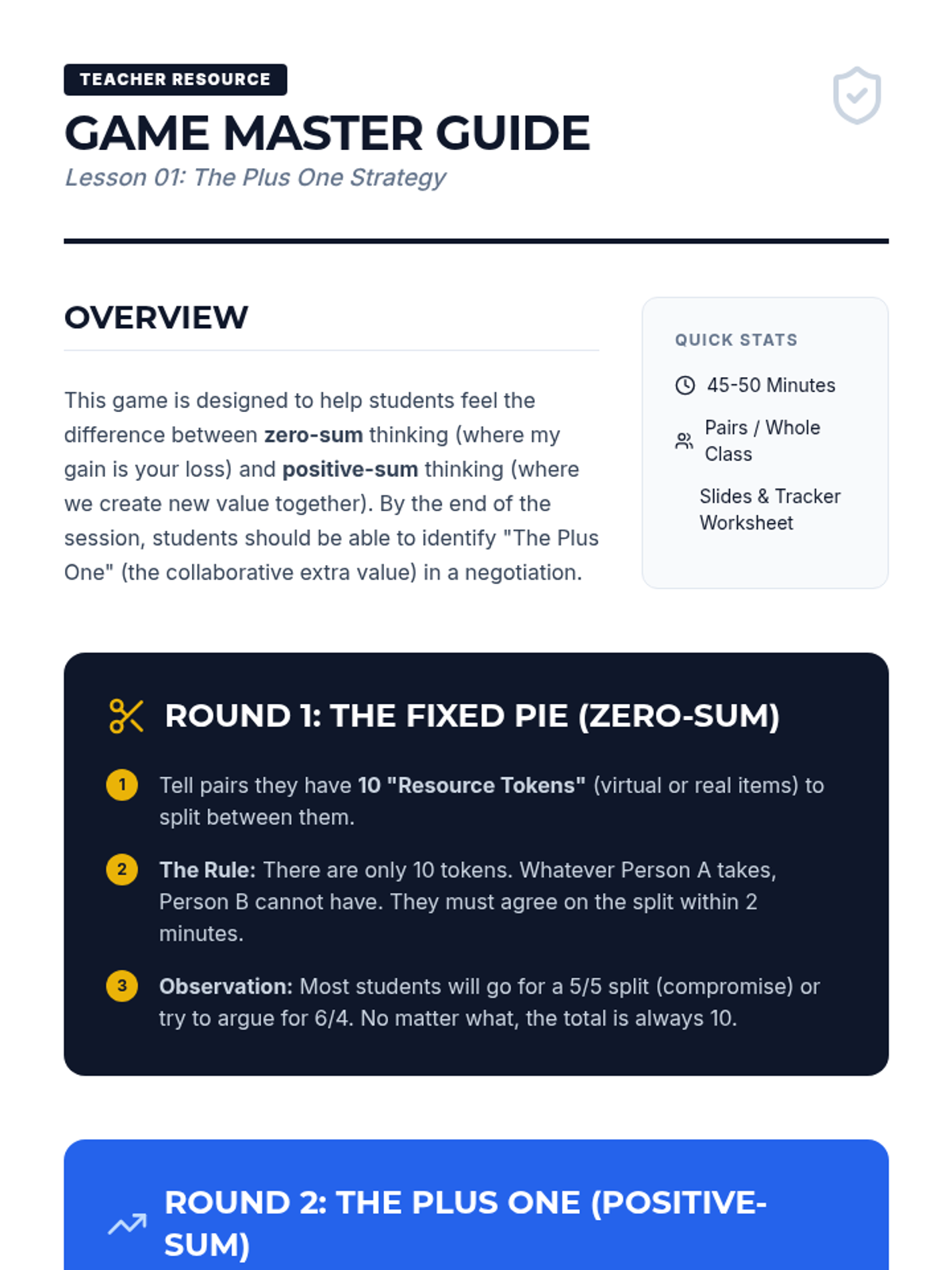
Teacher instructions for facilitating the trade game, including game rules, script points, and discussion prompts.
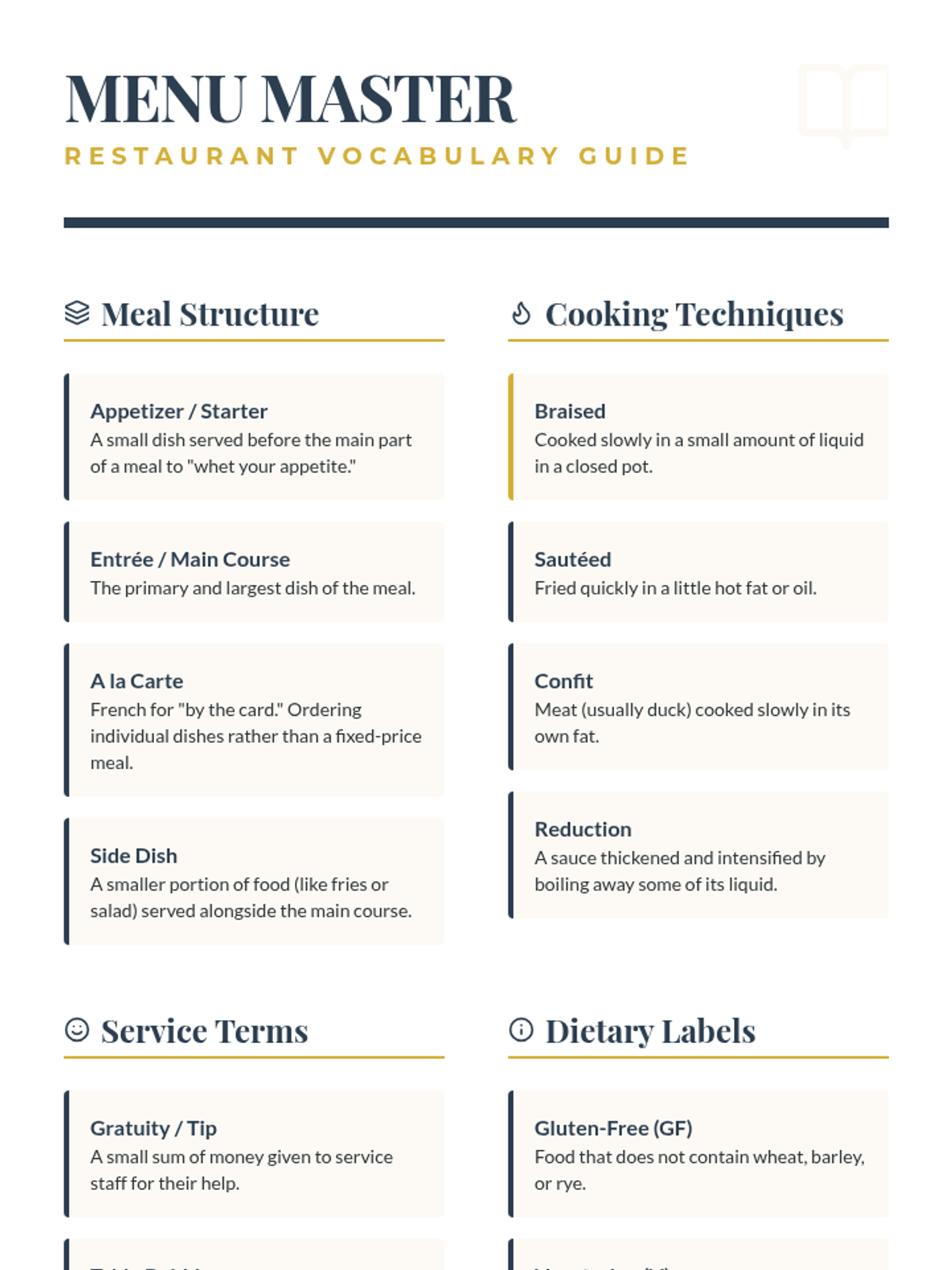
A vocabulary reference sheet for students to understand common restaurant terms, cooking styles, and dietary labels found on menus.
A comprehensive group worksheet that combines combined food order tracking, table total calculations (including tax and tip), group math challenges, and social etiquette reflections into a single multi-page document.
Instructional slide deck for the Budget Bites lesson, covering the 90-minute agenda, hidden costs (tax and tip), and restaurant social etiquette.
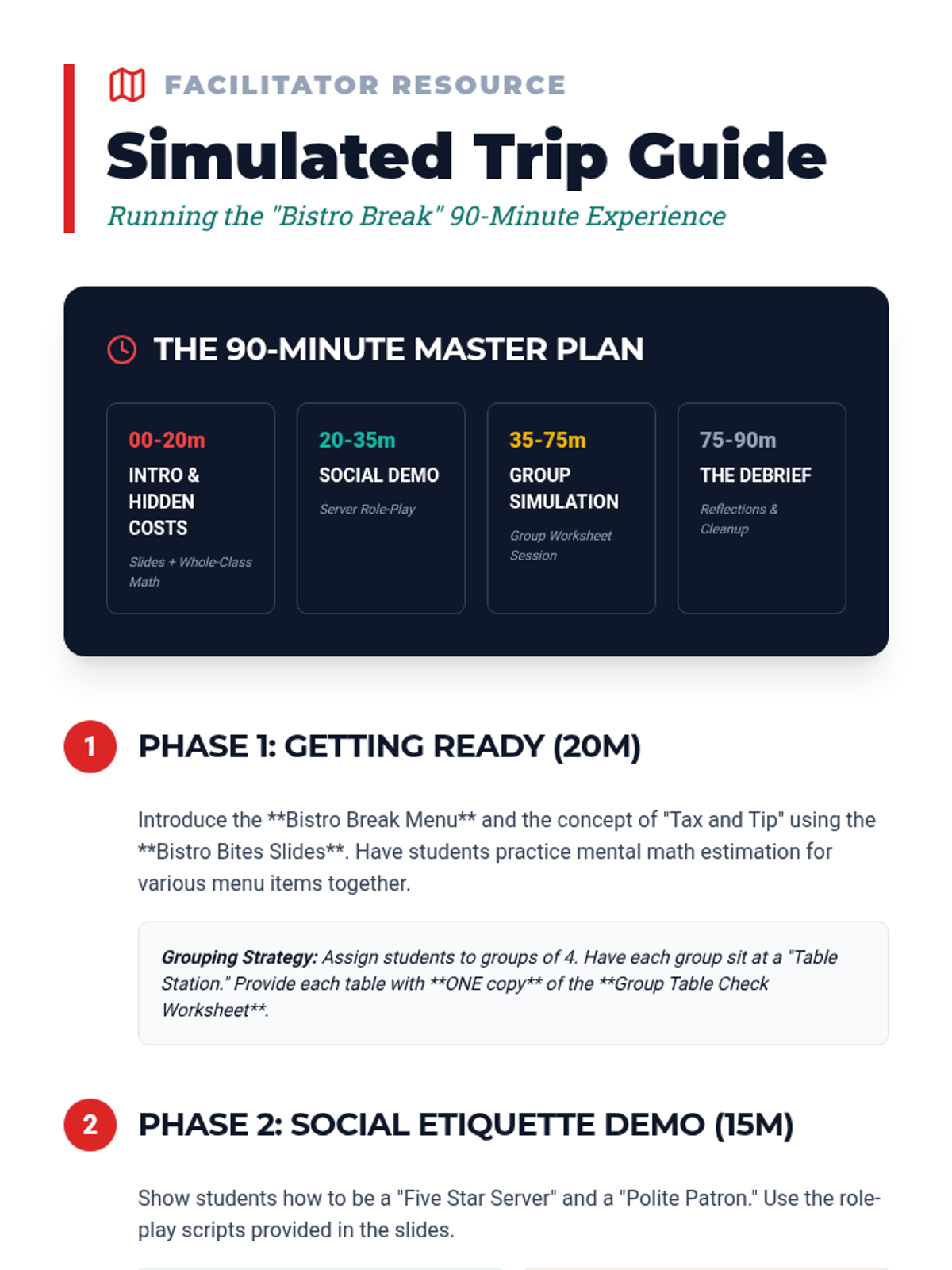
A facilitator's guide for conducting a simulated restaurant field trip in the classroom, including role-play scripts and setup instructions.
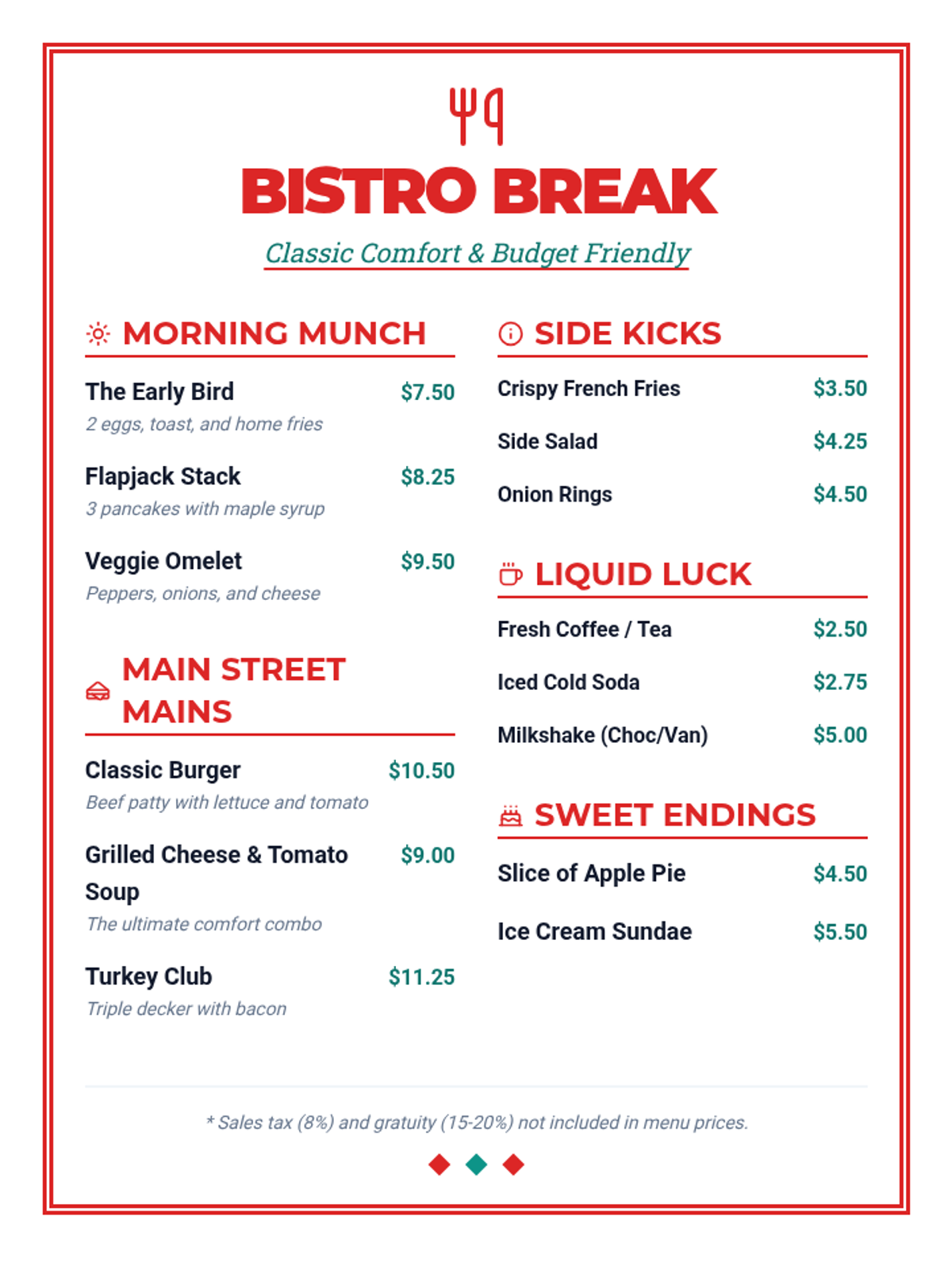
A retro-style bistro menu featuring breakfast, main courses, sides, drinks, and desserts with clear pricing for use in budget and math exercises.
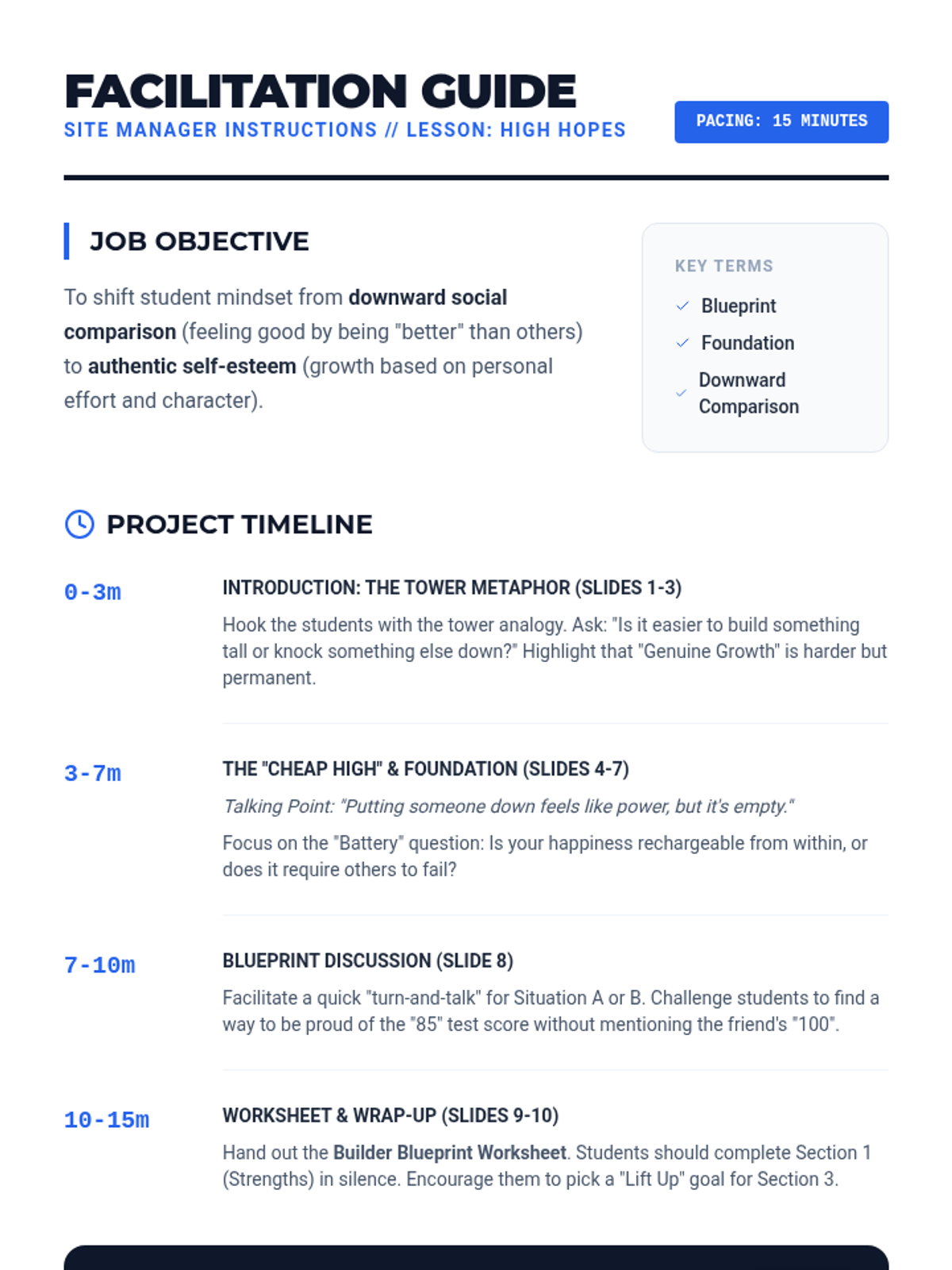
A teacher facilitation guide designed to manage a 15-minute lesson. It includes a pacing timeline, talking points for the tower metaphor, and strategies for handling common student responses.
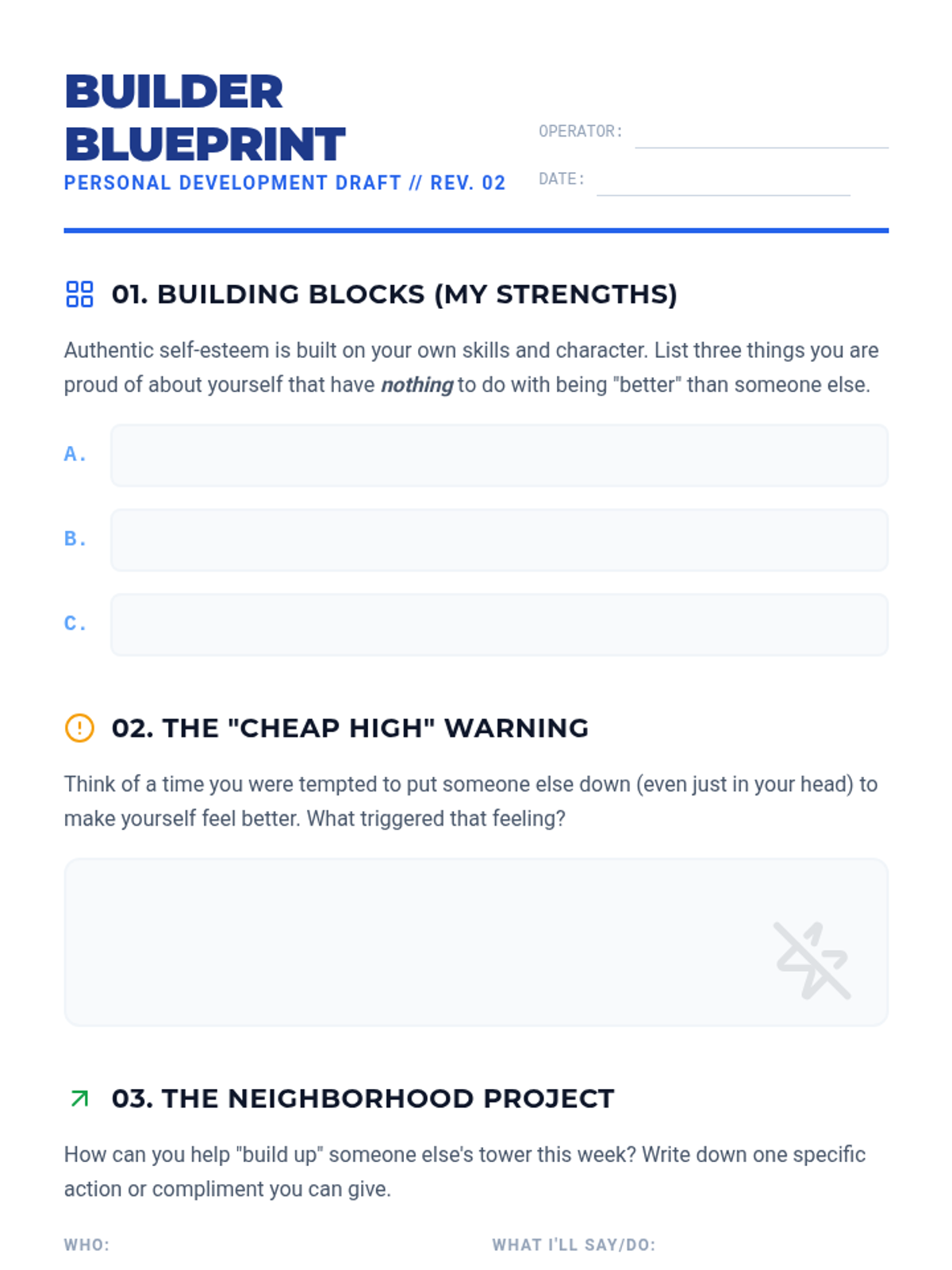
A student reflection worksheet that helps learners identify their personal strengths, recognize moments of unhealthy comparison, and set a goal to encourage others. Styled like a professional blueprint.
A 10-slide presentation using a construction and blueprint theme to teach students about authentic self-esteem. It contrasts 'building yourself up' with 'knocking others down' and provides actionable tools for genuine growth. Updated for maximum legibility.
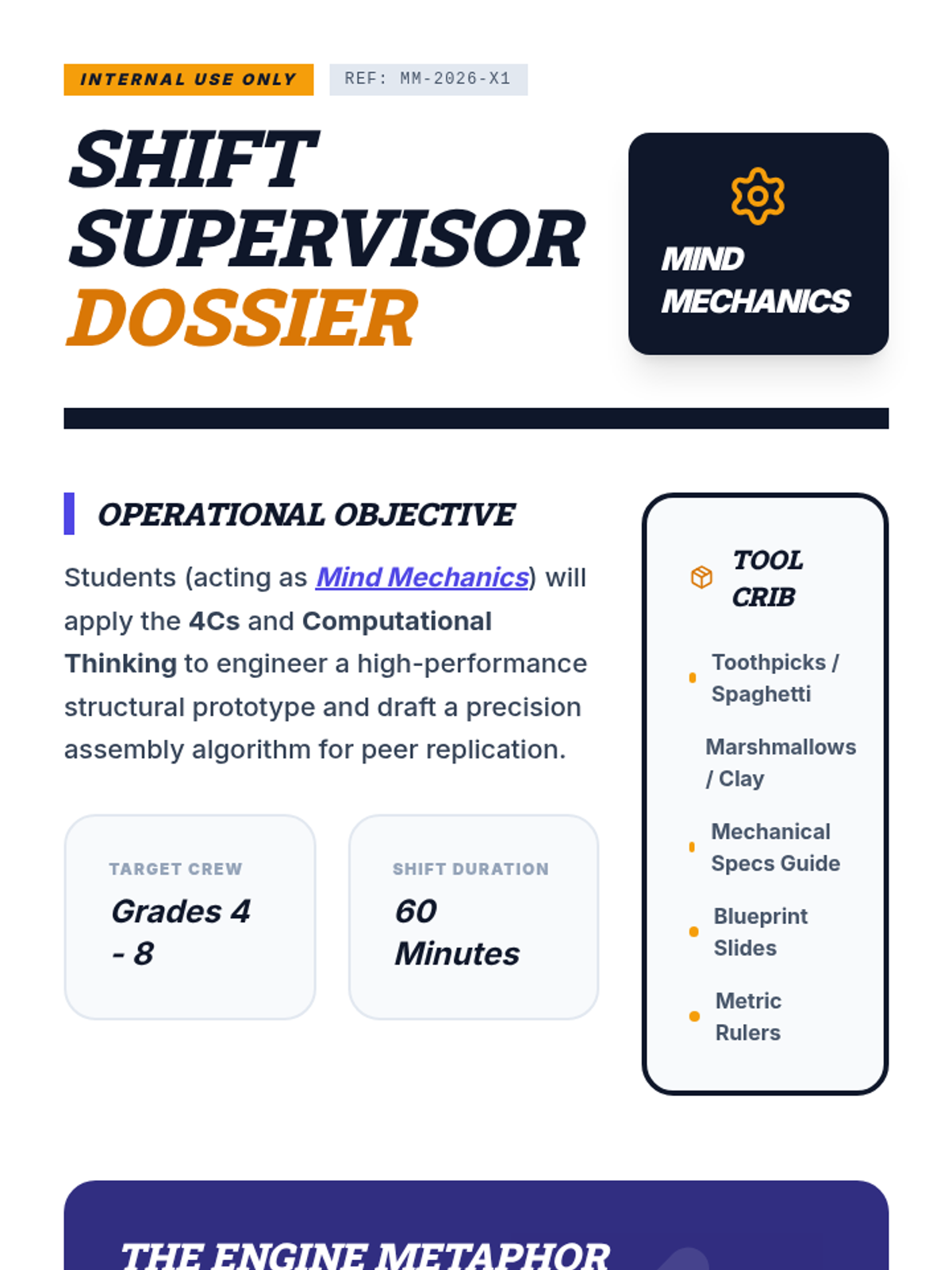
A detailed mission dossier for teachers, including lesson flow, materials list, and instructional strategies for teaching the 4Cs and Computational Thinking.
An industrial-themed field guide for students to design their structural prototype, write their assembly algorithm, and reflect on their use of the 4Cs and Computational Thinking.
A high-energy, industrial-themed slide deck that introduces the 4Cs and Computational Thinking with large, high-contrast text and a modern workshop aesthetic.
A detailed mission dossier for teachers, including lesson flow, materials list, and instructional strategies for teaching the 4Cs and Computational Thinking with a cup-tower challenge.
A mission-themed field guide for students to design their tower, write their "Tower-Code" algorithm, and reflect on their use of the 4Cs and Computational Thinking.
A high-energy, mission-themed slide deck that introduces the 4Cs and Computational Thinking with a focus on a cup-tower engineering challenge.
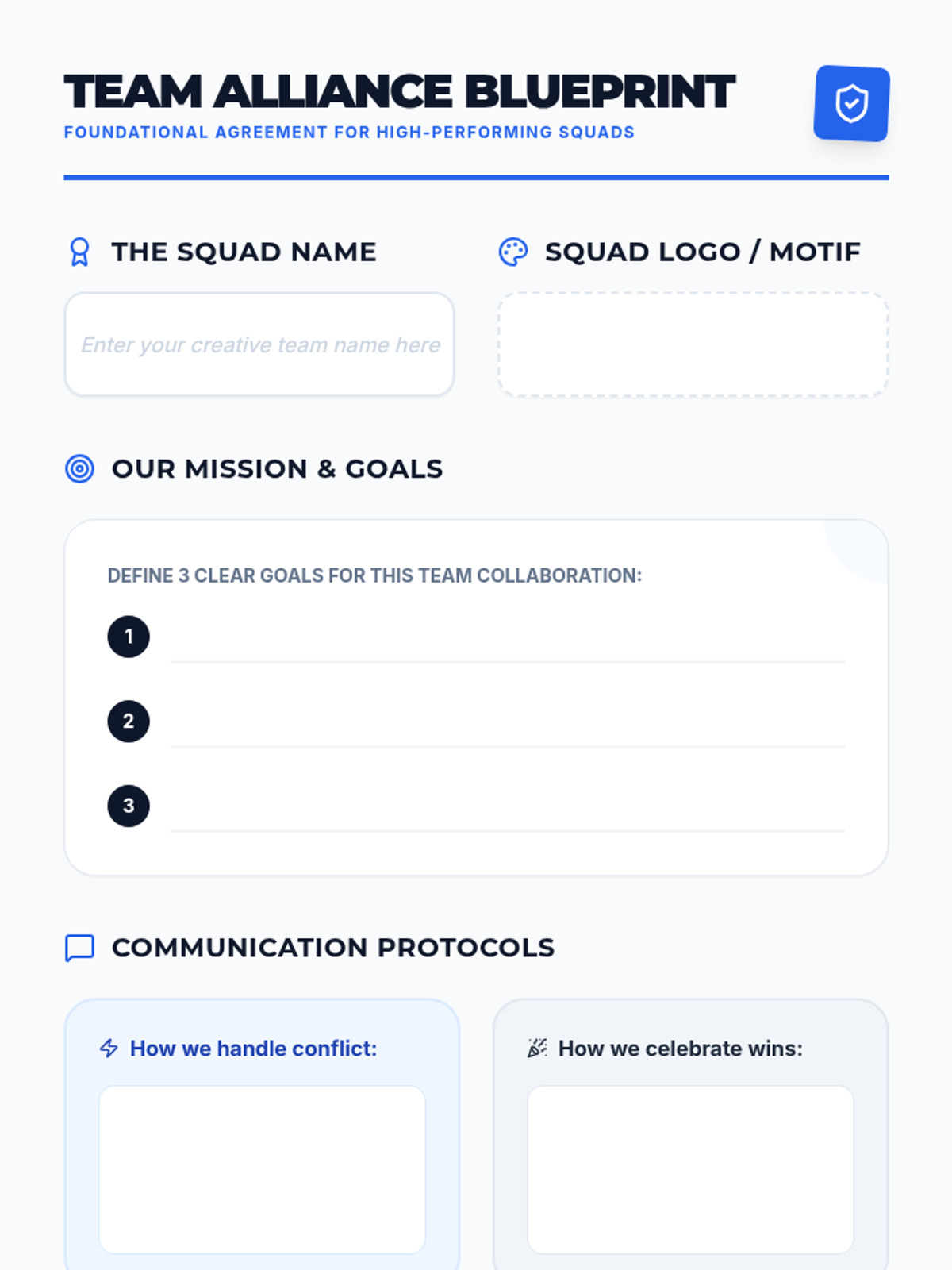
A team-building charter where student groups define their name, mission, communication norms, and shared commitments.
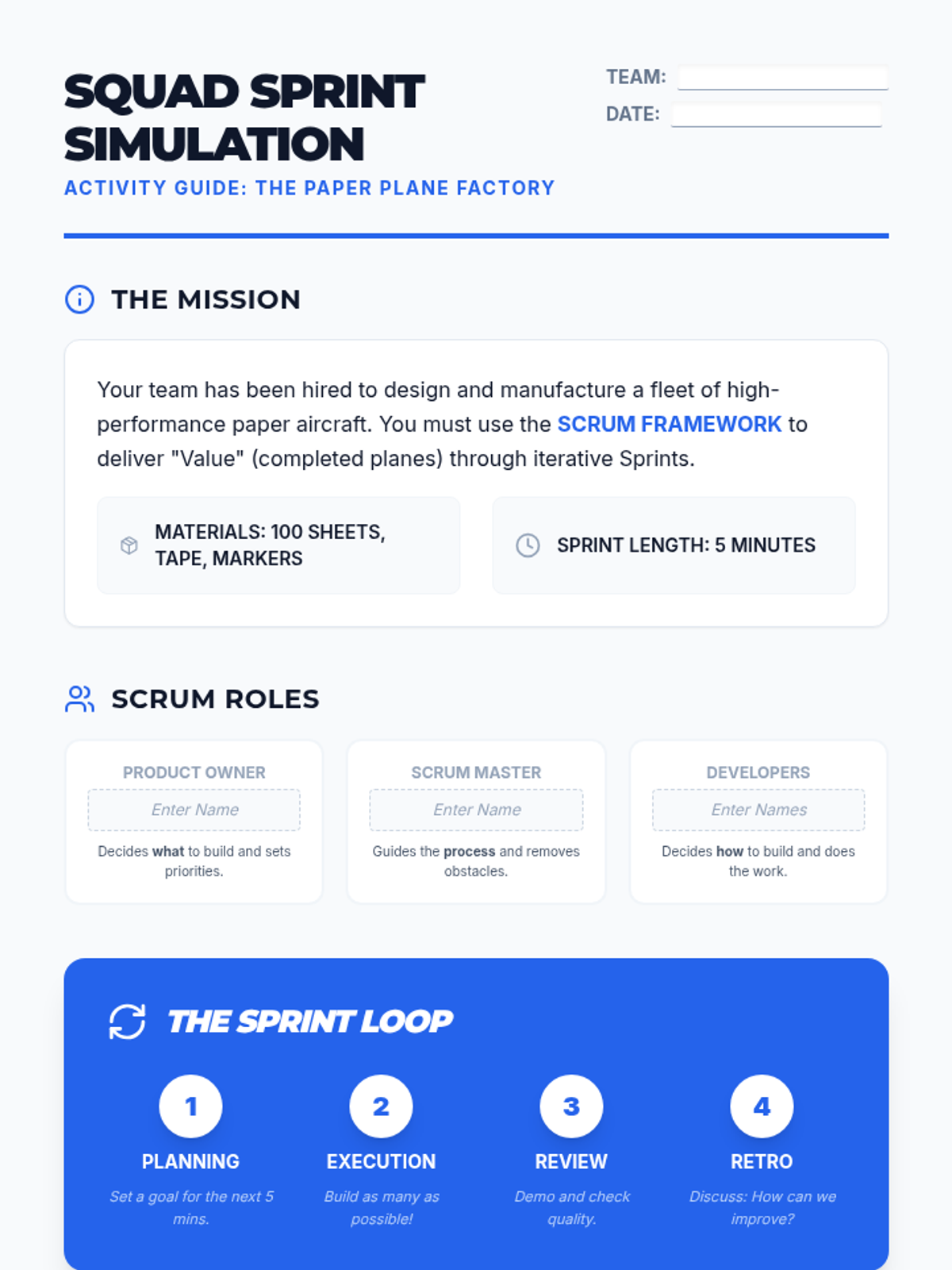
A detailed guide for a paper plane factory simulation activity, including role assignments, sprint trackers, and communication reflection questions.
A comprehensive slide deck covering Agile mindset, Scrum framework roles/events, and the importance of effective communication and psychological safety in teams.
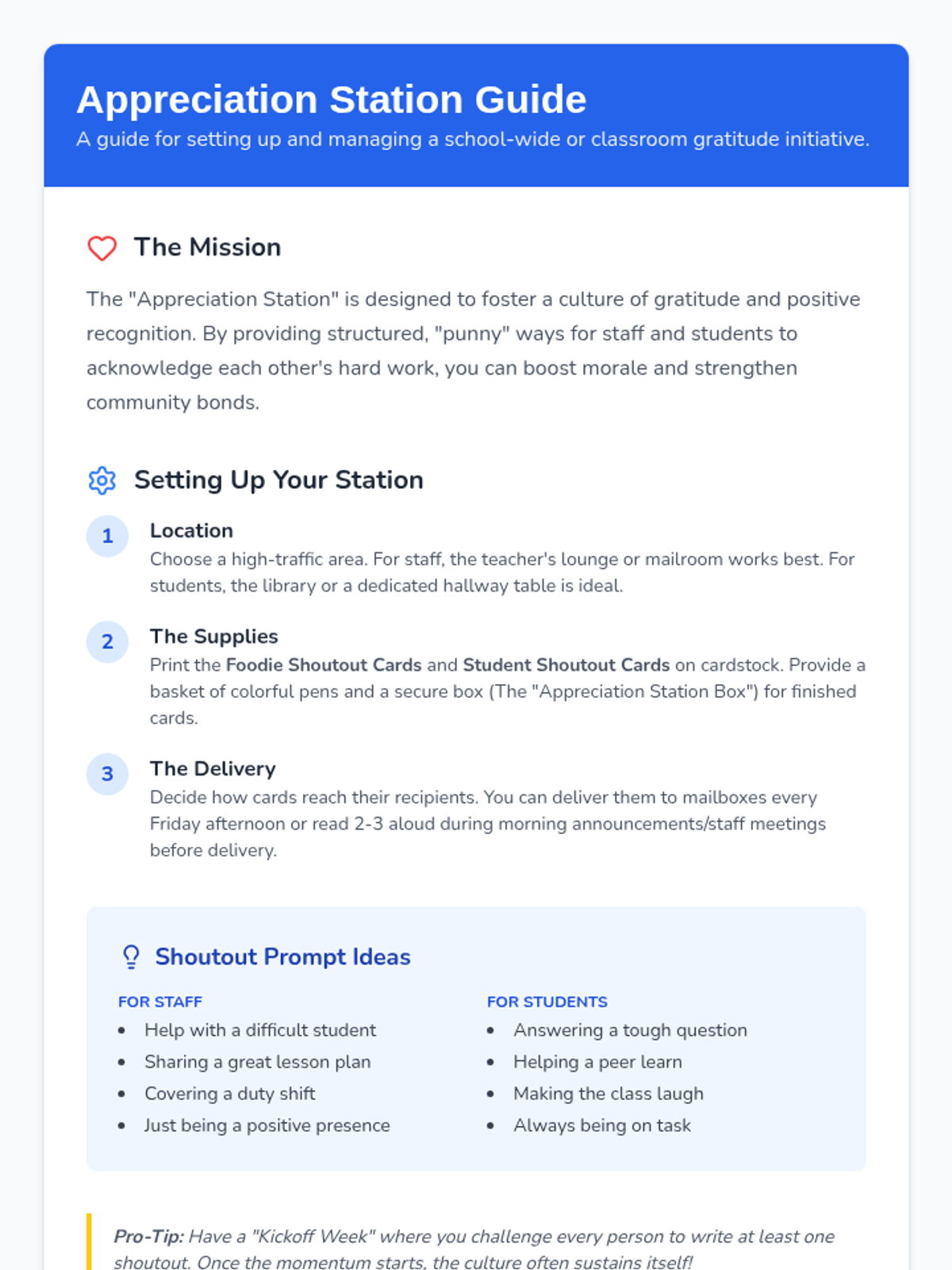
A teacher facilitation guide for setting up an "Appreciation Station." Includes tips for location, supplies, delivery methods, and specific shoutout prompt ideas for both staff and students.
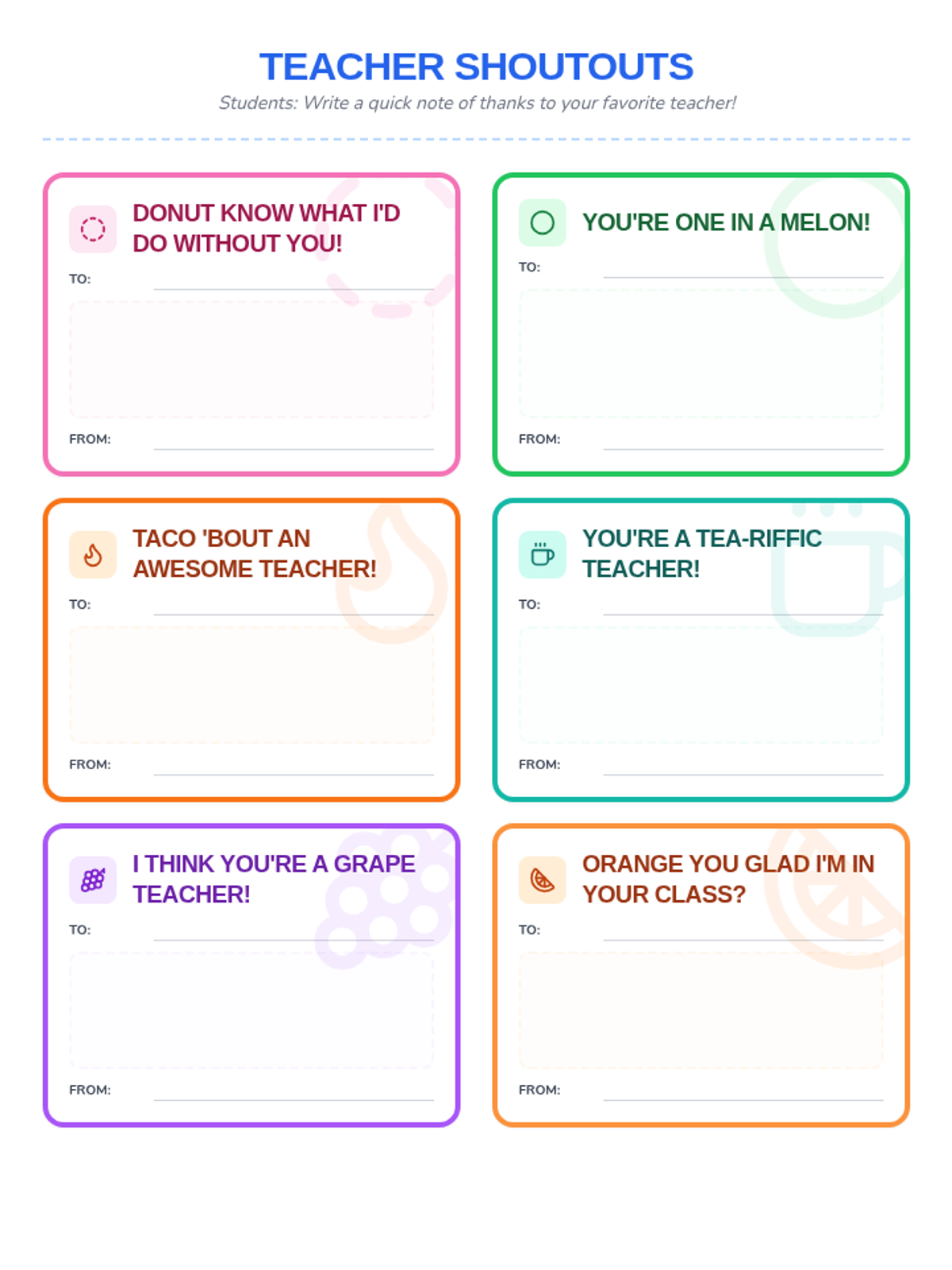
A single-page set of 6 student-to-teacher shoutout cards featuring fun food puns, colorful designs, and space for personalized messages. Redesigned with a more compact layout to ensure all cards fit perfectly on one printable page.
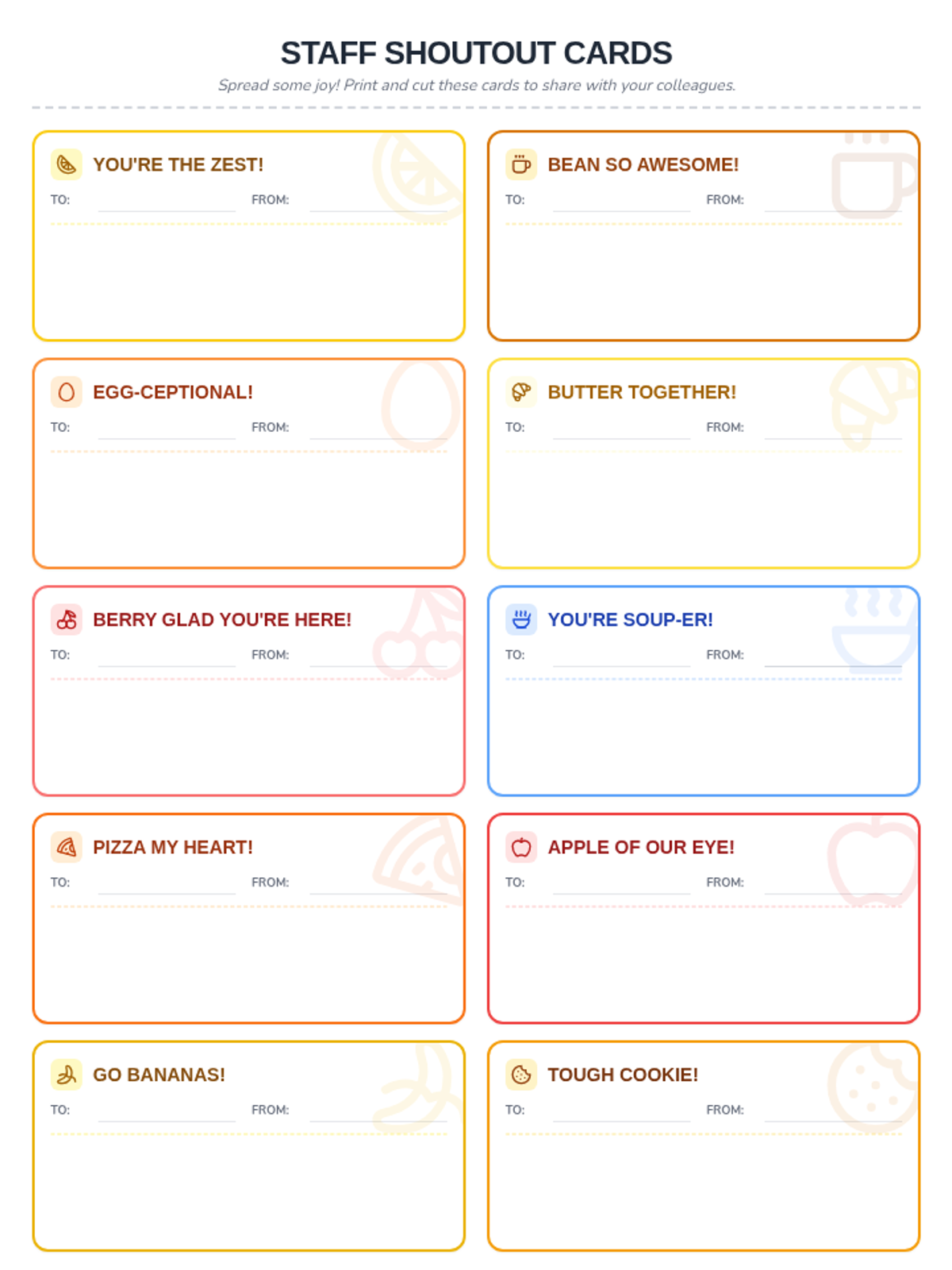
A set of 10 punny, food-themed shoutout cards for staff. Each card features a unique pun and icons, now redesigned to fit all 10 cards on a single printable page for convenience.
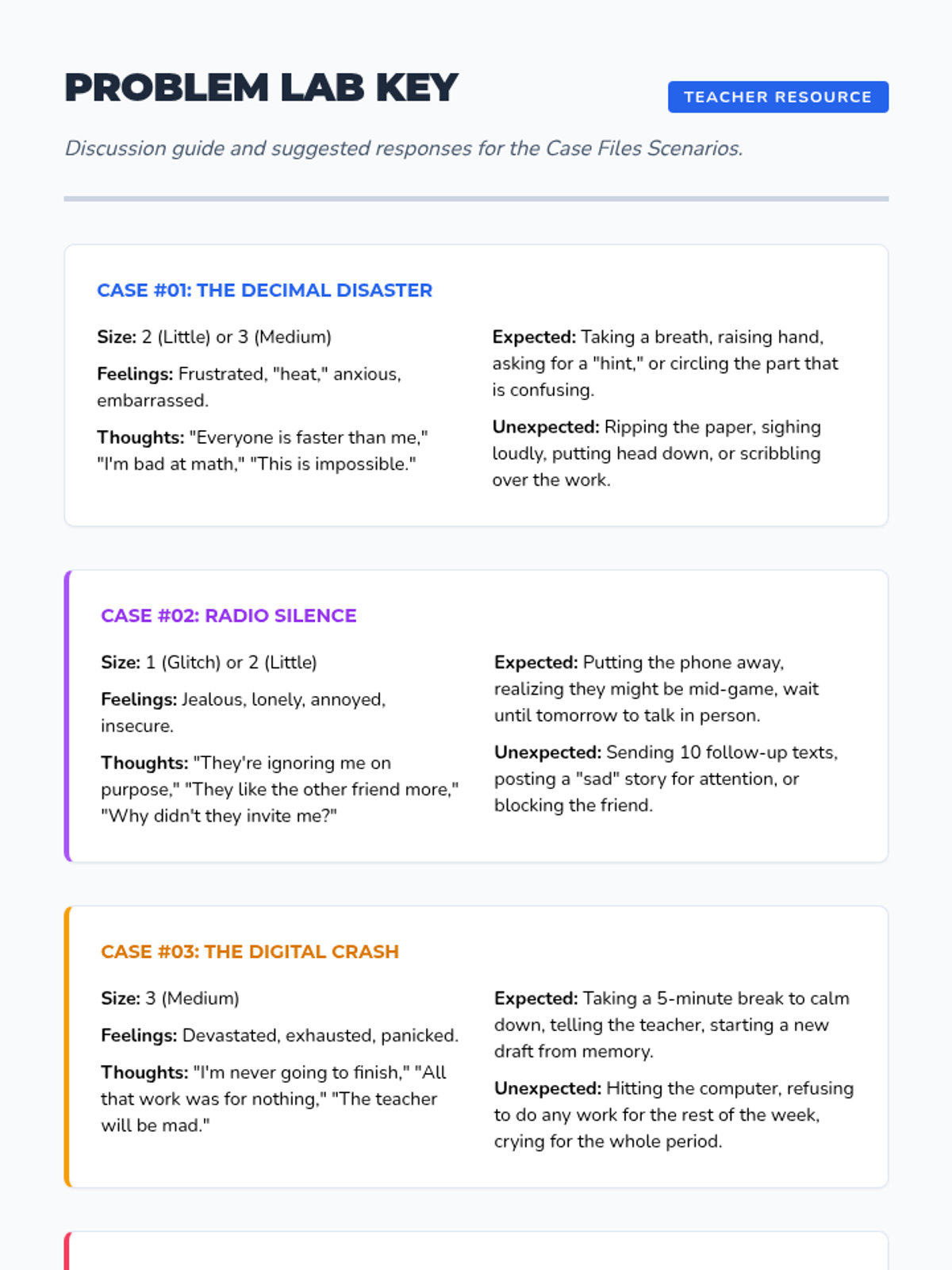
An answer key and discussion guide for teachers using the Problem Solvers Lab. It provides suggested responses for all five scenarios, including size ratings, CBT connections, and social behavior analysis.
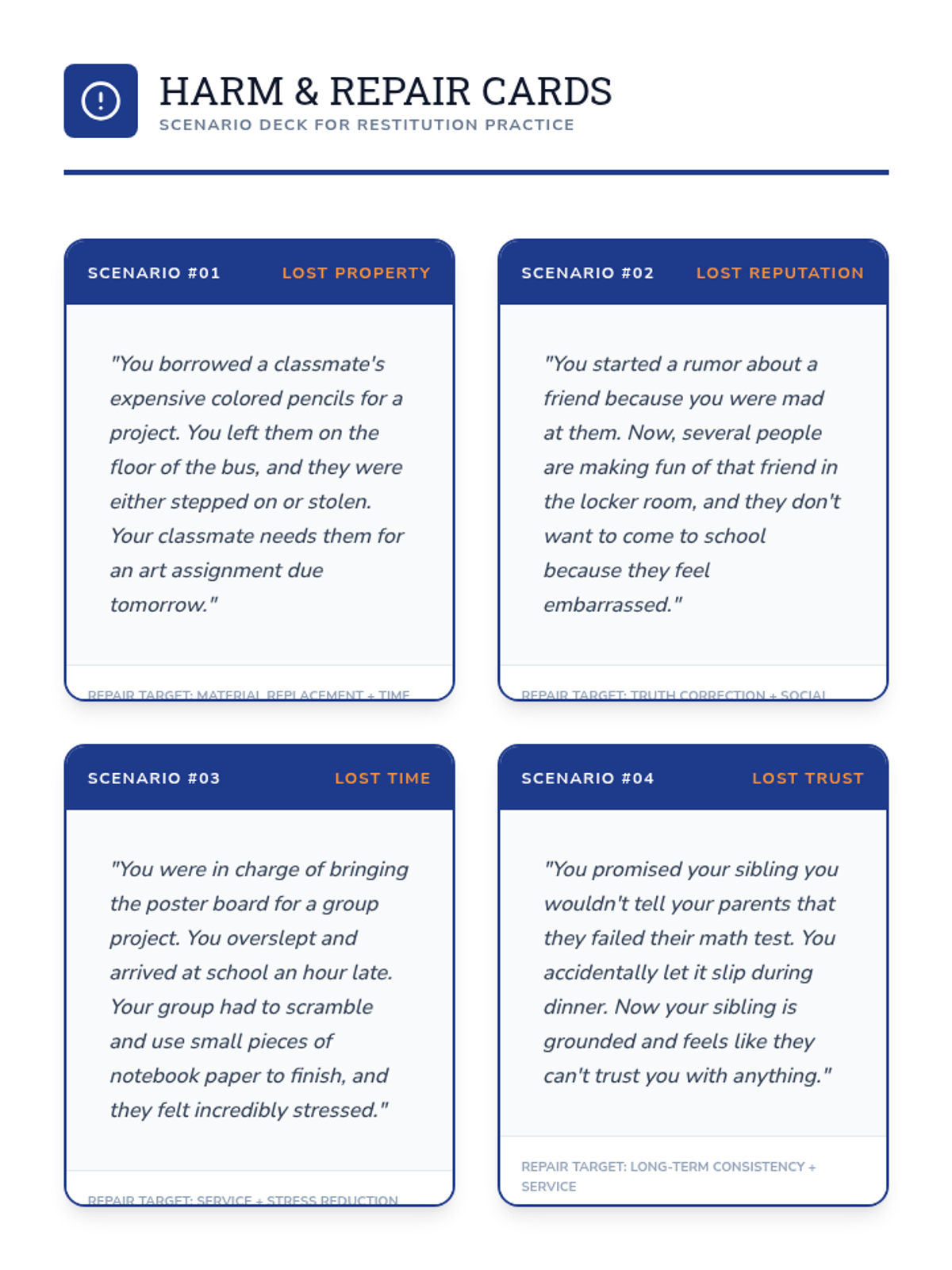
Scenarios of harm for students to analyze and use for designing restitution plans on their blueprints.
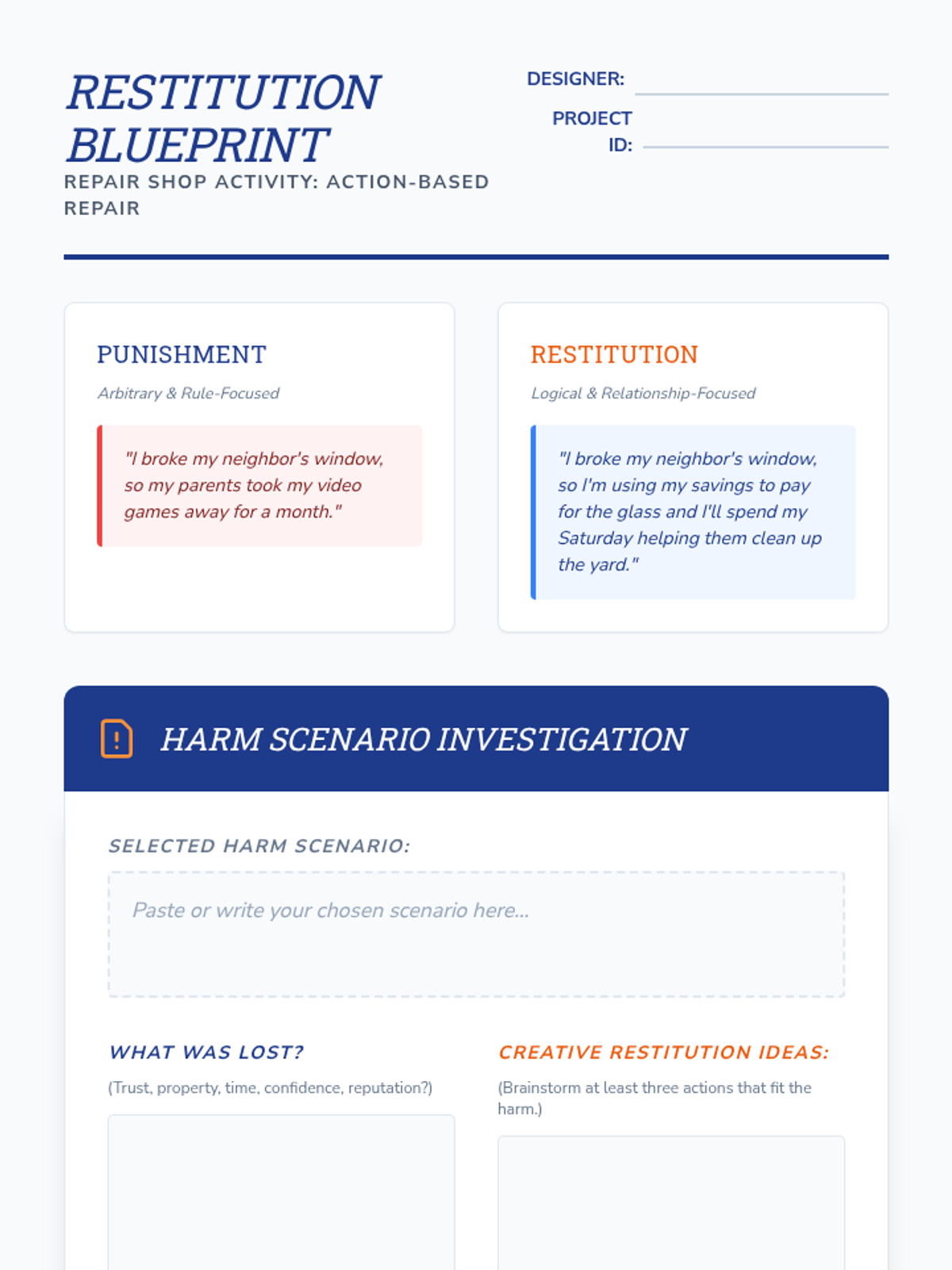
Creative project worksheet for Lesson 4, guiding students to design logical and relationship-focused restitution plans for specific harm scenarios.
Visual slide deck for Lesson 4: Making Amends and Restitution, introducing the concept of restitution versus punishment and brainstorming creative ways to 'make it right'.
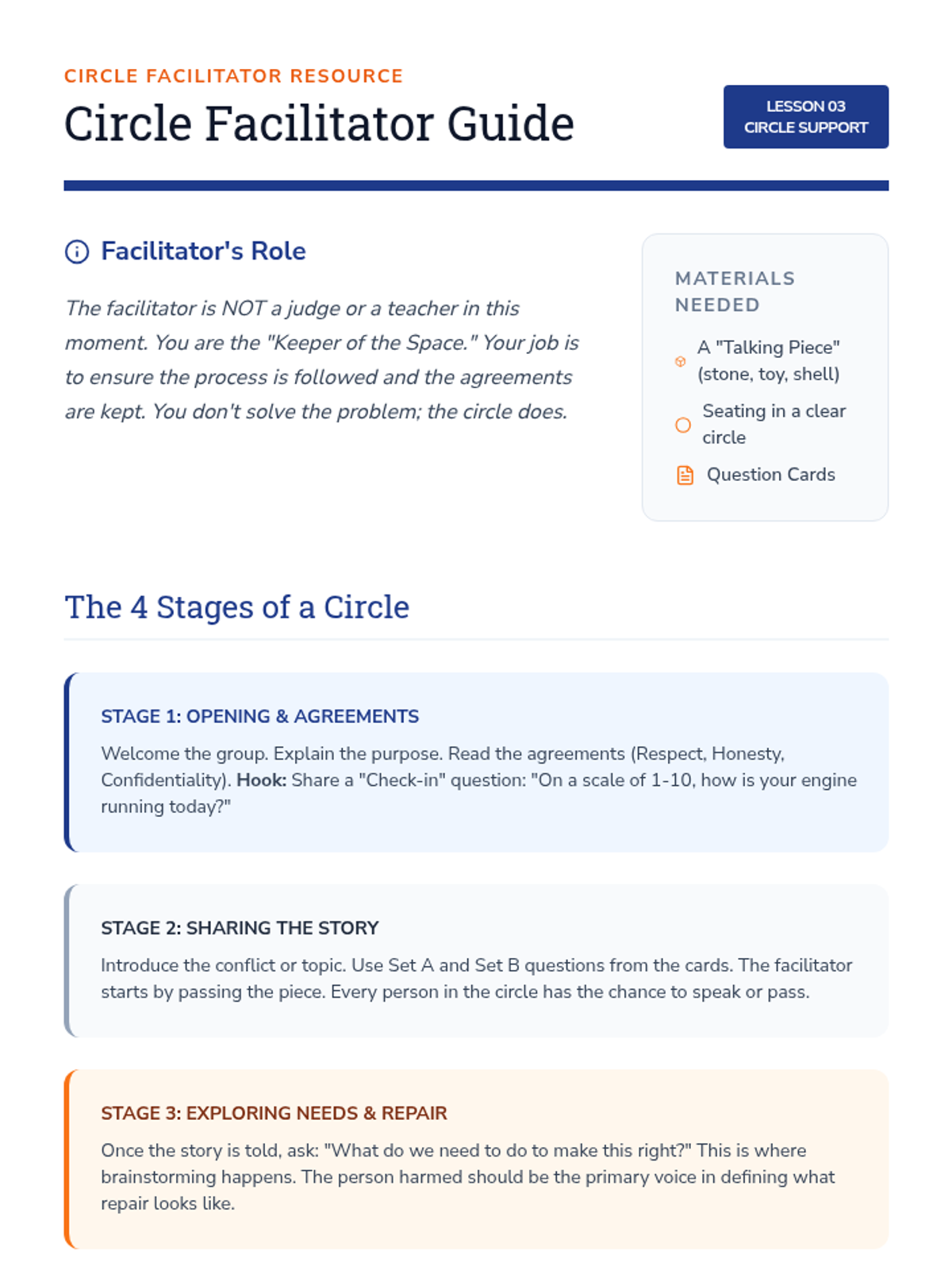
Comprehensive facilitation guide for teachers on how to lead a restorative dialogue circle, including stages, scripts, and troubleshooting tips.
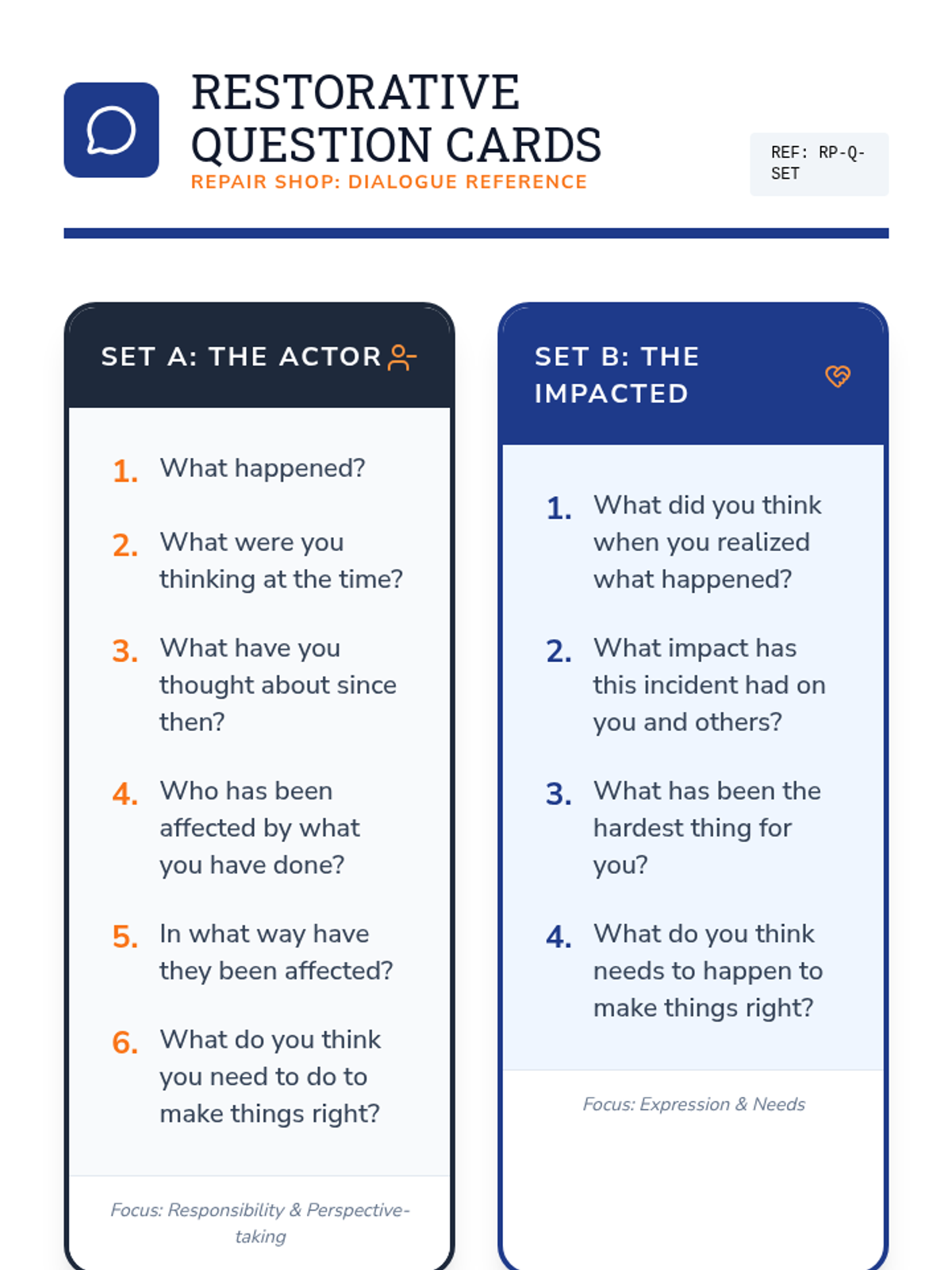
Set of standard restorative justice questions for both the person who caused harm and the person affected, designed for student use during dialogue circles.
Visual slide deck for Lesson 3: Restorative Dialogue Circles, introducing the circle process, talking pieces, and the core restorative questions.
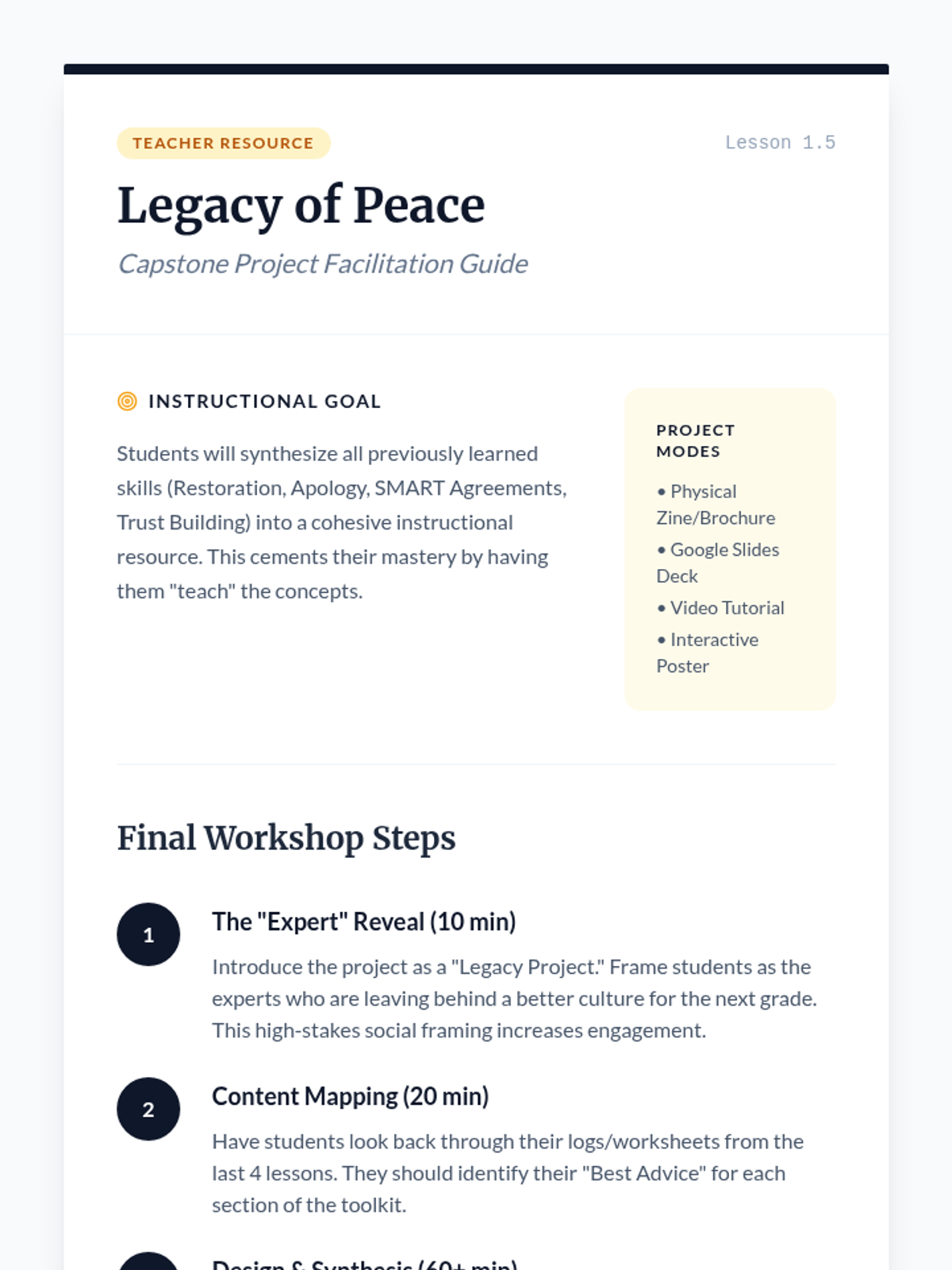
A teacher guide for the Lesson 5 capstone project, providing instructional strategies for the 'Legacy Project' and ways to share student work with a wider audience.
Slides for the final lesson, framing the conflict resolution synthesis activity as a "Conflict Clinic" where students act as doctors to diagnose a complex dispute.
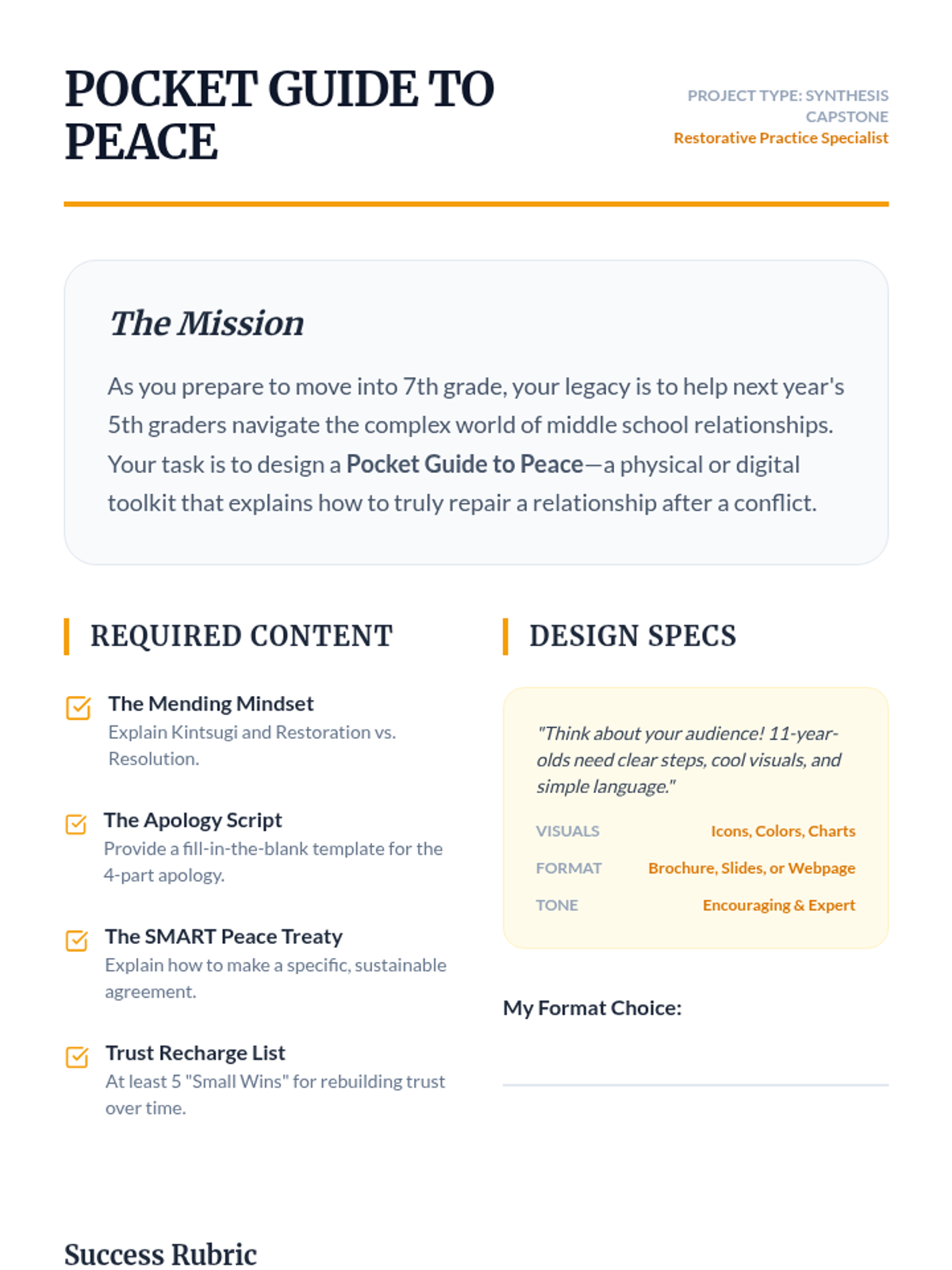
A student-facing project guide and rubric for the 'Pocket Guide to Peace' capstone project, where students synthesize their conflict resolution skills.
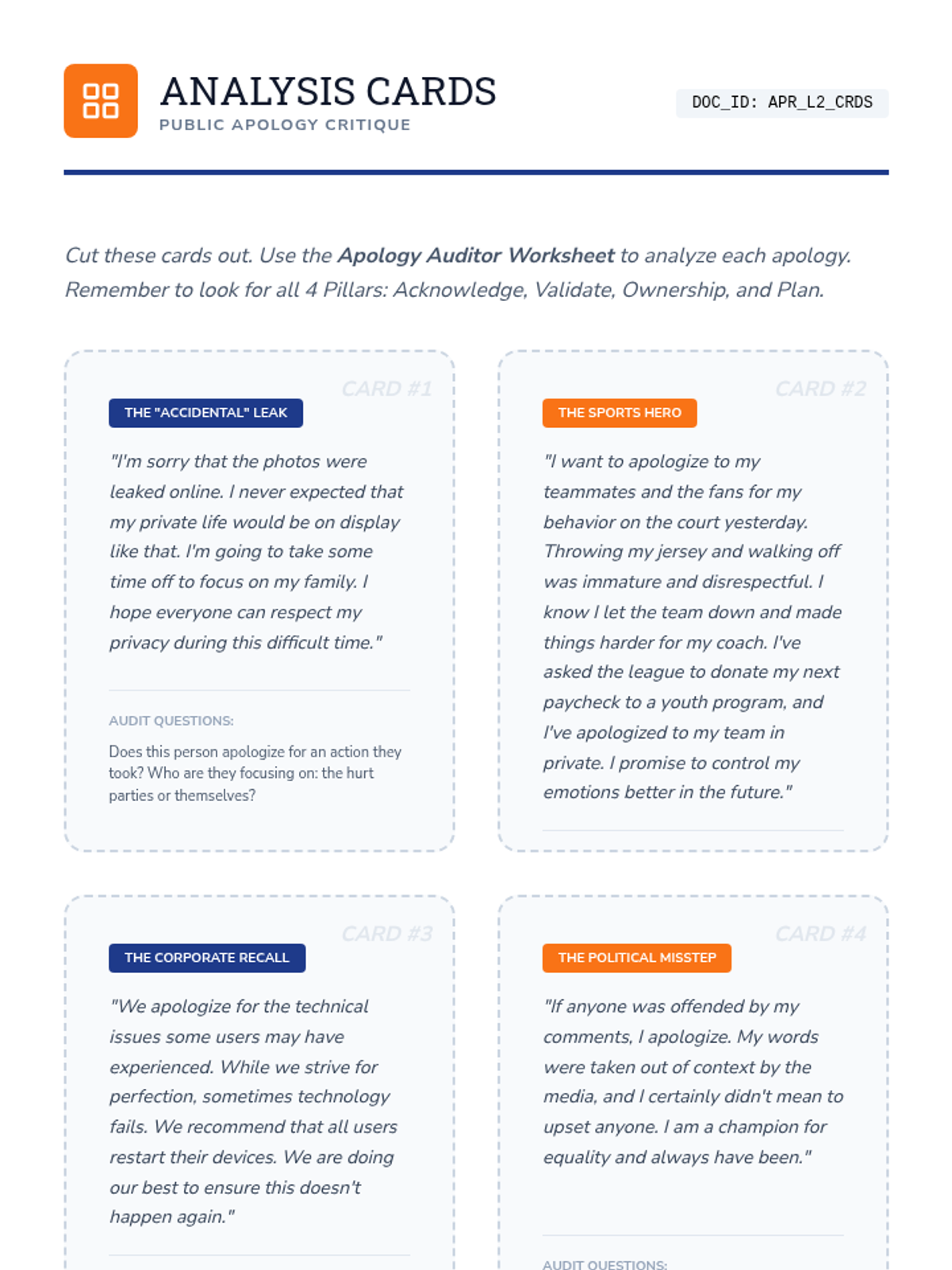
Analysis cards featuring fictionalized but realistic public apologies for students to critique using the Apology Auditor worksheet.
Capstone project slides for Lesson 5, introducing the 'Pocket Guide to Peace' project where students synthesize their learning to create a guide for younger students.
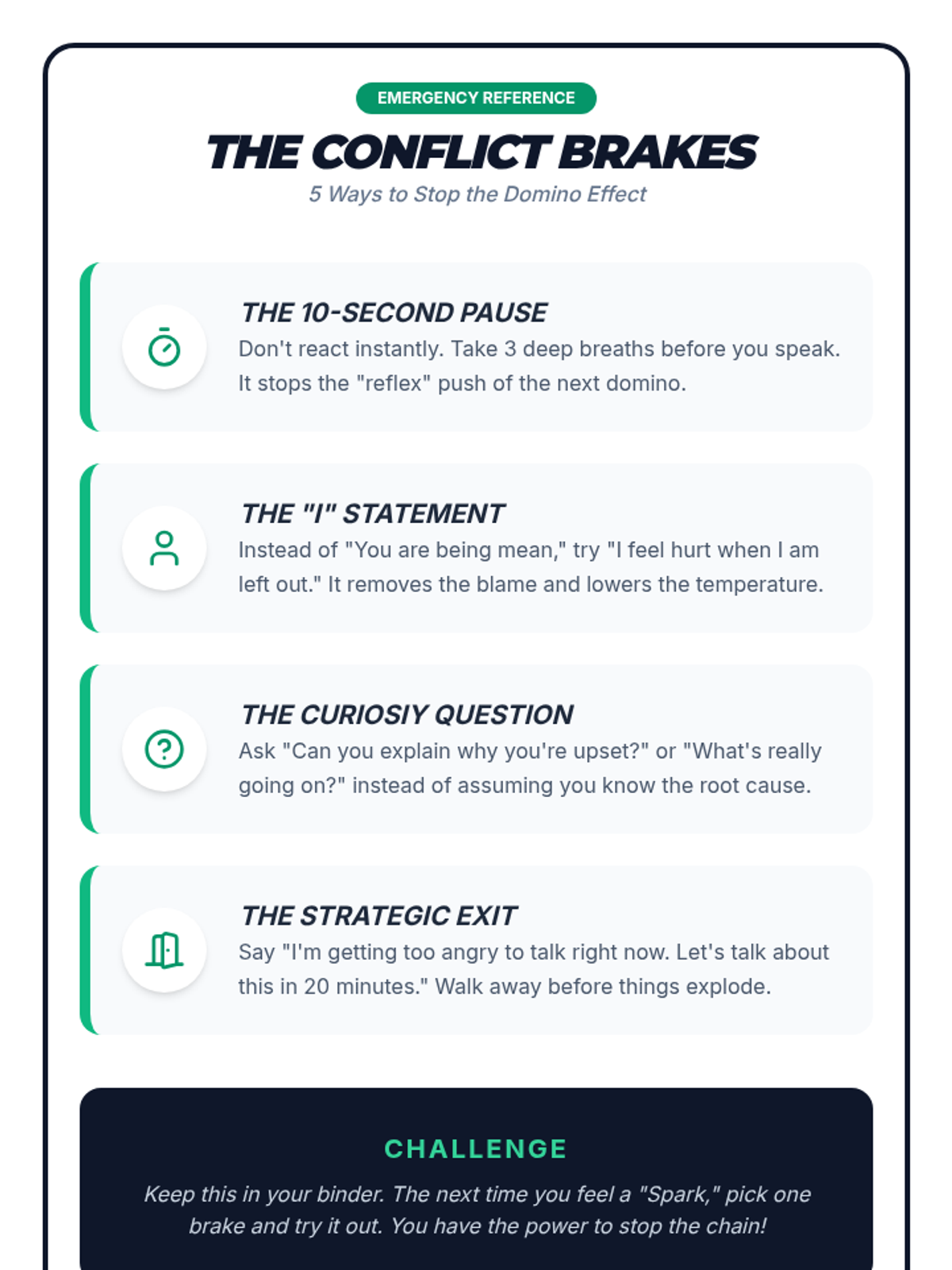
A reference handout for students listing four key de-escalation strategies (The Brakes) to use when they recognize a conflict starting to escalate.
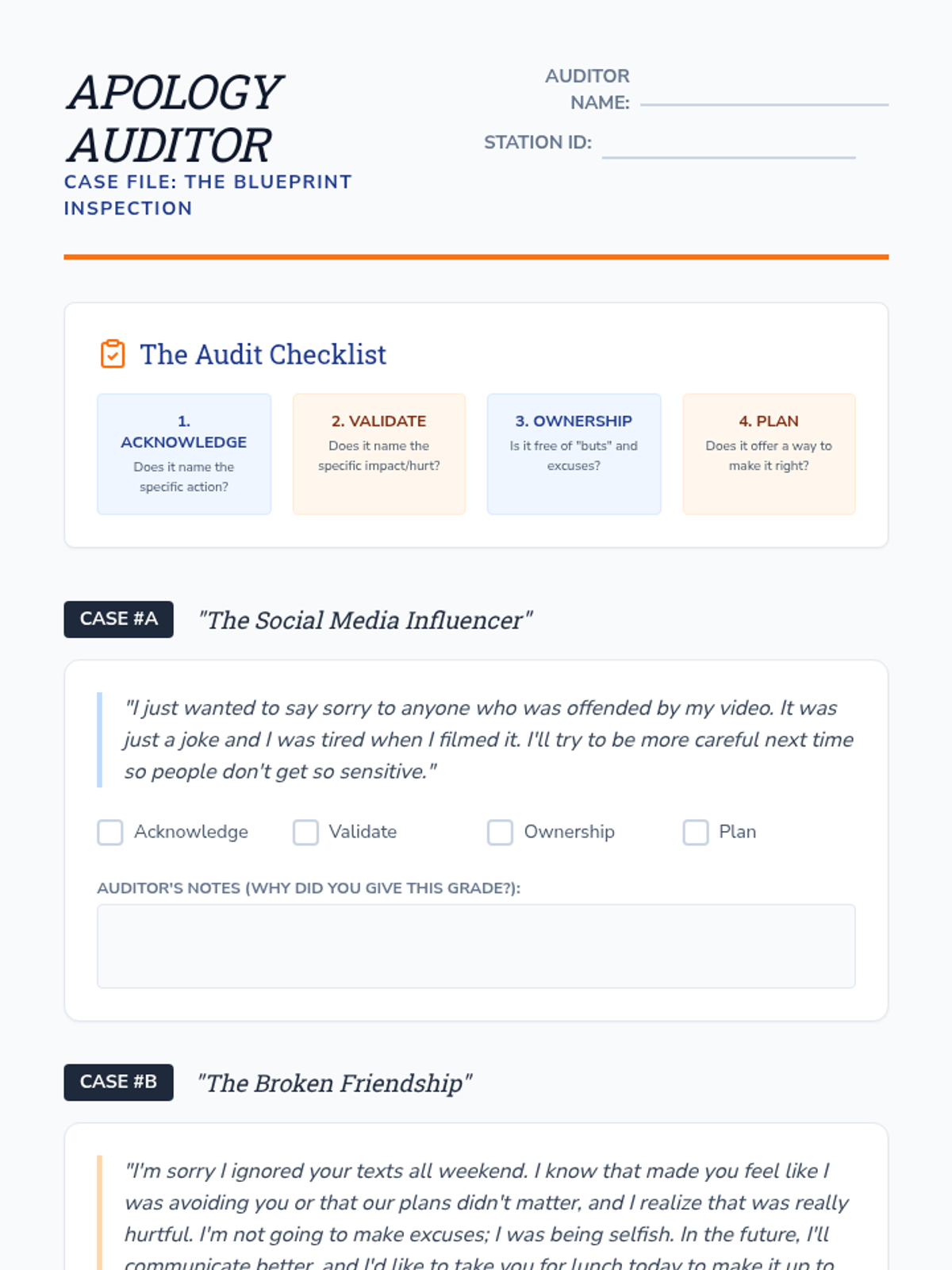
Worksheet for auditing apologies based on the 4 Pillars of a genuine apology. Includes analysis of two case studies and a creative writing task.
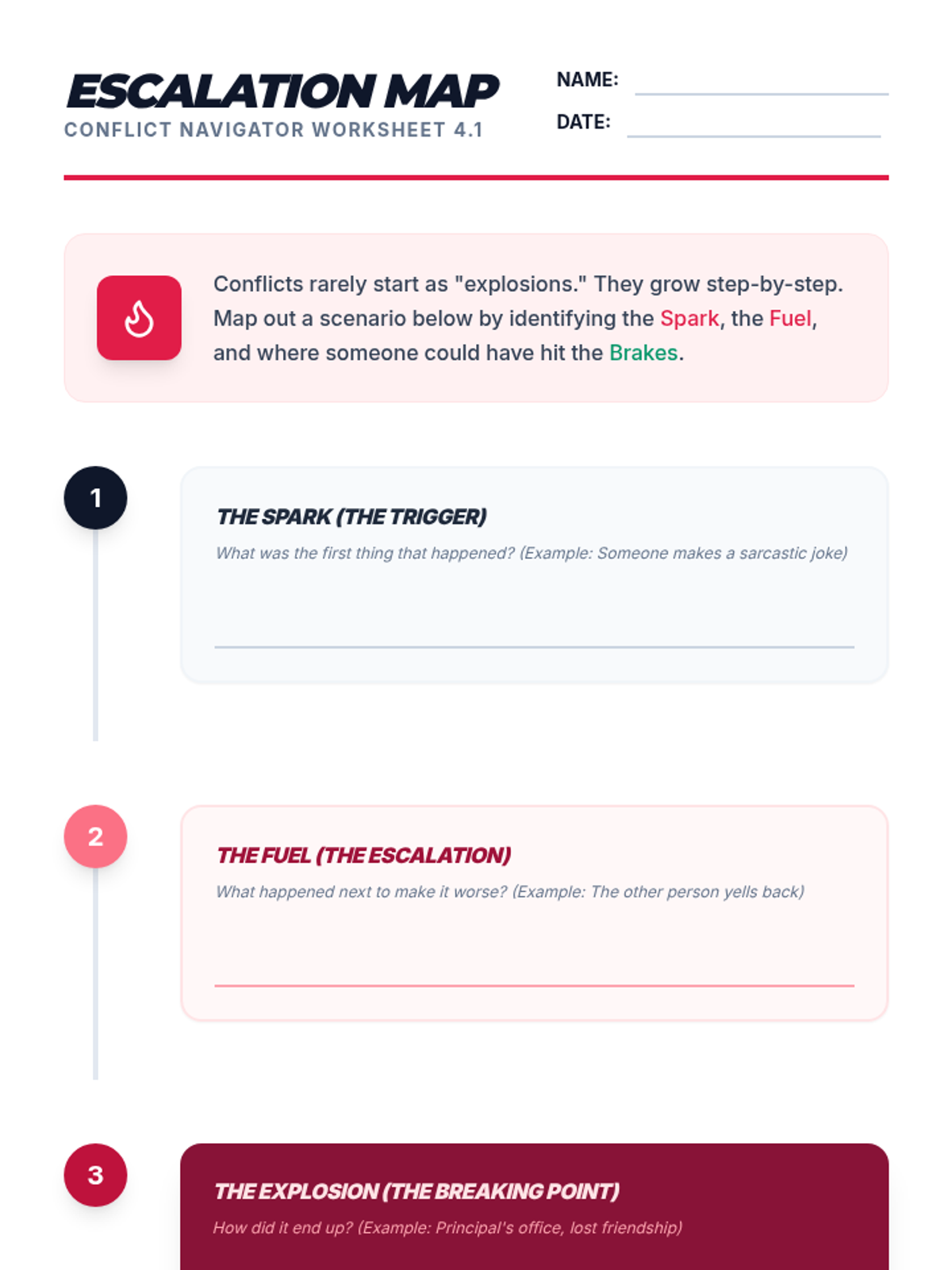
A student worksheet for Lesson 4 where learners map out a conflict scenario through the stages of Spark, Fuel, and Explosion, and then identify intervention points.
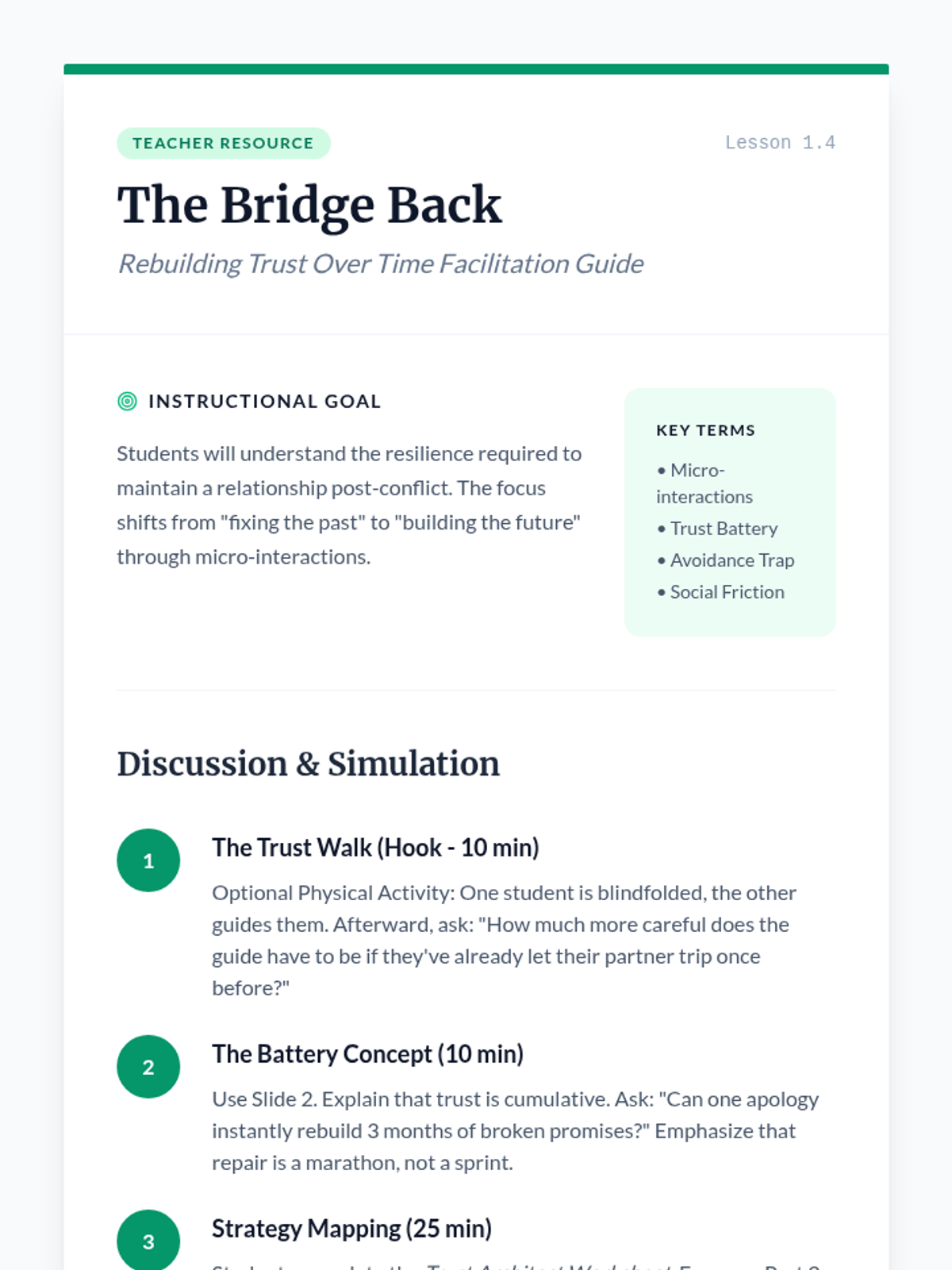
A teacher guide for Lesson 4 on facilitating trust-building activities and helping students navigate the social complexities of post-conflict resolution.