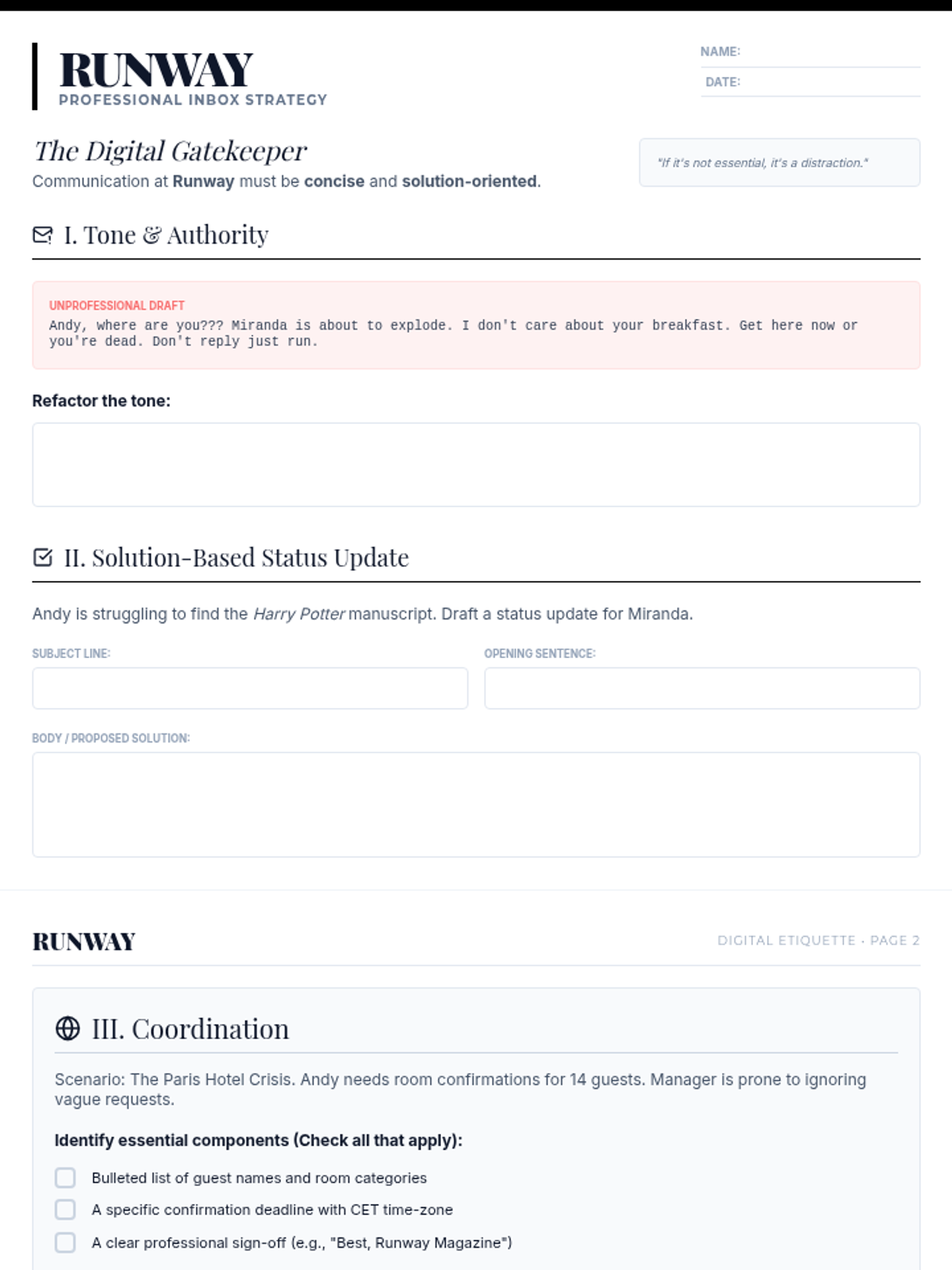
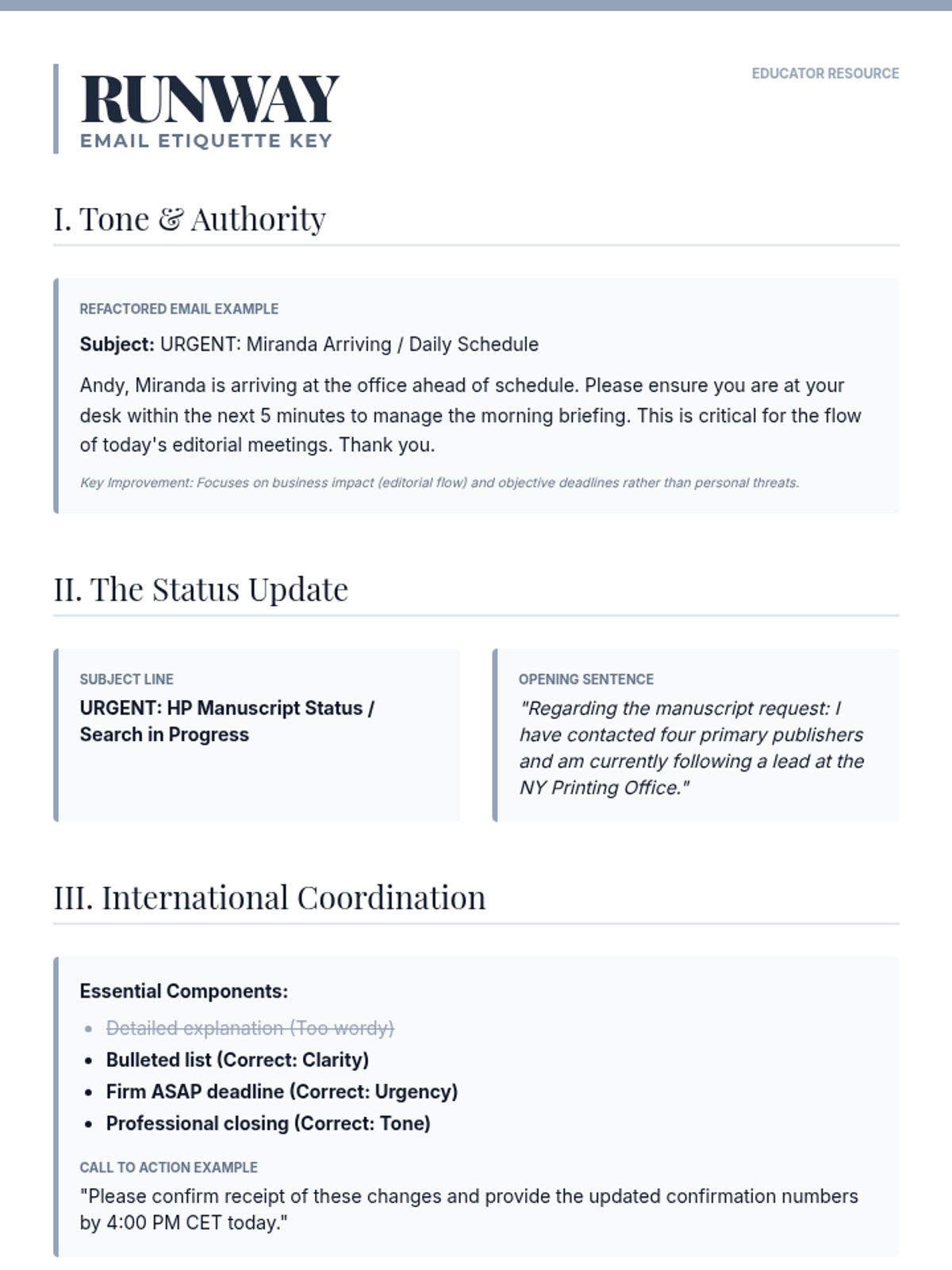
Written and verbal communication standards for the workplace, including email etiquette, presentation delivery, and professional phone conduct. Develops collaborative skills for teamwork, constructive feedback, and efficient time management.
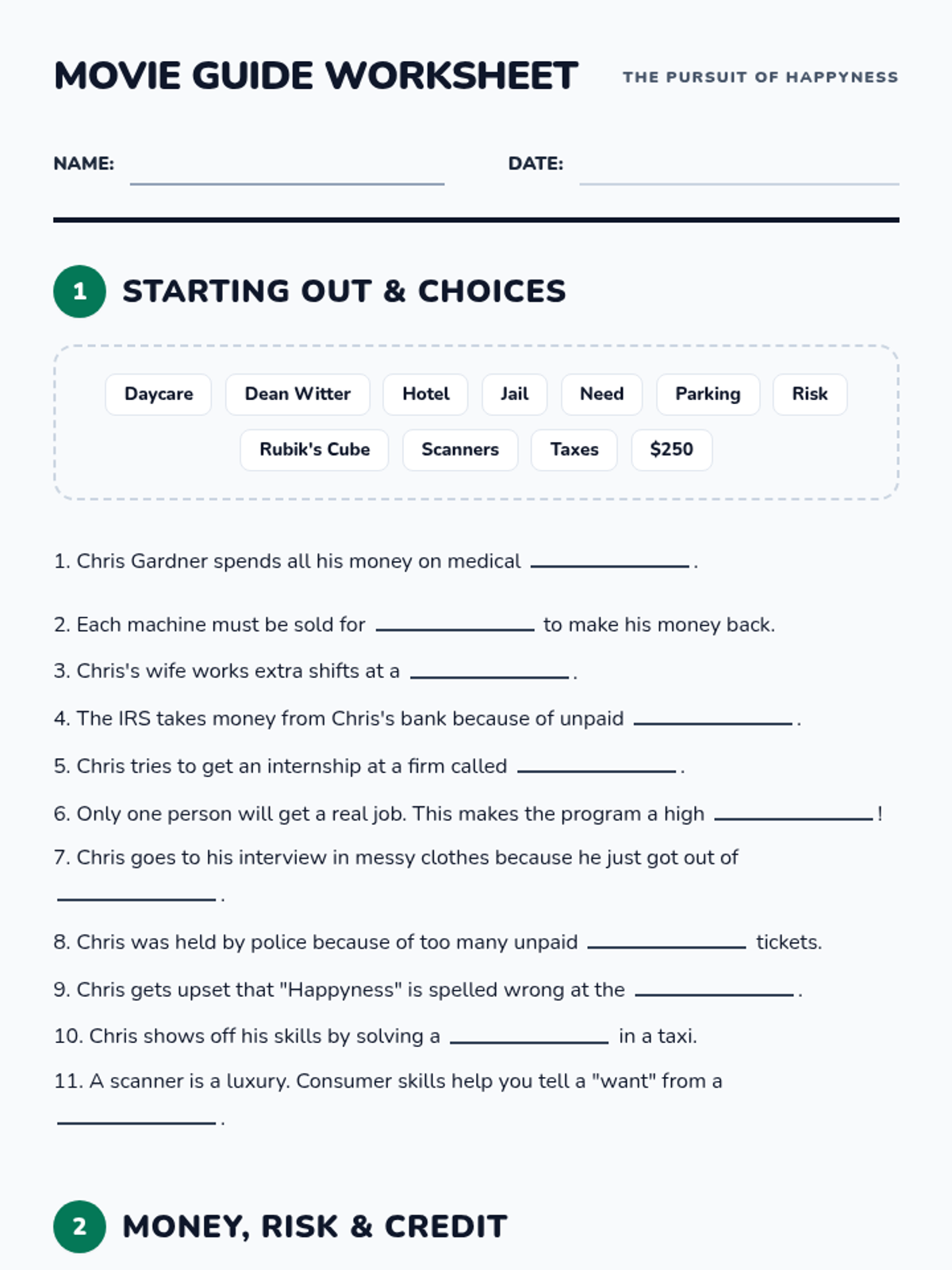
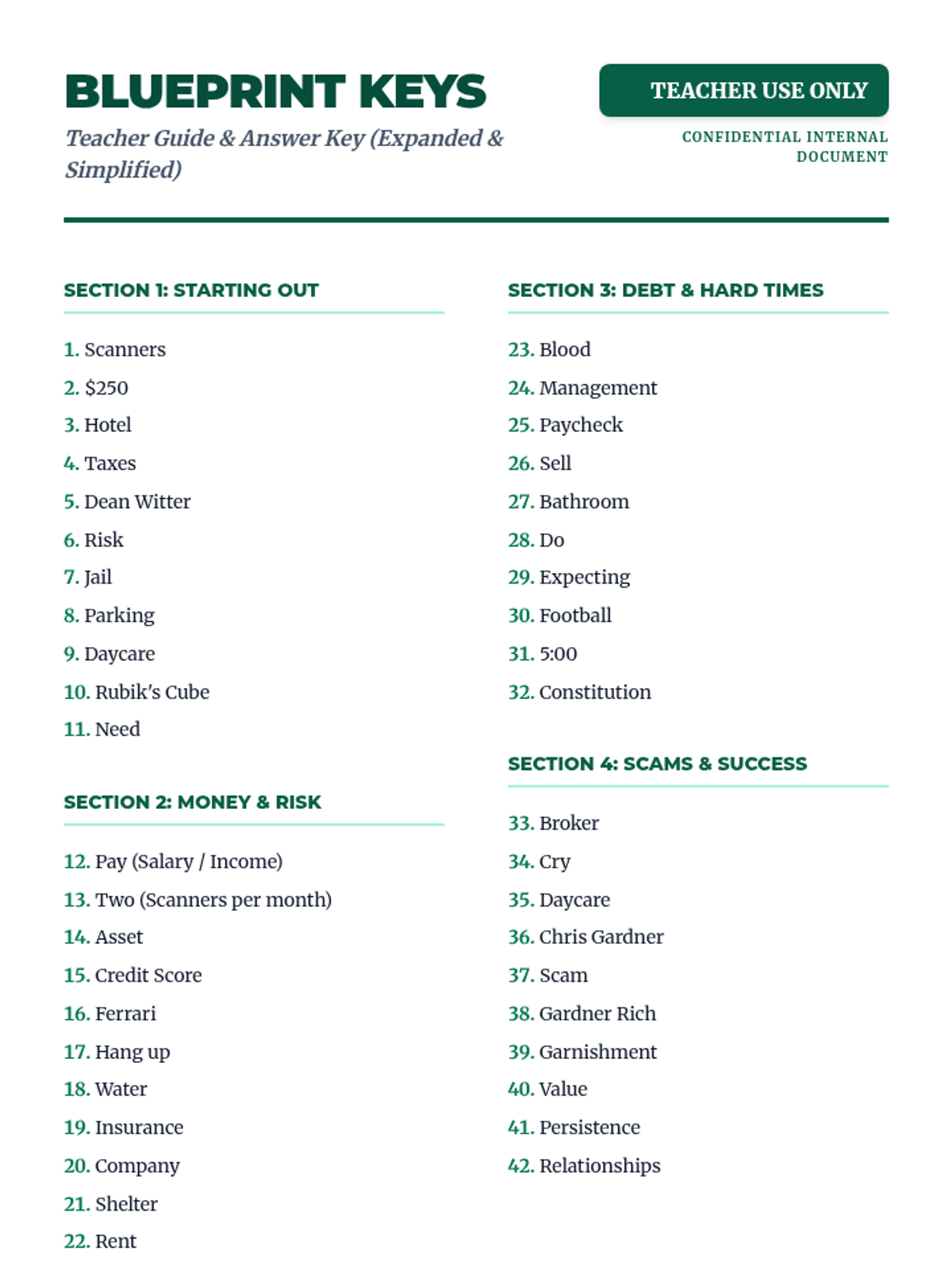
A deep dive into the personal finance themes of 'The Pursuit of Happyness,' focusing on income, assets, risk, and perseverance. Students analyze Chris Gardner's financial journey while tracking key plot points.
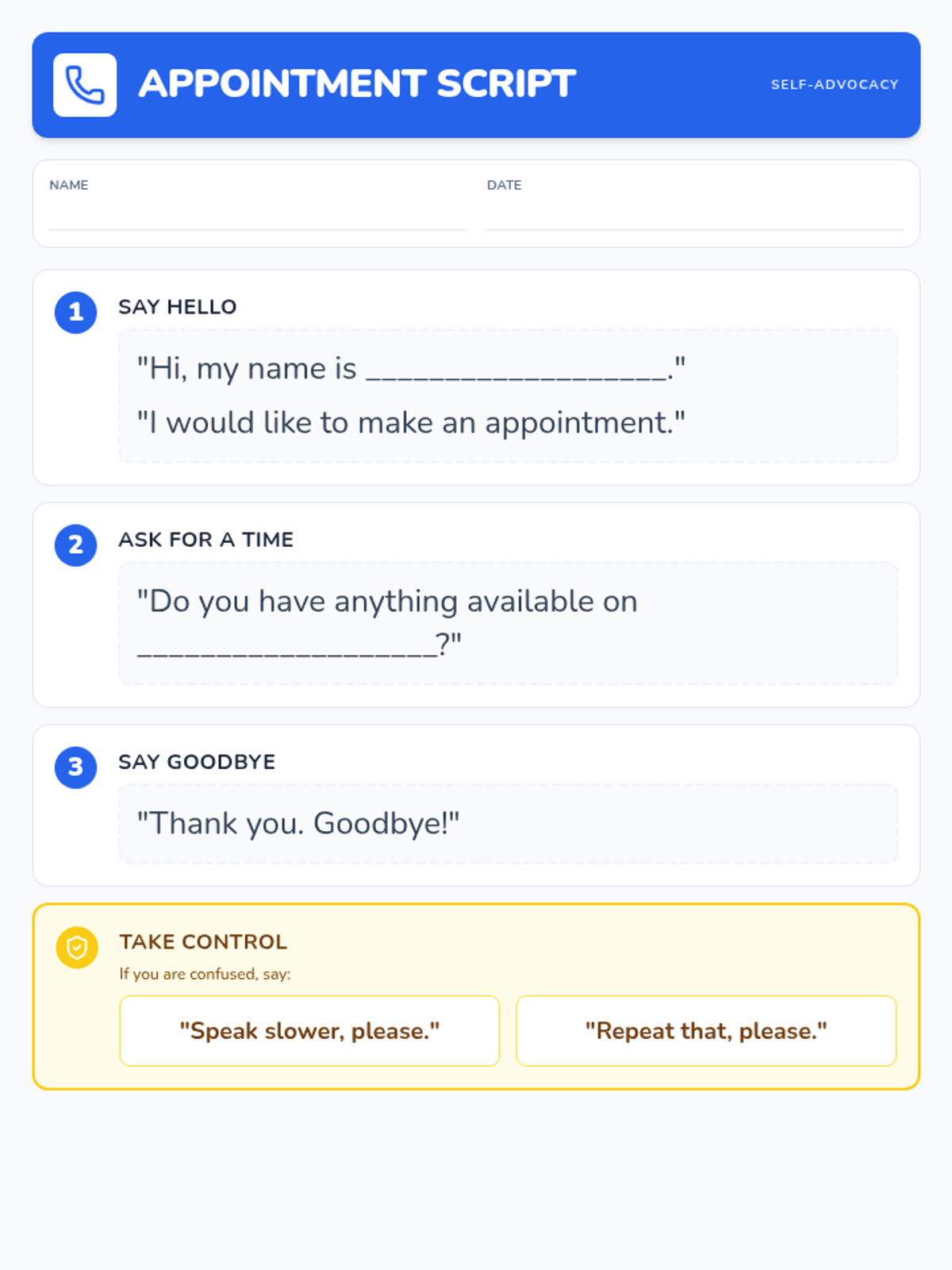
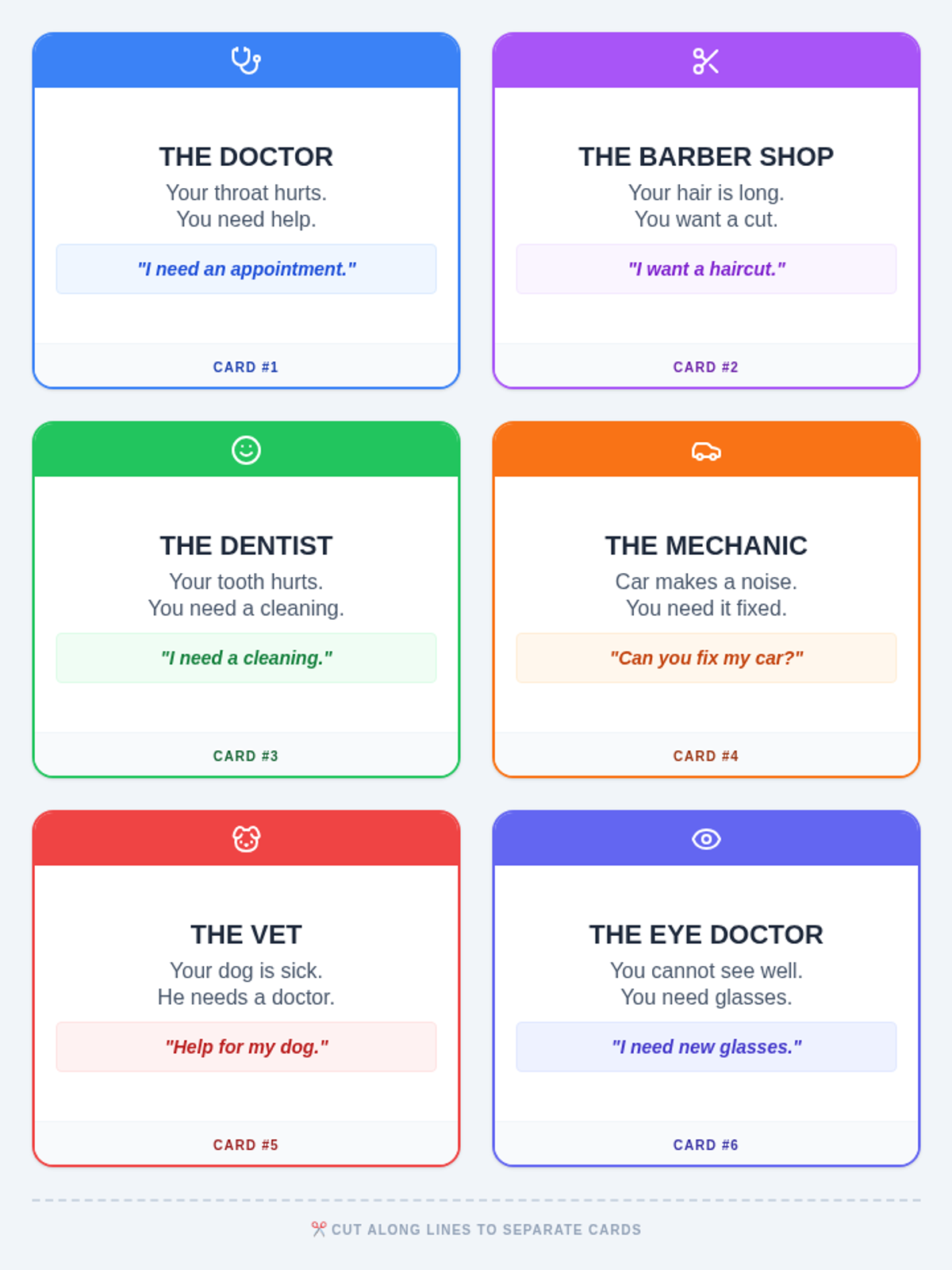
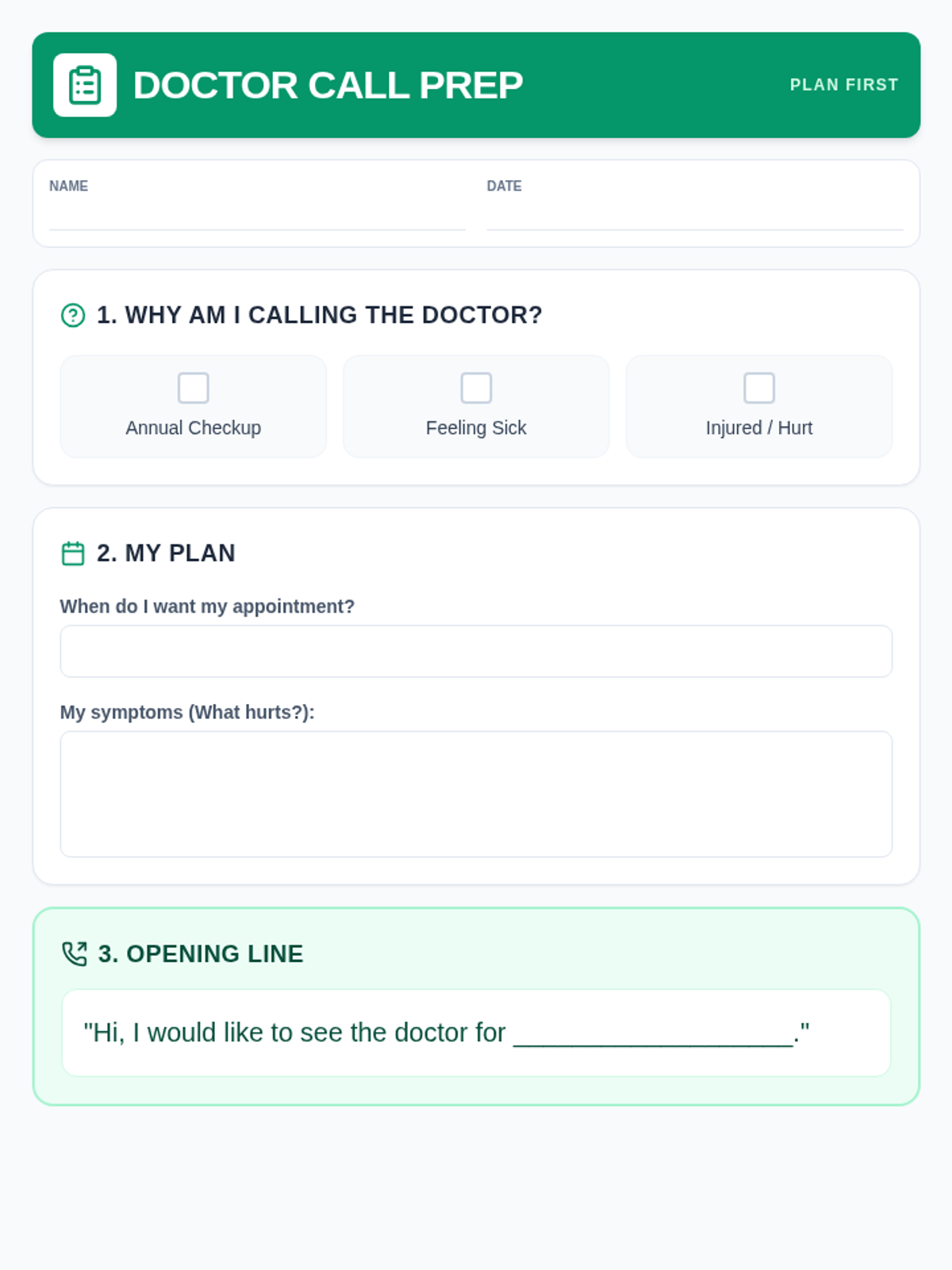
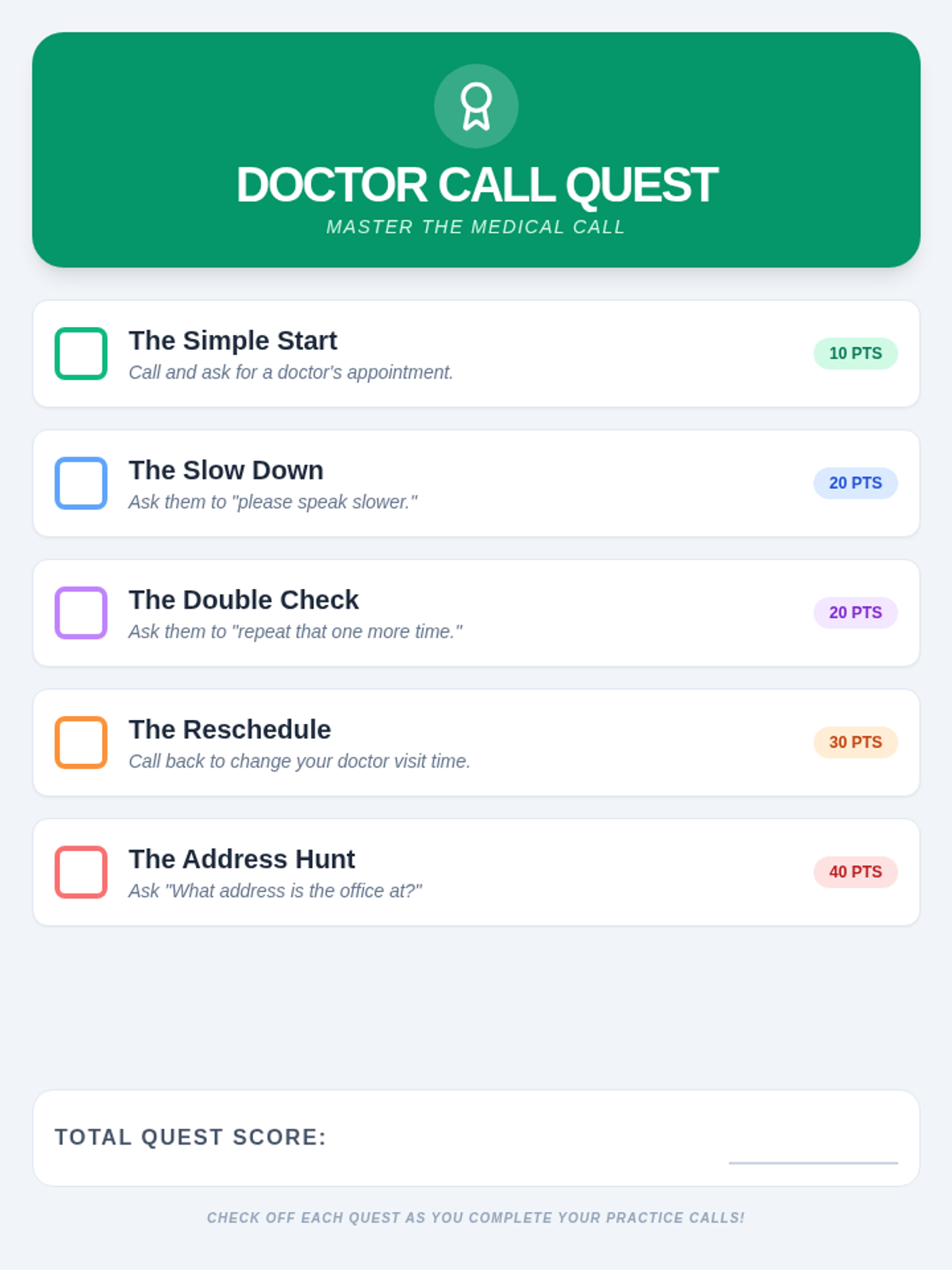
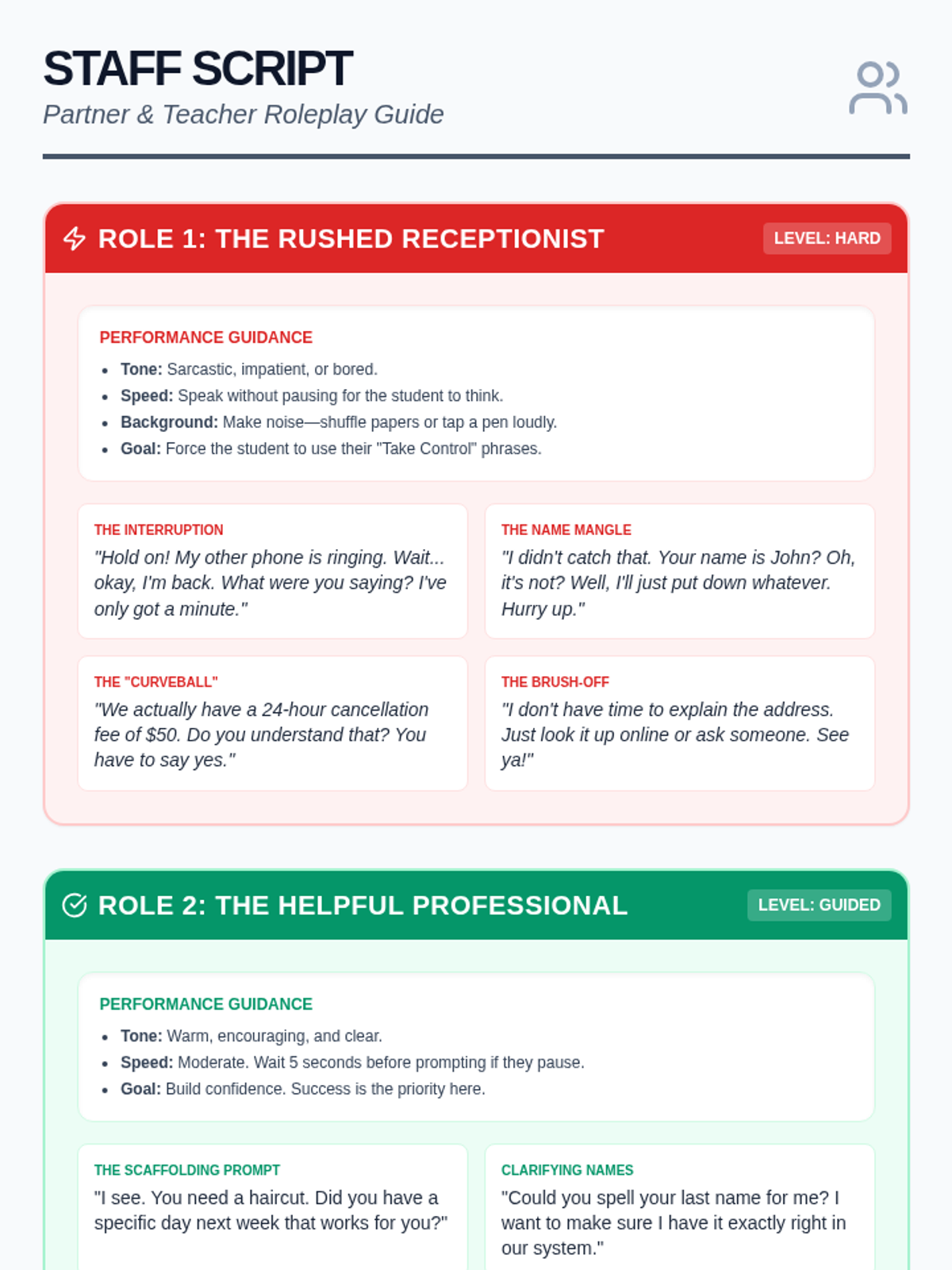
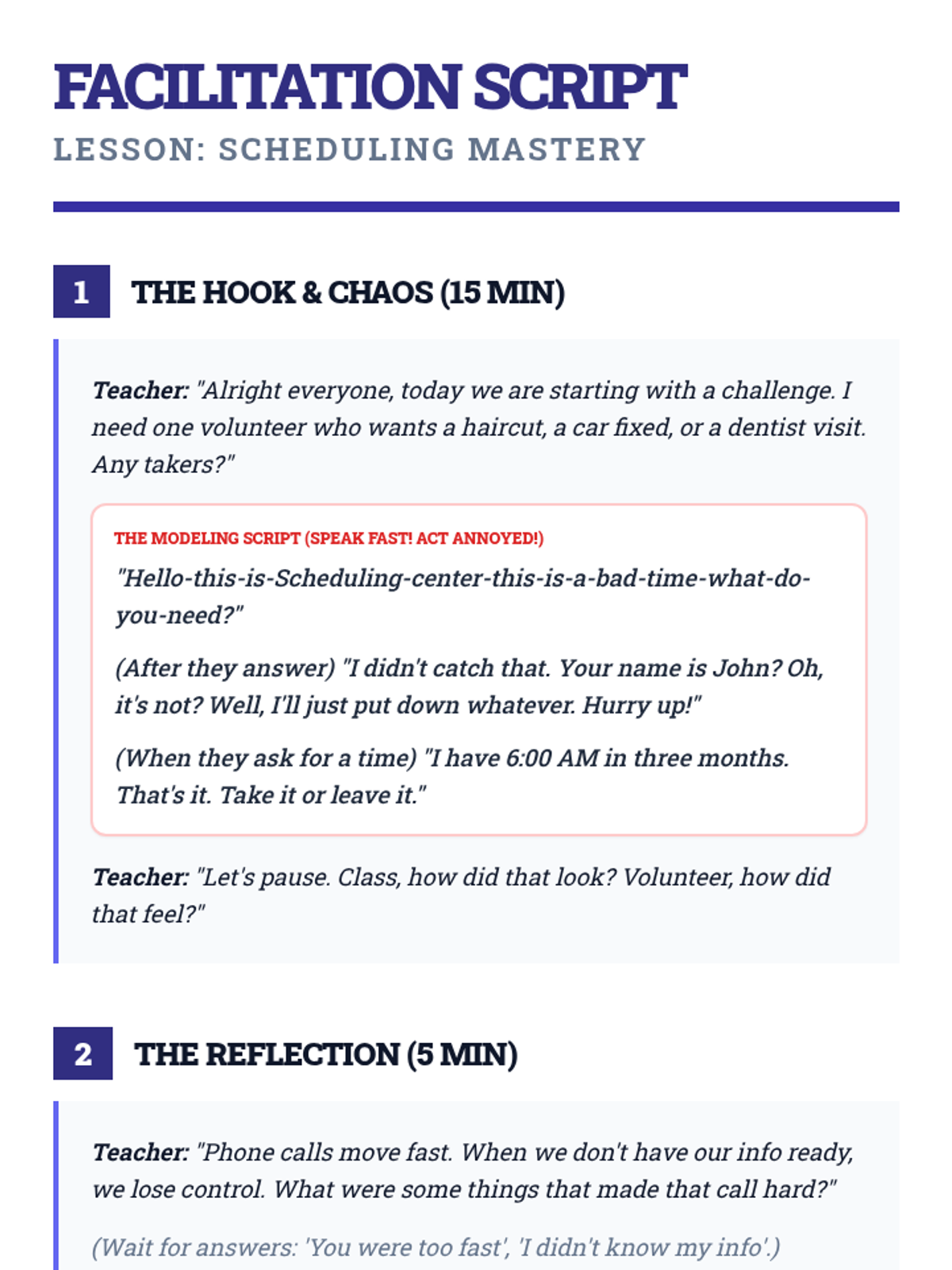
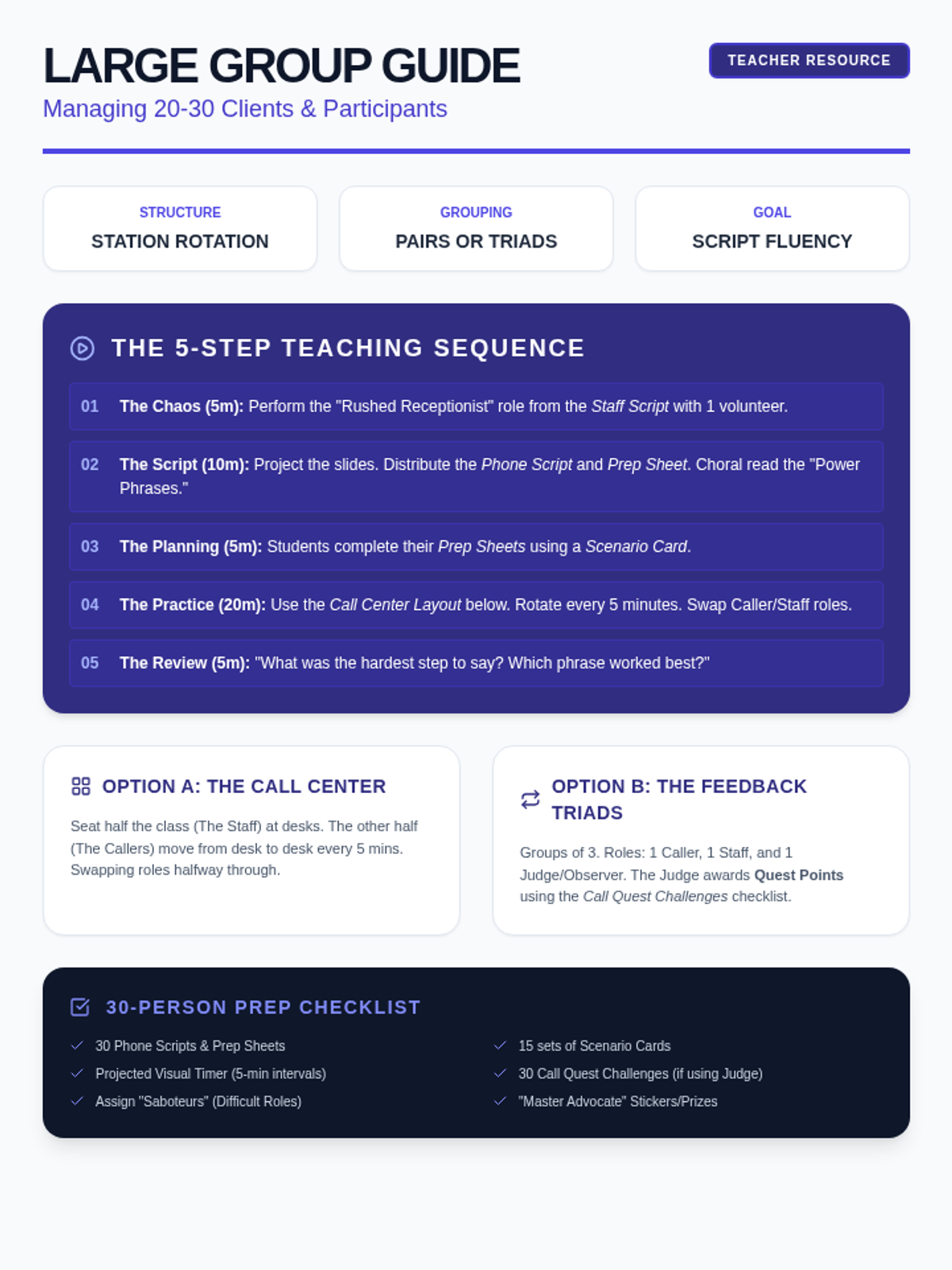
An experiential lesson where students first encounter a frustrating scheduling experience before learning and practicing clear communication strategies for setting any type of appointment.
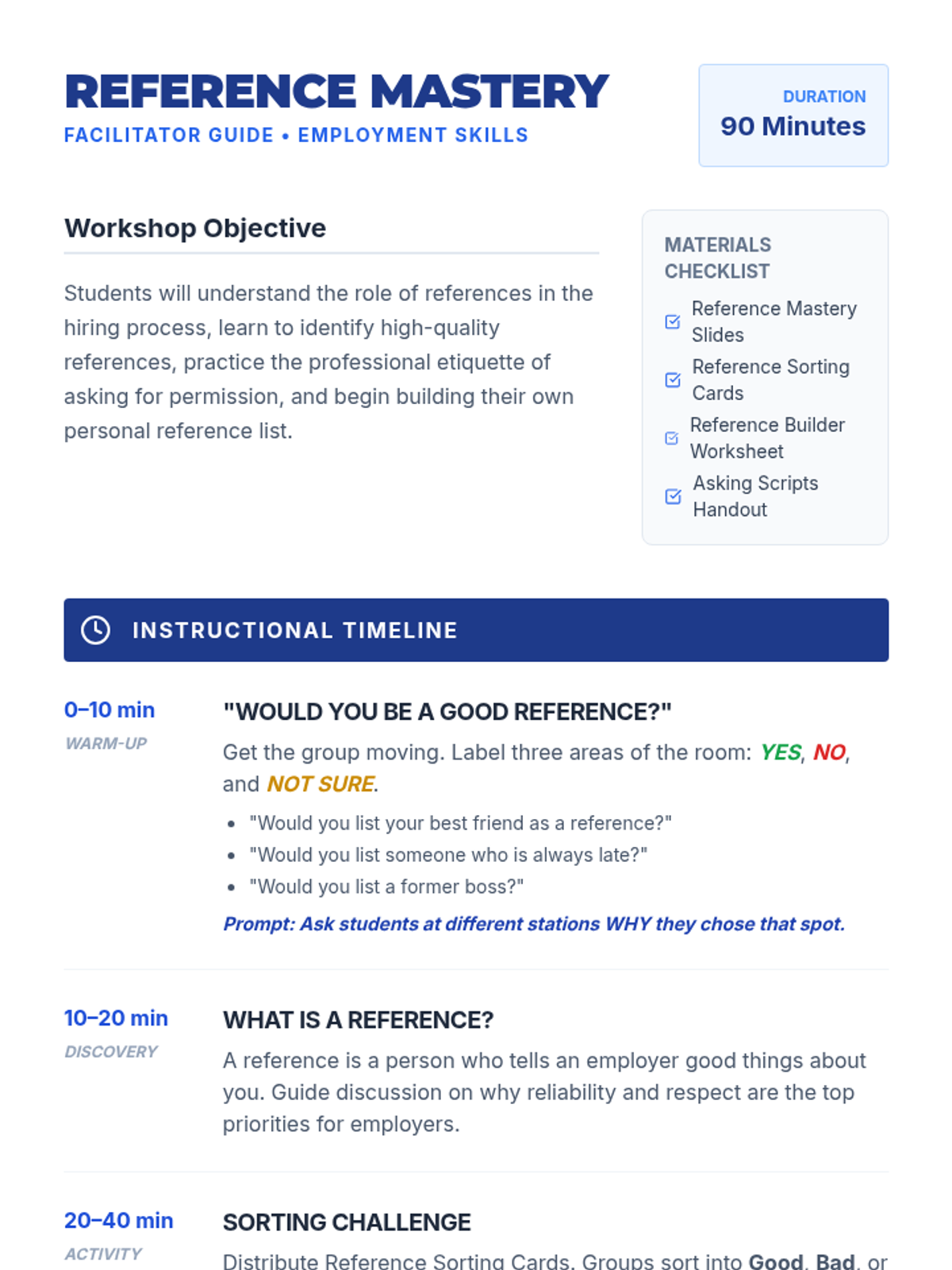
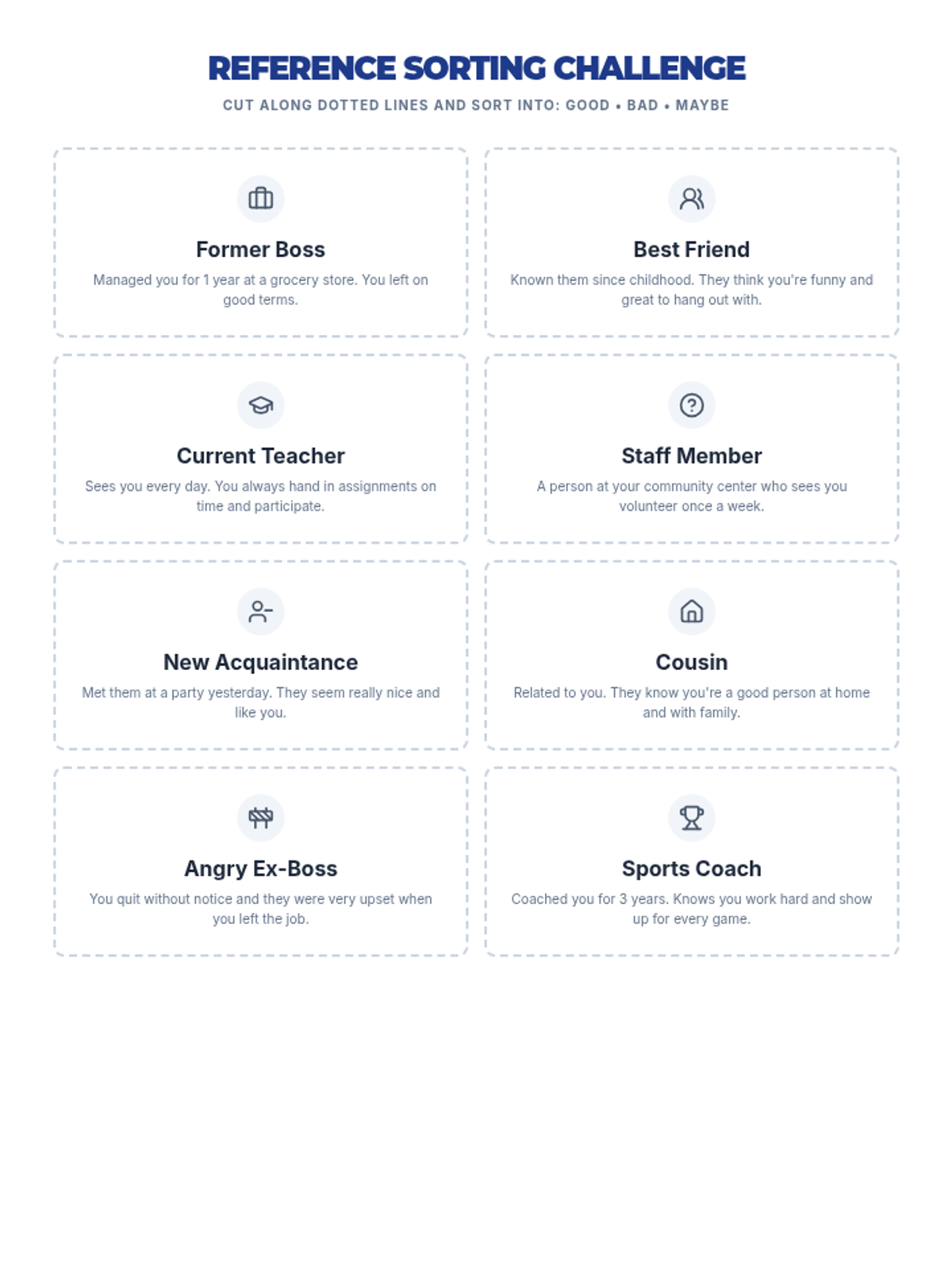
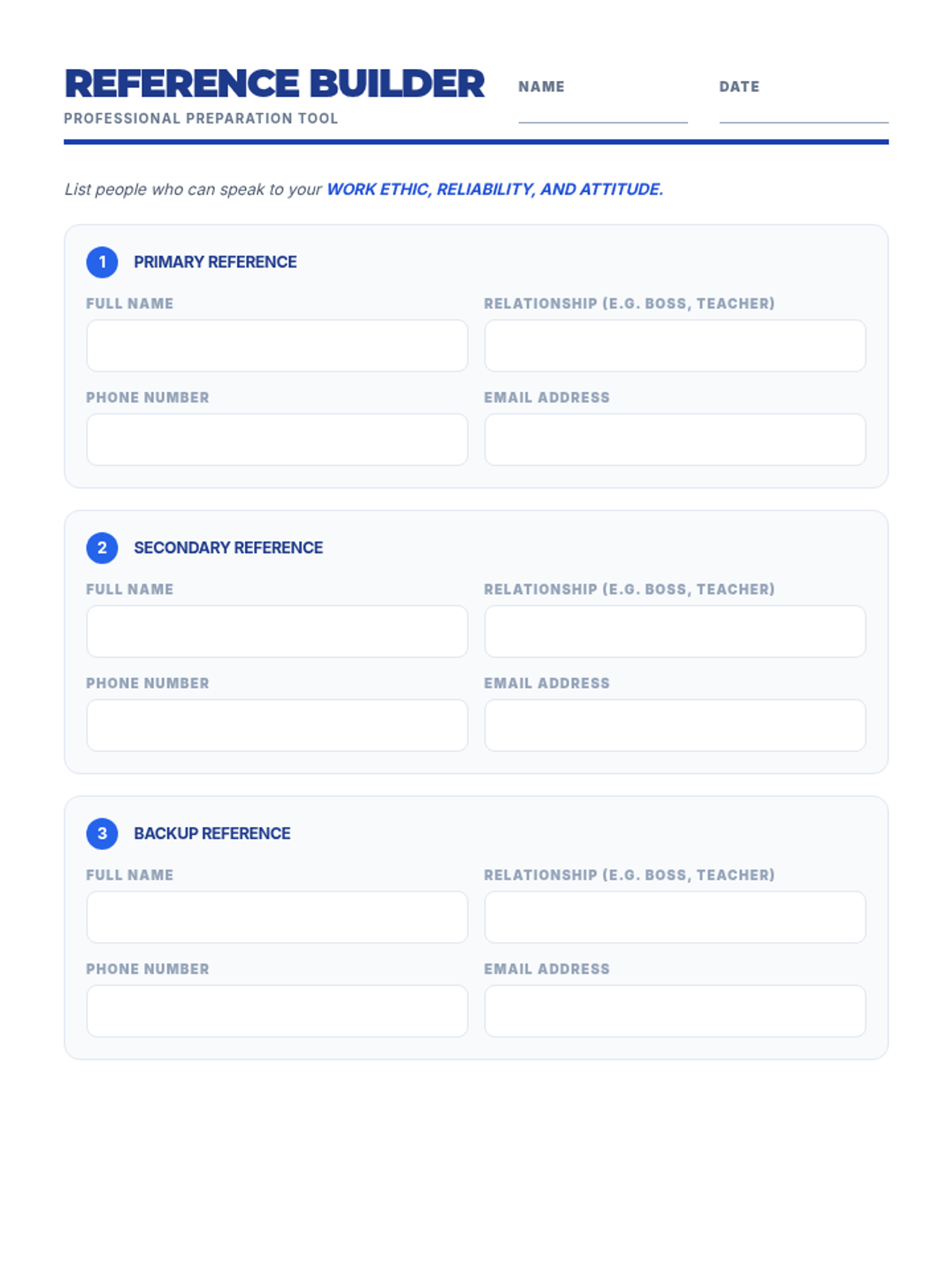
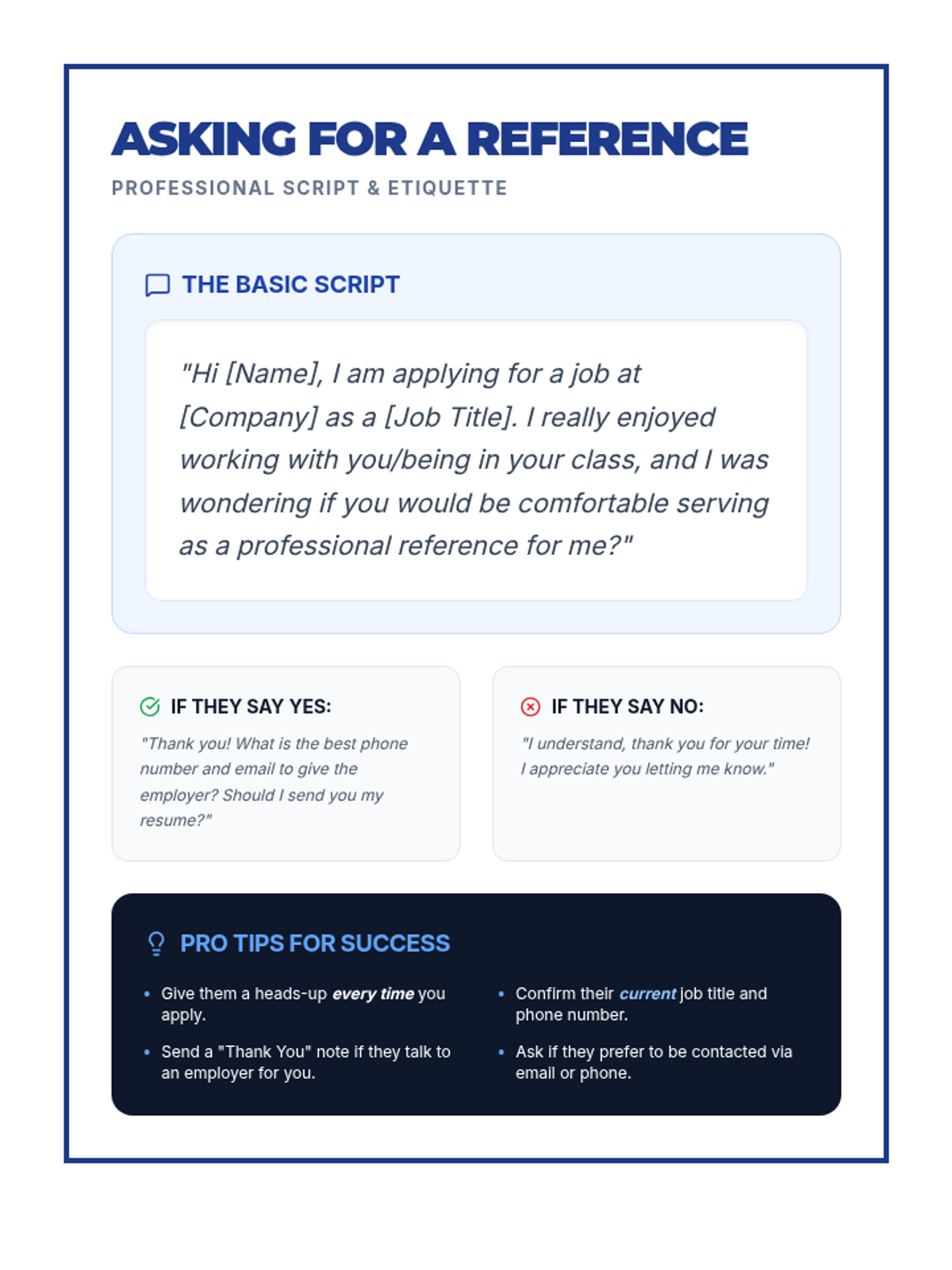
A comprehensive 90-minute workshop on understanding, selecting, and asking for professional references to secure employment.
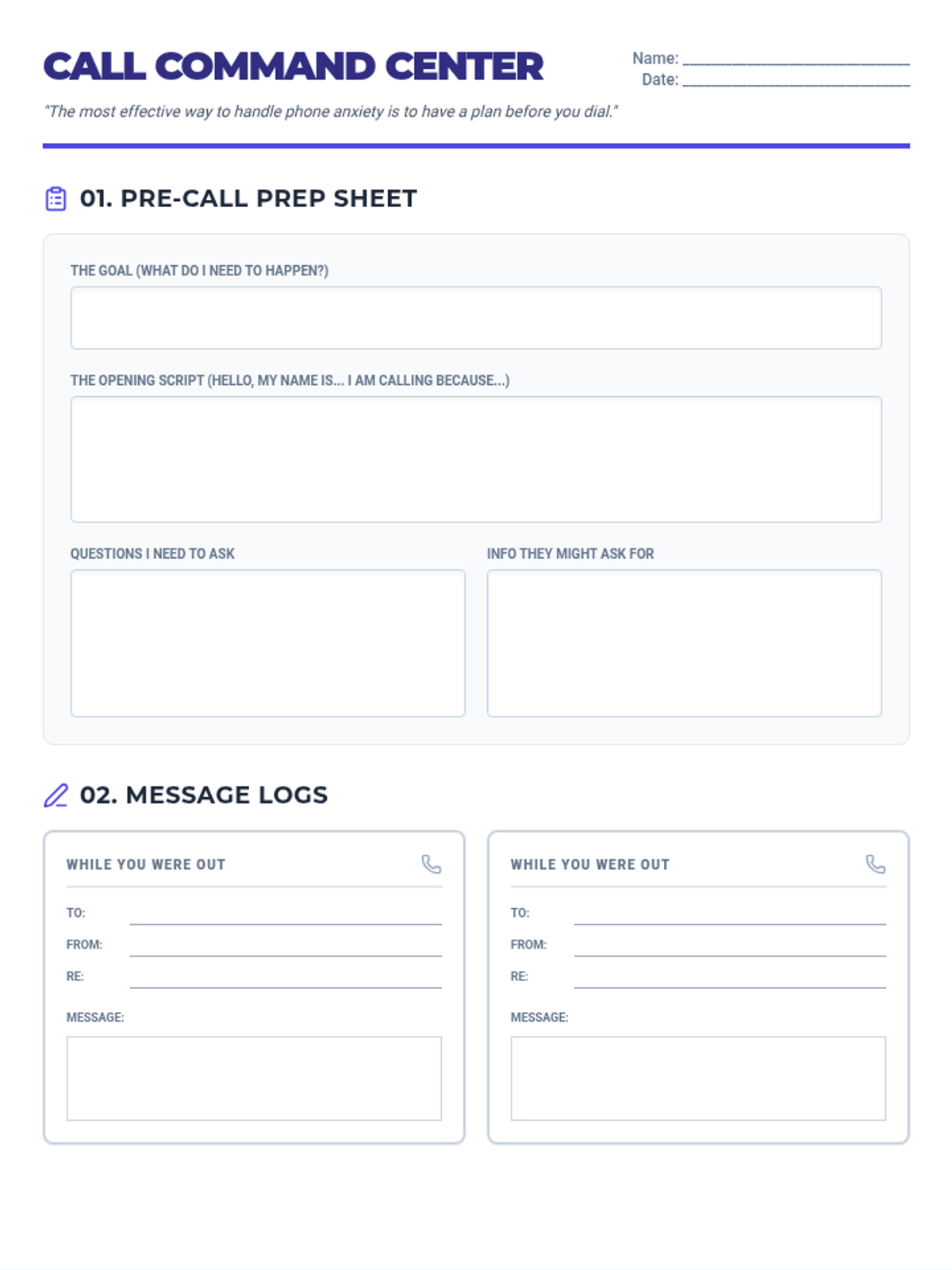
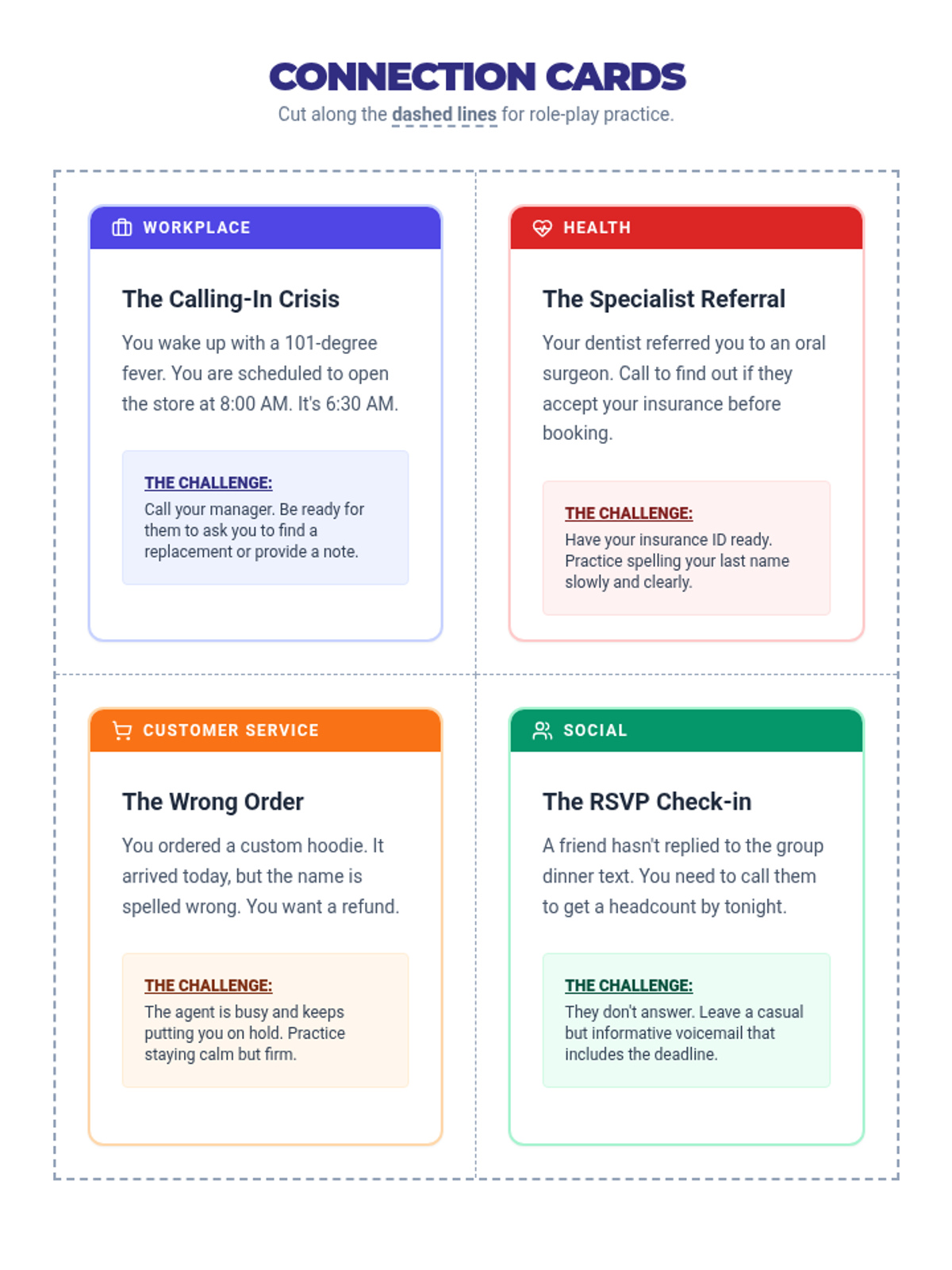
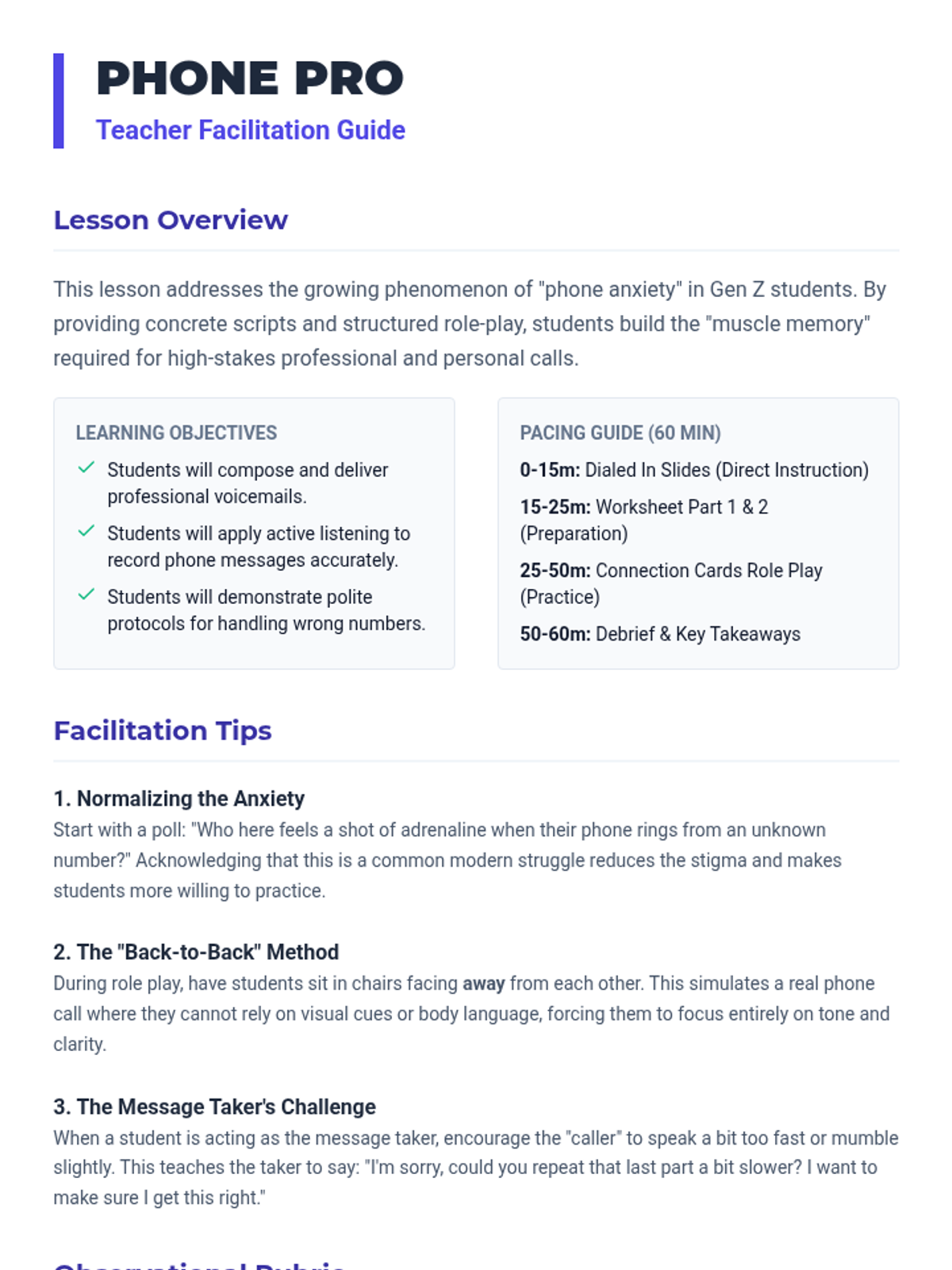
A comprehensive lesson designed to help high school seniors master the art of professional and personal phone communication, focusing on overcoming anxiety and handling diverse scenarios.
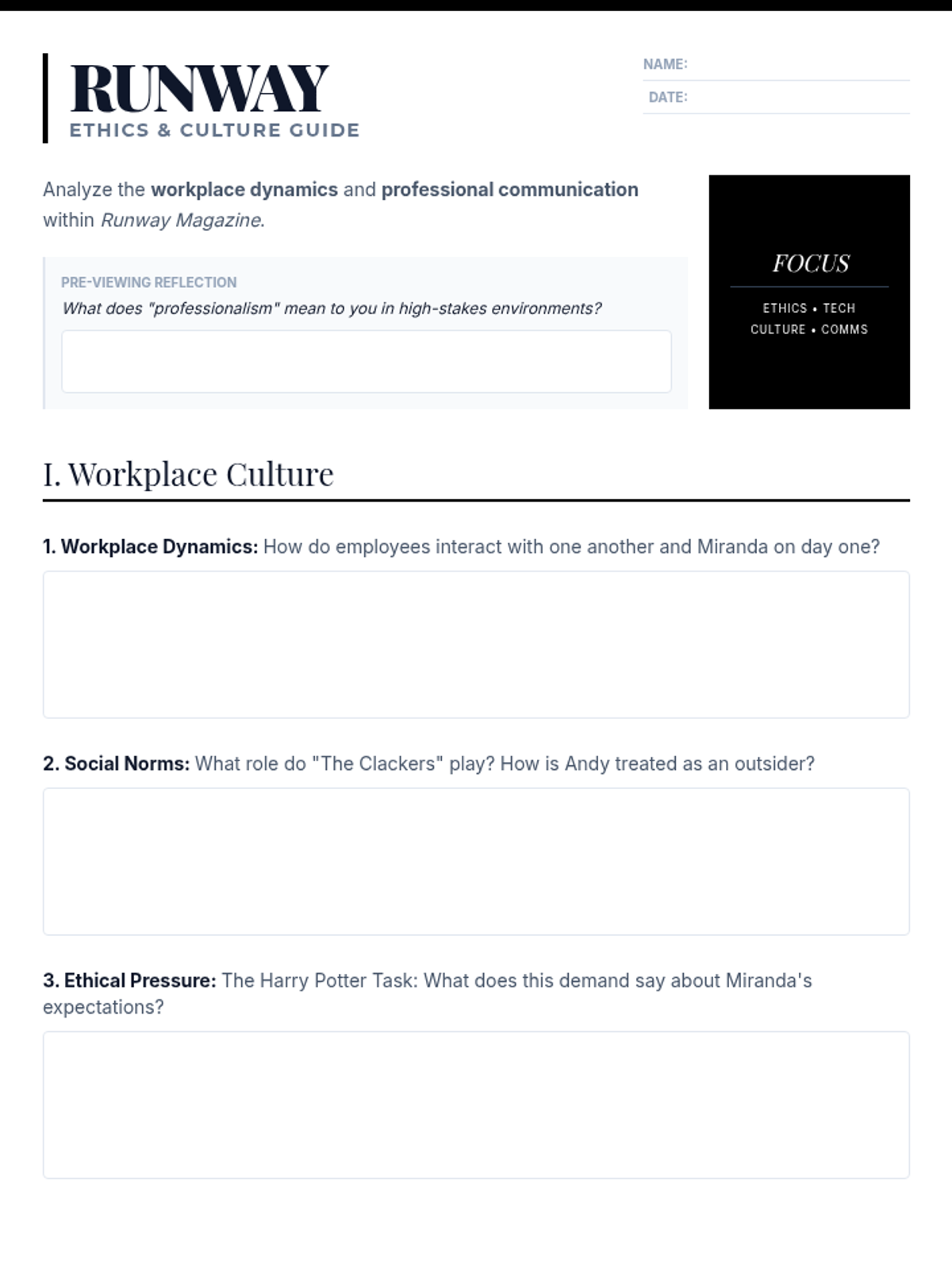
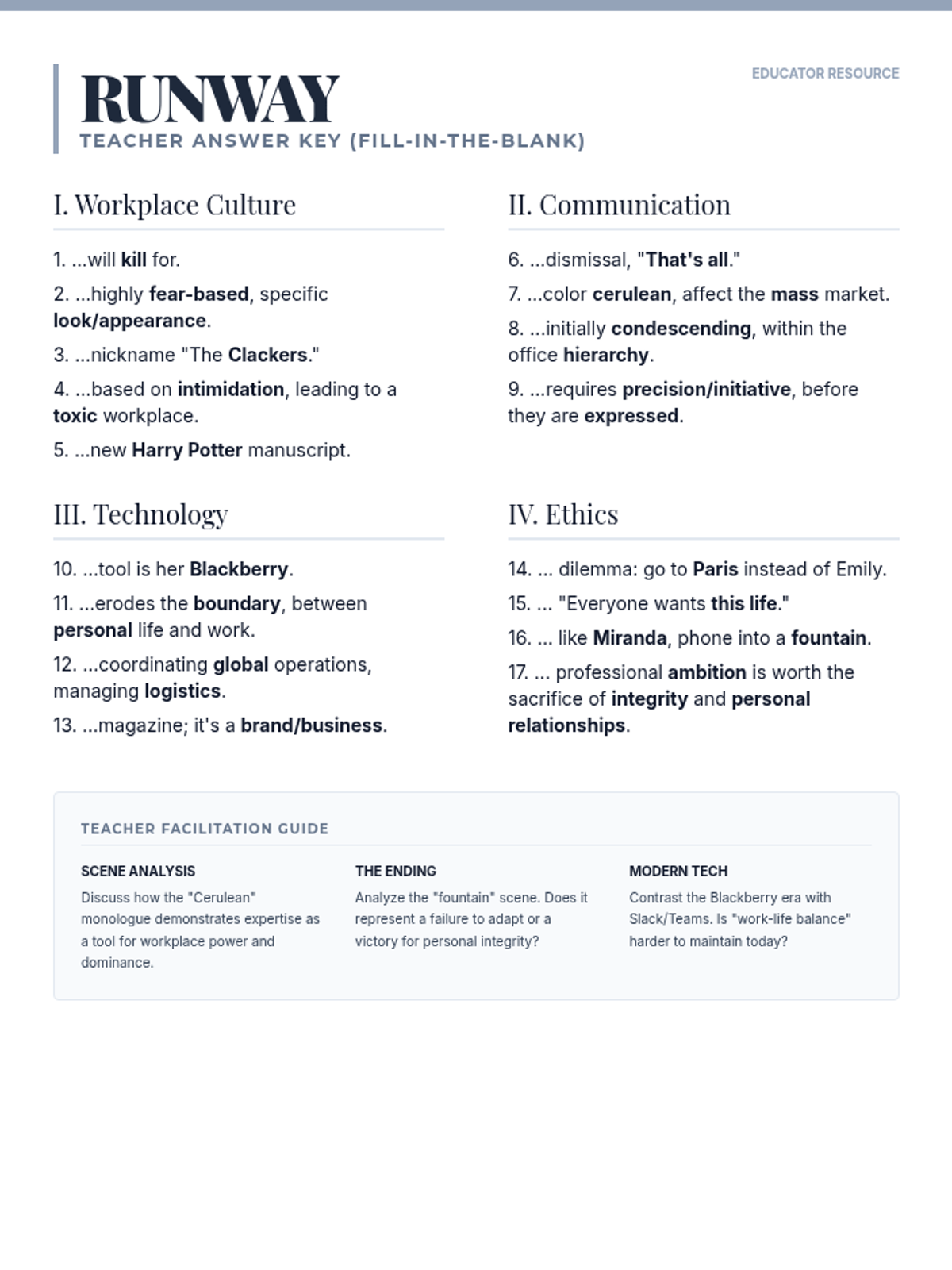
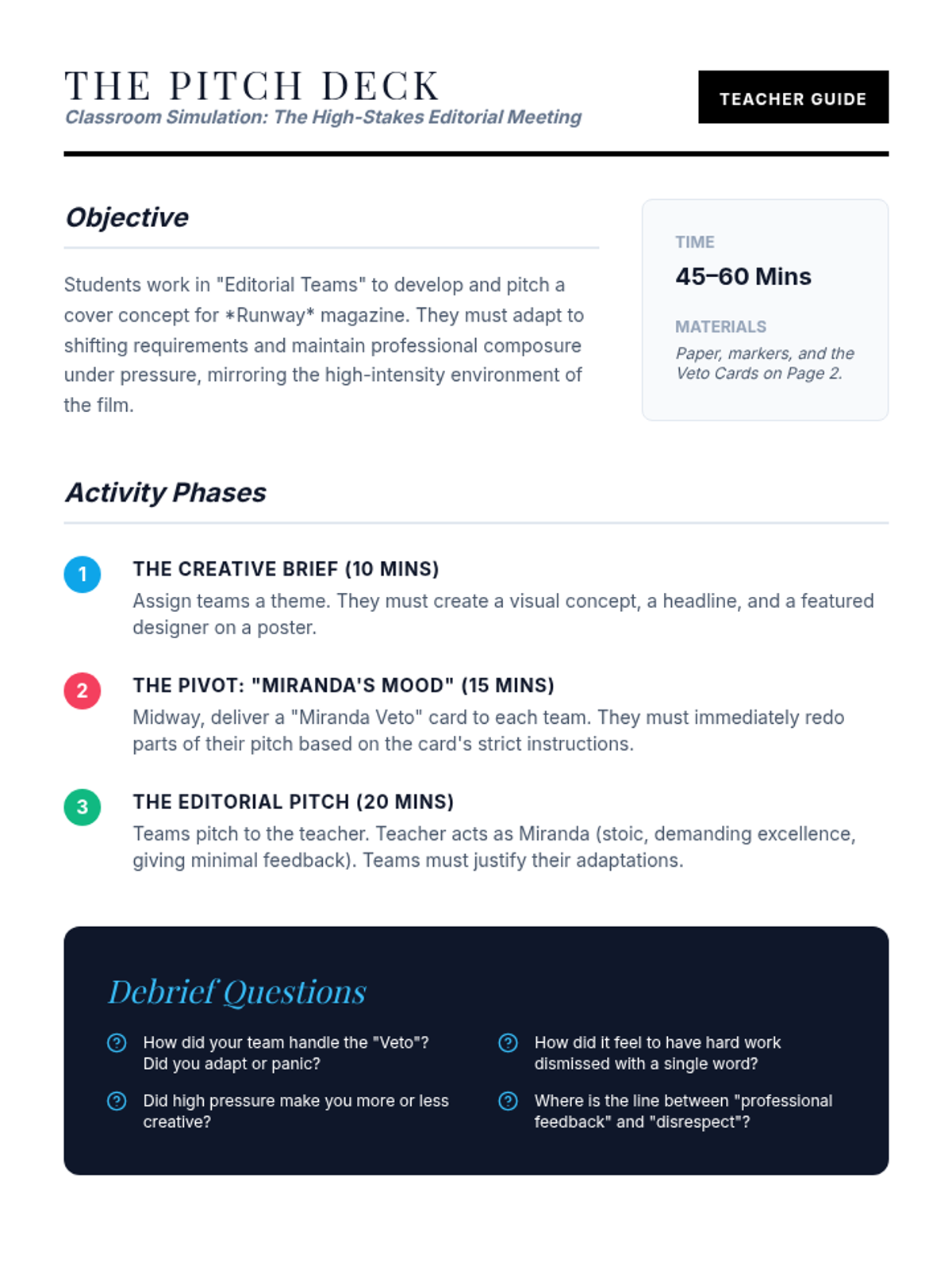
Analyze workplace culture, professional communication, and business ethics through the lens of the high-stakes fashion industry in 'The Devil Wears Prada'. Students will explore how technology facilitates modern business and the ethical dilemmas of rapid-fire corporate environments.
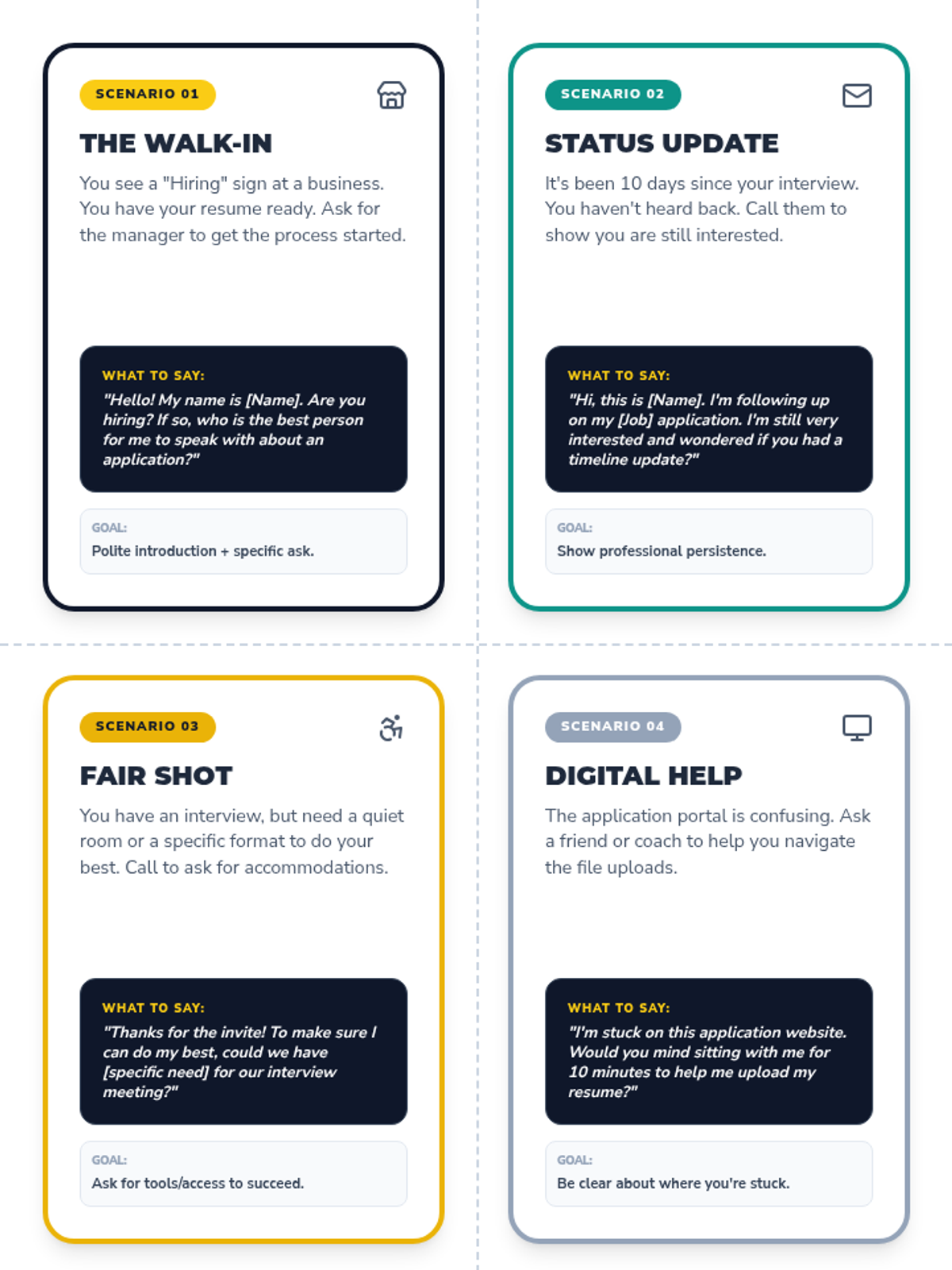
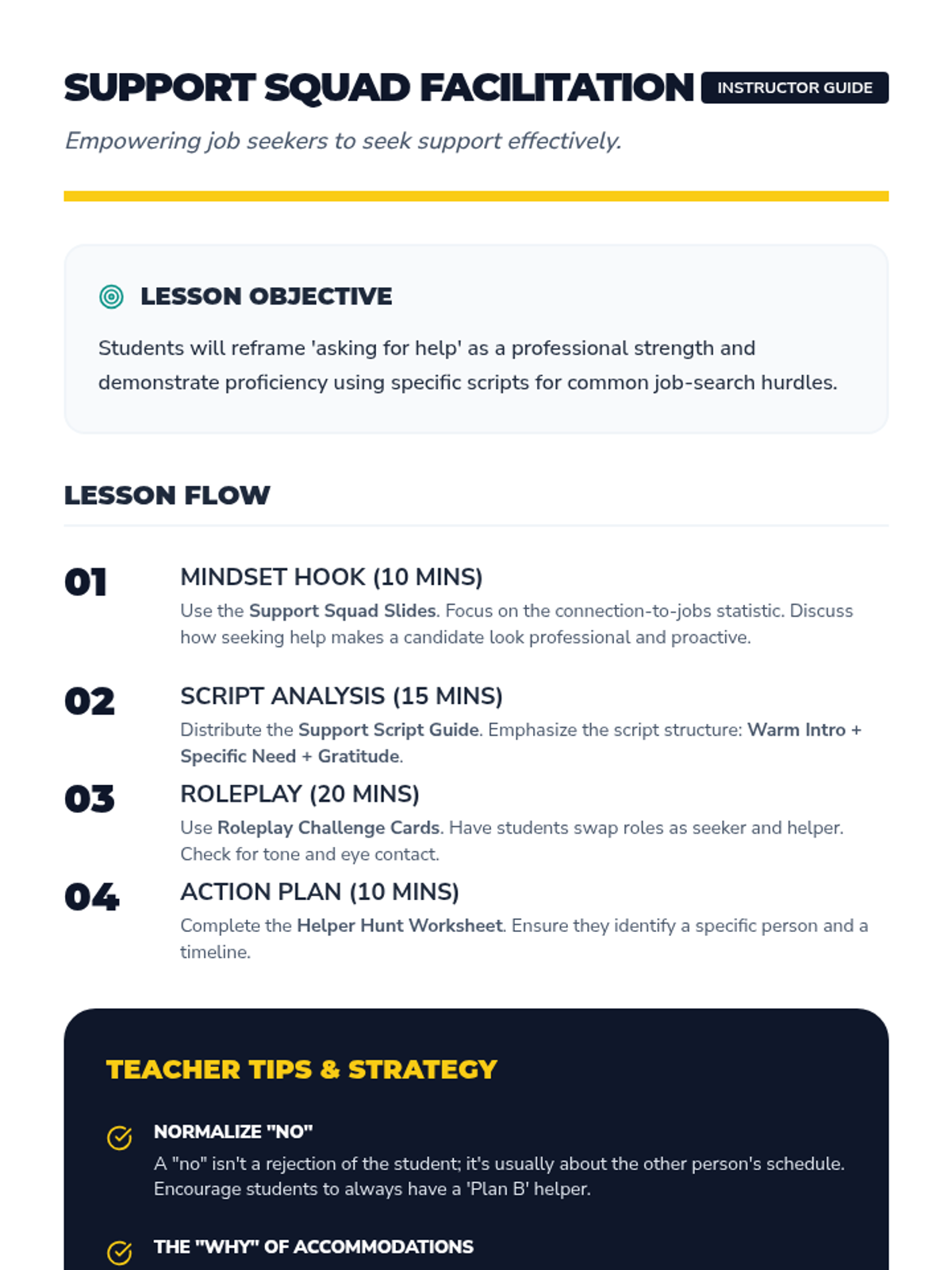
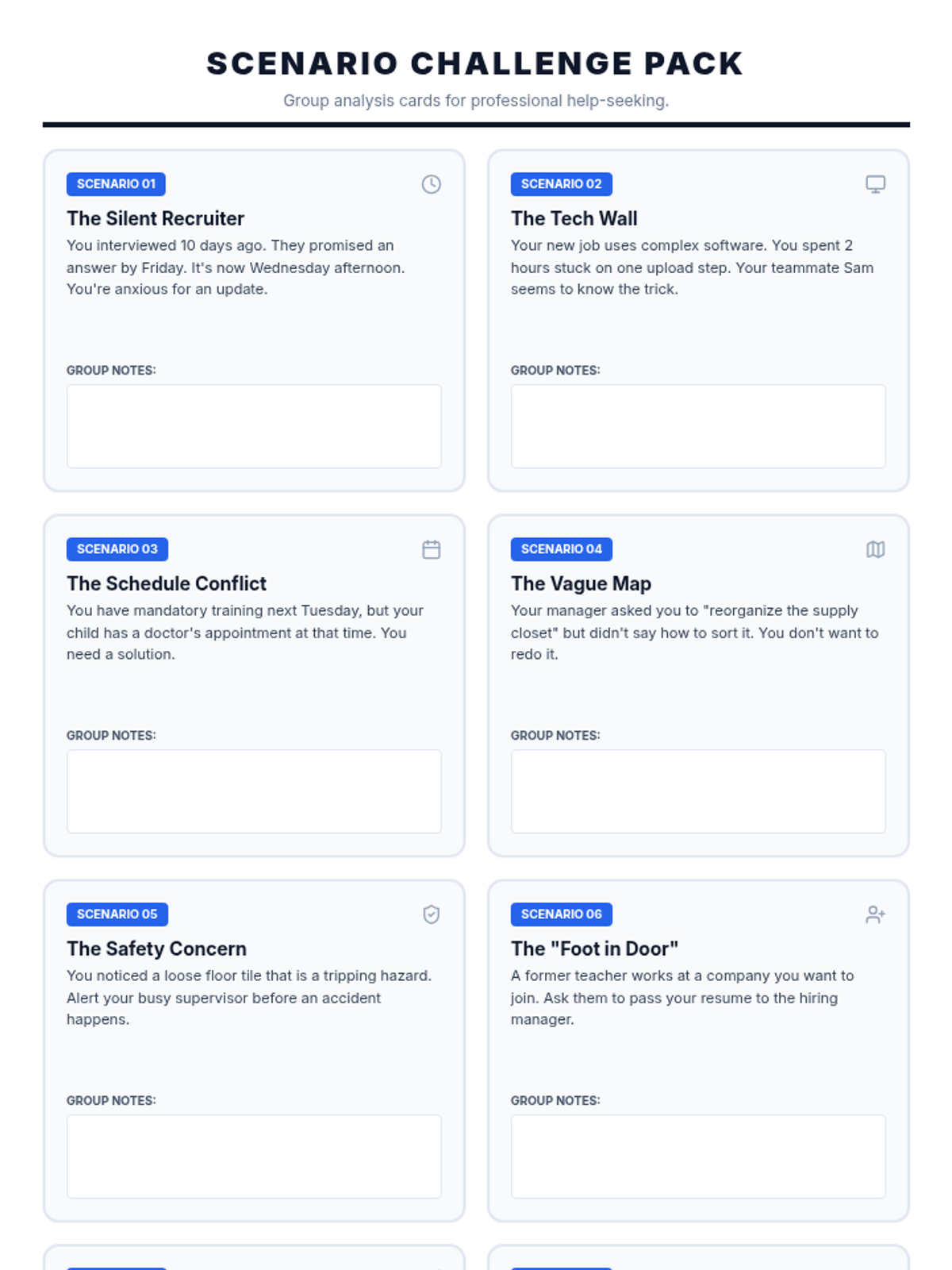
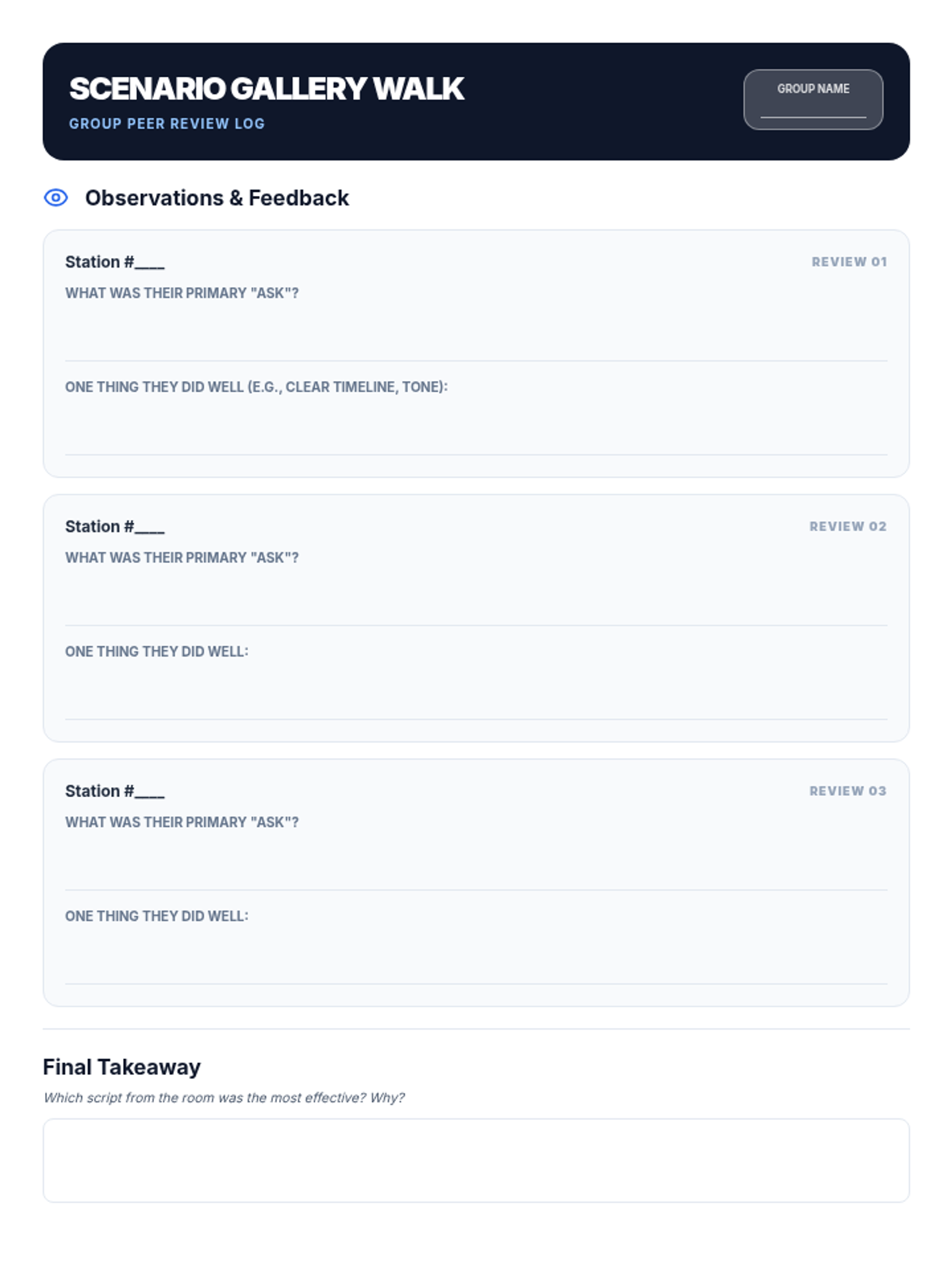
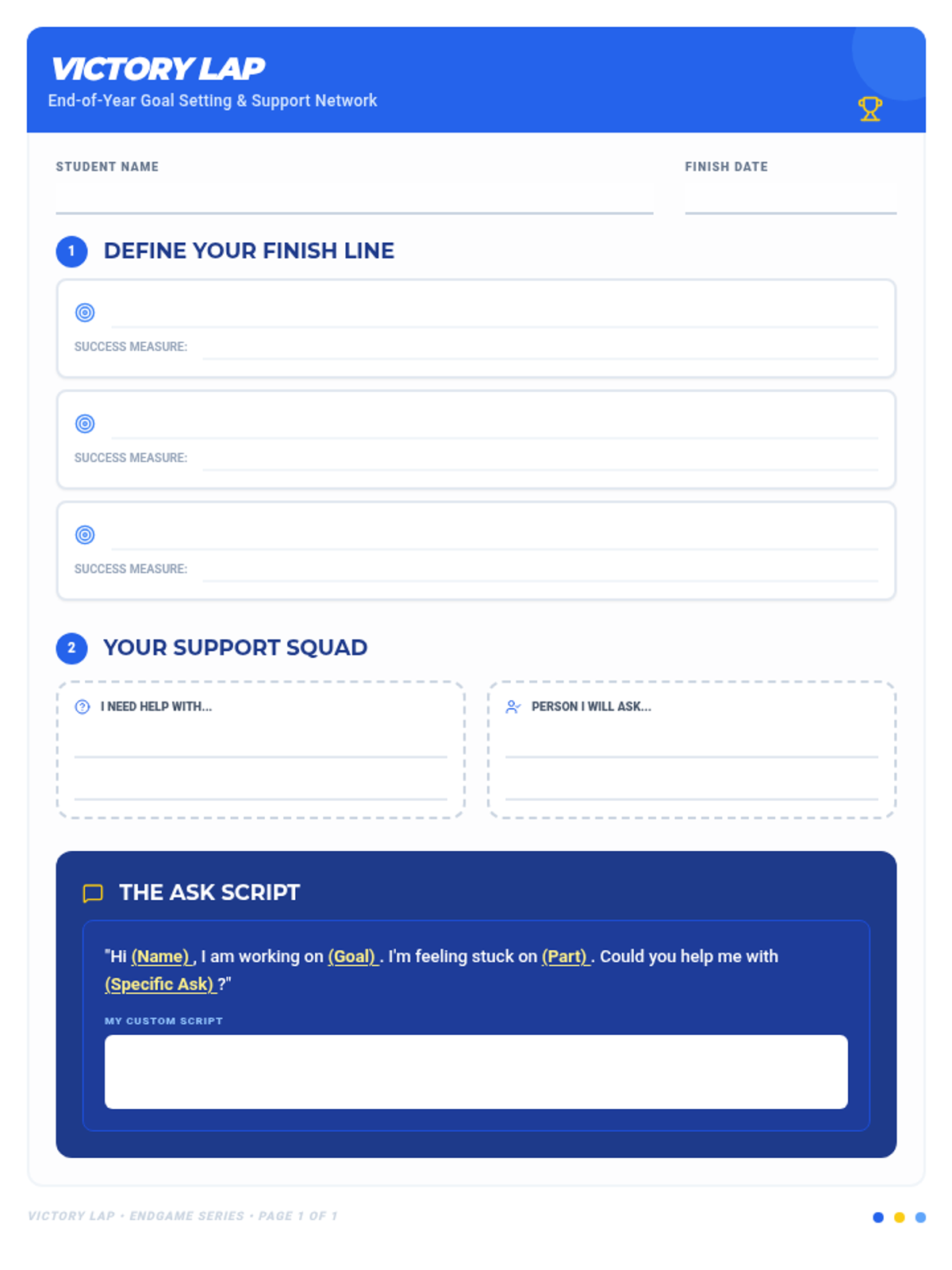
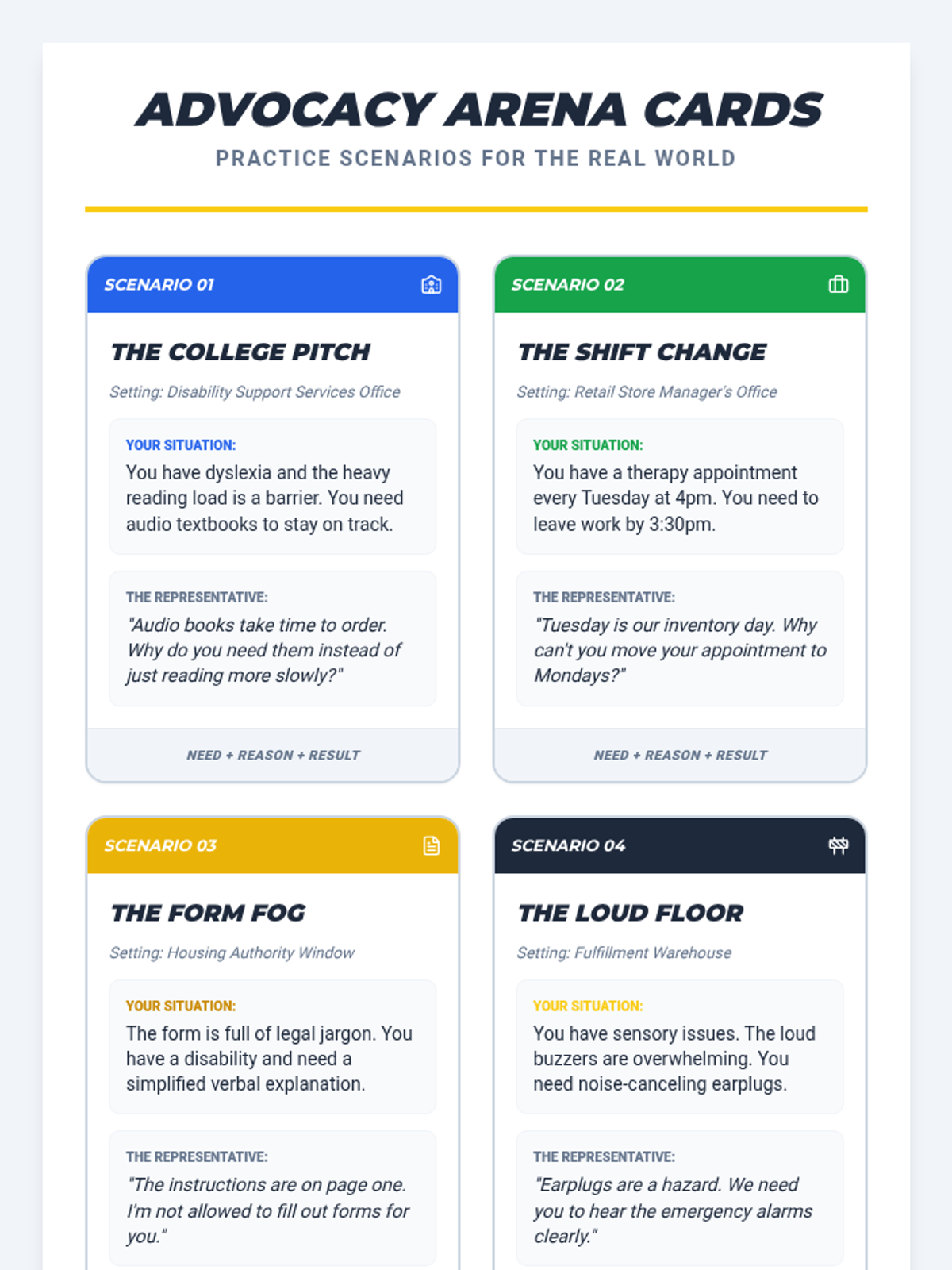
A professional development lesson that reframes asking for help as a vital workplace skill. Students learn to identify their support network, use clear and direct communication scripts, and practice advocating for themselves in common job search and employment scenarios.
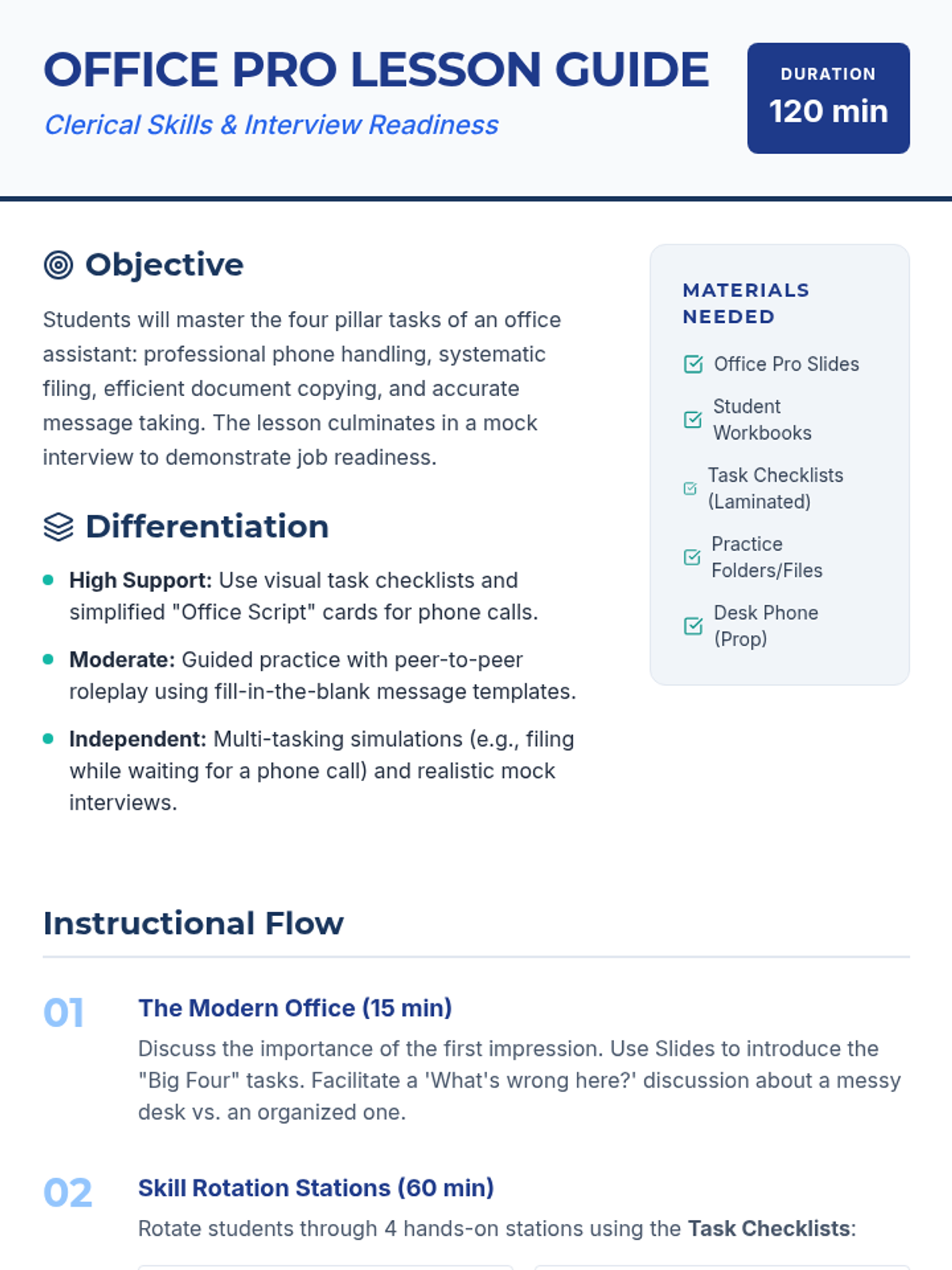
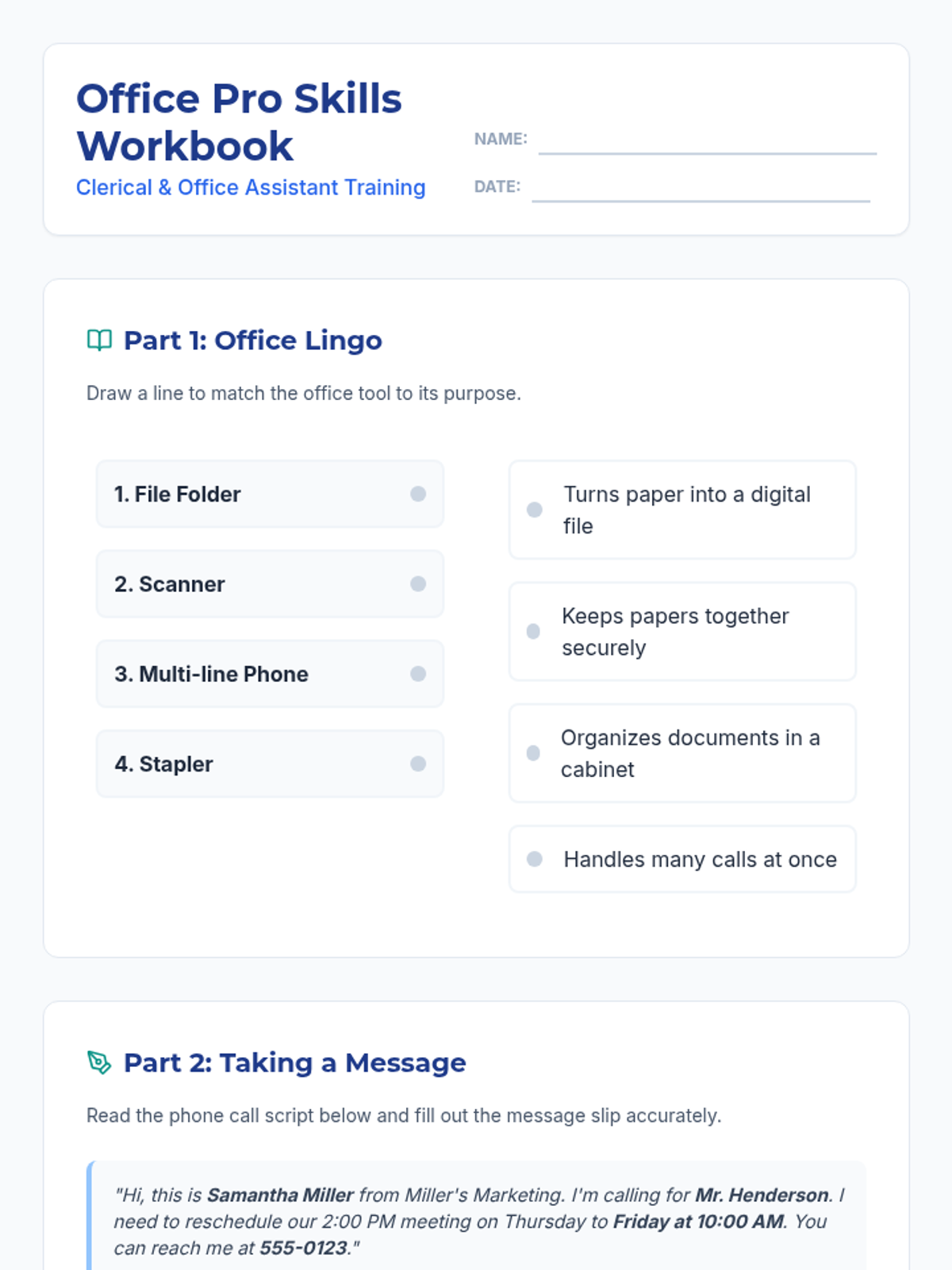
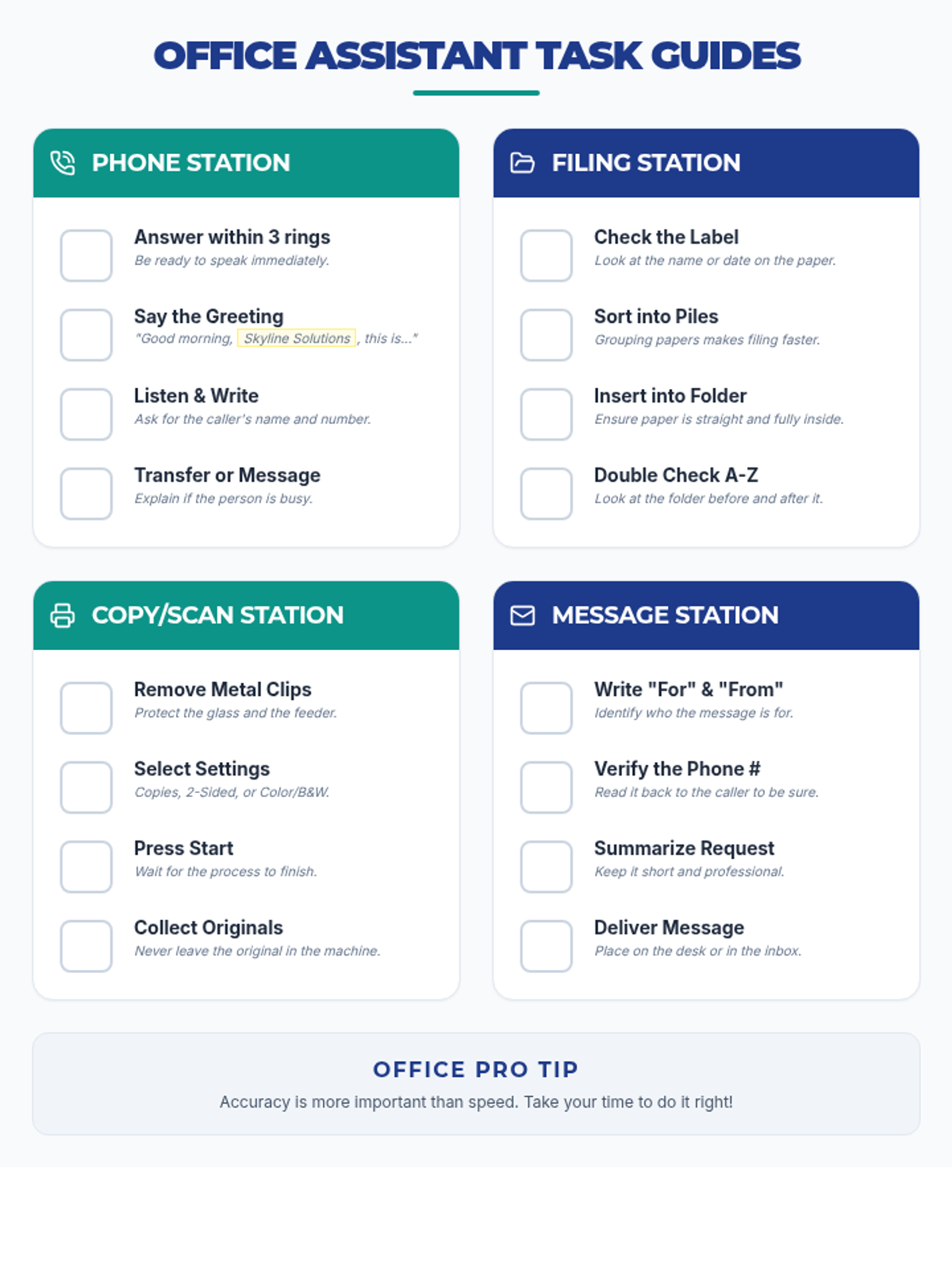
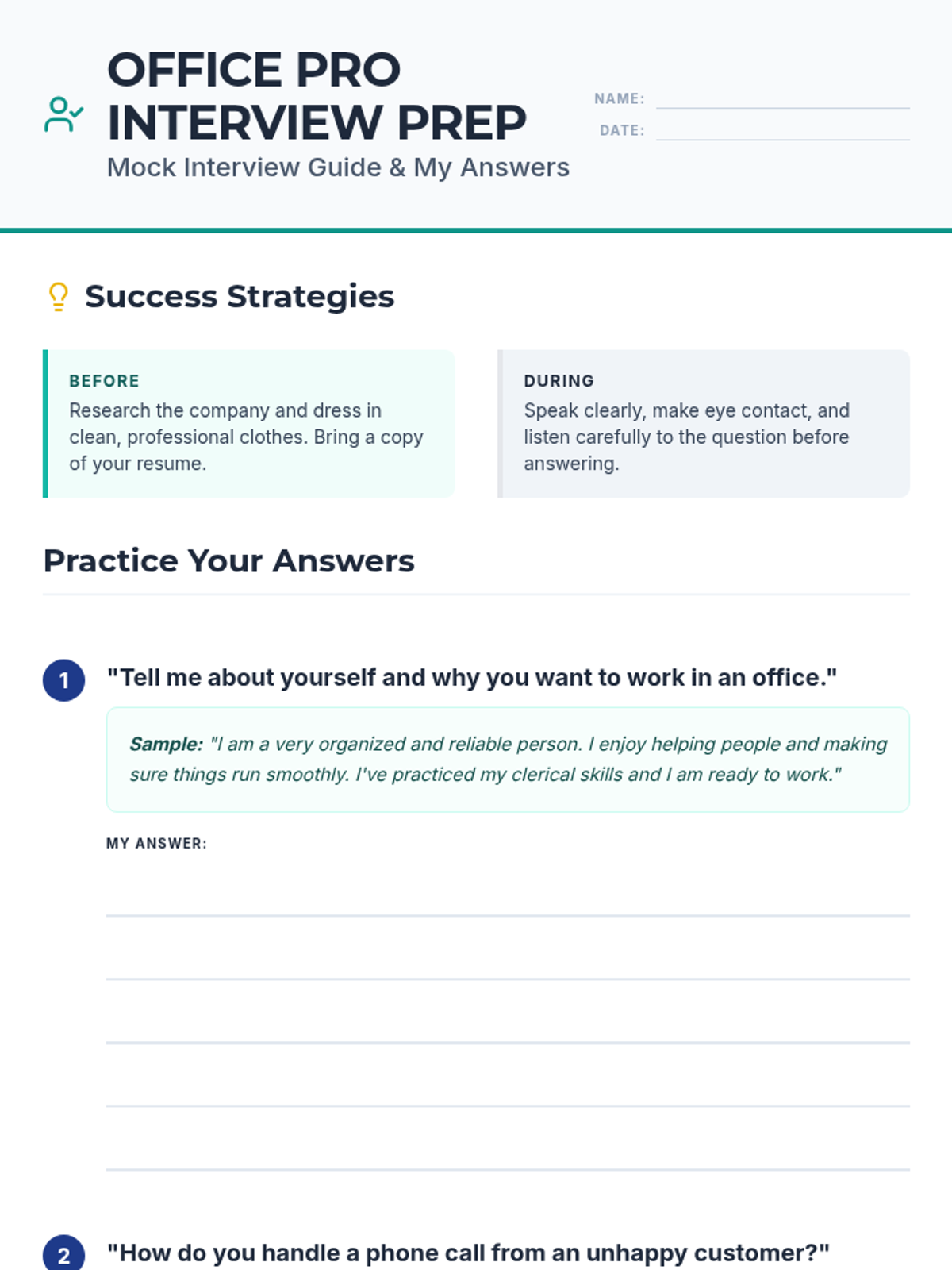
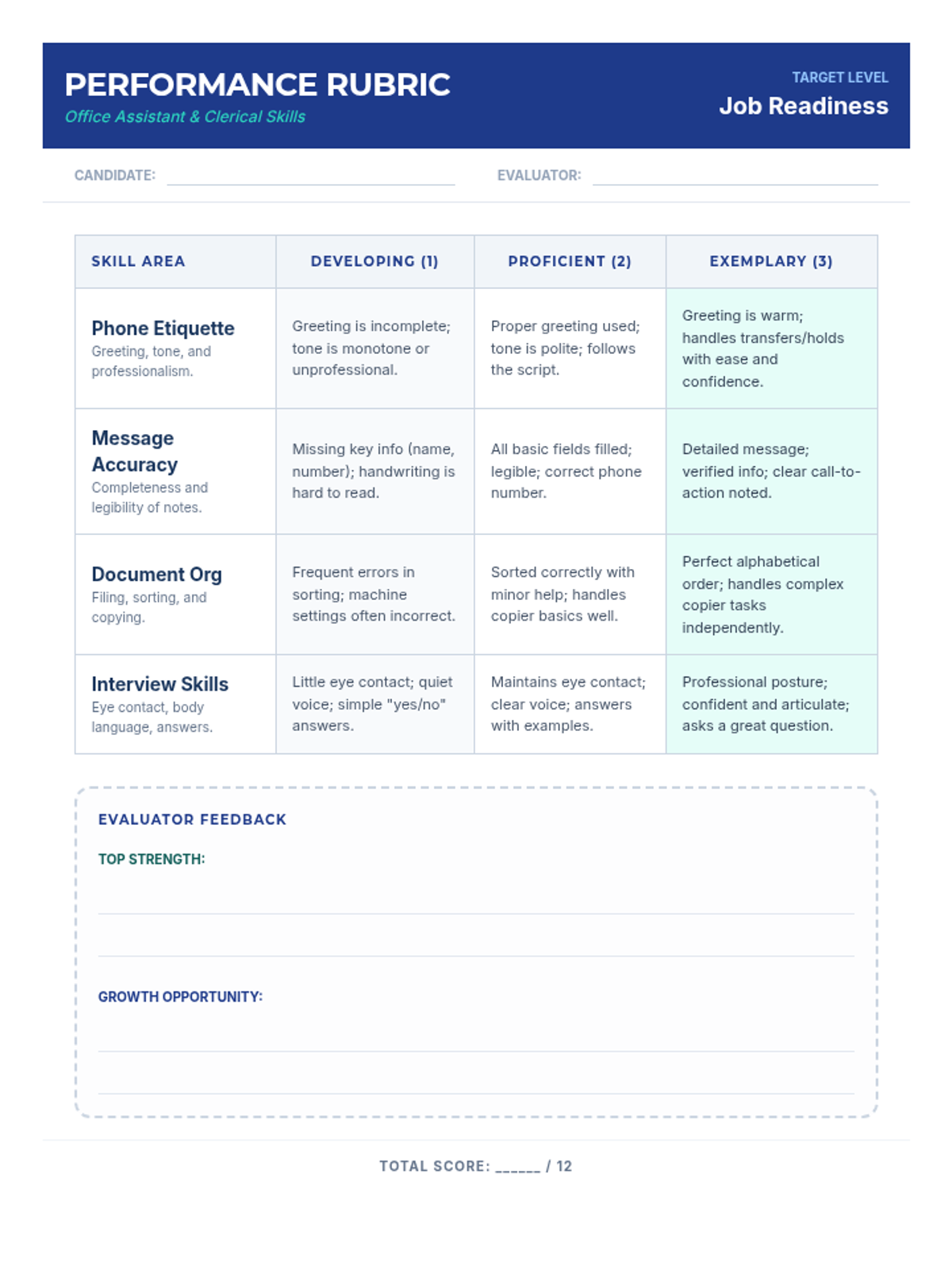
A comprehensive lesson focused on preparing students for office assistant and clerical roles through practical skill-building in phone etiquette, filing, document management, and mock interviews.
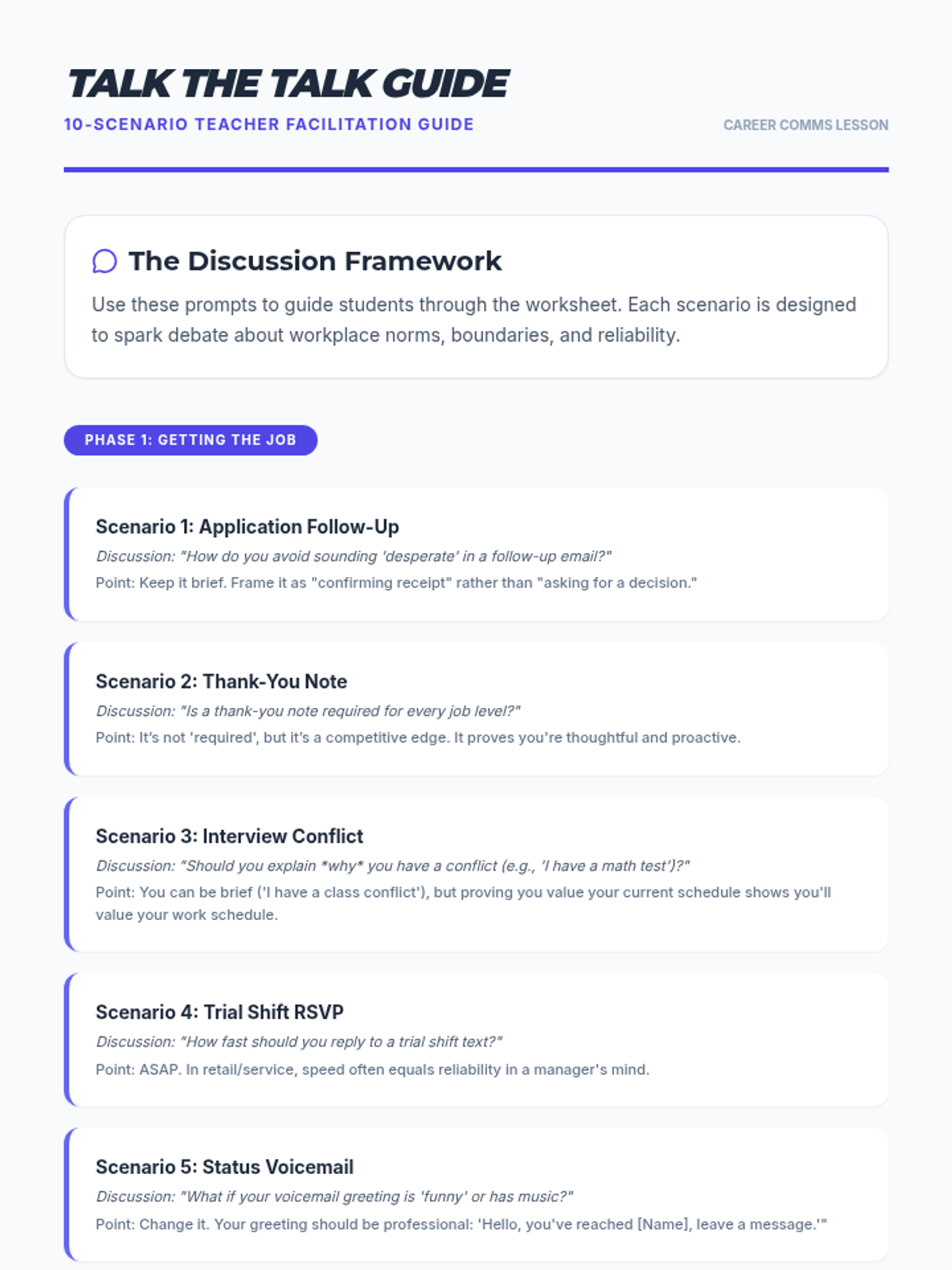
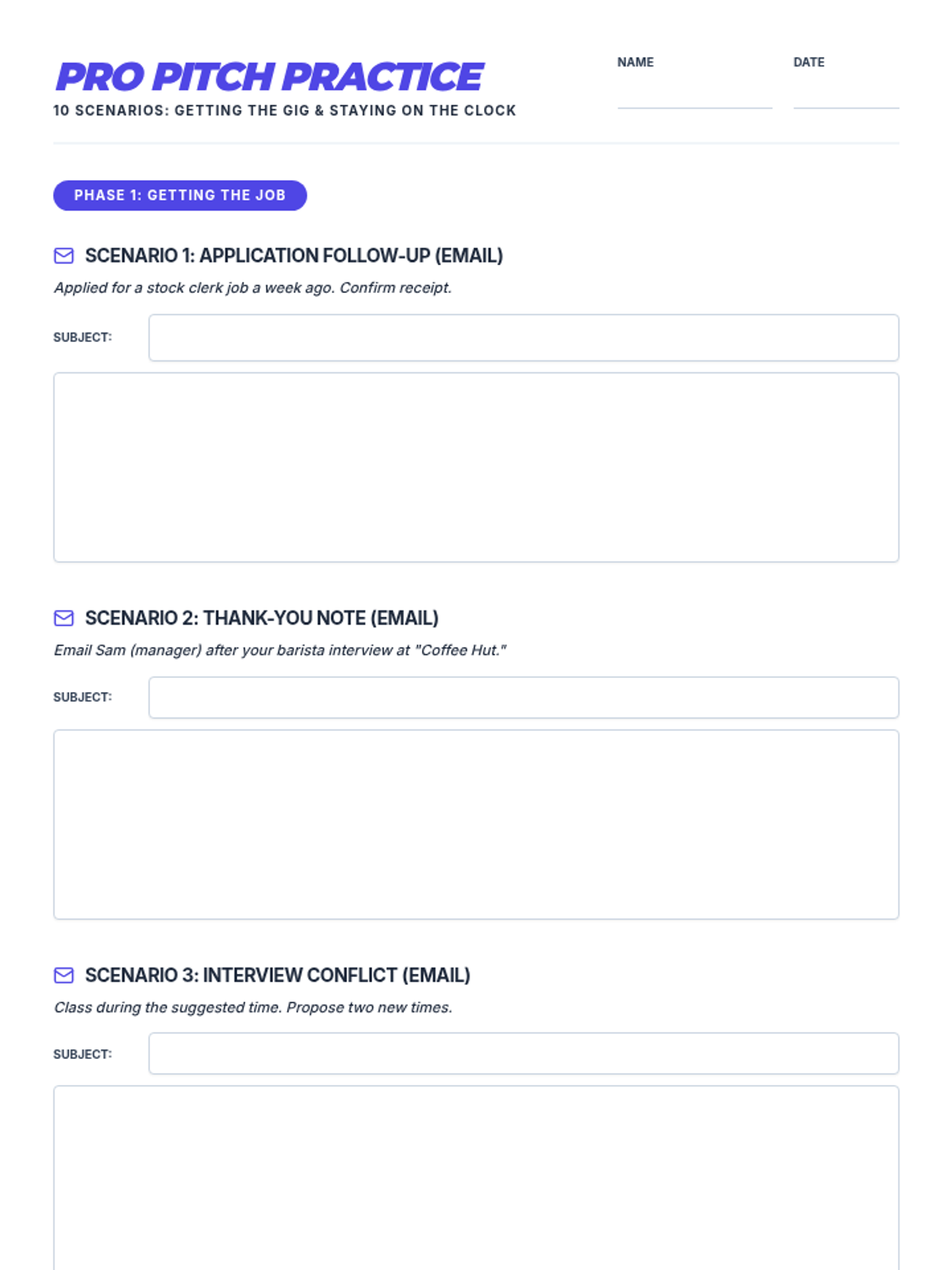
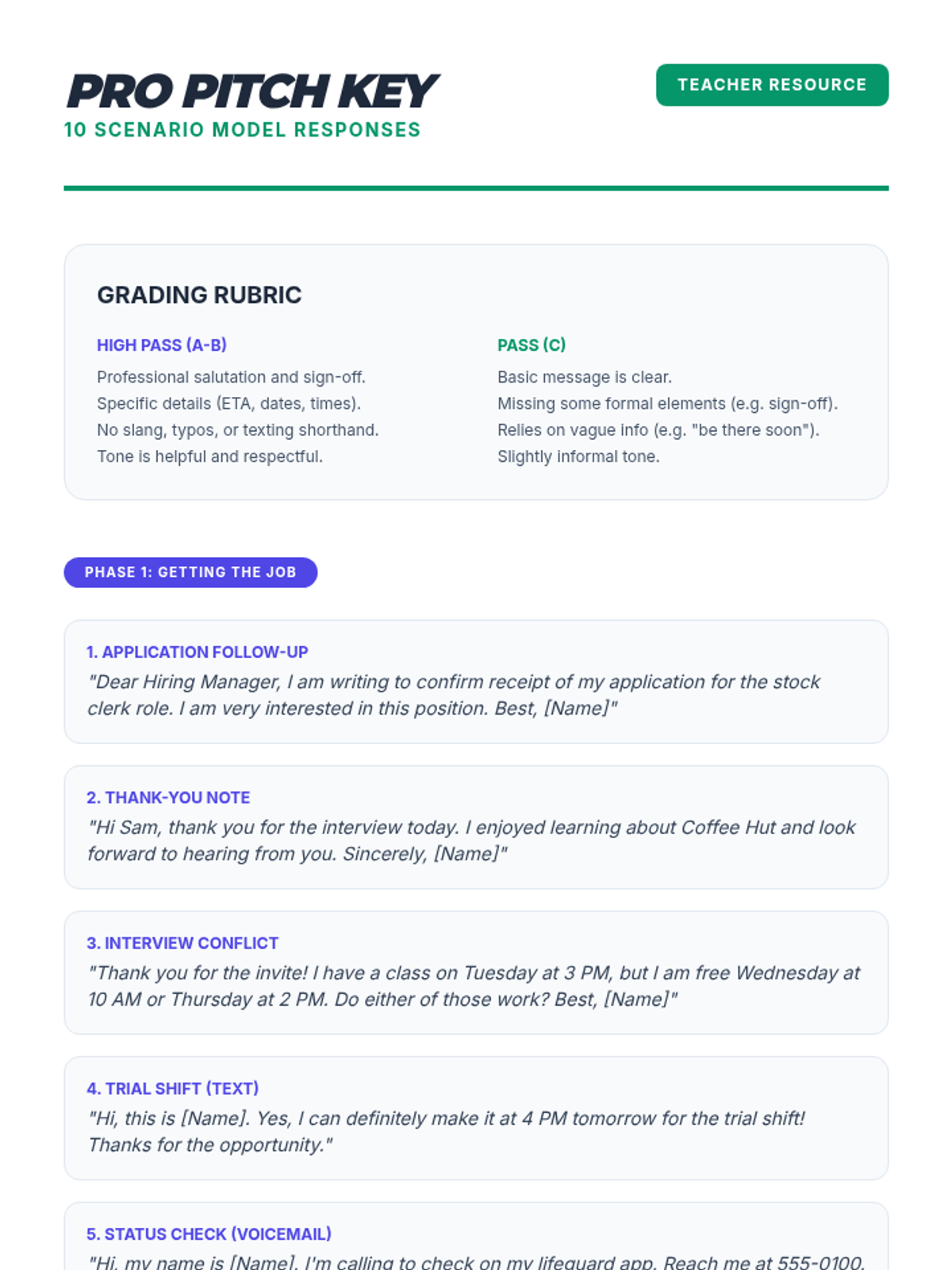
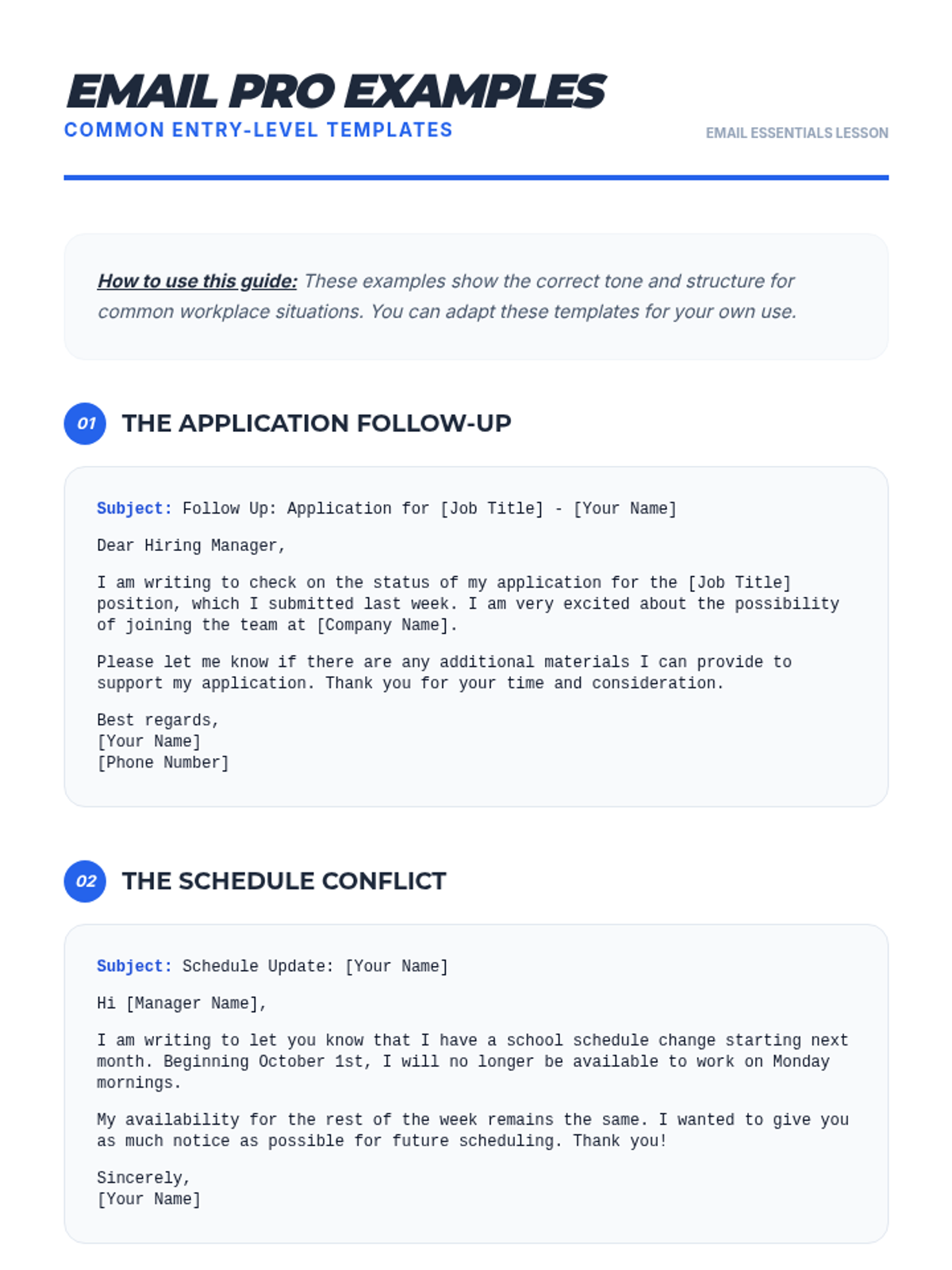
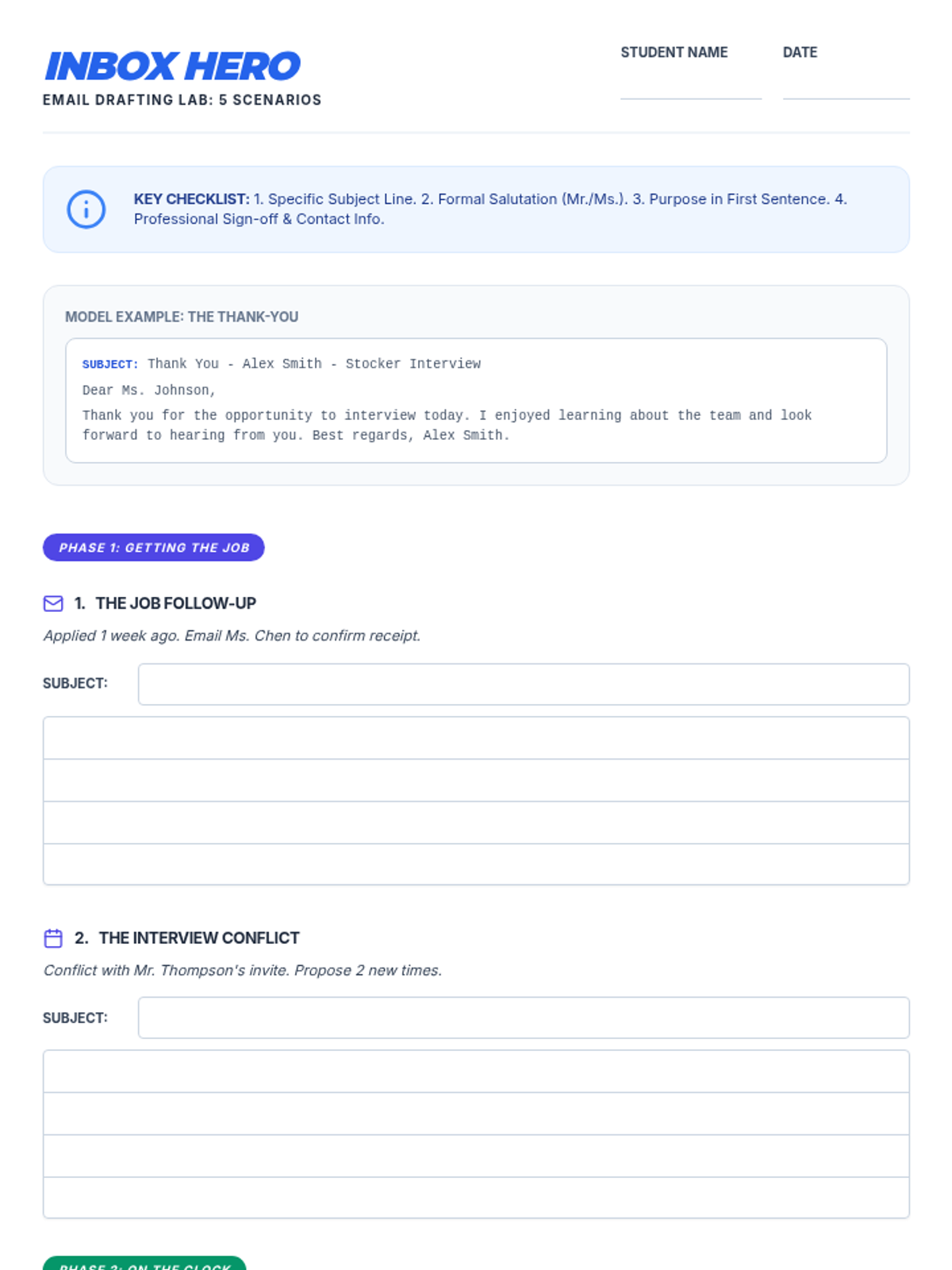
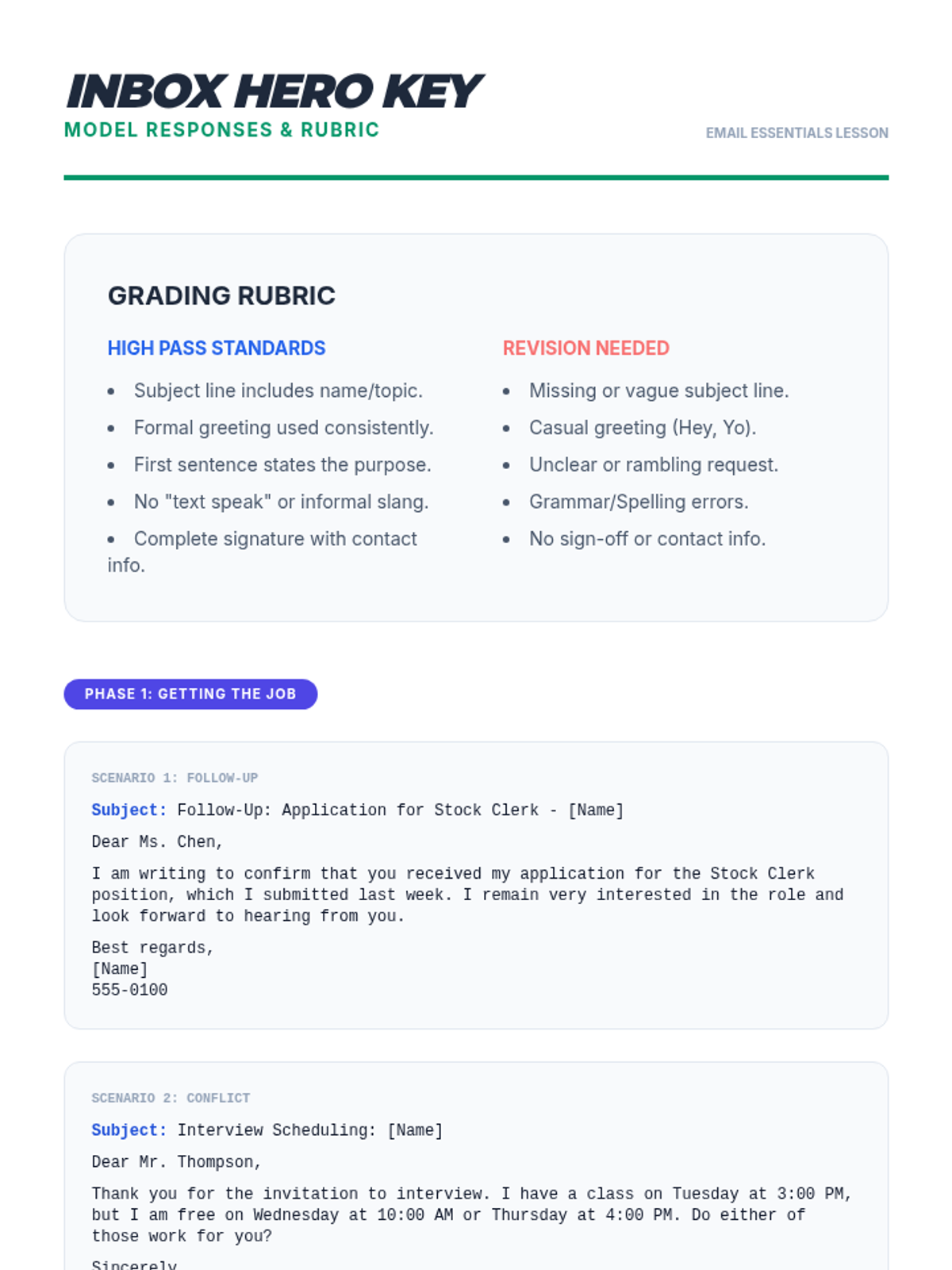
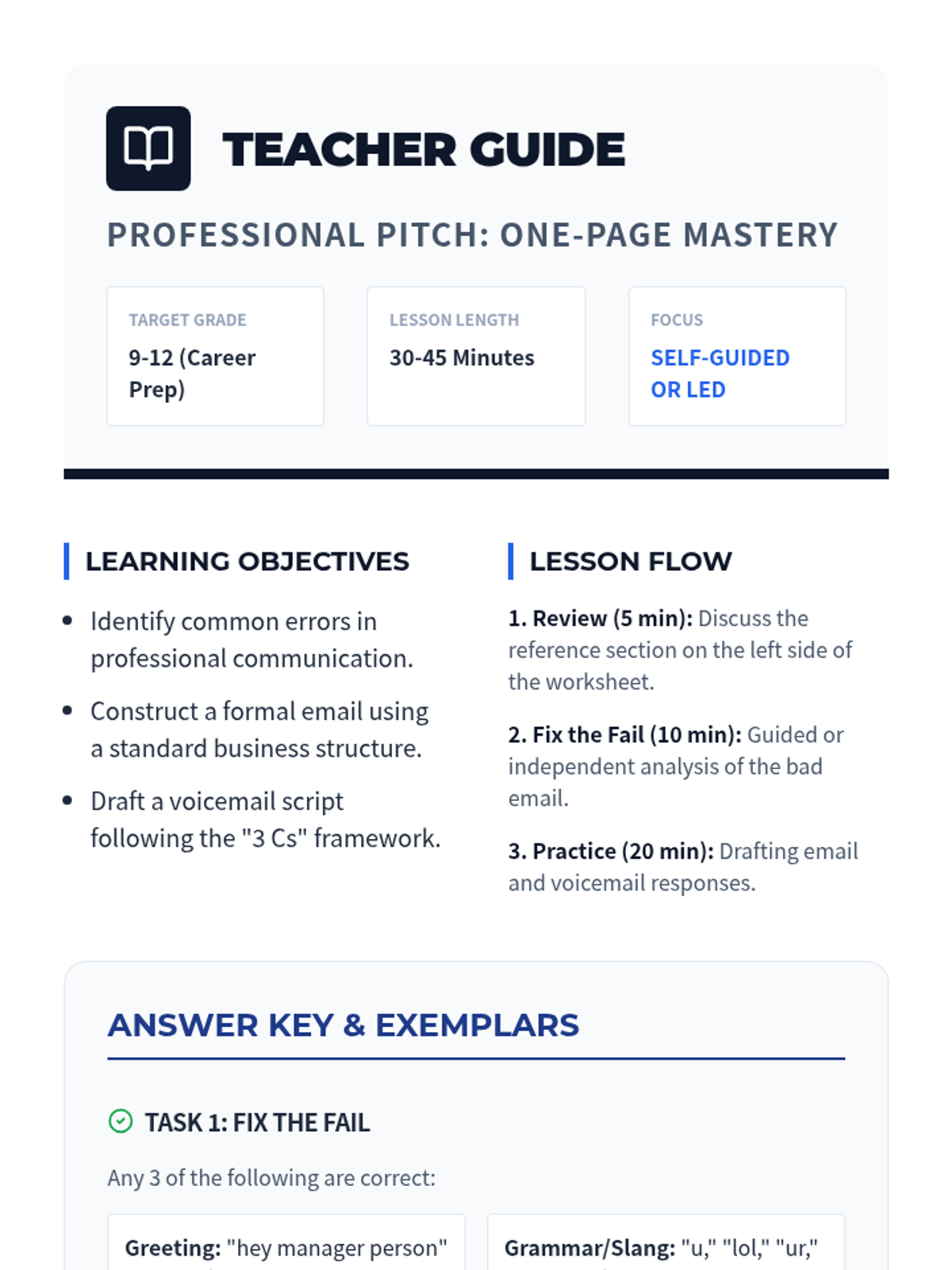
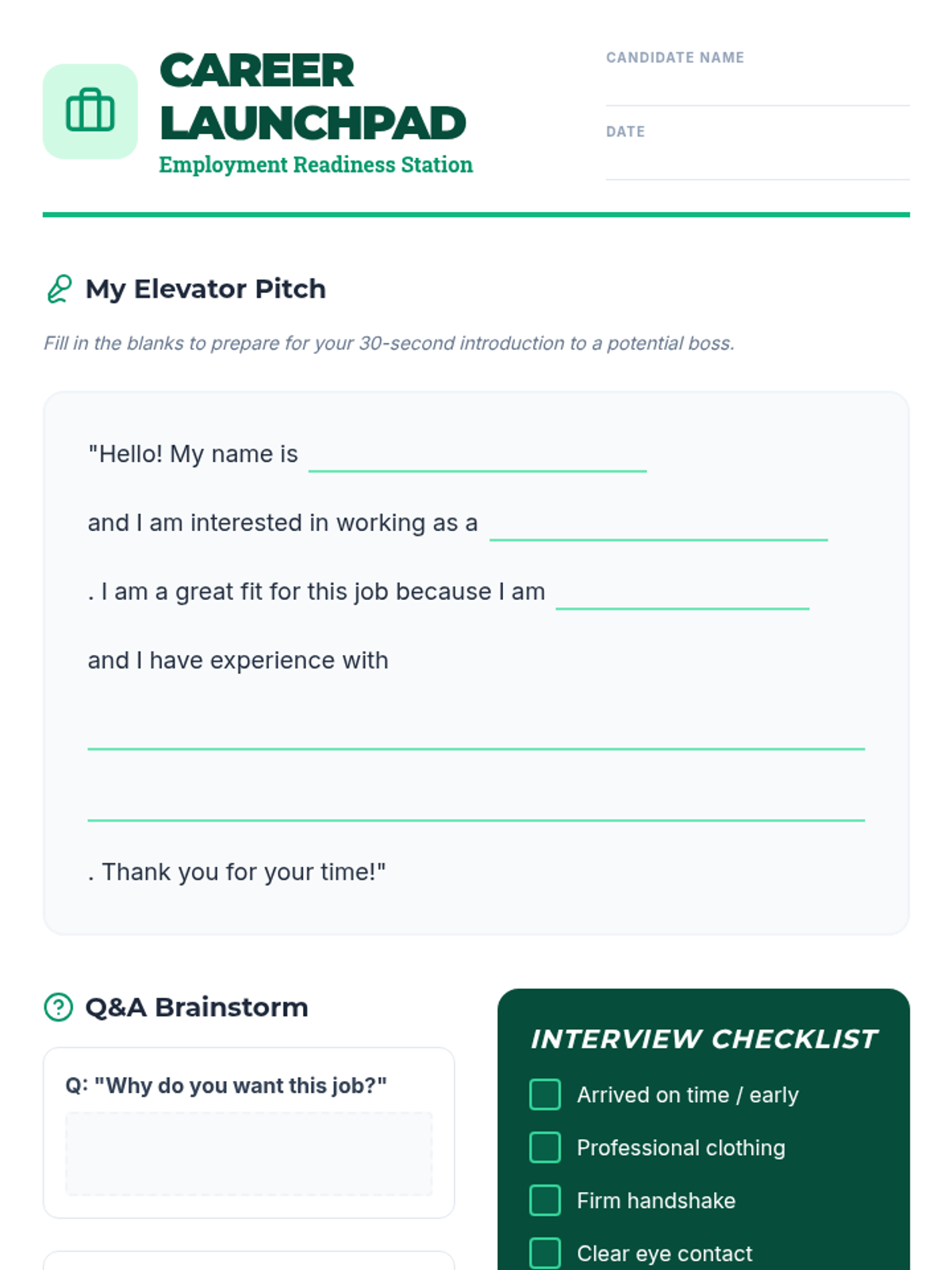
A comprehensive lesson on professional communication for students entering the workforce, covering email etiquette, professional texting, phone calls, and in-person interactions.
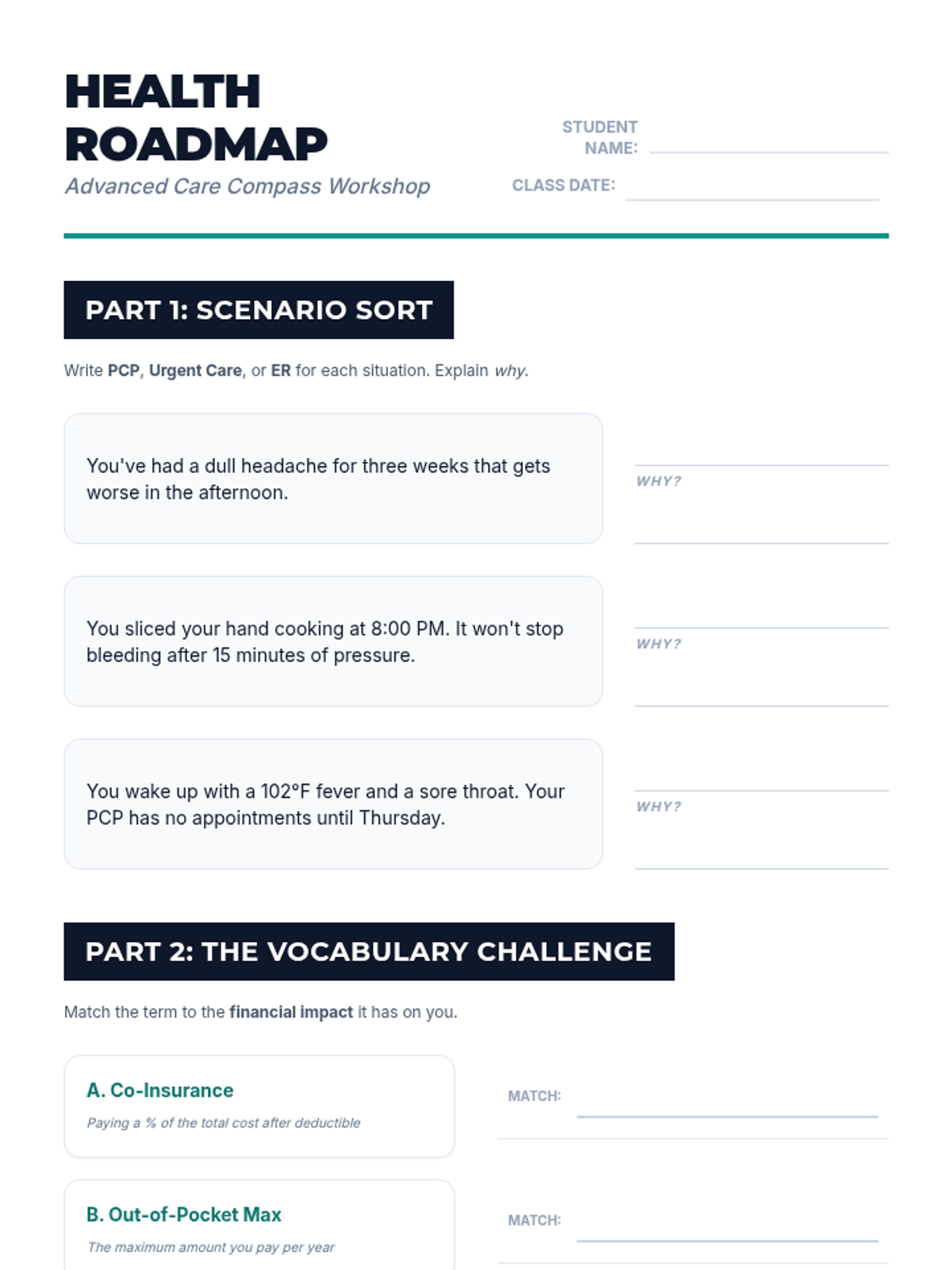
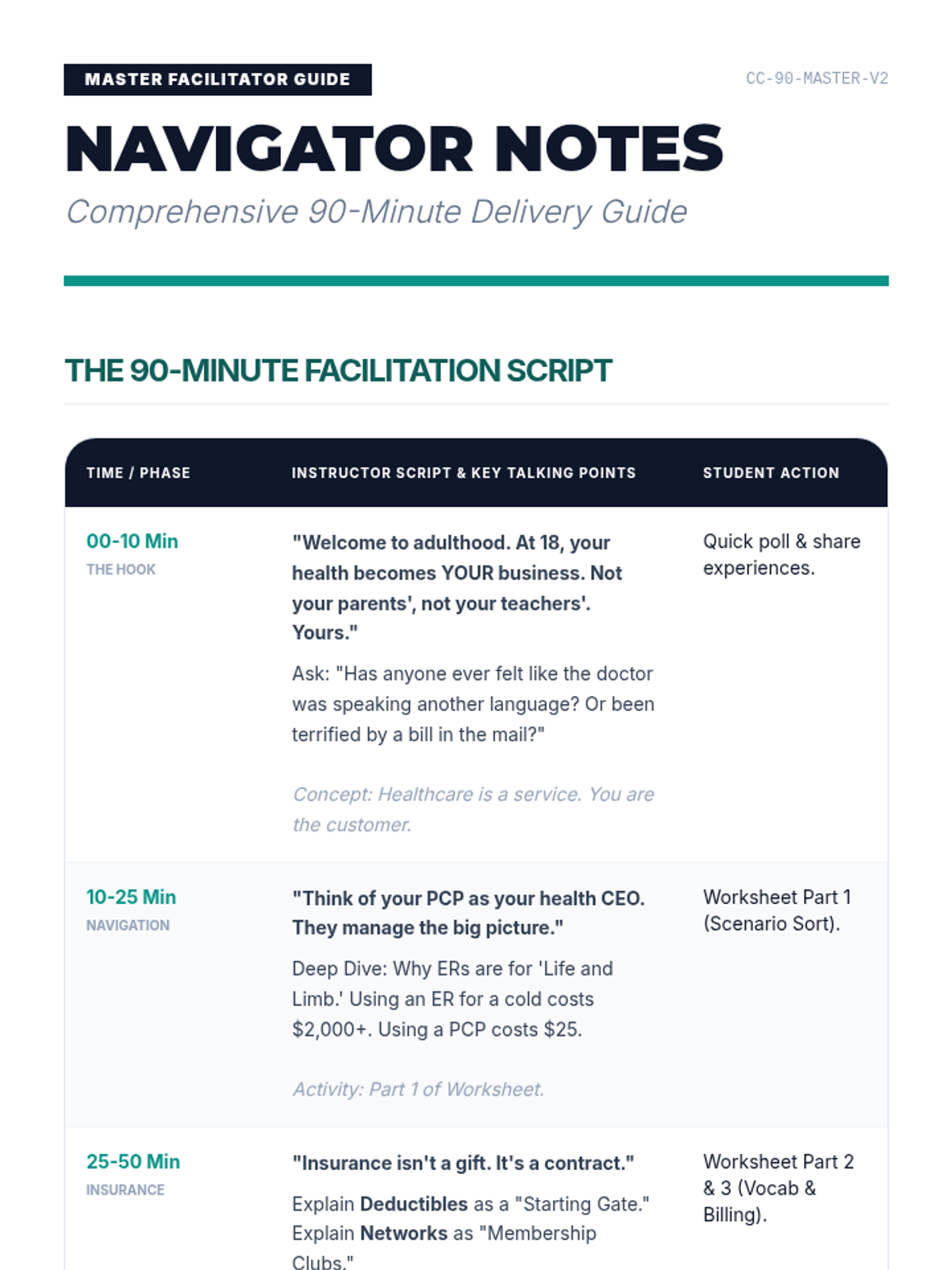
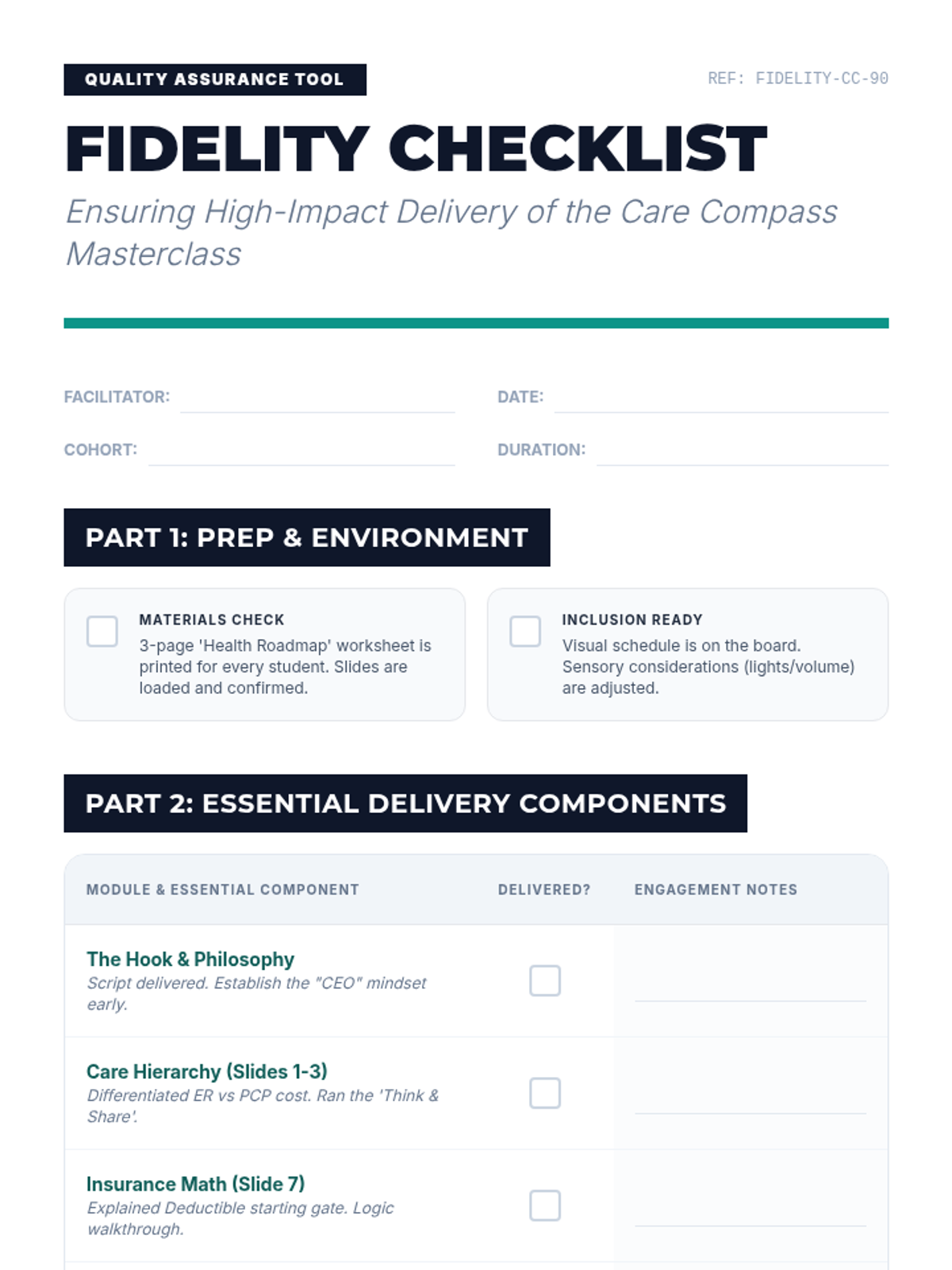
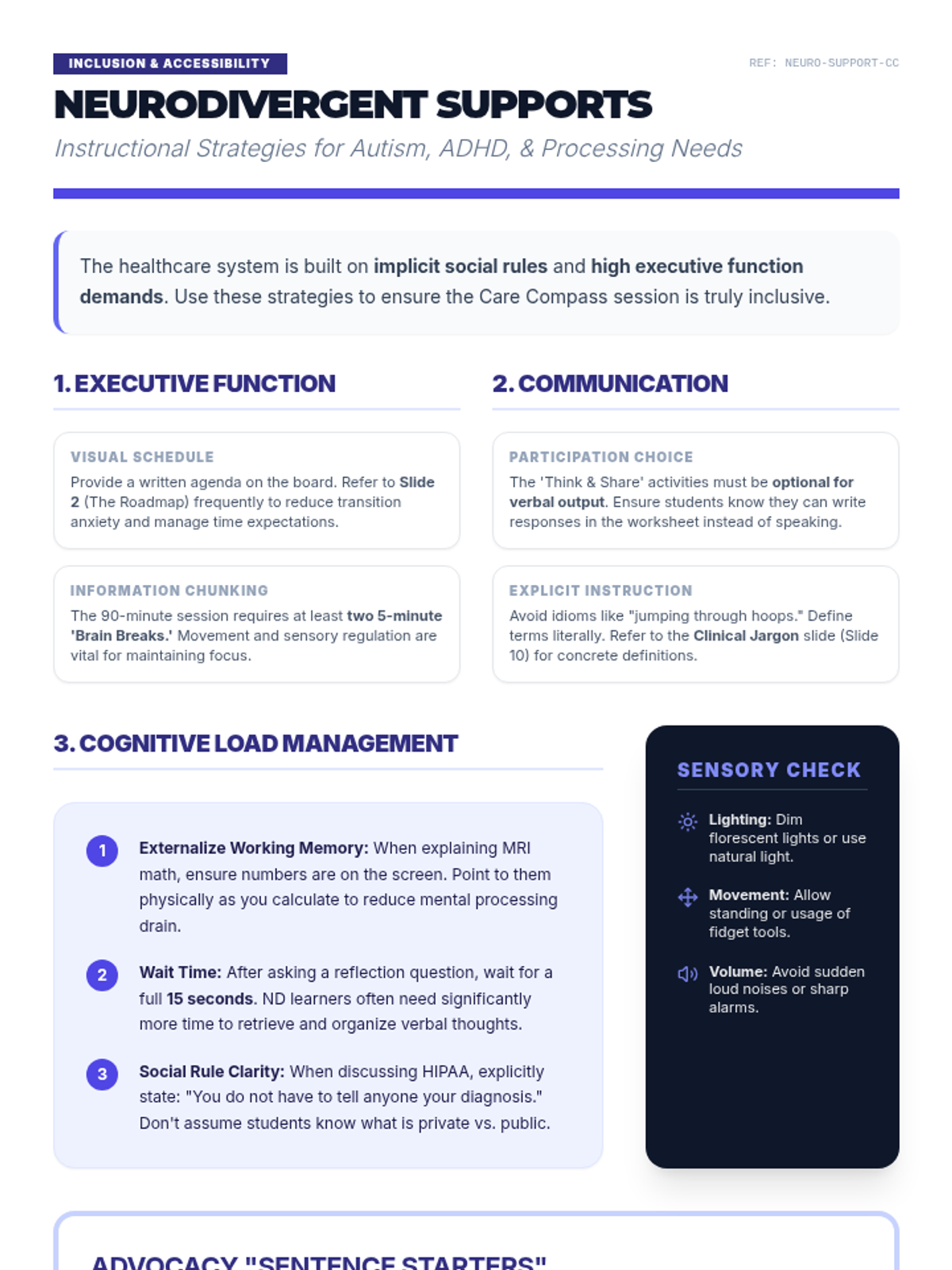
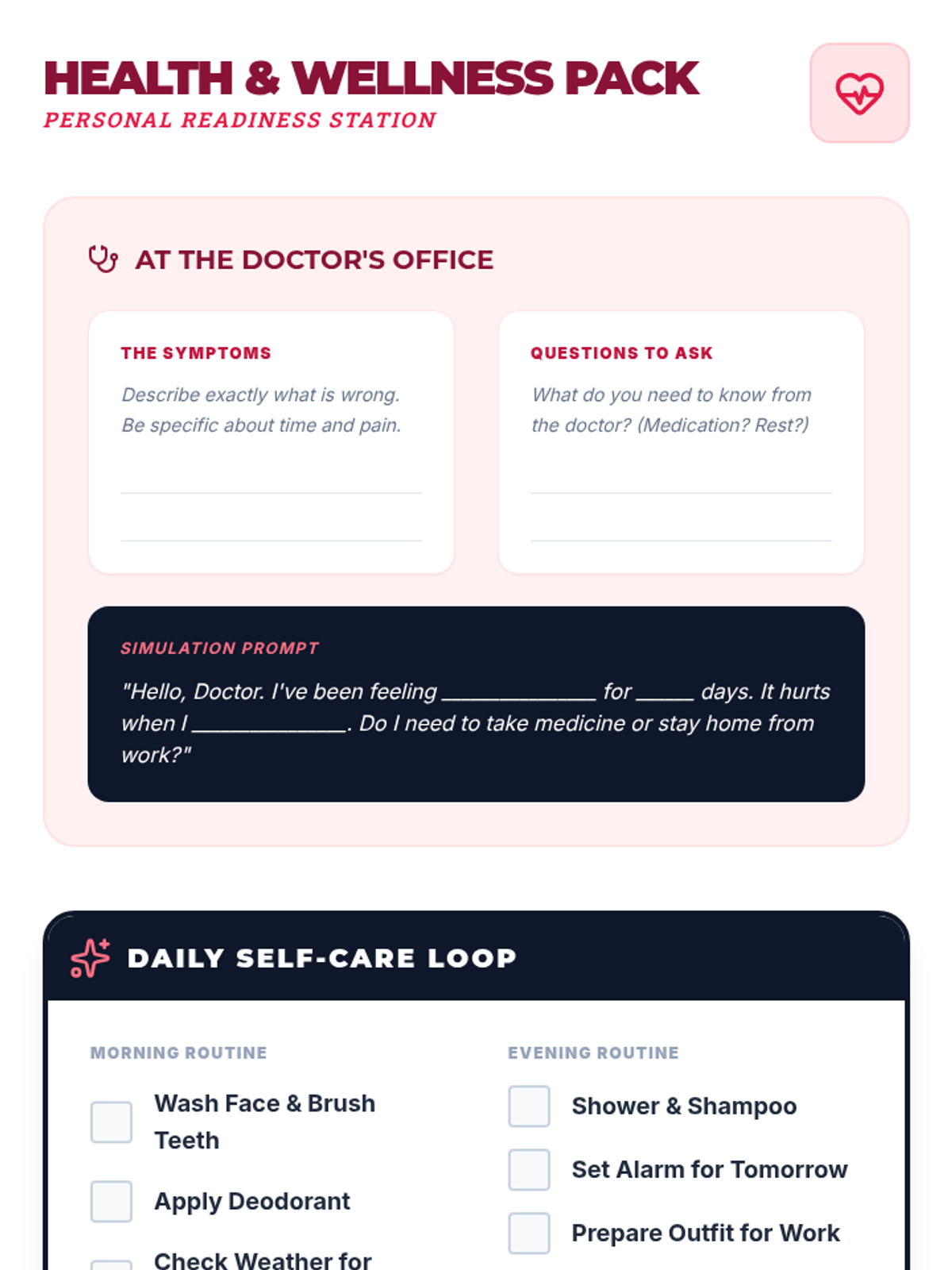
A practical guide for 16-21 year olds to navigate the healthcare system, understand insurance, and advocate for their own health needs as they transition to adulthood.
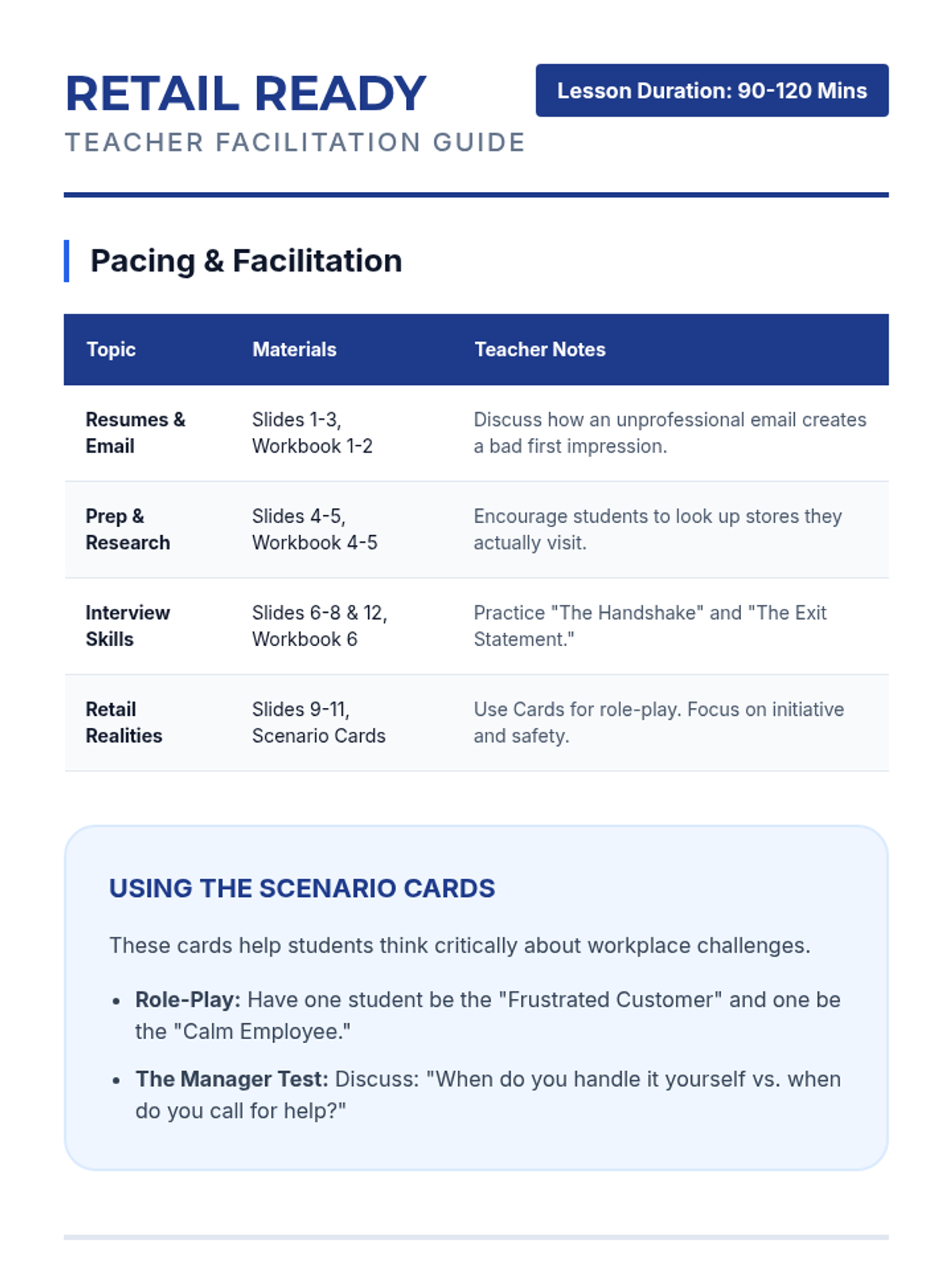
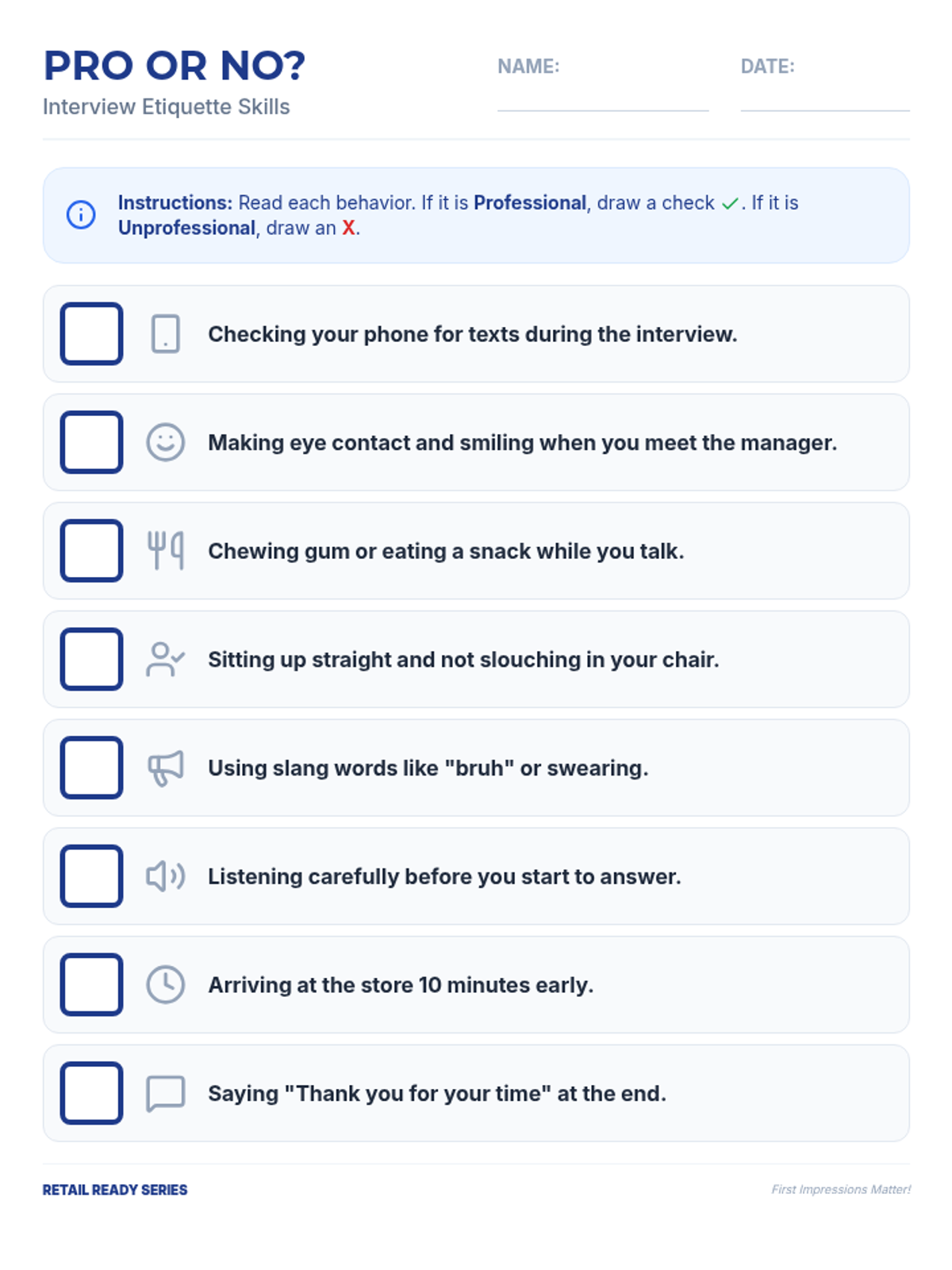
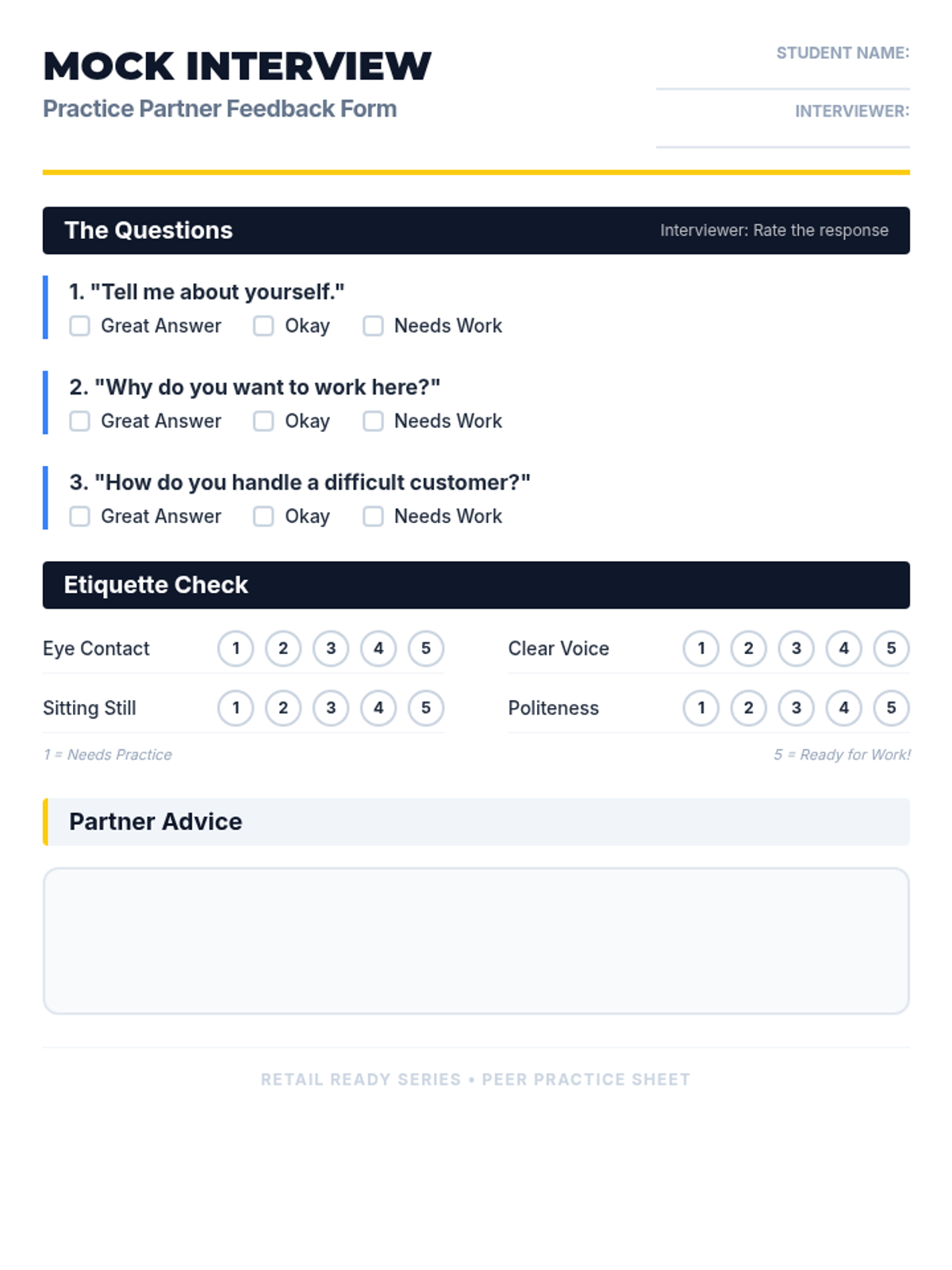
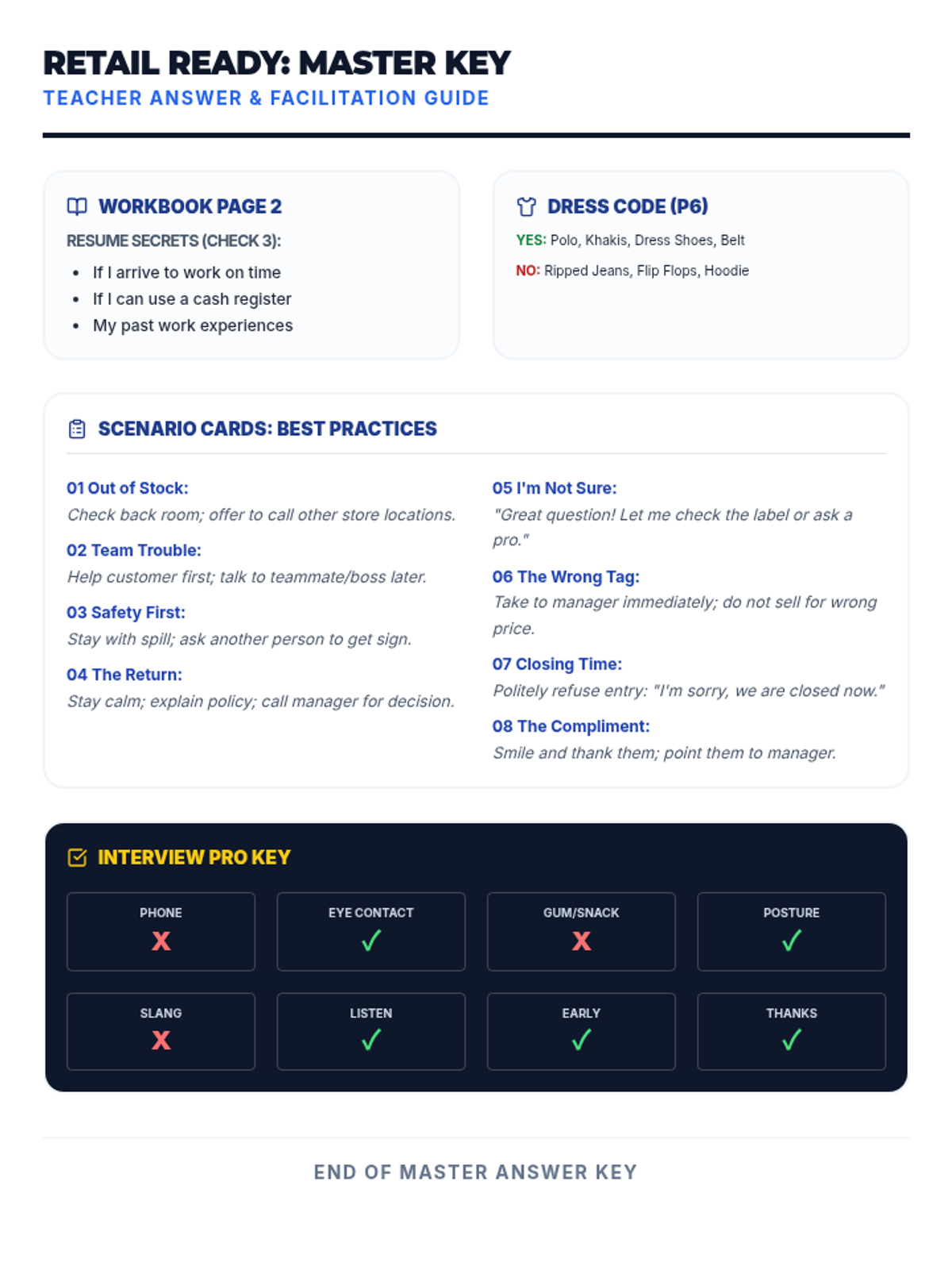
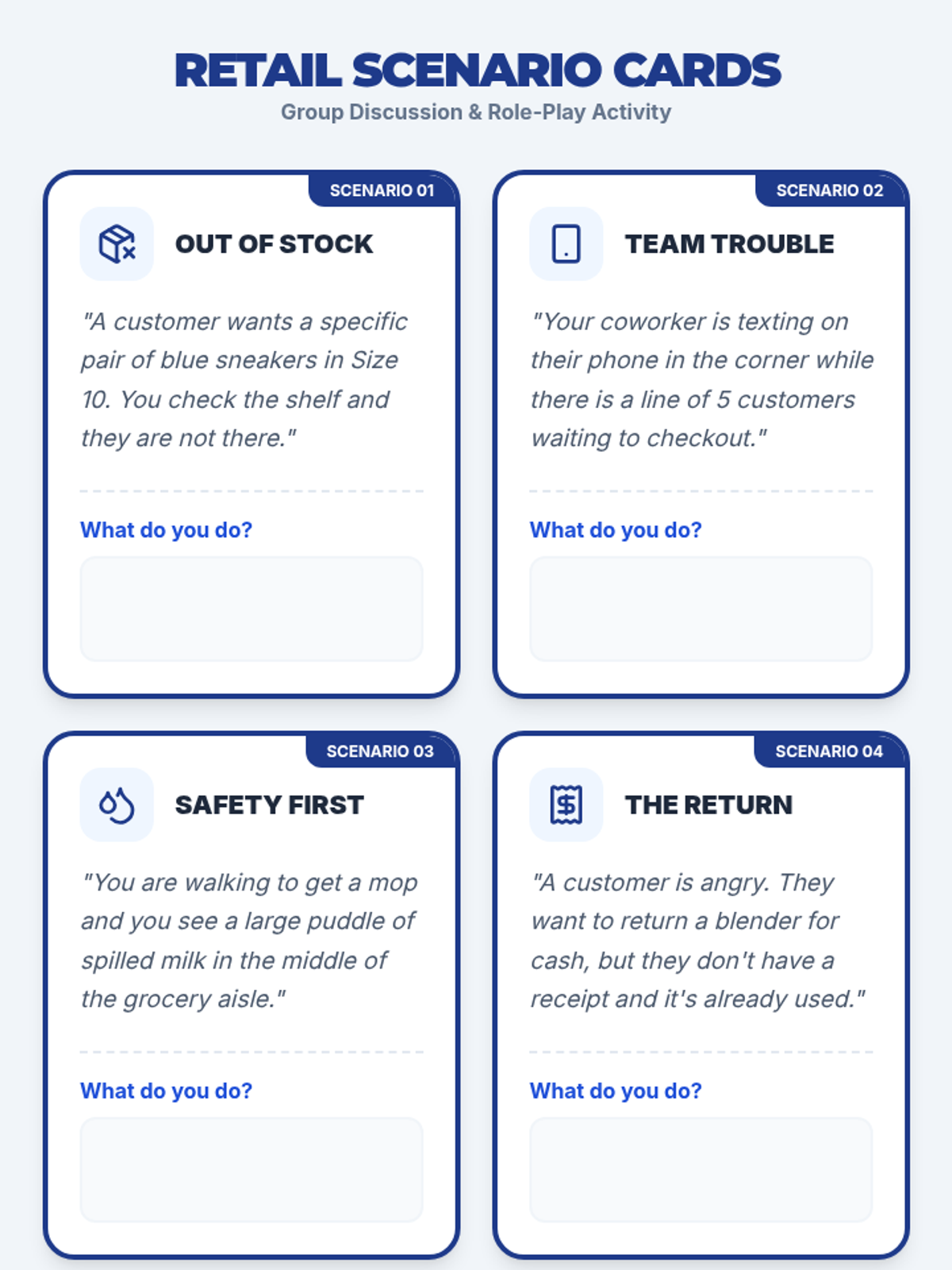
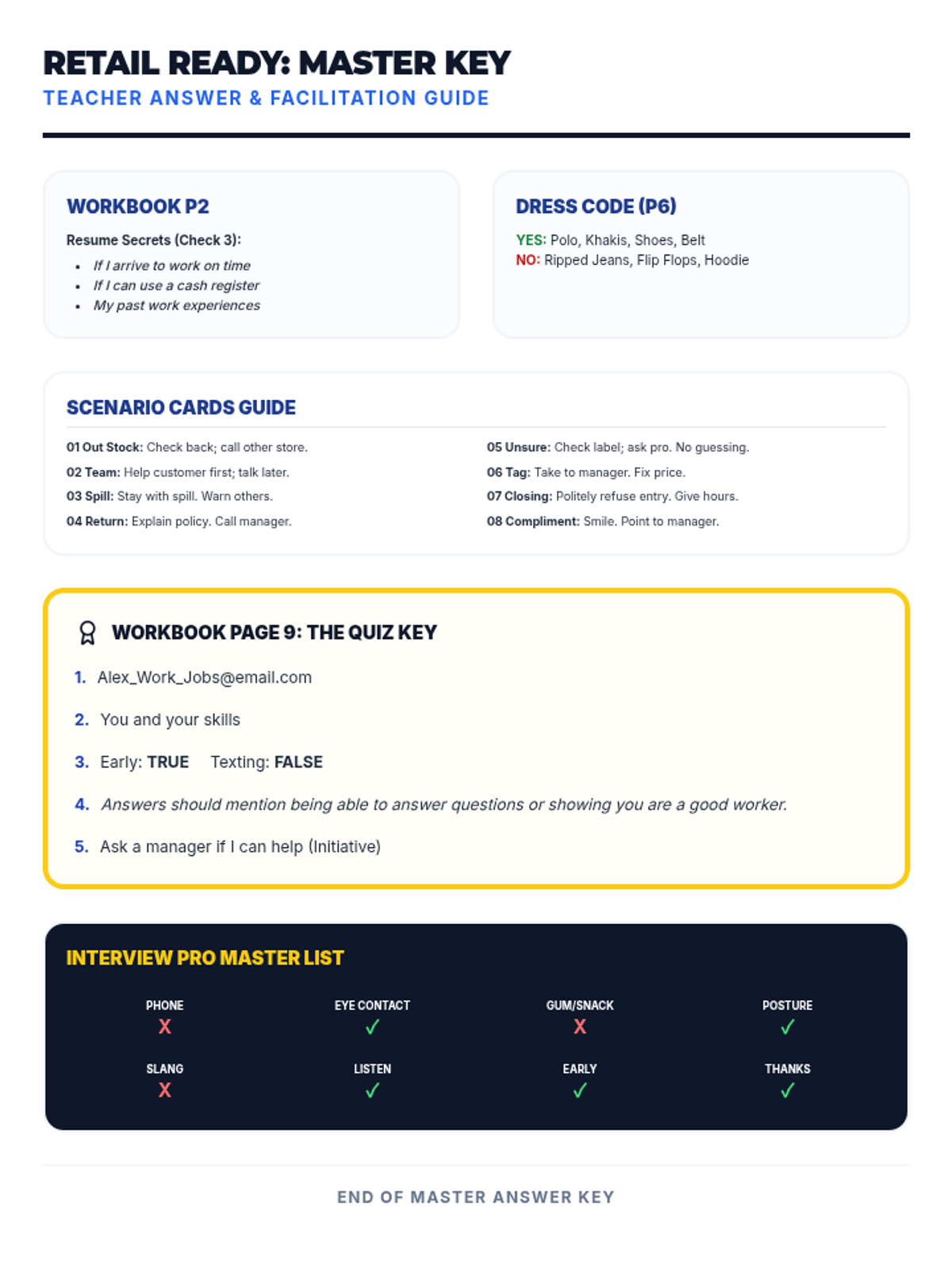
A comprehensive lesson preparing students and transition-aged adults for retail job interviews, covering everything from professional emails to post-interview etiquette.
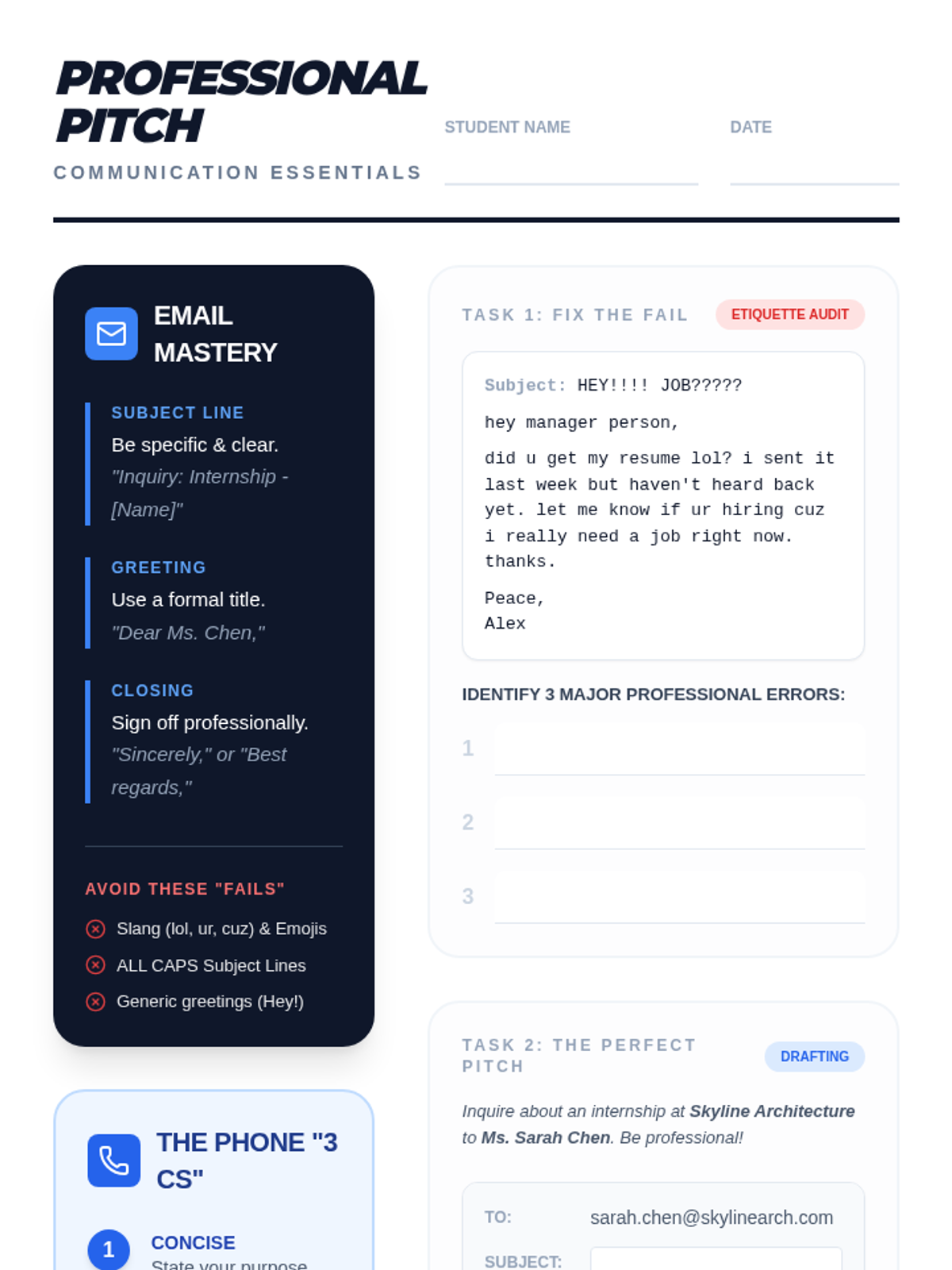
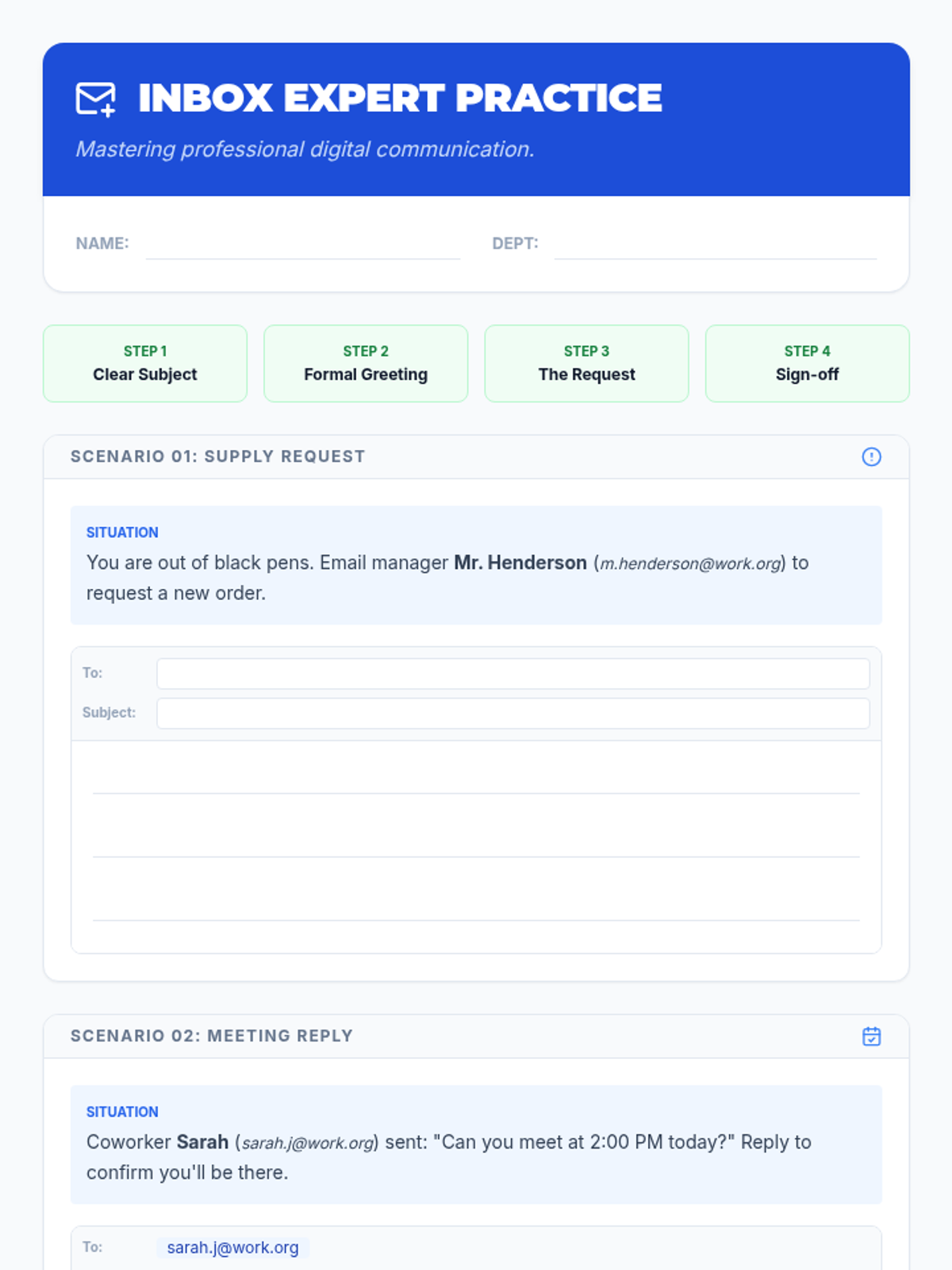
A comprehensive lesson on professional communication skills, focusing on email and phone etiquette for the workplace. Students learn the 'do's and don'ts' and practice crafting their own professional responses.
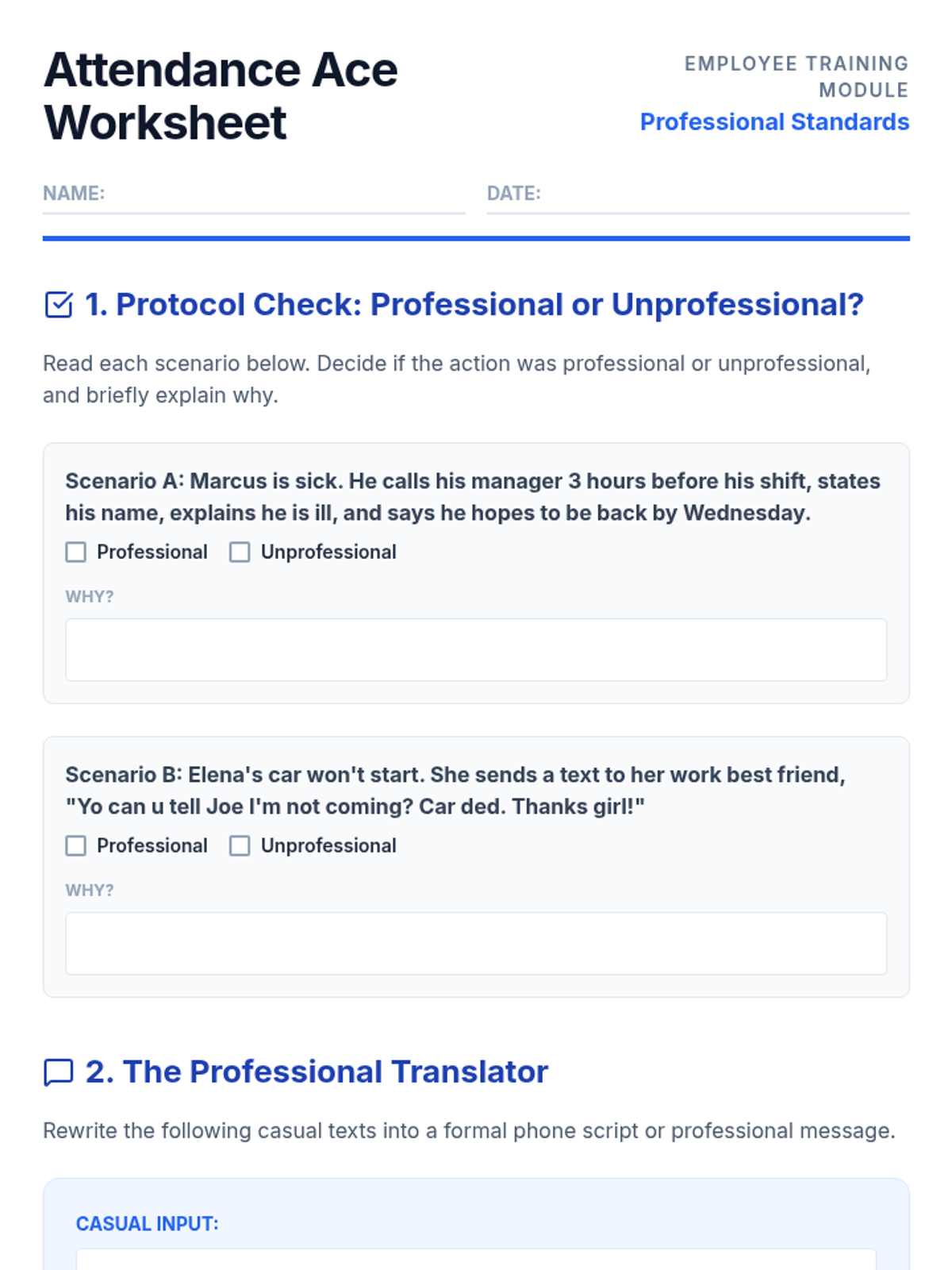
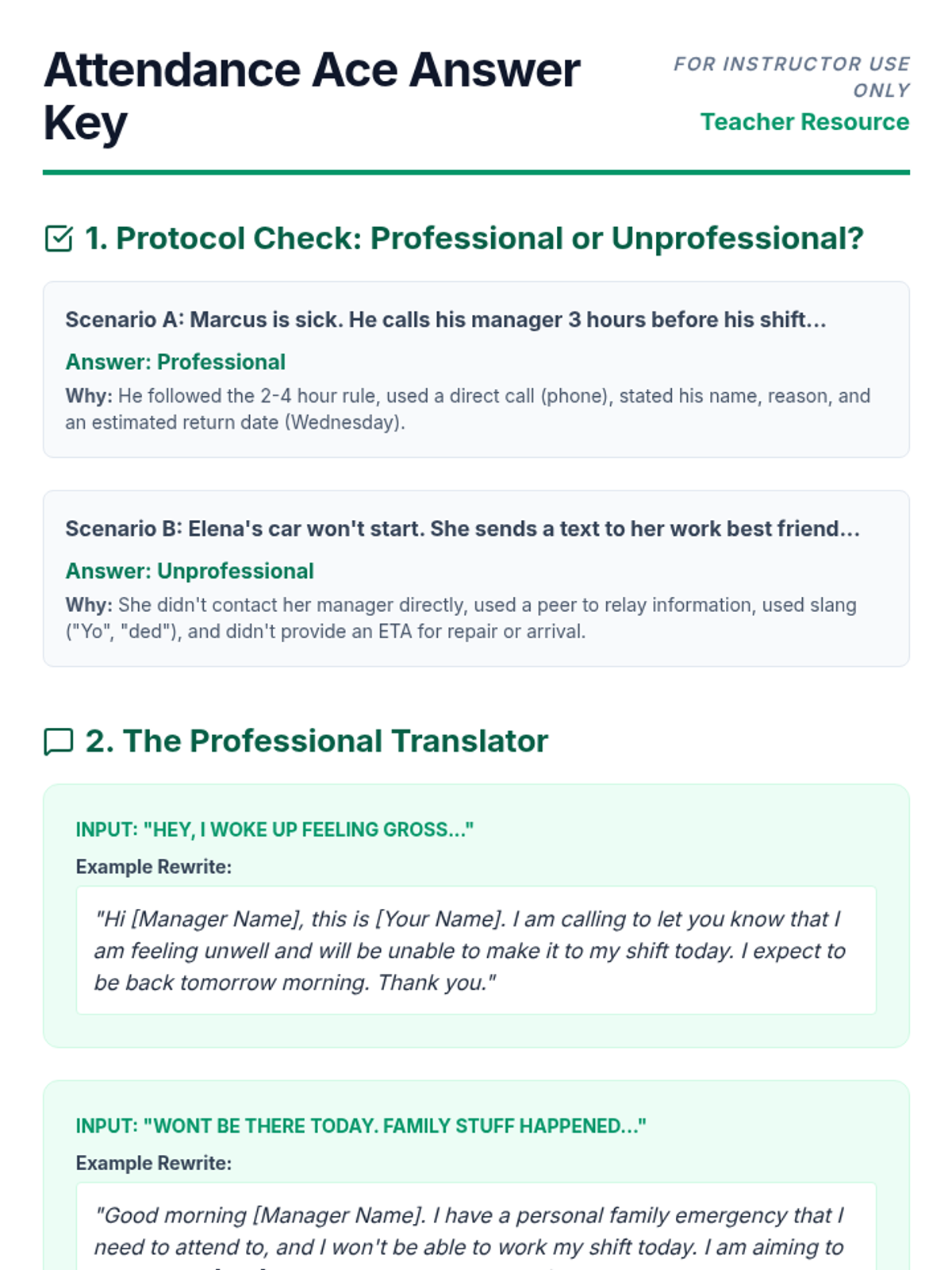
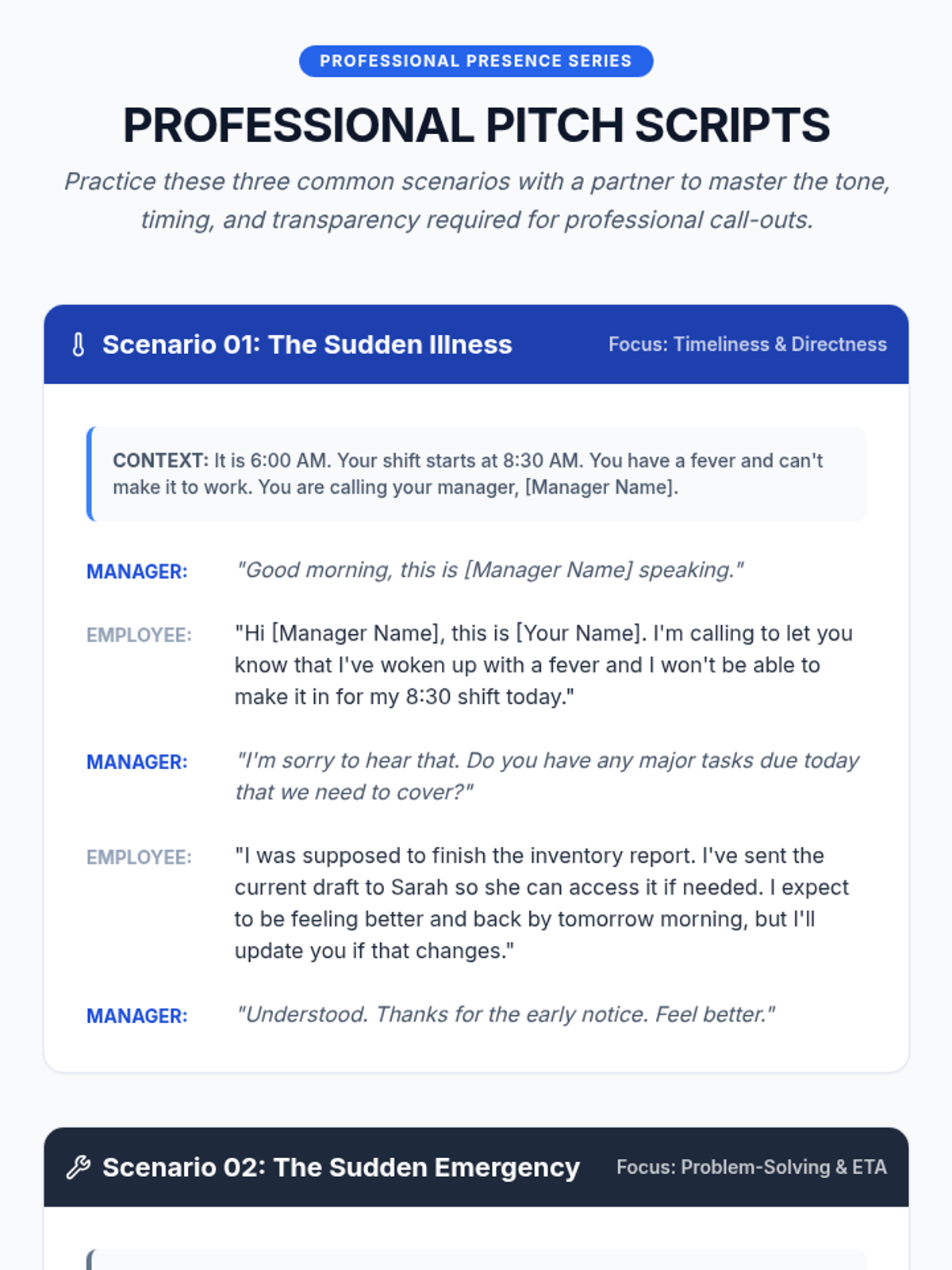
A comprehensive training module on the professional standards for calling out of work, covering etiquette, timing, and communication methods.
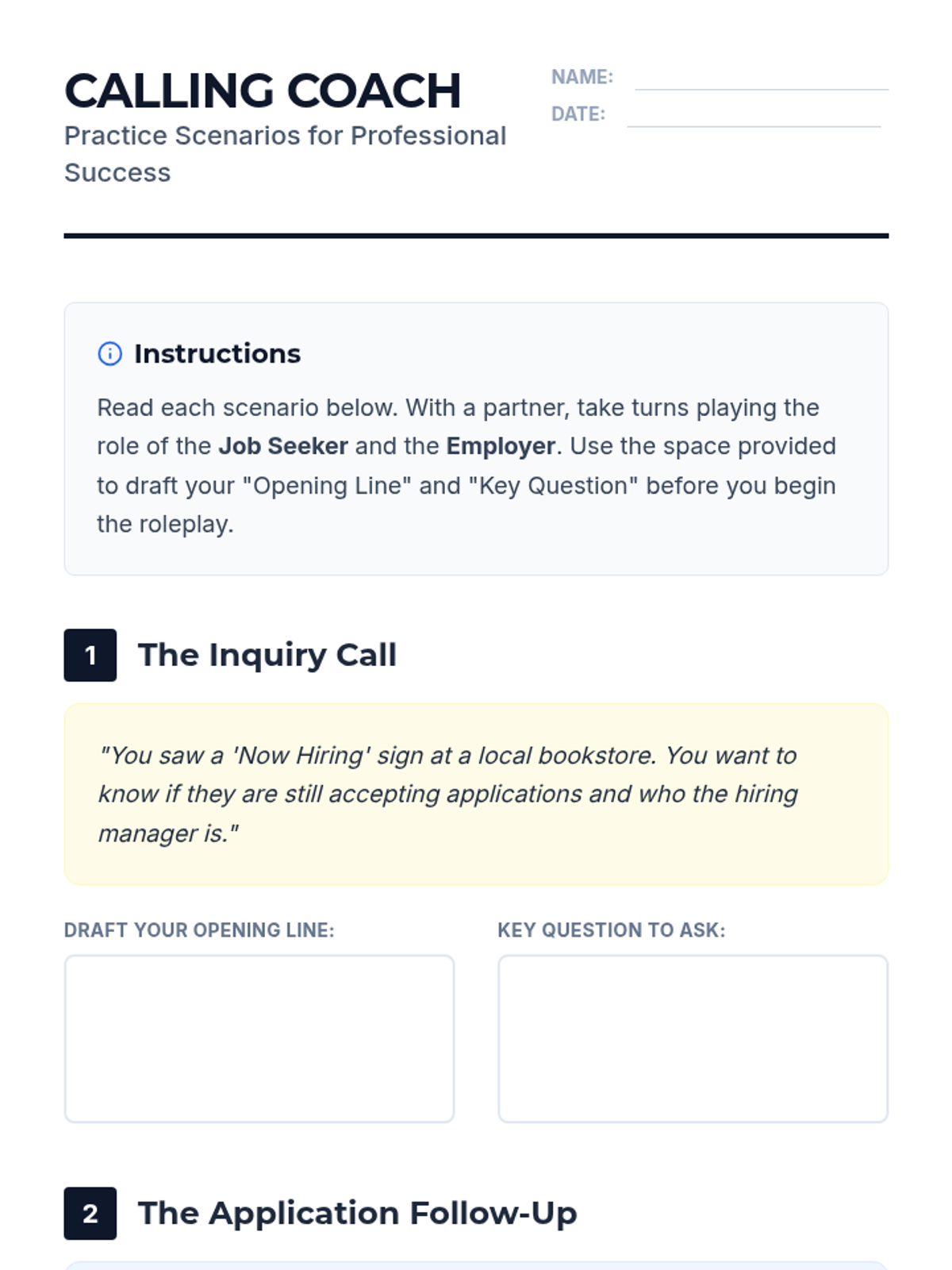
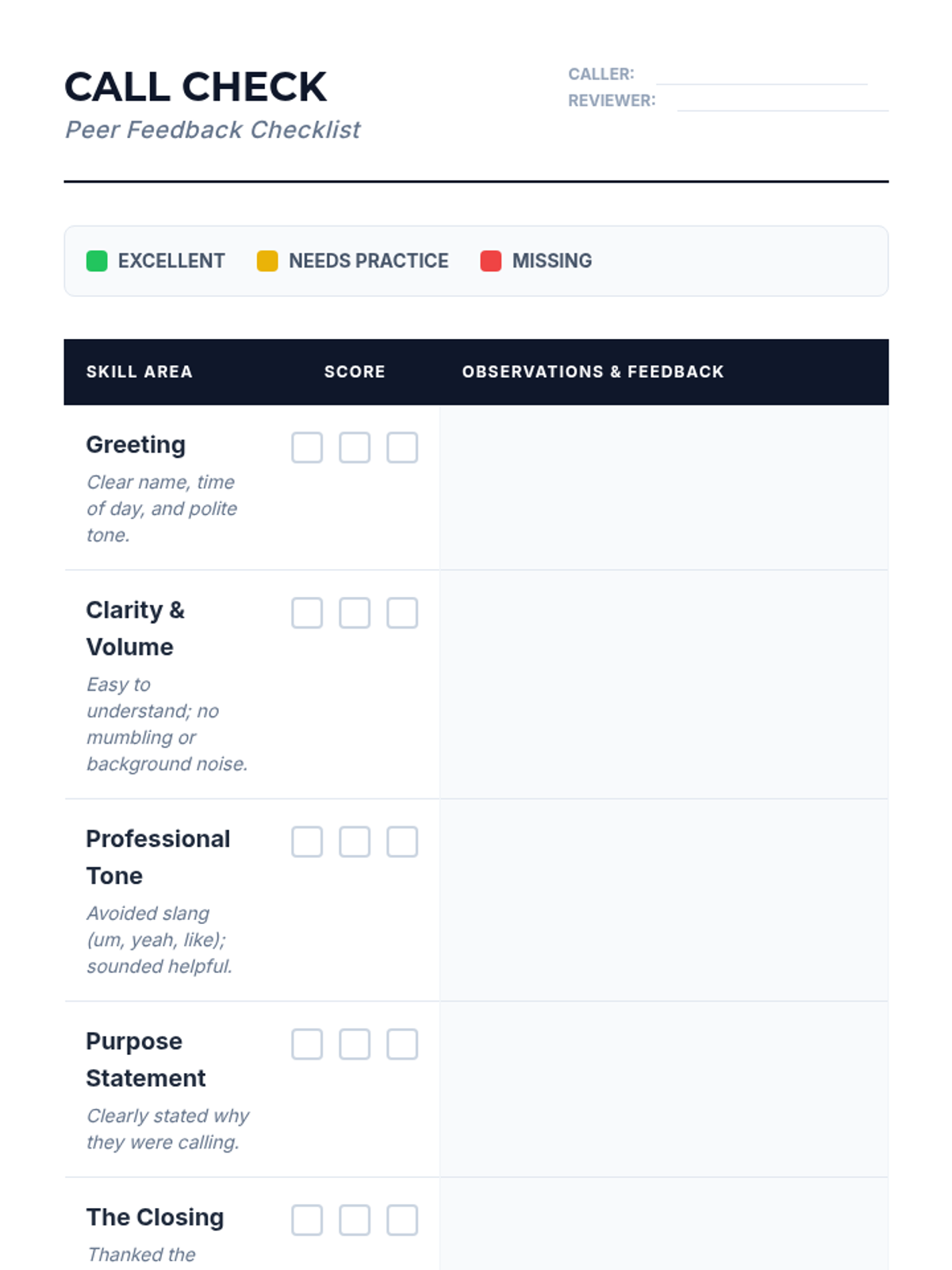
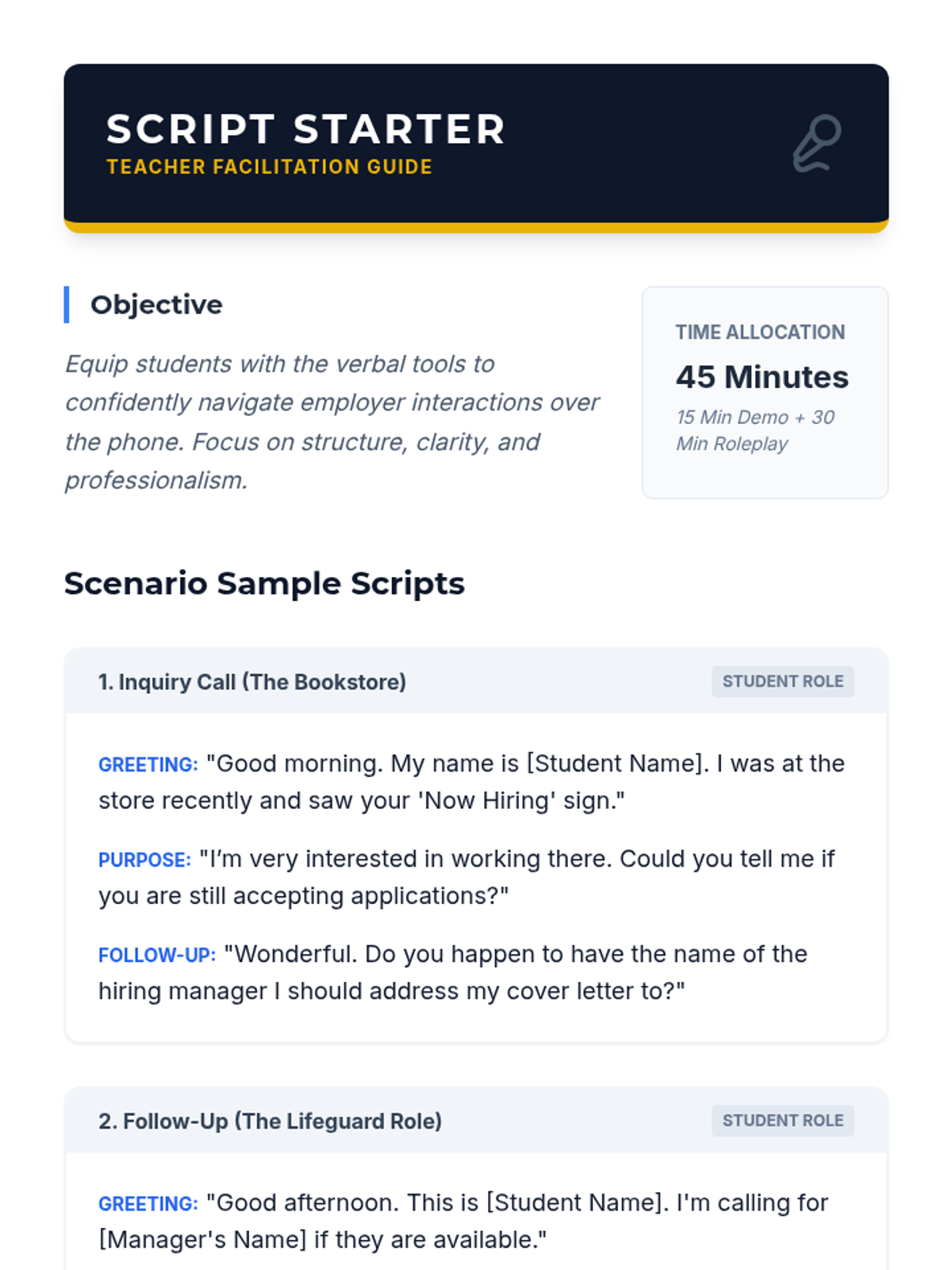
This lesson covers professional phone etiquette specifically for communicating with potential employers, focusing on preparation, tone, and specific calling scenarios.
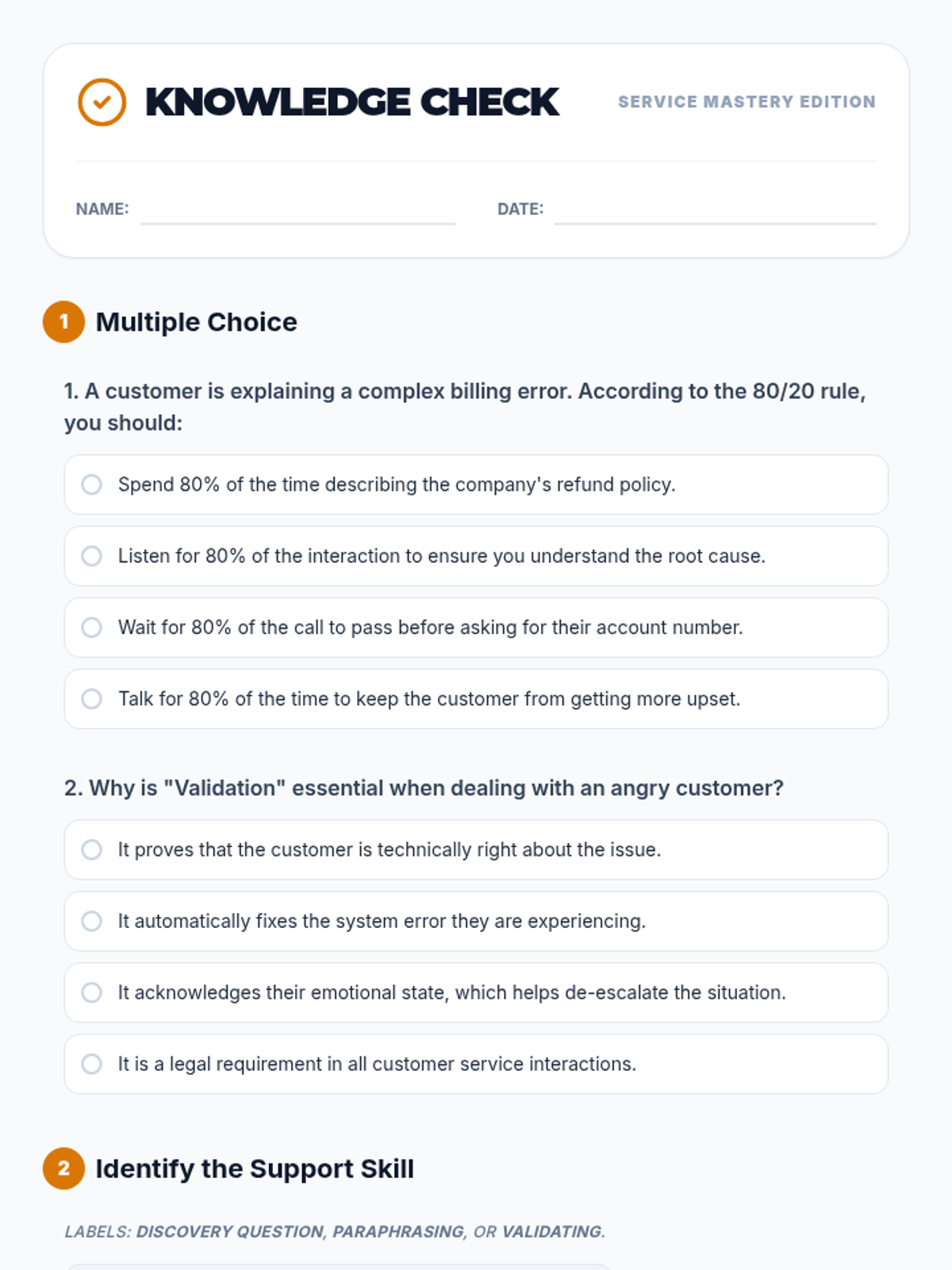
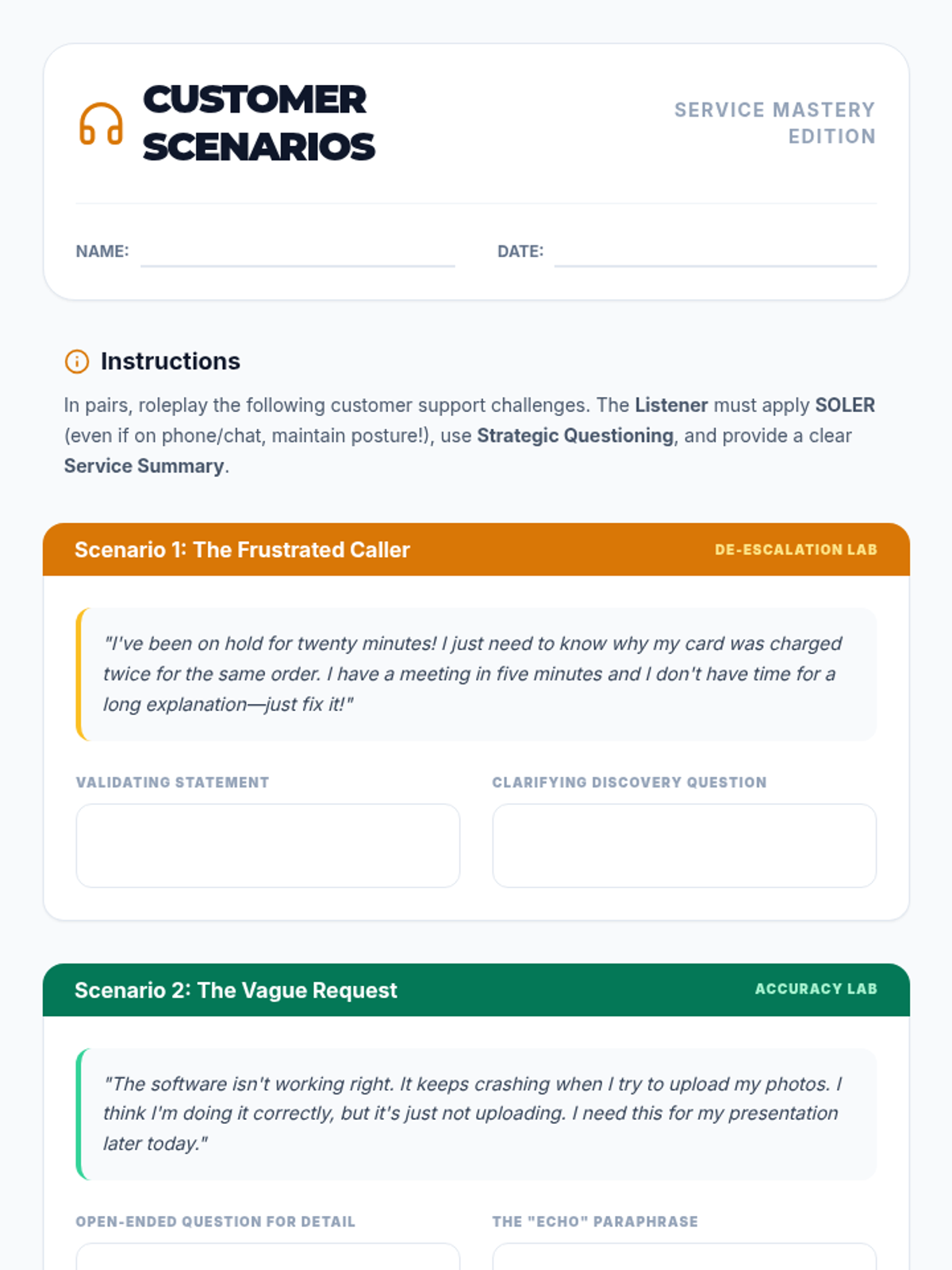
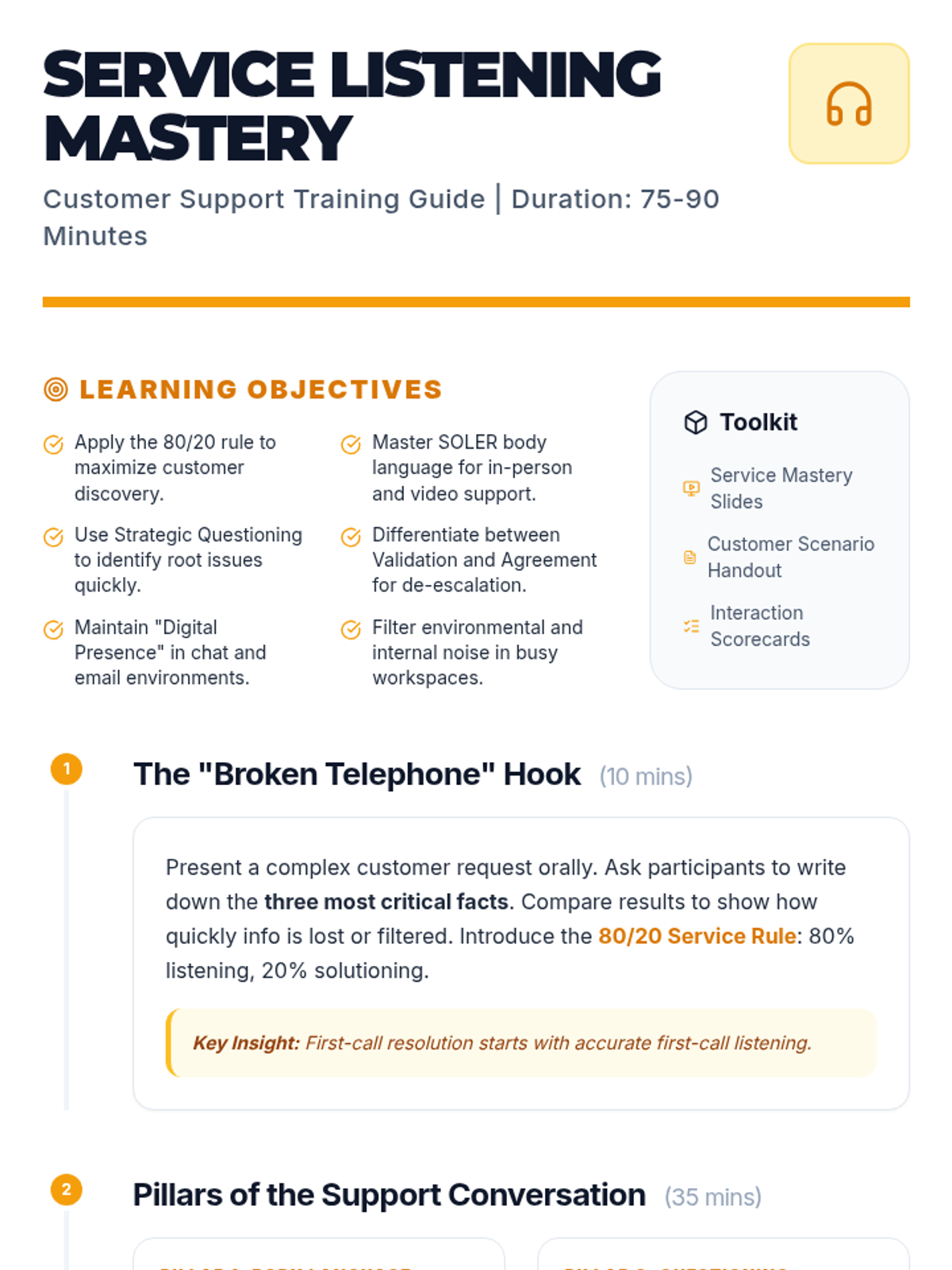
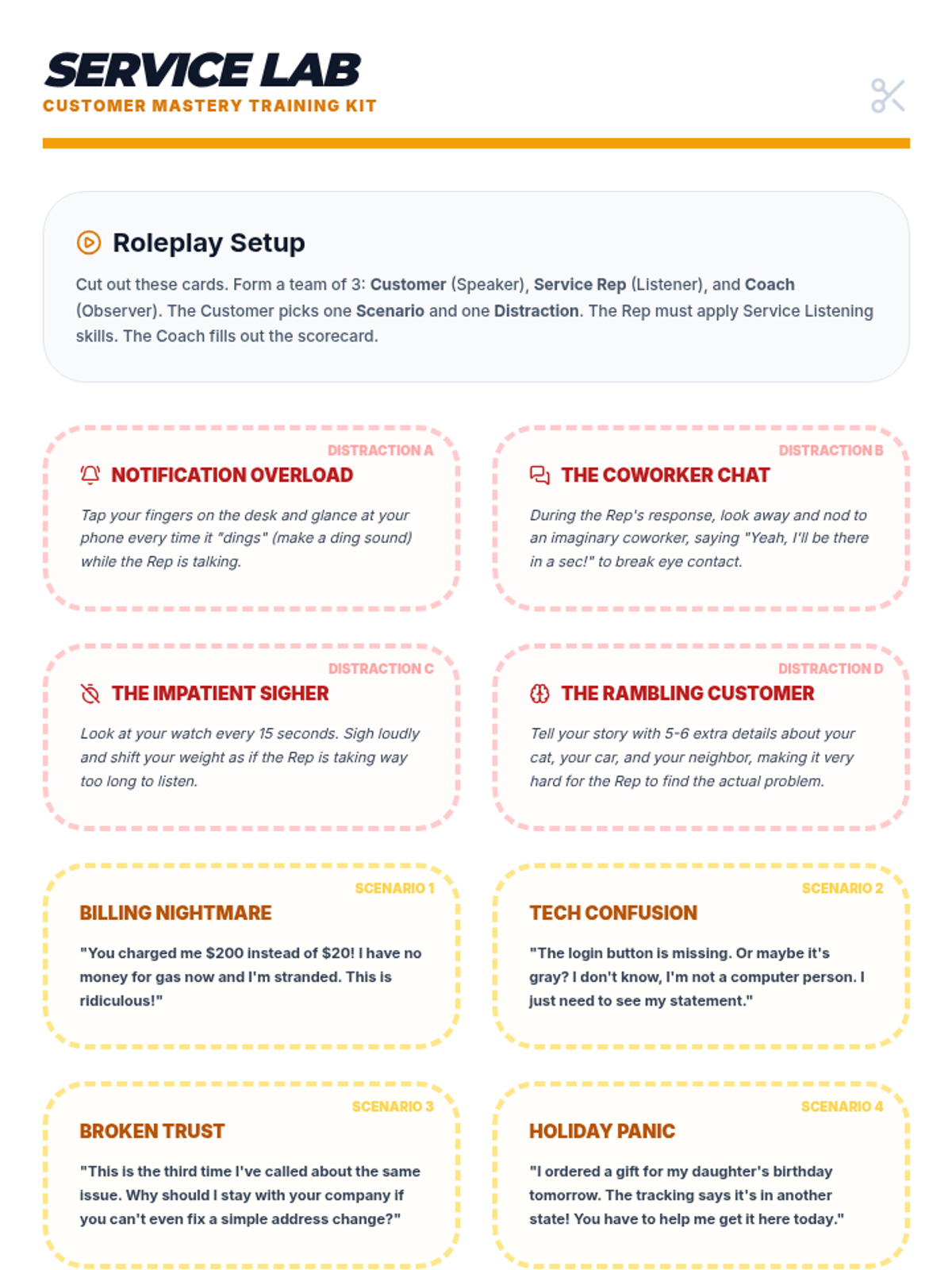
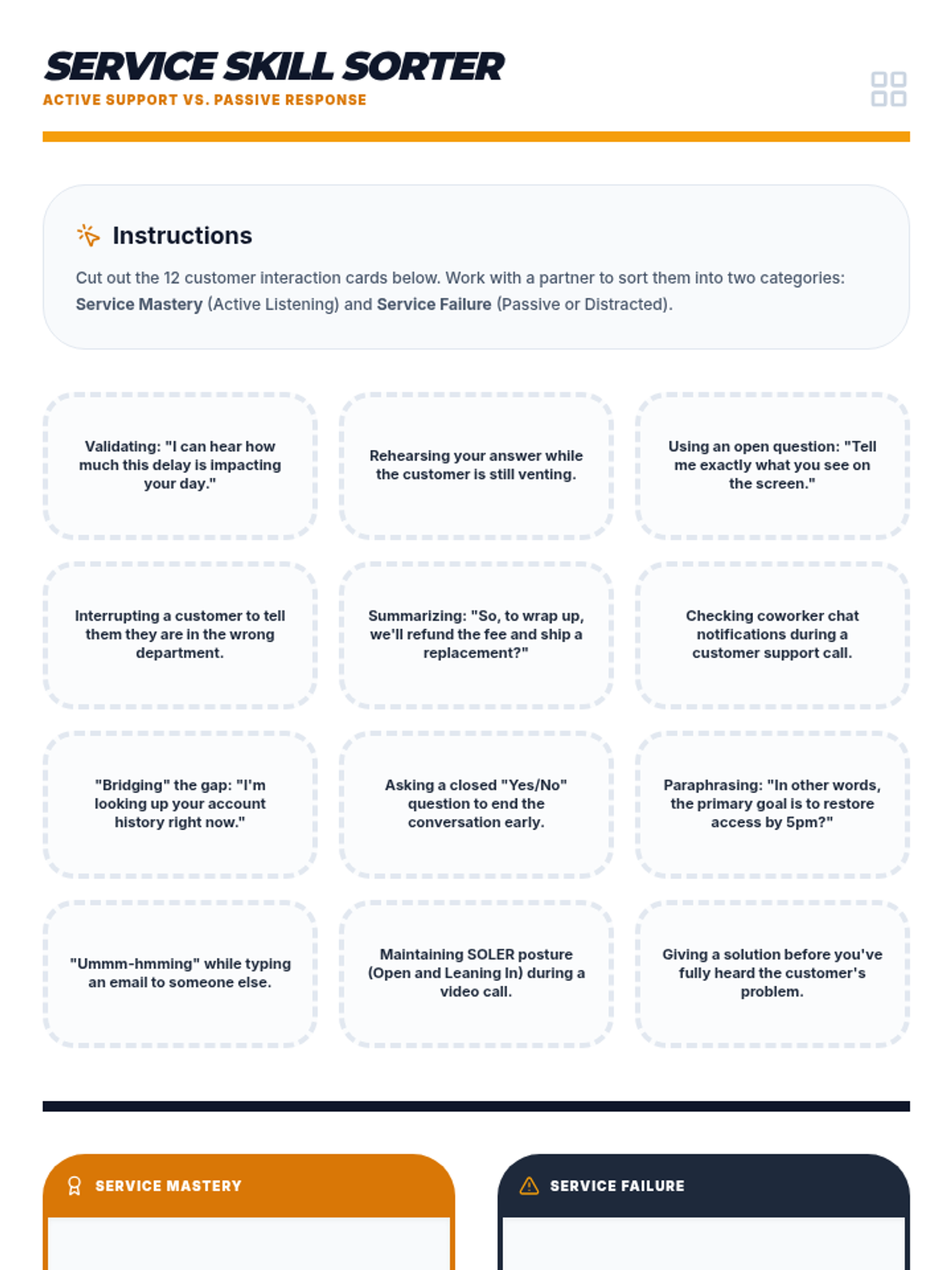
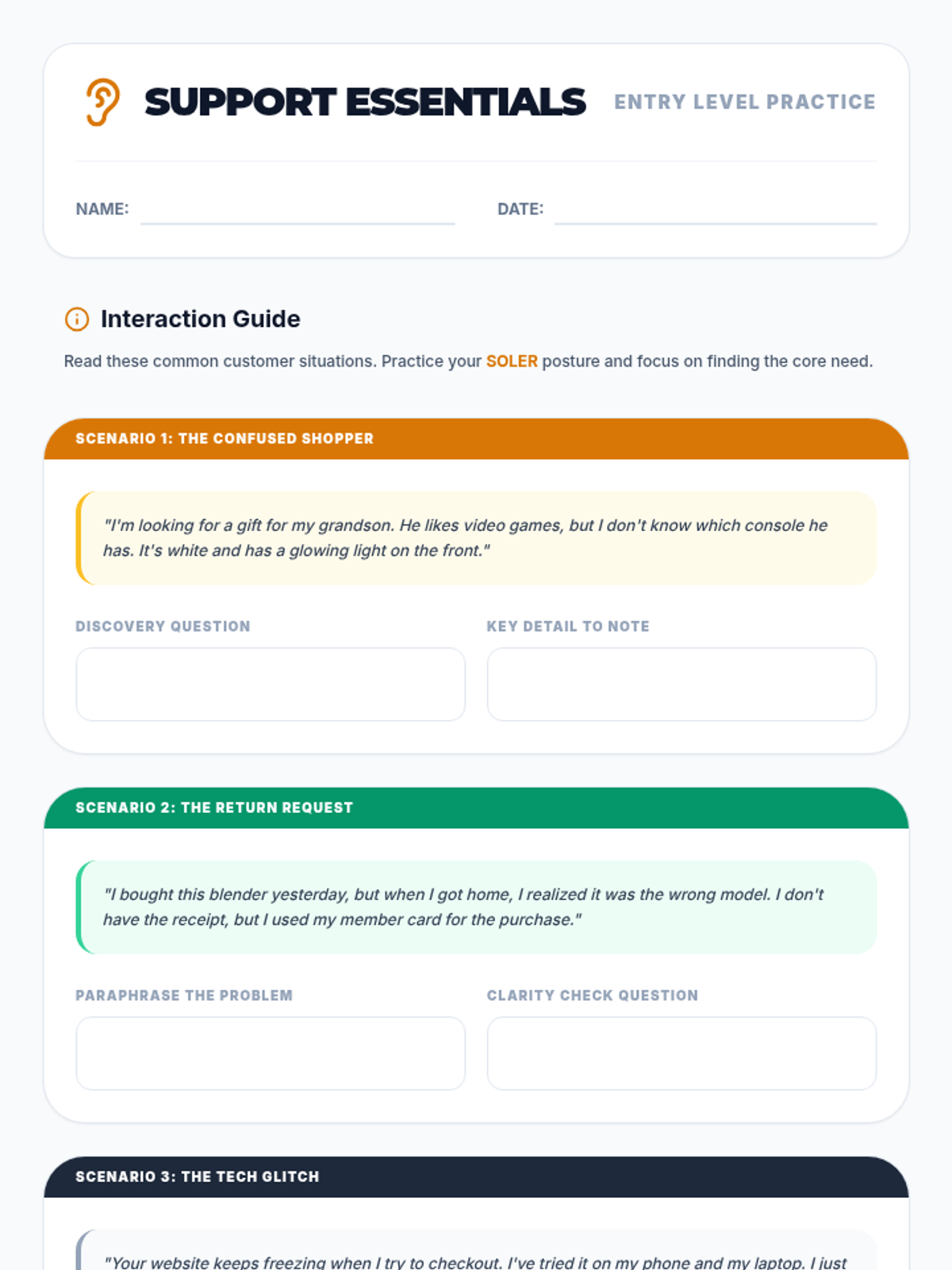
A specialized training module on active listening within a customer service context, focusing on de-escalation, identifying customer needs, and building rapport through verbal and non-verbal cues.
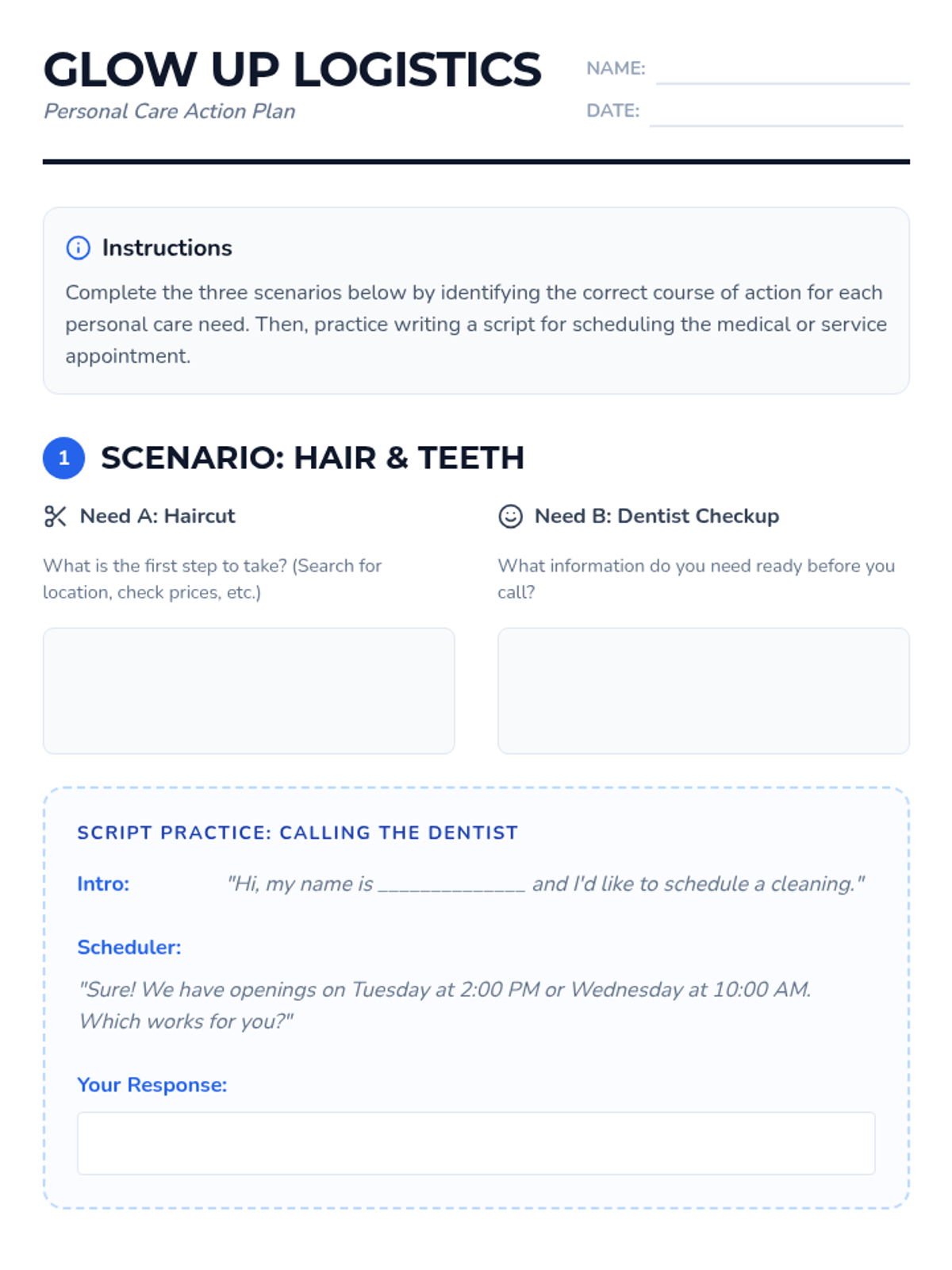
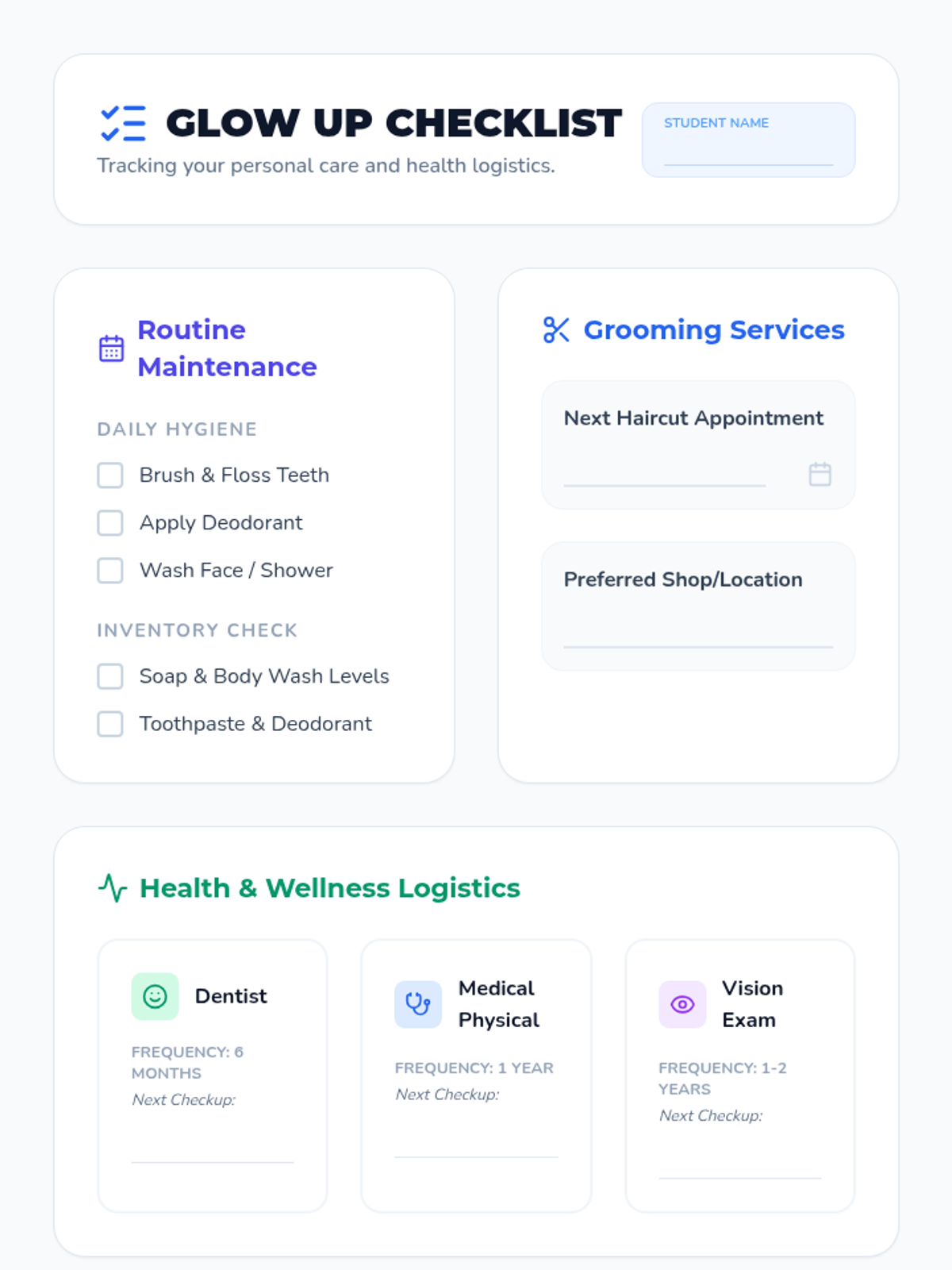
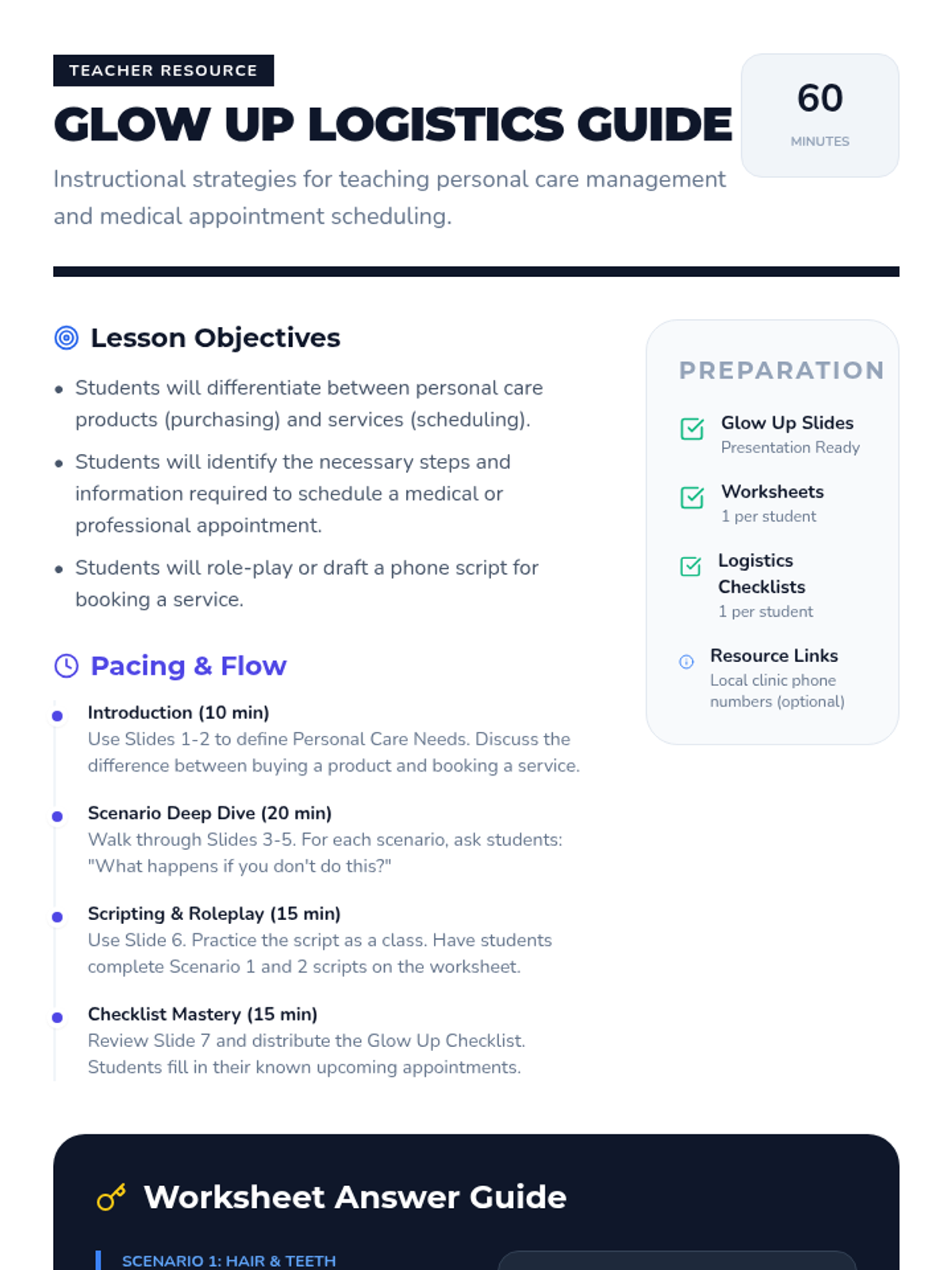
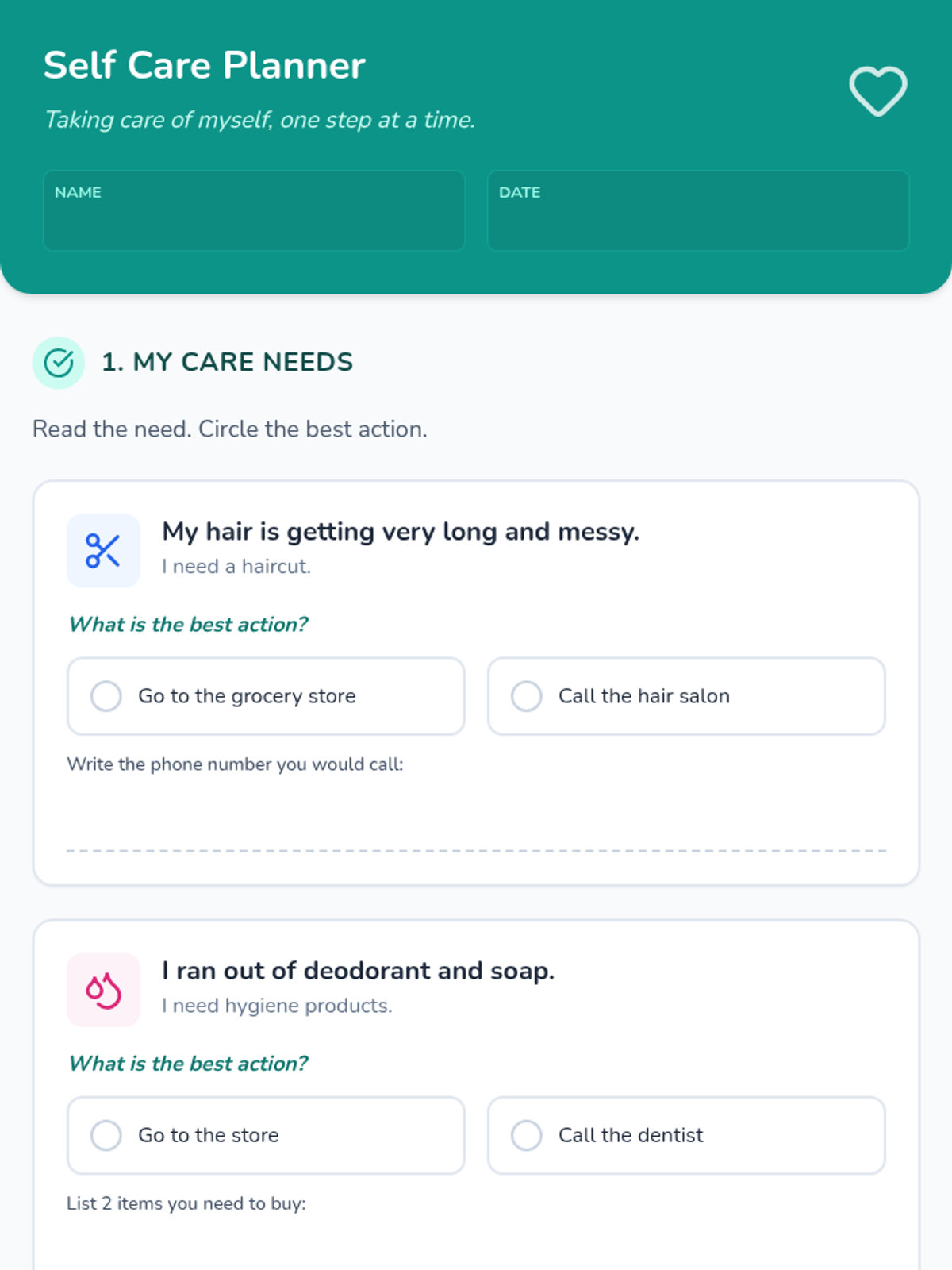
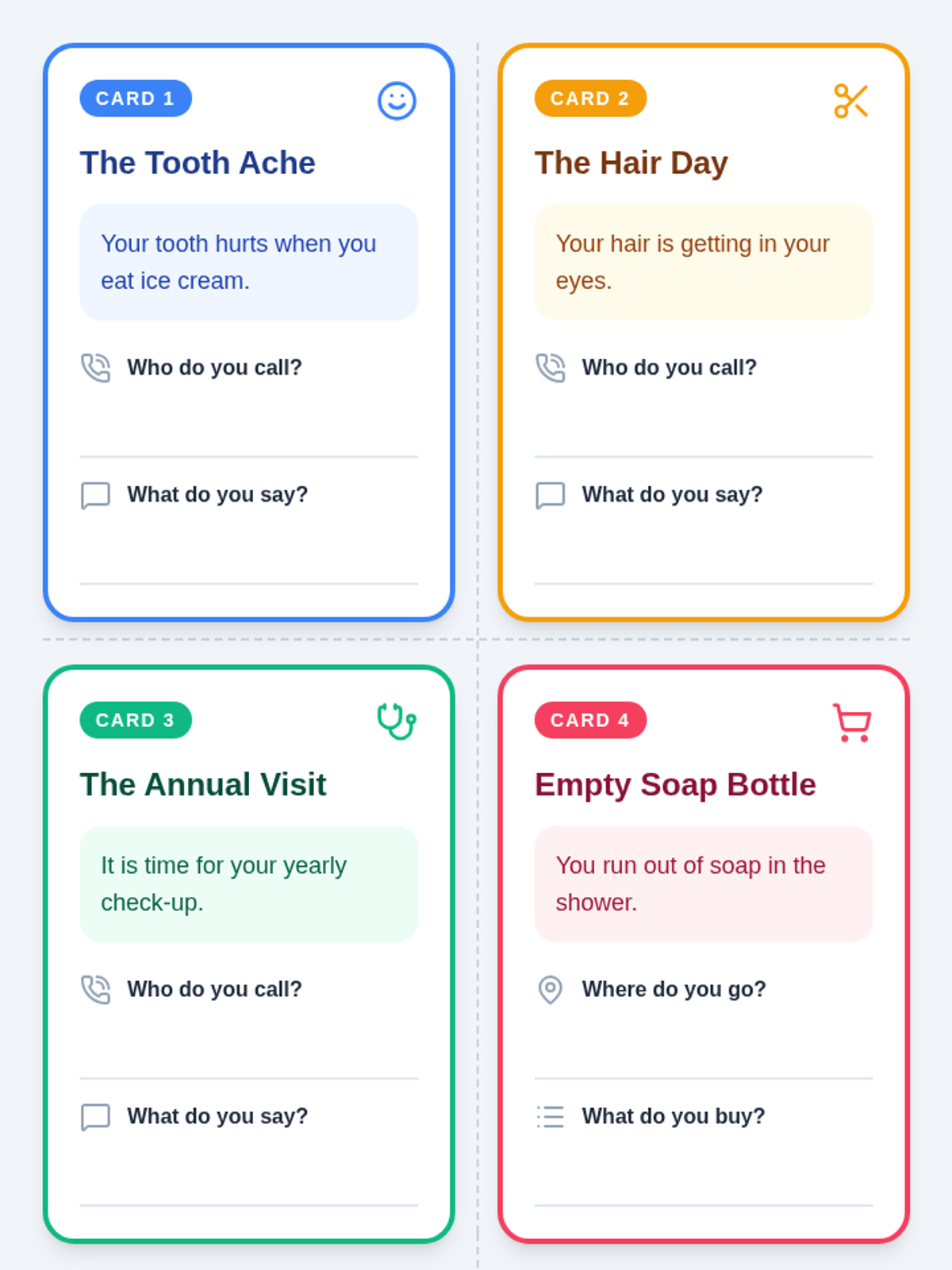
A practical lesson focused on the logistics of personal care, teaching students how to identify necessary actions for hygiene and grooming, and the specific steps to schedule medical appointments.
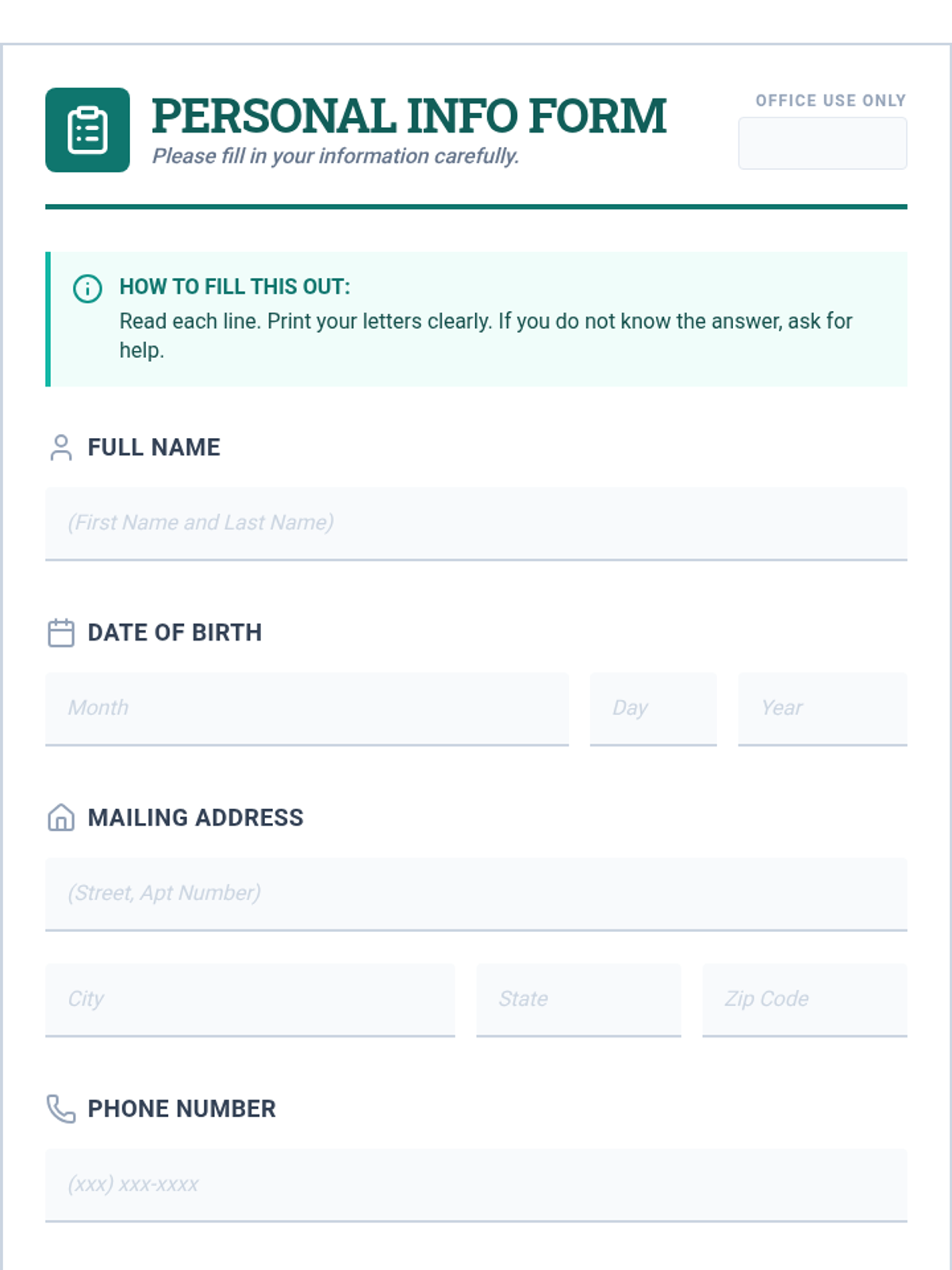
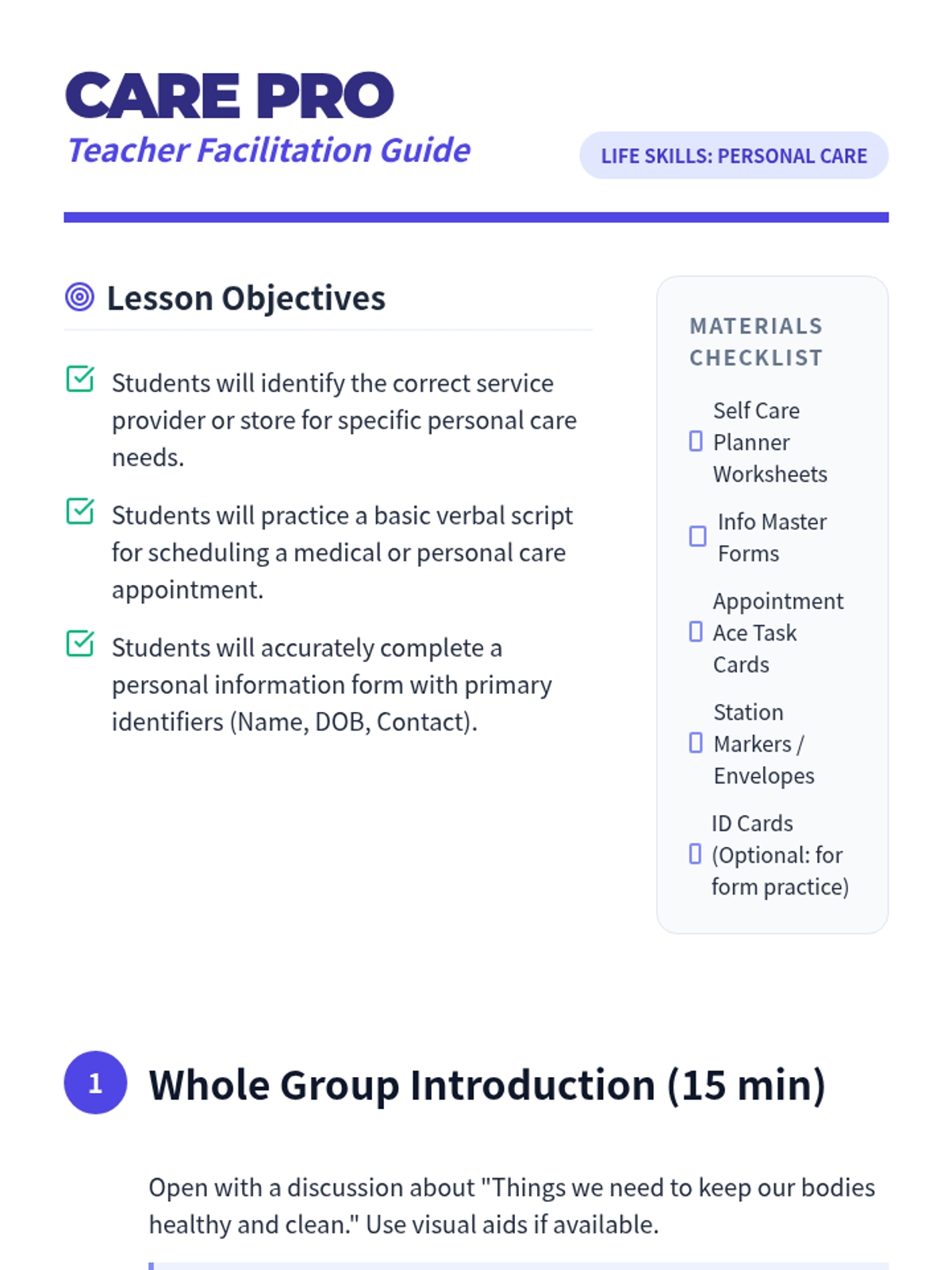
A practical life skills lesson focused on managing personal care needs, scheduling medical appointments, and completing essential personal information forms. Designed for Level 2 learners with simplified text and visual supports.
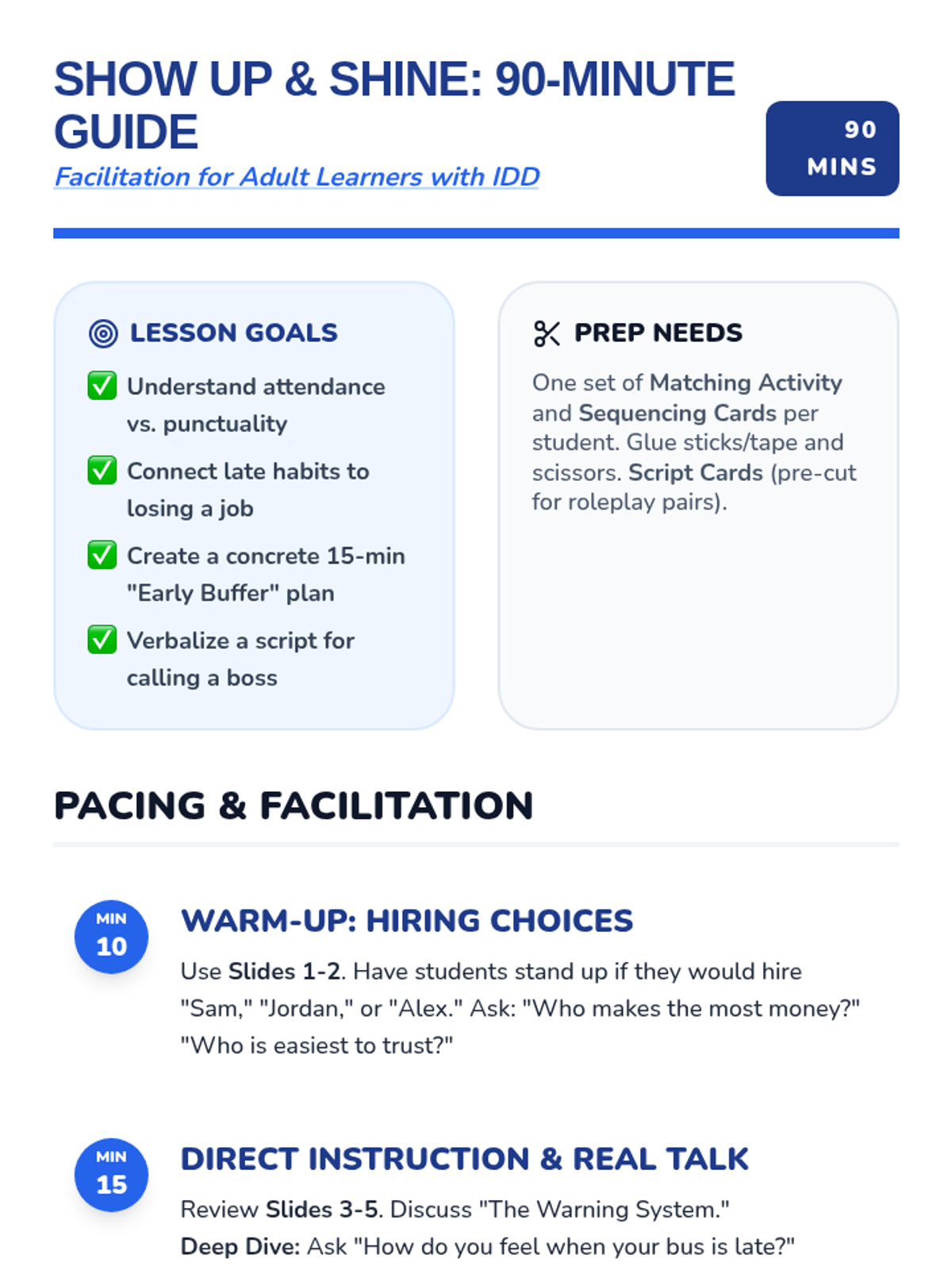
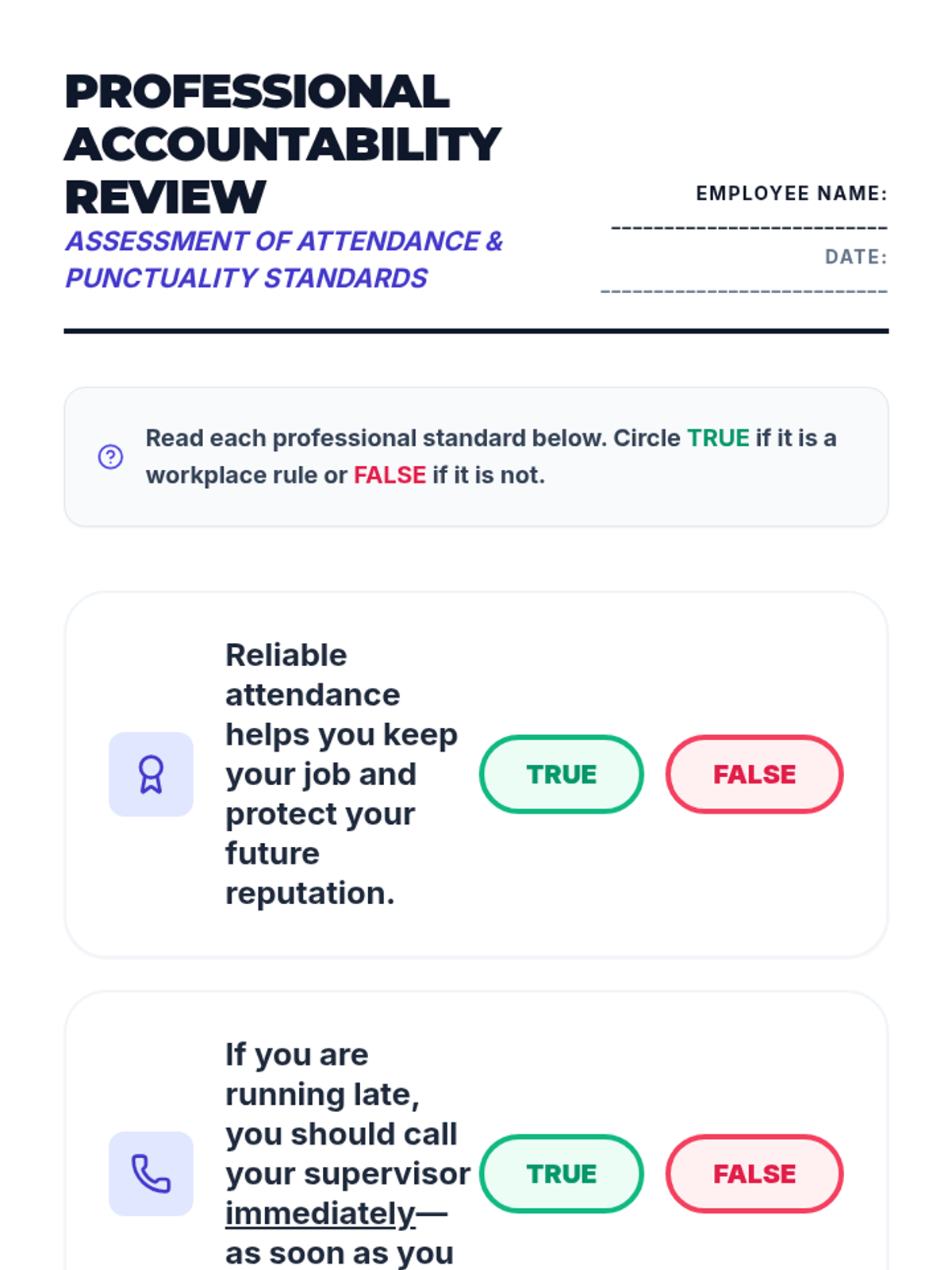
A comprehensive 90-minute professional development lesson on workplace attendance and punctuality, designed for adult learners with intellectual and developmental disabilities. Focuses on business impact, disciplinary stages, and proactive communication.
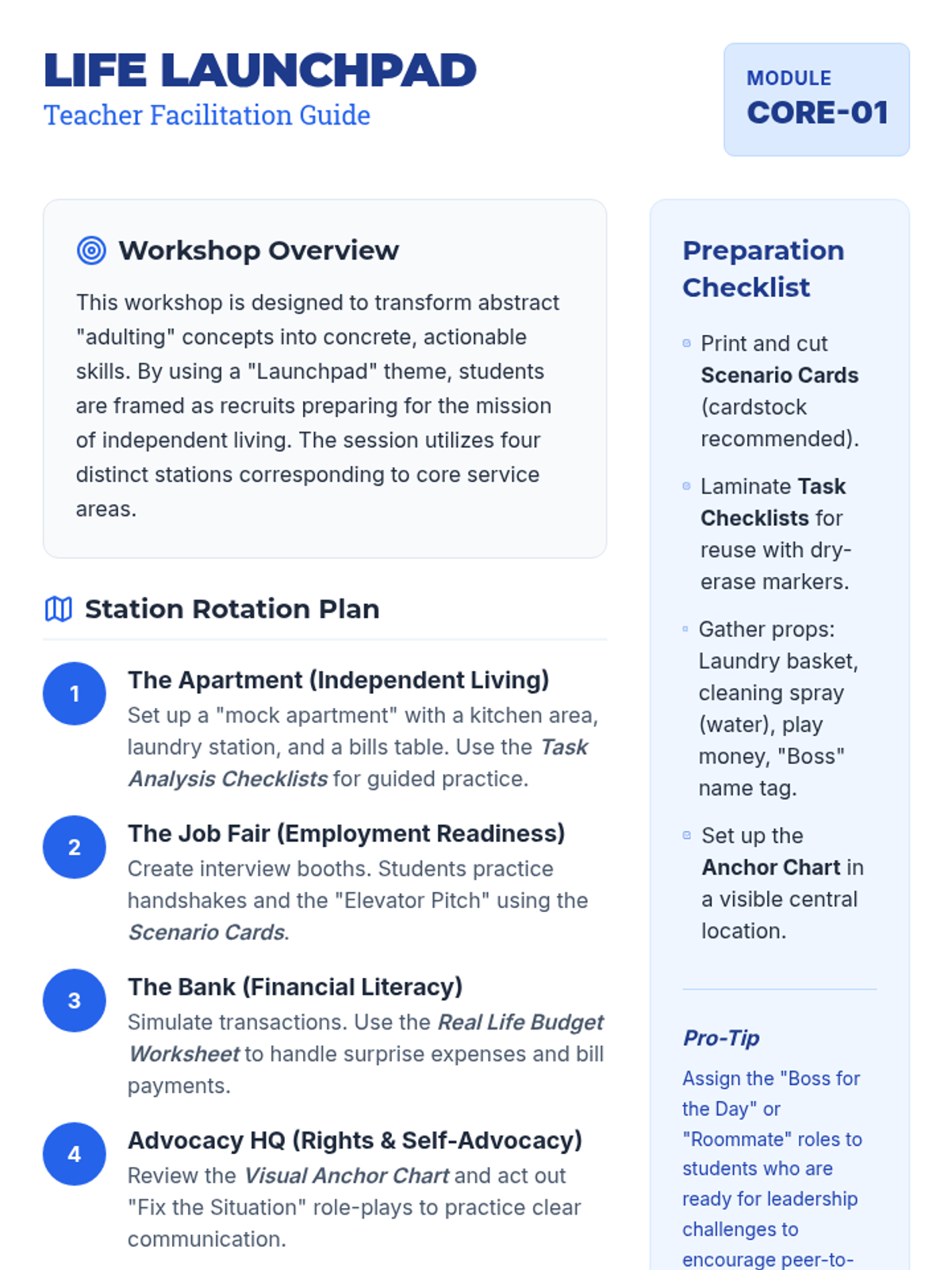
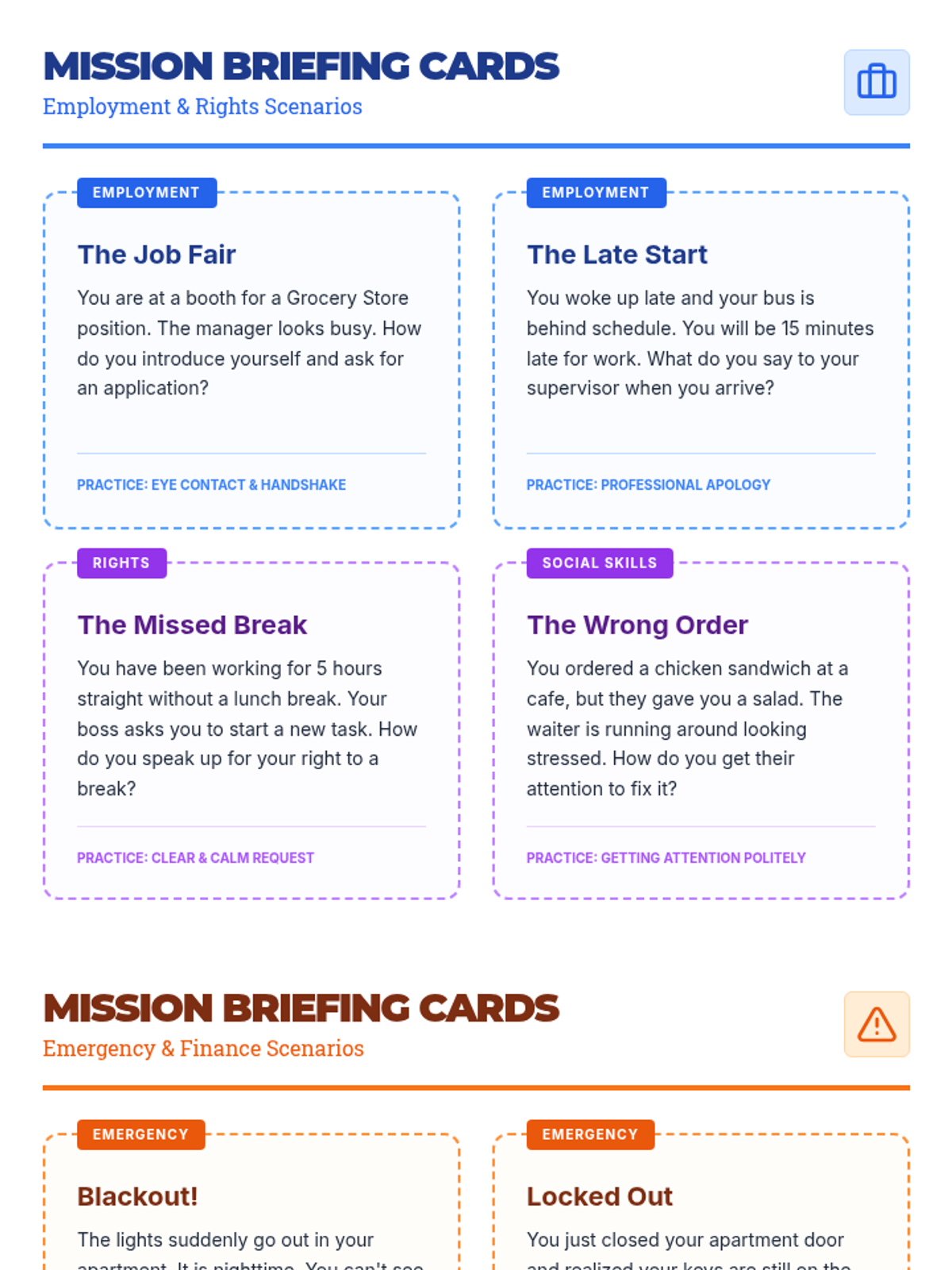
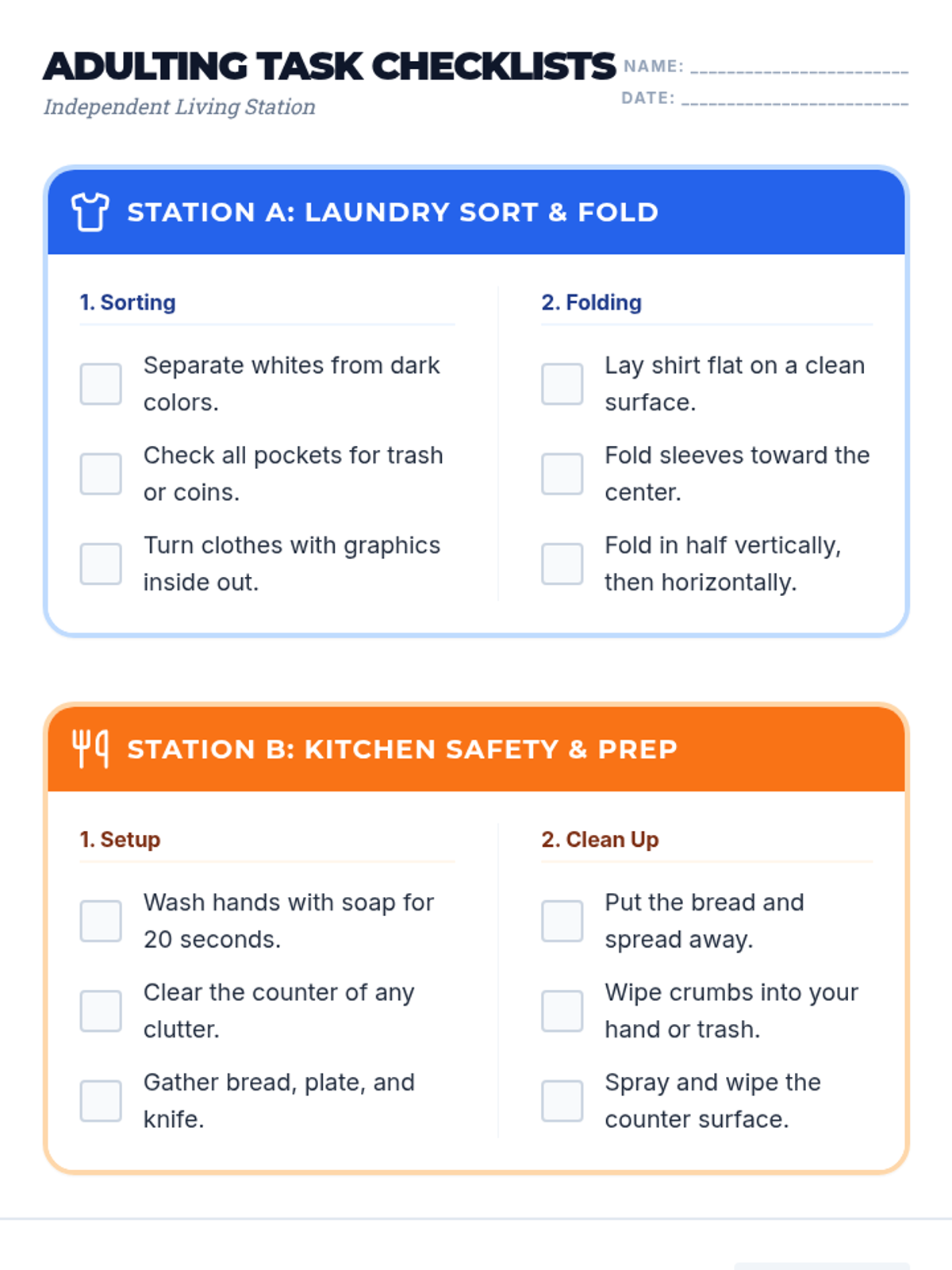
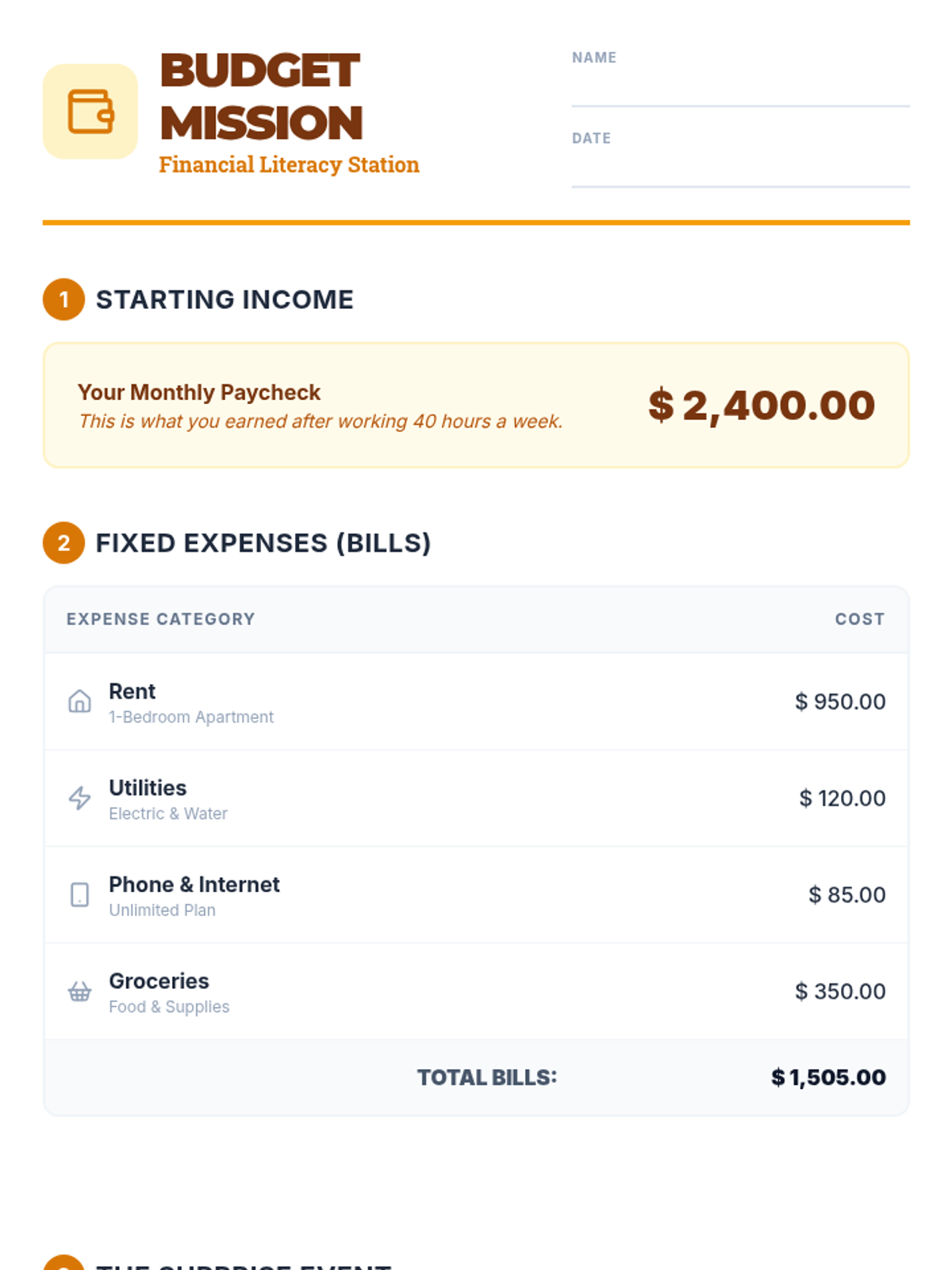
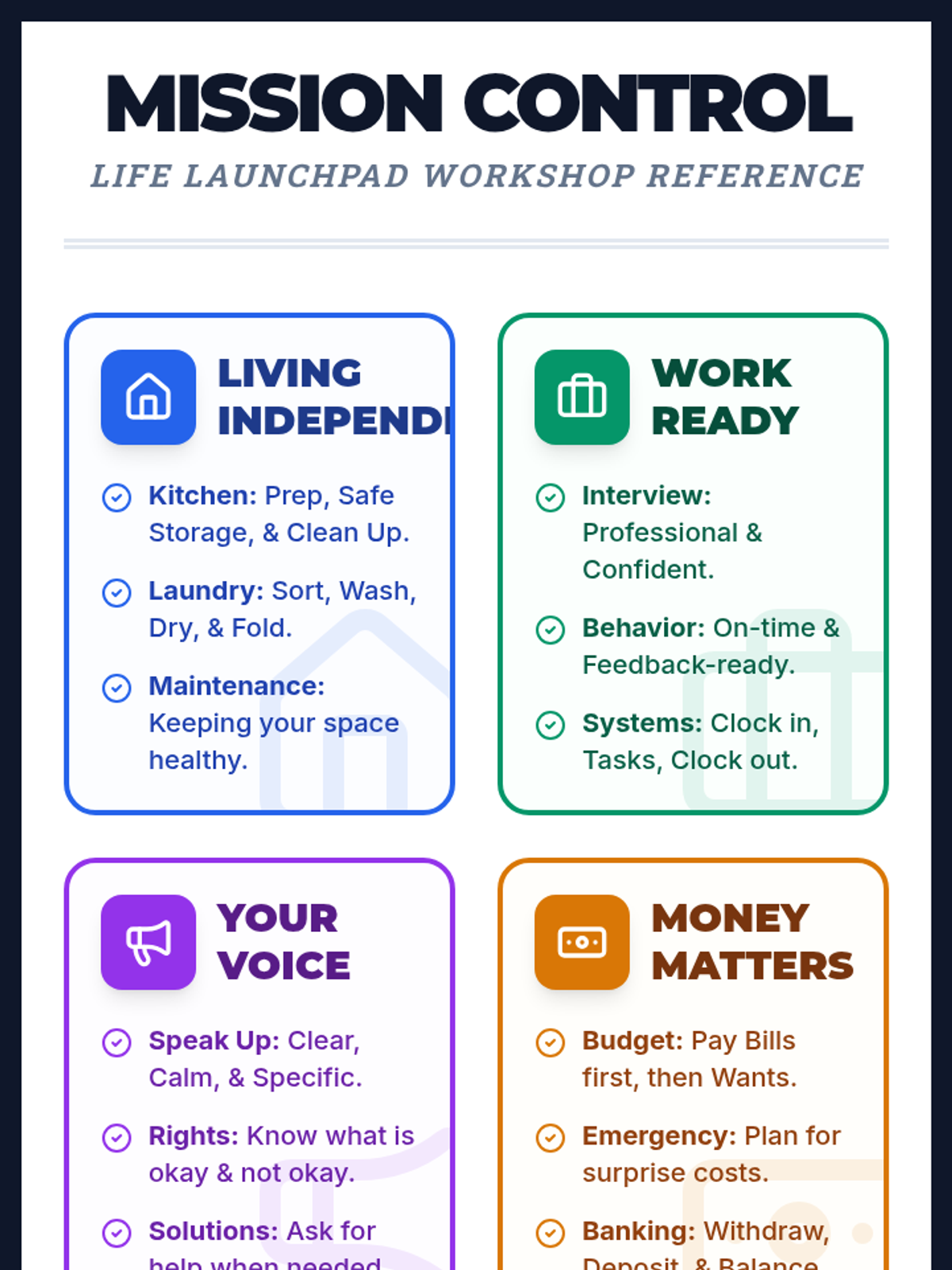
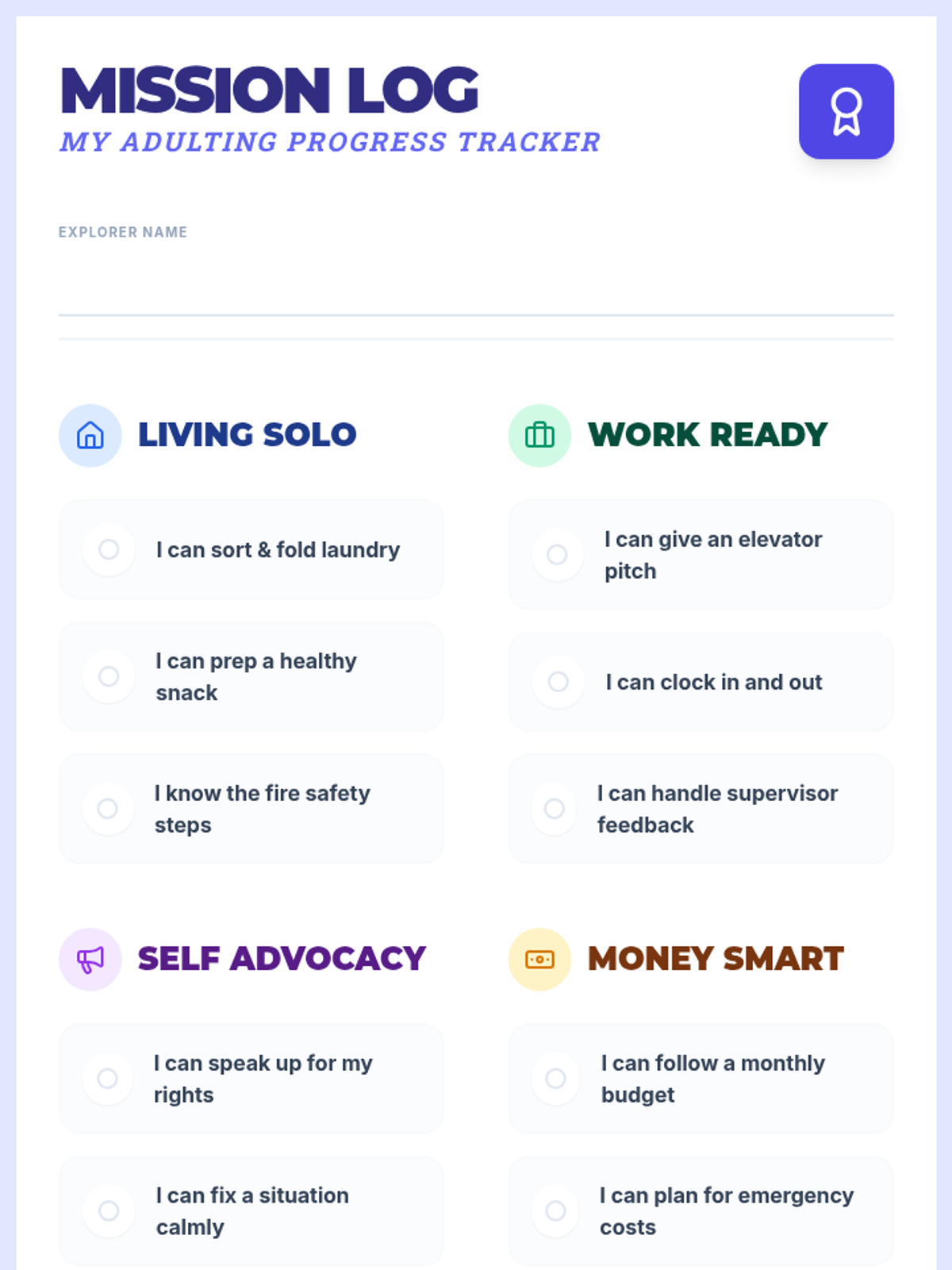
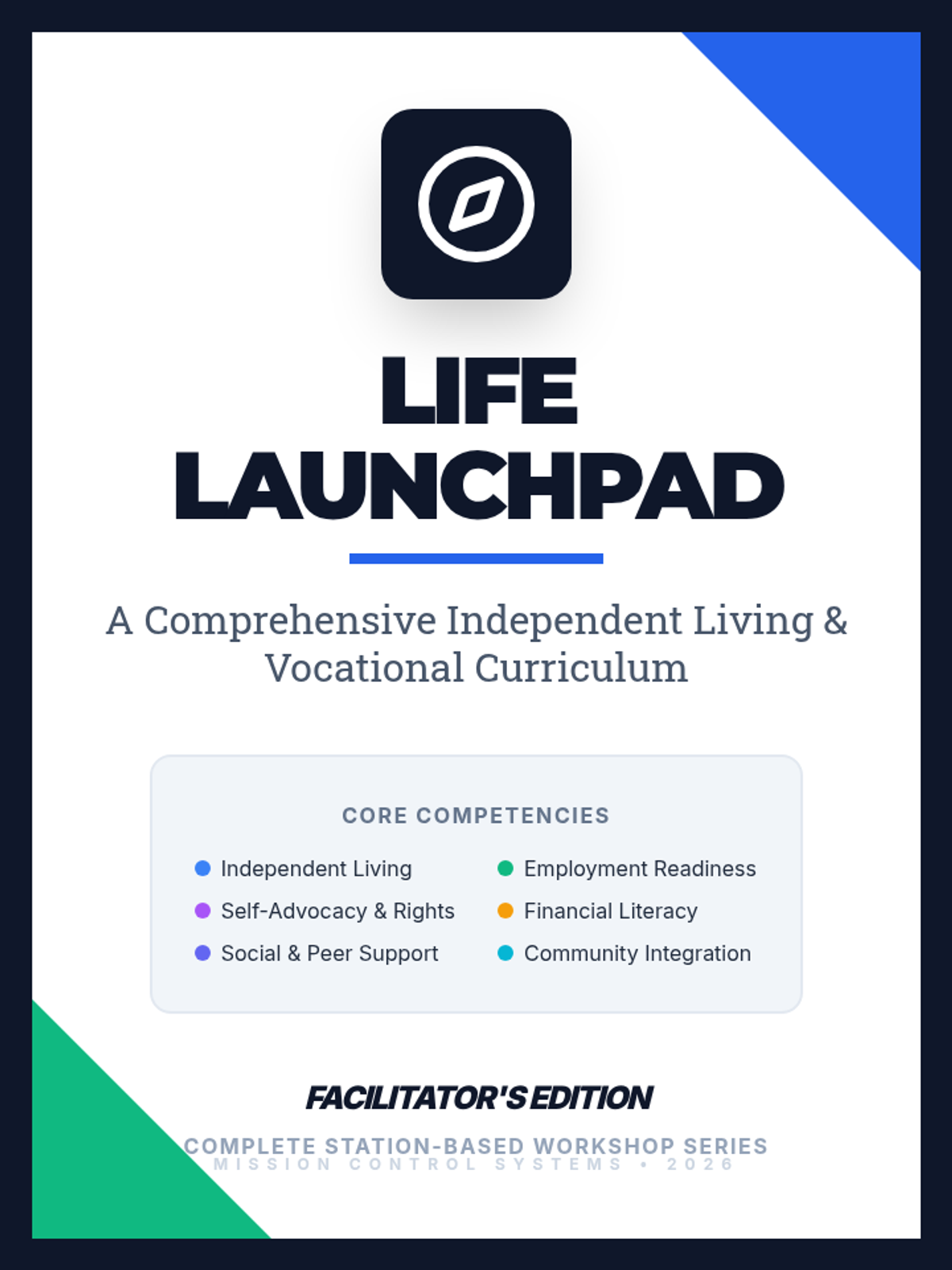
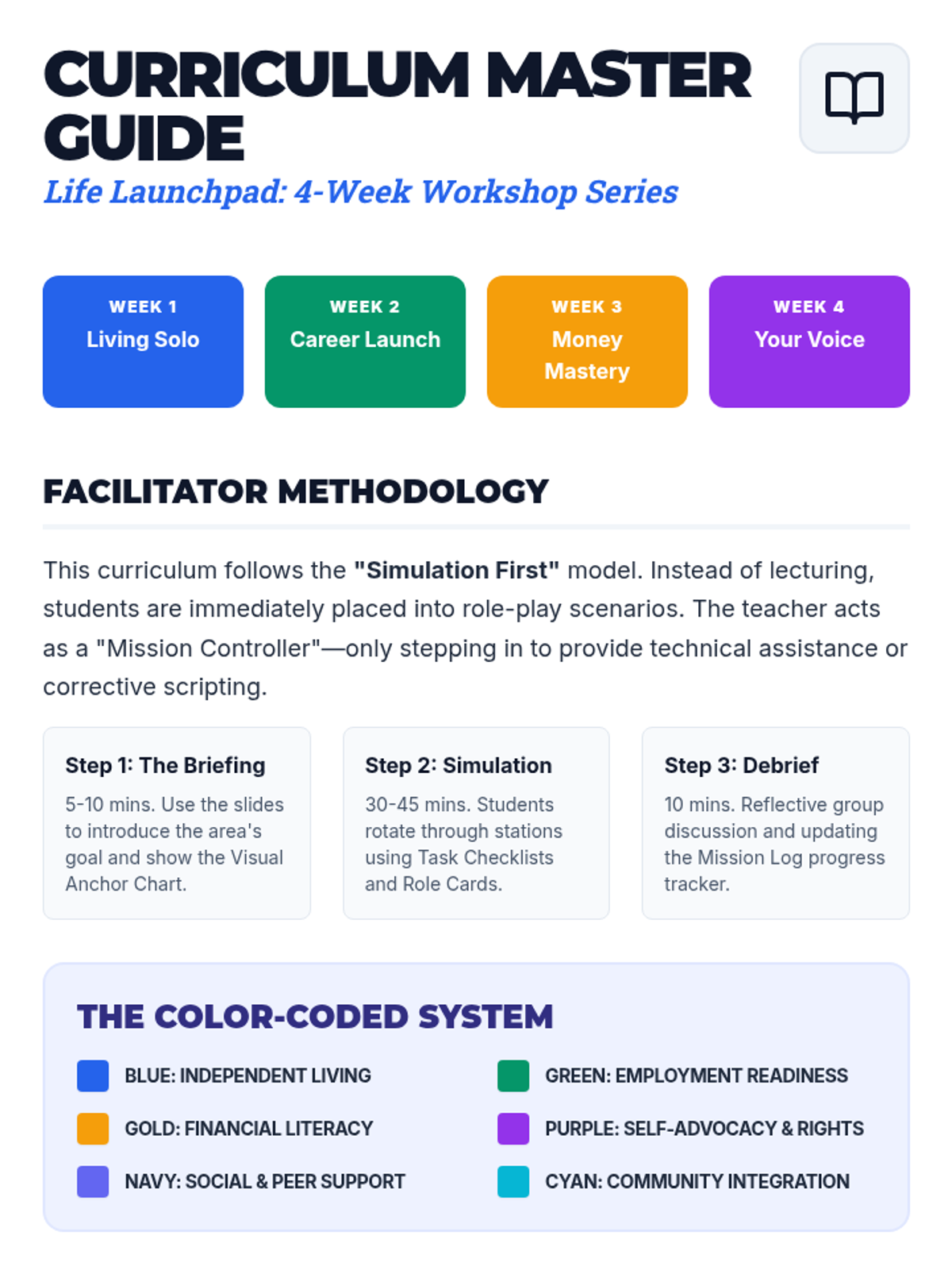
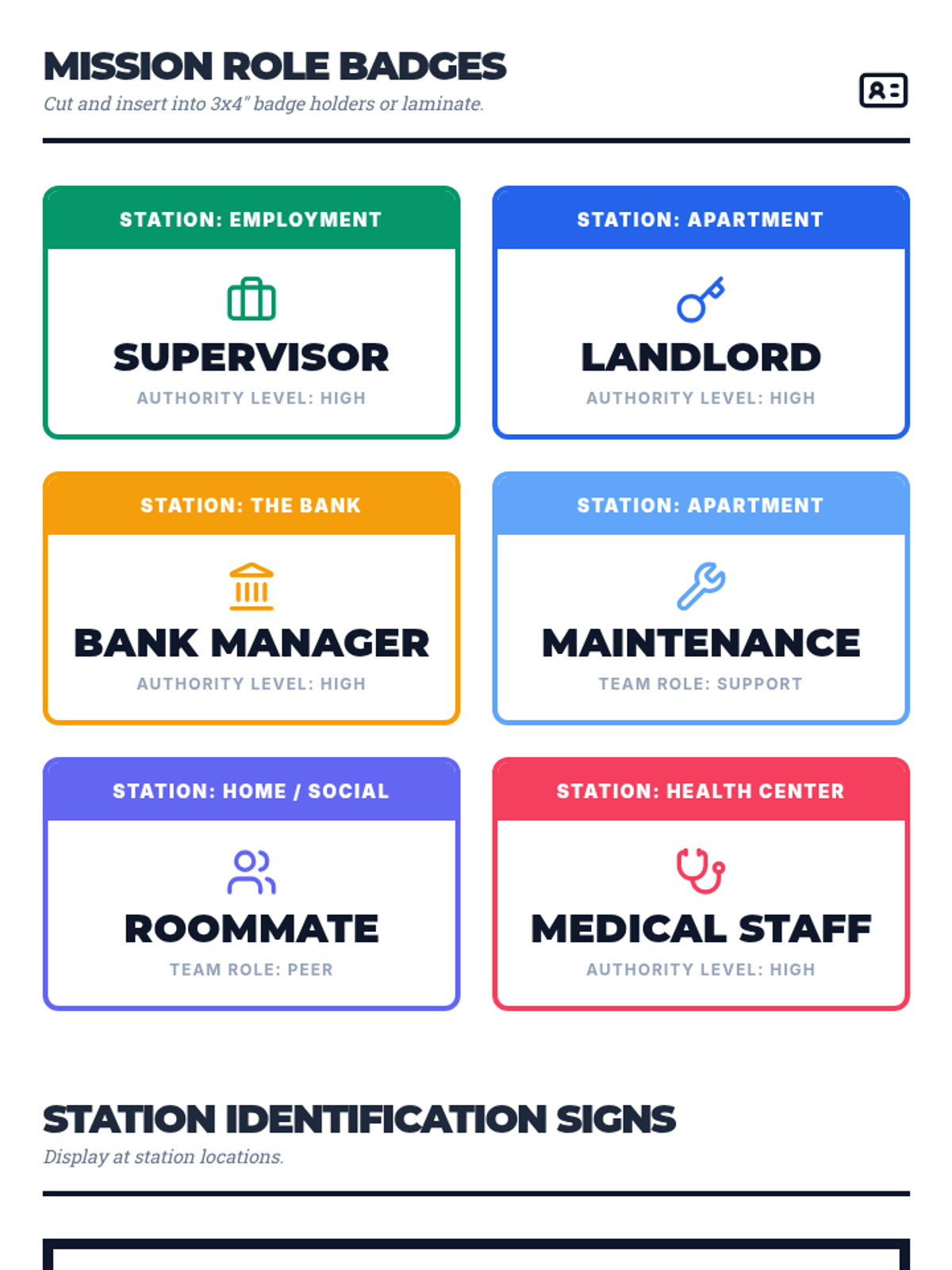
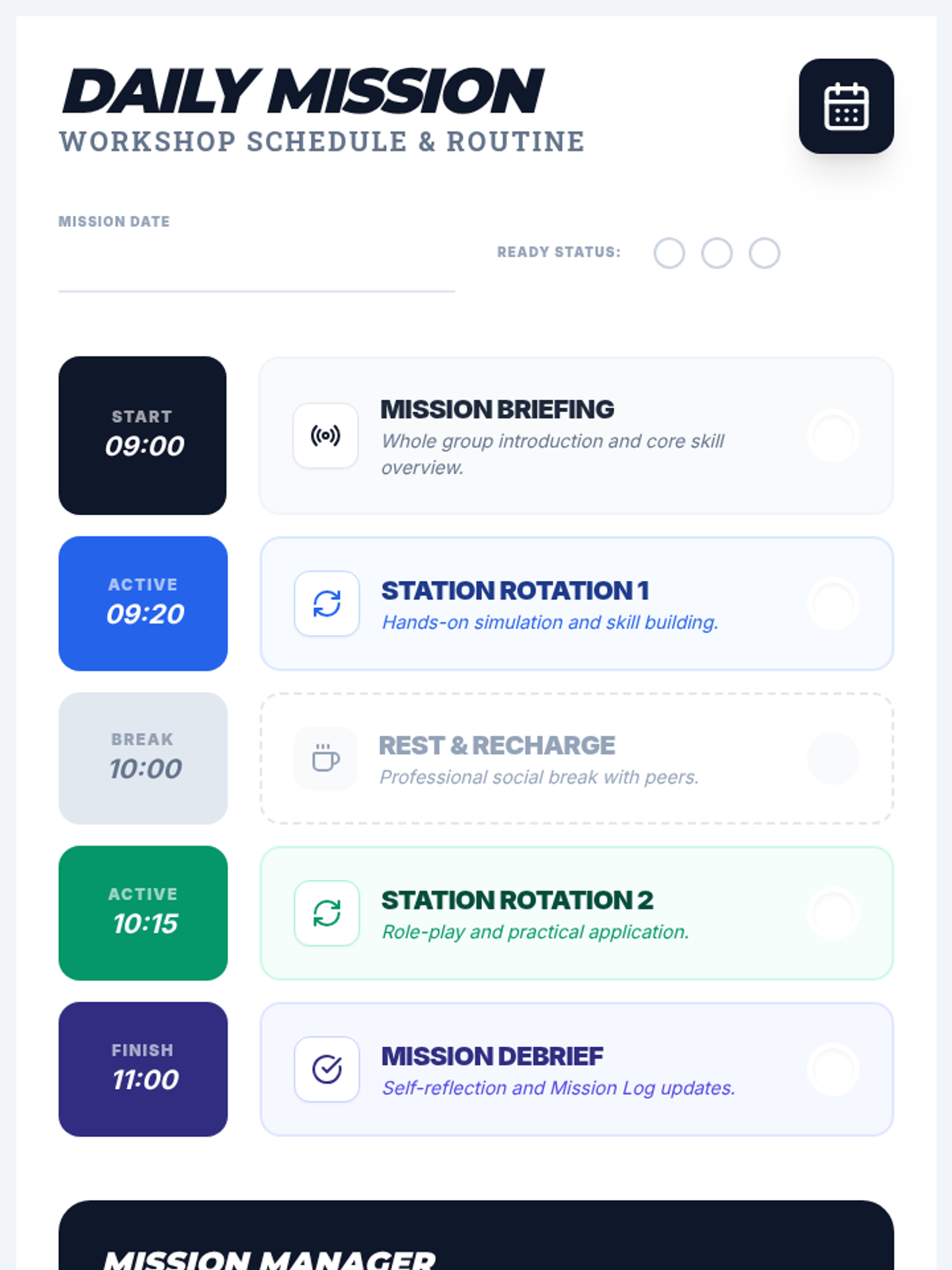
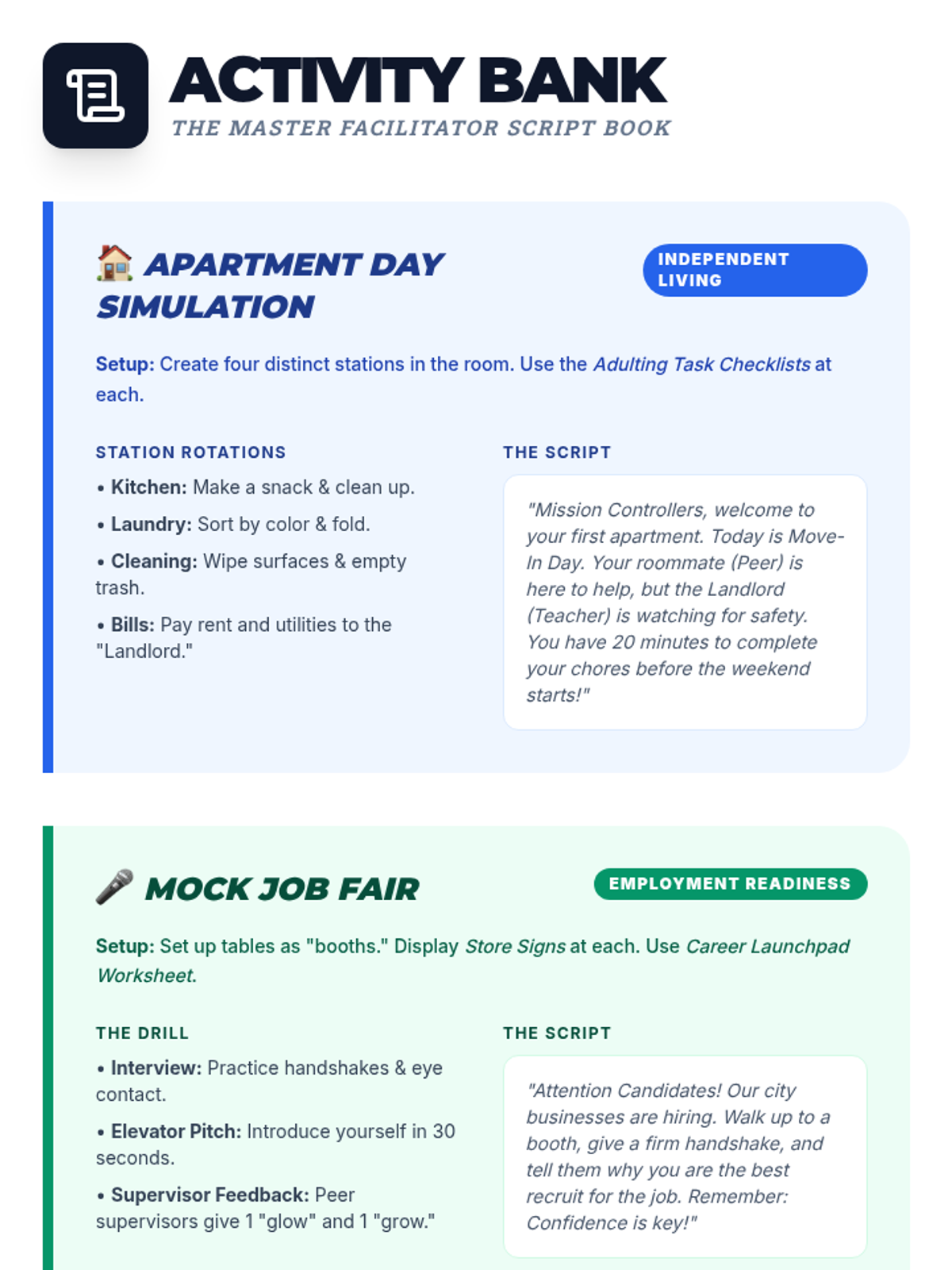
A comprehensive workshop focusing on essential adulting skills through immersive role-play, task simulations, and practical financial planning. This lesson covers Independent Living, Employment Readiness, Self-Advocacy, and Financial Literacy.
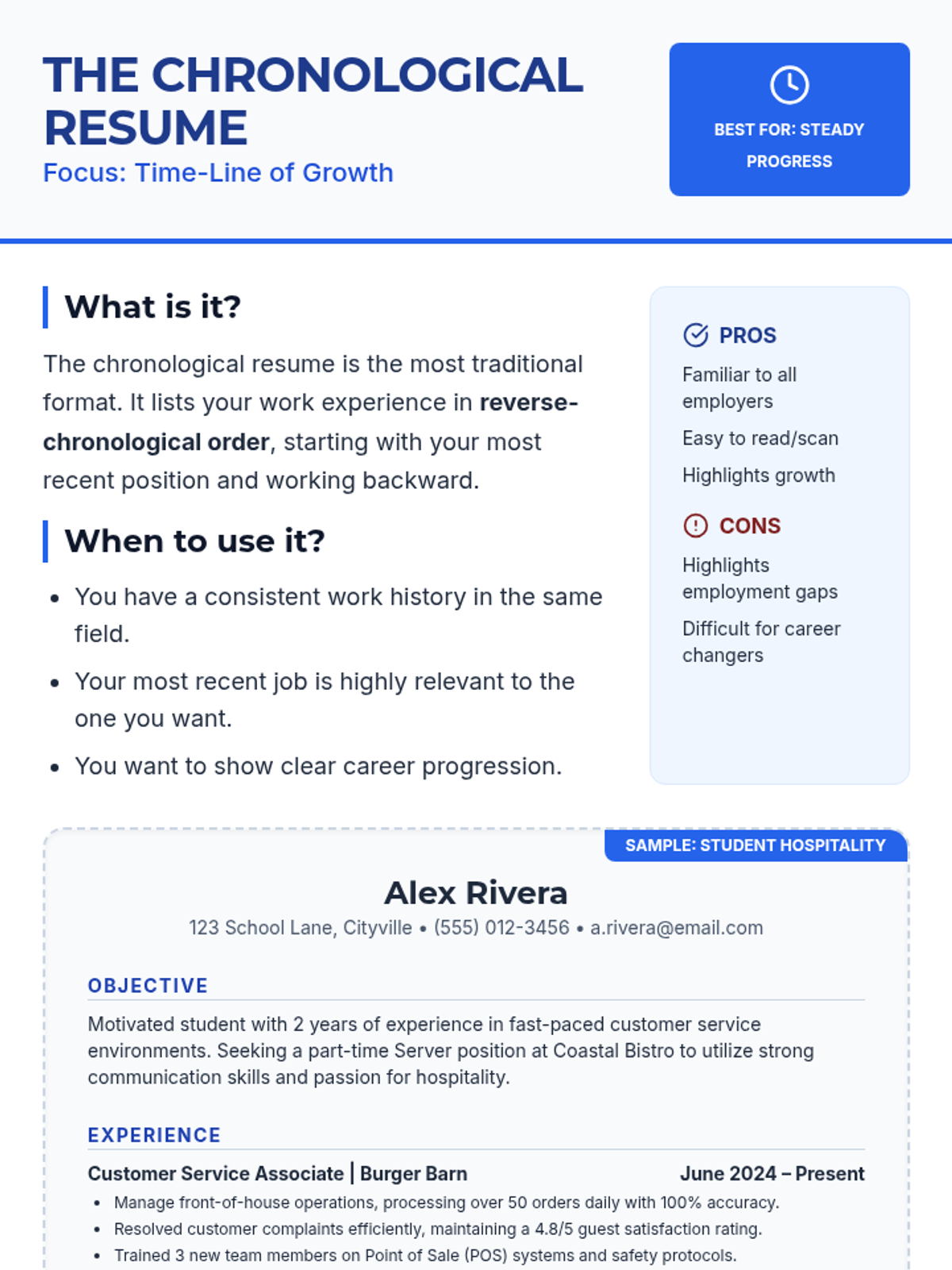
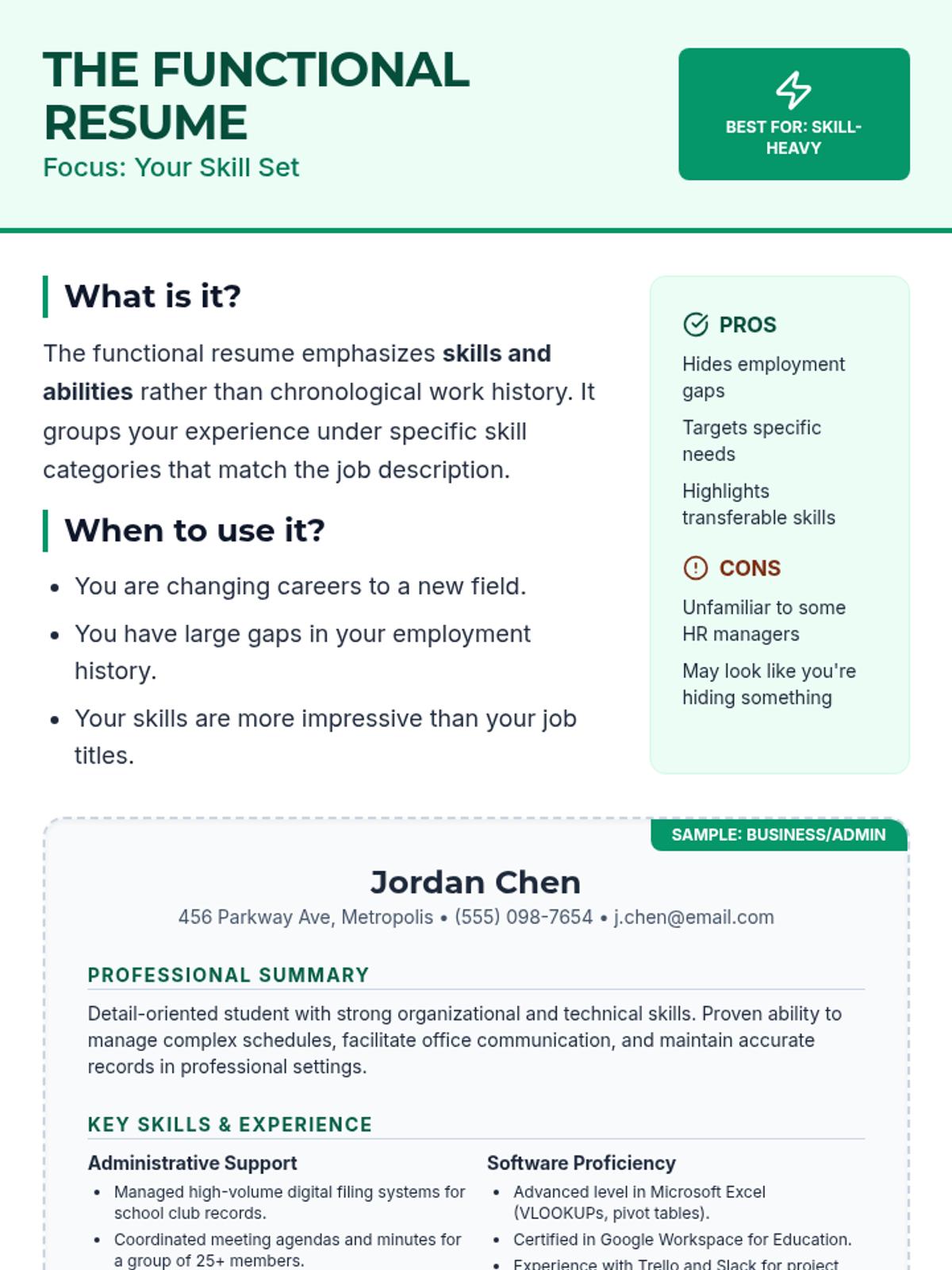
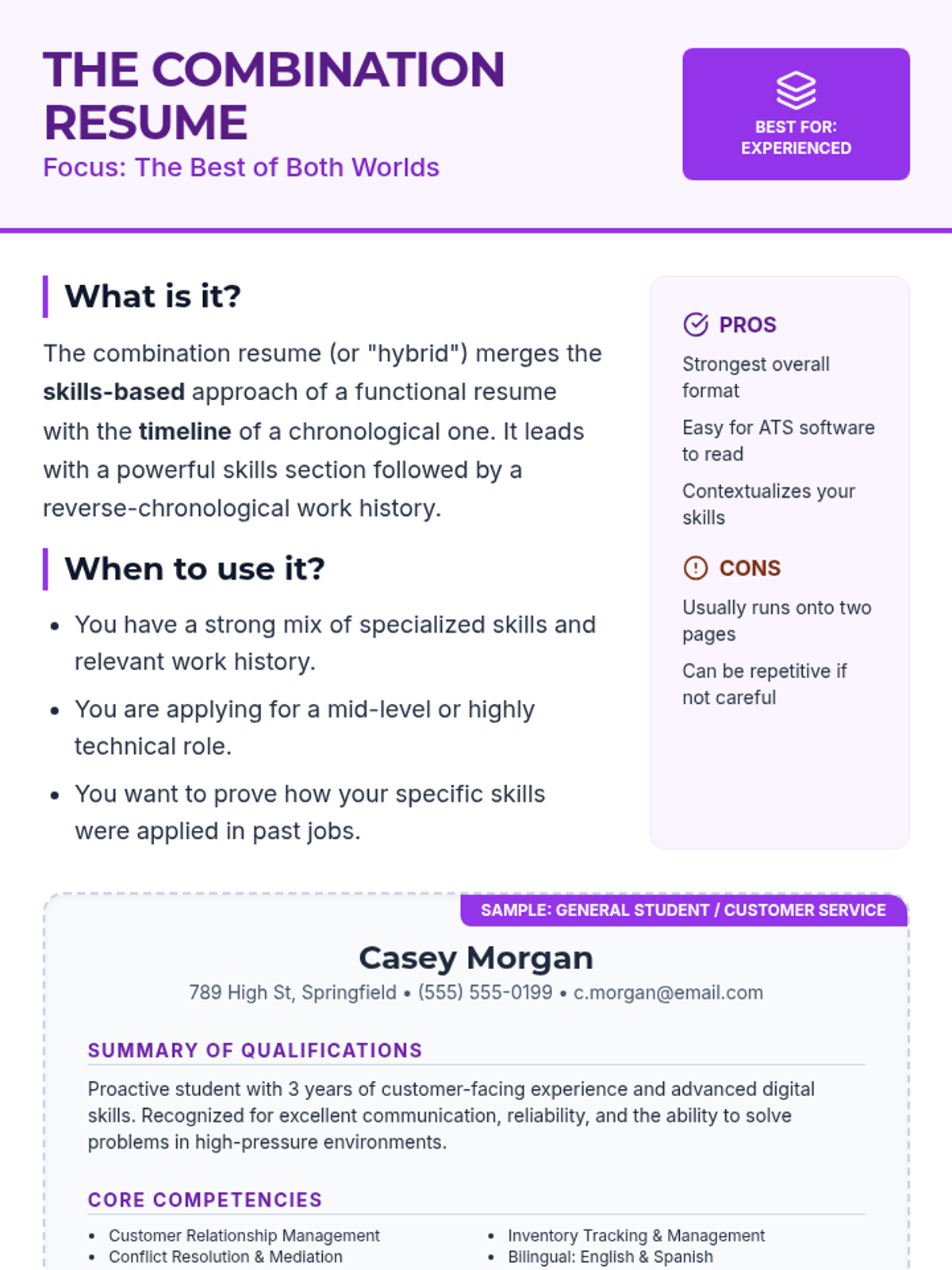
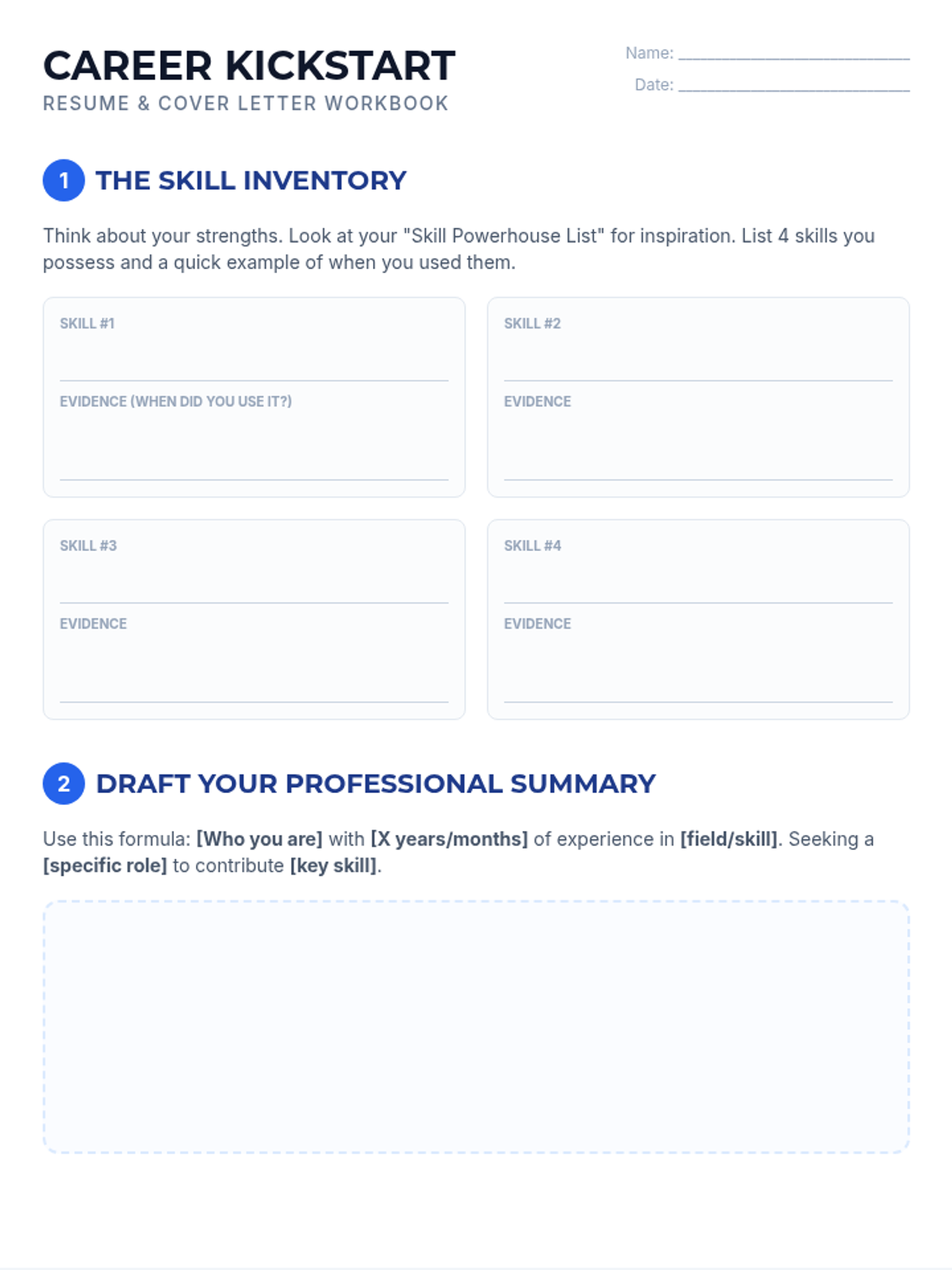
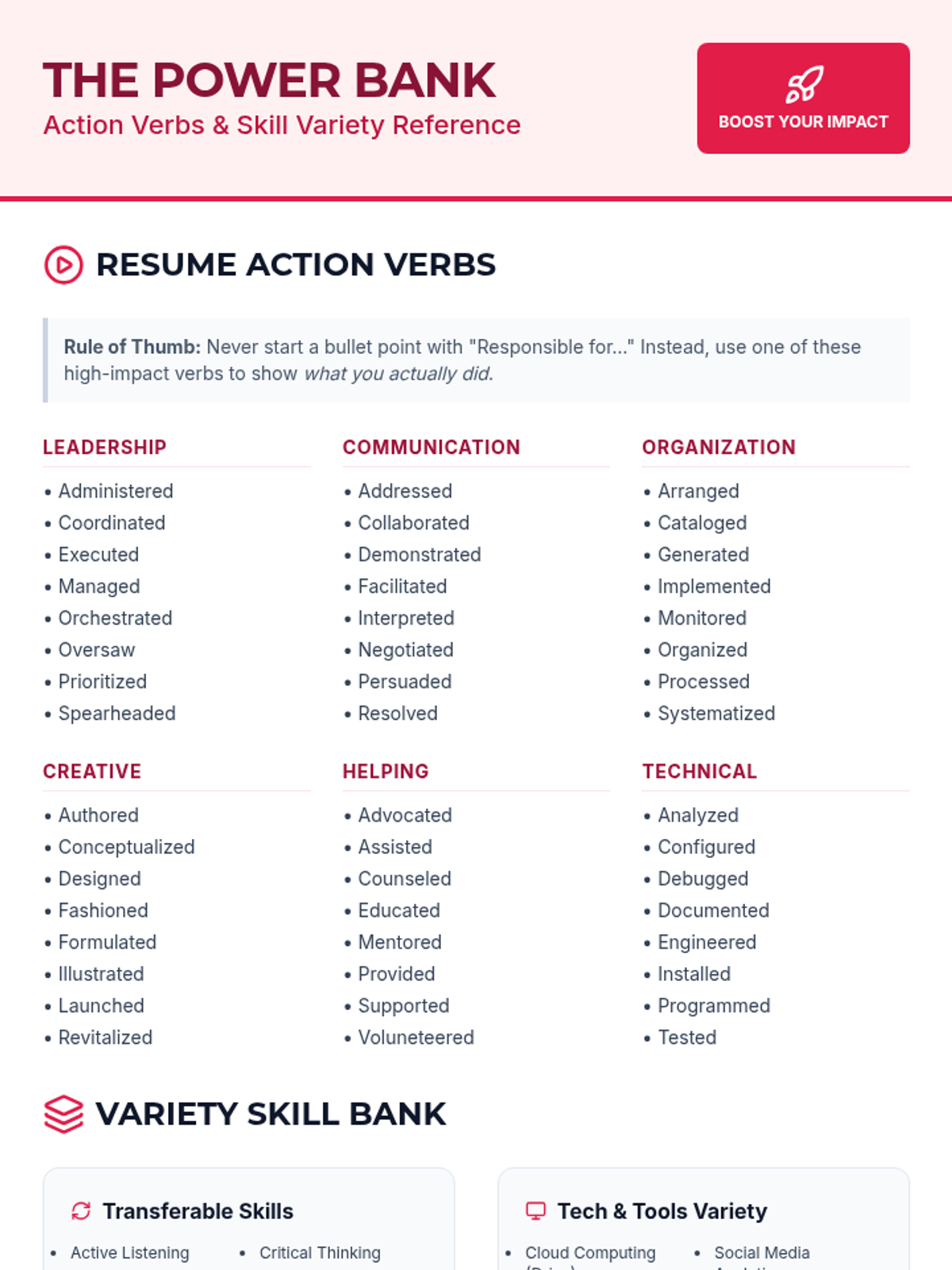
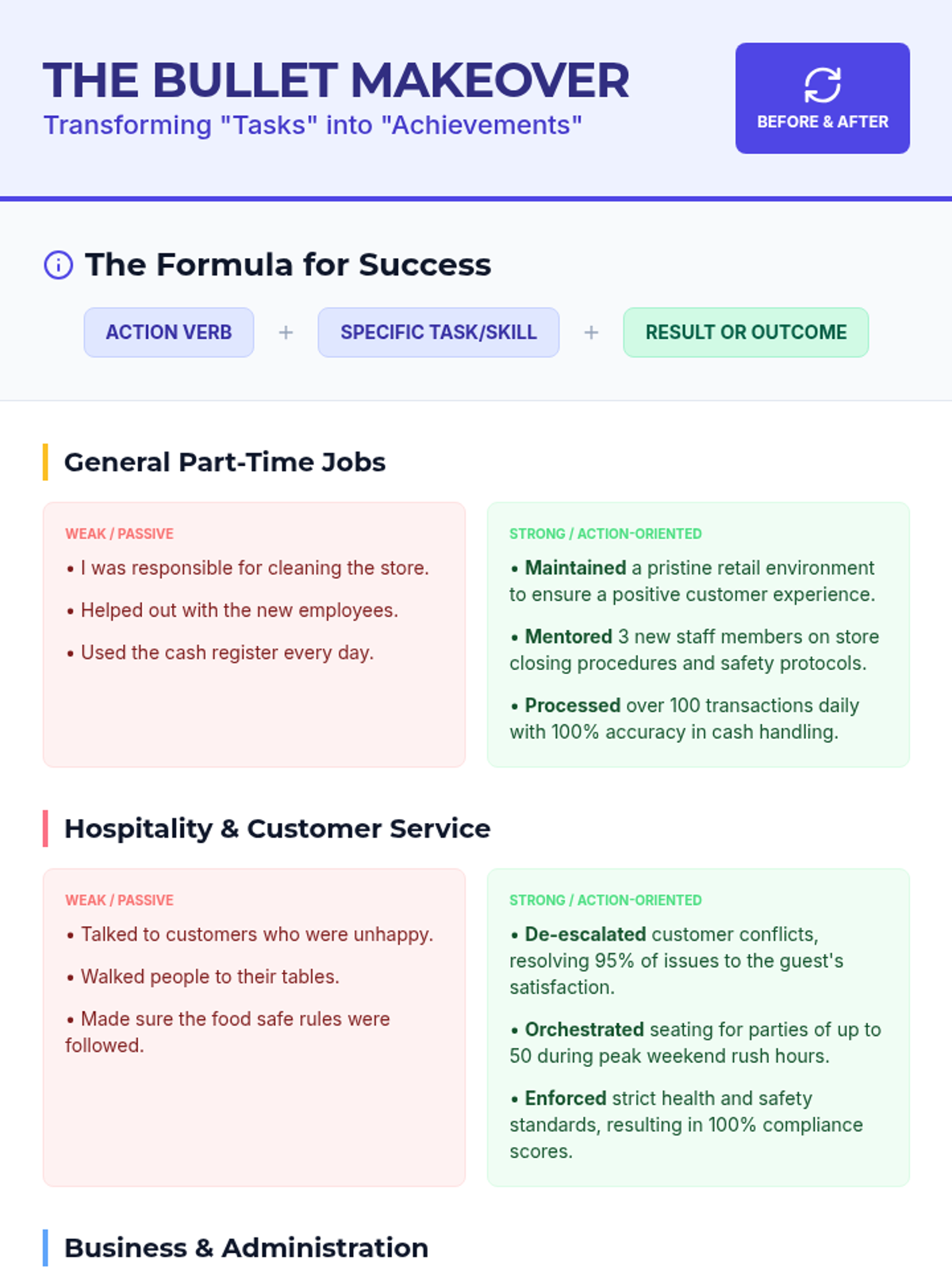
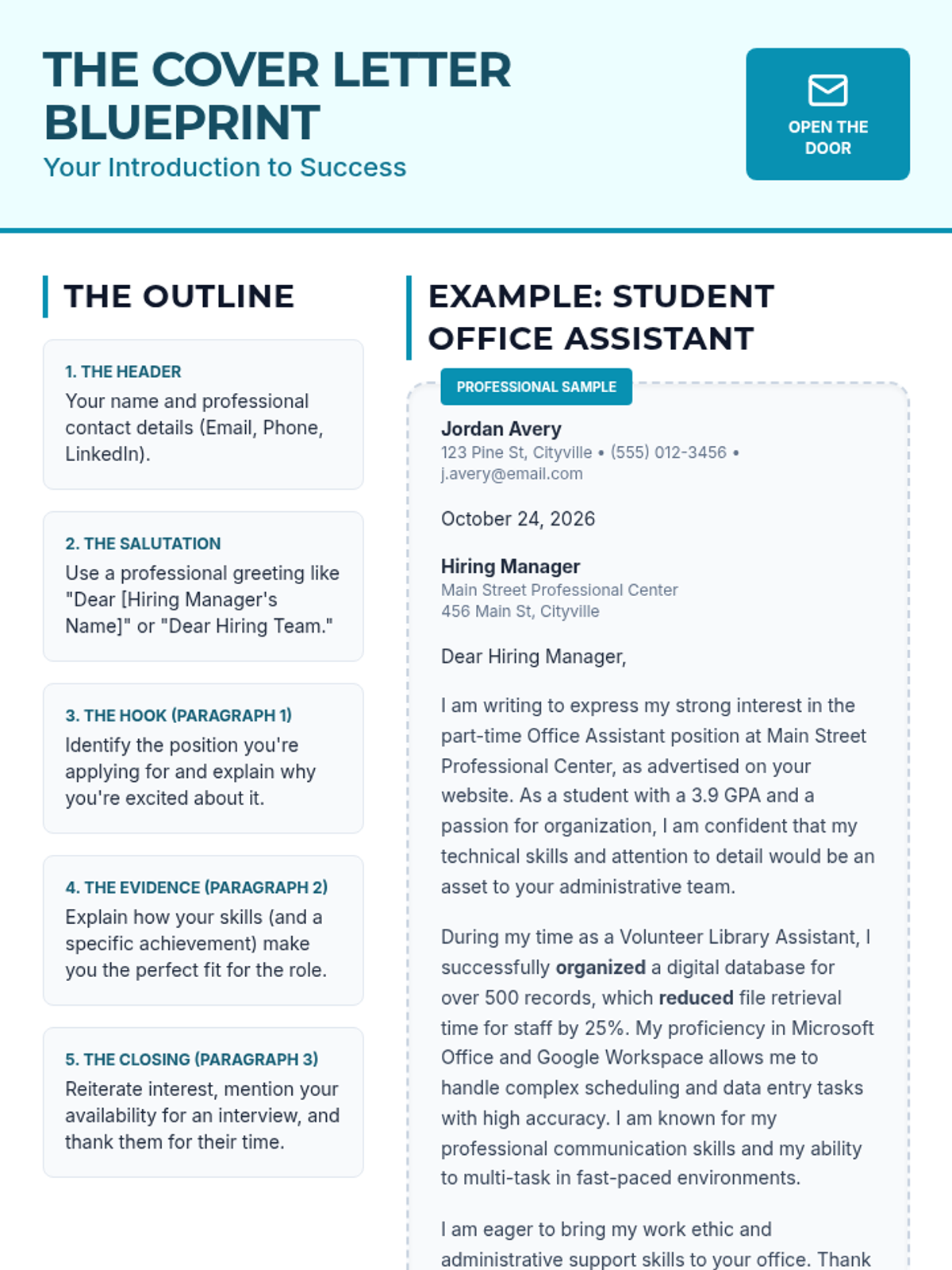
A comprehensive guide to resume writing for students and entry-level professionals, covering different resume formats, skill identification, and document templates.
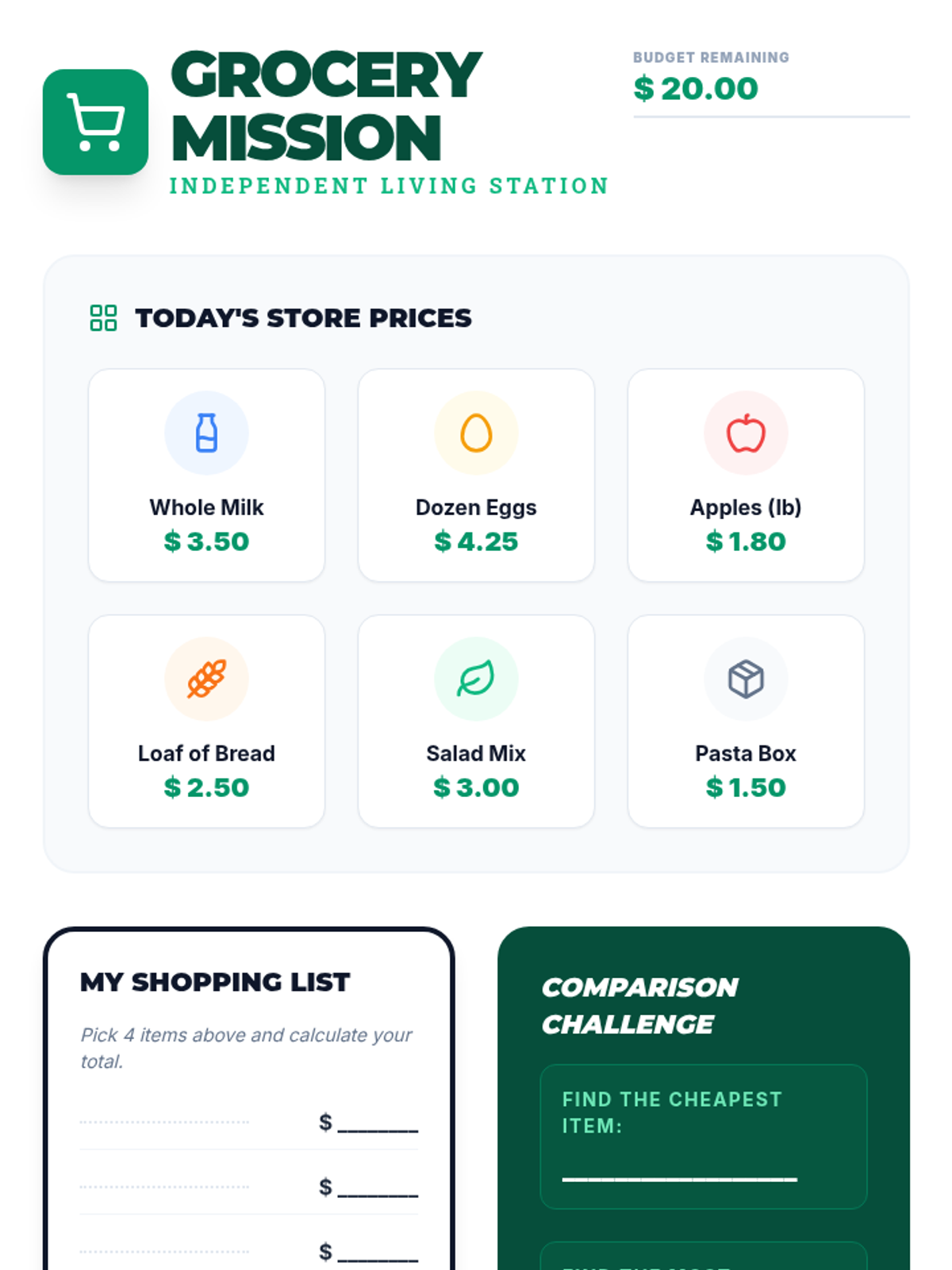
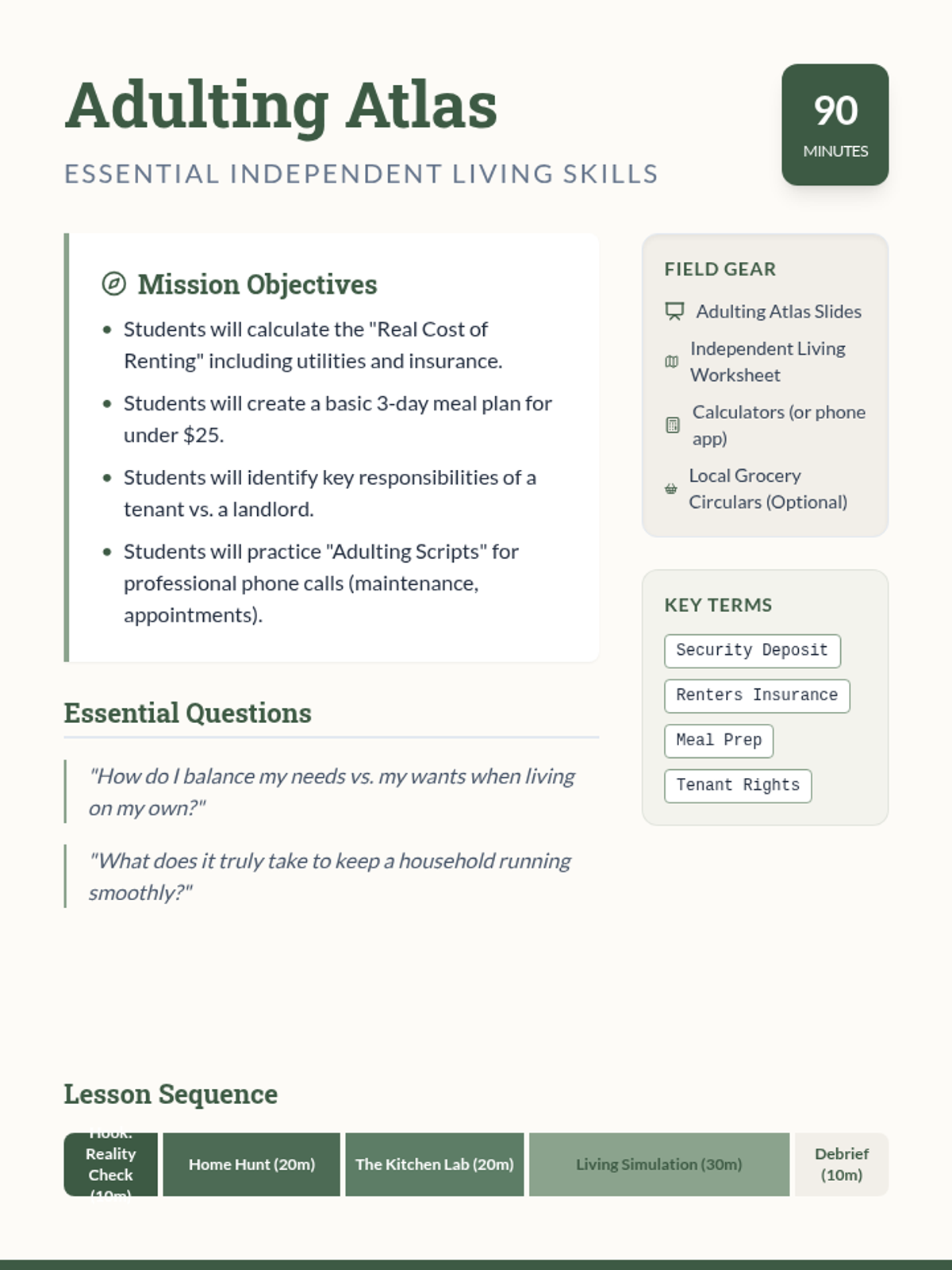
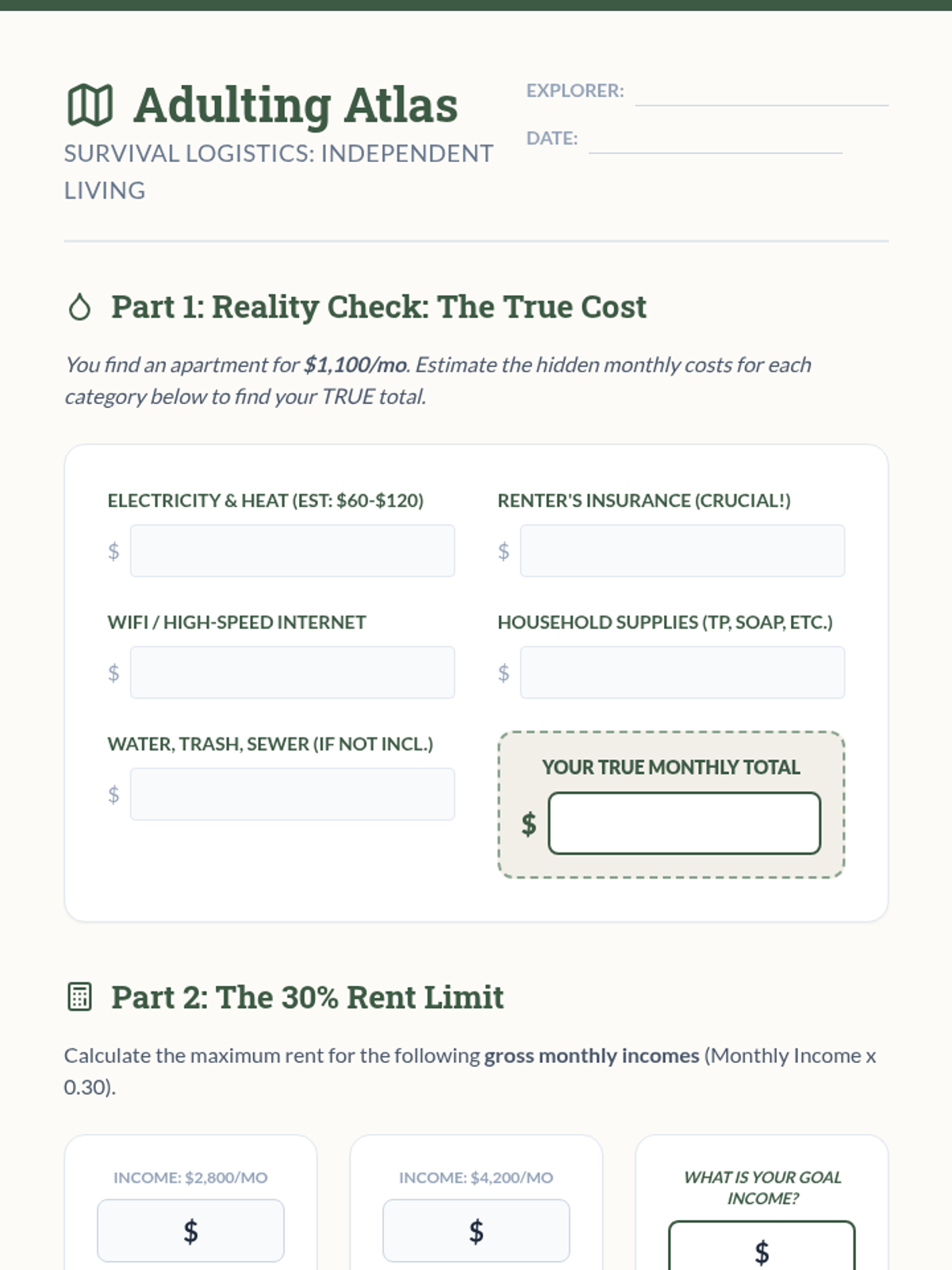
A practical guide to essential adulting skills, covering apartment hunting, basic meal planning on a budget, and navigating the 'real world' responsibilities of independent life.
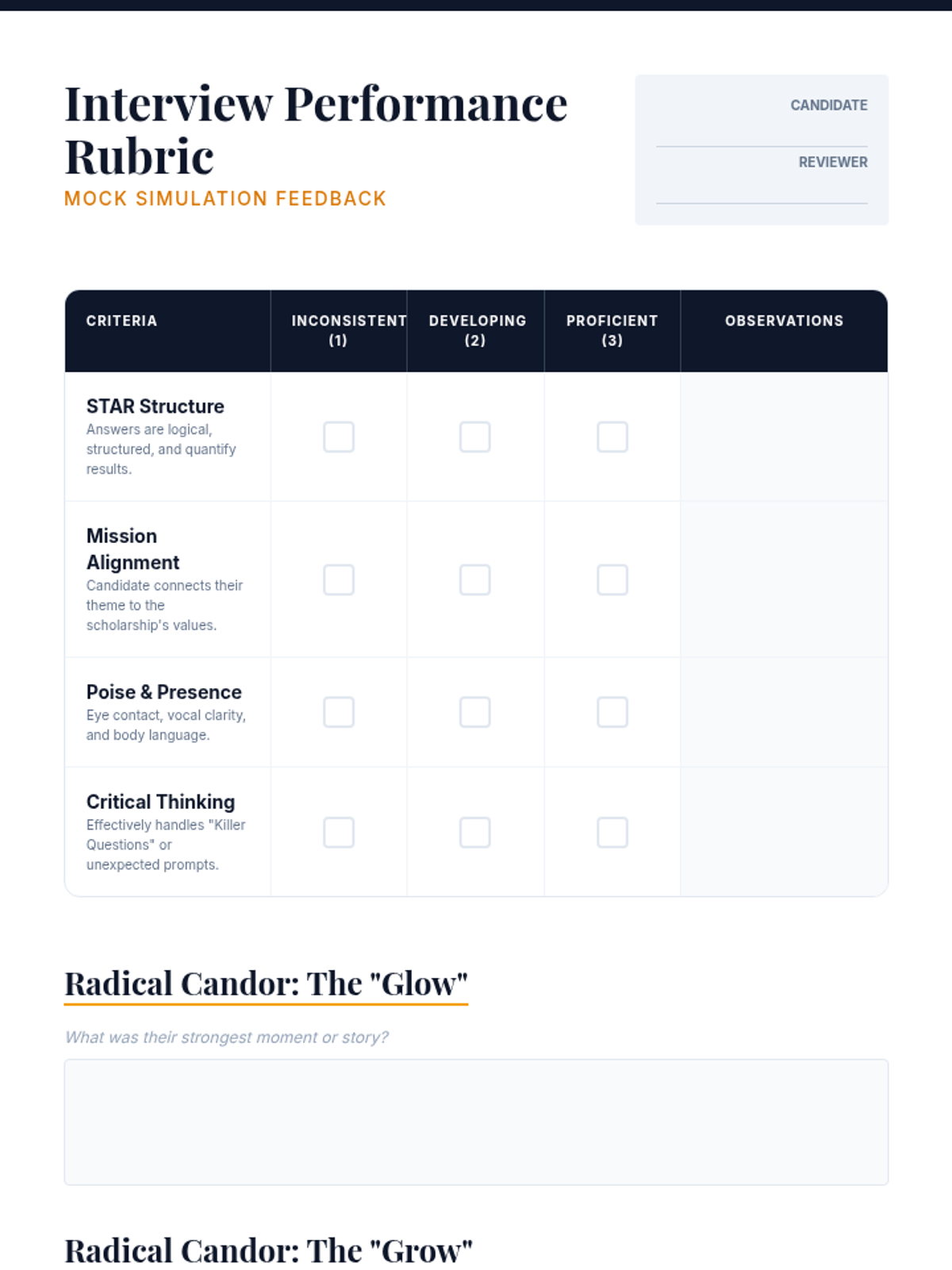
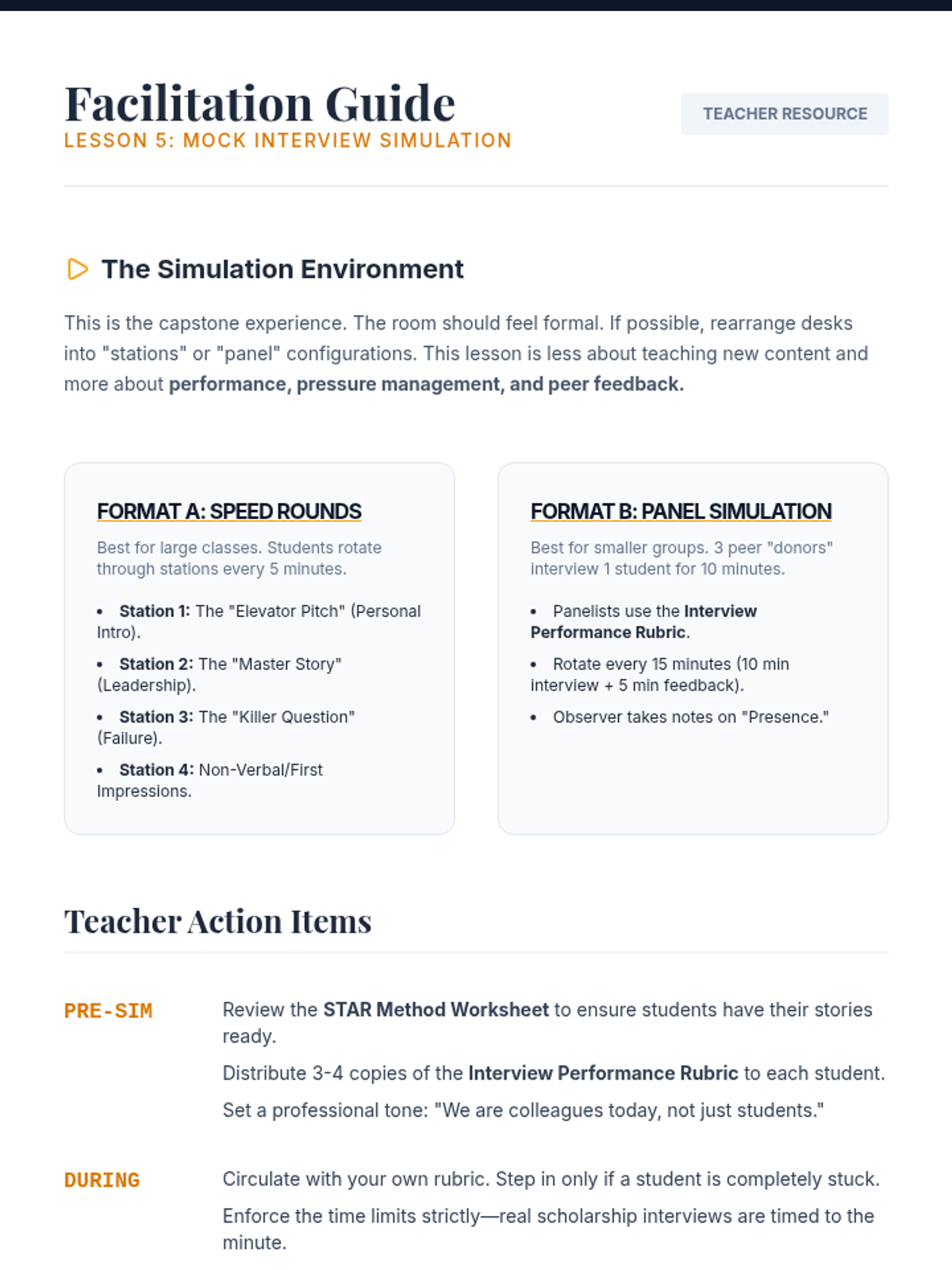
Students engage in mock interview simulations and learn post-interview etiquette and scholarship management.
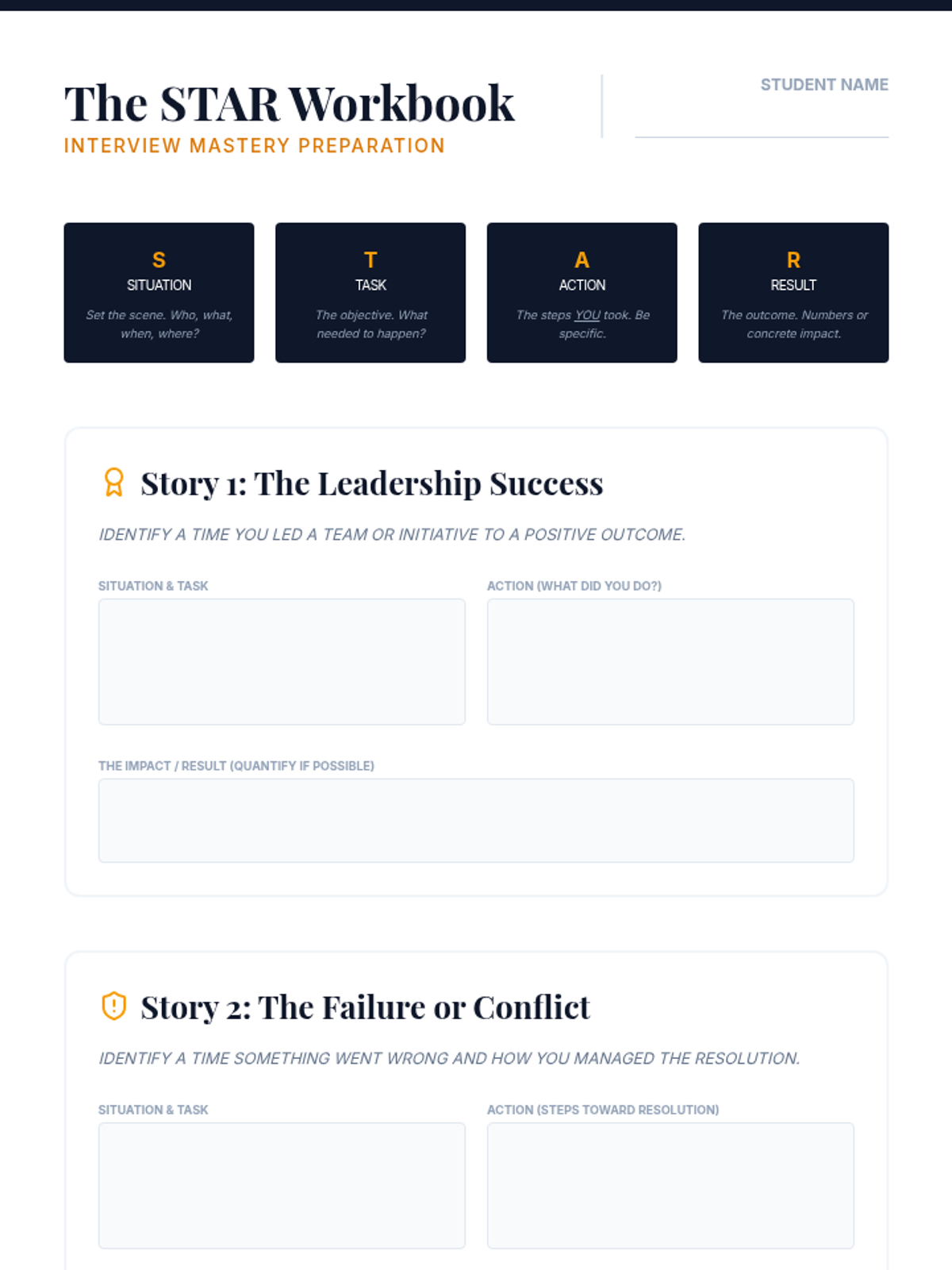
Students prepare for scholarship interviews using the STAR method to answer behavioral questions effectively.
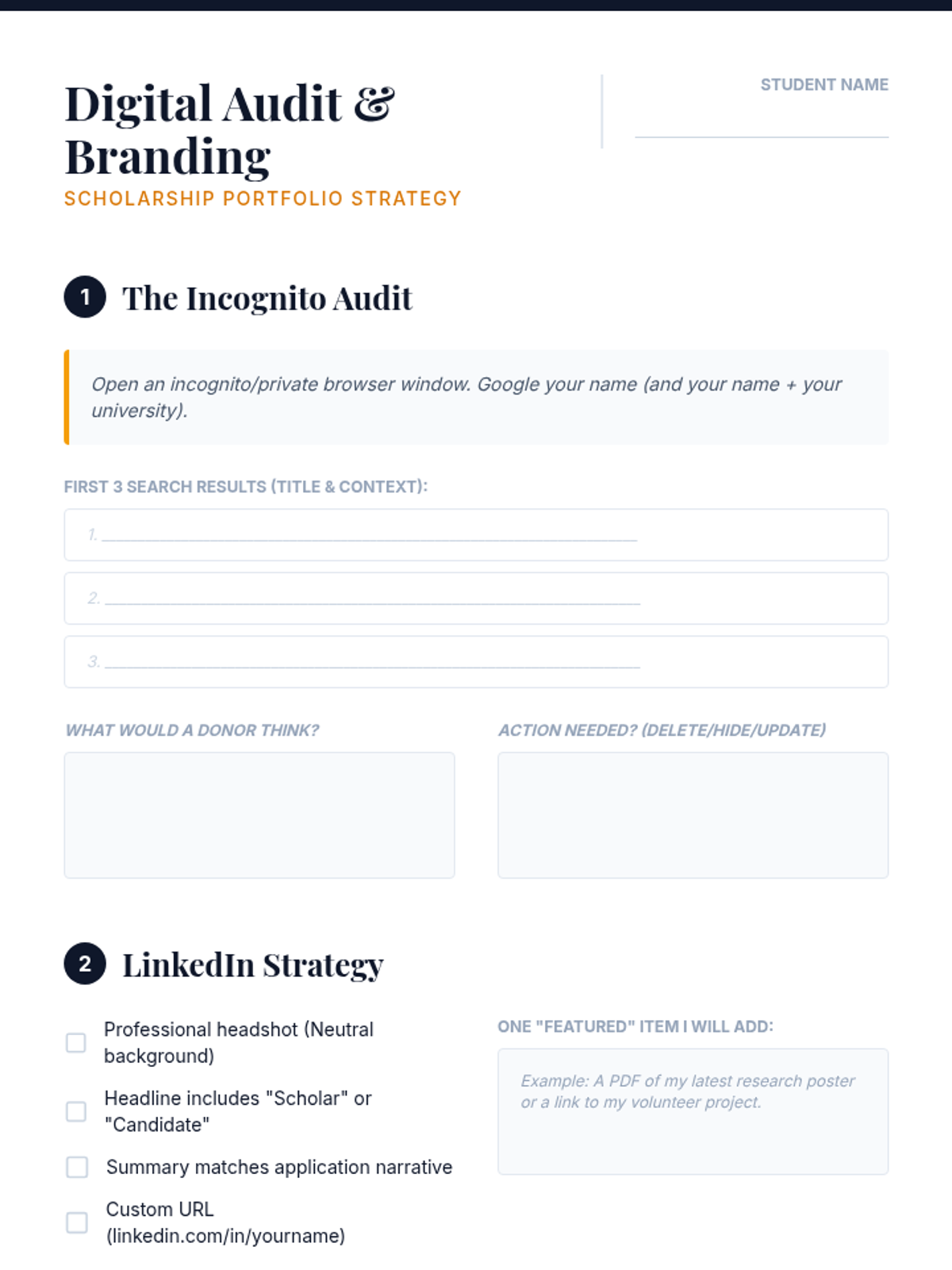
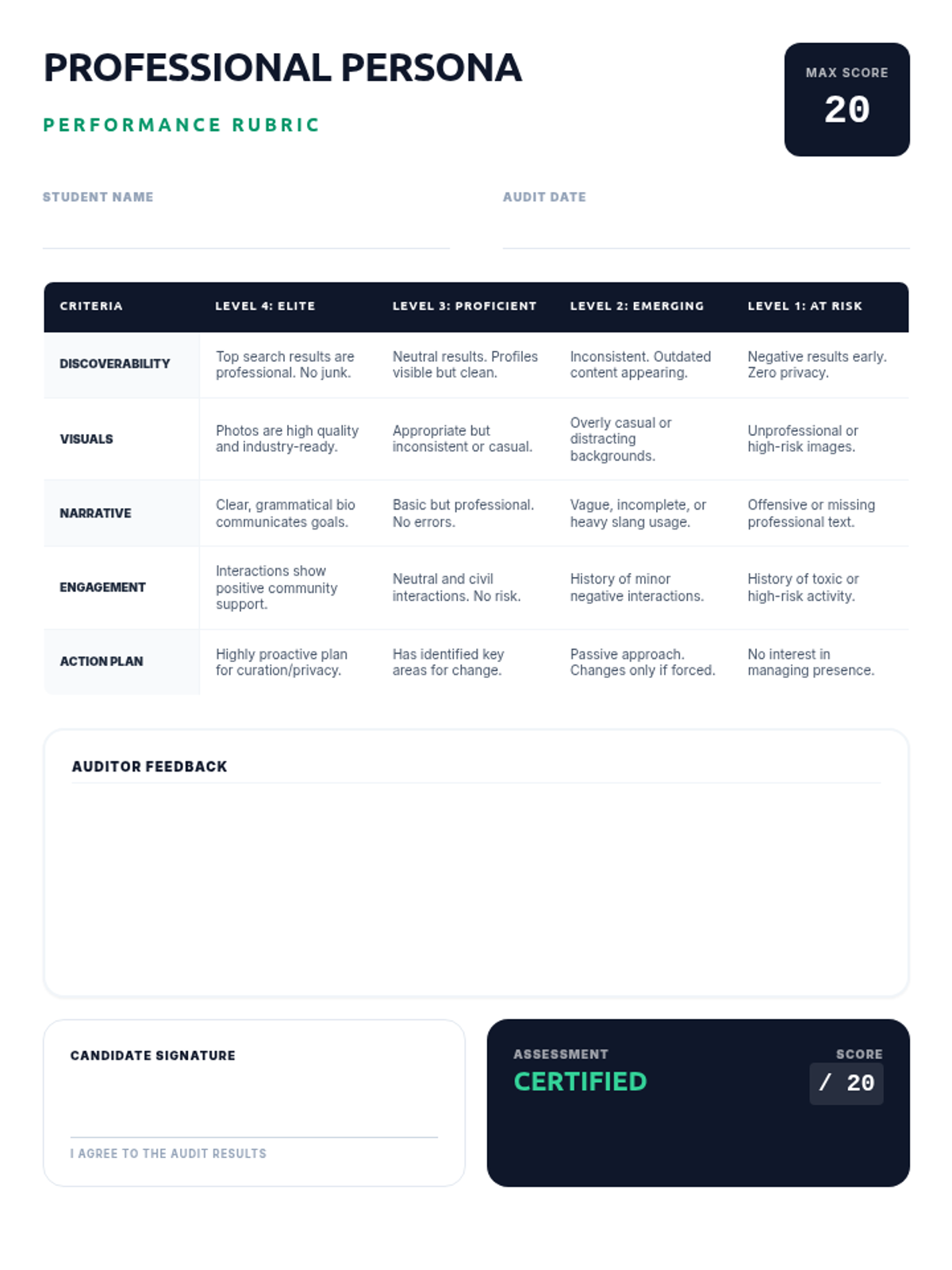
Students audit their digital footprint and curate supplemental materials to reinforce their application's narrative.
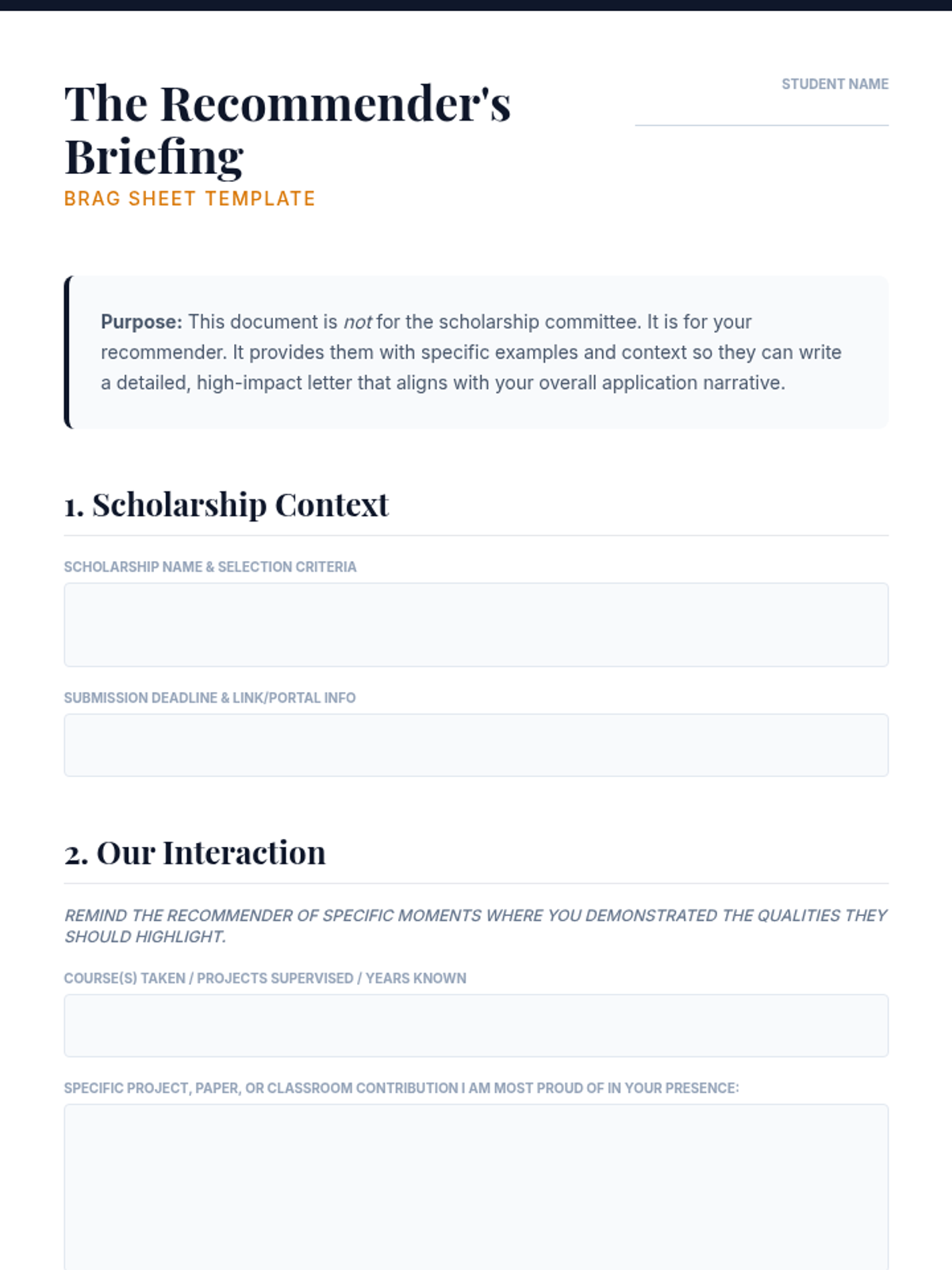
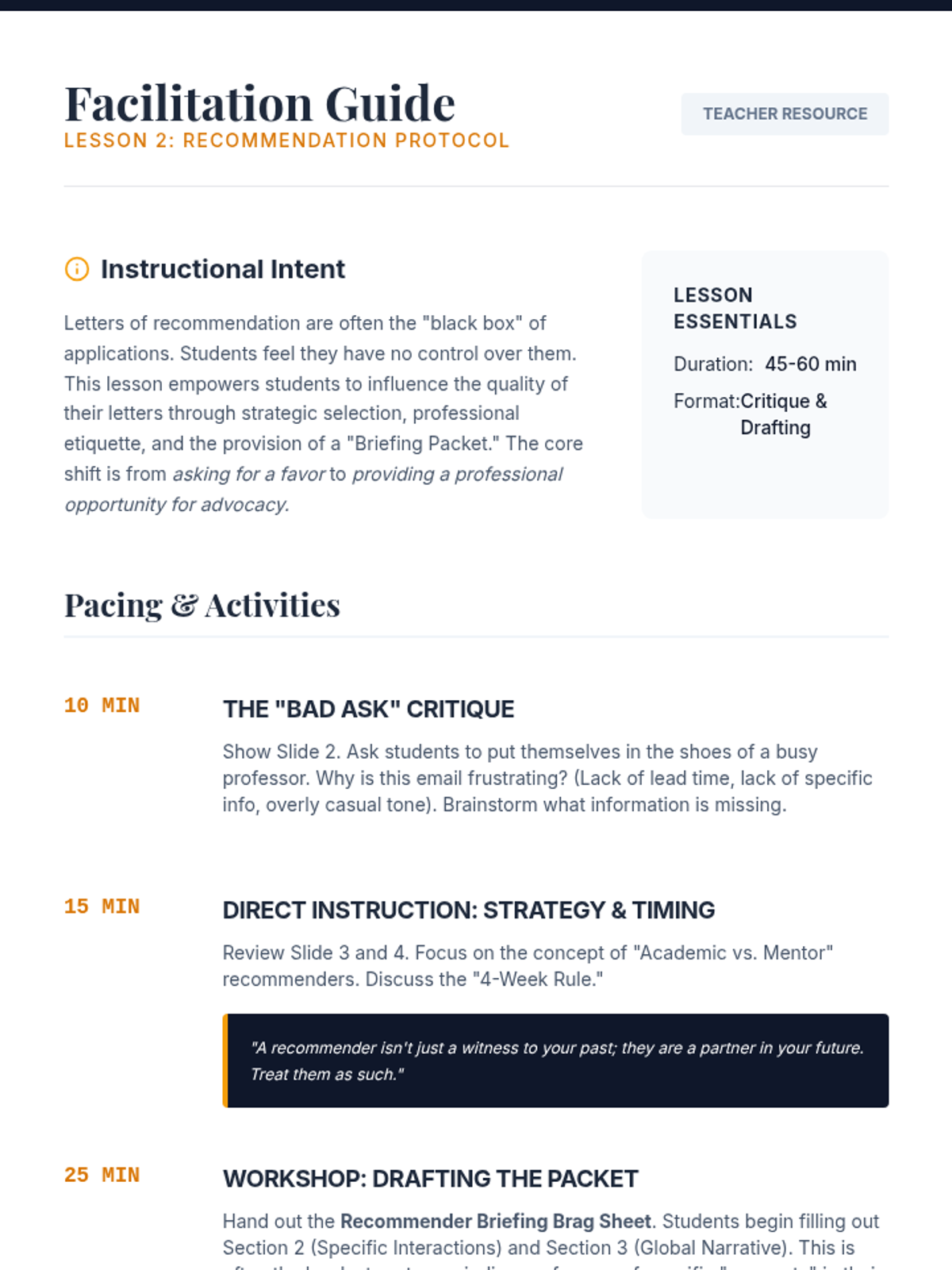
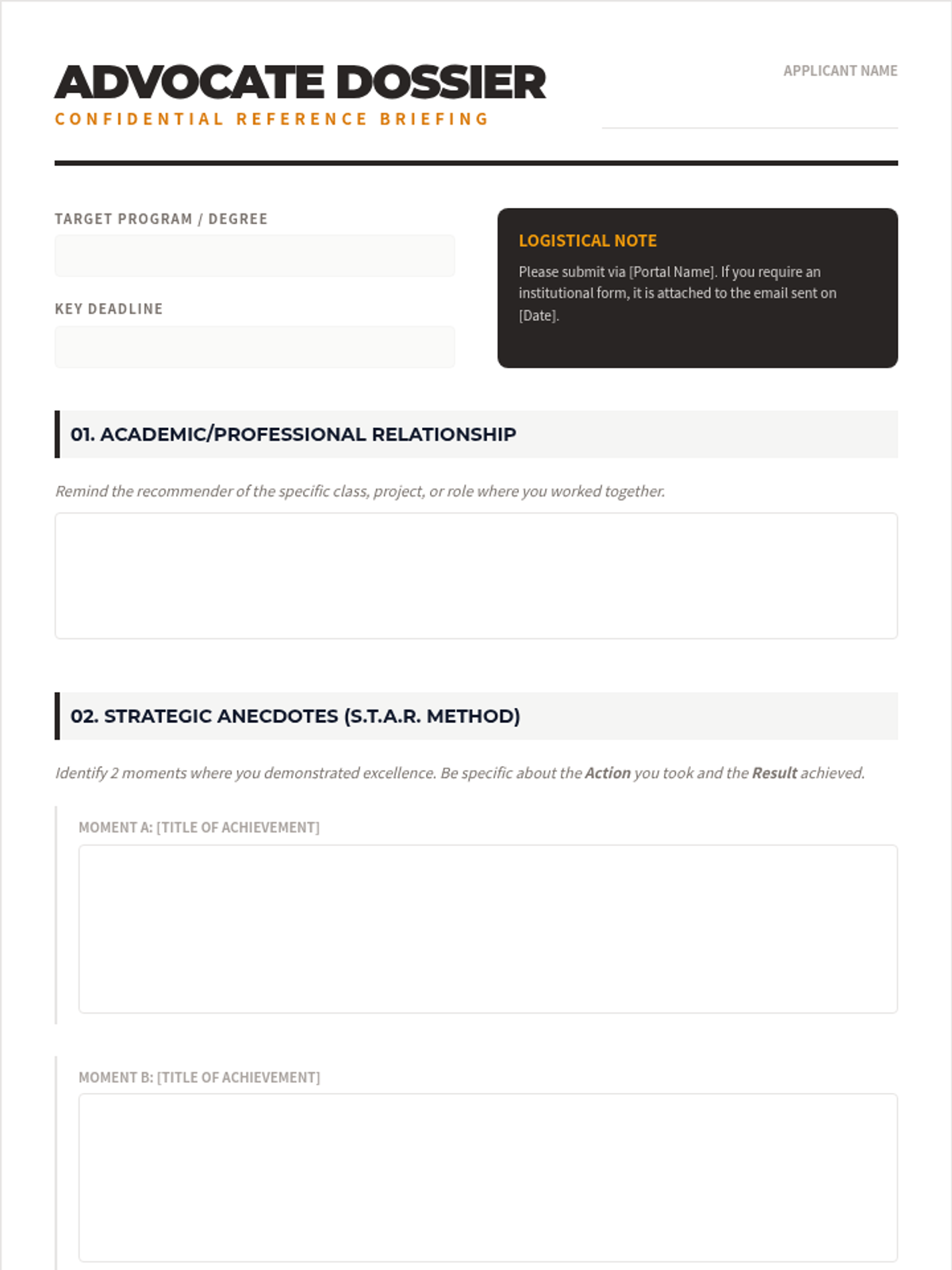
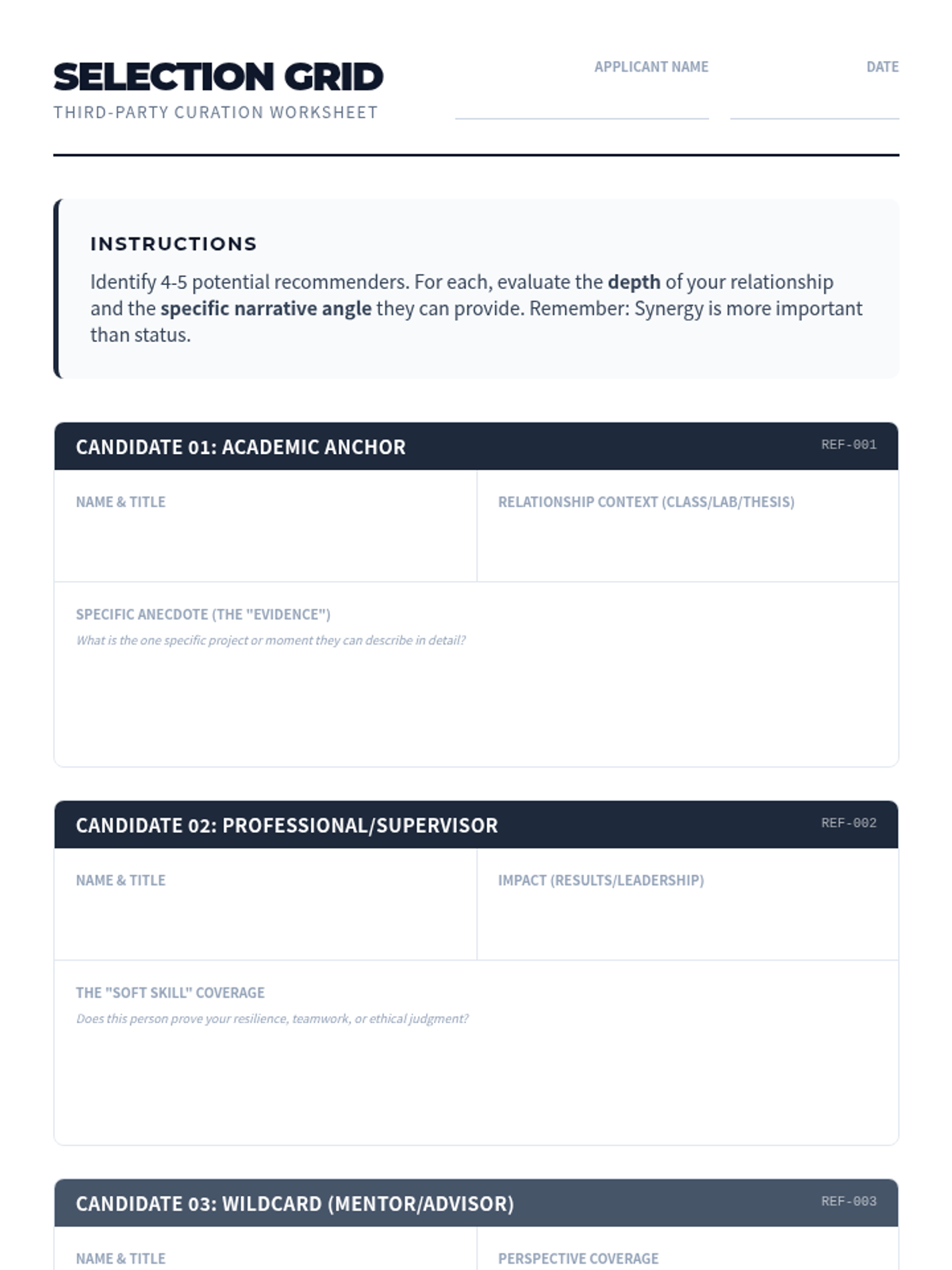
Students learn the etiquette and strategy for requesting letters of recommendation, creating 'brag sheets' to guide their recommenders.
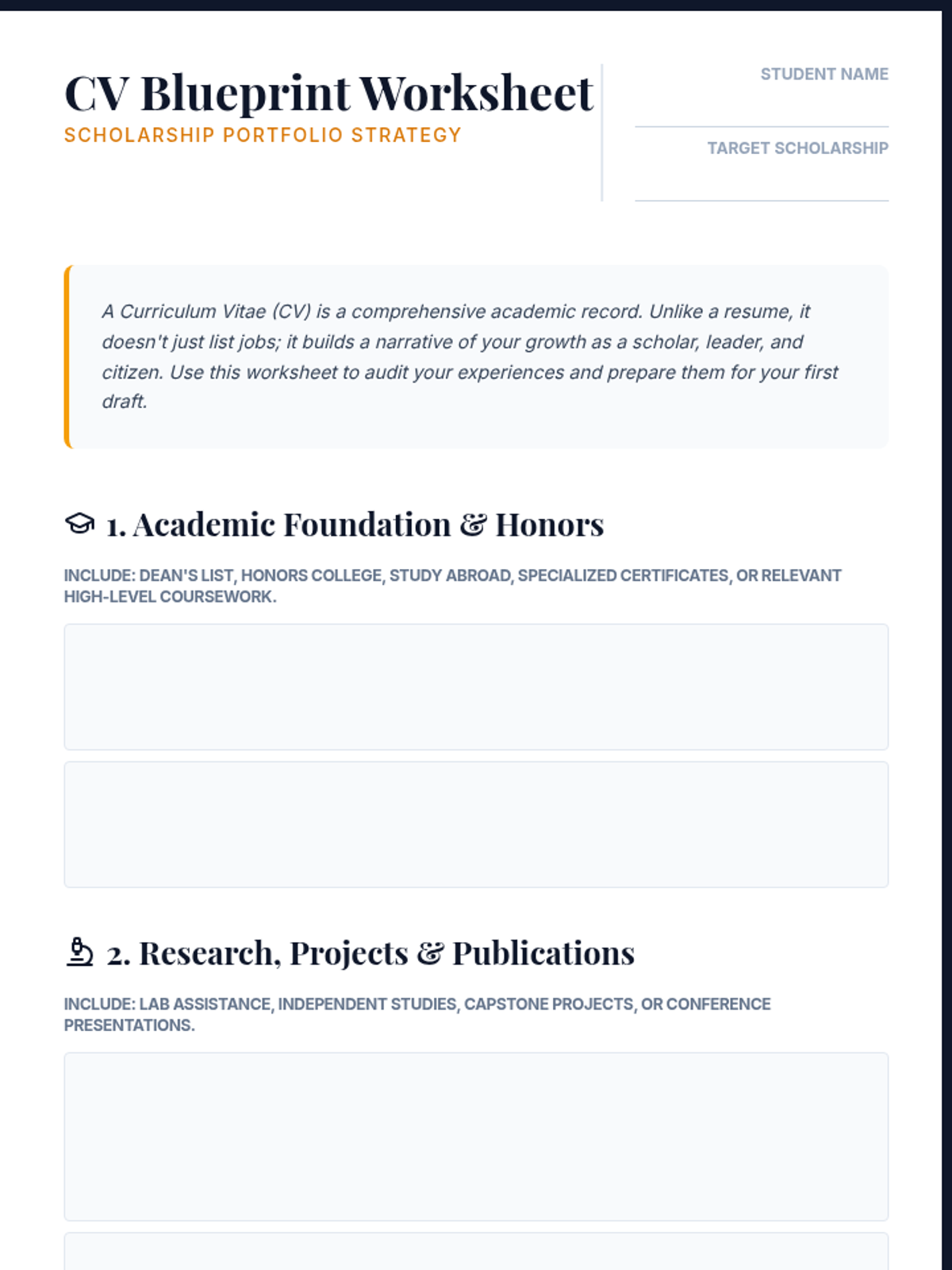
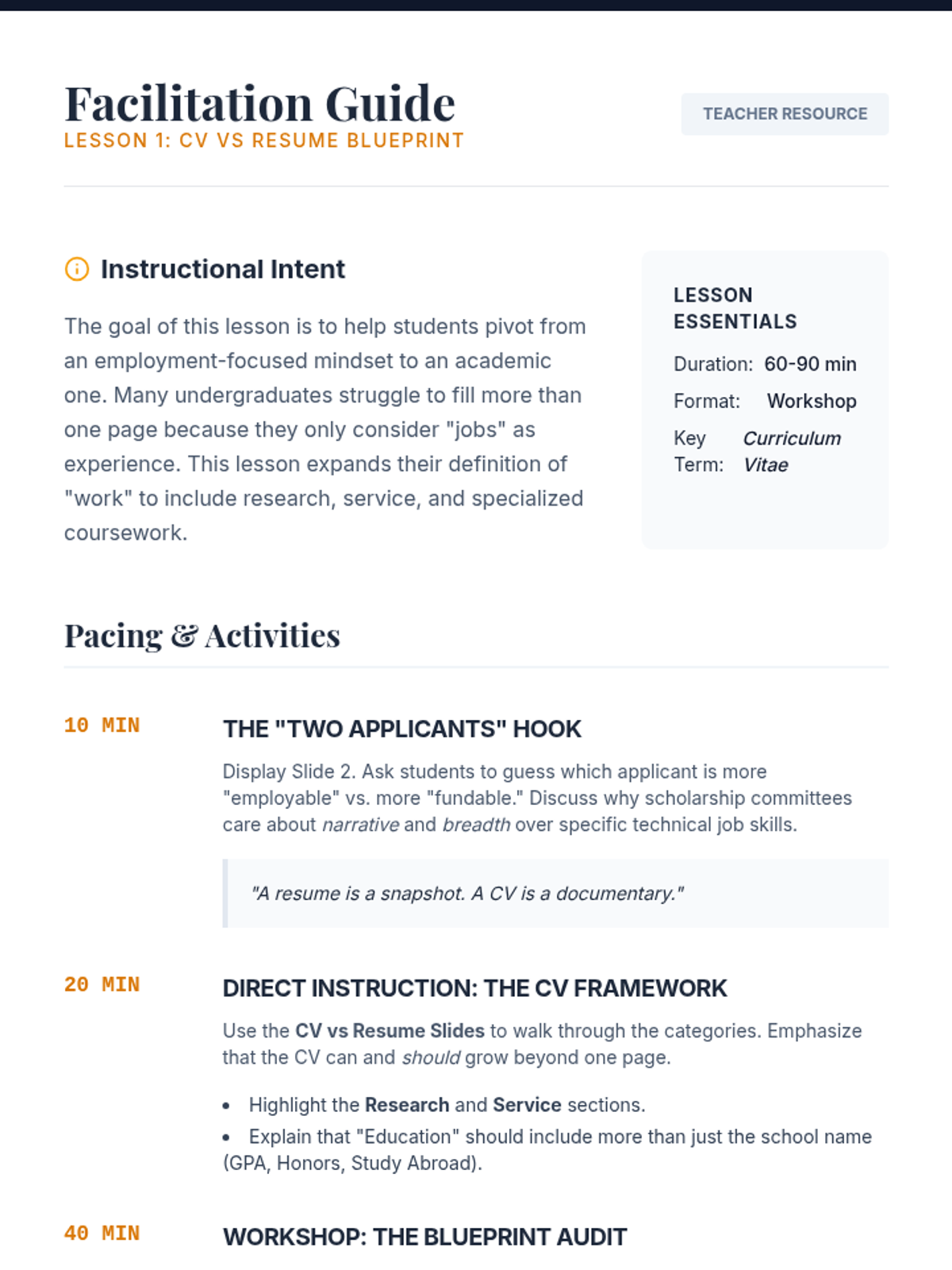
Students differentiate between a standard employment resume and an academic CV, building a document that highlights academic achievements, research, and leadership.
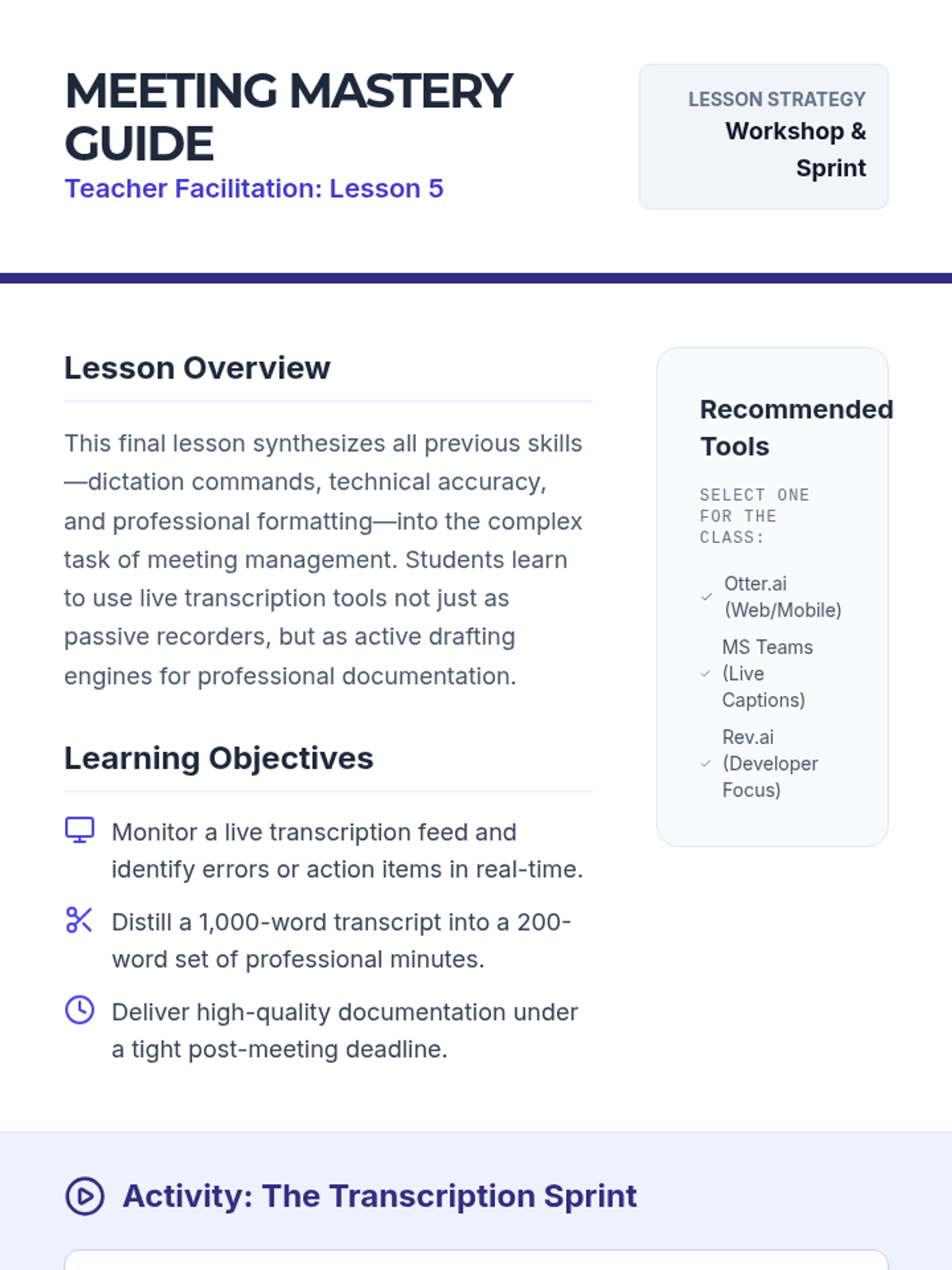
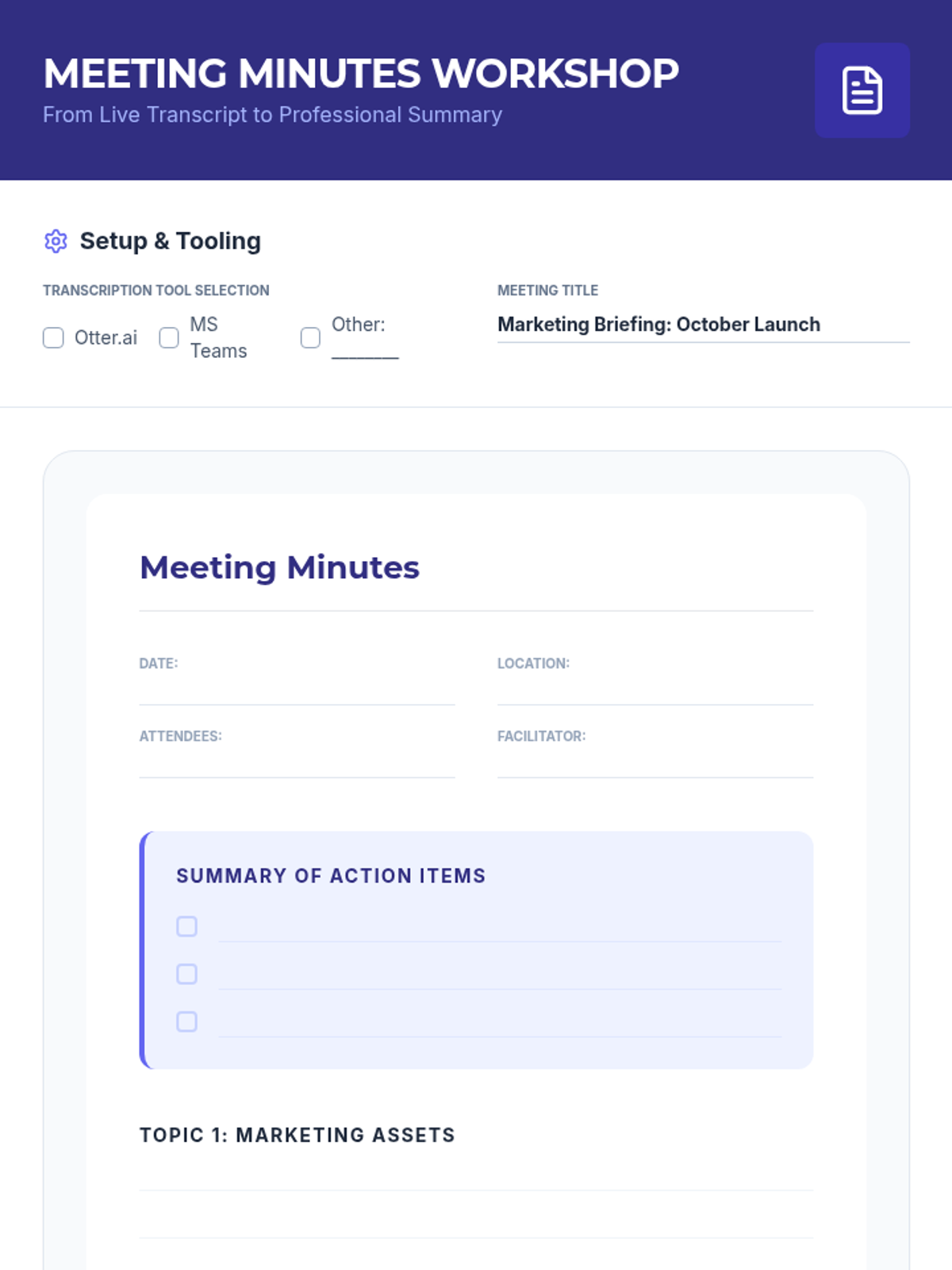
Students explore tools that offer live transcription of meetings. They learn to monitor these live feeds for accuracy, highlight key action items, and edit the transcript into minutes immediately after the meeting.
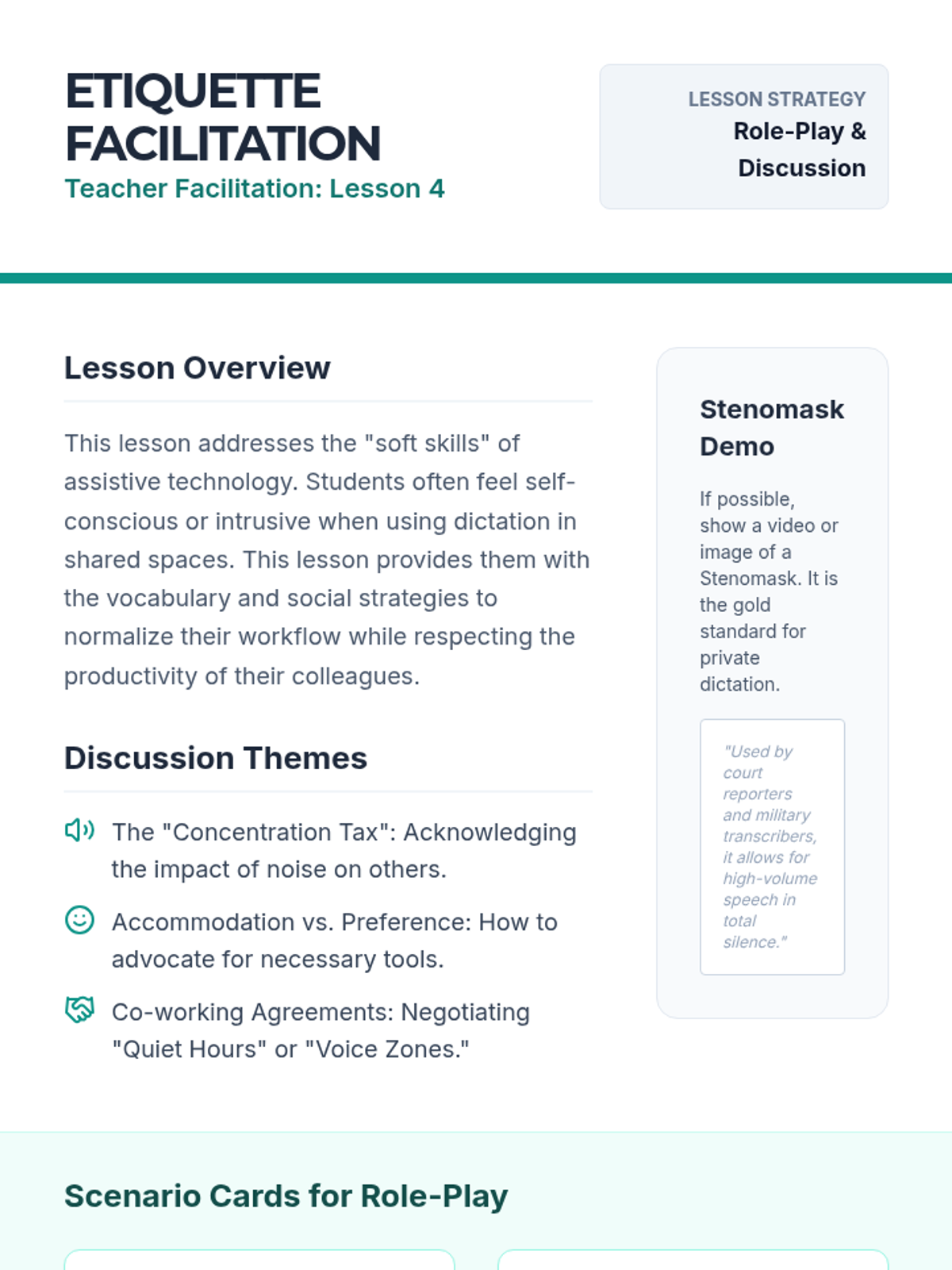
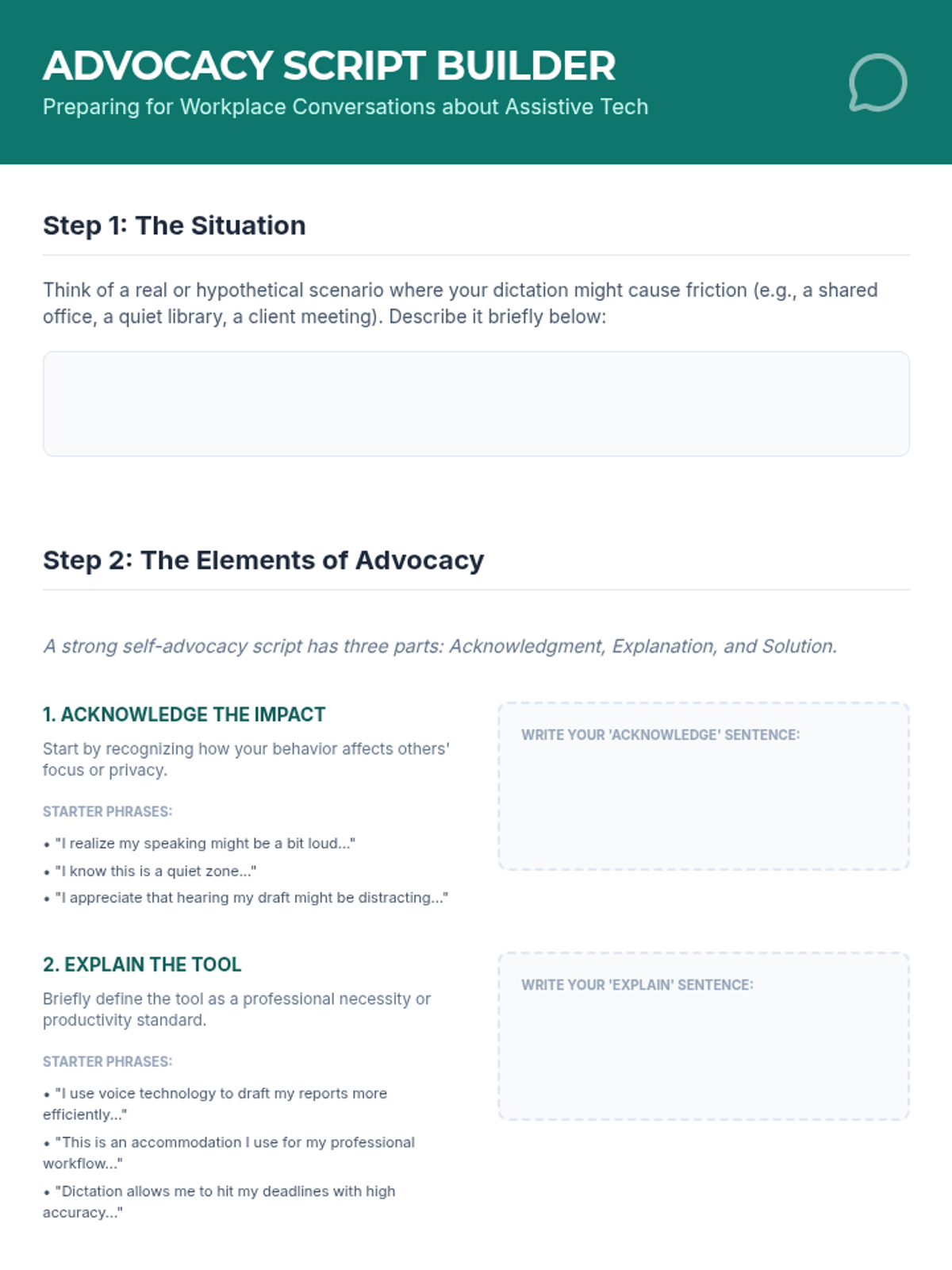
Students discuss and role-play the social aspects of using voice technology in open offices or libraries. They learn strategies for 'stenomask' usage, low-volume dictation, and explaining their accommodation to colleagues.
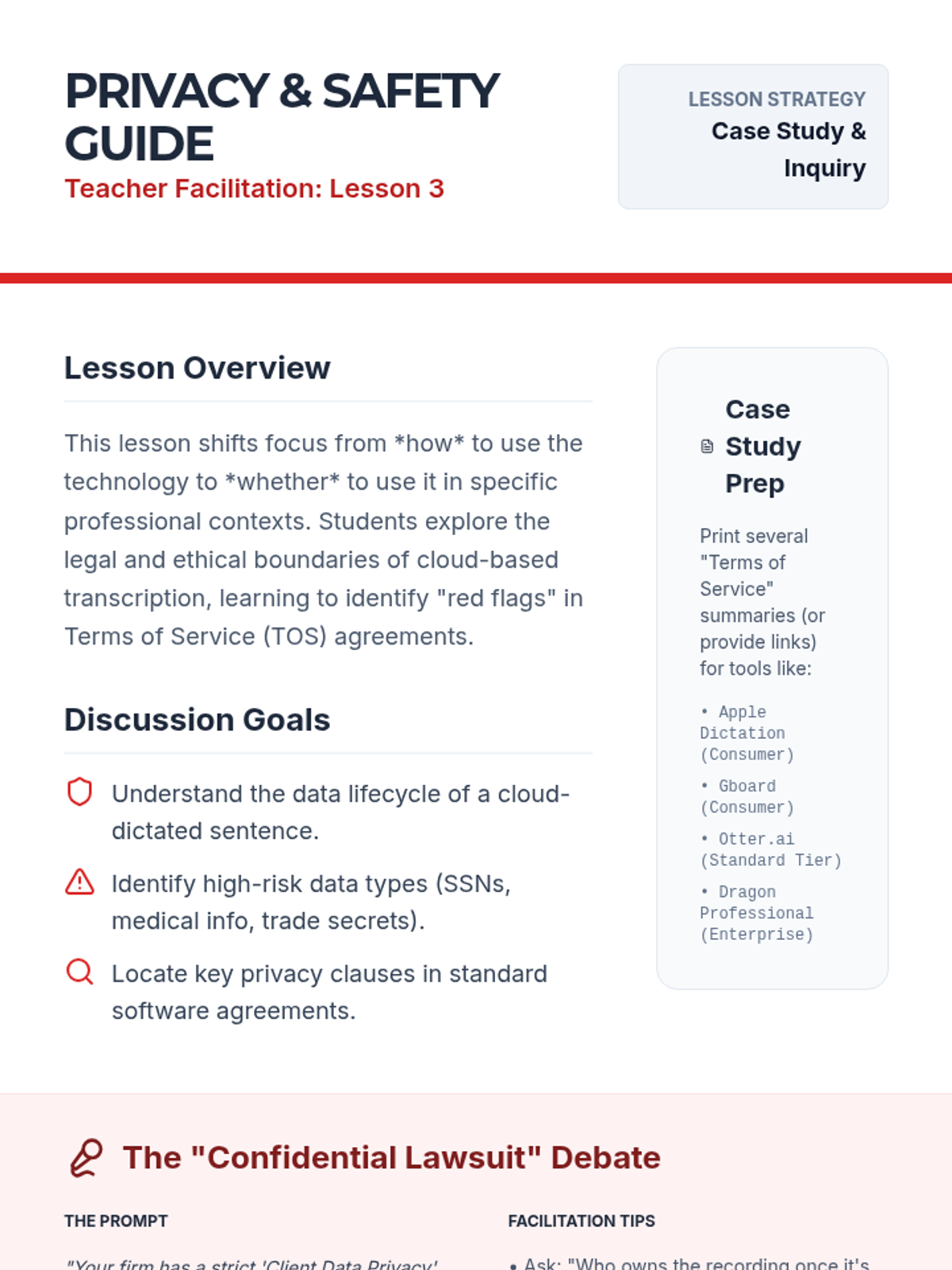
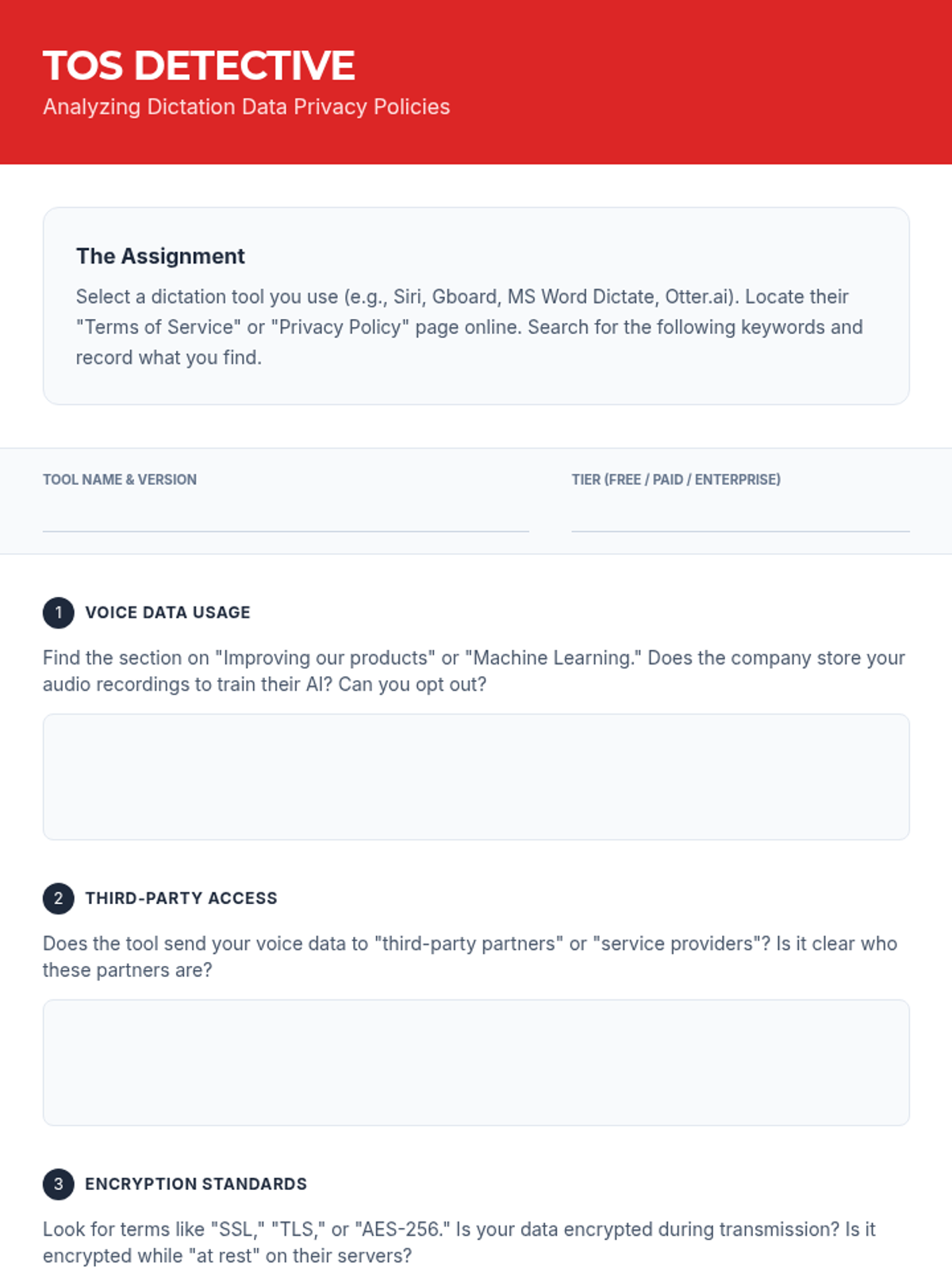
An inquiry-based lesson on where voice data goes. Students review terms of service for common dictation tools to understand data privacy, HIPAA compliance implications, and when *not* to use dictation.
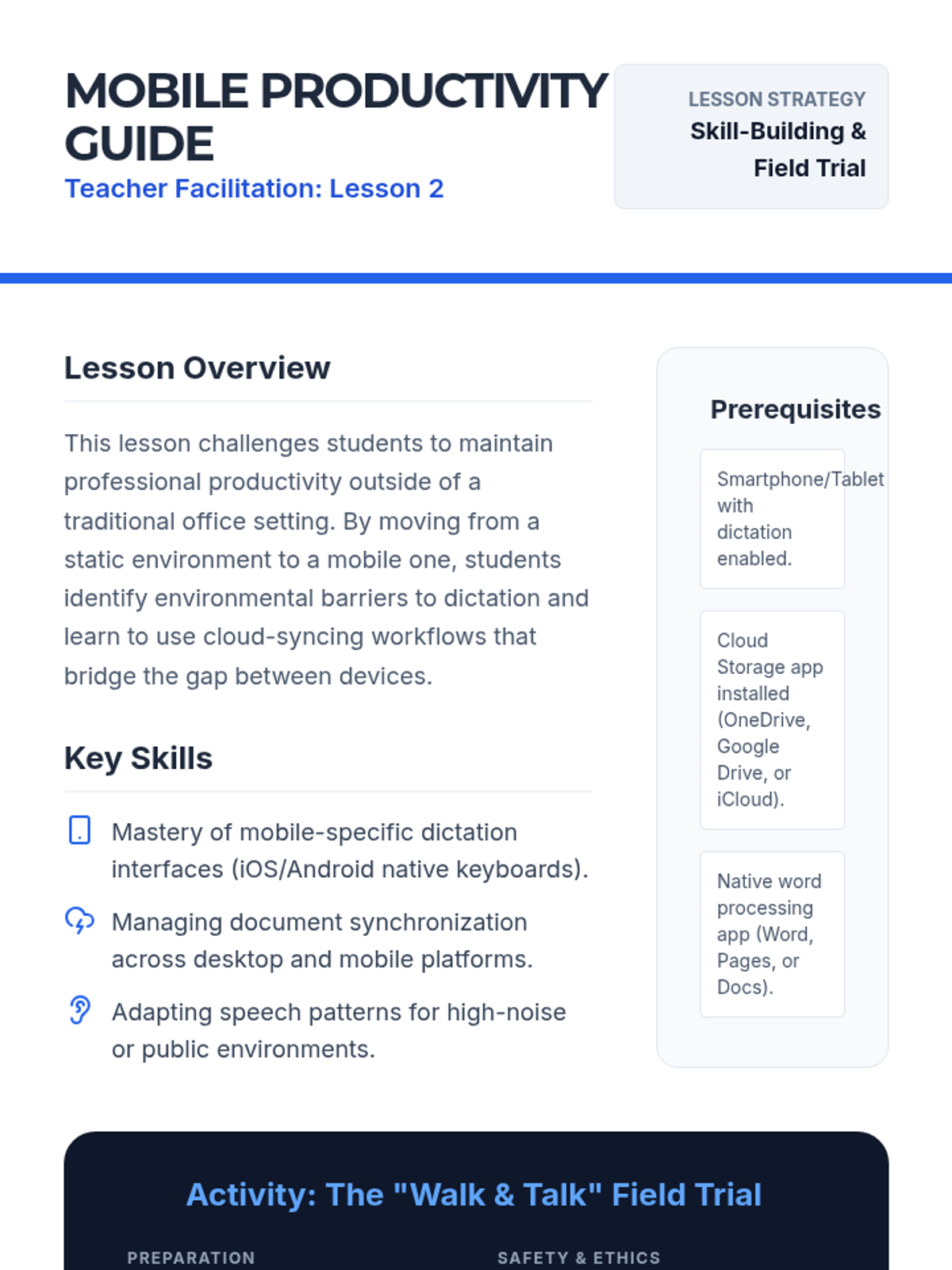
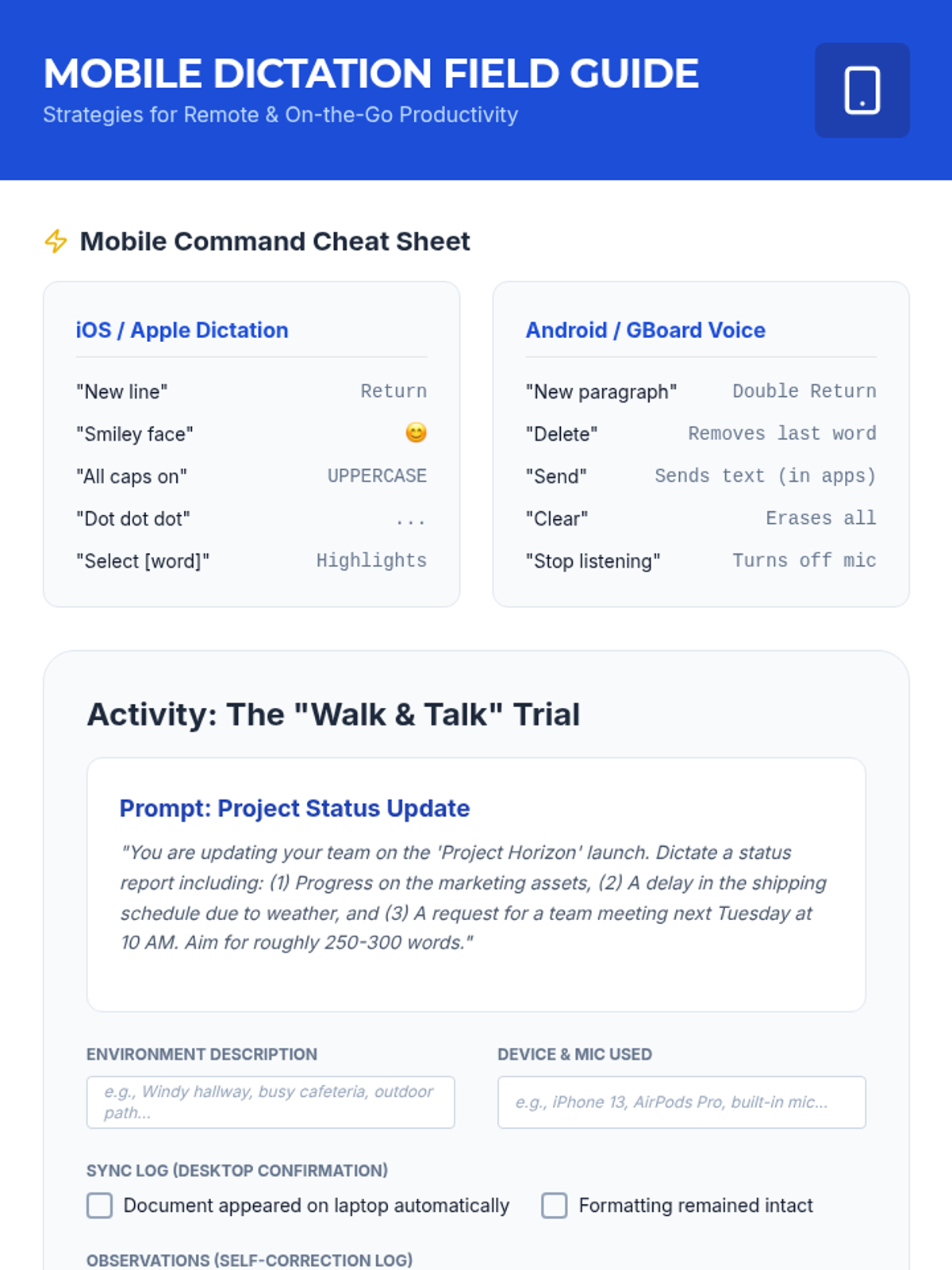
Focusing on mobile devices and tablets, students learn to use dictation for productivity while away from a desk. They explore the limitations of mobile interfaces and strategies for syncing work back to desktop platforms.
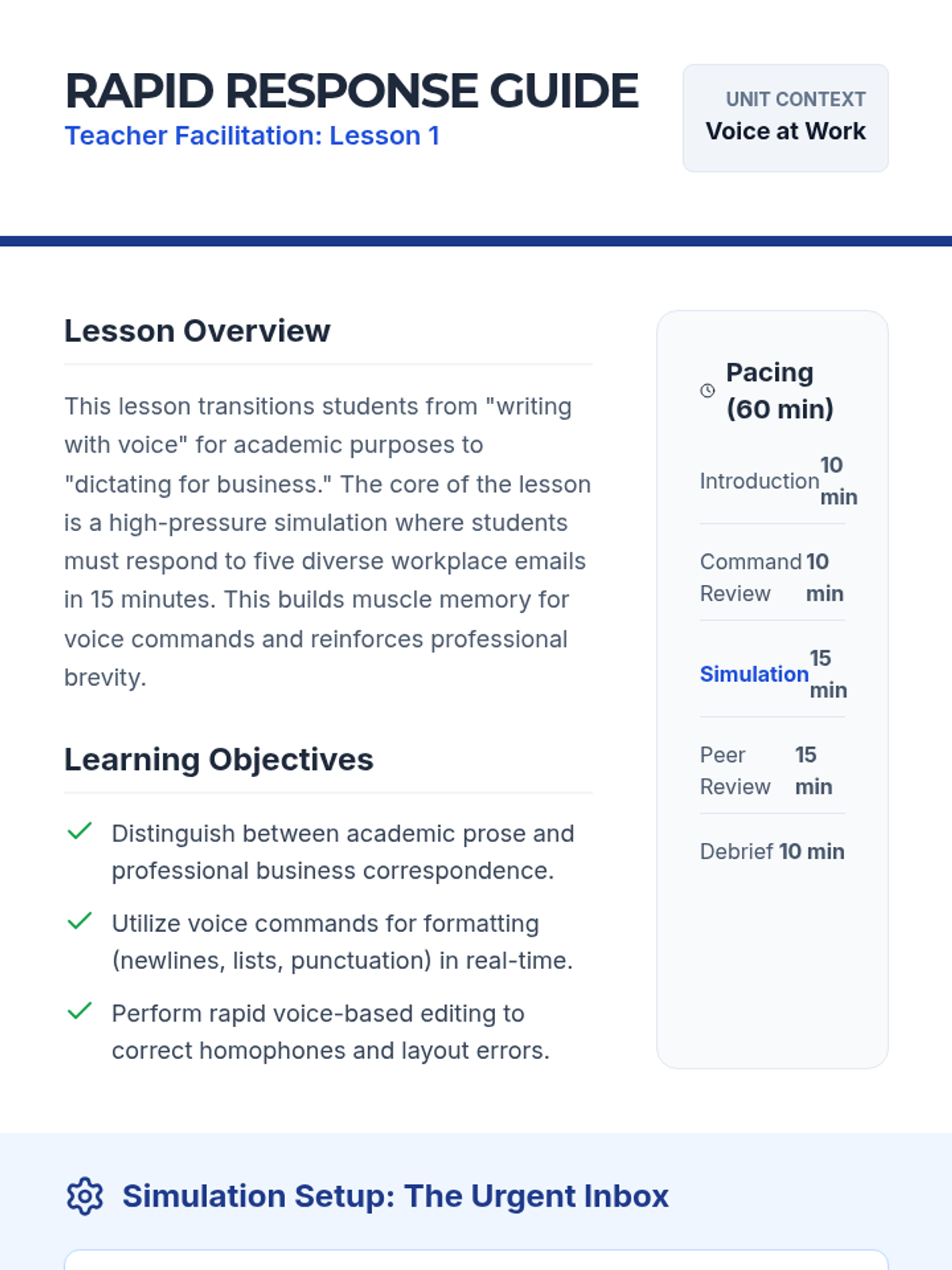
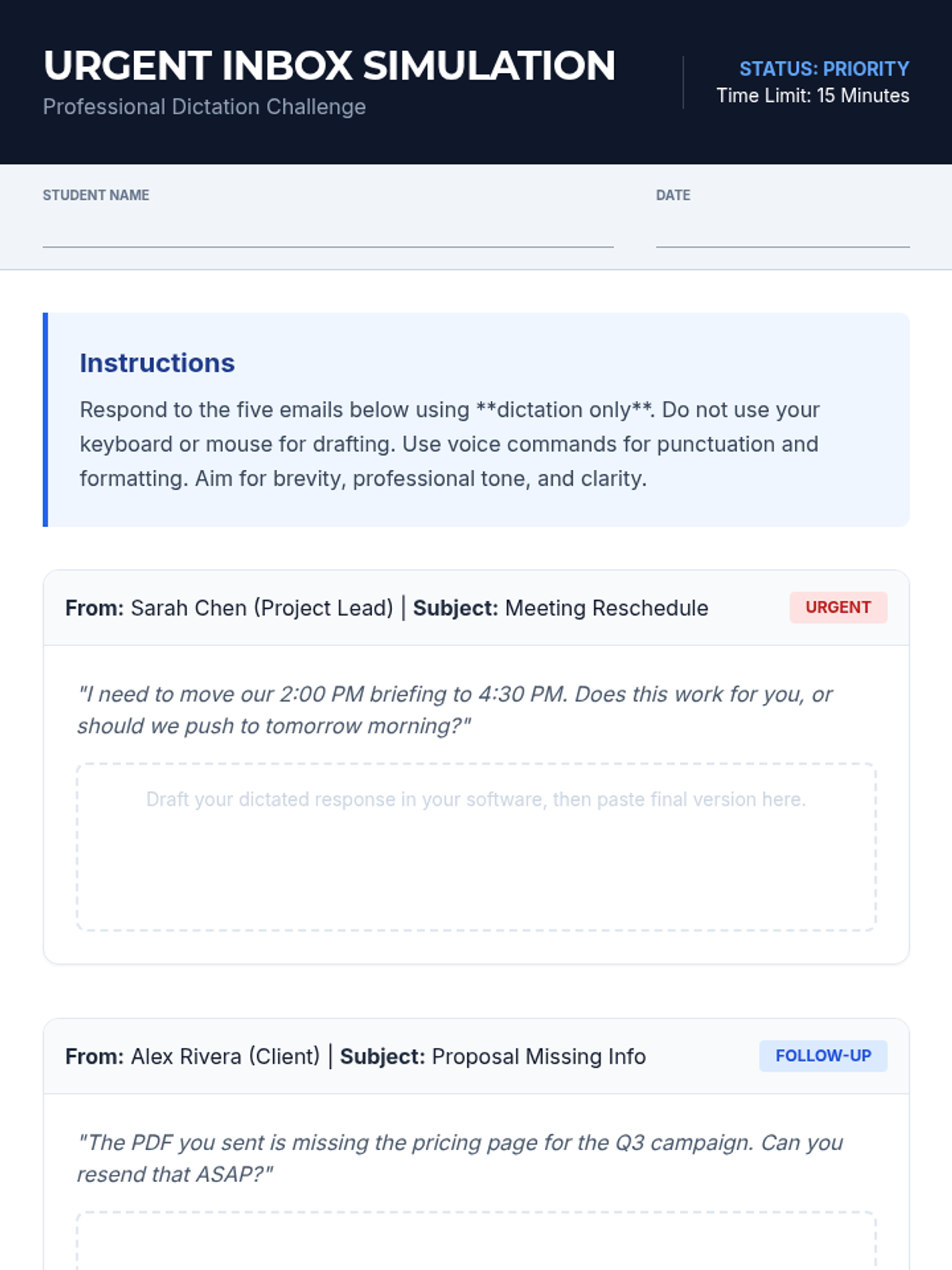
Students practice dictating emails and memos, focusing on brevity, clarity, and standard business formatting in a rapid-response simulation.
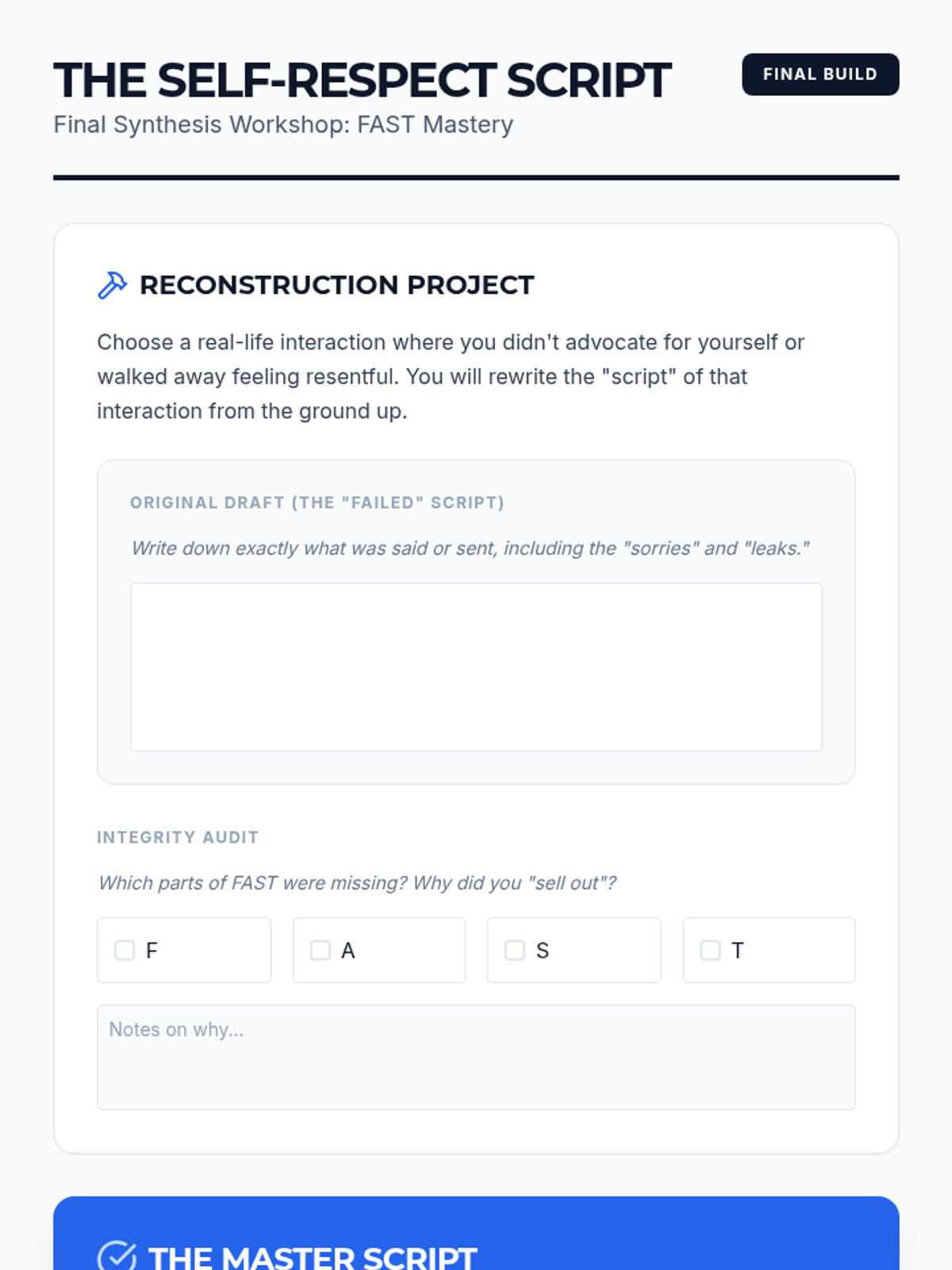
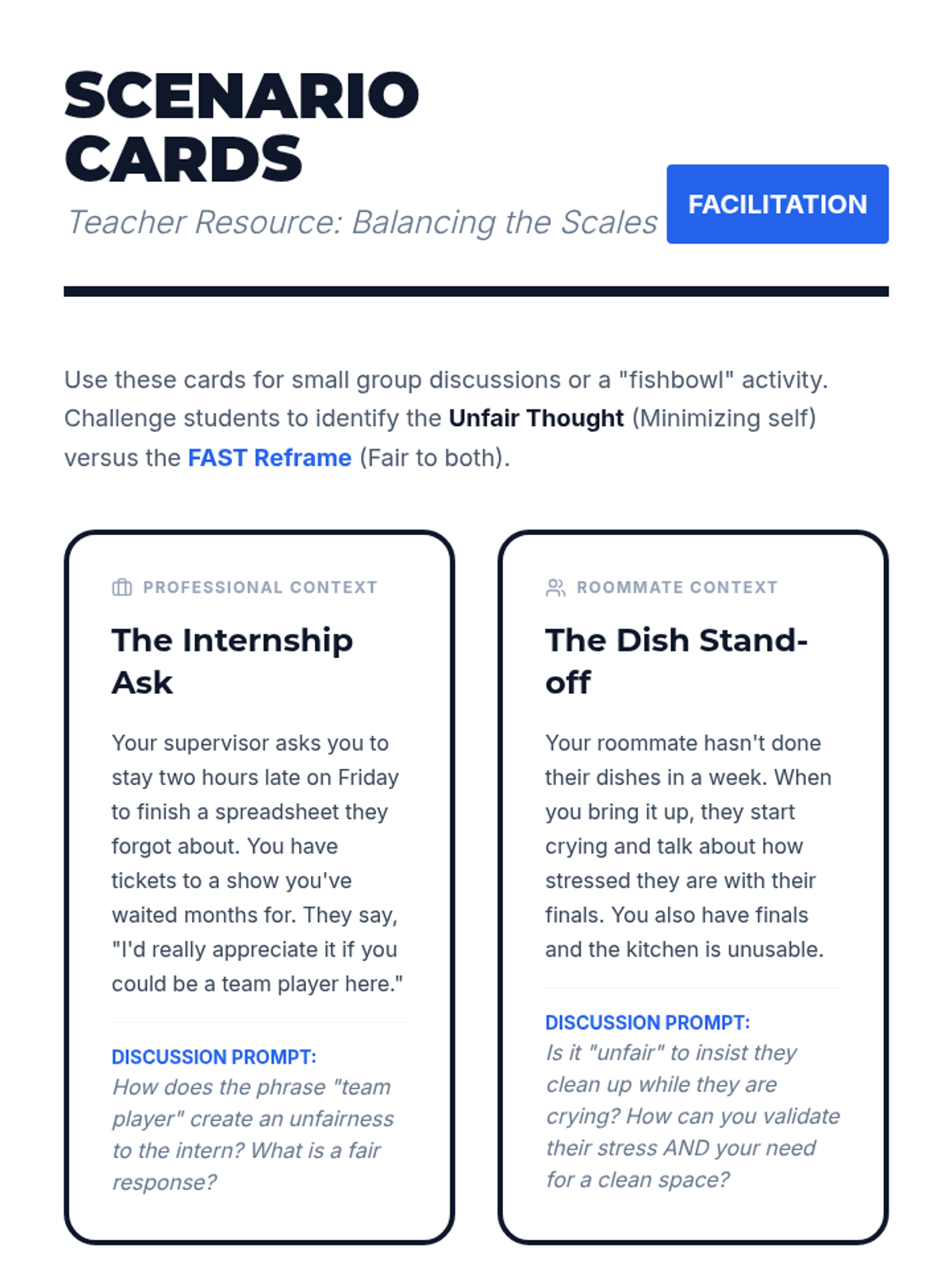
A culminating workshop where students apply the full FAST skill set to rewrite past scripts and resolve real-world interpersonal conflicts.
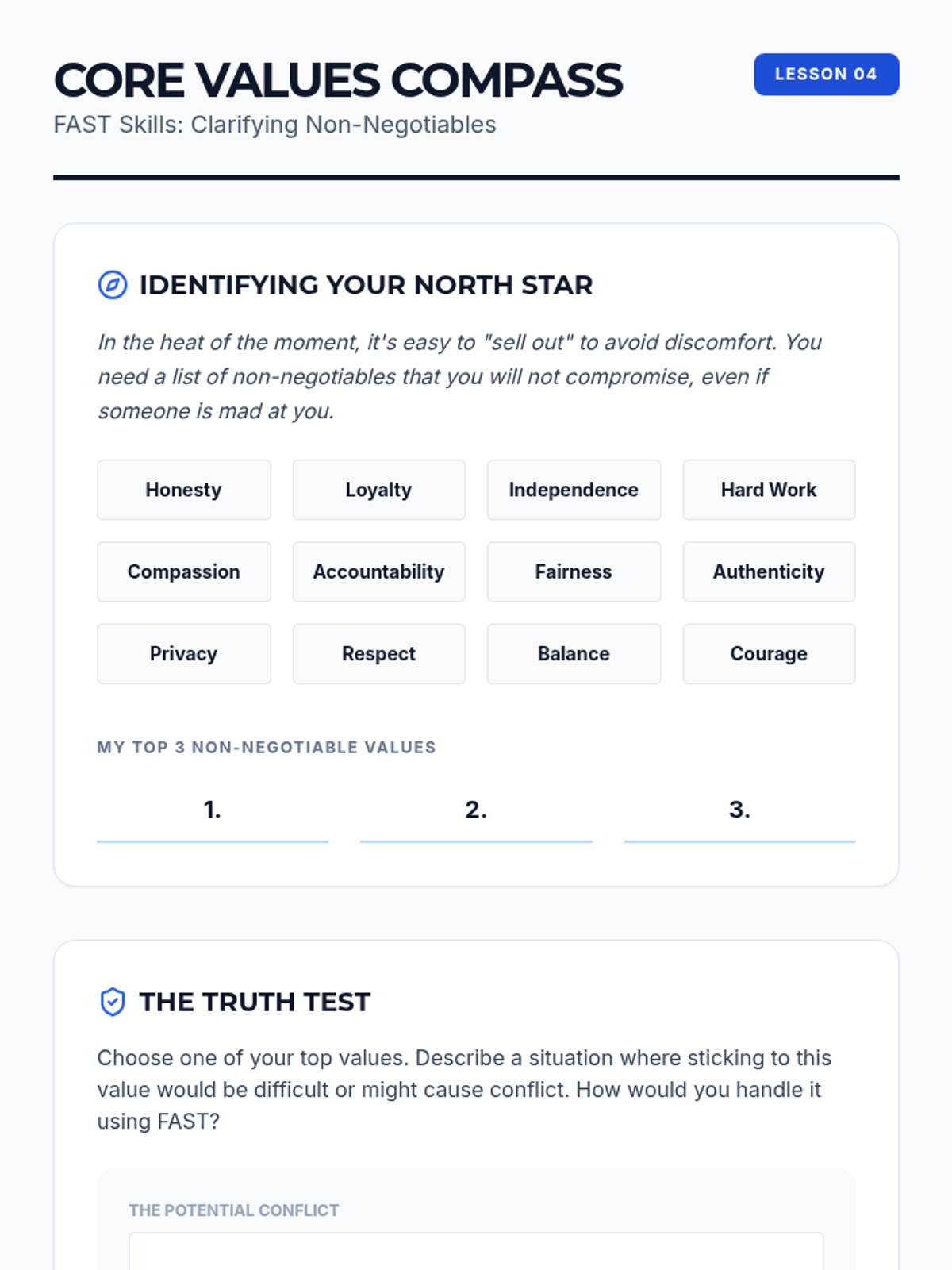
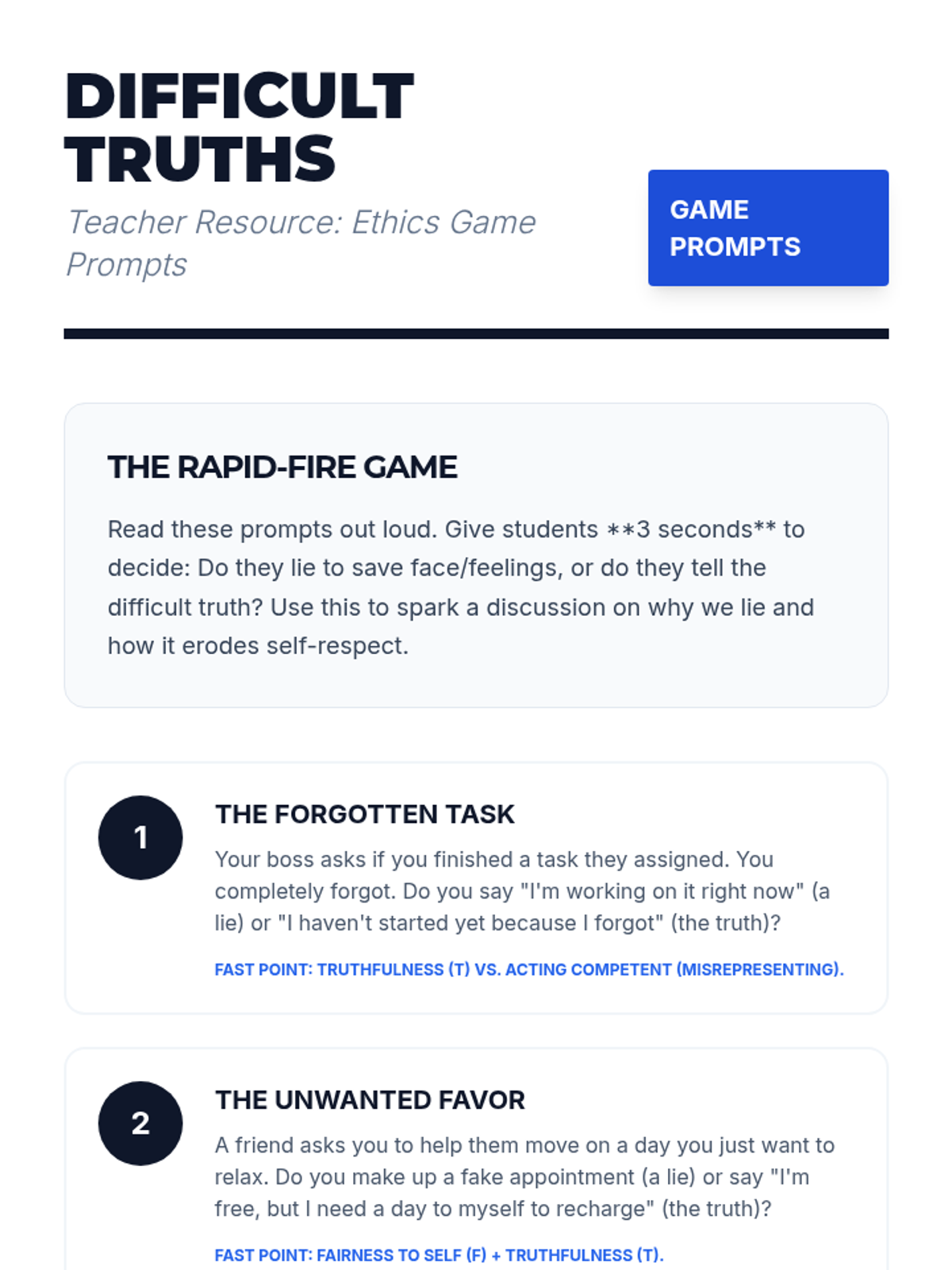
Combines the 'S' and 'T' components of FAST to help students clarify their core values and practice assertive truthfulness.
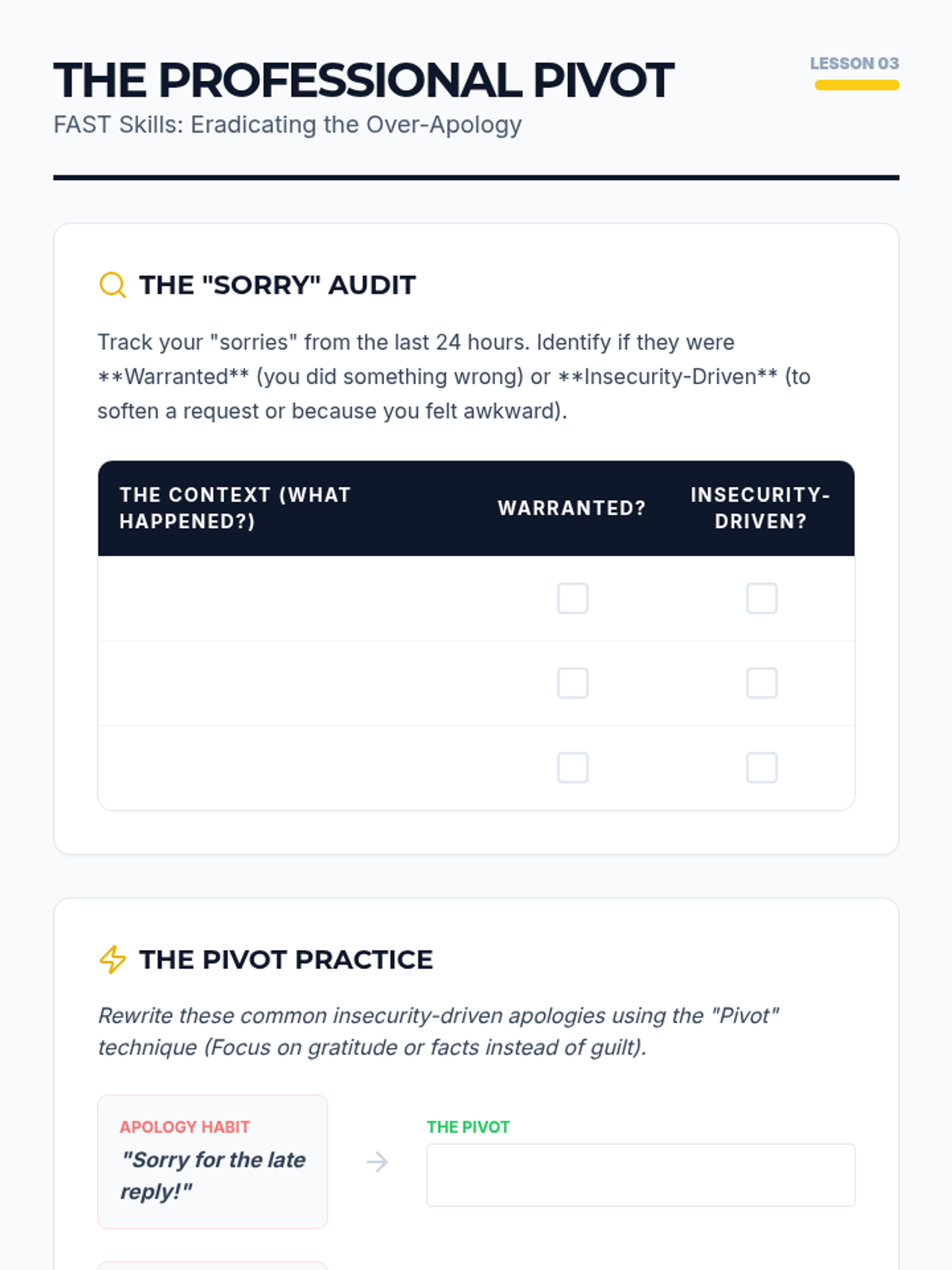
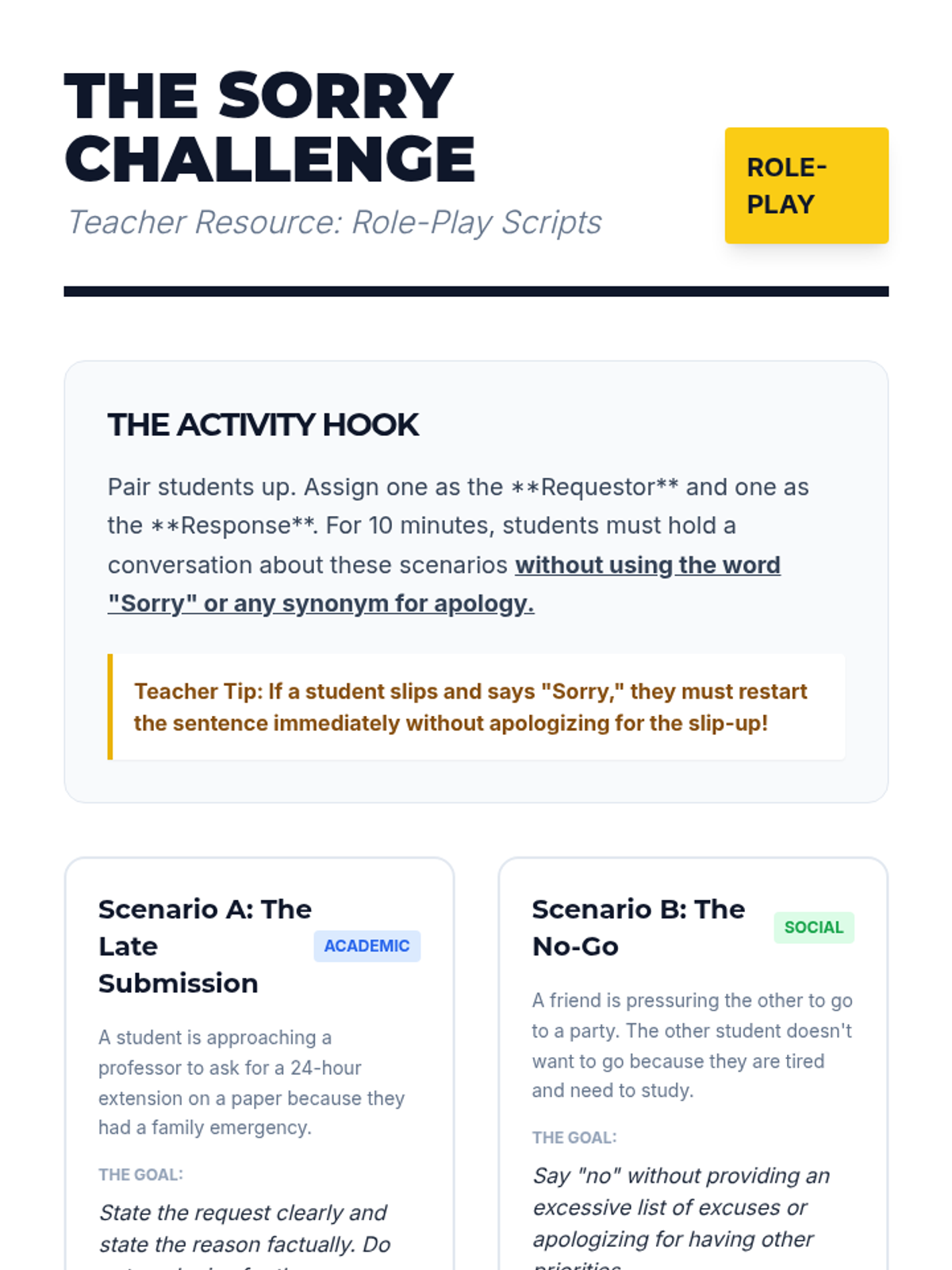
Investigates the psychological roots of over-apologizing and provides practical strategies for reducing unnecessary apologies to preserve authority and integrity.
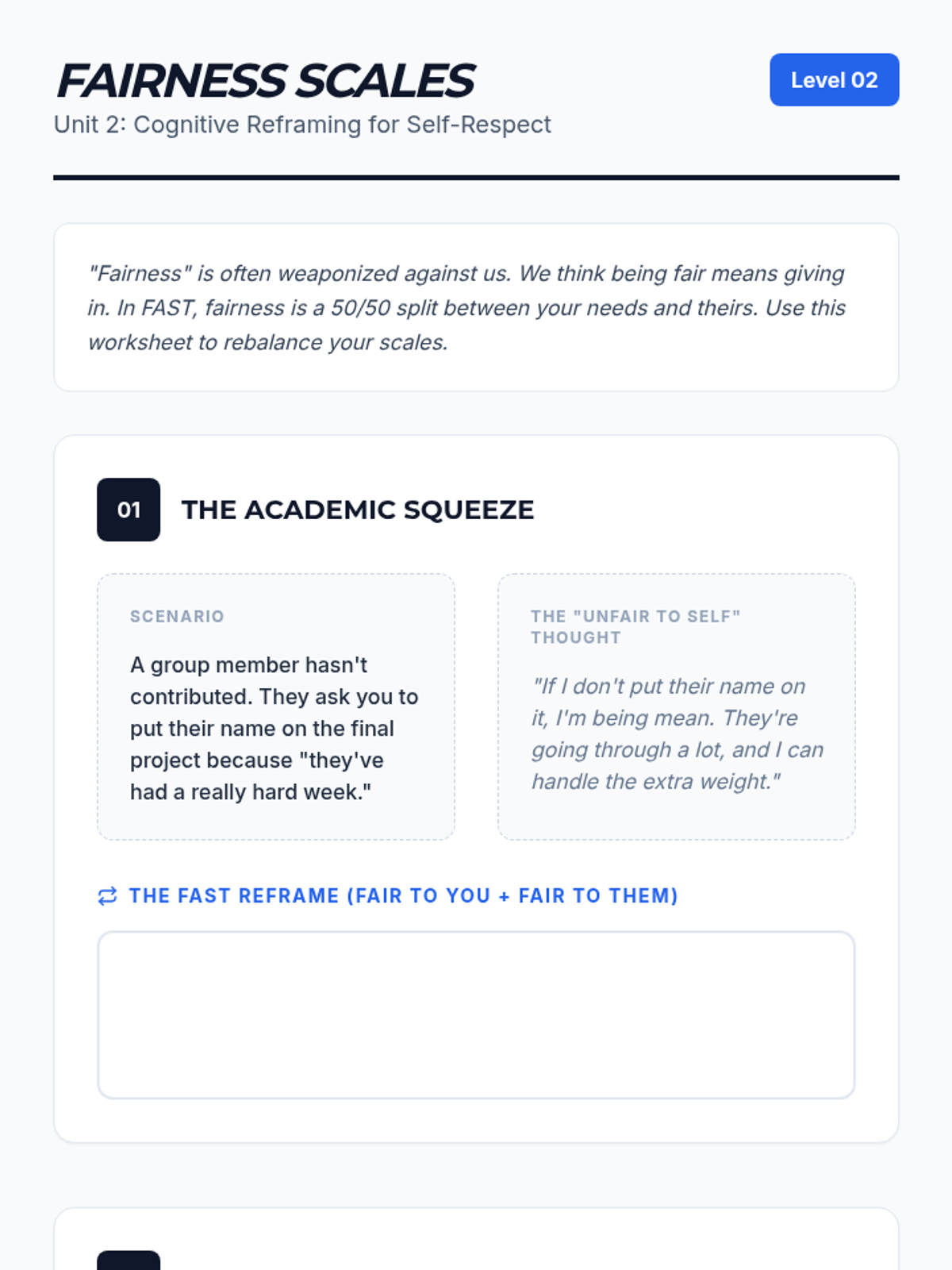
Focuses on the 'F' in FAST, teaching students to balance fairness to themselves with fairness to others using cognitive reframing techniques.
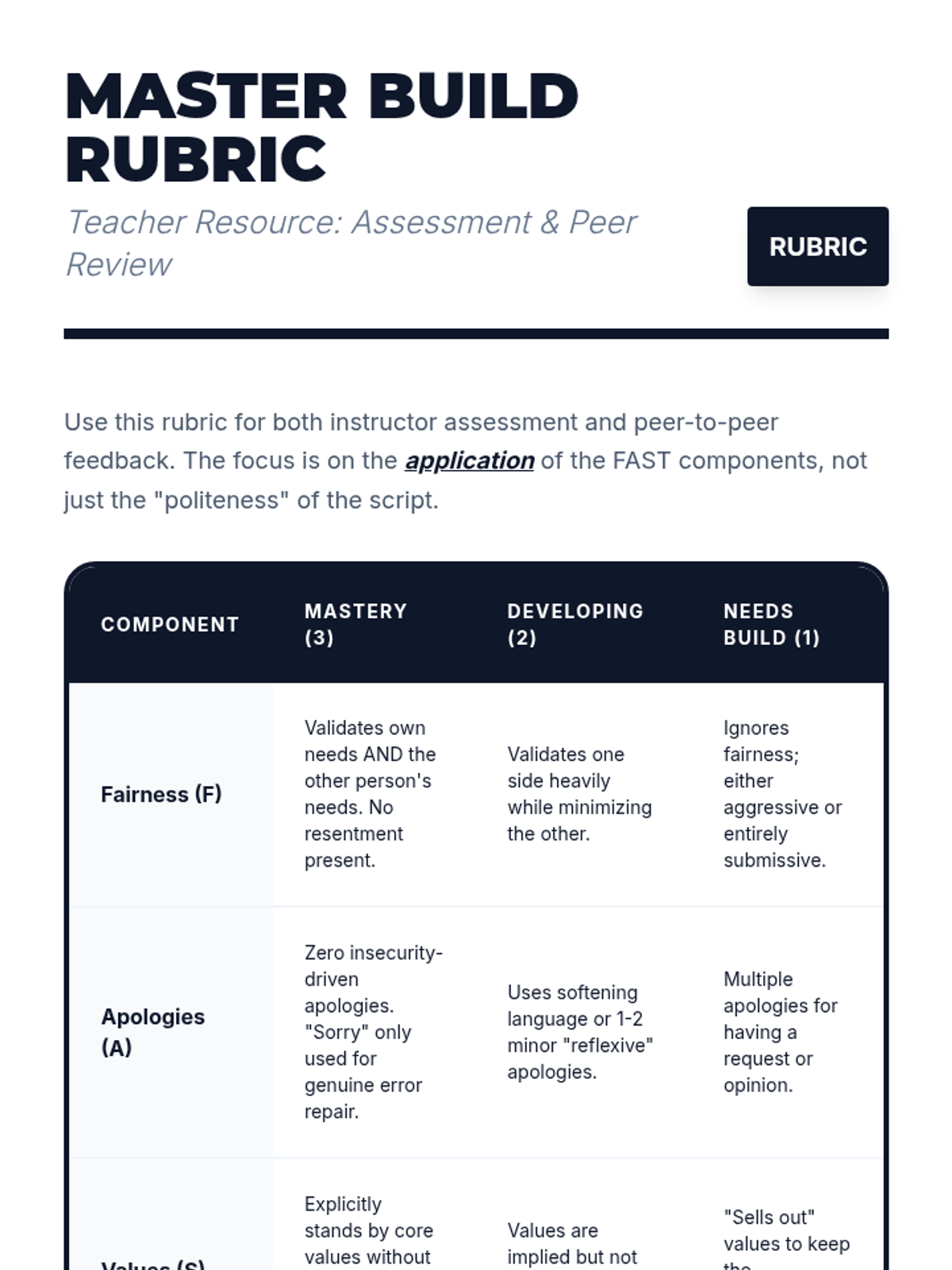
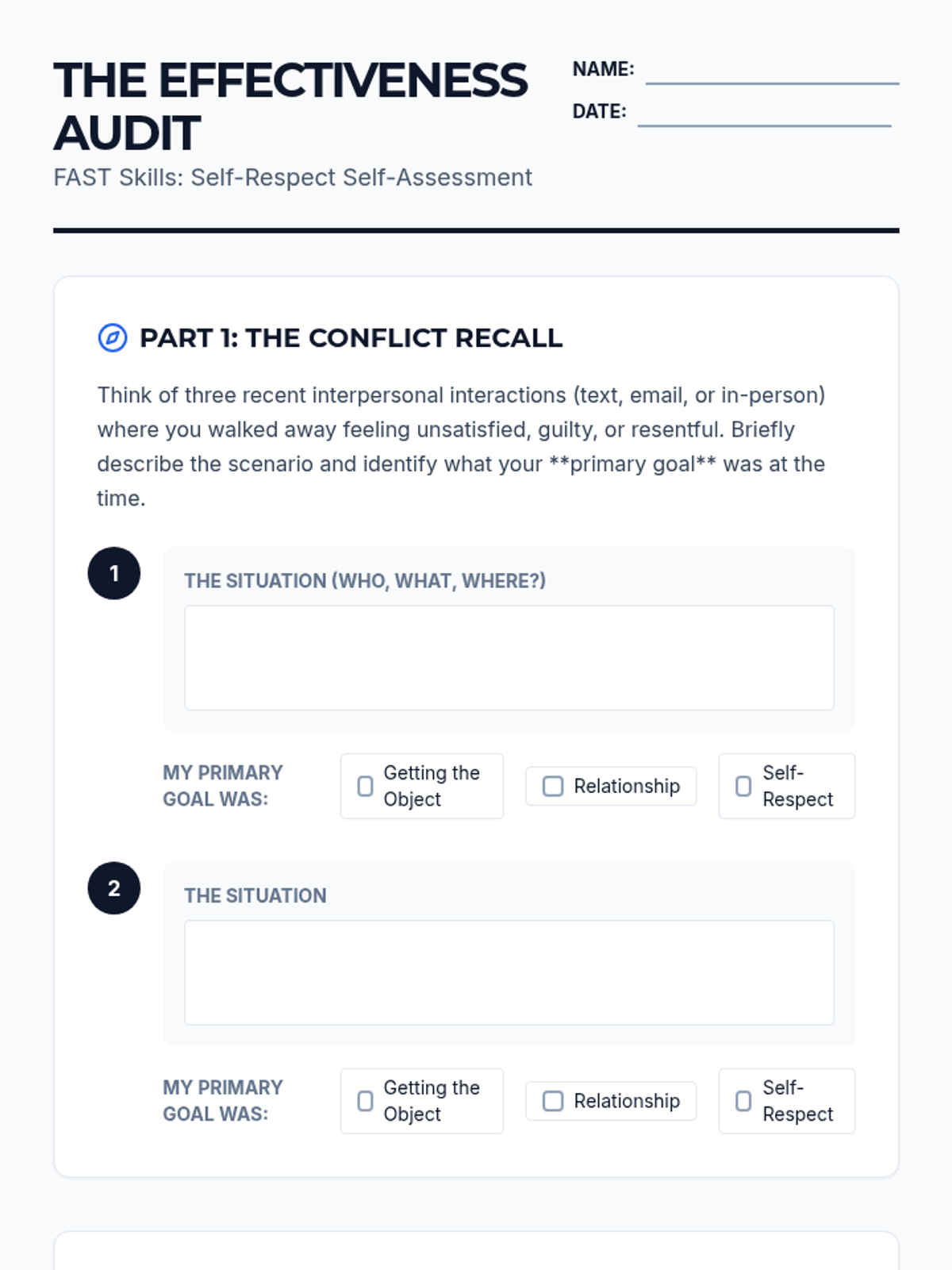
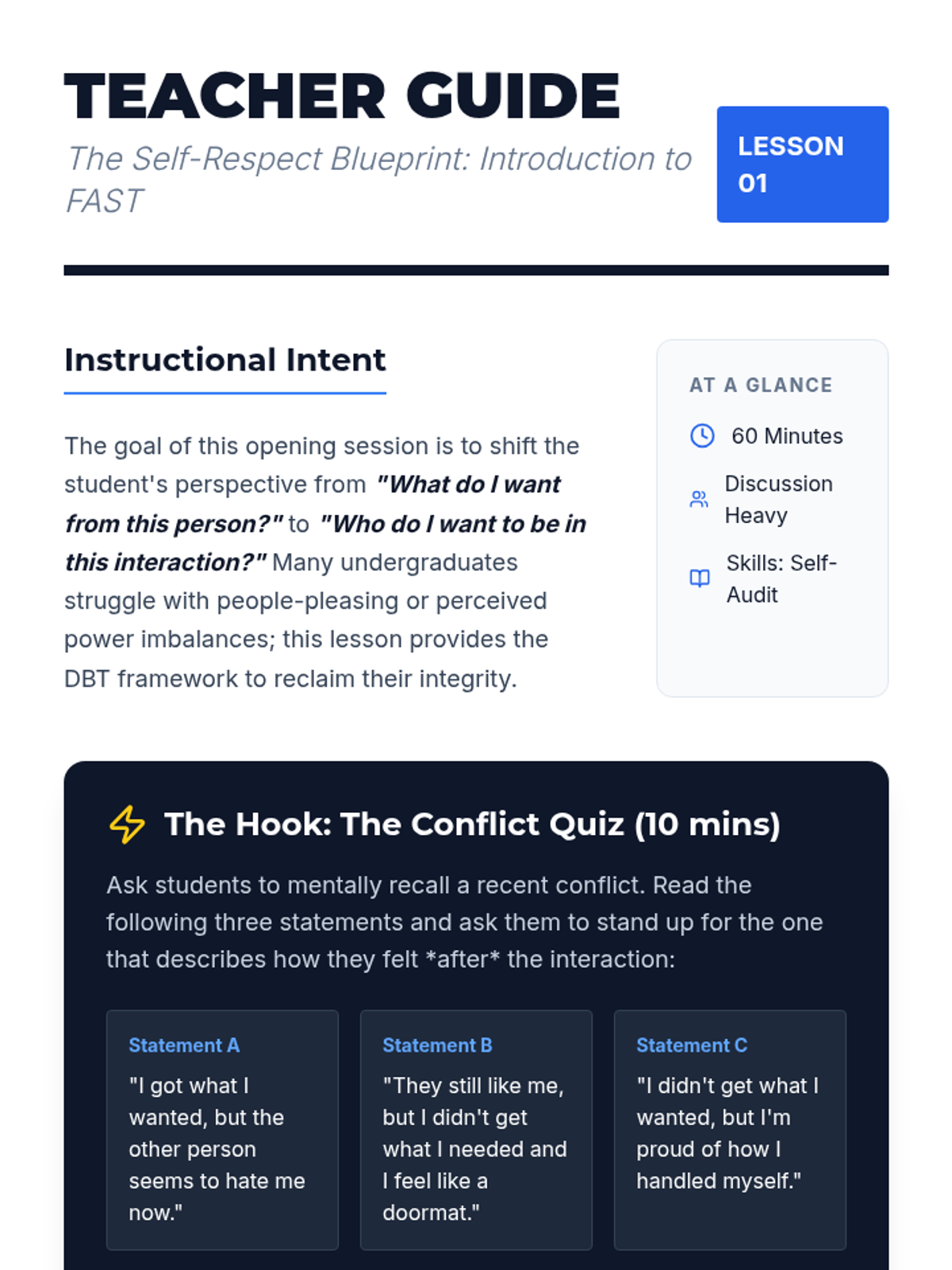
Students are introduced to the three pillars of interpersonal effectiveness and the FAST acronym as a tool for self-respect. They will perform a self-assessment of their current communication patterns.
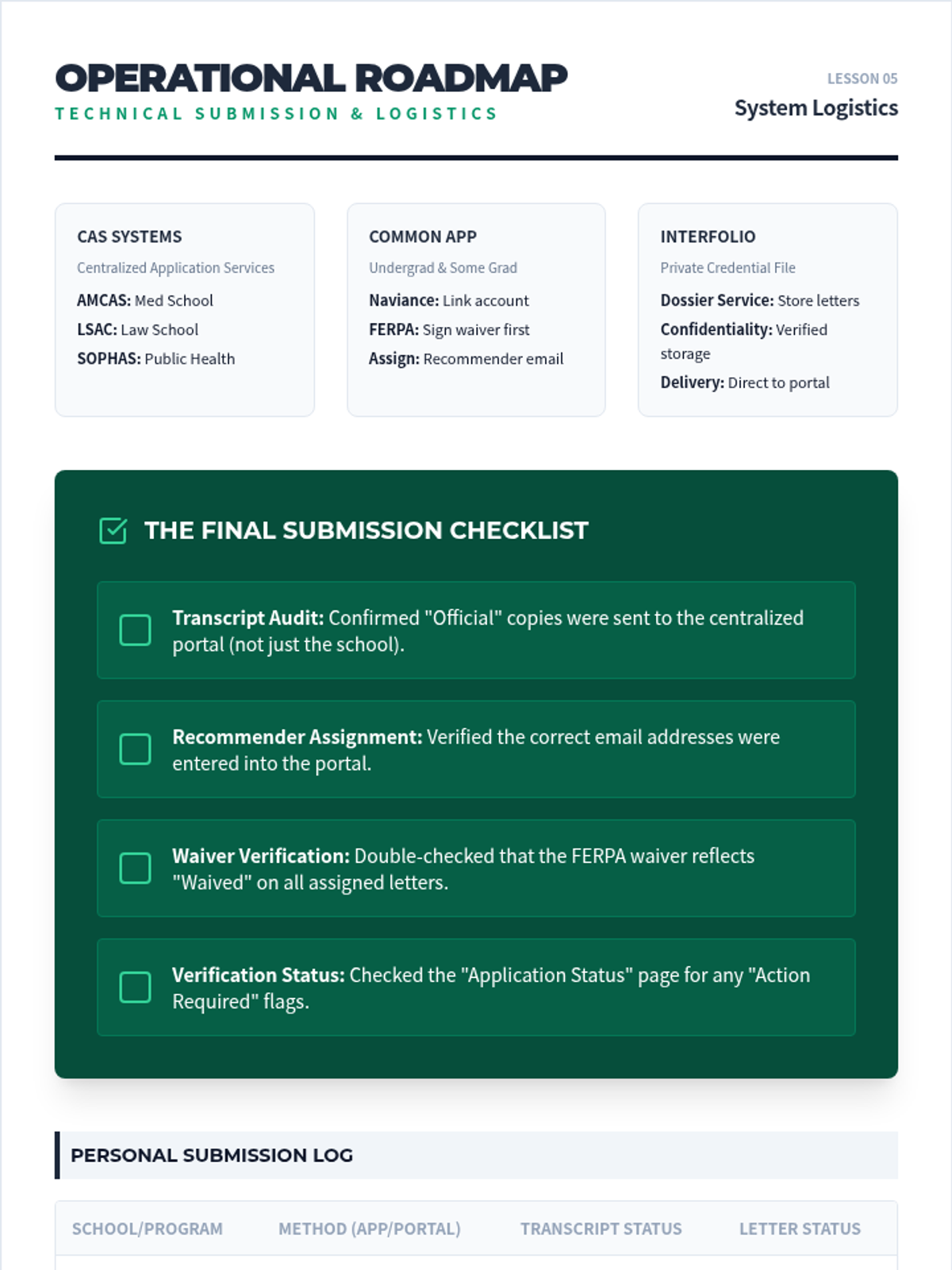
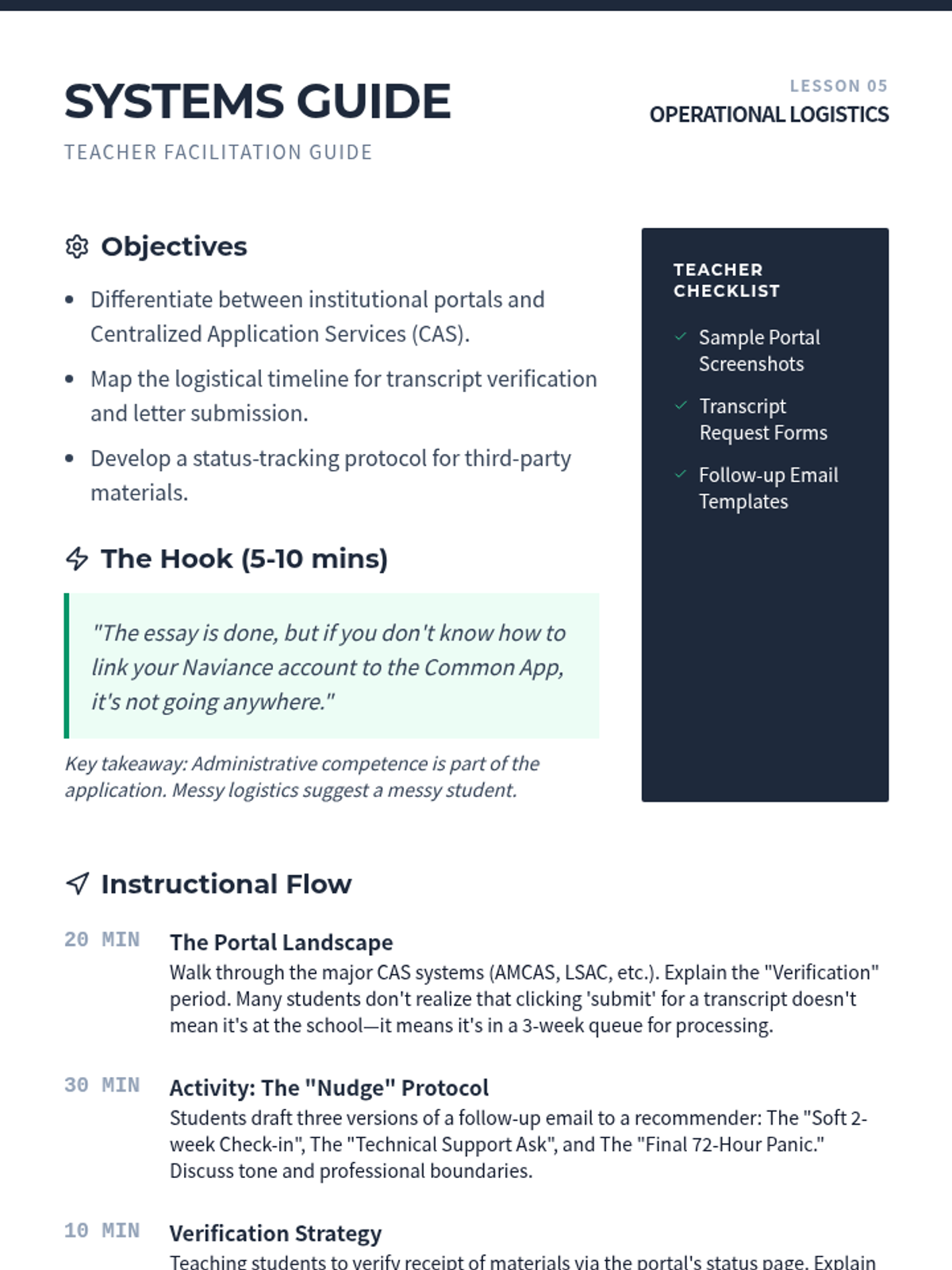
A technical walkthrough of major application portals and the operational steps for credential submission and verification.
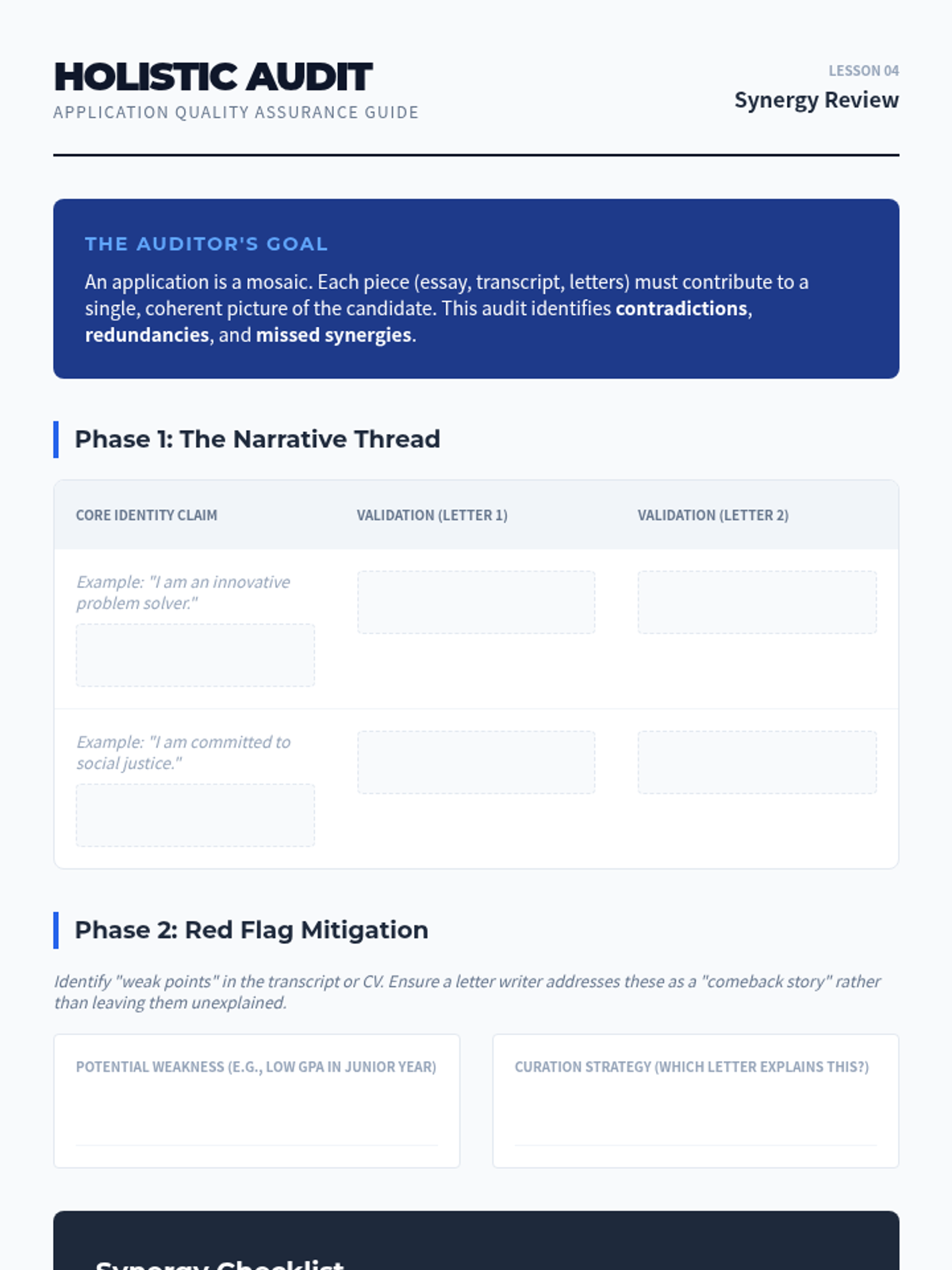
Students practice conducting a 'holistic audit' of a mock application, checking for consistency and synergy between all documents.
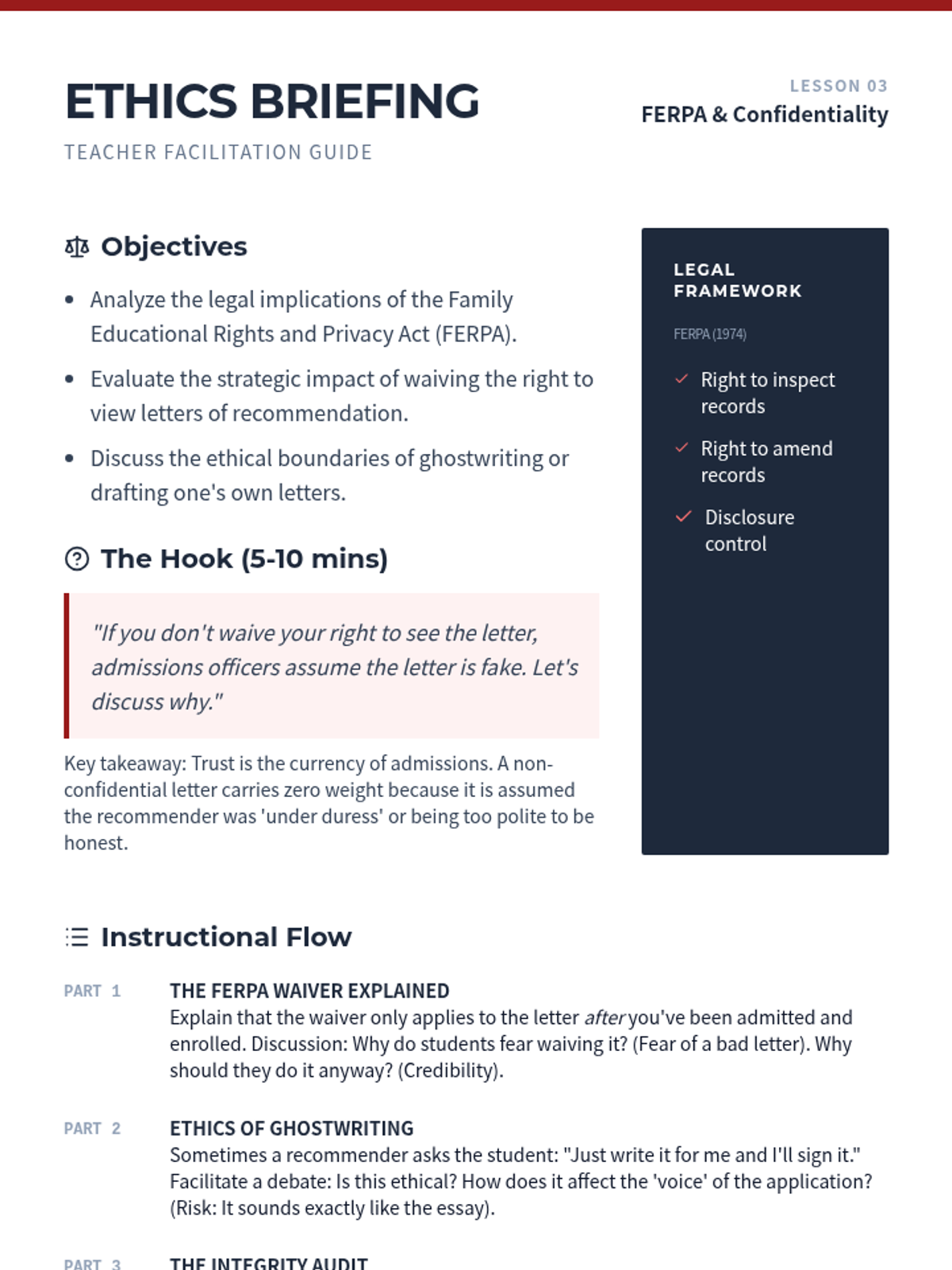
Covers the legal and ethical aspects of FERPA waivers and the confidentiality of recommendations in the admissions process.
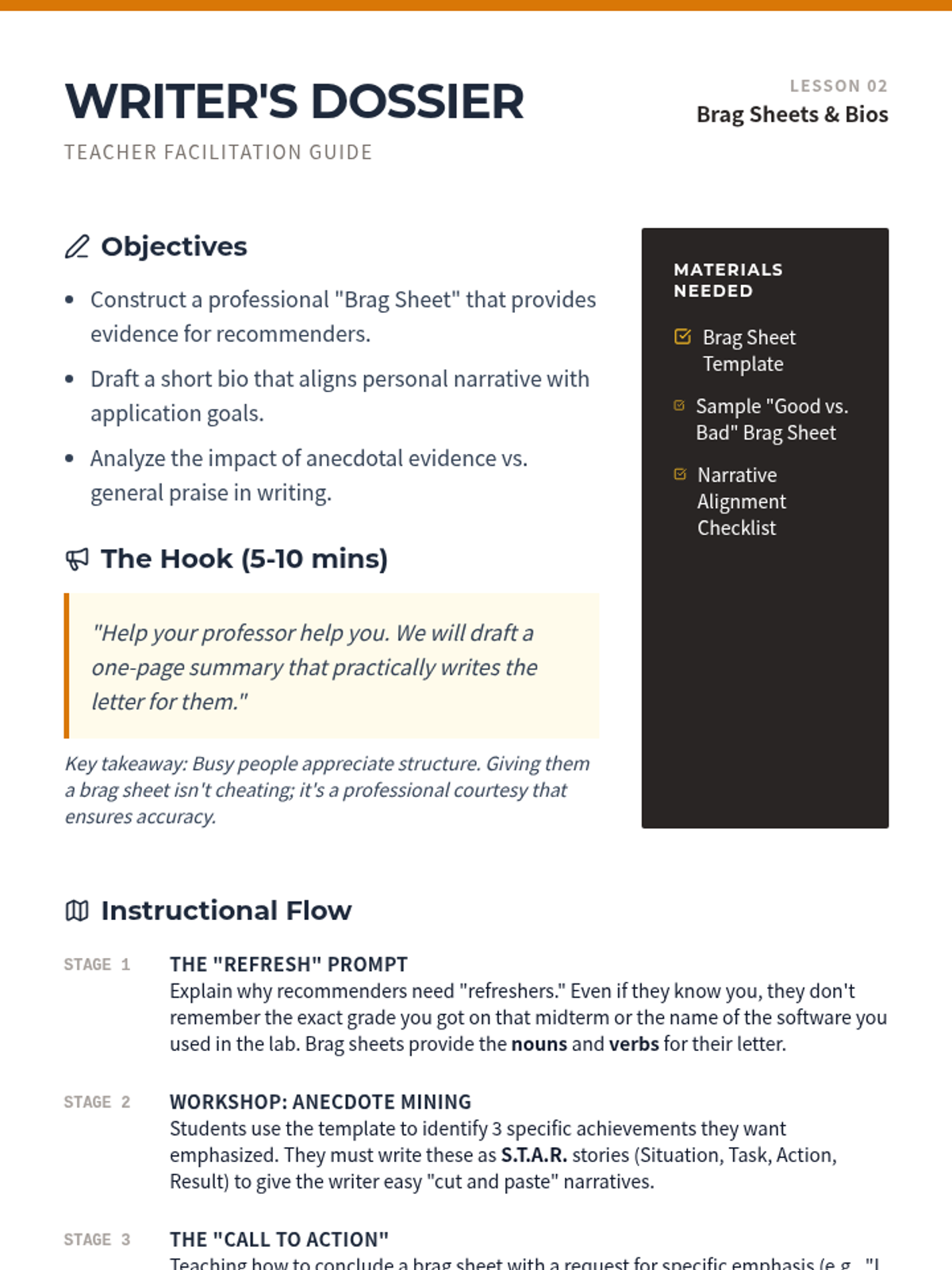
Participants learn to create supporting documents that help recommenders write detailed, anecdotal letters through effective brag sheets.
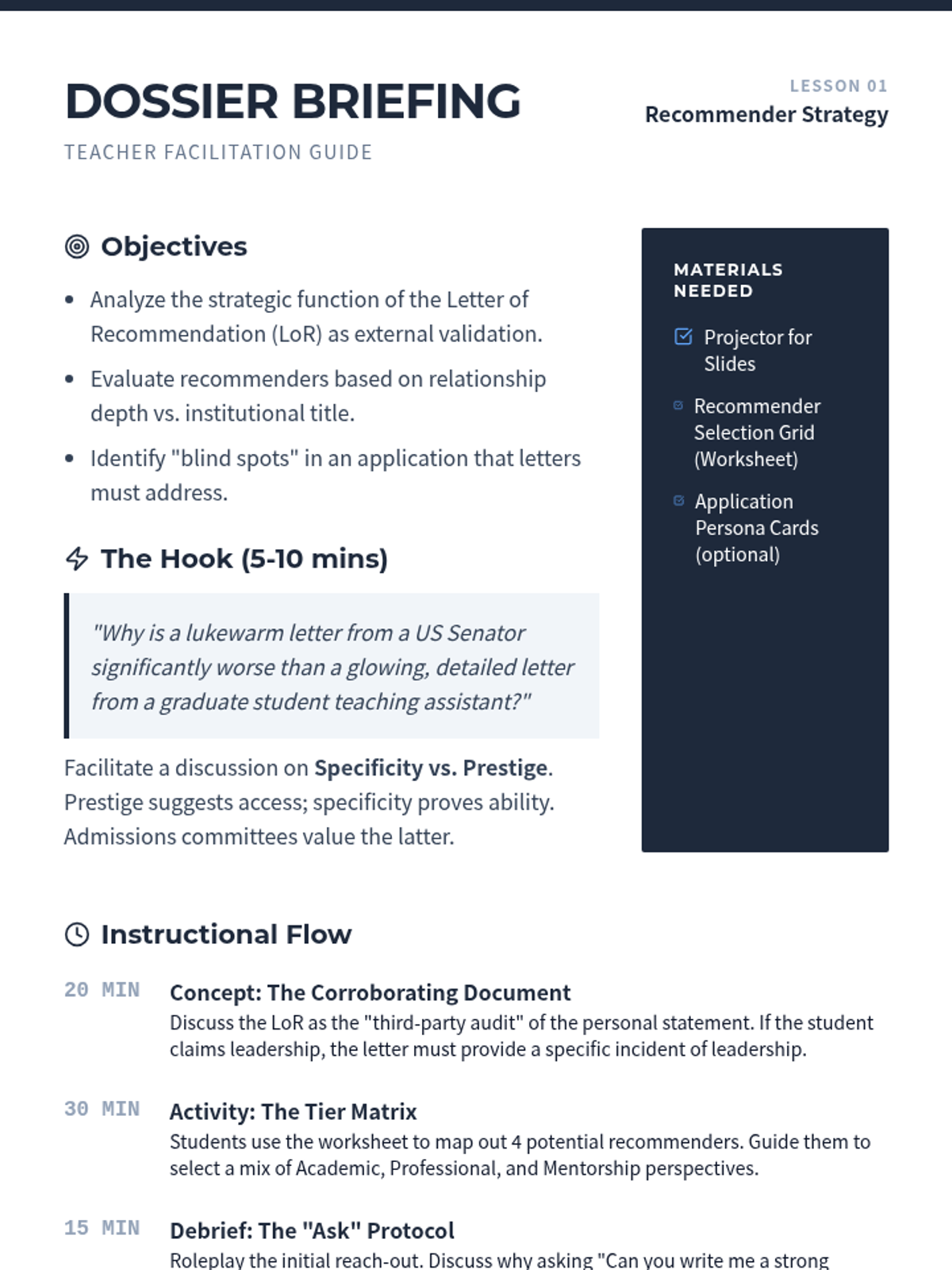
Students analyze the function of the recommendation letter as a corroborating document, focusing on relationship depth over titles.
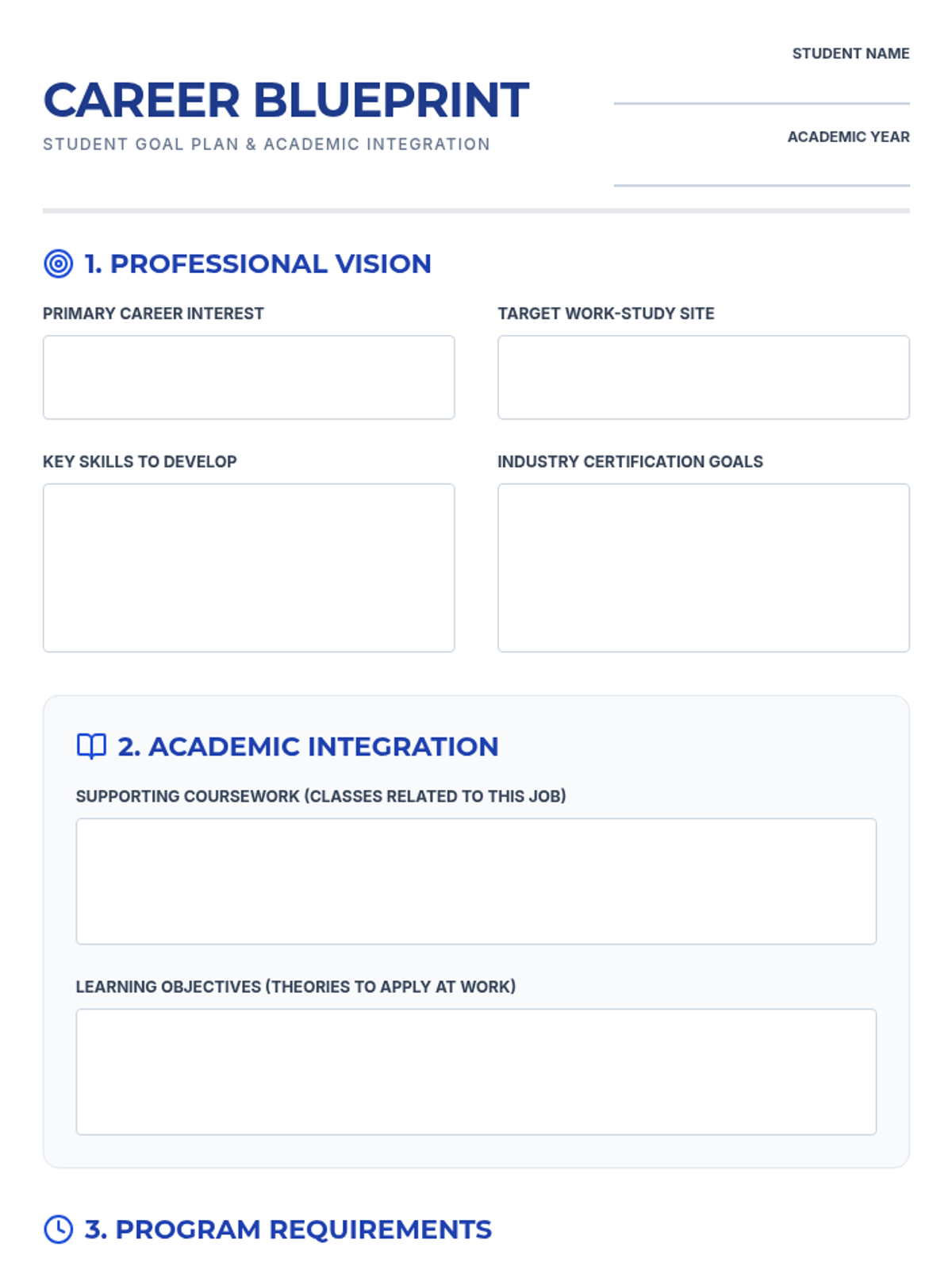
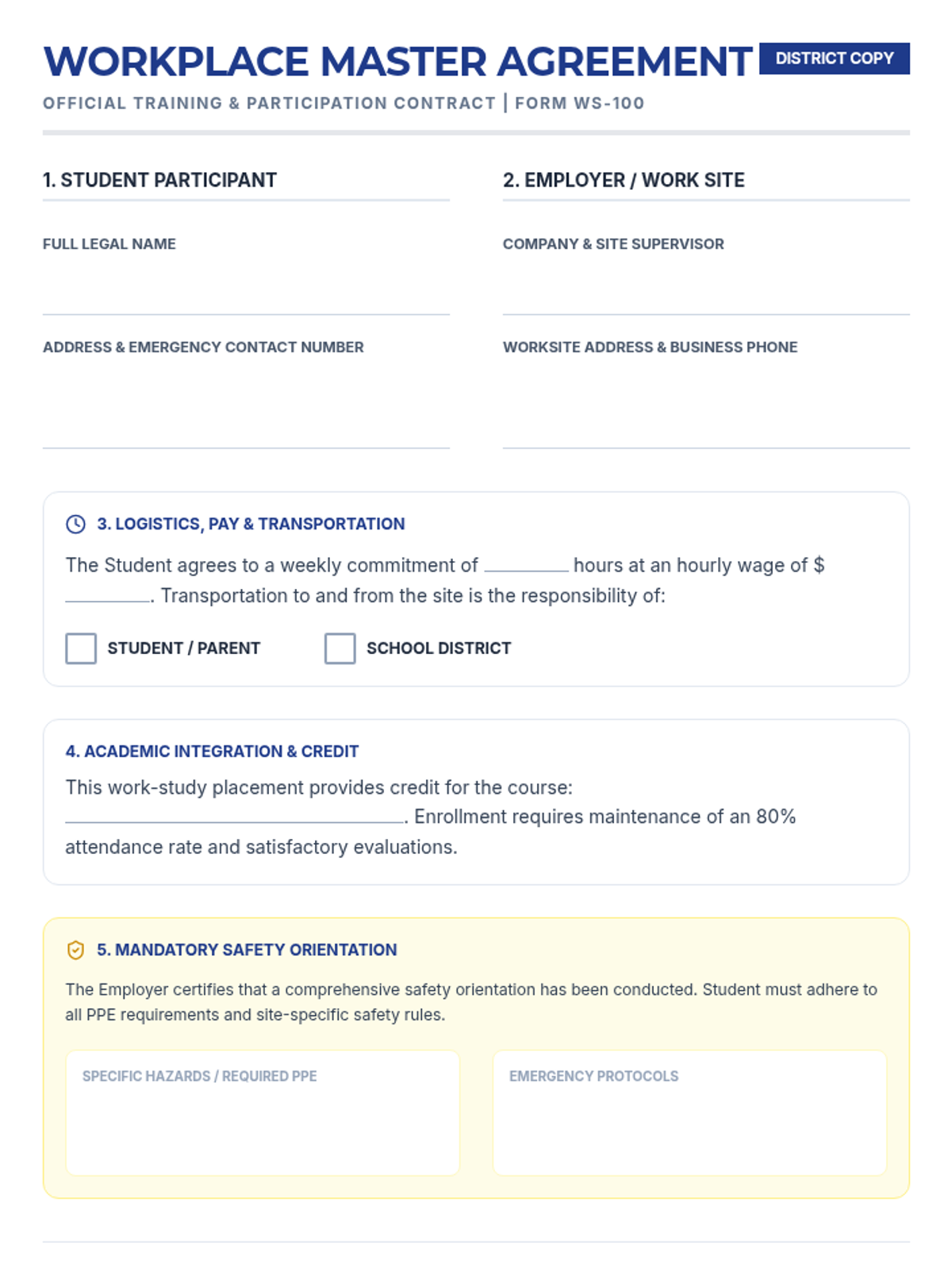
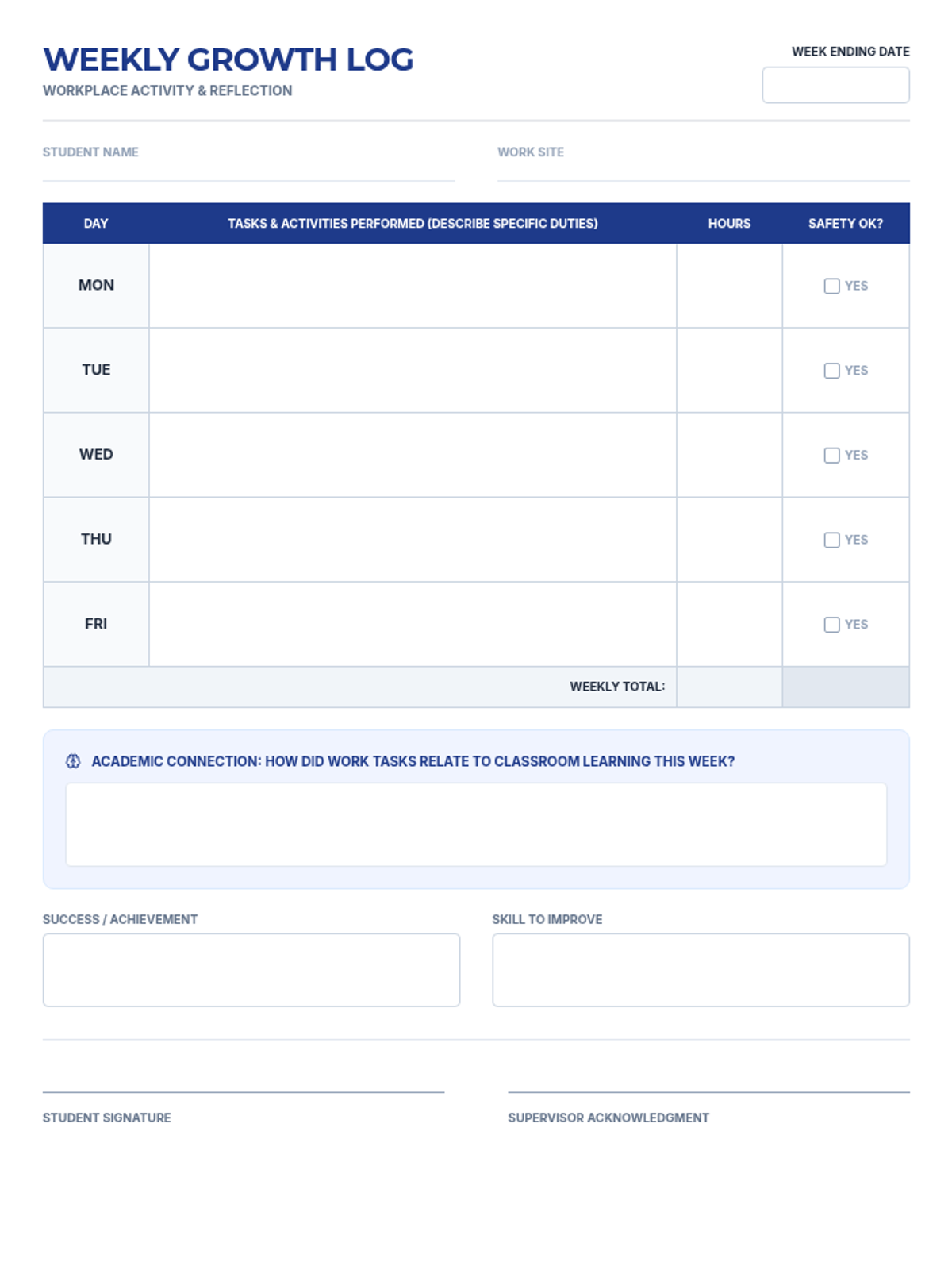
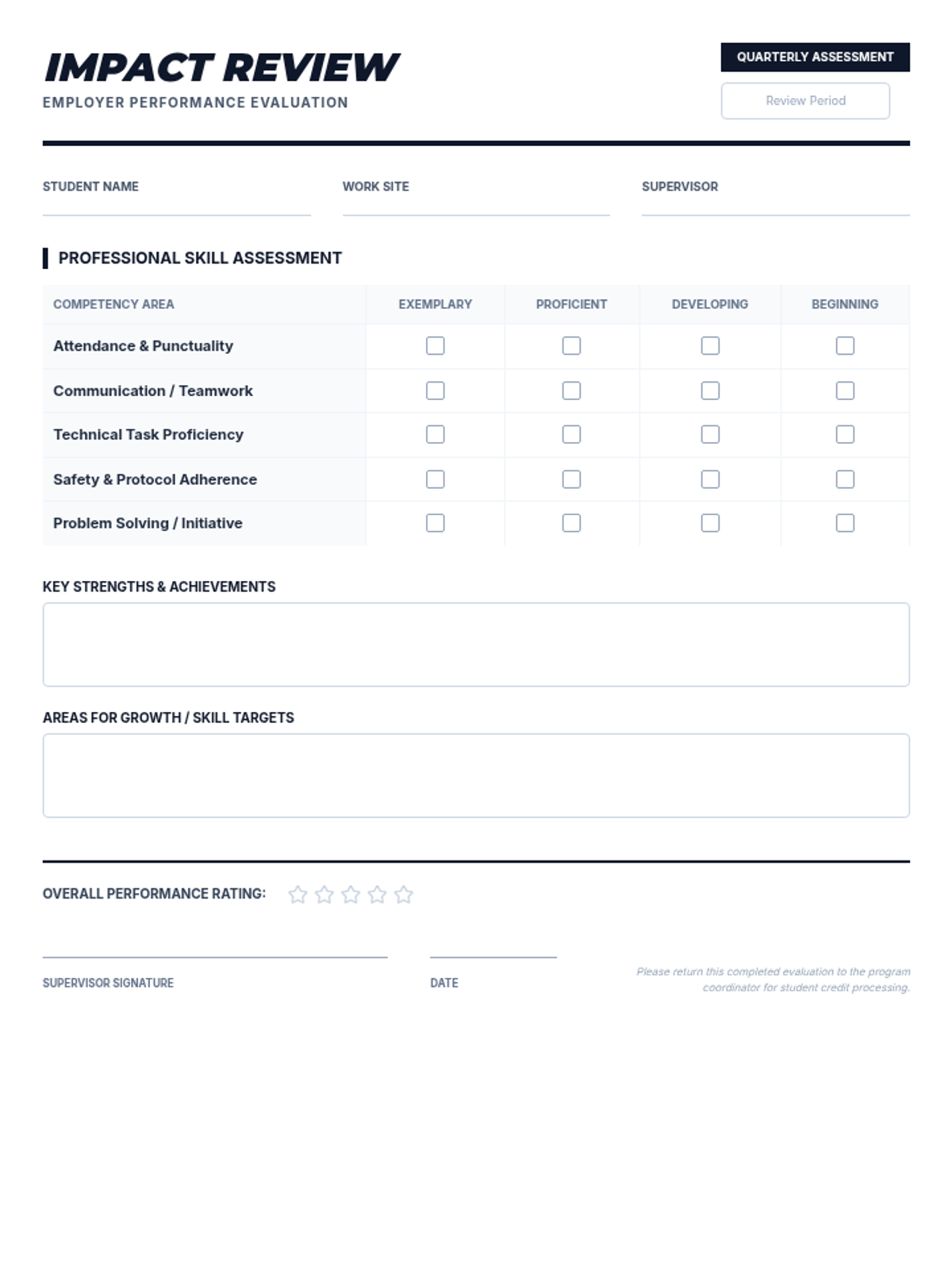
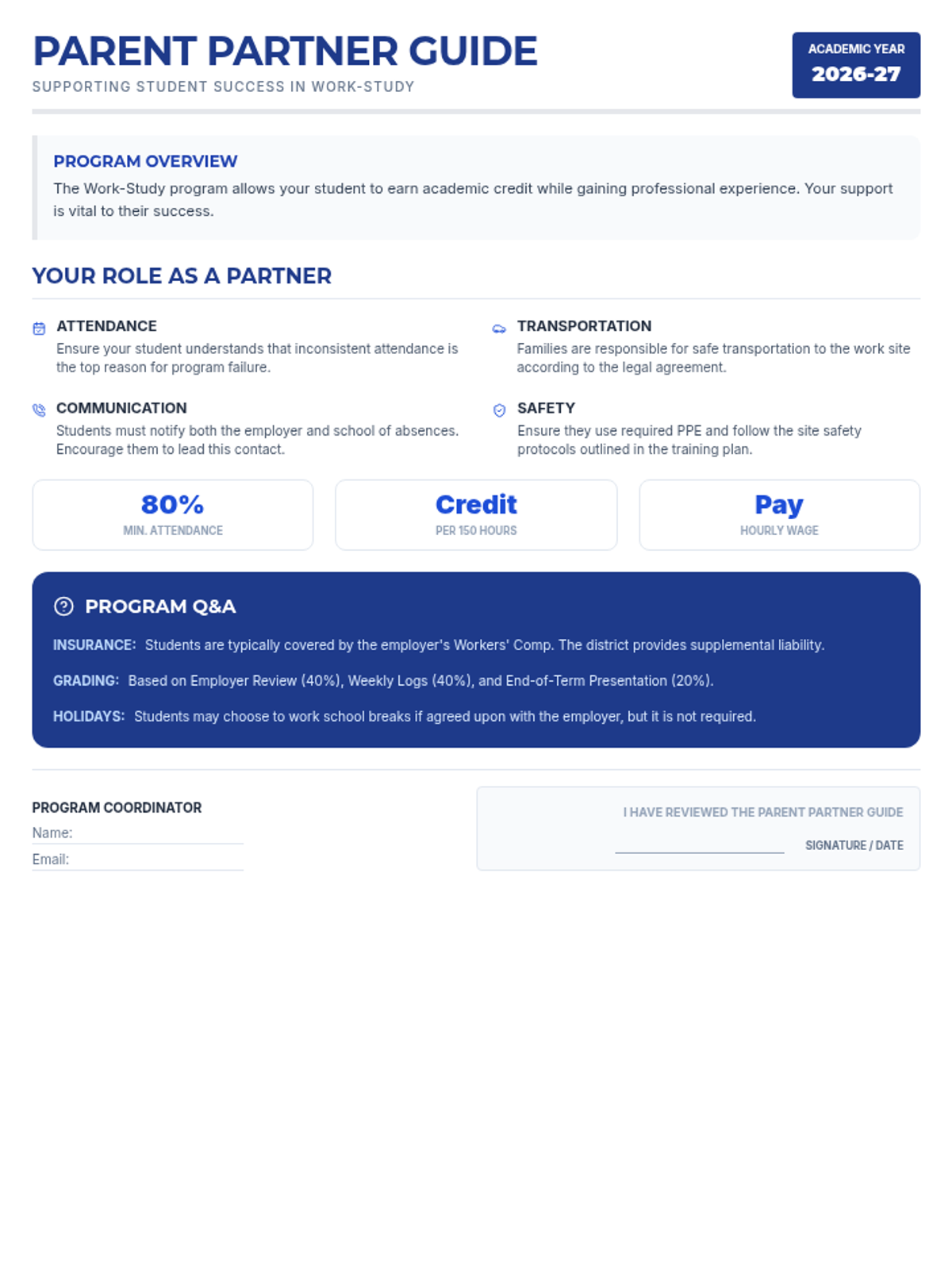
A comprehensive suite of documents for managing a work-study program, including goal setting, legal agreements, reflection logs, and performance evaluations.
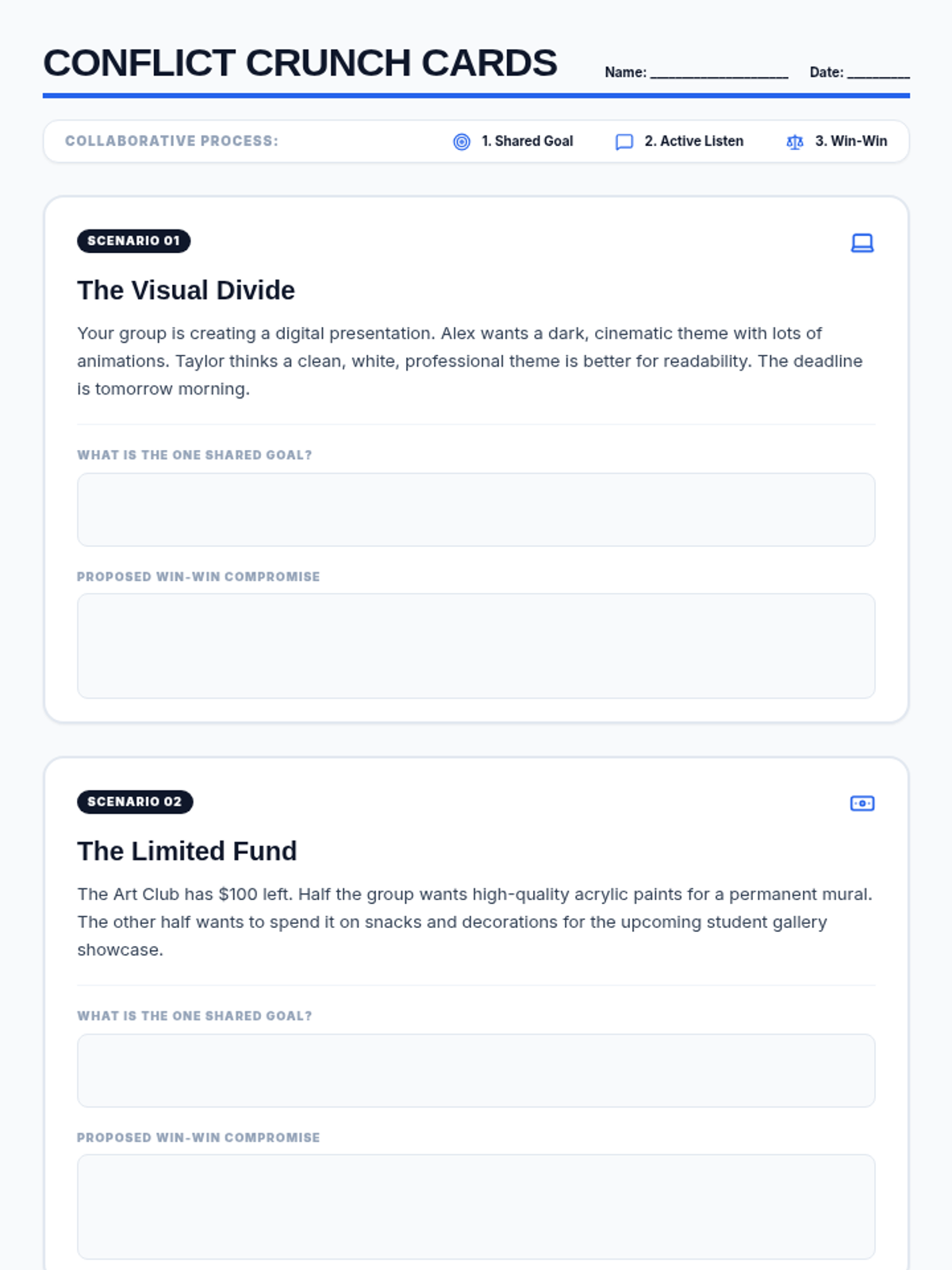
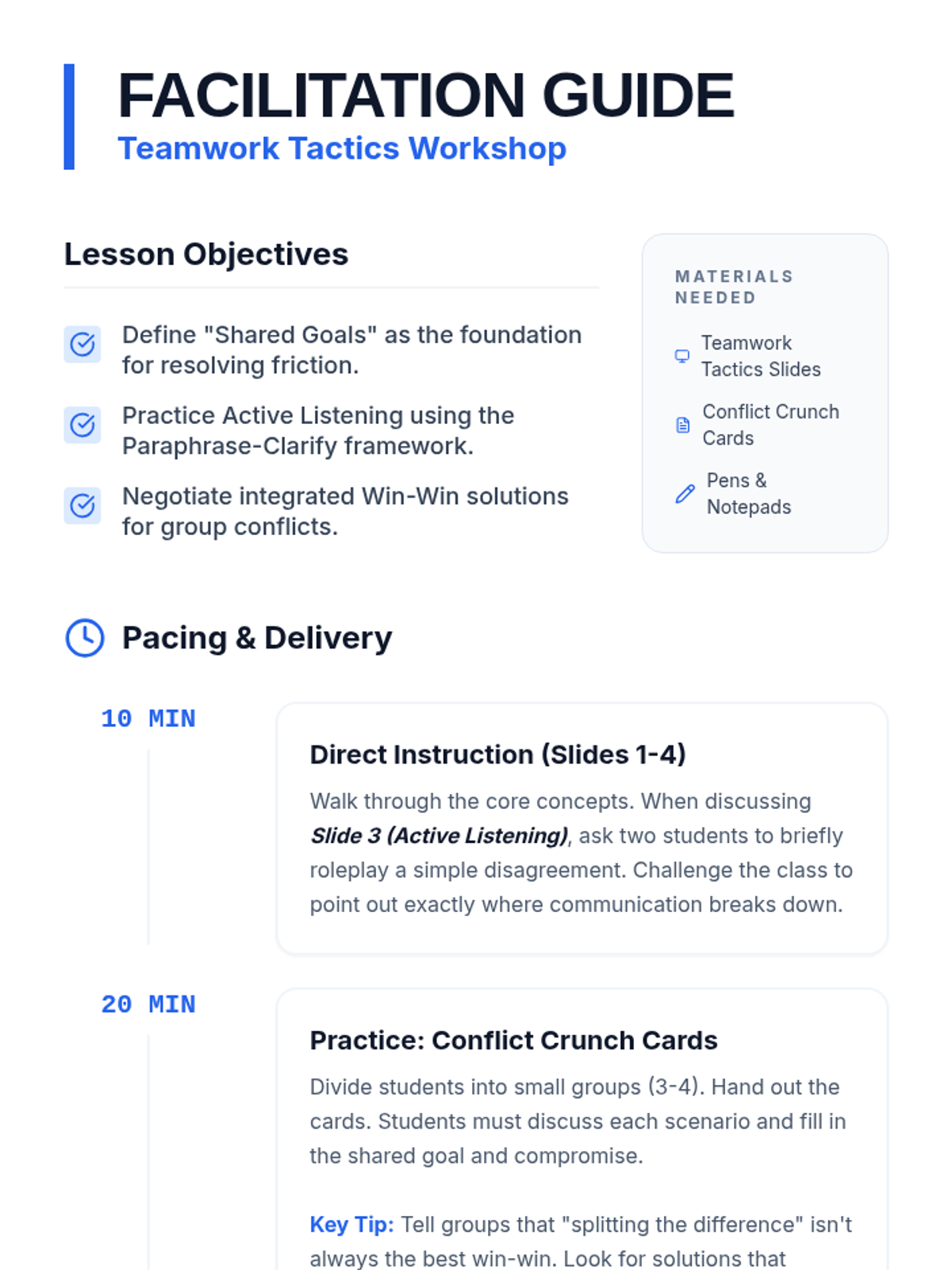
A workshop-style lesson focusing on three essential pillars of group dynamics: active listening, identifying shared goals, and the art of compromise and negotiation.
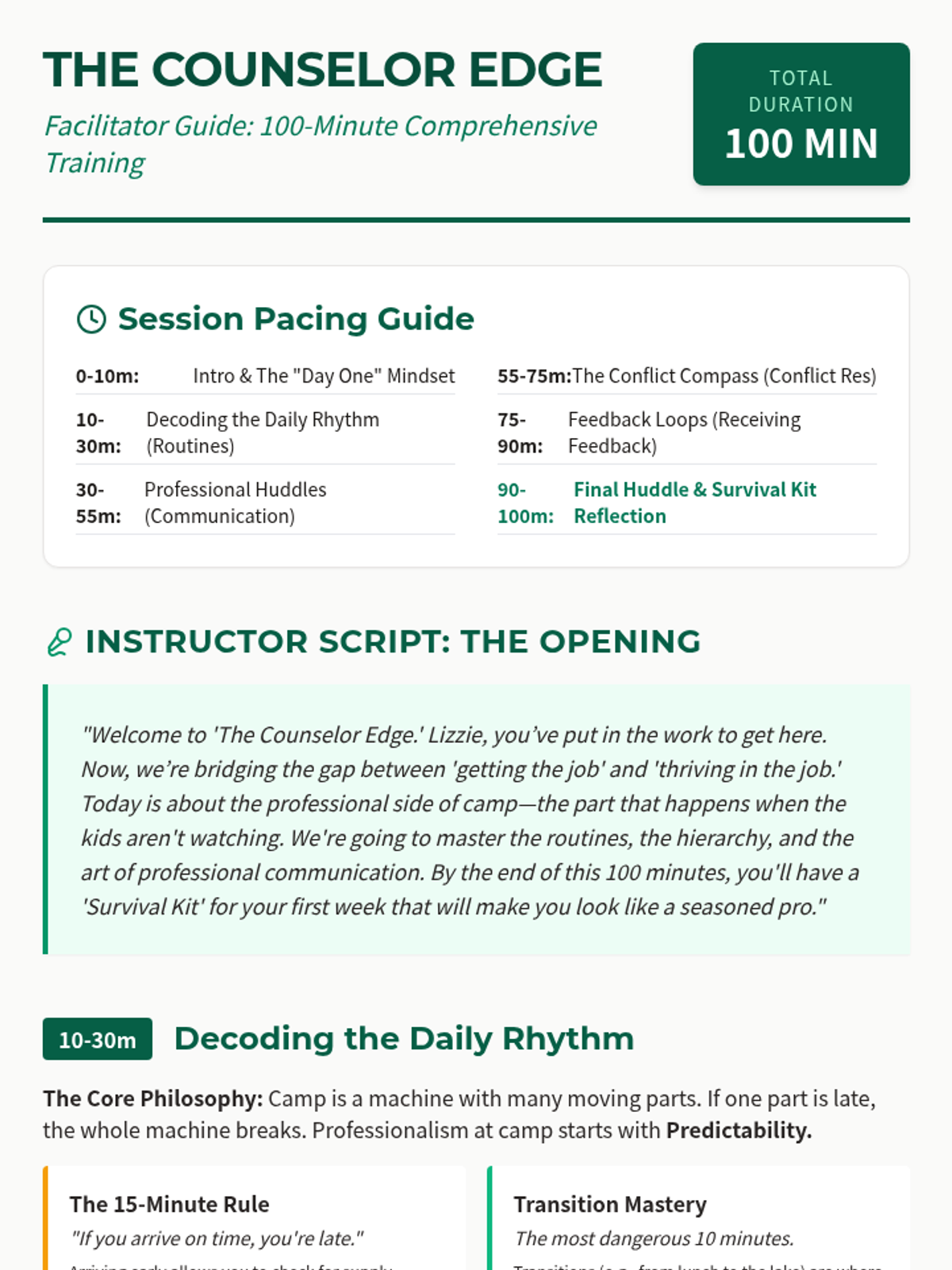
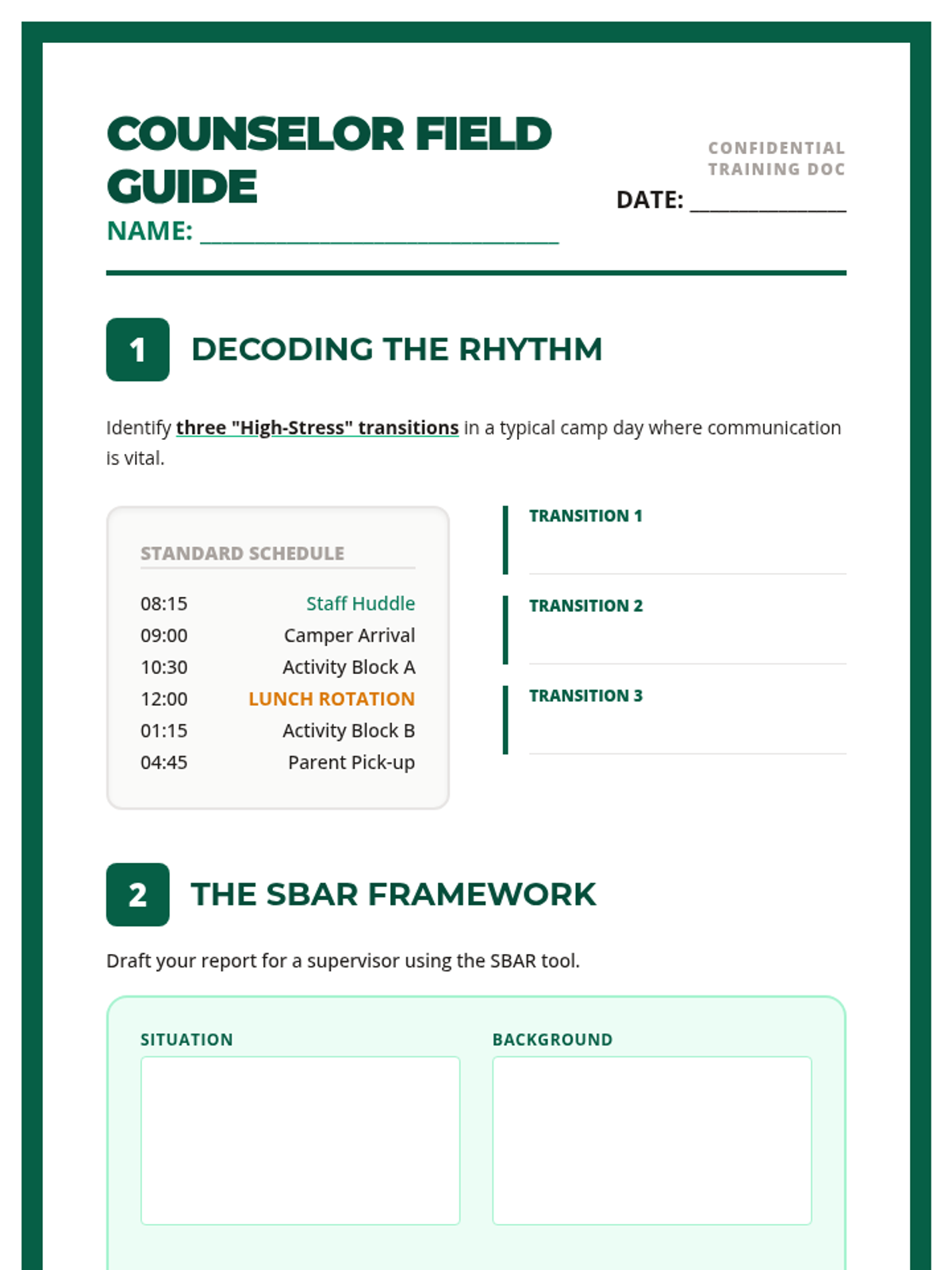
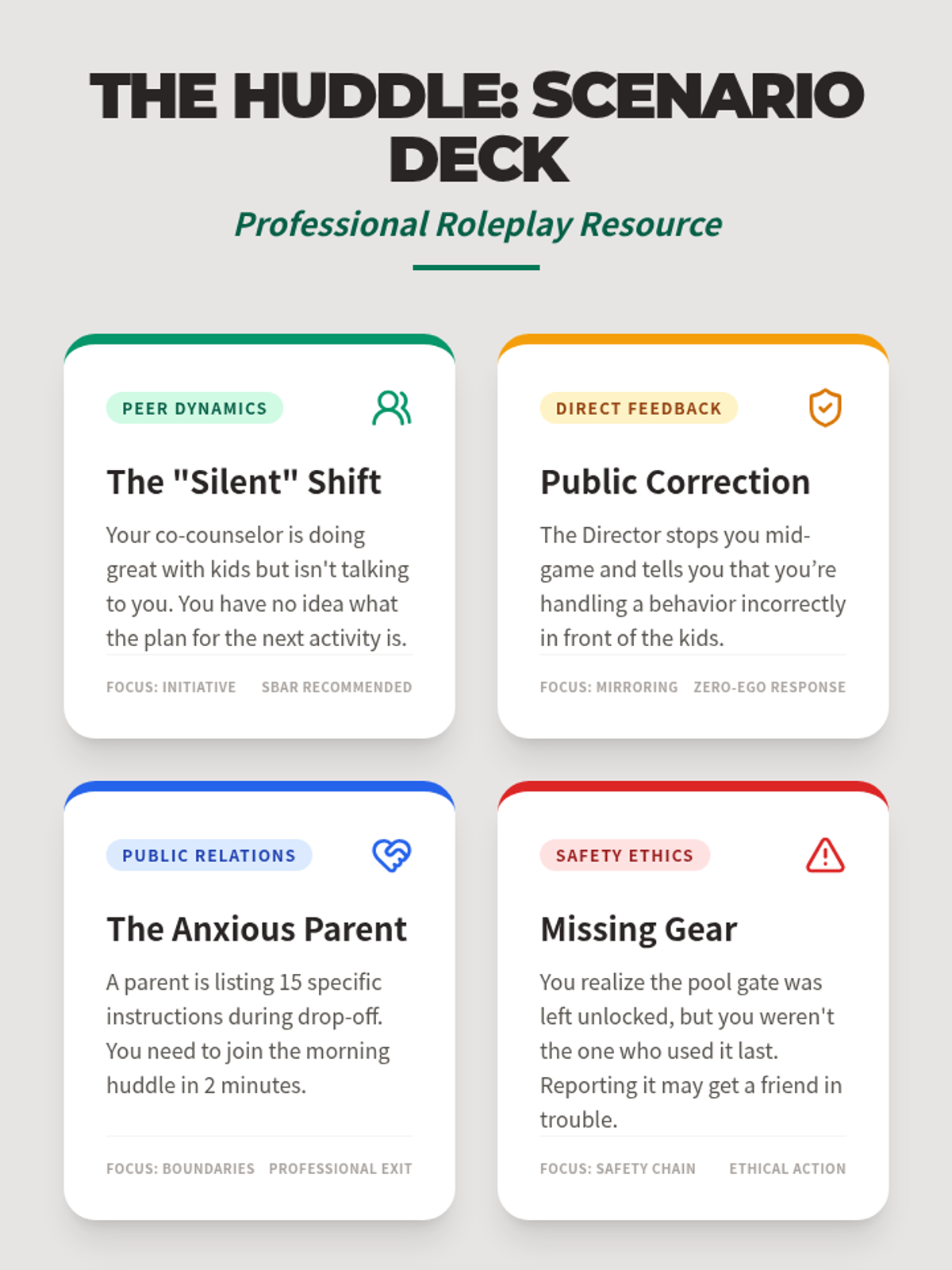
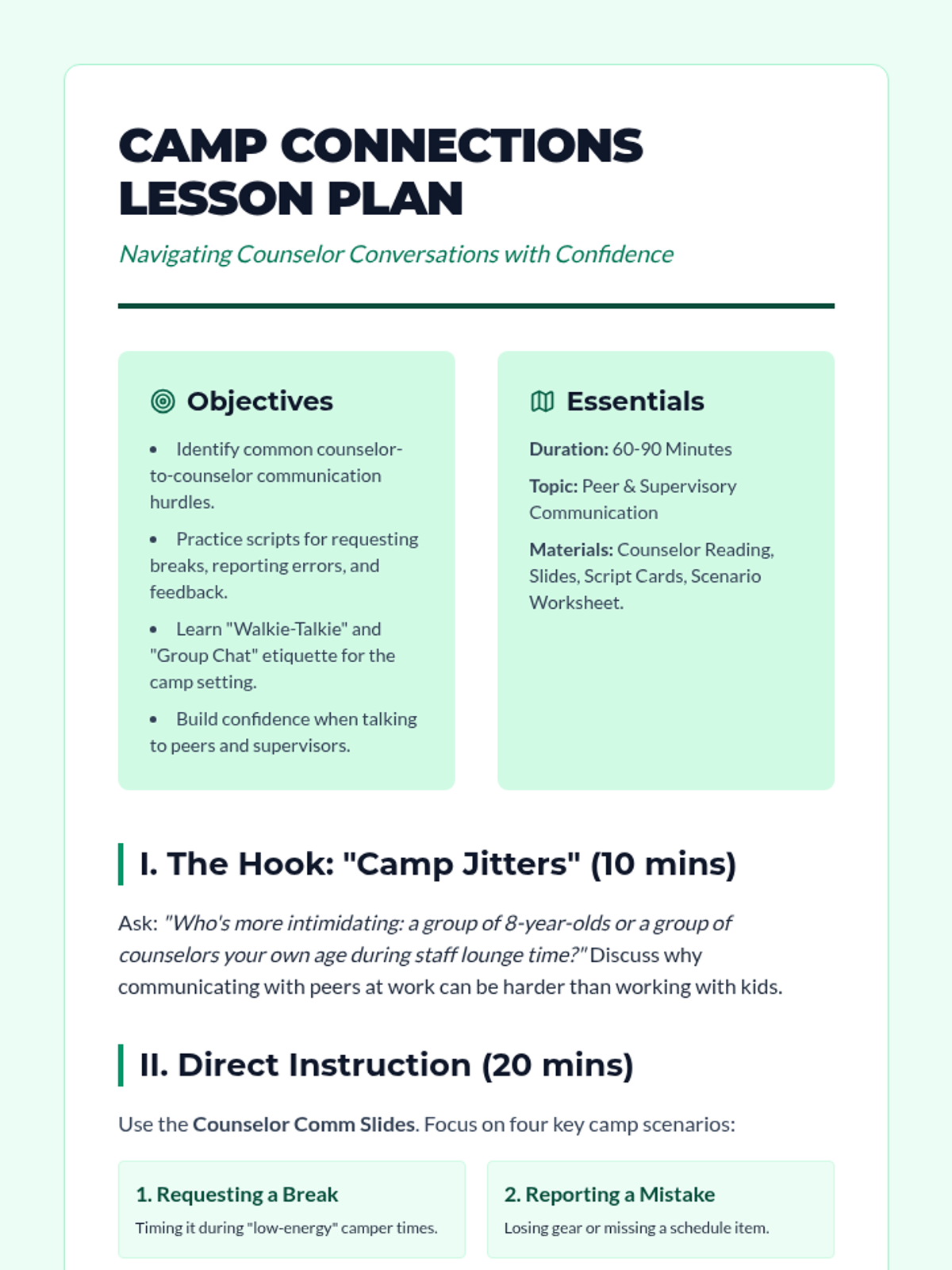
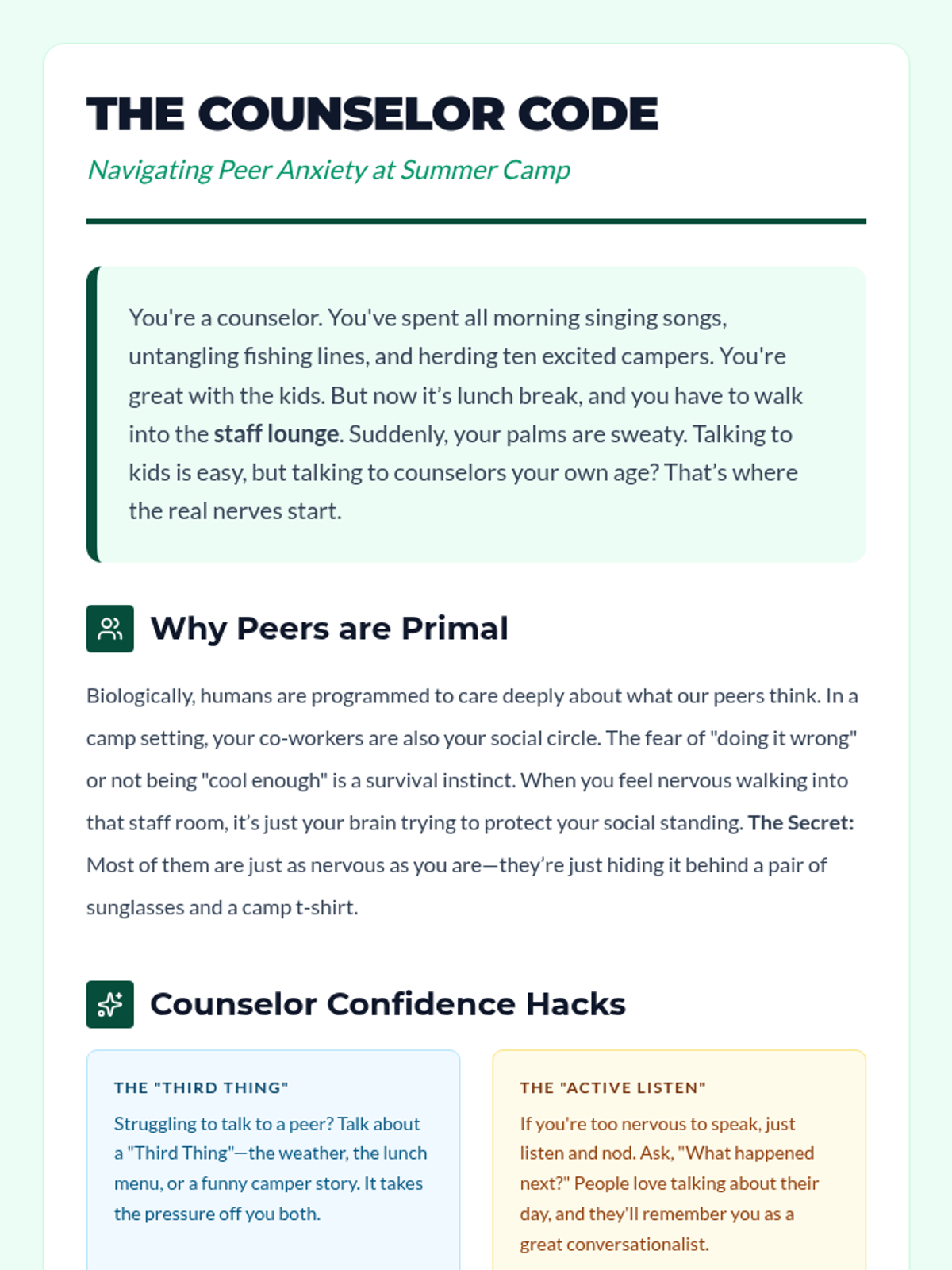
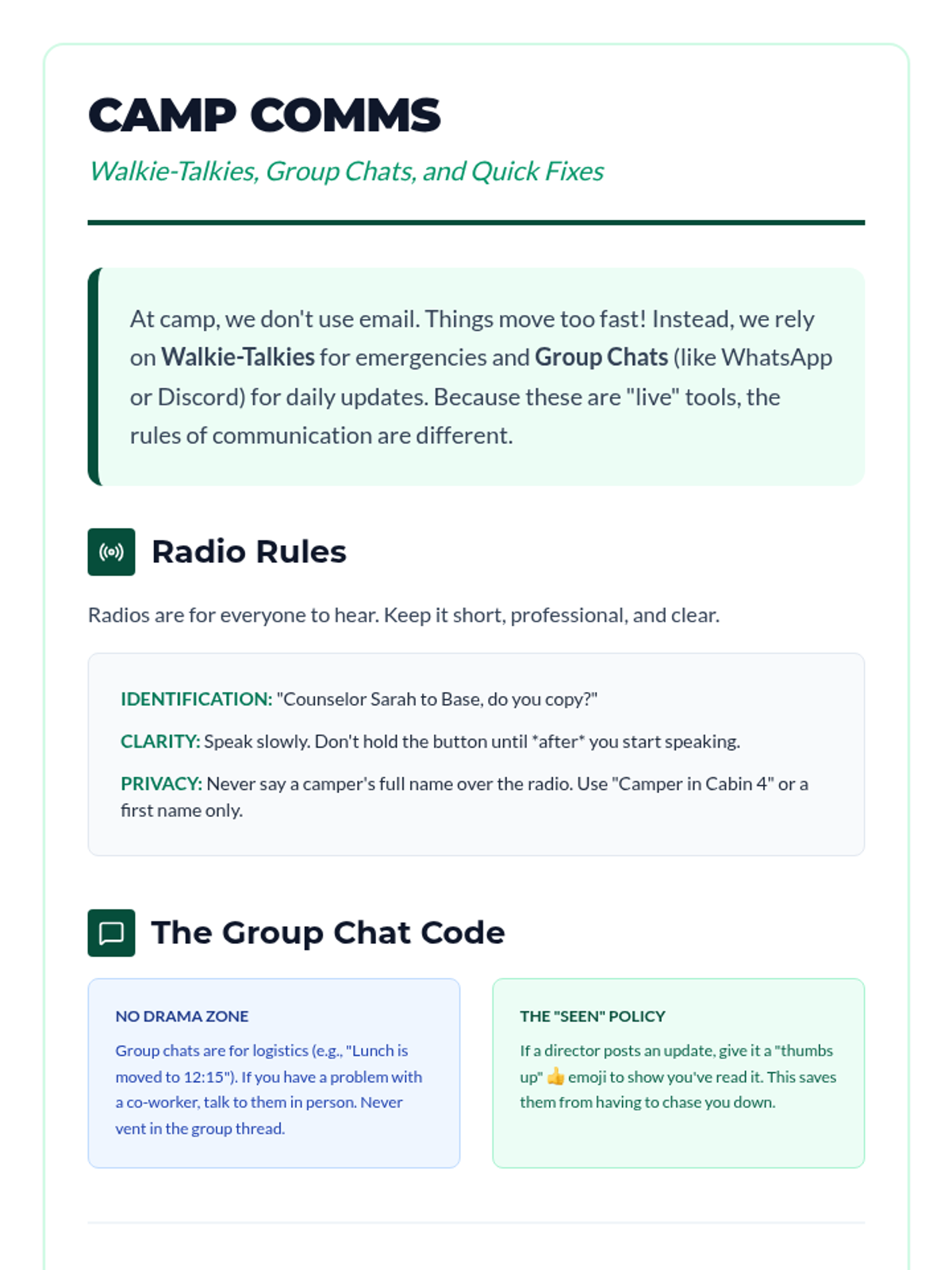
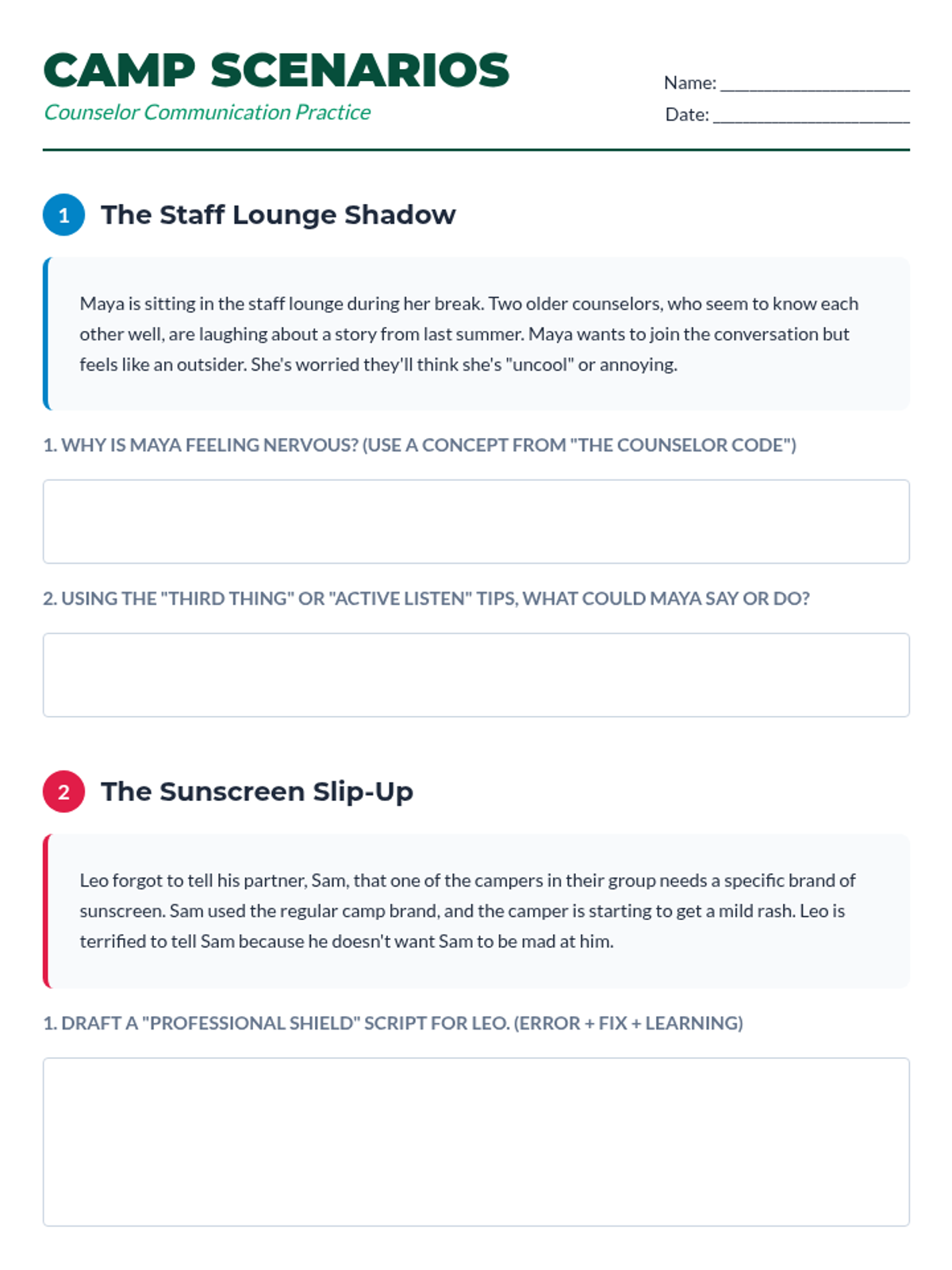
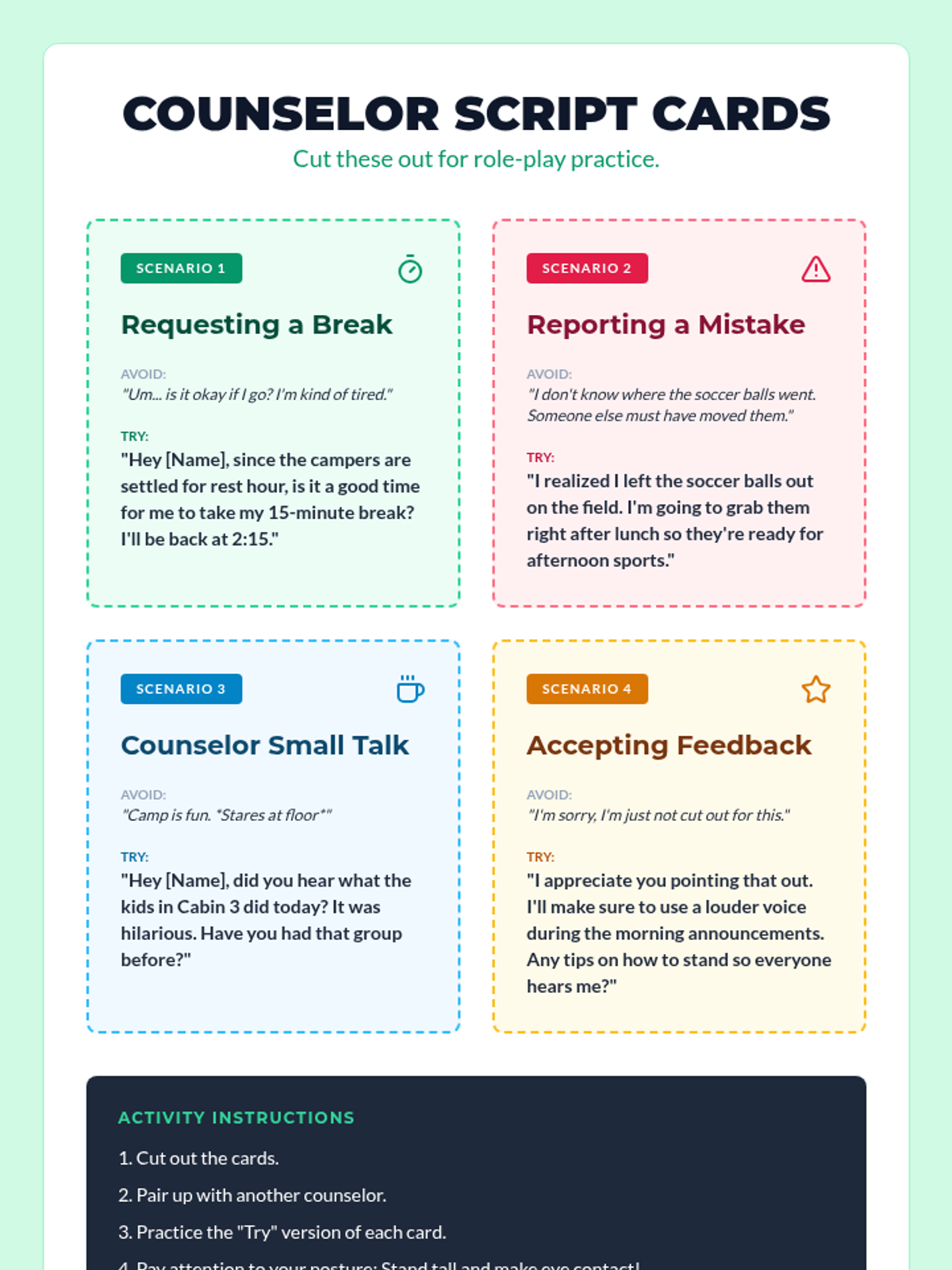
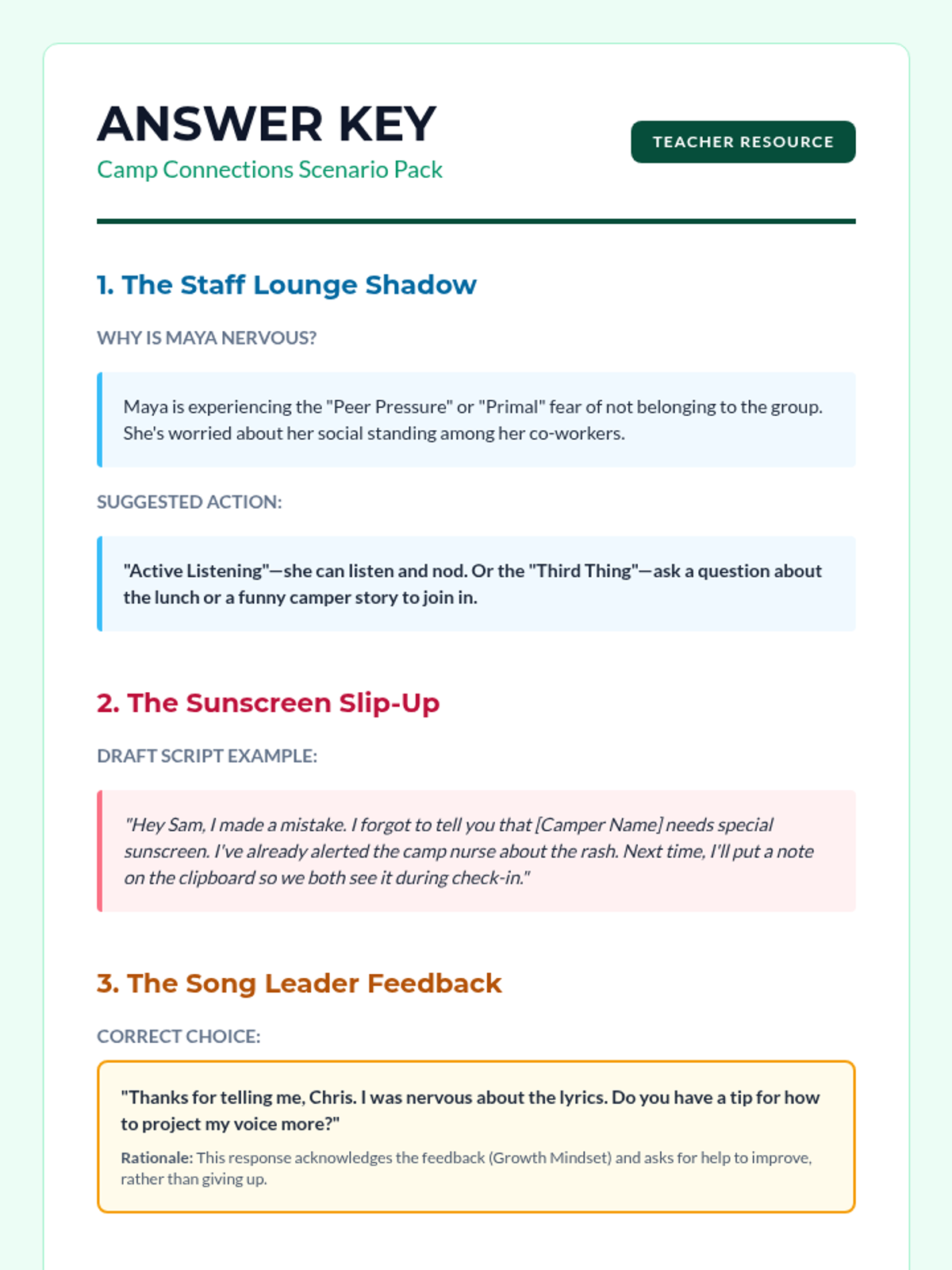
A comprehensive 100-minute training session designed to prepare a new camp counselor for the day-to-day realities of the job, focusing on professional communication, routines, and navigating workplace dynamics.
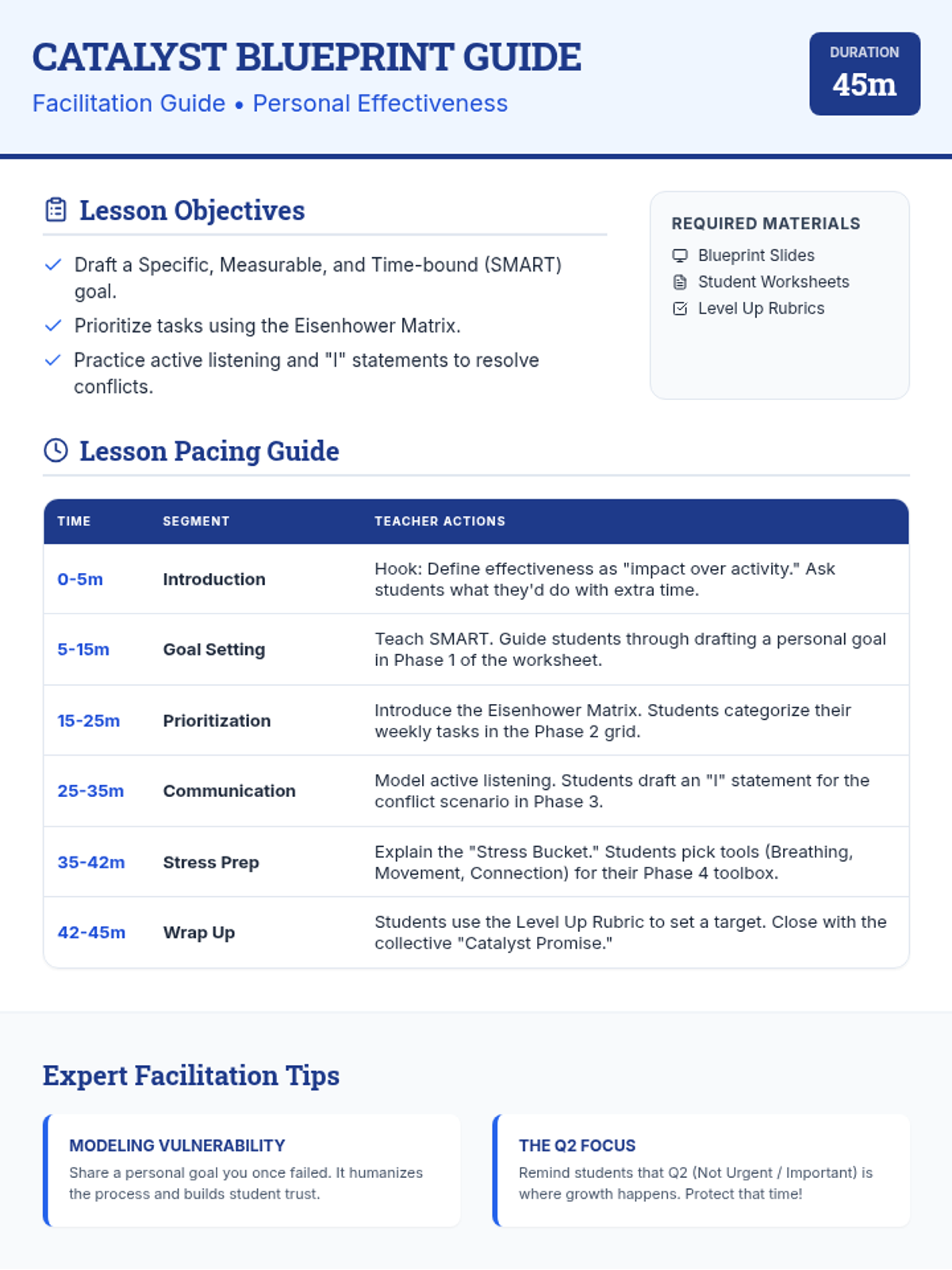
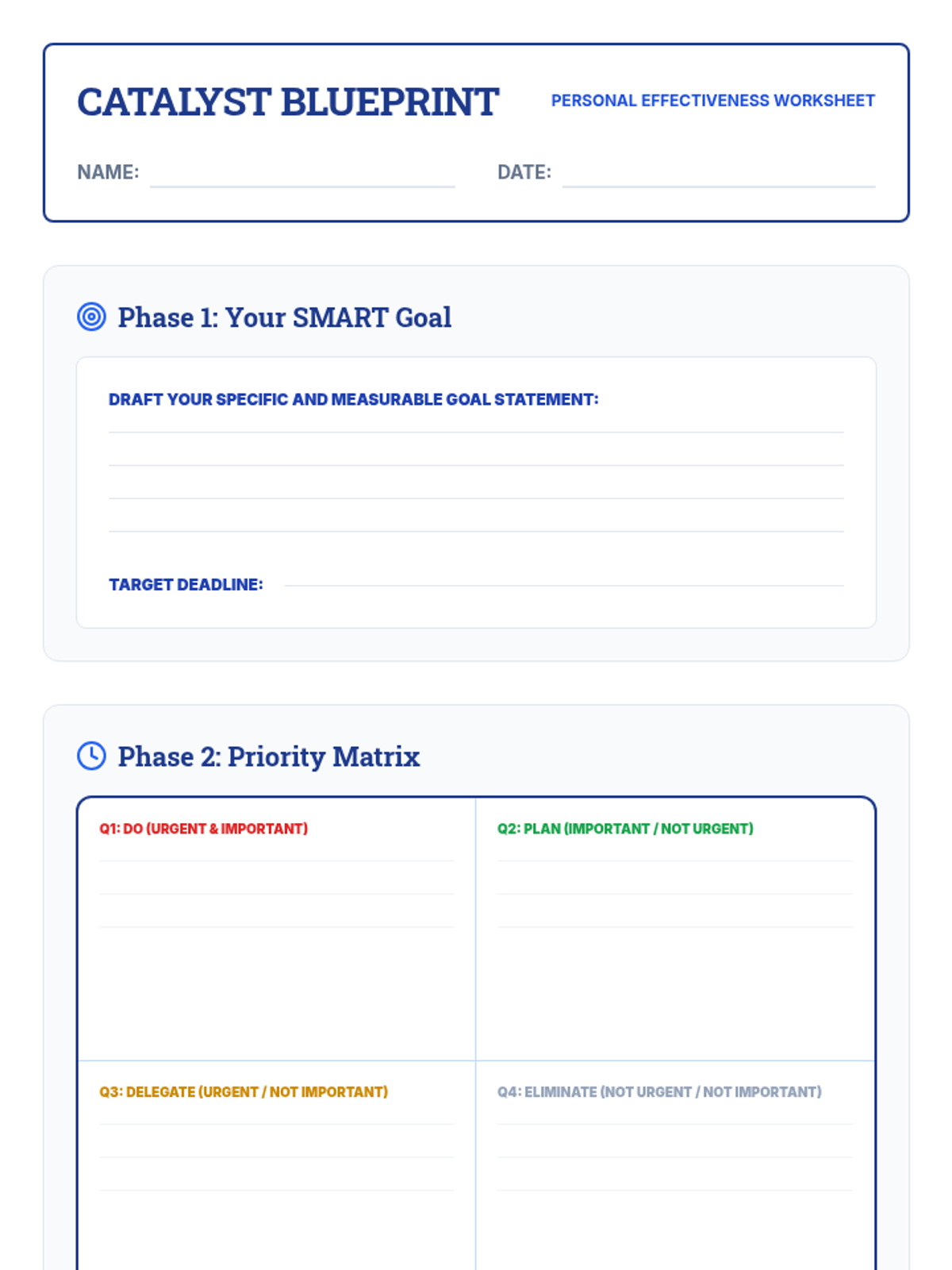
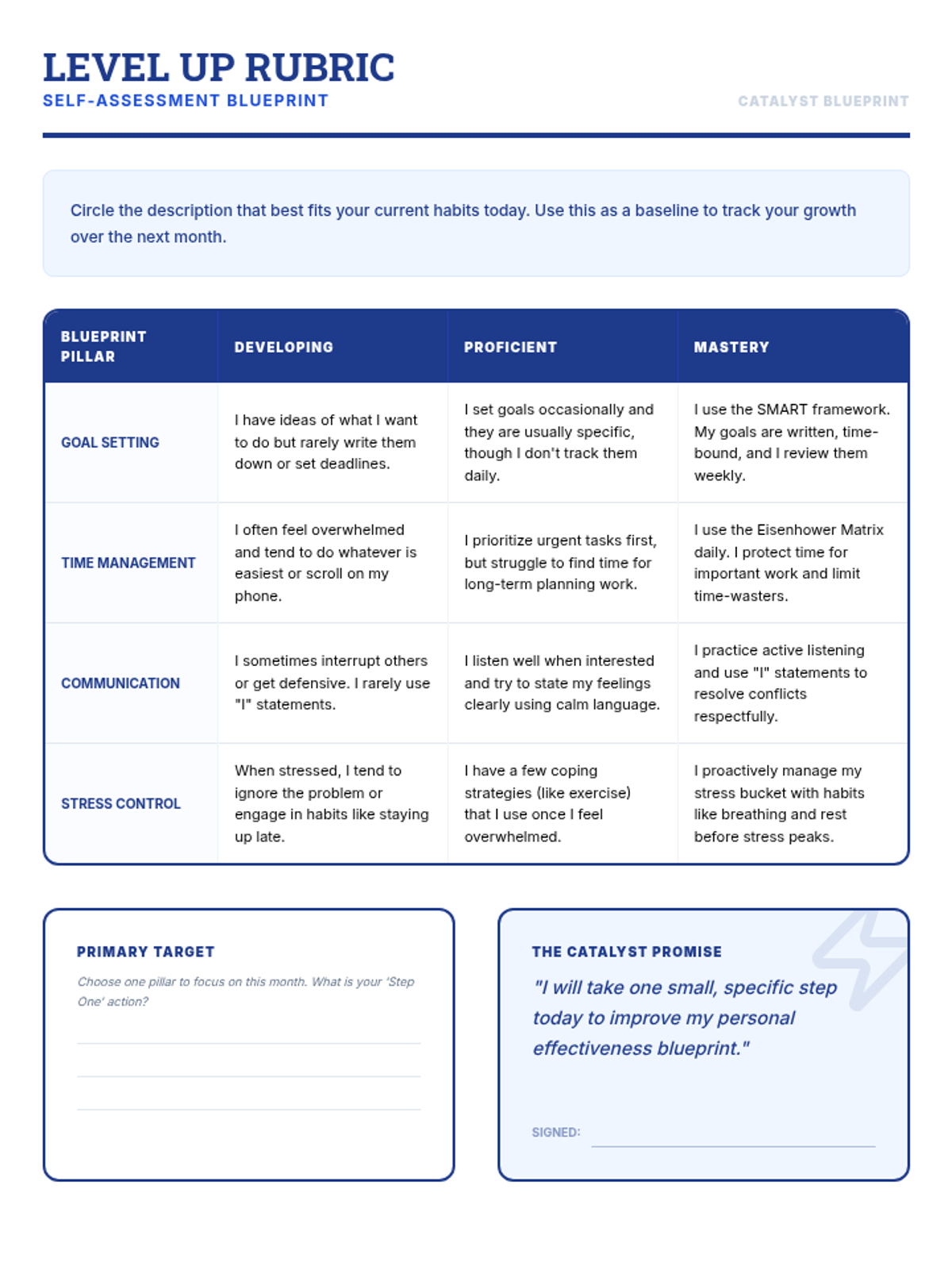
A comprehensive 45-minute session designed to equip students with core personal effectiveness skills including SMART goal setting, the Eisenhower Matrix for time management, active listening techniques, and stress reduction strategies.
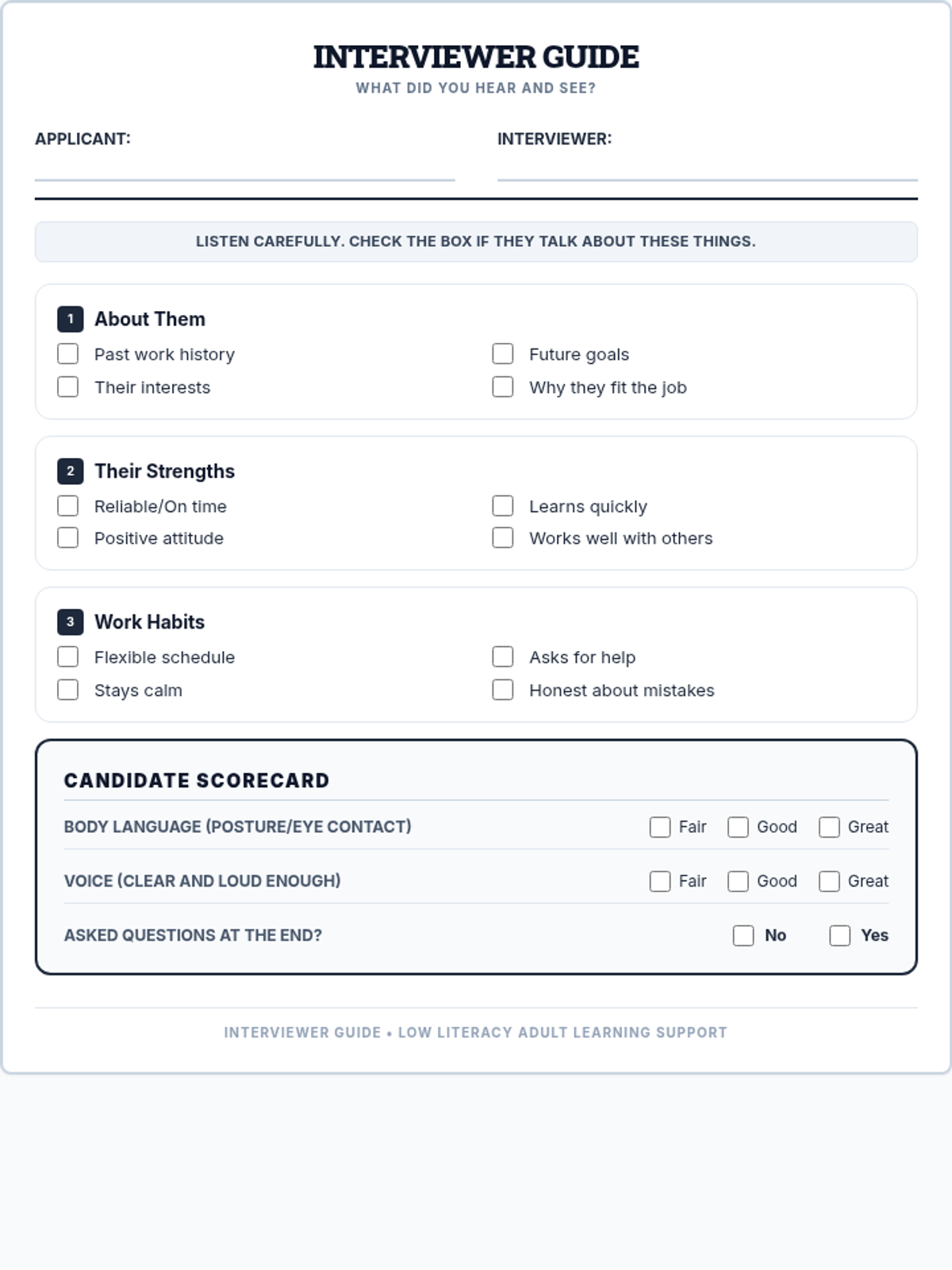
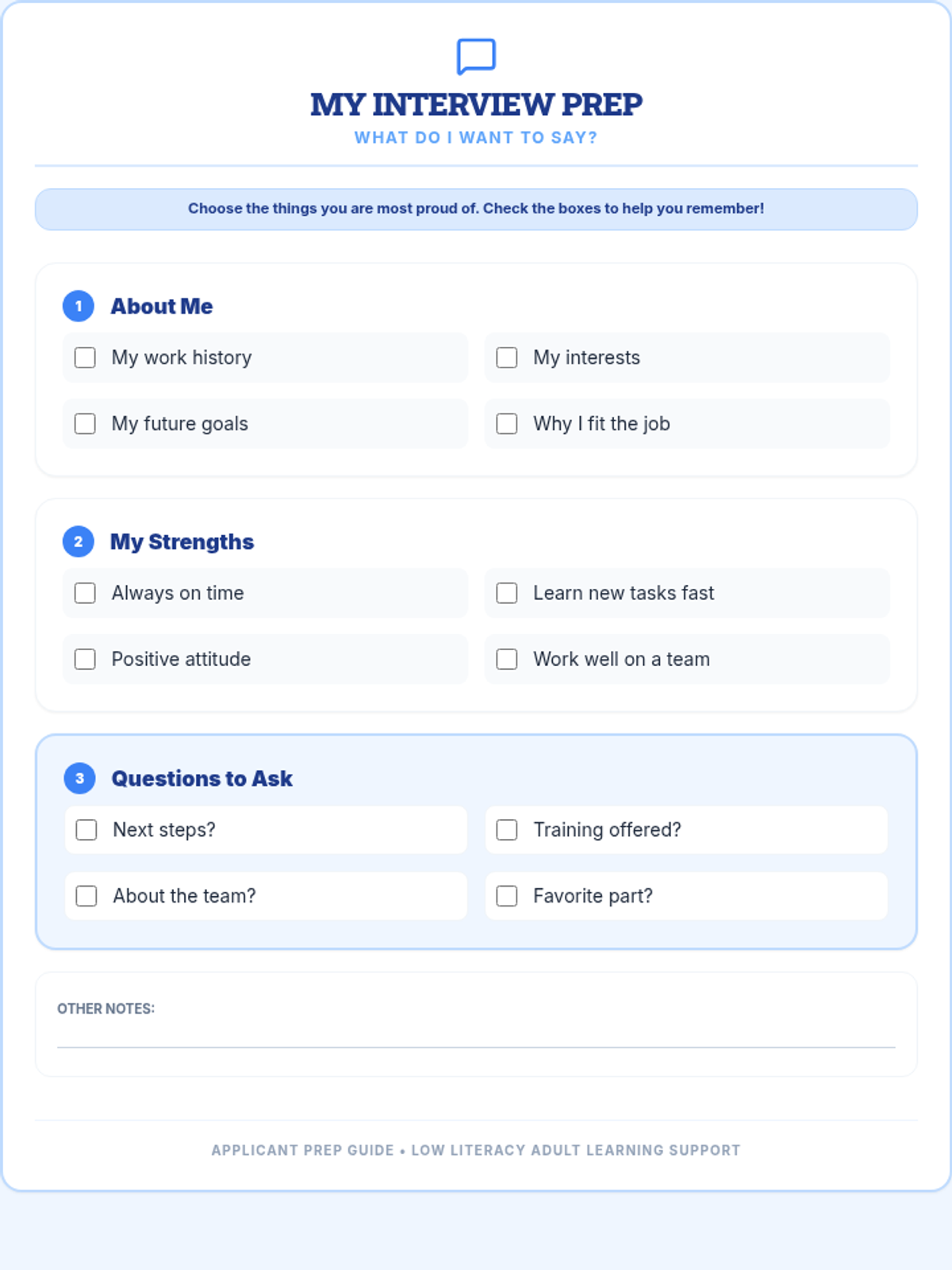
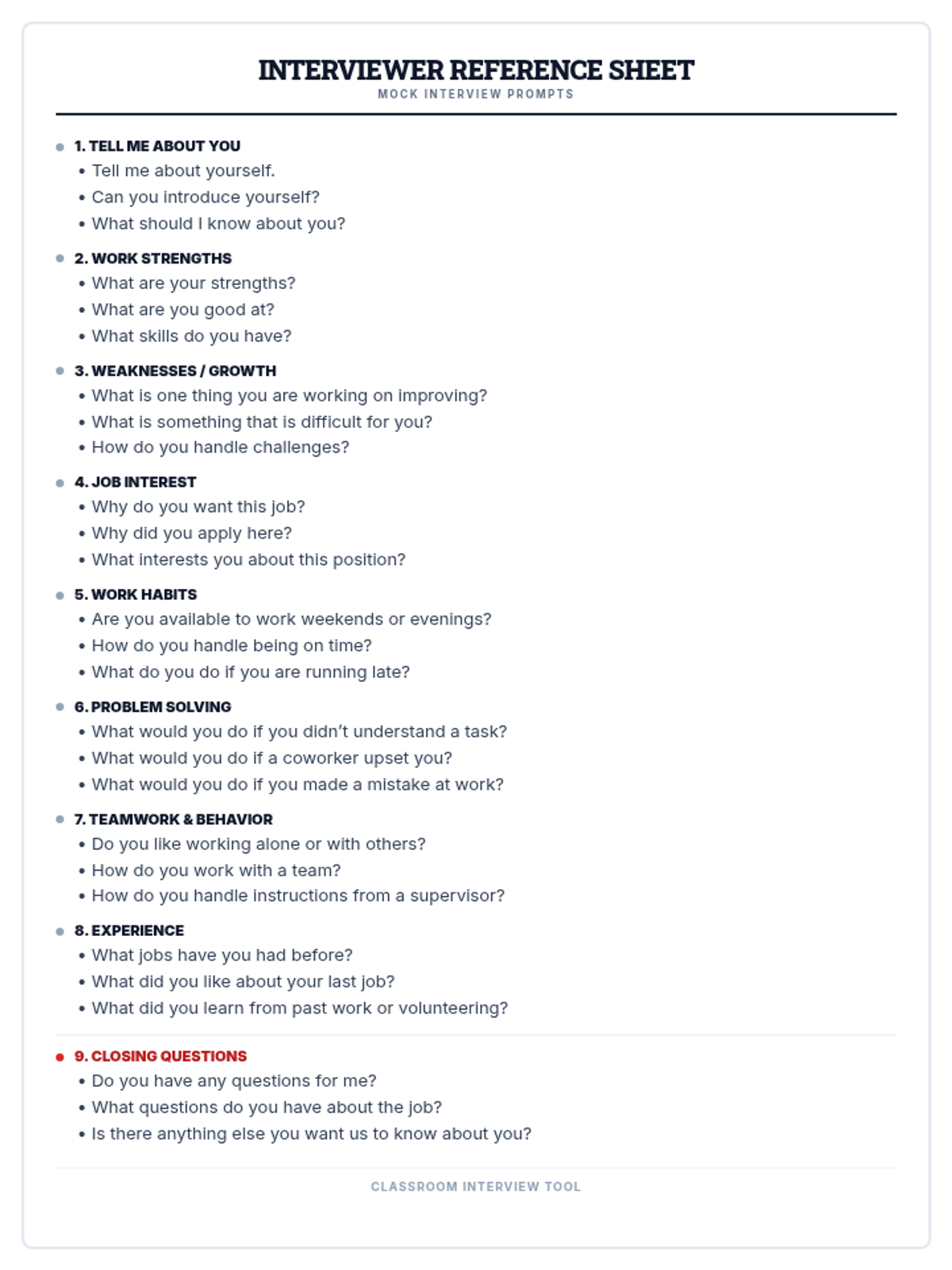
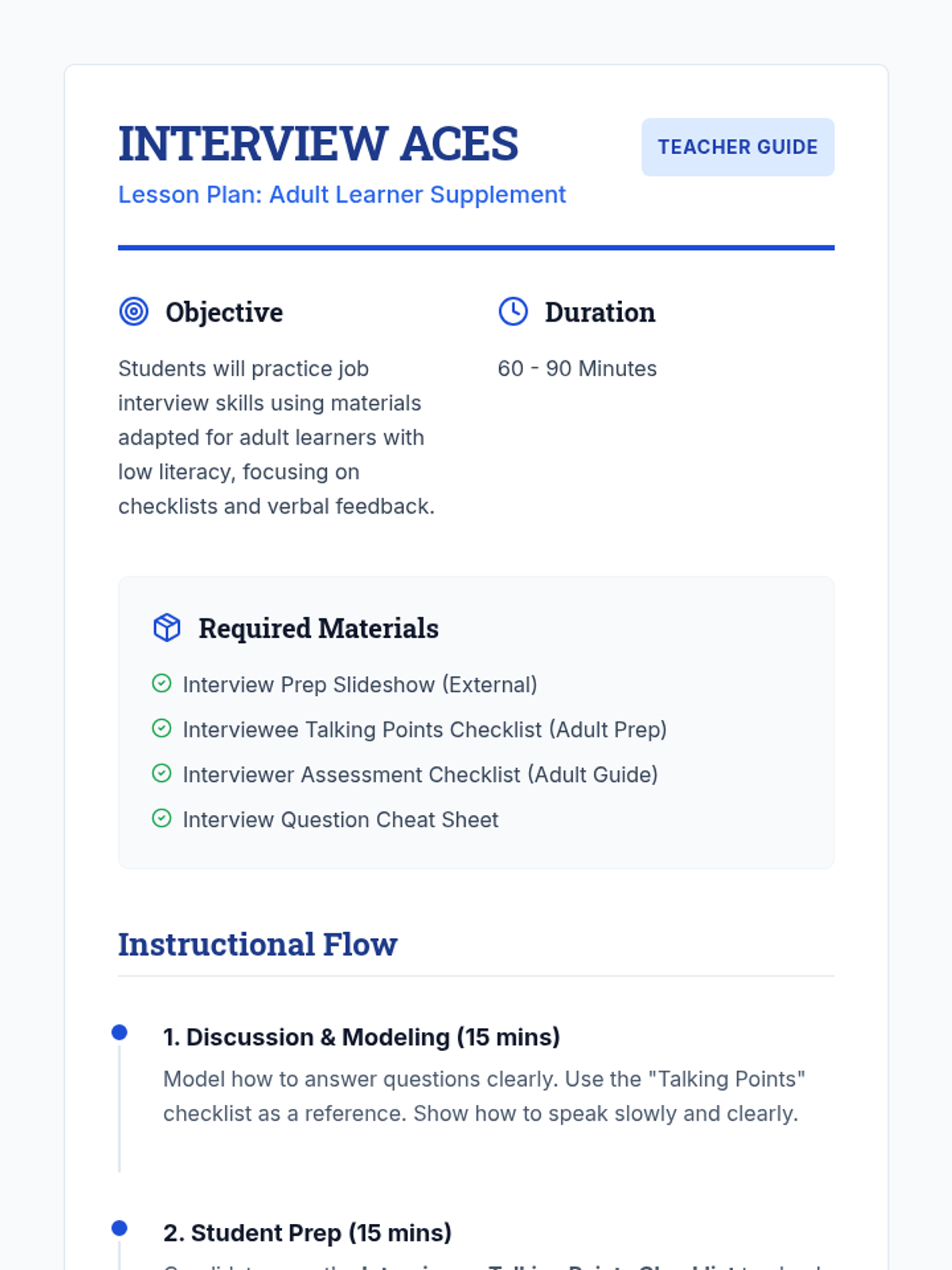
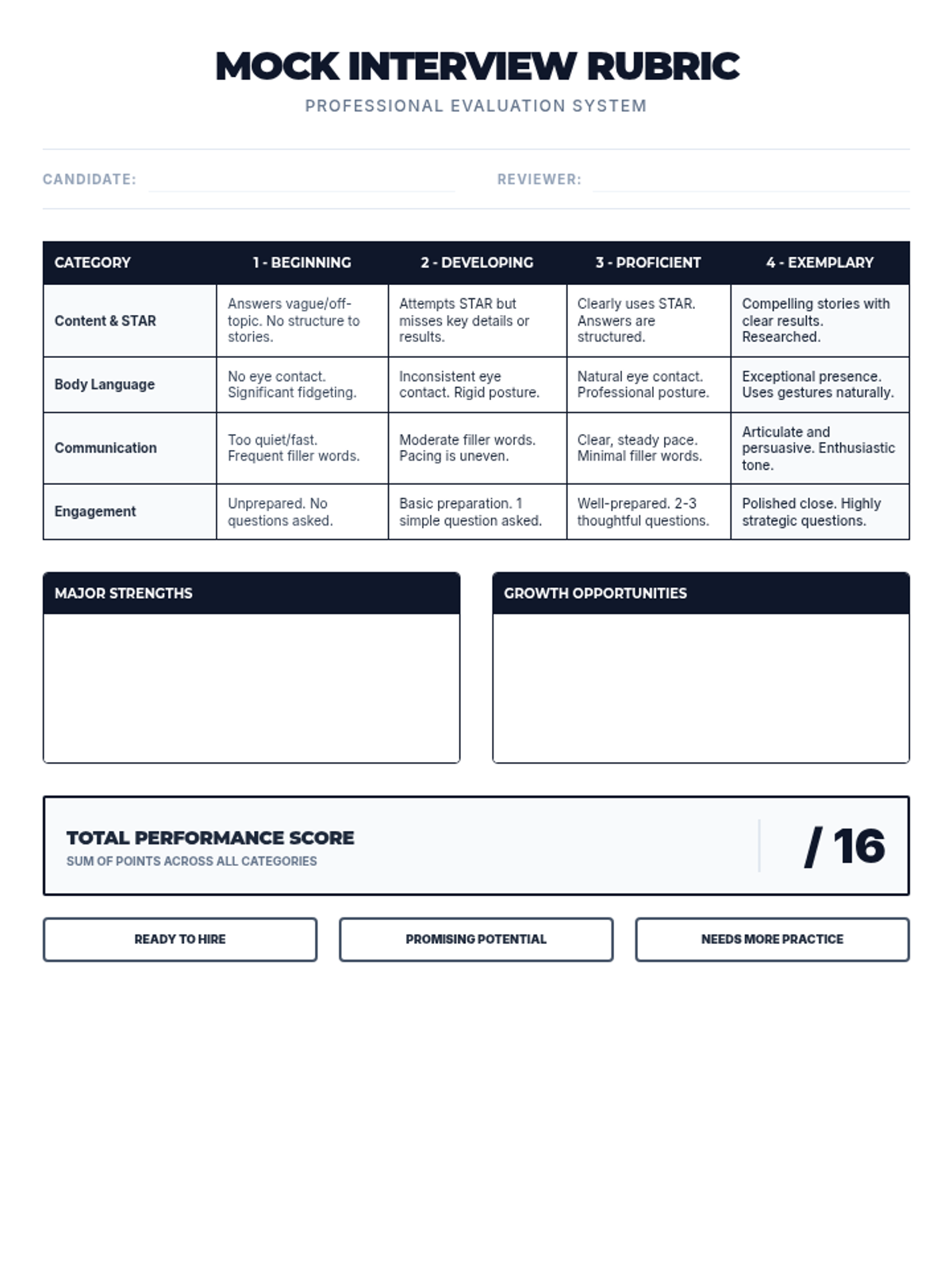
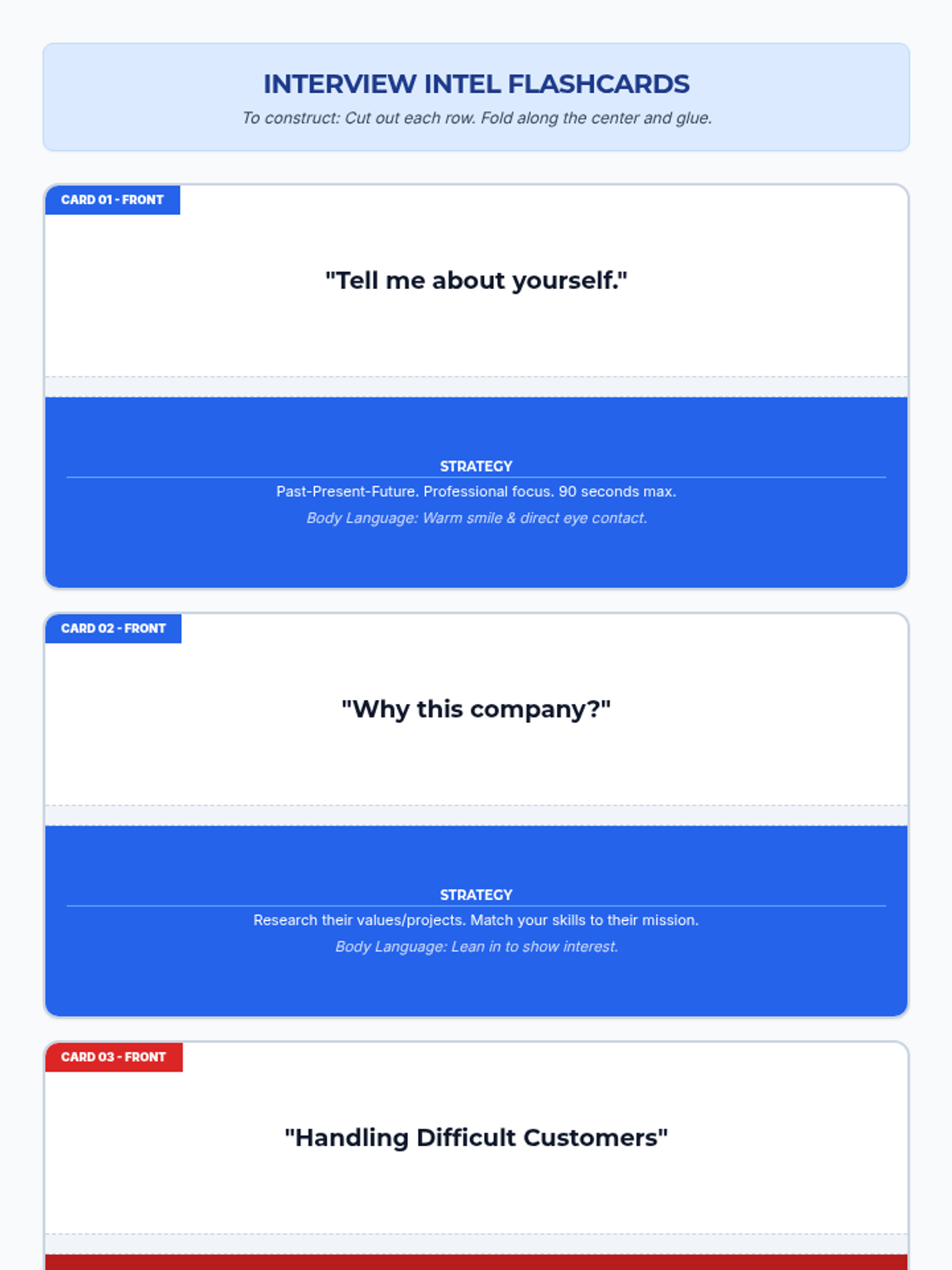
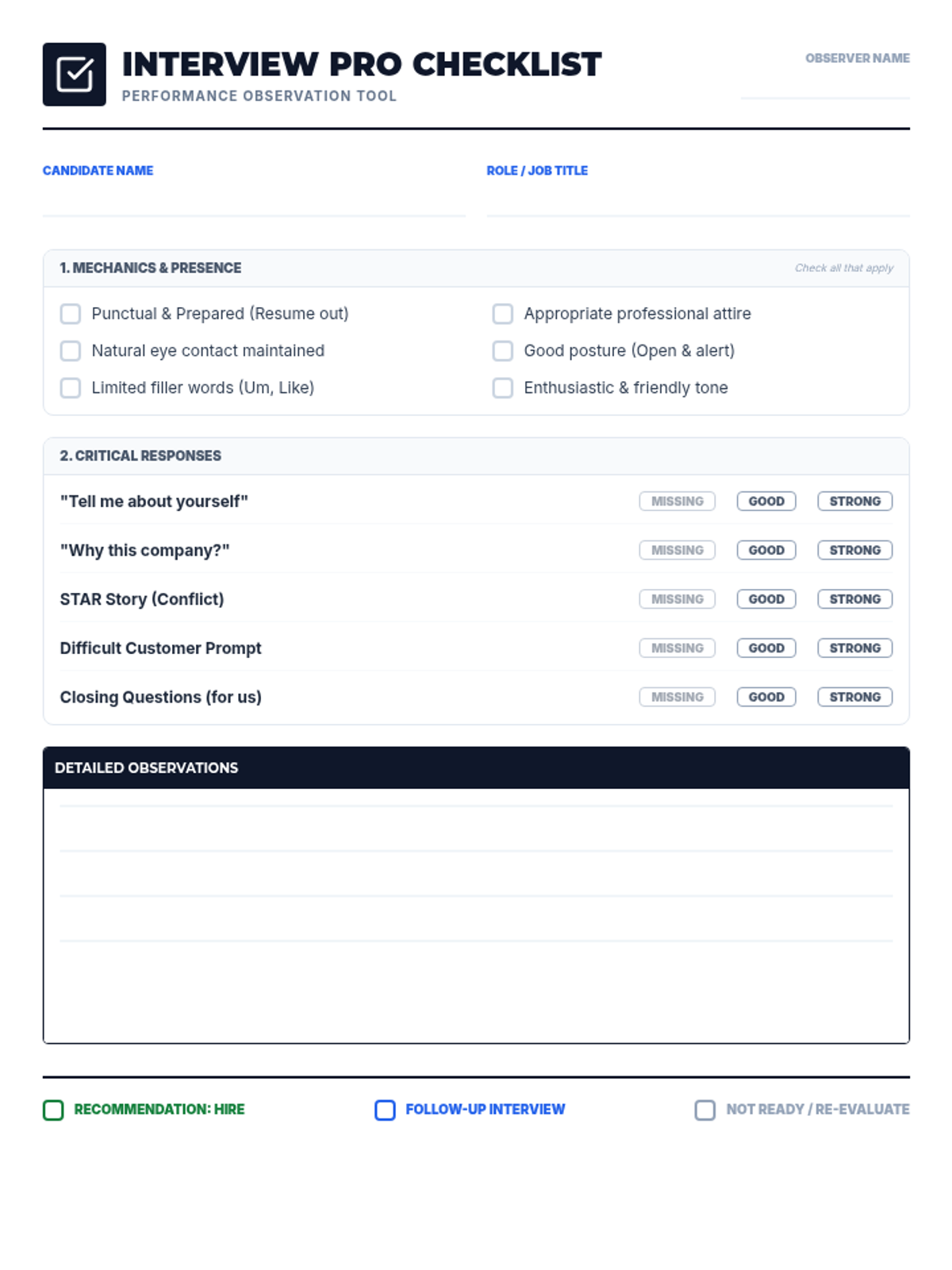
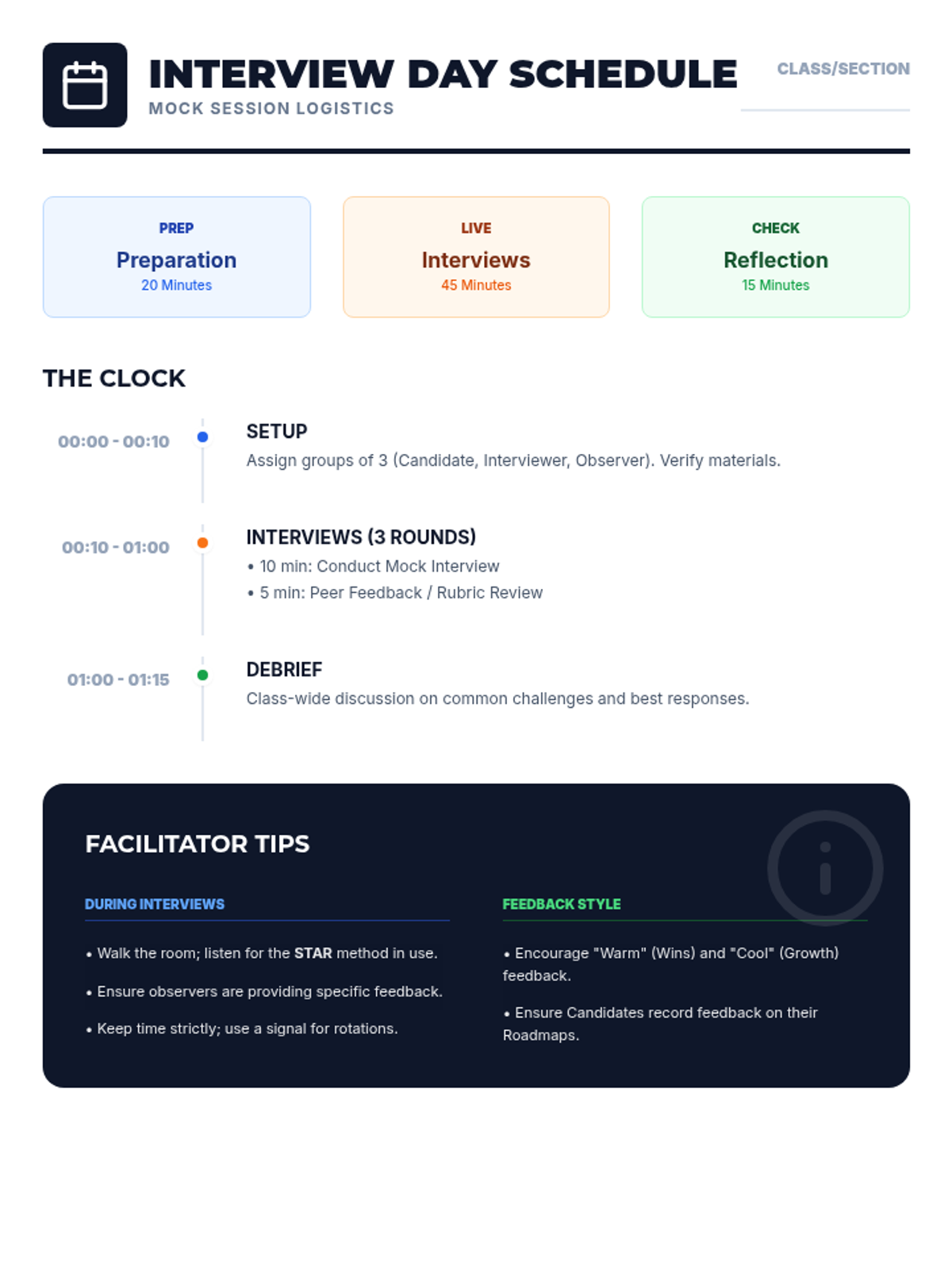
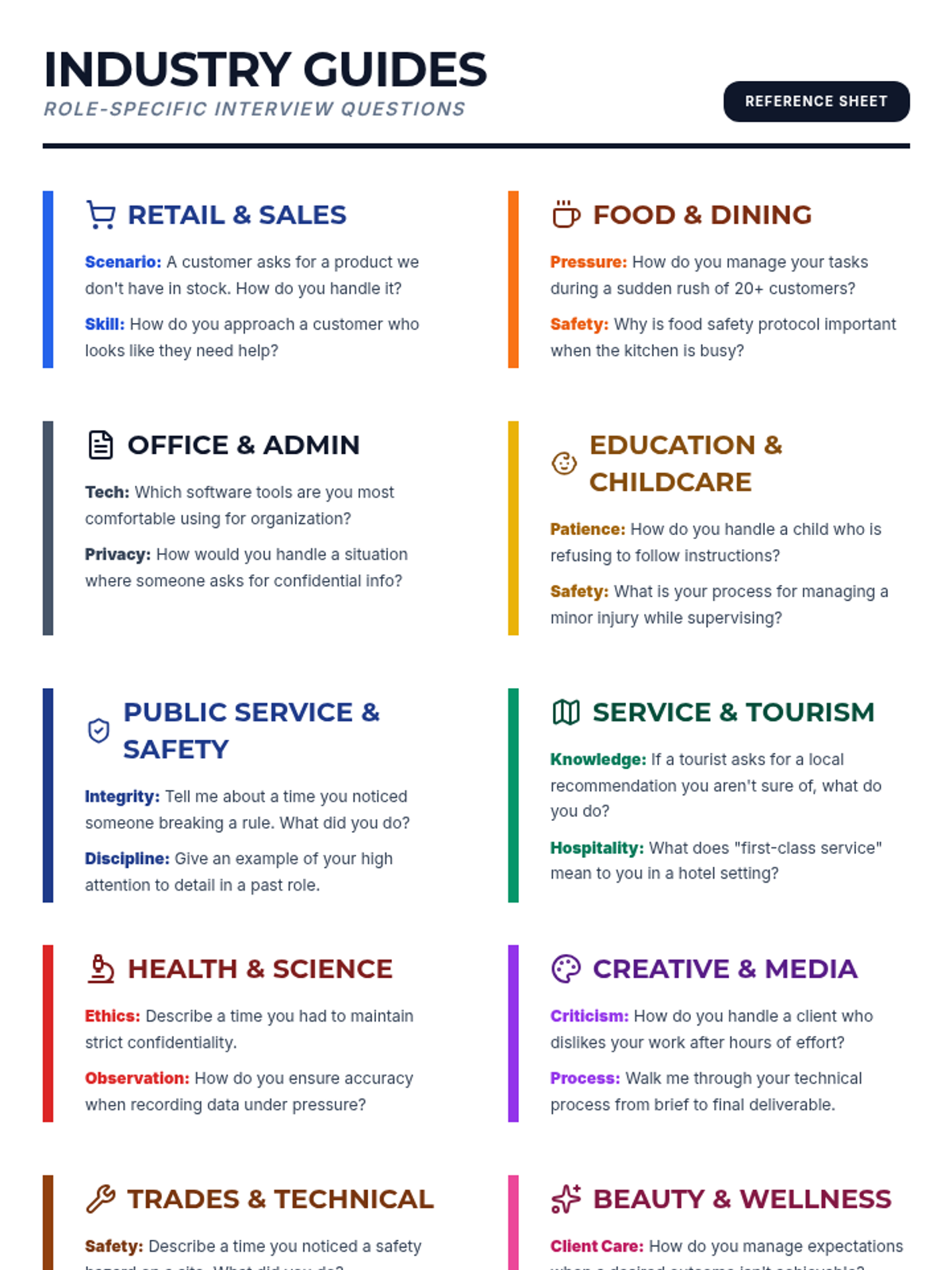
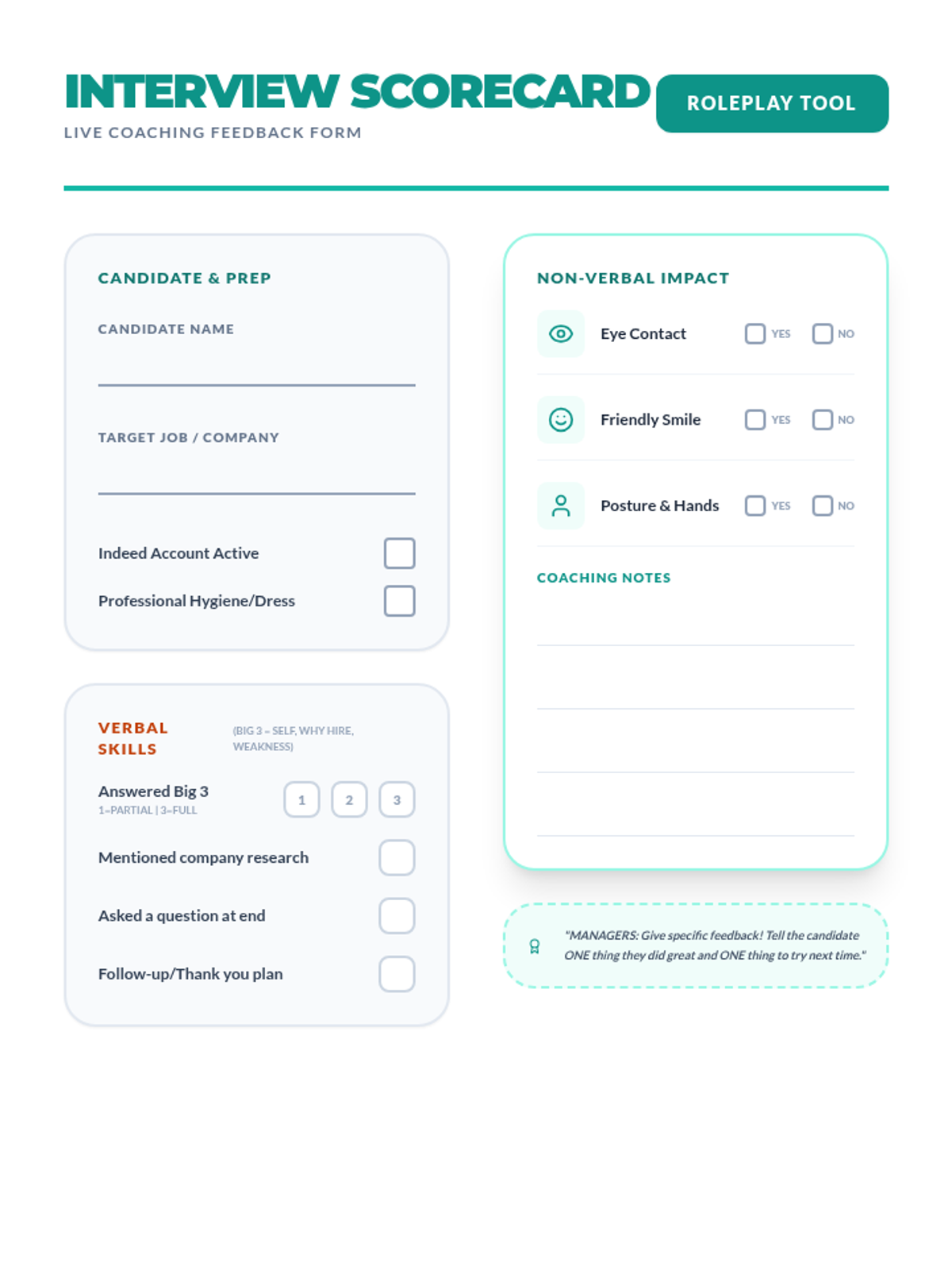
A comprehensive lesson on mastering job interviews through peer-to-peer practice, feedback loops, and self-reflection based on real-world interview categories.
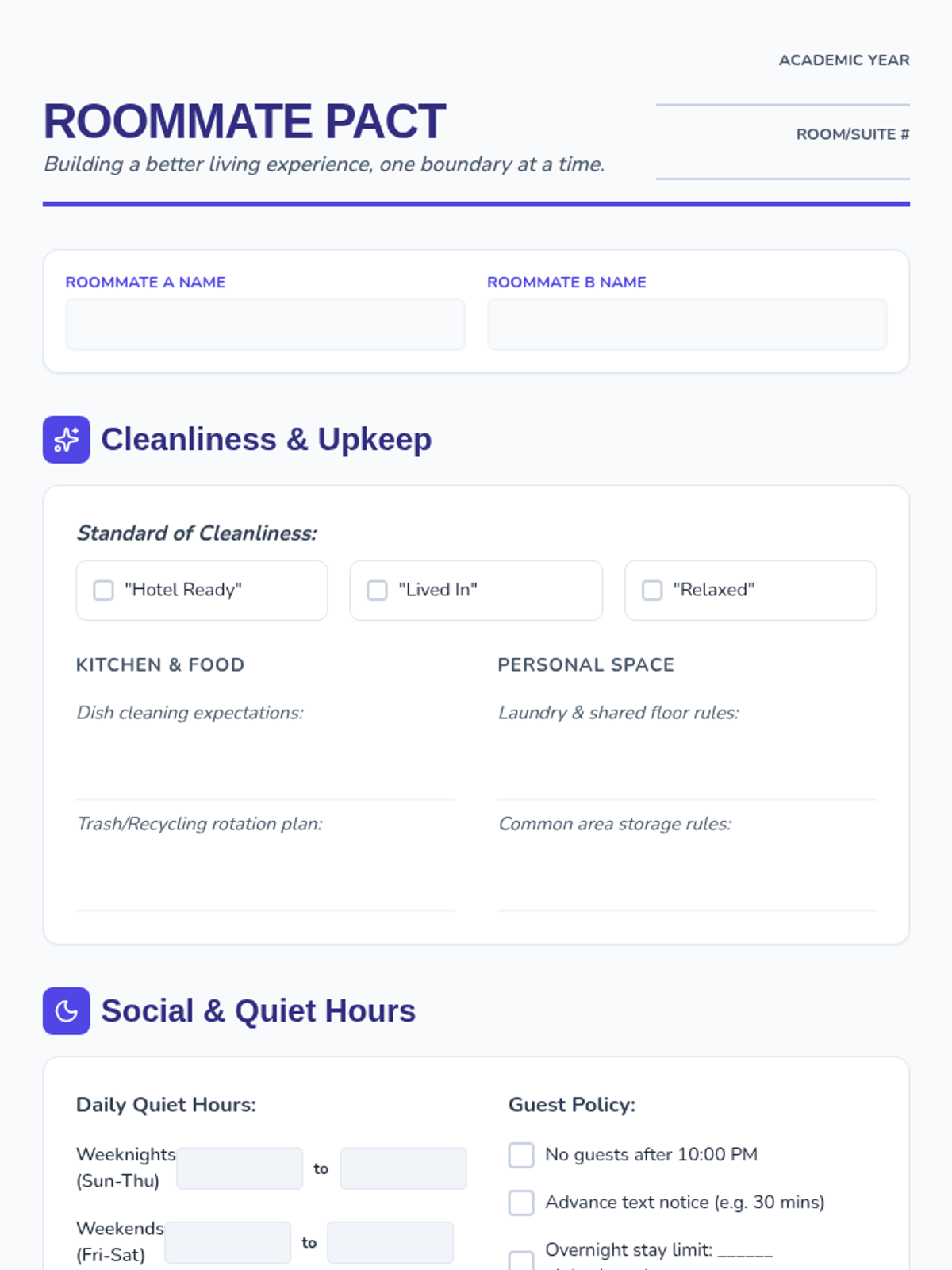
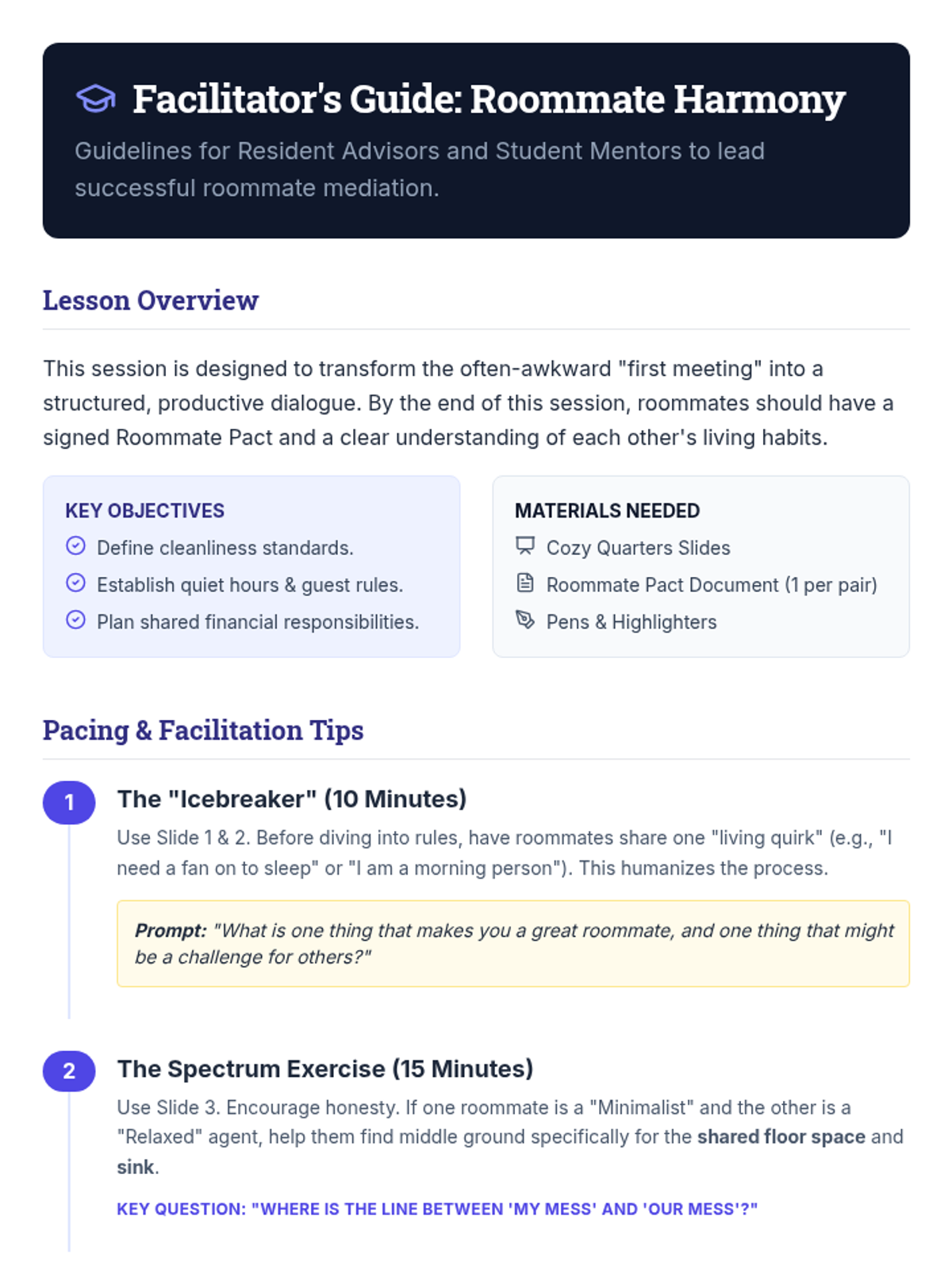
A comprehensive guide for college students to establish healthy living boundaries, manage shared expenses, and maintain a clean environment through a formal roommate agreement.
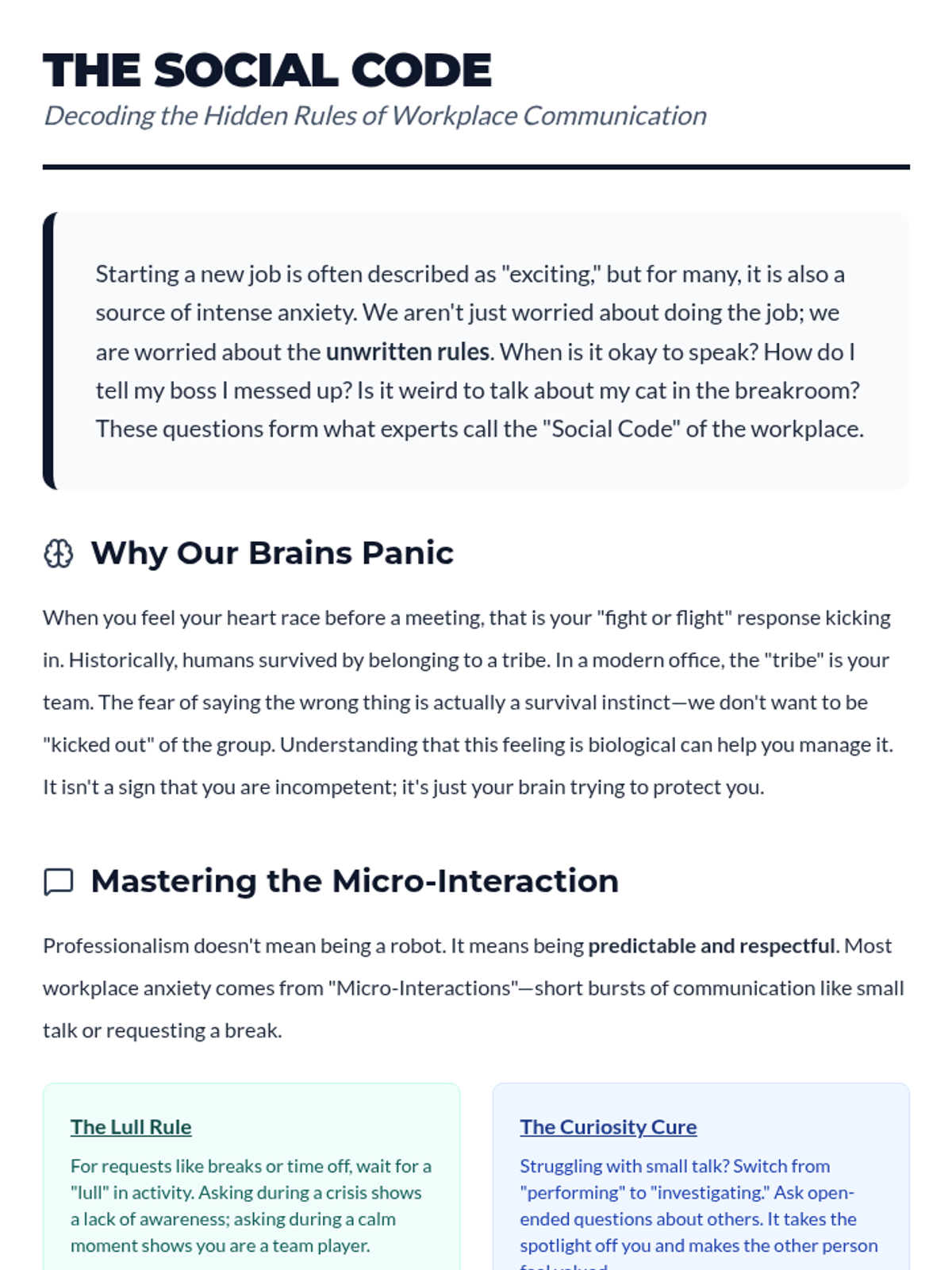
A comprehensive lesson on navigating professional workplace communication, focusing on building confidence and reducing anxiety in common social scenarios.
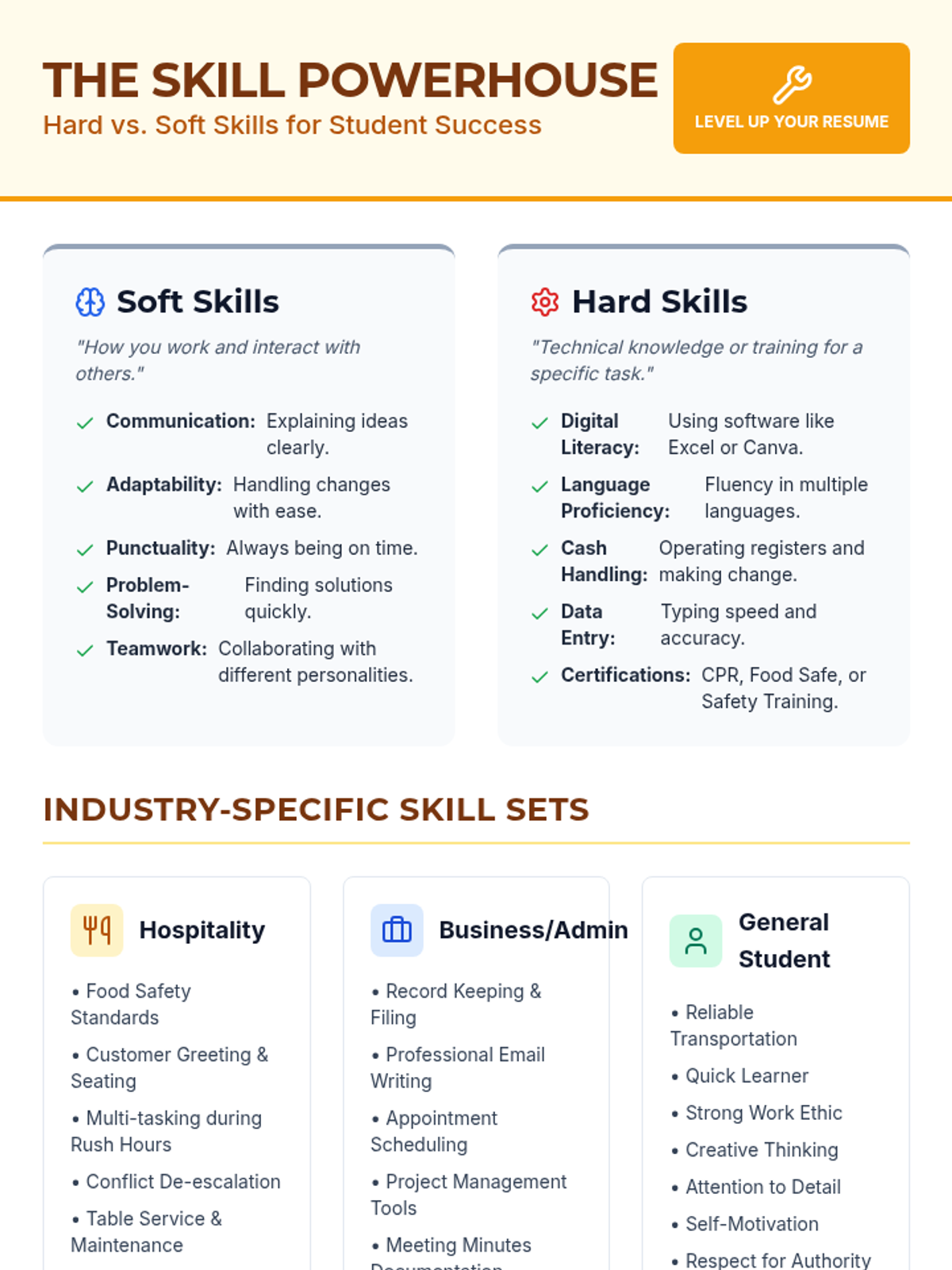
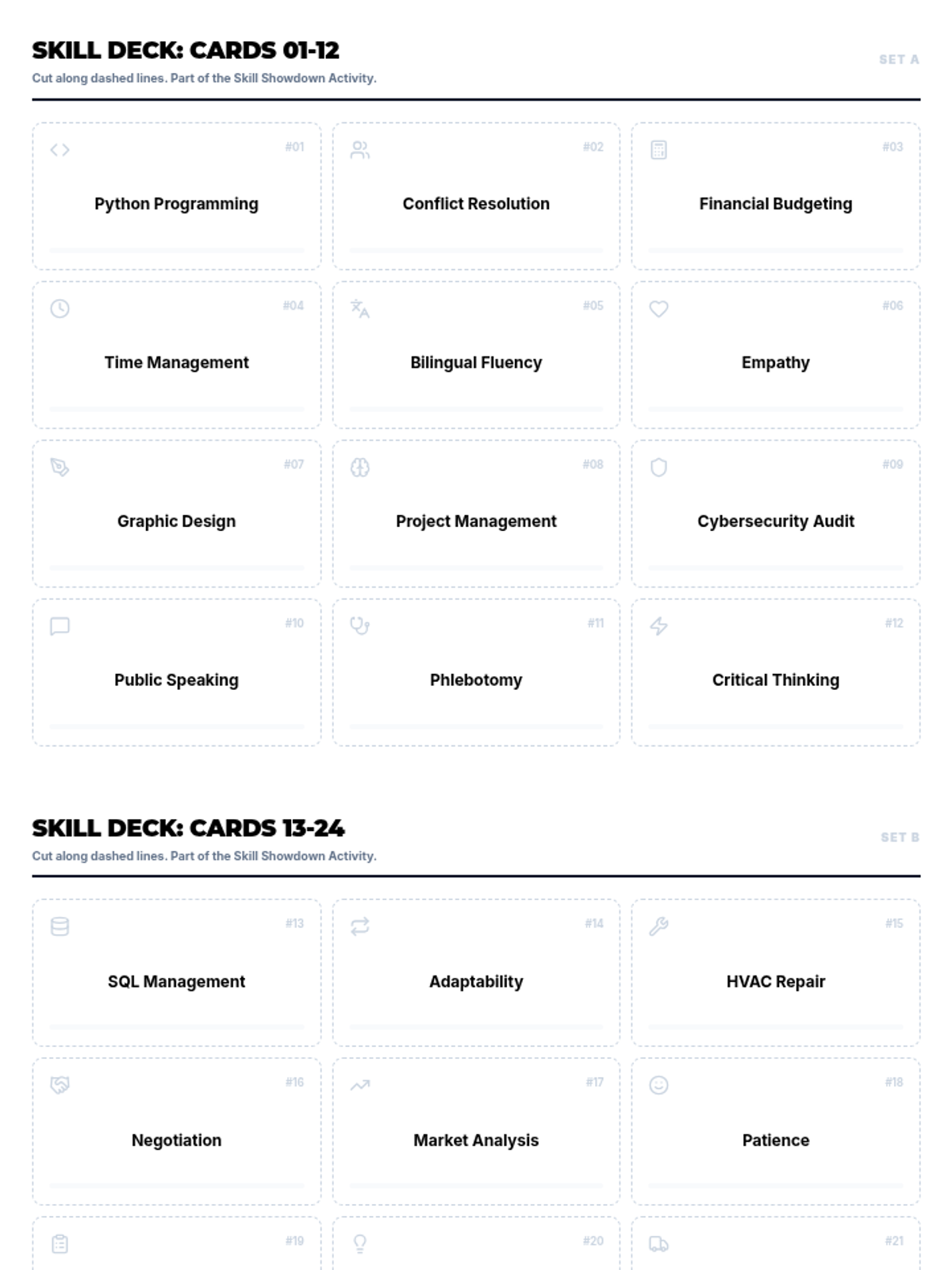
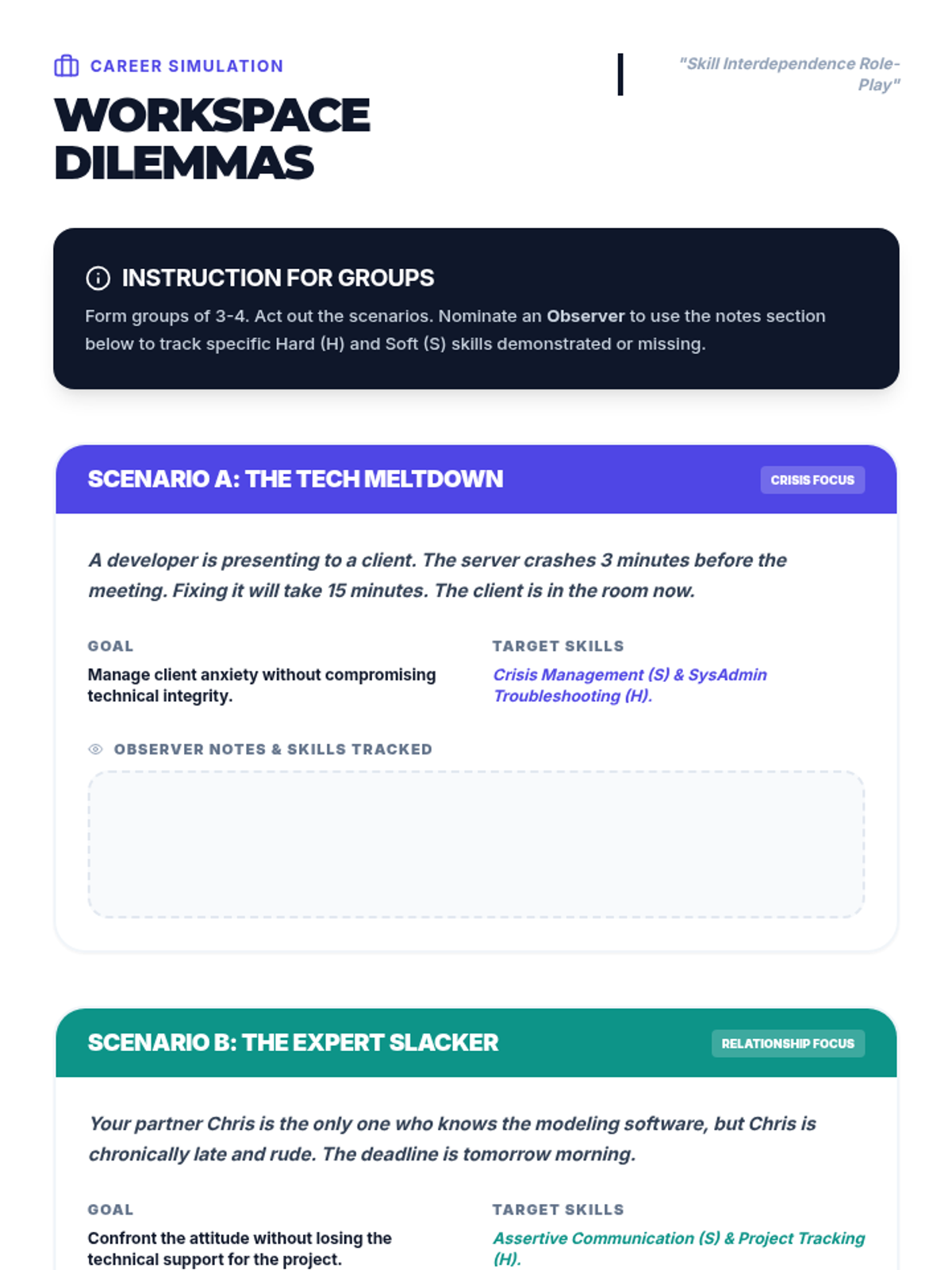
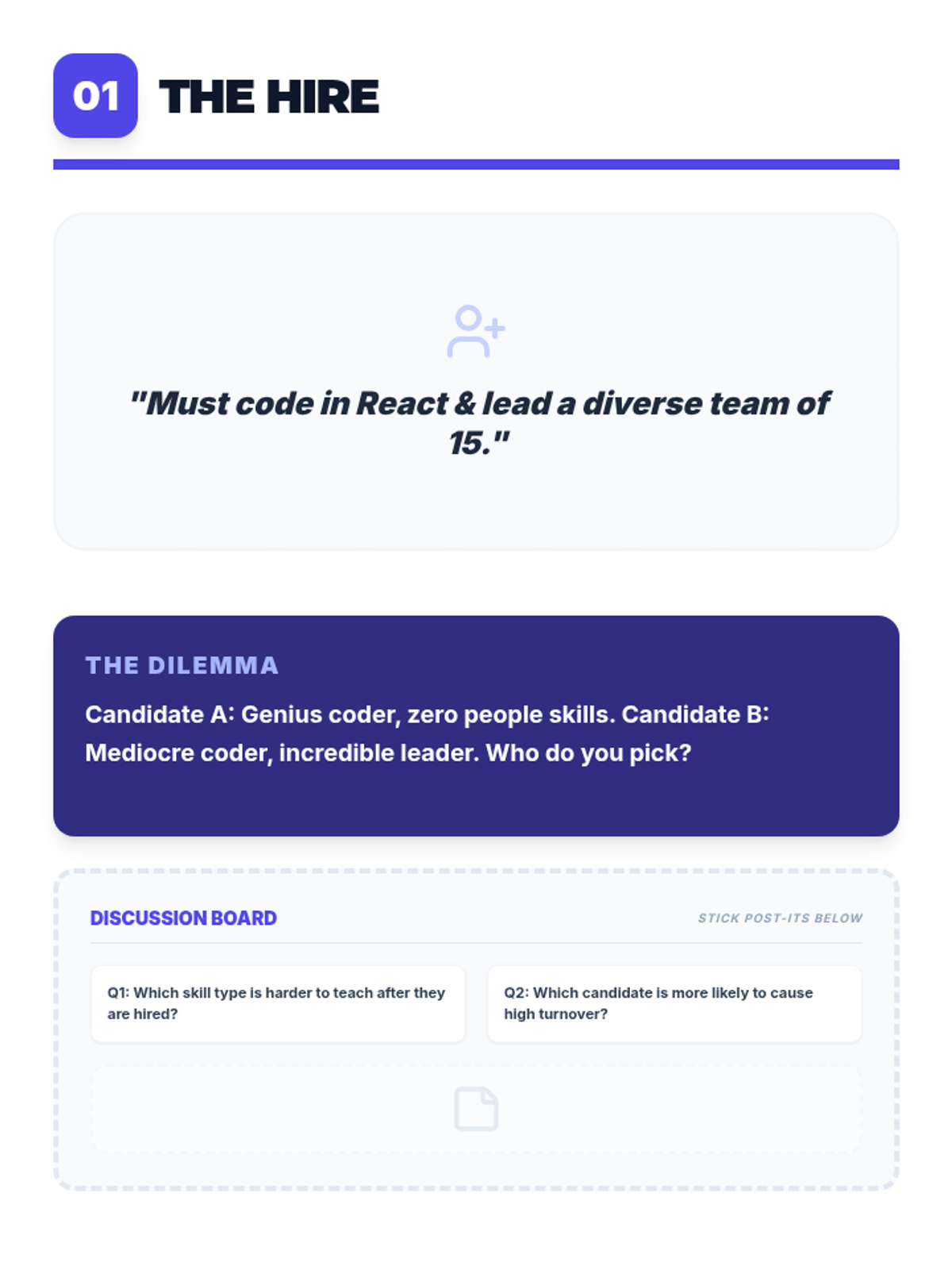
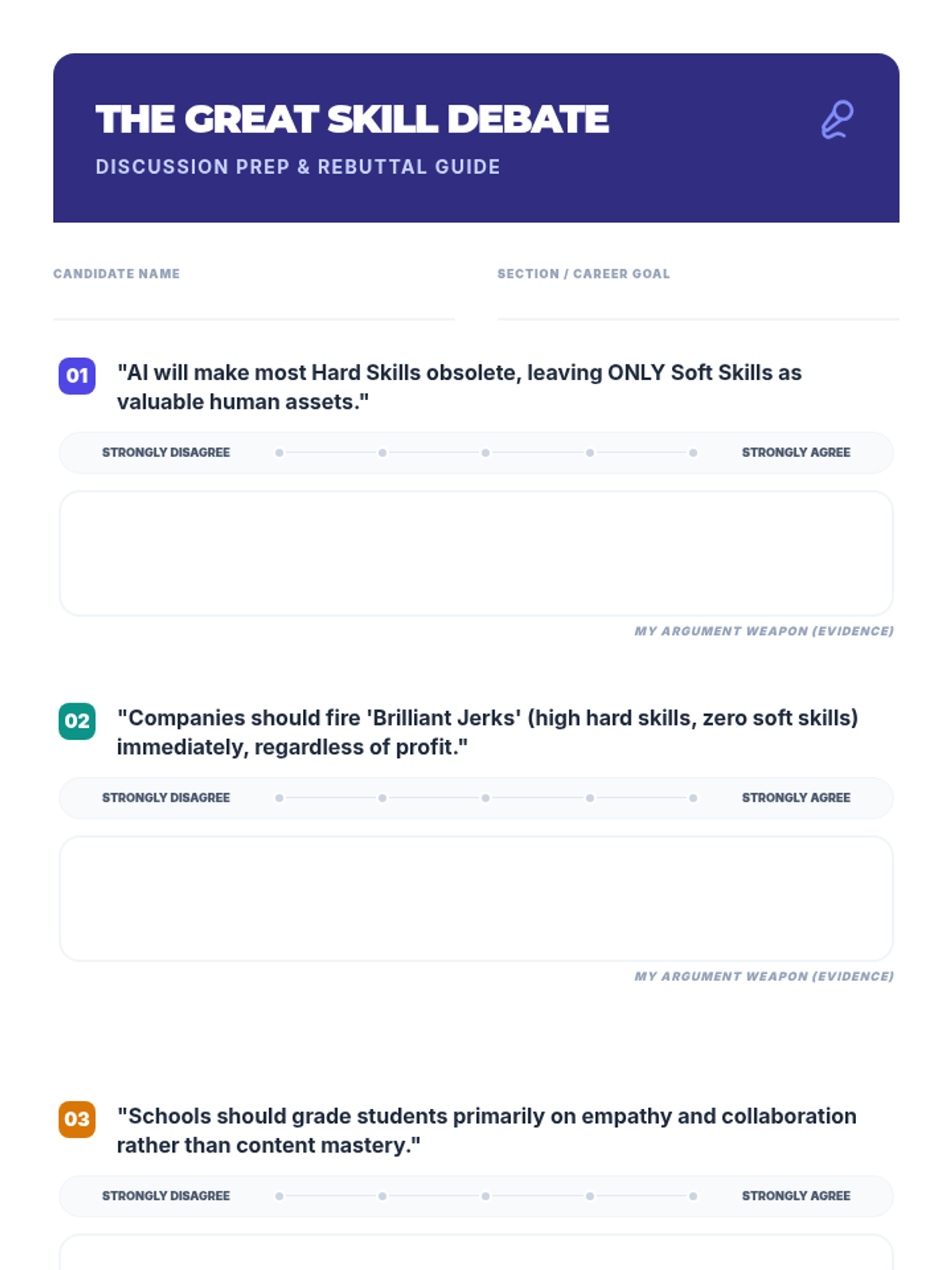
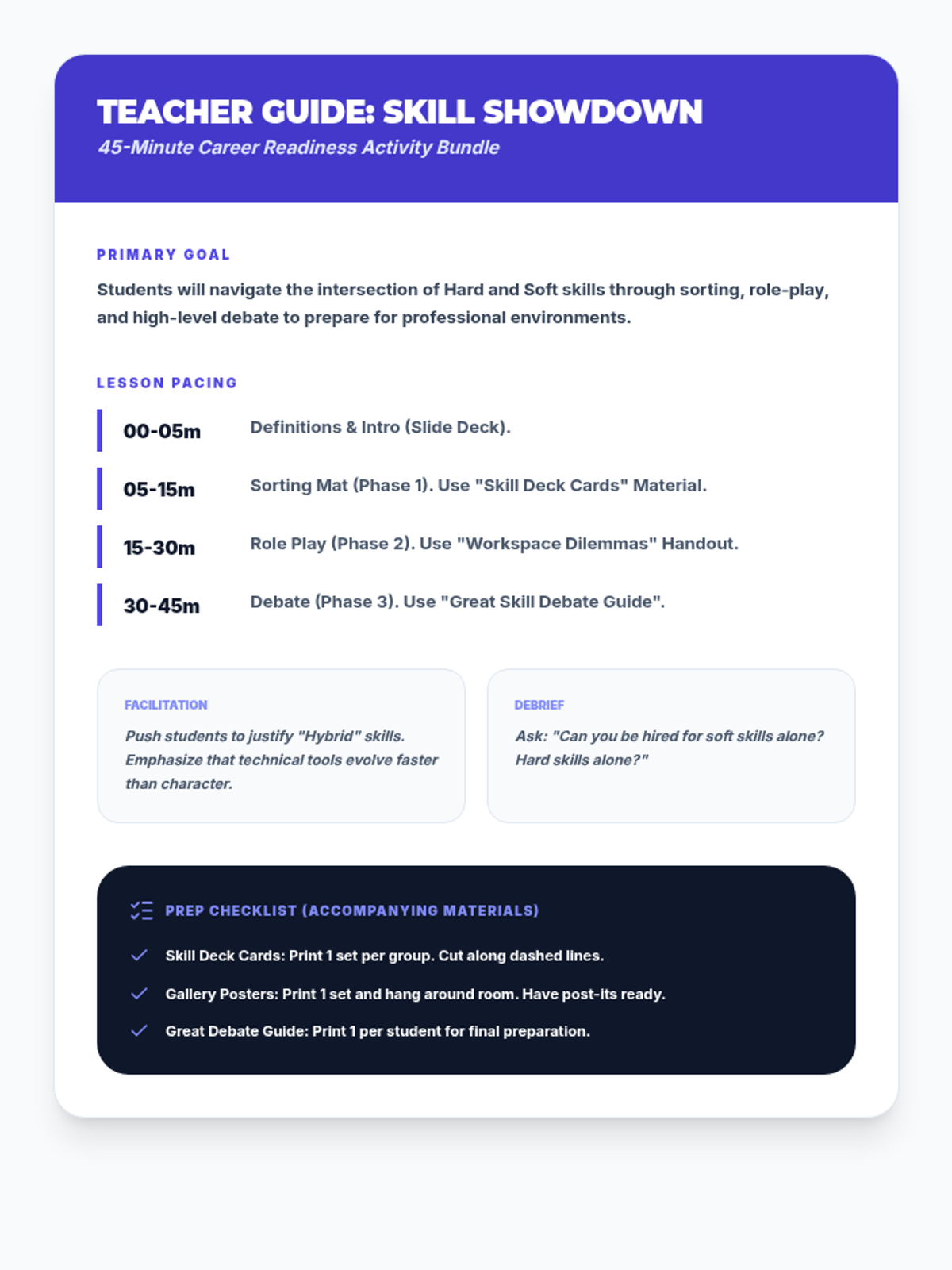
An interactive lesson comparing hard and soft skills using card sorting, role-play, gallery walks, and debates to prepare seniors for the workplace.
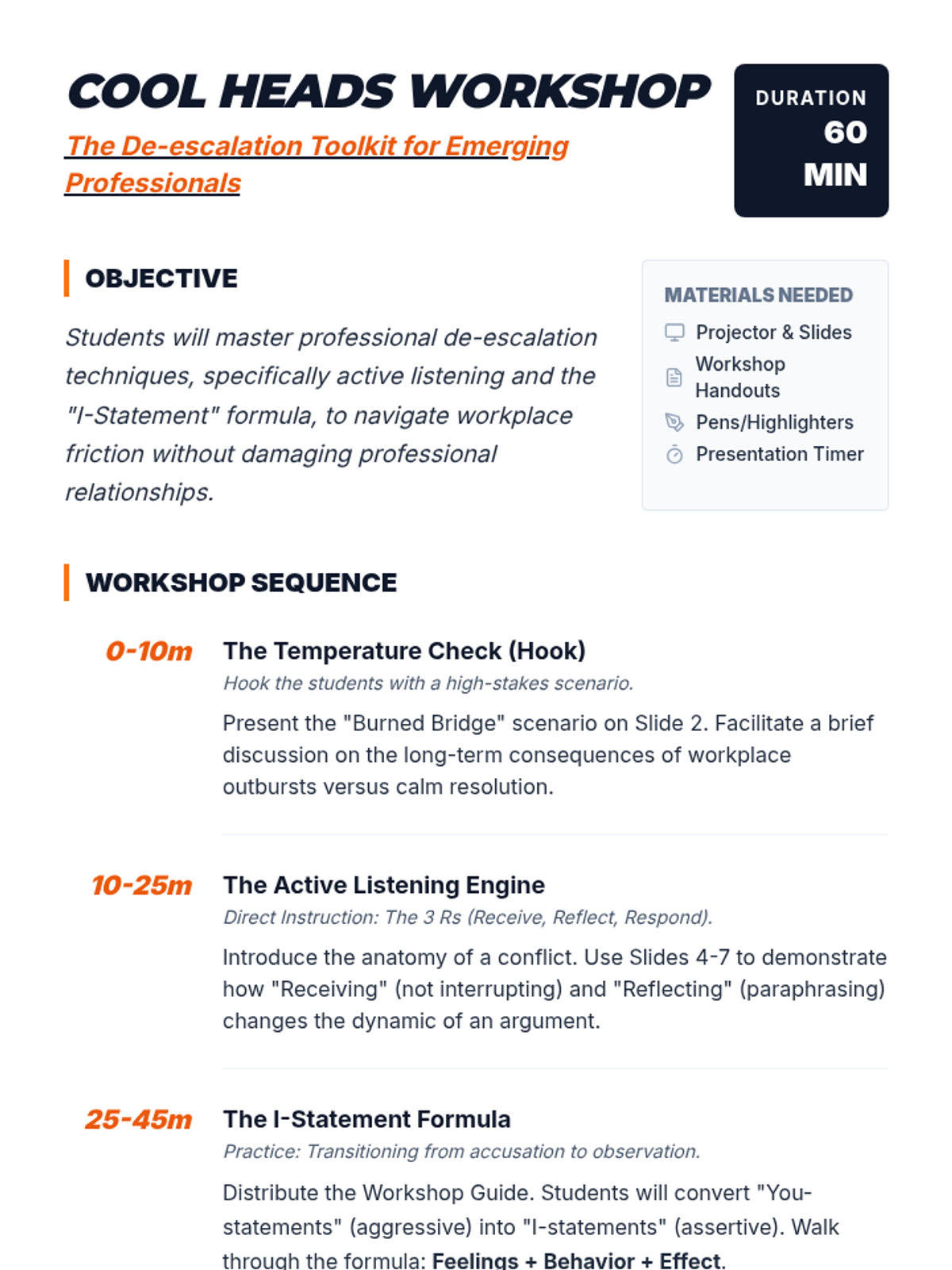
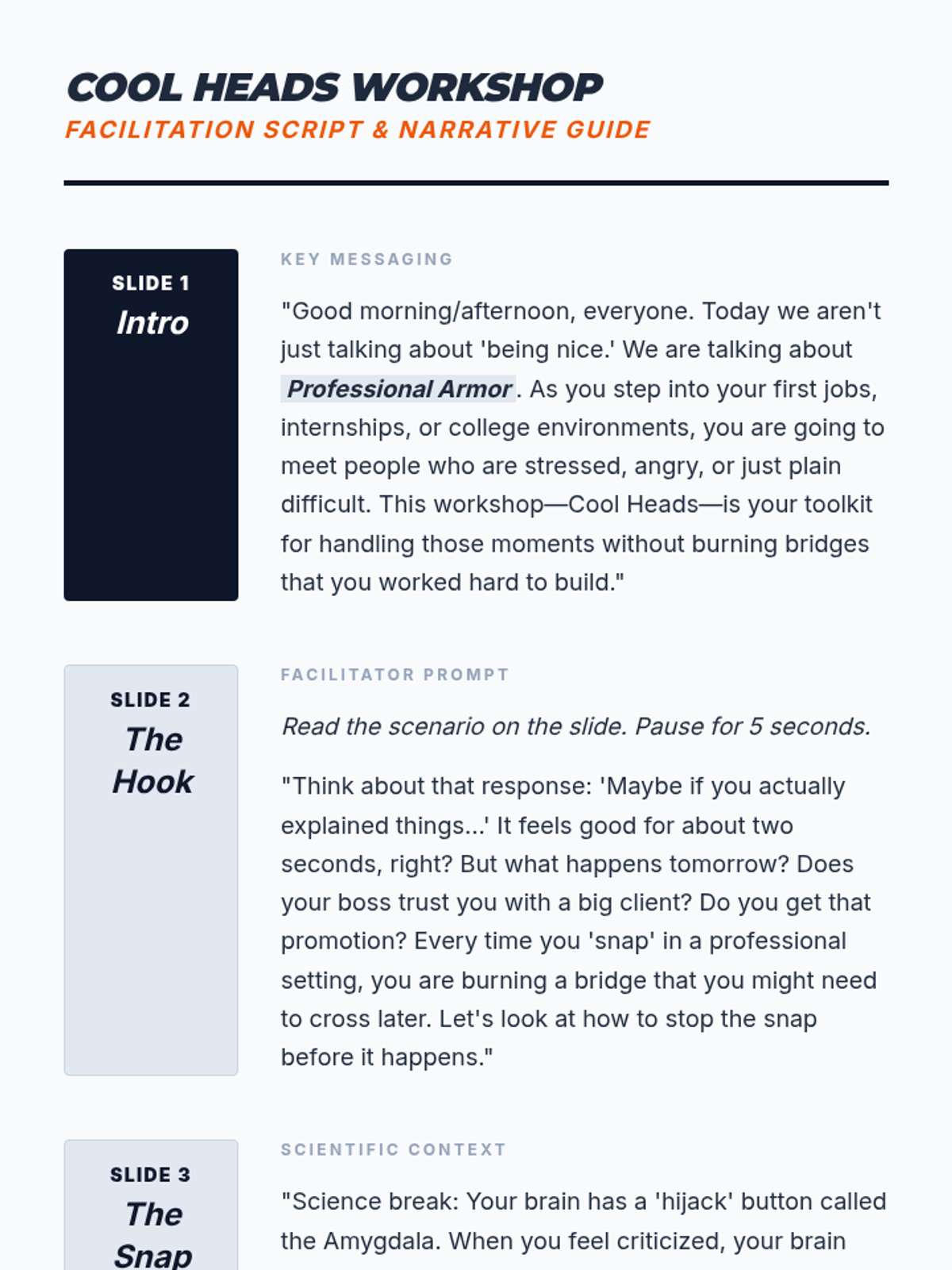
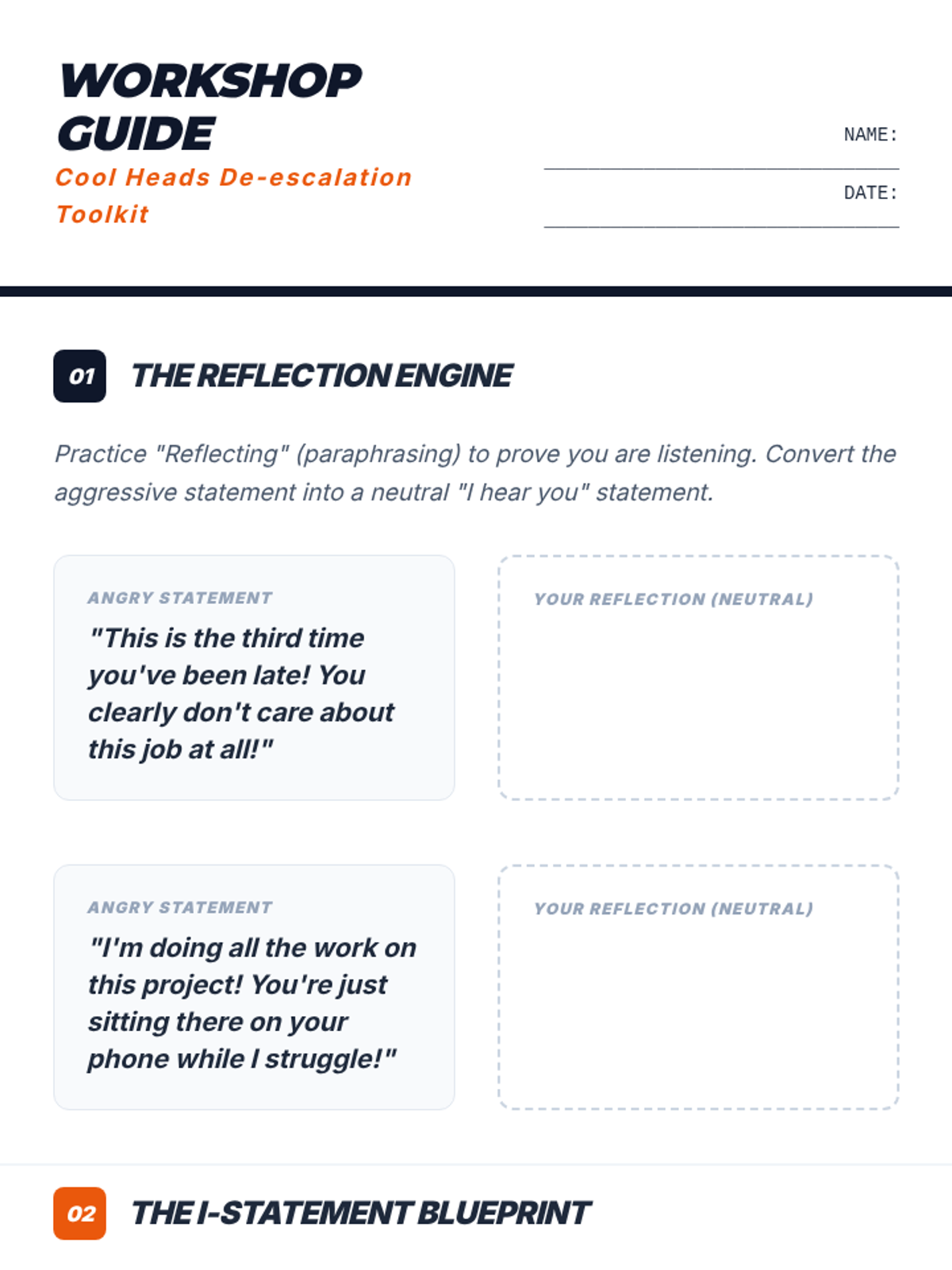
A professional communication workshop for 12th graders focusing on workplace de-escalation, active listening, and the 'I-statement' method to manage conflict effectively.
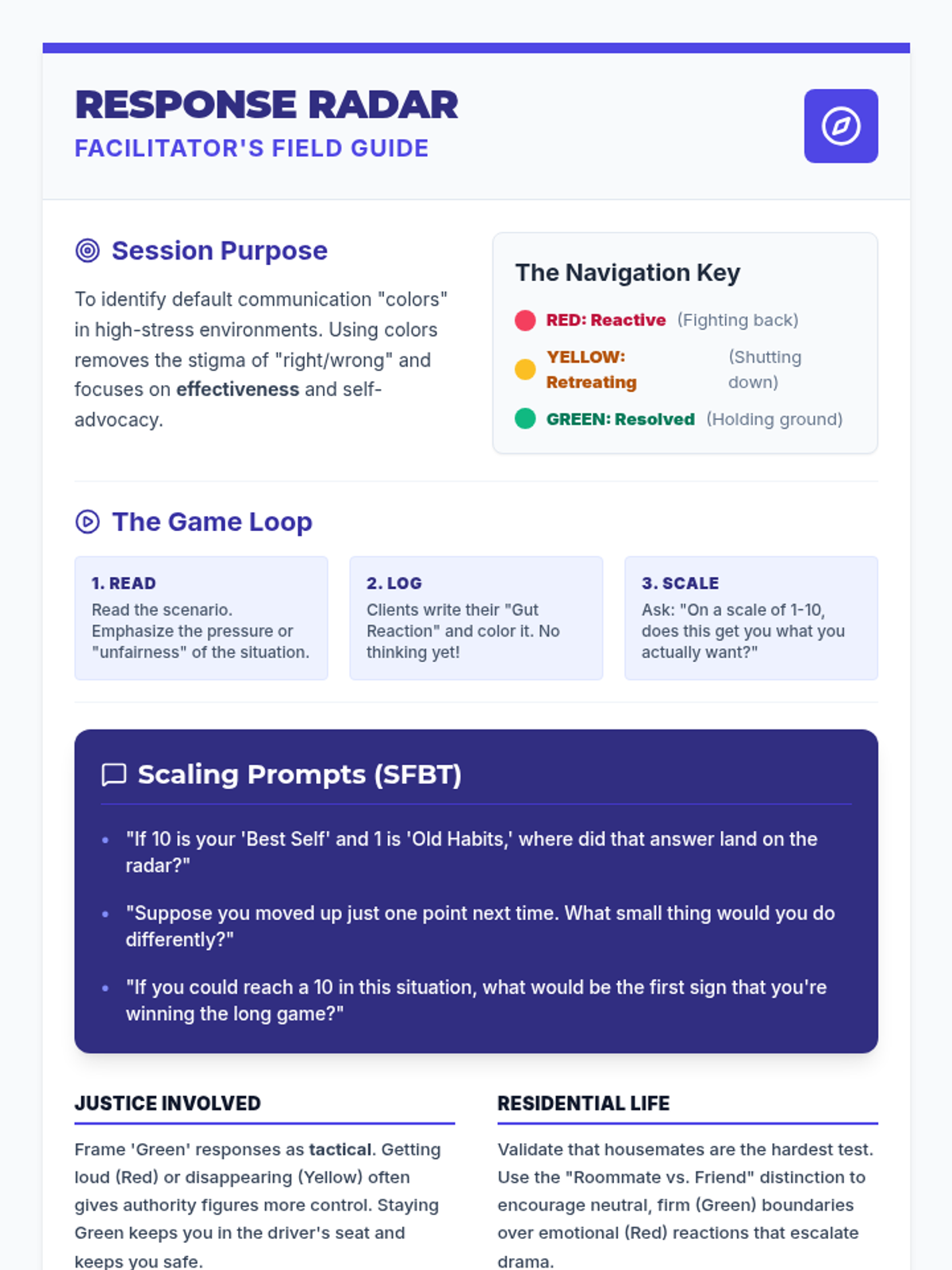
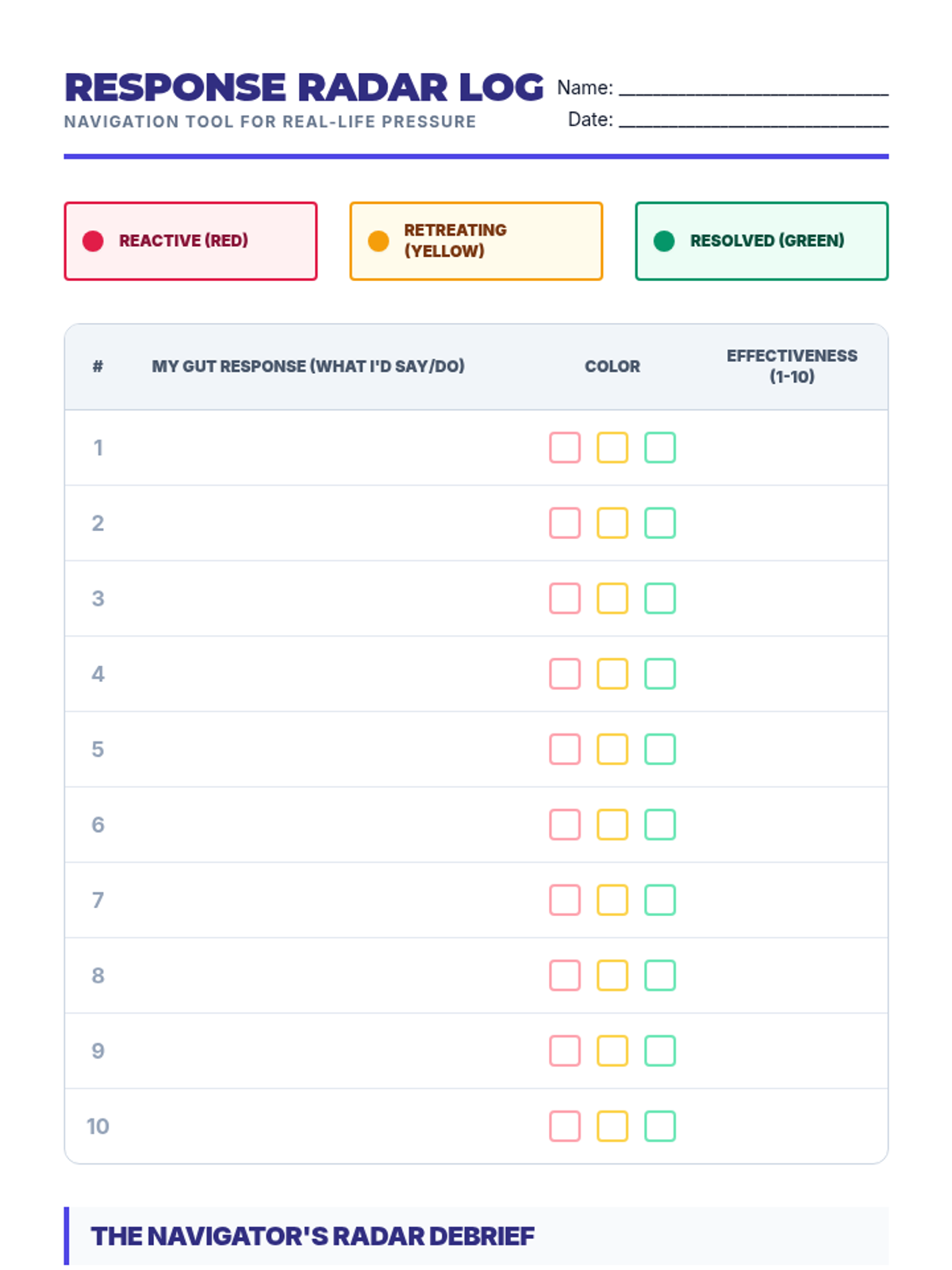
An interactive scenario-based session for clients in MH/SA or forensic settings to practice communication styles. Participants evaluate their responses using color-coded styles and SFBT scaling to identify patterns and areas for growth.
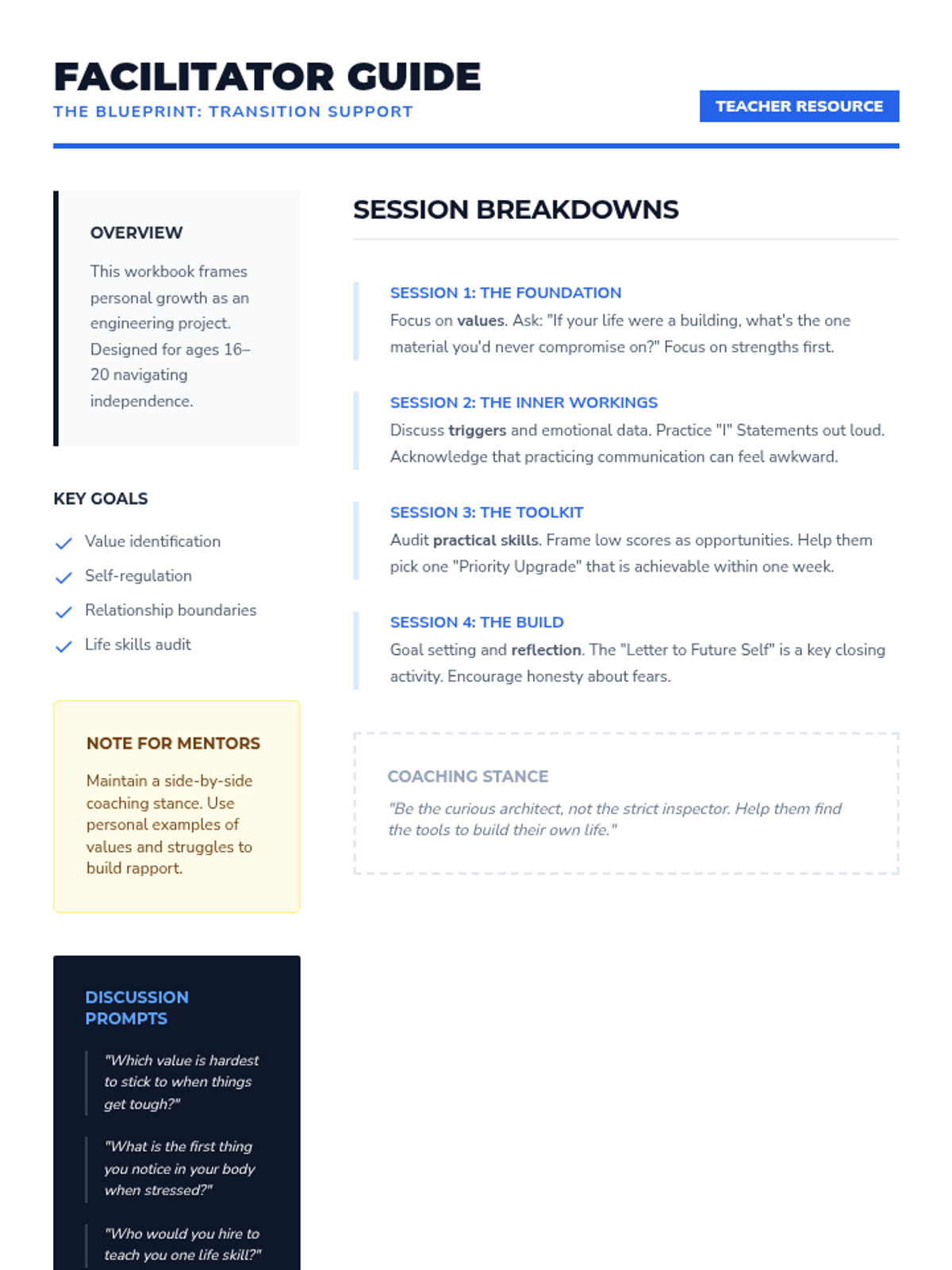
A comprehensive personal development lesson designed for young adults transitioning into independence. It features a 10-page workbook centered on values, emotional intelligence, and life skills, paired with a facilitator guide for mentors or therapists.
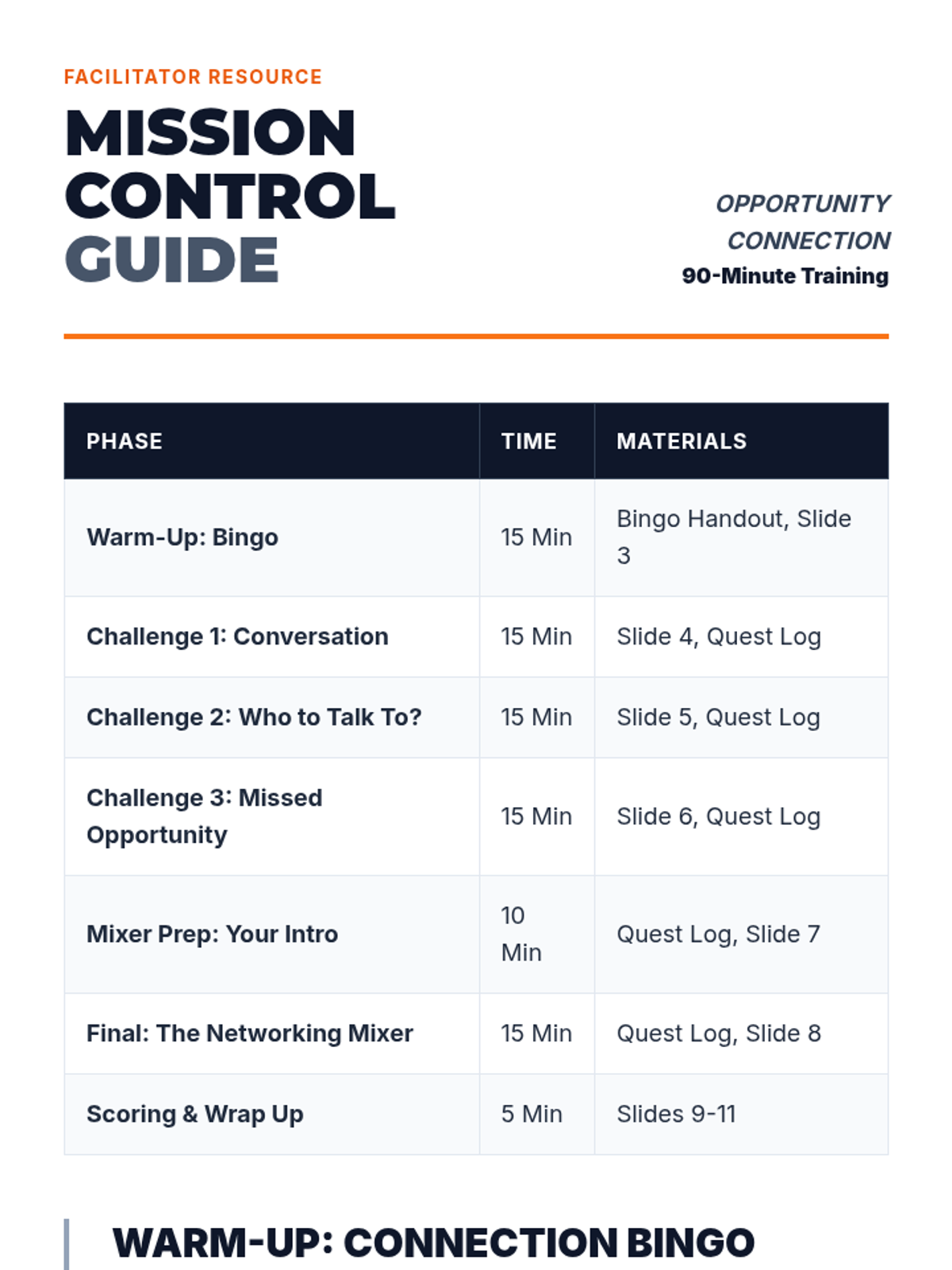
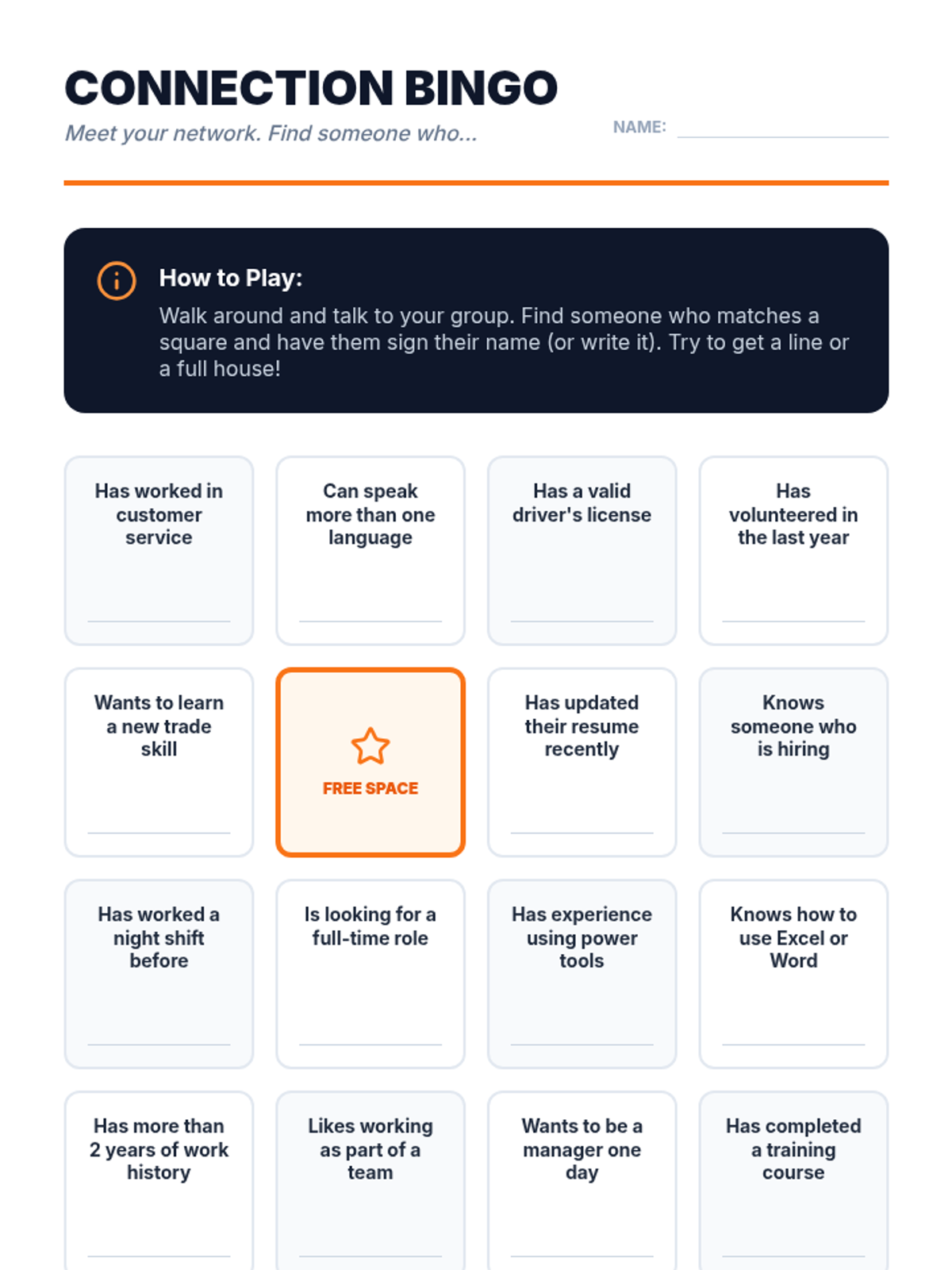
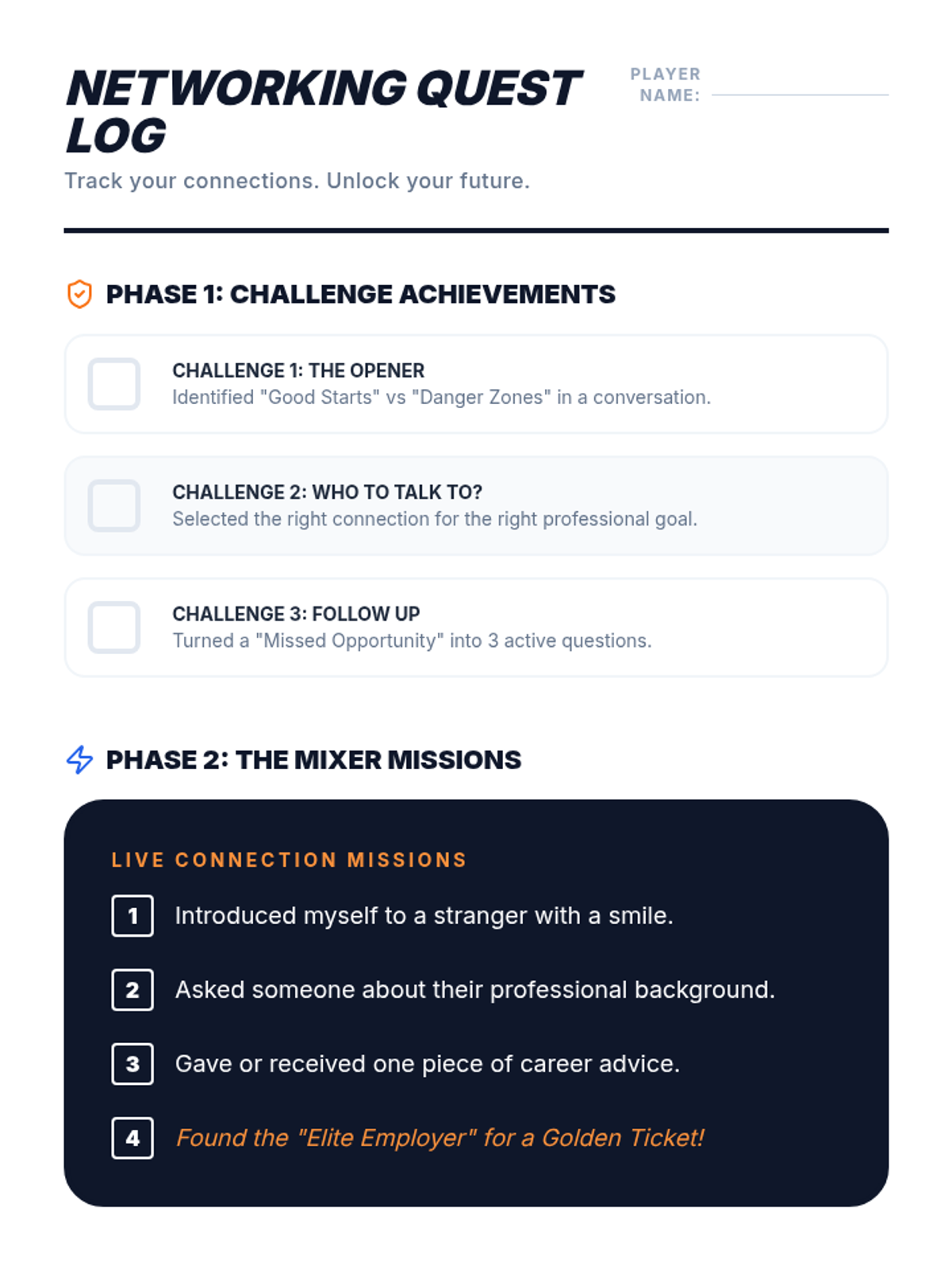
A 90-minute interactive session where participants learn to initiate conversations, identify helpful connections, and practice networking in a simulated environment to unlock career opportunities.
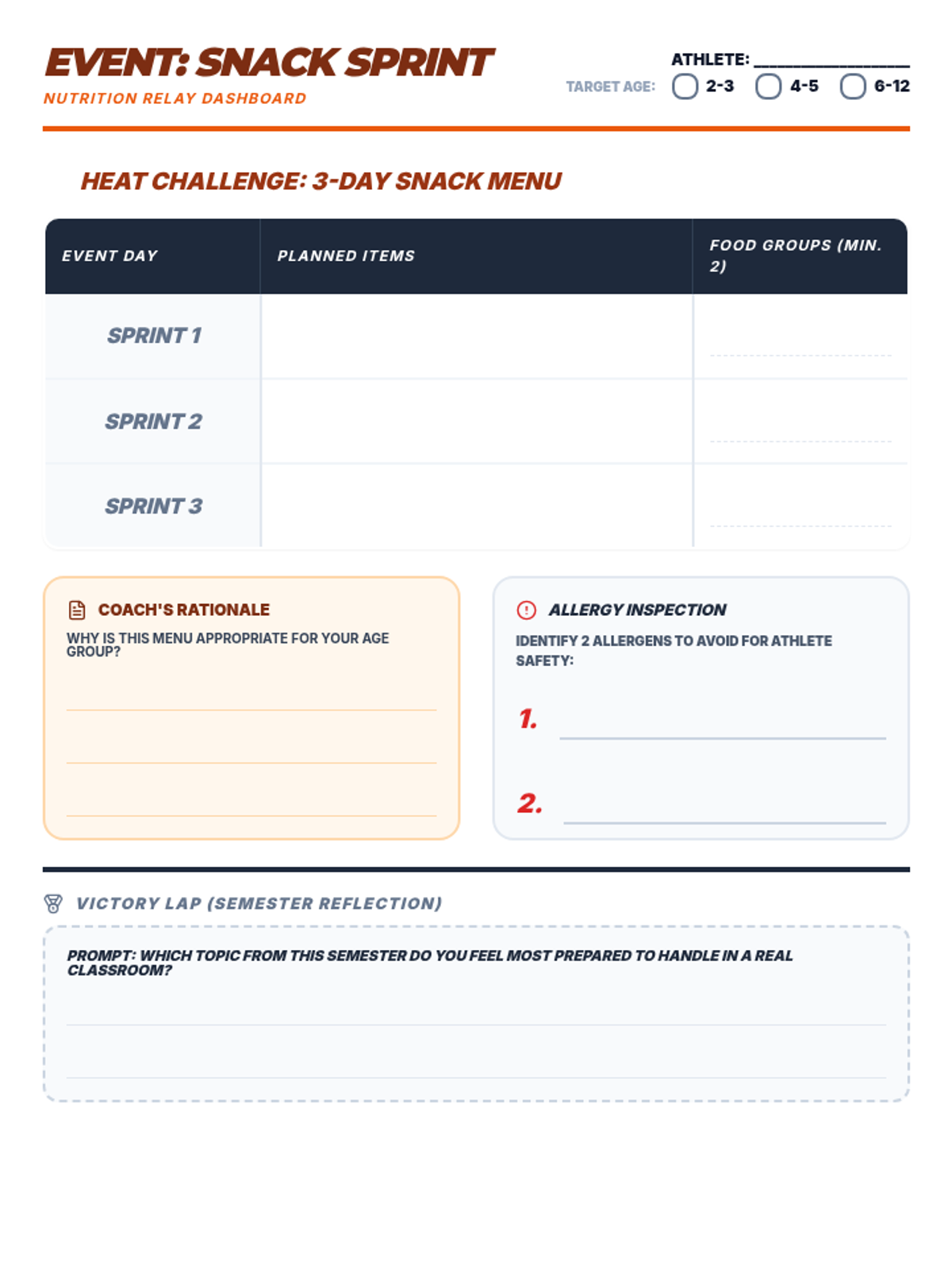
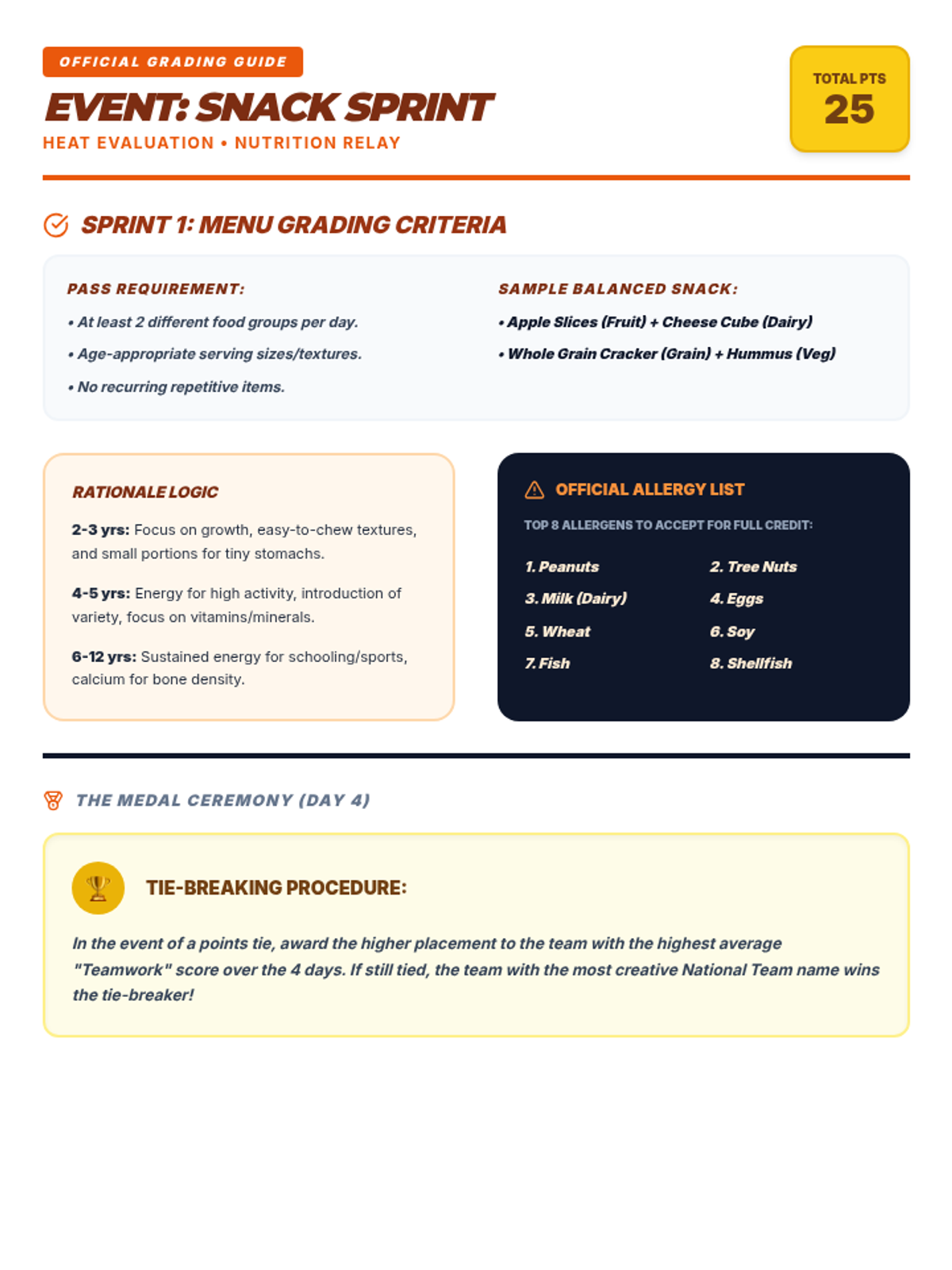
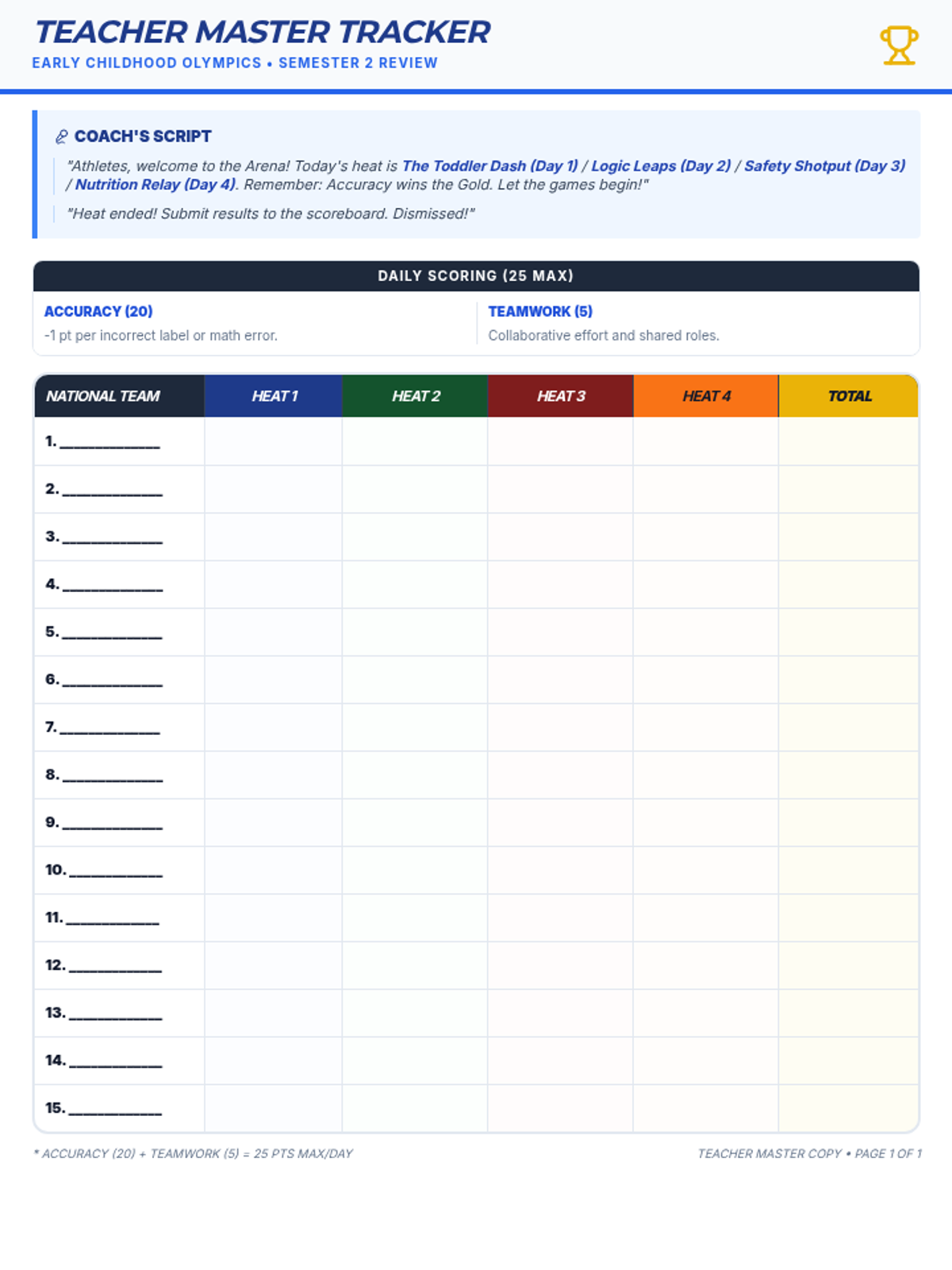
The final day covers nutrition and meal planning, followed by the grand tallying of points and the medal ceremony to conclude the semester.
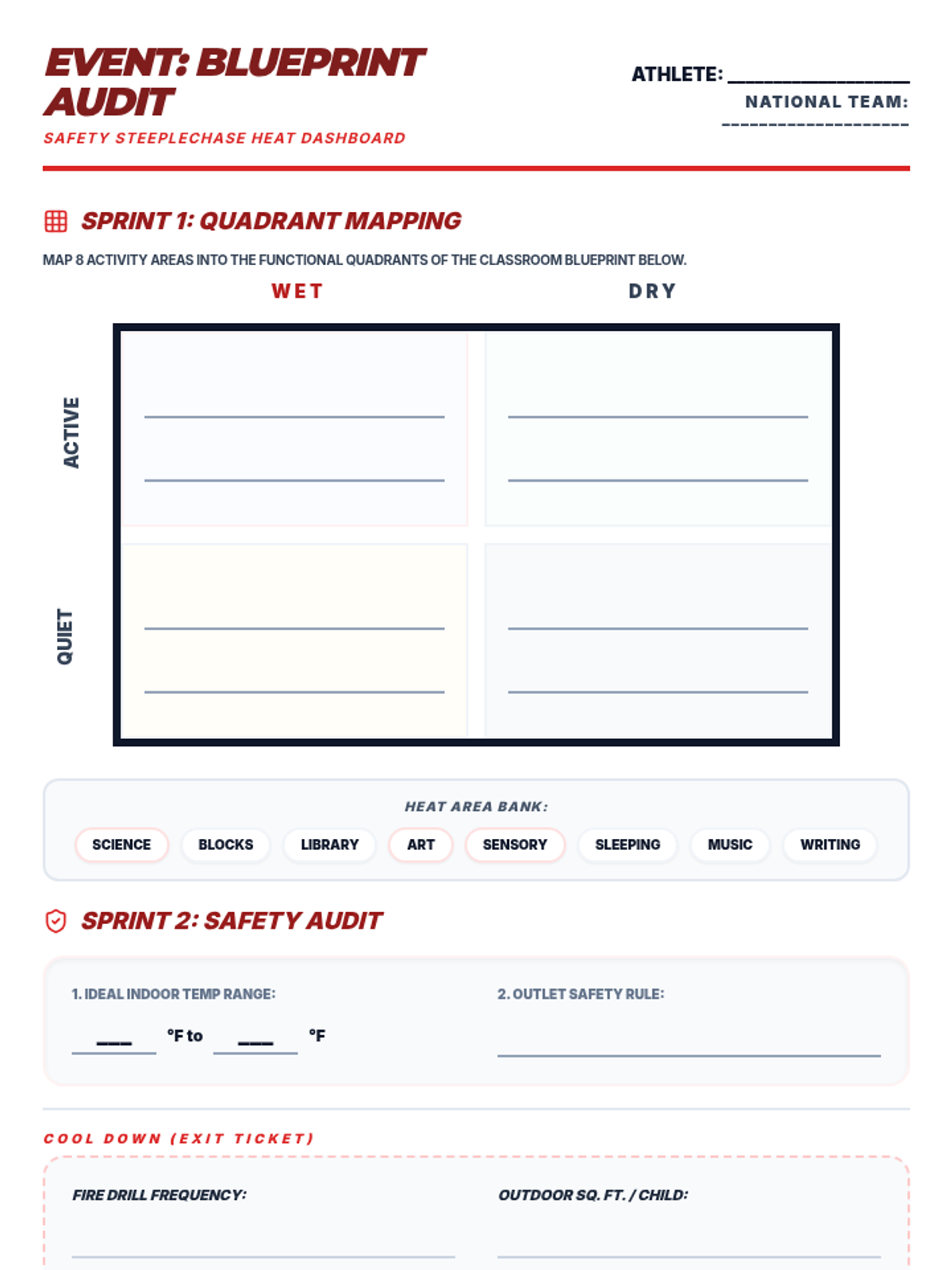
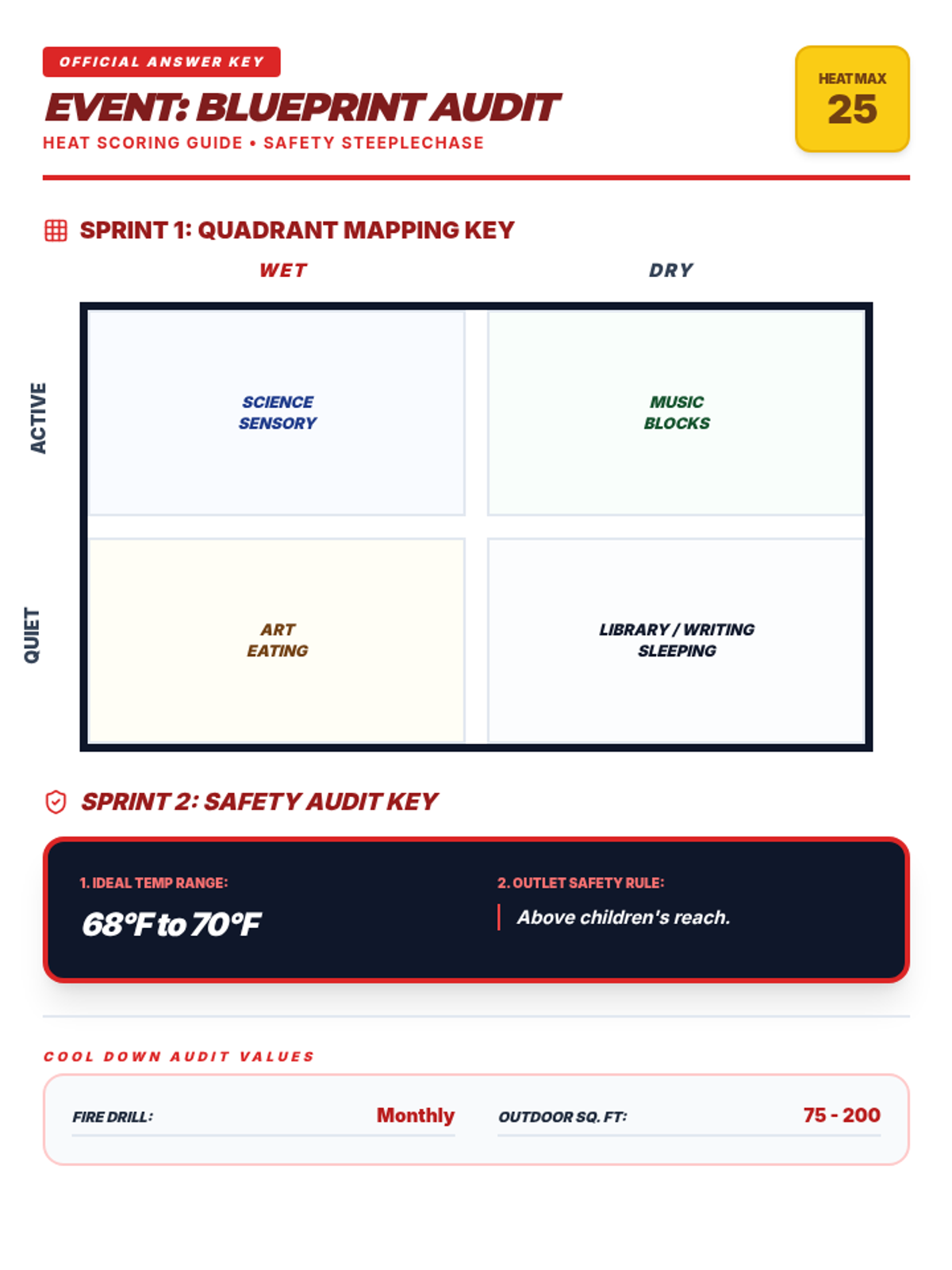
Day 3 focuses on environmental preparation and safety promotion, requiring students to apply knowledge of classroom layout and safety regulations to score points.
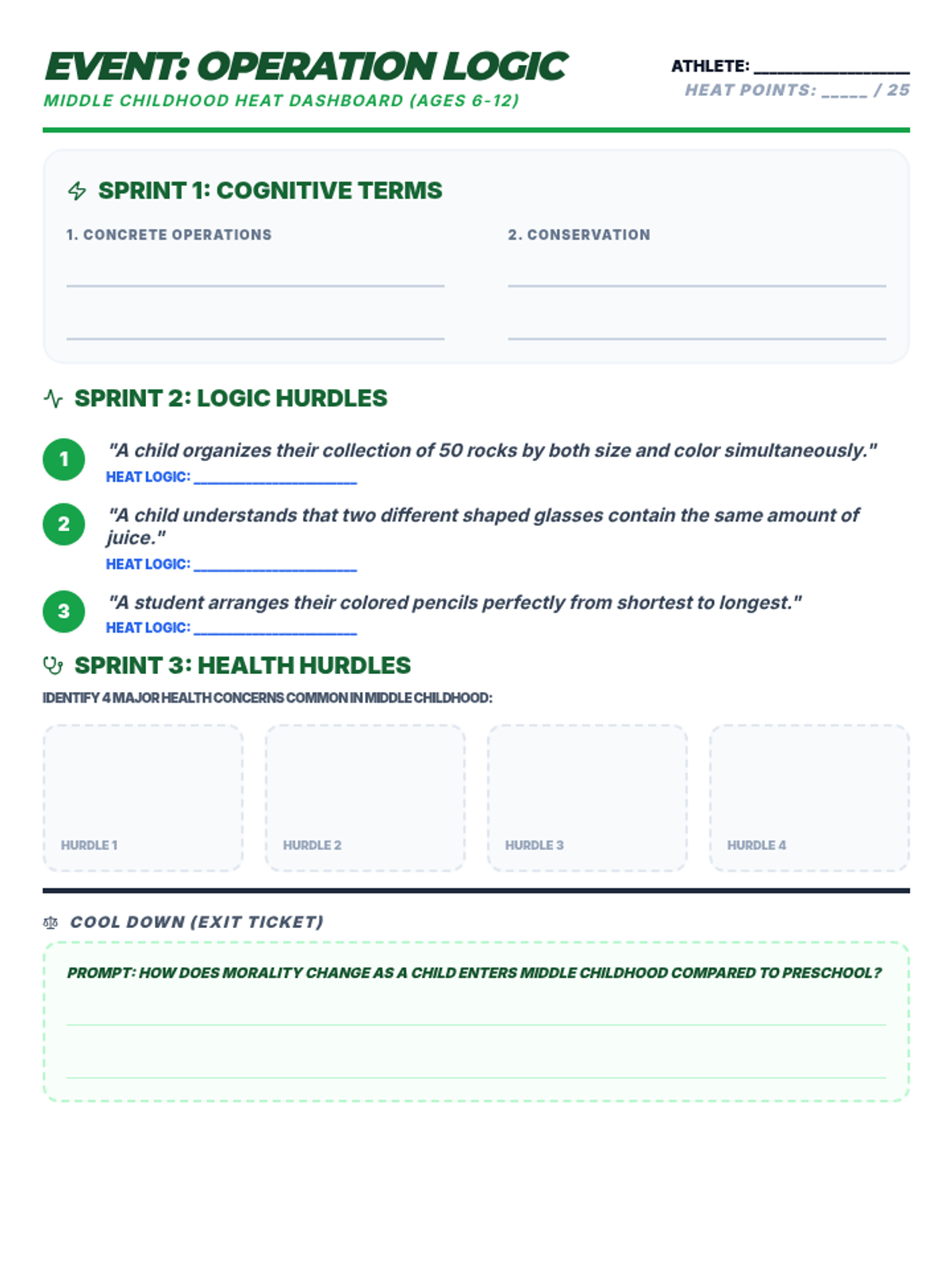
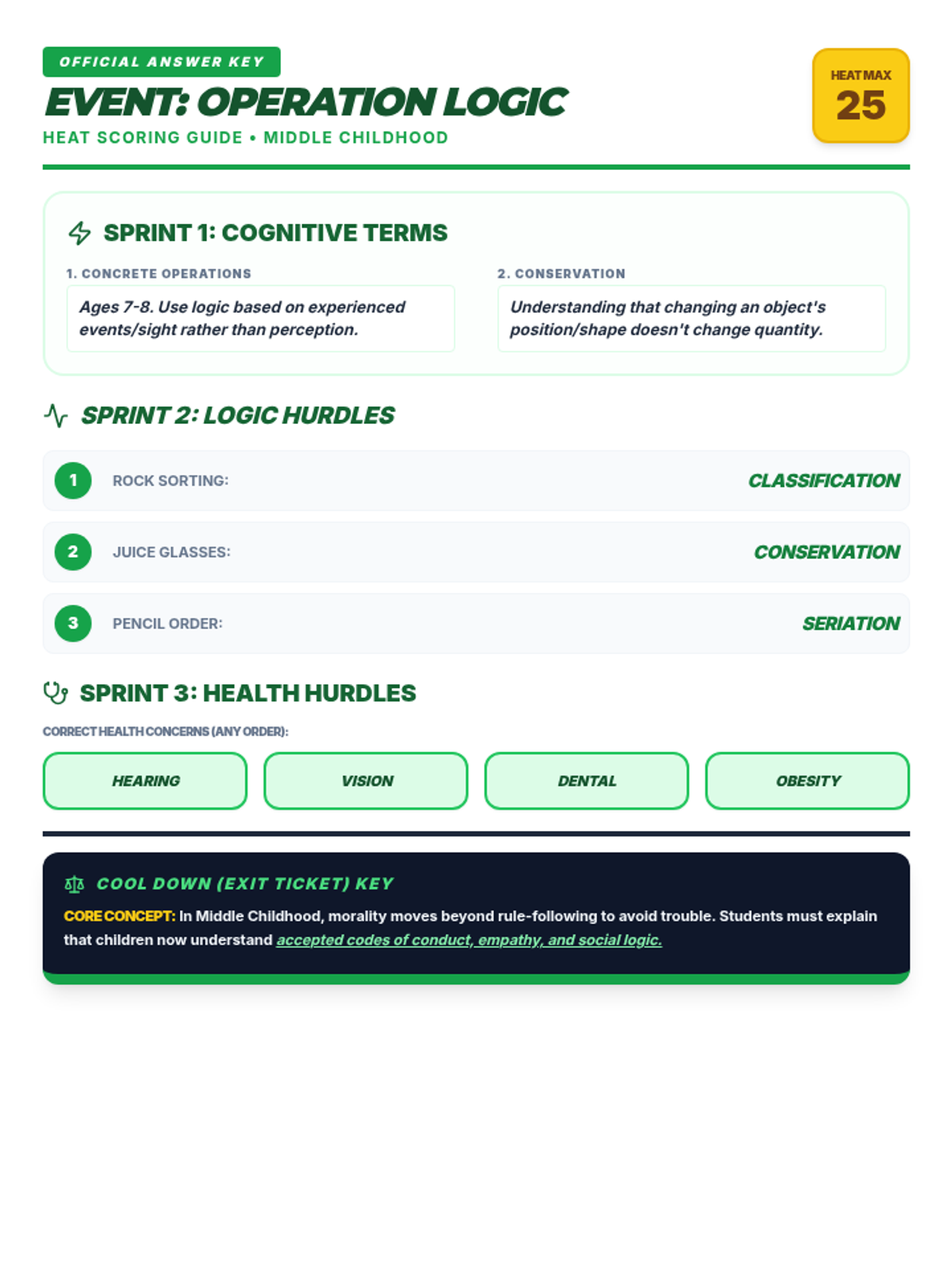
Day 2 explores middle childhood (ages 6-12), focusing on logical thinking, moral development, and the complexities of school-age social relationships.
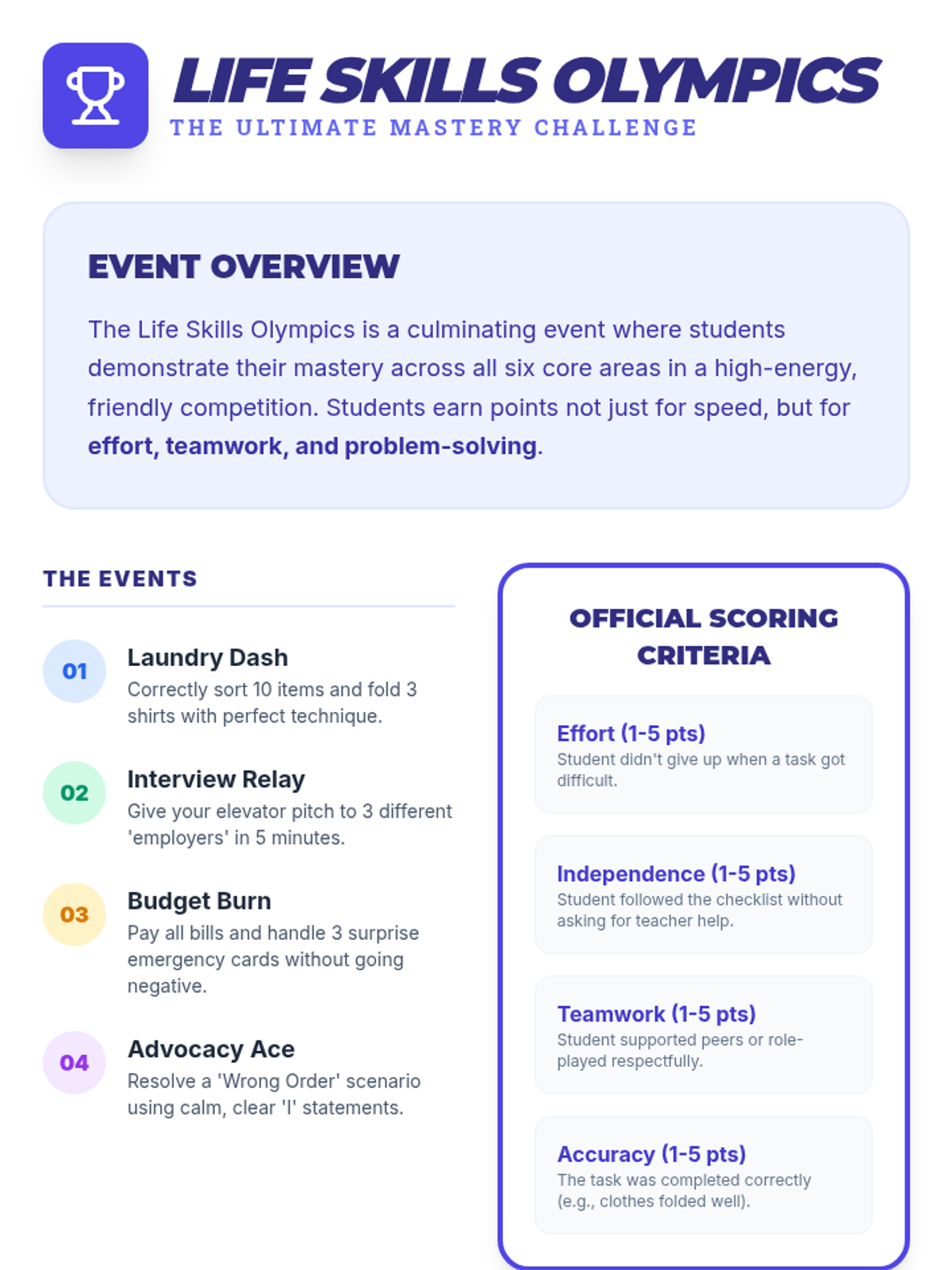
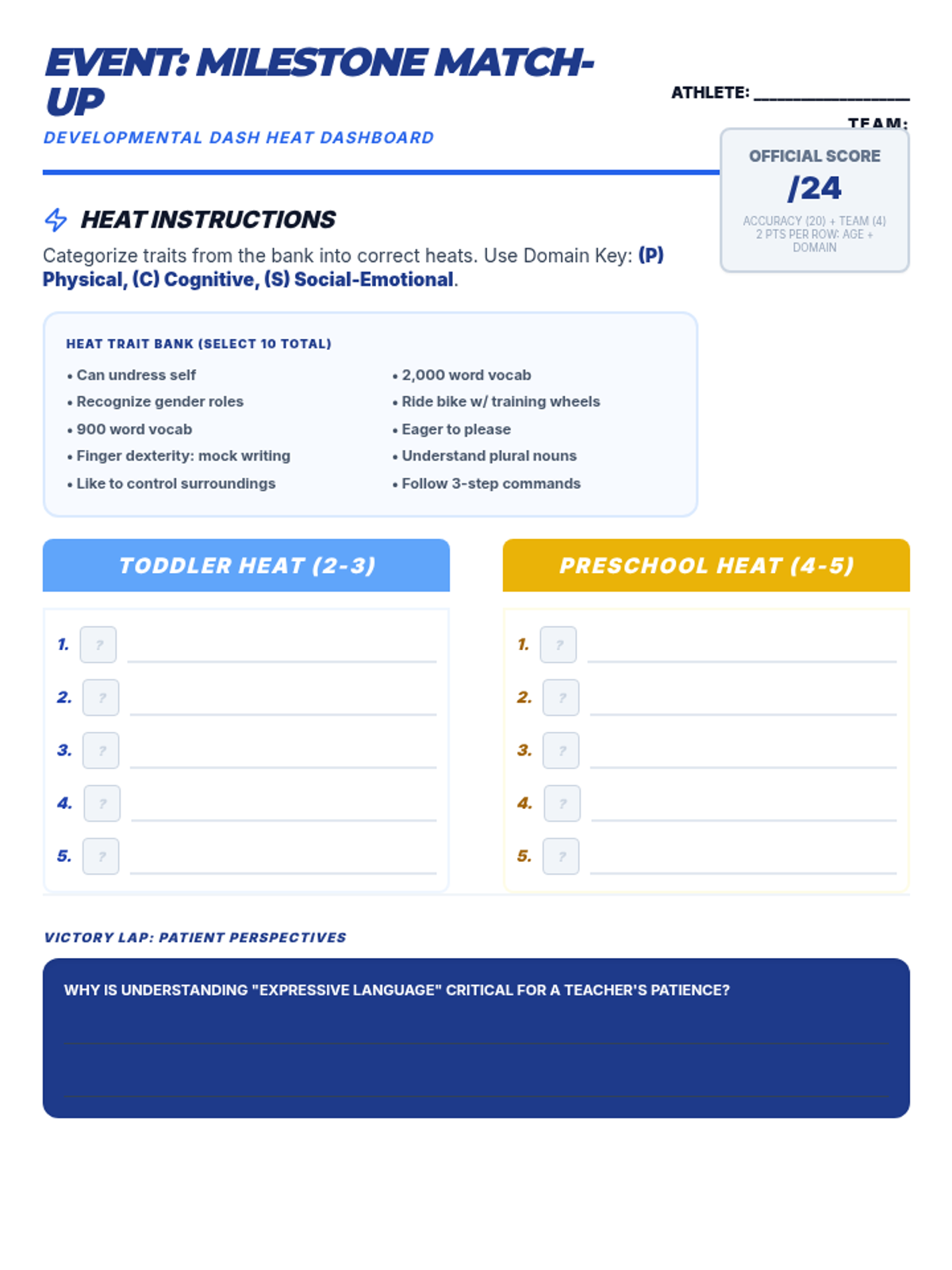
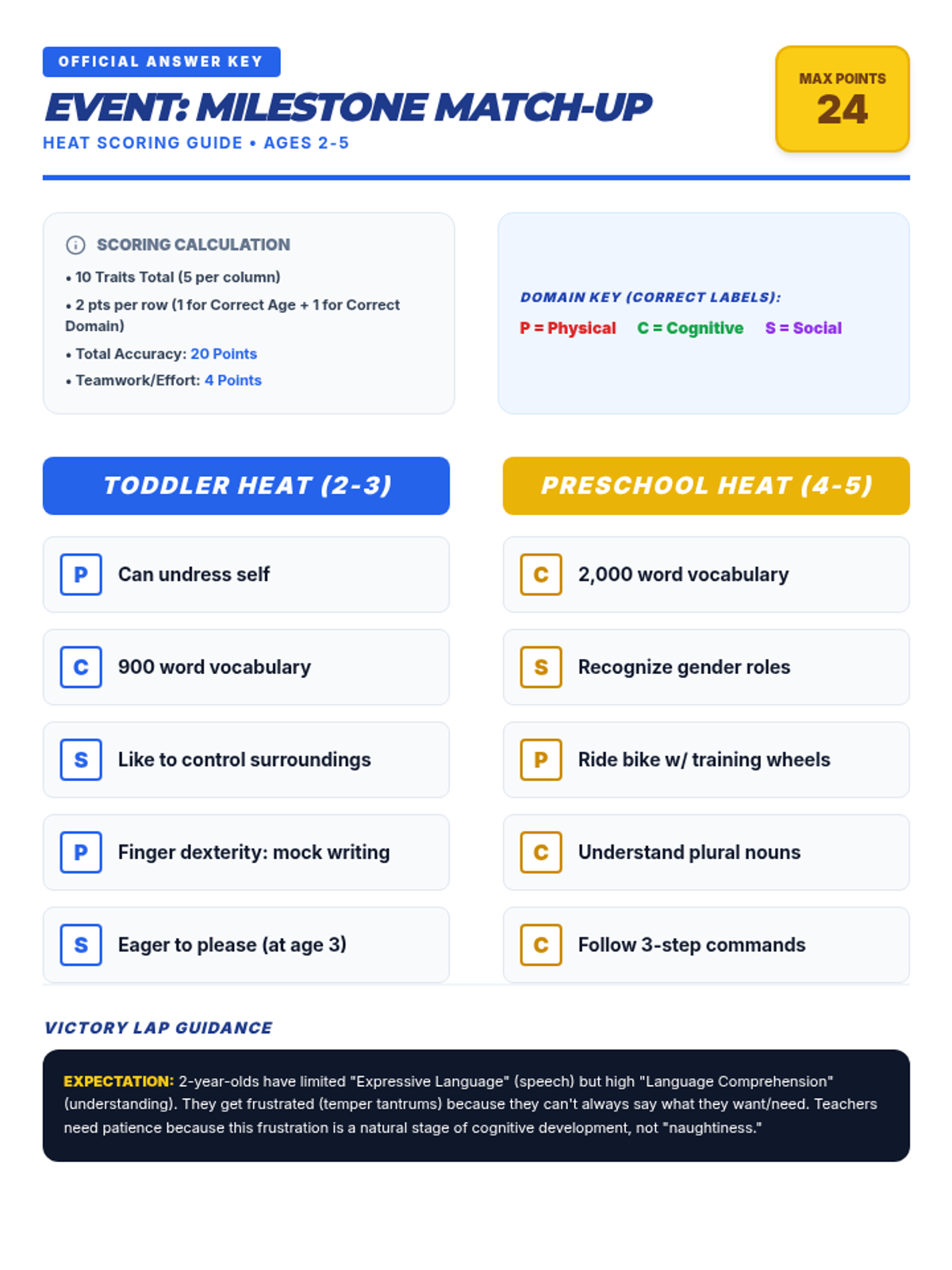
Day 1 of the Olympics focuses on the rapid development of children aged two through five, challenging students to accurately categorize physical, cognitive, and social milestones.
A gamified 90-minute training session focused on job retention skills. Students master the behaviors and mindsets required to keep a job during the critical first 90 days, through hands-on escape room challenges and performance analysis.
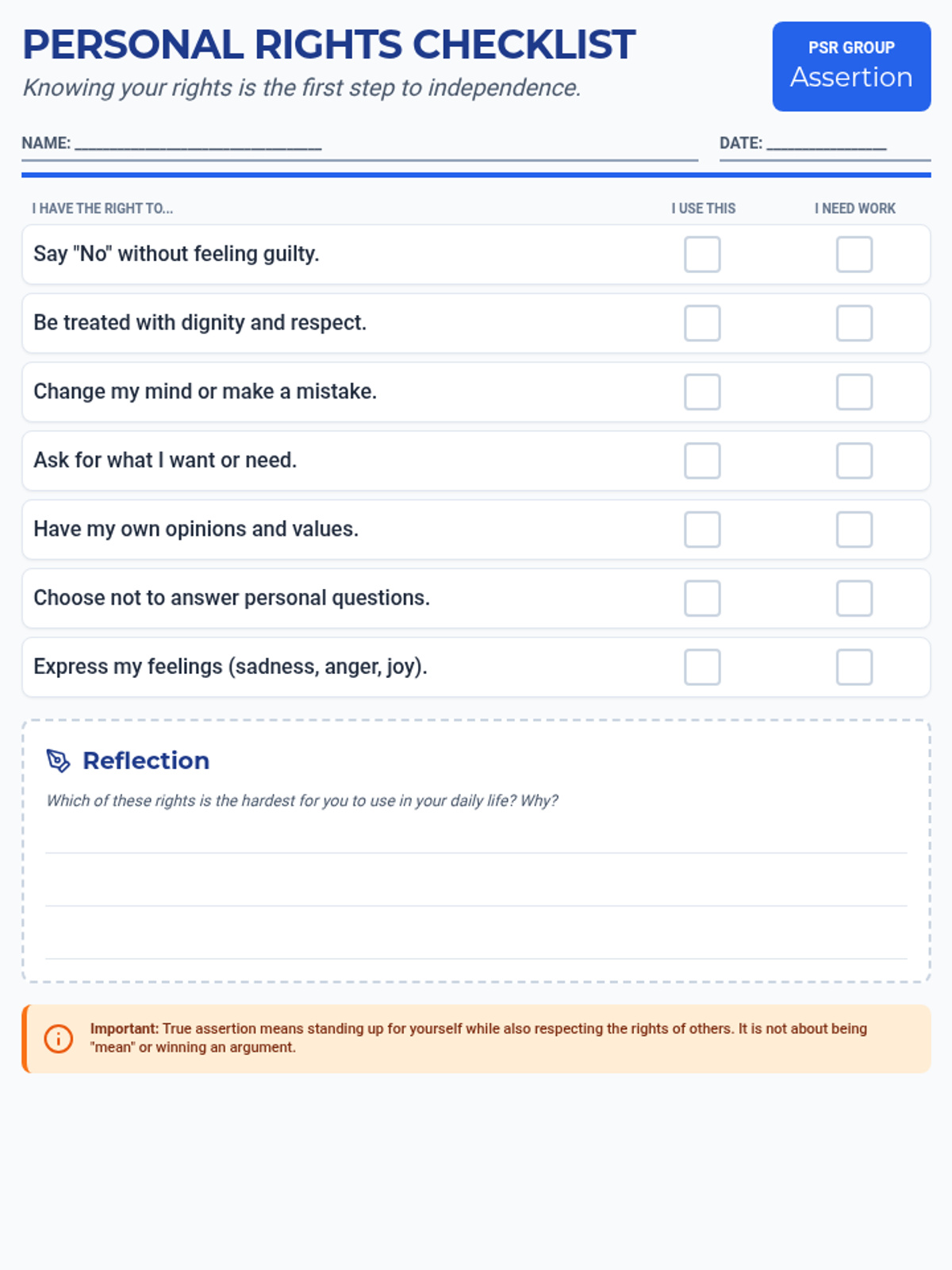
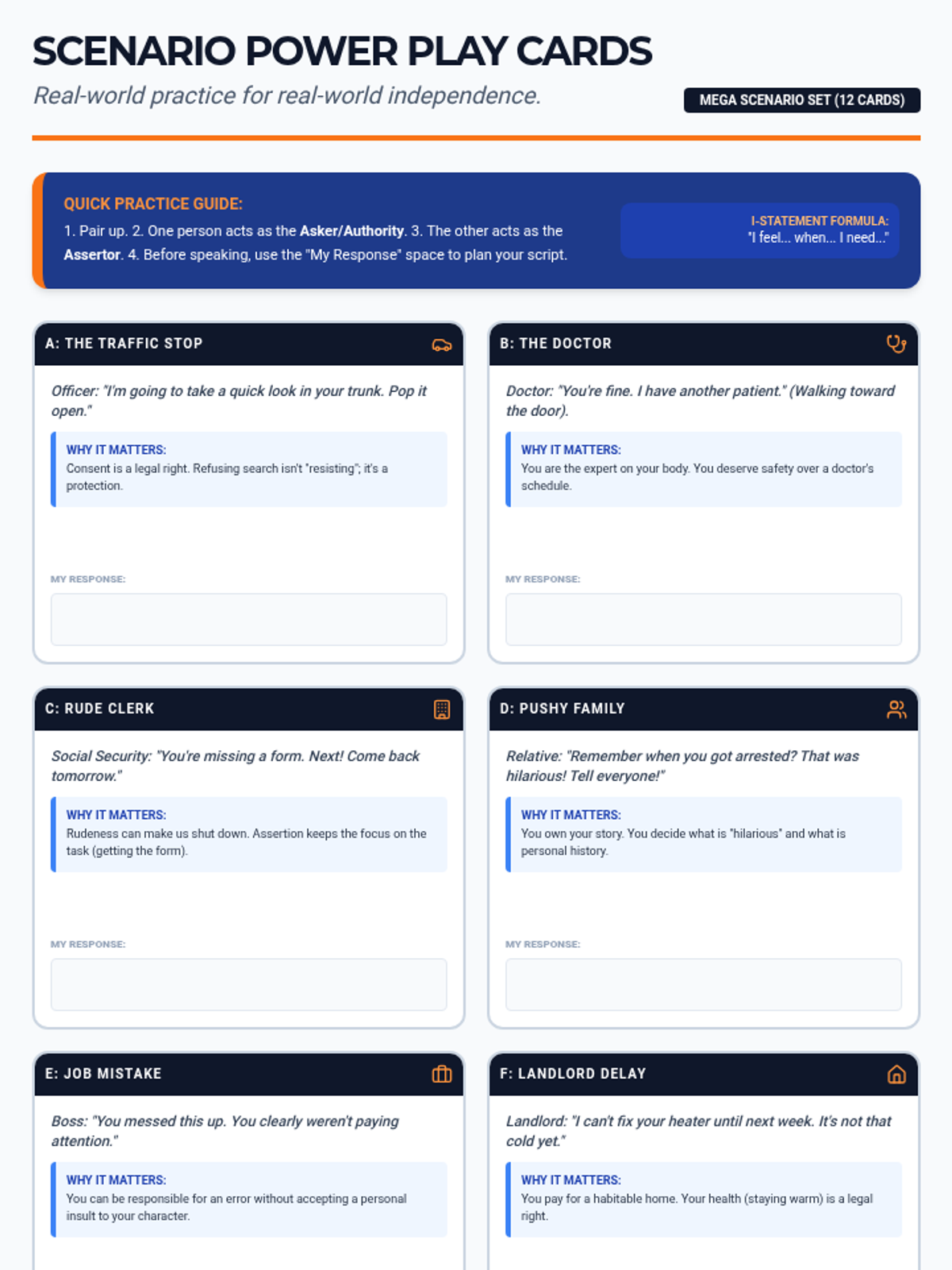
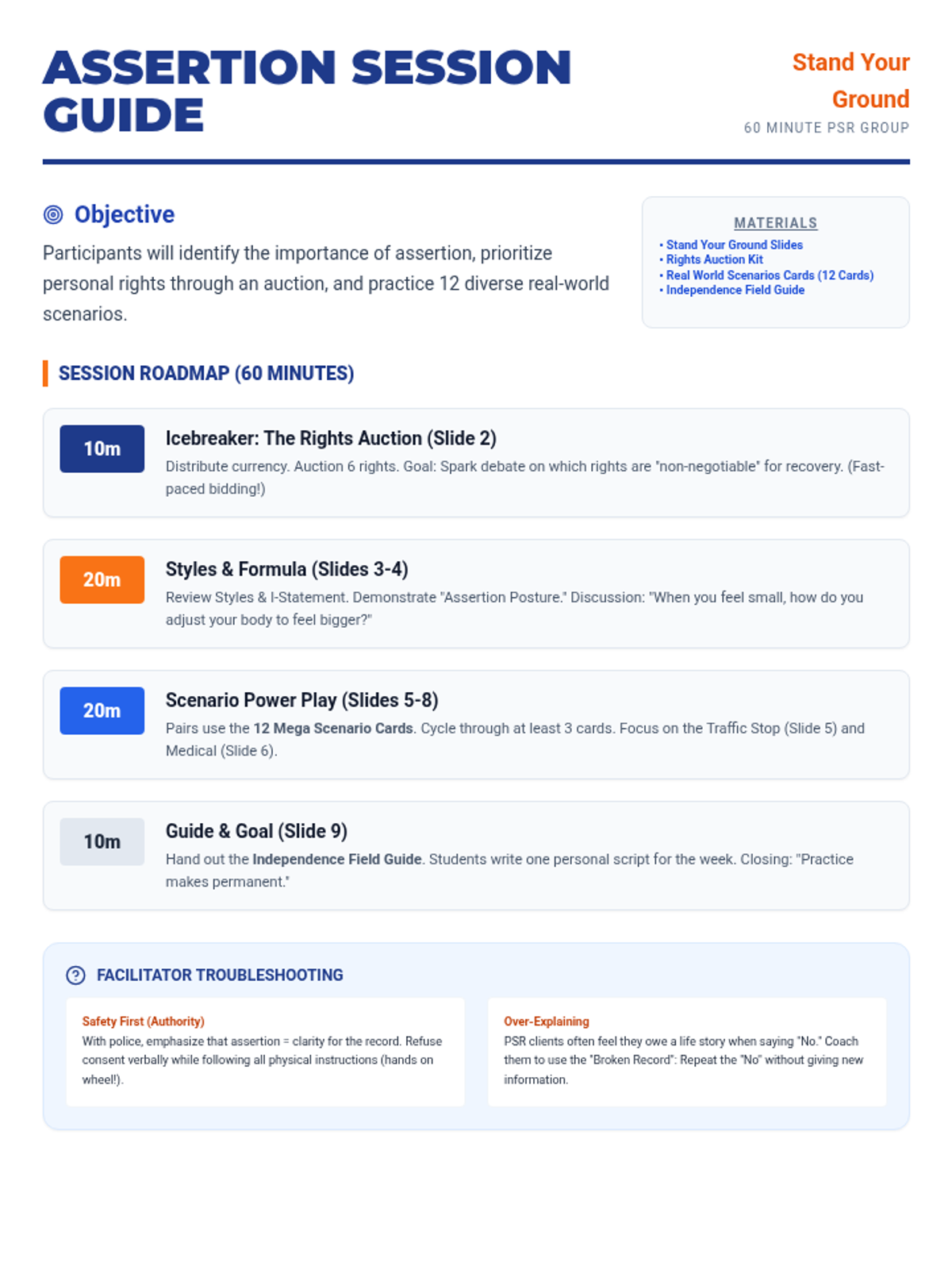
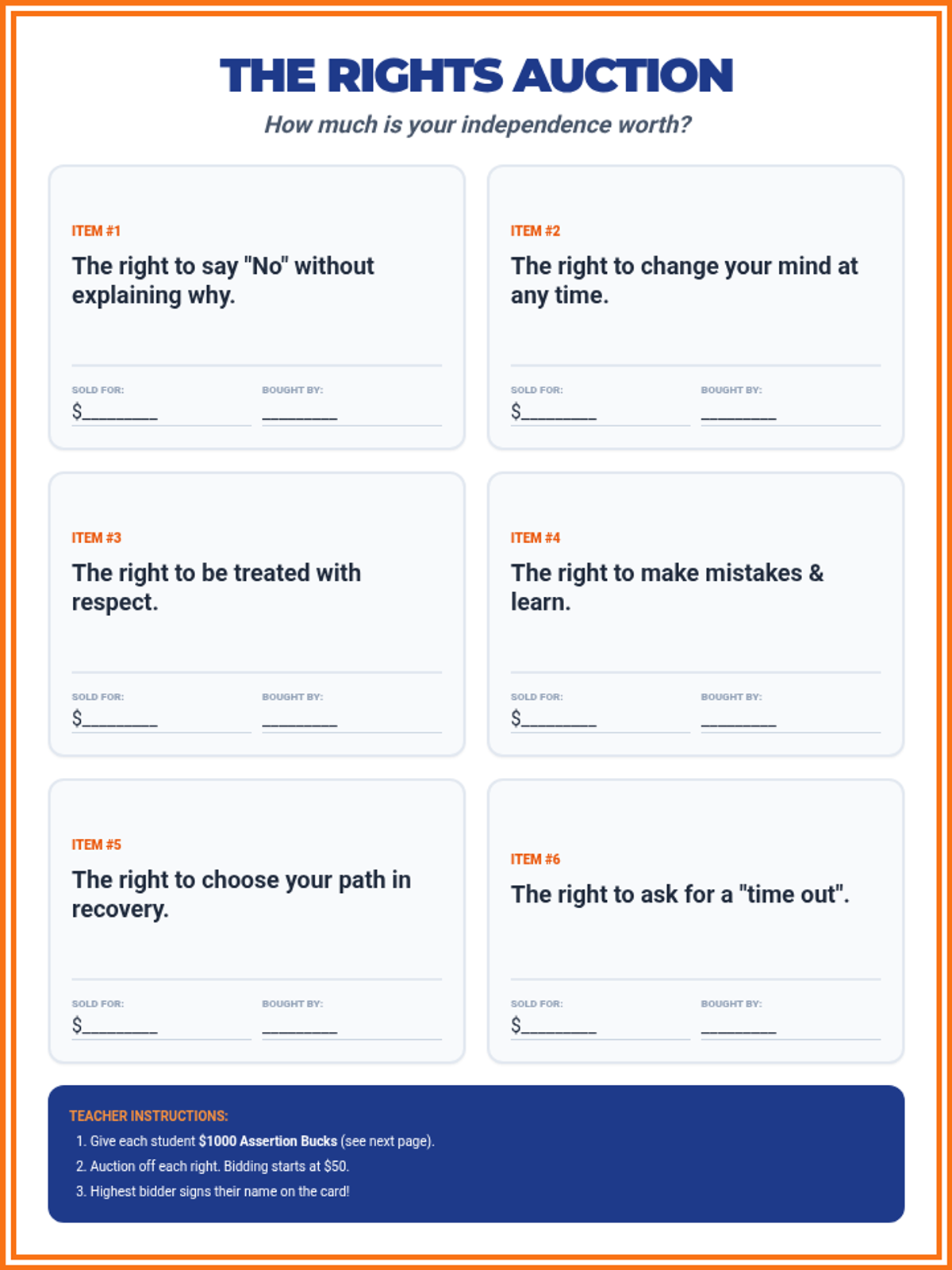
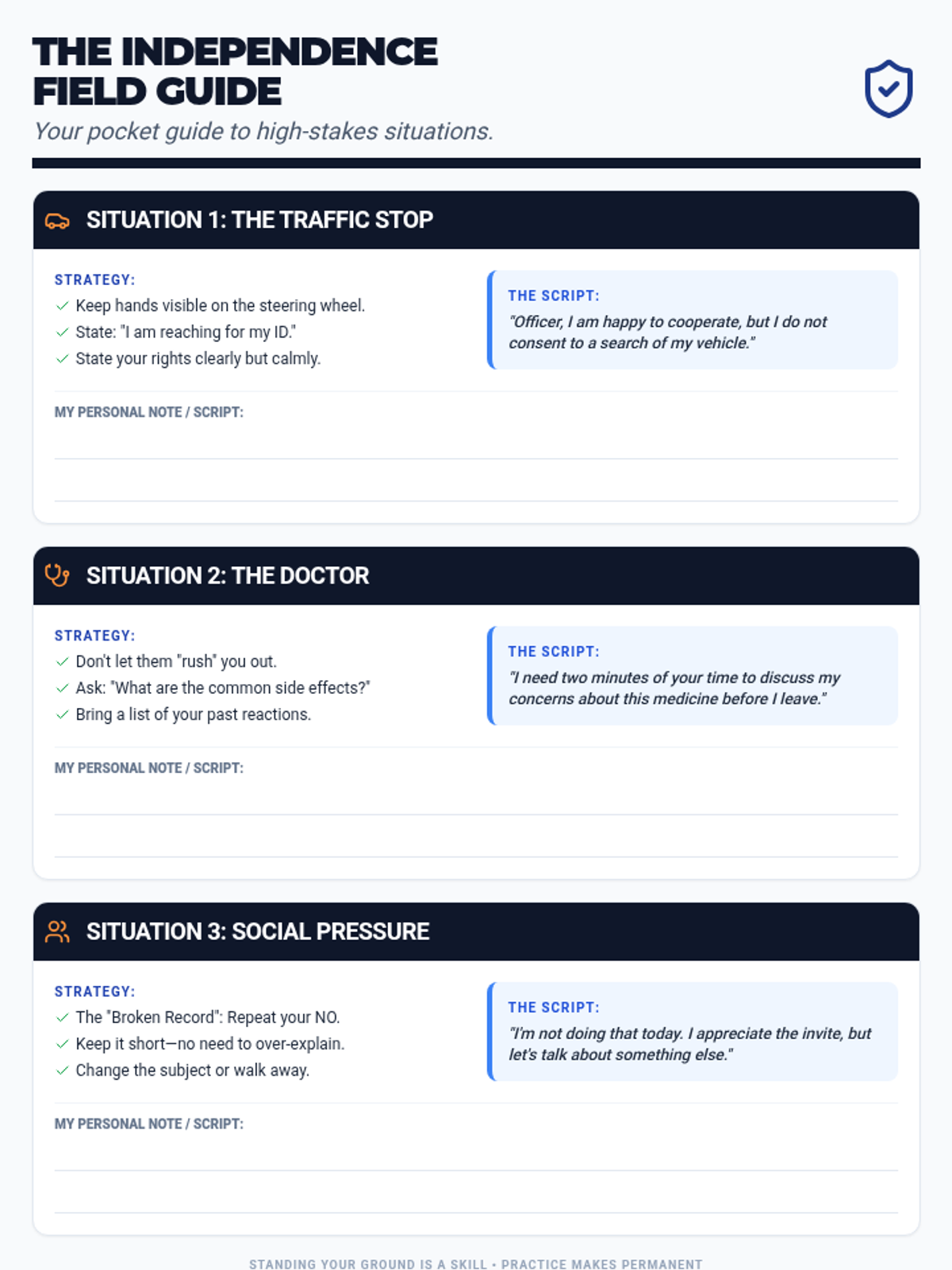
A 60-minute group session focused on empowering adults in PSR programs to understand their personal rights and practice assertive communication in real-world situations.
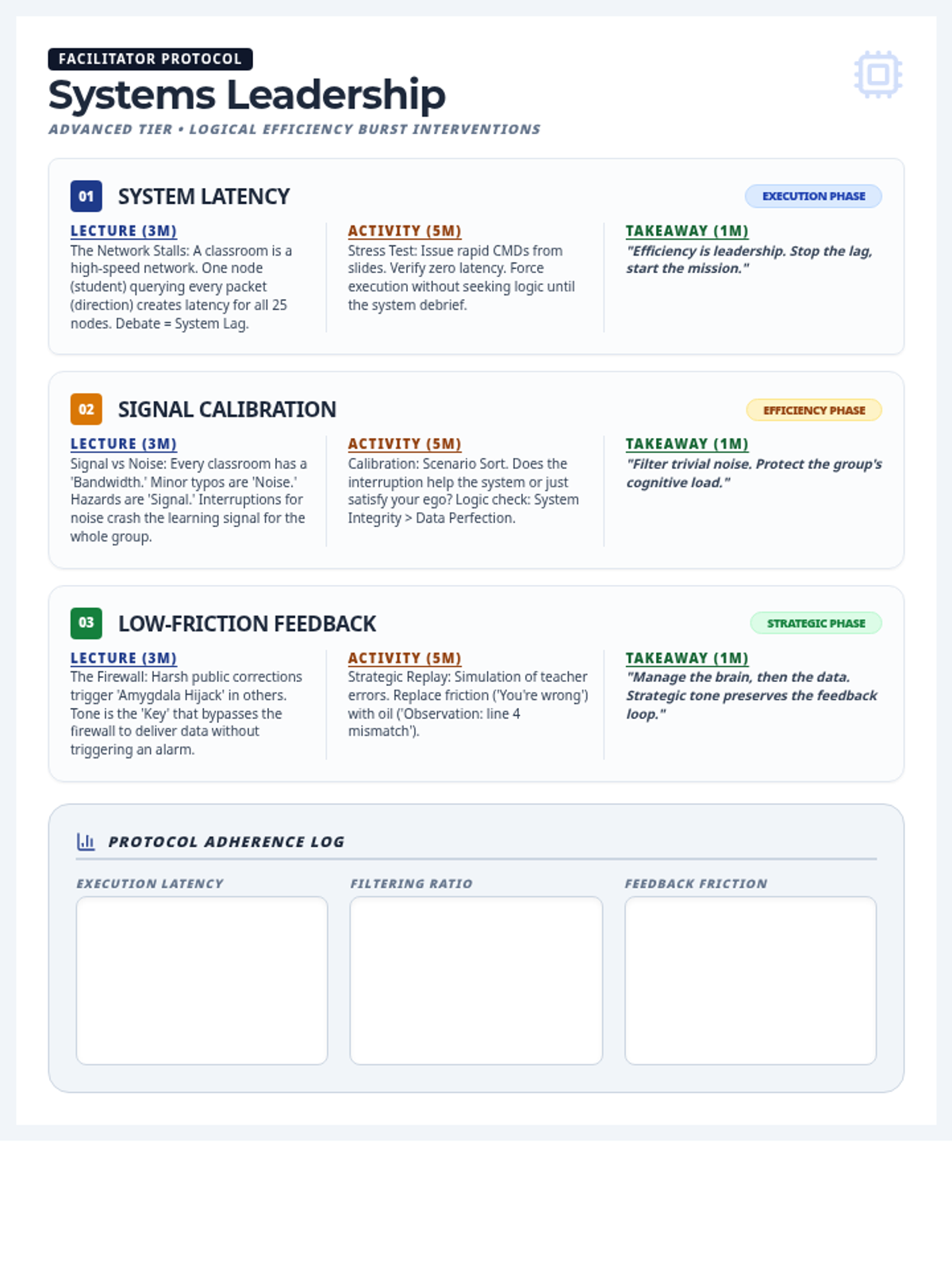
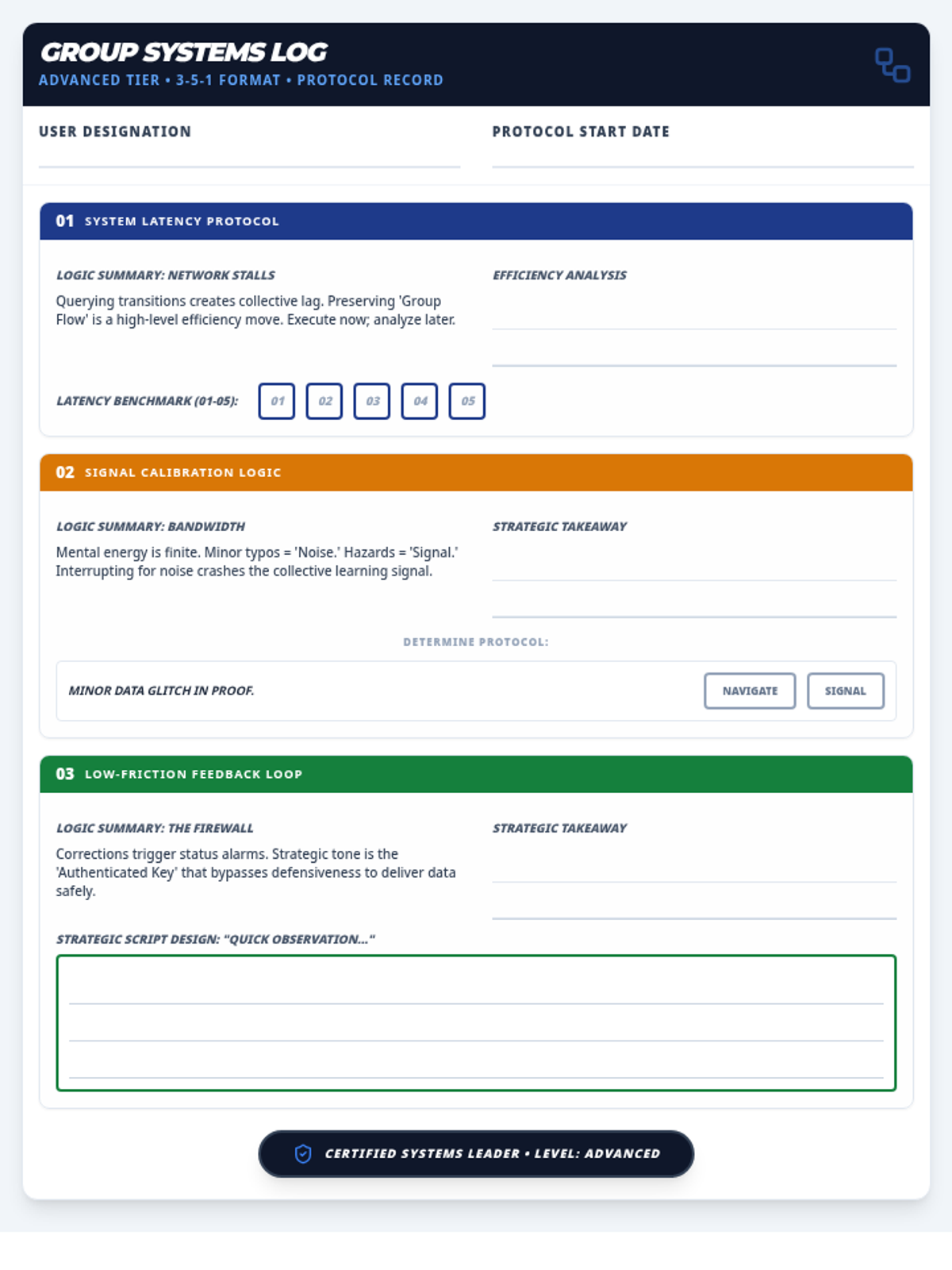
Advanced session on 'Strategic Communication'. Uses social neuroscience to explain how low-friction feedback bypasses defensive firewalls. Structure: 3-5-1 Minutes.
A session on 'Signal-to-Noise' calibration. Teaches students to logically calculate the interrupt cost of minor corrections versus major system failures. Structure: 3-5-1 Minutes.
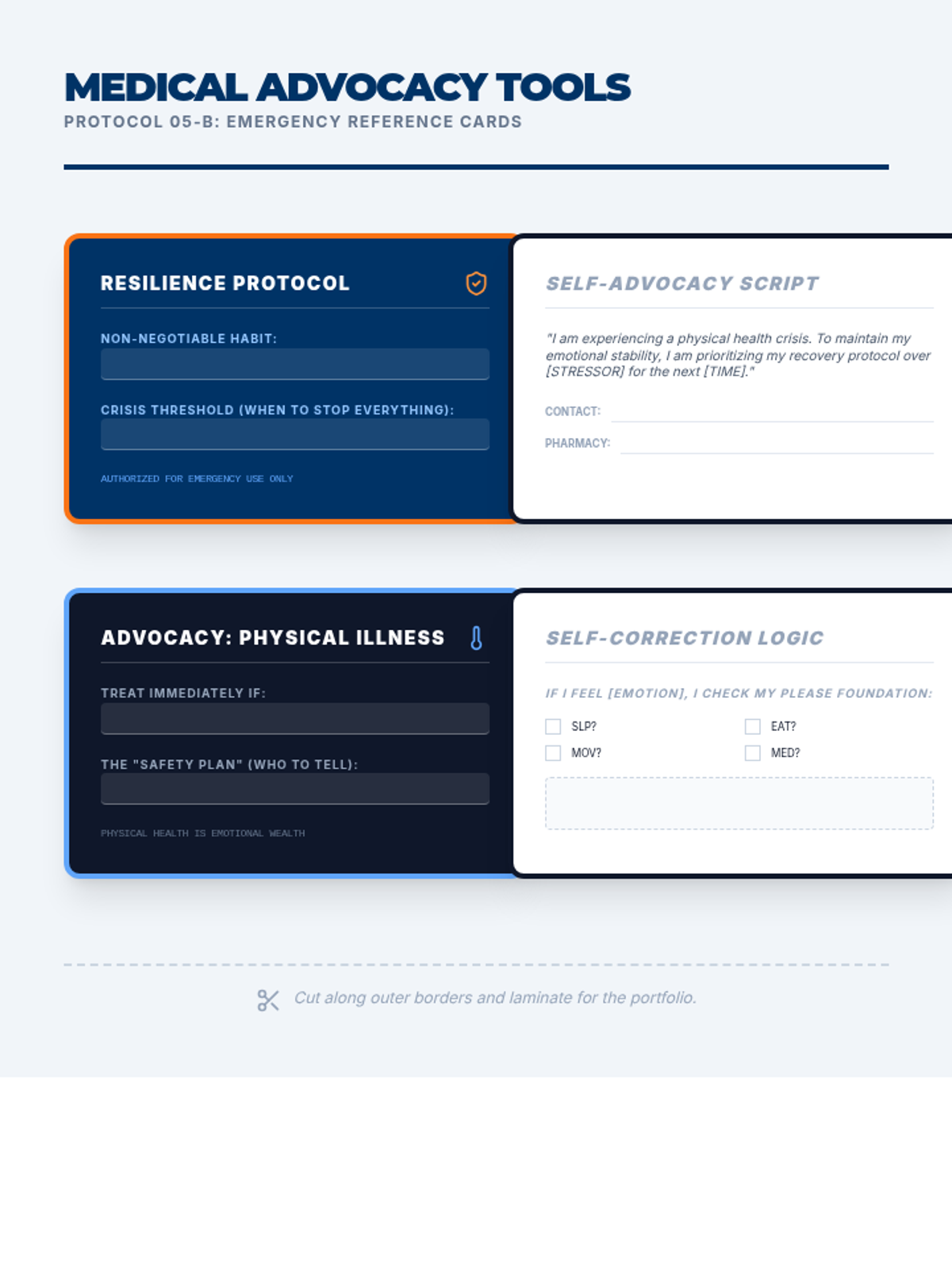
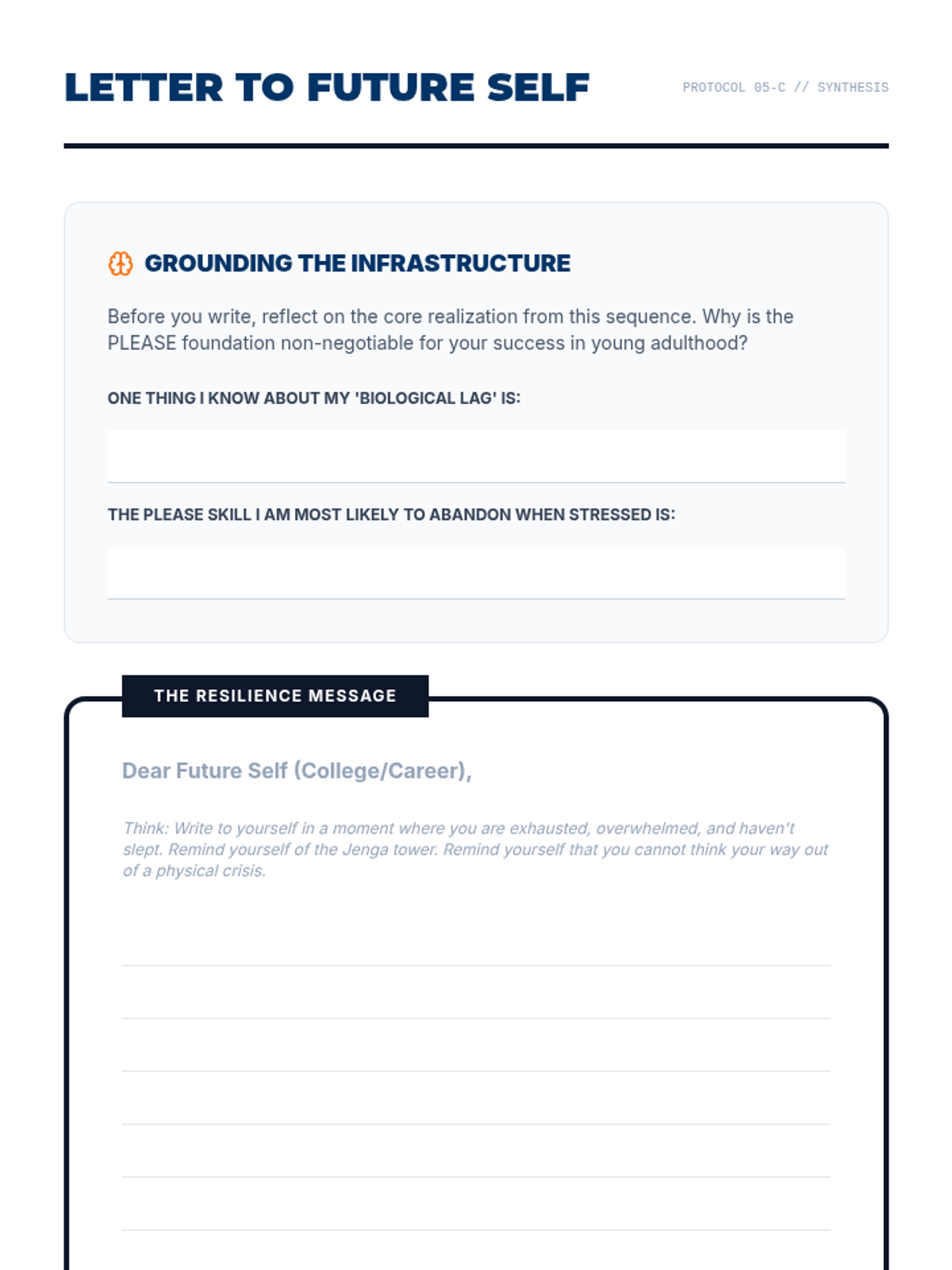
Students finalize their comprehensive PLEASE Portfolio, which includes their crisis plans, daily routines, and medical advocacy cards. They reflect on how this foundation reduces emotional vulnerability.
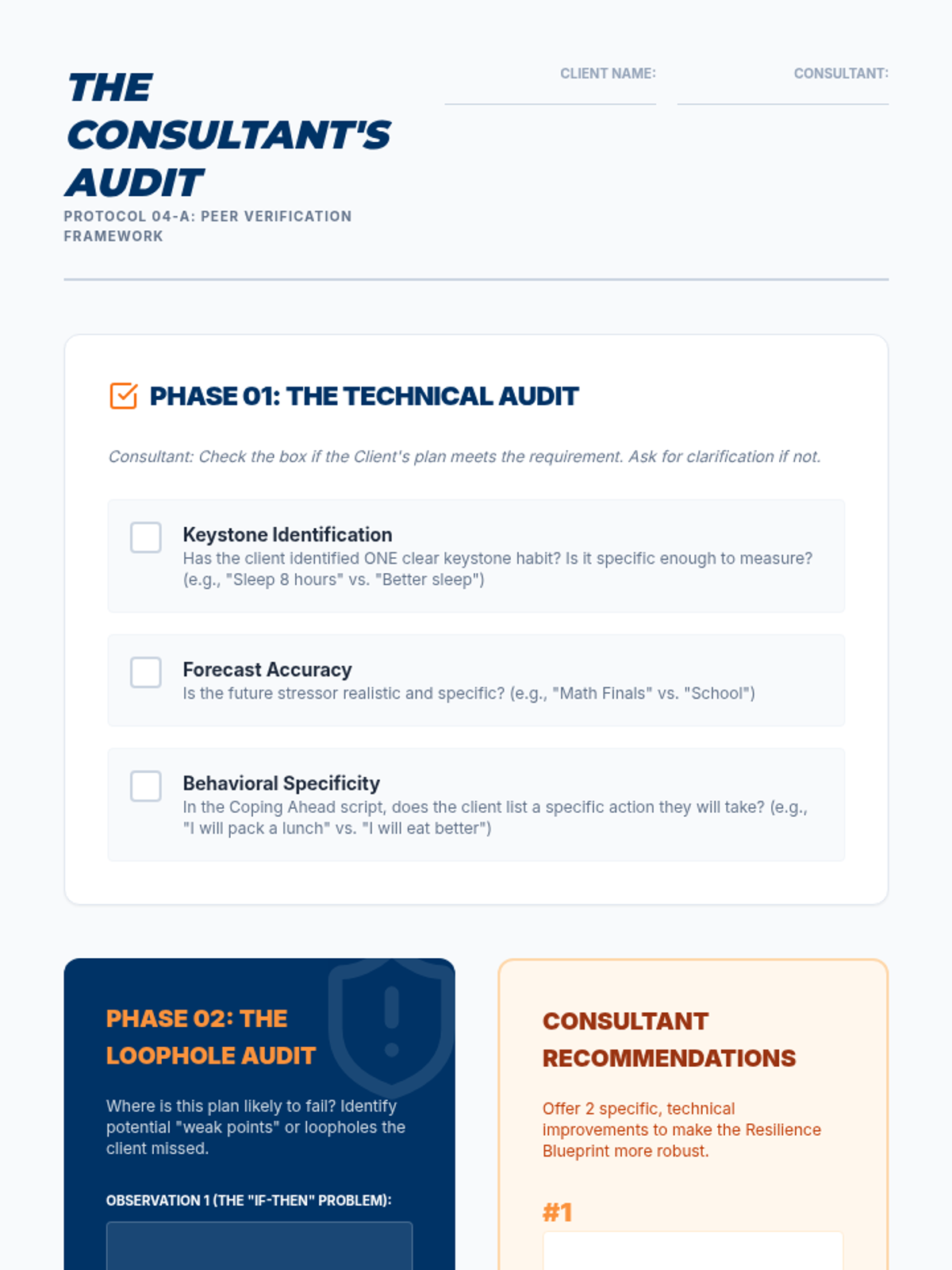
Students work in consultancy groups to review each other's PLEASE plans. They offer feedback on feasibility and loopholes, practicing how to support peers in healthy behaviors.
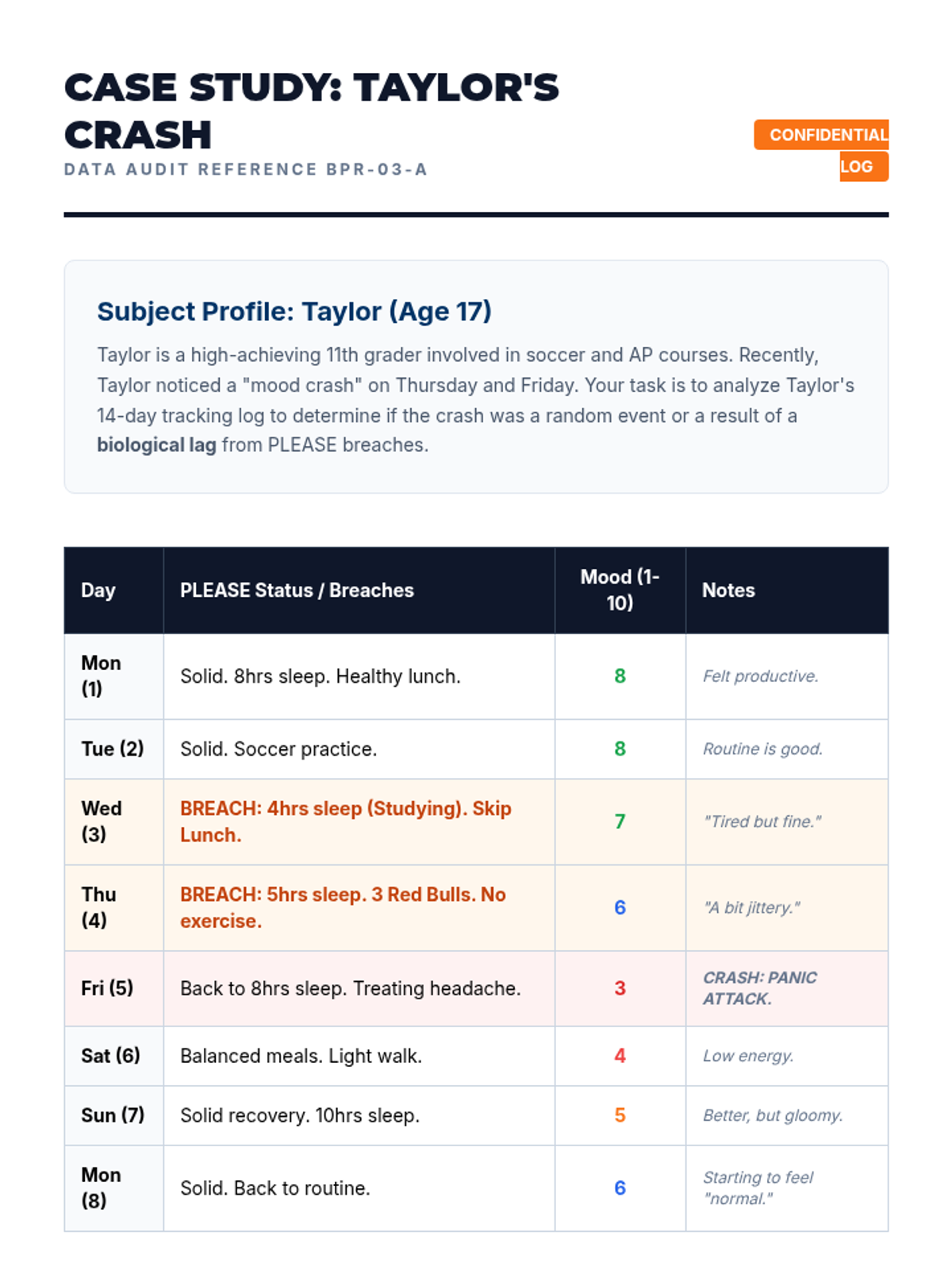
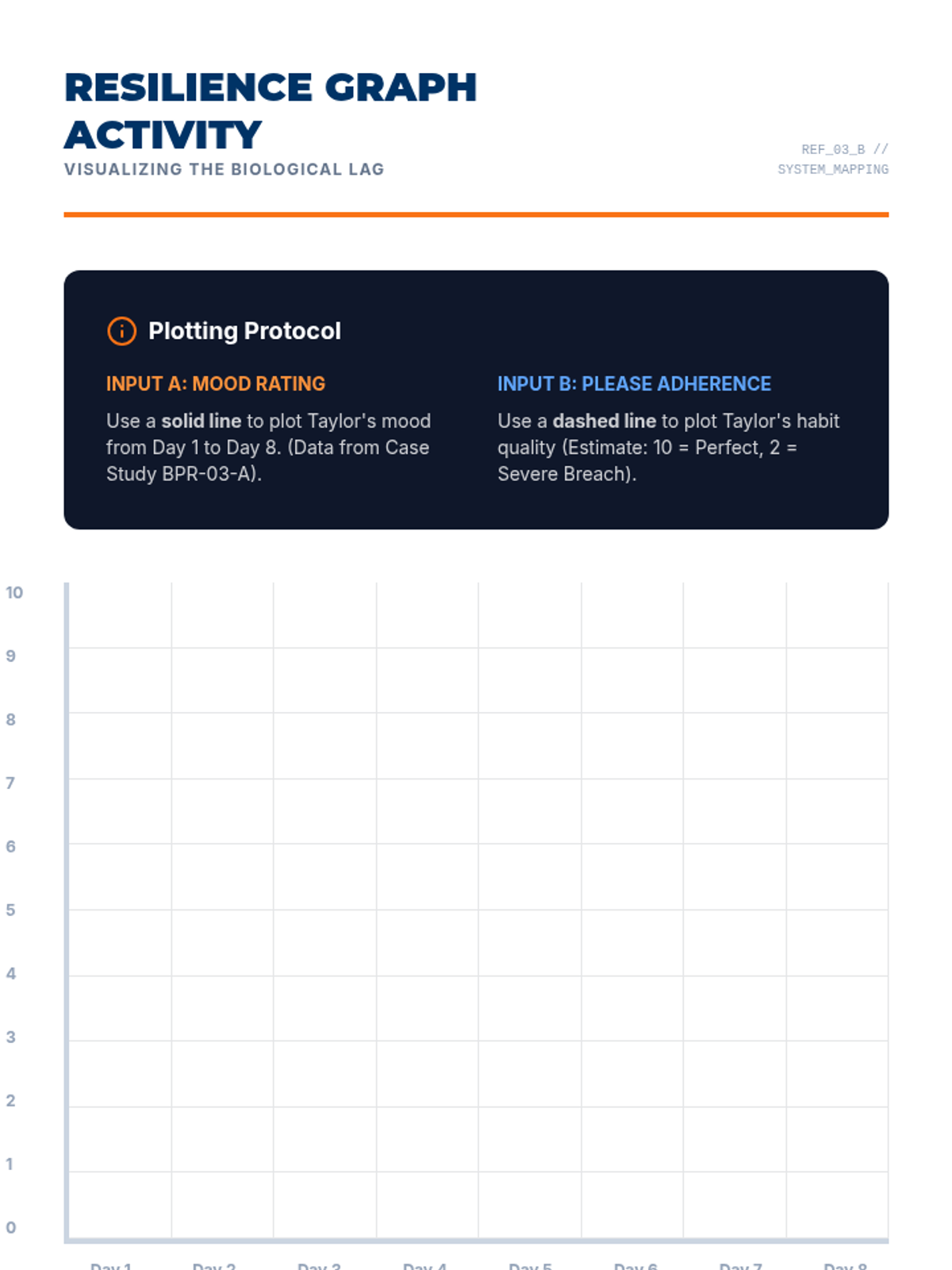
Students interpret hypothetical or personal tracking data to see the lag time between behavior change and mood improvement. They learn to manage expectations regarding how quickly the PLEASE skills work.
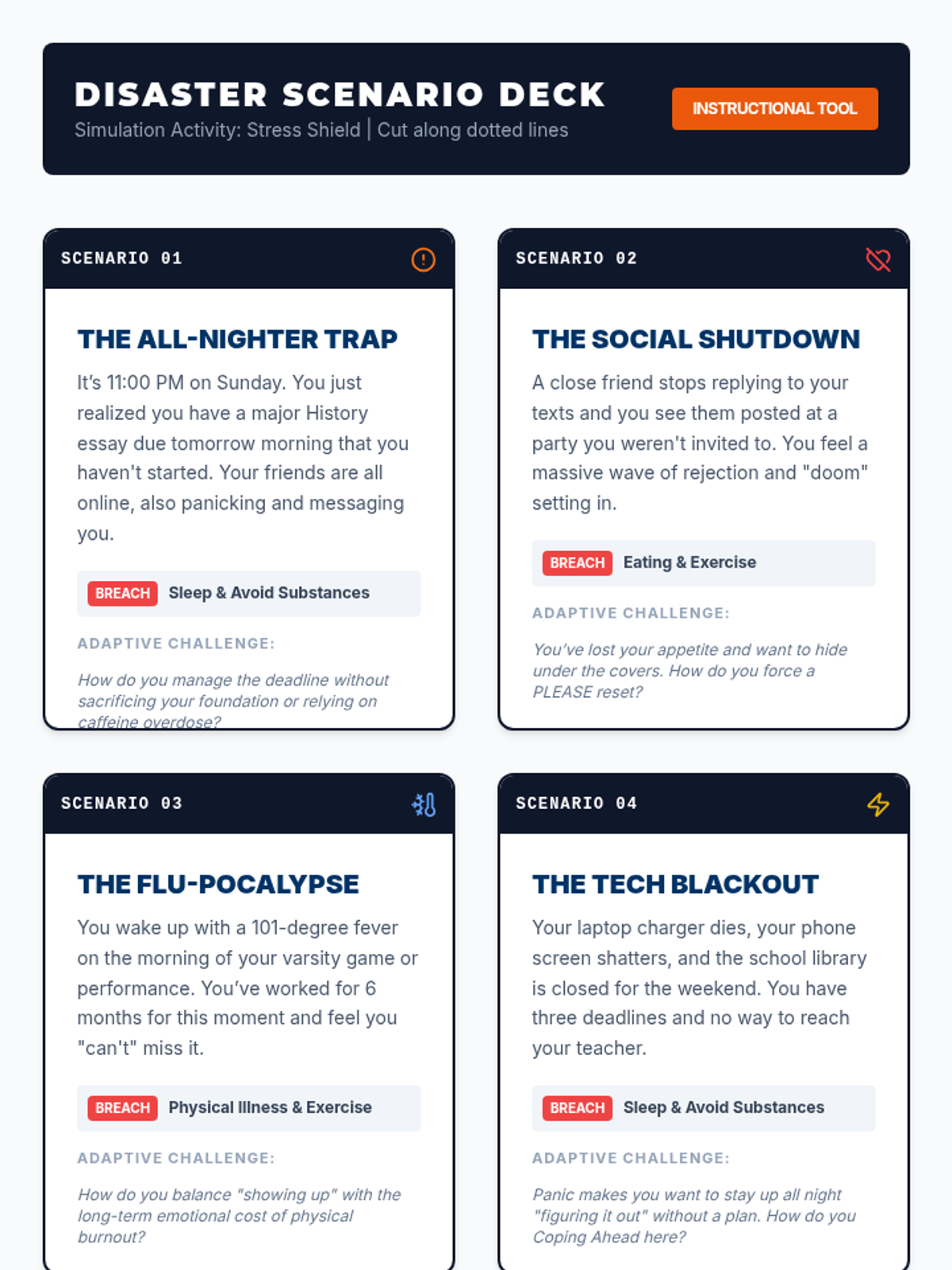
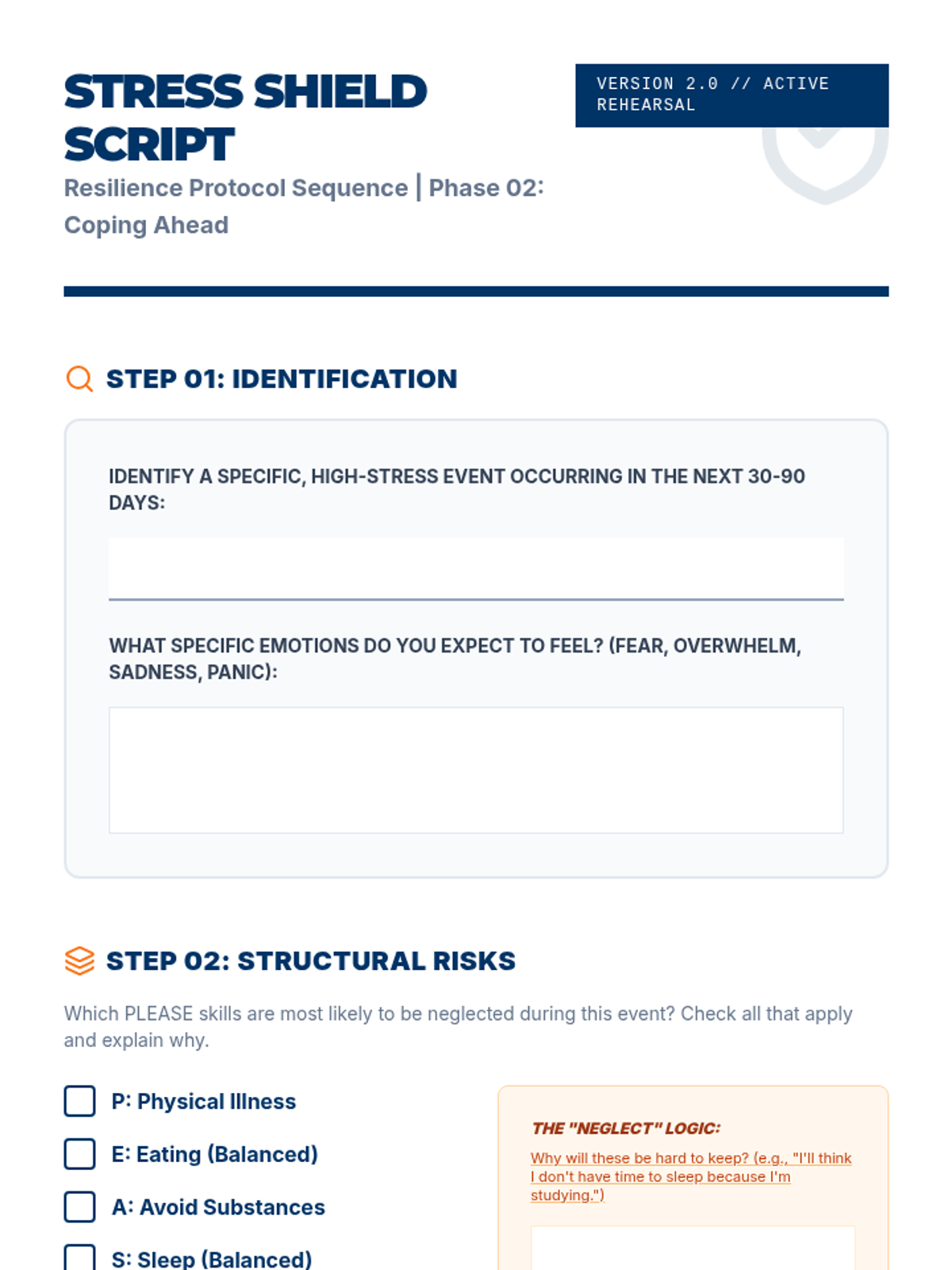
Students learn the DBT skill of 'Coping Ahead' to maintain their PLEASE foundation during future high-stress events. They practice adapting their resilience protocols to 'Disaster Scenarios'—unexpected life events that threaten their stability.
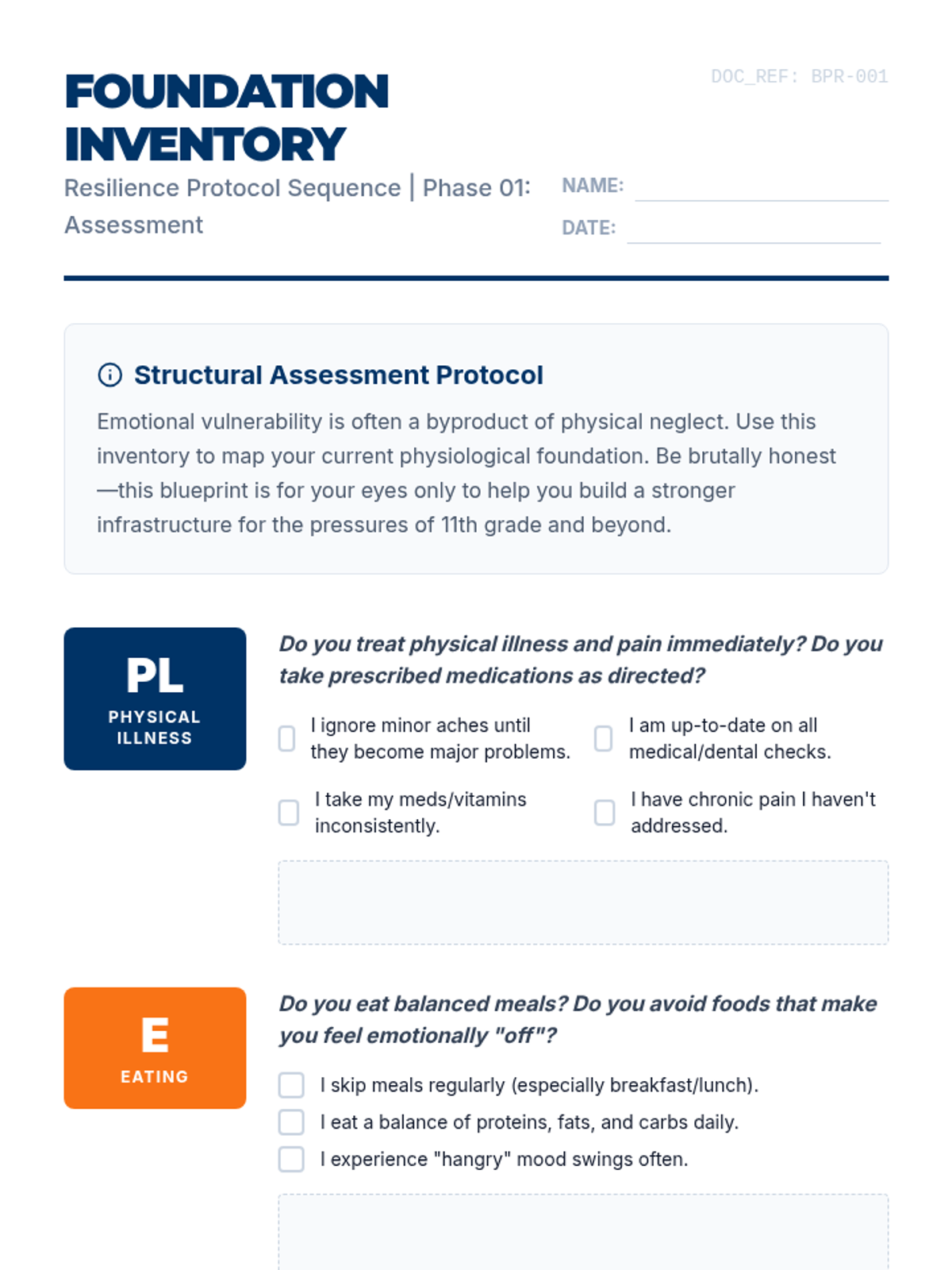
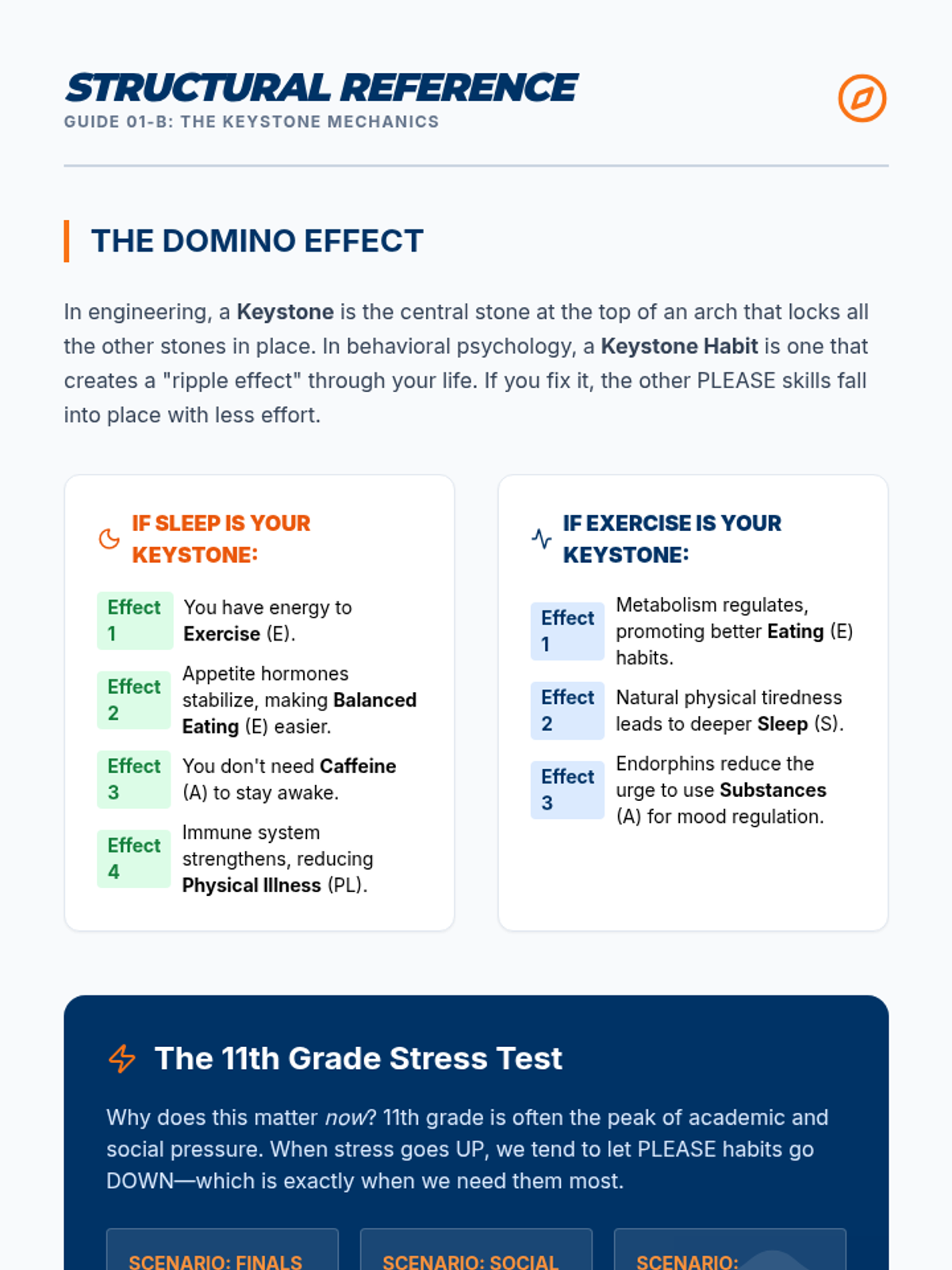
Students conduct a deep-dive inventory of their current PLEASE habits and identify a 'Keystone Habit'—the central pillar that supports their overall emotional stability. Using the Jenga analogy, students explore how physical health directly impacts emotional resilience.
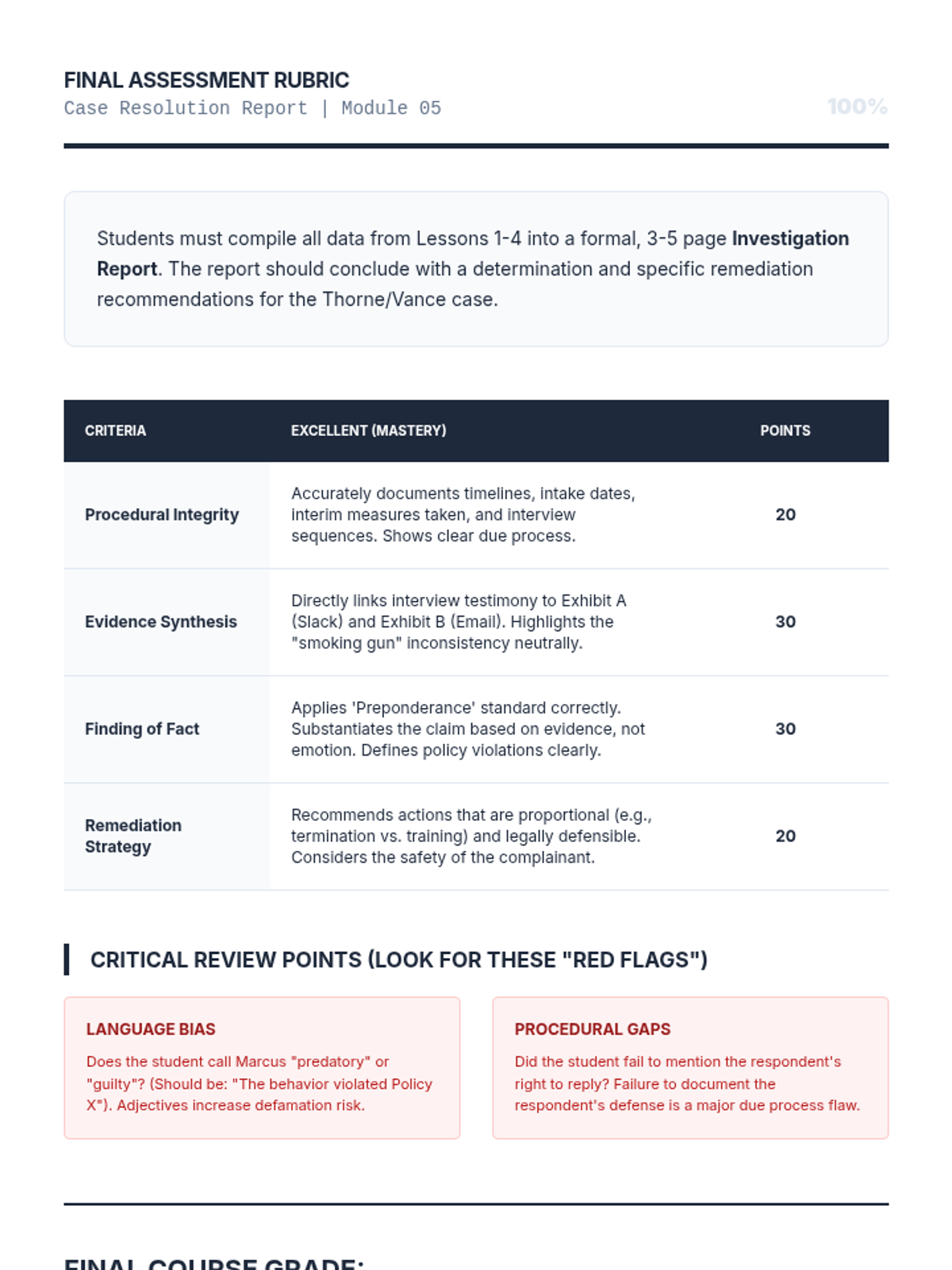
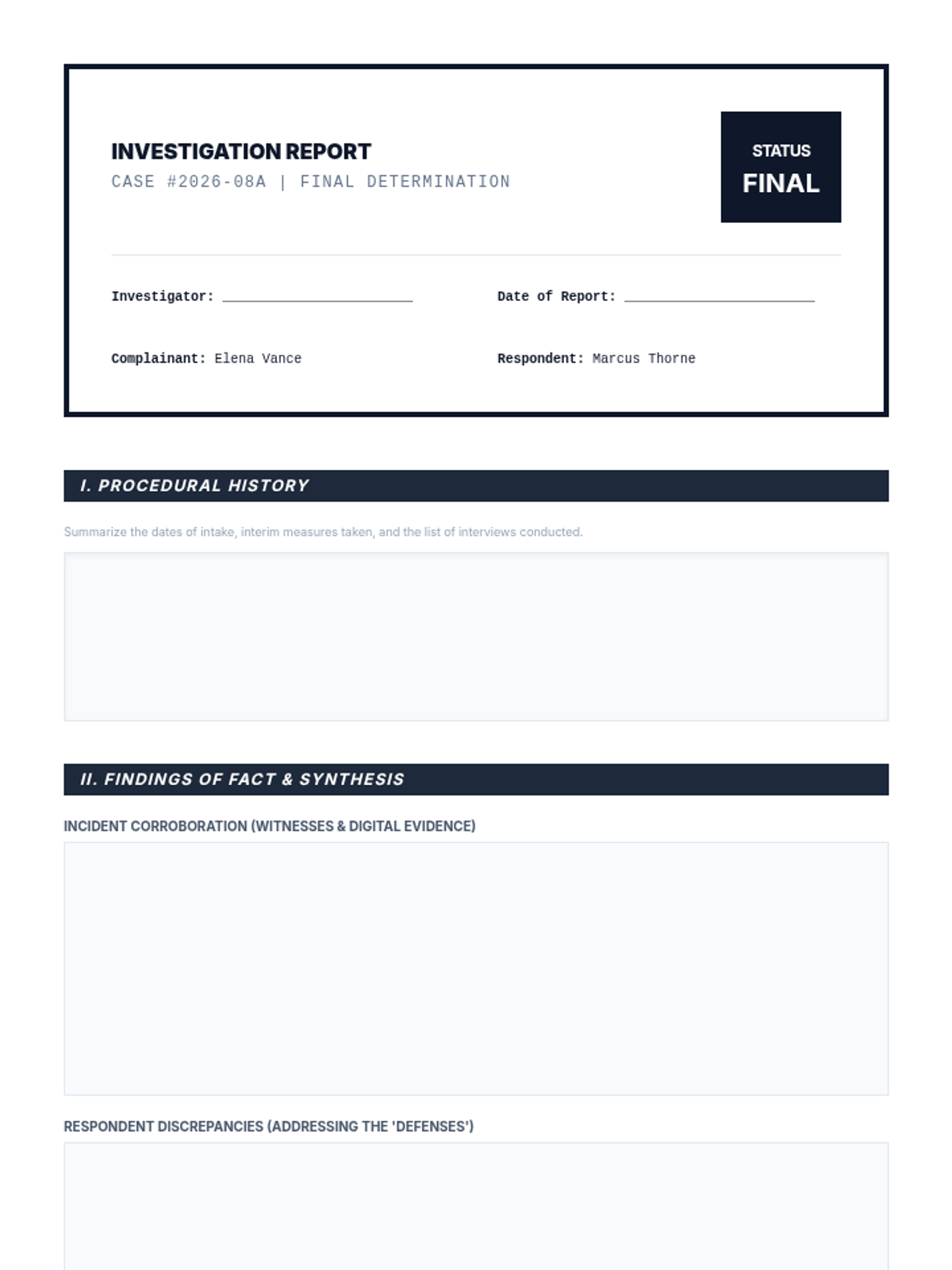
Concludes with the technical skills needed to draft a defensible investigation report and recommend appropriate remediation.
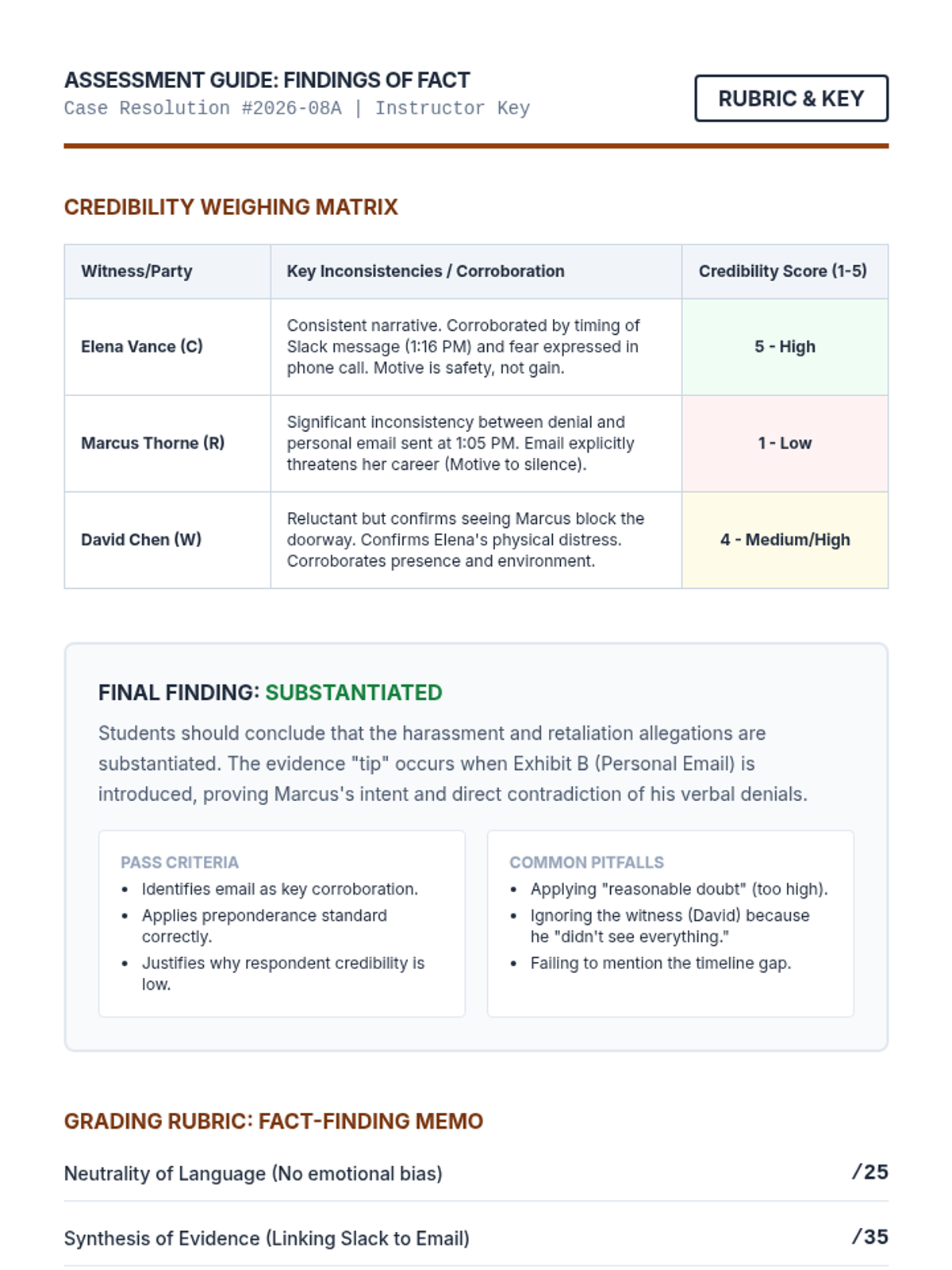
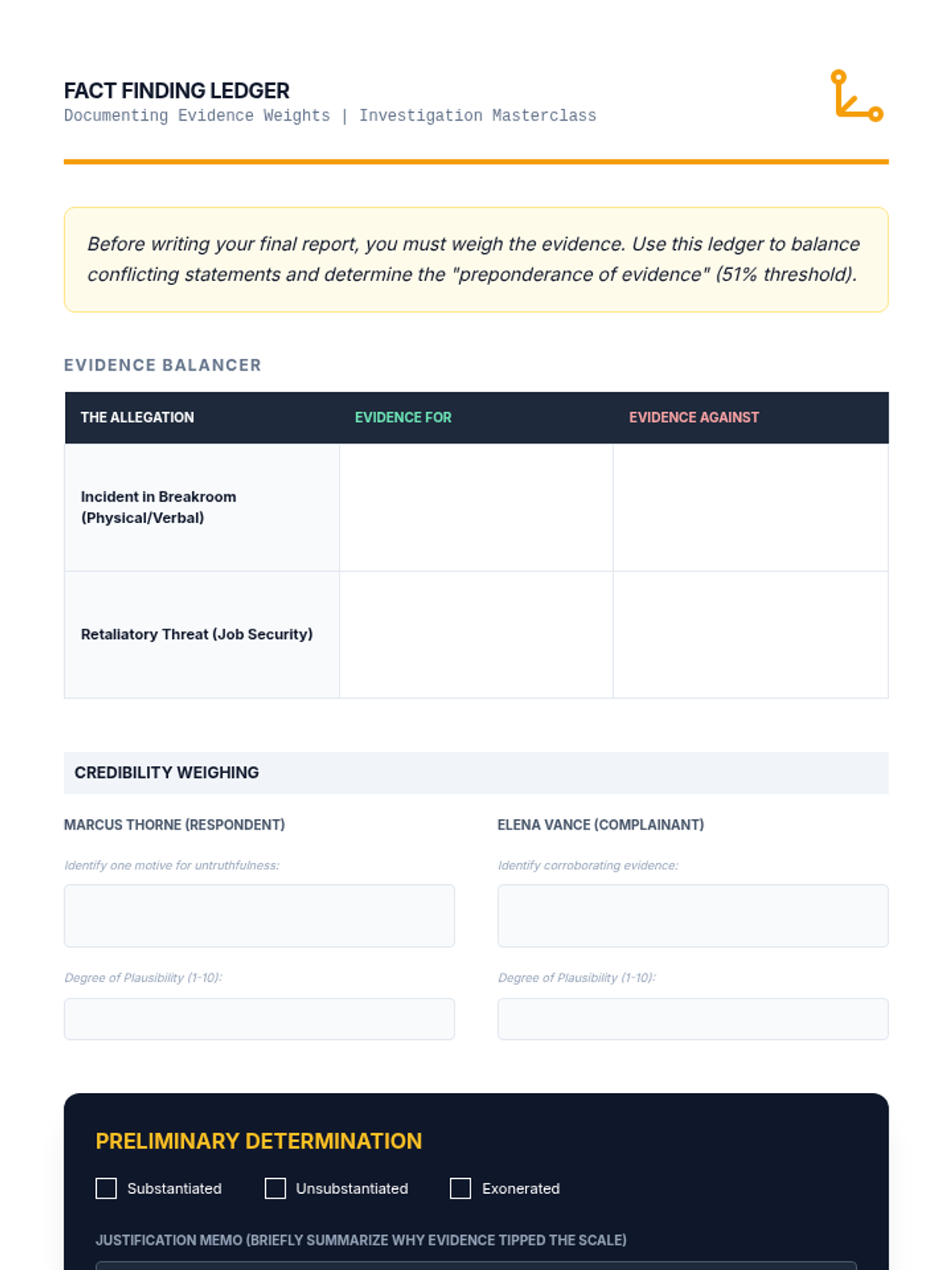
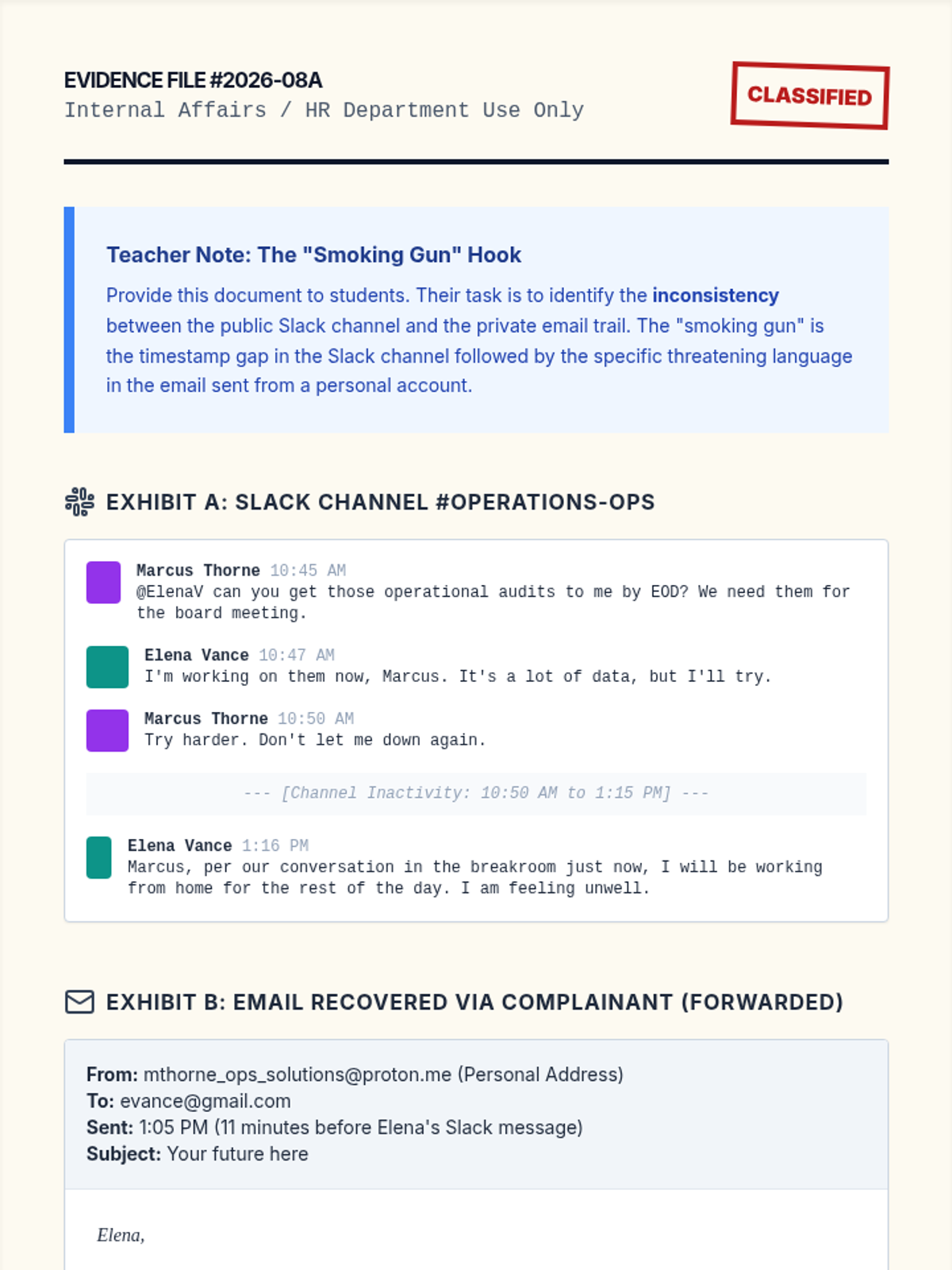
Teaches students how to weigh conflicting testimony and apply the preponderance of evidence standard to make formal findings of fact.
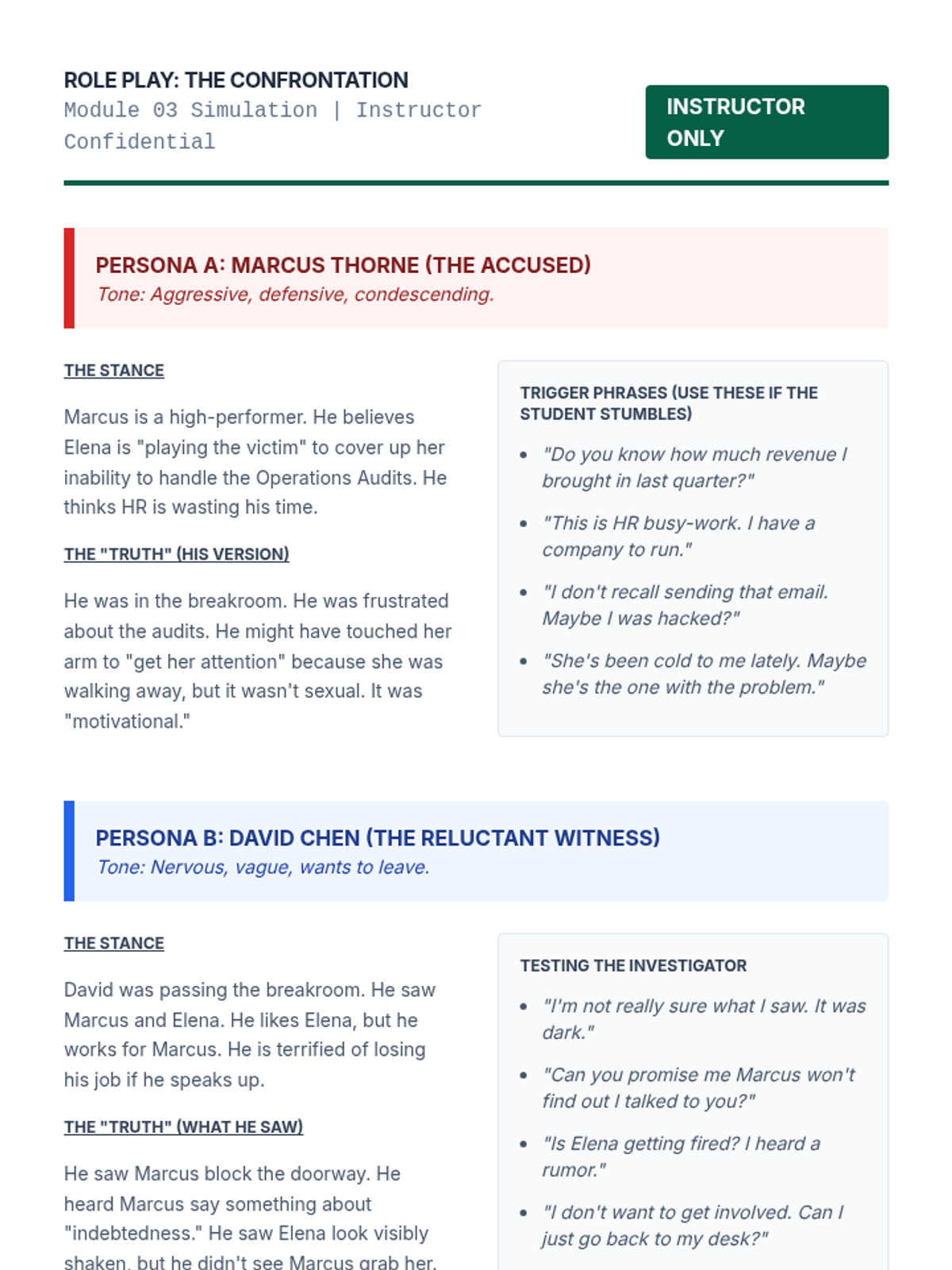
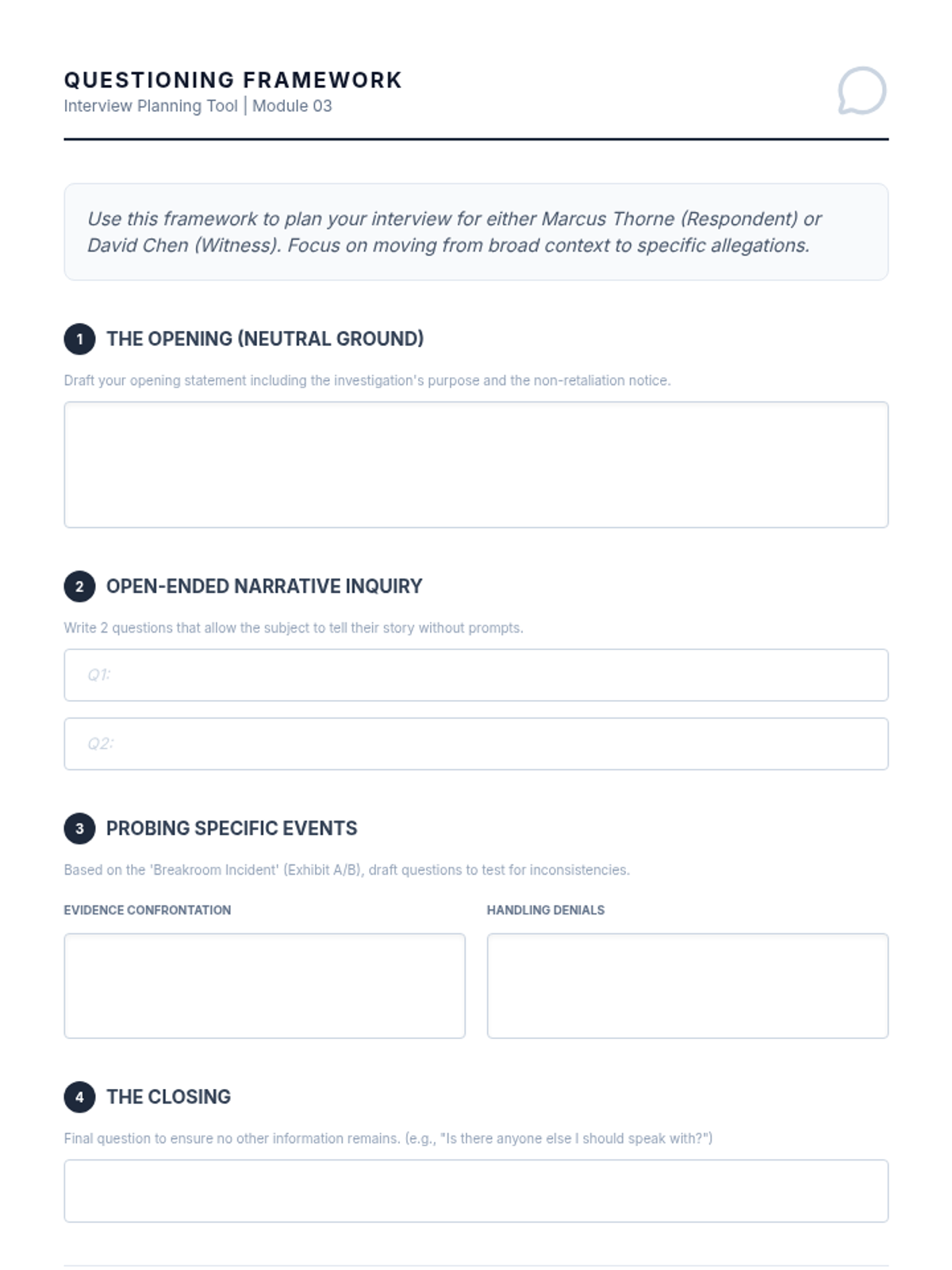
Develops skills for interviewing the accused and witnesses, focusing on non-leading questions and managing high-conflict interactions.
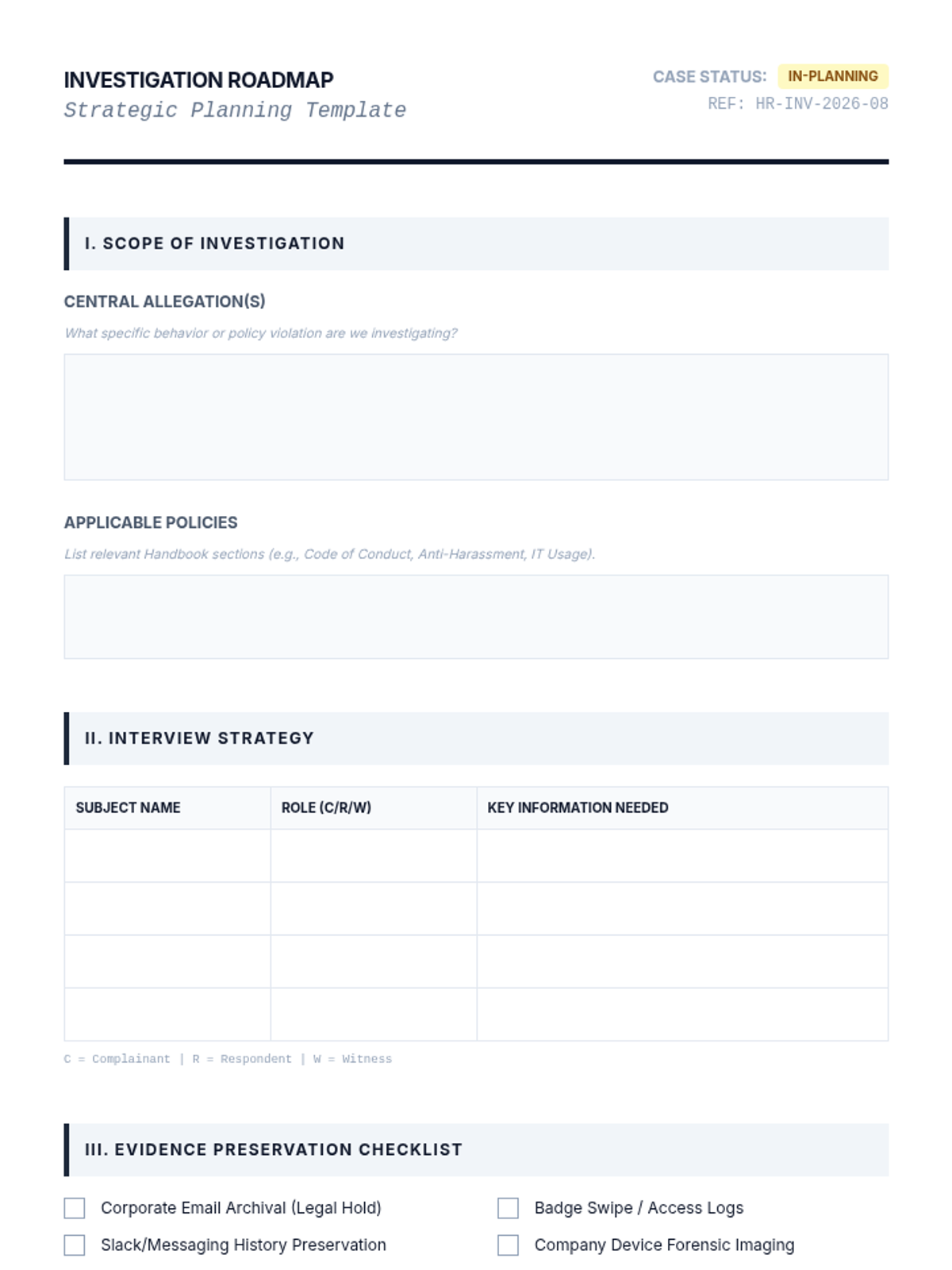
Covers strategic planning for an investigation, identifying witnesses, and managing digital and physical evidence.
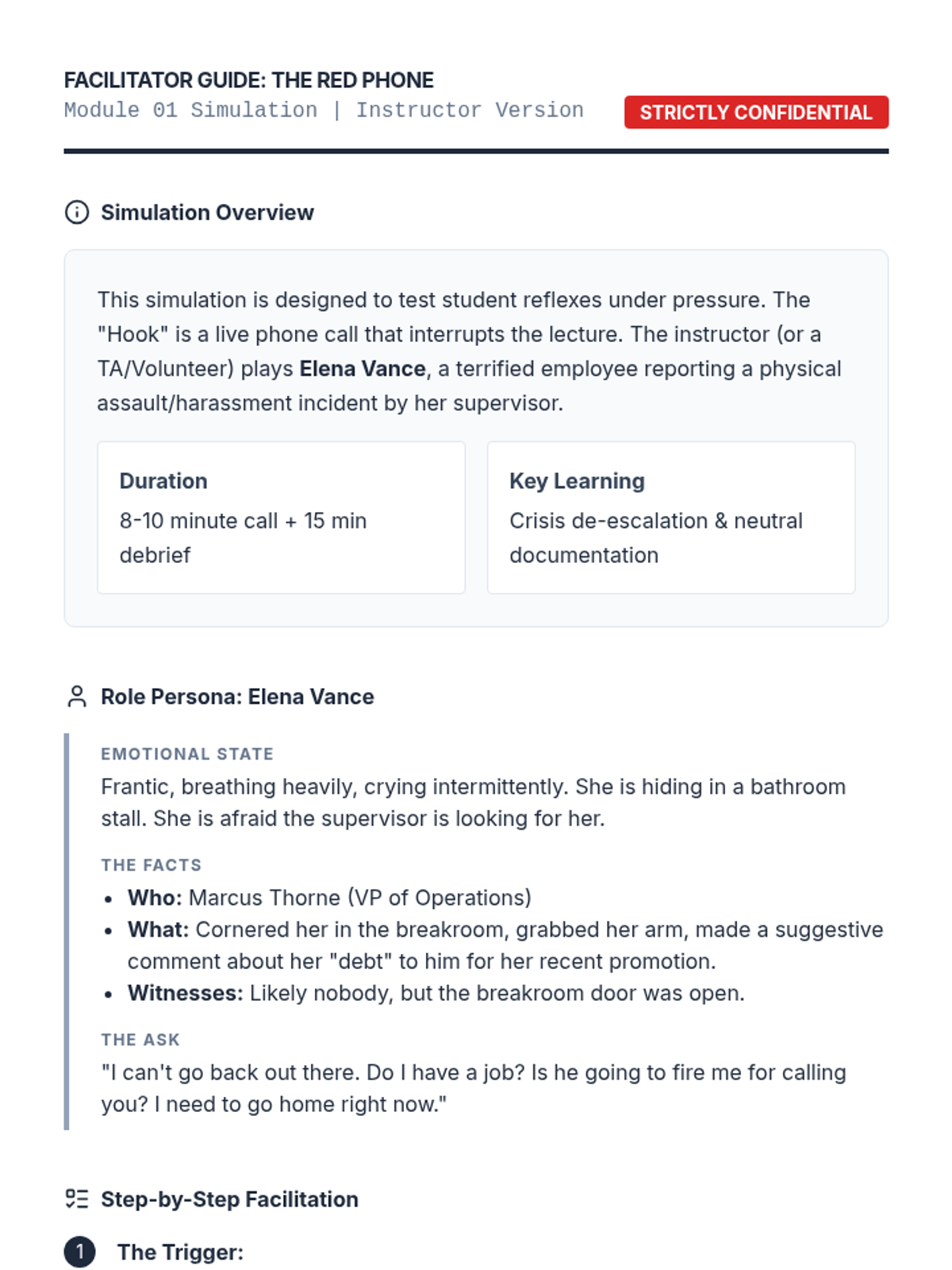
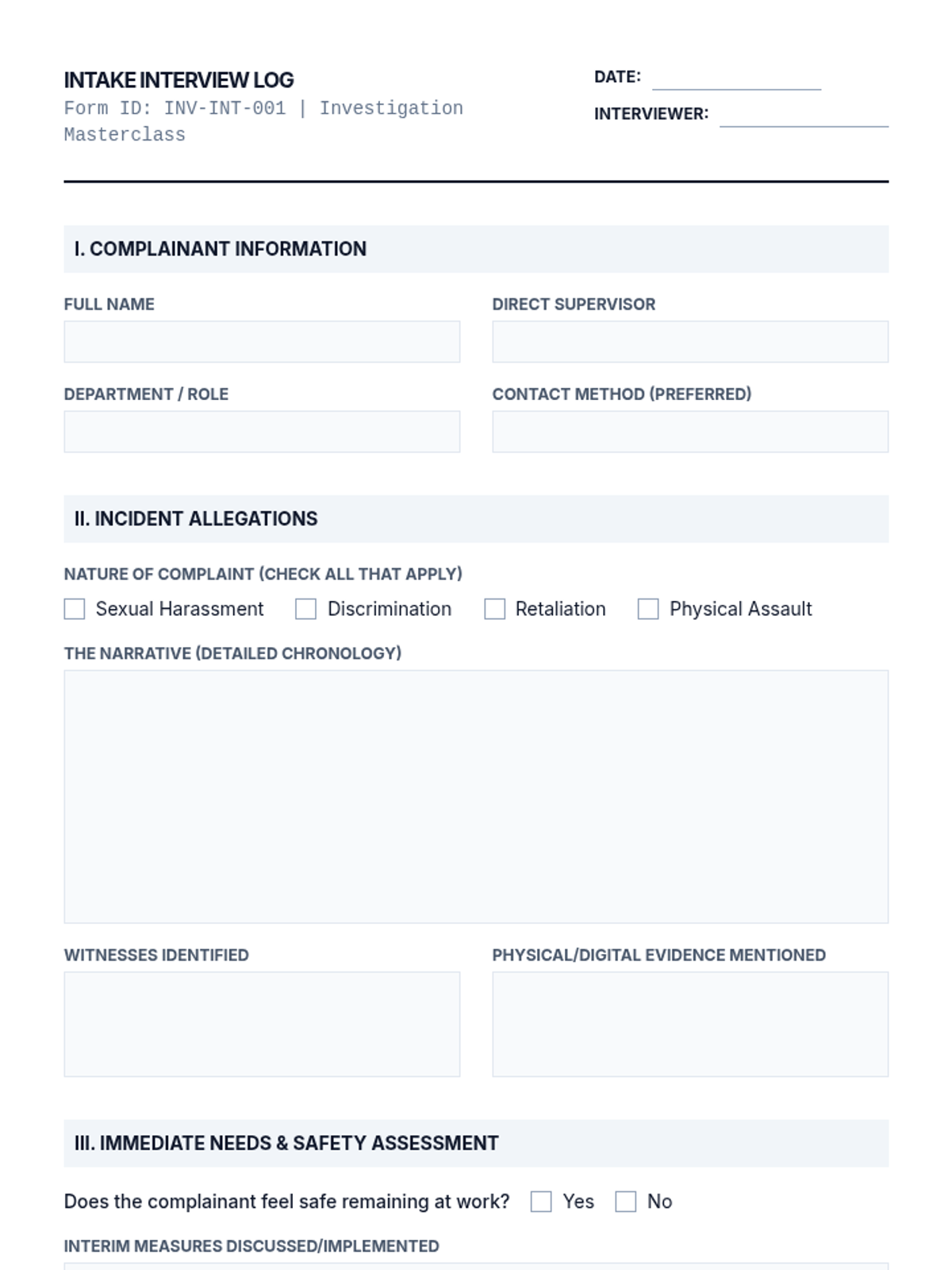
Focuses on the immediate response to a complaint, including conducting the intake interview and determining if interim measures like administrative leave are necessary.
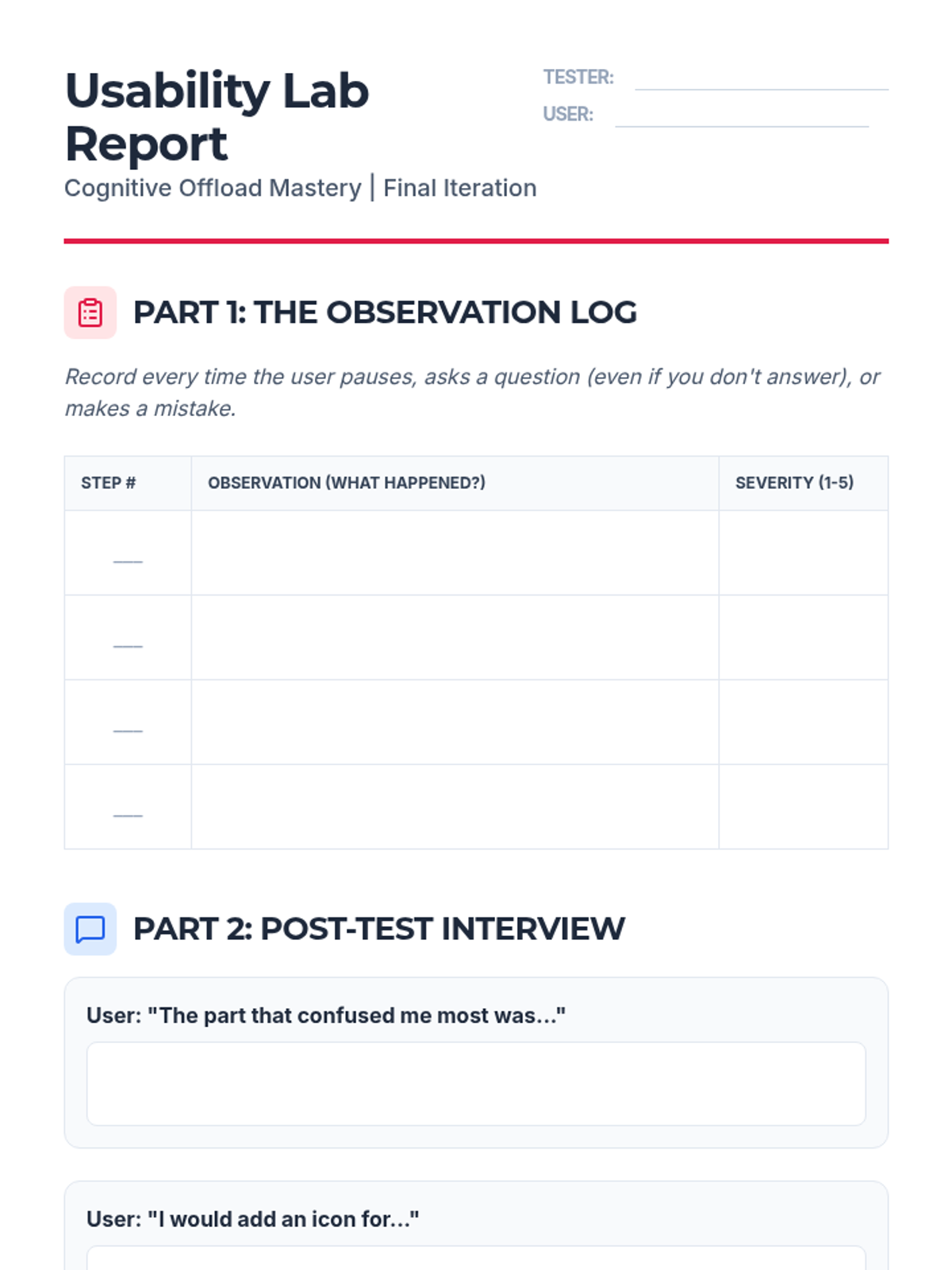
Students perform usability testing on their checklists, observing peers' performance and iterating based on results.
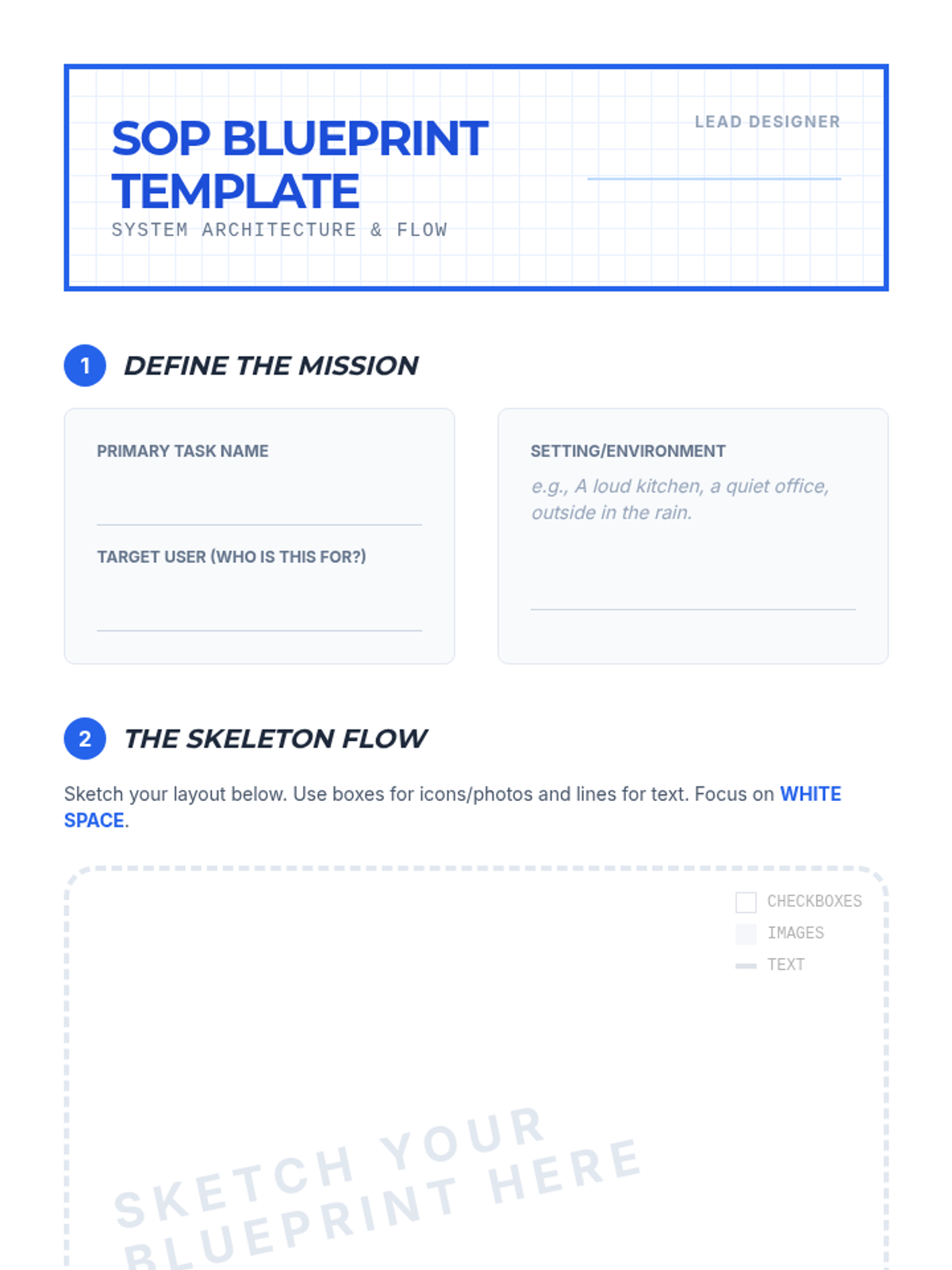
Students draft their own professional-grade visual checklists, focusing on layout, flow, and sequential logic.
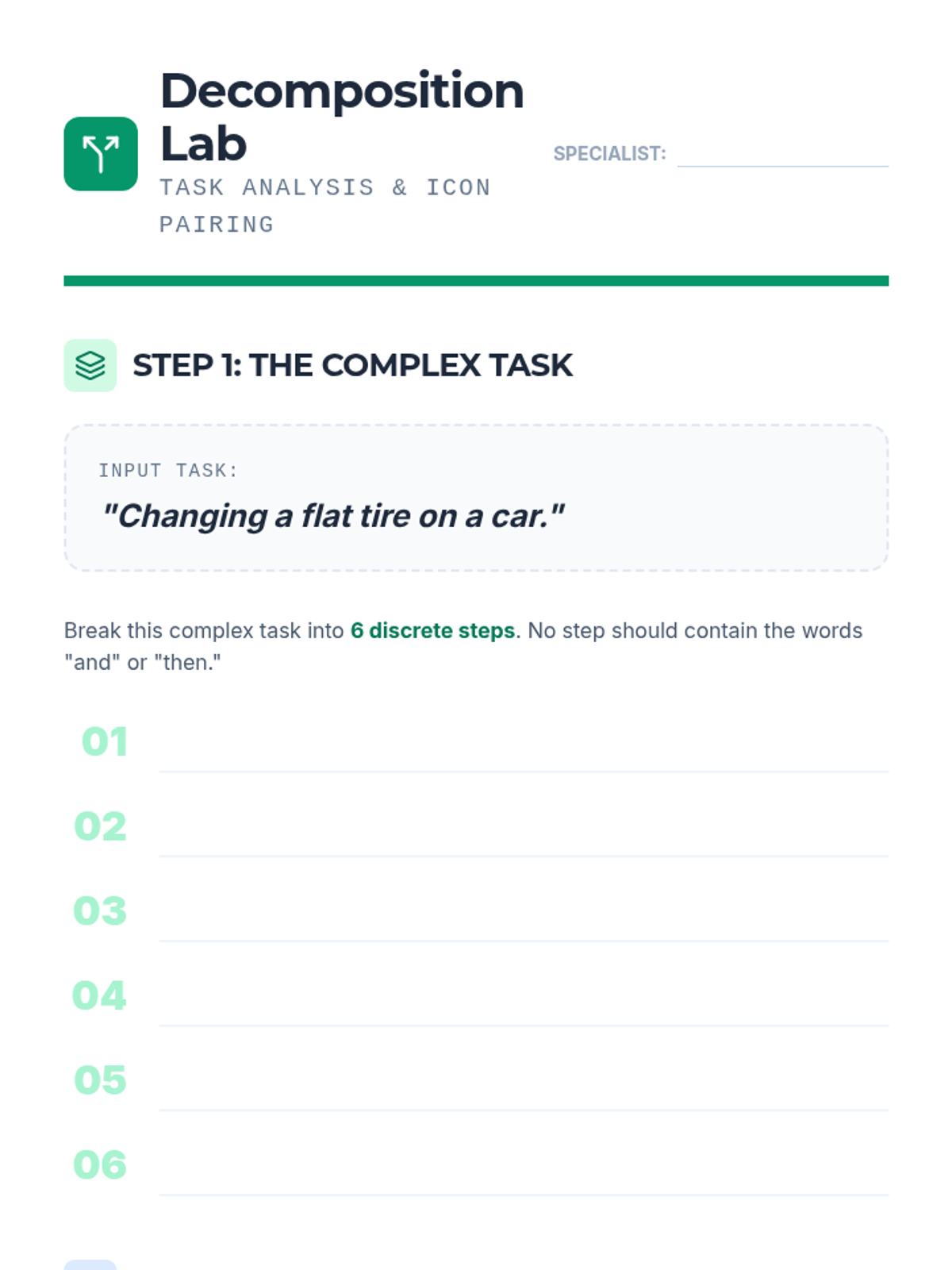
Students learn task analysis by breaking complex tasks into discrete steps and matching them with universal icons.
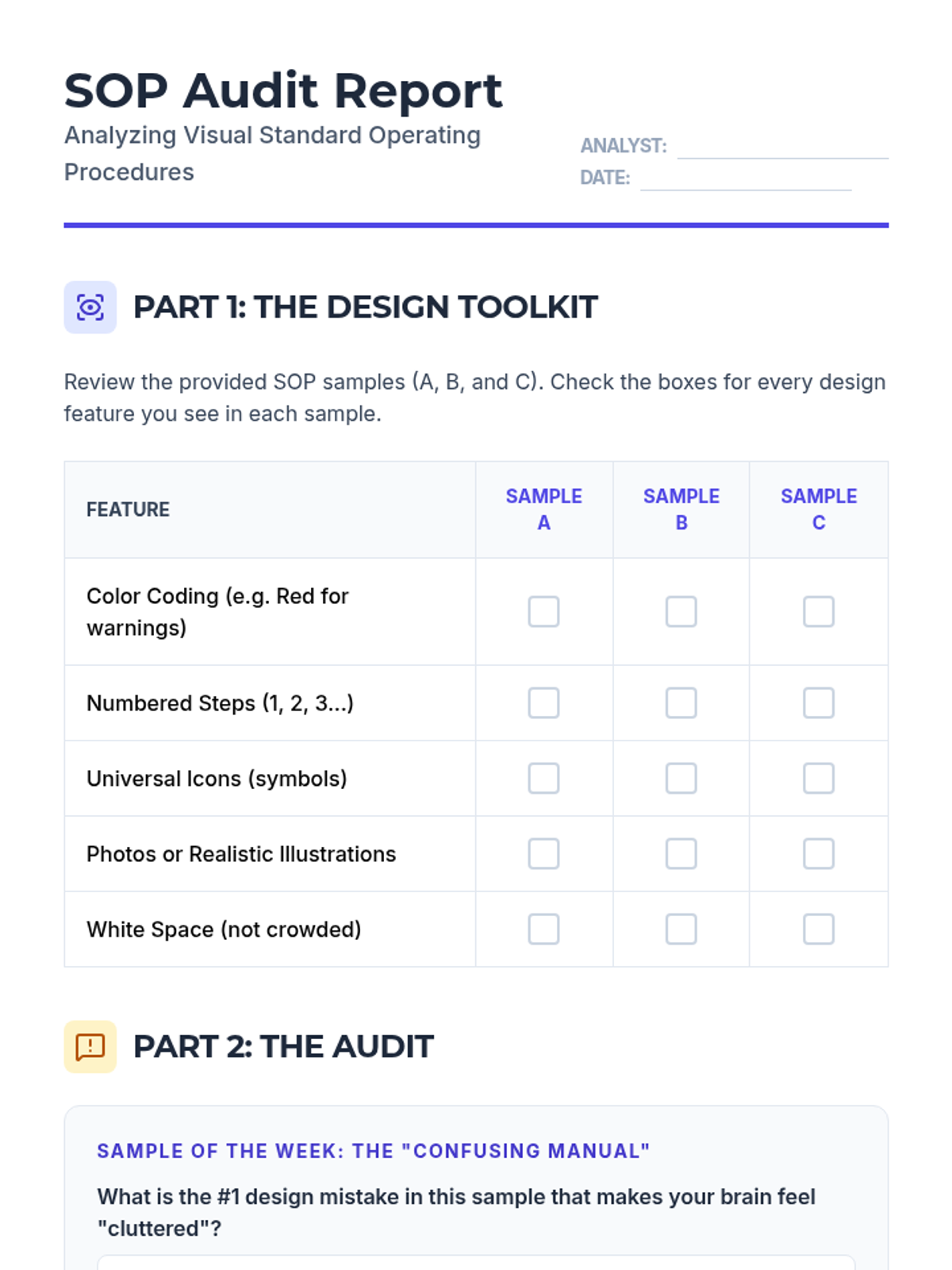
Students critique real-world visual instructions to identify design elements like color coding and iconography that aid understanding.
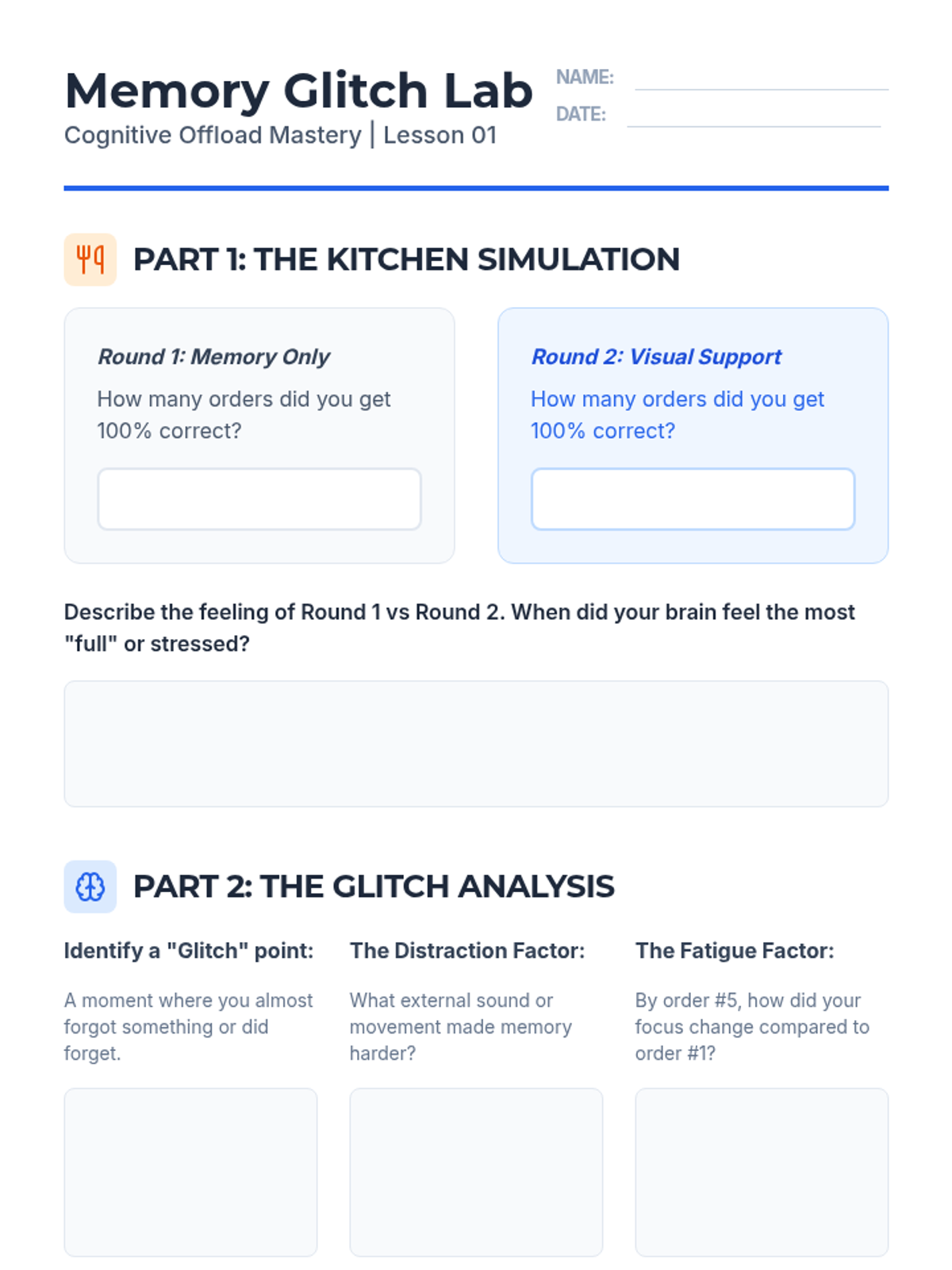
Students explore the limits of working memory through a simulation and case studies, learning the concept of cognitive offloading via checklists.
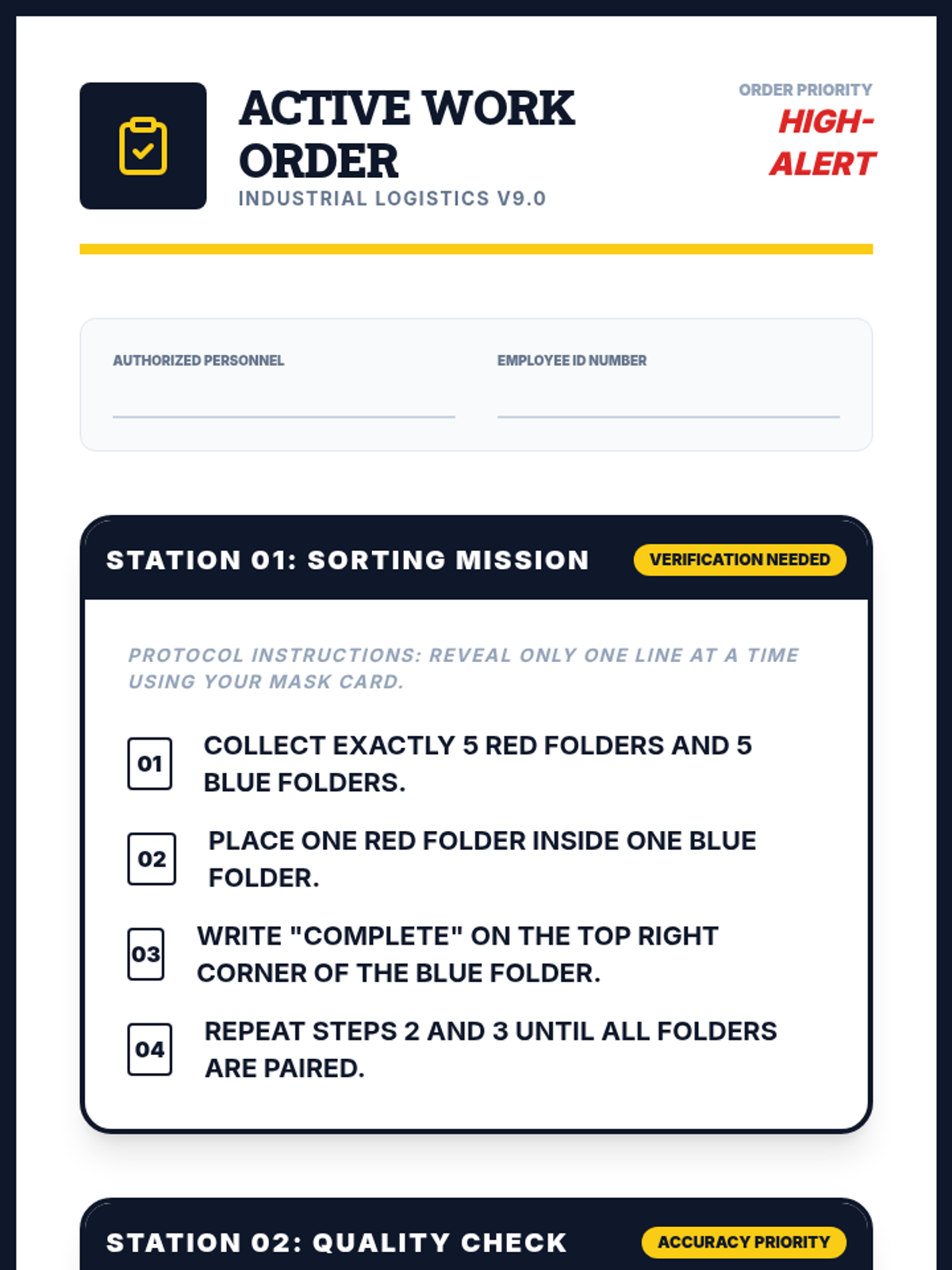
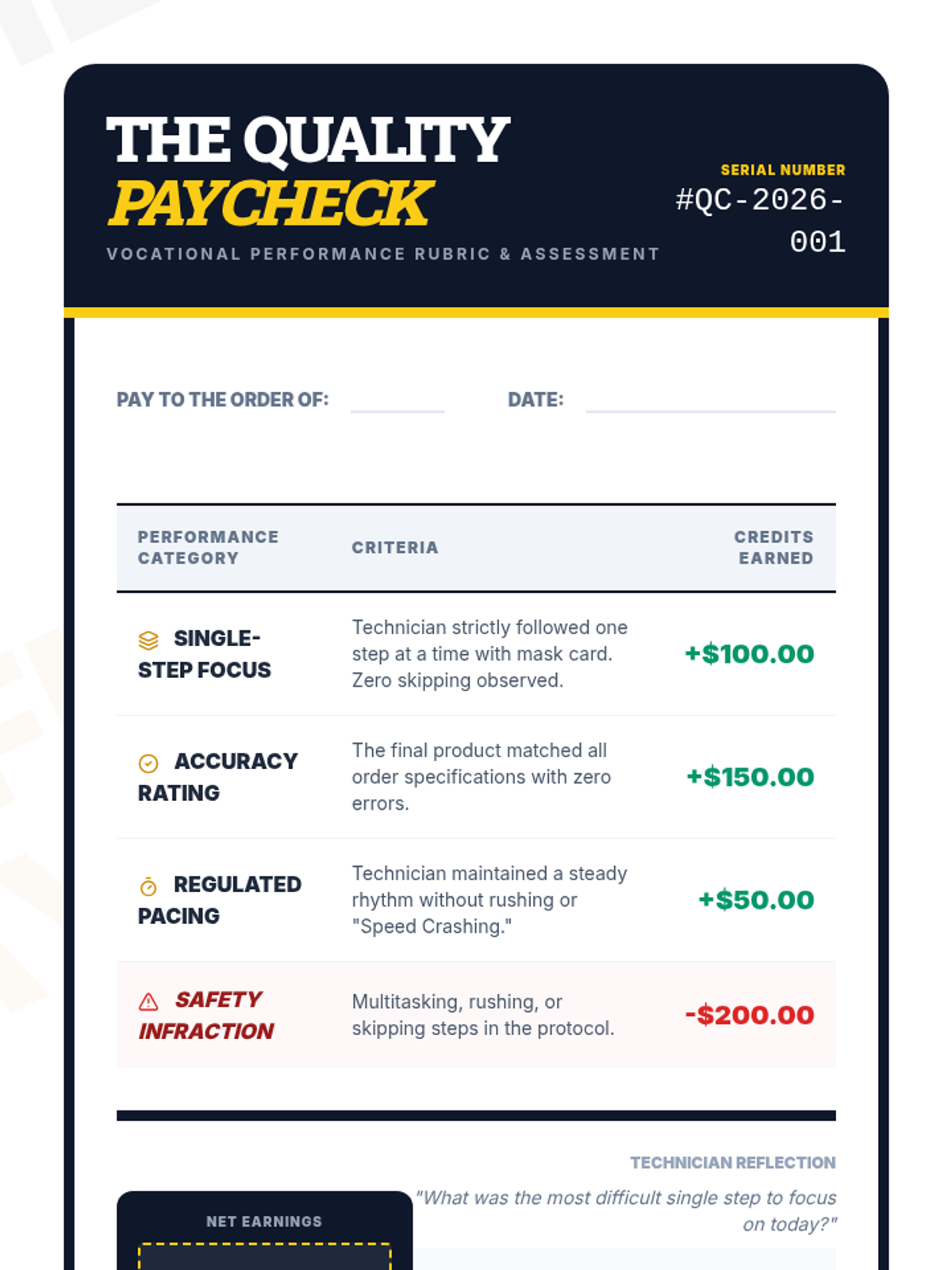
A culminating simulation where students rotate through work stations, completing complex orders using single-step prompts and quality control standards.
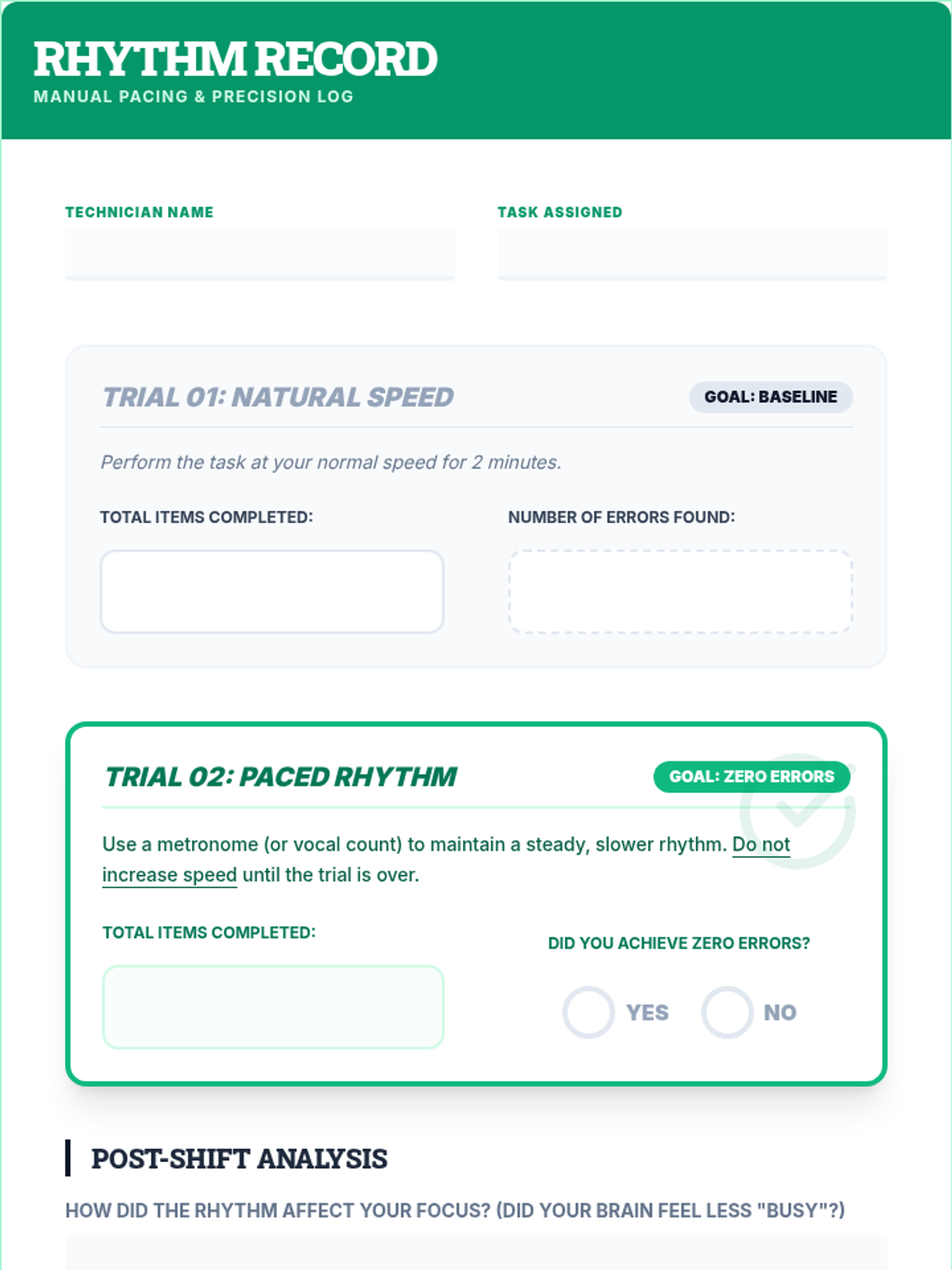
Students engage in repetitive manual tasks to find a productive rhythm, learning to prioritize accuracy over speed through regulated pacing.
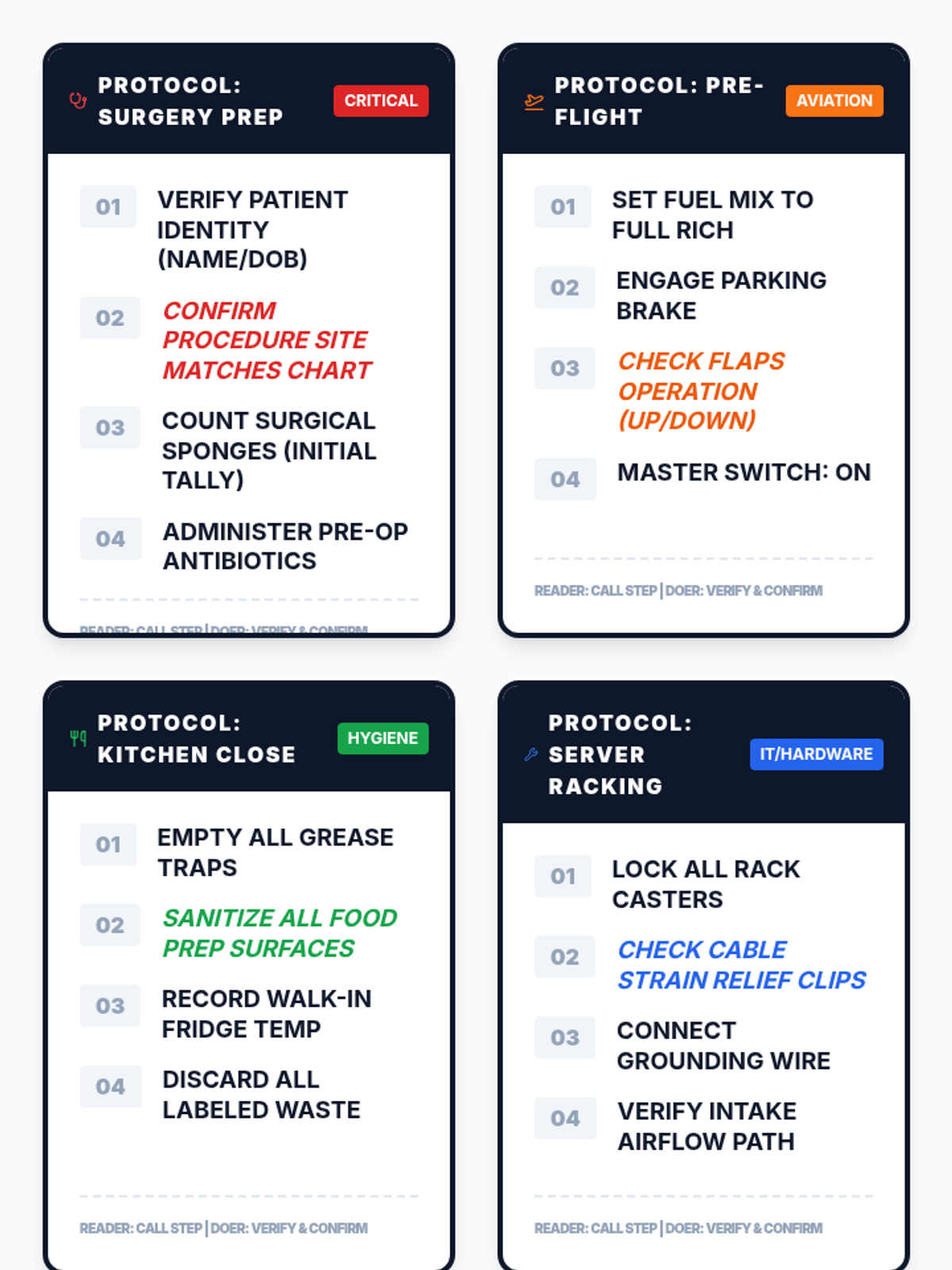
Students practice high-stakes communication and verification techniques used in aviation and medicine to ensure 100% accuracy in safety-critical tasks.
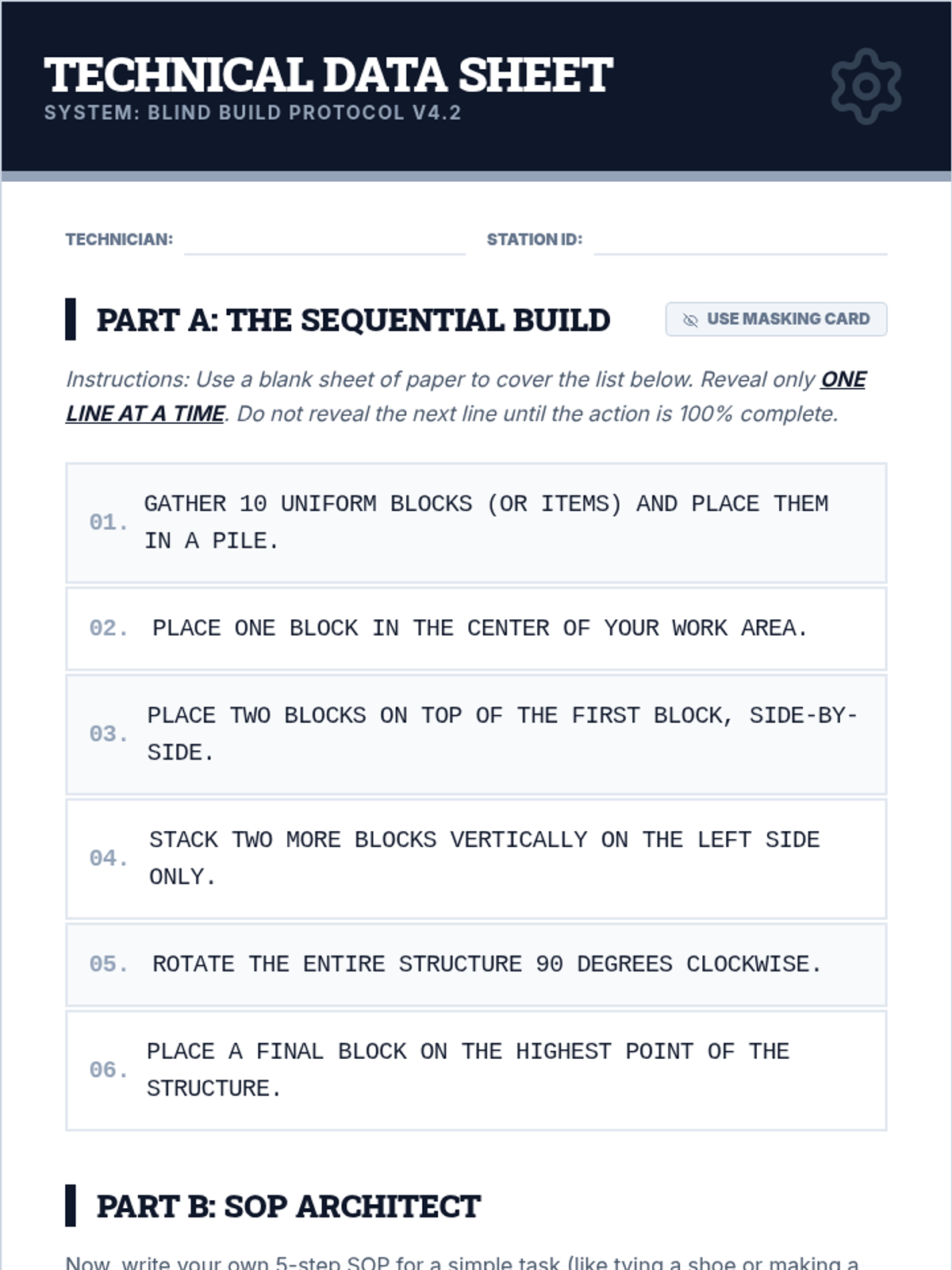
Students learn to interpret and create Standard Operating Procedures (SOPs), practicing the 'blind build' method to master one-step-at-a-time execution.
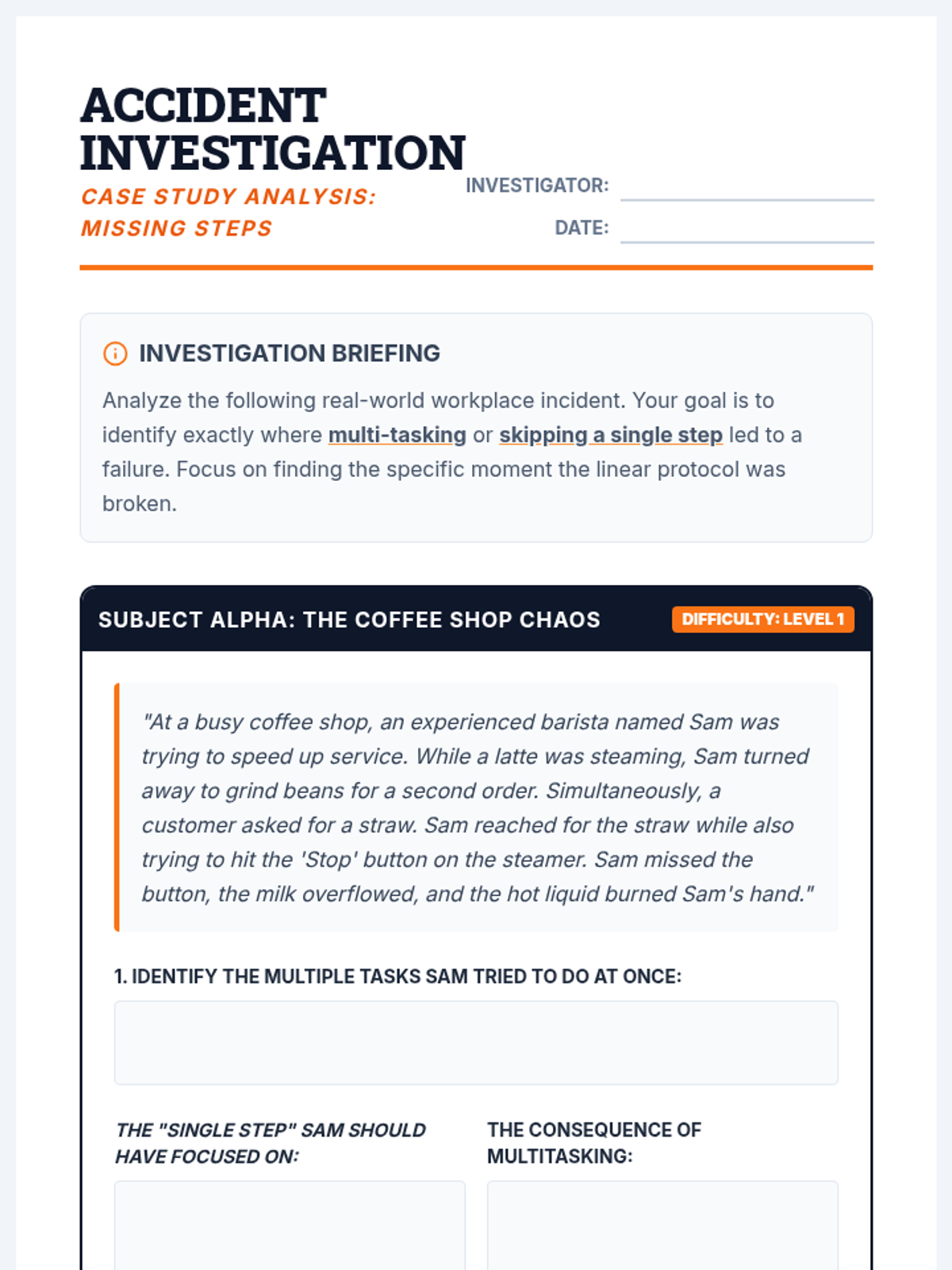
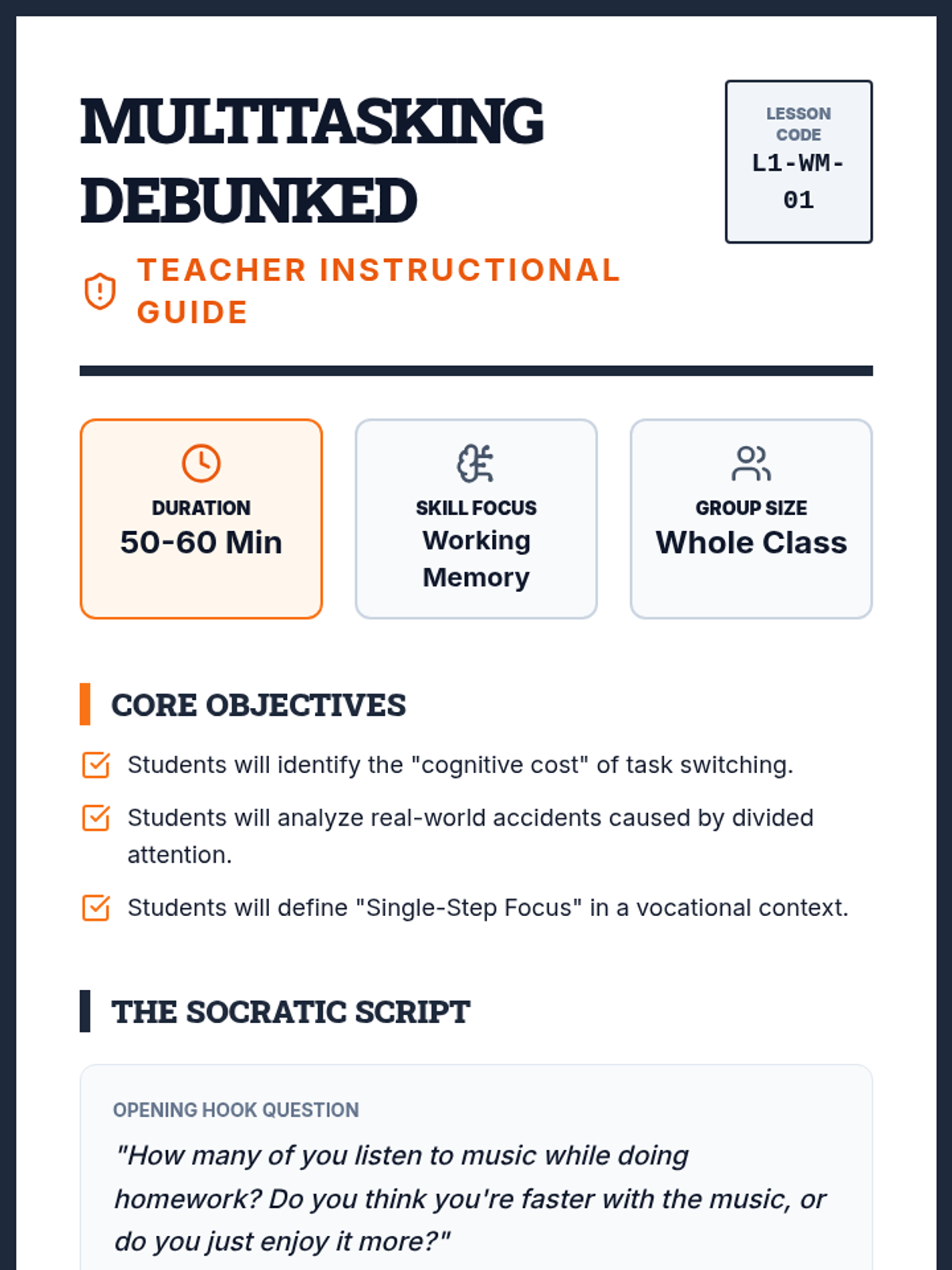
Students examine how cognitive overload and multitasking lead to workplace errors, using engineering failures as case studies to highlight the necessity of linear focus.
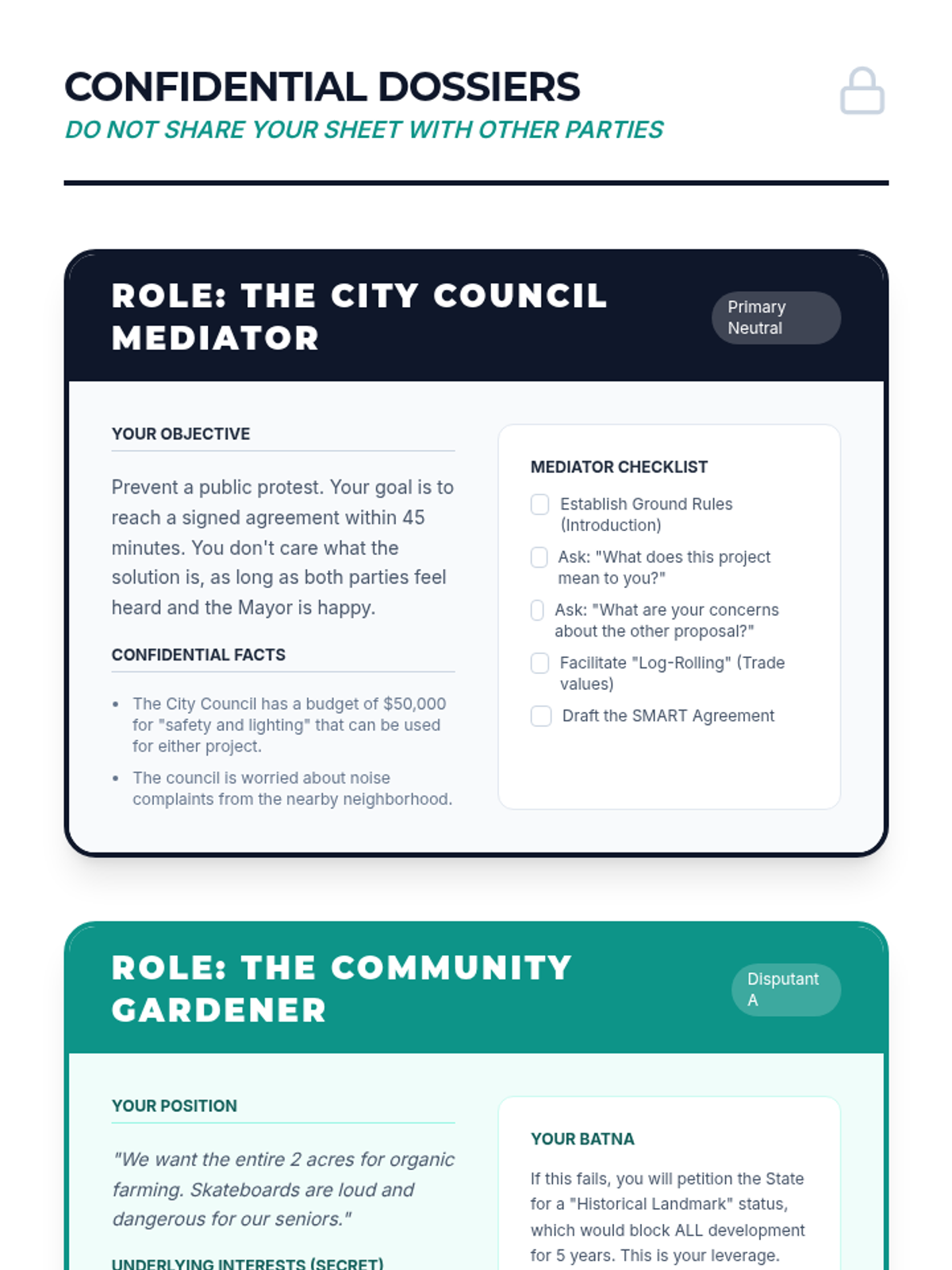
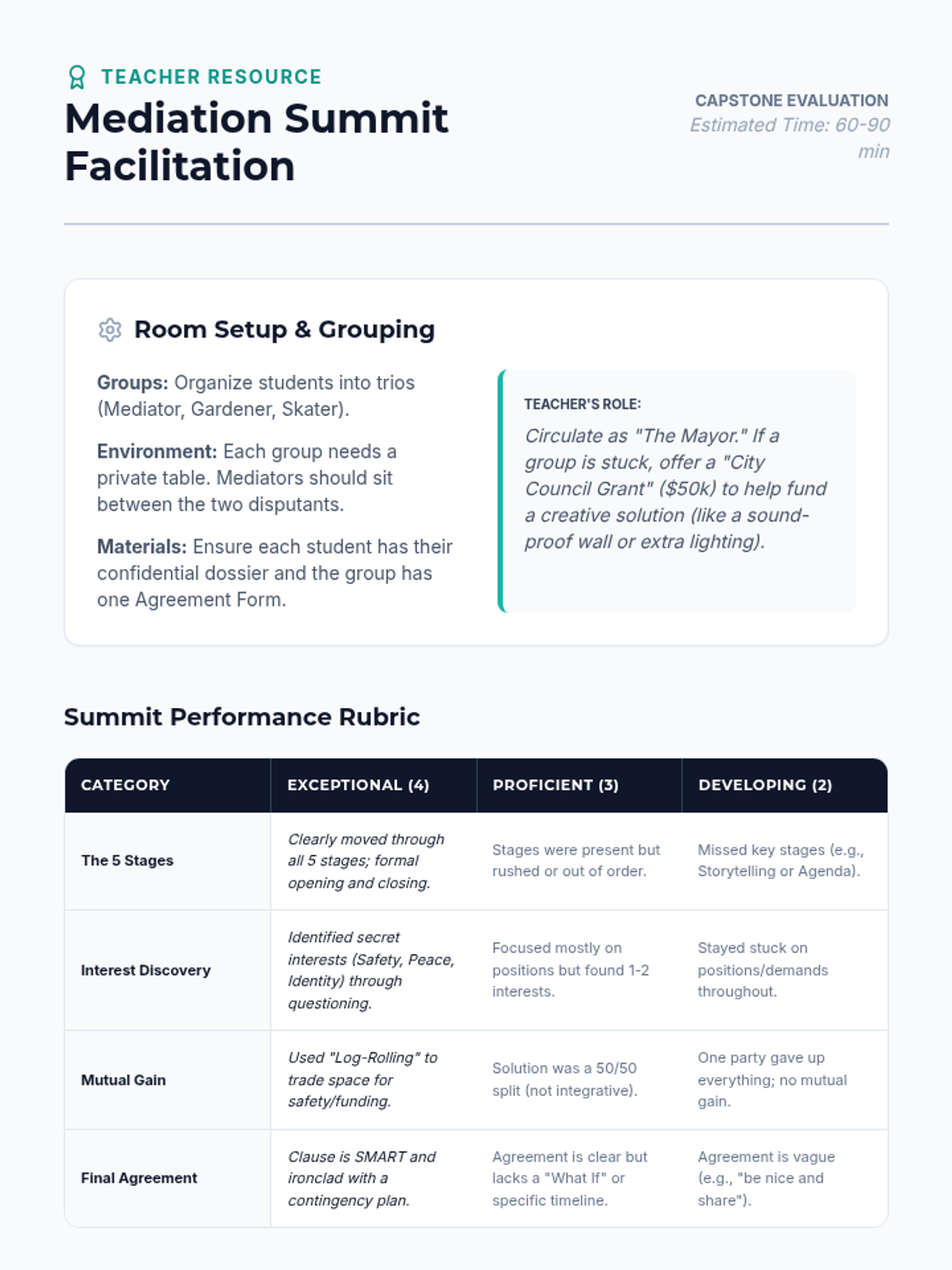
Students assume roles of mediators and disputants in a complex, multi-party dispute scenario (e.g., a land use dispute or school policy change). Mediators must facilitate the process, uncover interests, help generate options, and finalize a written agreement. The lesson focuses on synthesizing all previous frameworks into a cohesive professional performance.
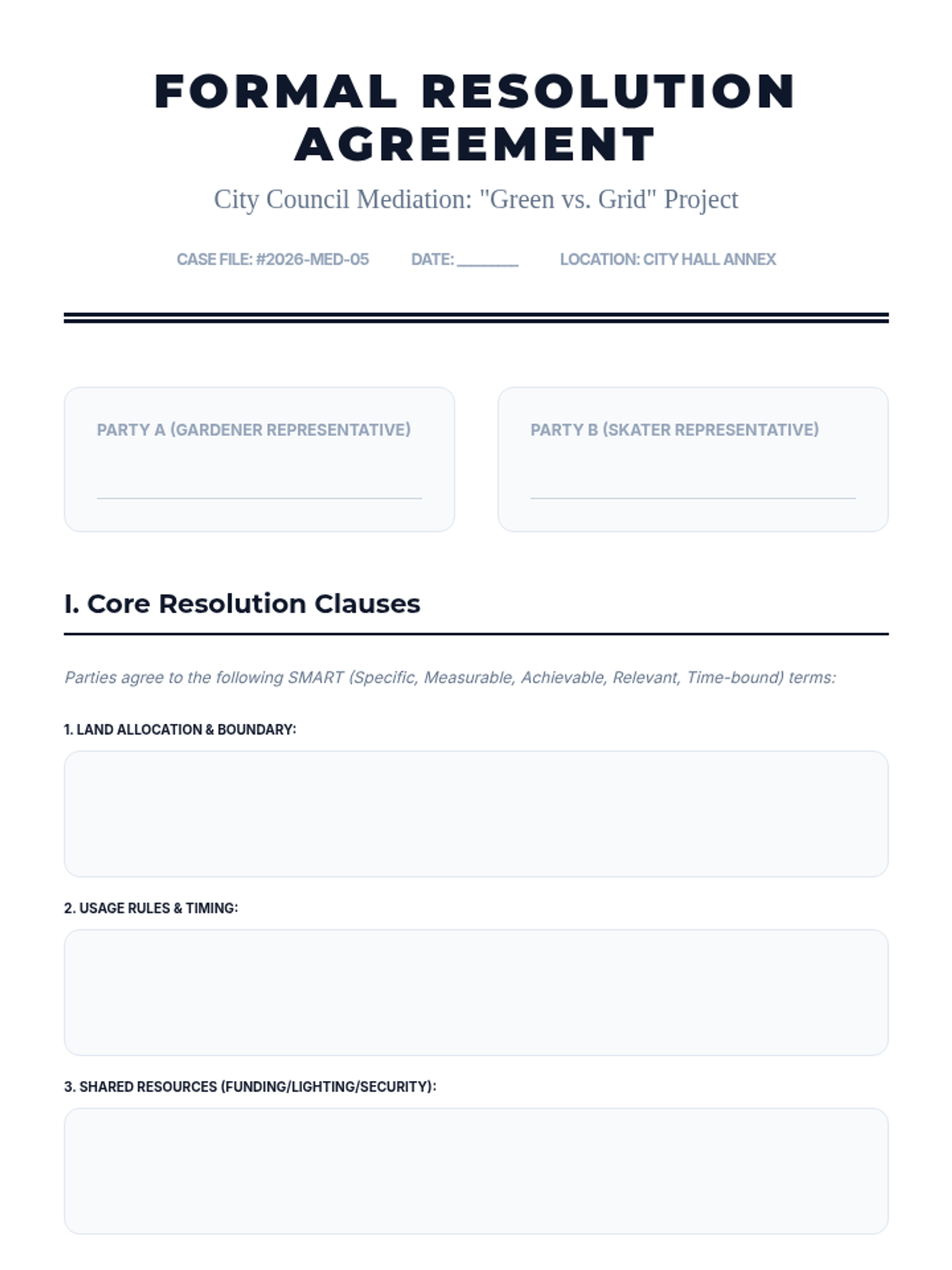
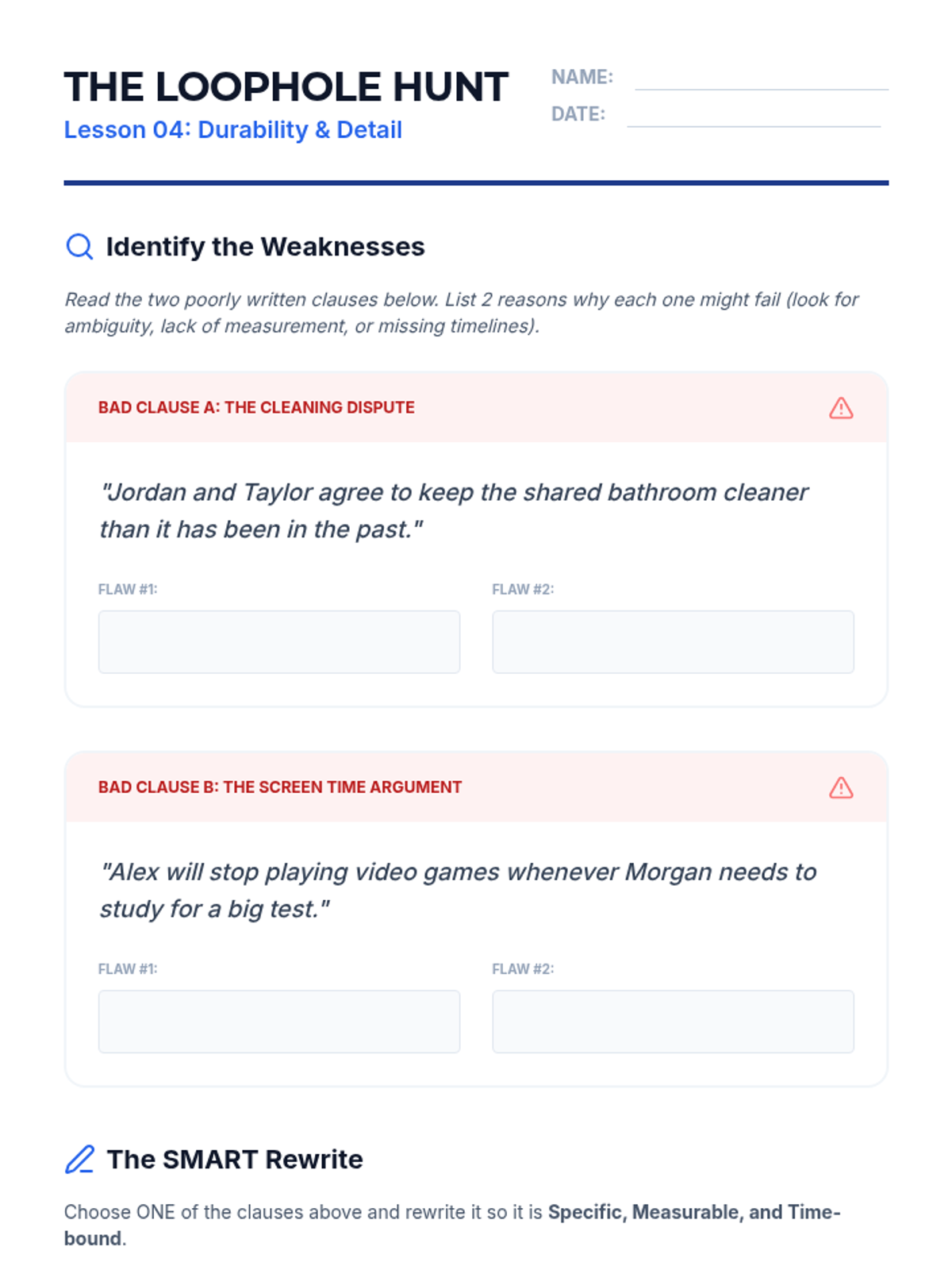
Resolving the conflict is only half the battle; writing a durable agreement is the rest. Students learn the components of a SMART agreement (Specific, Measurable, Achievable, Relevant, Time-bound) in a conflict context. They review failed contracts or treaties to identify loopholes and ambiguity, then practice drafting ironclad resolution clauses.
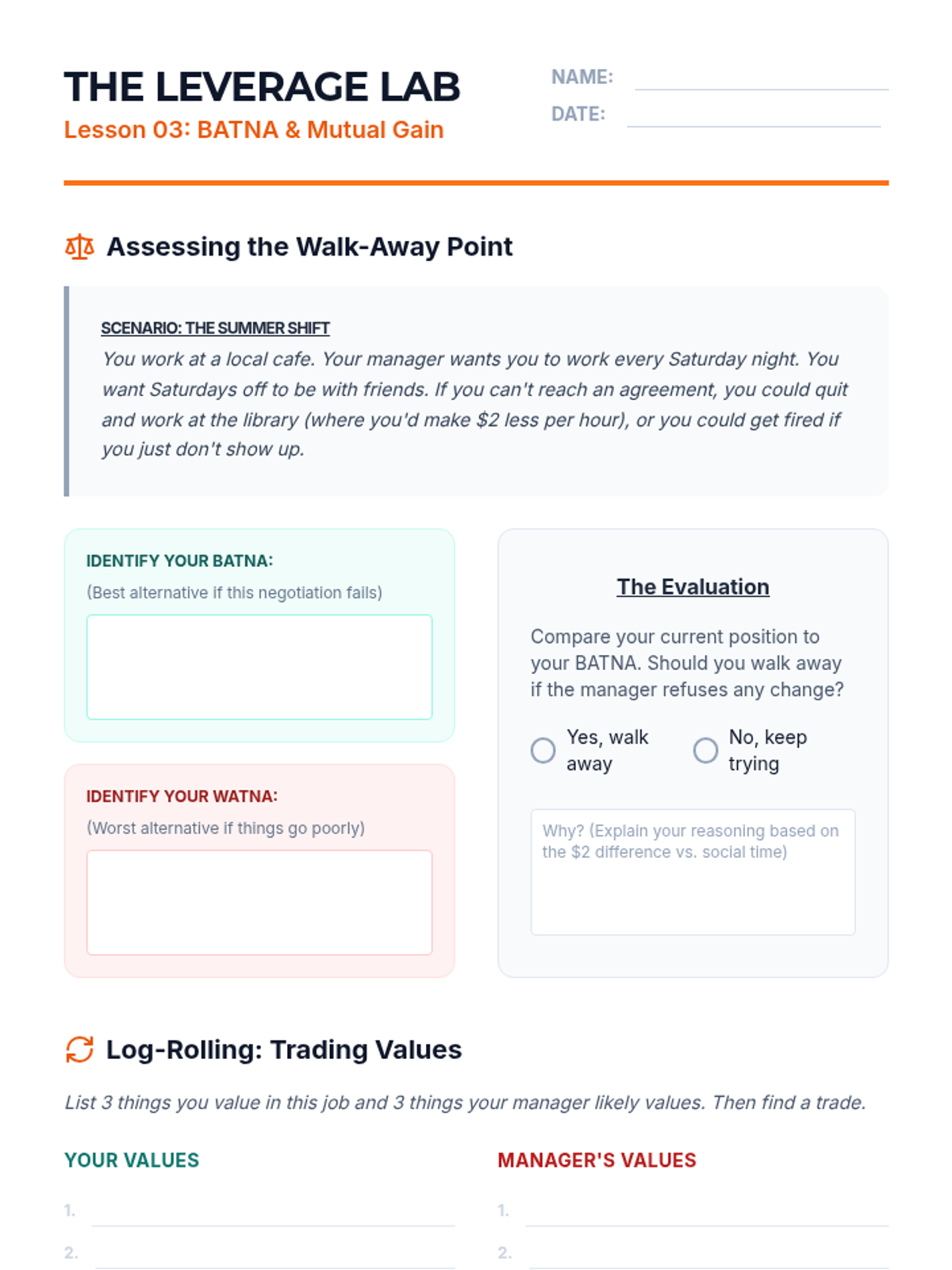
Students practice brainstorming techniques designed to break deadlocks. They learn about BATNA (Best Alternative to a Negotiated Agreement) and WATNA (Worst Alternative) to assess leverage. The class engages in exercises to expand the 'pie' rather than just dividing it, finding creative solutions that satisfy multiple interests.
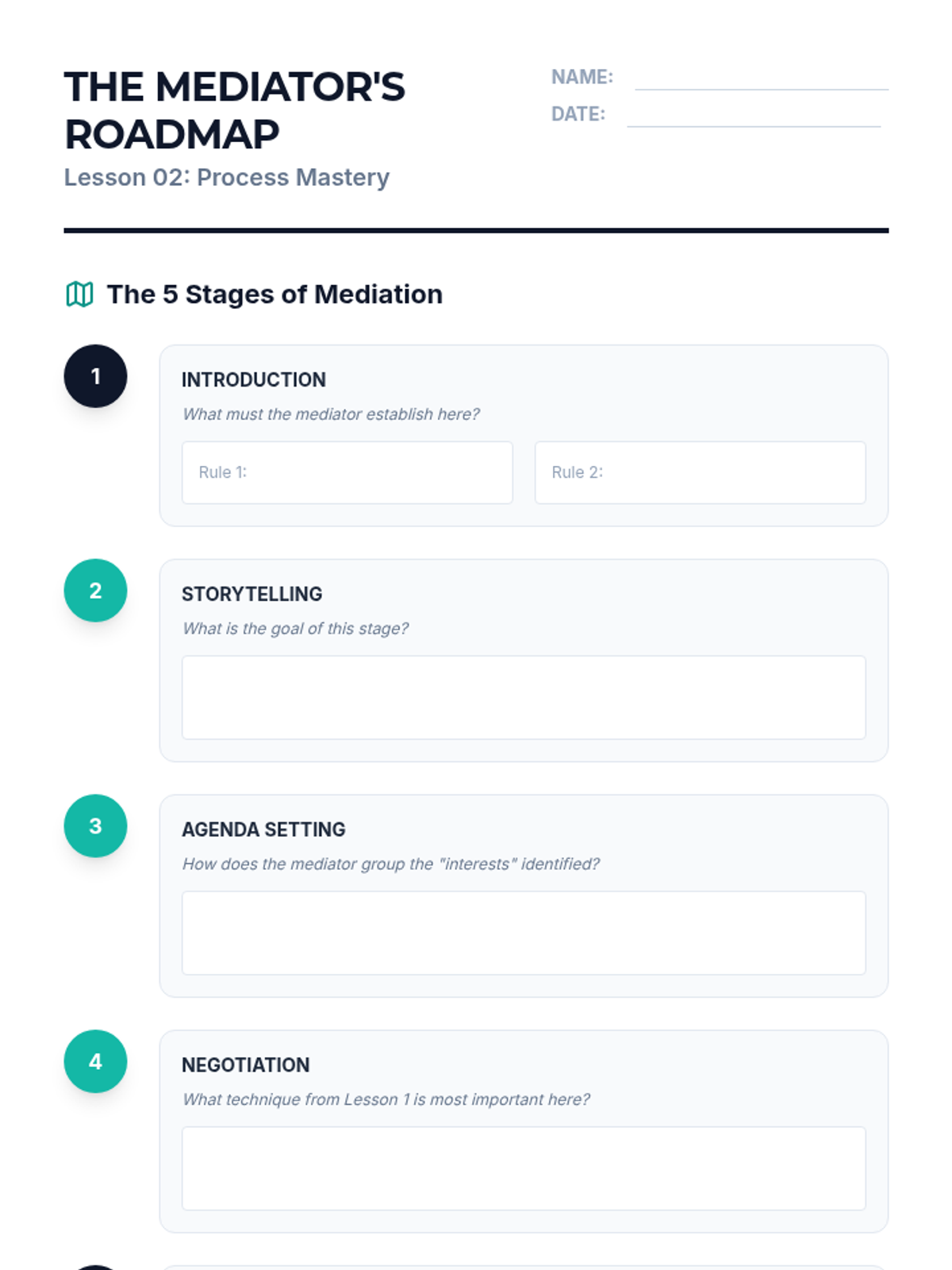
This lesson outlines the formal stages of mediation: Introduction, Storytelling, Agenda Setting, Negotiation, and Agreement. Students learn the procedural responsibilities of a mediator to maintain safety and order. They create visual flowcharts of the process to understand how to guide disputants from chaos to order.
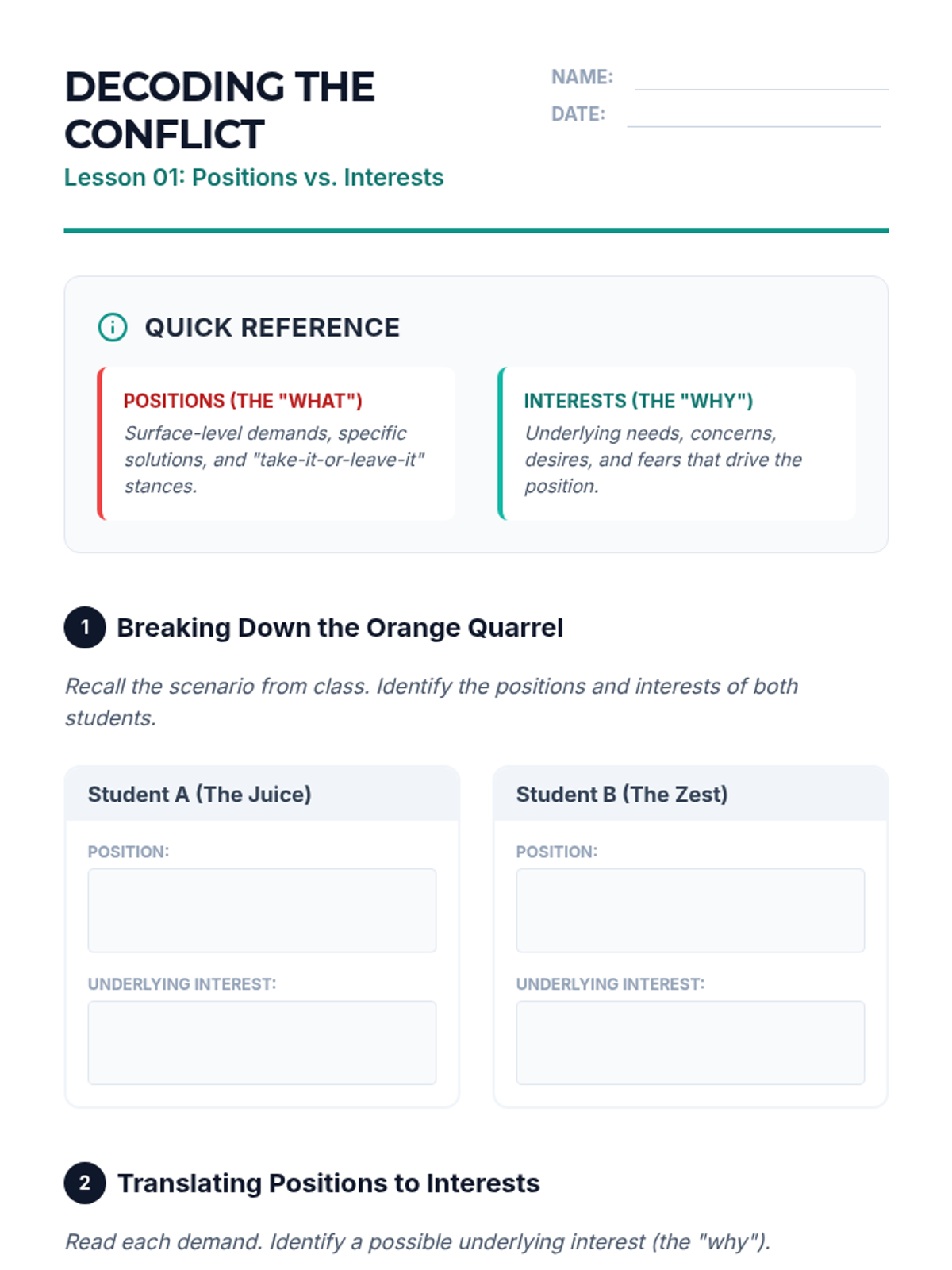
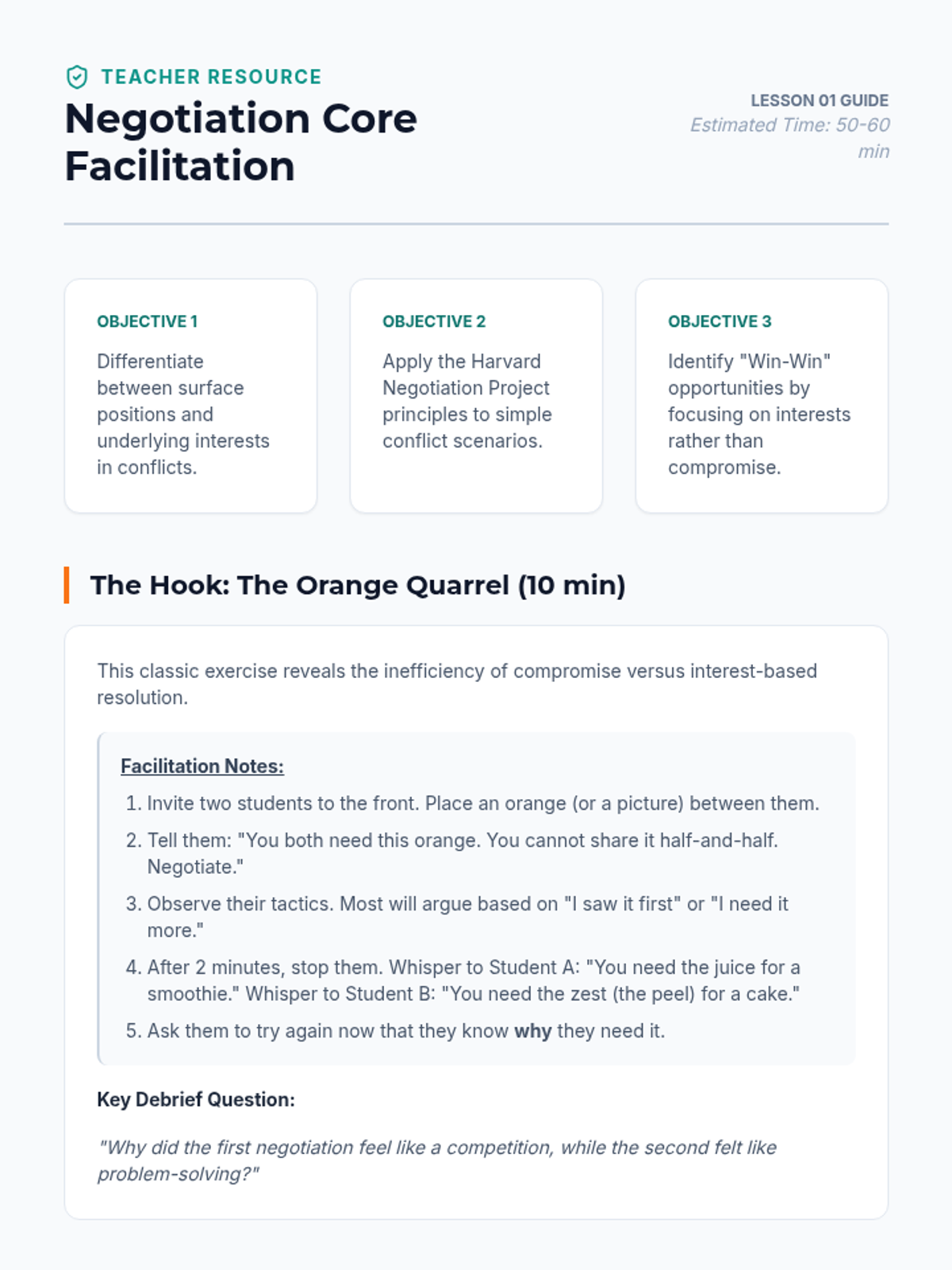
Students learn to distinguish between surface-level positions and underlying interests using the Harvard Negotiation Project model. The lesson introduces Interest-Based Negotiation (IBN) through the classic 'Orange Quarrel' scenario and case study analysis.
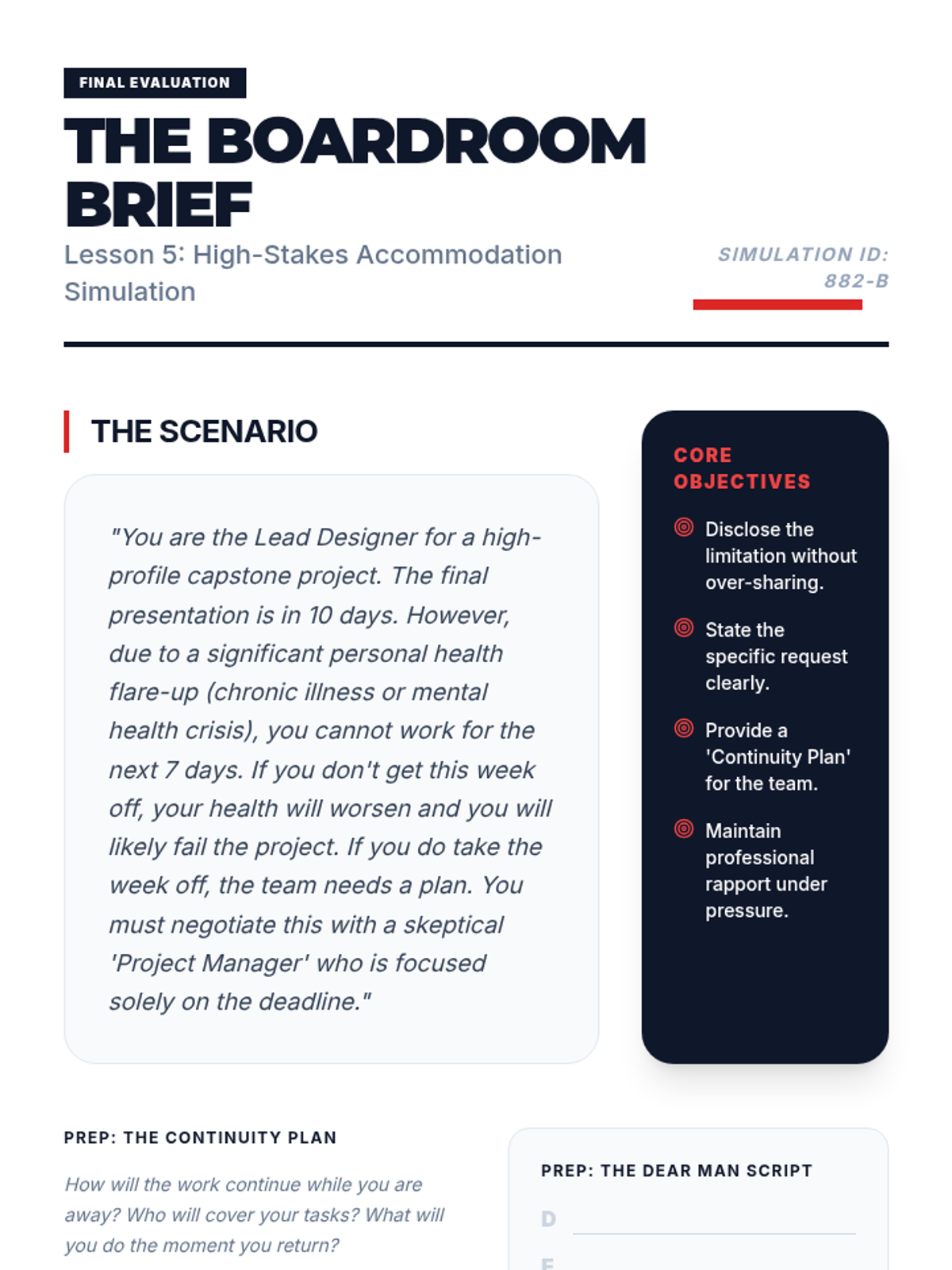
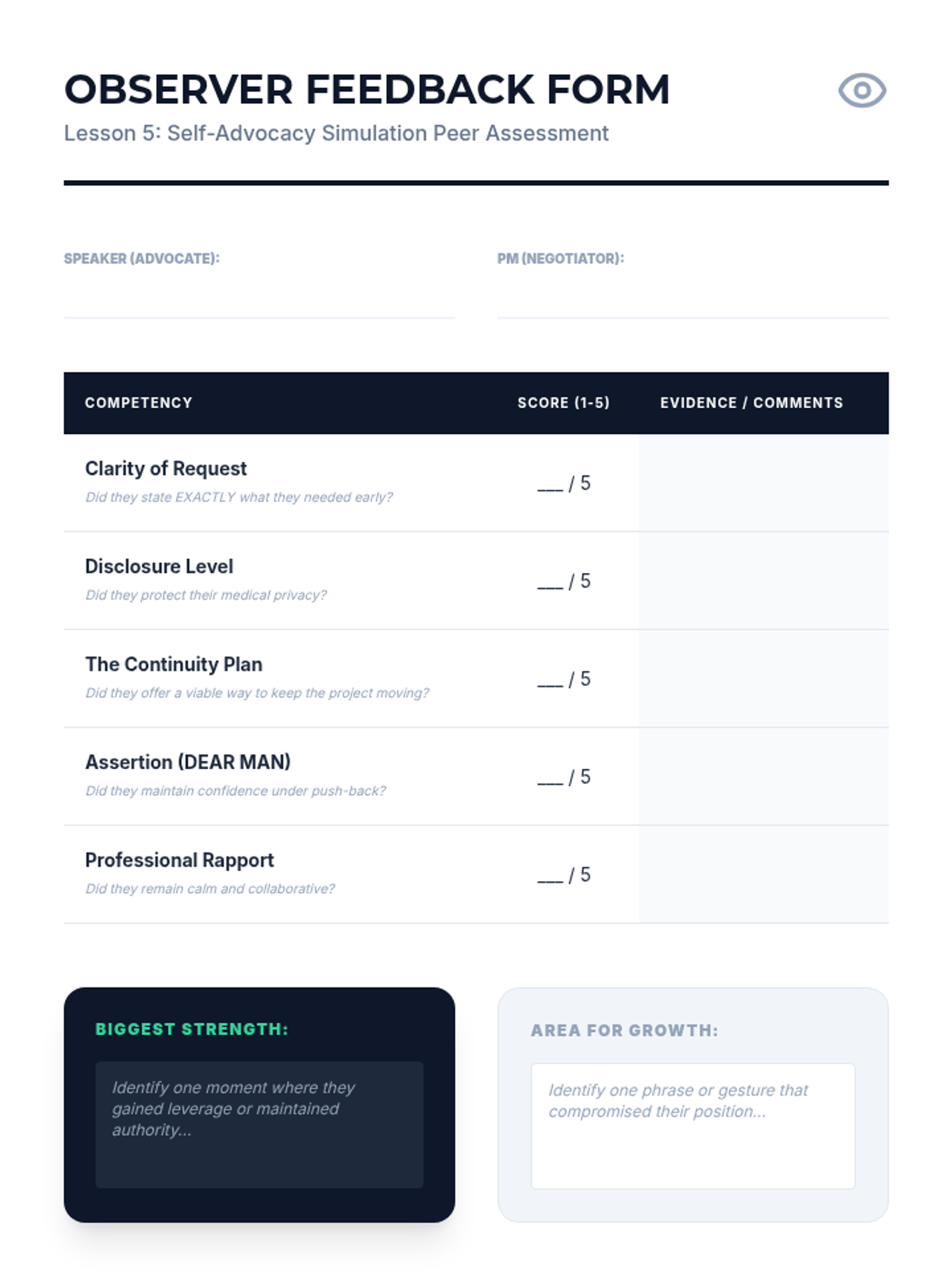
Students engage in a complex role-play scenario where they must negotiate a support plan with a skeptical 'professor' or 'manager.' Peers observe and provide feedback on tone, clarity, and persistence.
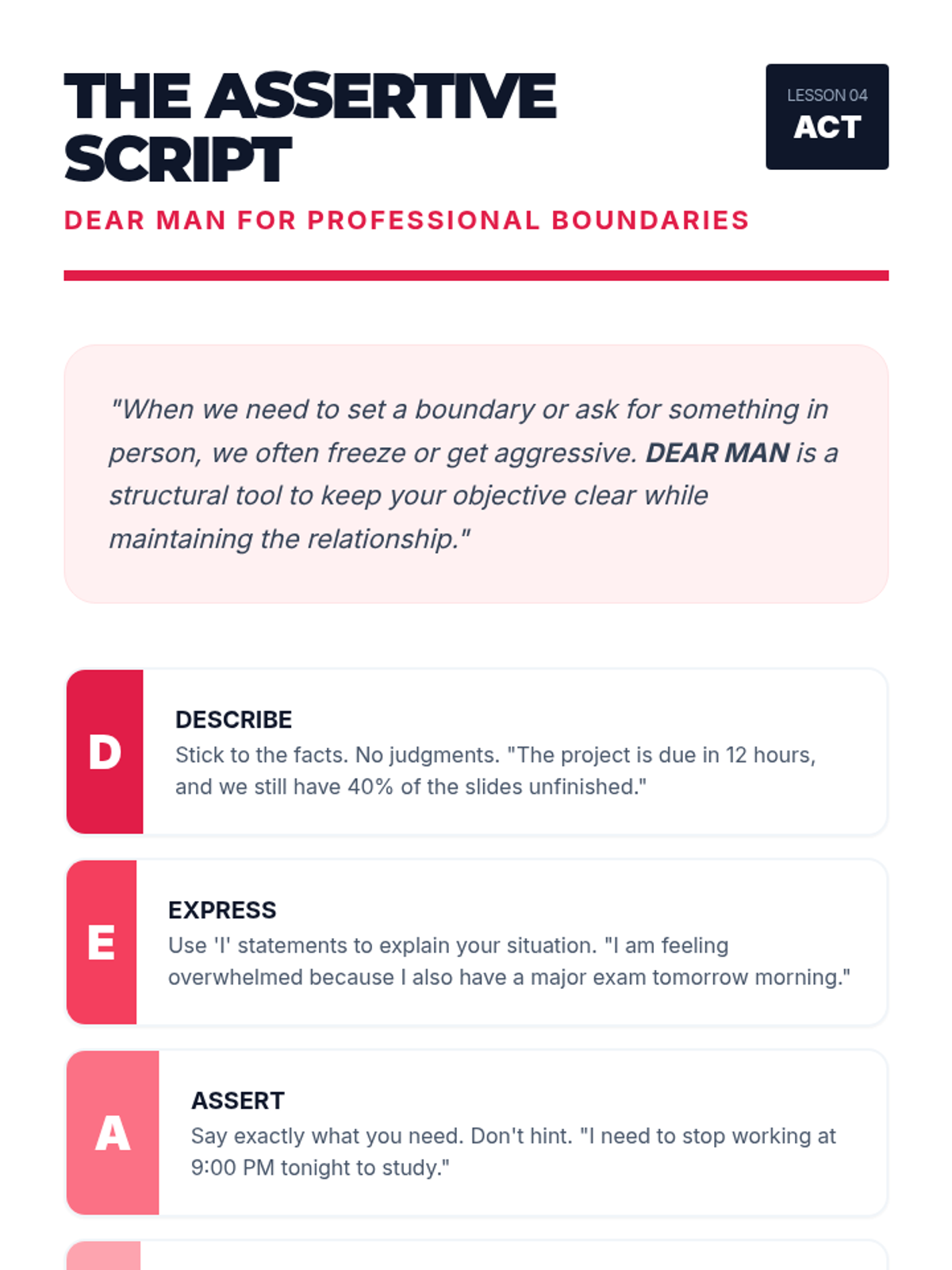
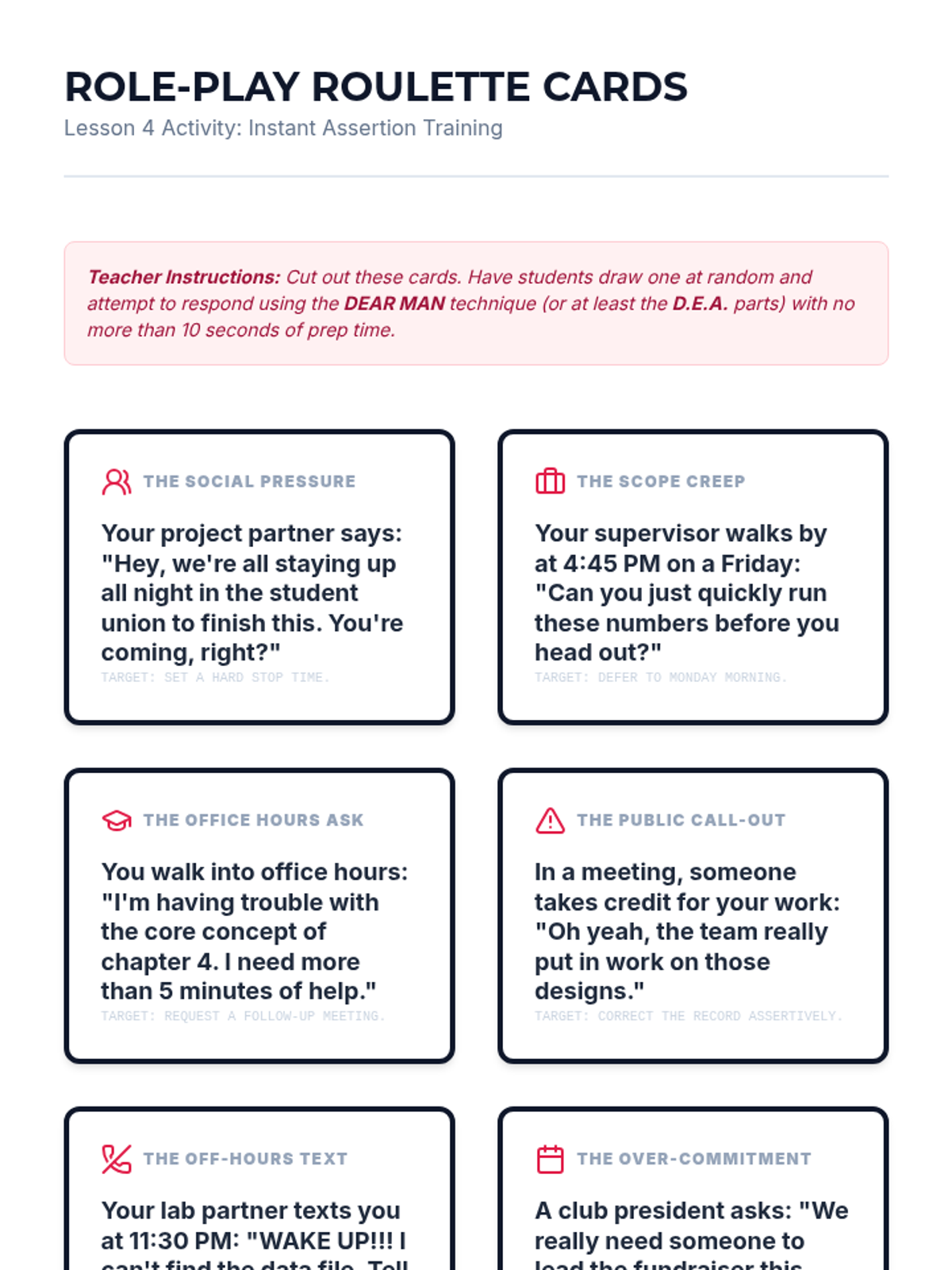
Focusing on real-time interactions, this lesson teaches verbal scripts for setting boundaries in group projects or meetings. Students practice 'I' statements and the DEAR MAN technique from DBT to assert needs effectively.
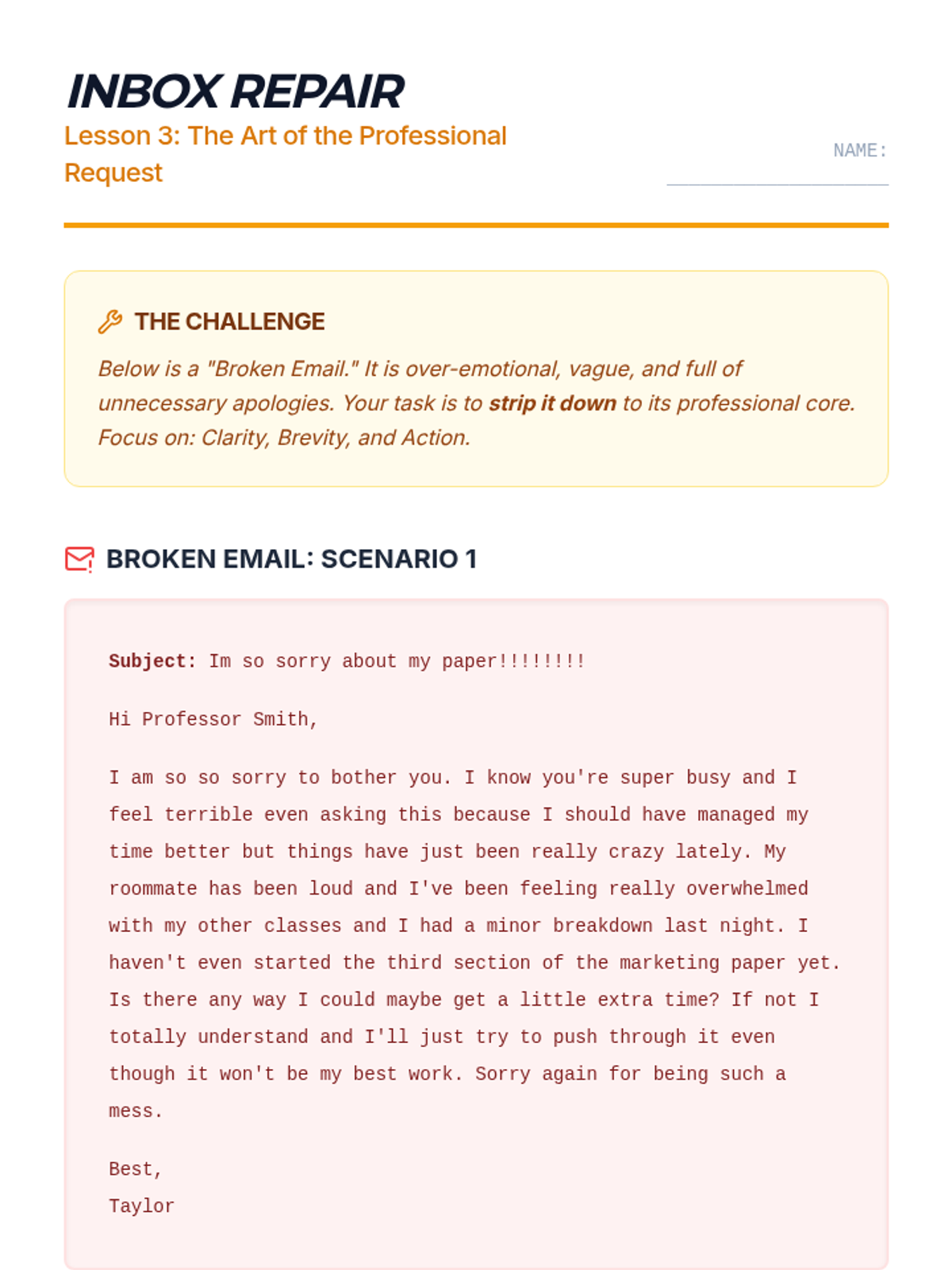
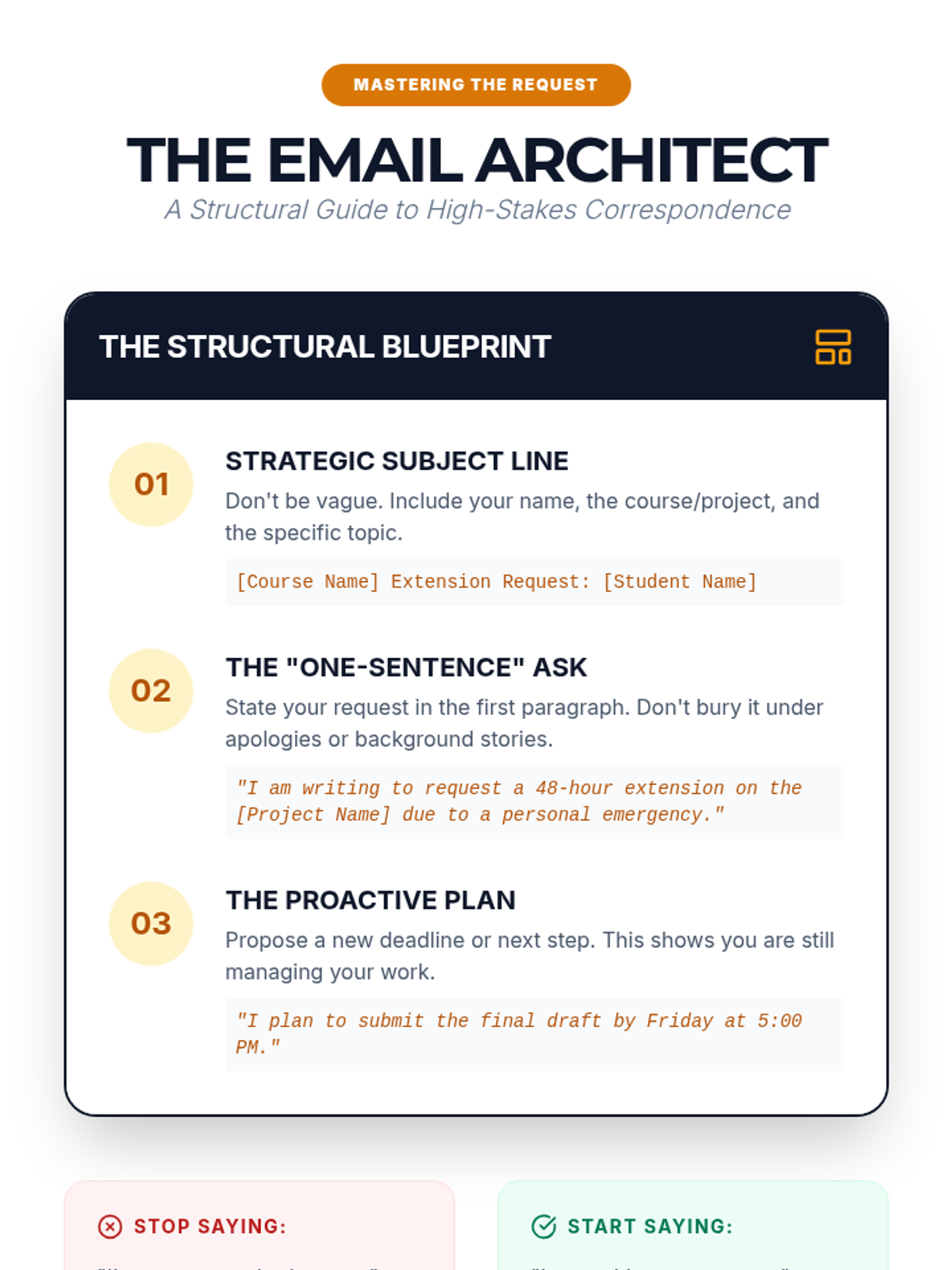
Students analyze successful and unsuccessful email requests for extensions, mental health days, or additional tutoring. They practice writing concise, professional emails that state needs clearly without over-apologizing.
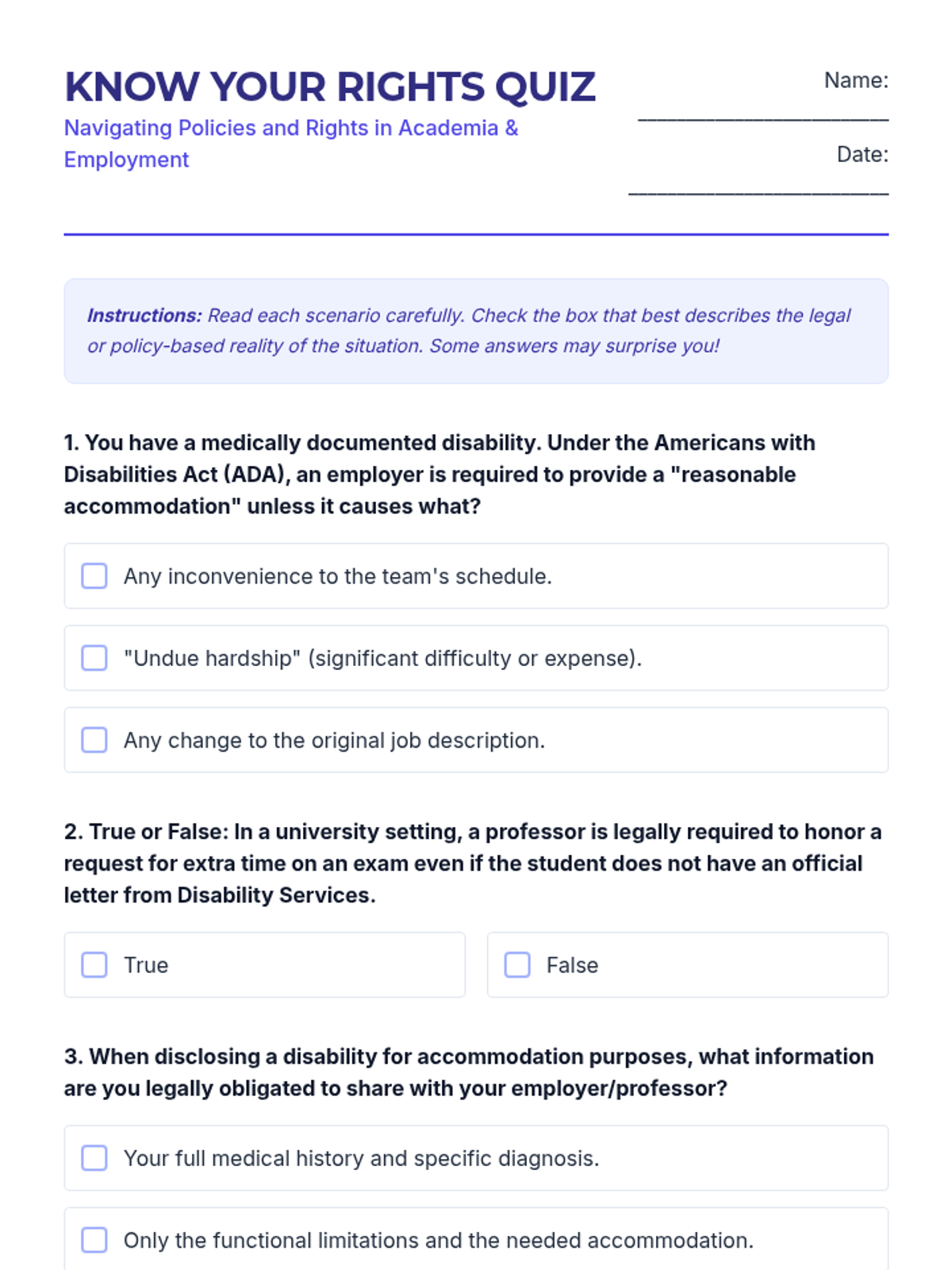
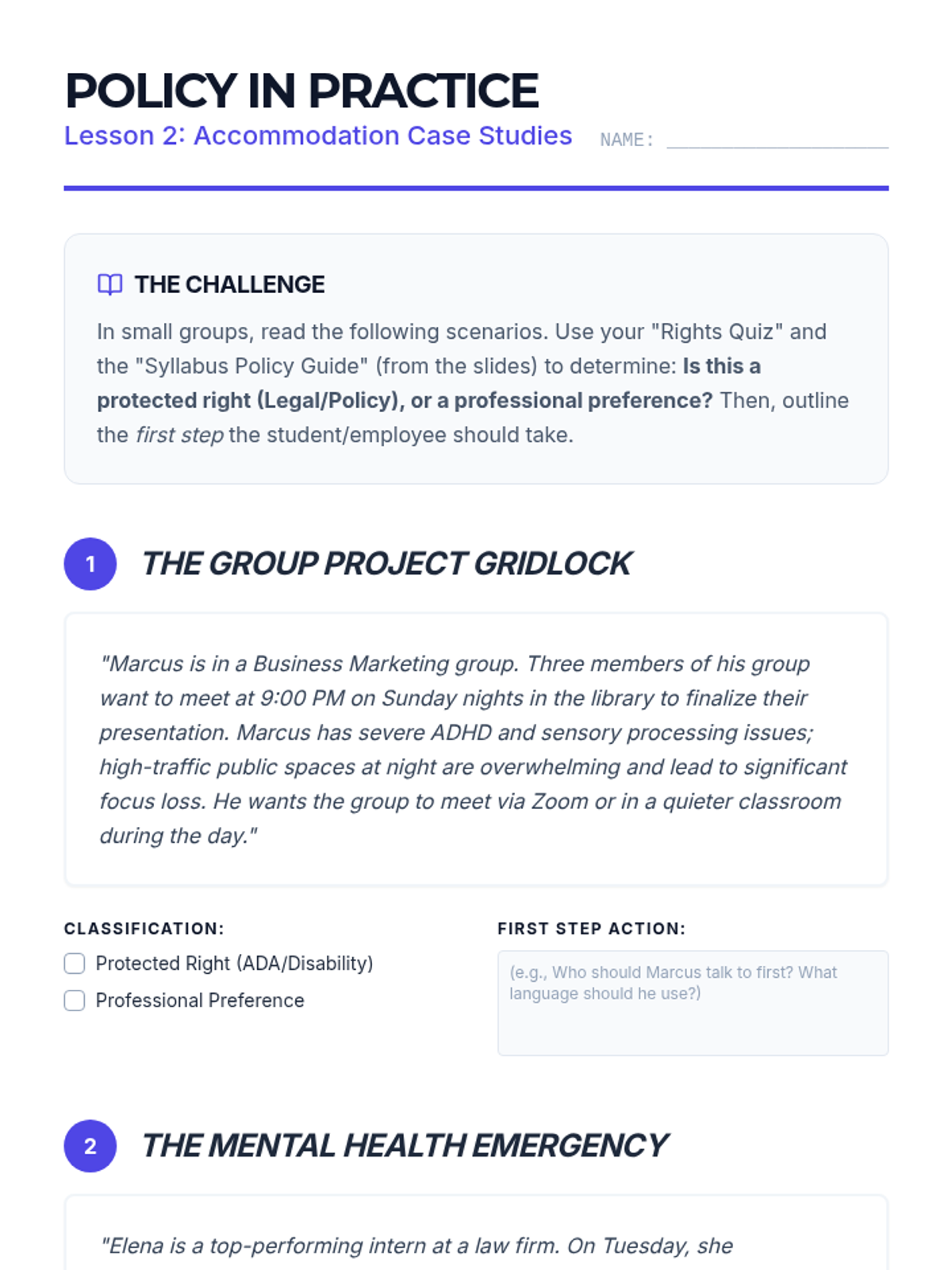
This lesson covers the technical aspects of requesting support, including understanding syllabus policies, disability services, and workplace accommodation laws (ADA). Students learn the difference between a preference and a protected right.
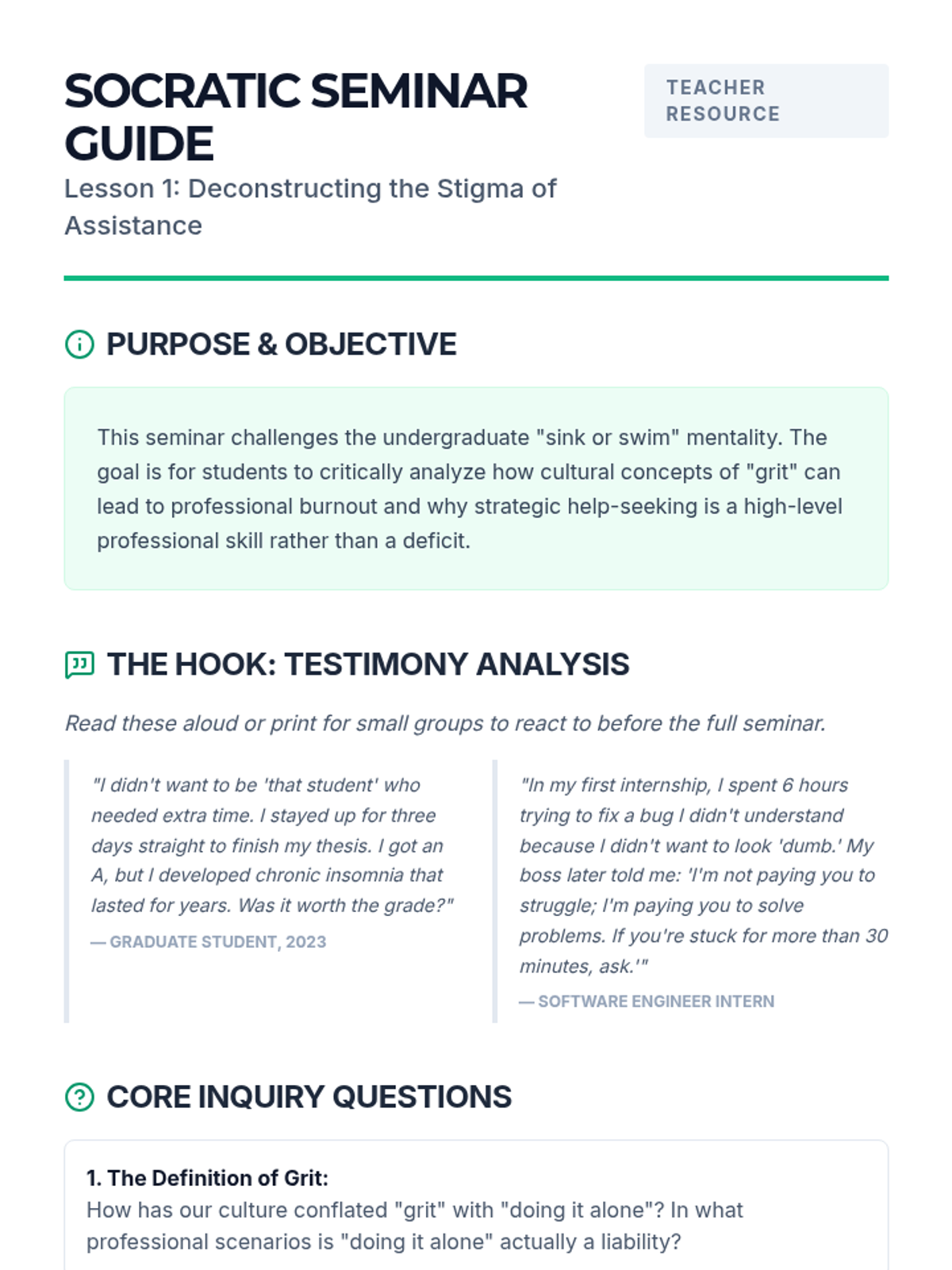
Students participate in a Socratic seminar exploring the cultural narratives surrounding 'grit' and 'resilience' versus help-seeking. They critique the 'ideal worker' norm and discuss the long-term professional costs of burnout.
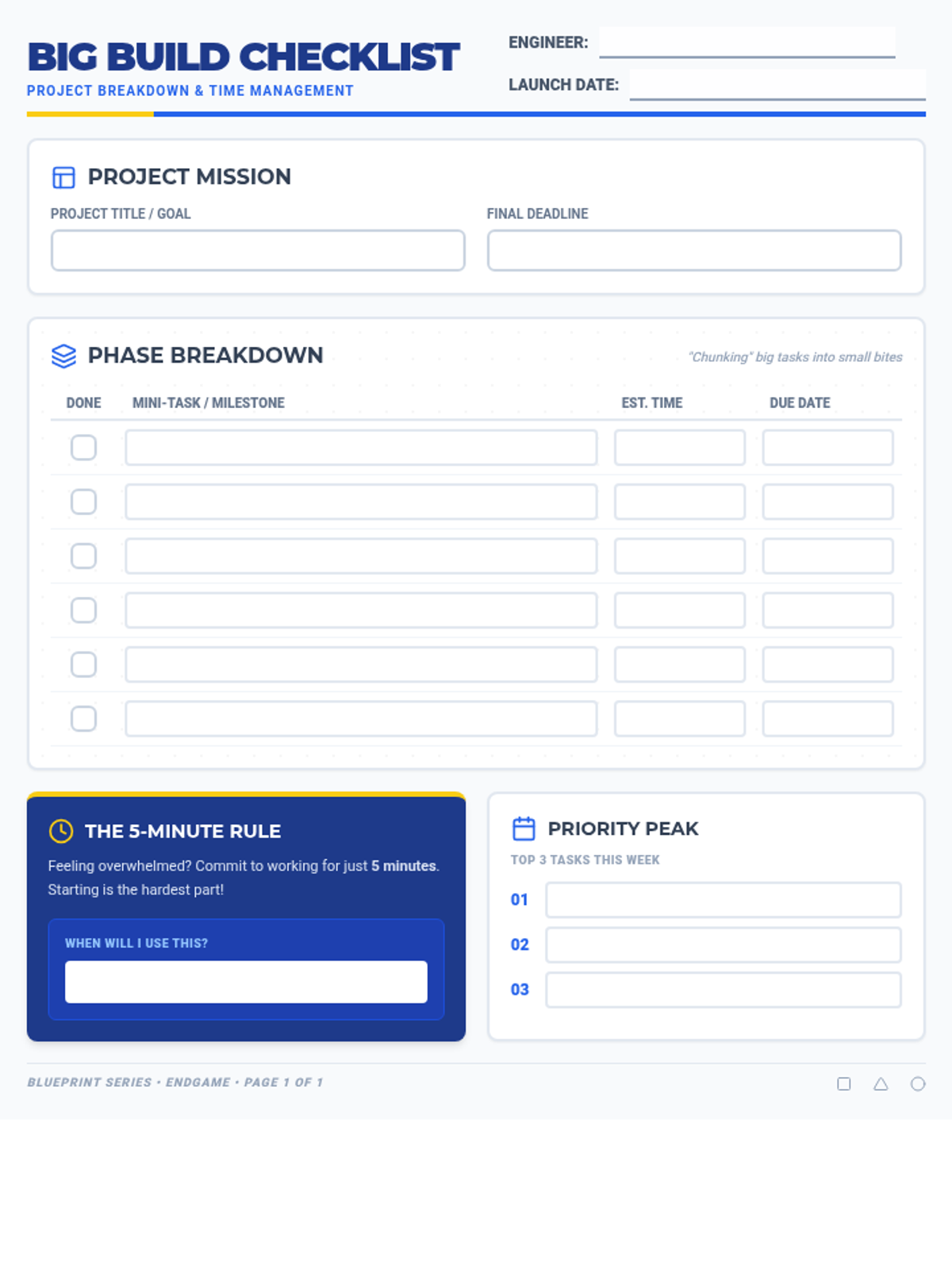
A comprehensive lesson focused on teaching students how to manage their end-of-year workload through project decomposition, time management, and effective self-advocacy.
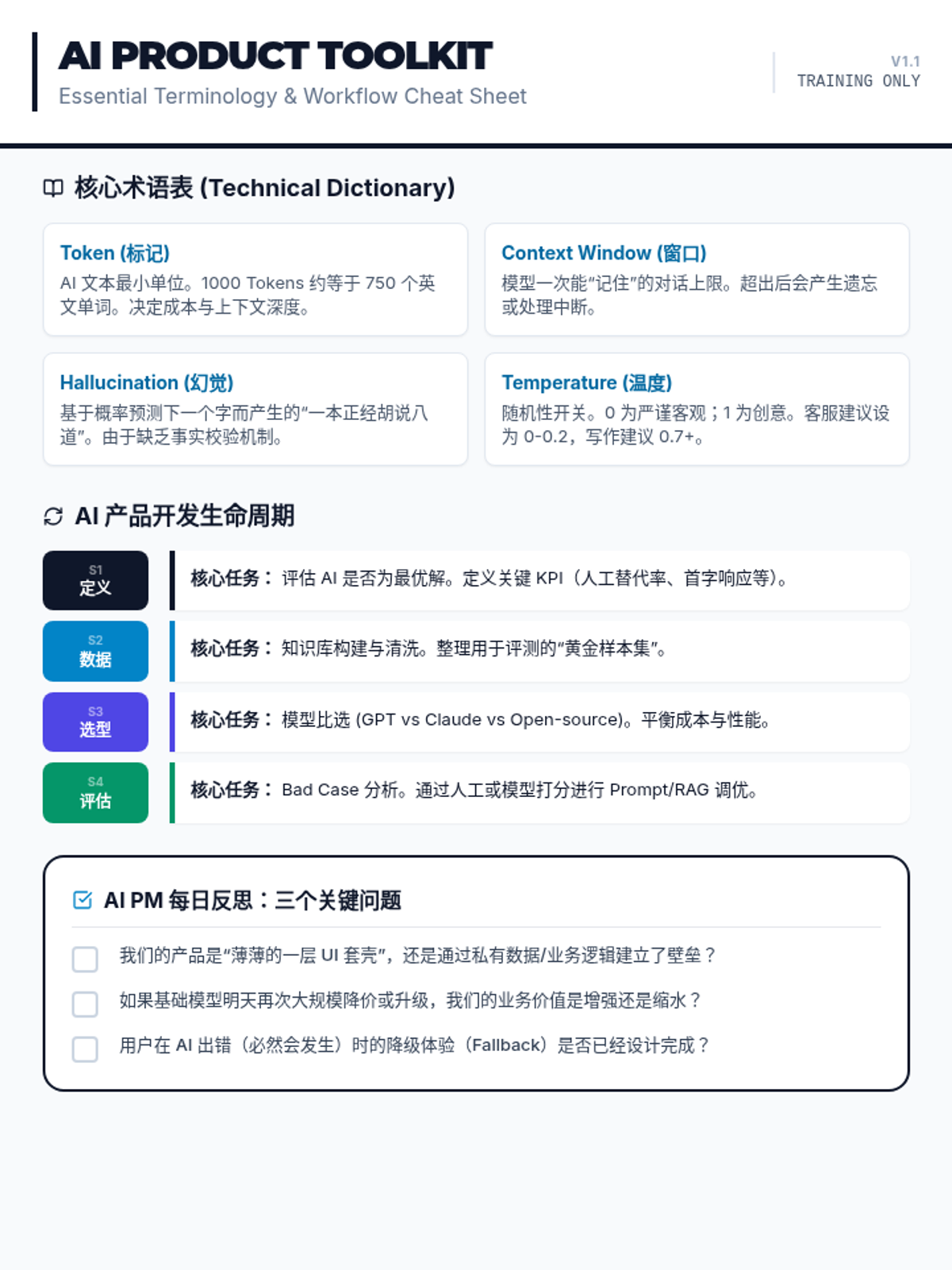
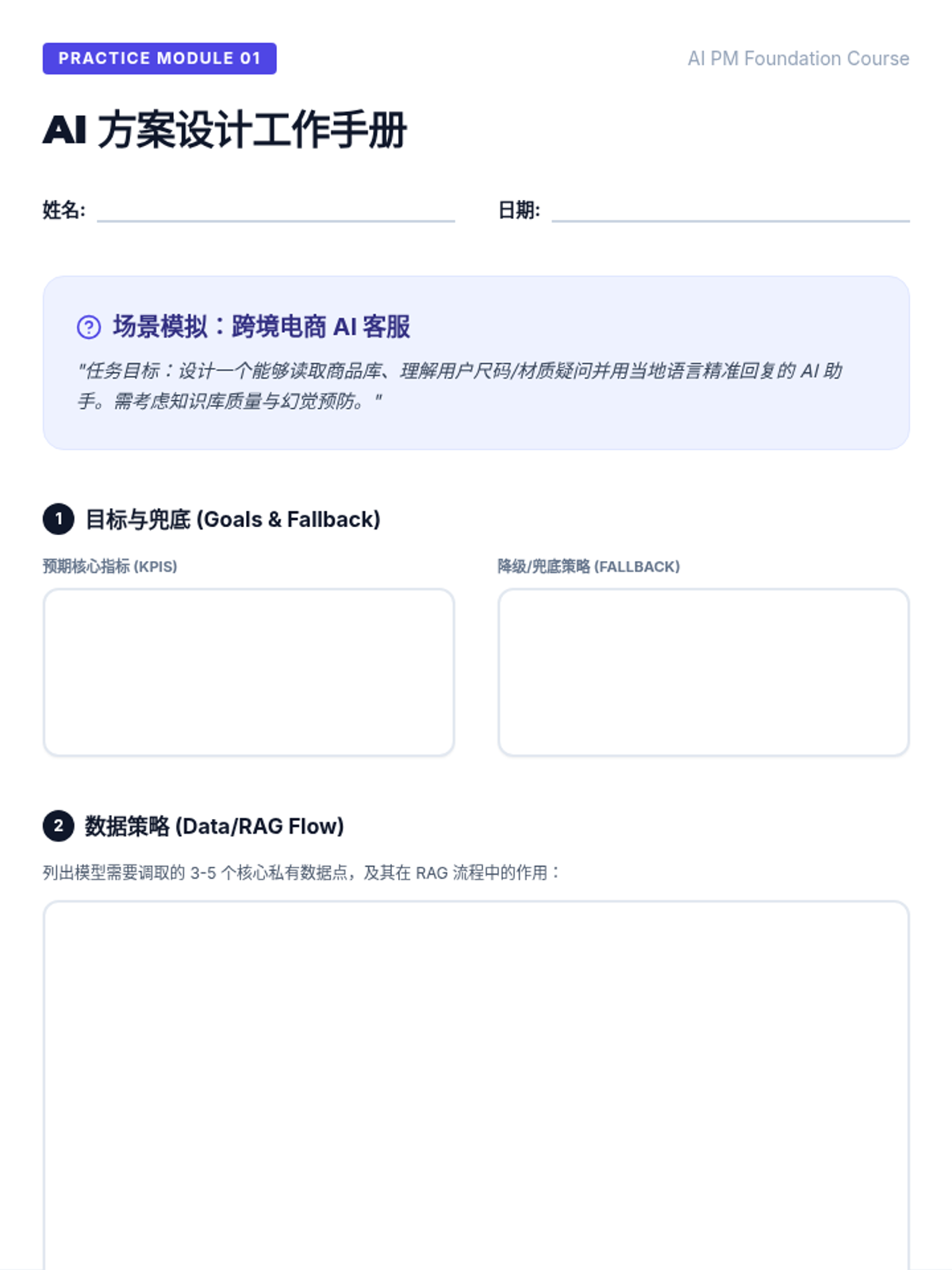
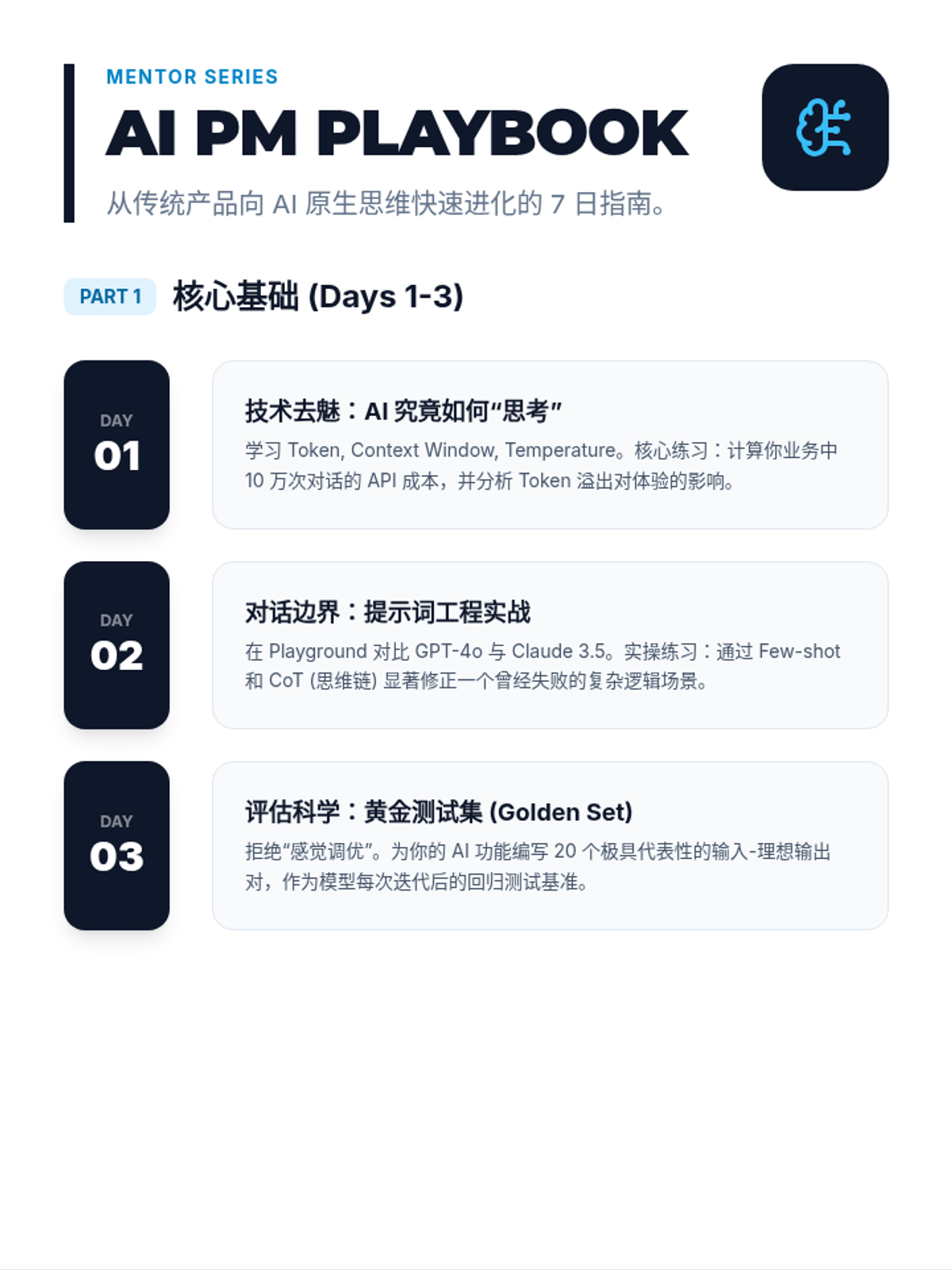
This lesson provides a rapid onboarding path for junior Product Managers transitioning into AI, covering technical foundations, the ML lifecycle, and AI-specific product strategy.
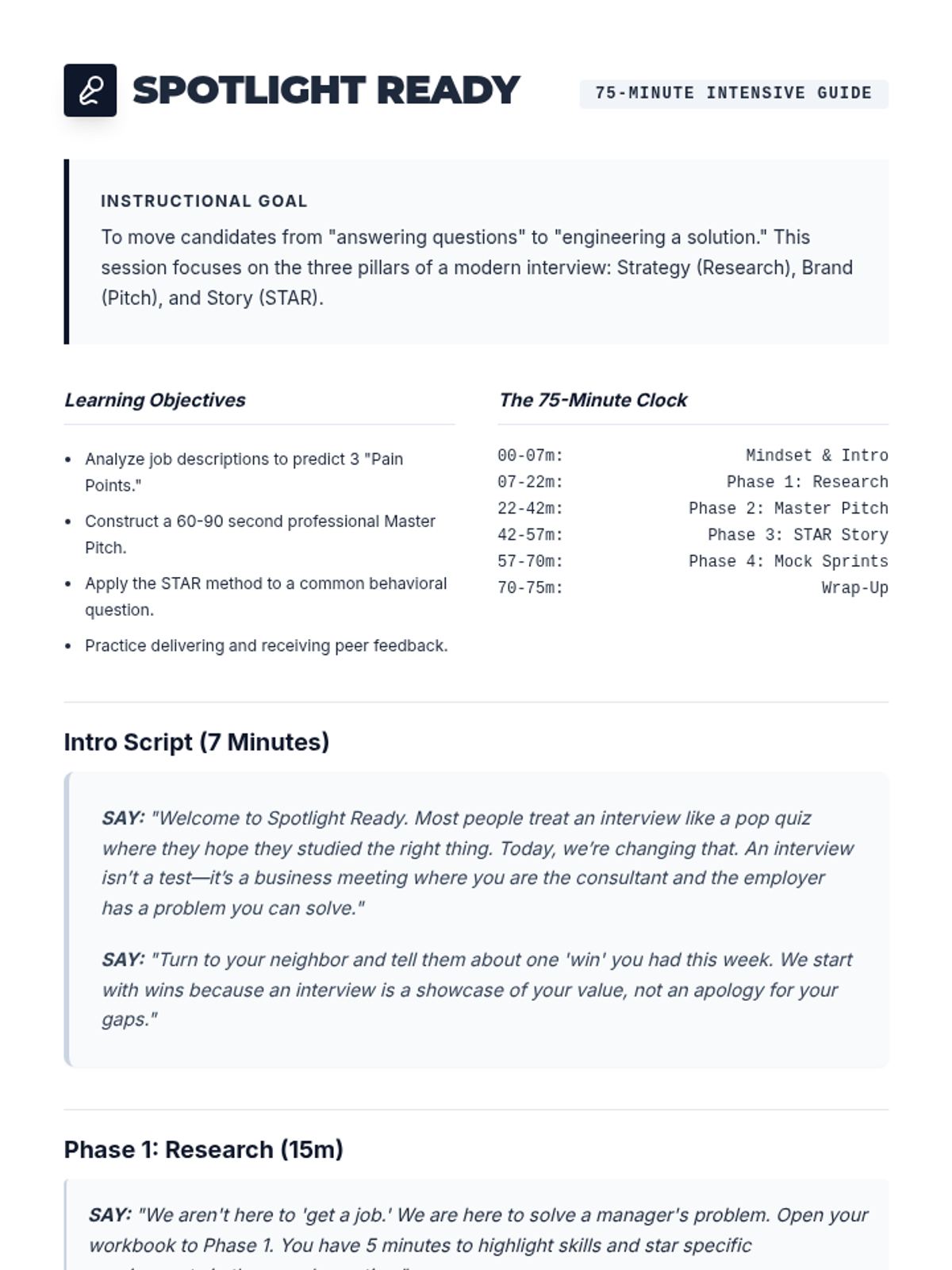
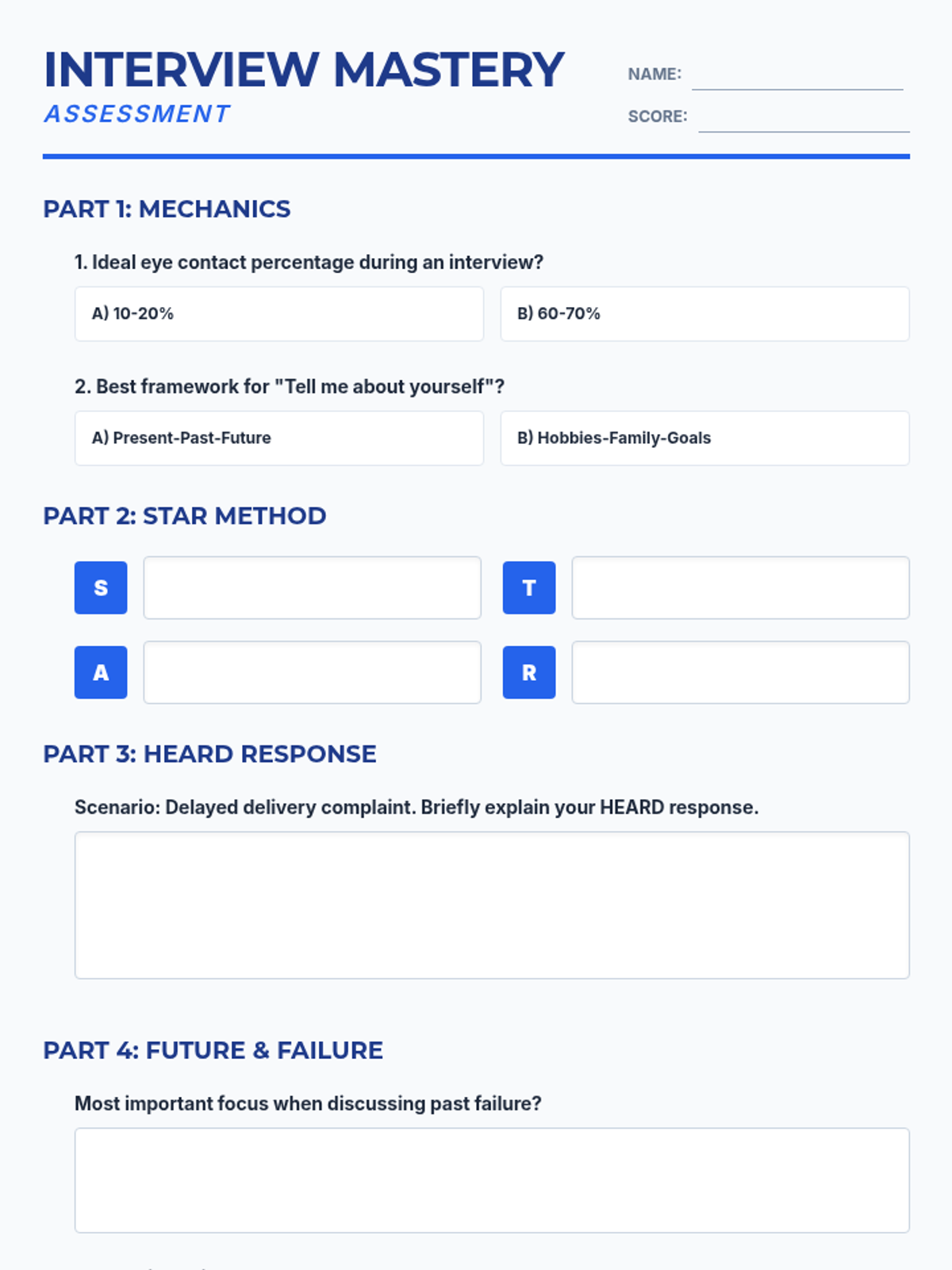
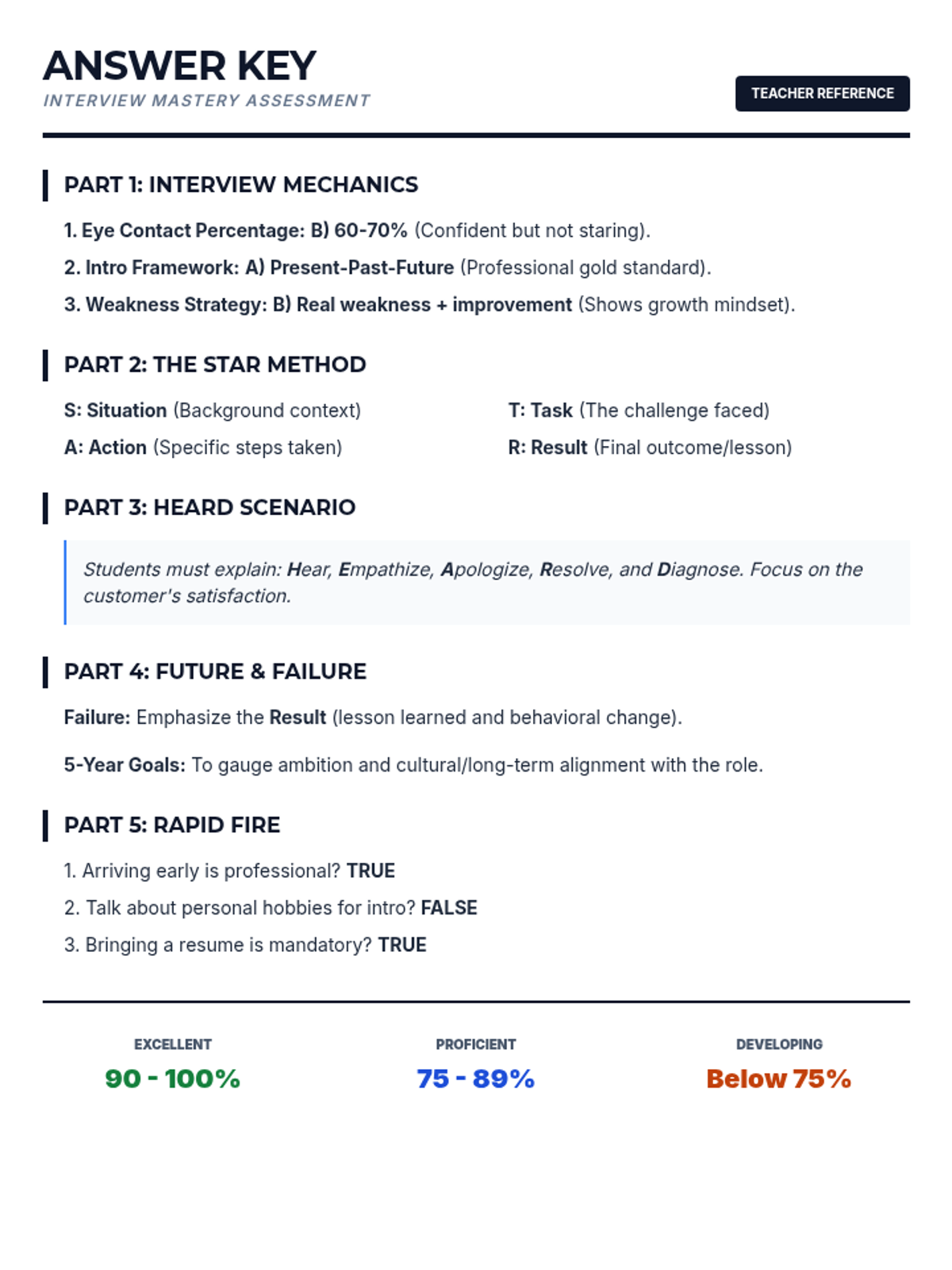
A high-impact 75-minute workshop designed to prepare candidates for interviews through research, personal branding (The Master Pitch), and behavioral storytelling (STAR Method). This condensed version focuses on active, hands-on practice and immediate application.
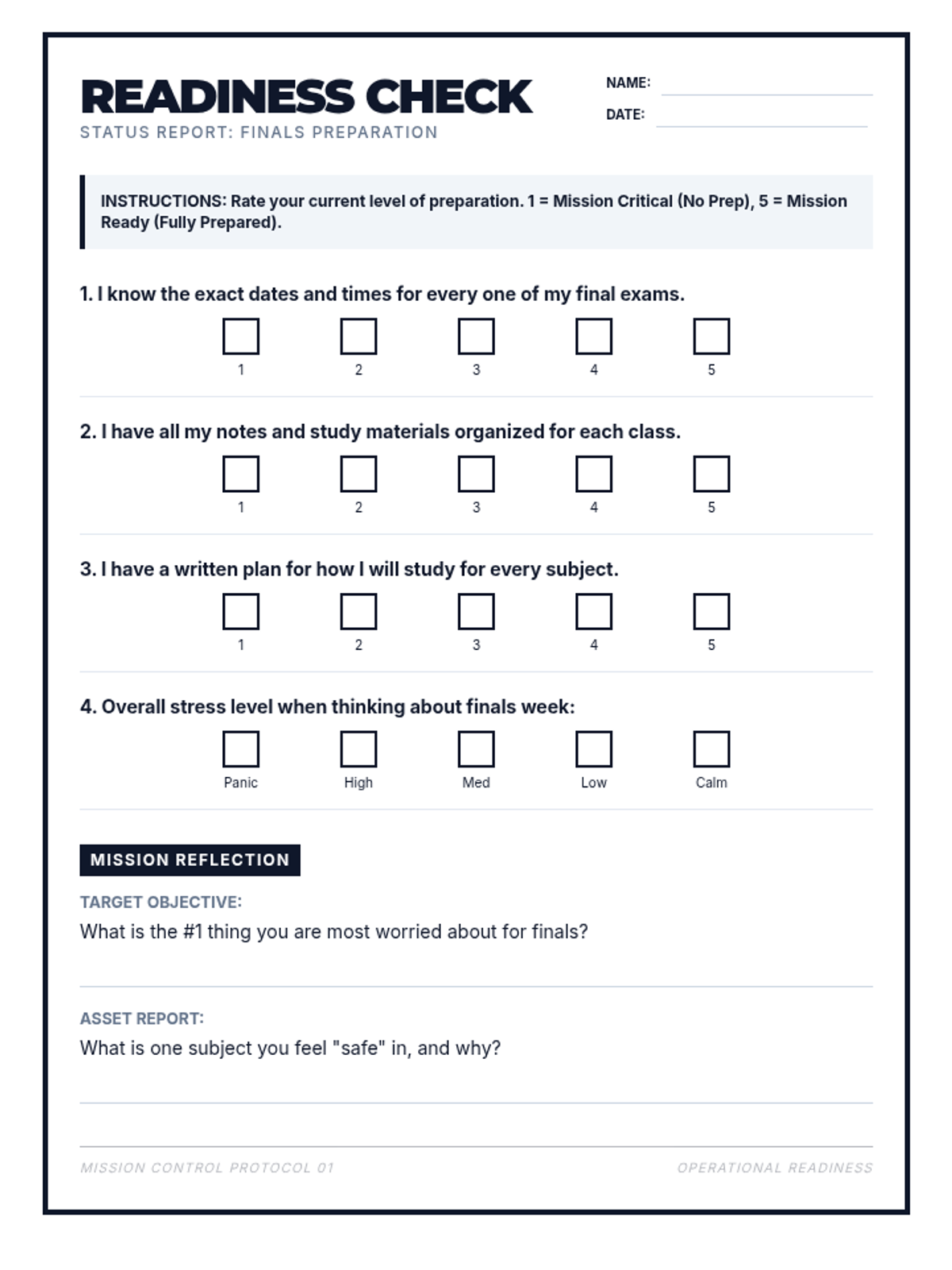
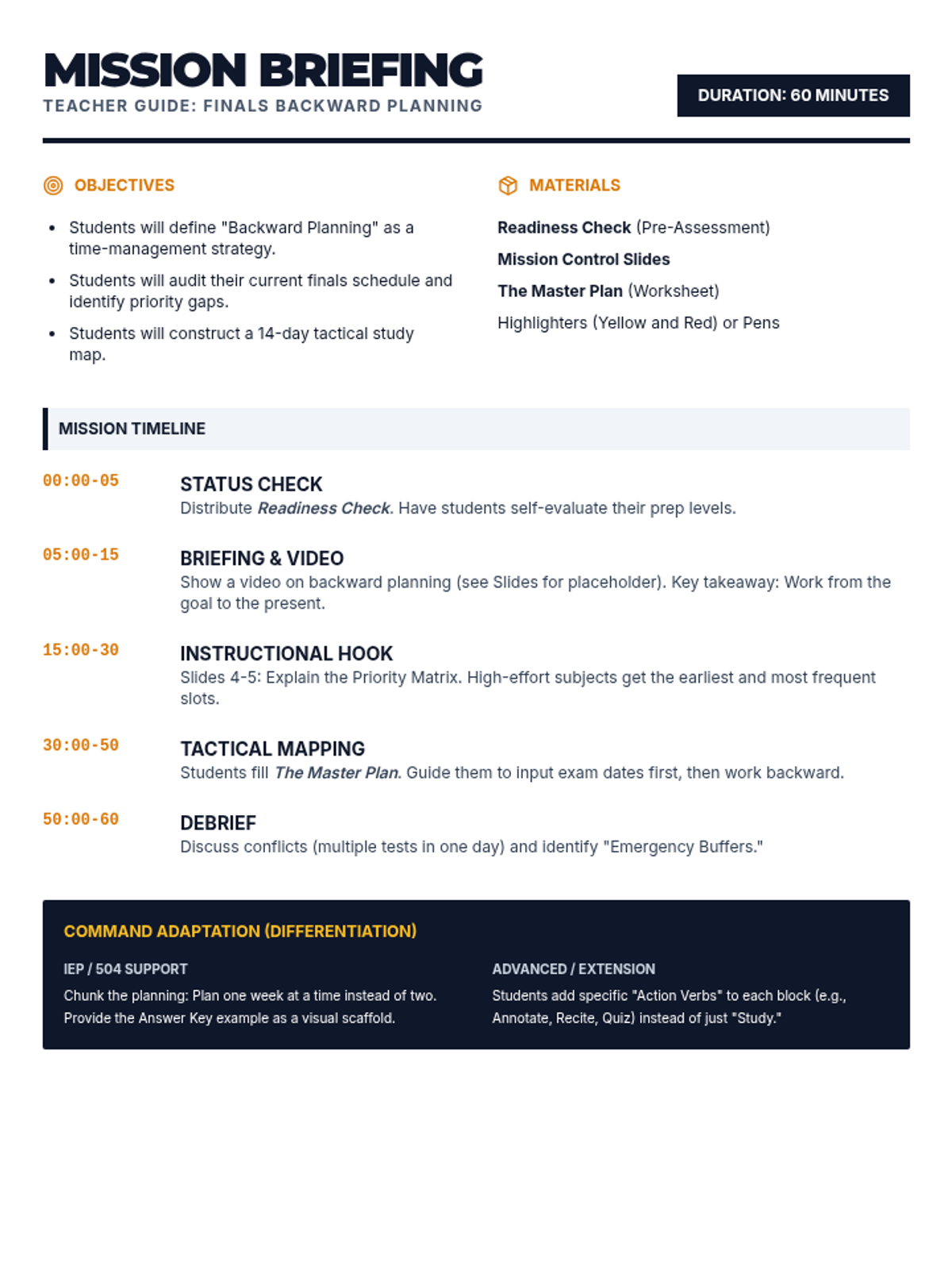
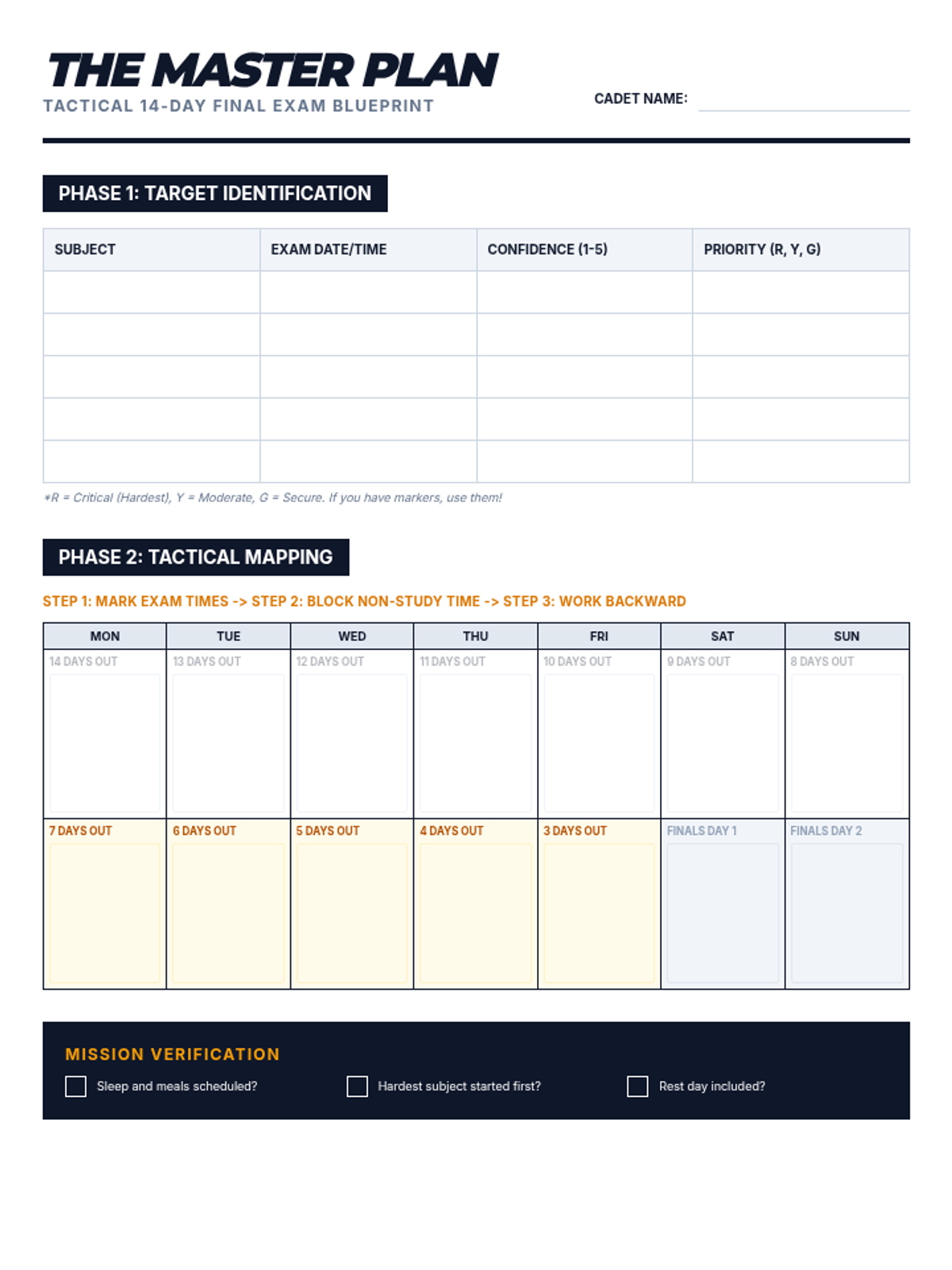
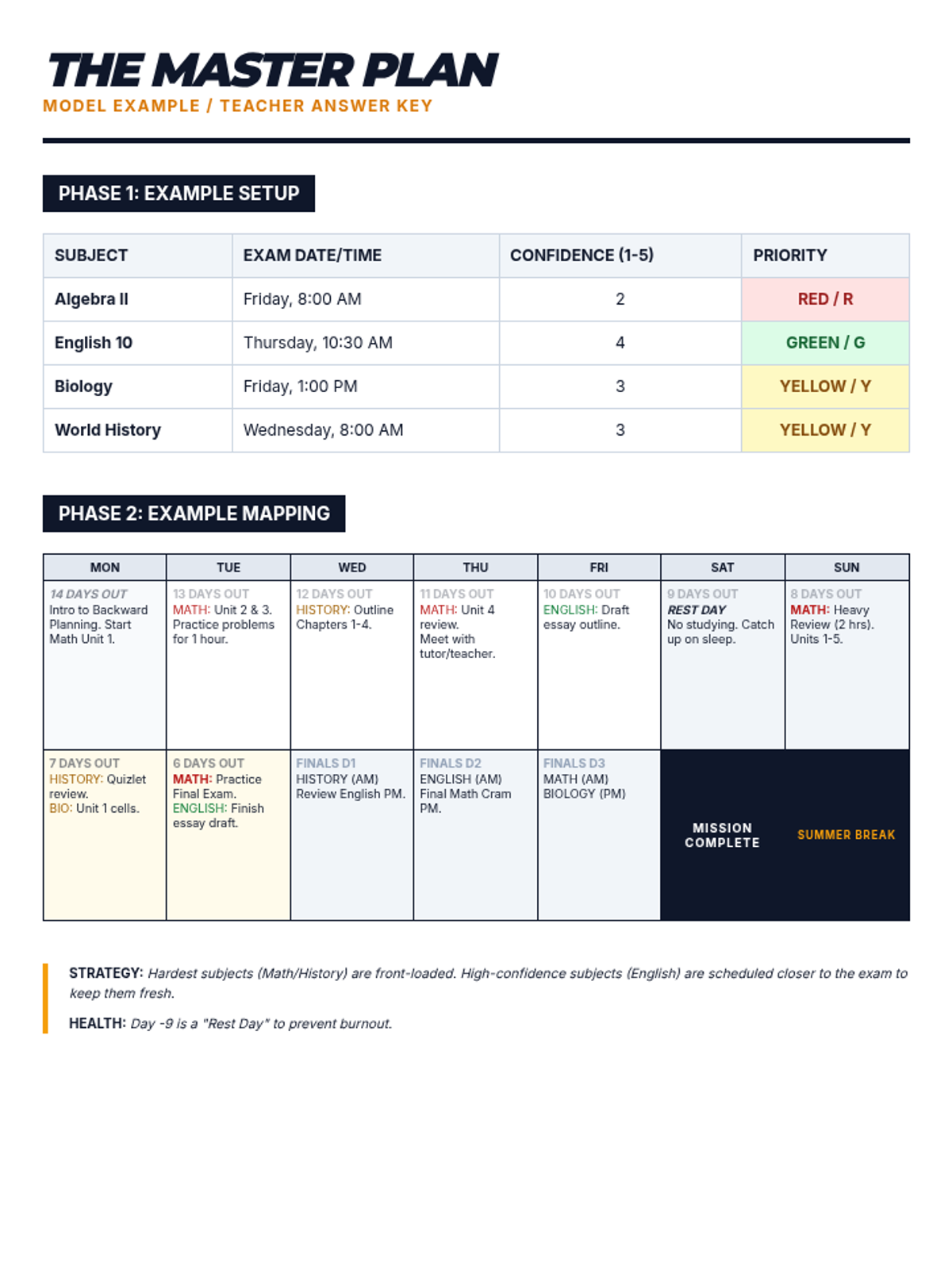
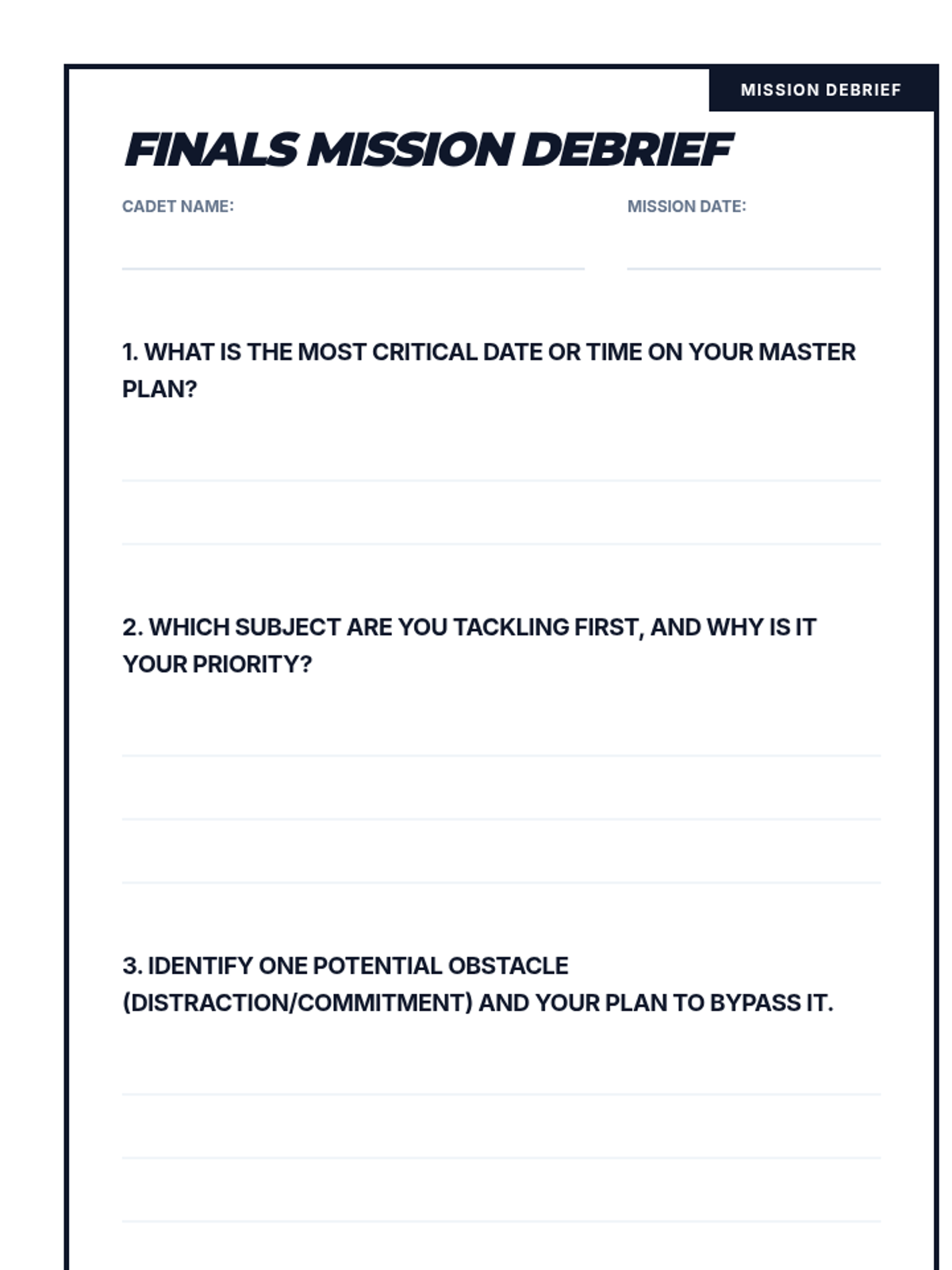
A tactical approach to finals preparation using backward design. Students will assess their readiness, learn the logic of starting from the finish line, and map out a concrete study schedule.
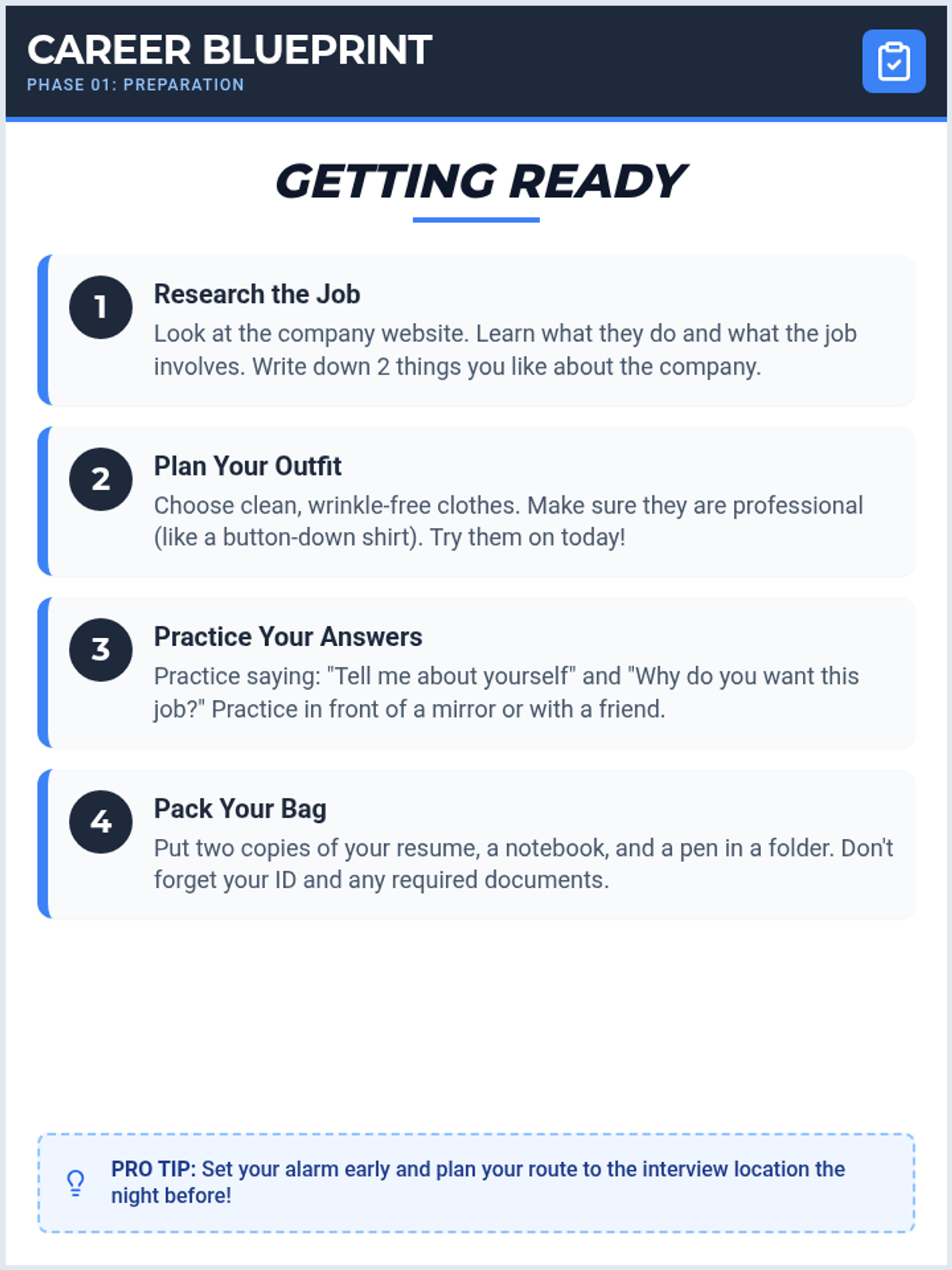
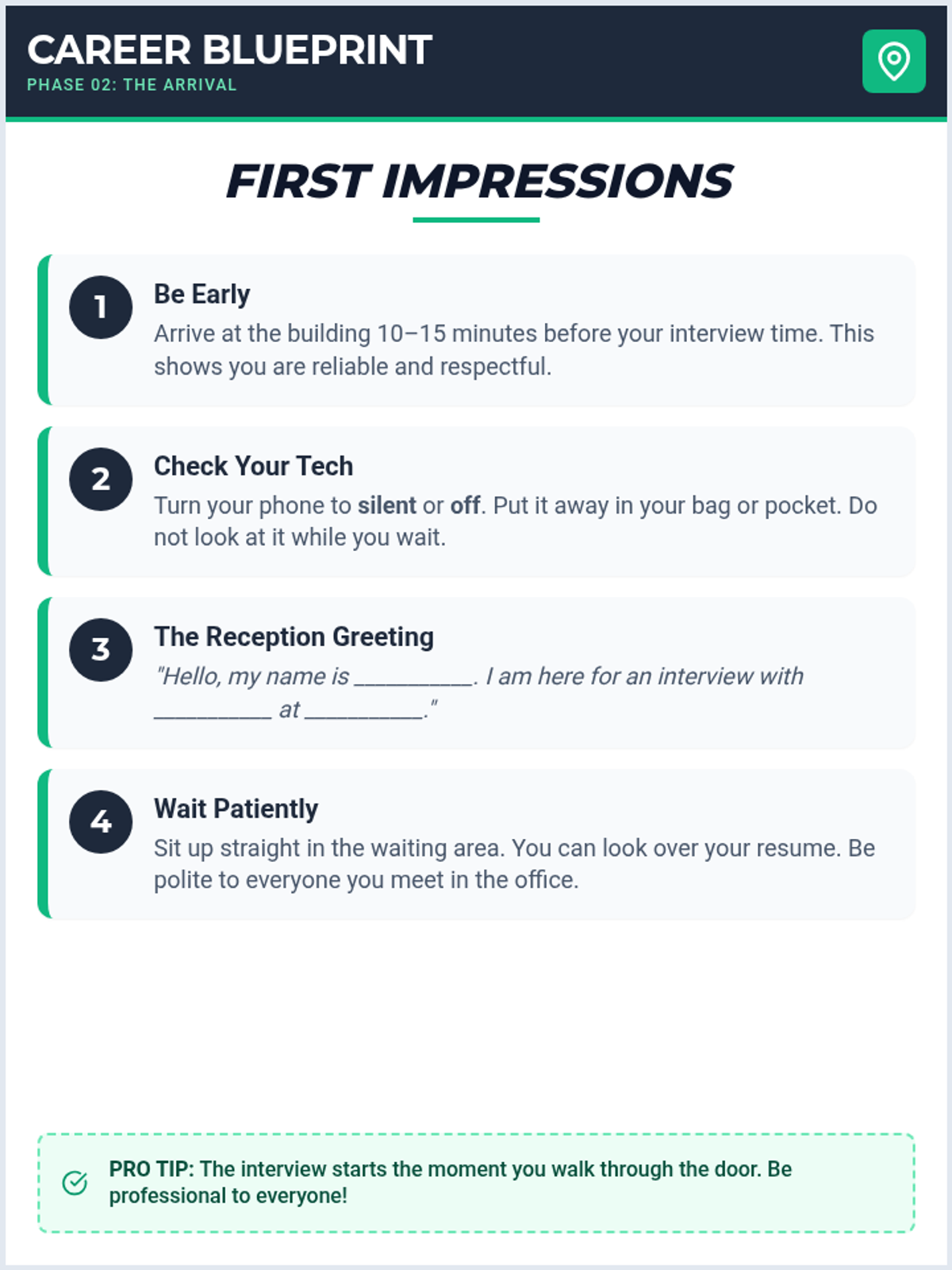
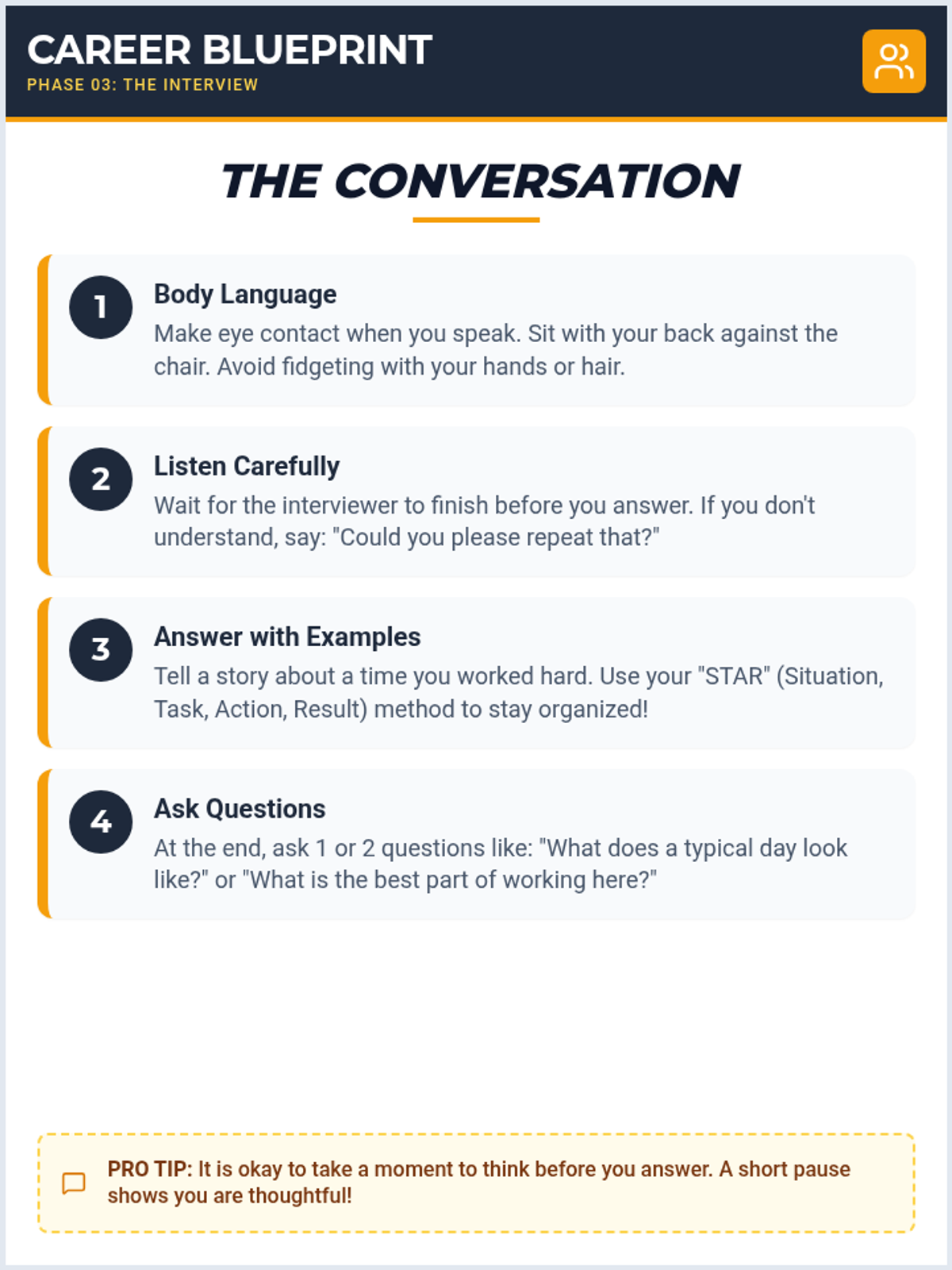
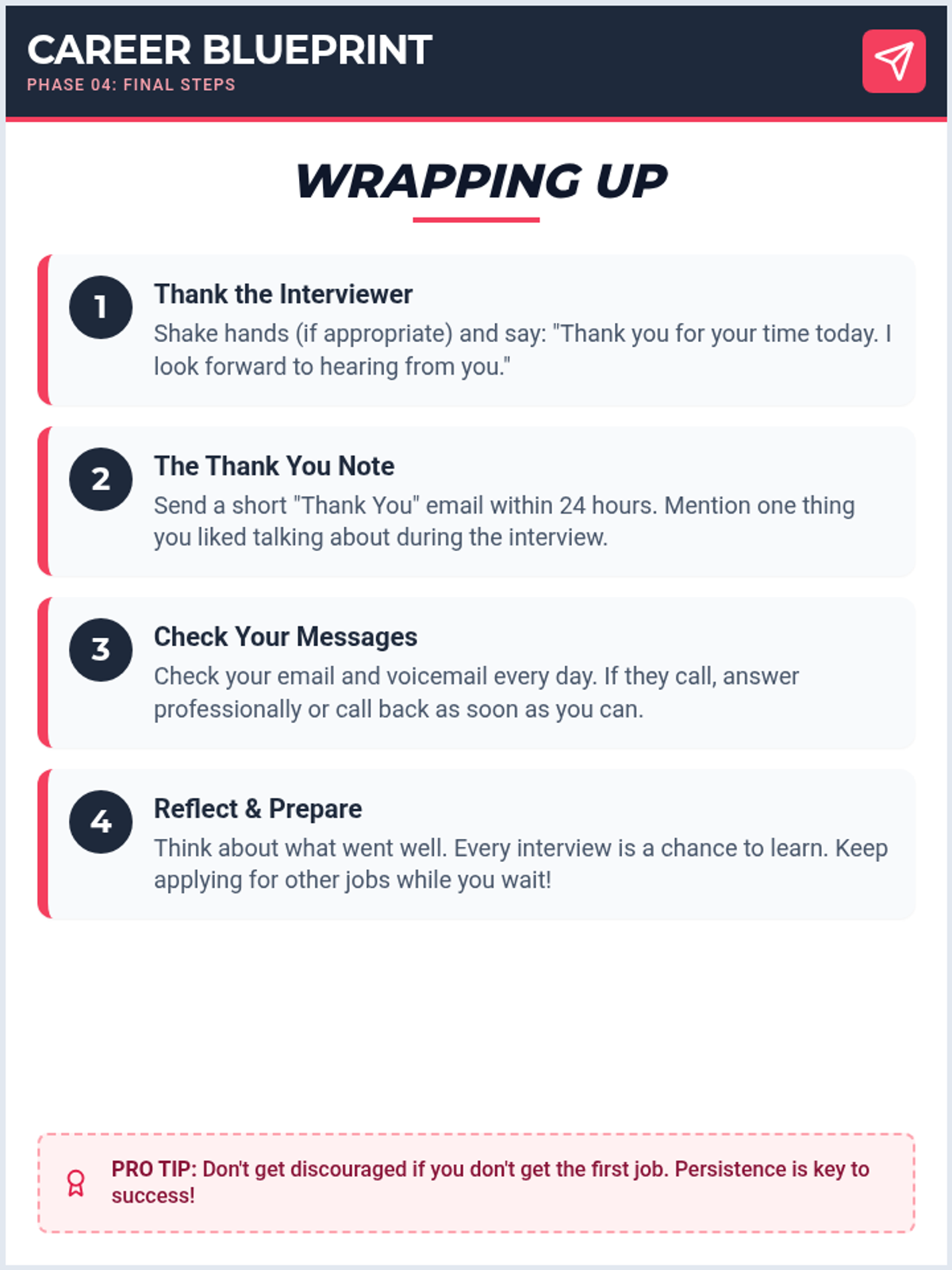
A series of visual task analysis posters and checklists designed to help adult transition students master the steps of a successful job interview.
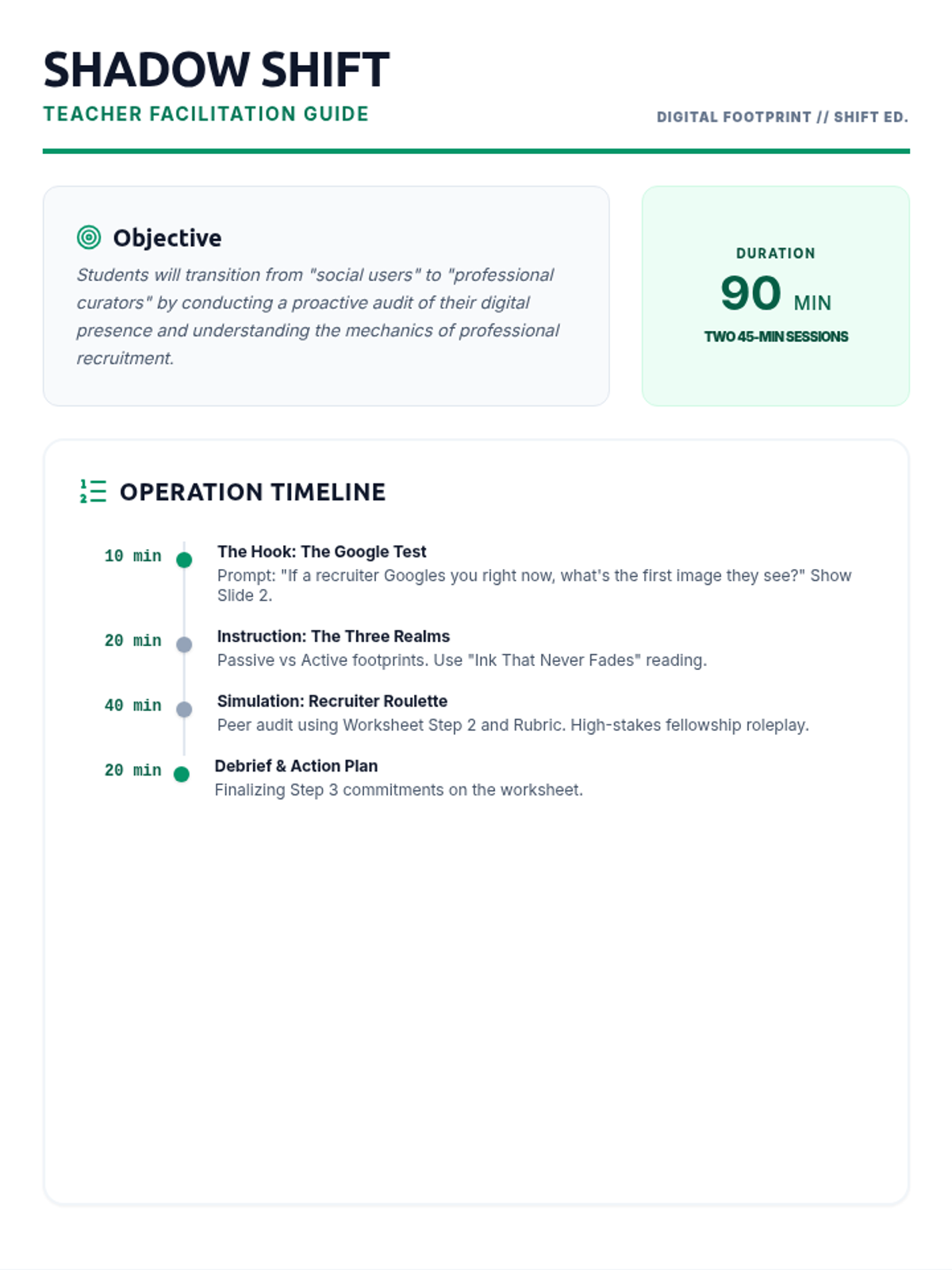
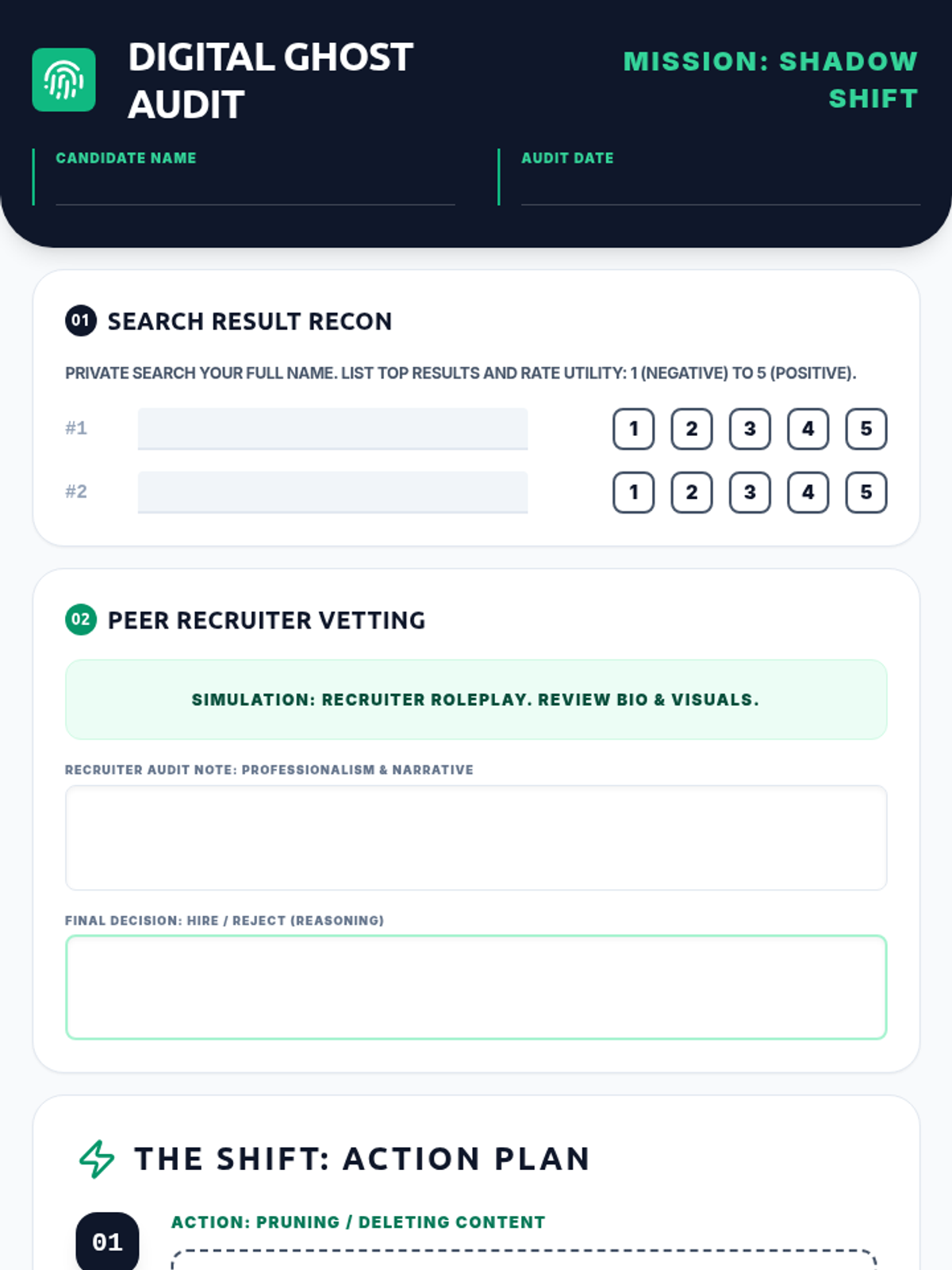
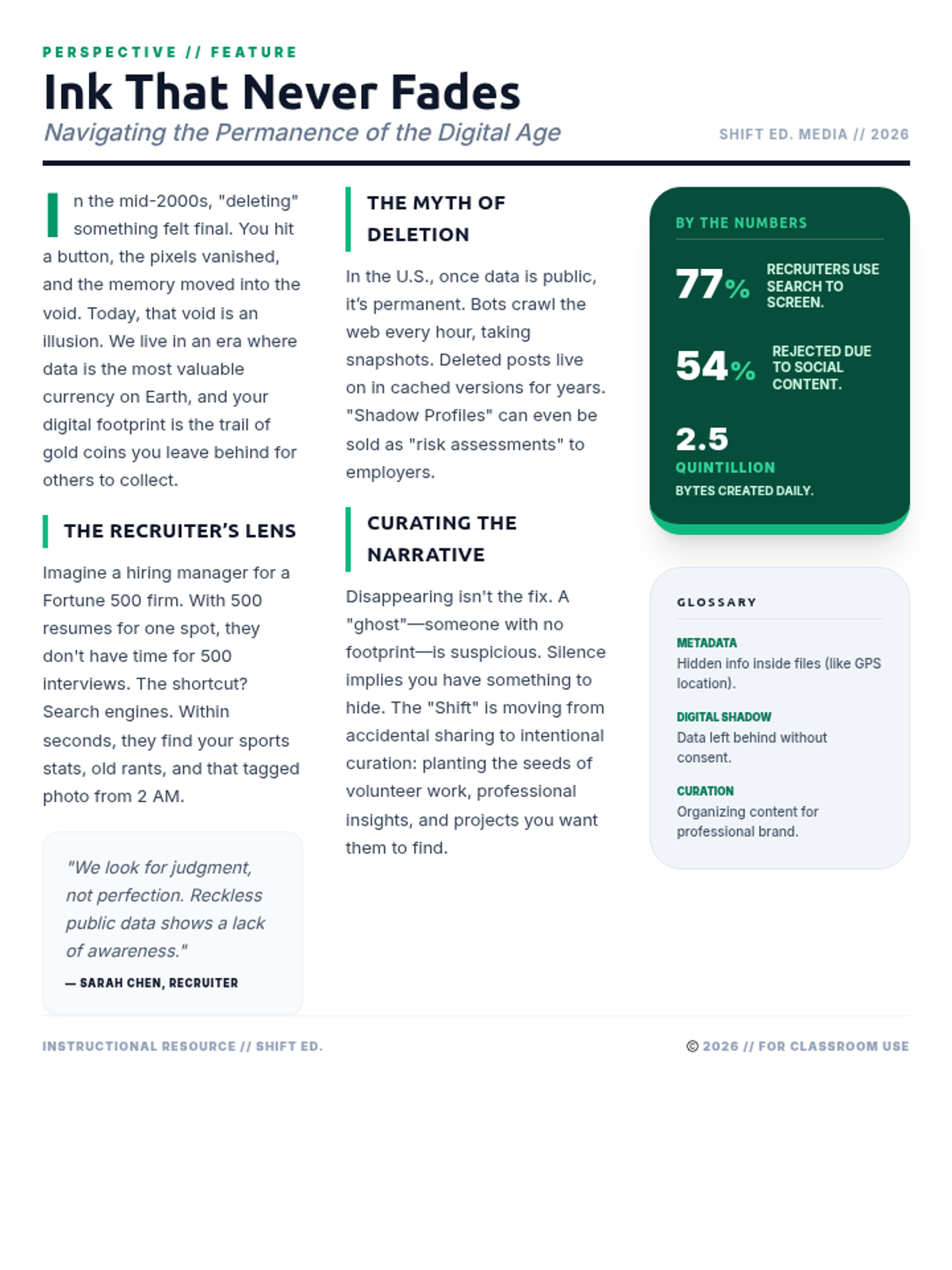
A deep dive into digital footprints, featuring a recruitment simulation where students audit their own and others' online personas to prepare for professional and collegiate success.
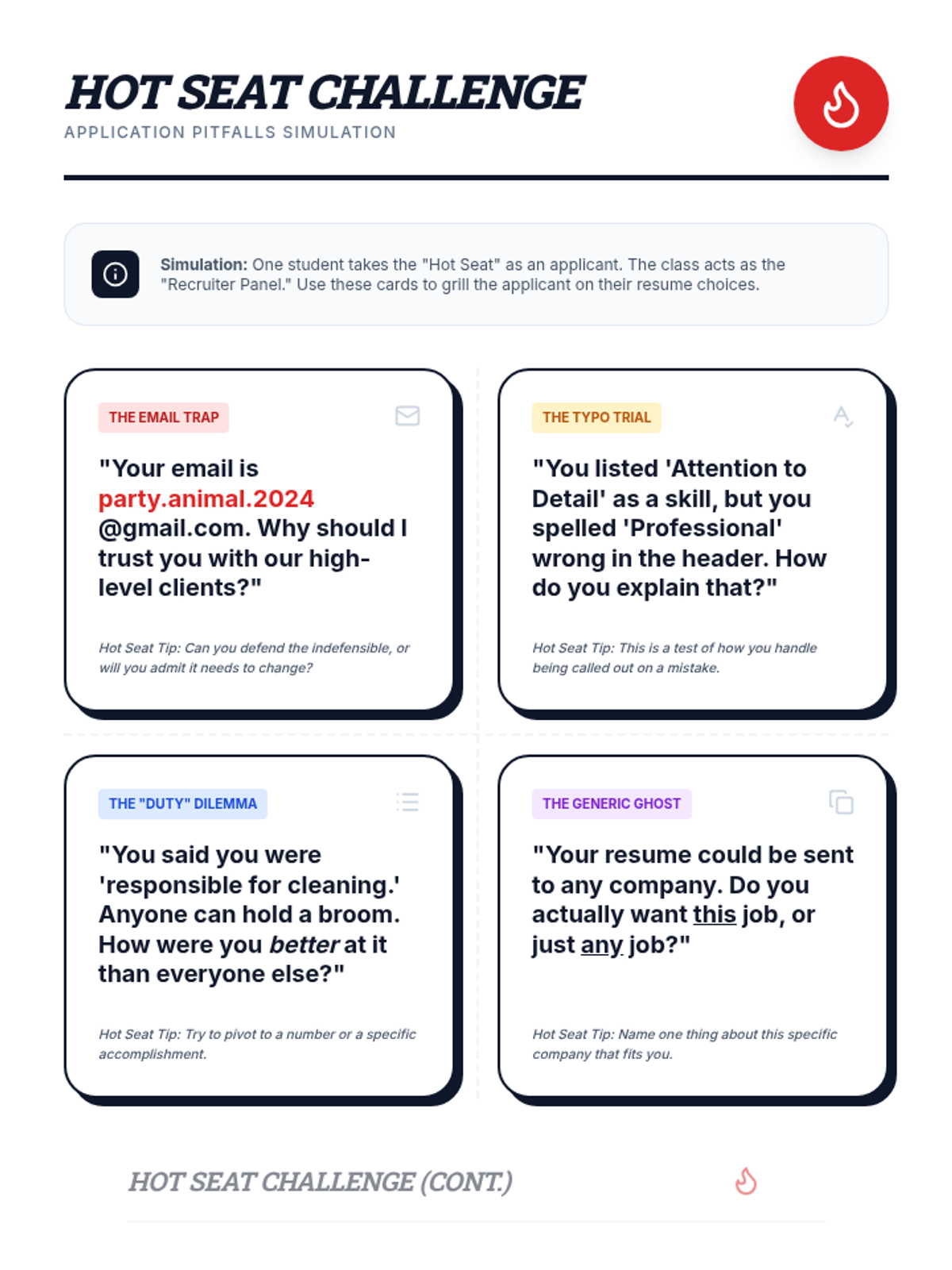
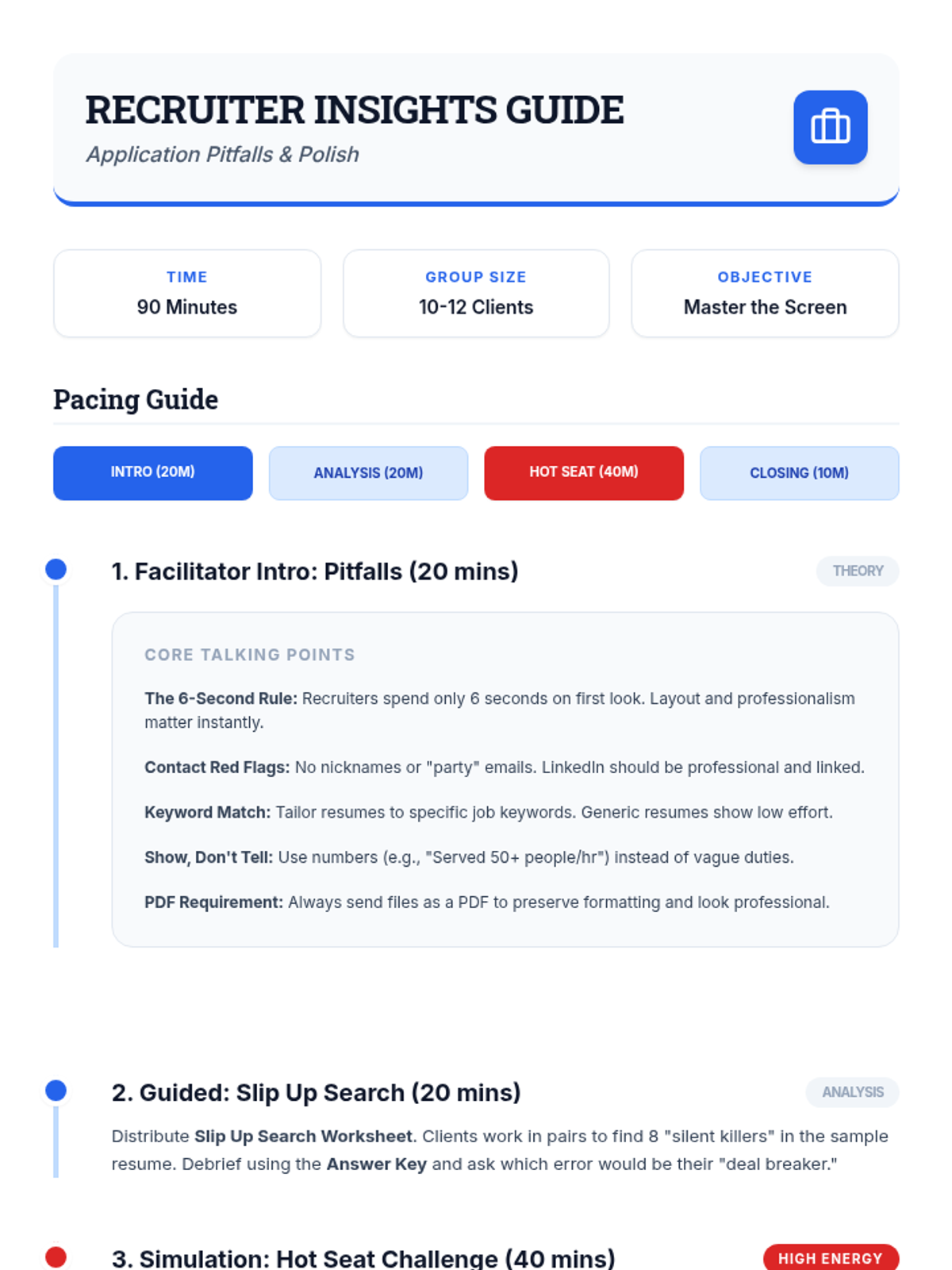
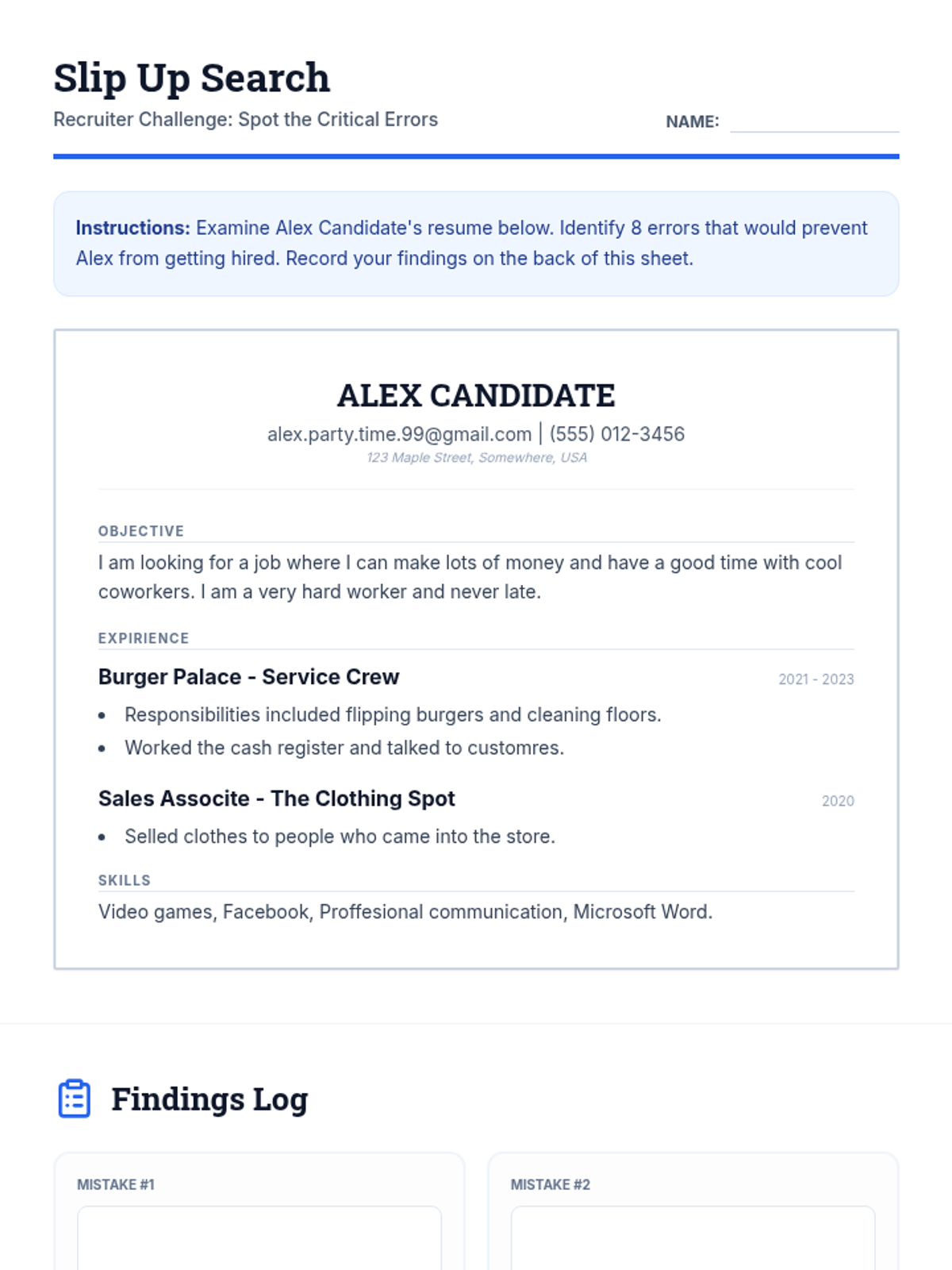
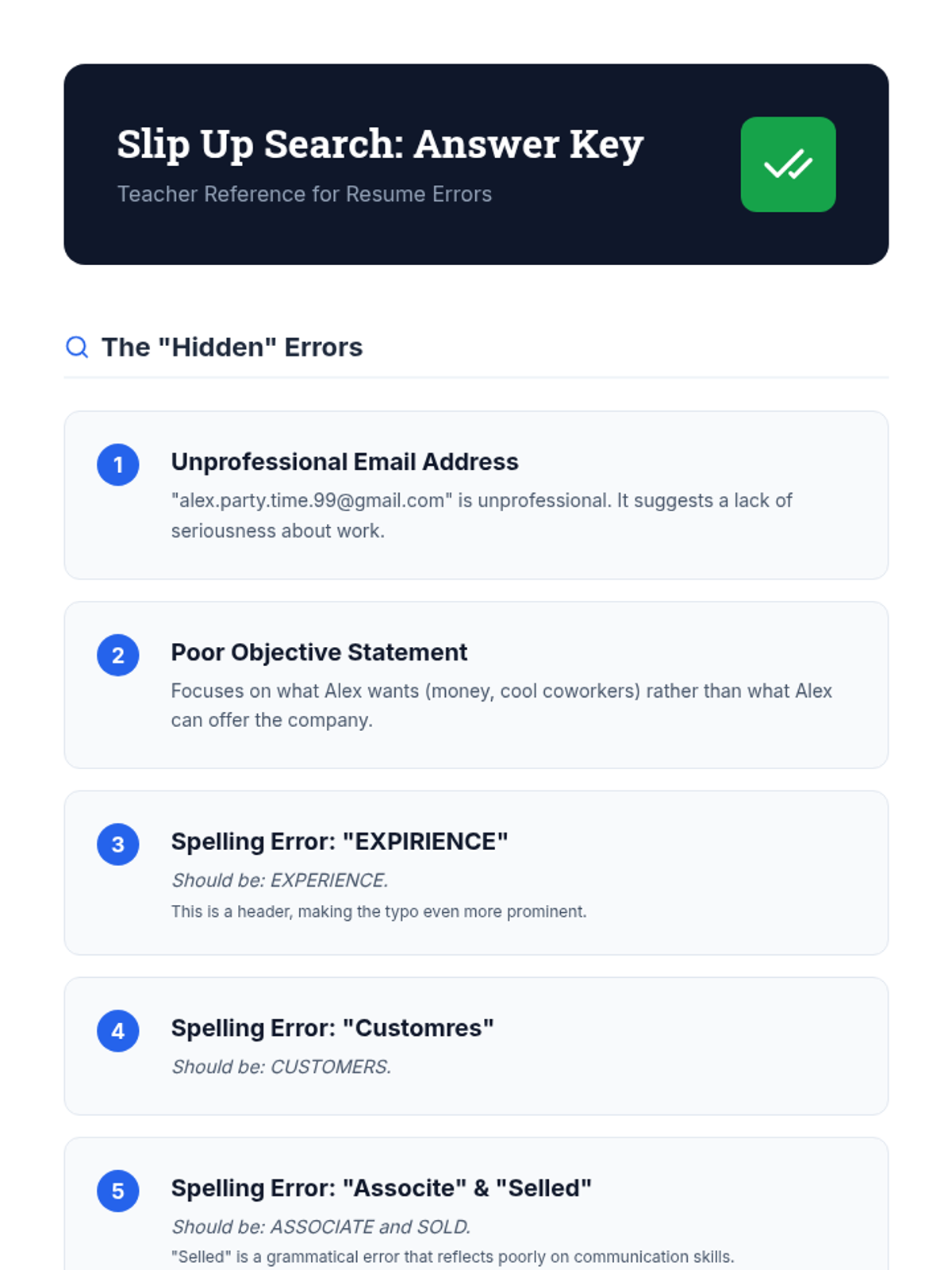
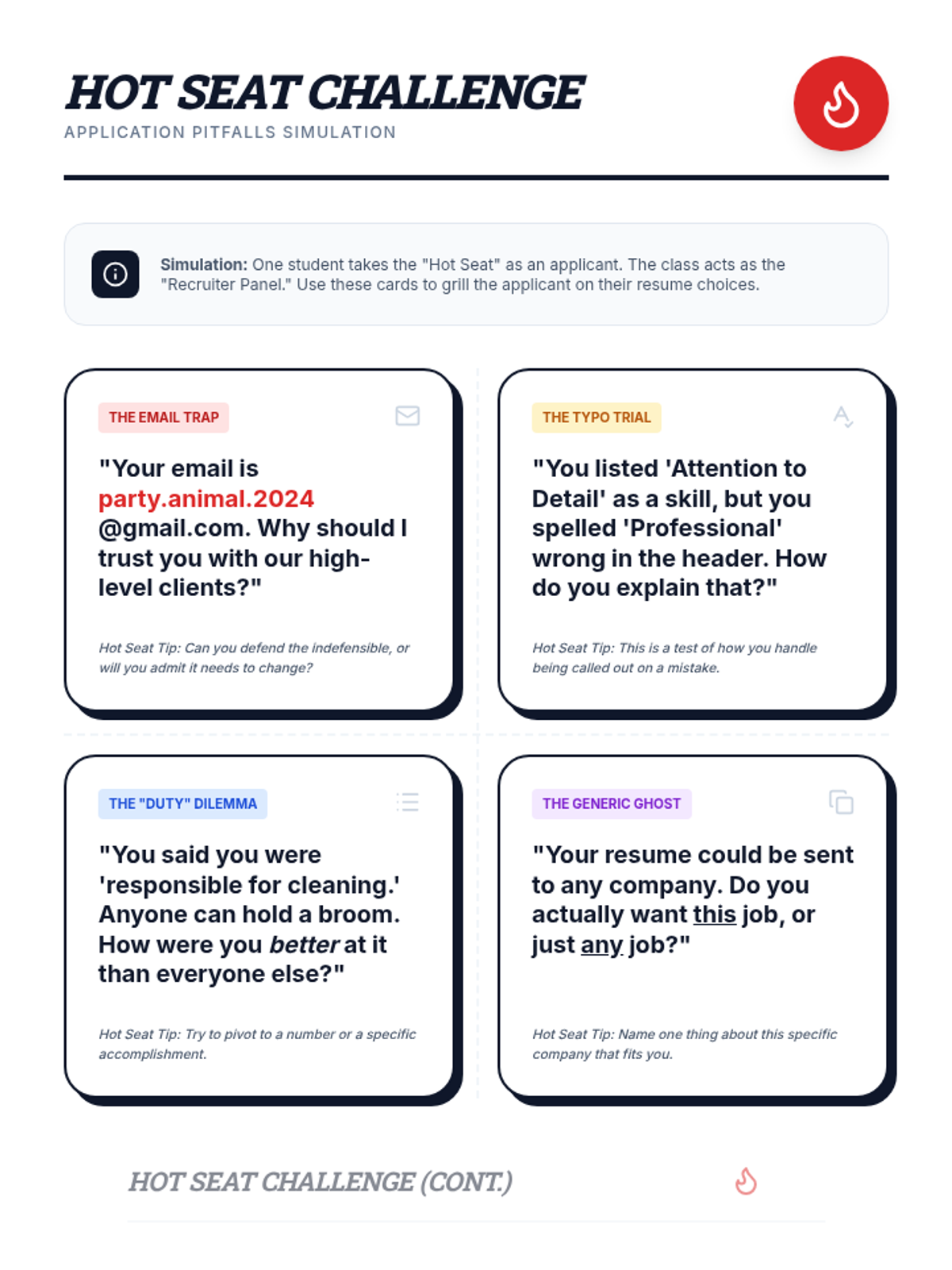
A comprehensive lesson identifying common workplace application errors, from resume typos to unprofessional email addresses, and how to fix them.
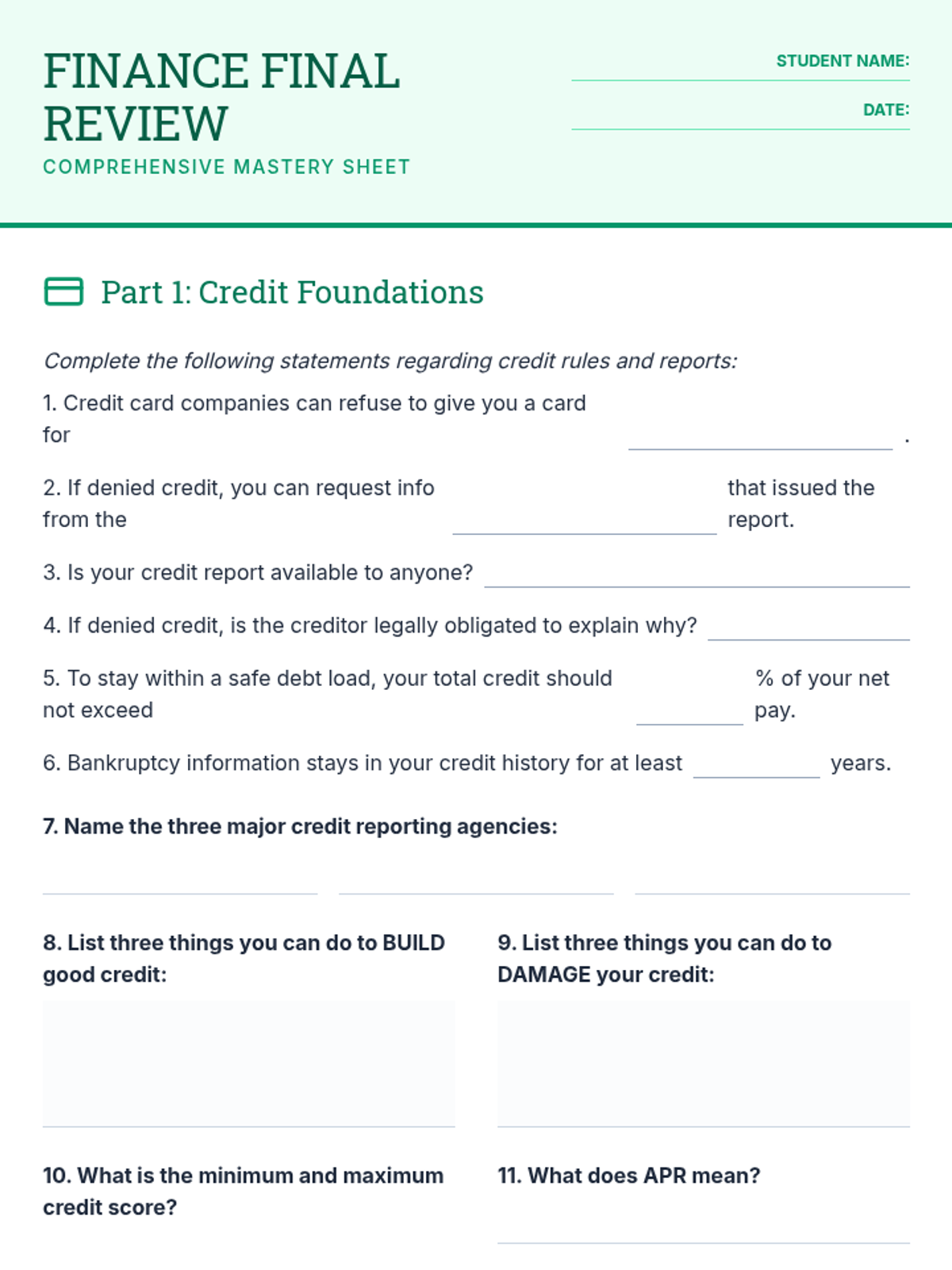
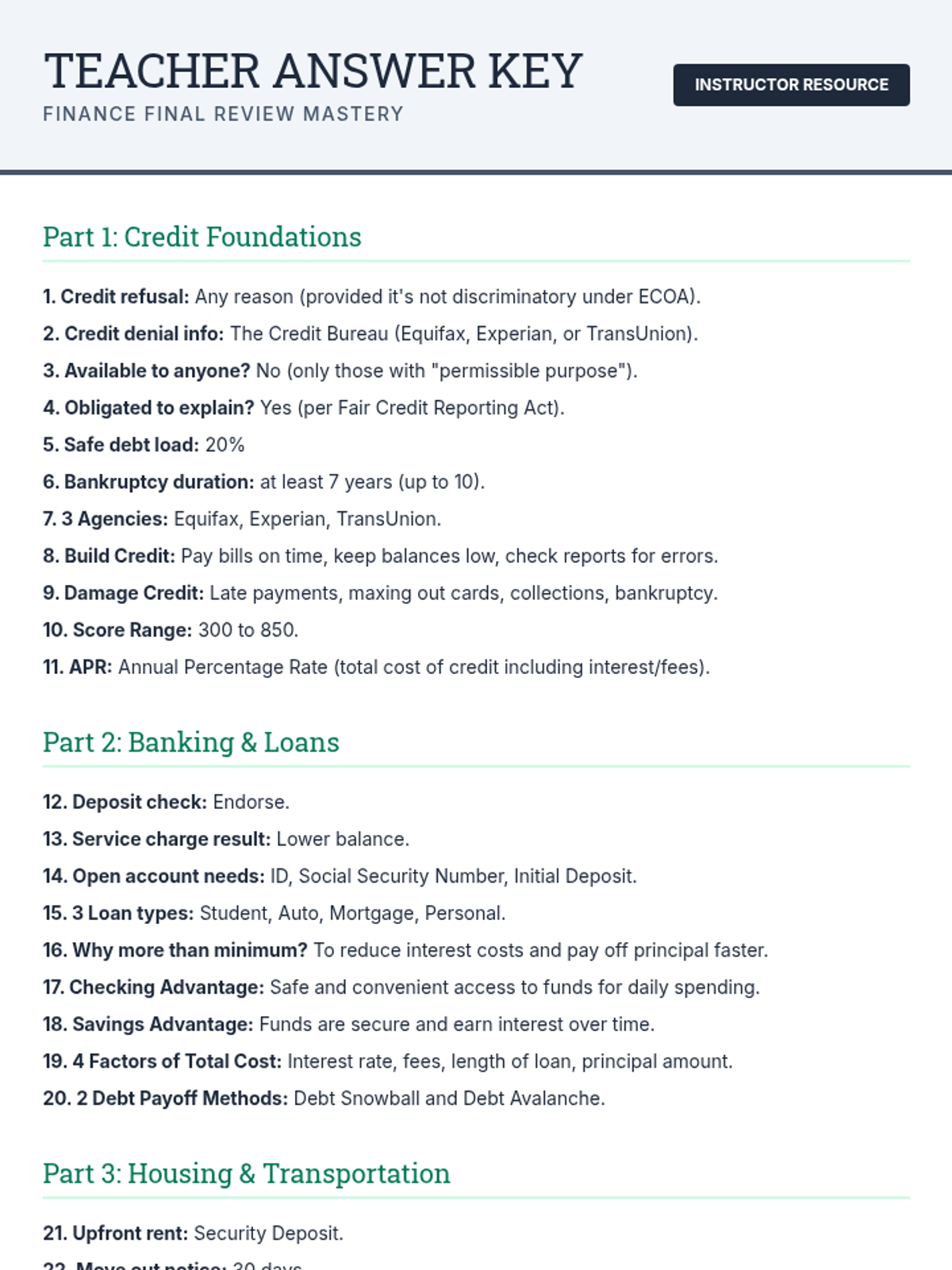
A comprehensive review module for the Personal Finance Final, covering credit, banking, loans, housing, and career skills.
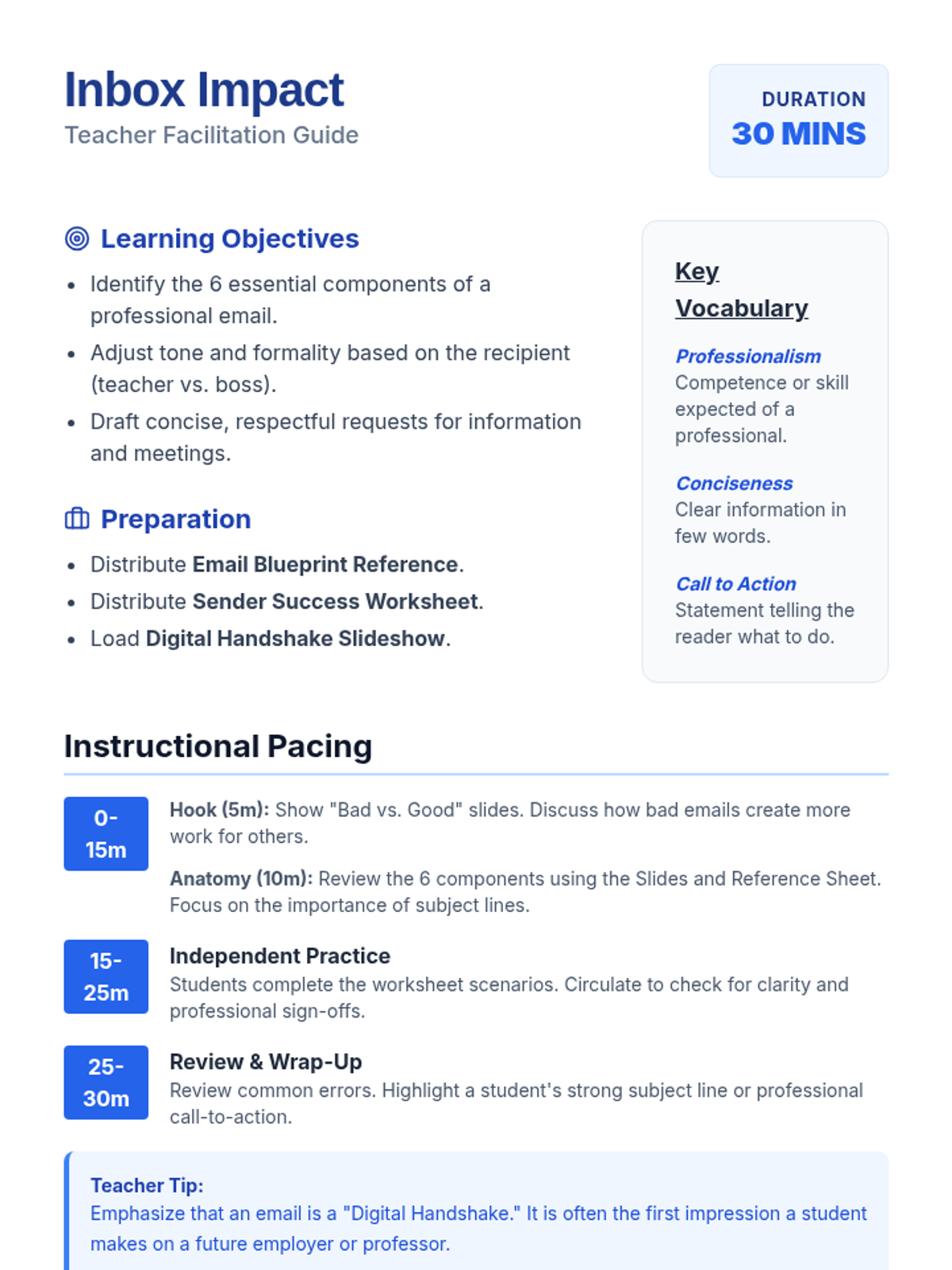
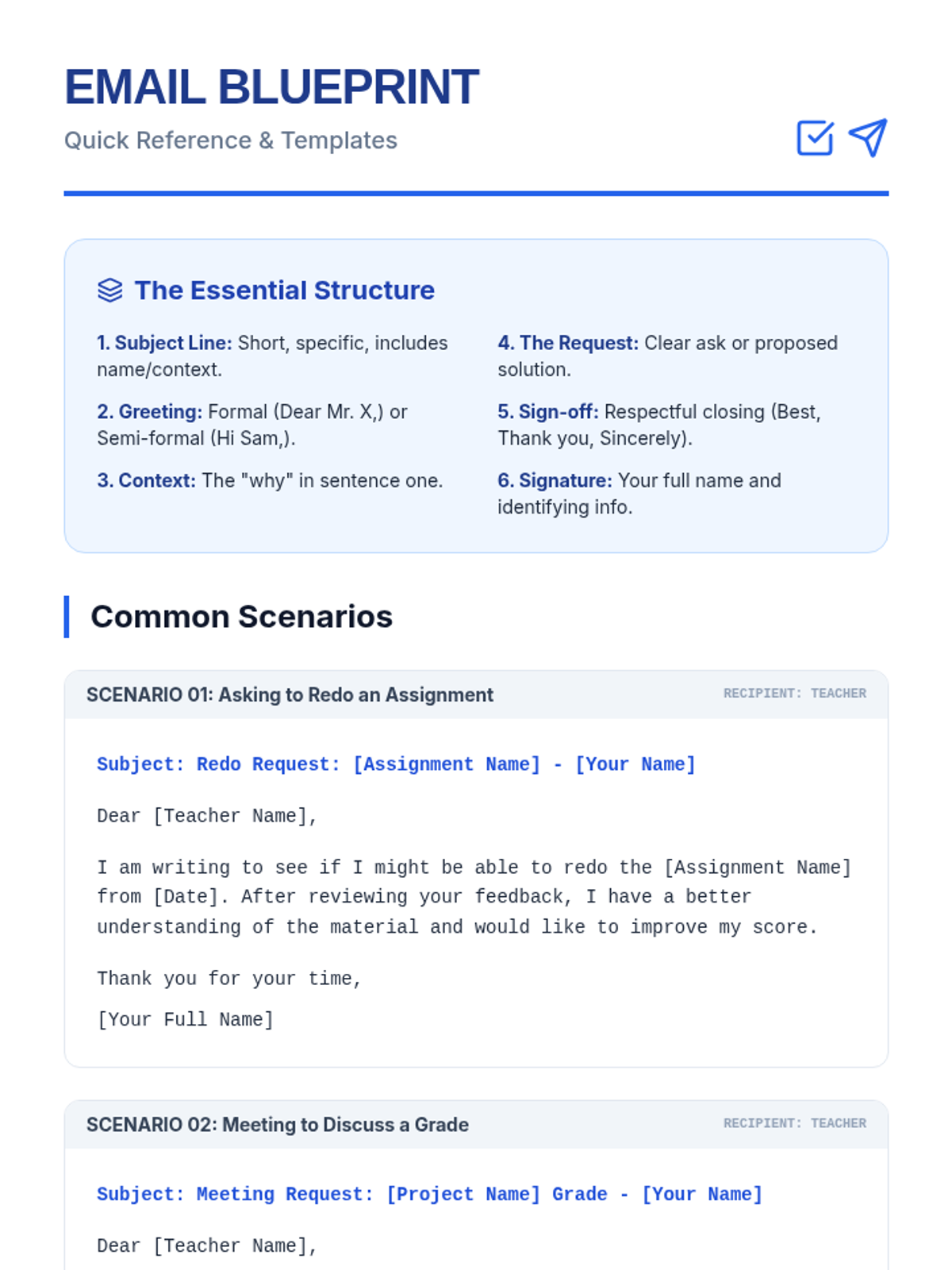
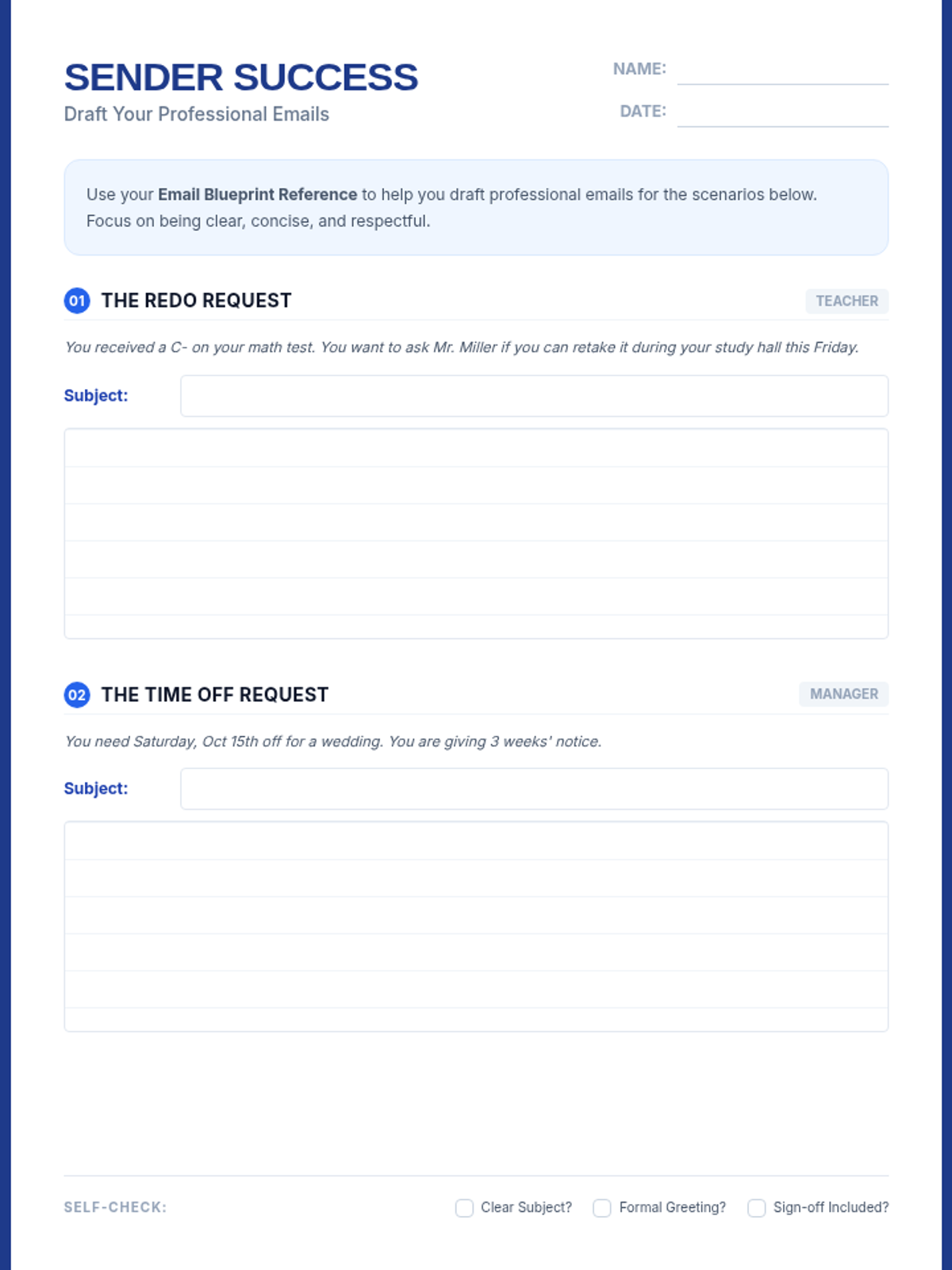
A fast-paced, 30-minute lesson teaching high school students the essential structure and tone for professional email communication with teachers and employers. Students will analyze effective models and practice drafting their own professional requests.
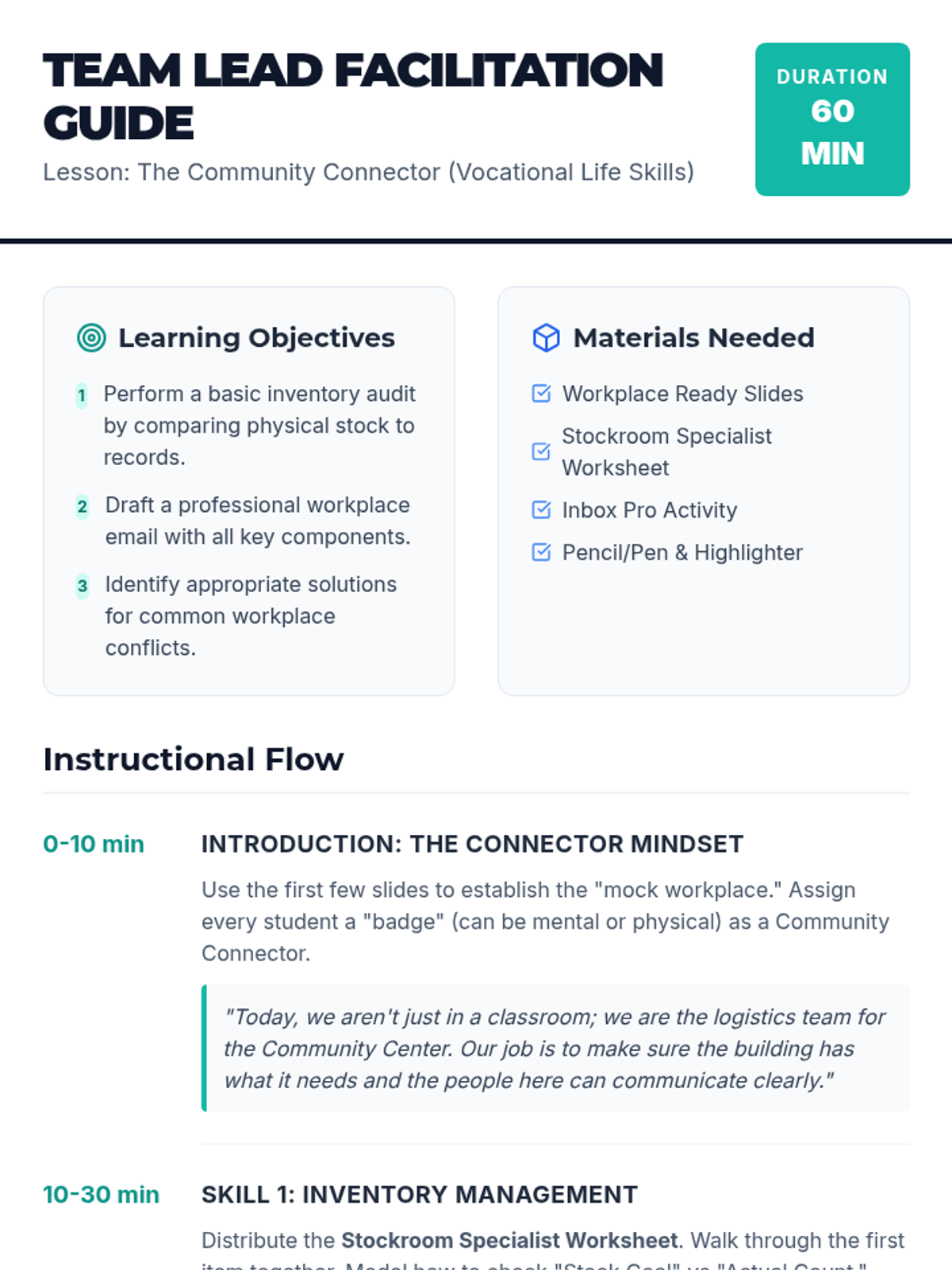
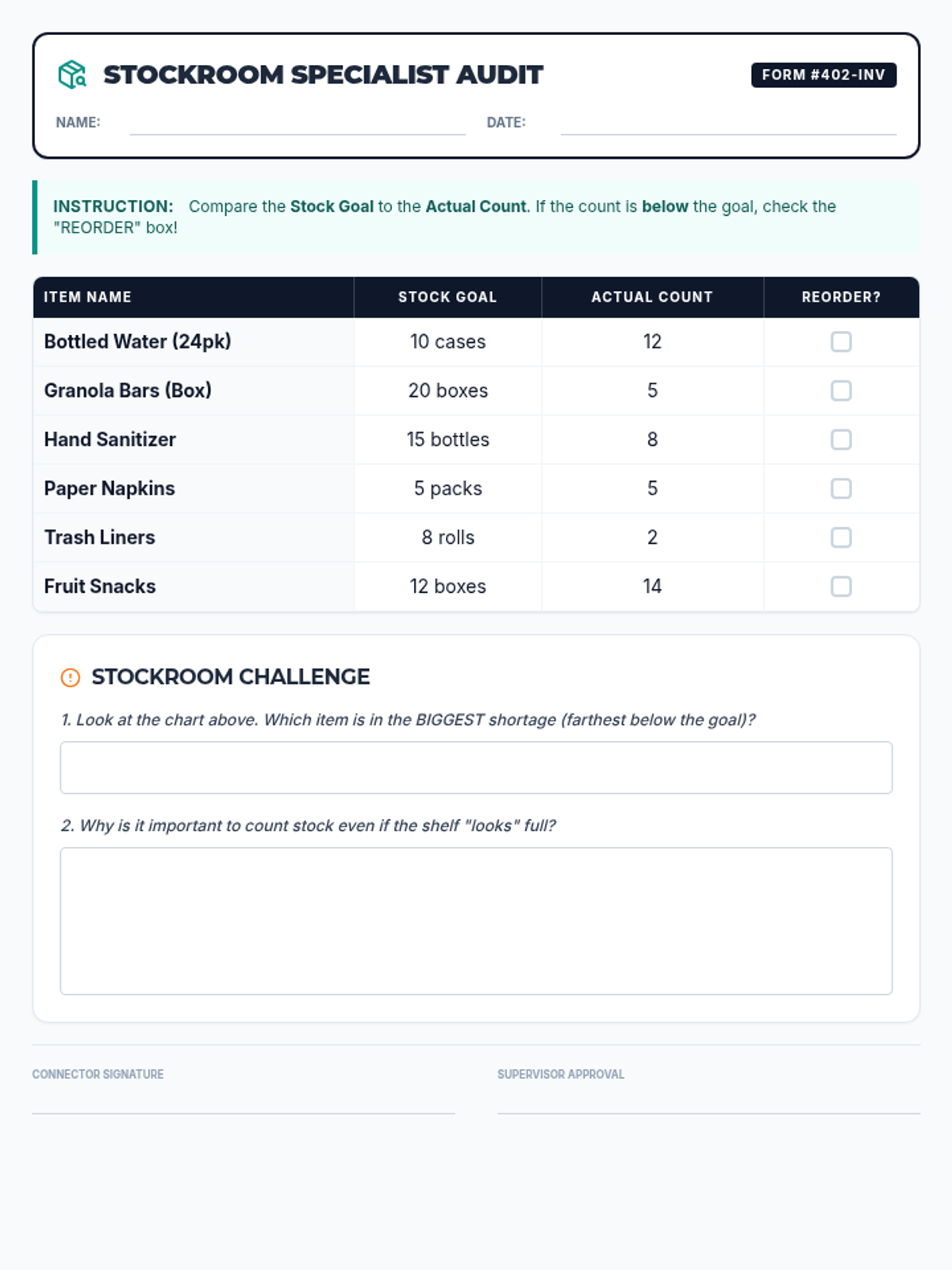
A vocational life skills lesson where students simulate office and warehouse tasks including inventory management and professional digital communication. Students practice real-world problem solving to prepare for community-based work experiences.
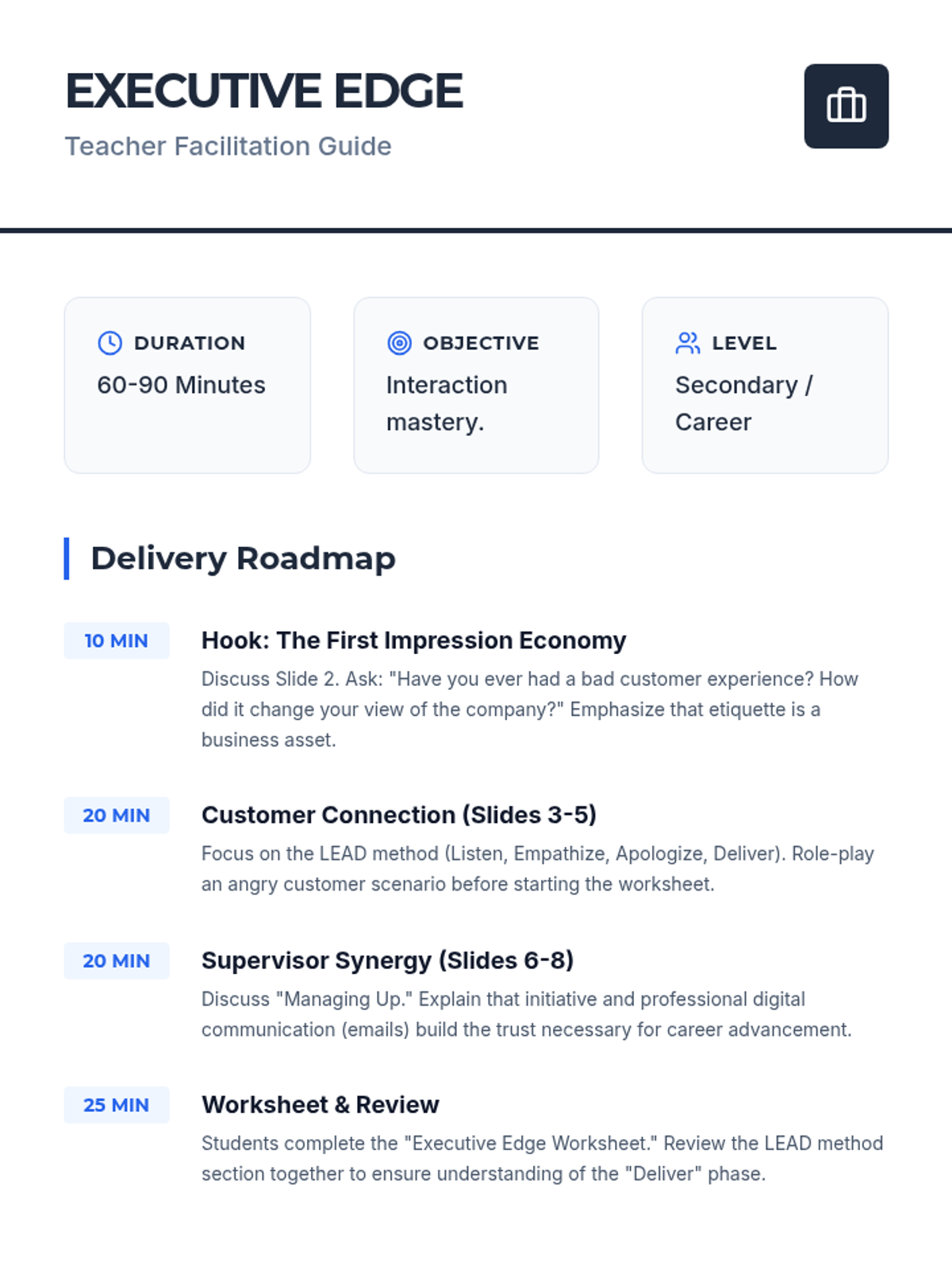
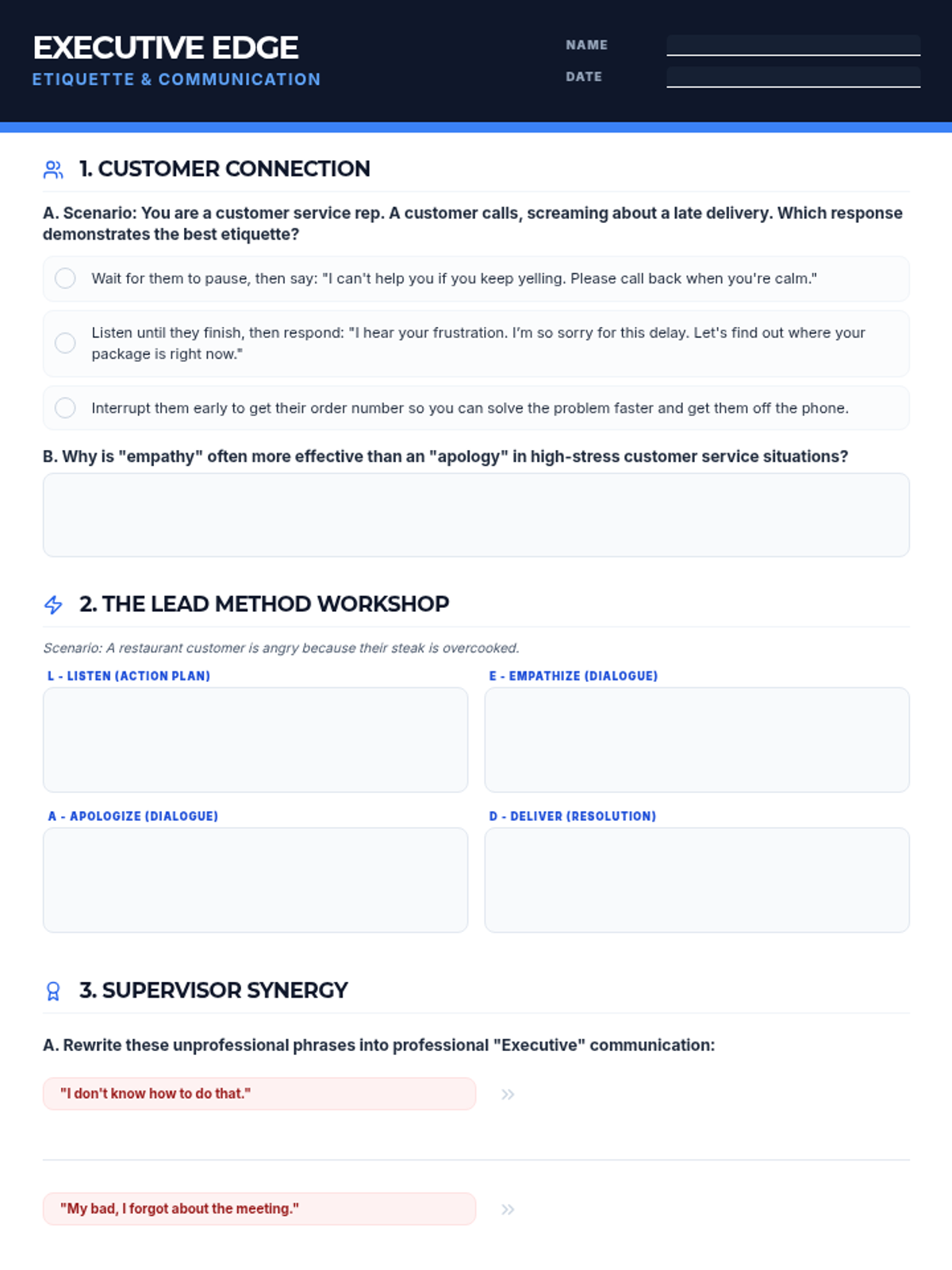
A professional development lesson focused on mastering interactions with customers and supervisors through effective communication and the LEAD method.
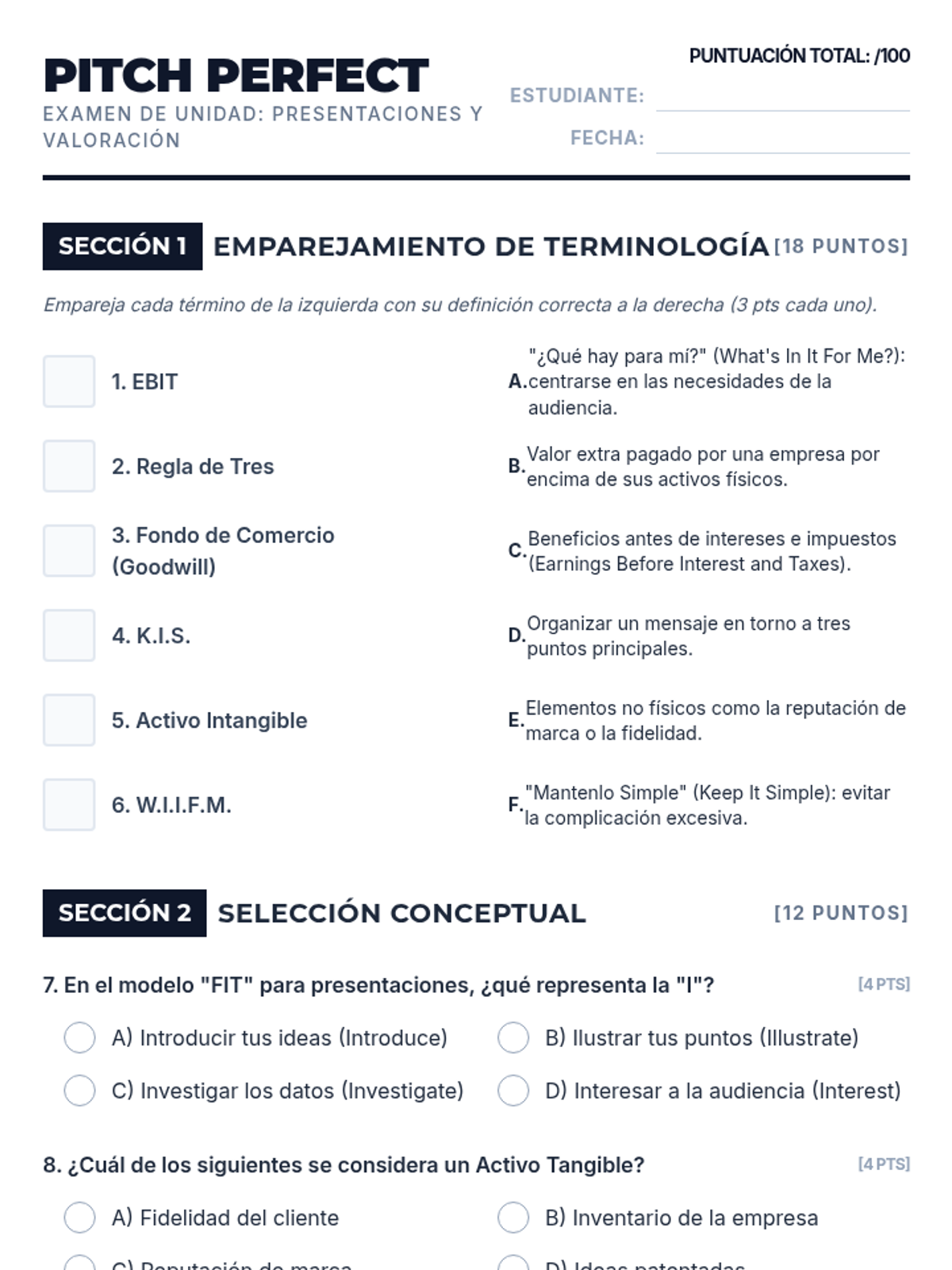
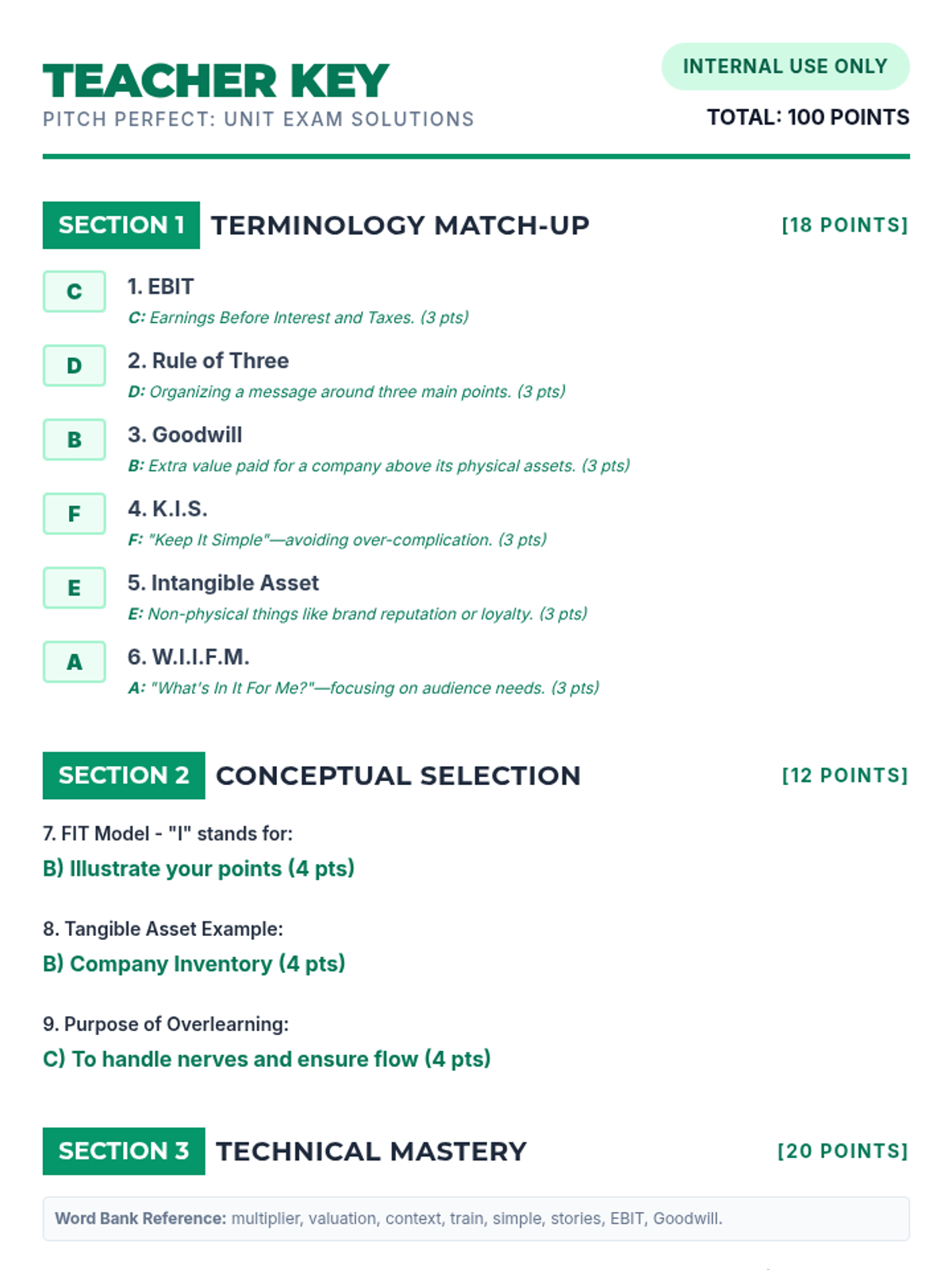
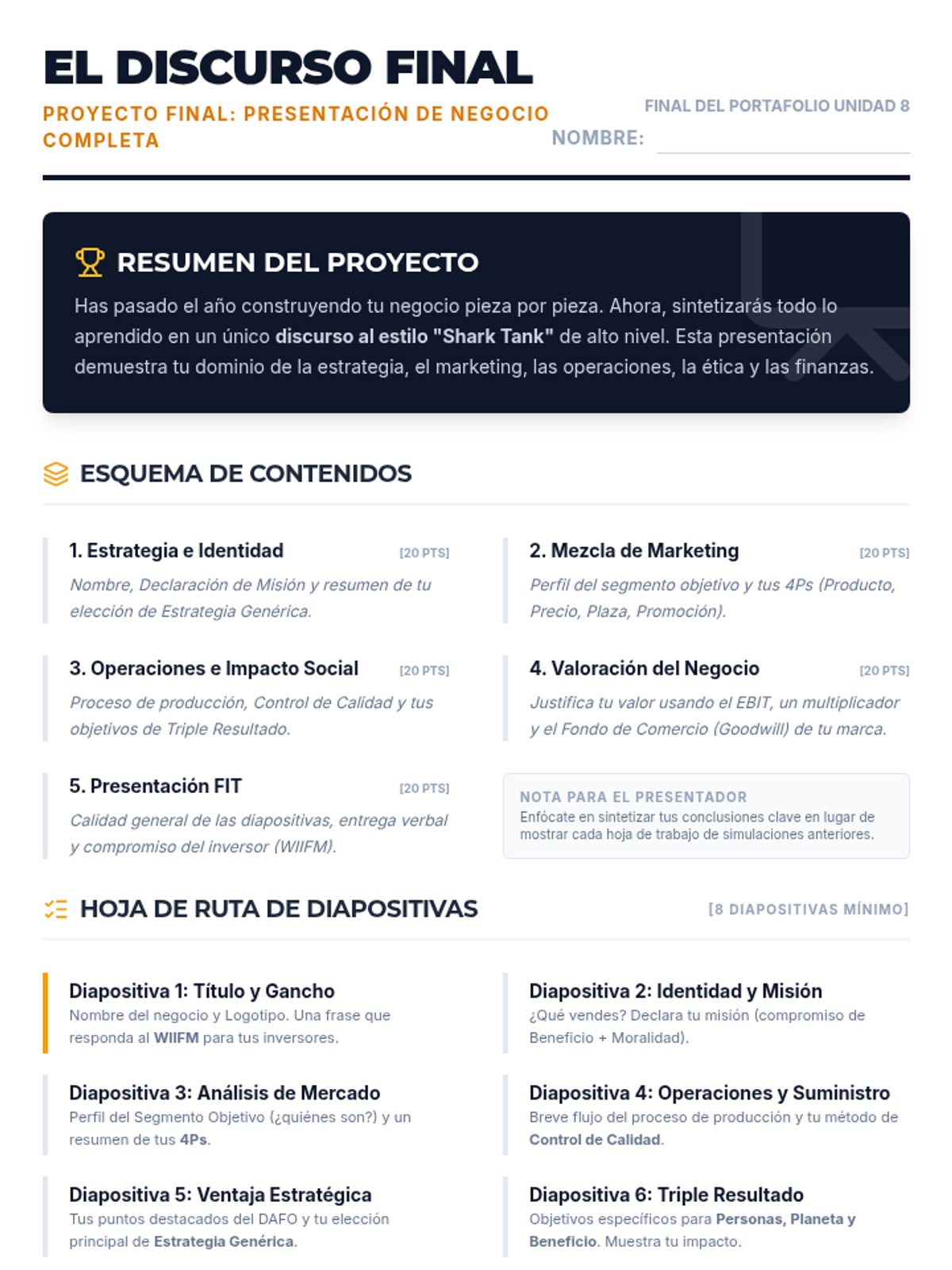
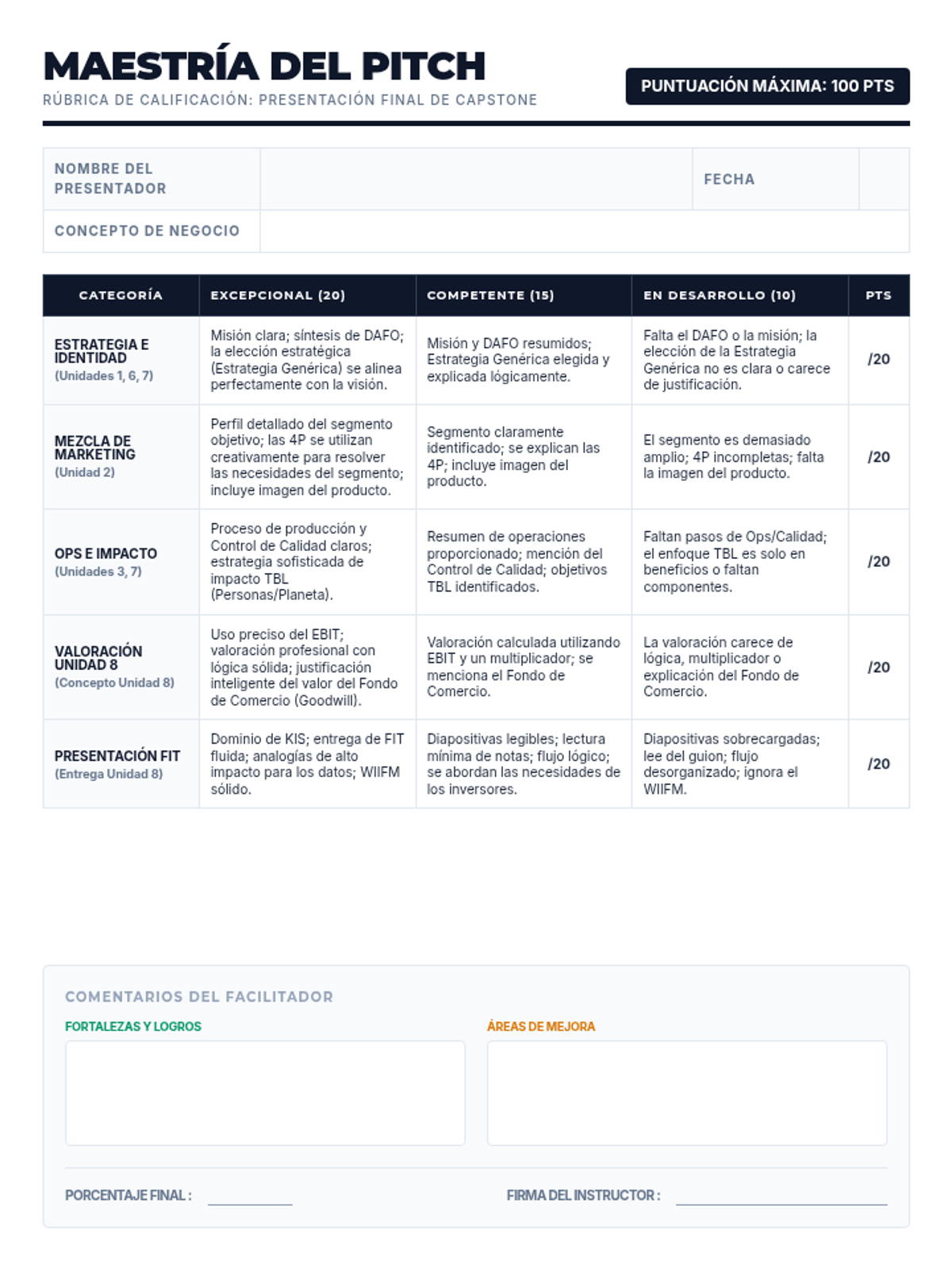
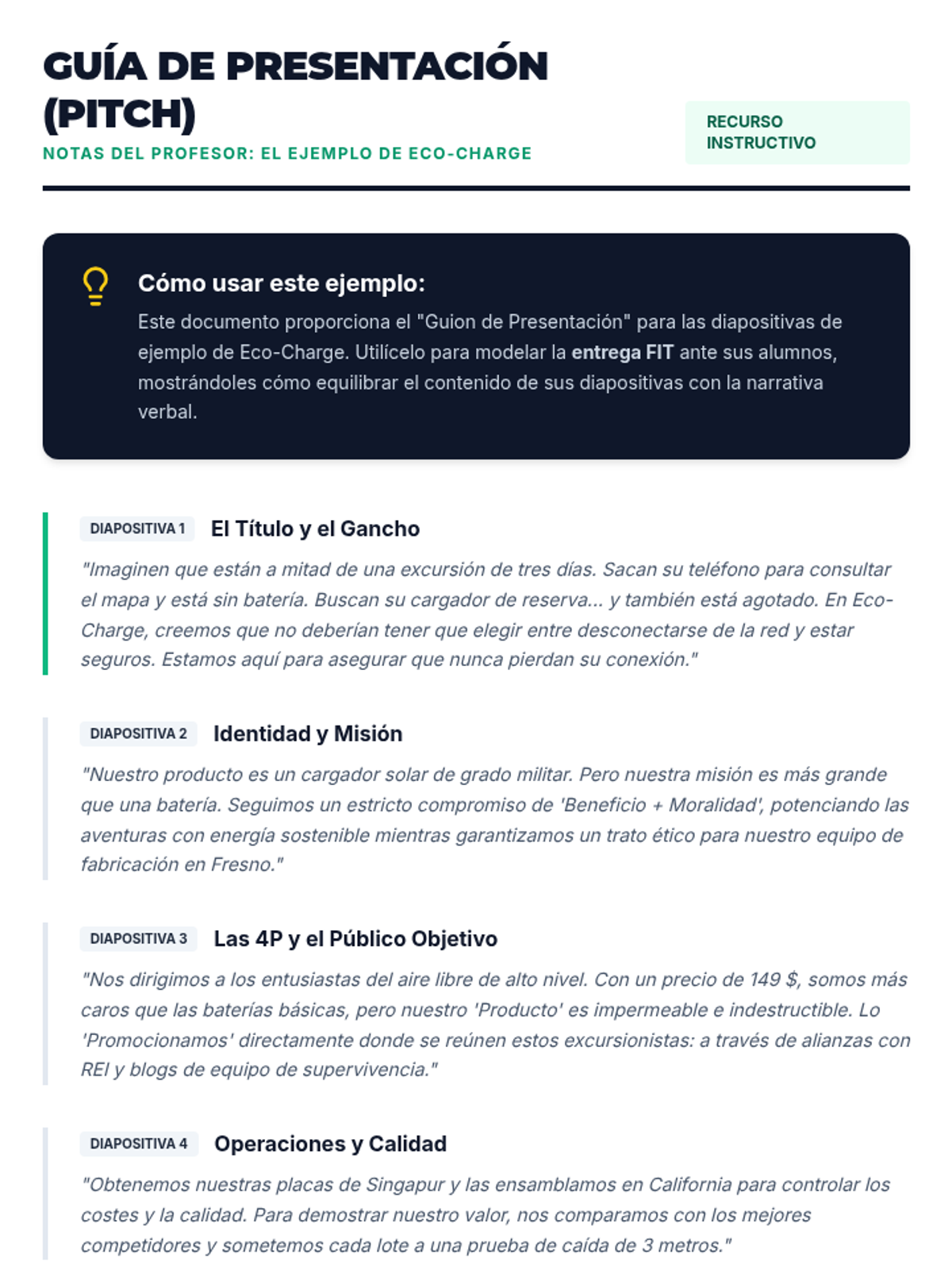
This lesson concludes the unit on business presentation skills and company valuation, testing students on the FIT model, the Rule of Three, and core financial assessment concepts.
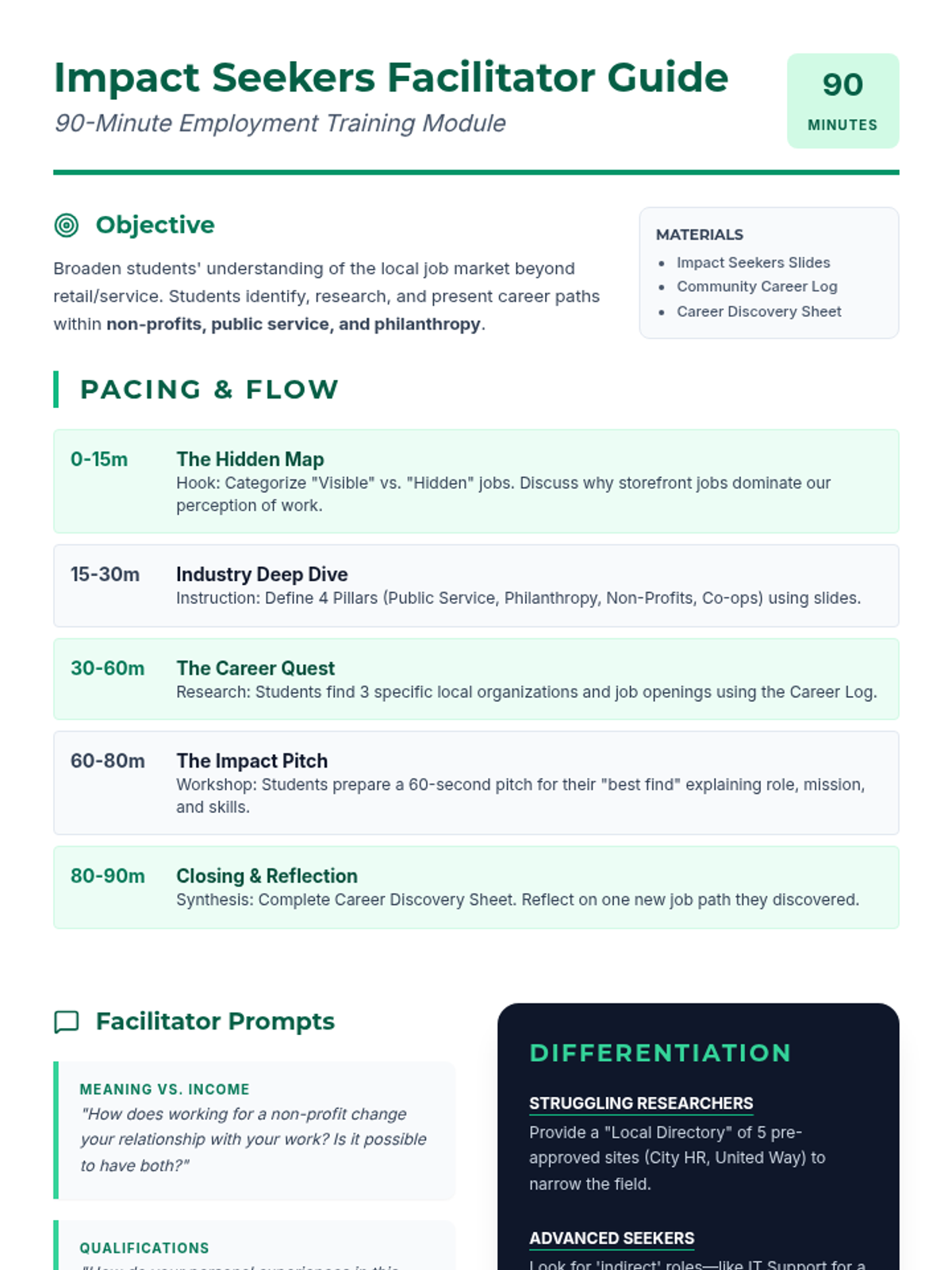
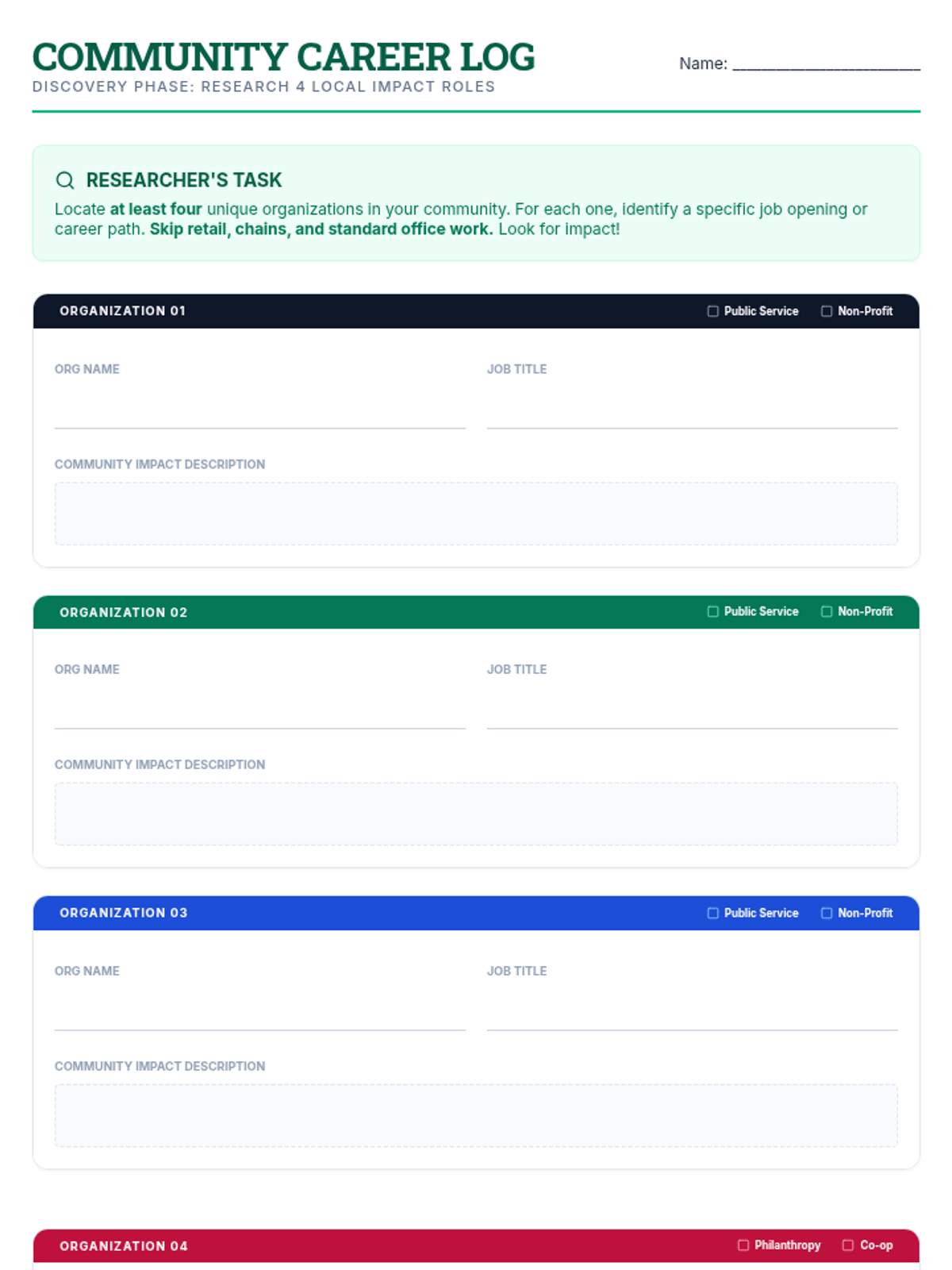
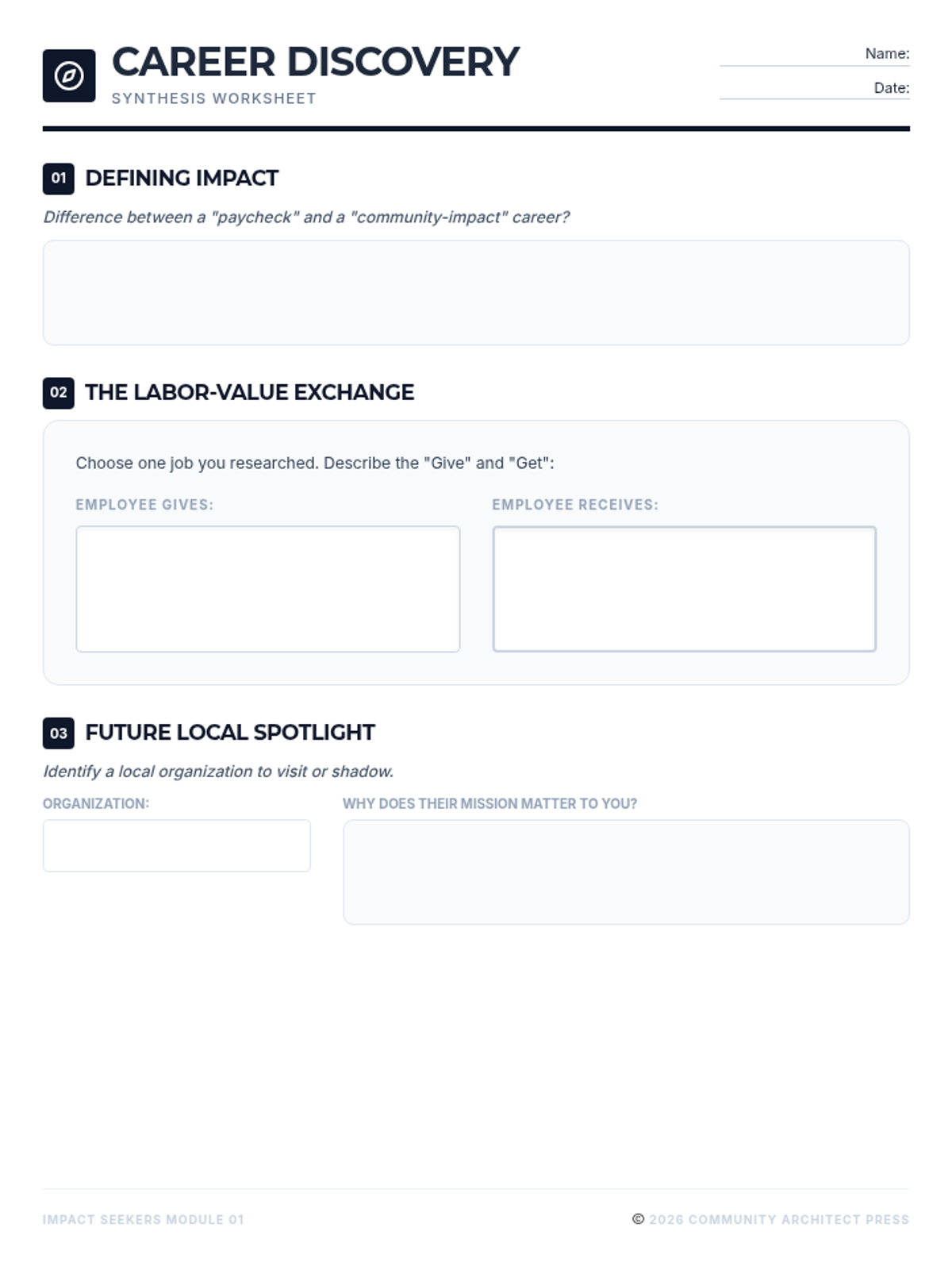
A 90-minute employment training session focused on discovering meaningful community-based careers beyond traditional retail. Students explore non-profits, public service, and philanthropic organizations to understand diverse career paths.
An investigative slide-based lesson where students analyze multiple "mystery" candidates to discover hidden interview traps and best practices through unfolding case studies.
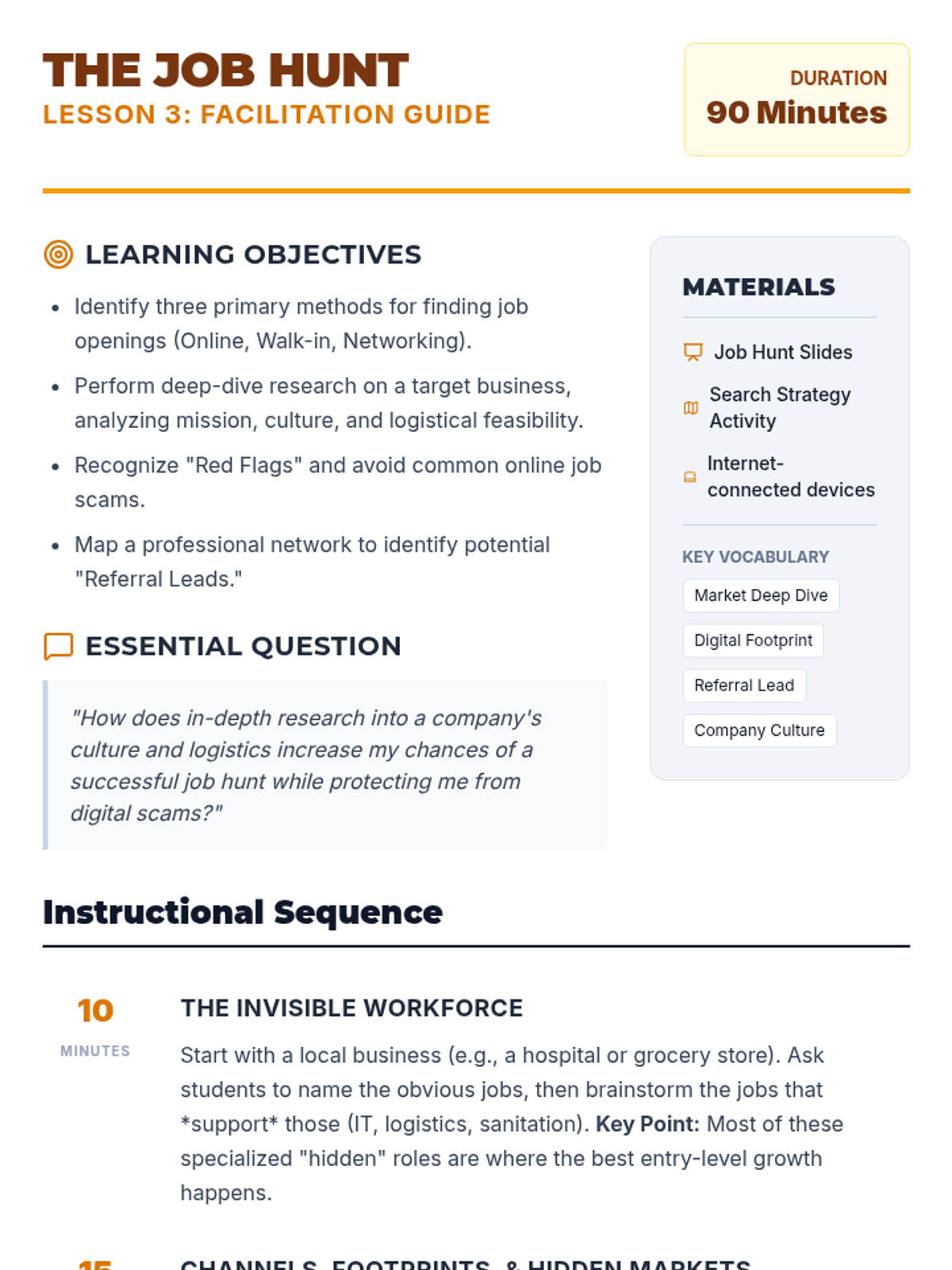
An expanded 90-minute lesson on job search strategies, covering digital platforms, the hidden job market, identifying job scams, and practicing professional elevator pitches.
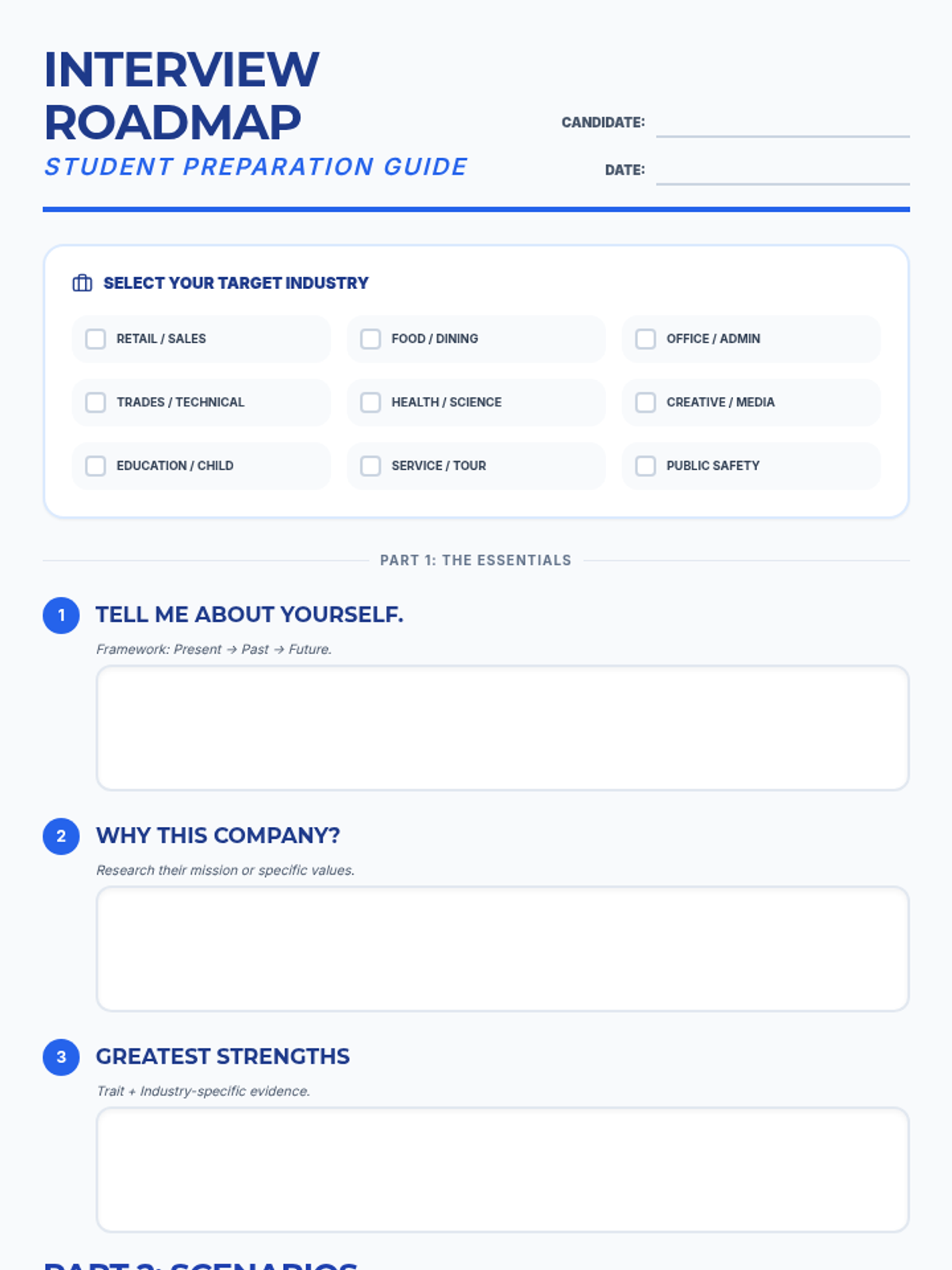
A comprehensive guide to mastering the job interview process, covering essential questions, non-verbal communication, and self-evaluation. Students will prepare responses, practice with peers, and receive professional feedback.
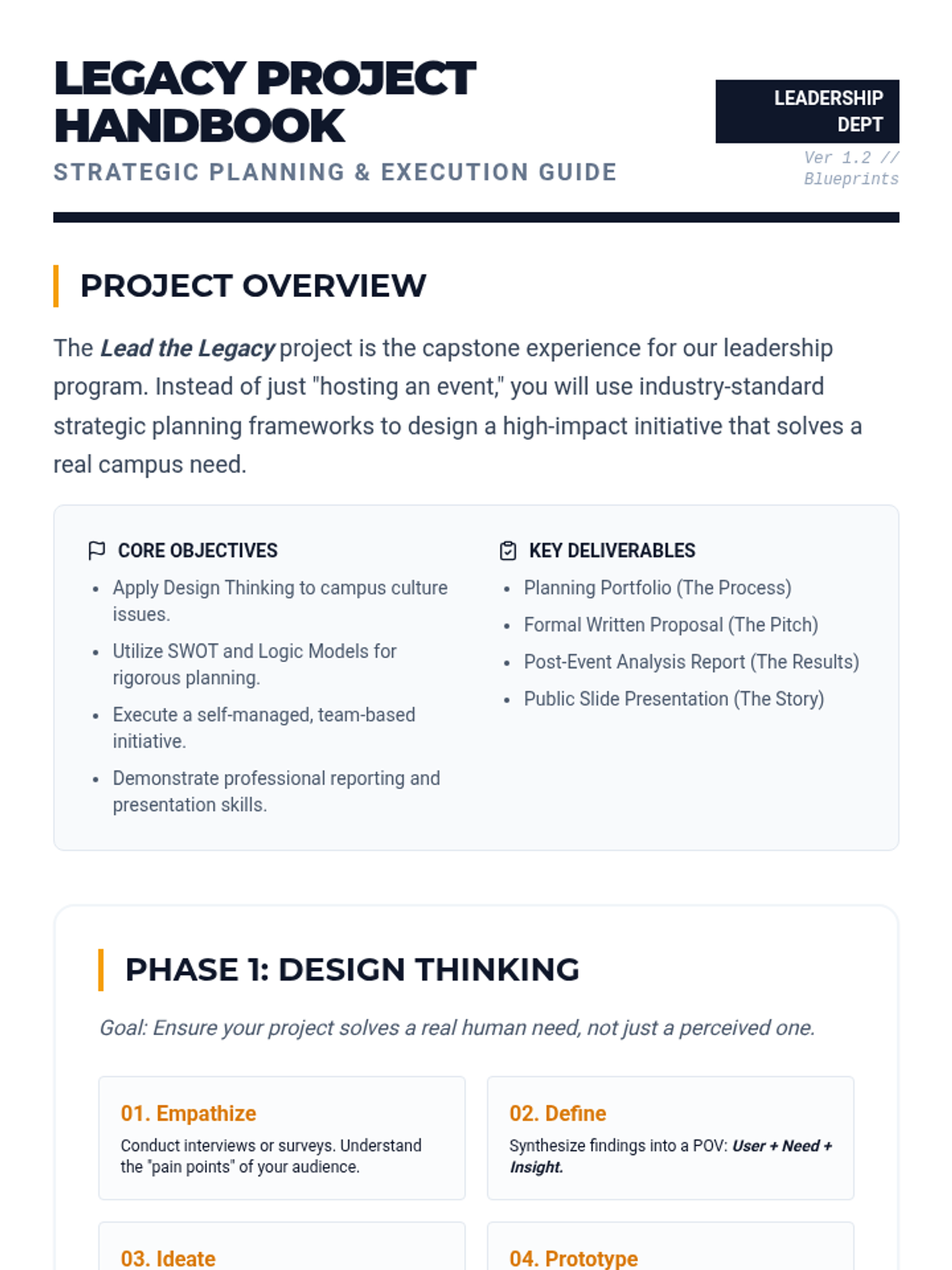
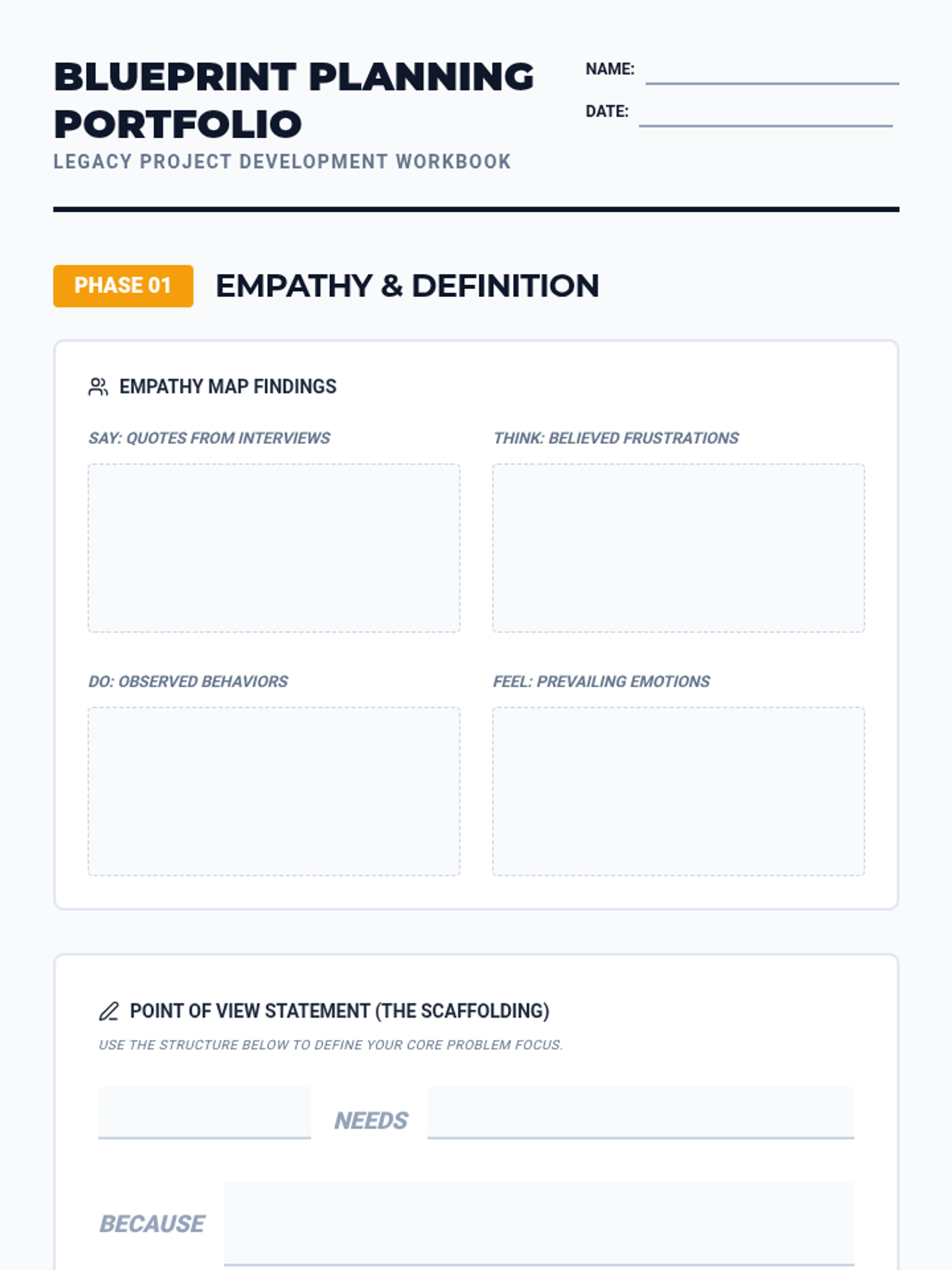
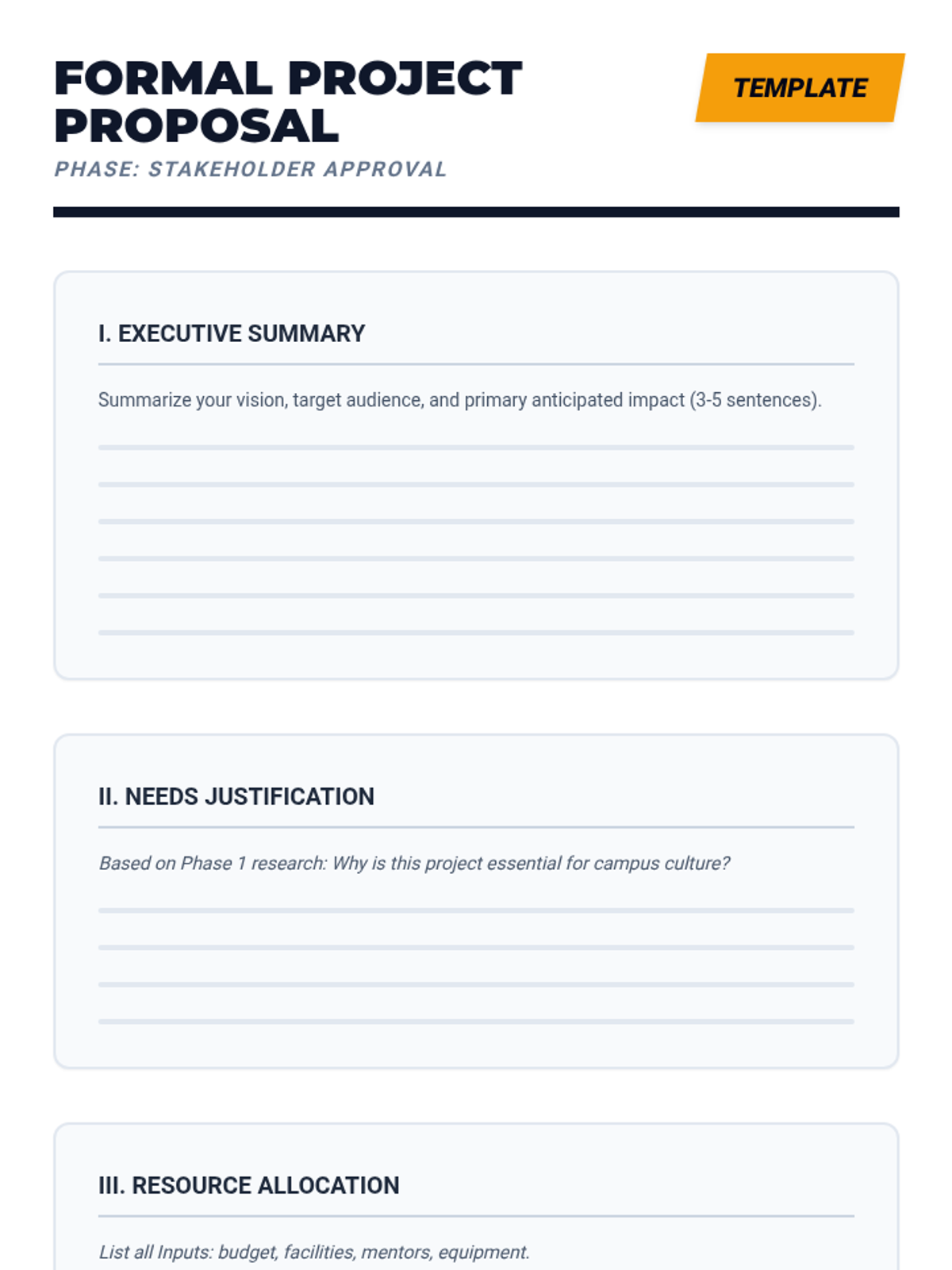
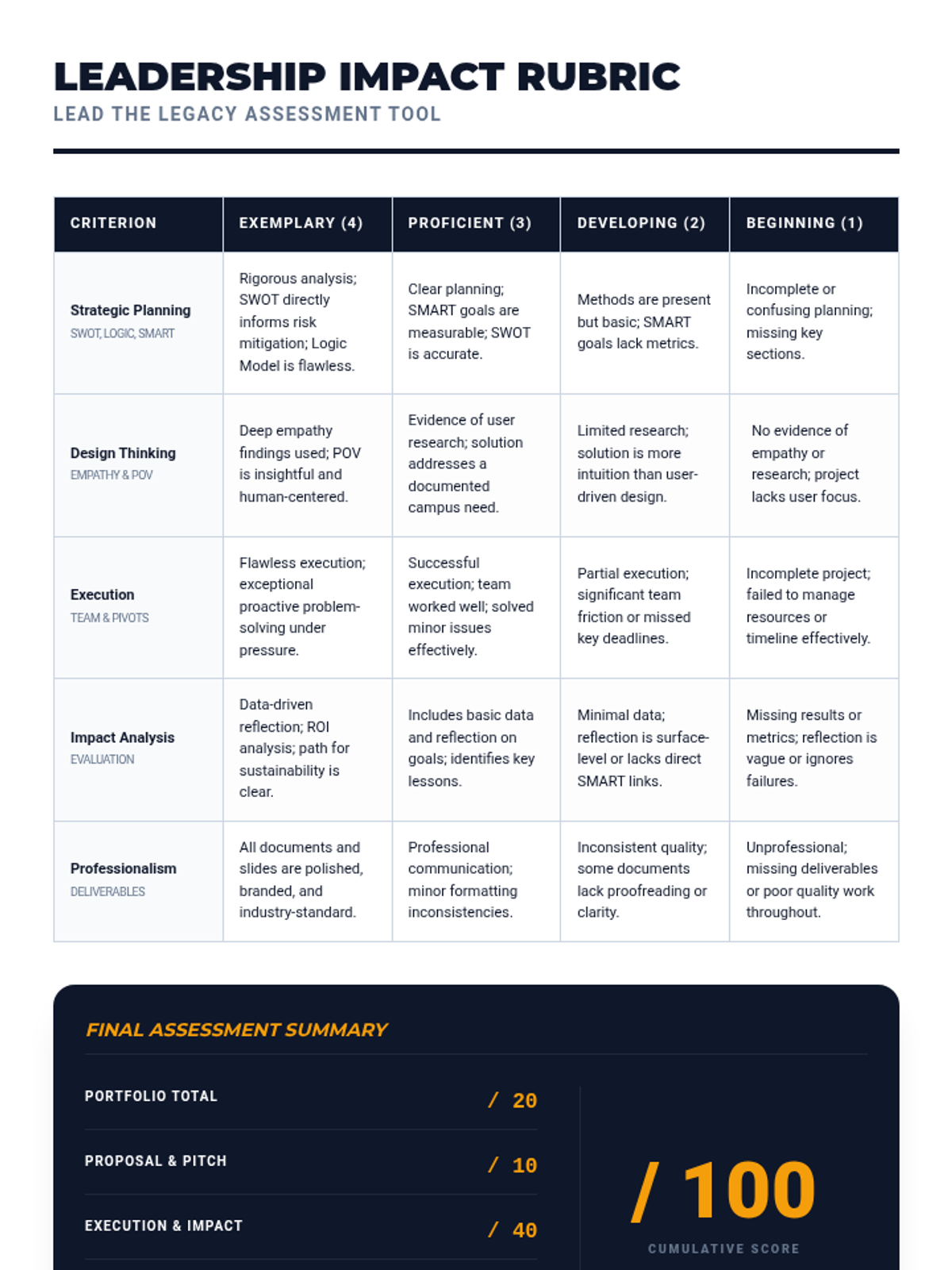
A culminating leadership project where students use Design Thinking, SWOT Analysis, Logic Models, and SMART Goals to plan and execute a campus-improving initiative. Students produce a comprehensive portfolio, a formal proposal, and a final impact report.
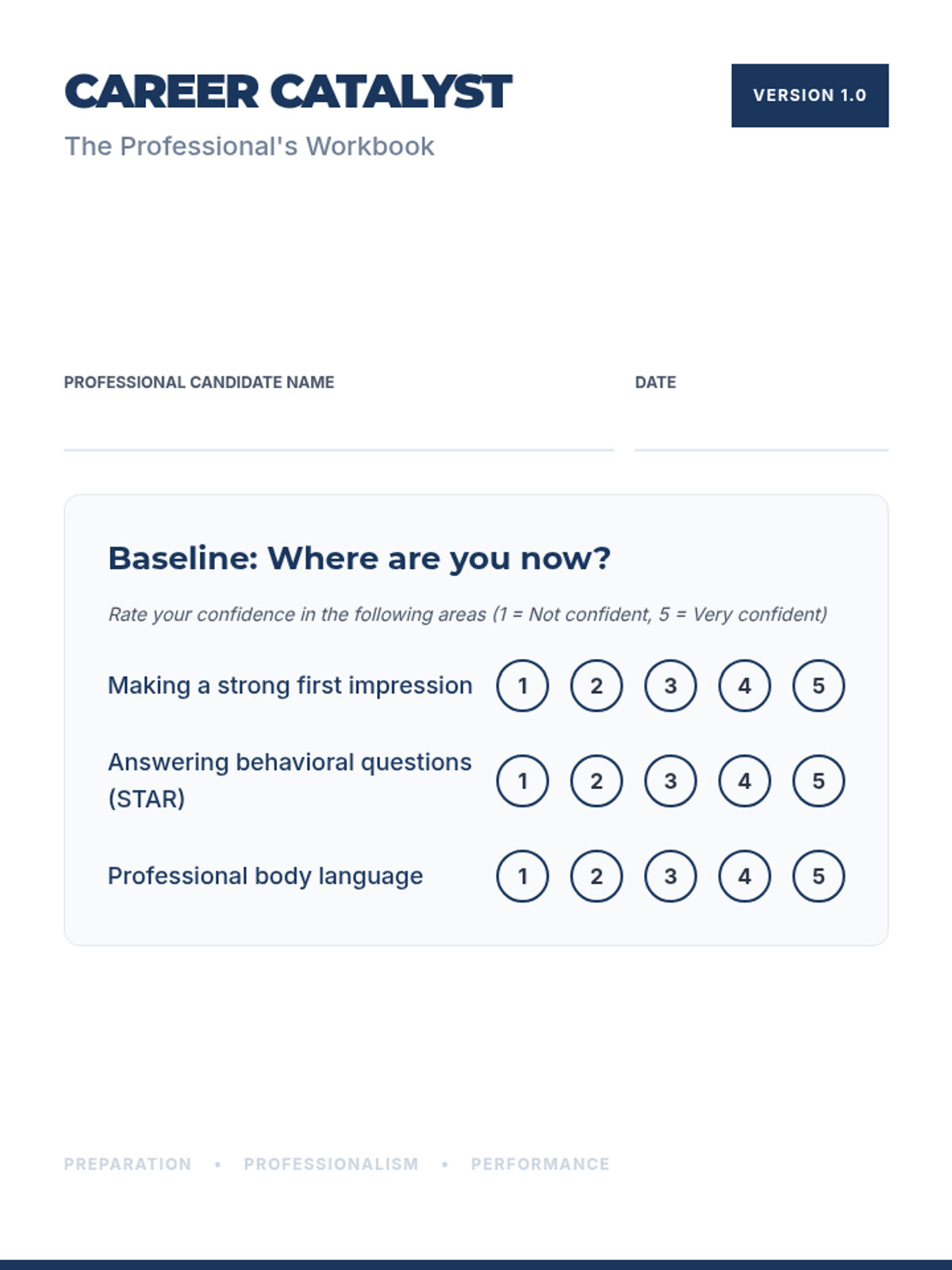
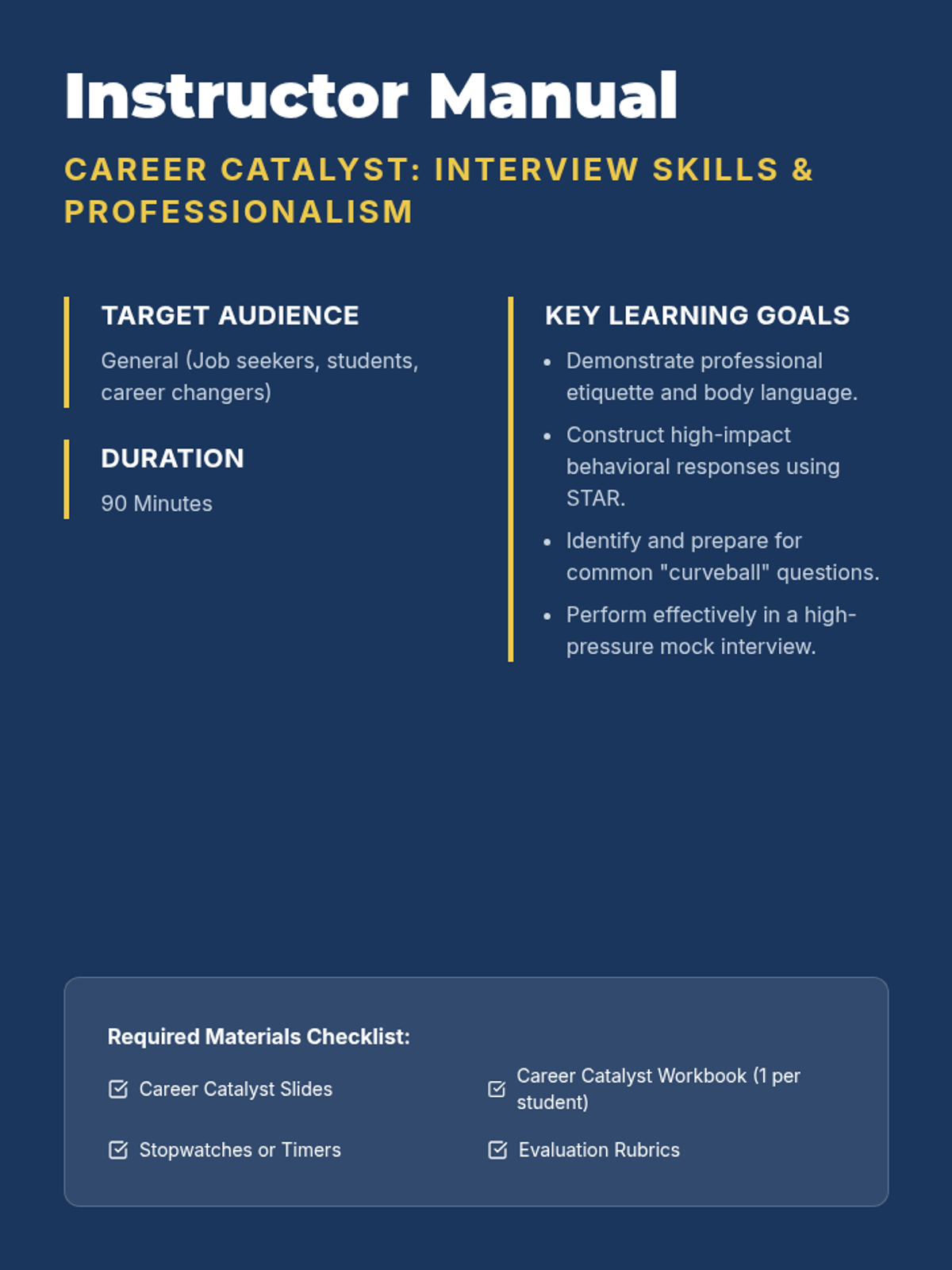
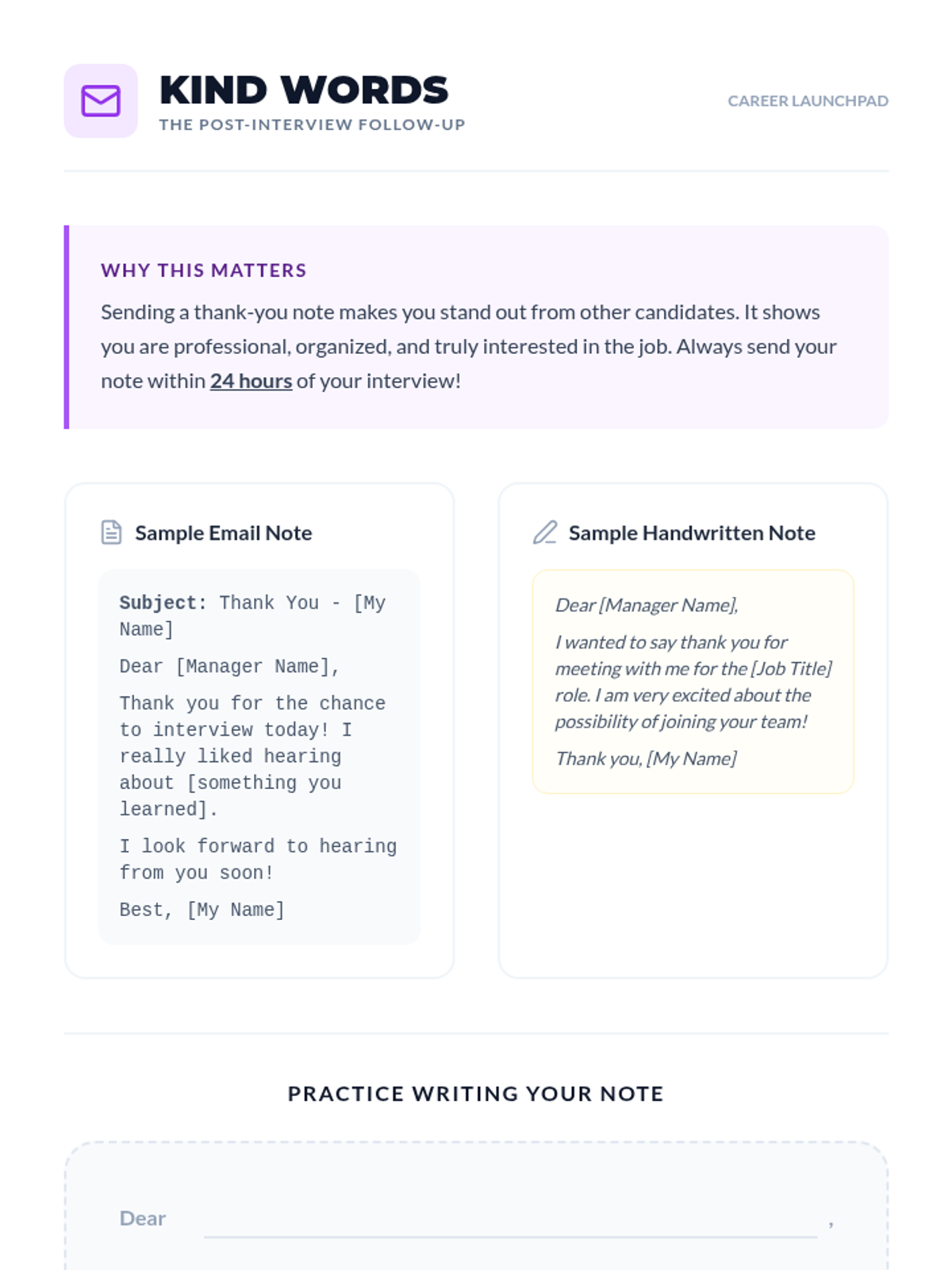
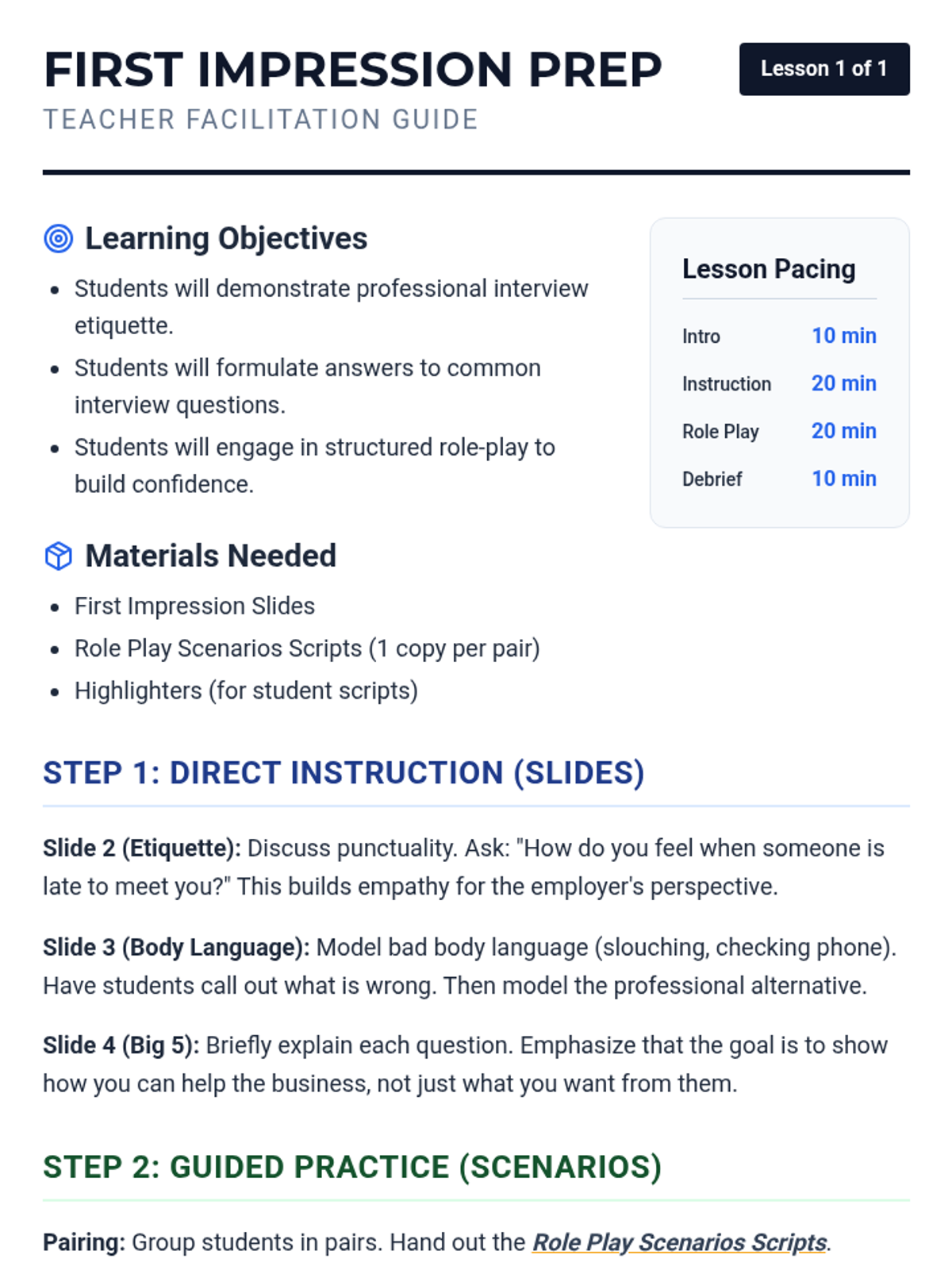
A comprehensive 90-minute lesson covering first impressions, the STAR method for behavioral questions, and professional etiquette for job seekers.
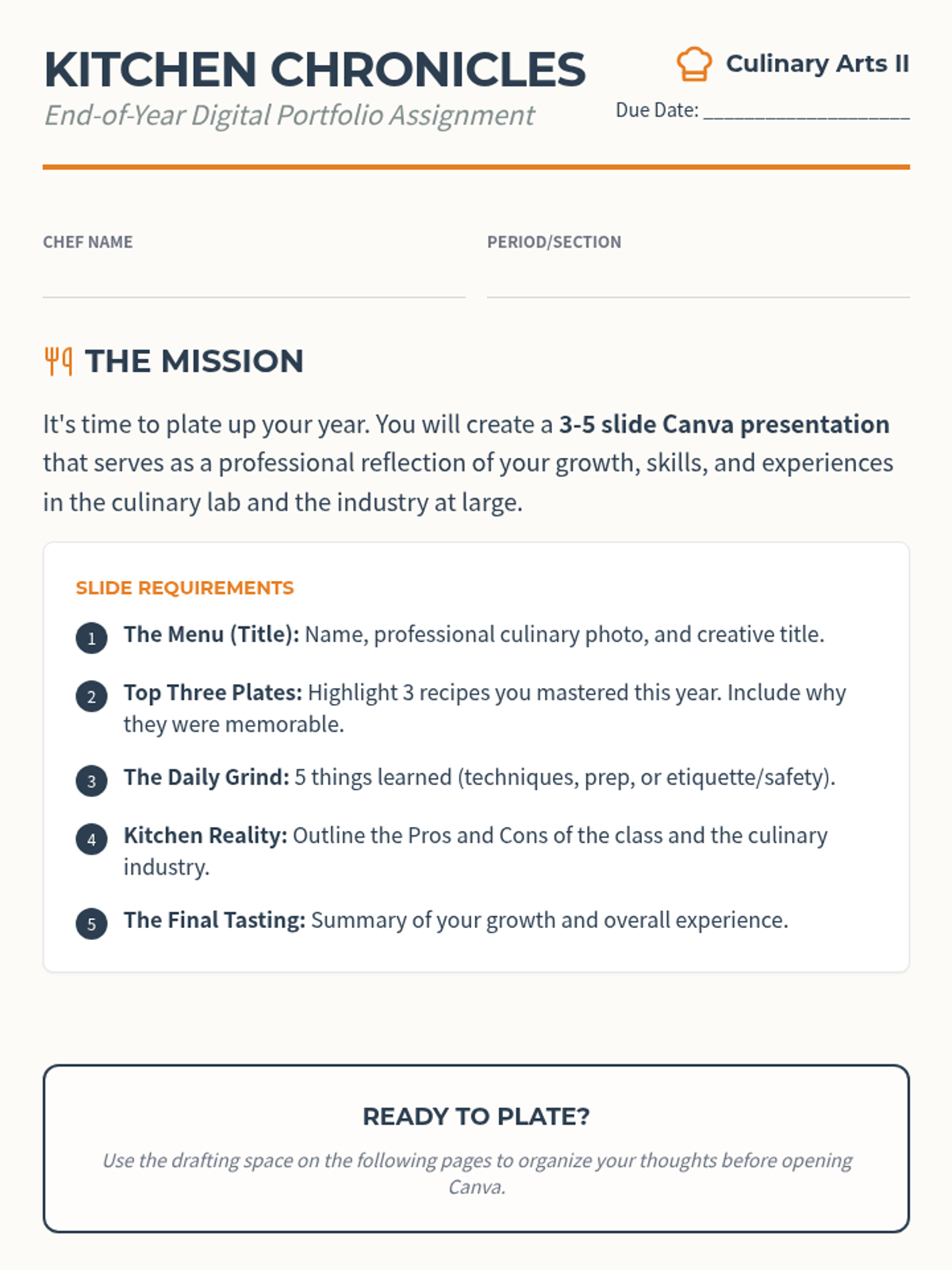
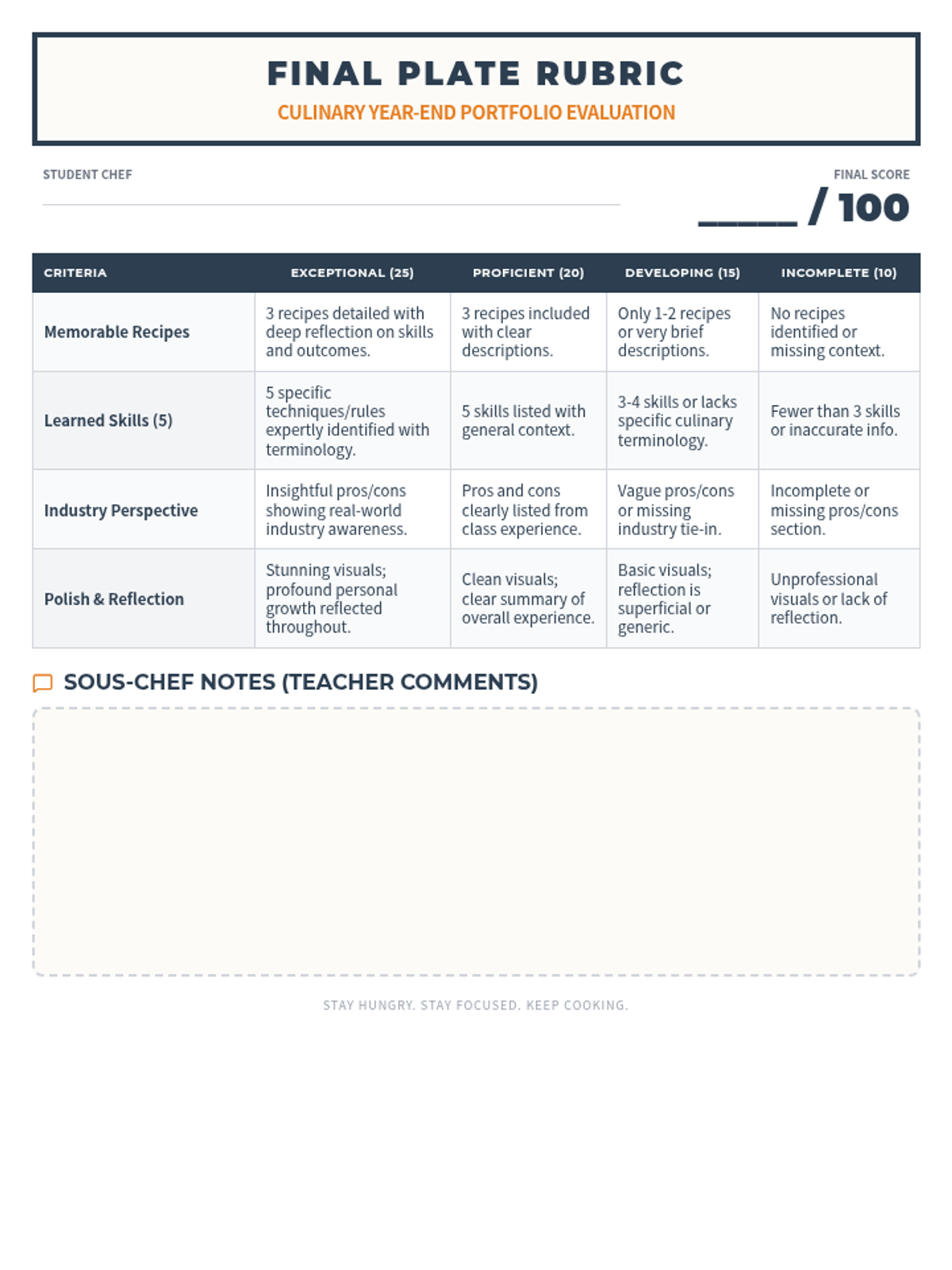
A comprehensive end-of-year reflection project where culinary students document their journey, skills, and industry insights through a digital portfolio presentation.
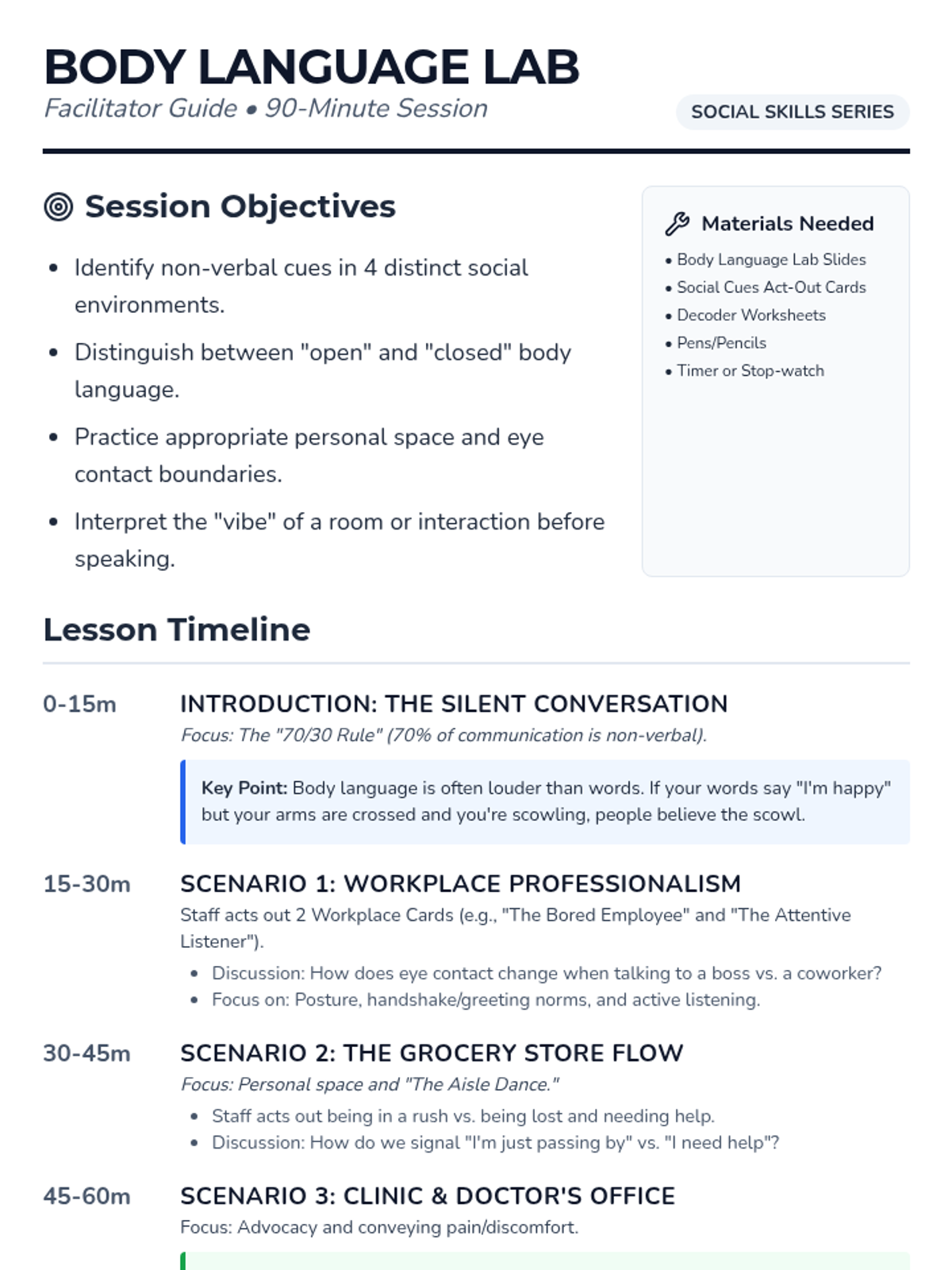
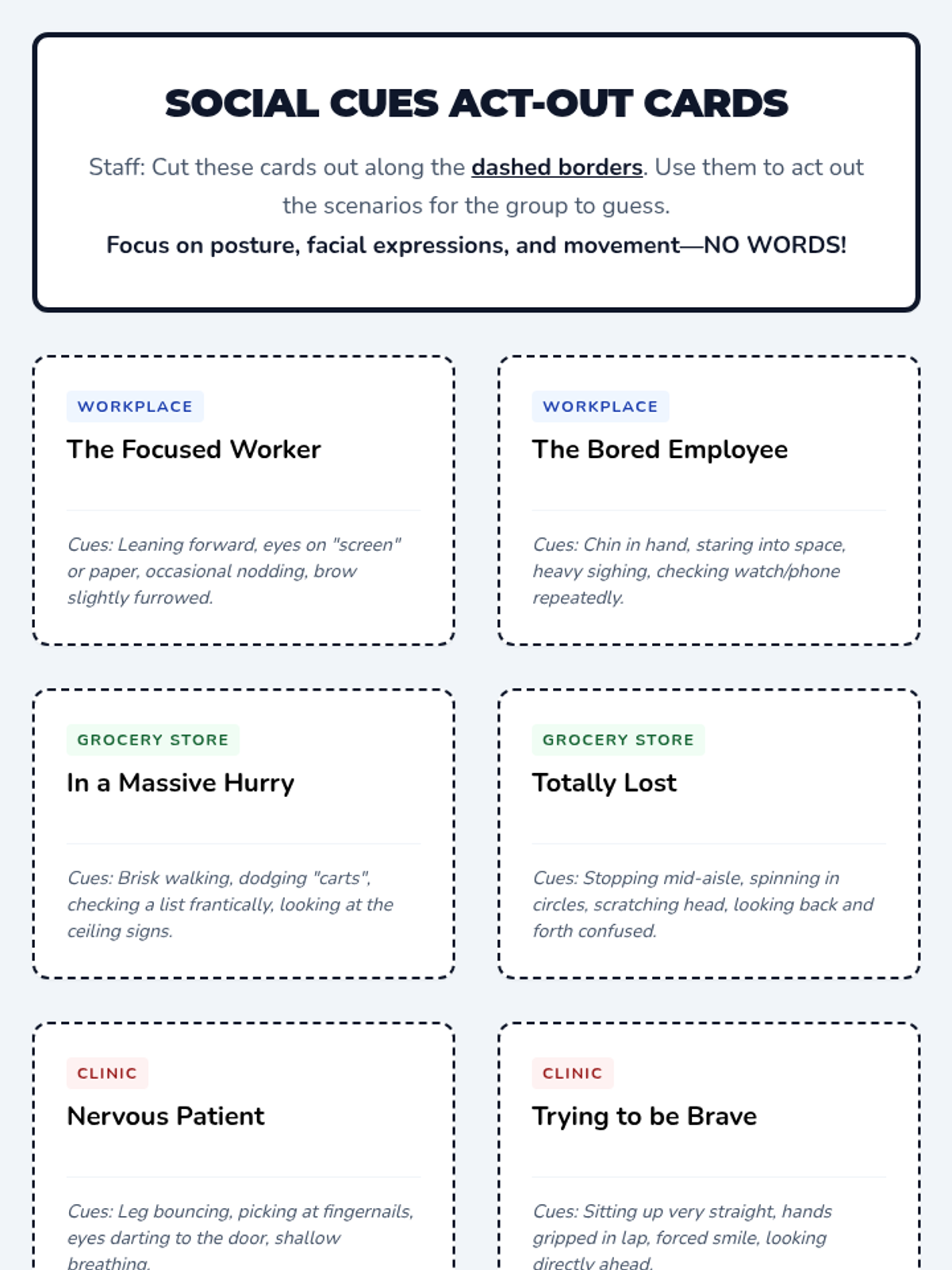
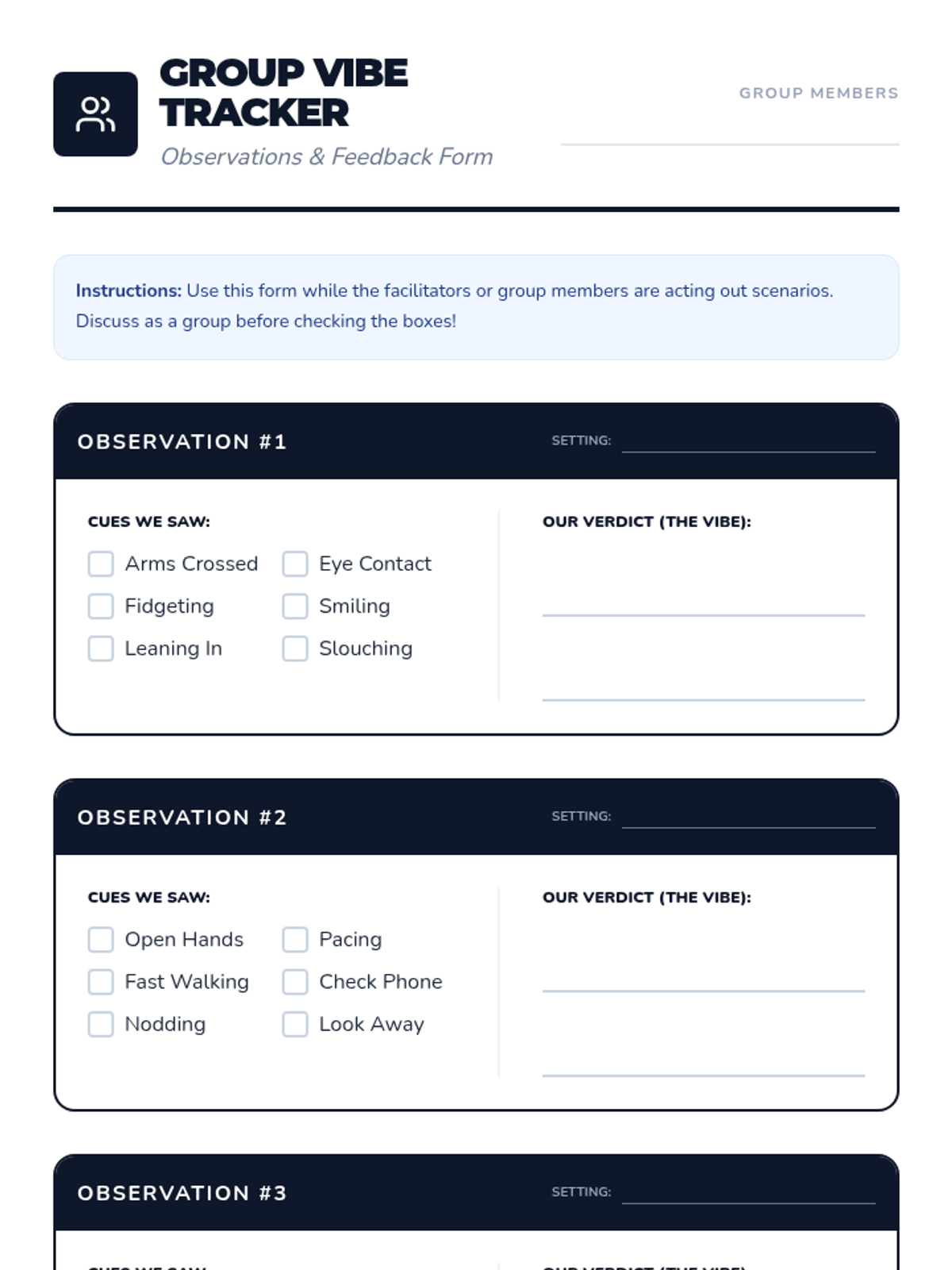
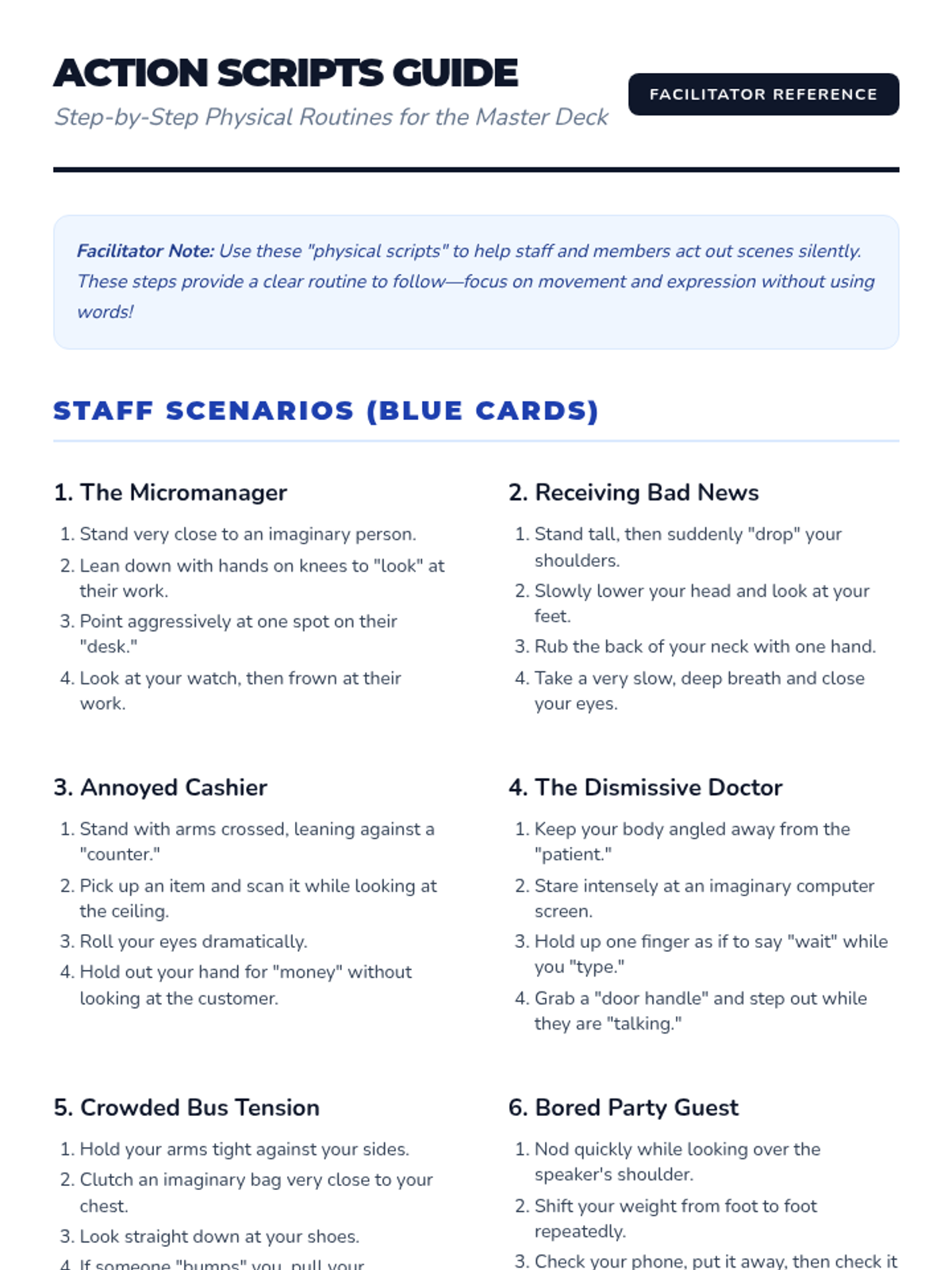
A 90-minute verbal-only workshop on body language in workplace, retail, clinical, and social settings. Uses interactive live acting and guided group discussion.
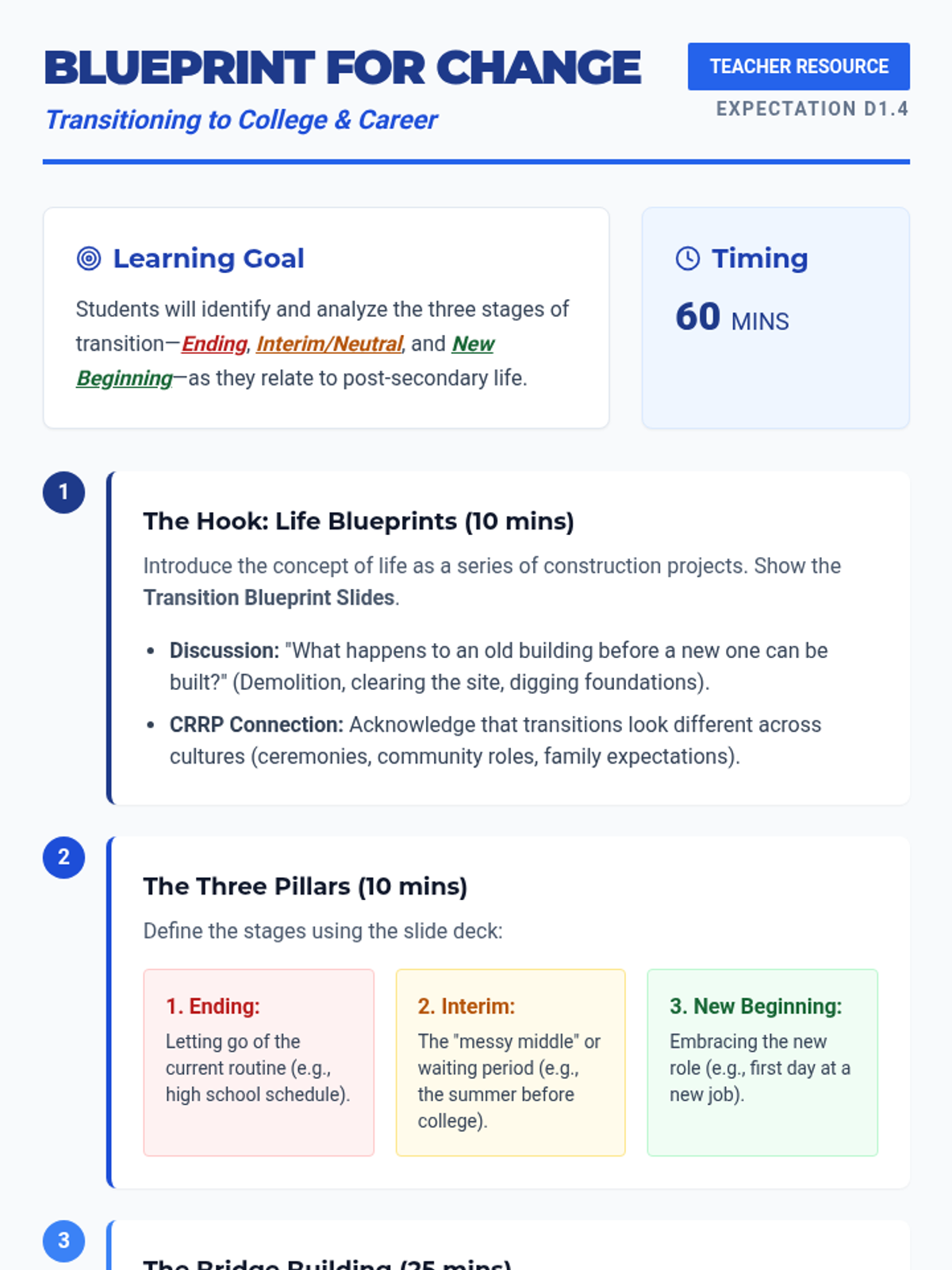
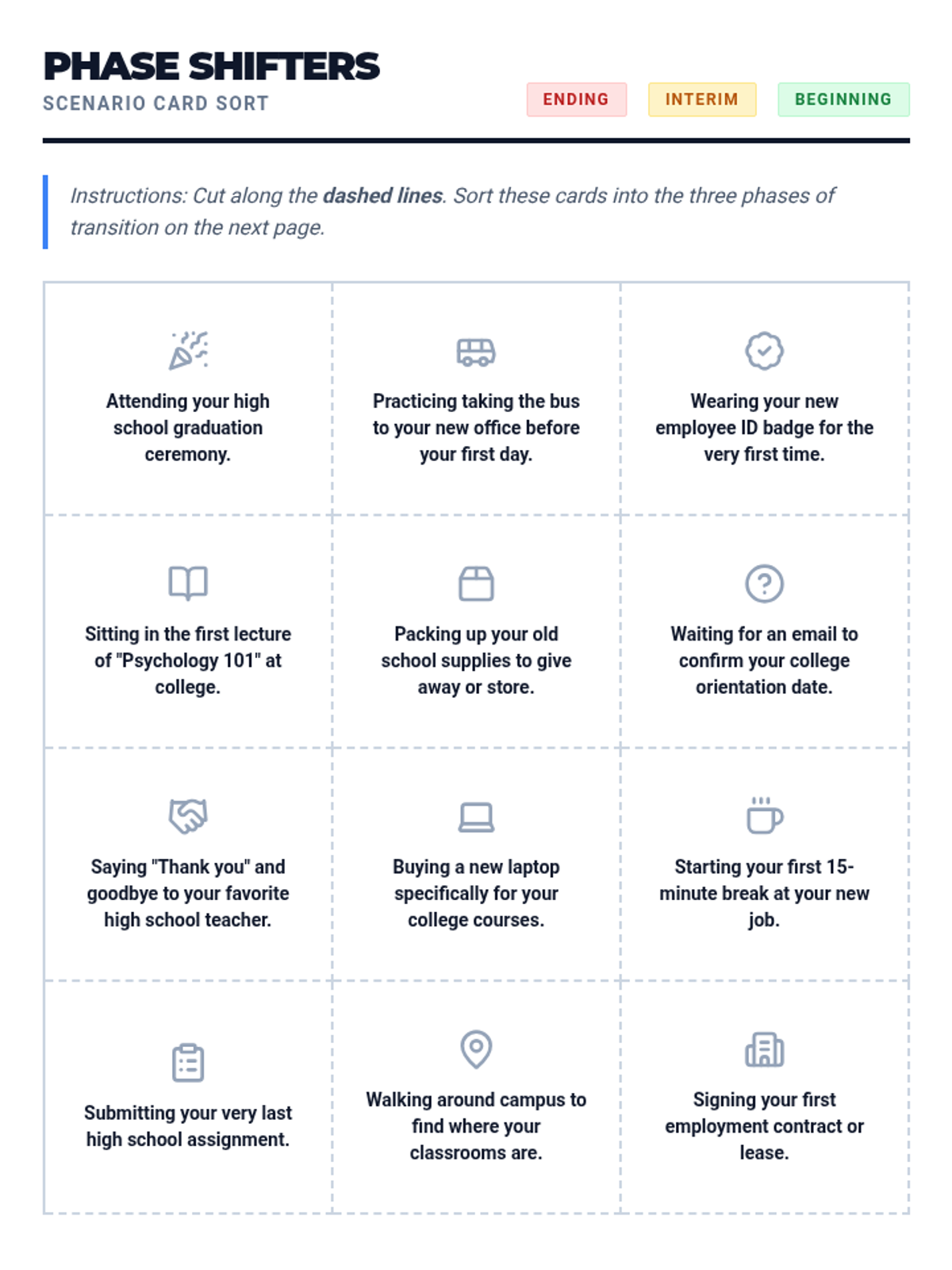
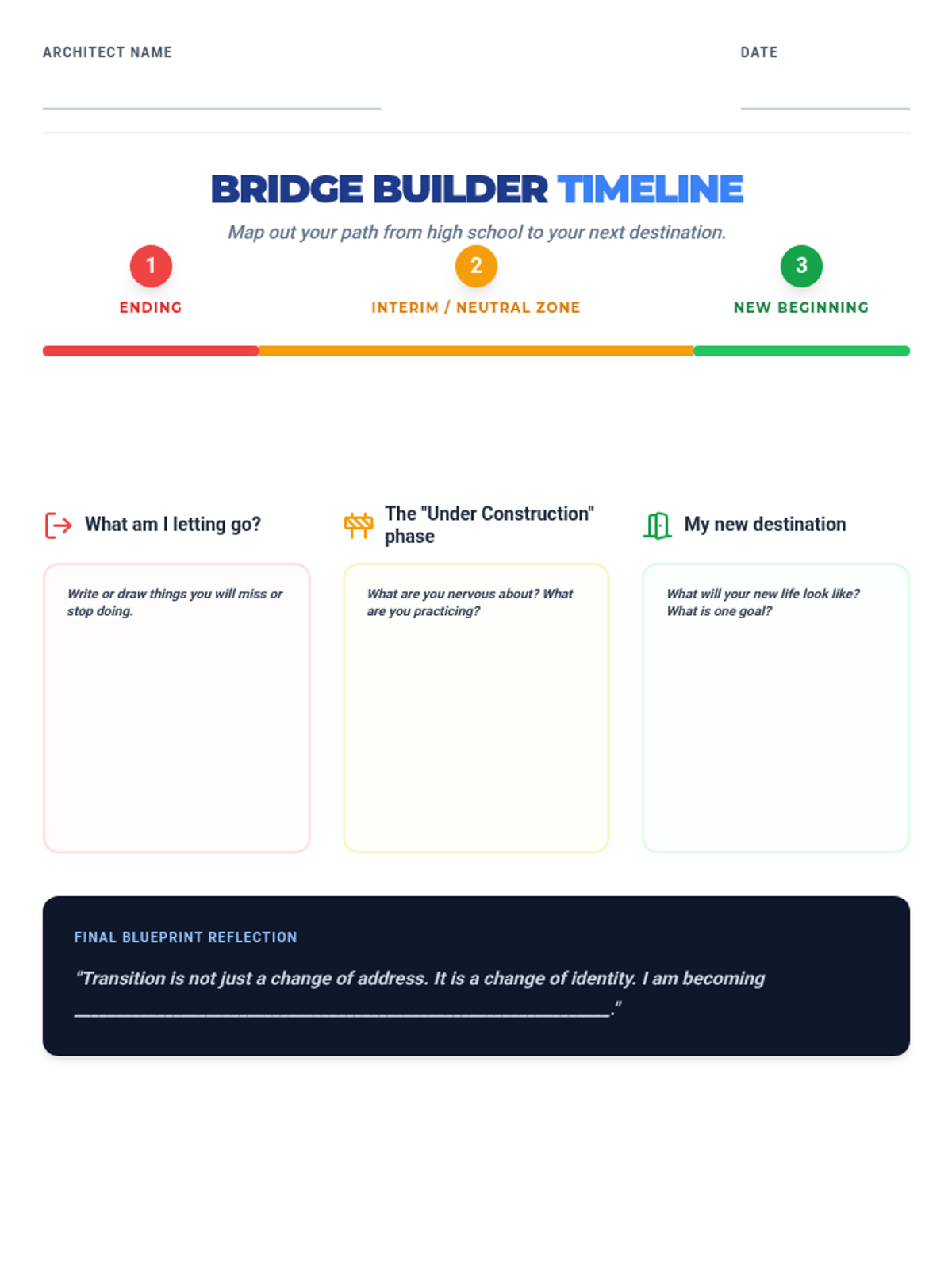
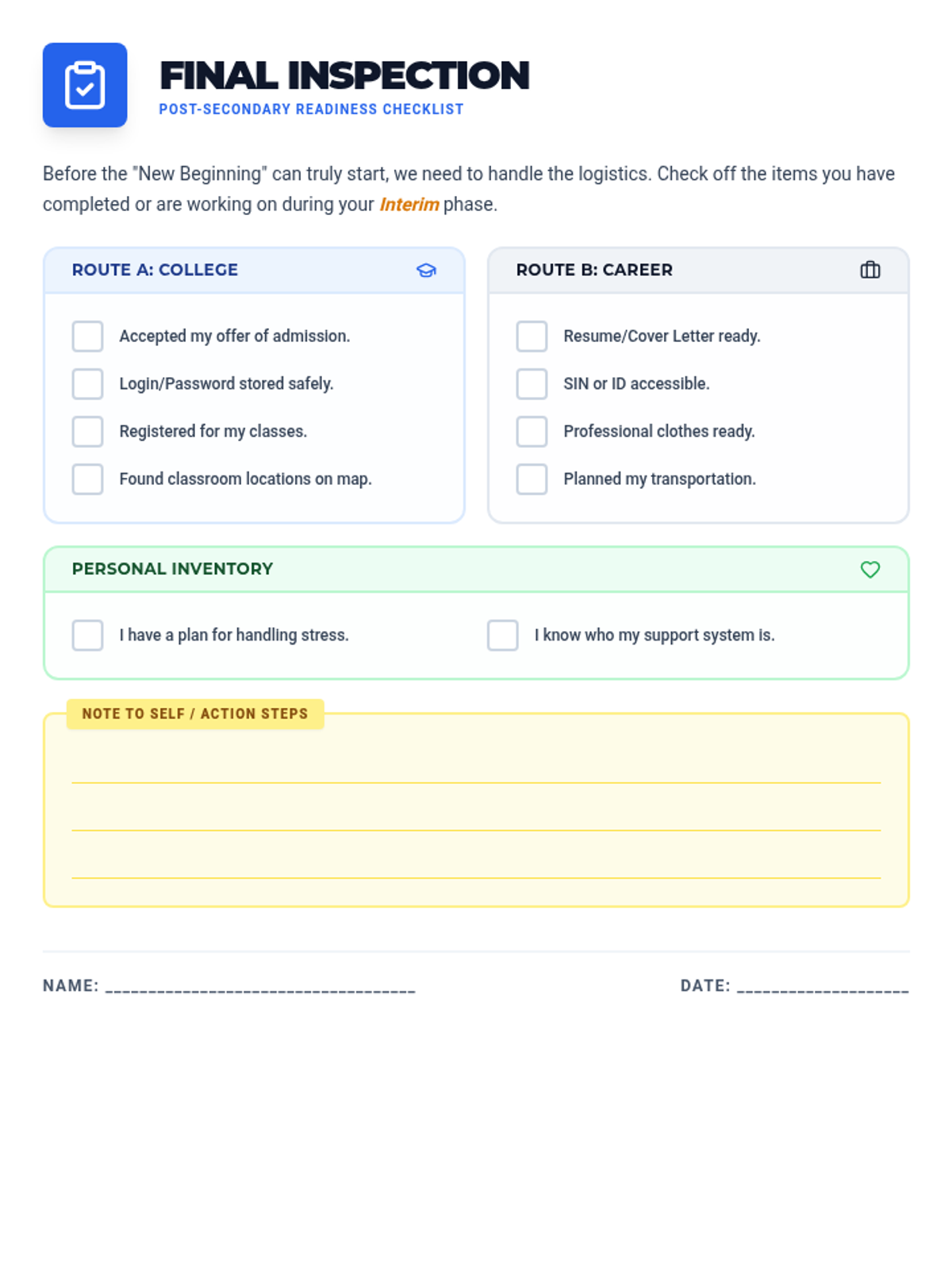
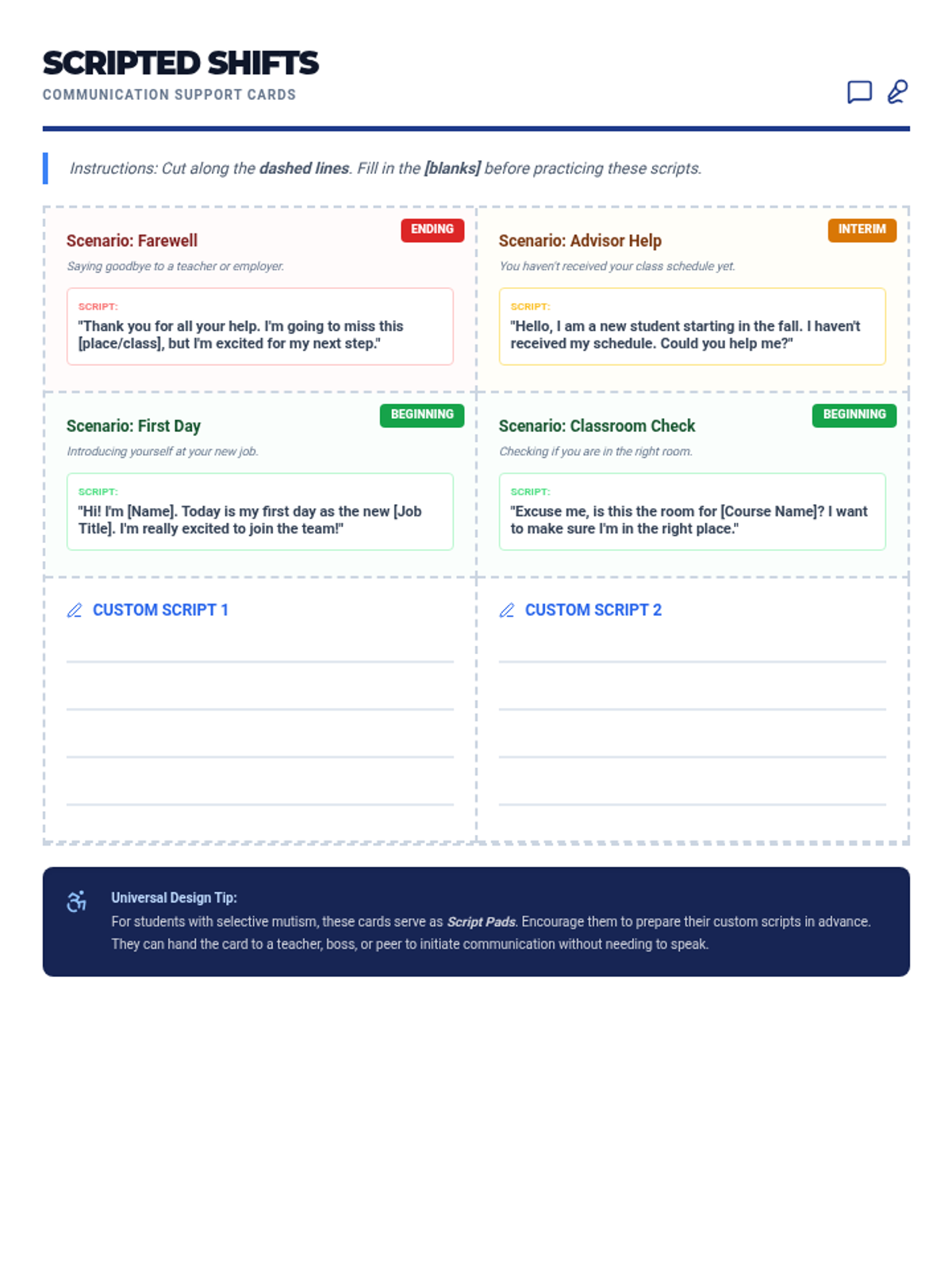
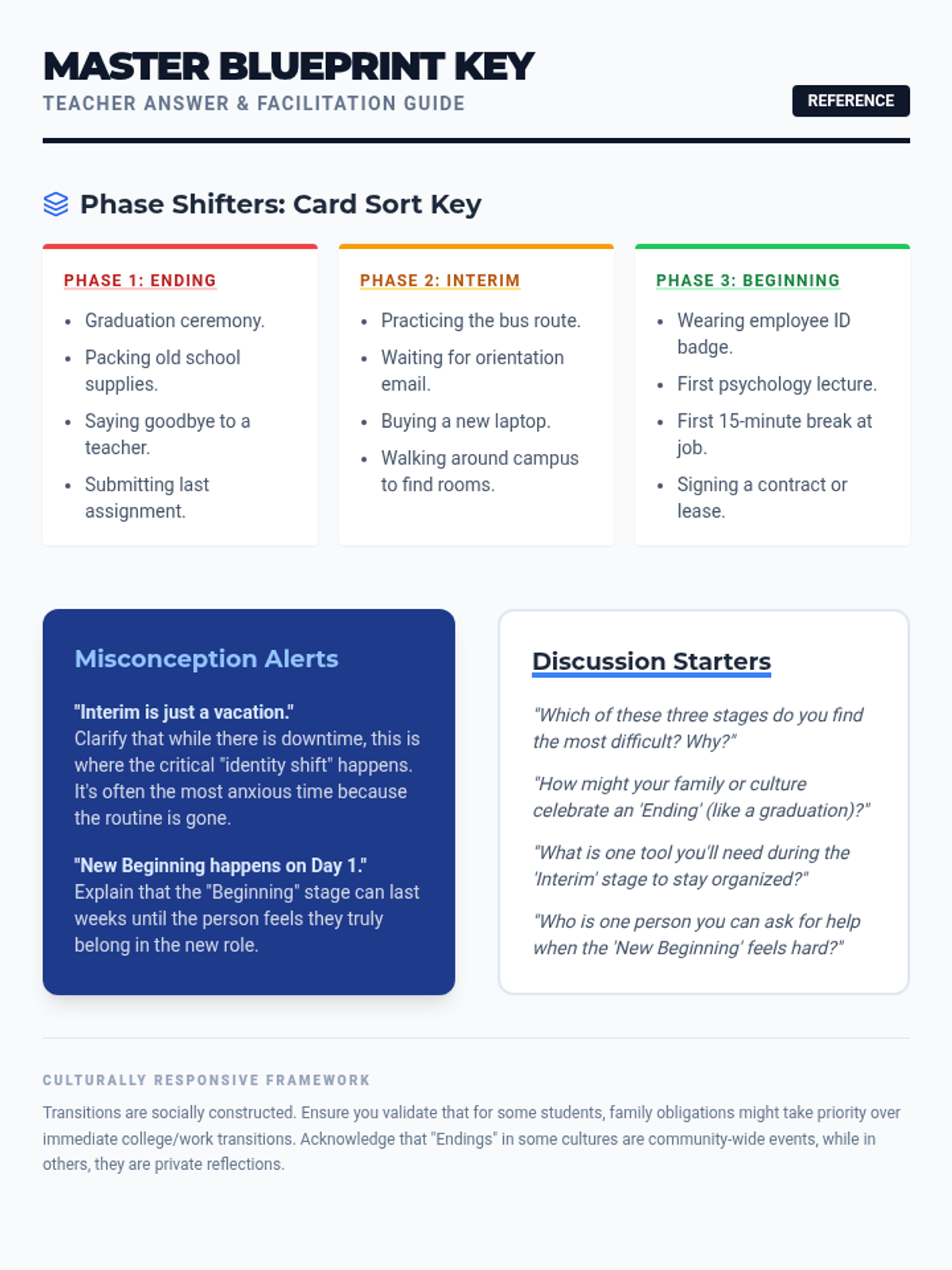
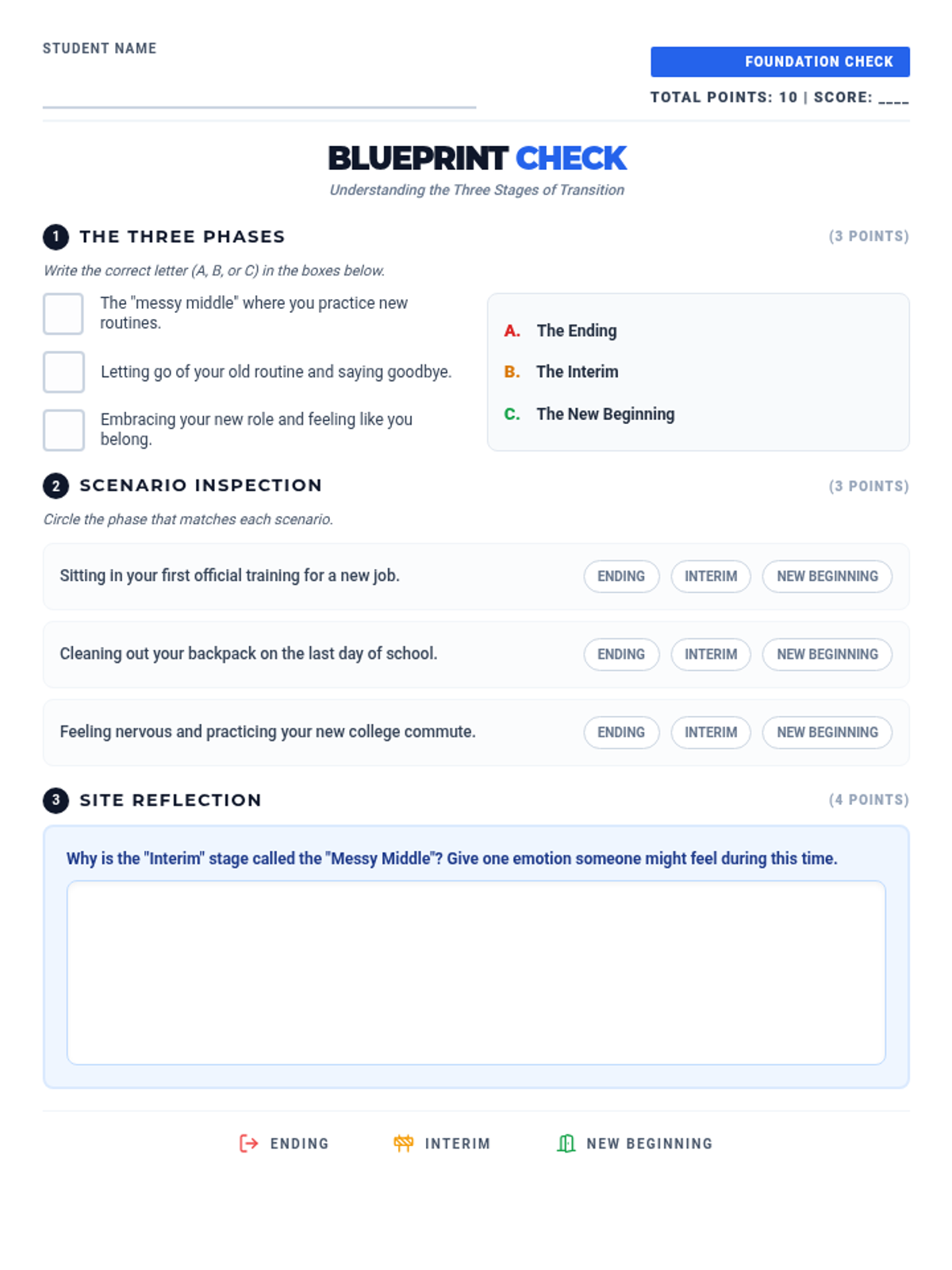
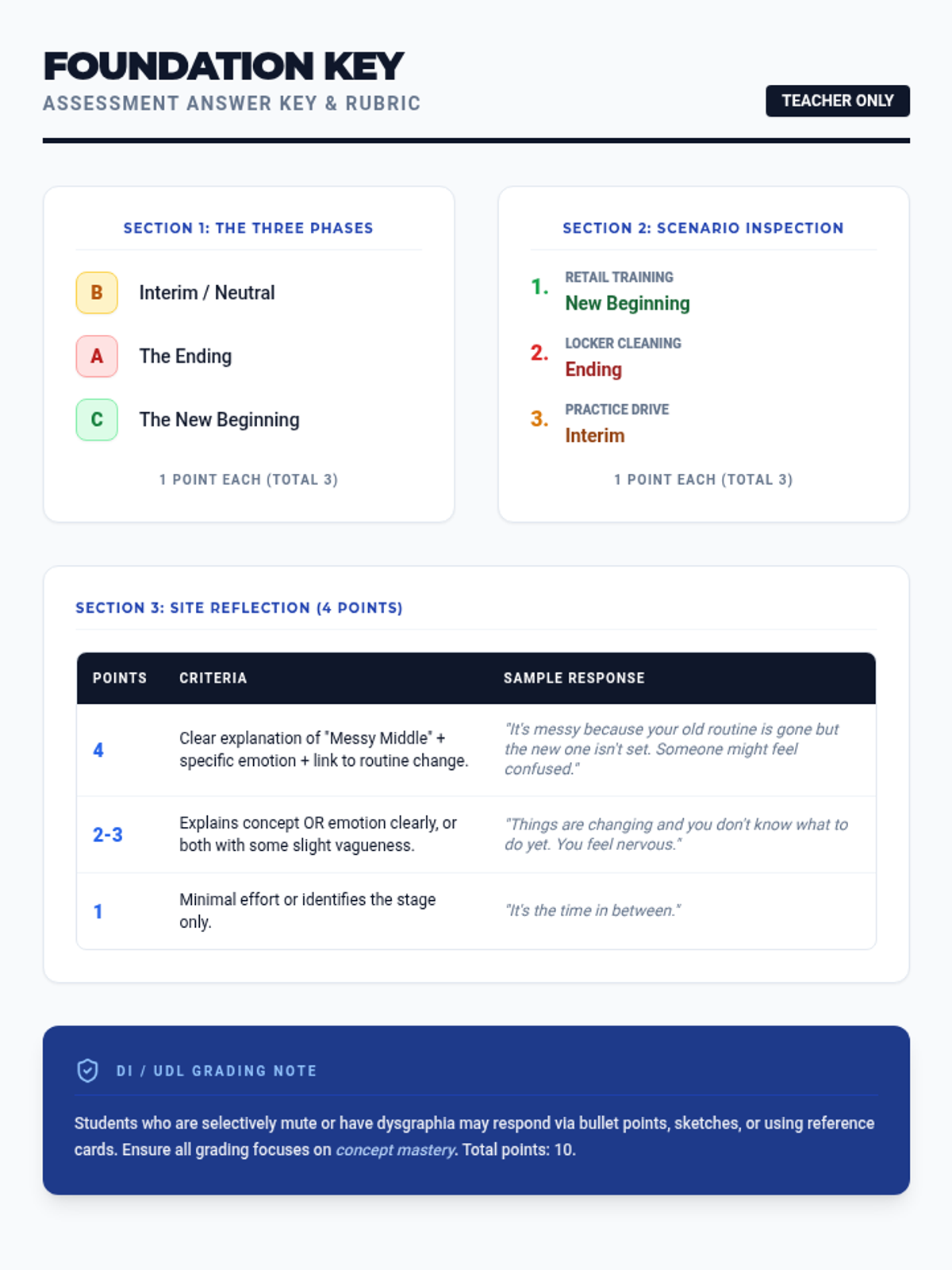
A comprehensive 60-minute lesson focused on the three stages of transition (Ending, Interim, and New Beginning) specifically tailored for students moving toward college or the workplace. This lesson employs UDL and DI strategies to support students with LD, autism, and those who are selectively mute through visual mapping and structured role-play.
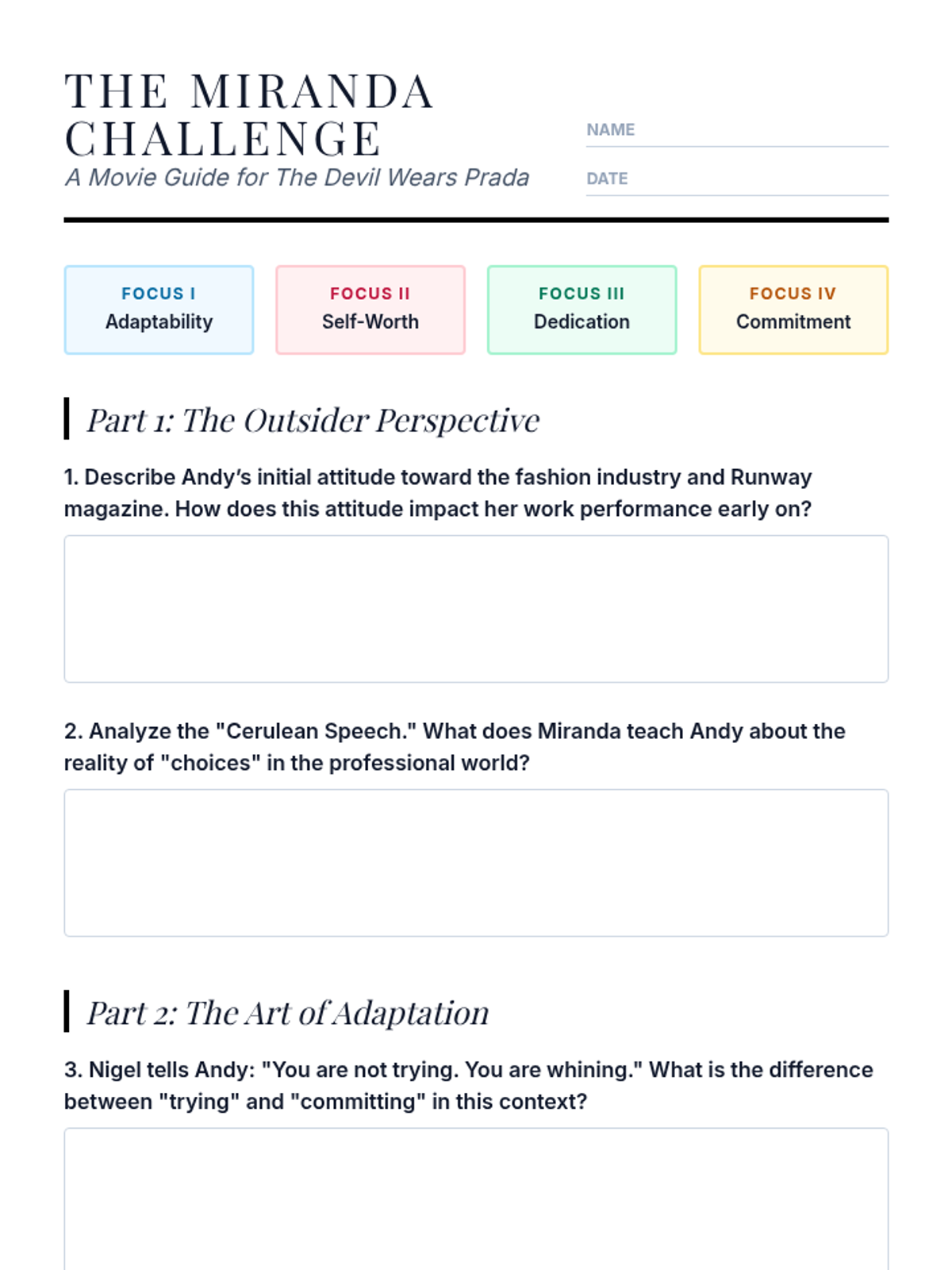
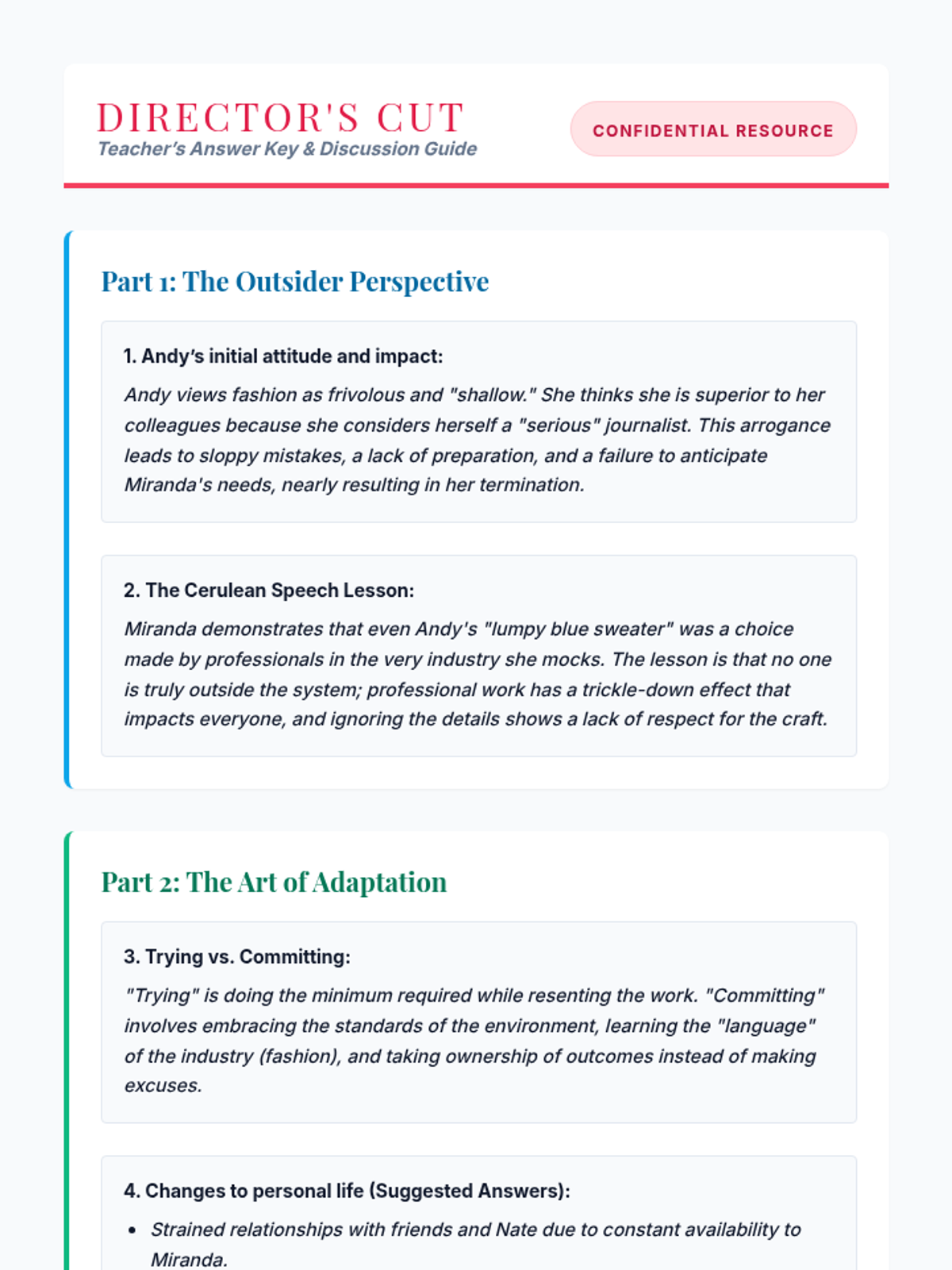
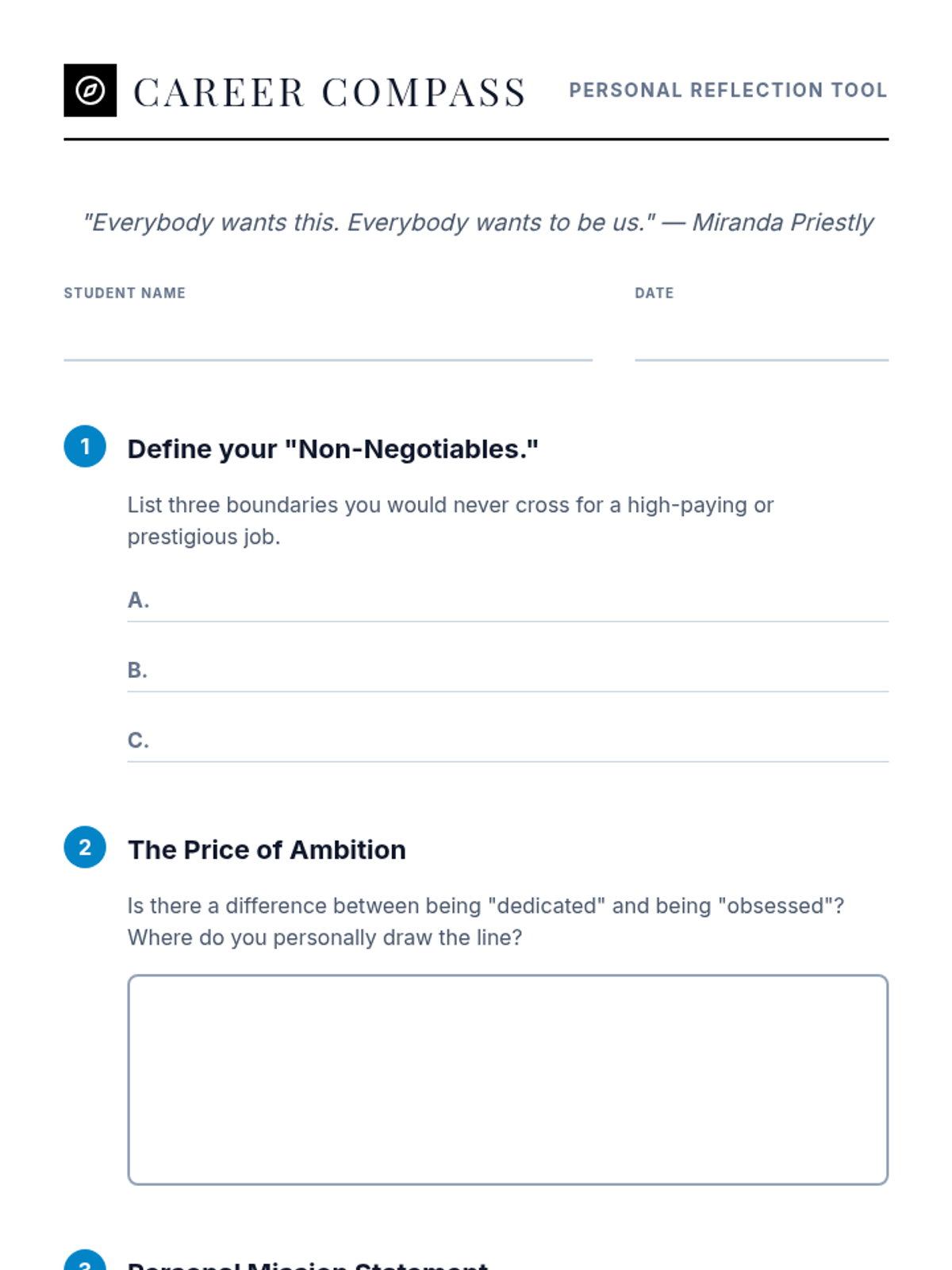
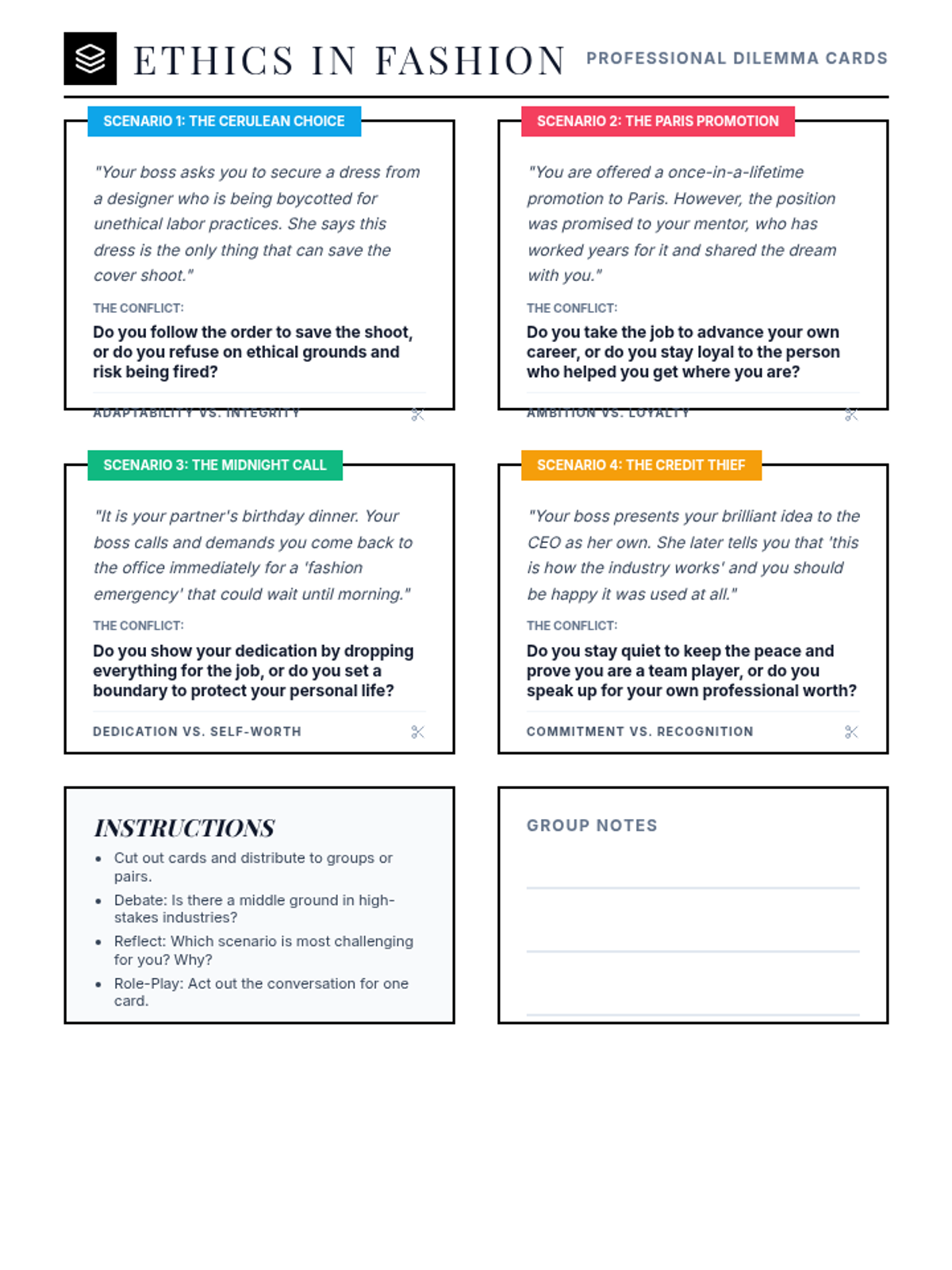
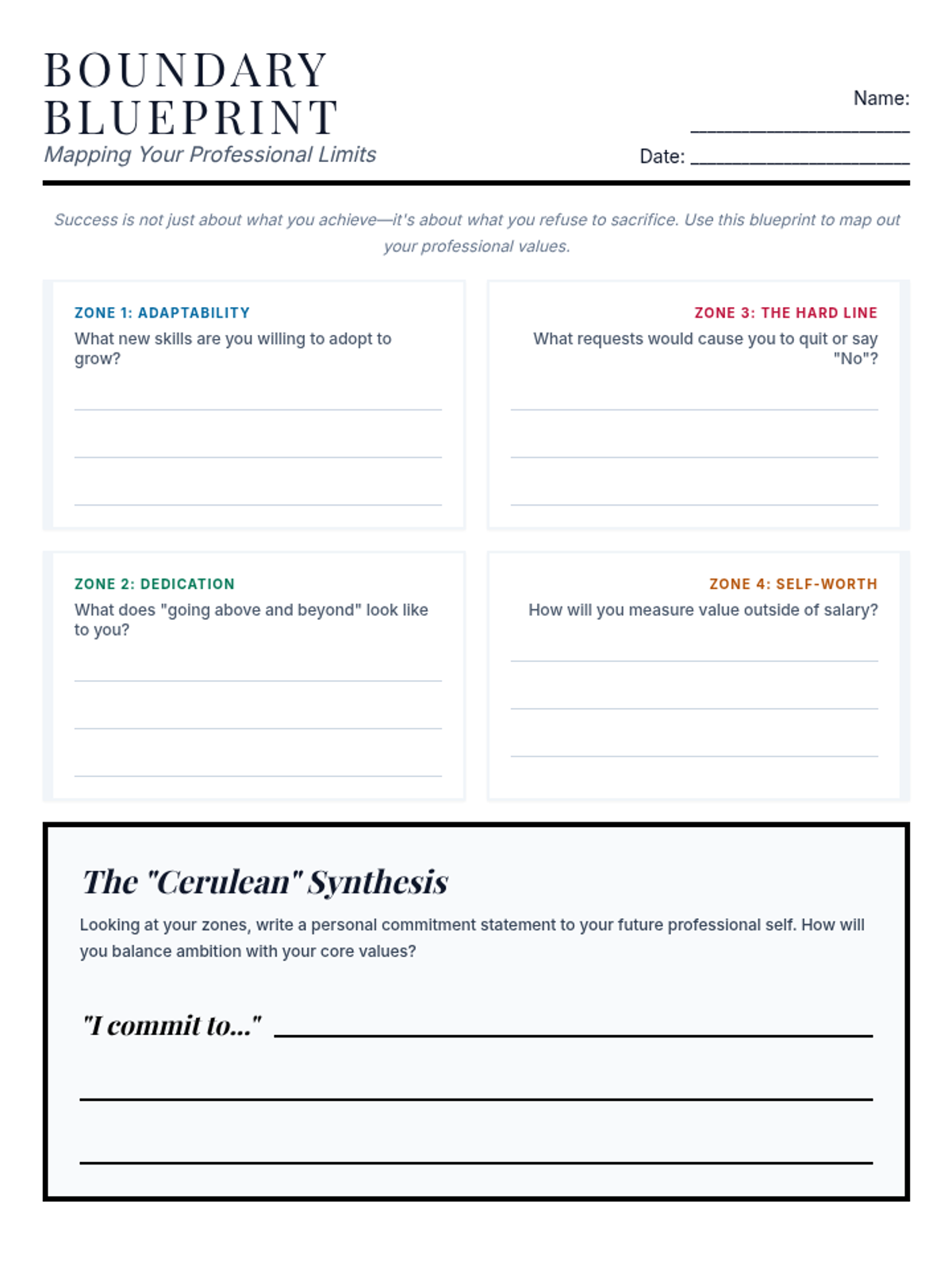
A movie-based exploration of professional adaptability, personal values, and the cost of ambition through the lens of 'The Devil Wears Prada'. Students analyze character transformations and define their own boundaries for career success.
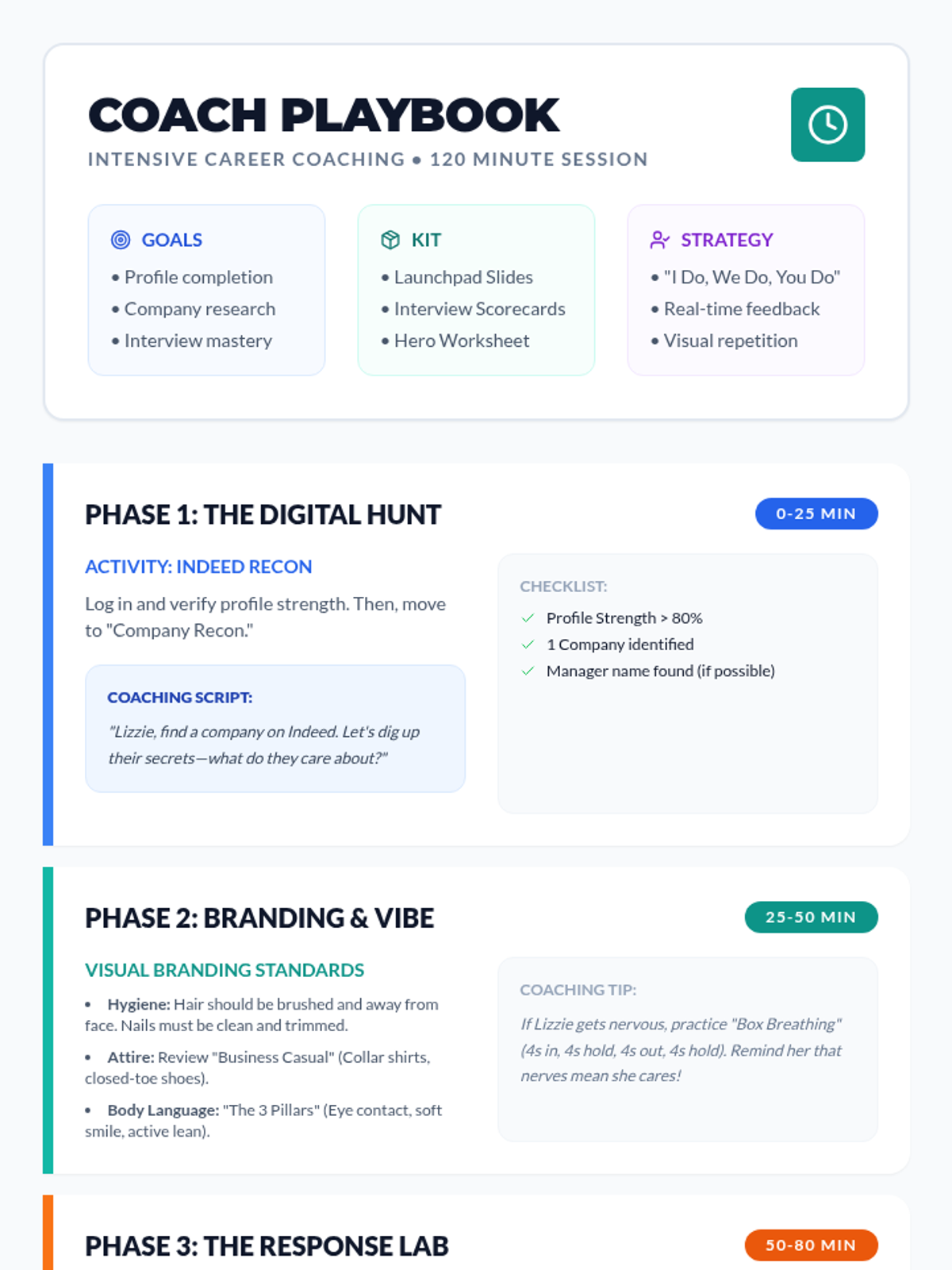
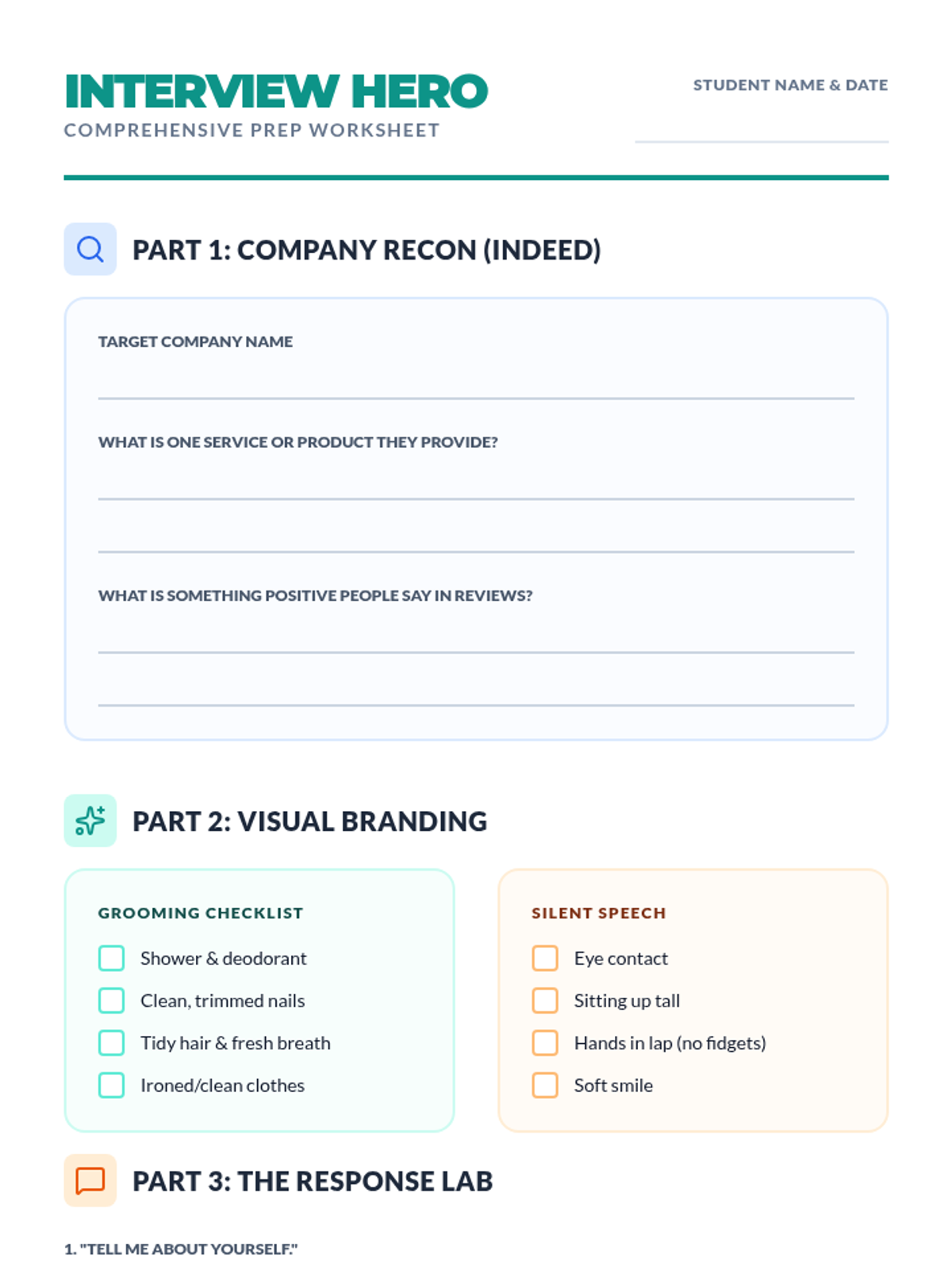
A vocational training lesson designed to help students master the job application process, from online profile management on Indeed to mastering the interview and follow-up.
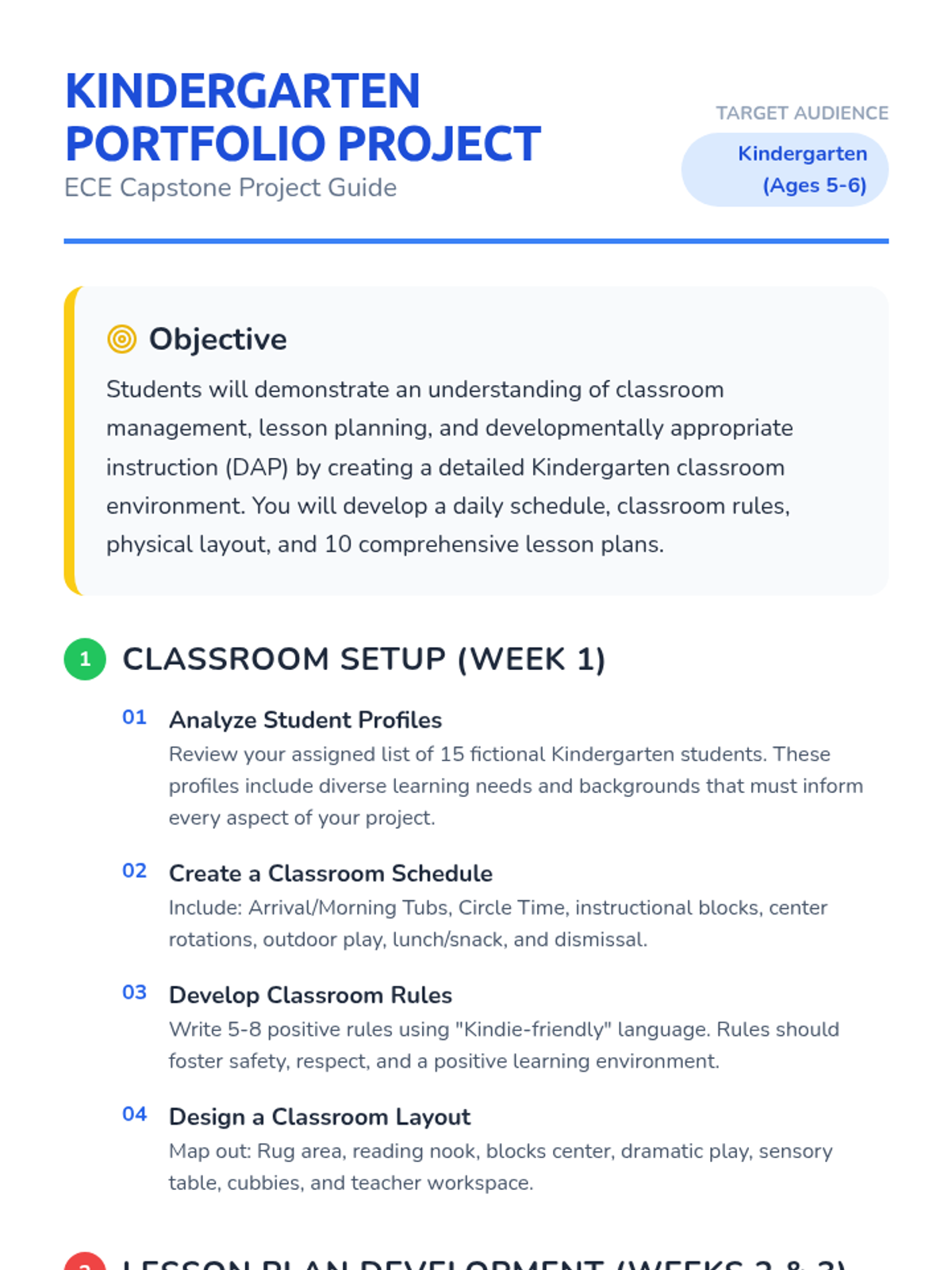
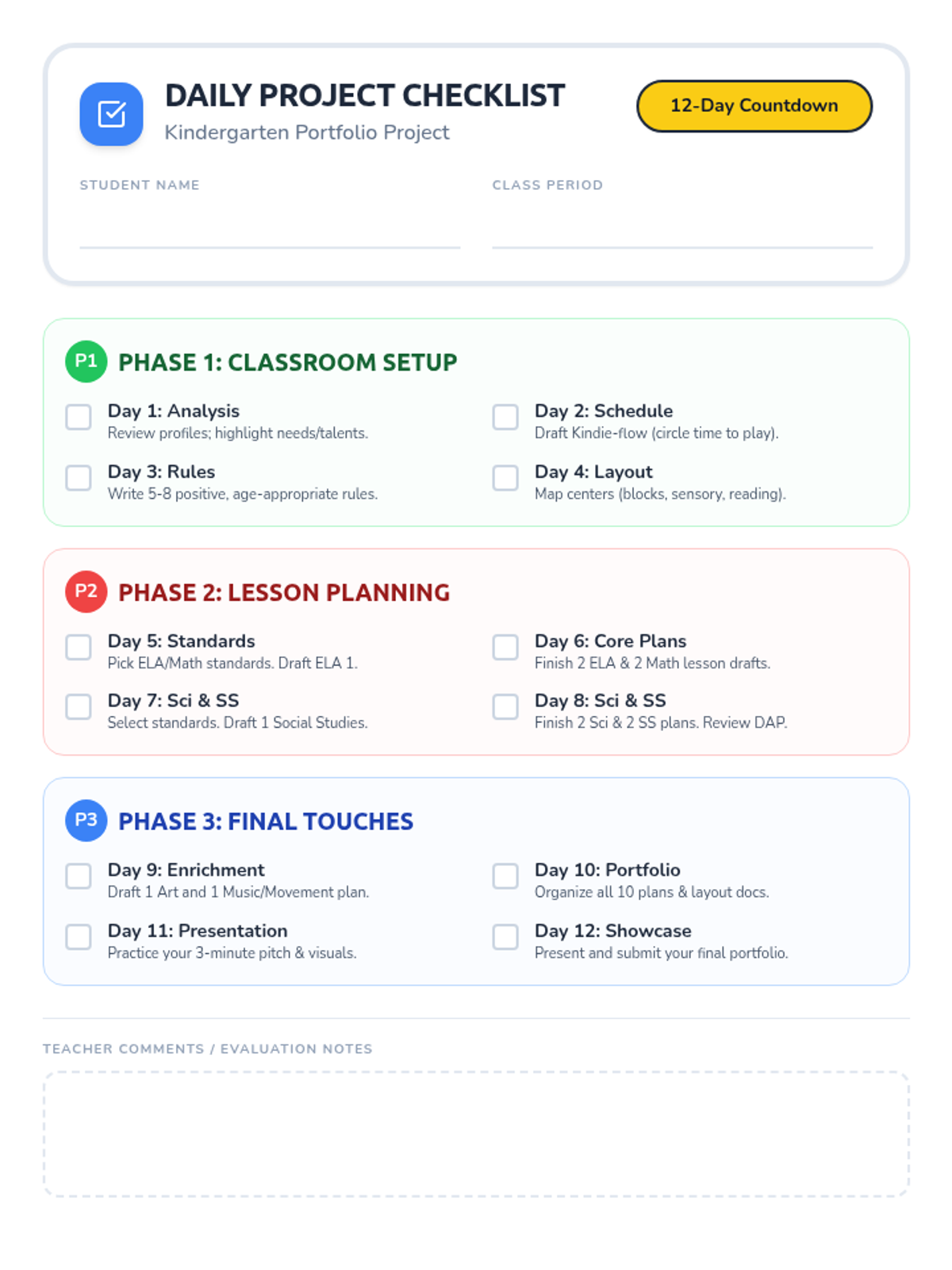
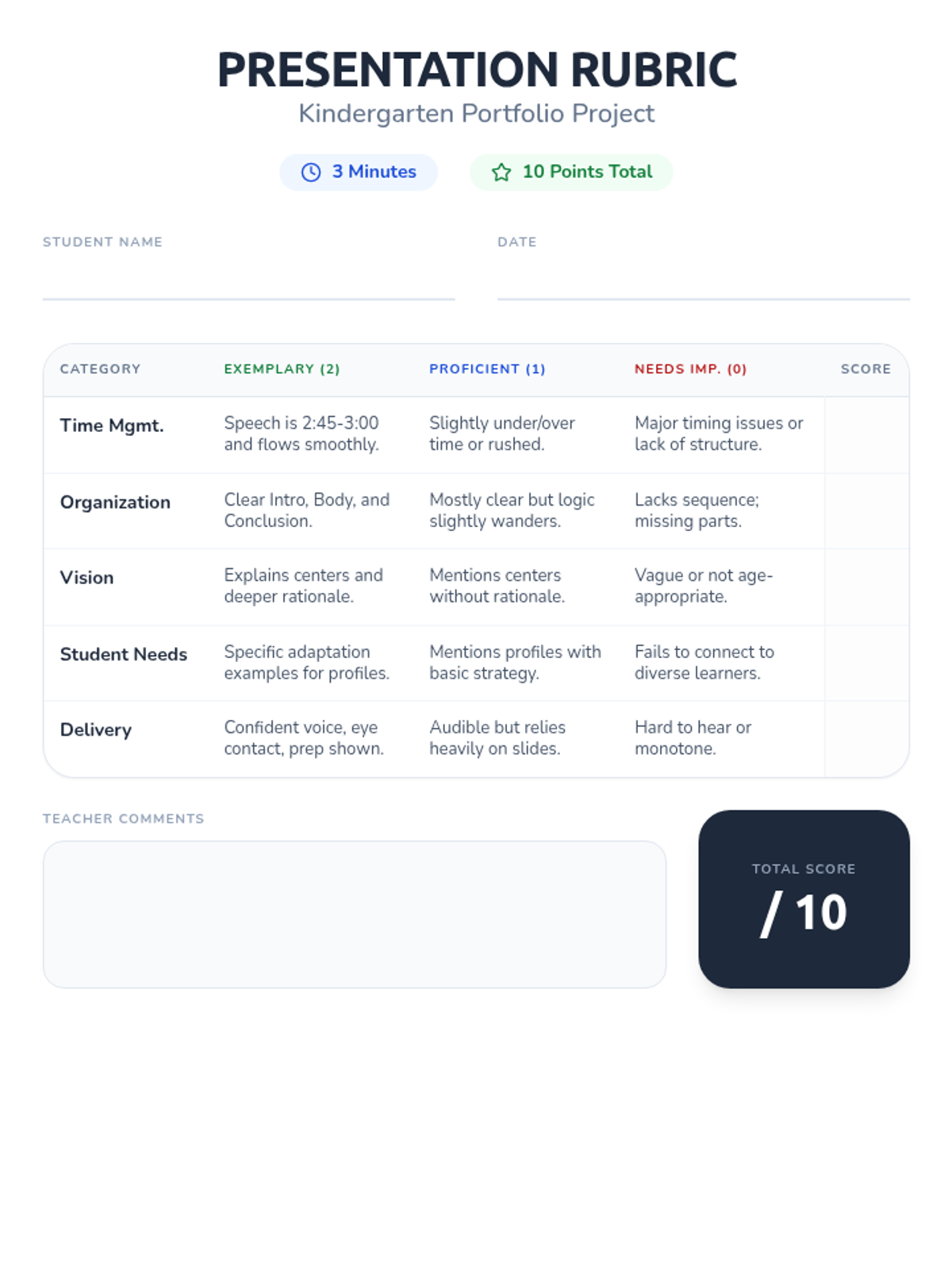
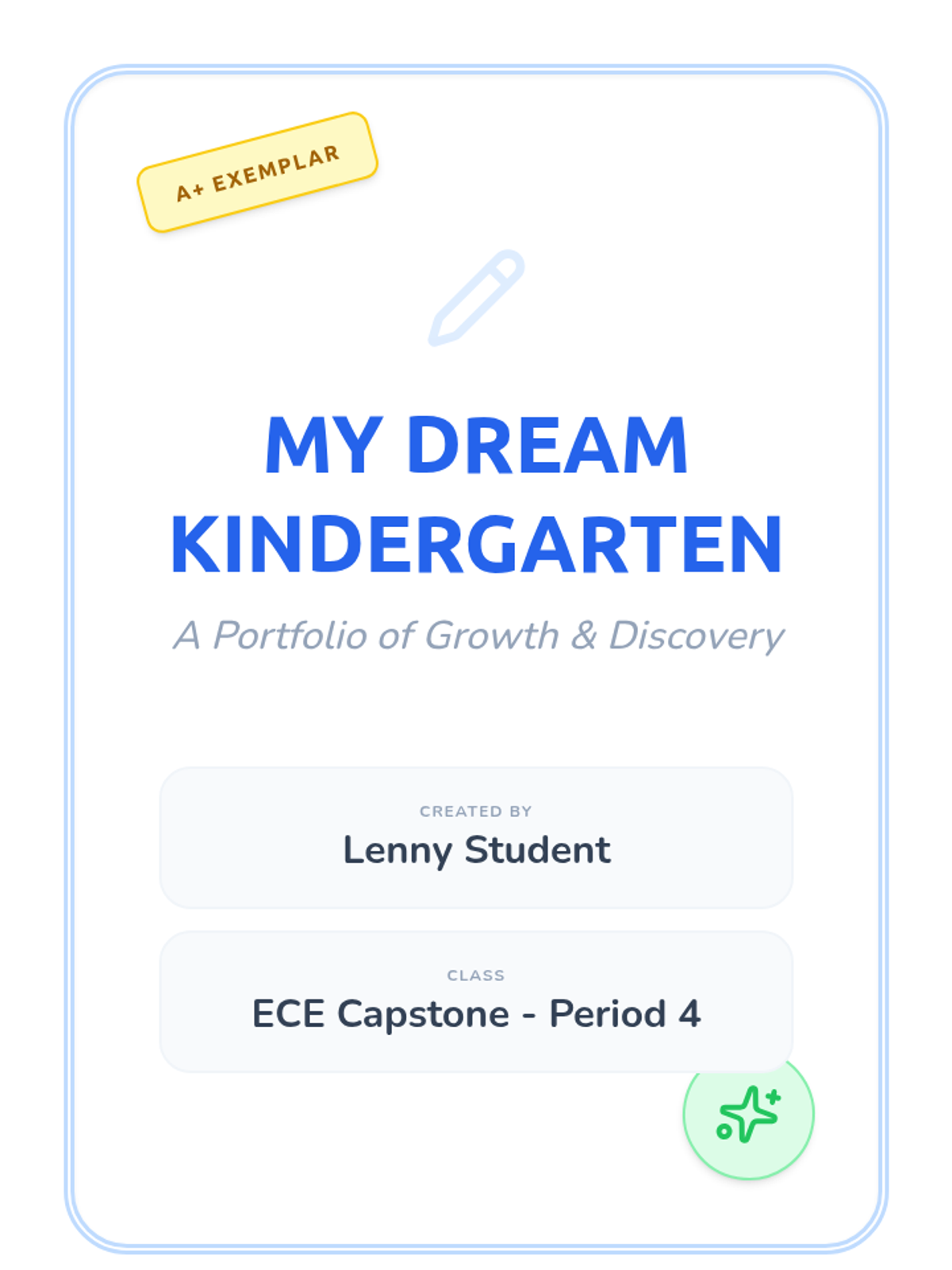
A multi-week capstone project where students apply their knowledge of Early Childhood Education to design a complete Kindergarten classroom environment and curriculum portfolio.
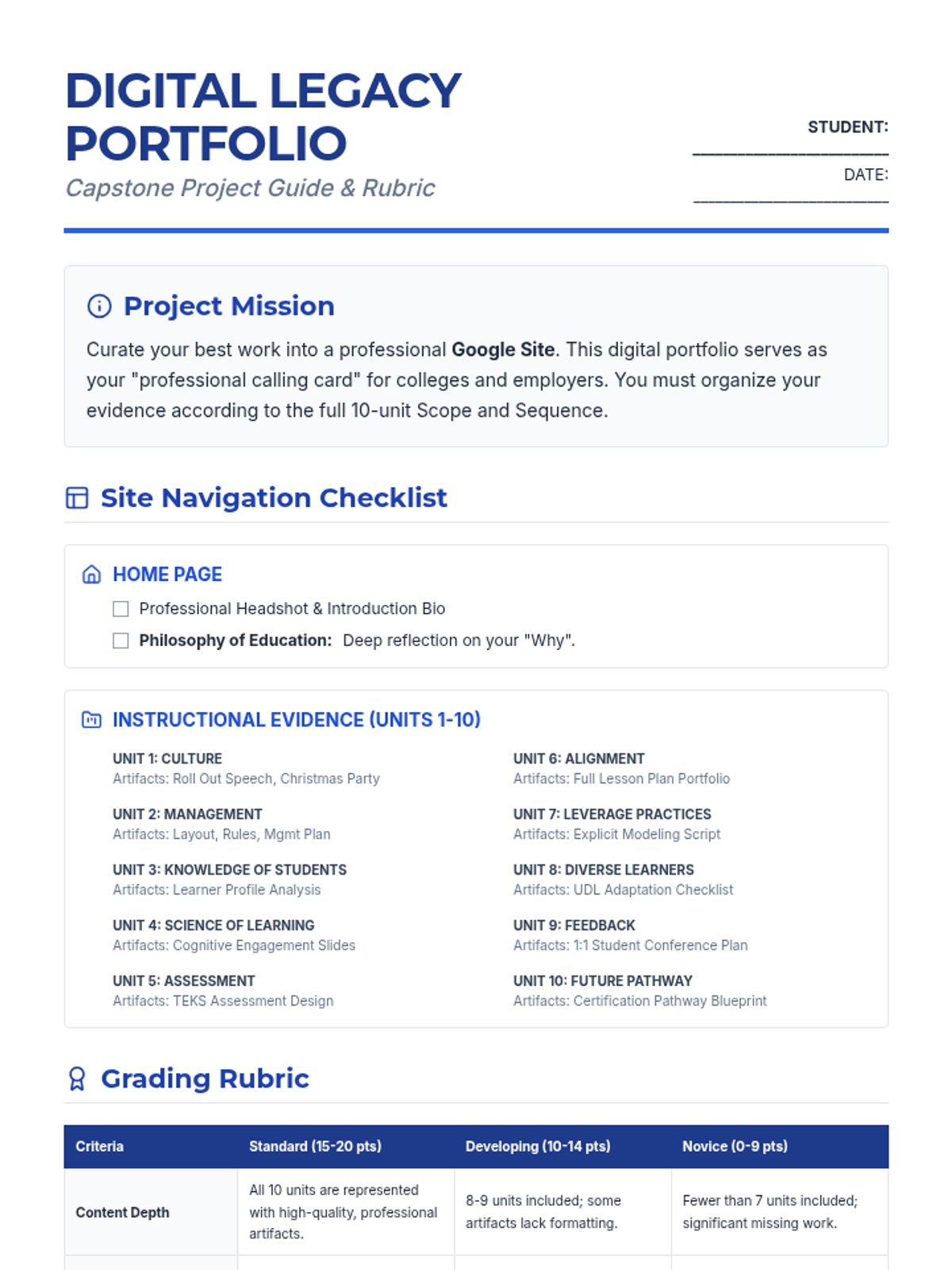
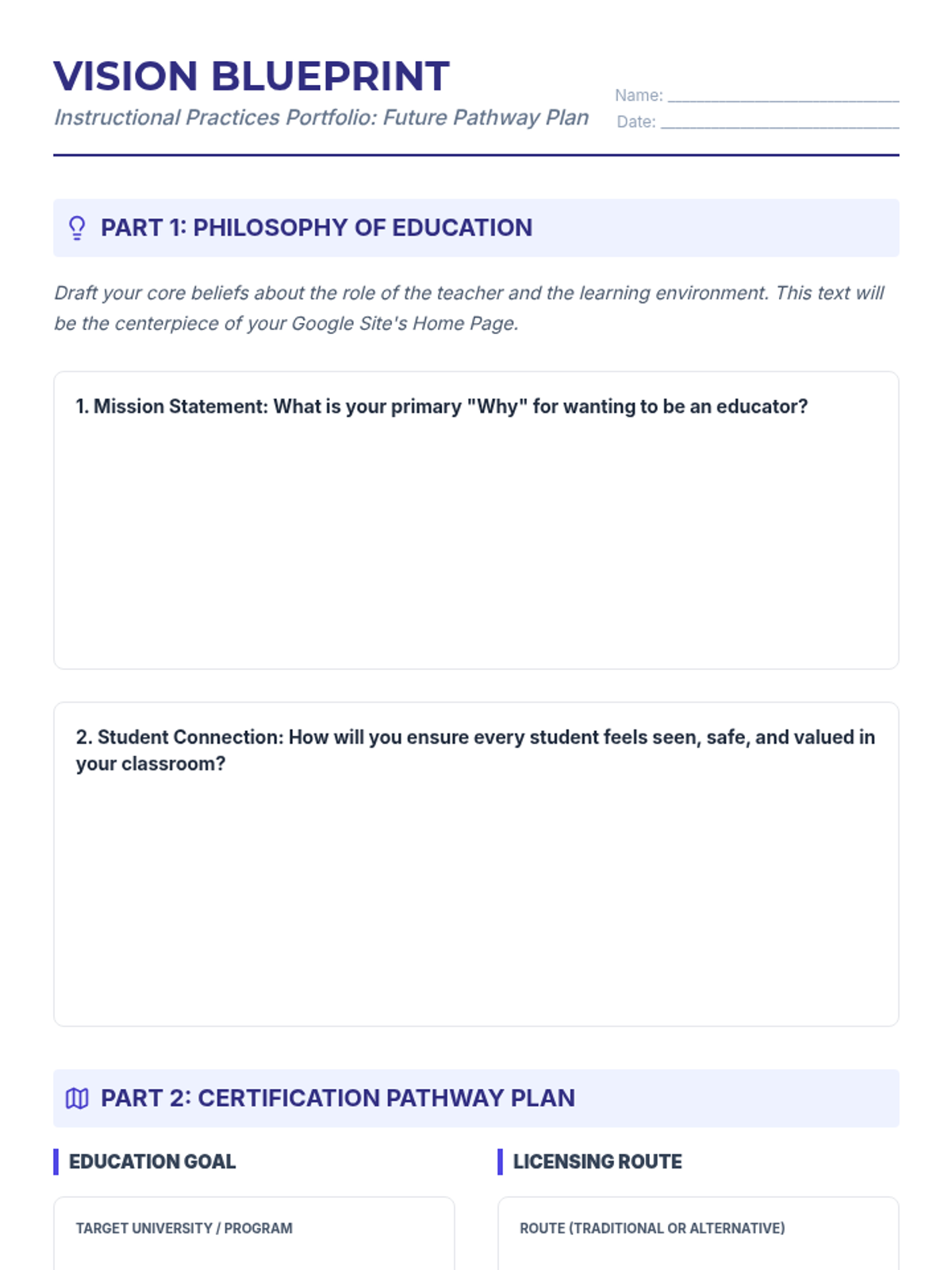
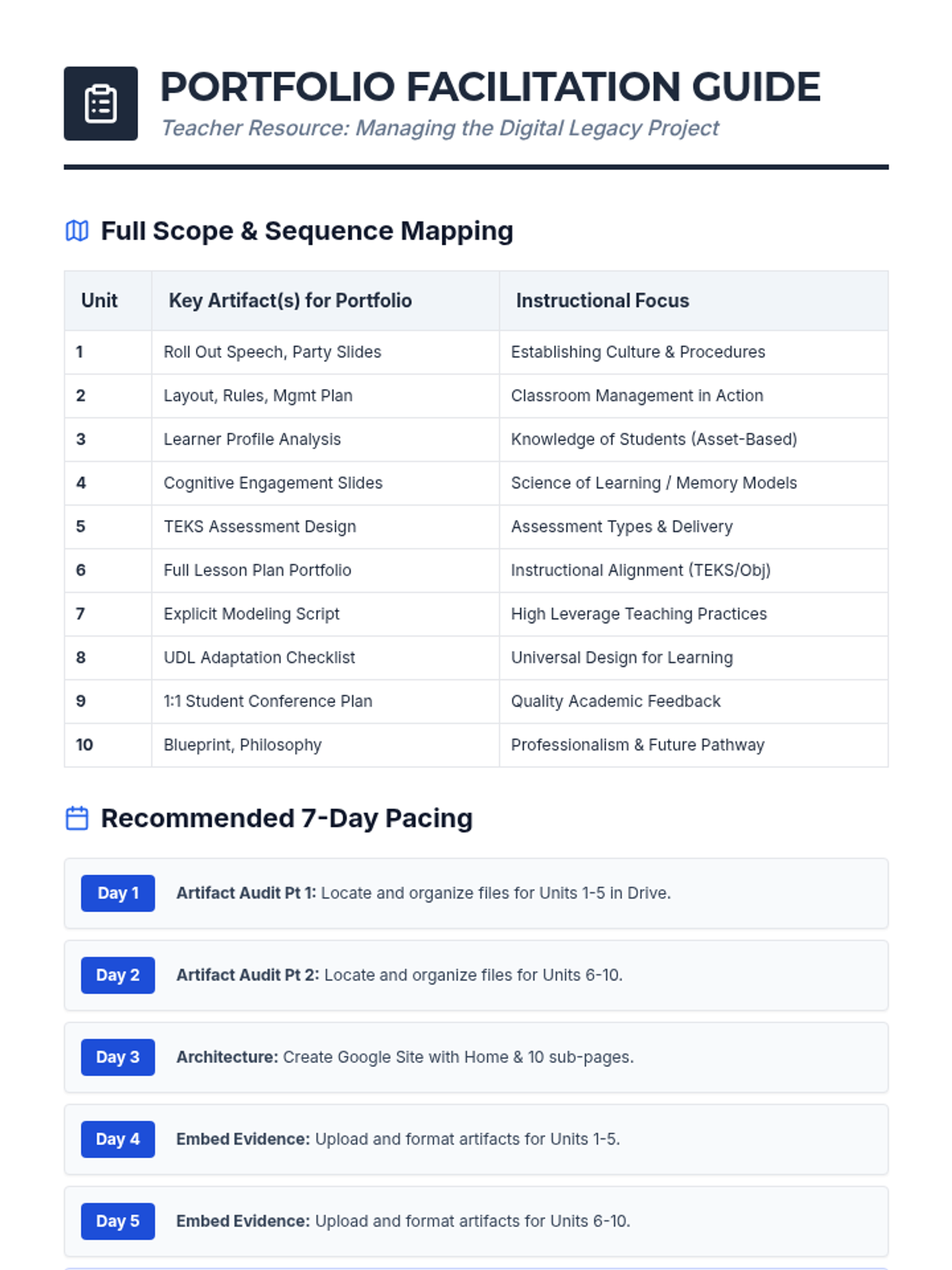
A comprehensive end-of-year portfolio project where students build a professional Google Site to showcase their instructional practices, previous projects, and future career plans in education.
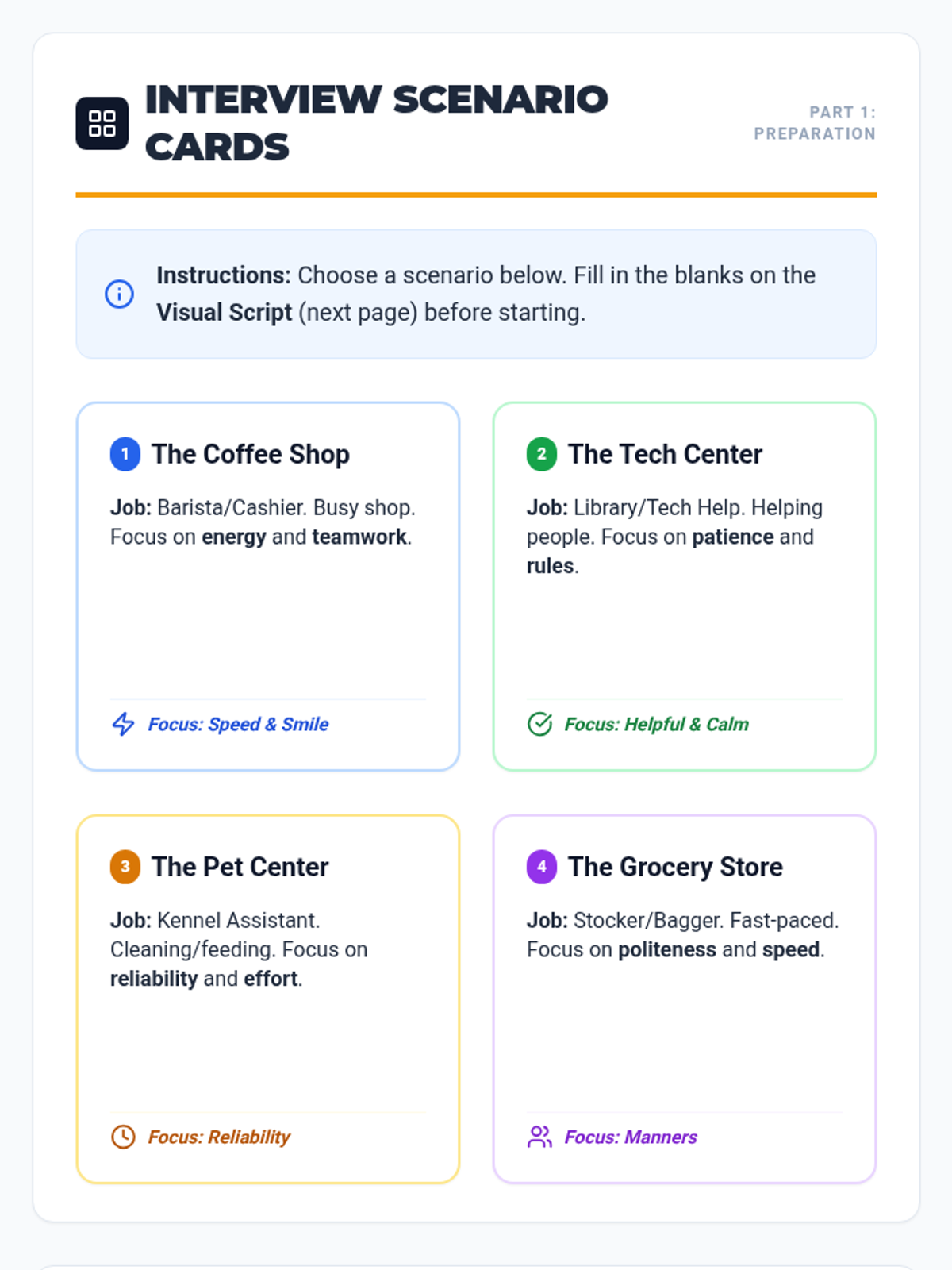
A comprehensive lesson on job interview preparation, covering professional etiquette, common questions, and structured role-play scenarios with visual scripts.
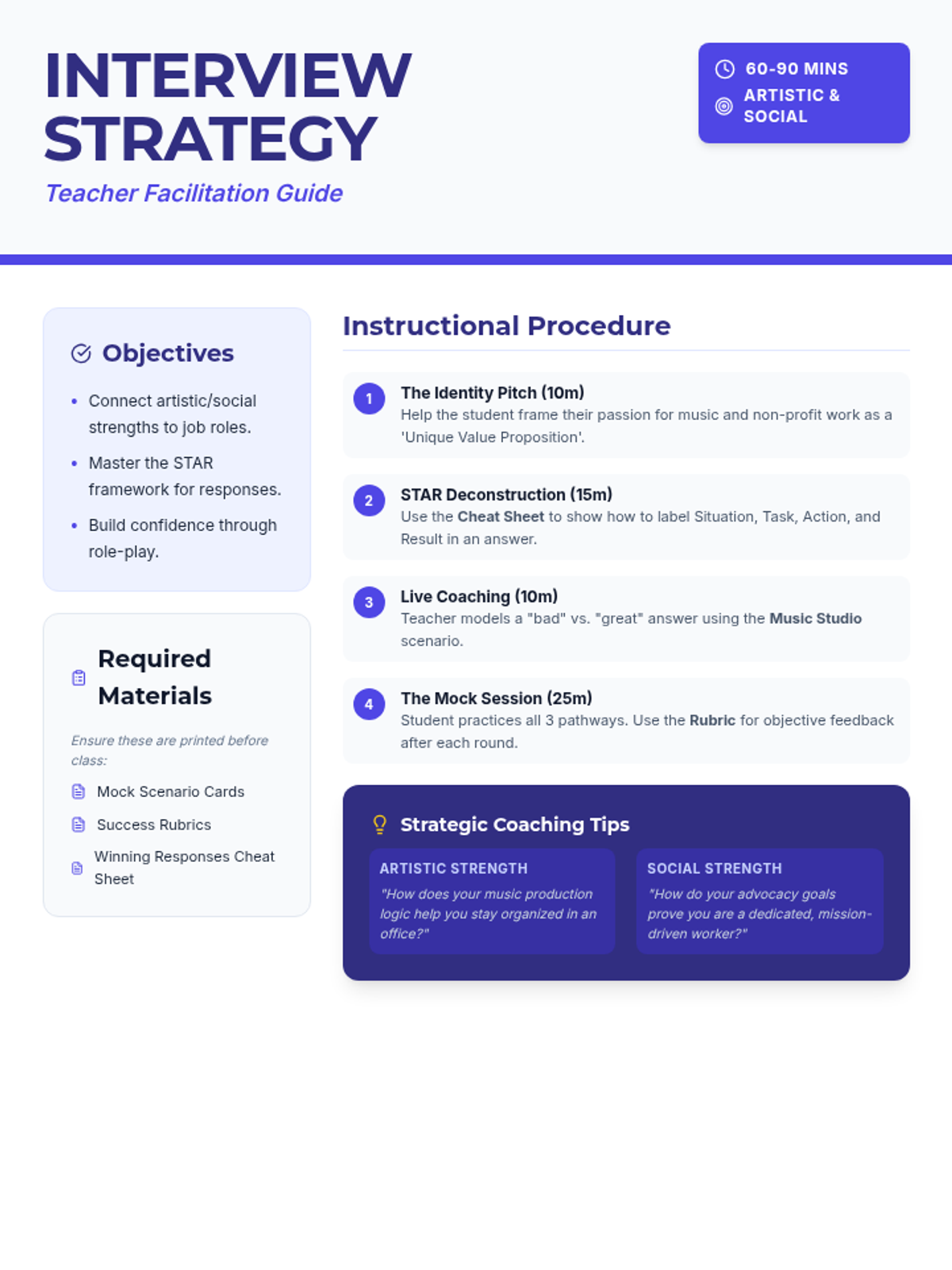
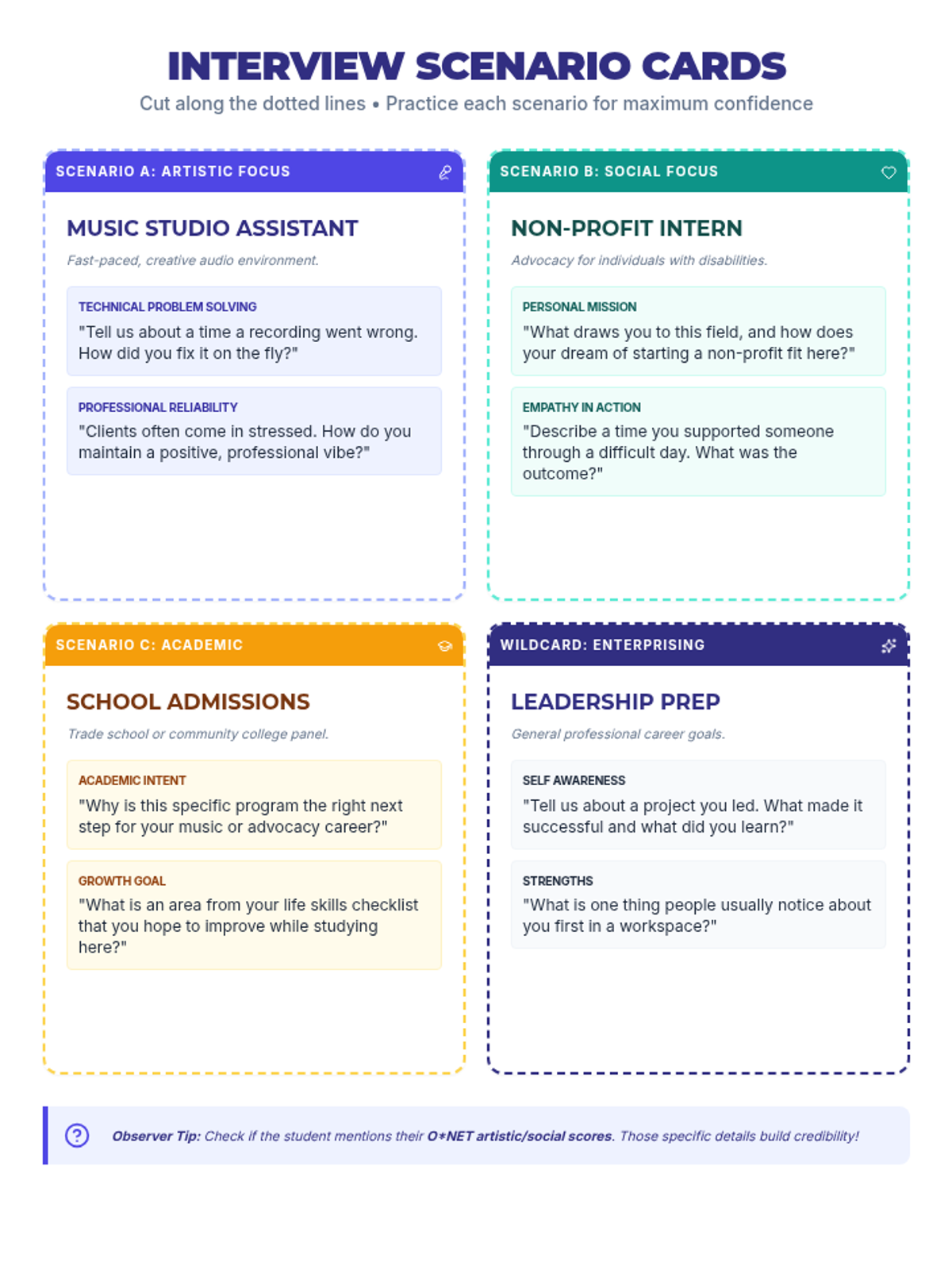
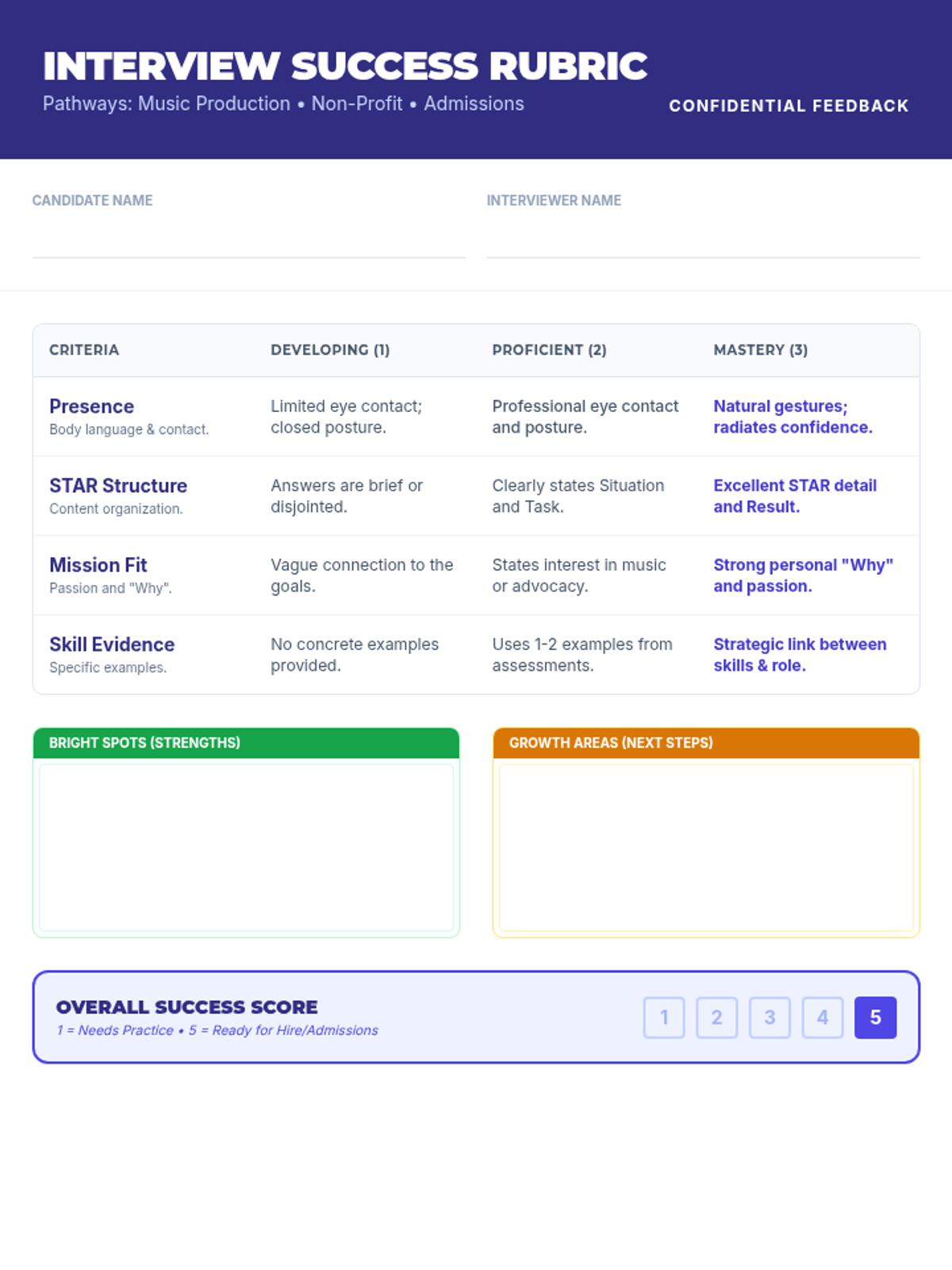
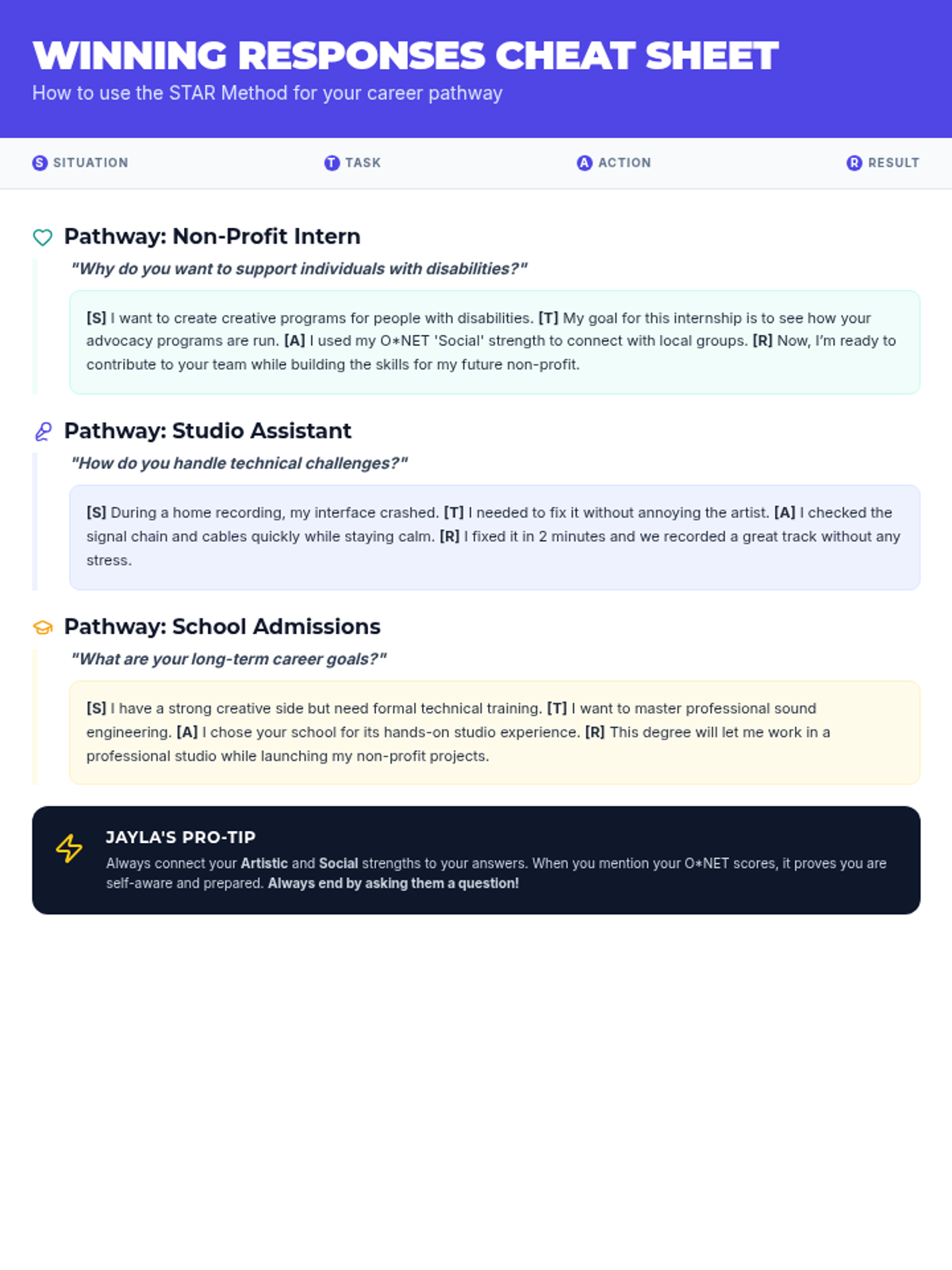
A comprehensive lesson designed to prepare students for interviews in non-profit, creative, and academic settings, featuring tailored role-play scenarios and feedback tools.
A high-level session on minimizing 'Group Latency'. Framing following directions as a system efficiency move rather than submission. Structure: 3-5-1 Minutes.
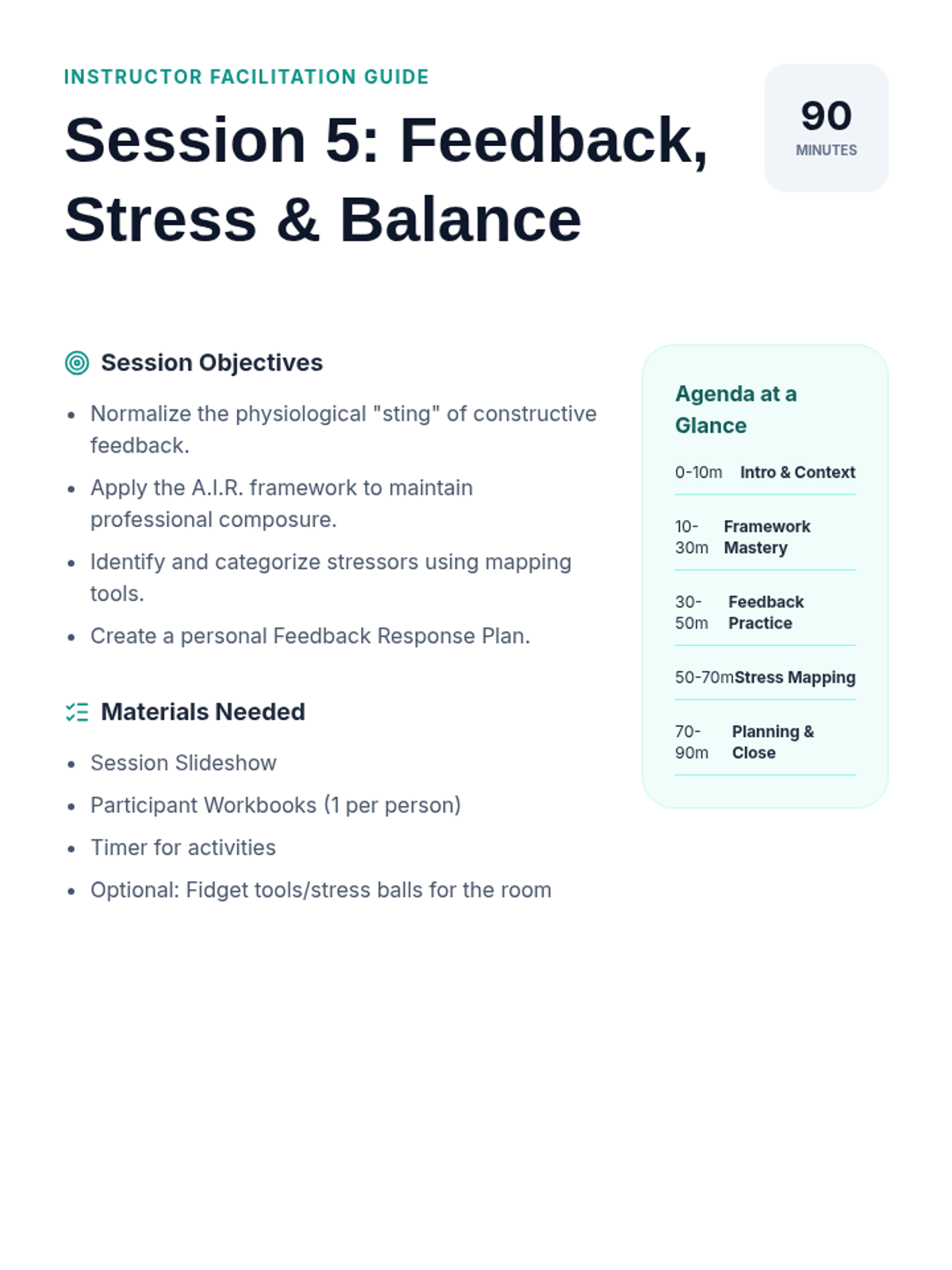
A 90-minute workshop on navigating feedback anxiety, responding with composure, and managing everyday stress through practical tools and frameworks.
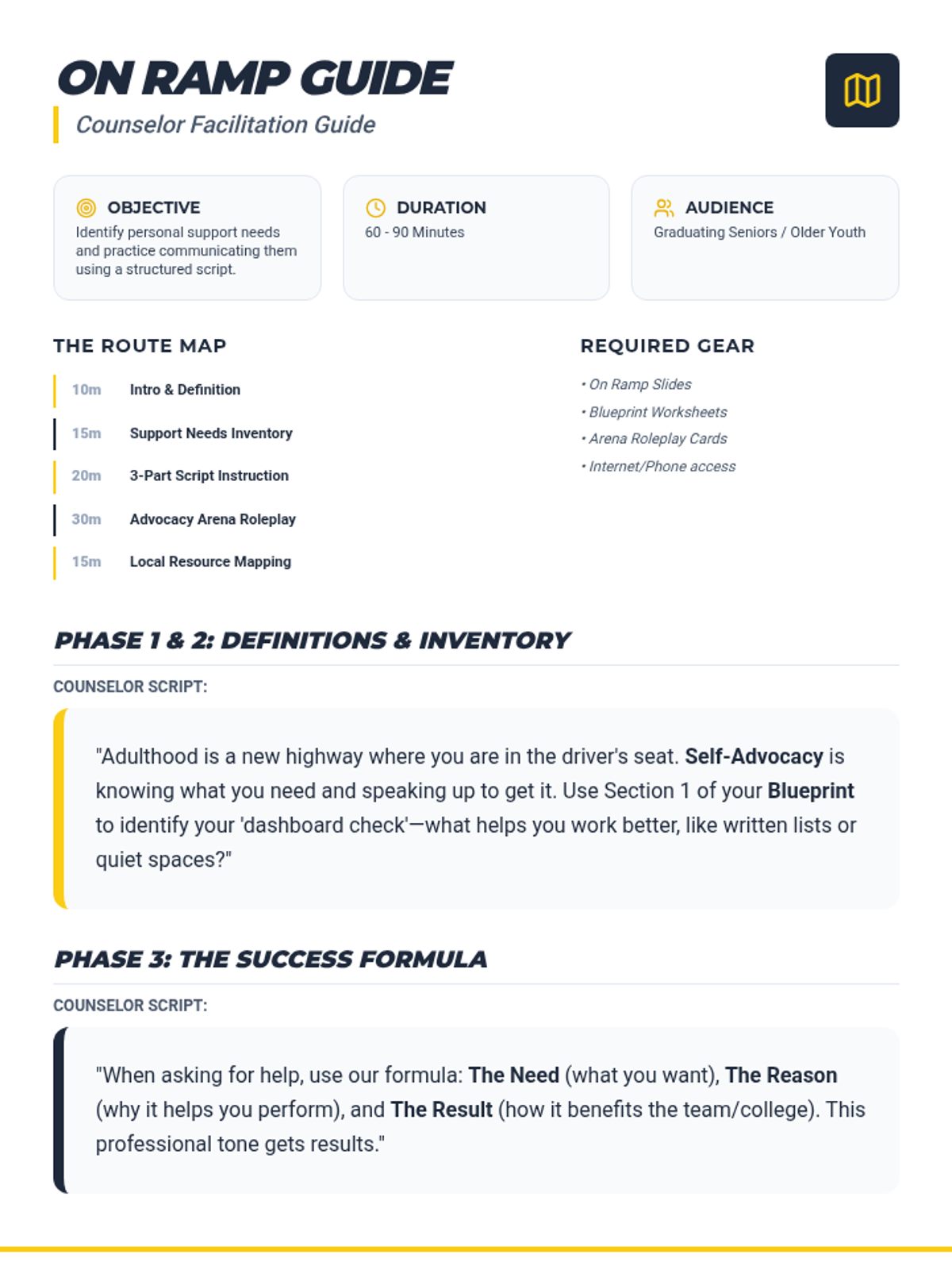
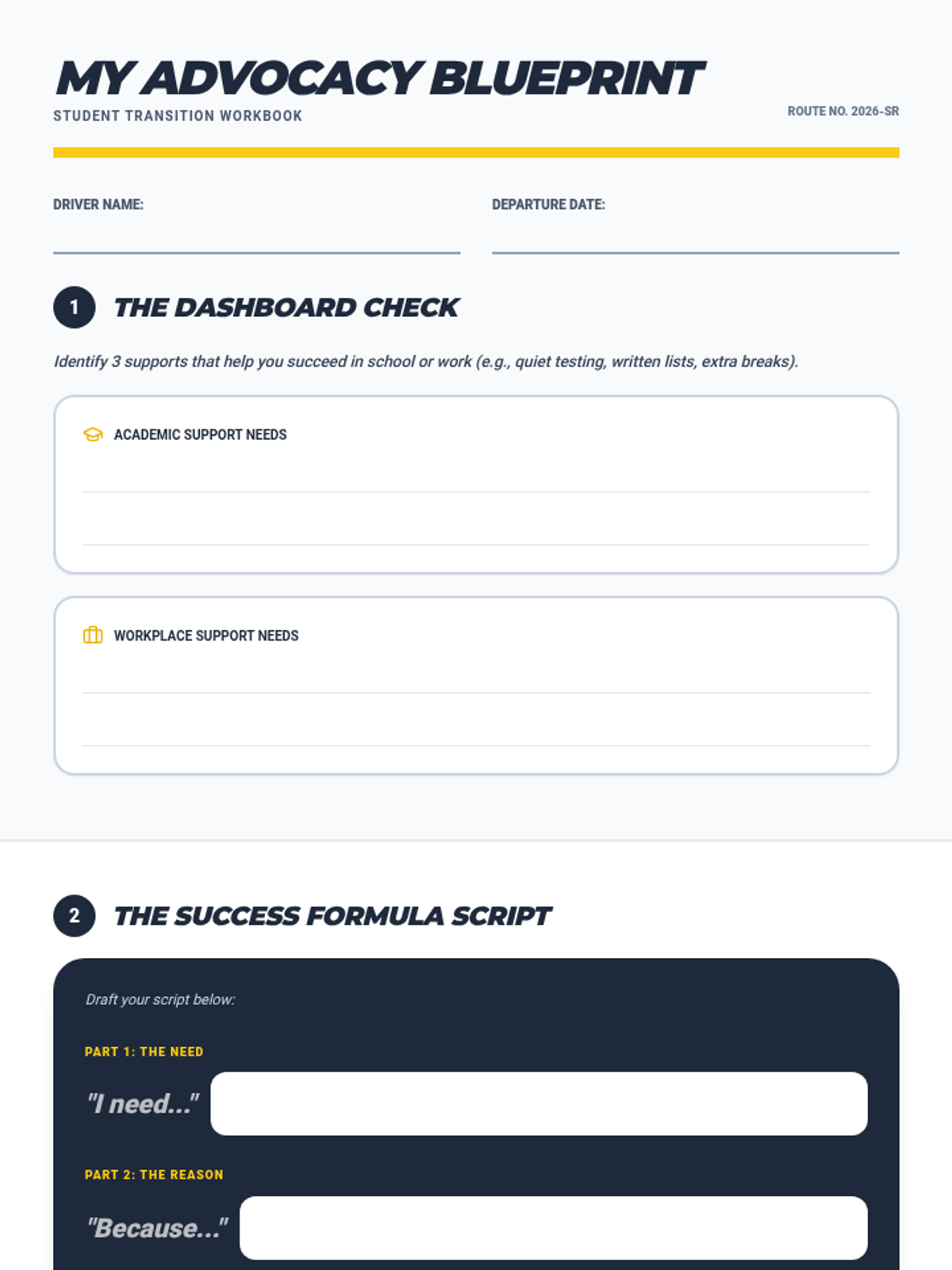
A comprehensive guide for counselors to help graduating students transition to adulthood by mastering self-advocacy skills. Students identify their support needs, practice communication scripts, and map out essential community resources for their next chapter.
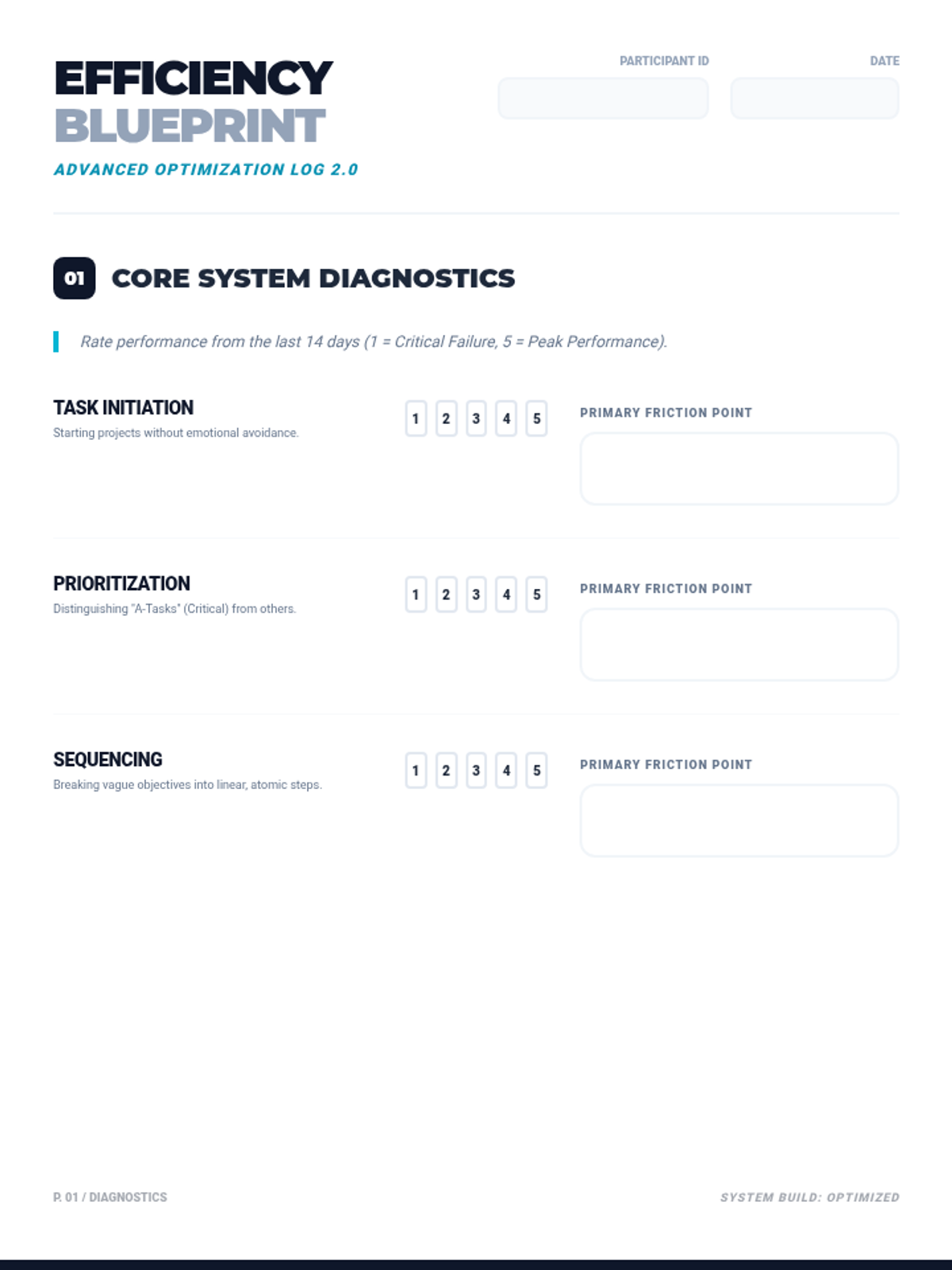
A 90-minute capstone session focused on synthesizing executive functioning skills, troubleshooting personal workflows, and creating a long-term optimization plan.
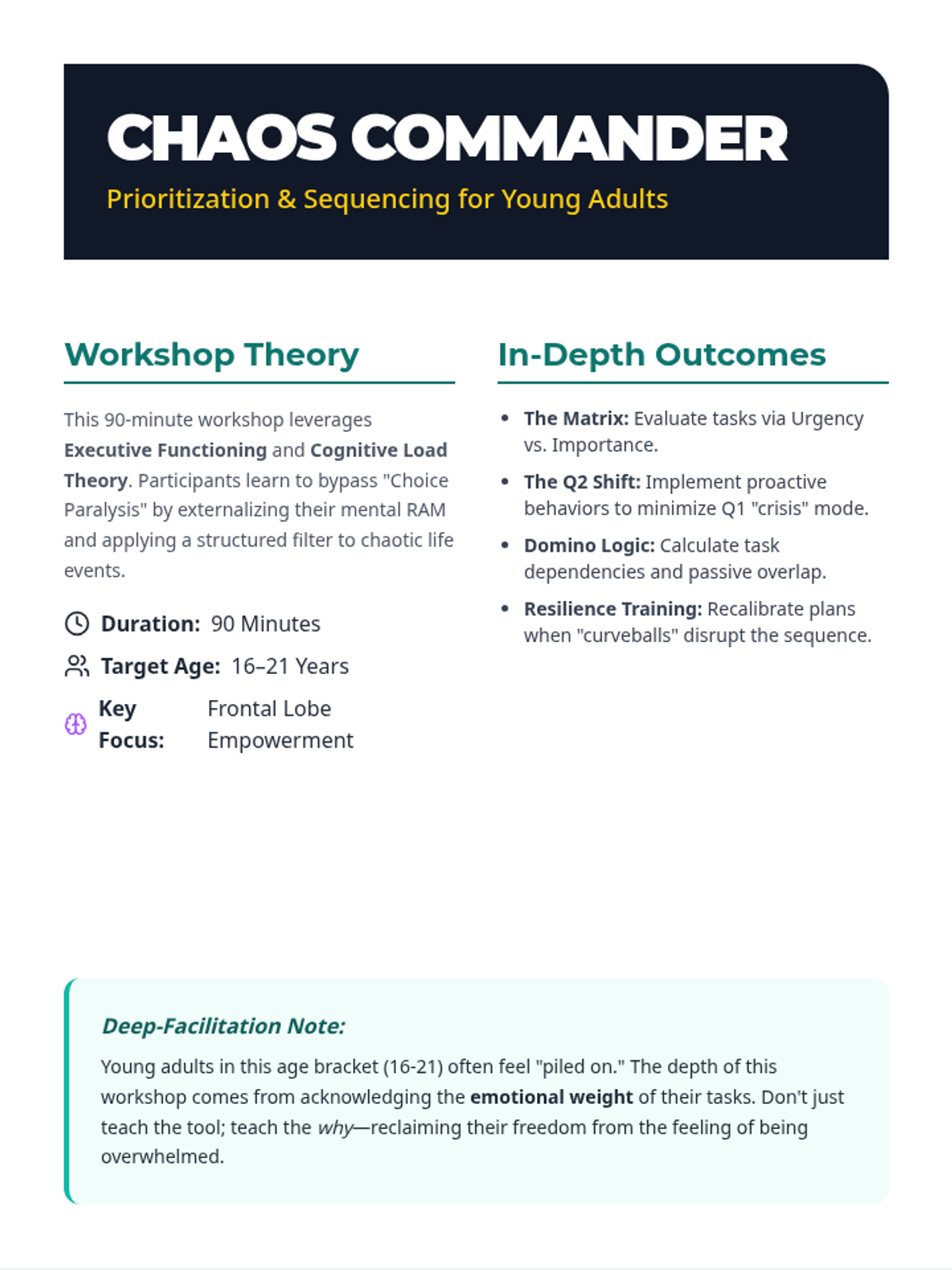
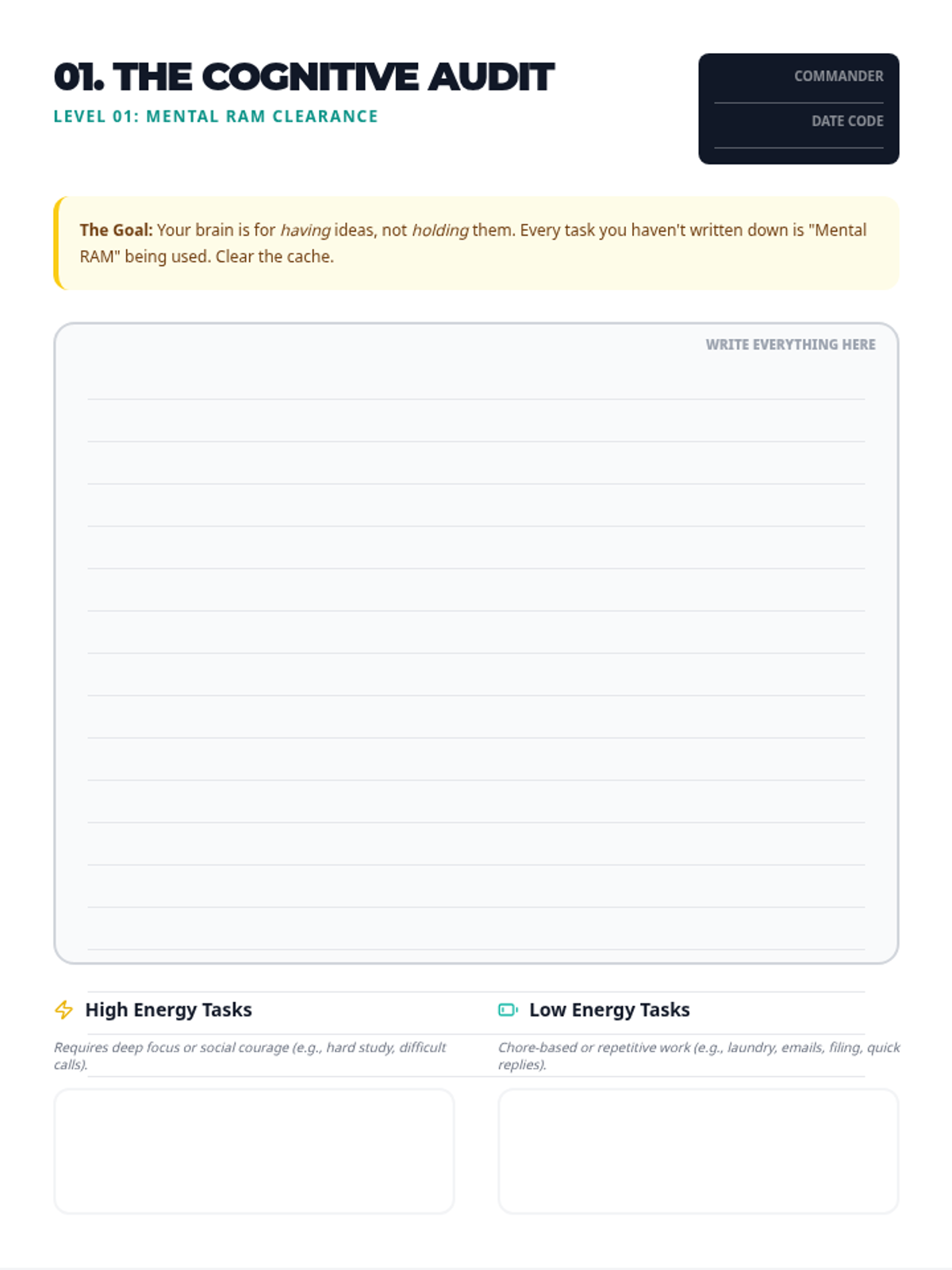
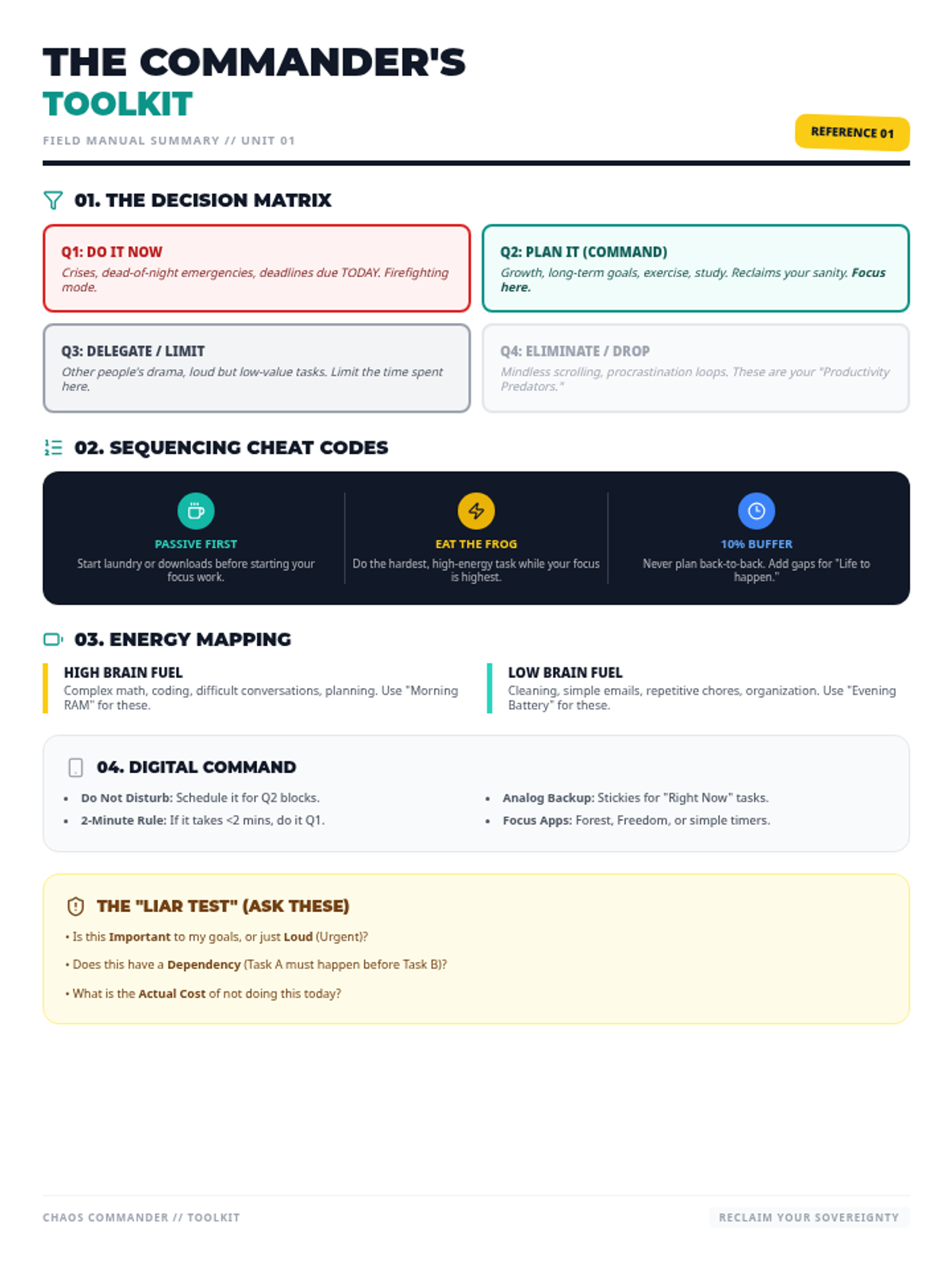
A comprehensive 90-minute workshop designed for young adults (16-21) to master the art of prioritization and sequencing amidst life's competing demands. The session uses the Eisenhower Matrix and sequencing strategies to help participants navigate work, school, and personal life with confidence.
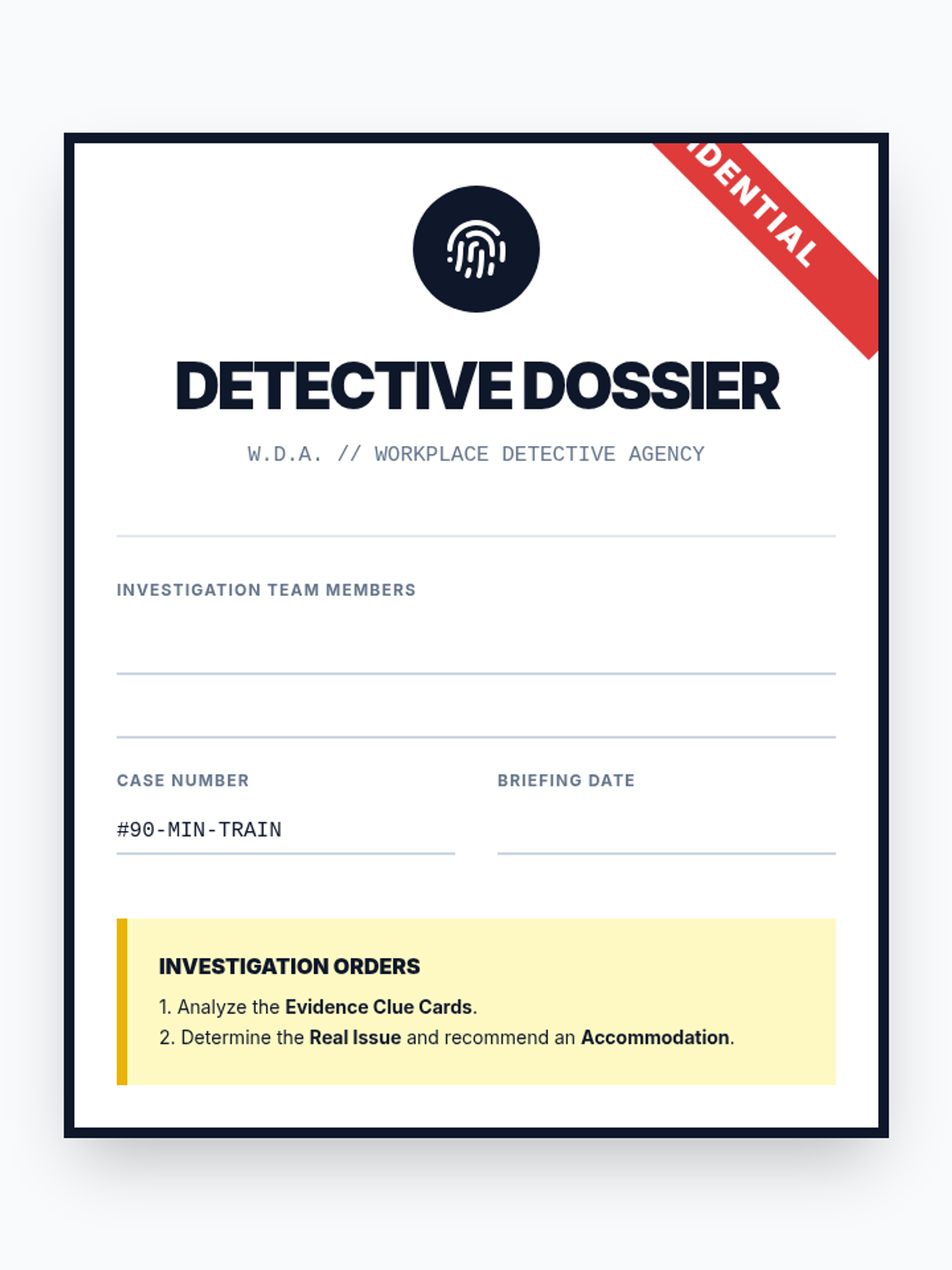
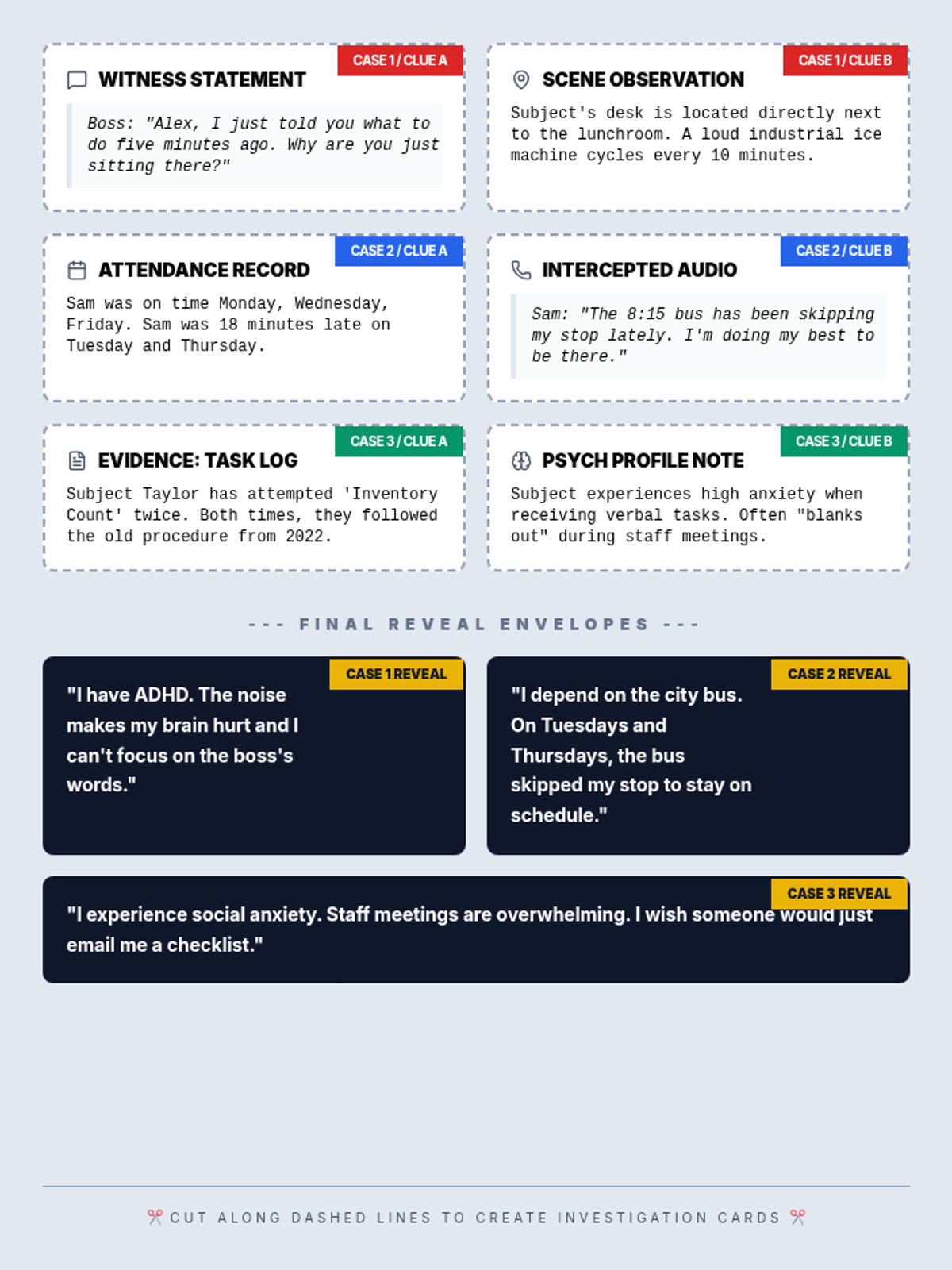
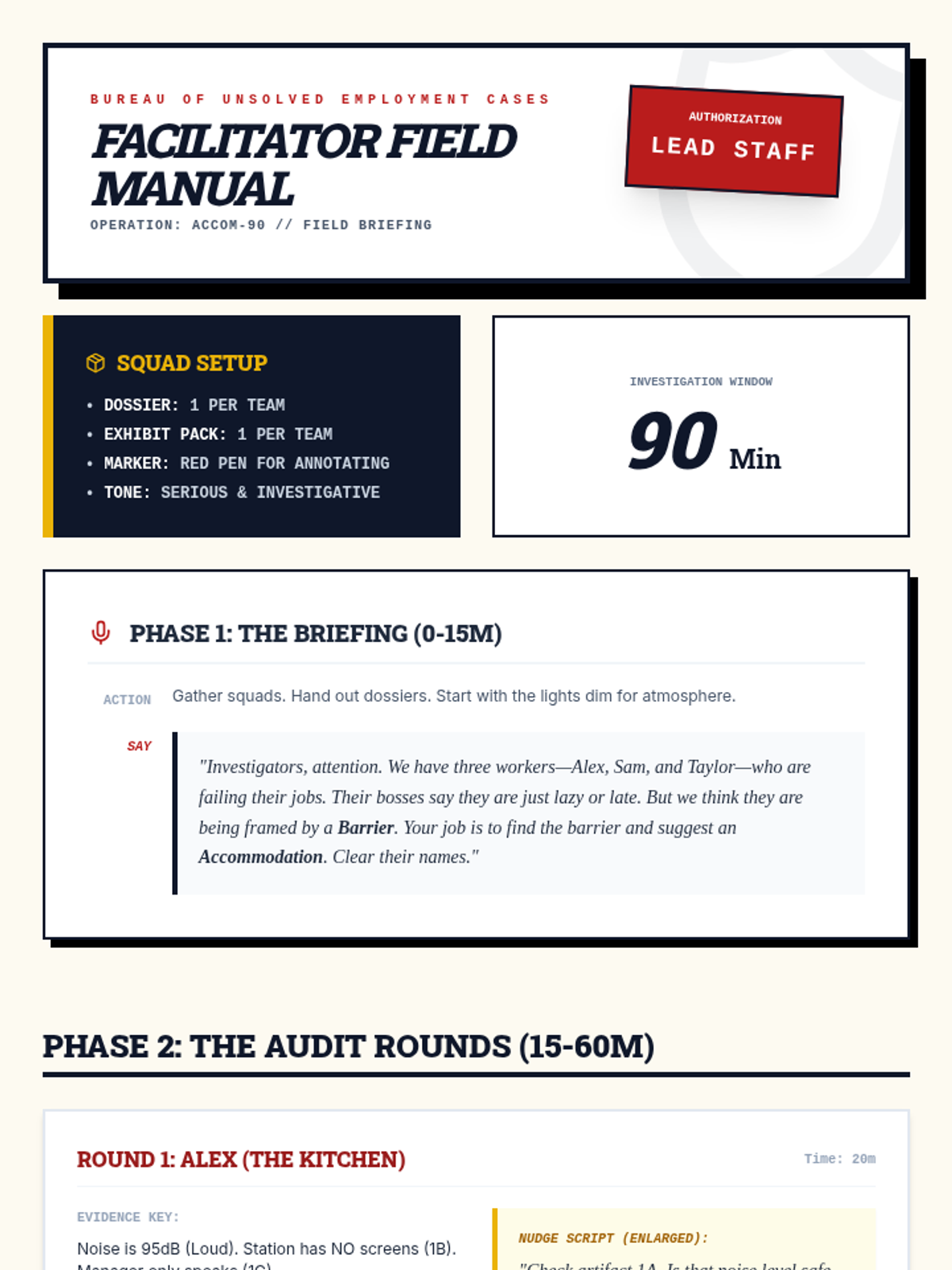
A 90-minute employment training lesson that uses a mystery-solving framework to help students identify the need for workplace accommodations and practice the skills to request them.
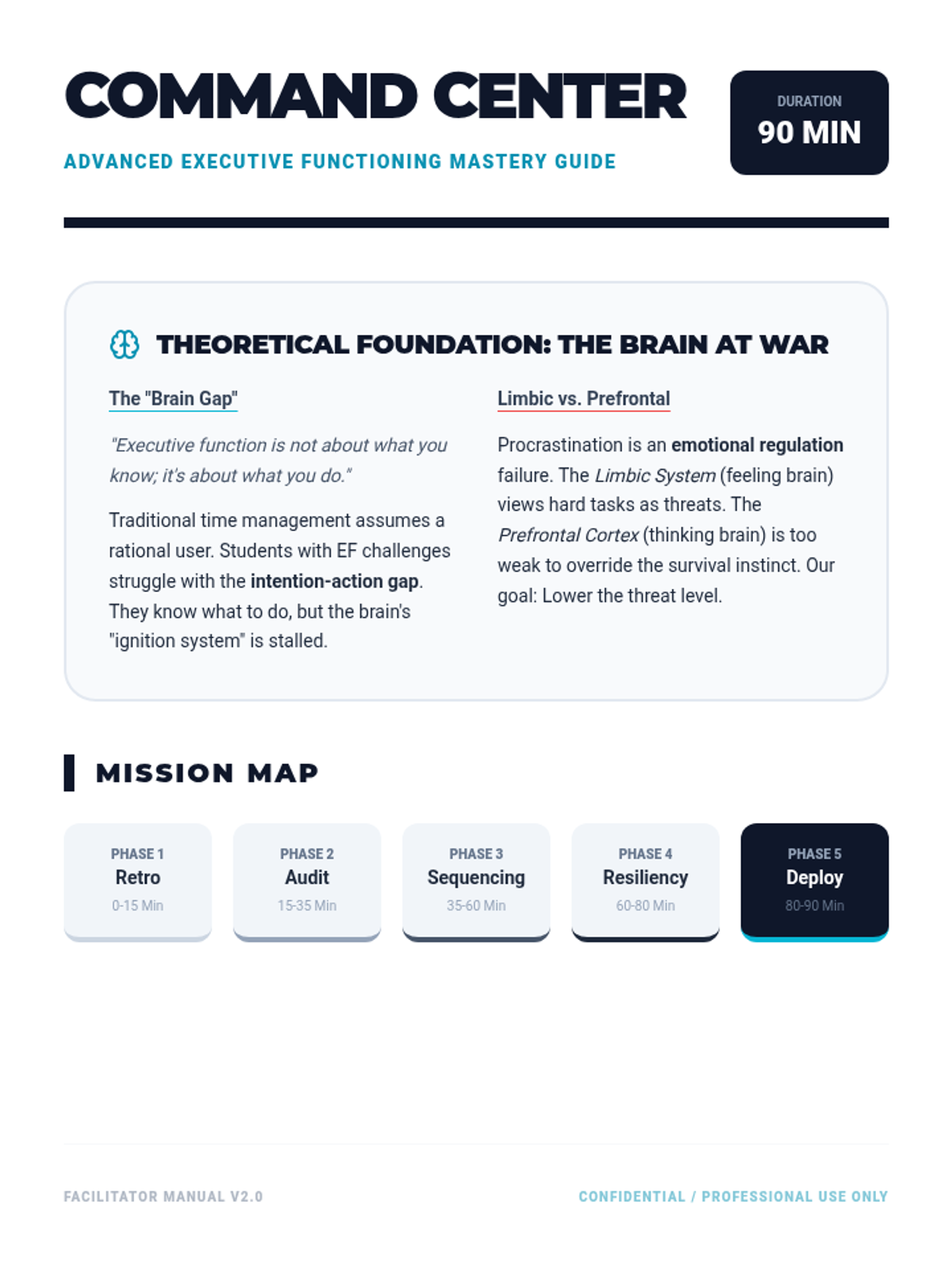
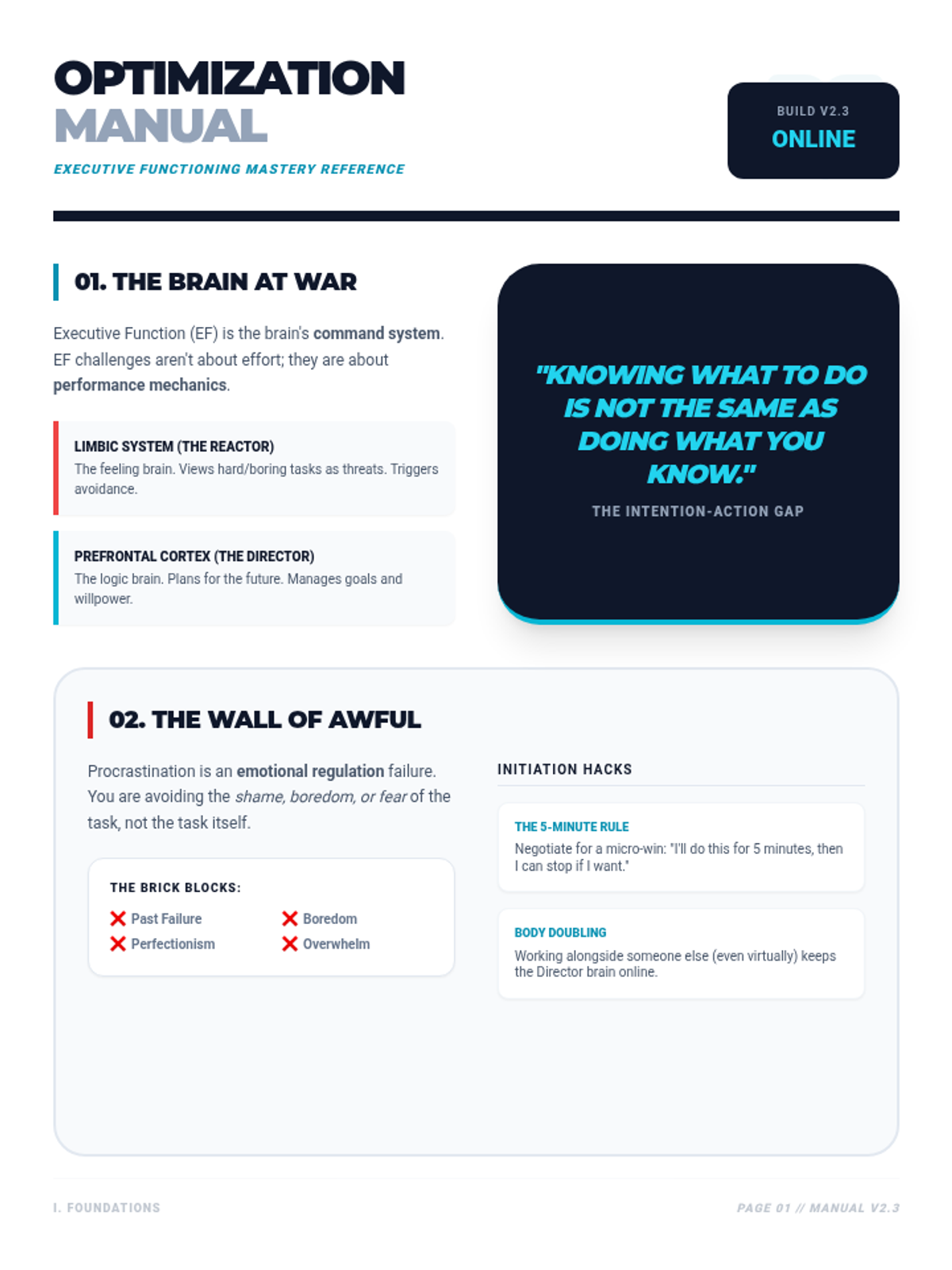
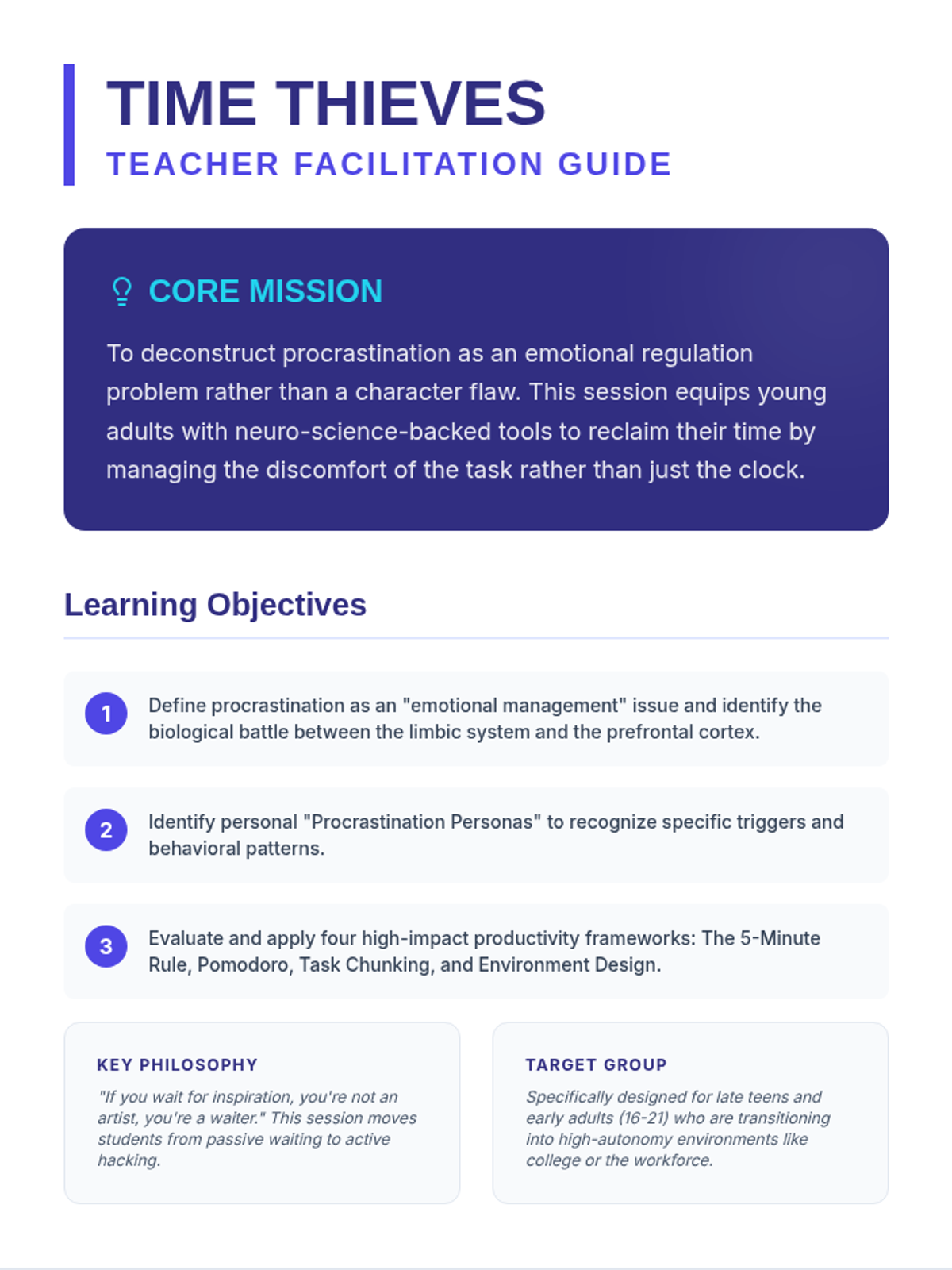
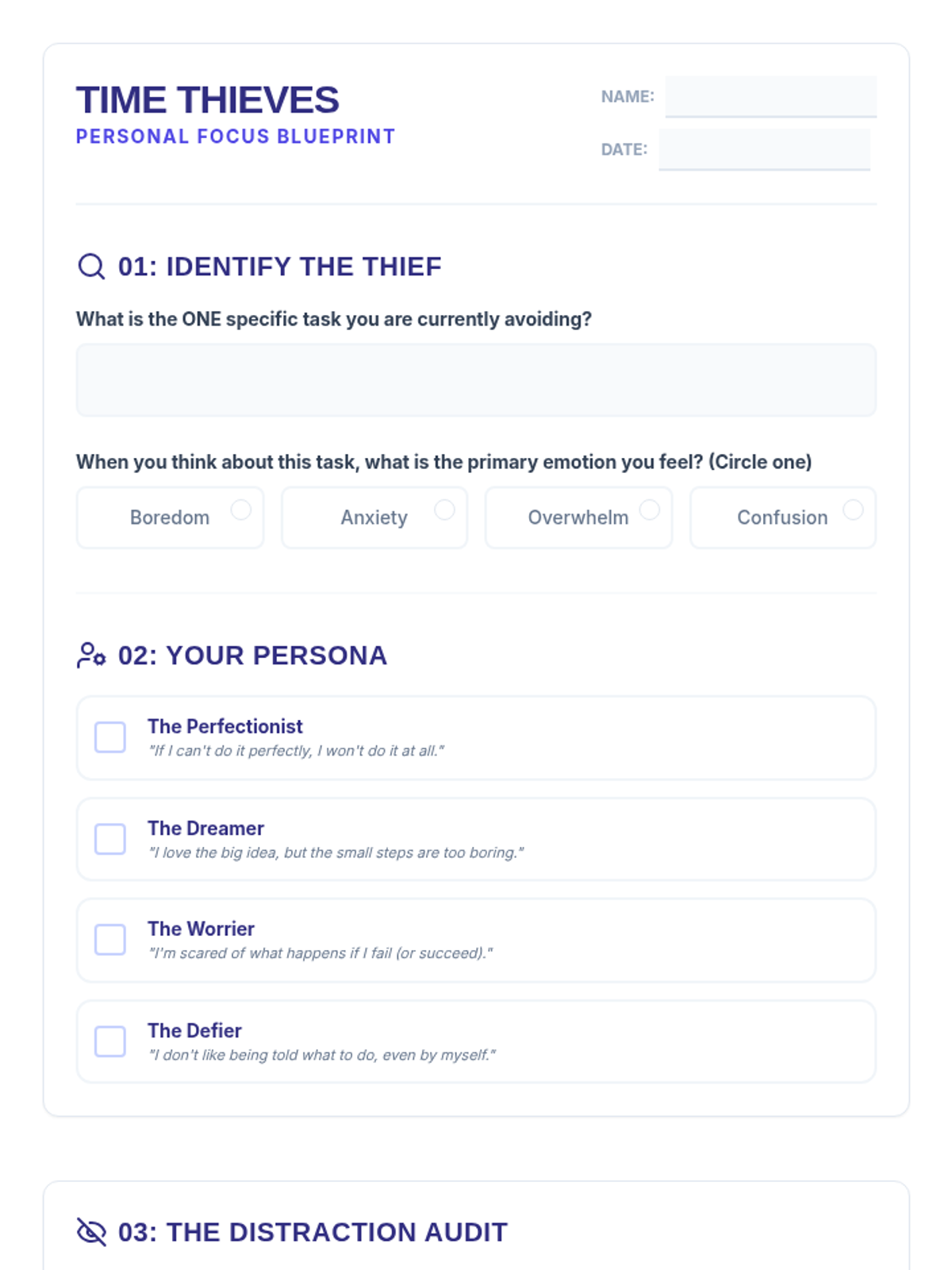
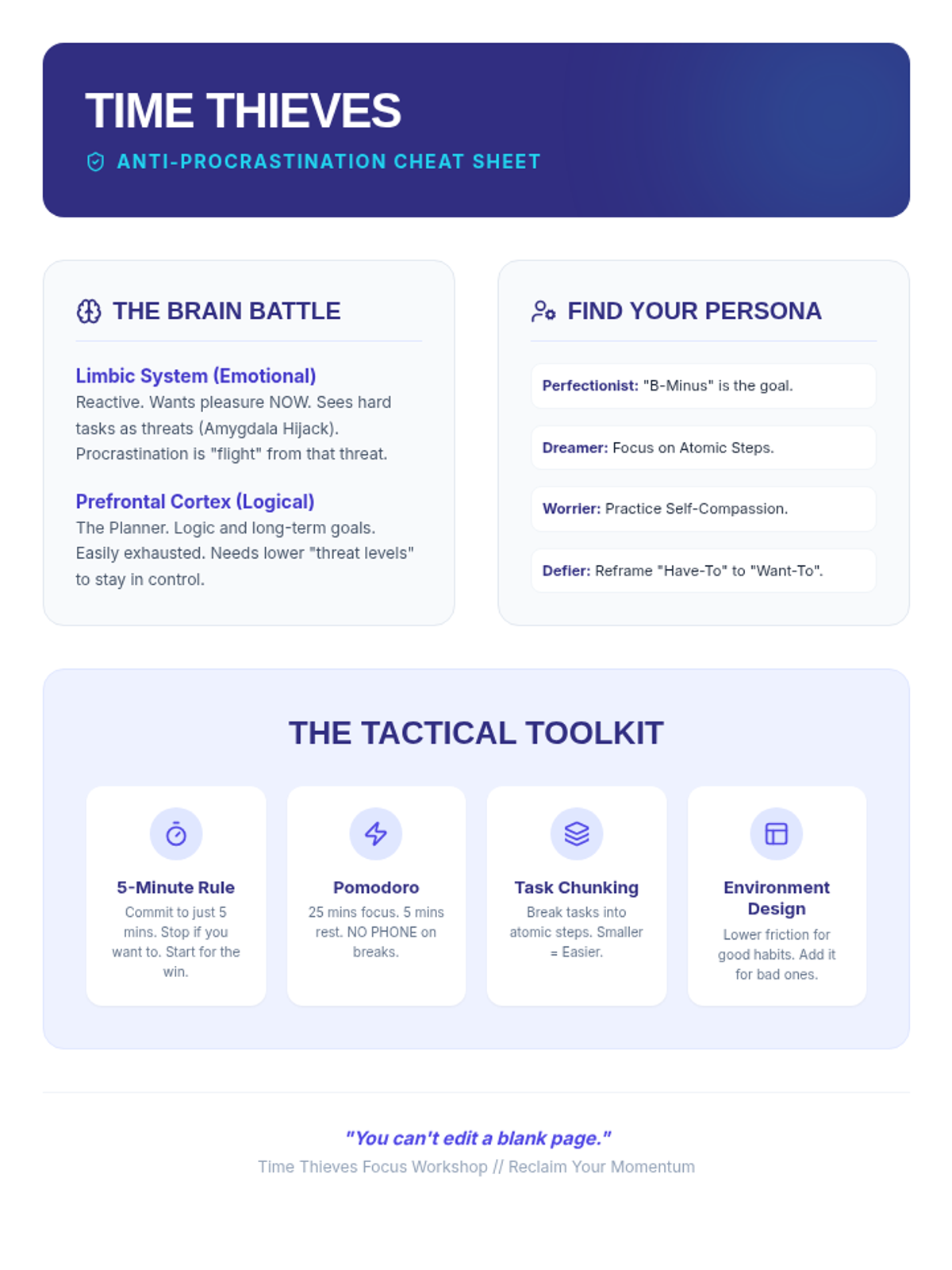
An in-depth exploration of the psychology of procrastination, identifying personal triggers, and implementing high-impact productivity strategies.