Identifies mental health crises and suicide warning signs while developing personal safety plans and grounding techniques. Equips users with peer gatekeeper skills and direct pathways to professional crisis resources and hotlines.
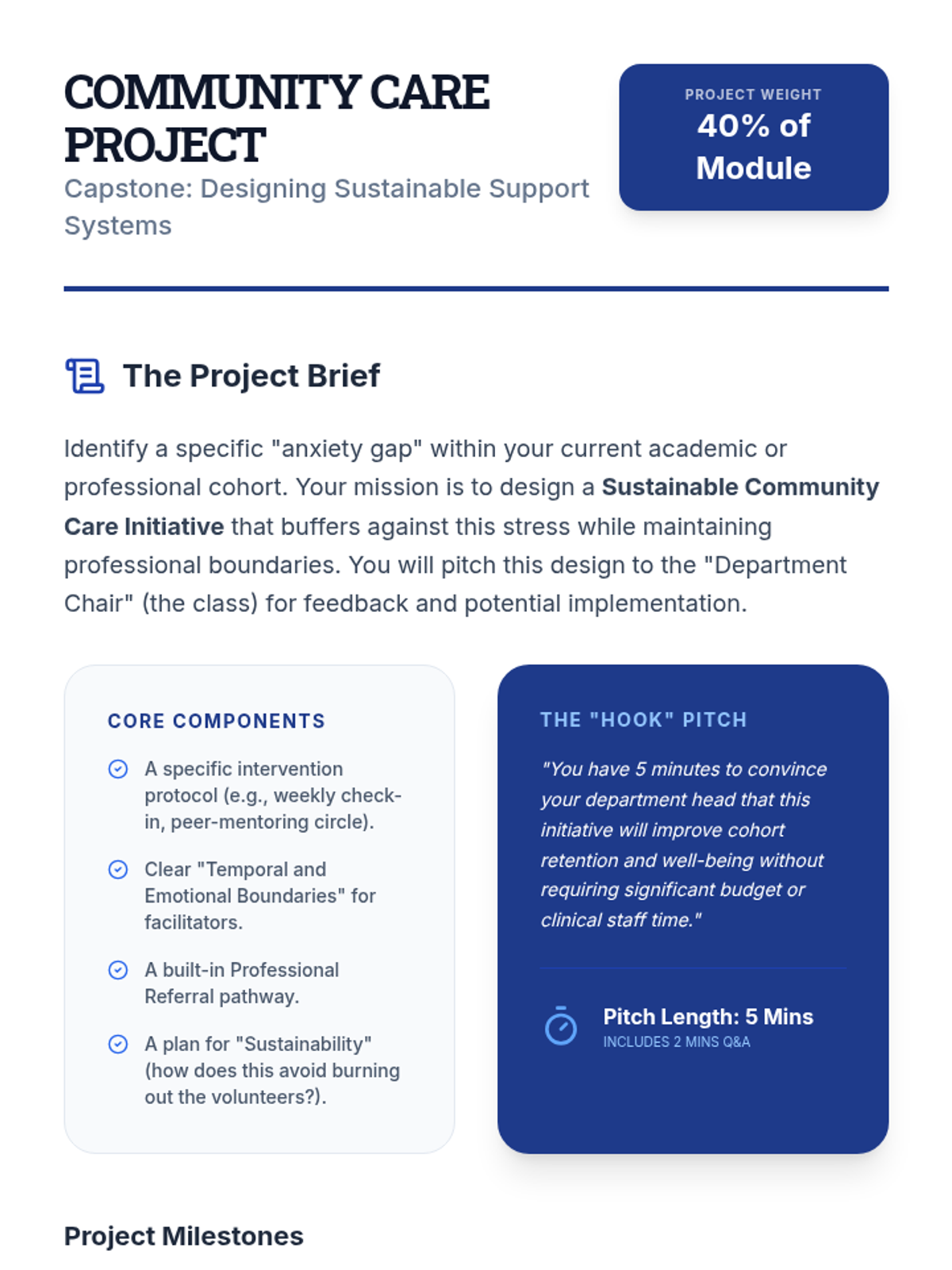
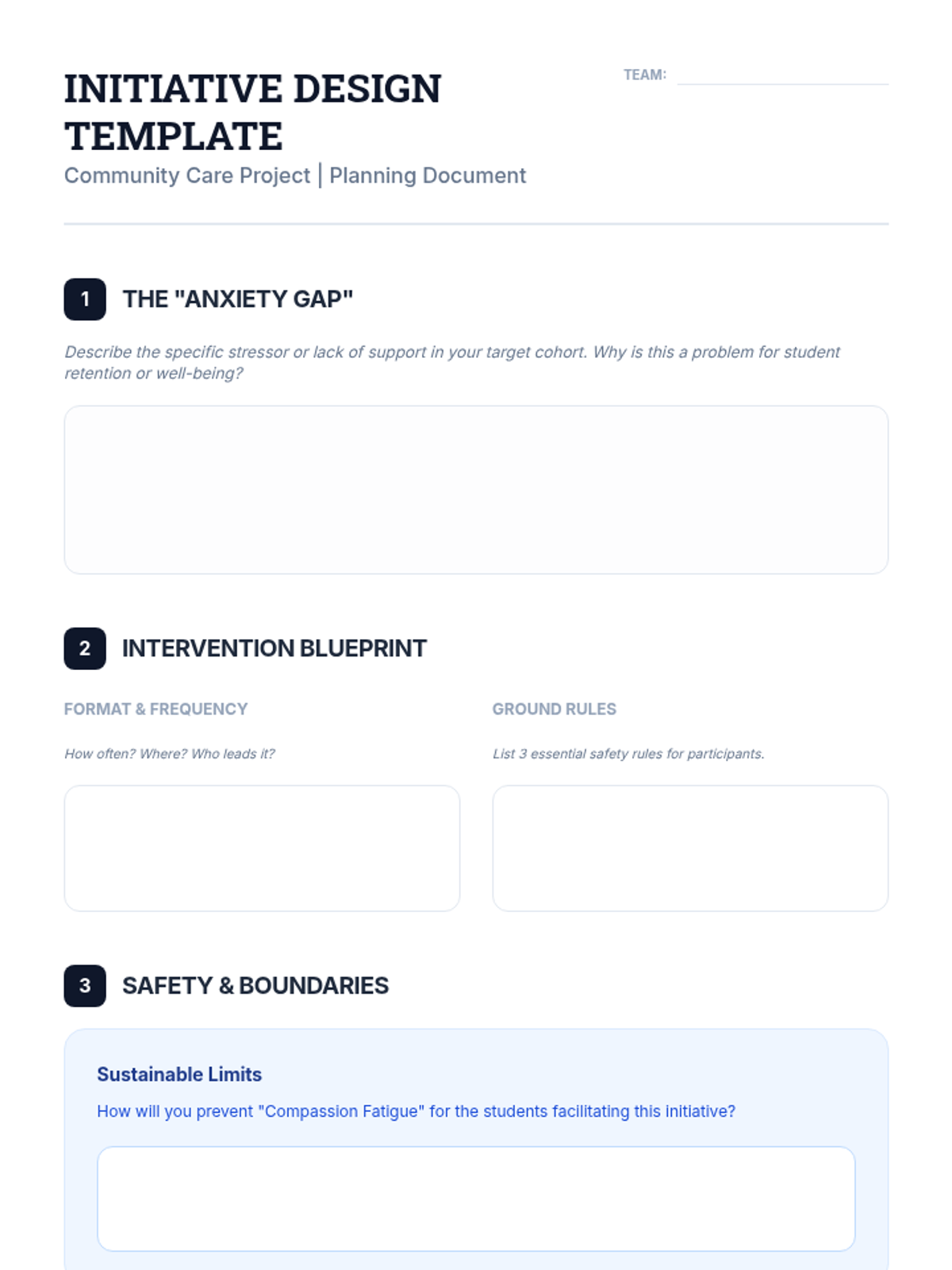
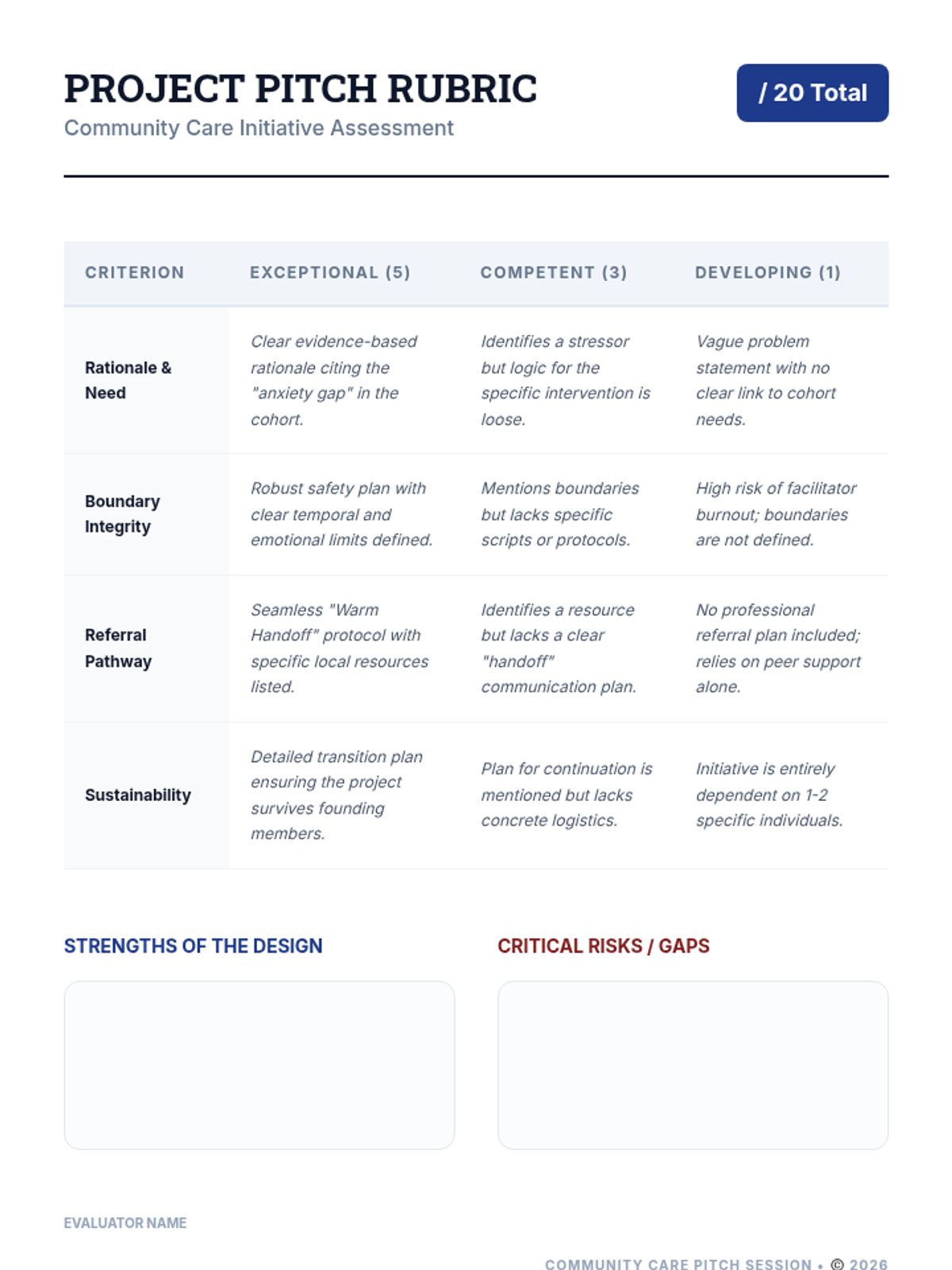
Students design and pitch a sustainable community care initiative tailored to their specific academic or professional cohort.
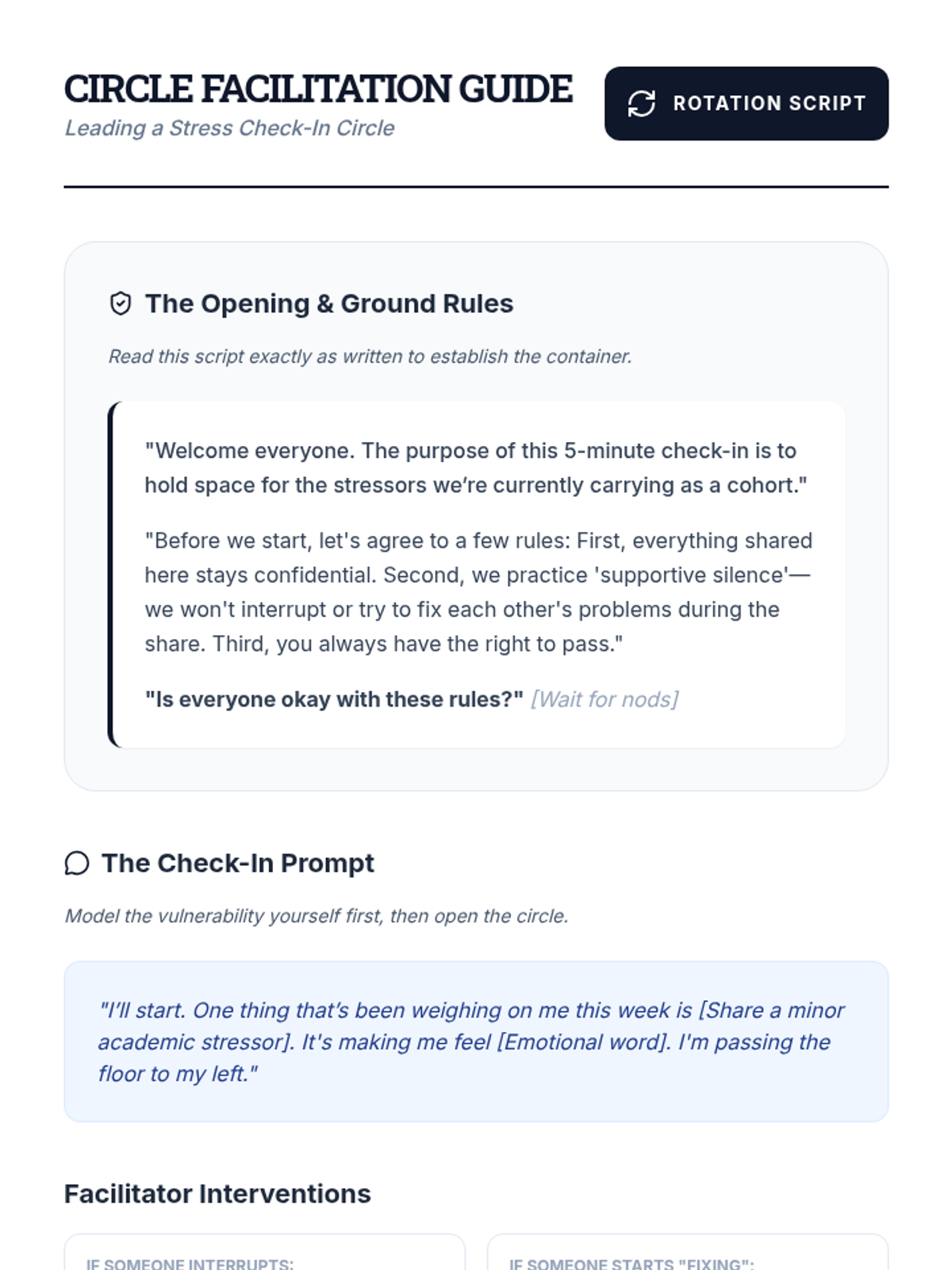
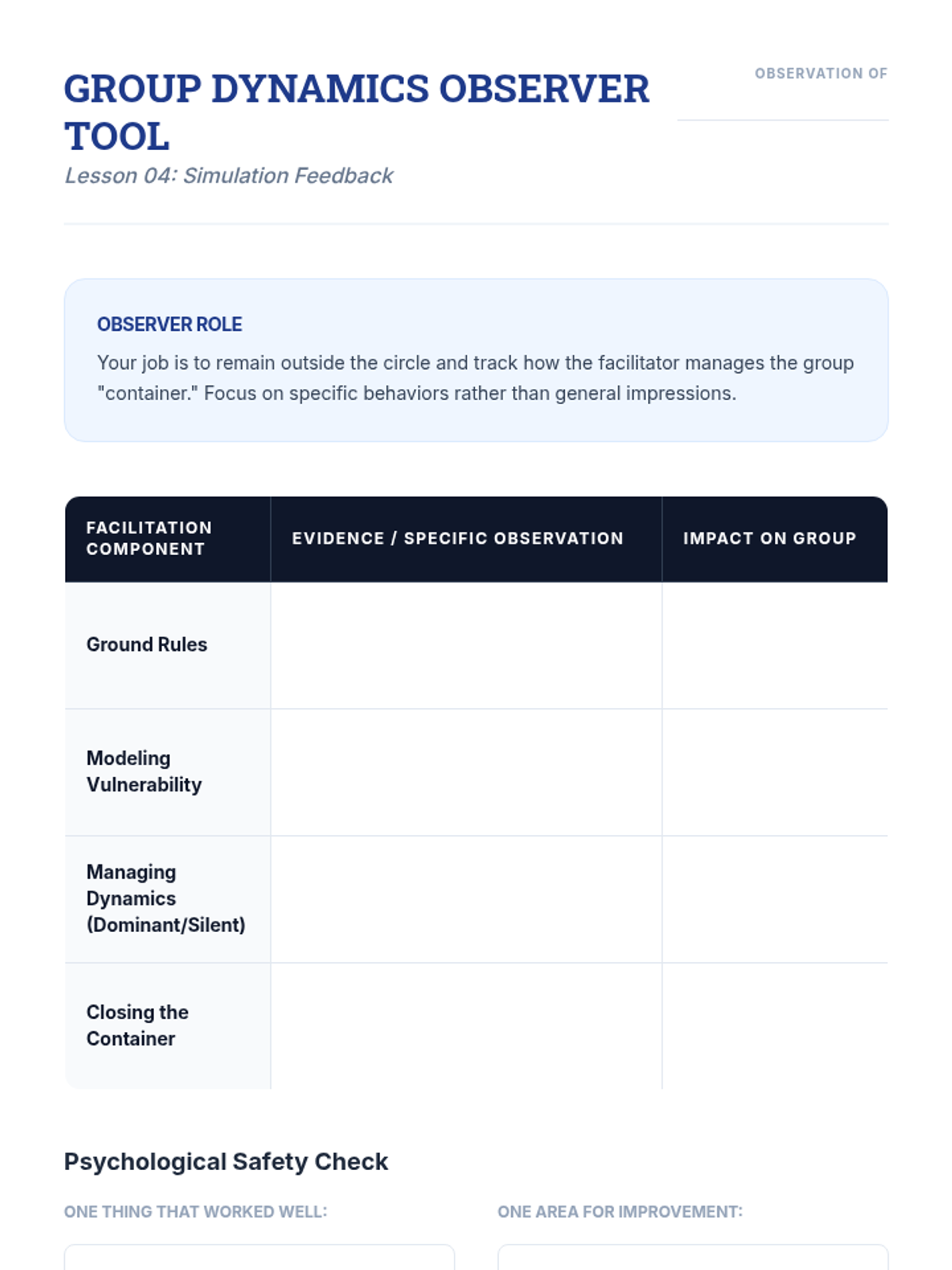
Develops skills for leading group stress check-ins, managing dynamics, and ensuring psychological safety in group settings.
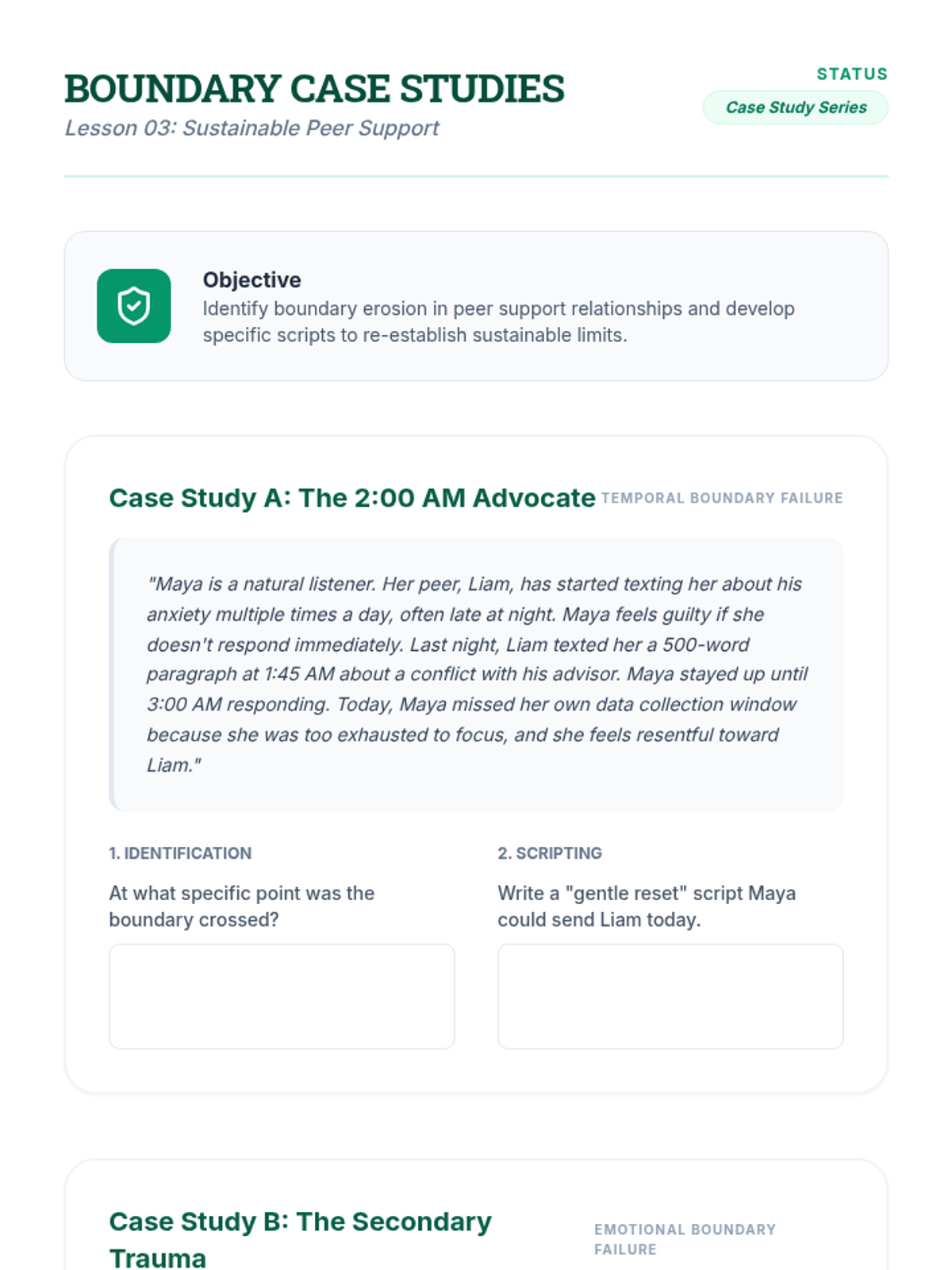
Focuses on preventing compassion fatigue through emotional and temporal boundaries and professional referral protocols.
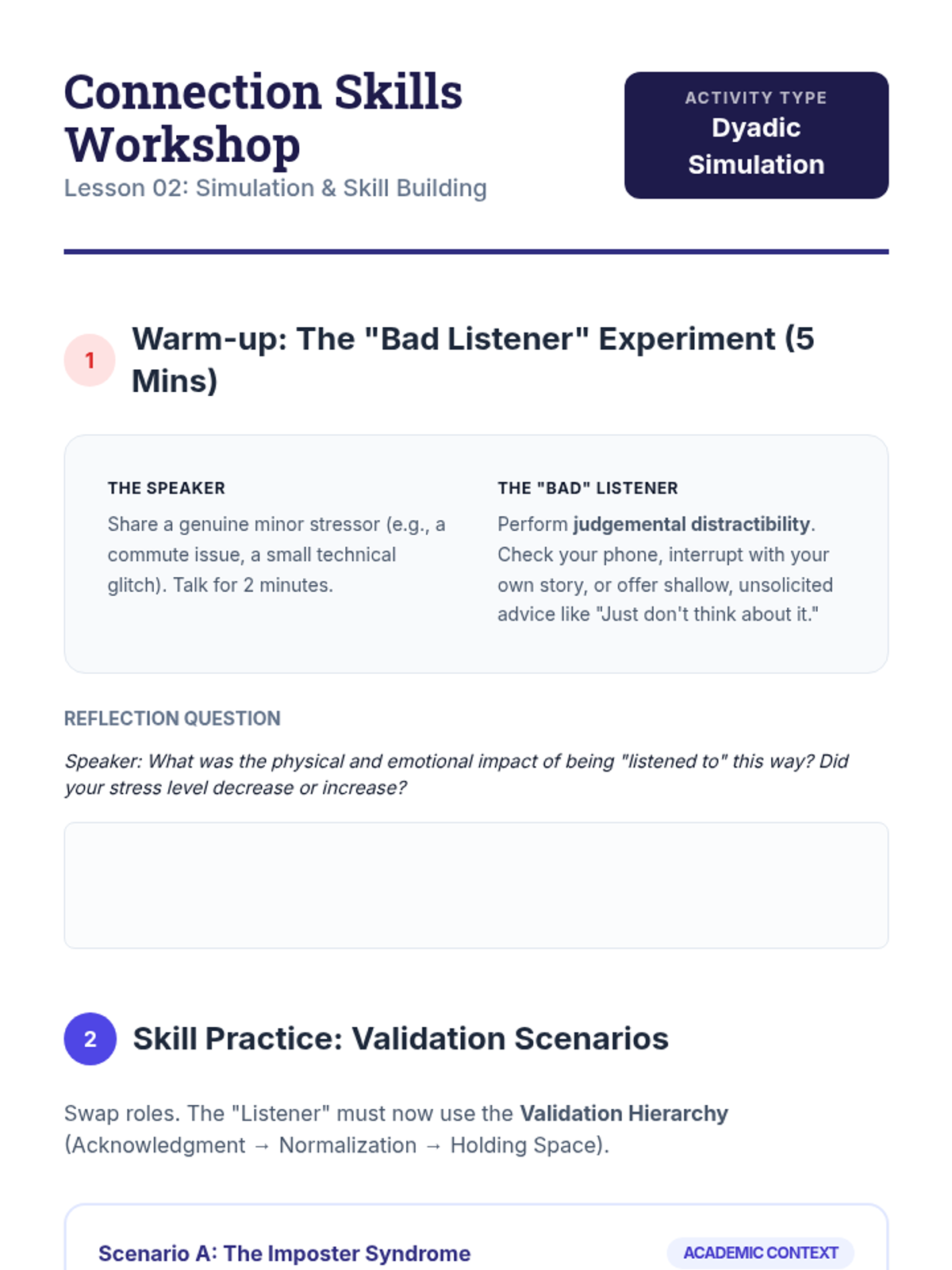
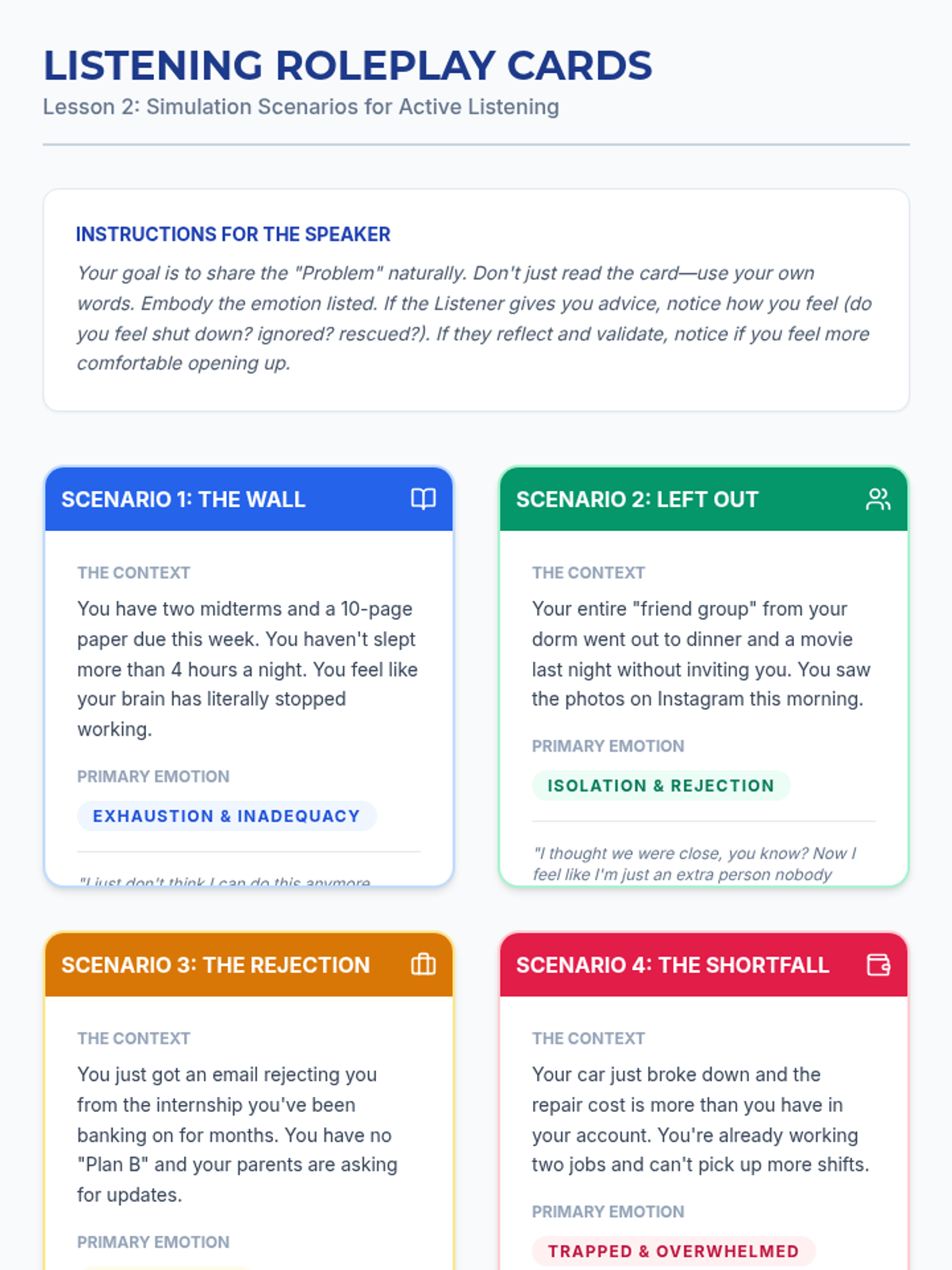
Practical workshop on active listening, validation, and holding space for peers without the pressure to provide immediate solutions.
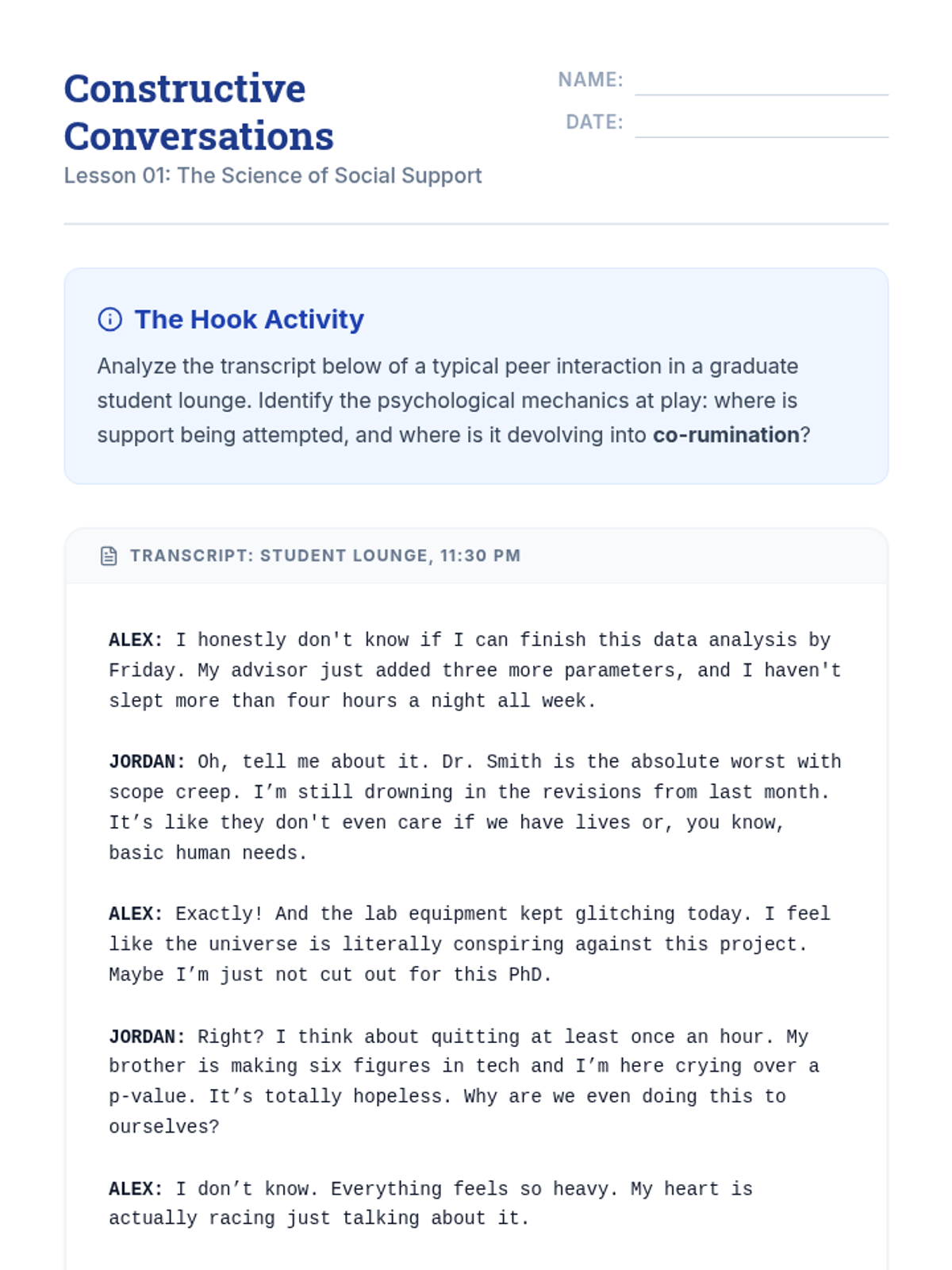
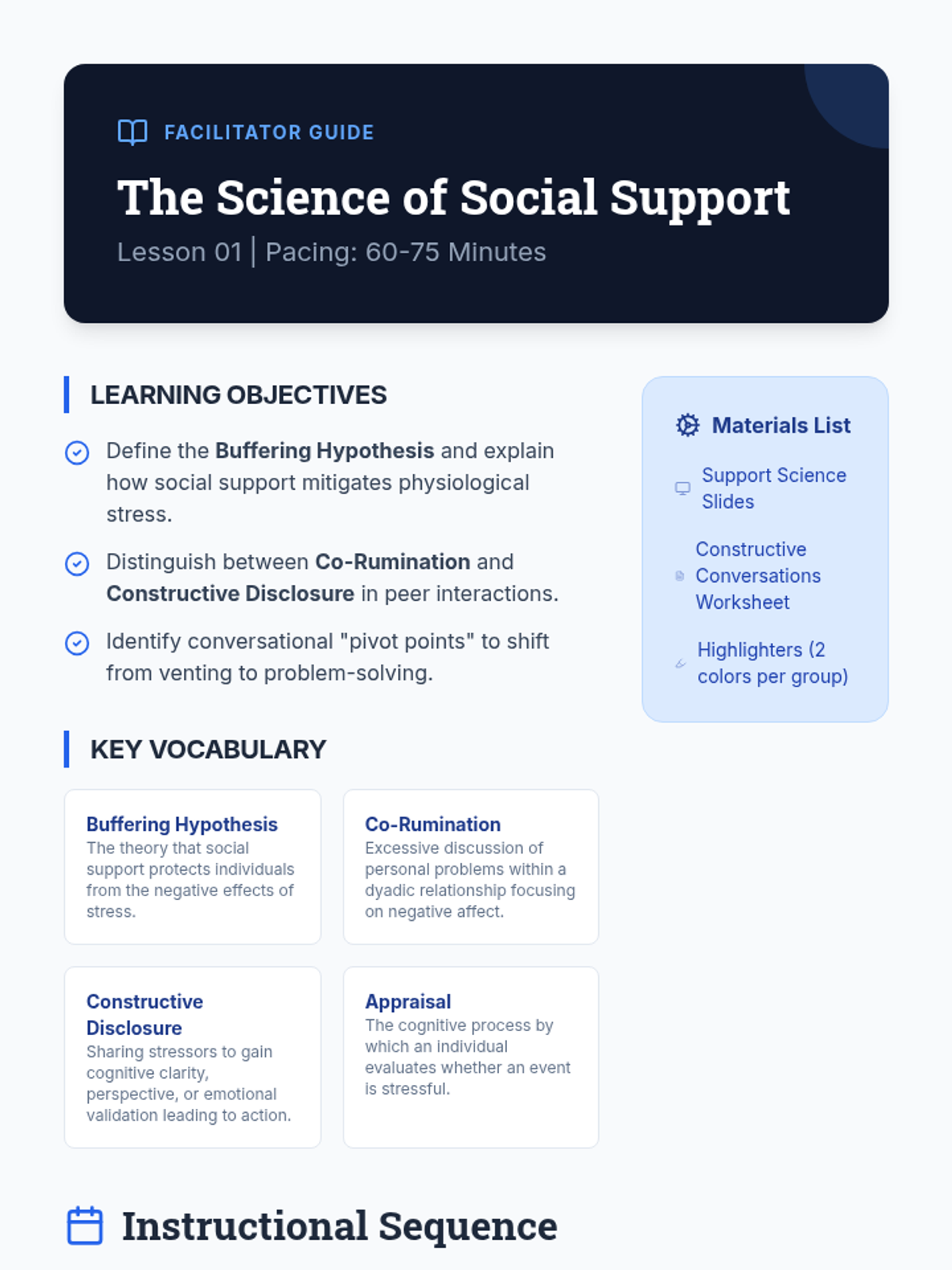
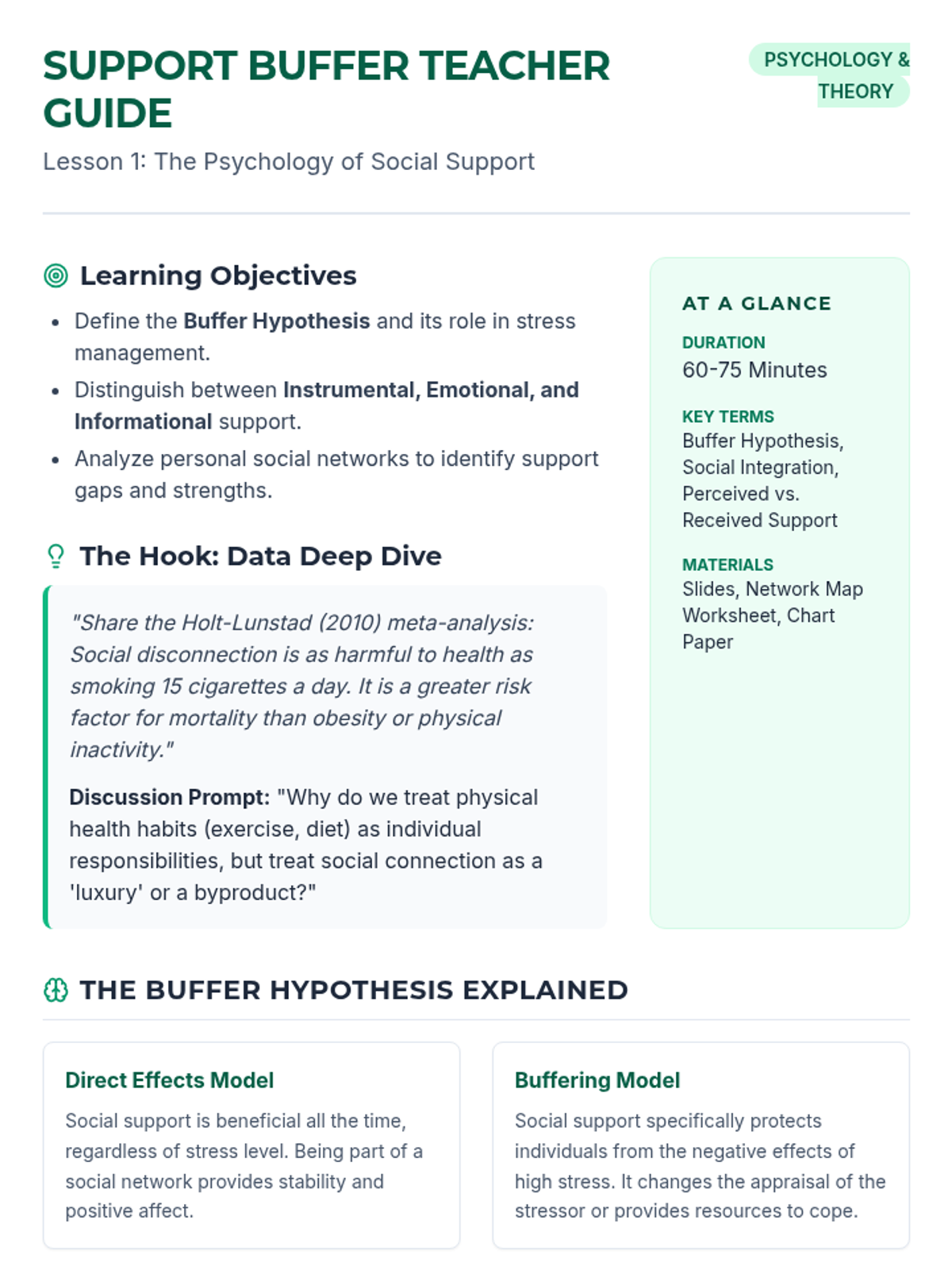
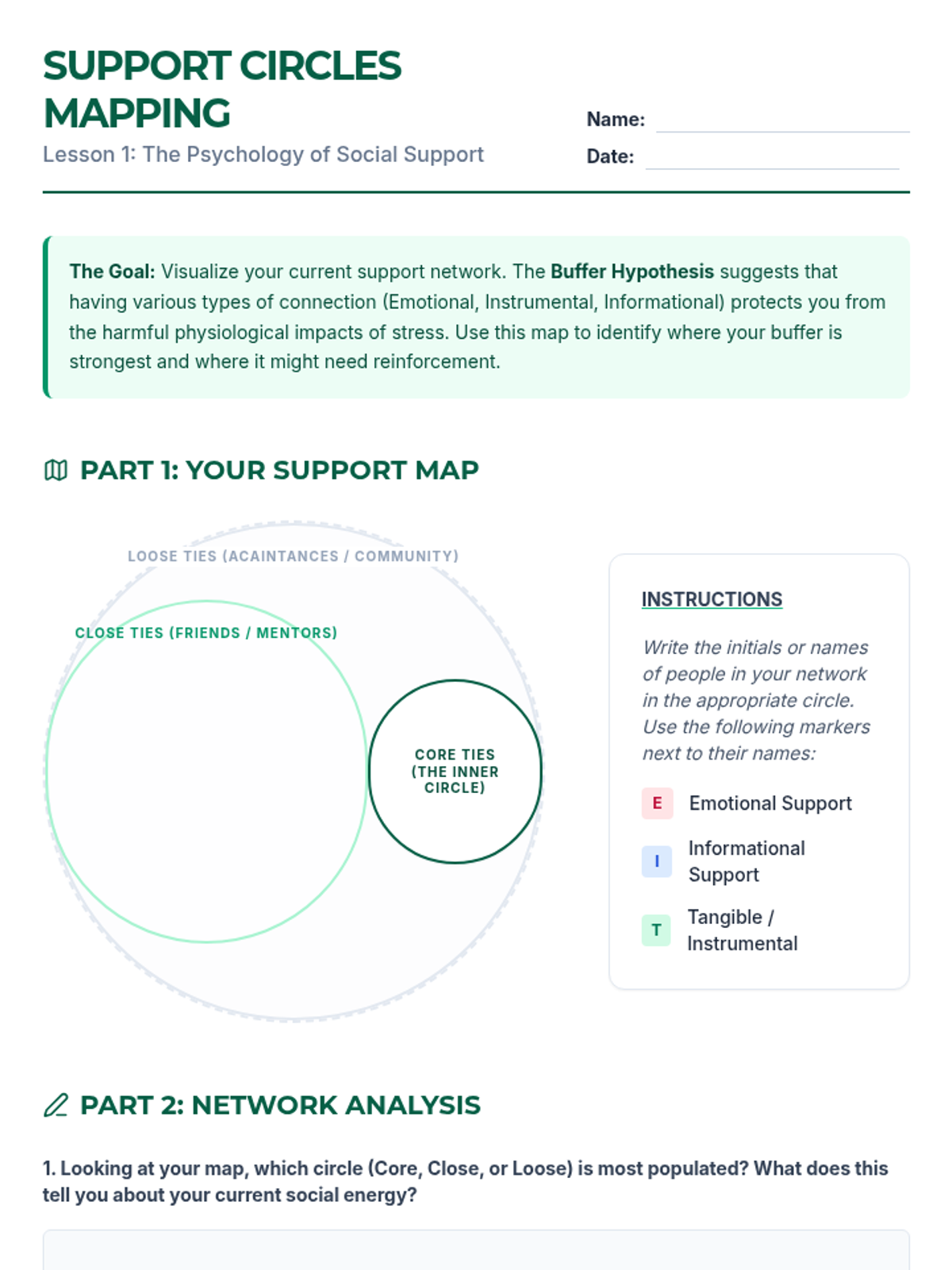
Examines the buffering hypothesis and the psychological mechanics of how social connection mitigates stress, contrasting co-rumination with constructive disclosure.
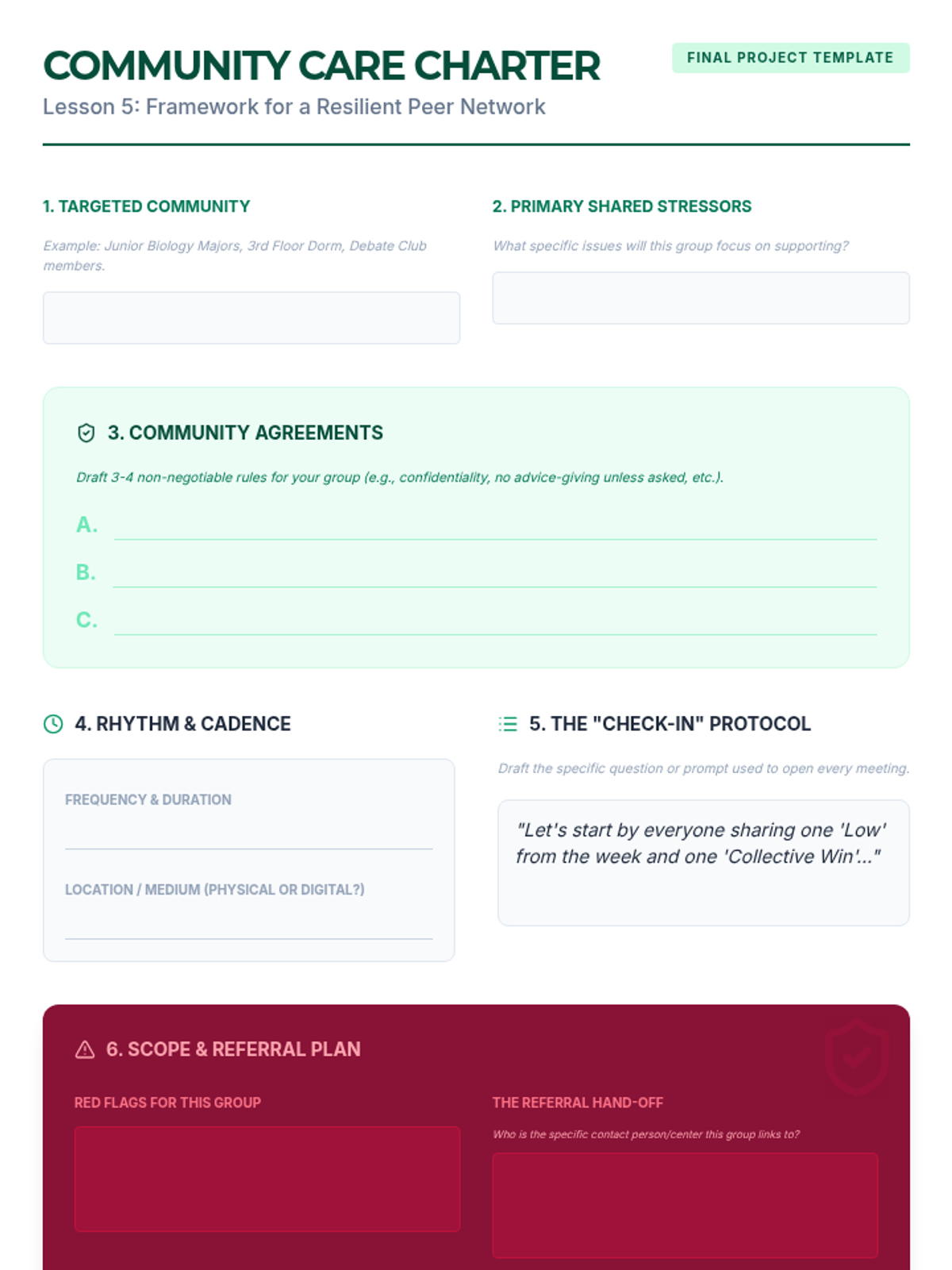
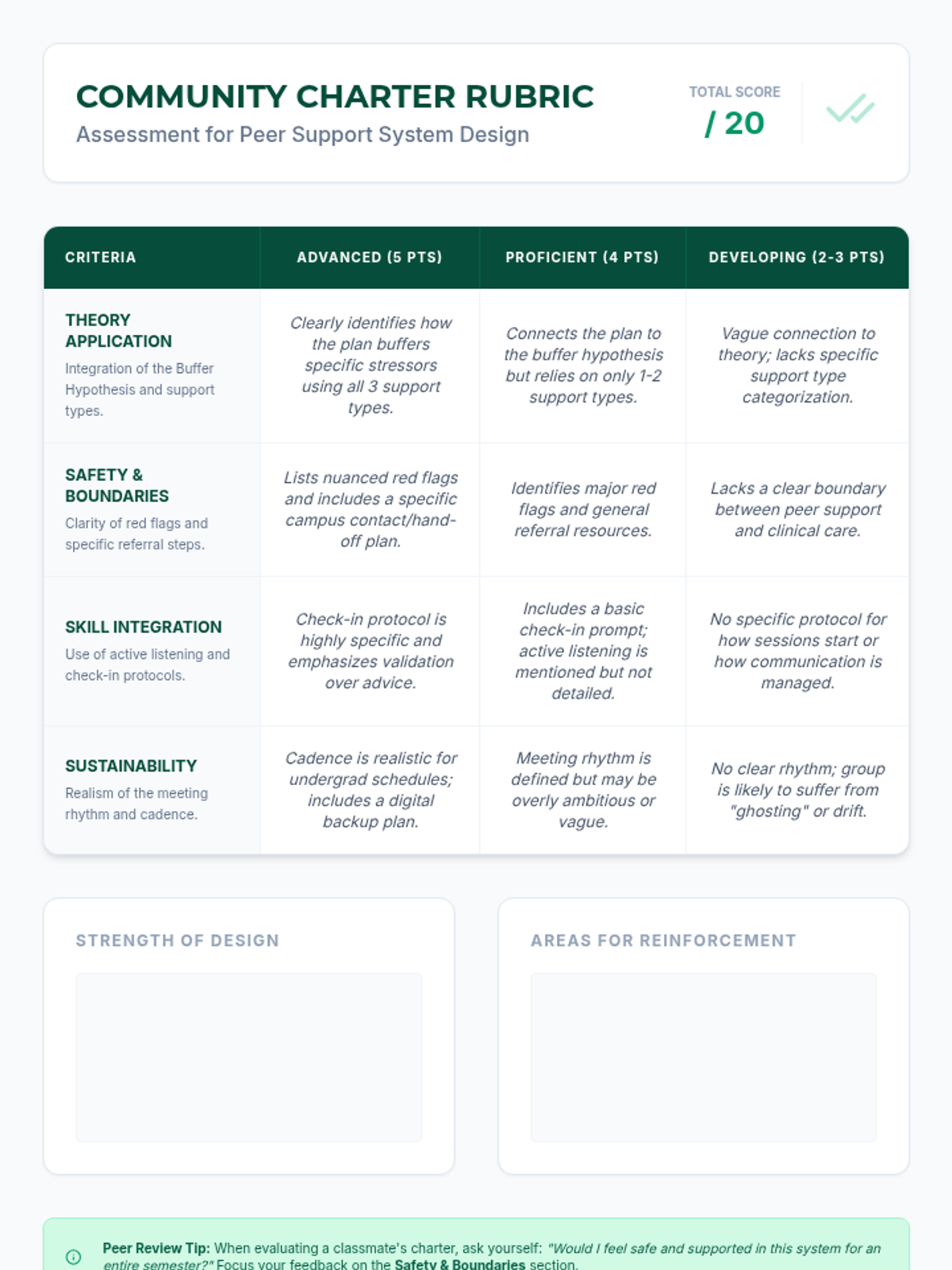
Students design a framework for a community care plan, producing a 'Community Charter' for peer support in a specific campus context.
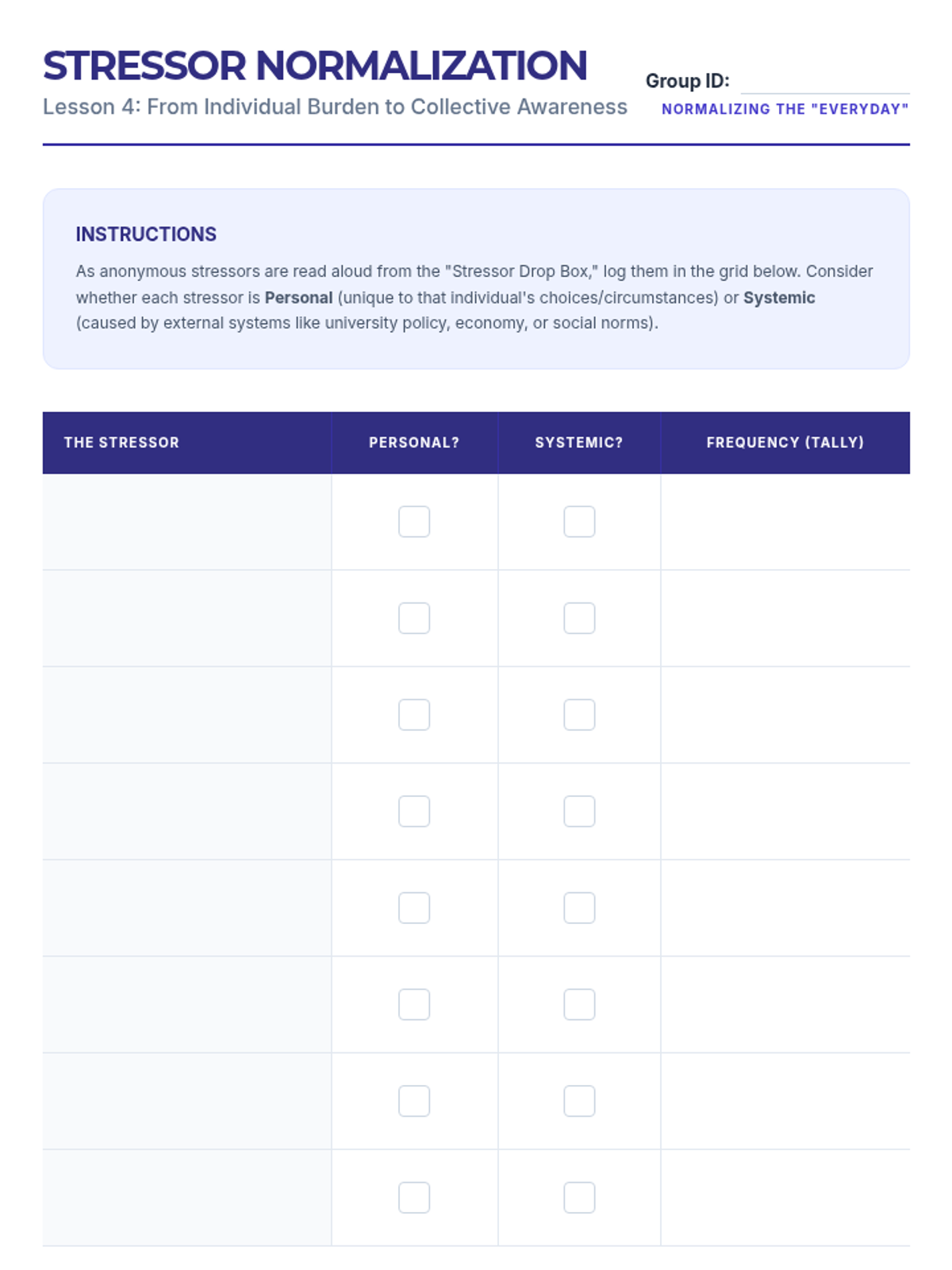
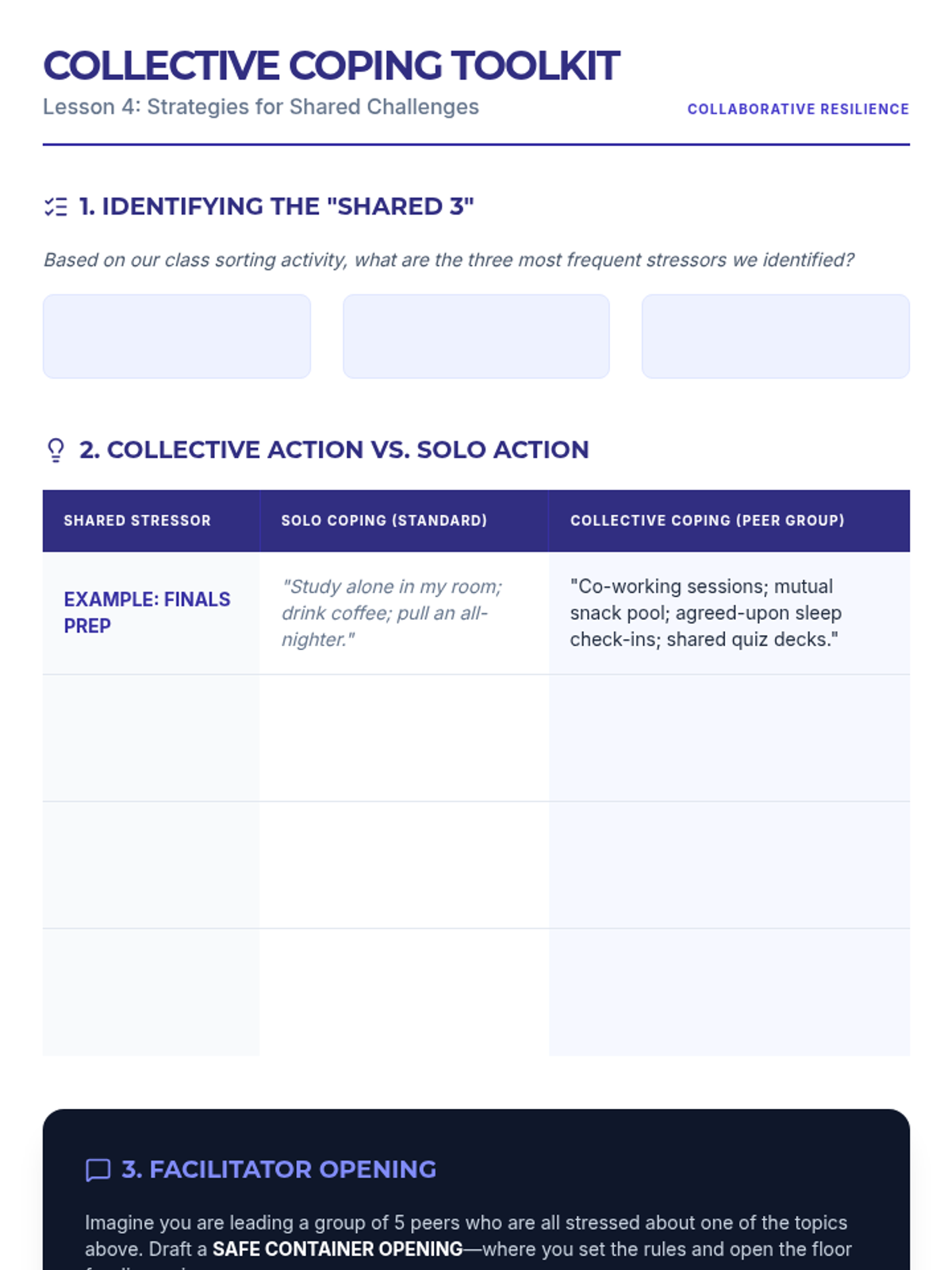
A facilitated dialogue session focusing on common undergraduate stressors, practicing normalization and collective coping strategies.
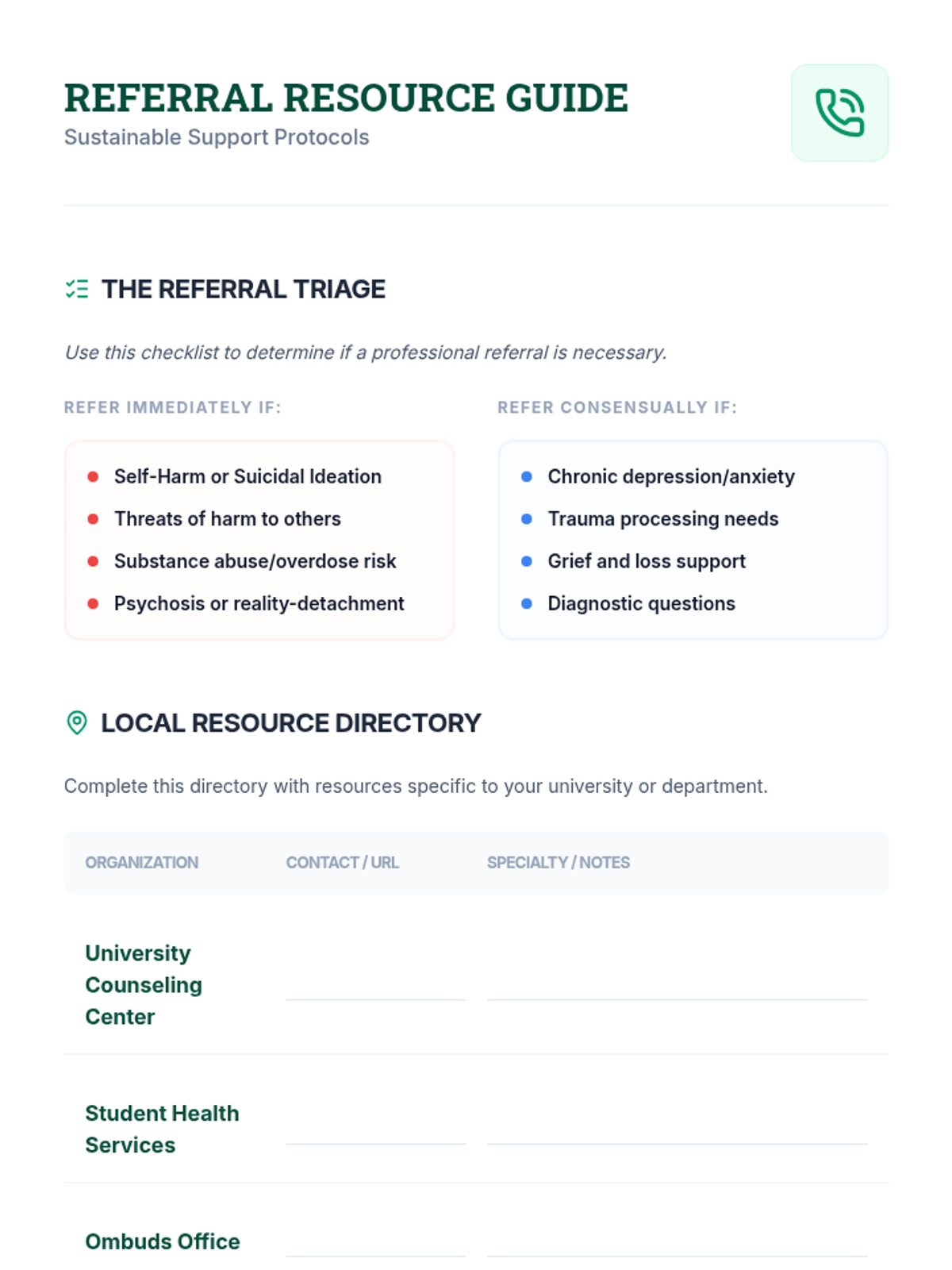
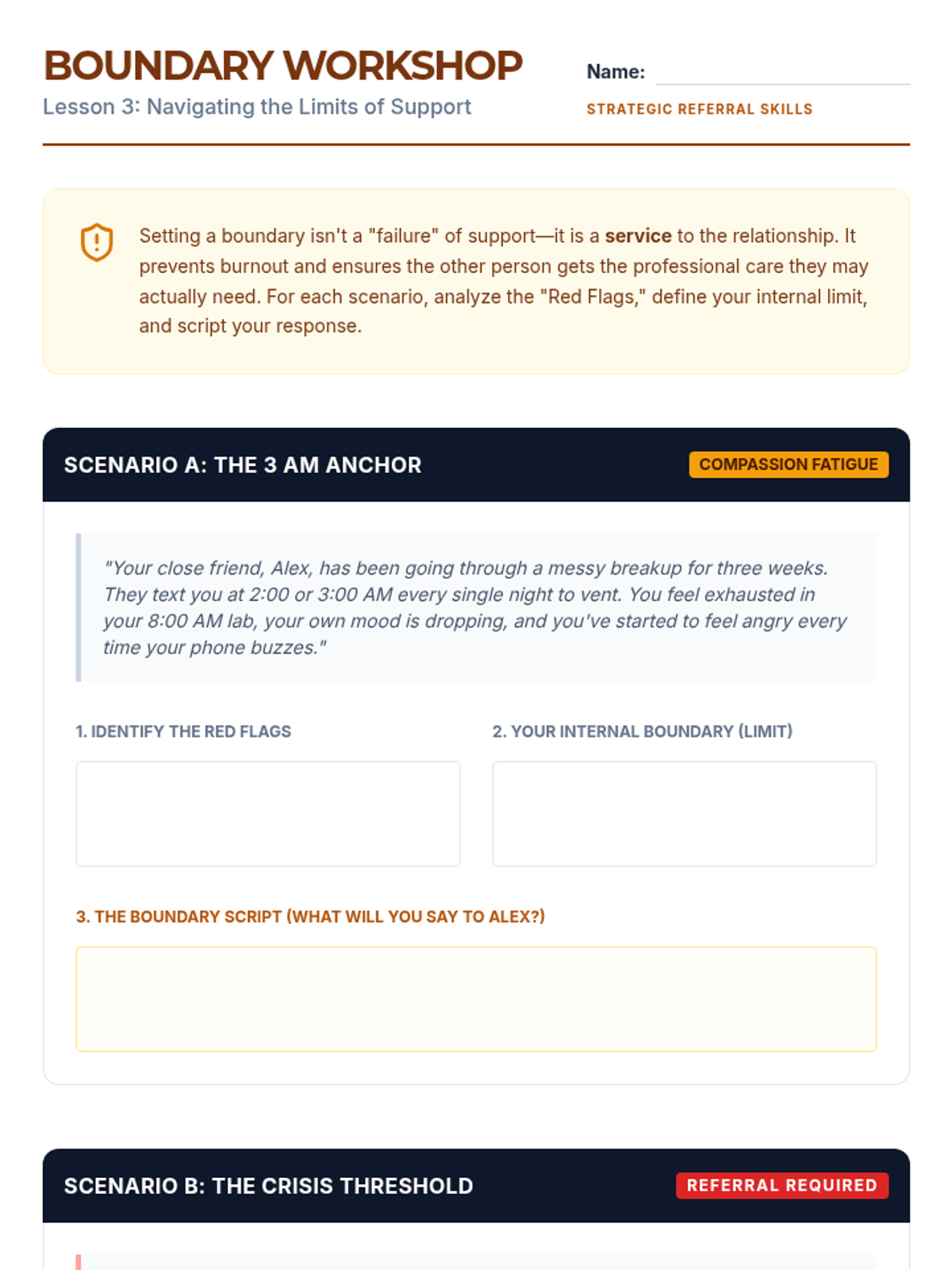
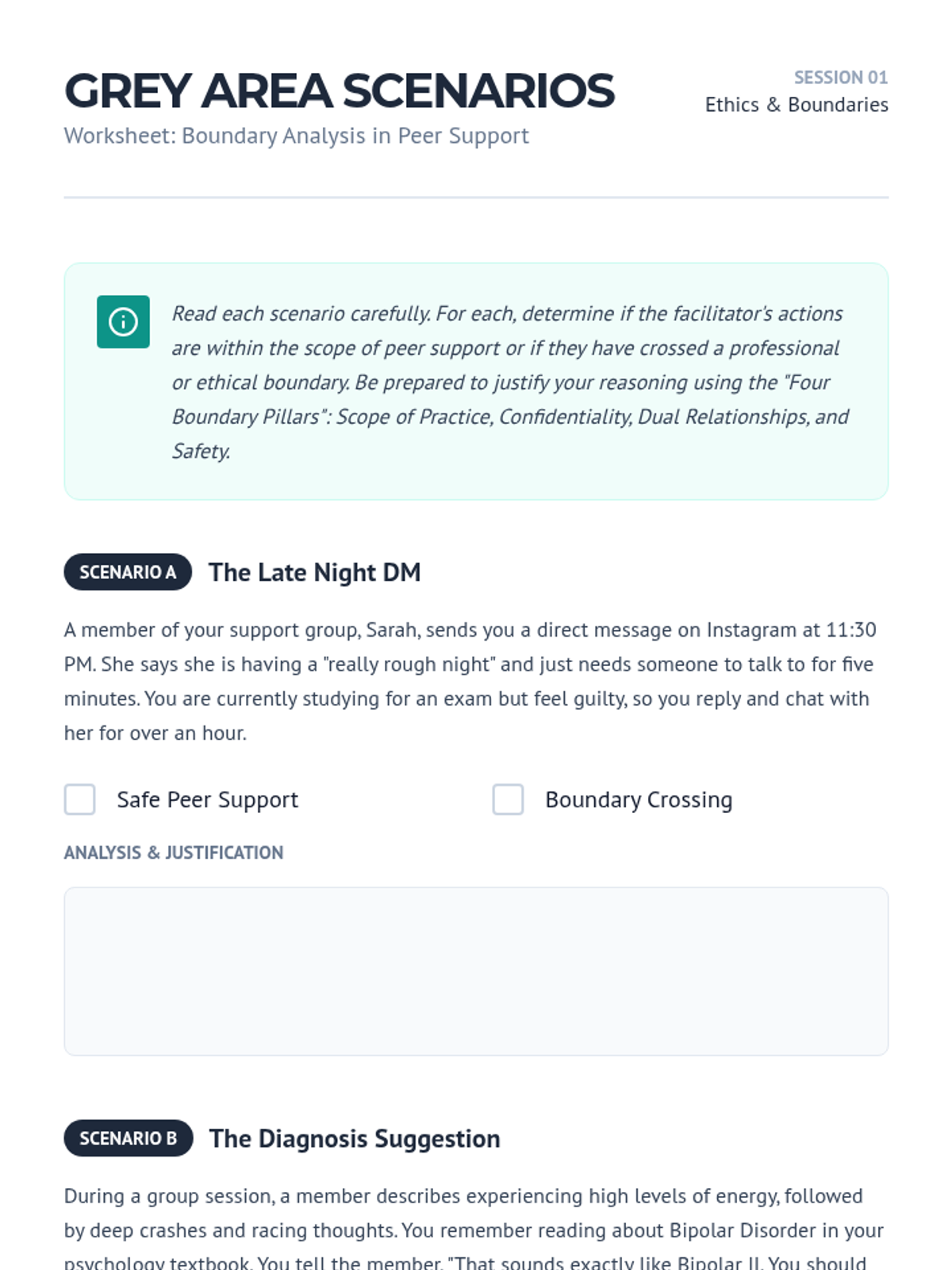
Training on recognizing the limits of peer support and when to refer to professionals, with a focus on setting emotional boundaries to prevent burnout.
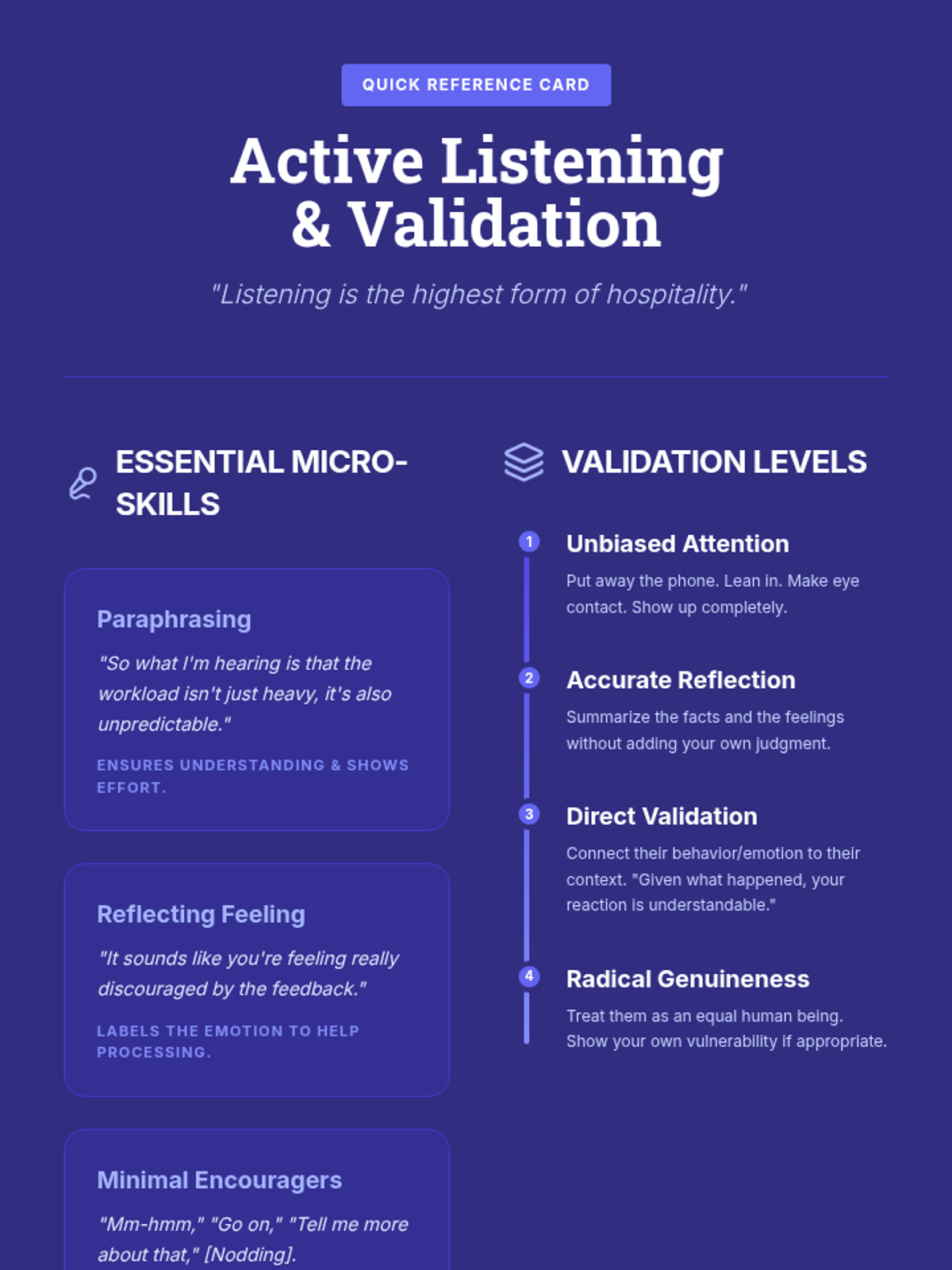
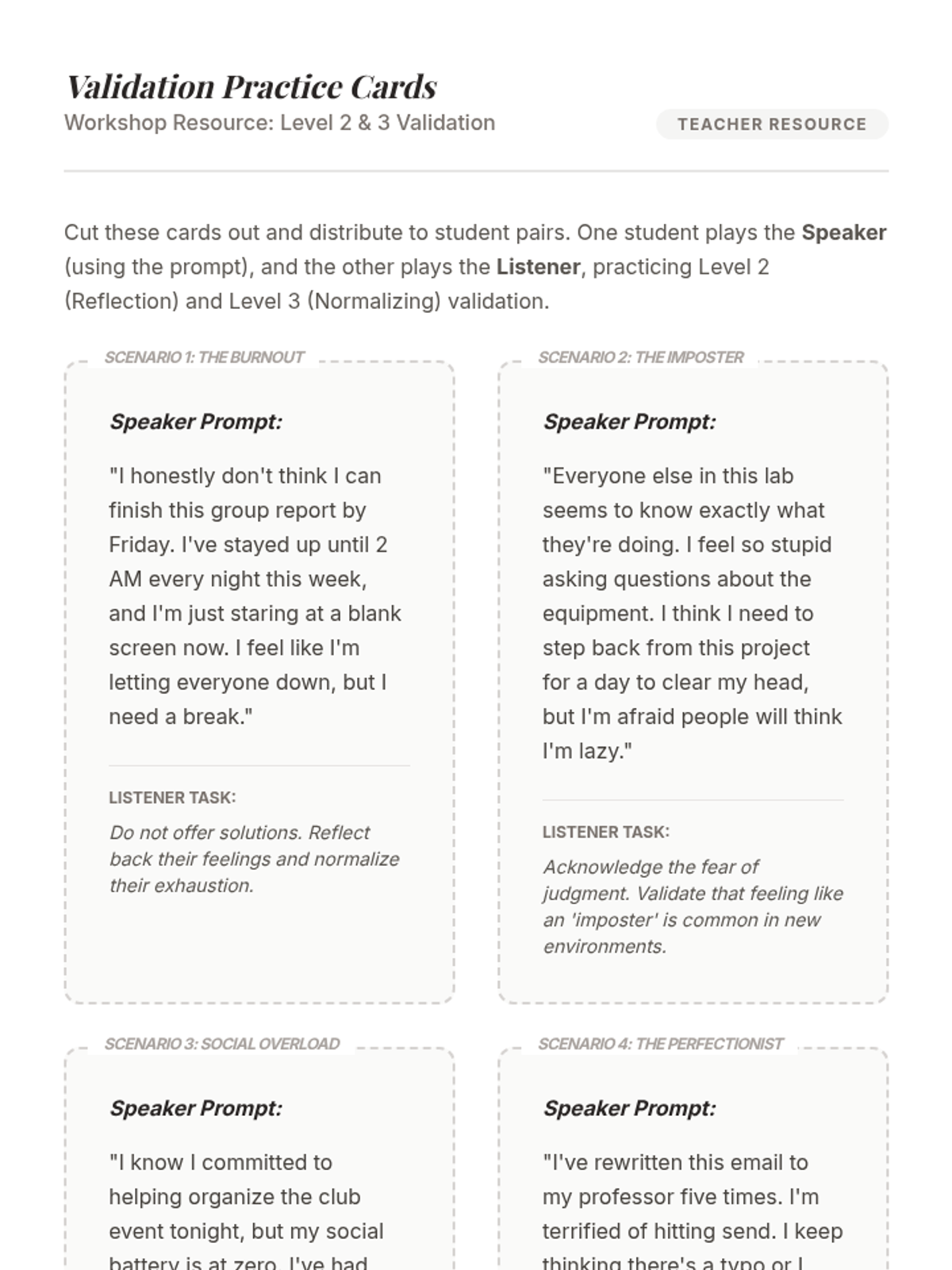
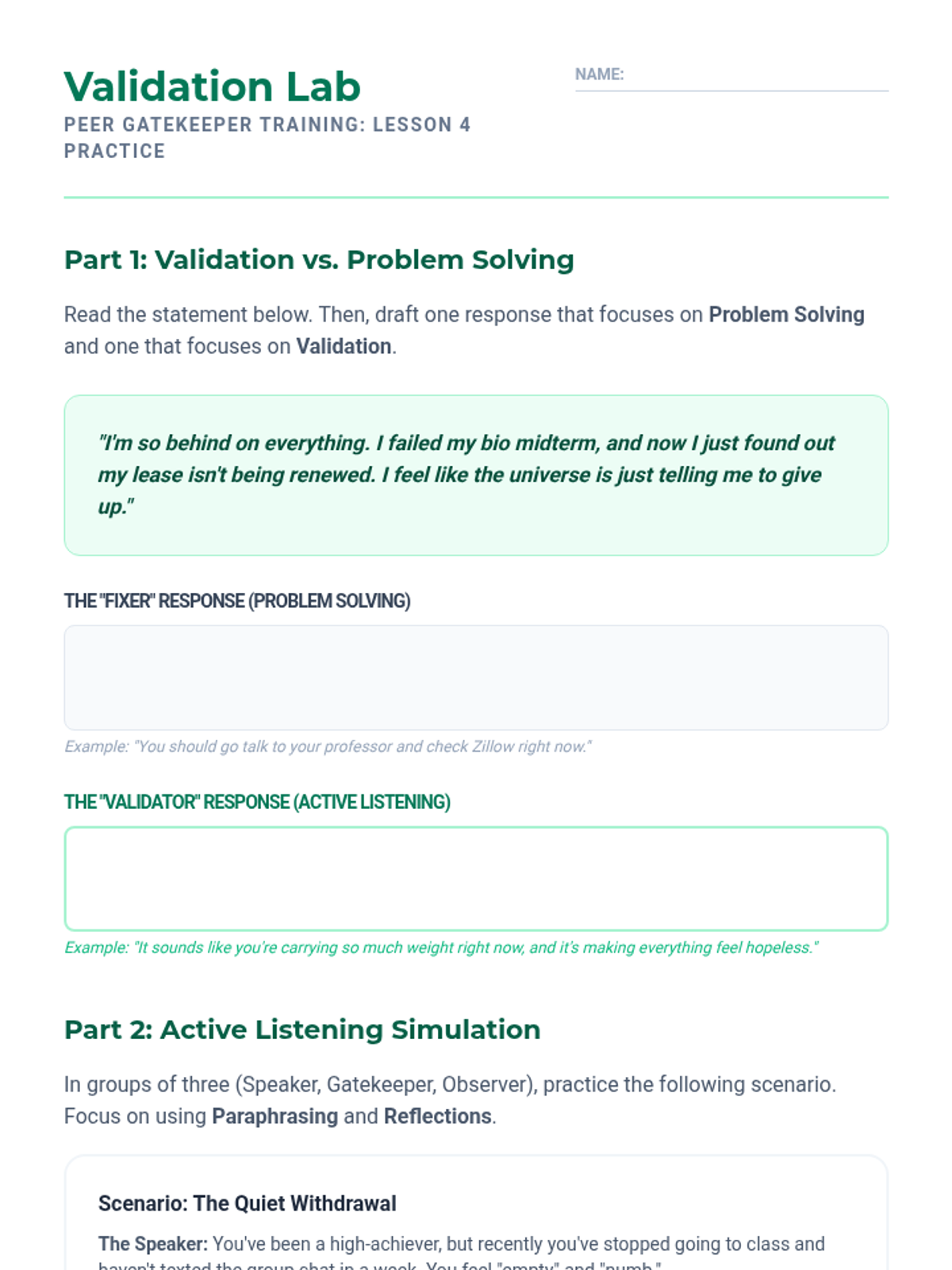
A skill-building session on non-judgmental listening, reflecting, and validating emotions, focusing on 'holding space' rather than problem-solving.
Students explore the 'Buffer Hypothesis' and how social connection mitigates the health impacts of stress, focusing on the difference between instrumental, emotional, and informational support.
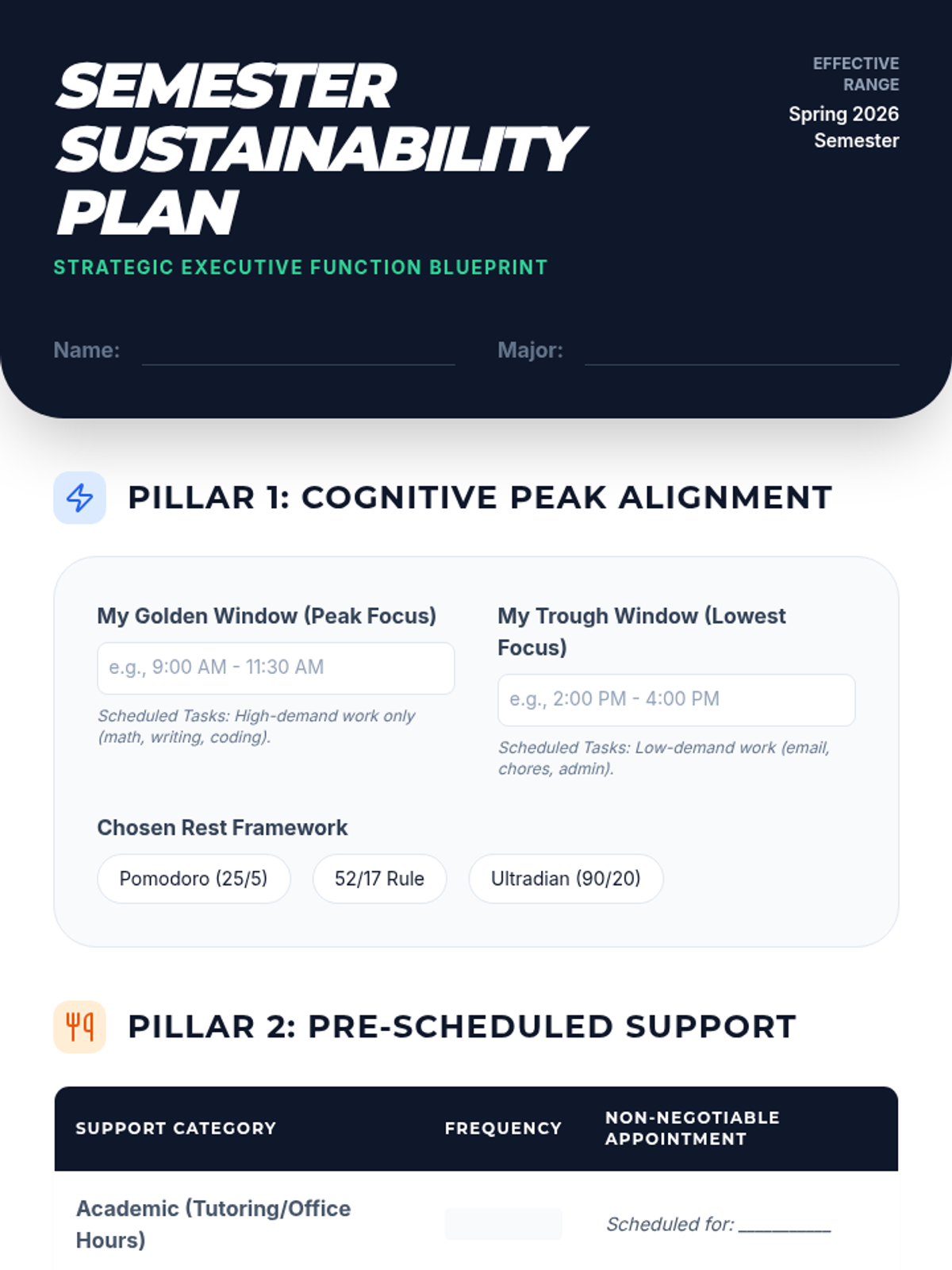
Synthesizing all concepts, students build a semester-long calendar that proactively schedules mental health days, tutoring sessions, and social support check-ins, treating them as non-negotiable appointments.
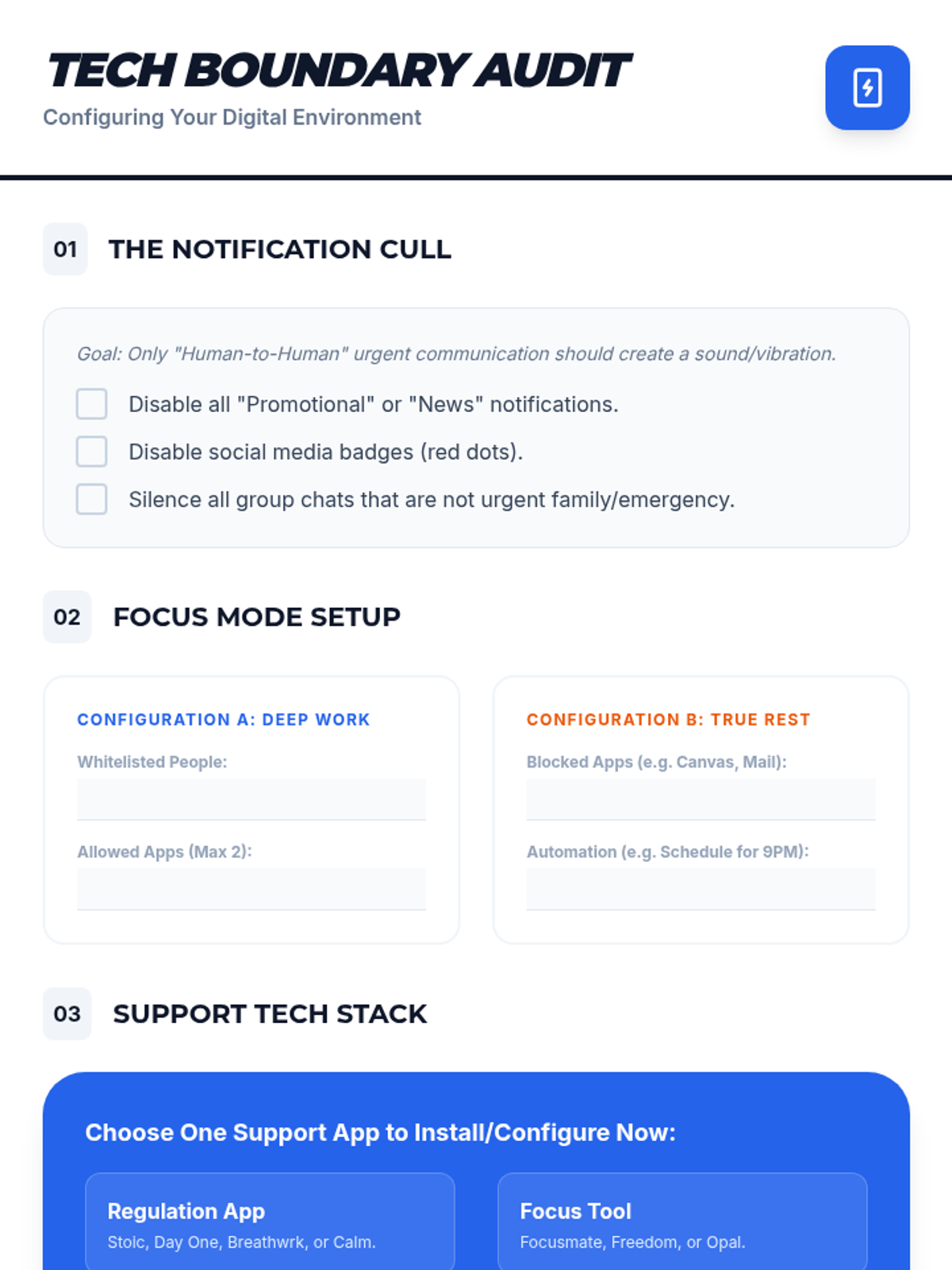
Students explore how technology can both hinder and help regulation. They set up digital wellbeing controls and identify apps that facilitate requesting support or managing anxiety.
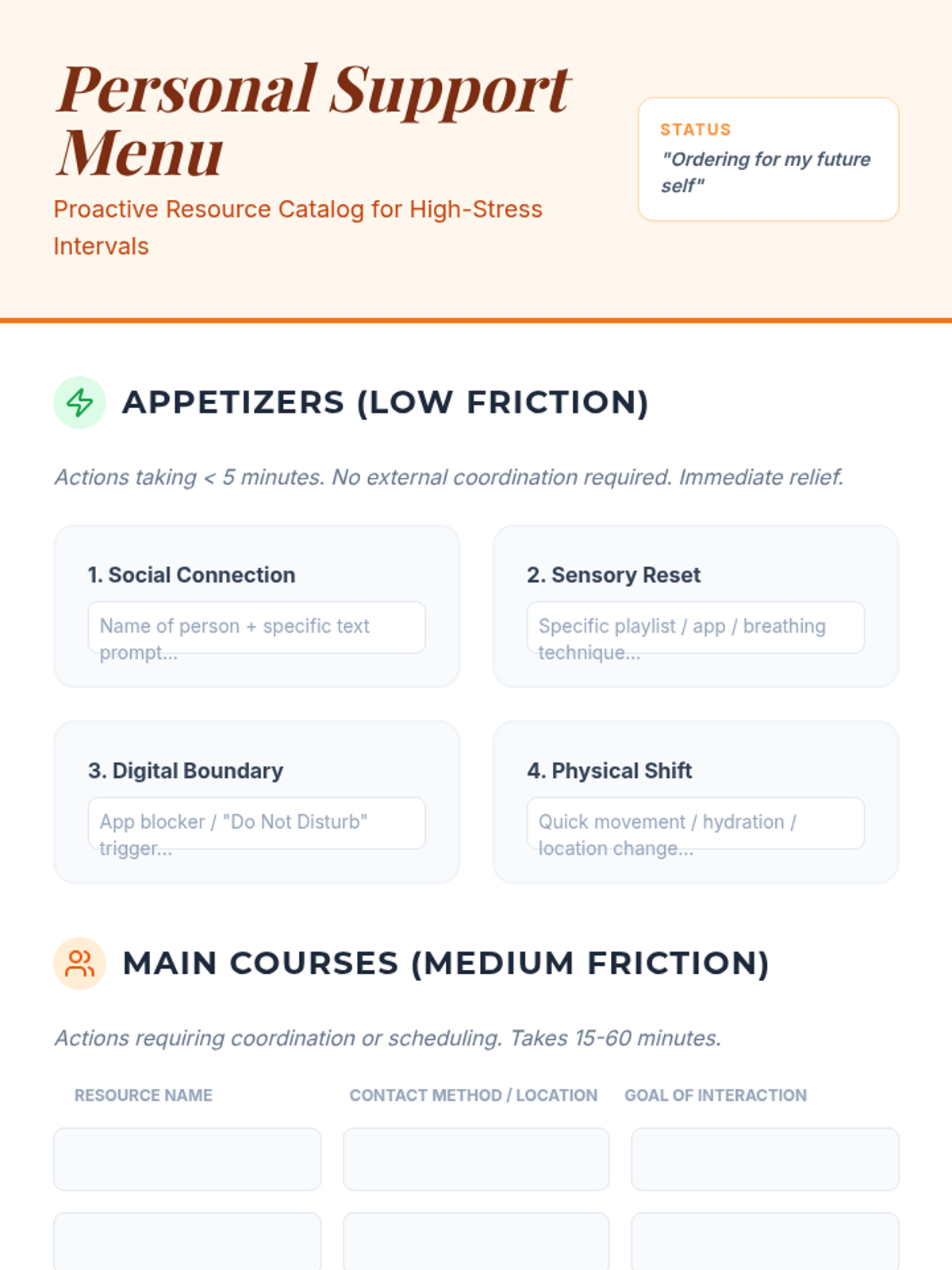
Students develop a categorized list of support options ranging from low-friction (texting a friend, using an app) to high-friction (therapy appointment, professor meeting). This reduces decision fatigue when help is actually needed.
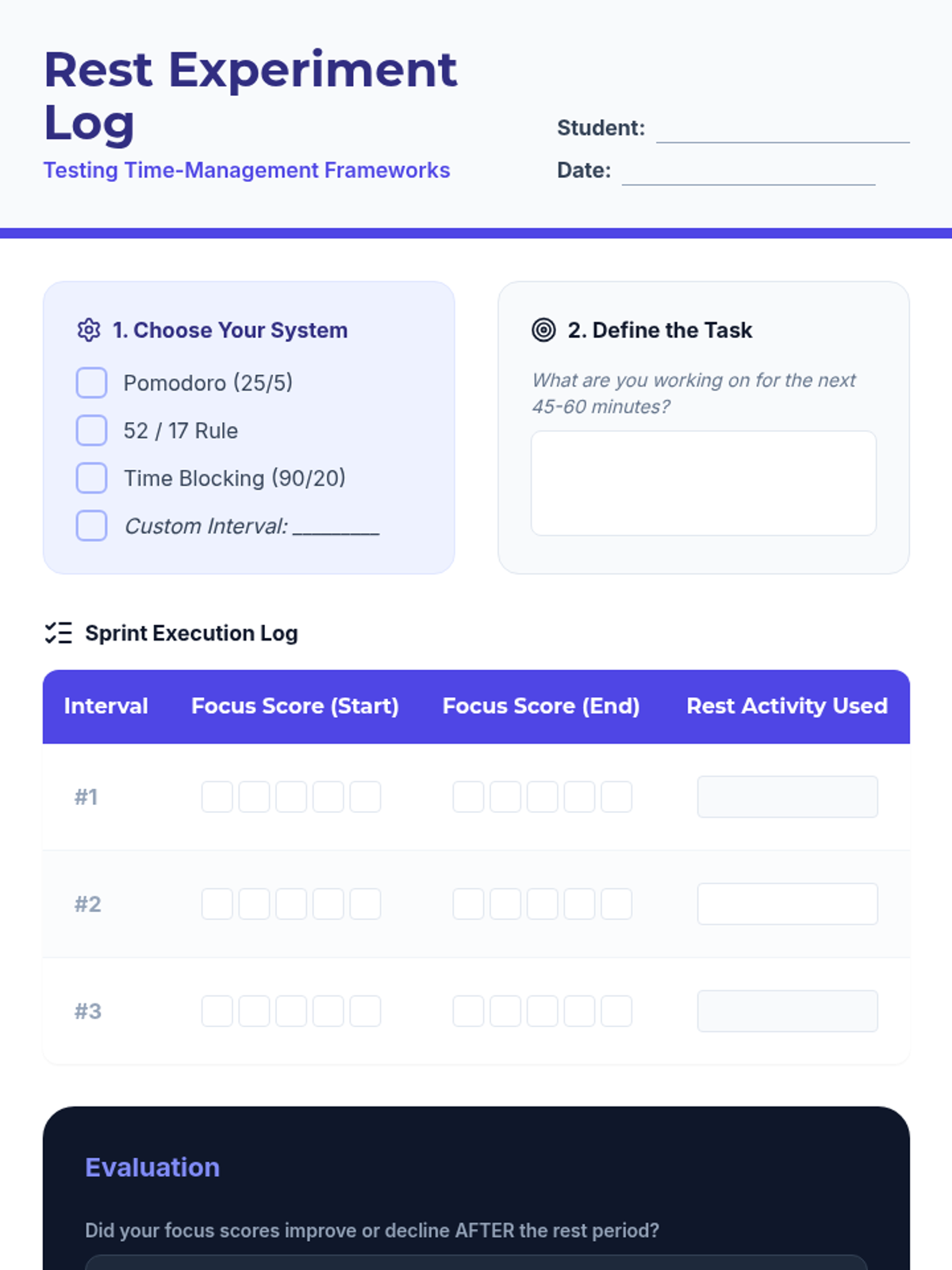
This lesson compares various time-management frameworks (Pomodoro, 52/17 rule, Time Blocking) that mandate breaks. Students experiment with one system during a study hall session to evaluate its efficacy.
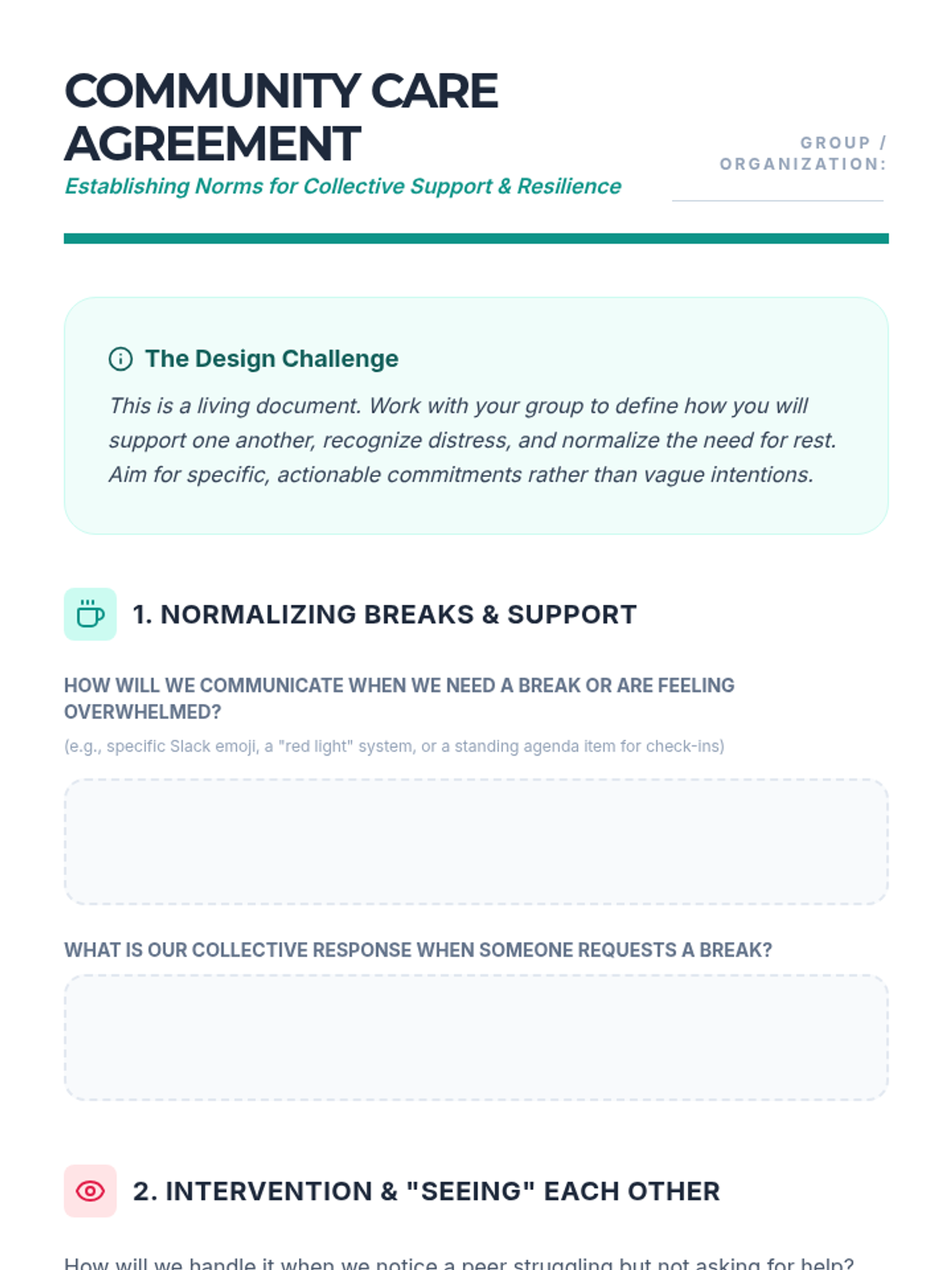
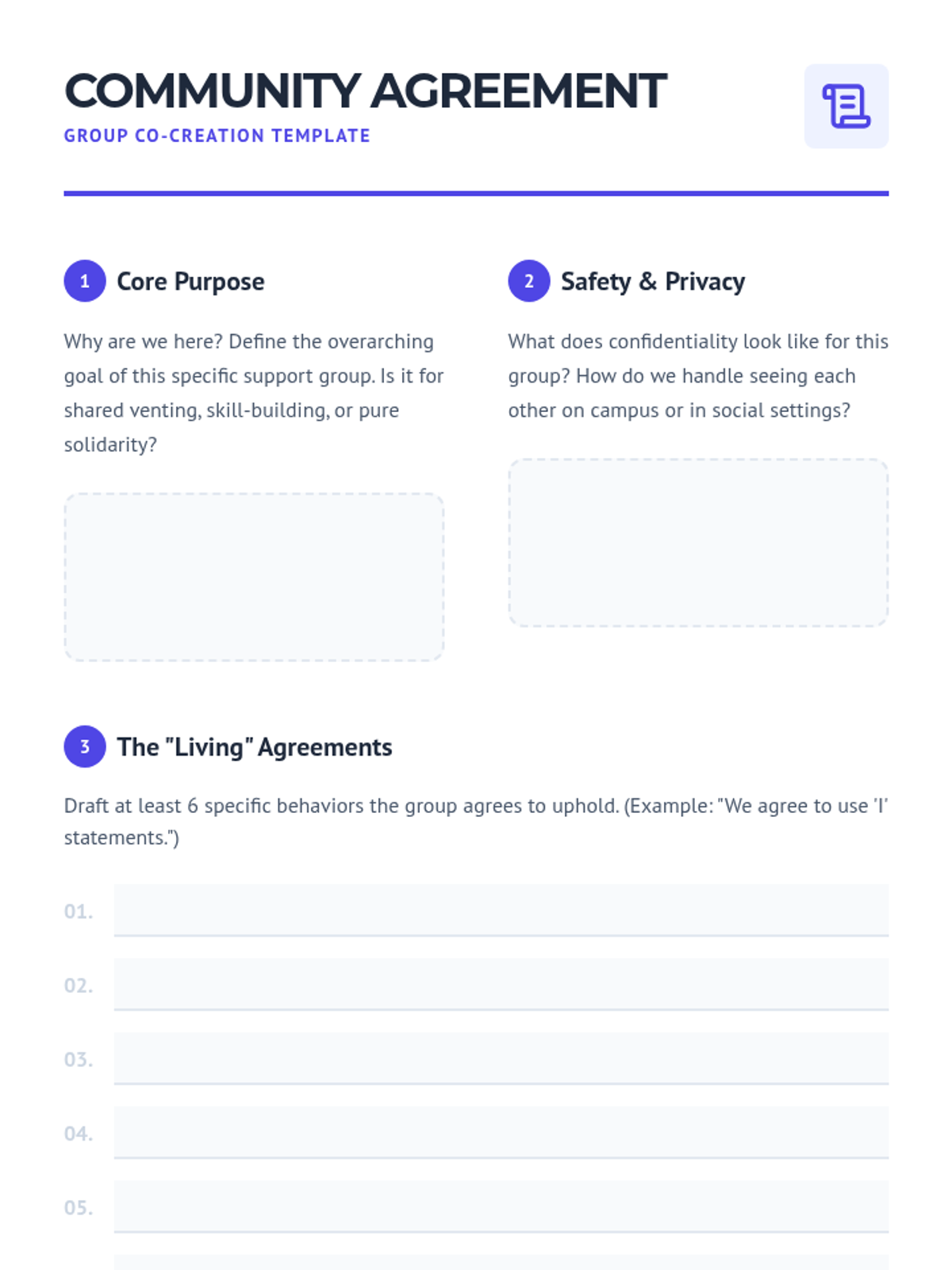
The sequence concludes with students designing a 'Community Care Agreement' to establish norms for mutual support and collective rest in their own communities.
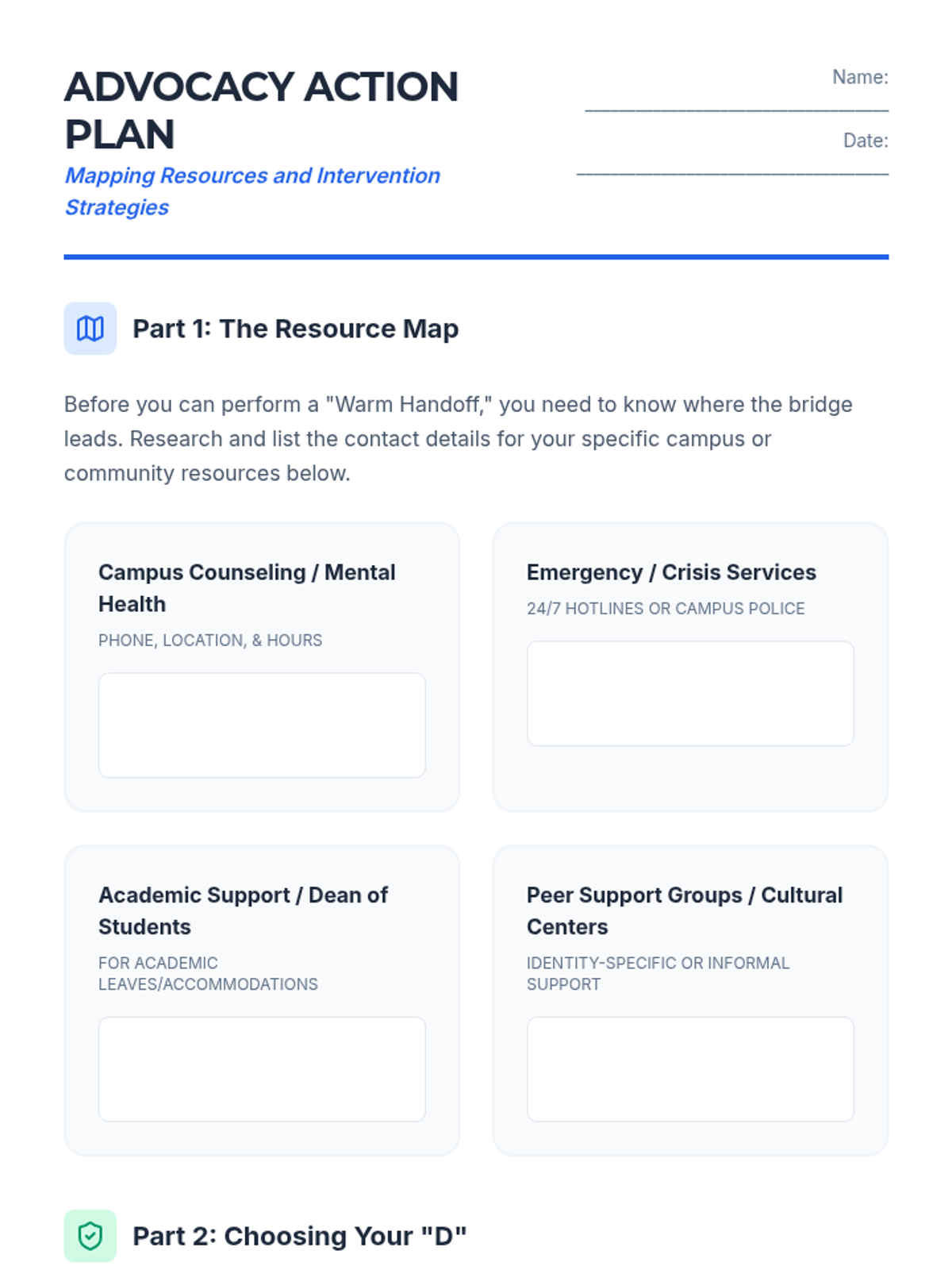
This lesson teaches specific bystander intervention strategies to bridge the gap between noticing distress and connecting a peer to resources.
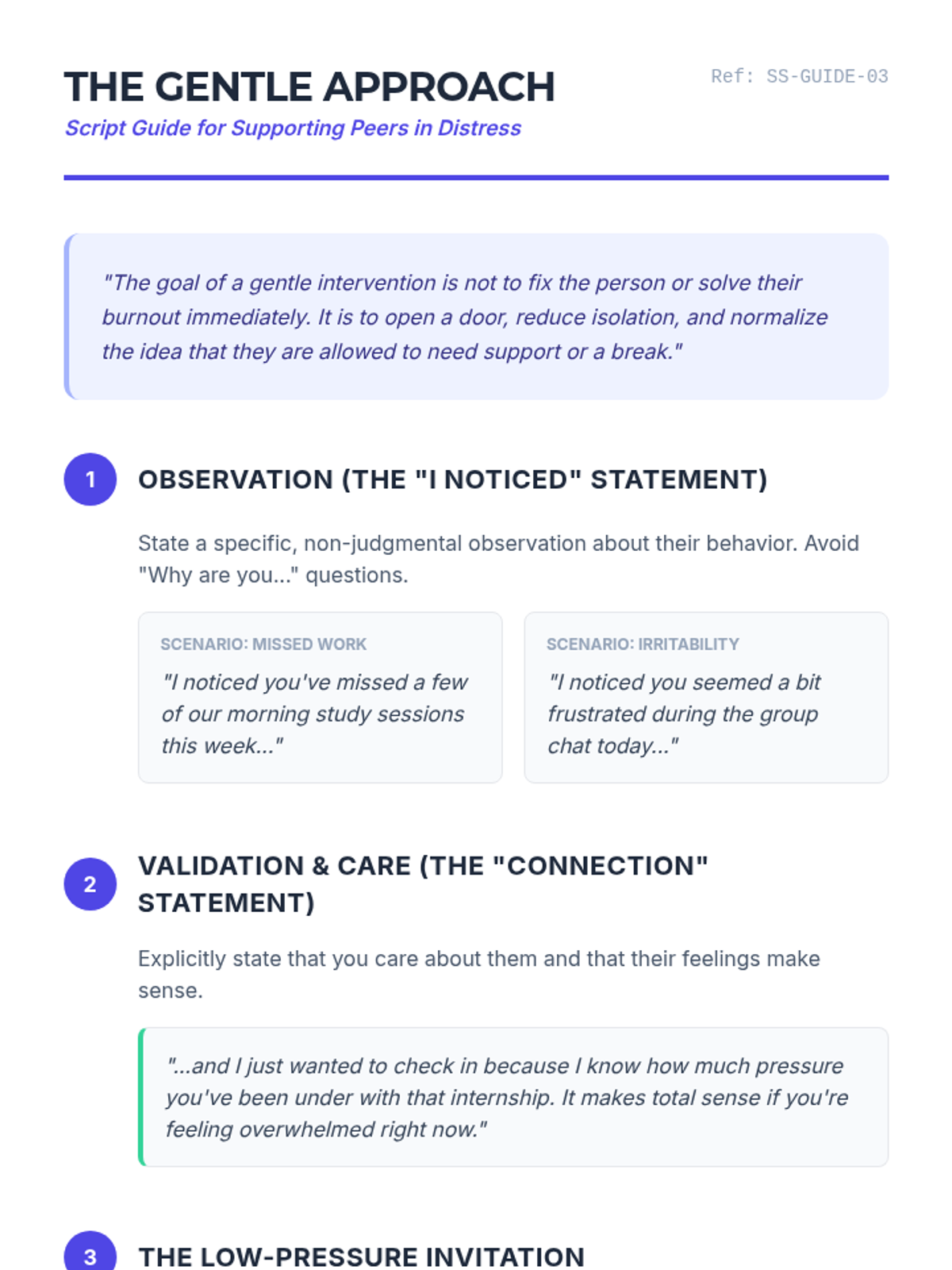
Students learn to identify subtle behavioral and non-verbal signs of distress in their peers and practice gentle intervention strategies.
A workshop focusing on the listening skills required to support peers, emphasizing validation over immediate problem-solving.
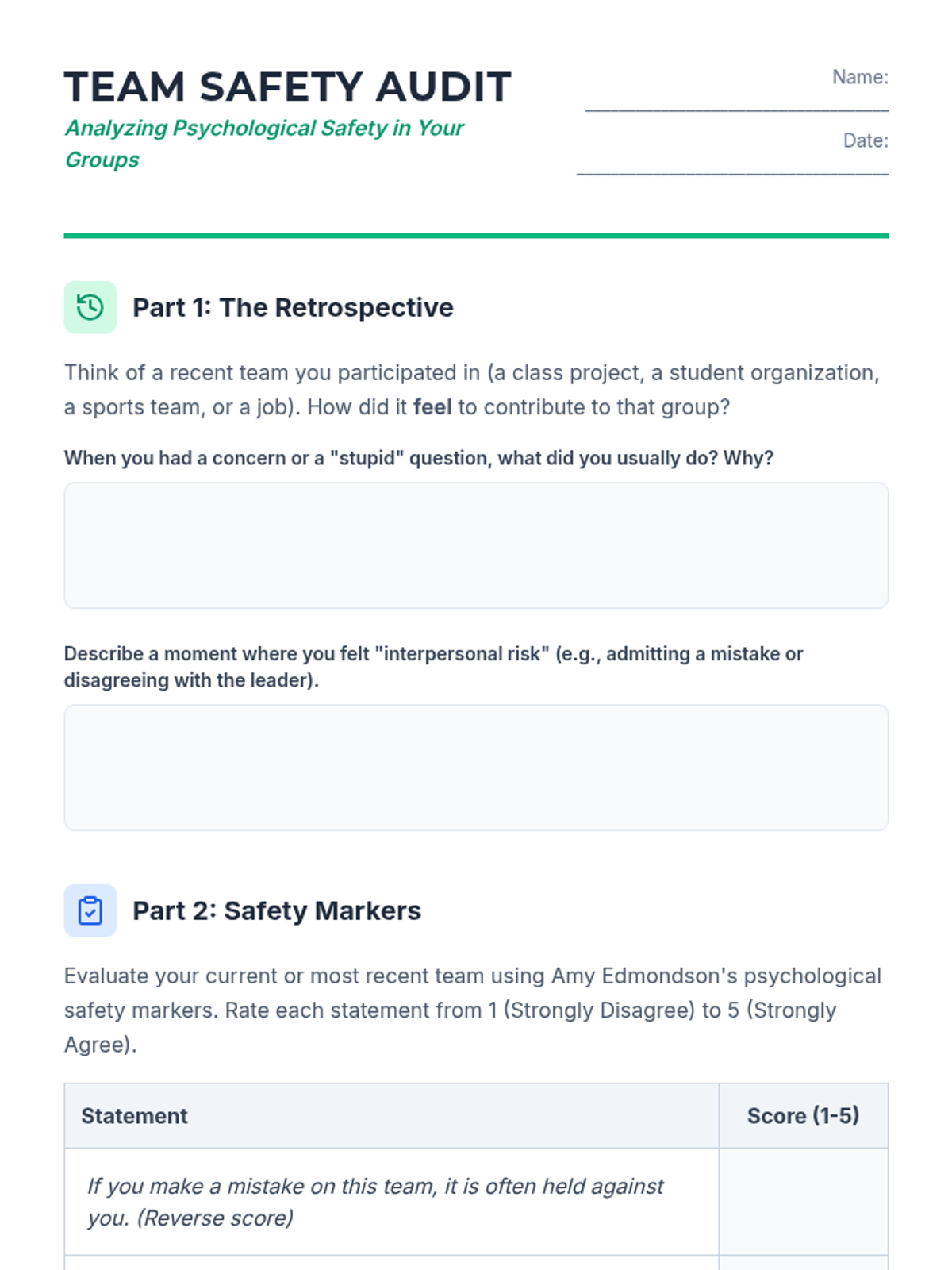
Students define psychological safety and analyze its impact on team performance, using Google's 'Project Aristotle' as a primary case study.
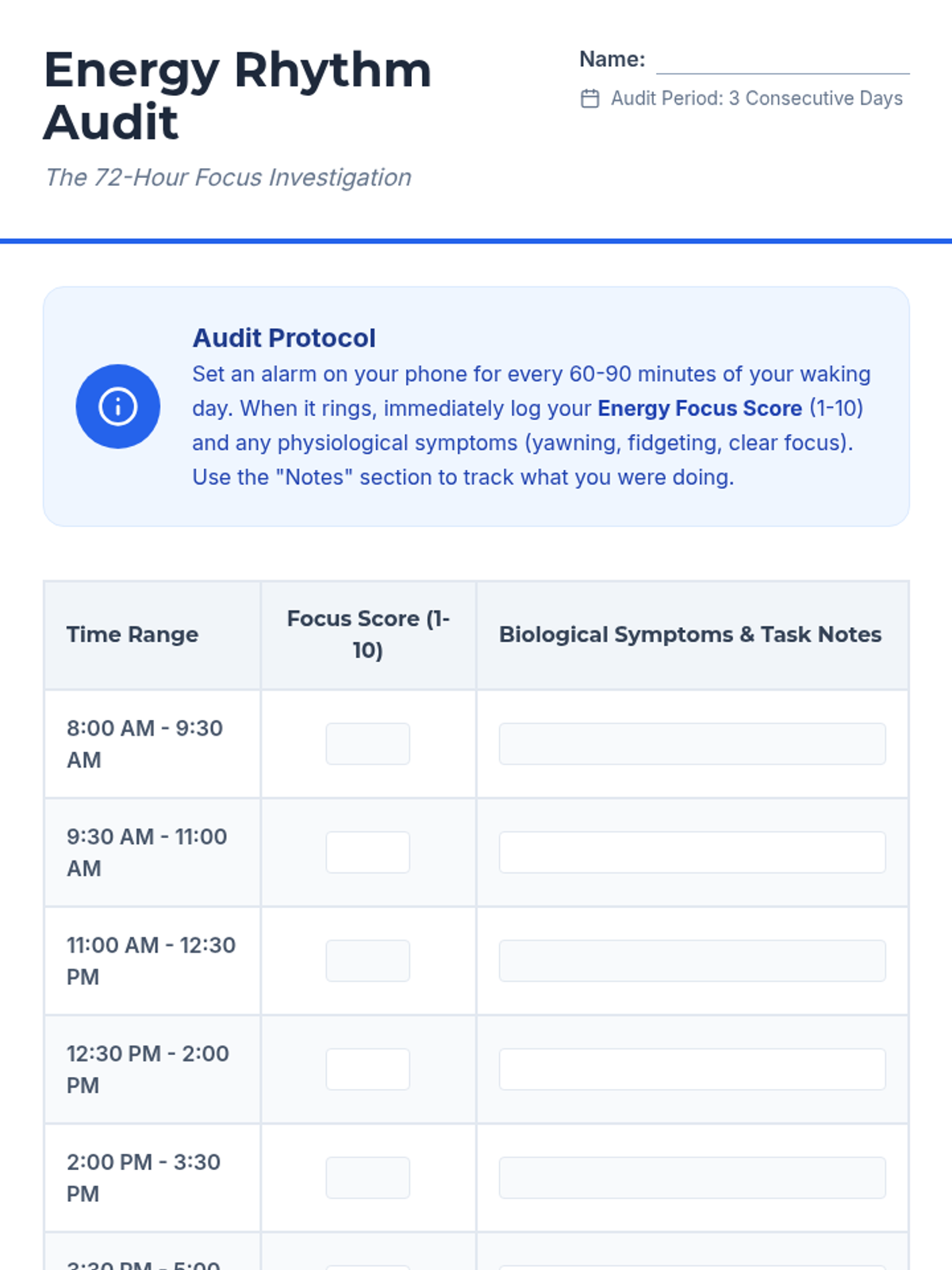
Students investigate the biological basis of focus through the concept of Ultradian Rhythms and conduct a three-day audit of their own energy levels to identify peak performance windows.
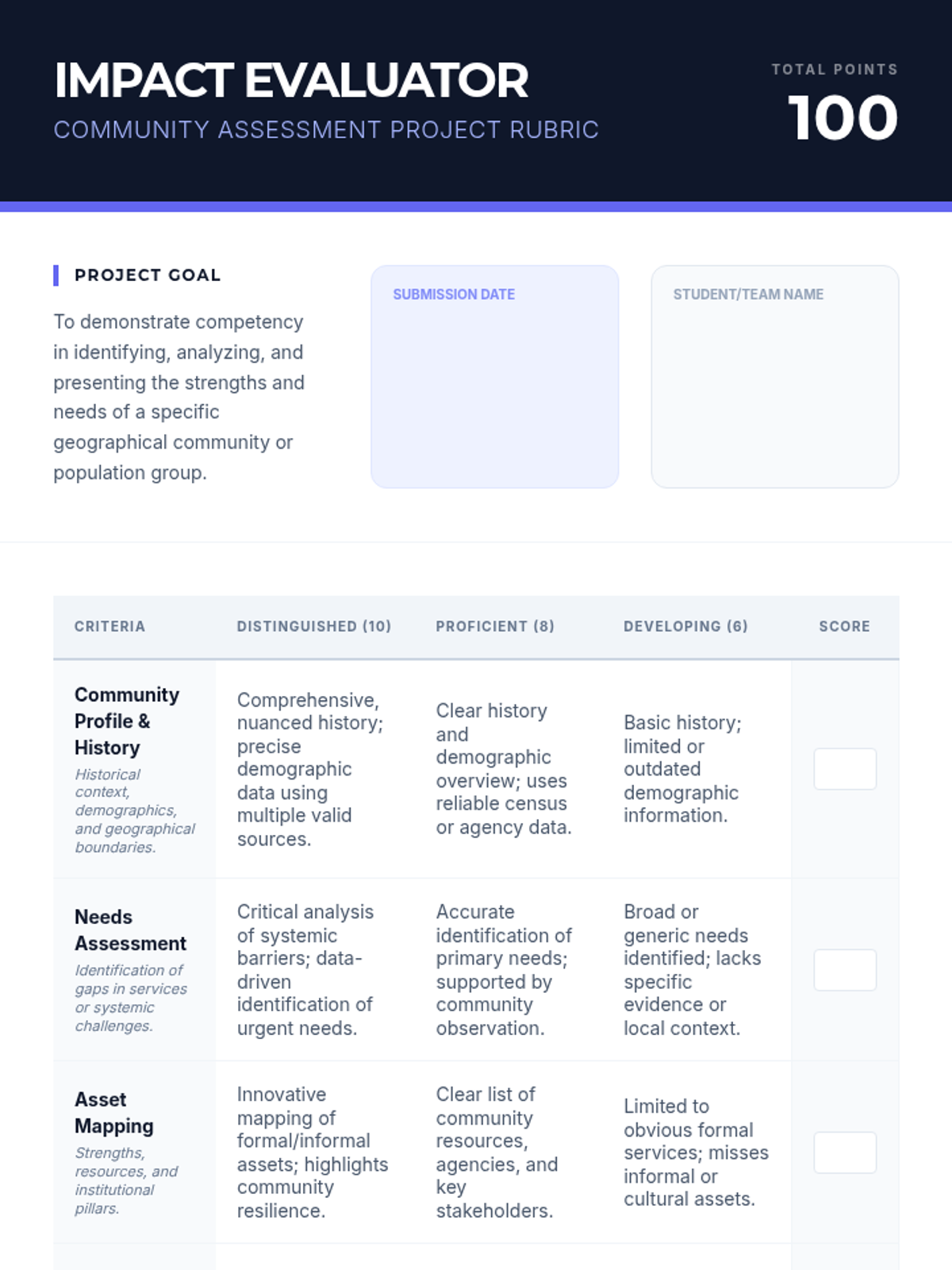
Develop the skills to assess community needs and assets, culminating in a professional-grade community assessment project.
Understand the principles of trauma-informed care and how to create safe, empowering environments for clients with history of trauma.
Learn the art and science of grant writing, from identifying funding sources to crafting compelling narratives for social programs.
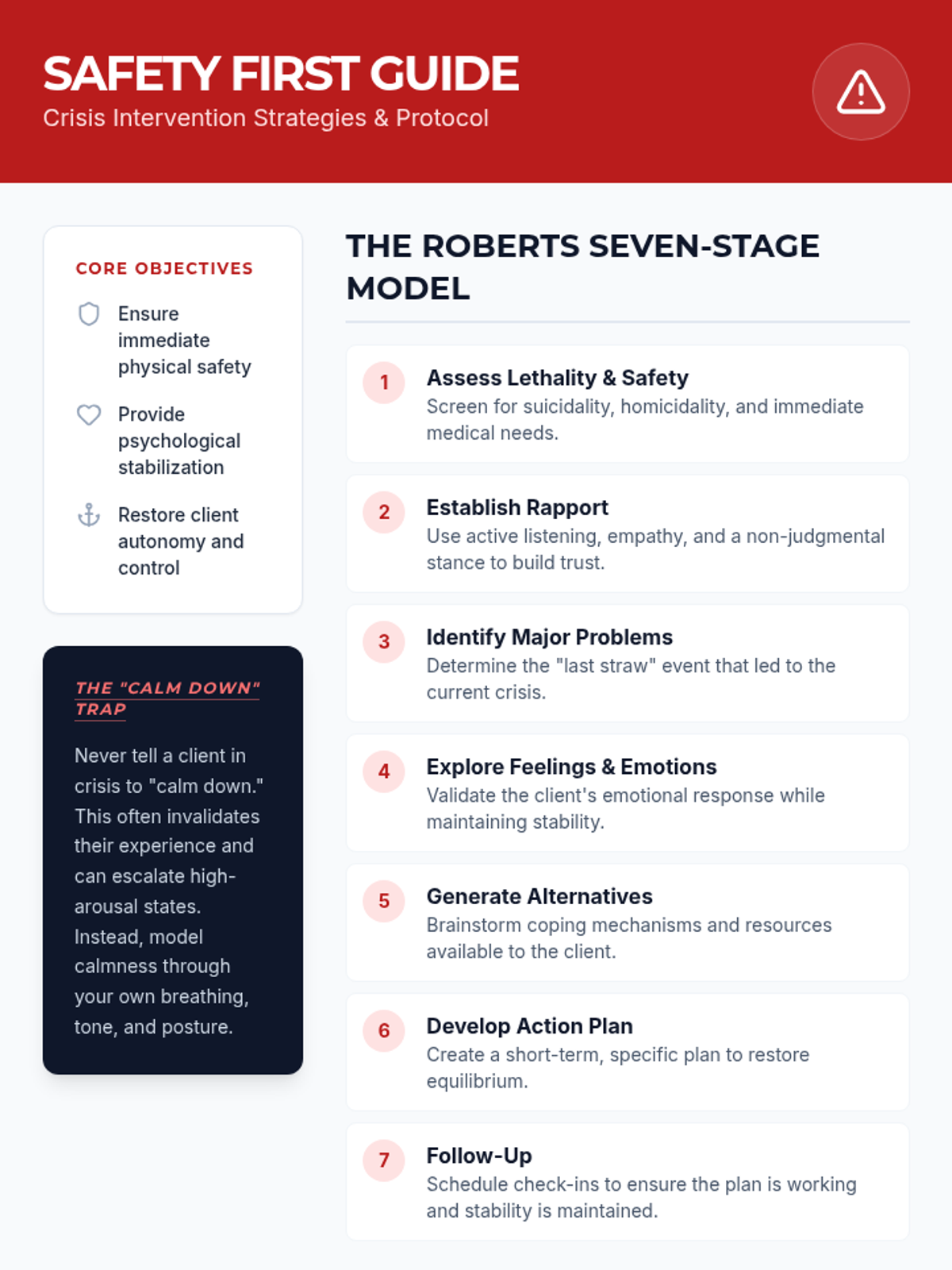
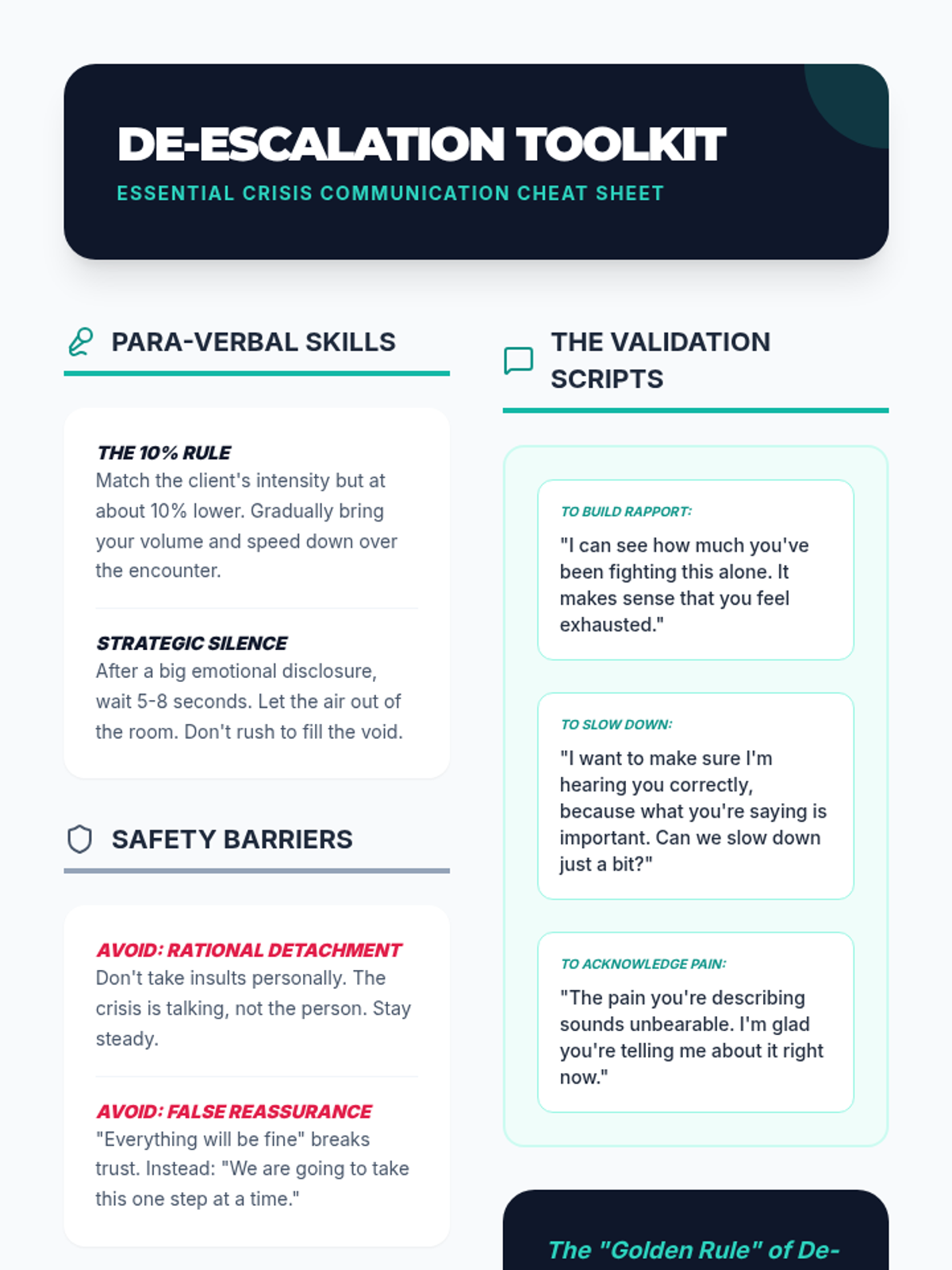
Master evidence-based crisis intervention strategies to de-escalate high-stakes situations and ensure client safety during emergencies.
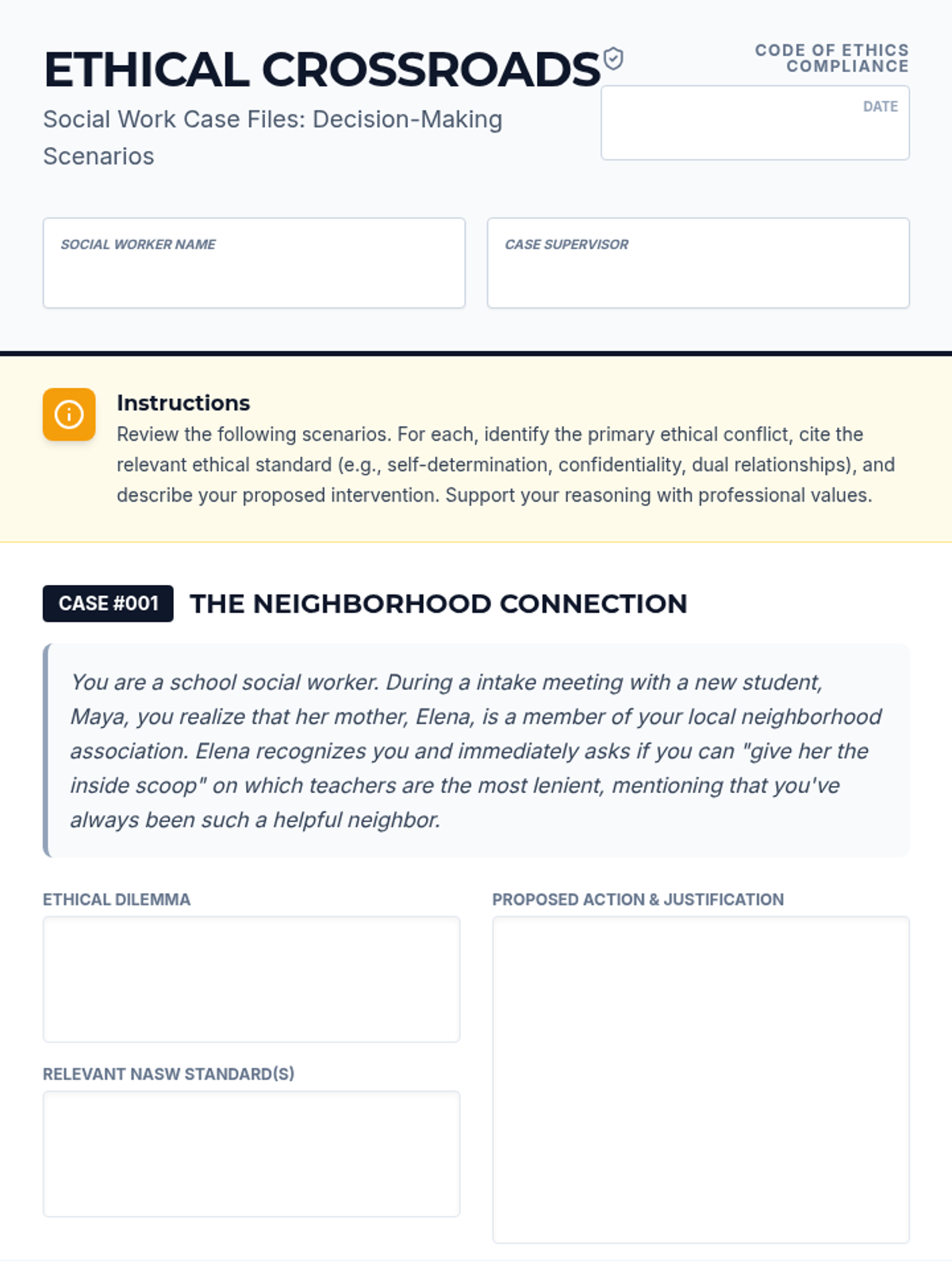
Explore complex ethical dilemmas in social work through real-world scenarios, applying the NASW Code of Ethics to determine the best course of action.
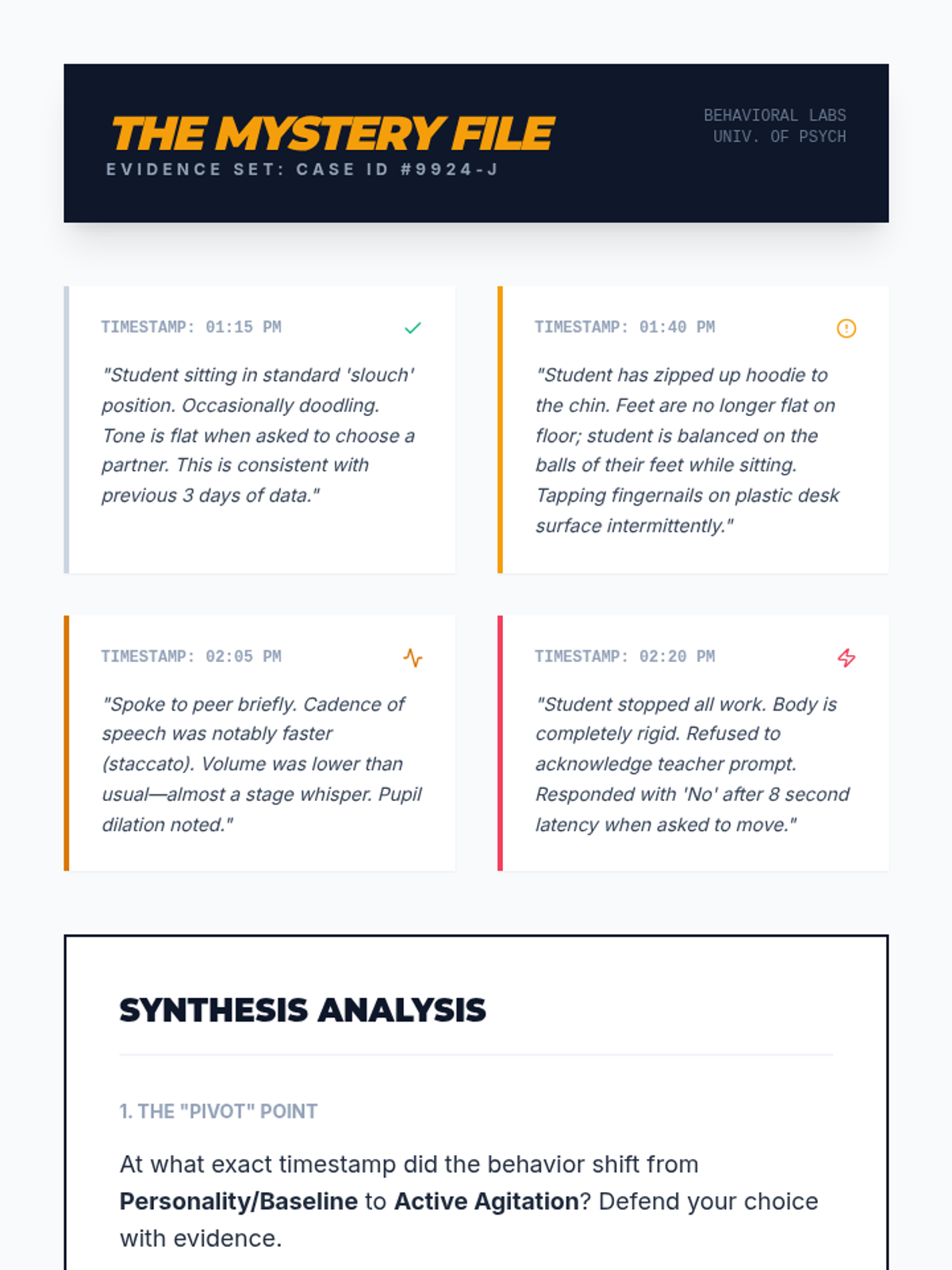
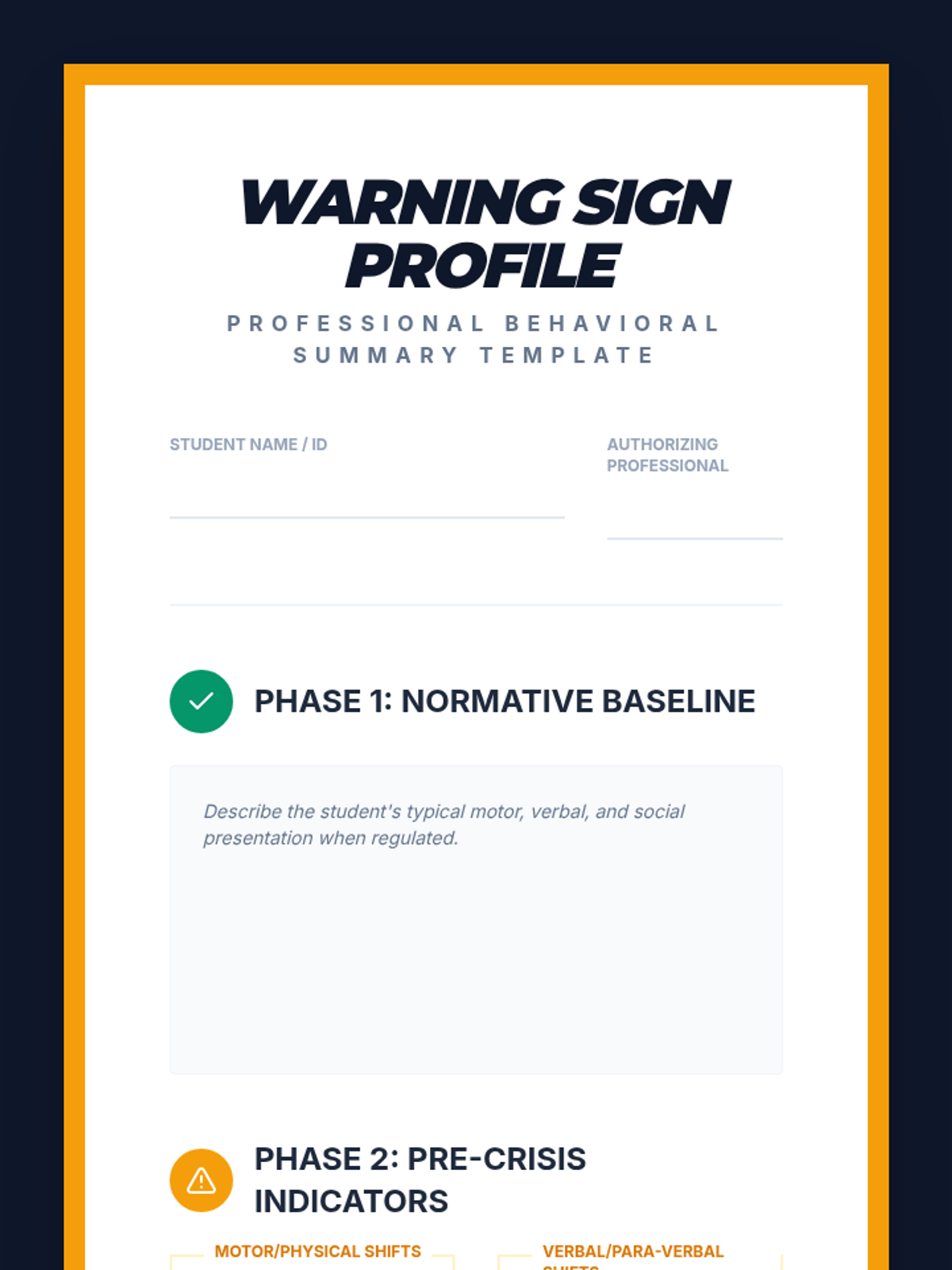
Students integrate all observed markers into a comprehensive Warning Sign Profile for a complex case study, predicting crisis timing based on behavioral evidence.
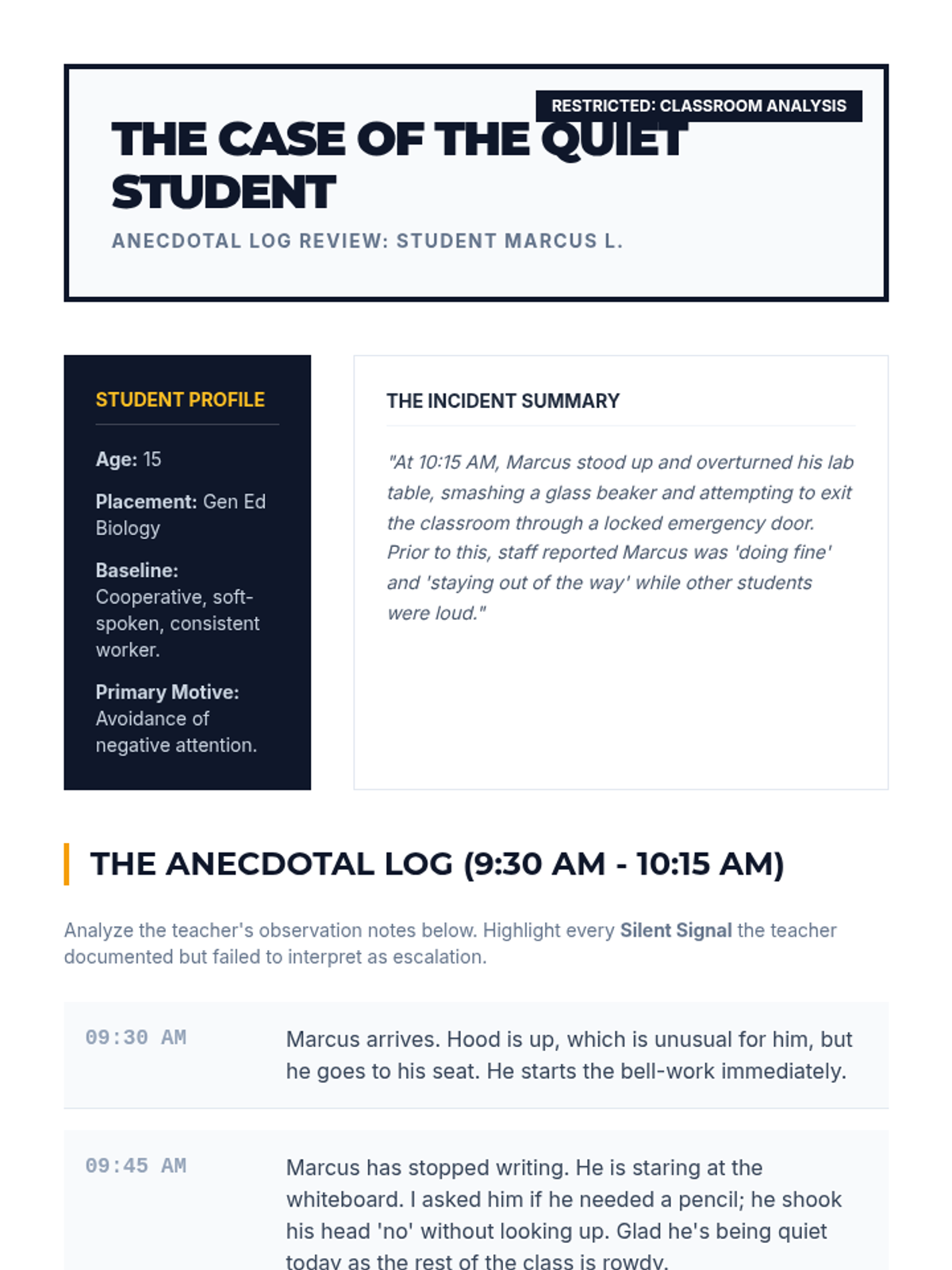
Exploration of 'quiet' escalation signs such as withdrawal, avoidance, and work cessation, which are frequently overlooked but indicate high risk for crisis.
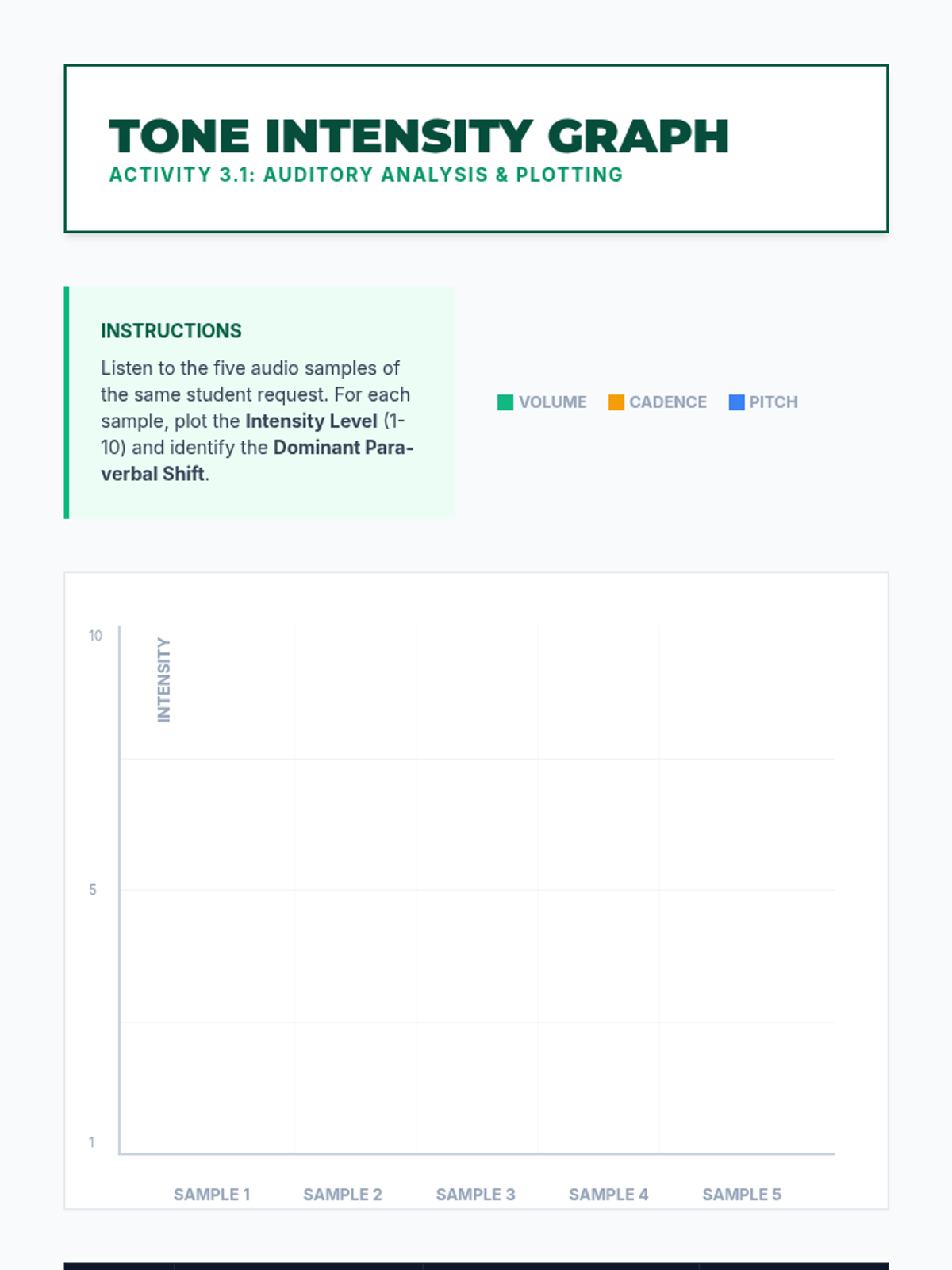
Students analyze changes in volume, cadence, and tone (para-verbals) to identify escalation, distinguishing the quality of delivery from the literal content of speech.
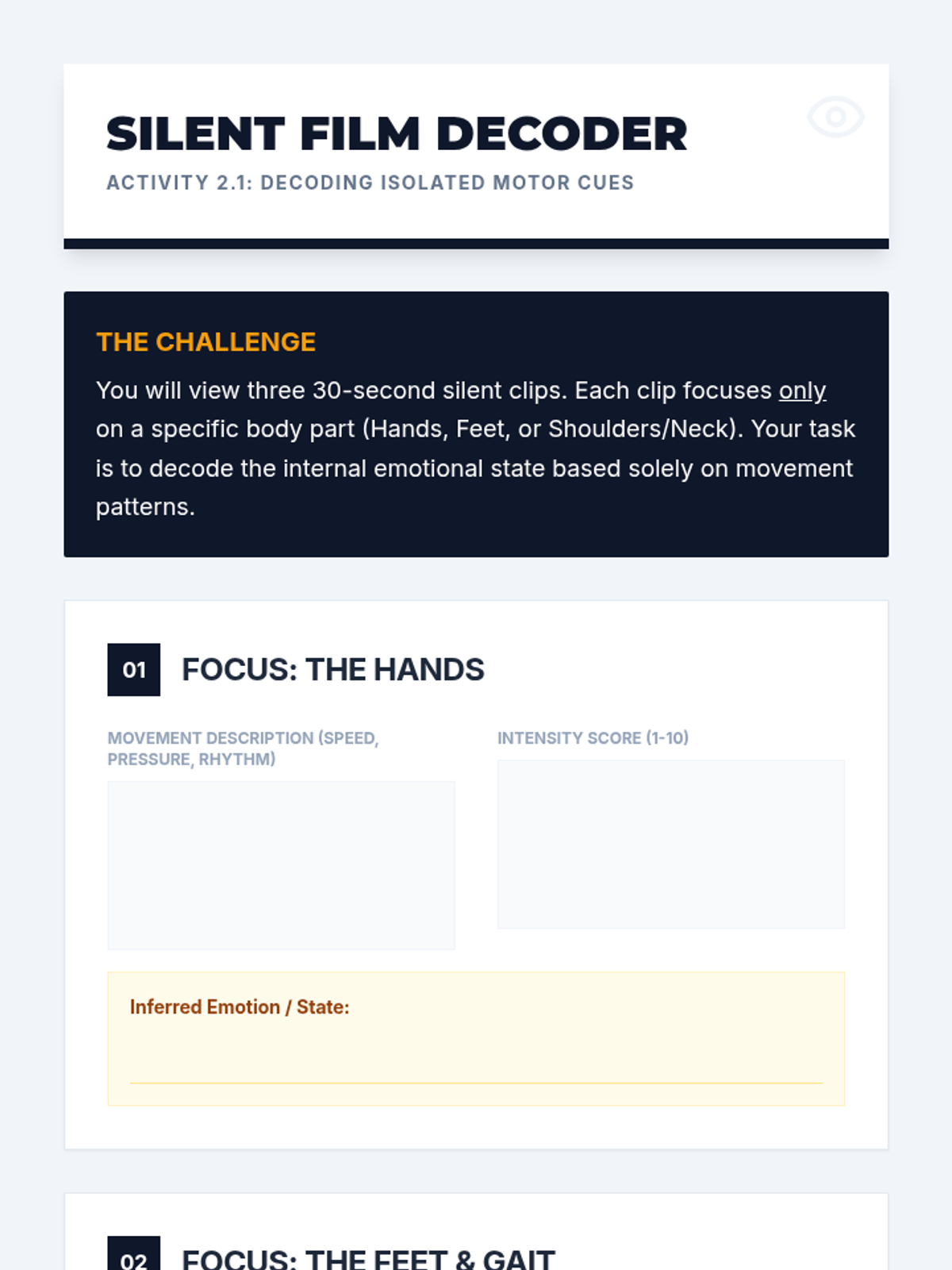
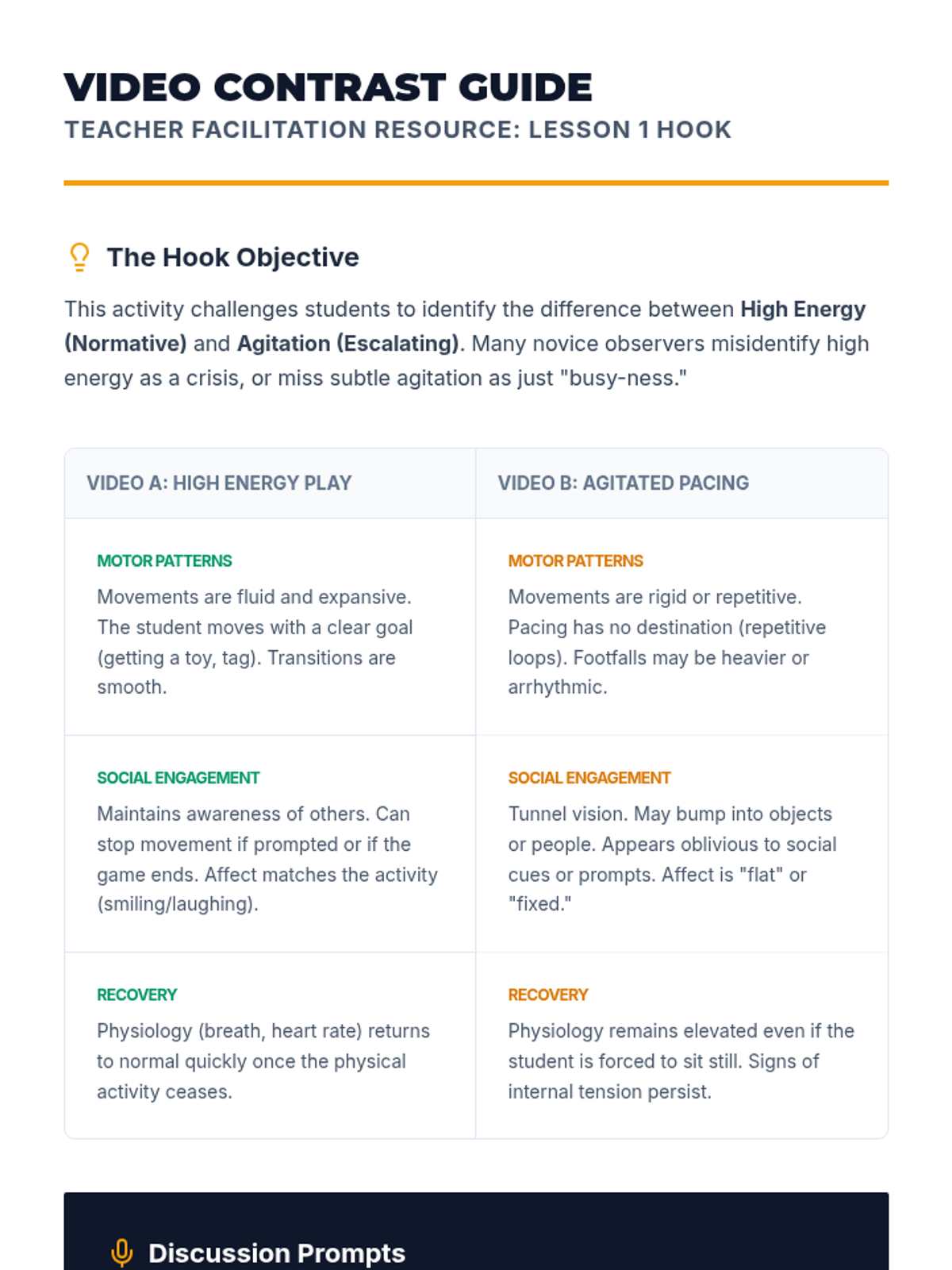
A deep dive into the physical manifestations of early escalation, focusing on micro-movements and motor agitation that often precede vocal outbursts.
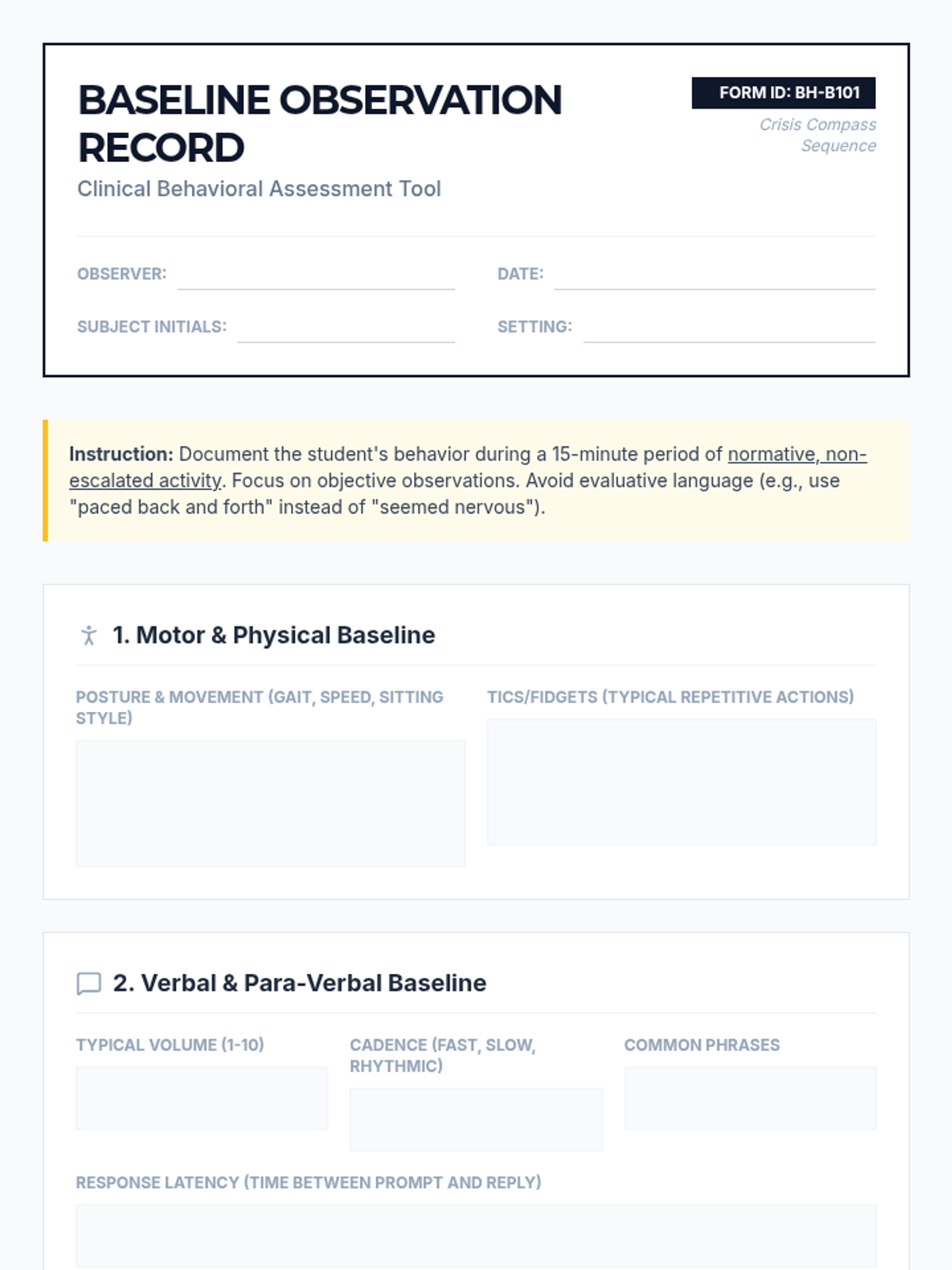
Students define and observe 'baseline' behavior to distinguish between a student's normal state and signs of deviation. This lesson emphasizes cultural context and personality in behavioral documentation.
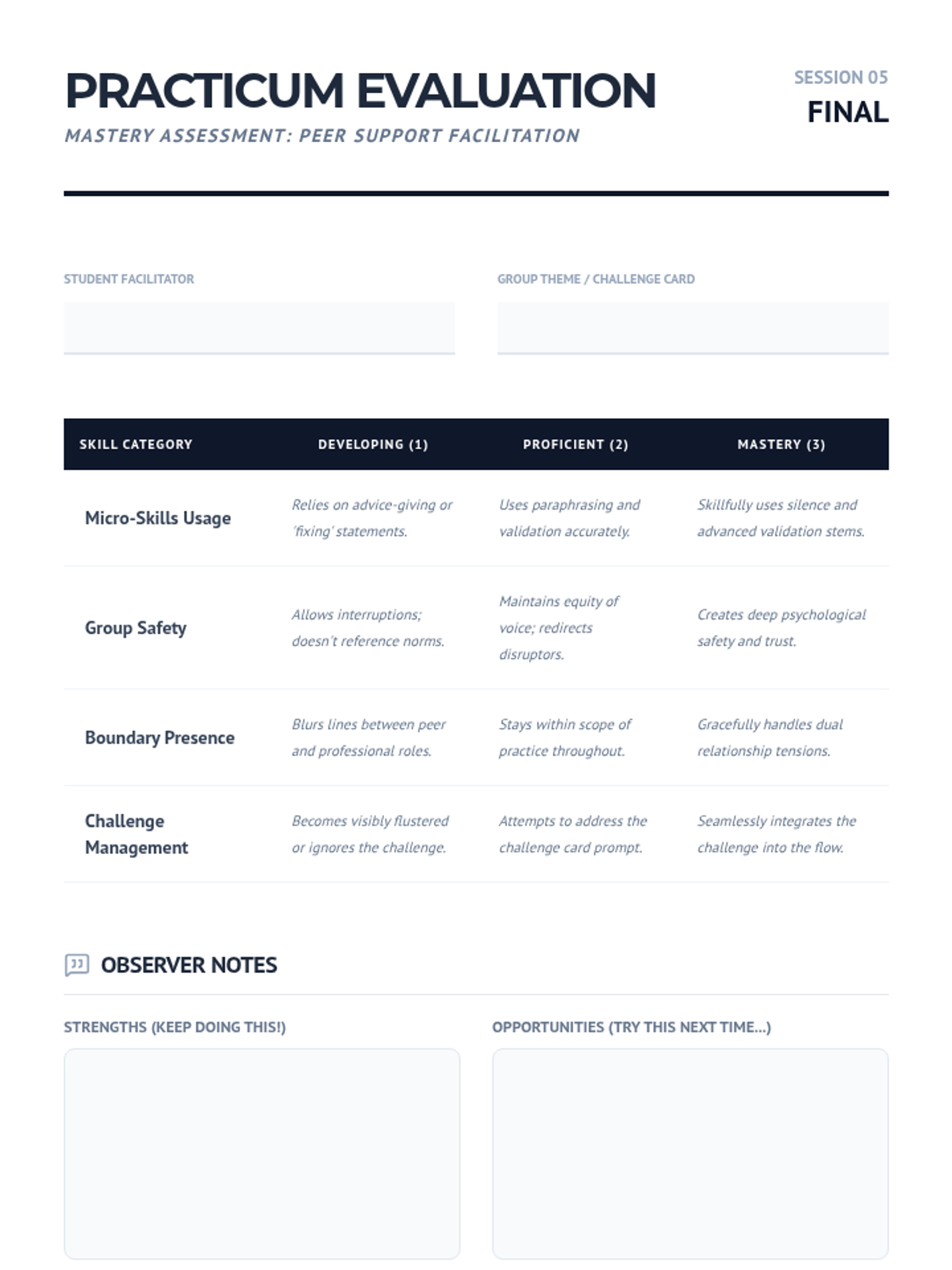
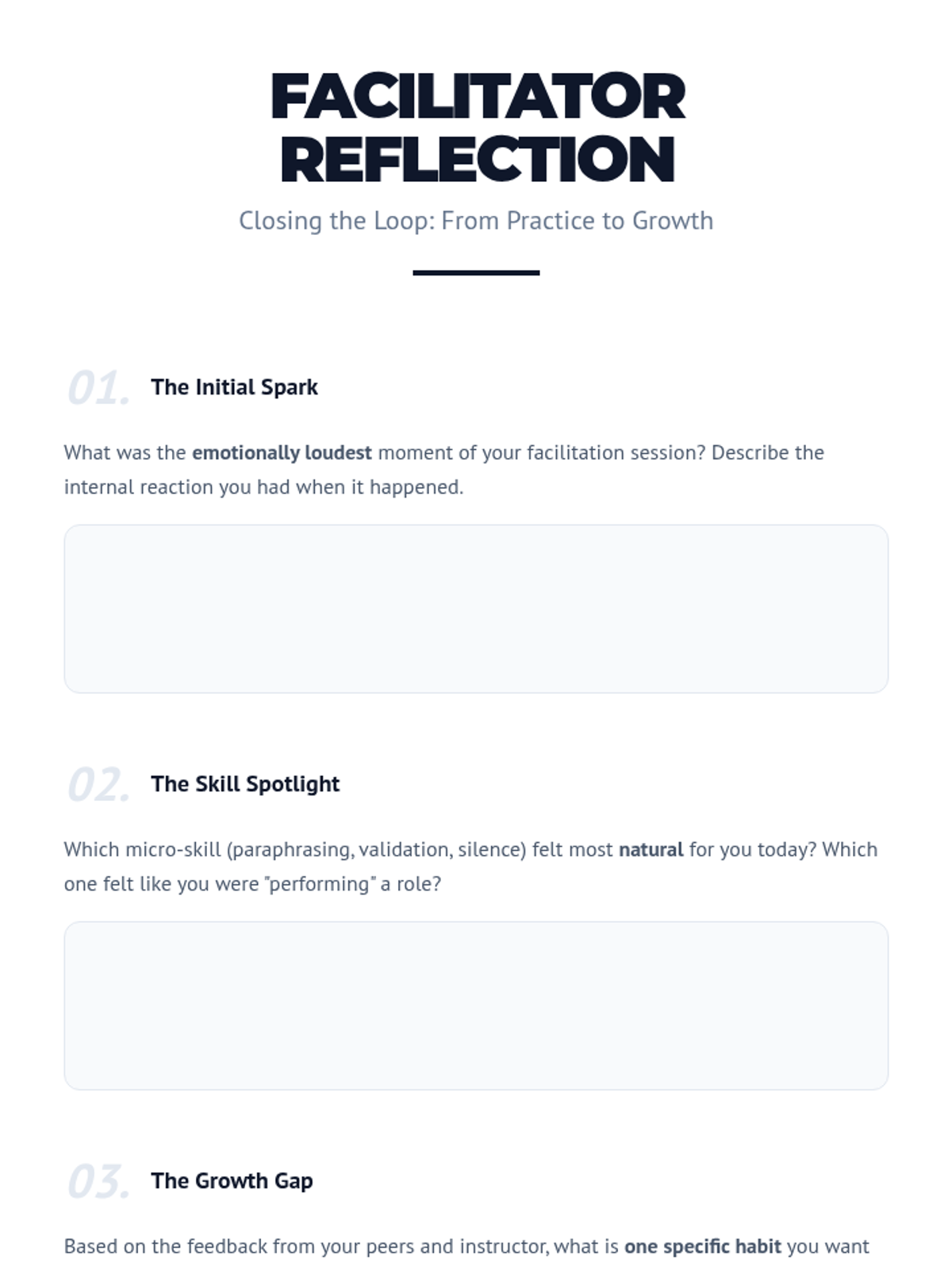
Students take turns facilitating a 15-minute segment of a support group based on a provided theme (e.g., academic stress, grief). Peers and the instructor provide structured feedback on their facilitation style and group management.
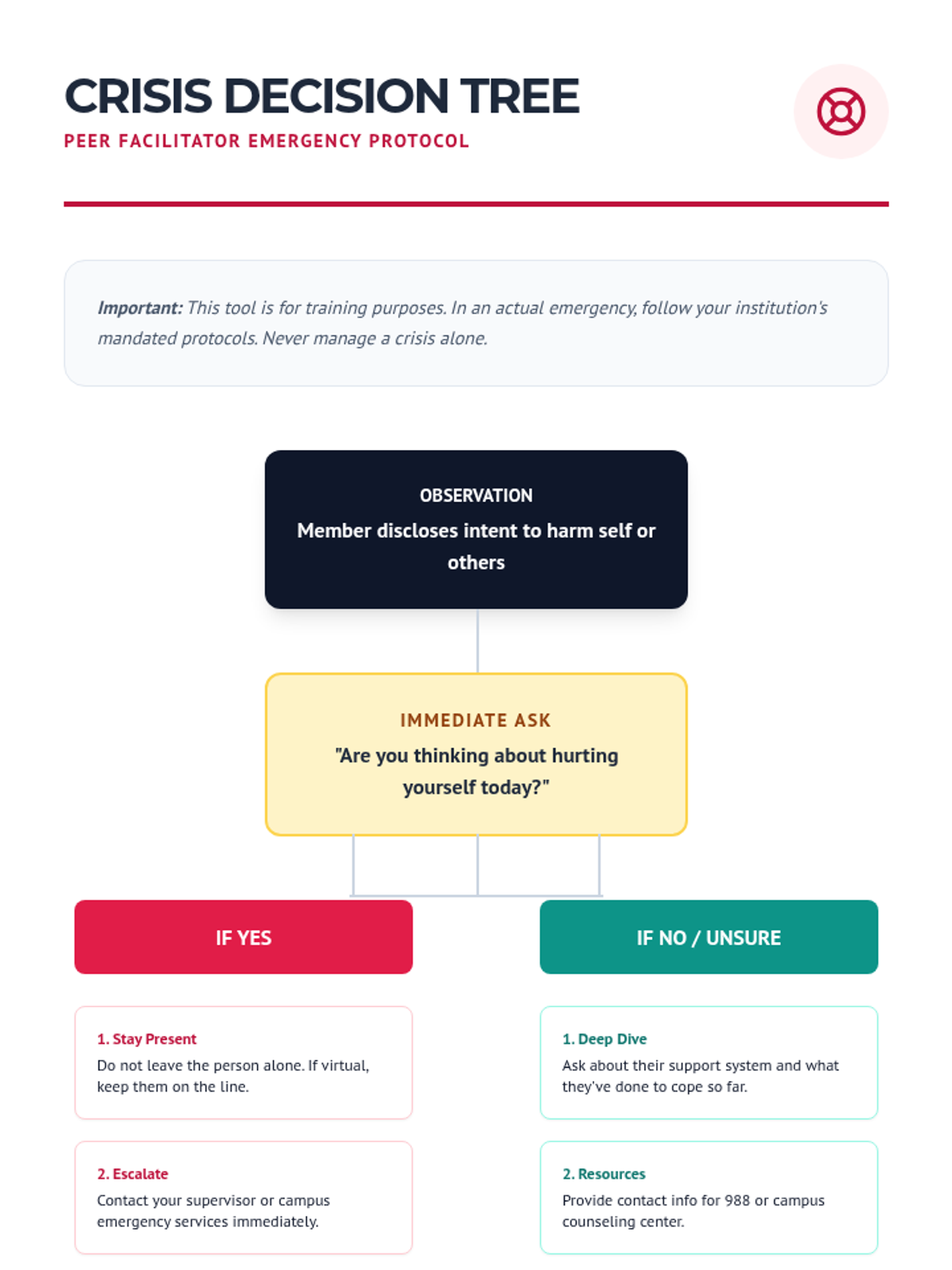
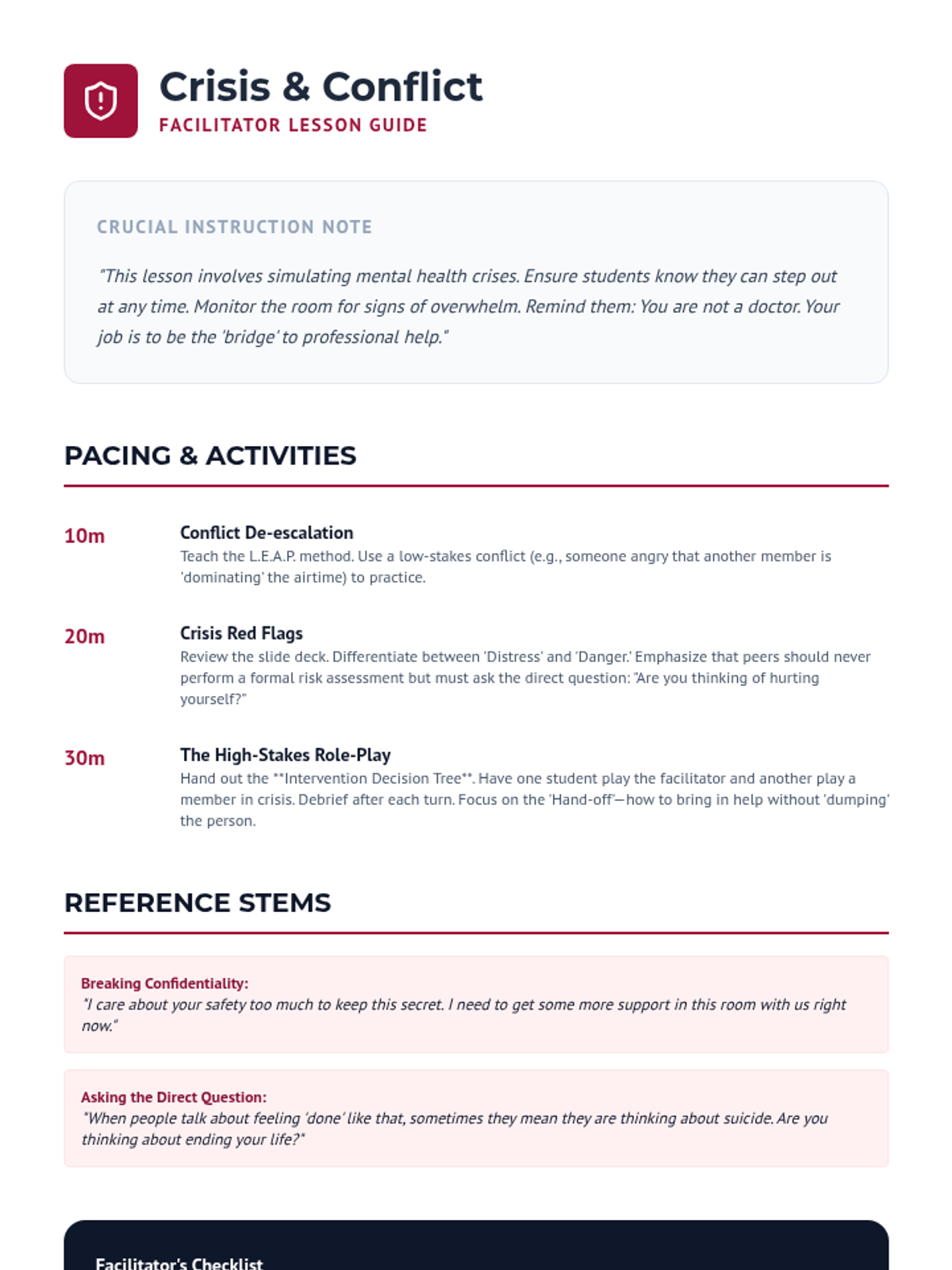
Students learn how to de-escalate conflict between group members and identify red flags for immediate crisis intervention (e.g., suicide risk). They become familiar with referral pathways and university/community resources.
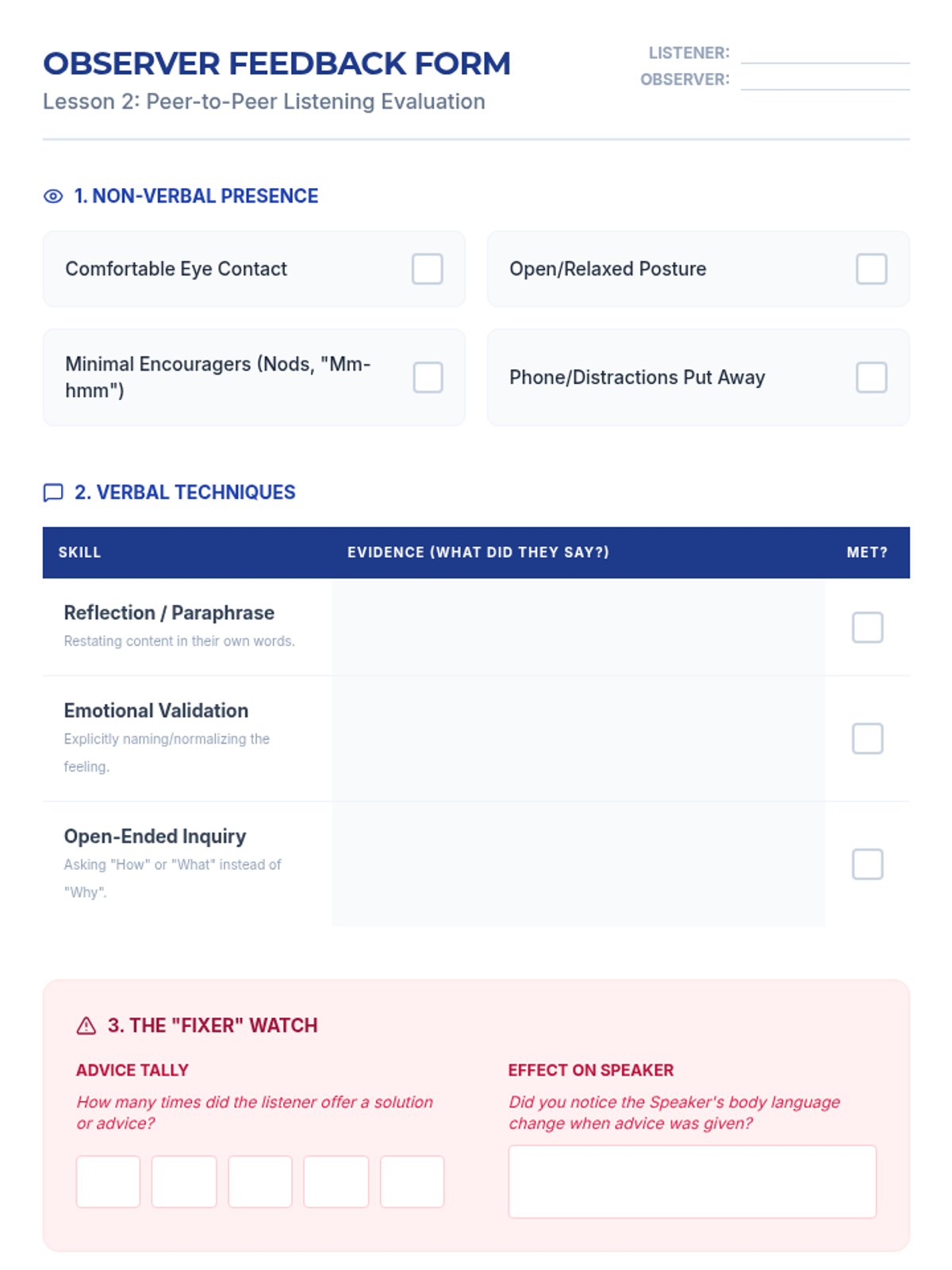
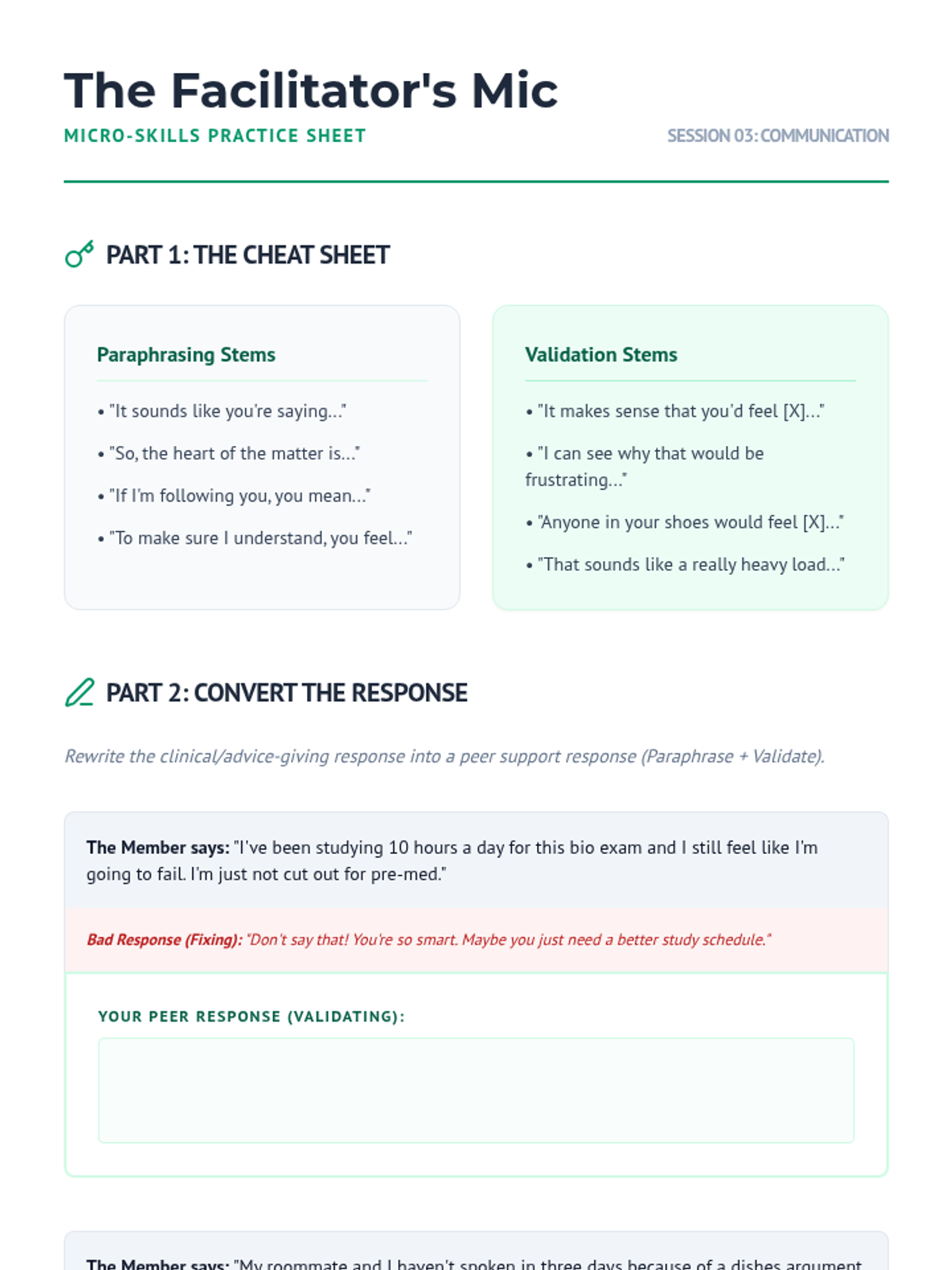
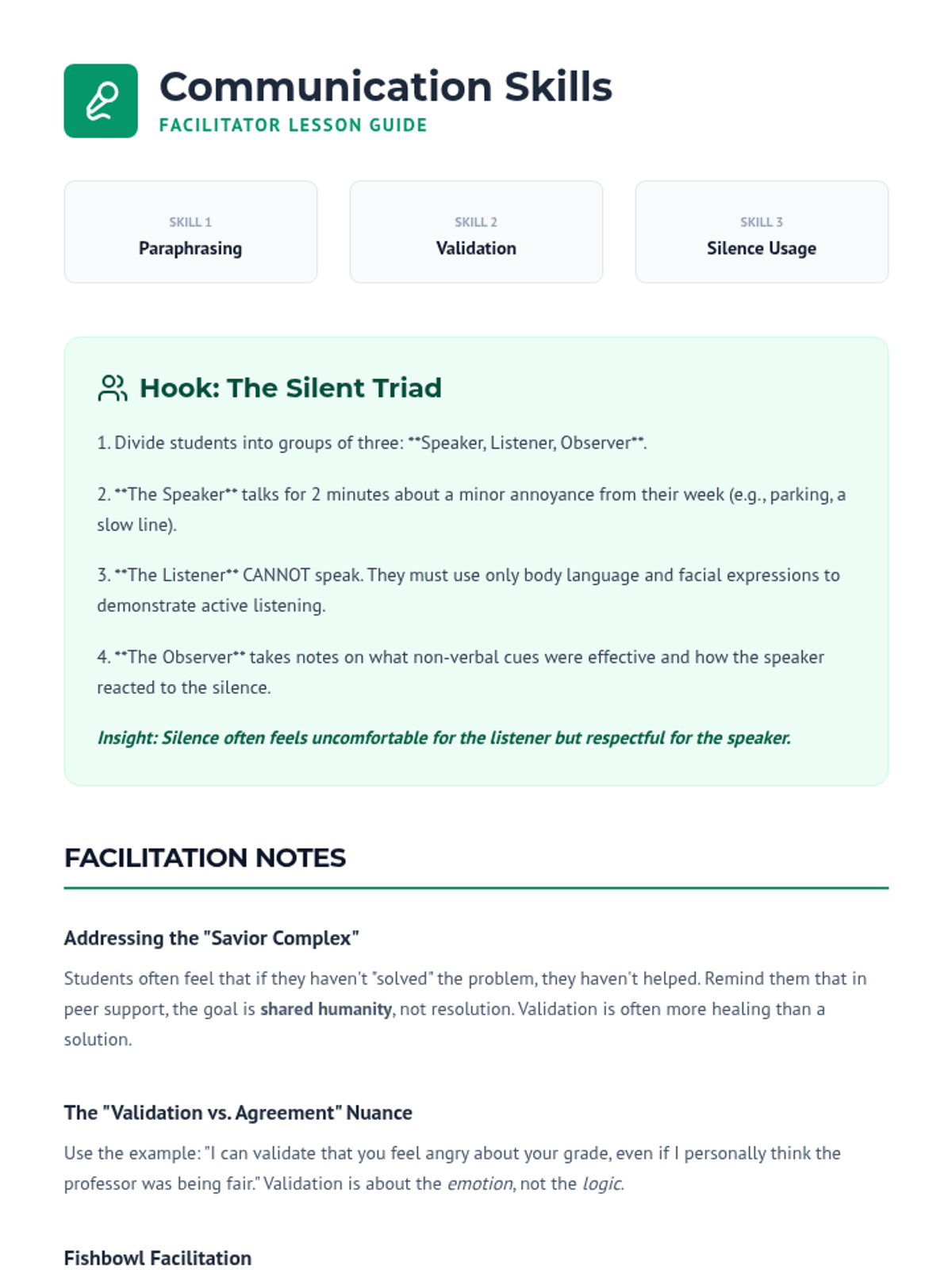
Students practice micro-skills such as paraphrasing, summarizing, and validating emotions. The lesson utilizes 'fishbowl' exercises where students observe and critique peer interactions to refine their empathetic communication style.
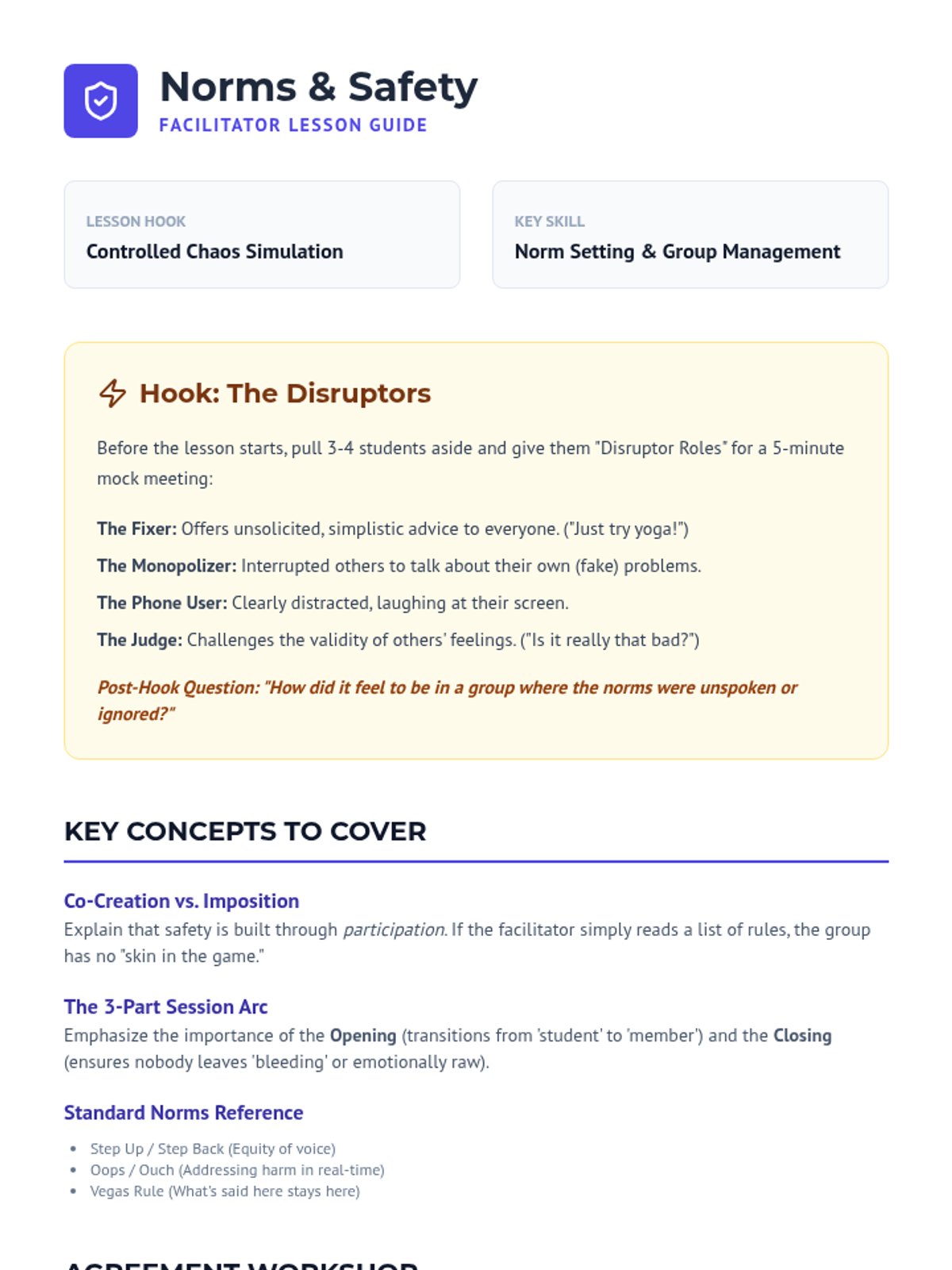
This lesson covers the logistics of starting a support group, including creating community agreements and fostering psychological safety. Students learn how to structure a session to ensure equity of voice and predictability.
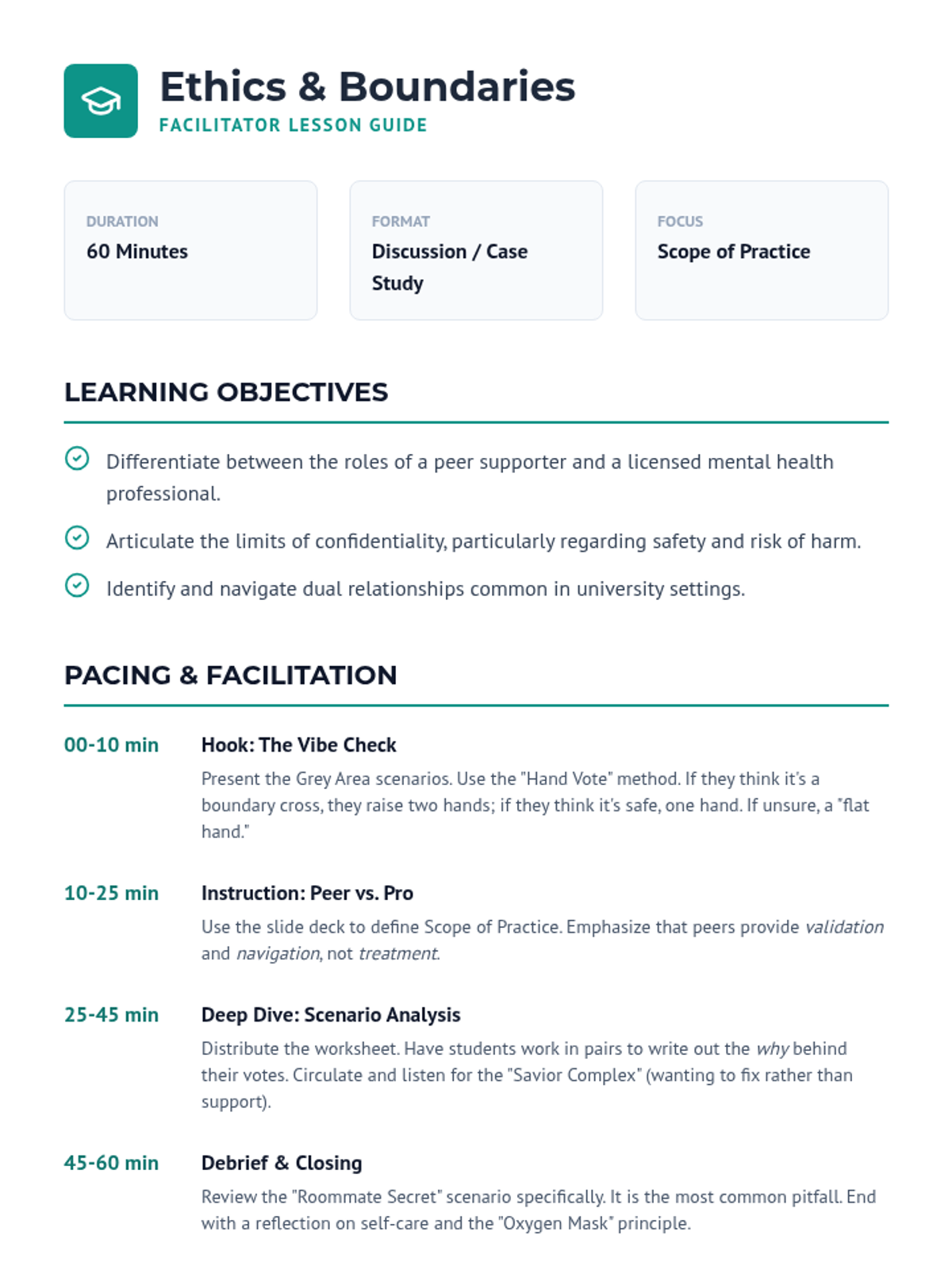
Students define the scope of peer support, learn about confidentiality, and explore the ethical boundaries between peer support and clinical therapy.
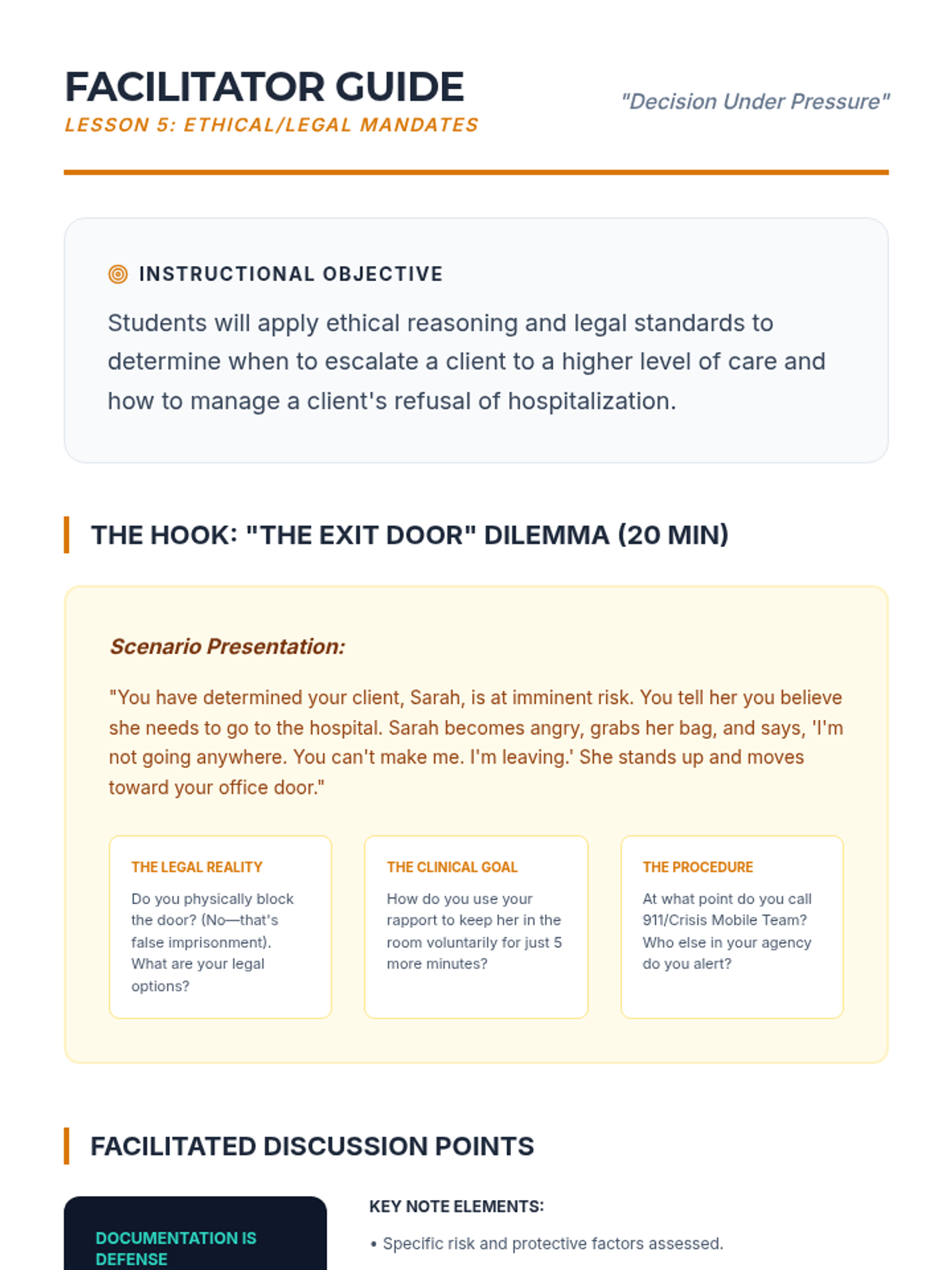
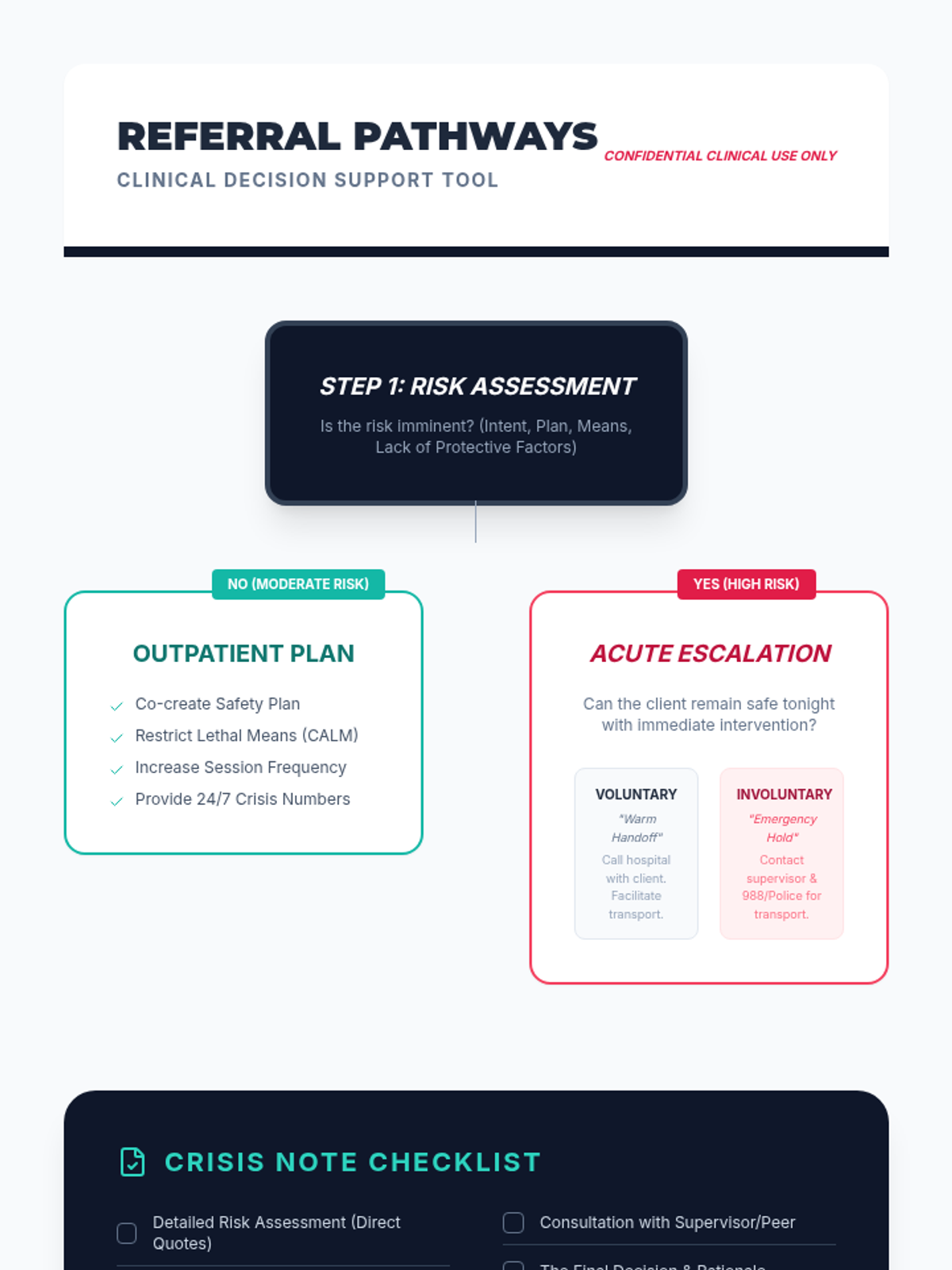
The sequence concludes with the logistics of higher levels of care, including voluntary and involuntary hospitalization. Students examine the legal 'duty to warn' and 'duty to protect,' and how to facilitate a warm handoff to emergency services.
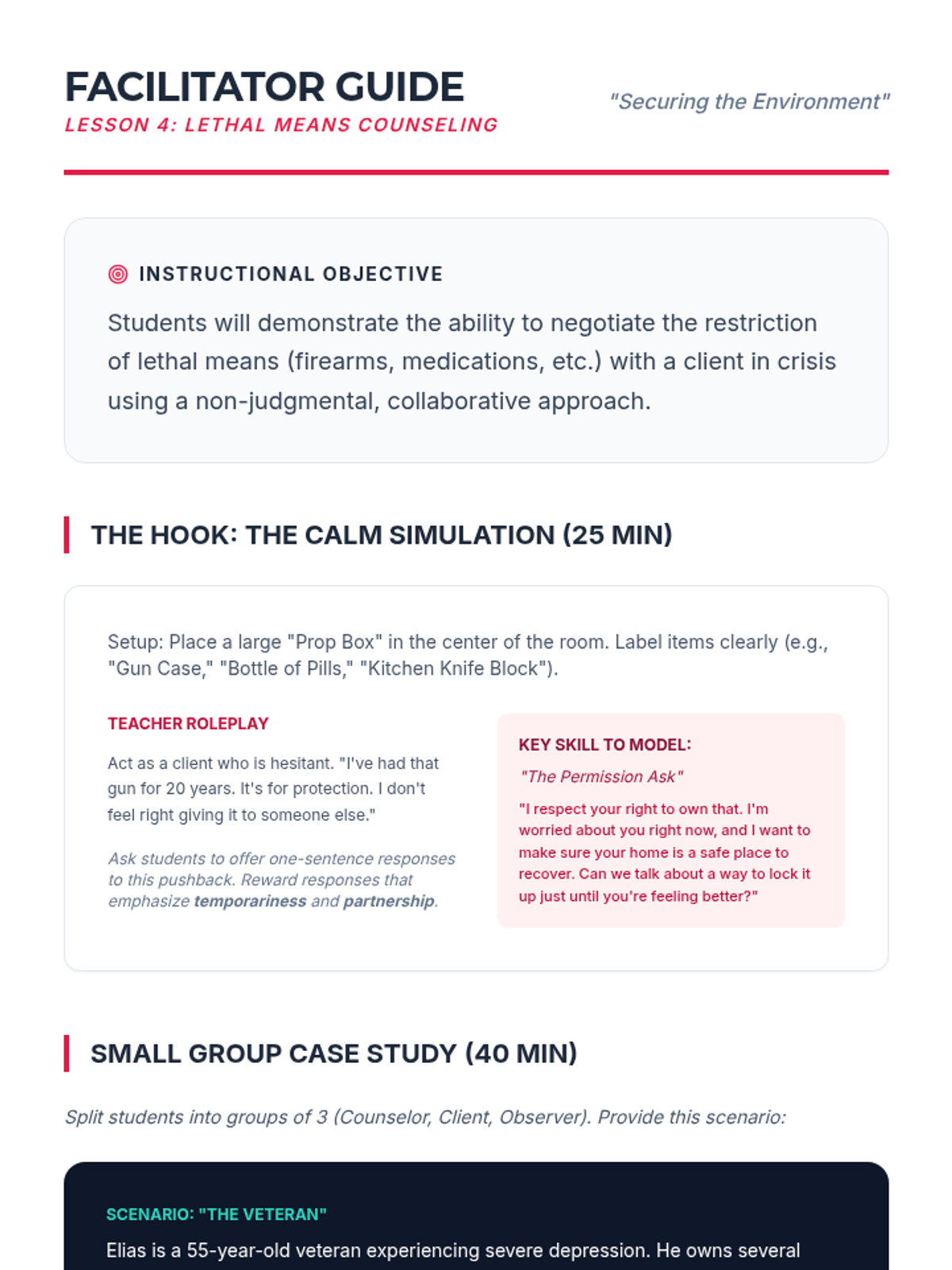
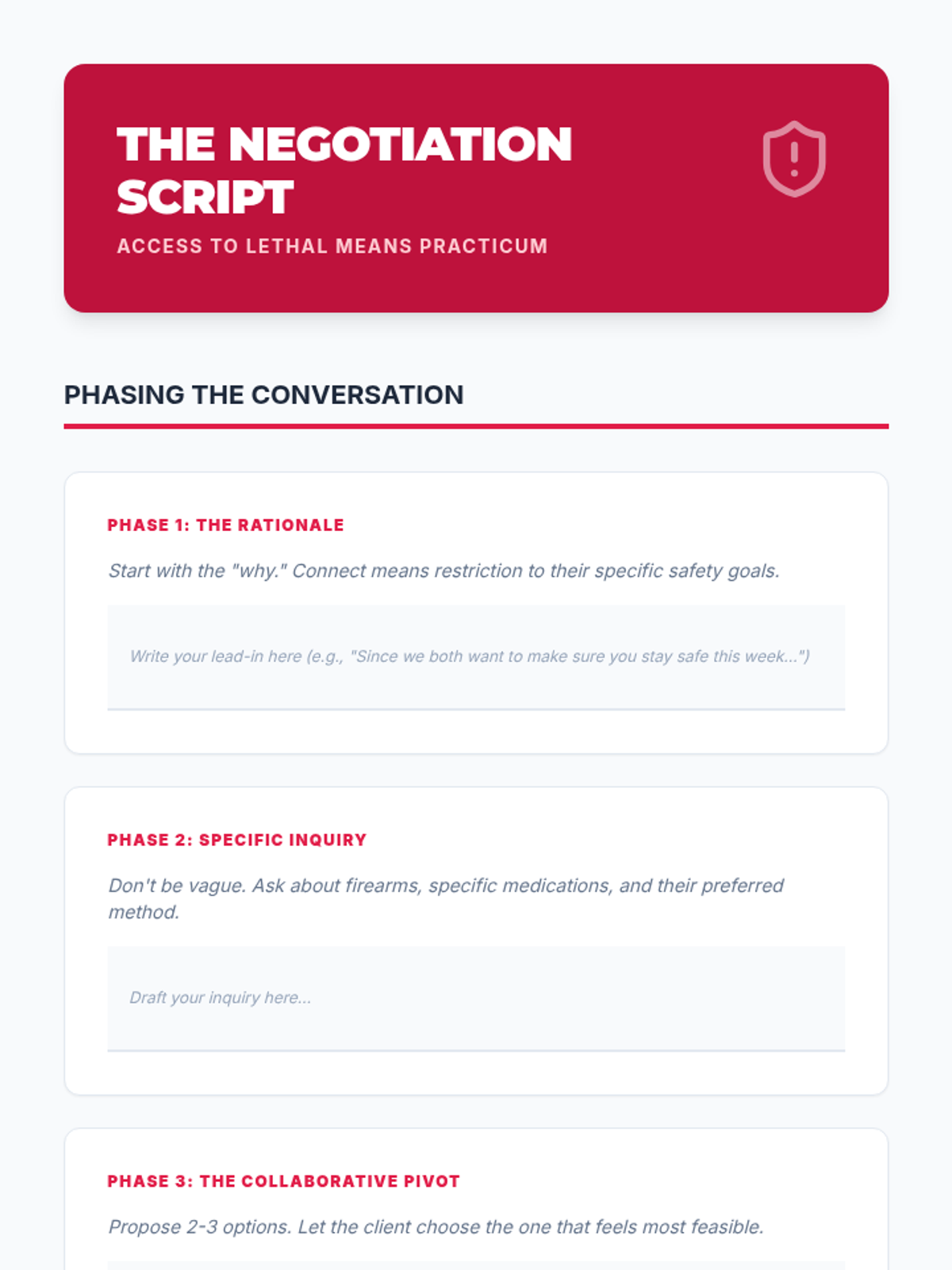
This critical lesson addresses the restriction of access to lethal methods, particularly firearms and medications. Students practice the specific dialogue required to negotiate the removal or securing of dangerous items with clients and their families.
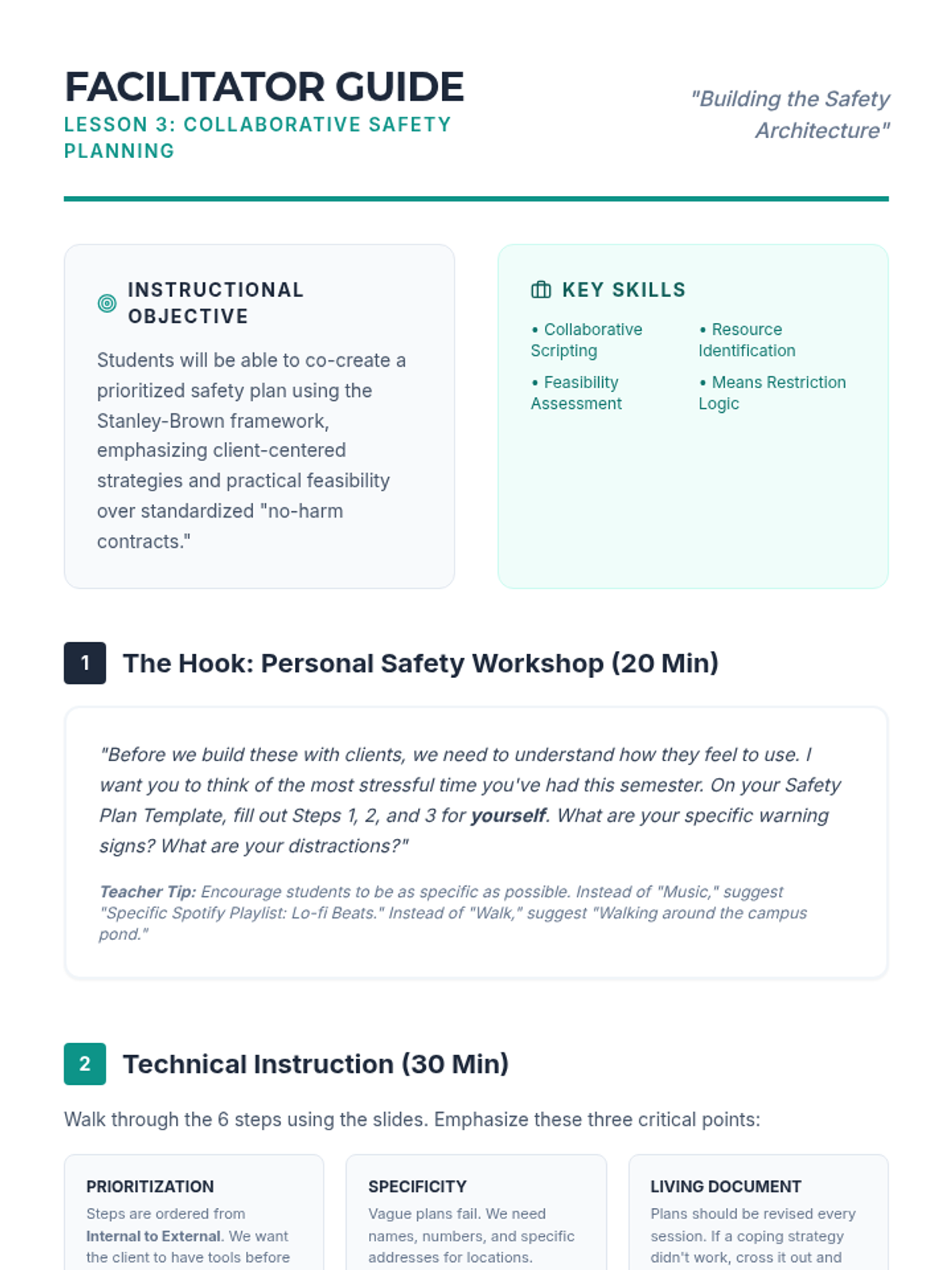
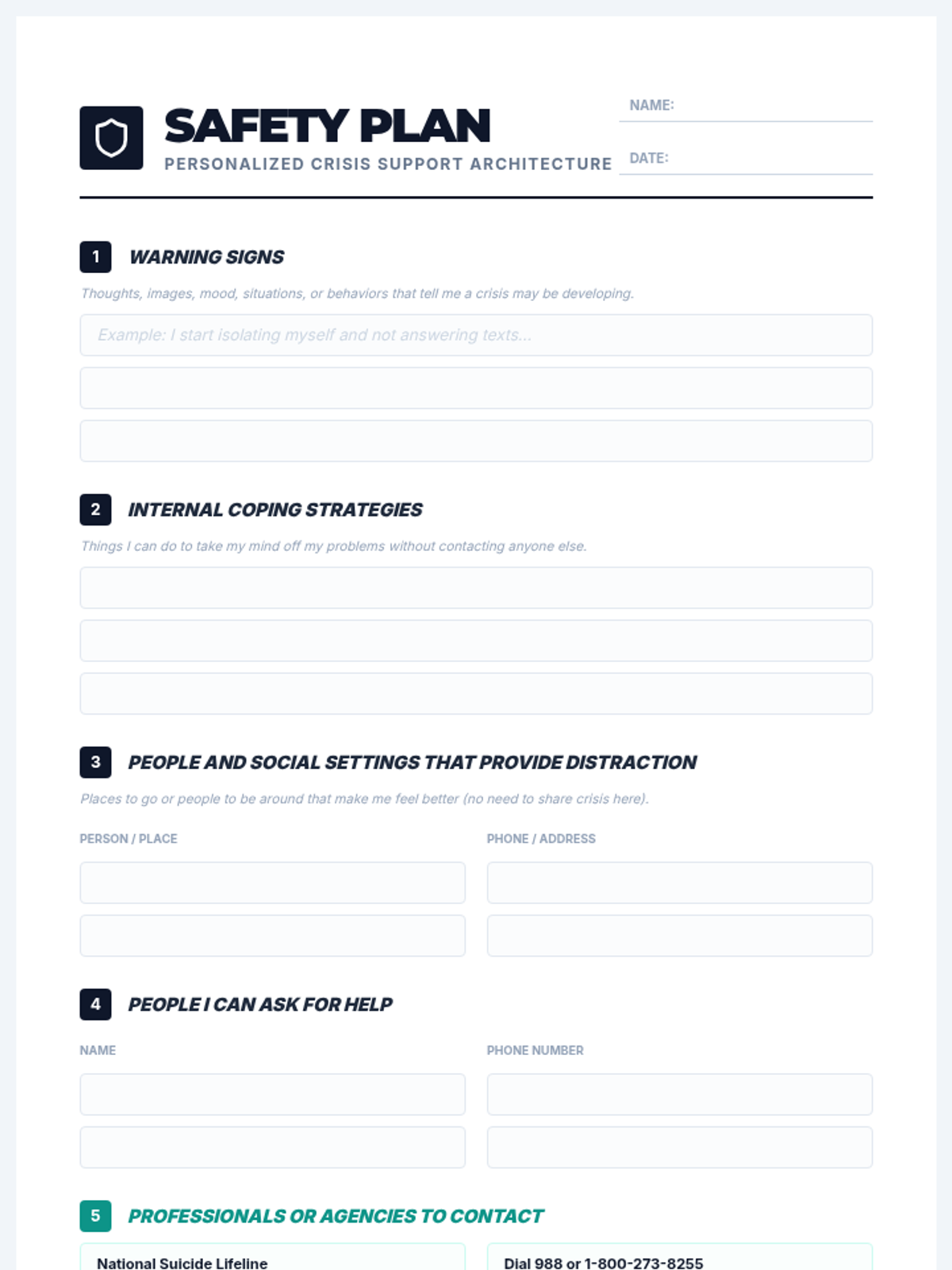
Students learn to create a Stanley-Brown Safety Plan, a prioritized list of coping strategies and sources of support. The lesson focuses on the collaborative nature of this intervention, distinguishing it from 'no-harm contracts' which are no longer best practice.
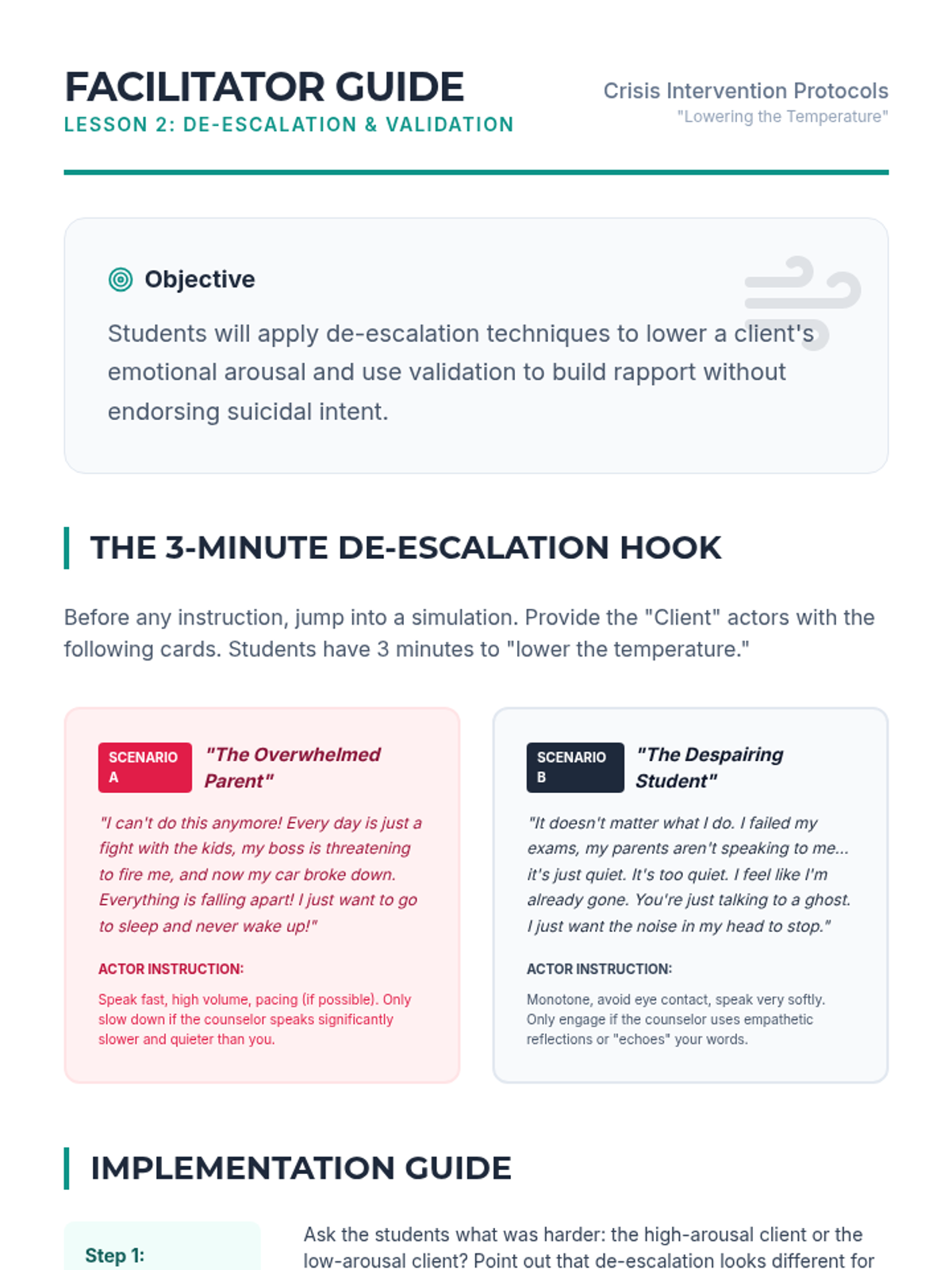
This lesson covers active listening strategies specifically for clients in crisis, focusing on validating emotional pain without validating suicidal logic. Students learn how to build rapid rapport to reduce immediate tension and hopelessness.
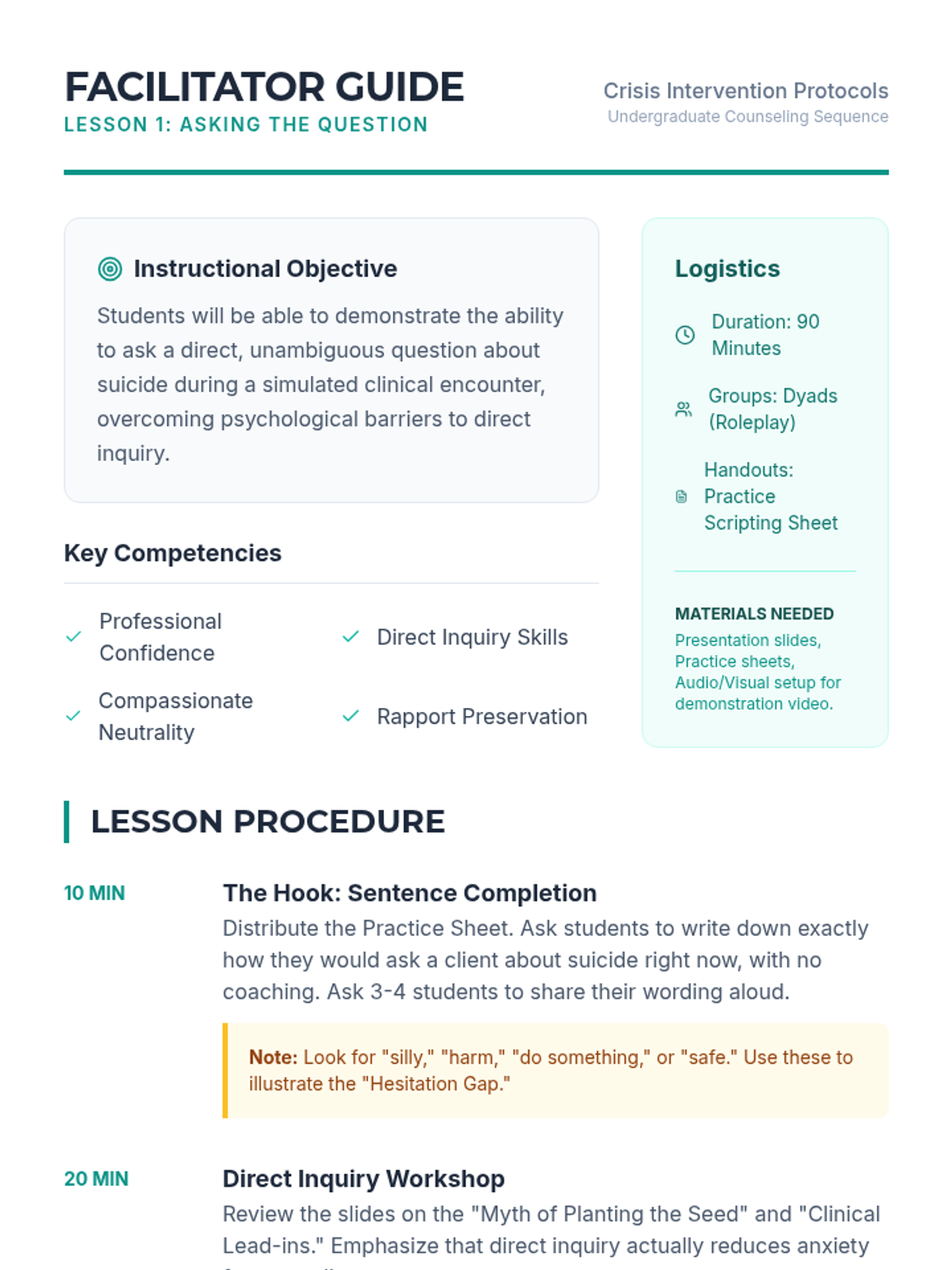
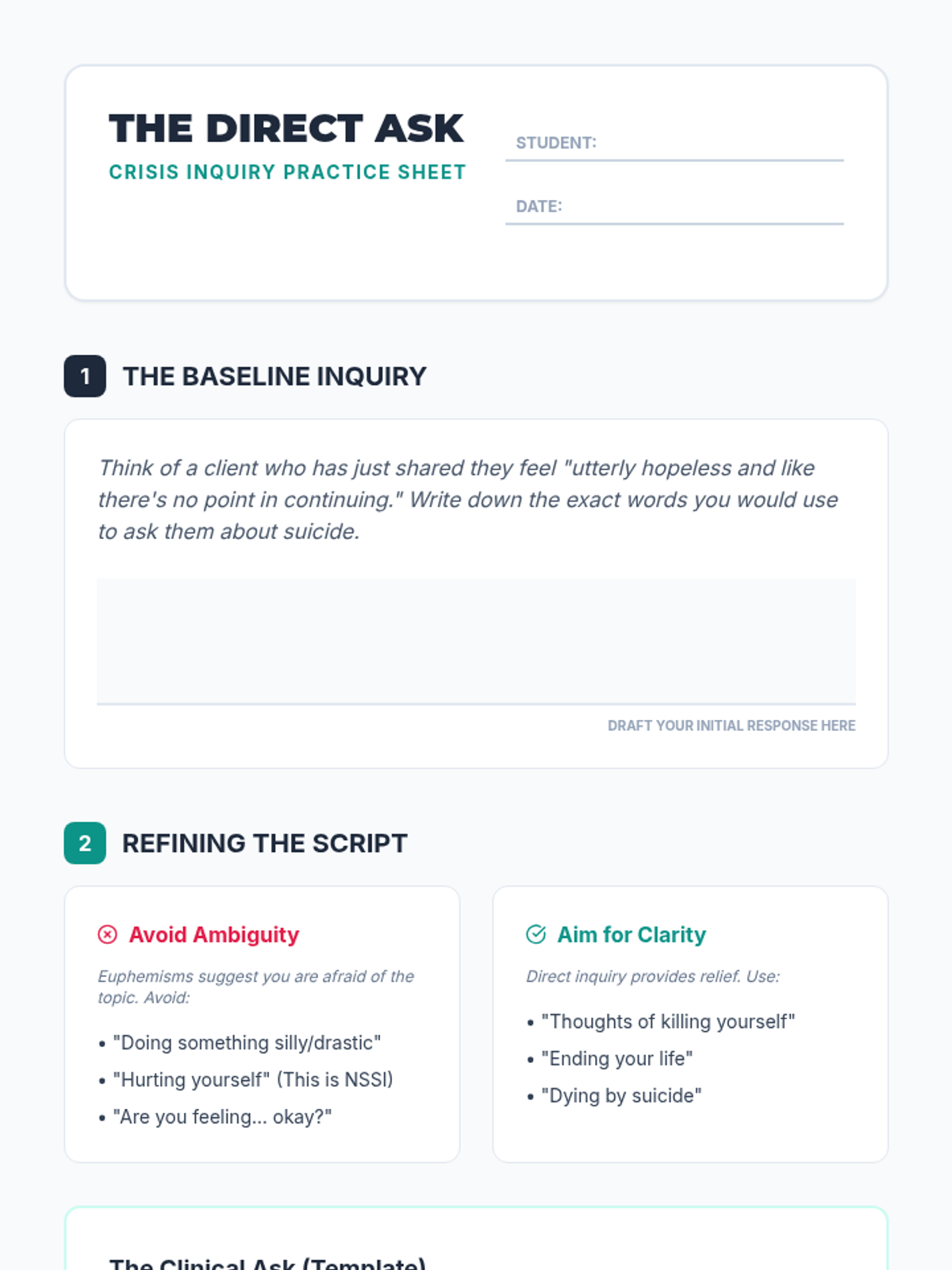
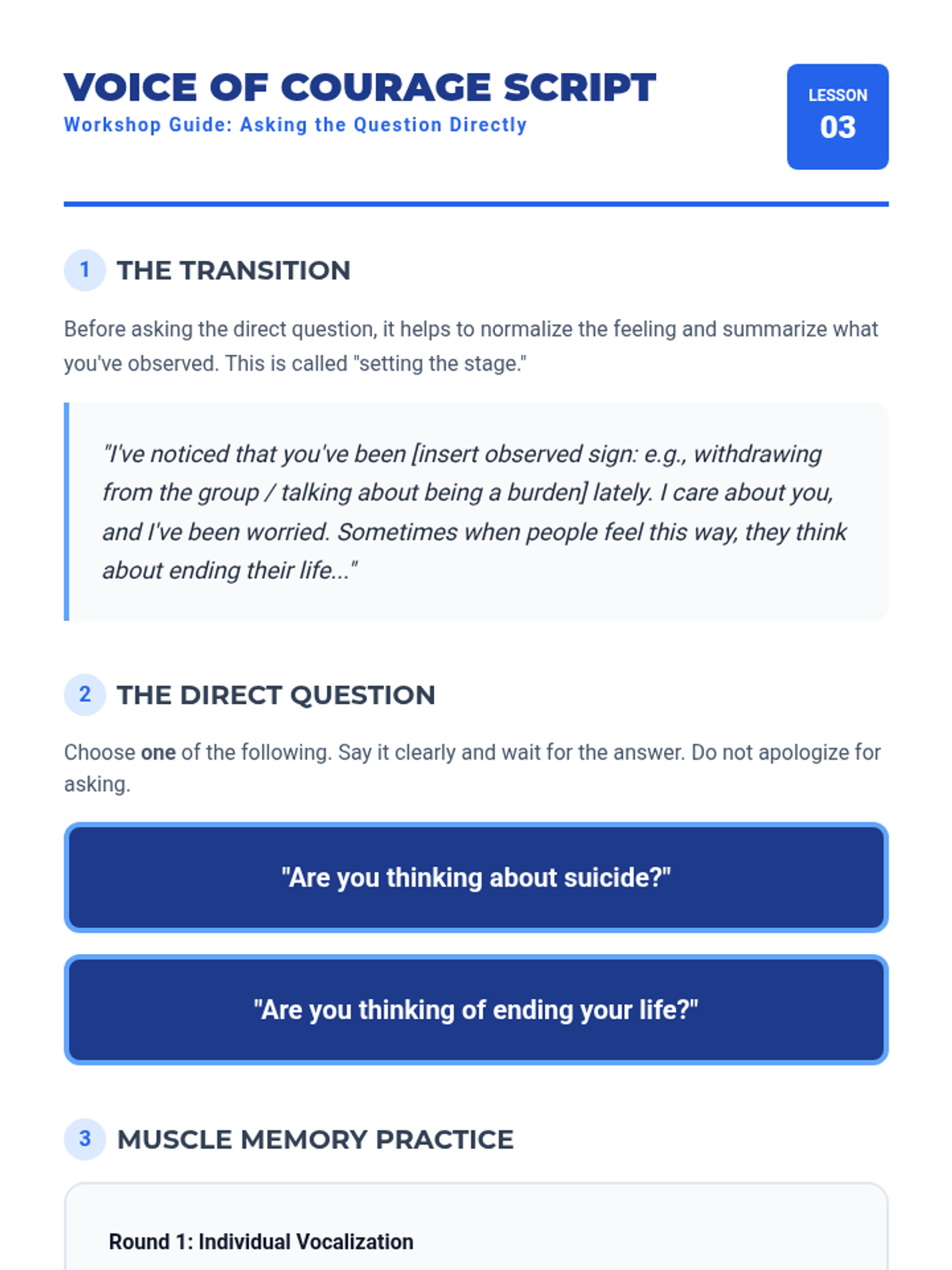
Students learn and practice direct, non-judgmental questioning techniques to ask clients about suicidal ideation, overcoming professional hesitation and the use of euphemisms.
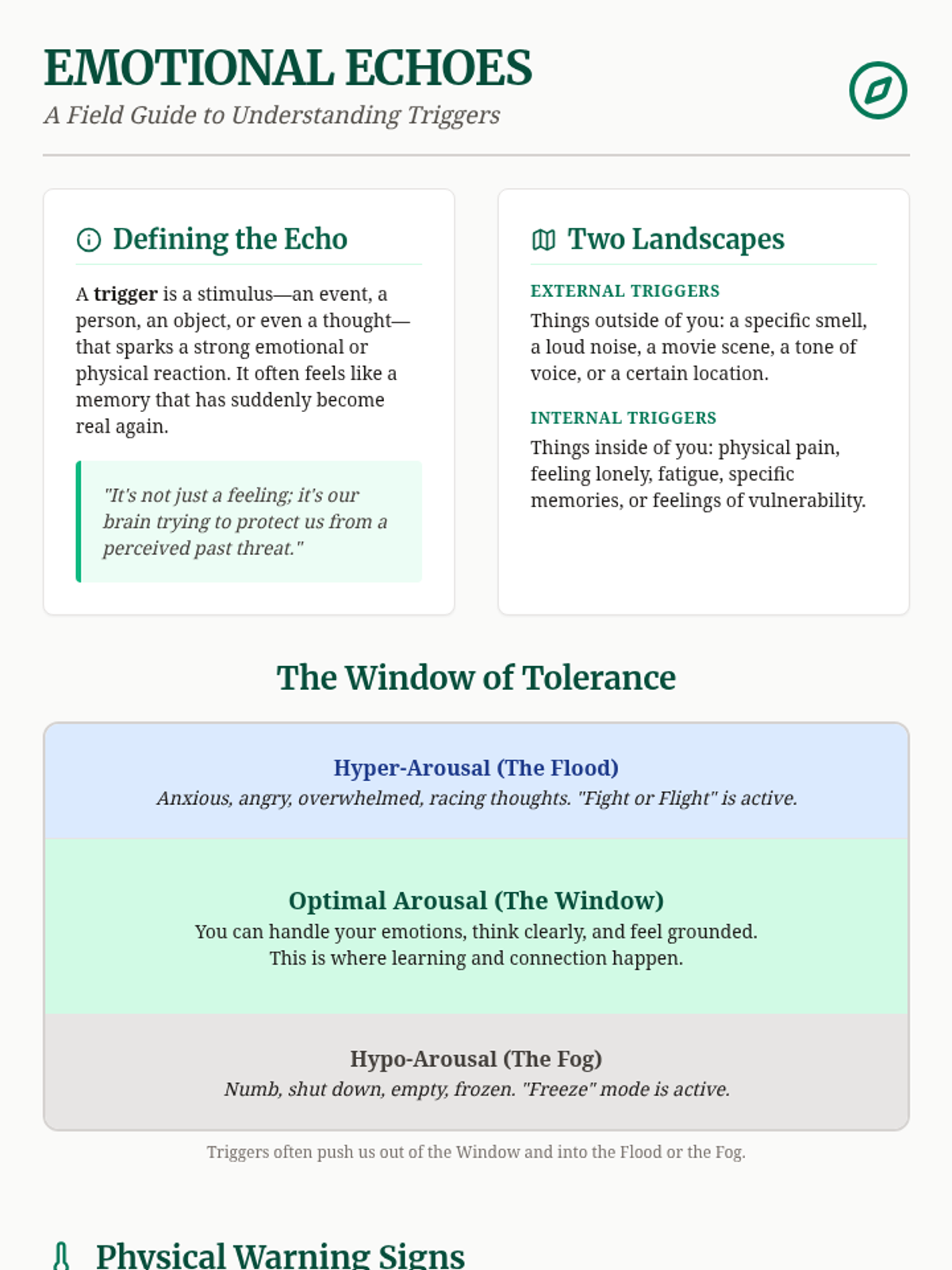
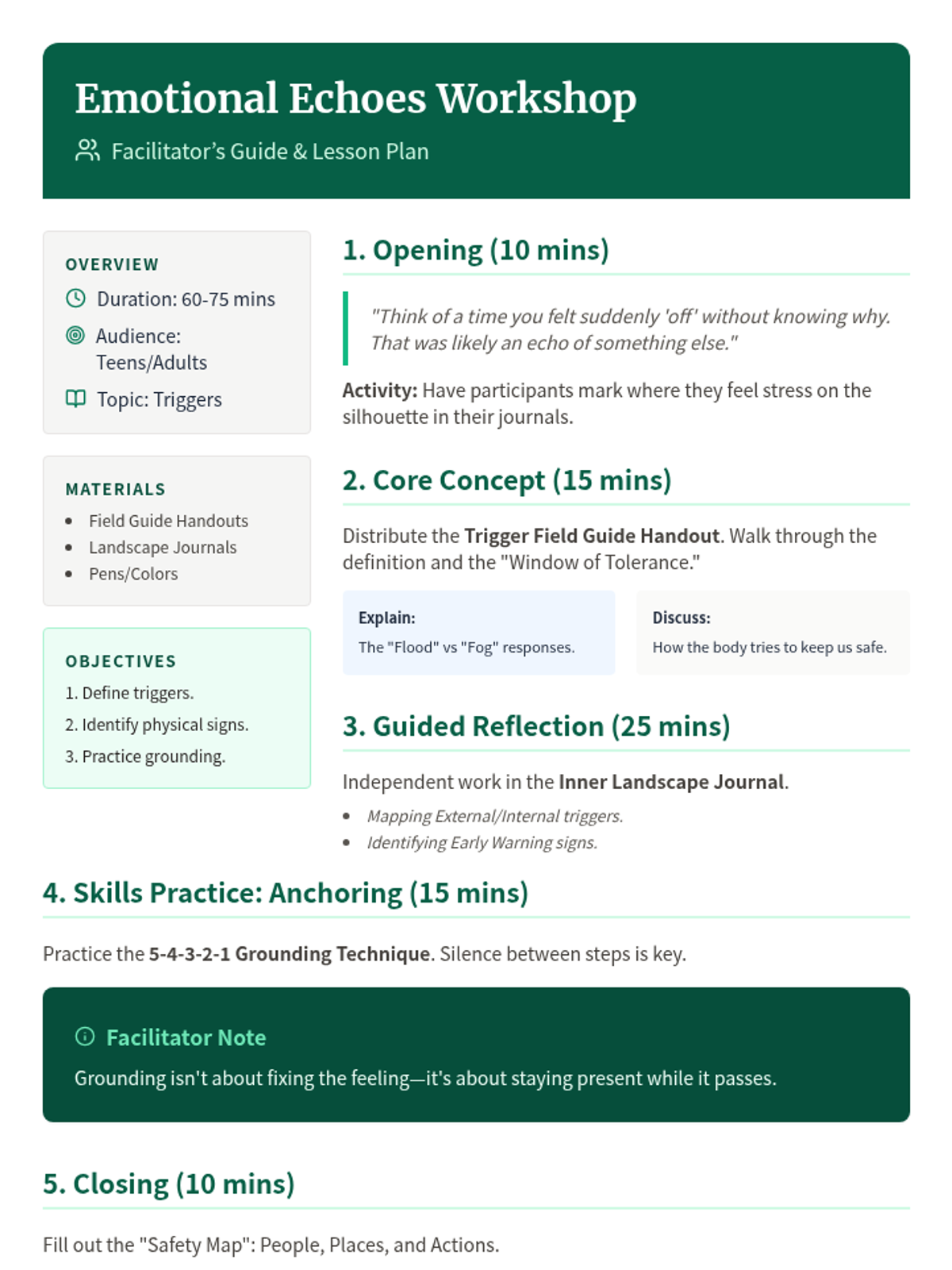
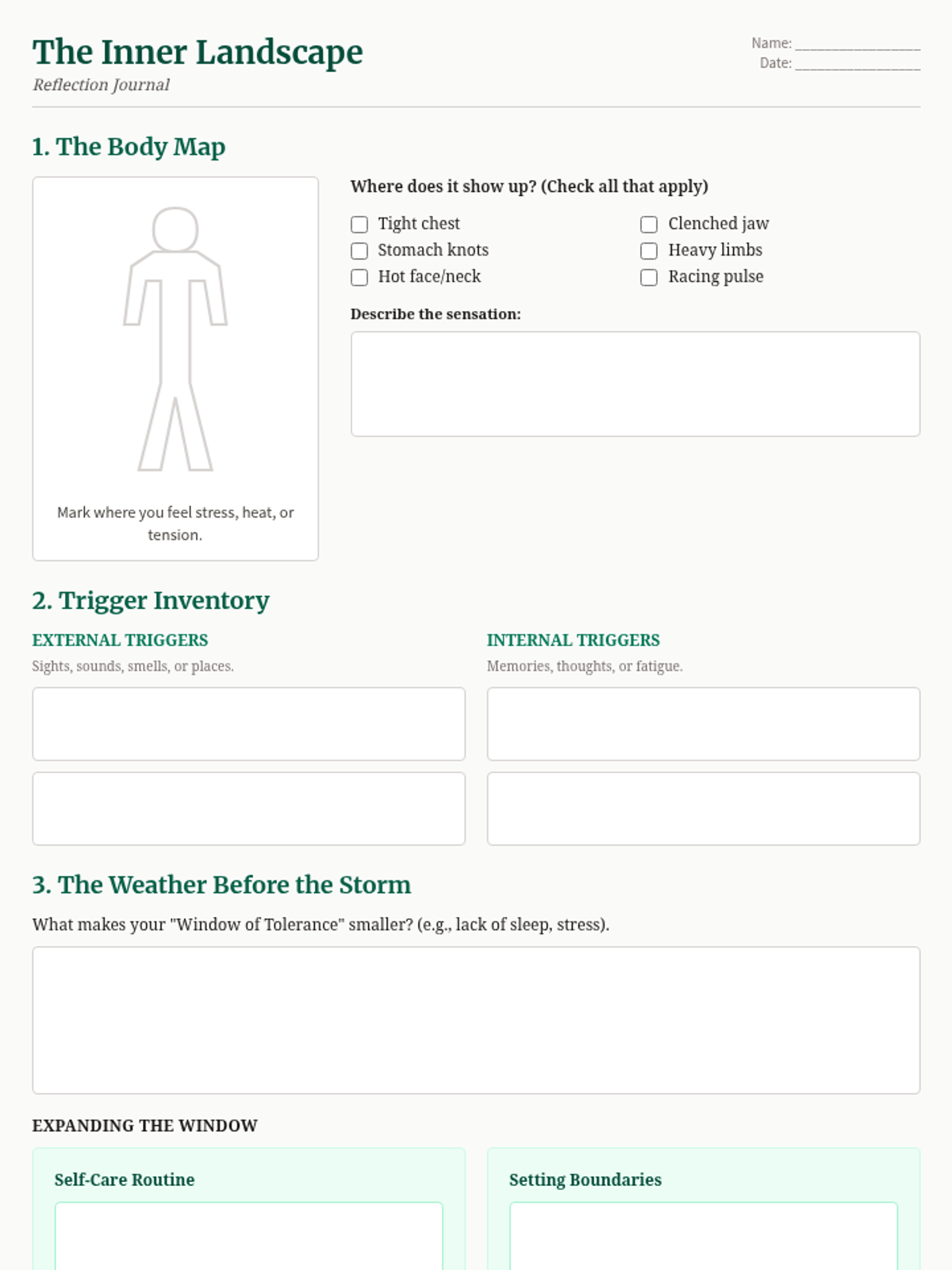
A comprehensive workshop and resource set designed to help students identify, understand, and navigate mental health triggers through self-reflection and grounding techniques.
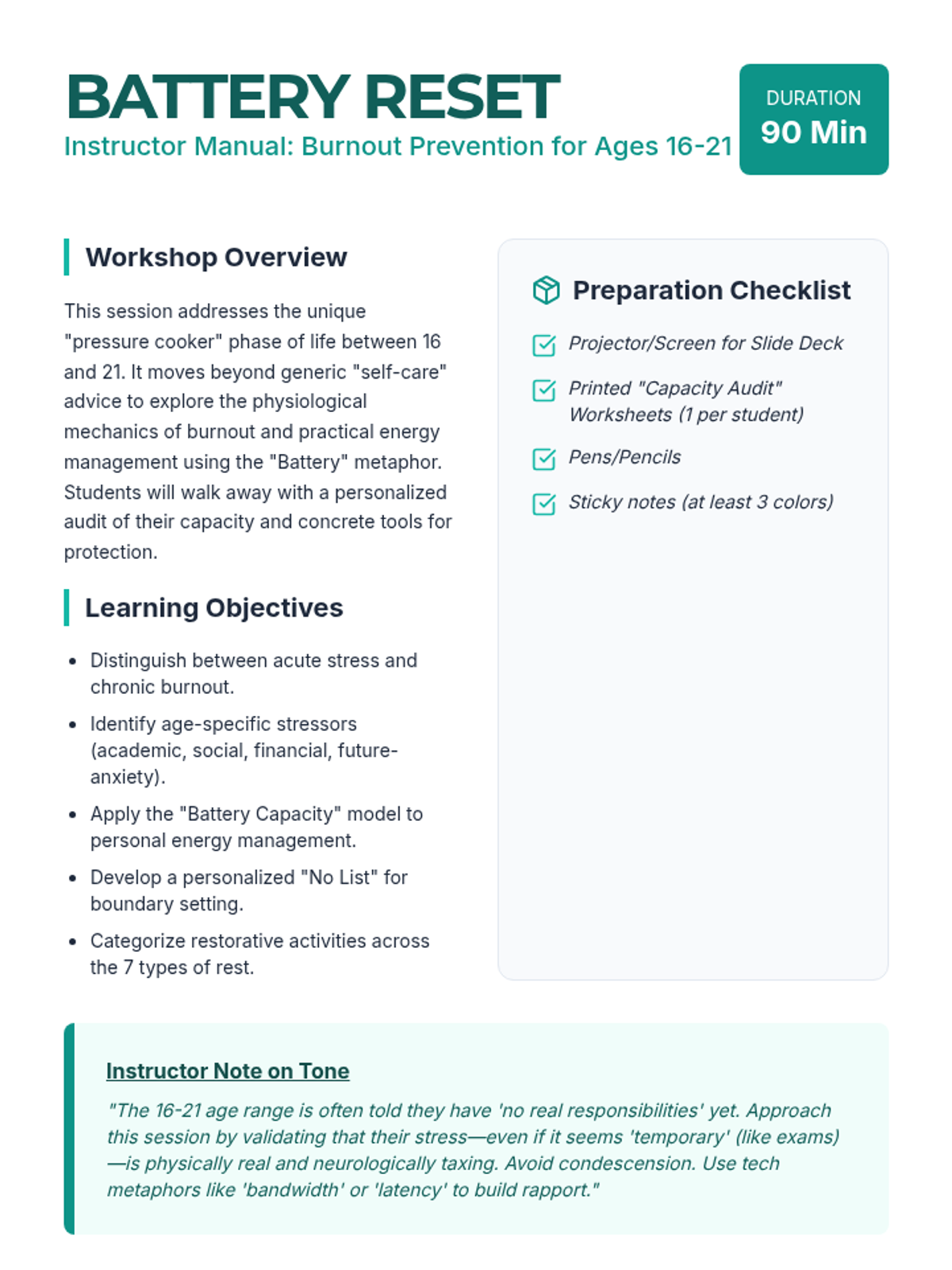
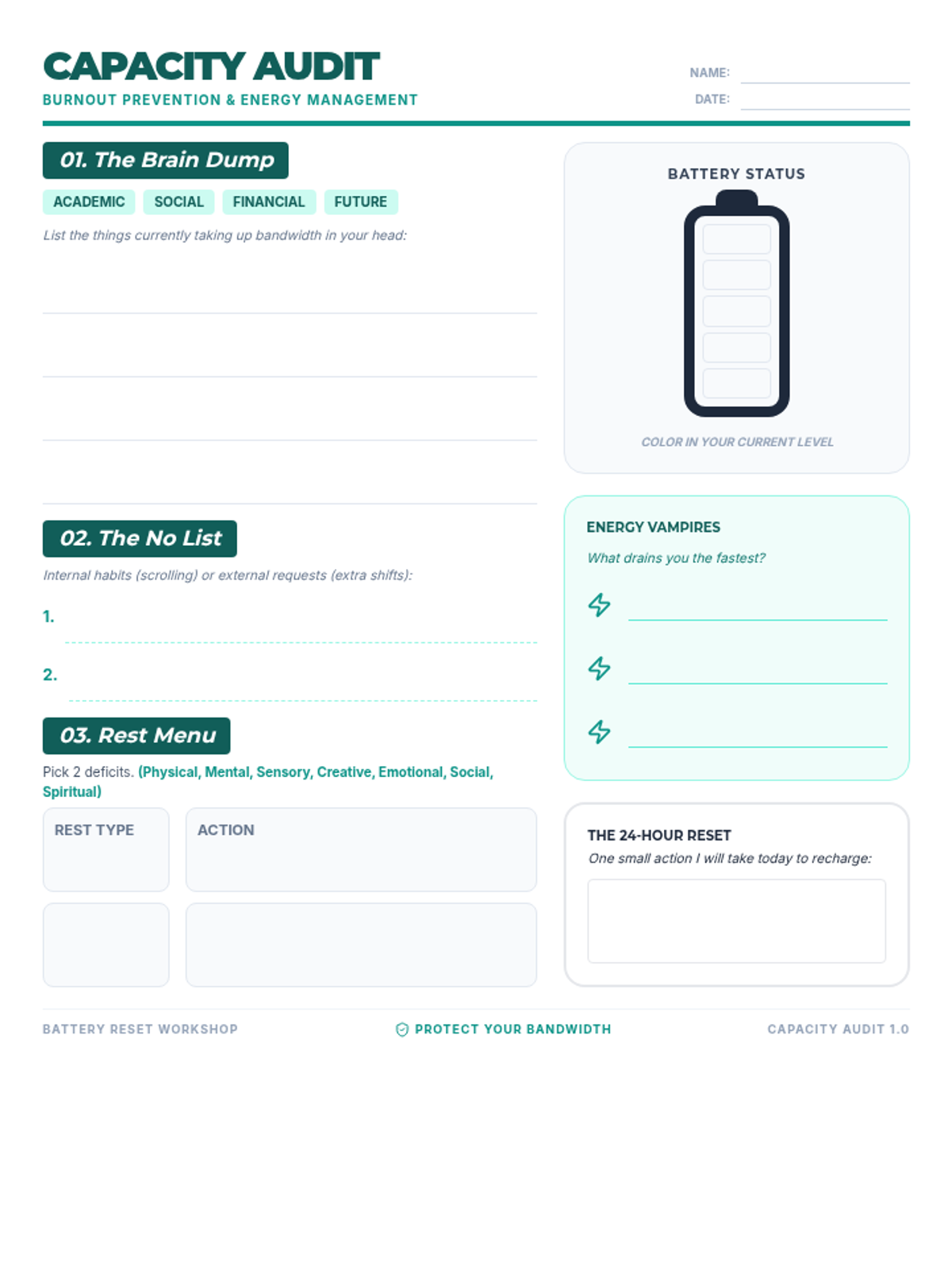
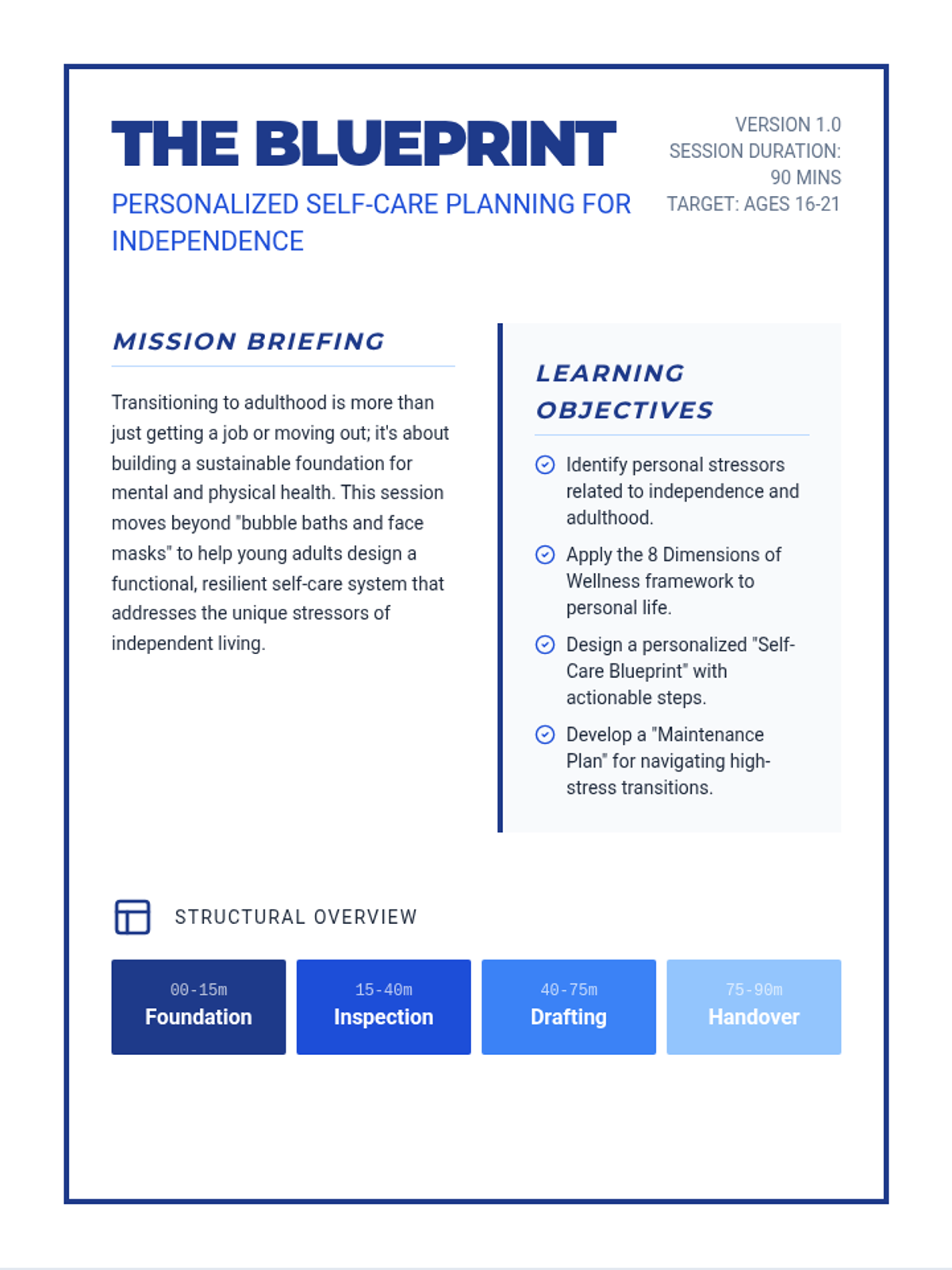
A comprehensive 90-minute workshop designed for transitional age youth (16-21) to identify stressors, understand the mechanics of burnout, and develop personalized energy management strategies.
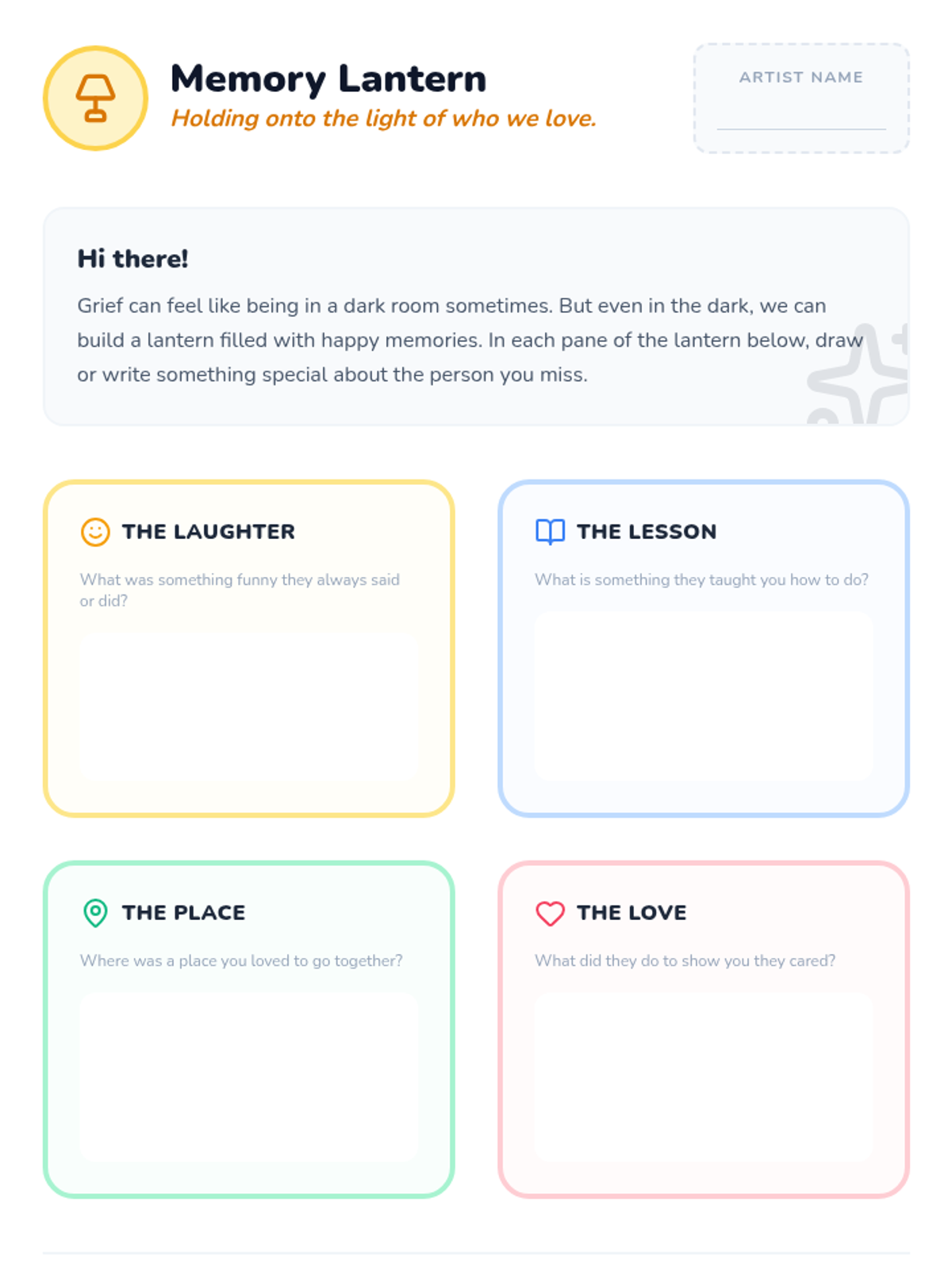
Specialized resources for supporting children and adolescents, focusing on age-appropriate explanations and creative memory-keeping.
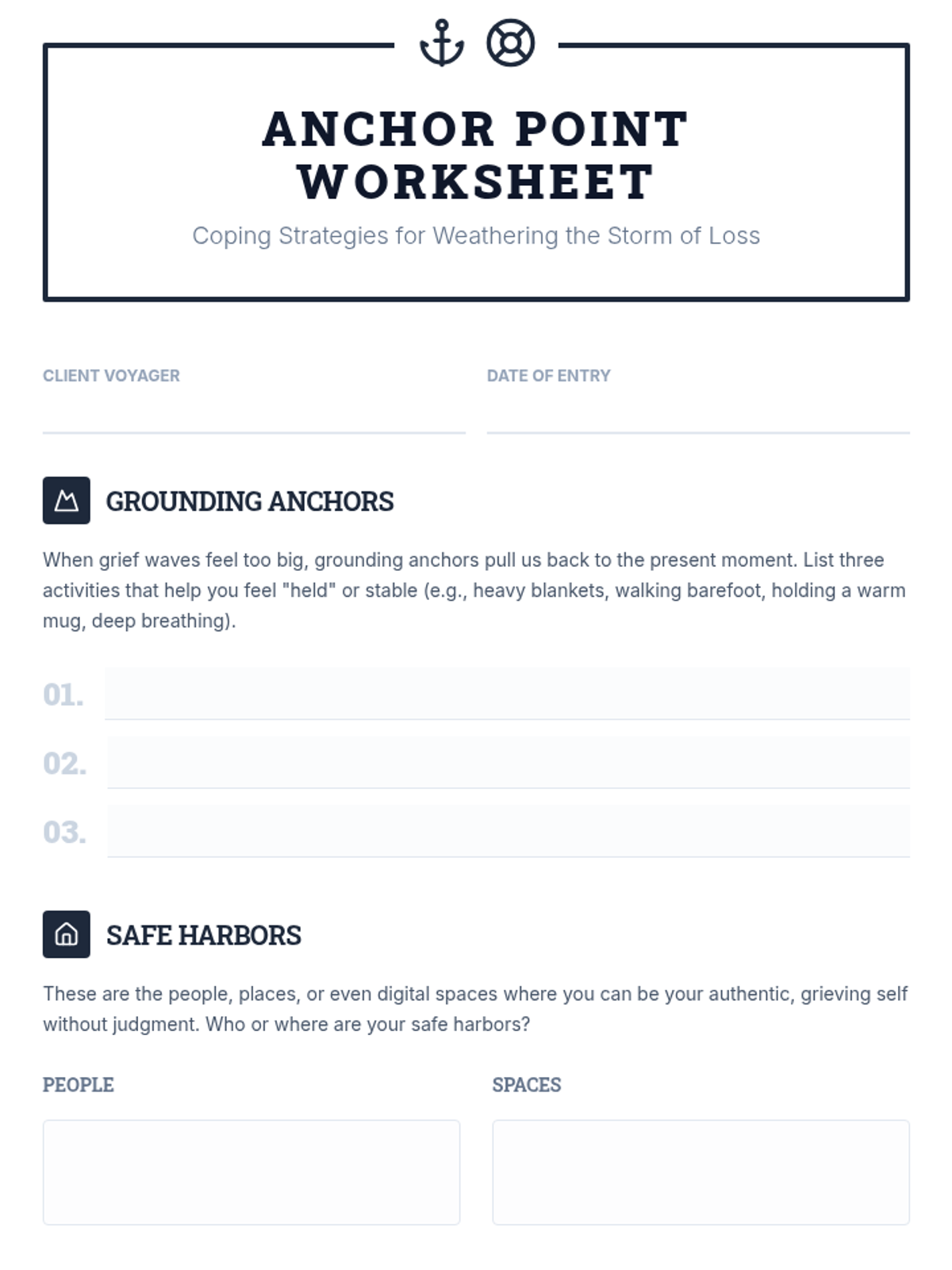
A practical lesson dedicated to identifying and implementing healthy coping mechanisms to manage the intense emotional waves of loss.
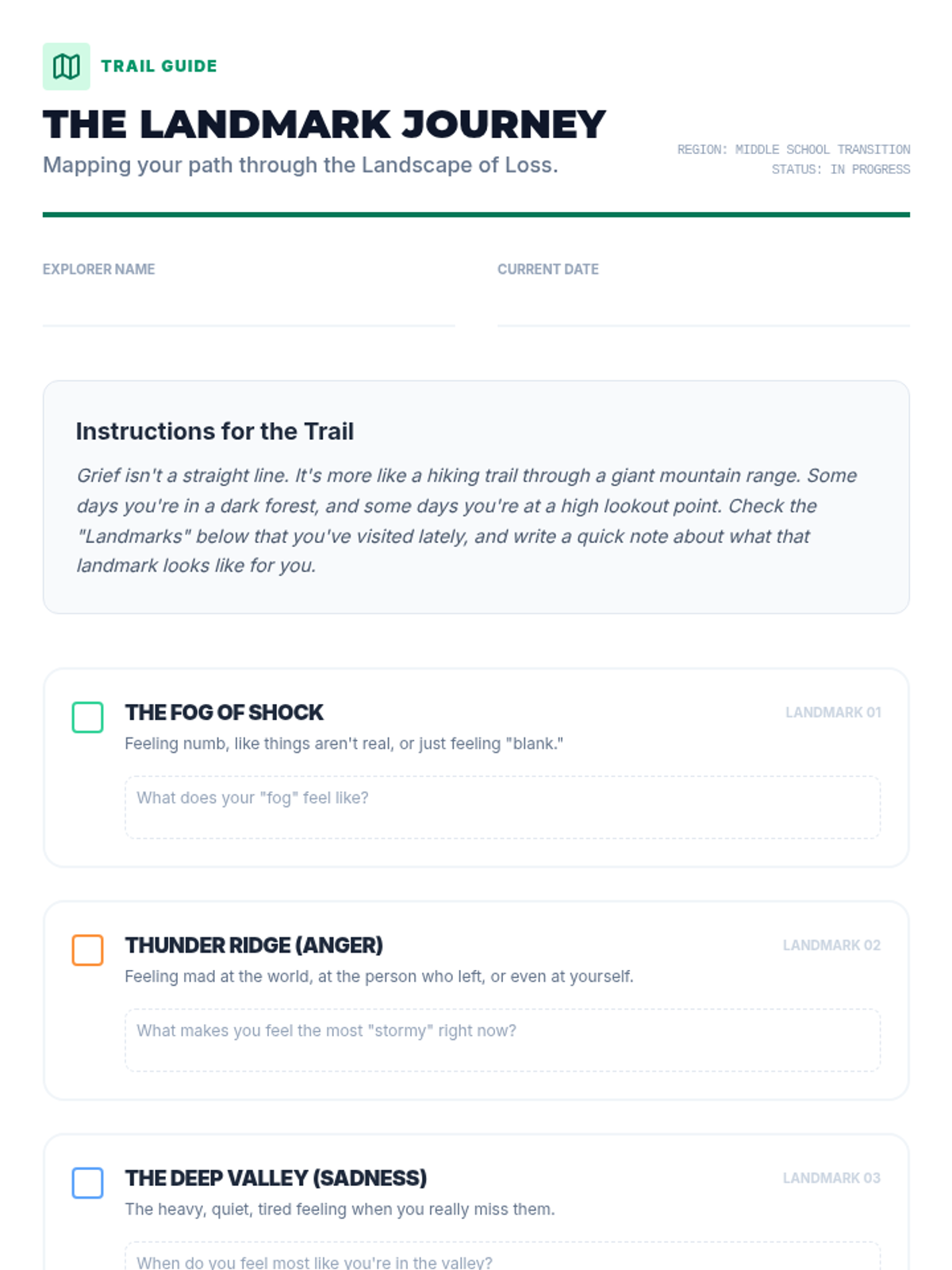
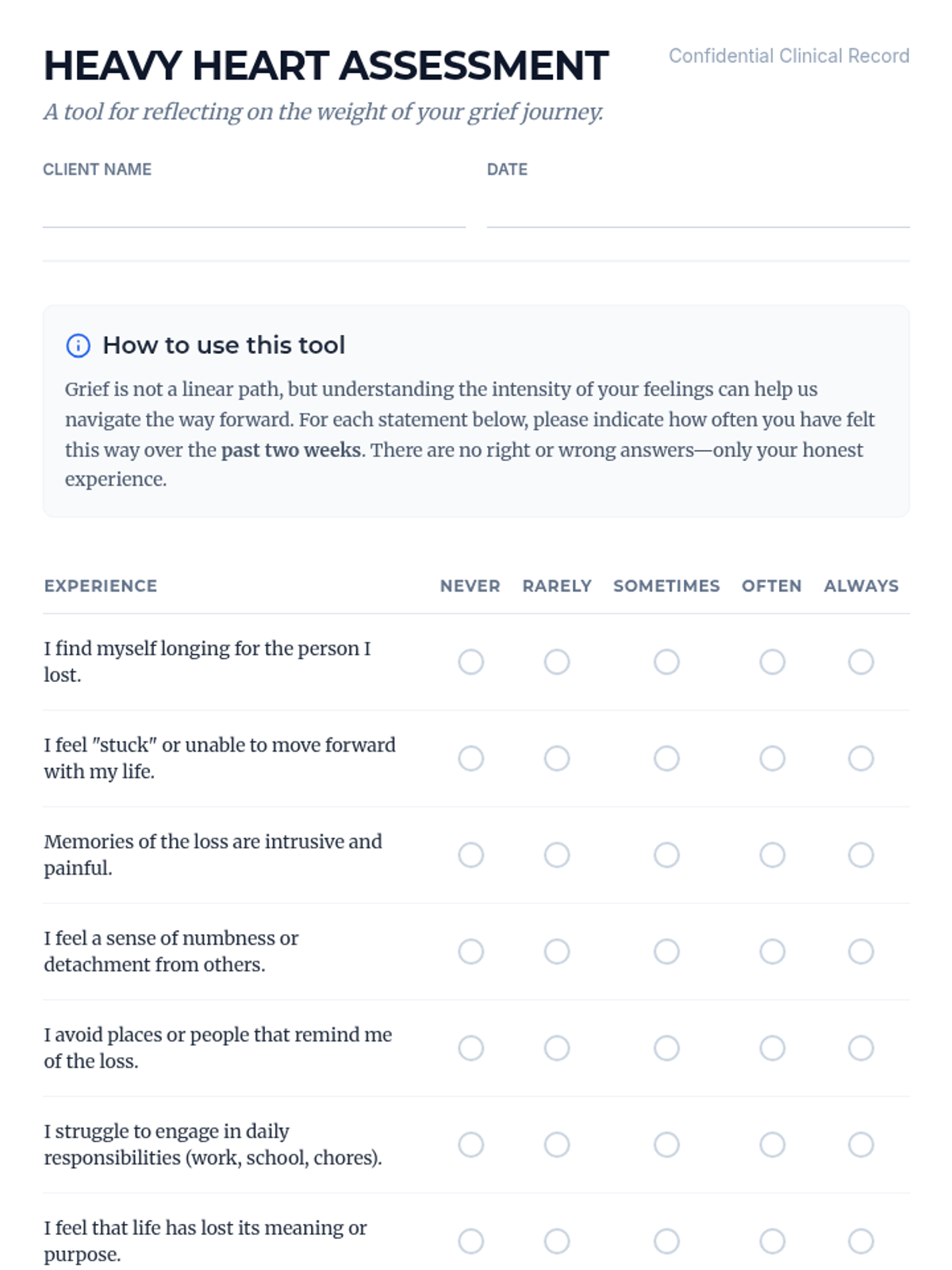
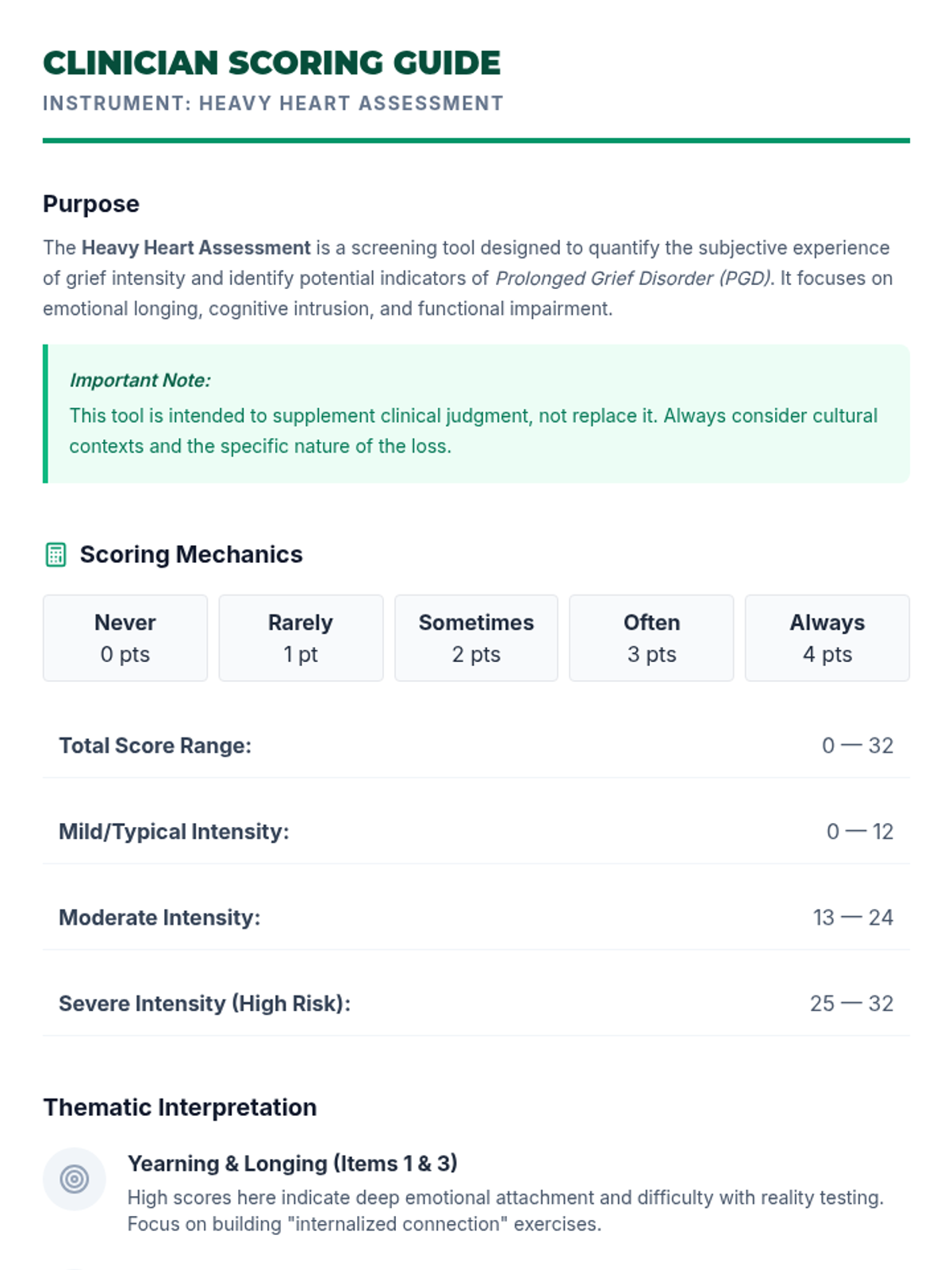
An introductory lesson focused on understanding the landscape of grief and assessing the severity of the client's current experience to guide treatment planning.
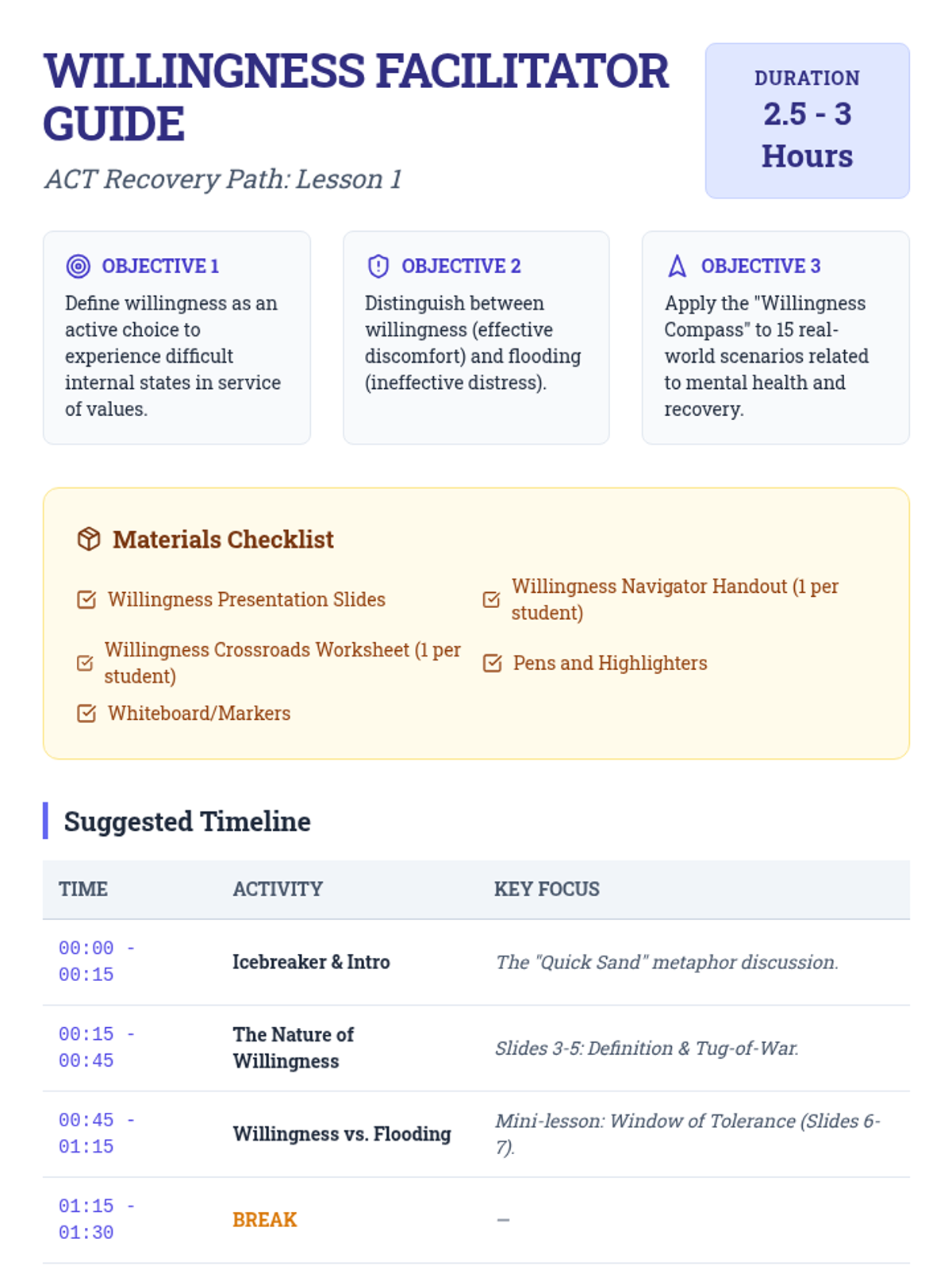
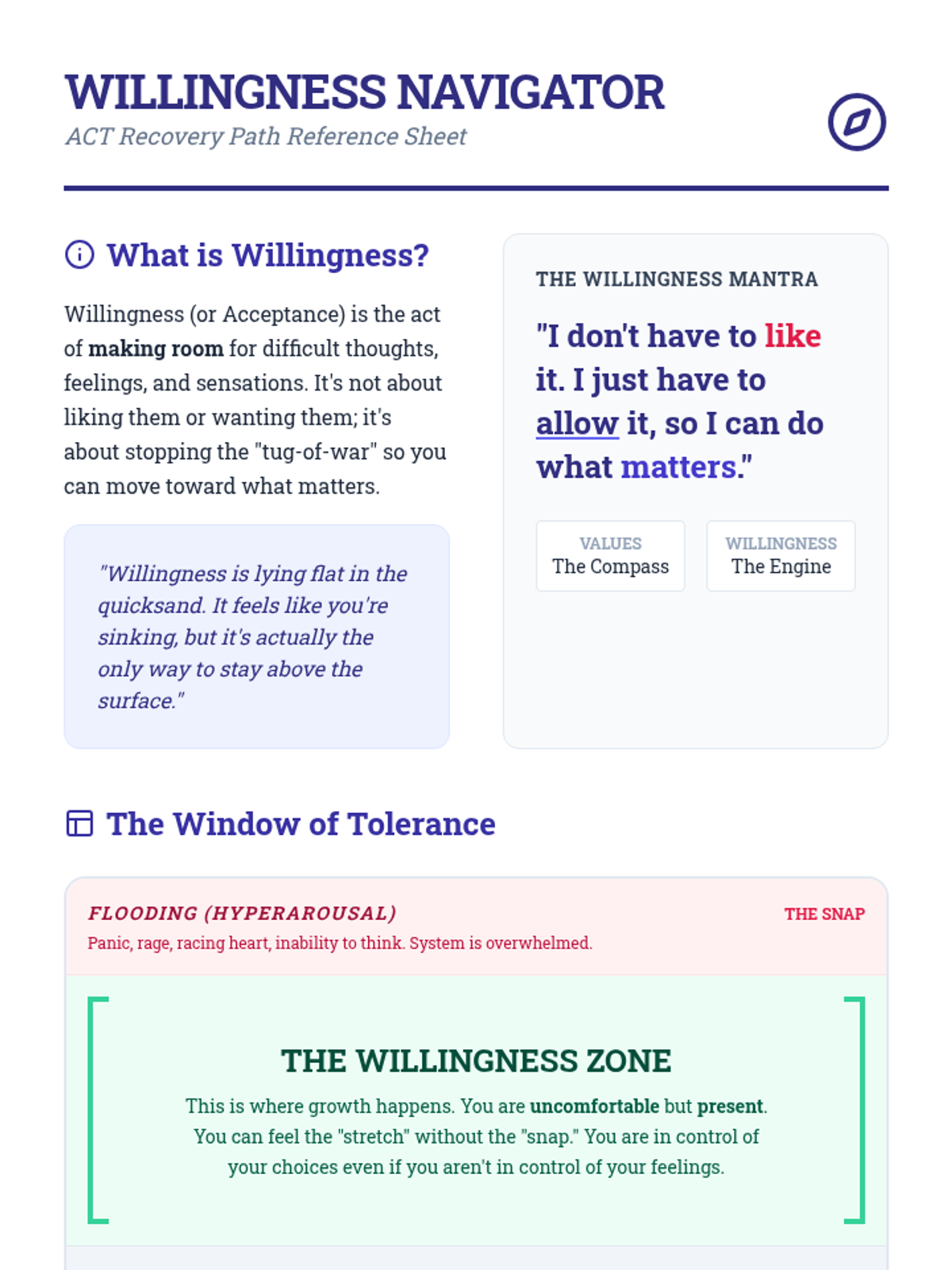
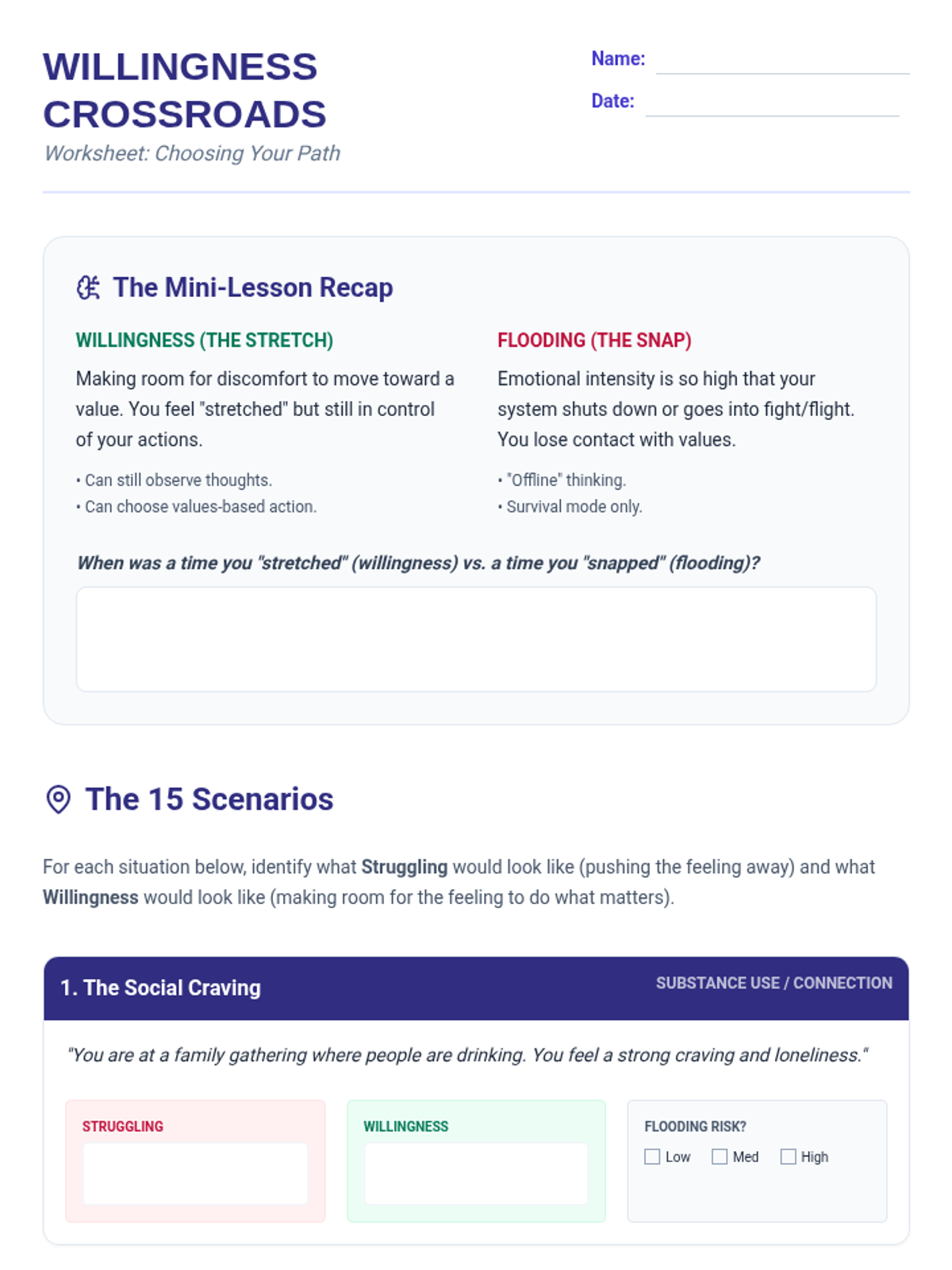
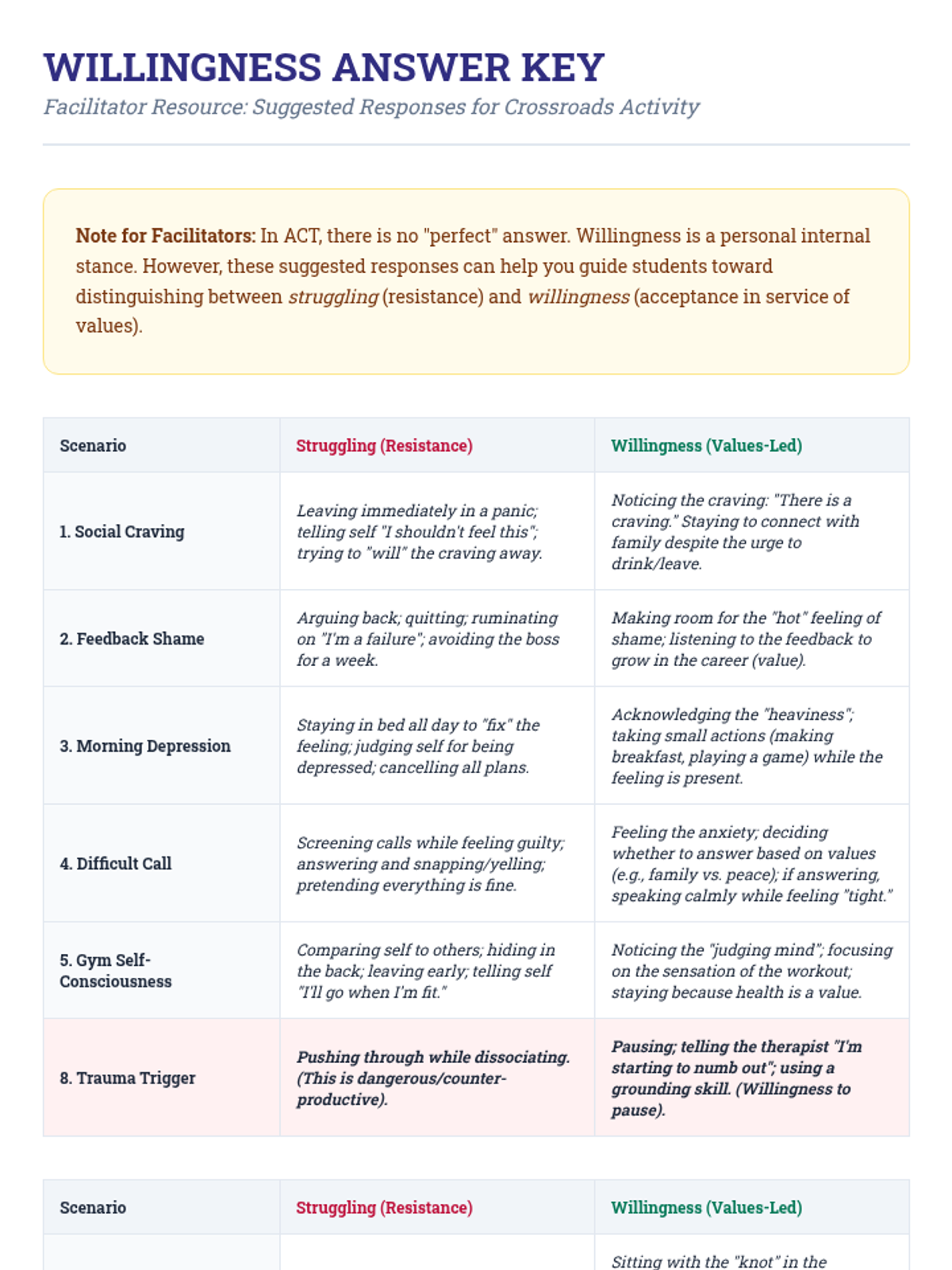
This lesson covers the ACT core process of Willingness (Acceptance), providing a mini-lesson on the 'Window of Tolerance' to distinguish between helpful stretching (willingness) and overwhelming distress (flooding).
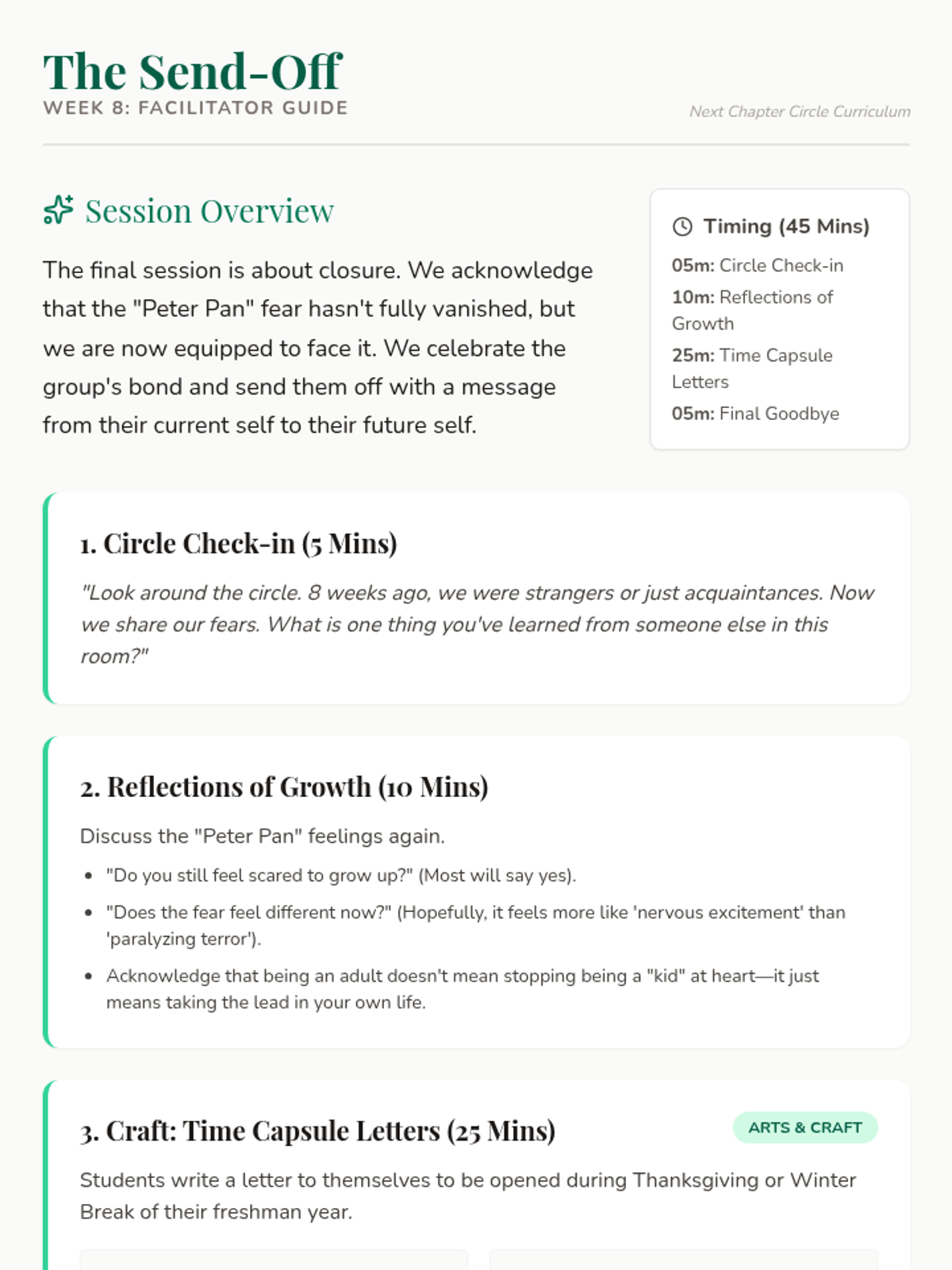
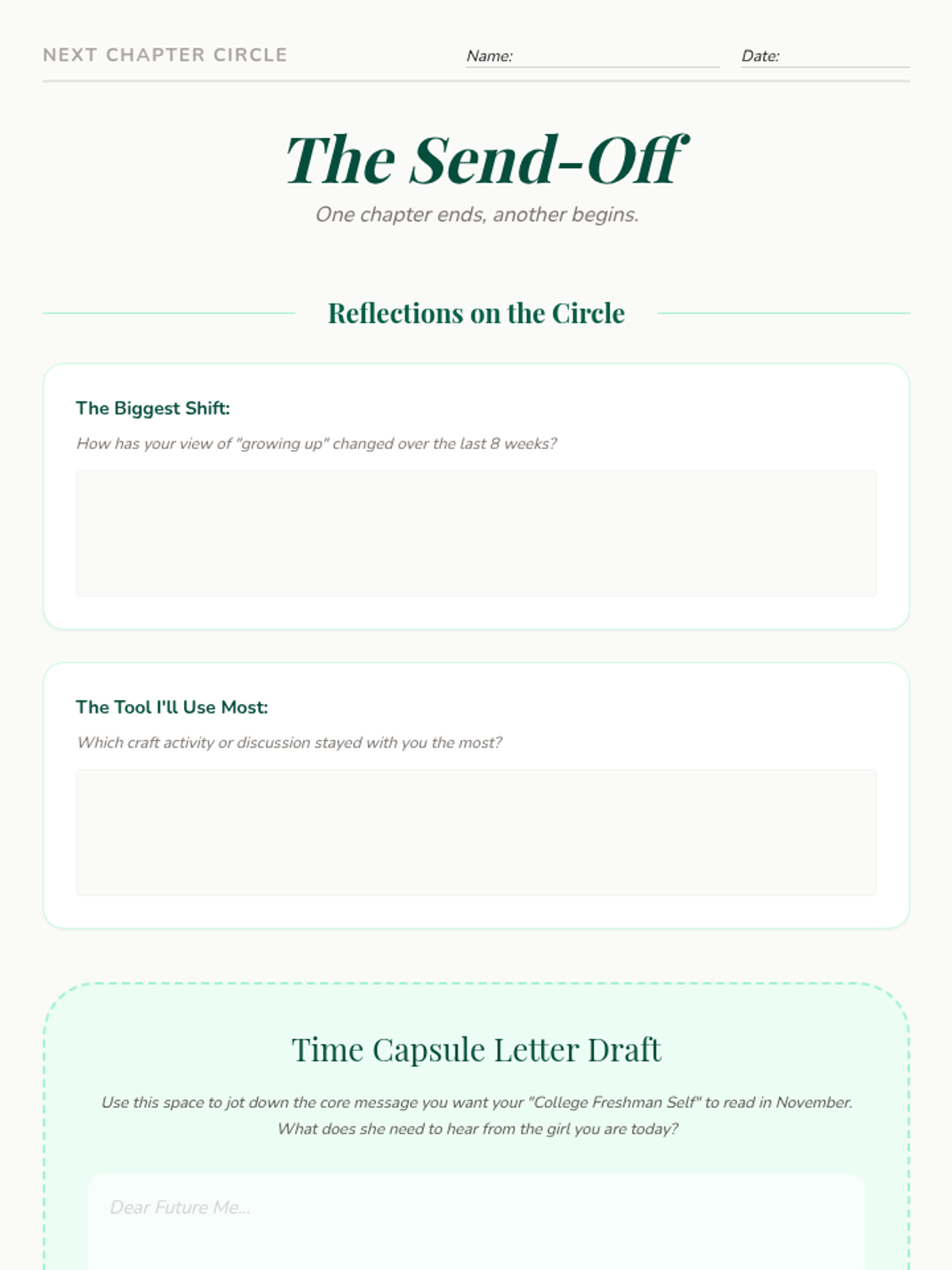
A celebration of growth and a structured closure activity to say goodbye to high school and hello to the future.
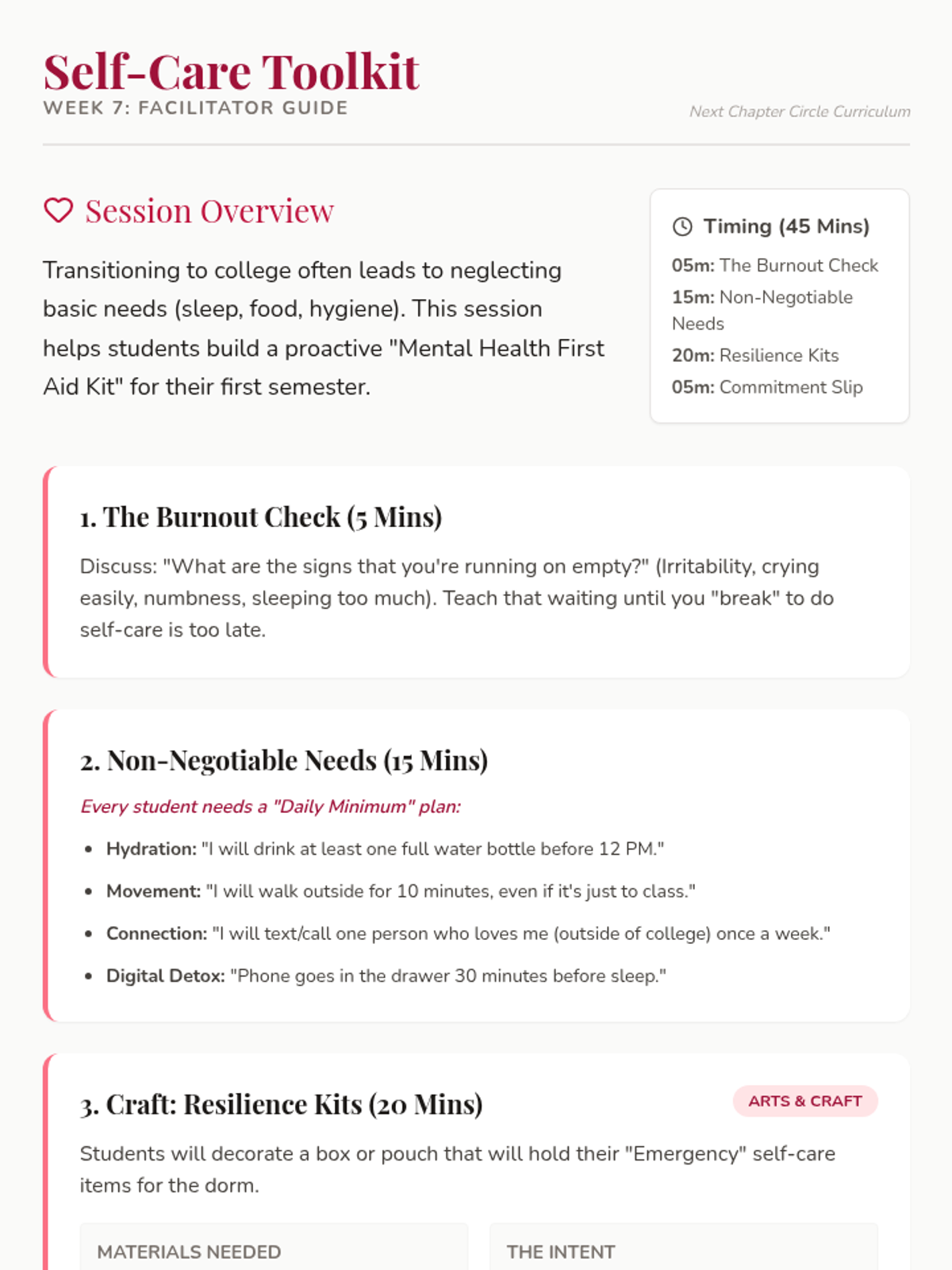
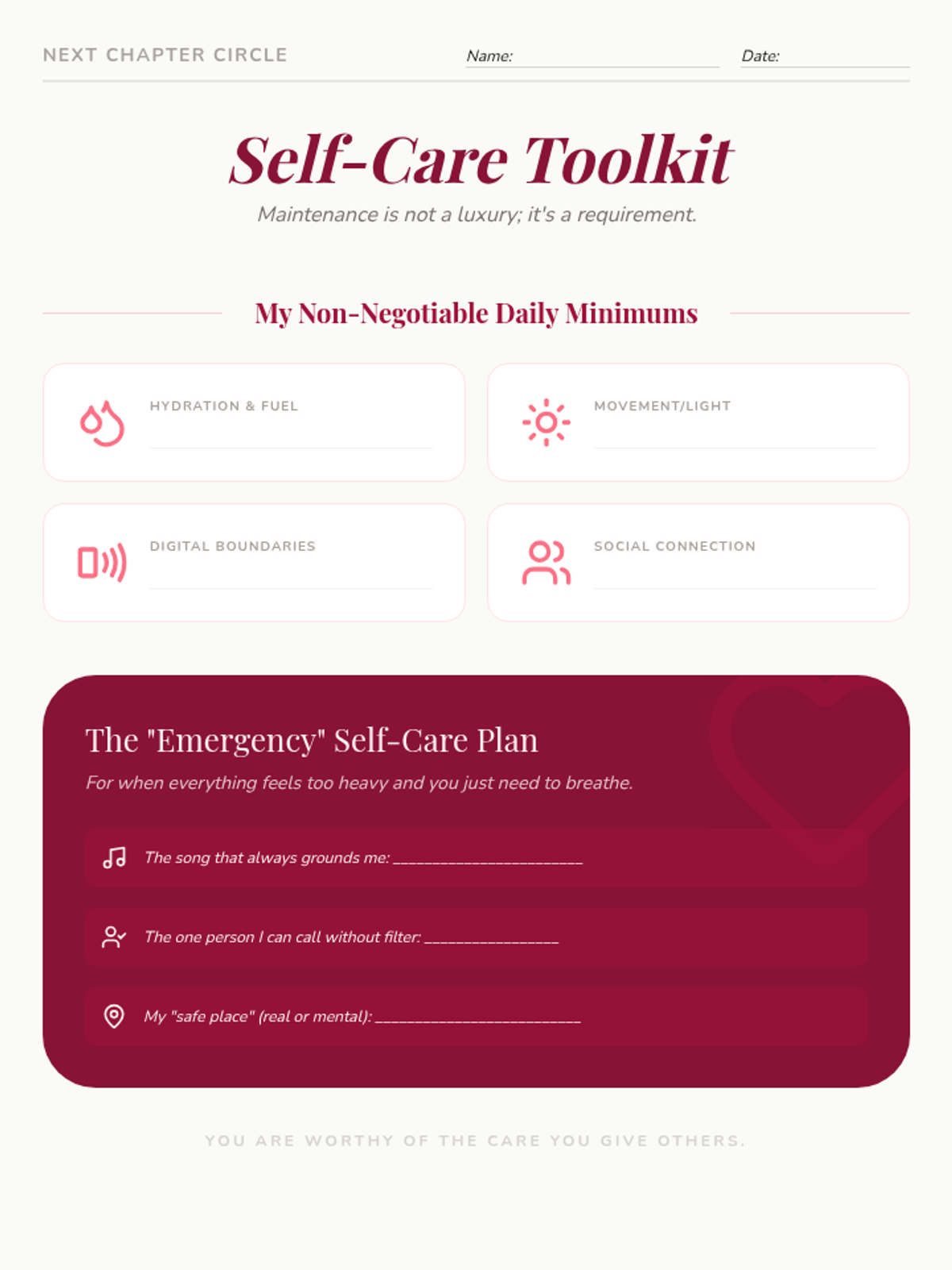
Developing a personalized mental health and self-care maintenance plan for the first semester of college.
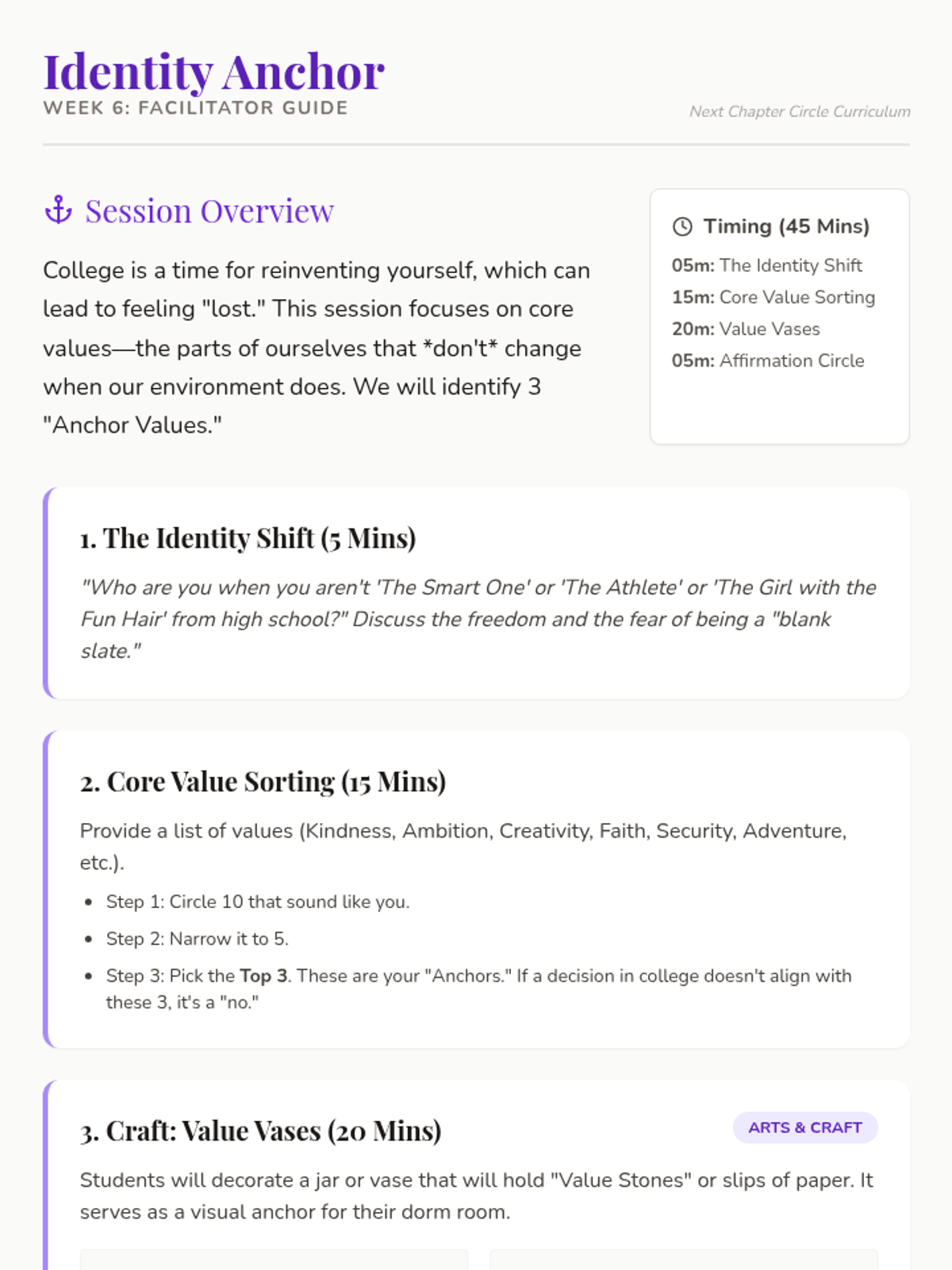
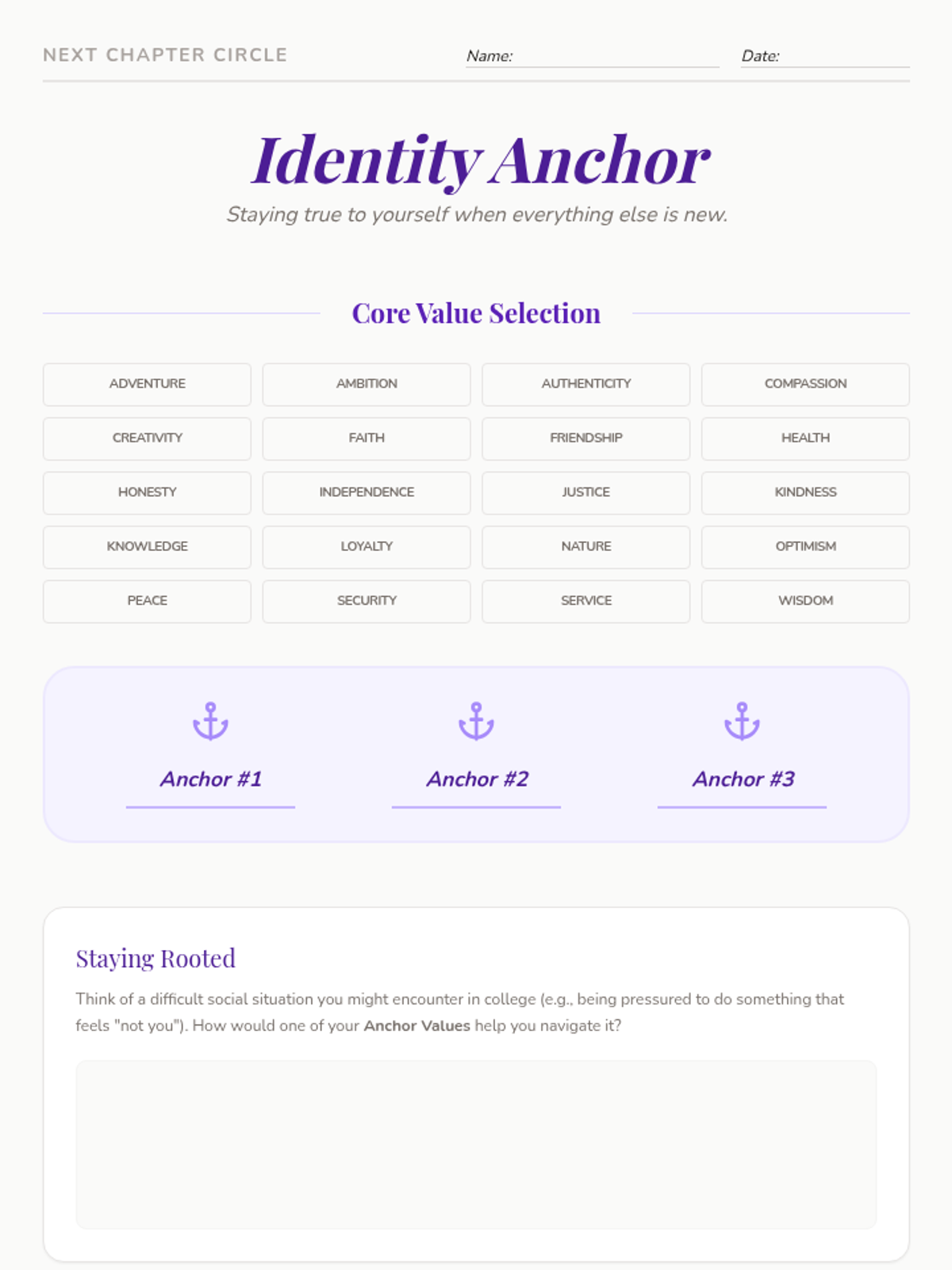
Explores identity and core values to ensure students stay grounded in their beliefs while exploring new independence.
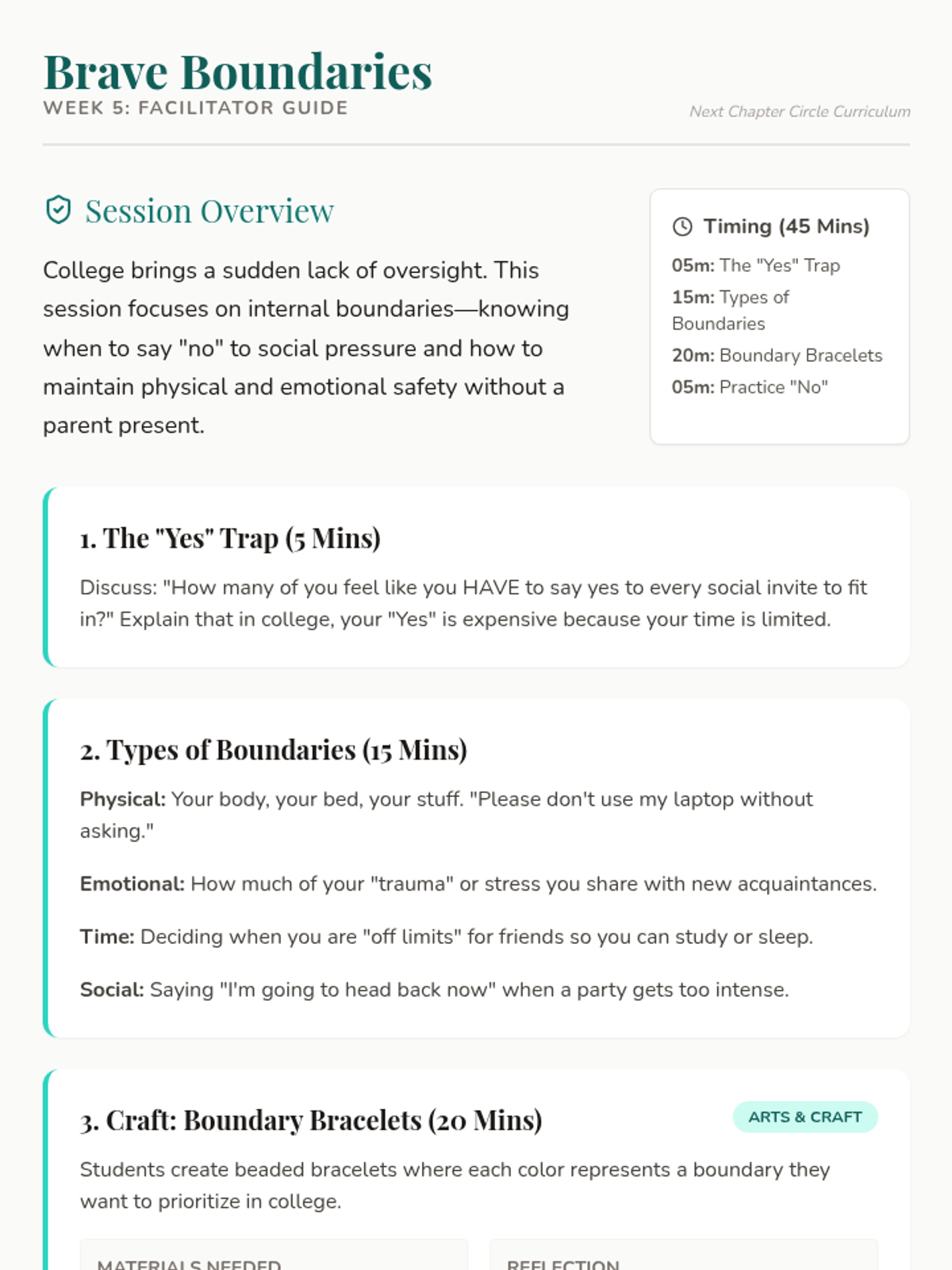
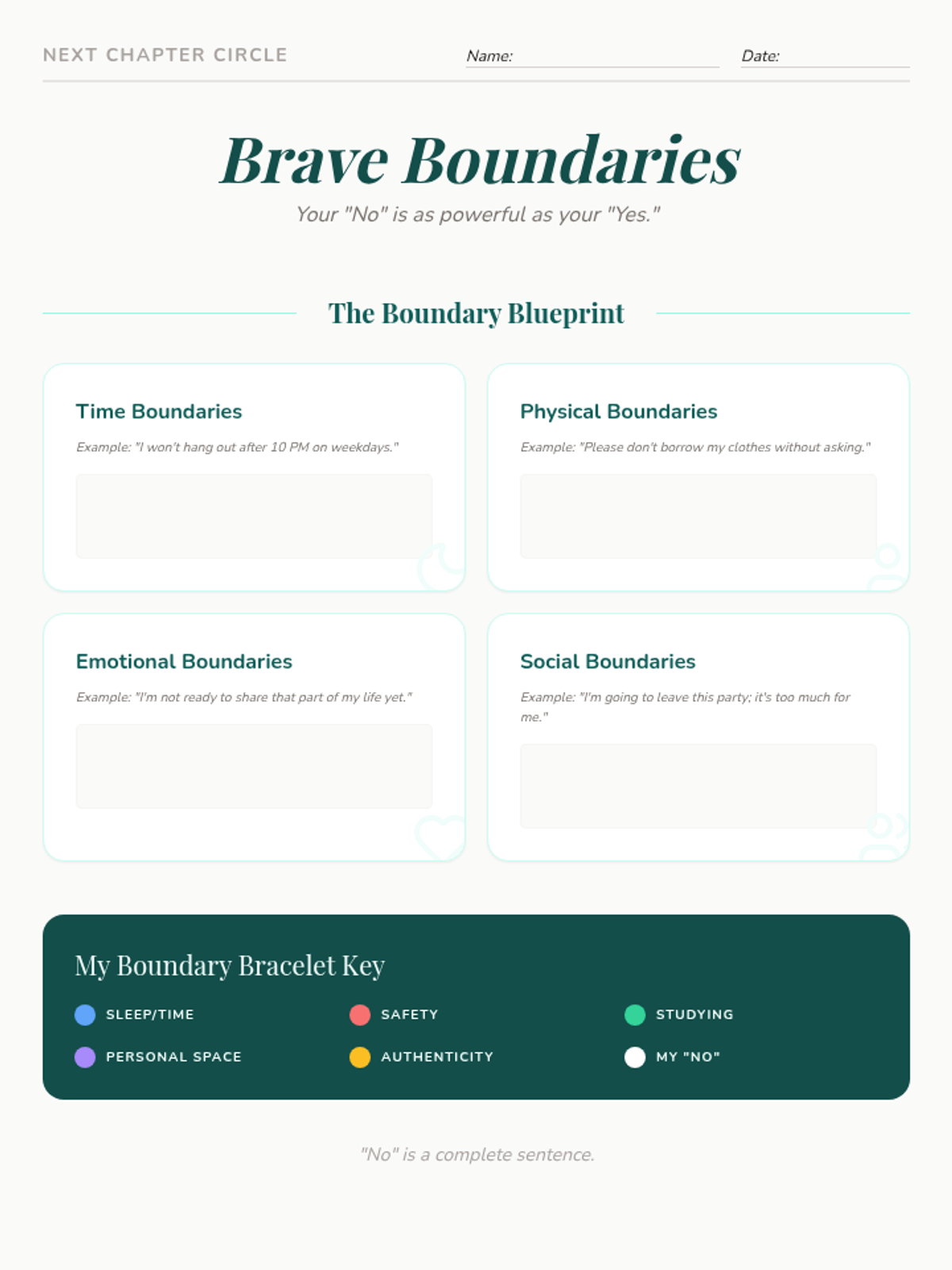
Discusses social transitions, peer pressure, and setting healthy boundaries in a new environment.
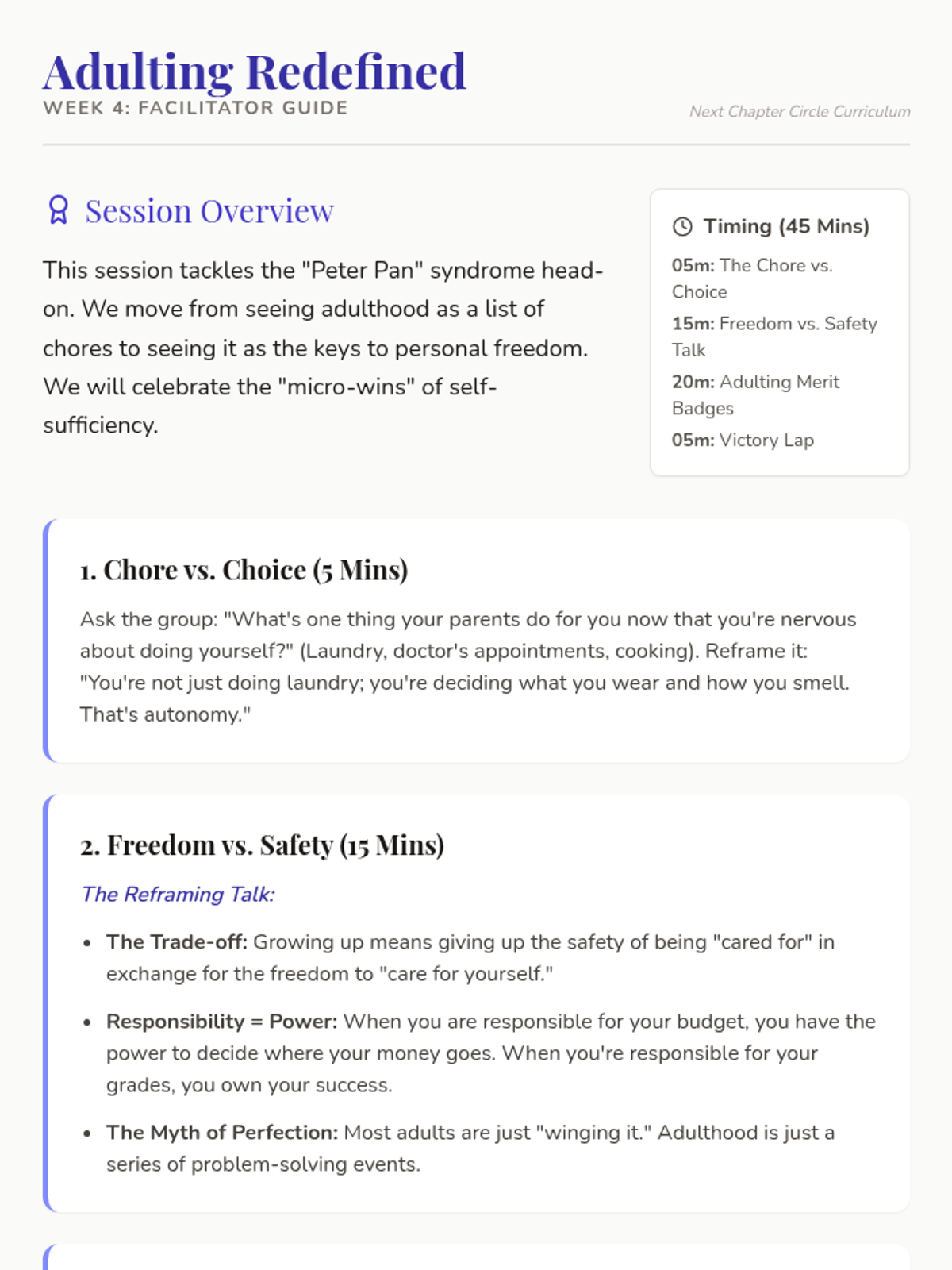
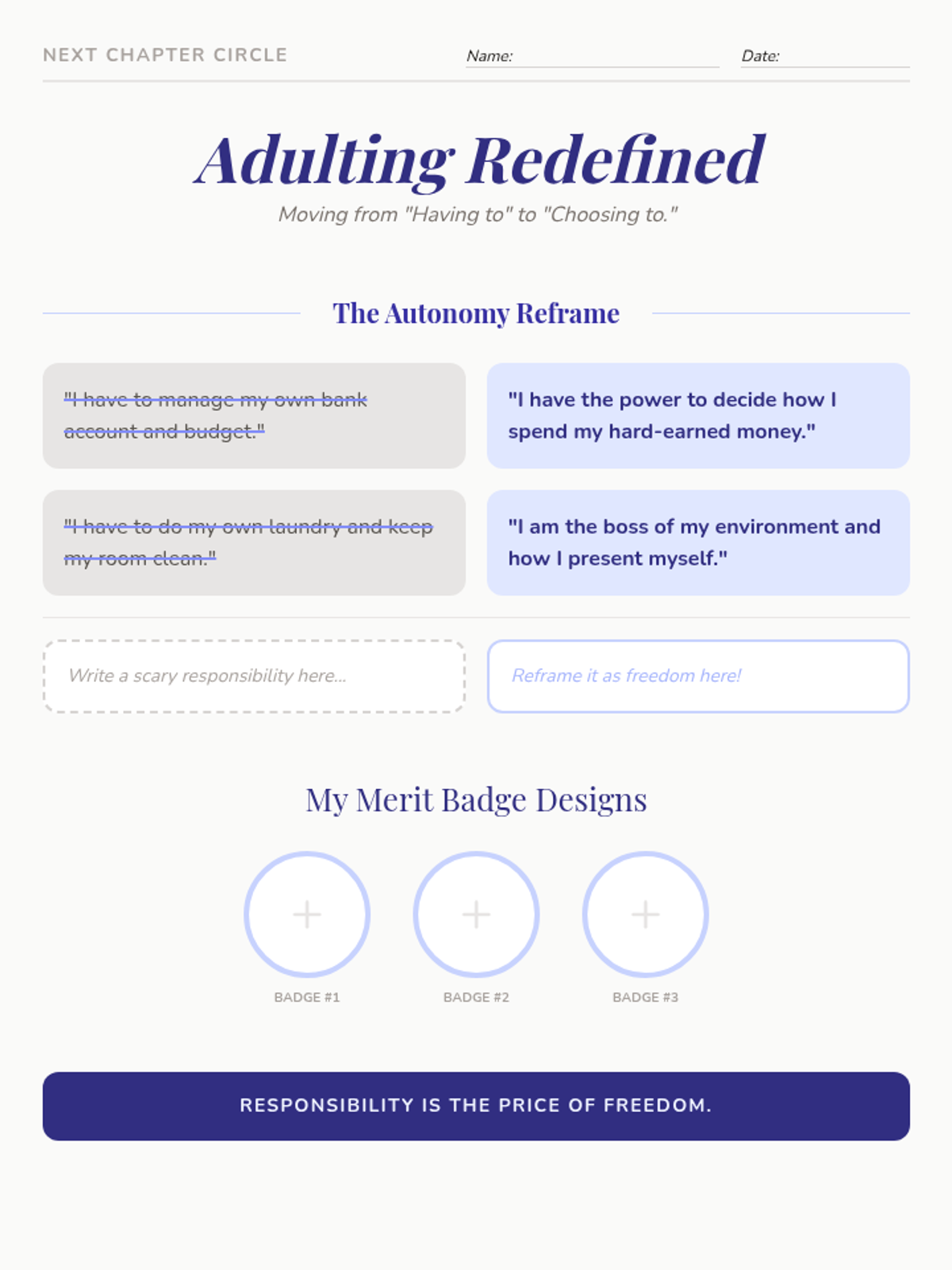
Addresses adult responsibilities and reframes 'adulting' from a burden to an exercise in personal autonomy.
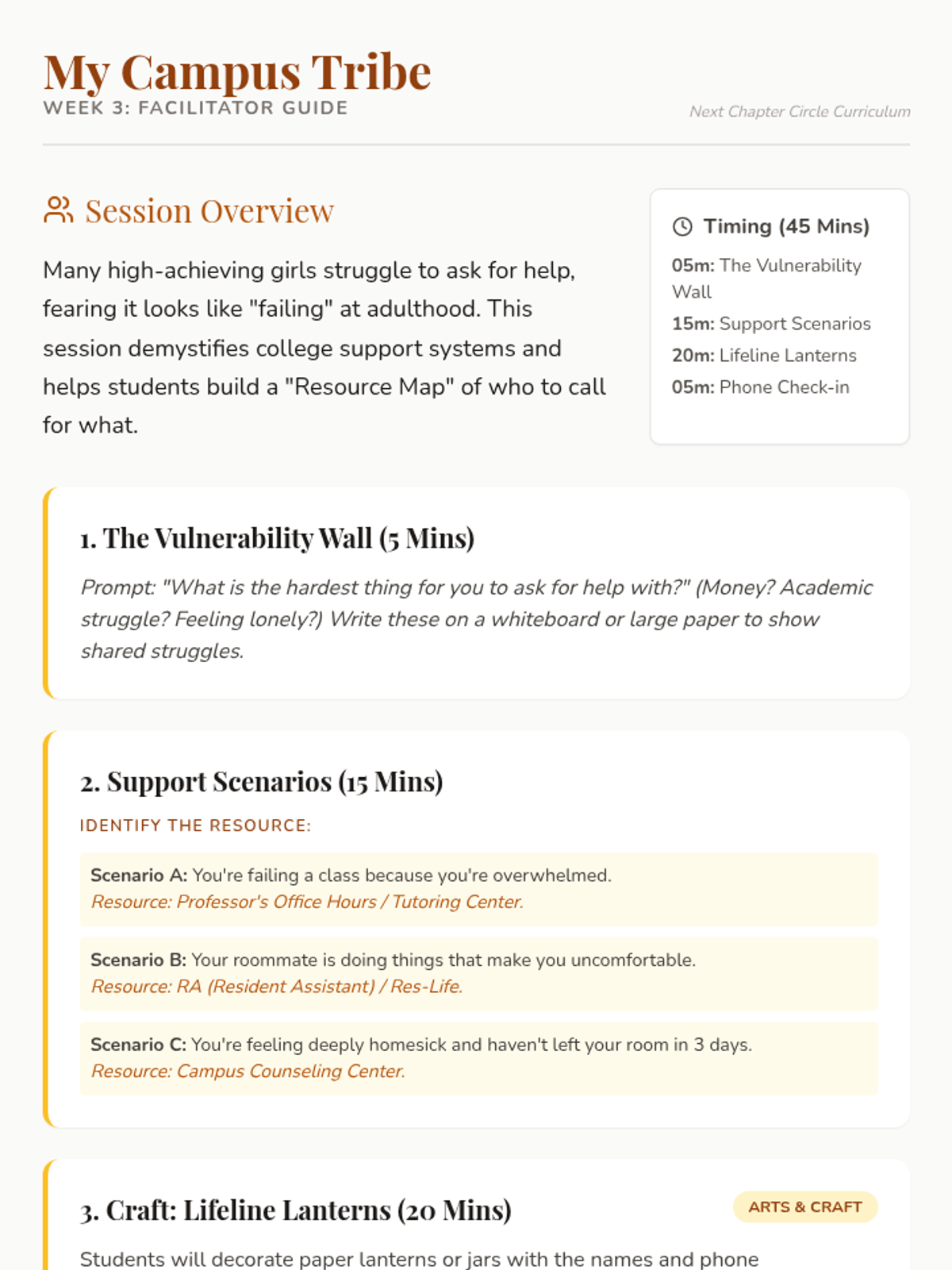
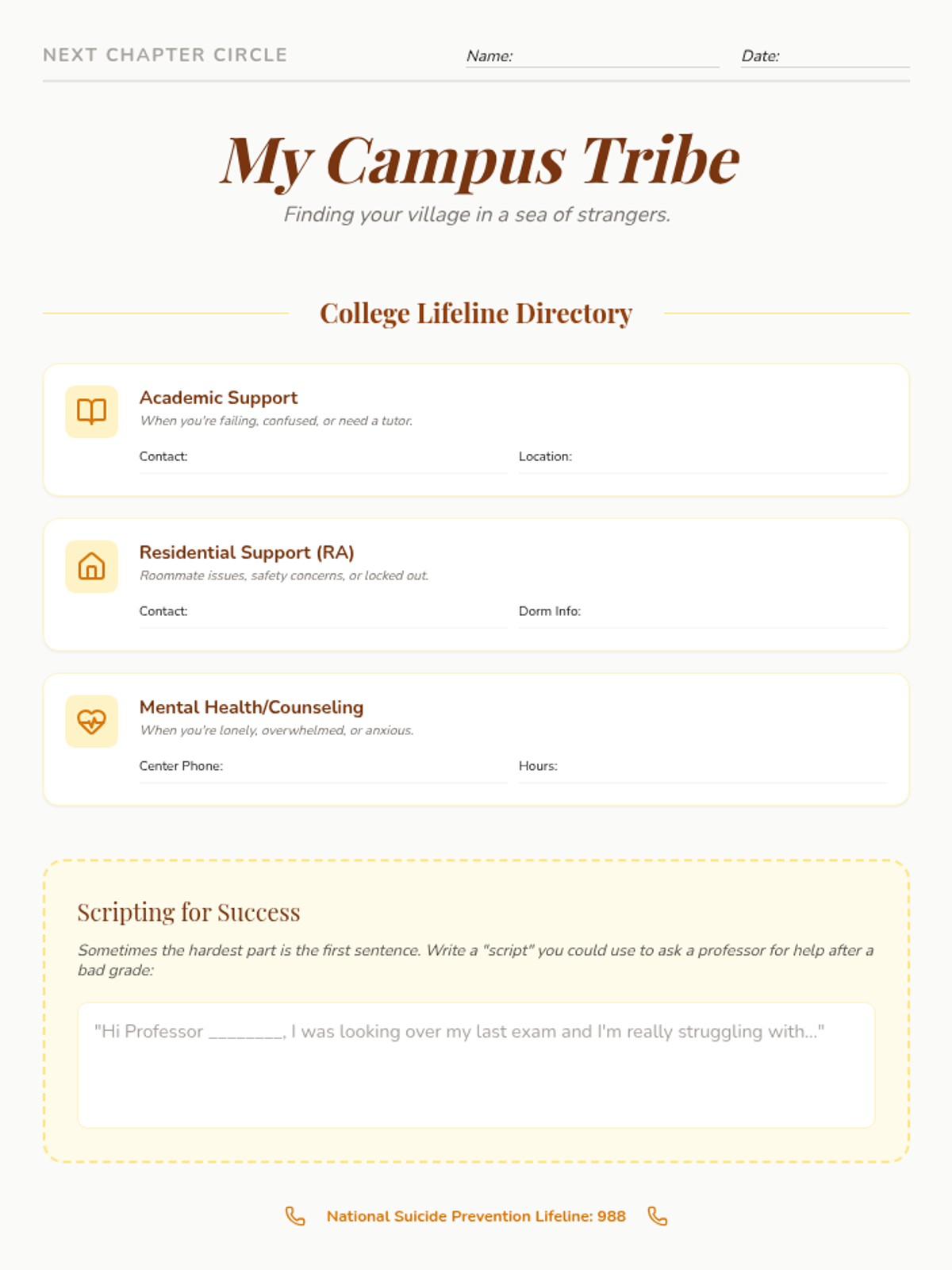
Focuses on identifying college resources (professors, RAs, counseling) and practicing the vulnerability of asking for help.
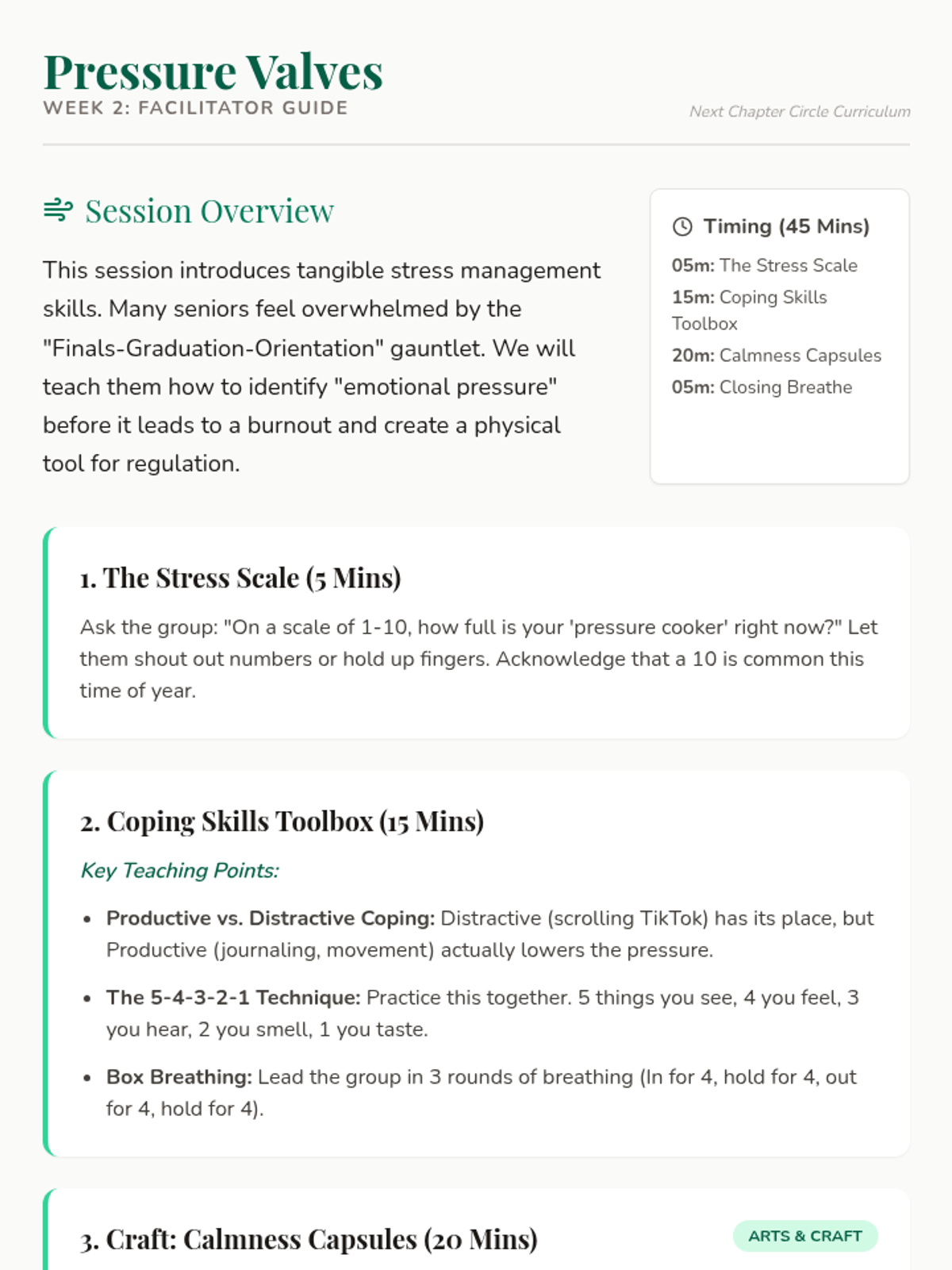
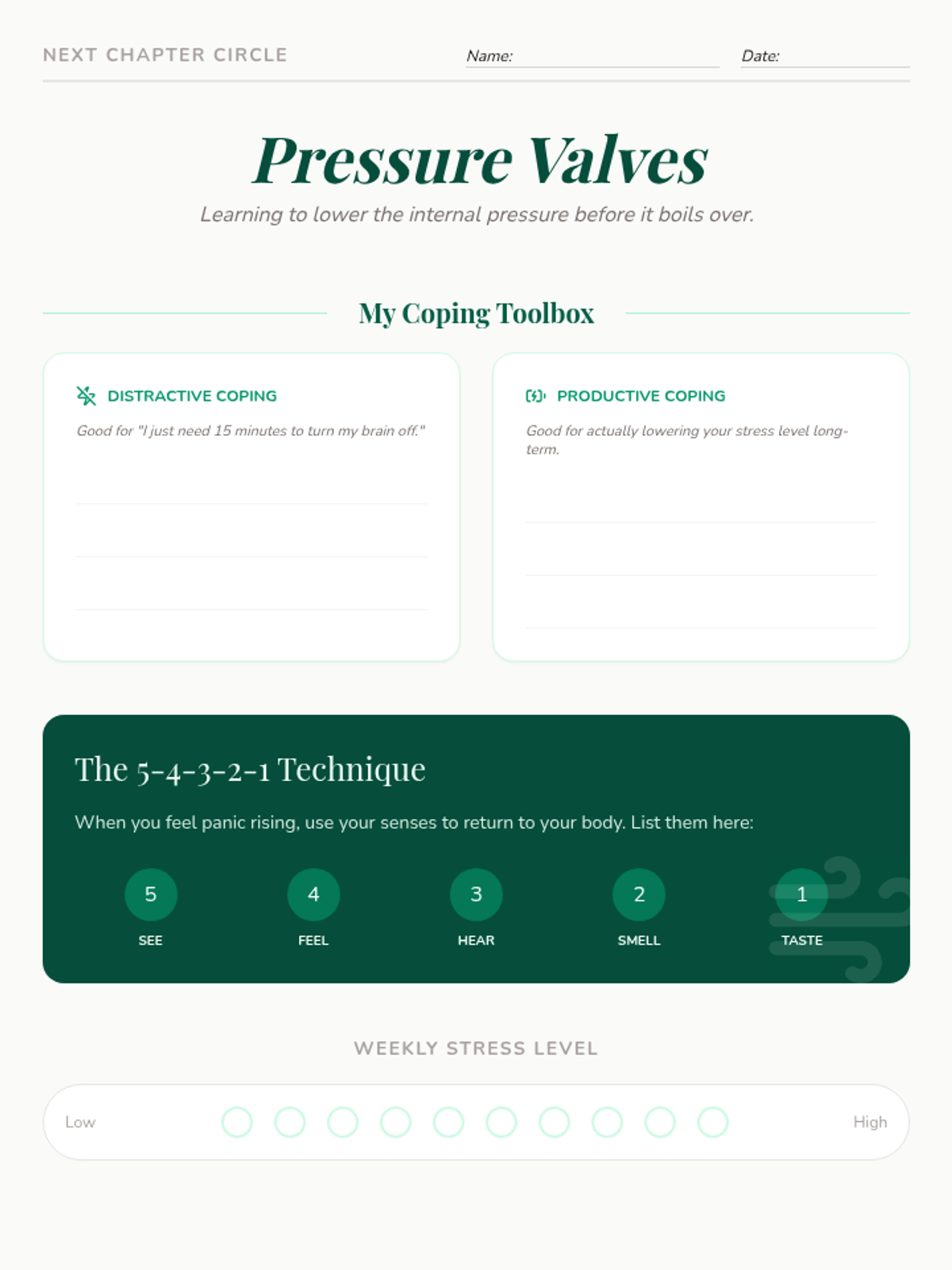
Teaches tangible stress management techniques and coping skills using sensory-based craft activities.
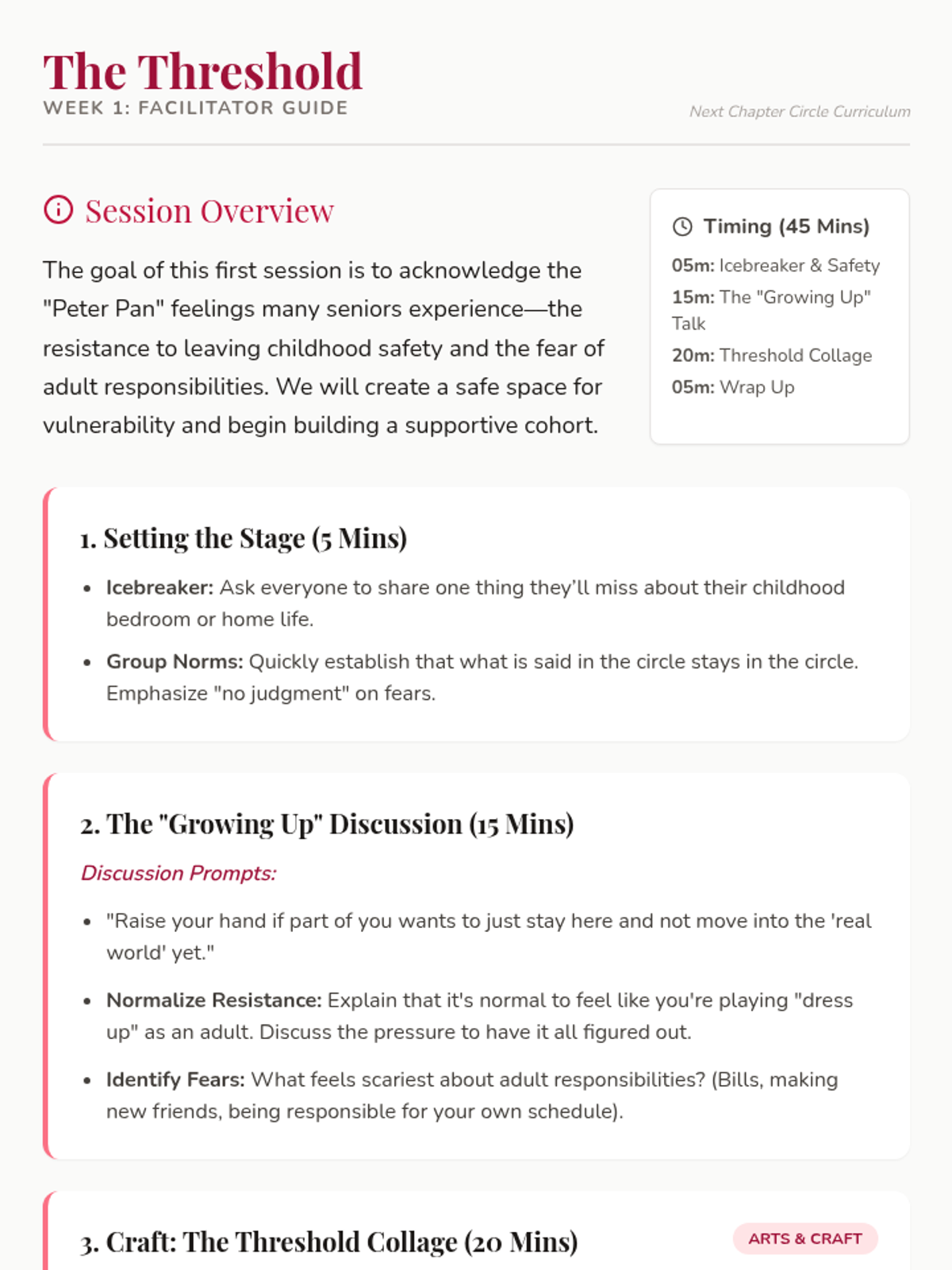
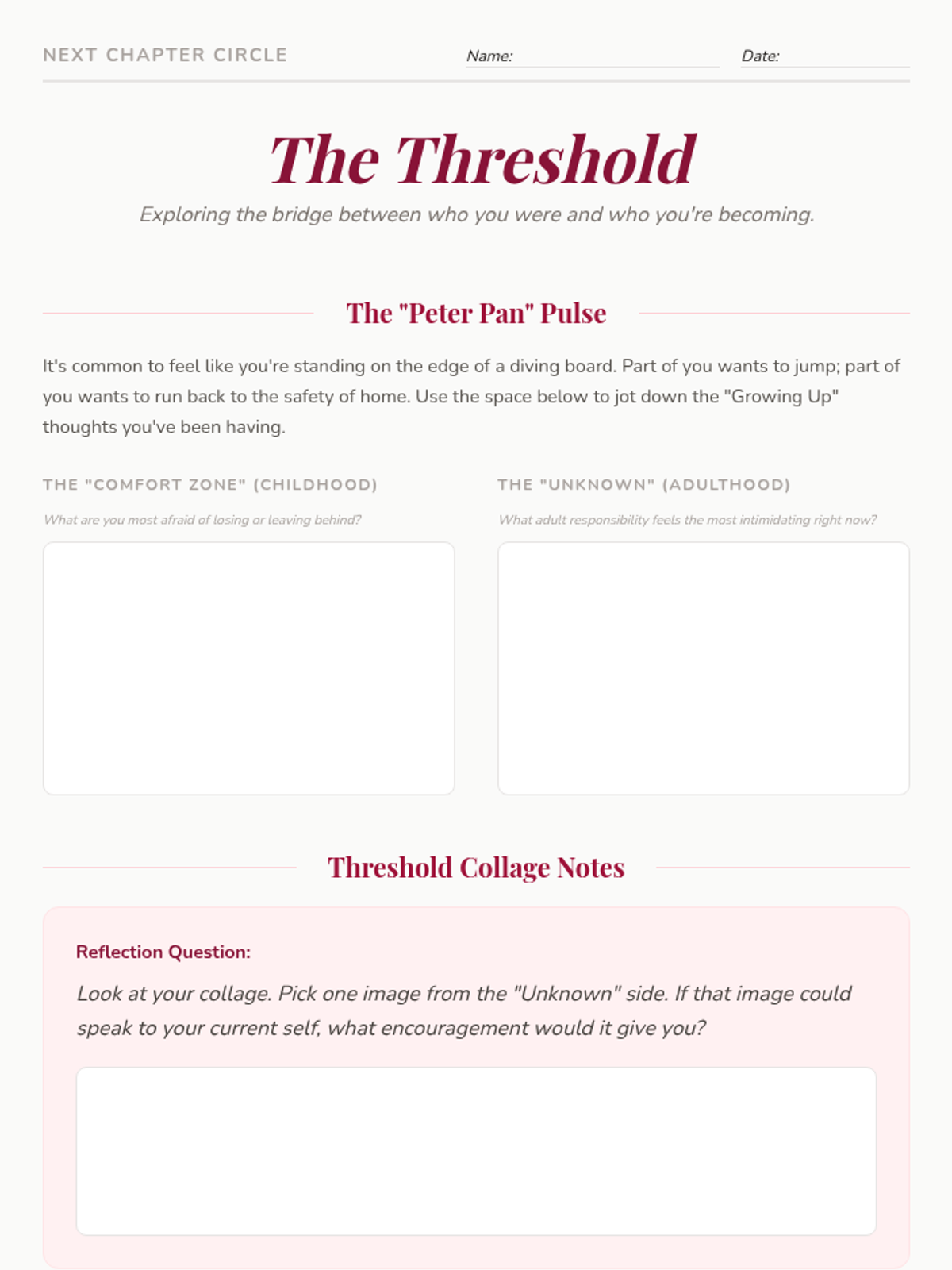
Explores the mixed emotions of leaving high school and the fear of 'growing up' through a collaborative collage activity.
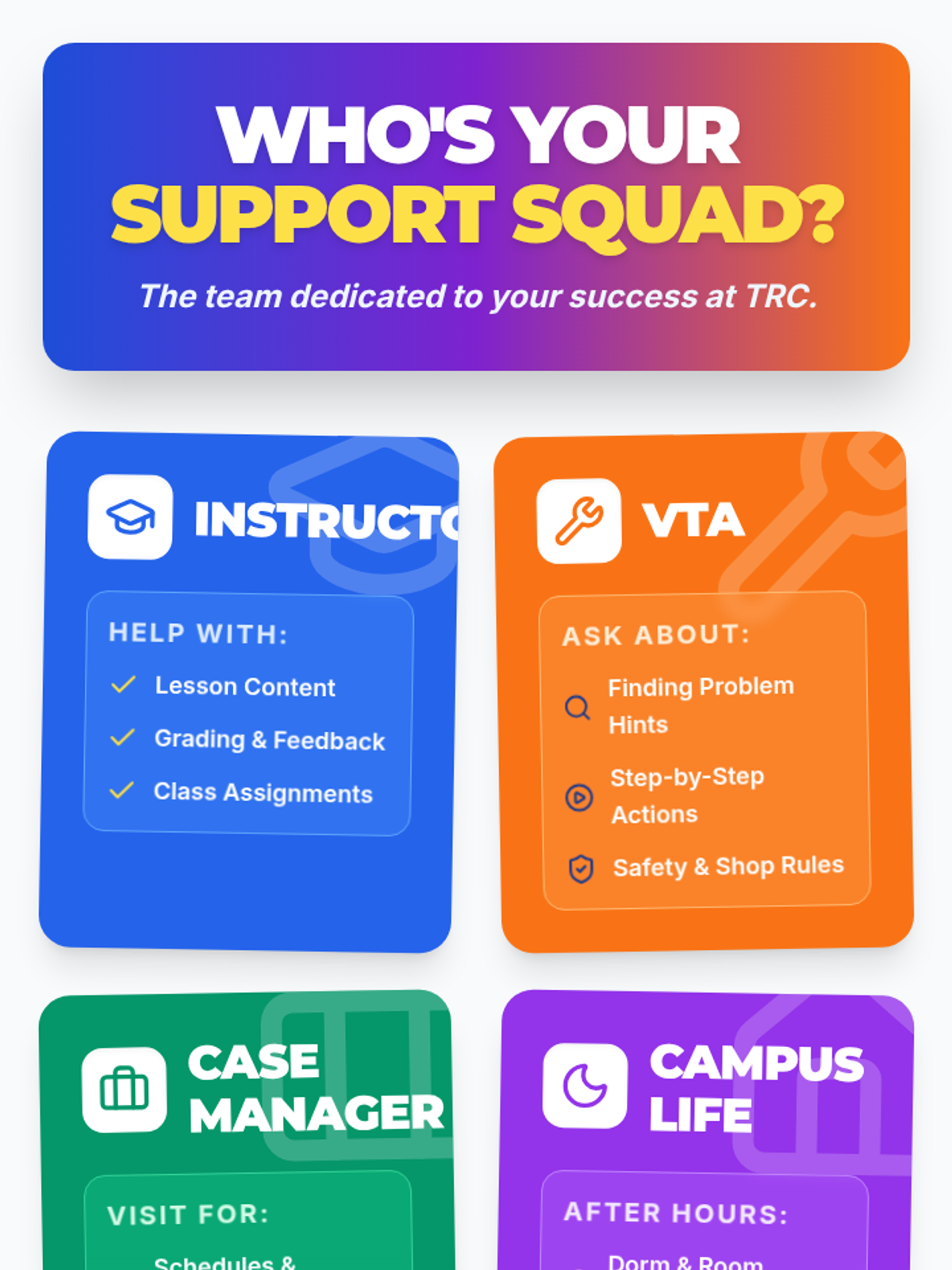
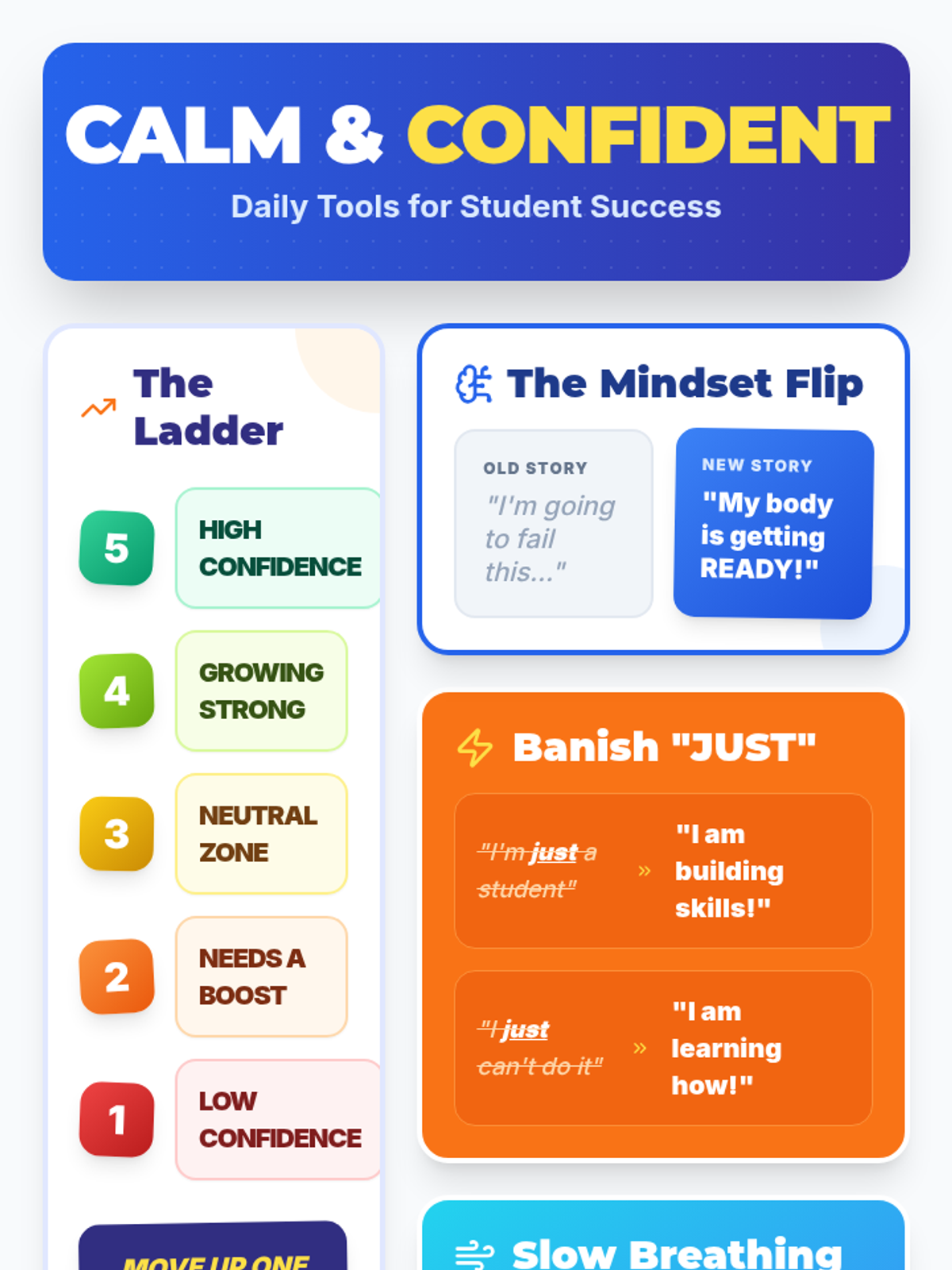
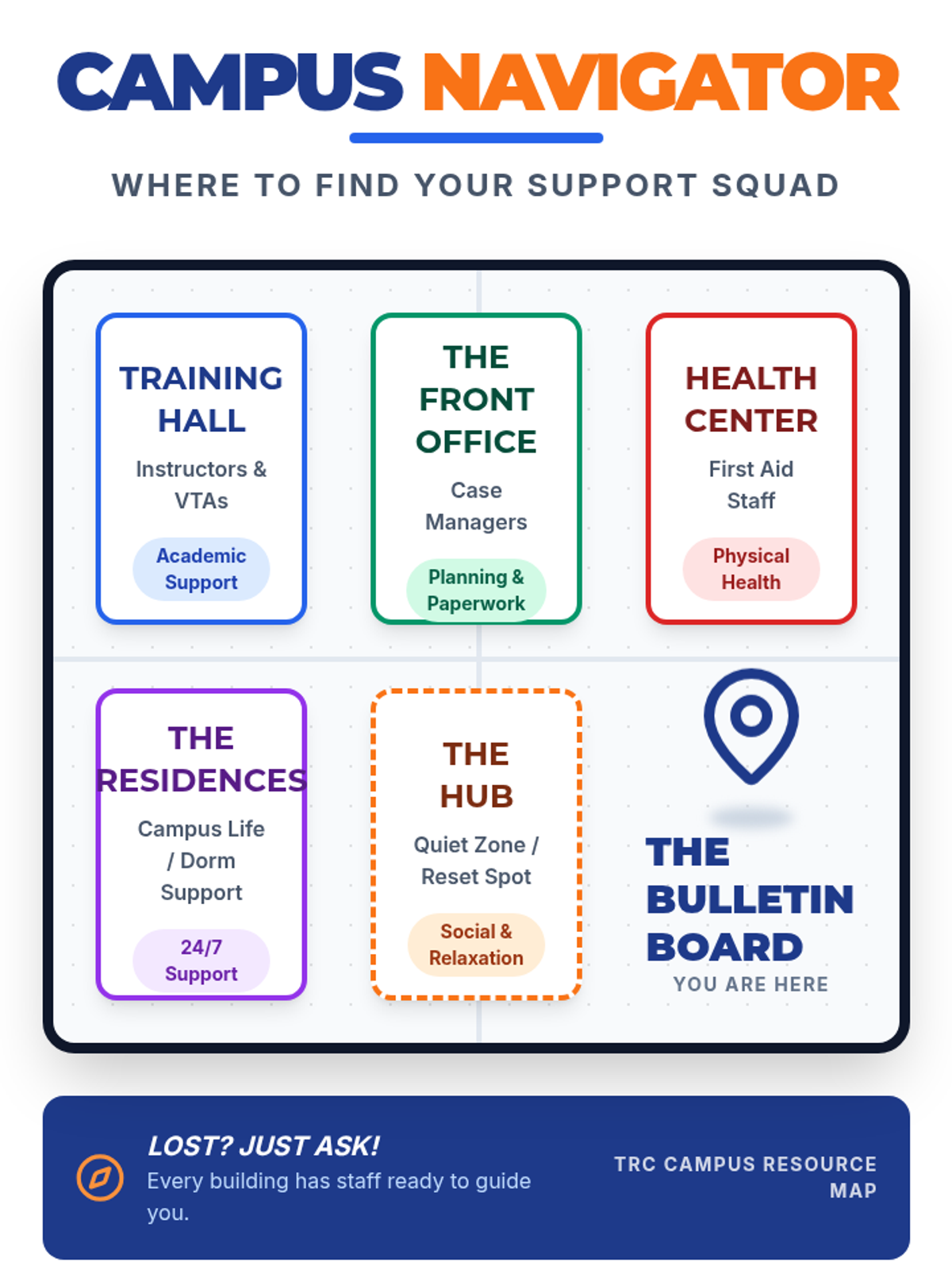
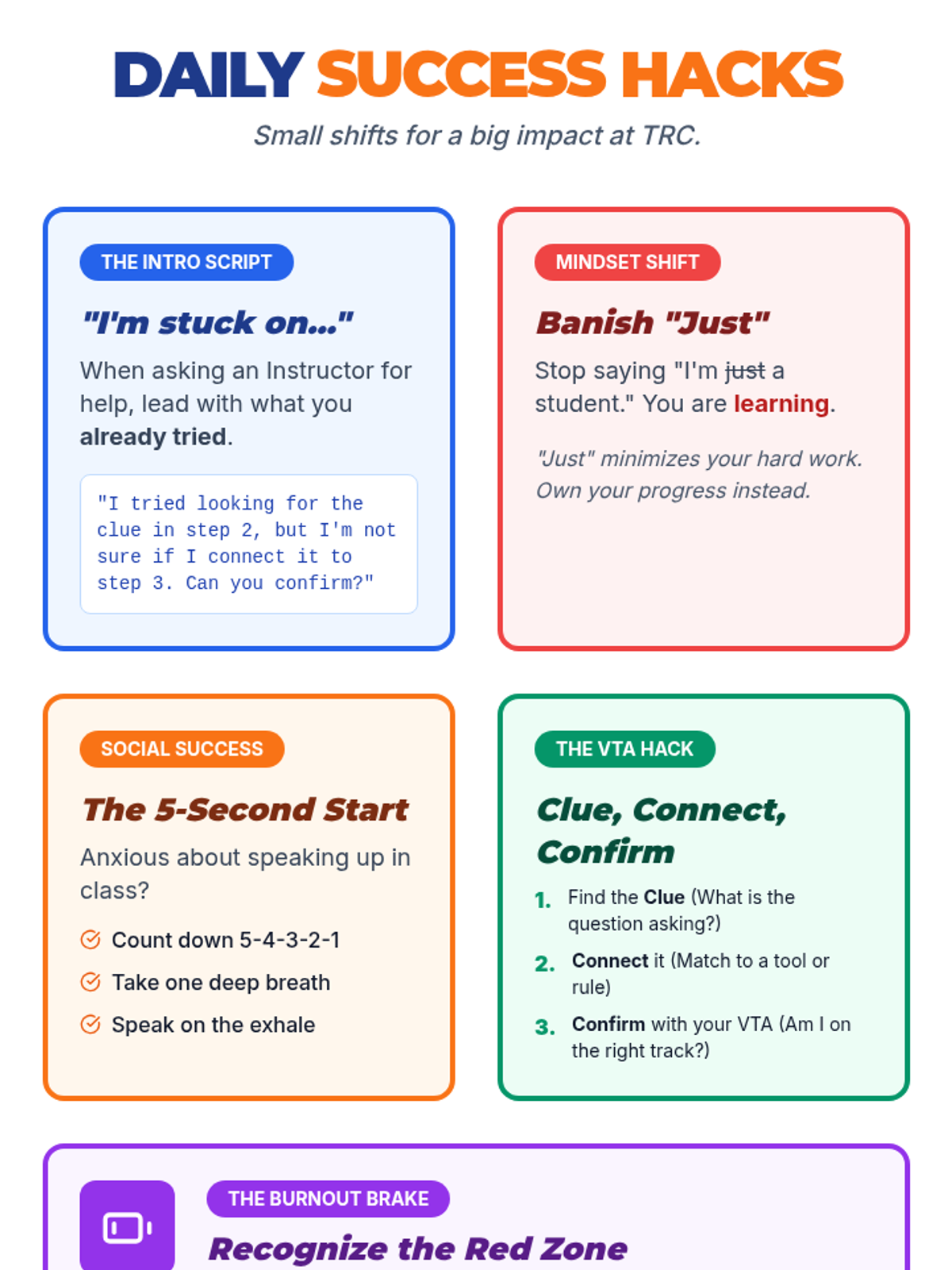
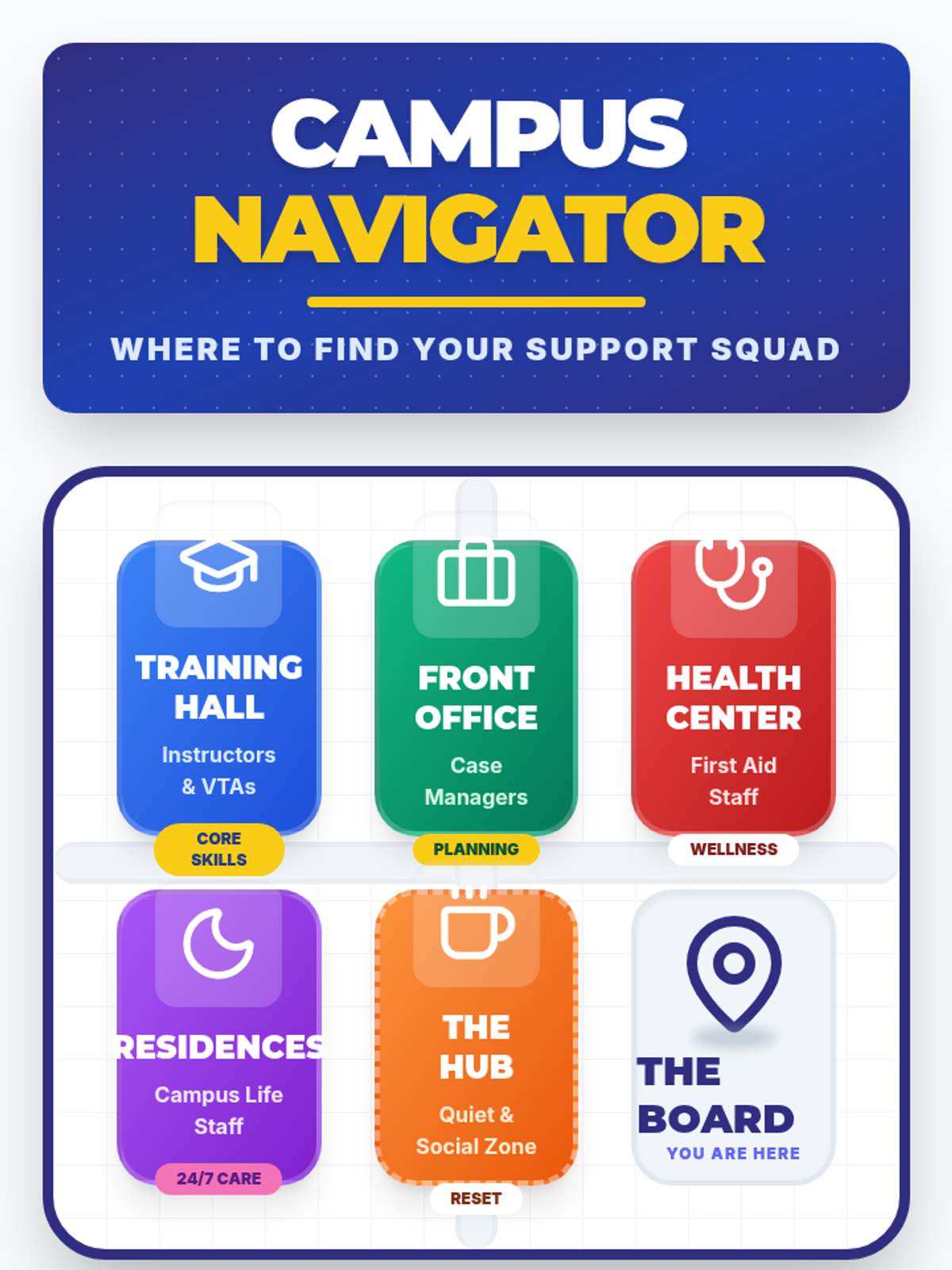
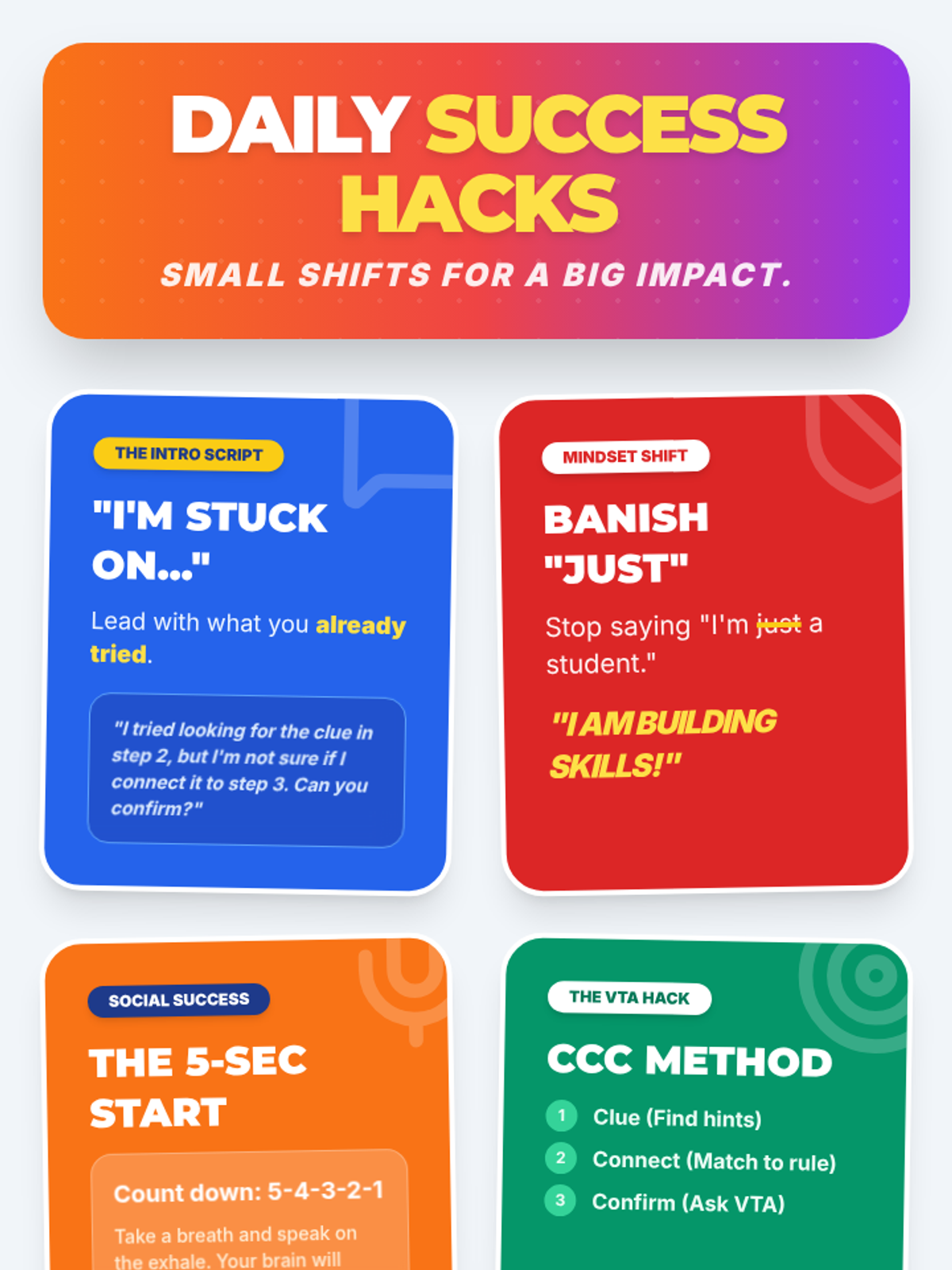
A comprehensive bulletin board kit designed for TRC students to navigate campus resources and manage social/academic anxiety through confidence-building tools and clear support channels.
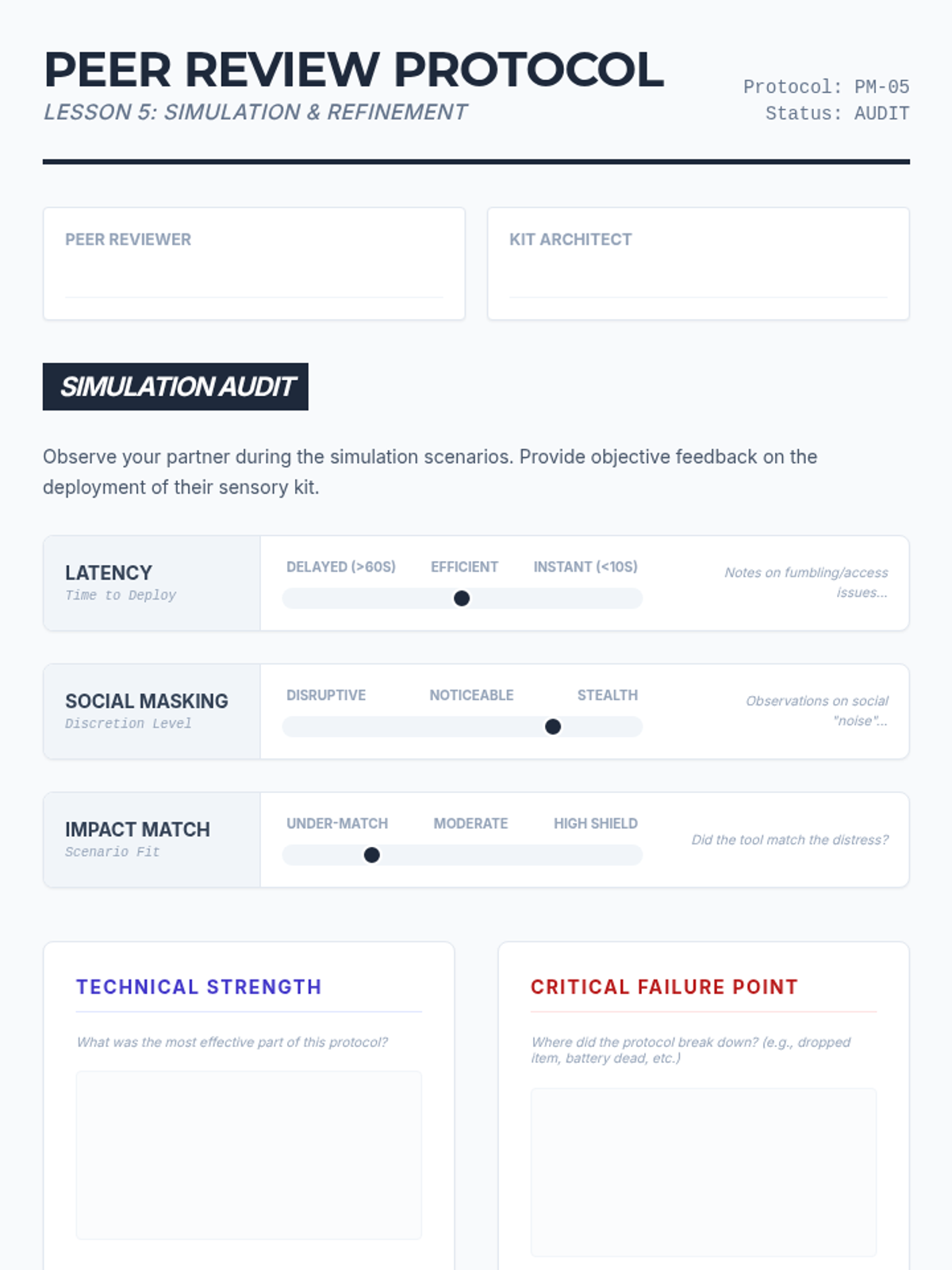
Simulation and peer review of sensory protocols to refine the accessibility and effectiveness of student-designed kits in real-world scenarios.
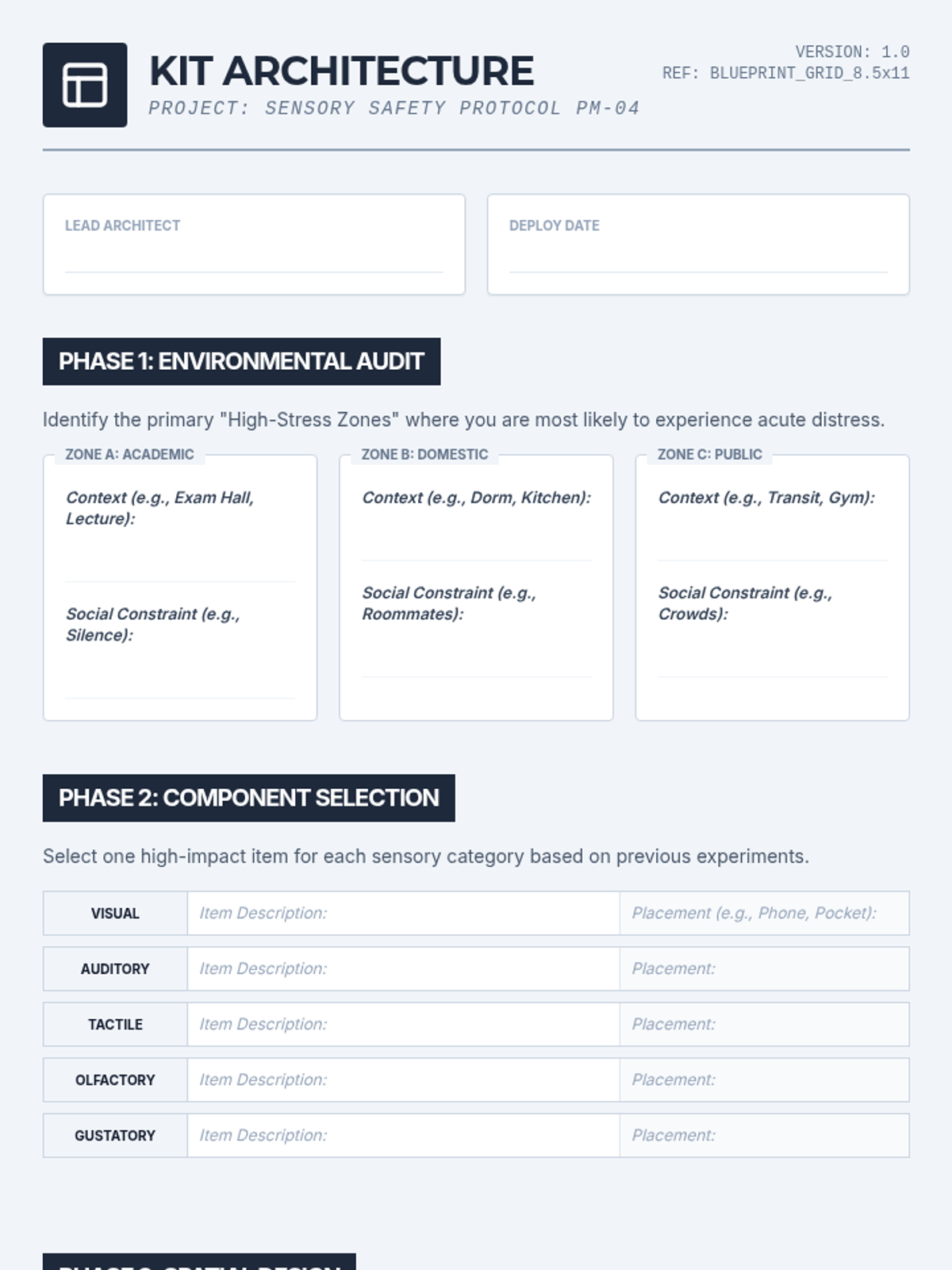
Assessment of personal environments to design and curate a portable sensory regulation kit tailored to specific needs and constraints.
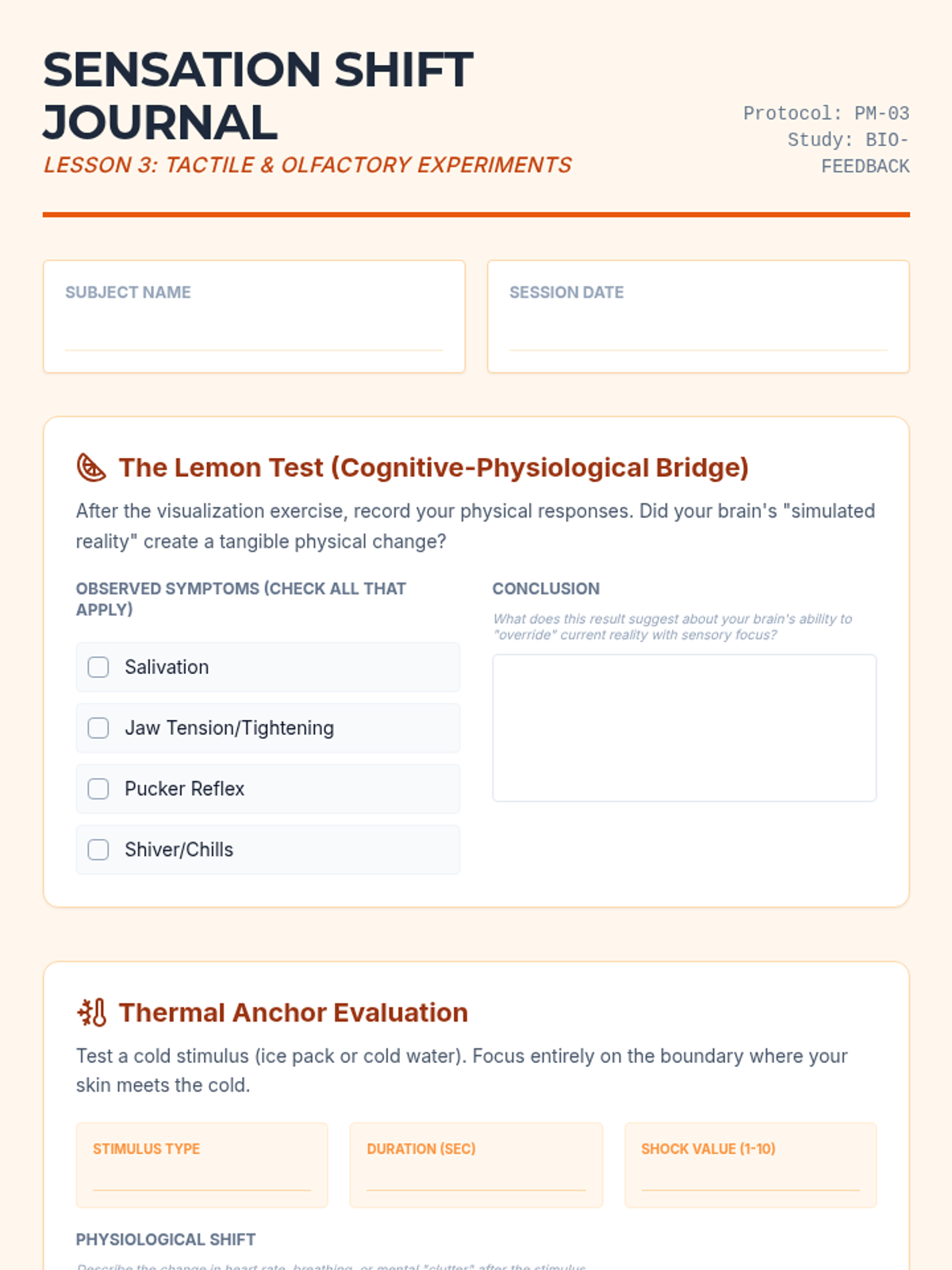
Hands-on experimentation with tactile and olfactory triggers, including temperature therapy and aromatherapy, to break emotional spirals.
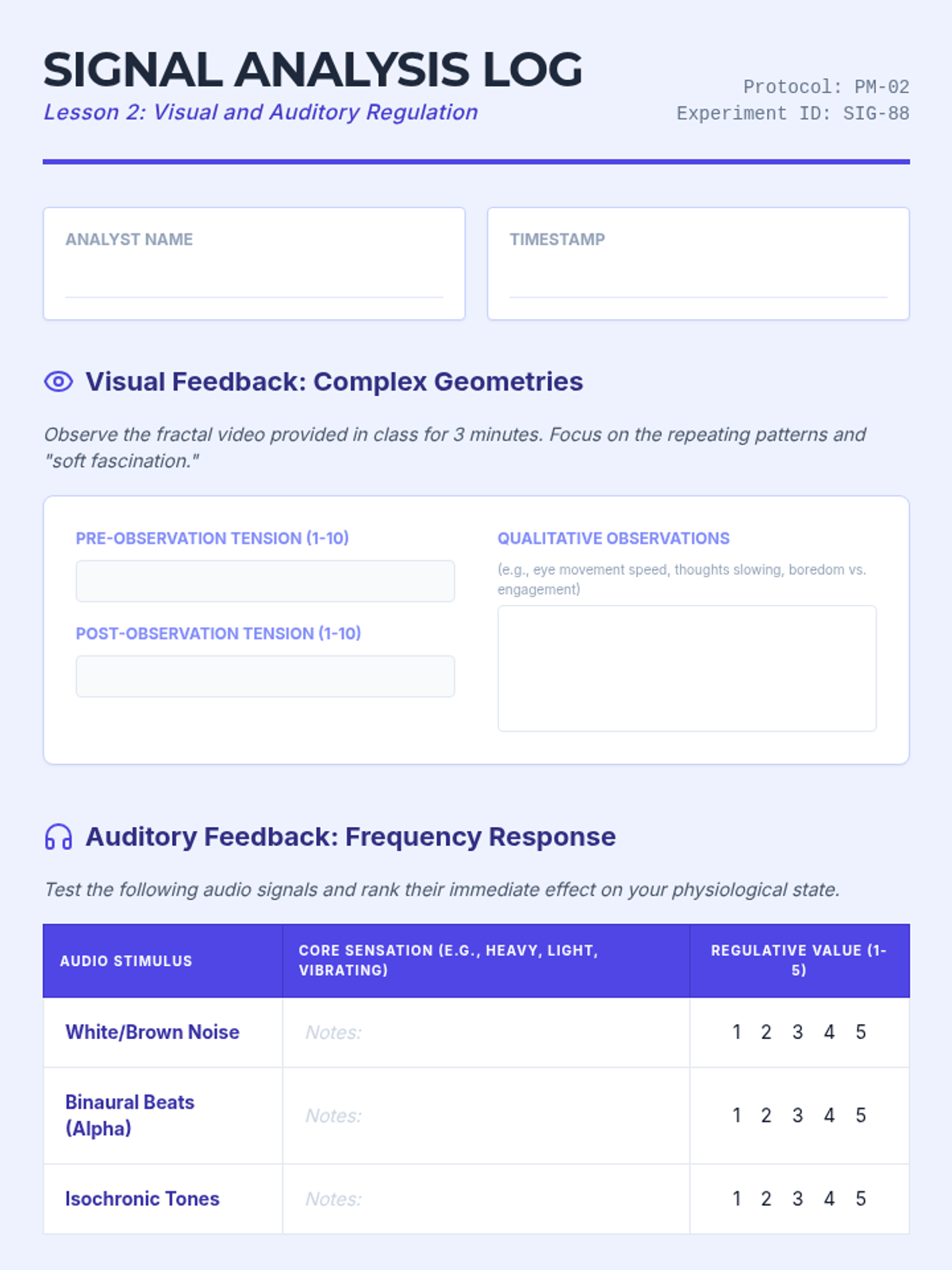
Exploration of how visual and auditory stimuli can be used to redirect focus and regulate mood, featuring fractal analysis and binaural beats.
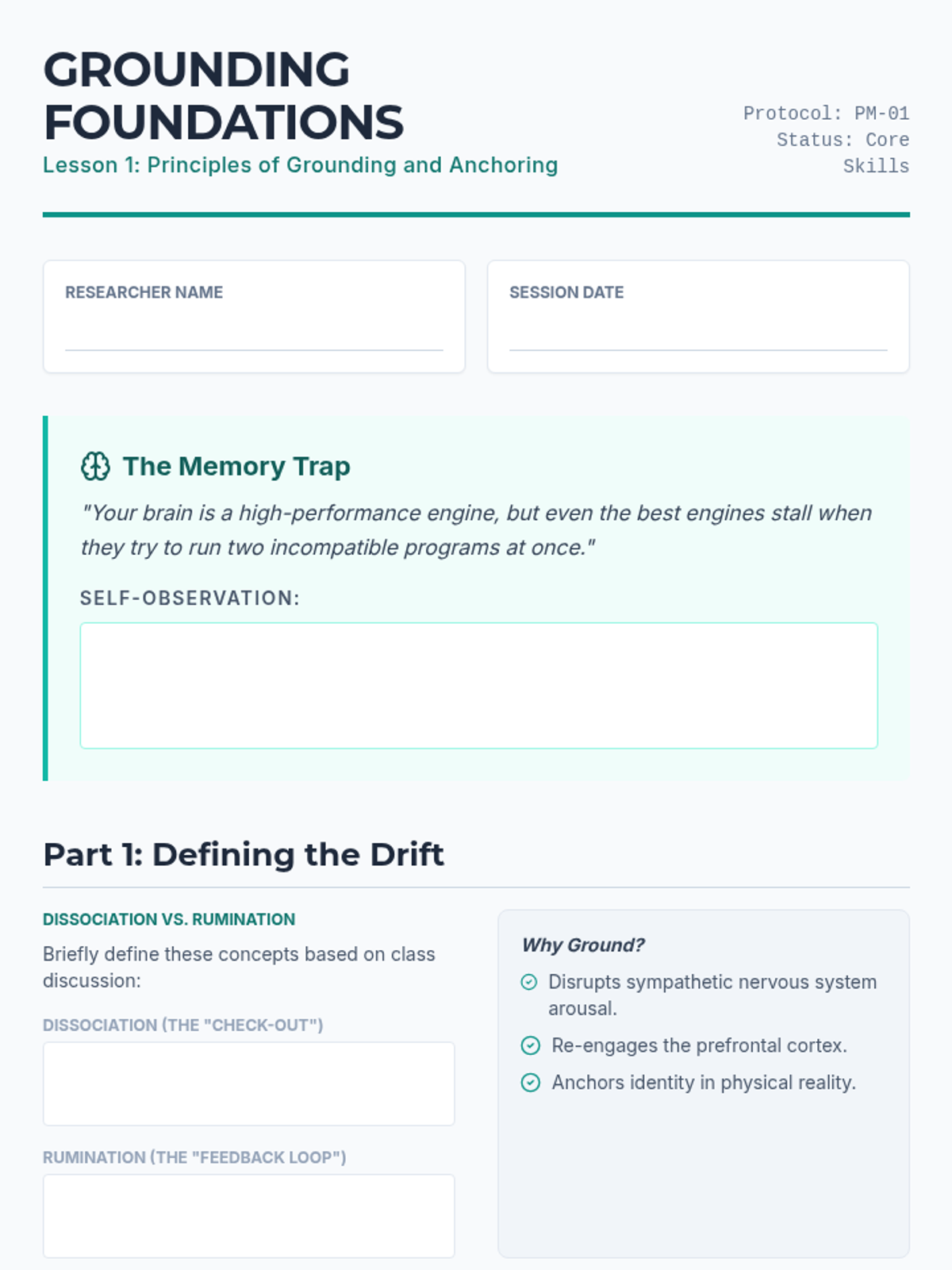
An introduction to the psychological mechanisms of grounding, focusing on the 5-4-3-2-1 technique to combat dissociation and rumination.
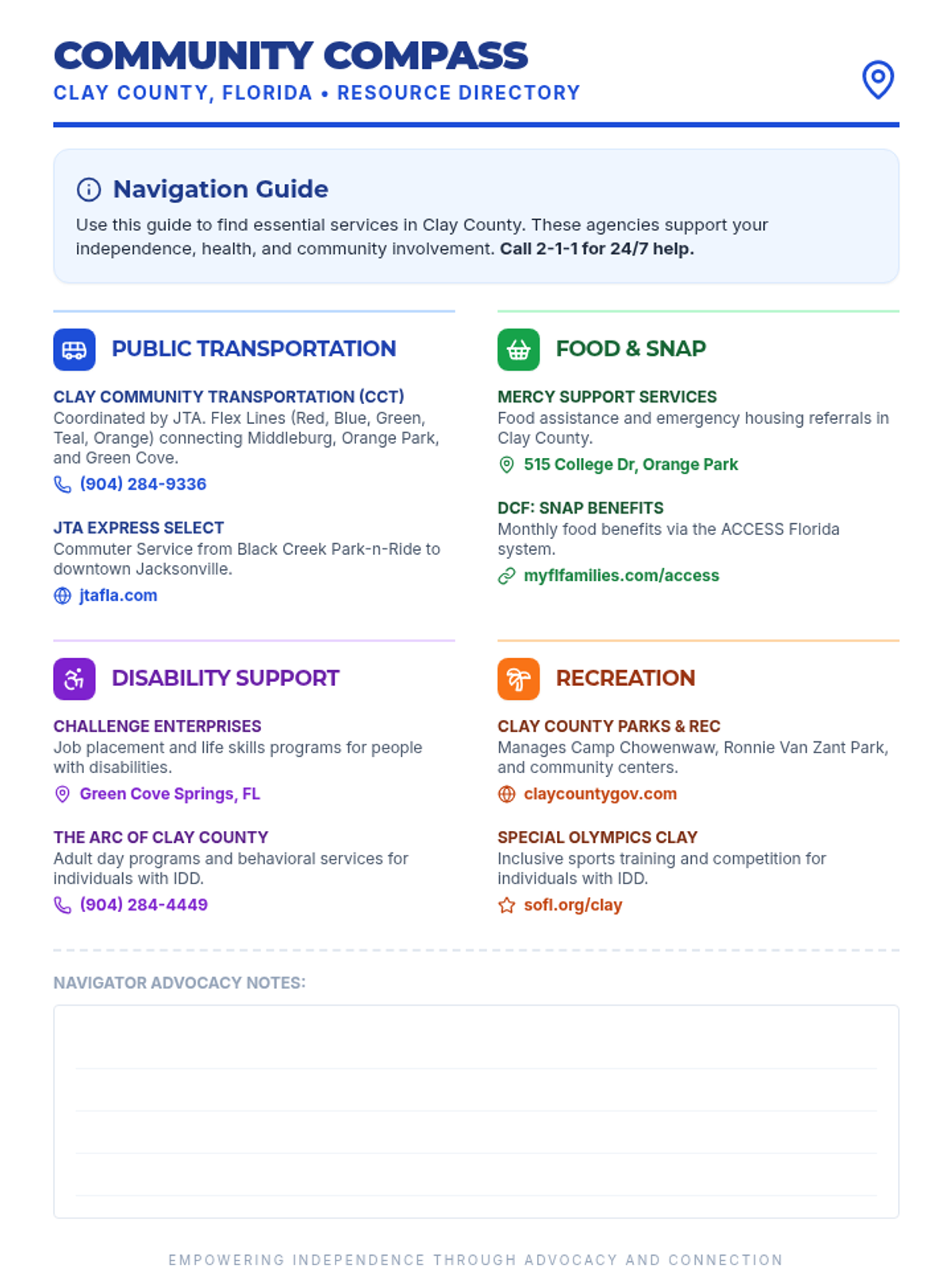
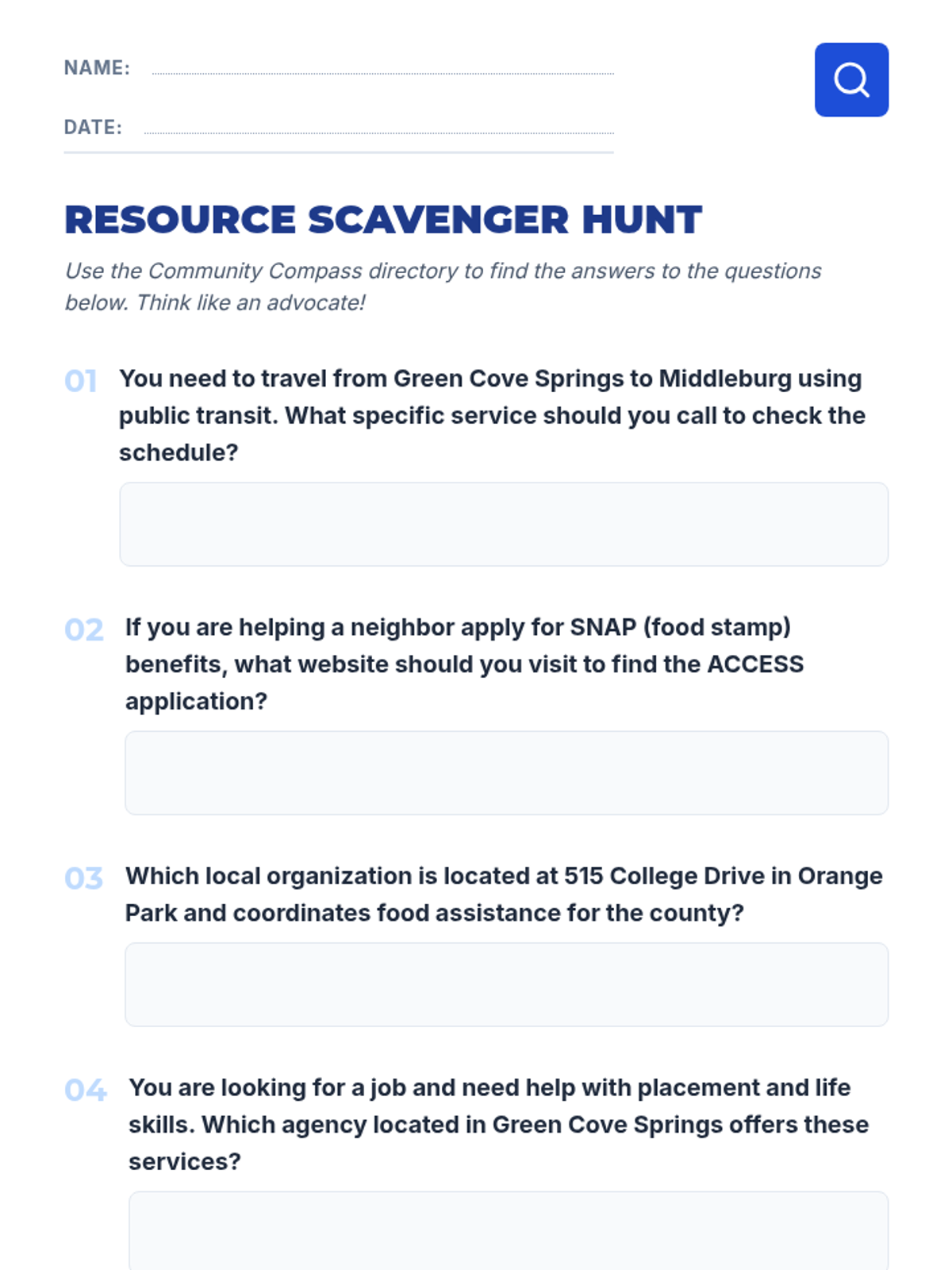
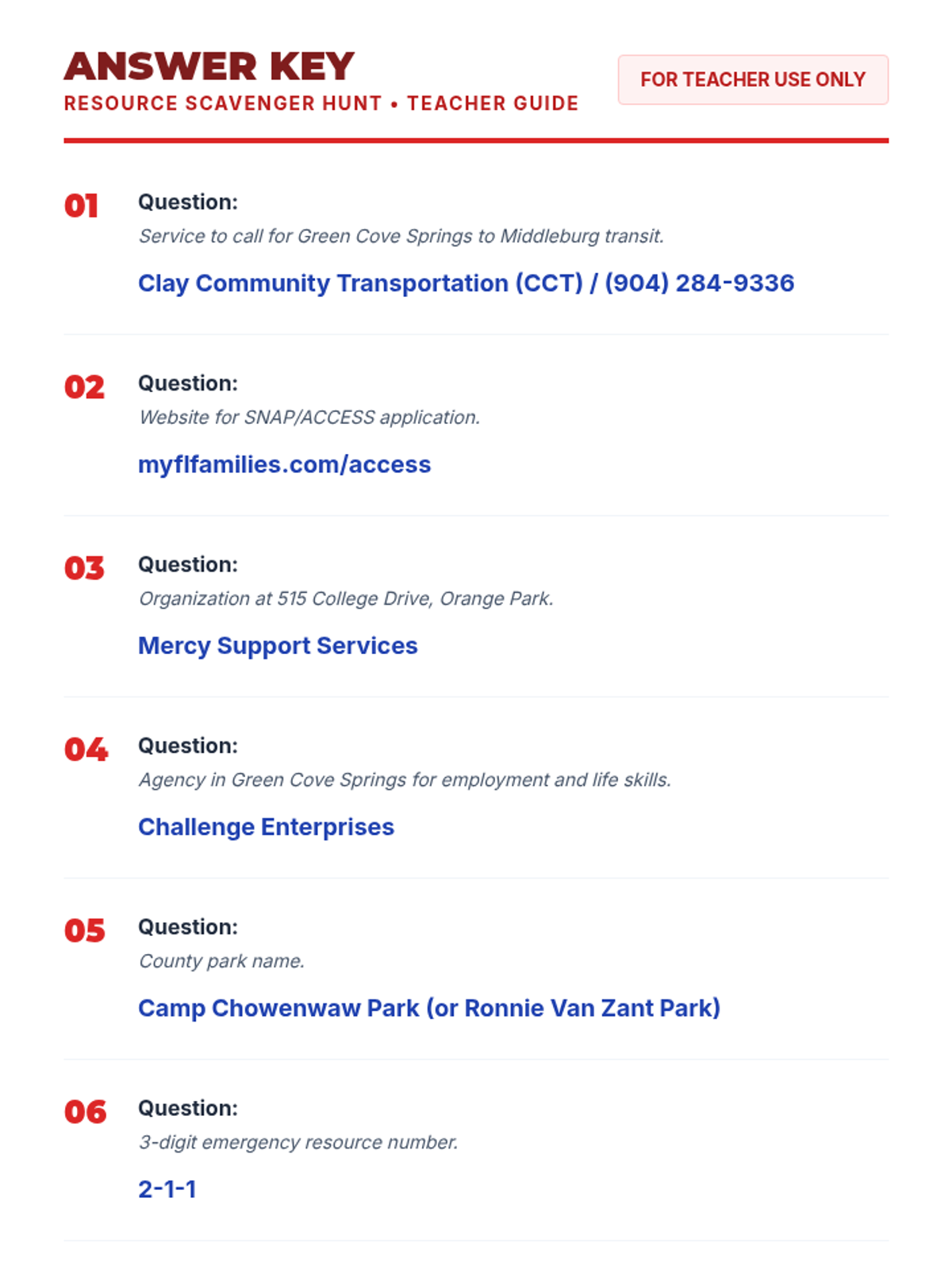
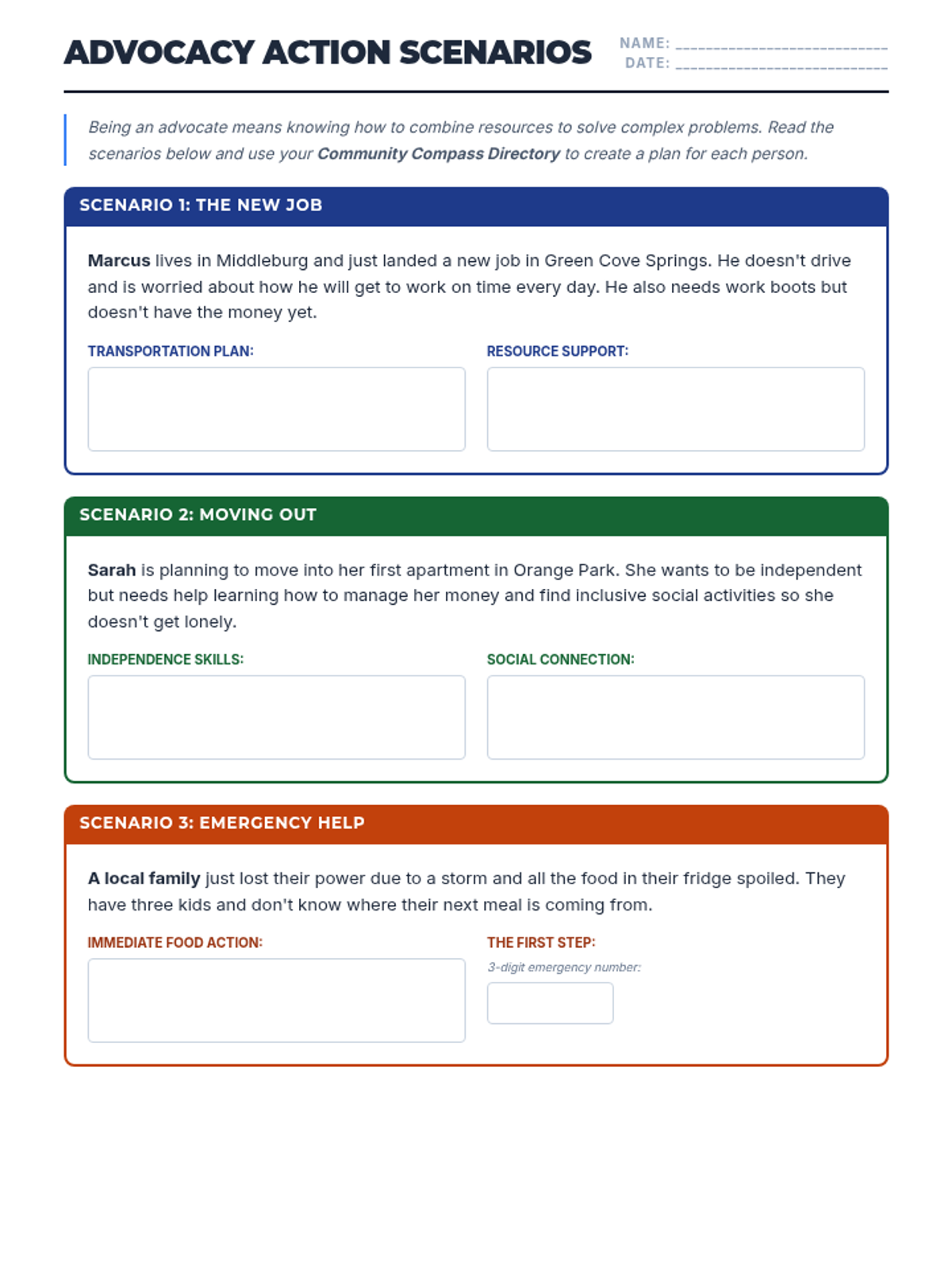
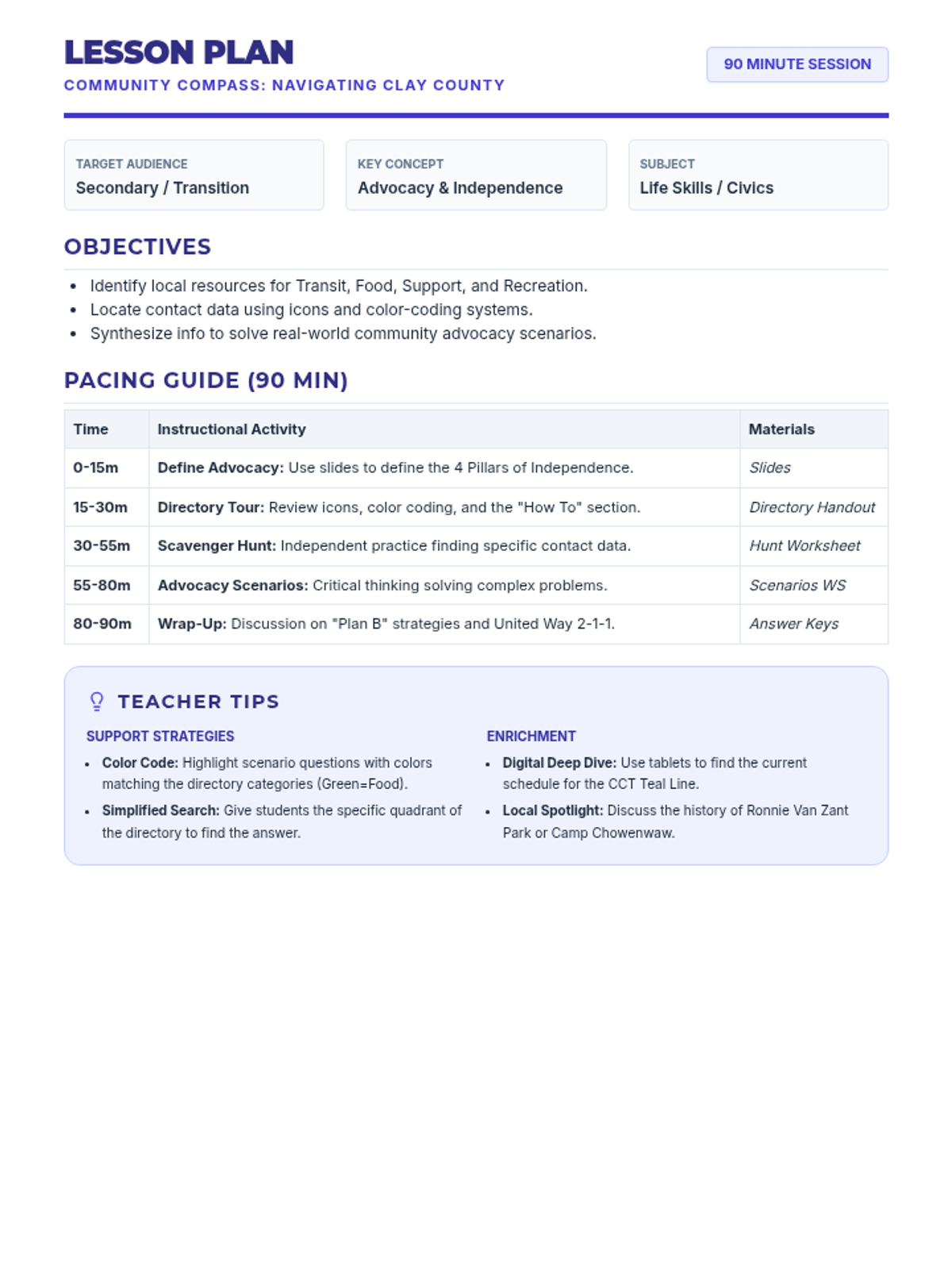
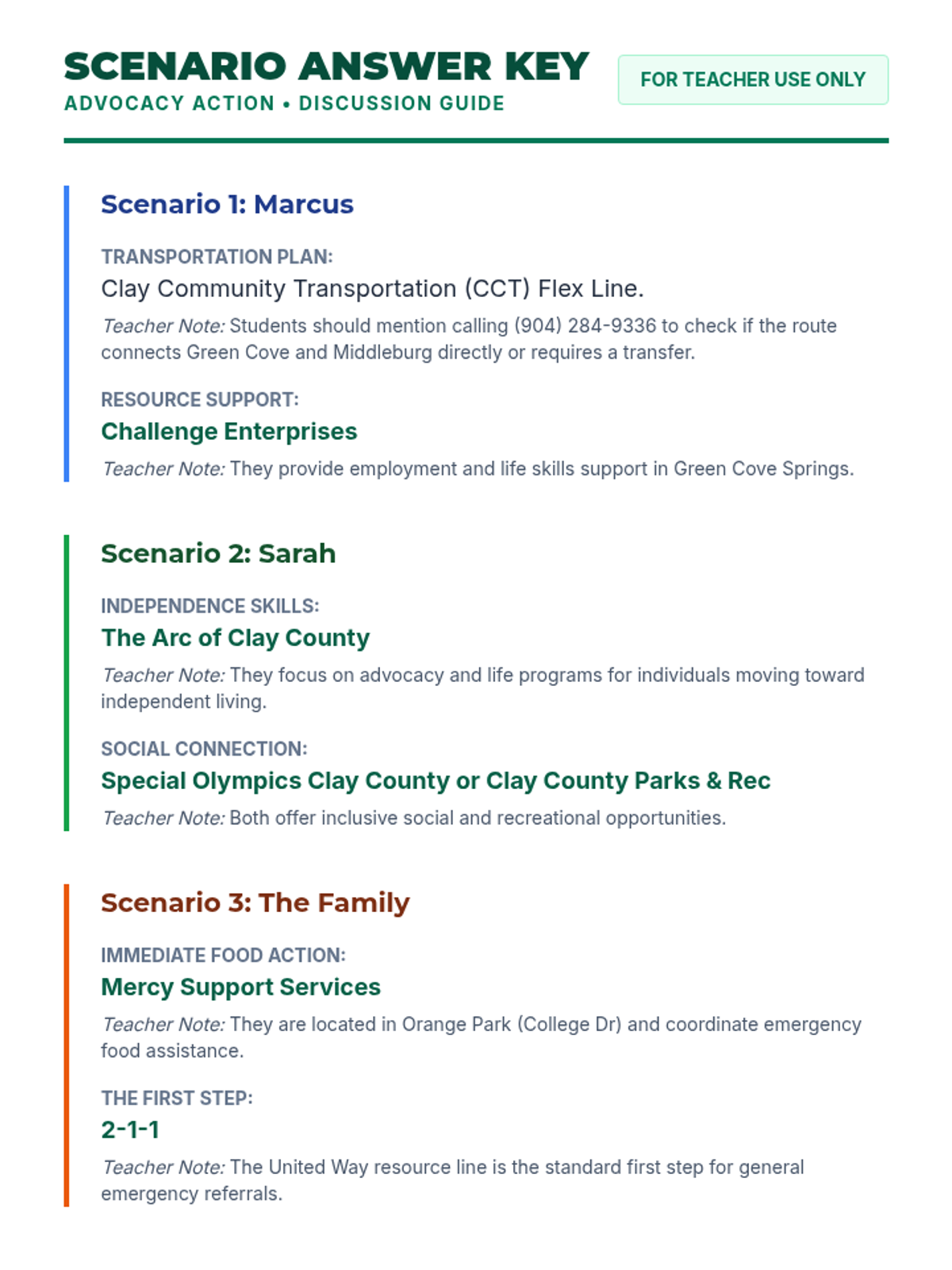
An introductory guide to navigating local community resources in Clay County, Florida, focusing on essential services for independence and advocacy. Students will explore transportation, food assistance, disability support, and recreational opportunities.
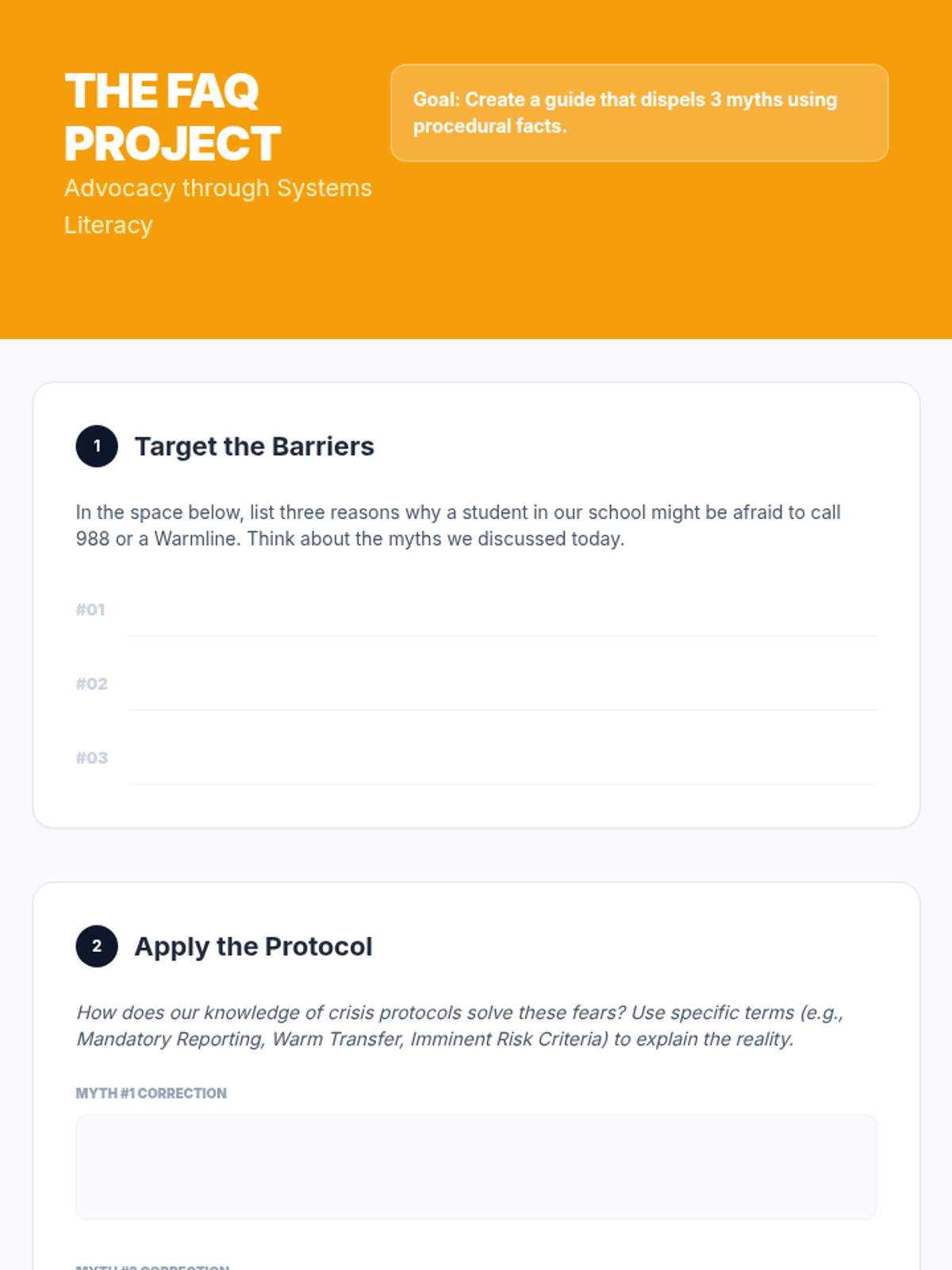
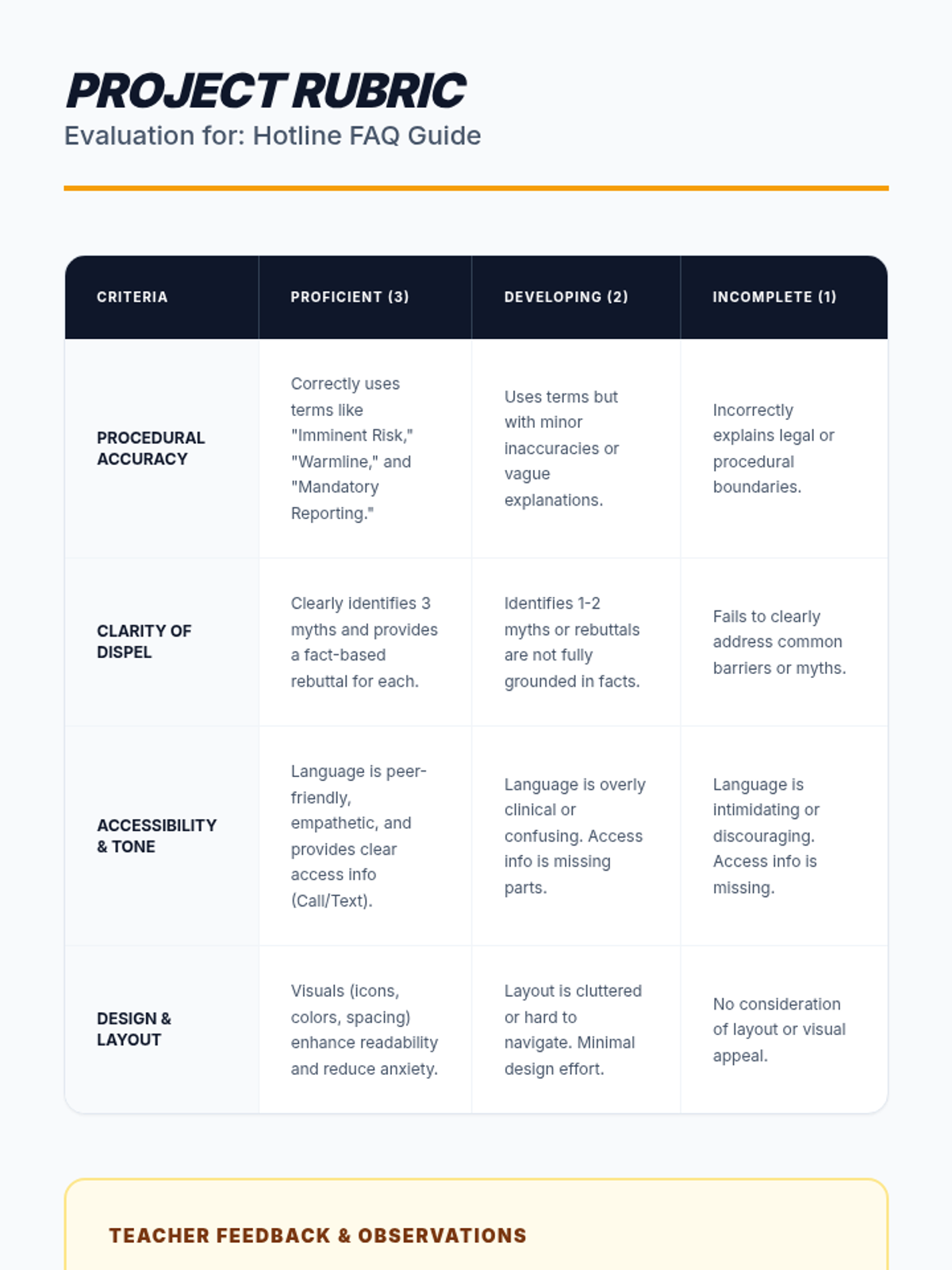
Students address psychological and logistical barriers to seeking help. They use their procedural knowledge to create FAQ guides that dispel myths and reduce the fear of calling a hotline.
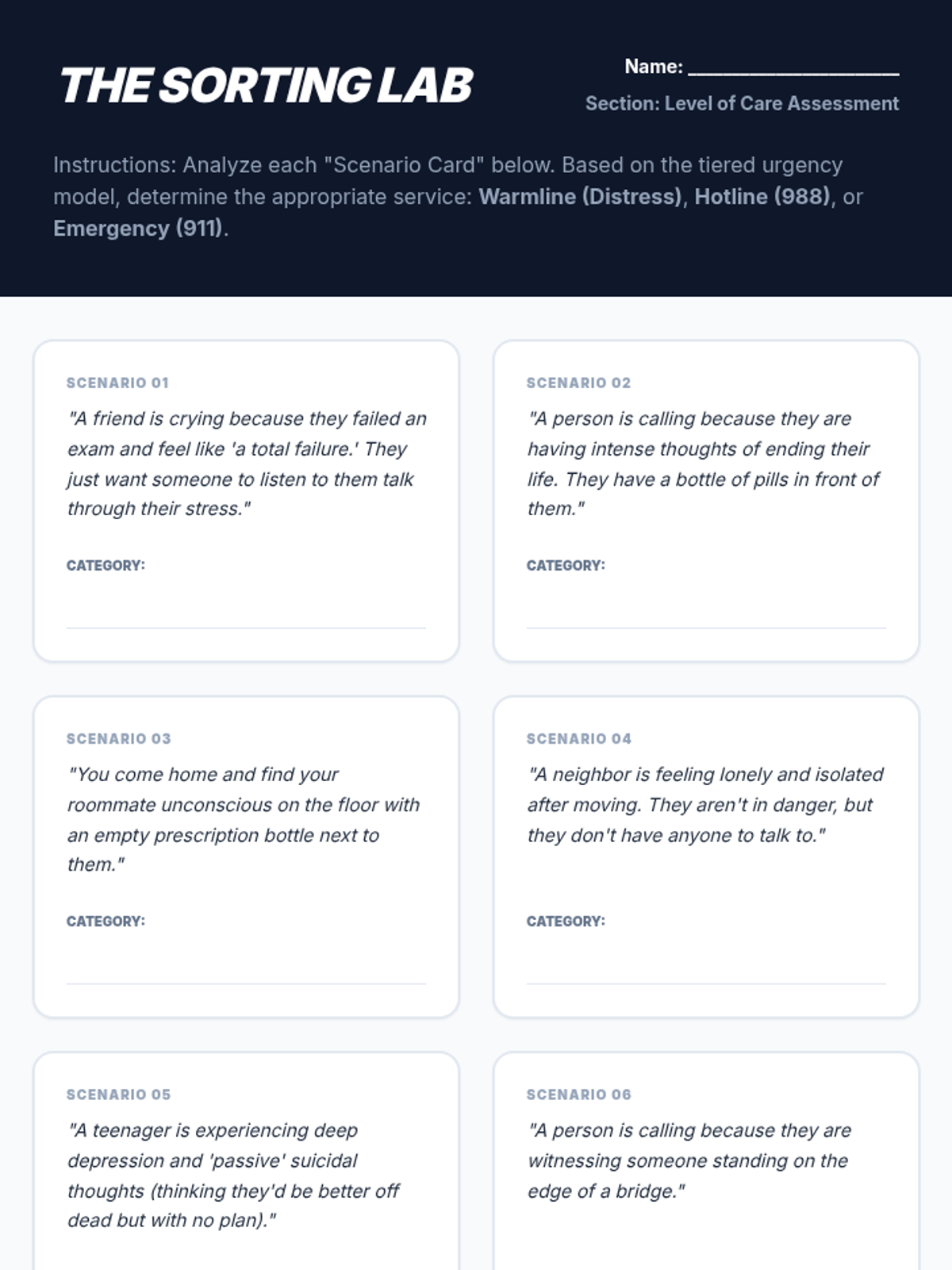
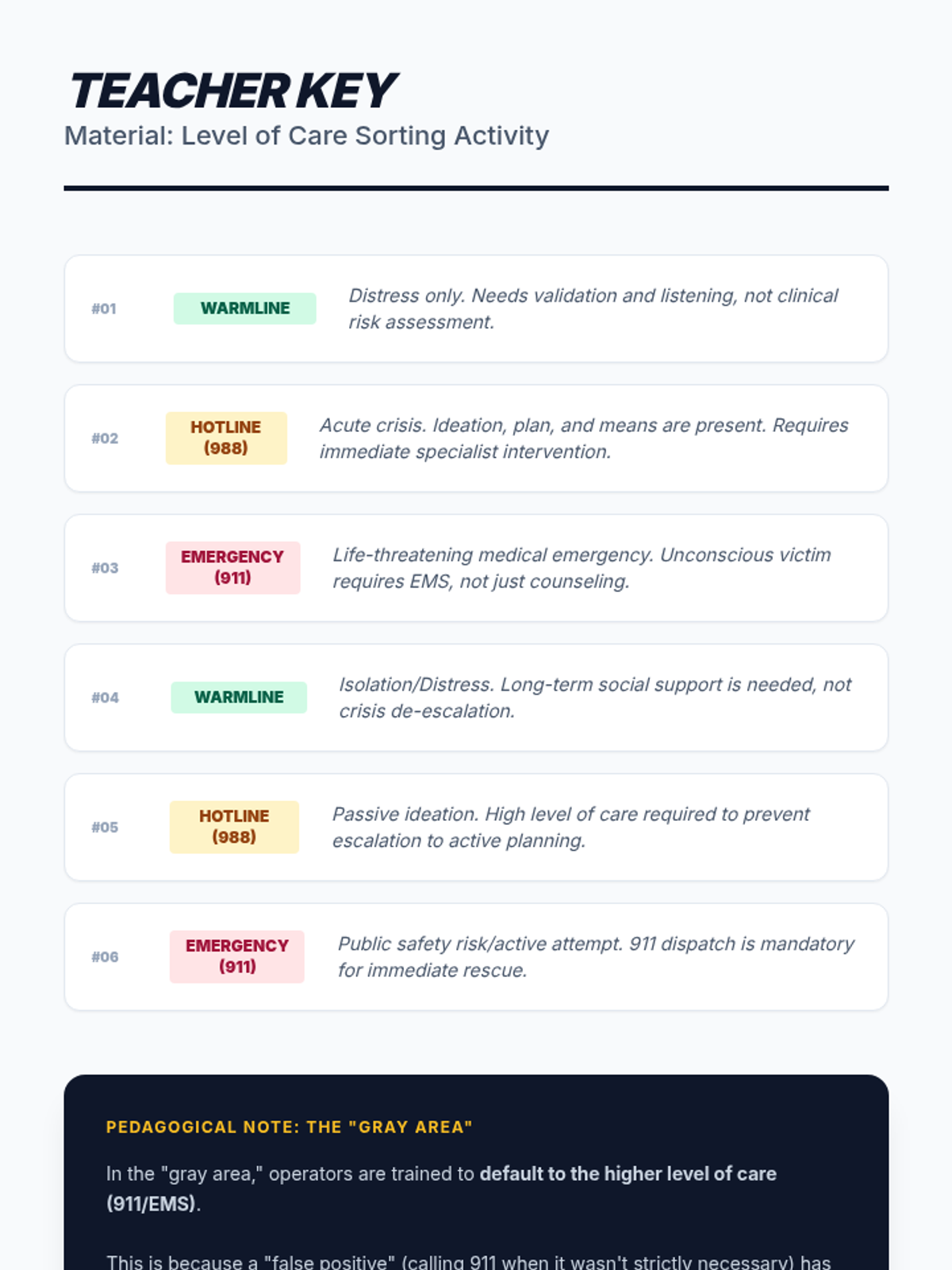
Using a tiered urgency model, students learn to categorize mental health needs. They distinguish between distress, crisis, and emergency to determine whether a warmline, hotline, or 911 is the right tool.
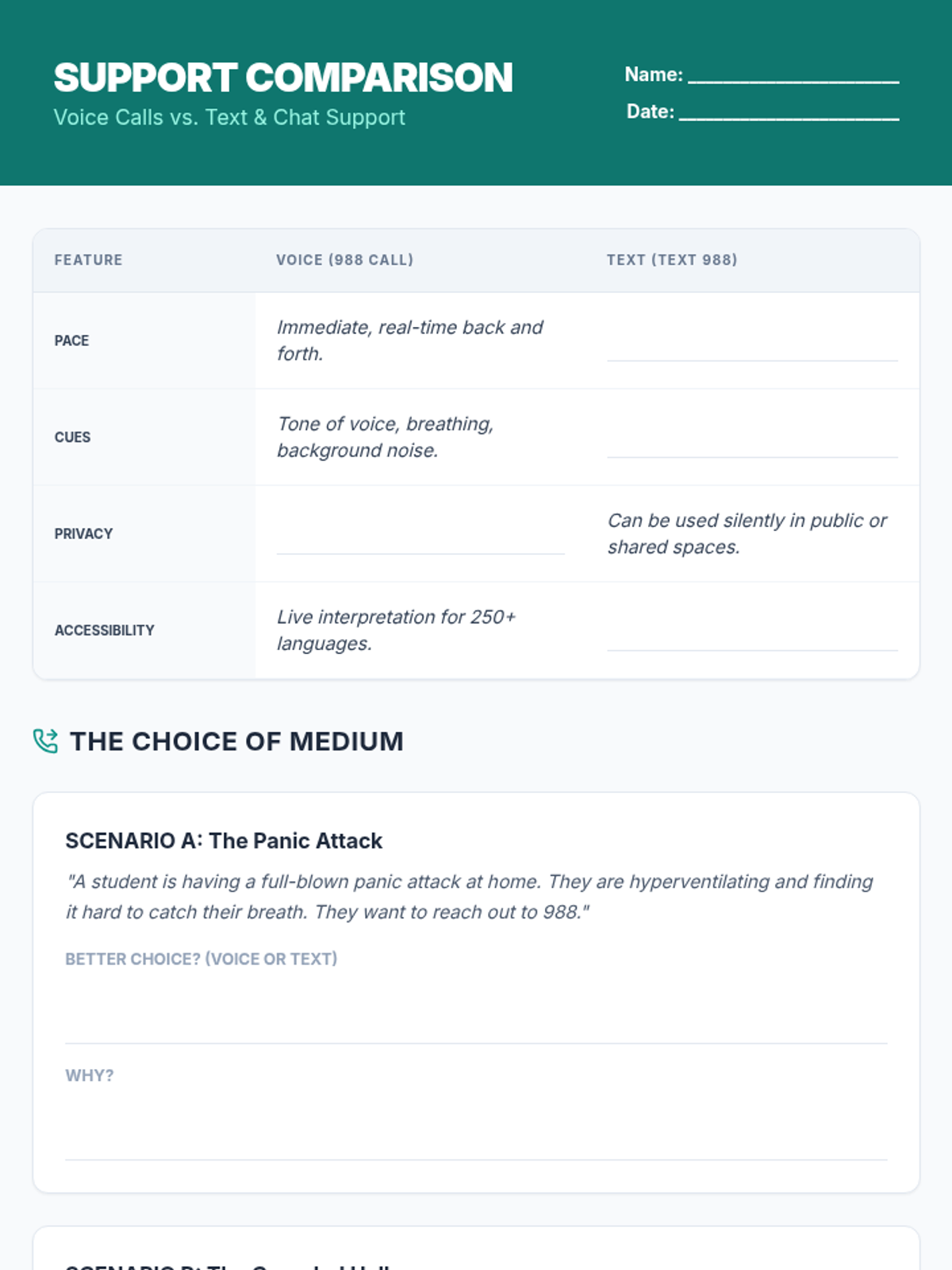
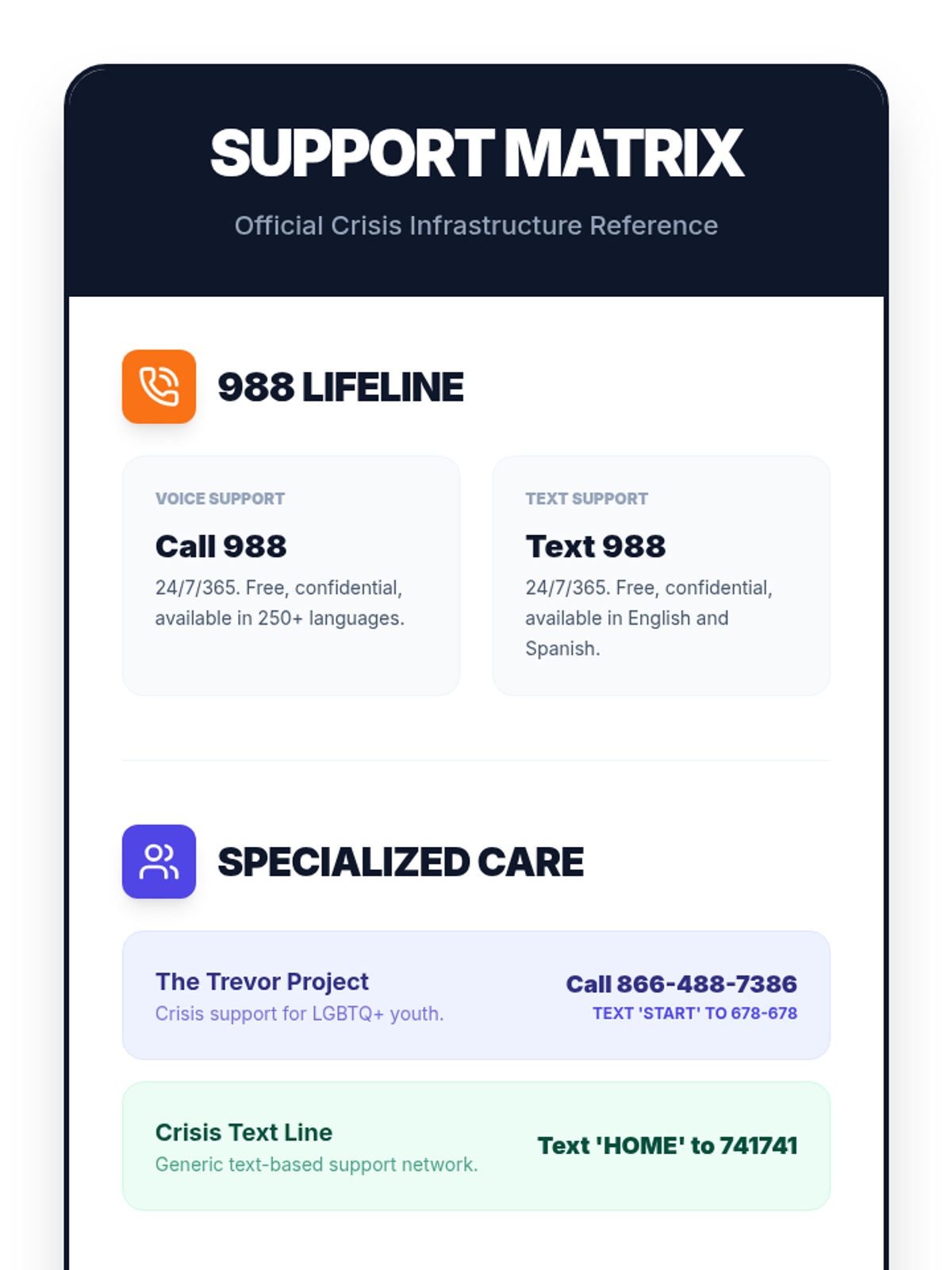
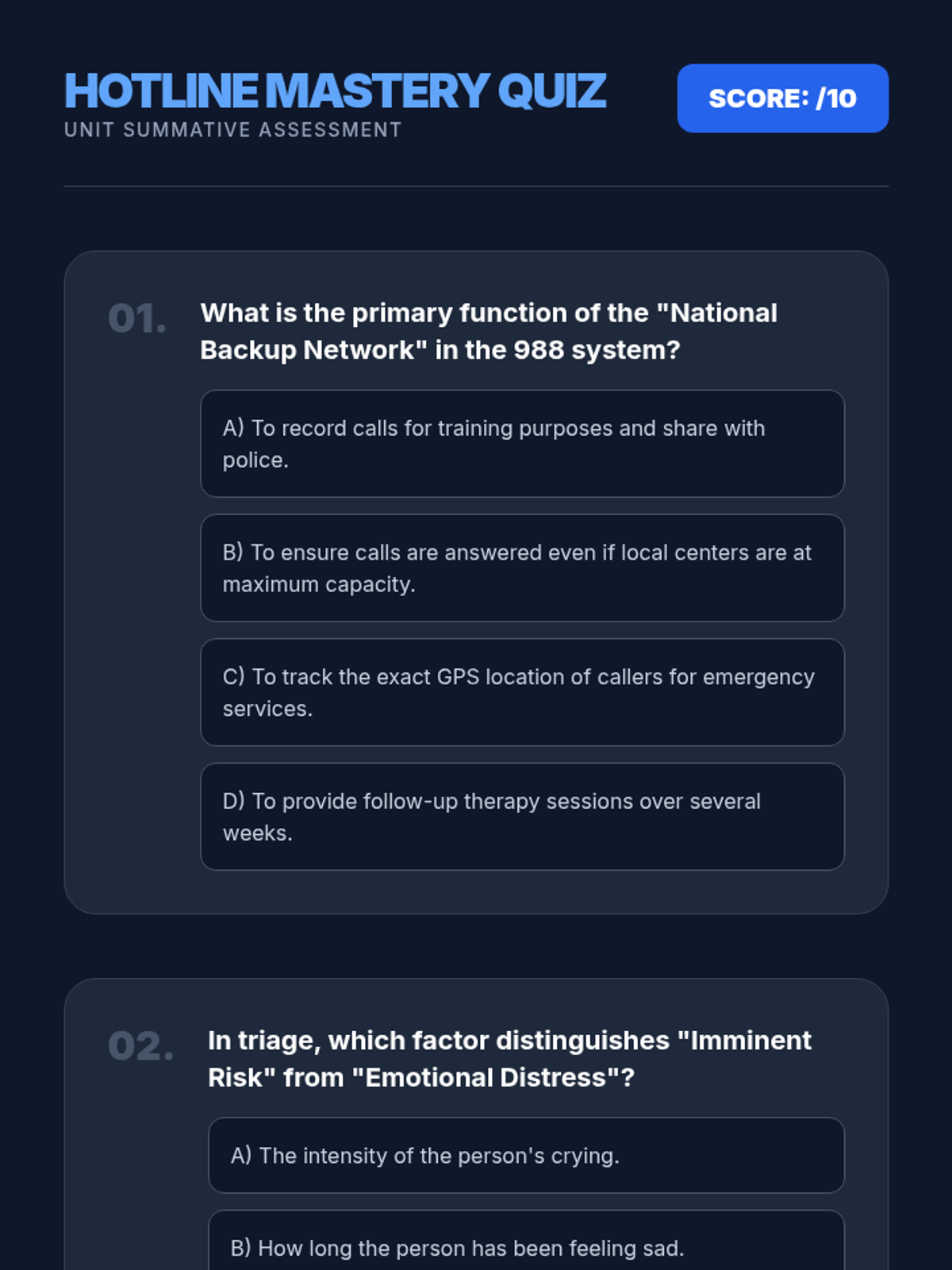
Students investigate the 988 Suicide & Crisis Lifeline infrastructure. They compare the mechanics and communication nuances of voice-based calls versus text and chat-based support.
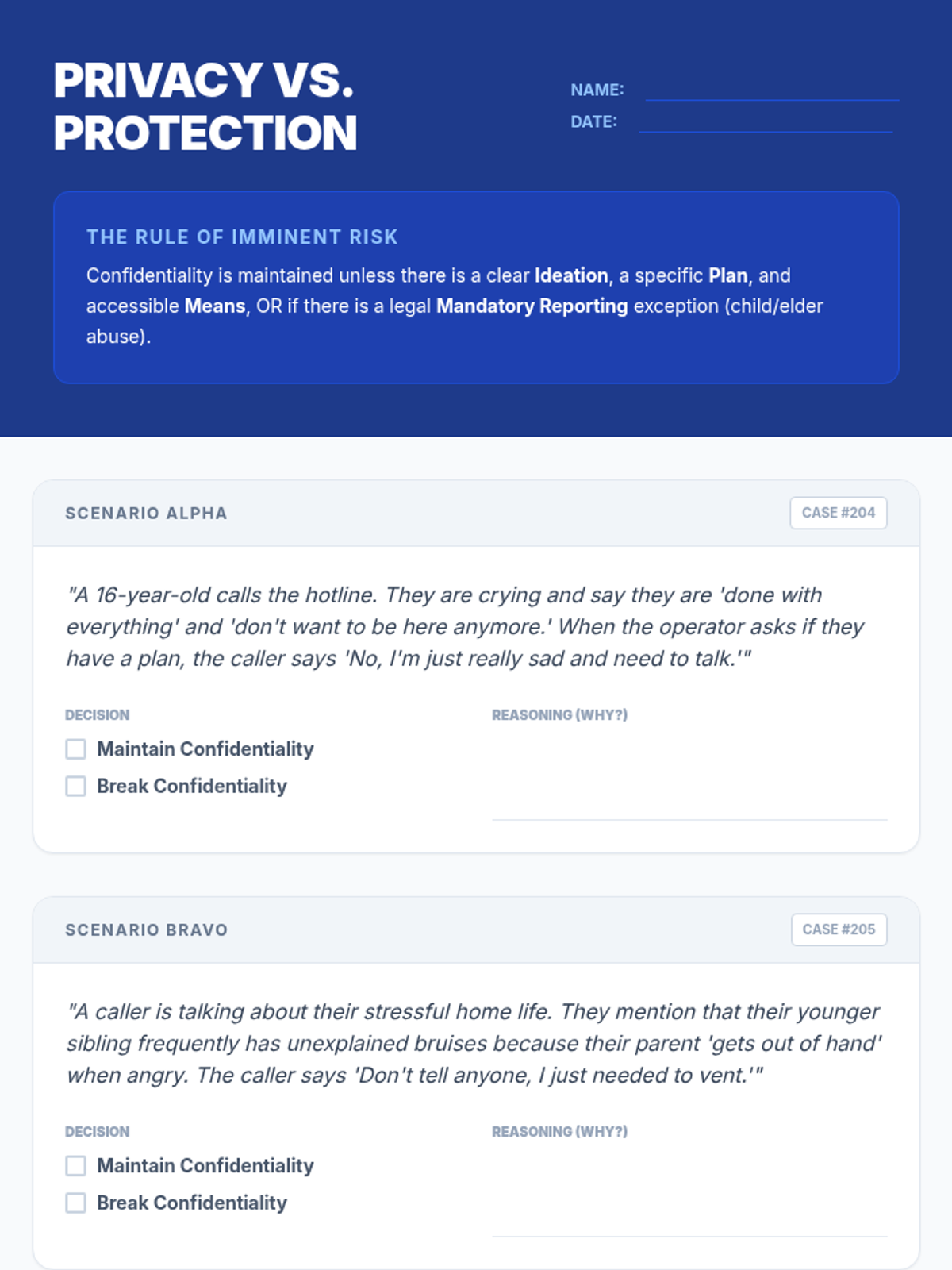
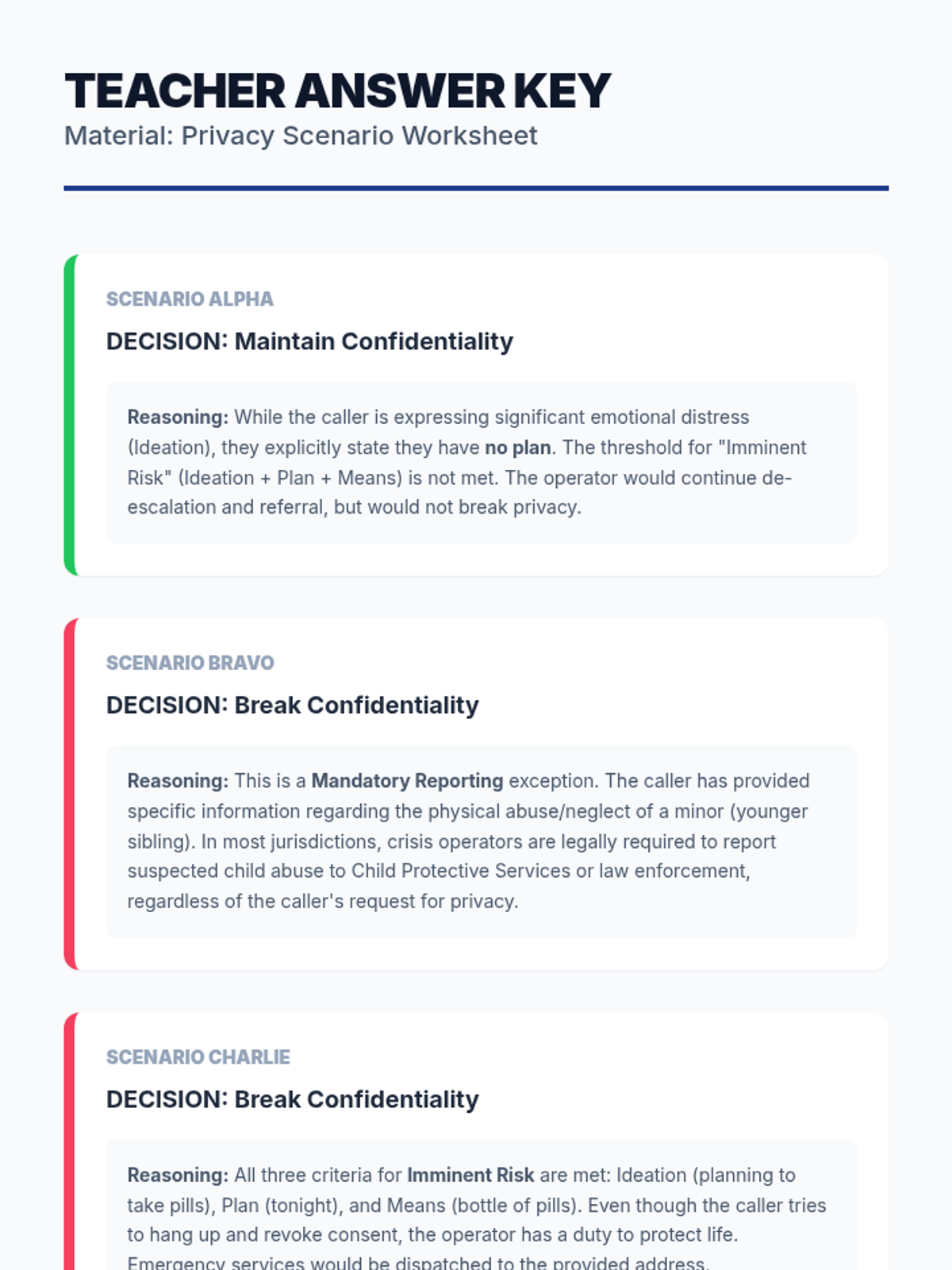
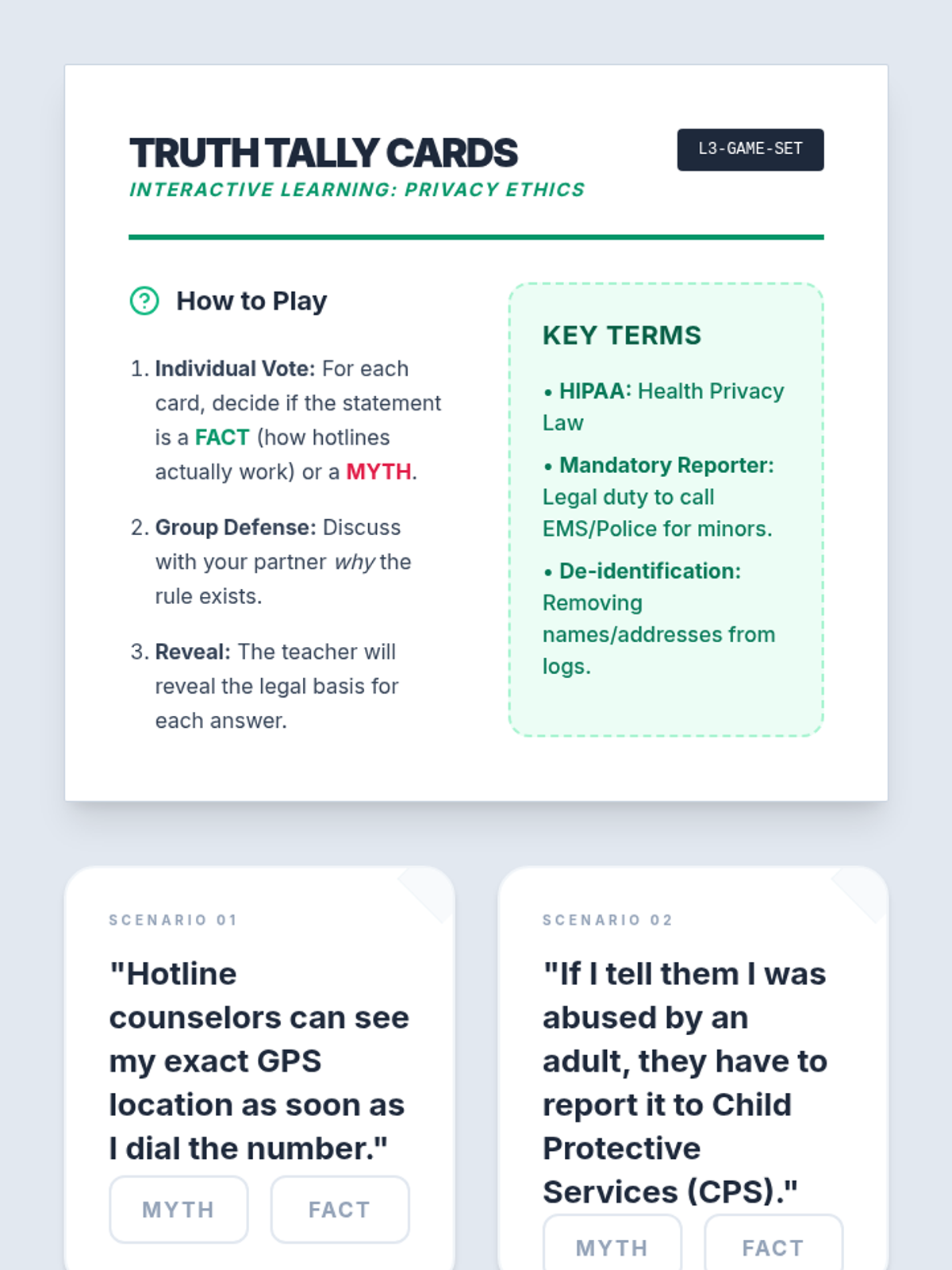
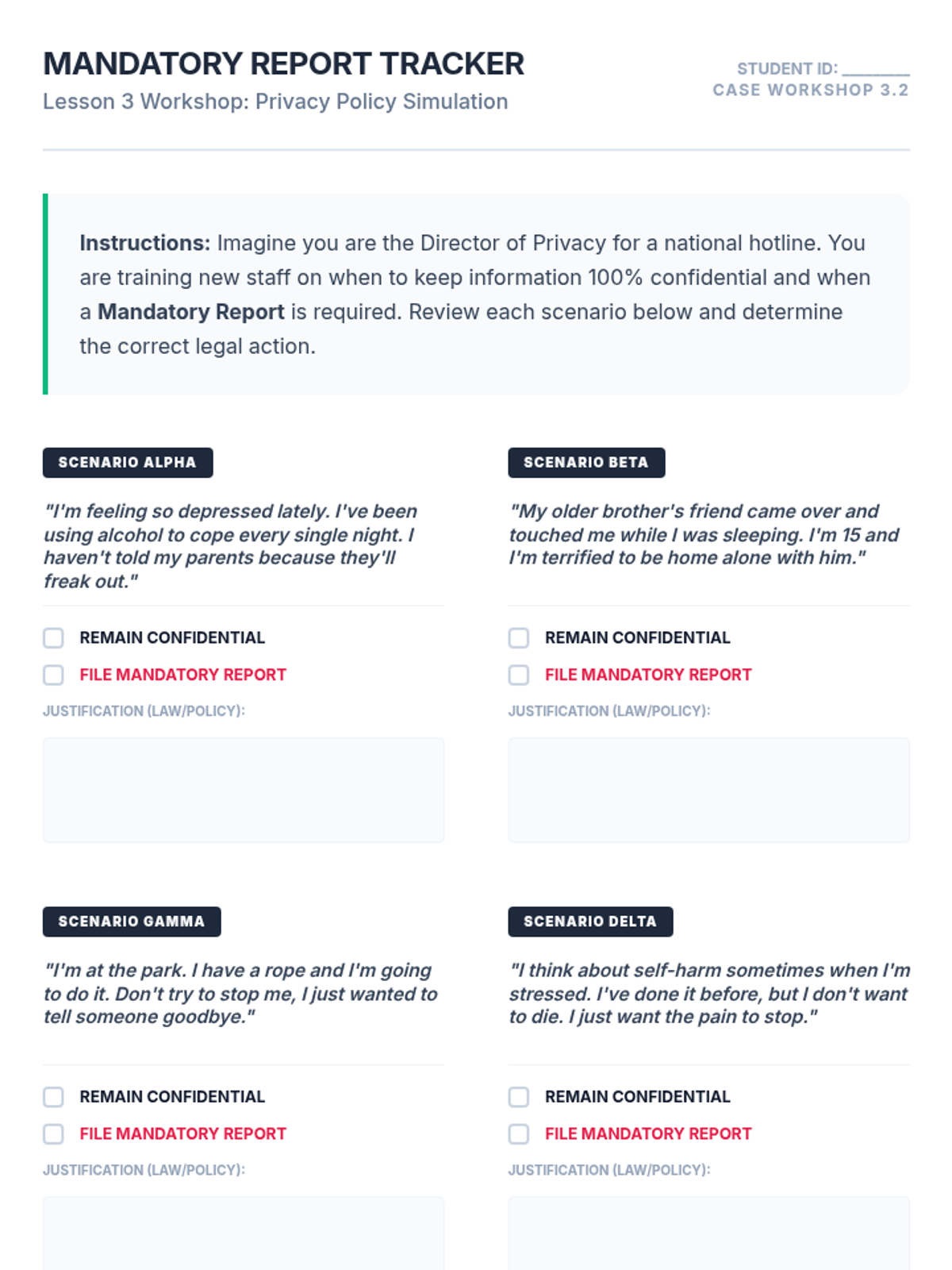
This lesson explores the legal and ethical boundaries of privacy in crisis support. Students learn to distinguish between confidential support and the 'imminent risk' threshold that triggers mandatory reporting.
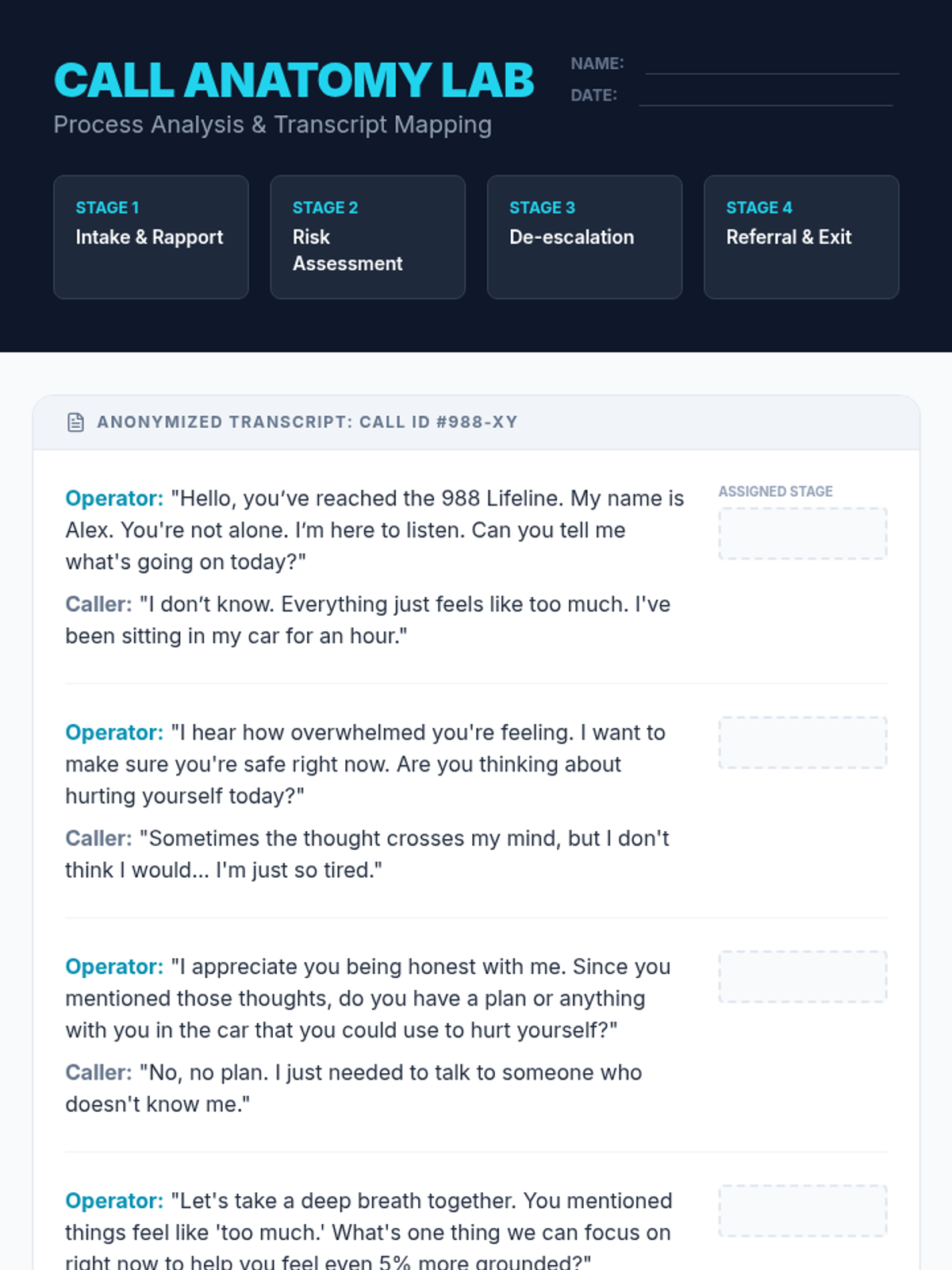
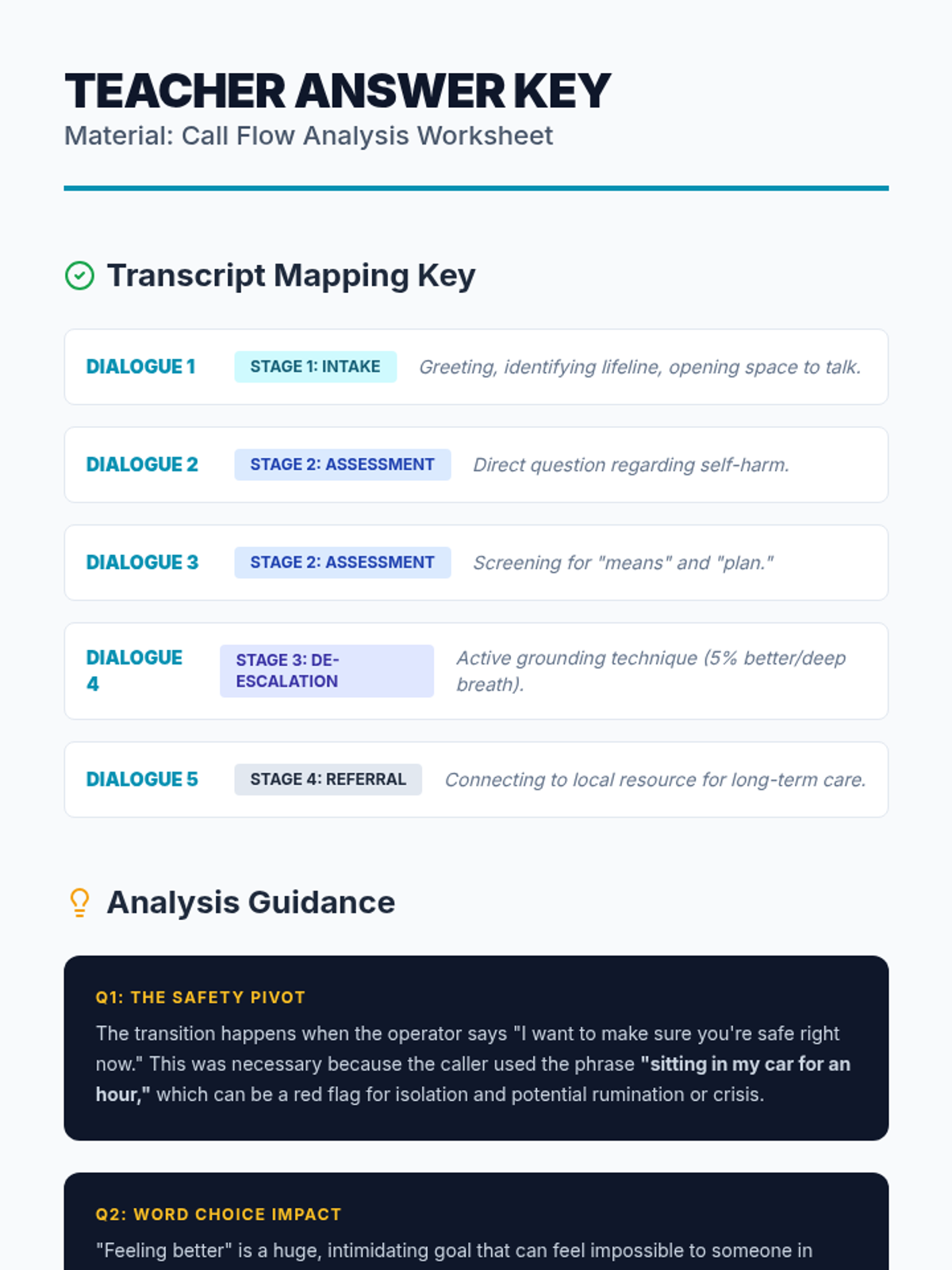
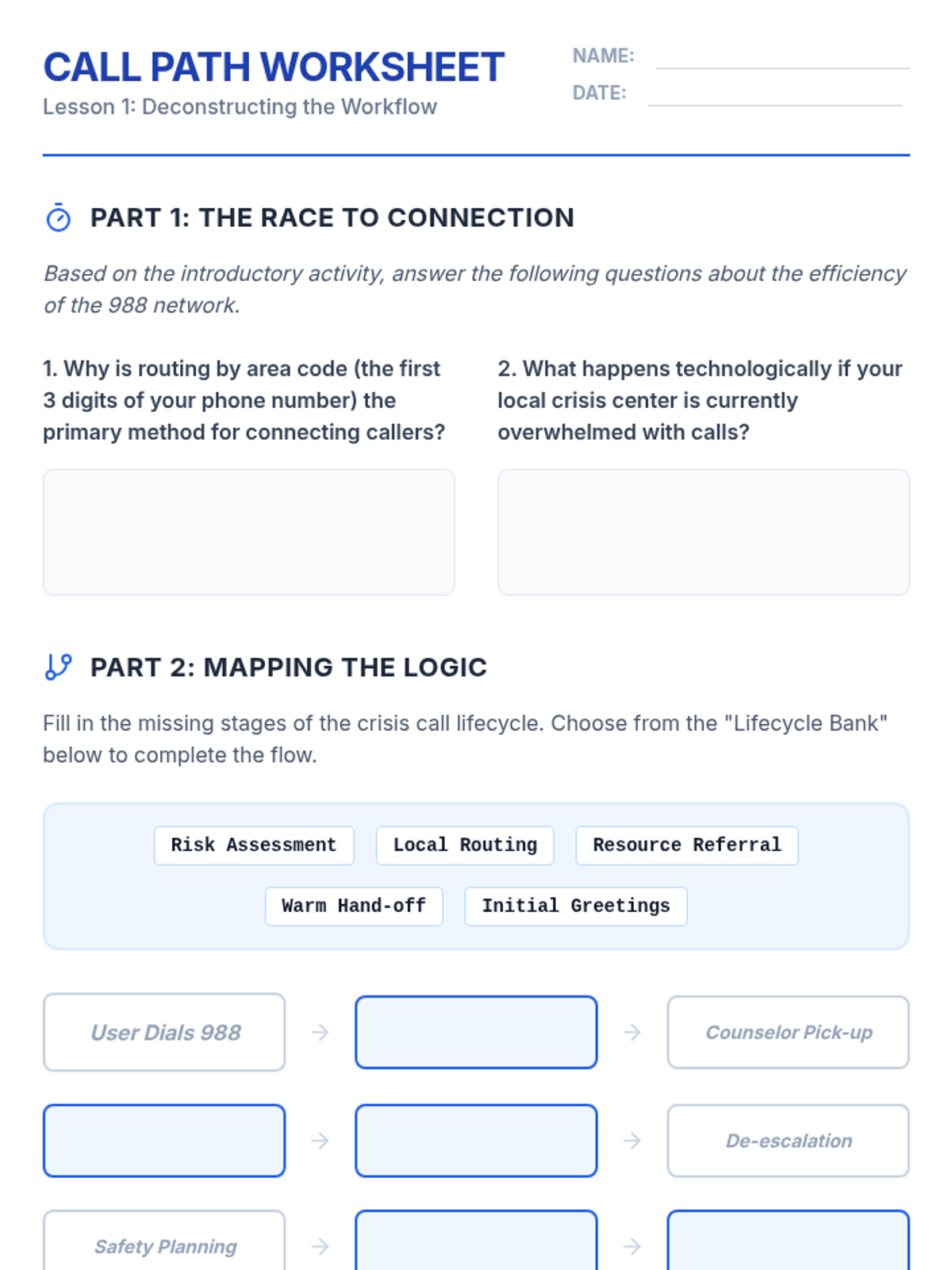
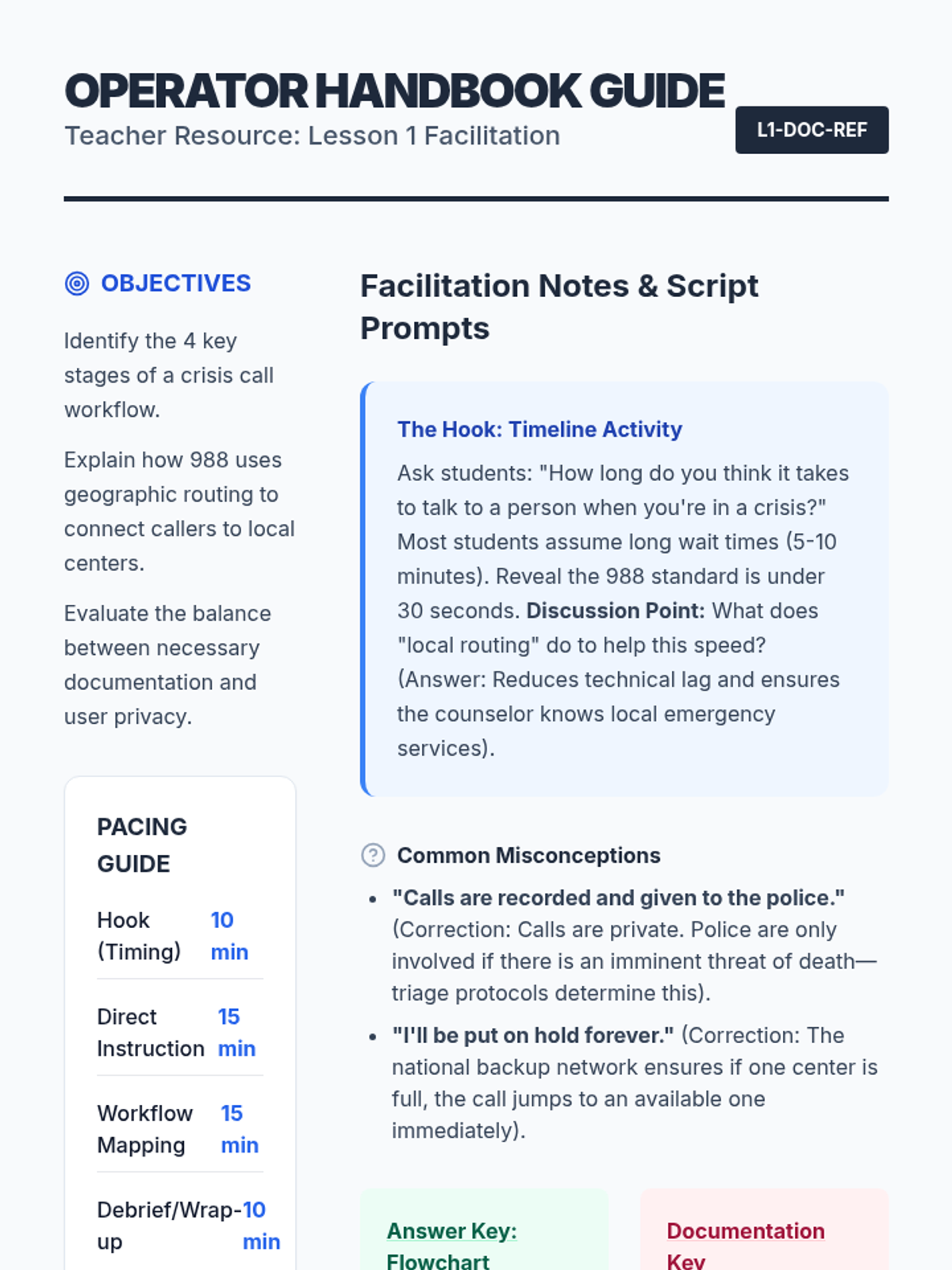
Students analyze the stages of a crisis call, from initial intake to resource referral. They identify the specific questions operators use to assess immediate safety and de-escalate situations.
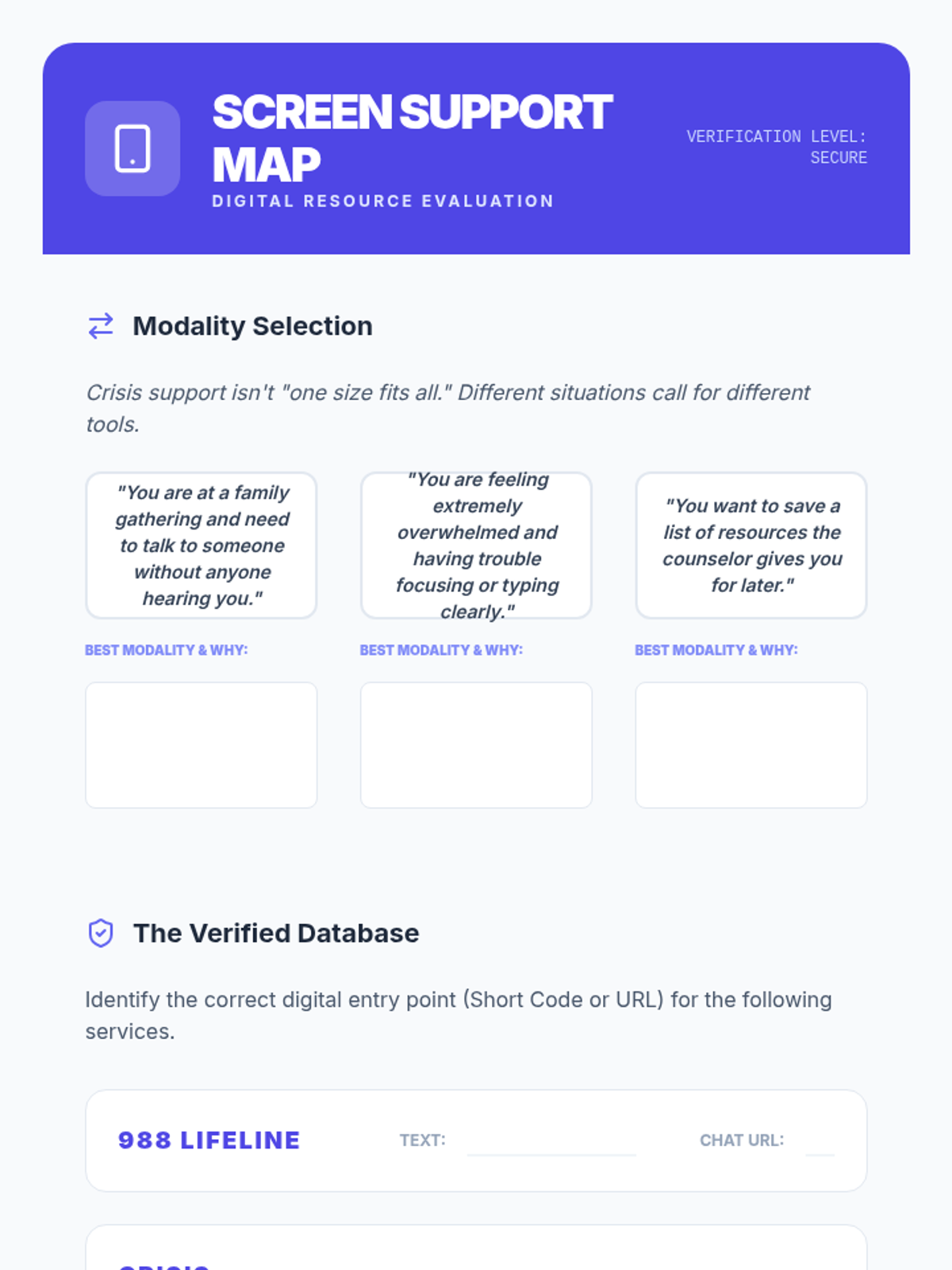
Students investigate text-based and chat-based crisis options, comparing them to voice calls. They evaluate the pros and cons of different modalities and practice locating verified digital entry points for services.
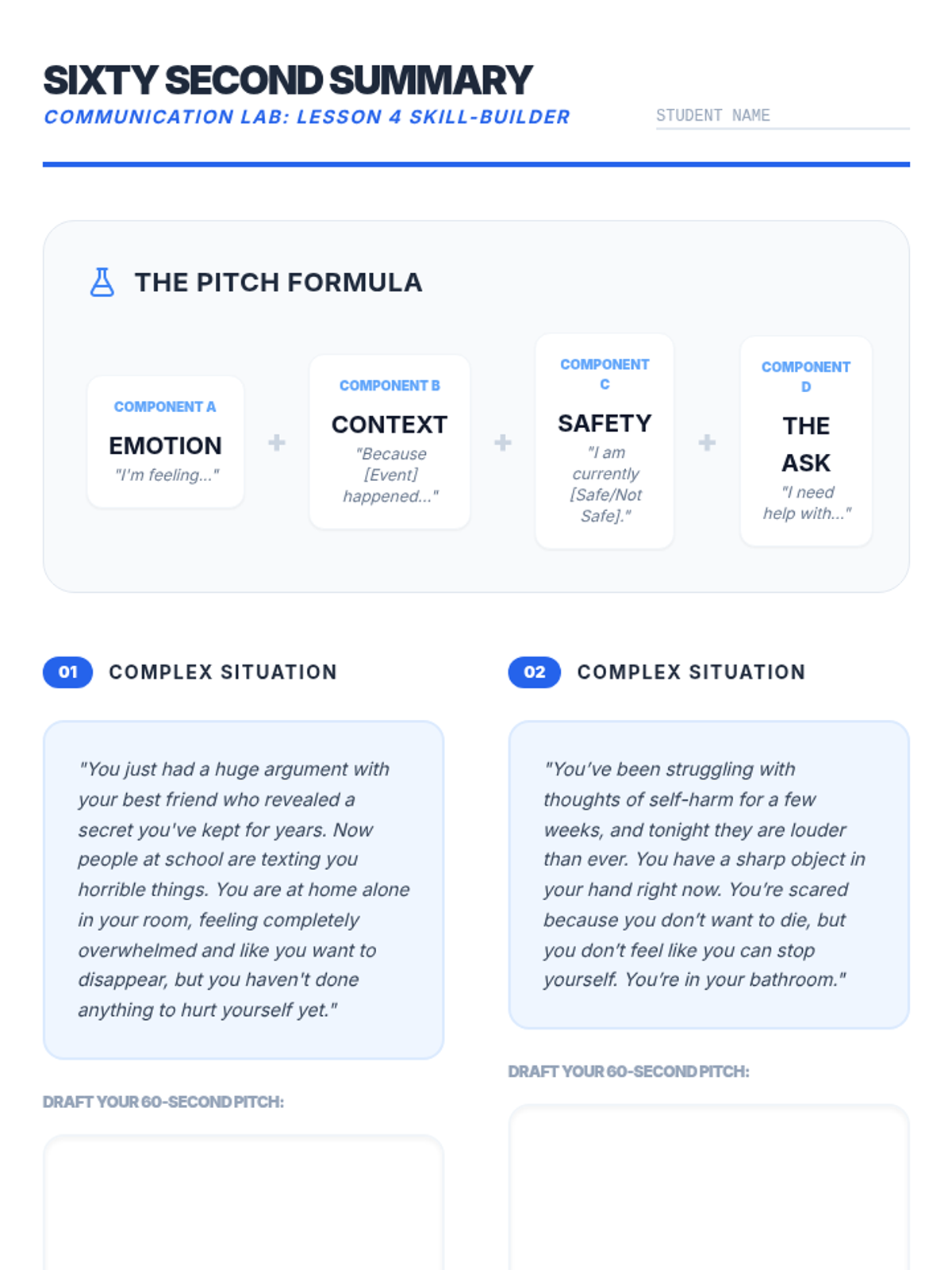
Focusing on the user's perspective, this lesson teaches students how to effectively communicate information to a hotline operator. Students practice summarizing complex situations clearly to ensure they receive the appropriate help quickly.
Students explore the legal and ethical boundaries of privacy within crisis services. The lesson clarifies the distinction between confidential support and the mandatory reporting required when there is an active threat to life or safety of a minor.
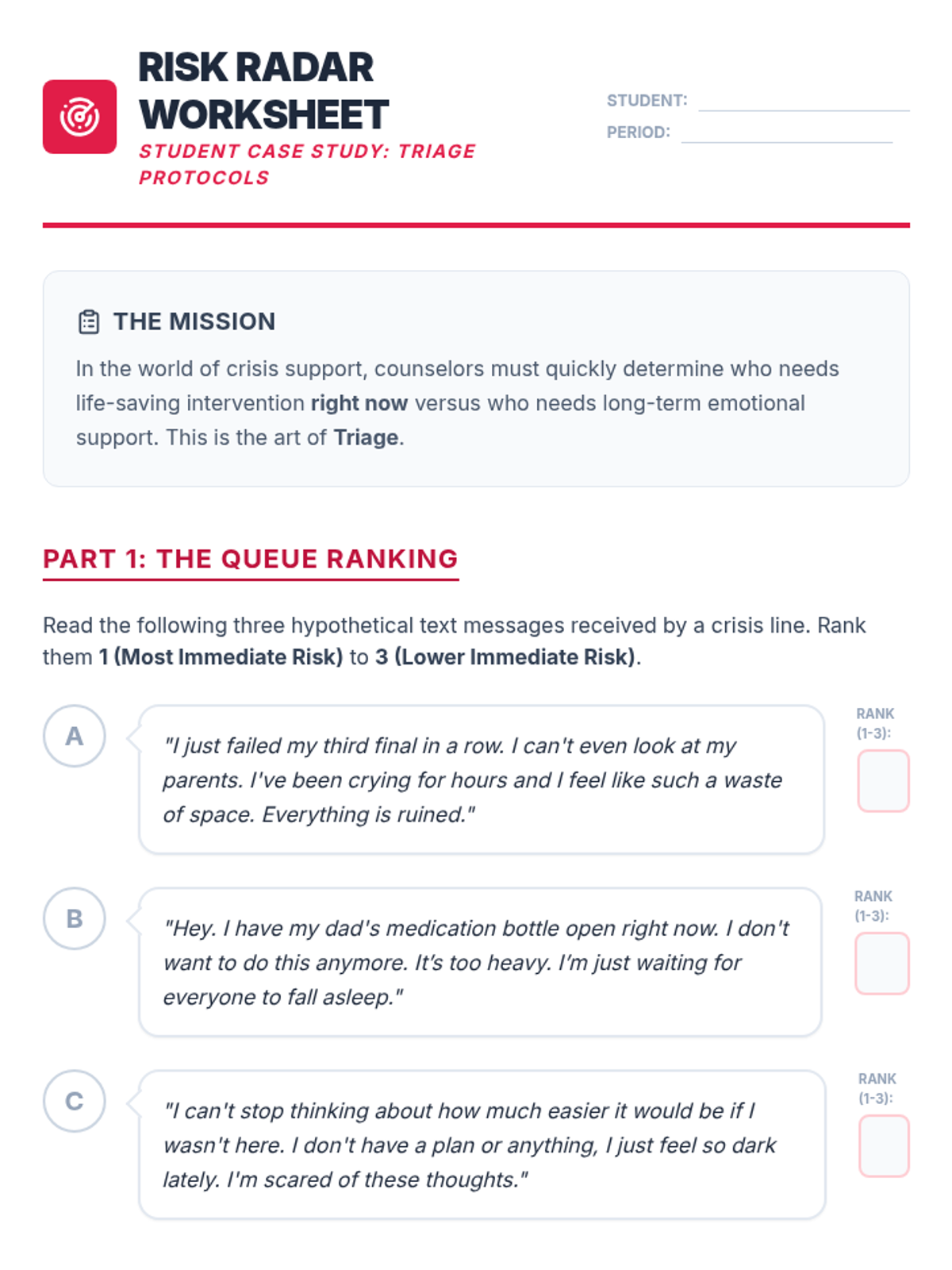
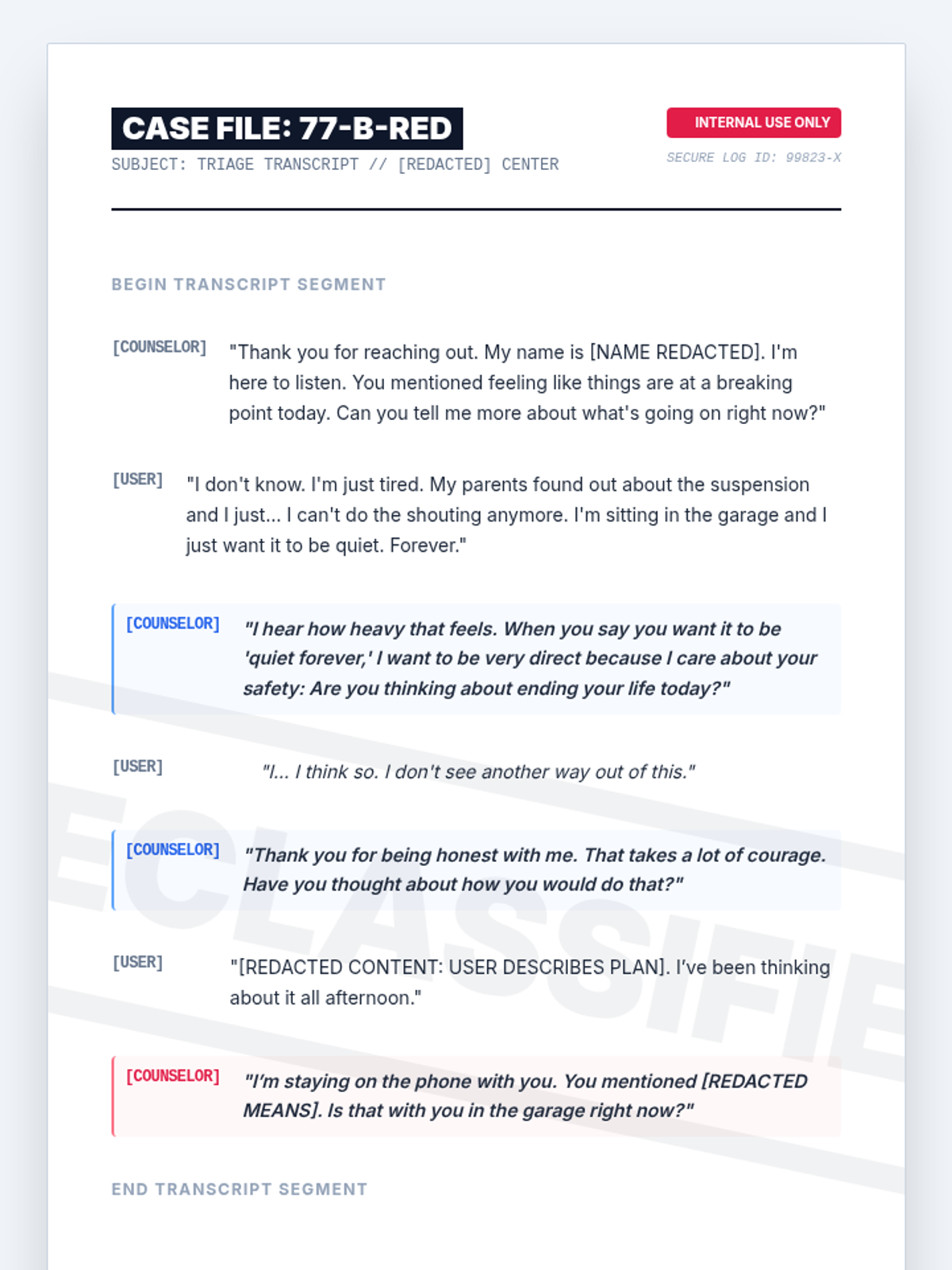
This lesson introduces the concept of triage, explaining how trained counselors distinguish between imminent danger and distress. Students analyze redacted transcripts to identify questions used to assess immediate safety risks.
Students examine the lifecycle of a crisis hotline call from the initial dial to the closing of the conversation. They review flowcharts illustrating how calls are routed, answered, and documented, demystifying the technology behind services like 988.
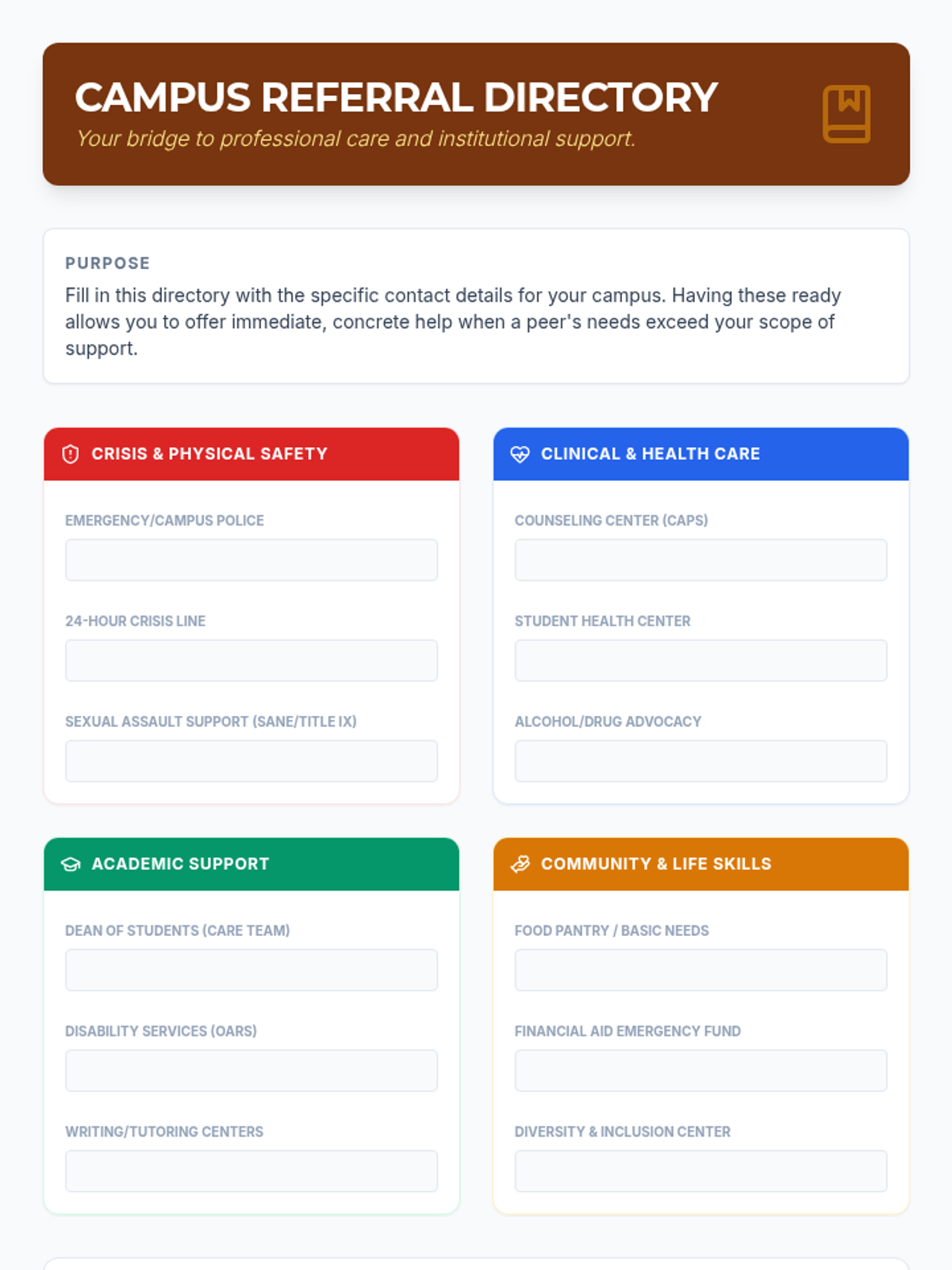
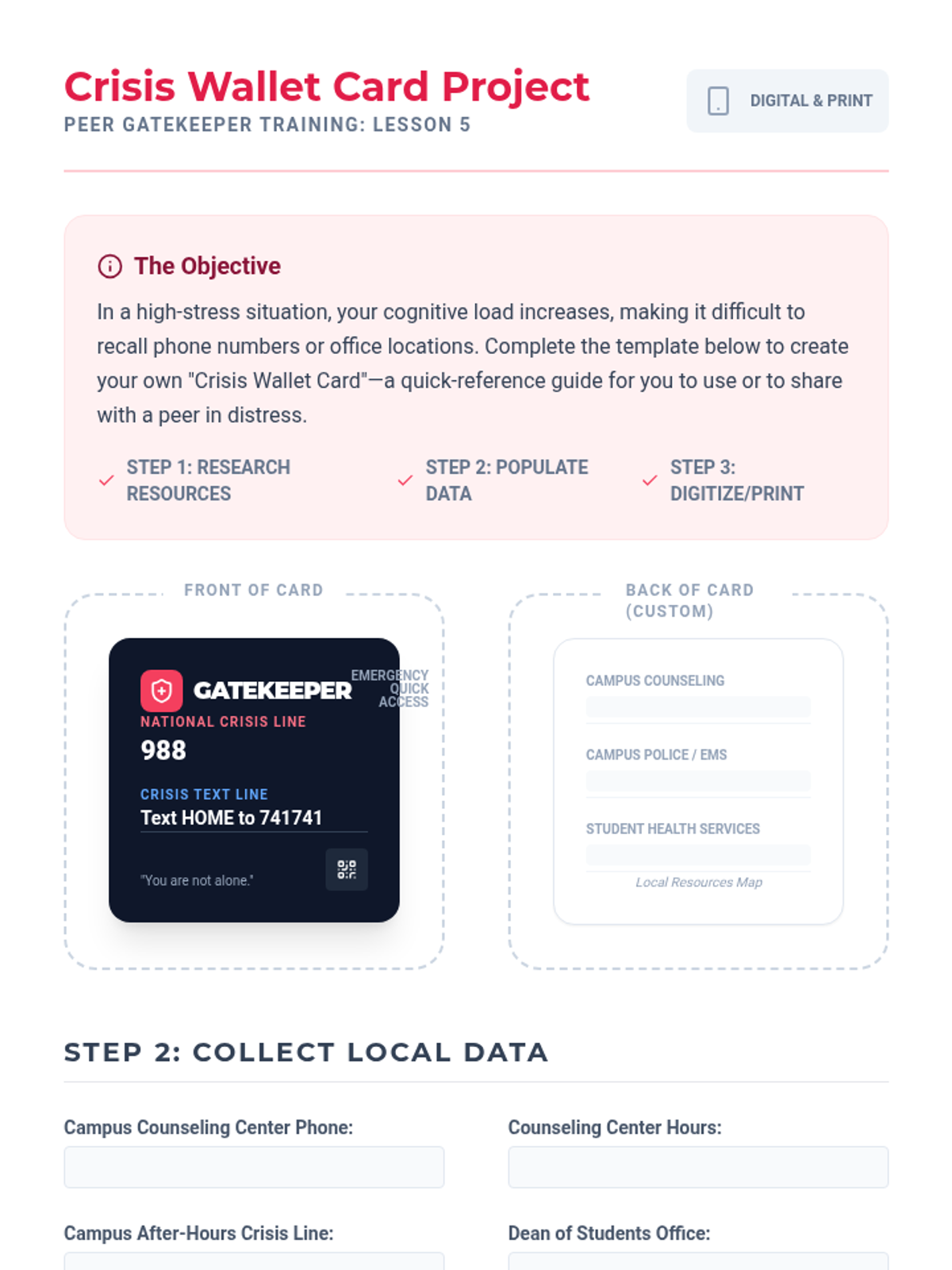
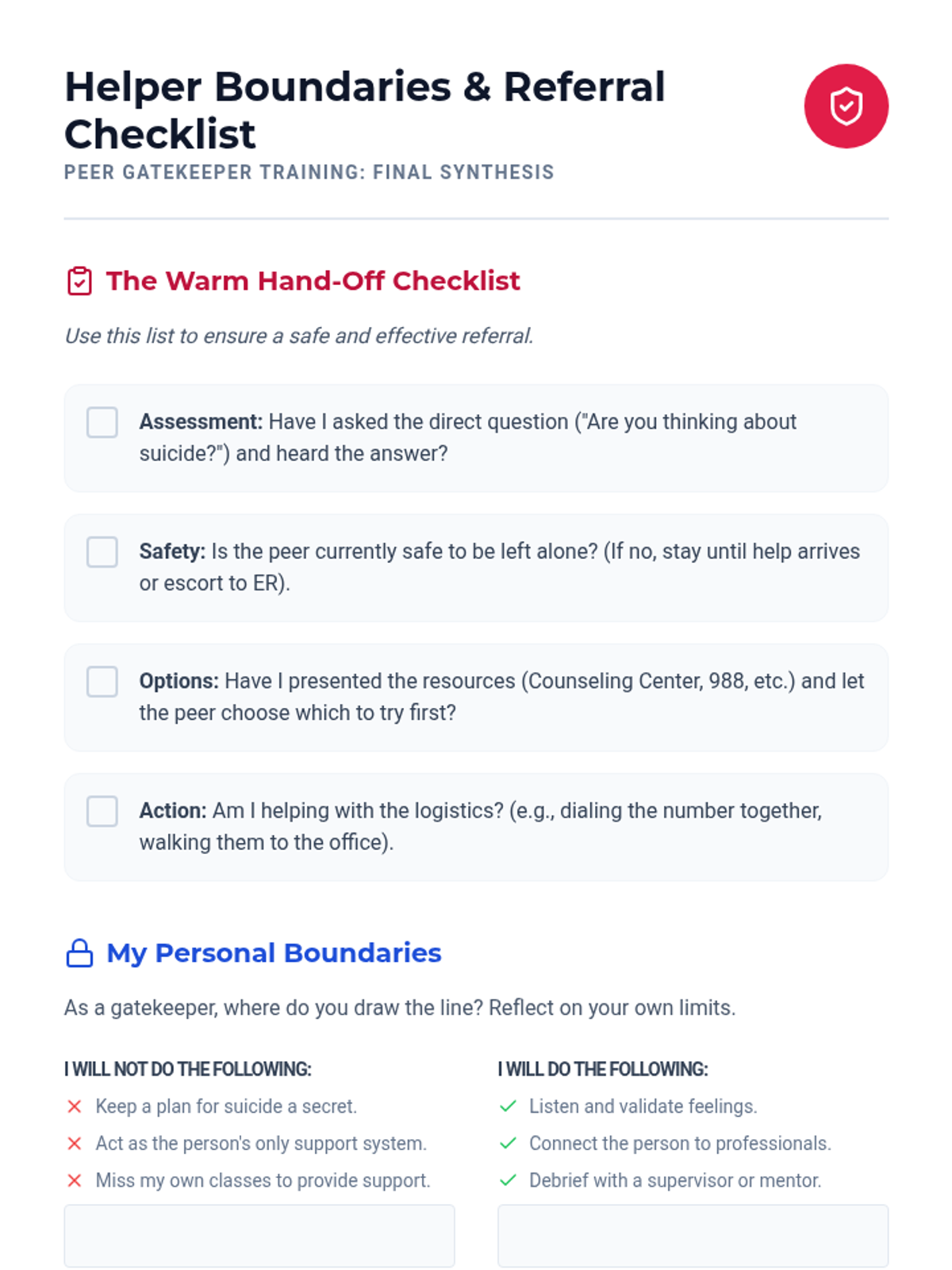
Teaches effective 'warm hand-offs' to professional resources while establishing critical personal boundaries for the student helper.
Guided practice in active listening and emotional validation techniques to de-escalate crisis situations and build trust with peers in distress.
Focuses on the critical skill of asking directly about suicidal intent, overcoming common fears, and using clear, non-judgmental language.
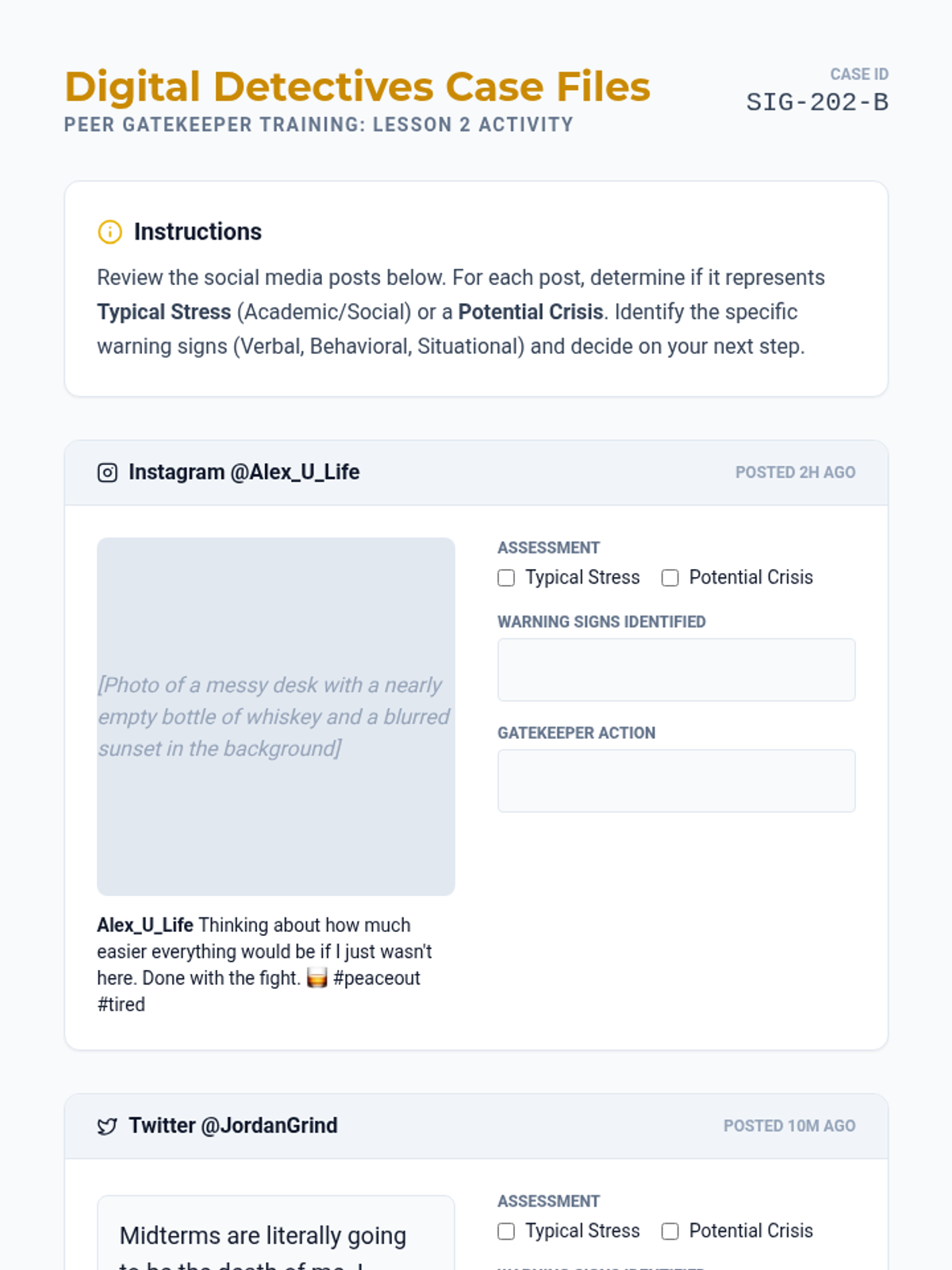
Students learn to identify verbal, behavioral, and situational warning signs of a mental health crisis, distinguishing between typical stress and acute risk.
A 90-minute workshop designed for transition-age youth (16-21) to develop a personalized self-care blueprint. The session focuses on the 8 dimensions of wellness as a foundation for independent living and stress management.
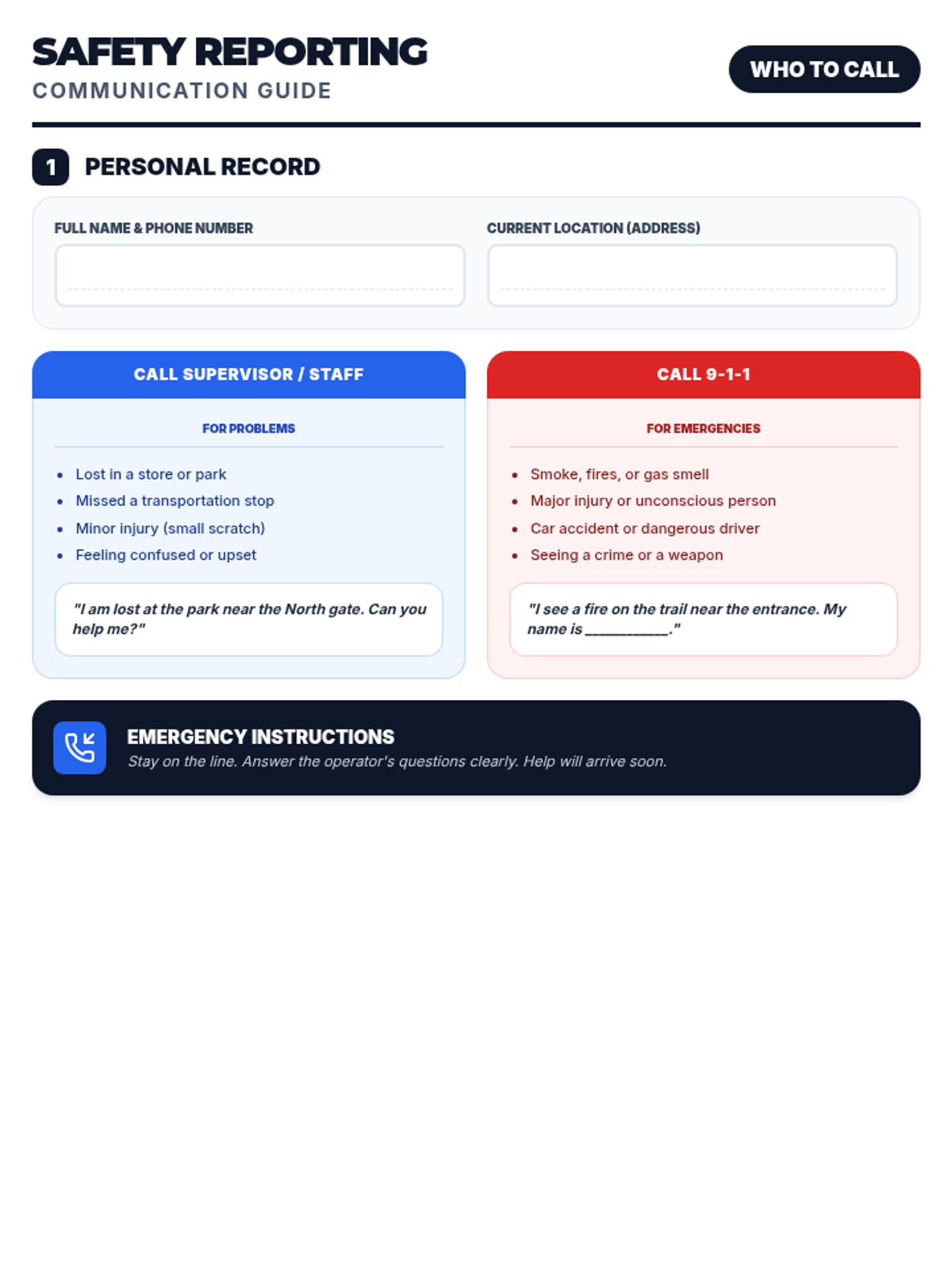
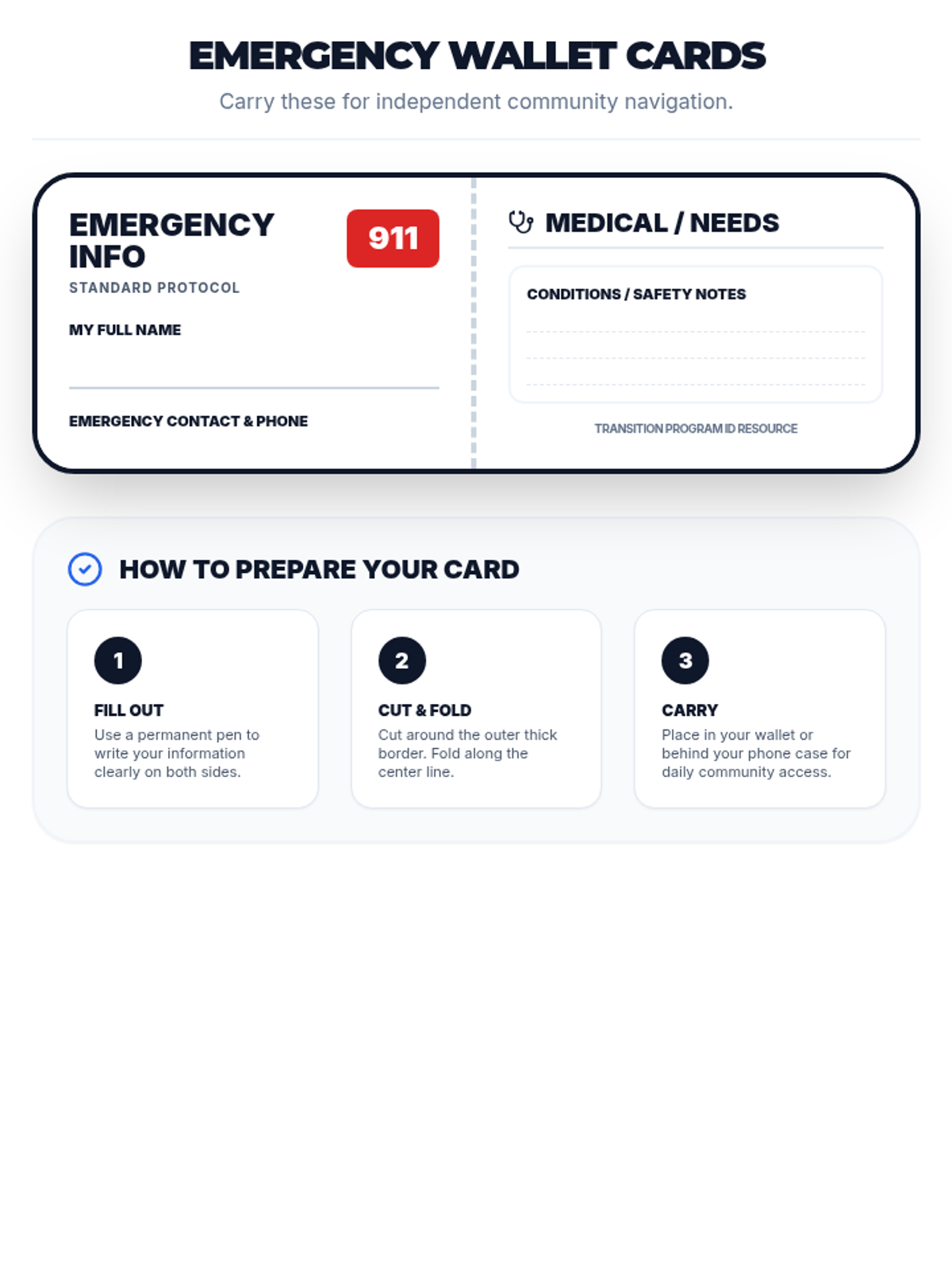
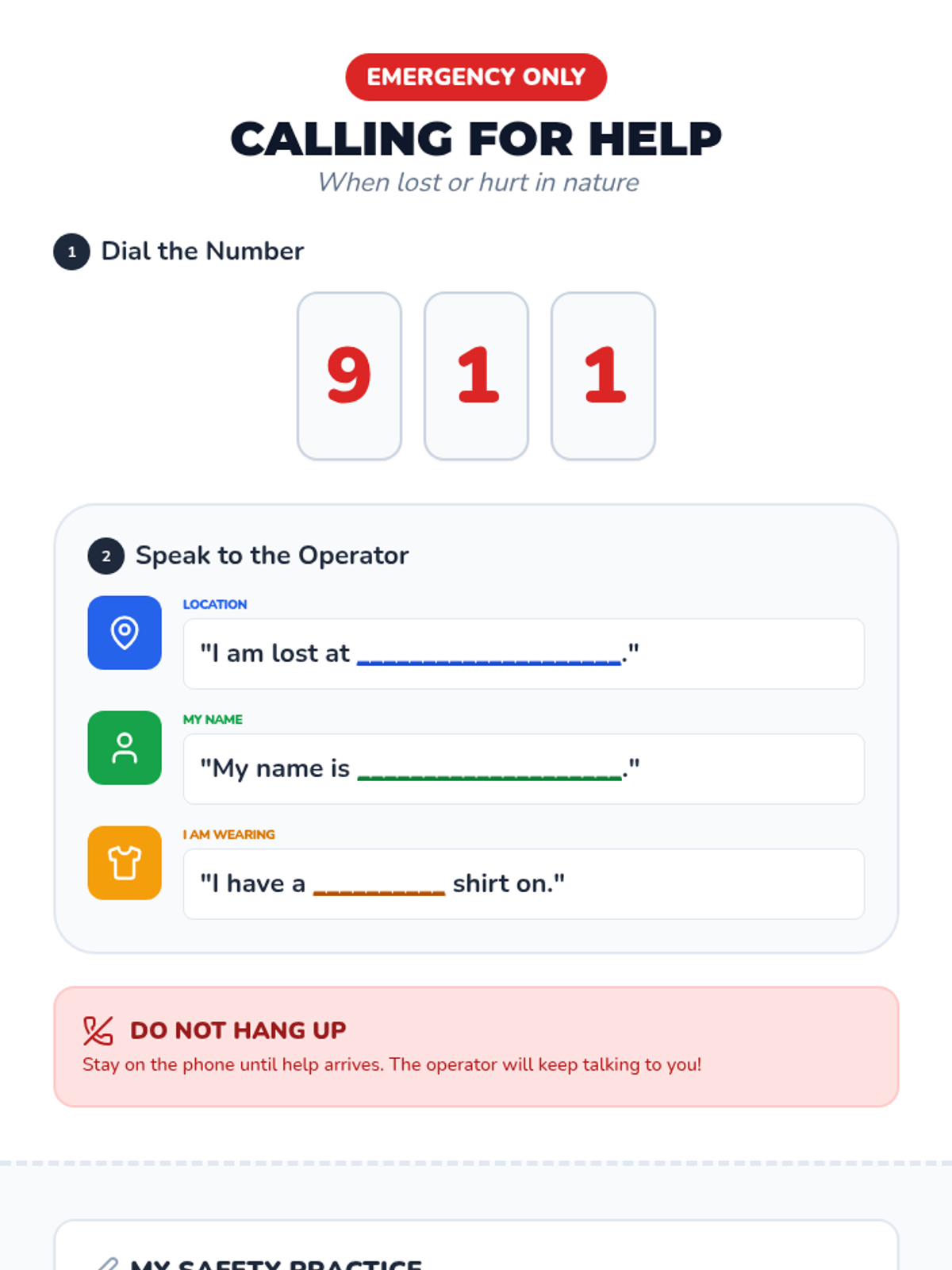
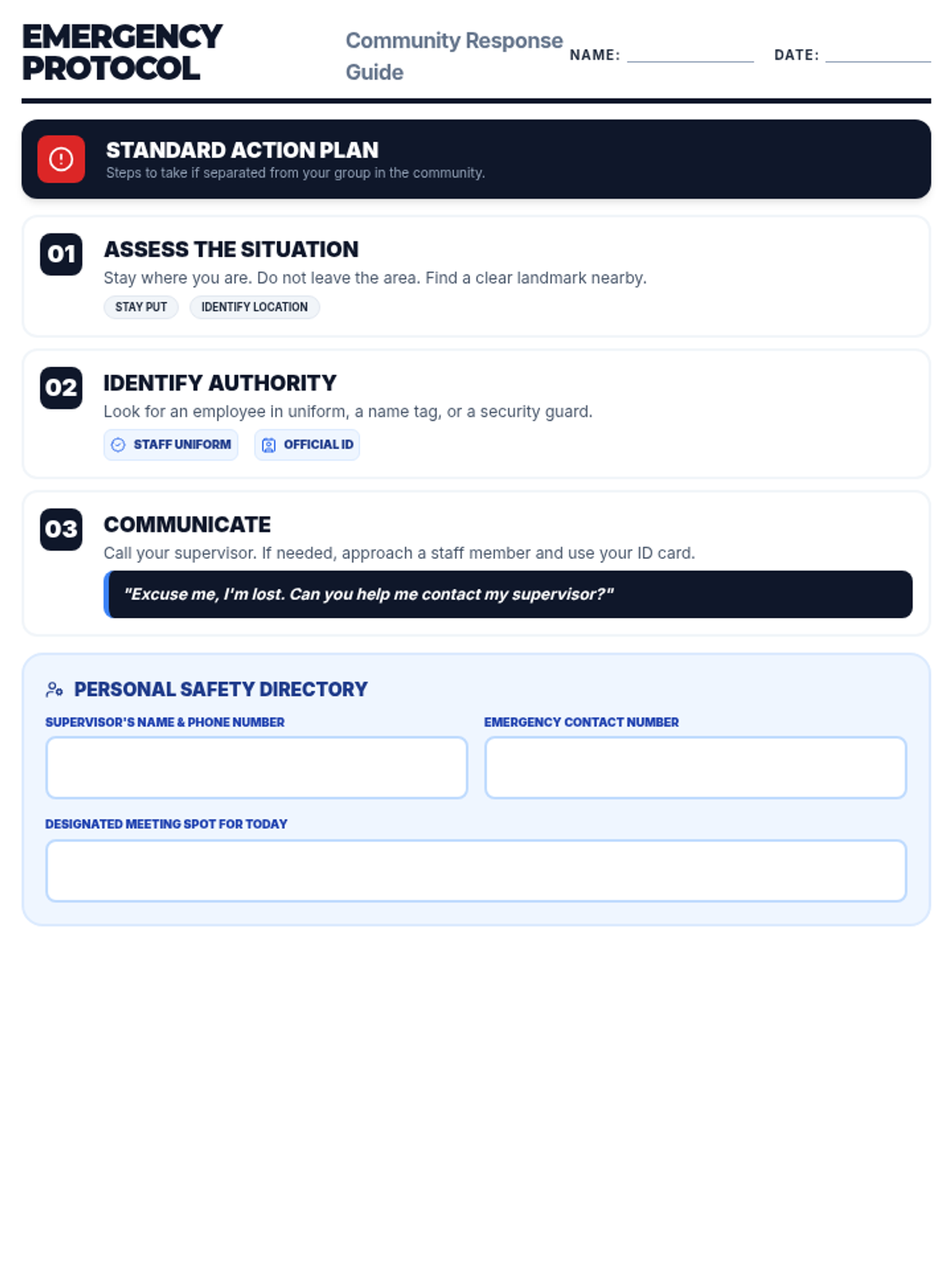
Comprehensive training on identifying and responding to life-threatening emergencies, including medical issues, fire, and community safety reporting.
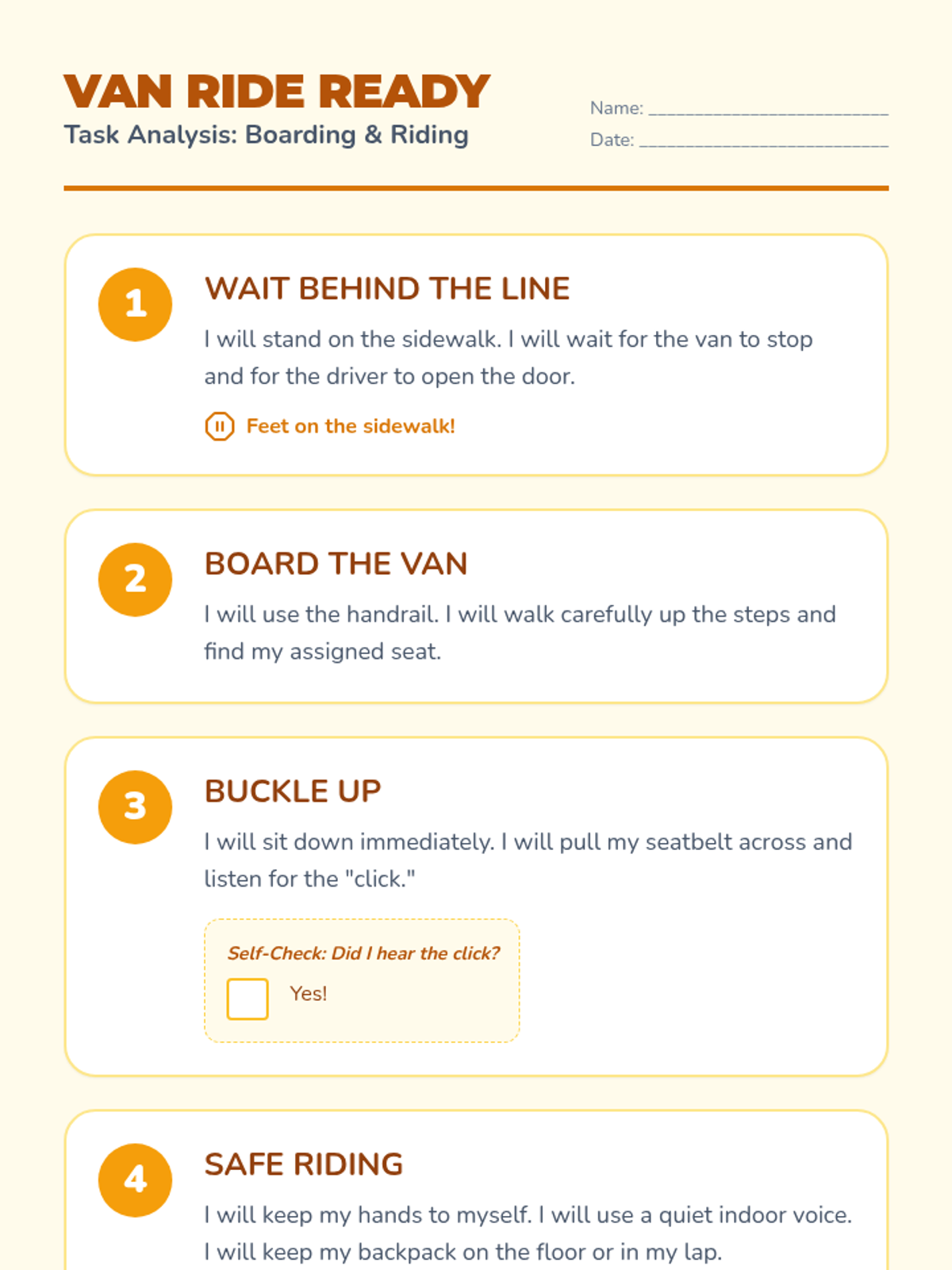
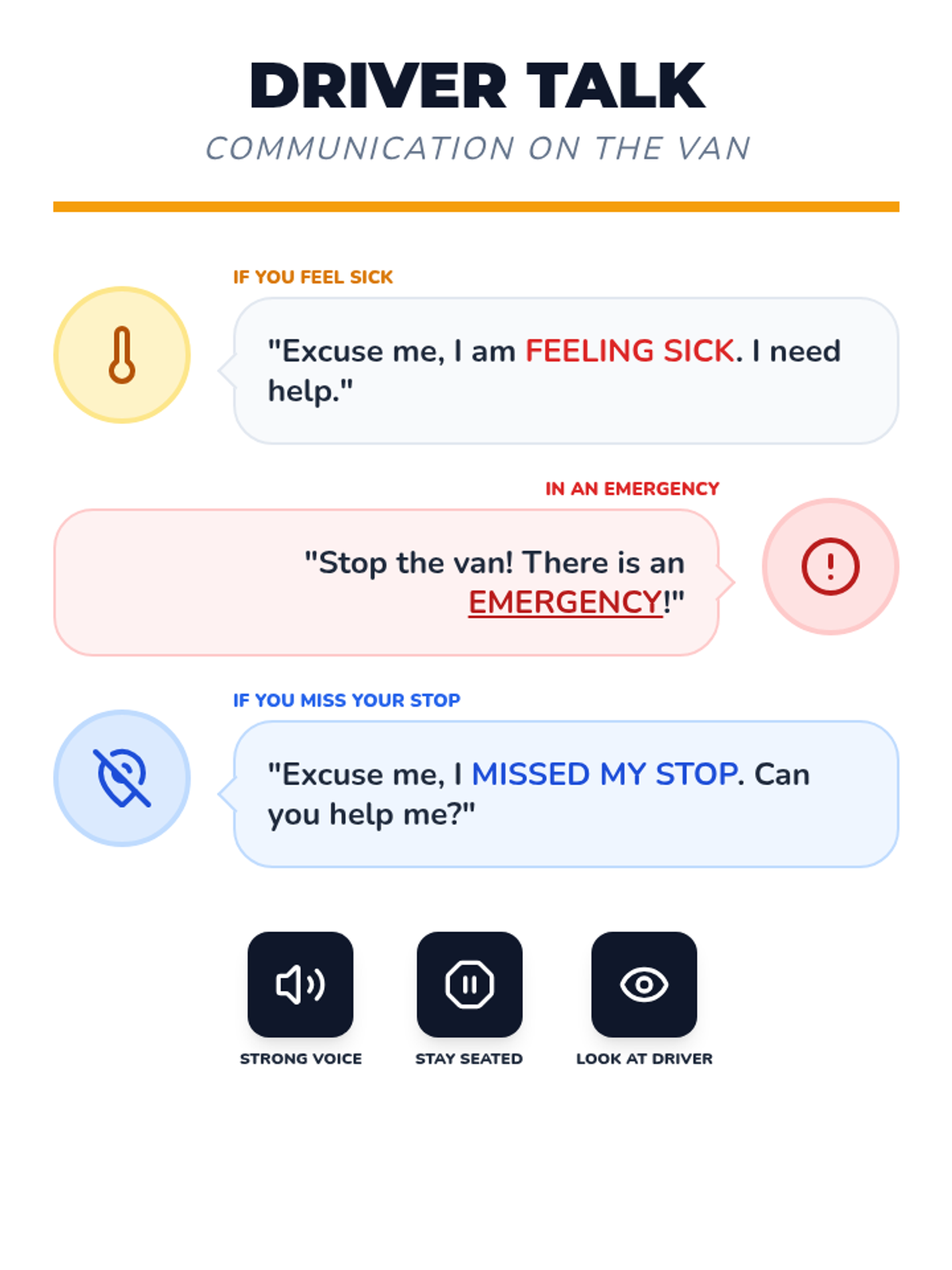
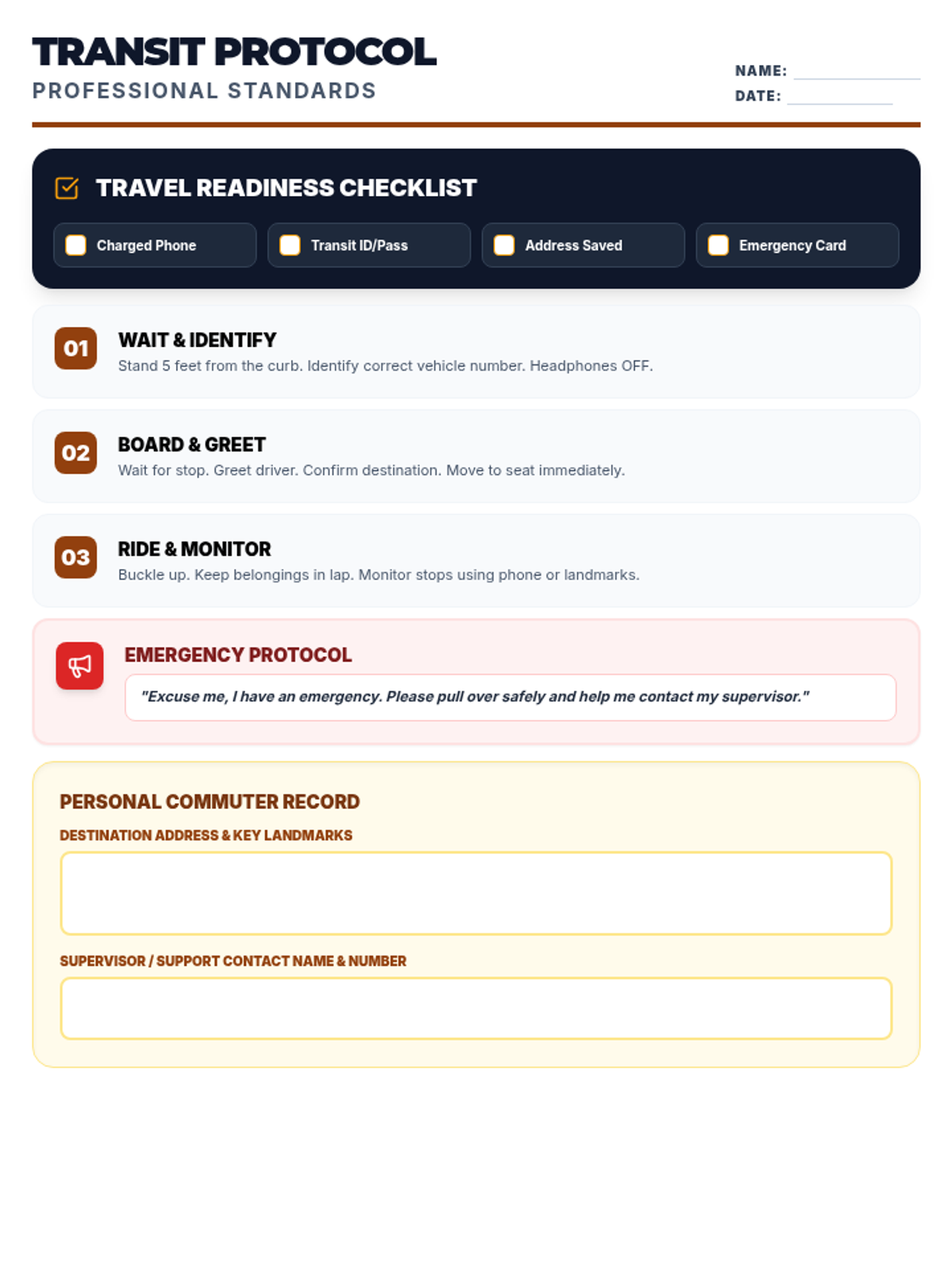
Covers safety protocols for independent travel, including effective communication with drivers and responding to transit delays or emergencies.
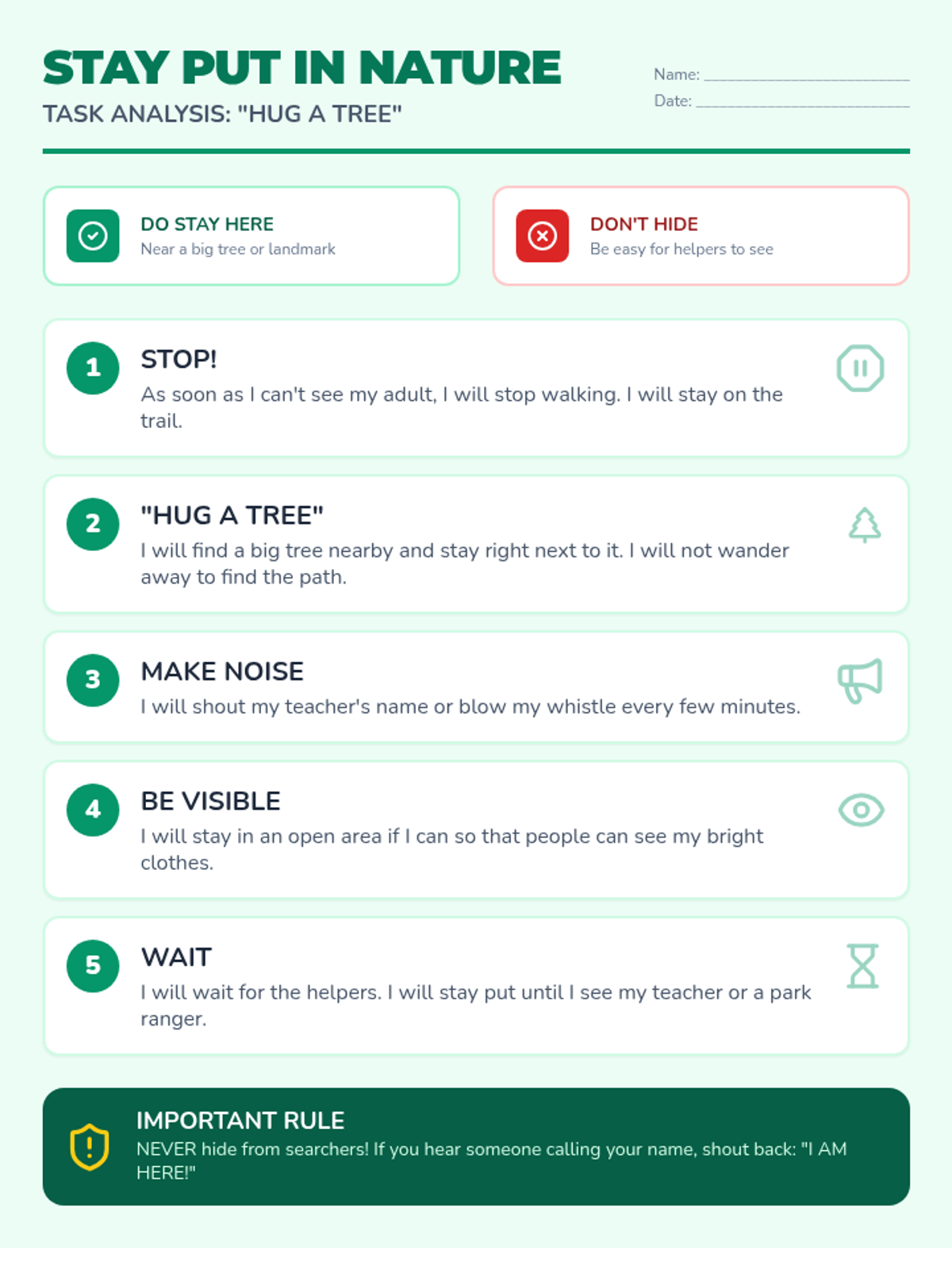
Teaches young adults how to stay safe while exercising or exploring outdoor trails, emphasizing the S.T.O.P. rule and signaling for help.
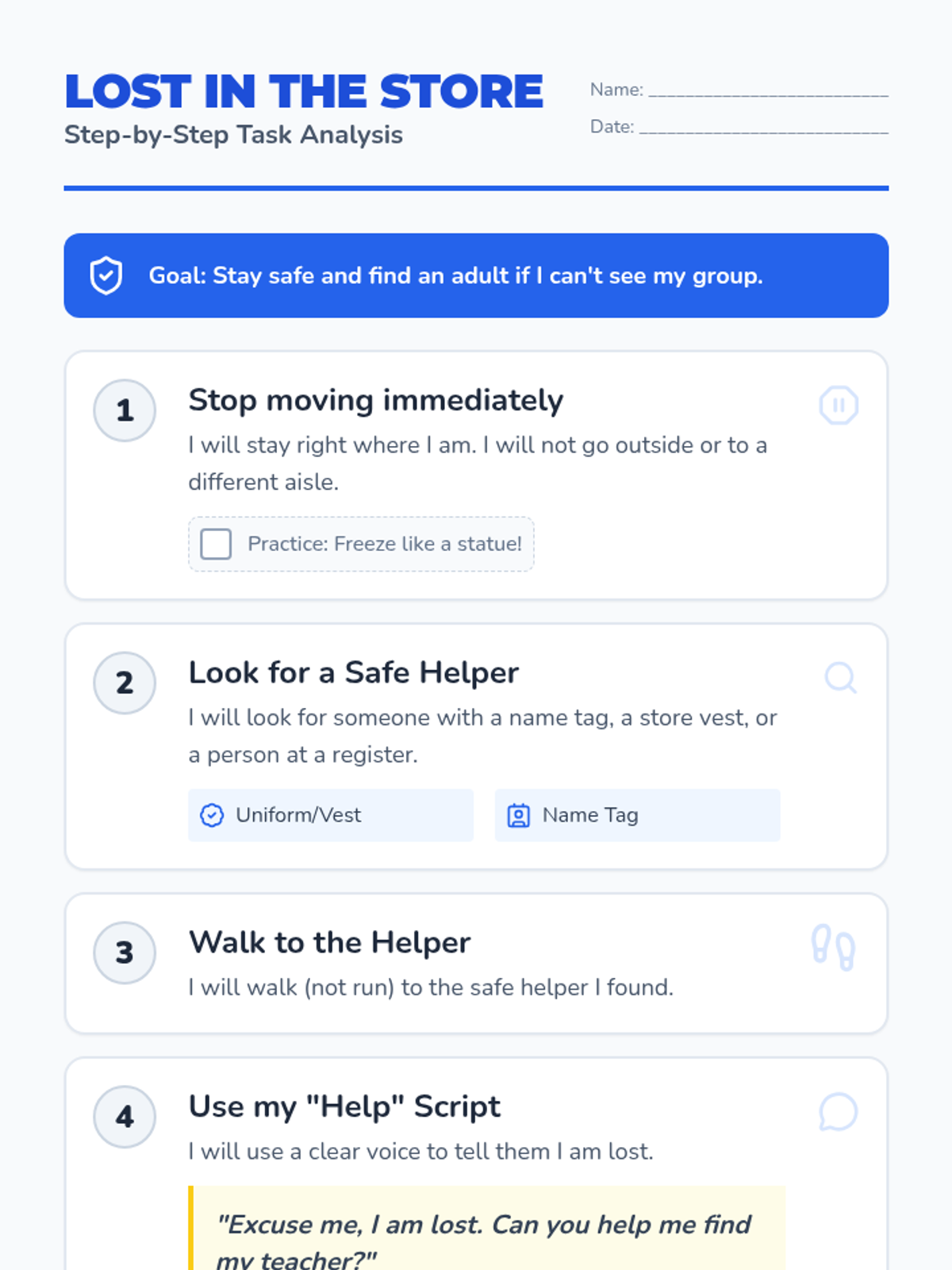
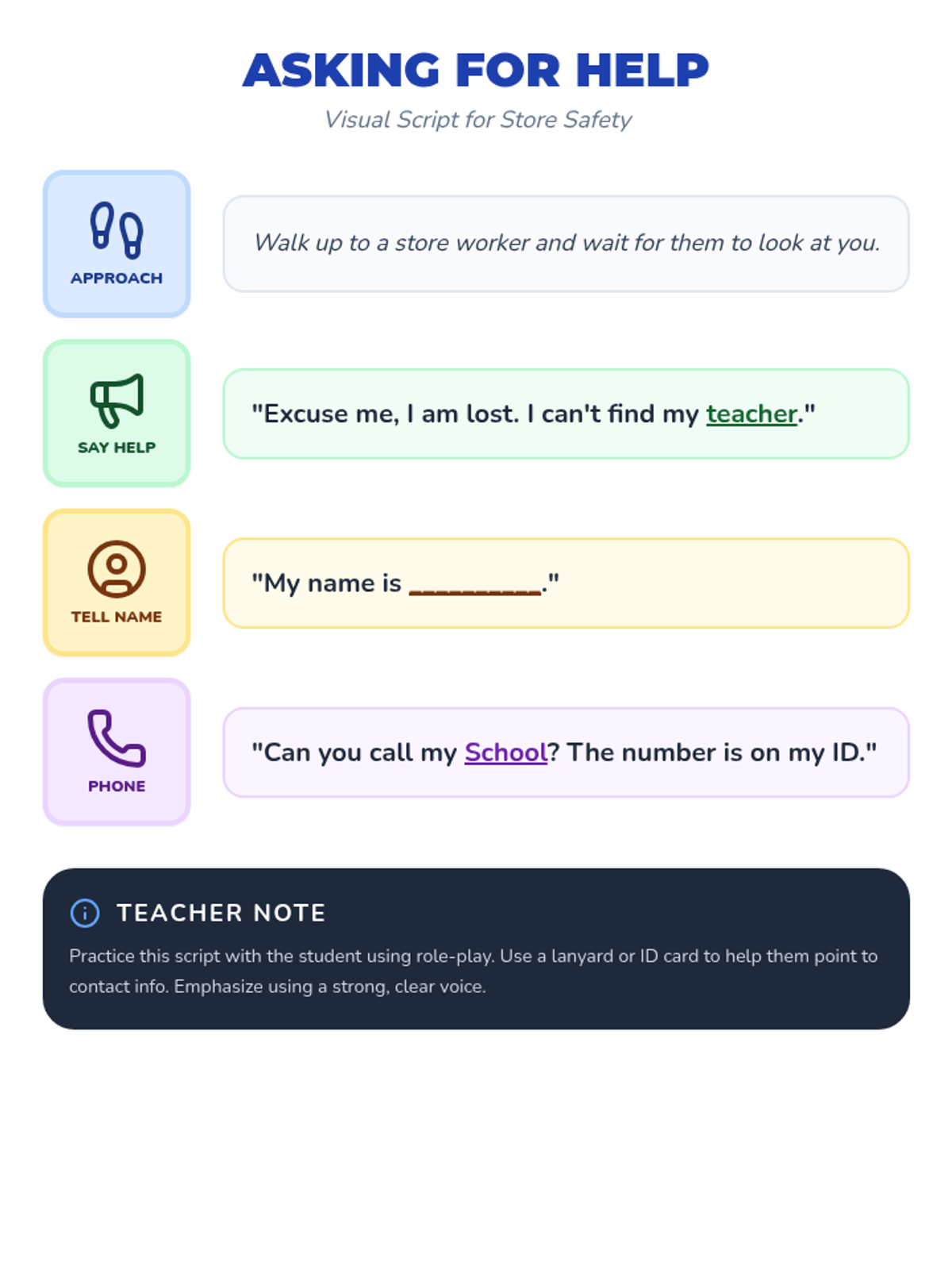
Focuses on independent navigation in retail settings, including identifying store security, using customer service, and responding to being separated from a group.
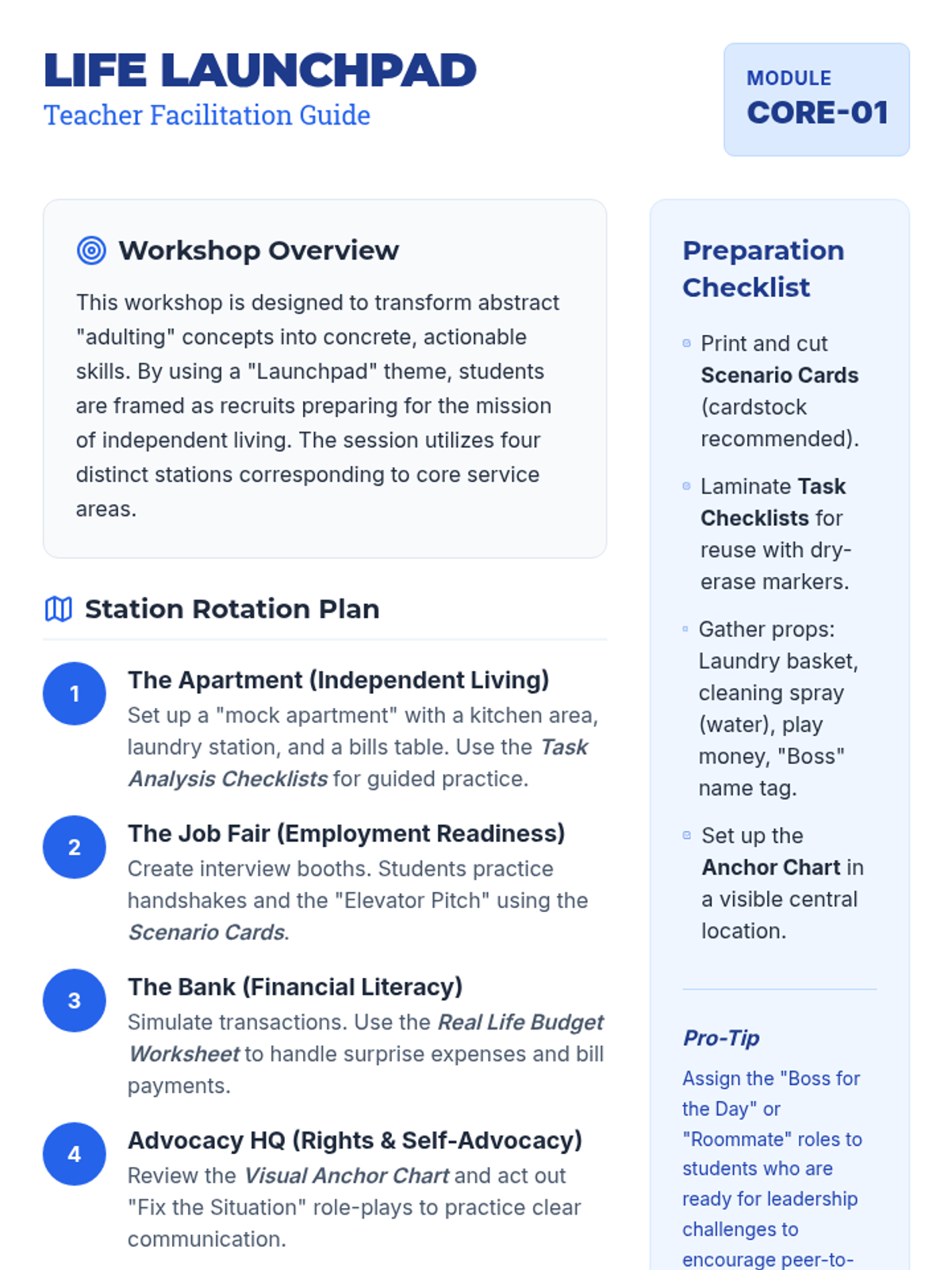
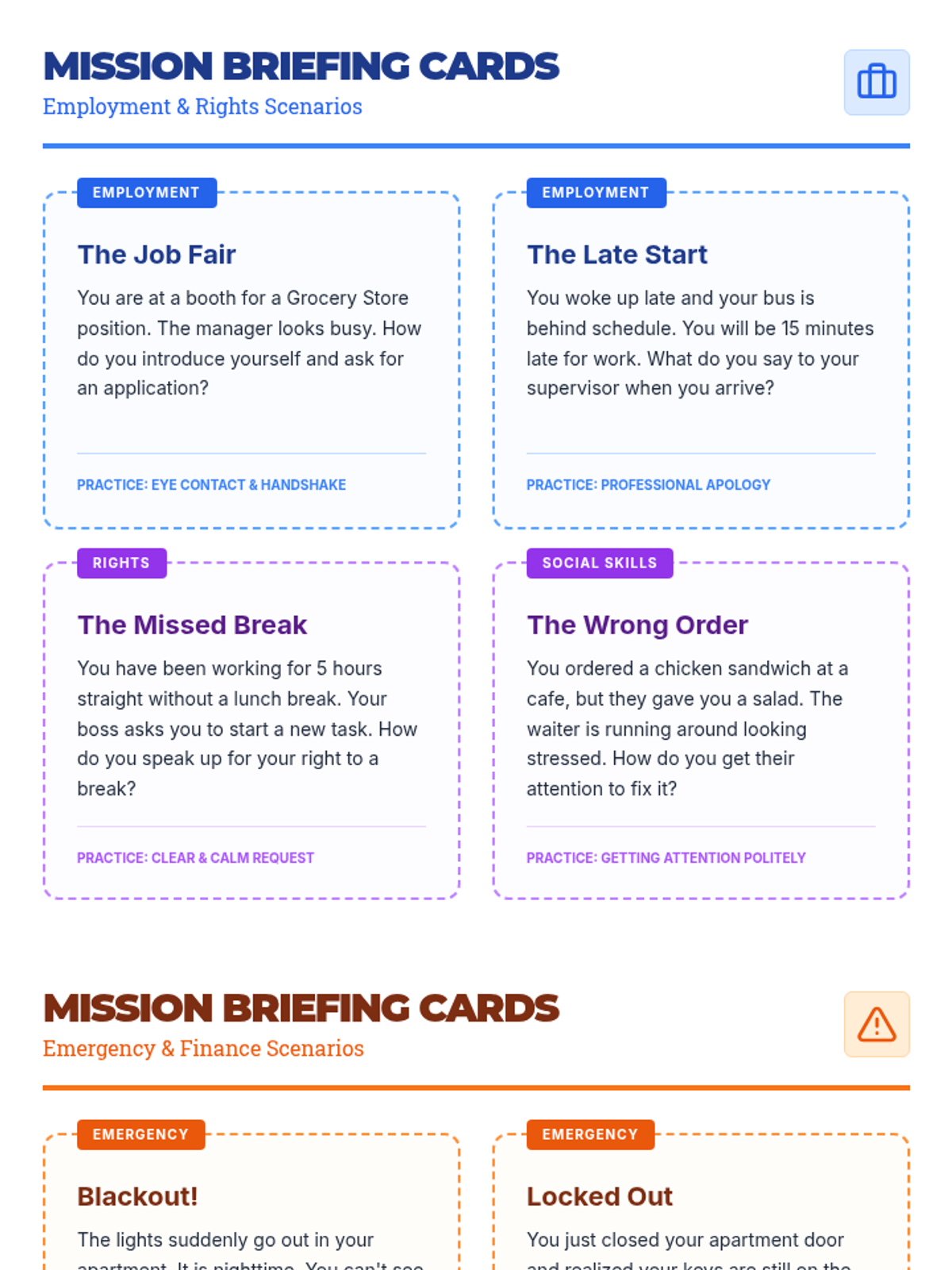
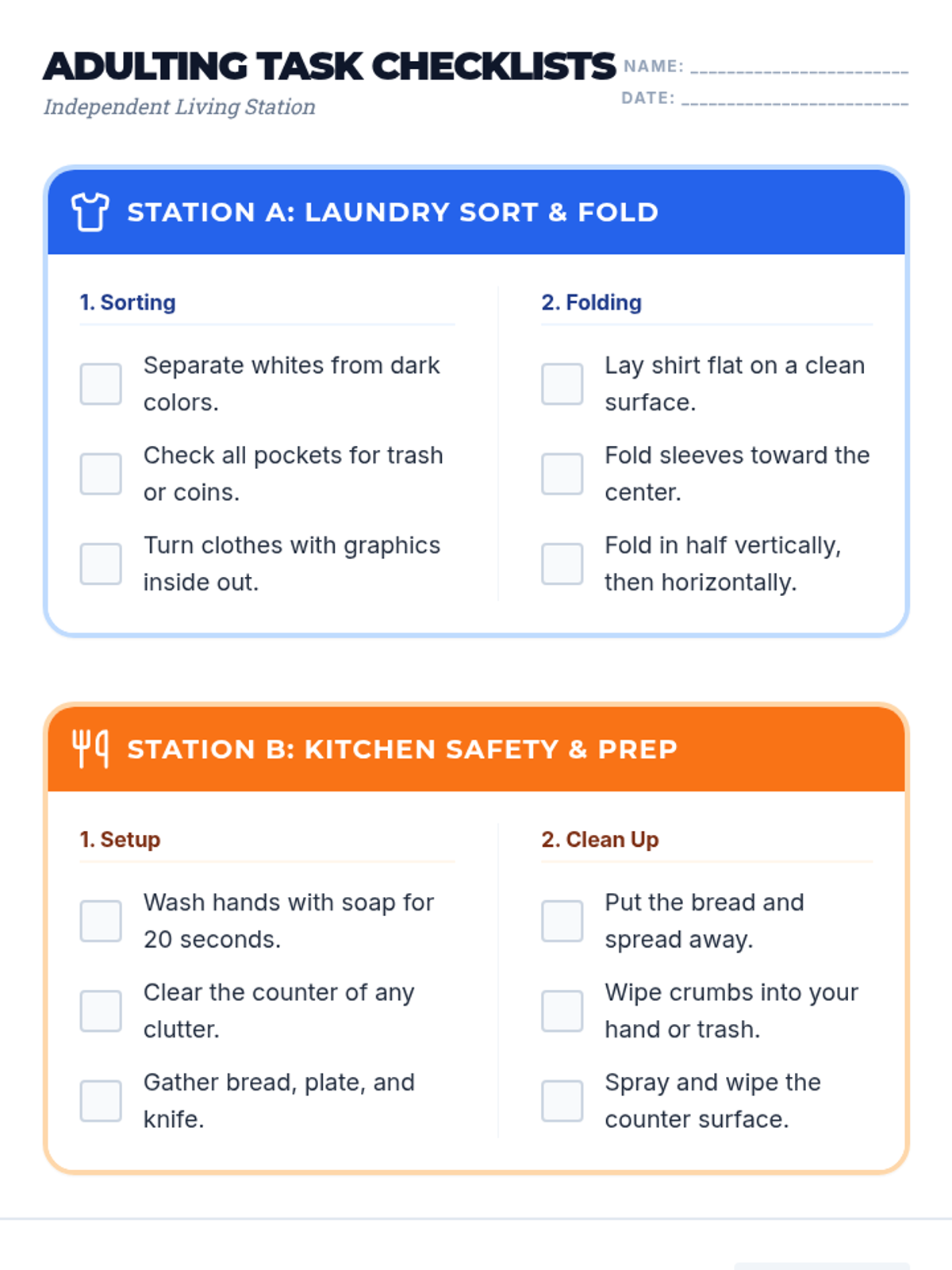
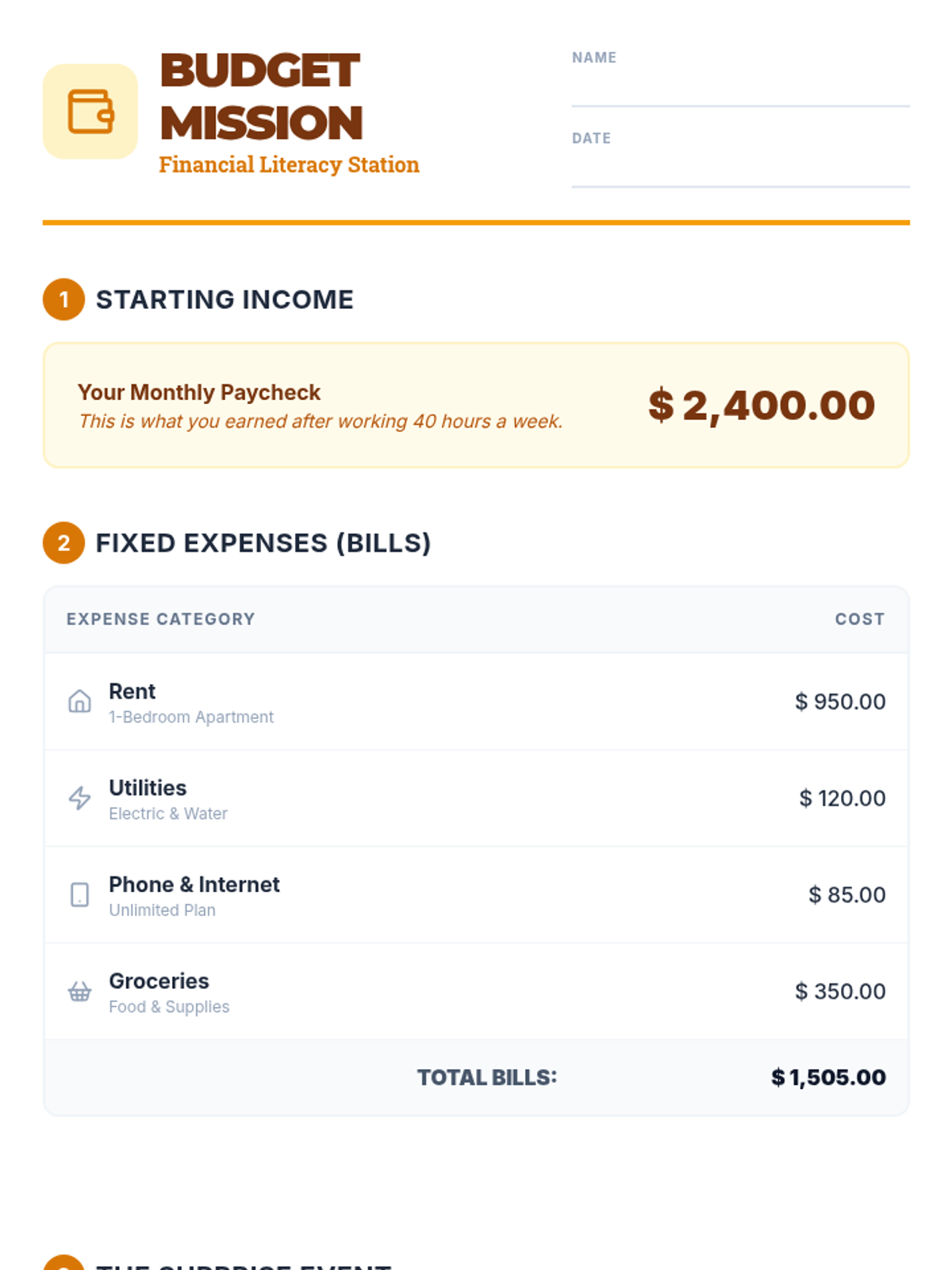
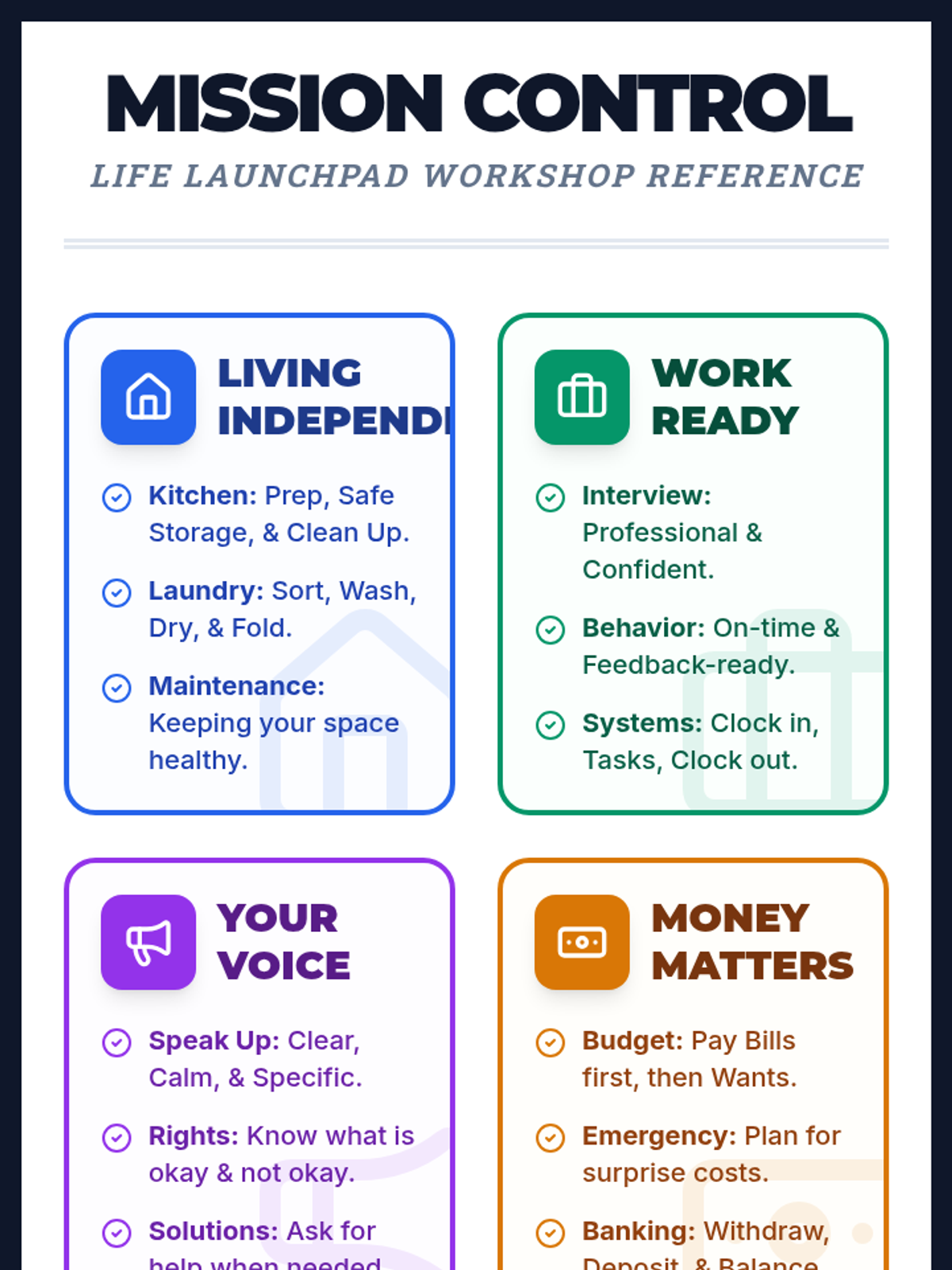
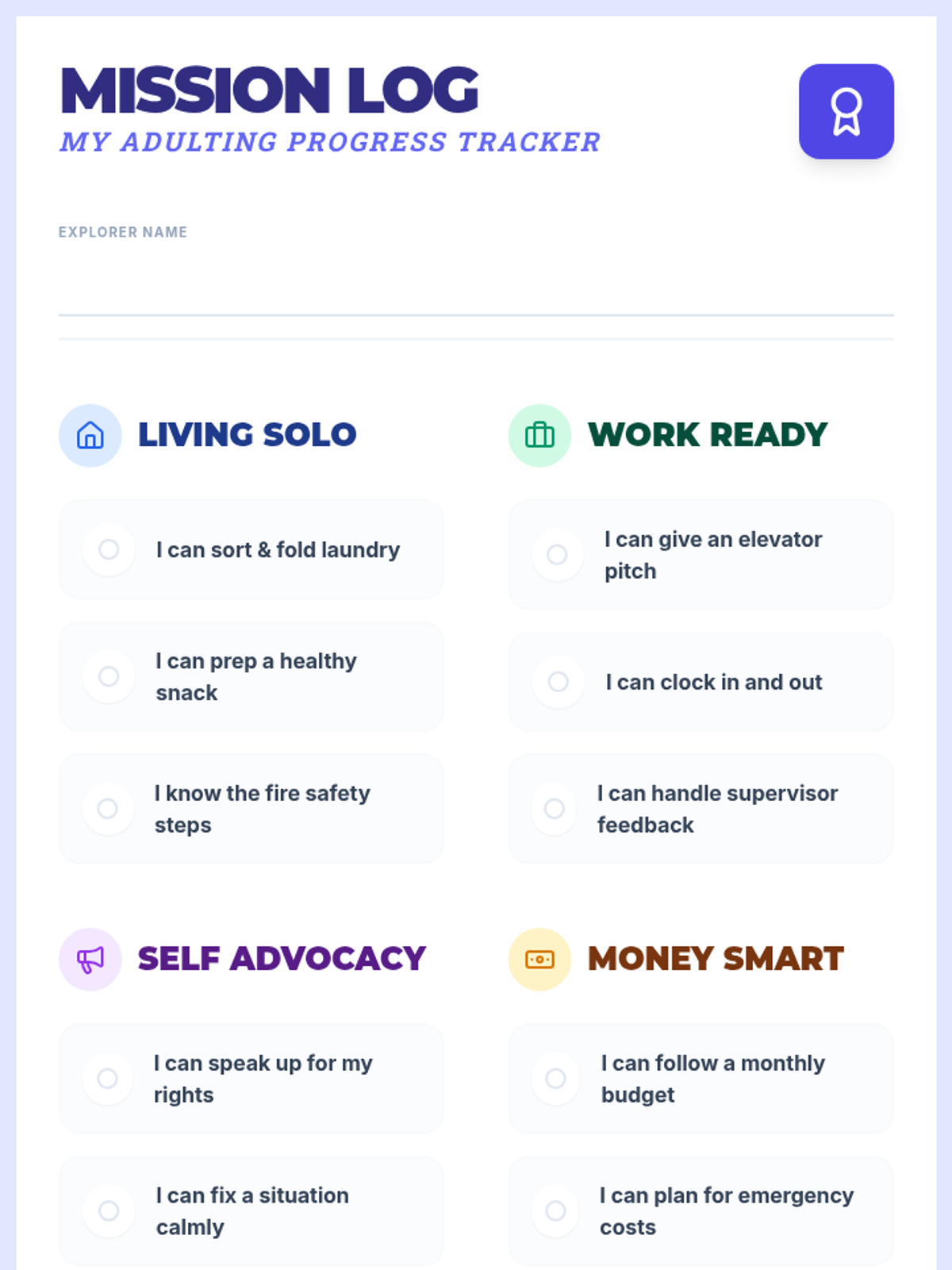
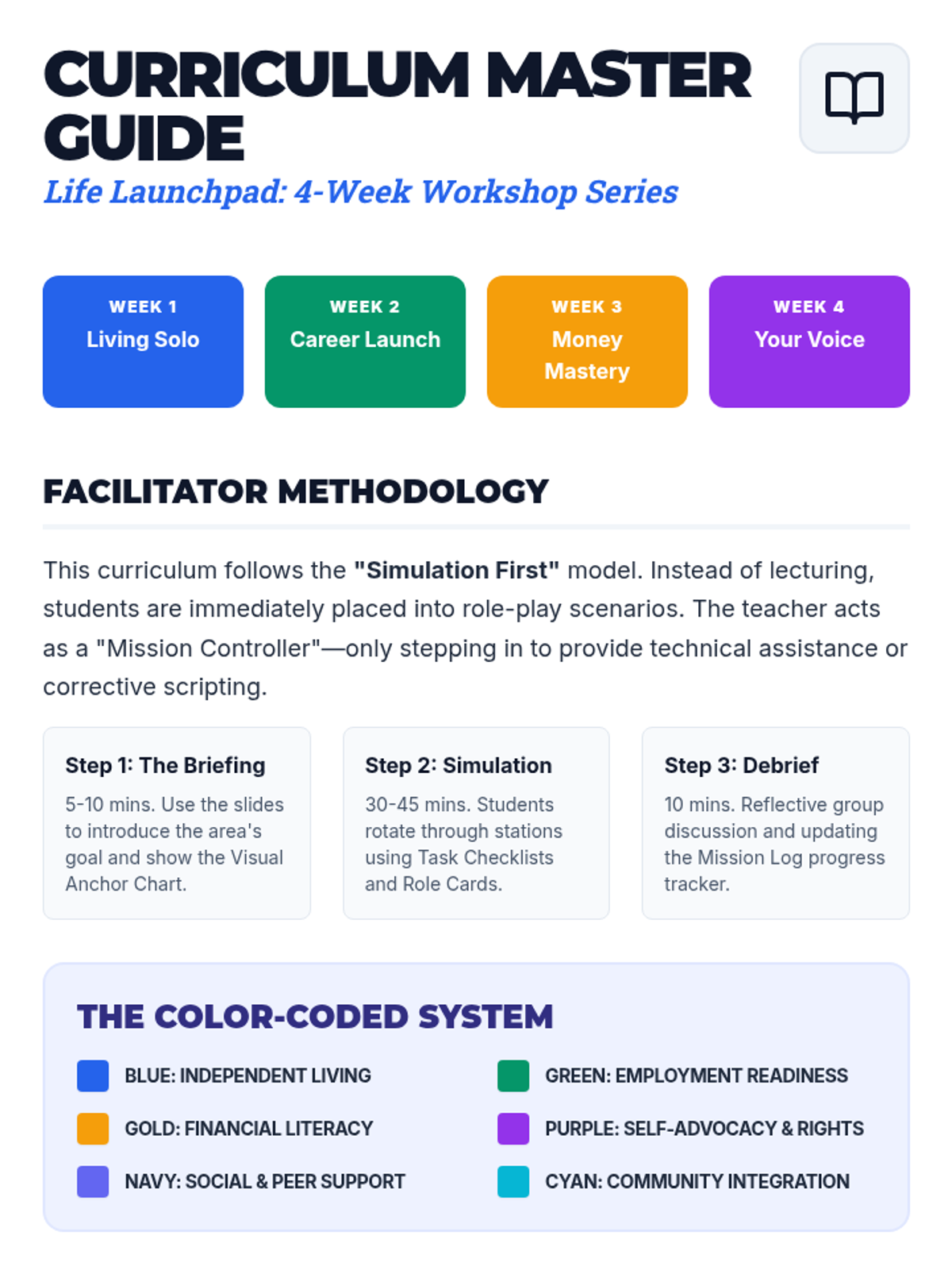
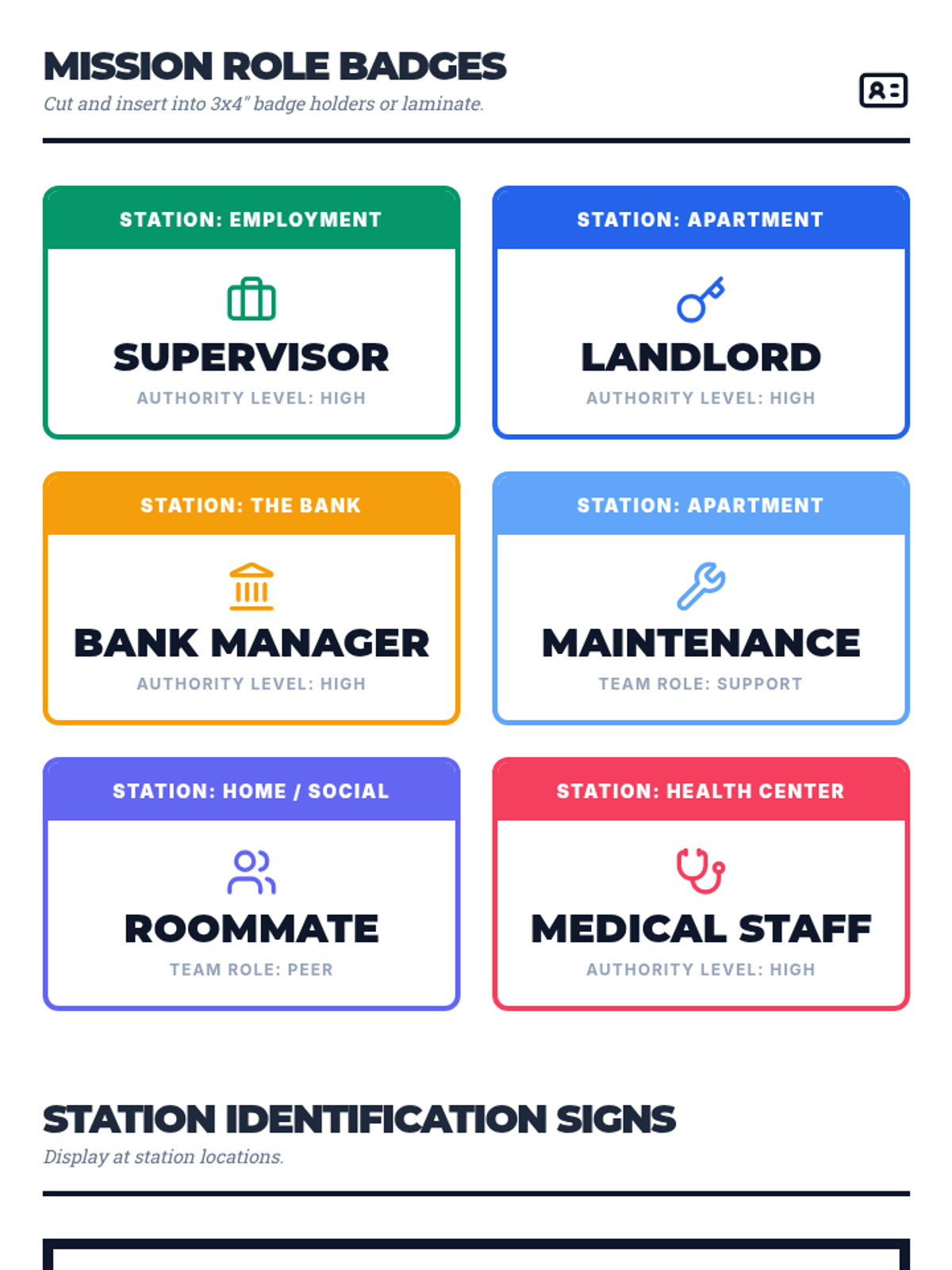
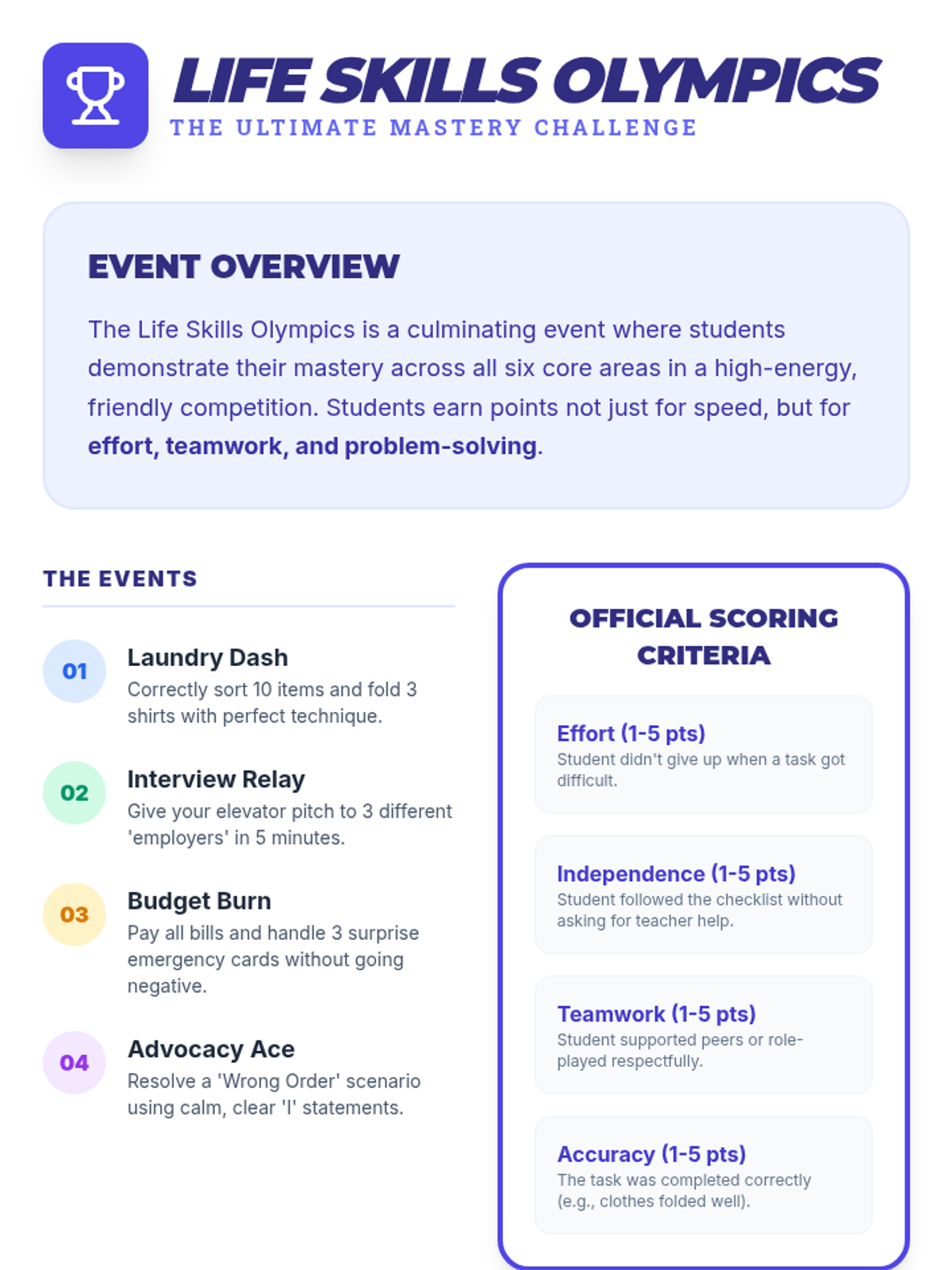
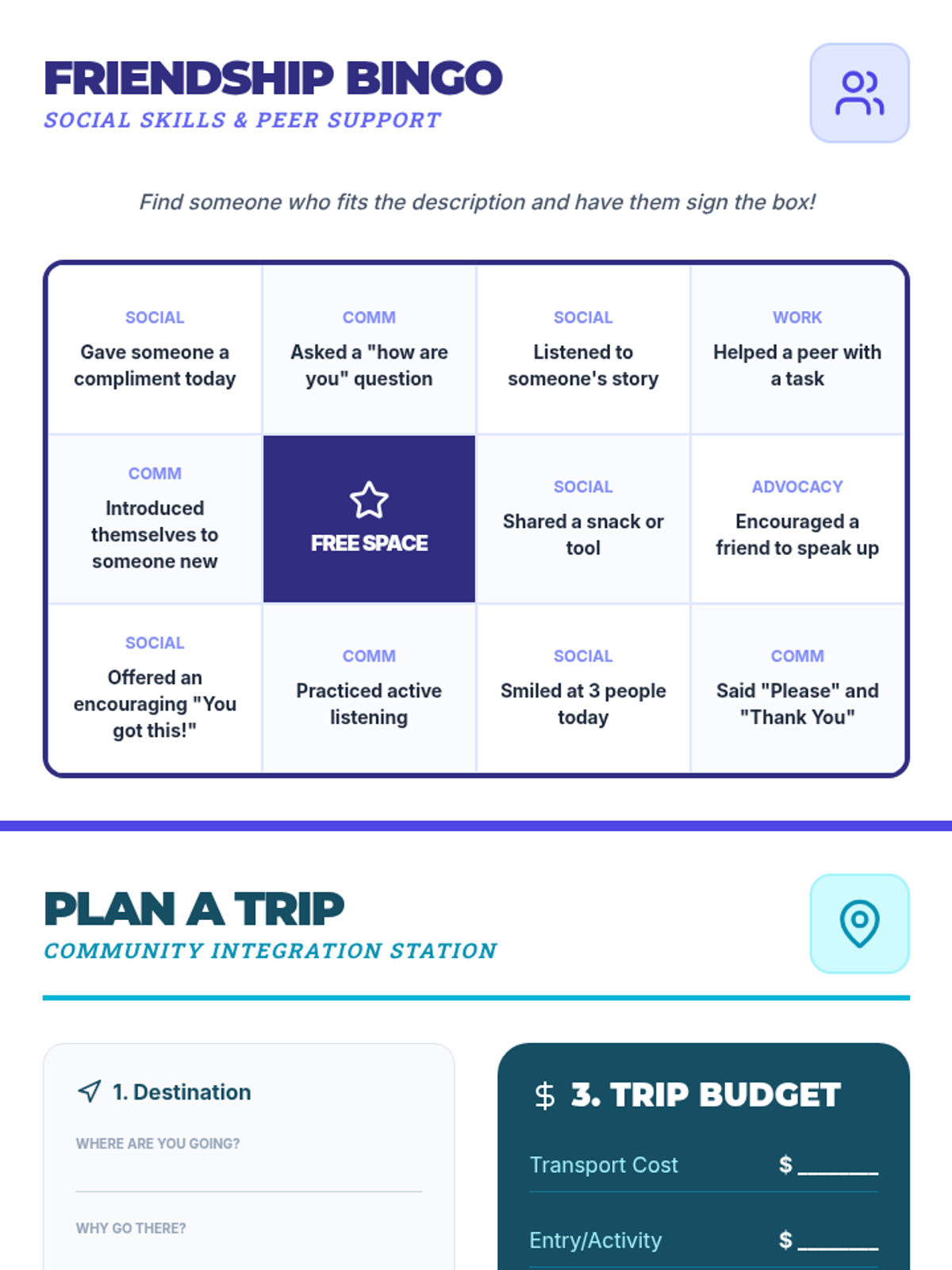
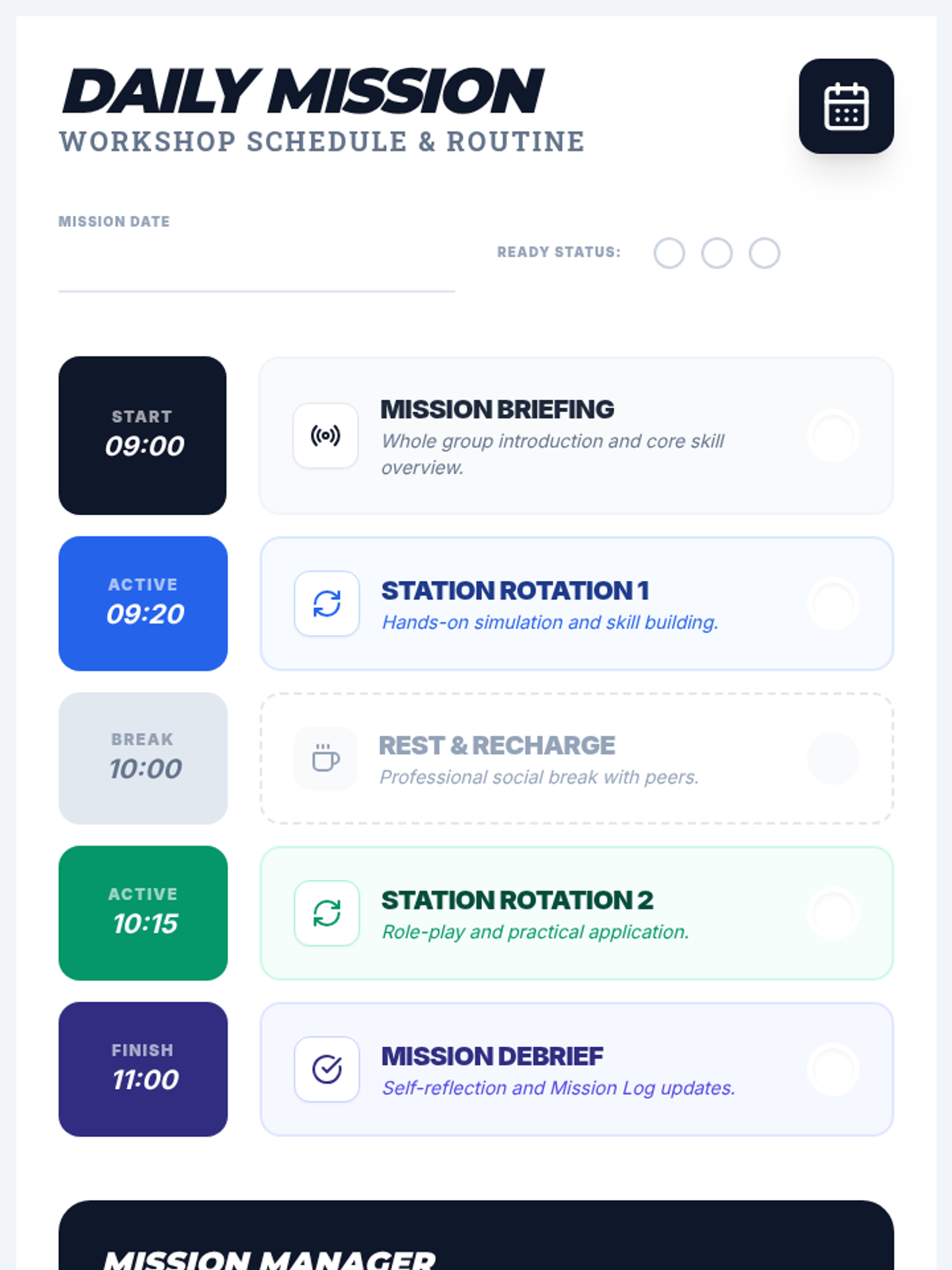
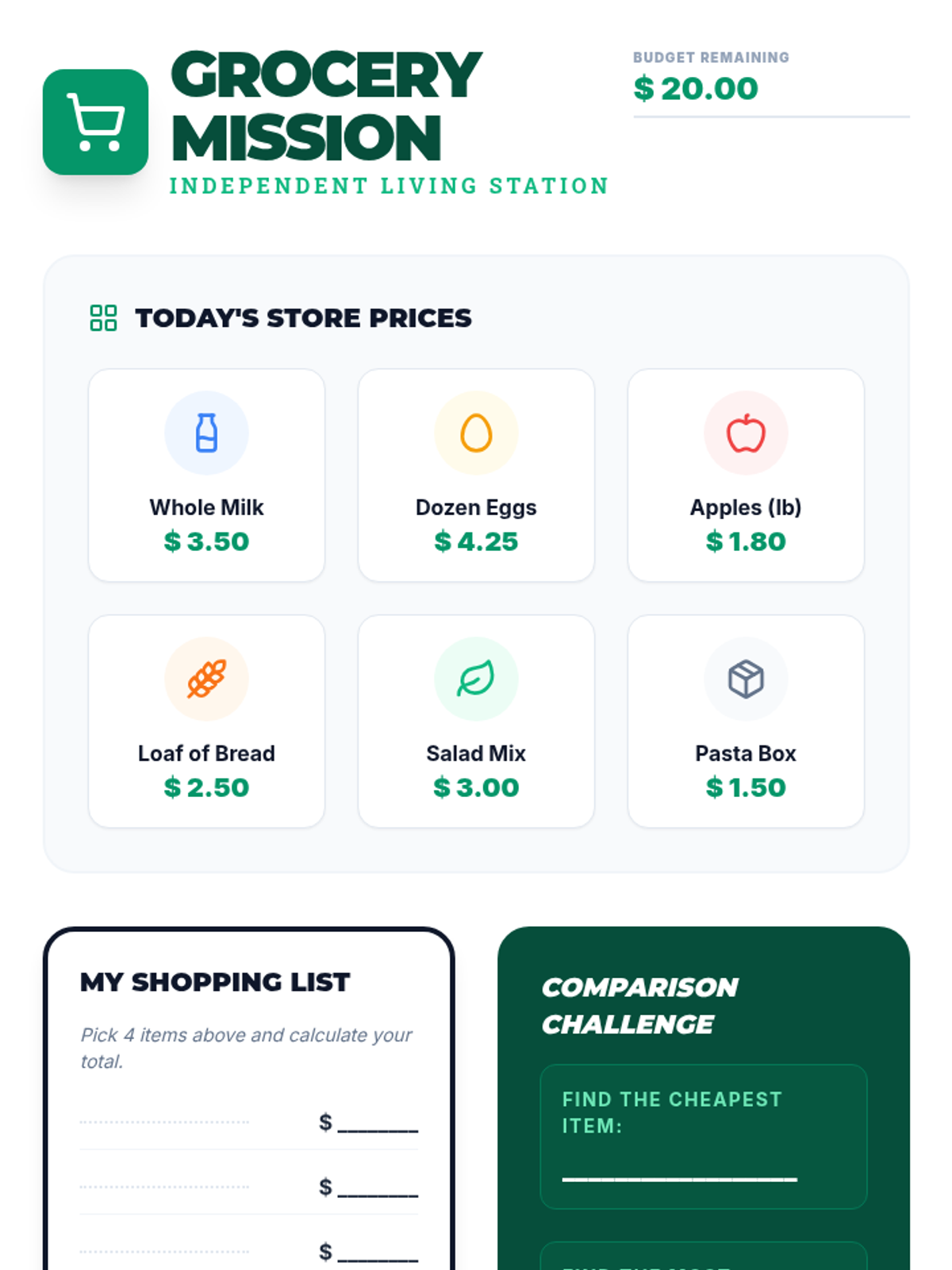
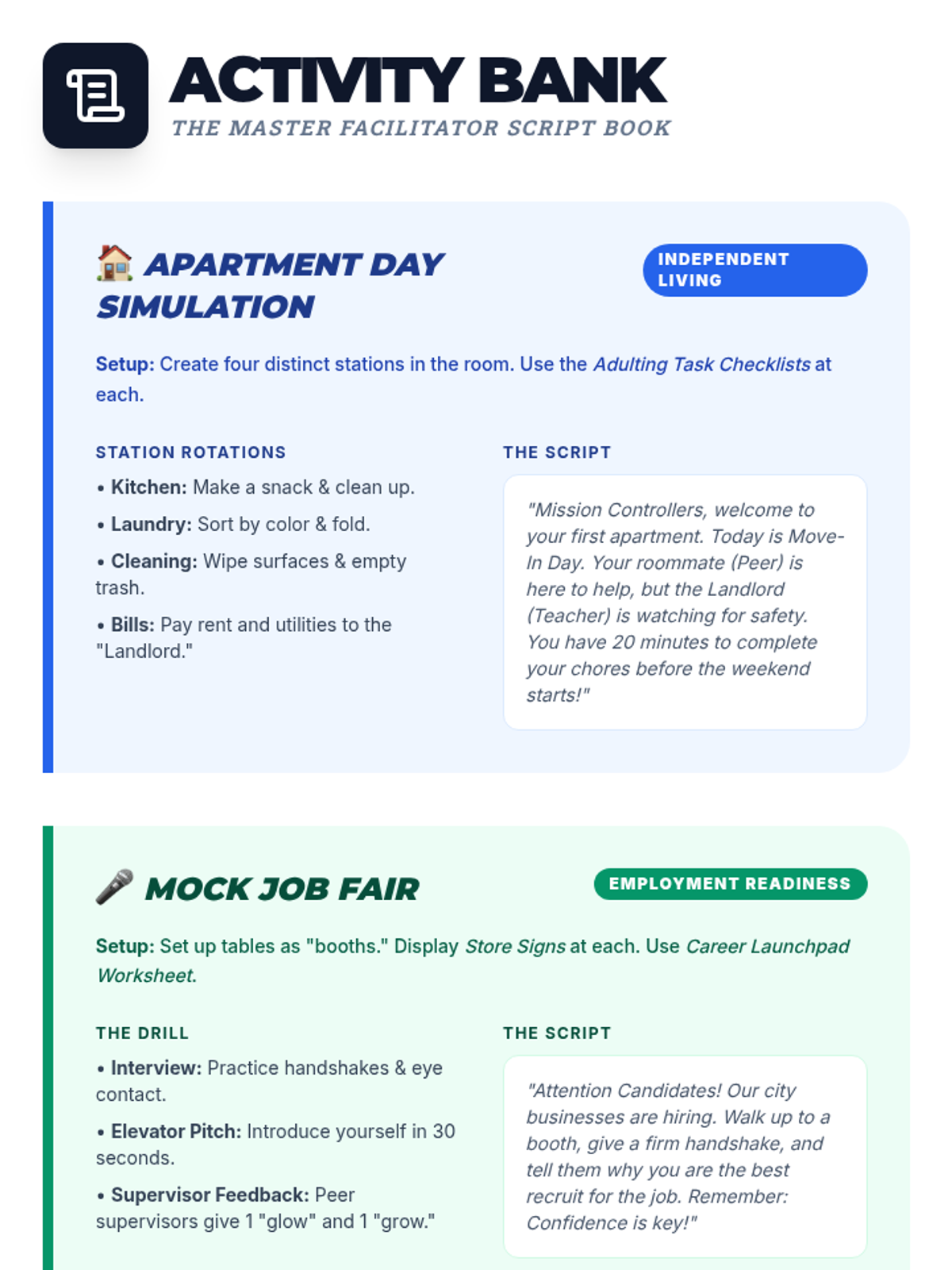
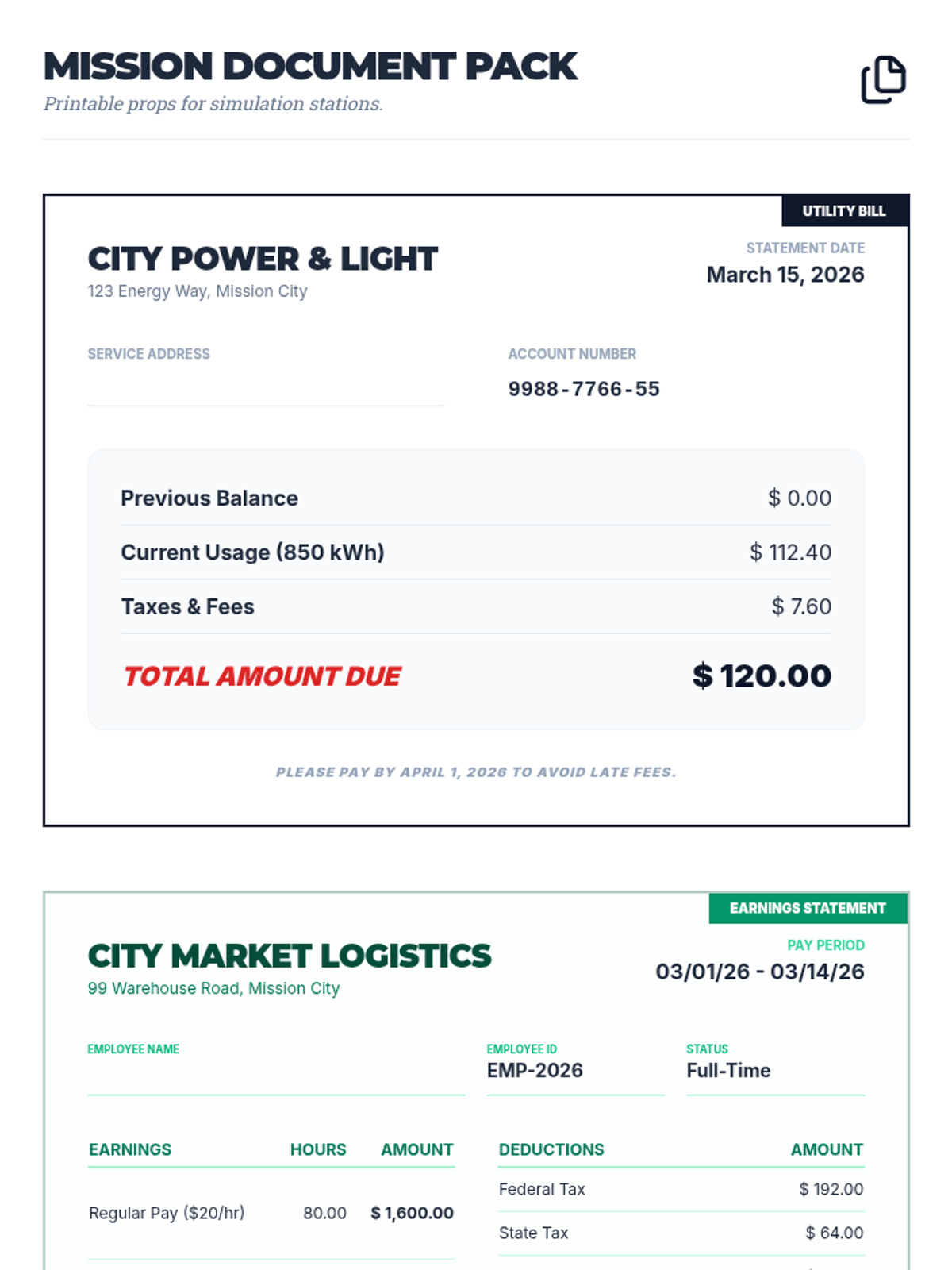
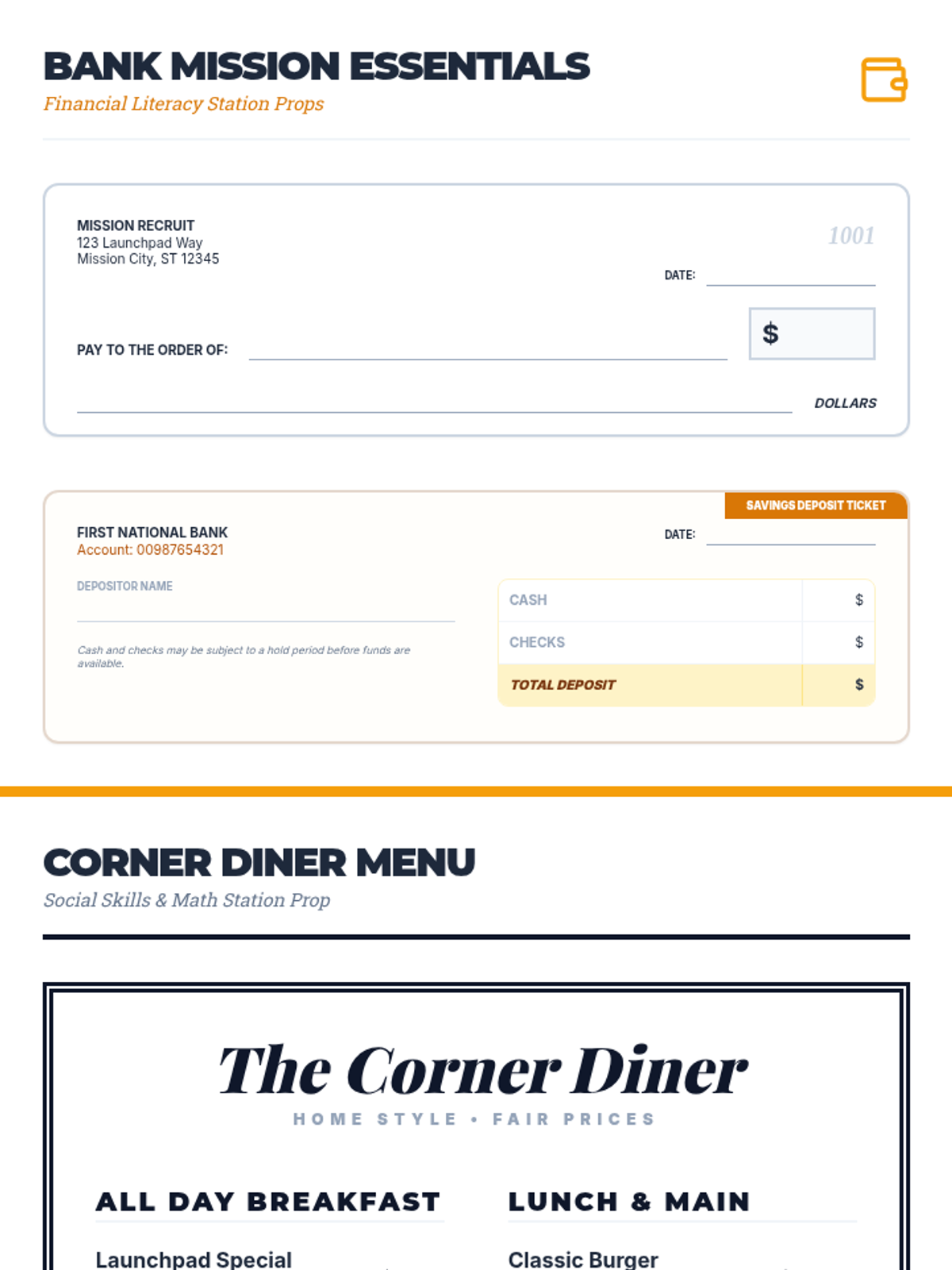
A comprehensive workshop focusing on essential adulting skills through immersive role-play, task simulations, and practical financial planning. This lesson covers Independent Living, Employment Readiness, Self-Advocacy, and Financial Literacy.
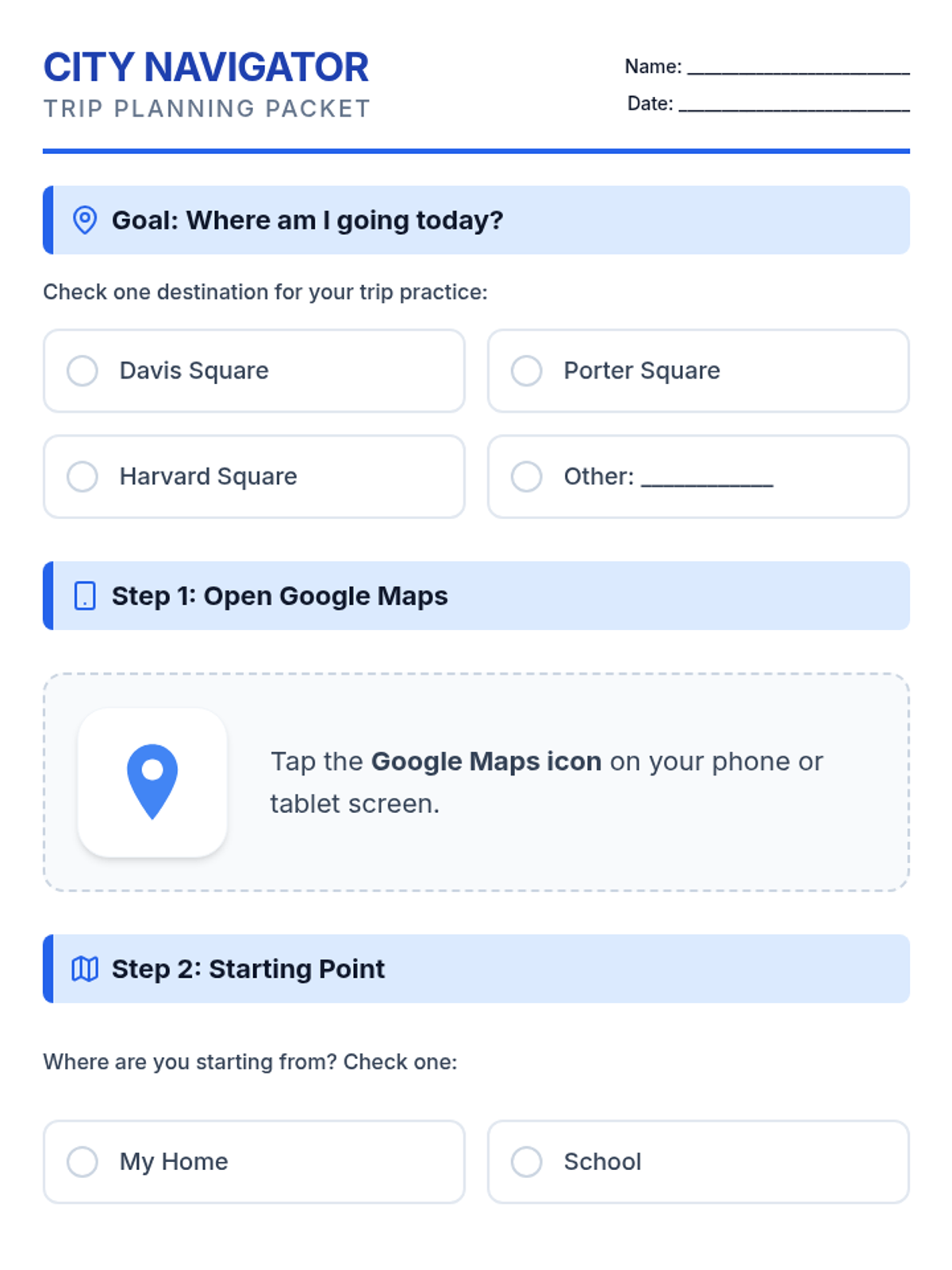
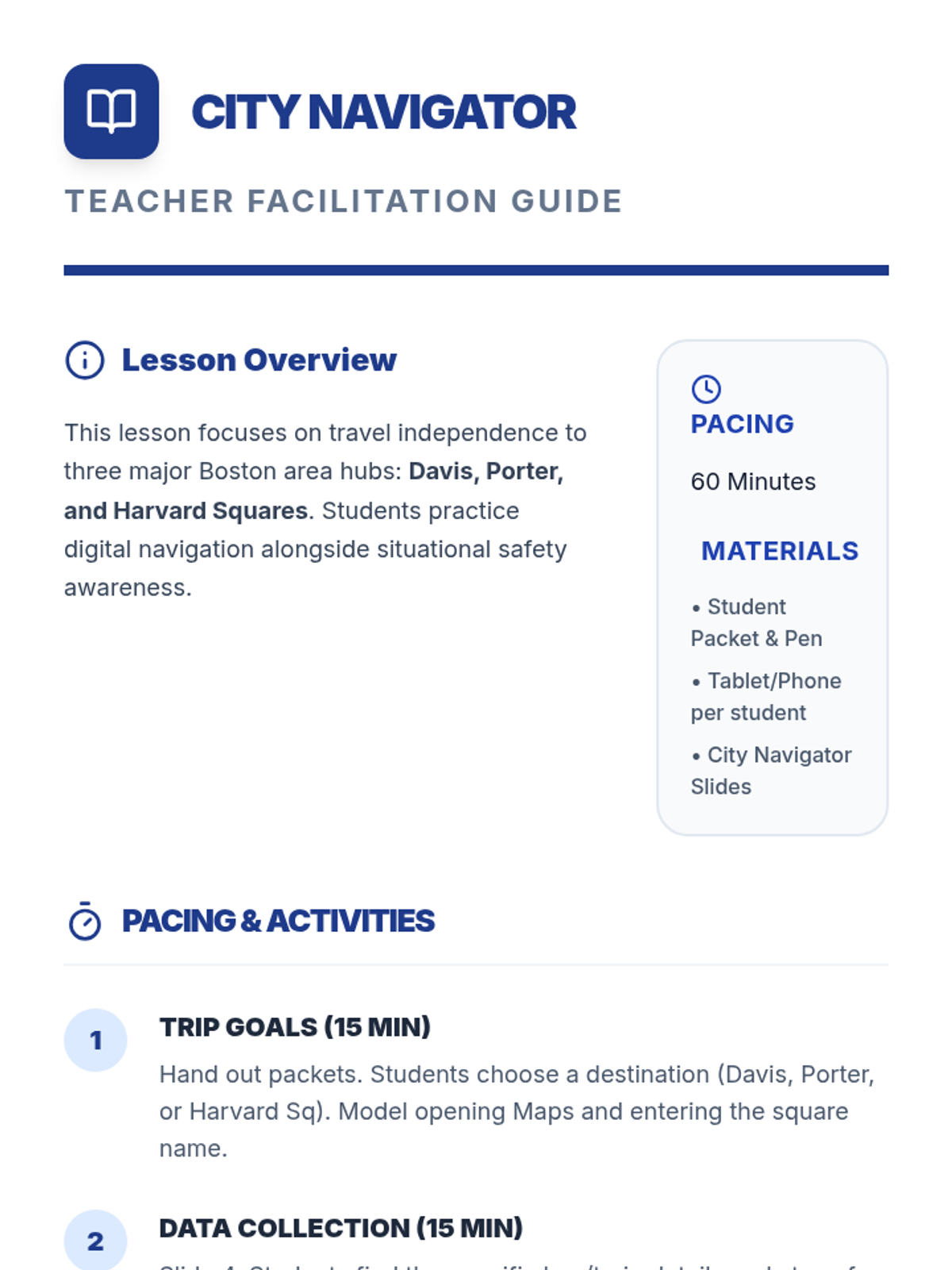
A functional travel training lesson focused on using Google Maps to plan a trip and practicing safety and etiquette on the MBTA. Students will navigate a step-by-step planning process and evaluate safe vs. unsafe behaviors in transit environments.
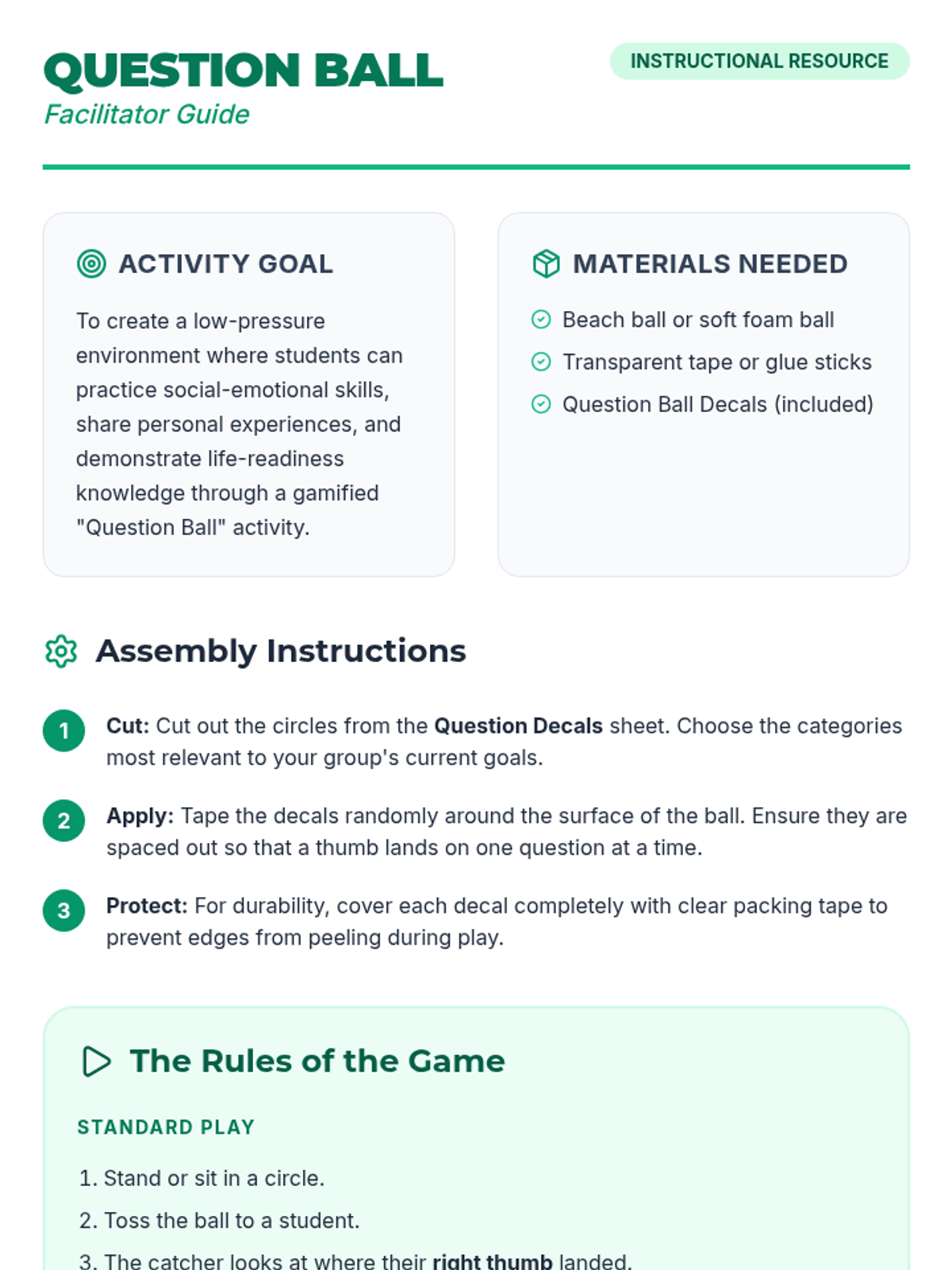
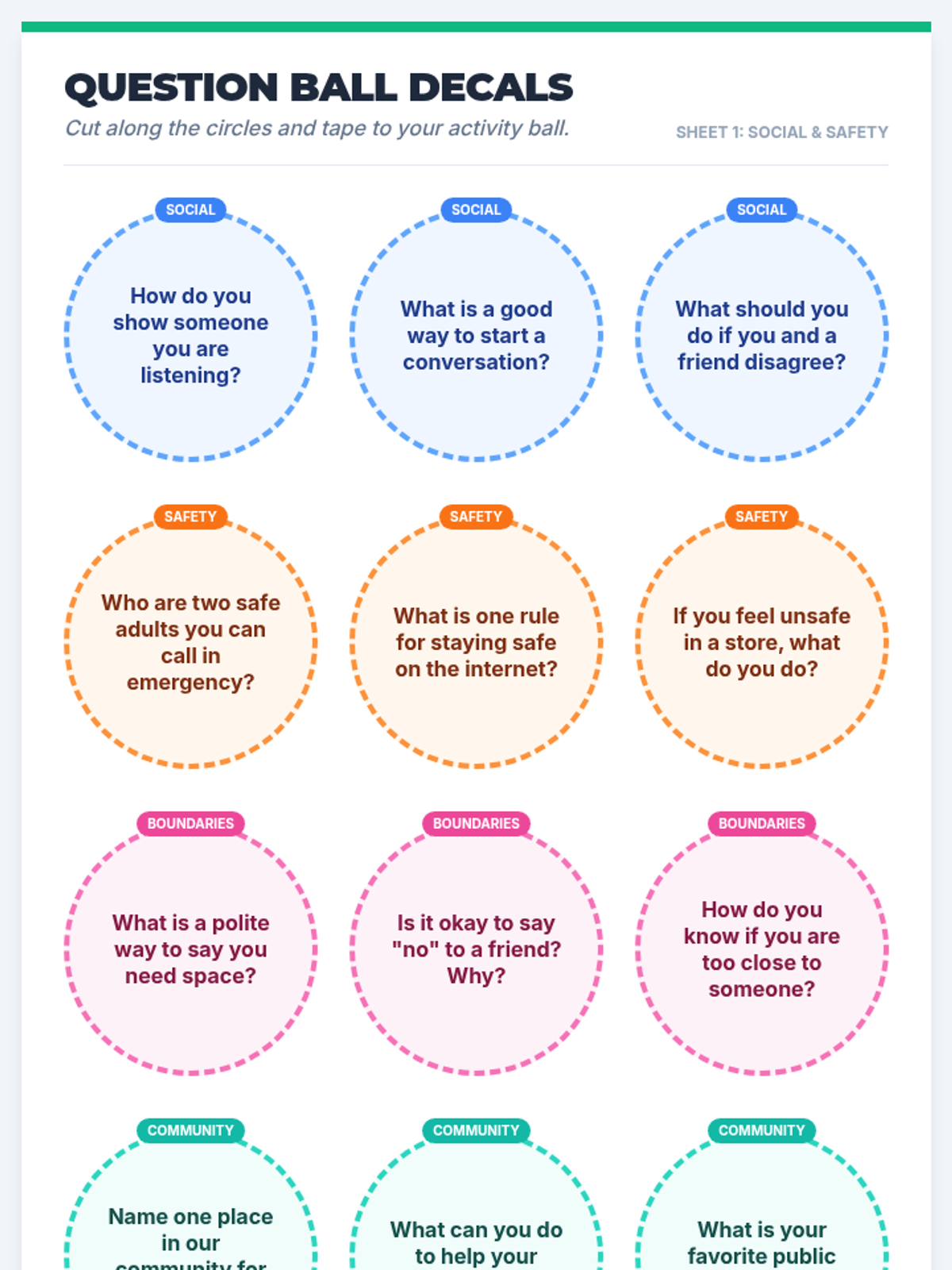
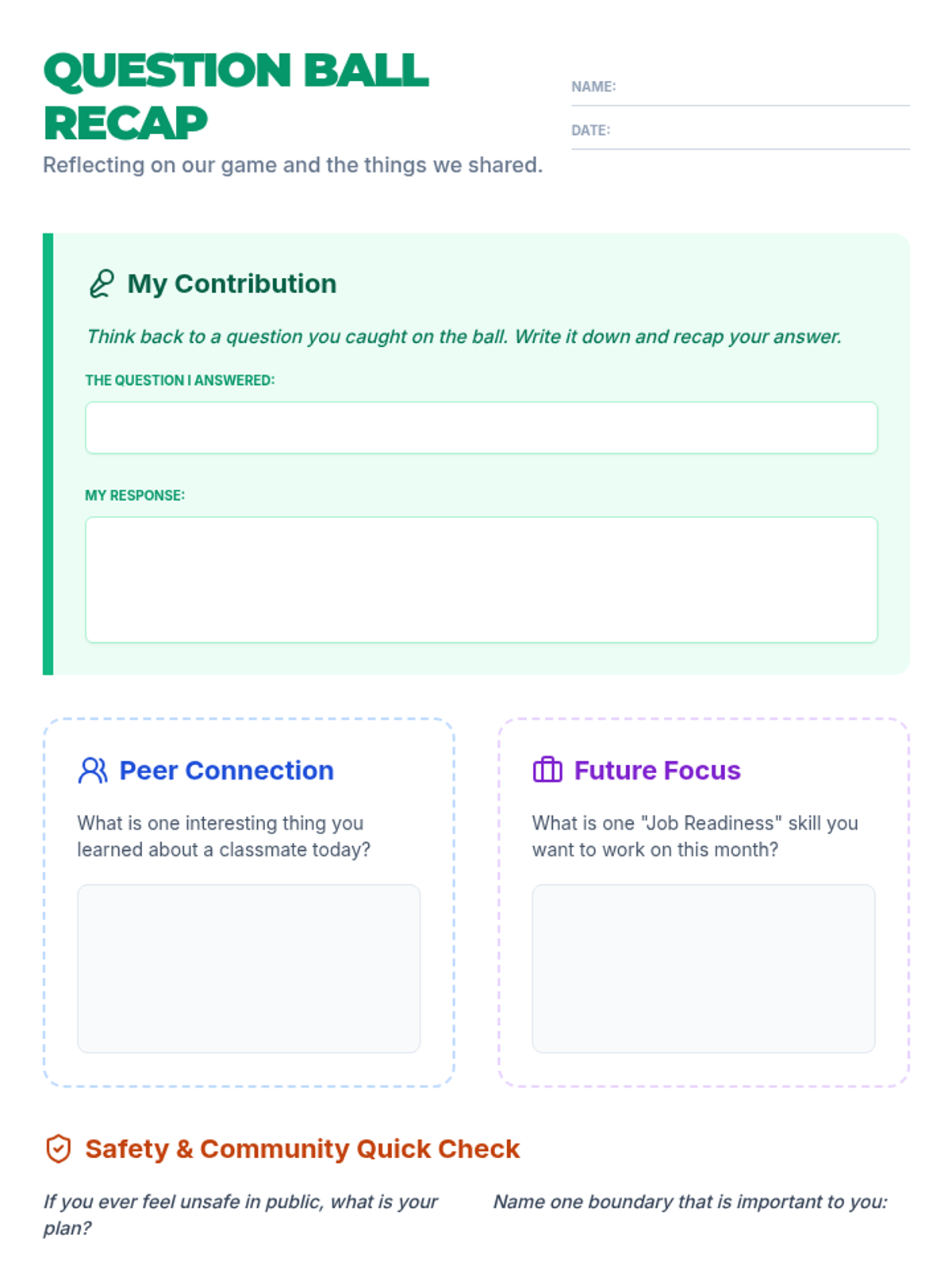
A dynamic, movement-based activity designed to build social skills, safety awareness, and job readiness through a collaborative "Question Ball" game. Students engage in meaningful dialogue while practicing physical coordination and turn-taking.
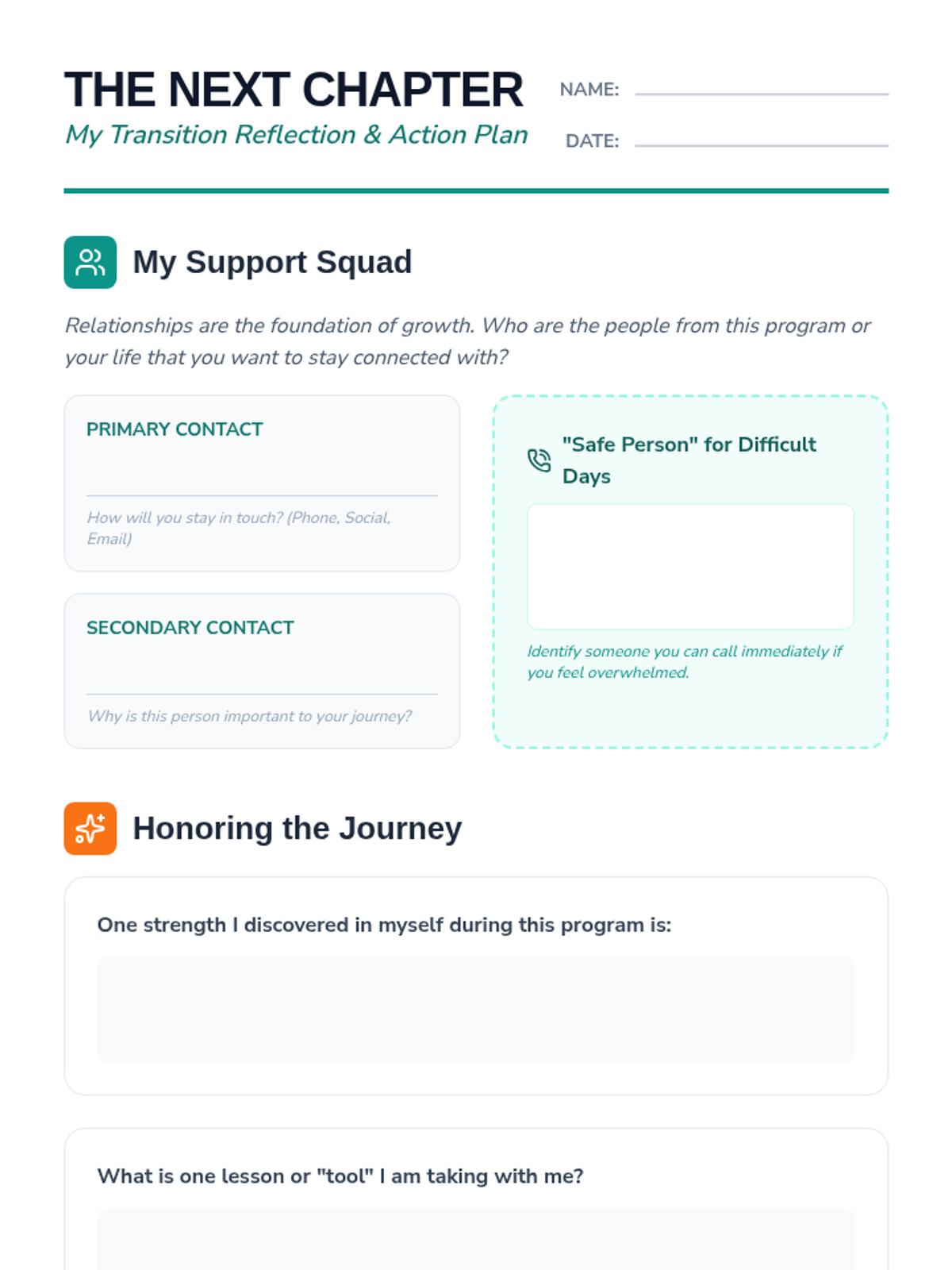
A supportive transition guide for students leaving a therapeutic program, focusing on connection, reflection, and future planning.
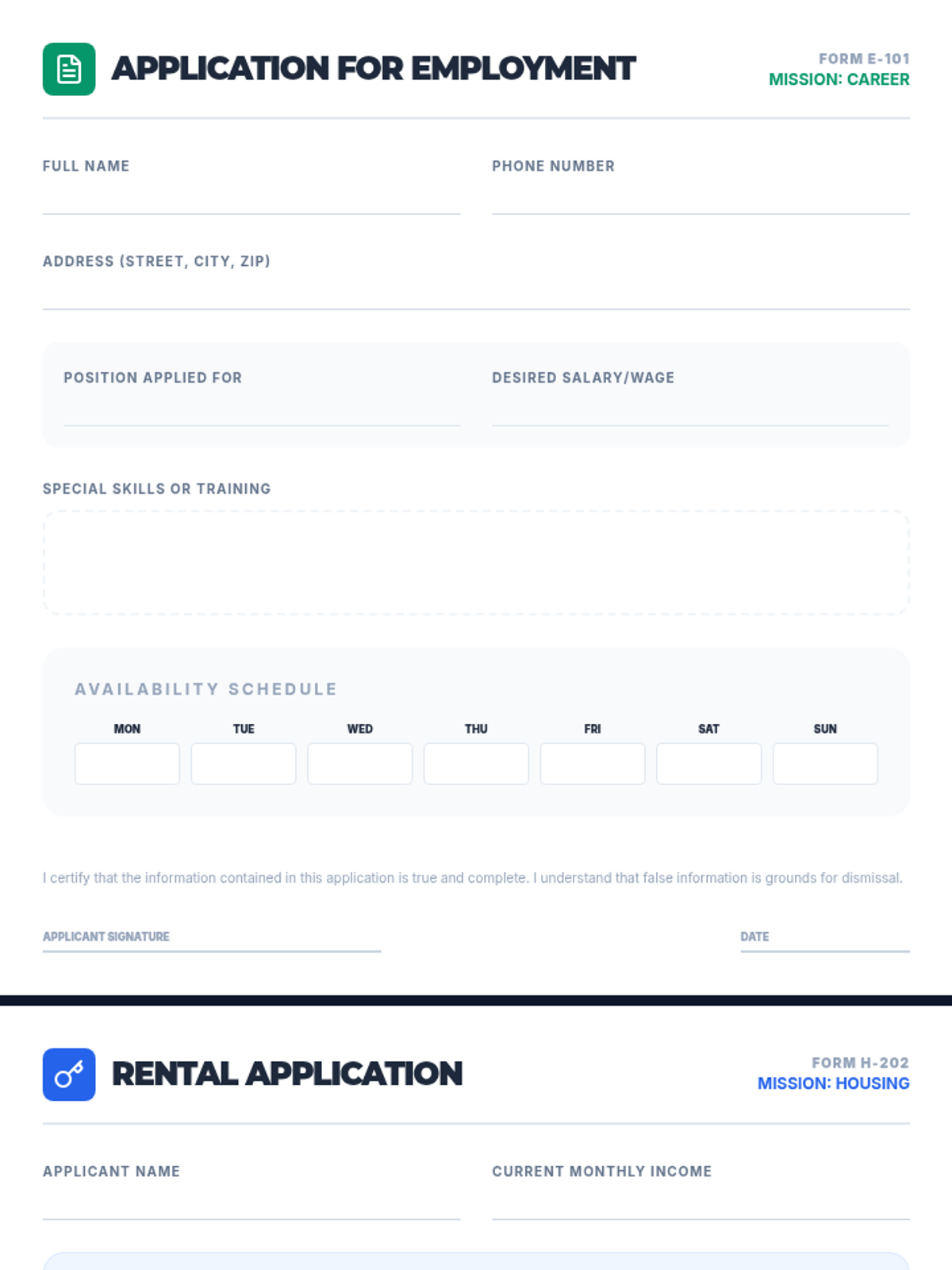
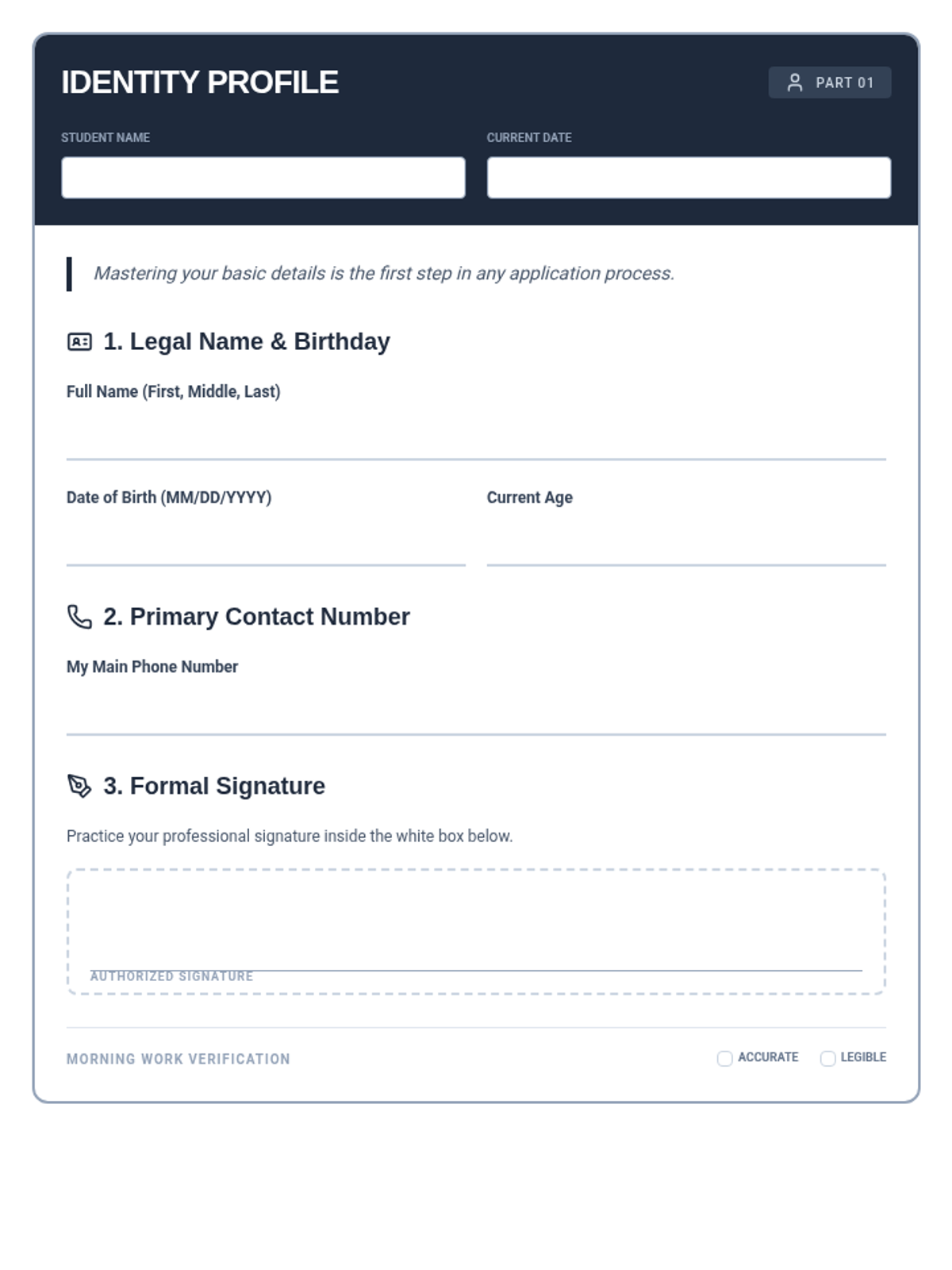
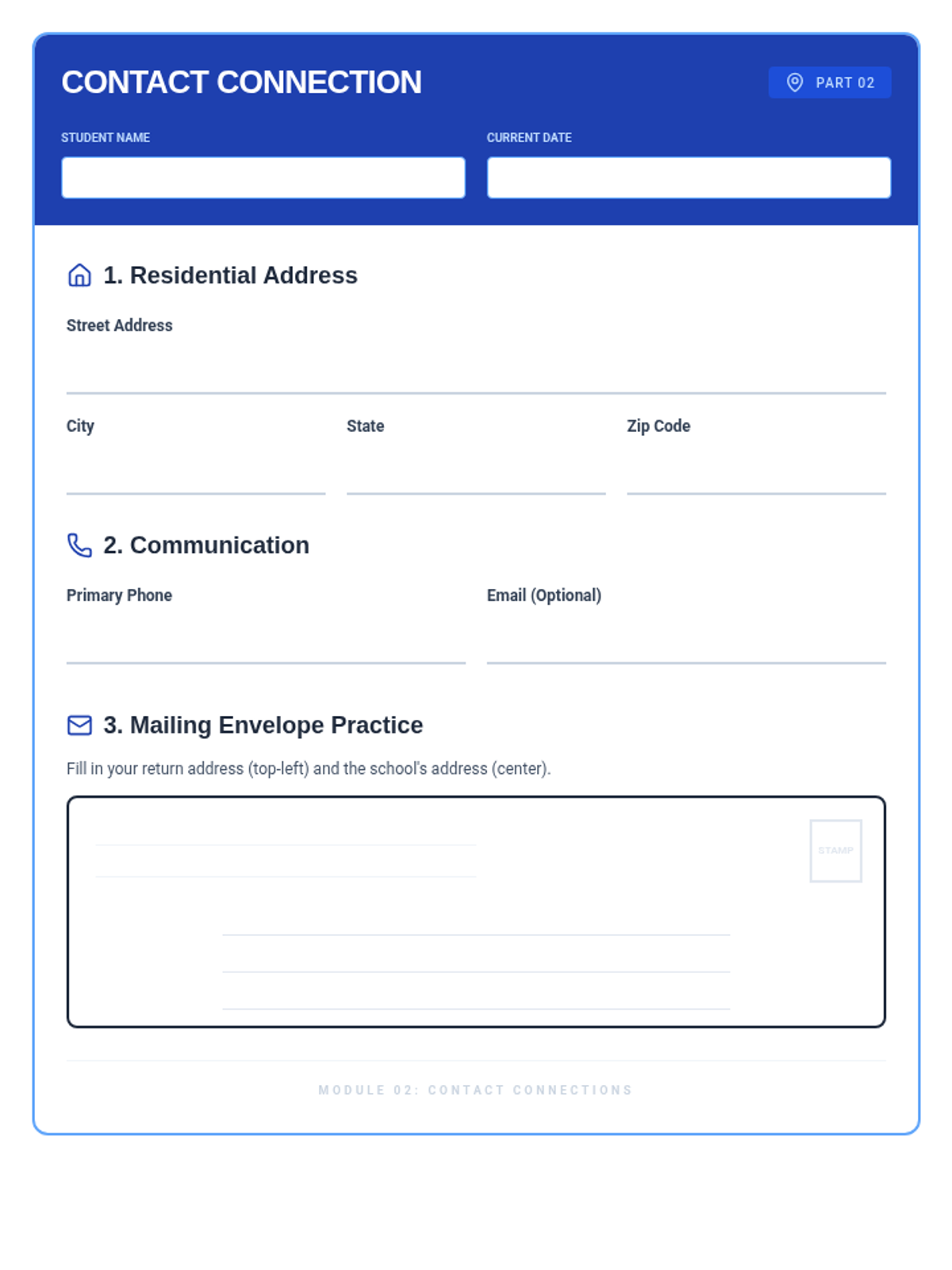
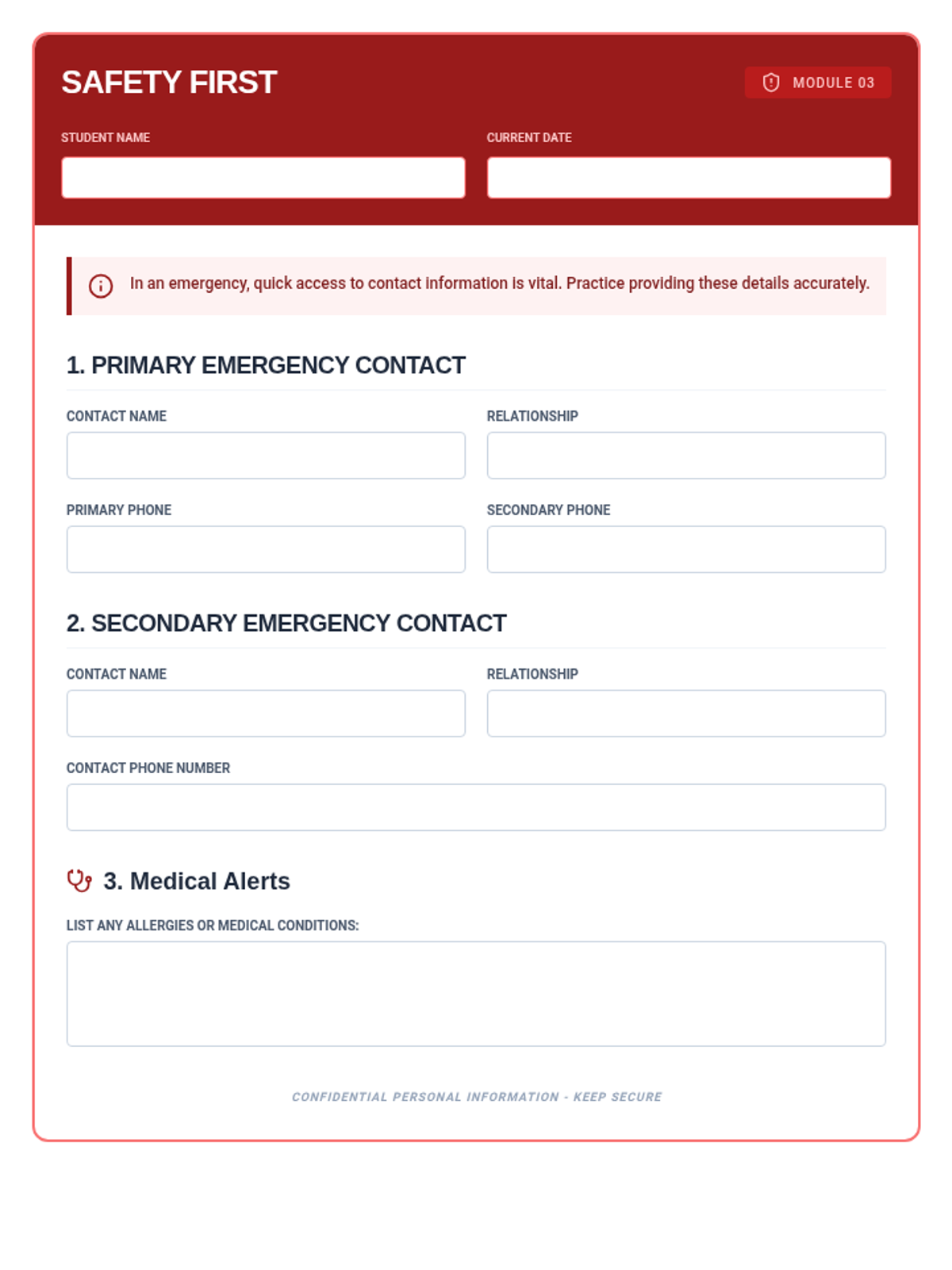
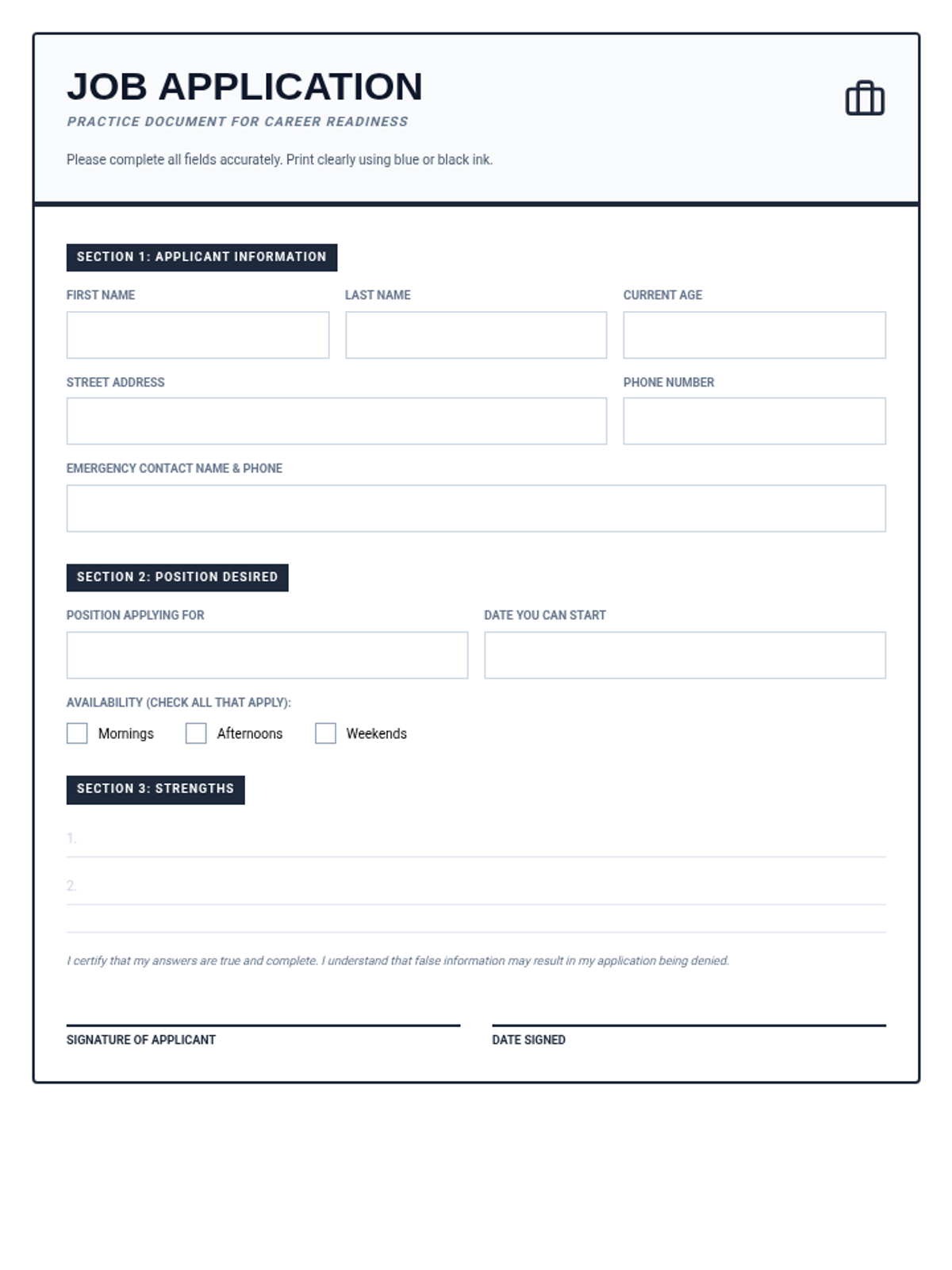
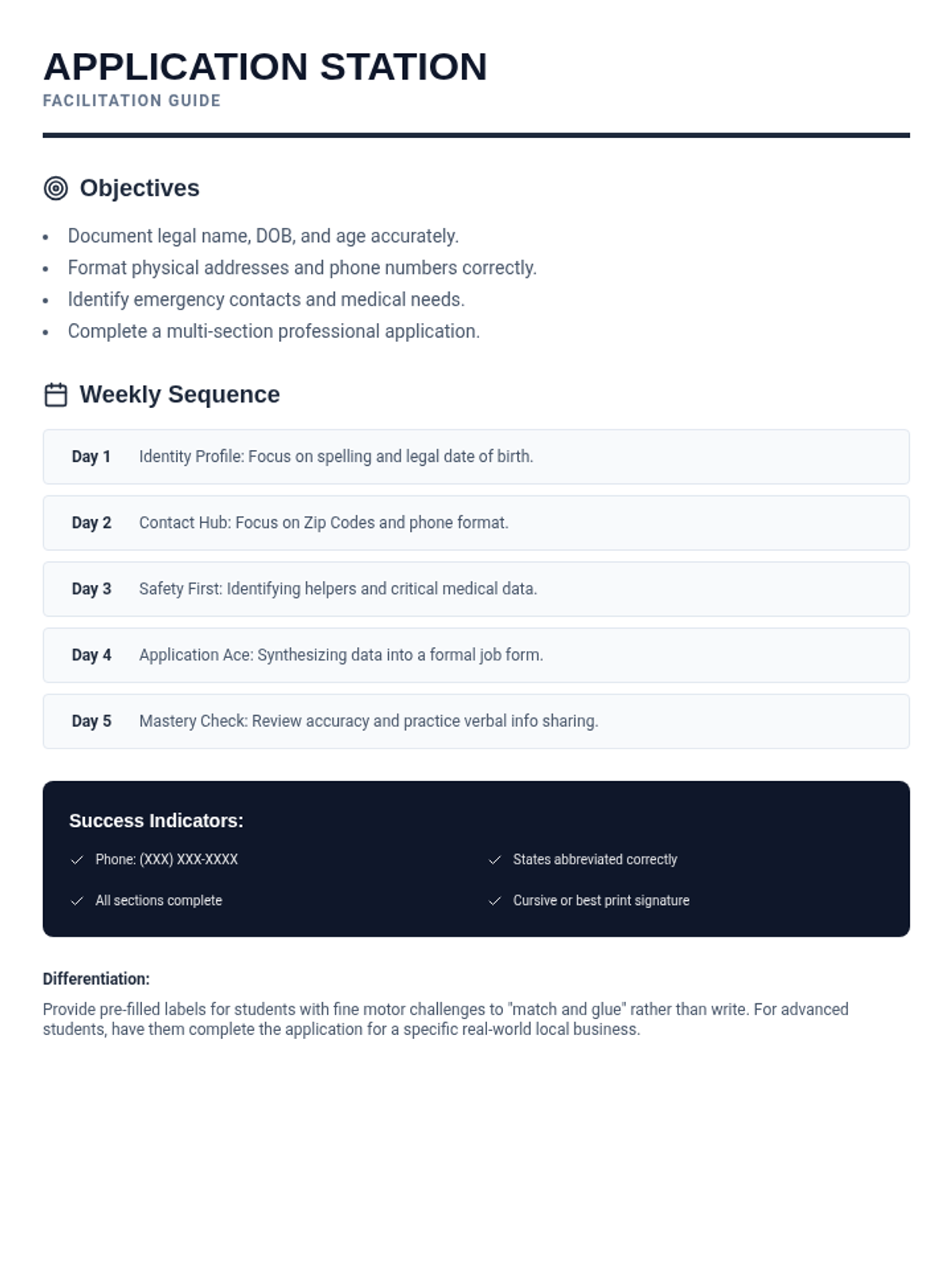
A series of morning work activities focused on mastering personal information and completing professional applications.
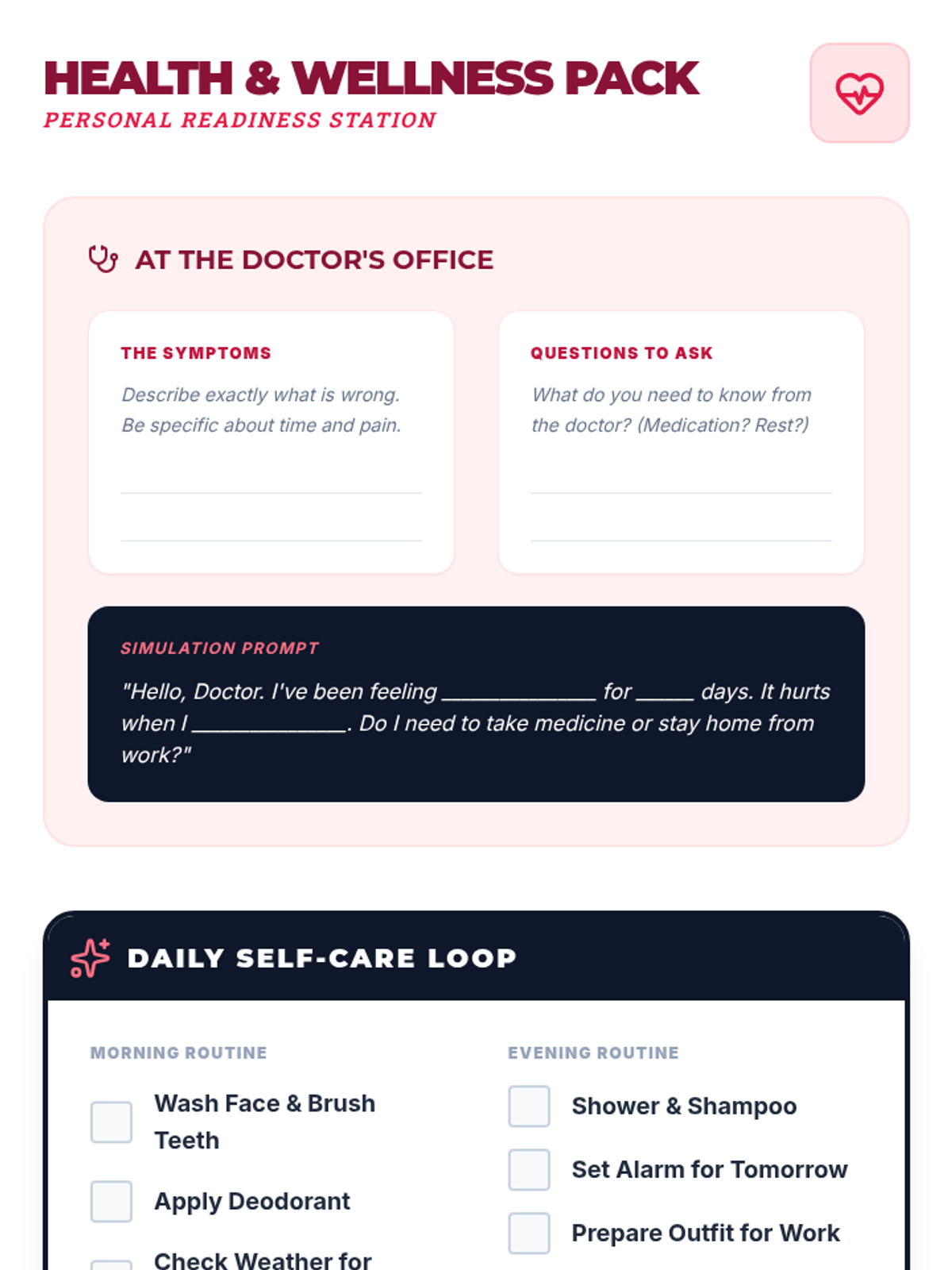
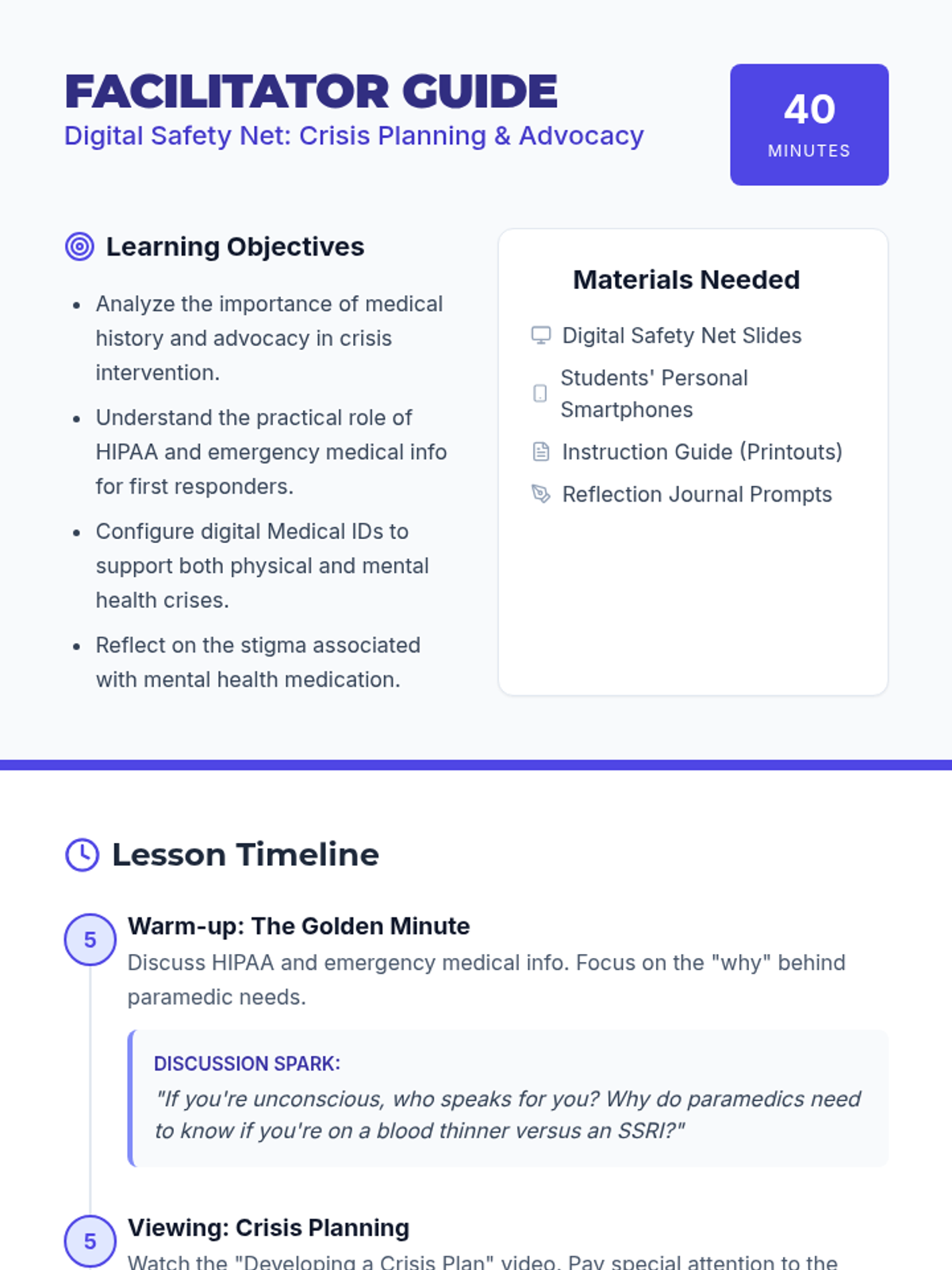
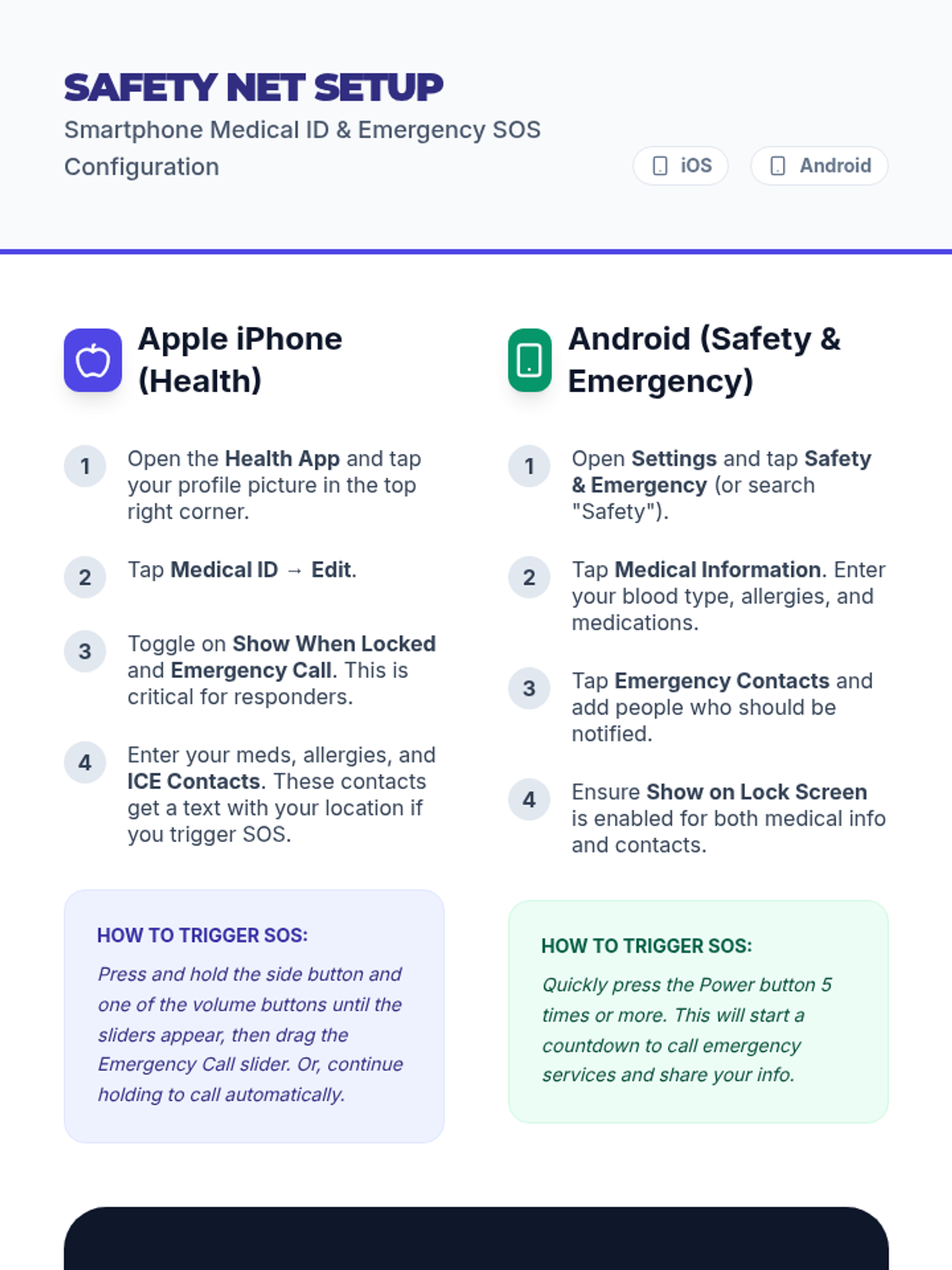
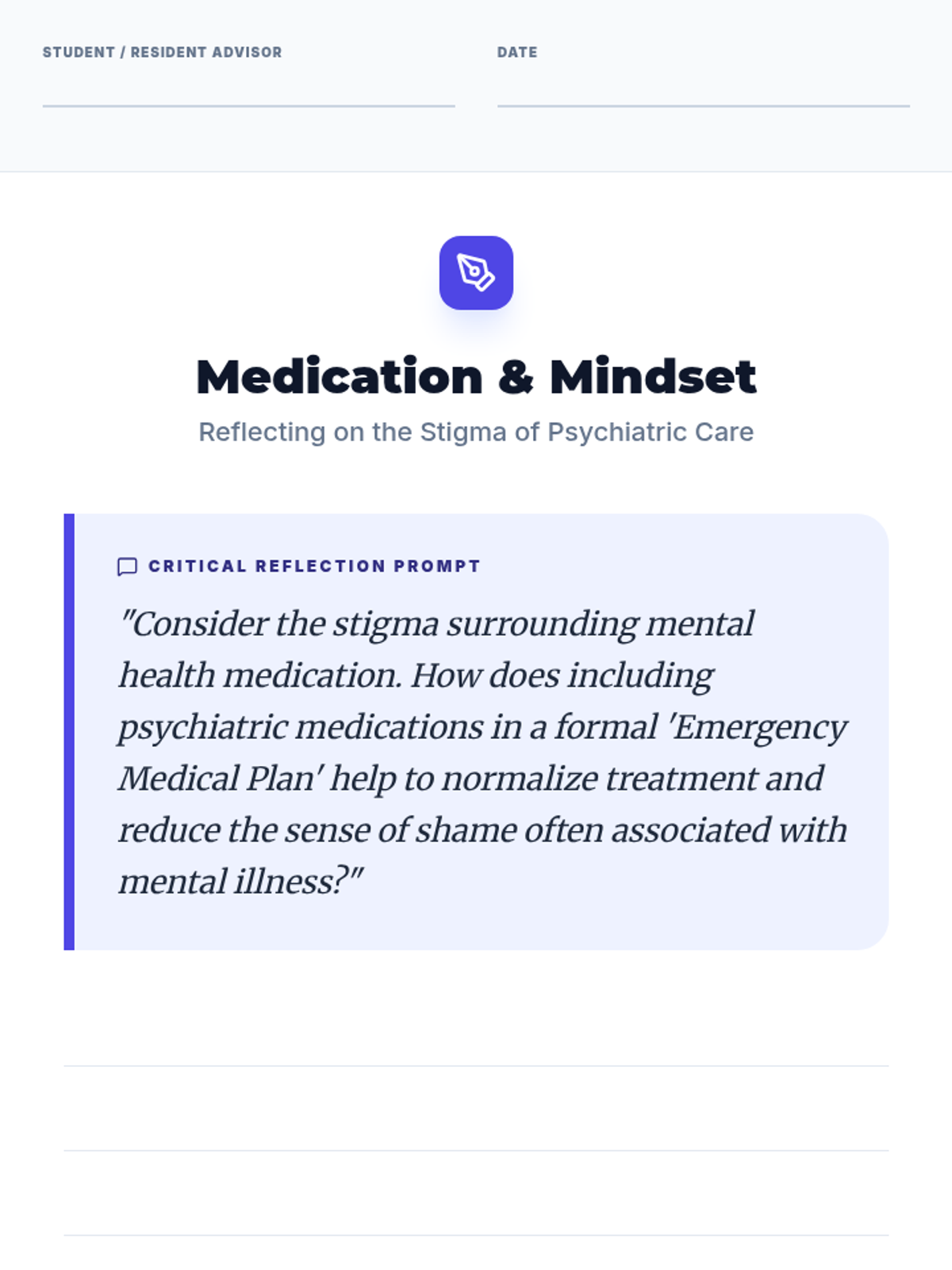
A lesson for Resident Advisors and undergraduate students focused on the practical application of medical advocacy through digital tools. Students learn how to set up Medical IDs on smartphones and reflect on the normalization of mental health medication in crisis planning.
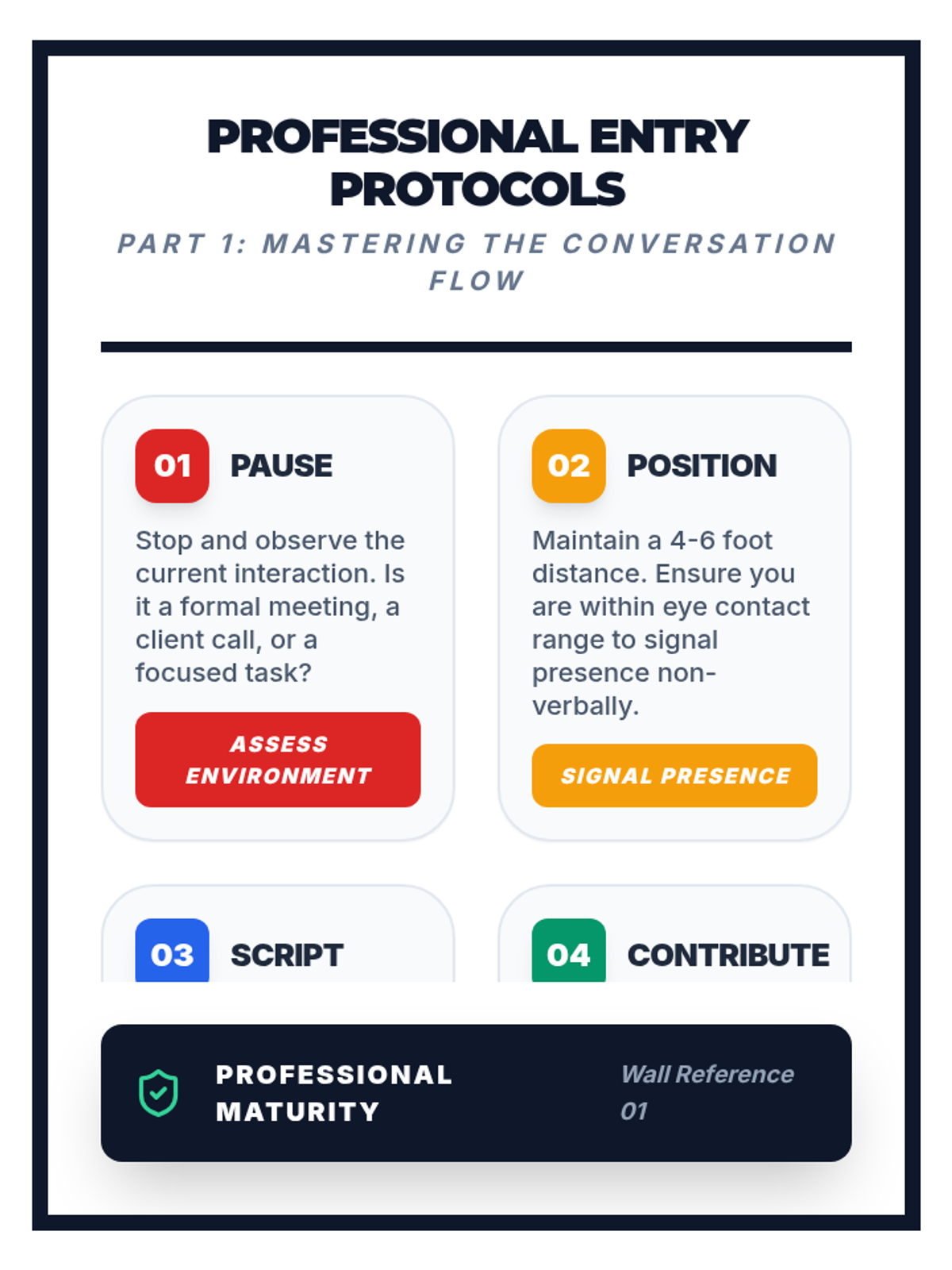
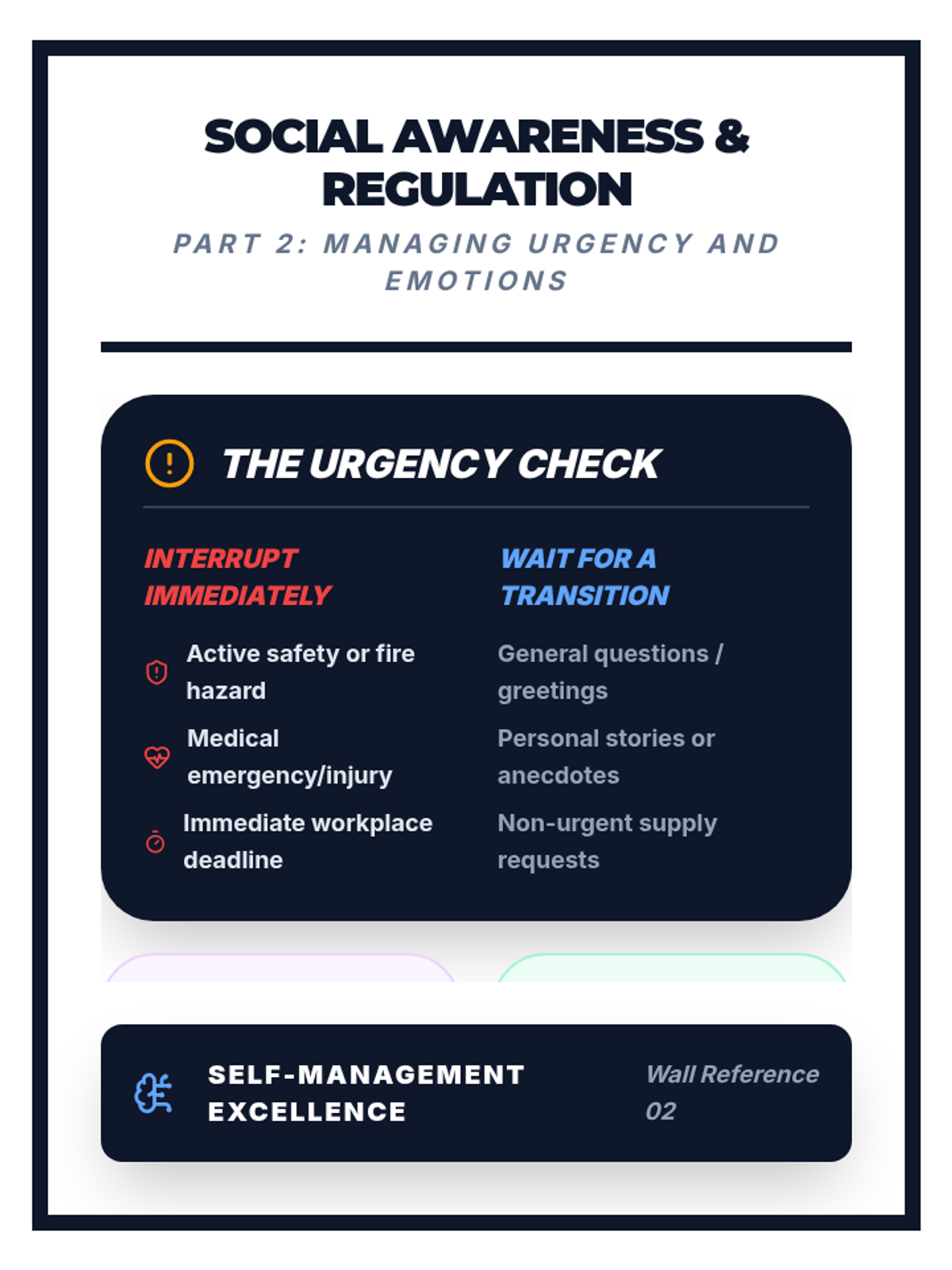
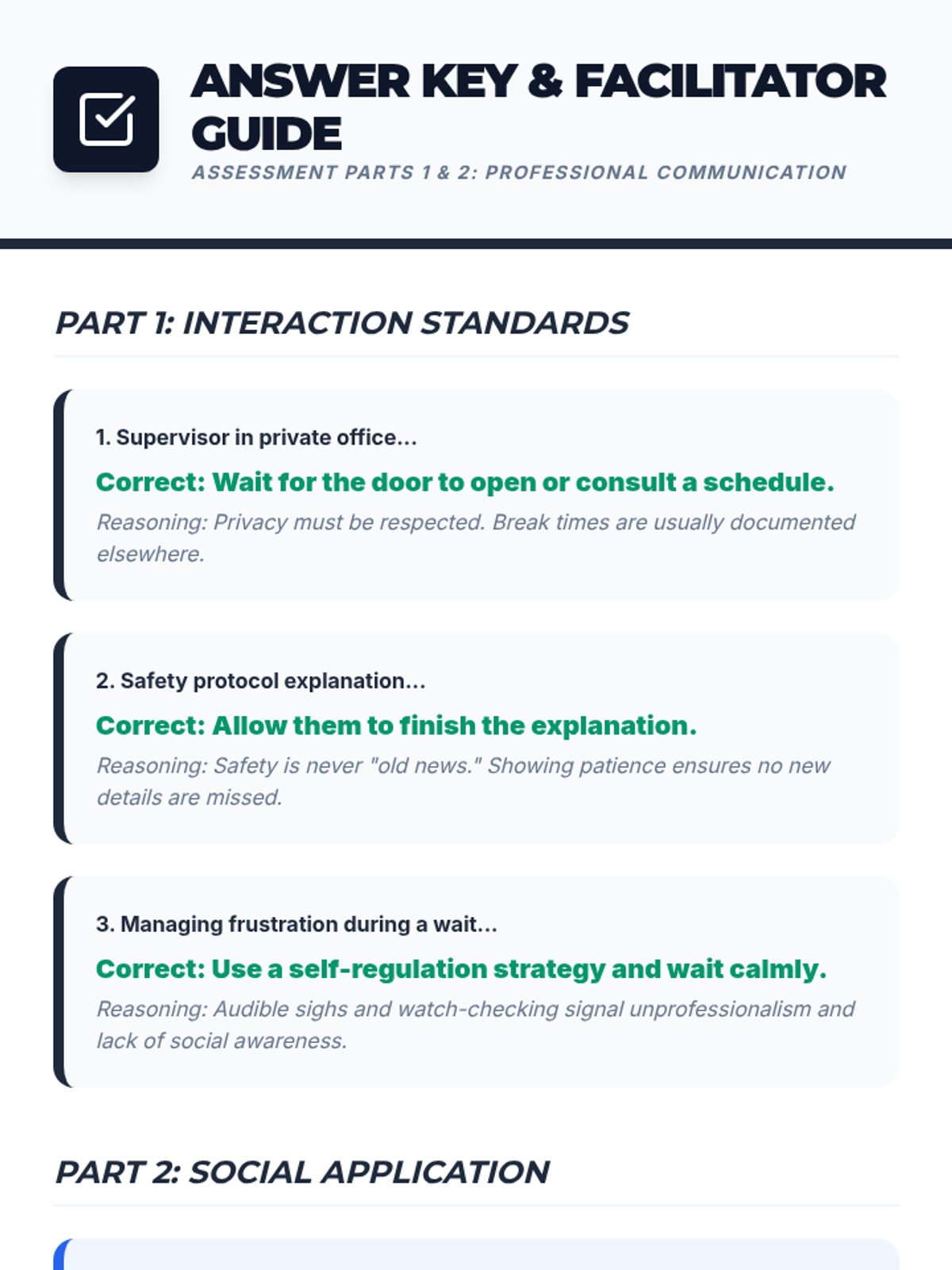
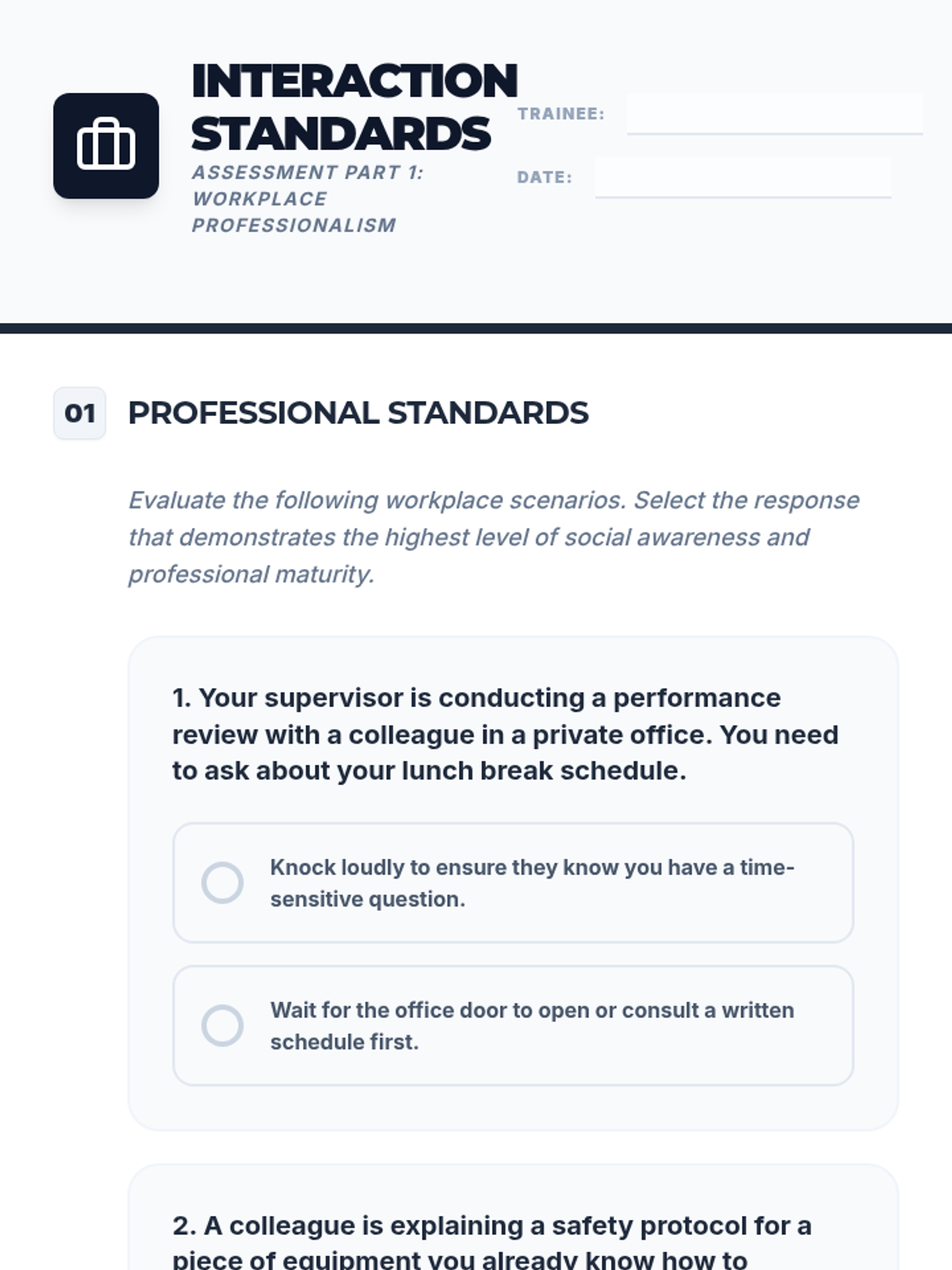
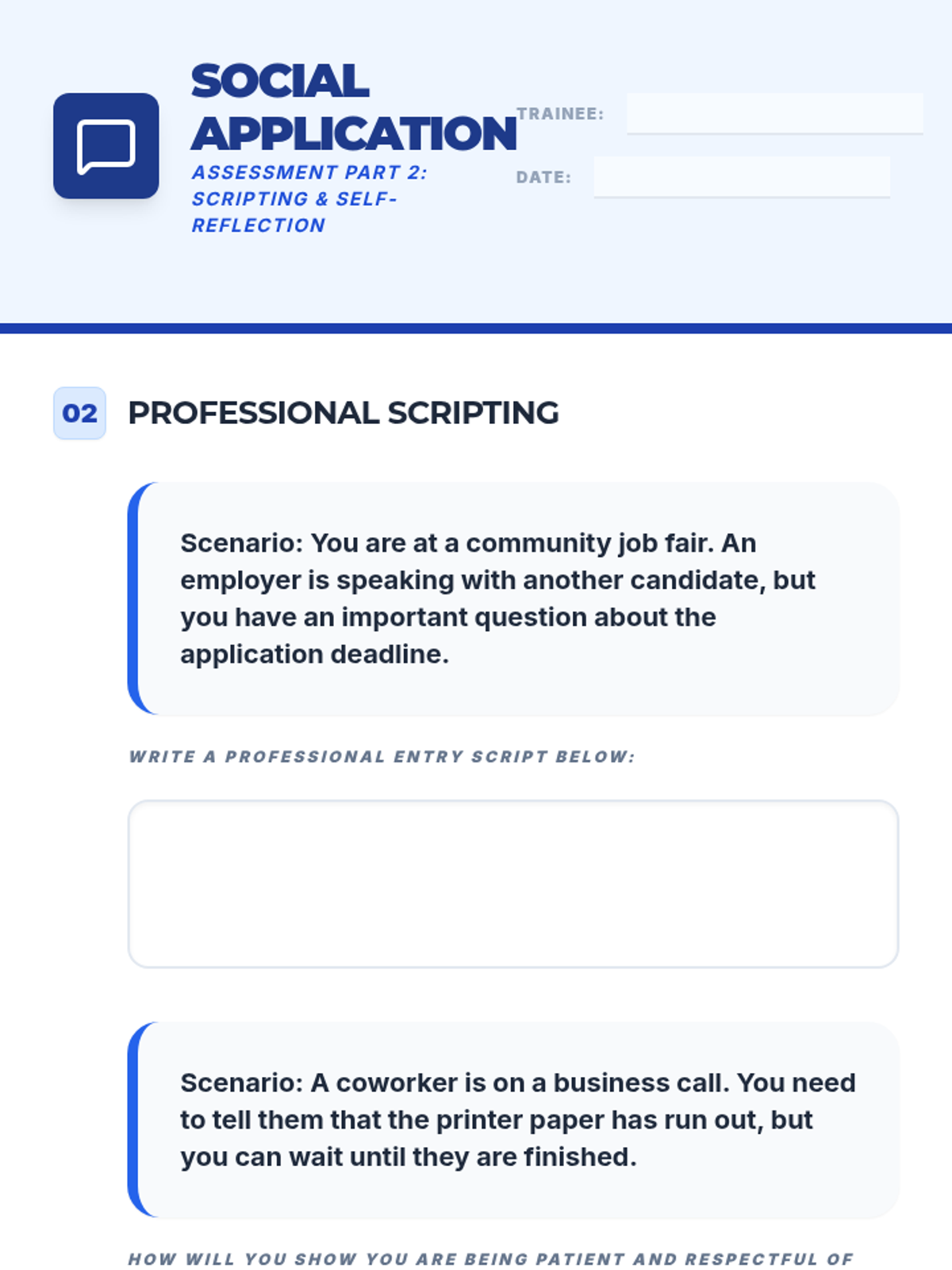
A comprehensive 90-120 minute morning activity designed to teach students the social nuances of interrupting. It covers identifying appropriate times to speak, respectful interruption techniques, and emotional regulation when others interrupt.