Empathetic skill development through emotion recognition, cultural diversity appreciation, and bias confrontation. Targets multi-perspective analysis to support respectful interactions and complex social responses.
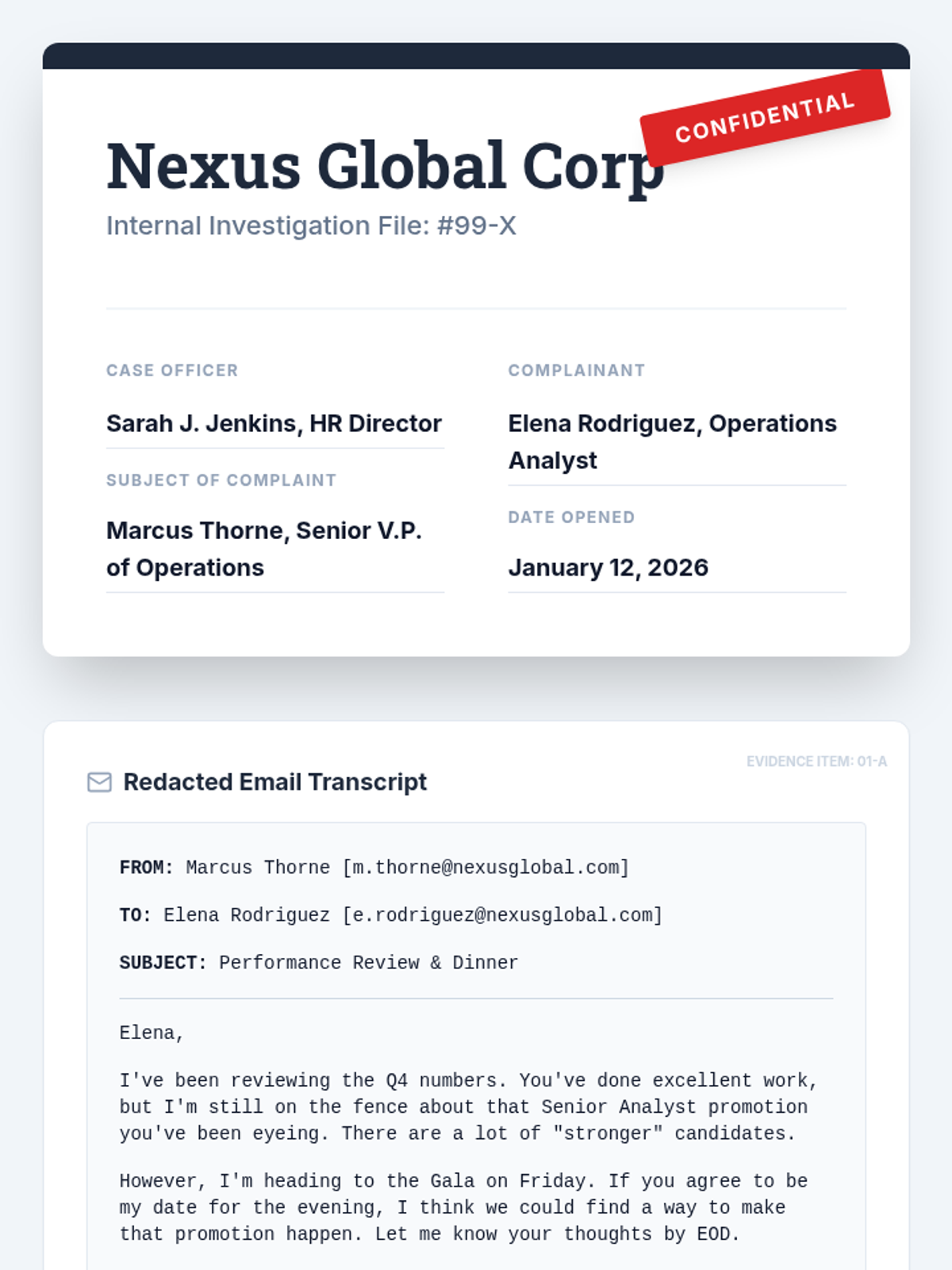
In this culminating lesson, students take the role of a compliance officer auditing a fictional company. They apply all learned concepts to identify potential liabilities and recommend legal corrections.
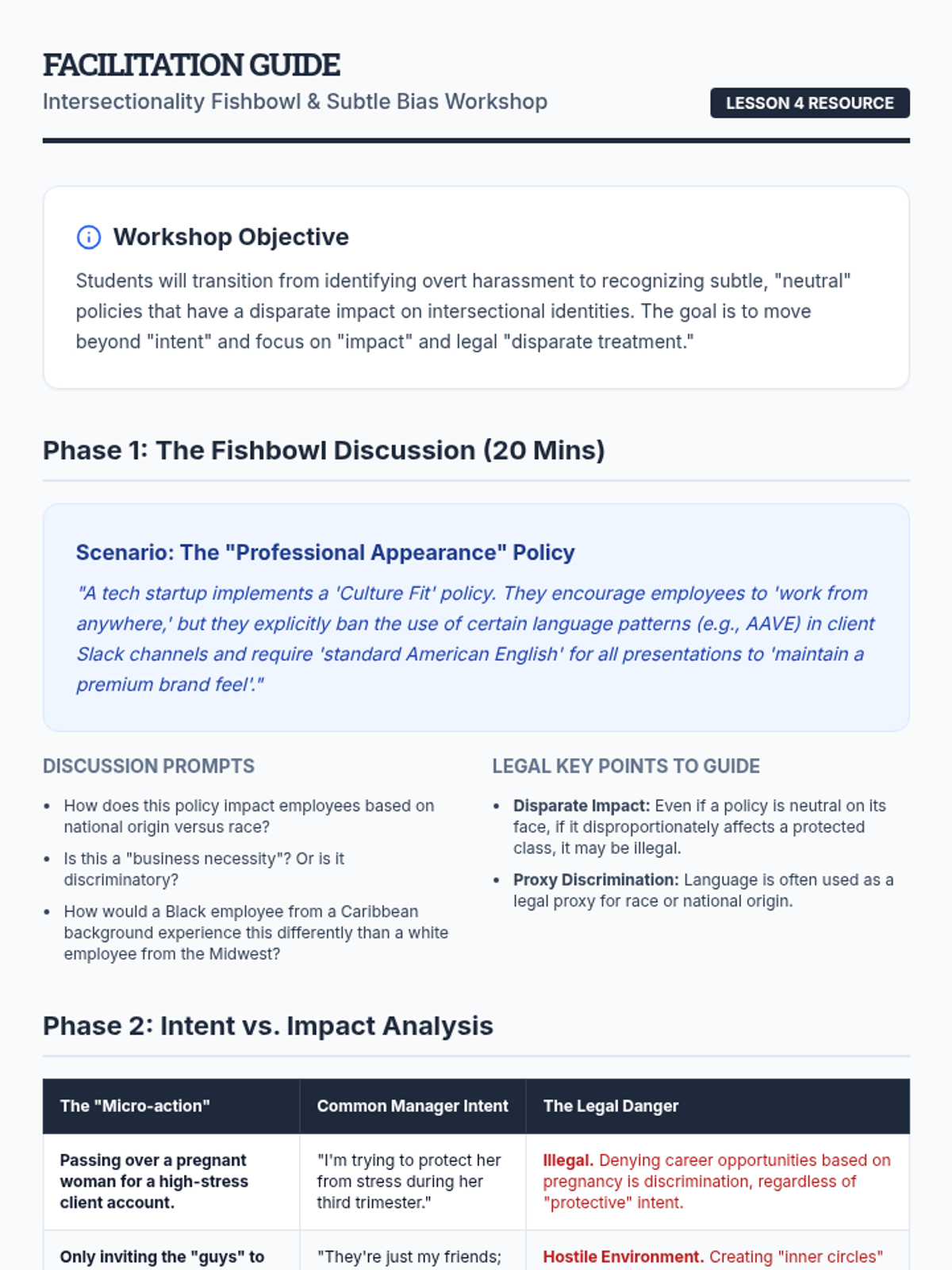
The lesson moves beyond overt slurs to examine microaggressions and intersectional discrimination where multiple protected identities overlap. Students discuss the complexity of proving intent versus impact.
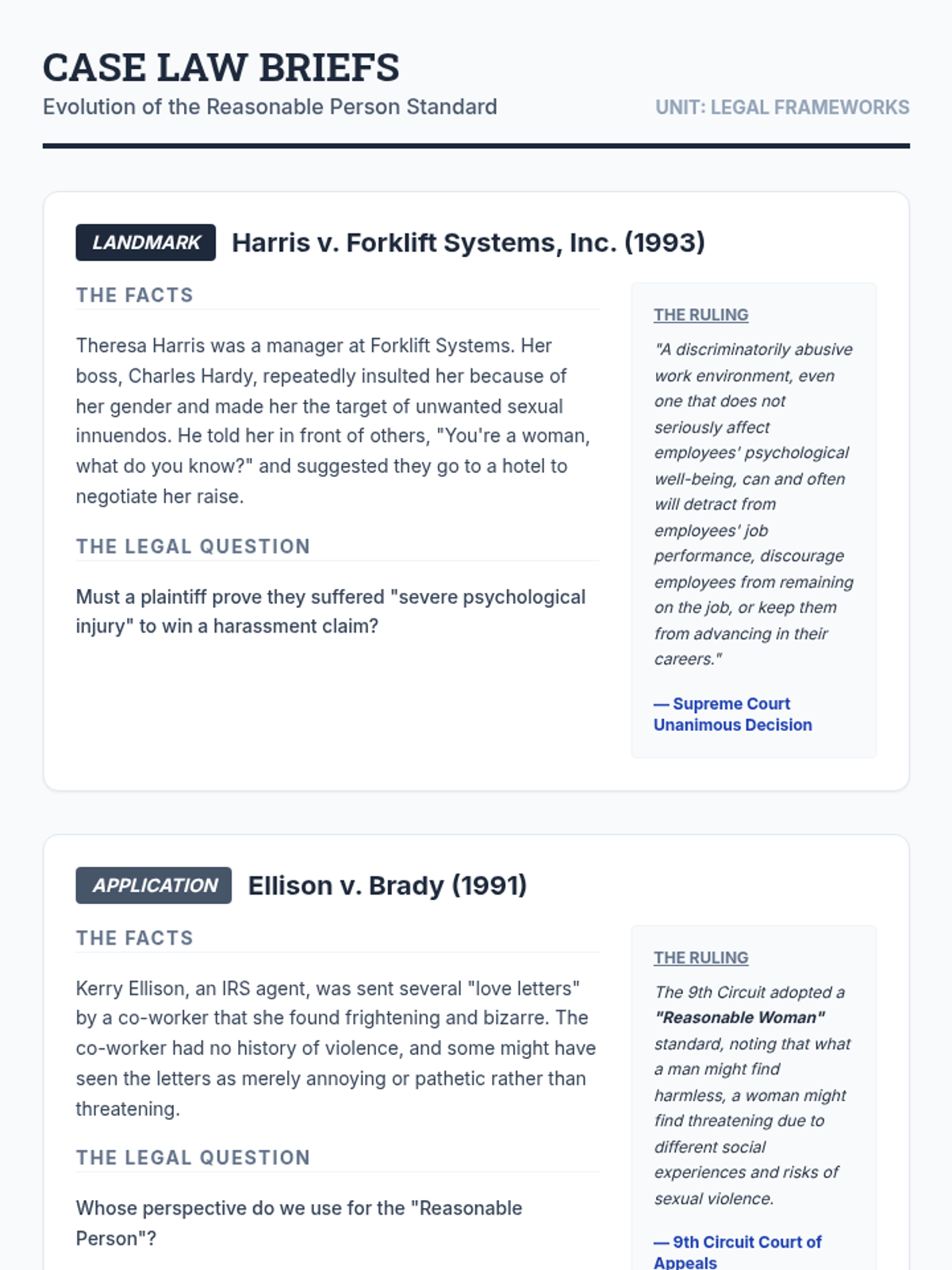
Students explore the 'reasonable person standard' used by courts to determine if conduct is objectively offensive. They analyze court opinions to see how this metric is applied in objective legal rulings.
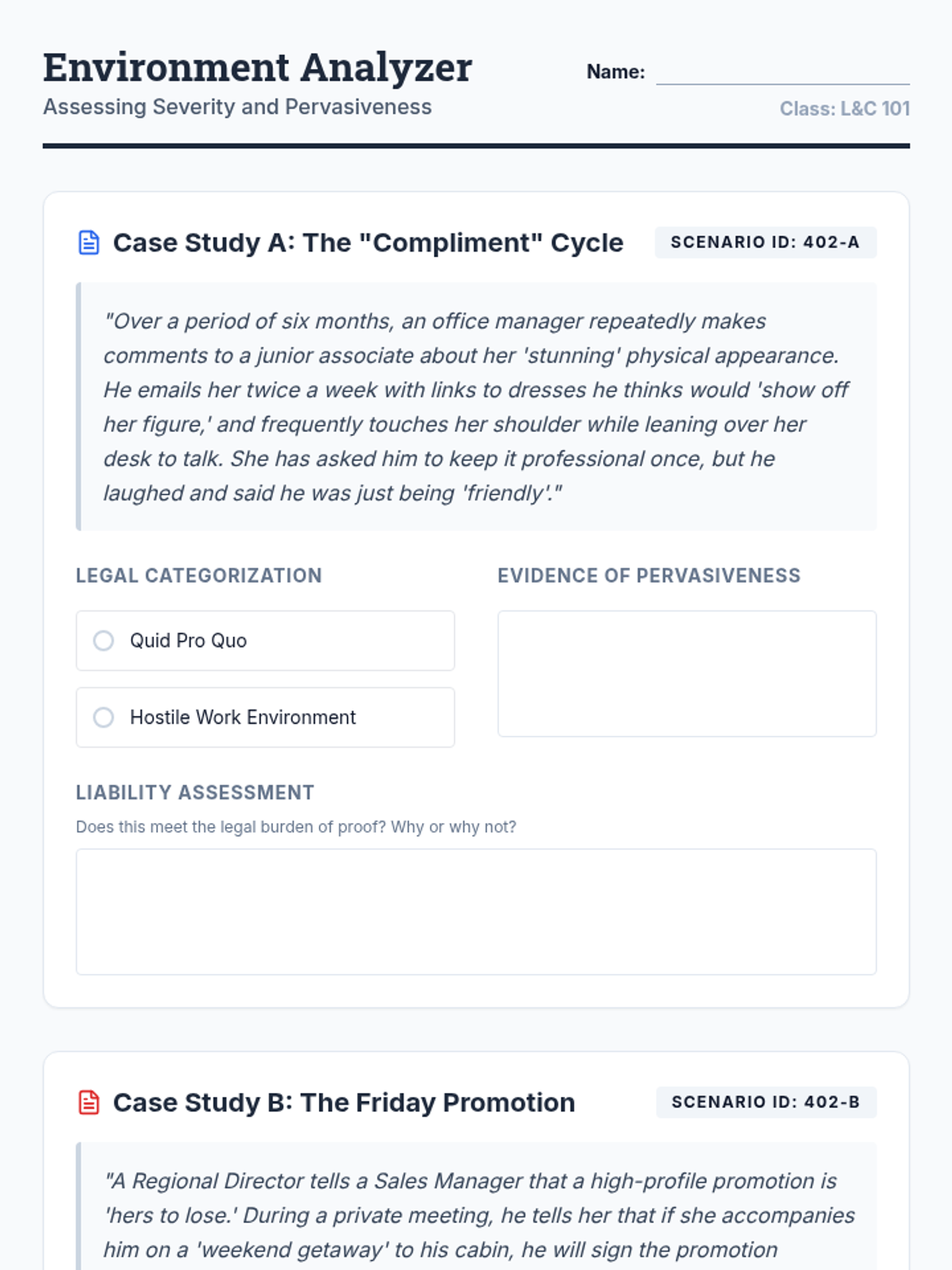
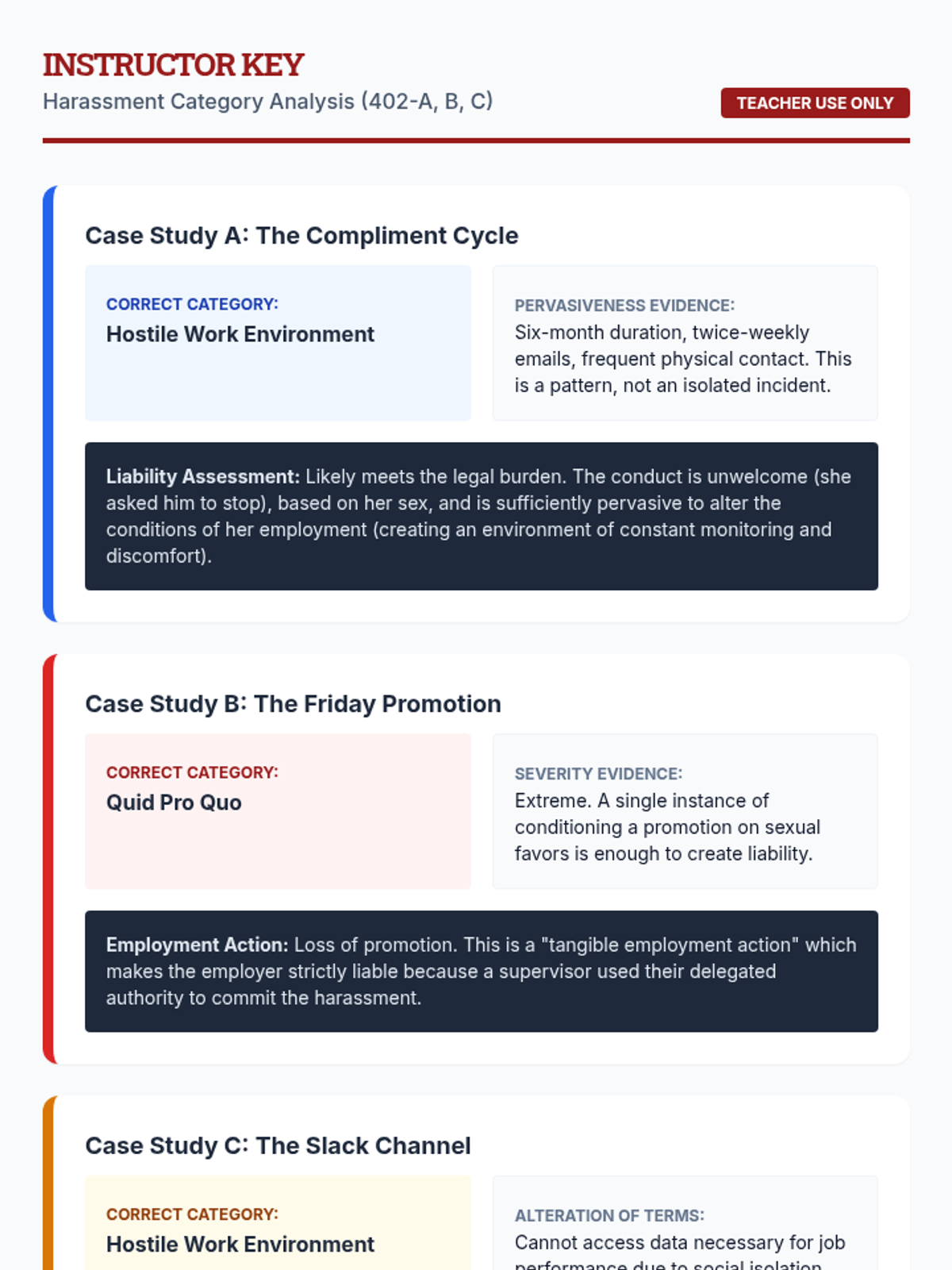
This lesson breaks down the two primary categories of sexual harassment: Quid Pro Quo and Hostile Work Environment. Students analyze specific criteria required to meet the legal burden of proof, including severity and pervasiveness.
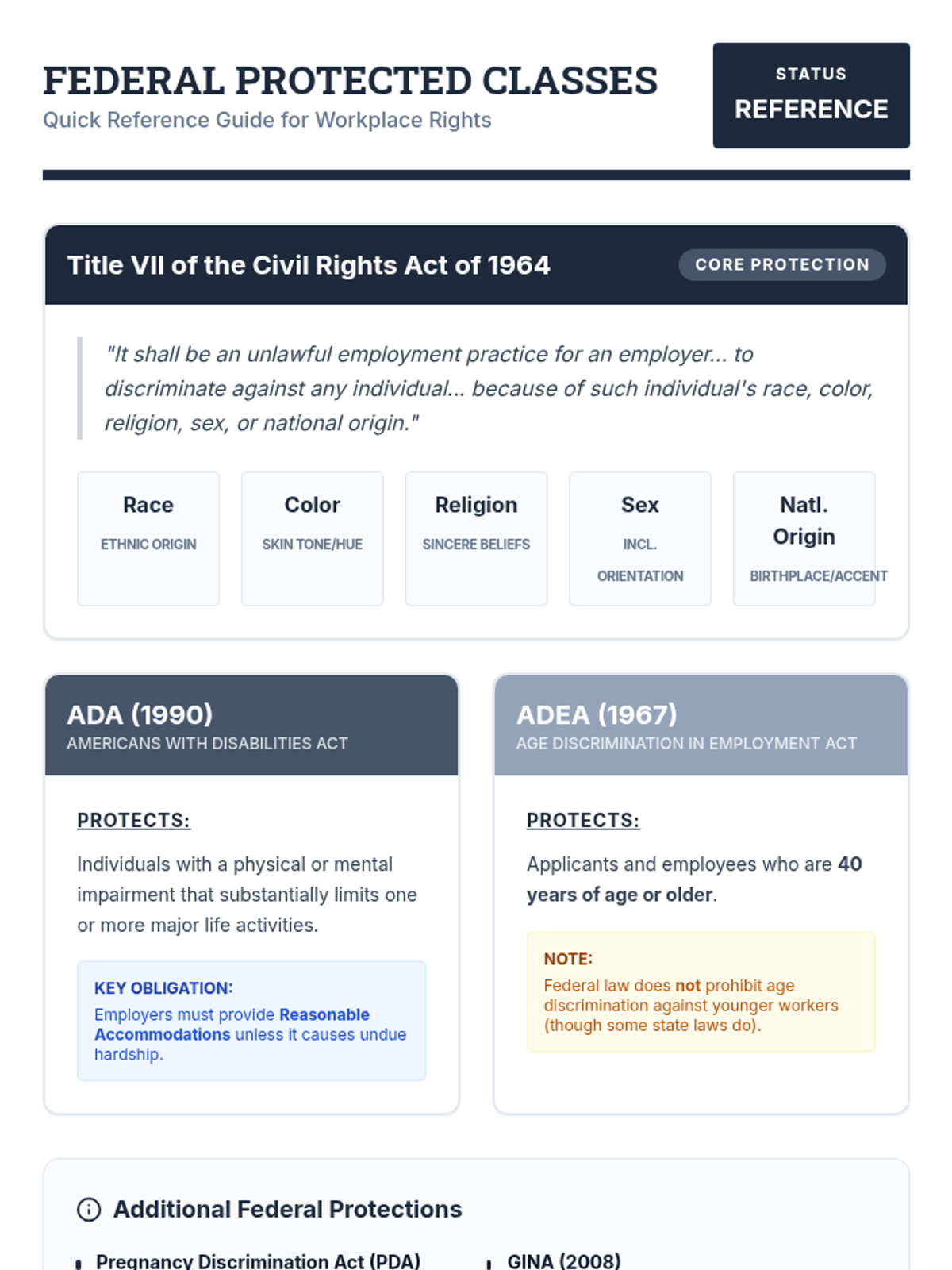
Students examine the core statutes governing workplace rights, specifically Title VII, the ADA, and the ADEA. The session focuses on identifying protected classes and understanding the historical context of these protections.
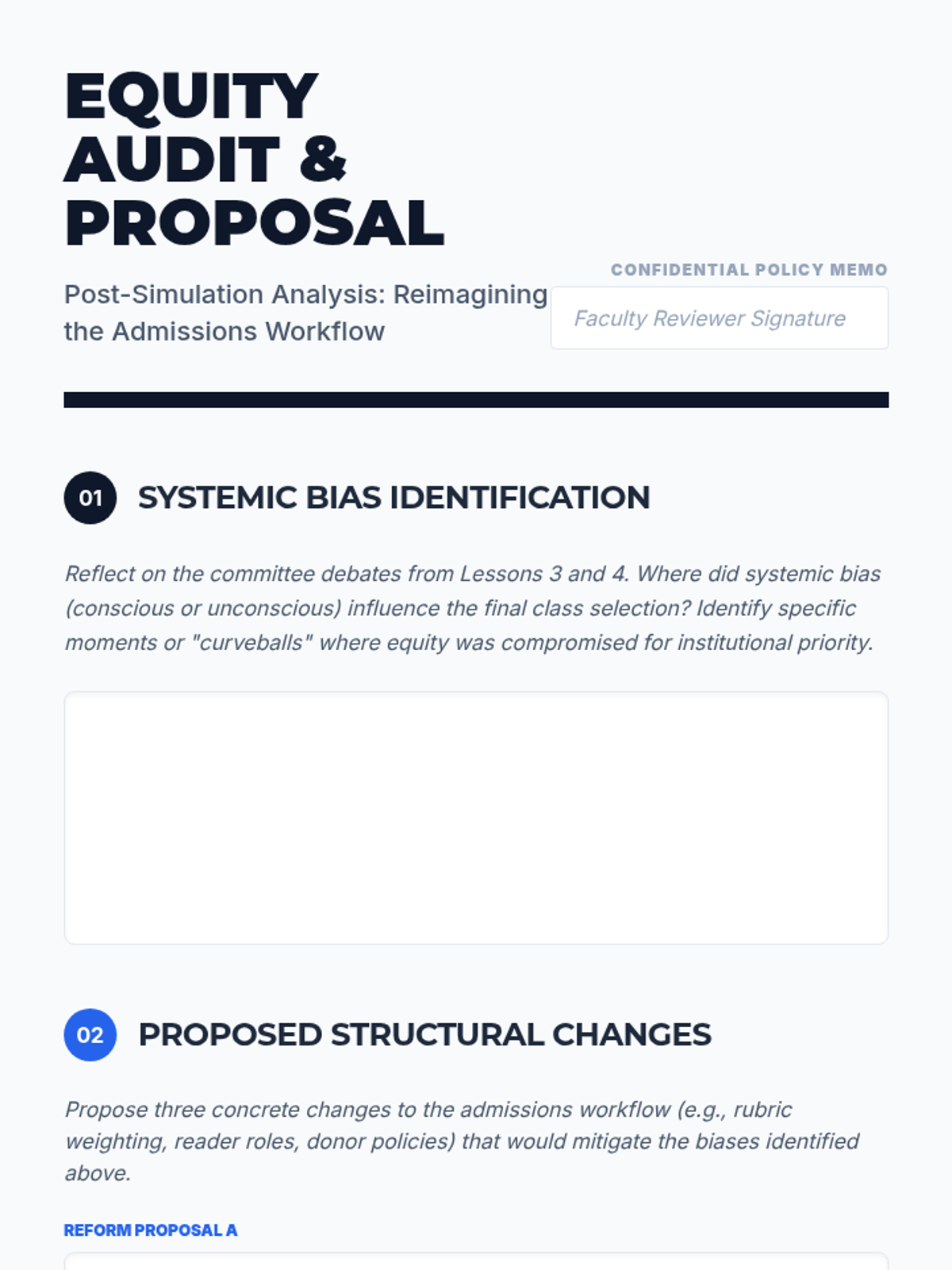
Students step out of role to analyze the simulation outcomes, discussing where systemic bias entered the process. The lesson culminates in a proposal for improving the equity of the admissions review workflow.
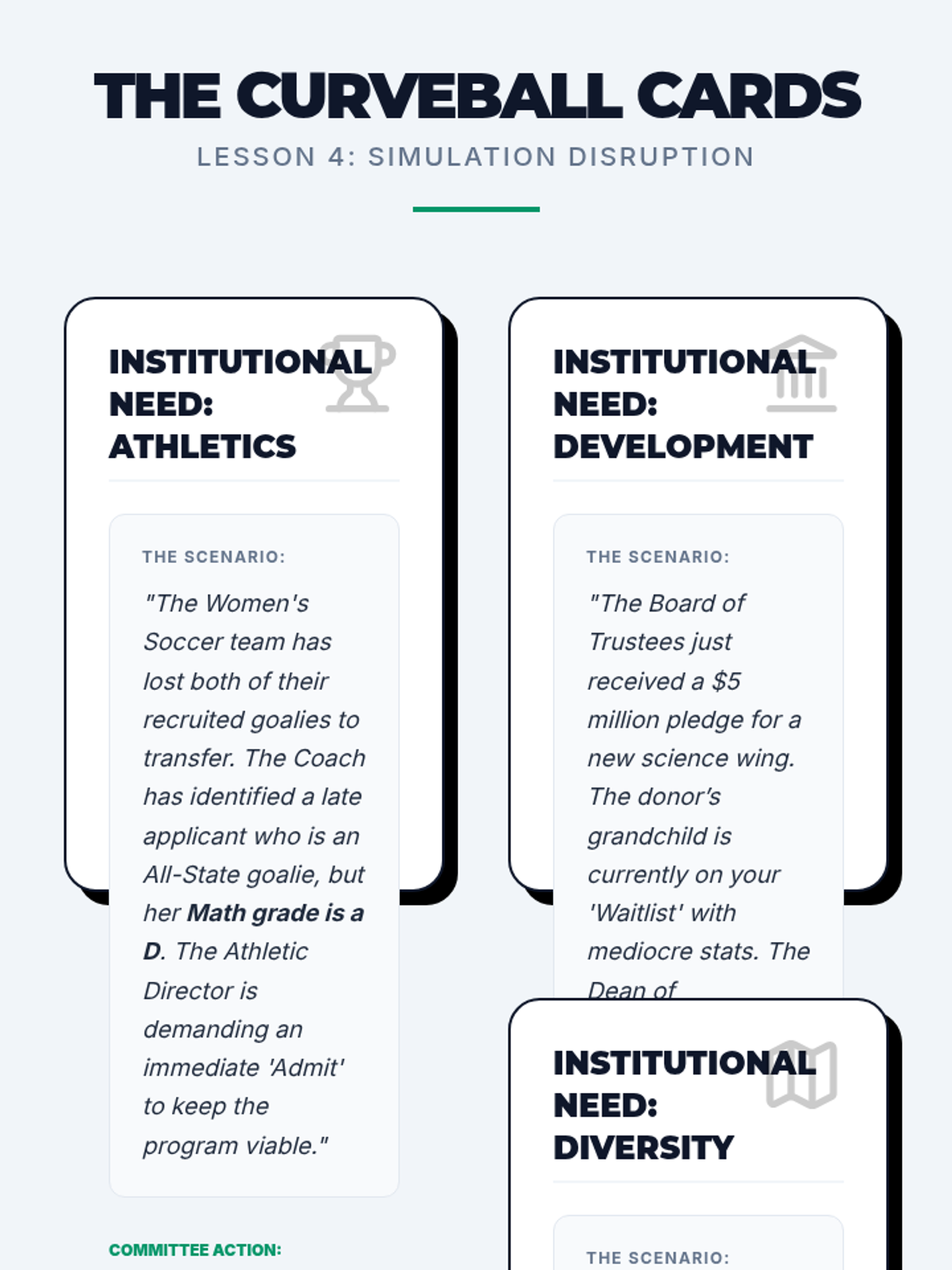
The simulation introduces real-world constraints such as legacy preferences, athletic recruitment needs, and yield protection strategies. Students must adjust their cohort selections to meet these external institutional demands.
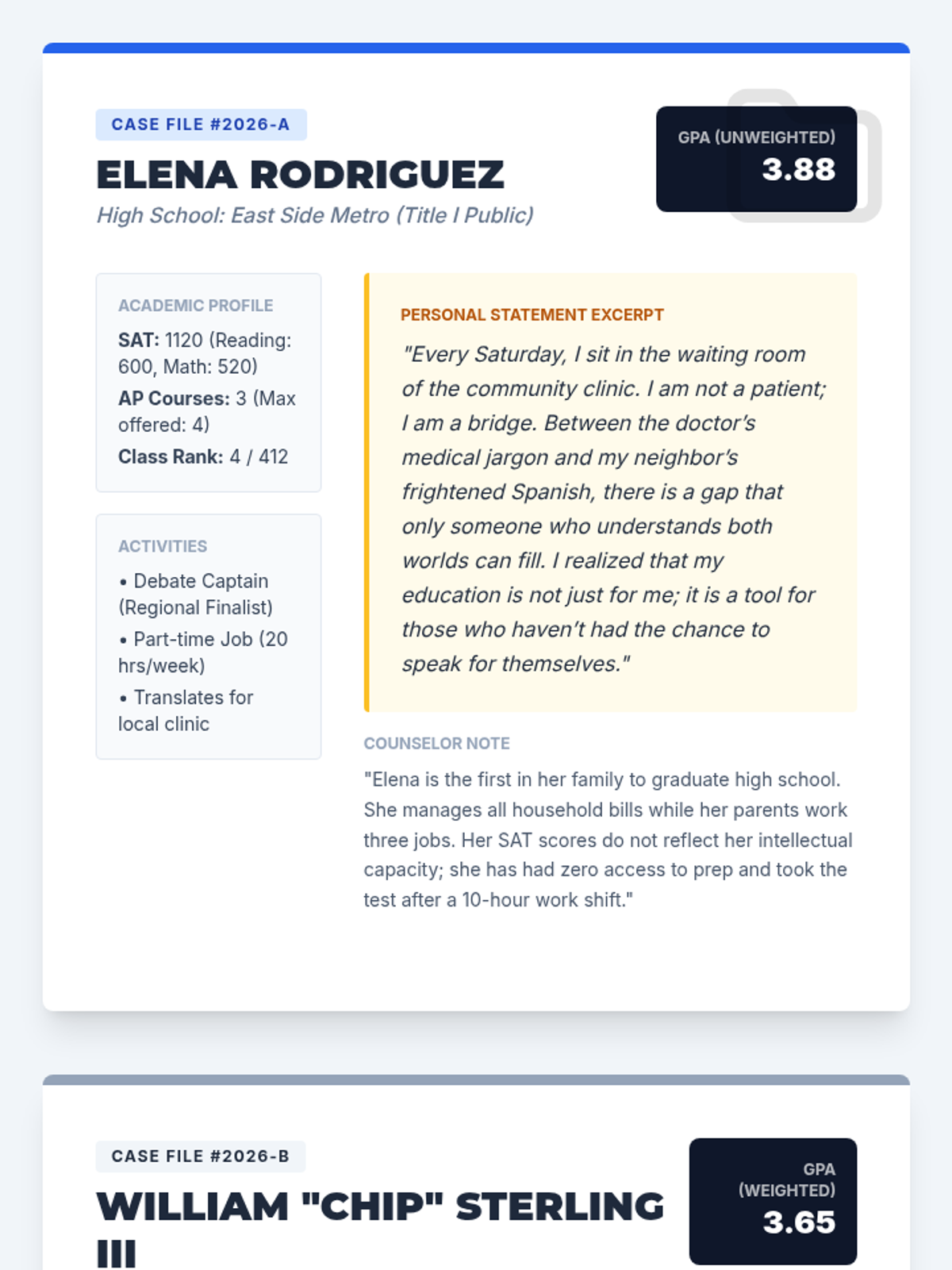
Functioning as regional admissions officers, students present their assigned applicants to a small group, advocating for acceptance or rejection based on evidence. The focus is on articulating a clear argument grounded in the application materials.
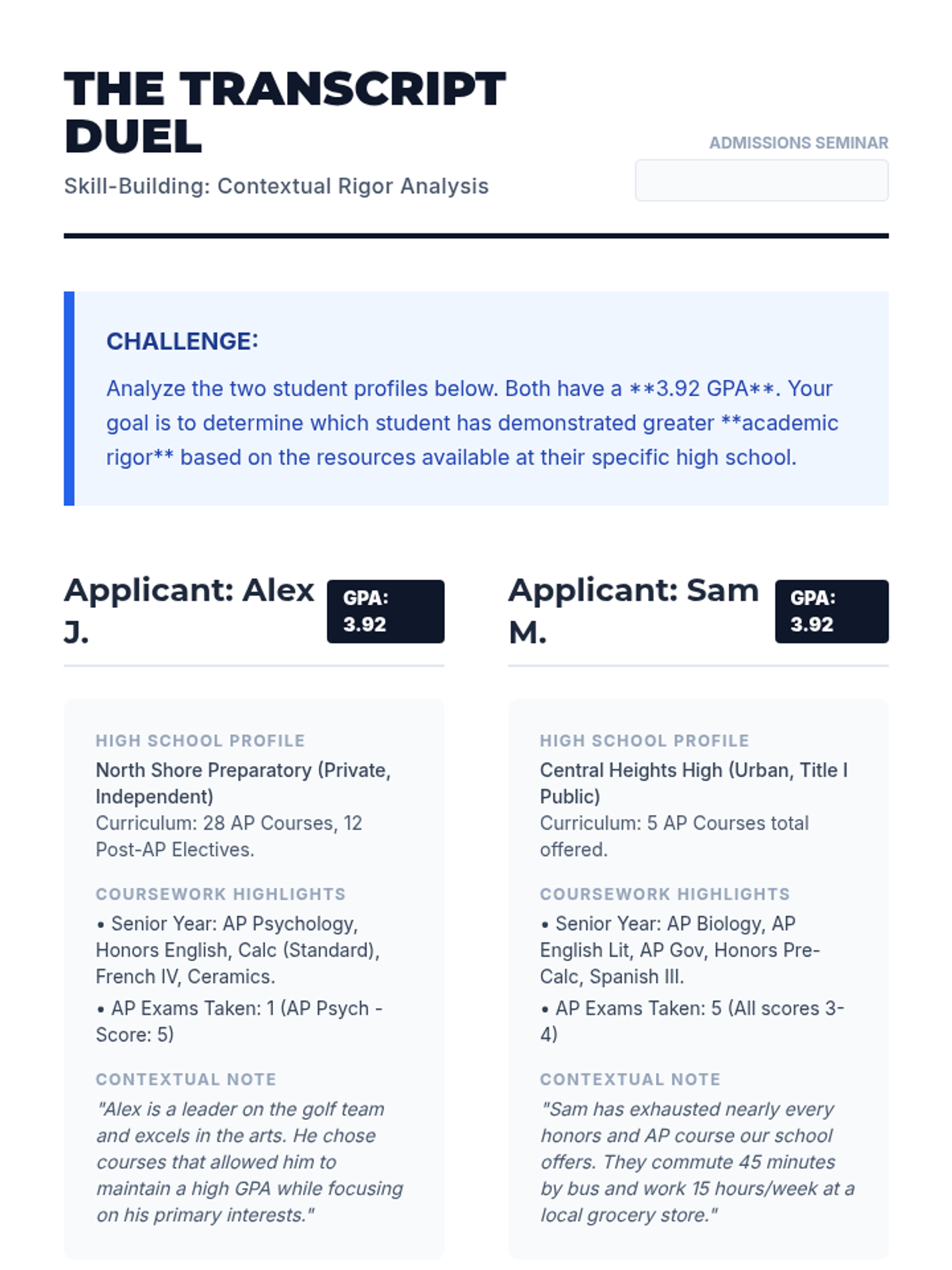
Participants review redacted application files, practicing the skill of 'reading between the lines' of transcripts and standardized test reports. They learn to identify rigorous course sequencing and contextualize GPA within school profiles.
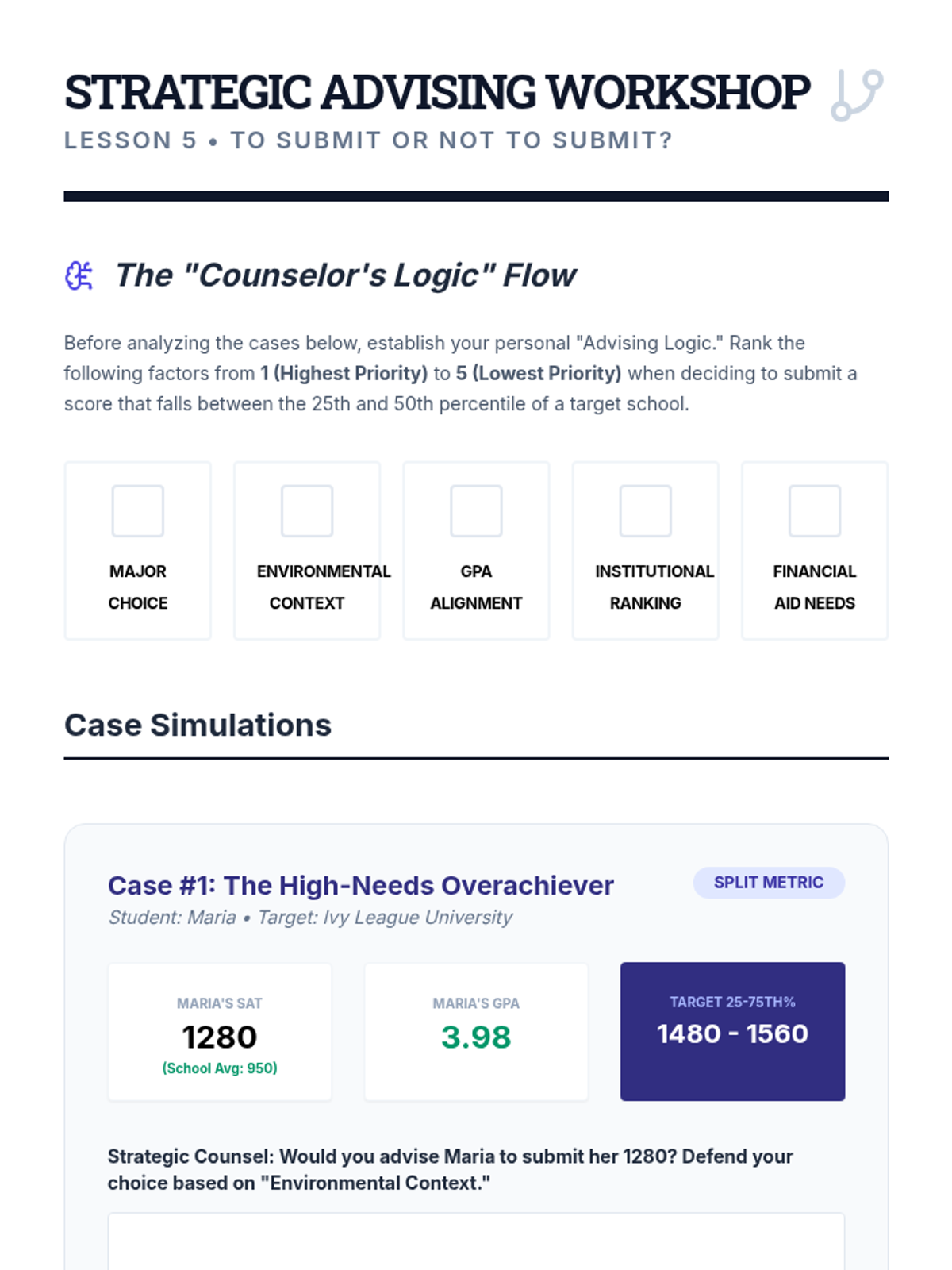
A strategy-focused session where students develop decision-making frameworks for advising applicants on score submission in a post-test-optional world.
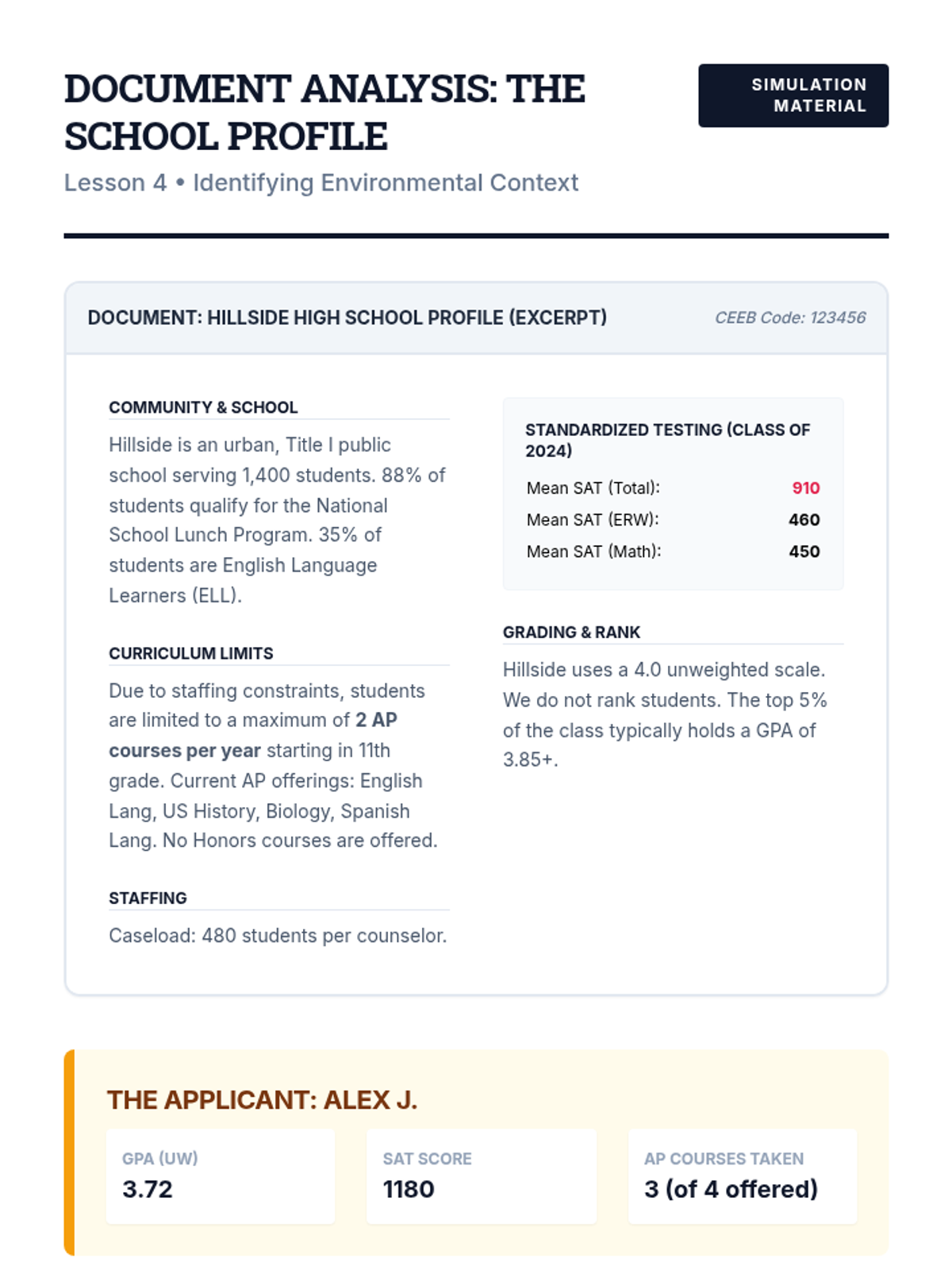
Students learn to use school profiles to contextualize student performance relative to the opportunities and constraints of their secondary school environment.
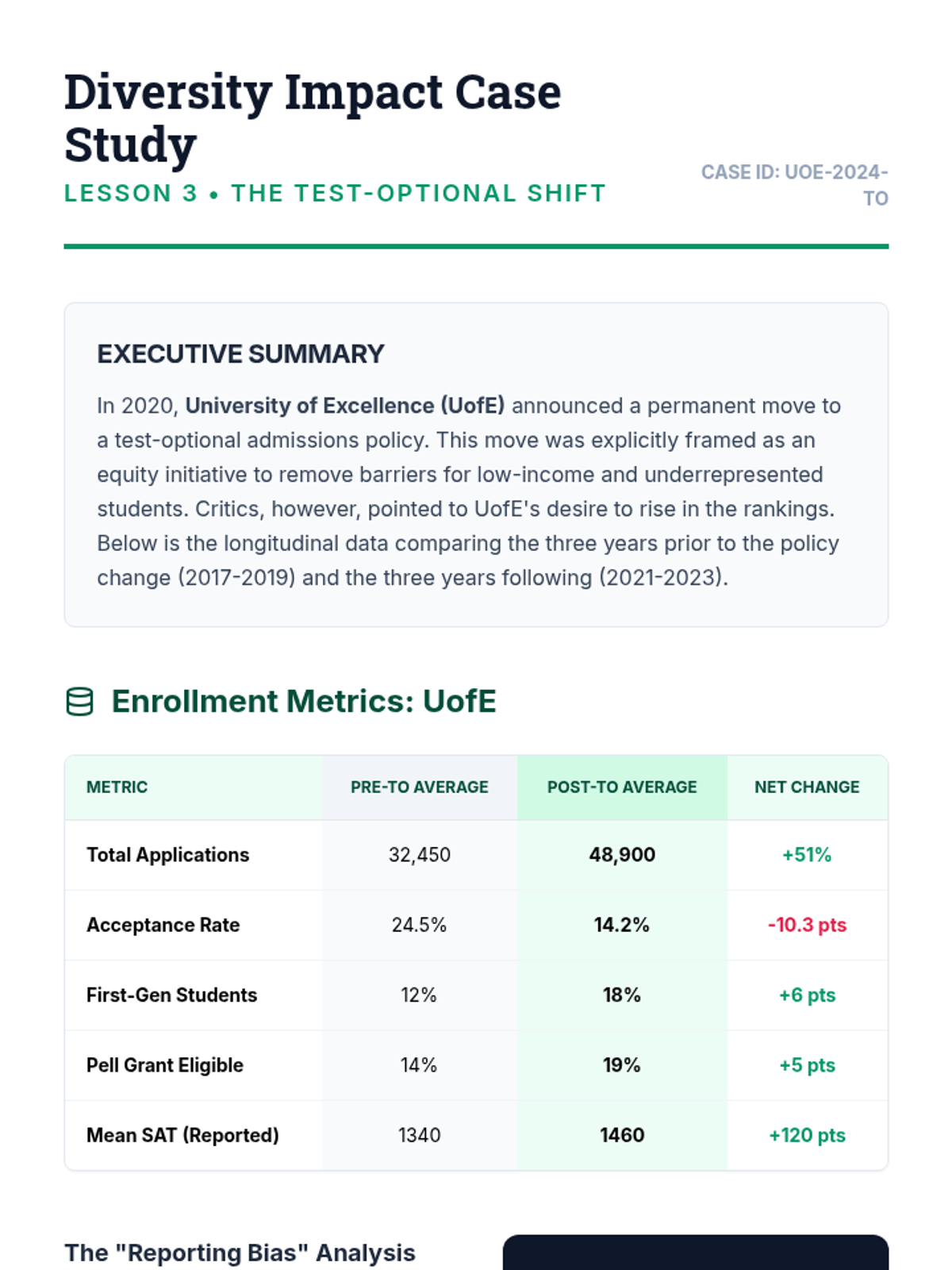
An analysis of the strategic and ethical shifts toward test-optional and test-blind policies and their impact on university diversity and enrollment trends.
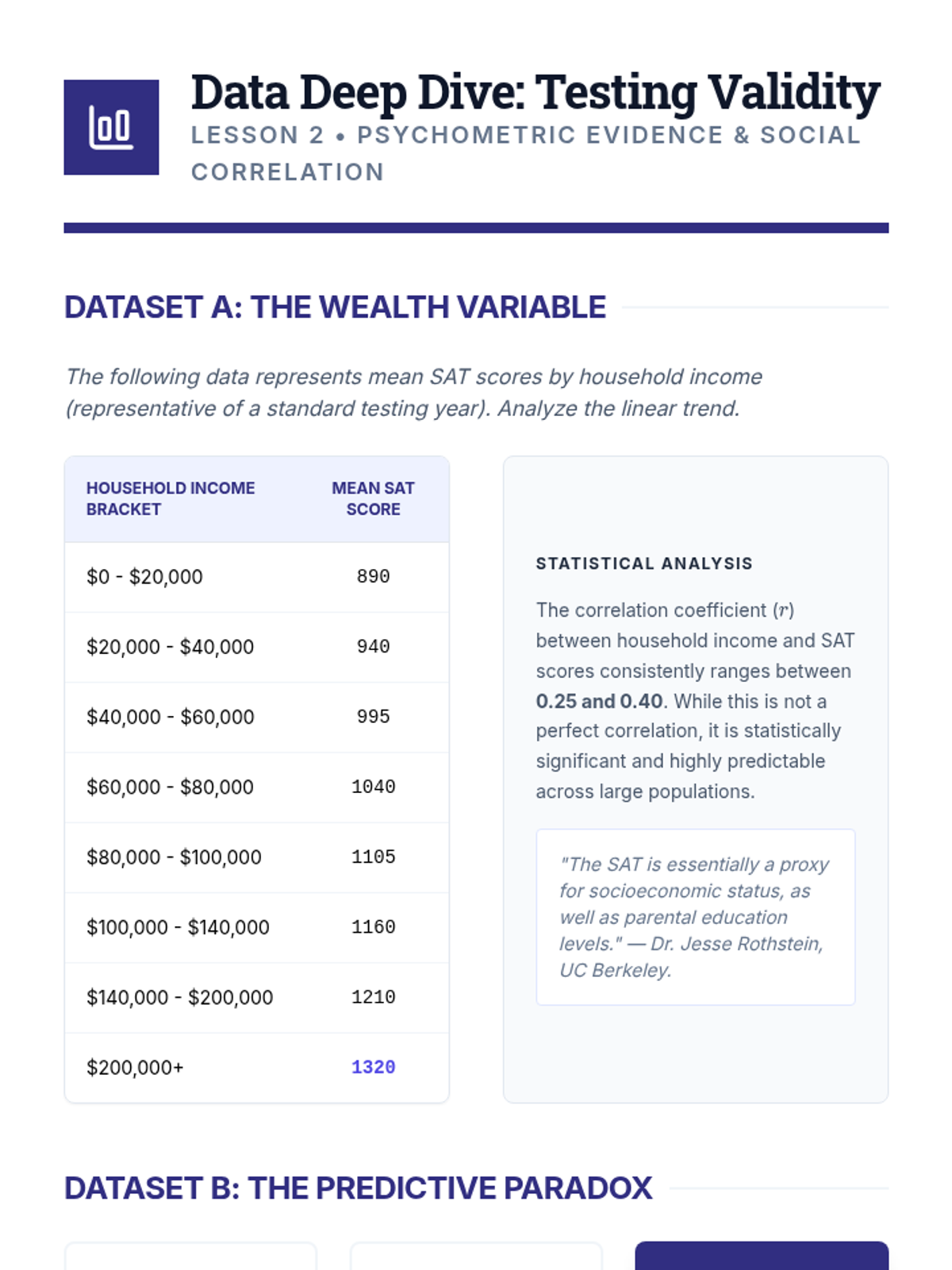
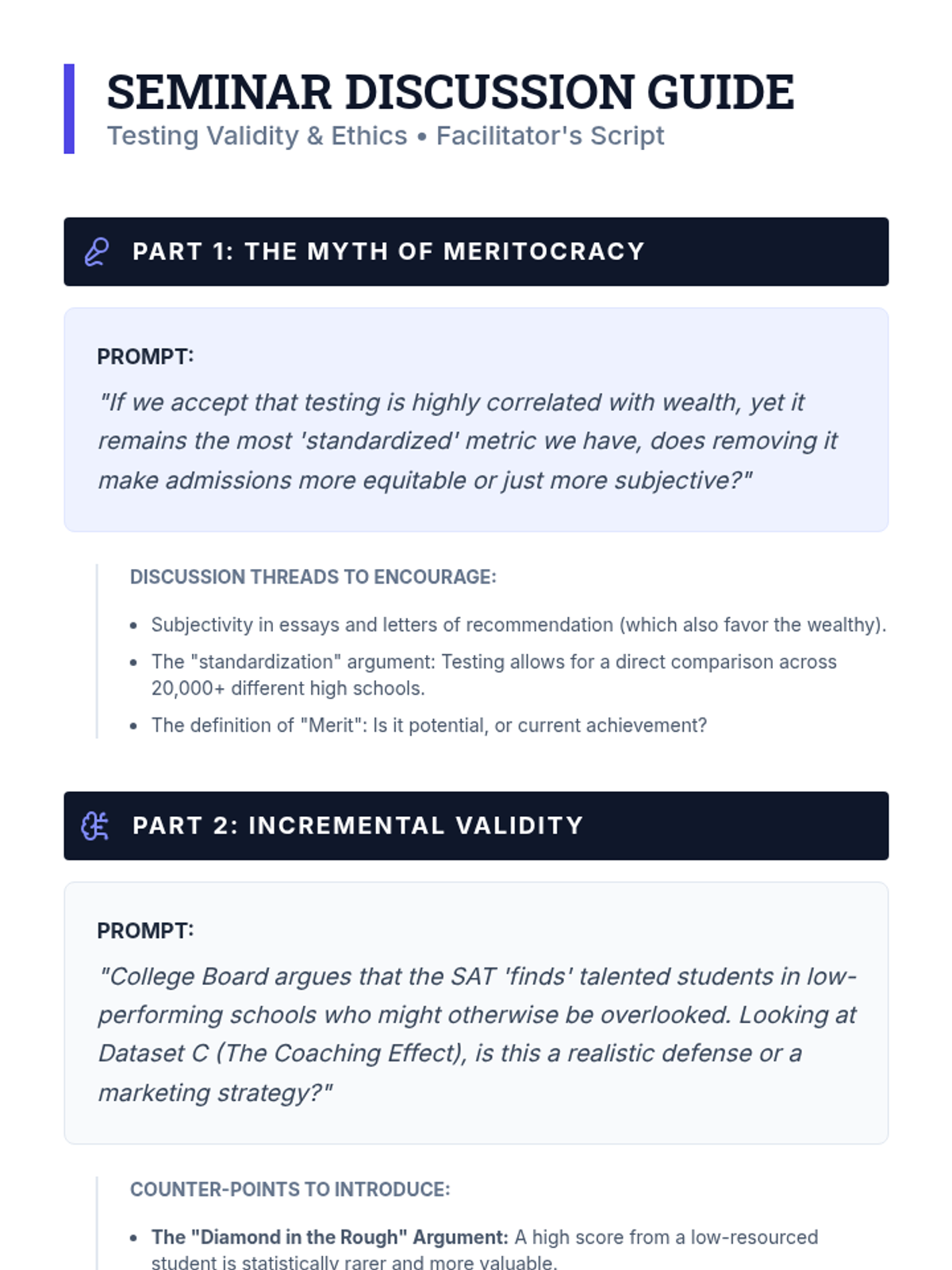
A critical examination of the history, psychometrics, and predictive validity of standardized tests, with a focus on their correlation with socioeconomic status.
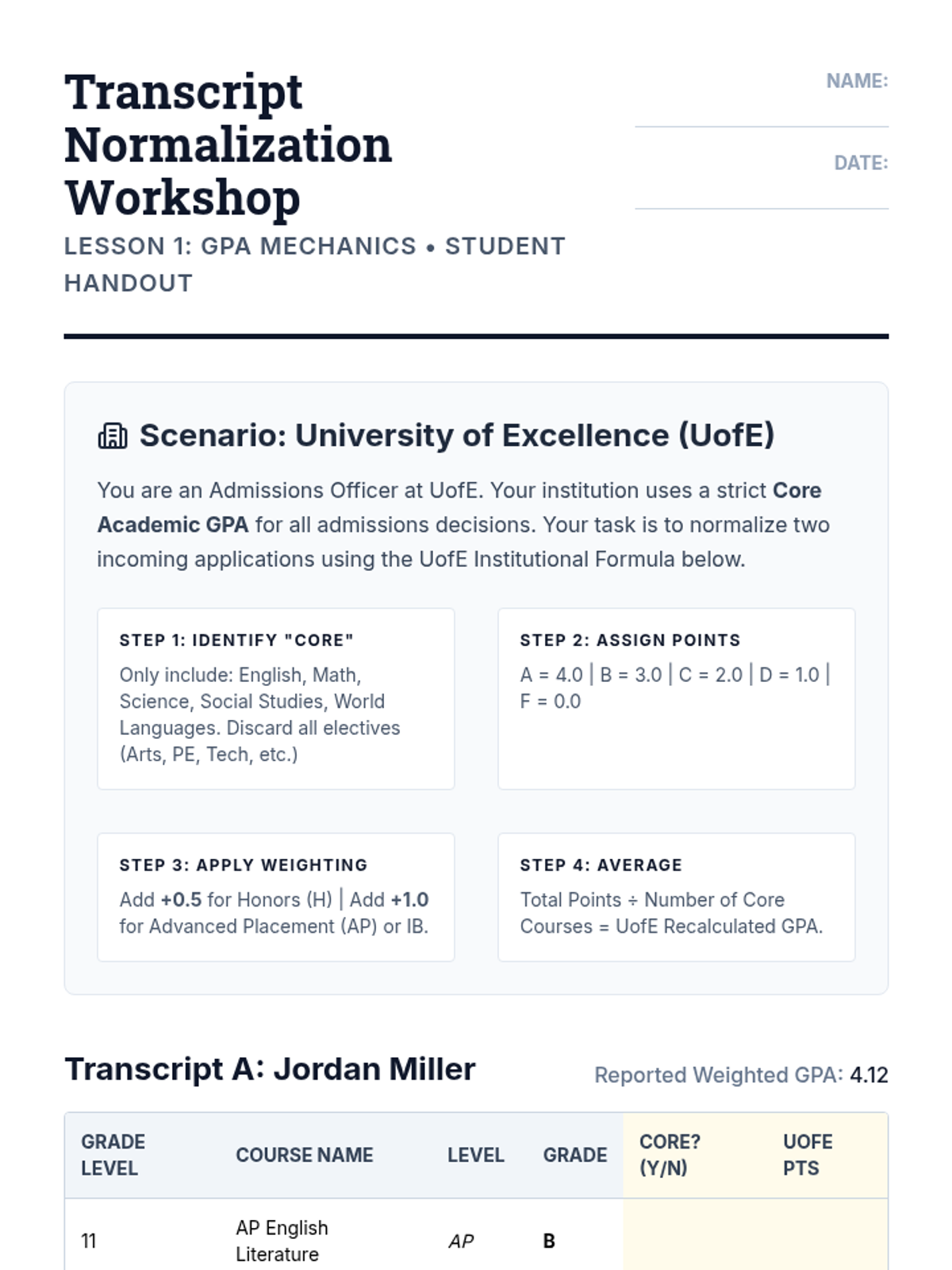
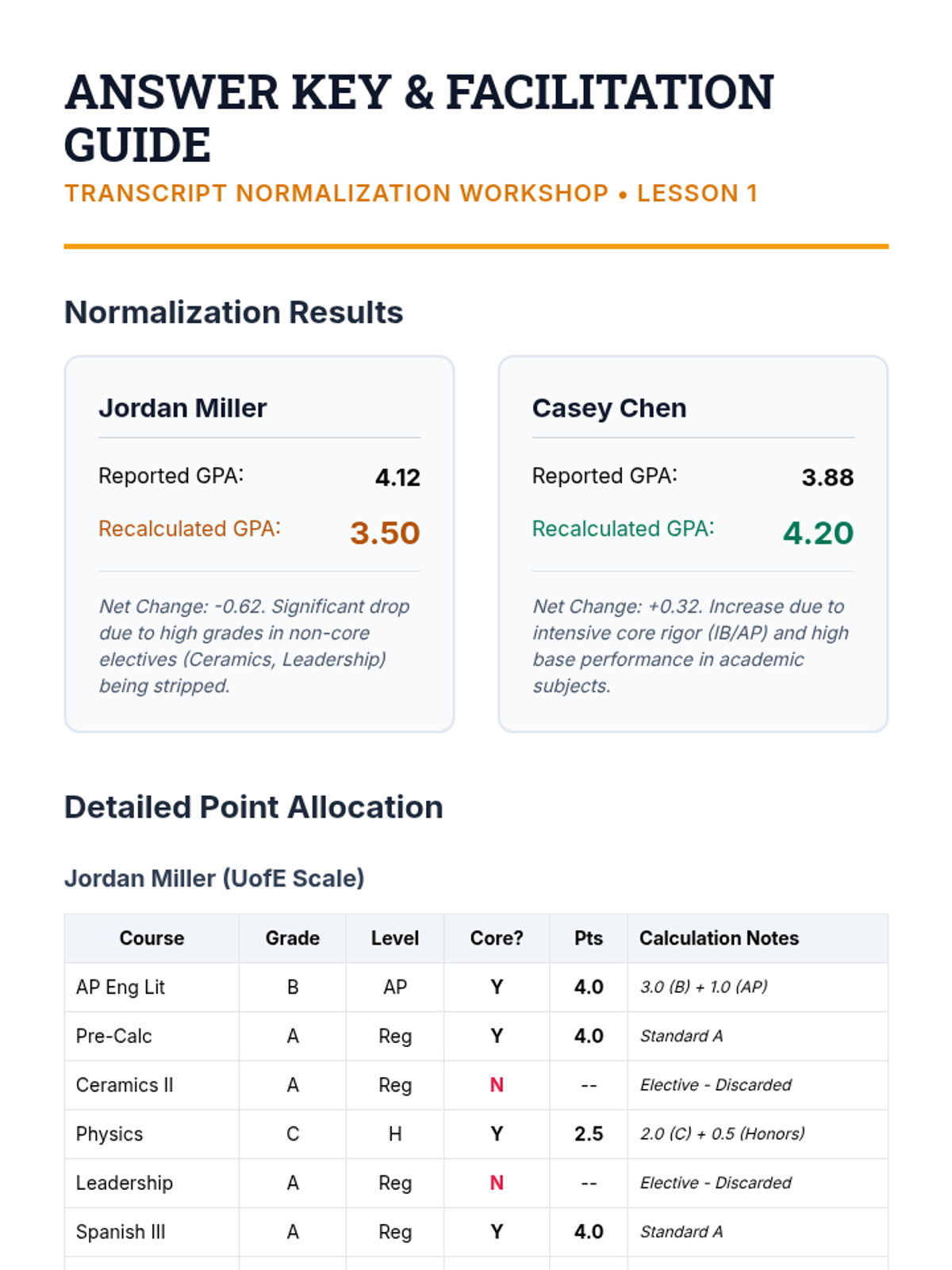
Students explore how higher education institutions normalize diverse high school transcripts by stripping electives and applying specific weights to core academic subjects.
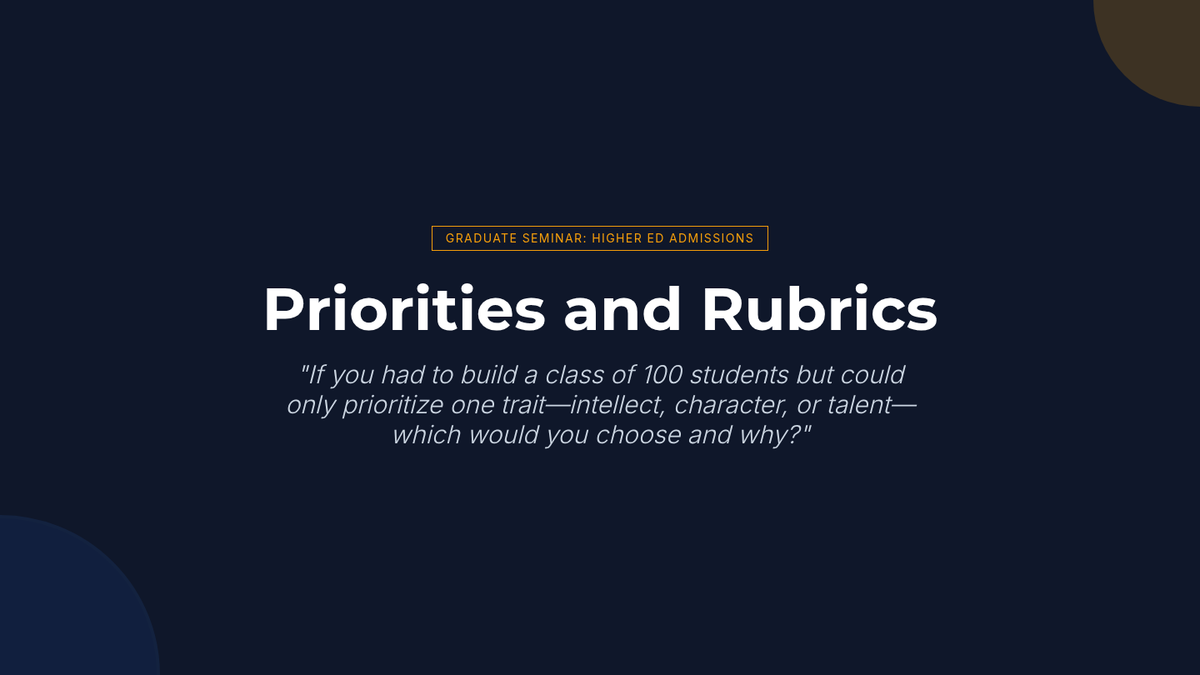
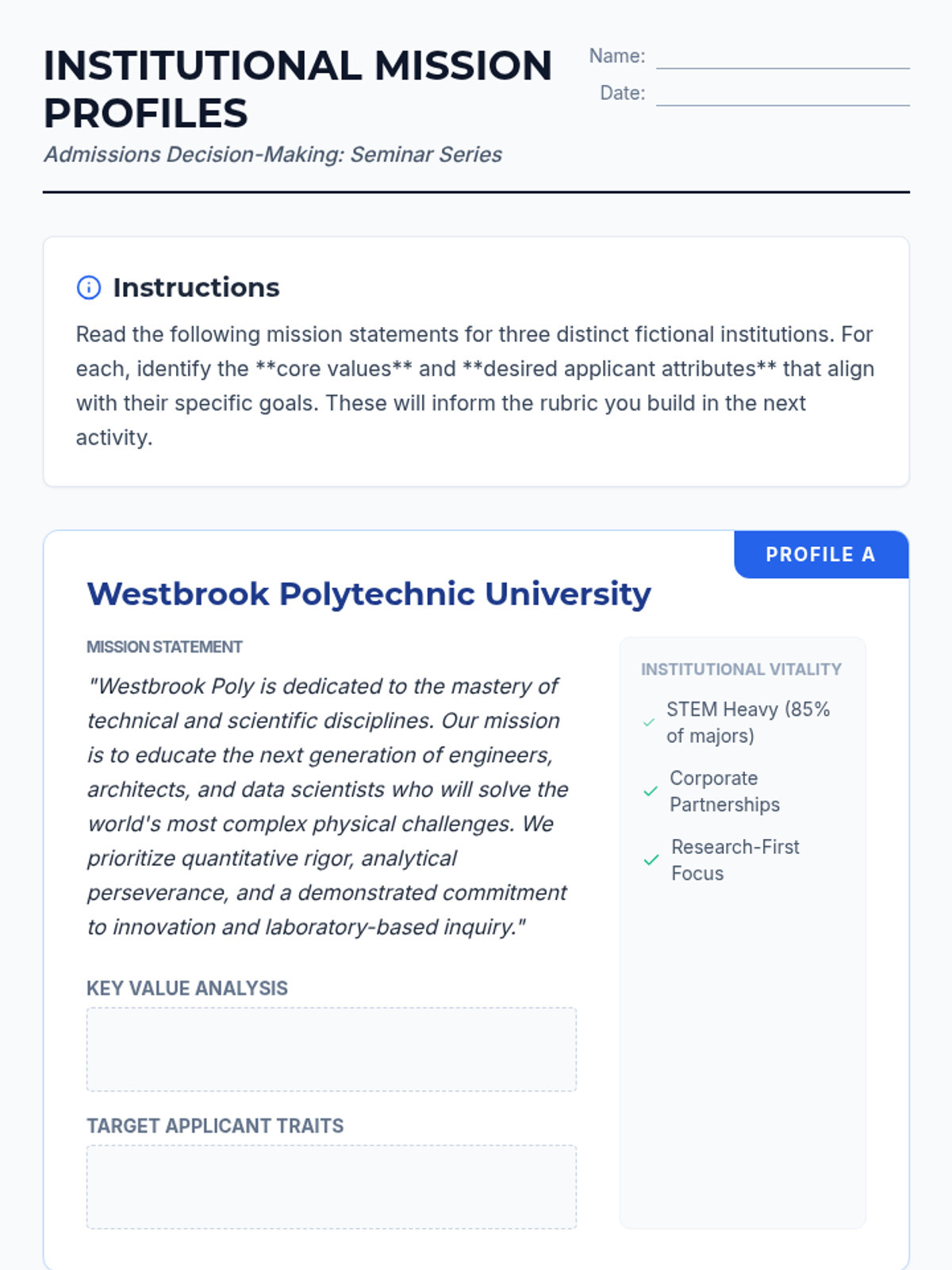
Students analyze mission statements from diverse institution types to create weighted admissions rubrics, determining the value of quantitative metrics versus qualitative attributes.
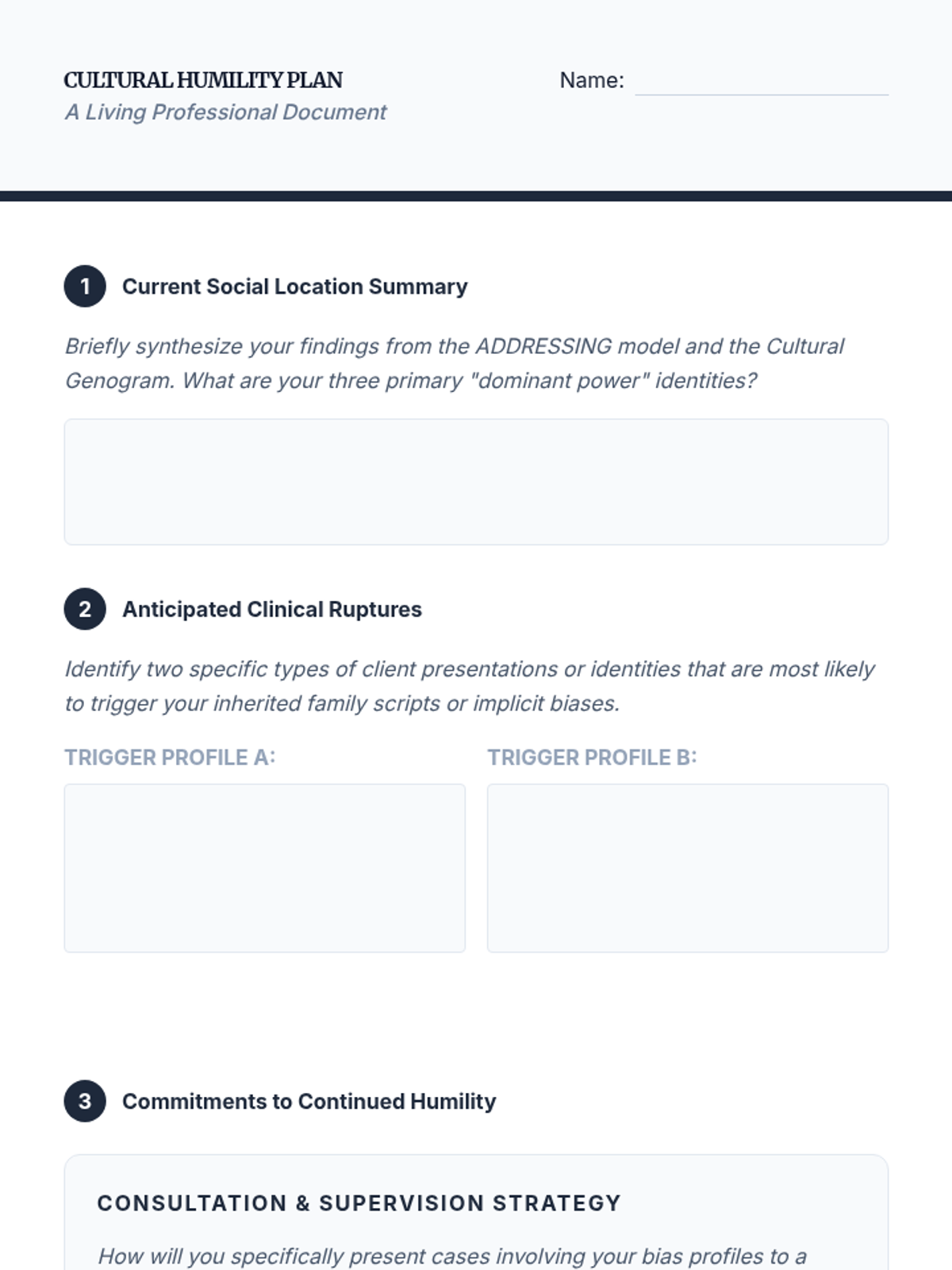
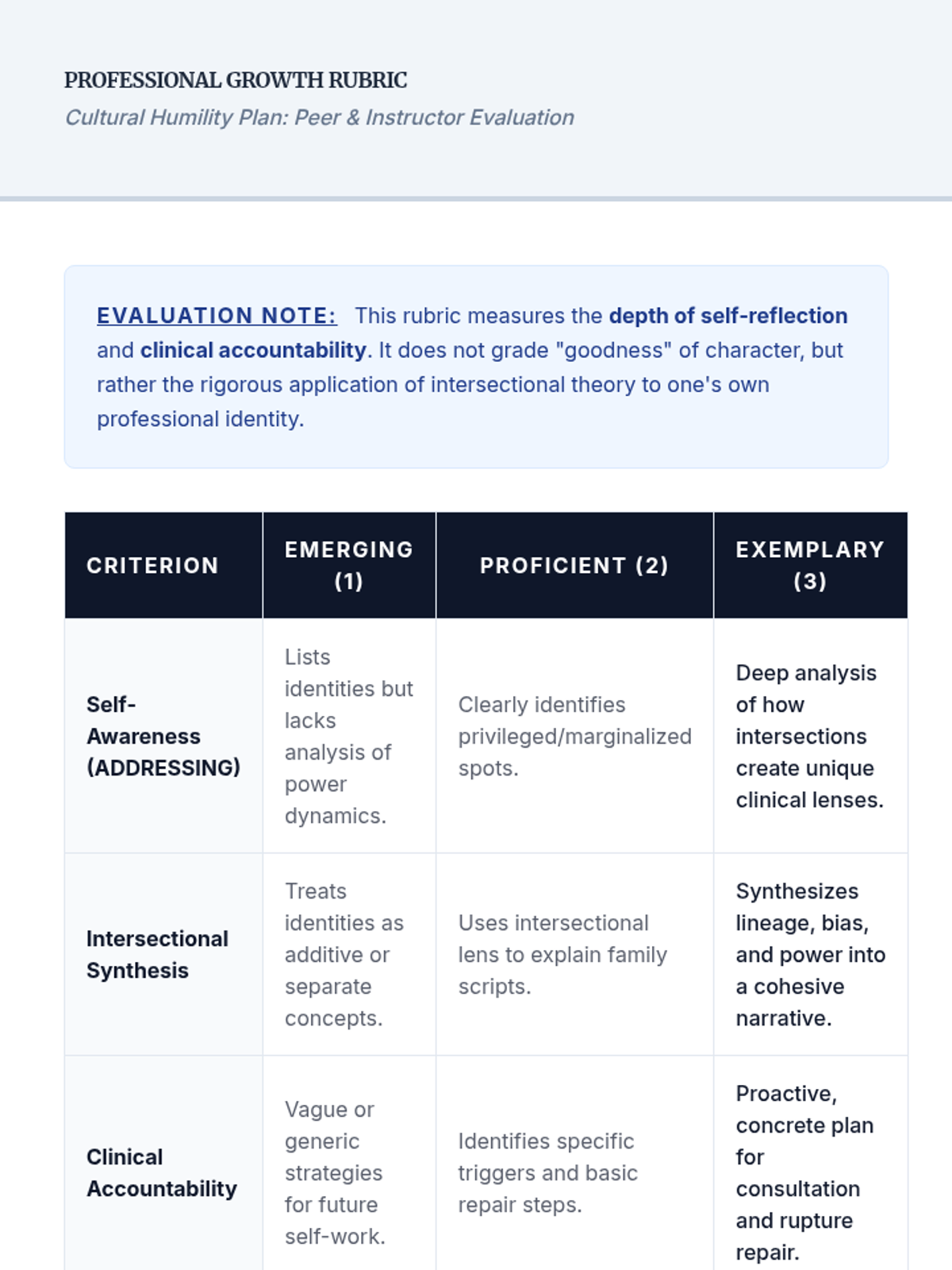
Culminating project where students develop and peer-review personal Cultural Humility Plans for their ongoing professional development.
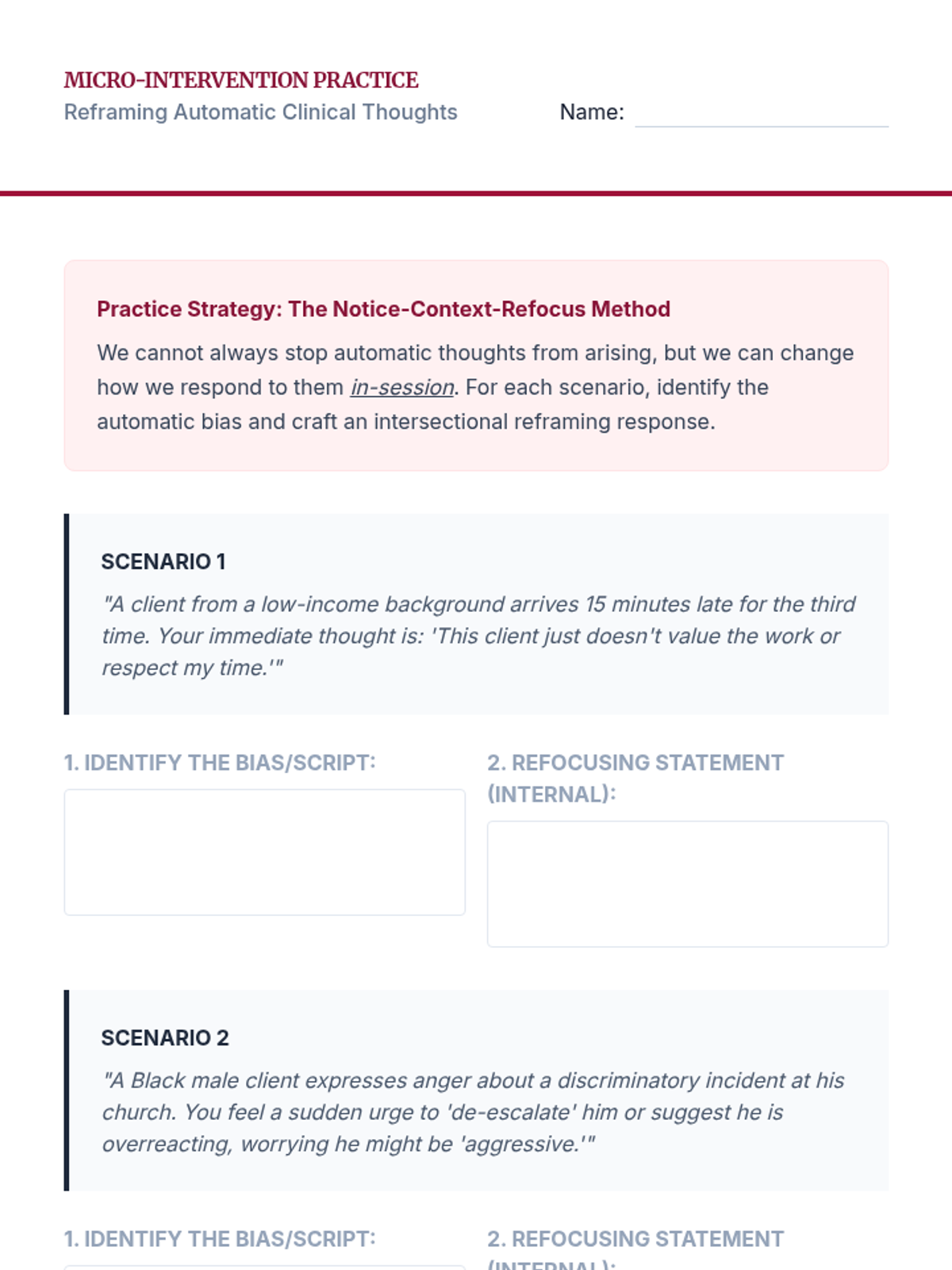
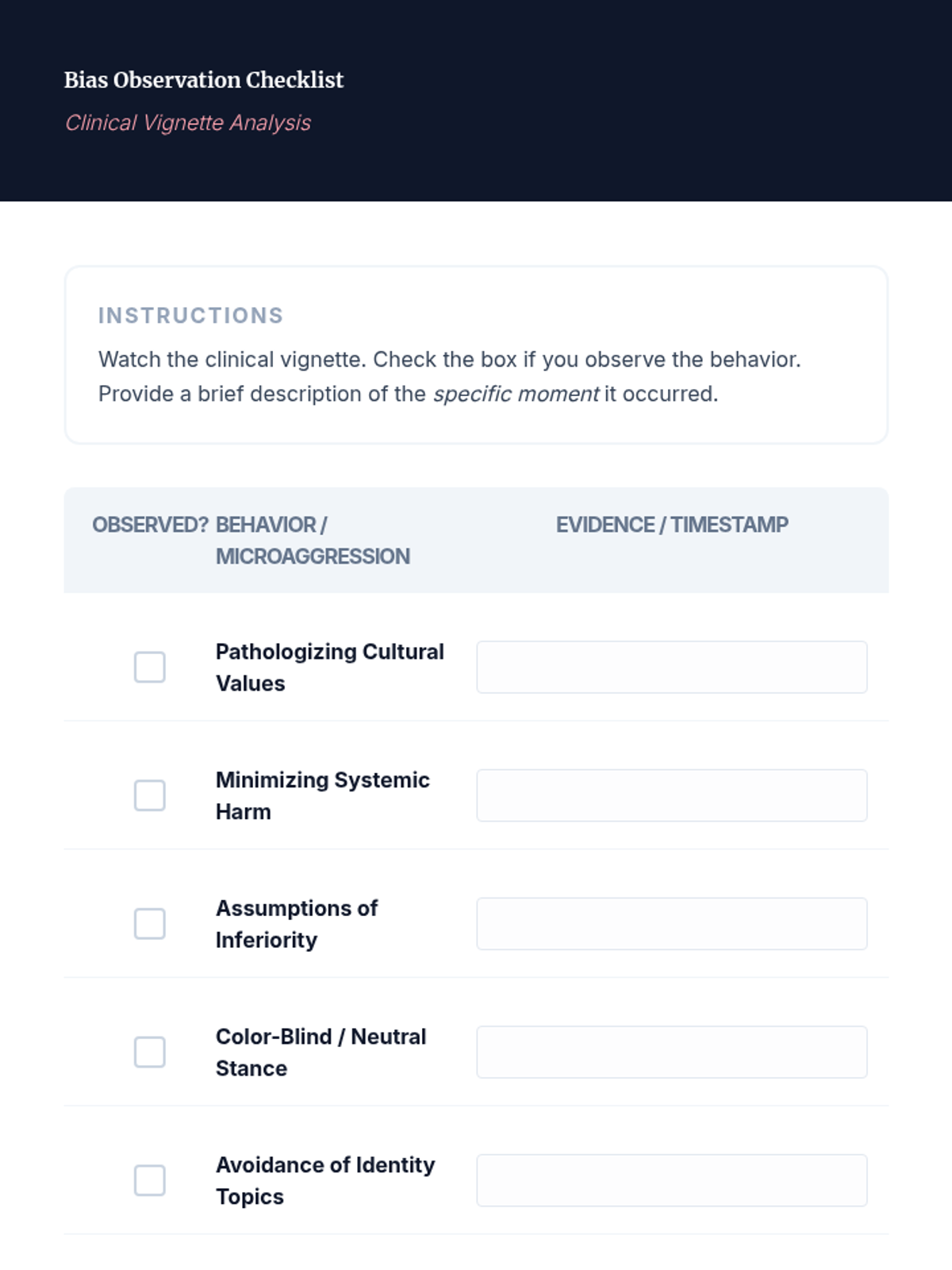
Investigates implicit bias through IAT analysis and practices micro-intervention strategies to manage automatic clinical thoughts.
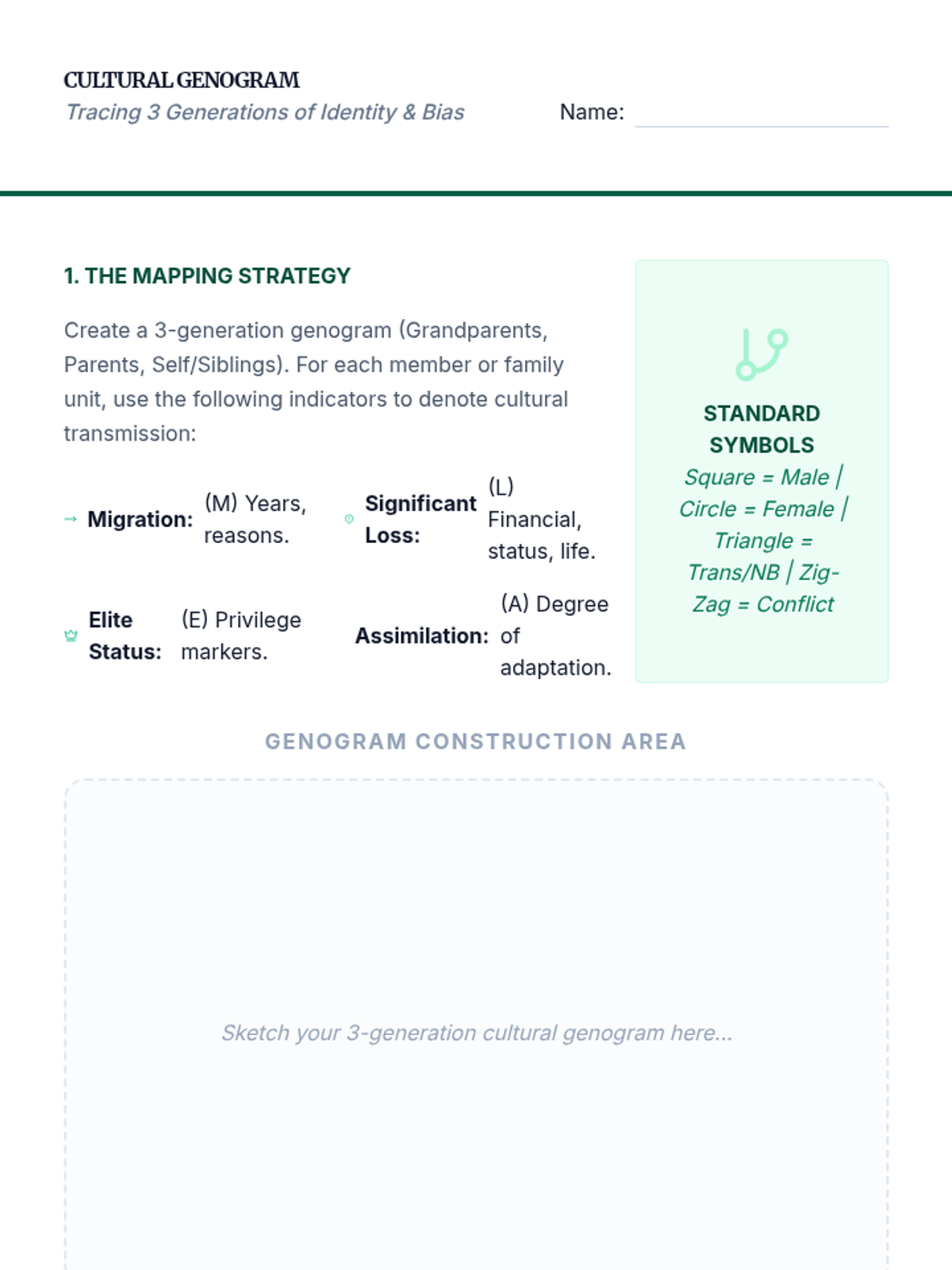
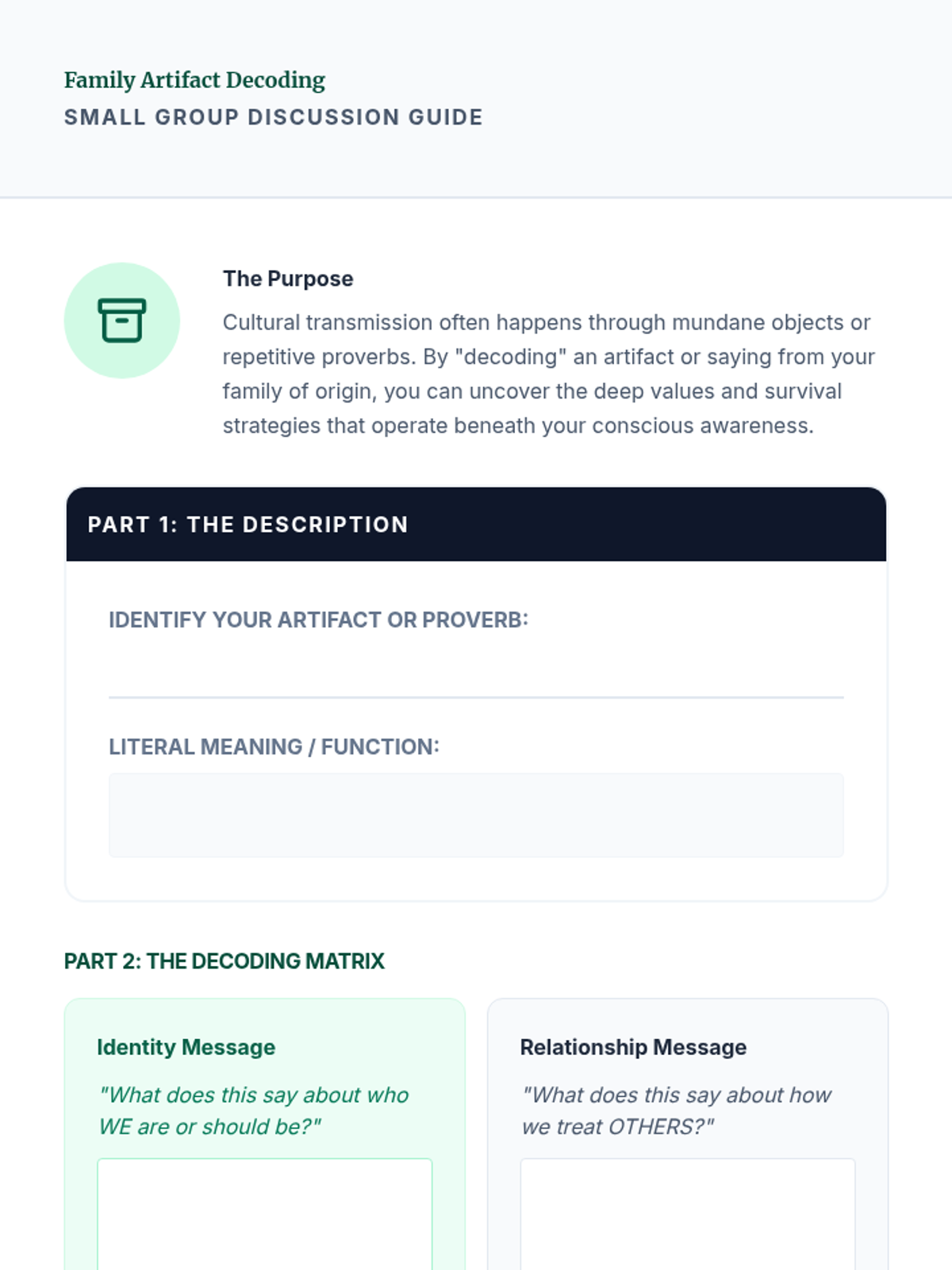
An analysis of family-of-origin scripts and 3-generation cultural transmission to identify internalized biases and potential countertransference.
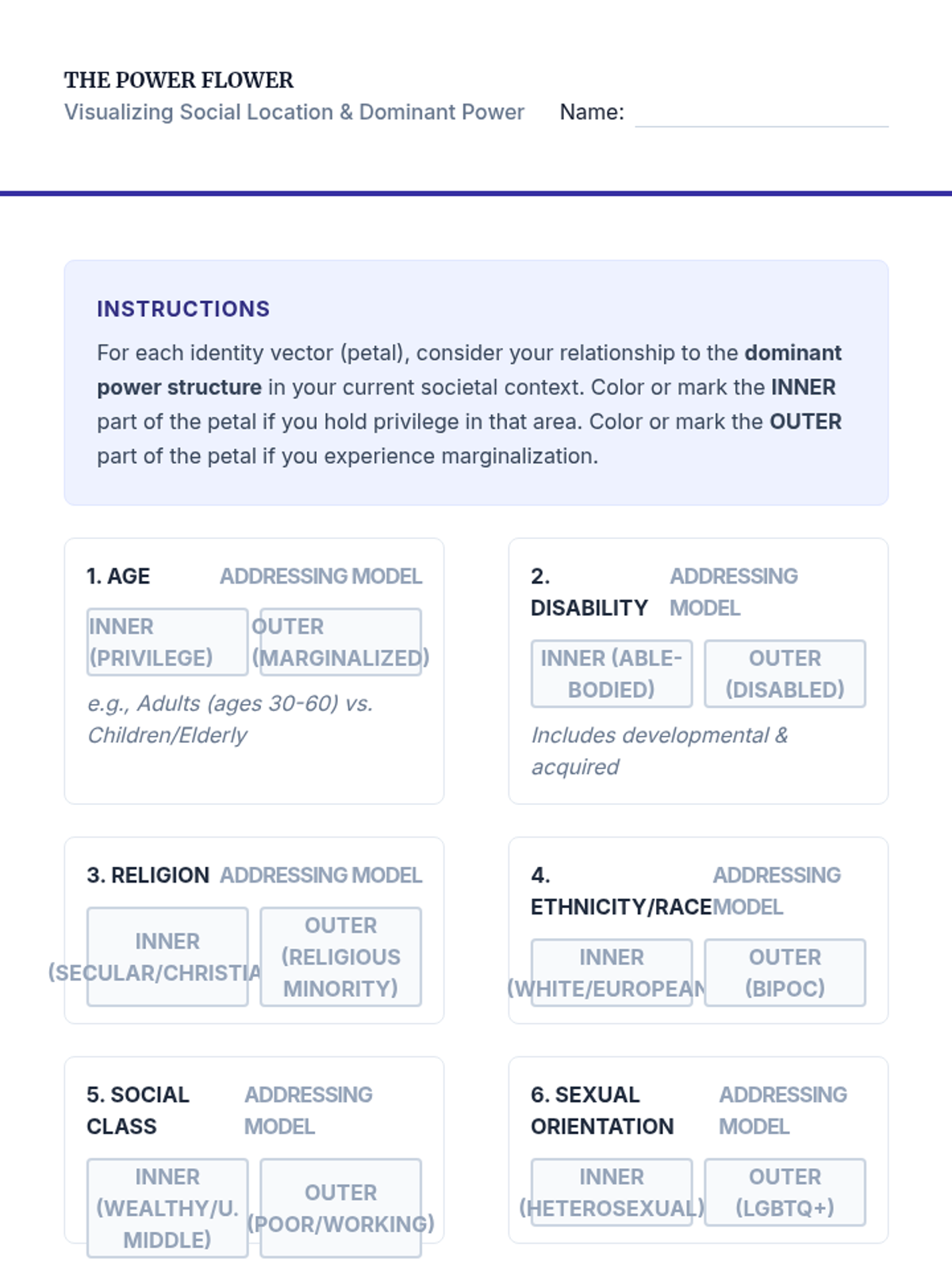
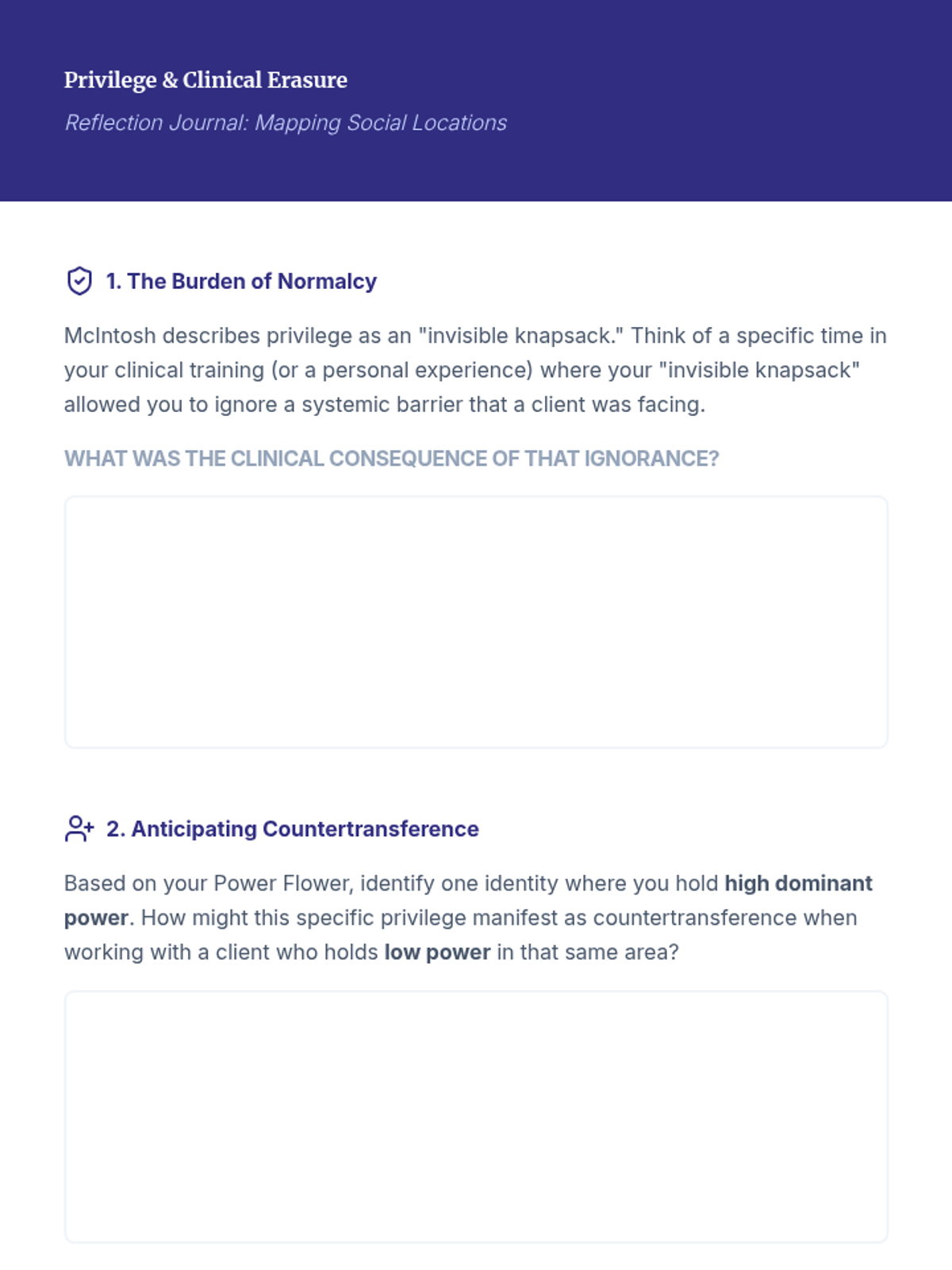
Students use the ADDRESSING model and Power Flower exercise to map their social locations and analyze the impact of privilege and marginalization.
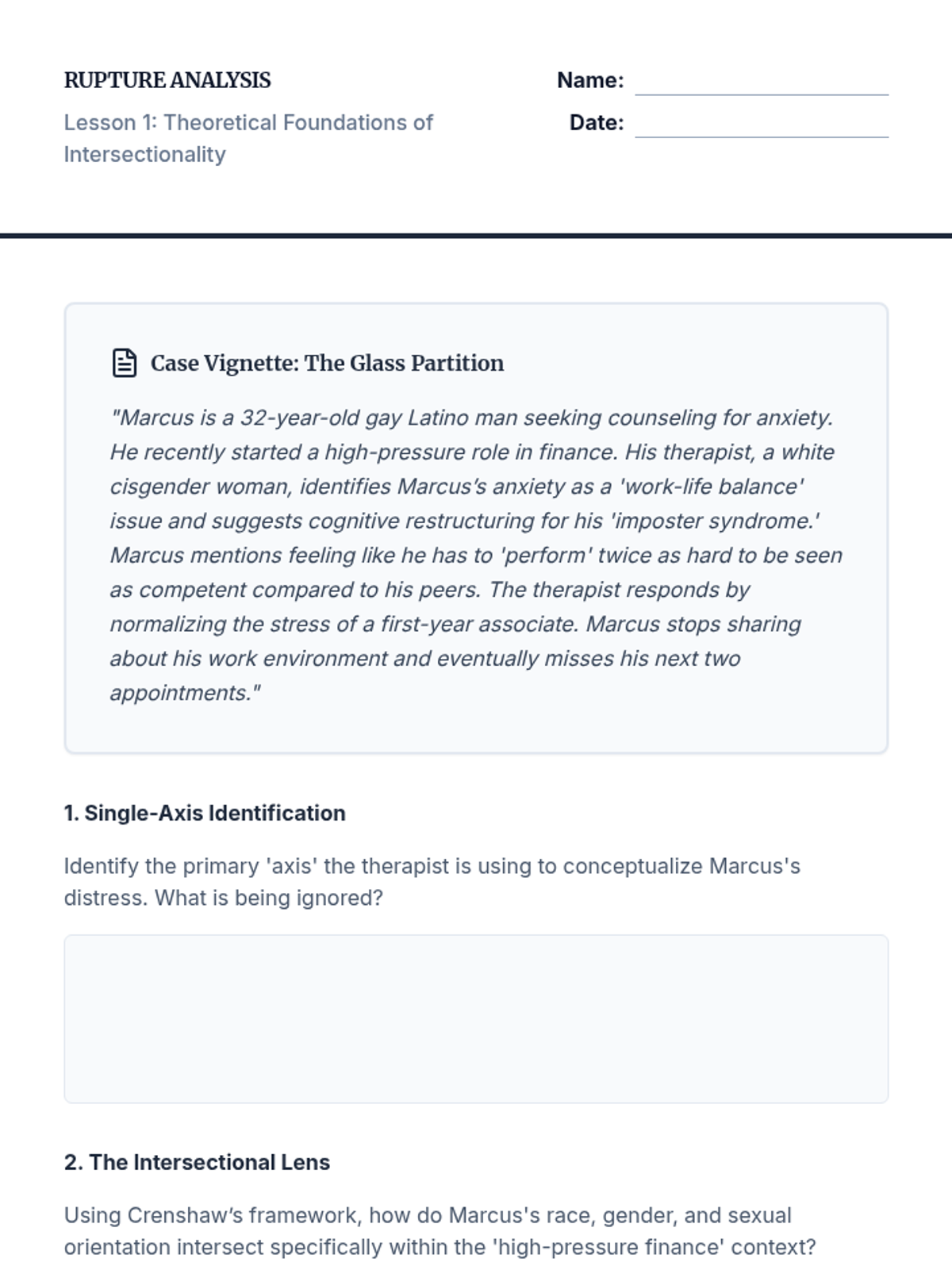
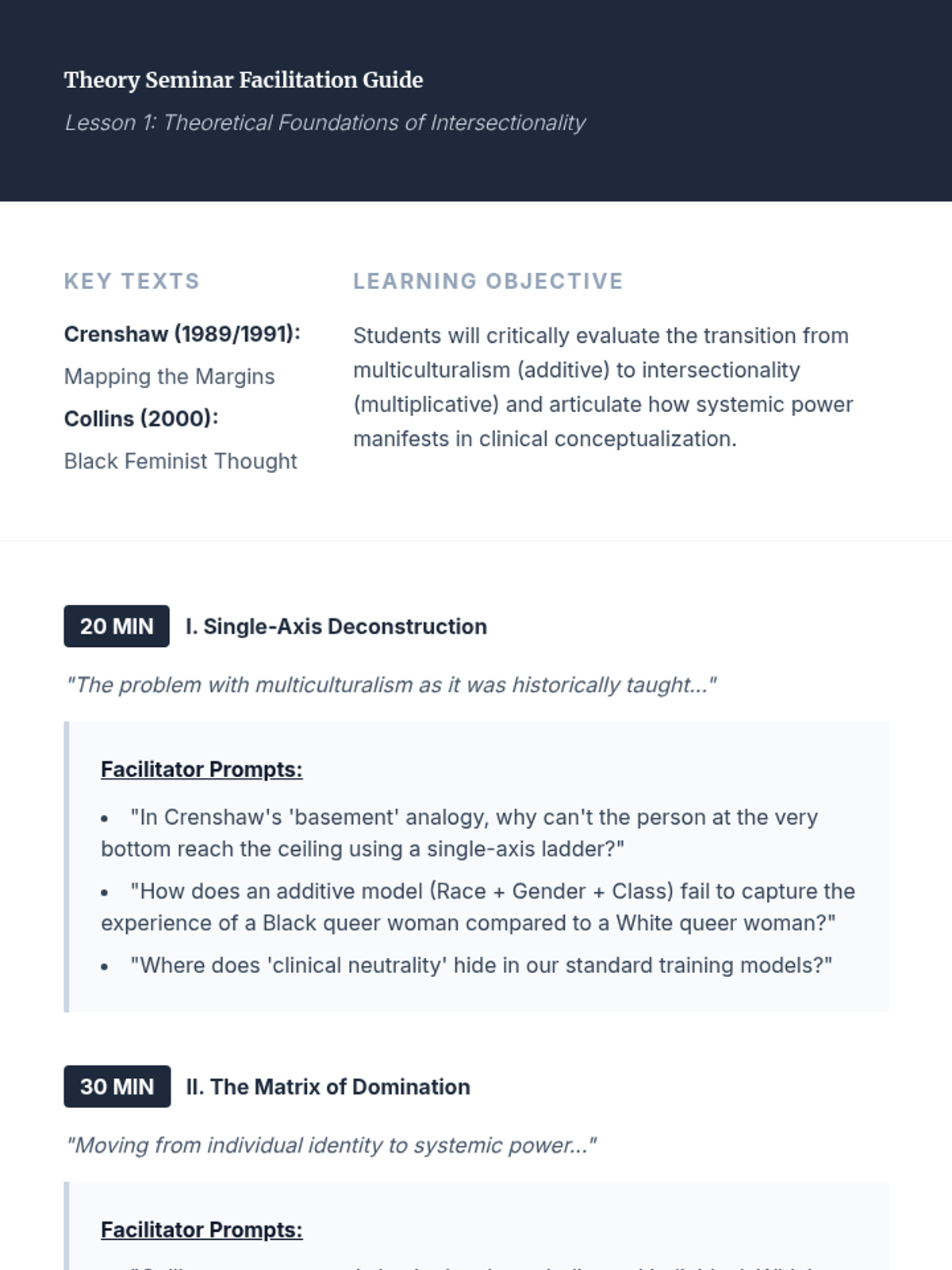
Explores the theoretical roots of intersectionality and its application in clinical practice, contrasting single-axis frameworks with multifaceted identity approaches.
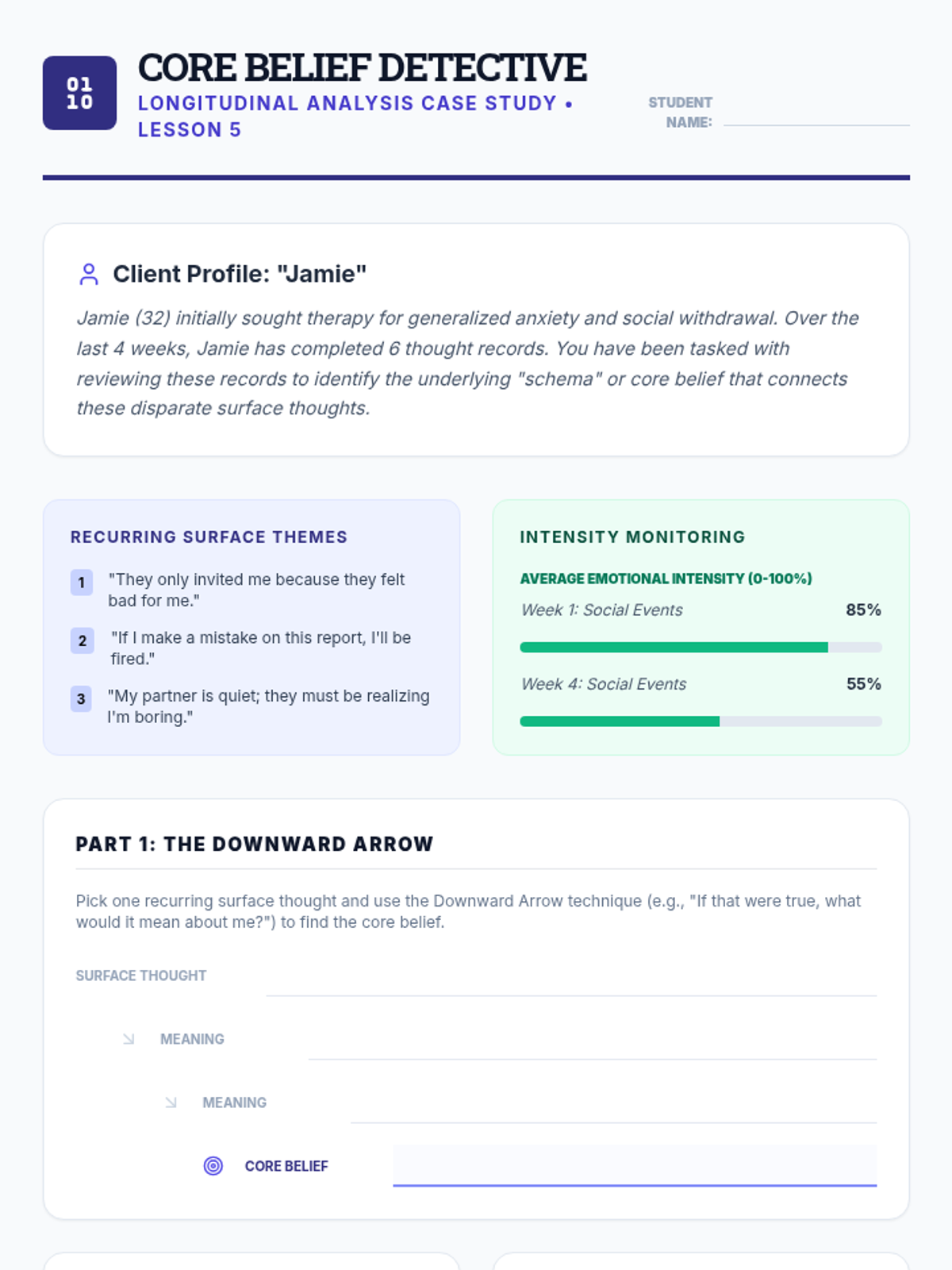
Covers the longitudinal analysis of thought records to identify recurring core beliefs and the ethical implications of cognitive restructuring.
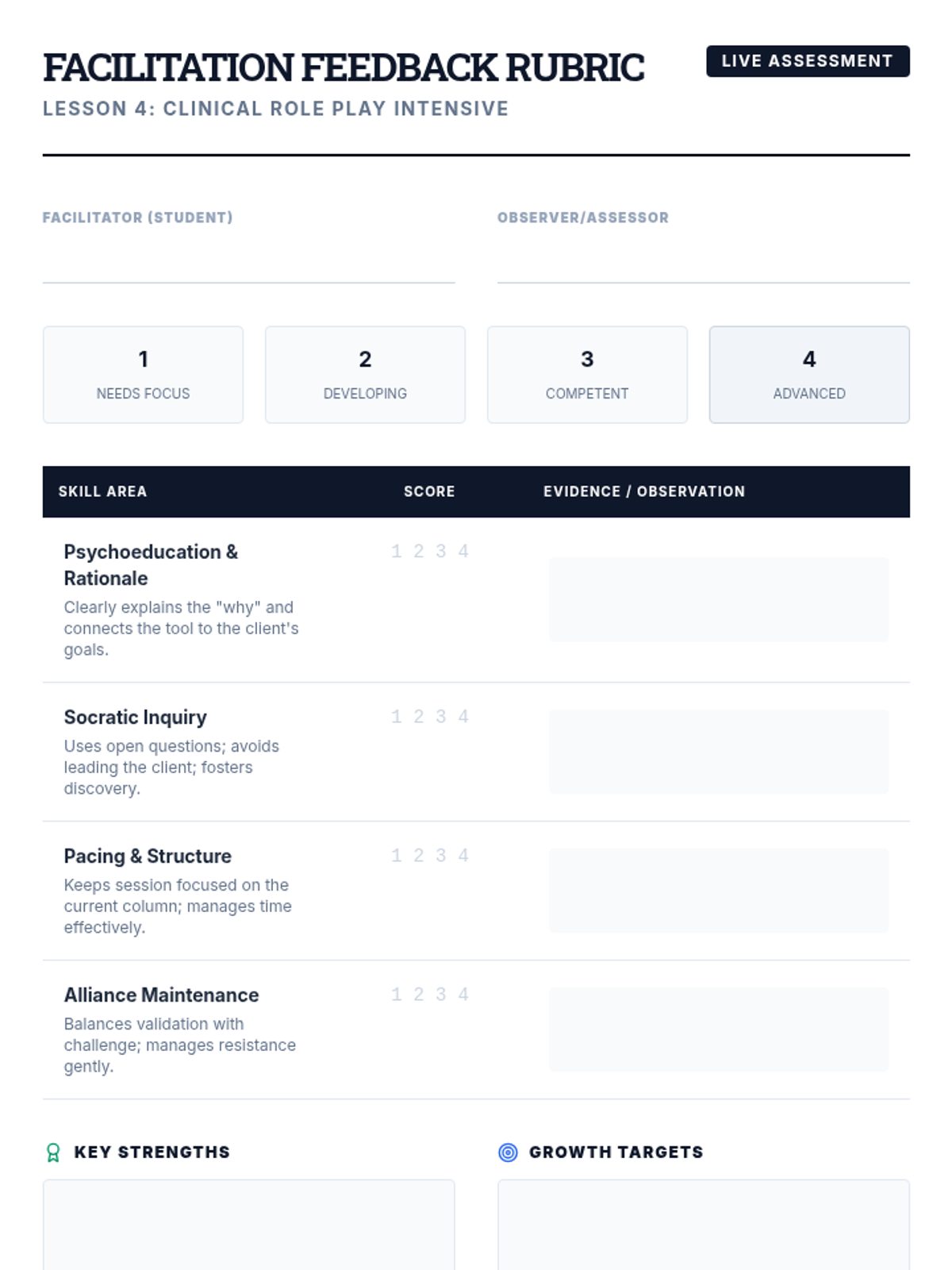
An intensive role-play session focused on real-time facilitation skills. Students practice pacing and interpersonal effectiveness in a simulated clinical setting.
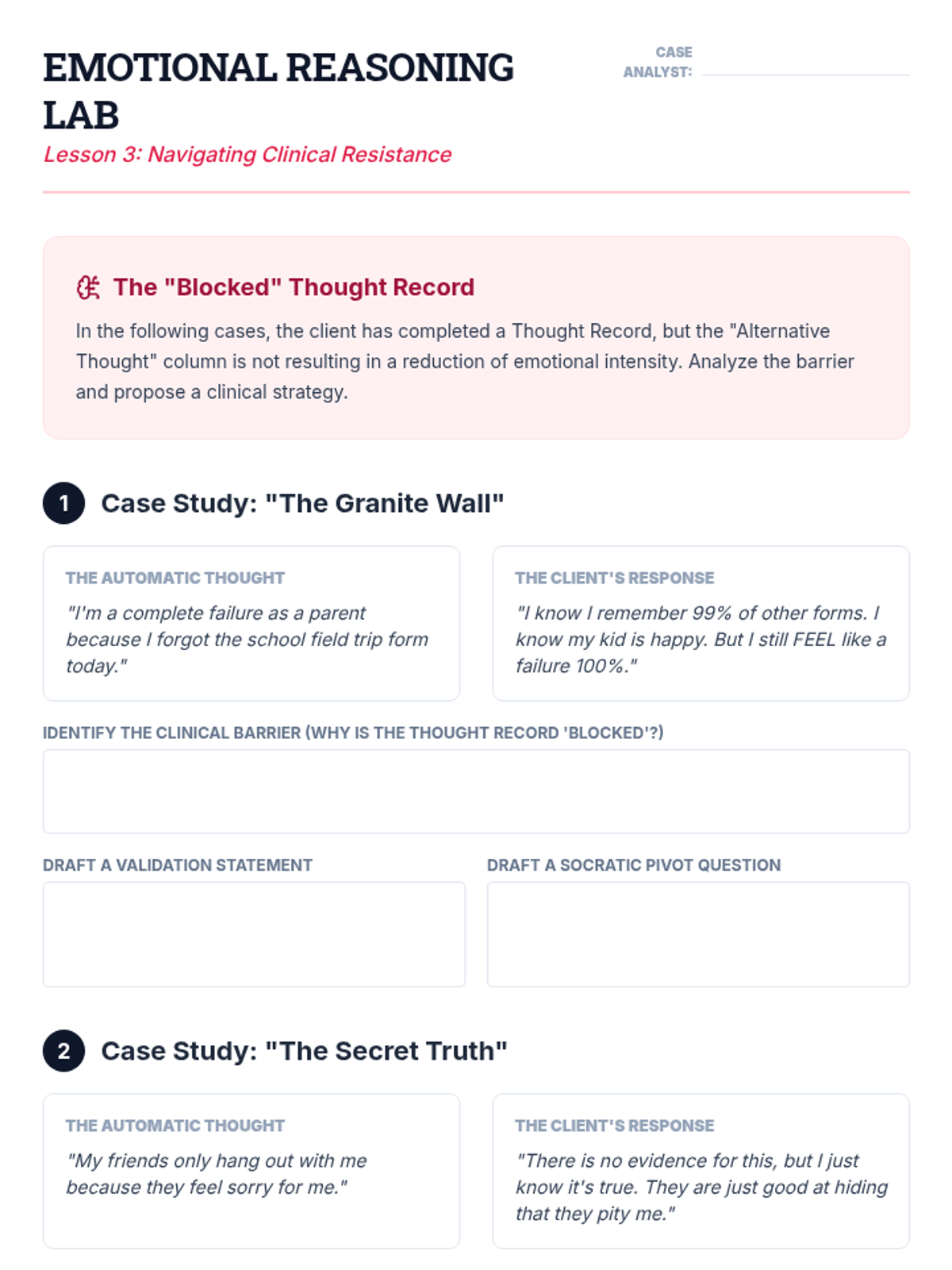
Explores strategies for handling emotional reasoning and therapeutic resistance. Students learn to validate feelings while gently challenging cognitive distortions.
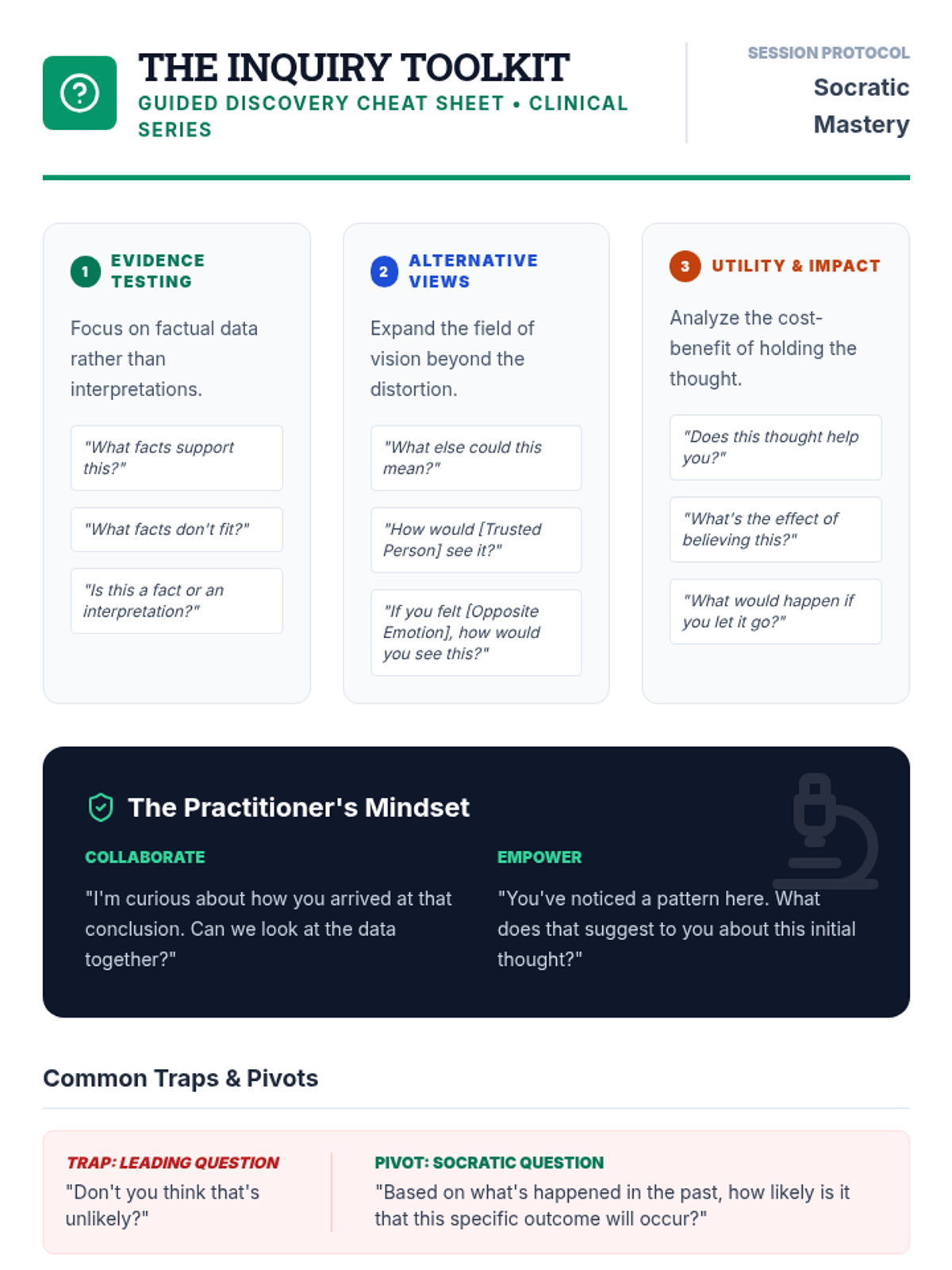
Teaches the specific verbal techniques of guided discovery through Socratic questioning. Students practice helping clients find their own evidence without being directive.
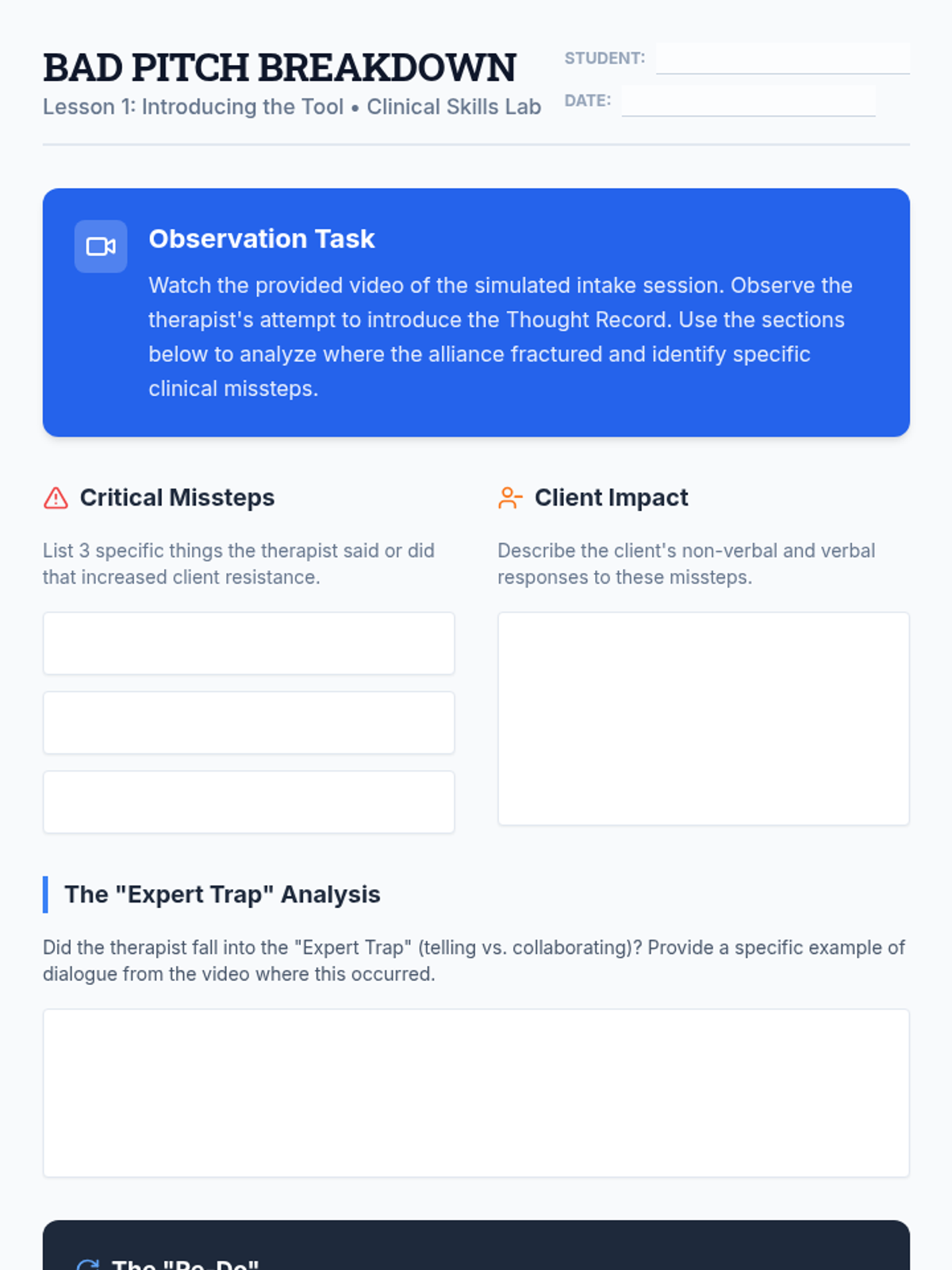
Focuses on the art of introducing CBT concepts and Thought Records to clients. Students develop a professional 'elevator pitch' and learn to manage initial skepticism.
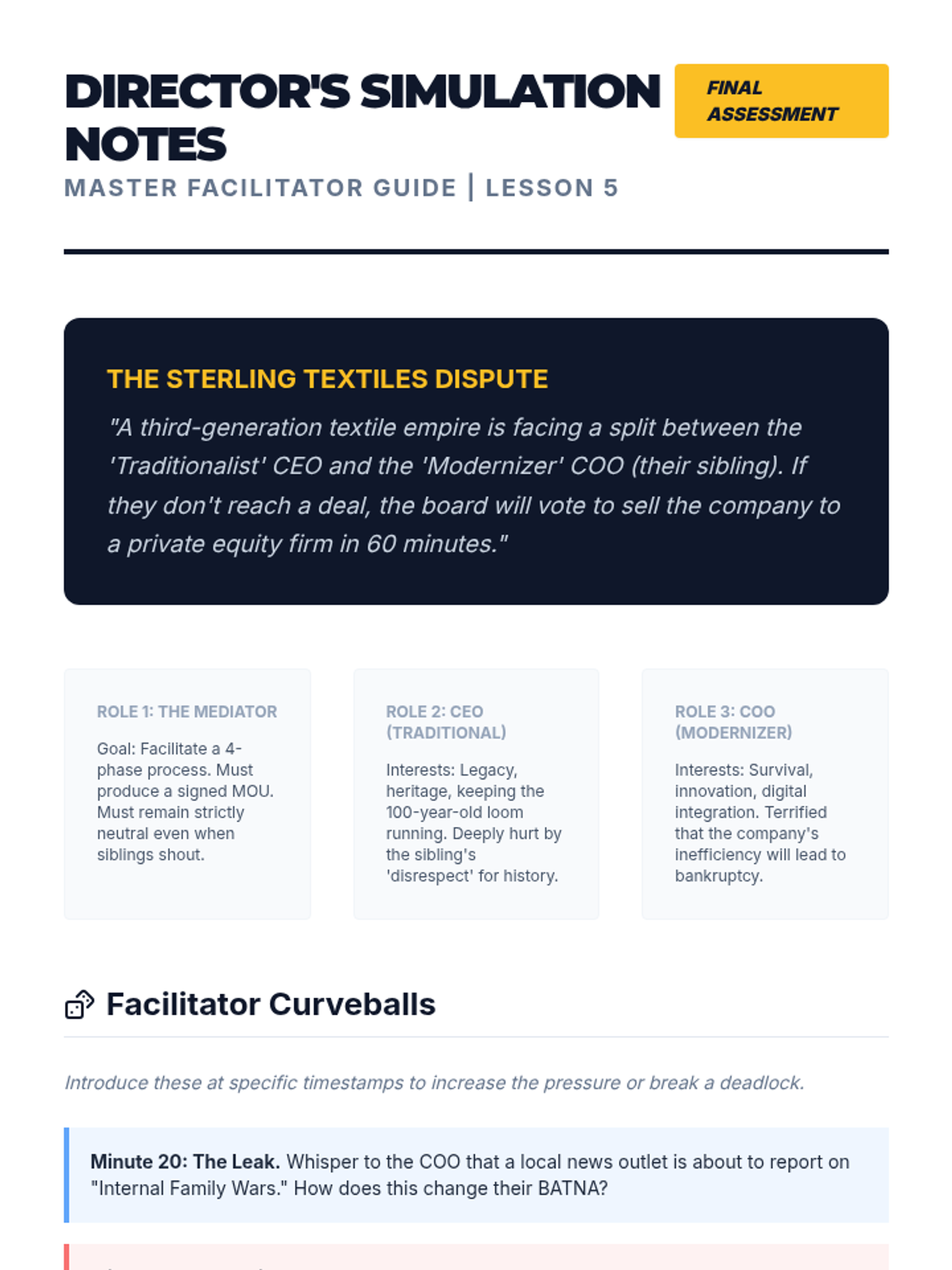
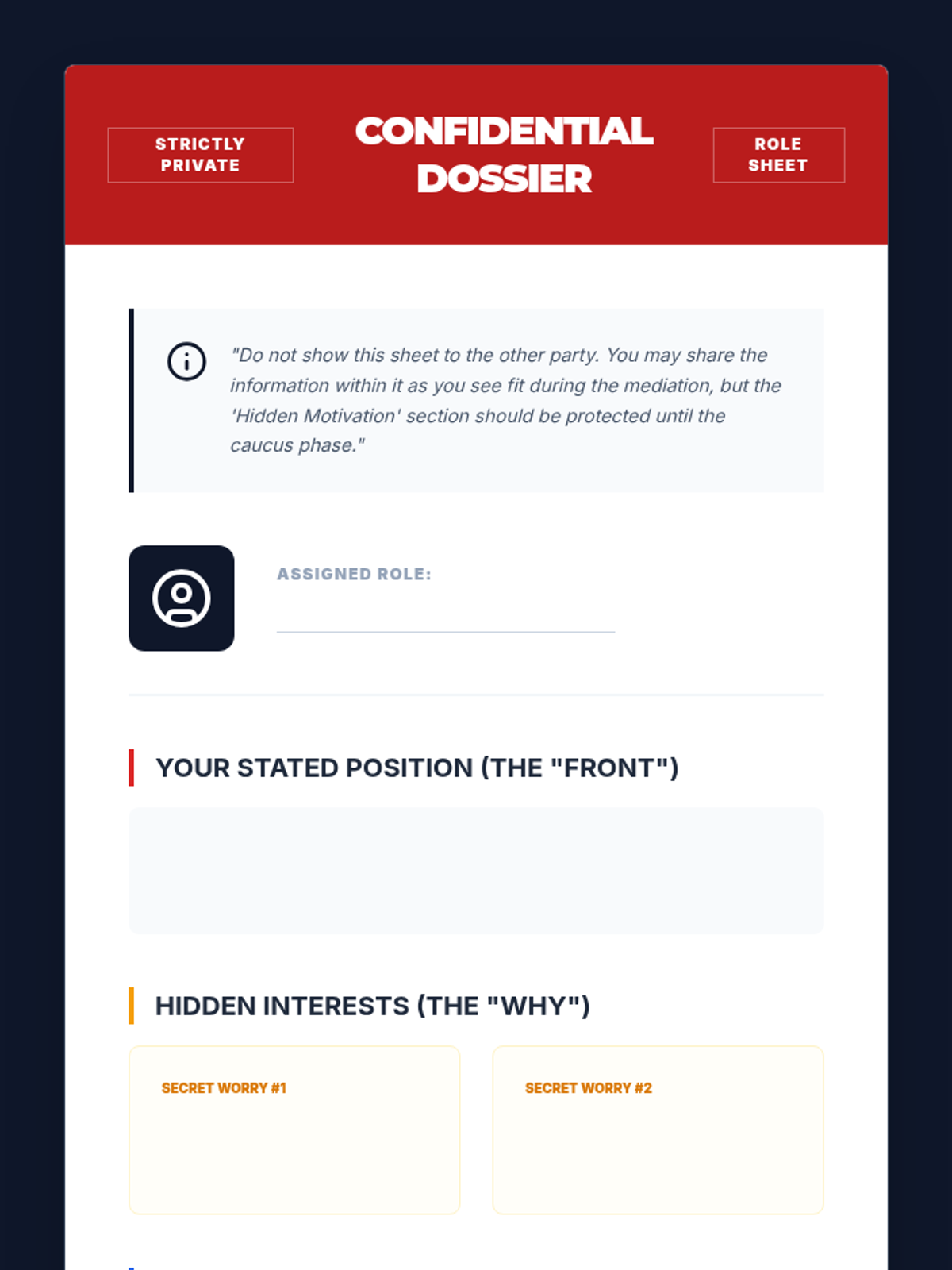
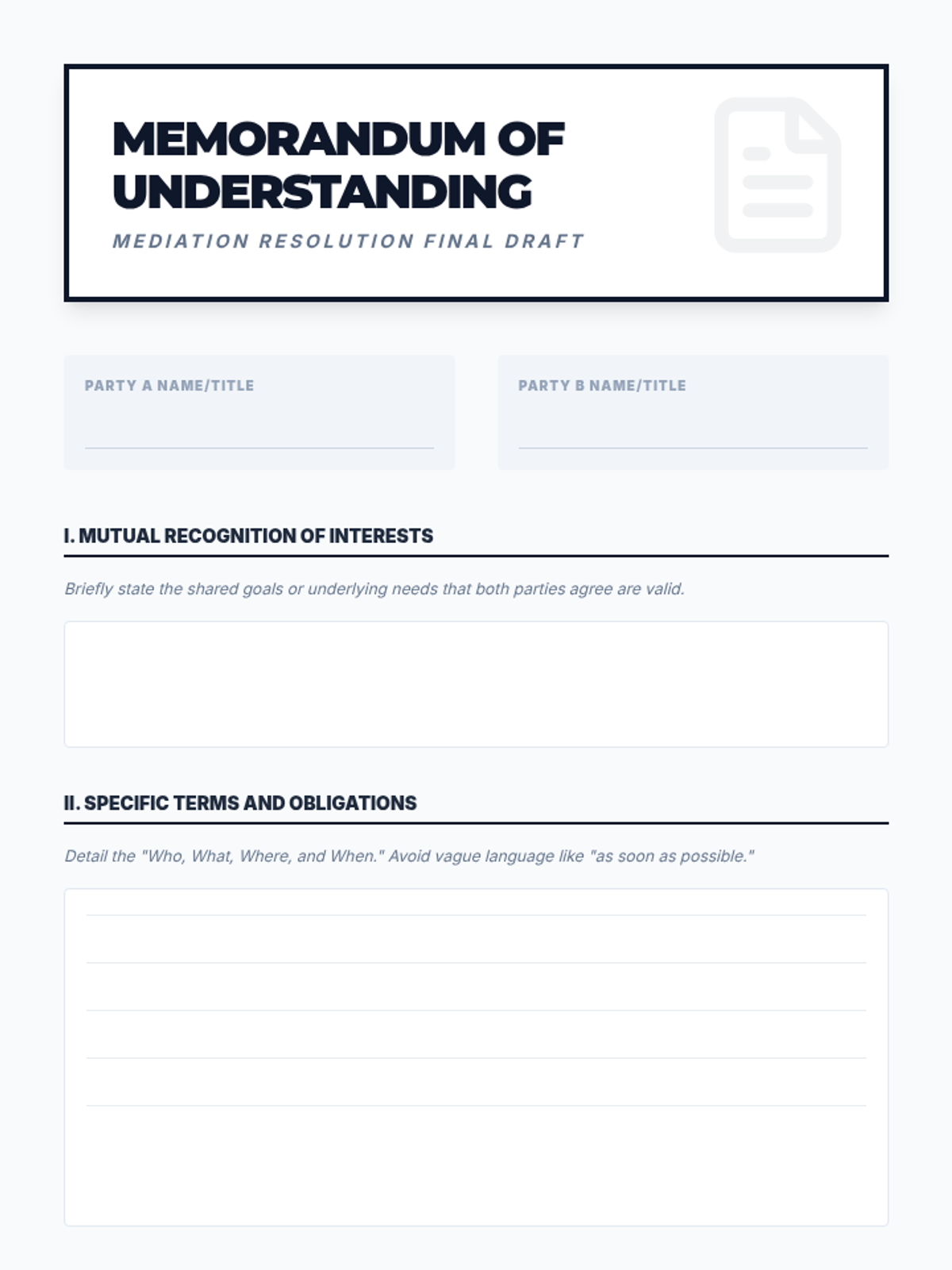
Full-scale simulation of a multi-party dispute involving legal and interpersonal elements. Students draft a Memorandum of Understanding (MOU) that is stress-tested for durability and clarity.
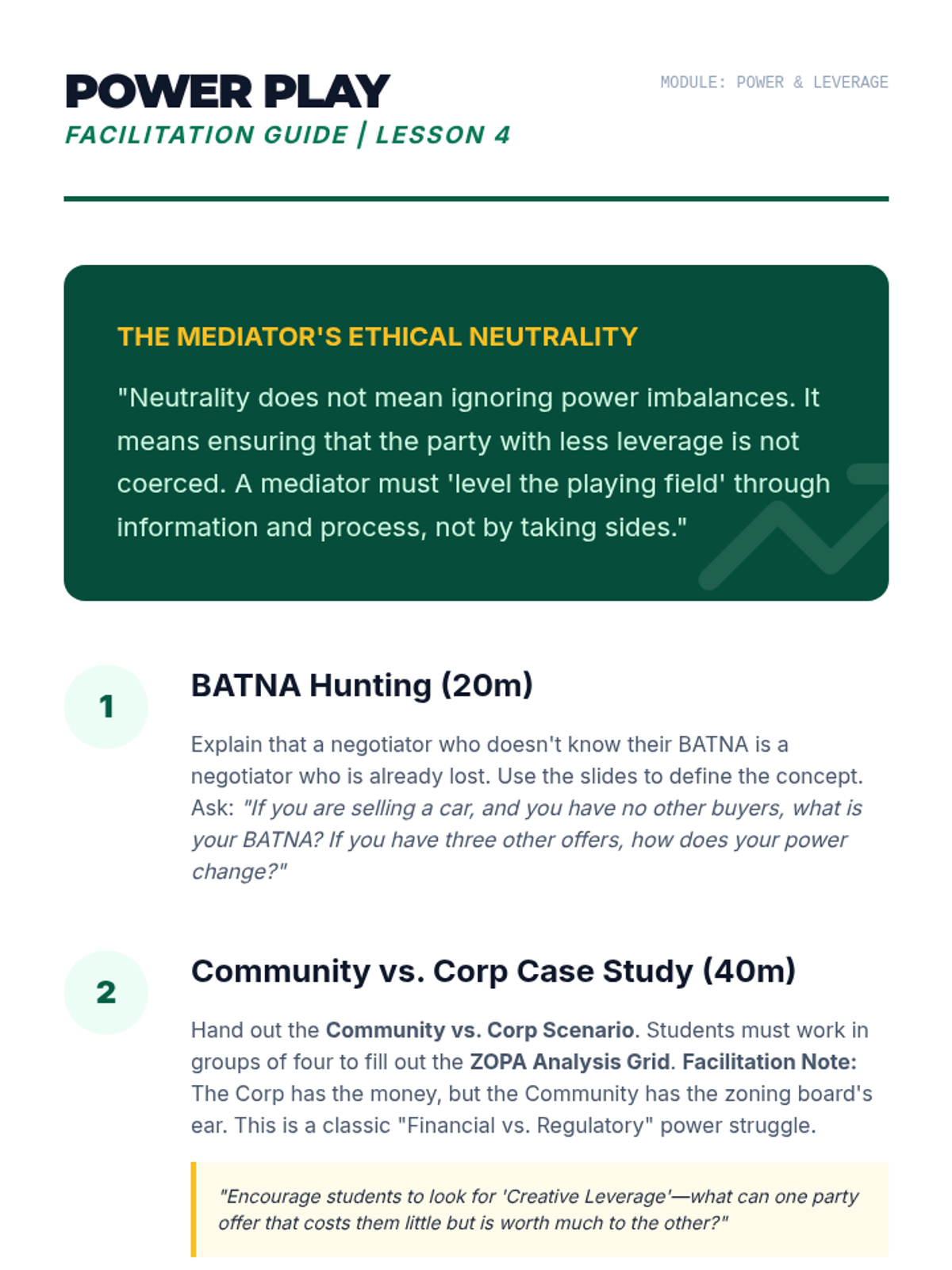
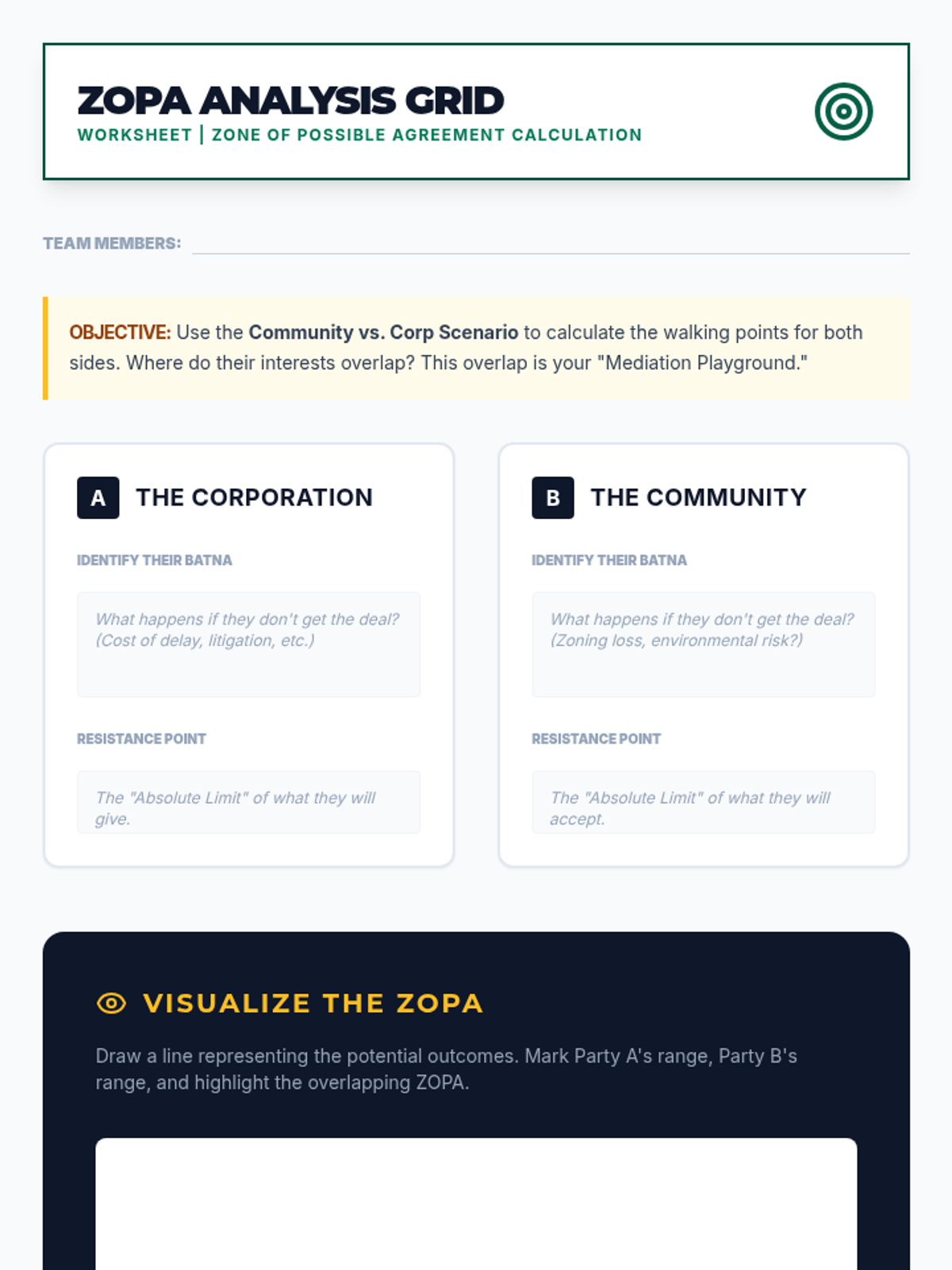
Identification of power imbalances and calculation of the Best Alternative to a Negotiated Agreement (BATNA). Students analyze the Zone of Possible Agreement (ZOPA) in complex organizational scenarios.
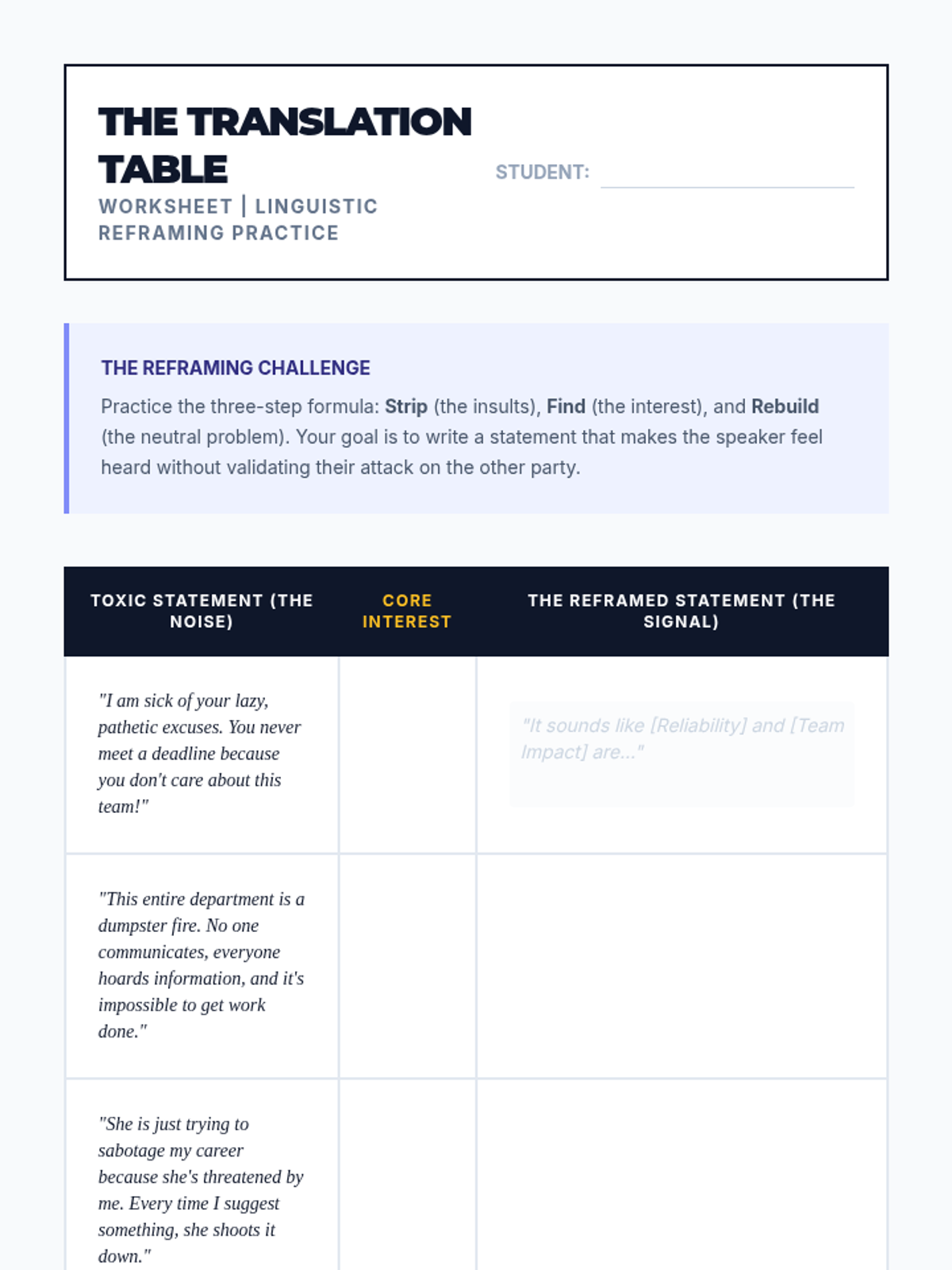
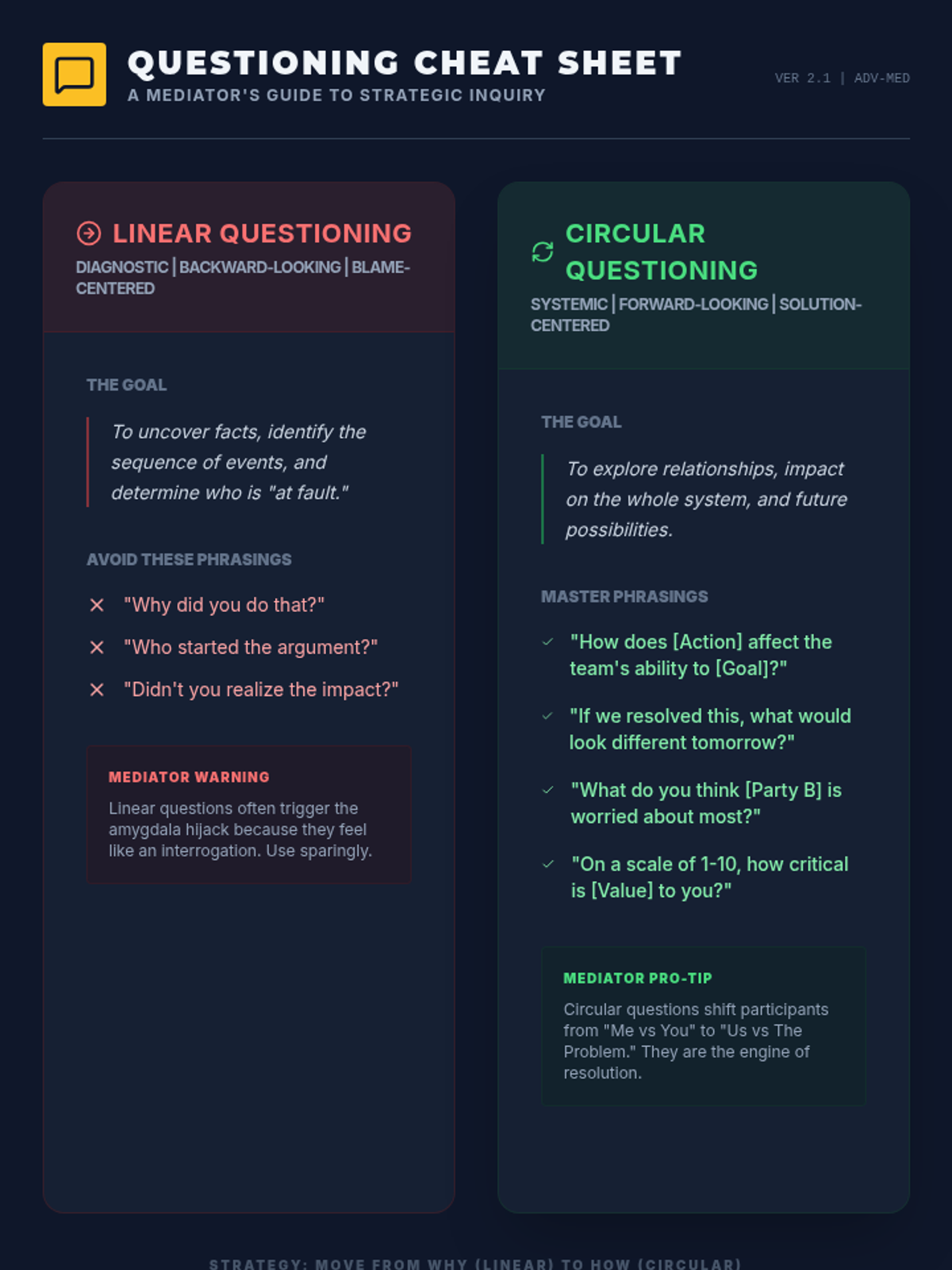
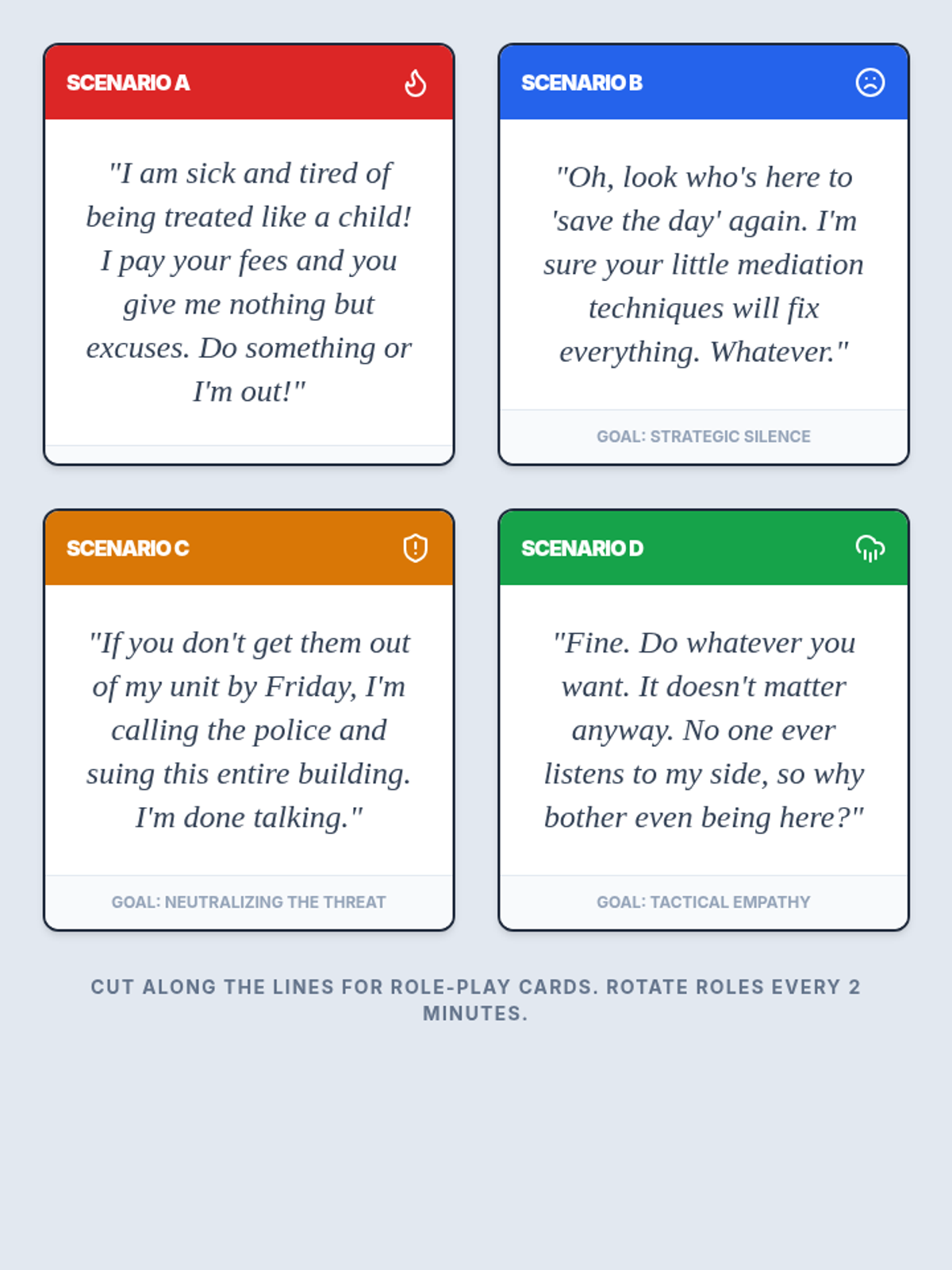
Practice in reframing toxic language into neutral, problem-solving statements and utilizing circular questioning to uncover systemic issues. Focuses on the linguistic tools required for effective mediation facilitation.
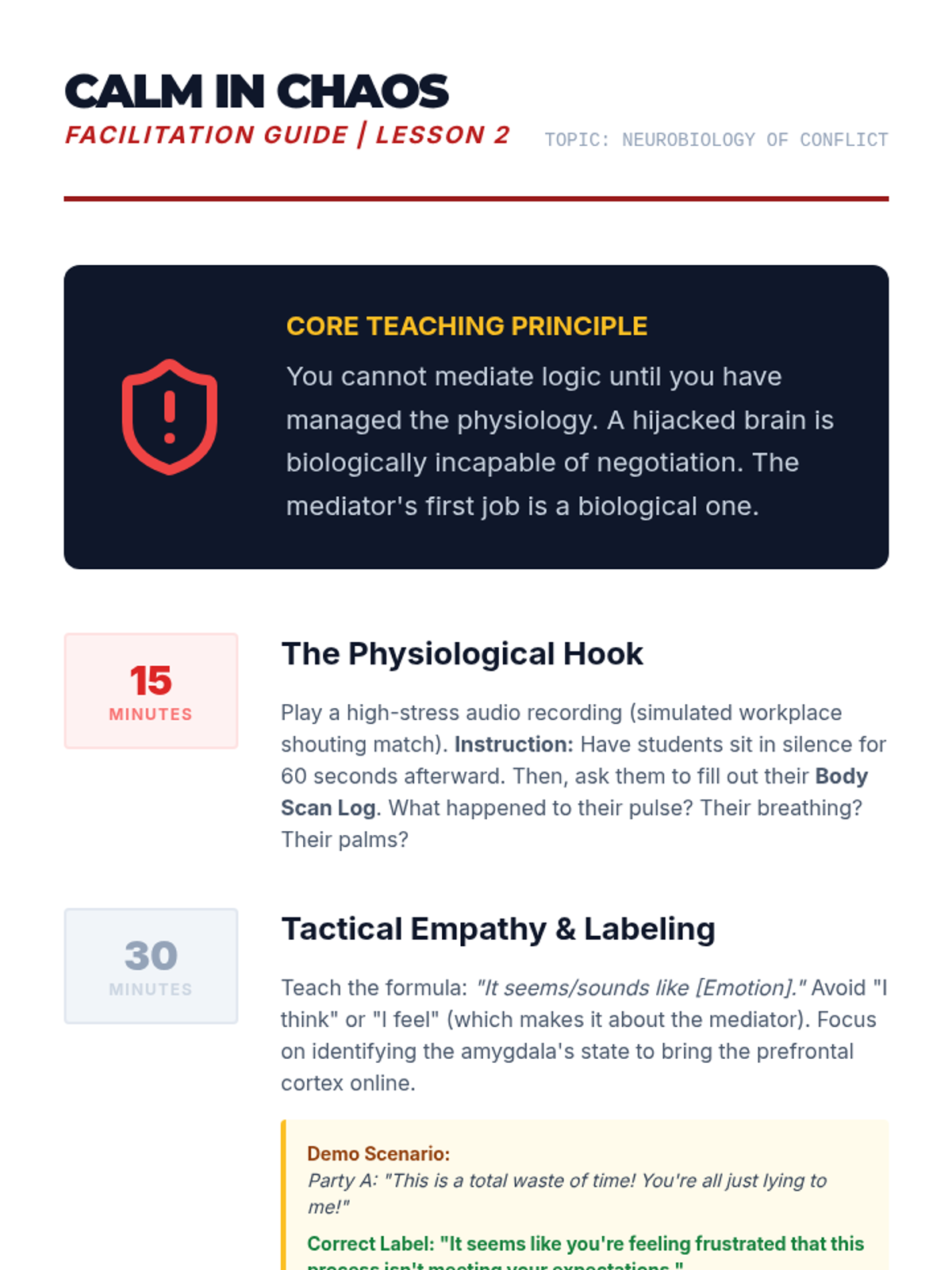
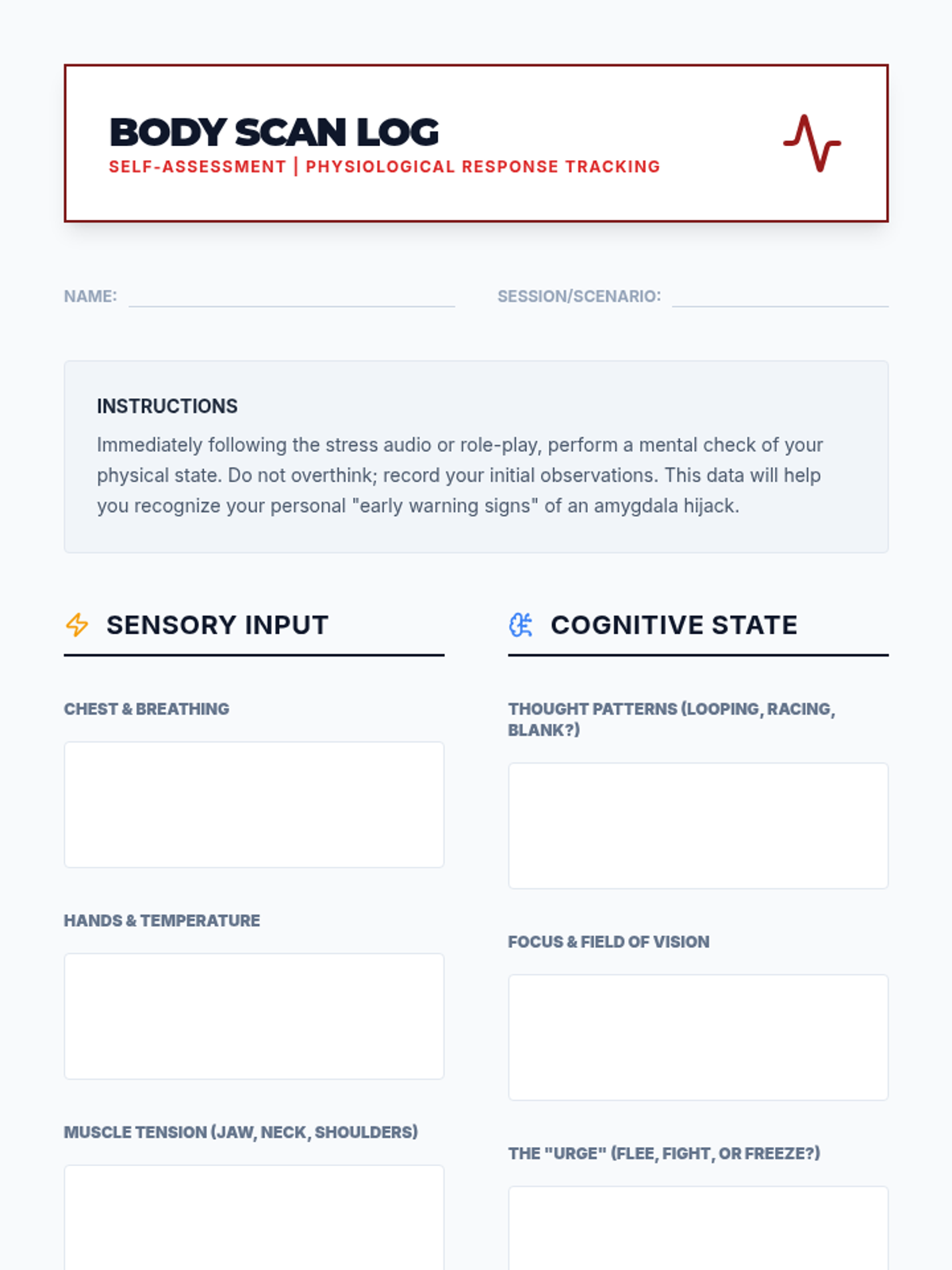
Exploration of the 'amygdala hijack' and its impact on rational decision-making during disputes. Students practice de-escalation techniques and neutrality maintenance while managing their own physiological responses to high-arousal emotions.
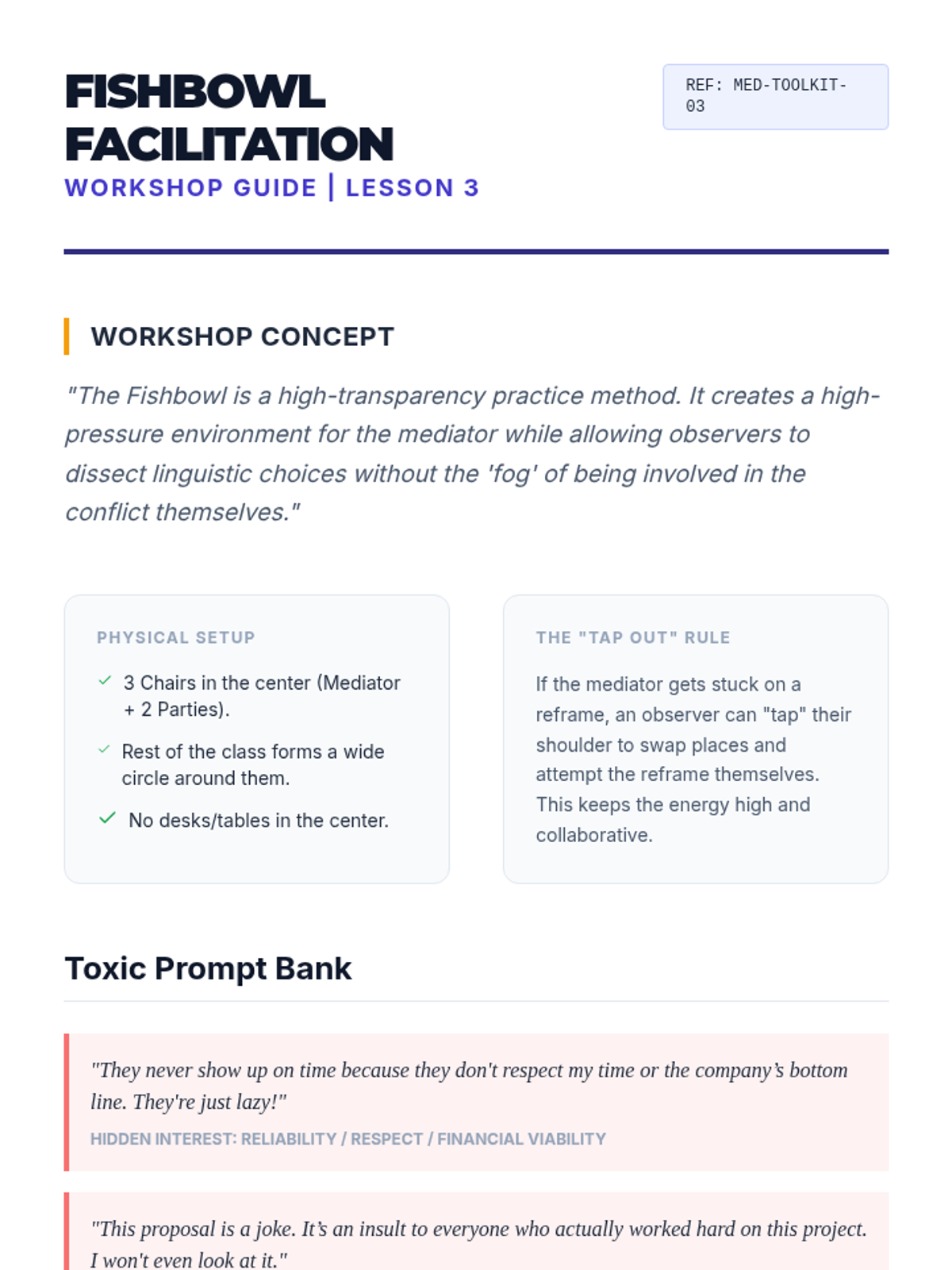
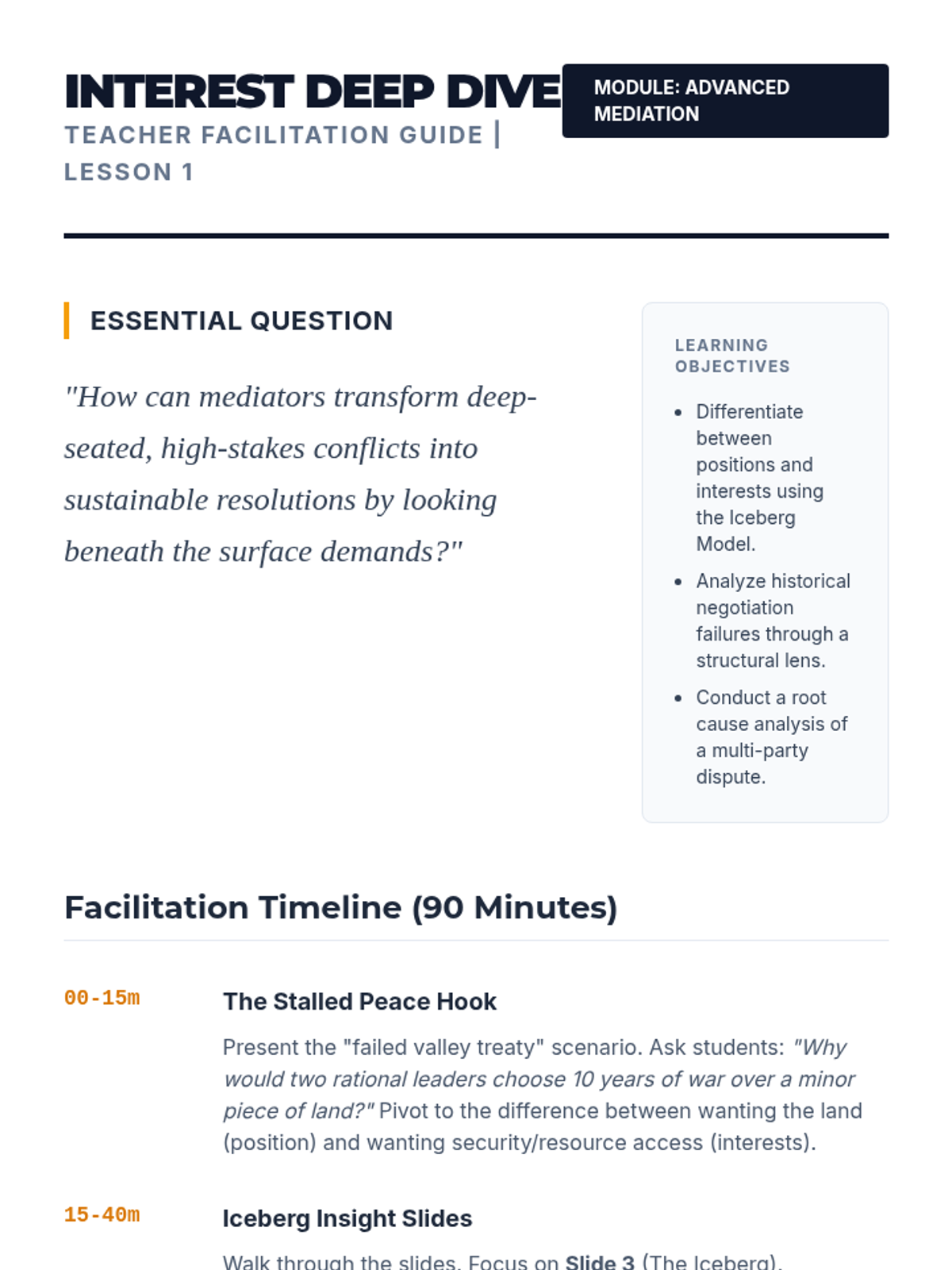
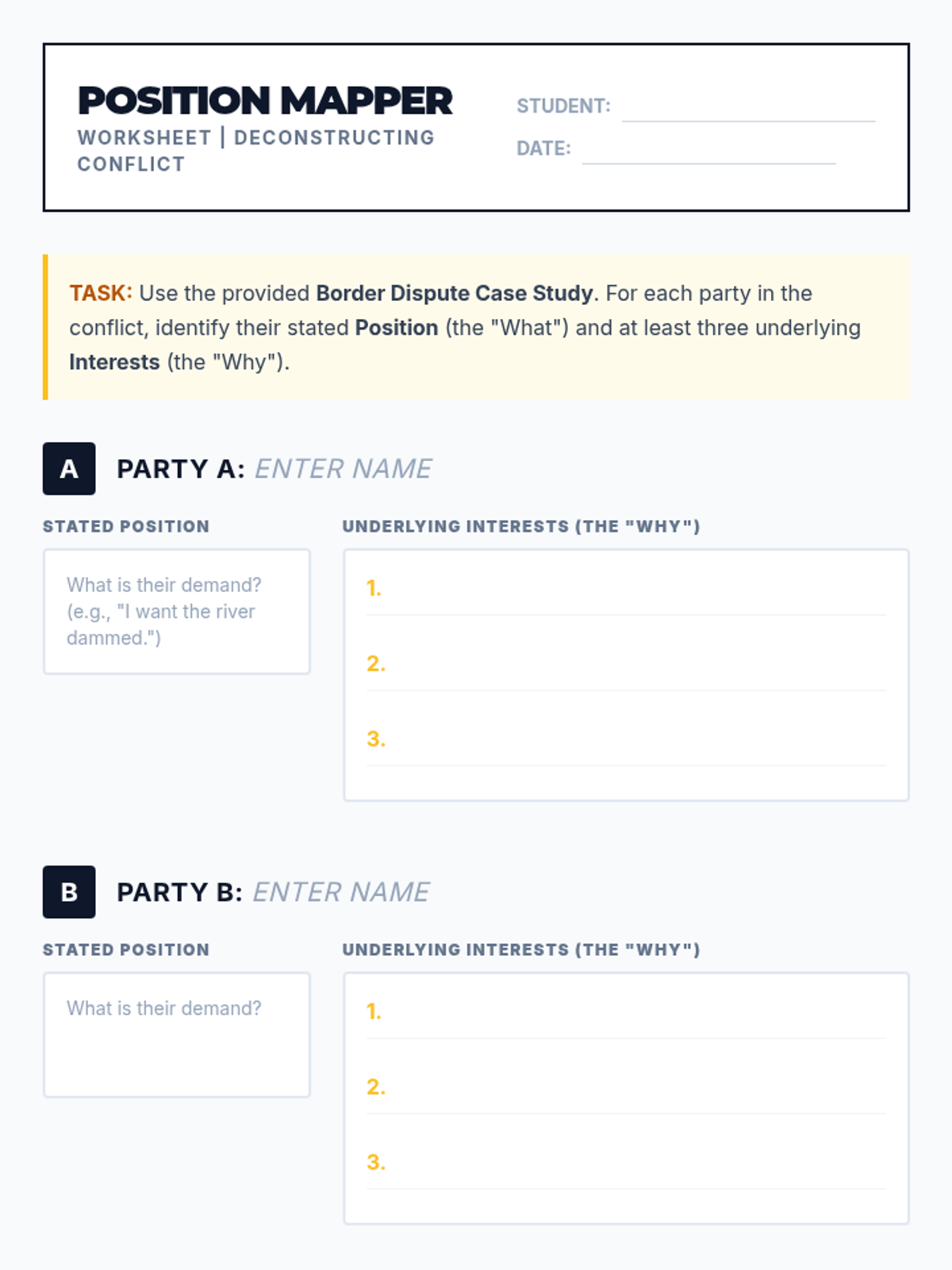
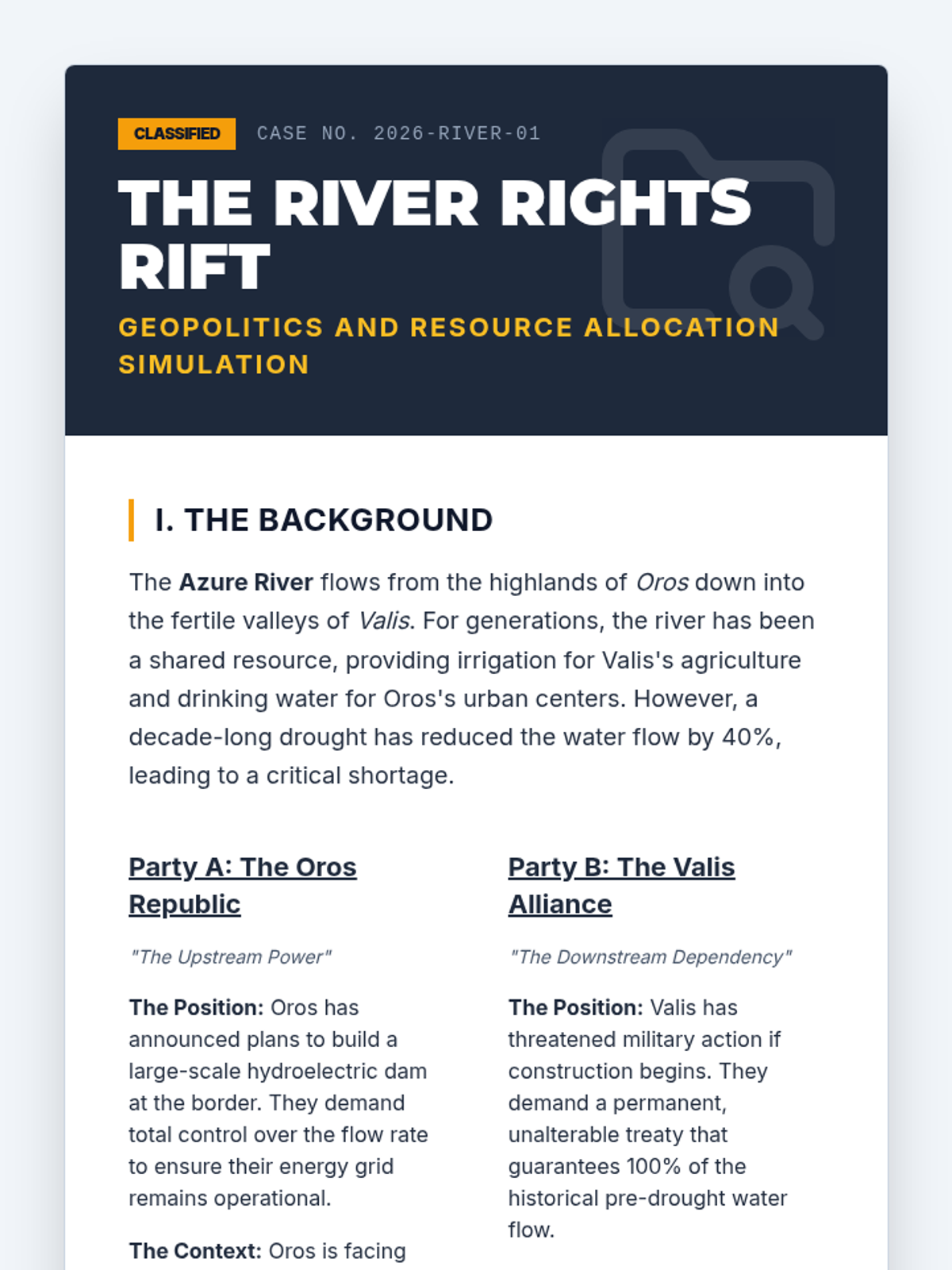
Students analyze the theoretical distinction between surface-level demands (positions) and underlying needs (interests) using the 'Iceberg Model' of conflict. They will diagnose root causes in complex disputes and apply the Harvard Negotiation Project framework.
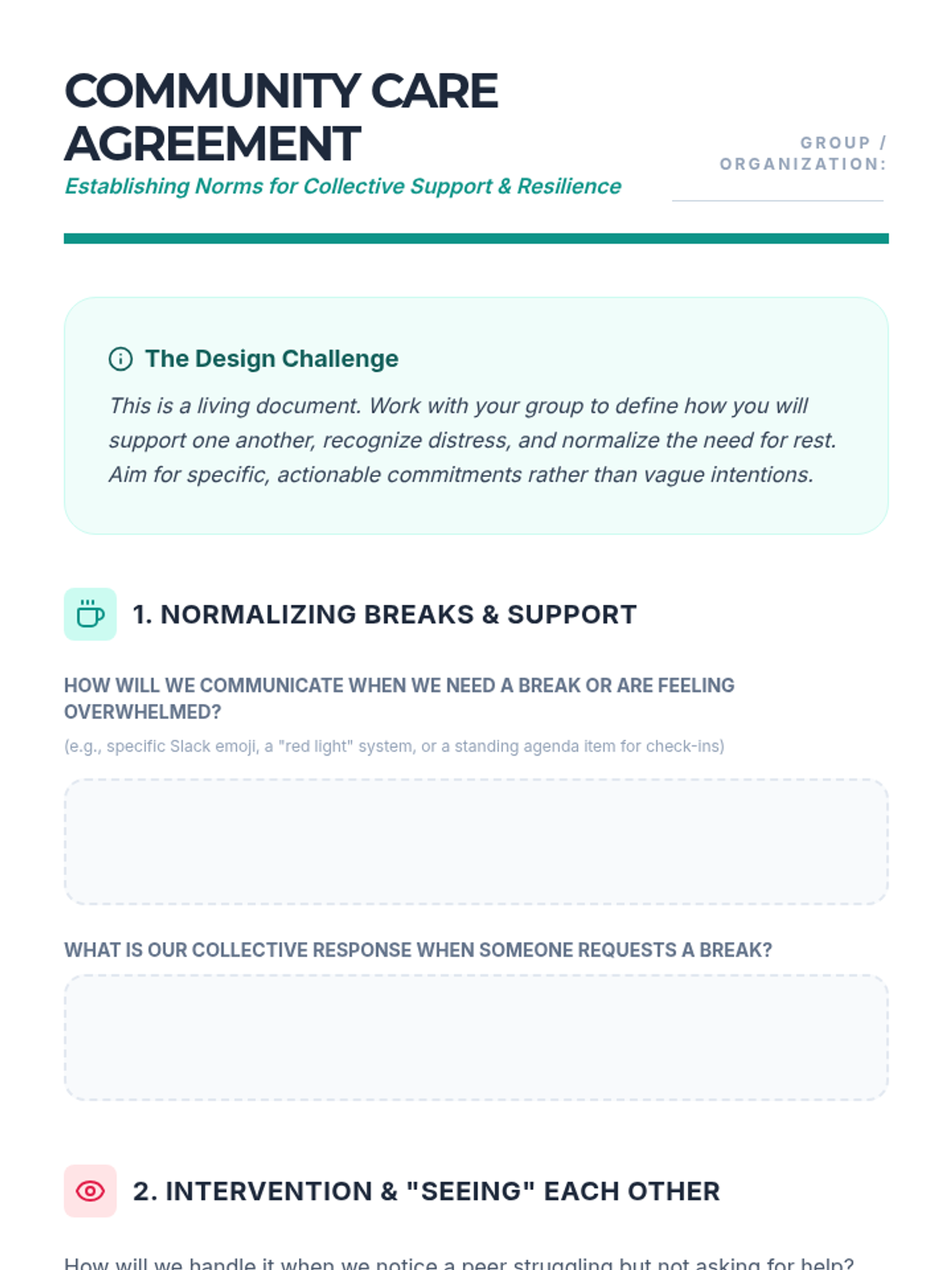
The sequence concludes with students designing a 'Community Care Agreement' to establish norms for mutual support and collective rest in their own communities.
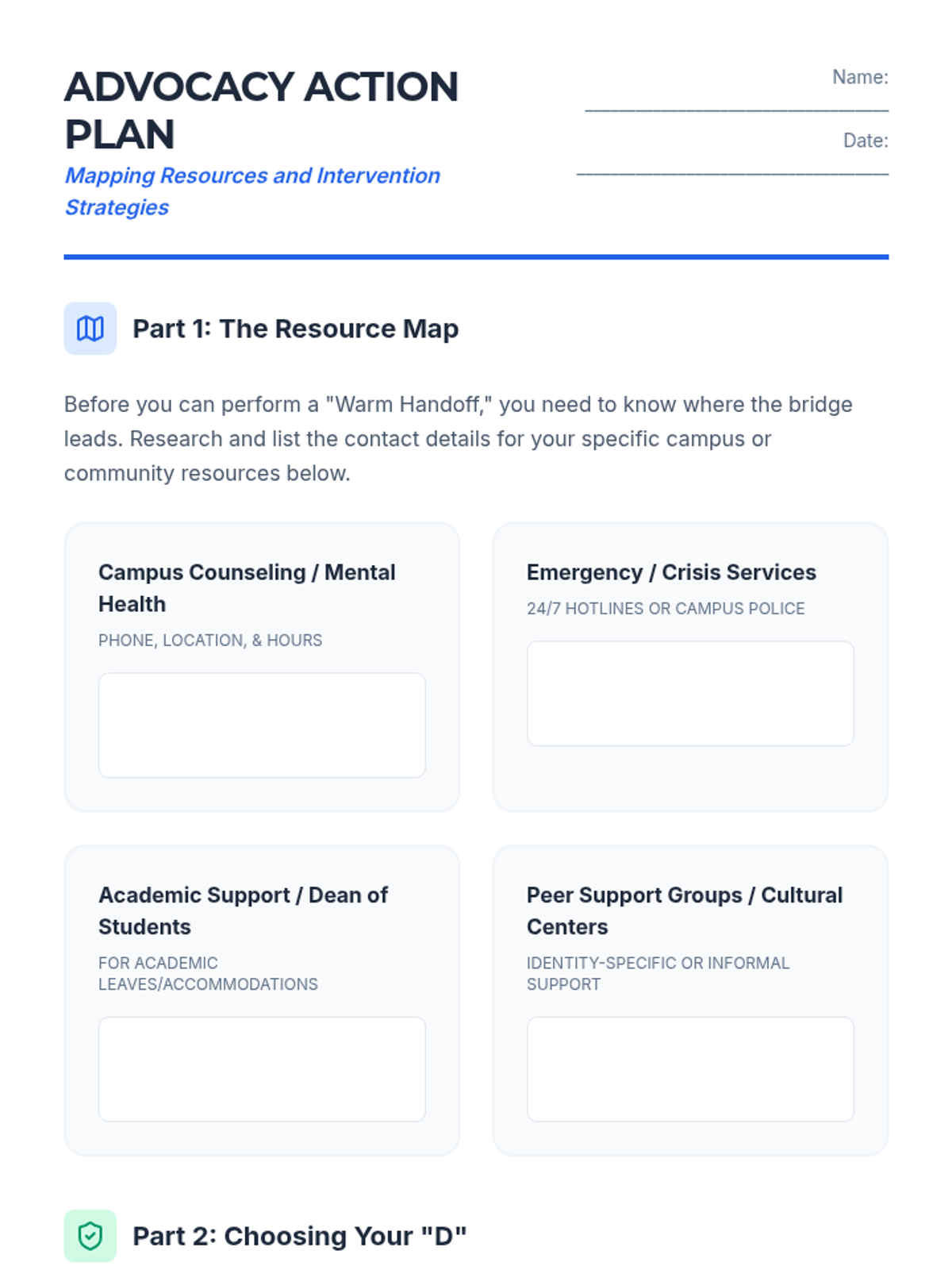
This lesson teaches specific bystander intervention strategies to bridge the gap between noticing distress and connecting a peer to resources.
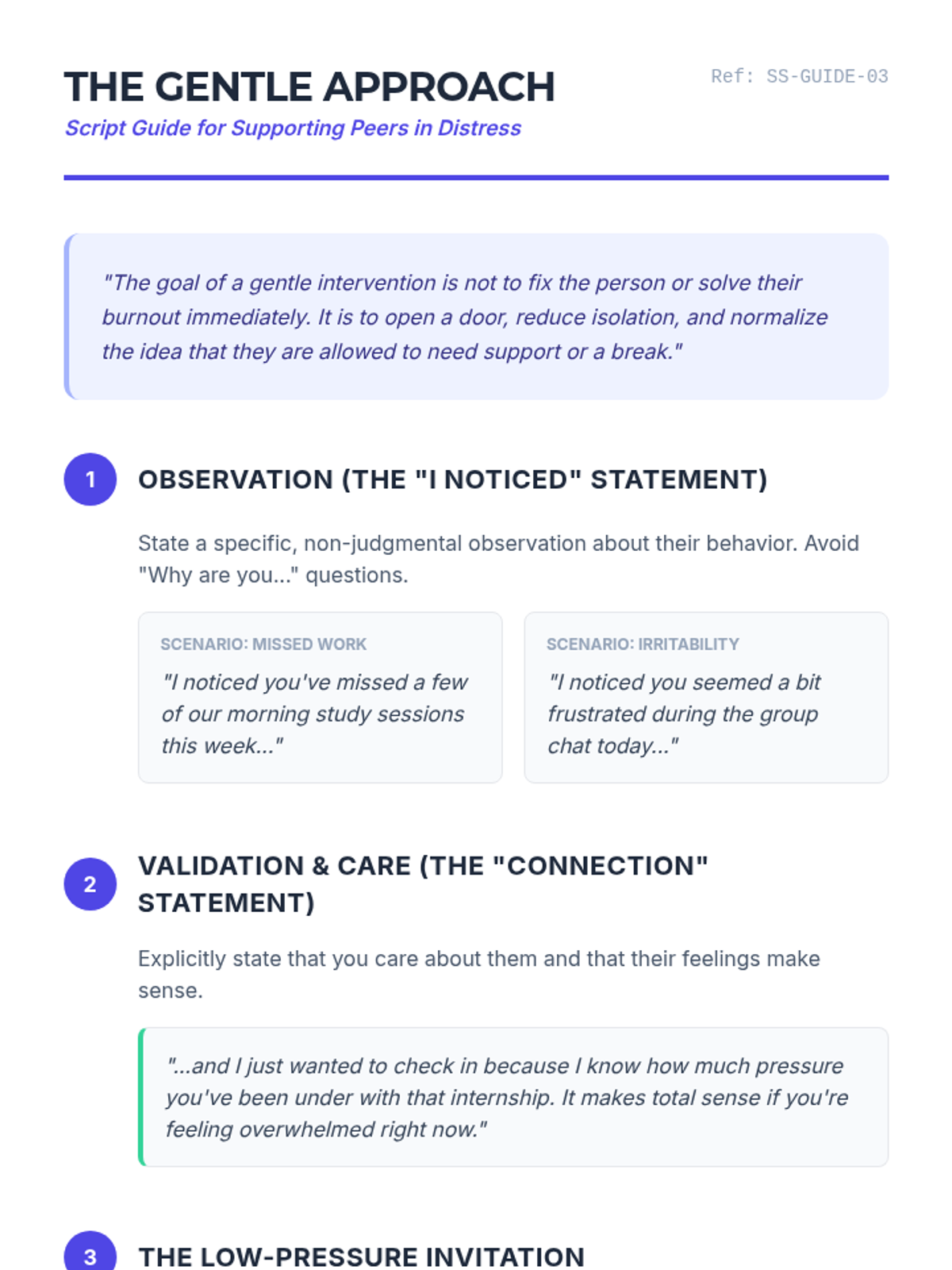
Students learn to identify subtle behavioral and non-verbal signs of distress in their peers and practice gentle intervention strategies.
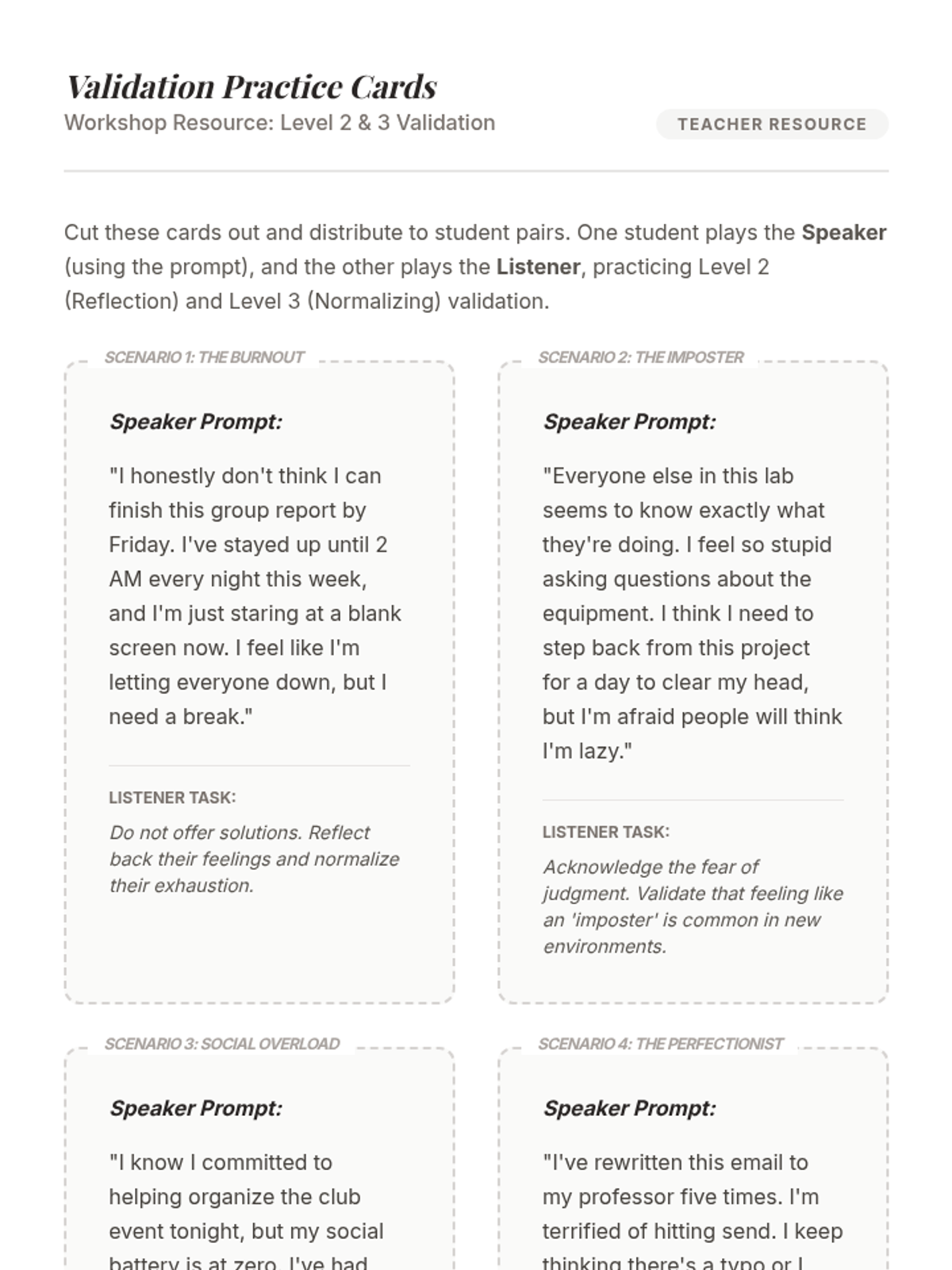
A workshop focusing on the listening skills required to support peers, emphasizing validation over immediate problem-solving.
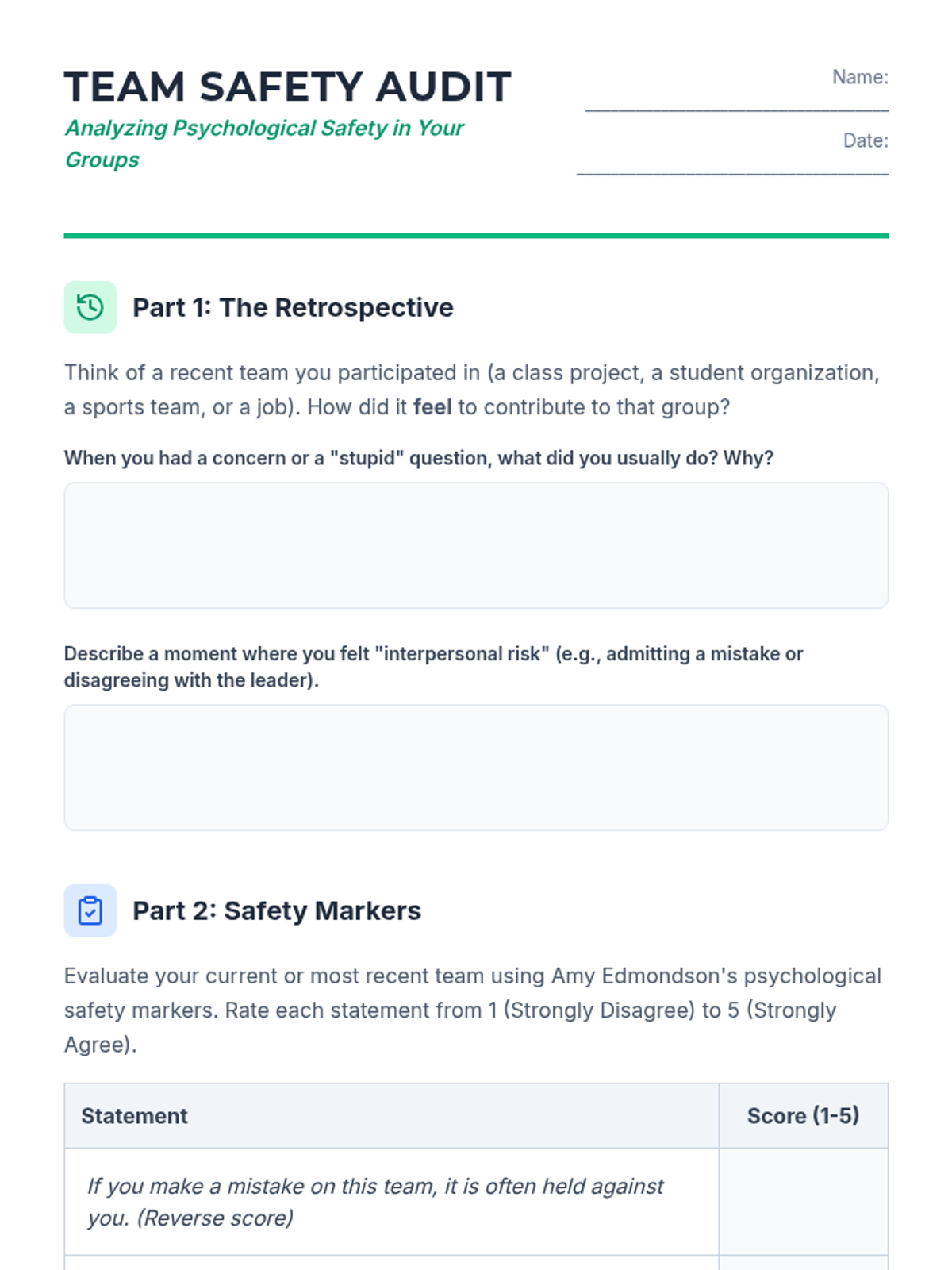
Students define psychological safety and analyze its impact on team performance, using Google's 'Project Aristotle' as a primary case study.
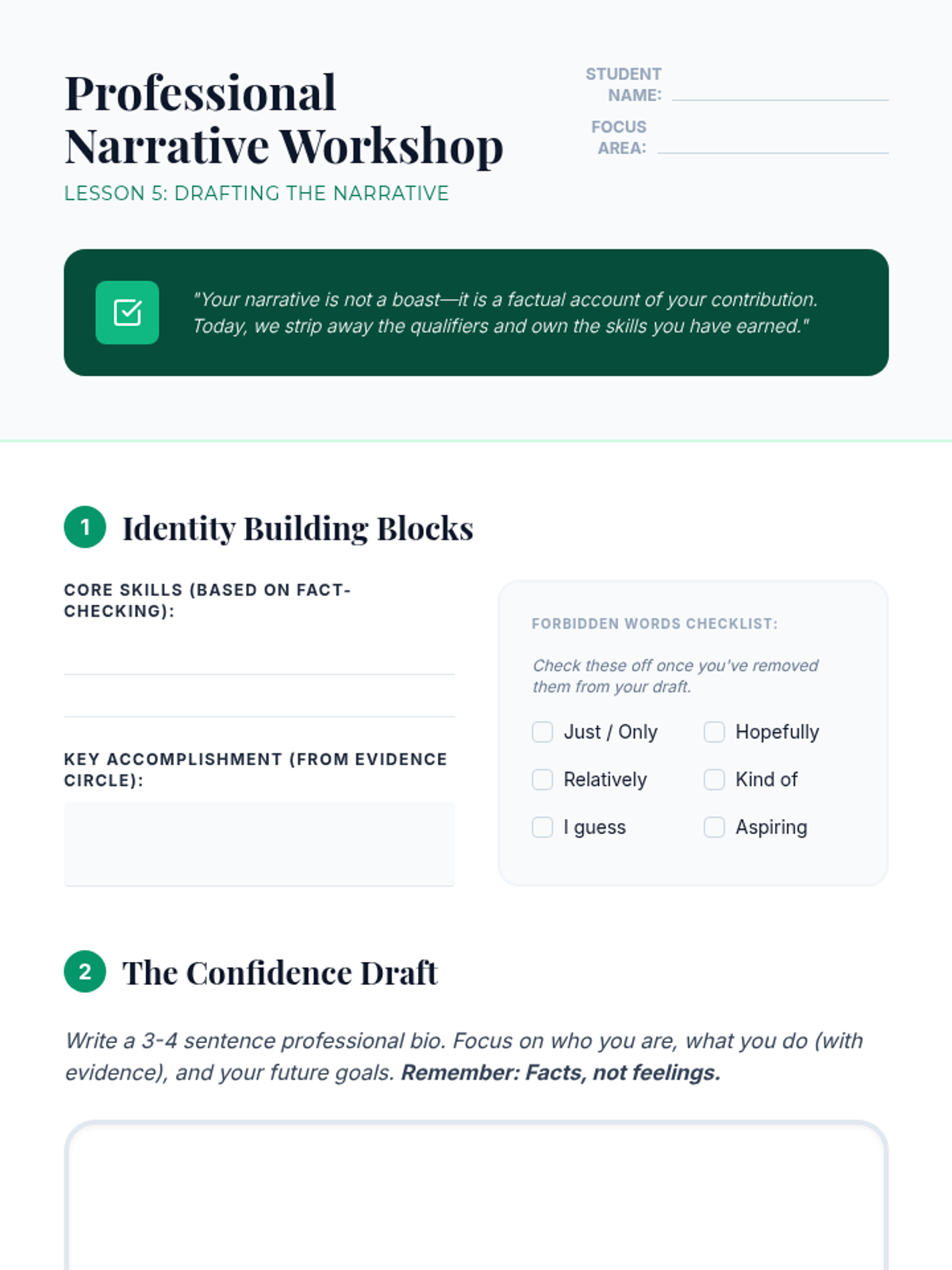
Synthesizing the sequence, students draft a professional bio or personal statement that authentically claims their skills. Peers review these drafts to ensure the language used is confident and accurate, stripping away qualifiers.
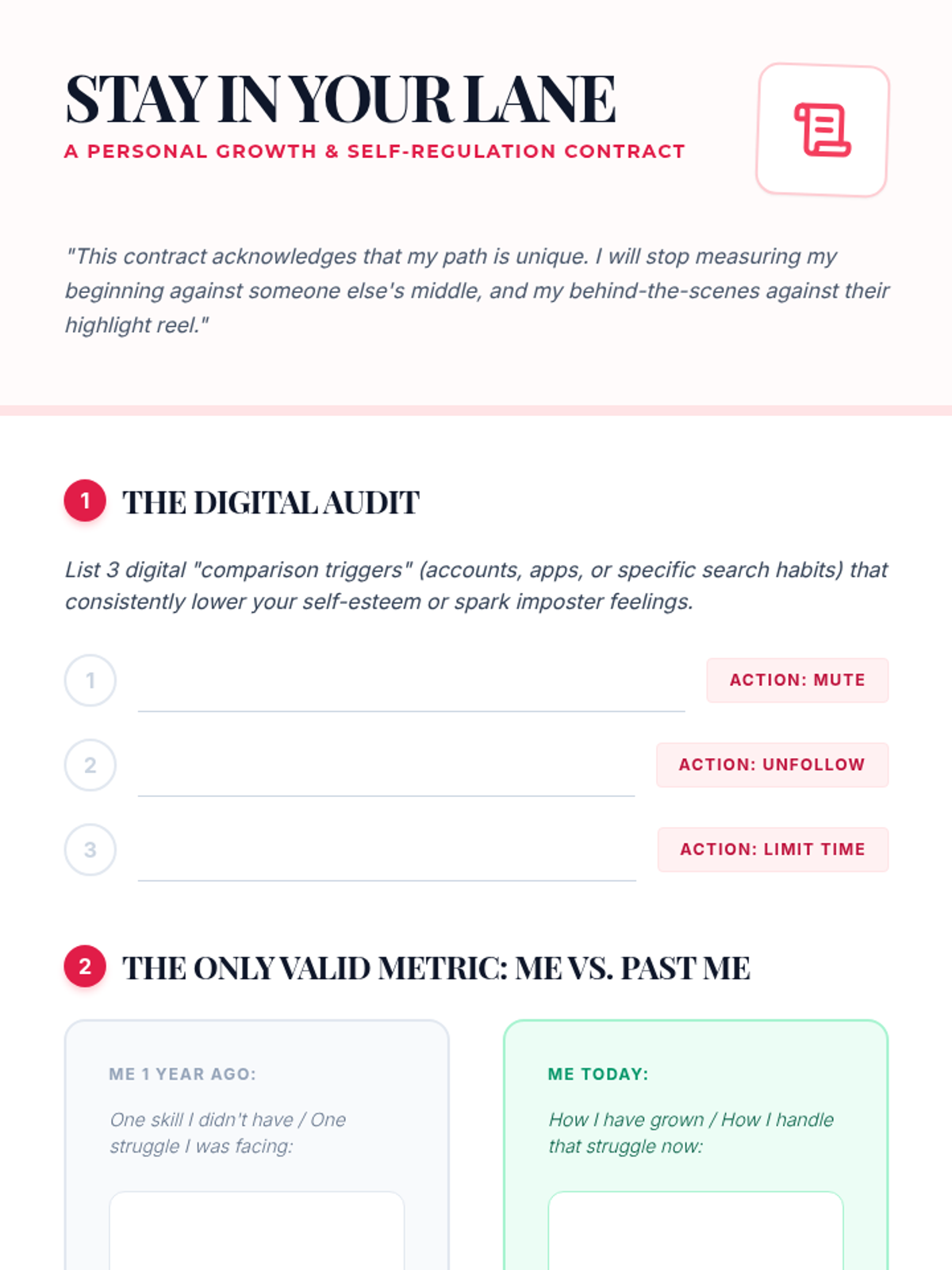
The class explores the role of social comparison in fueling inadequacy, discussing how social media and competitive grading skew reality. Students develop a 'stay in your lane' contract to limit toxic comparison behaviors.
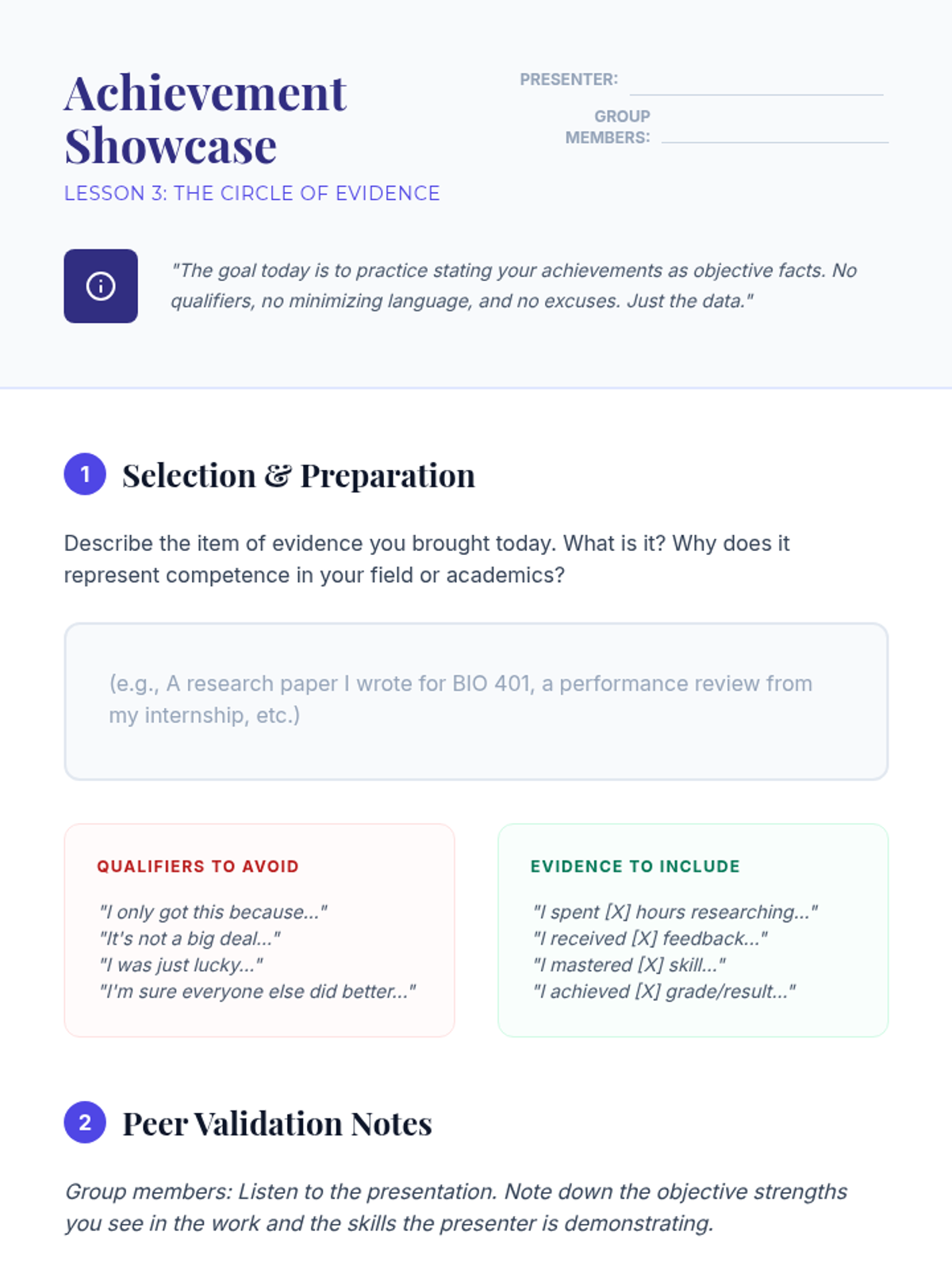
Students bring objective evidence of their skills (grades, feedback, completed projects) and present them to a small peer group. The group provides objective validation, helping the presenter bridge the gap between their perception and reality.
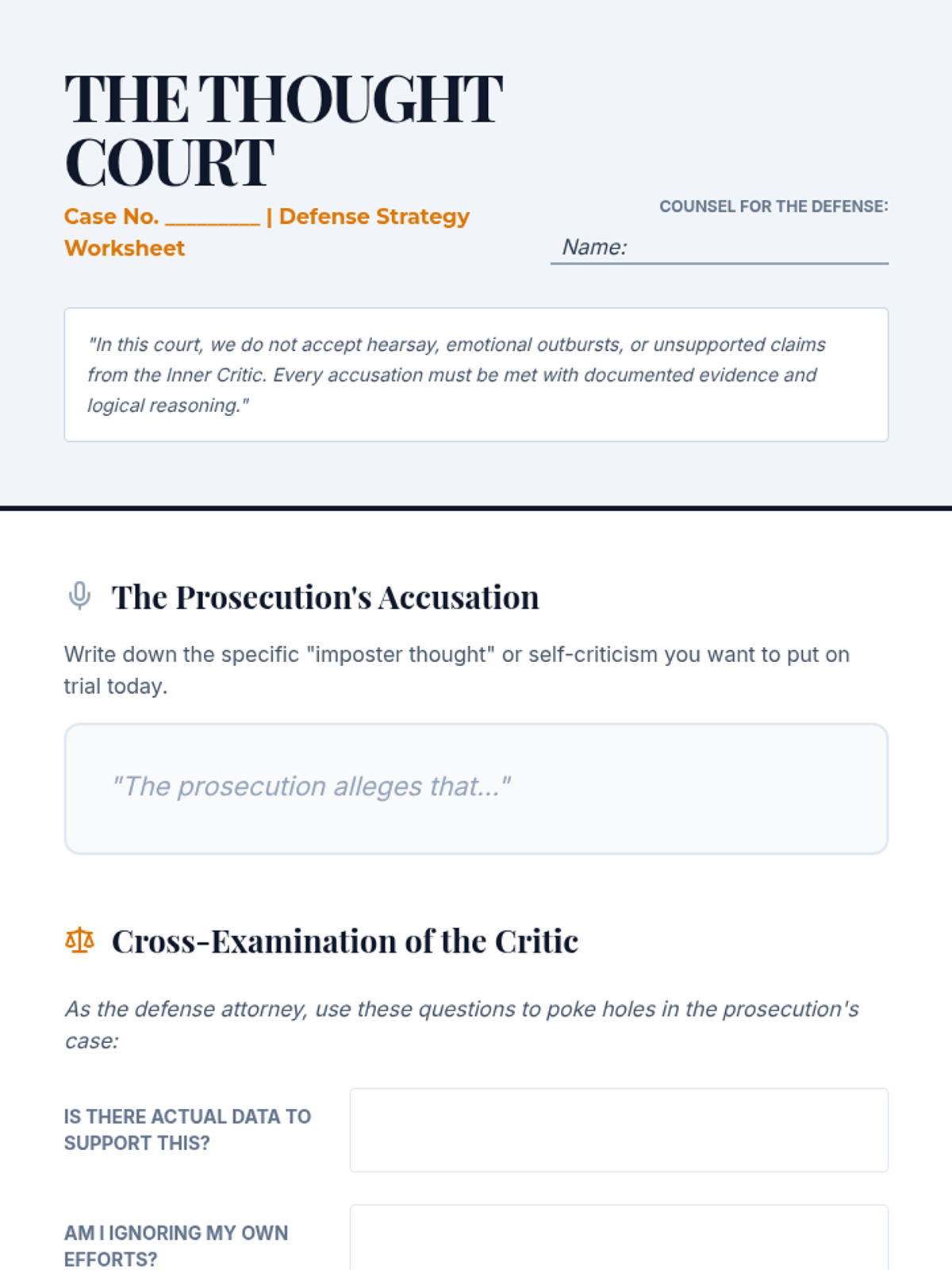
Participants learn Cognitive Behavioral Therapy (CBT) inspired techniques to identify and challenge cognitive distortions related to their performance. They practice reframing 'I got lucky' statements into 'I worked hard' statements with partners.
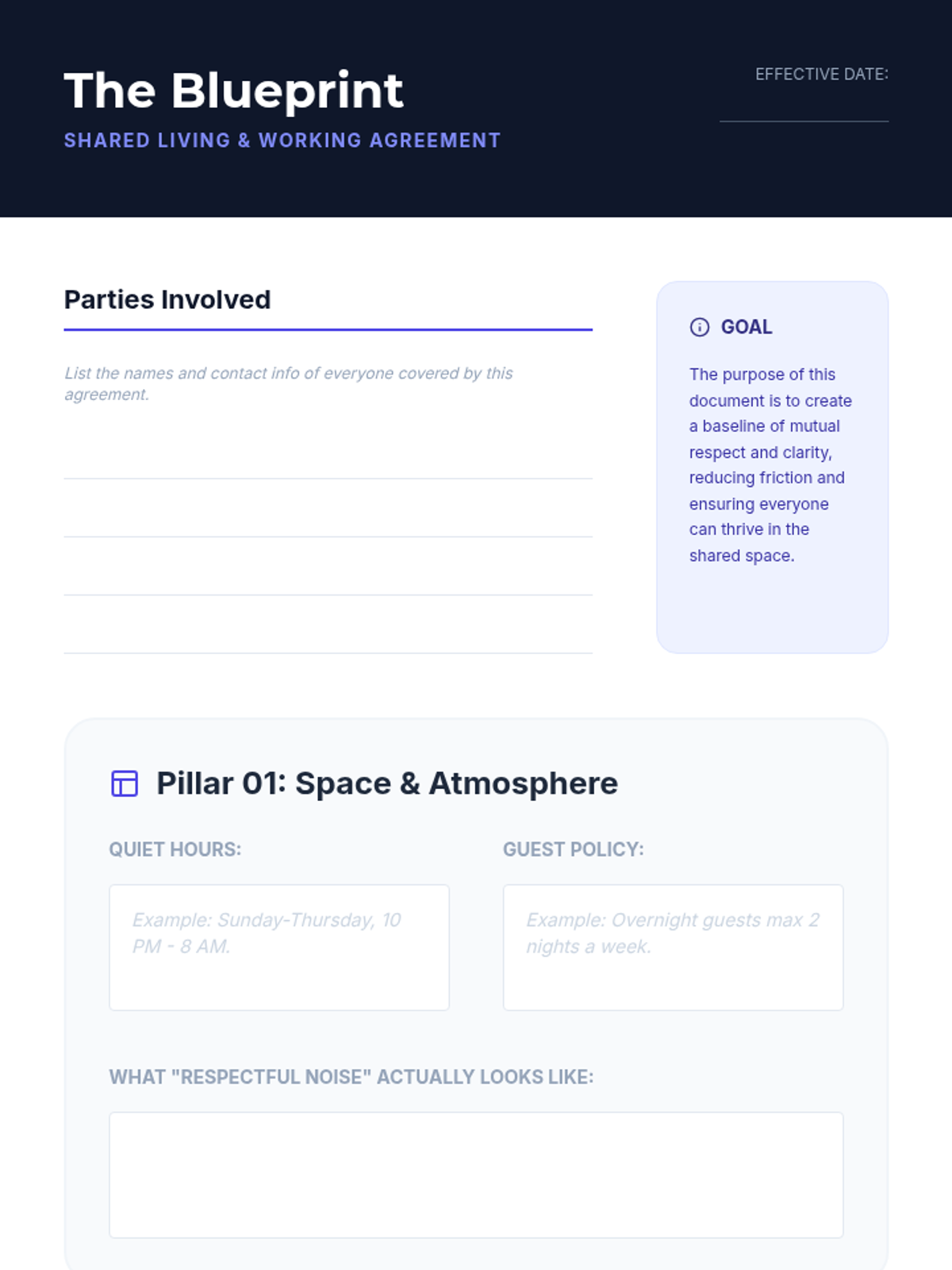
Students apply their skills to draft a comprehensive 'Team Charter' or 'Roommate Agreement' that proactively addresses potential conflicts and establishes shared expectations.
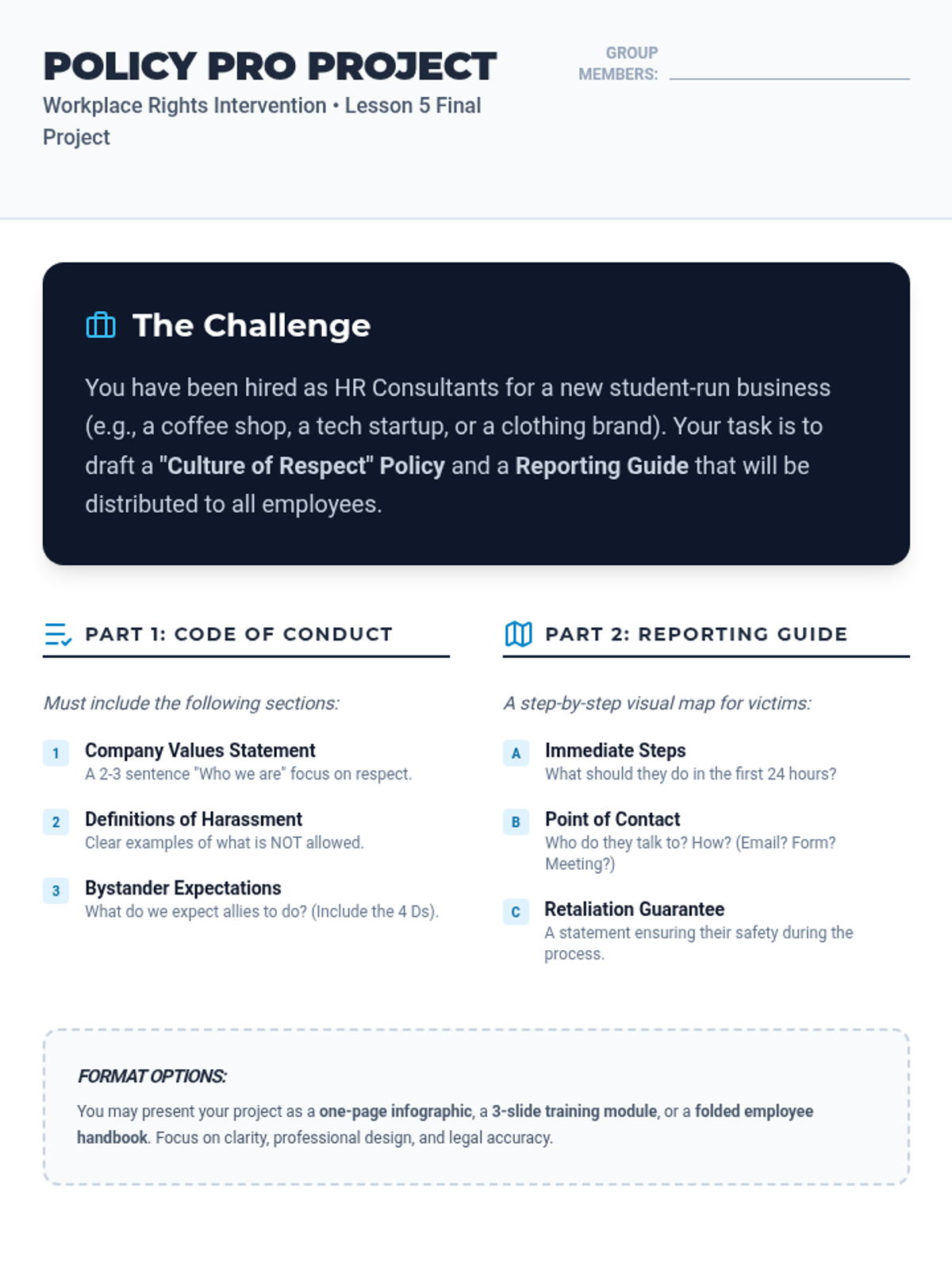
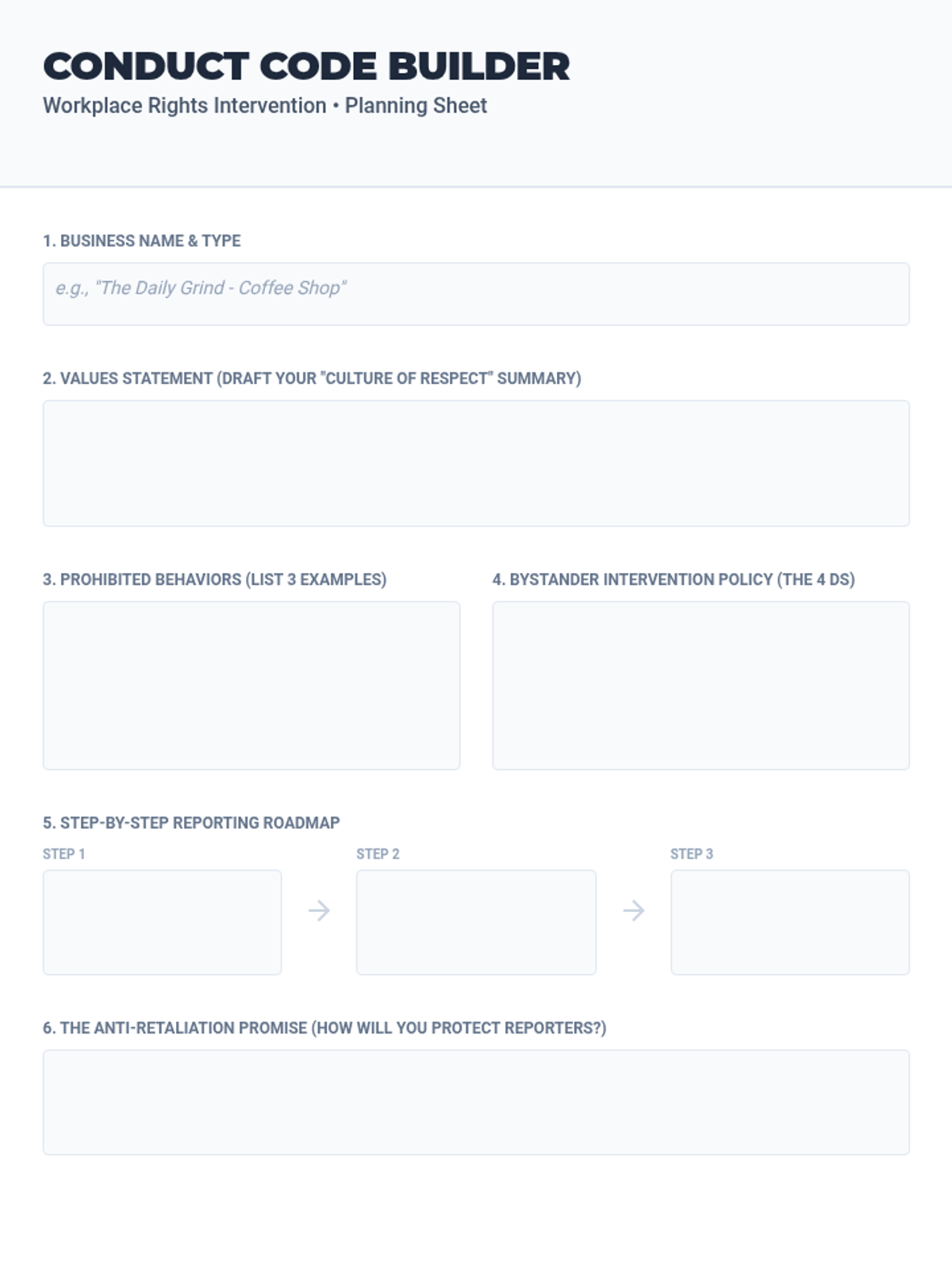
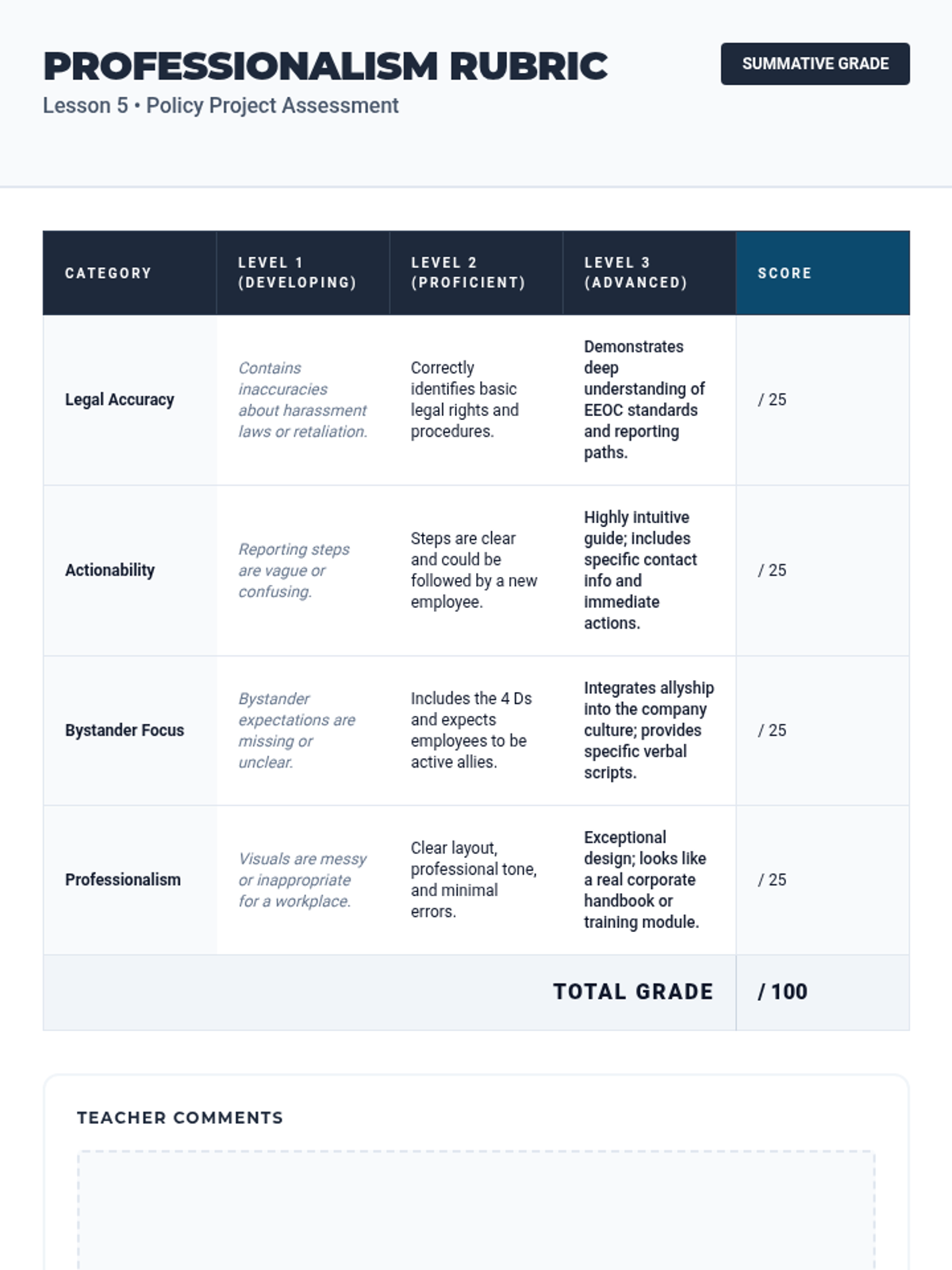
Students work in groups to draft a 'Code of Conduct' and a 'Reporting Guide' for a student-run business or organization, synthesizing all sequence concepts.
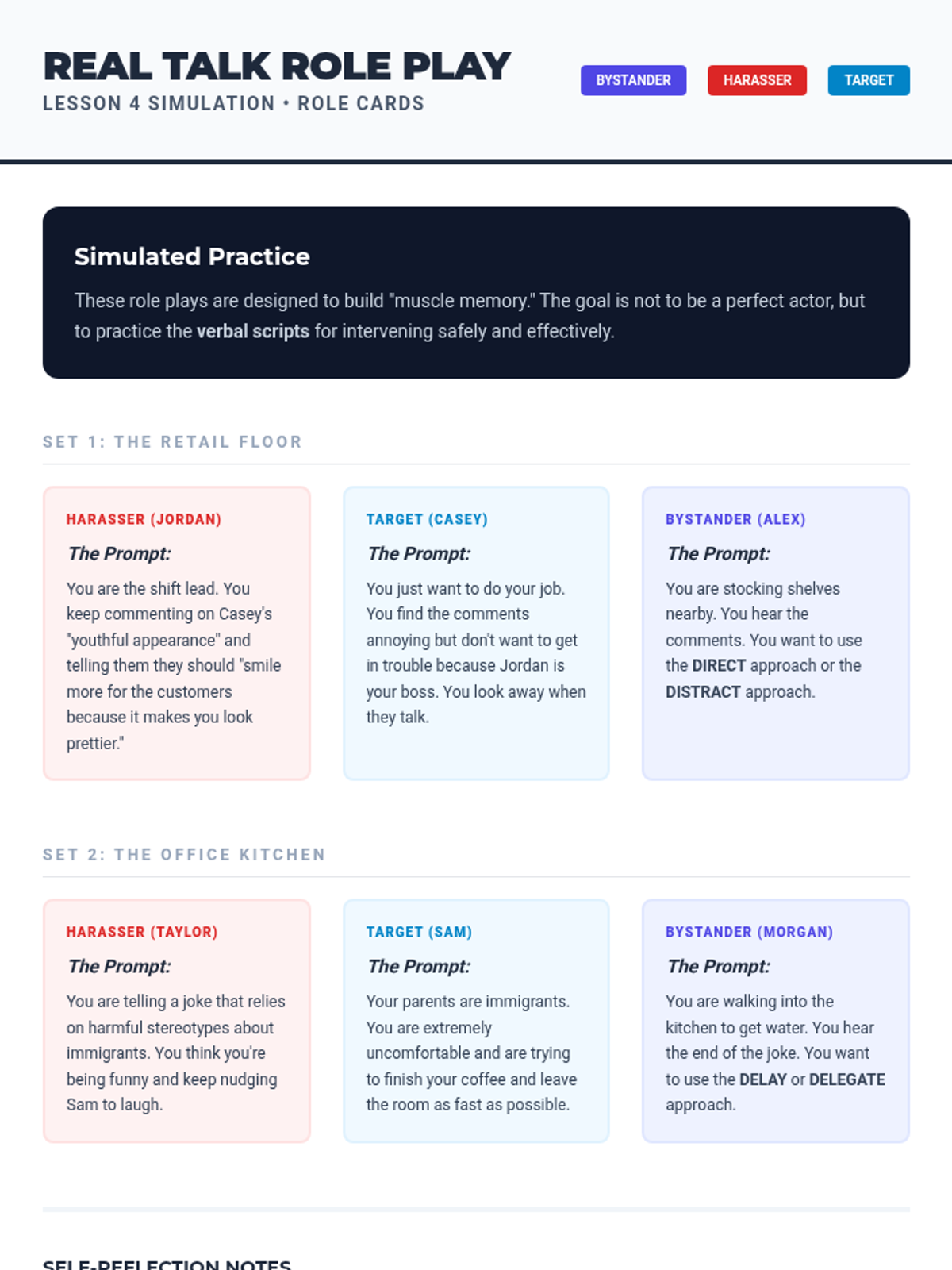
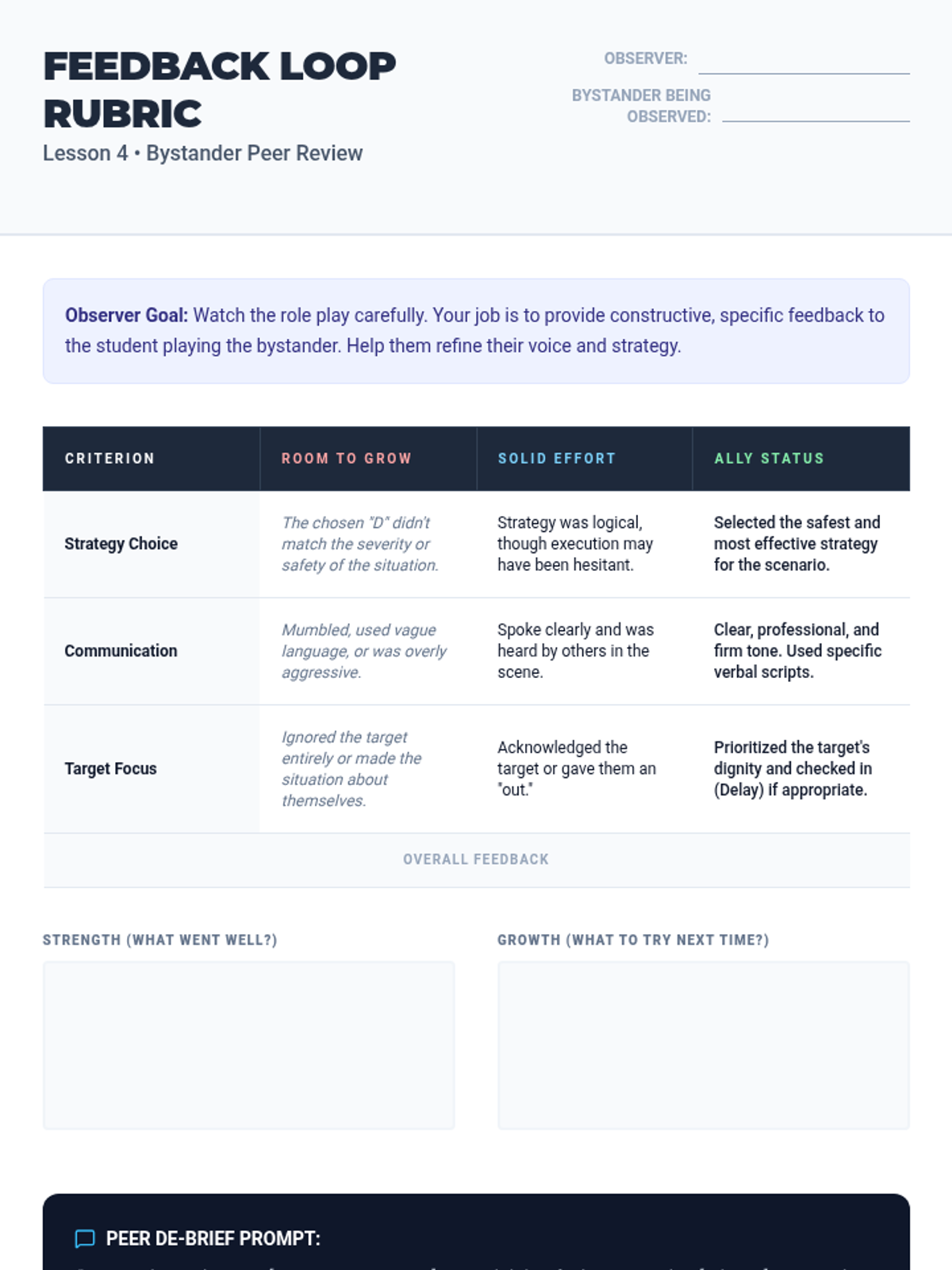
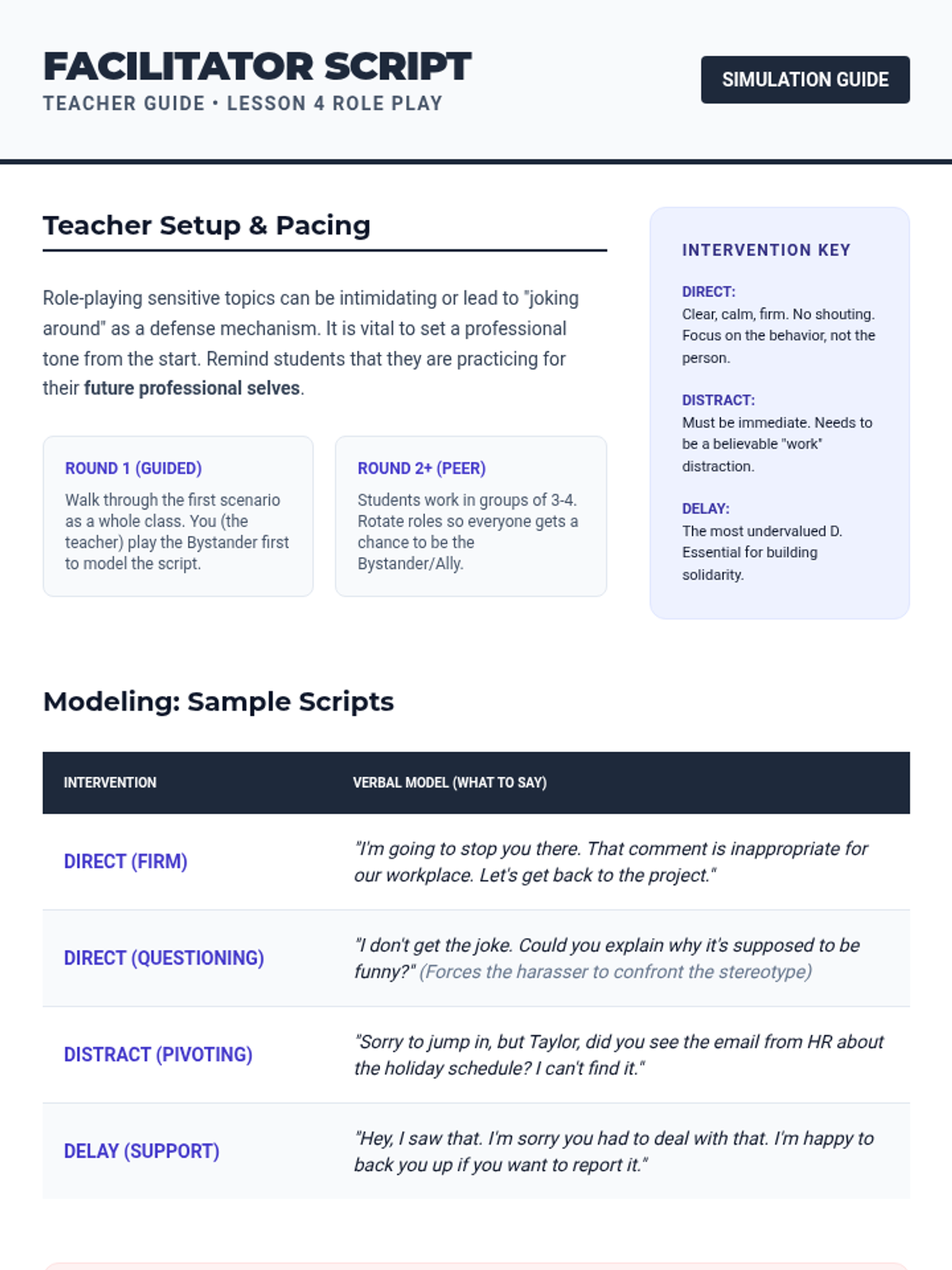
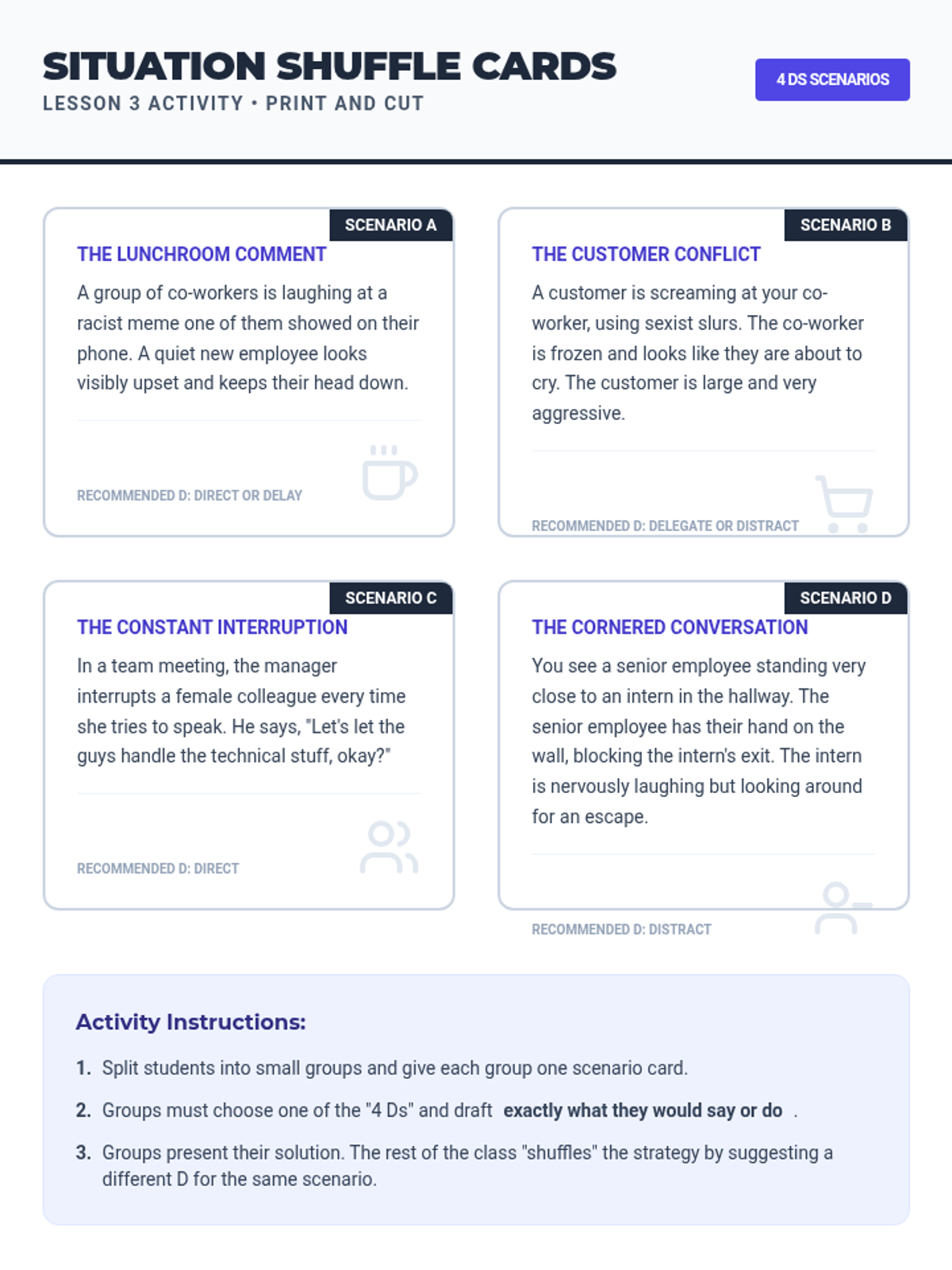
Students engage in structured role-plays to practice the intervention strategies learned. They take turns acting as the target, the harasser, and the bystander.
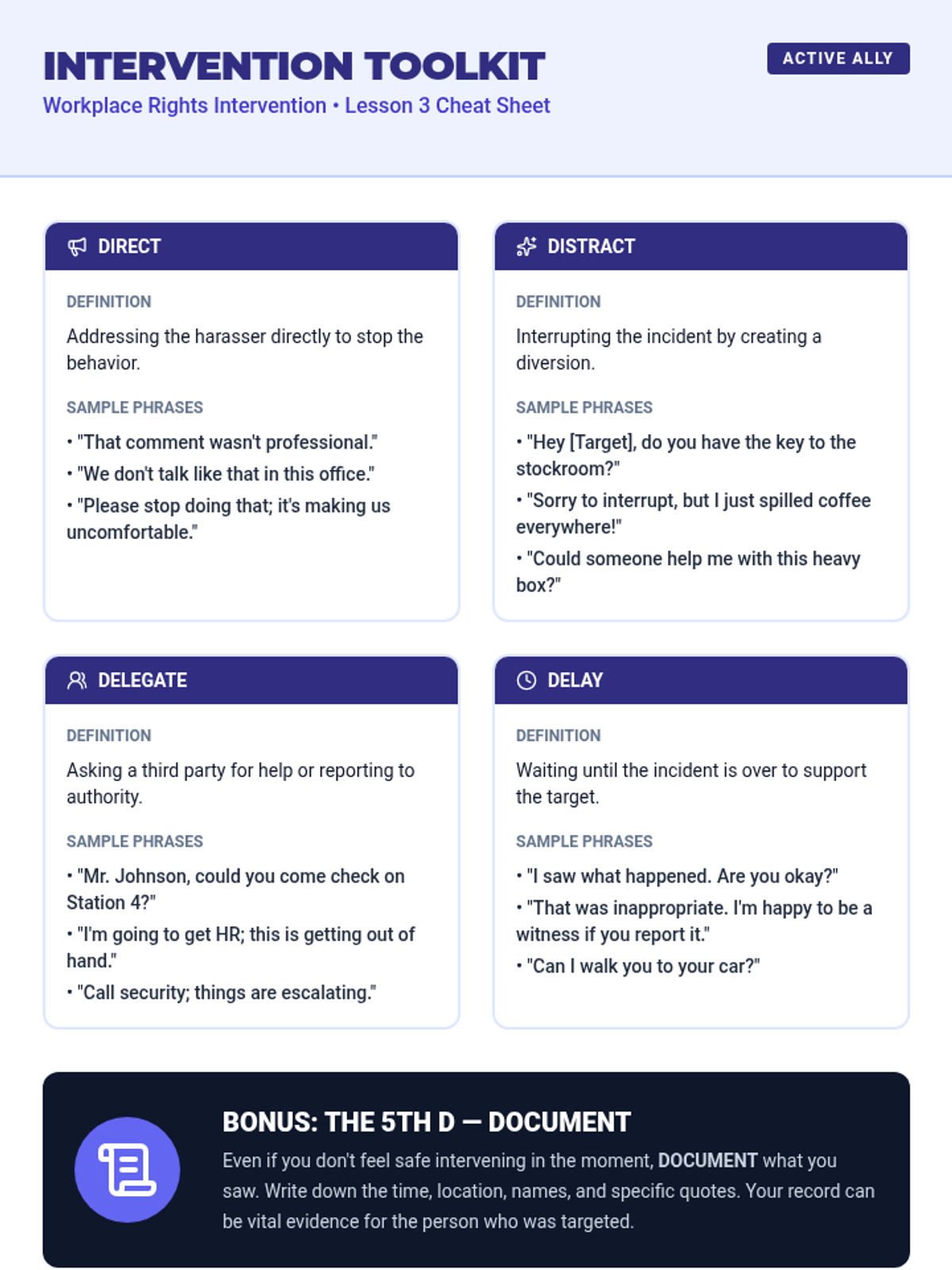
Students are introduced to the '4 Ds' of bystander intervention: Direct, Distract, Delegate, and Delay. They analyze scenarios to determine the best intervention strategy.
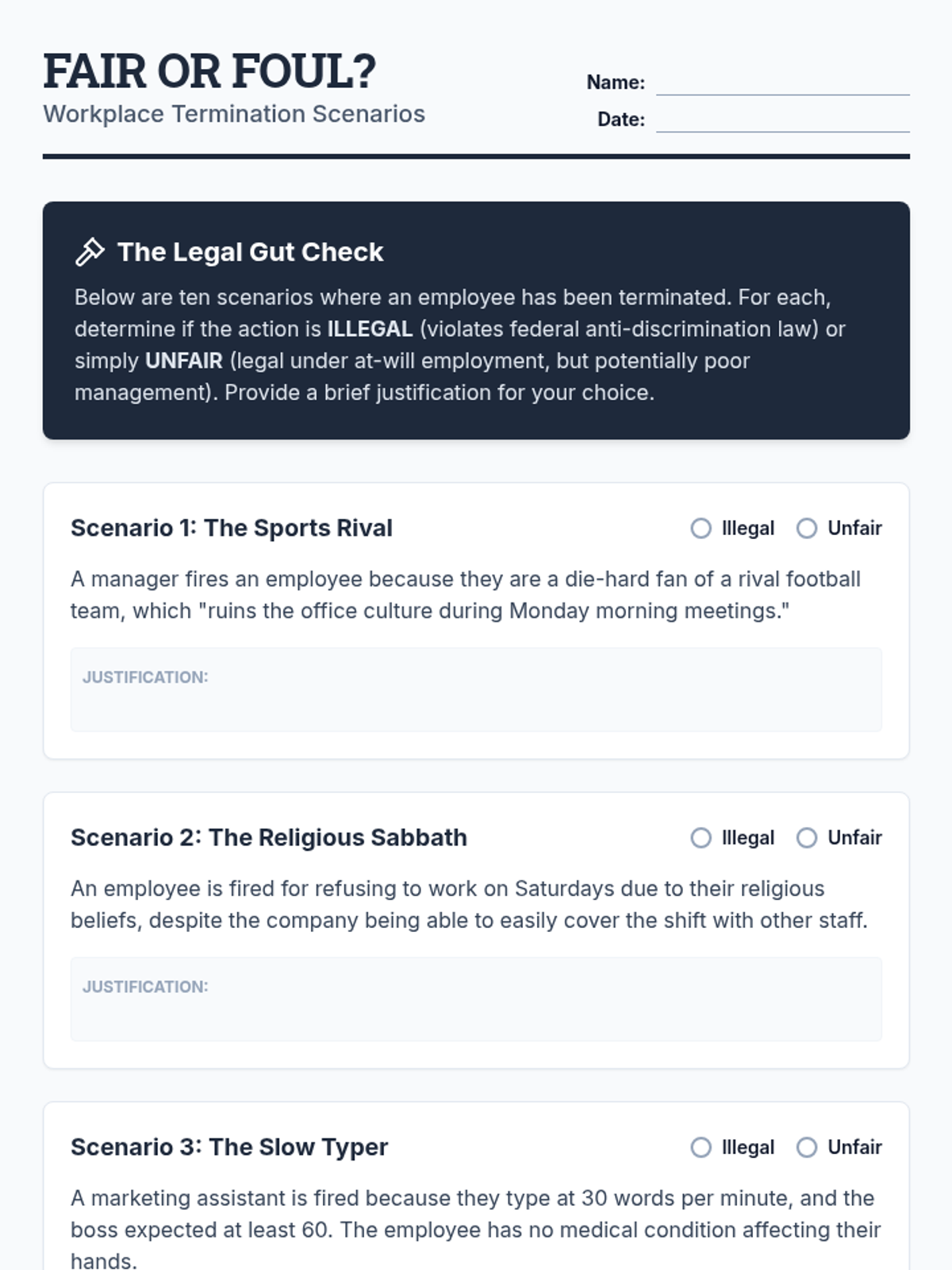
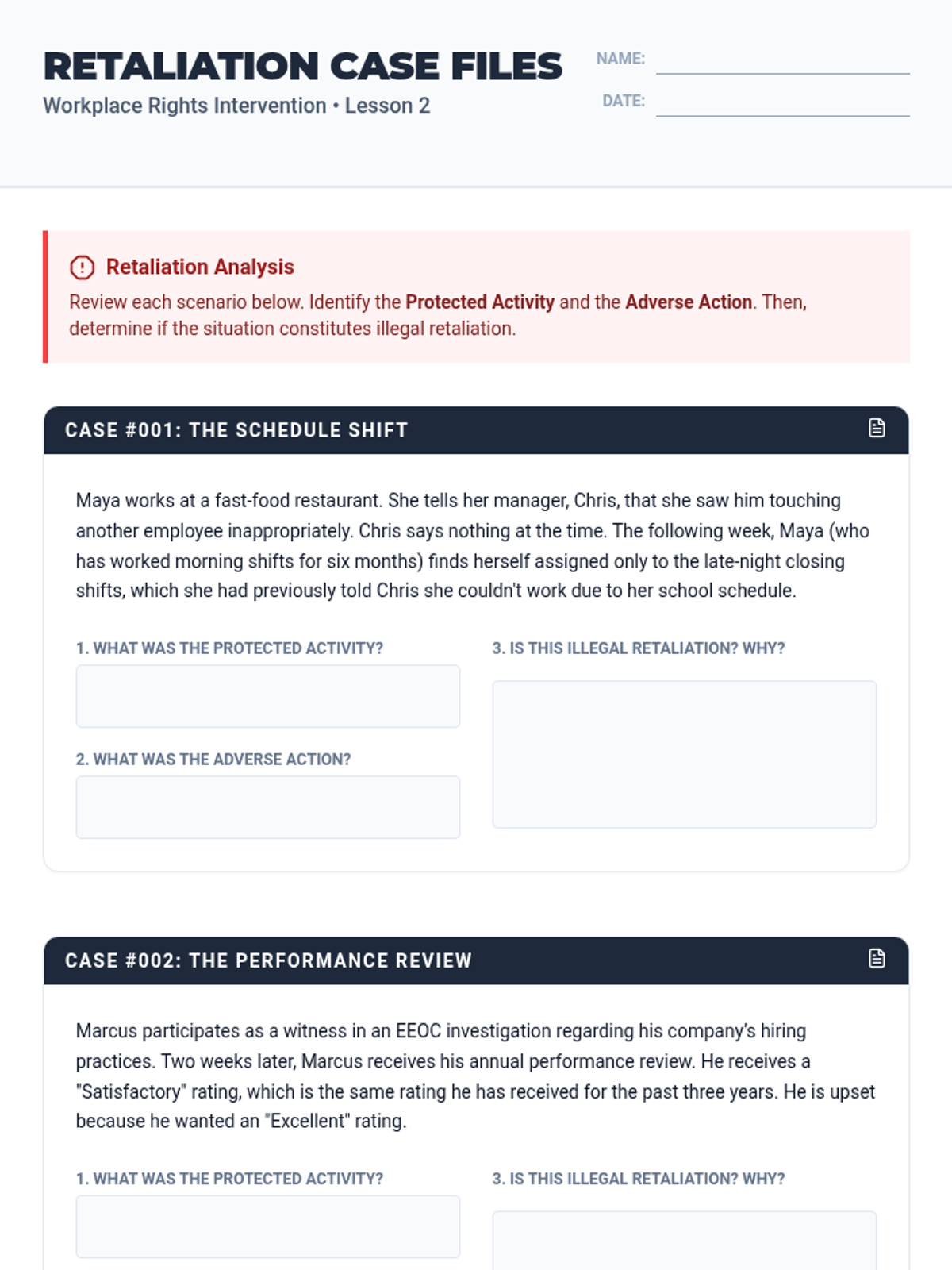
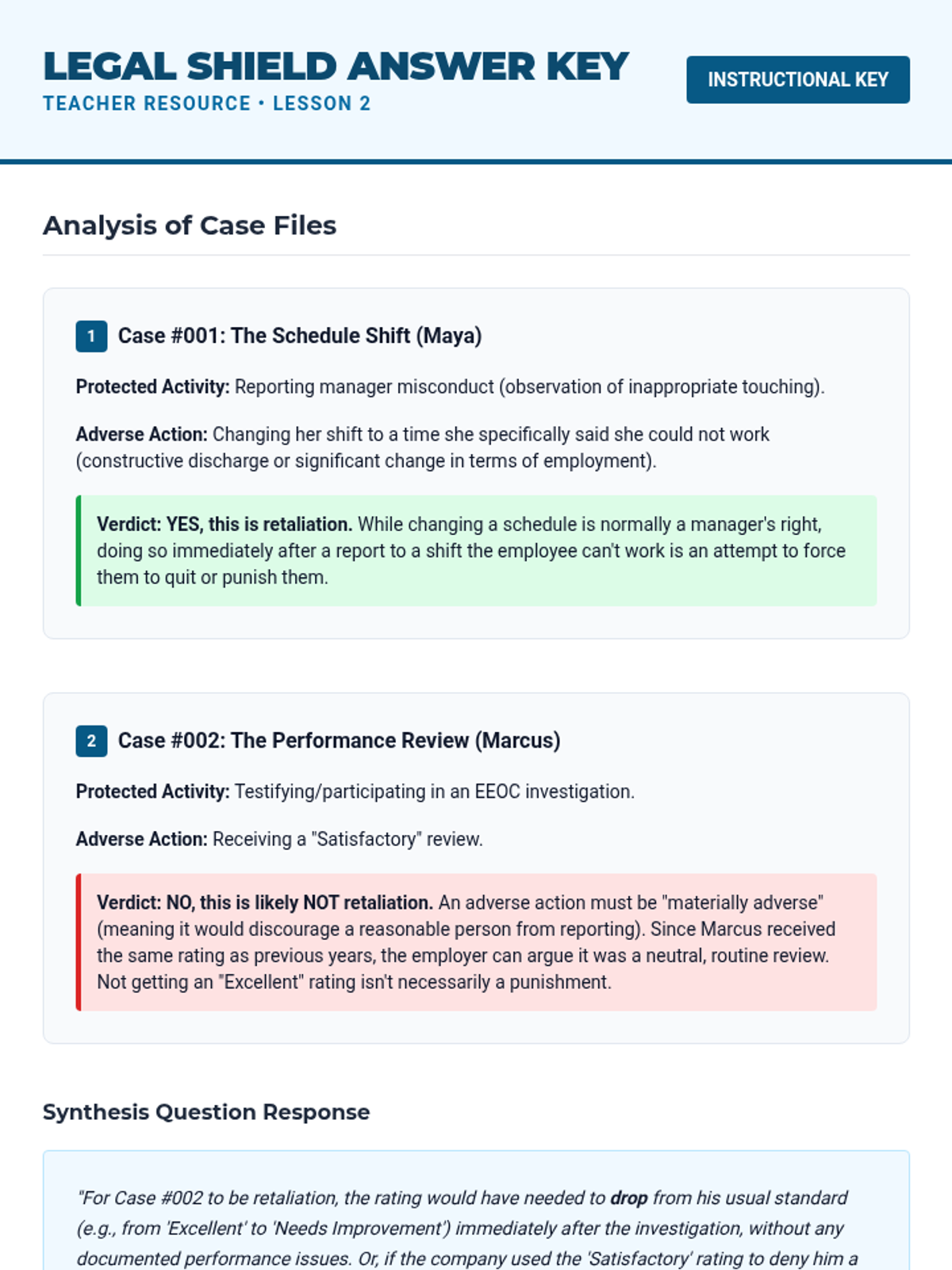
This lesson covers the legal protections for employees who report misconduct, focusing on the concept of 'retaliation' and identify which actions constitute illegal retaliation.
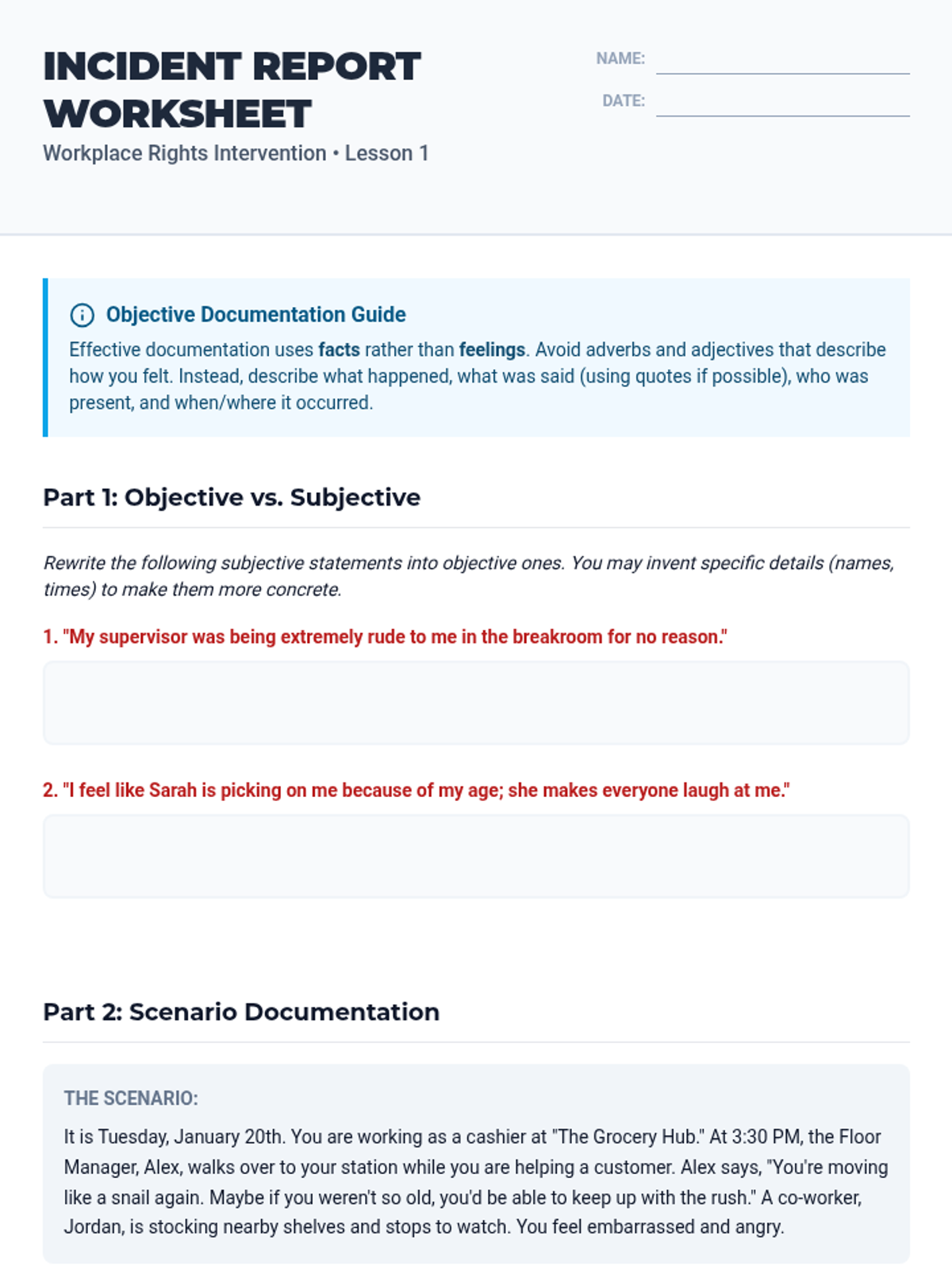
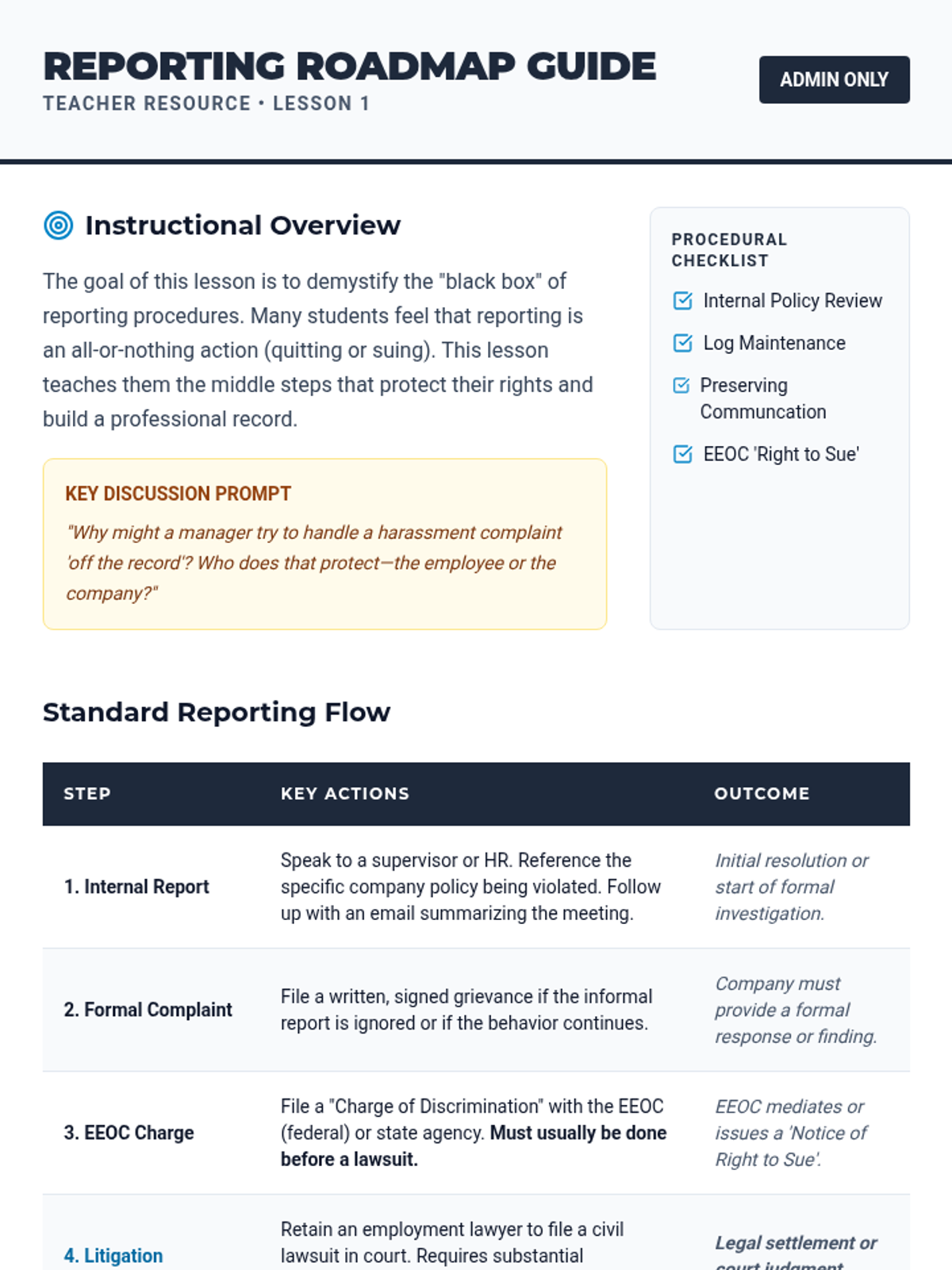
Students learn the standard procedures for reporting harassment, including internal HR complaints and external EEOC filings. They practice the skill of objective documentation.
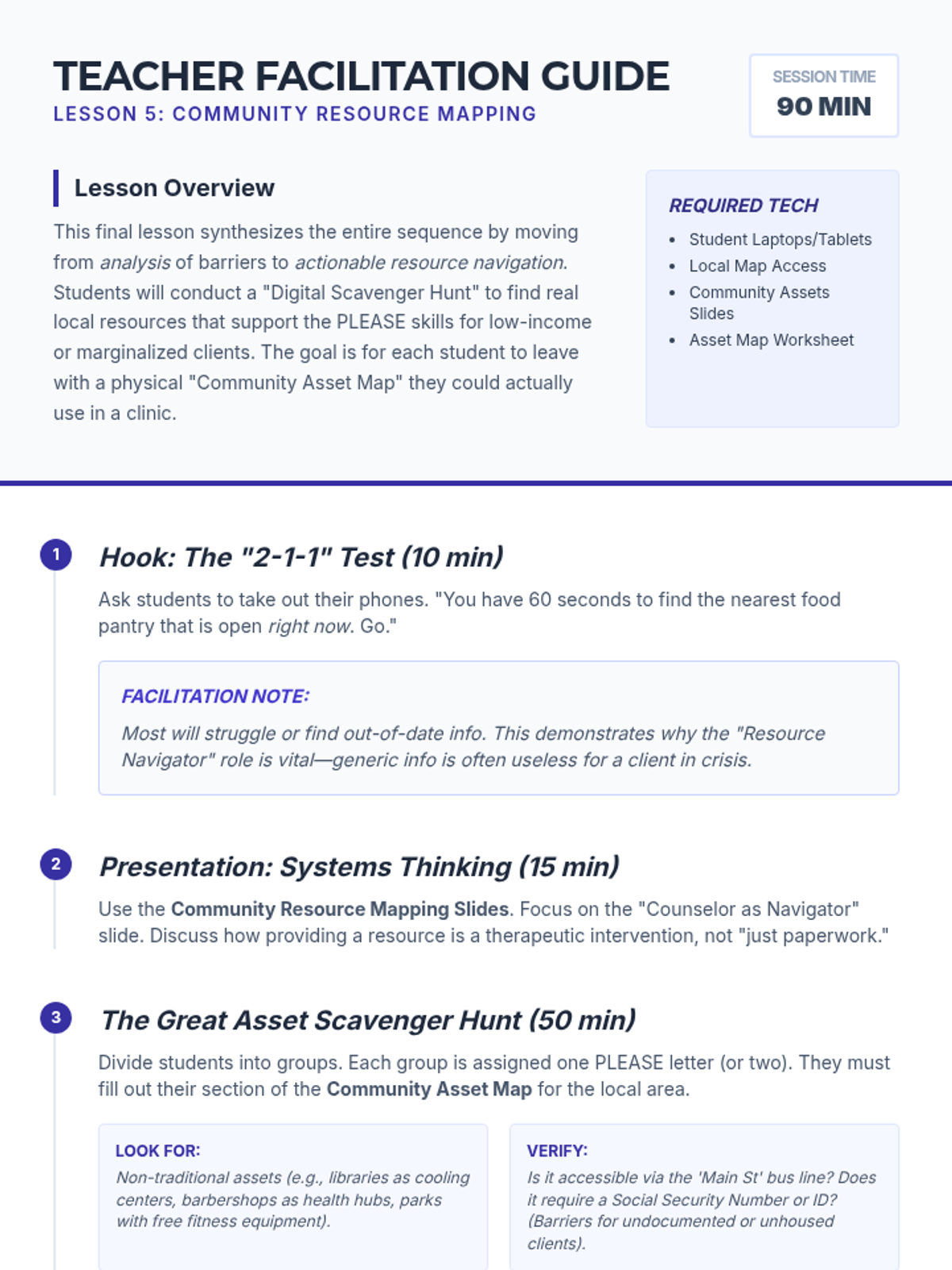
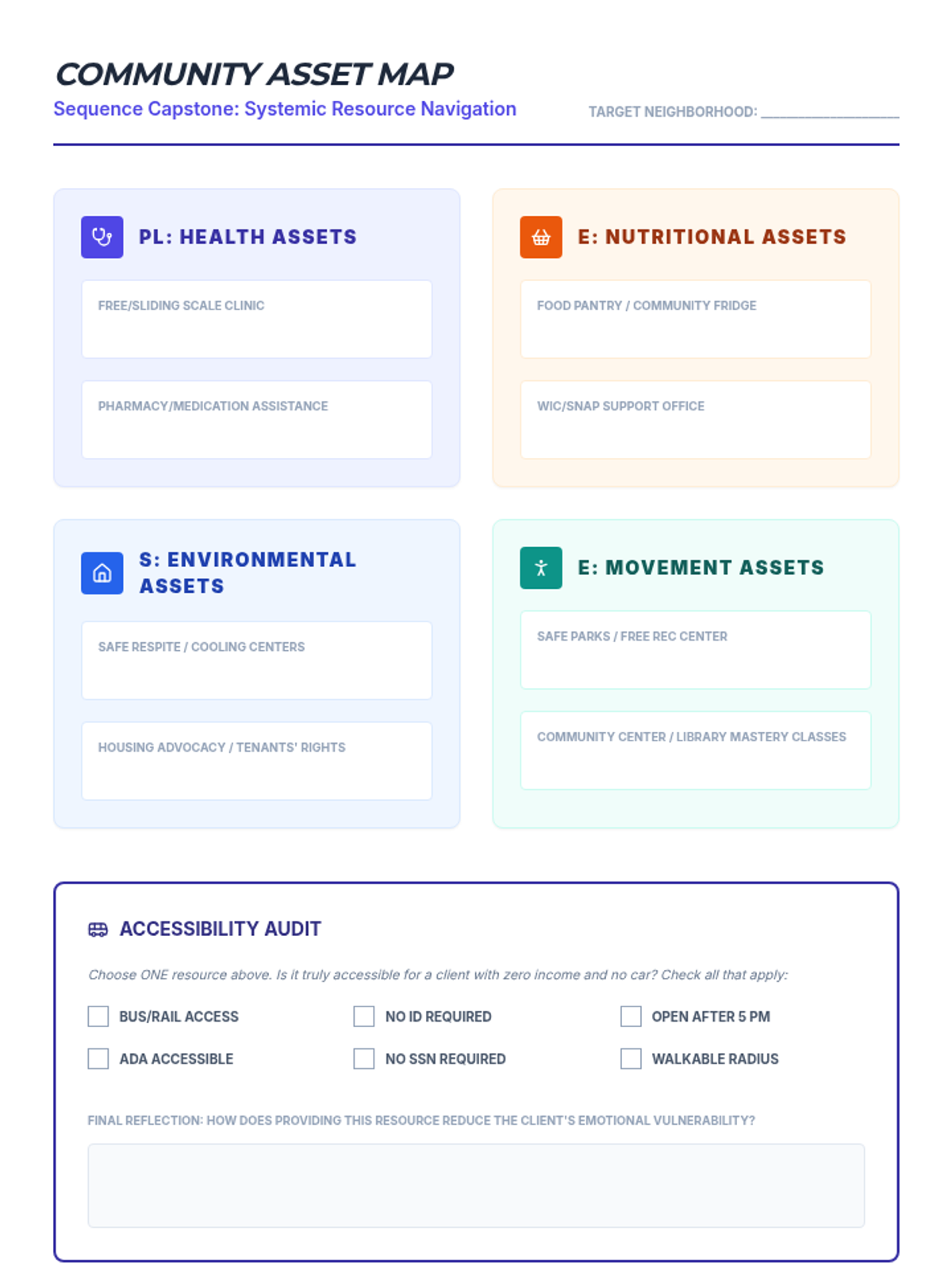
The sequence culminates with students mapping local community resources that support the PLEASE skills for low-income or marginalized clients.
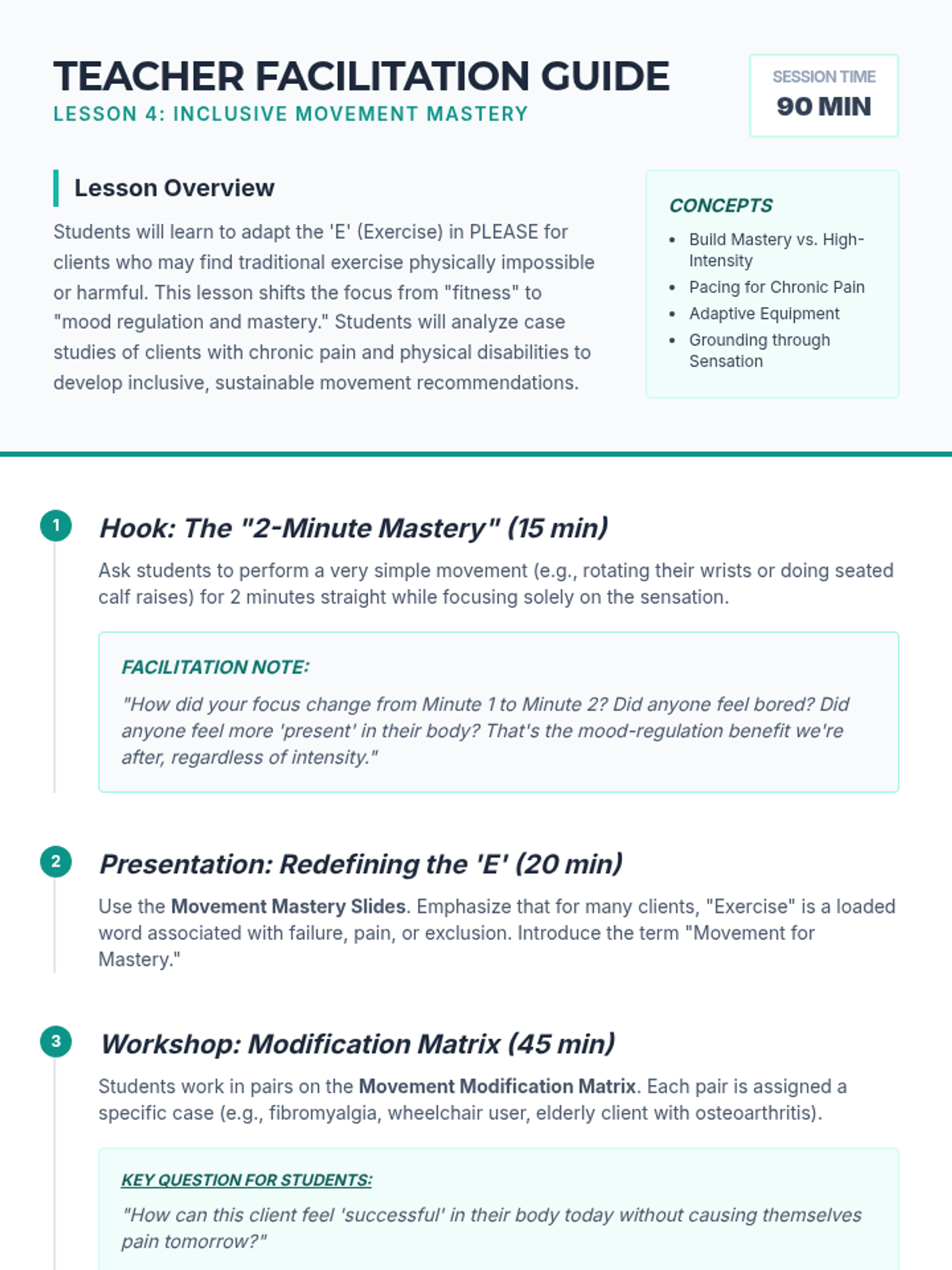
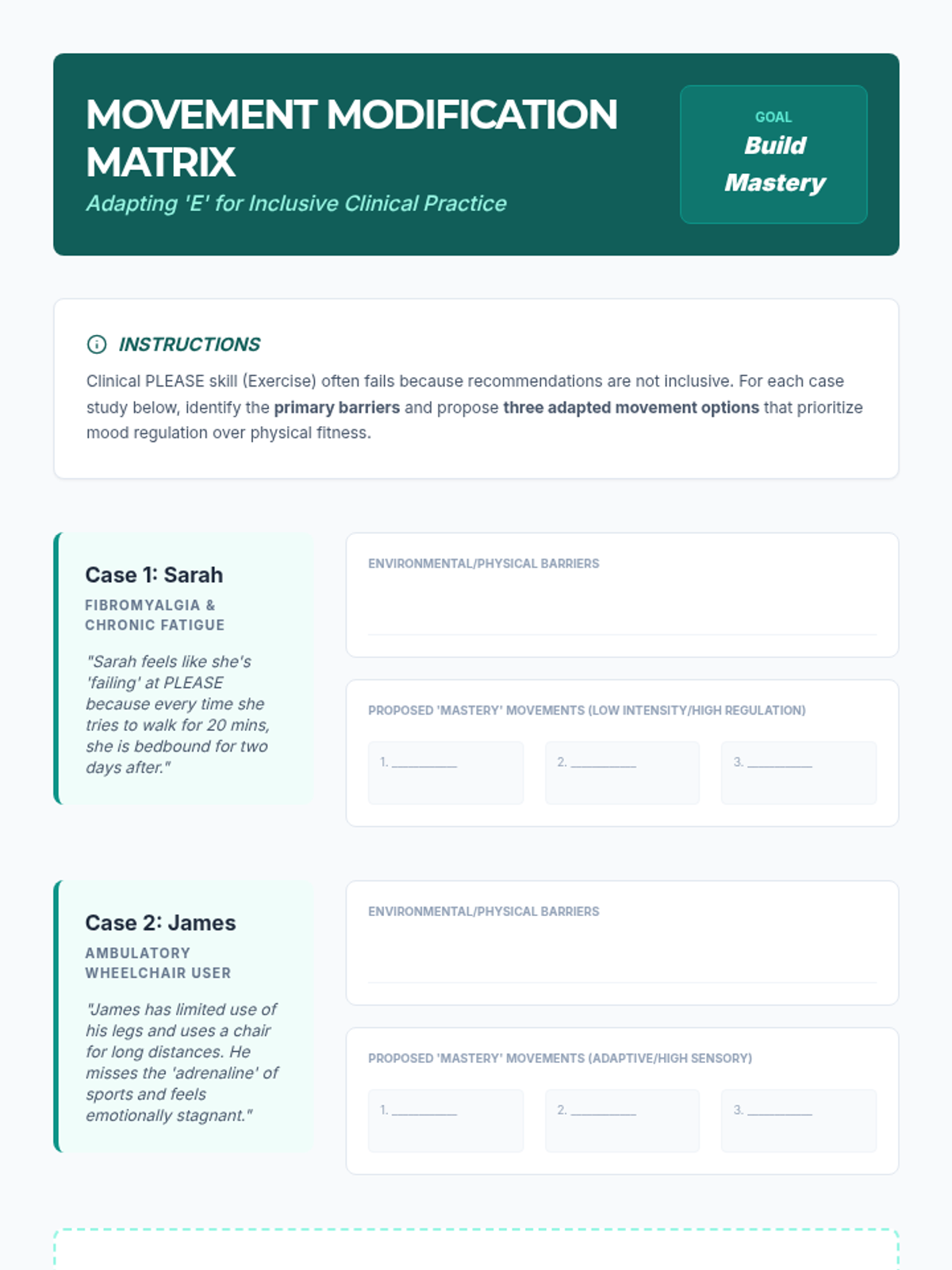
Students learn to adapt movement recommendations for mood regulation for clients with physical disabilities or chronic pain, focusing on 'building mastery'.
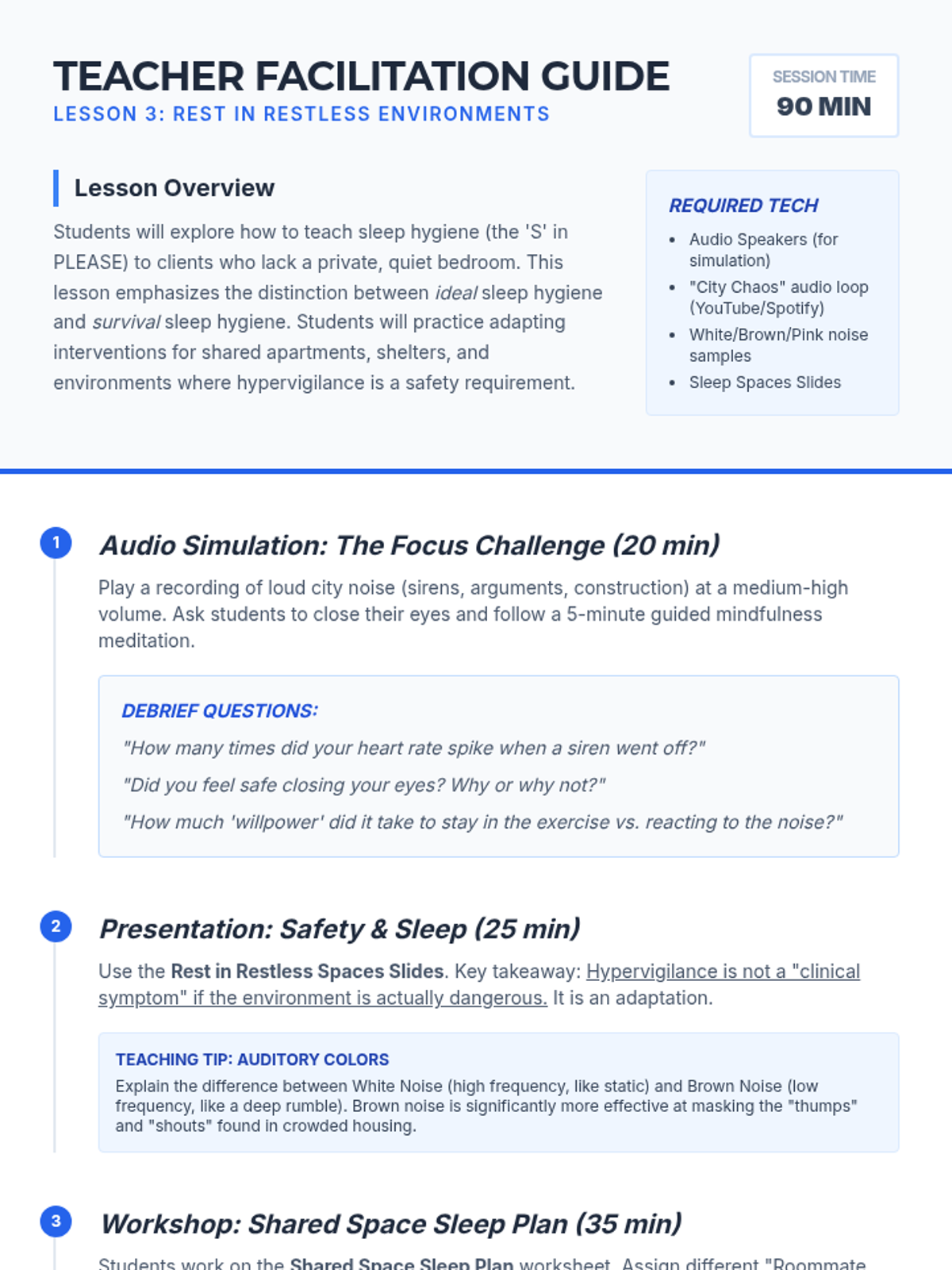
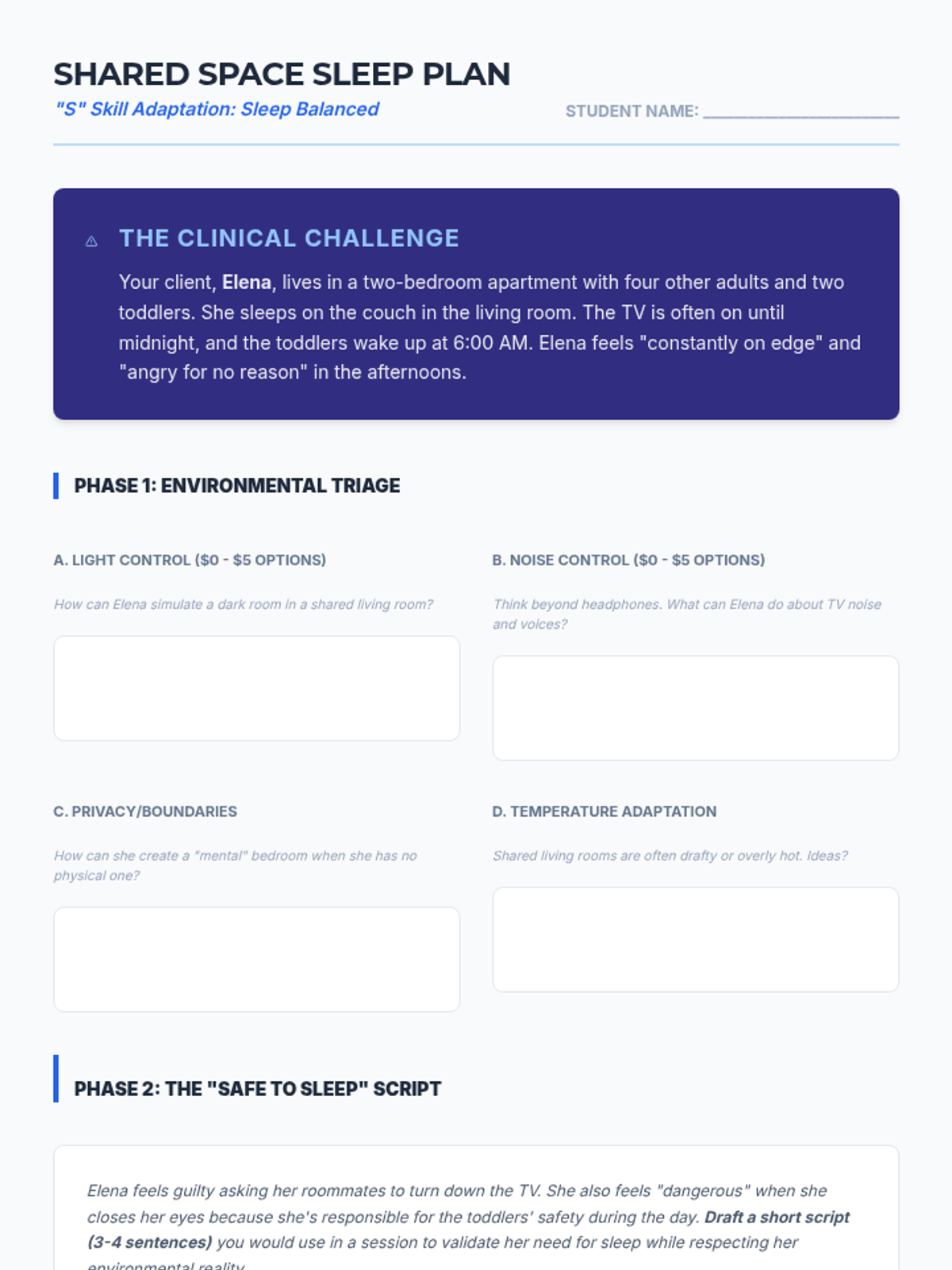
This lesson addresses sleep hygiene for clients in crowded or noisy environments, focusing on environmental adaptation and behavioral modifications.
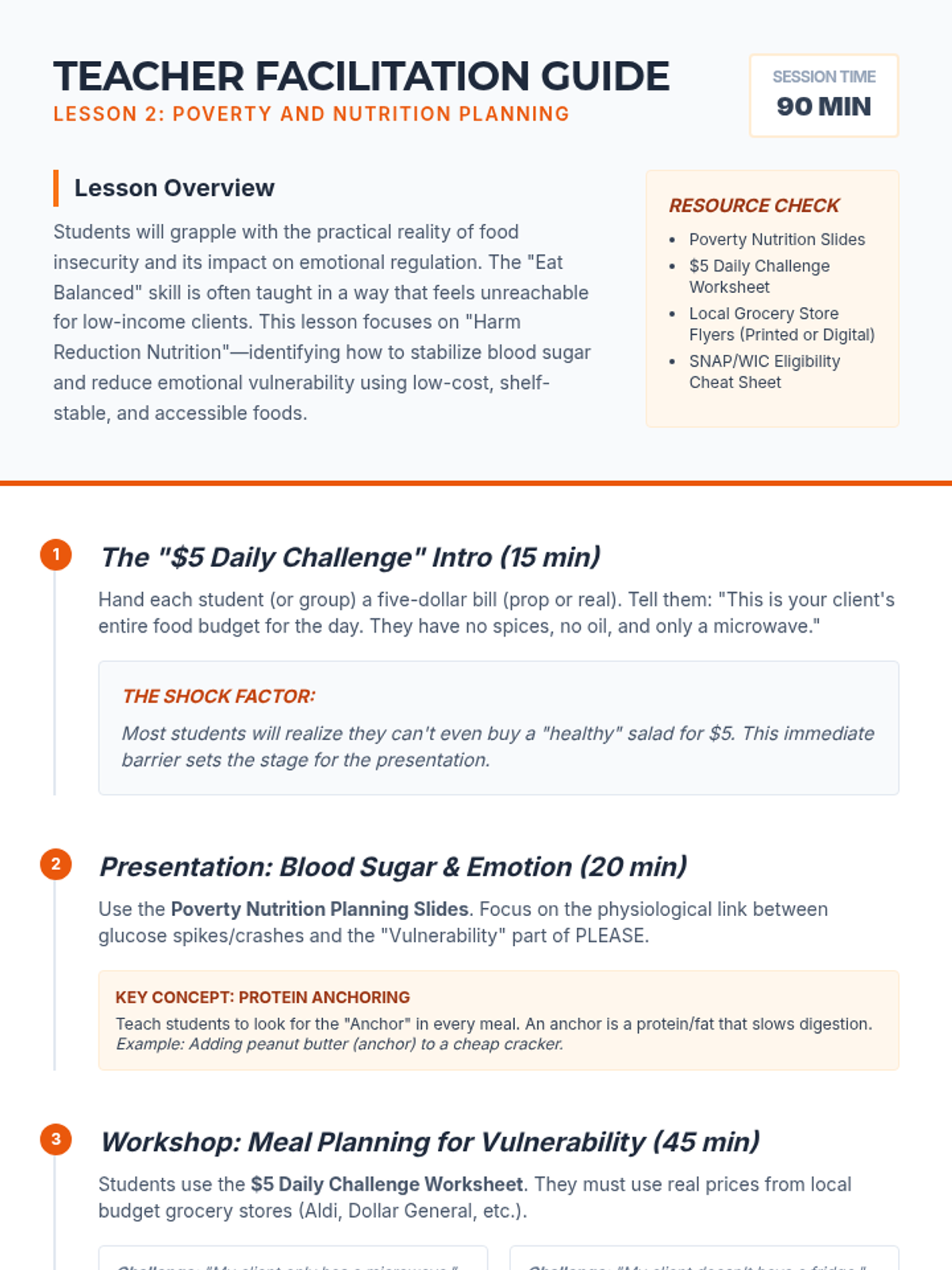
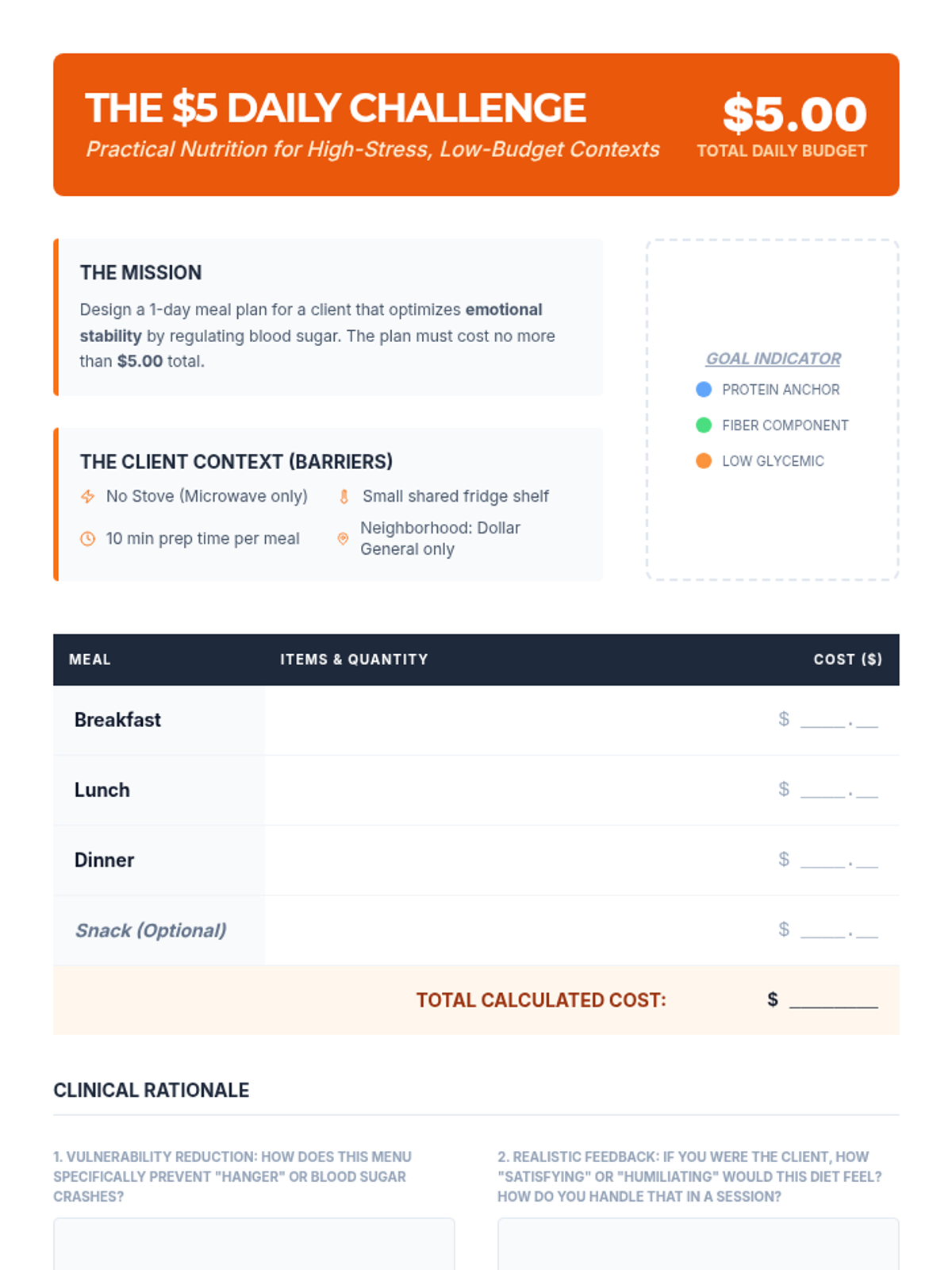
Students modify nutritional advice for clients with limited budgets or access, developing realistic harm-reduction strategies for 'Eating Balanced'.
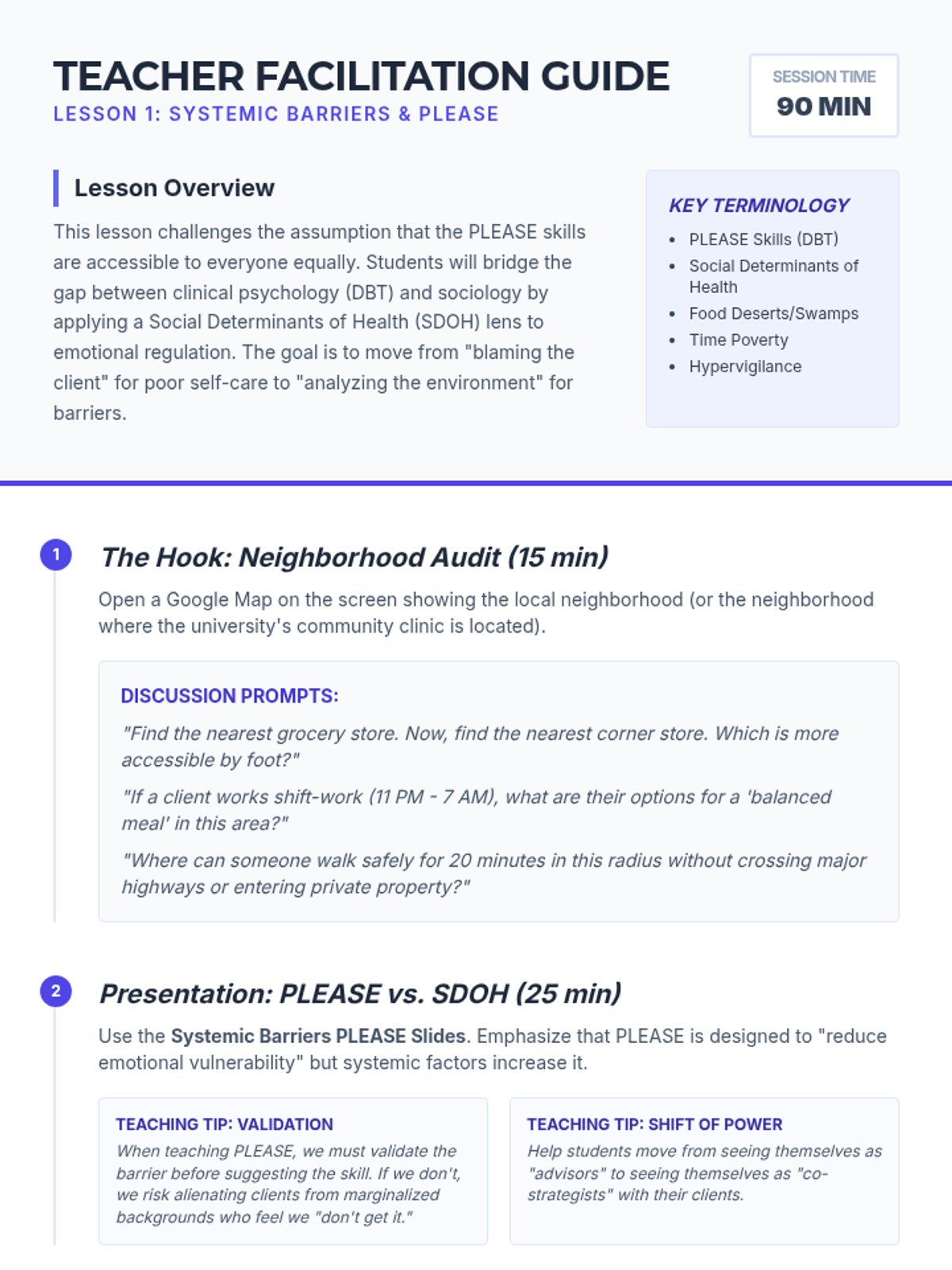
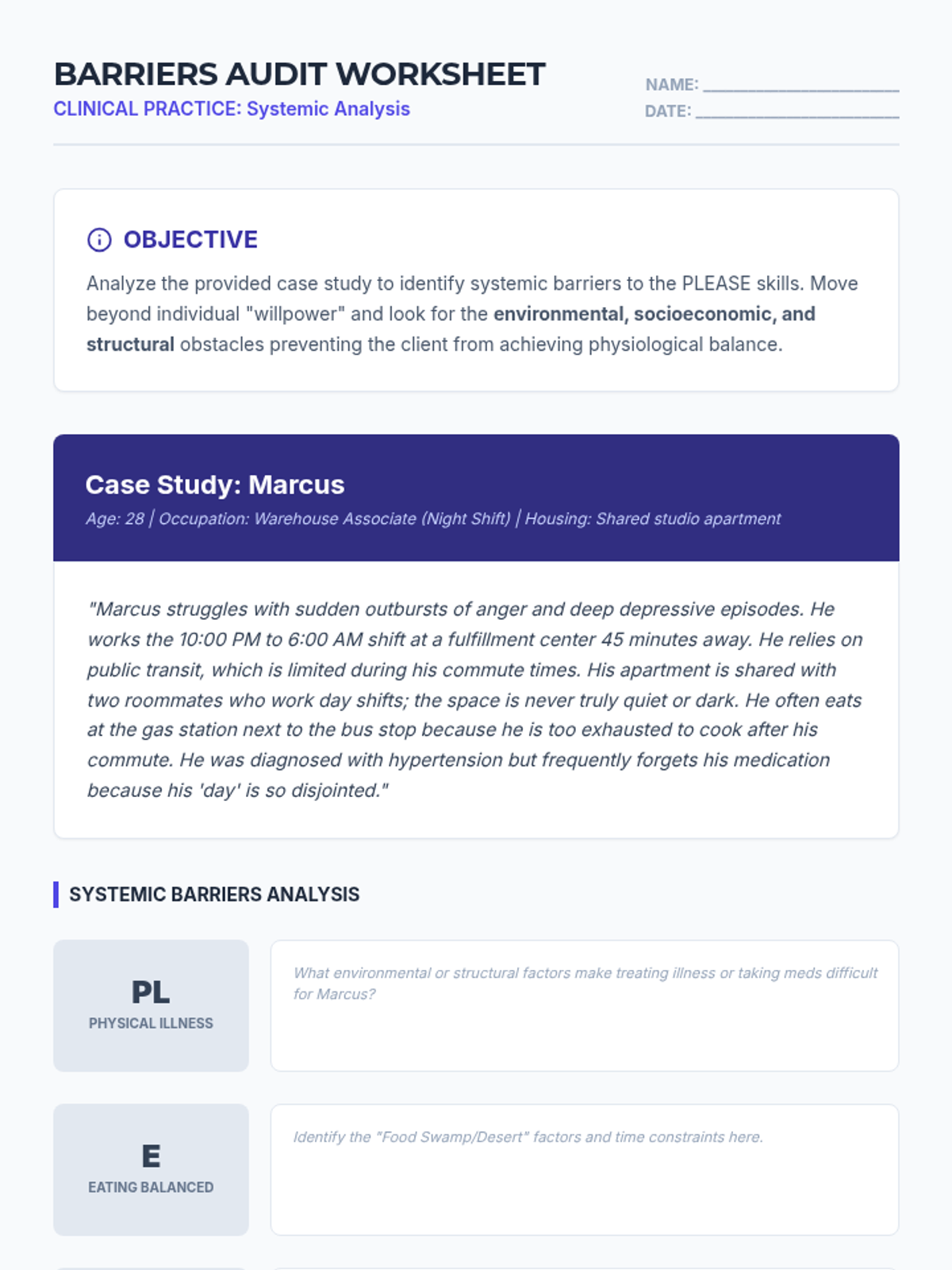
Students critique standard PLEASE skills through a socioeconomic lens, identifying how food deserts, shift work, and environment impact emotional regulation.
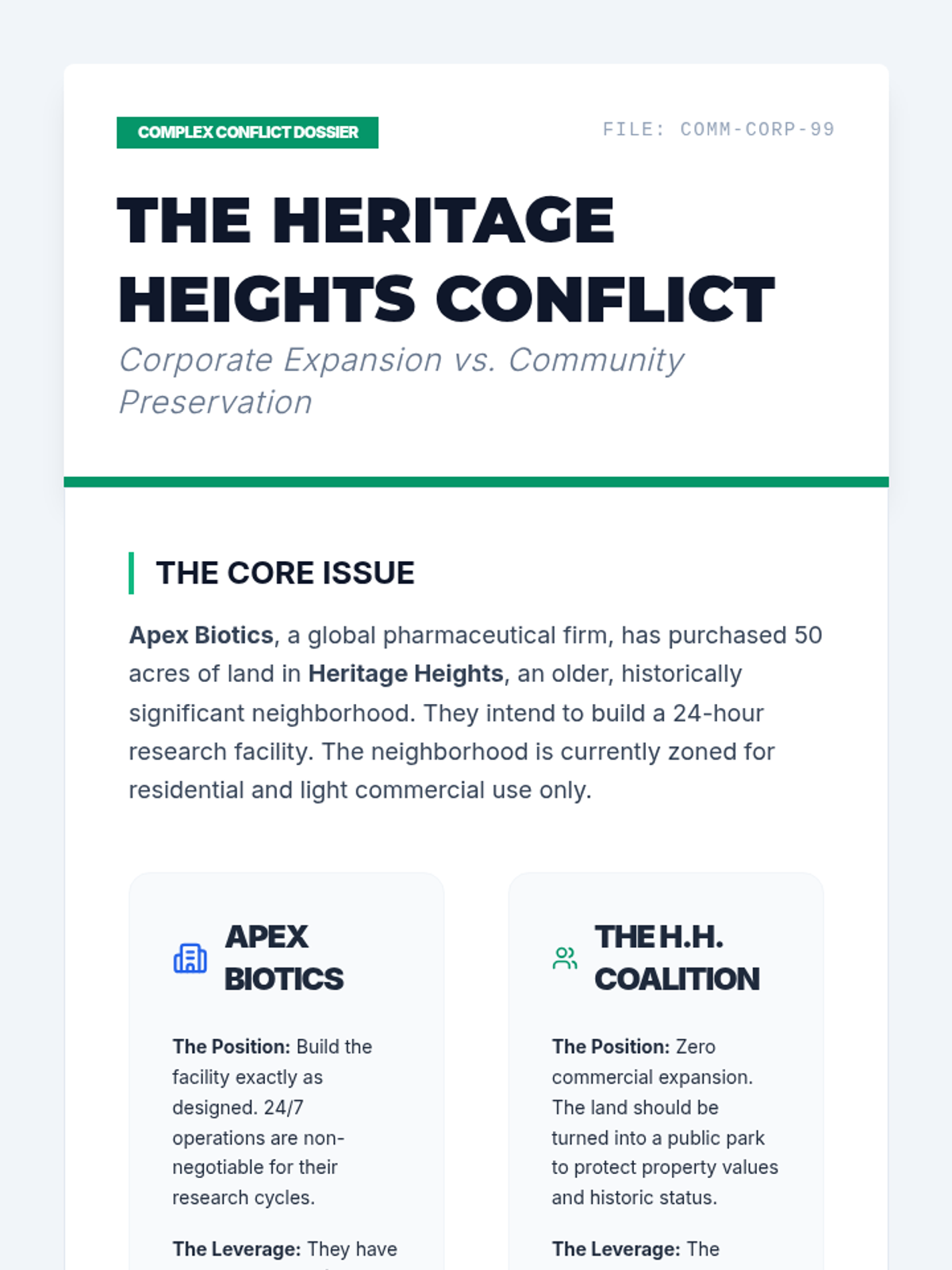
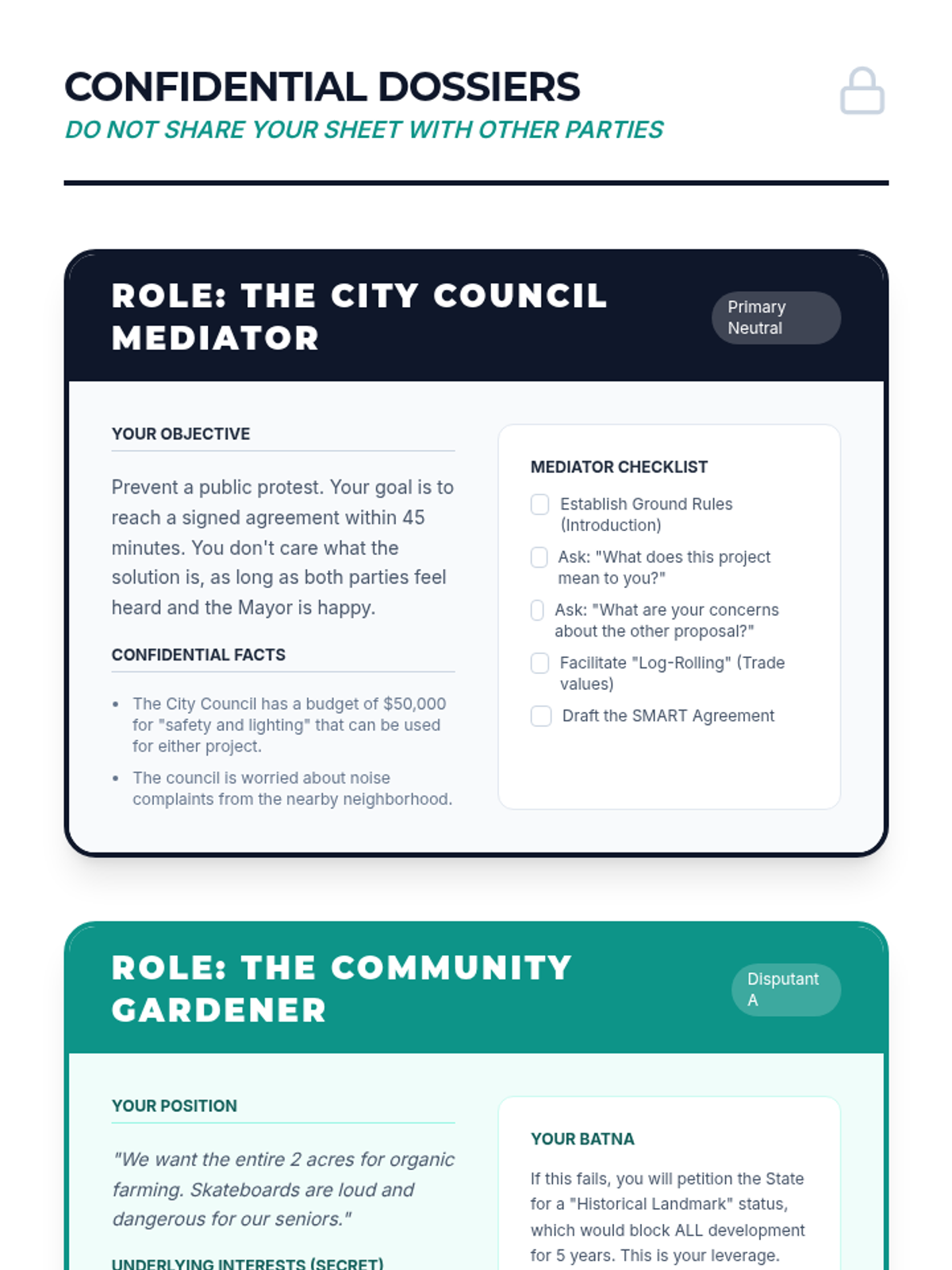
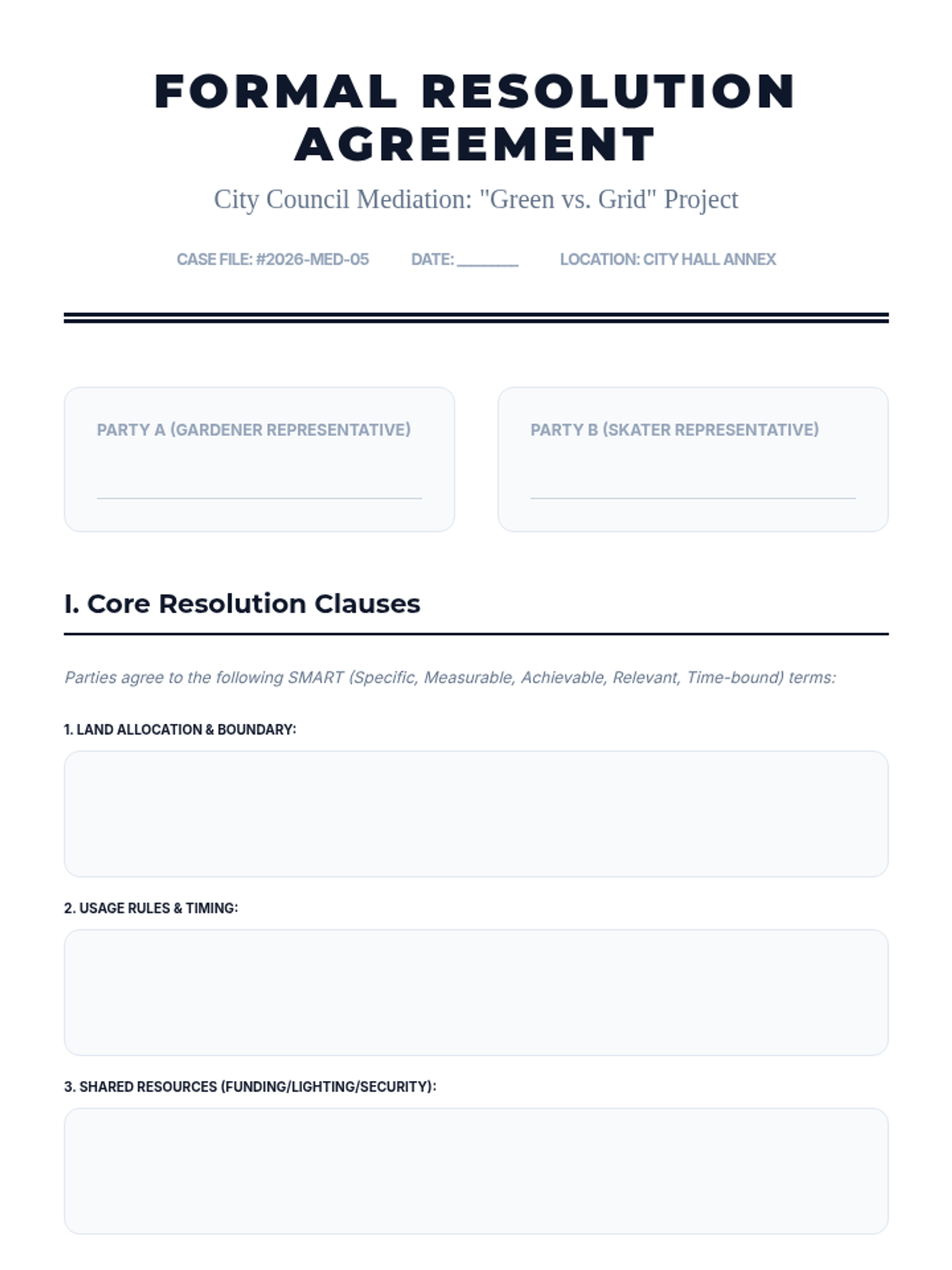
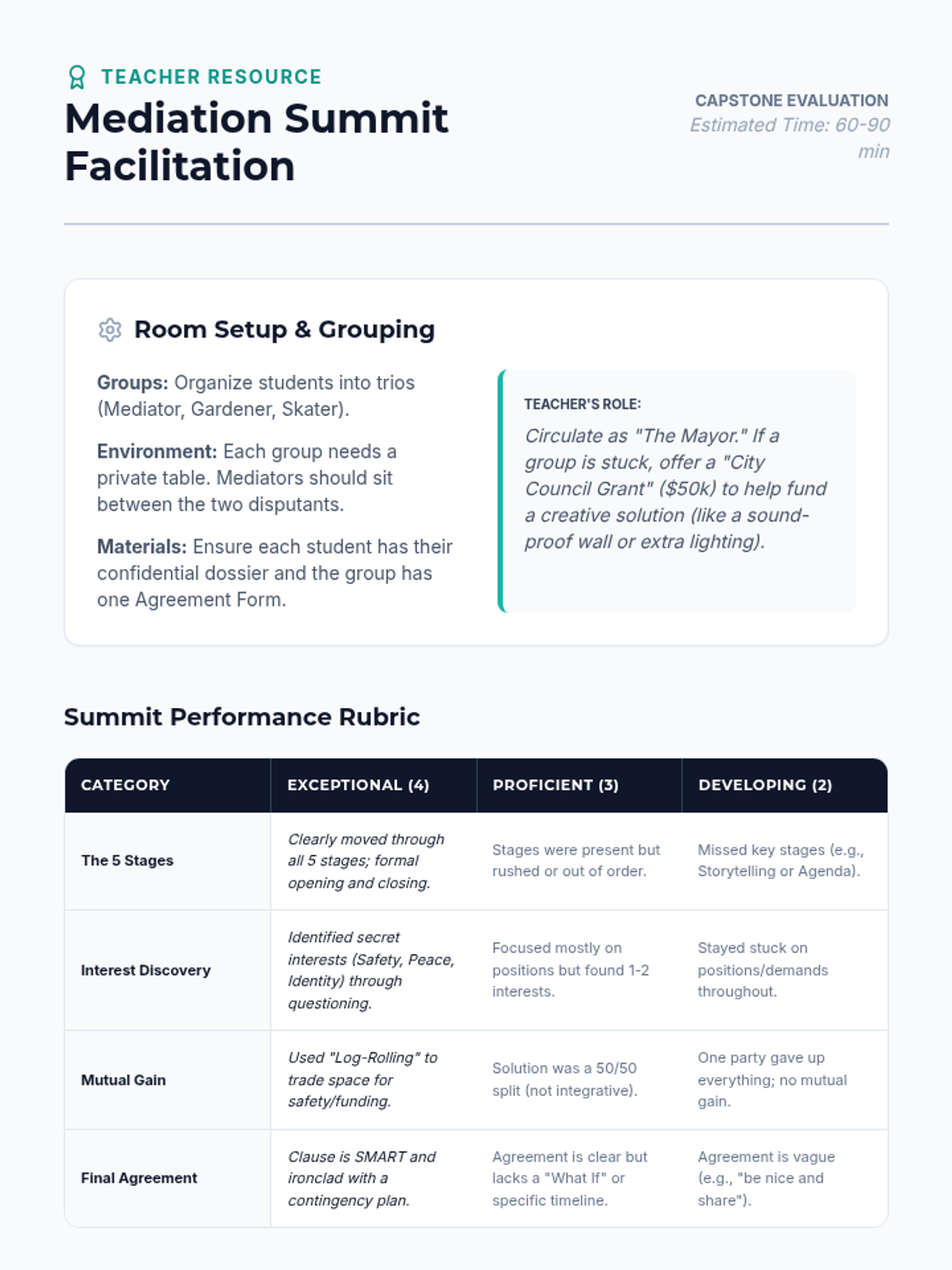
Students assume roles of mediators and disputants in a complex, multi-party dispute scenario (e.g., a land use dispute or school policy change). Mediators must facilitate the process, uncover interests, help generate options, and finalize a written agreement. The lesson focuses on synthesizing all previous frameworks into a cohesive professional performance.
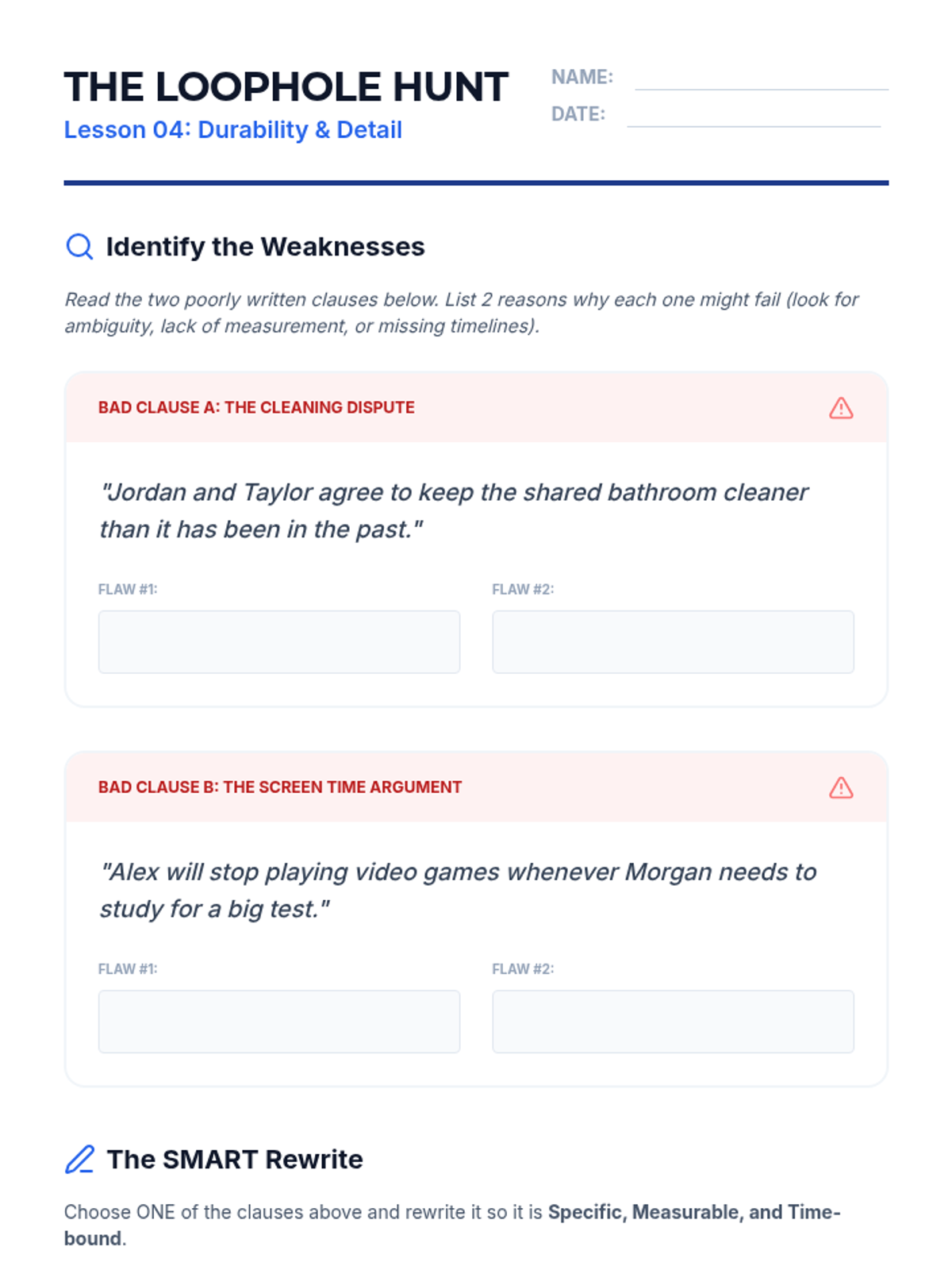
Resolving the conflict is only half the battle; writing a durable agreement is the rest. Students learn the components of a SMART agreement (Specific, Measurable, Achievable, Relevant, Time-bound) in a conflict context. They review failed contracts or treaties to identify loopholes and ambiguity, then practice drafting ironclad resolution clauses.
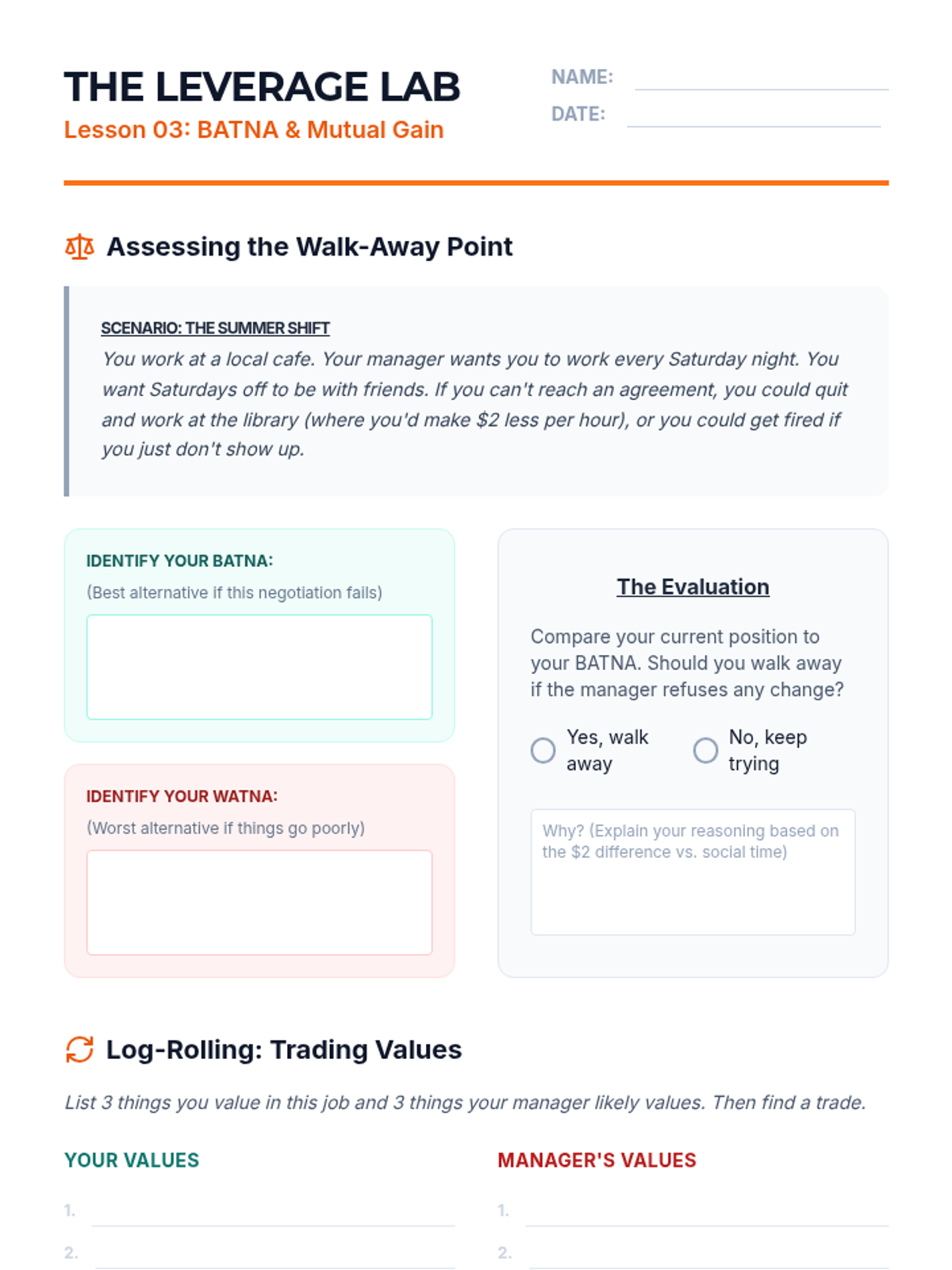
Students practice brainstorming techniques designed to break deadlocks. They learn about BATNA (Best Alternative to a Negotiated Agreement) and WATNA (Worst Alternative) to assess leverage. The class engages in exercises to expand the 'pie' rather than just dividing it, finding creative solutions that satisfy multiple interests.
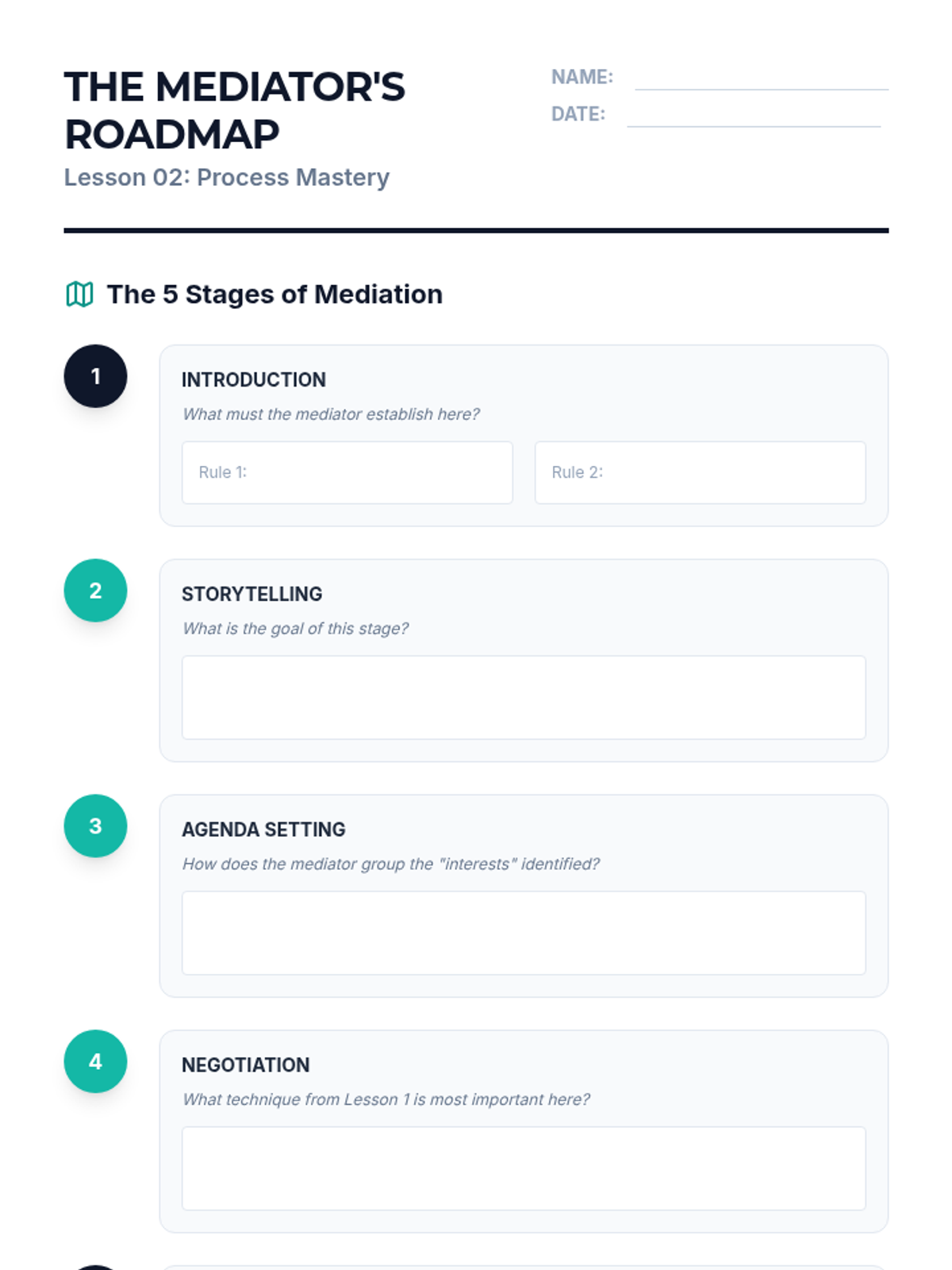
This lesson outlines the formal stages of mediation: Introduction, Storytelling, Agenda Setting, Negotiation, and Agreement. Students learn the procedural responsibilities of a mediator to maintain safety and order. They create visual flowcharts of the process to understand how to guide disputants from chaos to order.
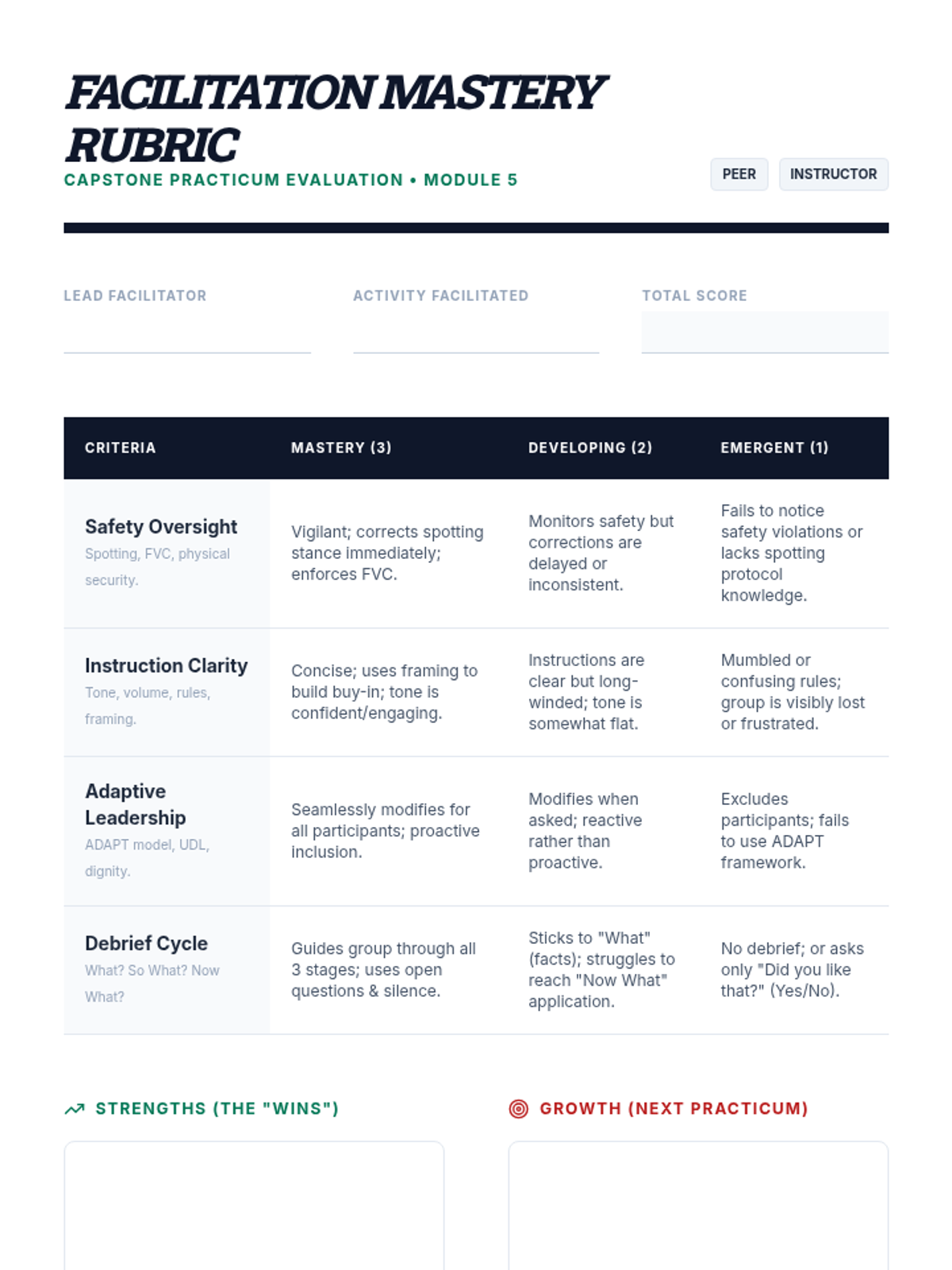
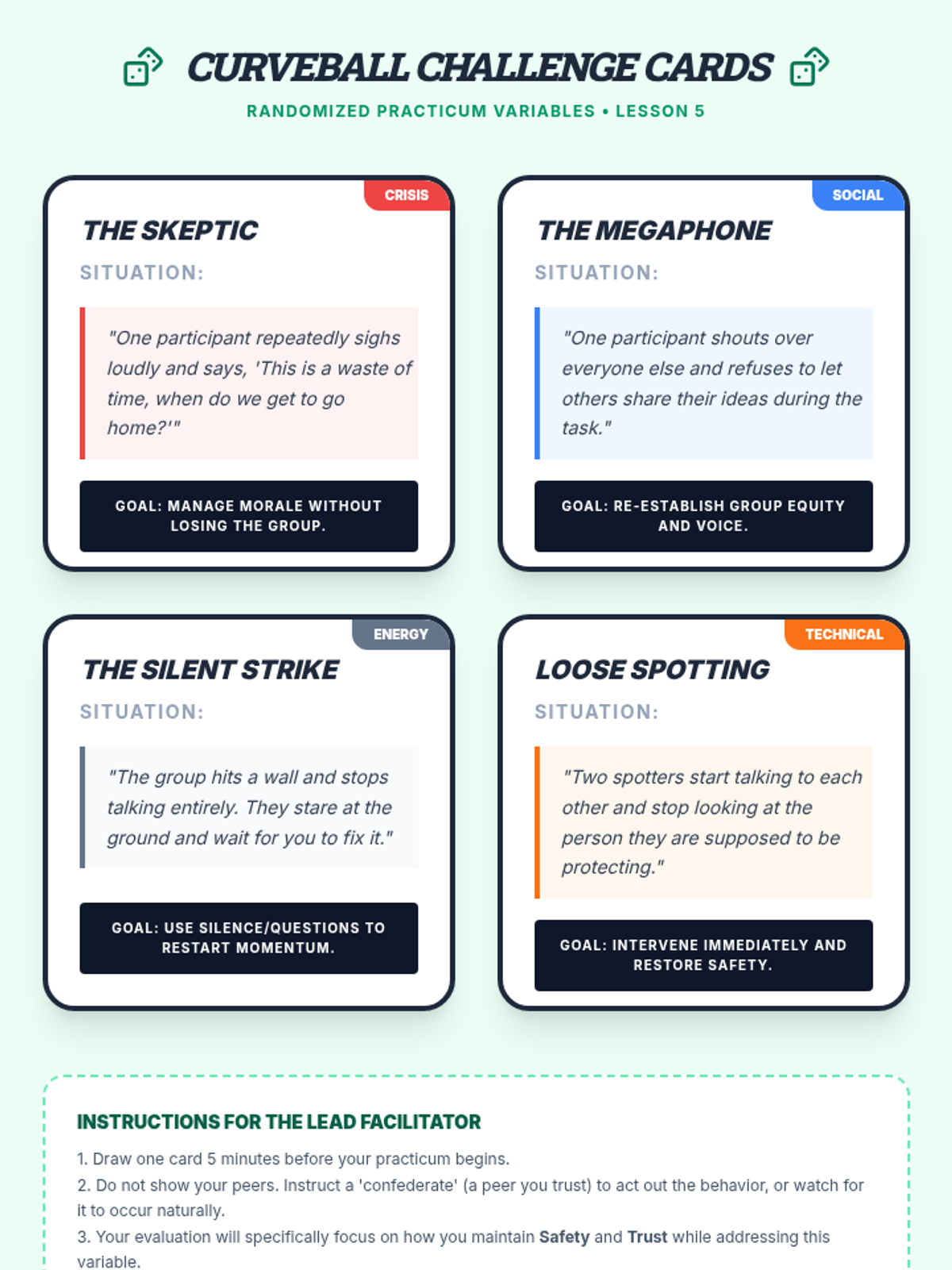
A capstone practicum where students design, facilitate, and debrief a team-building sequence using structured frameworks.
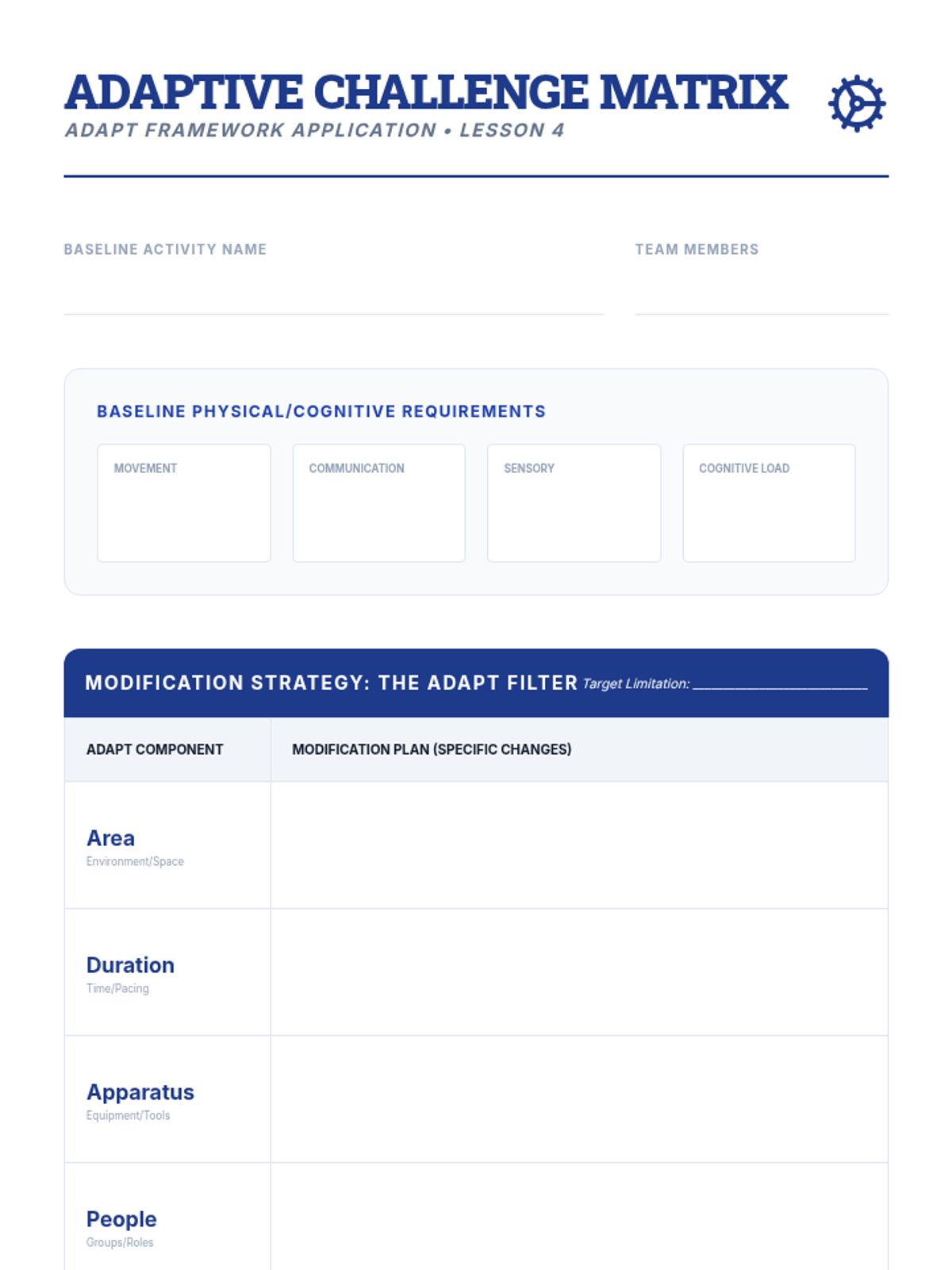
Learners apply Universal Design principles to modify classic outdoor activities for diverse physical and cognitive abilities.
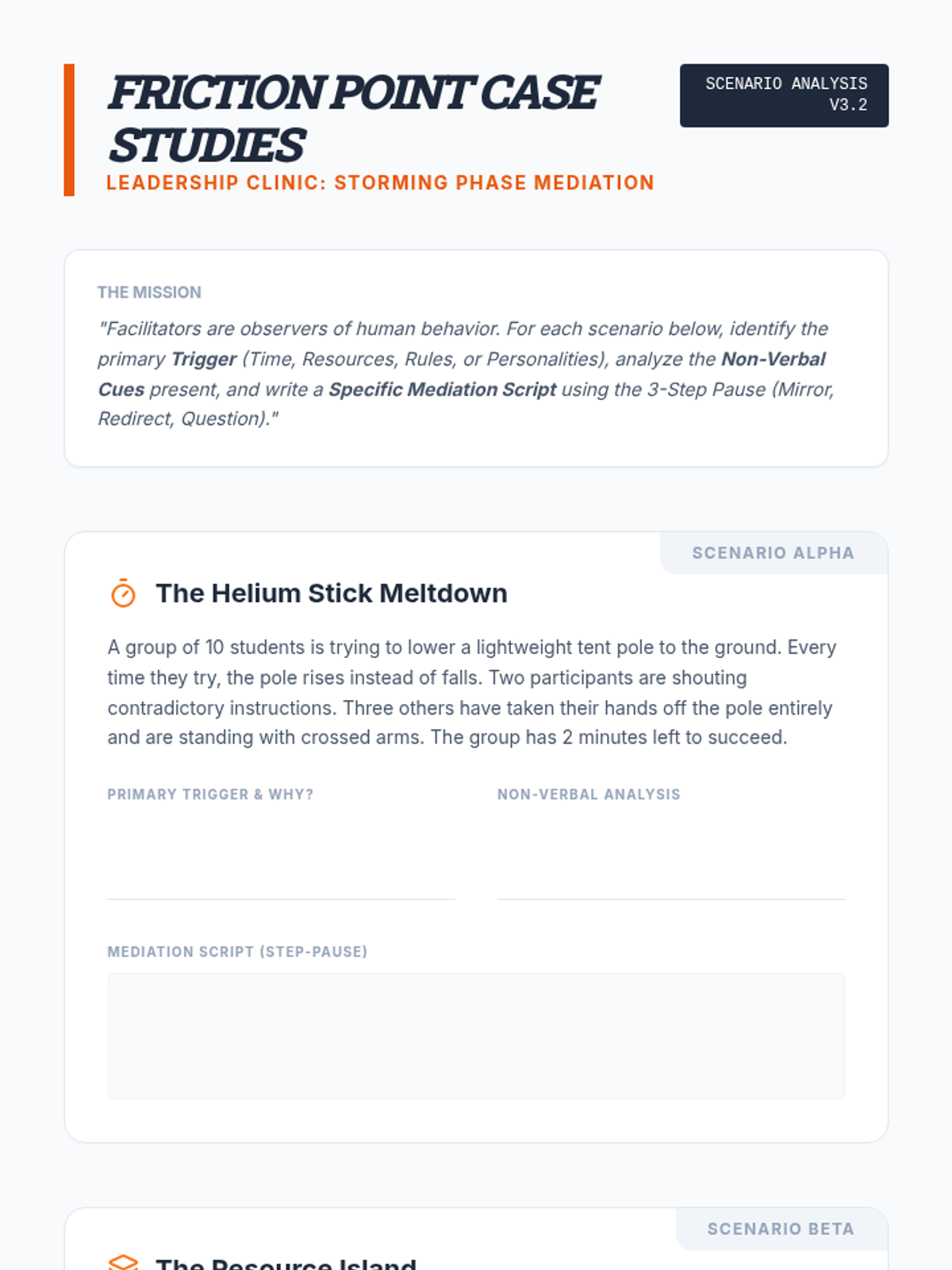
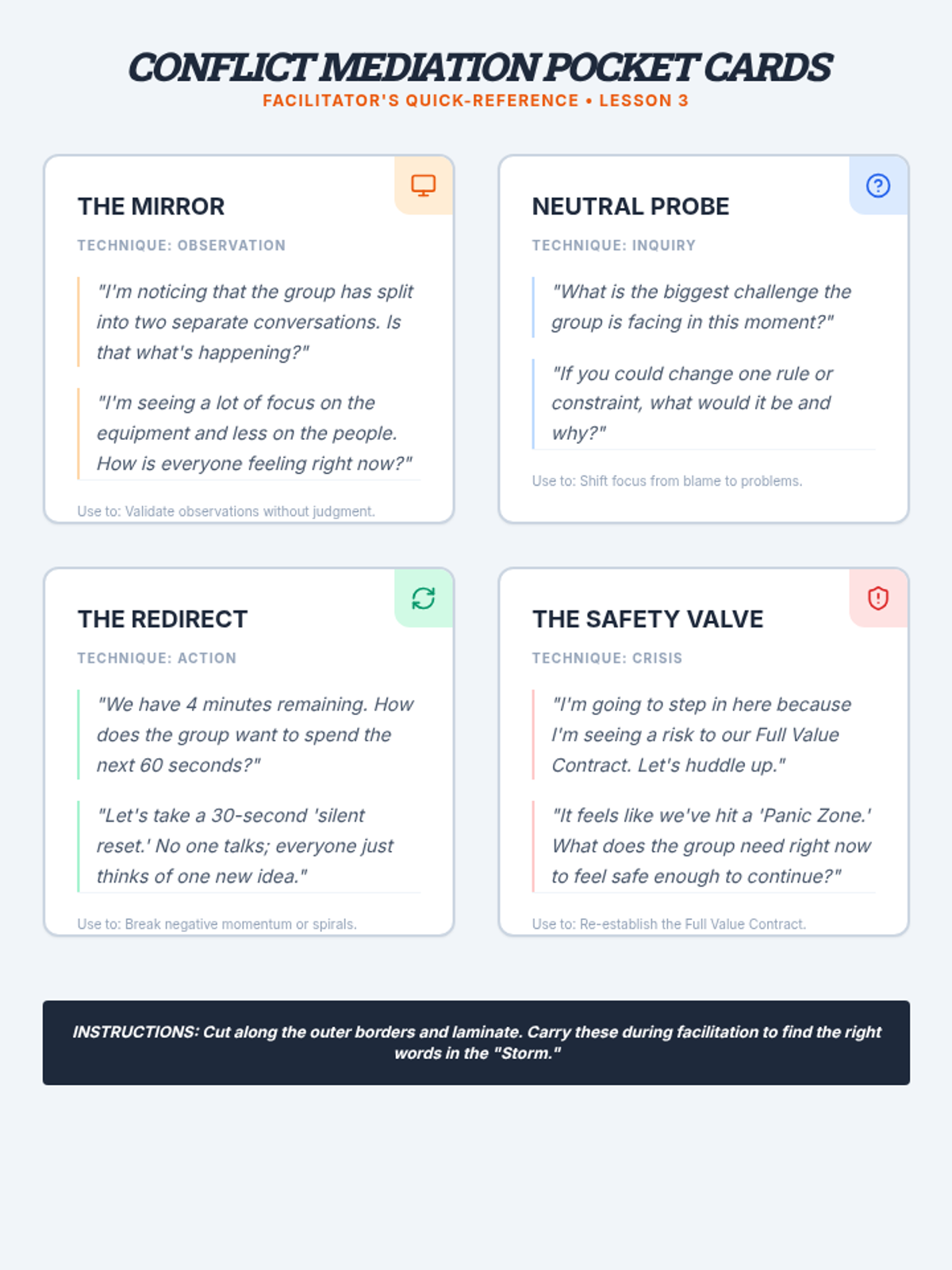
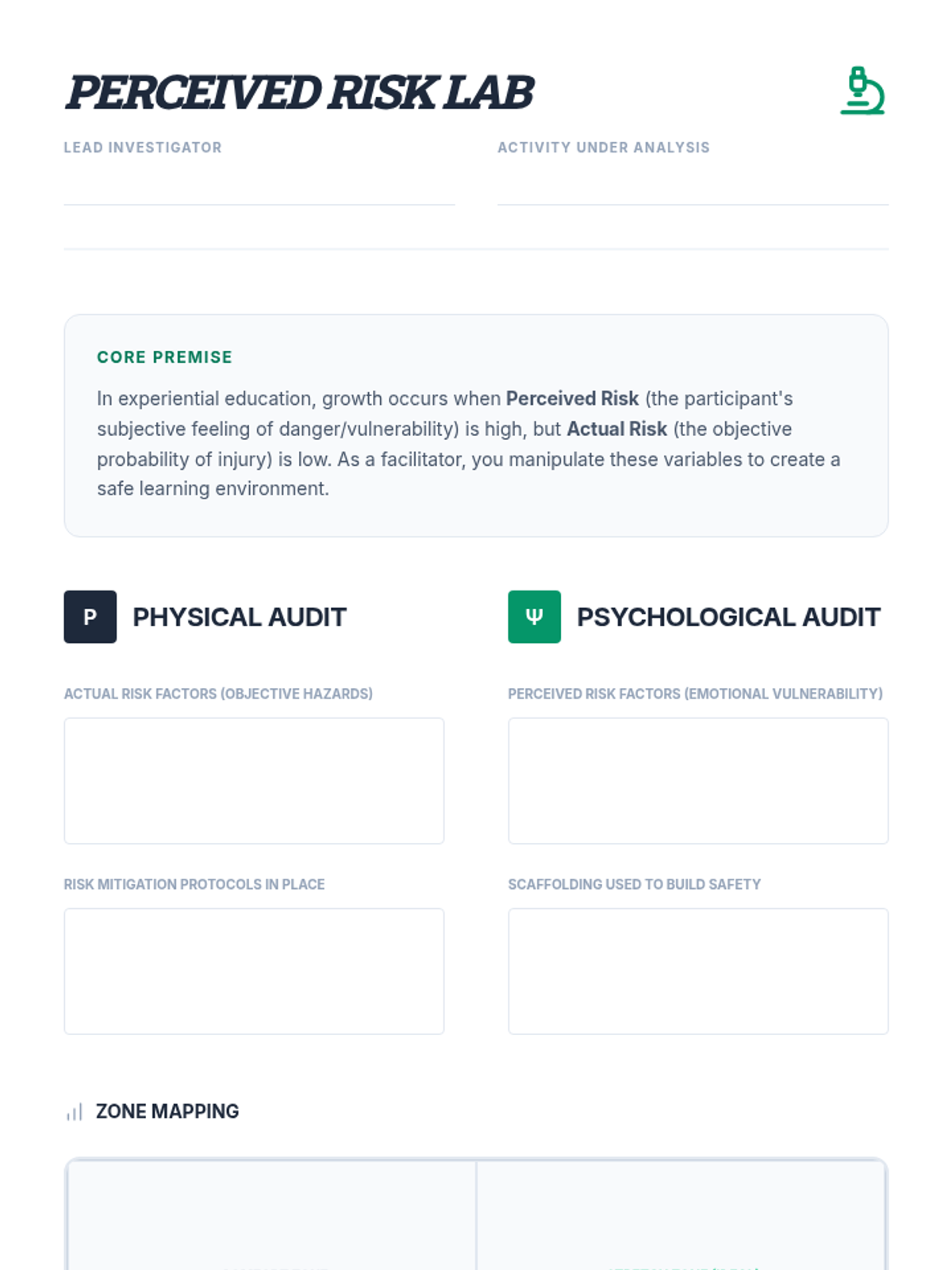
Students practice mediation techniques and non-verbal analysis during frustration-inducing activities designed to trigger the 'Storming' phase.
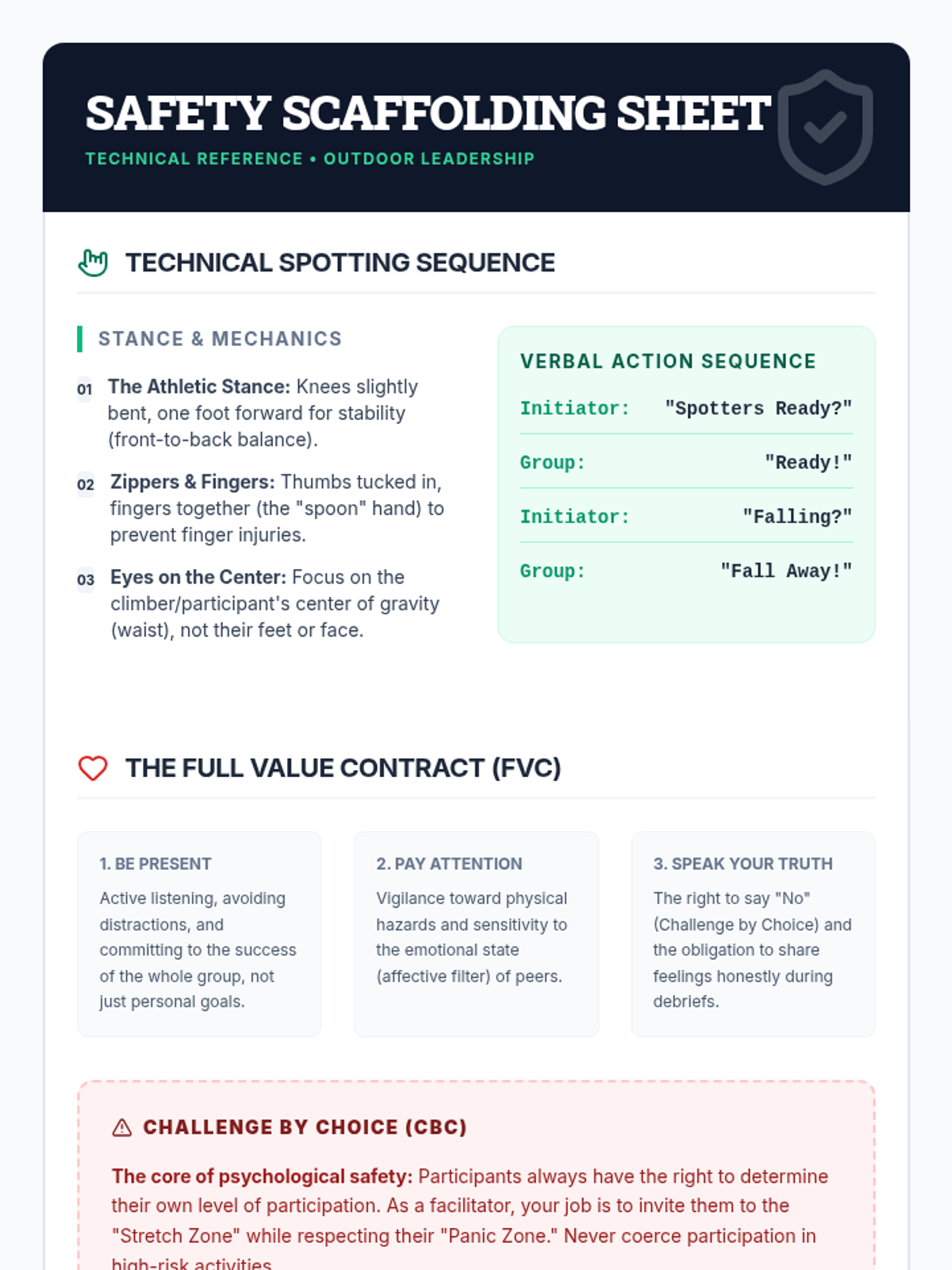
This lesson explores the mechanics of vulnerability, focusing on trust activities and the distinction between physical and psychological safety.
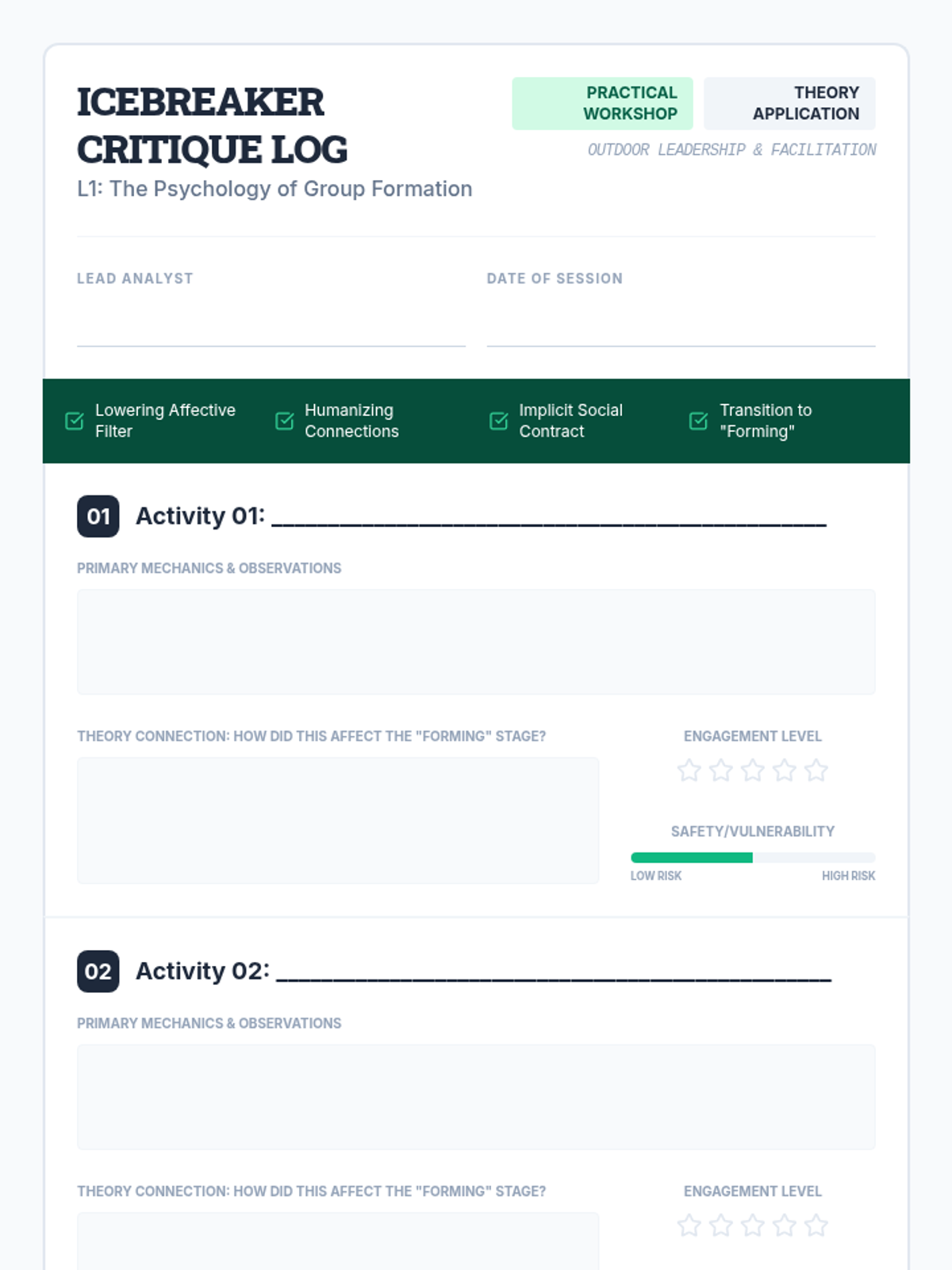
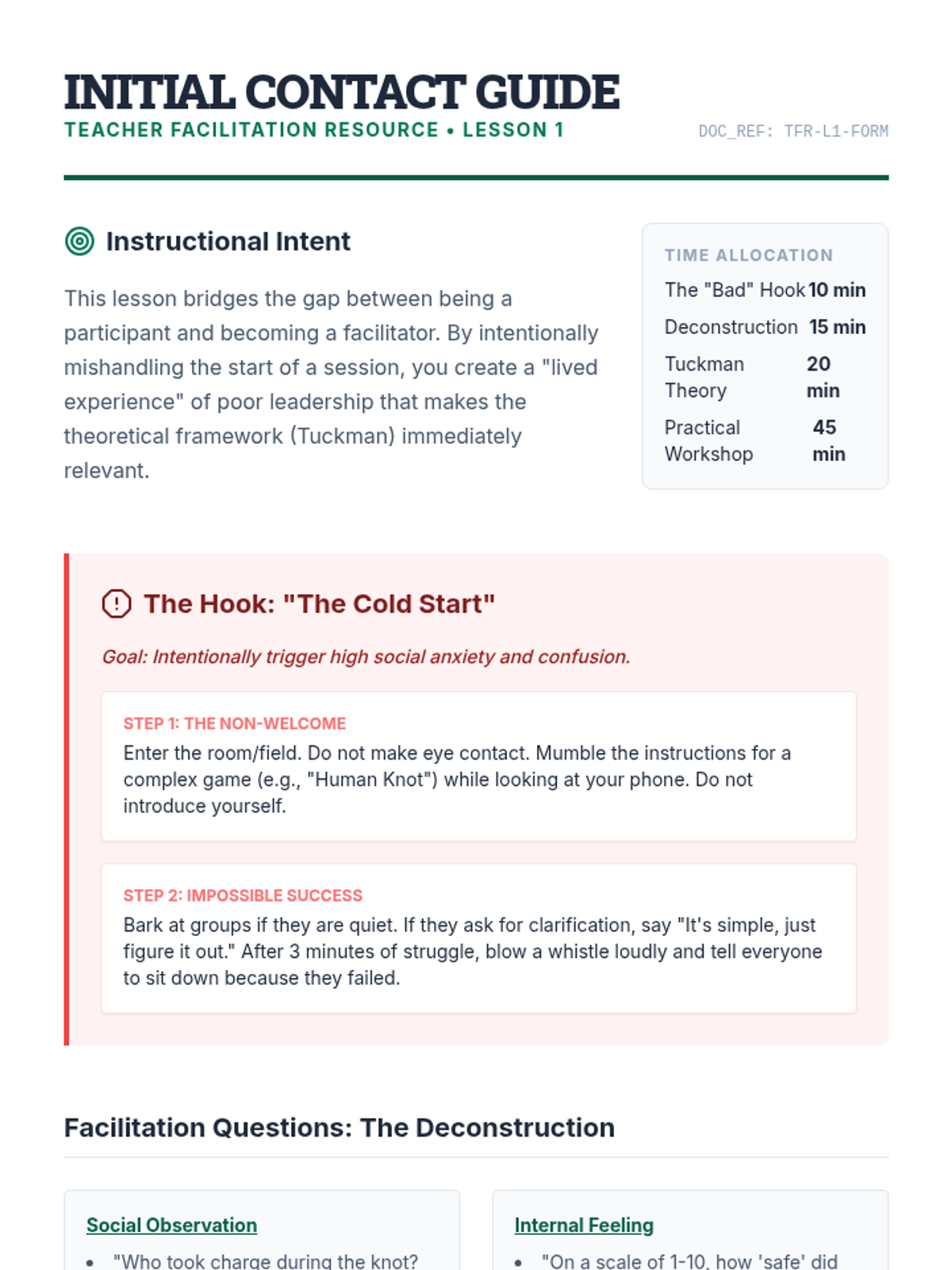
Students analyze Tuckman's stages of group development through the lens of initial icebreaker activities and social contracts.
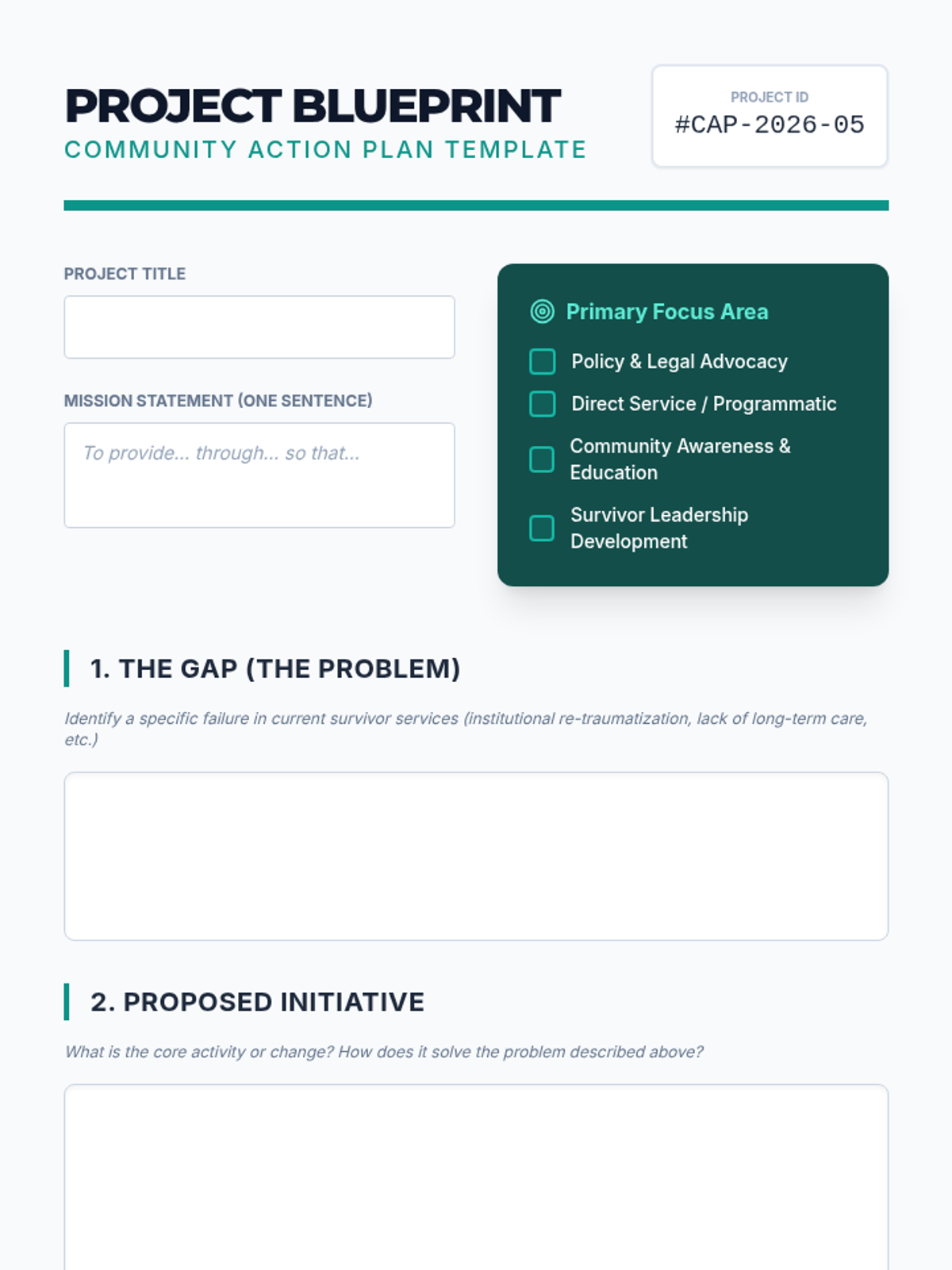
The capstone lesson where students synthesize their knowledge to design a community action plan or advocacy initiative to address local gaps in survivor services.
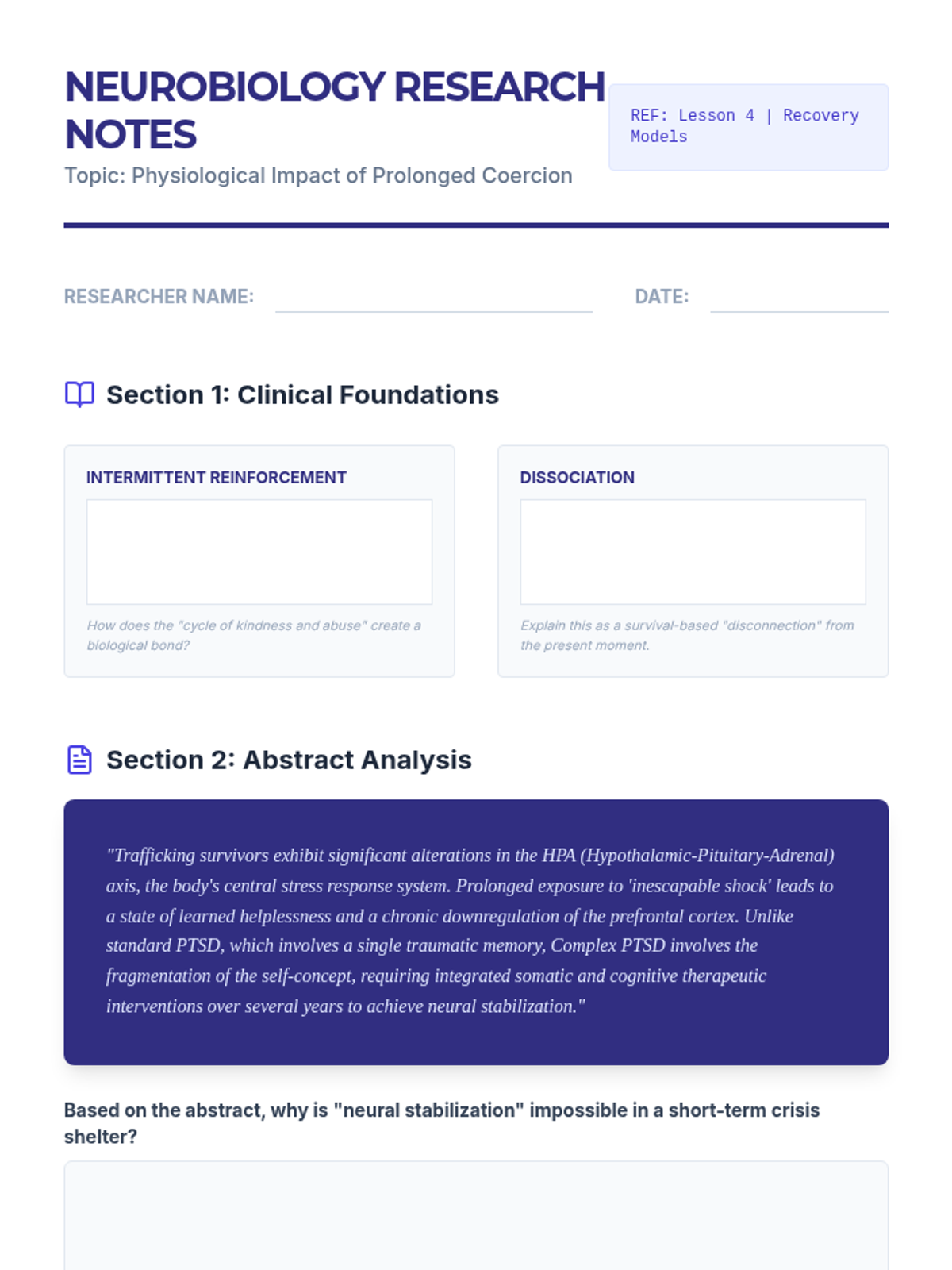
Focuses on the long-term mental health impacts of trafficking, specifically Complex PTSD, the neurological effects of coercion, and the necessity of long-term therapeutic support.
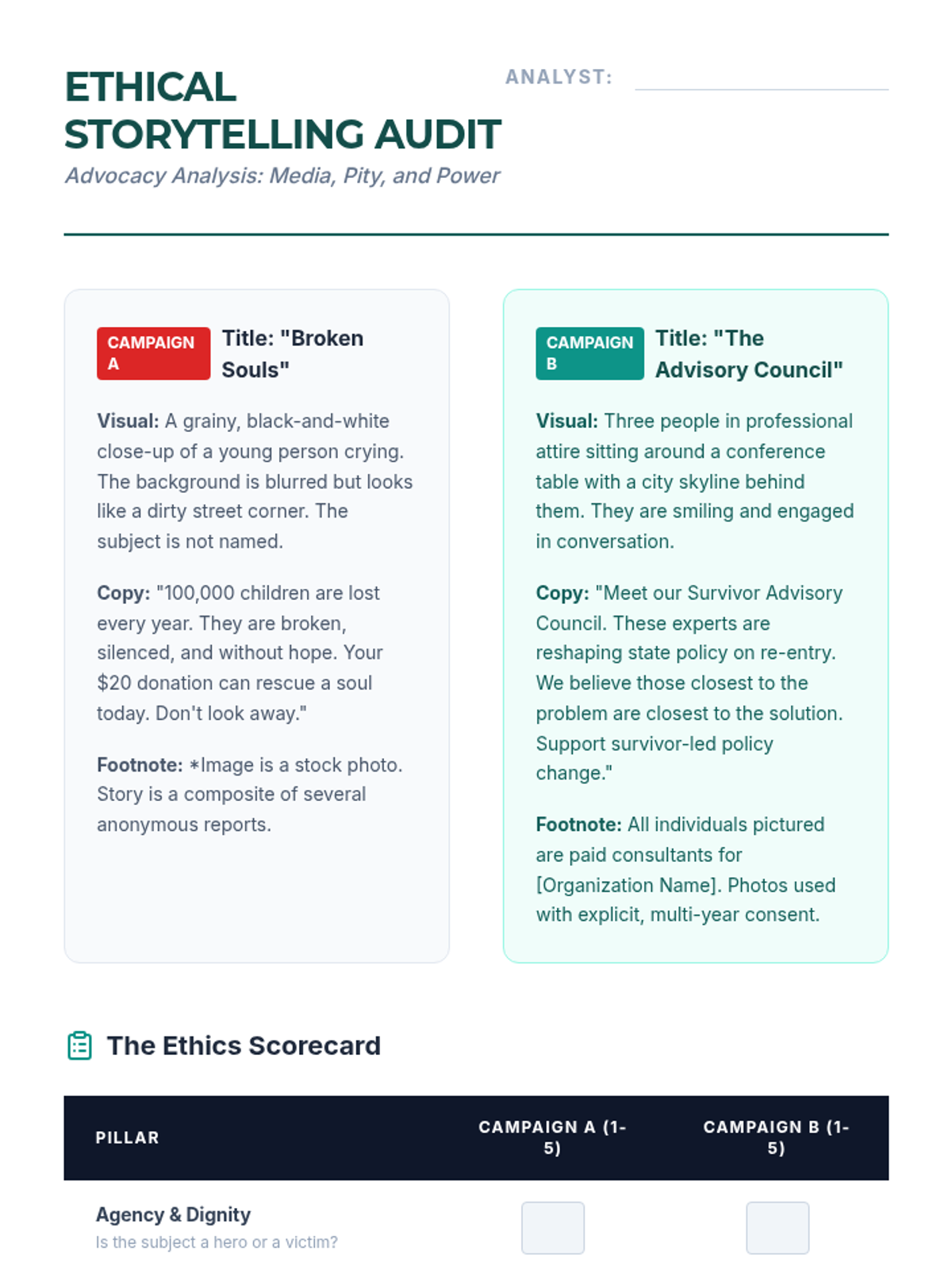
Students critique the exploitation of survivor stories in media and fundraising, focusing on ethical guidelines for survivor-led advocacy and the 'nothing about us without us' movement.
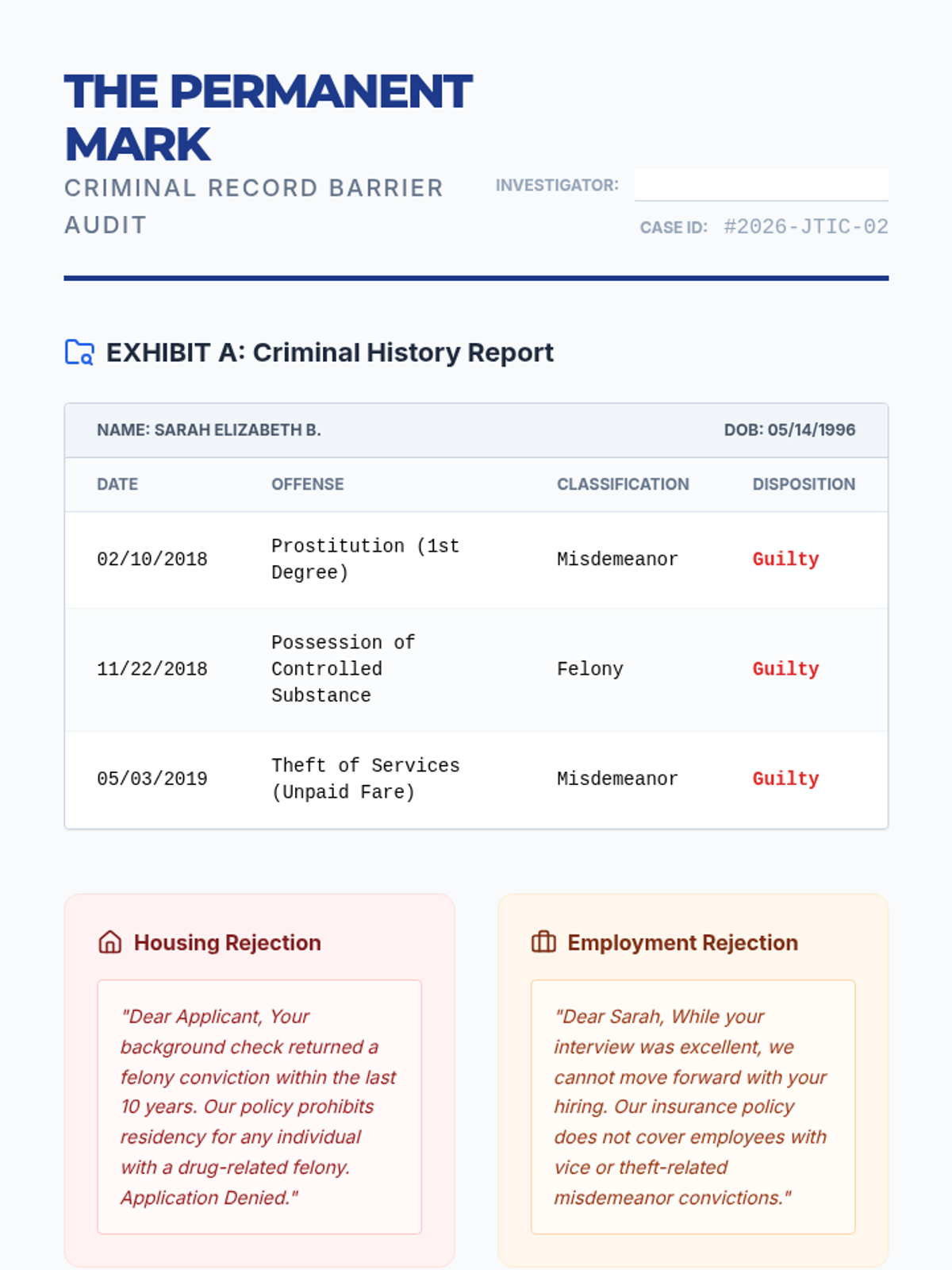
This lesson addresses the criminalization of survivors and the importance of vacatur laws, exploring how trafficking-related criminal records create lifelong barriers to housing and employment.
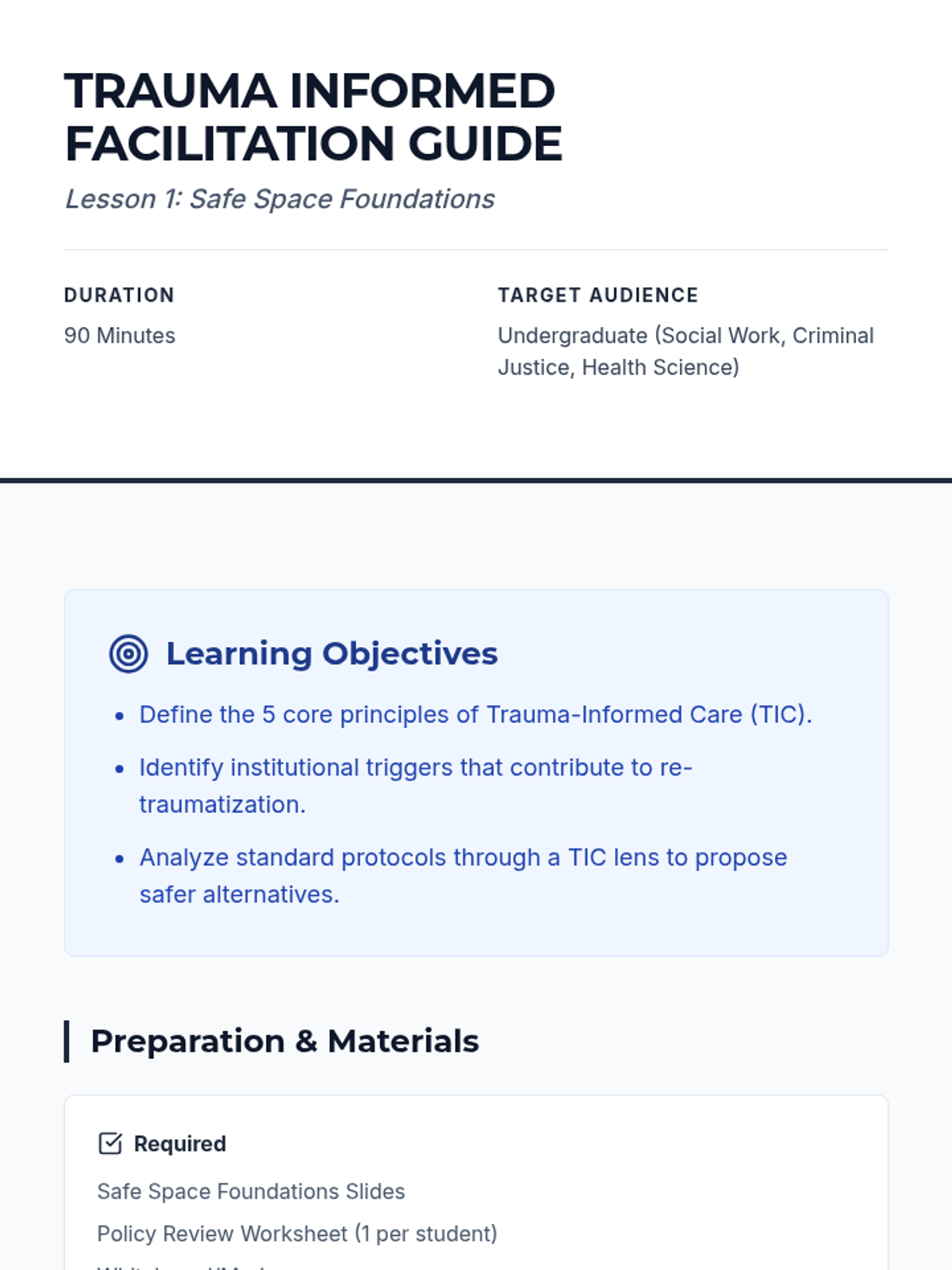
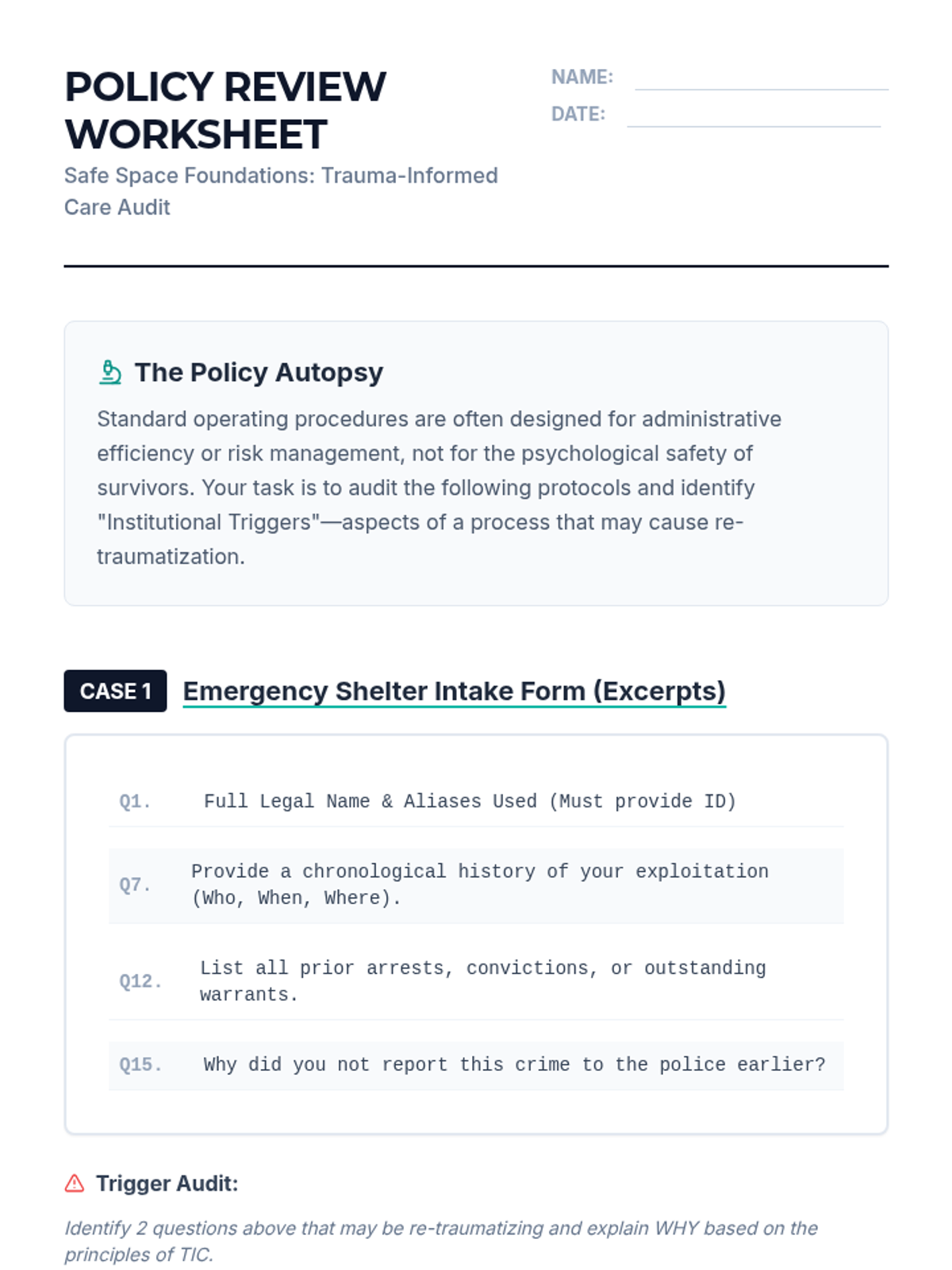
Students define the core principles of trauma-informed care (safety, trustworthiness, choice, collaboration, and empowerment) and analyze institutional procedures to identify practices that might re-traumatize survivors.