Empathetic skill development through emotion recognition, cultural diversity appreciation, and bias confrontation. Targets multi-perspective analysis to support respectful interactions and complex social responses.
A slide deck for Lesson 4's intensive facilitation workshop. Includes rules for the 'Fishbowl' simulation, focus areas for practitioners, and specific client scenarios for role-play.
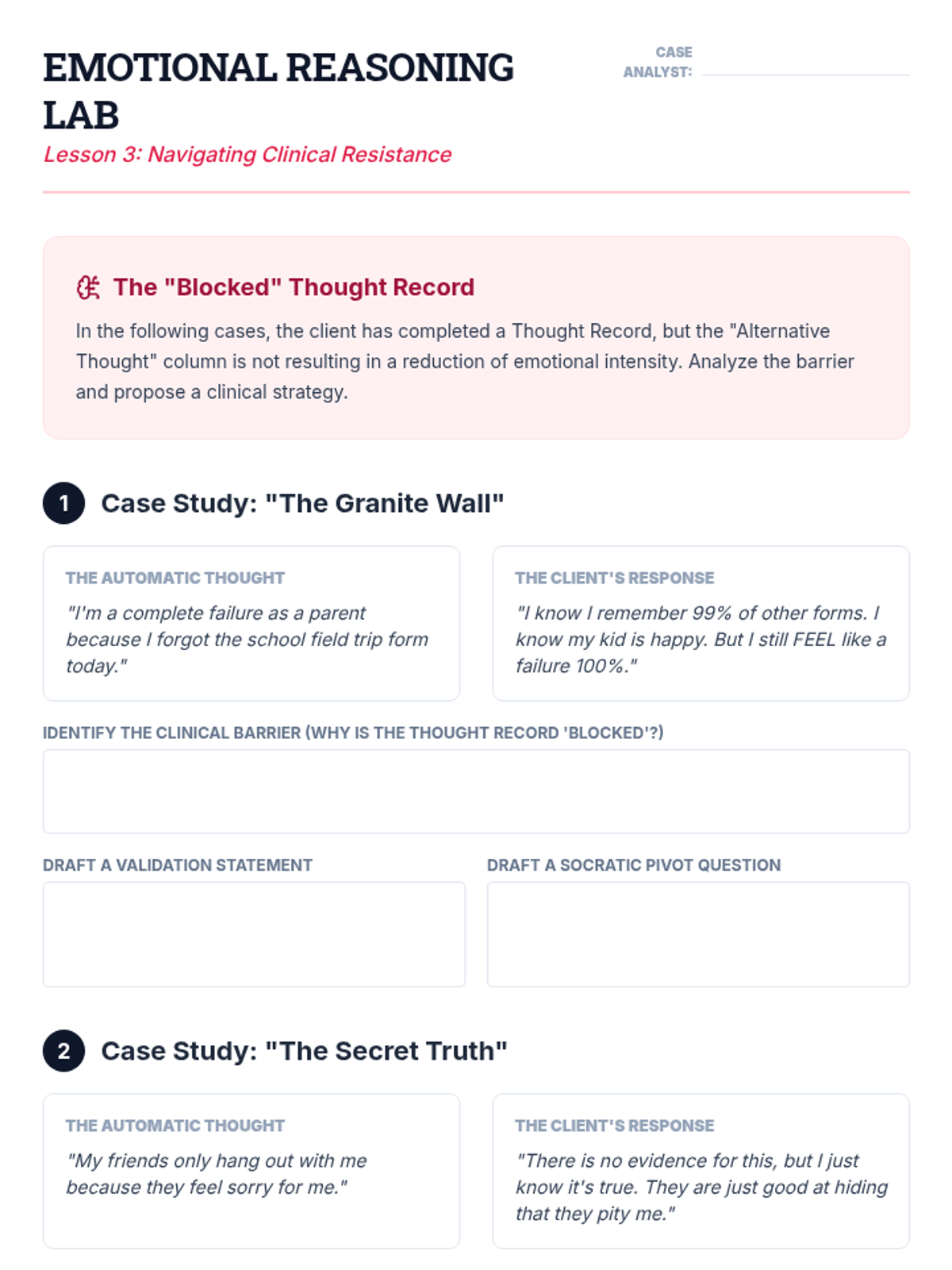
A student-facing worksheet for Lesson 3. Students analyze case studies of 'blocked' thought records where clients are stuck in emotional reasoning, practicing validation and clinical pivots.
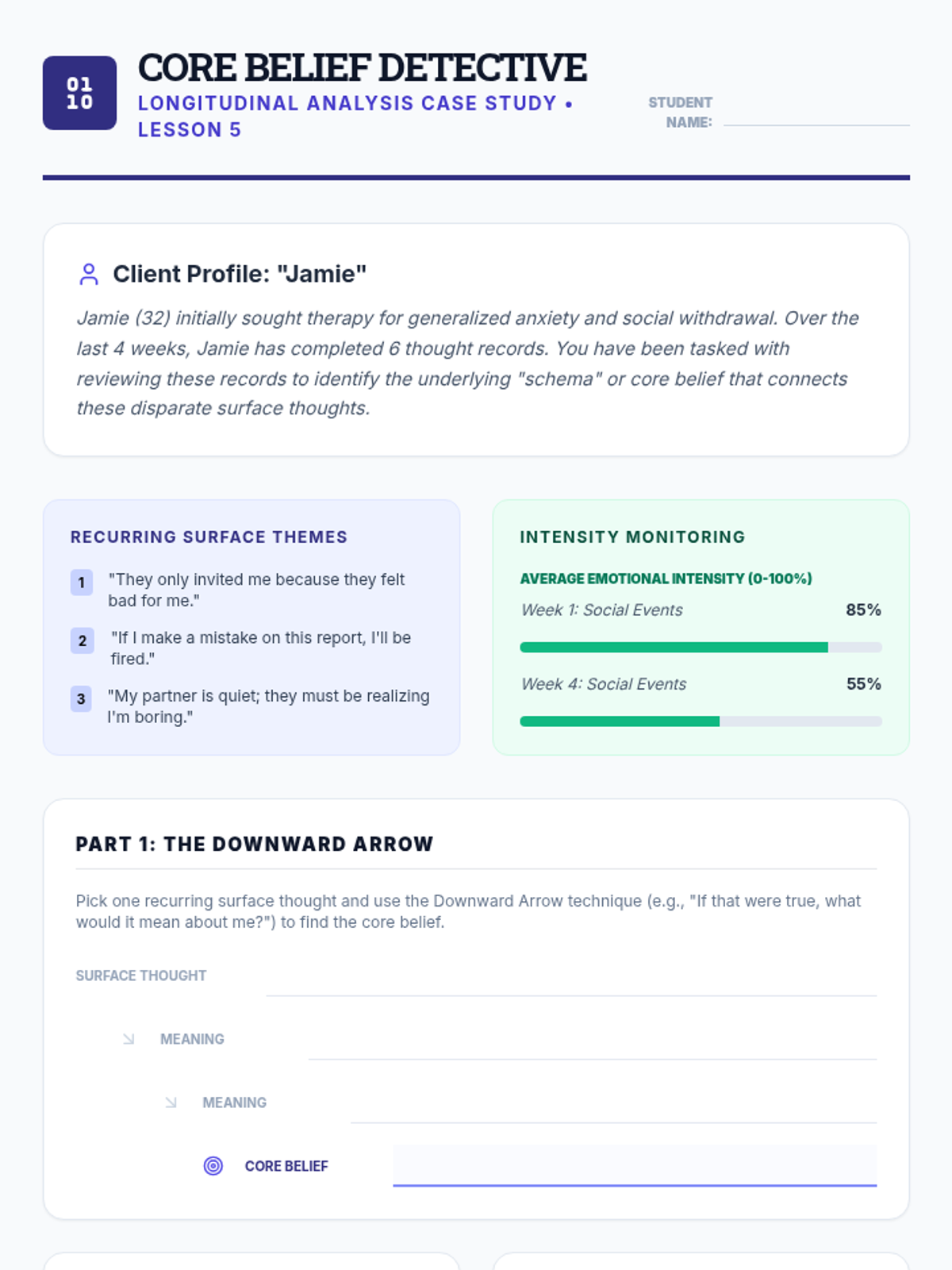
A student-facing worksheet for Lesson 5. Students analyze a month's worth of case-study thought records to identify recurring themes, use the downward arrow technique to find core beliefs, and monitor clinical progress.
A slide deck covering longitudinal analysis of thought records, identifying recurring core beliefs, and the ethical considerations of cognitive restructuring.
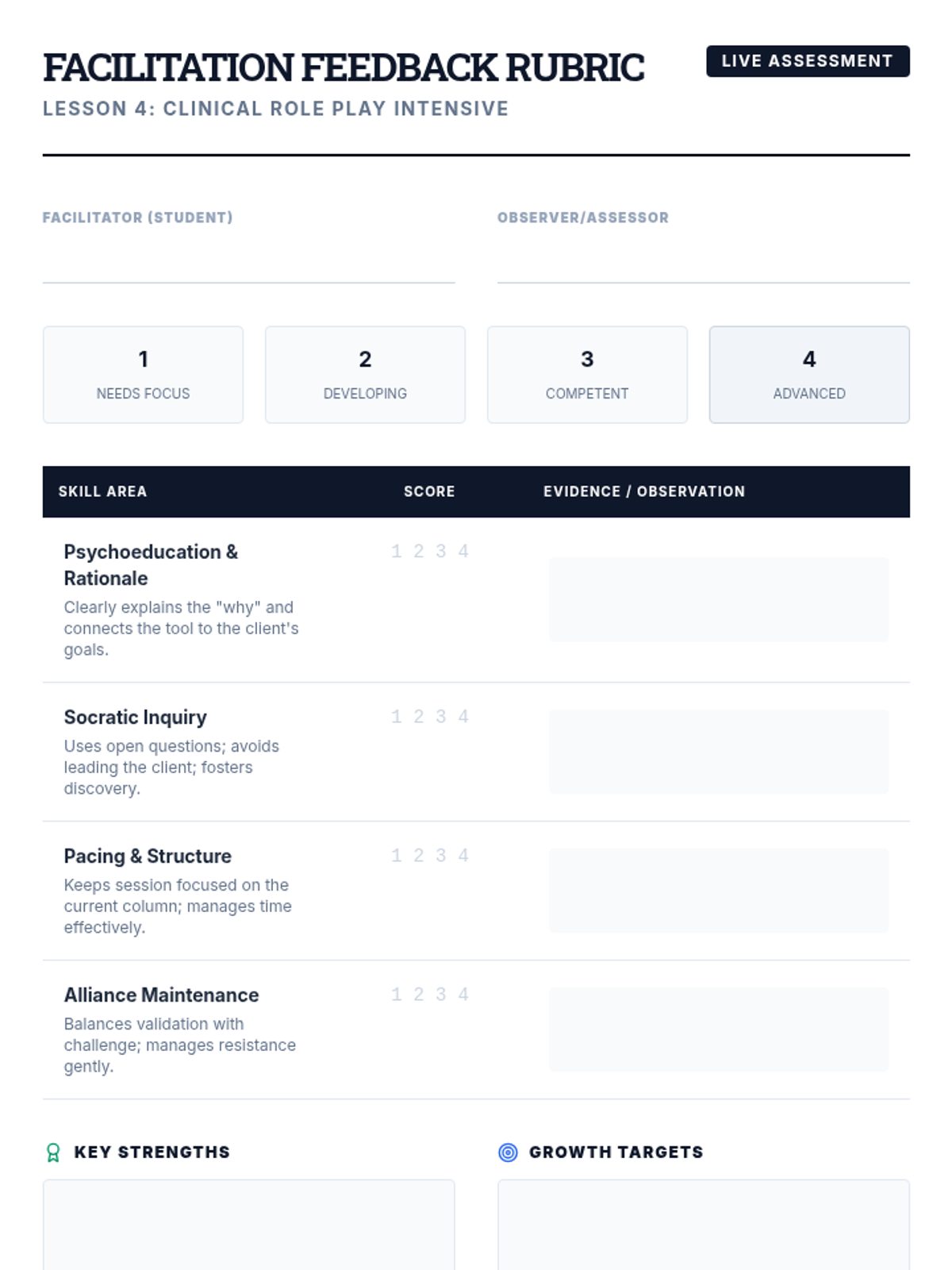
A professional rubric for assessing student performance during role-play simulations. Focuses on psychoeducation, Socratic questioning, session pacing, and therapeutic alliance.
A 5-slide presentation for Lesson 3 focused on emotional reasoning and clinical resistance. Covers the 'Validate then Challenge' model and strategies for troubleshooting 'blocked' thought records.
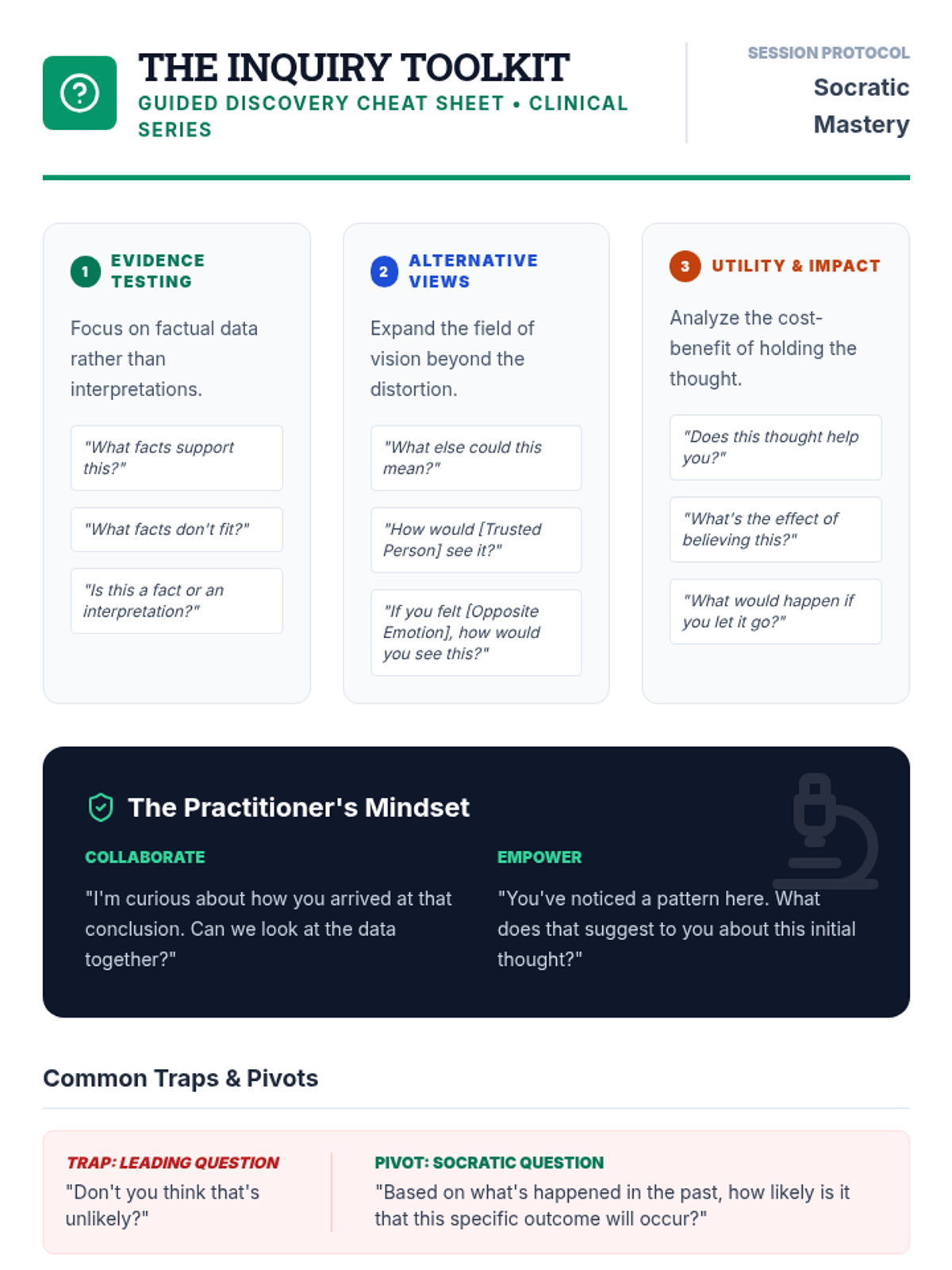
A professional cheat sheet for students practicing Socratic questioning. Includes question stems for evidence seeking, alternative perspectives, and utility, plus clinical pivot strategies.
A slide deck explaining the principles of Socratic questioning, guided discovery, and common clinical traps. Focuses on the "Scientist Stance" and differentiates between leading vs. curious questioning.
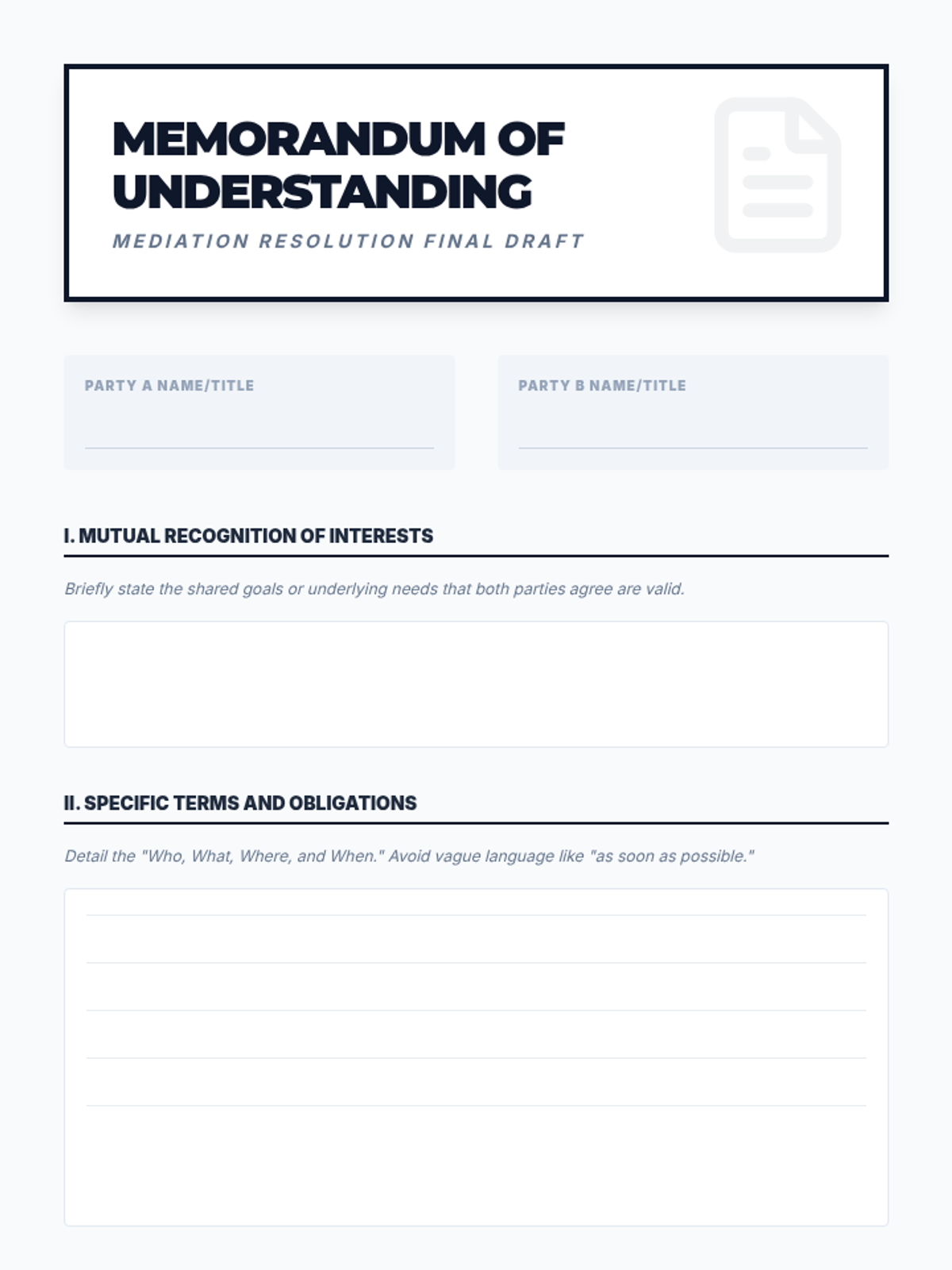
Formal Memorandum of Understanding (MOU) template for students to draft sustainable, durable resolutions following a mediation simulation.
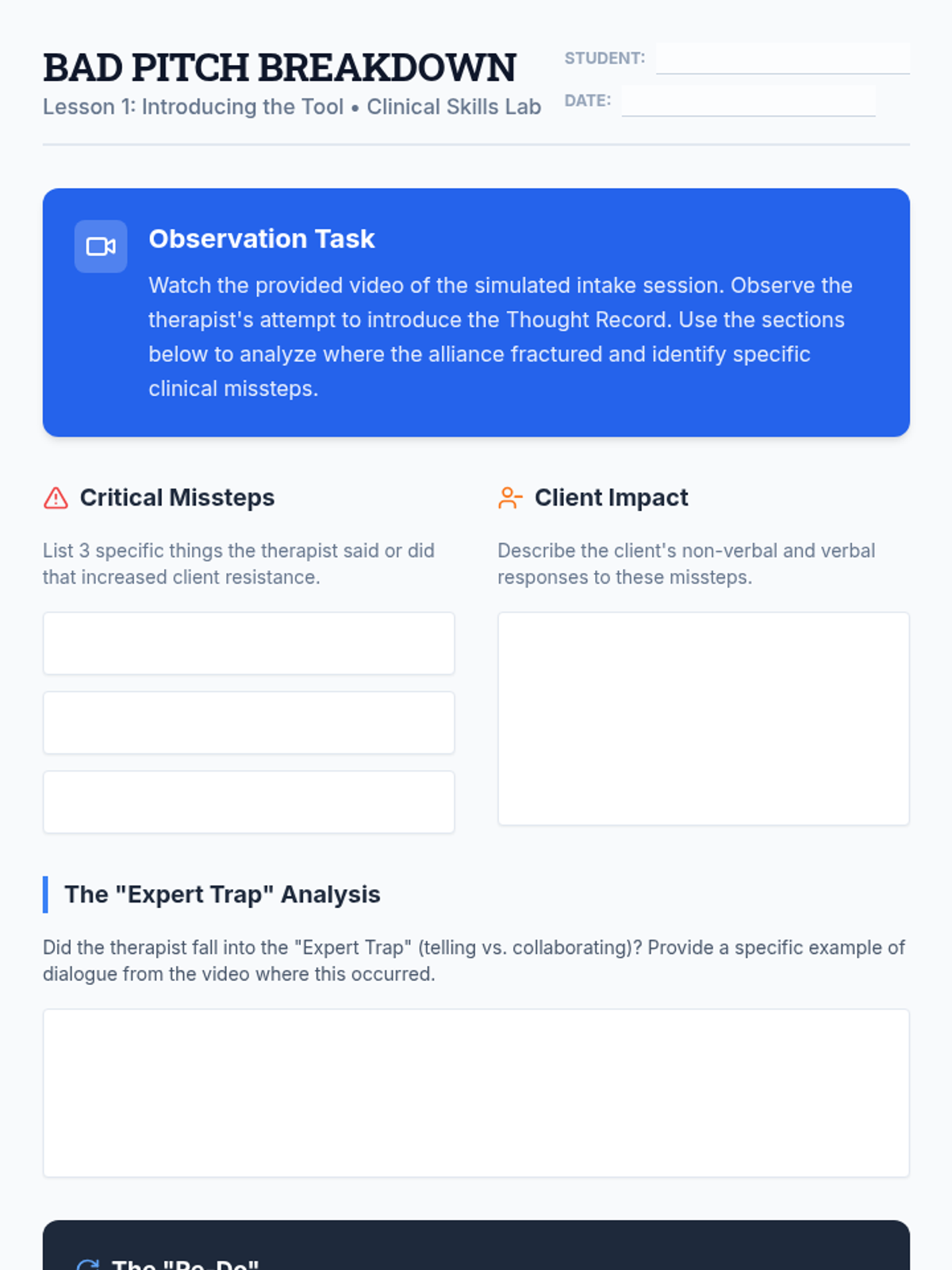
A worksheet for students to critique a video of a therapist poorly introducing a thought record. Includes sections for identifying missteps, client impact, and rewriting clinical dialogue.
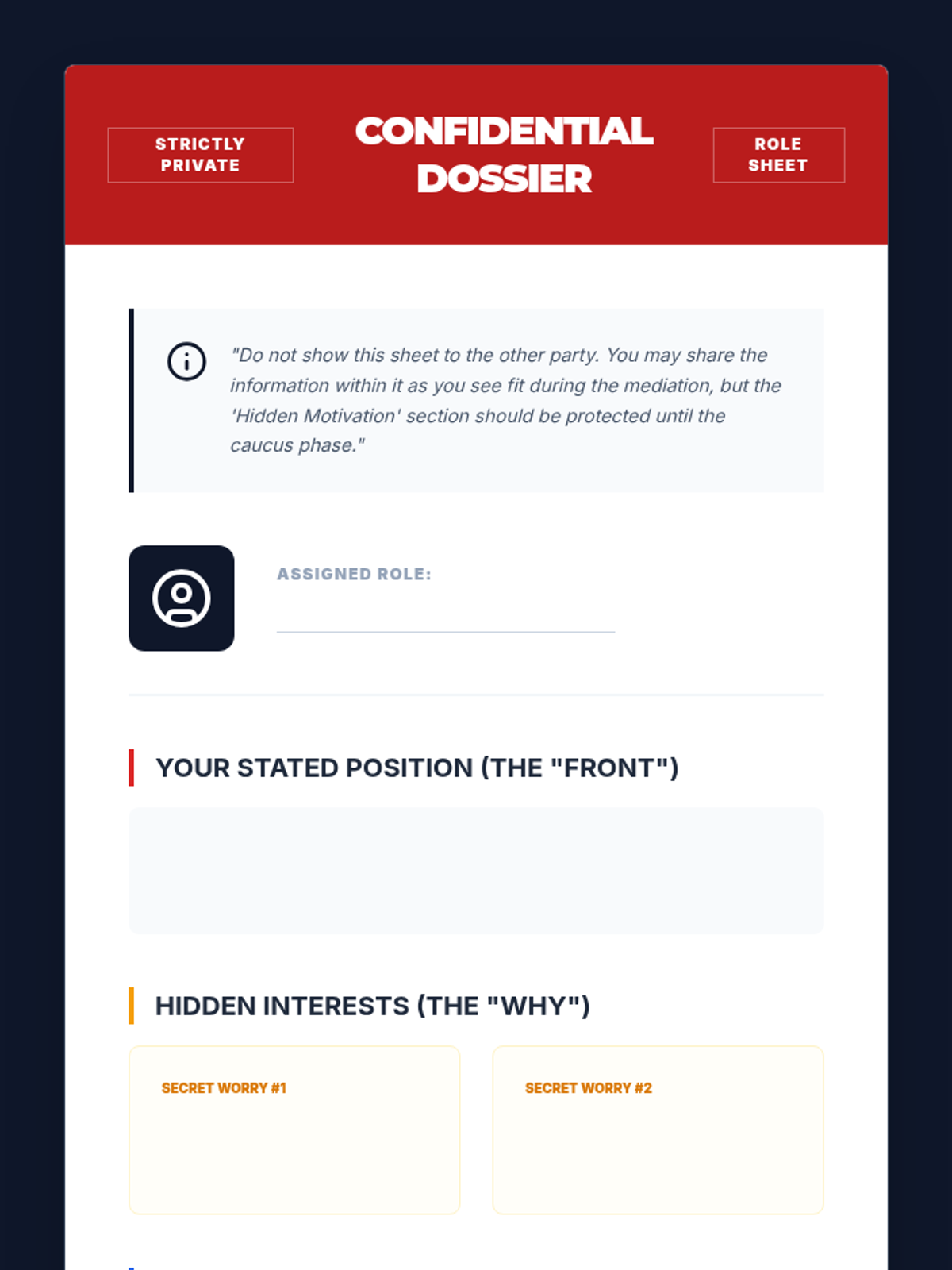
Confidential role dossiers for students participating in the final mediation simulation, including space for recording positions, hidden interests, and BATNA.
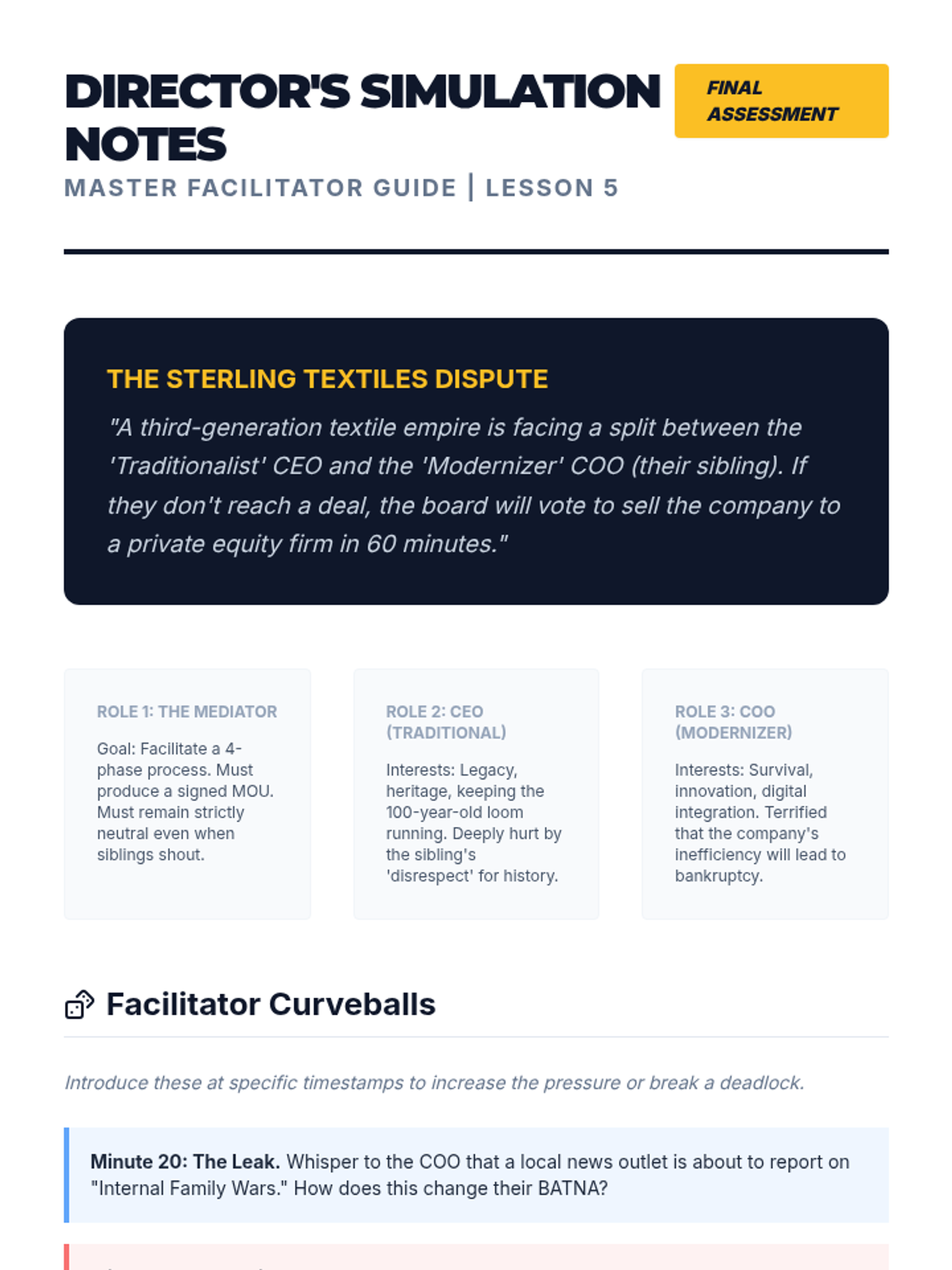
Instructor's notes for directing the culminating mediation simulation, including role descriptions, timed 'curveballs', and an assessment rubric.
A 5-slide presentation for introducing Thought Records to clients. Covers the clinical rationale, the 'elevator pitch' model, and managing client skepticism.
Culminating slide presentation for the final simulation, outlining the timeline, phases, and criteria for a sustainable mediation resolution.
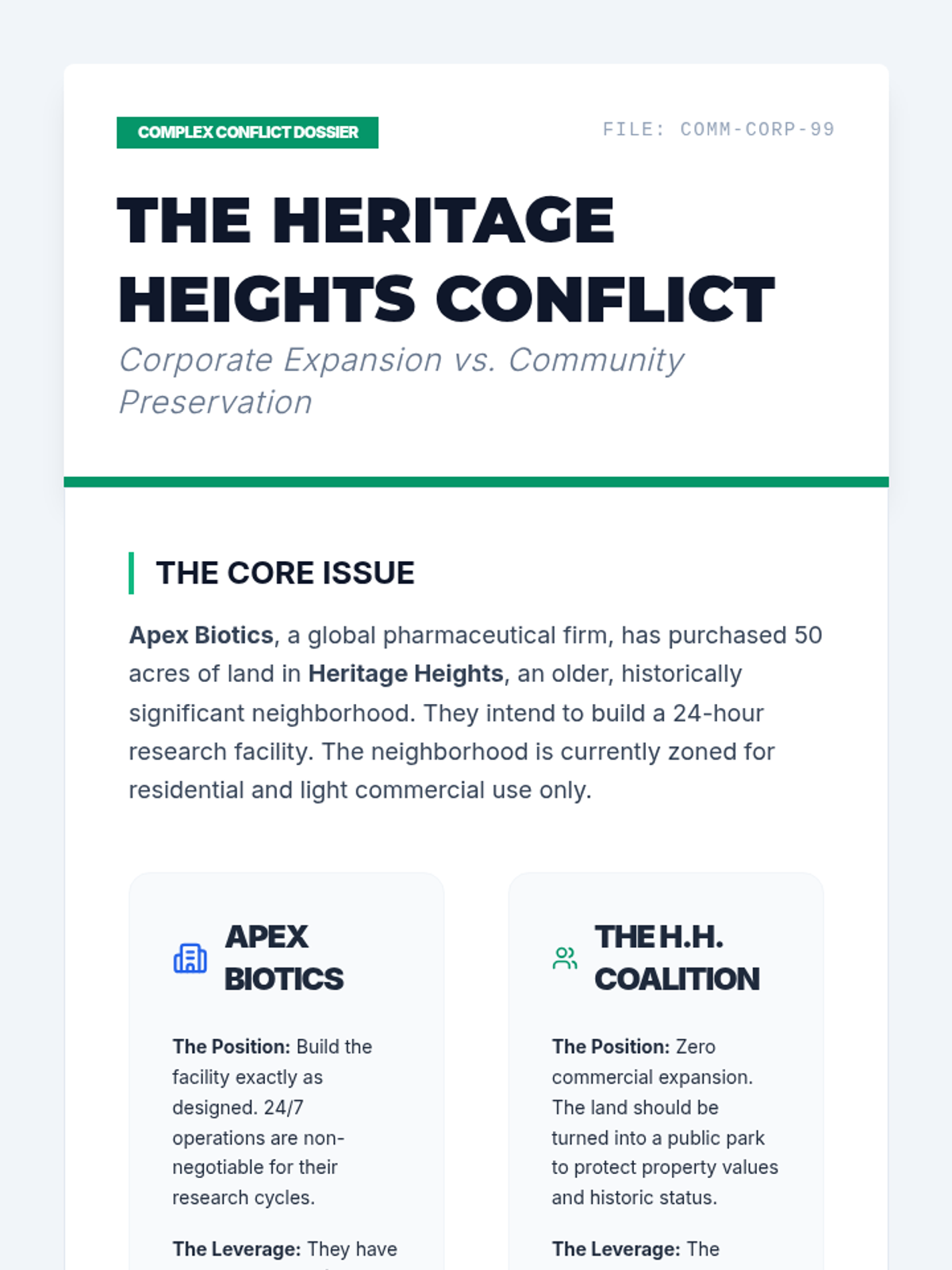
Case study scenario detailing a conflict between a corporation and a community group, focusing on power dynamics, BATNA, and interest-based negotiation.
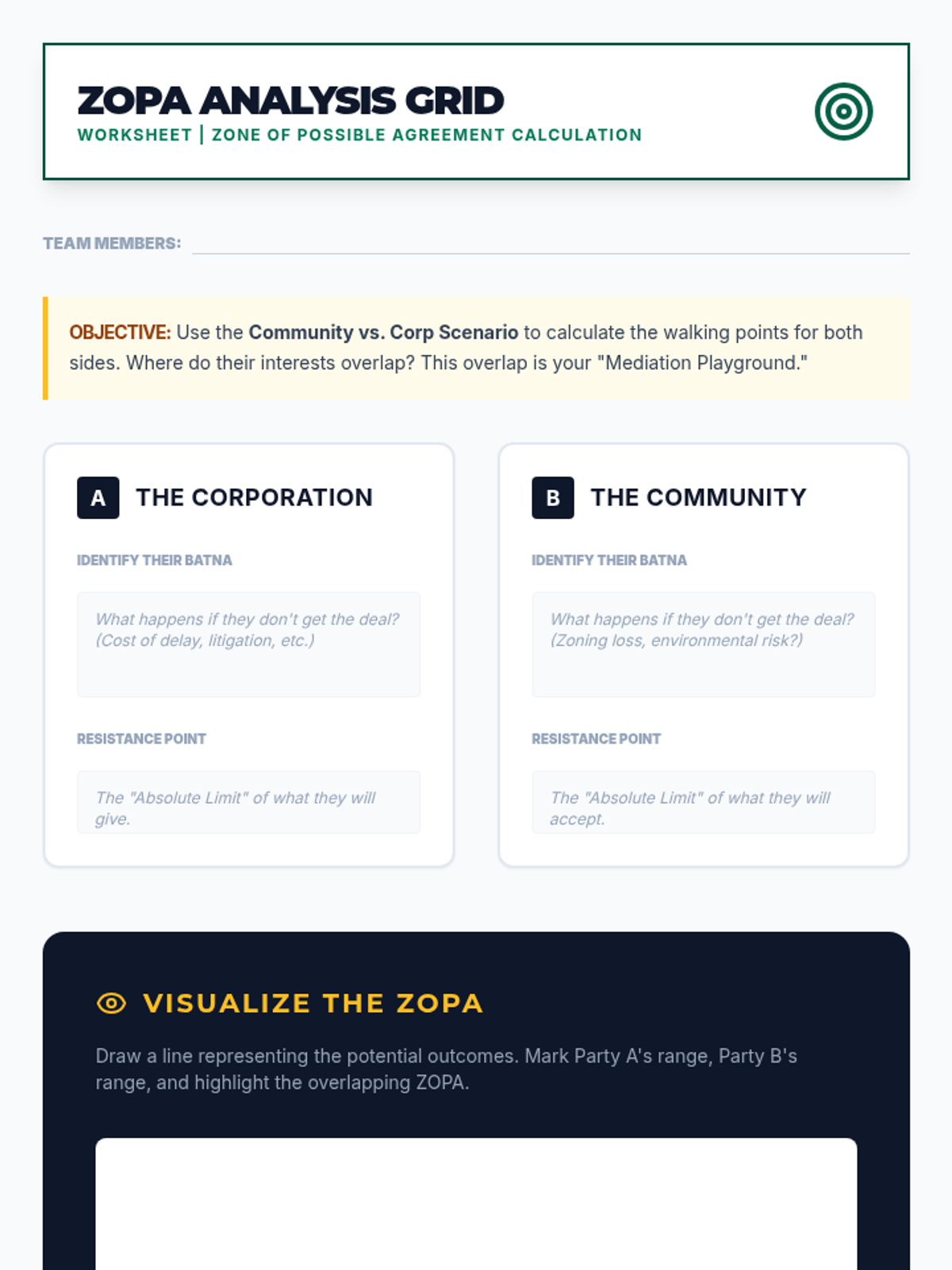
Worksheet for students to analyze and visualize the Zone of Possible Agreement (ZOPA) between two parties in a complex negotiation.
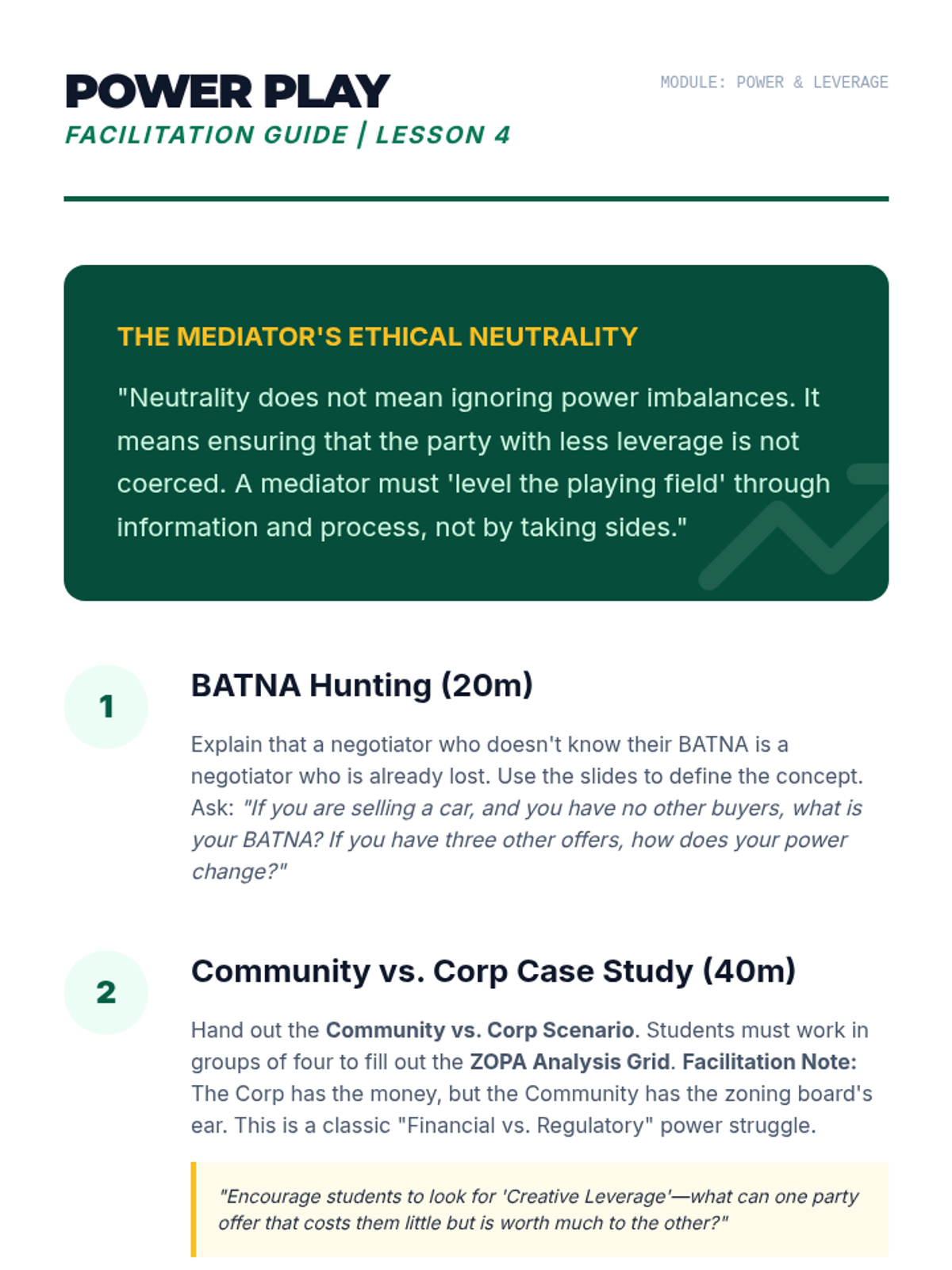
Facilitation guide for teaching power dynamics and leverage in mediation, including strategies for ethical balancing and case study facilitation.
Visual presentation on BATNA, ZOPA, and types of leverage, designed for advanced mediation students to analyze power dynamics in negotiations.
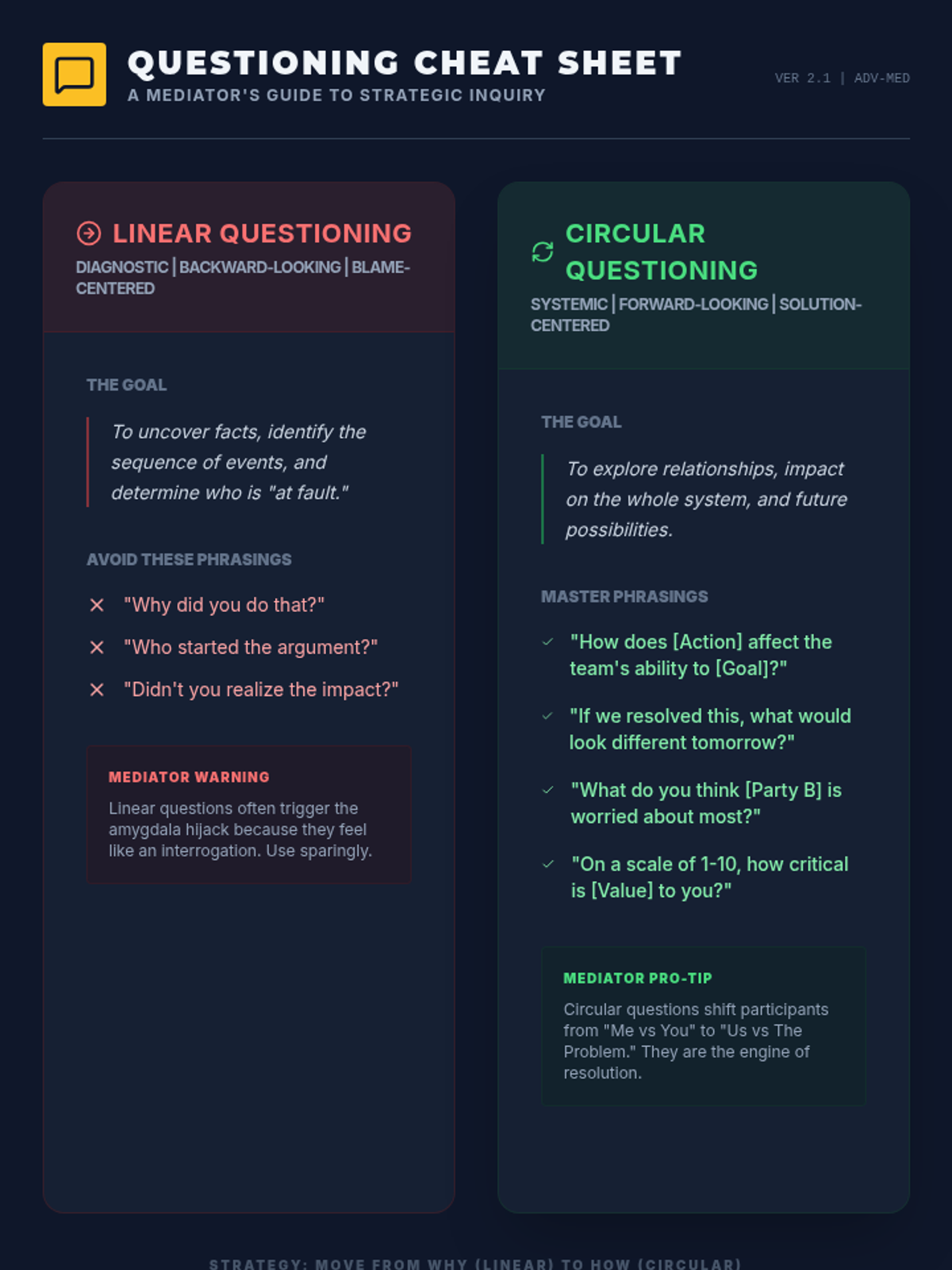
Reference sheet for students distinguishing between linear and circular questioning techniques, including master phrasings for mediation facilitation.
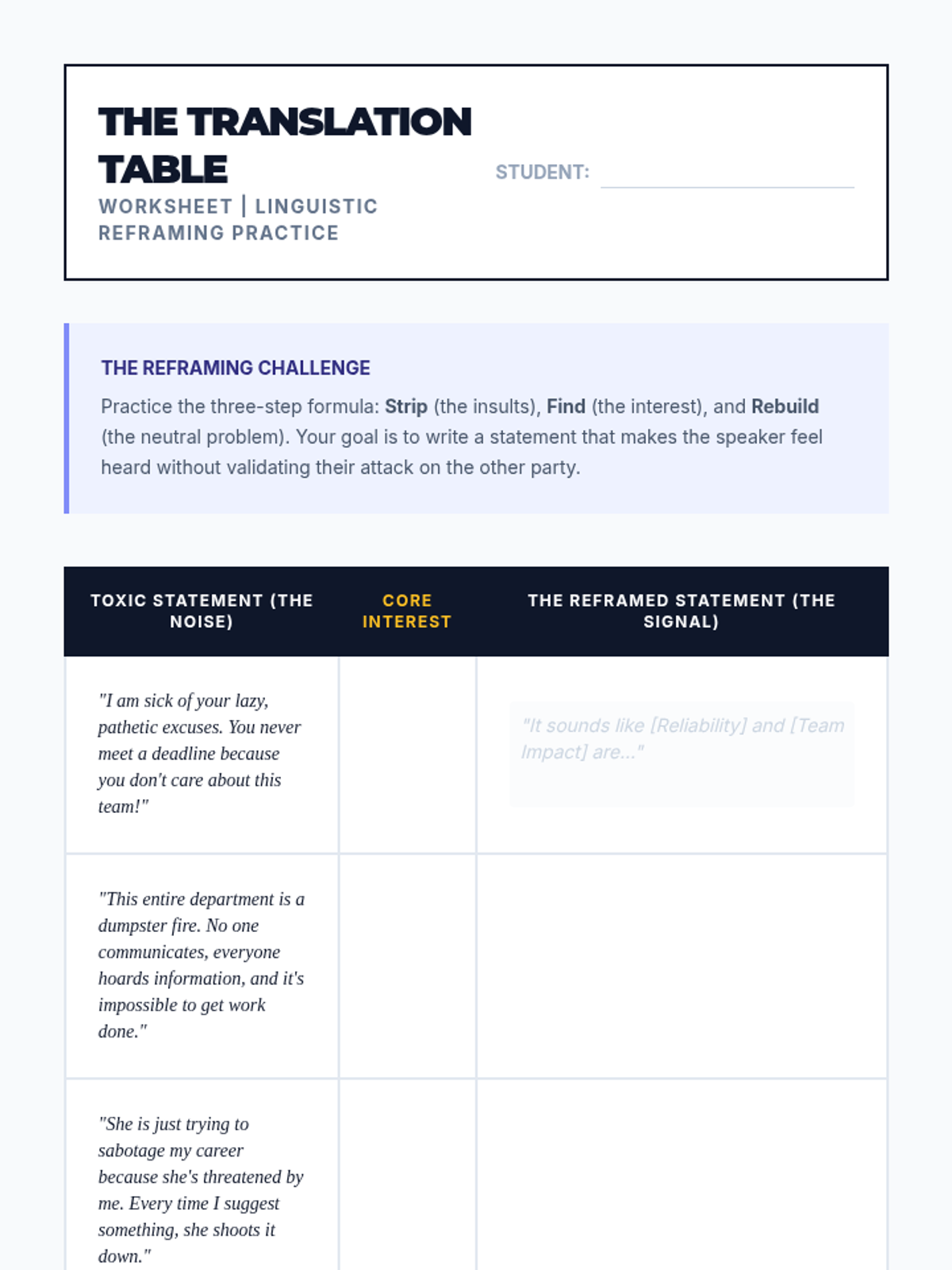
Worksheet for practicing the linguistic transformation of aggressive language into neutral, interest-based statements through a structured 'Translation Table'.
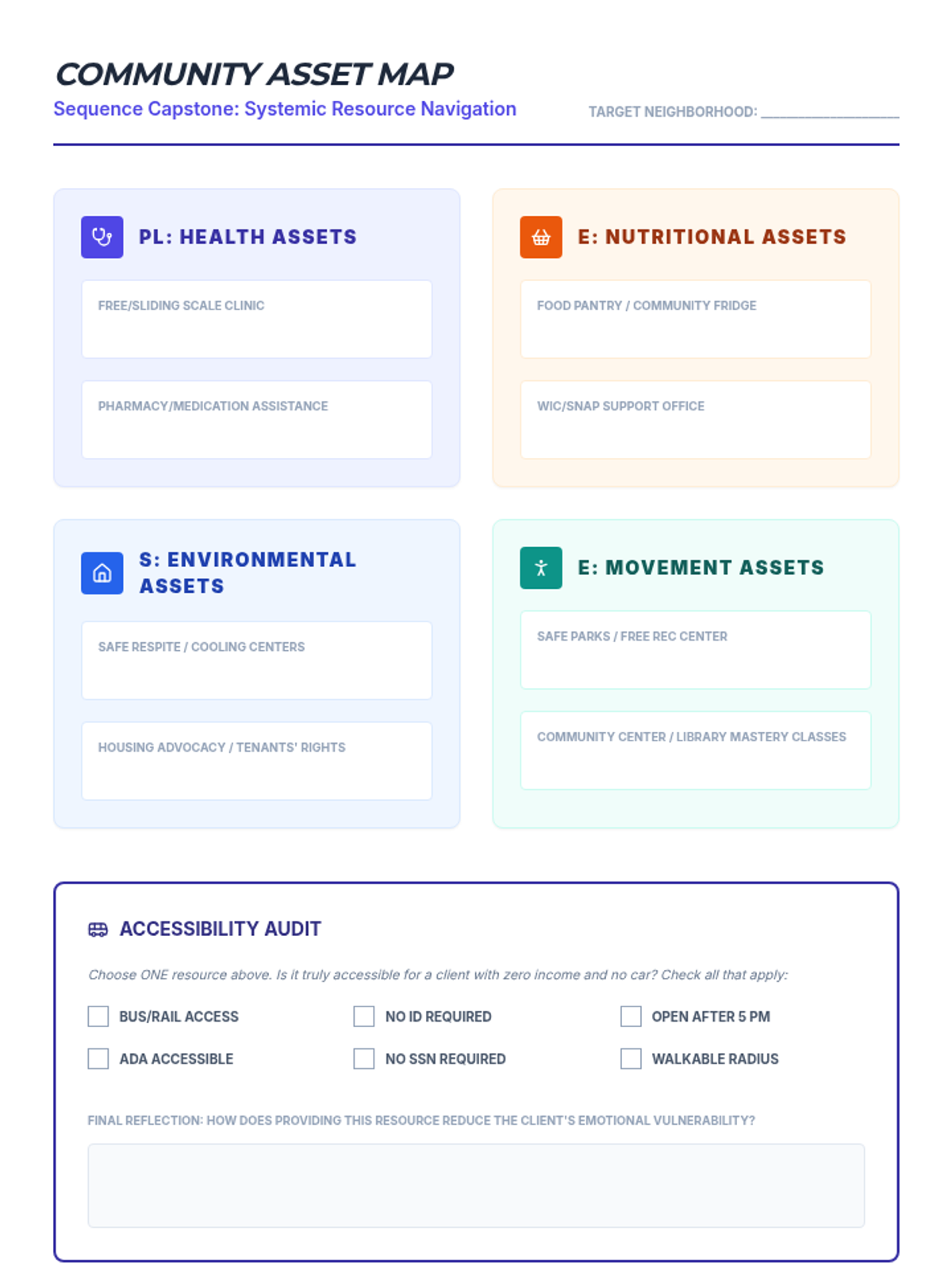
Final capstone worksheet for Lesson 5, where students map local community resources to each of the PLEASE skills and conduct an accessibility audit.
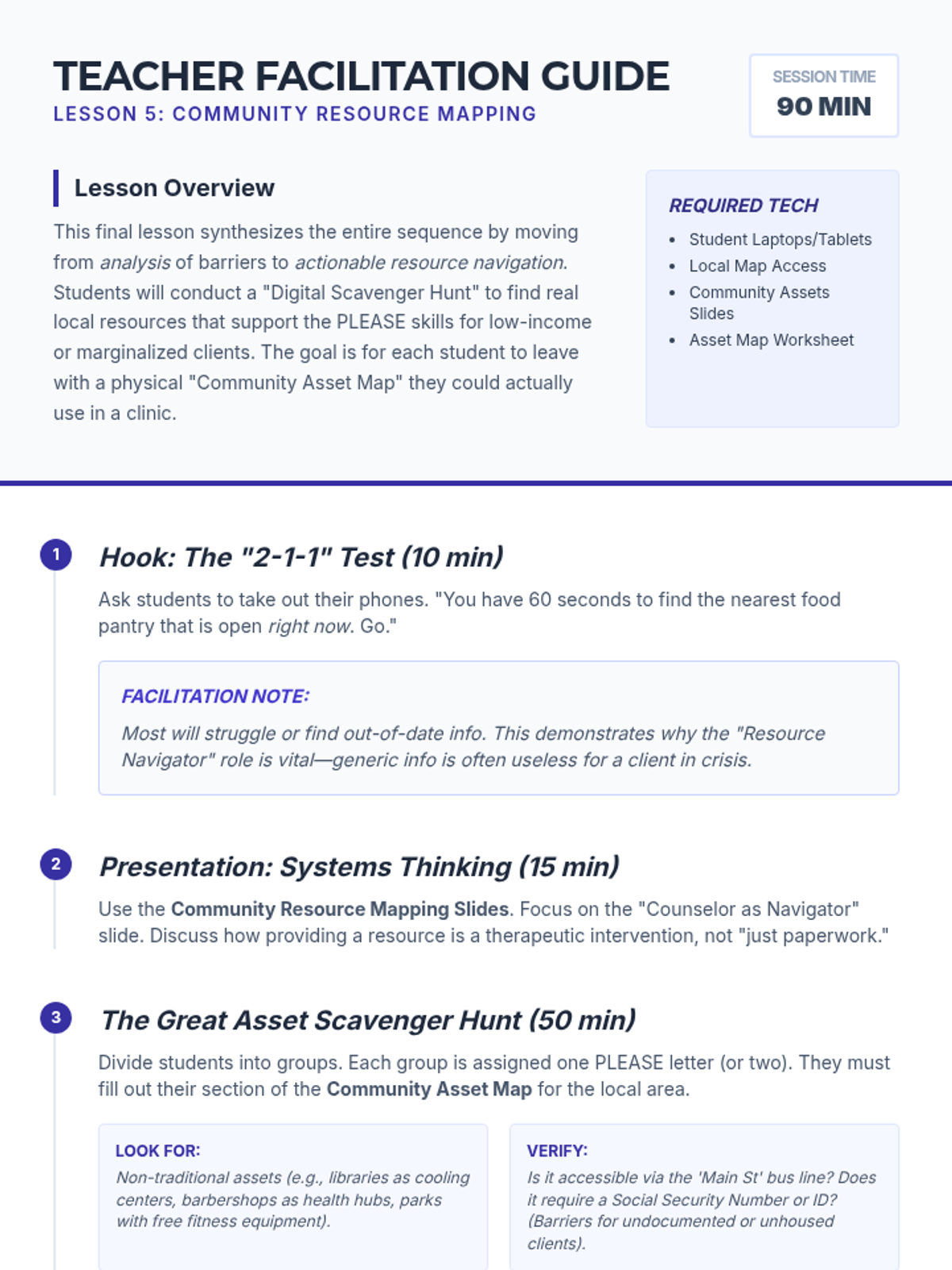
Teacher guide for Lesson 5, including instructions for the 'Great Asset Scavenger Hunt' and final sequence reflection.
Final slides for the sequence, focusing on community resource mapping and the counselor's role as a systems navigator.
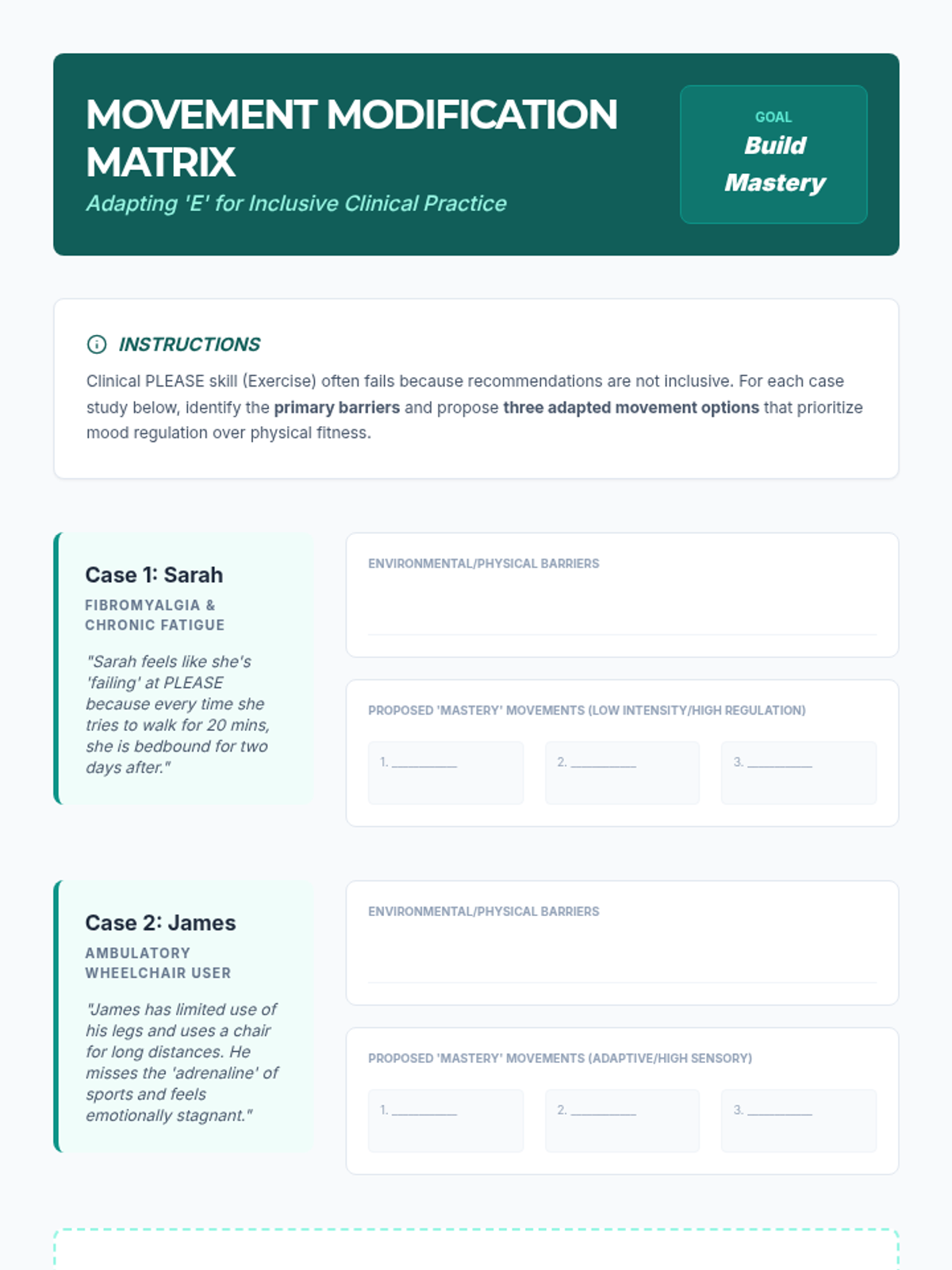
Worksheet for Lesson 4, containing a matrix for students to practice modifying movement recommendations for clients with specific physical disabilities or chronic pain.
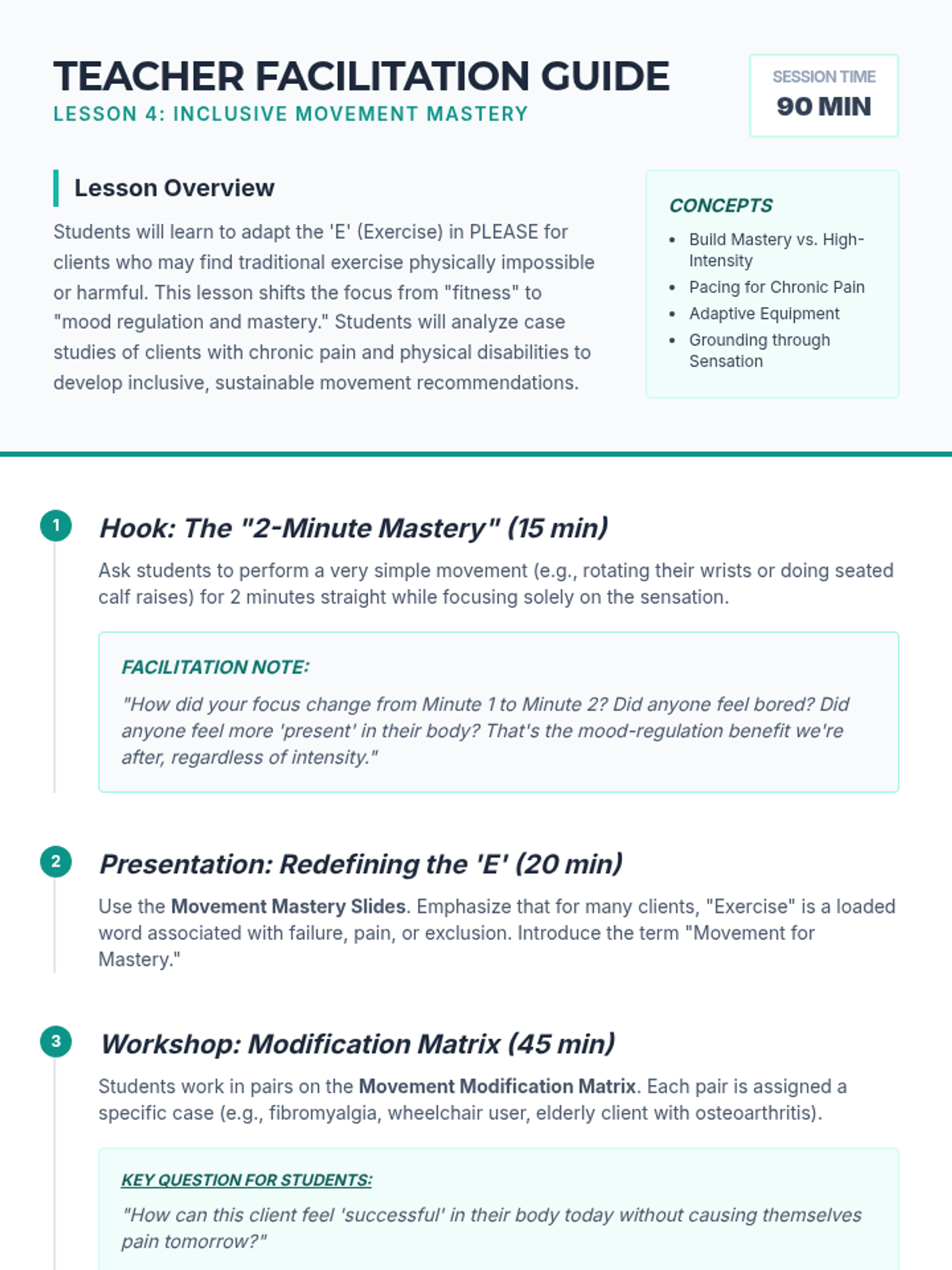
Teacher guide for Lesson 4, focusing on inclusive movement strategies and how to teach 'Movement Mastery' over traditional exercise.
Slides for Lesson 4, redefining exercise as 'Movement Mastery' and focusing on inclusivity for clients with physical disabilities or chronic pain.
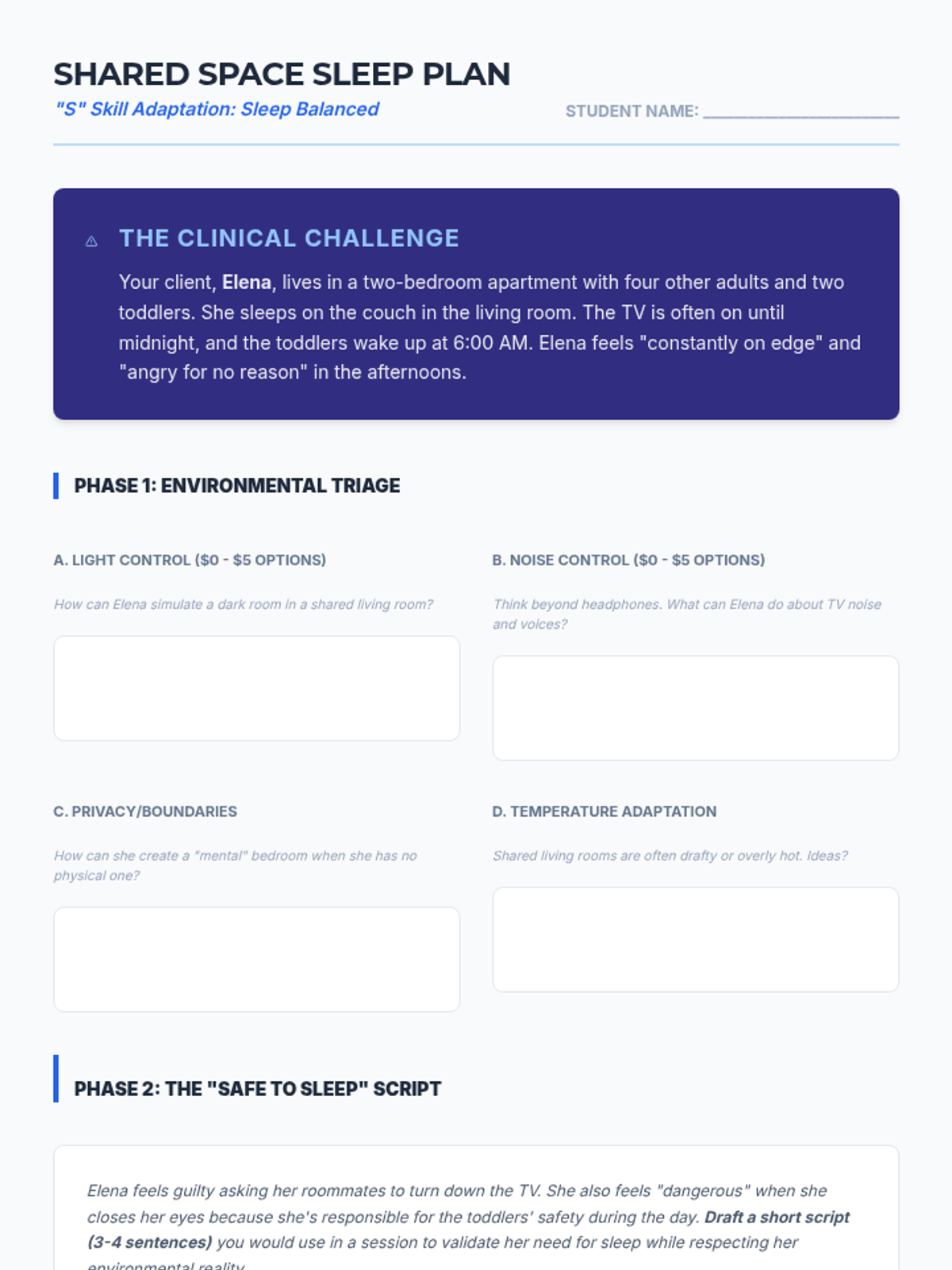
Worksheet for Lesson 3, where students develop a sleep plan for a client living in a crowded, shared apartment using low-cost adaptations.
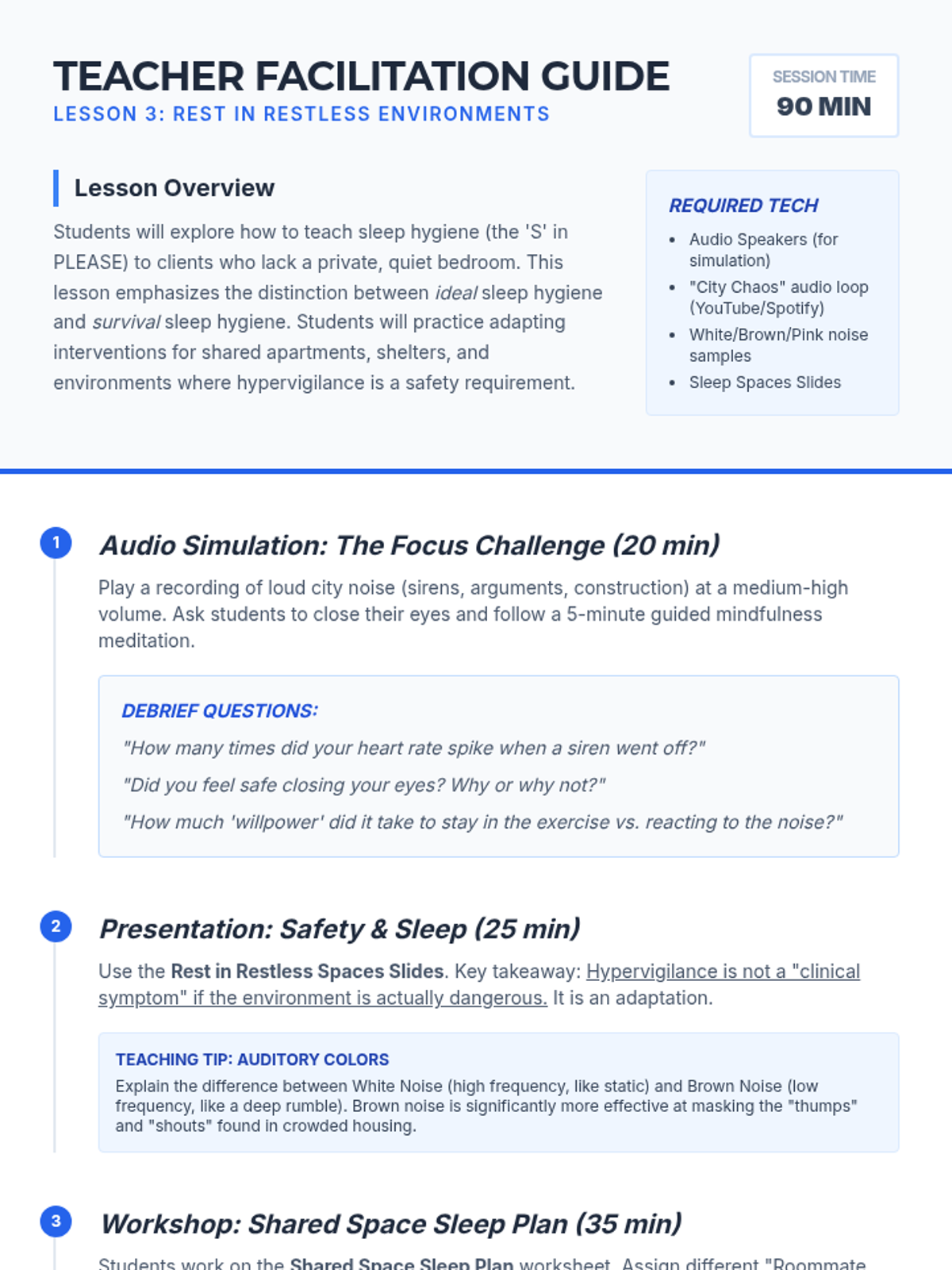
Teacher guide for Lesson 3, featuring instructions for the audio simulation and practical tips for low-cost sleep hygiene adaptations.
Slides for Lesson 3, addressing the 'S' (Sleep) in PLEASE for clients living in shared, noisy, or unsafe environments.
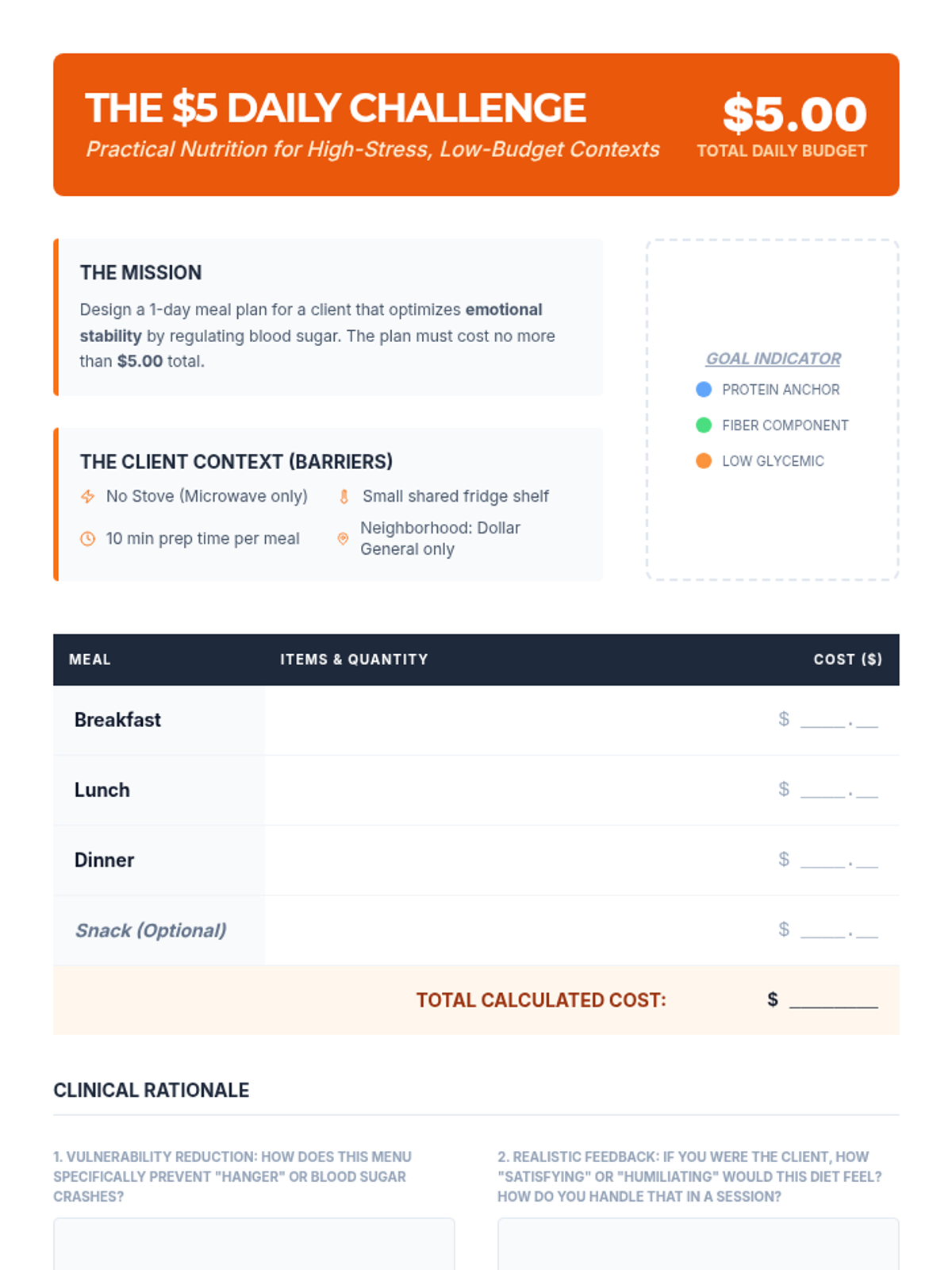
Workshop activity for Lesson 2, challenging students to create a $5 daily meal plan that supports emotional stability under strict environmental constraints.
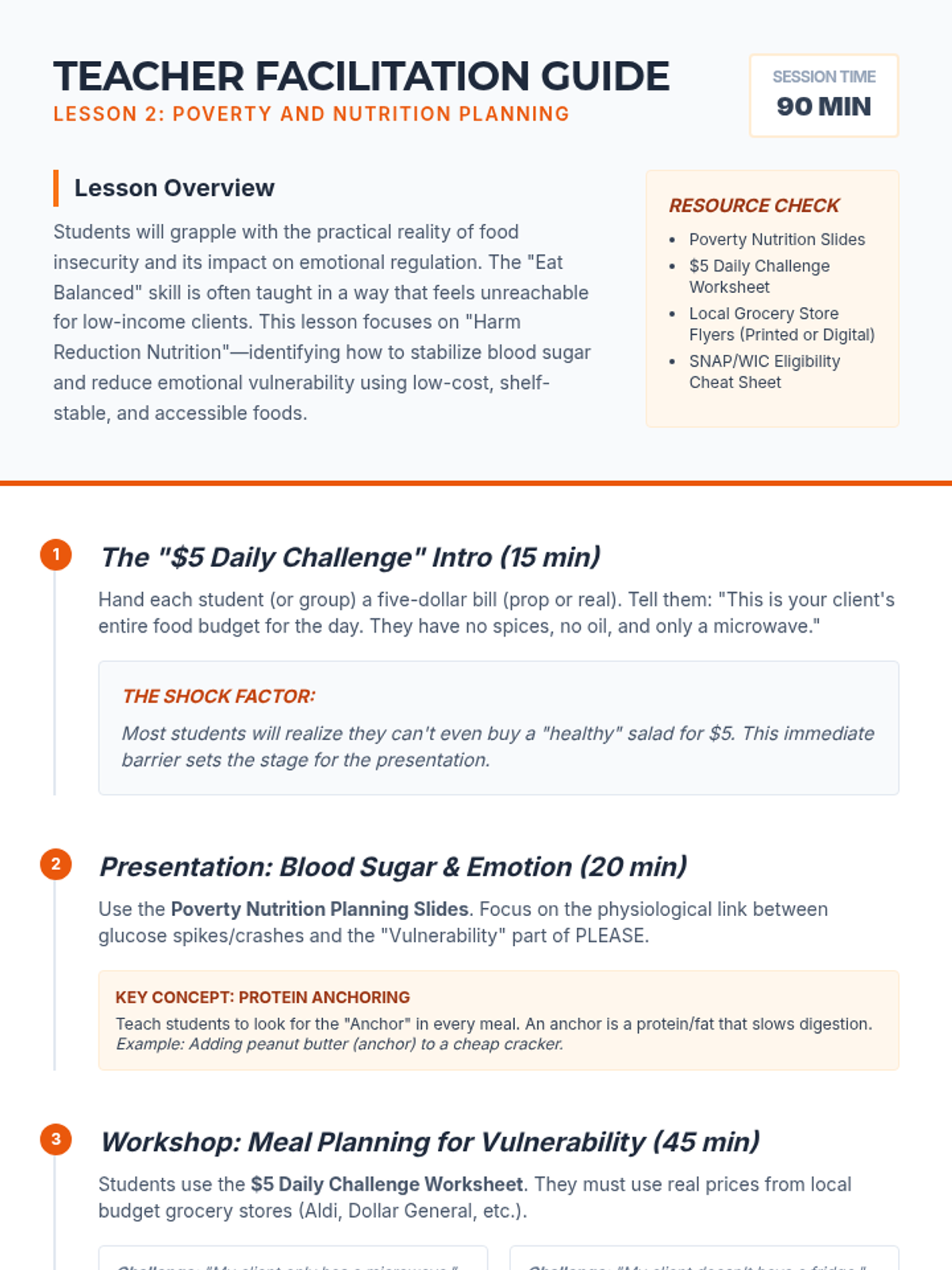
Teacher guide for Lesson 2, including the facilitation instructions for the $5 Daily Challenge and key concepts like 'Protein Anchoring'.
Slides for Lesson 2, focusing on adapting nutritional advice for clients facing food insecurity and introducing the '$5 Daily Challenge'.
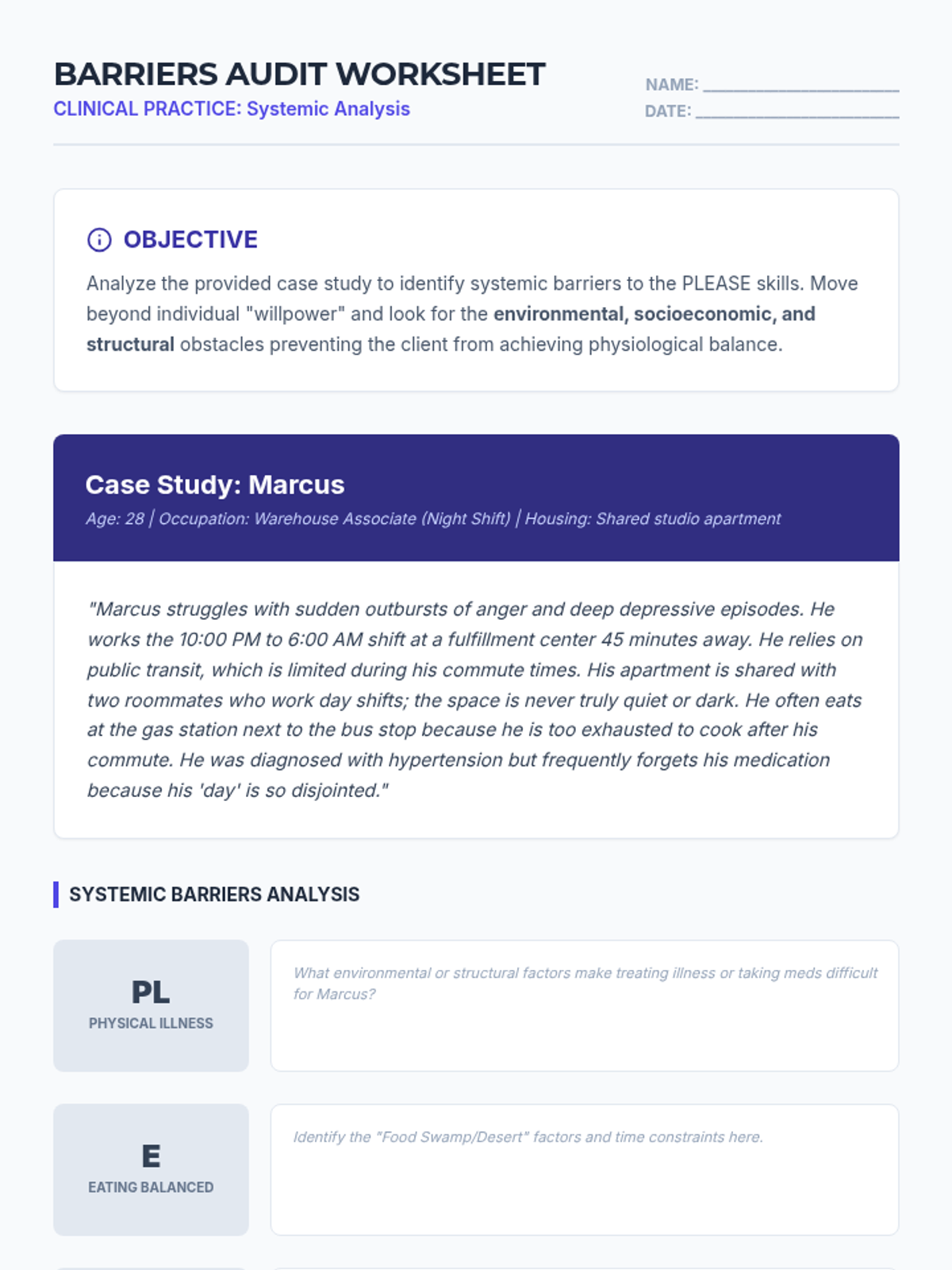
Student worksheet for Lesson 1, featuring a case study analysis of "Marcus" to identify systemic barriers to PLEASE skills practice.
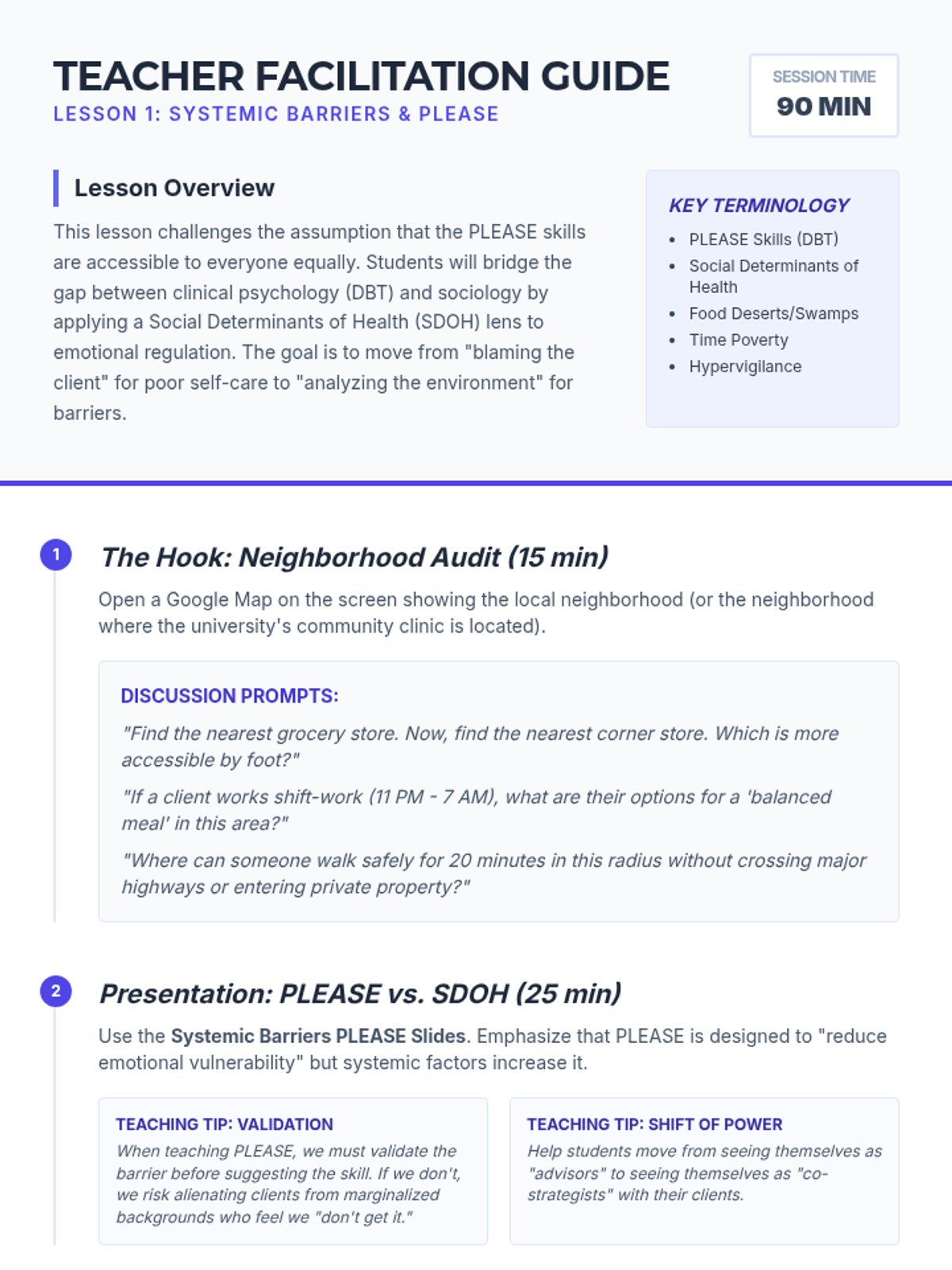
Teacher facilitation guide for Lesson 1, including instructional arc, discussion prompts, and teaching tips for deconstructing PLEASE through an equity lens.
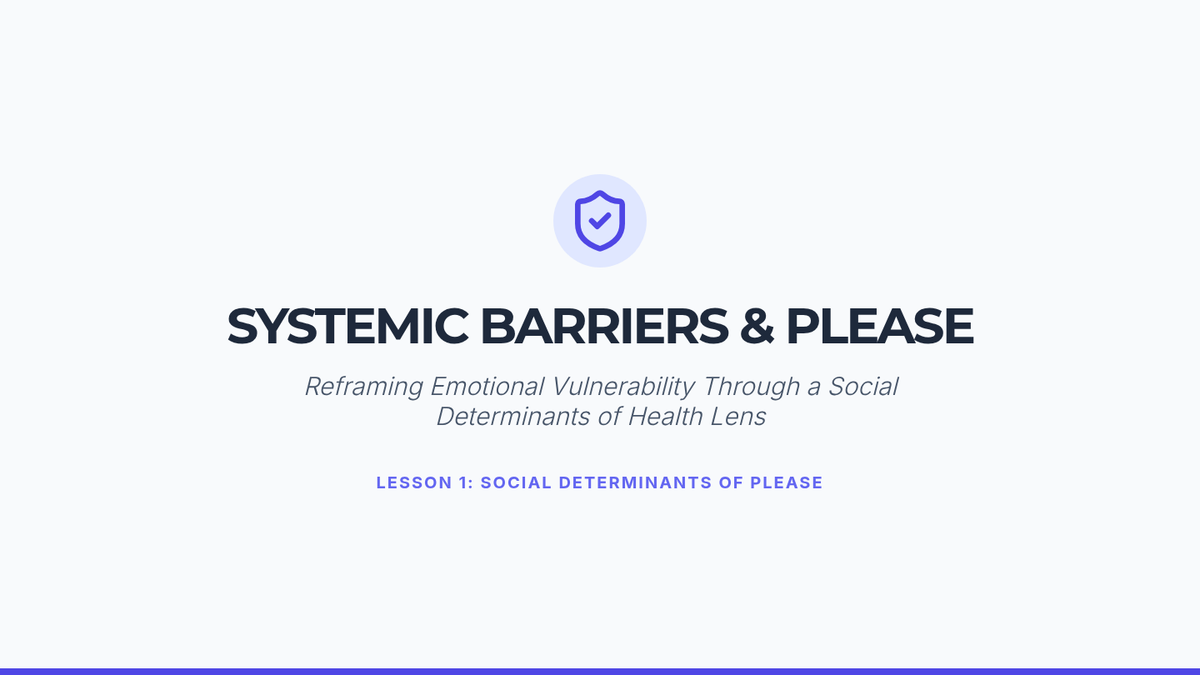
Introductory slides for Lesson 1, exploring the PLEASE skills through a Social Determinants of Health (SDOH) lens and identifying systemic barriers to self-care.
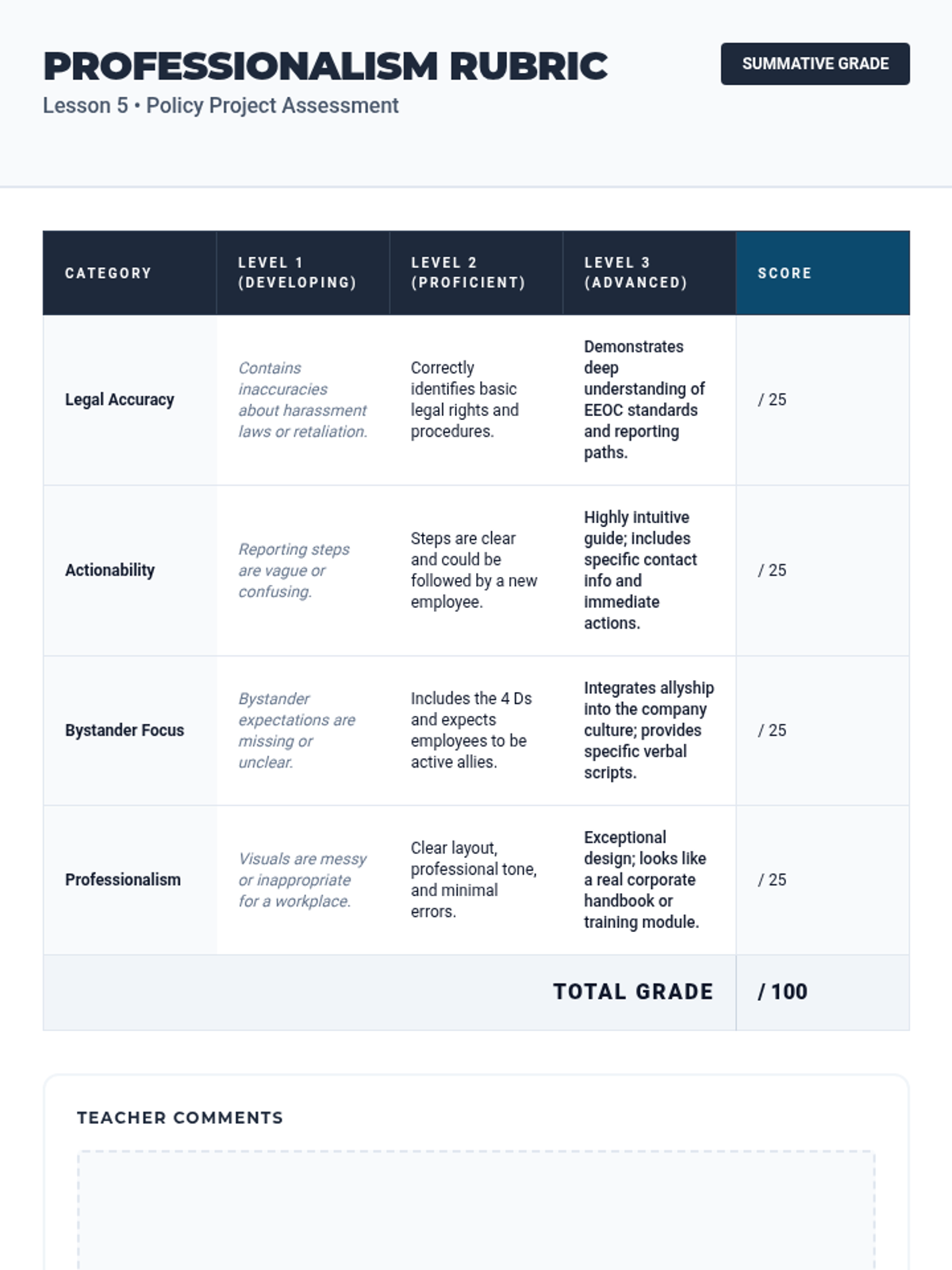
Final summative rubric for Lesson 5, assessing legal accuracy, actionability, bystander focus, and professionalism in the student-created workplace policies.
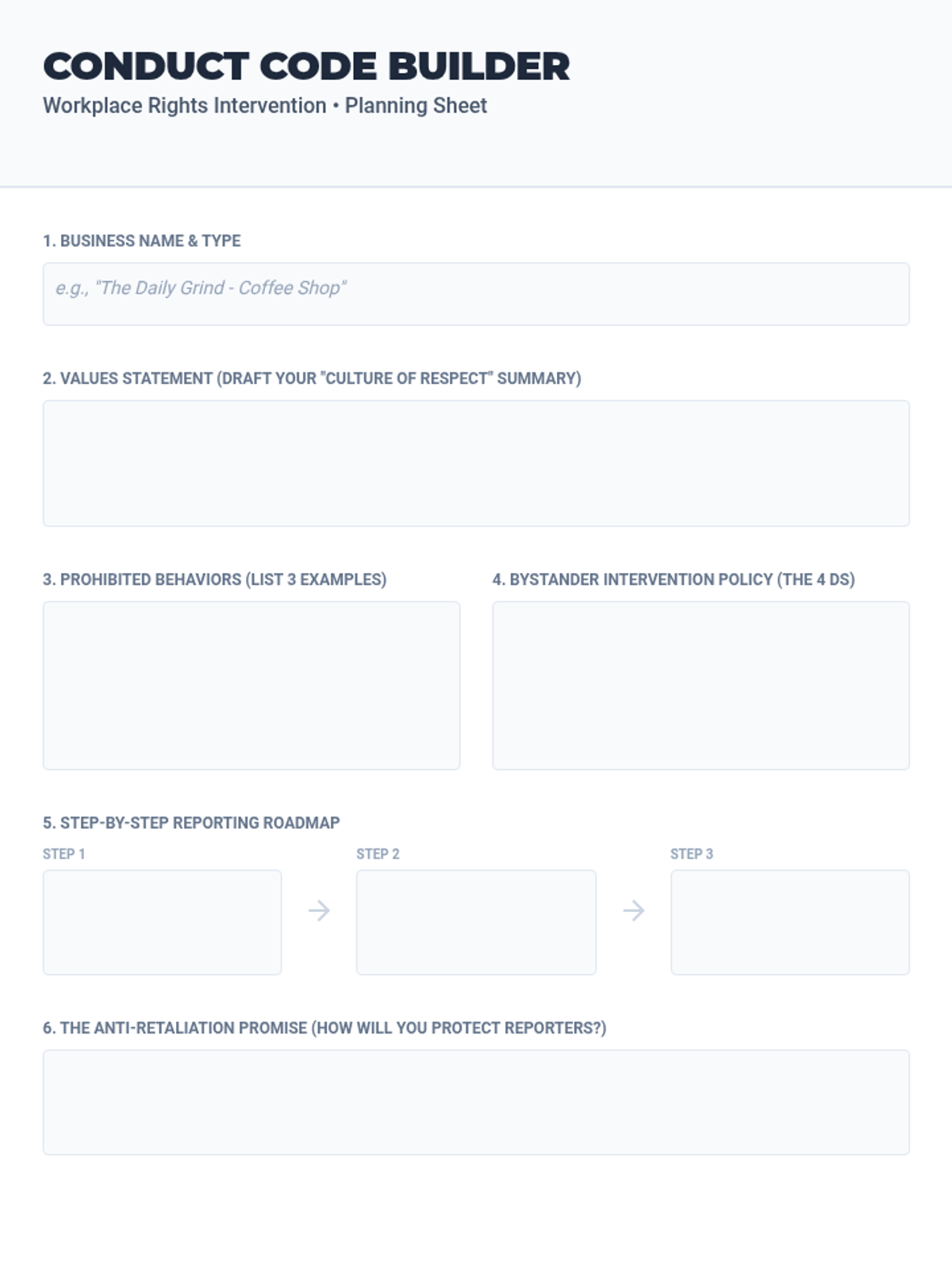
A planning worksheet for Lesson 5 where students draft the various components of their workplace code of conduct and reporting policy.
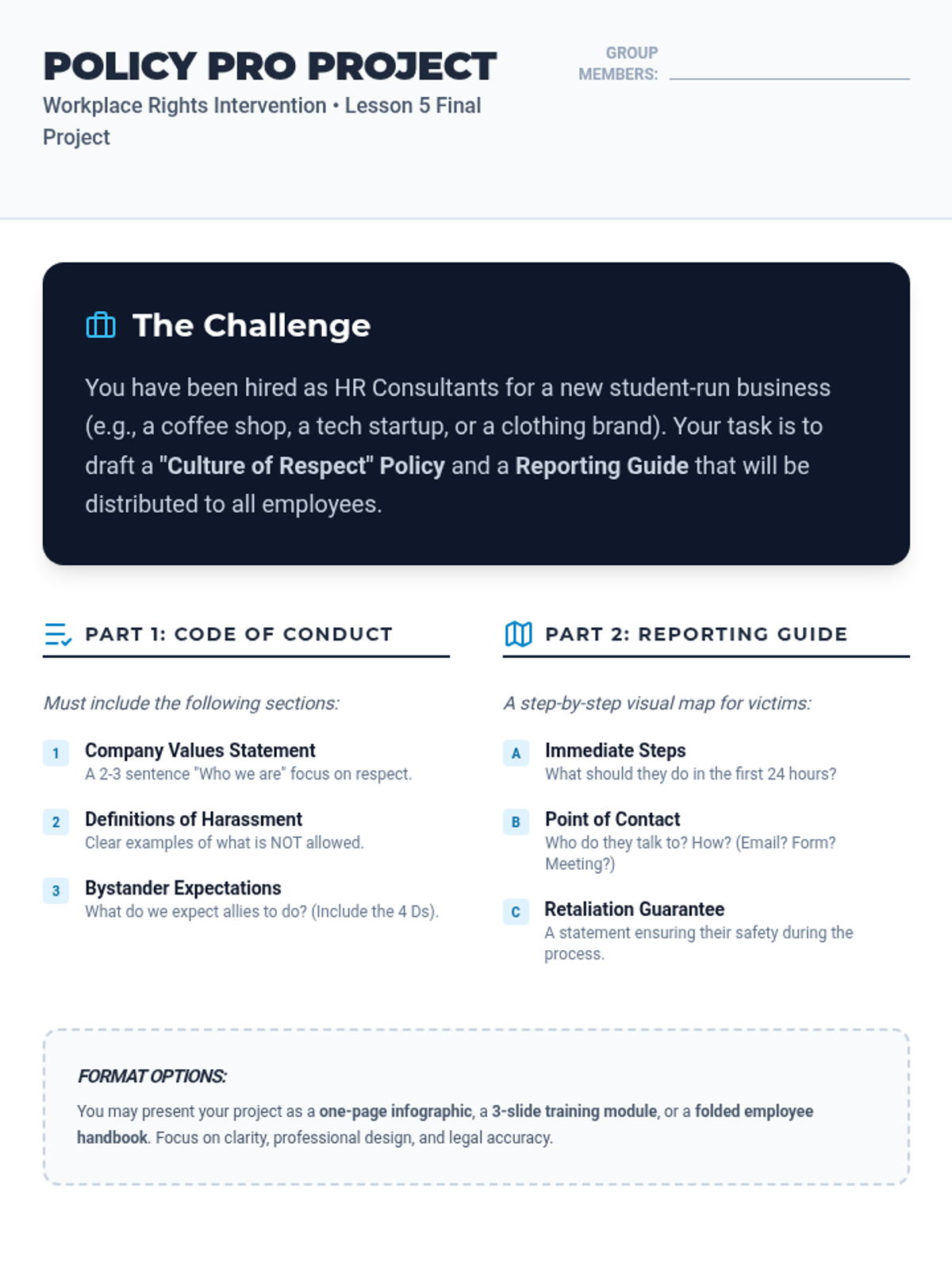
Final project guide for Lesson 5, tasking students to create a code of conduct and reporting guide for a fictional student-run business.
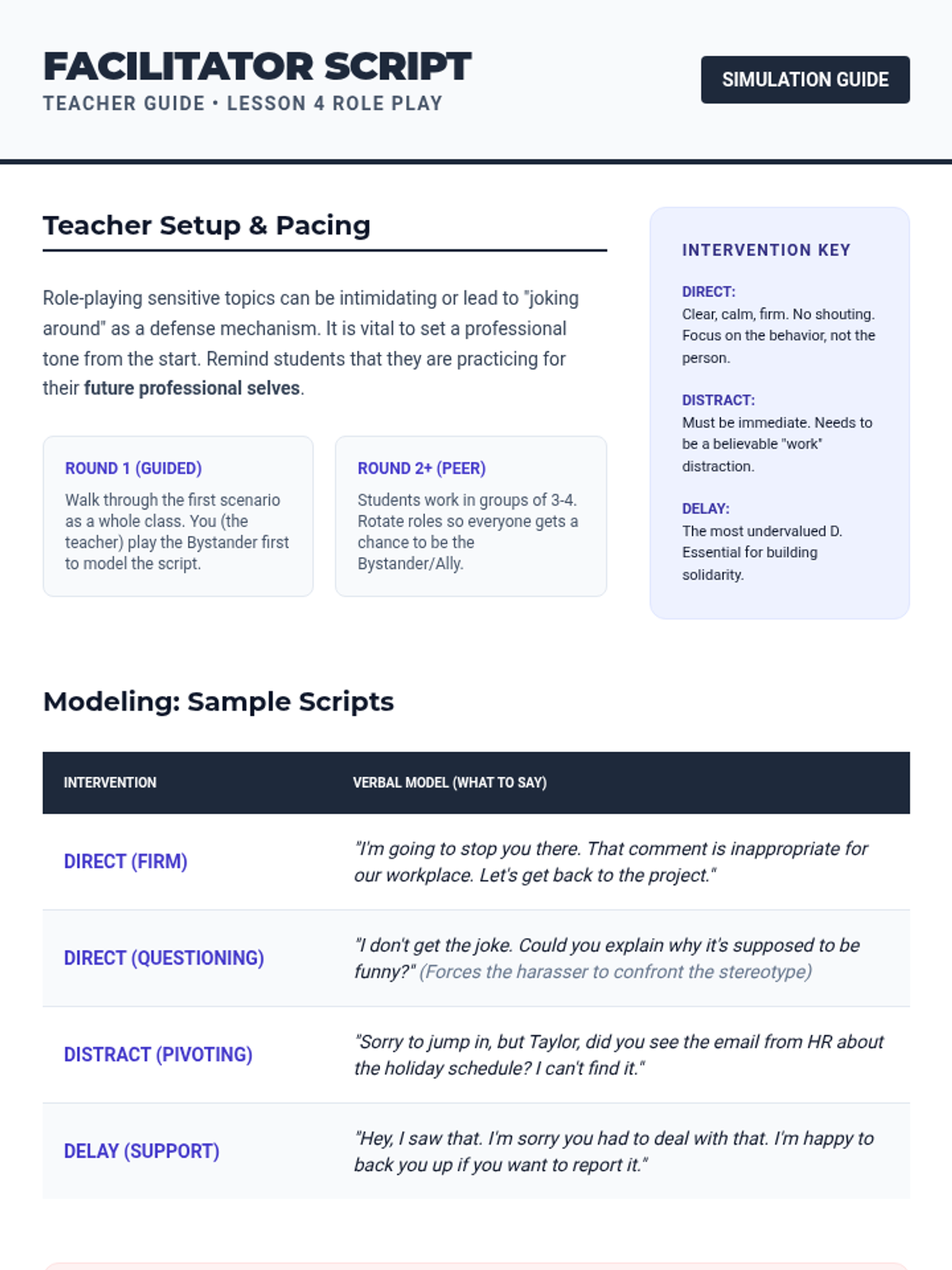
Teacher facilitator guide for Lesson 4 role-play simulations, including setup advice, verbal models for interventions, and safety protocols.
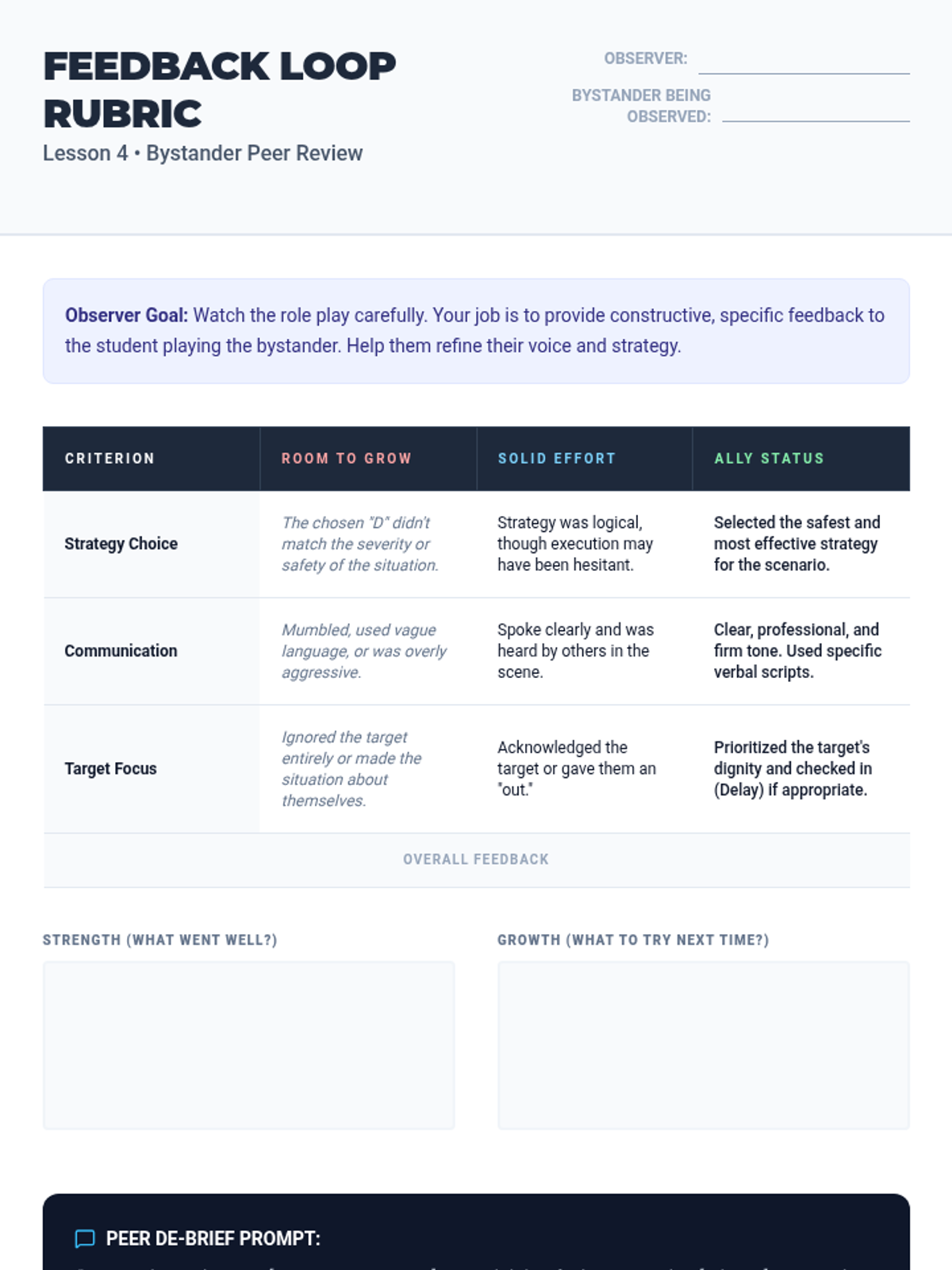
A peer-assessment rubric for Lesson 4 role-play activities, focusing on strategy choice, communication, and target-focused intervention.
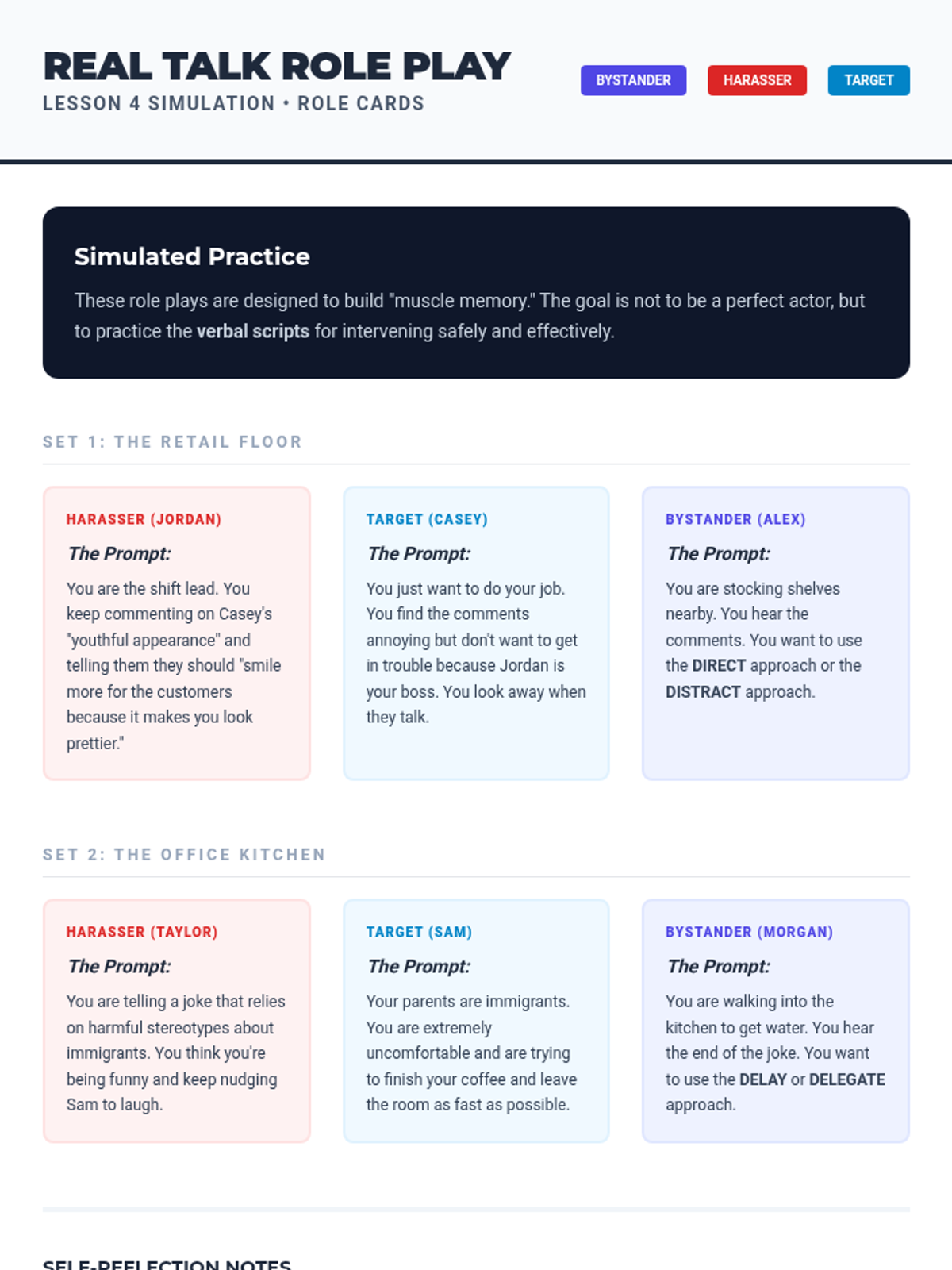
Role-play scenario cards for Lesson 4, including prompts for harassers, targets, and bystanders in different workplace settings.
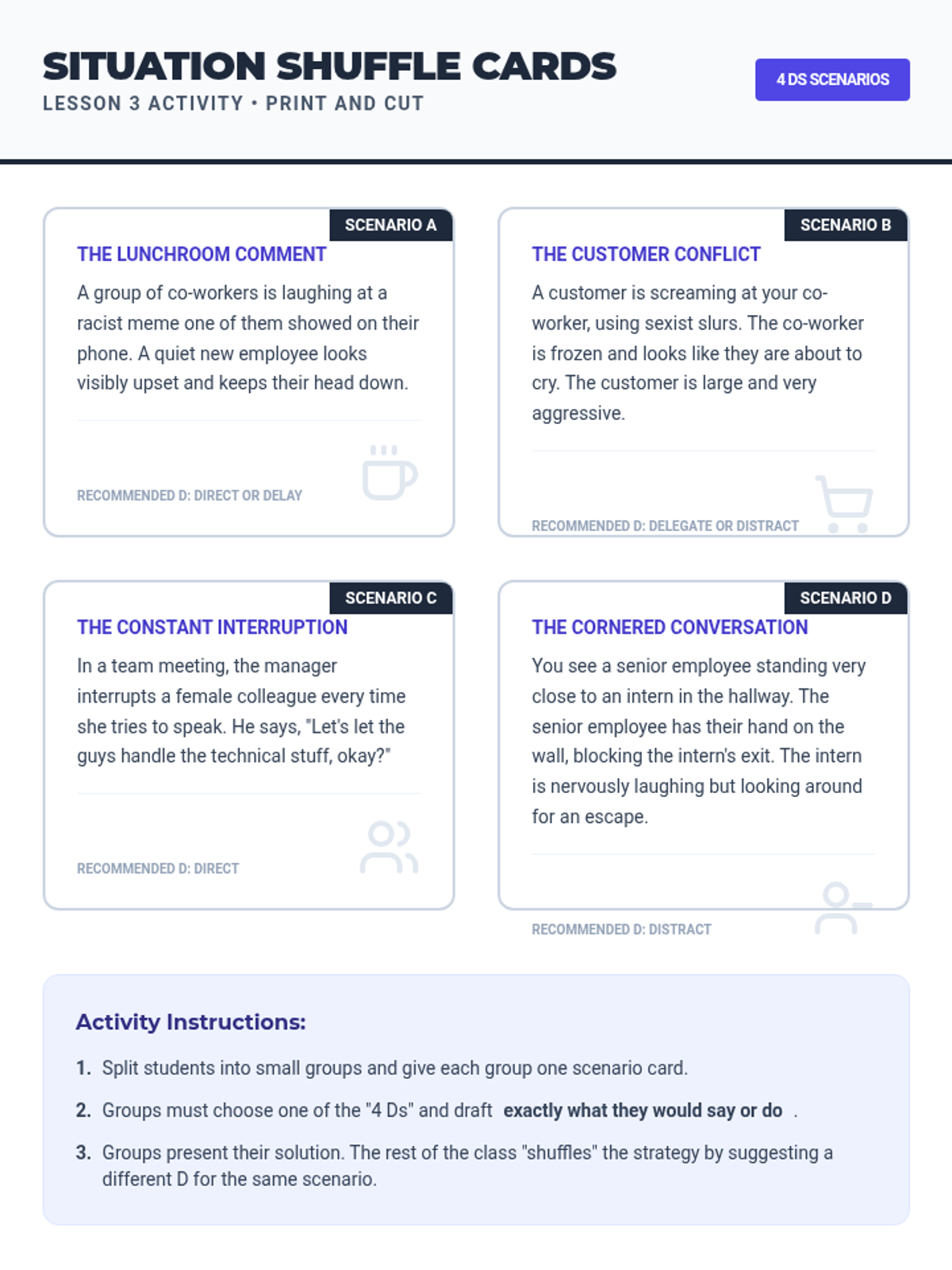
Printable activity cards featuring workplace harassment scenarios for students to analyze and apply bystander intervention strategies.
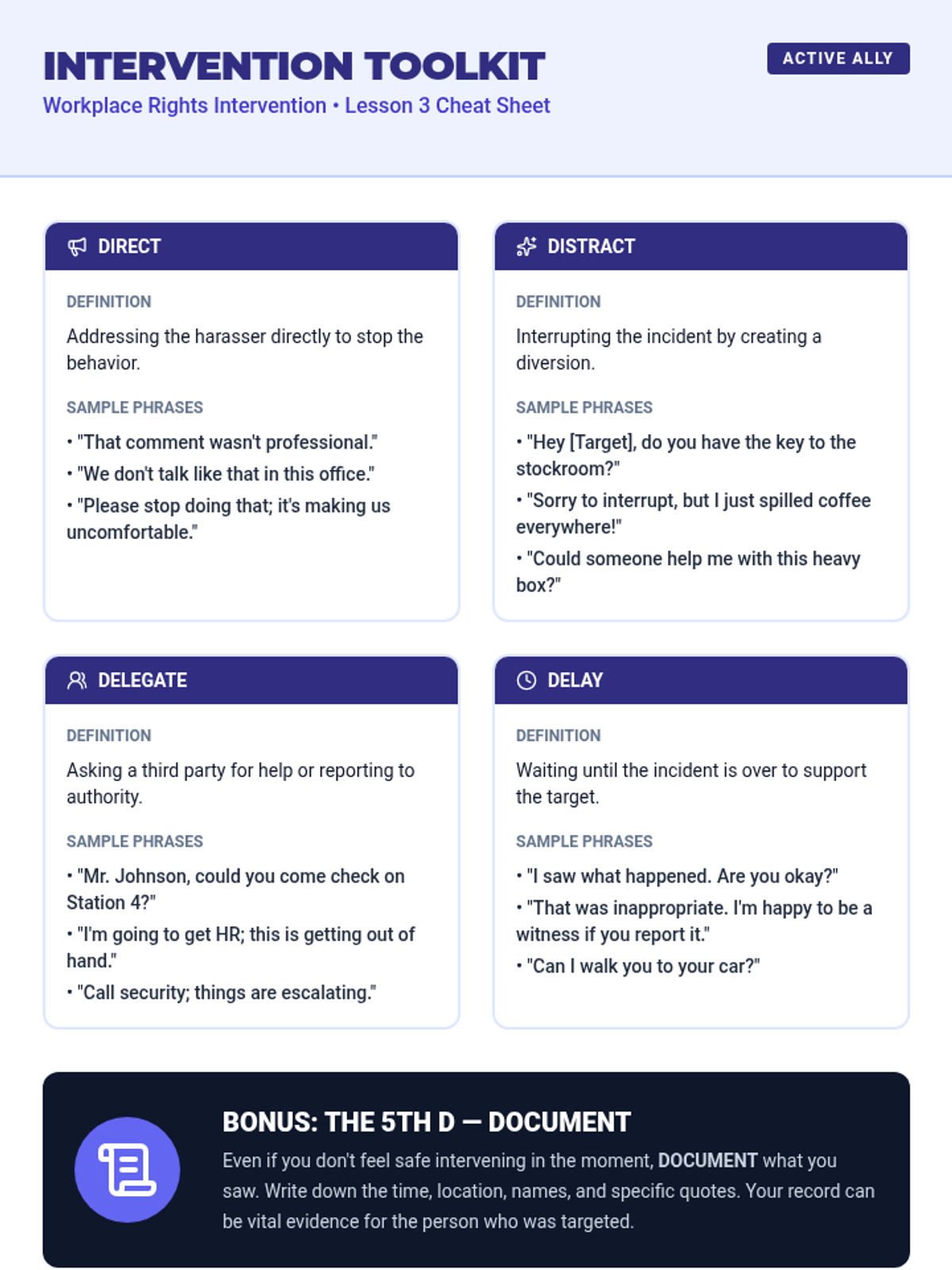
A comprehensive cheat sheet for students detailing the 4 Ds of bystander intervention with definitions, sample phrases, and safety tips.
Slide deck for Lesson 3 introducing the 'Bystander Effect' and the '4 Ds' of intervention (Direct, Distract, Delegate, Delay) with guidance on strategy selection.
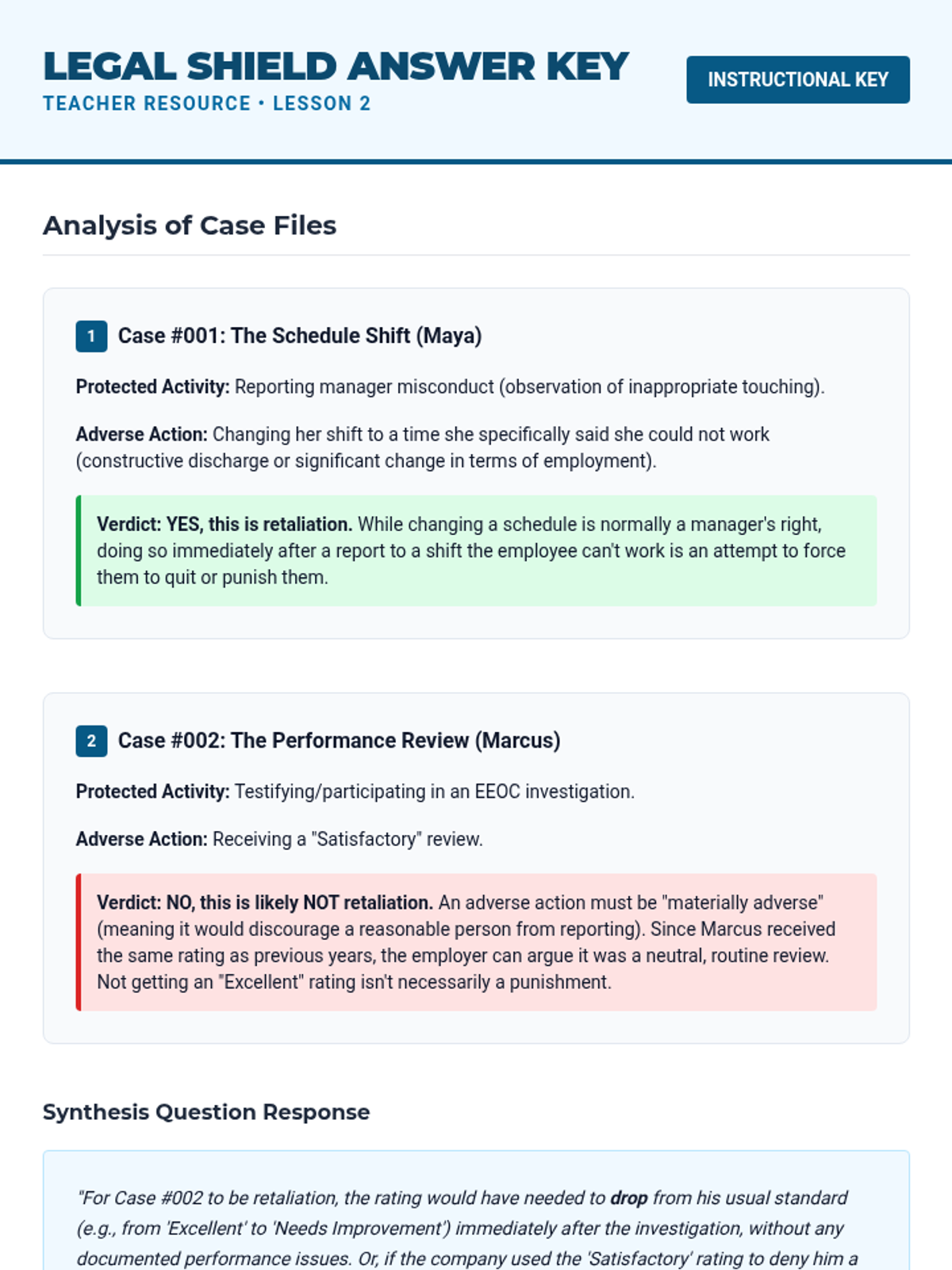
Teacher answer key and discussion guide for the Retaliation Case Files worksheet, including verdicts and legal reasoning for each scenario.
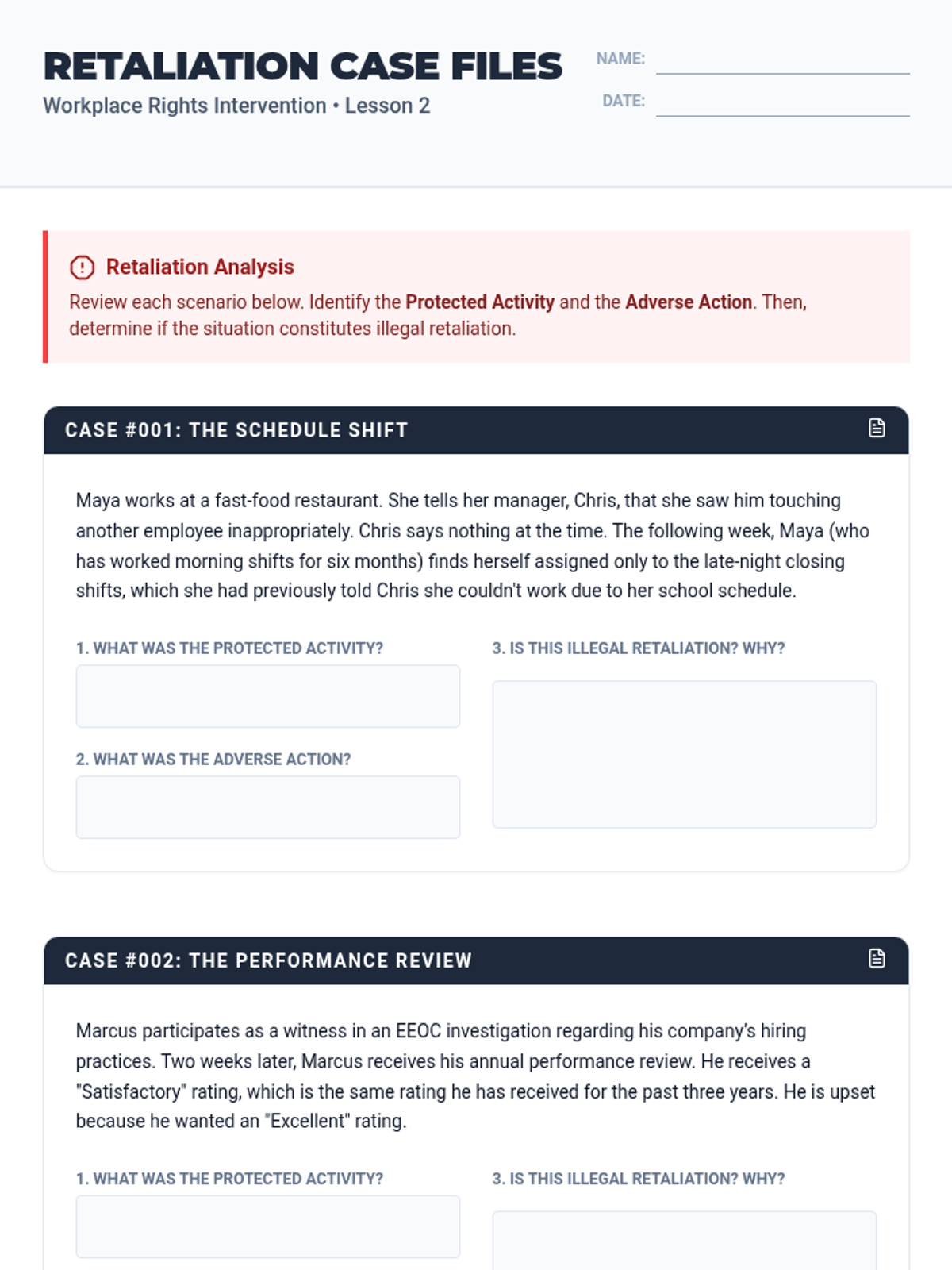
Case study worksheet for Lesson 2 where students analyze workplace scenarios to identify protected activities and adverse actions, determining if they constitute illegal retaliation.
Slide deck for Lesson 2 covering the definition of workplace retaliation, examples of adverse actions, and the legal protections afforded to whistleblowers.
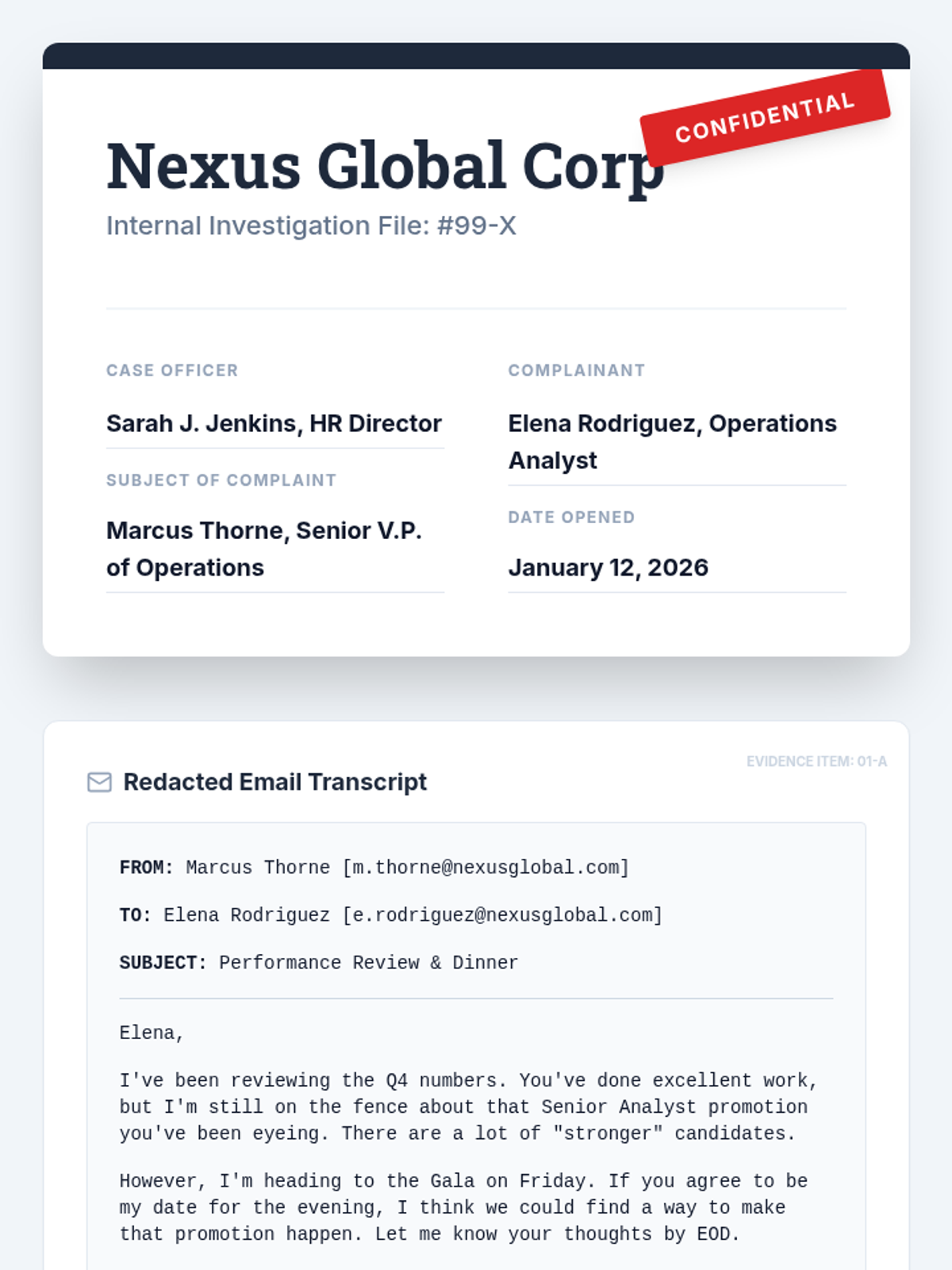
A simulation containing 'redacted' investigation files (email transcripts, witness statements) and a corresponding audit report for students to complete as a final project.
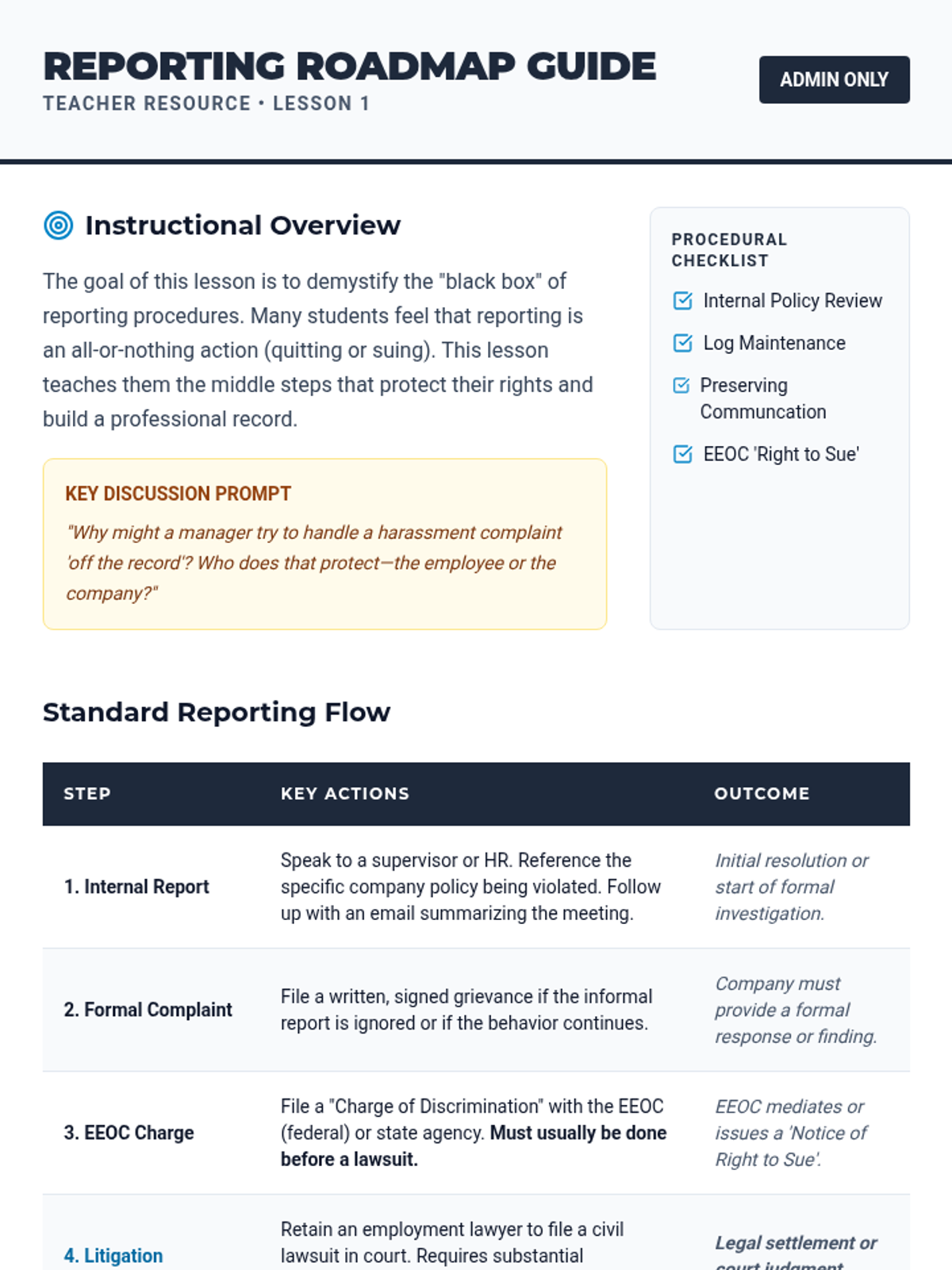
Teacher guide outlining the standard reporting flow for workplace harassment and common pitfalls to watch for when teaching documentation skills.
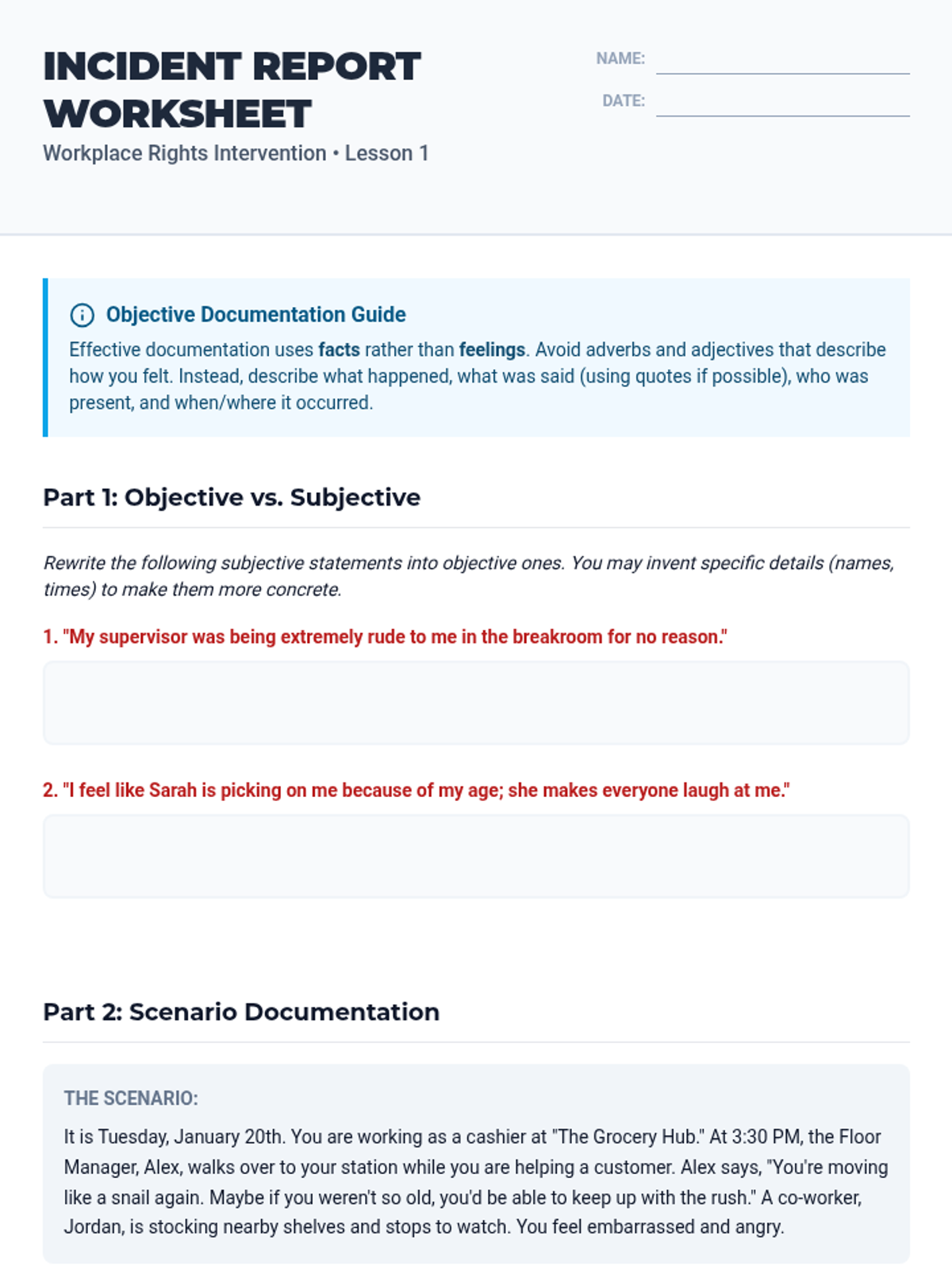
A student worksheet for practicing the conversion of subjective reporting into objective documentation, including a scenario-based incident report form.
Slide deck for Lesson 5, focusing on employer liability, the Faragher-Ellerth defense, and the final audit project instructions.
Educational slide deck for Lesson 1 on the importance of documentation, the steps for reporting workplace harassment, and the difference between subjective and objective reporting.
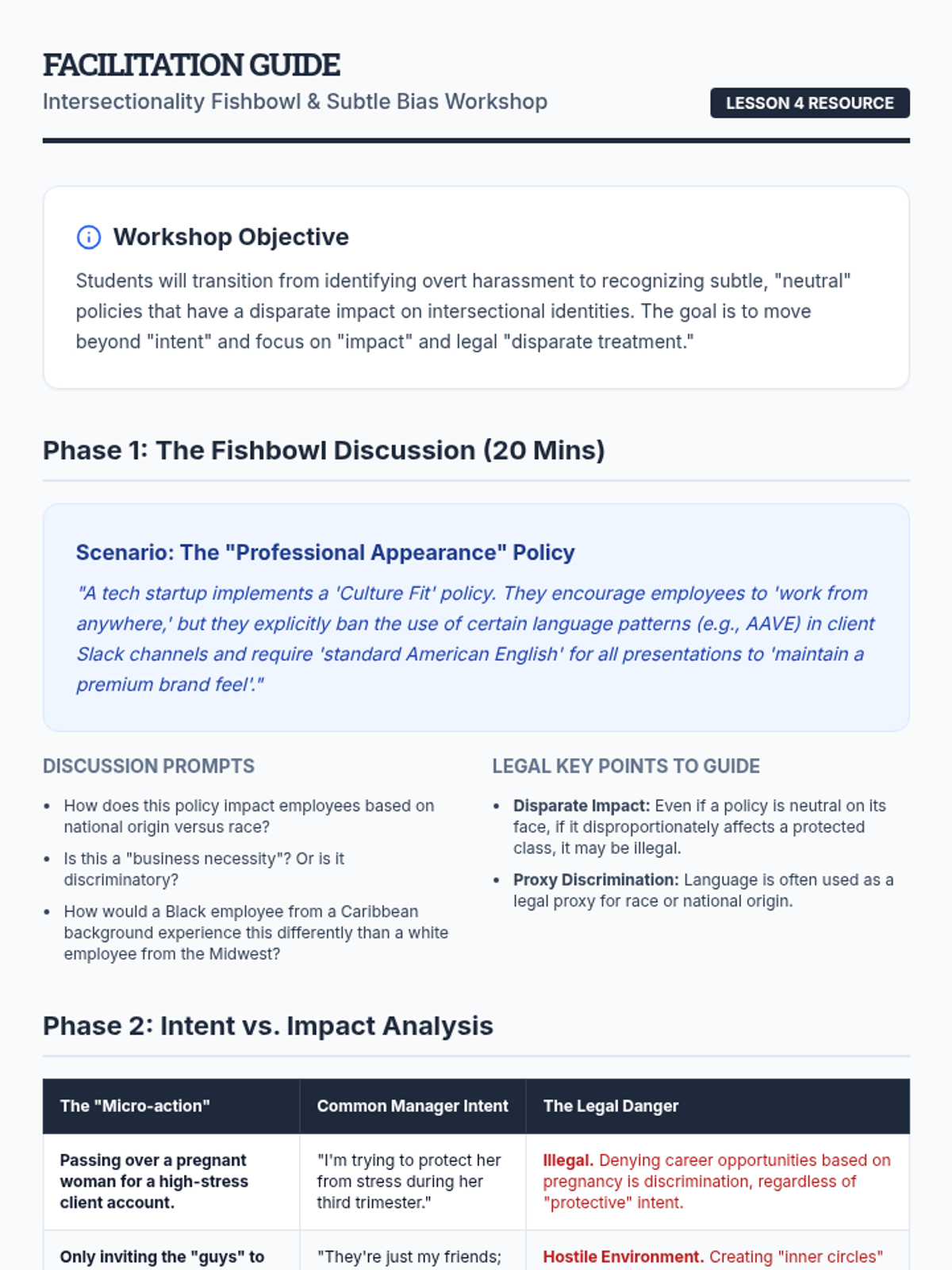
Teacher resource for facilitating discussions on intersectionality, microaggressions, and the distinction between intent and impact in workplace law.
Slide deck for Lesson 4, exploring the legal complexities of intersectionality and microaggressions in the workplace.
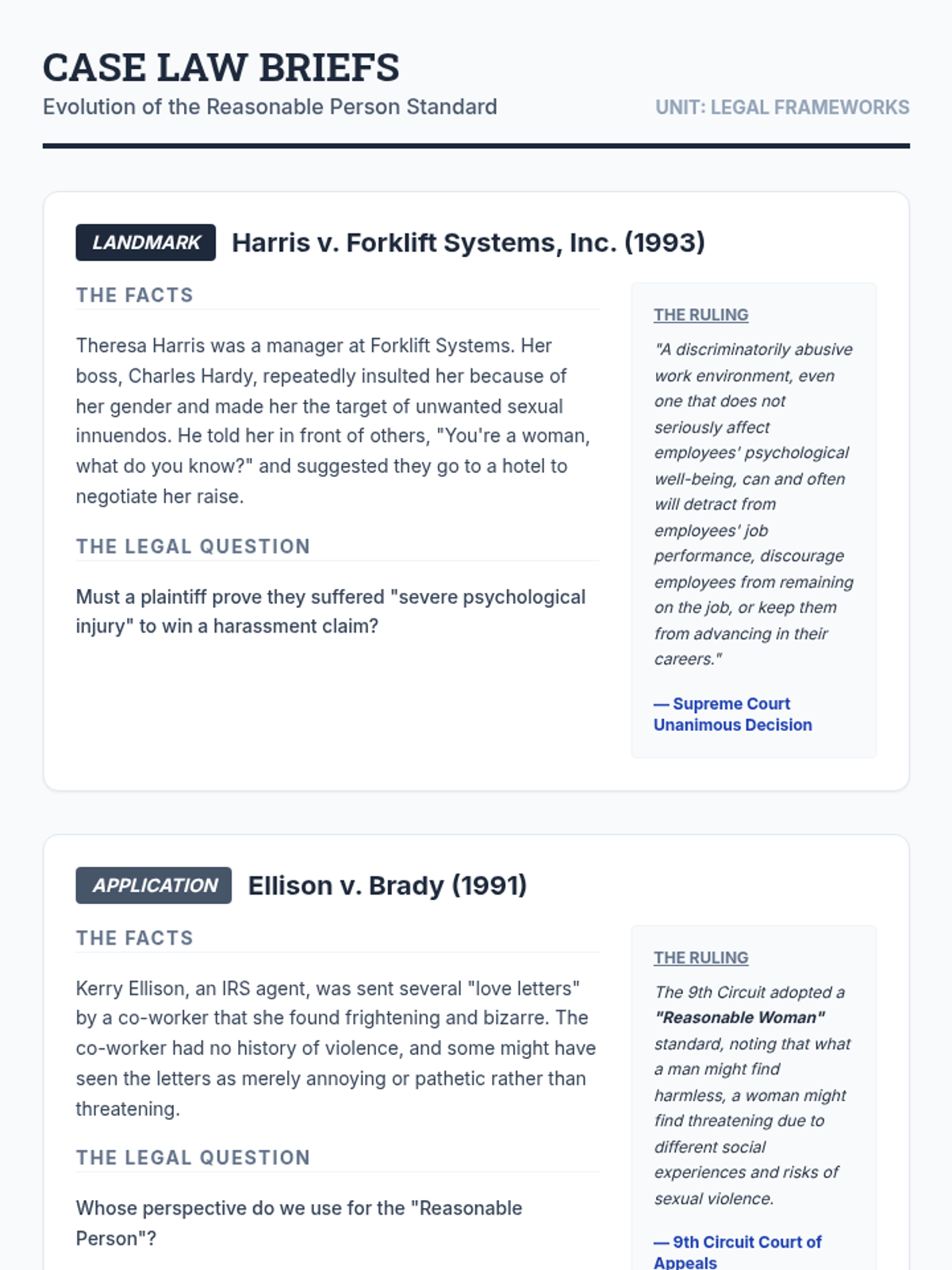
Summarized court opinions for students to analyze the 'reasonable person standard' in action, focusing on landmark cases like Harris v. Forklift Systems.
Slide deck for Lesson 3, covering the objective vs. subjective tests used in harassment cases and the 'reasonable person' standard.
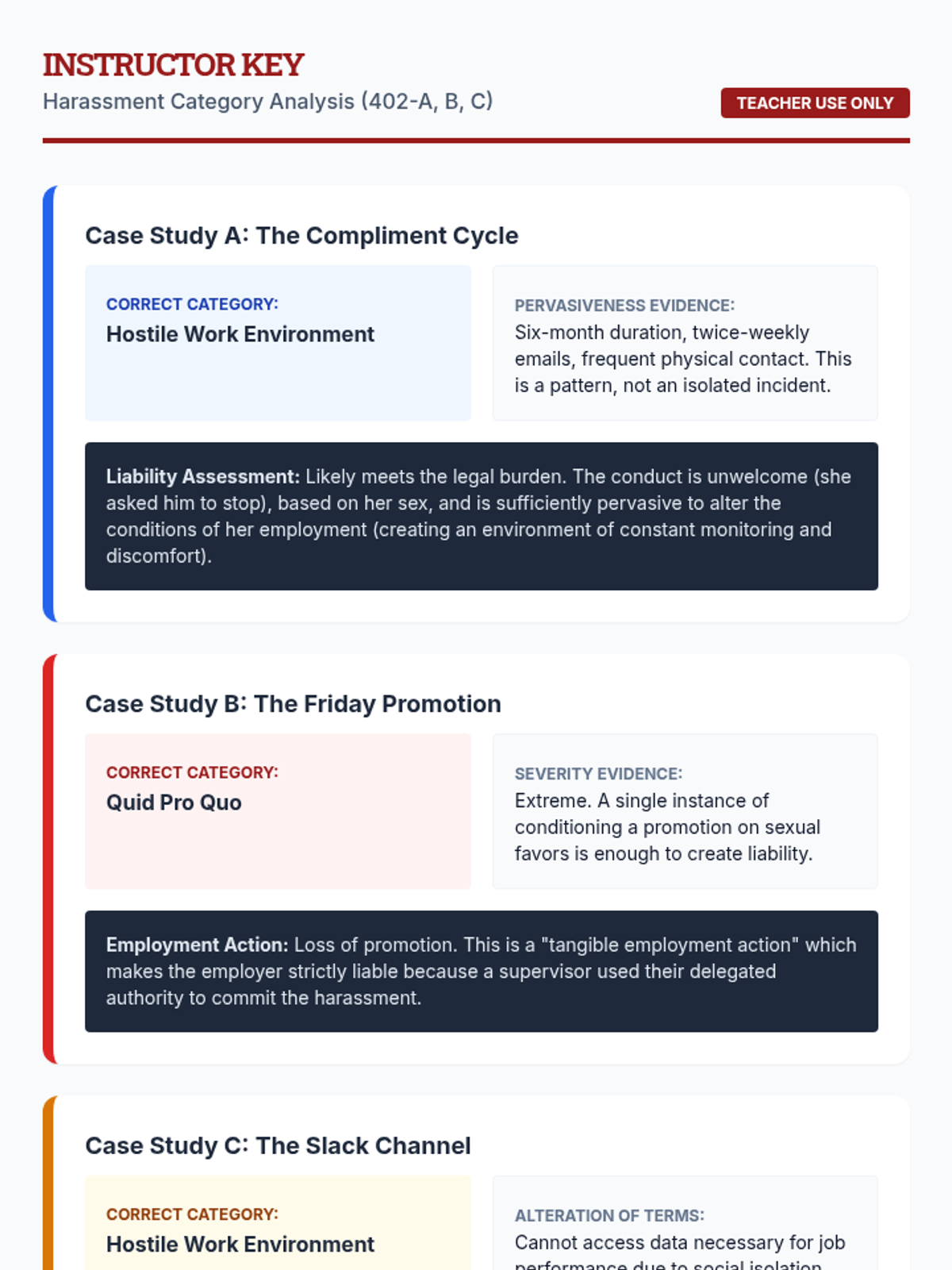
Instructor answer key and facilitation guide for the Hostile Environment Analyzer worksheet.
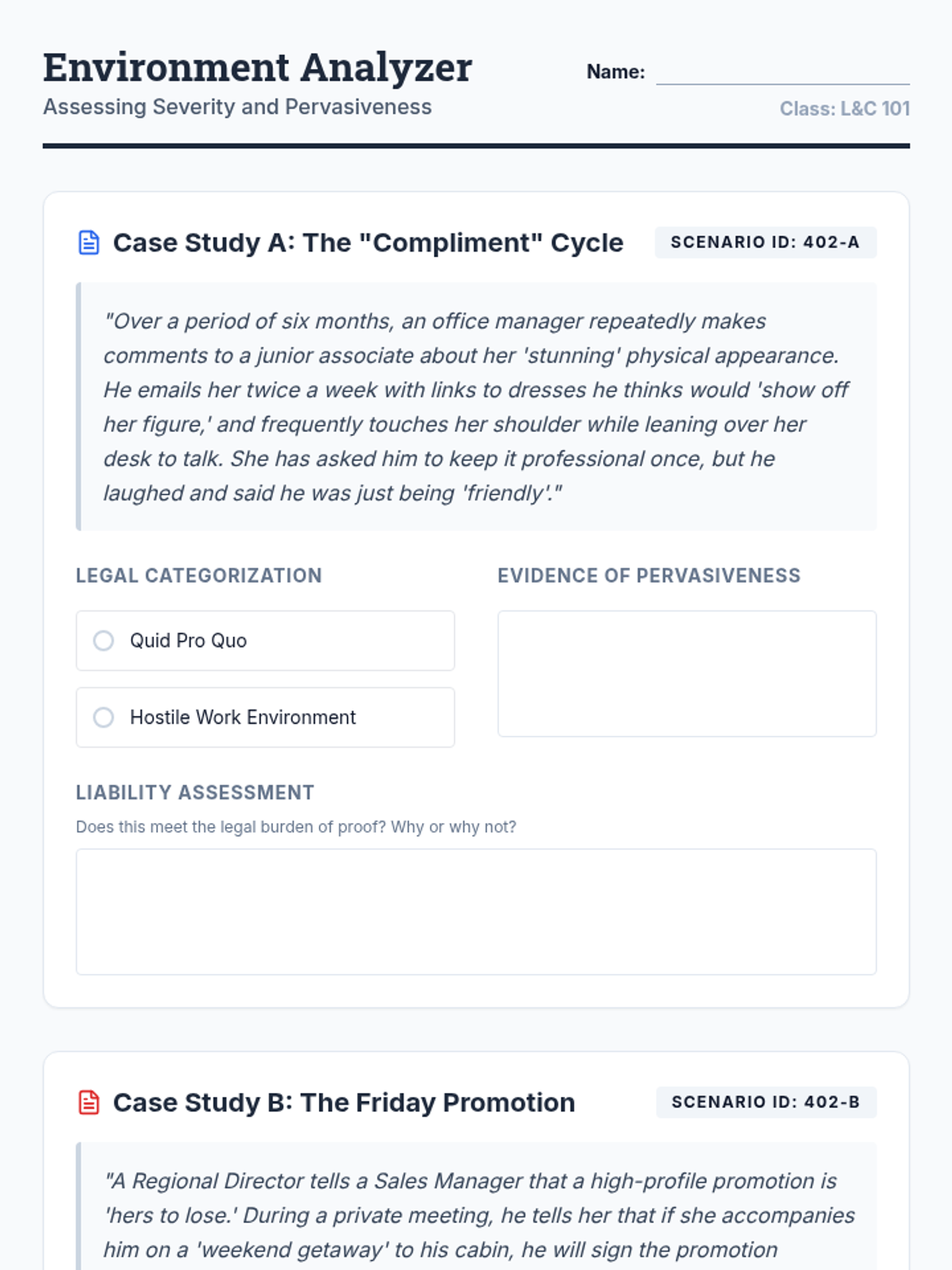
Worksheet for analyzing severity and pervasiveness in three different harassment scenarios, requiring students to categorize and justify their legal reasoning.
Slide deck for Lesson 2, distinguishing between Quid Pro Quo and Hostile Work Environment harassment with specific legal criteria.
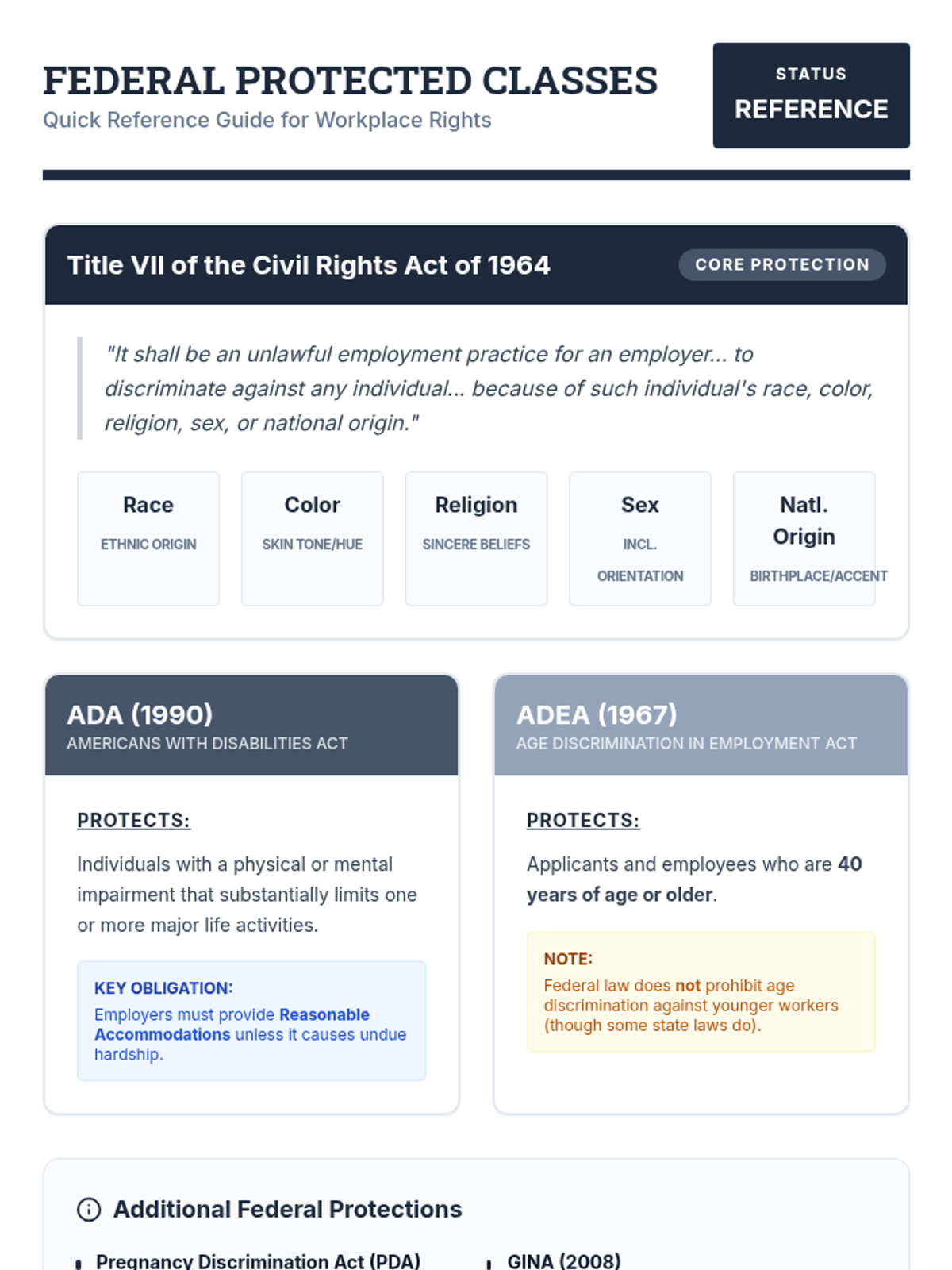
A quick reference guide for undergraduate students outlining the major federal protected classes under Title VII, ADA, and ADEA.
Introductory slide deck for the first lesson, covering the major federal anti-discrimination statutes and the concept of protected classes.
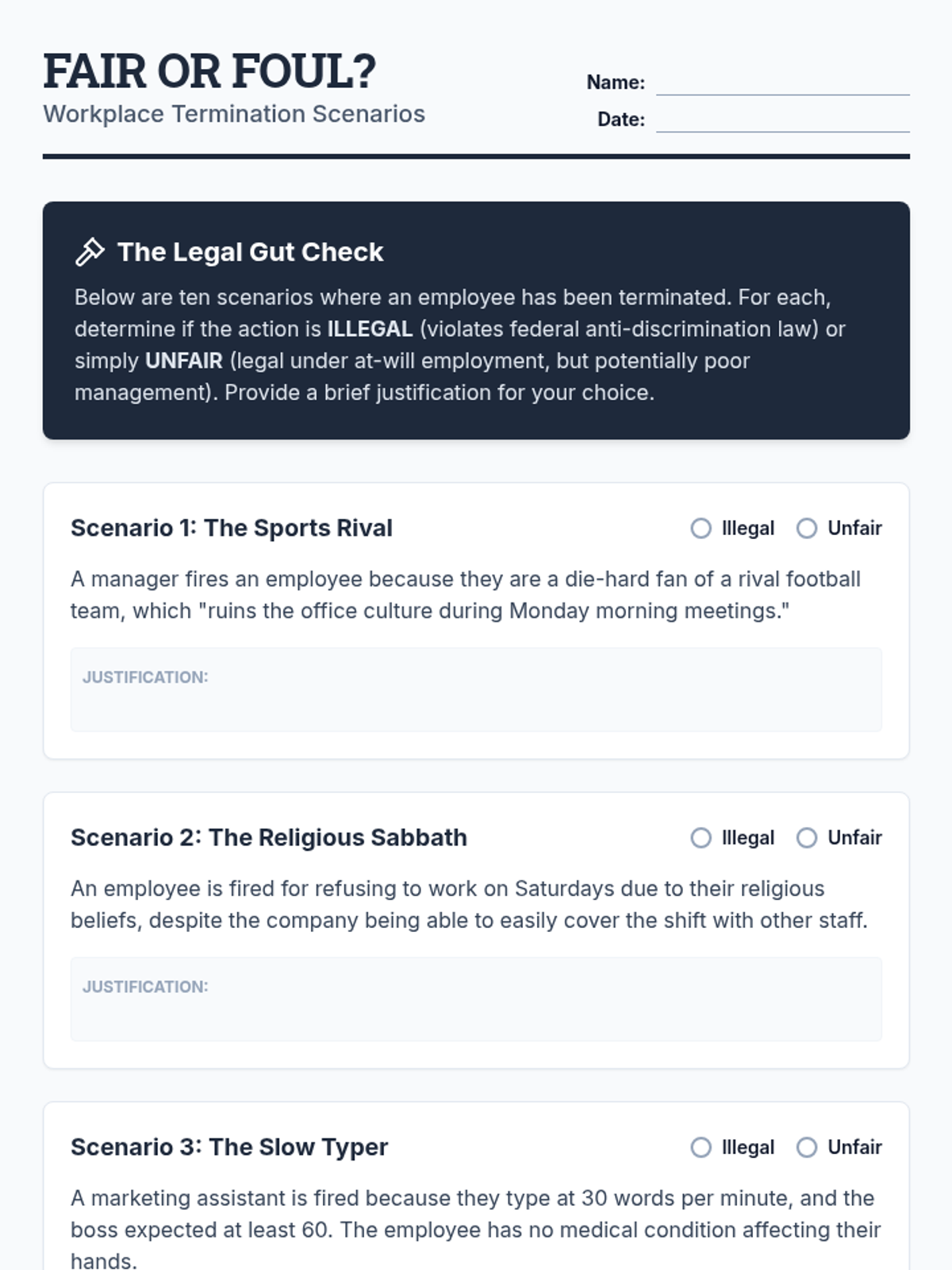
A hook activity for the first lesson where students evaluate 10 workplace firing scenarios to distinguish between illegal discrimination and general unfair treatment.
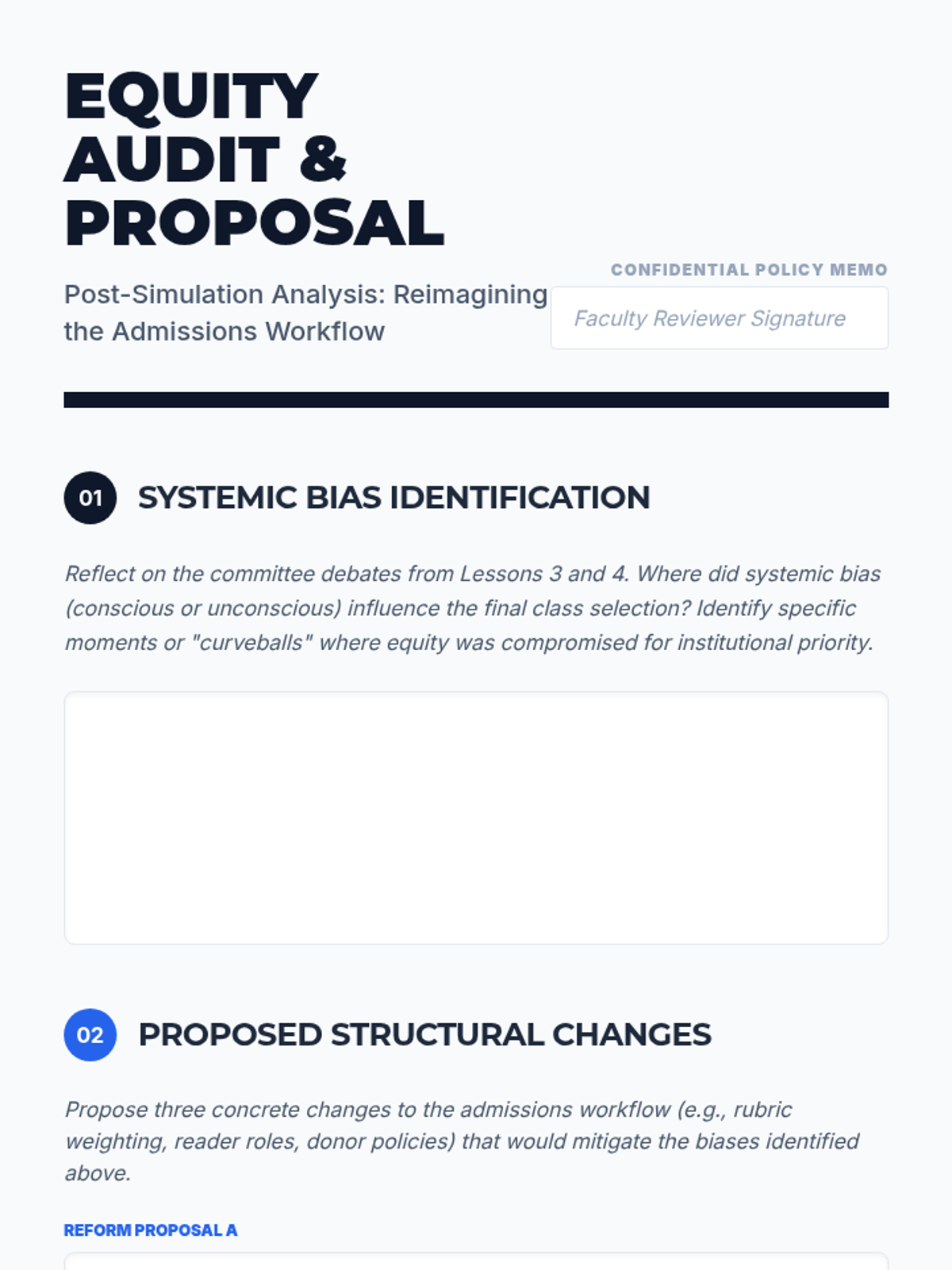
Final reflection and proposal guide for Lesson 5, where students synthesize simulation findings into concrete admissions policy reforms.
Final slide deck for Lesson 5 exploring systemic bias, demographic outcomes of the simulation, and reimagining equitable admissions workflows.
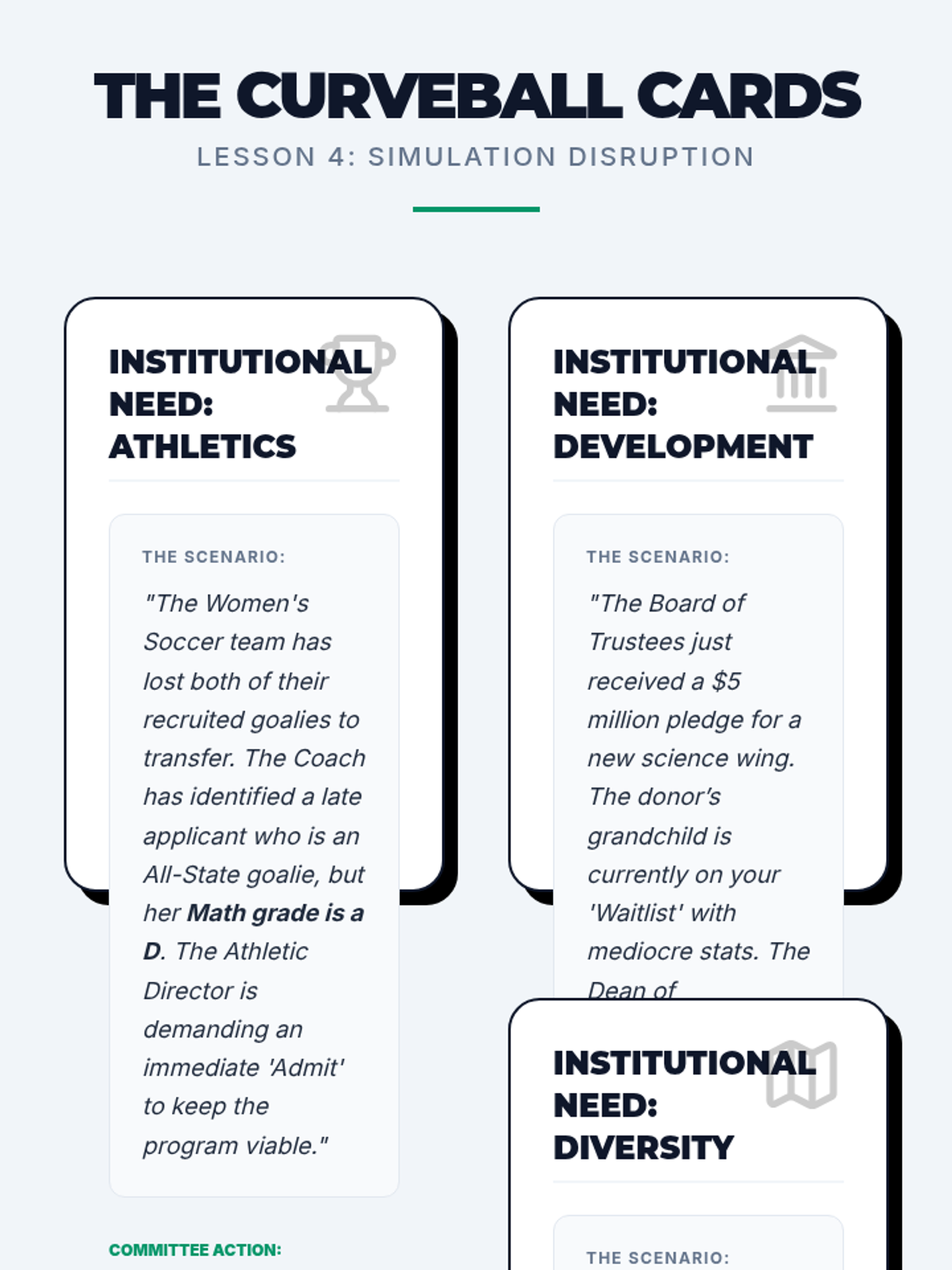
Set of four simulation "curveball" cards for Lesson 4, introducing institutional constraints like athletic needs, major donors, geographic diversity, and yield protection.
Slide deck for Lesson 4 exploring yield protection, special talents (athletics, arts), and the ethical dilemmas of institutional priorities.
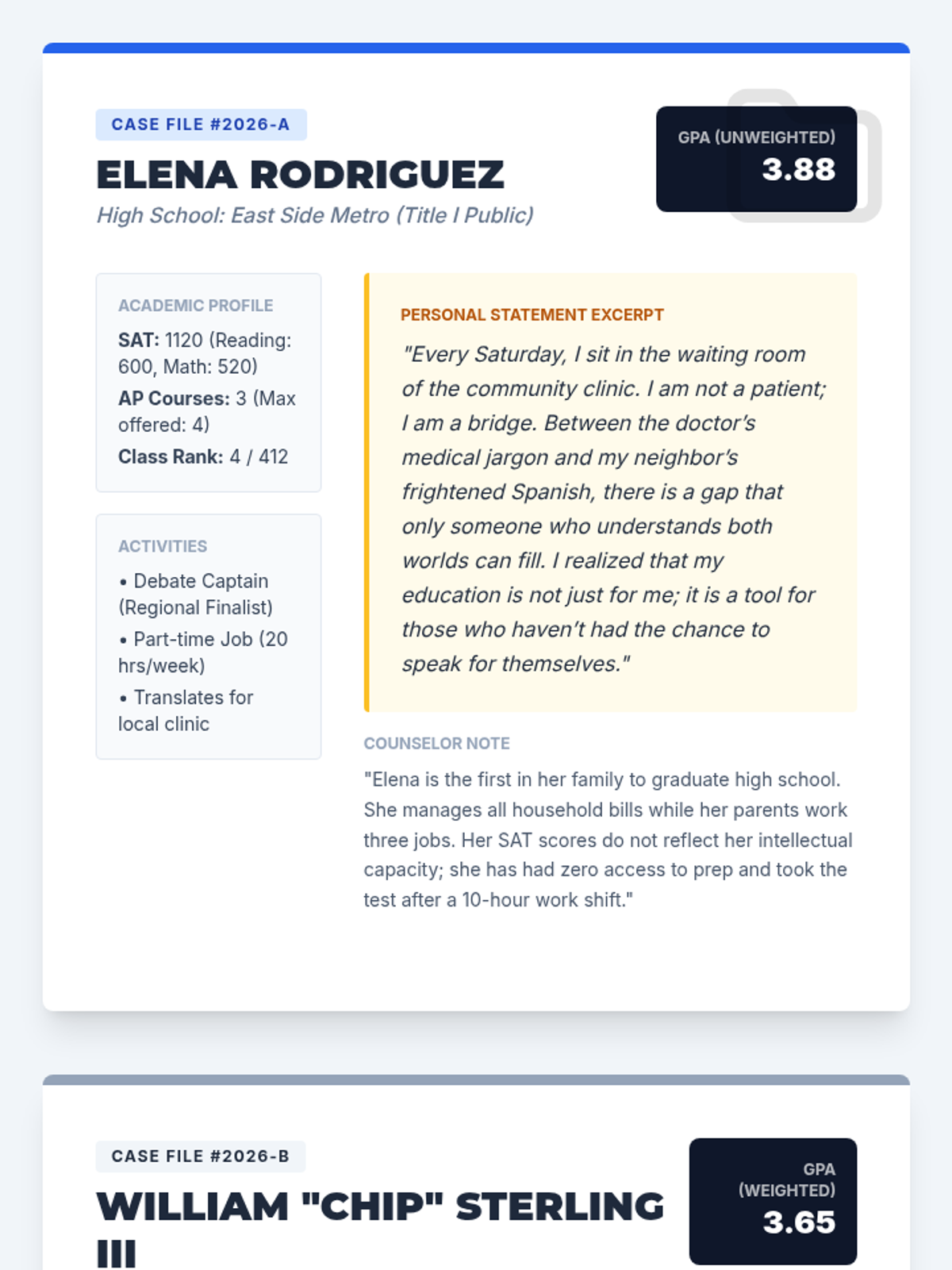
Set of three redacted-style applicant dossiers for Lesson 3 simulation, featuring a narrative striver, a legacy applicant, and a quantitative powerhouse.
Slide deck for Lesson 3 simulation, focusing on advocacy techniques, committee roles, and the institutional realities of enrollment management.
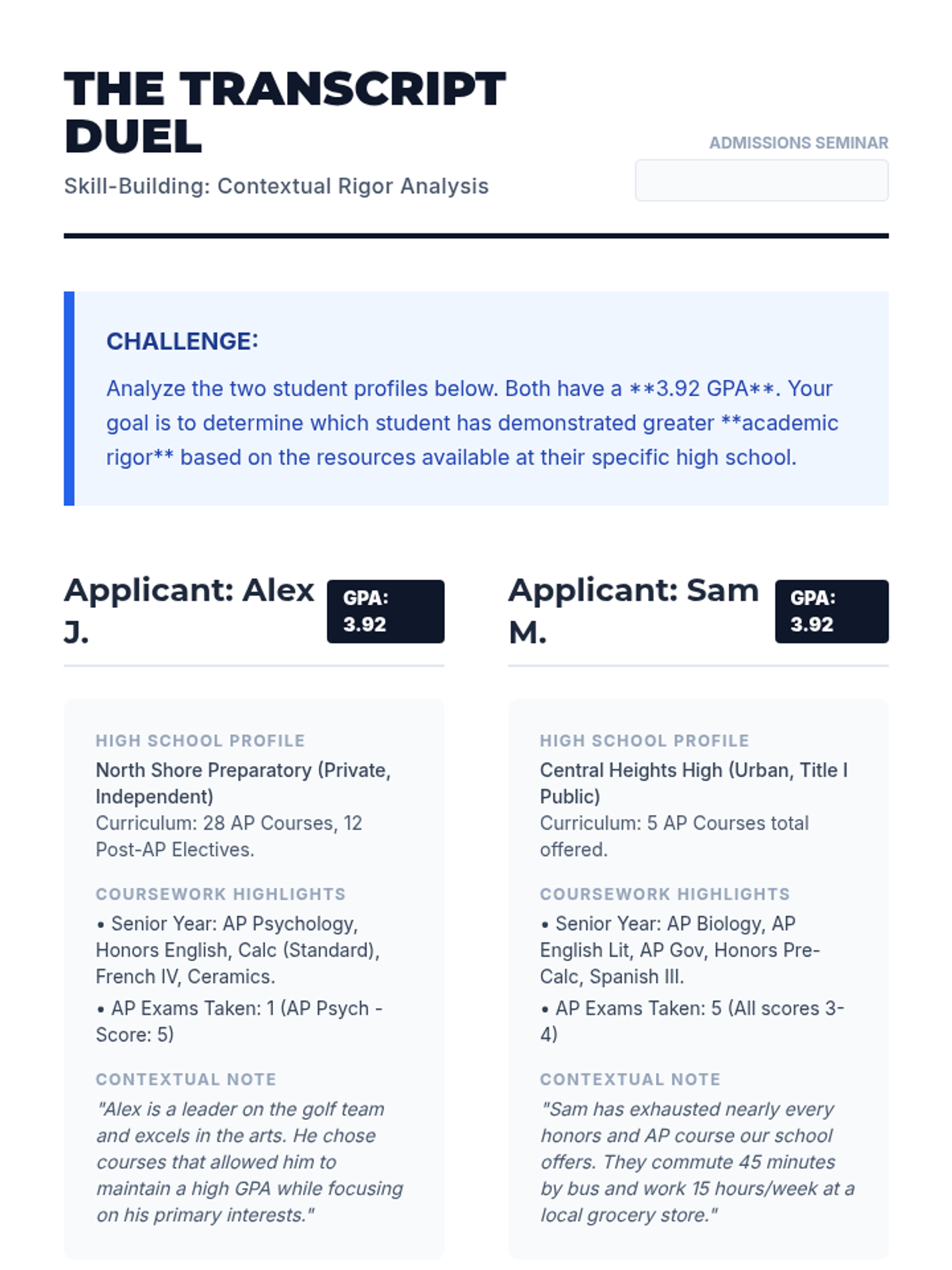
Worksheet for Lesson 2 comparing two student profiles with identical GPAs but different resource contexts to practice analyzing academic rigor.
Slide deck for Lesson 2 focusing on contextual review of transcripts, identifying grade trends, and the balance between standardized testing and personal narratives.