Written and verbal communication standards for the workplace, including email etiquette, presentation delivery, and professional phone conduct. Develops collaborative skills for teamwork, constructive feedback, and efficient time management.
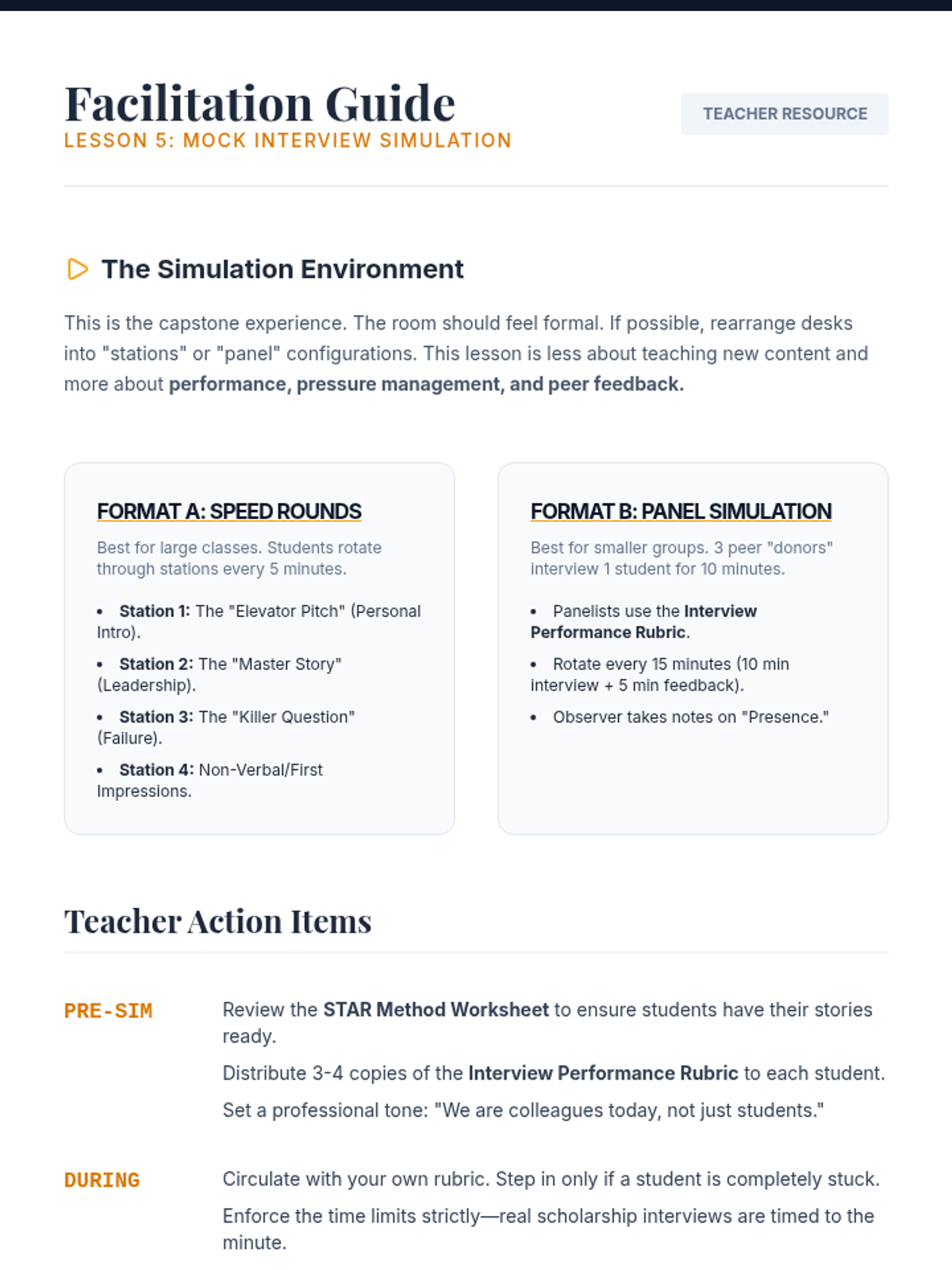
Facilitation guide for the mock interview simulation, including setup instructions, peer feedback protocols, and stewardship discussion prompts.
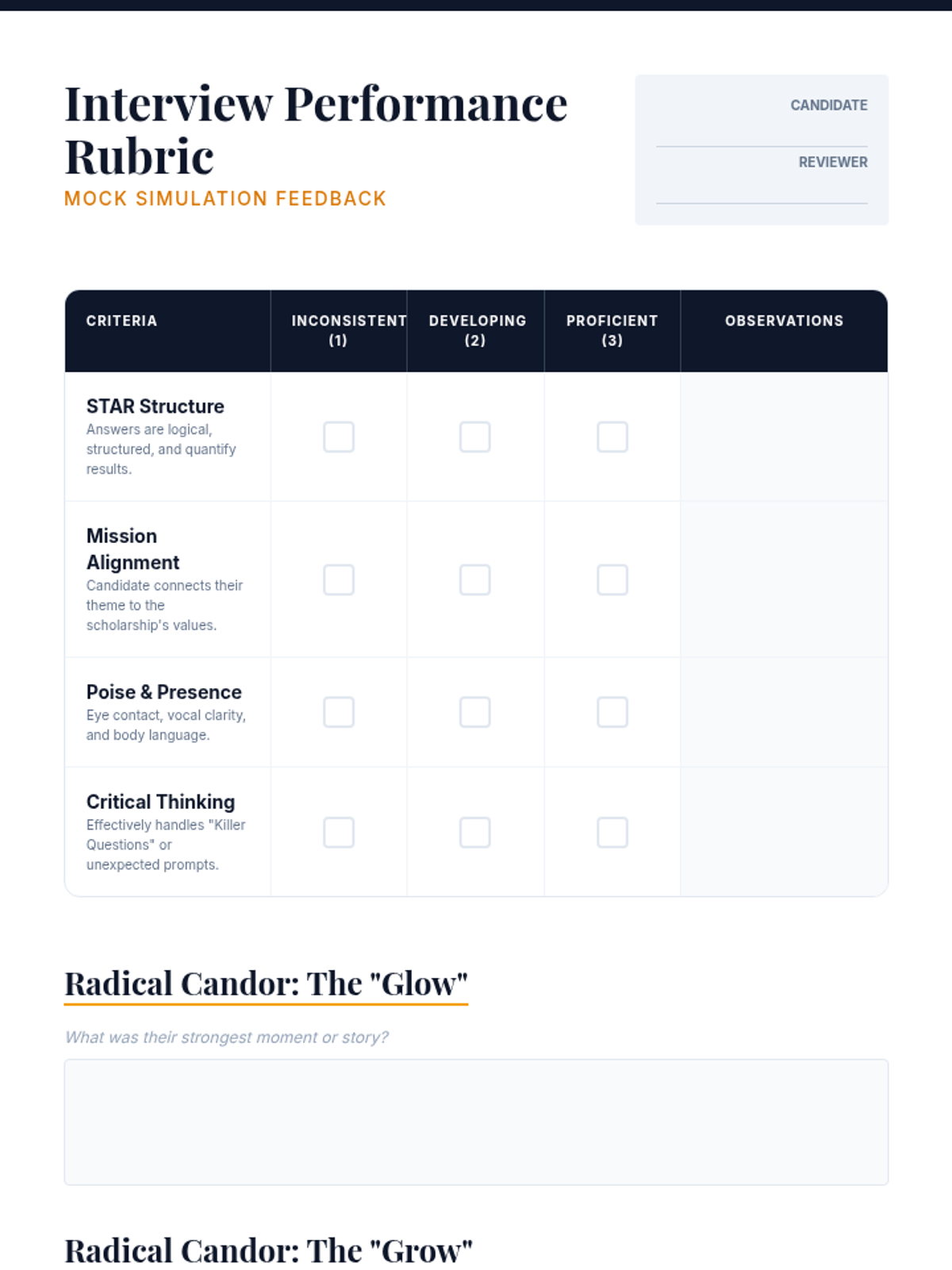
A professional rubric for evaluators to provide structured feedback during scholarship mock interviews, focusing on STAR structure, mission alignment, and poise.
Slides for Lesson 5 covering mock interview simulation protocols, post-interview etiquette, and long-term scholarship stewardship.
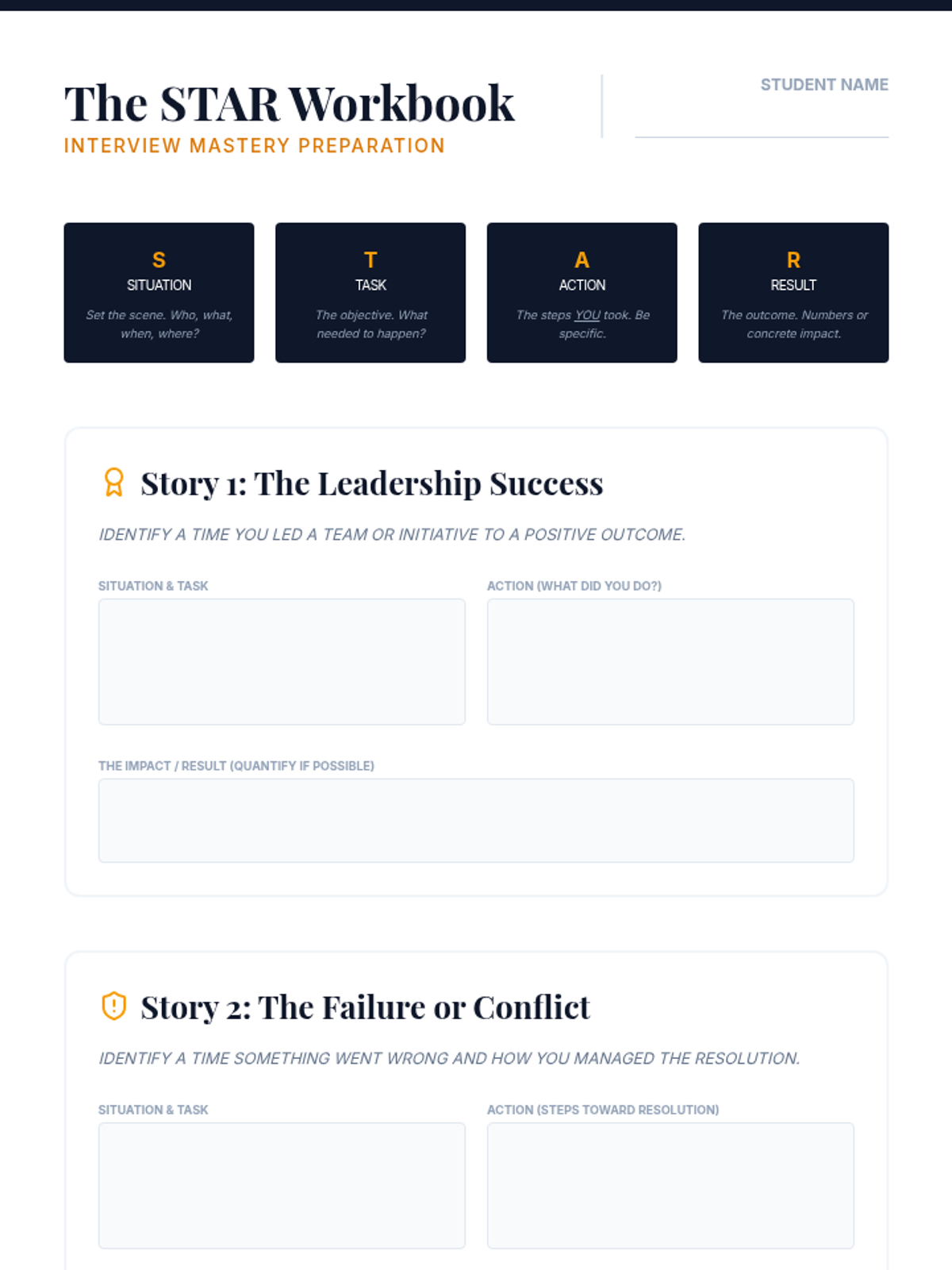
A structural workbook for students to identify and draft four 'master stories' using the STAR method for behavioral scholarship interview questions.
Slides for Lesson 4 covering behavioral interview techniques, common scholarship questions, and non-verbal communication strategies.
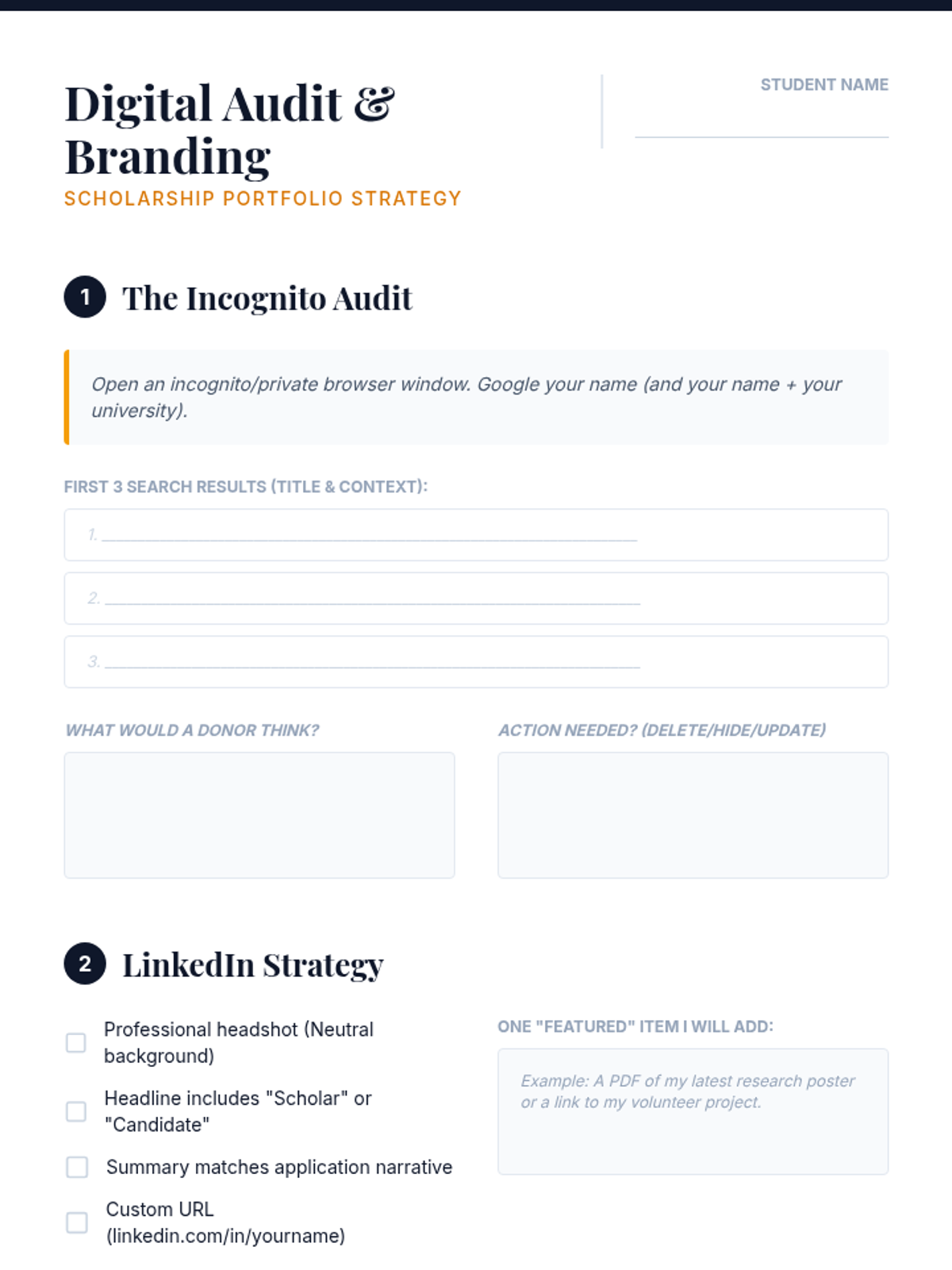
A worksheet for students to perform a comprehensive digital audit of their online persona and plan their LinkedIn and supplemental branding strategy.
Slides for Lesson 3 discussing digital footprints, Google audits, LinkedIn verification, and supplemental portfolio curation for scholarship applications.
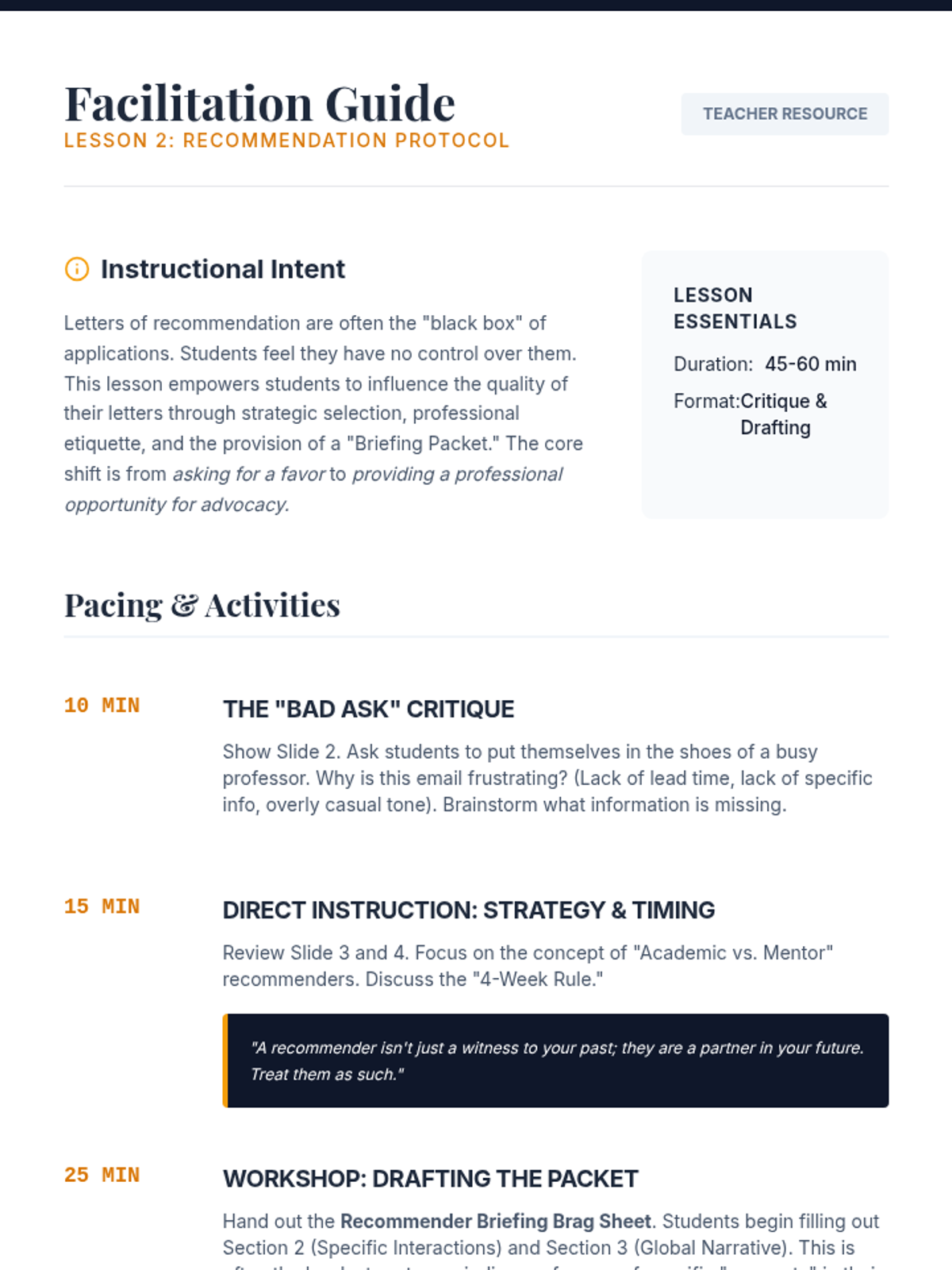
Facilitation guide for Lesson 2, including the 'Bad Ask' critique instructions and drafting guidance for the briefing packet.
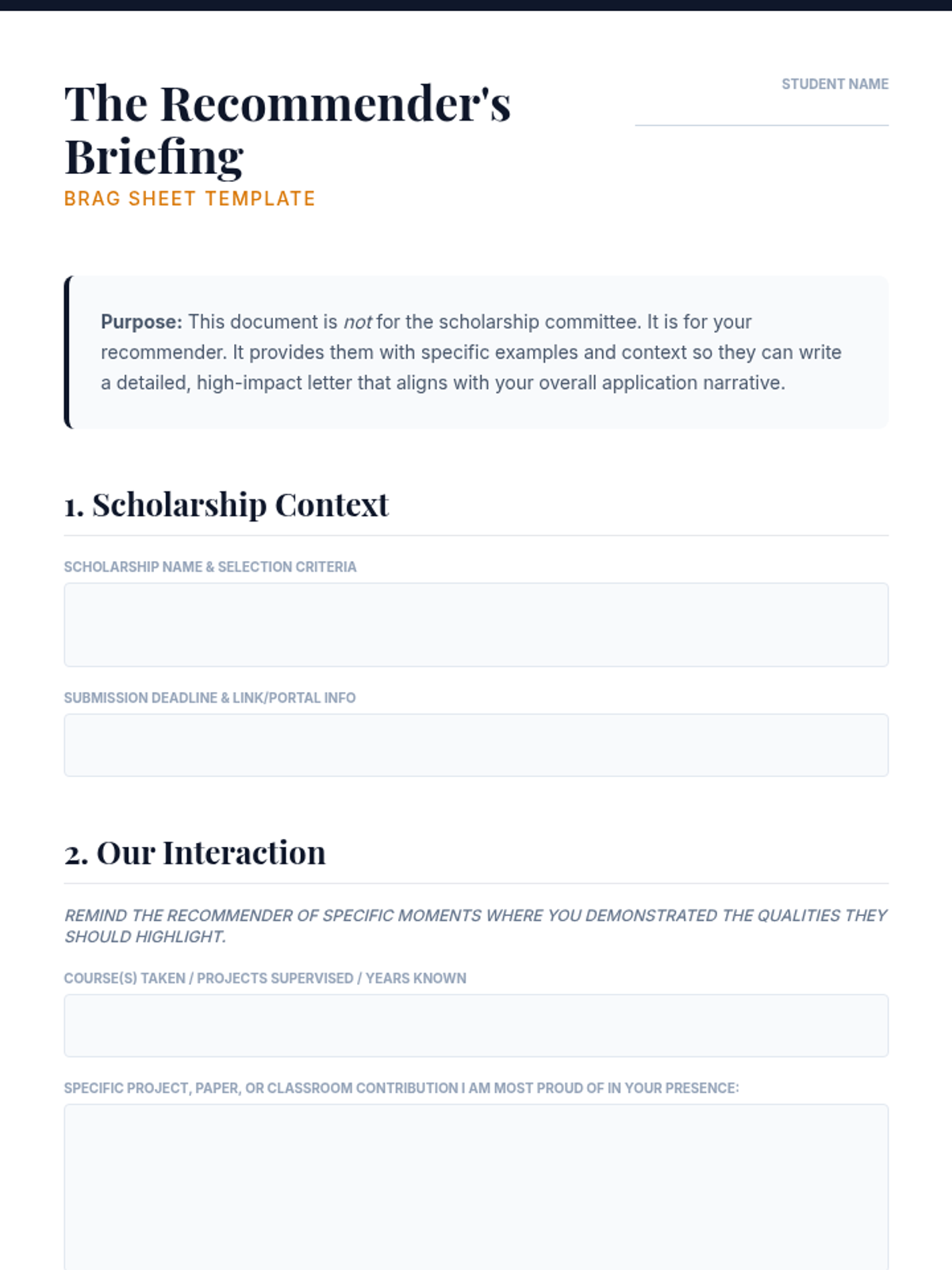
A structured briefing document for students to complete and provide to their letter writers, ensuring recommenders have specific anecdotes and context for high-impact letters.
Slides for Lesson 2 covering the etiquette of requesting letters of recommendation, selection of recommenders, and the 'briefing packet' strategy.
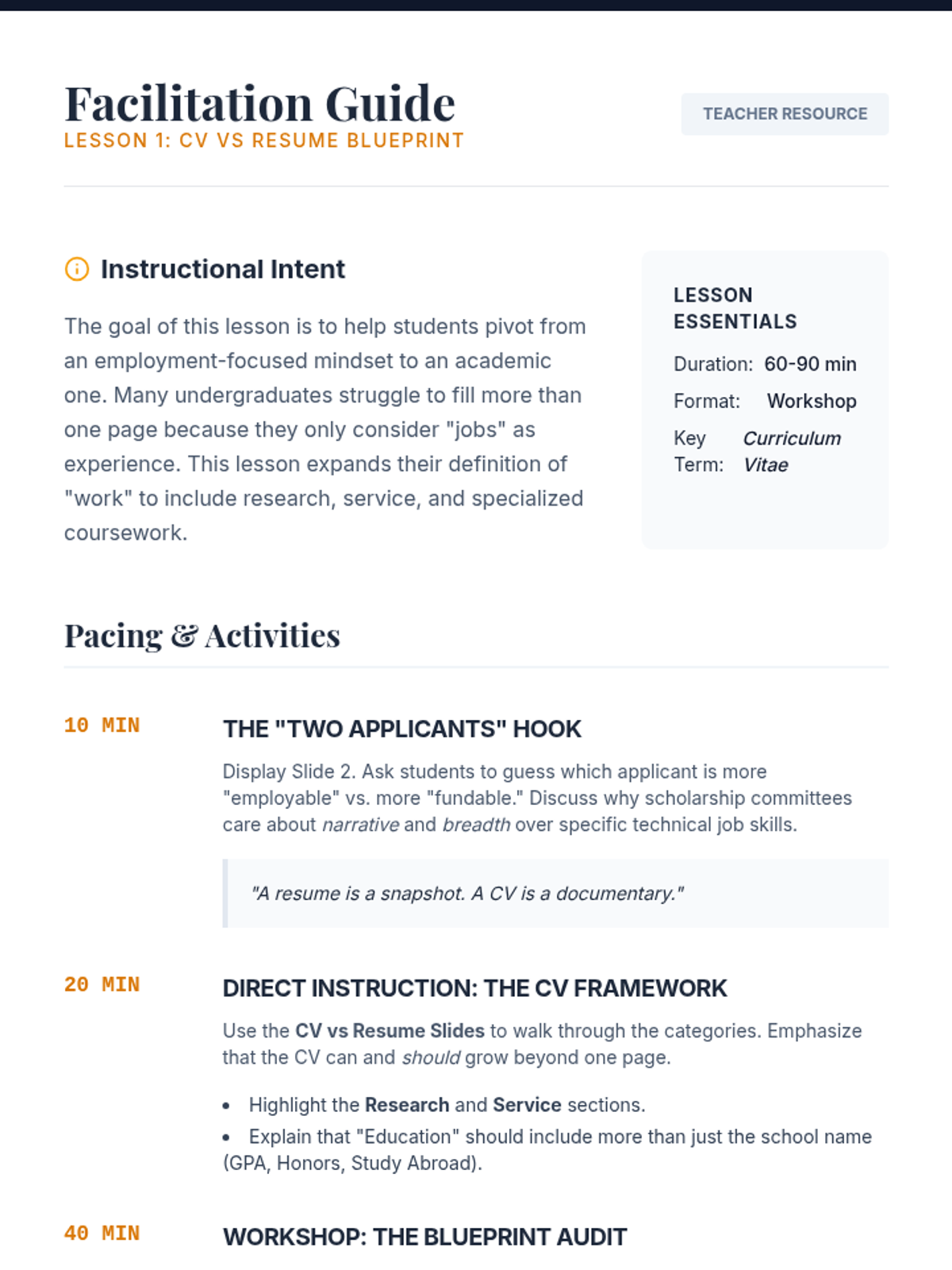
A facilitation guide for teachers to deliver the CV vs Resume lesson, including pacing, talking points, and activity instructions.
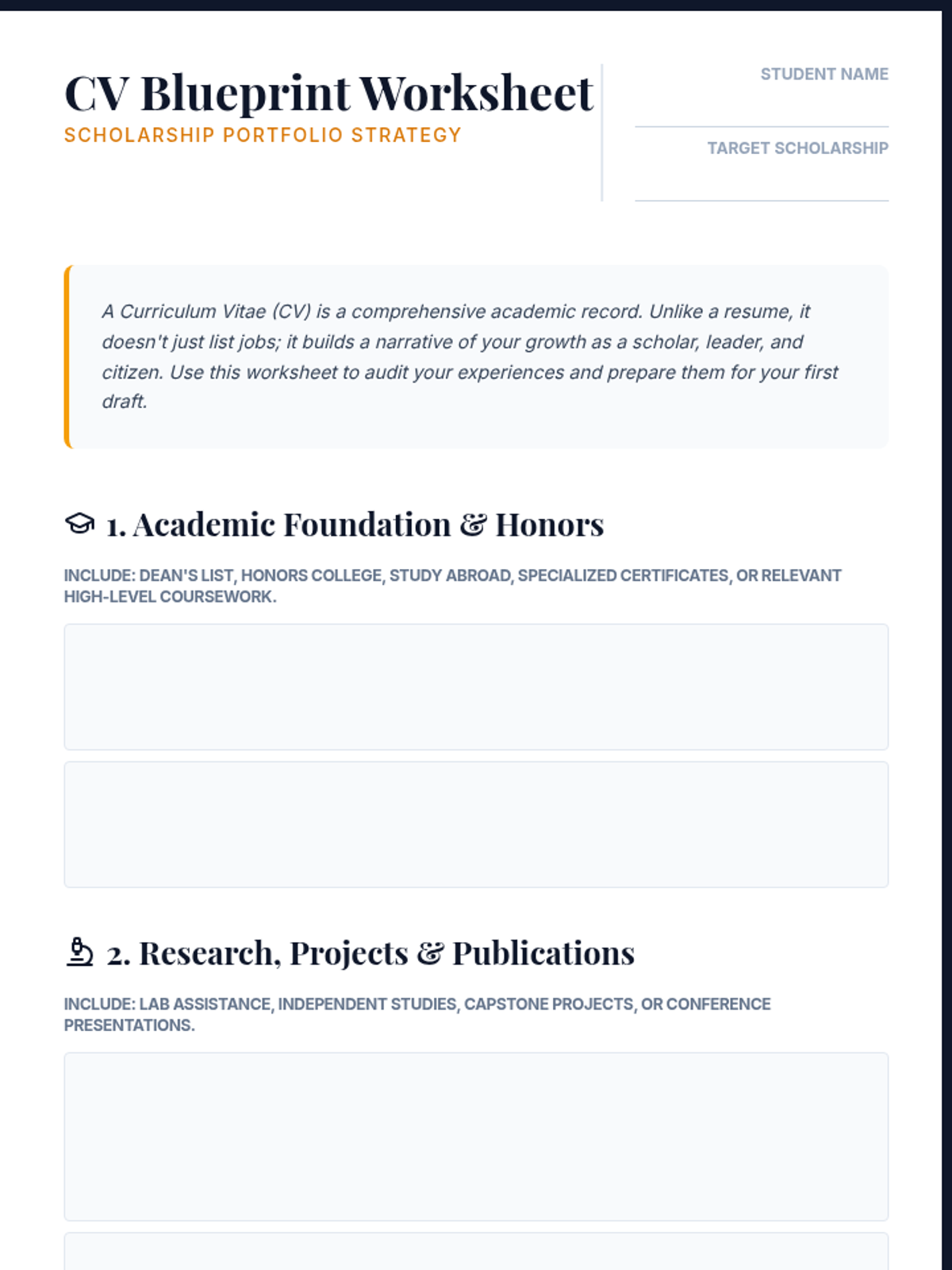
A structured brainstorming worksheet for students to audit their academic and extra-curricular experiences and practice refactoring employment duties into impact-focused CV bullets.
A professional slide deck introducing undergraduate students to the differences between a standard resume and an academic CV, focusing on categories relevant to scholarship committees.
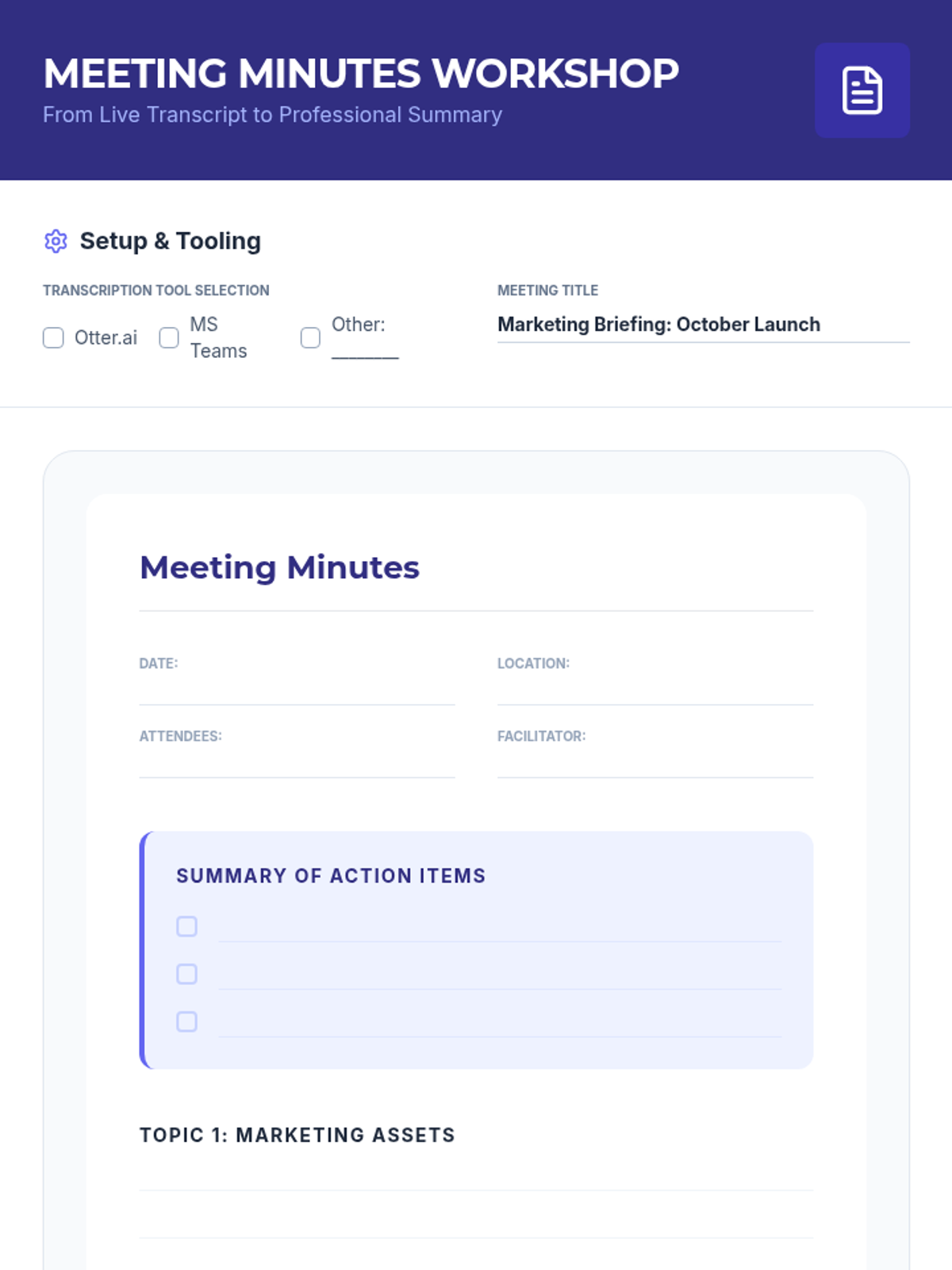
Workshop worksheet for Lesson 5, including a meeting minutes template and reflection on the transcription-to-synthesis process.
Facilitation guide for Lesson 5, including tool selection, live monitoring, and transcript-to-minutes synthesis.
Professional presentation for Lesson 5 on real-time meeting transcription, covering tool selection, live monitoring, and transcript-to-minutes synthesis.
Student advocacy worksheet for Lesson 4, helping students construct professional scripts to handle social friction when using dictation tools.
Facilitation guide for Lesson 4, including role-playing scenarios and advice for teaching professional self-advocacy.
Presentation for Lesson 4 on workplace etiquette and self-advocacy when using dictation in shared environments.
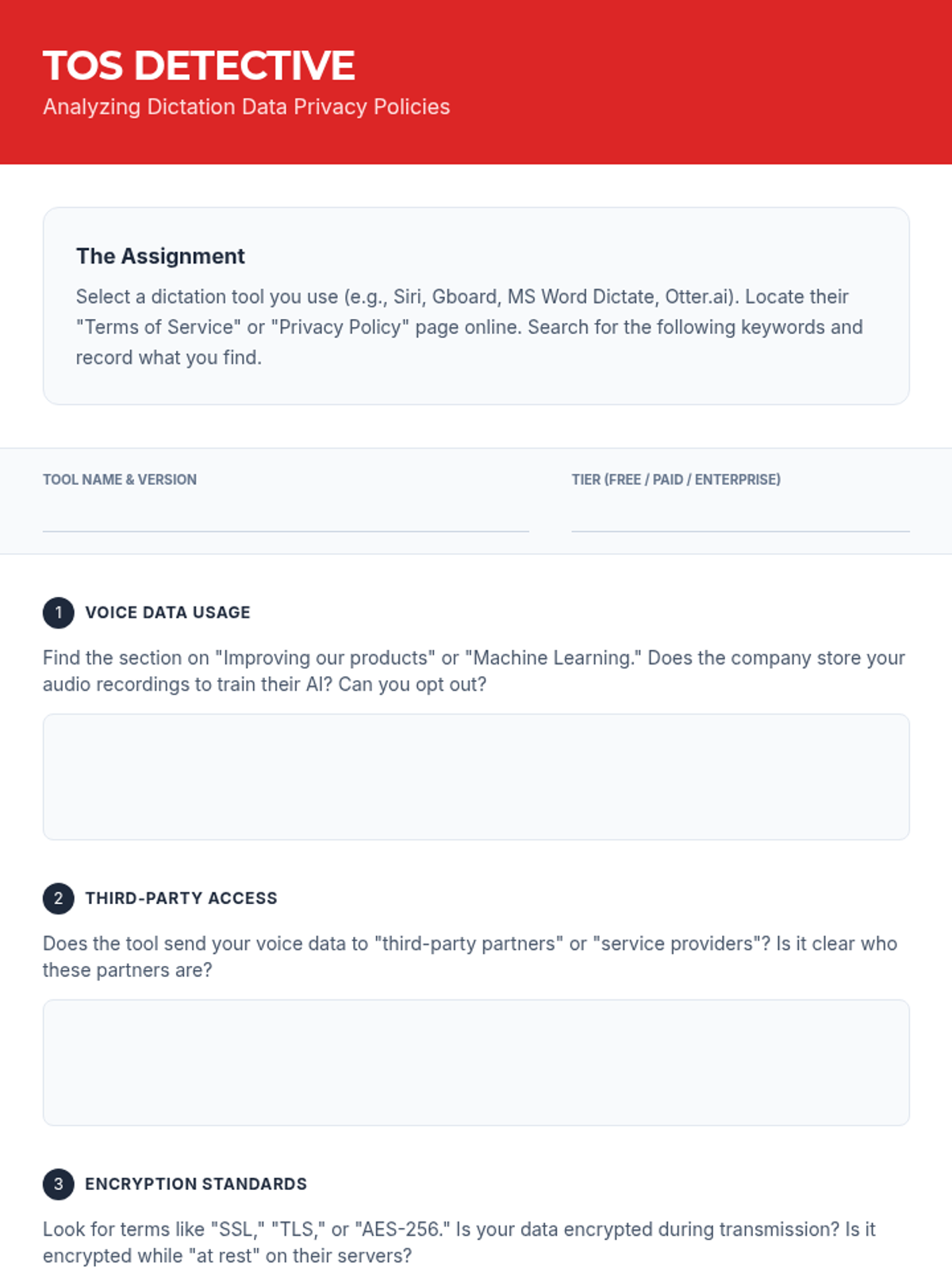
Terms of Service inquiry worksheet where students analyze the privacy policies of various dictation tools to determine professional suitability.
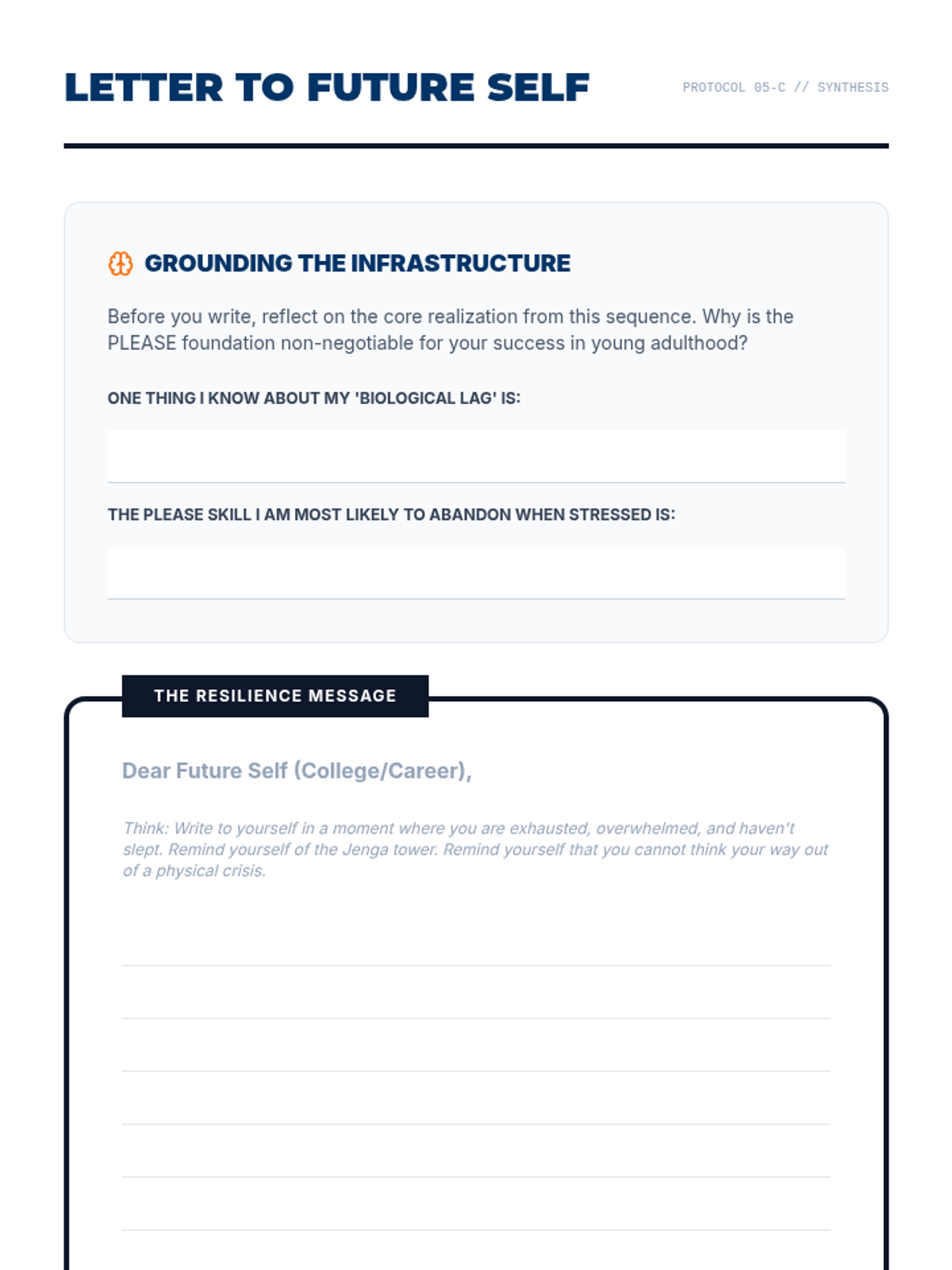
A reflective drafting worksheet for students to write a letter to their future selves, grounding their commitment to PLEASE skills in young adulthood.
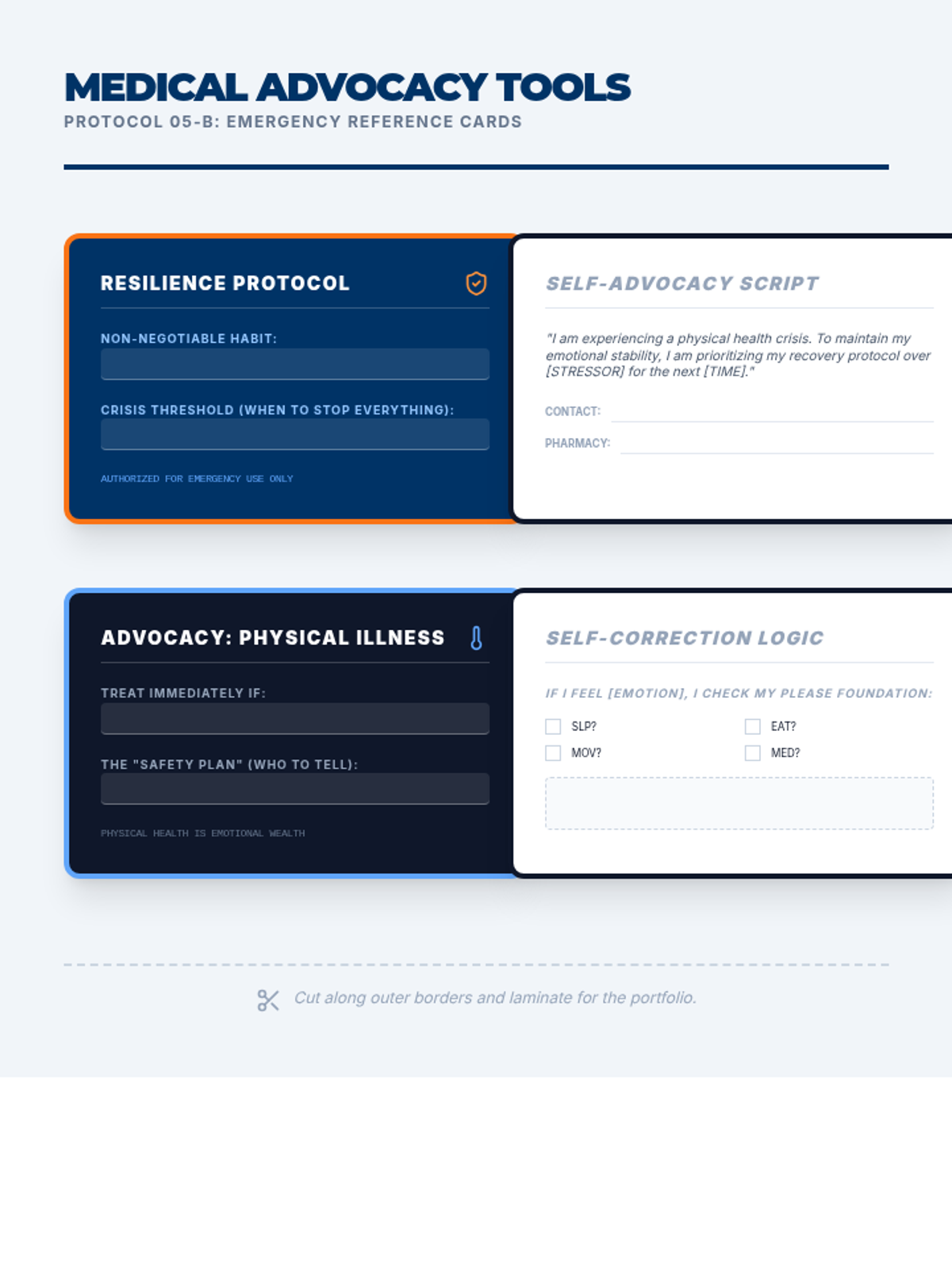
Wallet-sized medical advocacy and self-care cards for students to complete and include in their Resilience Portfolios.
Final slide deck for Lesson 5, focusing on synthesizing all PLEASE skills into a 'Resilience Portfolio' for independent living.
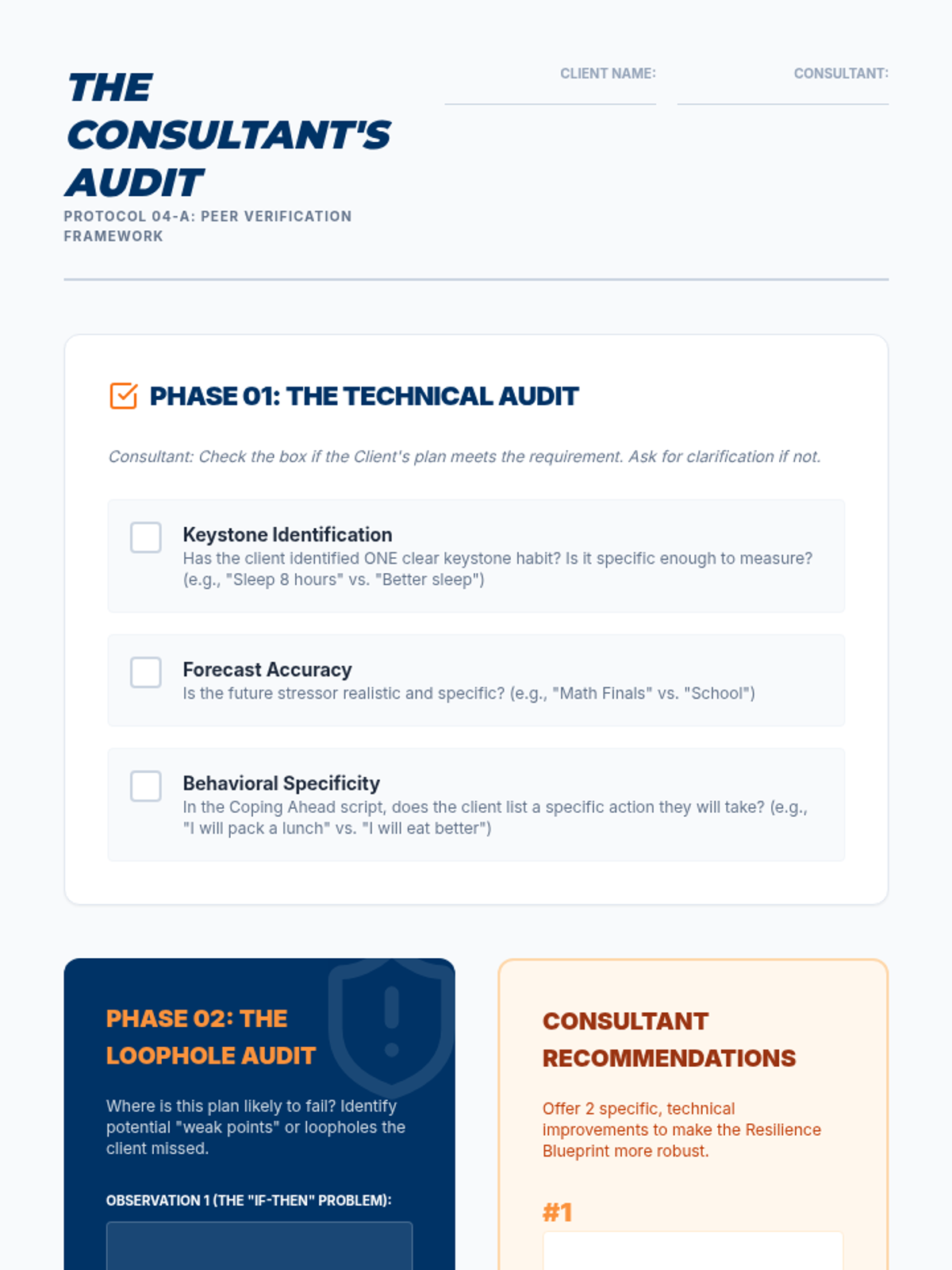
A structured peer review framework for students to audit each other's PLEASE plans, identifying loopholes and offering technical improvements.
Slide deck for Lesson 4 focusing on the peer consultancy process, where students act as life coaches to audit each other's resilience plans.
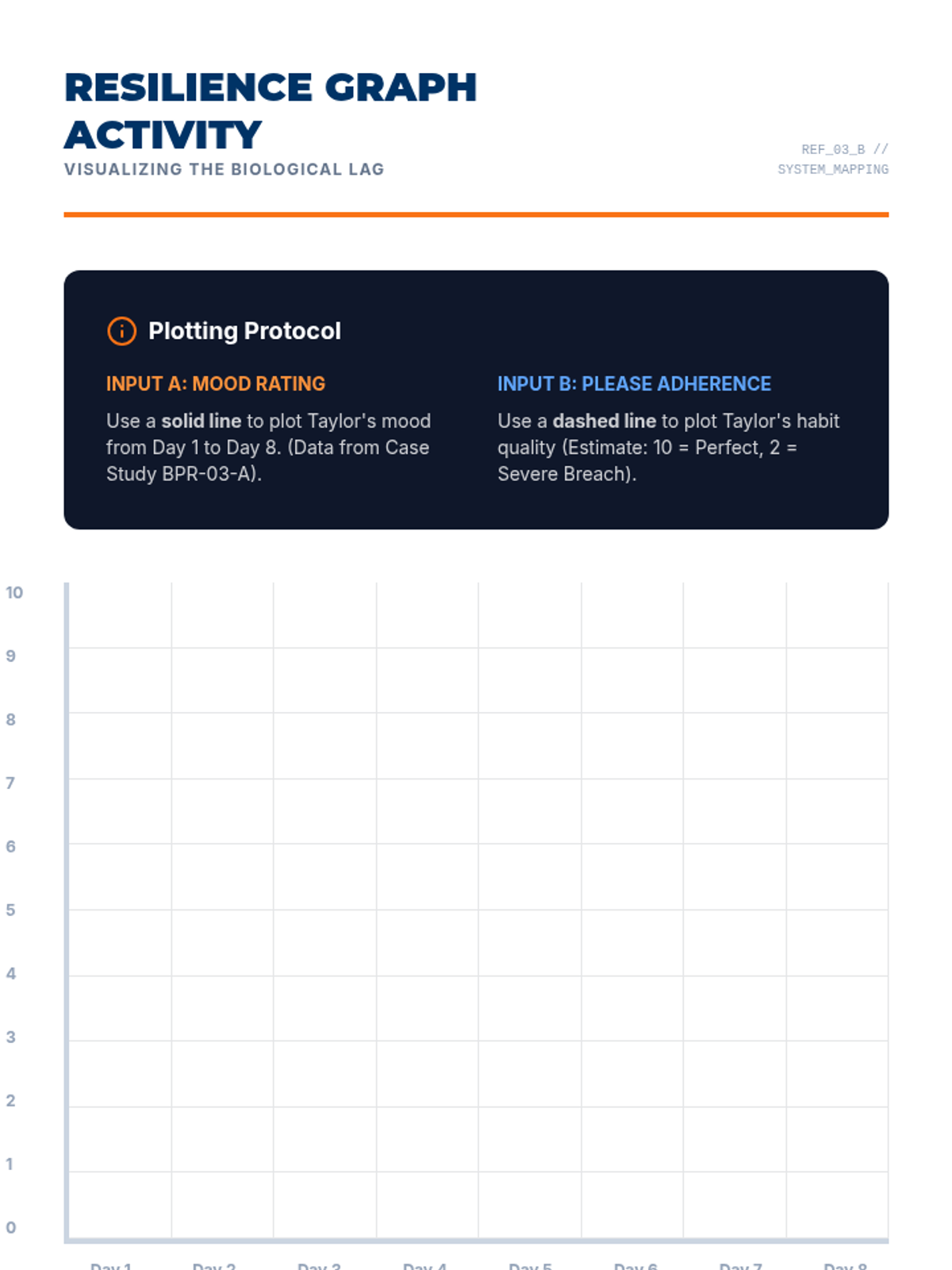
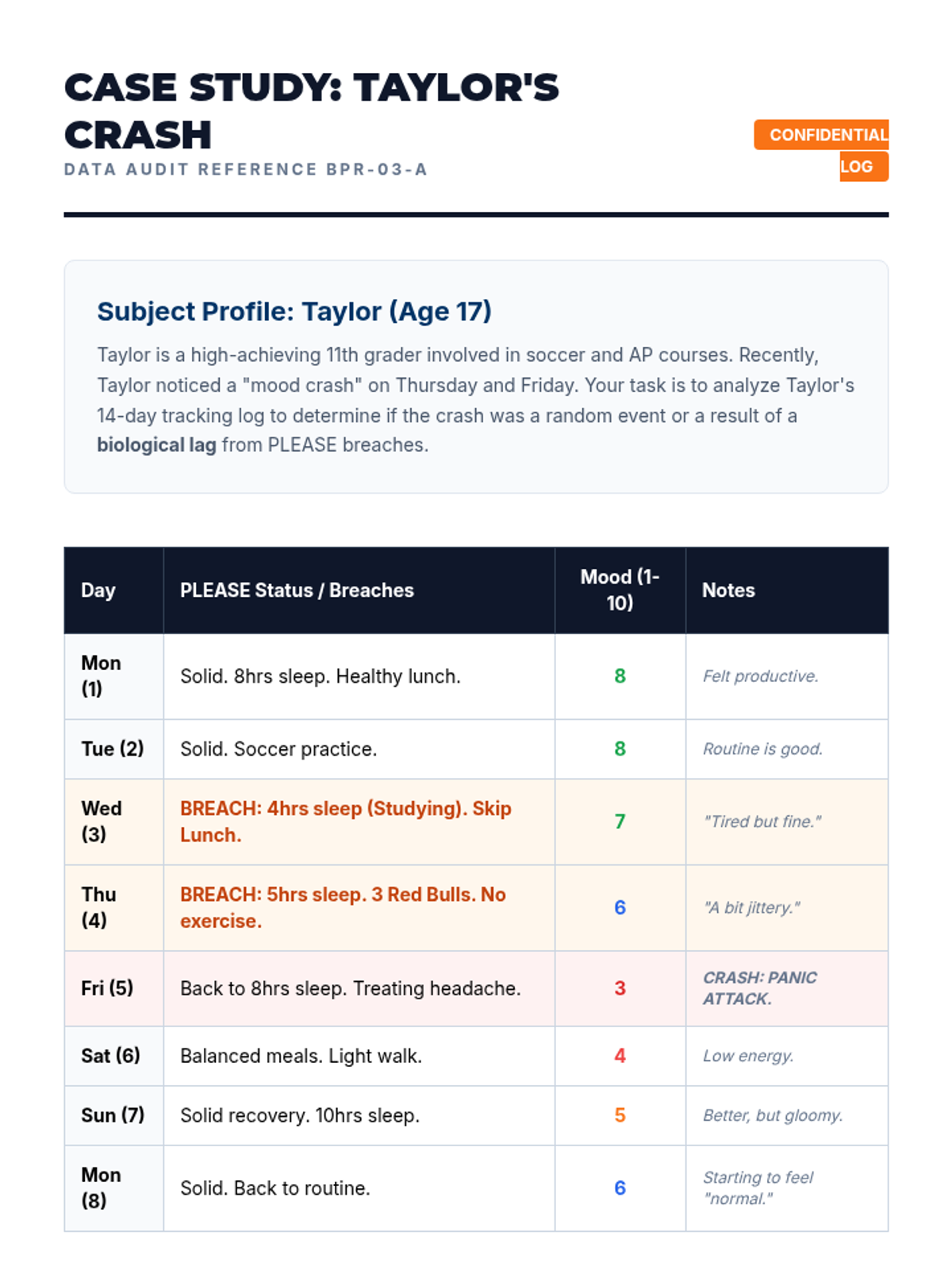
A graphing activity where students plot Taylor's mood and habit data to visualize the 'biological lag' and the importance of consistency.
A case study and data audit worksheet where students analyze the relationship between behavioral breaches and mood crashes in a hypothetical 11th grader.
Slide deck for Lesson 3 focusing on the biological lag between behavior change and mood improvement, using stock market analogies.
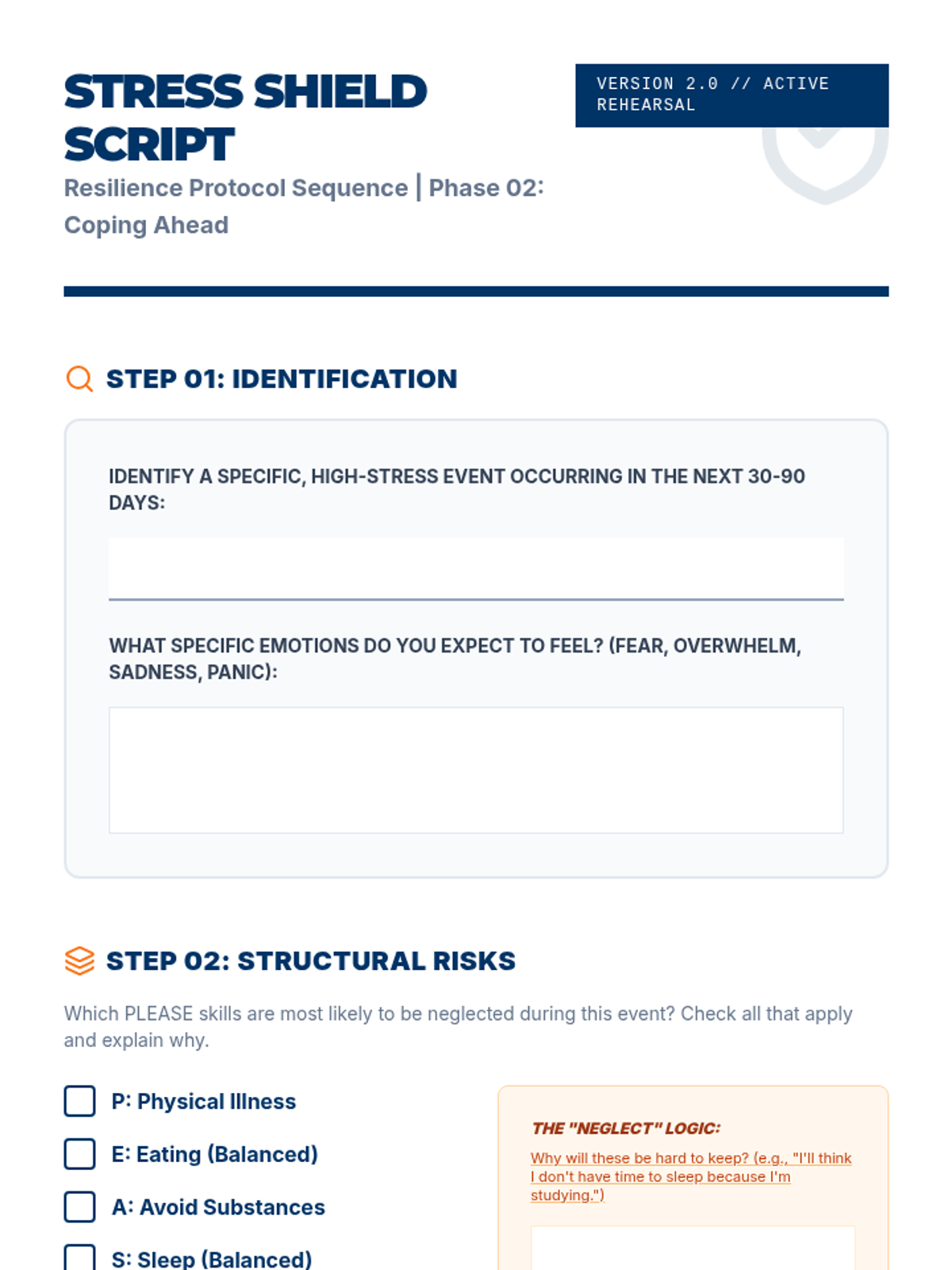
A structured worksheet for students to forecast a future stressful event and write a detailed 'Coping Ahead' script using PLEASE skills.
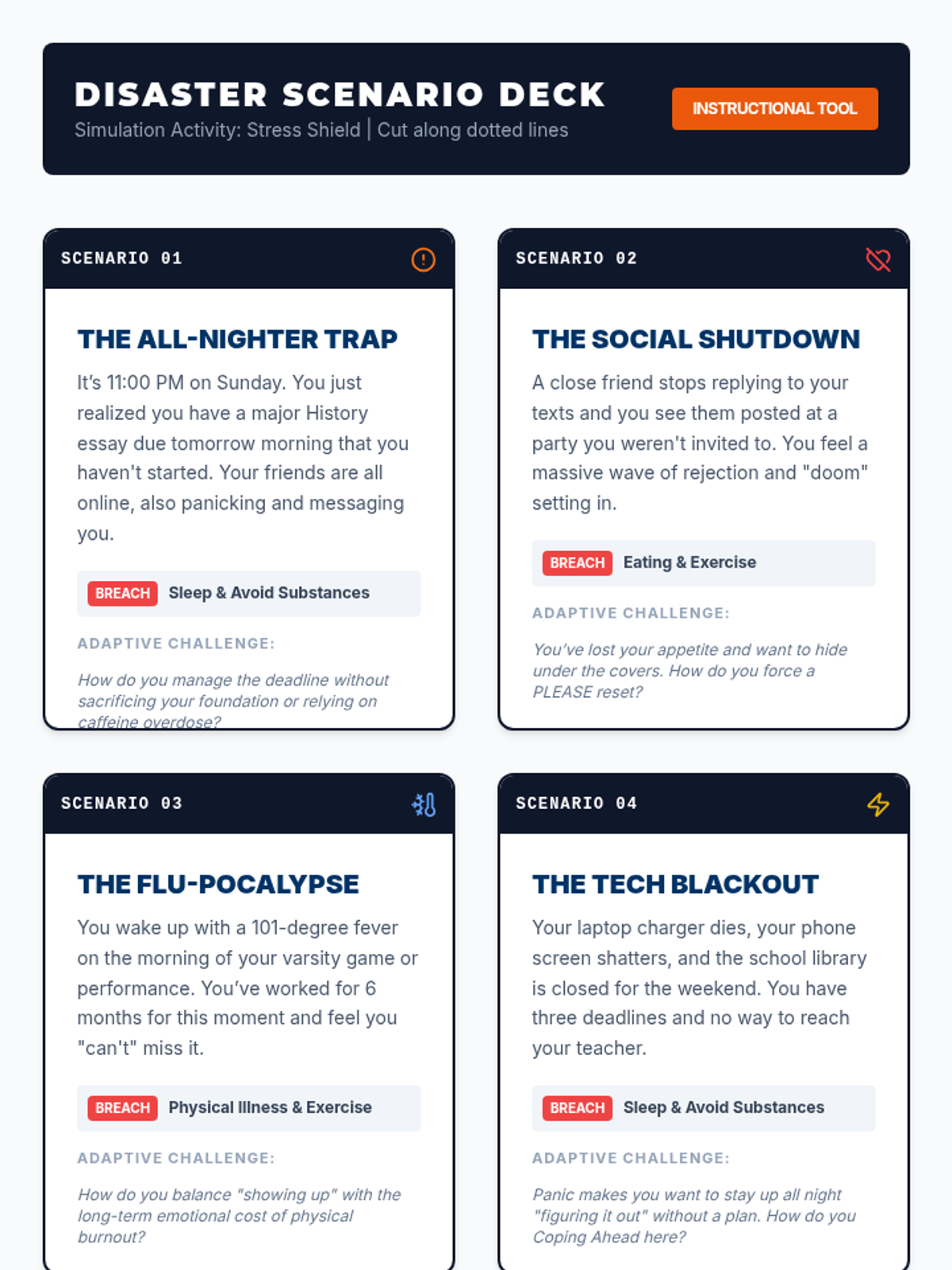
Printable disaster scenario cards for a simulation activity where students must adapt their PLEASE skills to unexpected life stressors.
Slide deck for Lesson 2 focusing on the 'Coping Ahead' skill, mental rehearsal, and preparing for high-stress 'forecast' zones.
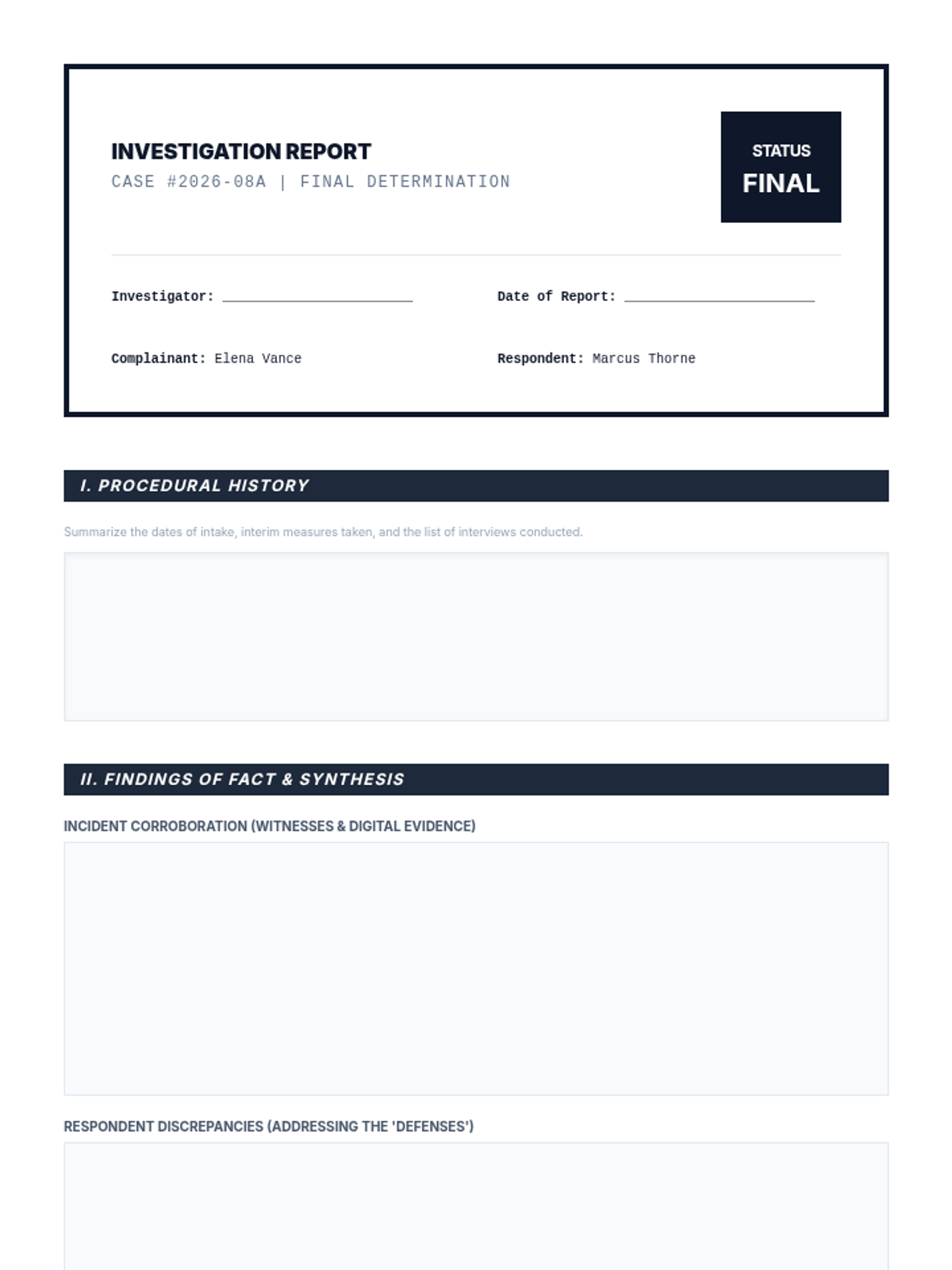
The capstone template for the final investigation report, structured to meet graduate-level technical writing and legal defensibility standards.
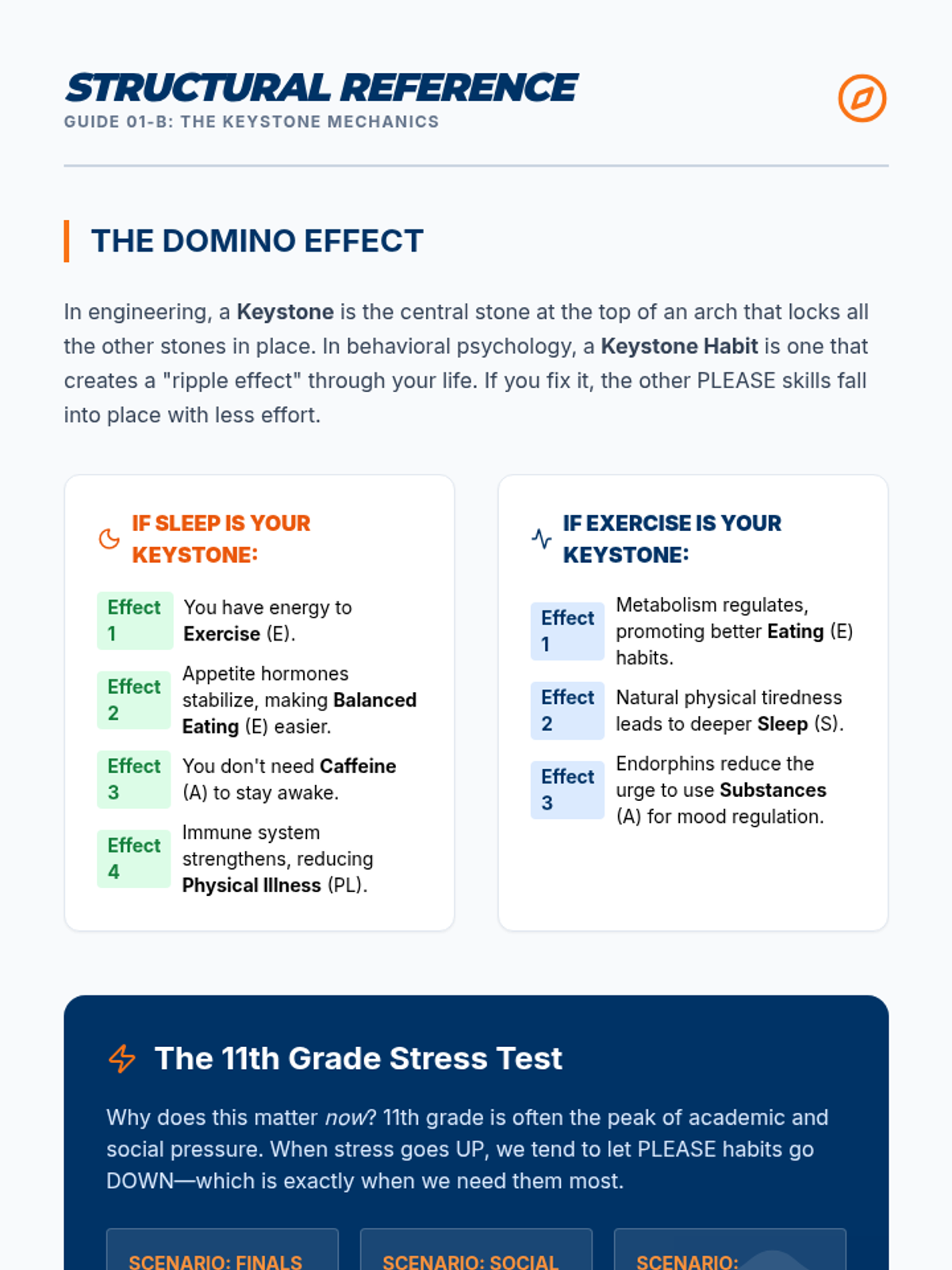
A technical reference guide explaining the 'Domino Effect' of PLEASE skills and common mental 'loopholes' students use to avoid self-care.
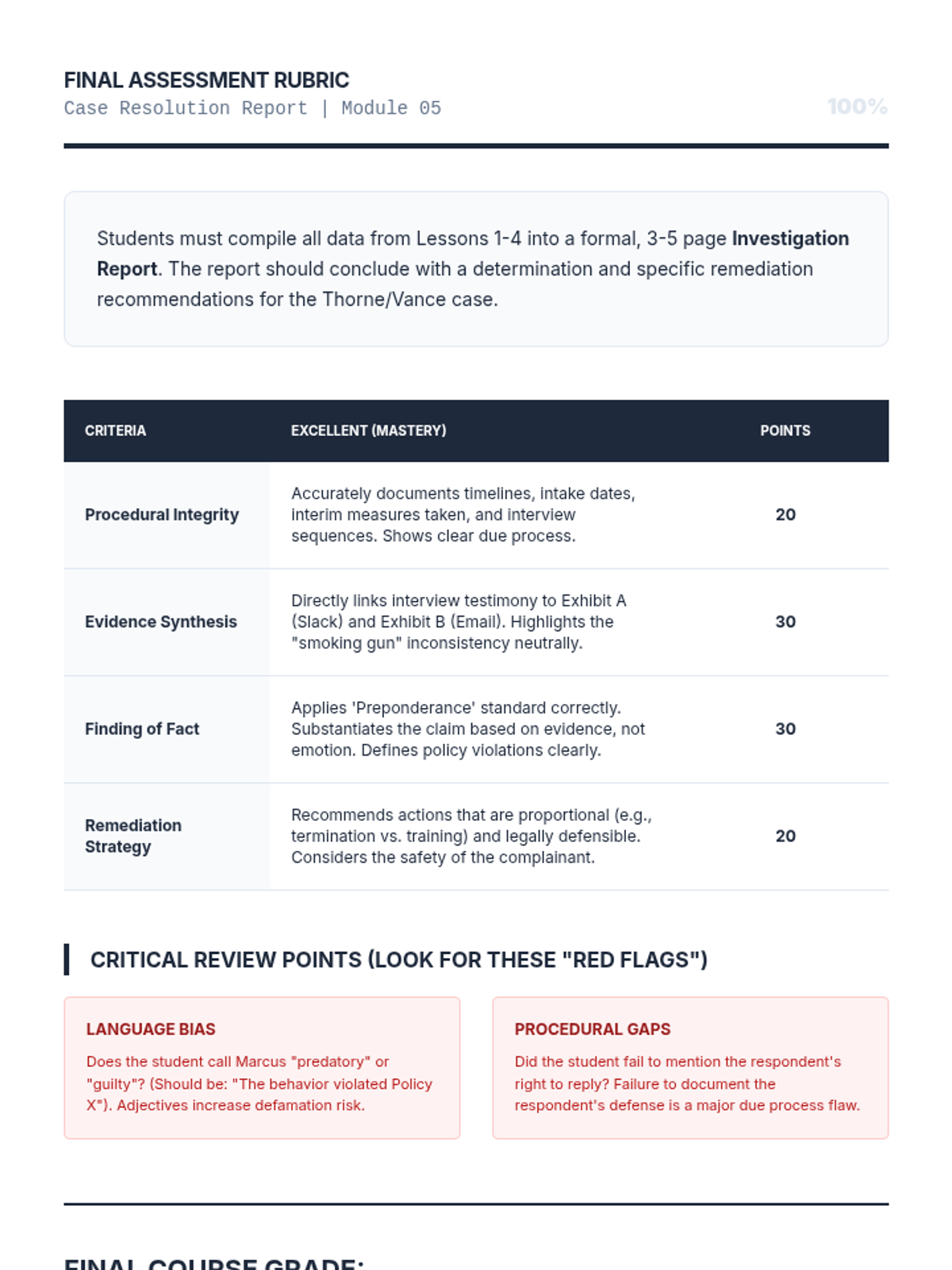
A comprehensive grading rubric for the final investigation report, focusing on procedural integrity, evidence synthesis, and remediation strategy.
Slide deck for Lesson 5 on drafting technical investigation reports and recommending appropriate remediation strategies while avoiding legal pitfalls.
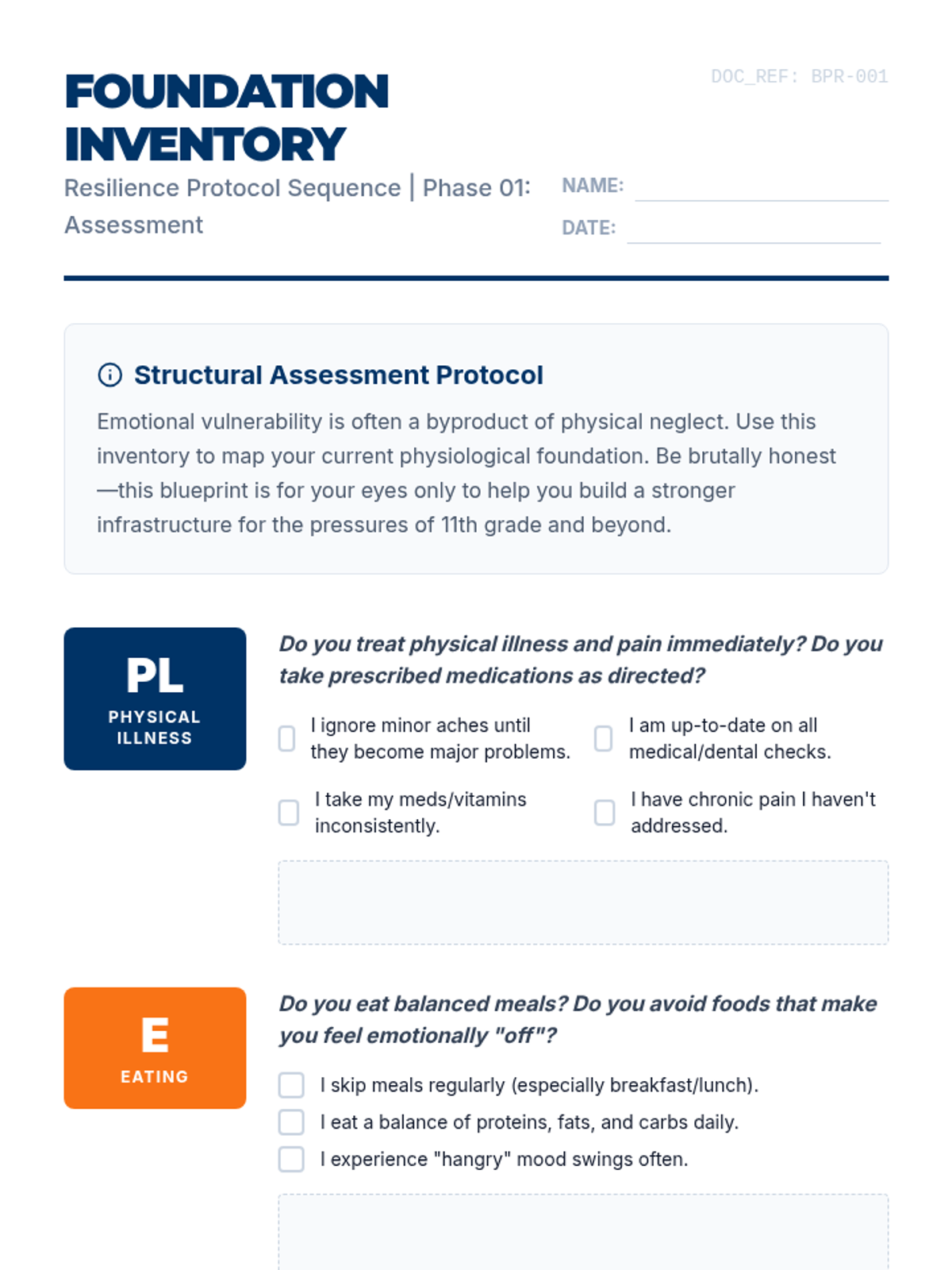
A structural inventory worksheet for students to assess their PLEASE habits and identify a single 'Keystone Habit' for improvement.
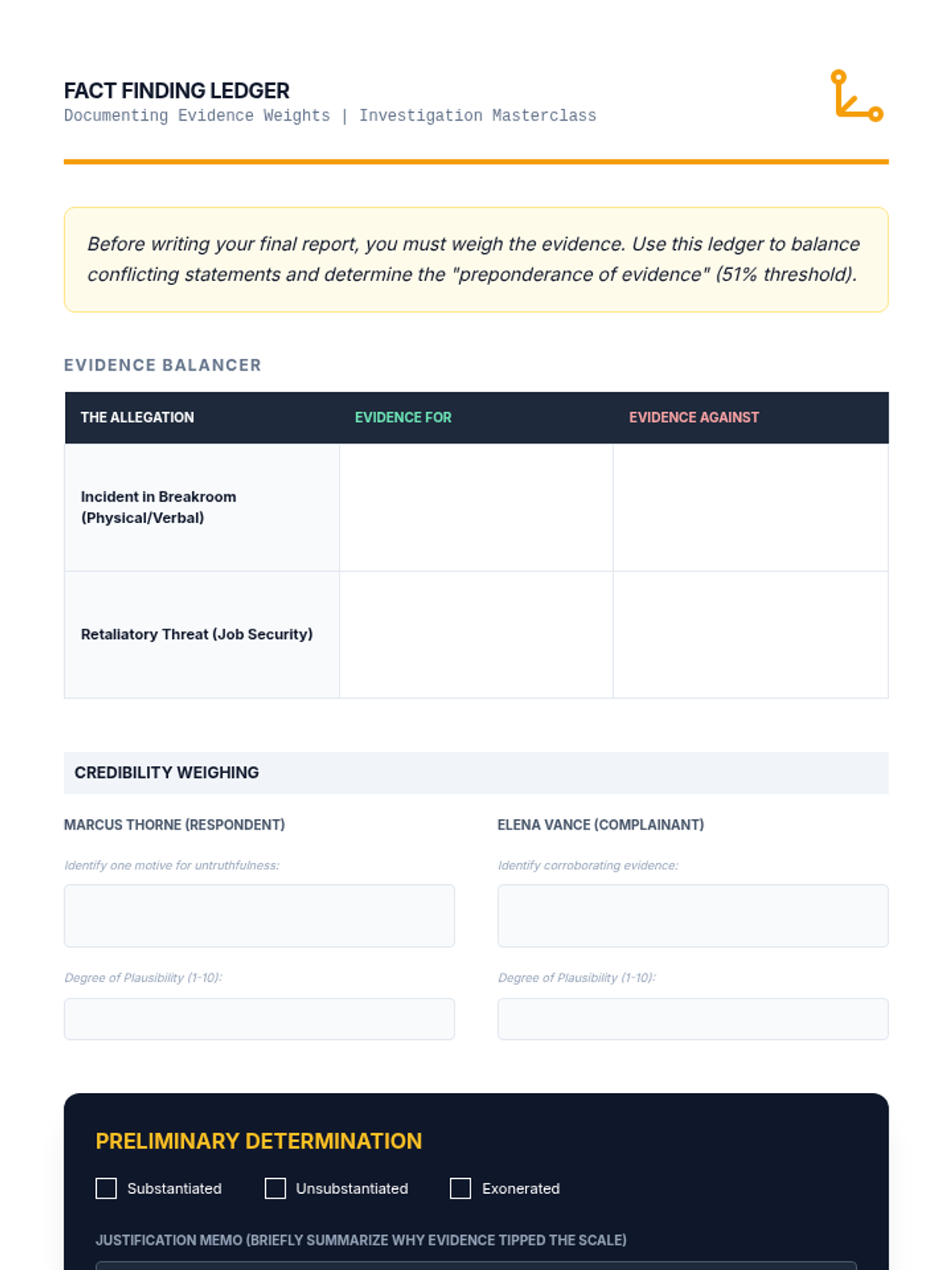
A worksheet for students to weigh conflicting evidence and apply credibility factors to reach a preliminary determination.
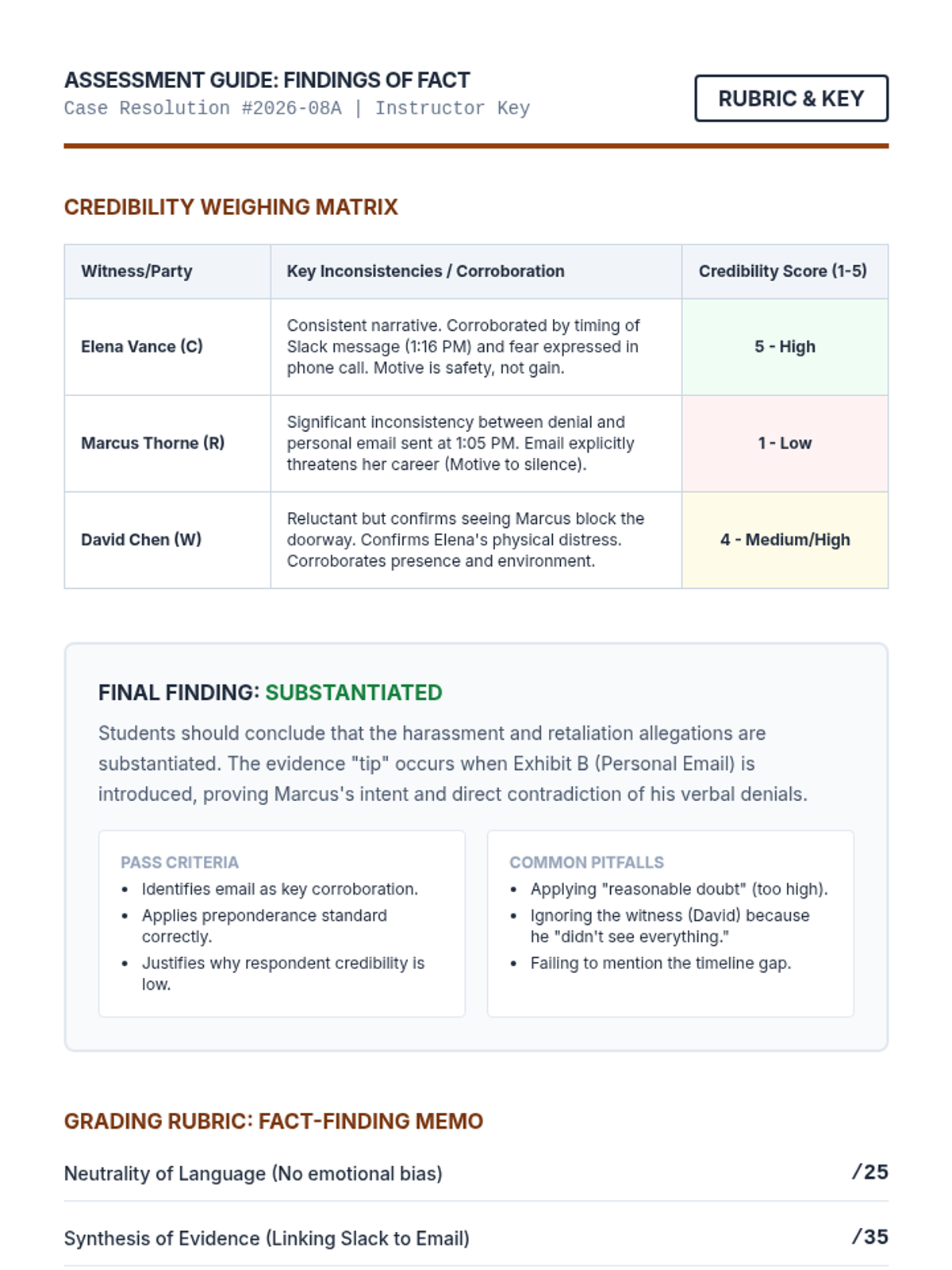
An answer key and rubric for Lesson 4, helping instructors grade student credibility assessments and findings of fact for the Thorne/Vance case.
Introductory slide deck for Lesson 1 using a 'Blueprint' theme and Jenga analogy to explain the PLEASE skills and the concept of Keystone Habits.
Slide deck for Lesson 4 on weighing credibility, applying the preponderance of evidence standard, and making formal findings of fact.
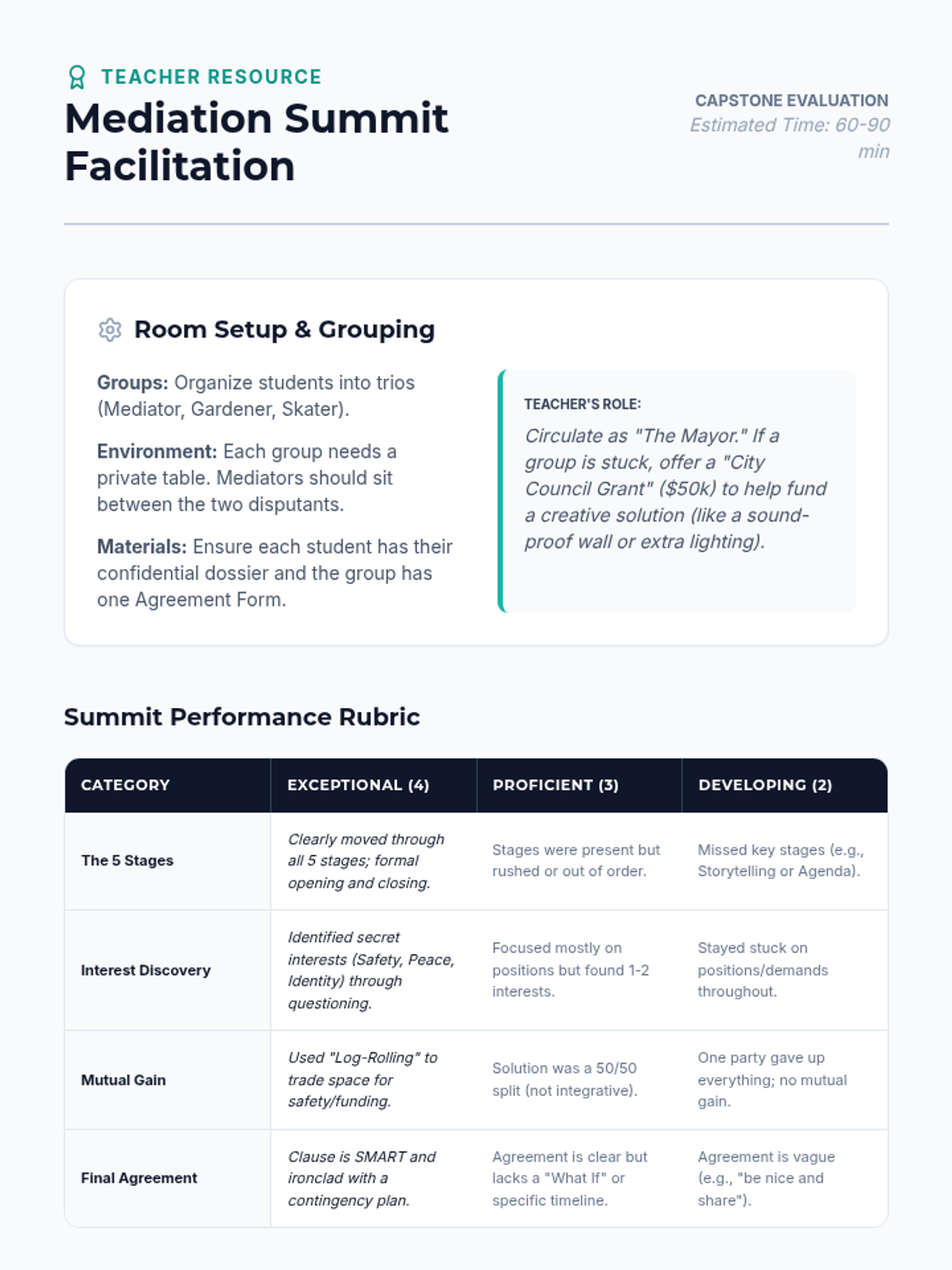
Teacher facilitation guide and evaluation rubric for the Lesson 5 Mediation Summit capstone simulation. Includes setup instructions, a grading rubric, and debrief prompts.
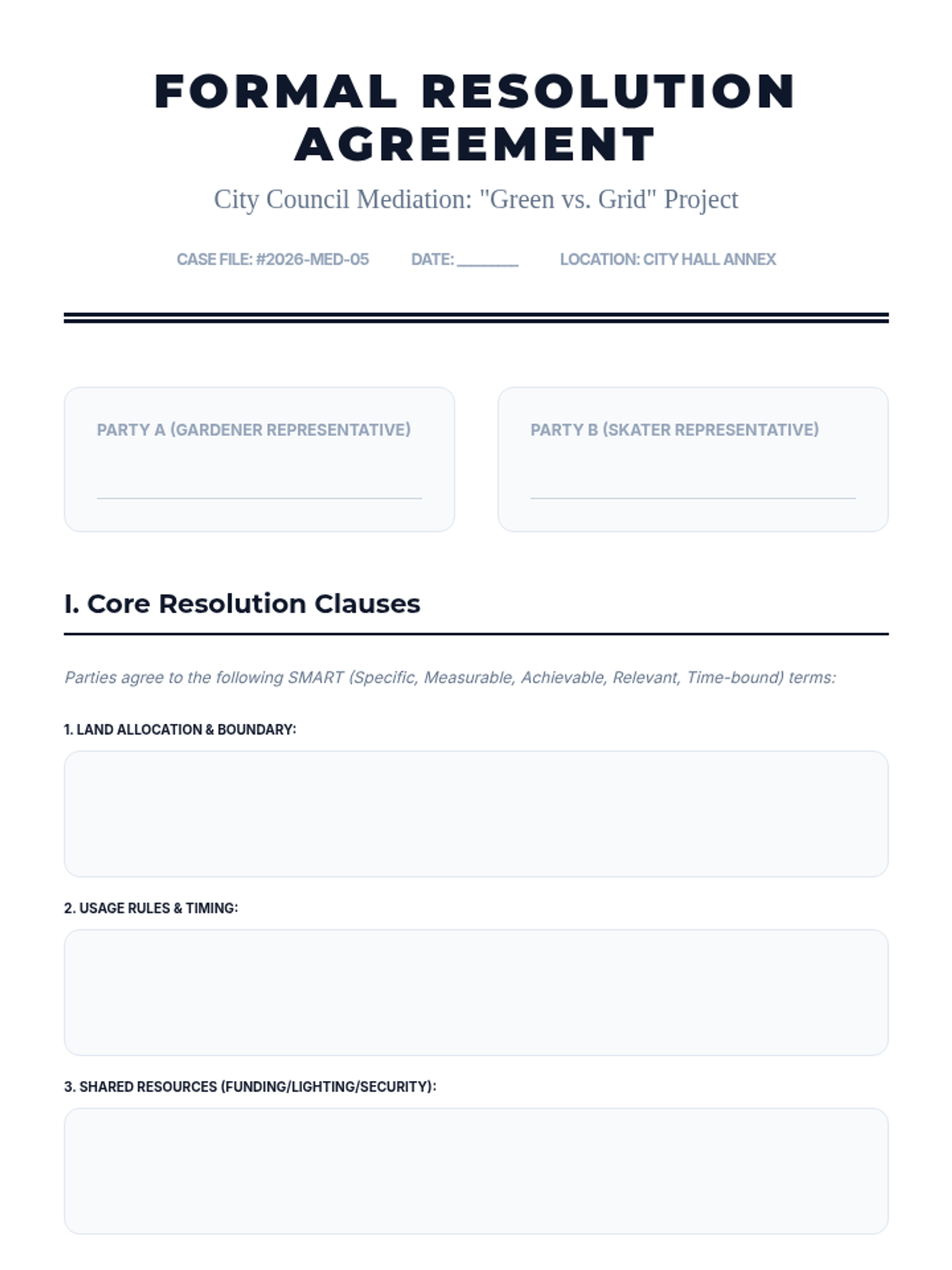
Formal mediation agreement form for the "Green vs. Grid" simulation. Students use this to draft their final SMART resolution clauses and finalize the simulation with signatures.
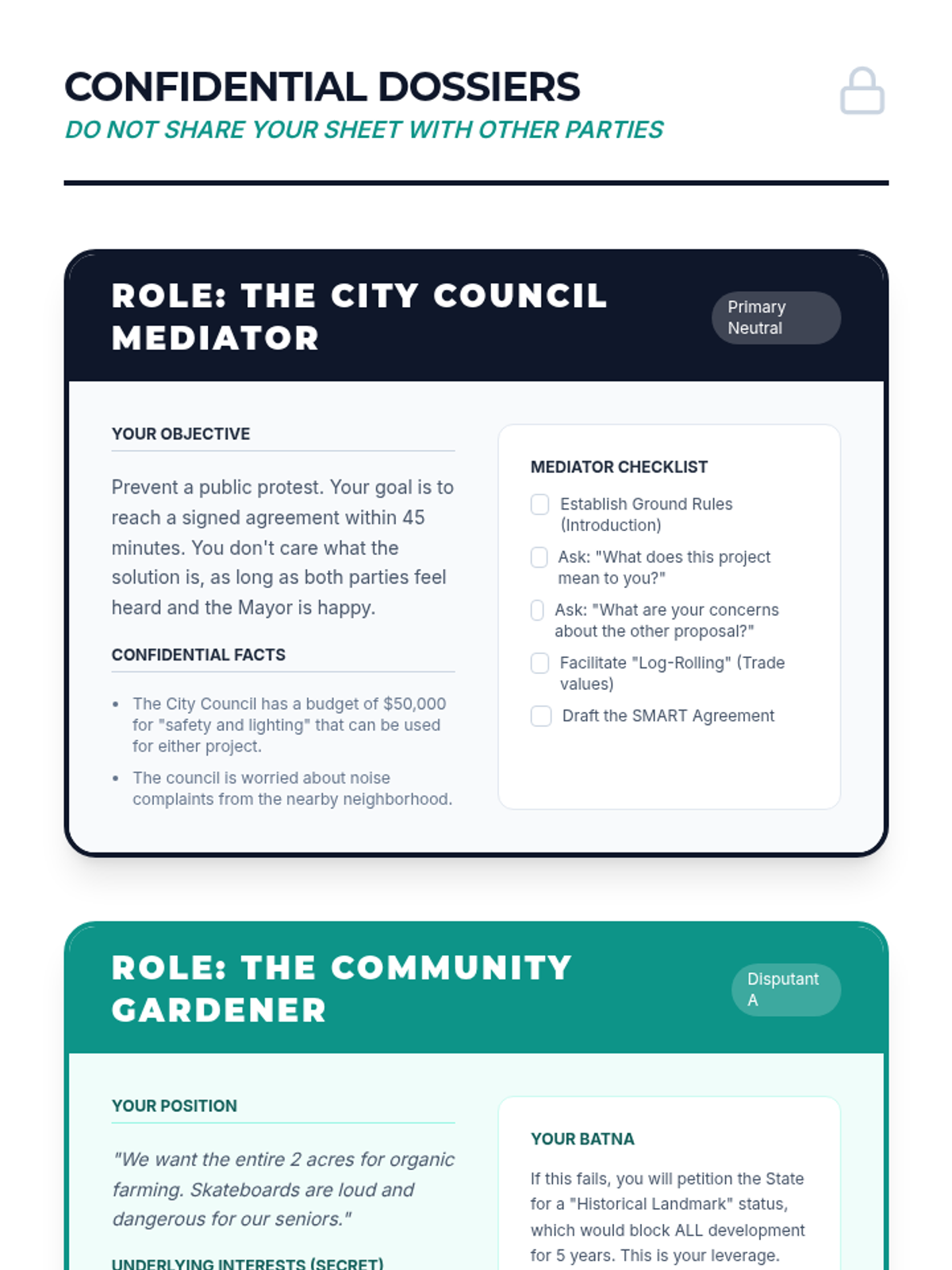
Confidential briefing sheets for the three roles in the "Green vs. Grid" simulation: The Mediator, The Gardener, and The Skater. Includes secret interests and walk-away points.
Briefing slide deck for the Lesson 5 Mediation Summit capstone simulation. Introduces the "Green vs. Grid" land use case, roles, and rules of engagement.
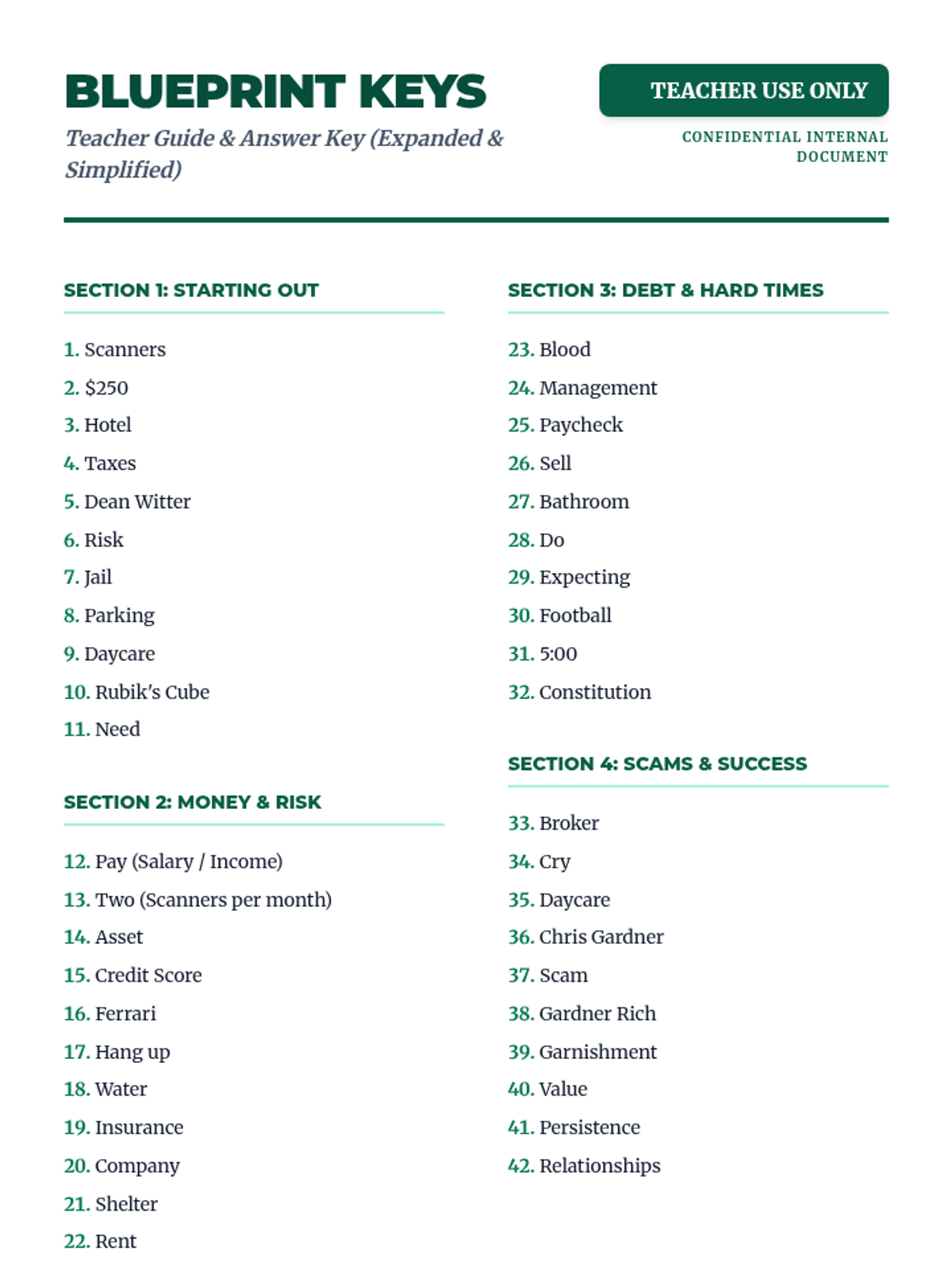
The answer key and discussion guide for the 'Brokerage Blueprint' worksheet, including all 42 answers and prompts for classroom debate on opportunity cost and asset management. Includes new answers for credit, insurance, and debt management.
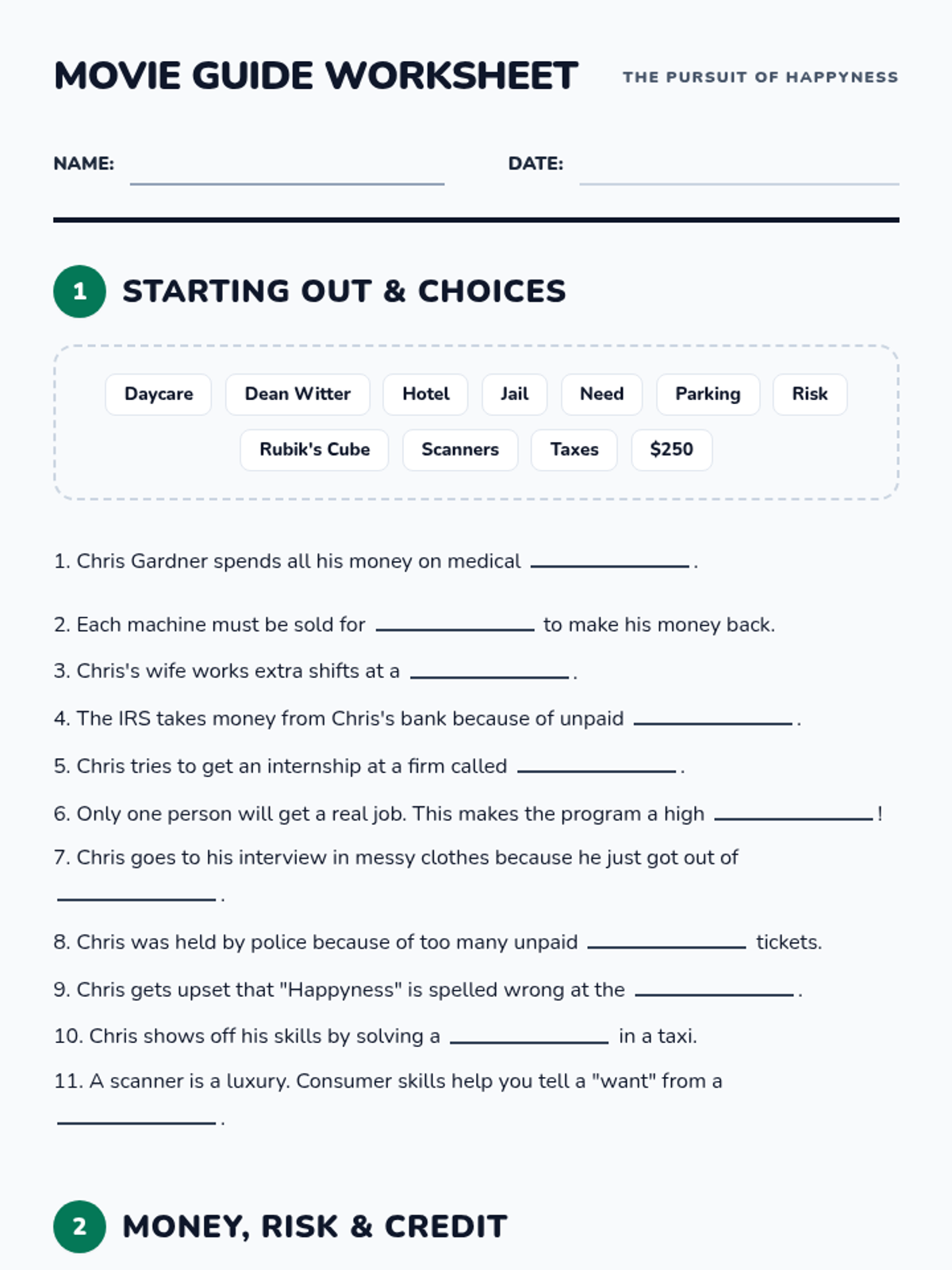
A comprehensive 42-question fill-in-the-blank worksheet with word banks and simplified language, designed for students who struggle with reading. Includes new questions on credit, insurance, and debt management. Fixed layout issues and orphaned punctuation.
A visually accessible introduction to 'The Pursuit of Happyness' with simplified text and large fonts, perfect for students who struggle with reading.
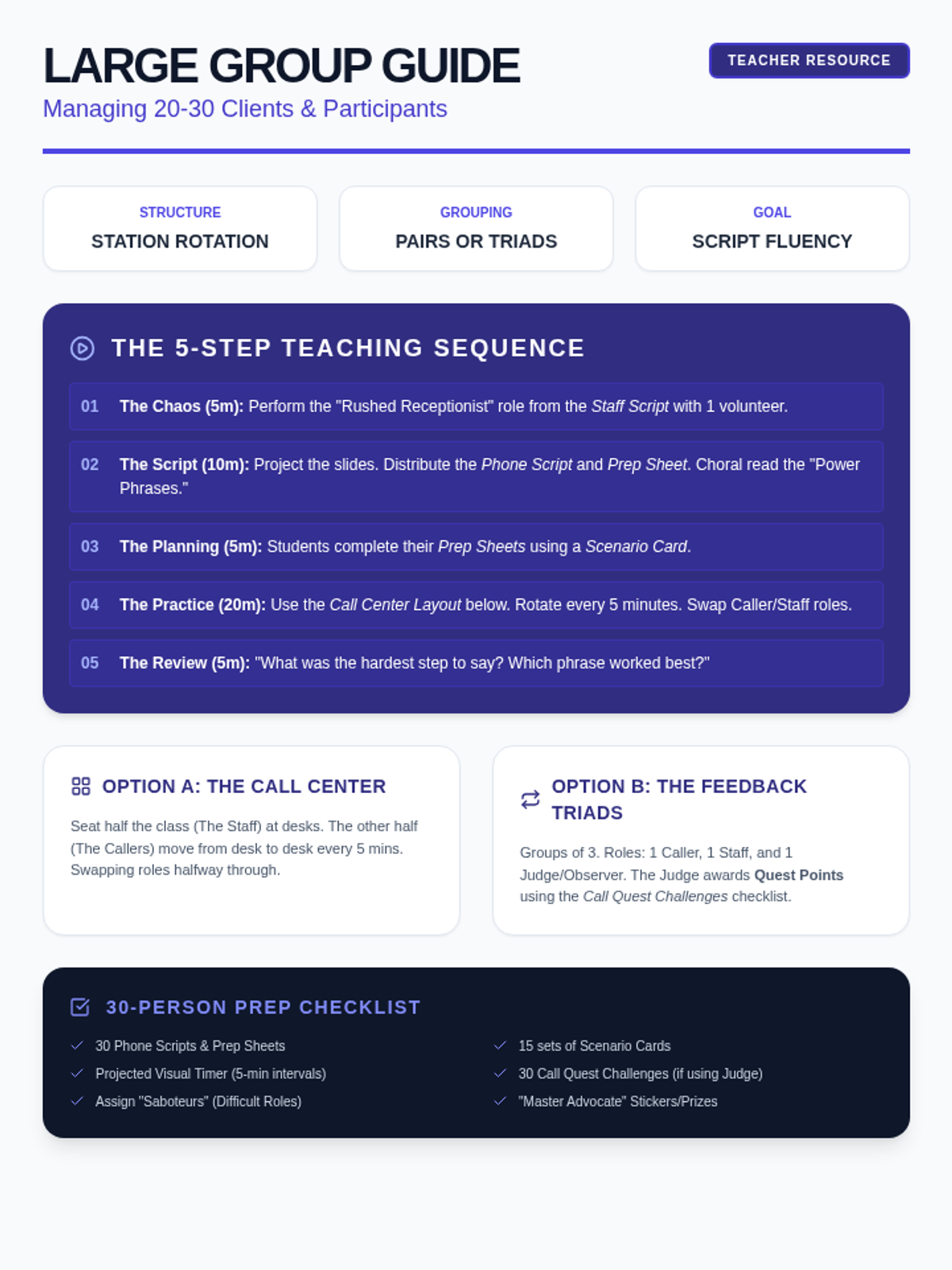
A logistics guide for teachers to manage the Scheduling Mastery lesson with large groups of 20-30 participants, featuring layout strategies and grouping options.
A visual presentation to guide students through the Scheduling Mastery lesson, featuring the 5-step plan, self-advocacy power phrases, and group activity instructions.
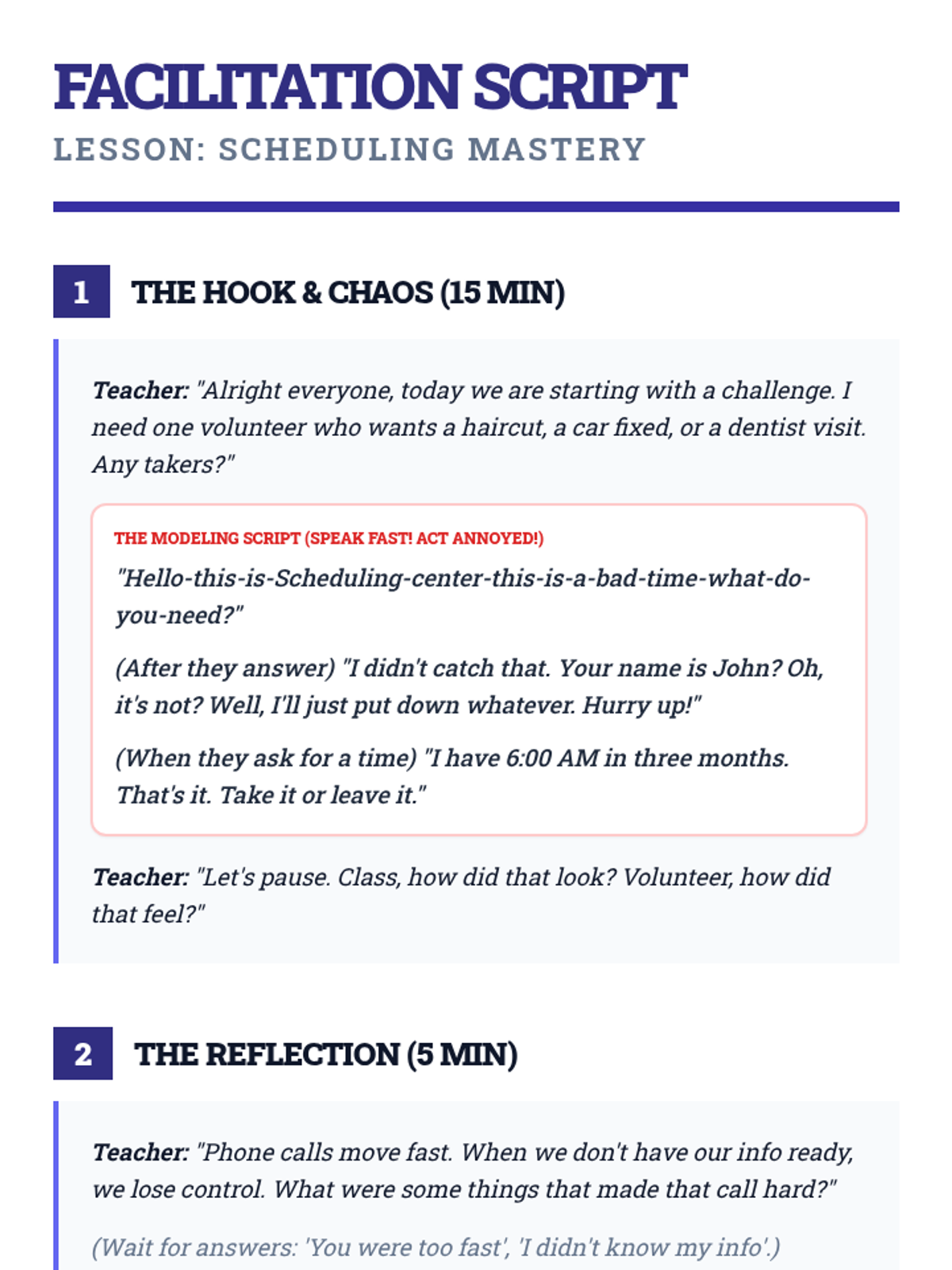
A comprehensive, step-by-step scripted lesson guide for teachers to lead the Scheduling Mastery lesson, including specific dialogue and activity transitions.
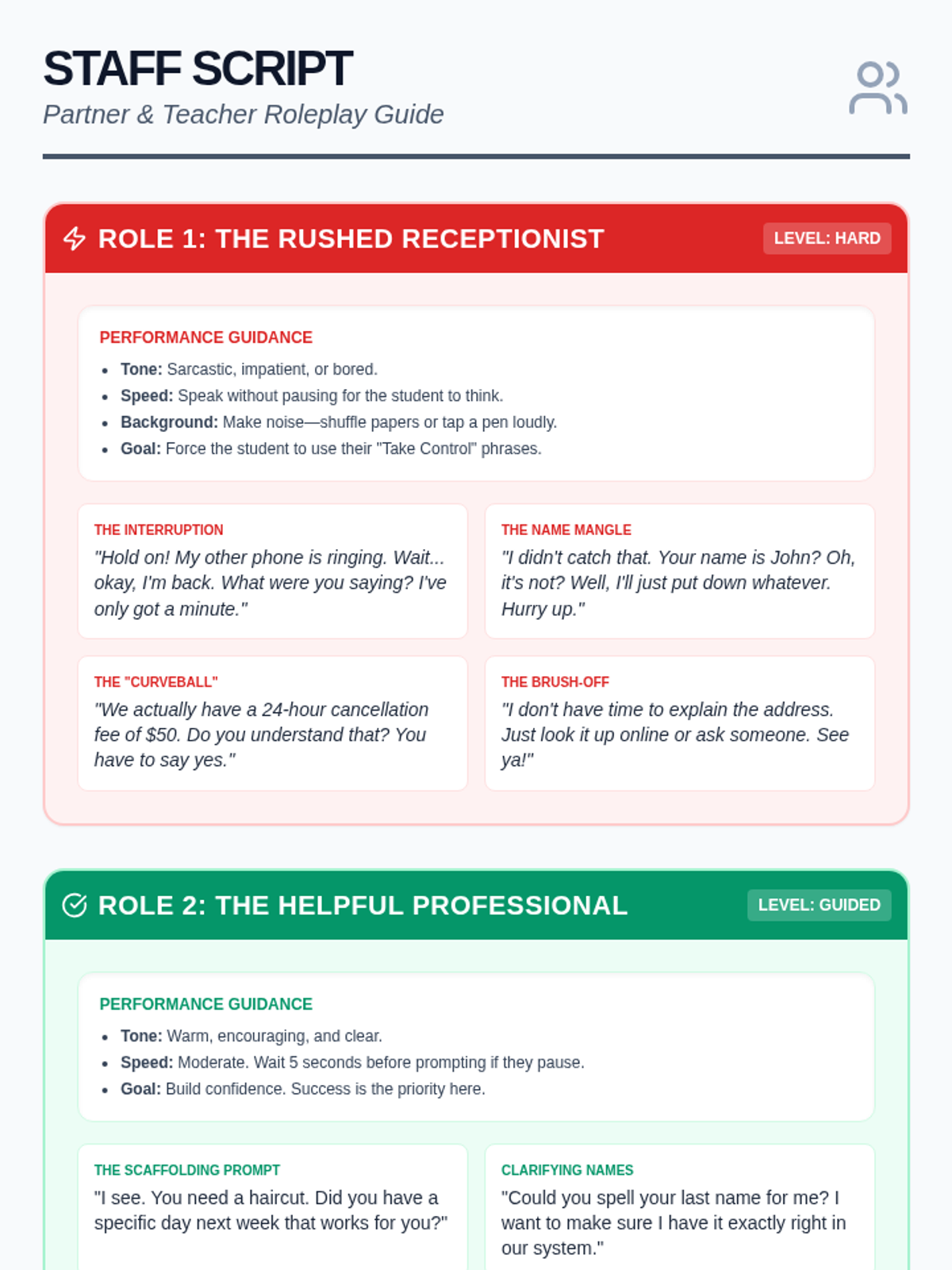
An expanded roleplay script for the staff/receptionist side of the appointment call, featuring more detailed dialogue prompts, performance guidance for two difficulty levels, and feedback tips.
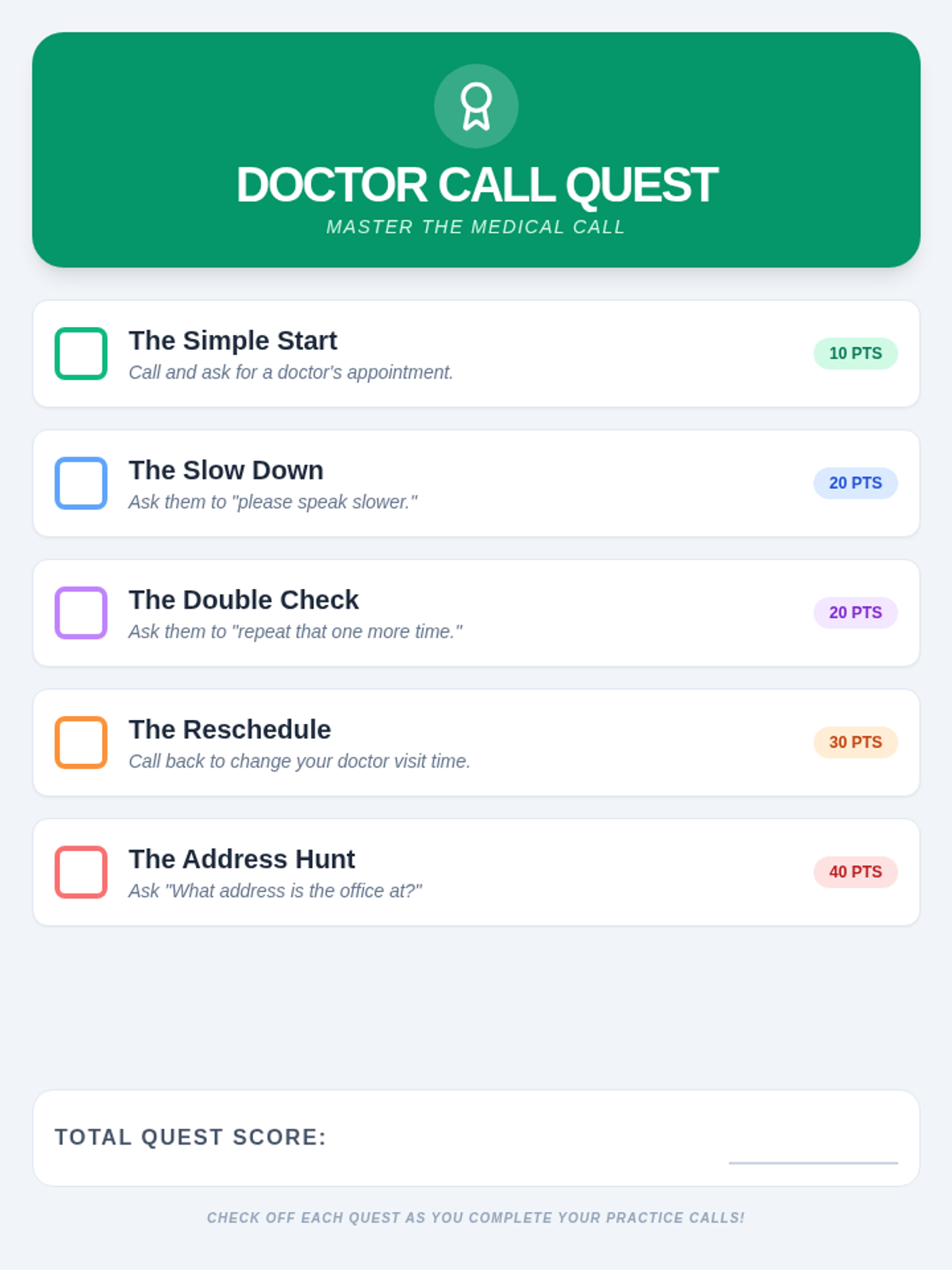
A gamified challenge checklist for students to track their progress as they practice increasingly difficult phone advocacy skills during appointment calls.
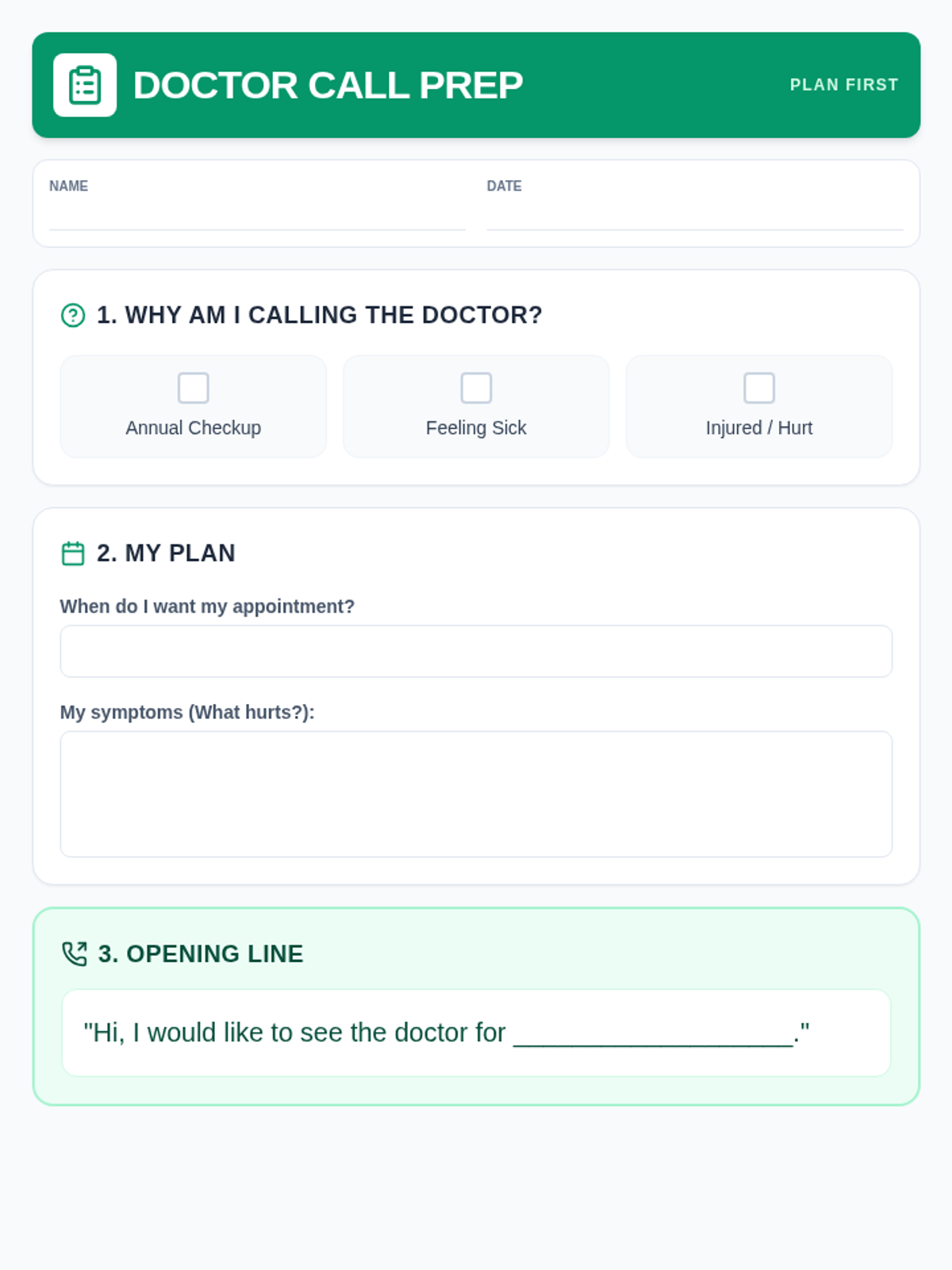
A planning worksheet for students to complete before making an appointment call, helping them organize their details and goals.
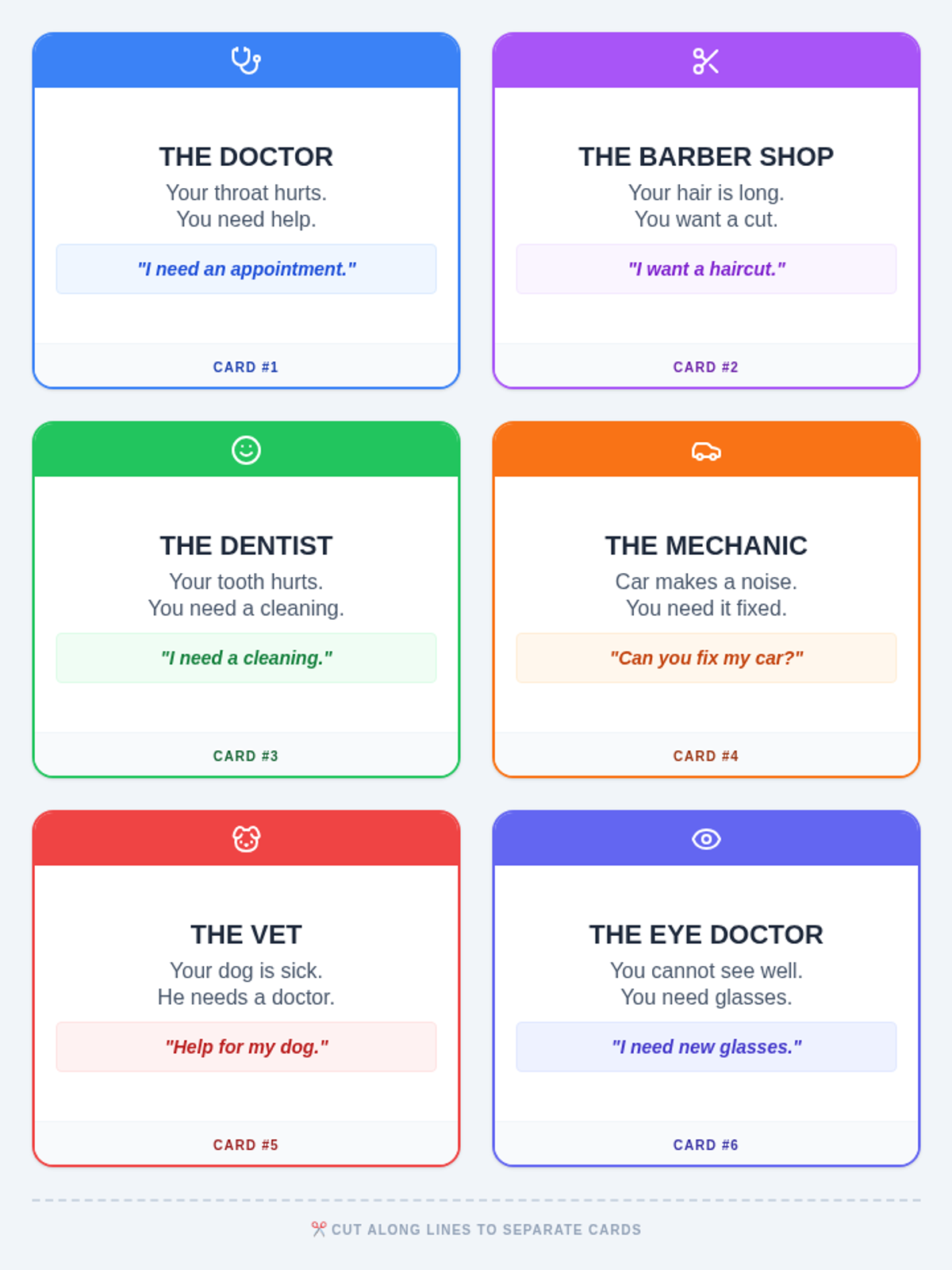
A complete set of 12 roleplay scenario cards for practicing various types of phone scheduling and self-advocacy.
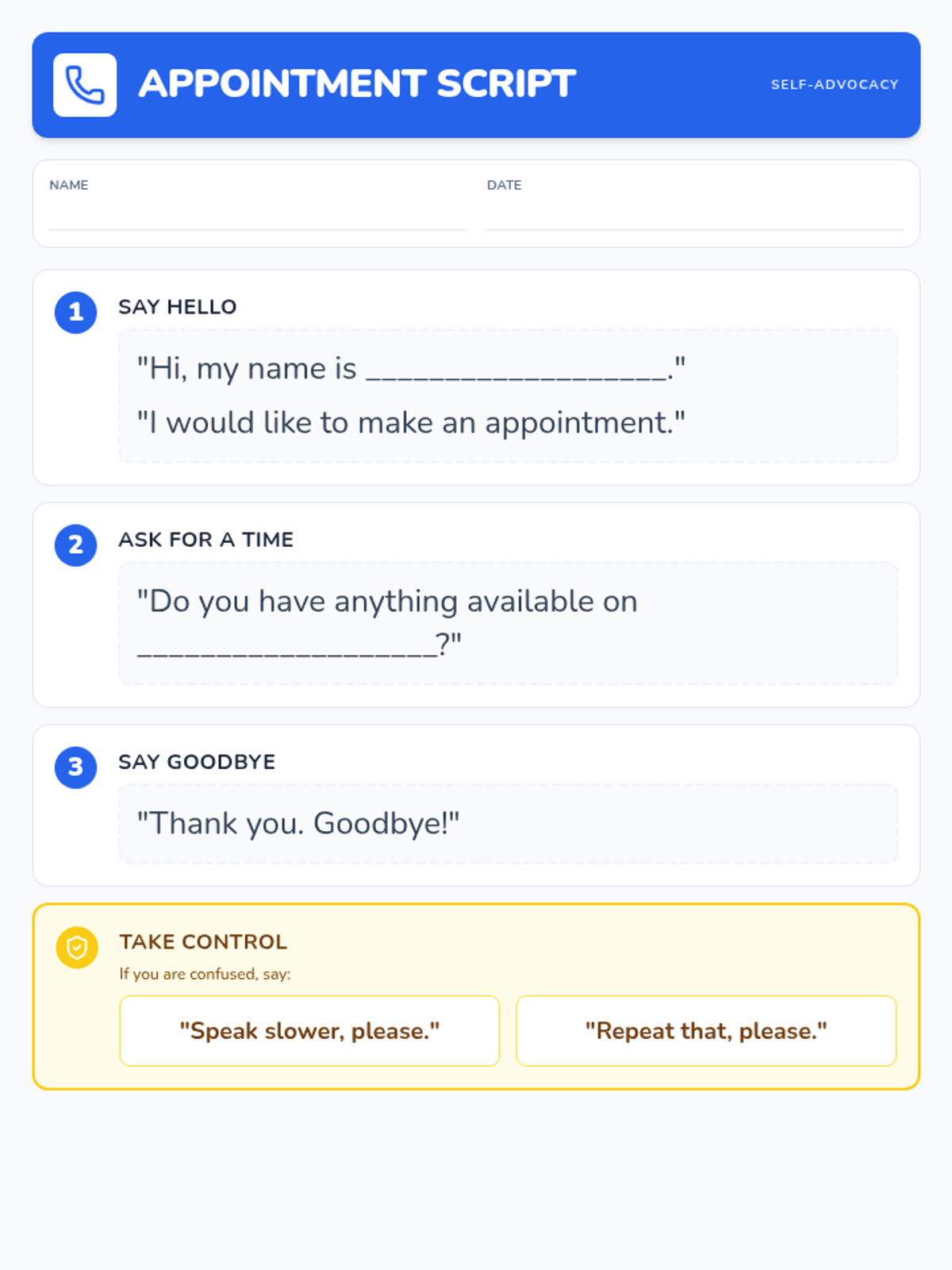
An expanded visual phone script for students with added steps for personal information and asking follow-up questions during appointment calls.
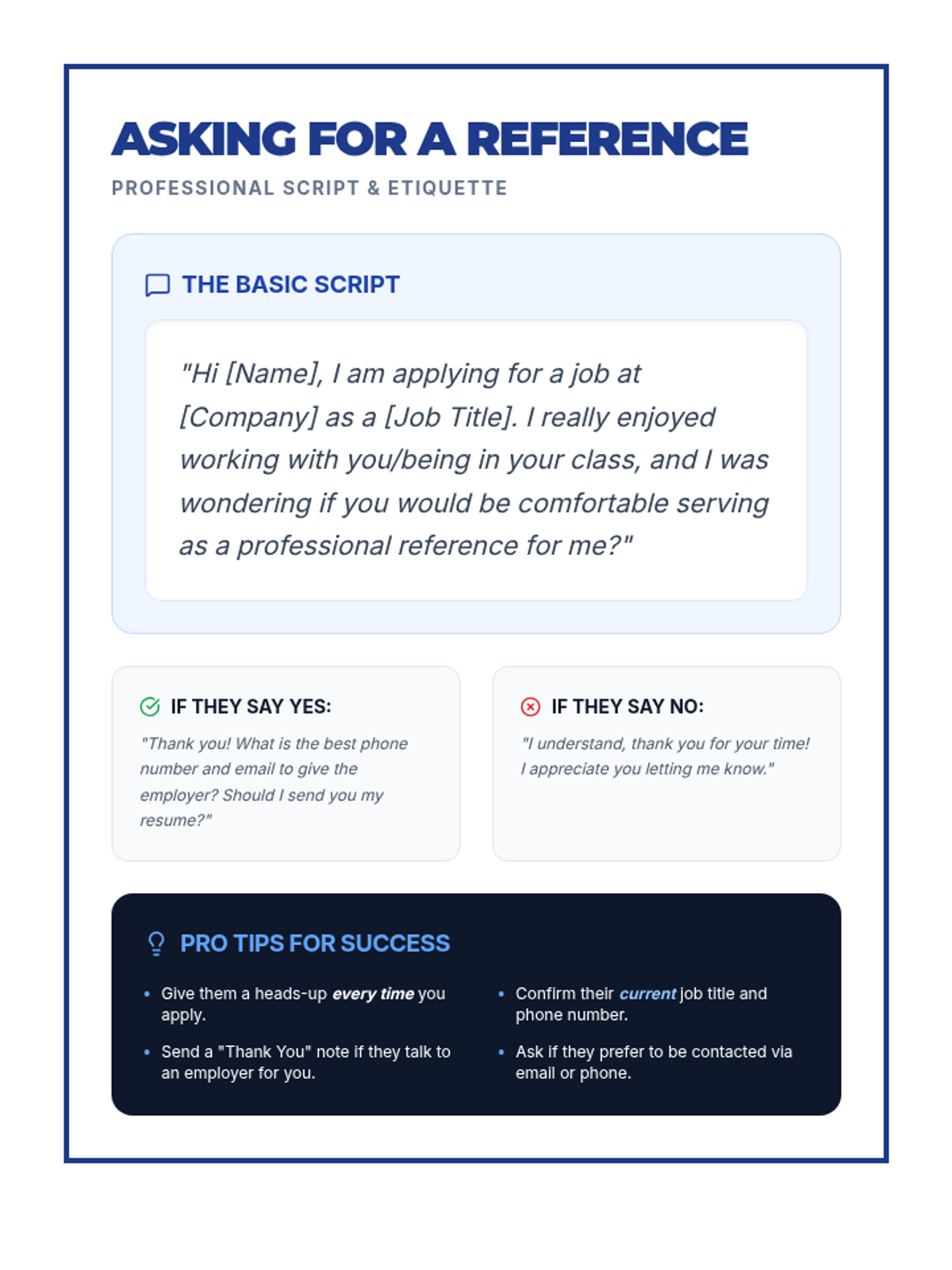
A professional etiquette handout for asking for references, now optimized for a single-page layout.
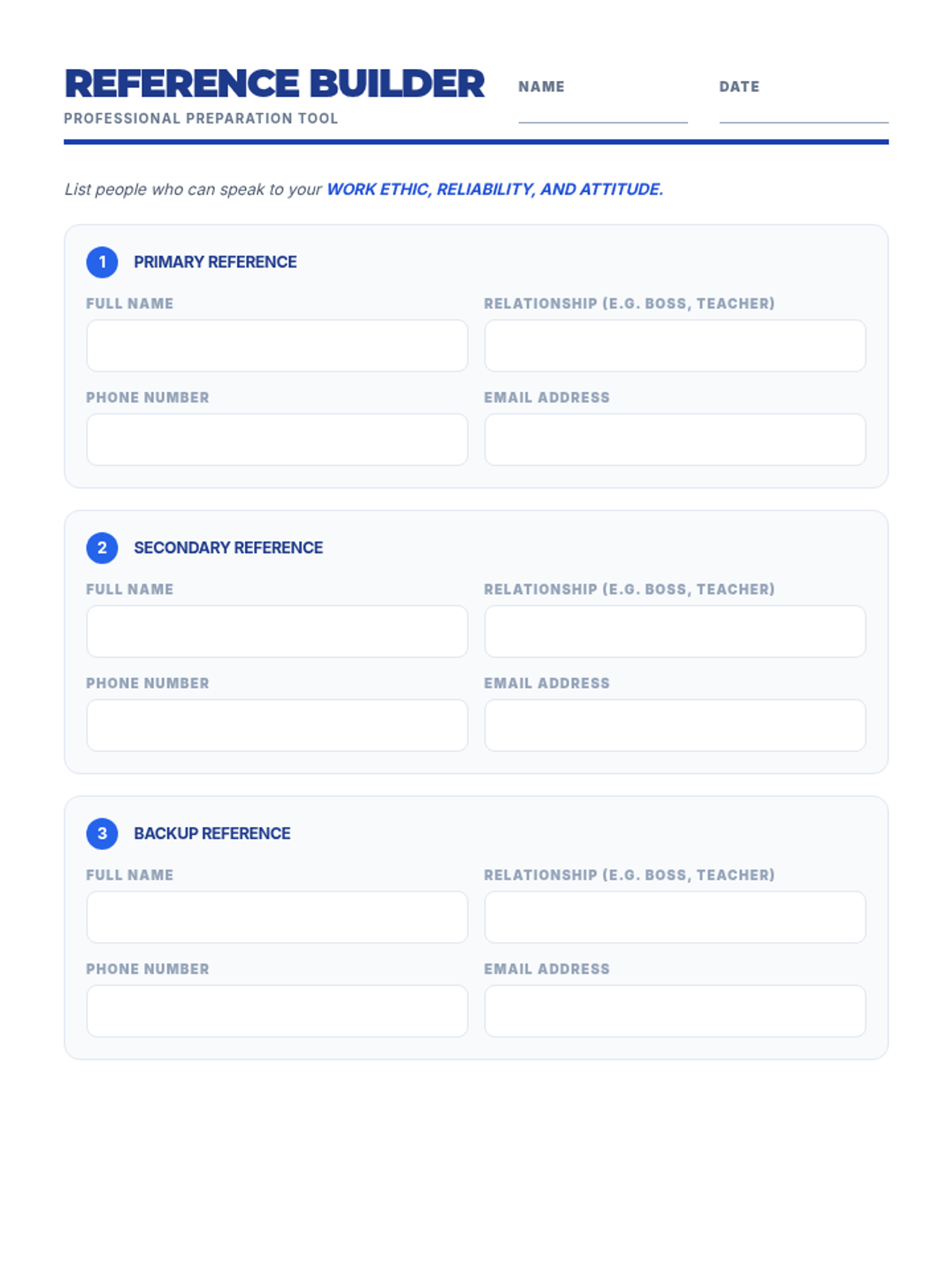
A structured worksheet for students to record potential professional references on a single printable page.
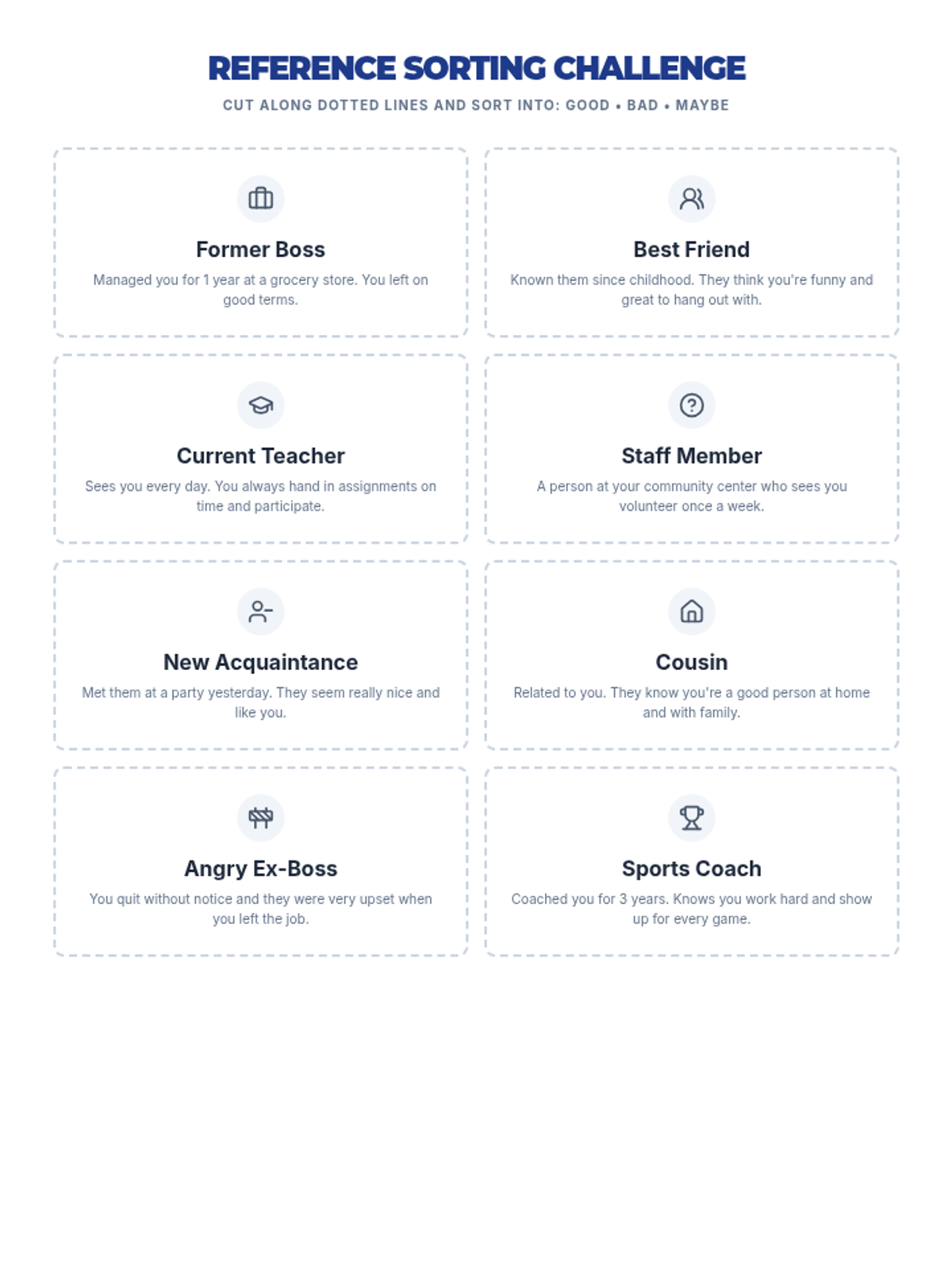
A single-page printable set of sorting cards for identifying high-quality professional references.
Visual presentation slides for a workshop on employment references, now expanded to include a digital sorting activity, a Myth-Busters lightning round game, and five instructional YouTube videos.
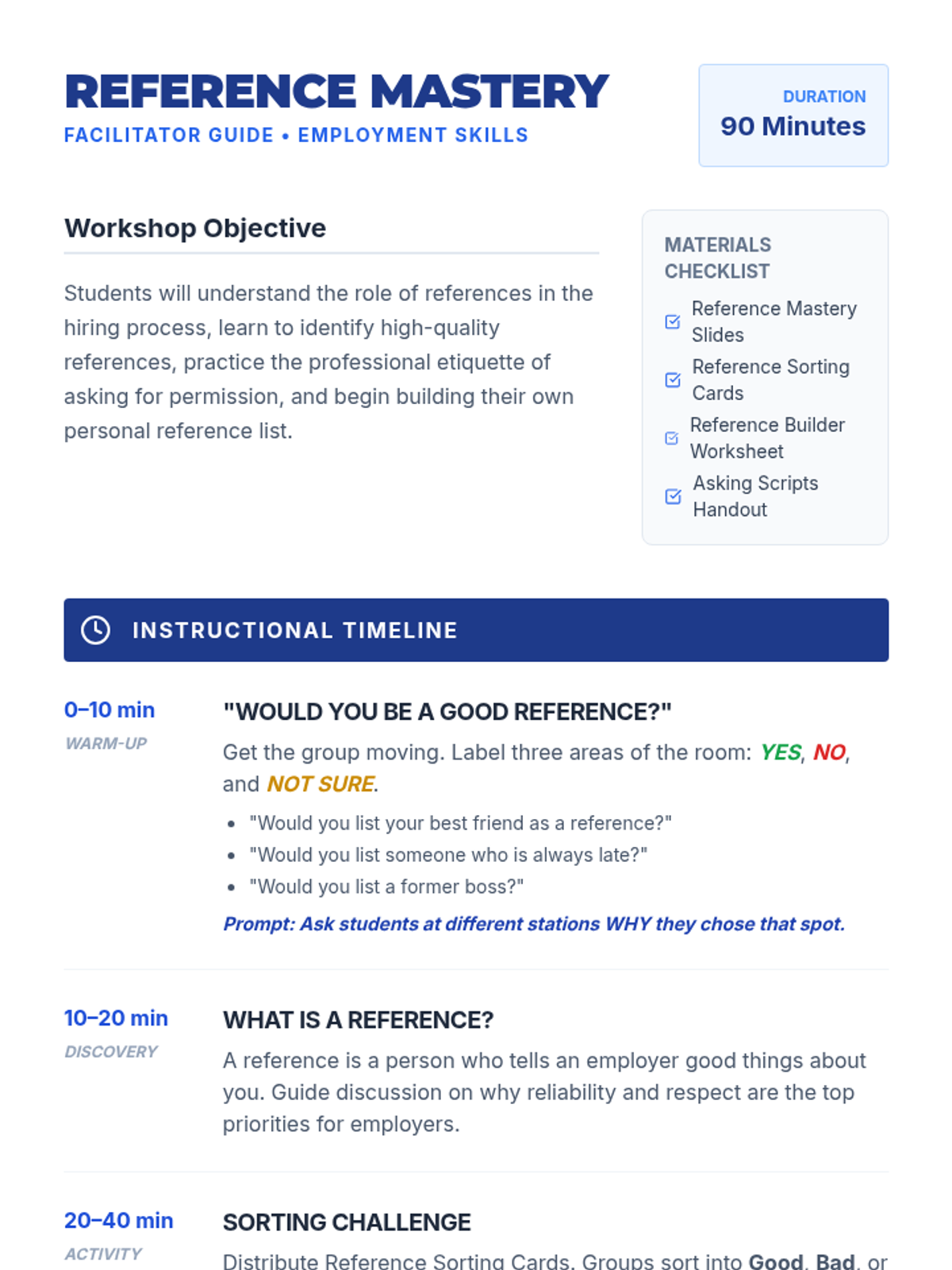
A detailed 90-minute workshop plan for employment training, focusing on selecting, building, and professionally asking for job references. Updated to include instructional video integration and digital sorting options.
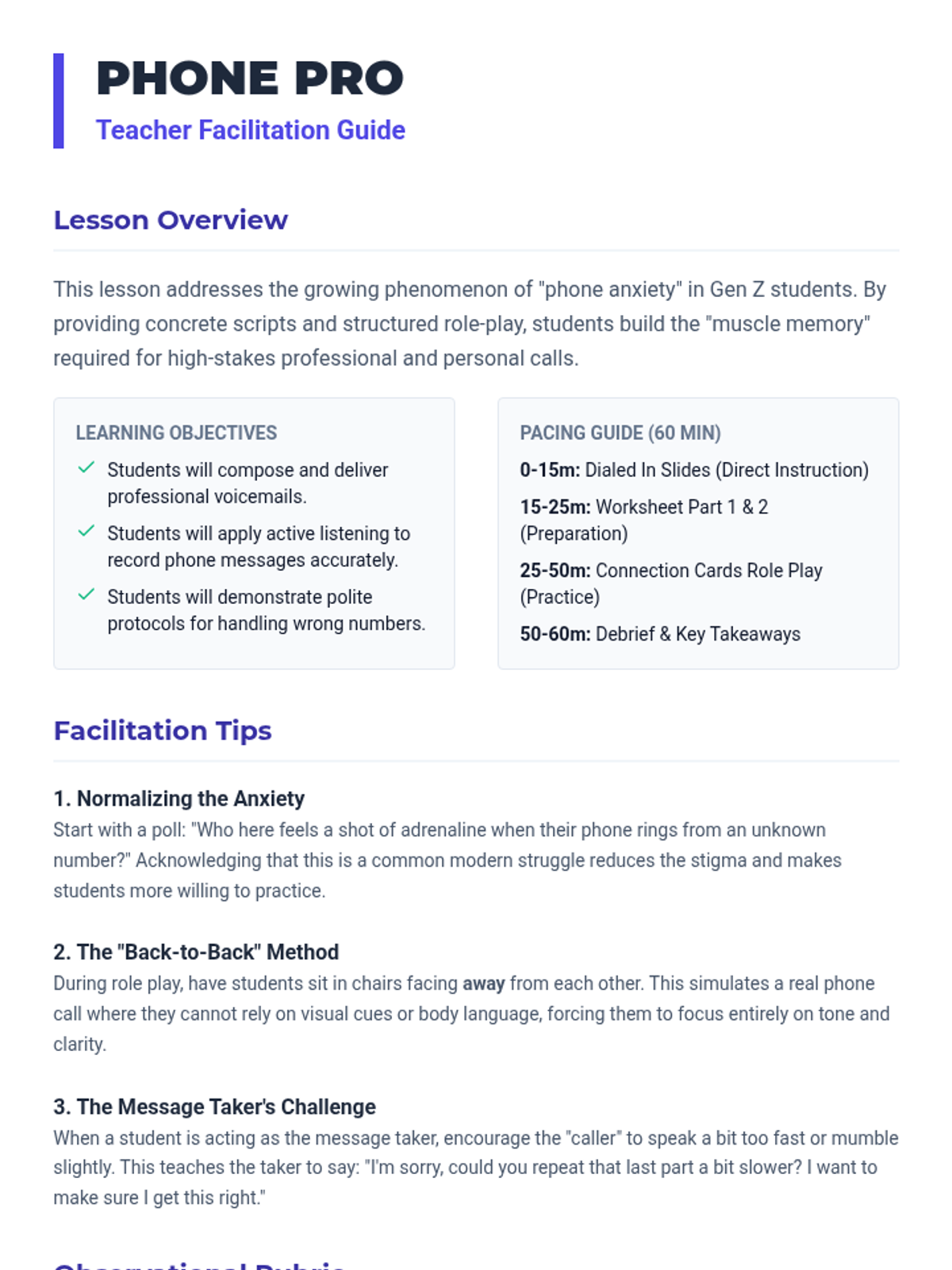
A teacher guide for the Dialed In lesson, featuring instructional strategies, pacing, and a rubric for assessing student phone communication skills.
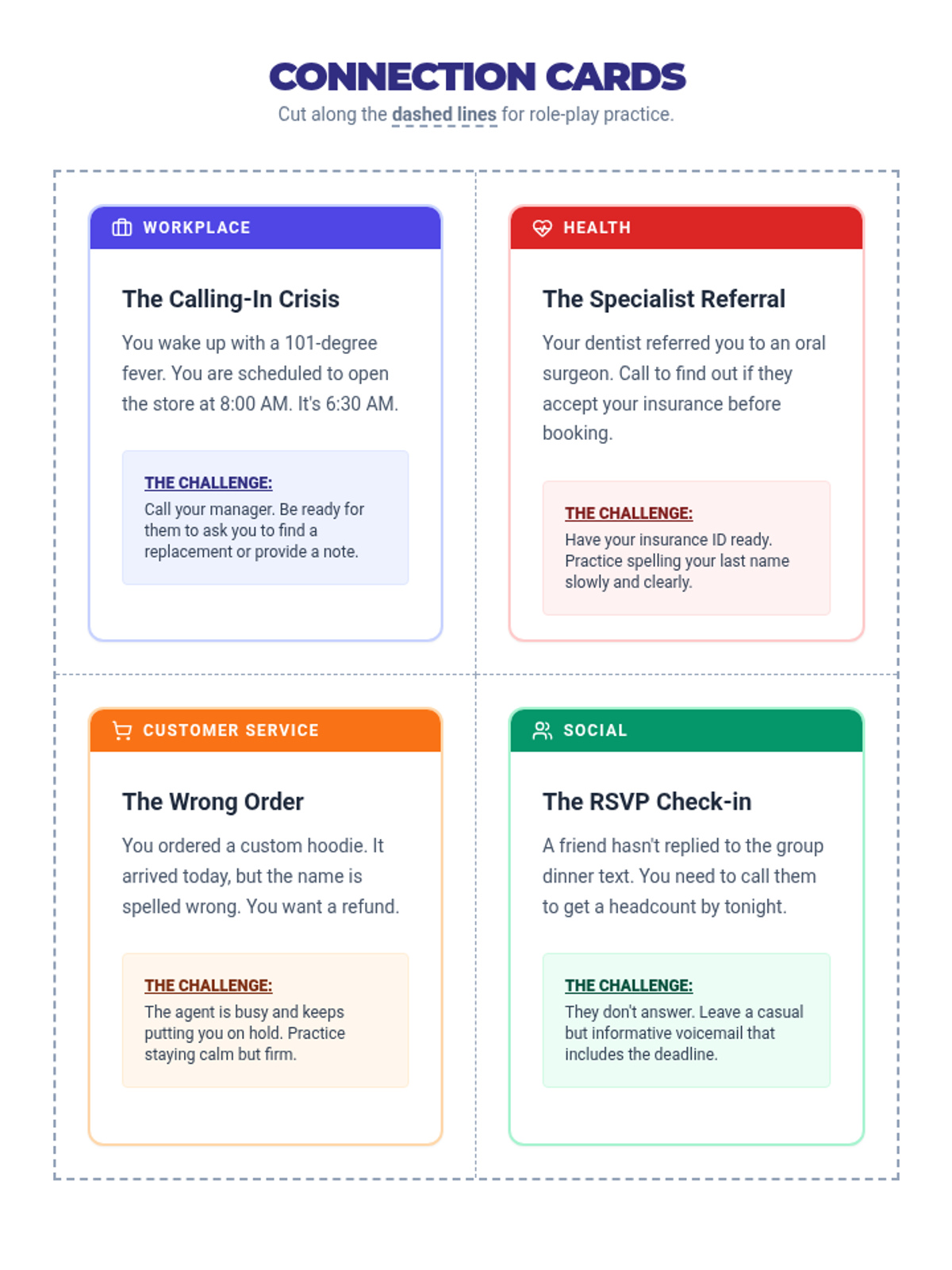
A set of role-play scenario cards covering workplace, health, customer service, and social contexts. Revised with dashed cutting guides and improved layout to prevent cards from splitting across pages.
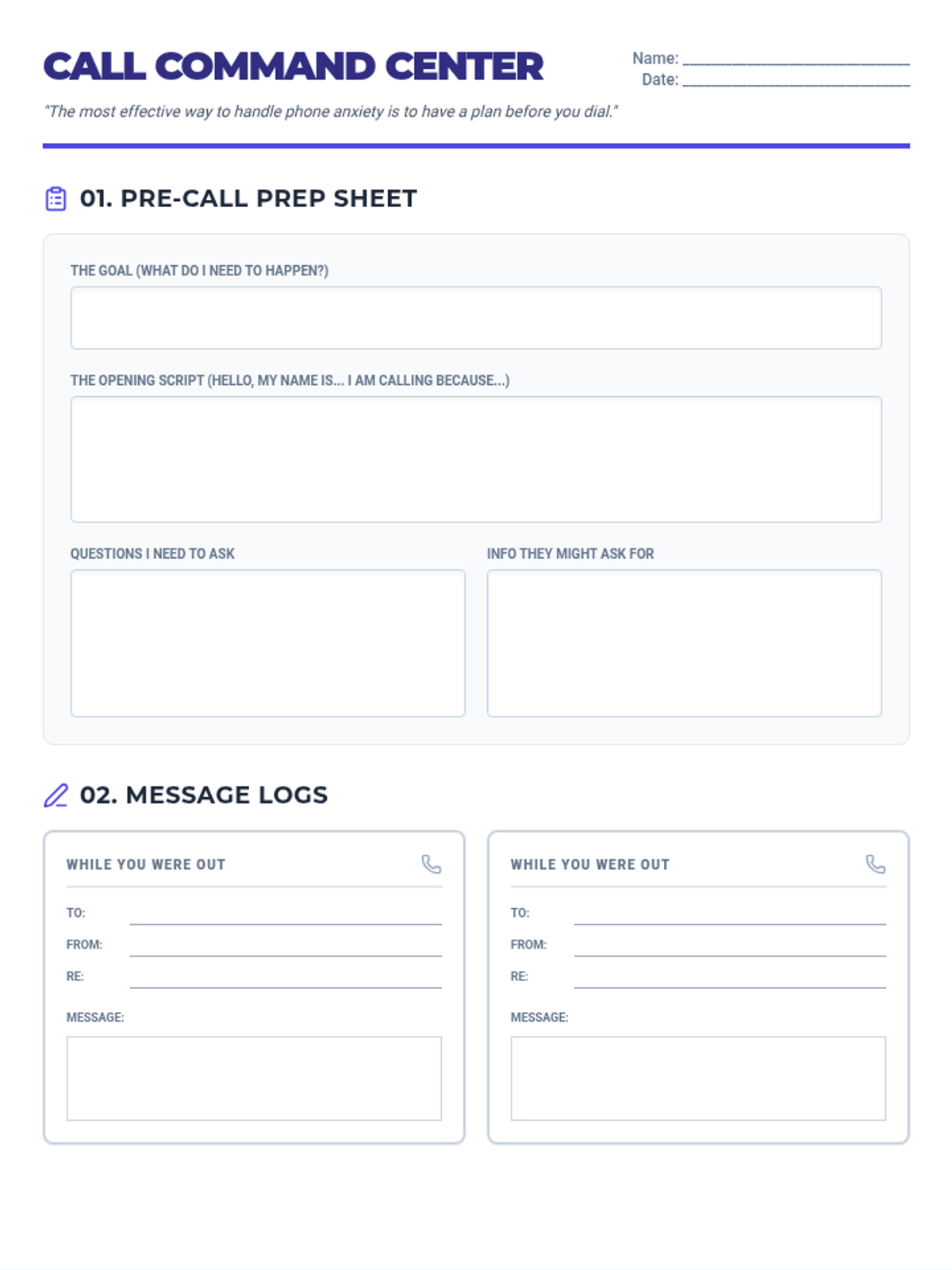
A student-facing worksheet for phone call preparation, including a pre-call planning sheet, voicemail scripts, and simulated message pads for active listening practice. Revised to improve page breaks and student work area contrast.
A visual presentation covering core phone skills: managing anxiety, leaving professional voicemails, taking messages, and handling wrong numbers politely.
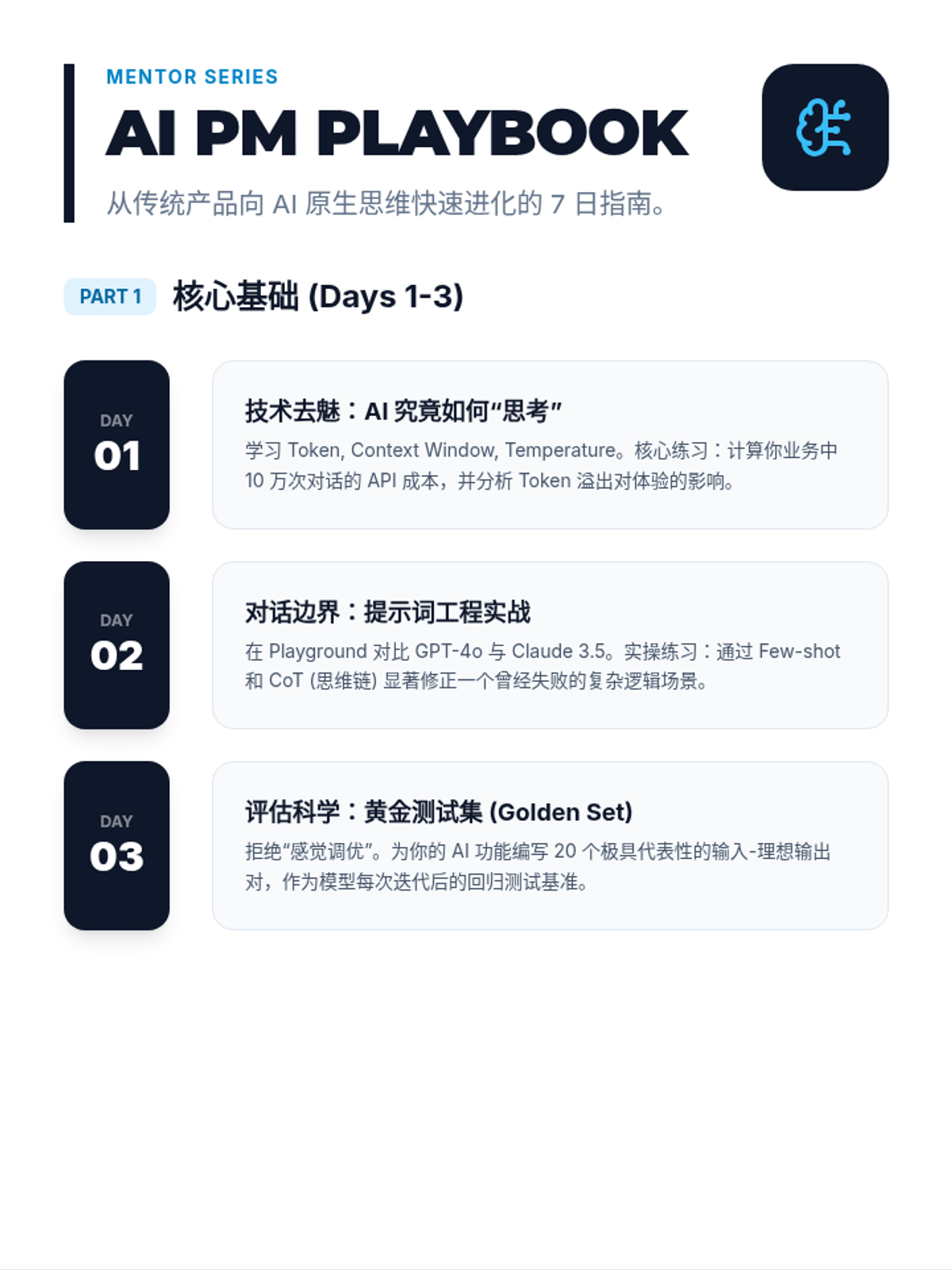
A comprehensive career development guide for junior AI PMs, featuring a complete 7-day learning sprint, common pitfalls, interactive exercise areas, and interview strategies. Optimized page flow, increased writing space, and improved legibility.
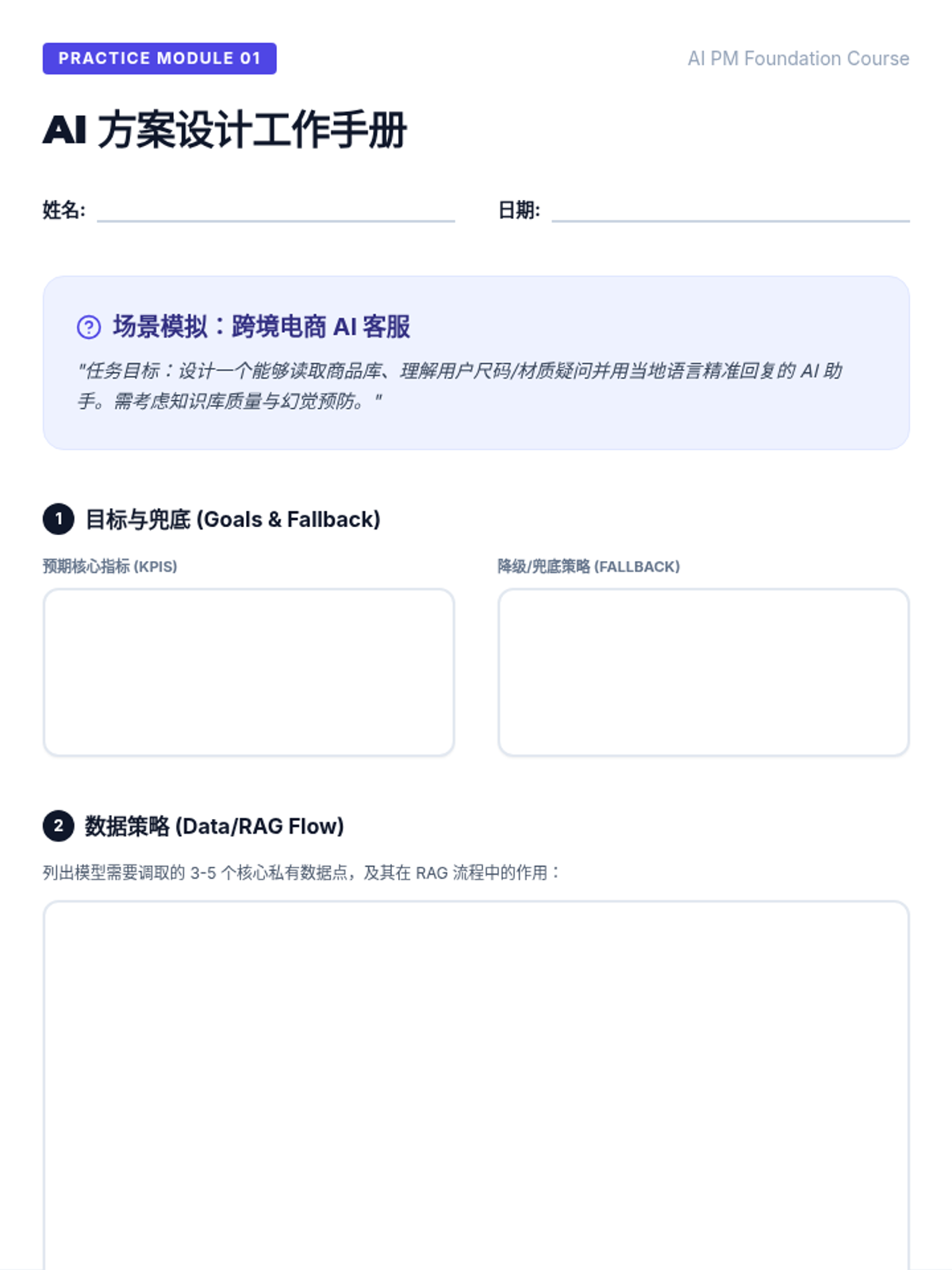
A hands-on worksheet where junior PMs can practice designing an AI feature for a real-world e-commerce scenario. Includes three evaluation scenarios and business logic reflection. Optimized for clarity and handwriting space.
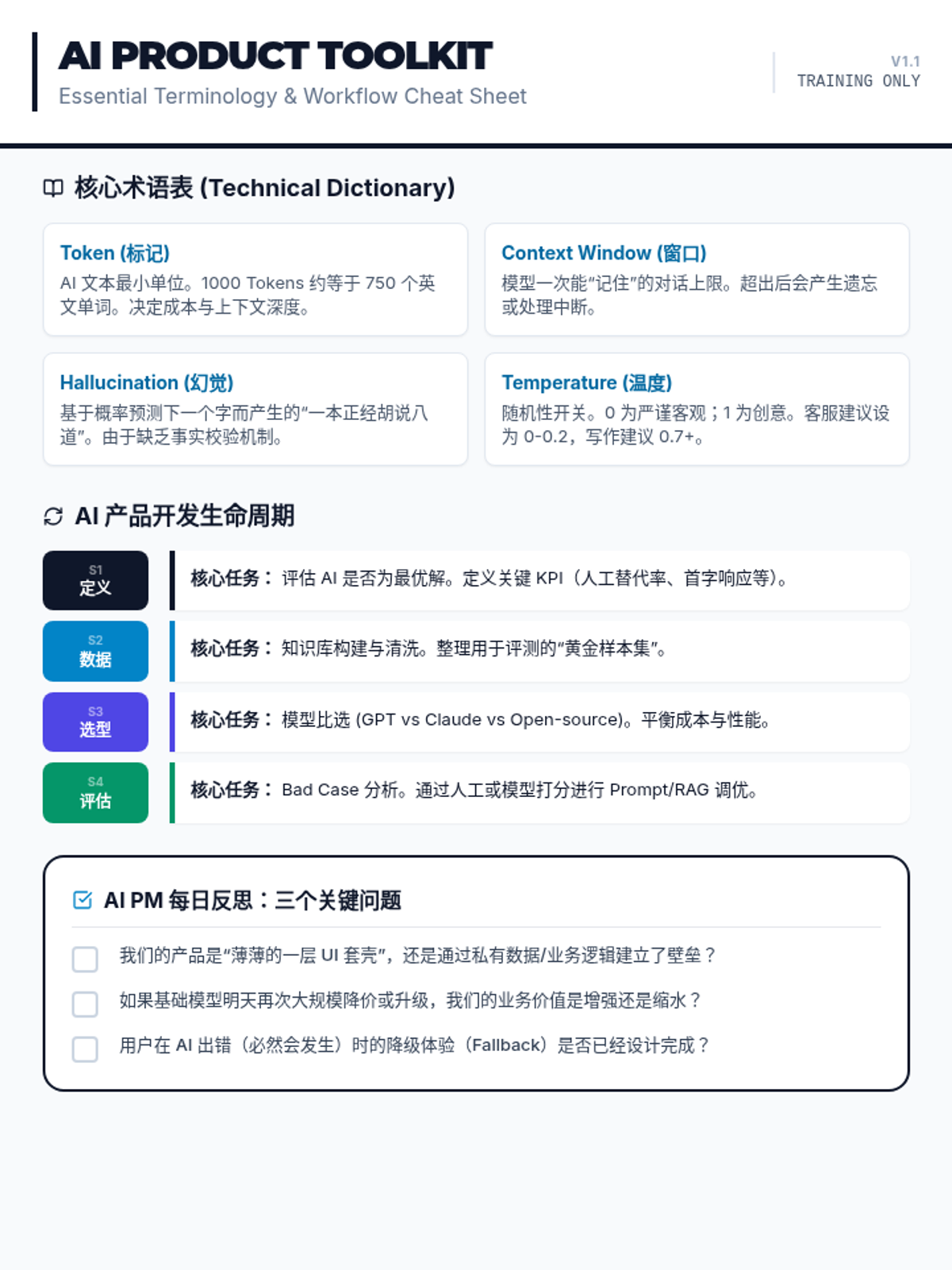
A concise reference document for junior AI PMs containing key terminology, the product lifecycle, and critical strategic questions. Optimized for one-page reference.
A sleek, tech-focused presentation covering the transition from traditional PM to AI PM, technical stacks, and key metrics.
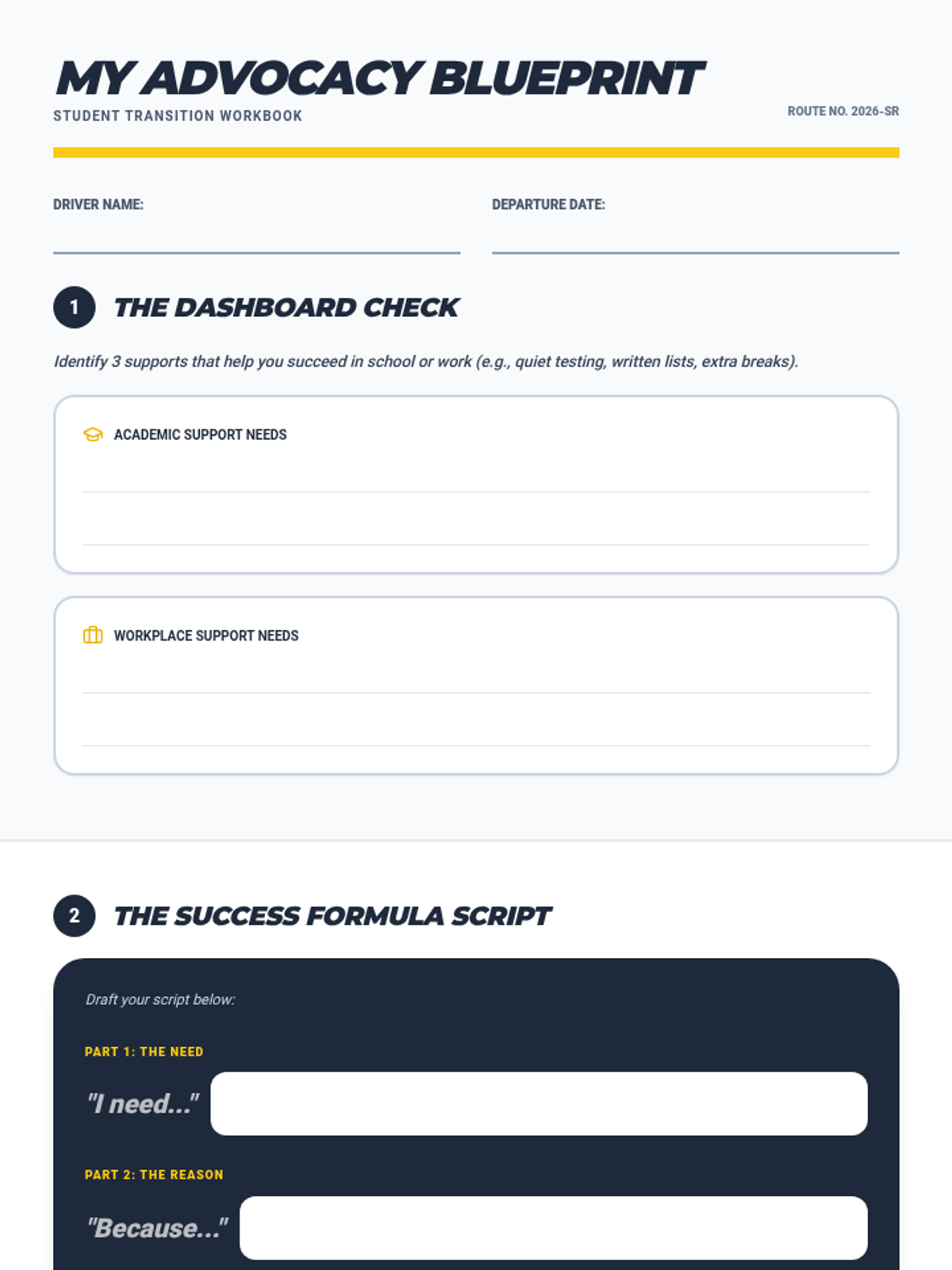
A structured 2-page workbook for students to identify their support needs, draft personalized advocacy scripts, and research local community resources.
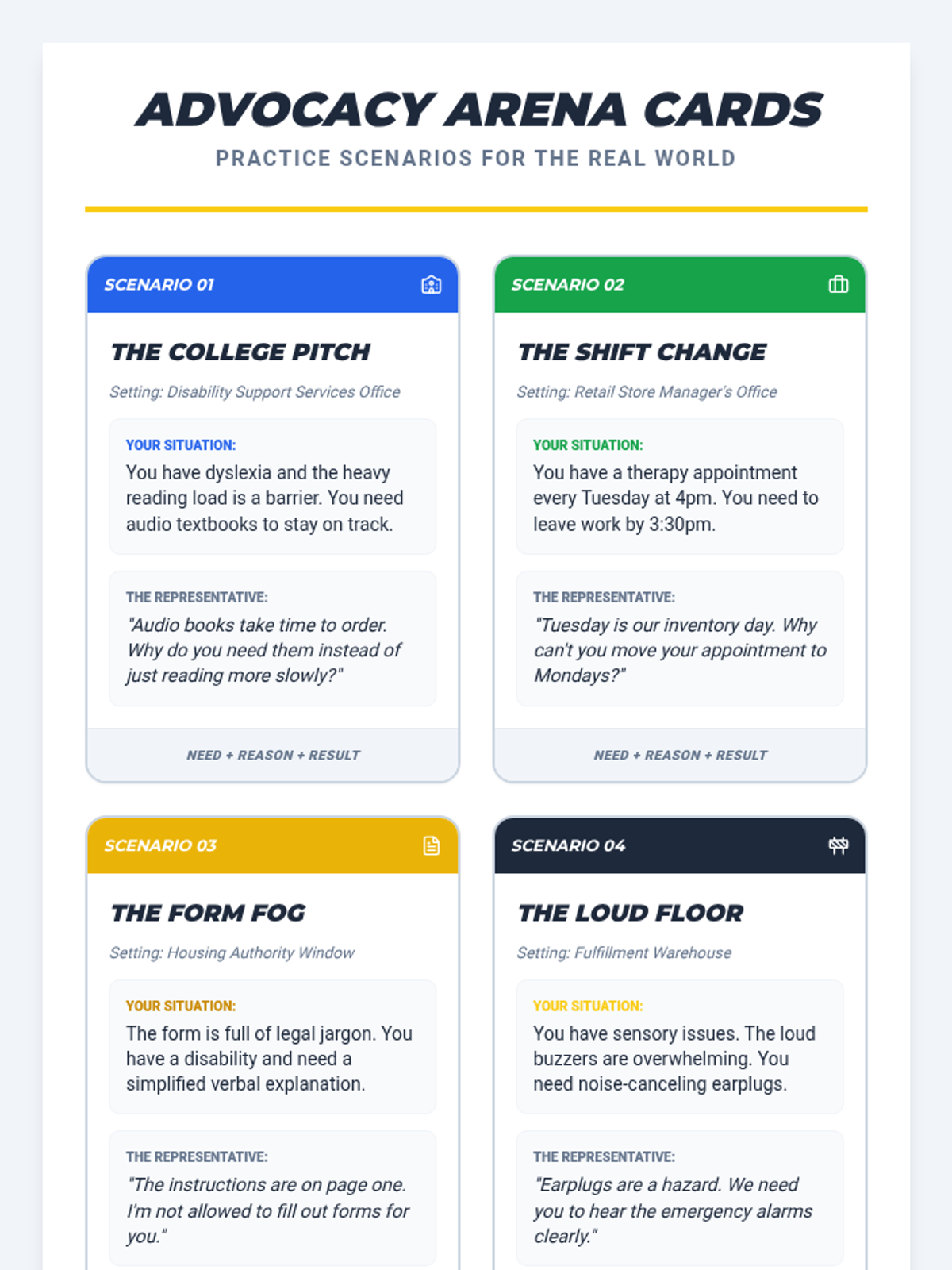
A set of 6 role-play scenario cards featuring real-world challenges in college, workplace, and community settings, designed for students to practice the 3-part advocacy script.
An engaging 9-slide presentation featuring a road-trip theme to guide students through self-advocacy concepts, the 3-part script formula, and resource mapping.
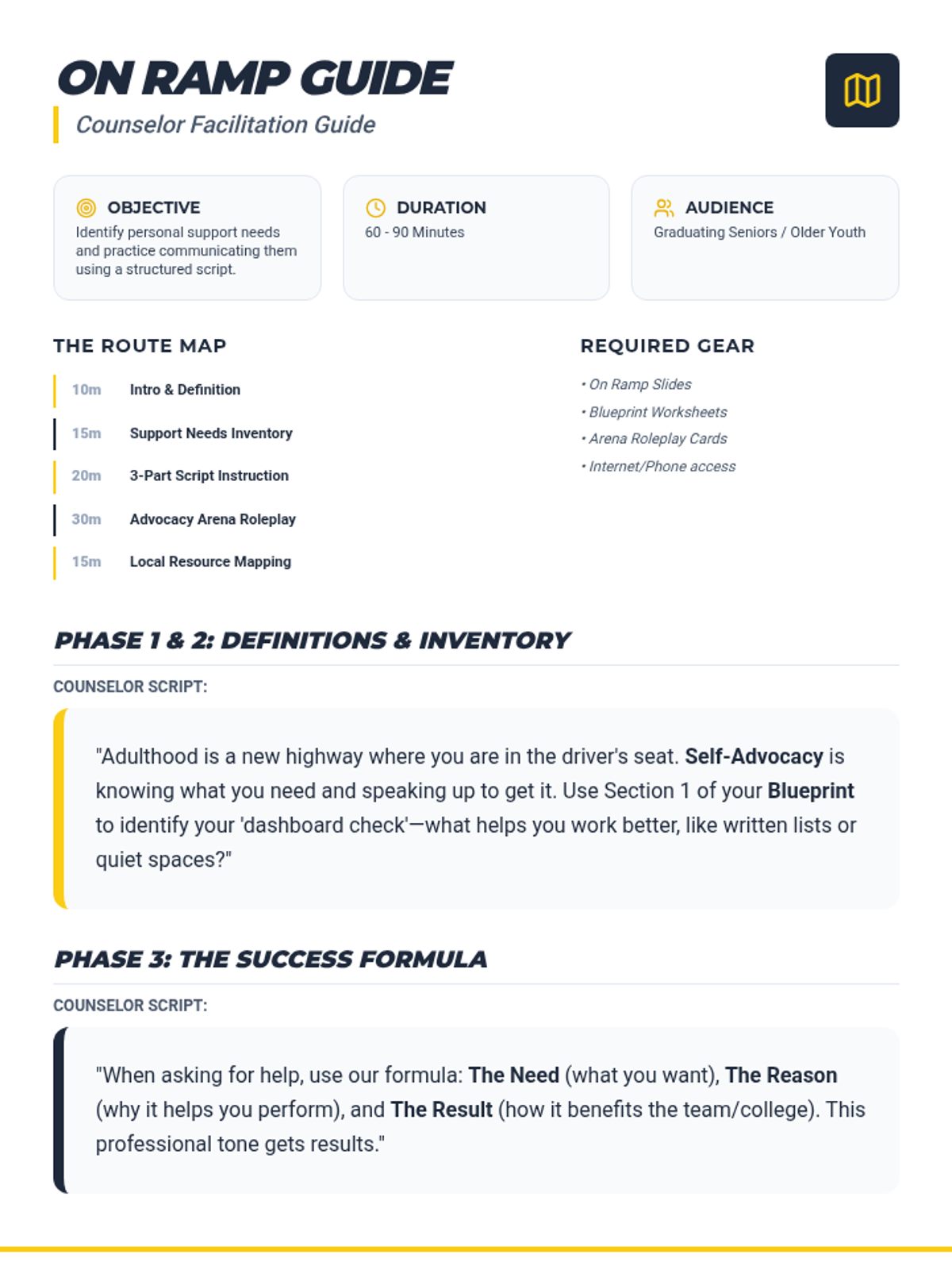
A detailed facilitator's guide for counselors, featuring a step-by-step lesson plan, a complete instructional script, and pacing suggestions for a 90-minute self-advocacy workshop.
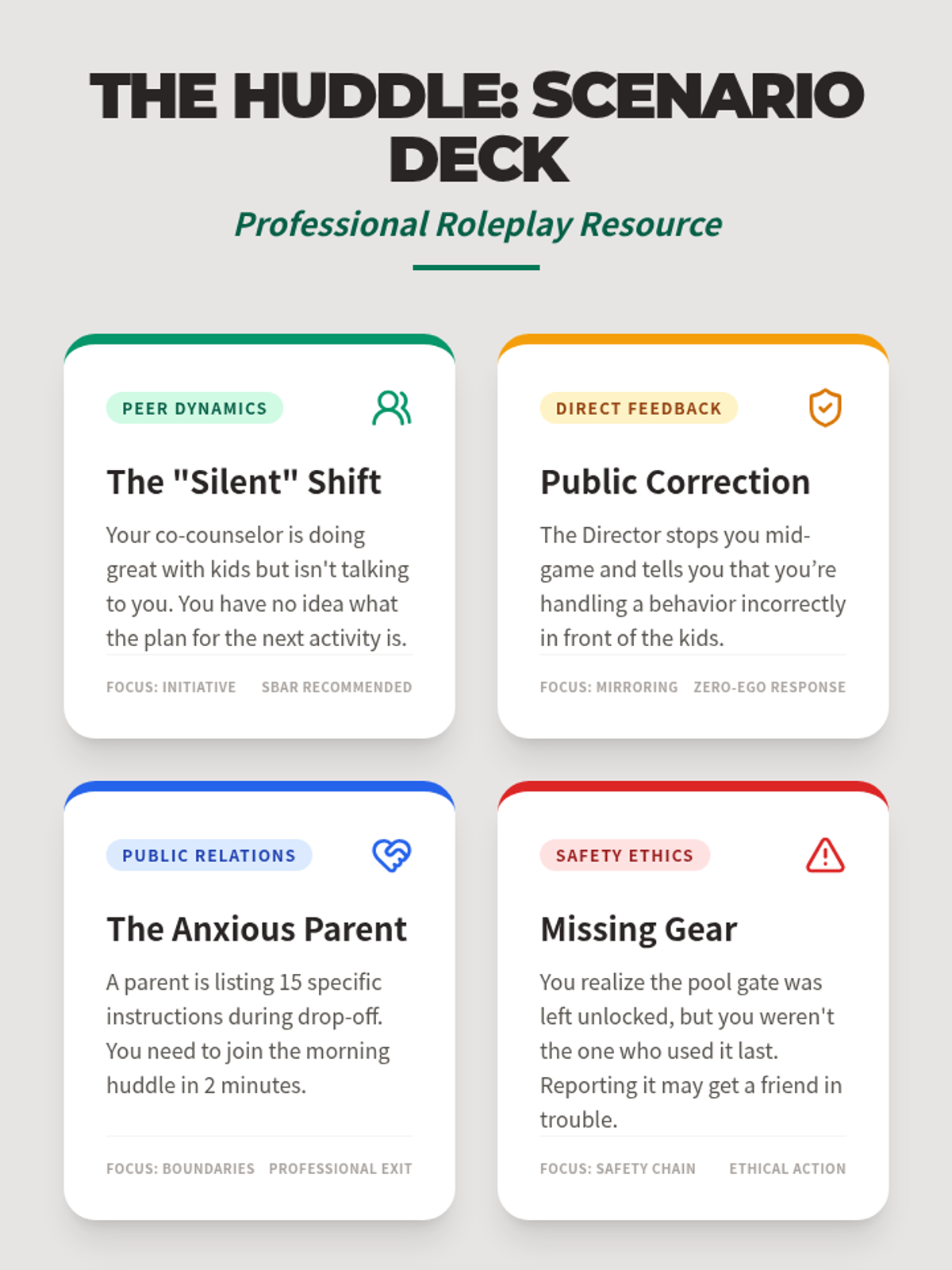
A set of four scenario-based activity cards for camp counselor training, focusing on peer dynamics, supervisor feedback, parent interactions, and safety ethics.
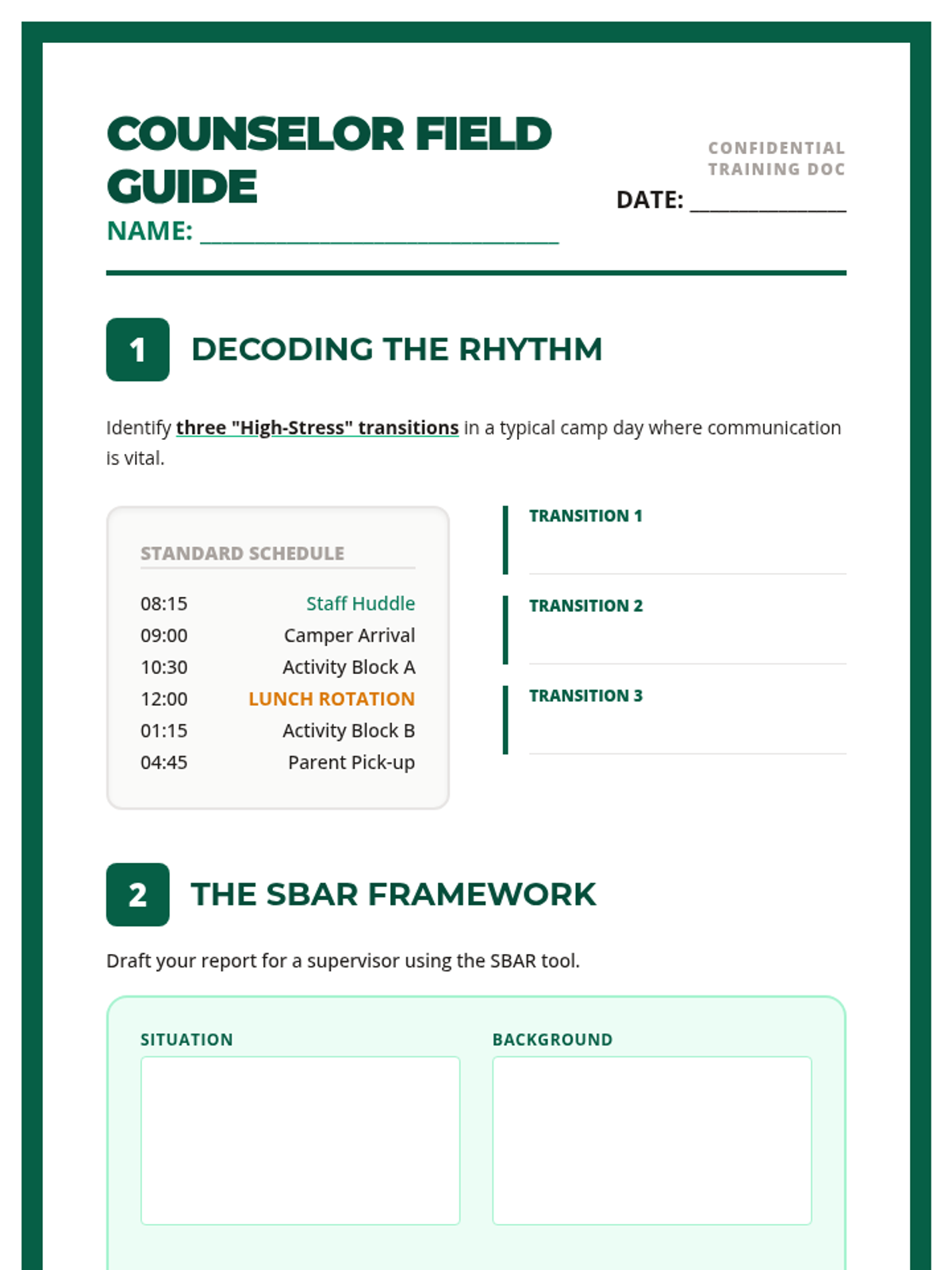
An expanded 2-page student workbook for camp counselor training, featuring a SBAR practice matrix, a conflict resolution "I" statement draft area, and a professional first-hour checklist.
An expanded 10-slide visual presentation for camp counselor training, featuring the SBAR communication method, the Chain of Command hierarchy, and the "Mirror" feedback technique.
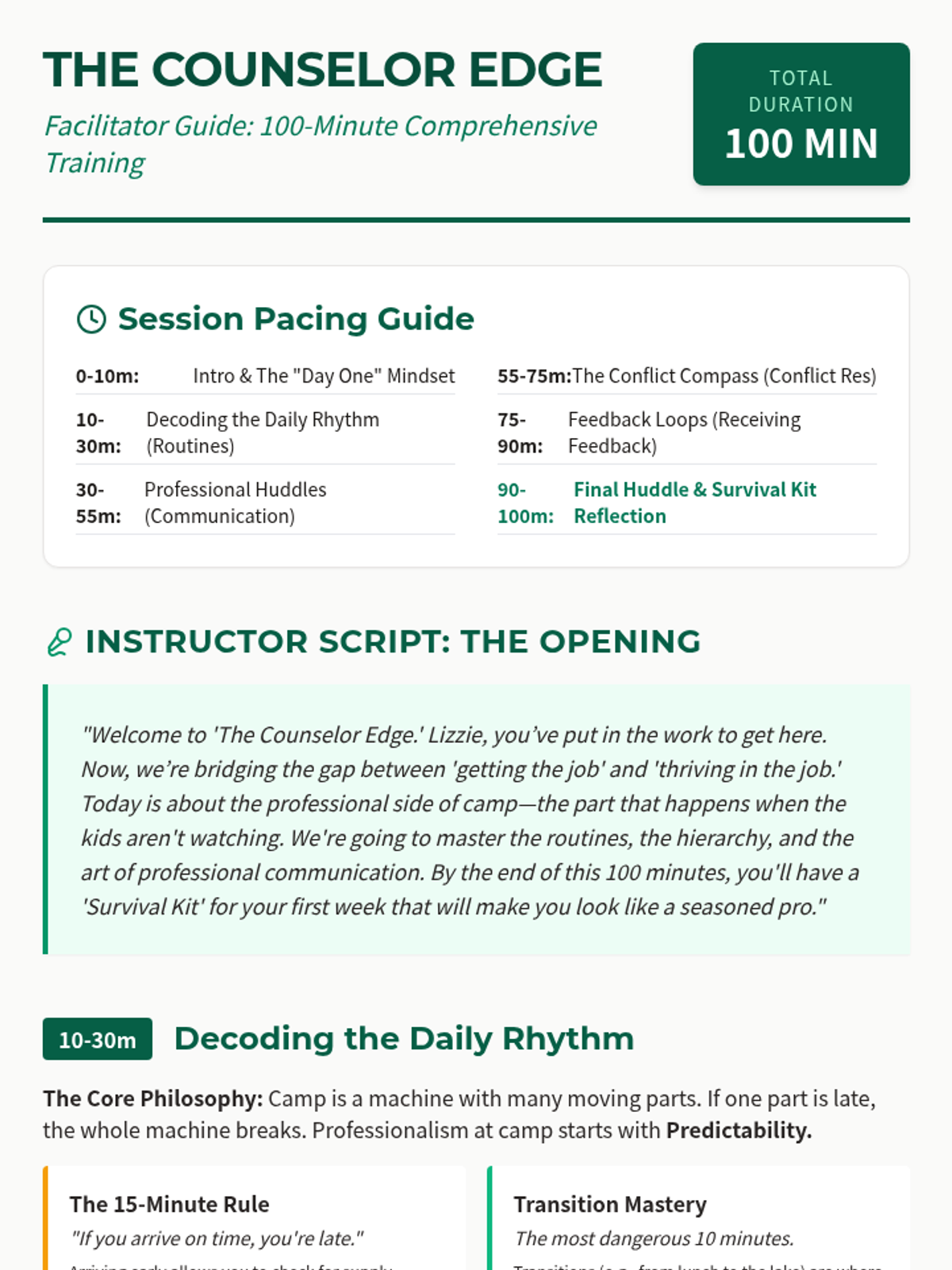
An expanded 100-minute facilitator guide for training new camp counselors, including detailed scripts, the SBAR communication method, and comprehensive pacing instructions for a full training session.
Visual presentation for the Digital Hire lesson, now containing level 1-3 informational slides for adult learners, 3 embedded YouTube videos, all 8 'Challenge Mode' individual practice slides, and 8 verbal 'Portal Panic' scenarios. High-visibility, classroom-ready design.
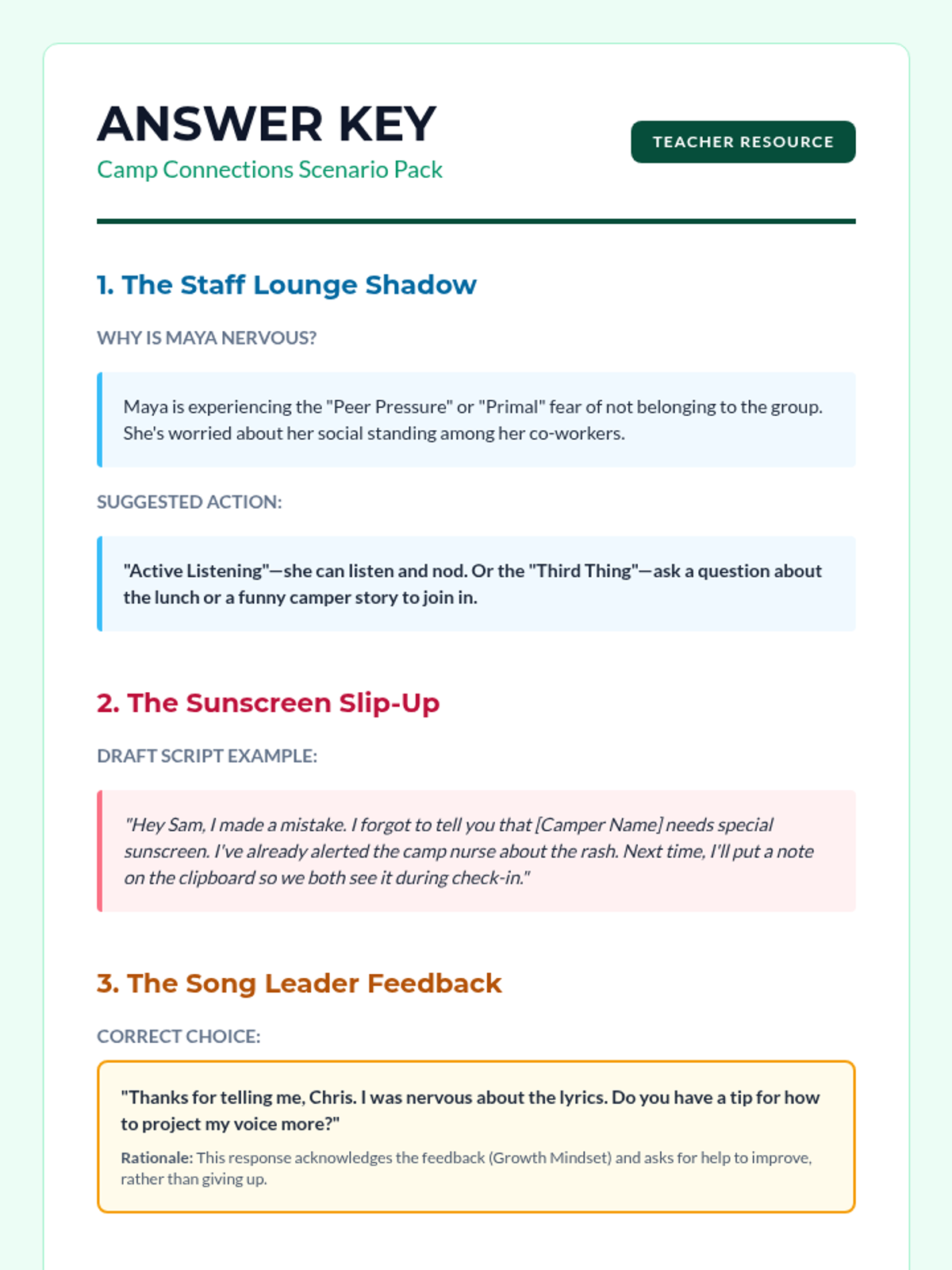
An answer key for the Camp Counselor Scenarios worksheet, providing suggested responses and rationales for counselor-to-staff communication.
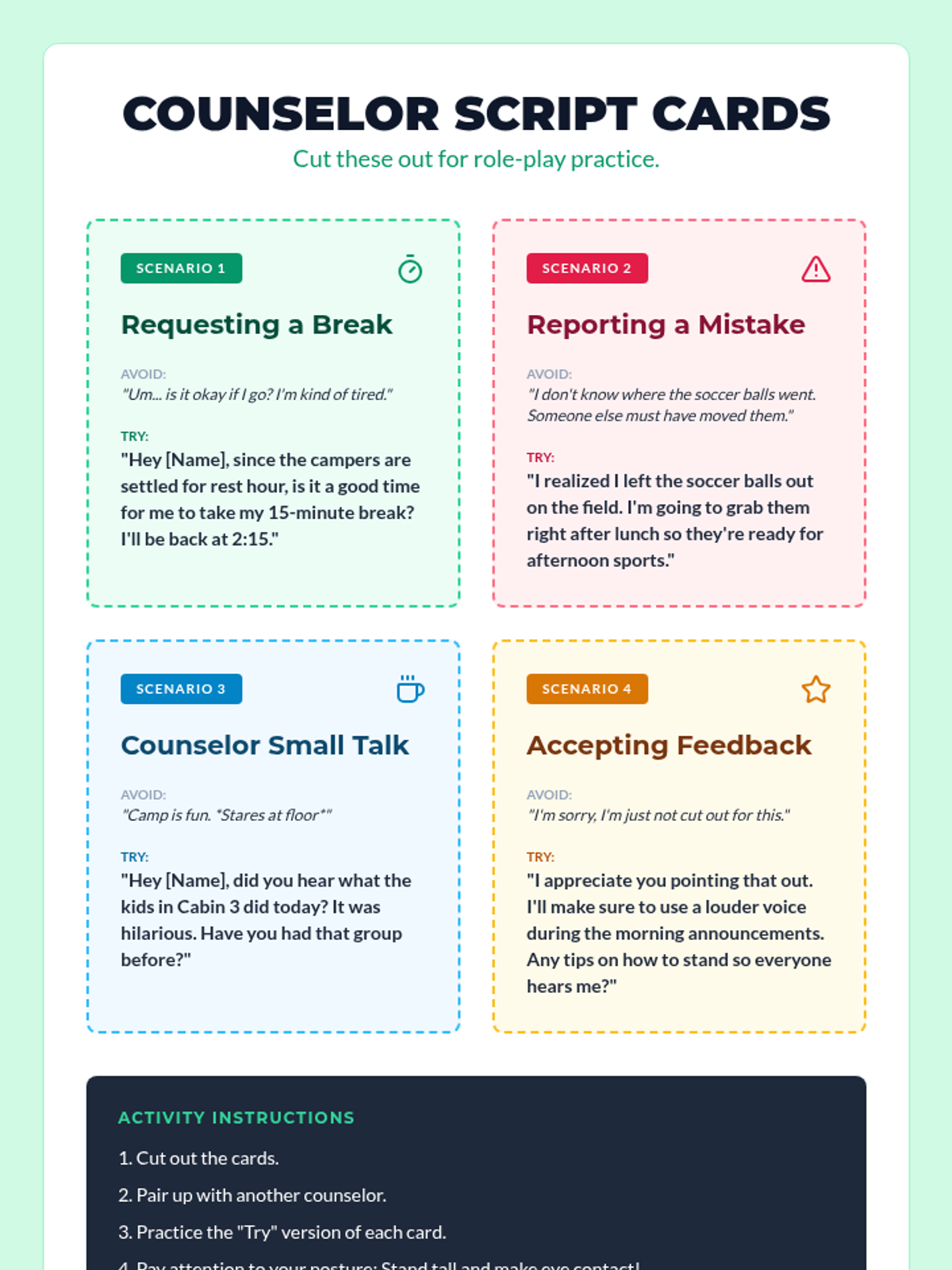
Role-play script cards for camp counselors to practice professional and confident communication with their peers and supervisors.
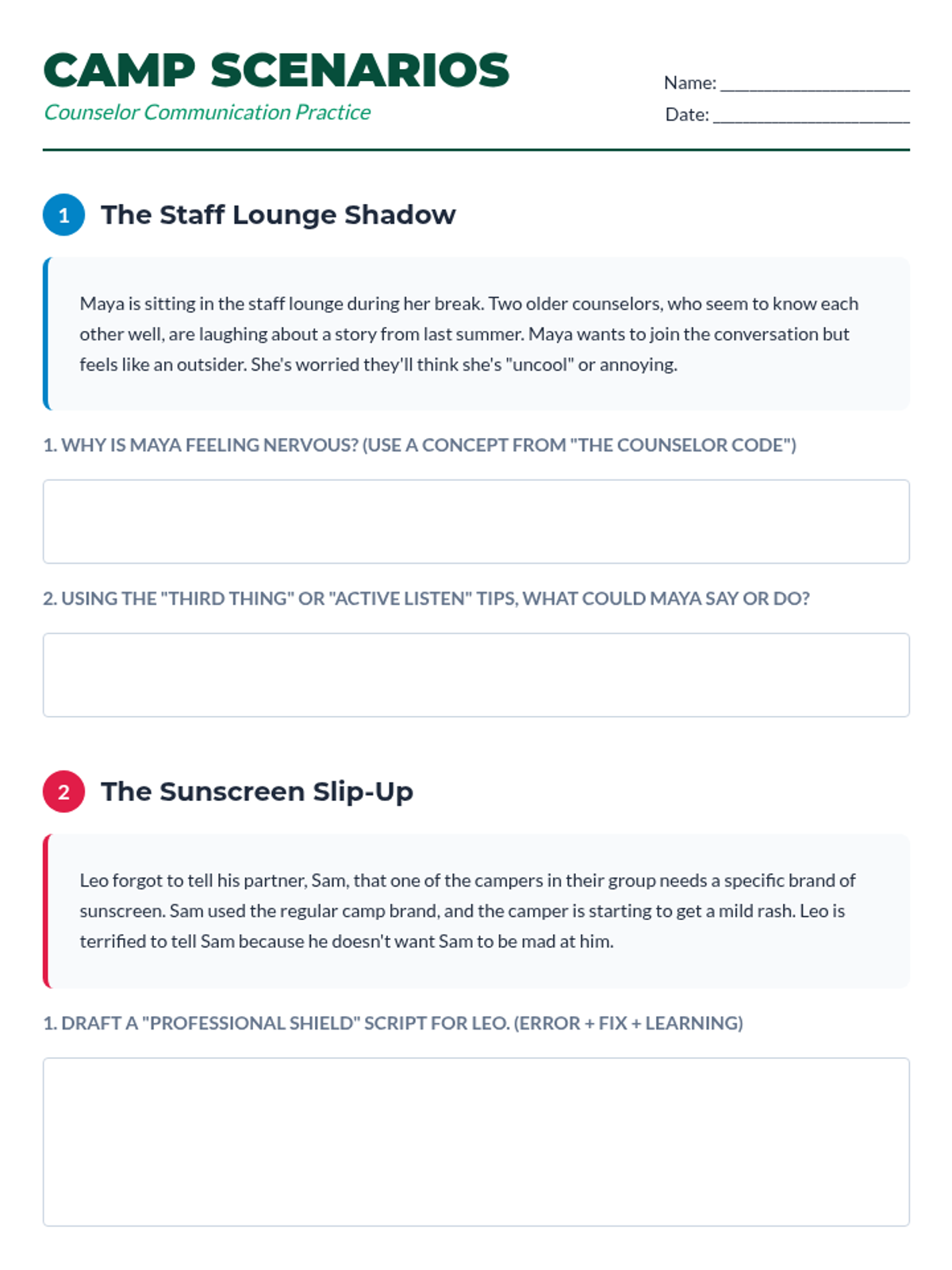
A scenario-based worksheet for camp counselors to practice peer communication, reporting mistakes, and accepting feedback.
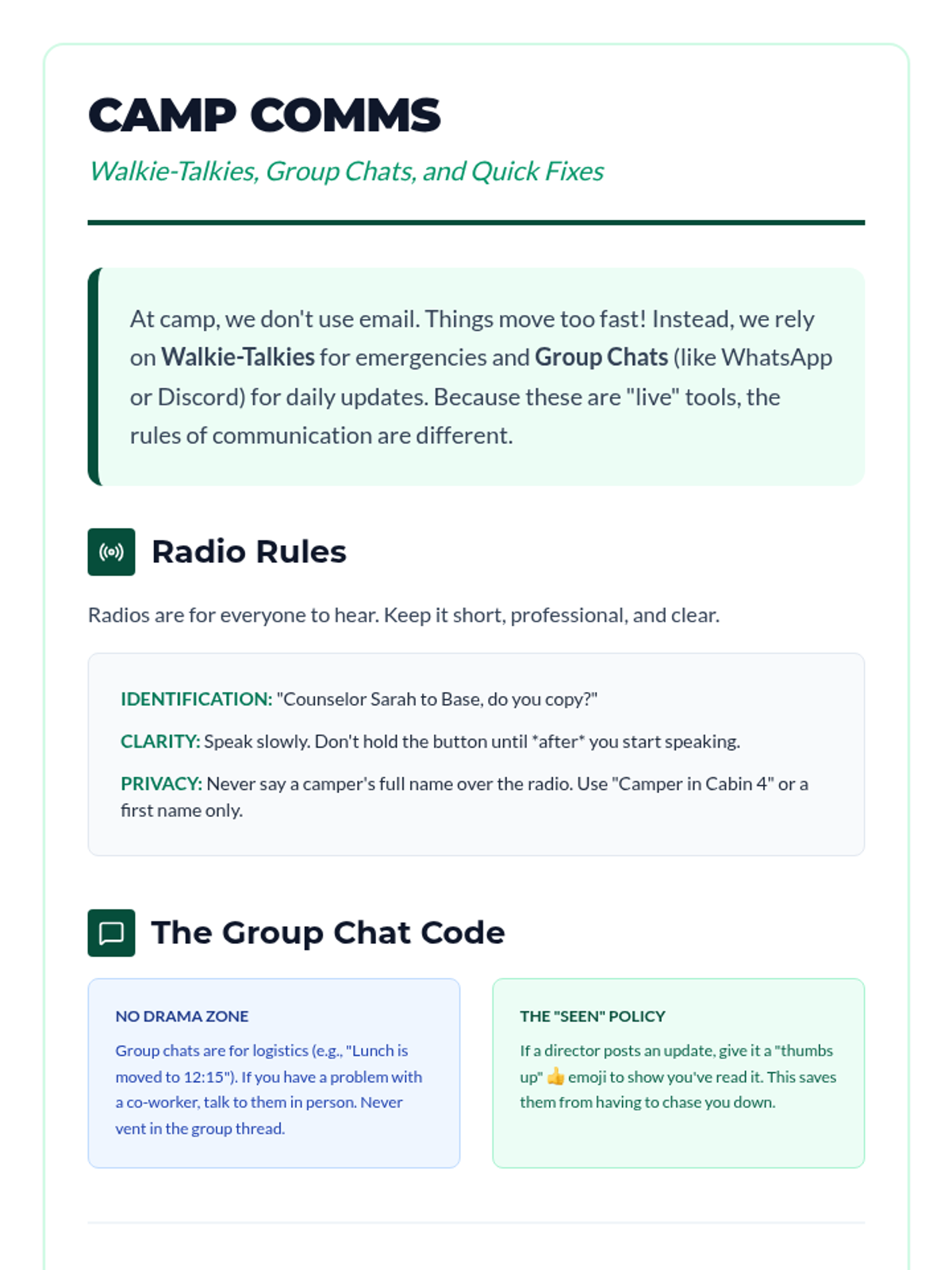
An informational reading passage and worksheet about camp-specific communication tools like walkie-talkies and group chats, excluding email.
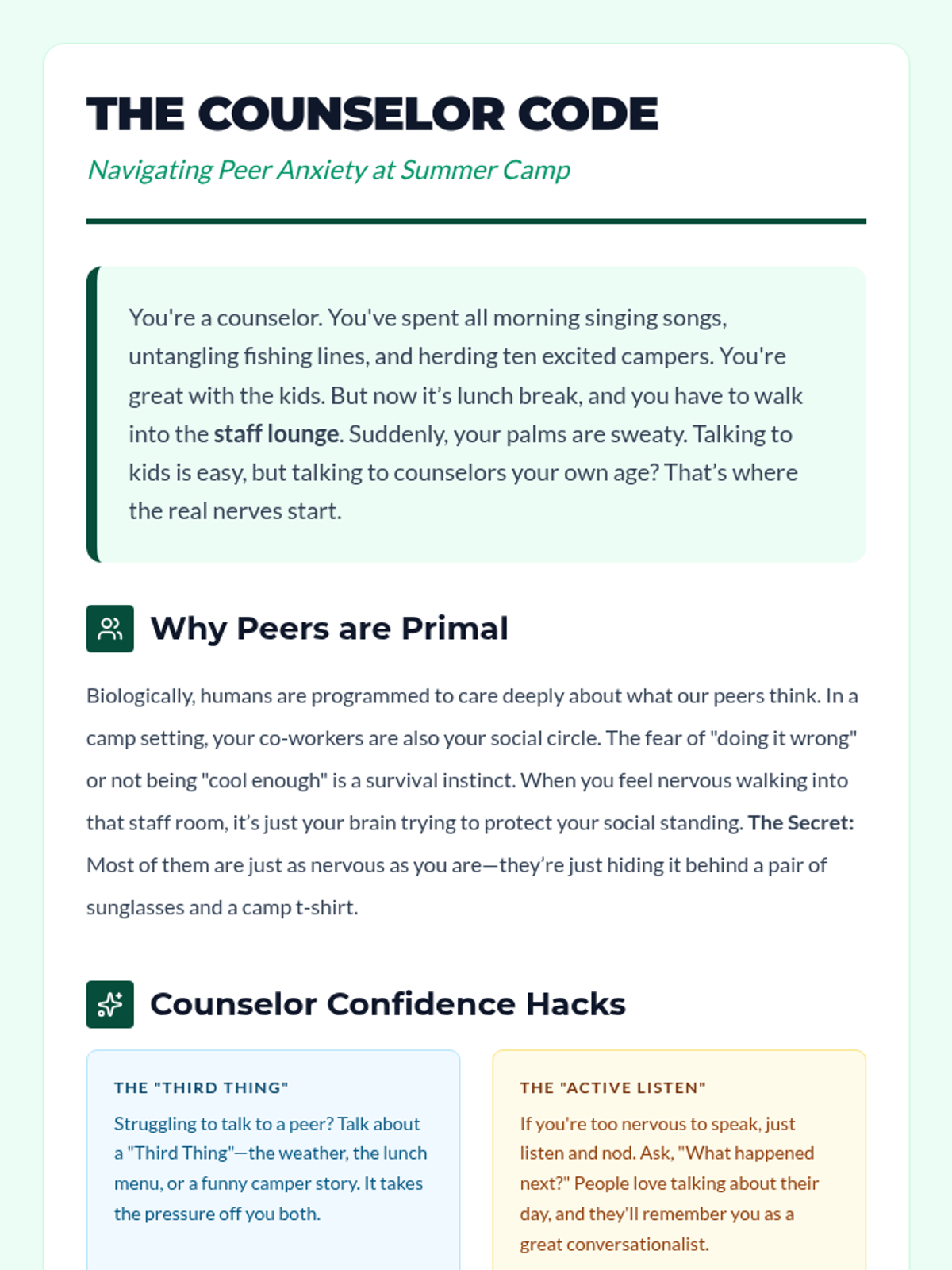
An informational reading passage for camp counselors about overcoming peer anxiety and mastering communication in a camp setting.
A slide presentation tailored for camp counselors, covering communication scenarios like breaks, reporting mistakes, and peer small talk.
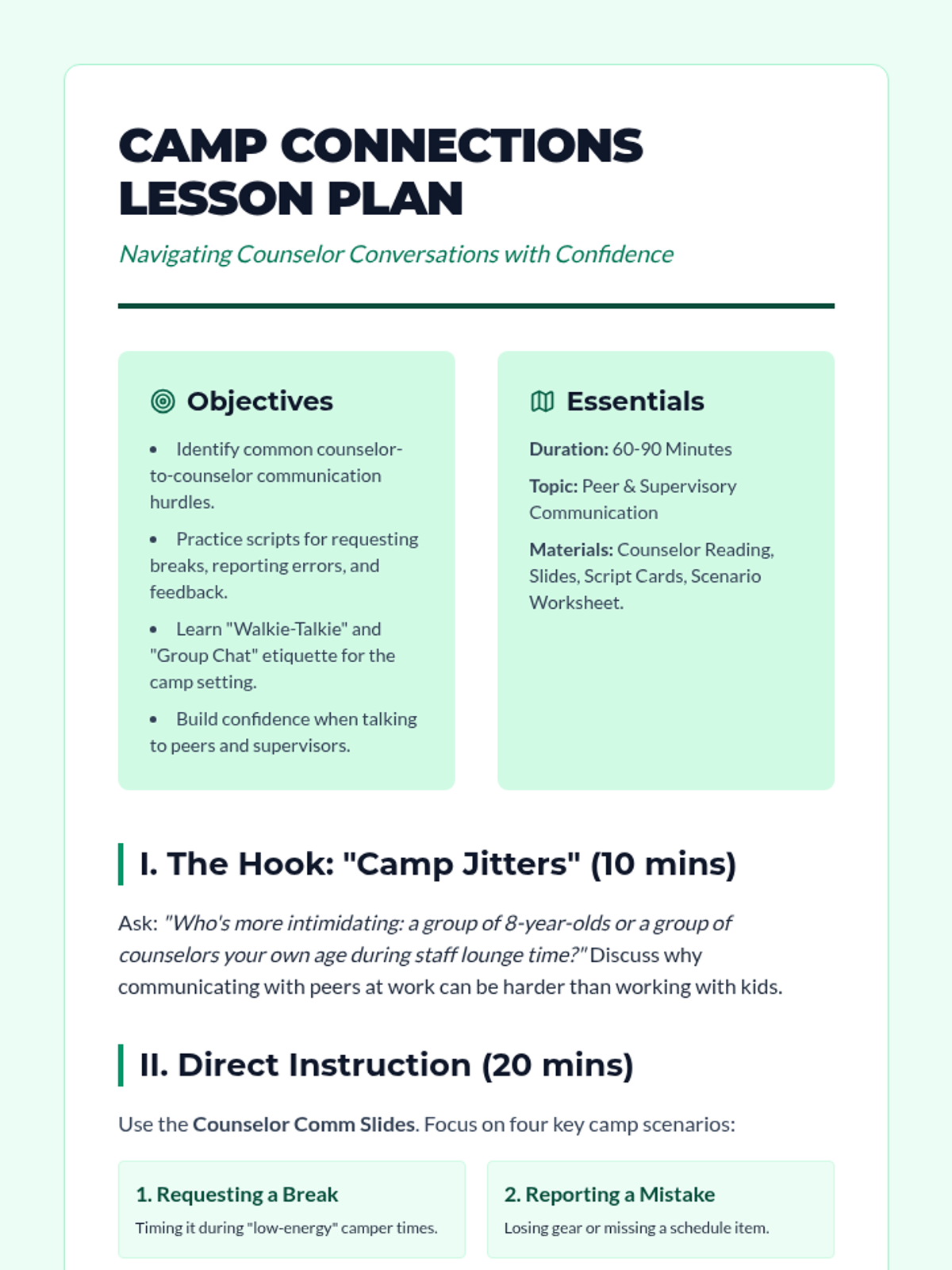
A detailed teacher's guide and lesson plan for the Camp Connections unit, focusing on communication between counselors and staff in a camp setting.
A high-energy, high-impact presentation deck for a 75-minute Spotlight Ready interview workshop. Features the mindset shift, pitch structure, STAR story bank, and a mock question forge. Expanded to fill the 75-minute duration with instructional depth.
A high-density 75-minute student workbook for the Spotlight Ready workshop, designed for immediate drafting, STAR story structuring, and peer-to-peer feedback. Includes a Question Forge for custom mock interview engineering. Designed with high-contrast text and clear writing areas.
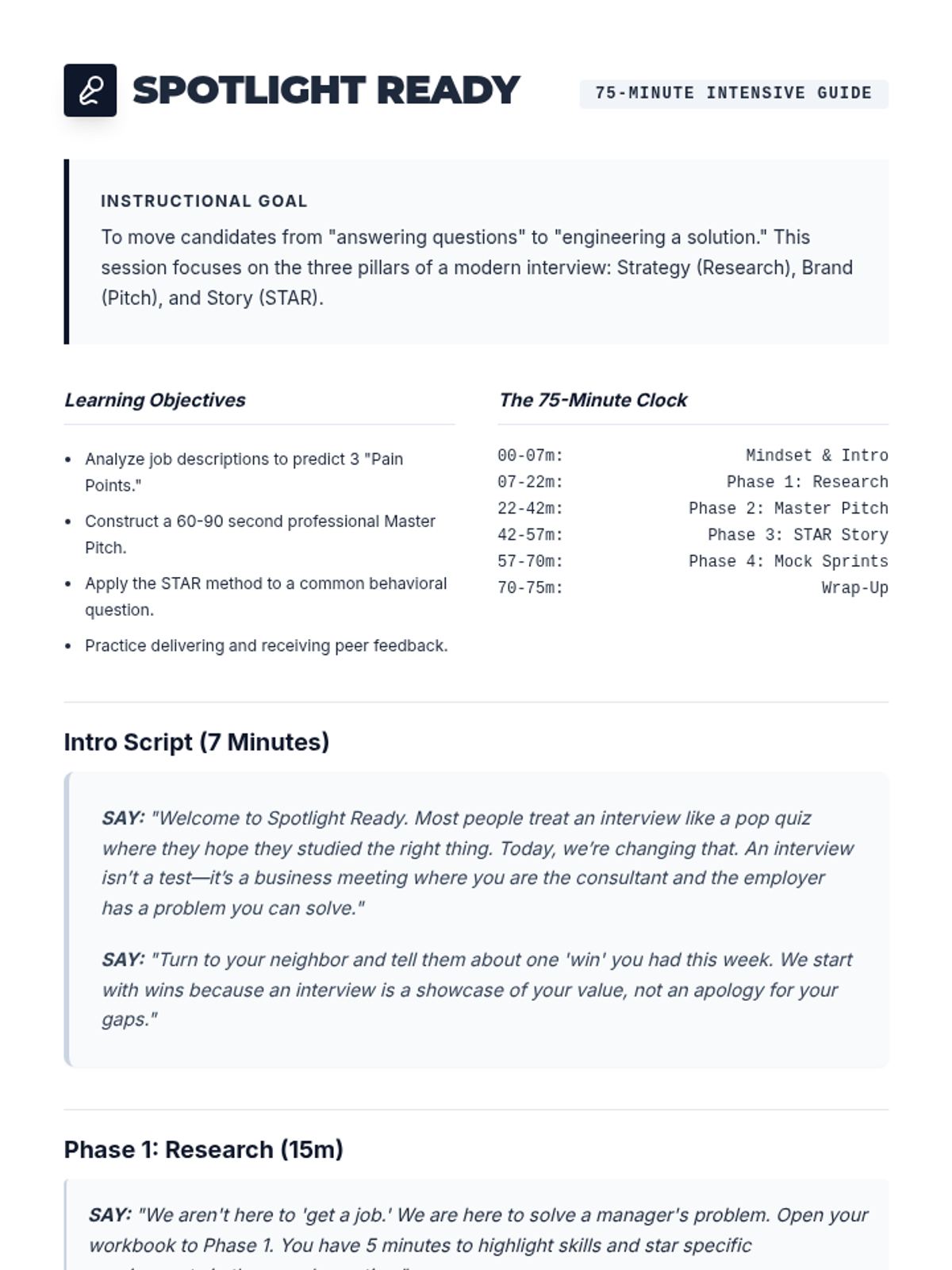
A high-impact 75-minute facilitator guide for the Spotlight Ready workshop, featuring exact scripts, a question forge appendix, and pacing adjustments for a condensed intensive. Designed with clear page breaks and standalone phase structures.
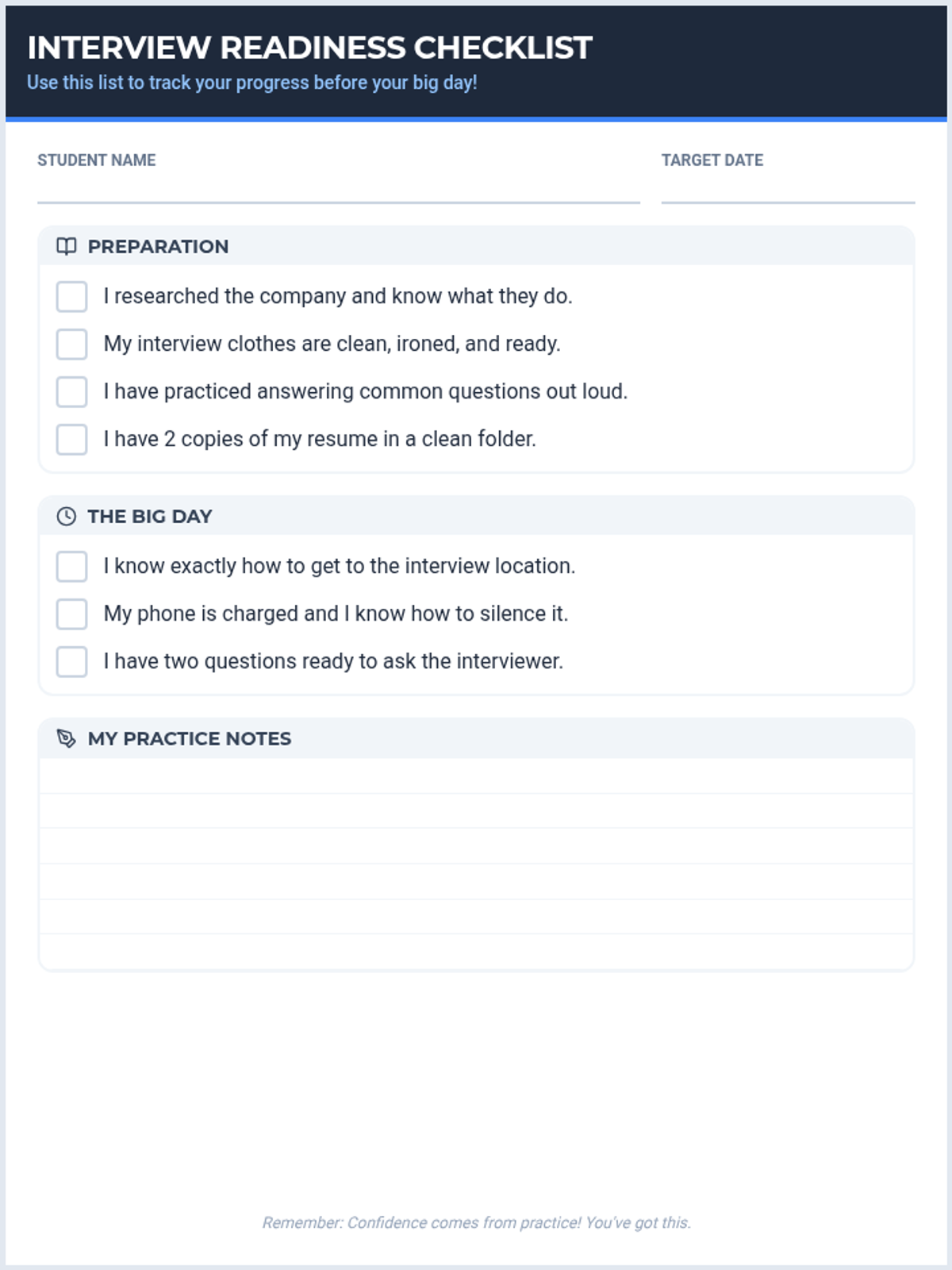
A student-facing checklist to track interview readiness, complementing the visual task analysis posters.
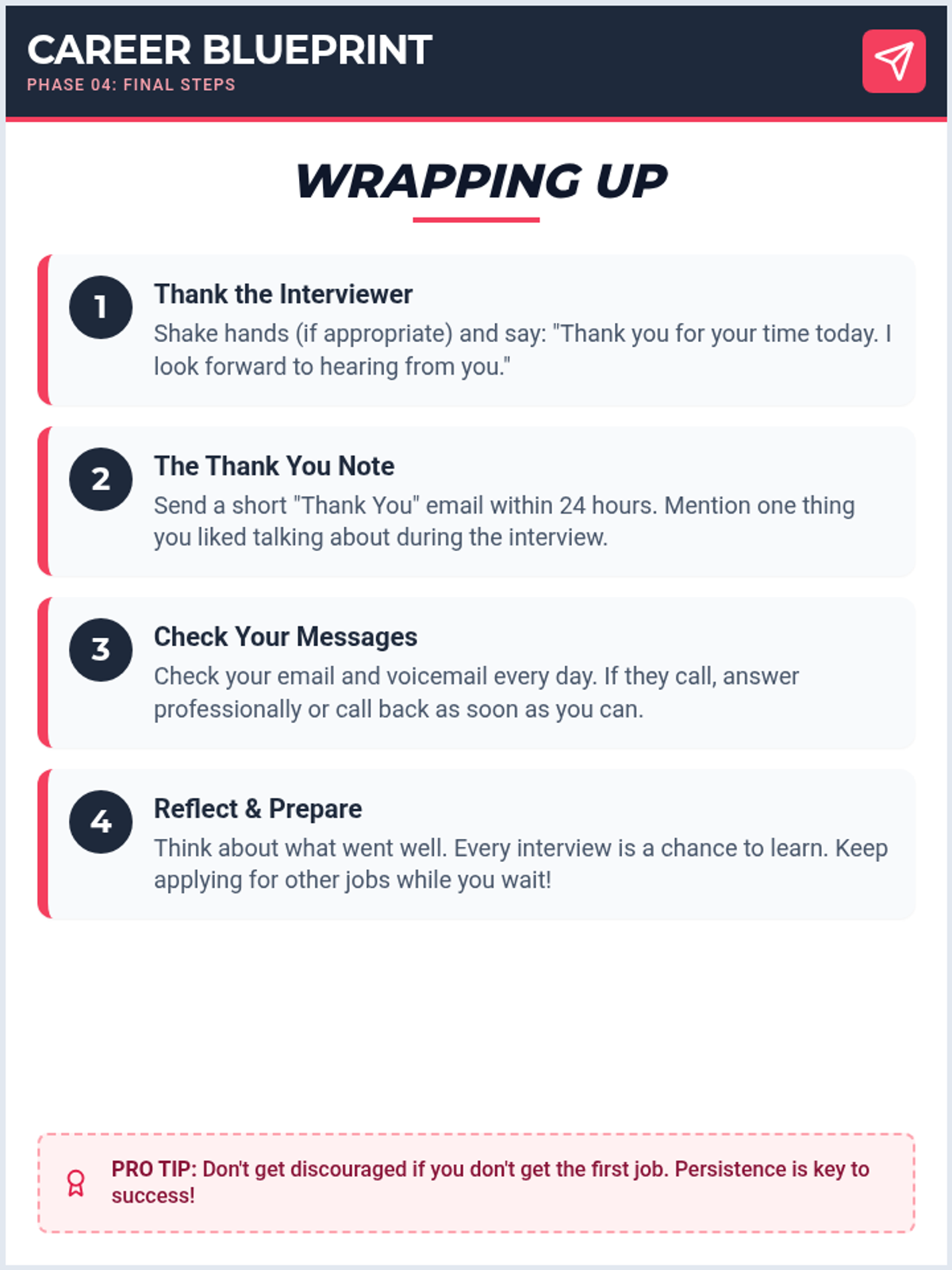
A visual task analysis poster focusing on the steps to take after a job interview, designed for adult transition students.
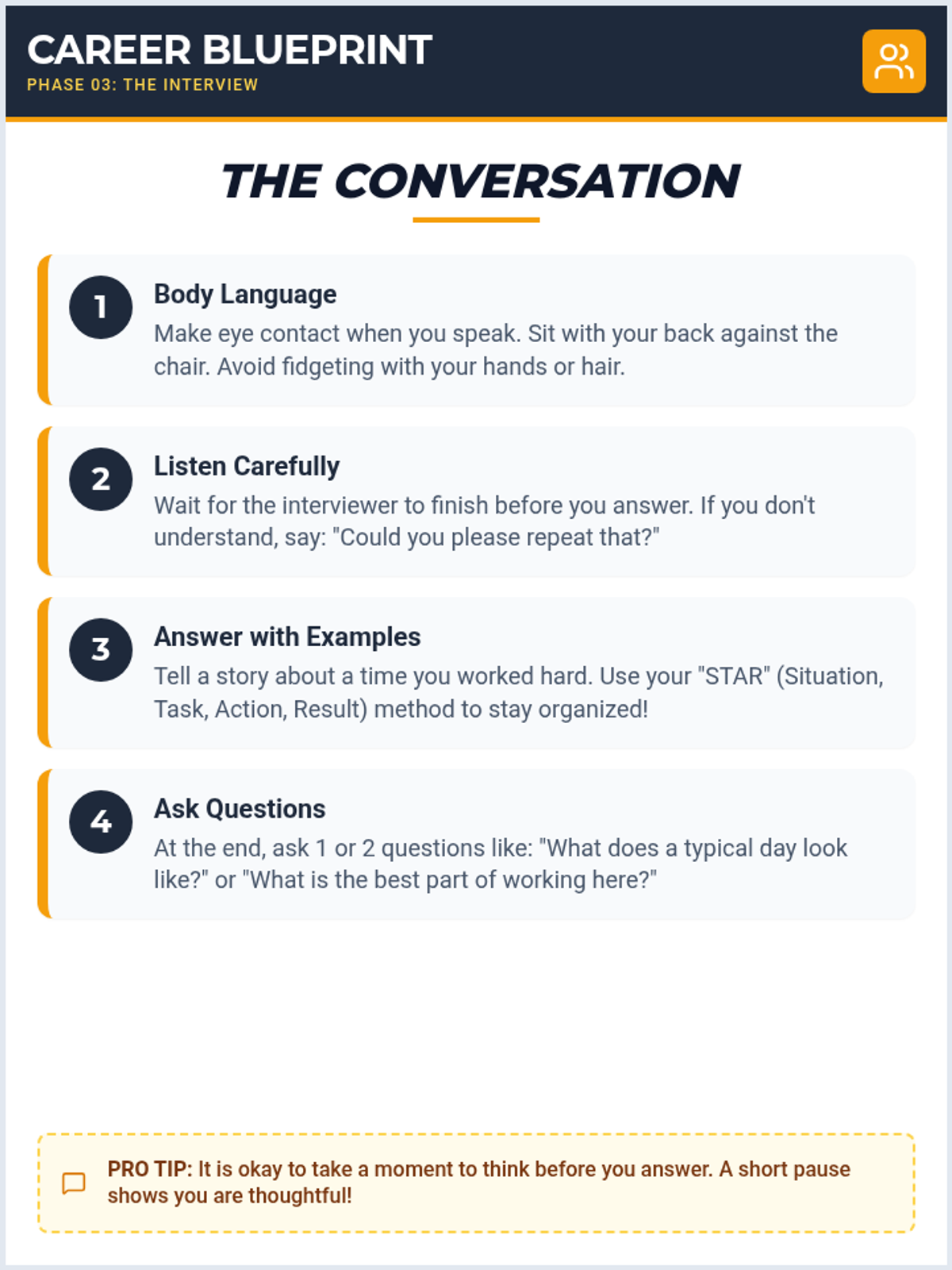
A visual task analysis poster focusing on the actual interview conversation, designed for adult transition students.
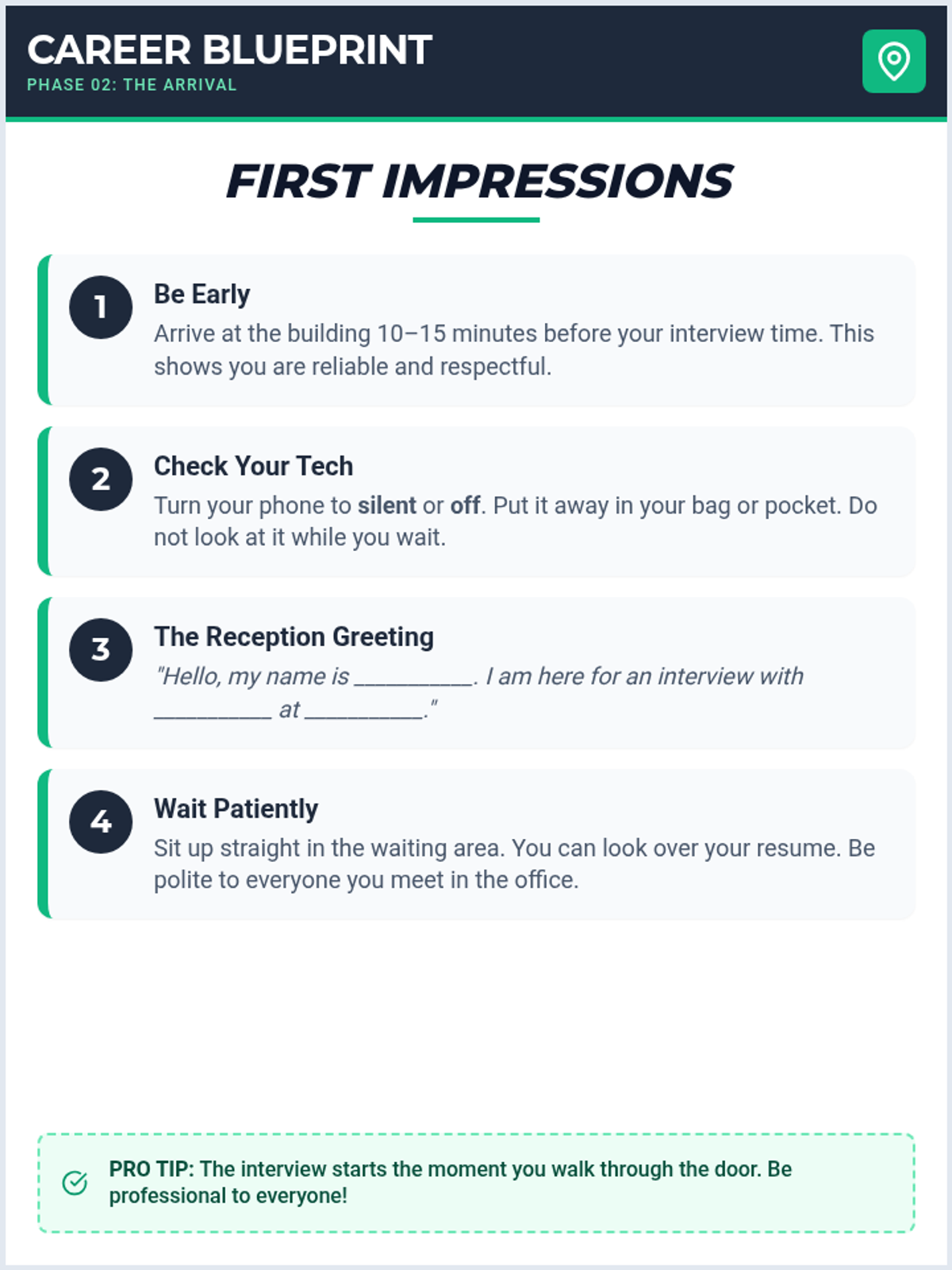
A visual task analysis poster focusing on arrival and first impressions for a job interview, designed for adult transition students.
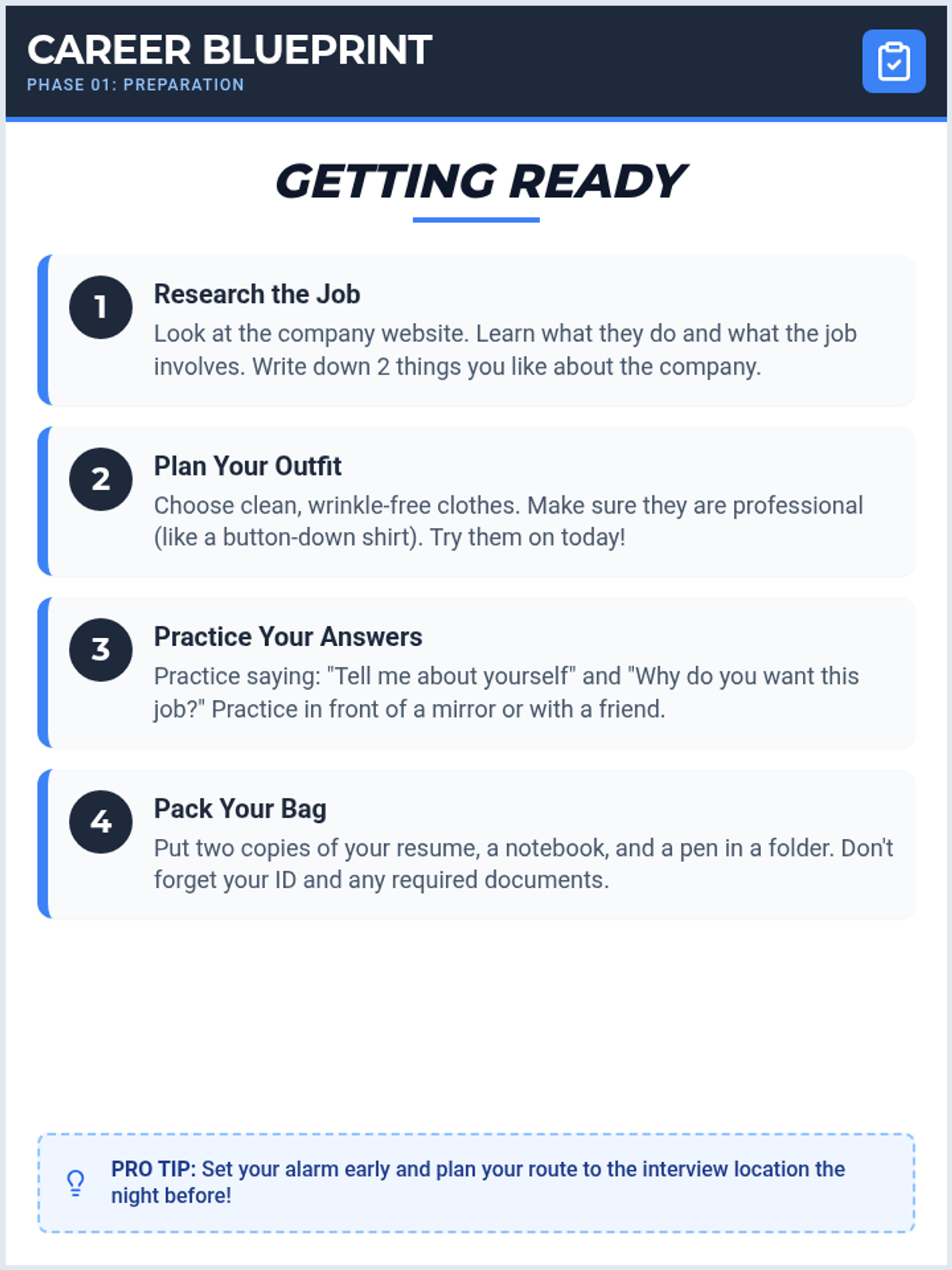
A visual task analysis poster focusing on the preparation steps for a job interview, designed for adult transition students.
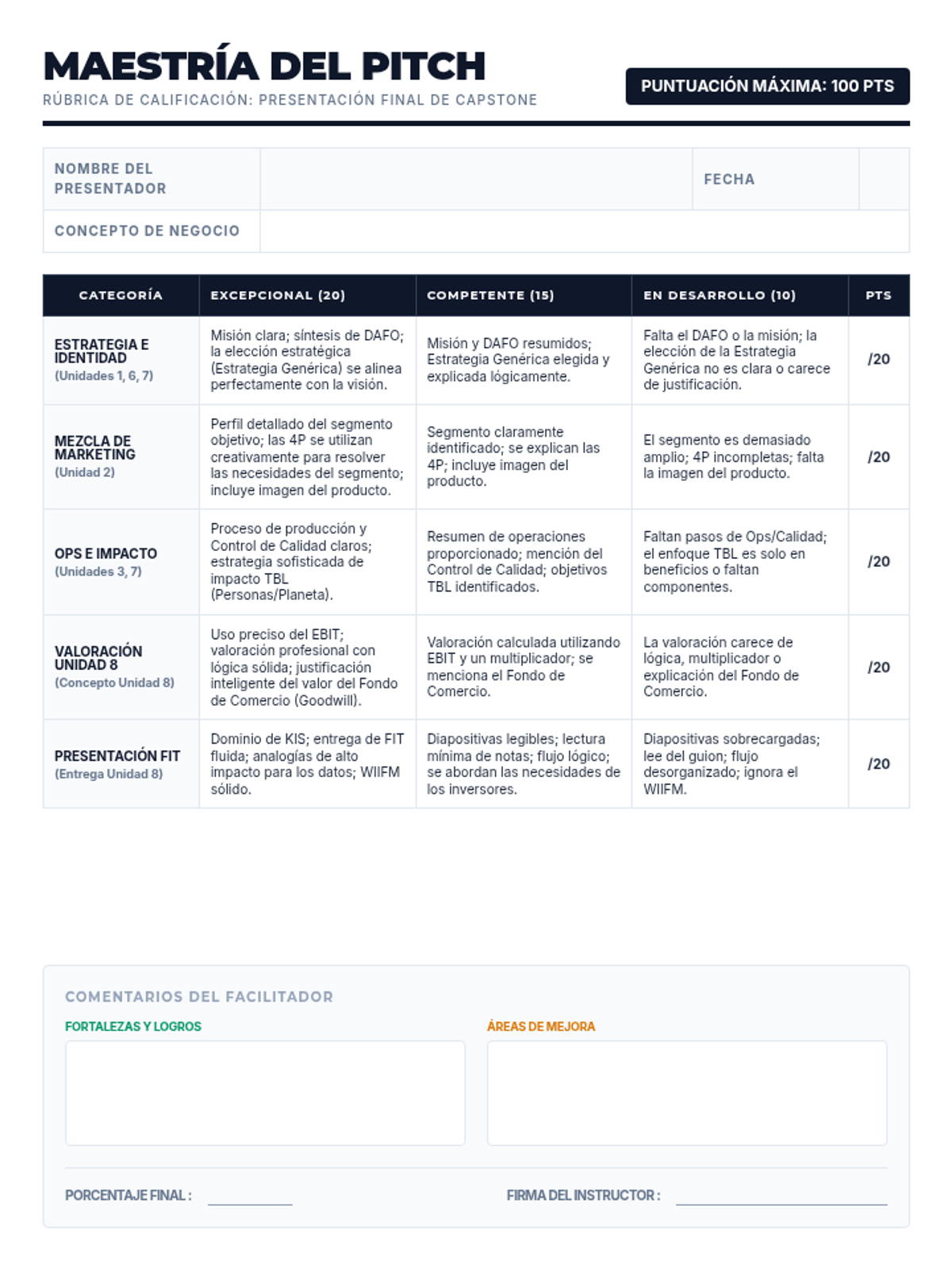
A comprehensive grading rubric for the final business presentation project. It evaluates Strategy, Marketing (including product picture), Operations, and Unit 8 Valuation. Updated to remove references to the financing plan and cash flow simulation.
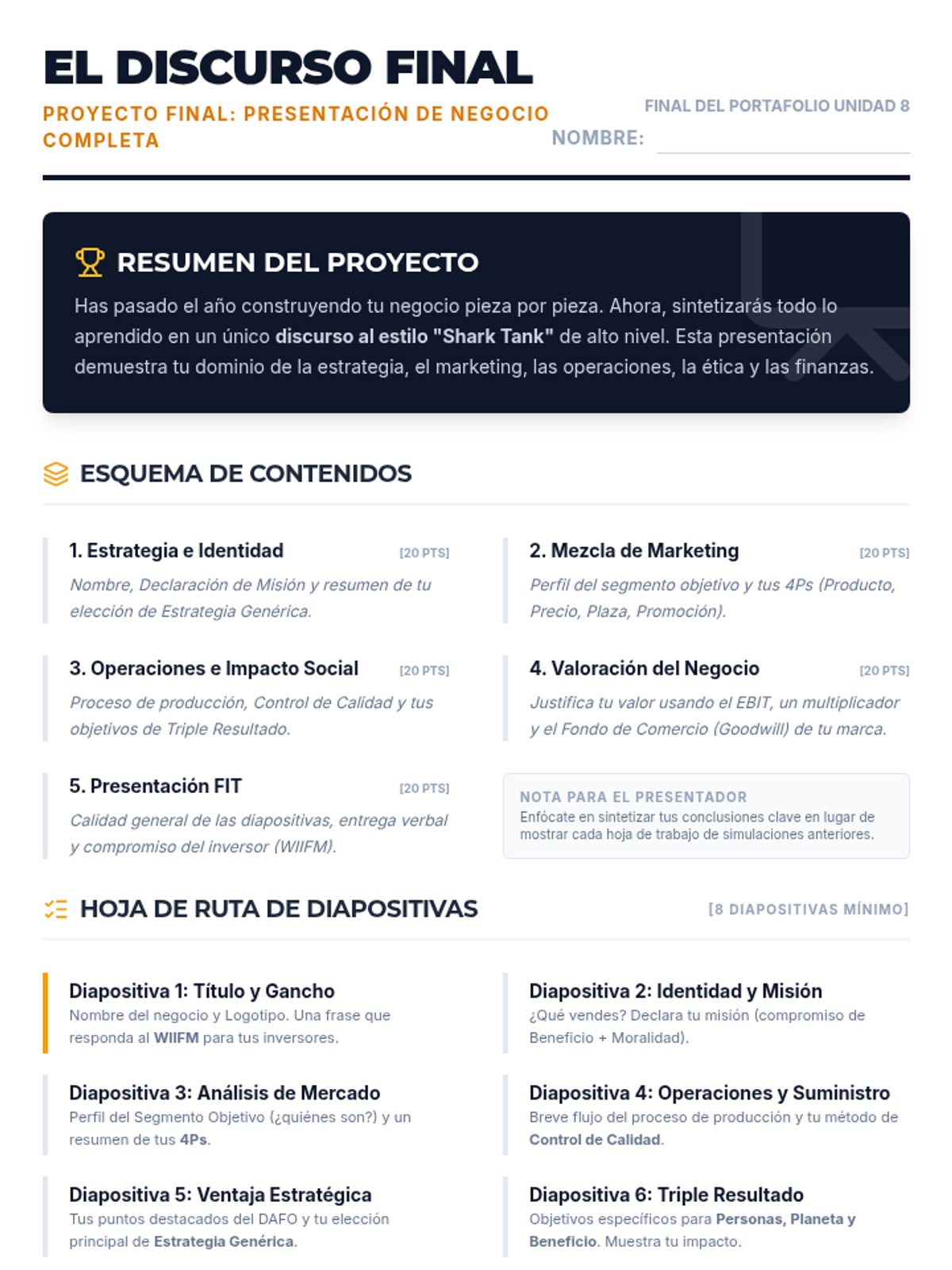
A comprehensive guide for the year-end final project where students present their fake business. It features an 8-slide Roadmap, focusing on strategy, marketing, operations, and valuation (Unit 8), while removing the cash flow simulation and financing plan requirements.
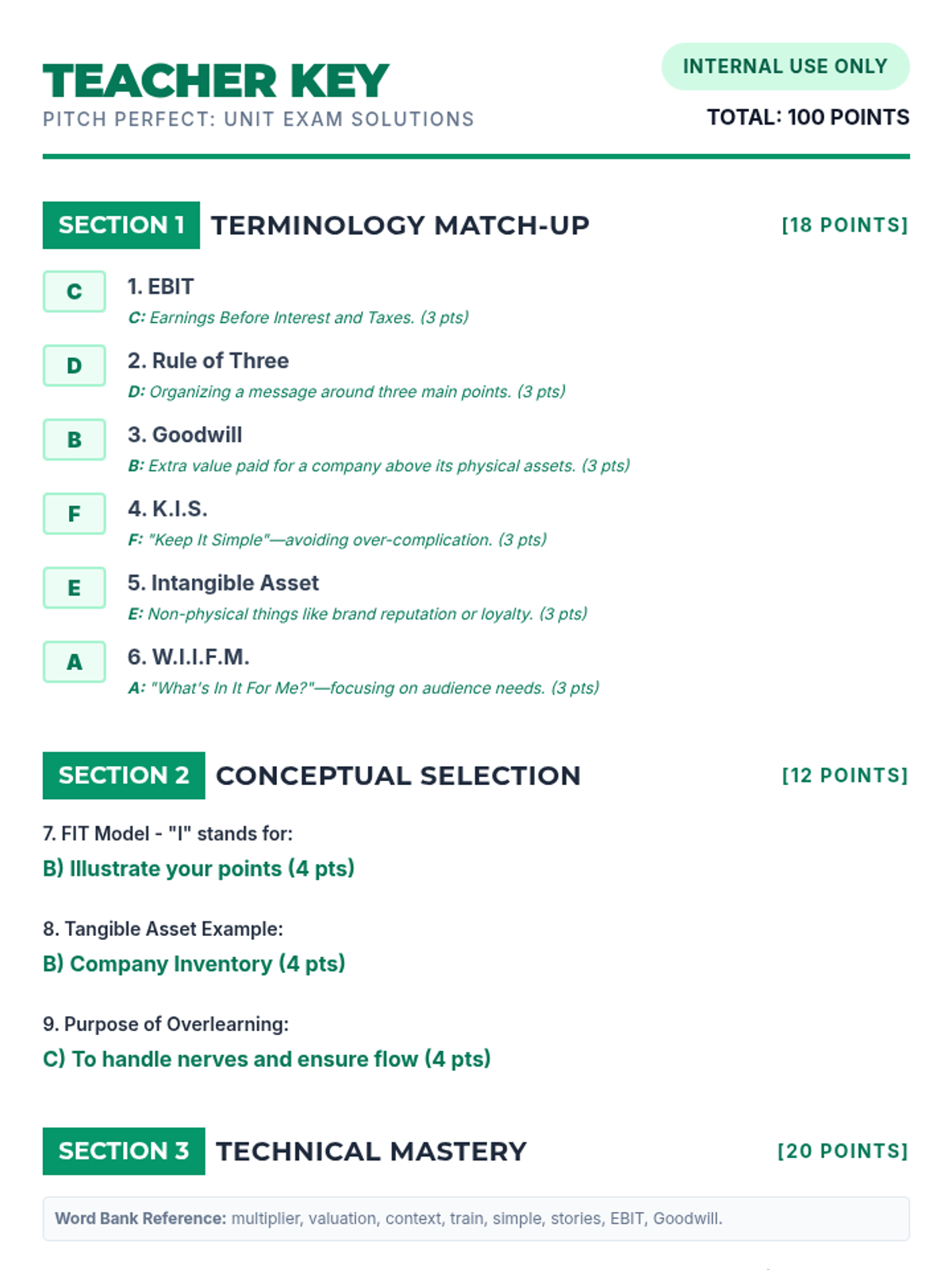
A detailed teacher answer key for the Pitch Perfect Unit Exam, including correct answers for all sections, point value breakdowns totaling 100 points, and grading criteria for open-ended and scenario-based questions.
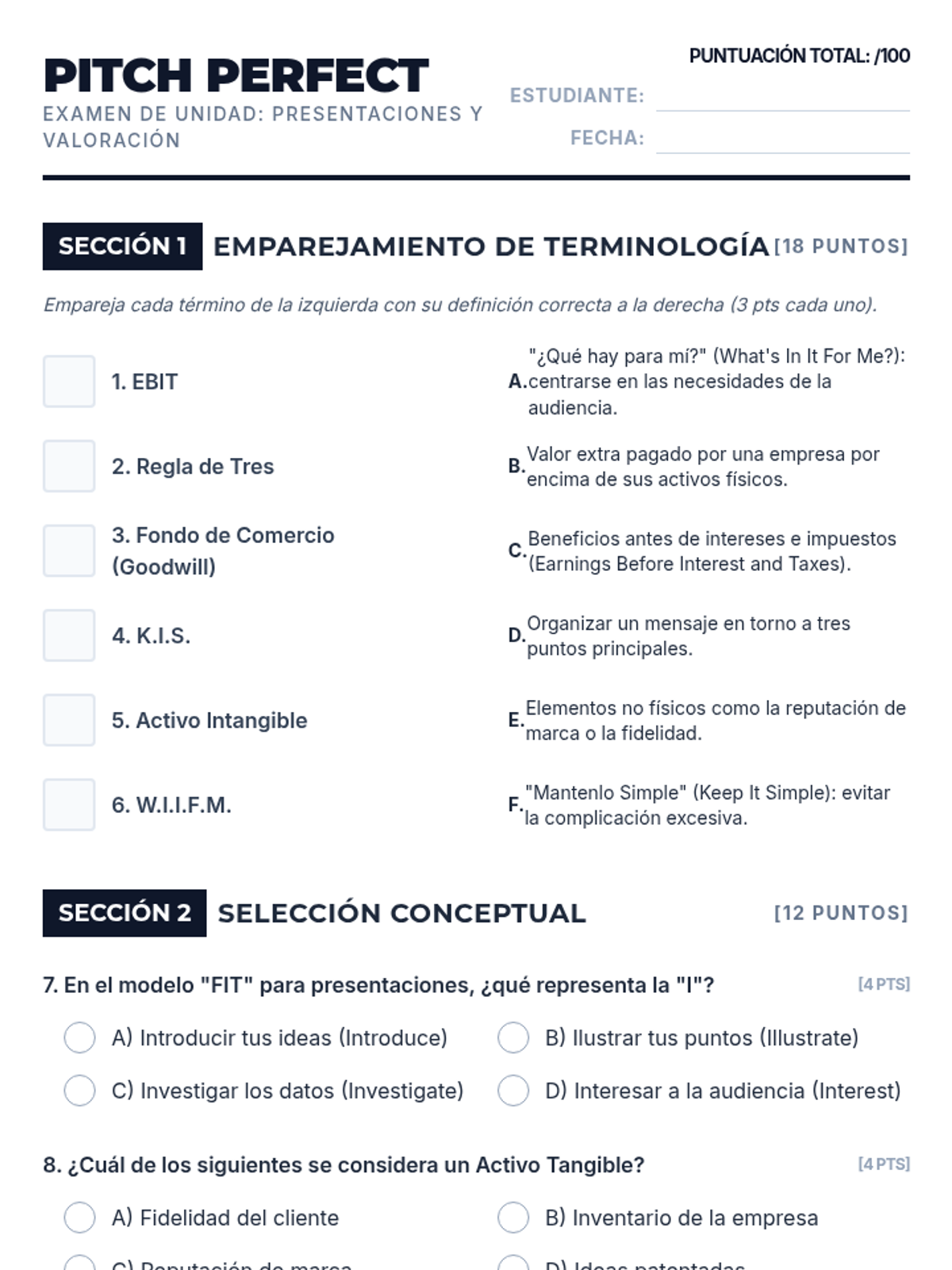
A comprehensive unit exam covering presentation skills (FIT model, Rule of Three, KIS, WIIFM) and business valuation concepts (EBIT, tangible/intangible assets, goodwill). Includes matching, multiple choice, fill in the blank, and short answer questions with assigned point values and a word bank.
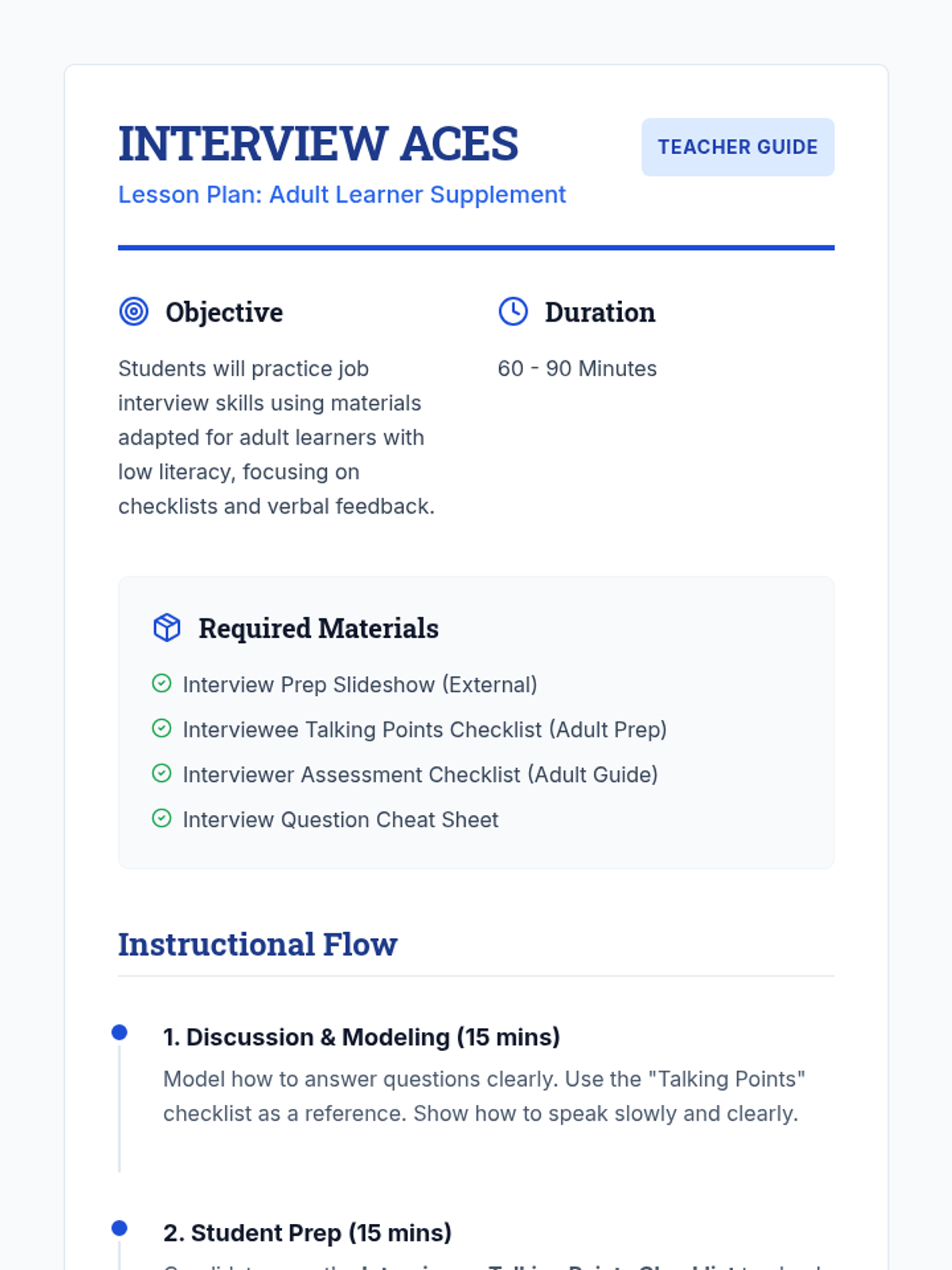
A detailed teacher lesson plan for a peer interview workshop, including timing, materials, and step-by-step instructional flow. Revised for adult learners with low literacy using checklists.
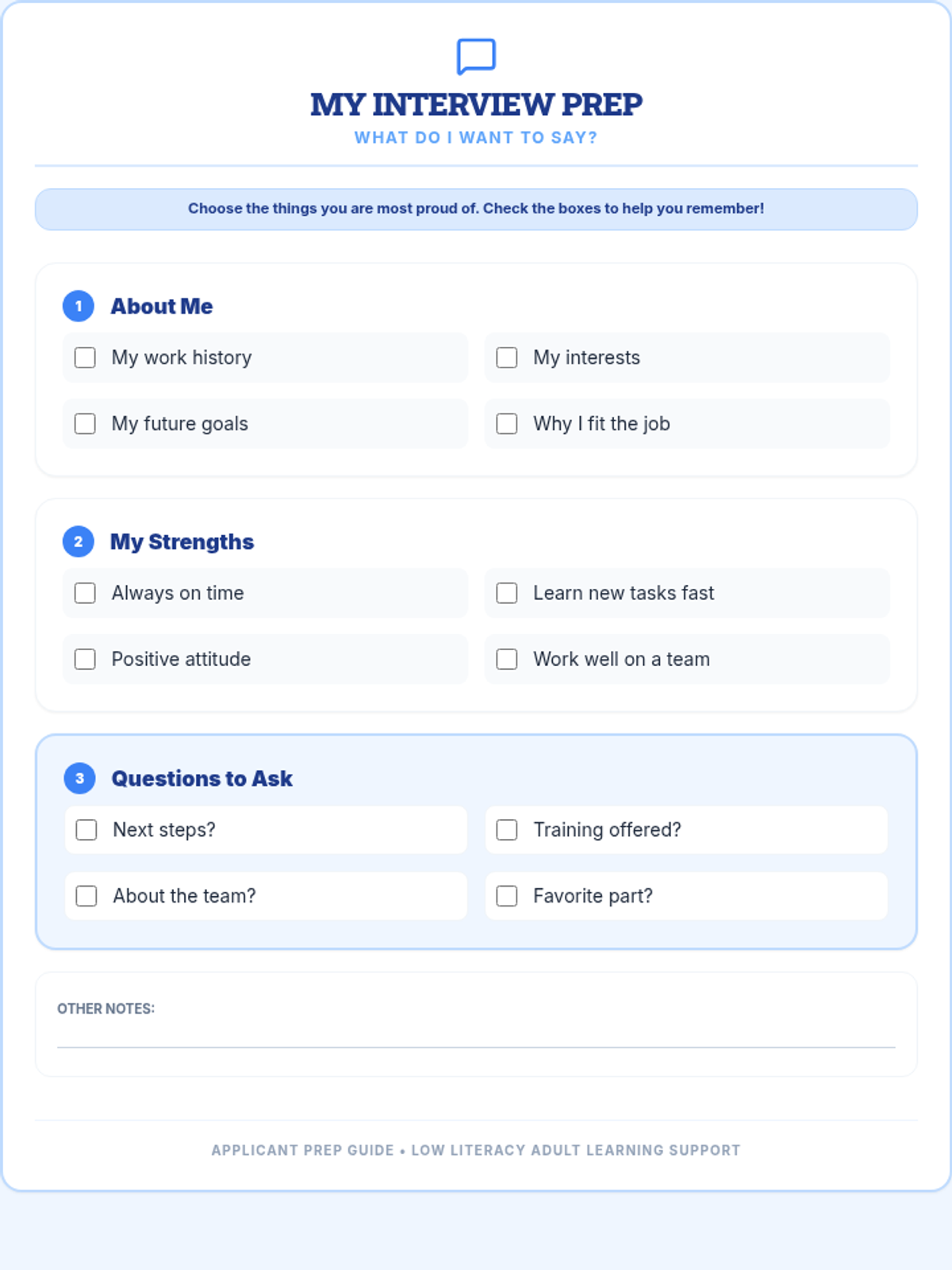
An interviewee preparation checklist for adult learners with low literacy, focusing on selecting key talking points to remember during an interview. Revised for single-page fit and better print quality.
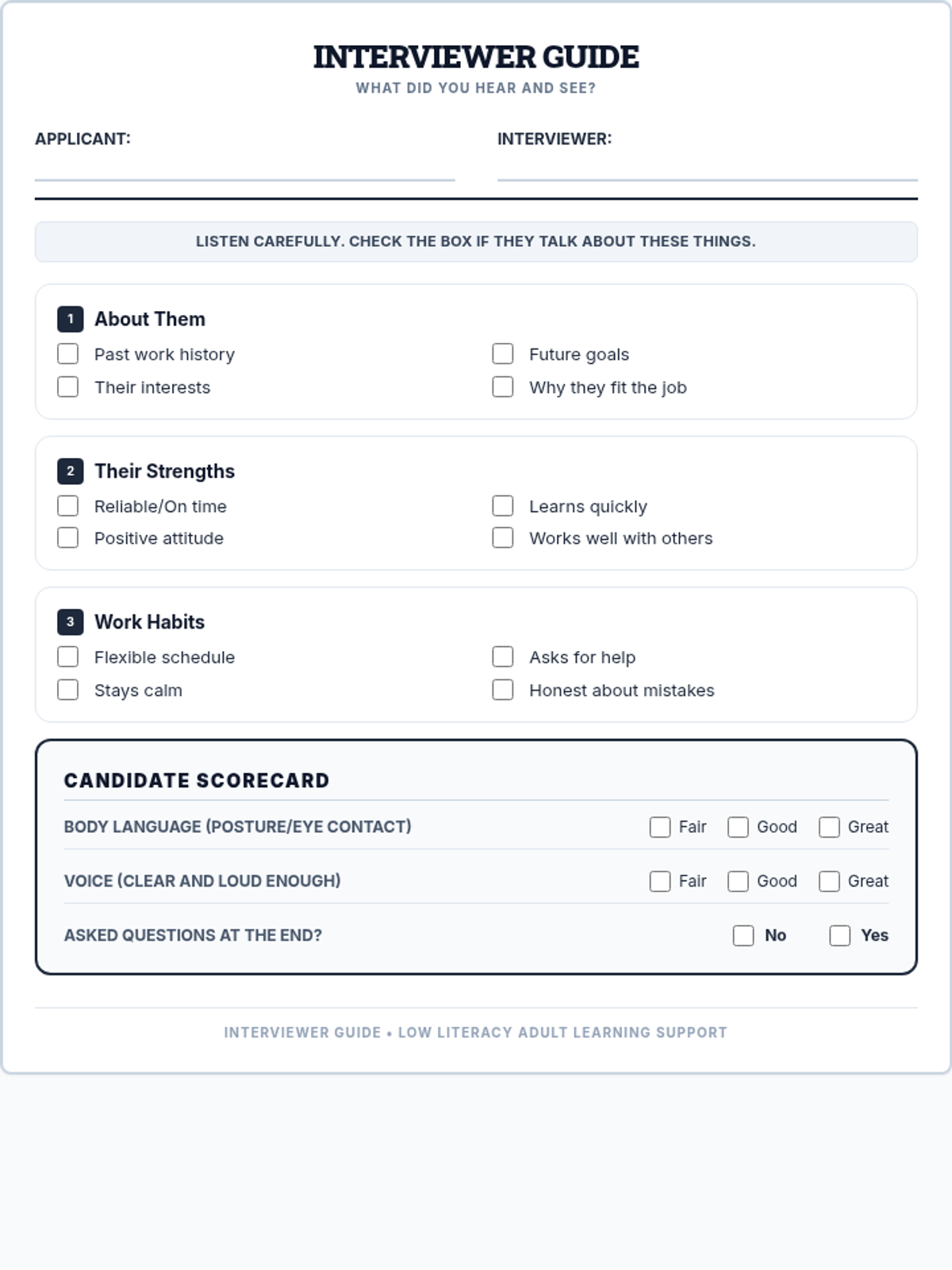
An interviewer guide with checkboxes to track candidate responses and evaluate performance, designed for adult learners with low literacy. Revised for single-page fit and better handwriting legibility.
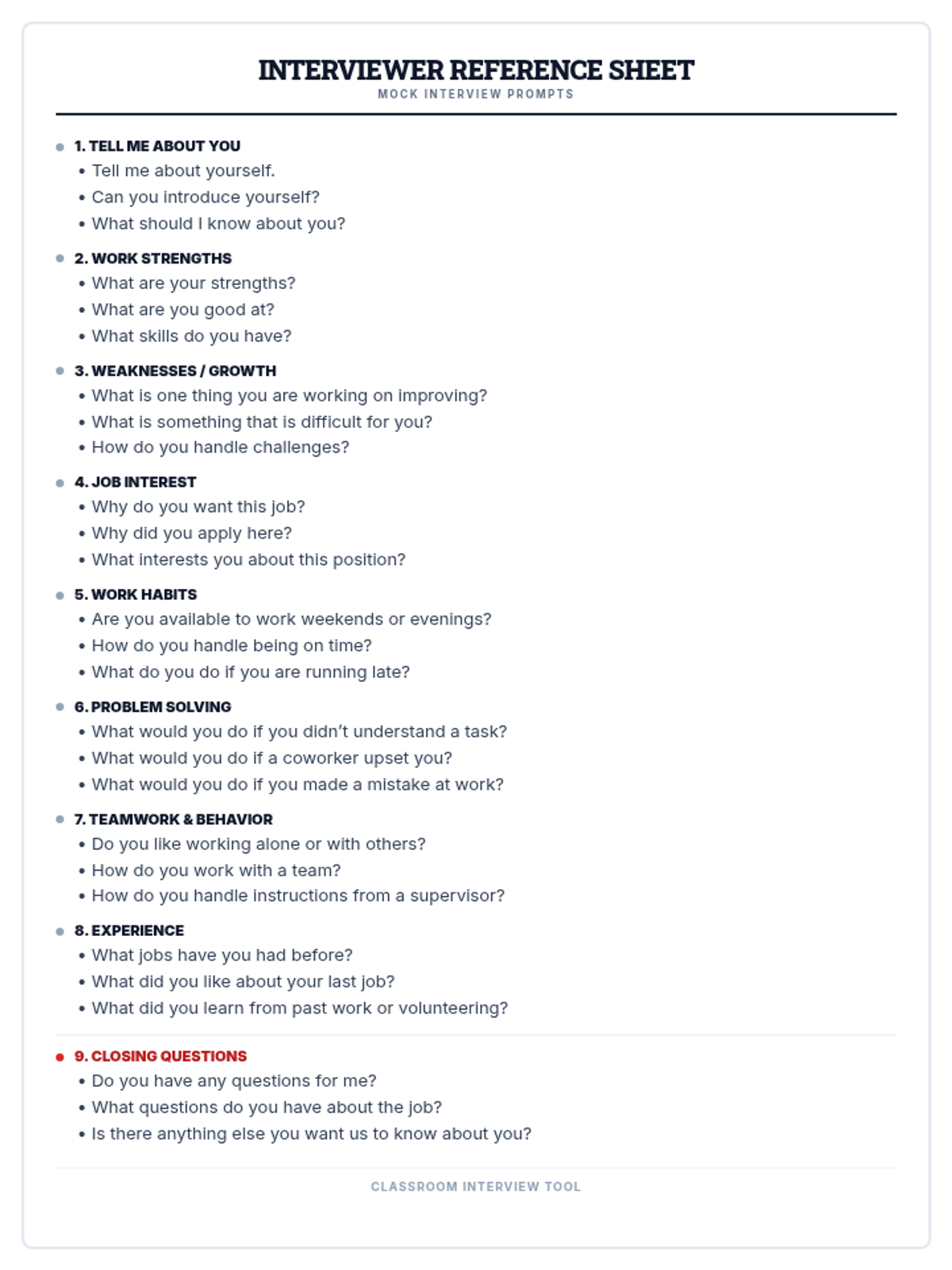
A clean, single-page reference sheet for students acting as interviewers, containing all question categories and prompts. Tightened for single-page layout.
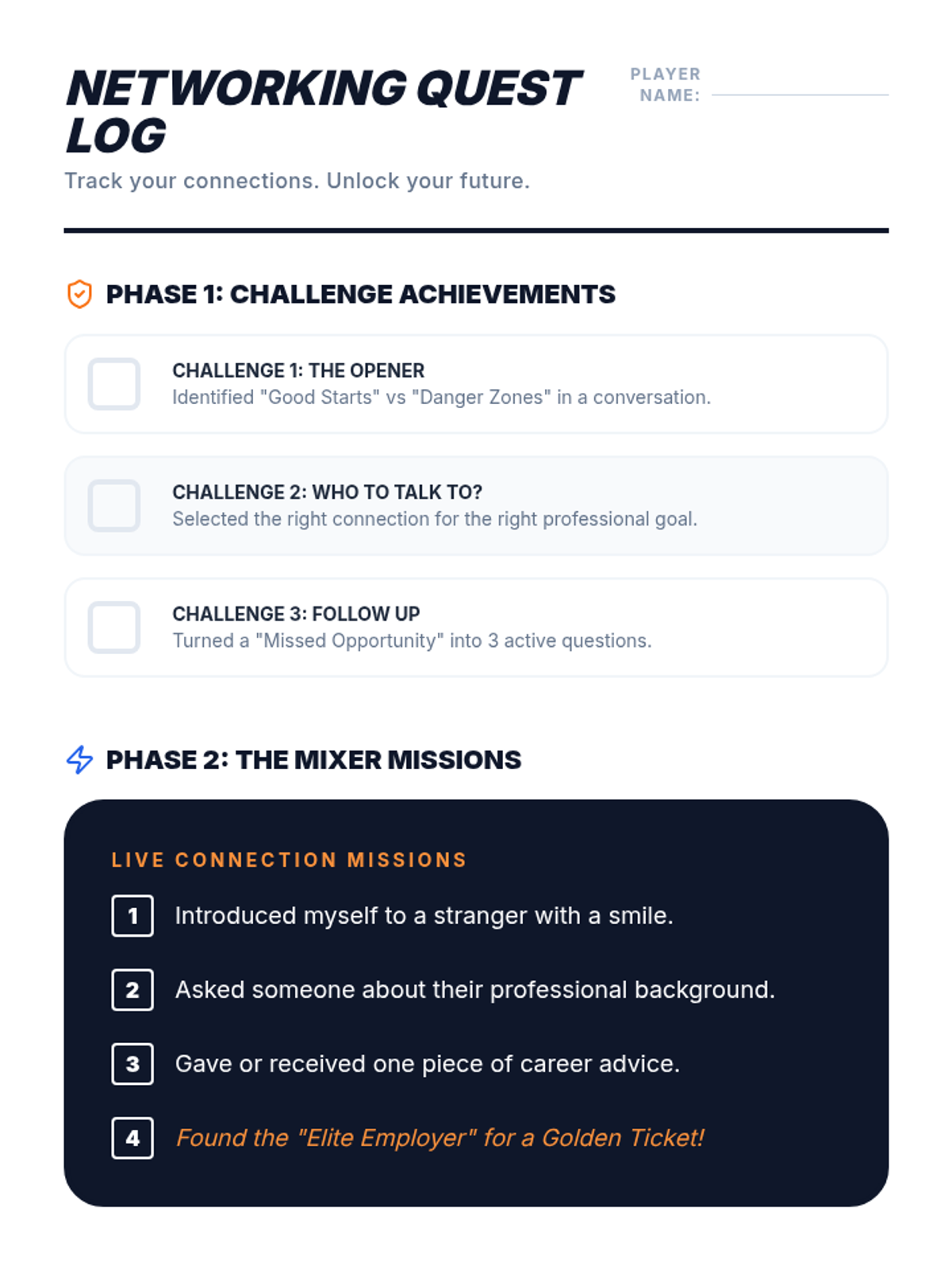
A student-facing achievement tracker that replaces physical reward tokens. Participants use this log to check off challenge completions and mixer missions, earning 'Opportunity Points' as they progress through the lesson.
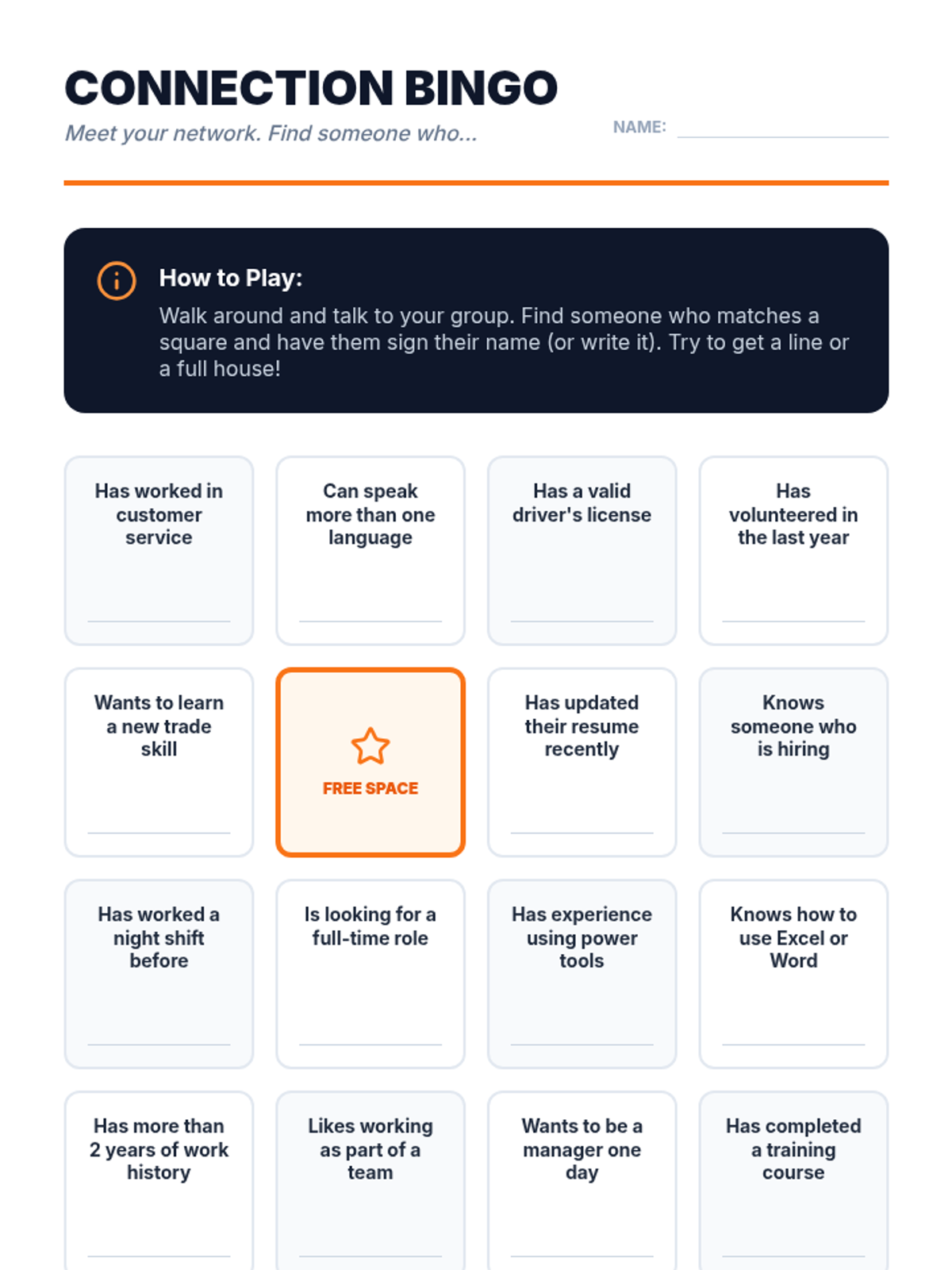
An interactive networking bingo worksheet designed as a group icebreaker or mixer activity. Students find peers who match specific professional traits and experiences to build initial connections and practice conversation starters.
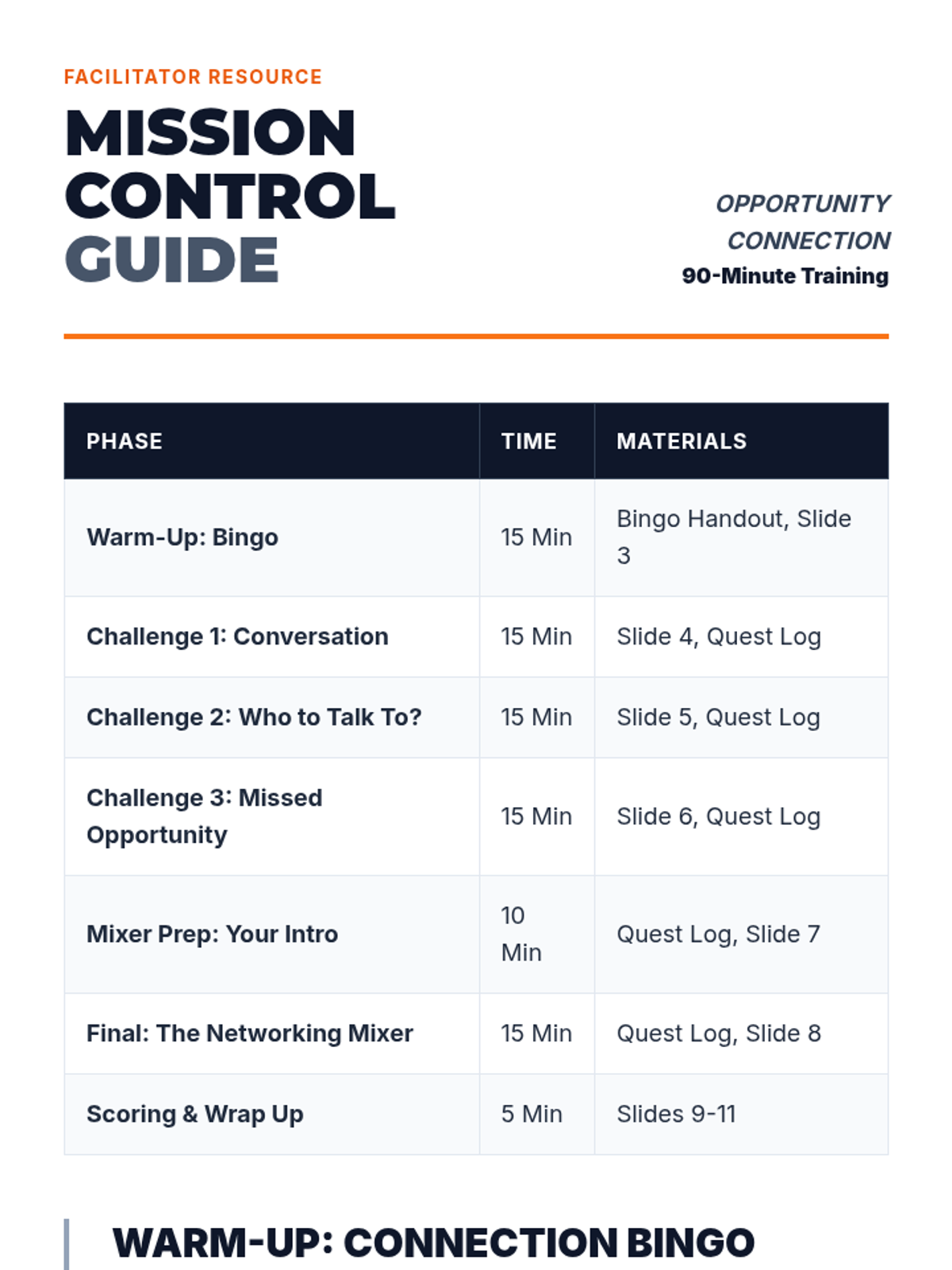
A comprehensive facilitator guide for 'The Opportunity Connection' training. Includes a 90-minute lesson timeline, specific game instructions for each challenge, and discussion prompts to ensure learning objectives are met. updated to remove the opportunity map and focus on mixer preparation.
A high-energy 11-slide visual presentation for 'The Opportunity Connection' training. Features a transit-map-inspired theme with challenges, discussion prompts, a connection bingo warm-up, and a group scoreboard. updated to reference the new Networking Quest Log and replaced the individual map with a mixer preparation slide.
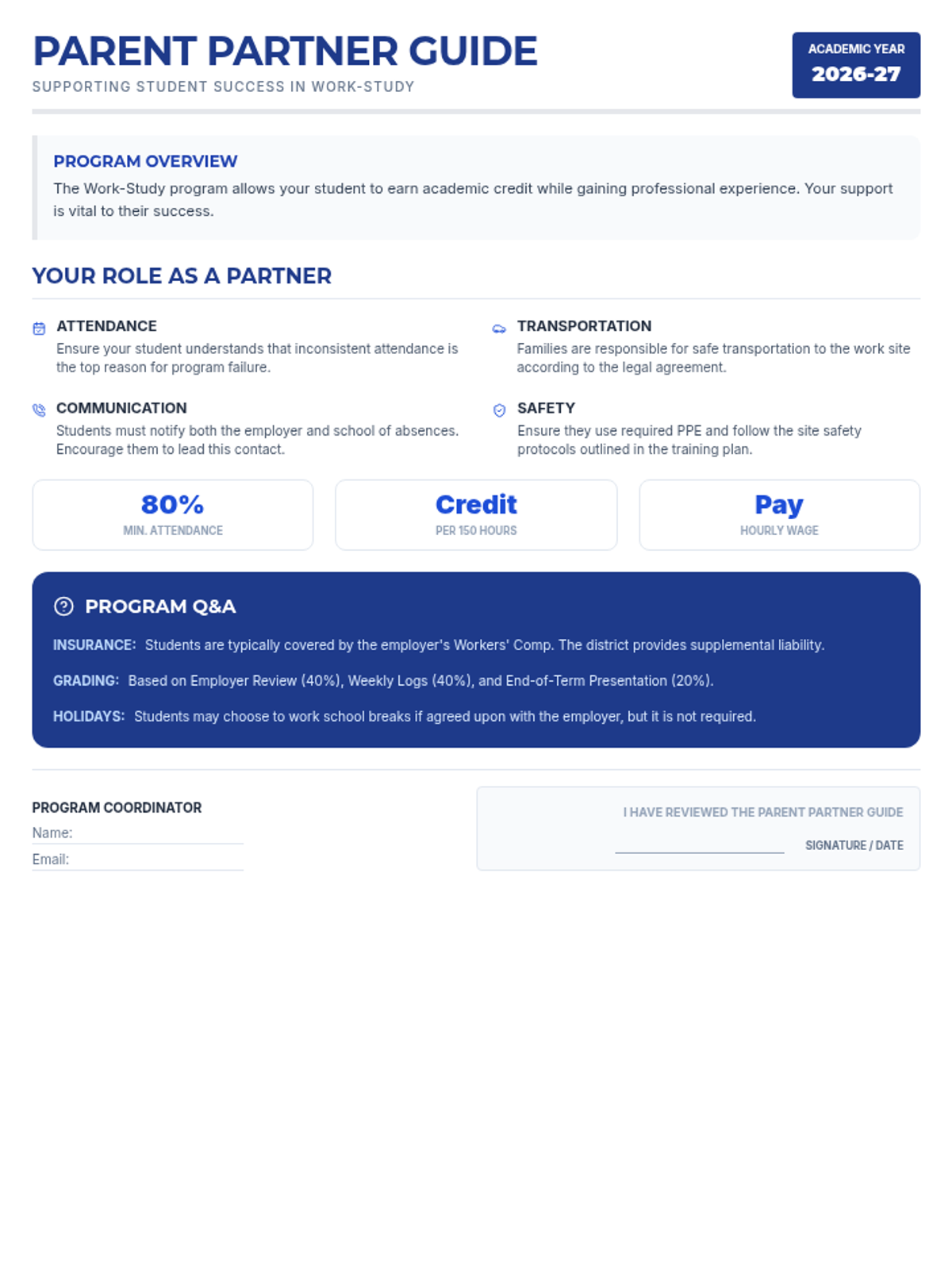
An informational guide for parents that outlines their role in supporting students during a work-study program, including responsibilities, logistics, and FAQs.
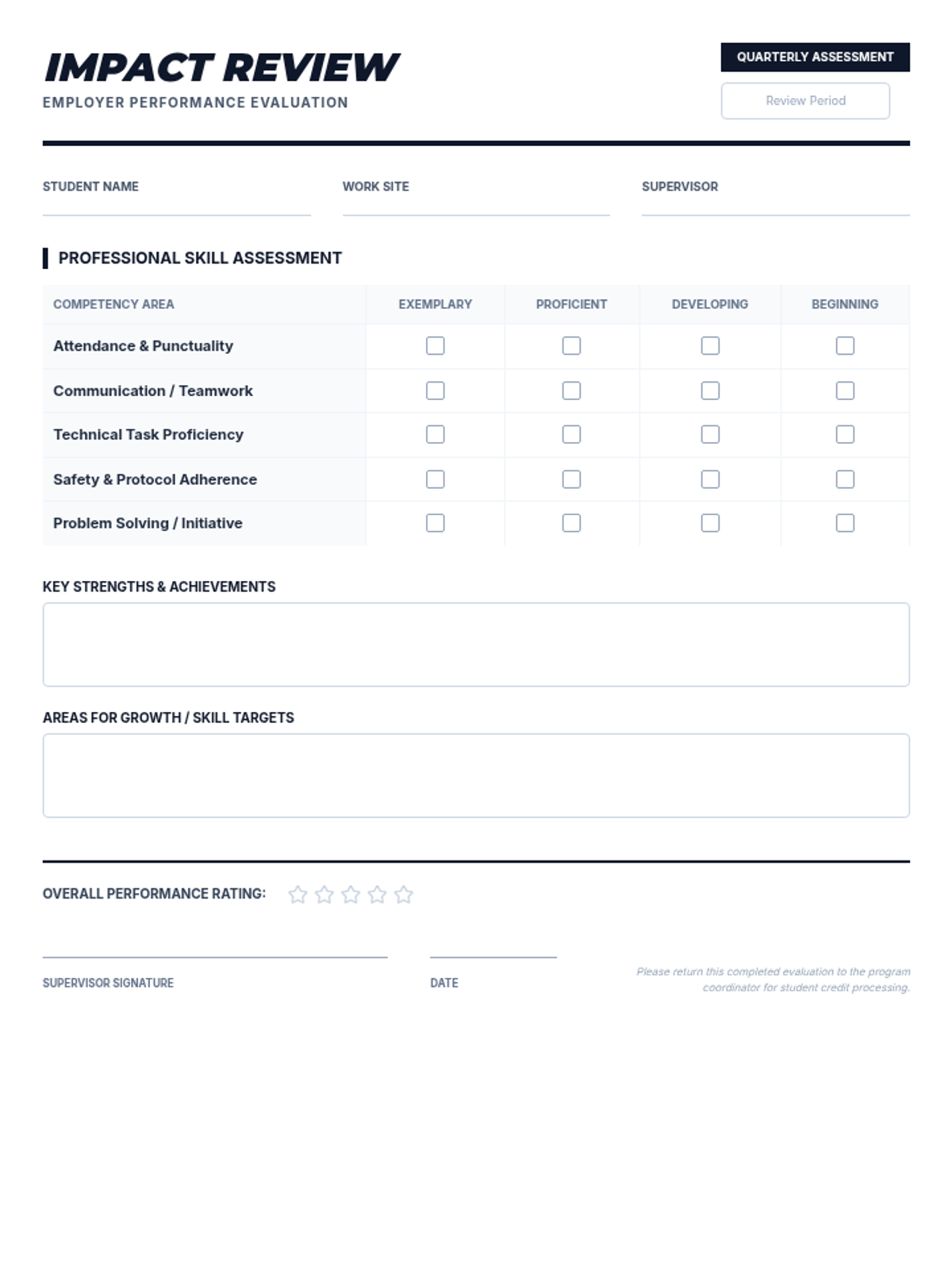
A comprehensive performance evaluation form for employers to assess student progress across professional competencies and safety standards.
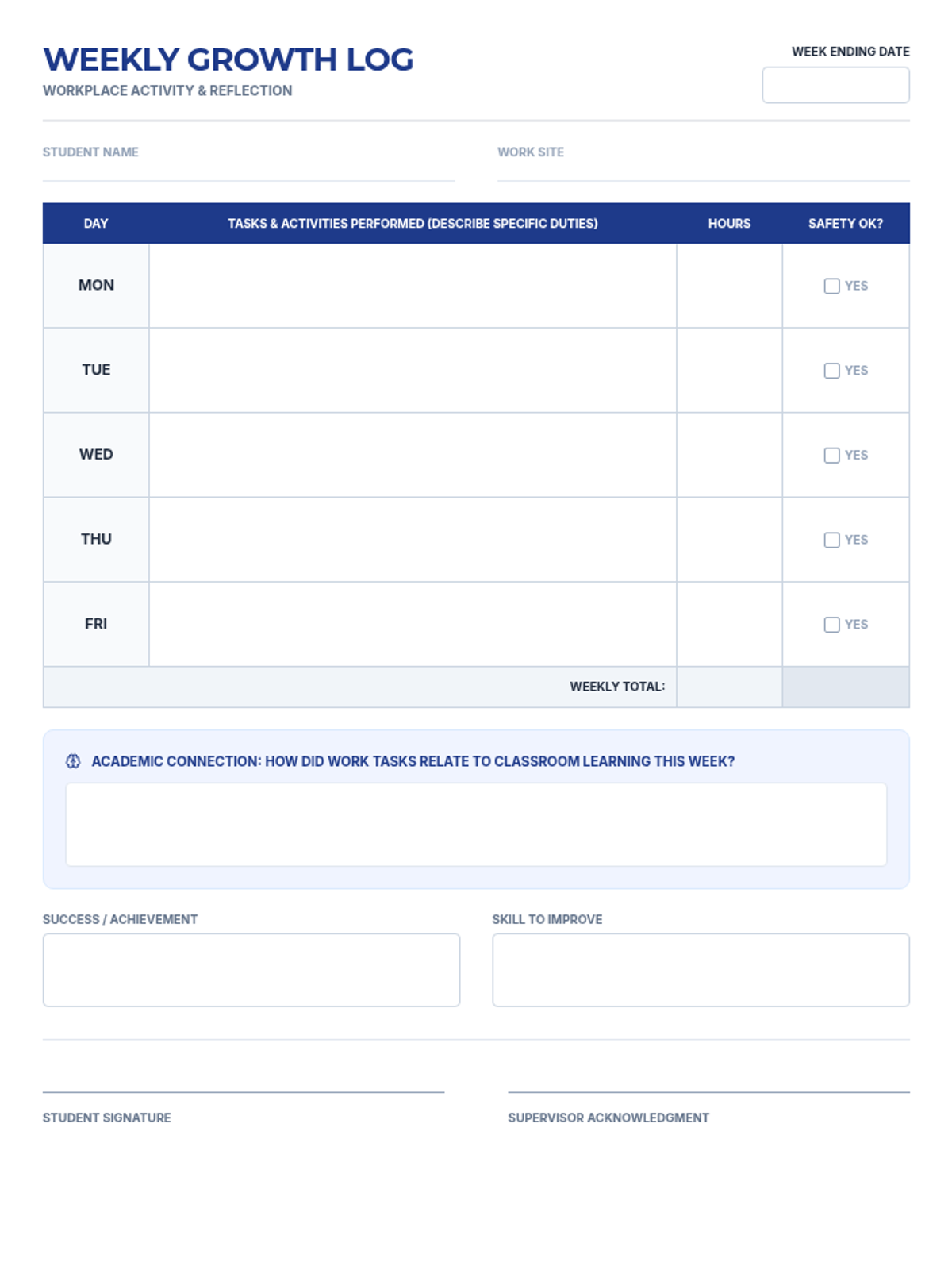
A weekly logging document for students to track hours, tasks, and reflect on the integration of their work with academic concepts.
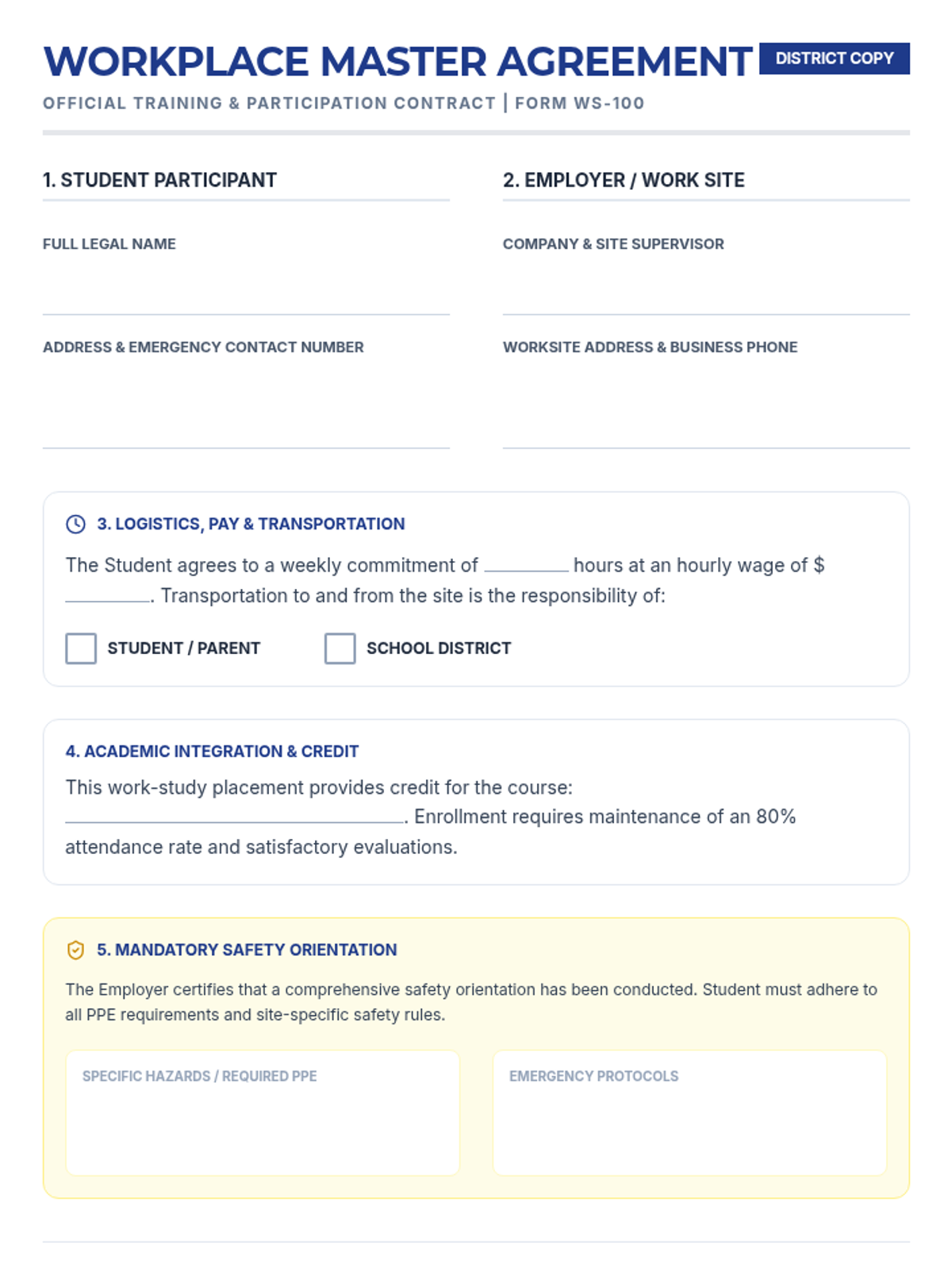
A formal training agreement and legal contract for work-study programs, covering hourly requirements, transportation, and safety protocols.
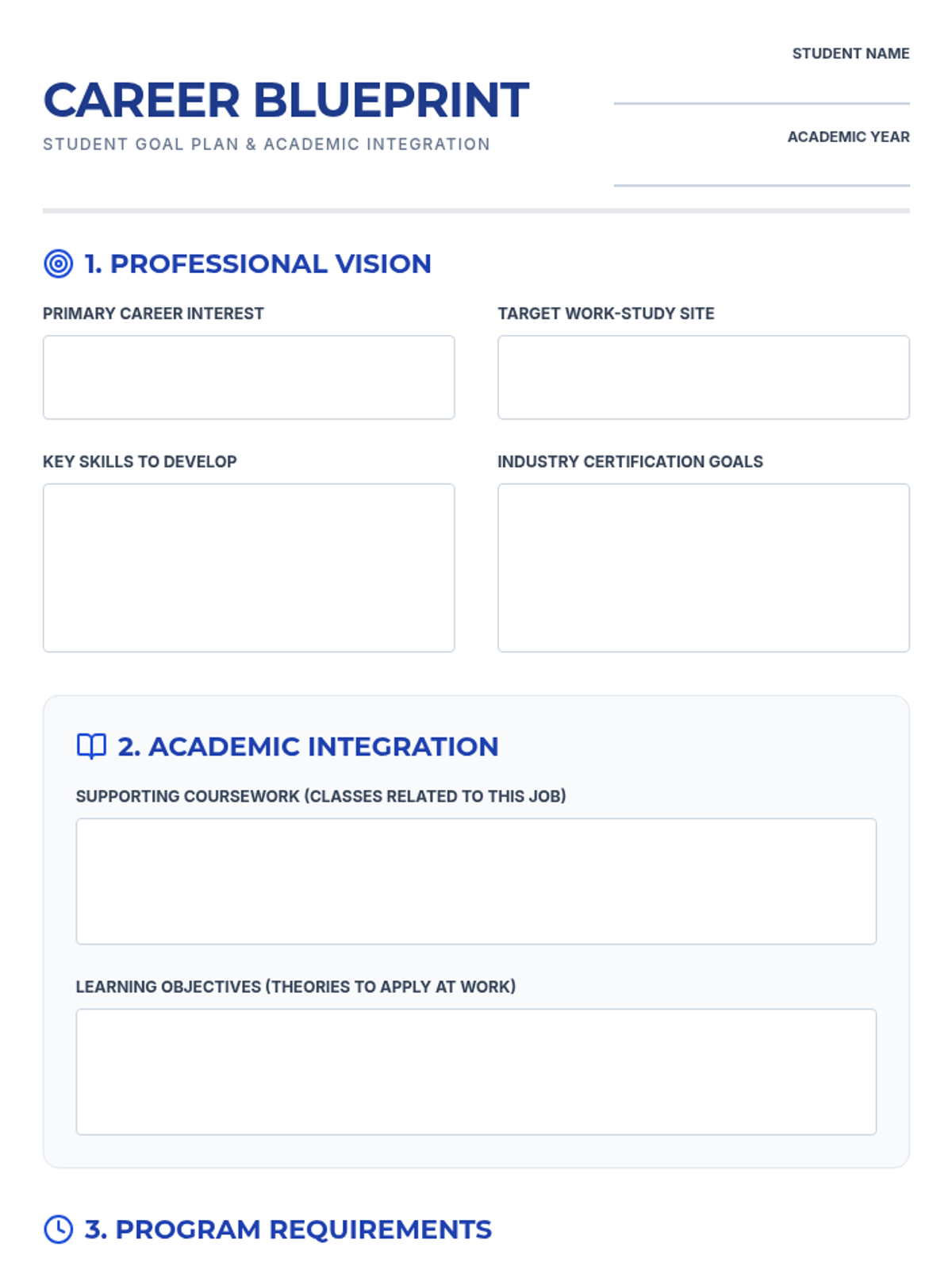
A student goal-setting document that outlines career interests, academic connections, and logistical requirements for a work-study program.
An instructional slide deck teaching students three core strategies for finishing the year strong: chunking large projects, the 5-minute rule, and identifying a support network.
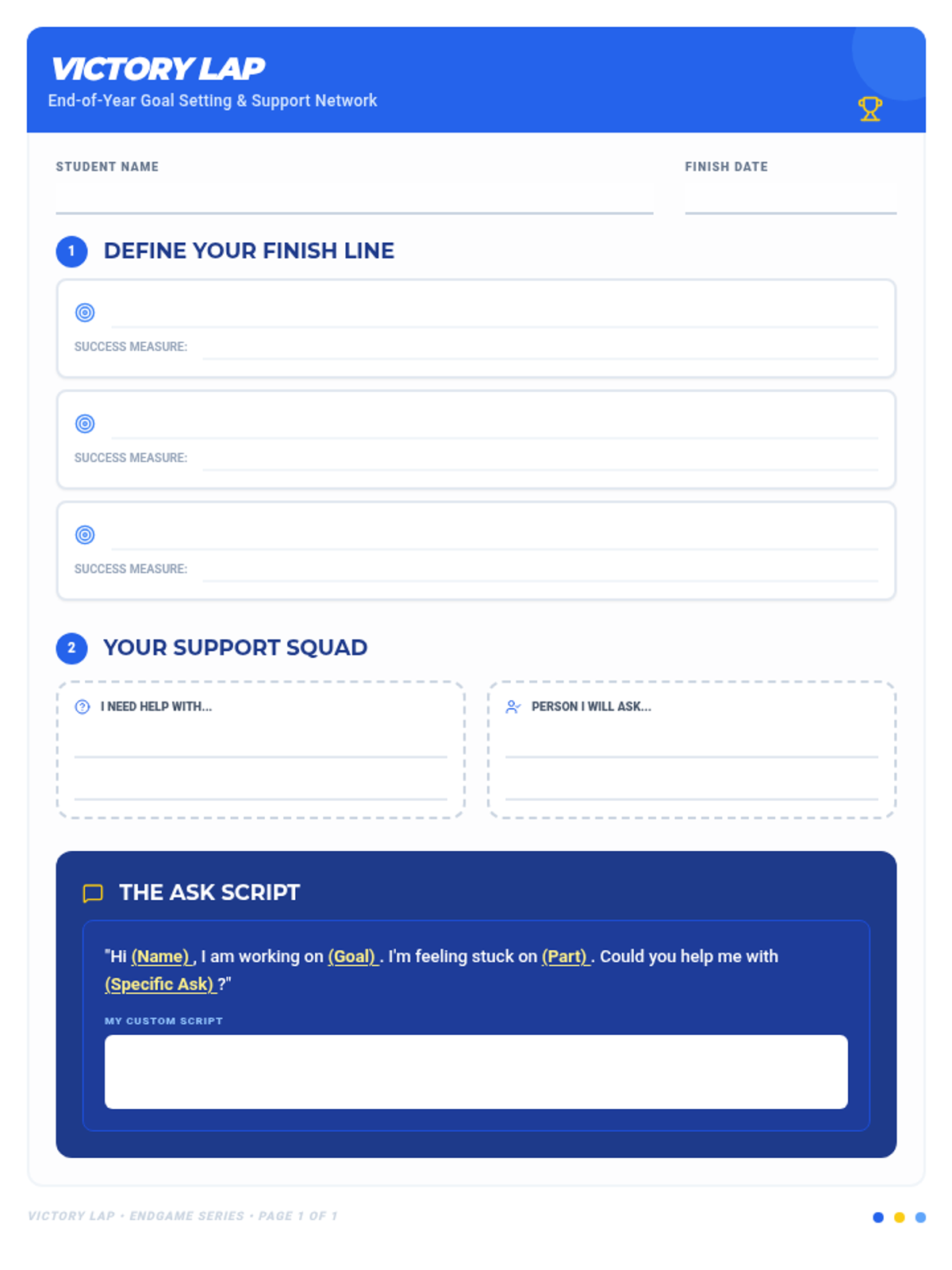
A goal-setting worksheet that guides students in identifying end-of-year objectives, mapping out their support network, and practicing self-advocacy scripts.
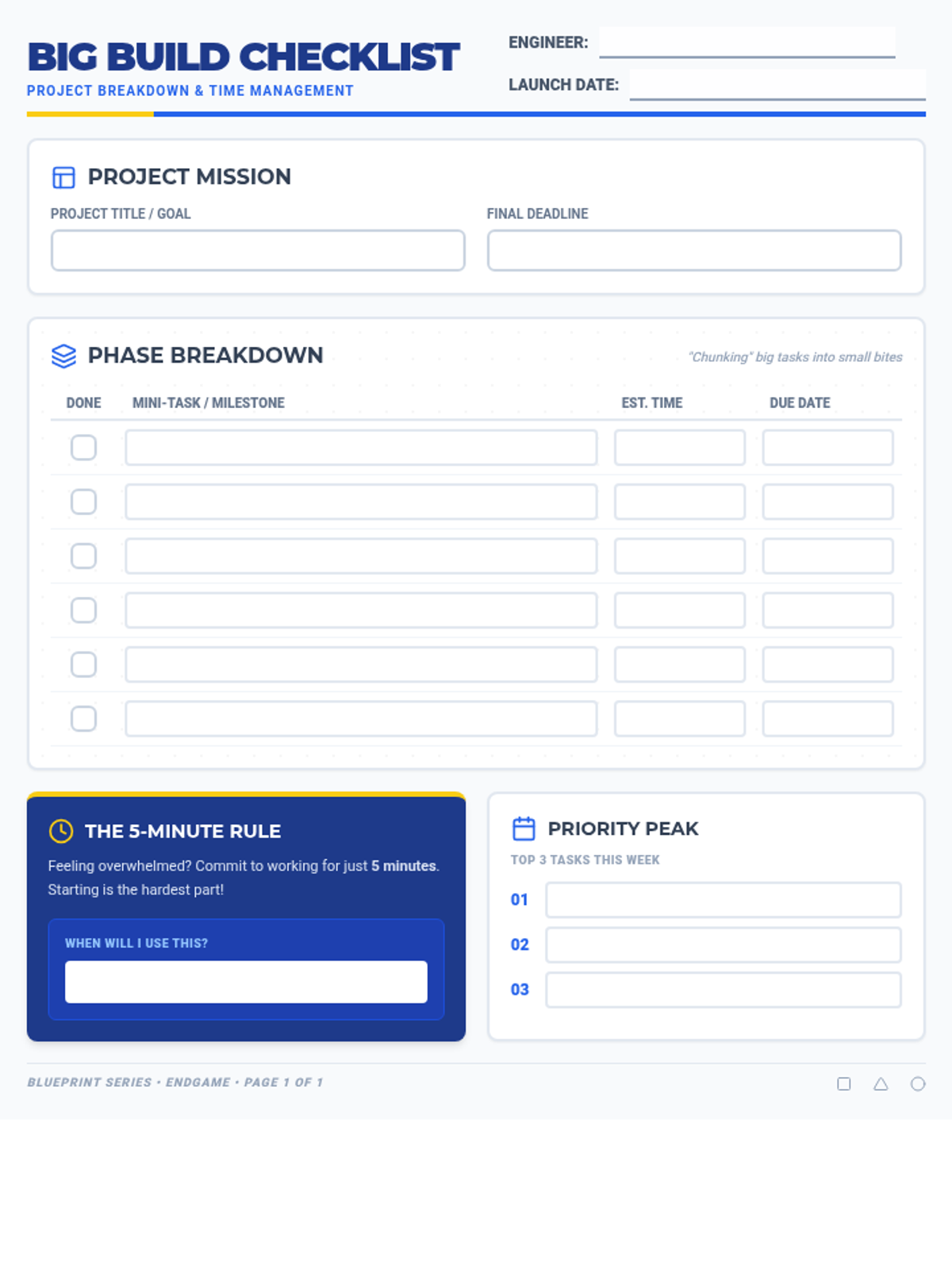
A project management checklist designed to help students break down large assignments into manageable mini-tasks with time estimates and deadlines.
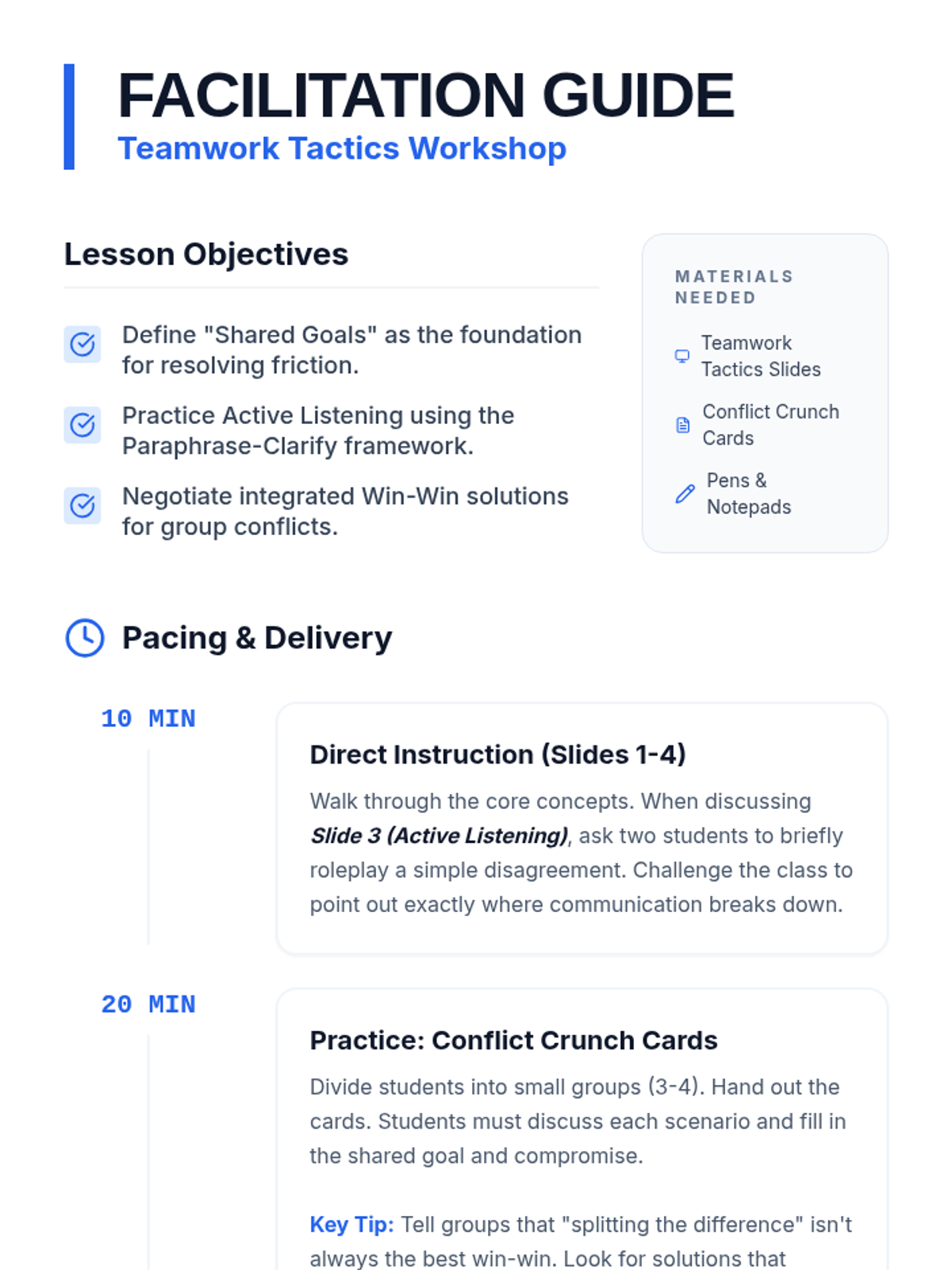
A comprehensive teacher's guide for the Teamwork Tactics lesson, including learning objectives, a detailed pacing guide, and thought-provoking discussion prompts.
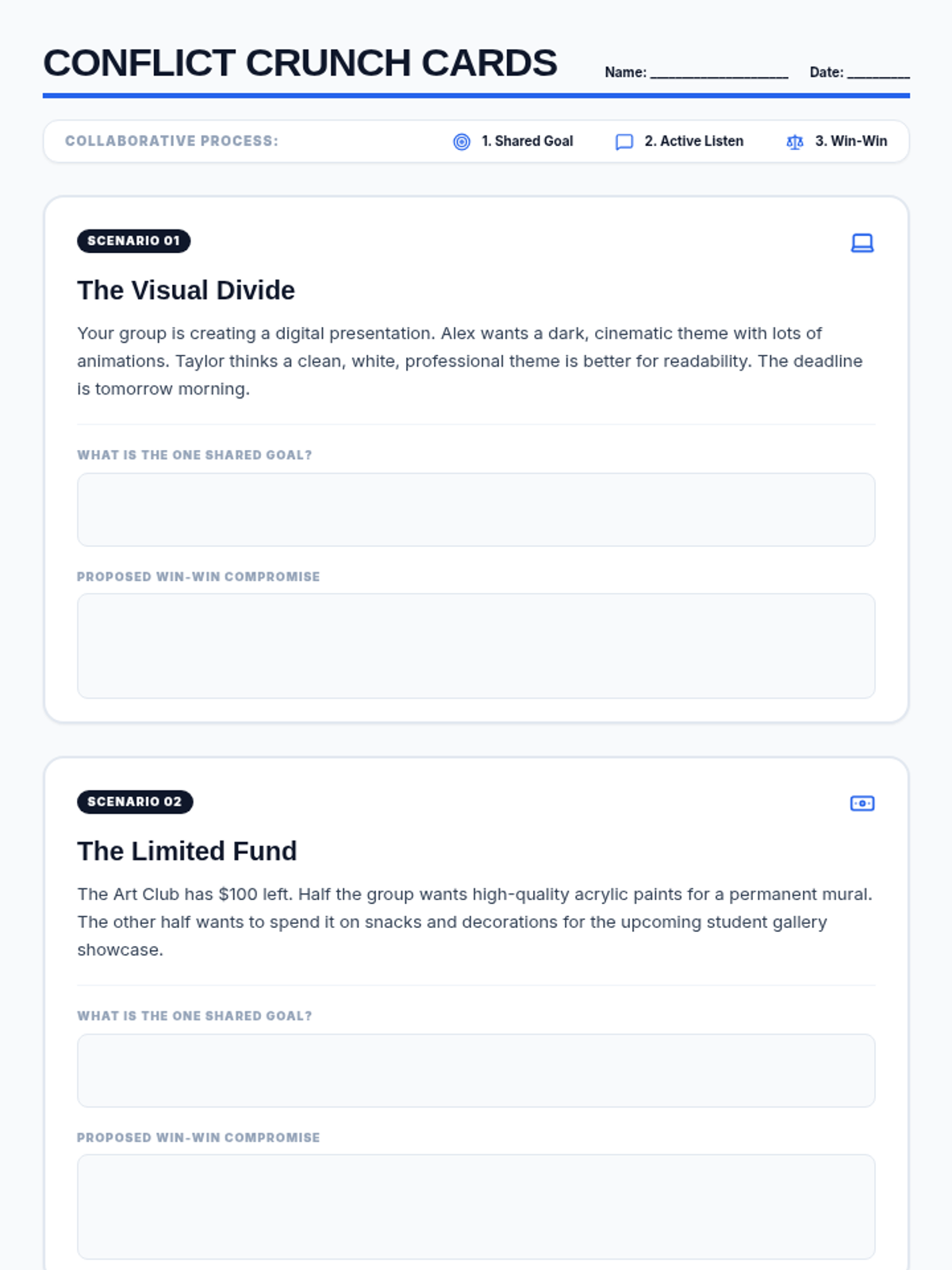
A set of 6 printable scenario cards designed to help students practice identifying shared goals and negotiating compromises in realistic group conflict situations.
A 5-slide visual presentation covering the core principles of collaborative problem solving, including shared goals, active listening techniques, and negotiation strategies.
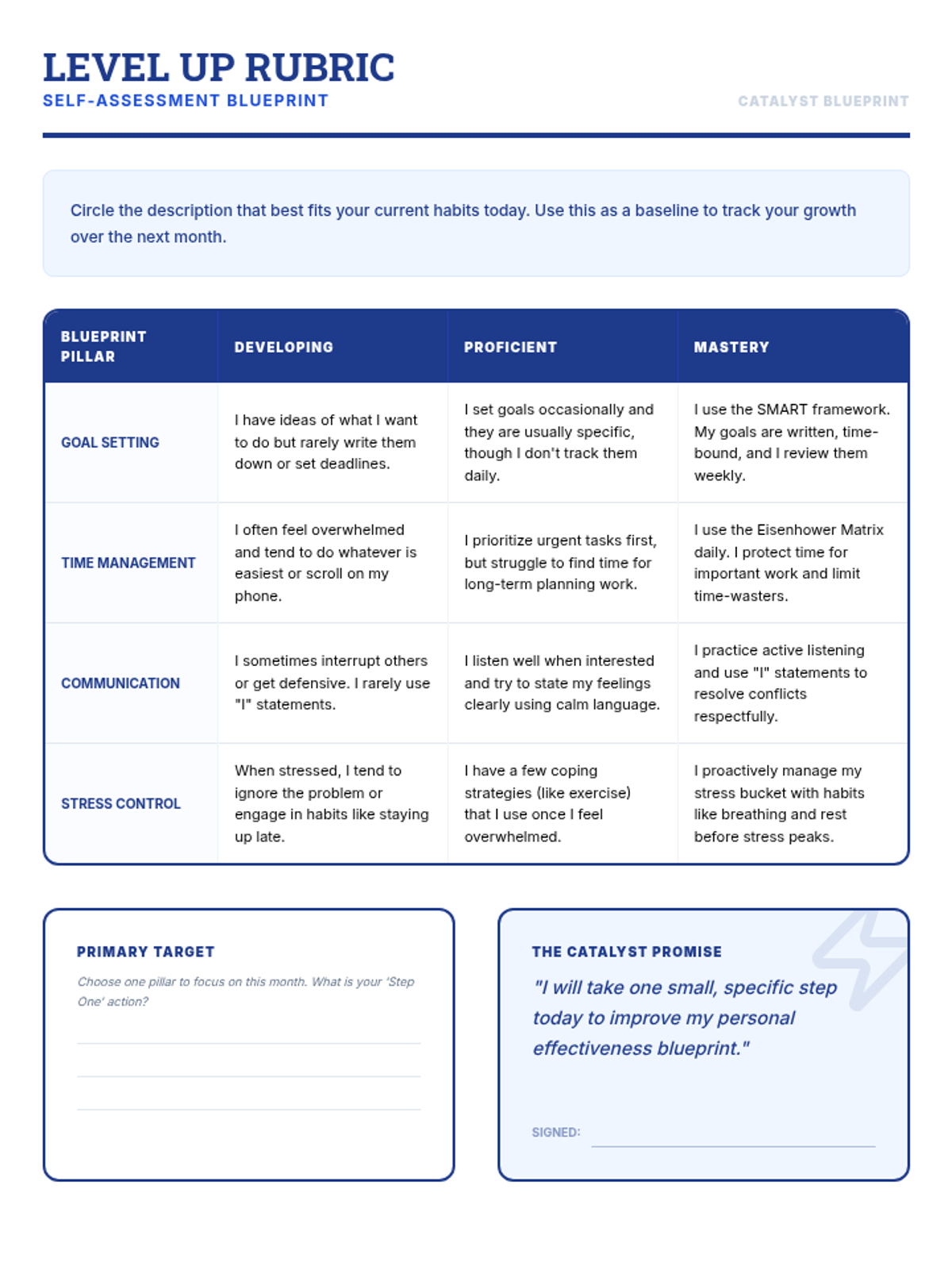
A self-assessment rubric titled 'Level Up Rubric' that allows students to evaluate their baseline skills across the four pillars of personal effectiveness and set targets for growth.
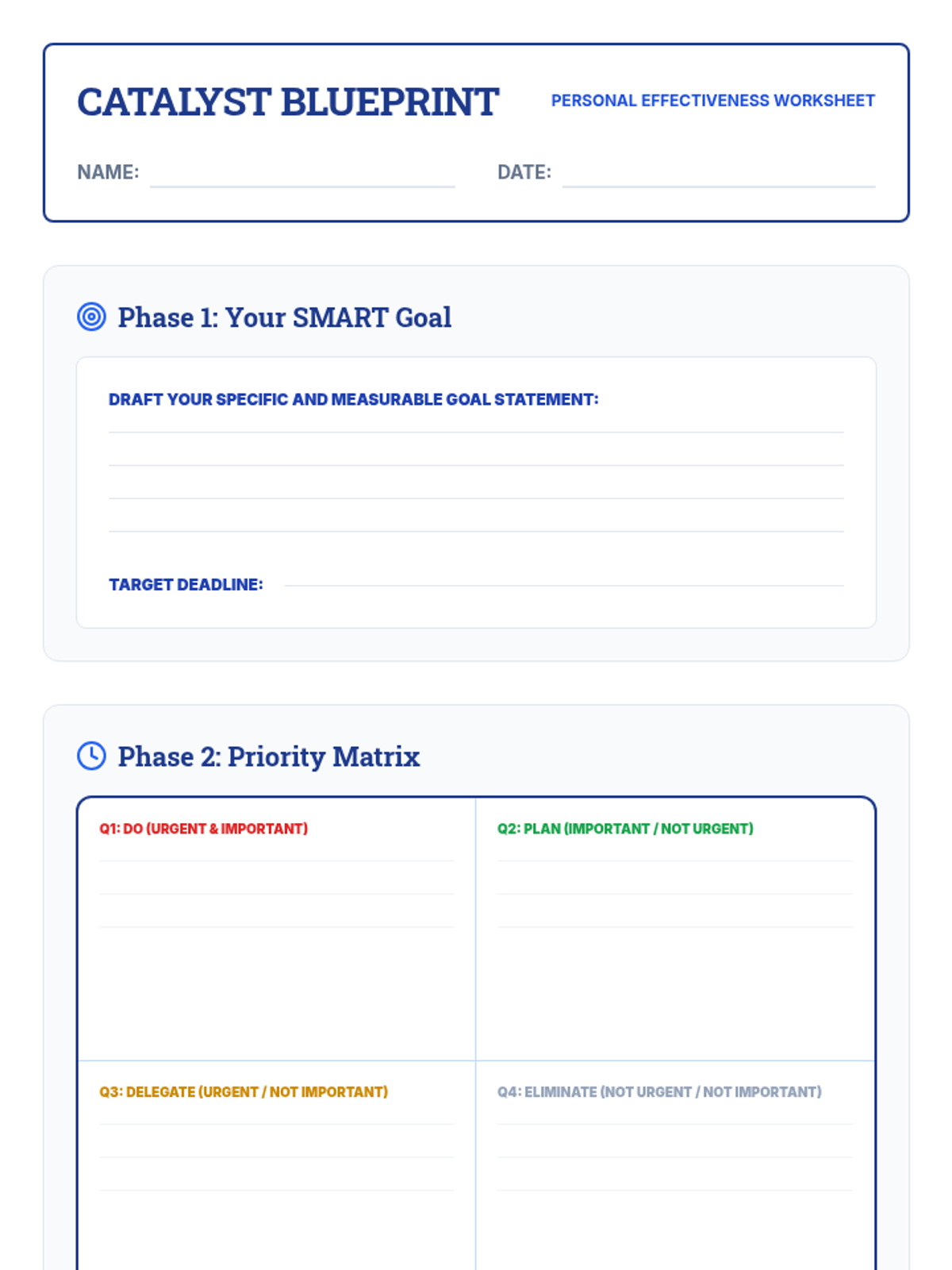
A structured student worksheet titled 'The Catalyst Blueprint' containing practical application areas for SMART goal setting, an Eisenhower Matrix grid, communication role-play prompts, and a stress management toolbox.
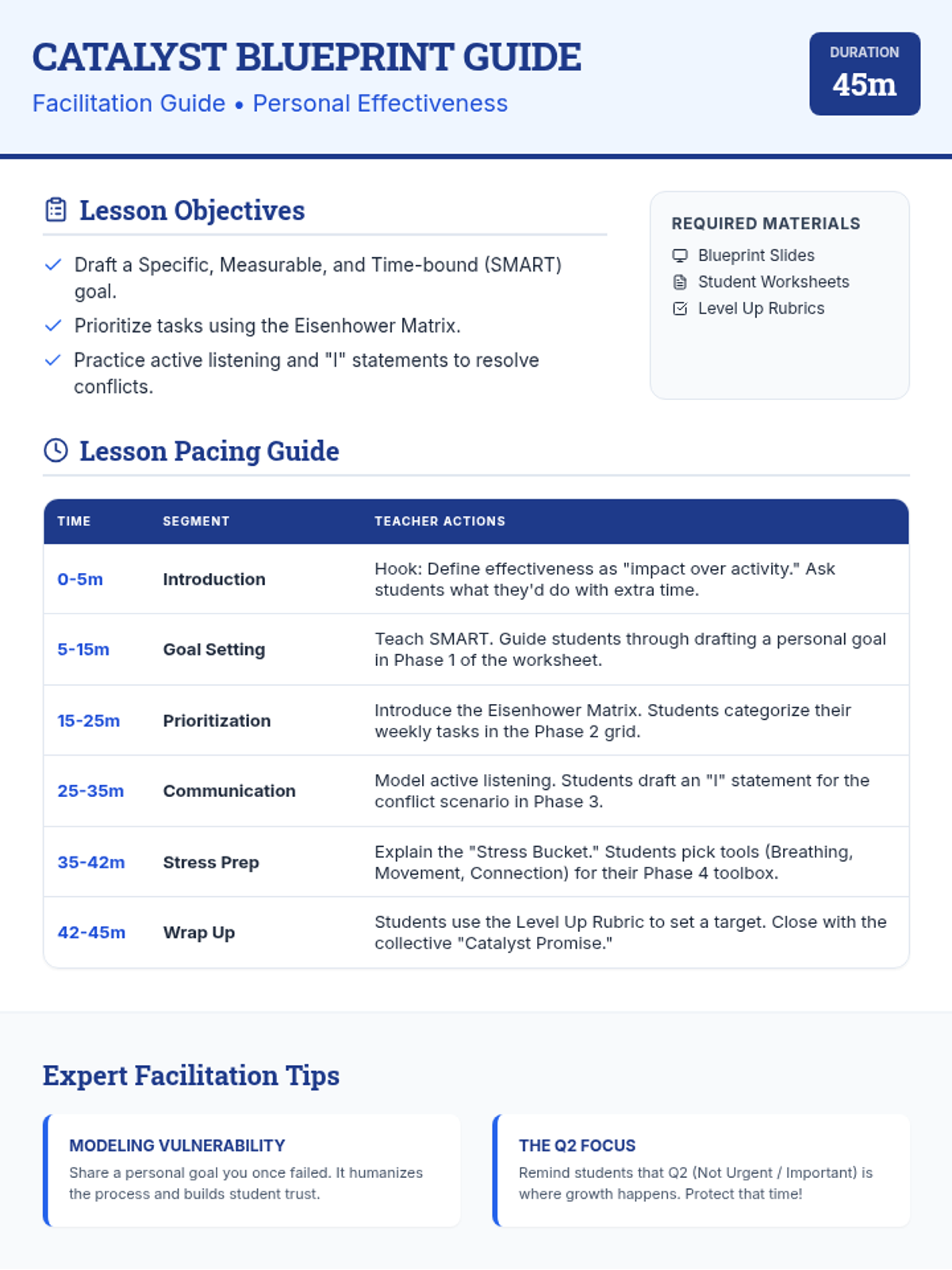
A comprehensive 45-minute teacher guide for facilitating 'The Catalyst Blueprint' lesson, featuring learning objectives, detailed pacing, activity instructions, and expert facilitation tips.
A professional slide presentation titled 'The Catalyst Blueprint' covering the four pillars of personal effectiveness: SMART goal setting, time management with the Eisenhower Matrix, active communication techniques, and stress management strategies.
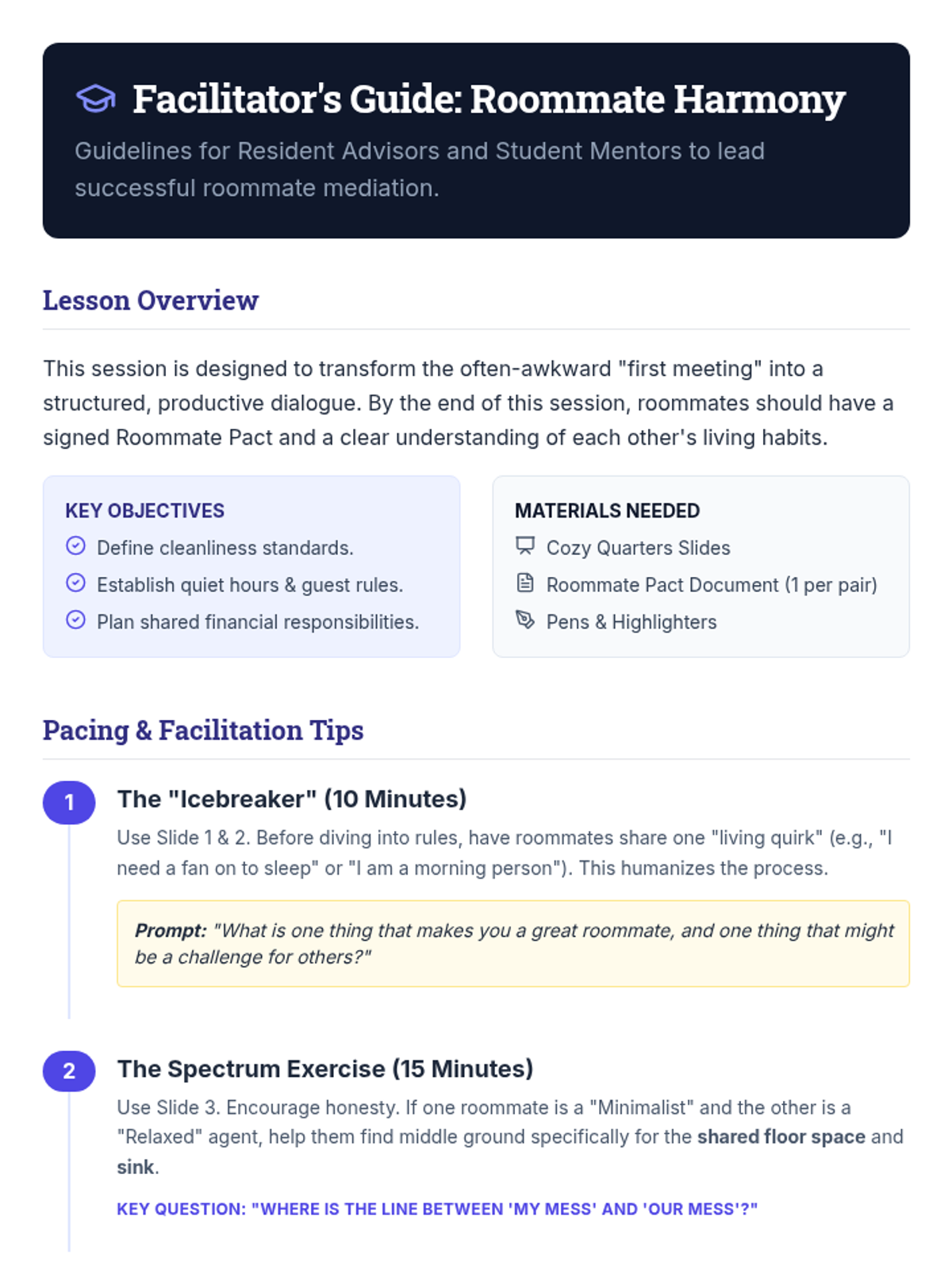
A guide for educators or RAs to facilitate the roommate agreement process, including discussion prompts, pacing, and conflict resolution tips.
A visual presentation designed to guide roommates through the process of setting expectations, discussing cleanliness, and navigating shared living finances.
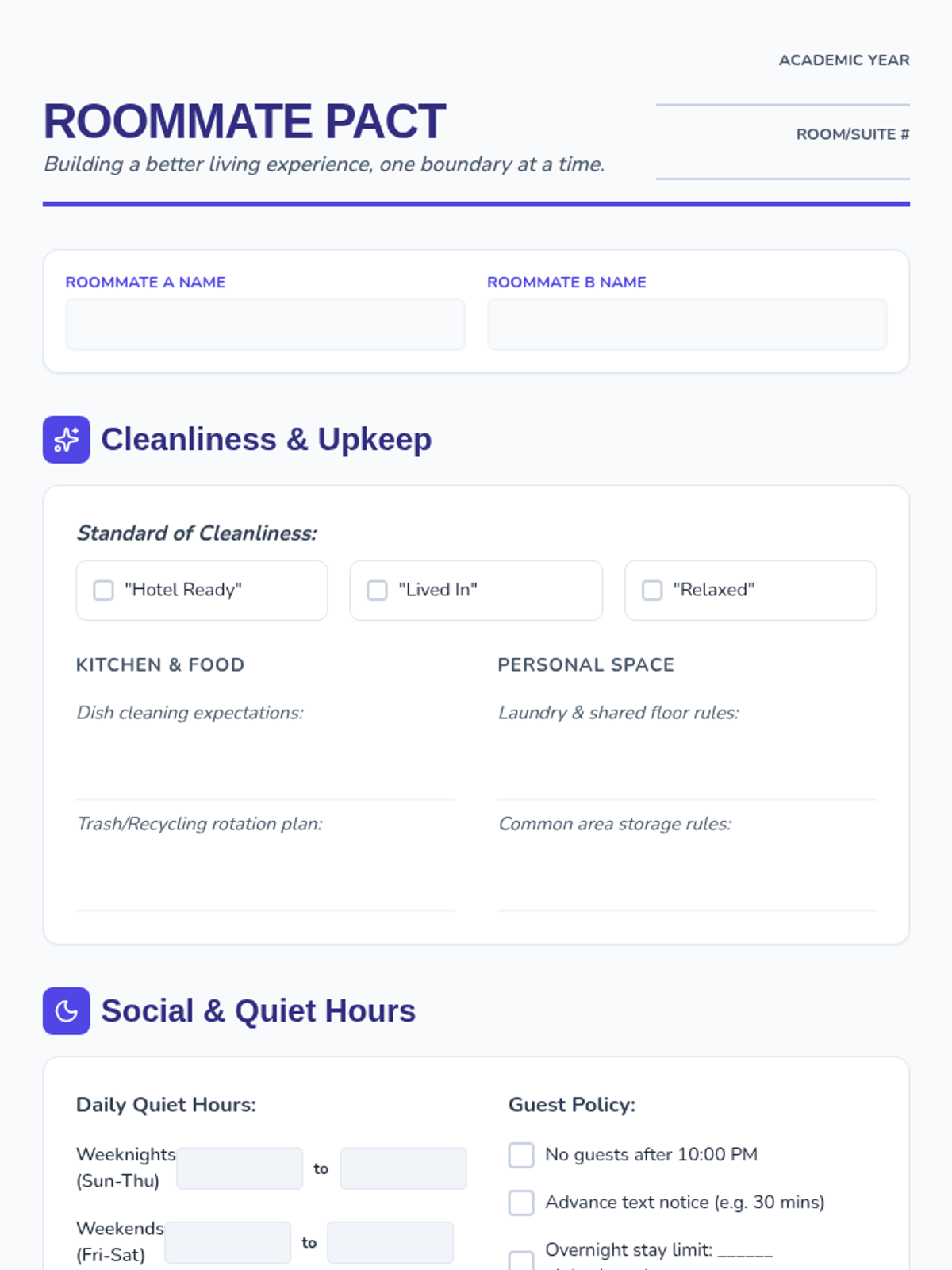
A formal living agreement for college roommates to establish ground rules for cleanliness, quiet hours, guests, and shared financial responsibilities.
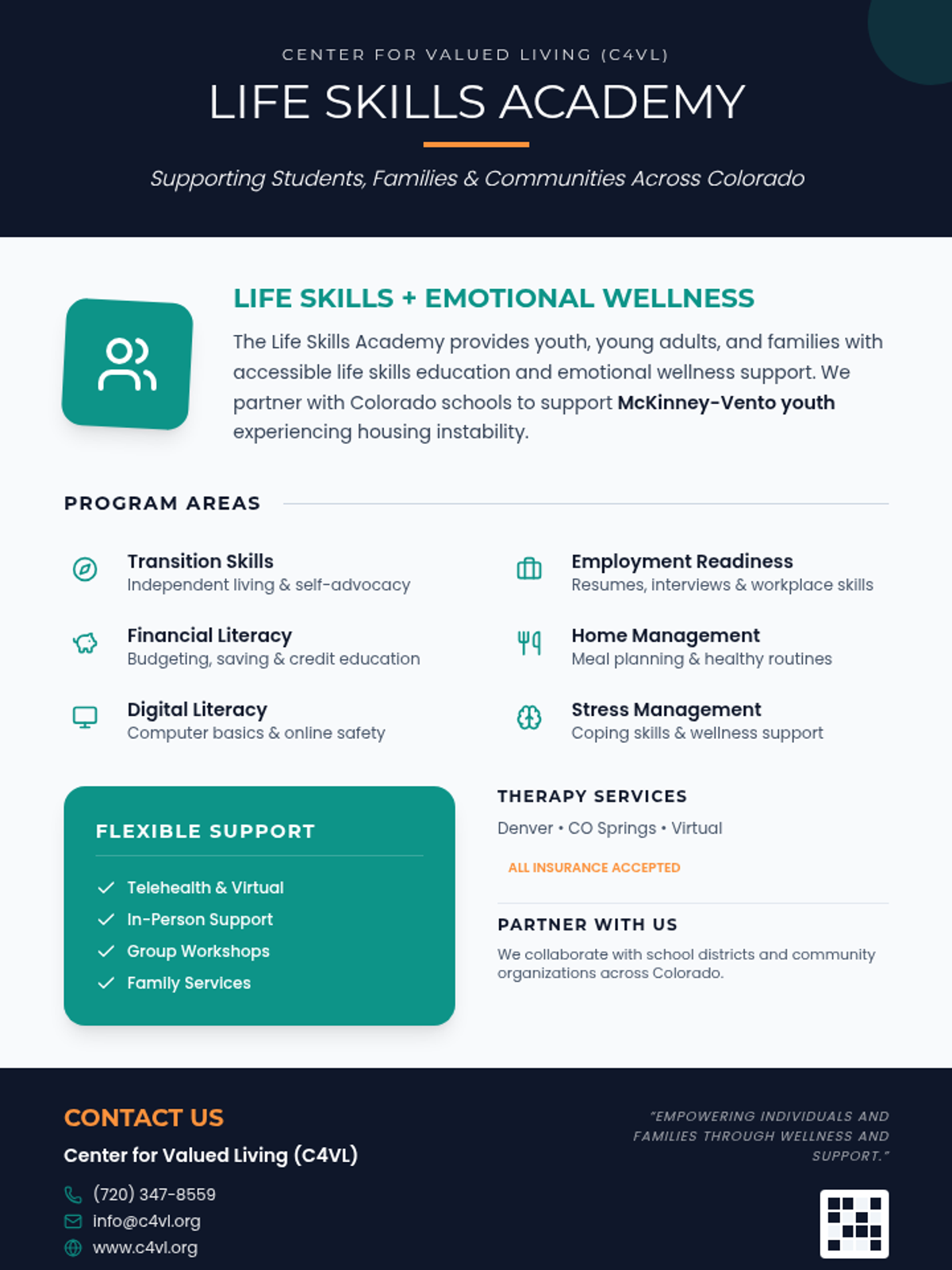
A professional one-page informational flyer for the C4VL Life Skills Academy, featuring a clean teal and navy blue design with sections on program areas, support options, and partnership opportunities.