Active listening, assertive expression, and boundary-setting strategies for interpersonal success. Develops proficiency in conflict mediation, cooperative teamwork, and the cultivation of healthy romantic and platonic connections.
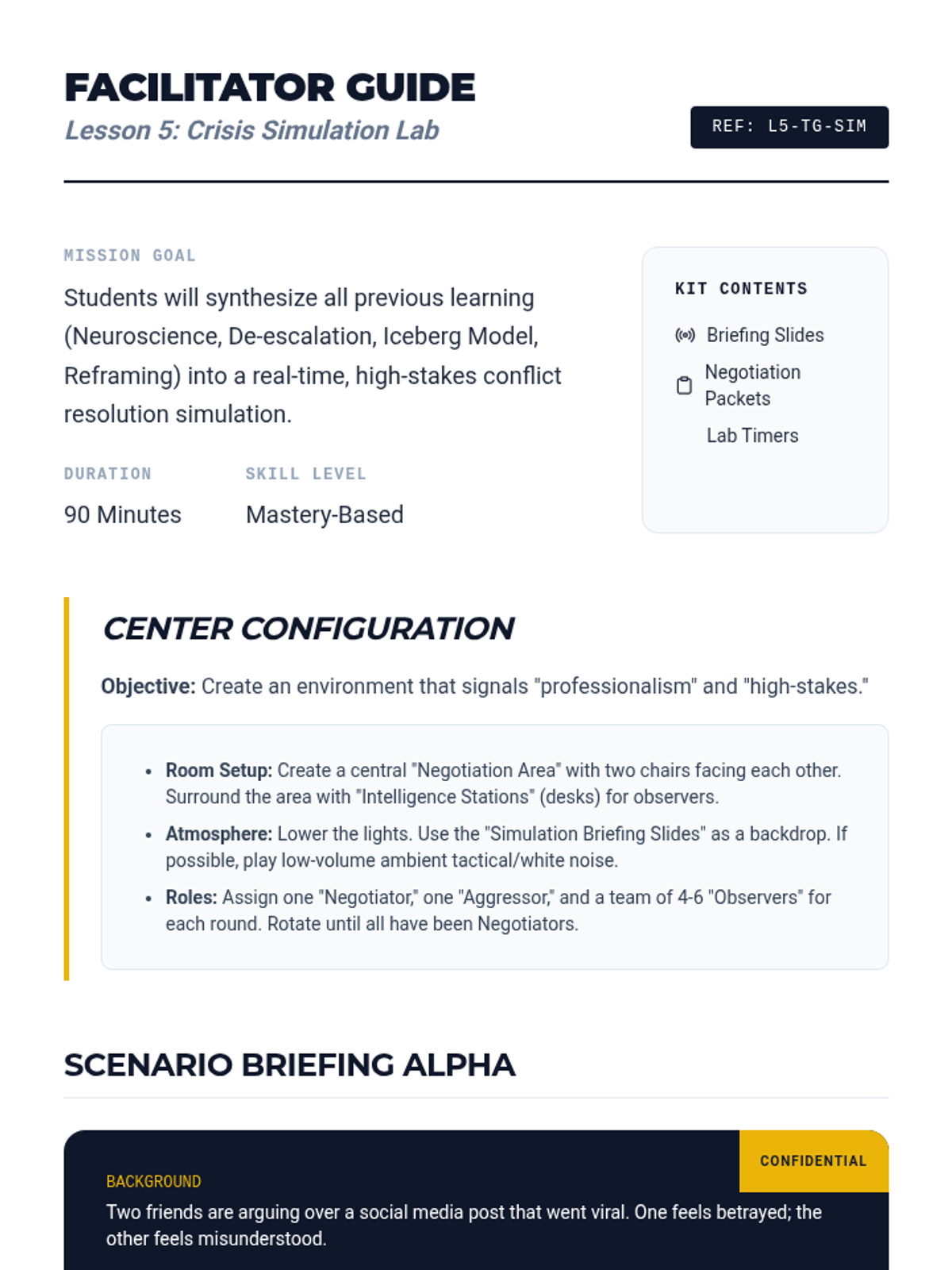
A teacher guide for the Conflict Simulation lesson, including instructions for the lab setup, scenario scripts, and debriefing questions.
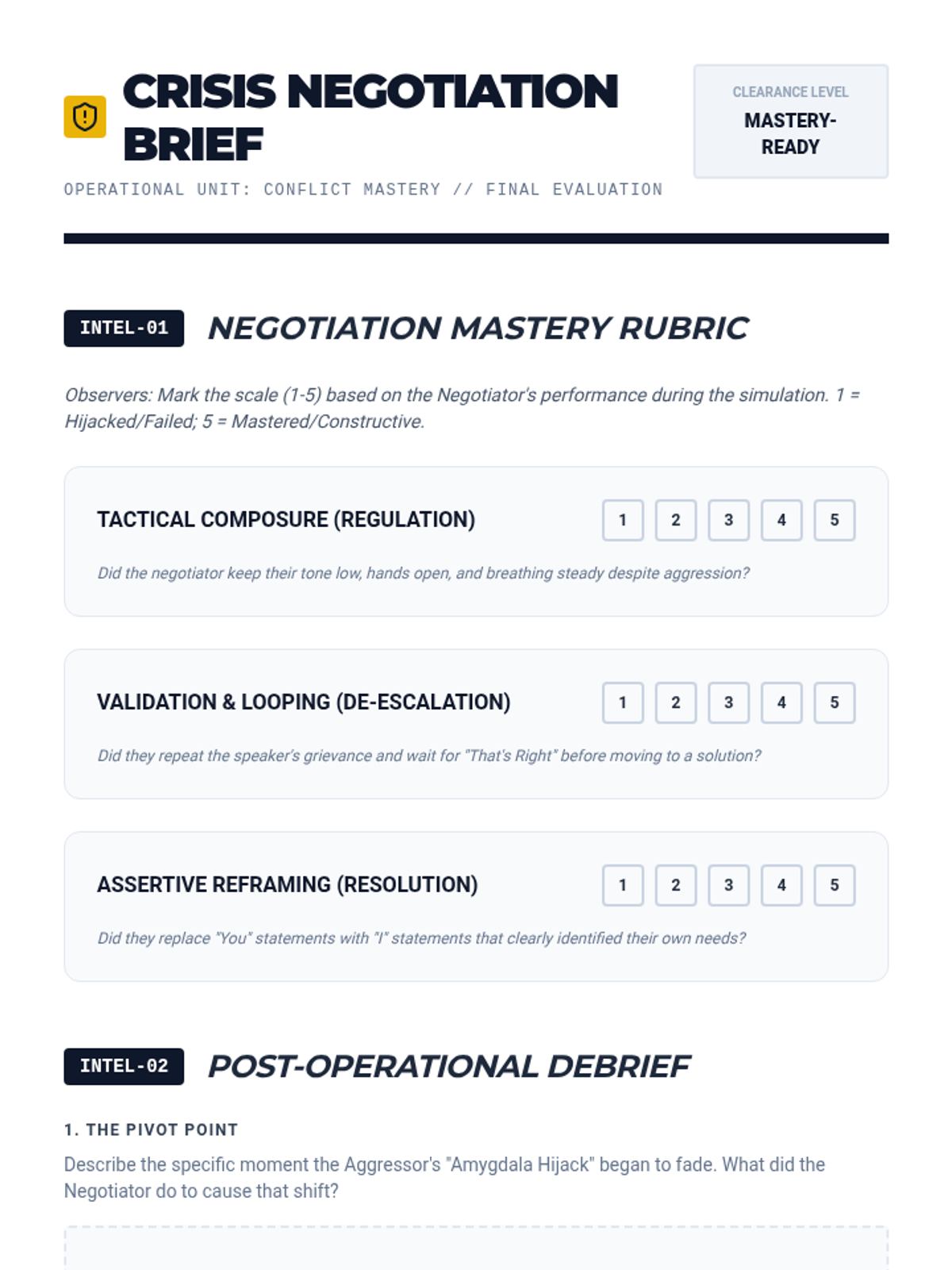
A student-facing briefing packet for the final simulation lab, including a mastery rubric for peer observation and a post-negotiation debrief log.
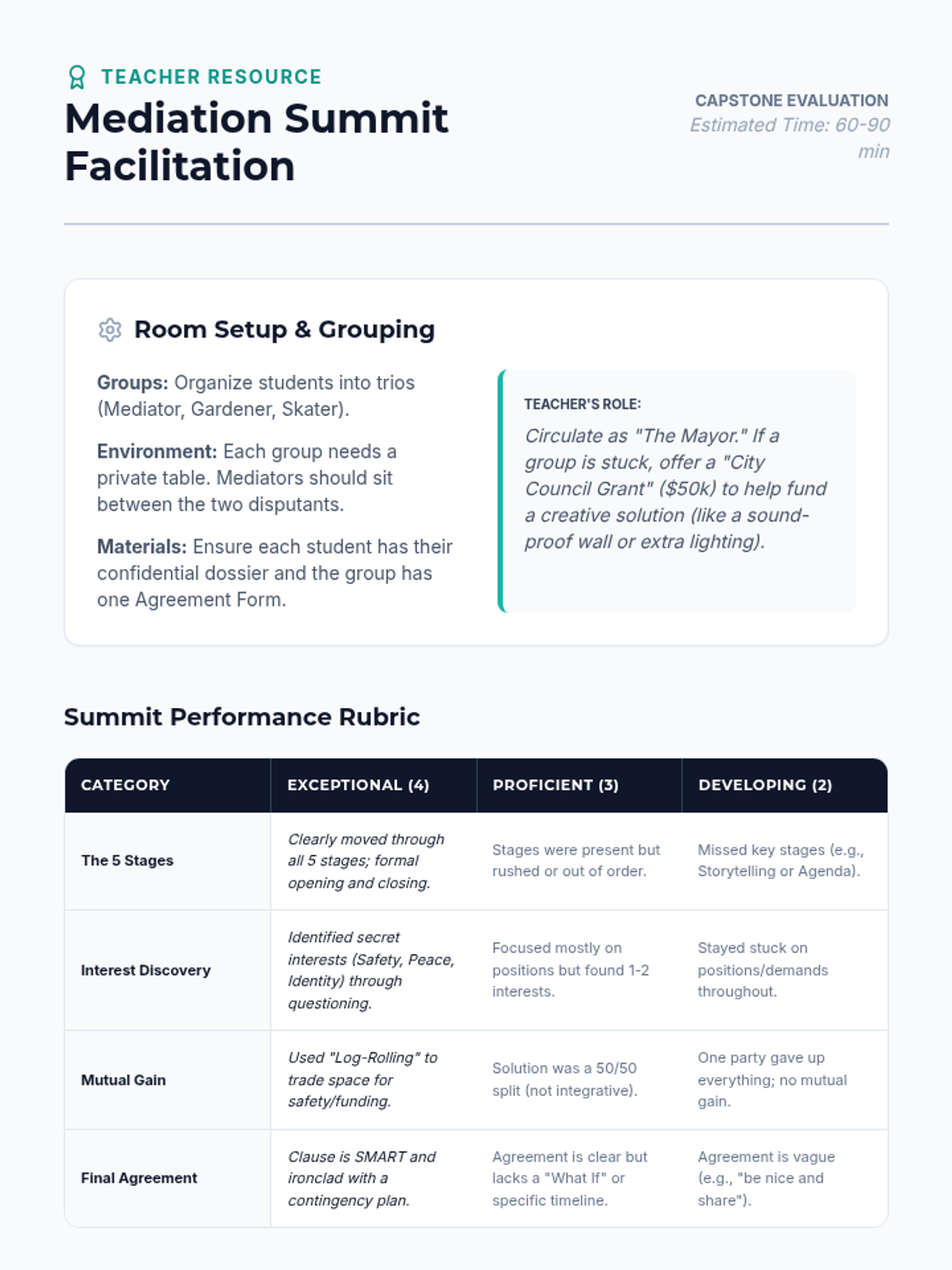
Teacher facilitation guide and evaluation rubric for the Lesson 5 Mediation Summit capstone simulation. Includes setup instructions, a grading rubric, and debrief prompts.
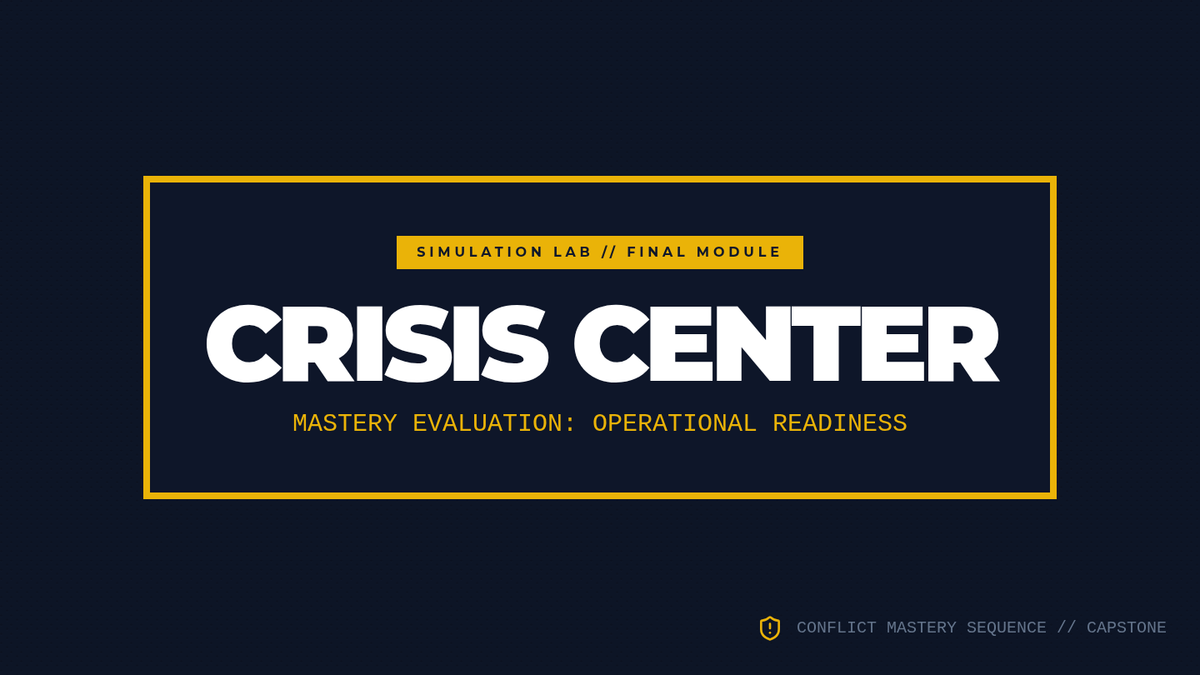
A visual presentation for the final simulation lab, setting the stage, explaining the Crisis Negotiation Center concept, and outlining the mission objectives and rules of engagement.
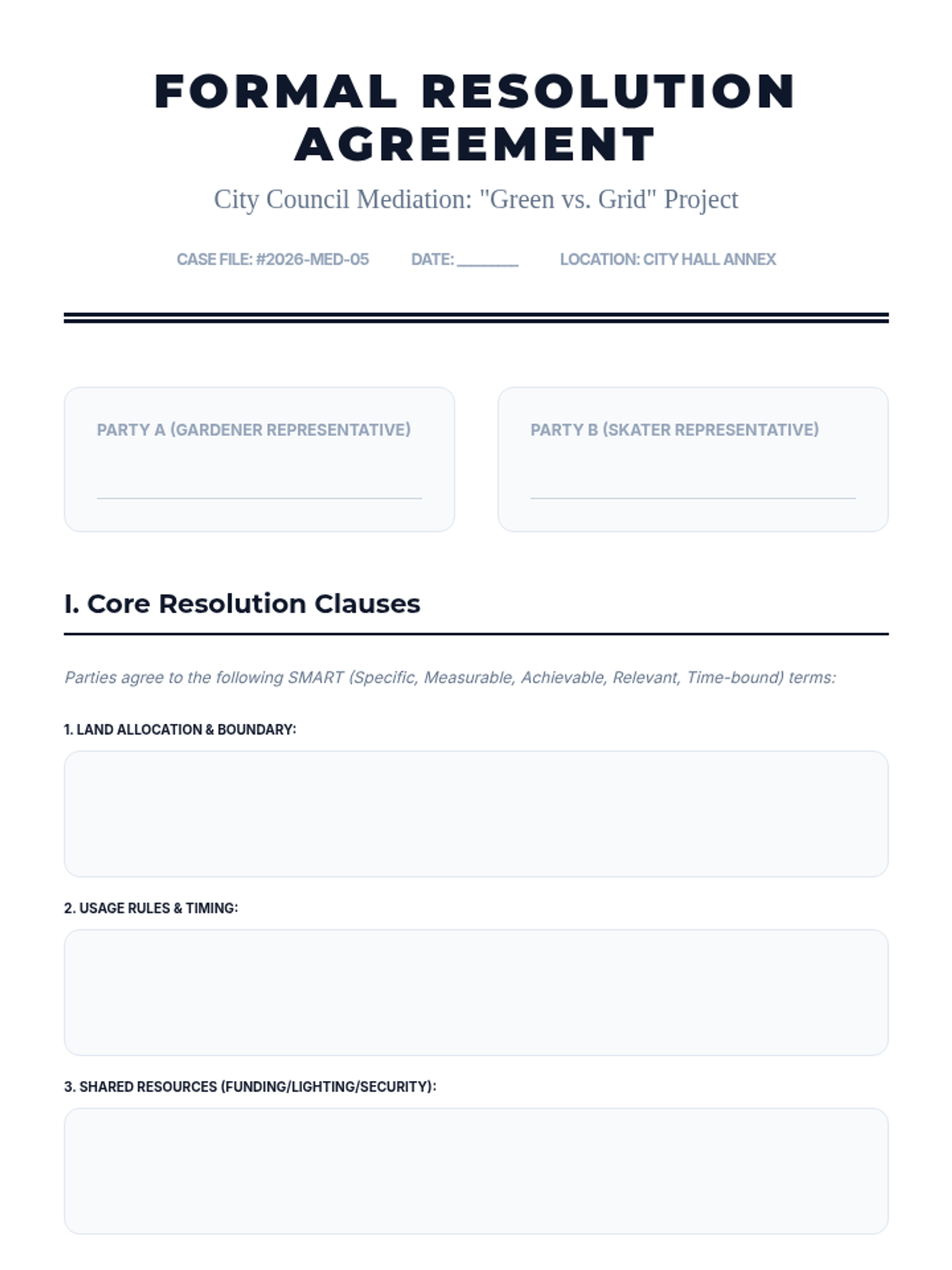
Formal mediation agreement form for the "Green vs. Grid" simulation. Students use this to draft their final SMART resolution clauses and finalize the simulation with signatures.
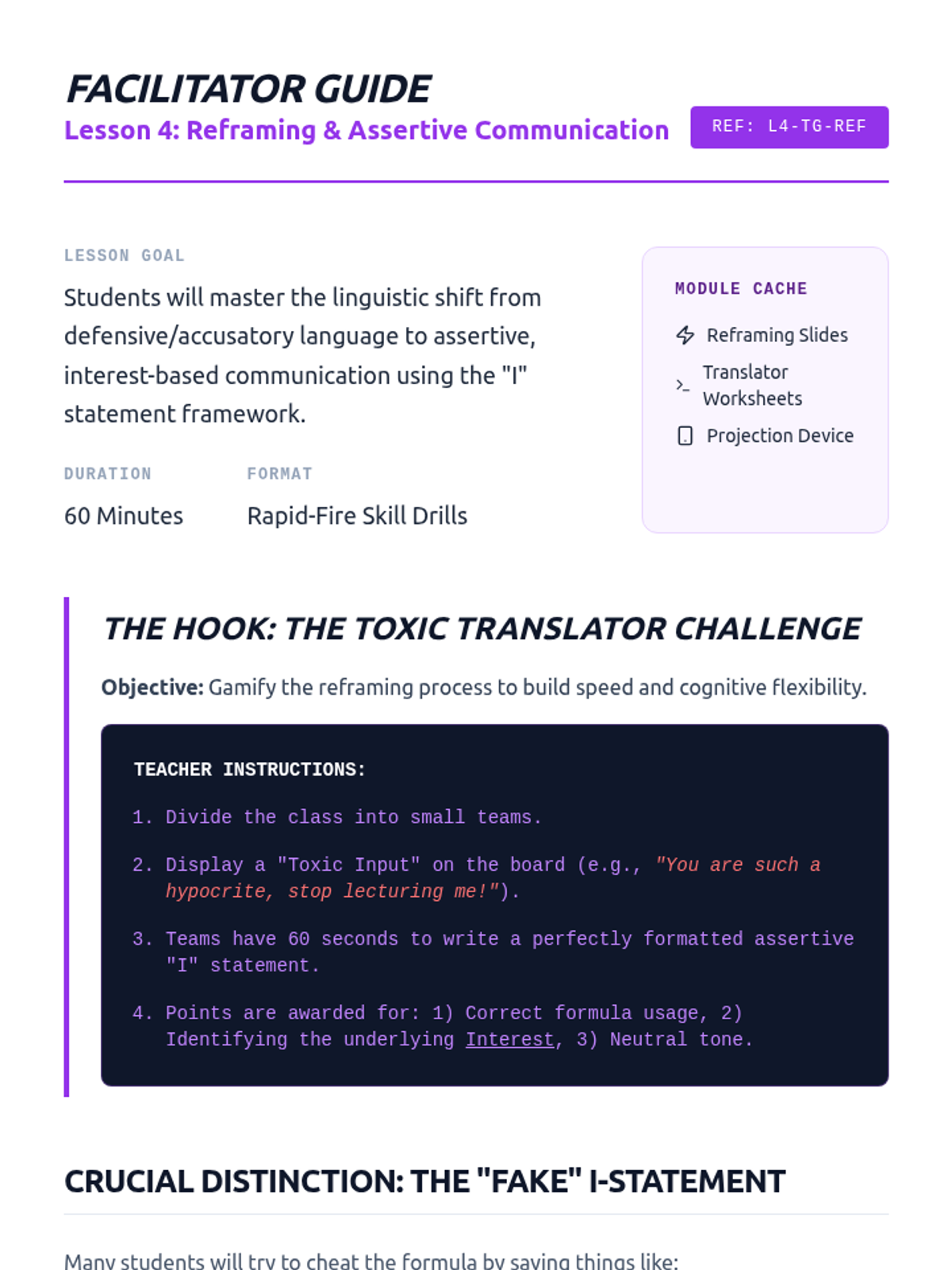
A teacher guide for the Communication Reframing lesson, including instructions for the 'Toxic Translator' challenge, common pitfalls, and a worksheet answer key.
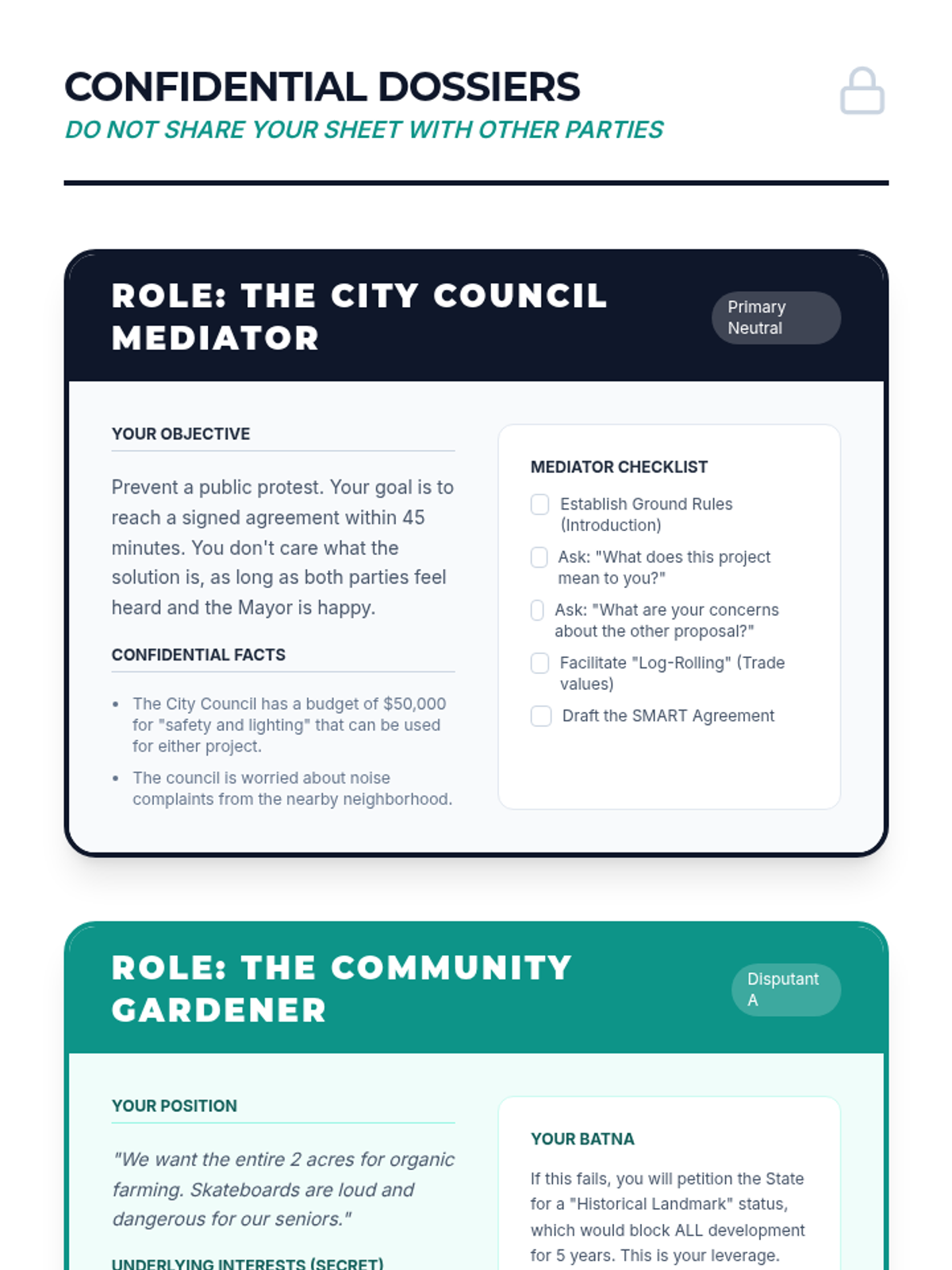
Confidential briefing sheets for the three roles in the "Green vs. Grid" simulation: The Mediator, The Gardener, and The Skater. Includes secret interests and walk-away points.
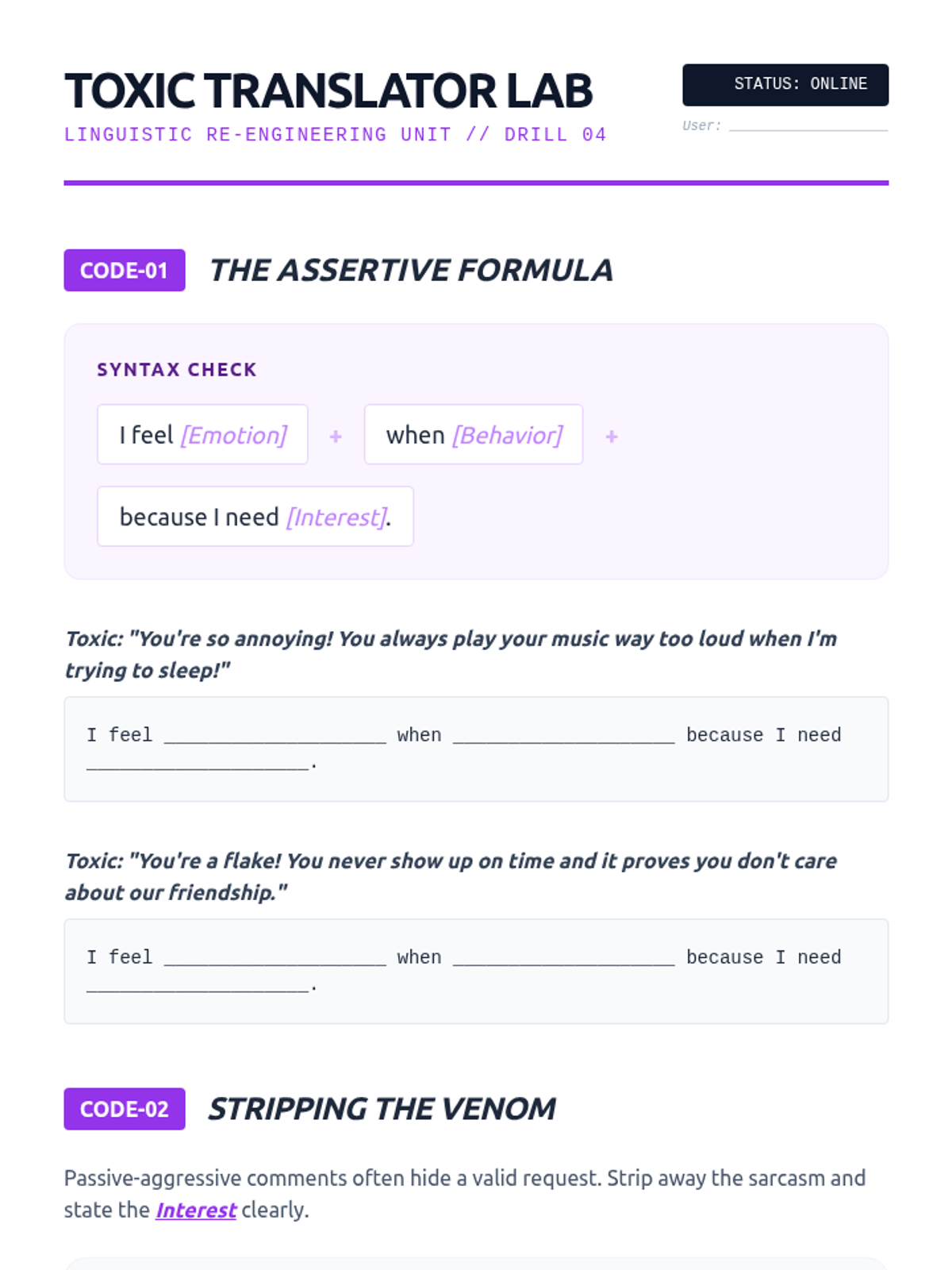
A practice worksheet for students to practice translating toxic language into assertive 'I' statements and neutral requests.
Briefing slide deck for the Lesson 5 Mediation Summit capstone simulation. Introduces the "Green vs. Grid" land use case, roles, and rules of engagement.
A visual presentation exploring assertive communication through 'I' statements and reframing toxic language into neutral, problem-solving requests.
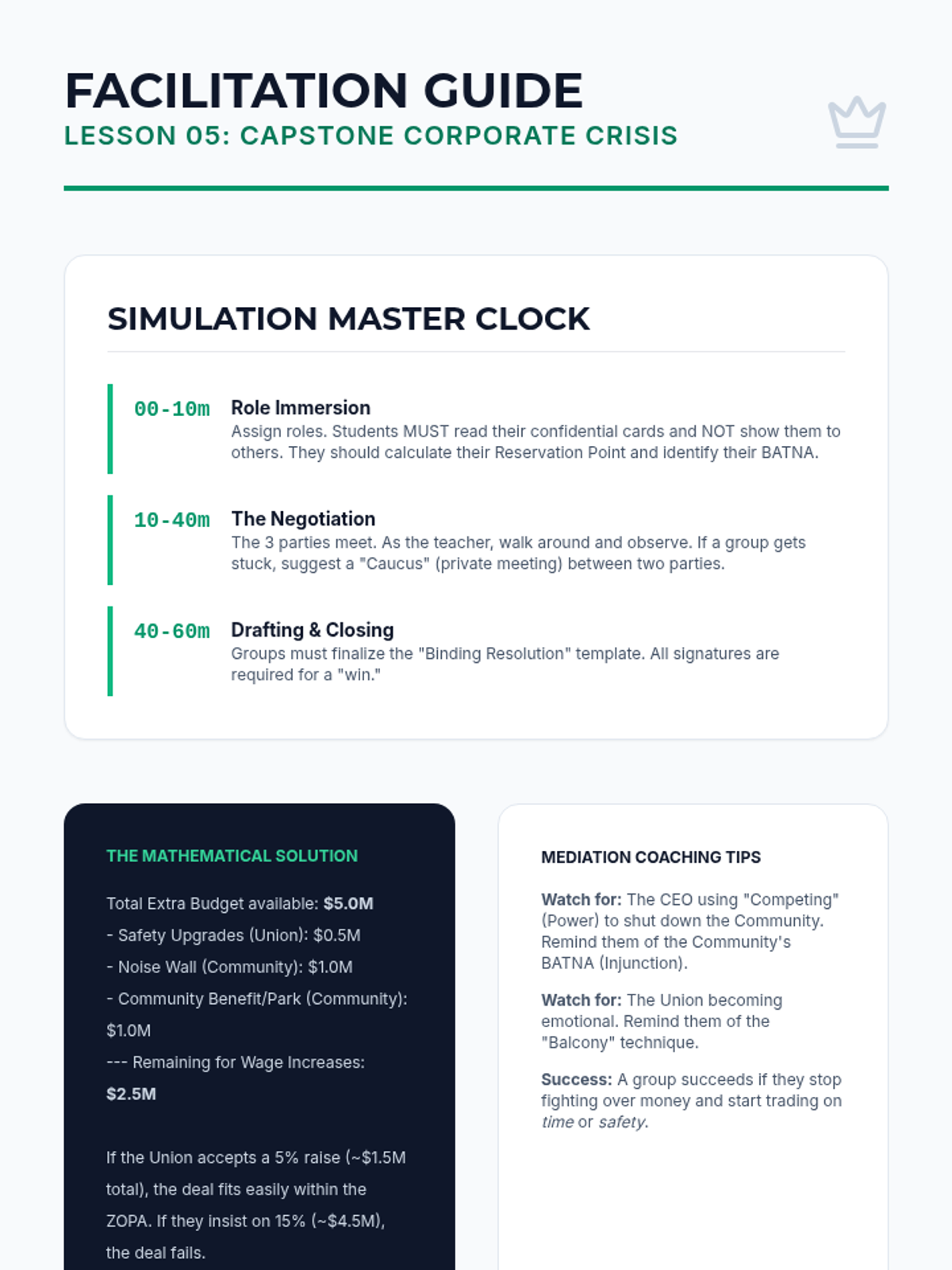
Facilitation guide for Lesson 5, providing a simulation timeline, the mathematical "Hidden ZOPA" solution, and sequence-wide debrief questions.
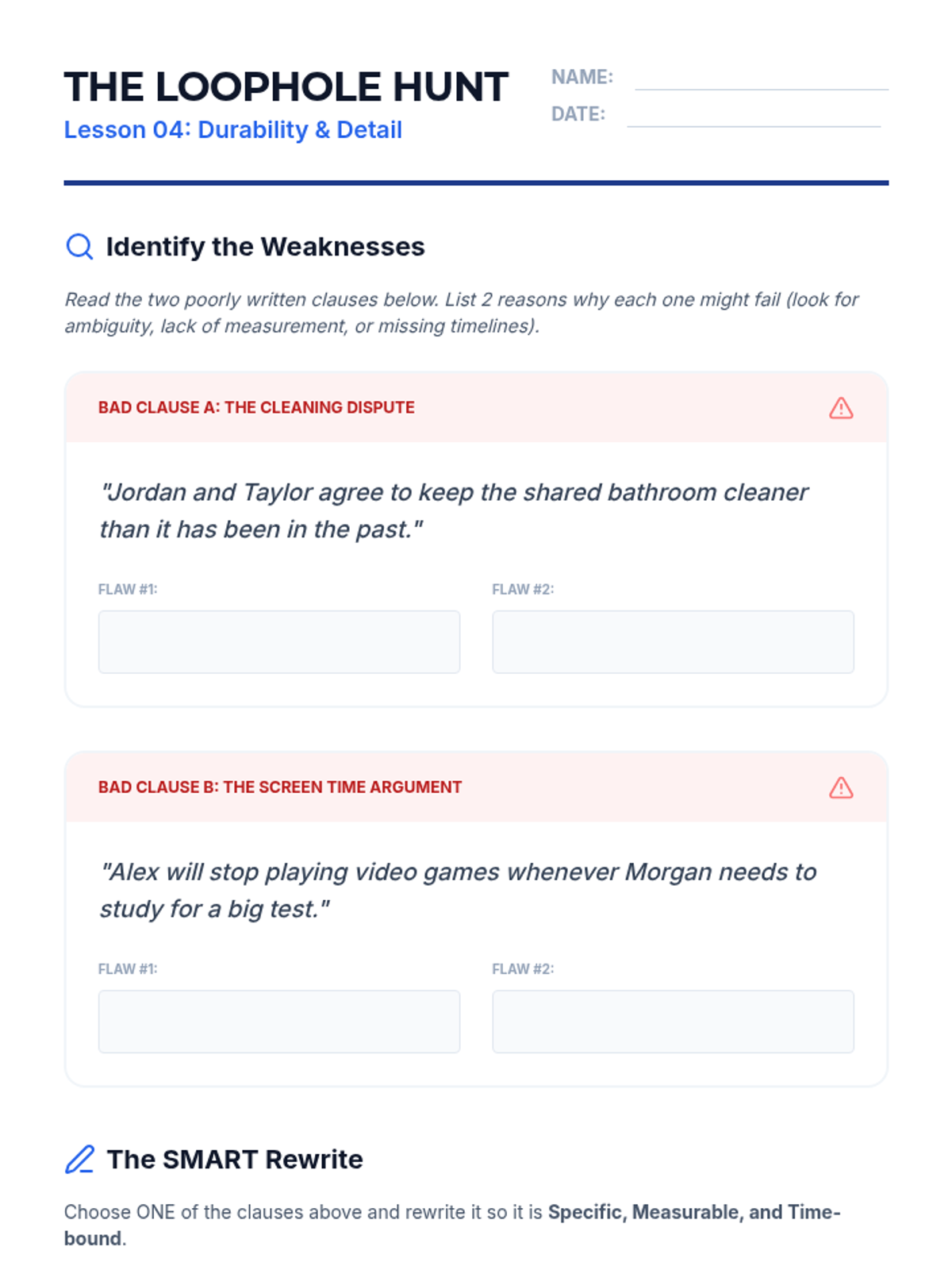
Student worksheet for identifying flaws in poorly written conflict resolution agreements and rewriting them using the SMART framework.
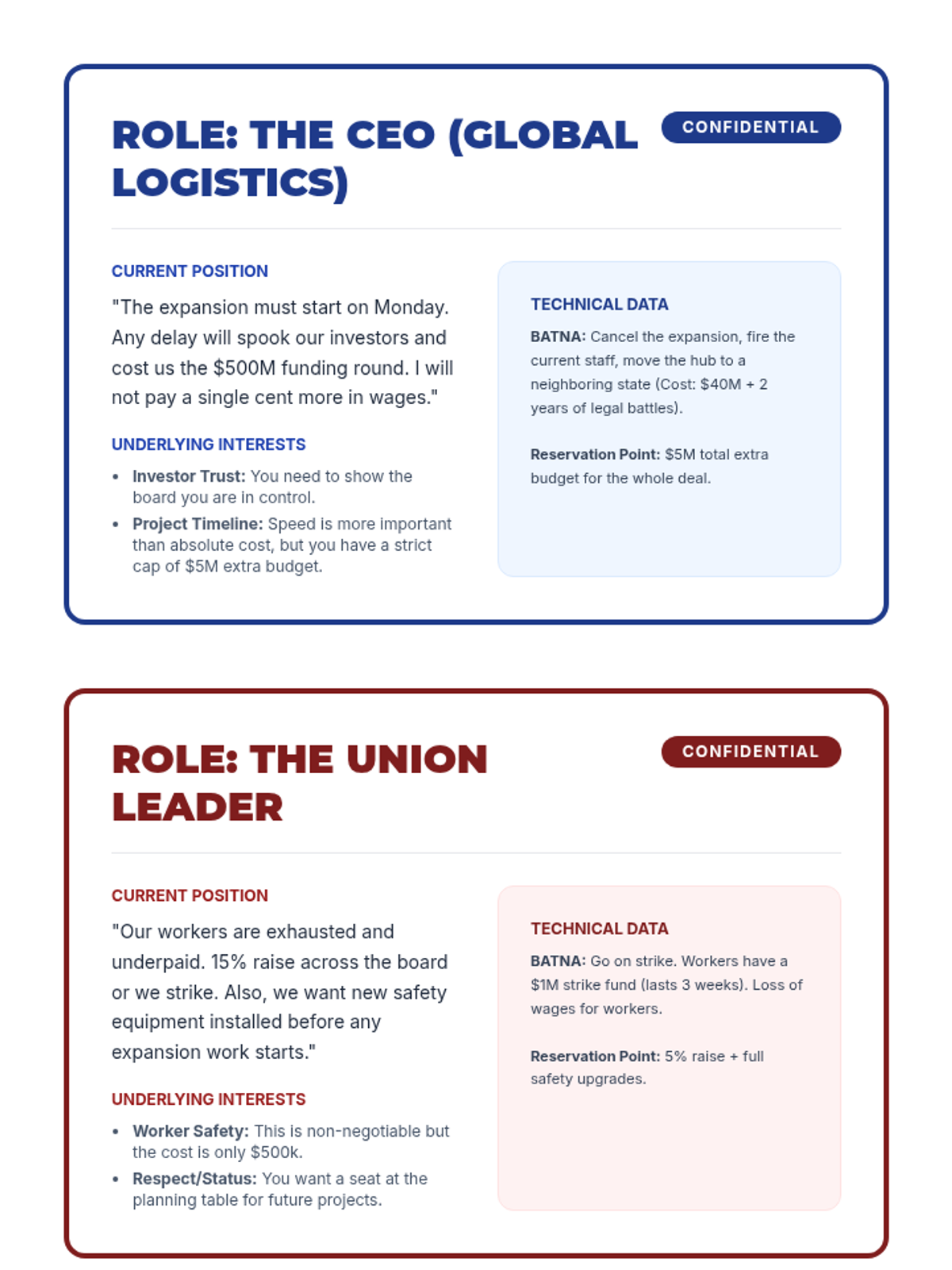
Simulation packet for the Capstone Corporate Crisis, including role cards for the CEO, Union Rep, and Community Leader, plus a resolution template.
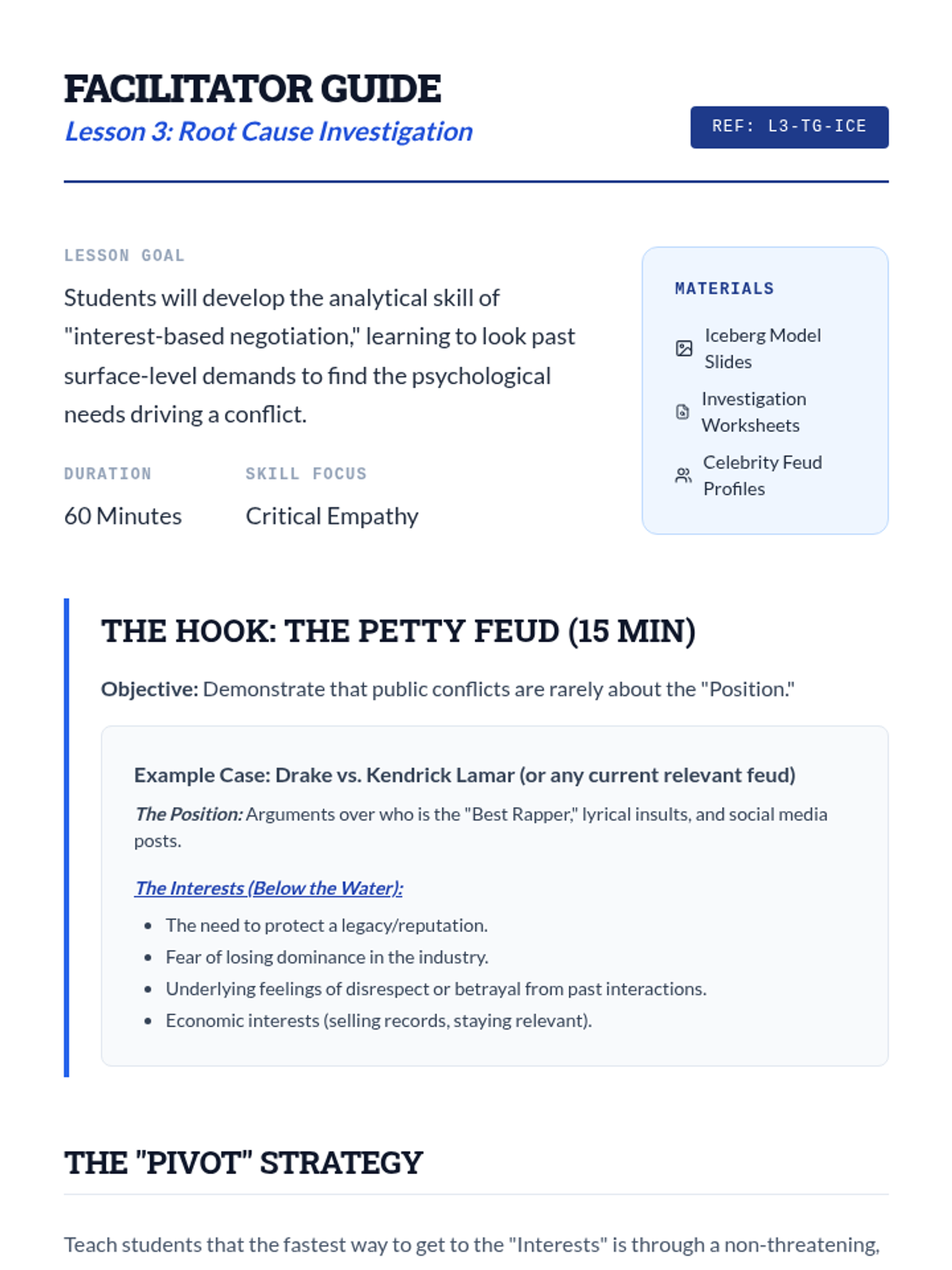
A teacher guide for the Root Cause Investigation lesson, including celebrity conflict examples, a case study answer key, and discussion prompts.
Instructional slide deck for Lesson 4: Drafting Sustainable Agreements. Explains the SMART framework for conflict resolution and the importance of specific clauses and contingency planning.
Introductory presentation for Lesson 5, outlining the Capstone Simulation scenario, rules of engagement, and win criteria.
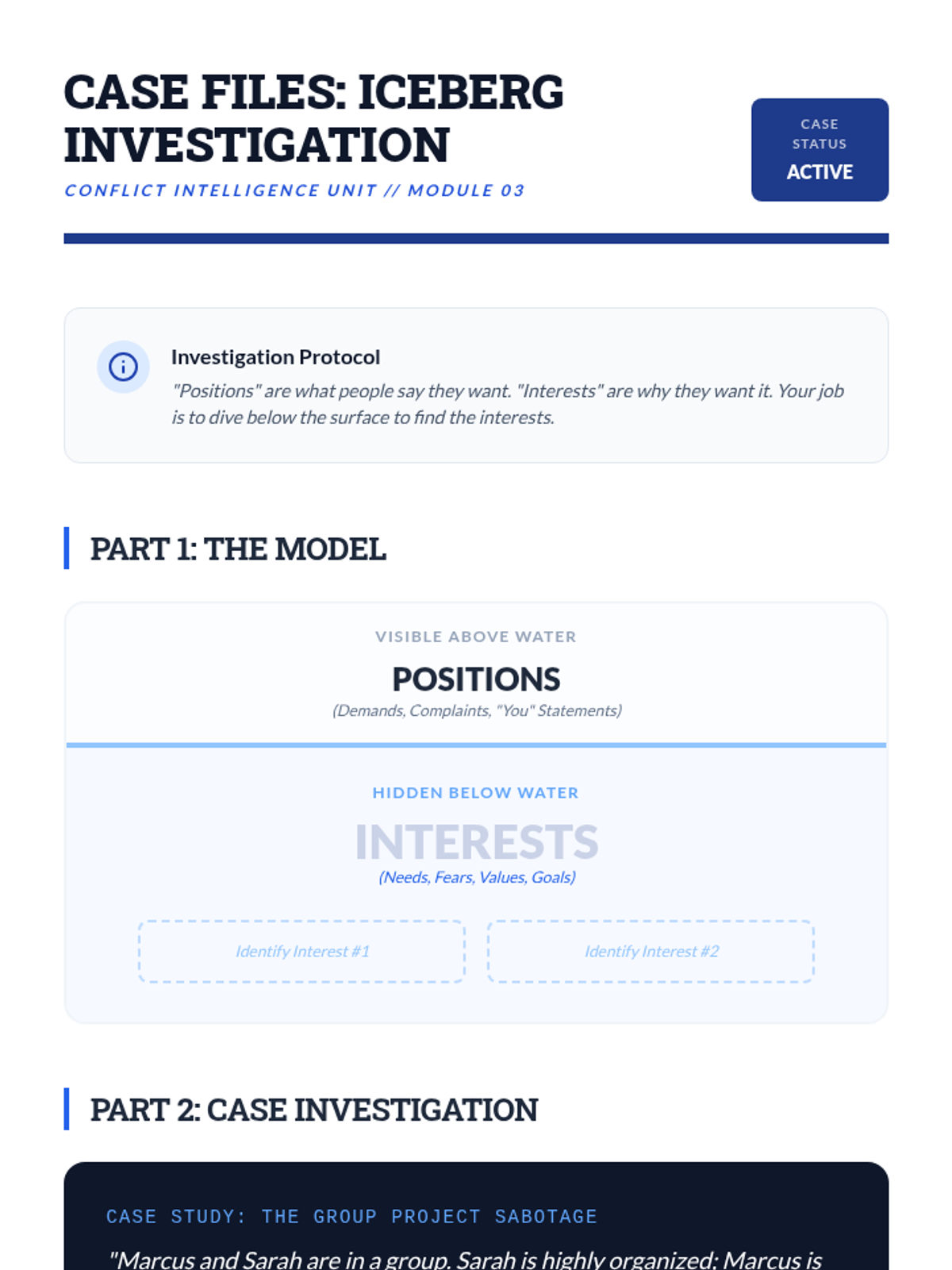
A worksheet for students to apply the Iceberg Model to a conflict case study, identifying surface-level positions and underlying interests.
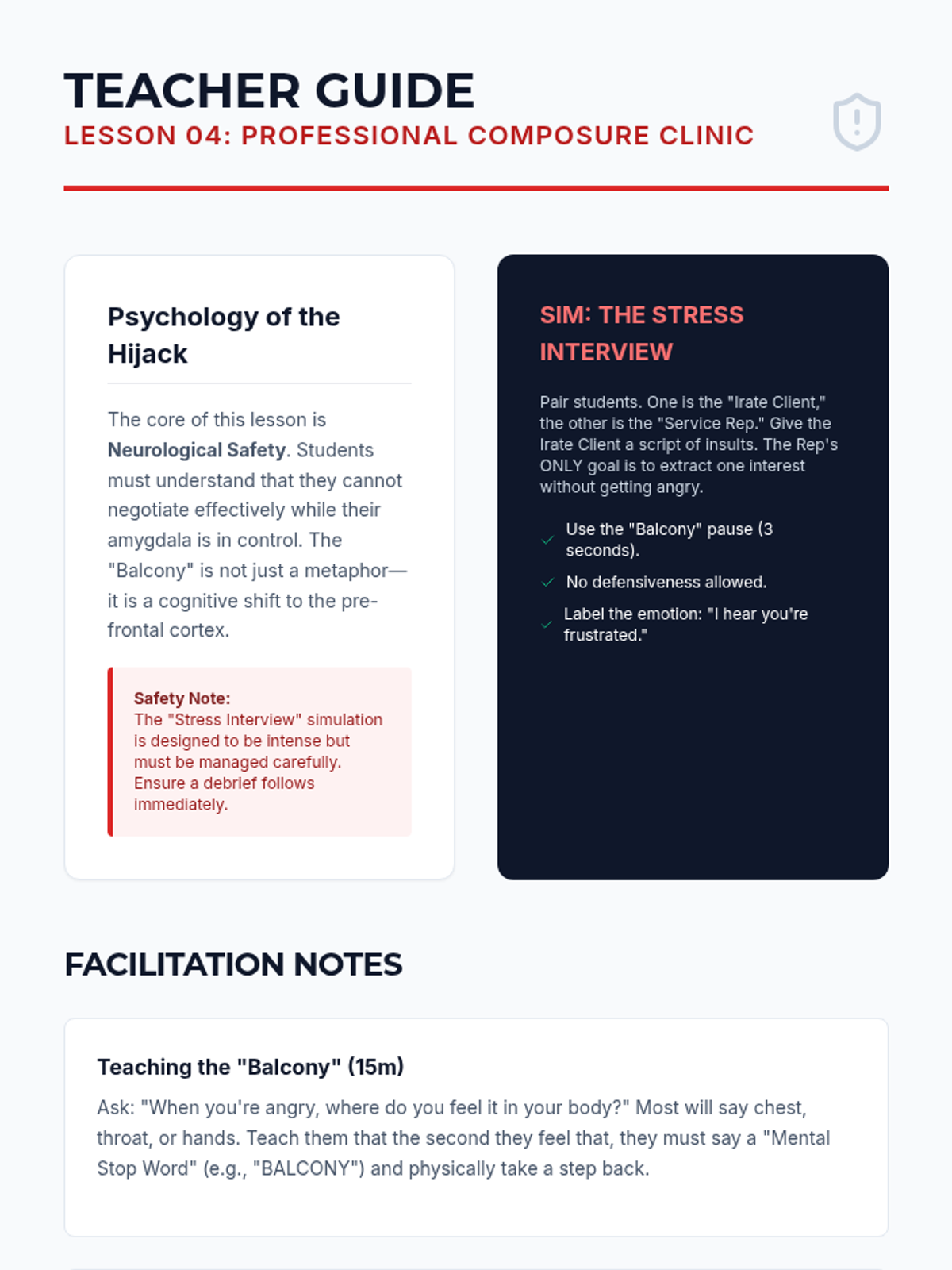
Facilitation guide for Lesson 4, including simulation instructions for the "Stress Interview" and debriefing strategies for emotional regulation.
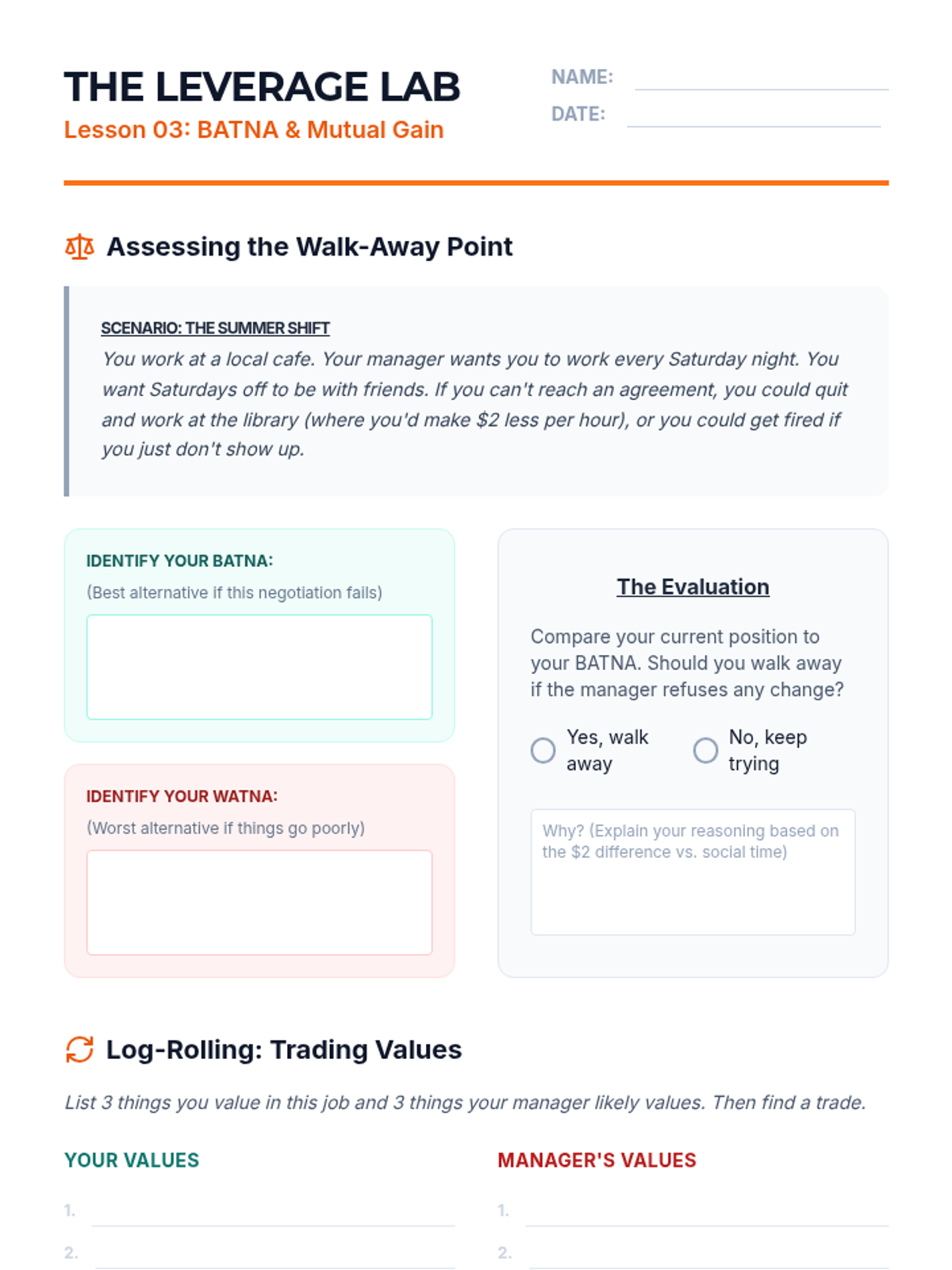
Student worksheet for analyzing BATNA/WATNA and practicing the Log-Rolling technique in a workplace conflict scenario.
A visual presentation exploring the Iceberg Model of conflict, differentiating between surface-level positions and underlying interests.
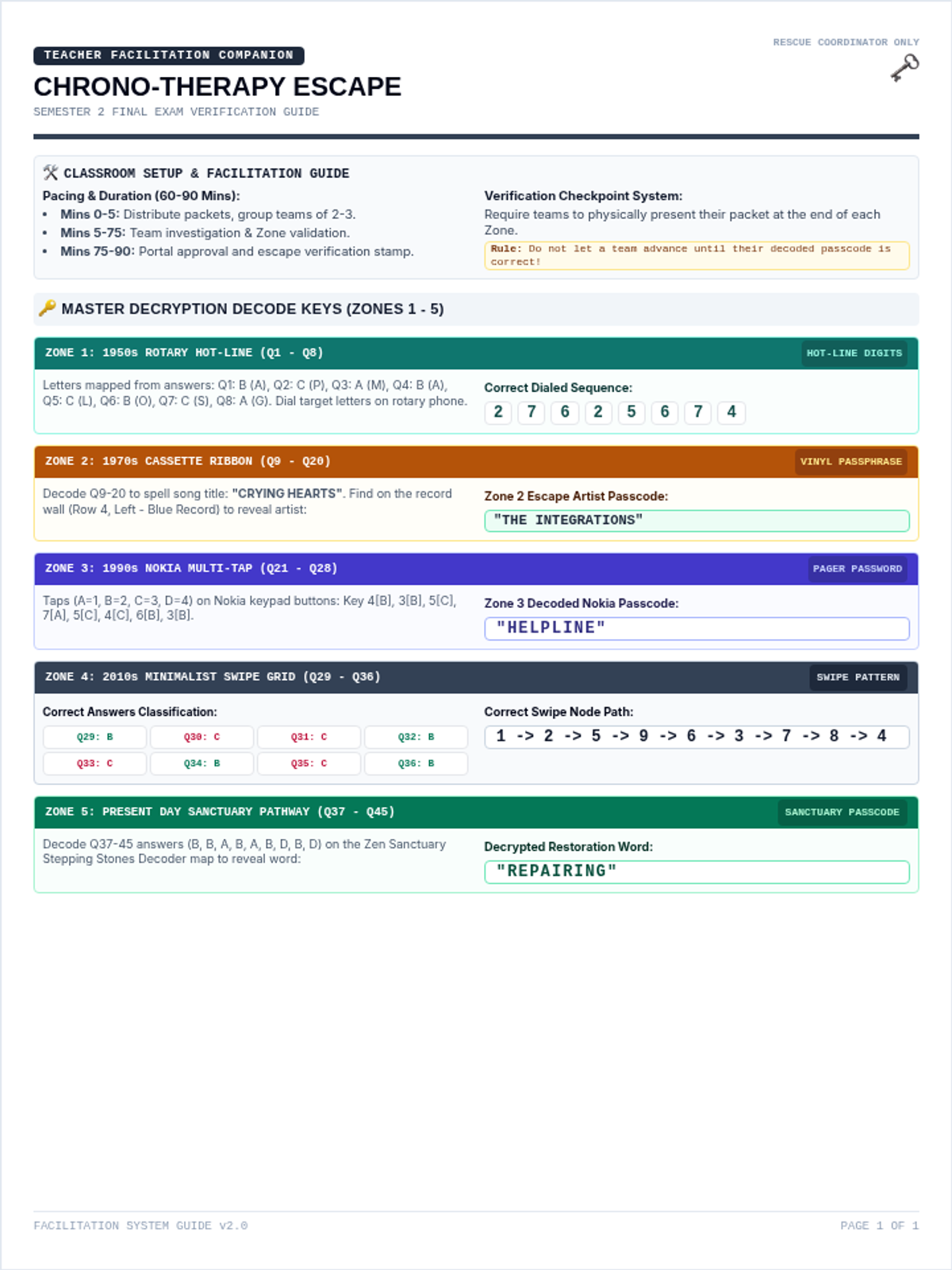
A comprehensive teacher manual for the Chrono-Therapy escape room exam. Contains the precise lock keys, rotary dials, page codes, and high-scoring exemplars for all 50 questions.
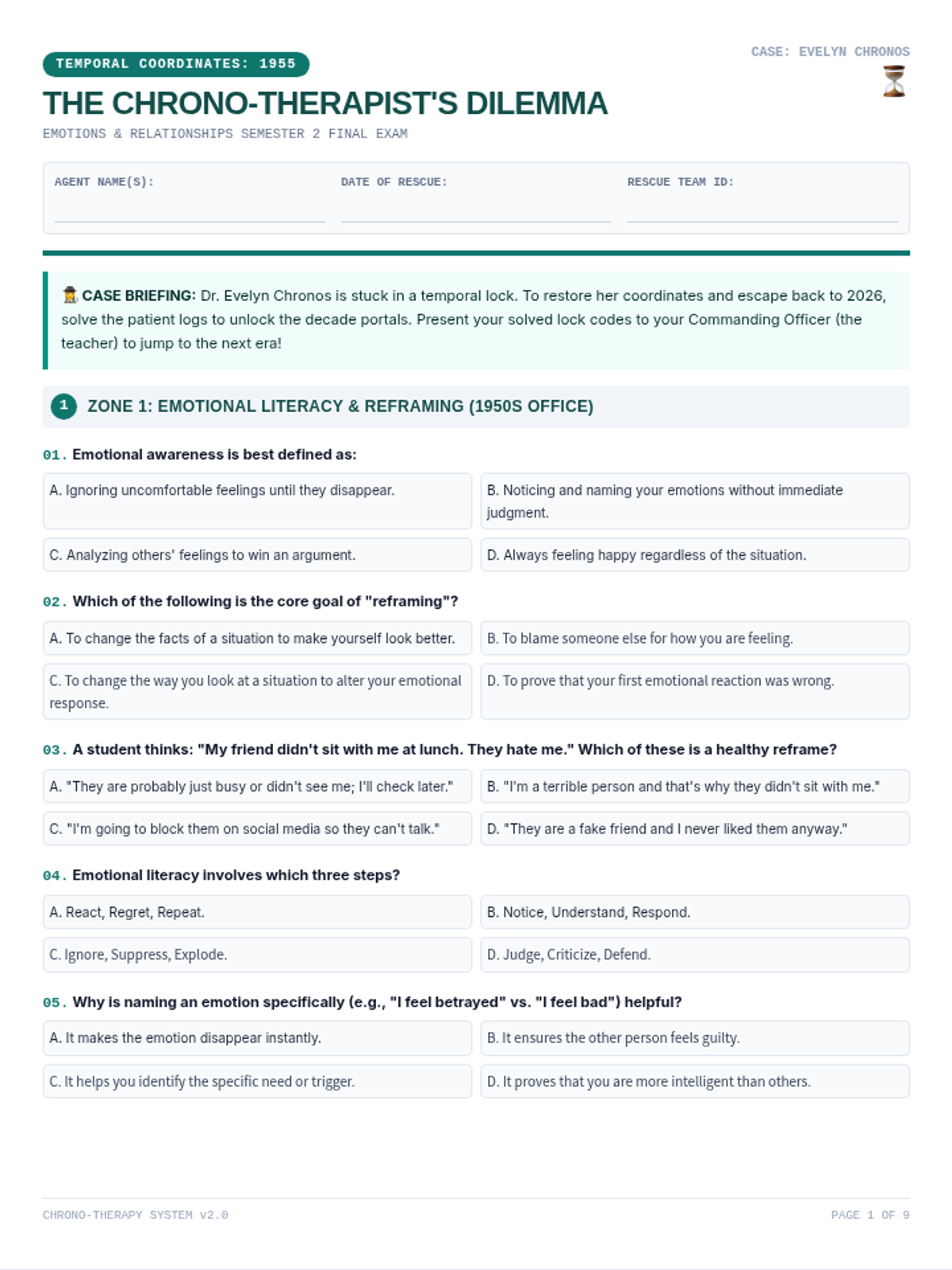
The full student-facing final exam packet styled as an immersive escape room. Includes 50 questions across 5 historical therapist offices, directional puzzles, lock codes, and short-answer scenario-solving spaces.
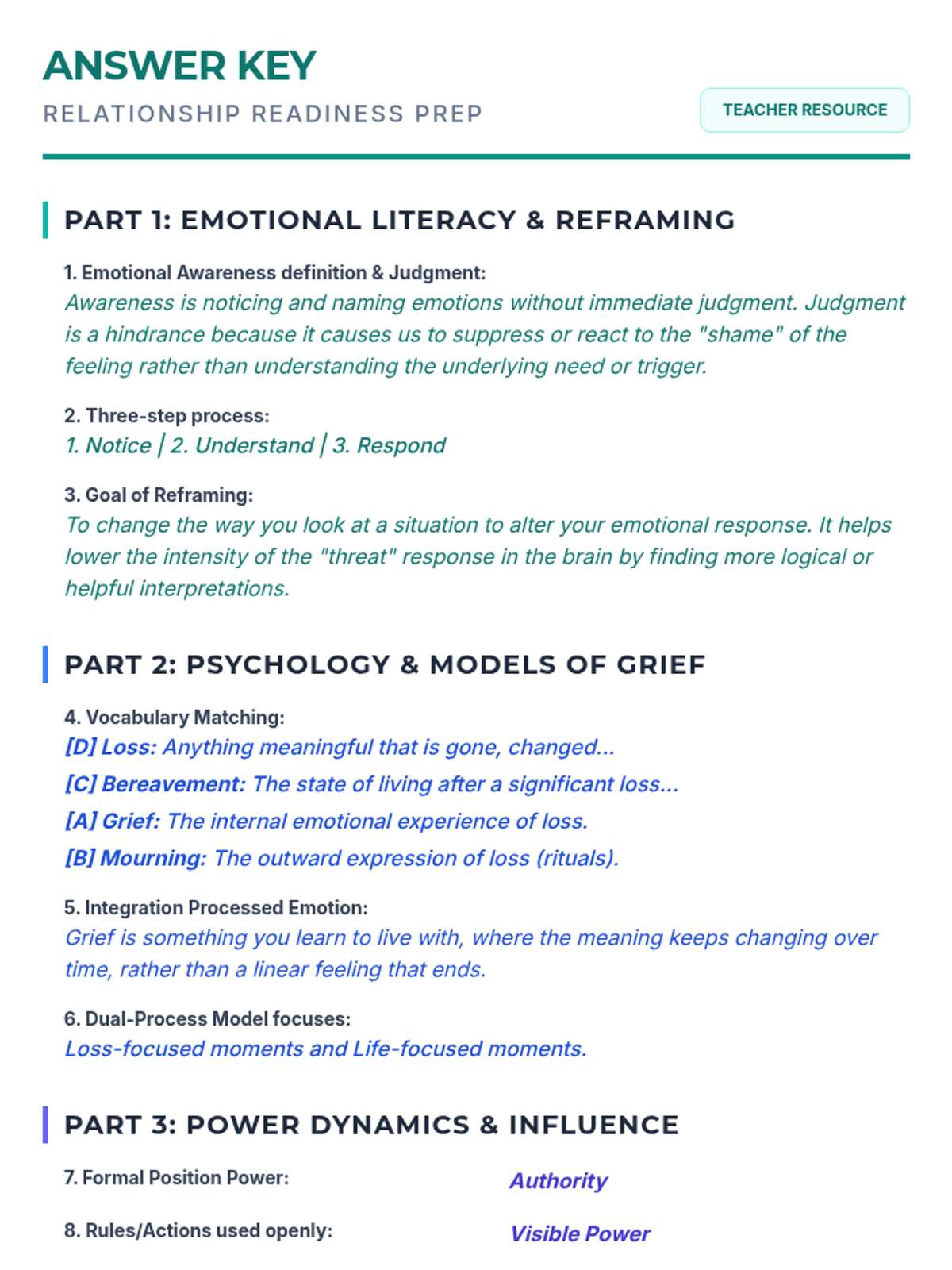
Teacher's answer key for the Relationship Mastery Study Guide. Revised to fix layout issues, improve text contrast, and ensure stable page breaks across sections.
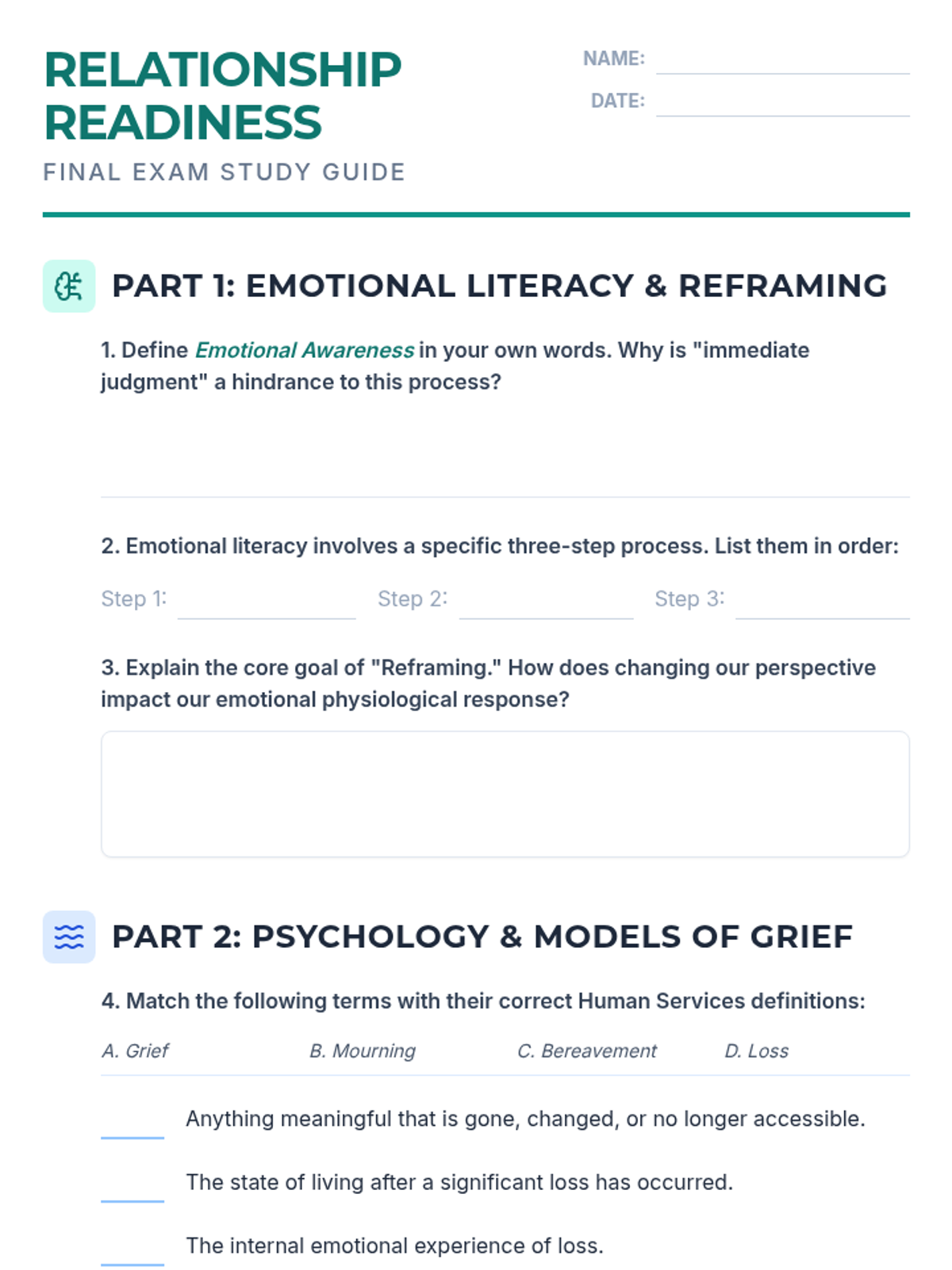
A comprehensive study guide for the Relationships and Emotions final exam, covering emotional literacy, grief models, power dynamics, and boundary setting through short answer and matching tasks. Revised for layout and legibility.
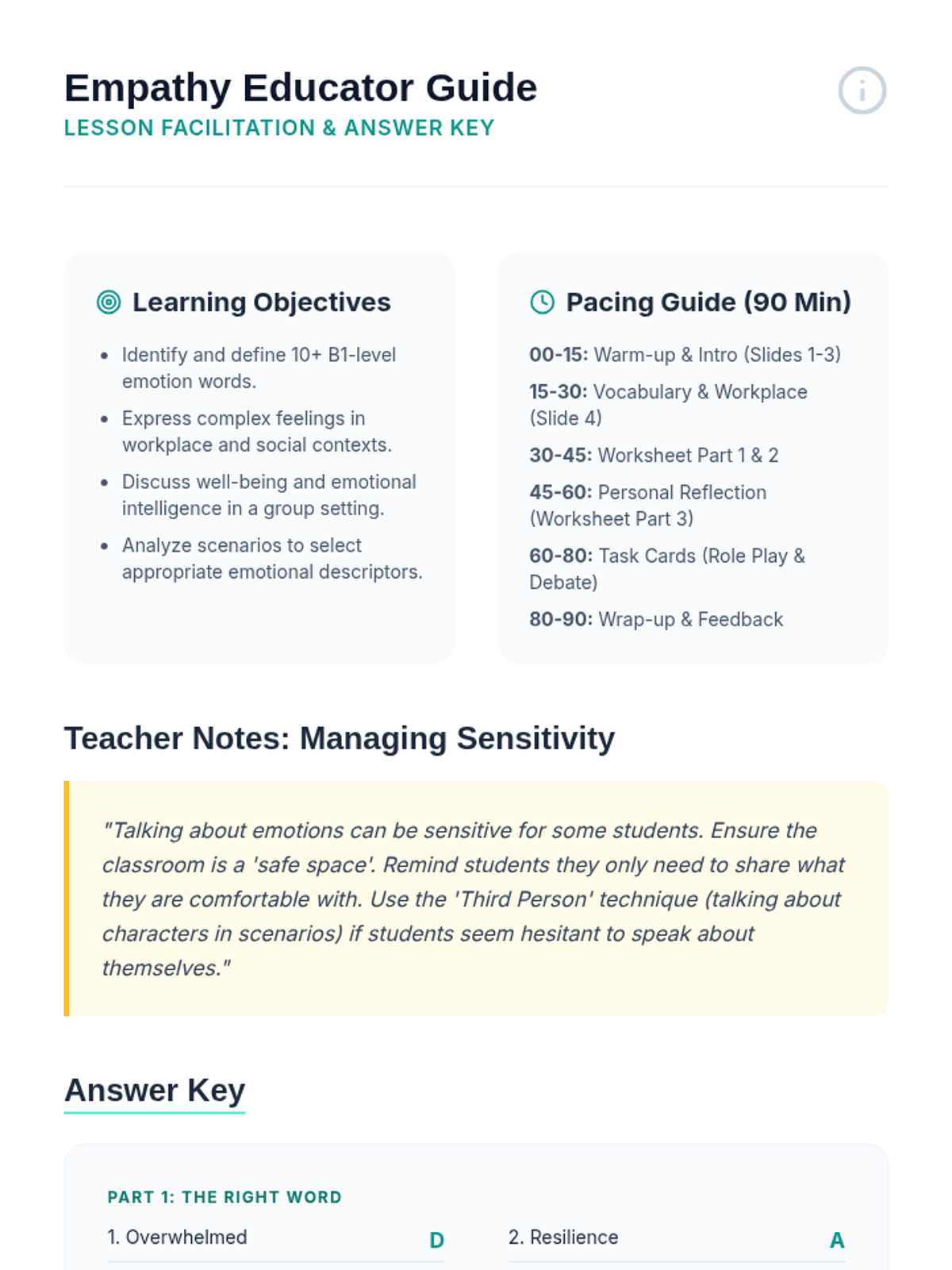
A teacher facilitation guide for the Emotional Intelligence lesson, including pacing, answer keys for the worksheet, and advice for managing sensitive discussions.
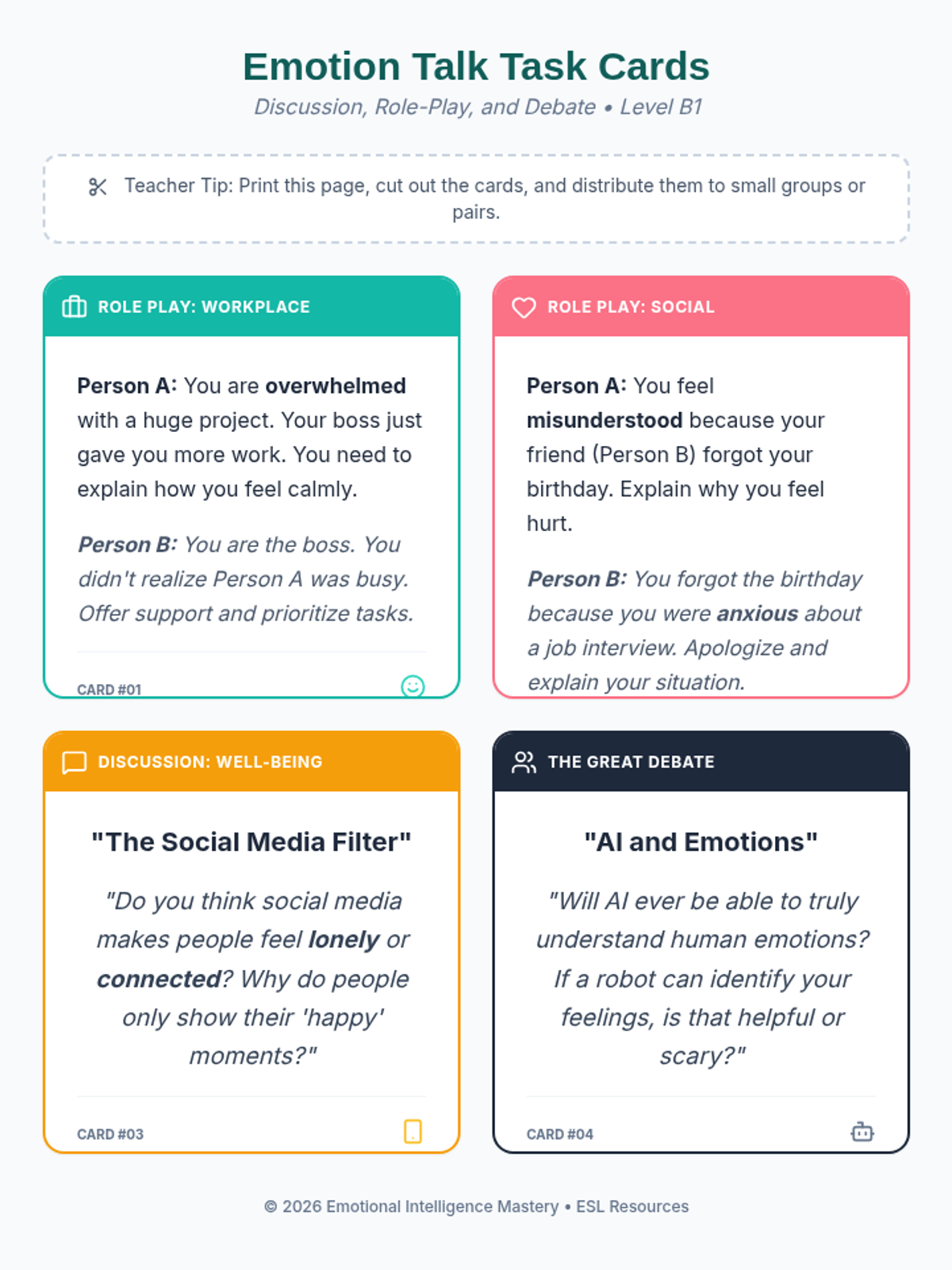
A set of four printable task cards for B1 ESL students featuring workplace and social role-plays, a well-being discussion prompt, and a debate topic on AI and emotions.
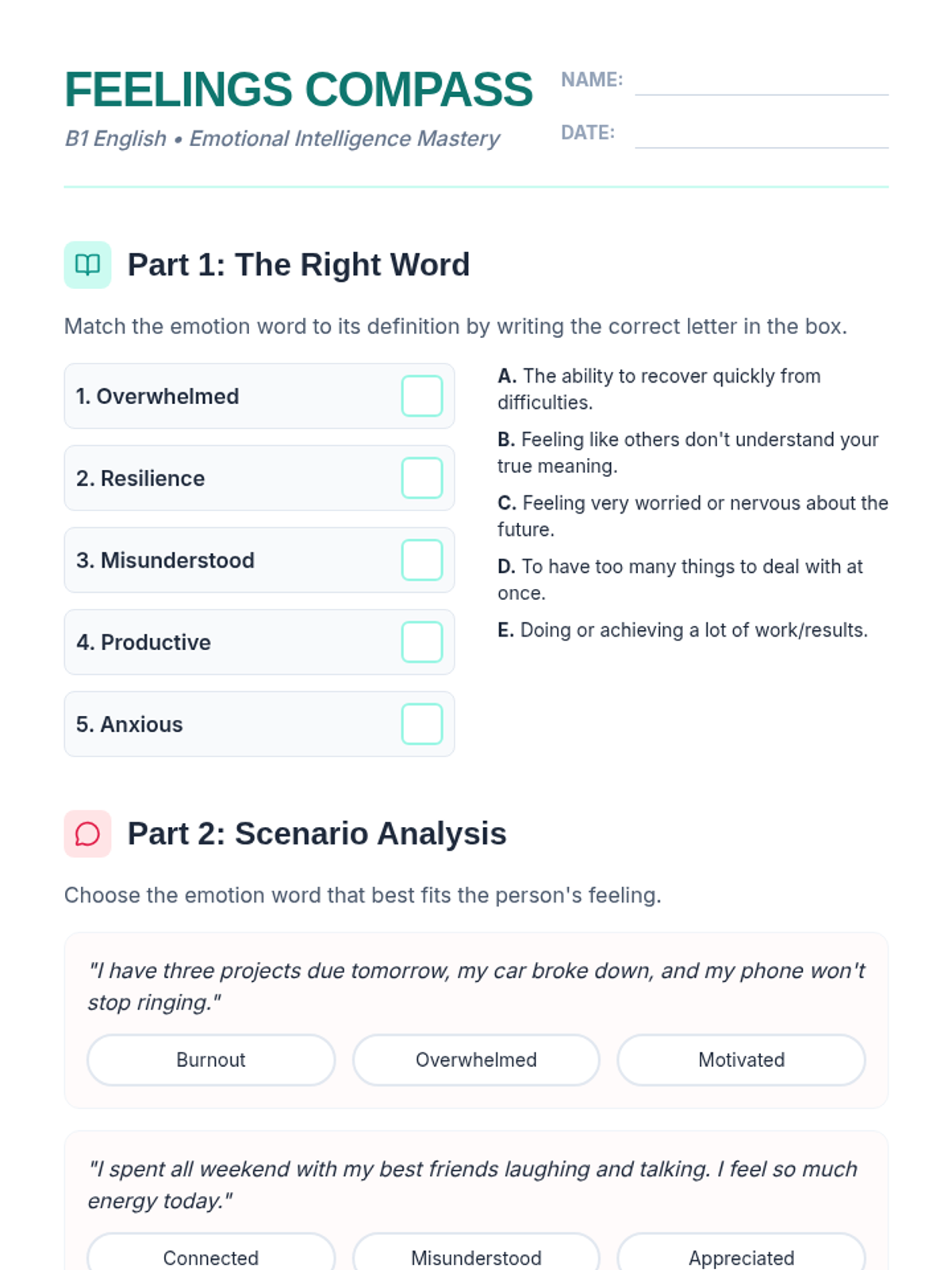
A printable worksheet for B1 ESL students featuring vocabulary matching, scenario analysis, and personal reflection questions focused on emotions in workplace and social contexts.
A 7-slide presentation introducing the concept of emotional intelligence, featuring an expanded emotions wheel (Beyond the Core) and discussion prompts for workplace and social contexts.
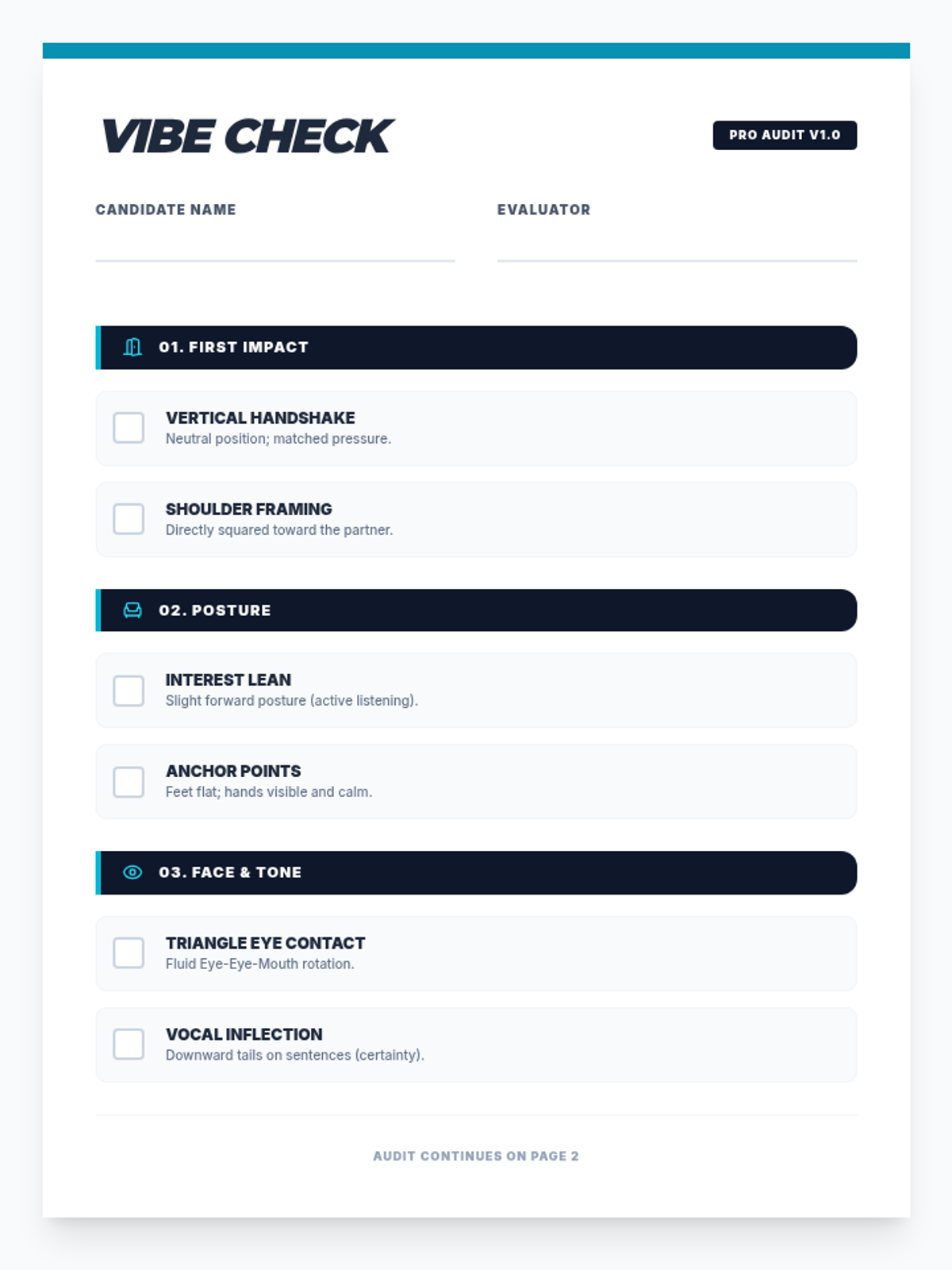
A checklist for students to evaluate professional non-verbal communication during mock interviews, covering handshakes, posture, and facial expressions.
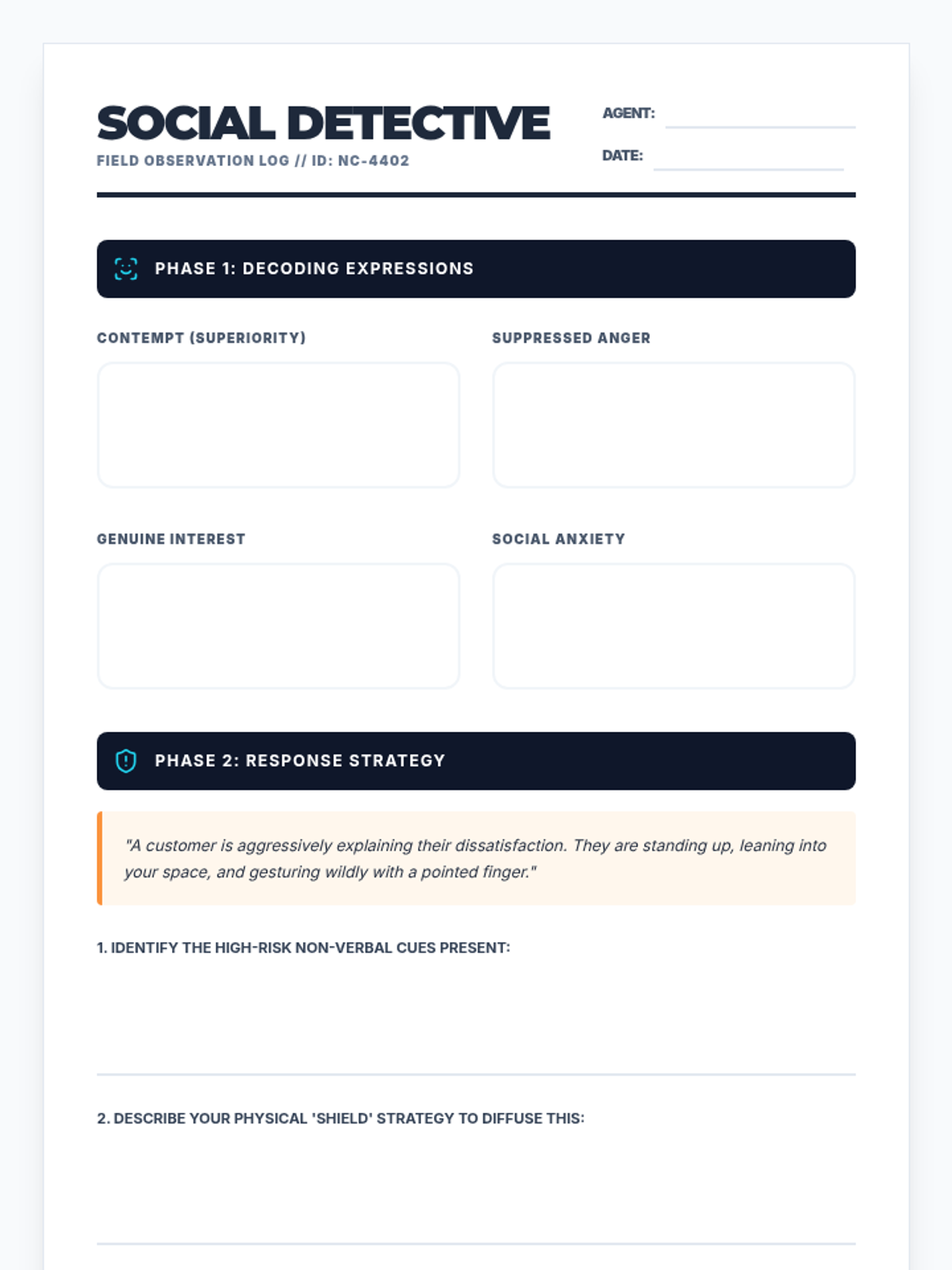
A student worksheet designed as a 'Field Observation Log' for role-playing exercises and scenario analysis in non-verbal communication.
Instructional slides for the 'Silent Signals' lesson, featuring visual breakdowns of the 93% rule, interpersonal rapport techniques, professional interview cues, and de-escalation strategies.
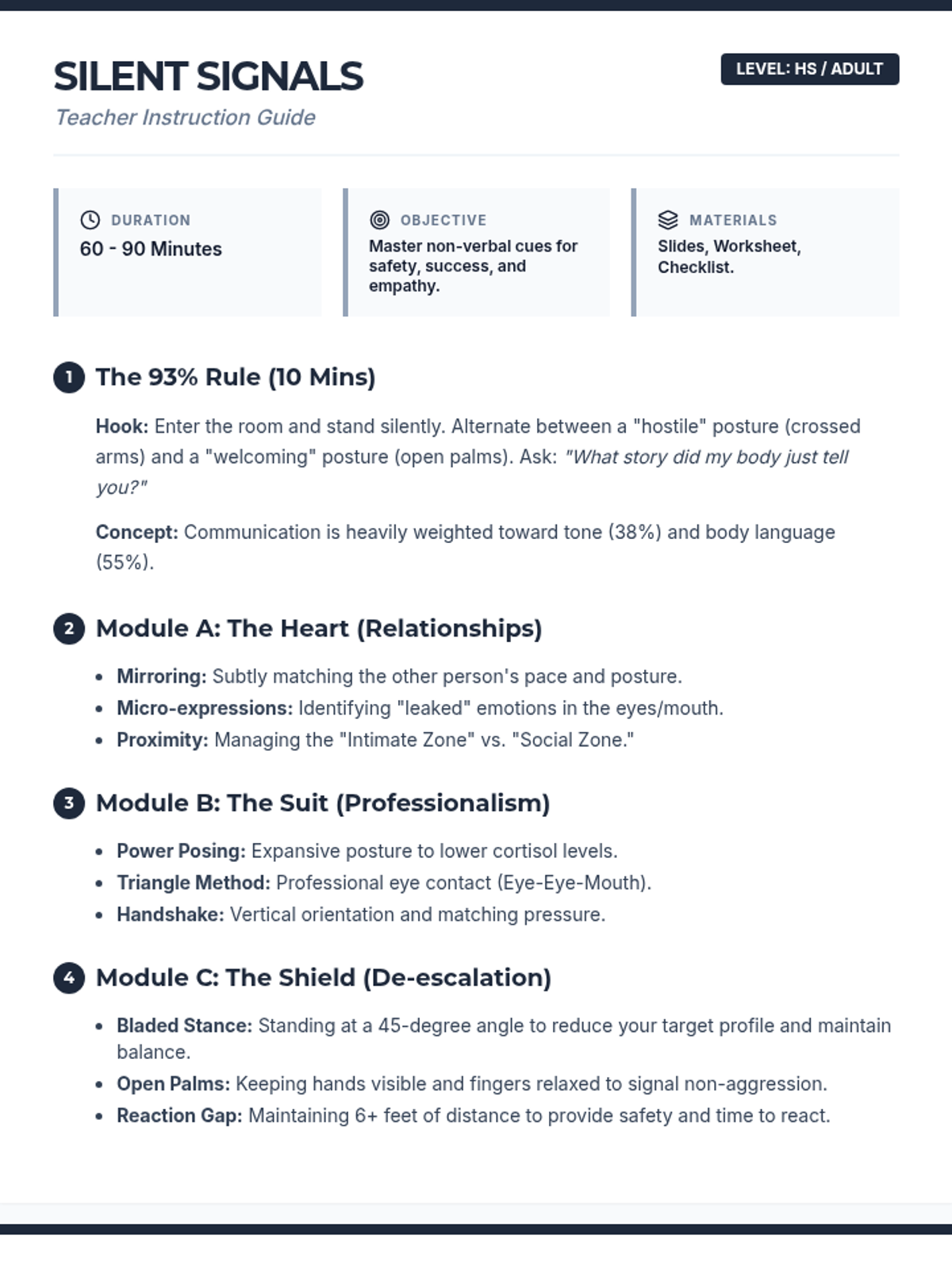
A detailed teacher facilitation guide for the 'Silent Signals' lesson, including lesson objectives, timing, key concepts for three modules, and practical classroom exercises.
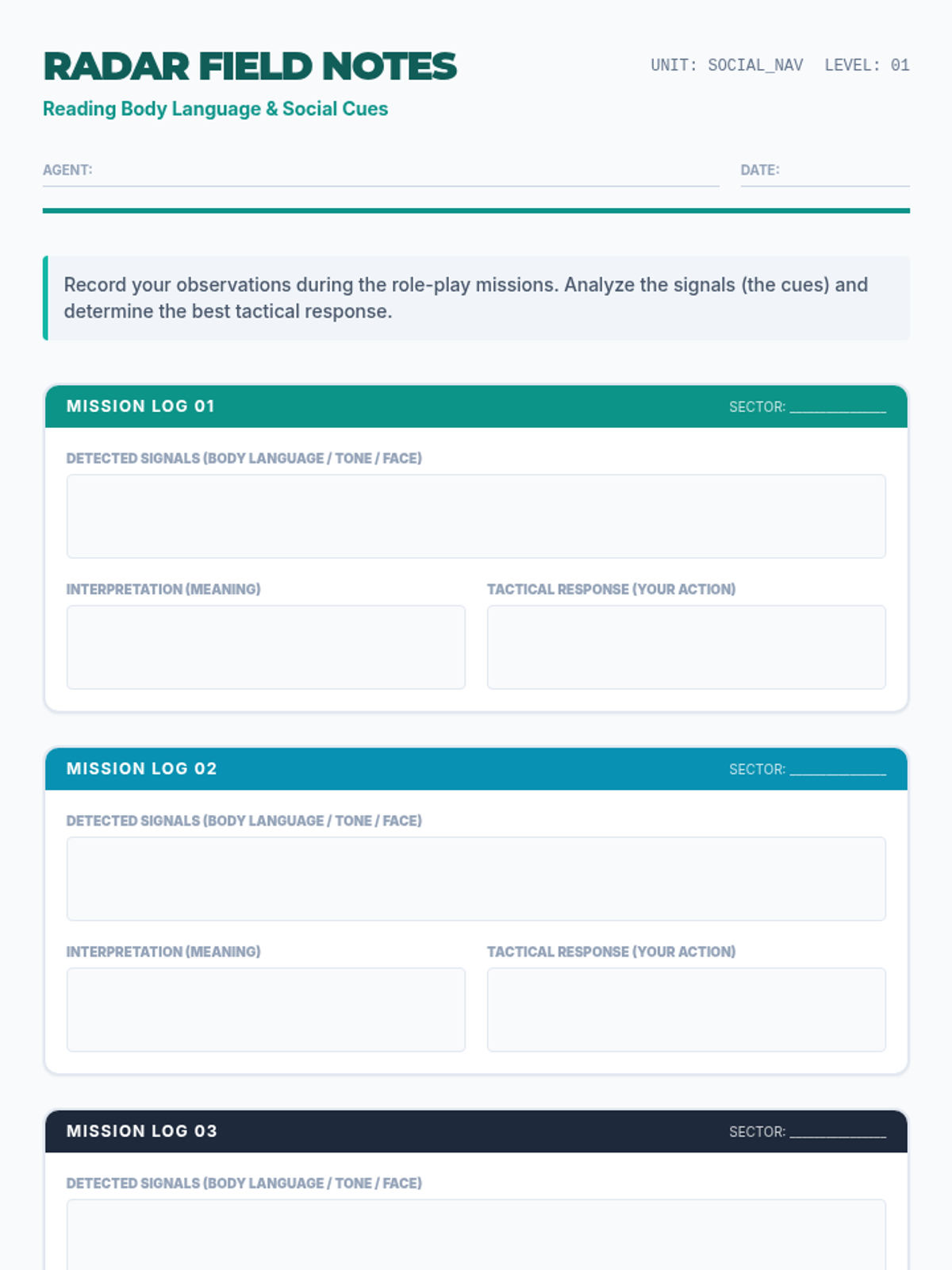
A student observation worksheet designed for recording cues and responses during role-play activities. Features a 'Mission Log' layout to track signals, interpretation, and tactical responses across different settings.
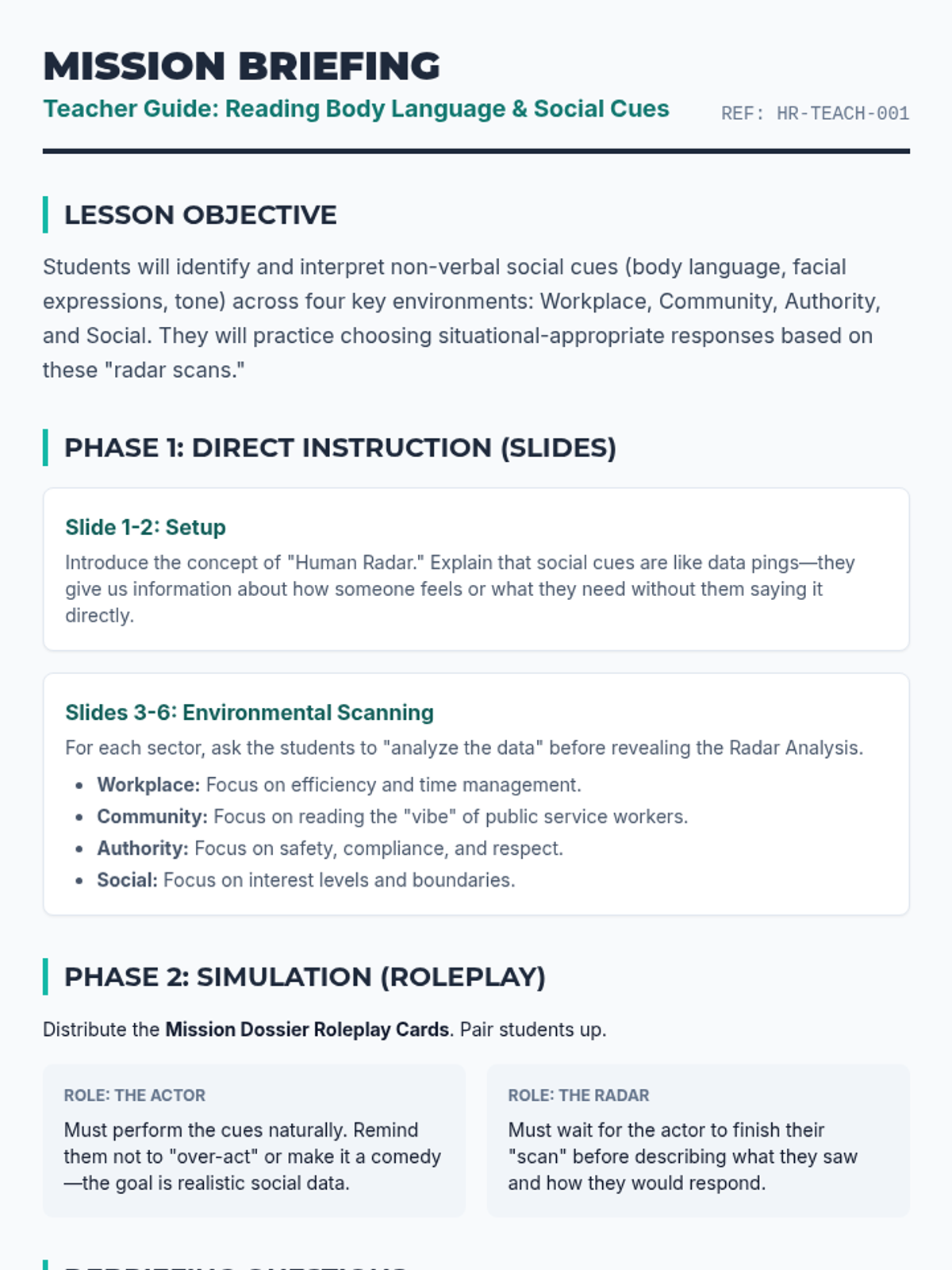
A comprehensive teacher facilitation guide for the Body Language lesson, including pacing, activity instructions for role-play, discussion questions, and troubleshooting tips.
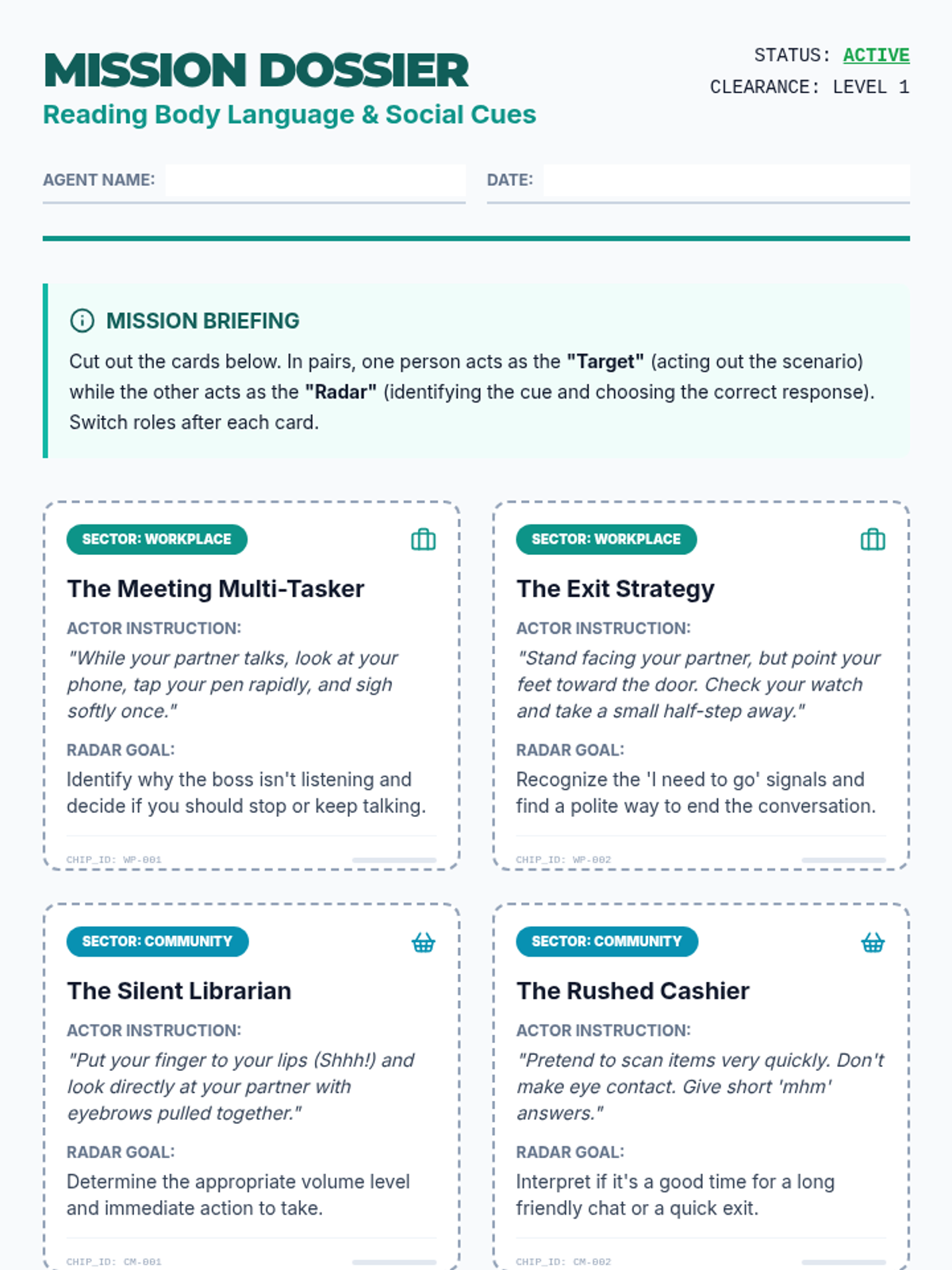
A set of printable role-play scenario cards themed as a 'Mission Dossier' for practicing reading social cues across workplace, community, authority, and social settings. Each card includes specific actor instructions and goals for the person playing the 'Radar'.
A presentation deck on body language and social cues across various settings, featuring clear 'Radar Analysis' for specific scenarios and visual descriptions for analysis.
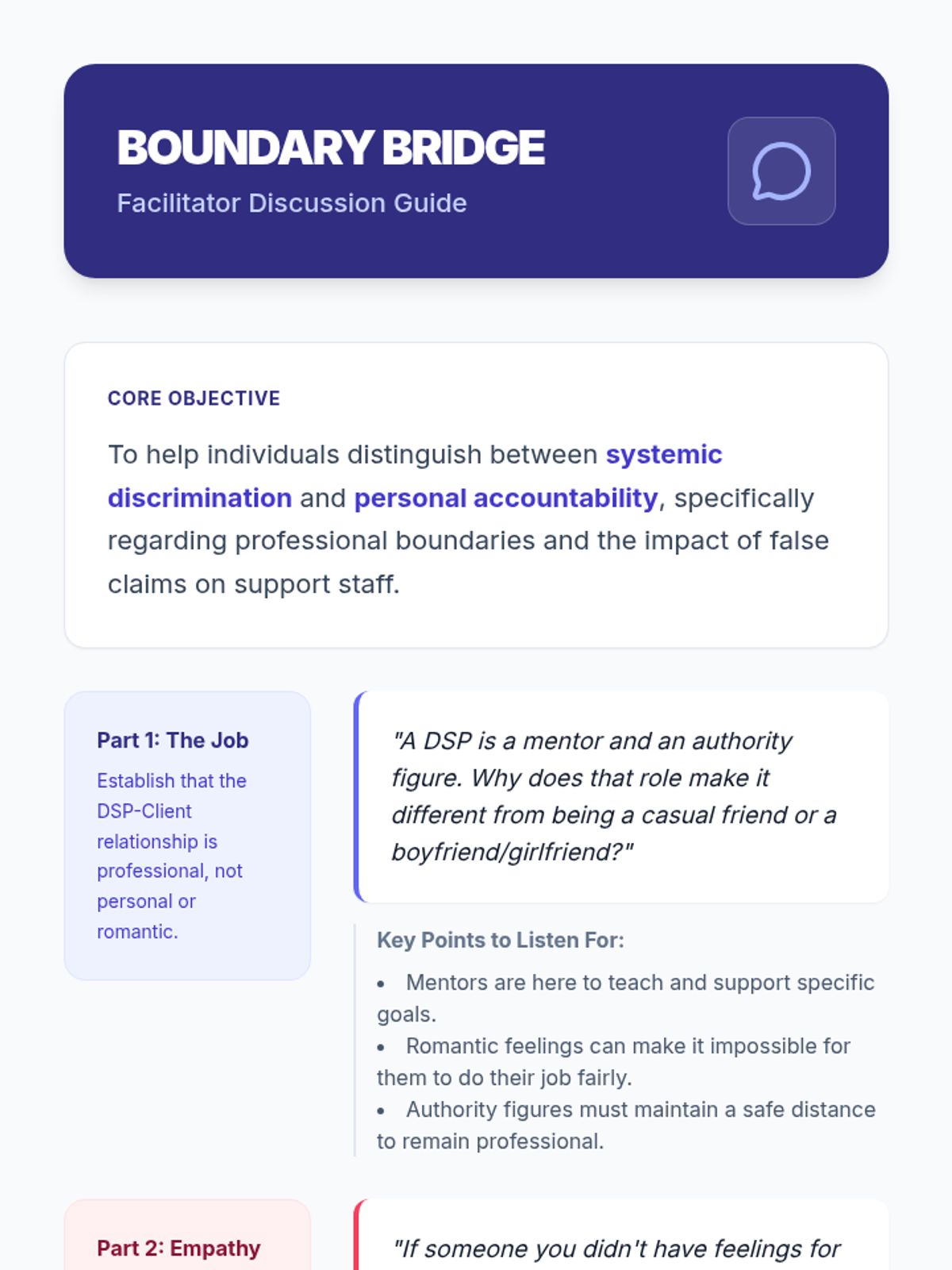
A facilitator guide with discussion prompts and key points for leading a group or individual session on boundaries and discrimination.
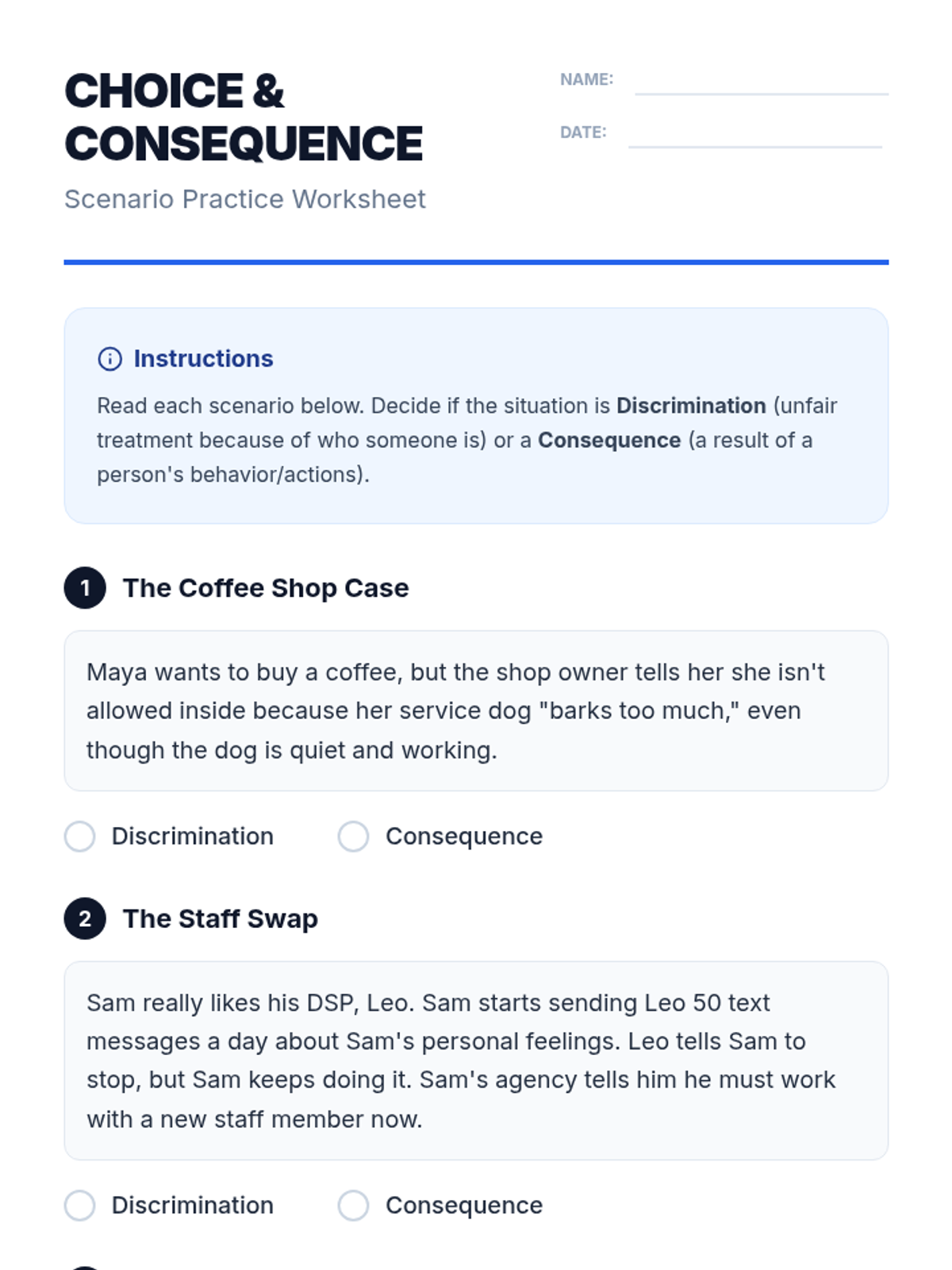
An expanded worksheet with six scenarios for students to identify discrimination versus behavioral consequences, including a deep-dive reflection on false claims.
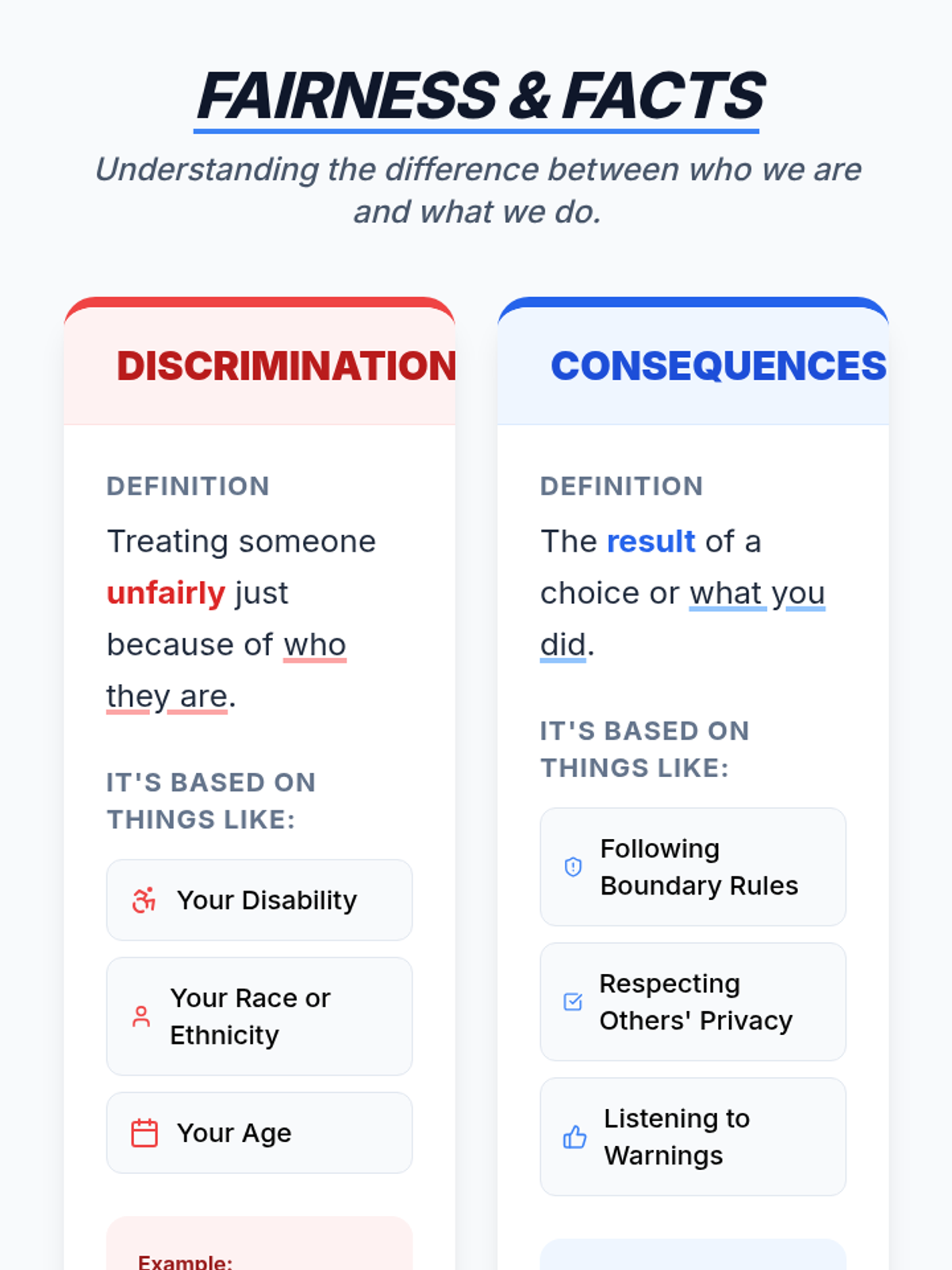
An anchor chart contrasting the definitions and examples of discrimination versus behavioral consequences.
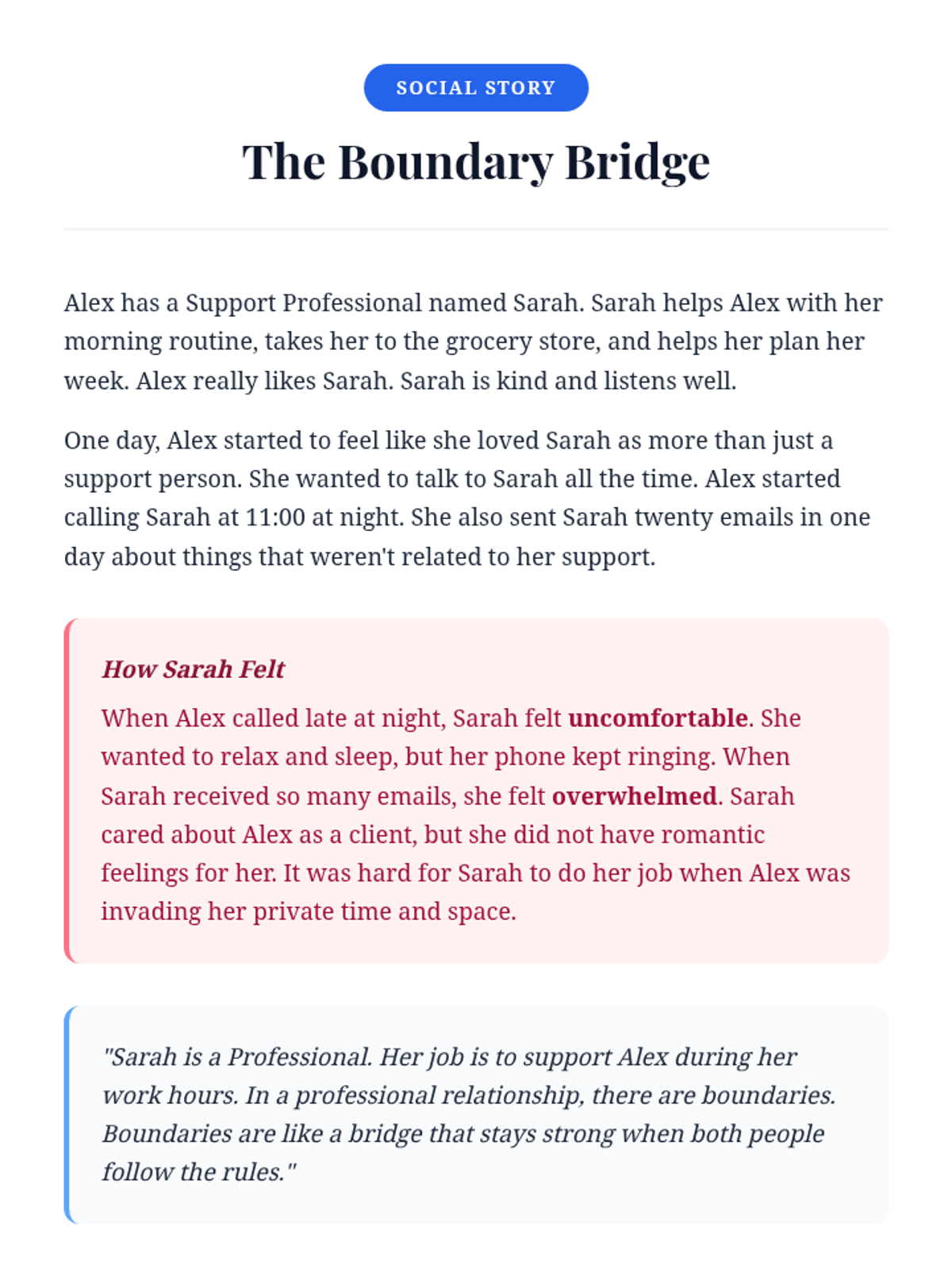
Updated social story including Sarah's perspective of discomfort and the importance of respecting a mentor's boundaries.
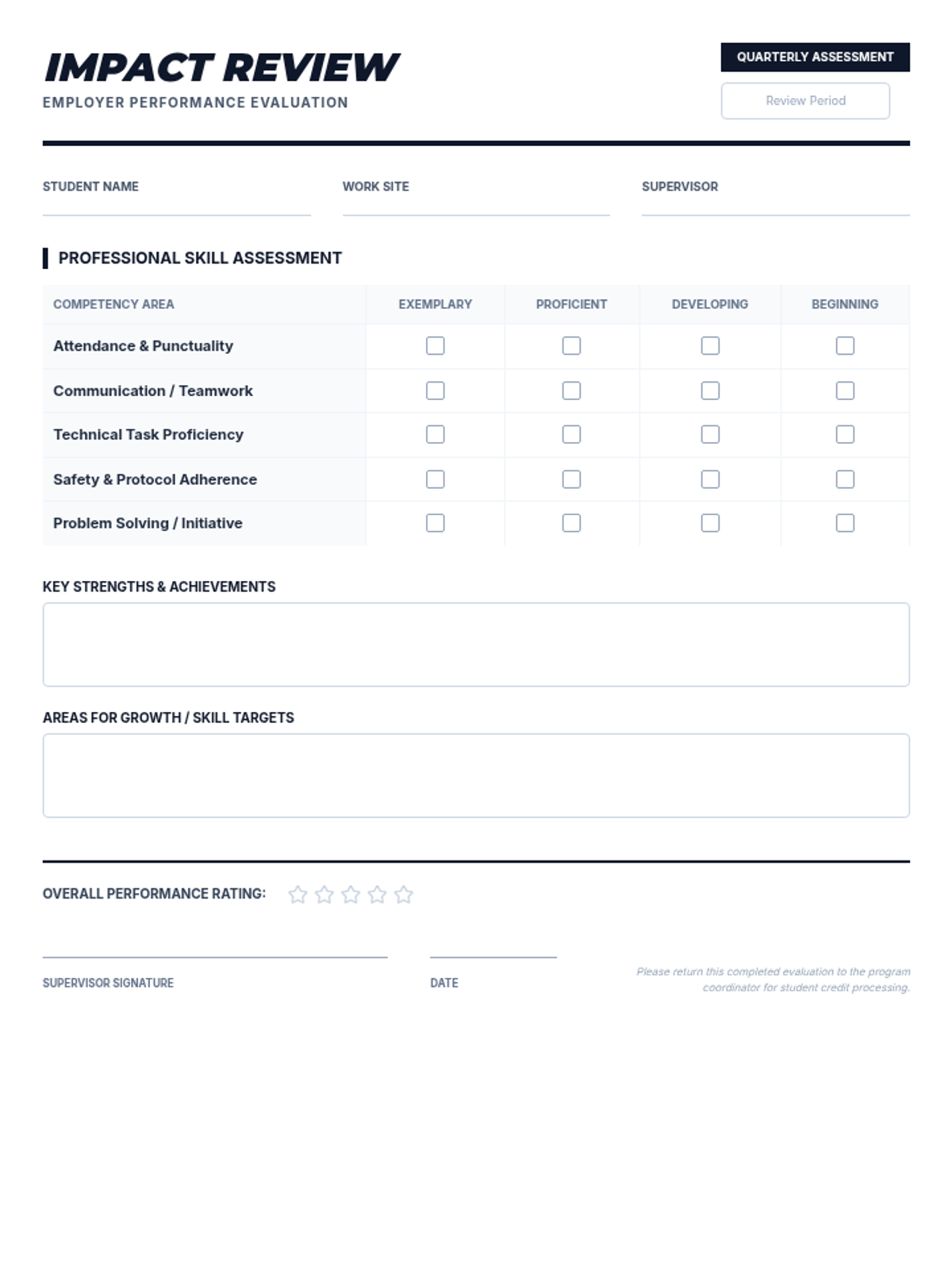
A comprehensive performance evaluation form for employers to assess student progress across professional competencies and safety standards.
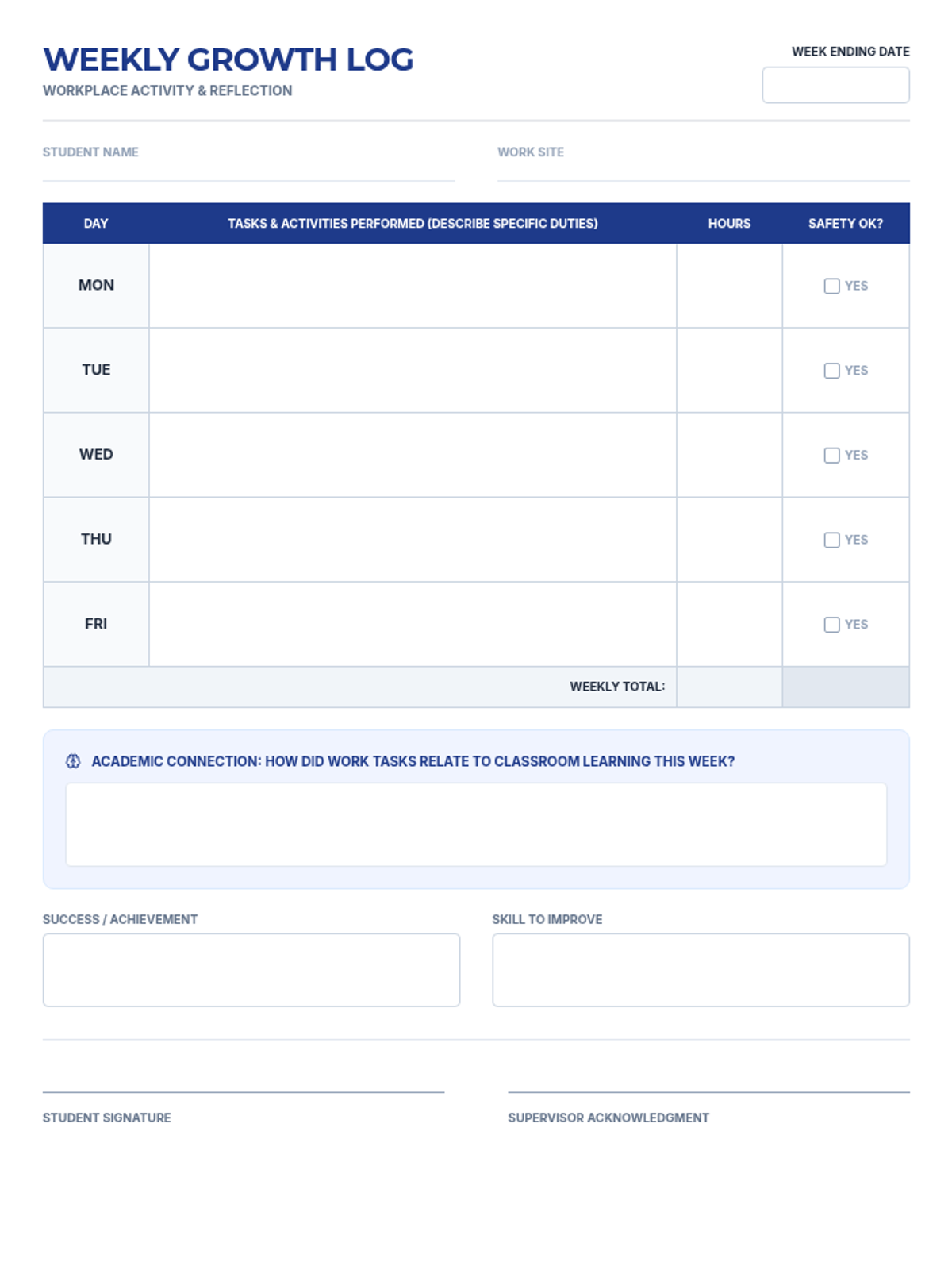
A weekly logging document for students to track hours, tasks, and reflect on the integration of their work with academic concepts.
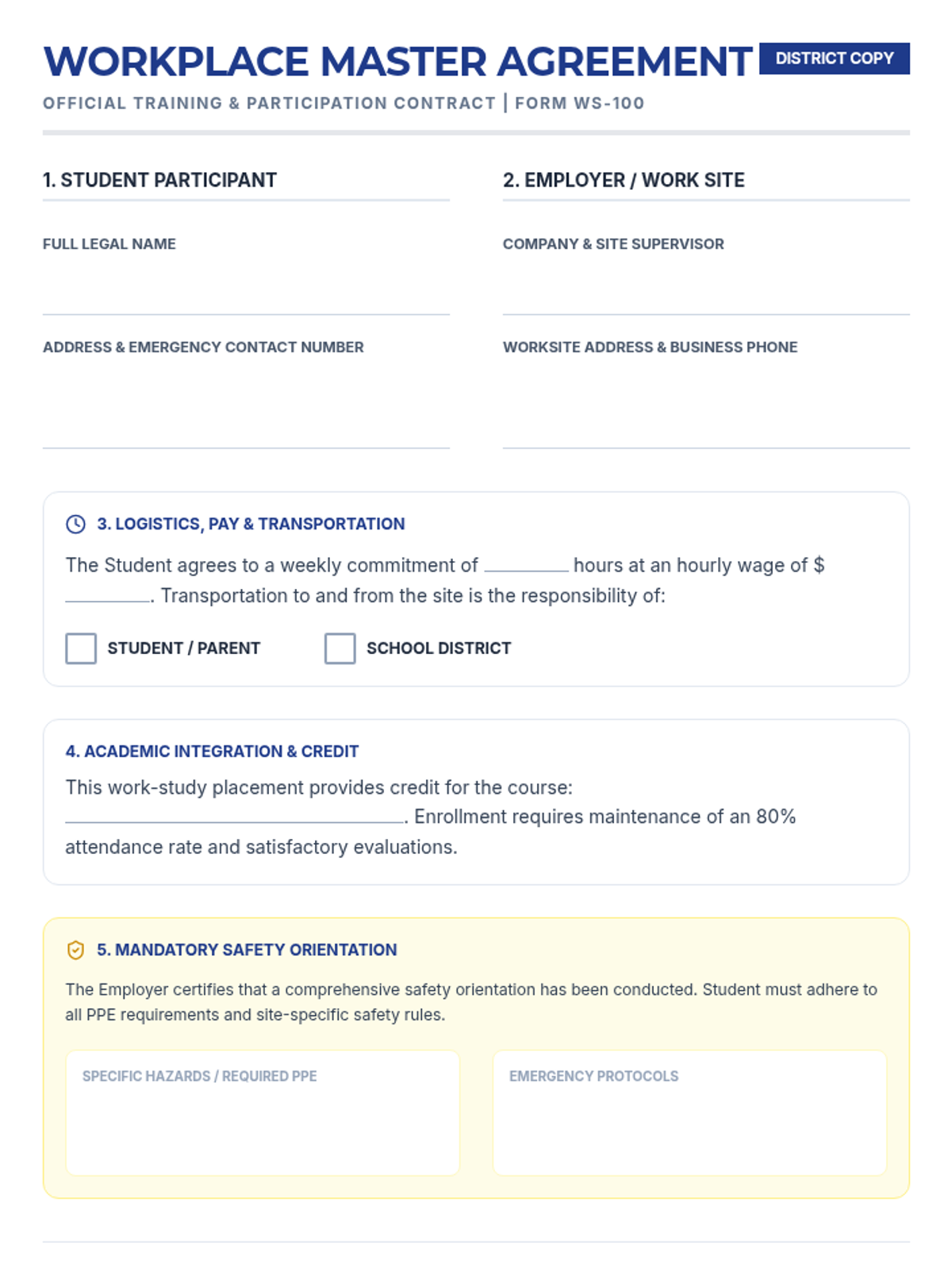
A formal training agreement and legal contract for work-study programs, covering hourly requirements, transportation, and safety protocols.
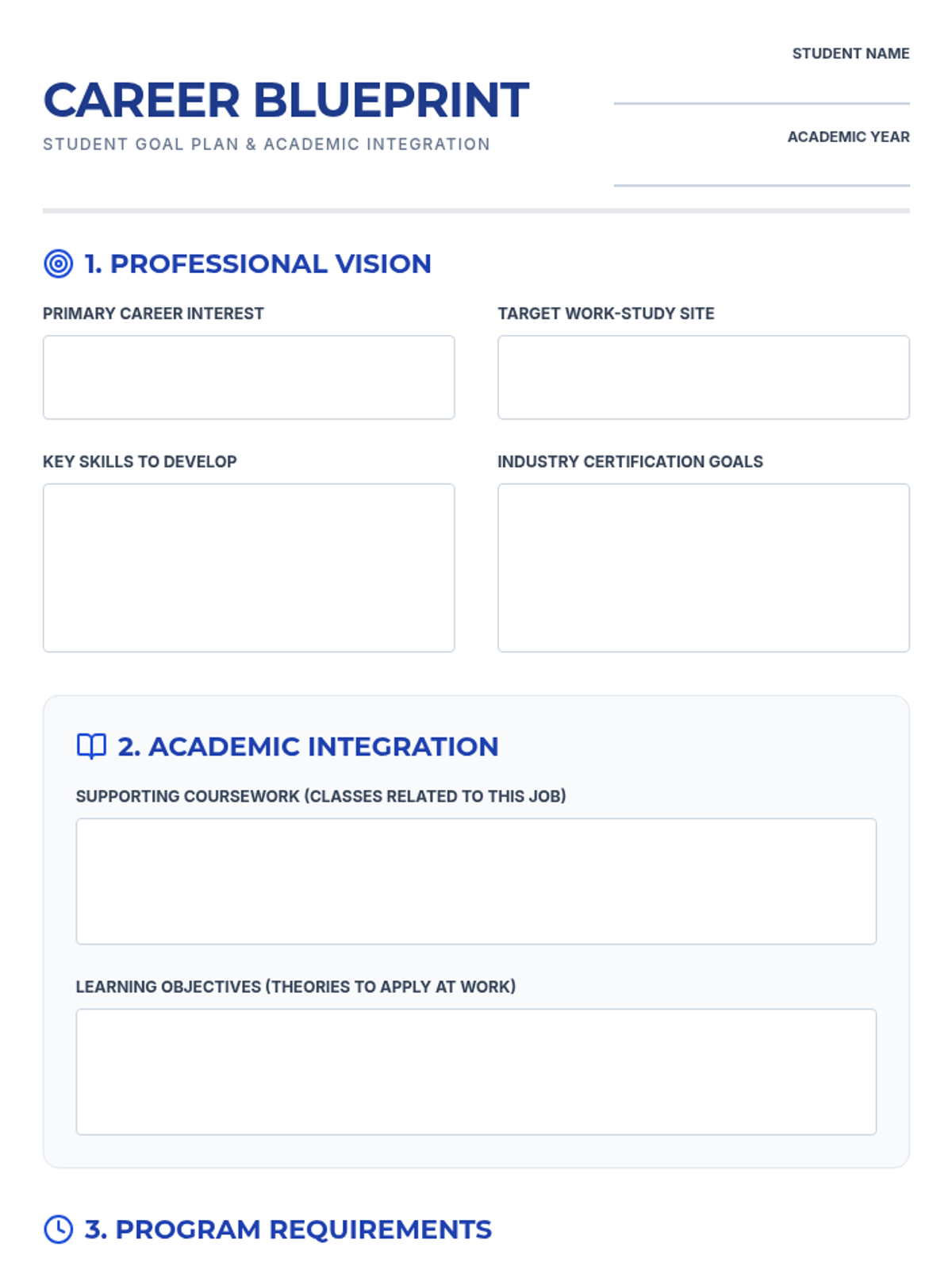
A student goal-setting document that outlines career interests, academic connections, and logistical requirements for a work-study program.
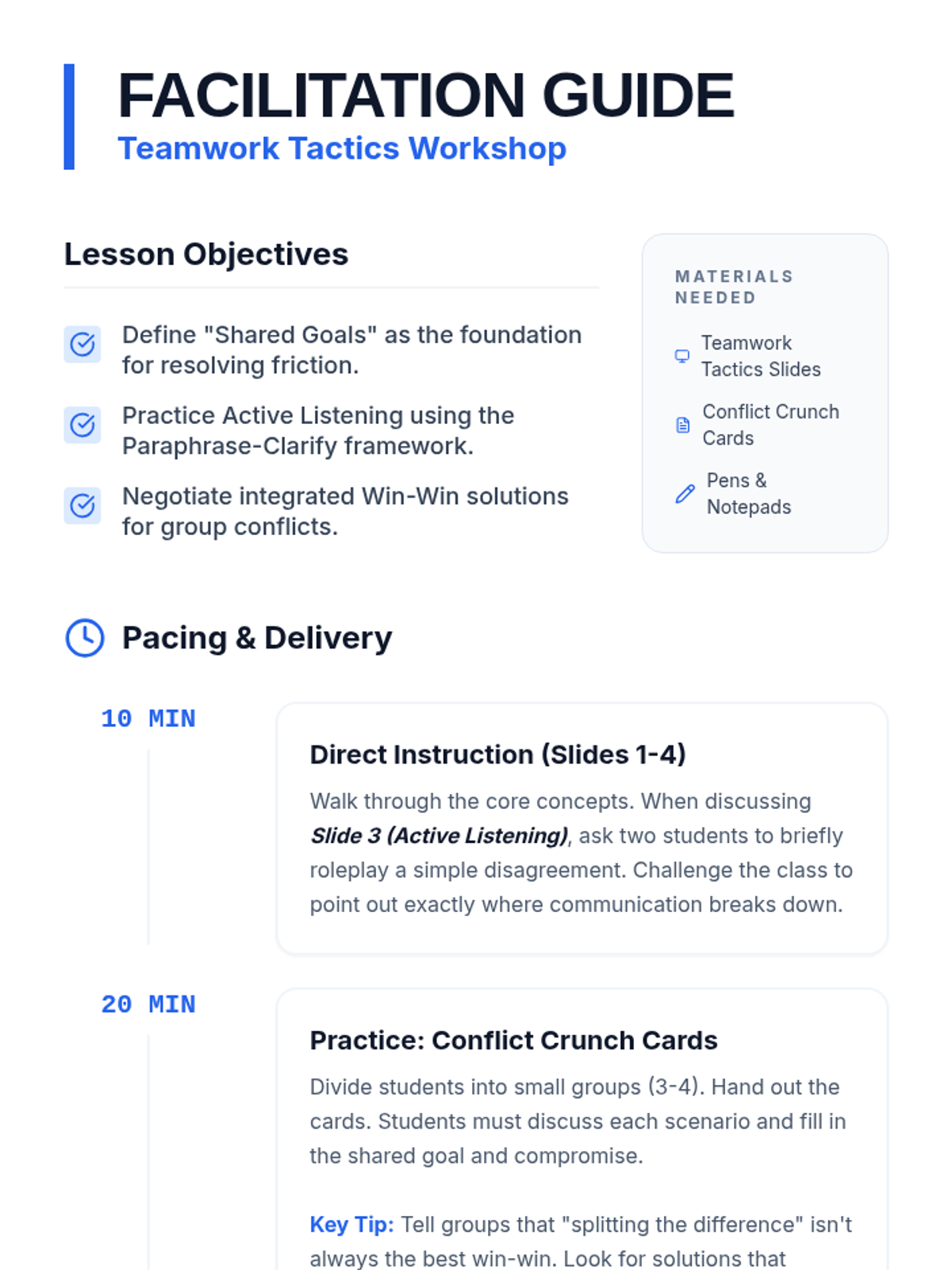
A comprehensive teacher's guide for the Teamwork Tactics lesson, including learning objectives, a detailed pacing guide, and thought-provoking discussion prompts.
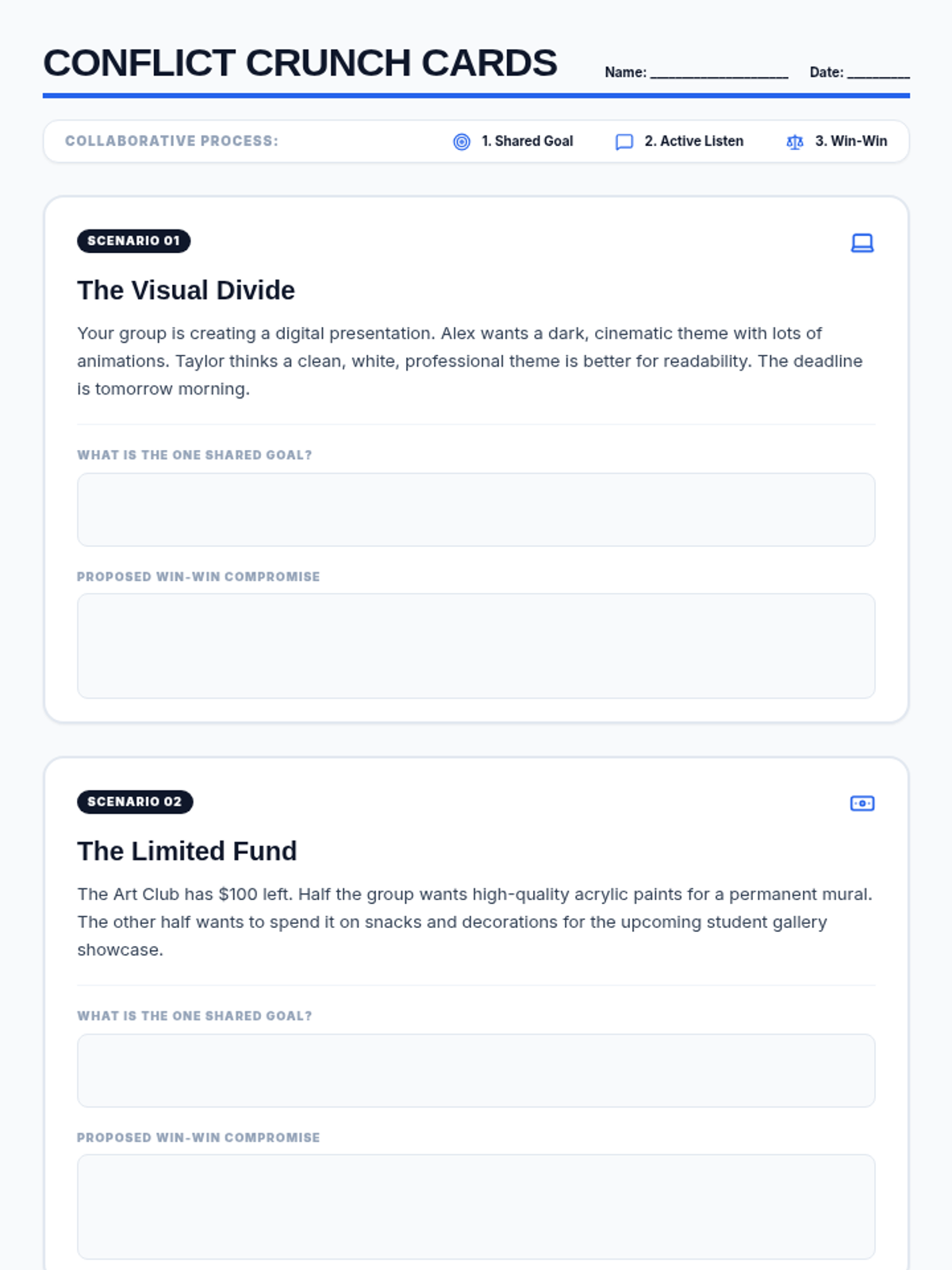
A set of 6 printable scenario cards designed to help students practice identifying shared goals and negotiating compromises in realistic group conflict situations.
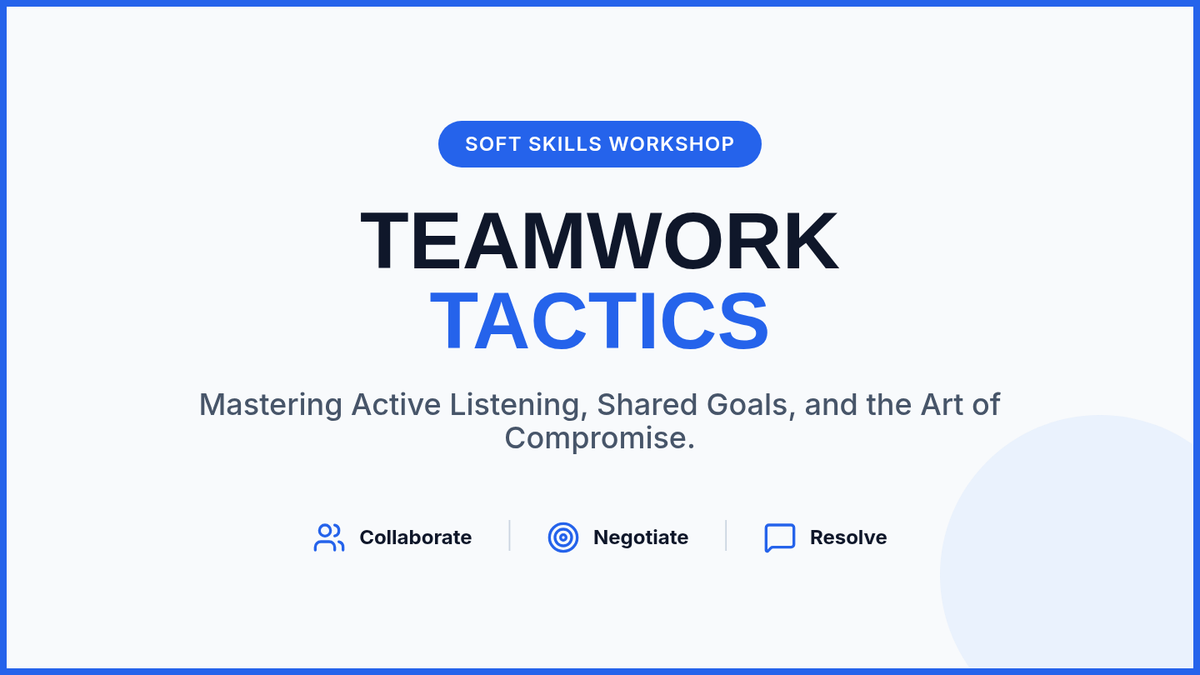
A 5-slide visual presentation covering the core principles of collaborative problem solving, including shared goals, active listening techniques, and negotiation strategies.
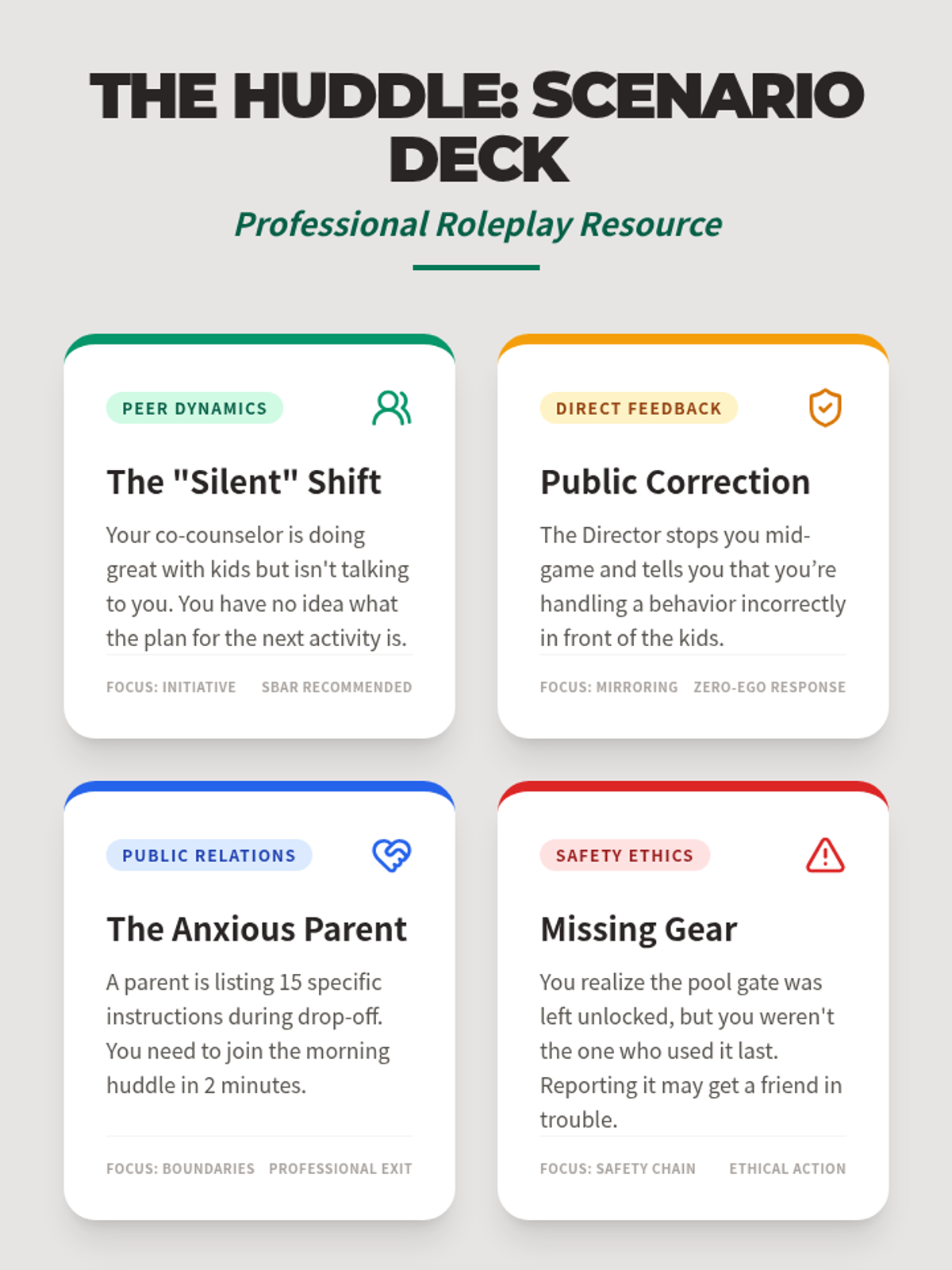
A set of four scenario-based activity cards for camp counselor training, focusing on peer dynamics, supervisor feedback, parent interactions, and safety ethics.
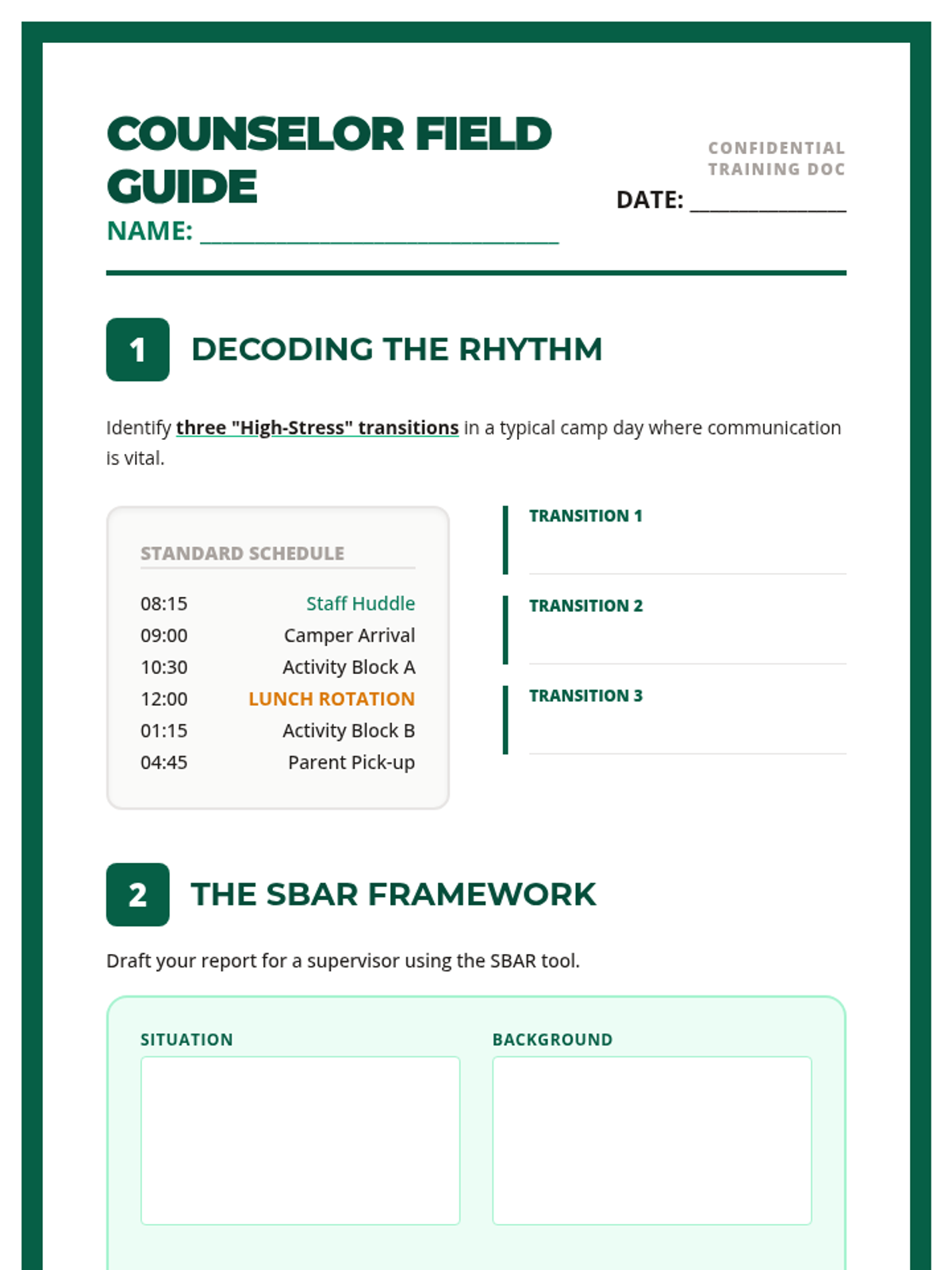
An expanded 2-page student workbook for camp counselor training, featuring a SBAR practice matrix, a conflict resolution "I" statement draft area, and a professional first-hour checklist.
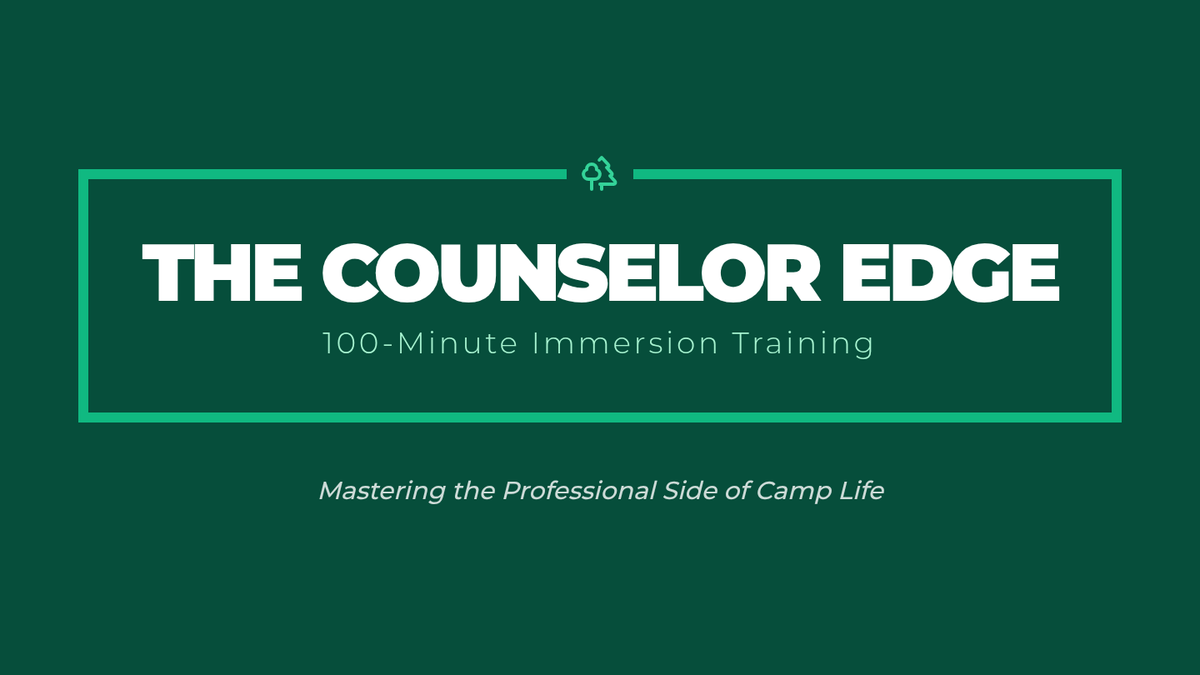
An expanded 10-slide visual presentation for camp counselor training, featuring the SBAR communication method, the Chain of Command hierarchy, and the "Mirror" feedback technique.
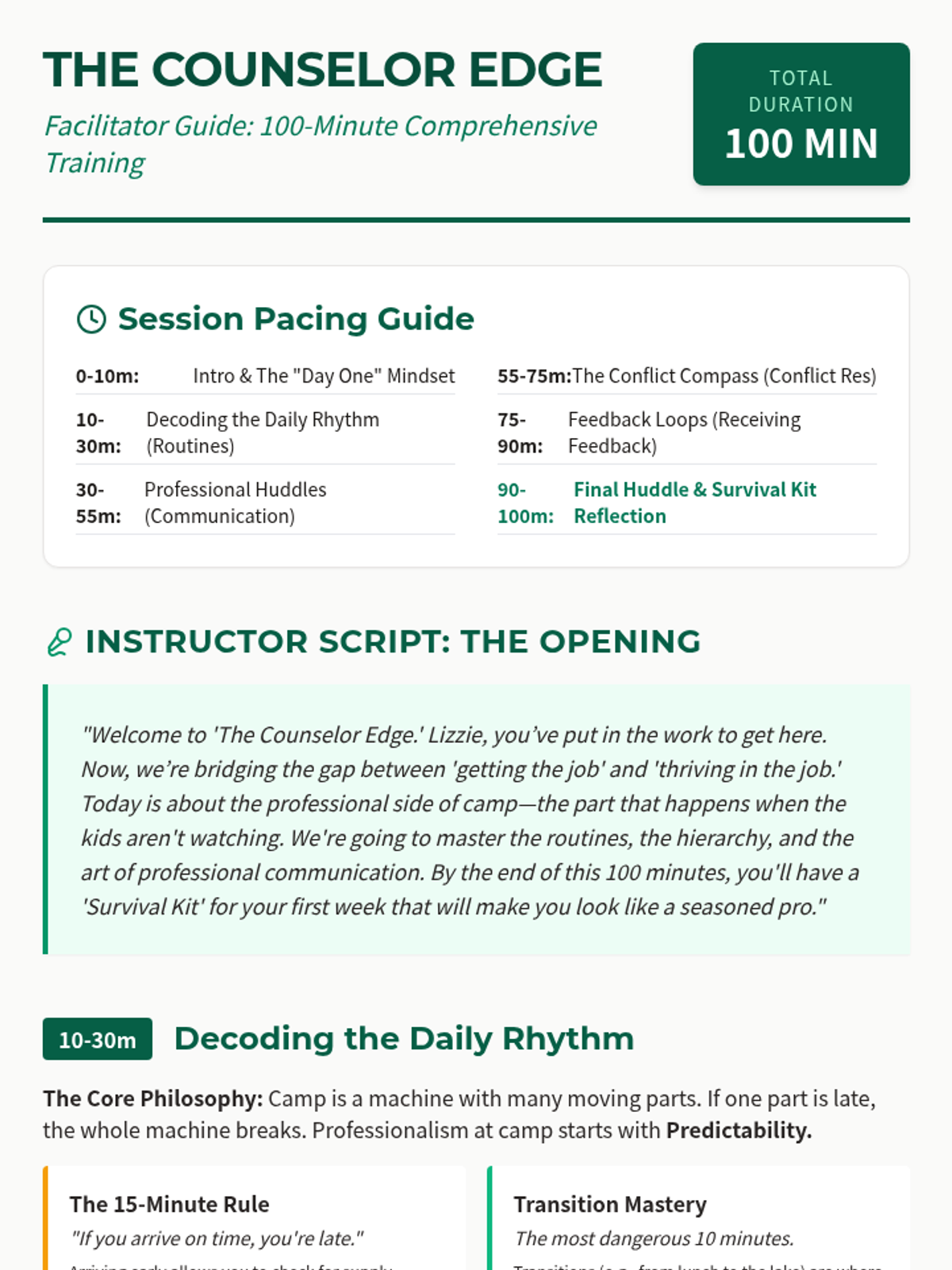
An expanded 100-minute facilitator guide for training new camp counselors, including detailed scripts, the SBAR communication method, and comprehensive pacing instructions for a full training session.
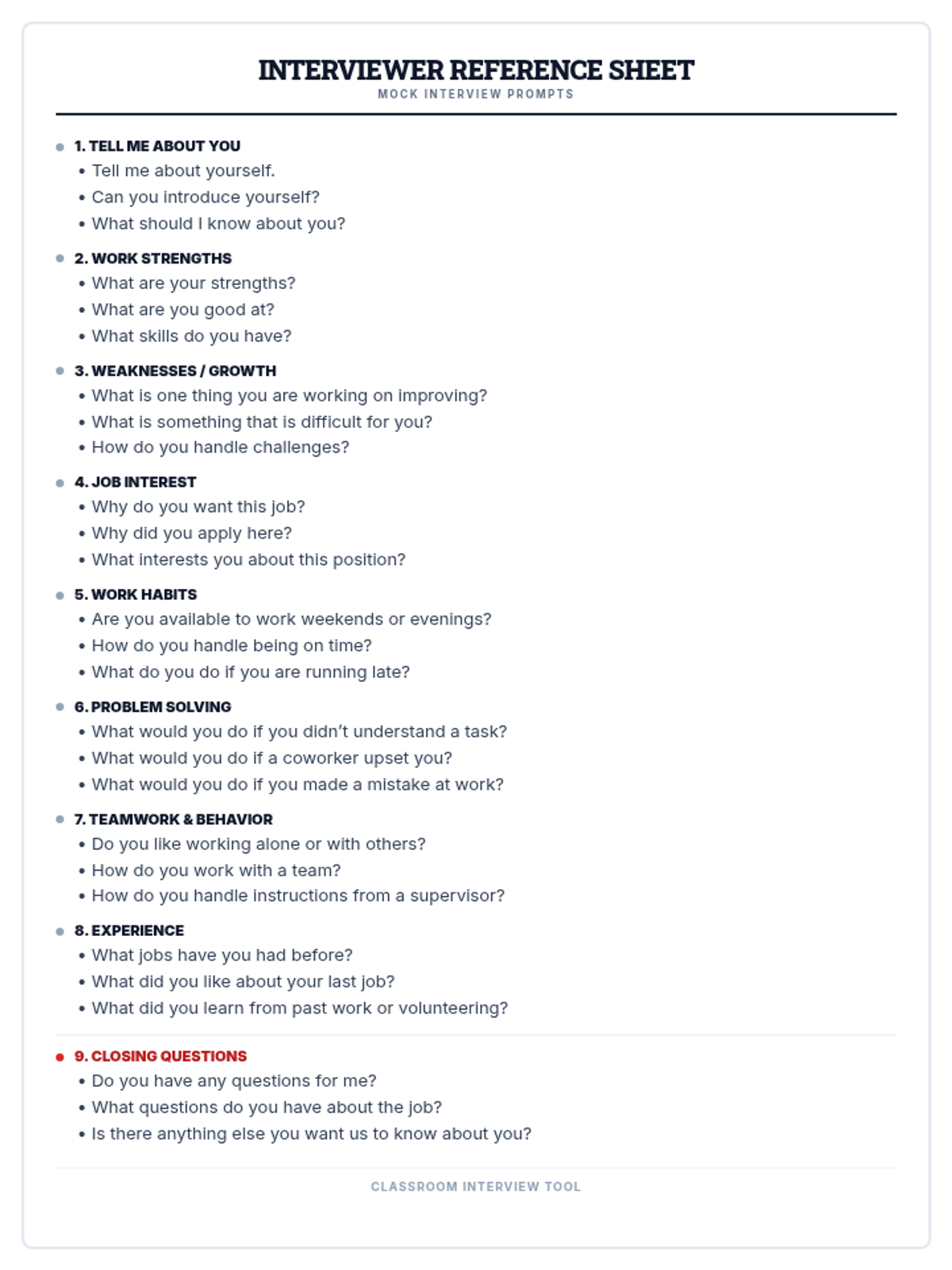
A clean, single-page reference sheet for students acting as interviewers, containing all question categories and prompts. Tightened for single-page layout.
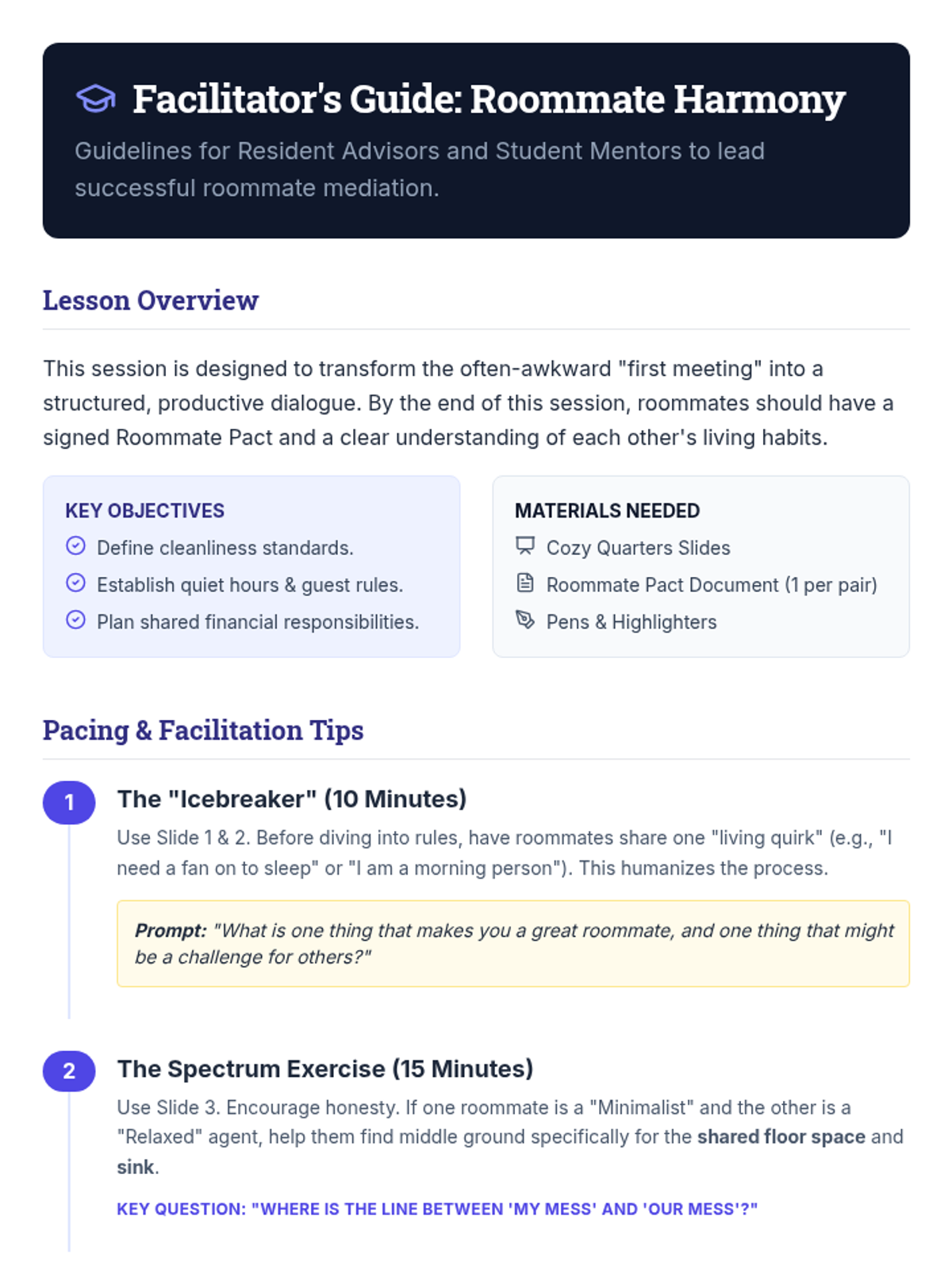
A guide for educators or RAs to facilitate the roommate agreement process, including discussion prompts, pacing, and conflict resolution tips.
A visual presentation designed to guide roommates through the process of setting expectations, discussing cleanliness, and navigating shared living finances.
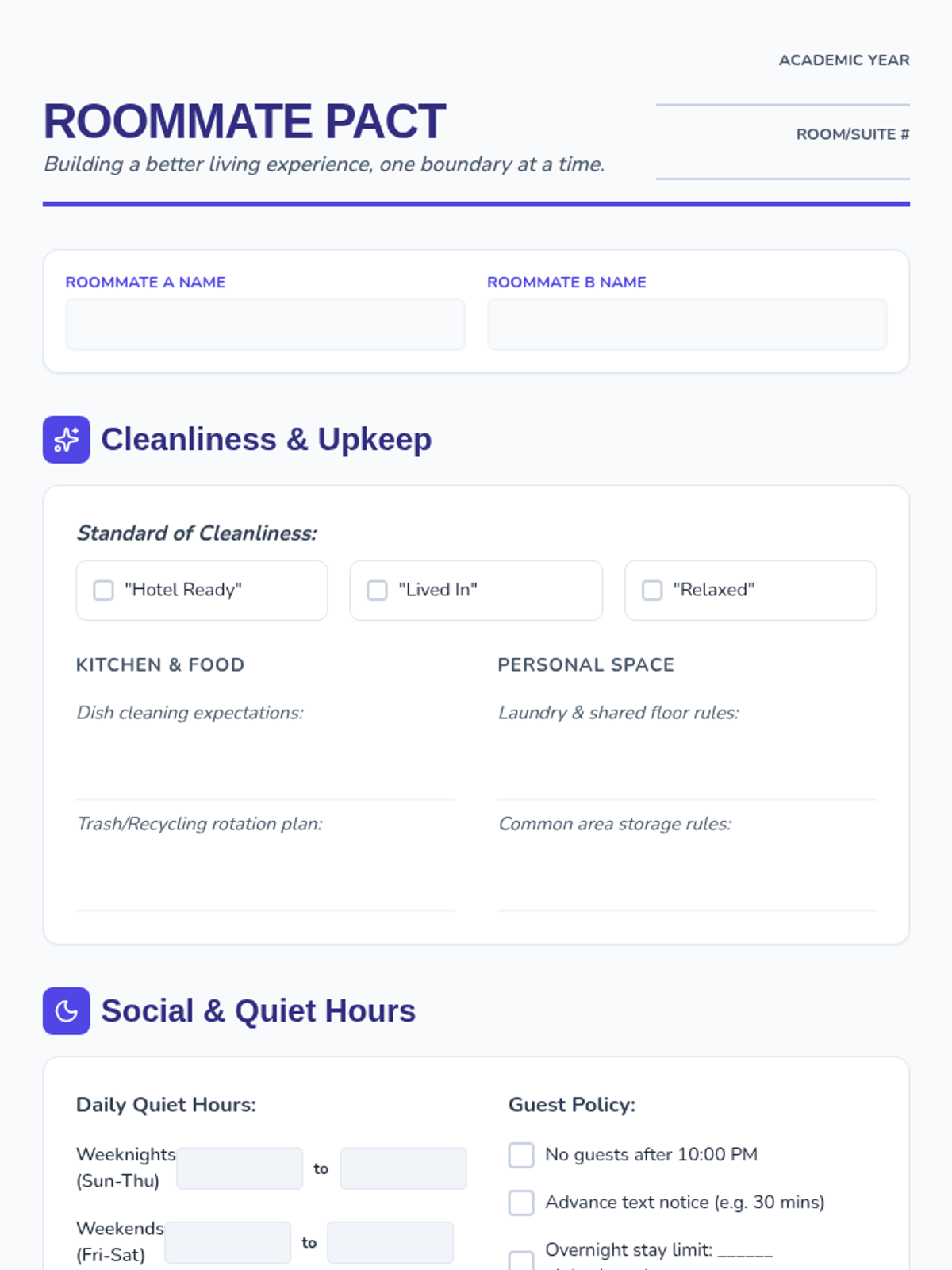
A formal living agreement for college roommates to establish ground rules for cleanliness, quiet hours, guests, and shared financial responsibilities.
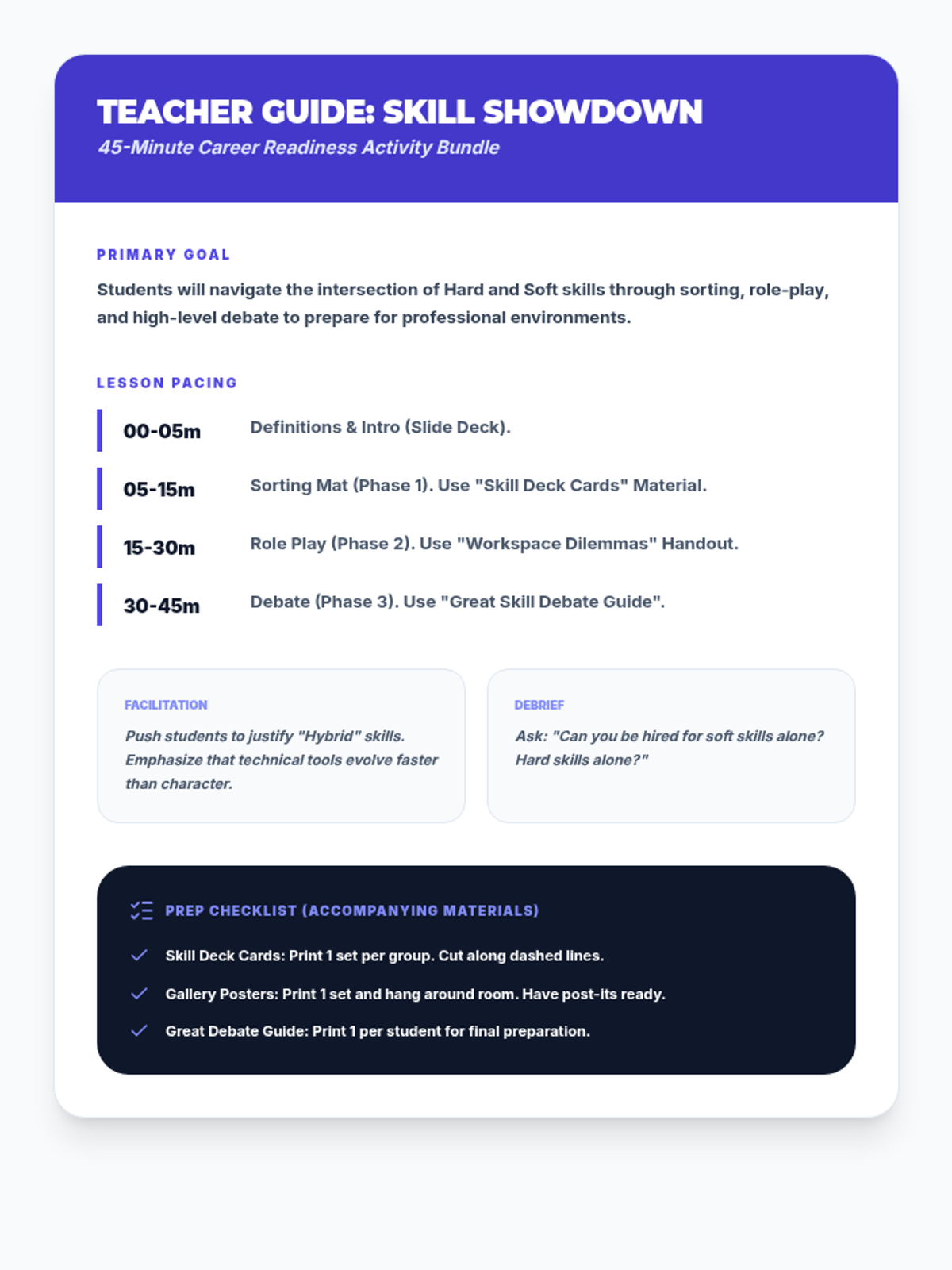
A polished teacher's manual with high-contrast headers, structured pacing, and a consolidated prep checklist to ensure smooth activity delivery.
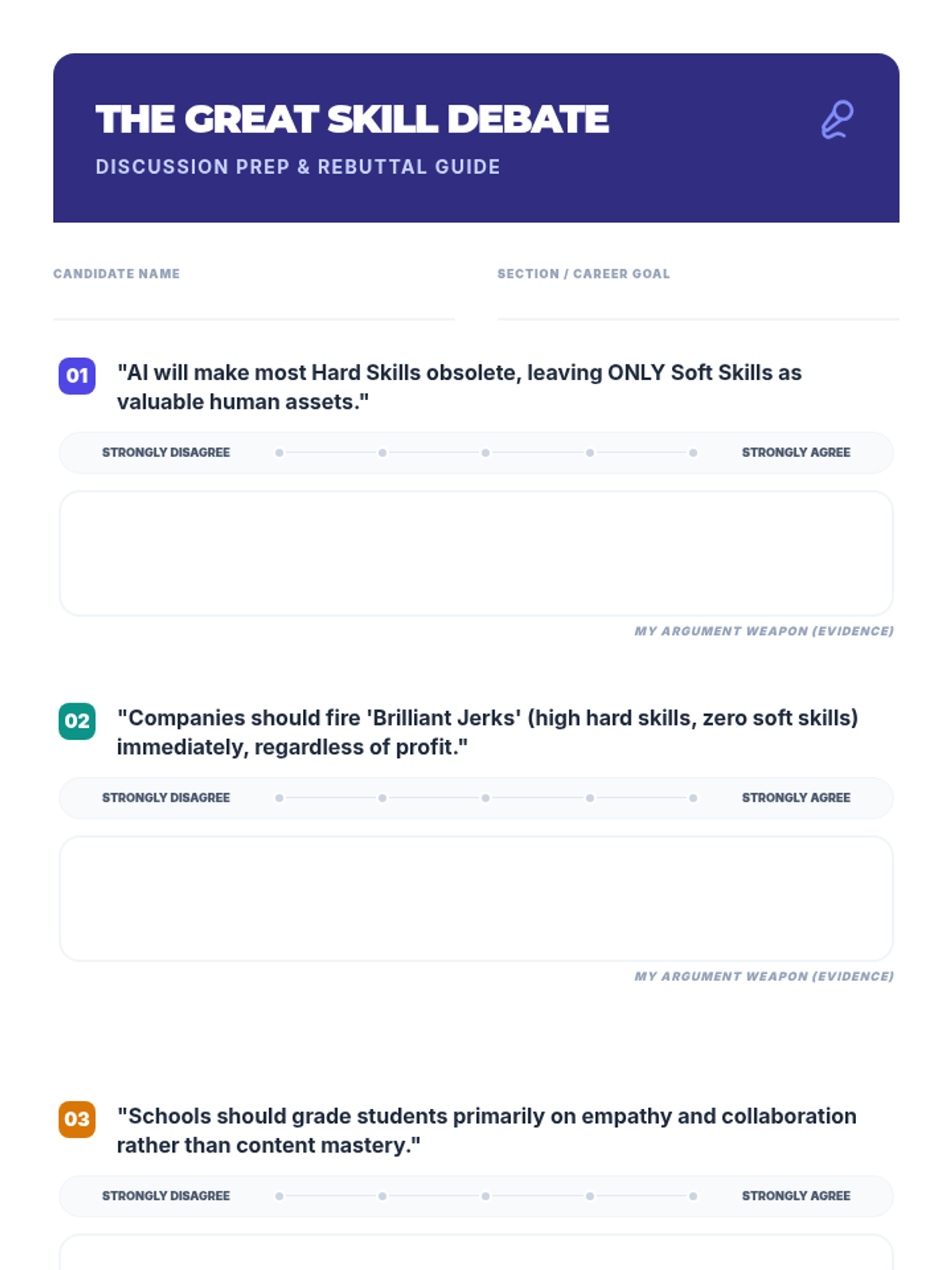
A comprehensive debate prep sheet for seniors with structured position scales, evidence boxes, and a tactical rebuttal section to support 30+ minutes of classroom discussion.
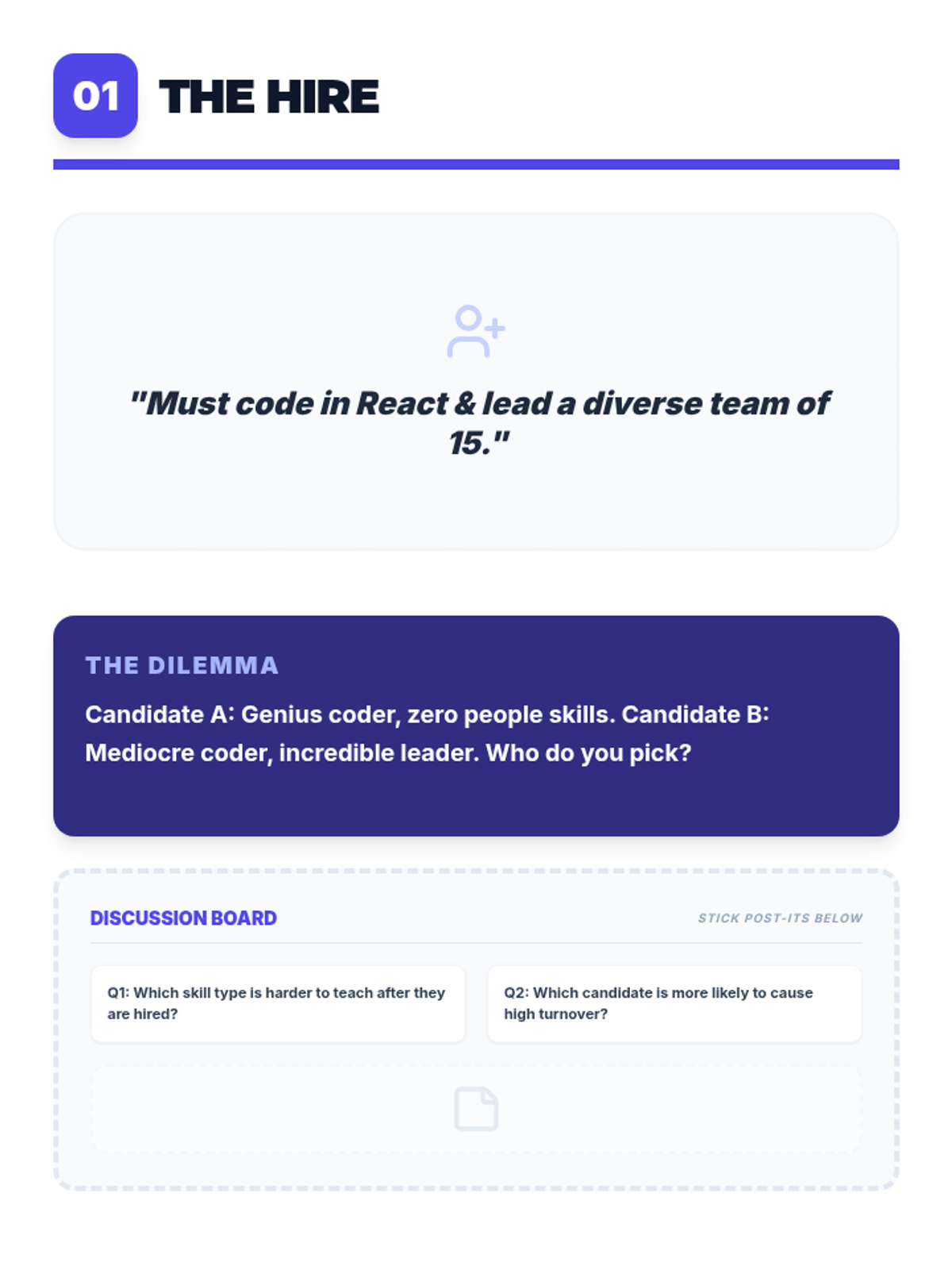
Large-format visual posters for a classroom gallery walk with fixed text containers and high-contrast design to ensure readability during activity.
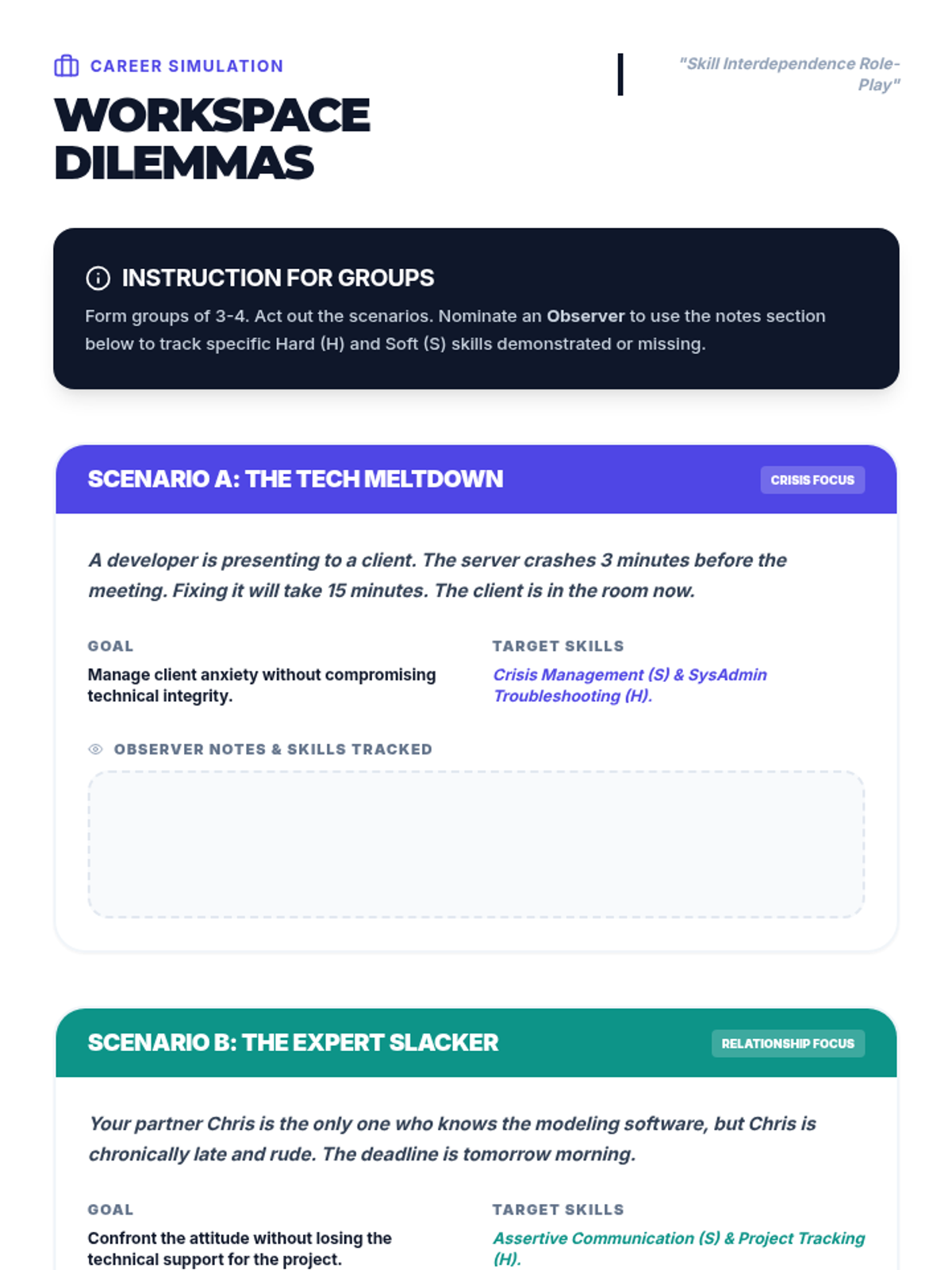
Three realistic workplace scenarios designed for student role-play with dedicated observer note sections to track hard and soft skill usage.
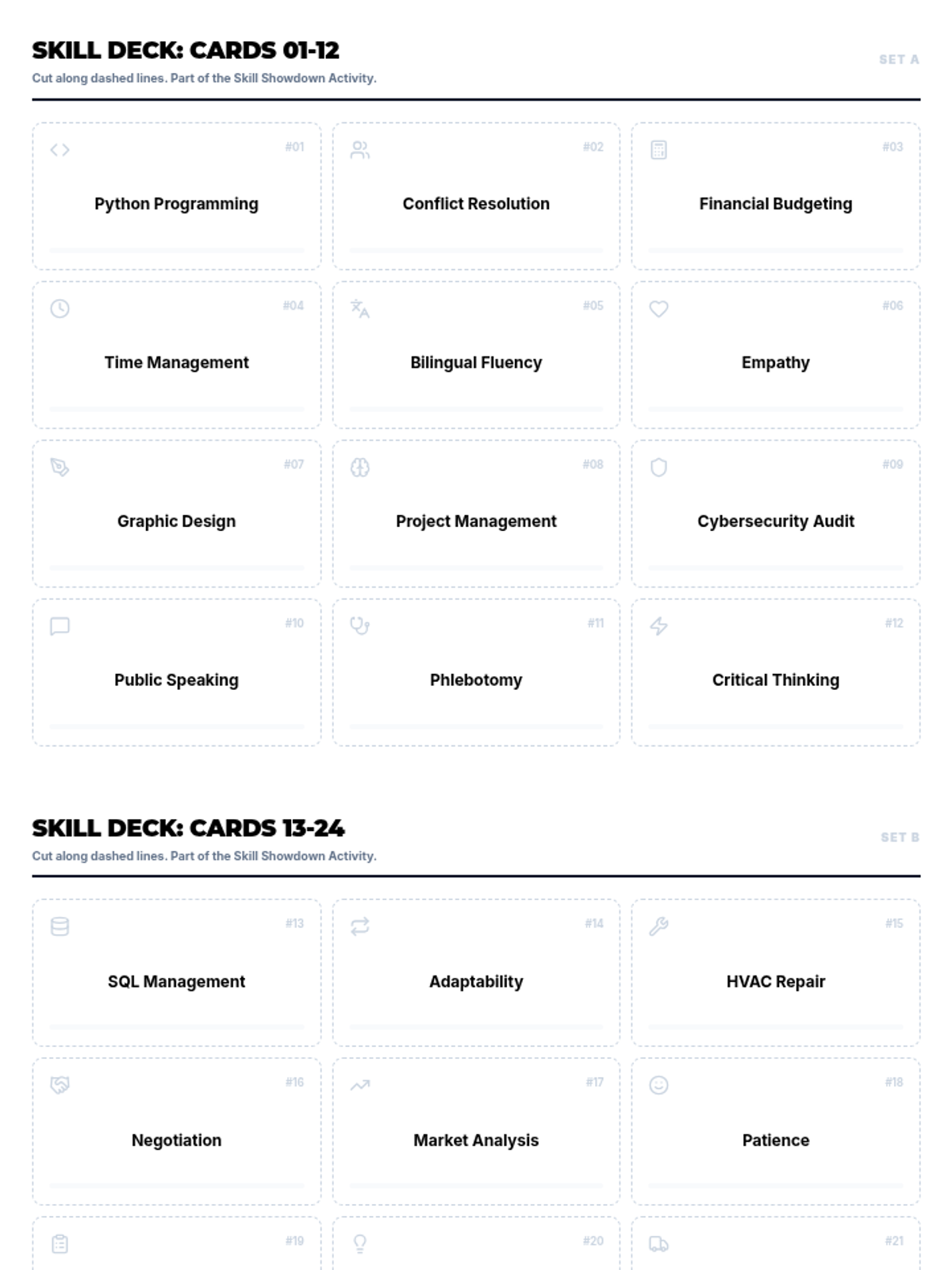
A complete set of 24 neutral-colored skill cards and a clean sorting mat for students to categorize workplace abilities without visual spoilers.
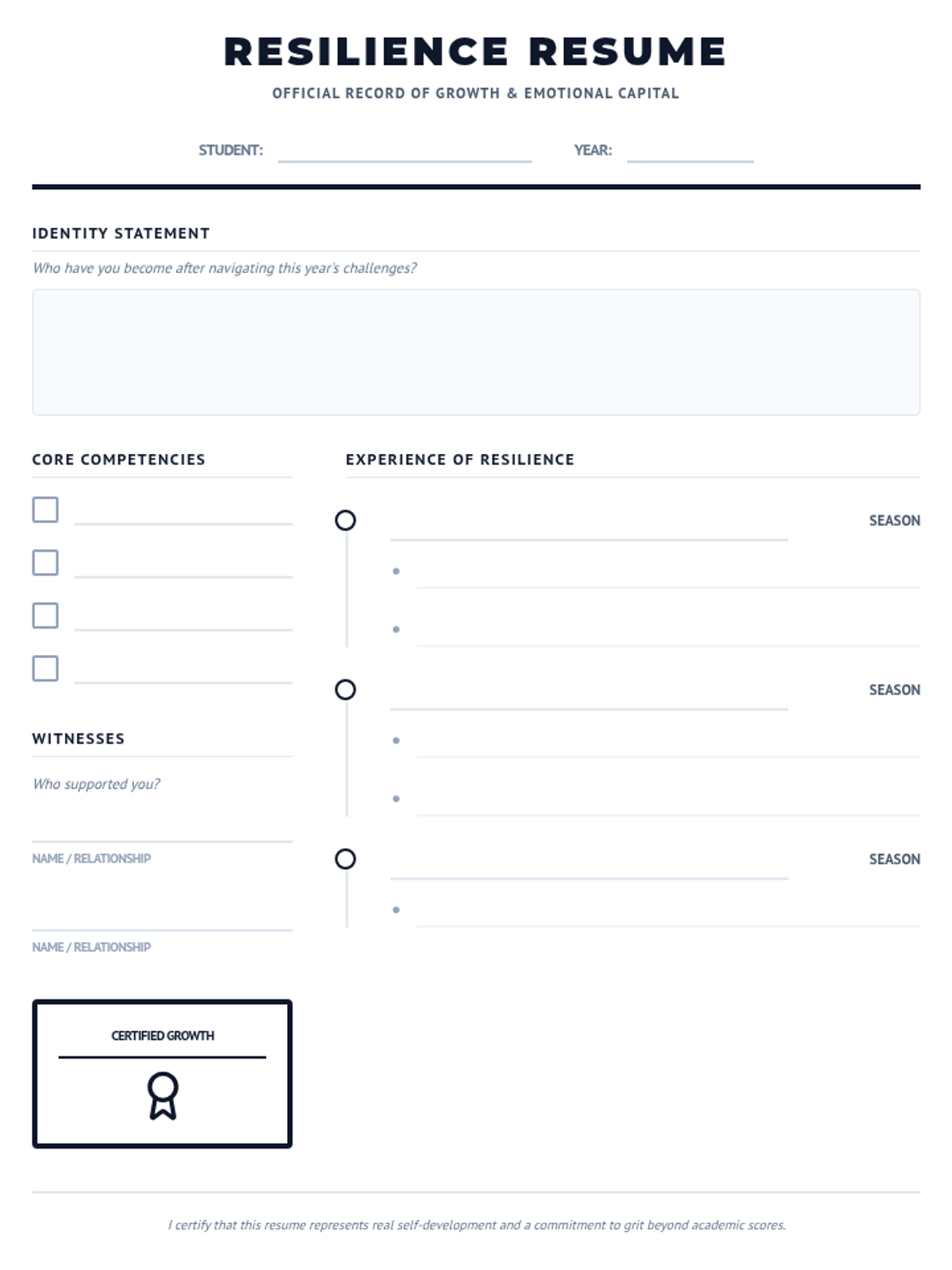
A professional-grade resume template for students to document their emotional and social growth, featuring sections for core competencies, experience of endurance, and personal references.
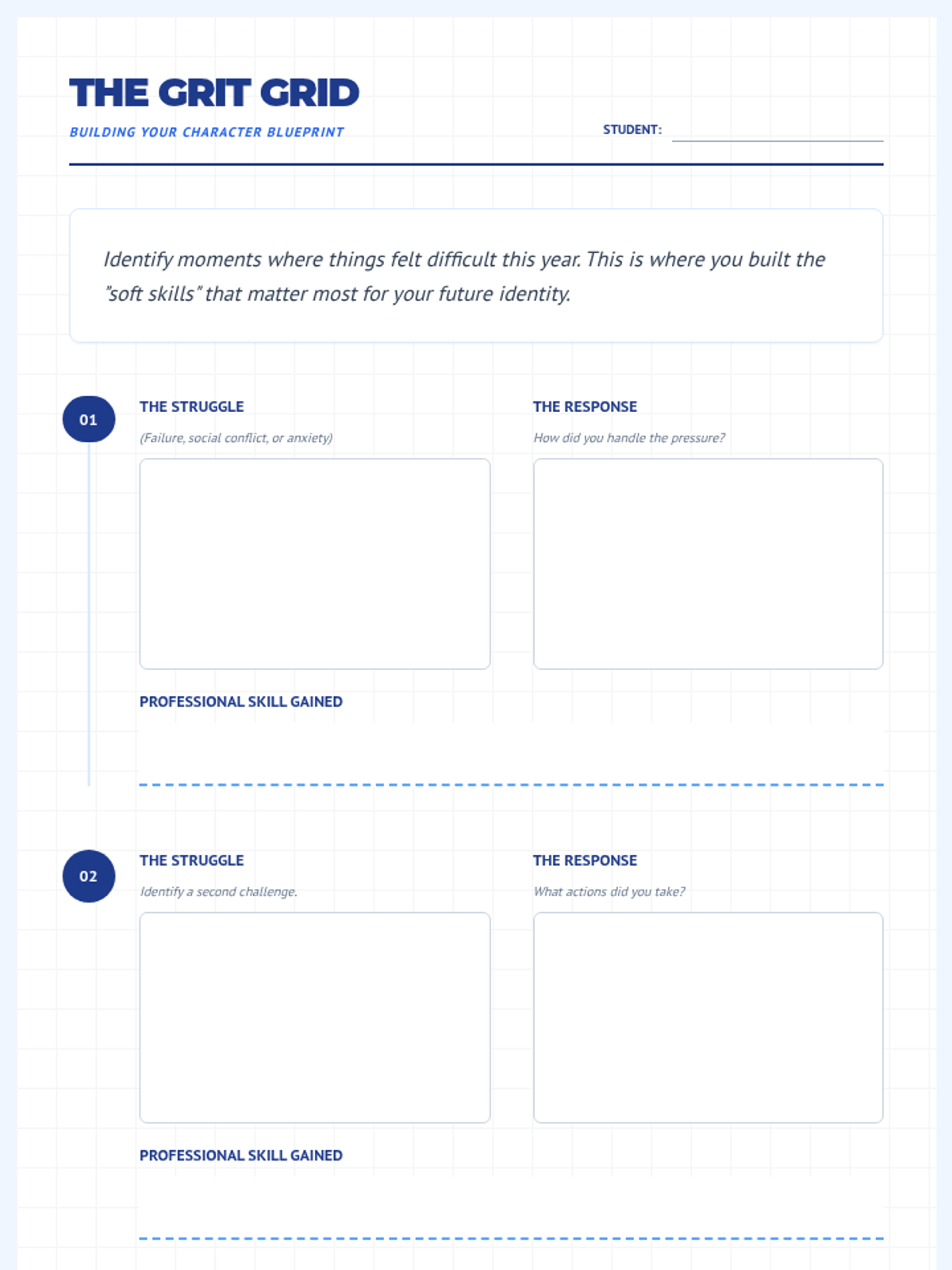
A structured brainstorming worksheet for students to identify specific challenges from their school year and translate them into actionable 'soft skills' for their final project.
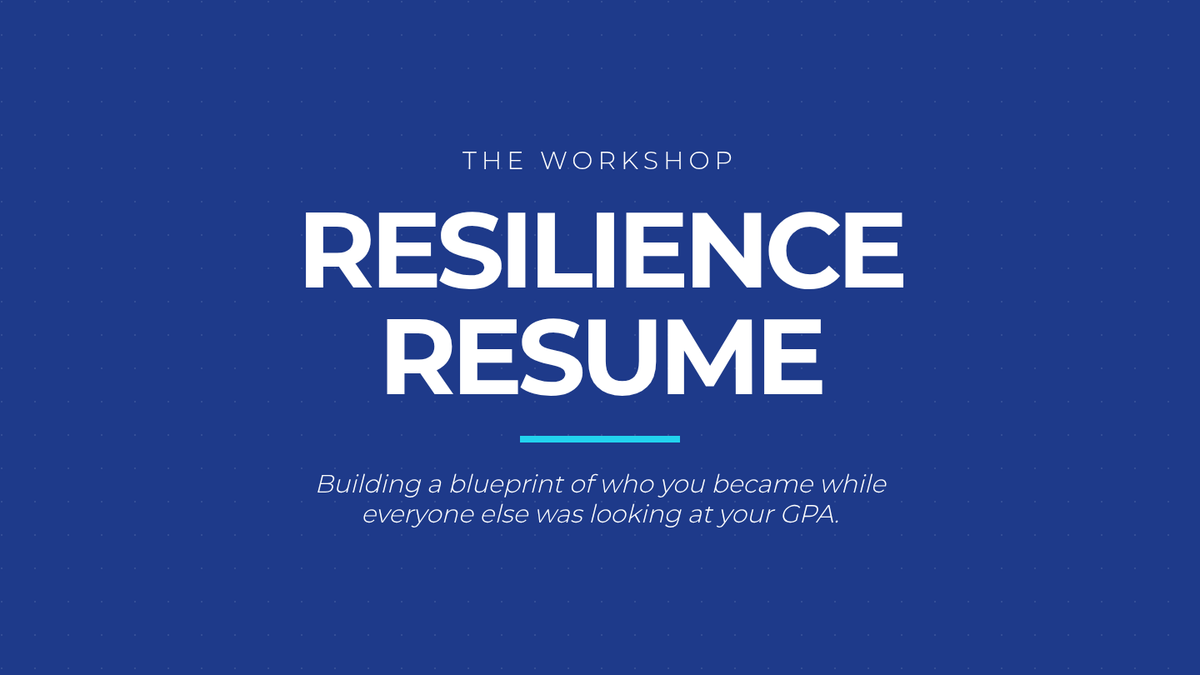
A visually engaging slide deck designed for 'The Resilience Resume' workshop, guiding students through the transition from academic-focused thinking to growth-oriented self-reflection.
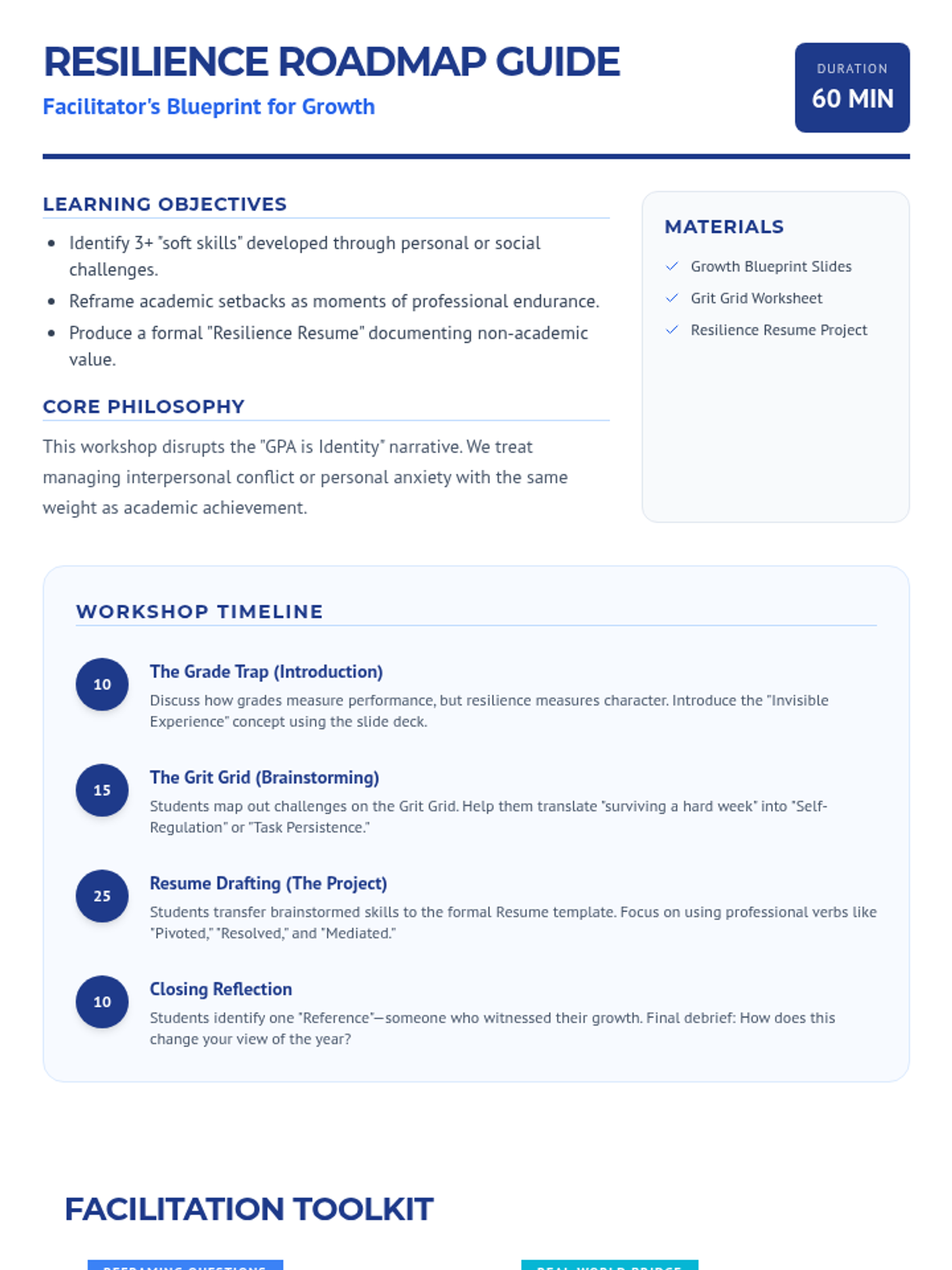
A comprehensive facilitator's guide for 'The Resilience Resume' workshop, including learning objectives, a detailed timeline, and reframing prompts to help students identify non-academic growth.
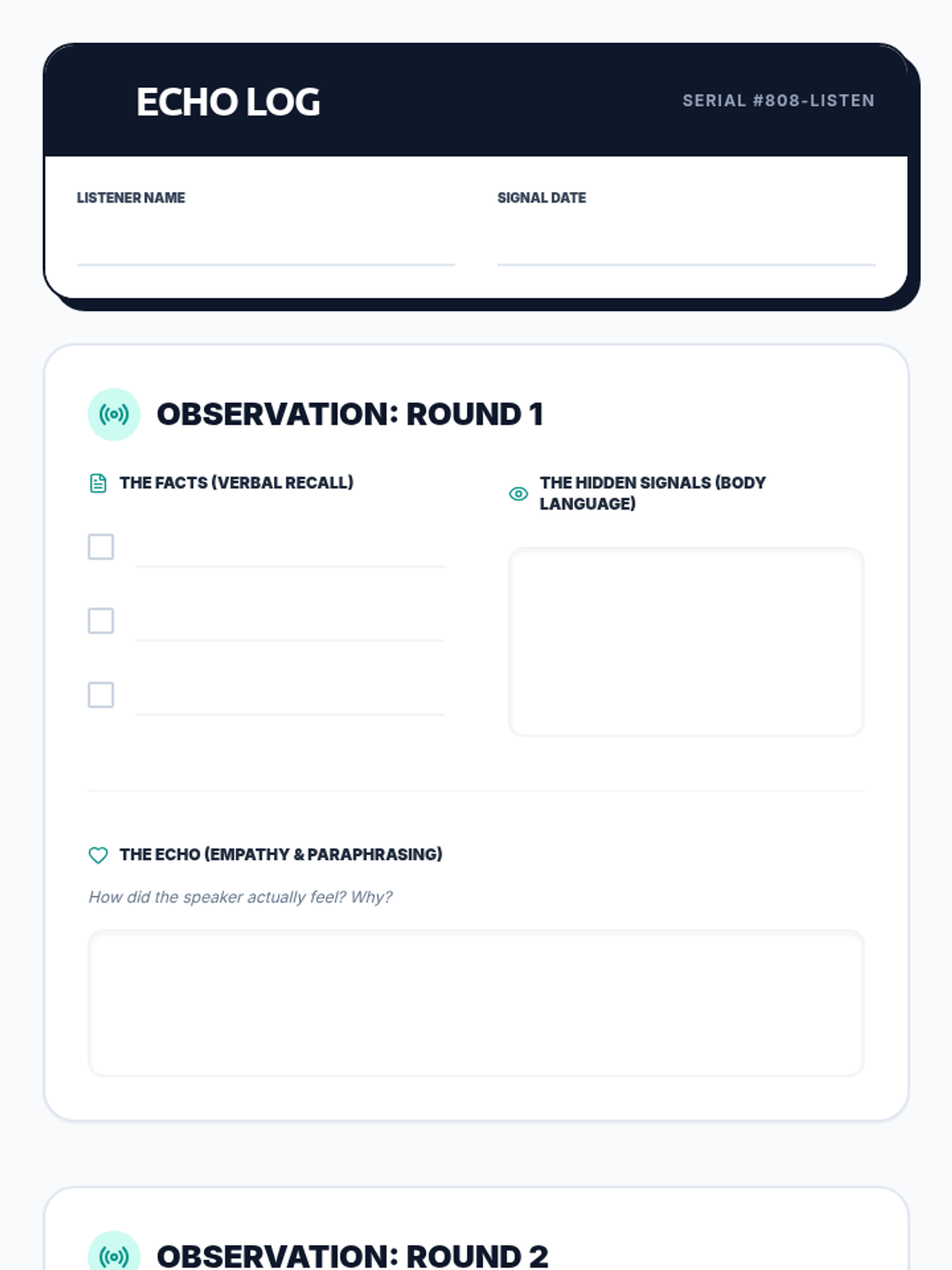
A student worksheet for recording observations during the Echo Chamber game, focusing on verbal recall, body language cues, and empathetic paraphrasing.
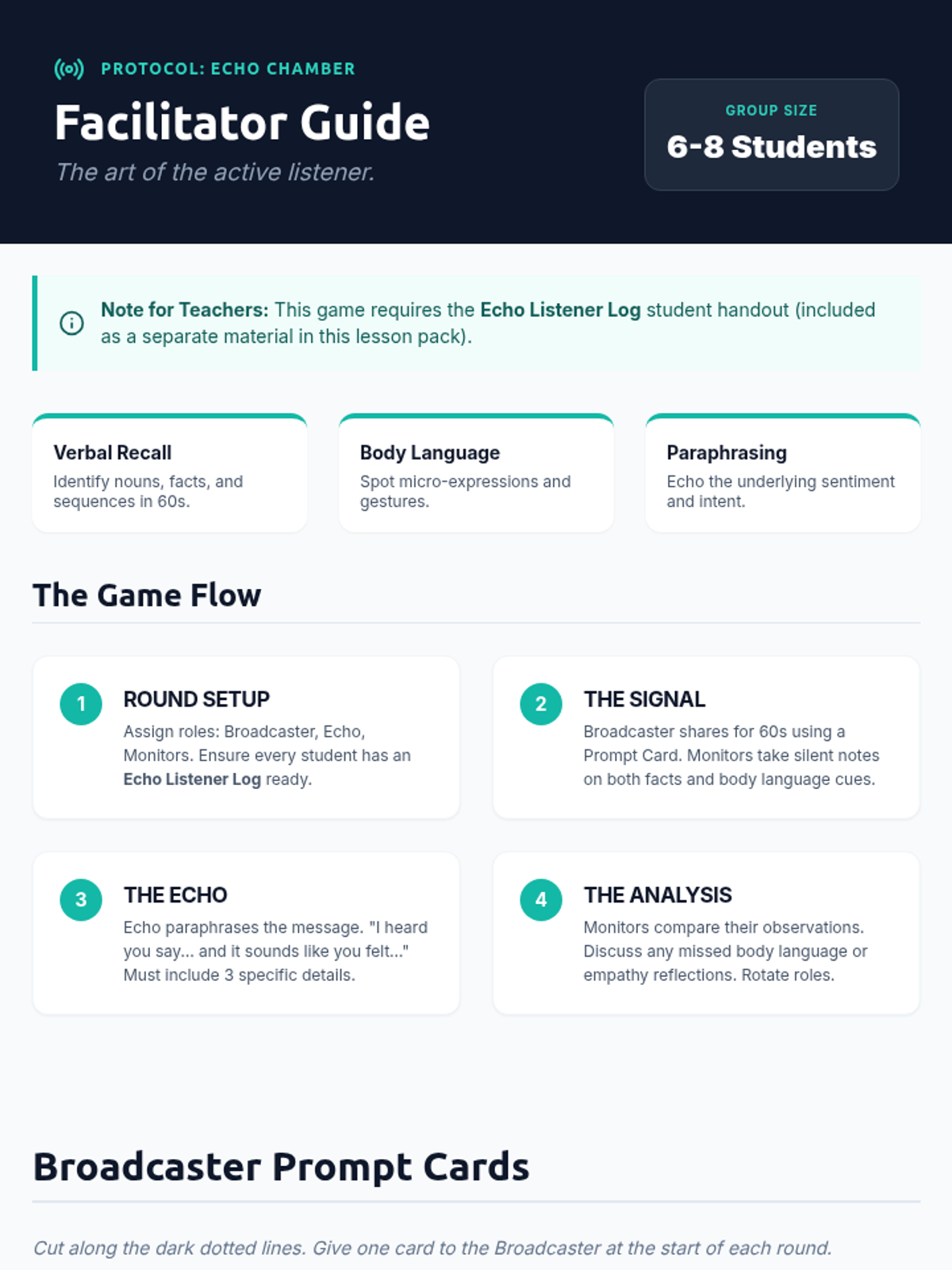
A facilitation guide for the Echo Chamber game, featuring step-by-step instructions, game roles, and printable prompt cards for students.
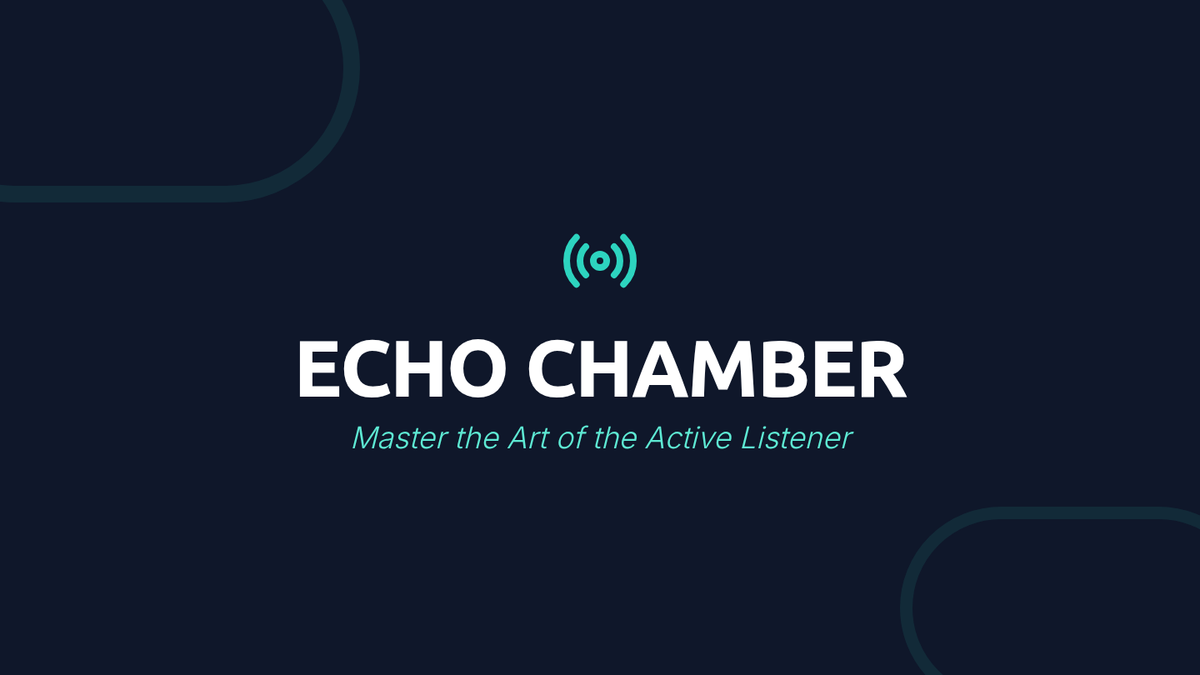
A dynamic presentation that introduces the Echo Chamber game rules and the core concepts of active listening, including verbal recall, non-verbal cues, and empathetic paraphrasing.
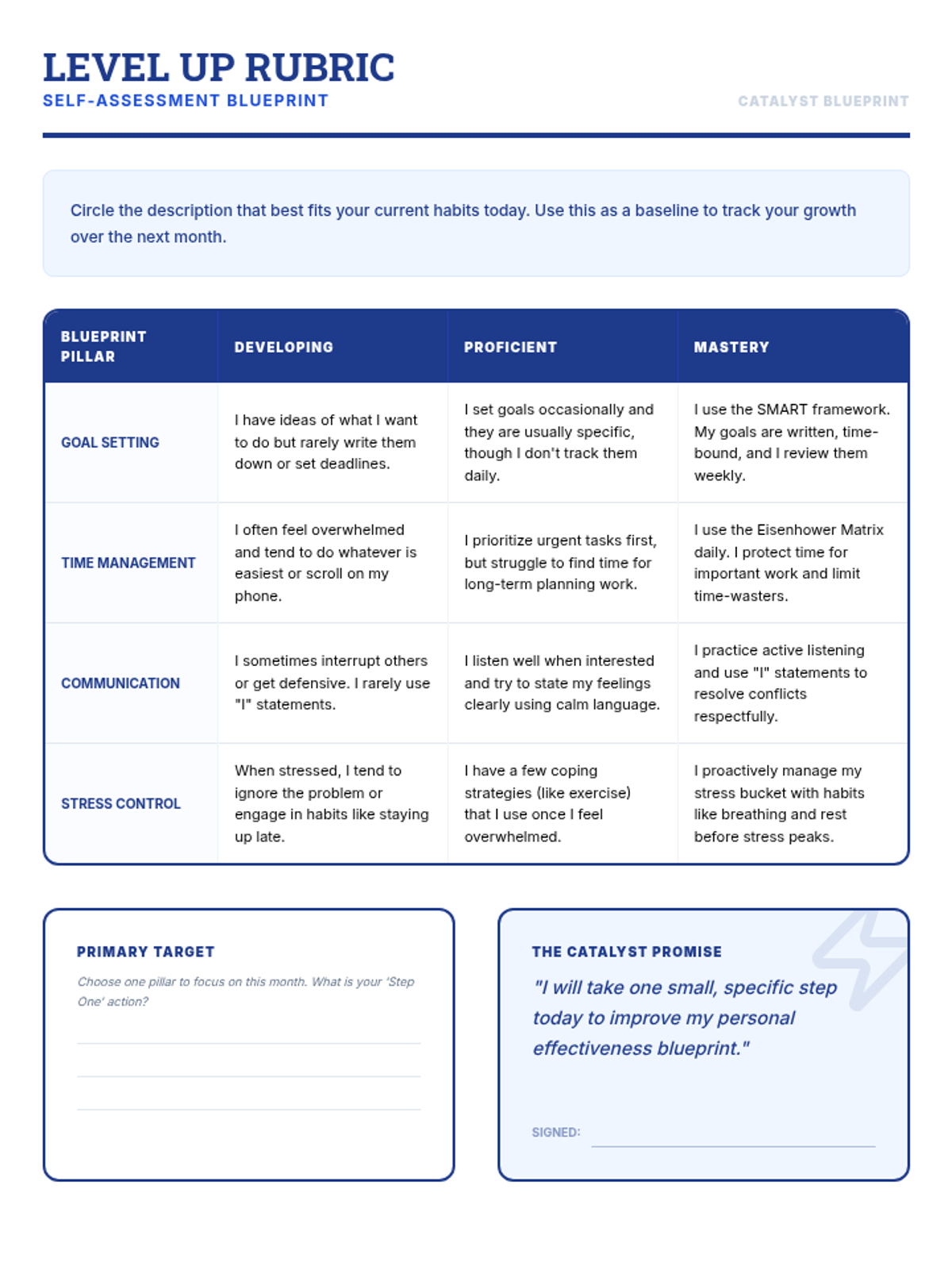
A self-assessment rubric titled 'Level Up Rubric' that allows students to evaluate their baseline skills across the four pillars of personal effectiveness and set targets for growth.
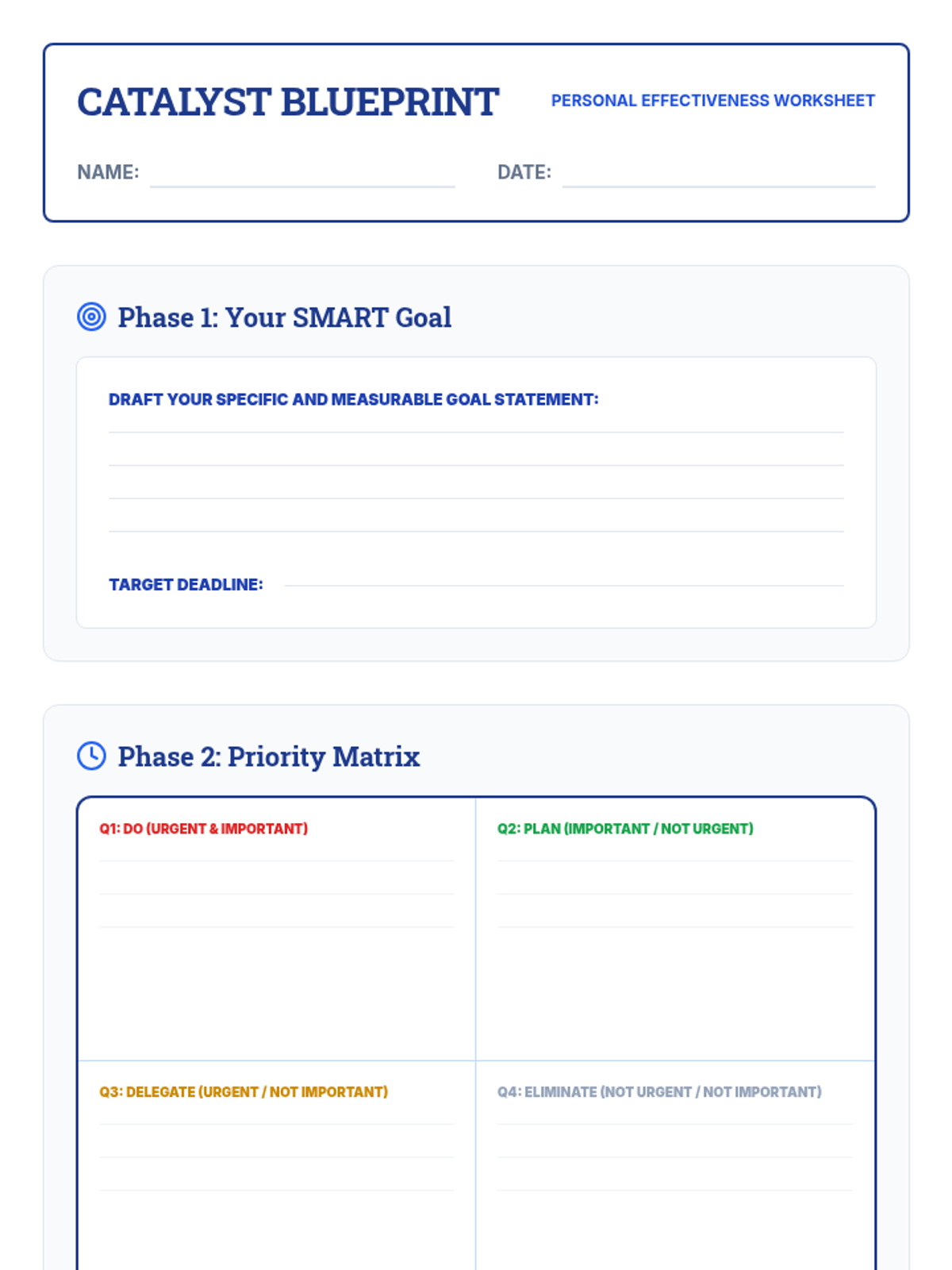
A structured student worksheet titled 'The Catalyst Blueprint' containing practical application areas for SMART goal setting, an Eisenhower Matrix grid, communication role-play prompts, and a stress management toolbox.
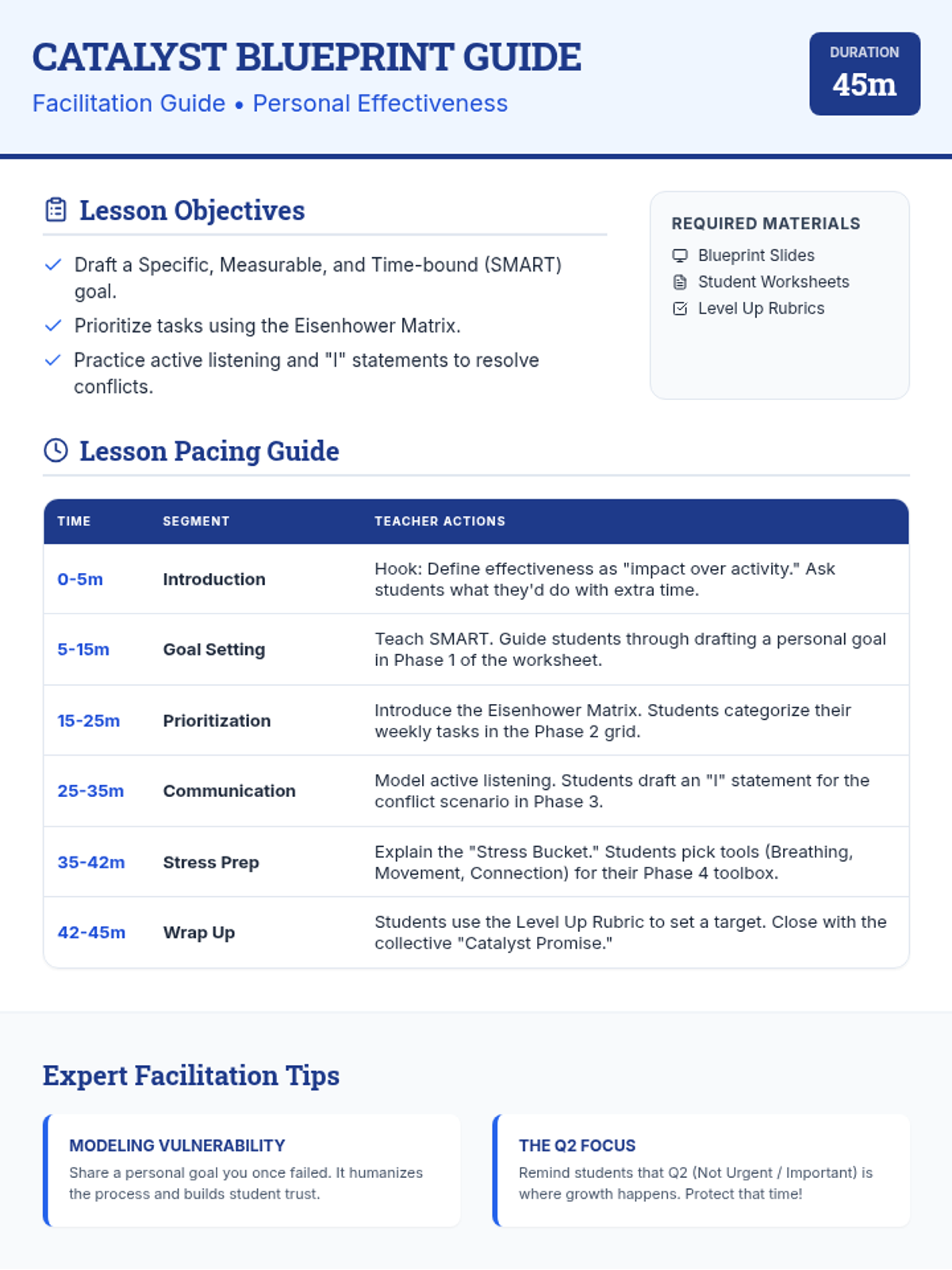
A comprehensive 45-minute teacher guide for facilitating 'The Catalyst Blueprint' lesson, featuring learning objectives, detailed pacing, activity instructions, and expert facilitation tips.
A professional slide presentation titled 'The Catalyst Blueprint' covering the four pillars of personal effectiveness: SMART goal setting, time management with the Eisenhower Matrix, active communication techniques, and stress management strategies.
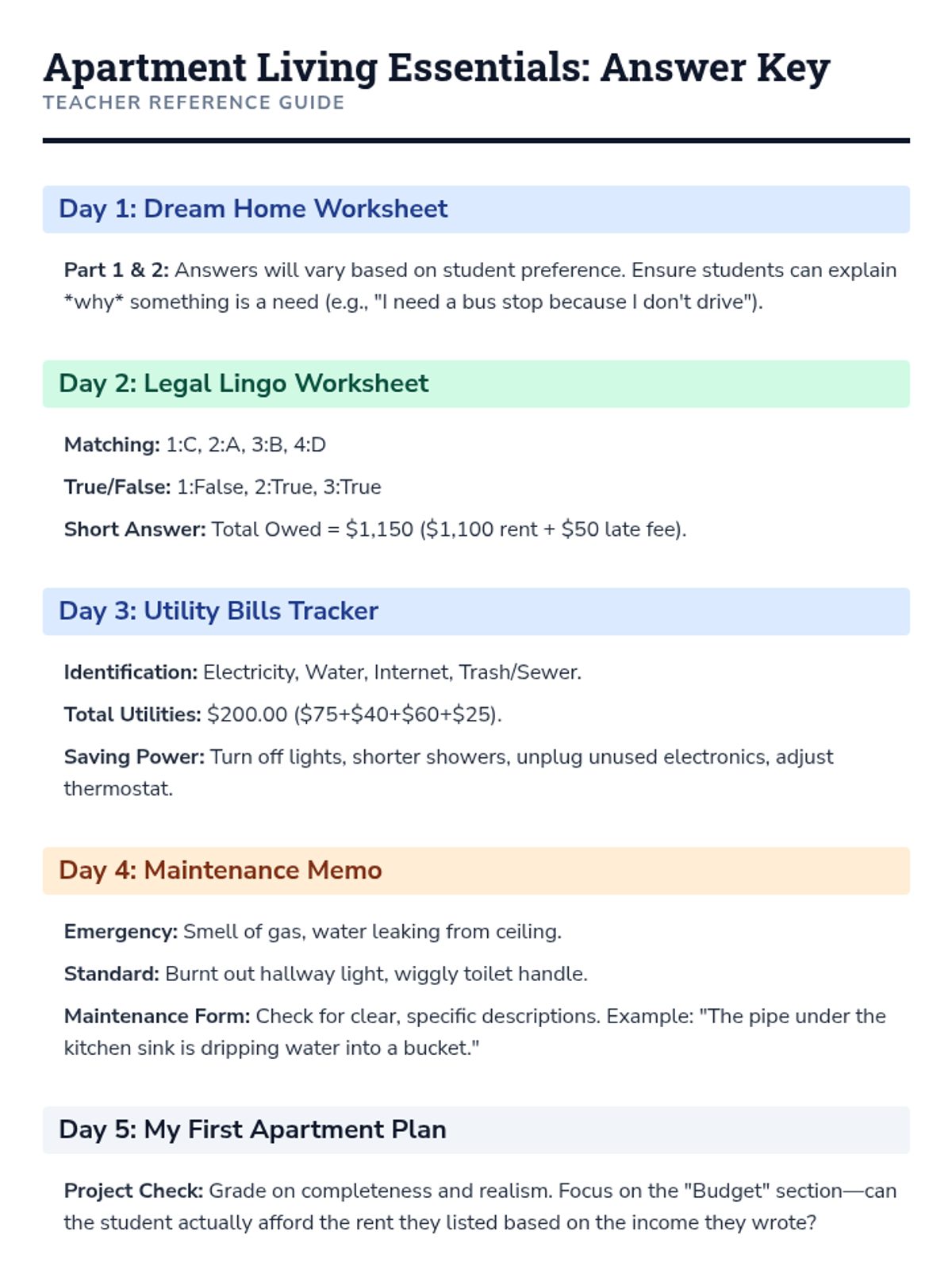
A comprehensive teacher answer key and instructional guide for the 5-day Apartment Living unit.
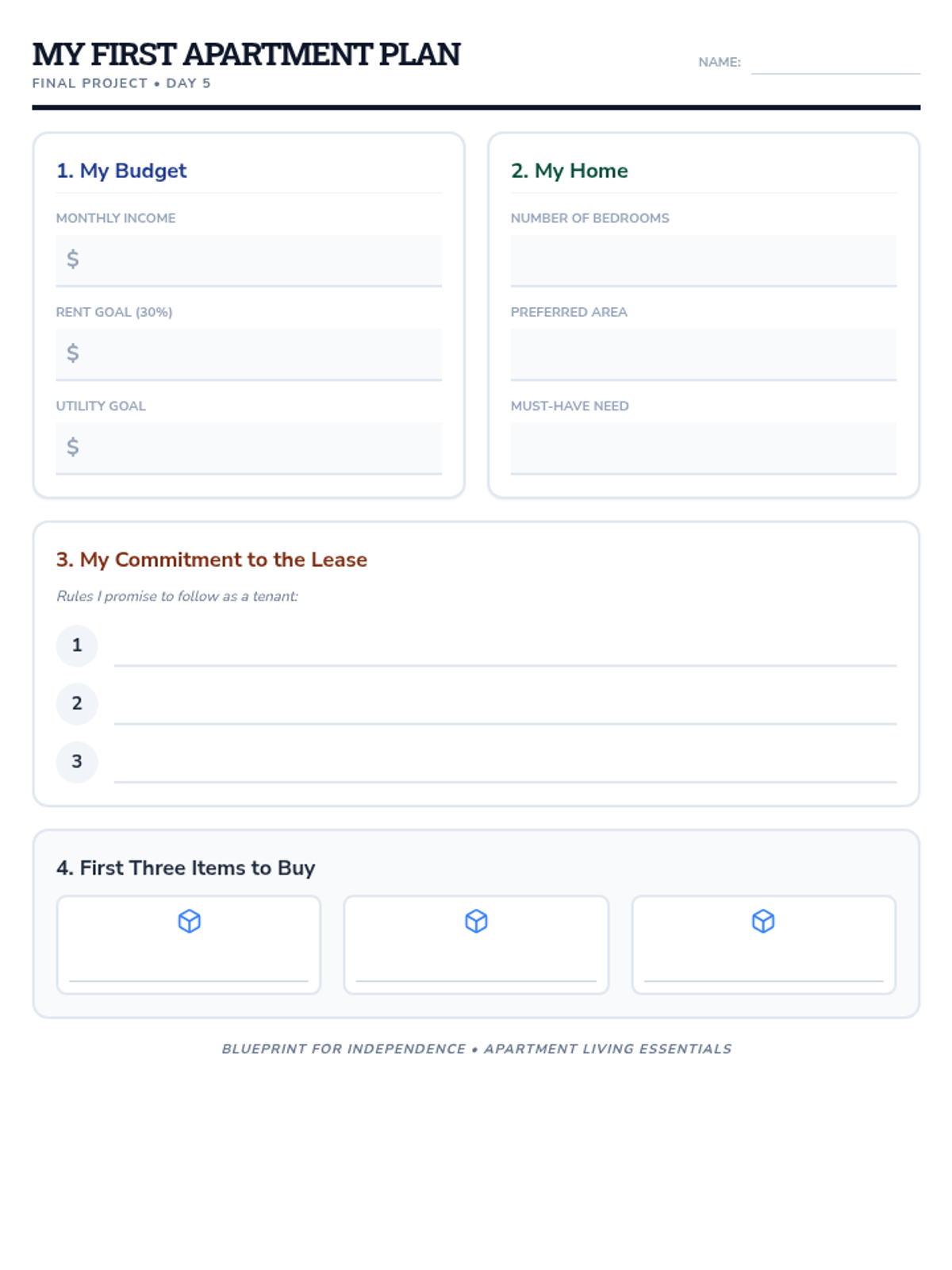
A culminating project worksheet where students synthesize the week's learning to create their own realistic apartment living plan. Now fully optimized for a single-page layout with larger handwriting spaces and improved footer legibility.
The final slide deck for the Apartment Living unit, summarizing key concepts and providing practical "pro tips" for new renters.
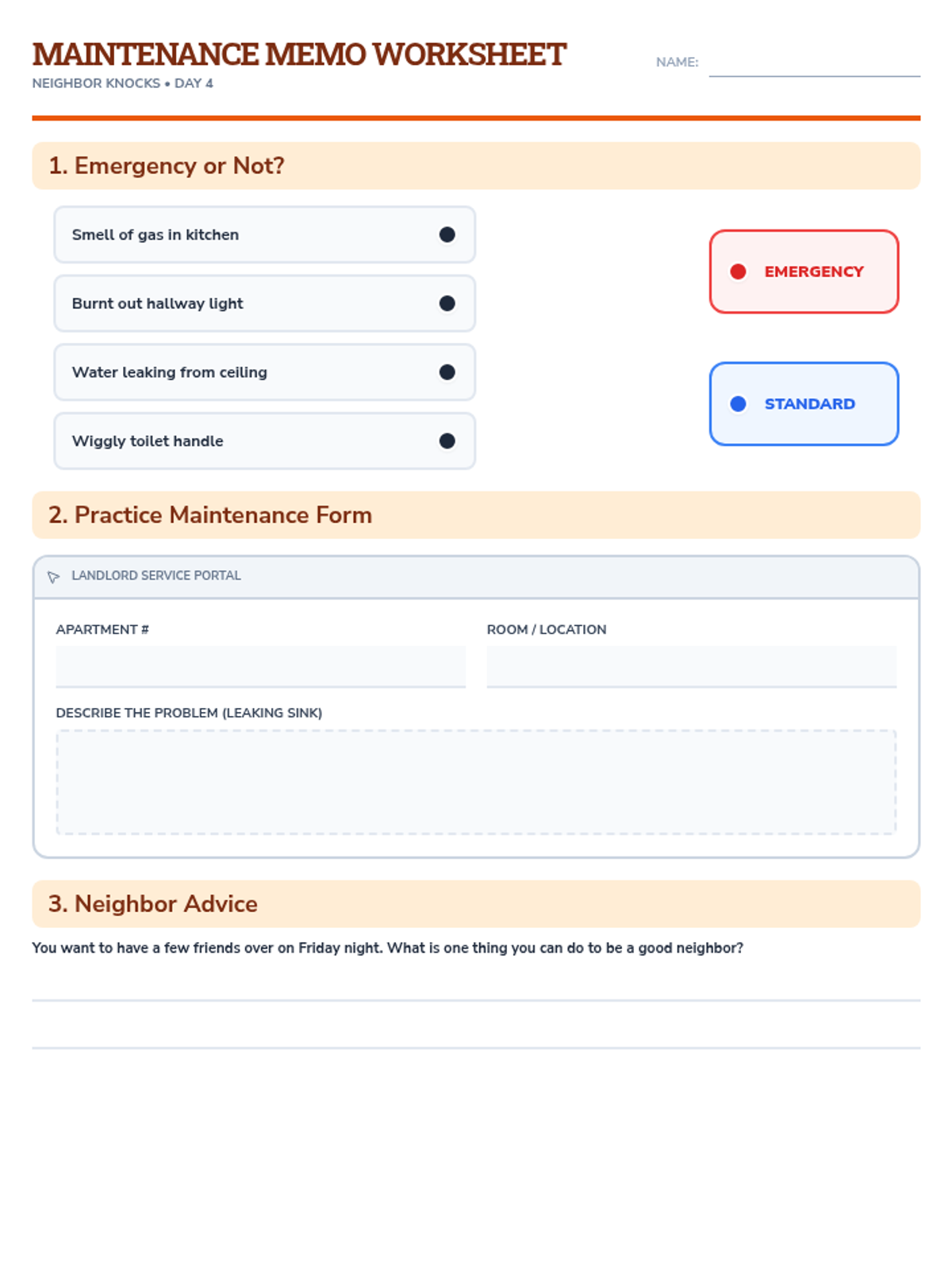
A worksheet for Day 4 focusing on identifying emergencies versus standard repairs and practicing how to write a clear maintenance request. Now optimized for a single-page layout with anchor points for matching and improved label contrast.
Slides for Day 4 of the apartment unit, covering neighbor etiquette, quiet hours, and how to handle maintenance and conflict. Now featuring unified multiple-choice styling and improved layout. Now optimized to prevent overflow and improve contrast.
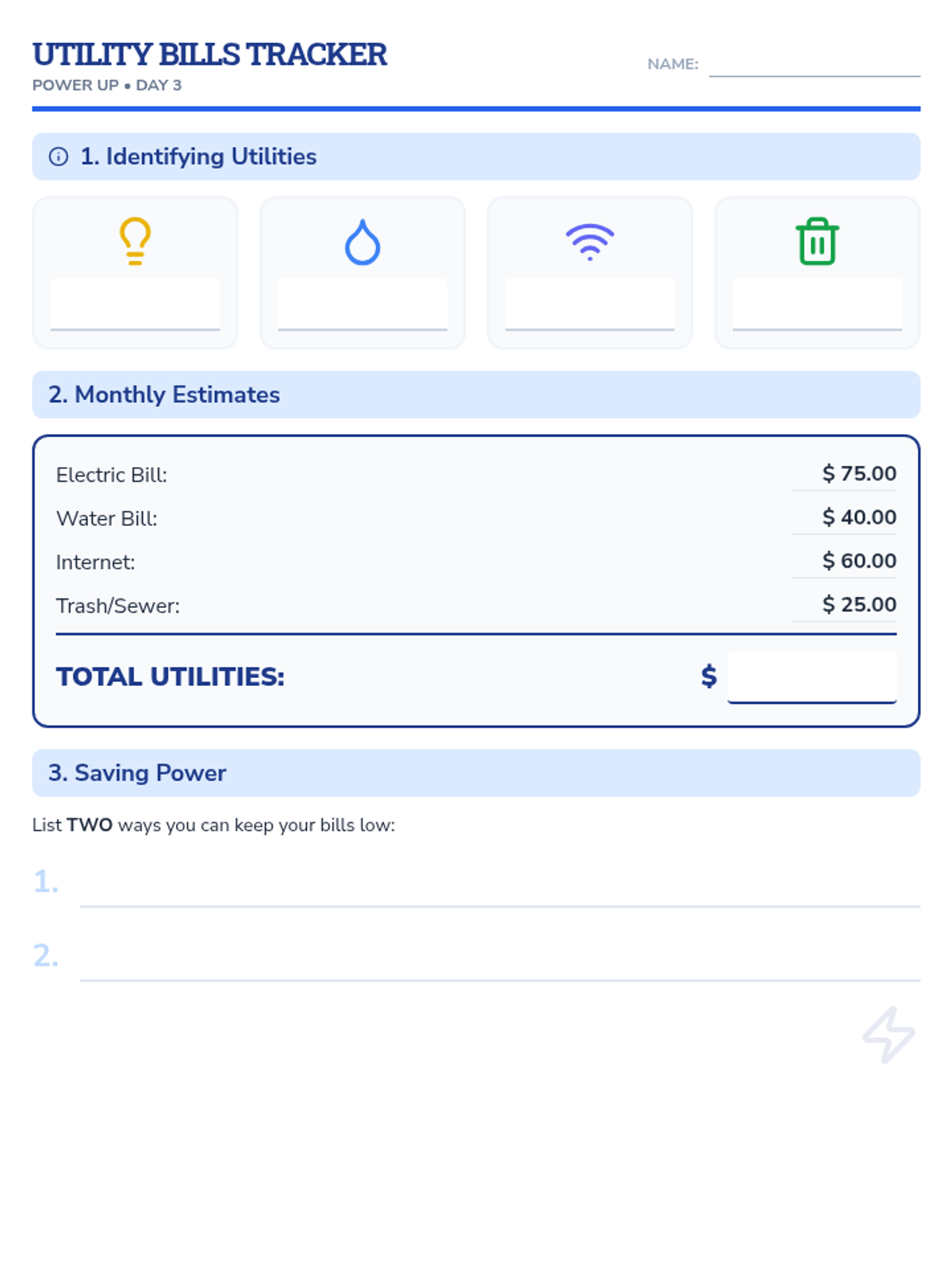
A utility budgeting worksheet where students identify common utilities, calculate monthly costs, and brainstorm energy-saving tips. Improved layout to avoid page breaks and larger writing areas.
Educational slides for Day 3 of the apartment unit, focusing on utilities, setting up services, and move-in essentials. Now includes actual energy-saving tips and improved layout.
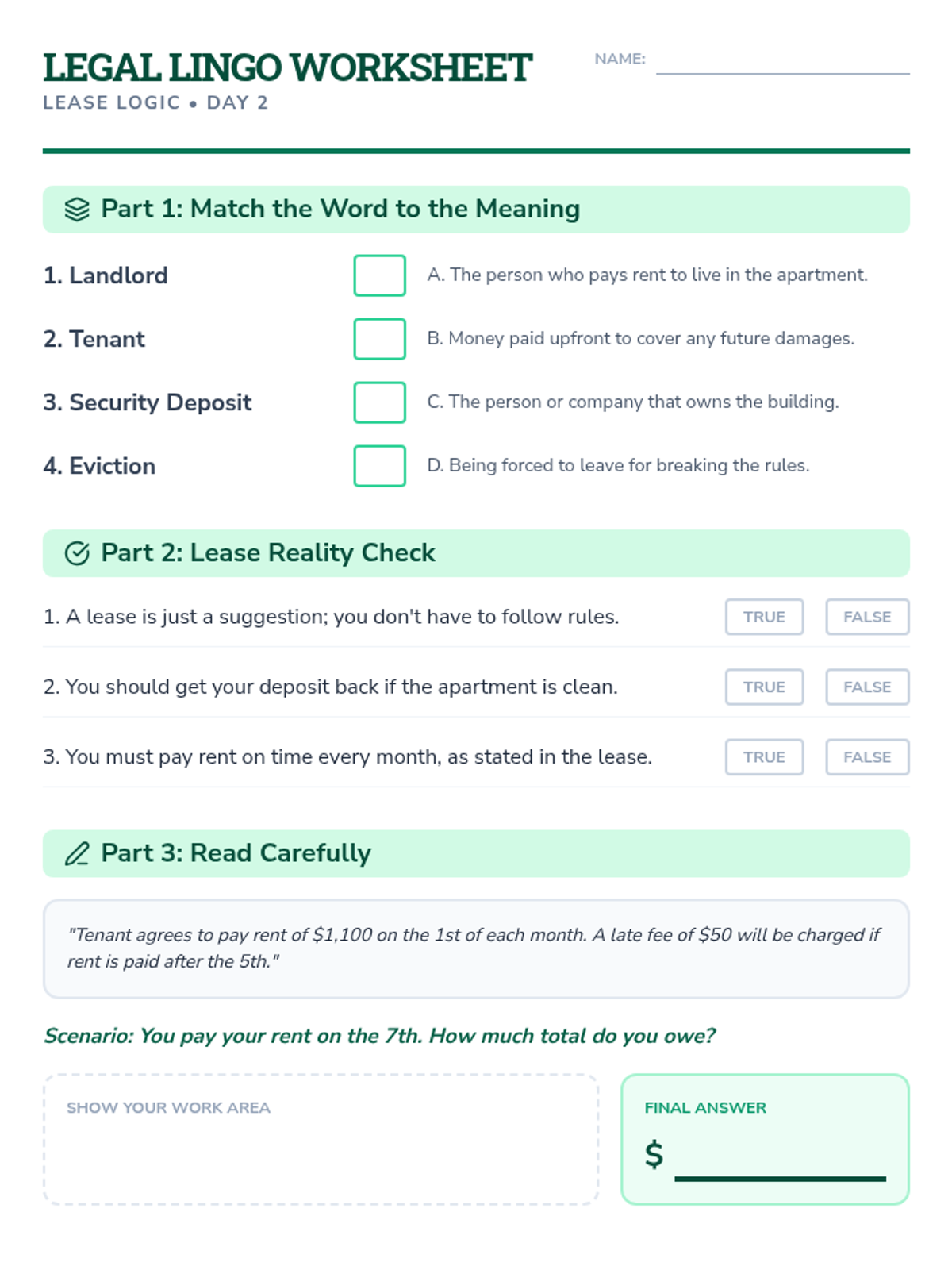
A lease terminology and rules worksheet for adult transition students, including matching, true/false, and a reading comprehension scenario.
Slides for Day 2 of the Apartment Living unit, explaining leases, security deposits, and essential legal terminology for adult transition students.
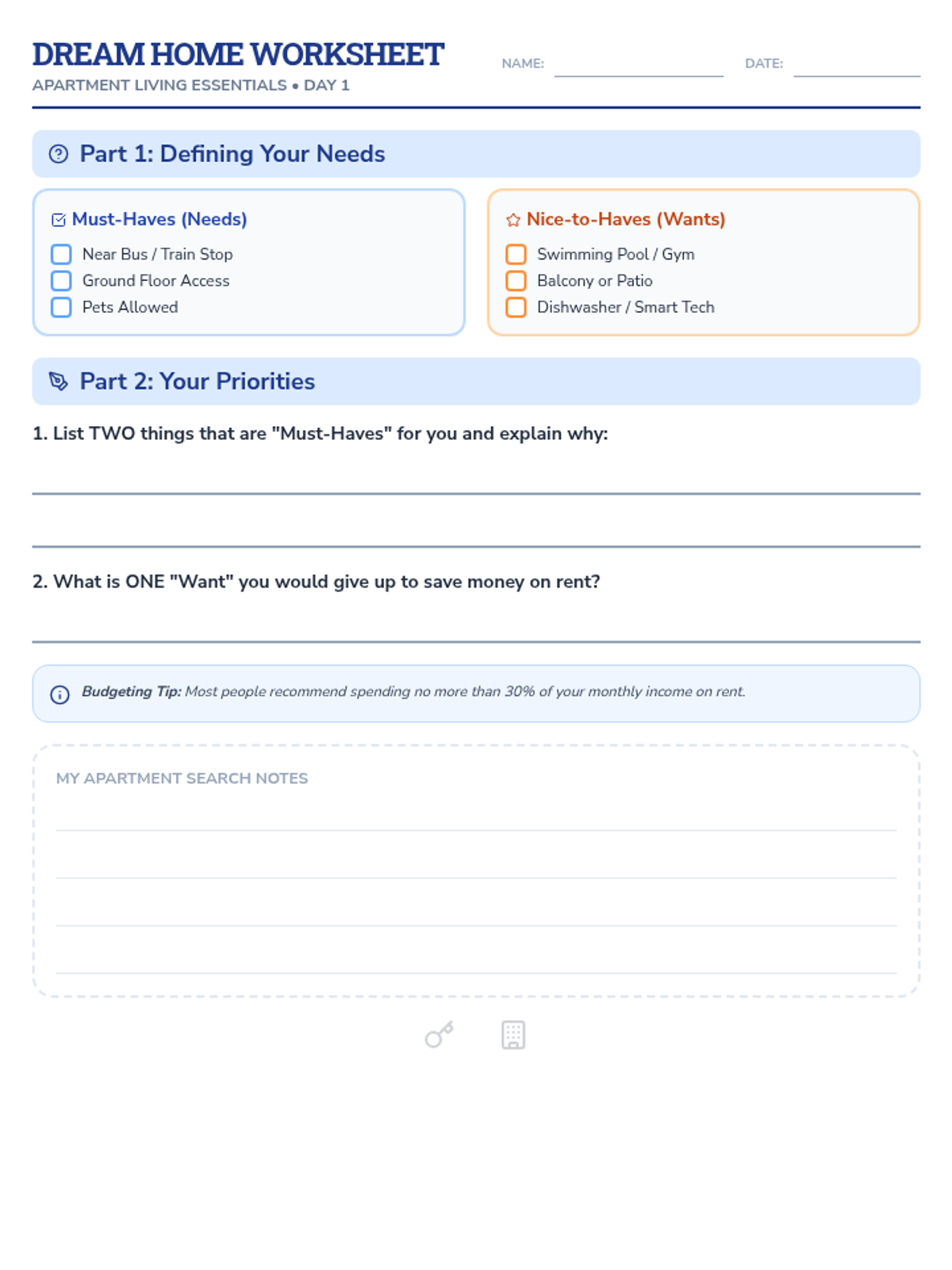
A worksheet for adult transition students to identify and prioritize their personal needs vs. wants when searching for an apartment. Improved header layout and visibility.
A set of educational slides for adult transition students covering the basics of finding an apartment, including needs vs. wants and reading listings.
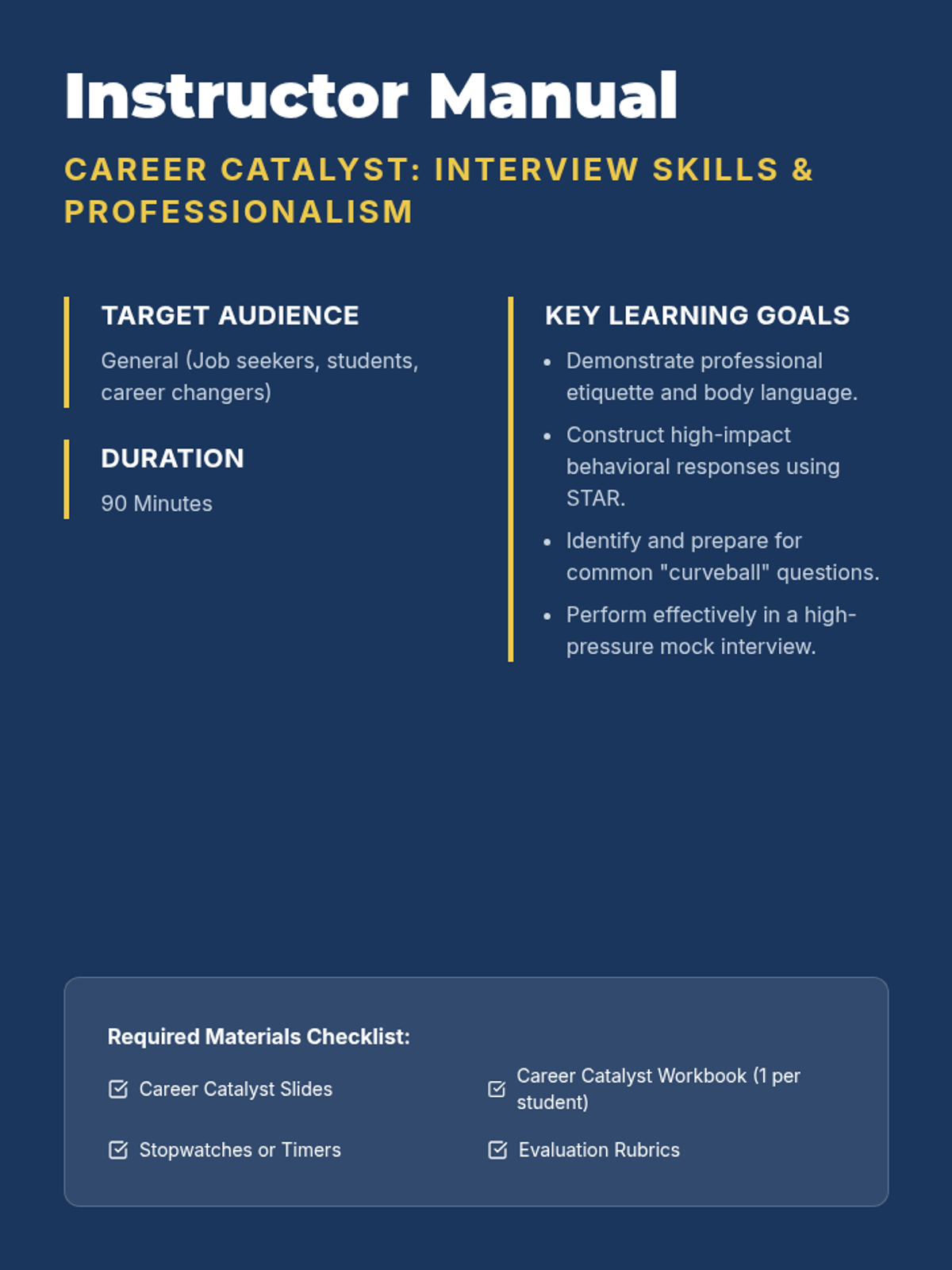
A significantly expanded 8-page instructor guide for the Career Catalyst Masterclass. Includes detailed SAY/DO scripts, facilitation directions for mirroring and STAR drills, scenario discussion guides, and a comprehensive Triad rotation model.
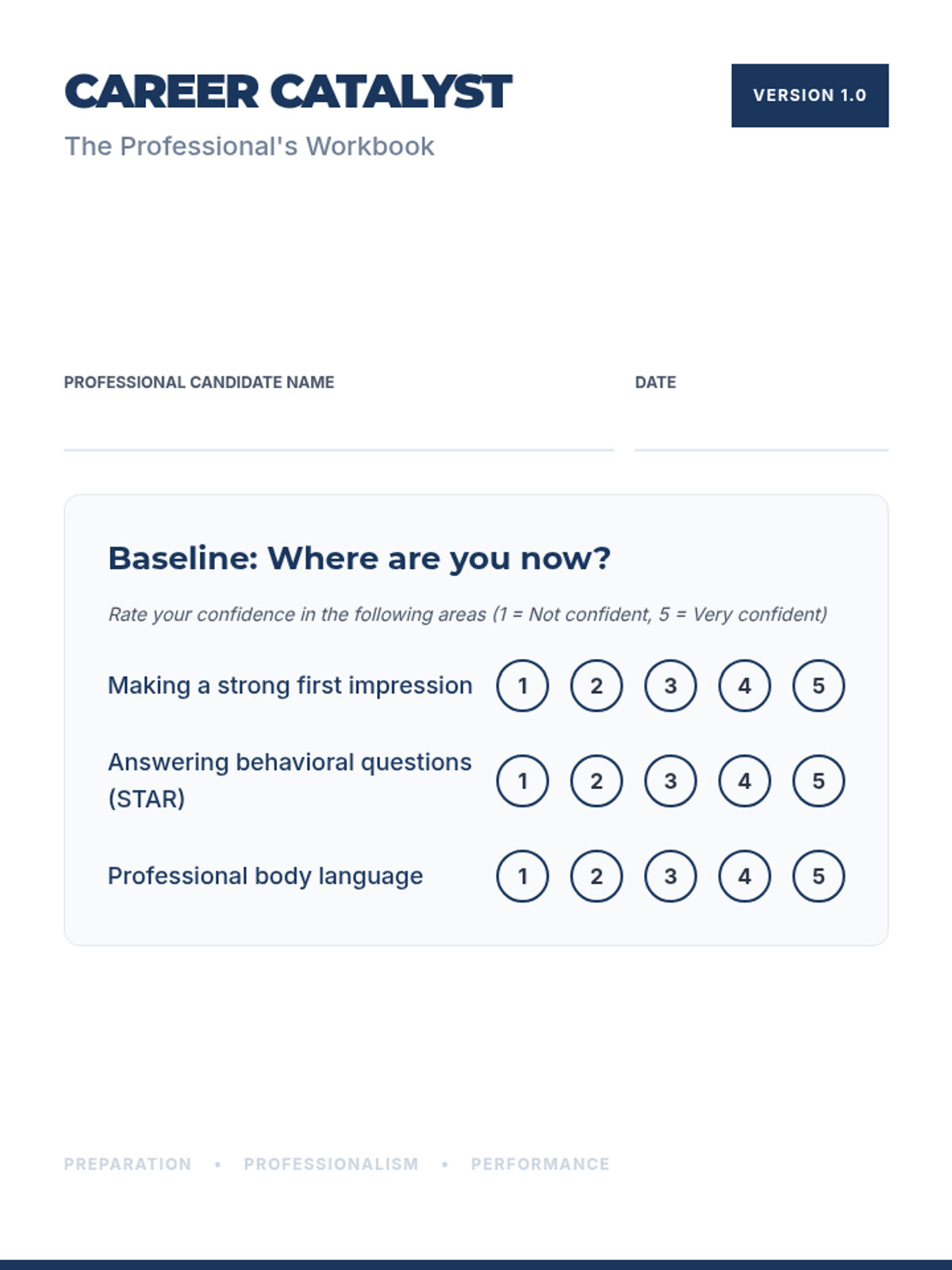
A comprehensive student workbook for interview skills, expanded with professional practice scenarios and an updated digital presence checklist. Fixed page breaks and enhanced work area borders. Reduced heights to prevent overflow.
A modern, high-contrast slide deck for teaching interview skills, featuring the STAR method, body language tips, and mock interview guidelines. Expanded to include digital professionalism and workplace etiquette.
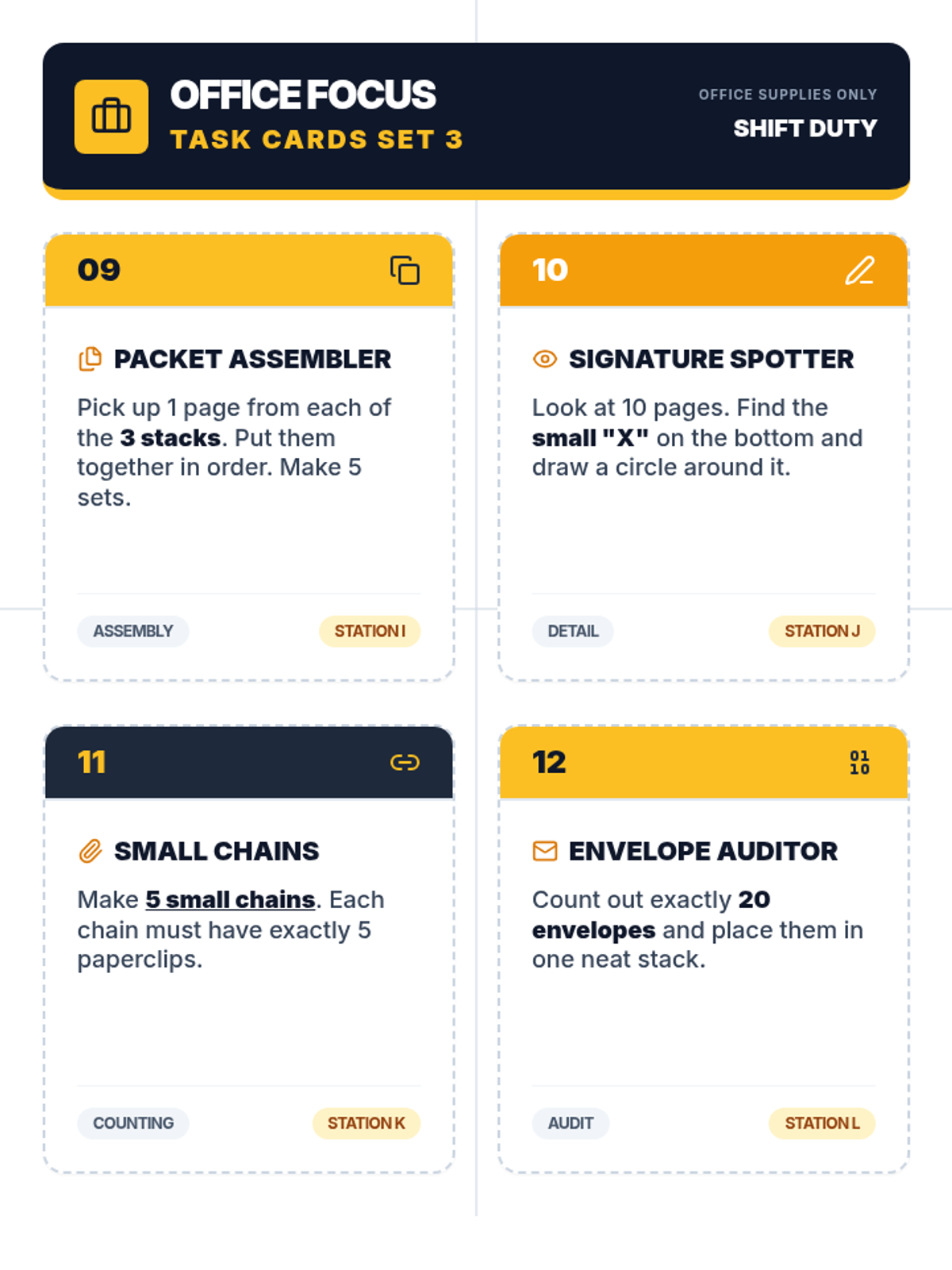
A third set of four printable task cards for the 'Focus Factory' simulation using standard office supplies like paperclips, pens, and envelopes. Includes tasks for assembling packets, spotting signatures, and auditing envelopes.
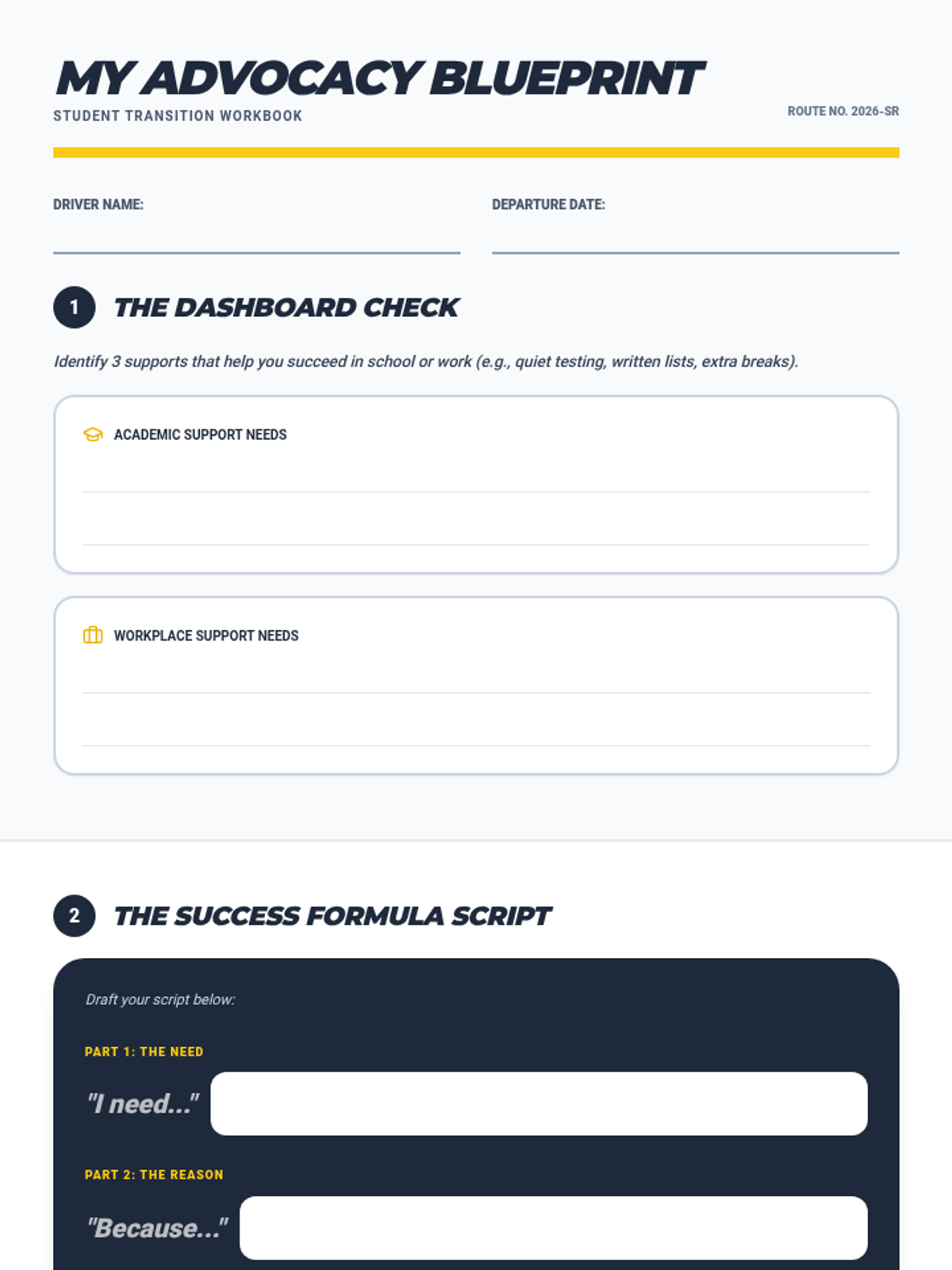
A structured 2-page workbook for students to identify their support needs, draft personalized advocacy scripts, and research local community resources.
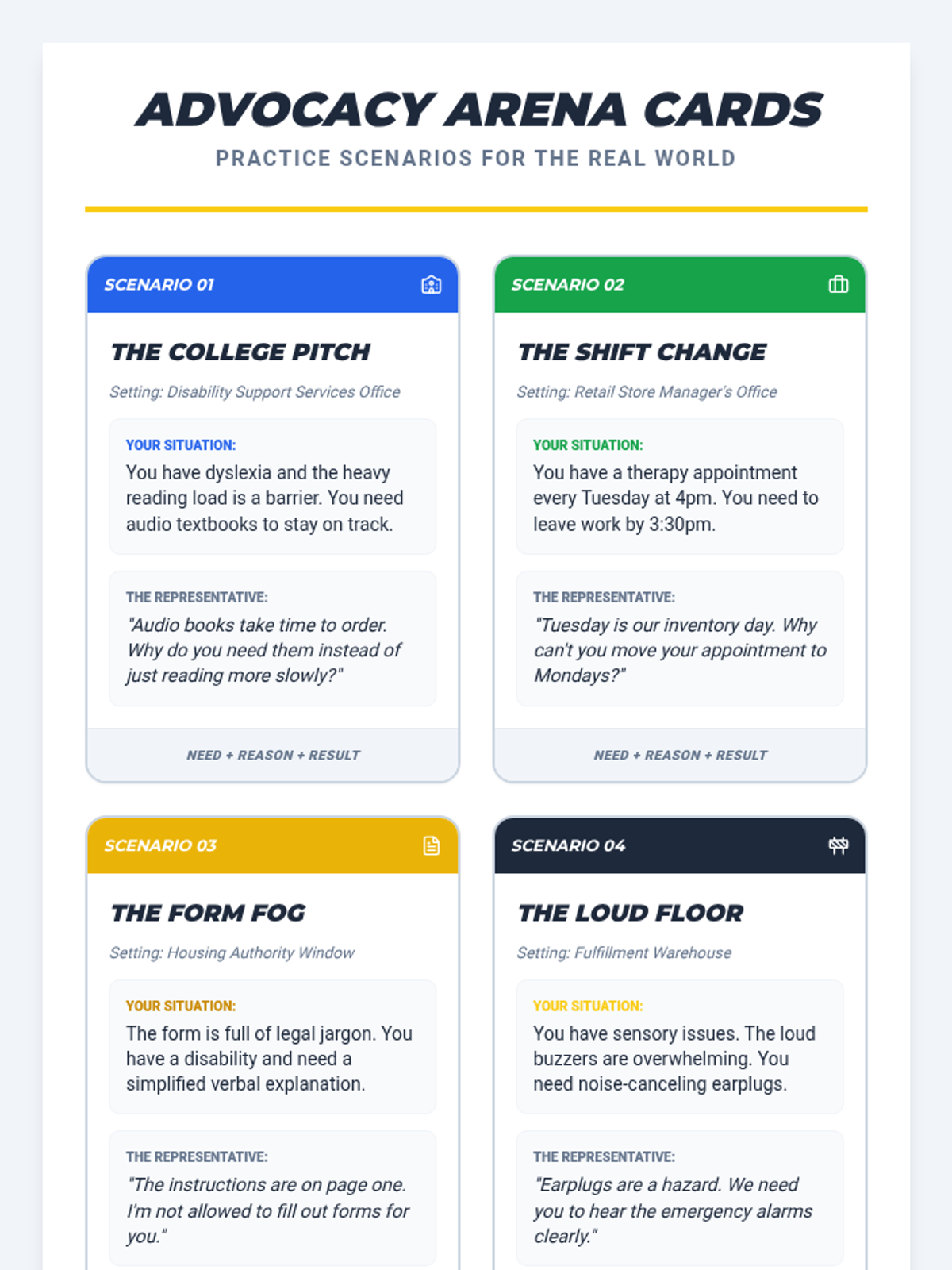
A set of 6 role-play scenario cards featuring real-world challenges in college, workplace, and community settings, designed for students to practice the 3-part advocacy script.
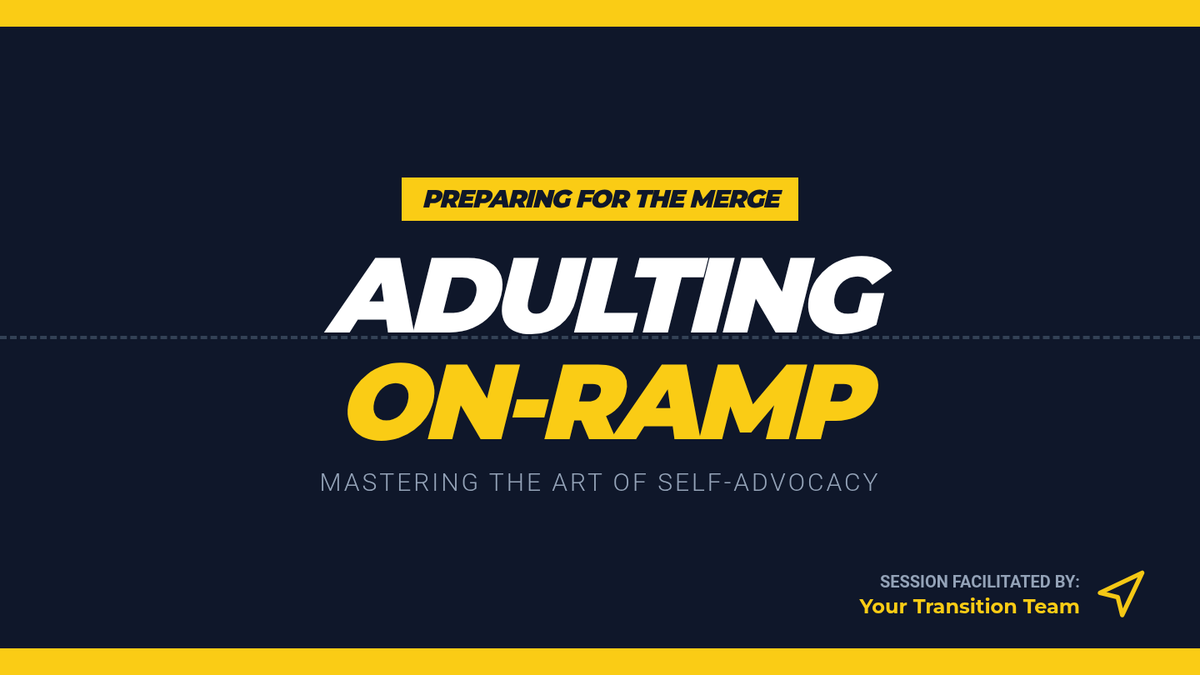
An engaging 9-slide presentation featuring a road-trip theme to guide students through self-advocacy concepts, the 3-part script formula, and resource mapping.
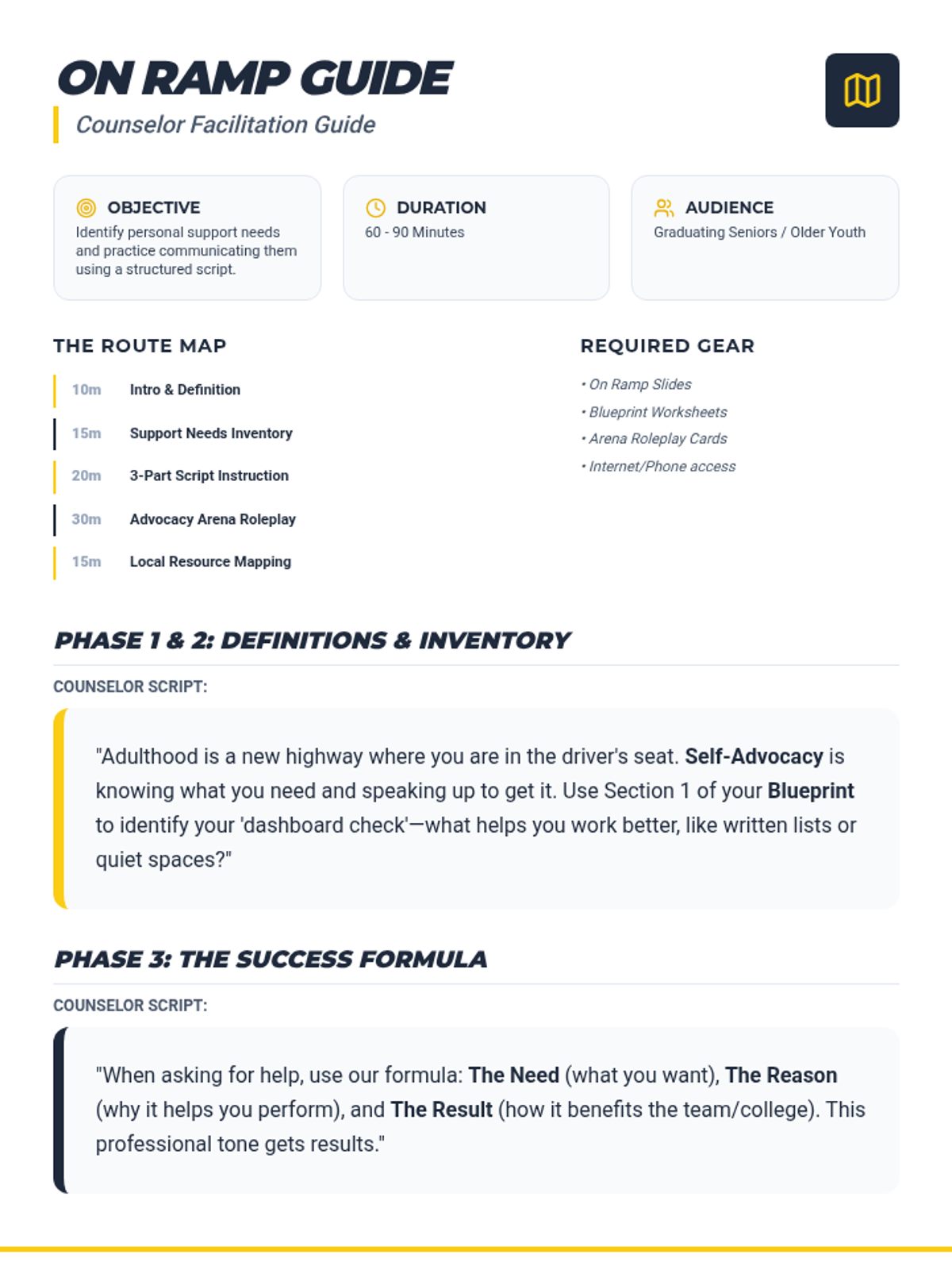
A detailed facilitator's guide for counselors, featuring a step-by-step lesson plan, a complete instructional script, and pacing suggestions for a 90-minute self-advocacy workshop.
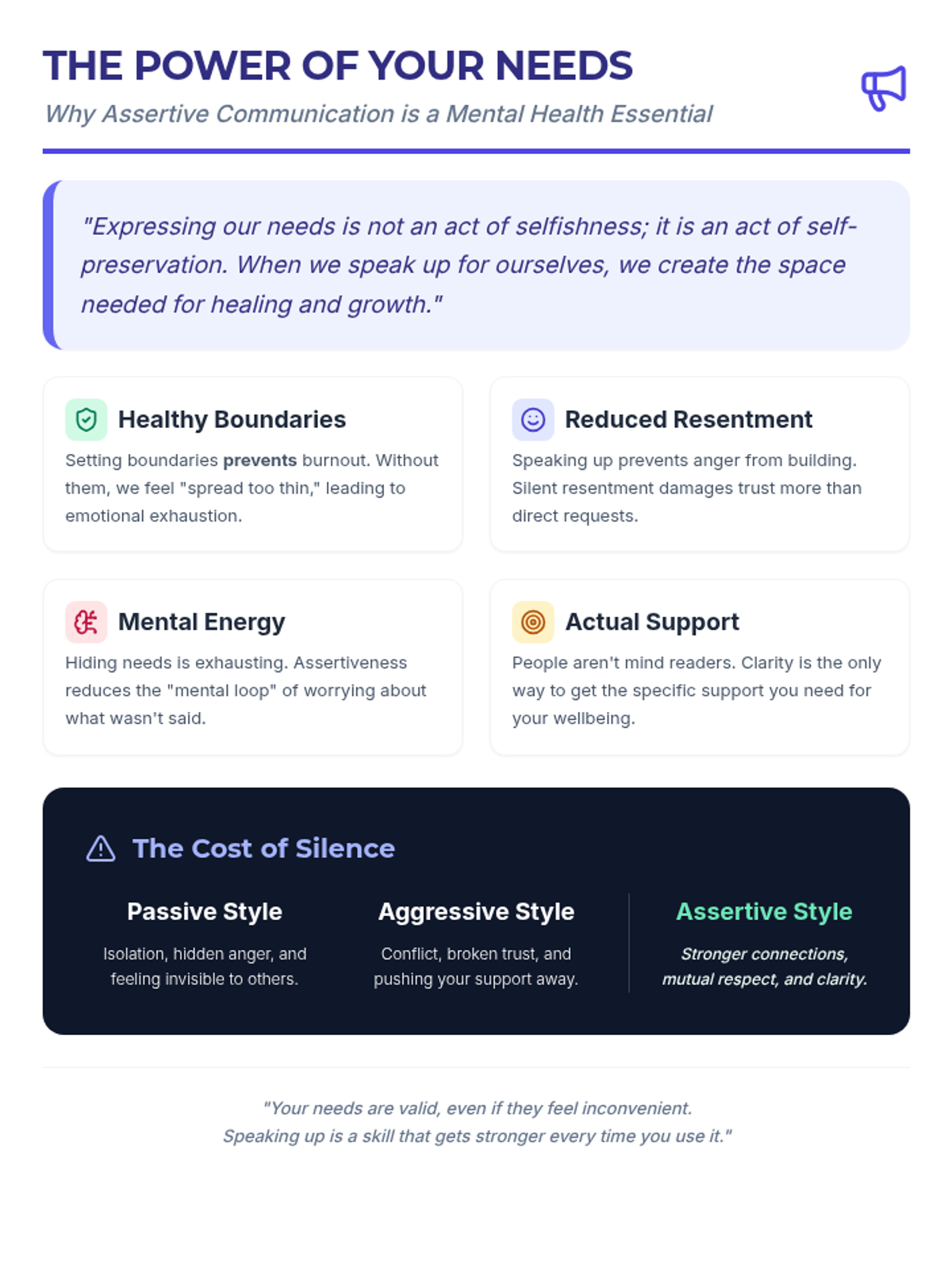
A student-facing reference sheet explaining the psychological and relational benefits of assertive communication, specifically tailored for adult learners with mental health concerns.
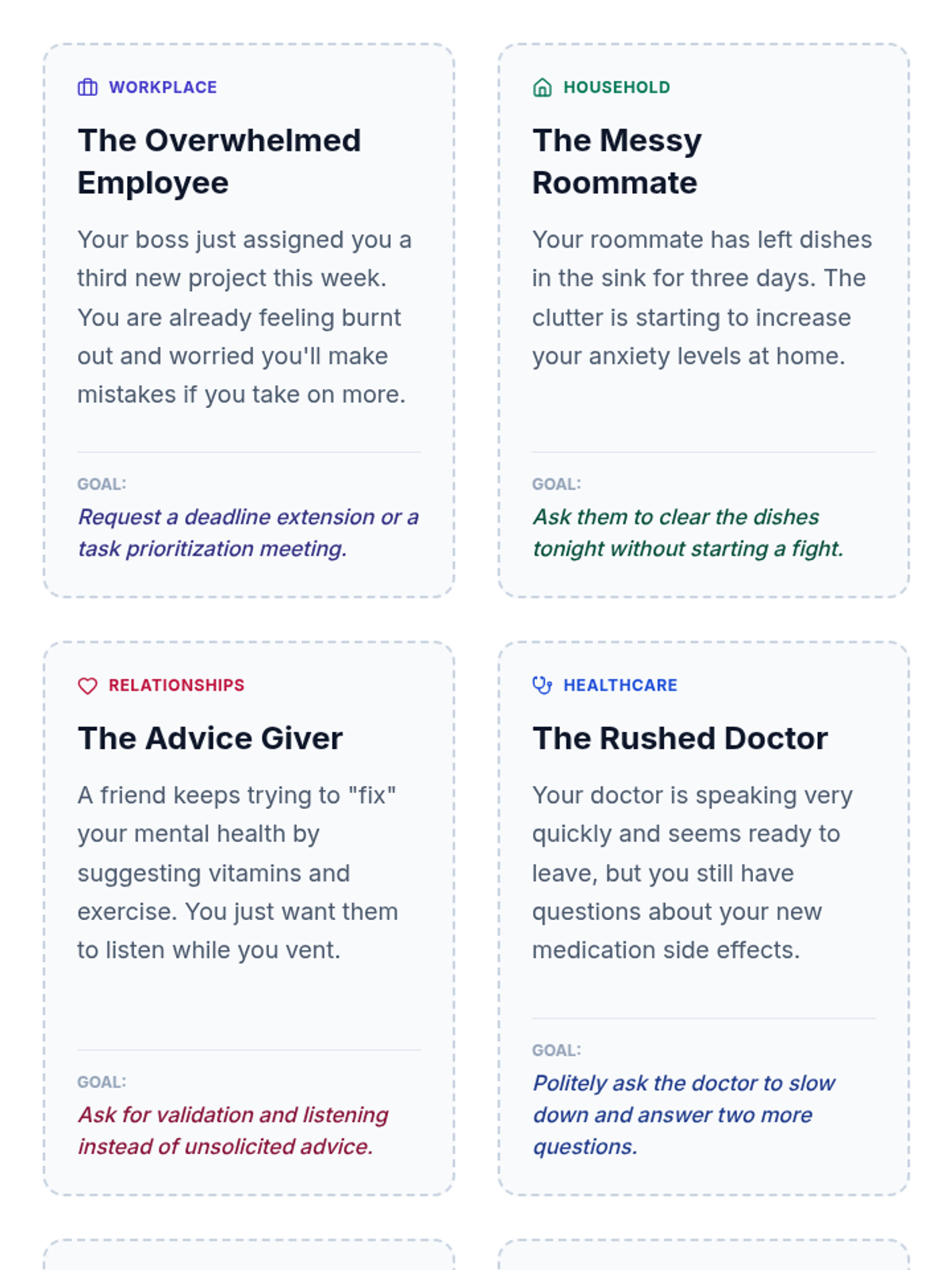
A set of 8 printable scenario cards depicting realistic adult situations where assertive communication is needed, categorized by life domain (work, home, healthcare, etc.).
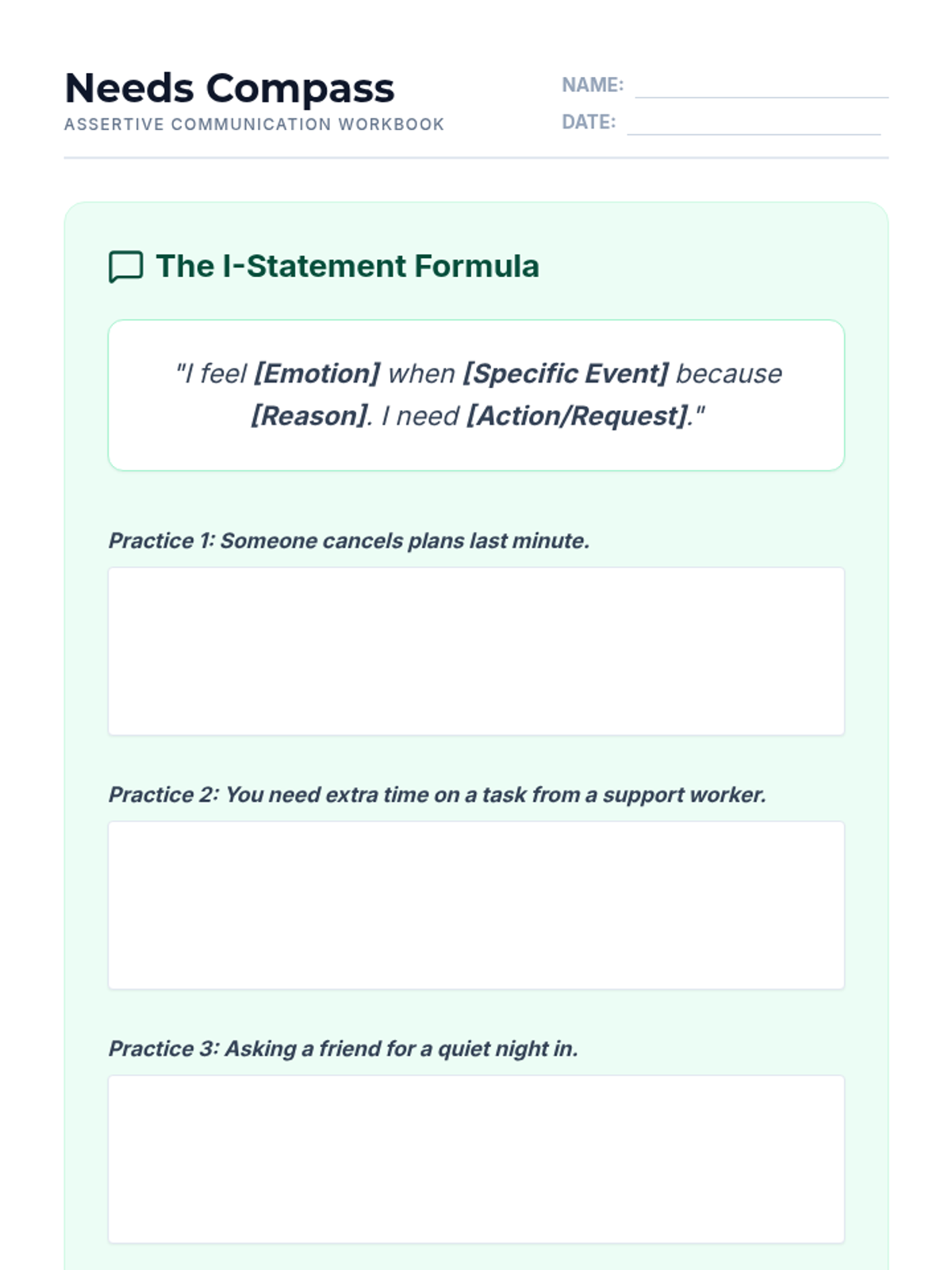
A student-facing worksheet for practicing I-statements and the DEAR MAN communication framework, featuring clear instructional prompts and dedicated work areas for handwriting.
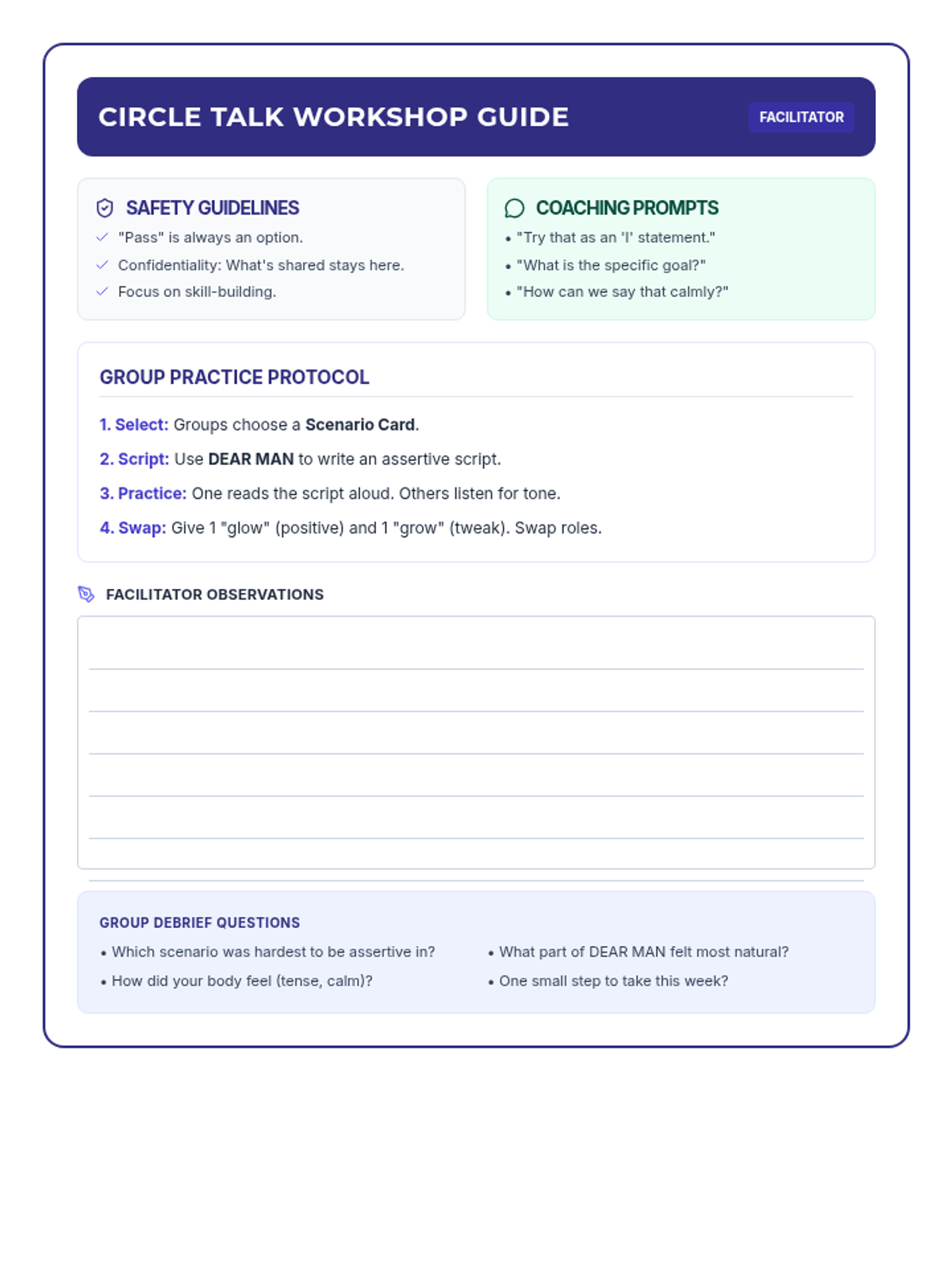
A facilitator's guide for leading small-group workshops focused on practicing assertive communication through structured role-play and collaborative script-writing.
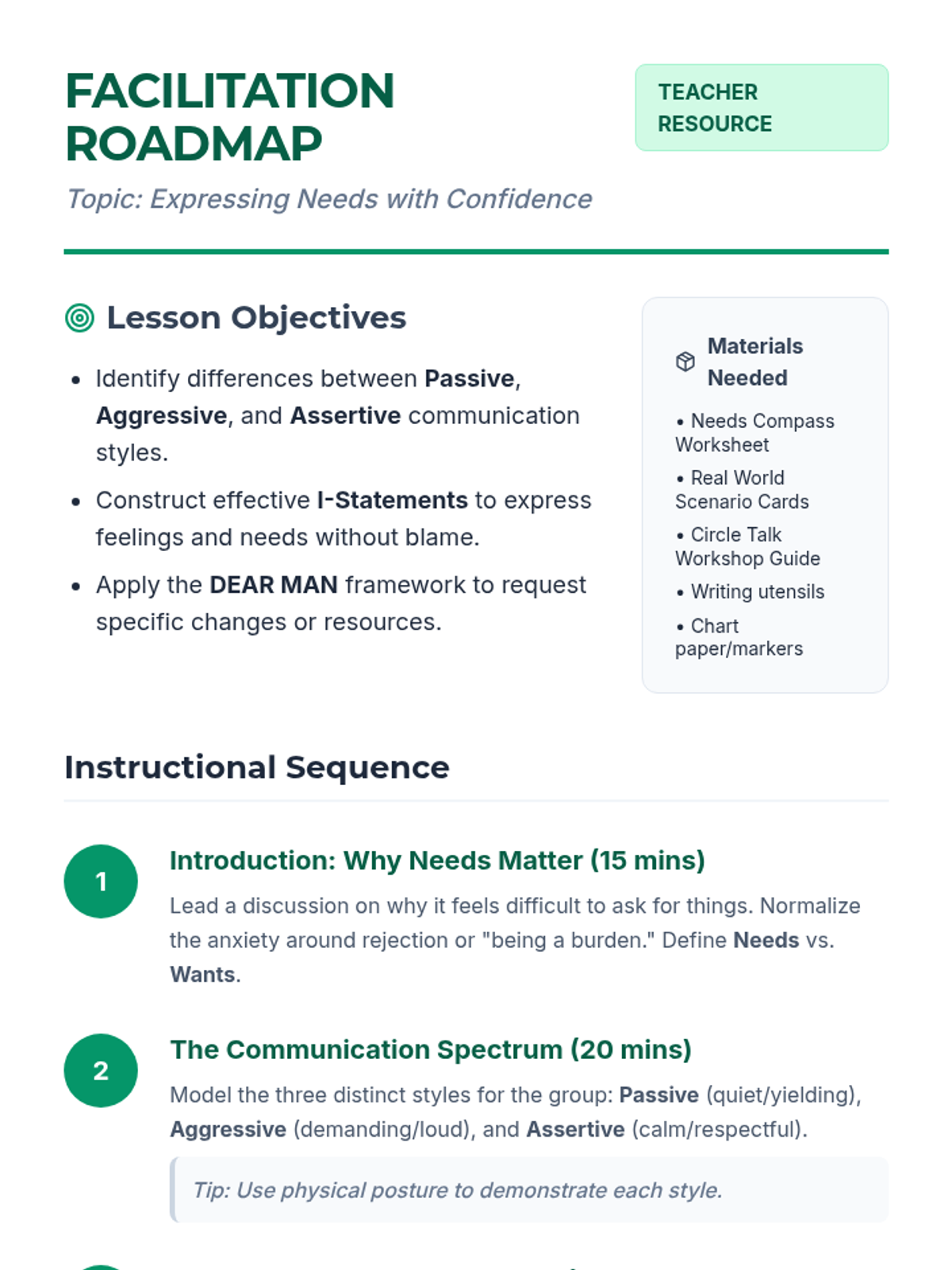
A step-by-step facilitation guide for teachers, outlining the lesson sequence, objectives, and specific instructional strategies for teaching assertive communication to adults.
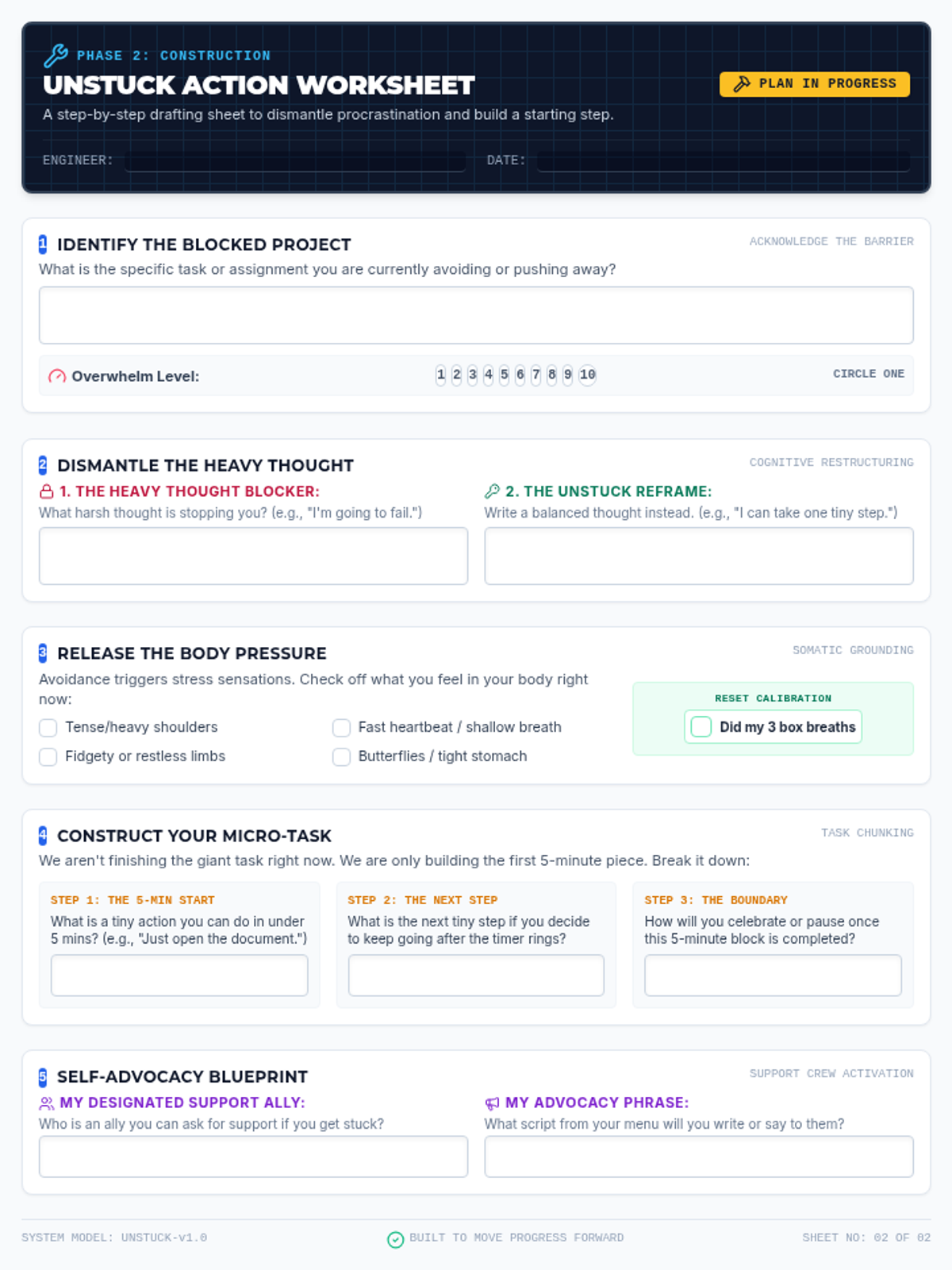
An interactive problem-solving worksheet matching the "Unstuck Blueprint" drafting theme. It guides students step-by-step to identify their current blocked task, rate their level of overwhelm, reframe heavy thoughts, perform sensory and somatic breathing, and construct a detailed 5-minute micro-task to kickstart momentum.
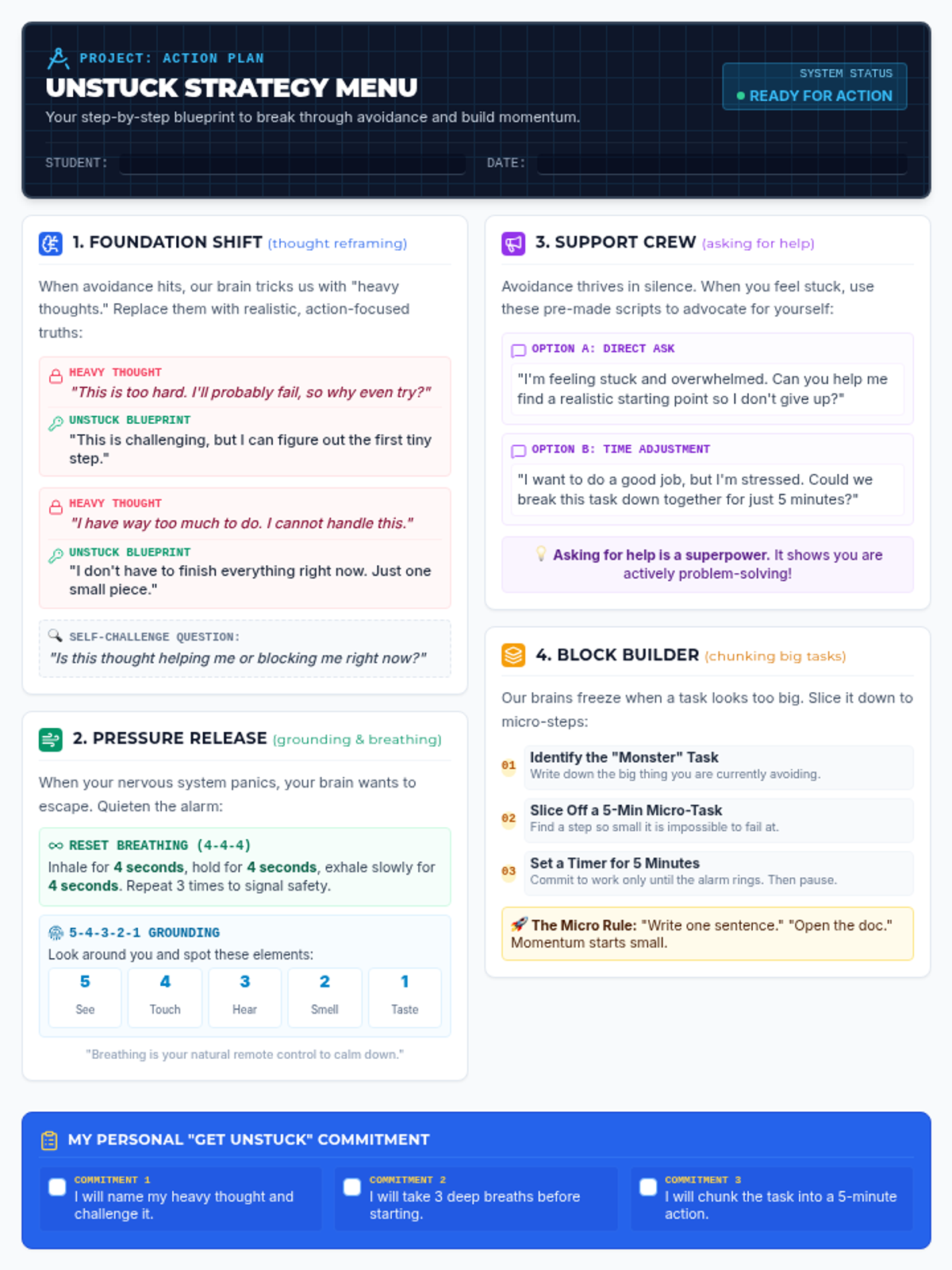
A 1-page visual coping strategy menu and checklist using a crisp "Unstuck Blueprint" drafting theme. It provides actionable cognitive reframing pairs, box-breathing/grounding routines, self-advocacy scripts, and task-chunking guides to move students from avoidant freezing to action.
An instructional slide deck teaching students three core strategies for finishing the year strong: chunking large projects, the 5-minute rule, and identifying a support network.
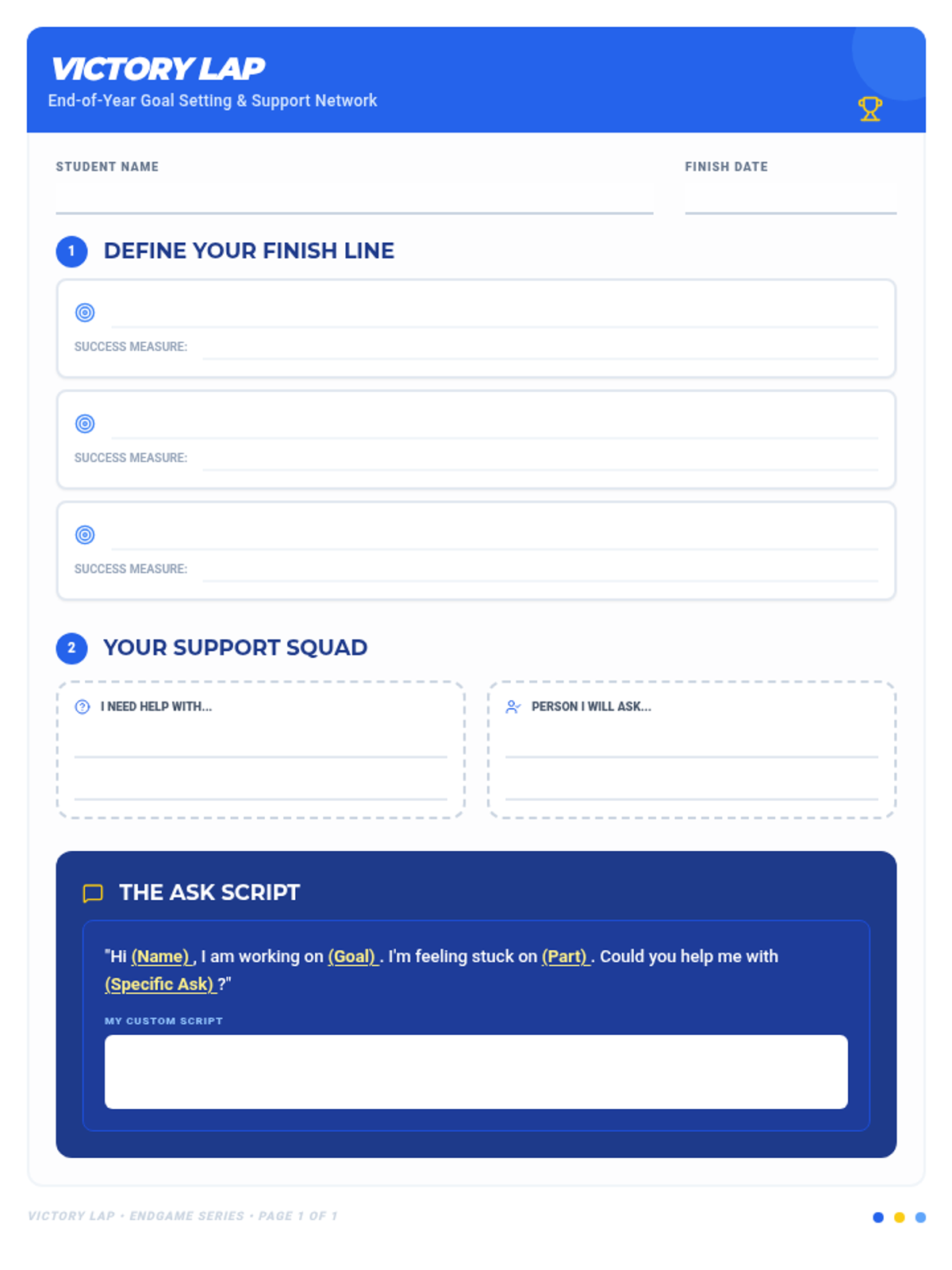
A goal-setting worksheet that guides students in identifying end-of-year objectives, mapping out their support network, and practicing self-advocacy scripts.
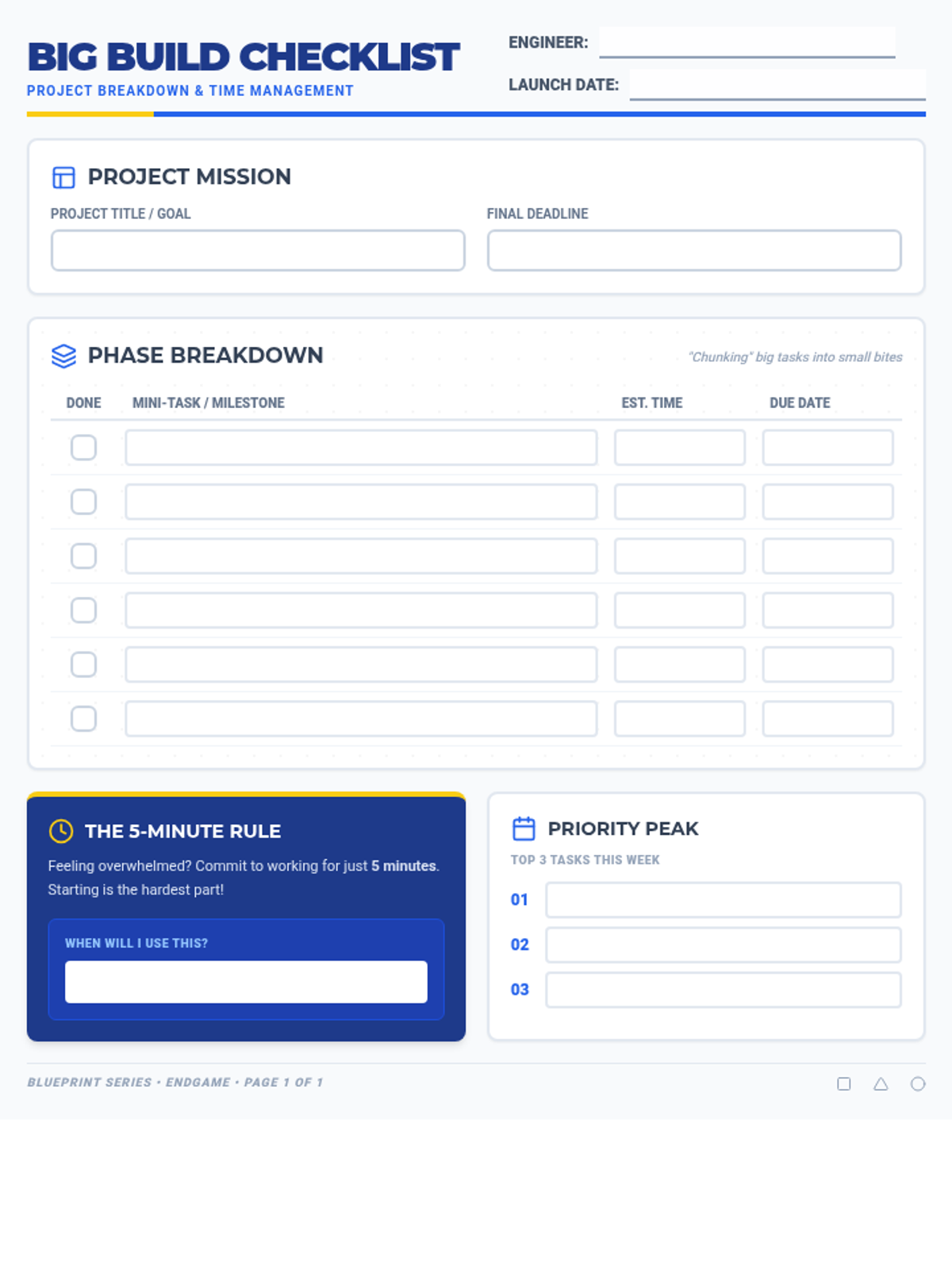
A project management checklist designed to help students break down large assignments into manageable mini-tasks with time estimates and deadlines.
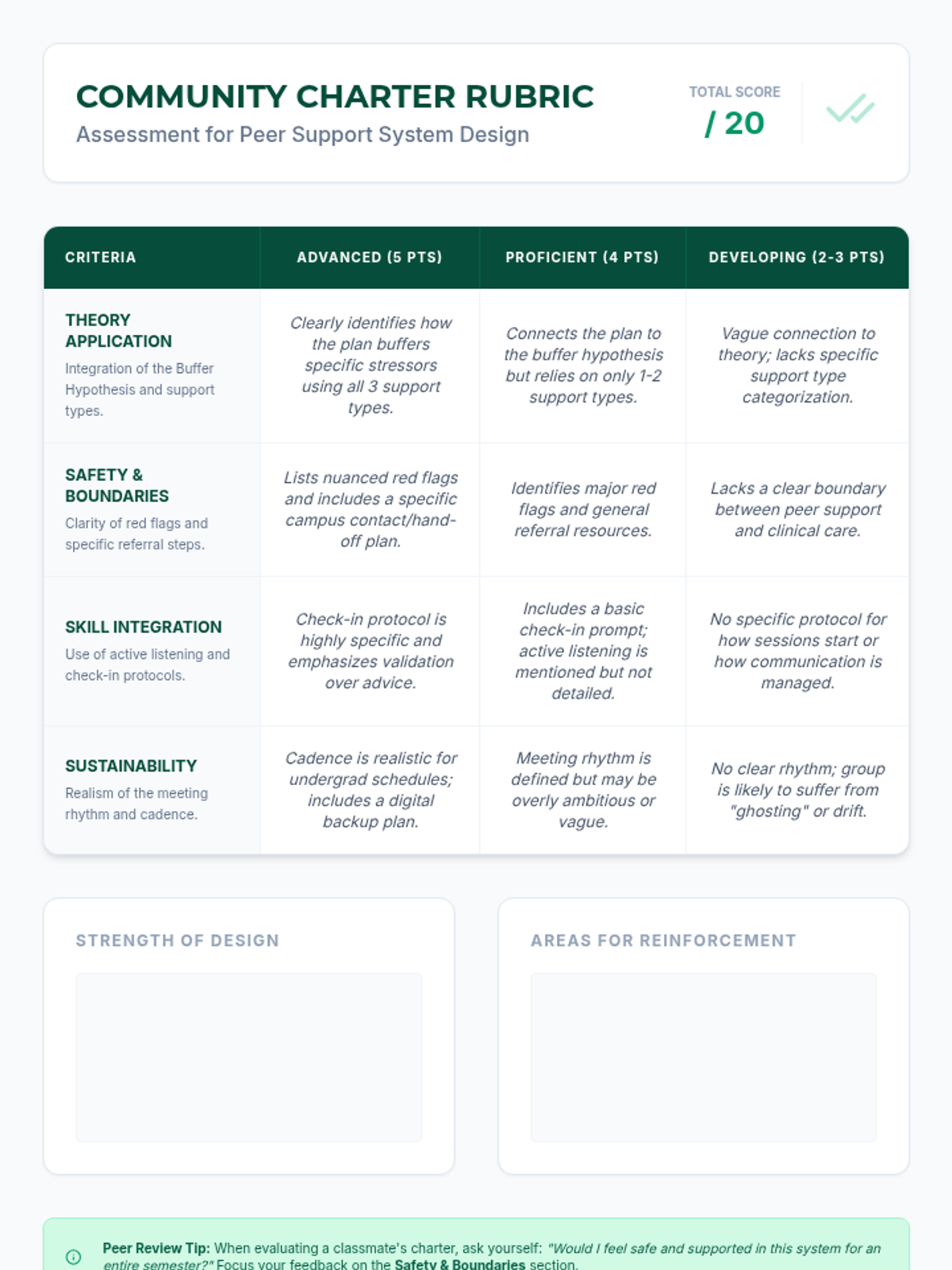
An assessment rubric for the final Community Charter project, evaluating theory application, safety planning, and sustainability.
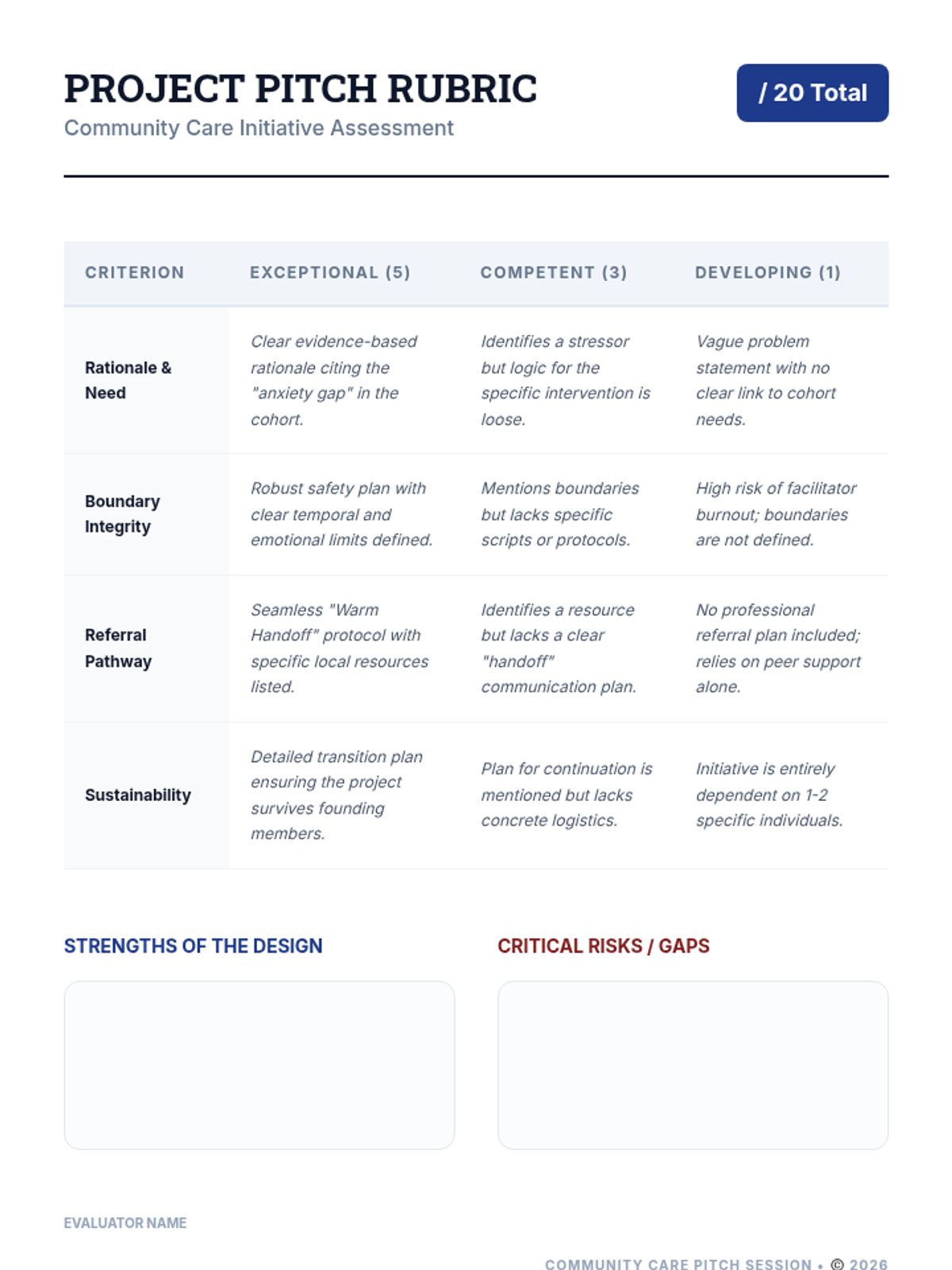
Final project rubric for evaluating the Community Care Initiative, focusing on rationale, boundaries, referral pathways, and sustainability.
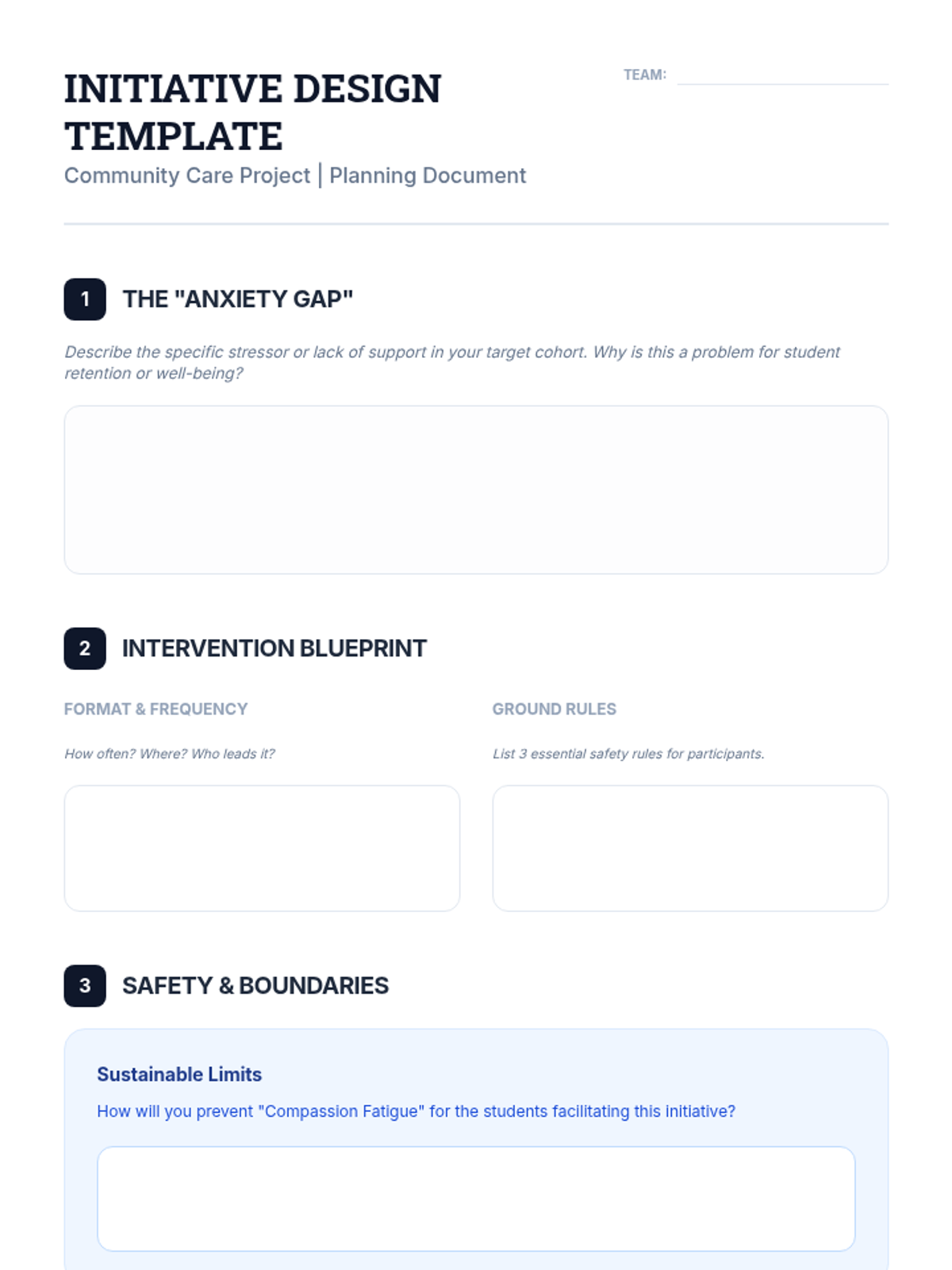
Student design workbook for planning the Community Care initiative, covering problem definition, logistics, safety boundaries, and sustainability.
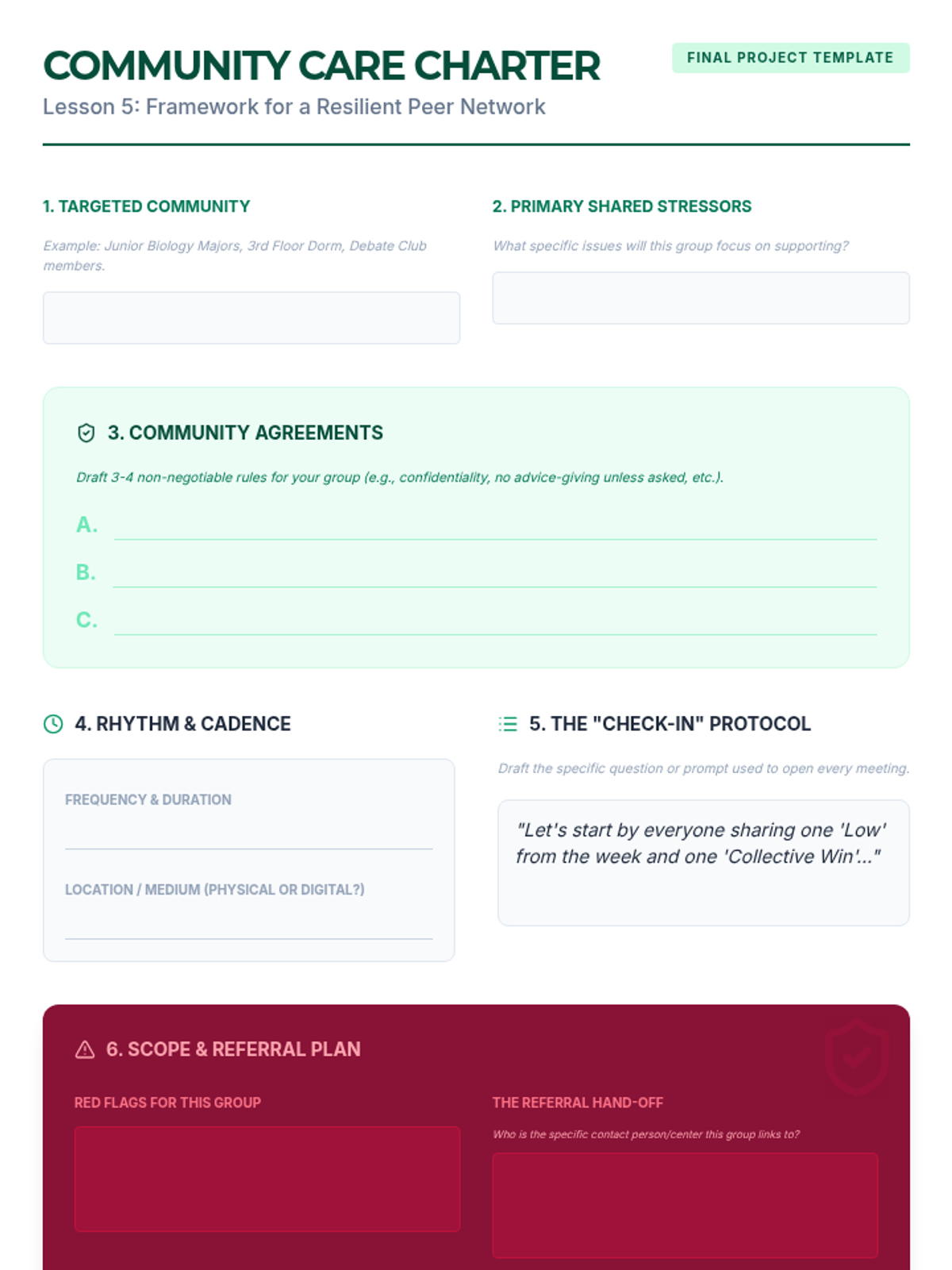
A design framework for a community care plan, producing a 'Community Charter' for peer support in a specific campus context.
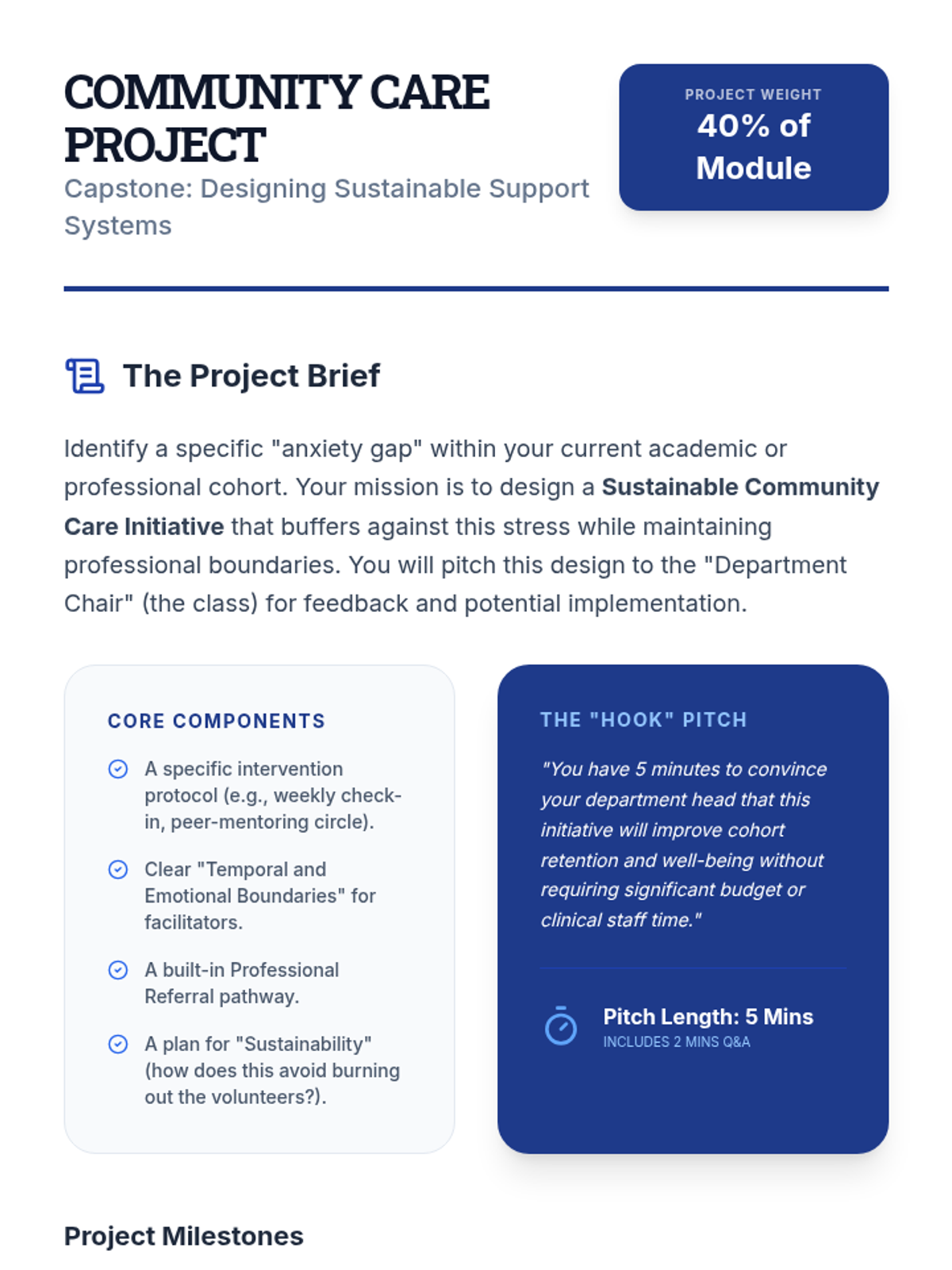
Final project brief for the Community Care initiative, detailing requirements, core components, and the "Department Pitch" assessment.
Visual slide deck for Lesson 5, introducing the concepts of mutual aid, sustainable networks, and the "Community Charter" project.
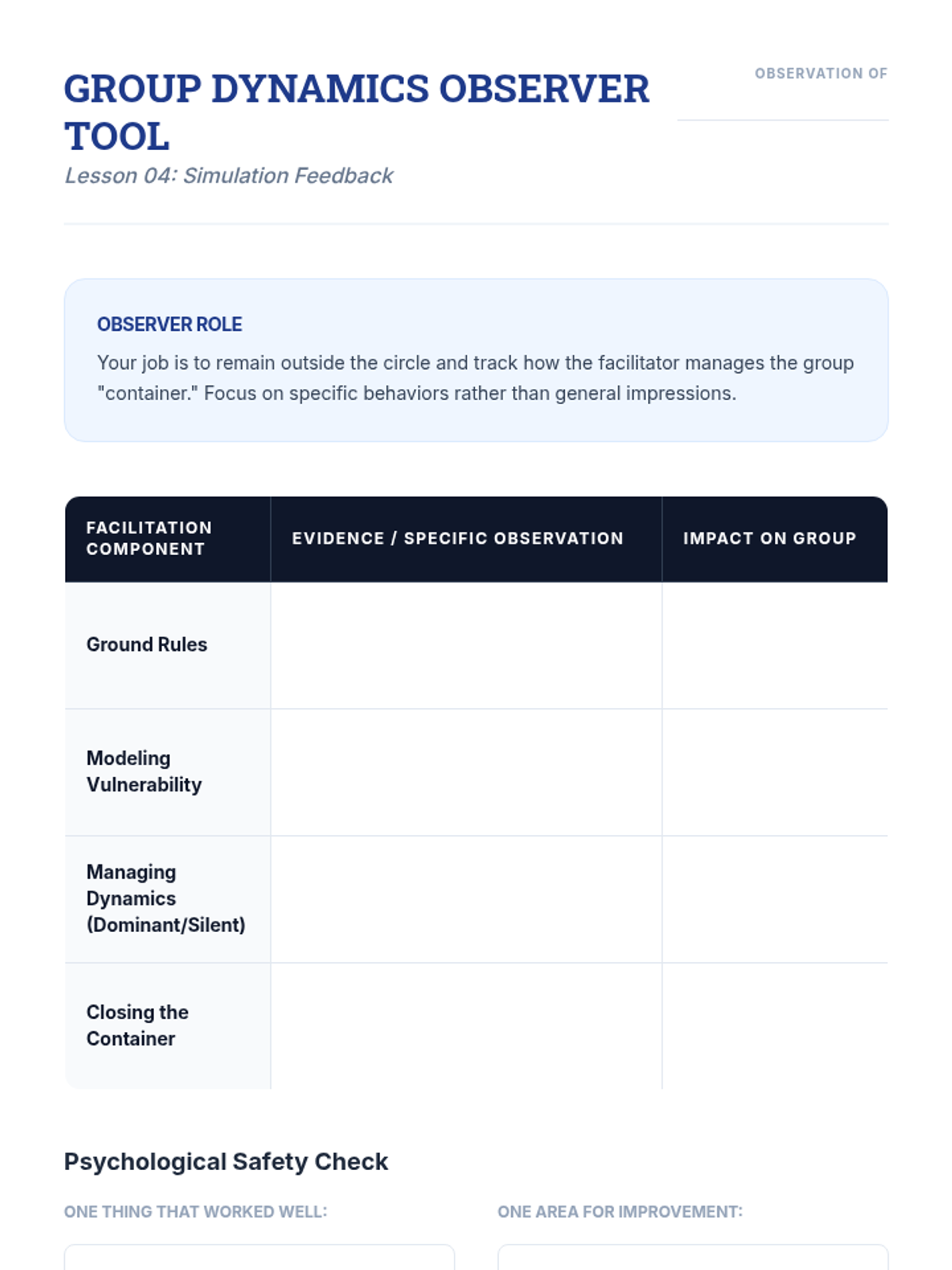
Observation and feedback tool for students to use while observing peer-led group facilitation simulations, focusing on psychological safety and dynamic management.
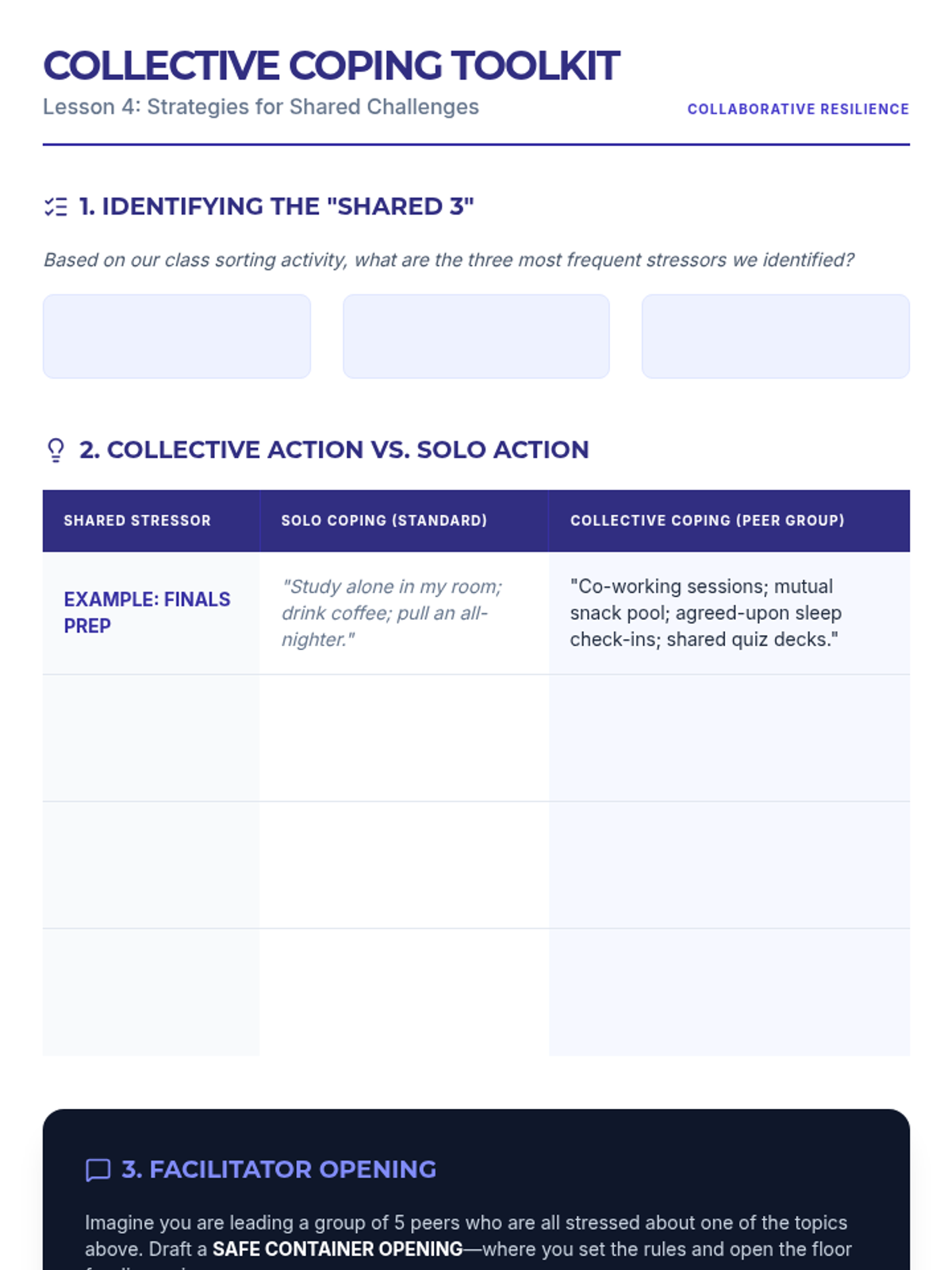
A brainstorming worksheet for identifying collective coping strategies for common undergraduate stressors.
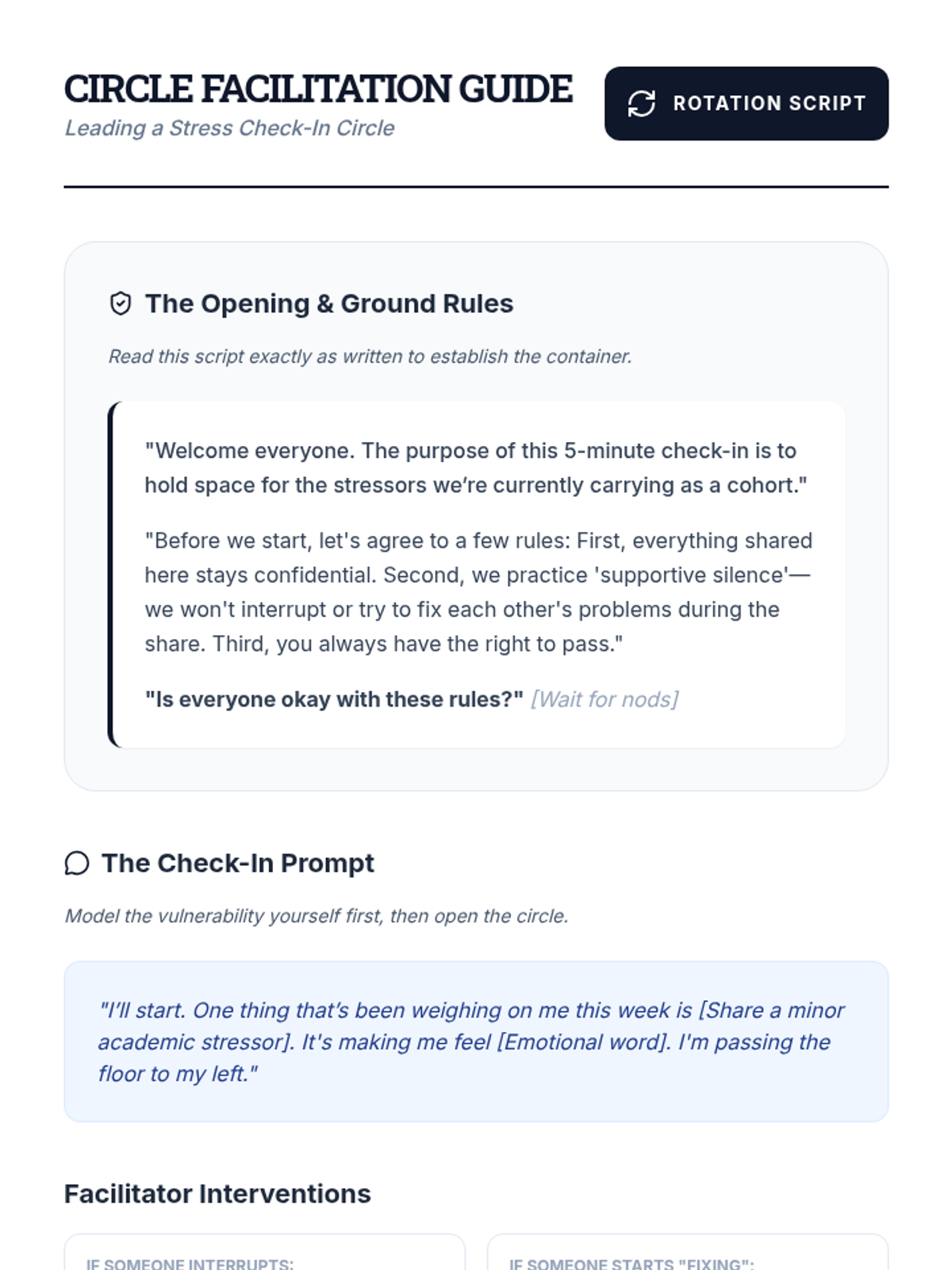
Practical script for students to lead a brief check-in circle, featuring opening ground rules, modeling prompts, and intervention strategies.
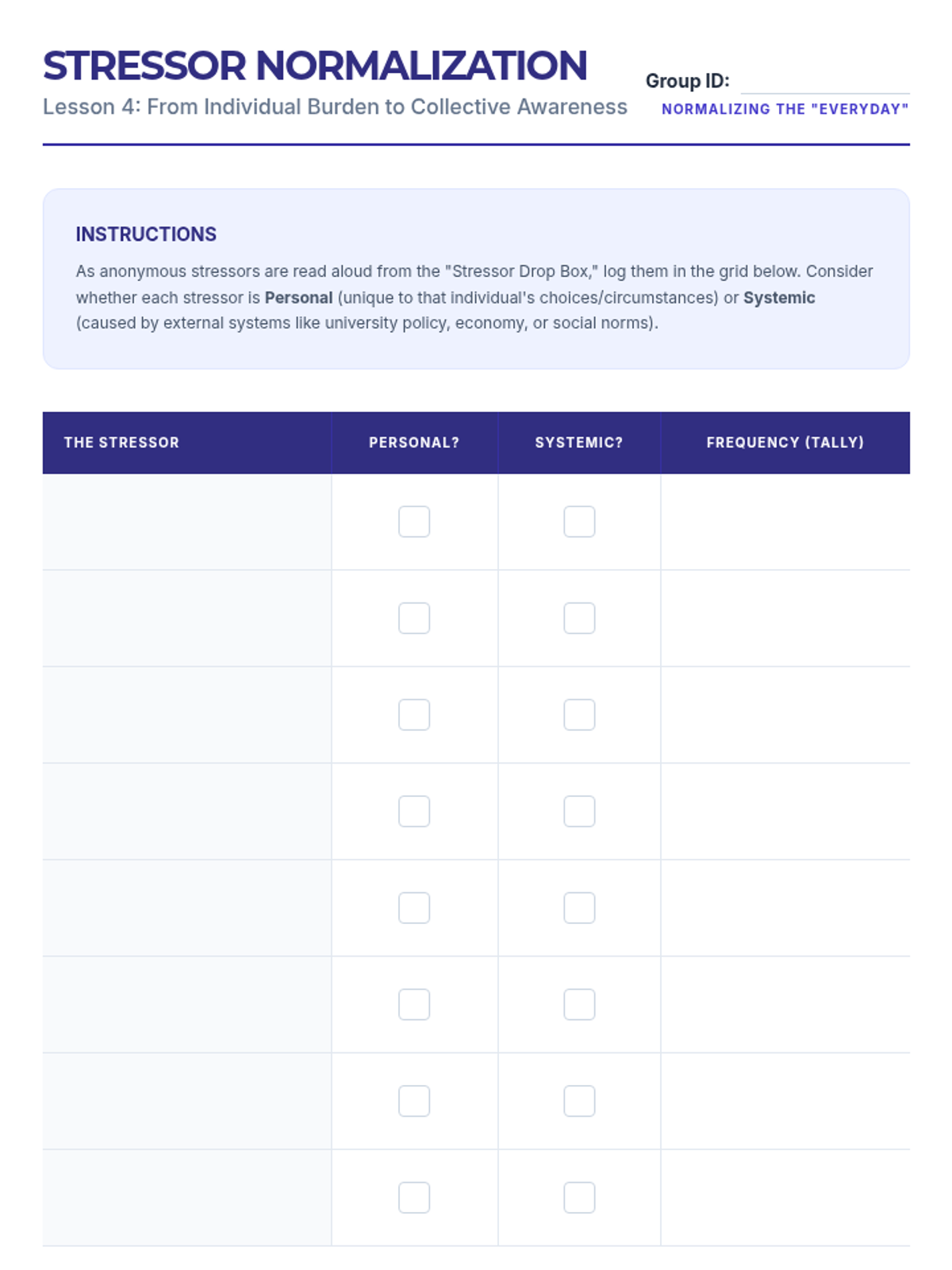
A sorting activity where students categorize shared stressors from an anonymous "drop box" into personal or systemic categories to facilitate normalization.
Facilitation Fundamentals Slides focusing on group dynamics, psychological safety, and managing difficult participants.
Visual slide deck for Lesson 4, introducing group facilitation skills, the power of normalization, and the distinction between individual and systemic stressors.
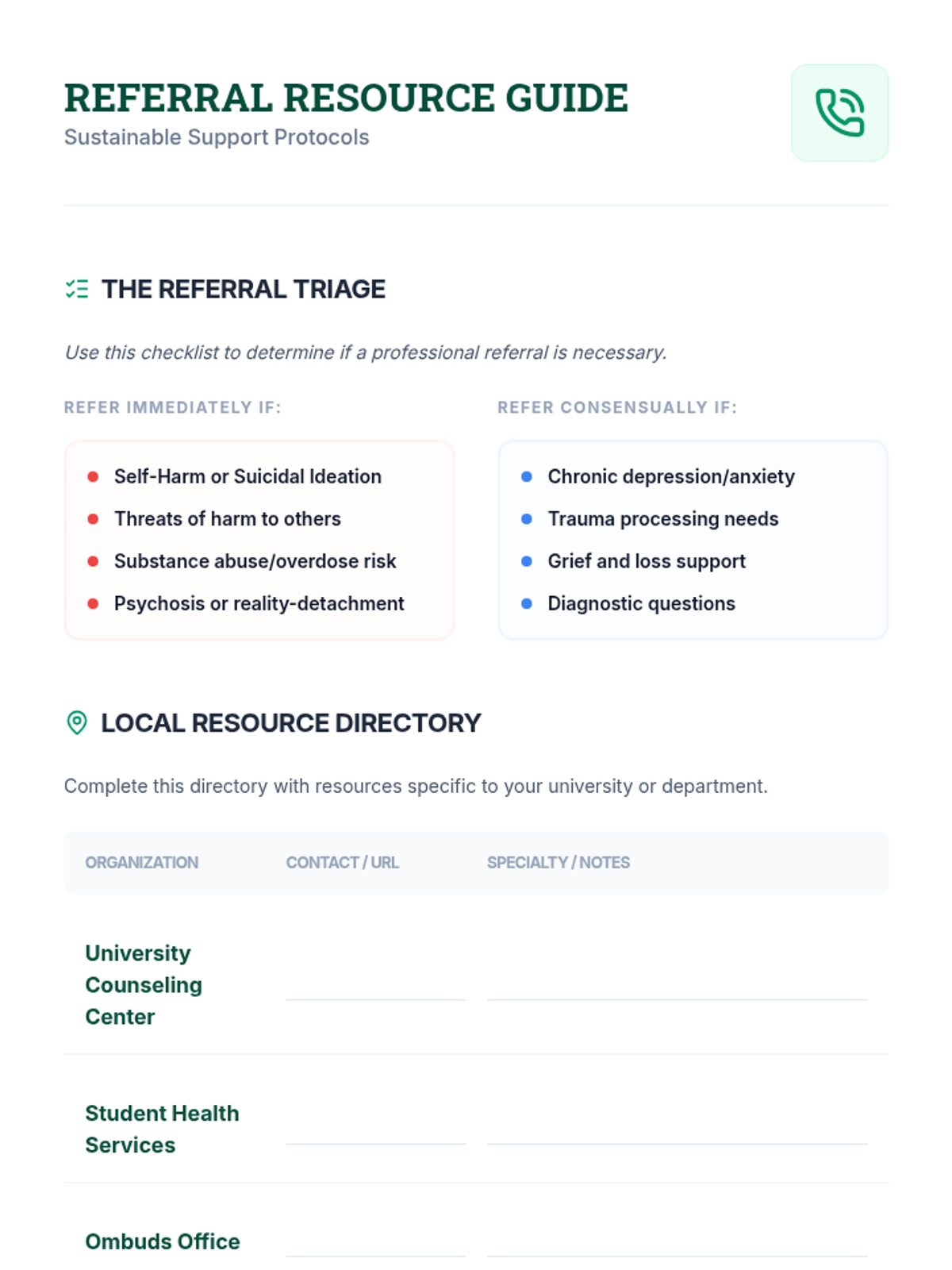
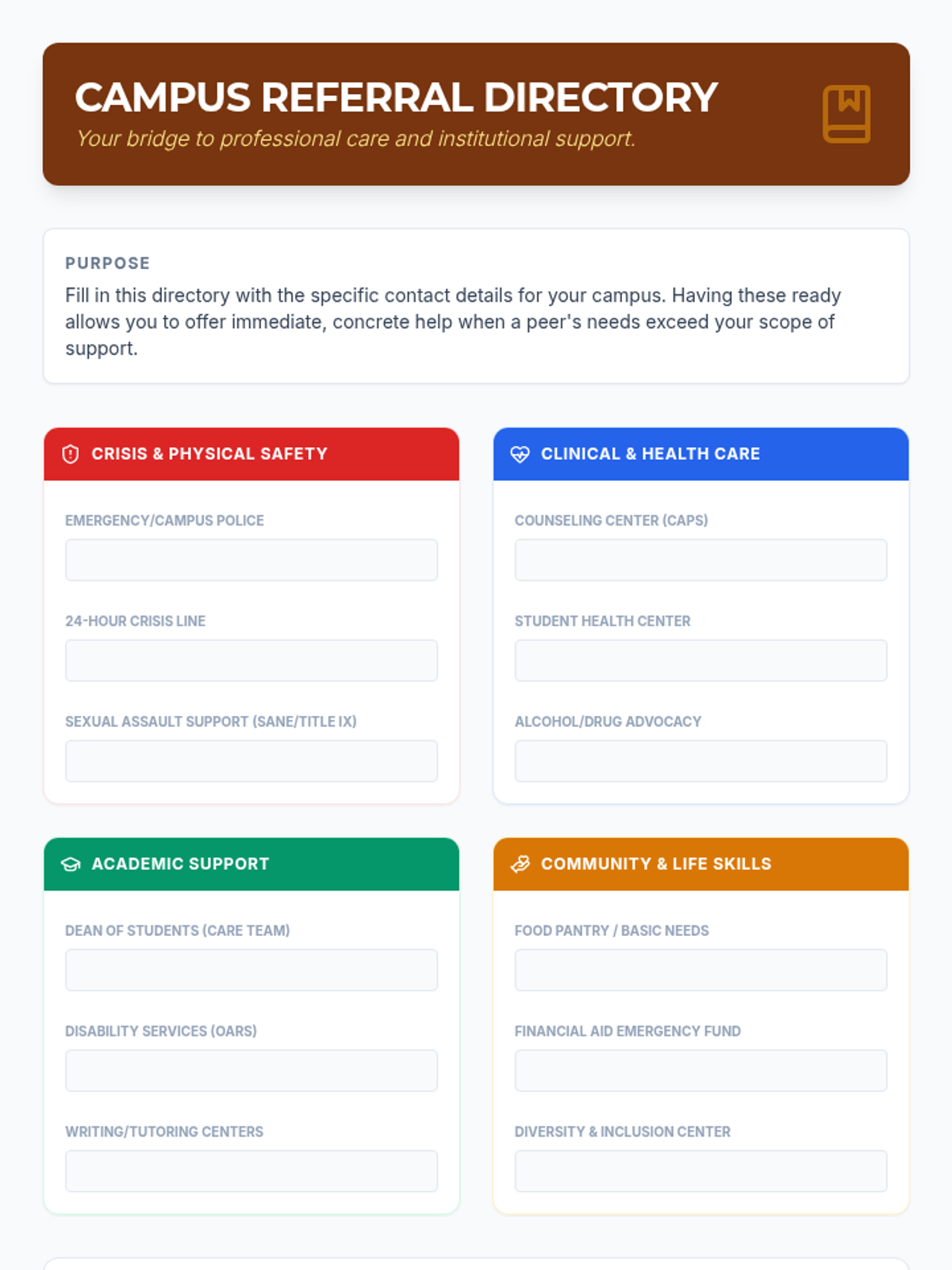
Reference guide and template for students to identify professional resources and practice the "warm handoff" referral protocol.
A resource guide template for students to collect and categorize campus professional resources.
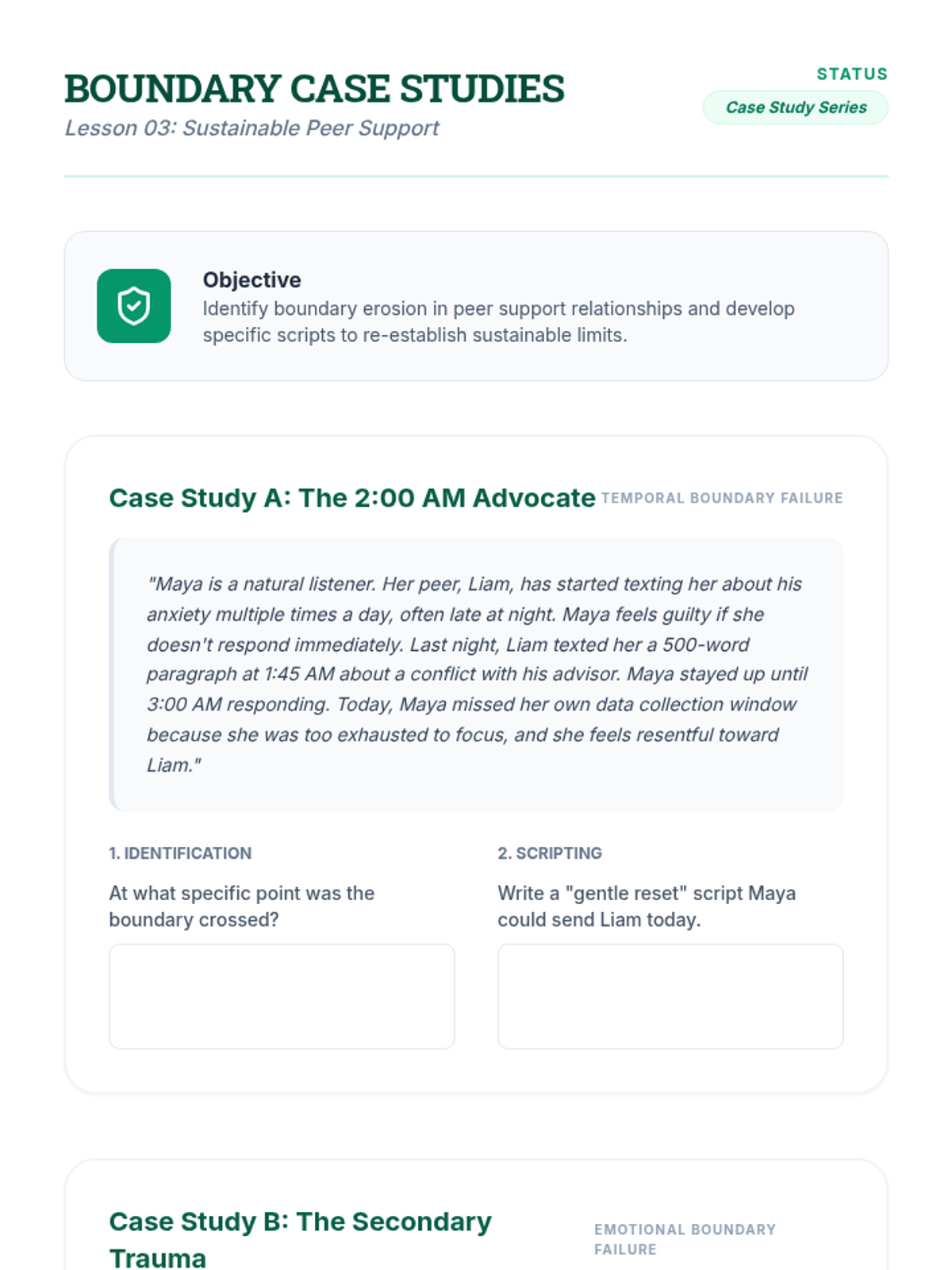
Case studies focusing on temporal and emotional boundary failures in peer support, including scripting exercises for boundary resetting.
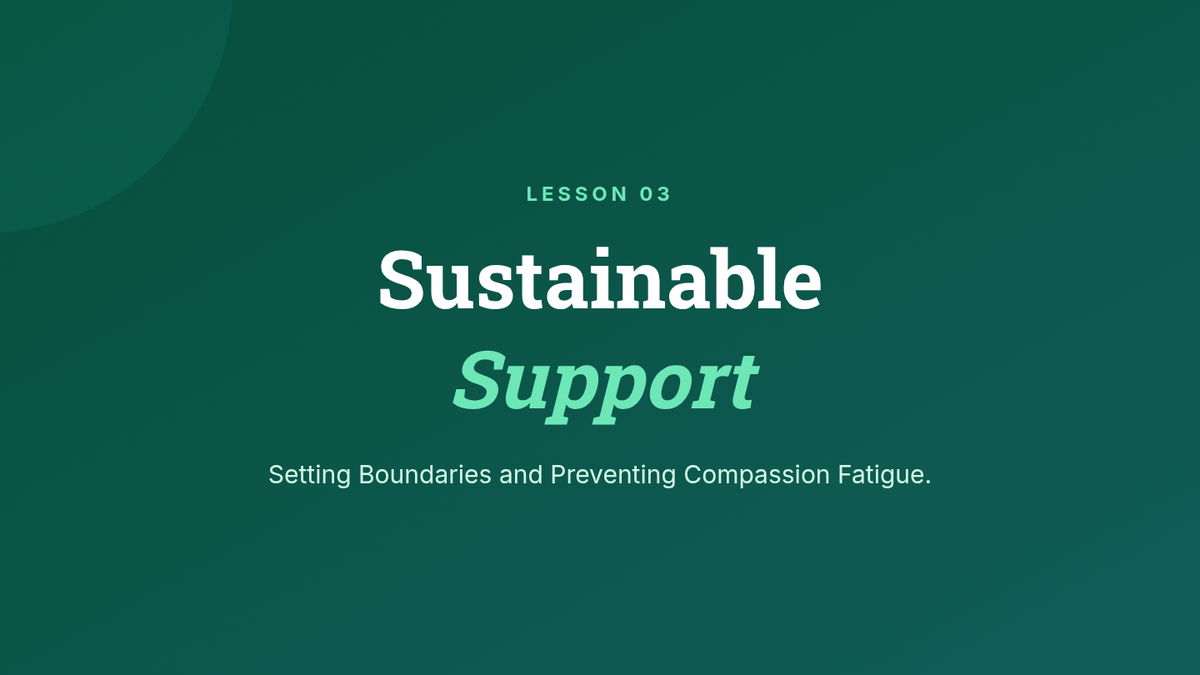
Sustainable Support Slides focusing on compassion fatigue, different types of boundaries, and the professional referral process.
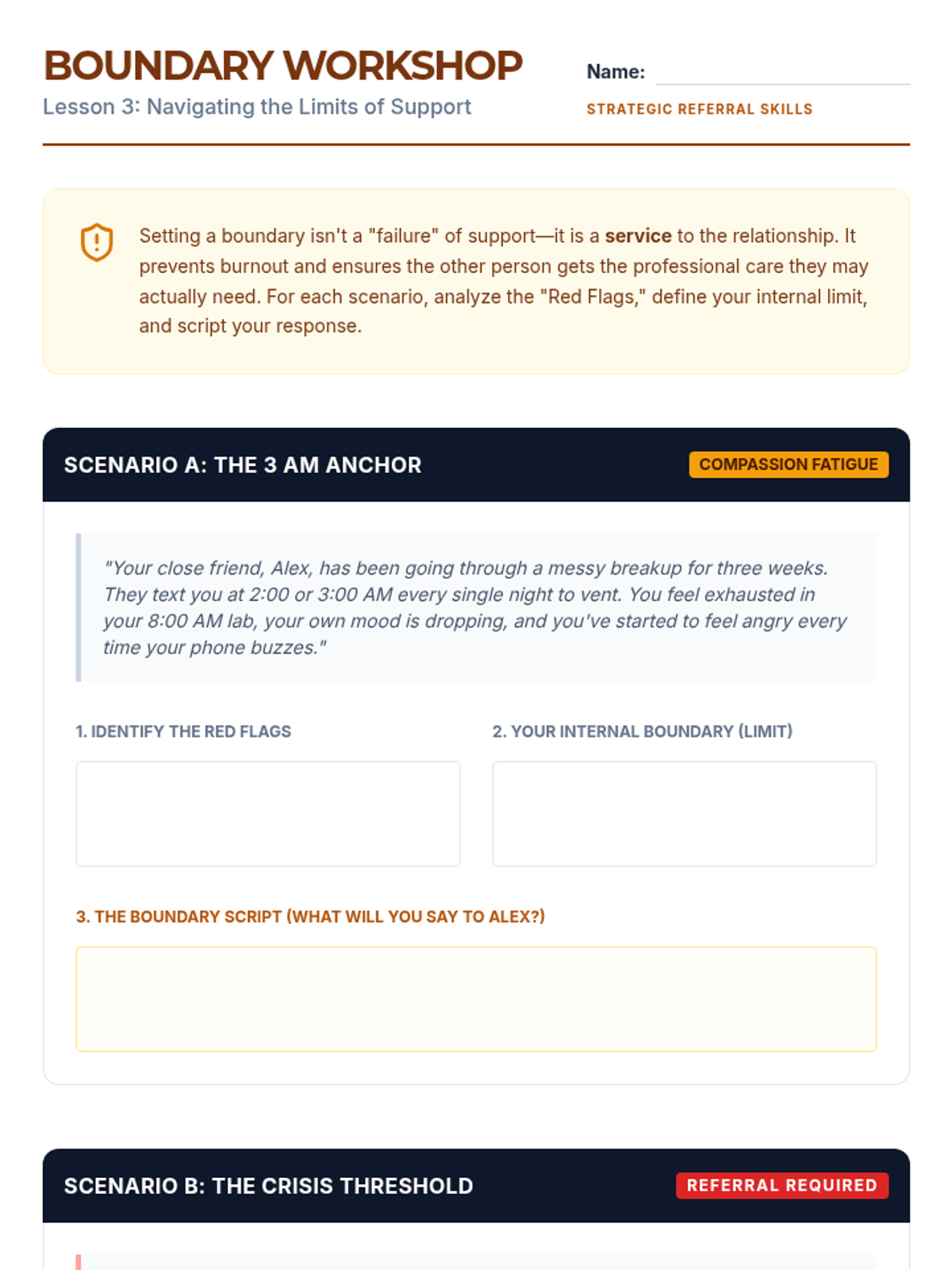
Case study scenarios for Lesson 3 focusing on identifying red flags, setting internal limits, and drafting referral scripts.
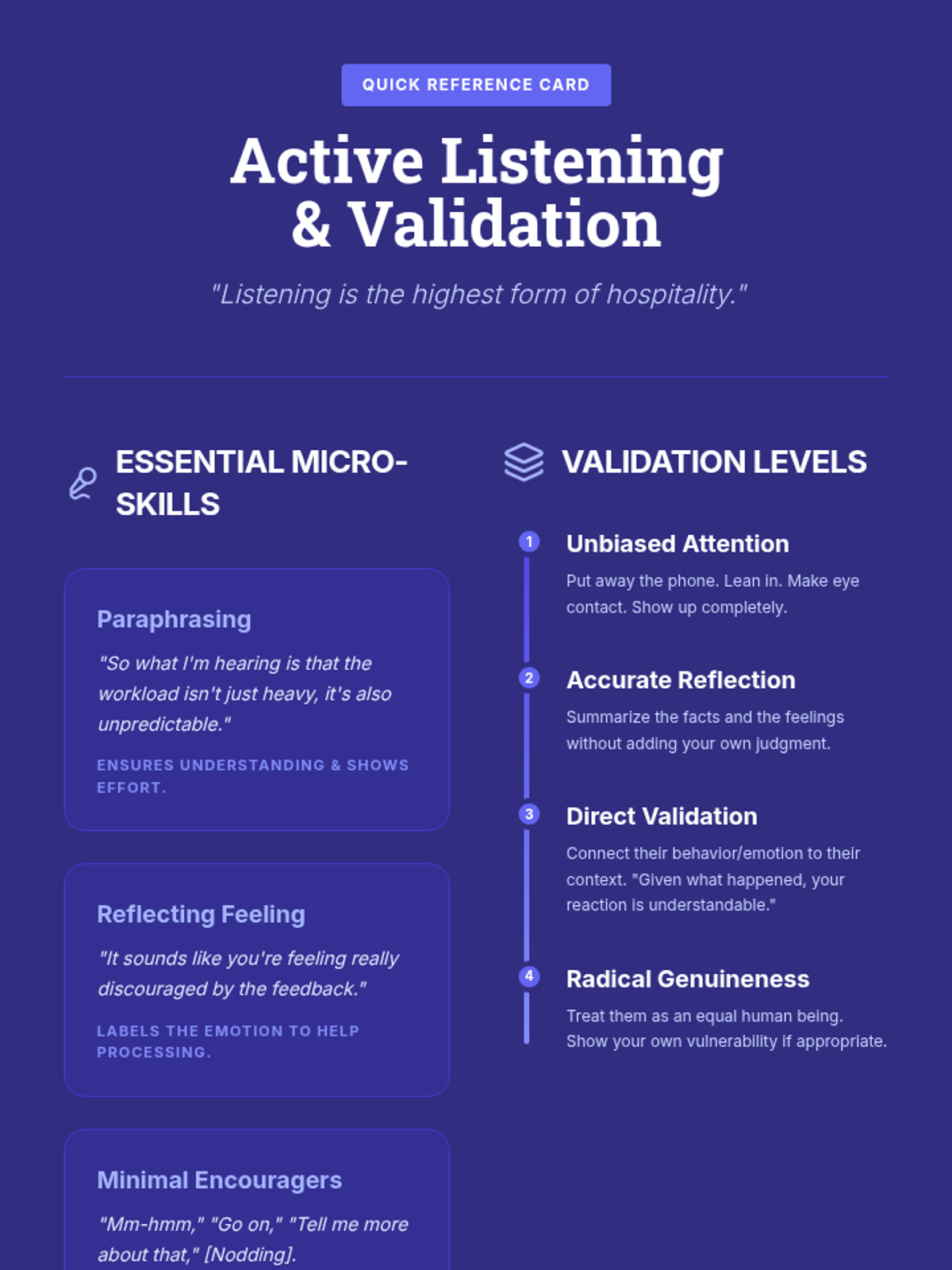
Reference sheet for students featuring micro-skills definitions, validation hierarchy levels, and helpful open-ended question prompts.
Visual slide deck for Lesson 3, covering the scope of peer support, referral red flags, and the prevention of compassion fatigue.
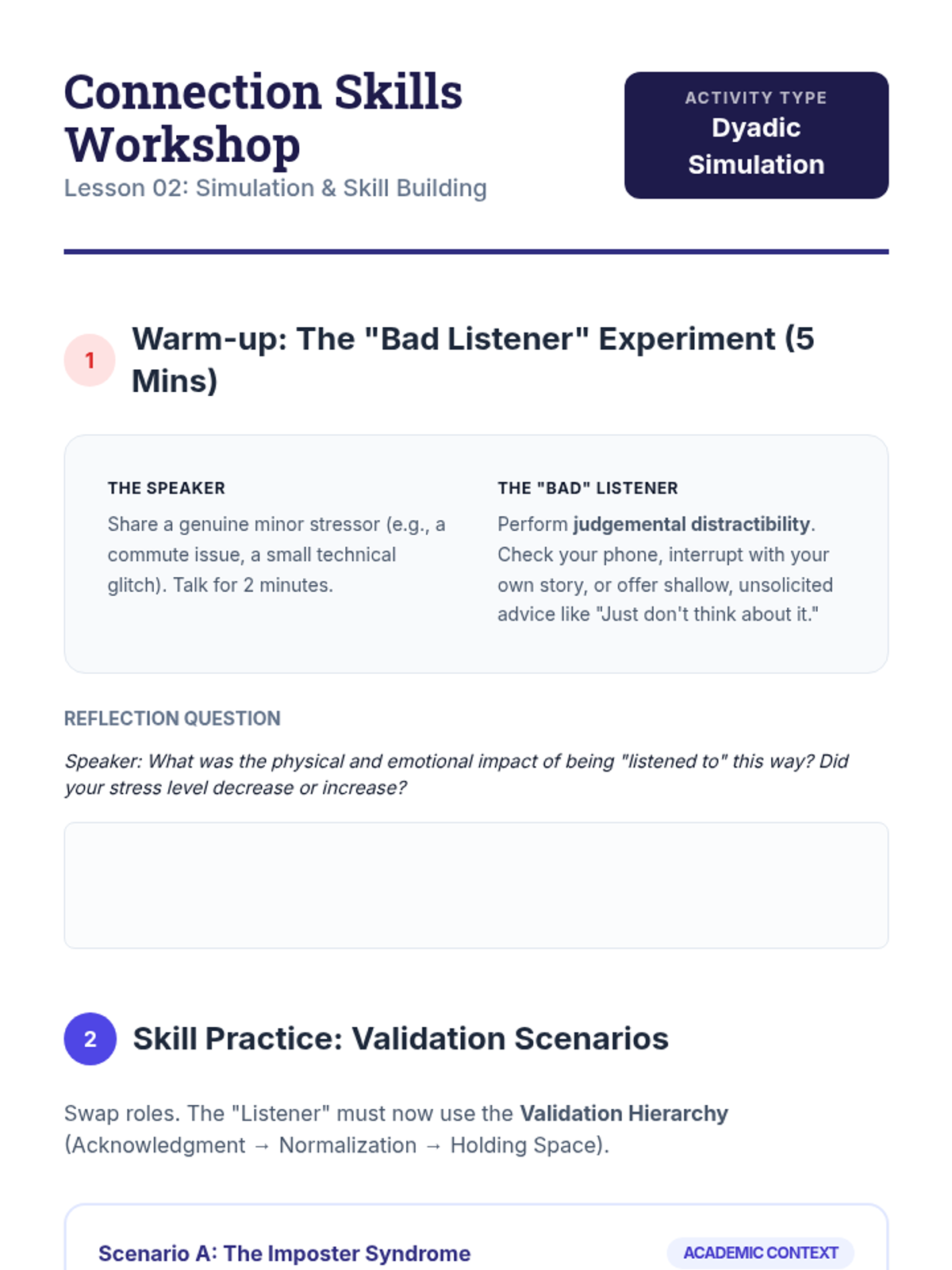
Student activity sheet featuring "Bad Listener" exercises and specific role-play scenarios for practicing the validation hierarchy.