Employment laws, safety protocols, and legal protections against workplace harassment and discrimination. Connects regulatory requirements to practical understandings of pay stubs, insurance benefits, and employee advocacy.
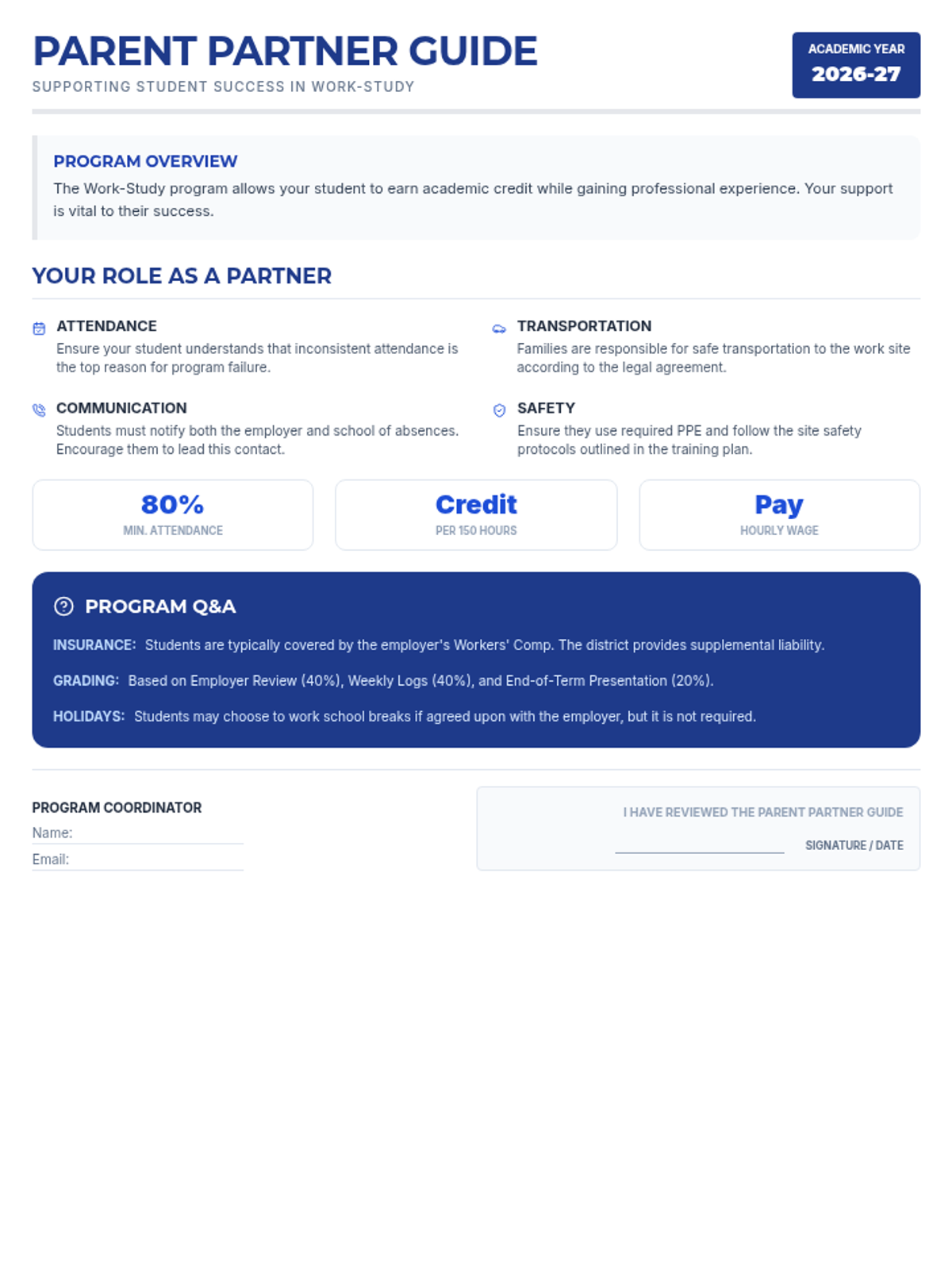
An informational guide for parents that outlines their role in supporting students during a work-study program, including responsibilities, logistics, and FAQs.
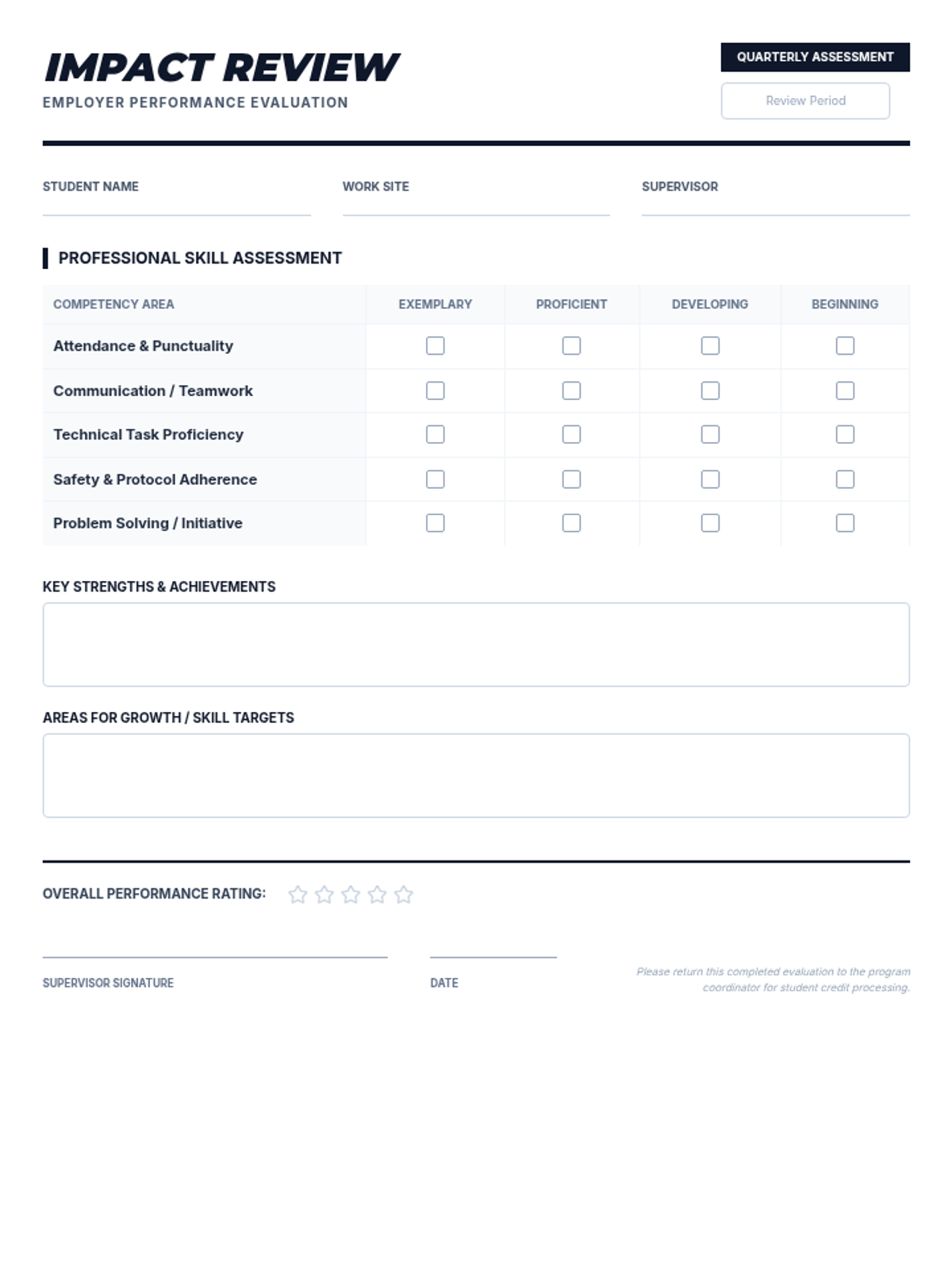
A comprehensive performance evaluation form for employers to assess student progress across professional competencies and safety standards.
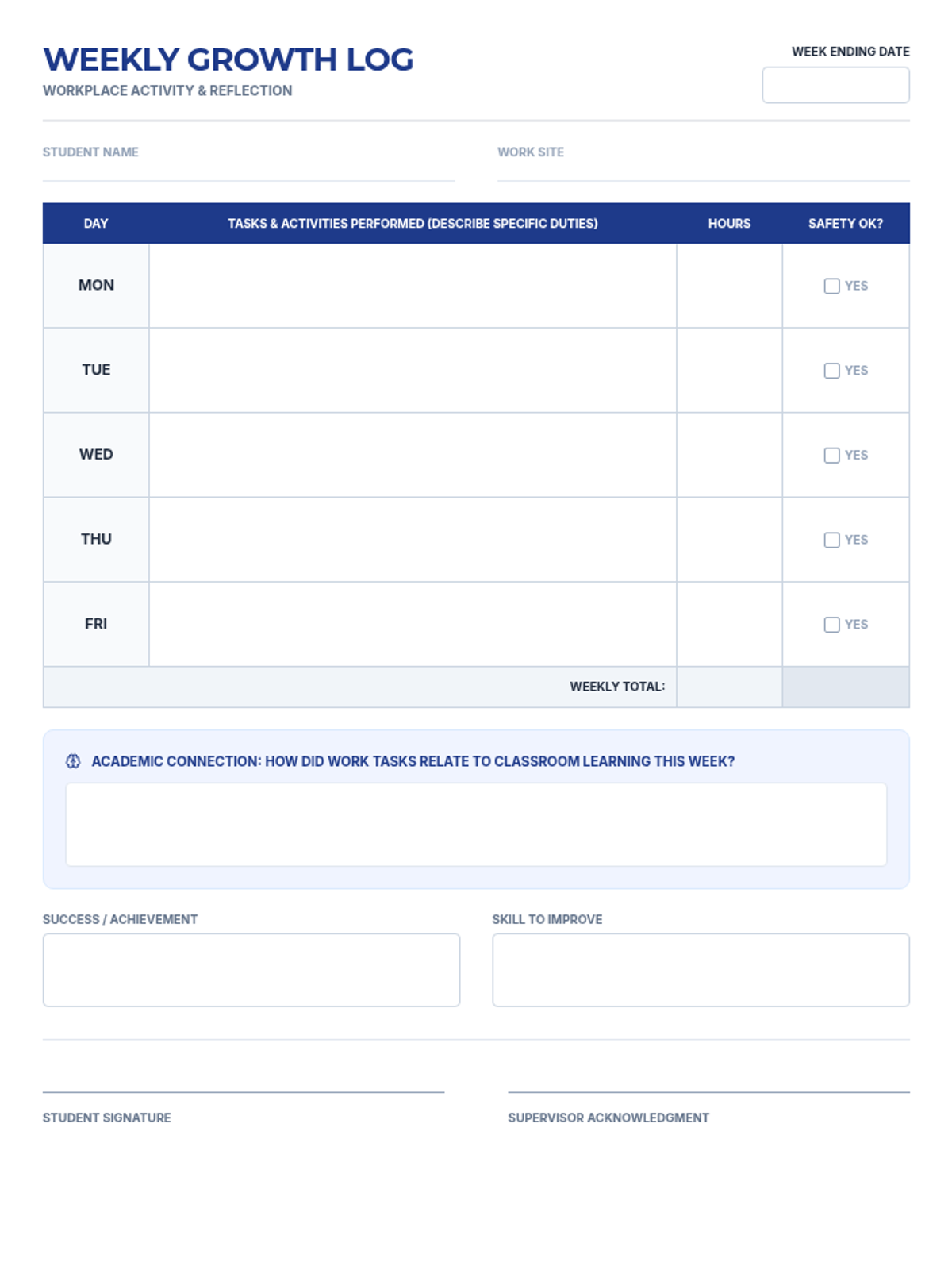
A weekly logging document for students to track hours, tasks, and reflect on the integration of their work with academic concepts.
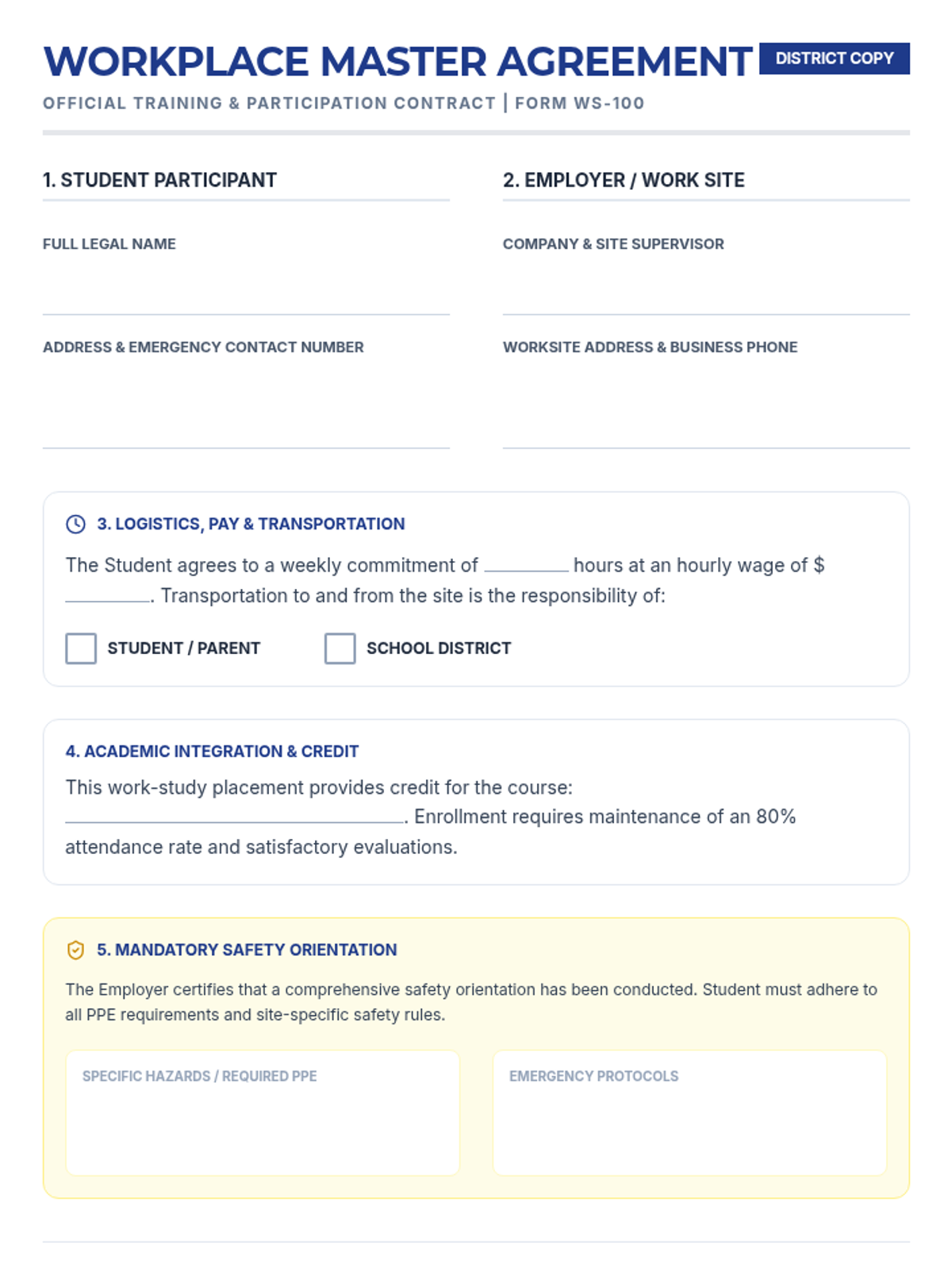
A formal training agreement and legal contract for work-study programs, covering hourly requirements, transportation, and safety protocols.
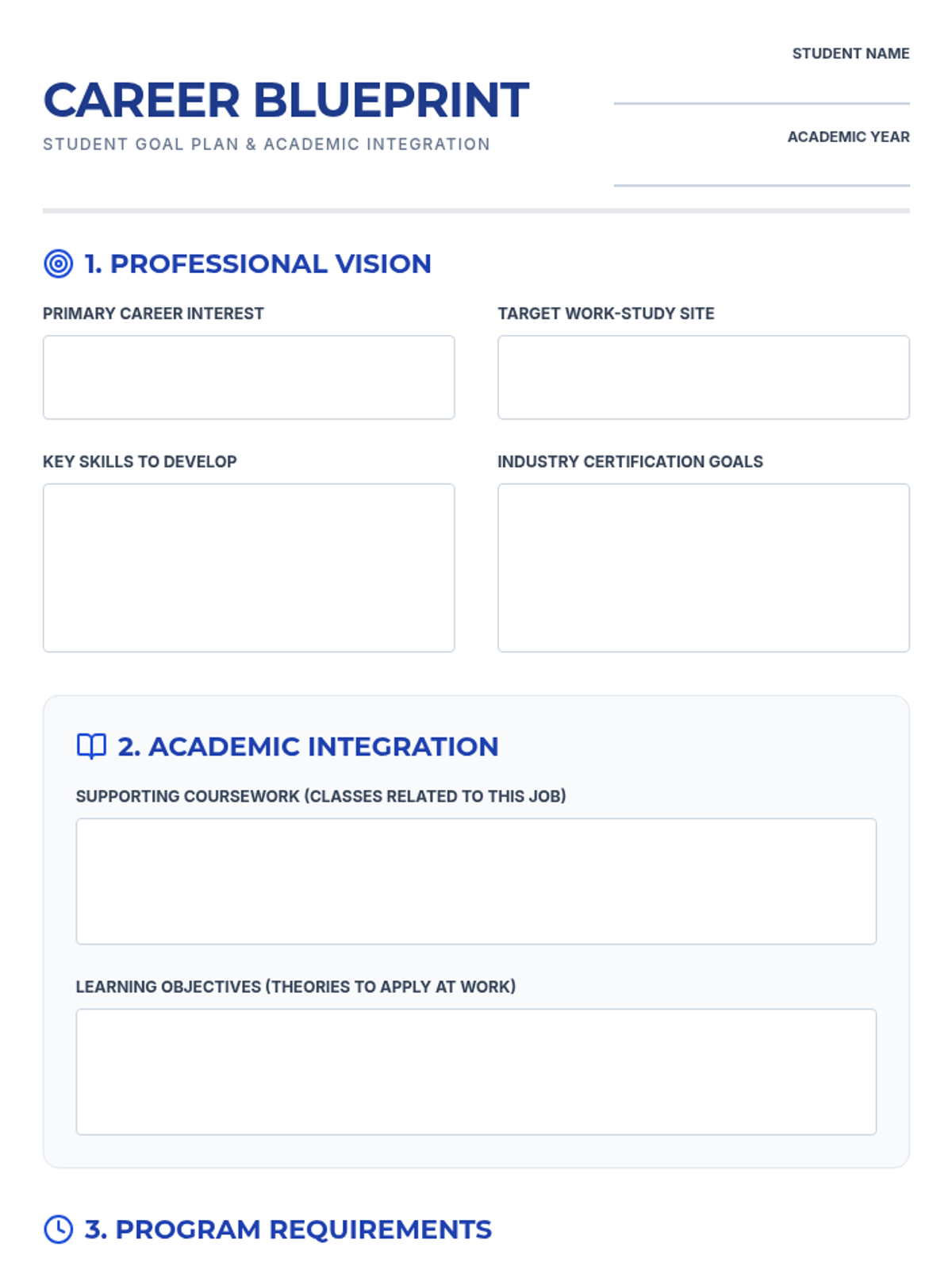
A student goal-setting document that outlines career interests, academic connections, and logistical requirements for a work-study program.
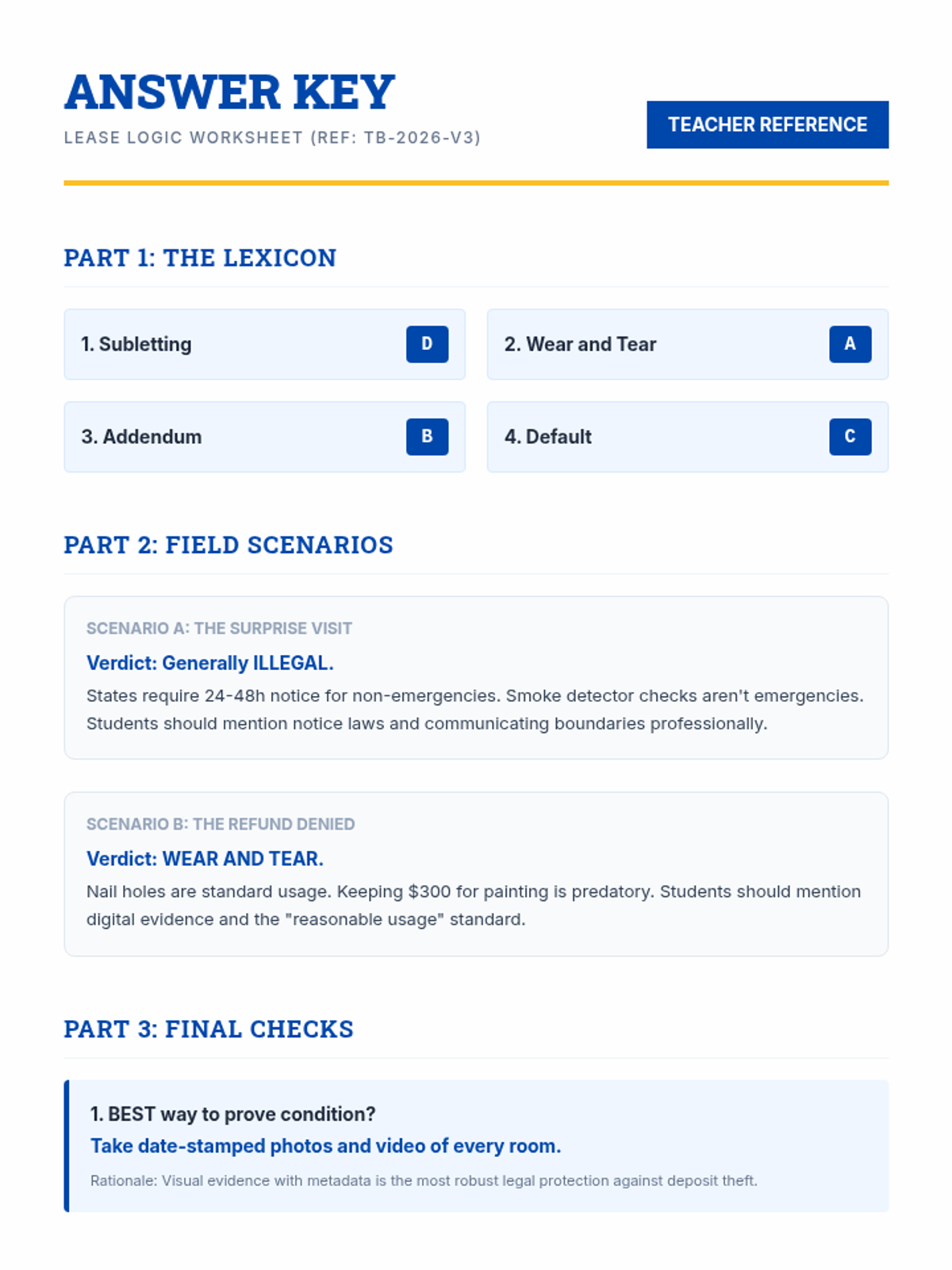
An answer key for 'The Tenant’s Blueprint' lesson. Provides correct matching for rental vocabulary, detailed explanations for legal scenarios, and a quick-reference key for the 'Red Flag Audit' activity.
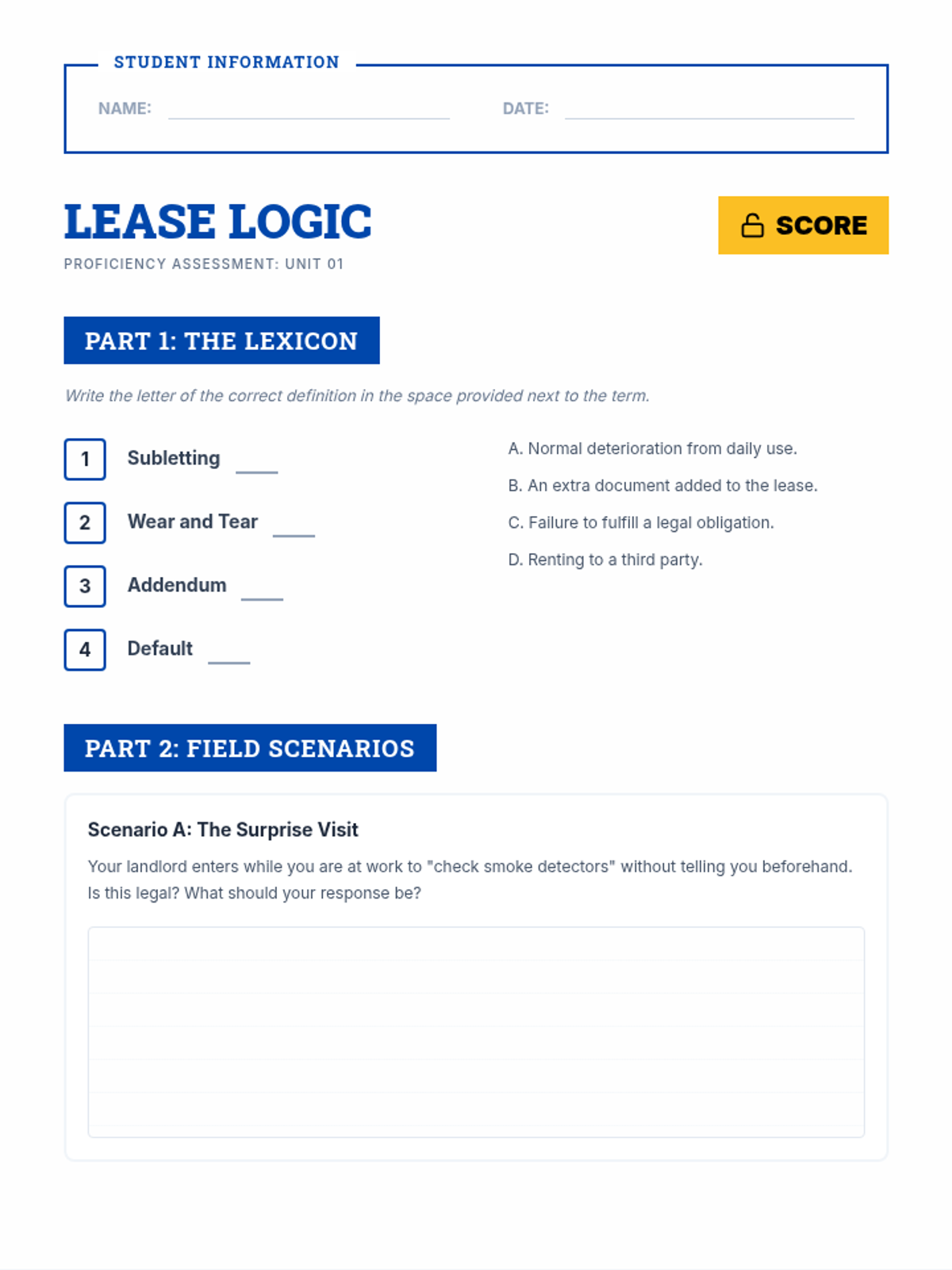
An individual student worksheet for 'The Tenant’s Blueprint' lesson. Assesses understanding of rental vocabulary, legal scenarios, and best practices for protecting a security deposit. Features matching, short-answer scenario analysis, and multiple-choice questions.
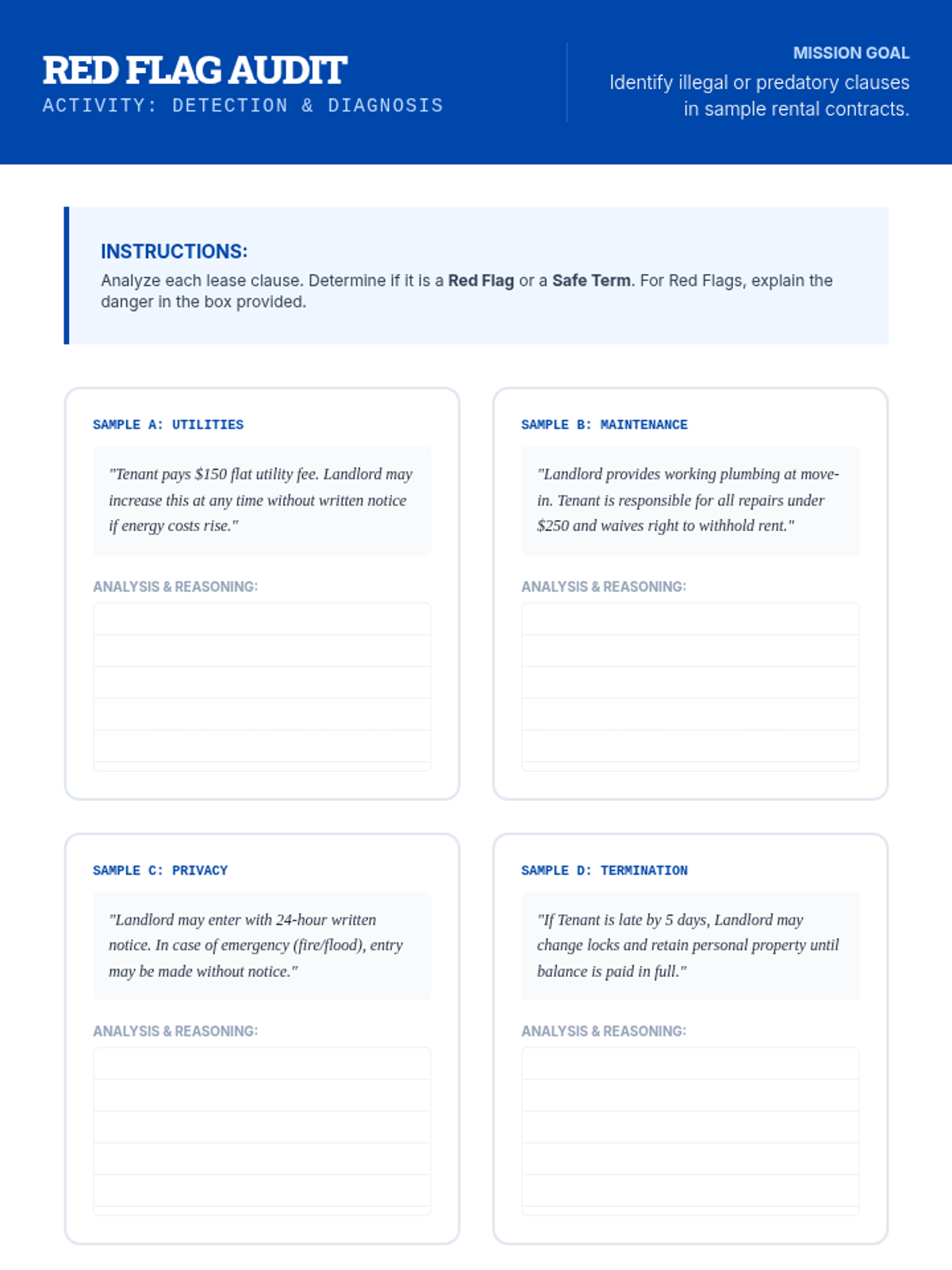
A collaborative 'Red Flag Audit' activity for 'The Tenant’s Blueprint' lesson. Students analyze six sample lease clauses to distinguish between safe, legal terms and predatory or illegal 'red flags'. Includes analysis work areas and group discussion prompts.
A visually striking slide deck for 'The Tenant’s Blueprint' lesson, designed to teach seniors the fundamentals of rental agreements. Includes sections on lease decoding, identifying legal red flags, move-in protection strategies, and professional communication with landlords.
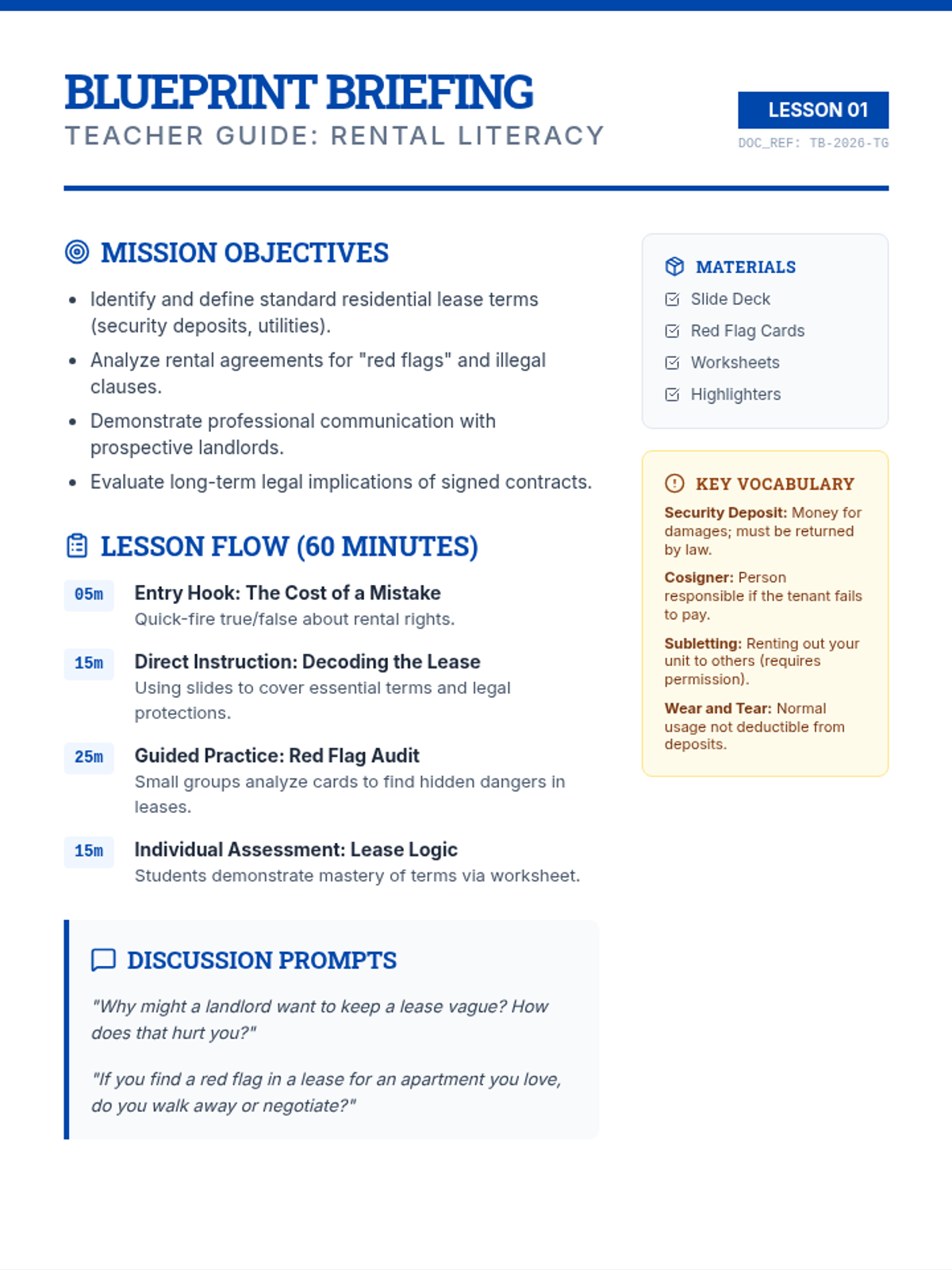
A comprehensive teacher guide for 'The Tenant’s Blueprint' lesson, featuring lesson objectives, a detailed 60-minute instructional flow, discussion prompts, and differentiation strategies for teaching rental literacy to seniors.
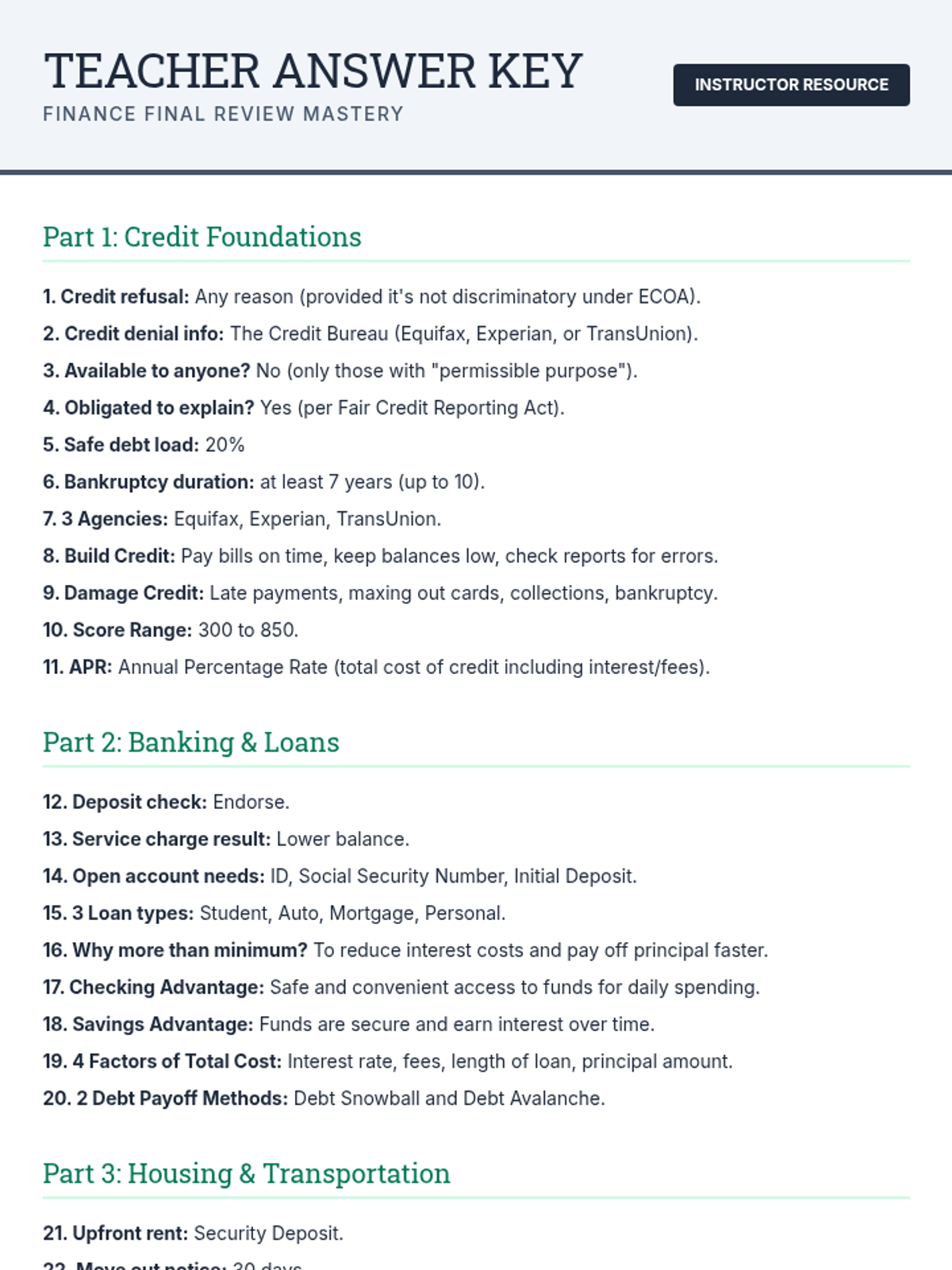
The comprehensive teacher answer key for the Personal Finance Final Review, providing detailed responses for all worksheet items.
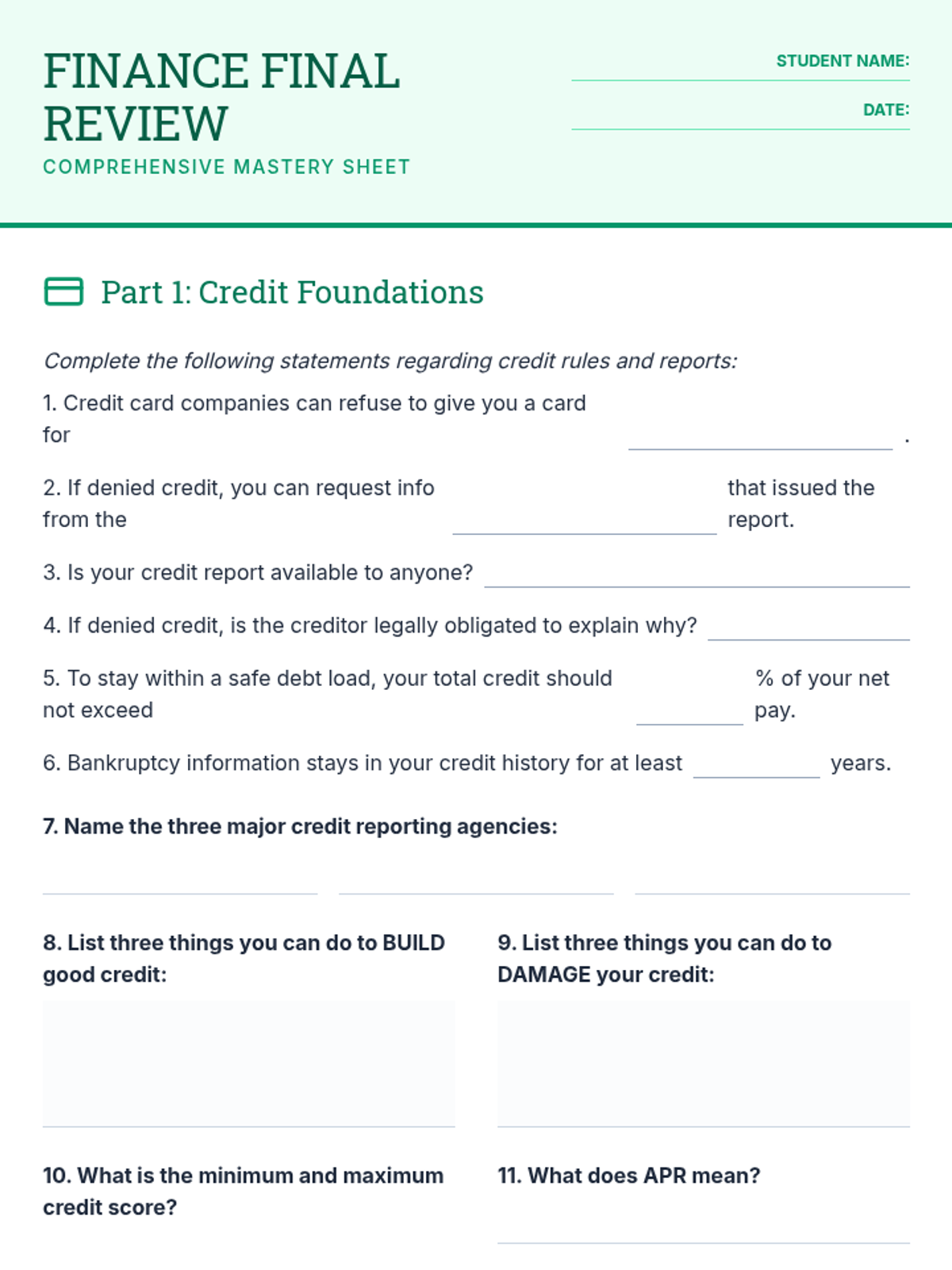
A comprehensive fill-in-the-blank and short-answer review worksheet covering all major topics from the Personal Finance final.
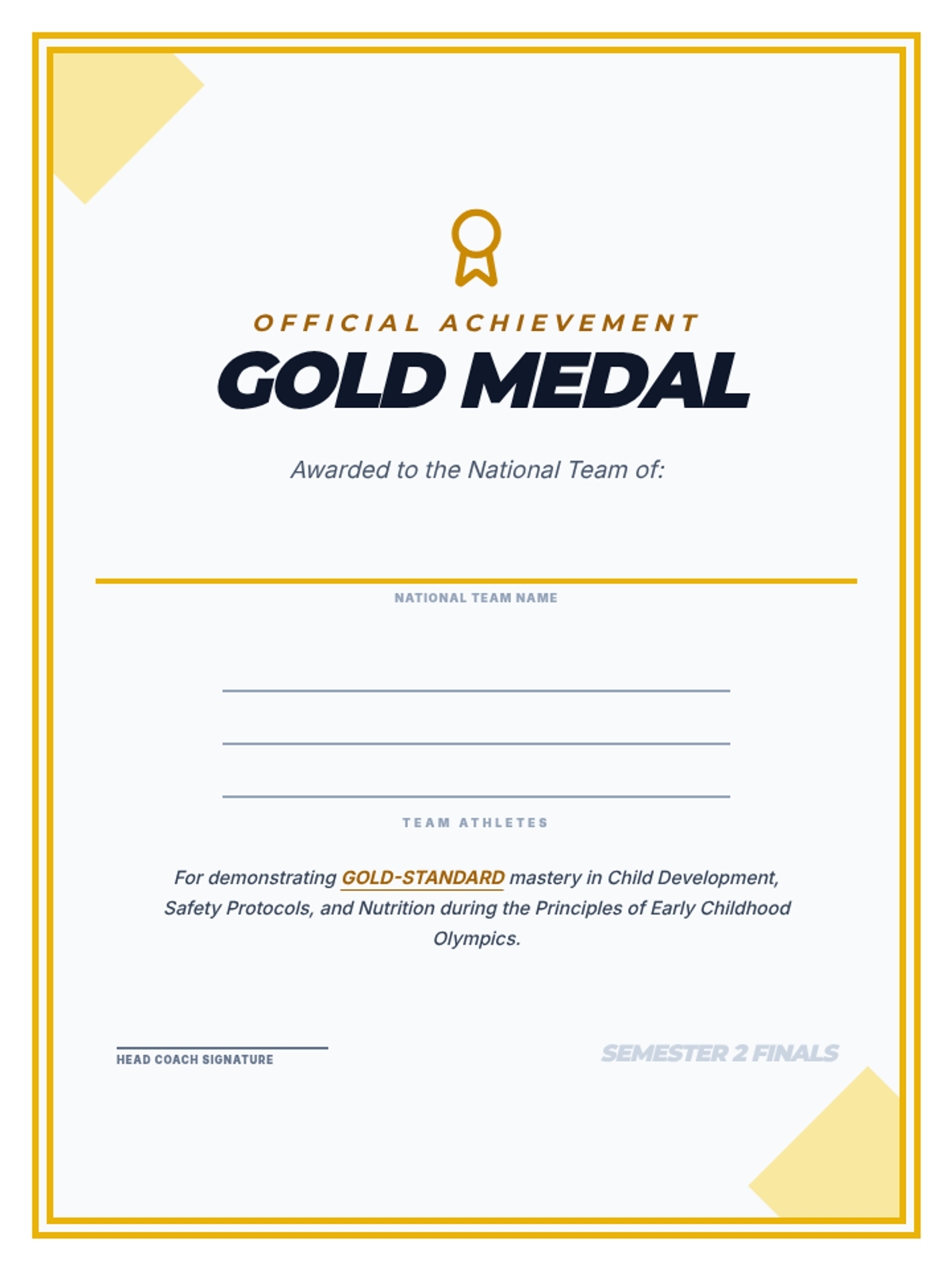
A set of printable Gold, Silver, and Bronze medal certificates for the Principles of Early Childhood Olympics. Each certificate includes space for the National Team name, athlete names, and the teacher's signature. High-polish, themed borders for a professional end-of-semester finish.
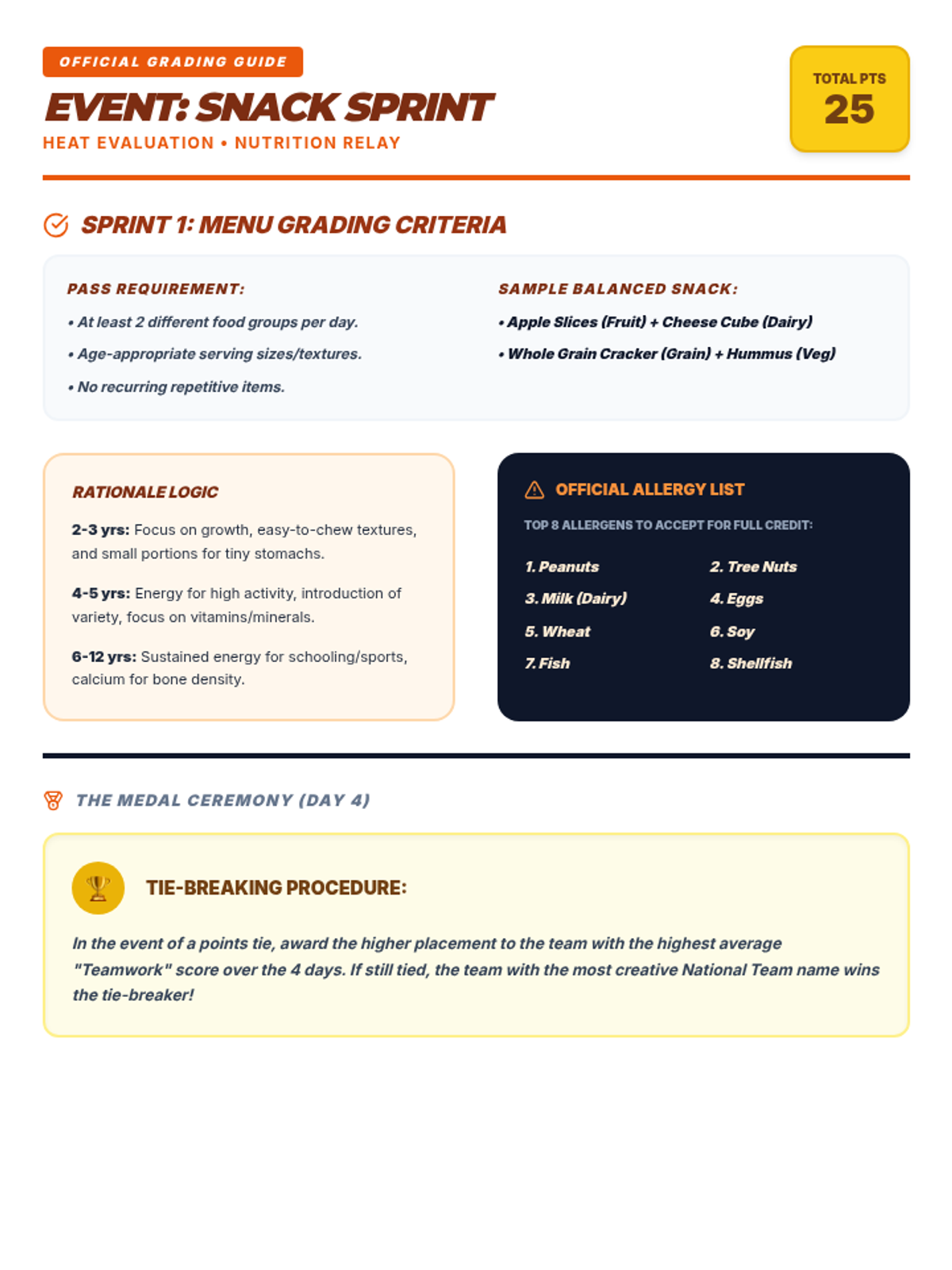
Grading guide and evaluation criteria for the Day 4 Snack Sprint. Includes sample healthy snack pairings, developmental rationales by age group, the top 8 common allergens, and tie-breaking procedures for the final medal ceremony.
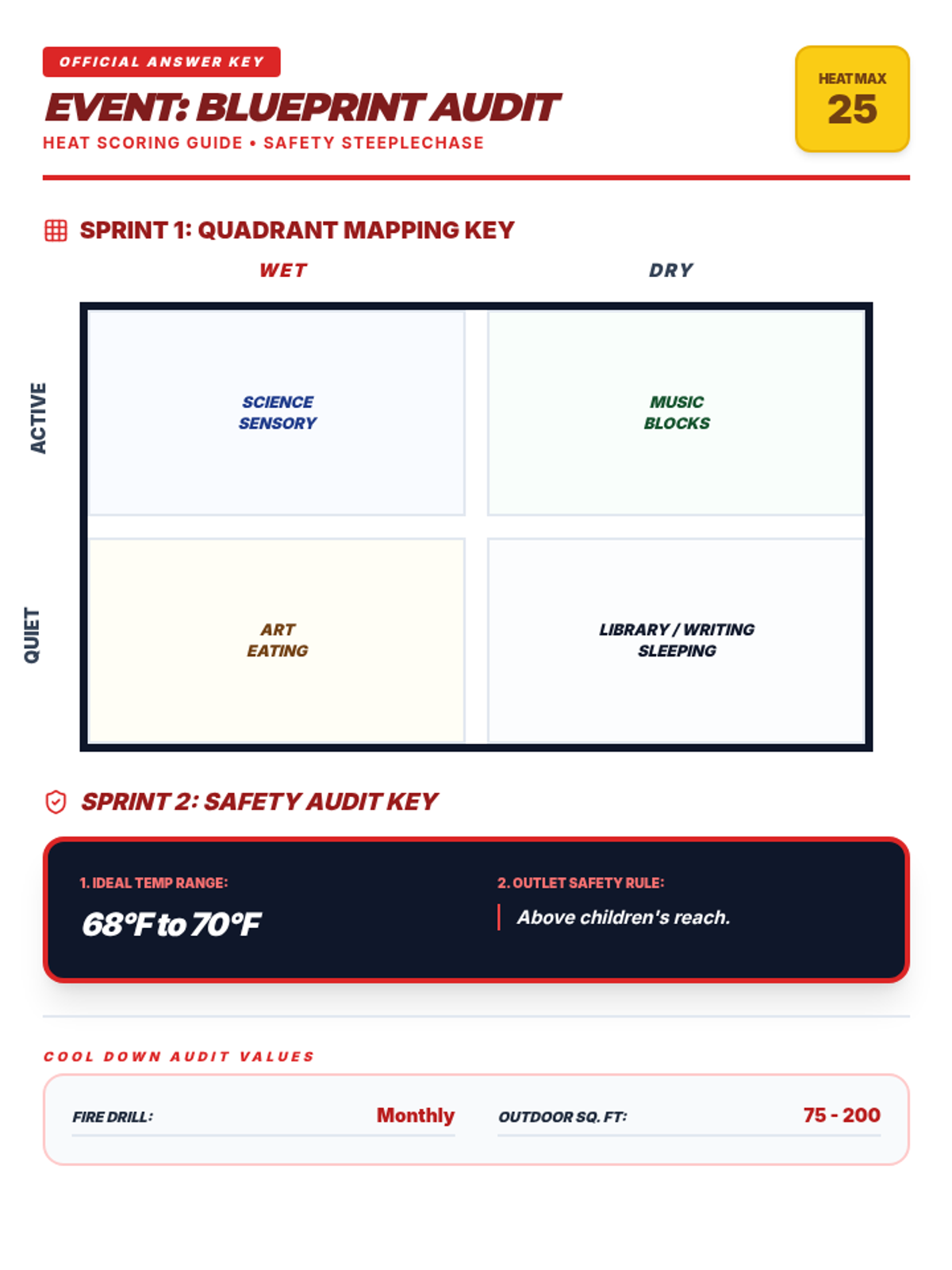
Official answer key for the Day 3 Blueprint Audit event. Provides the correct classroom layout mapping (Wet/Dry and Active/Quiet quadrants) and licensing standards for temperature, fire safety, and space requirements.
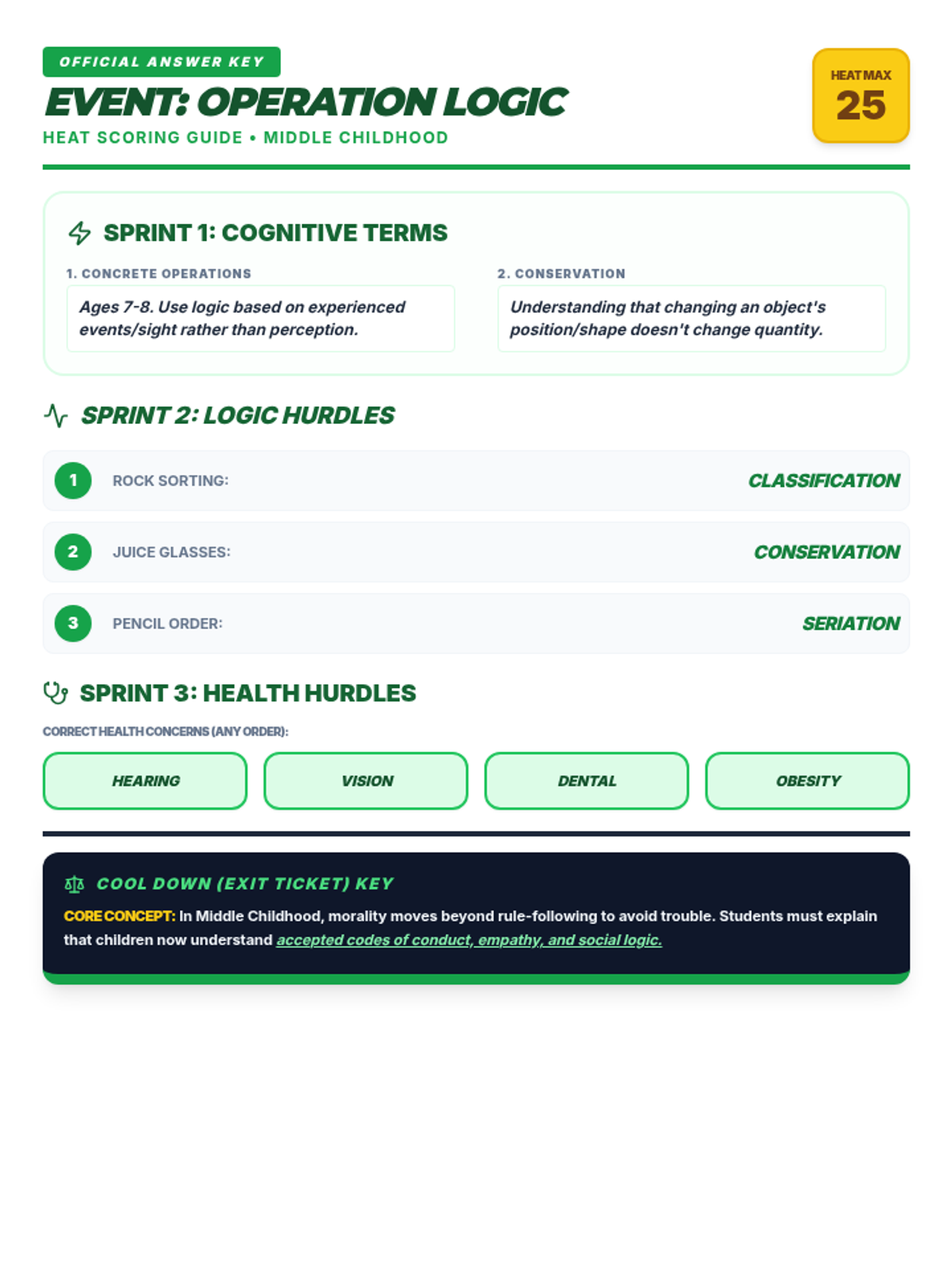
Official answer key for the Day 2 Operation Logic event. Covers cognitive term definitions, scenario-based logic identification (classification, seriation, conservation), and health concerns of middle childhood.
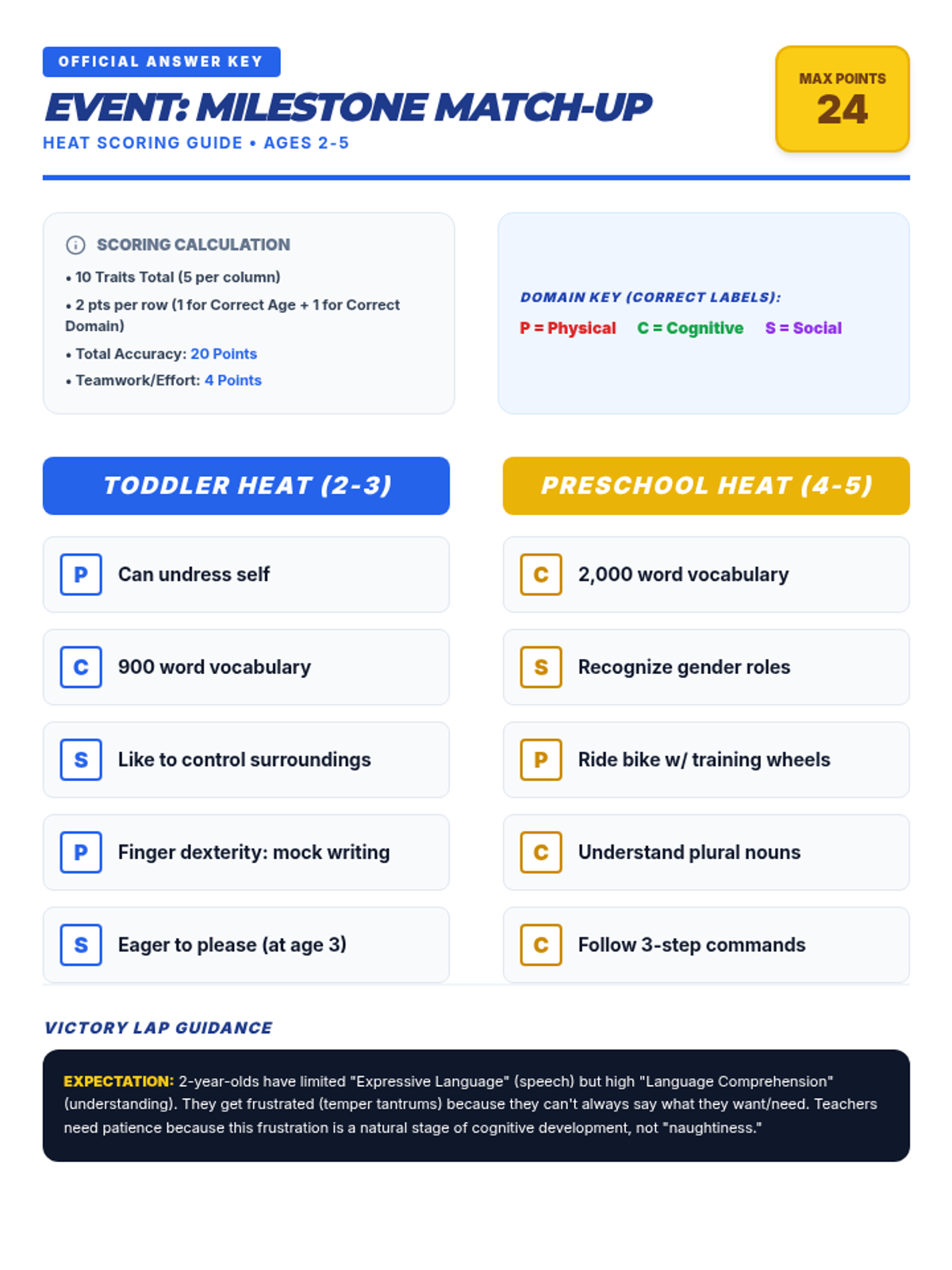
Official answer key and scoring guide for the Day 1 Milestone Match-Up event. Includes correct age categorization, developmental domain codes, and a detailed scoring breakdown for teacher use.
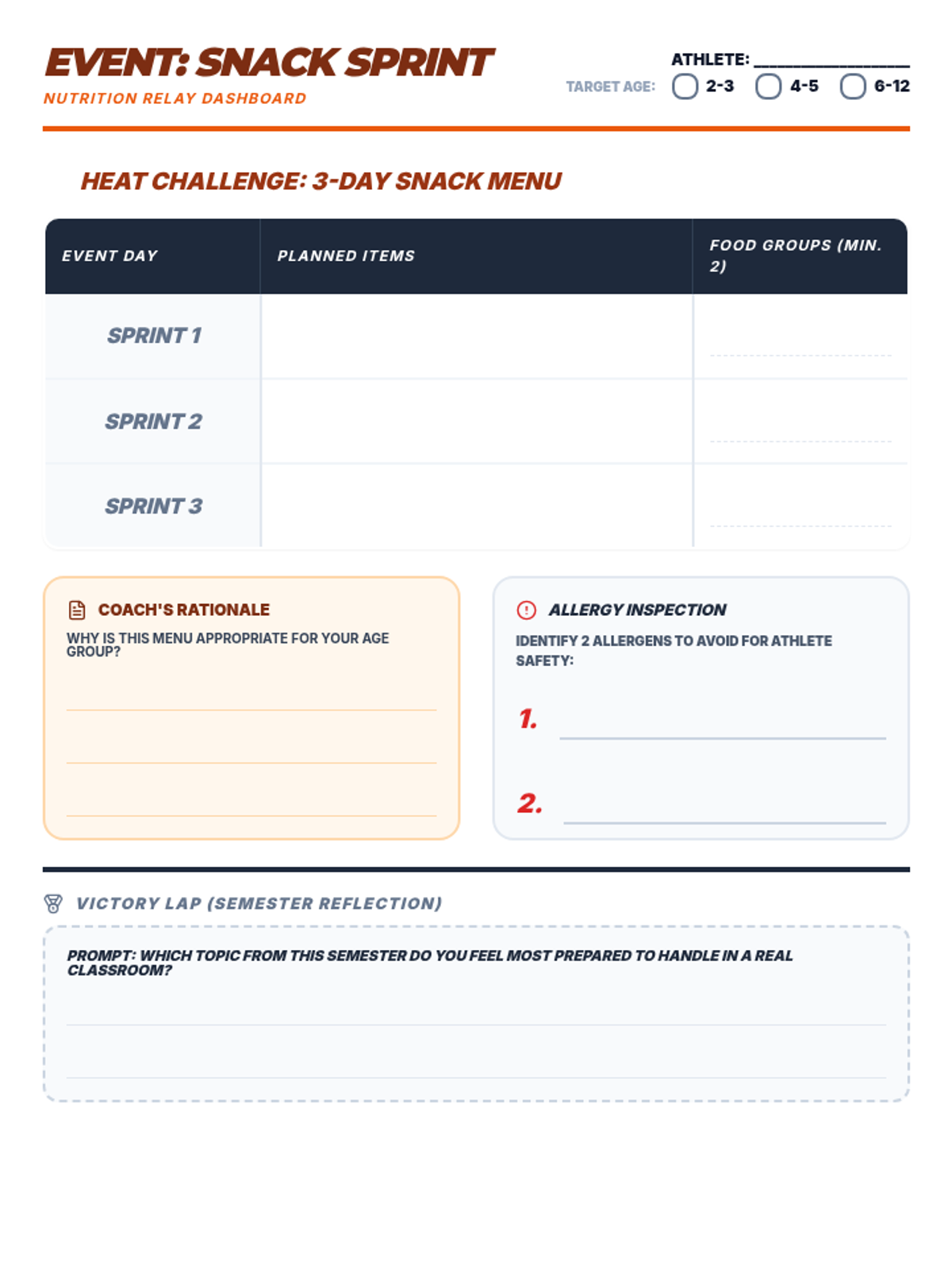
Day 4 student handout for snack menu planning. Updated with optimized table row heights to keep all sections on one page, improved alignment for age group selection, and larger rationale space.
Final Day 4 slides for the Early Childhood Olympics. Features updated Bell Ringer for MyPlate accuracy, explicit point values for the challenge, clarified 'Heat Points' terminology, and high-contrast text for the semester reflection.
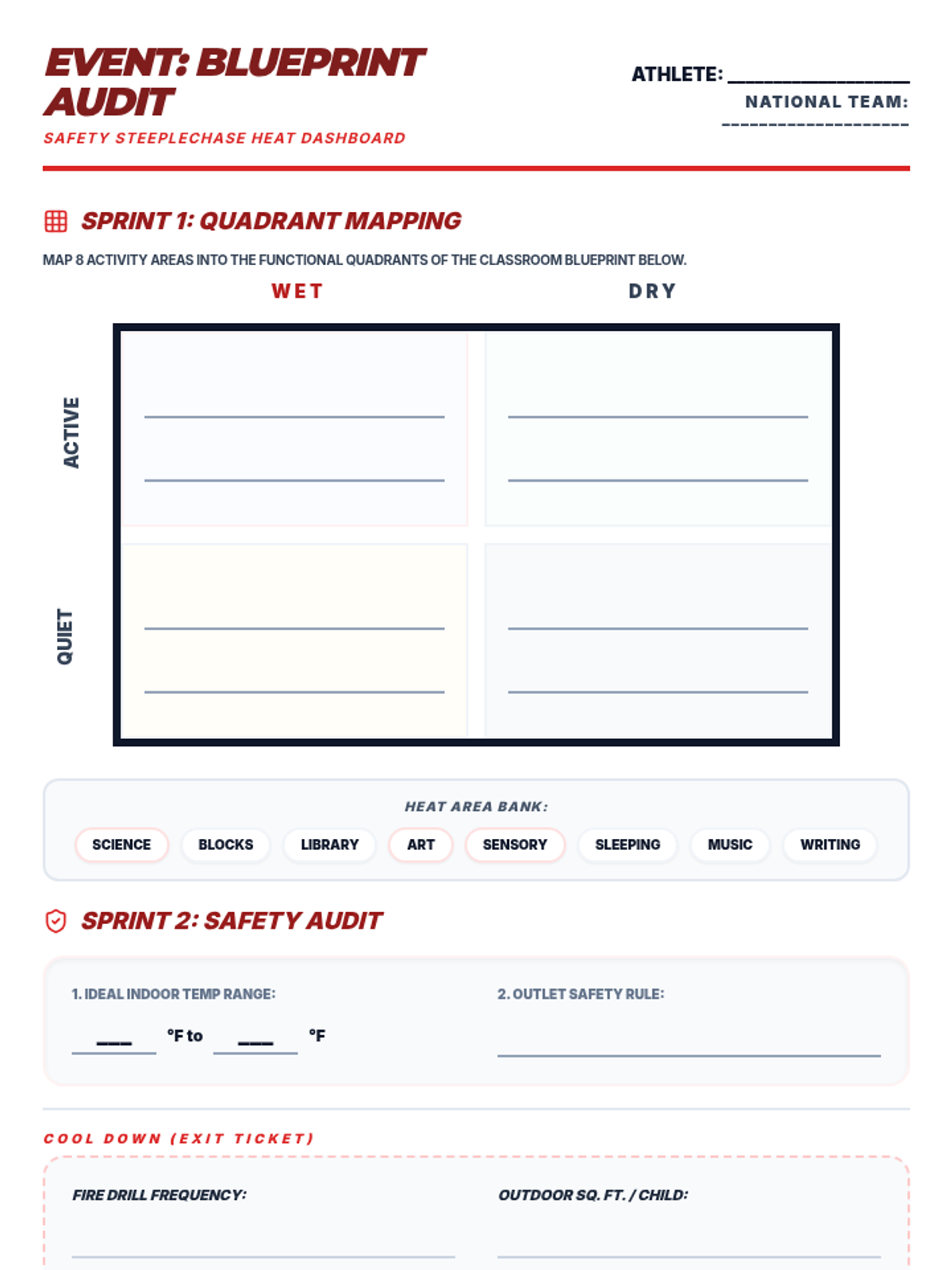
A student activity sheet for Day 3. Students design a classroom layout following Wet/Dry and Active/Quiet quadrants. Includes 'Safety Sprints' and an explicit 'Exit Ticket' section. Redesigned to fit on one page with high-contrast labels. Improved spacing for handwriting.
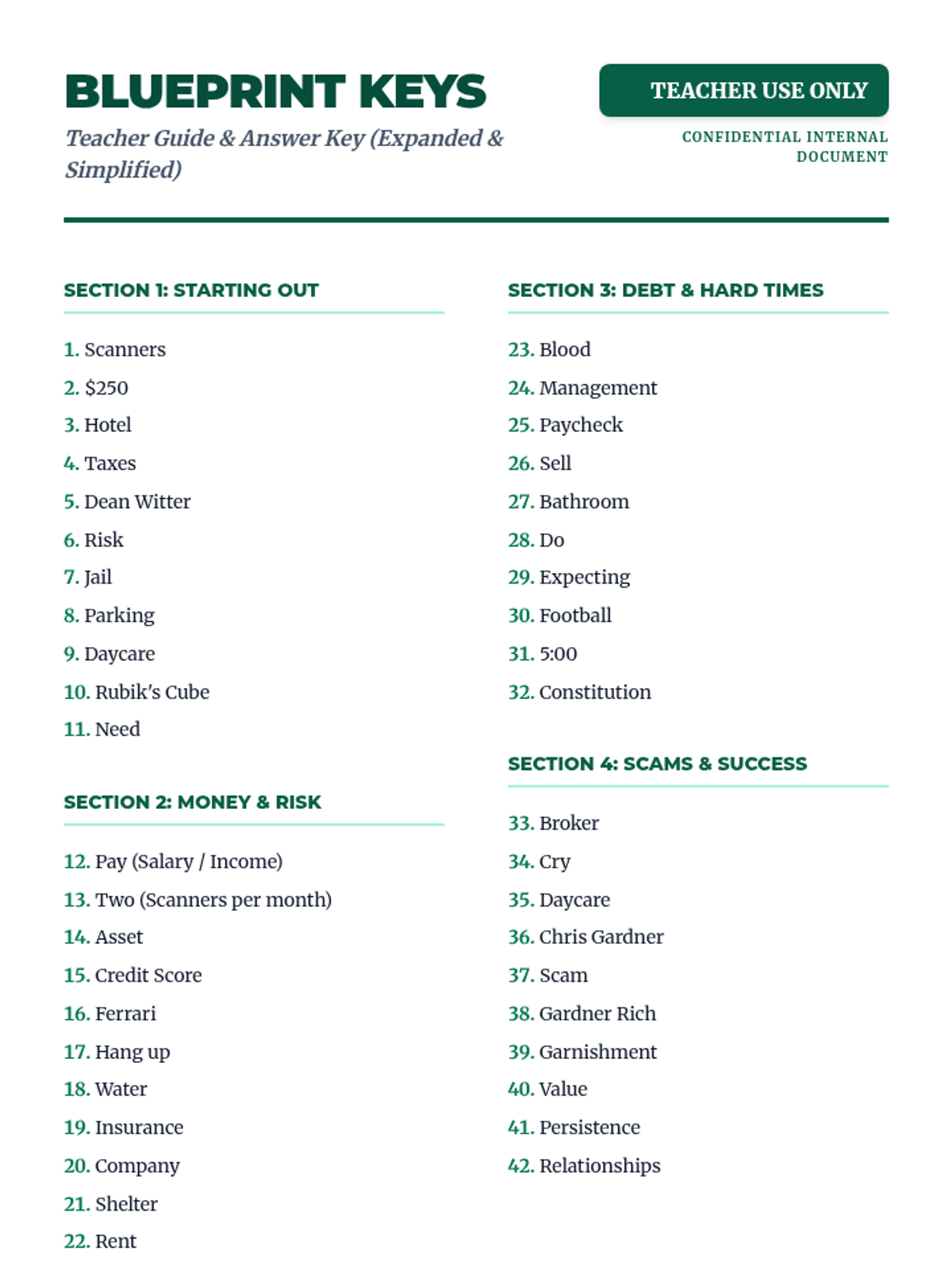
The answer key and discussion guide for the 'Brokerage Blueprint' worksheet, including all 42 answers and prompts for classroom debate on opportunity cost and asset management. Includes new answers for credit, insurance, and debt management.
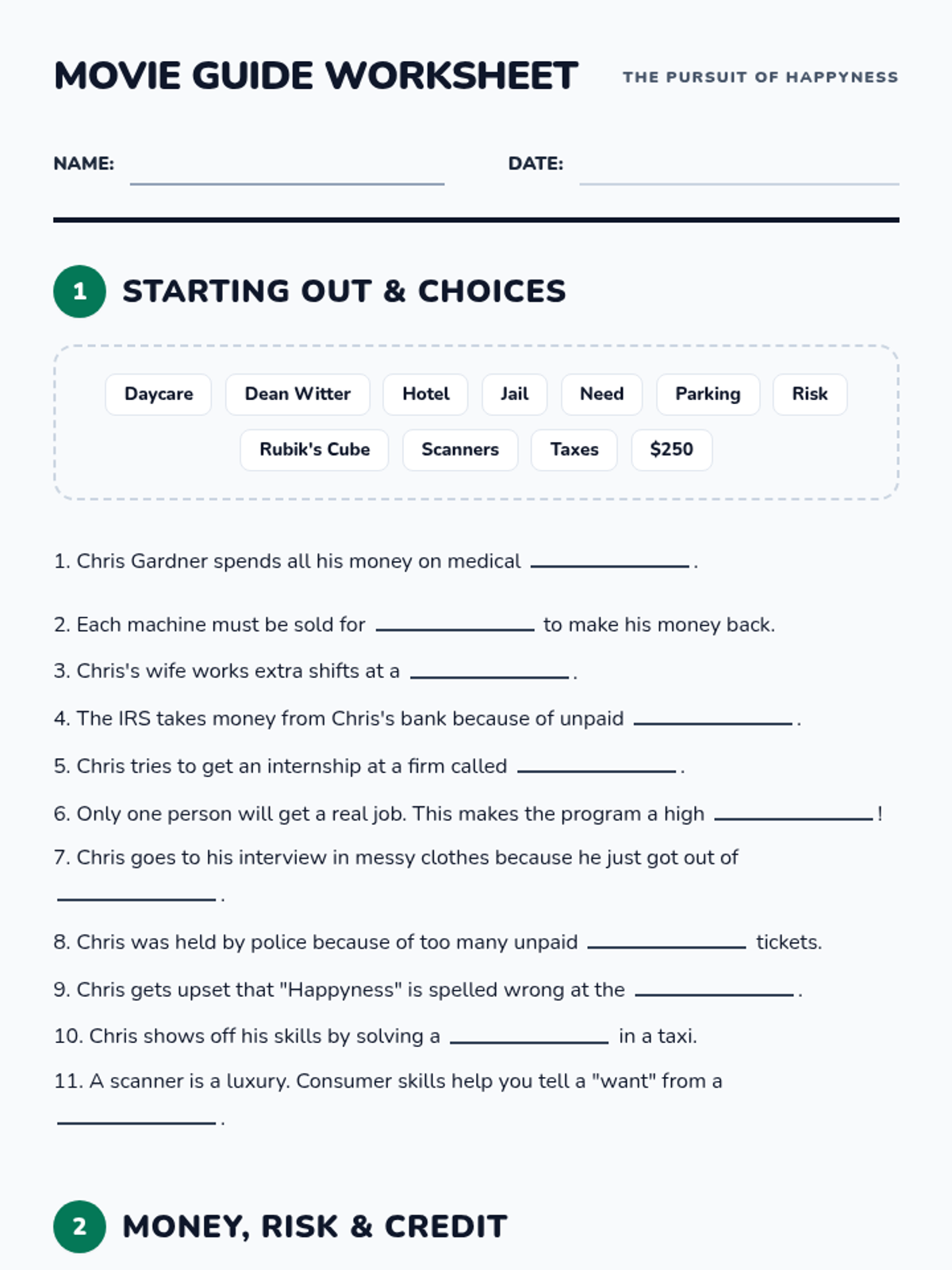
A comprehensive 42-question fill-in-the-blank worksheet with word banks and simplified language, designed for students who struggle with reading. Includes new questions on credit, insurance, and debt management. Fixed layout issues and orphaned punctuation.
A visually accessible introduction to 'The Pursuit of Happyness' with simplified text and large fonts, perfect for students who struggle with reading.
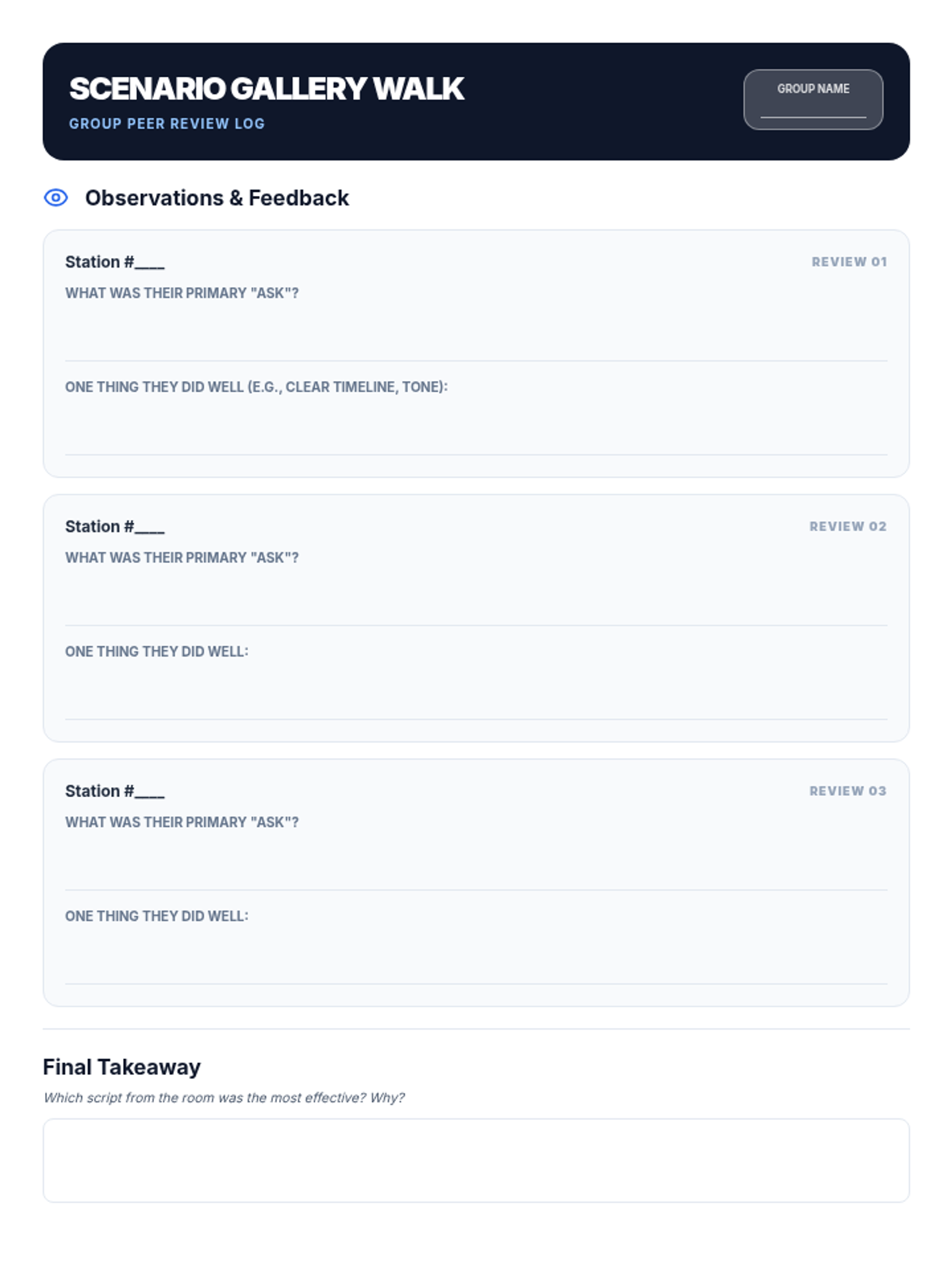
A peer-review recording sheet for workshop participants to use during a 'Gallery Walk' activity, encouraging them to analyze and learn from other groups' scenario solutions. Spacing optimized for one-page printing.
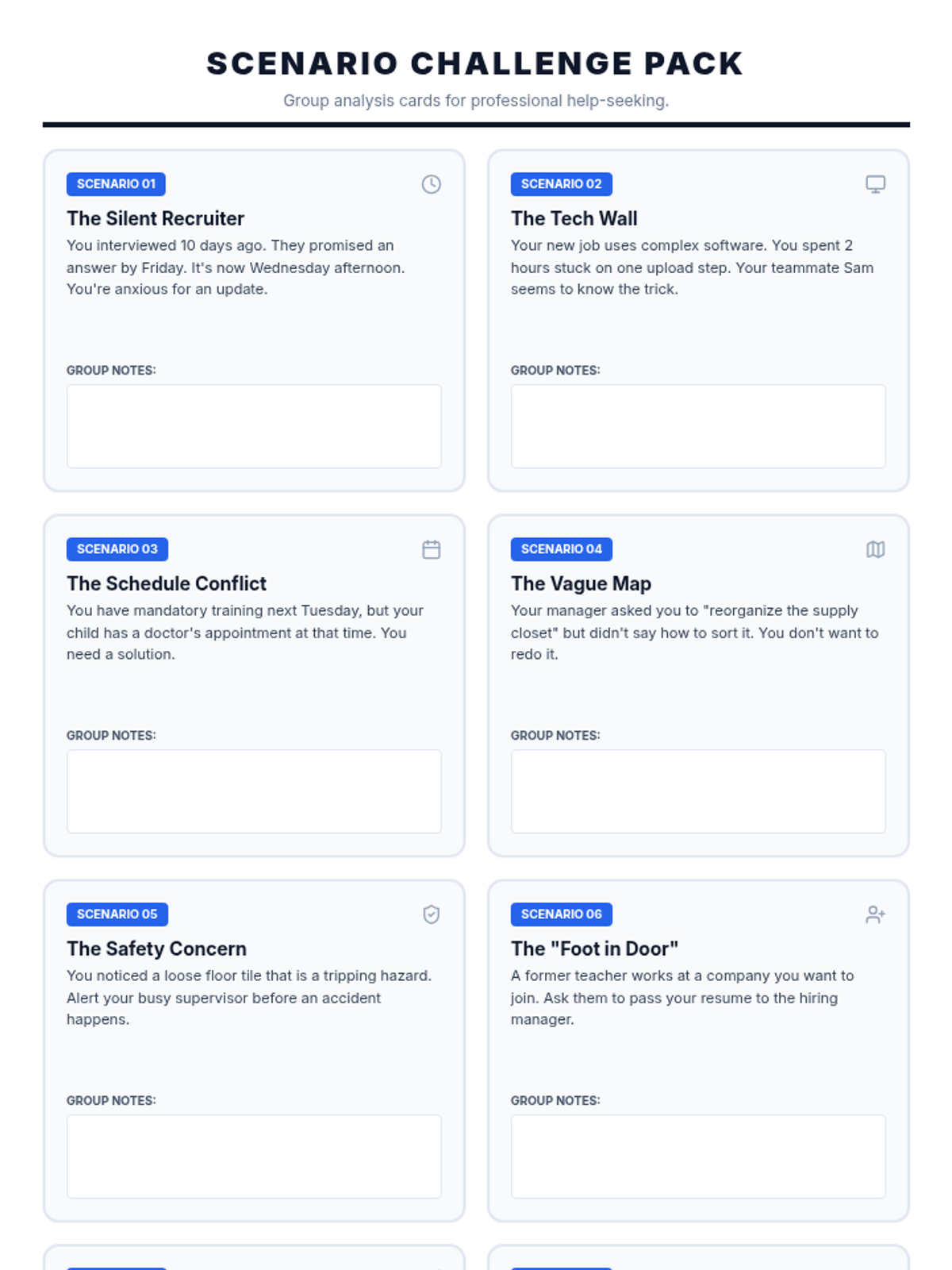
An expanded set of 12 realistic workplace and job-search scenarios for workshop groups to analyze and solve using the 'Ask Formula'. Cards now include small group note areas and are organized by category. Spacing optimized for a 2-page printout.
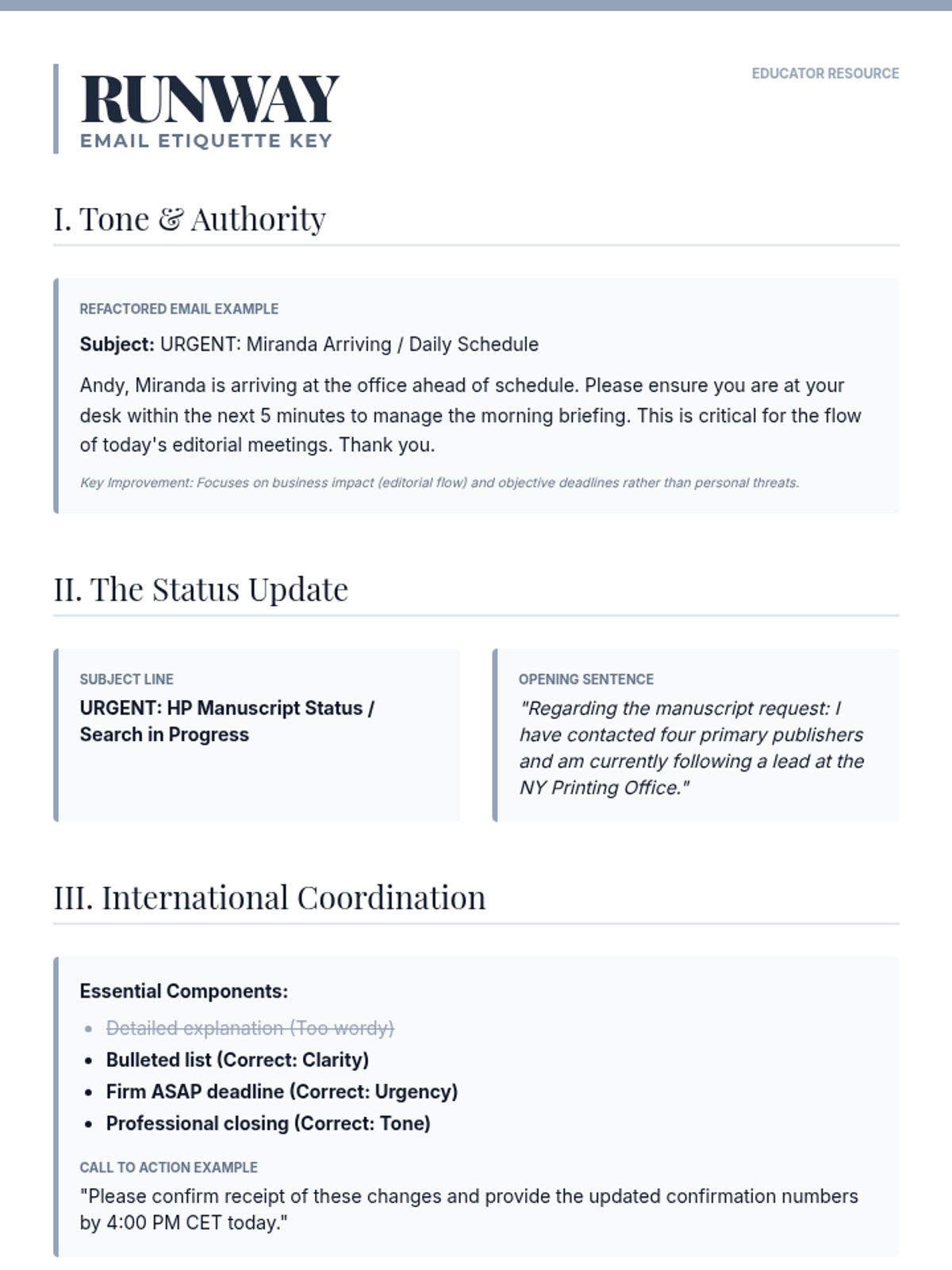
The educator's key for the Email Etiquette Exercise, featuring model rewrites for unprofessional emails and a guide to workplace visibility ethics.
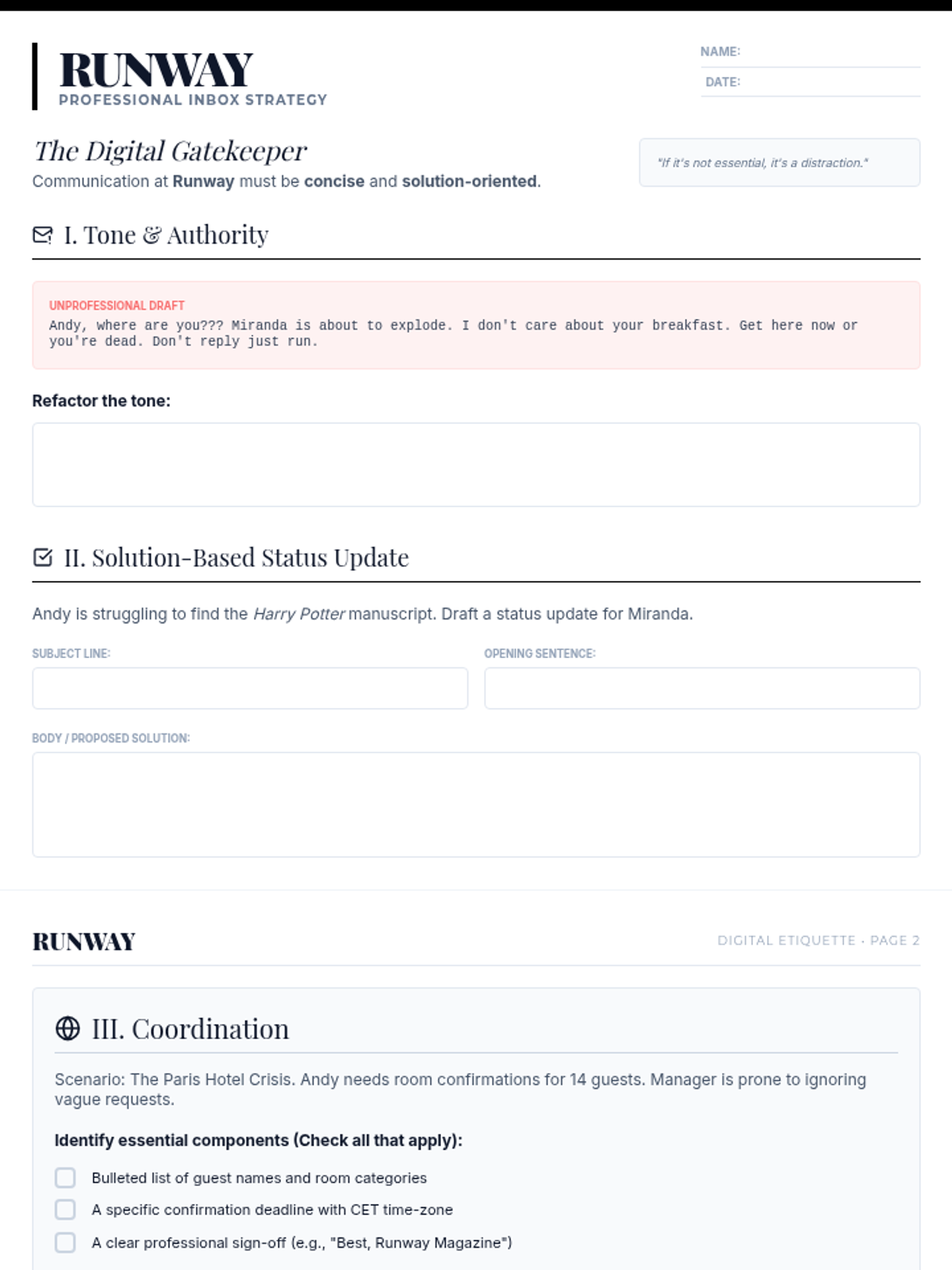
A professional communication worksheet based on 'The Devil Wears Prada'. Students practice refactoring unprofessional emails, drafting urgent status updates, and analyzing the ethics of digital workplace visibility. Revised for improved page breaks and layout efficiency.
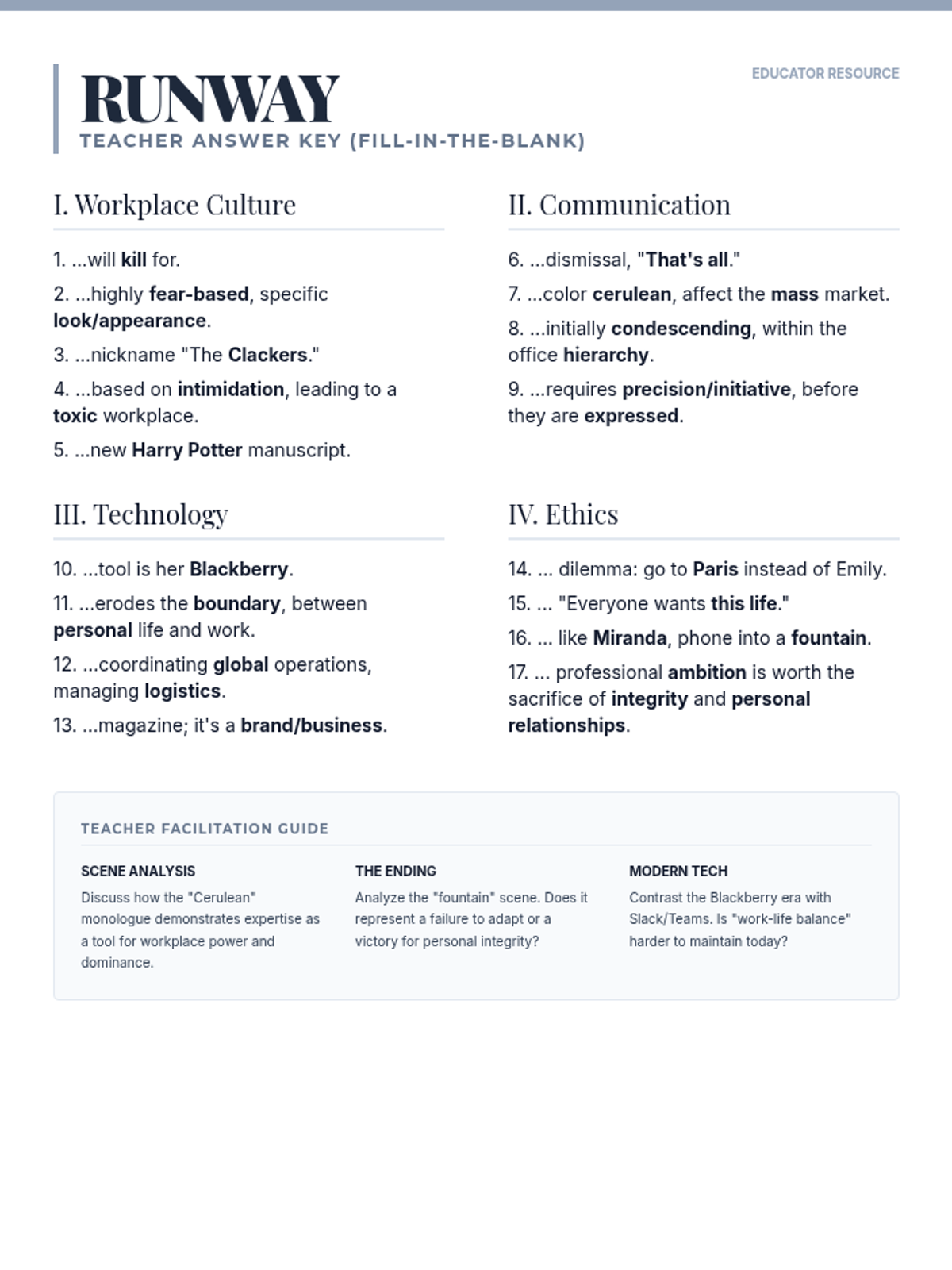
The educator's key for the fill-in-the-blank viewing guide, consolidated onto a single page for ease of use. Includes specific answers and facilitation tips.
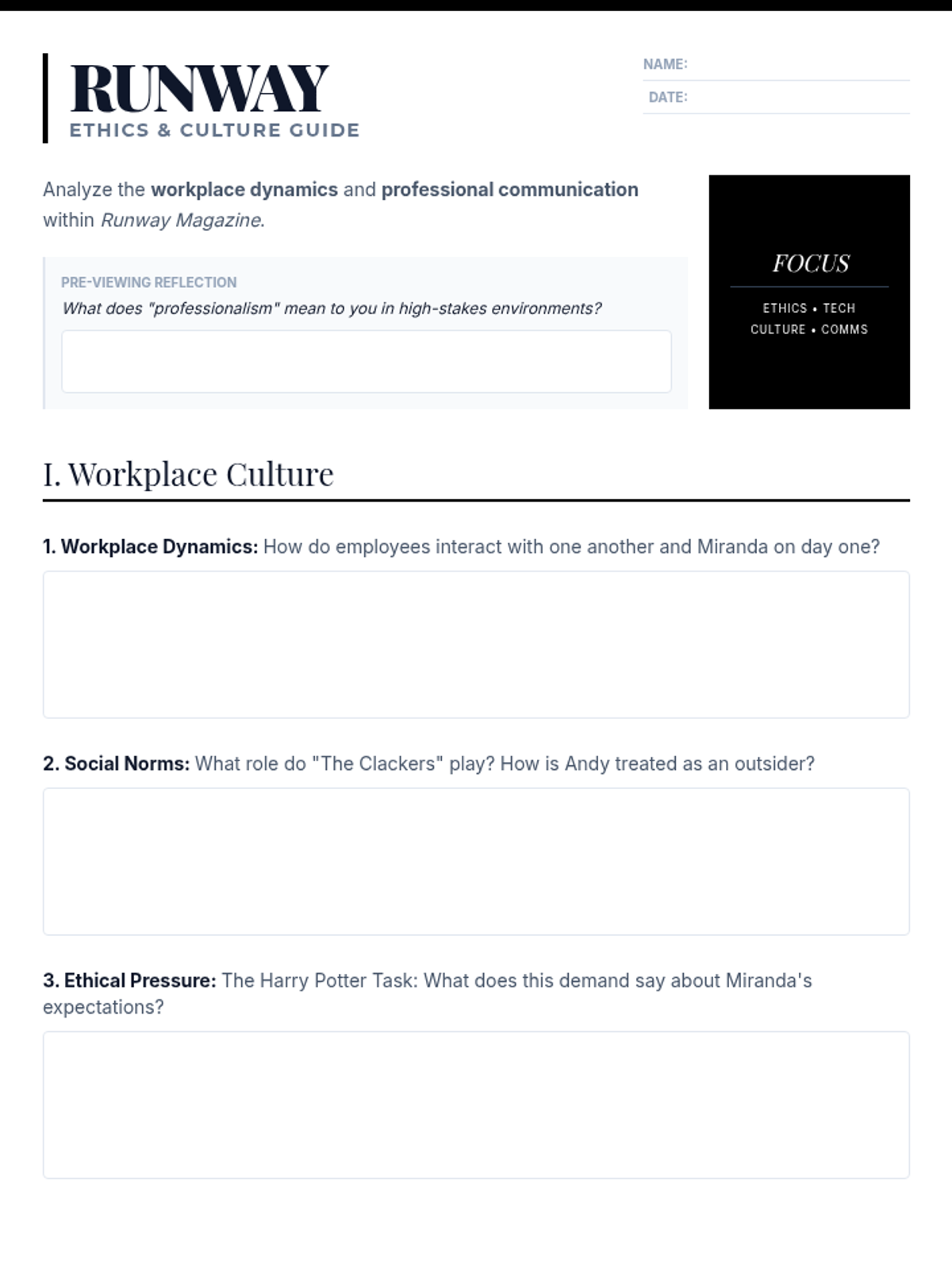
A fill-in-the-blank viewing guide for 'The Devil Wears Prada' focusing on plot-based questions and thematic analysis of workplace culture, communication, and business ethics. Includes a reference word bank to support student completion. Revised for better page breaks and layout.
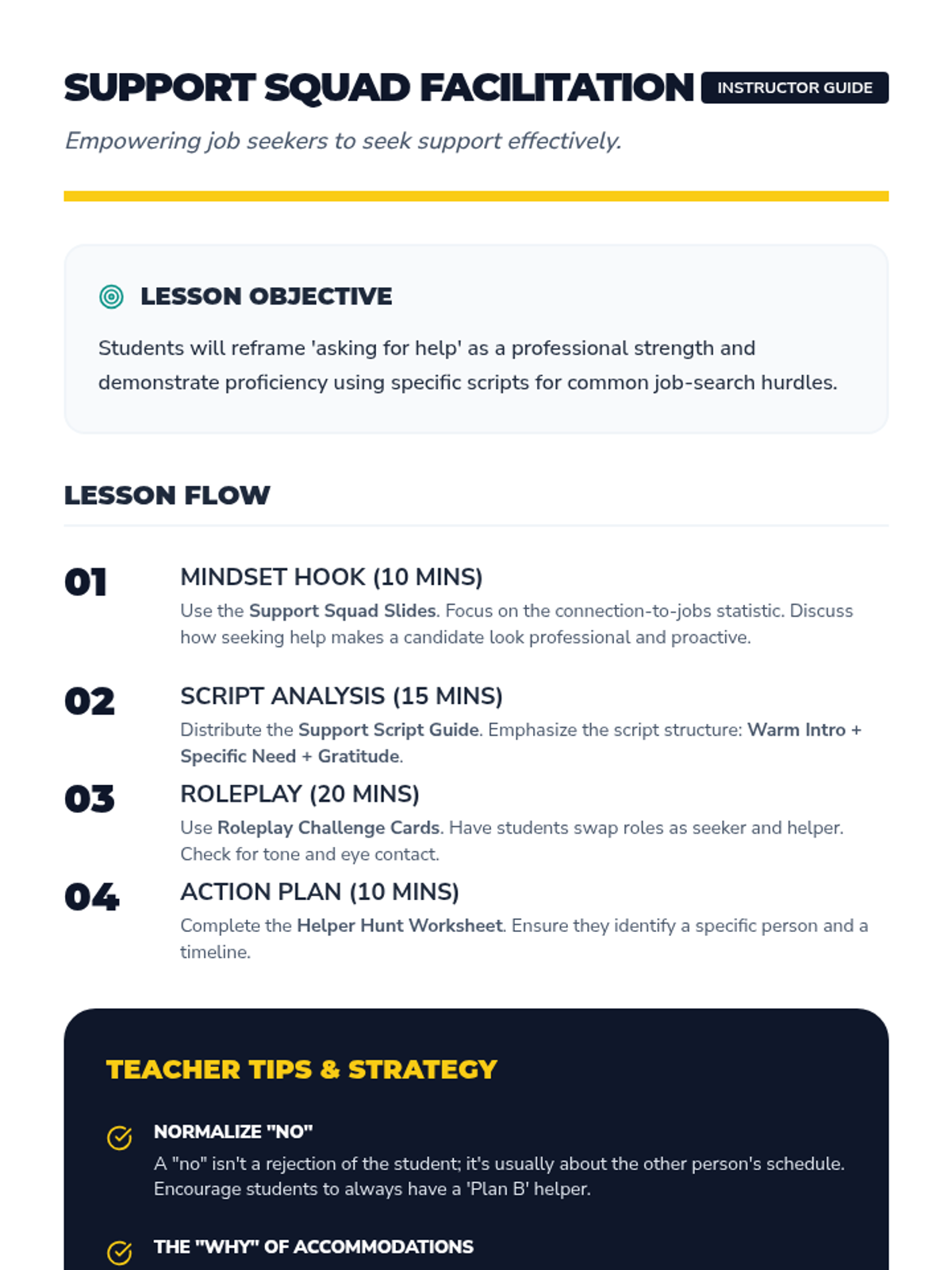
A comprehensive facilitator guide for a scenario-driven workshop focused on professional advocacy and help-seeking. Includes a timed agenda, coaching tips, and facilitator reflection space.
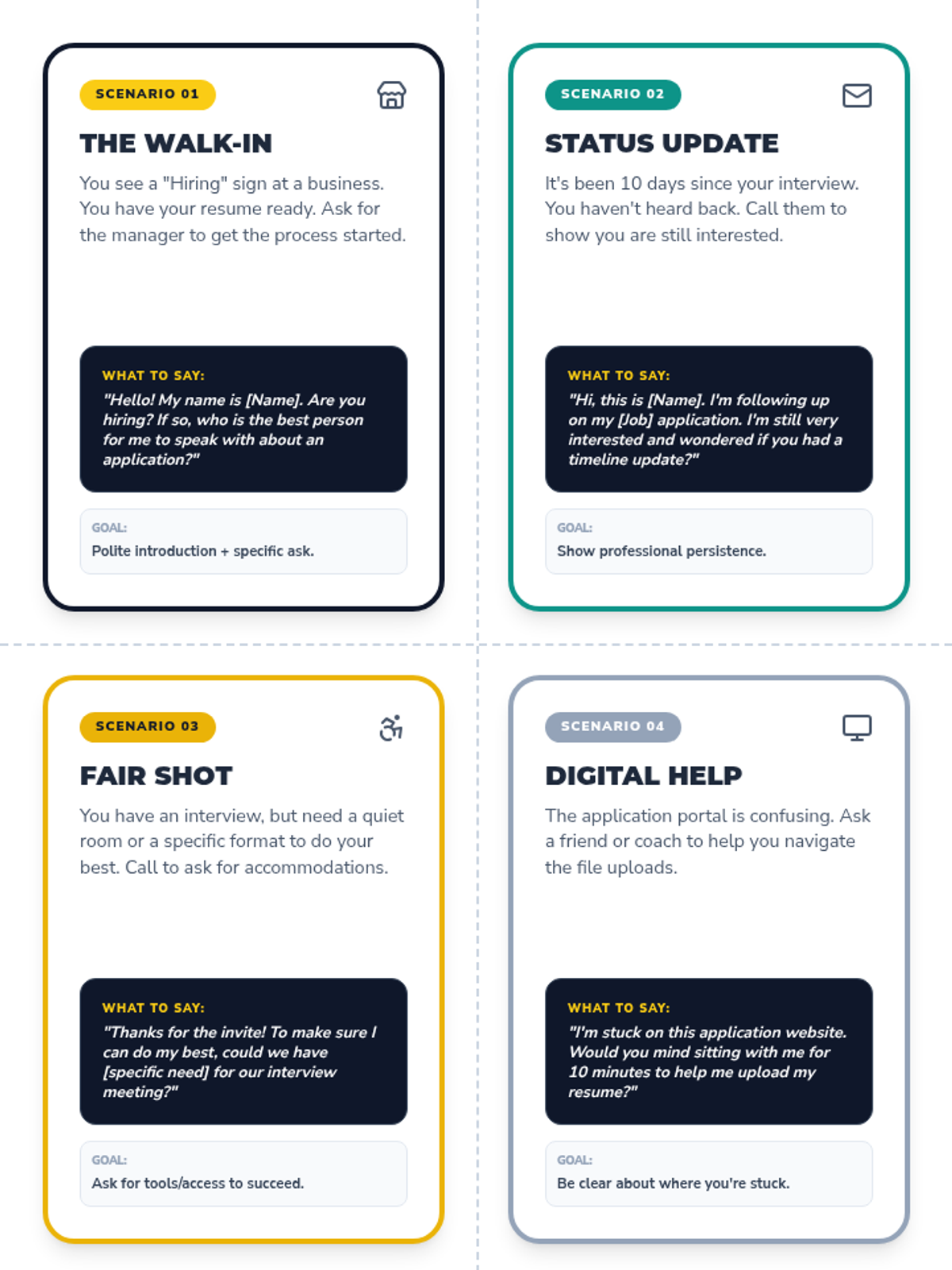
Four printable roleplay cards that present realistic workplace challenges. Each card includes a specific scenario and a clear task for students to practice their help-seeking skills.
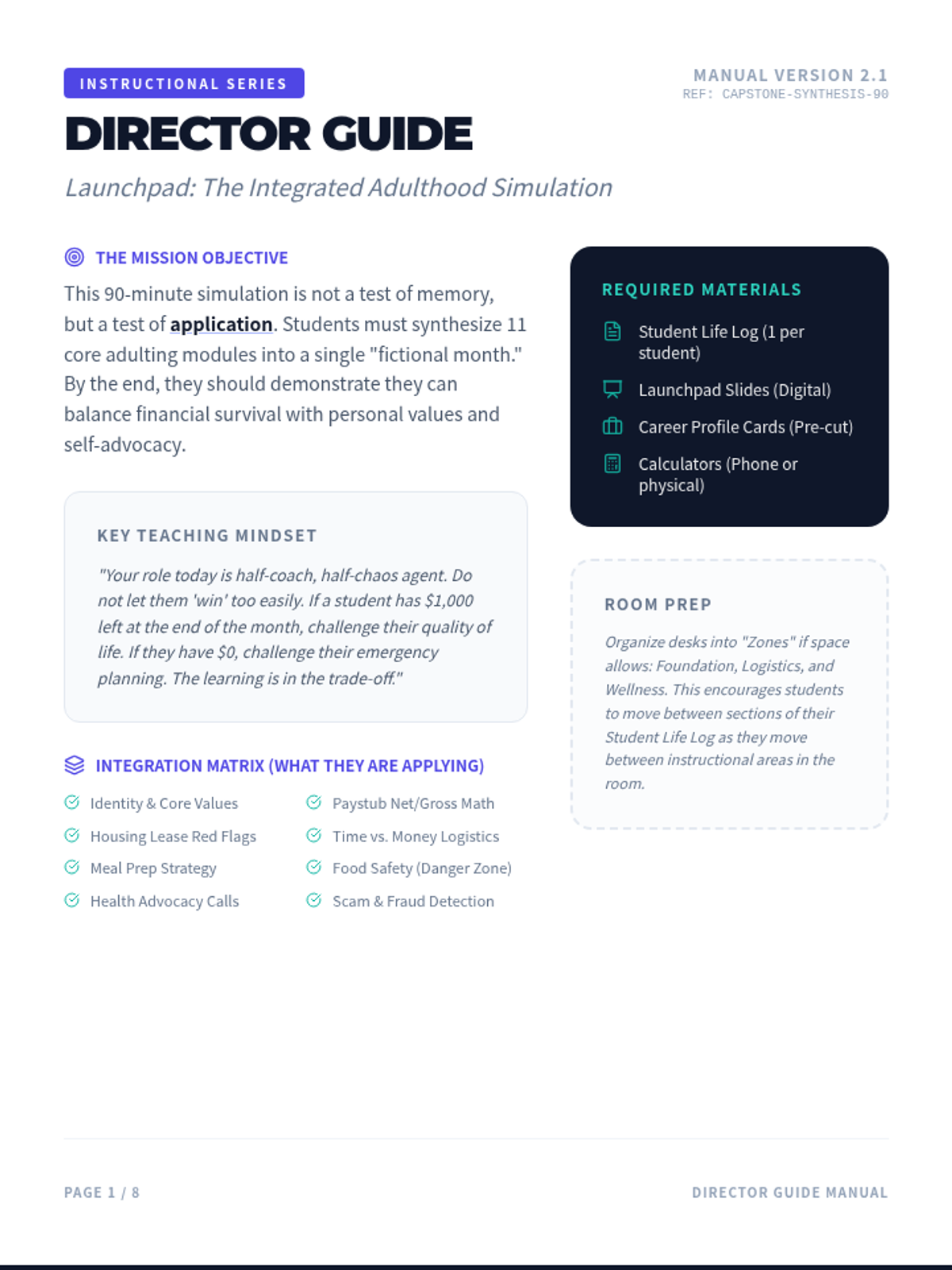
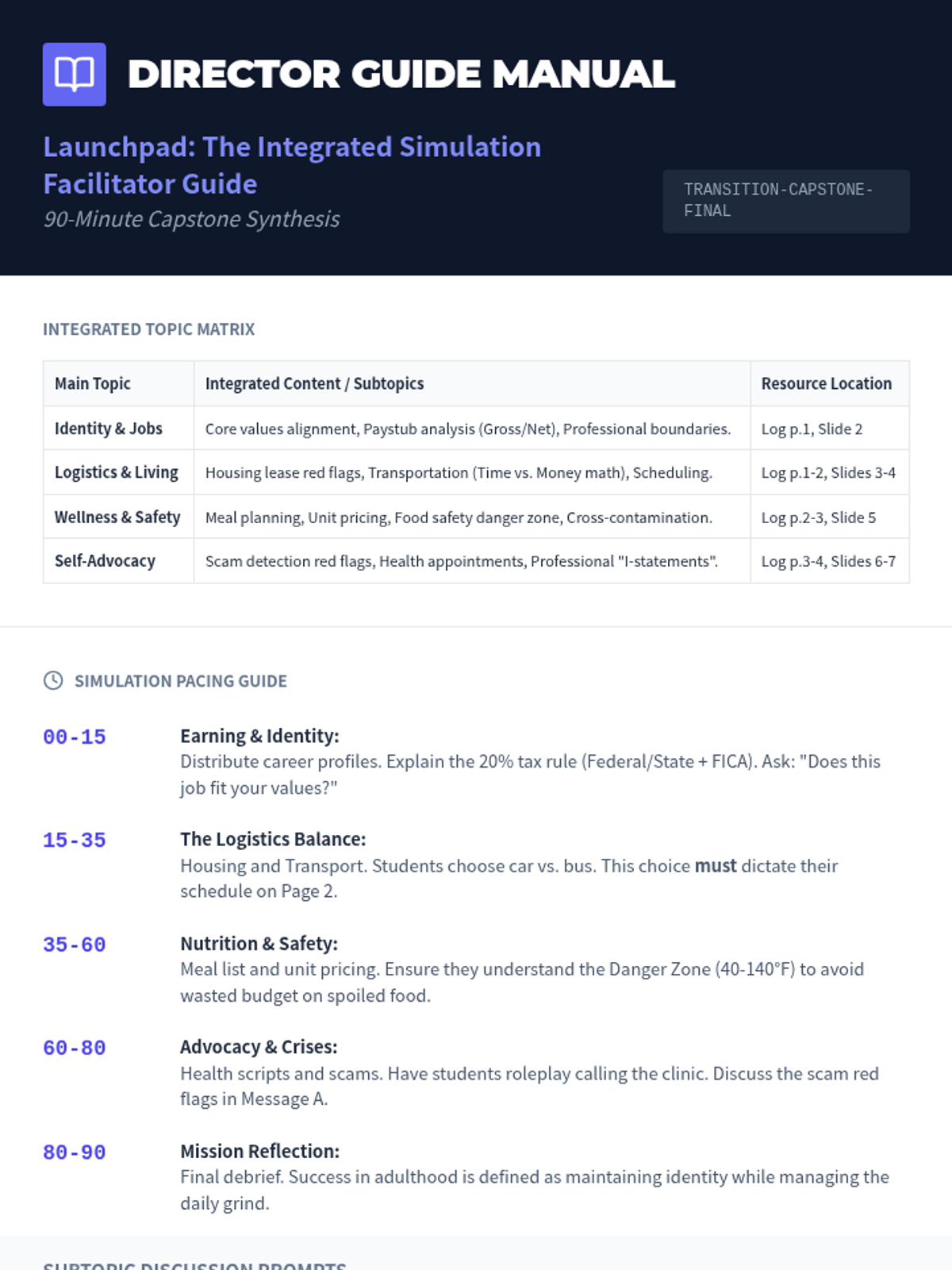
A comprehensive 8-page instructor manual for the Launchpad simulation, featuring in-depth teaching scripts, key instructional points, crisis management scenarios, and a grading rubric to ensure students have mastered all adulthood modules. All references to student materials are explicitly labeled. tracking labels have been adjusted for readability.
A comprehensive facilitator guide for the Launchpad simulation, including pacing tips, curveball scenarios, and debriefing questions to ensure deep learning across all adulting topics.
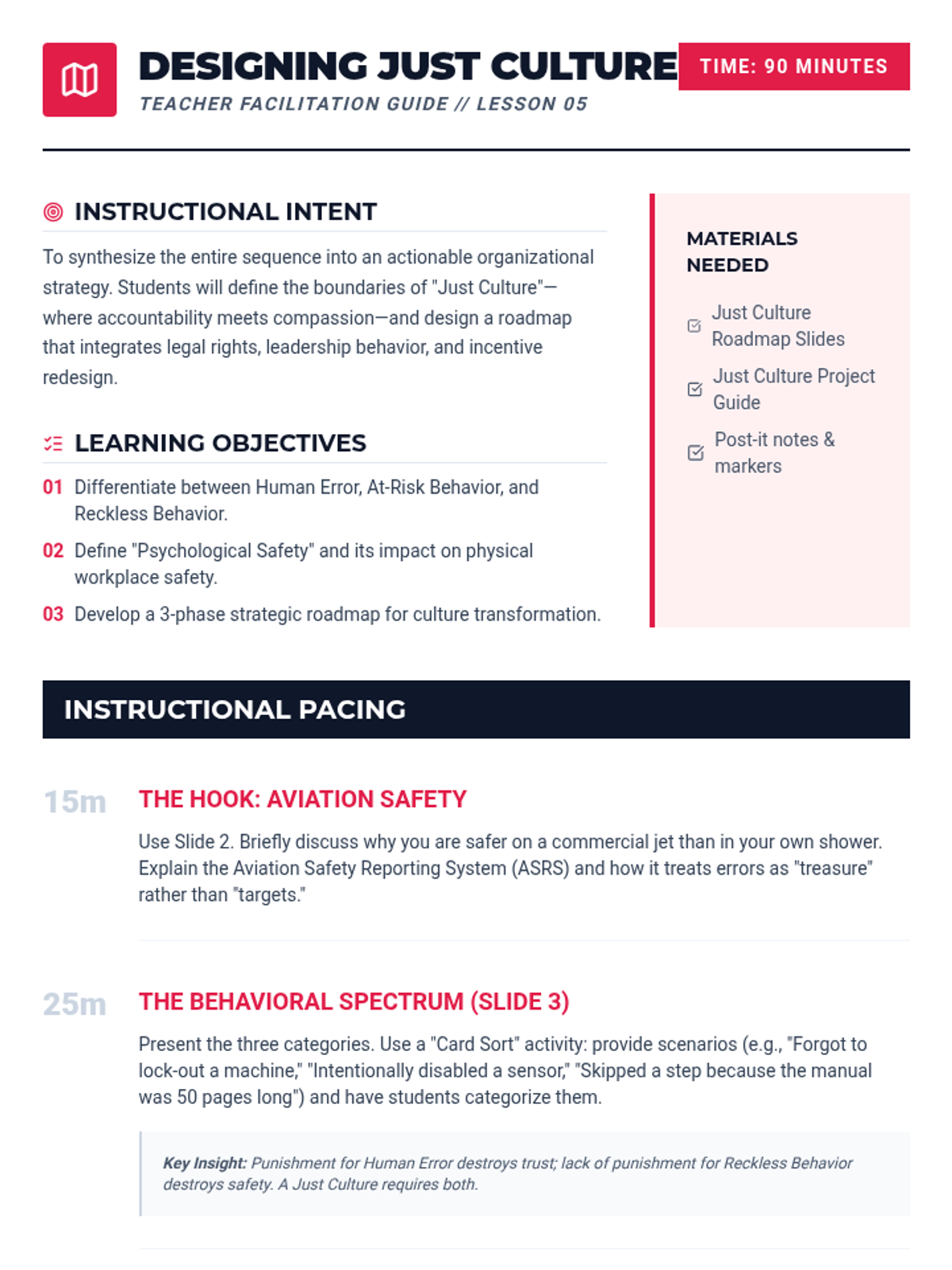
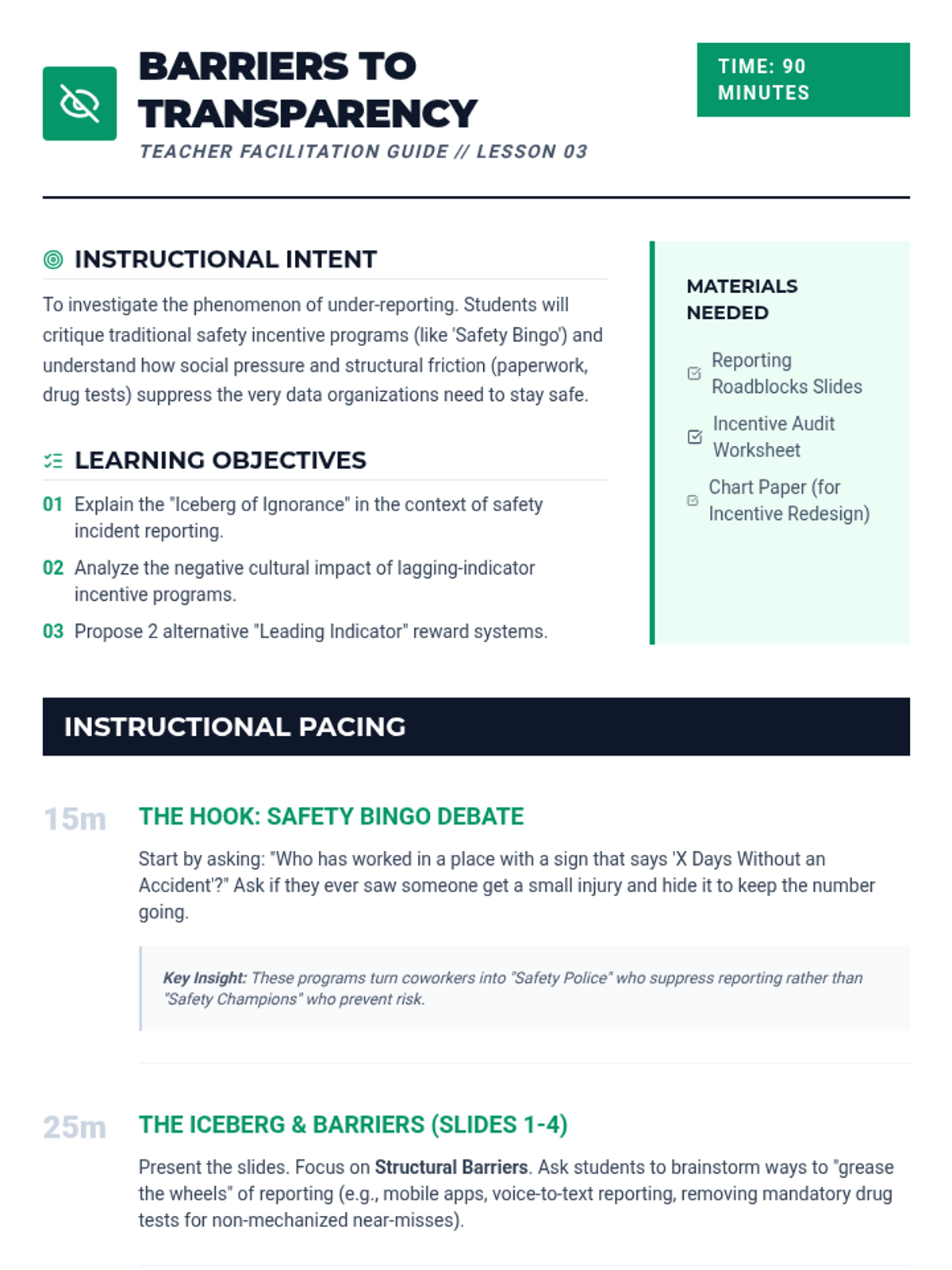
Facilitation guide for Lesson 5, covering under-reporting, incentive misalignment, and strategies for promoting incident transparency.
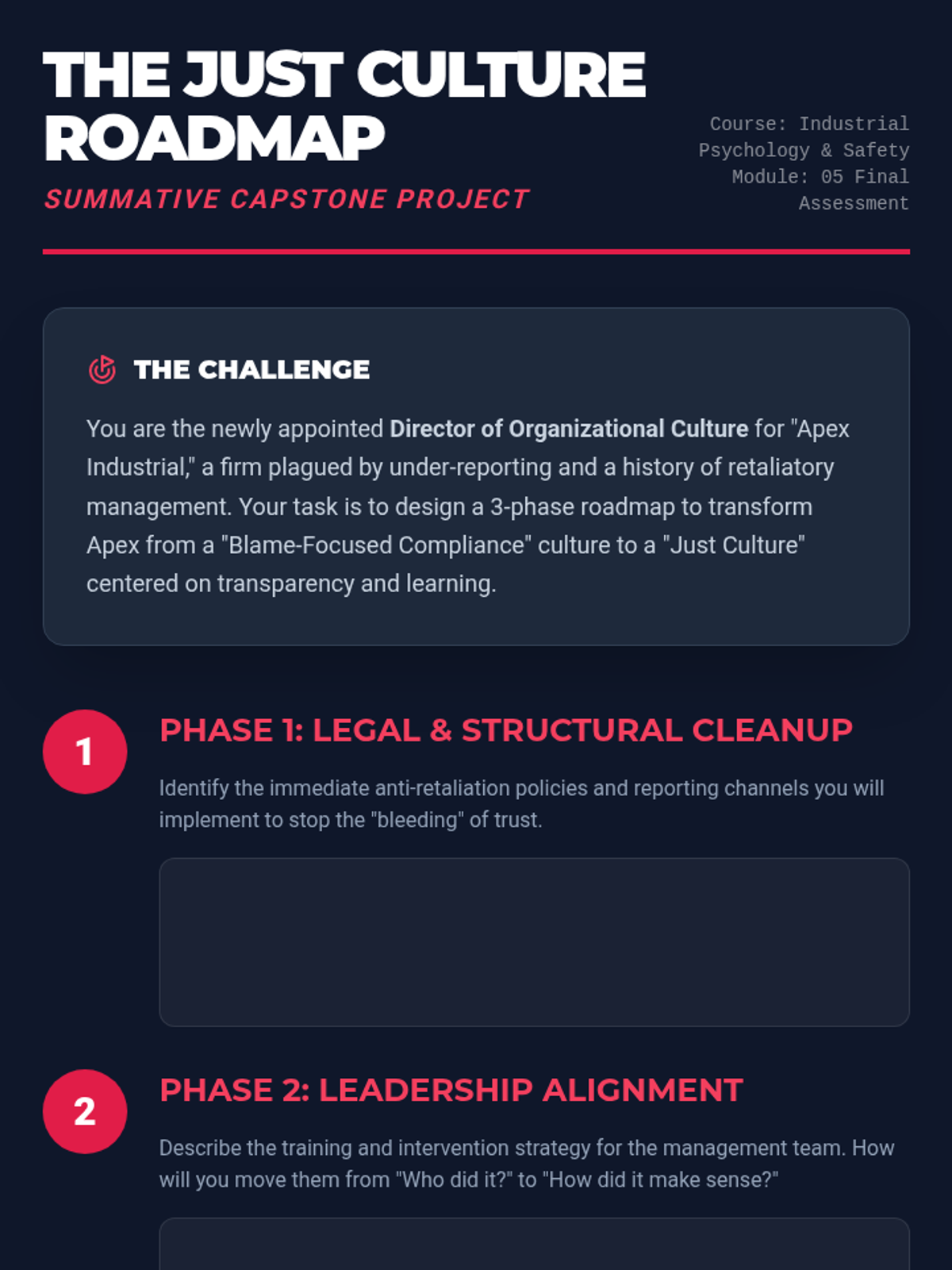
A comprehensive project guide for the final summative assessment where graduate students design a 3-phase organizational roadmap to transition to a 'Just Culture.'
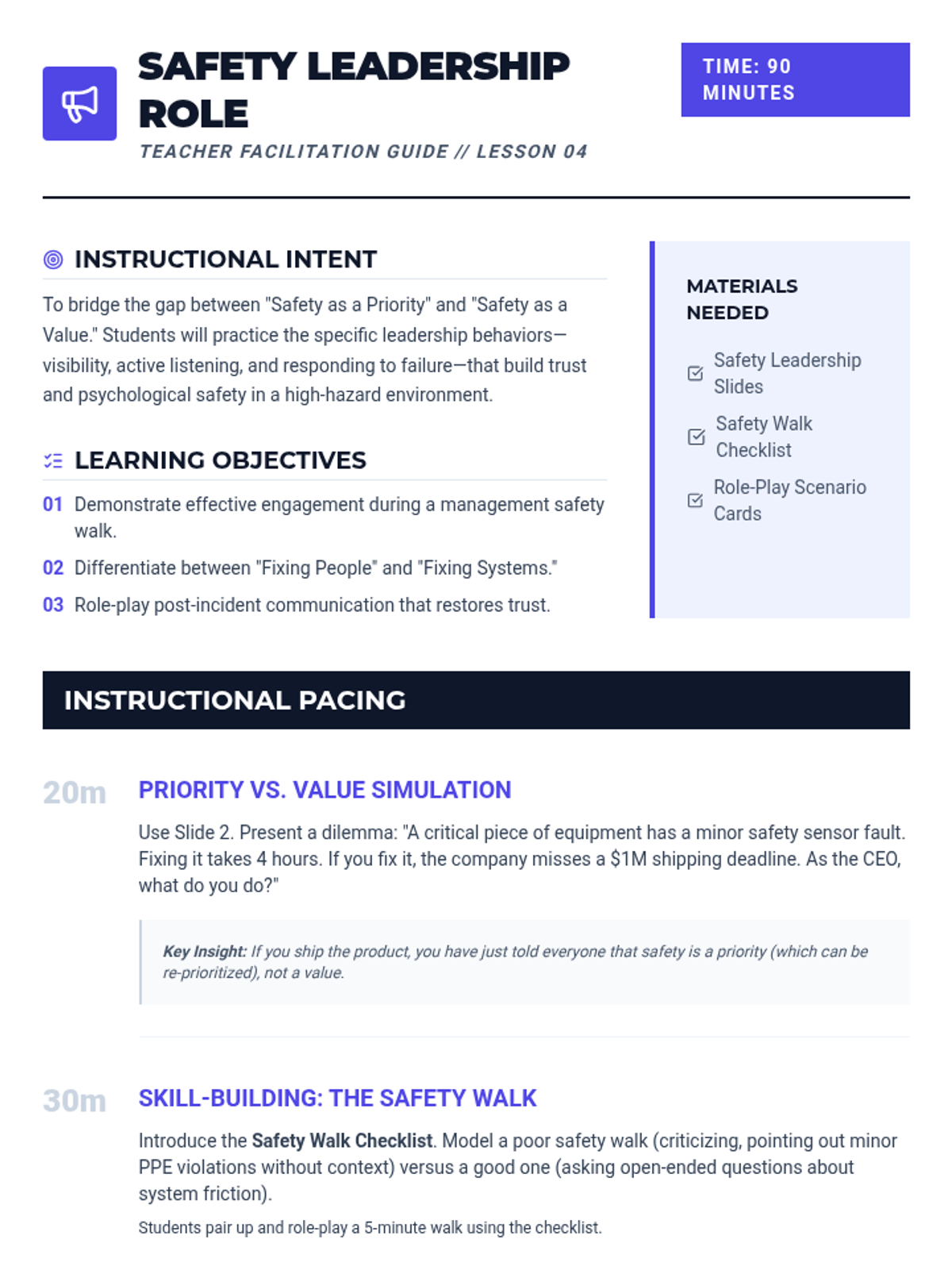
Facilitation guide for Lesson 4, covering management visibility, safety walks, and techniques for trust-building during incident response.
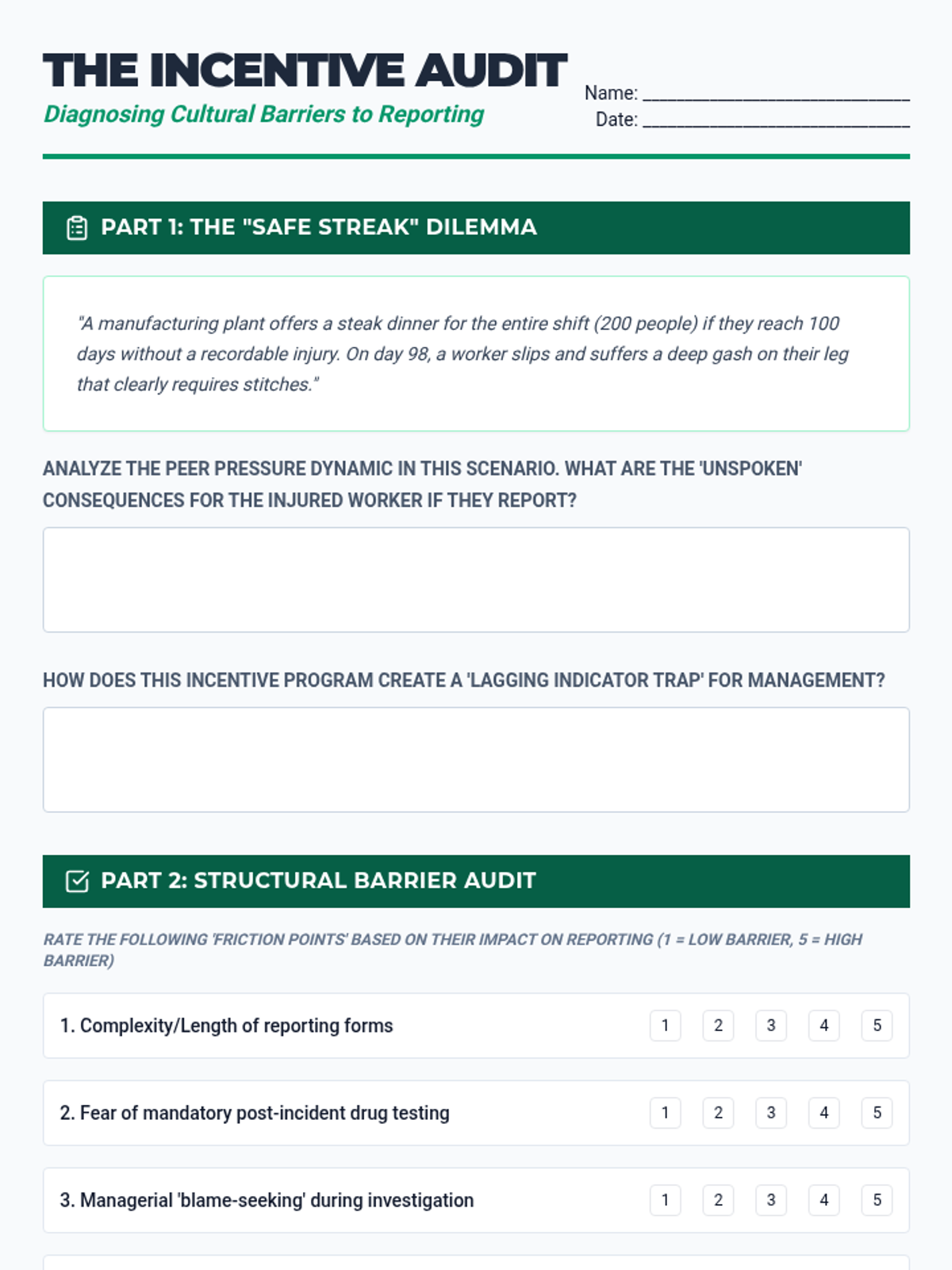
Facilitation guide for Lesson 3, covering under-reporting, incentive misalignment, and strategies for promoting incident transparency.
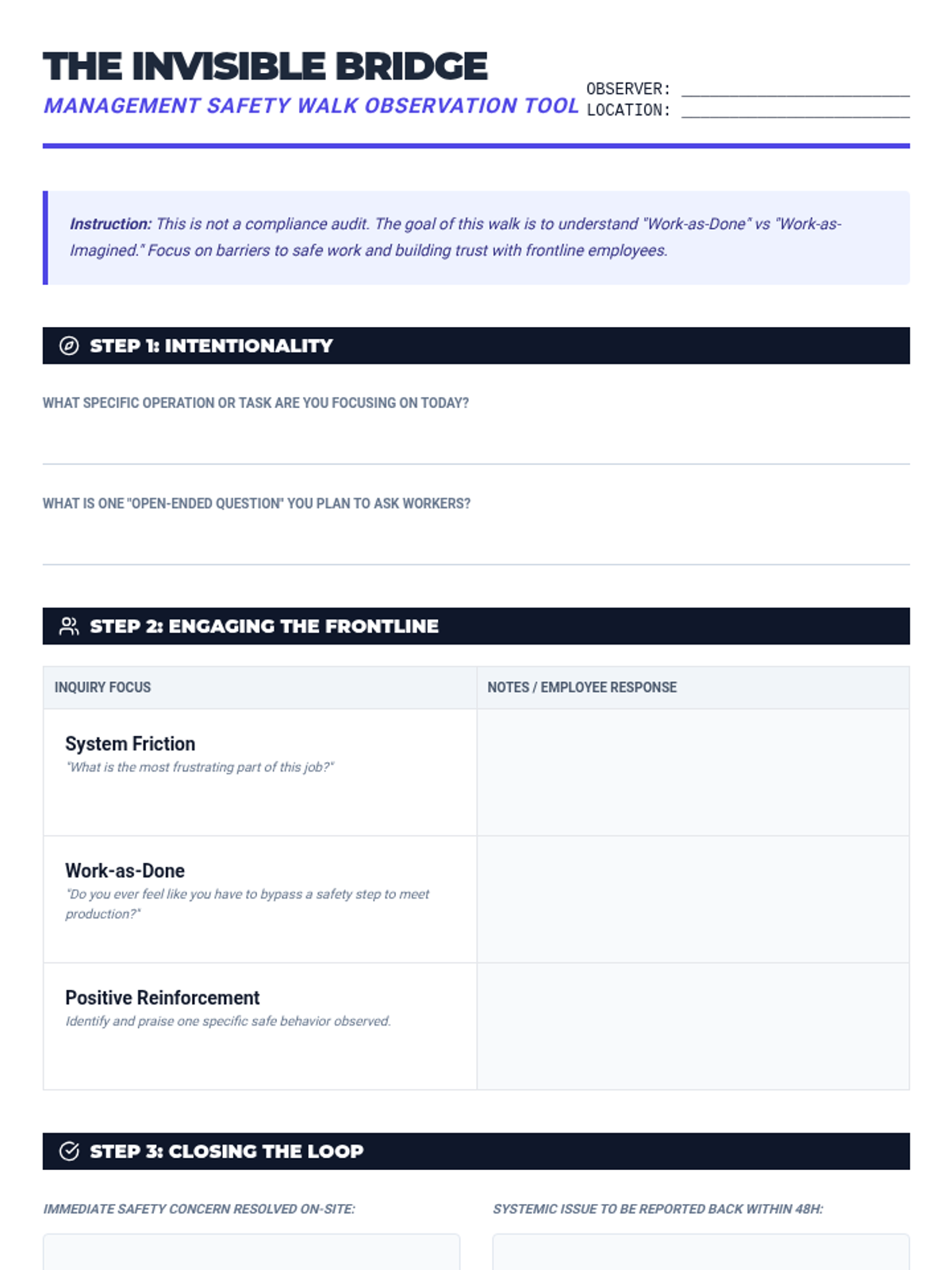
A structured checklist and observation tool for management-led safety walks, focusing on engagement, trust-building, and barrier identification.
Visual presentation for Lesson 5, covering Just Culture, the behavioral spectrum, and the link between physical and psychological safety.
Visual presentation for Lesson 4, covering management visibility, safety walks, and active listening.
A worksheet for analyzing the negative impact of outcome-based safety incentives and proposing alternative leading-indicator rewards.
Visual presentation for Lesson 3, covering under-reporting, incentive misalignment, and structural barriers to incident transparency.
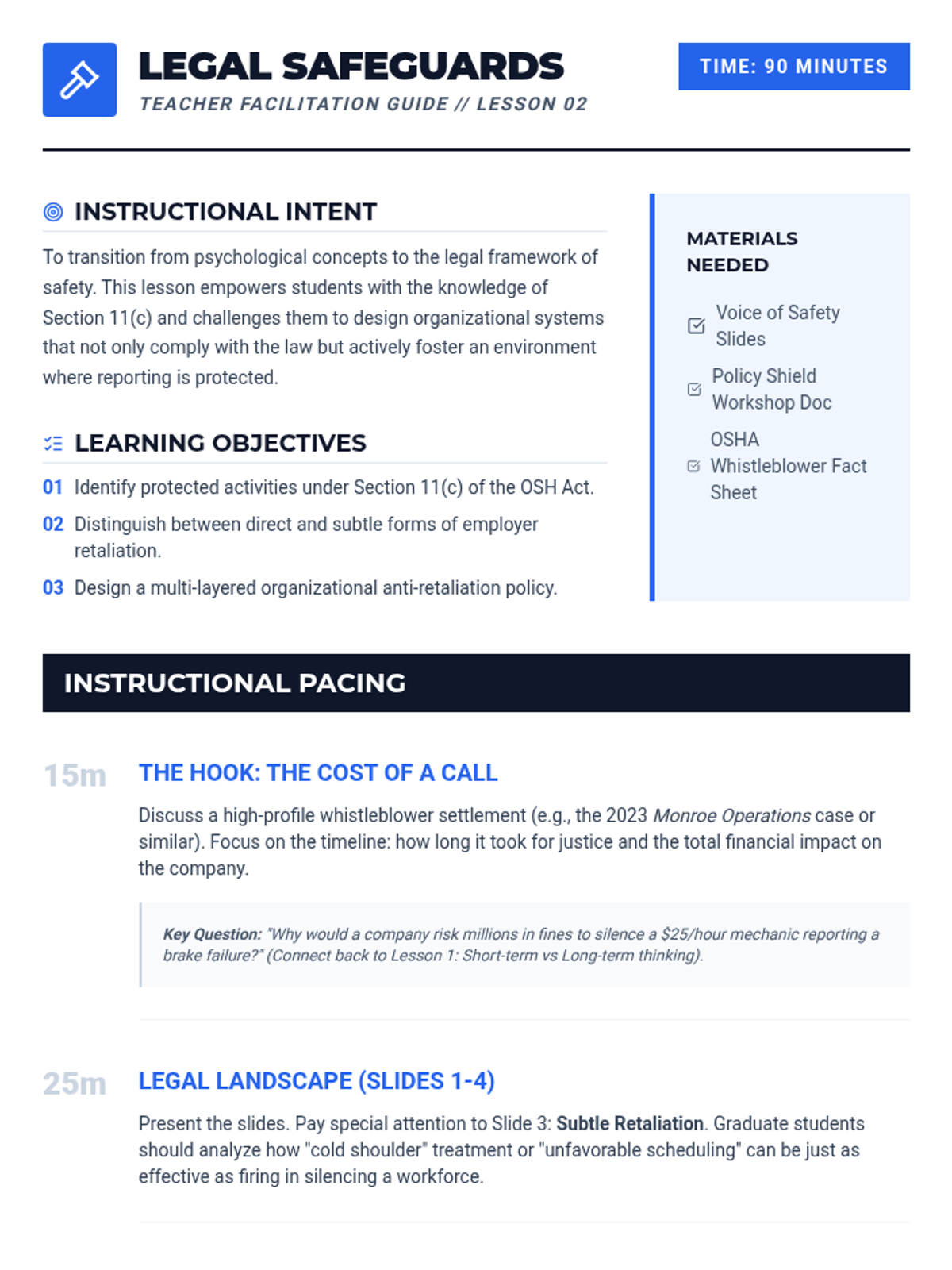
Facilitation guide for Lesson 2, providing pacing, discussion prompts, and activity guidance for teaching whistleblower rights and anti-retaliation policies.
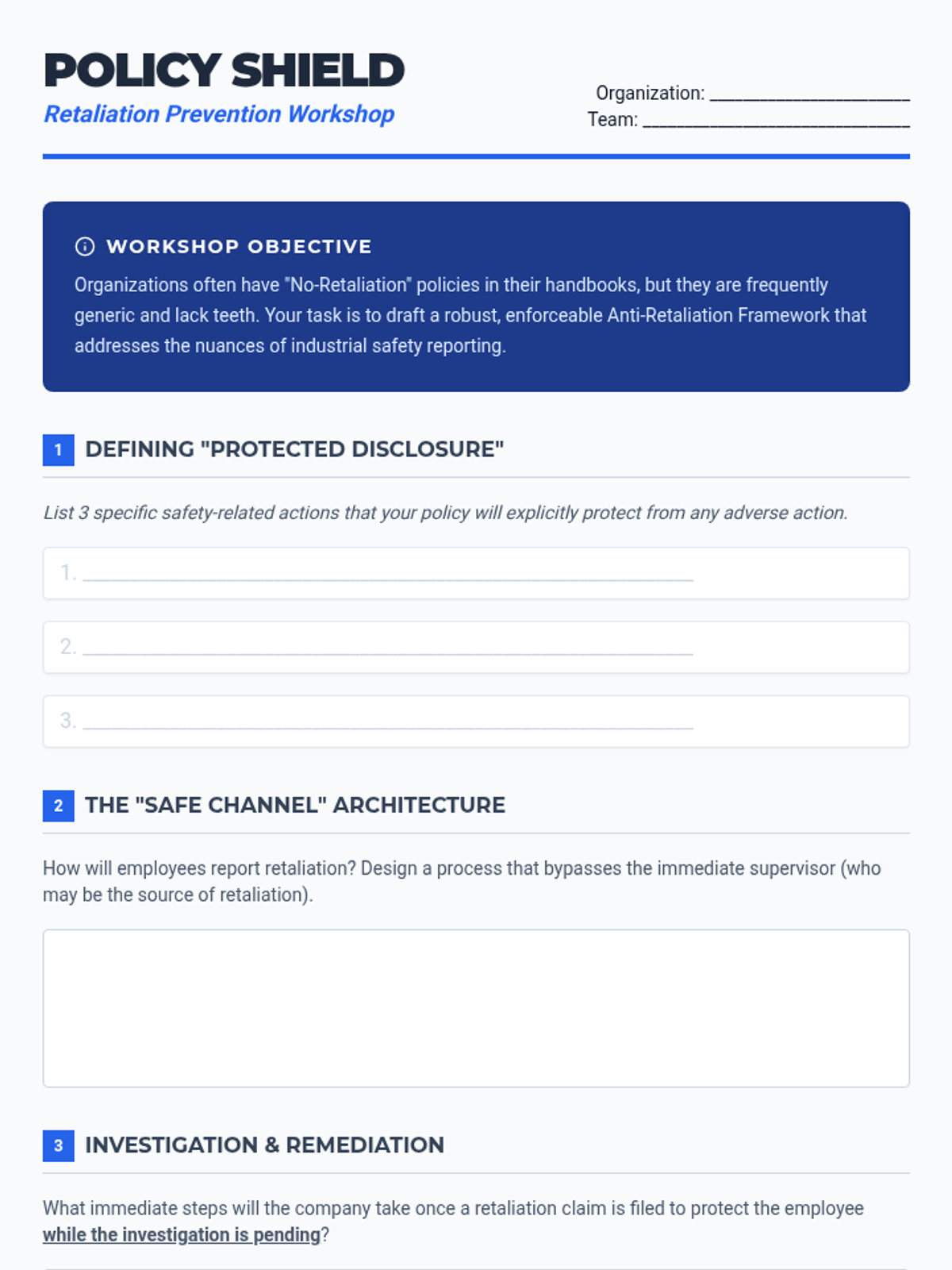
A workshop activity where graduate students design an organizational anti-retaliation policy, including reporting channels, investigation protocols, and accountability standards.
Visual presentation for Lesson 2, covering Section 11(c) of the OSH Act, definitions of retaliation, and the legal elements of a whistleblower claim.
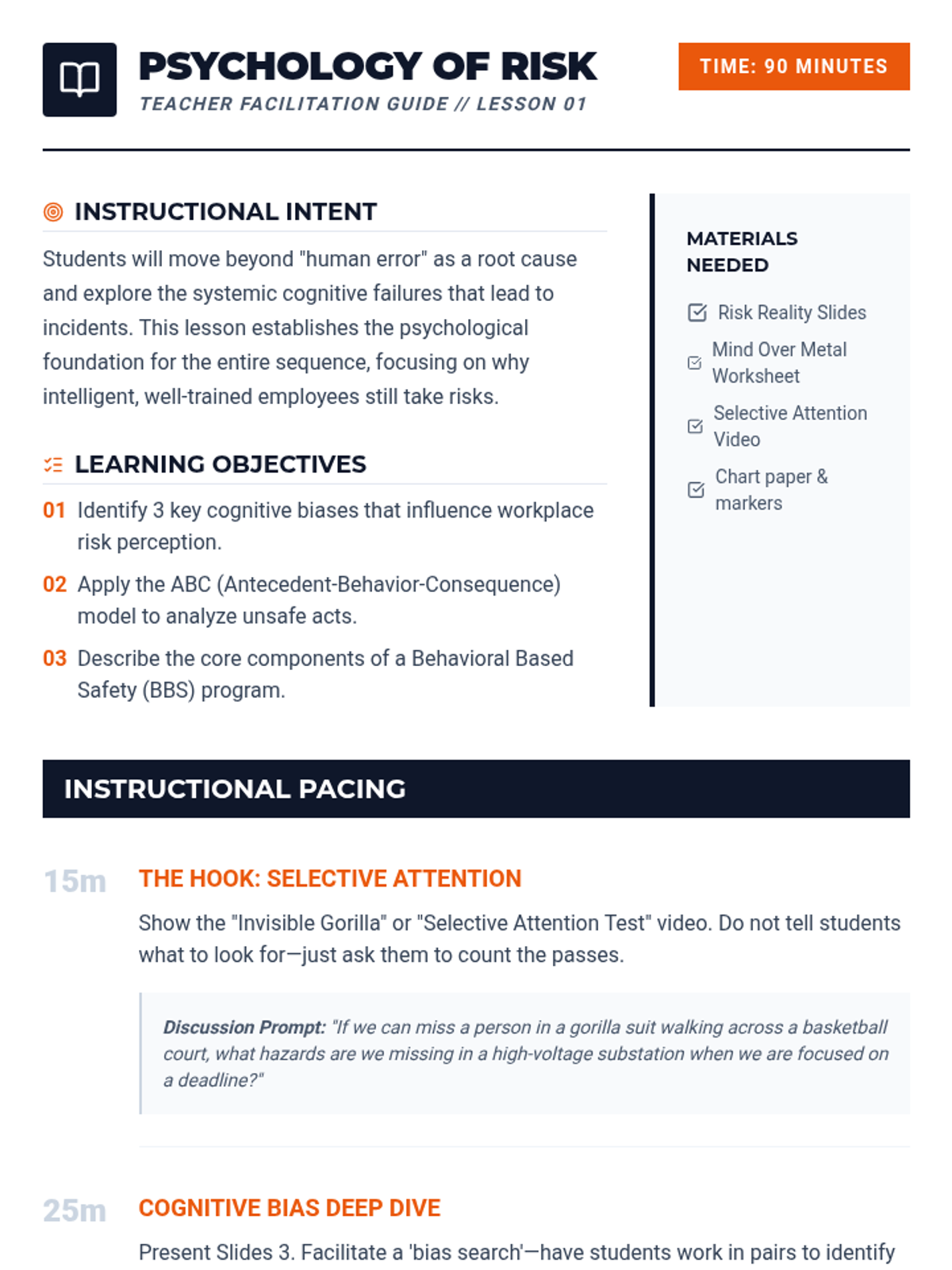
A comprehensive teacher facilitation guide for Lesson 1, including instructional pacing, discussion prompts, and pedagogical tips for teaching risk psychology.
A visual presentation for Lesson 1, covering cognitive biases, Behavioral Based Safety (BBS) principles, and the ABC analysis model.
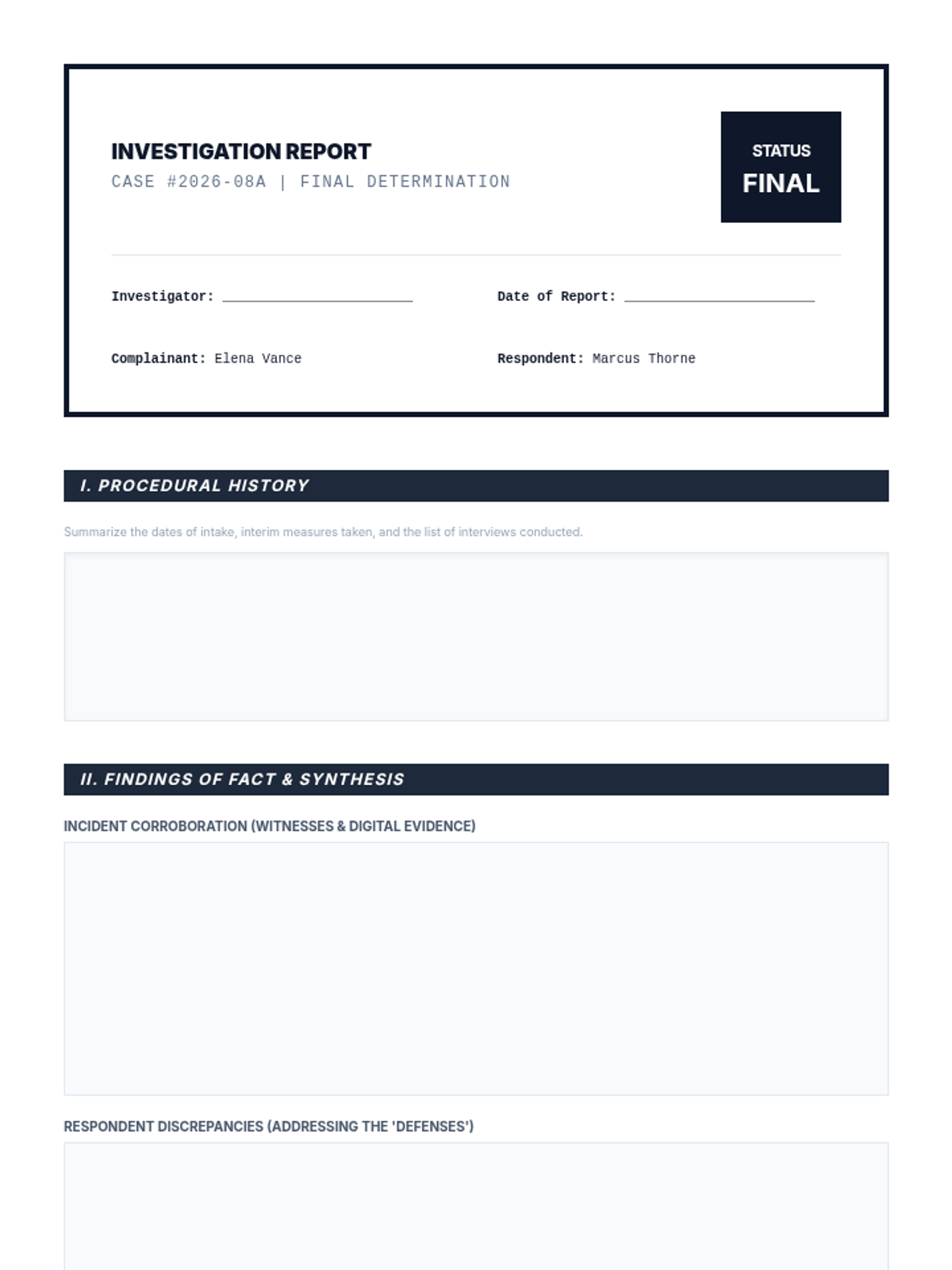
The capstone template for the final investigation report, structured to meet graduate-level technical writing and legal defensibility standards.
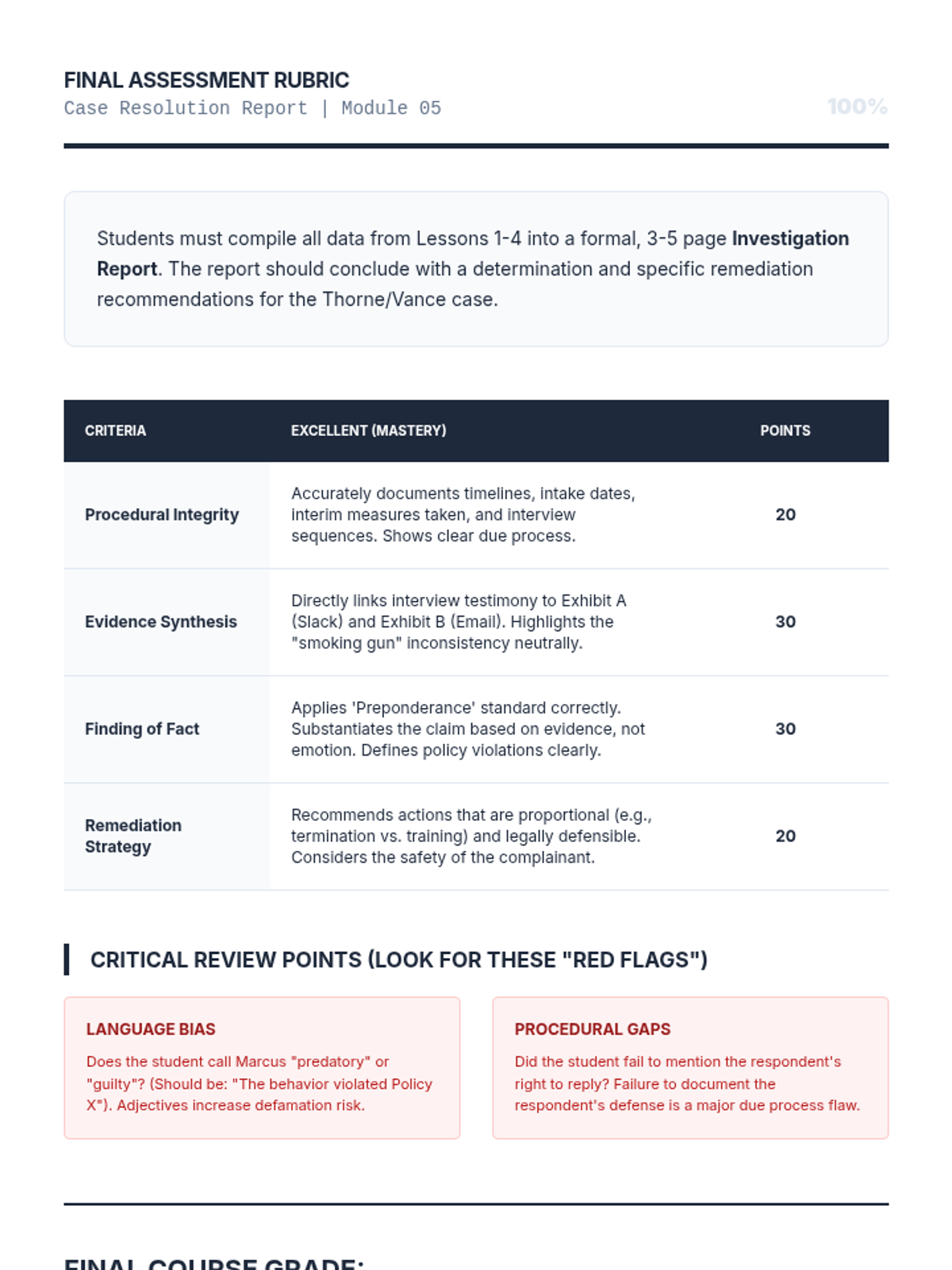
A comprehensive grading rubric for the final investigation report, focusing on procedural integrity, evidence synthesis, and remediation strategy.
Slide deck for Lesson 5 on drafting technical investigation reports and recommending appropriate remediation strategies while avoiding legal pitfalls.
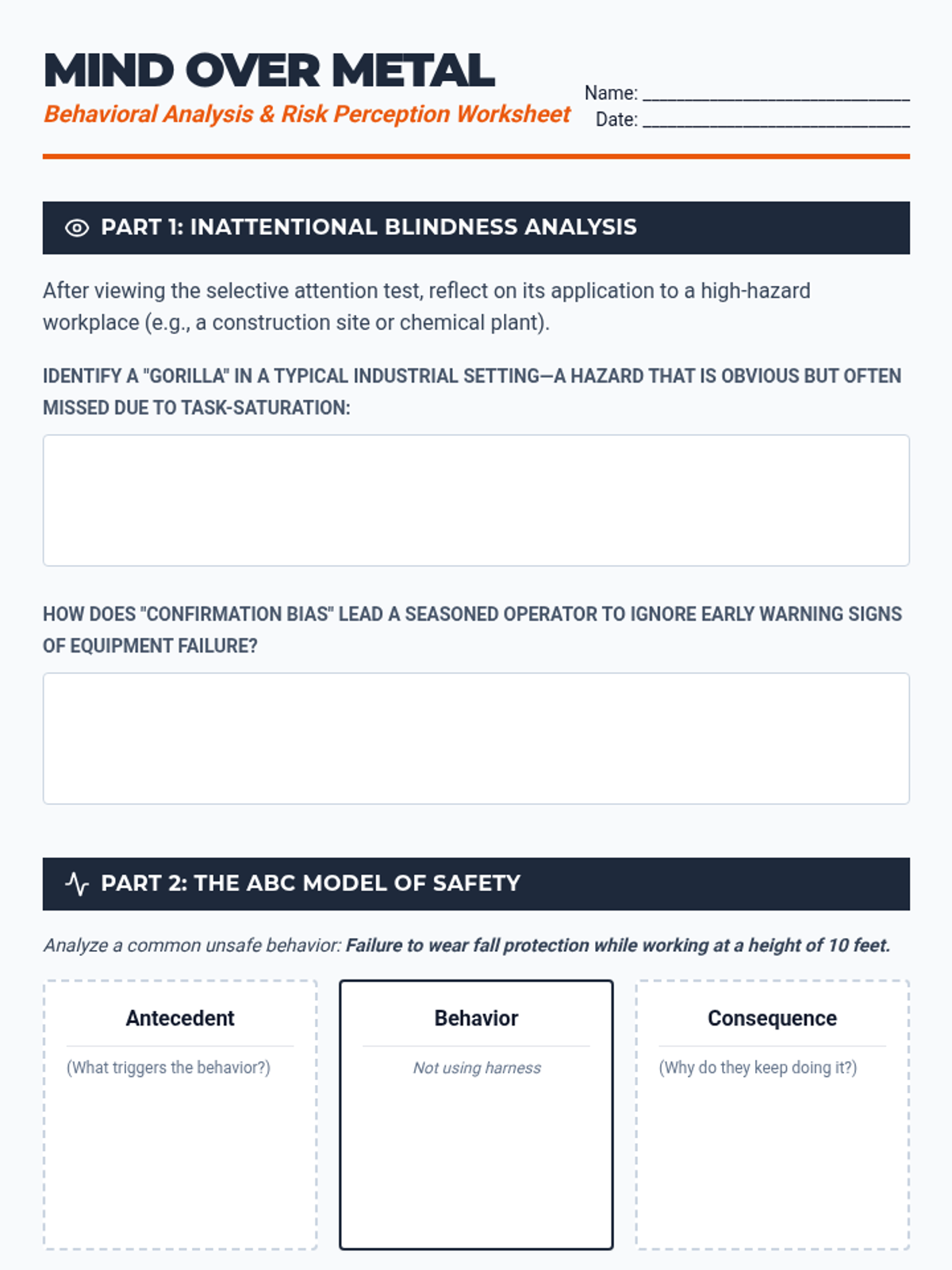
A graduate-level worksheet focused on analyzing cognitive biases, inattentional blindness, and the ABC (Antecedent-Behavior-Consequence) model in the context of industrial safety.
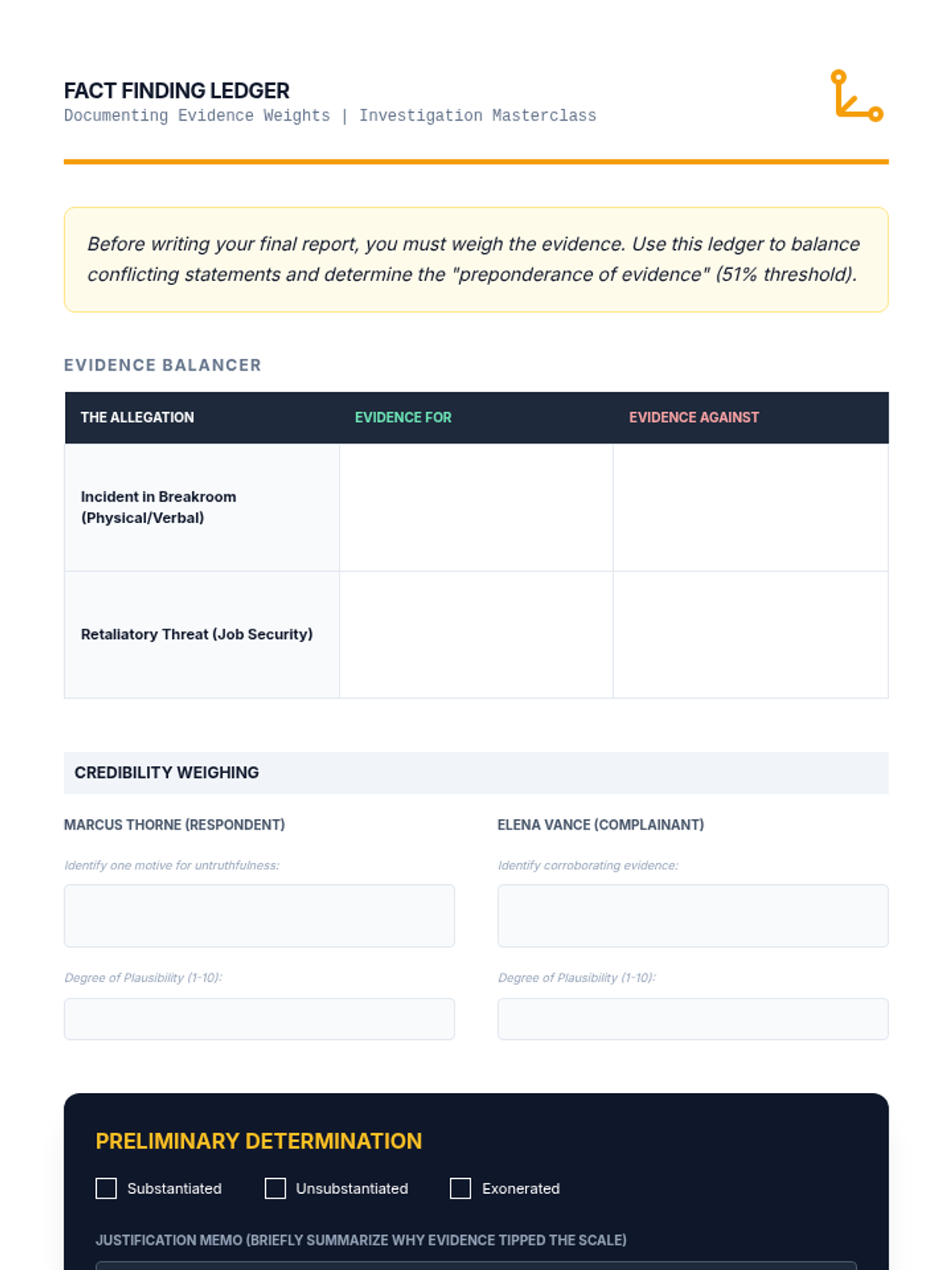
A worksheet for students to weigh conflicting evidence and apply credibility factors to reach a preliminary determination.
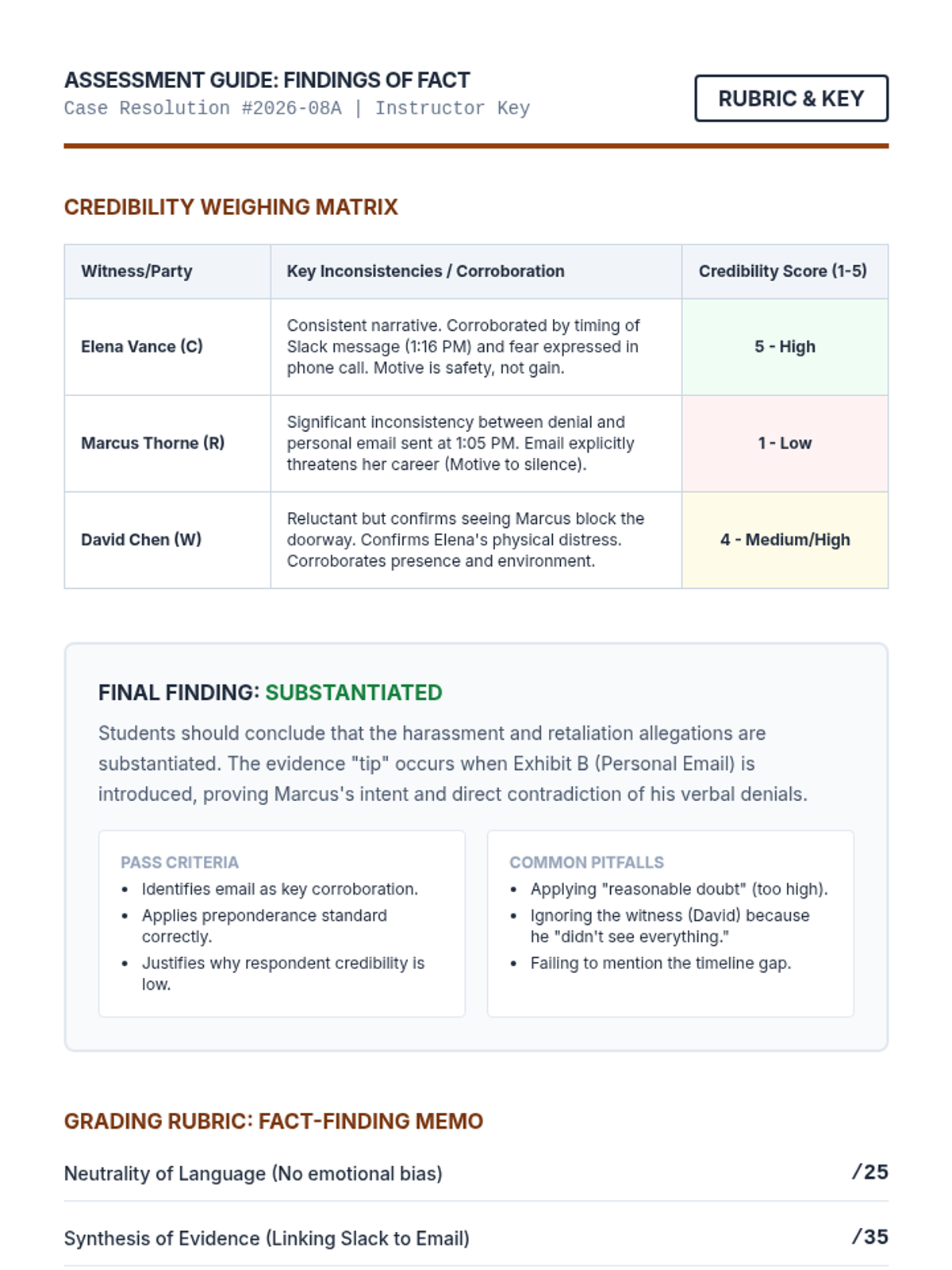
An answer key and rubric for Lesson 4, helping instructors grade student credibility assessments and findings of fact for the Thorne/Vance case.
Slide deck for Lesson 4 on weighing credibility, applying the preponderance of evidence standard, and making formal findings of fact.
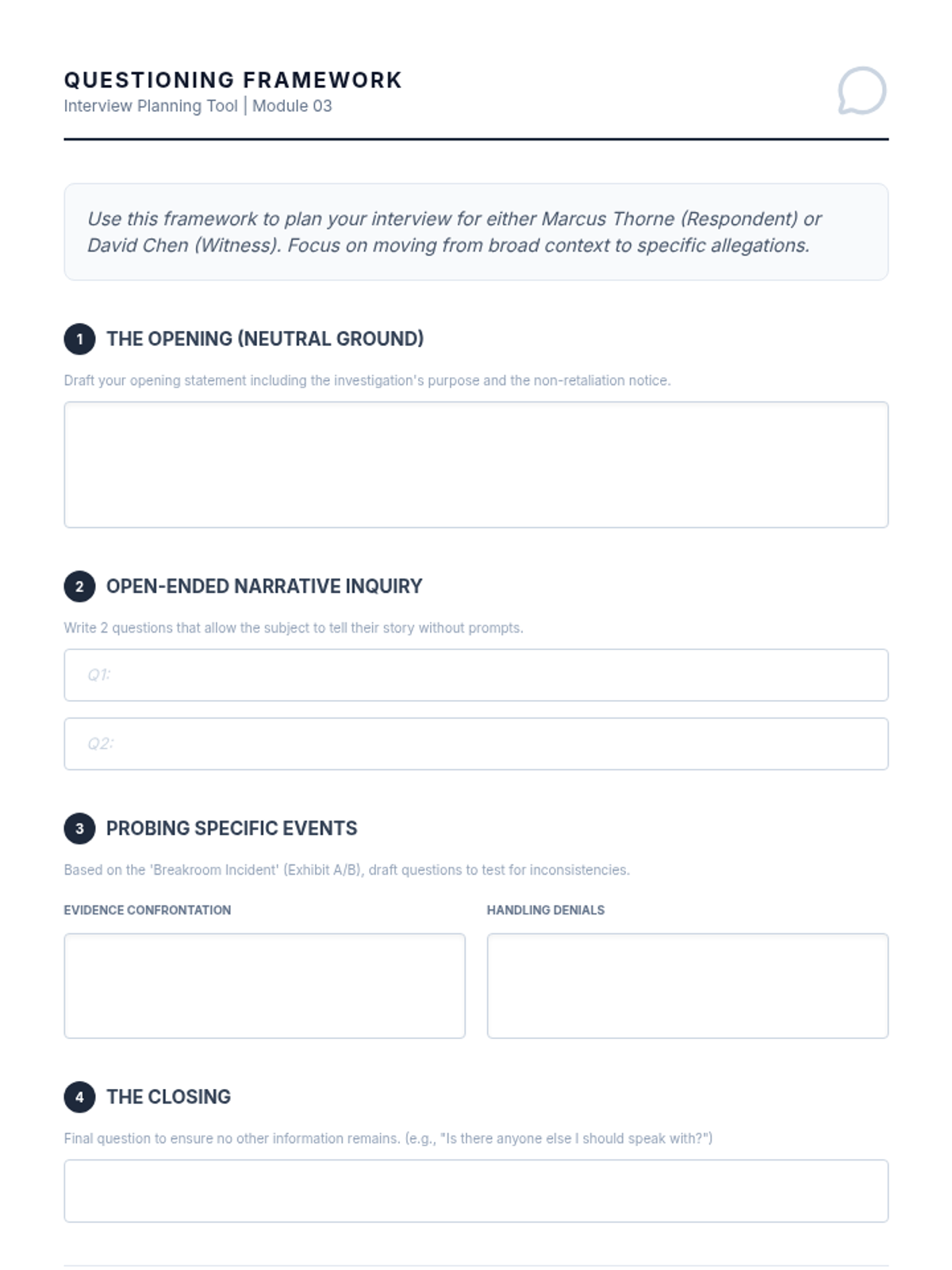
A planning worksheet for students to draft their interview questions and structure their inquiry according to the funnel technique.
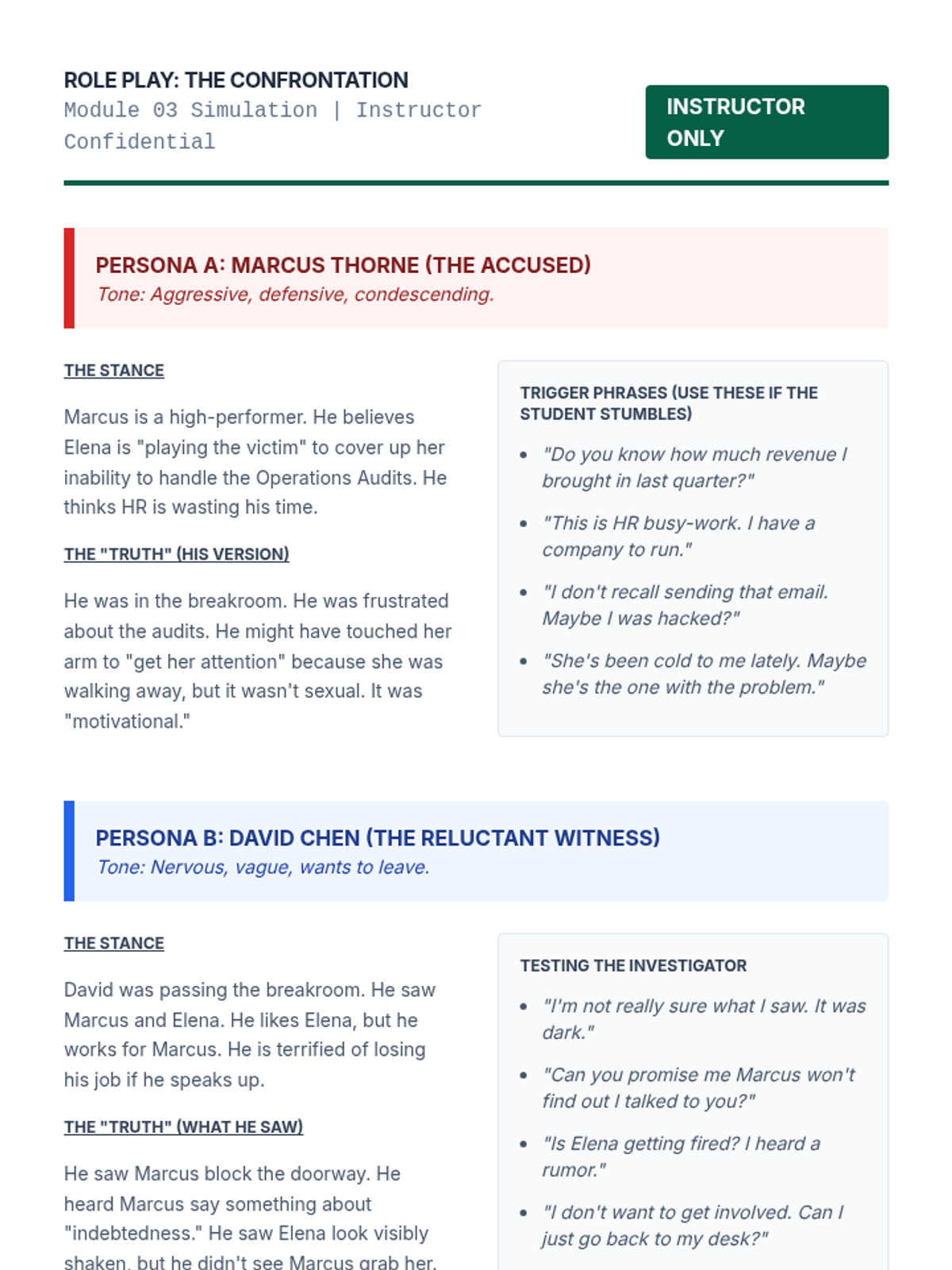
Detailed role-play scripts and facilitator instructions for Lesson 3, featuring two contrasting personas: a hostile respondent and a reluctant witness.
Slide deck for Lesson 3 focusing on interview techniques for the accused and witnesses, including the funnel technique and de-escalation strategies.
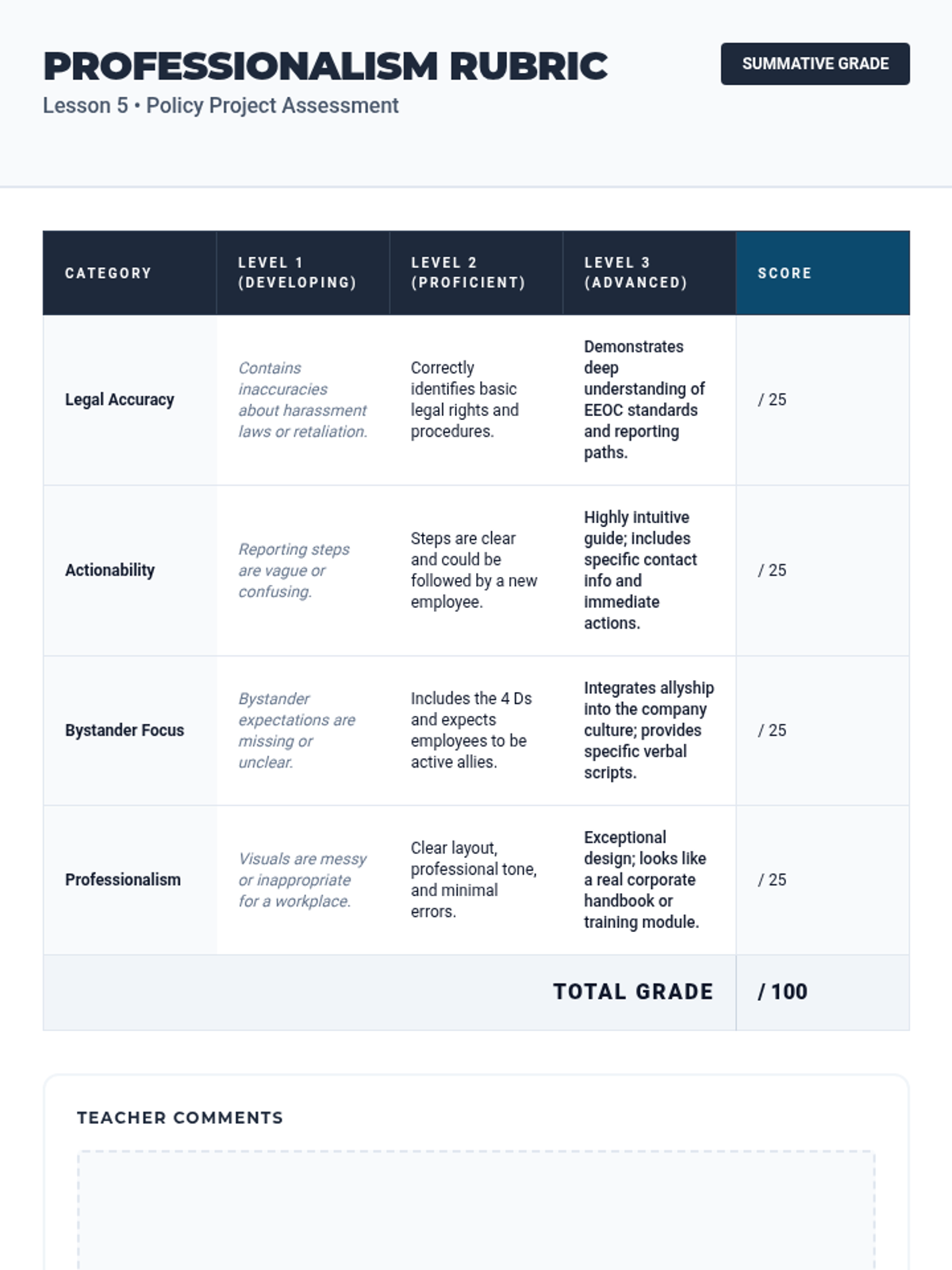
Final summative rubric for Lesson 5, assessing legal accuracy, actionability, bystander focus, and professionalism in the student-created workplace policies.
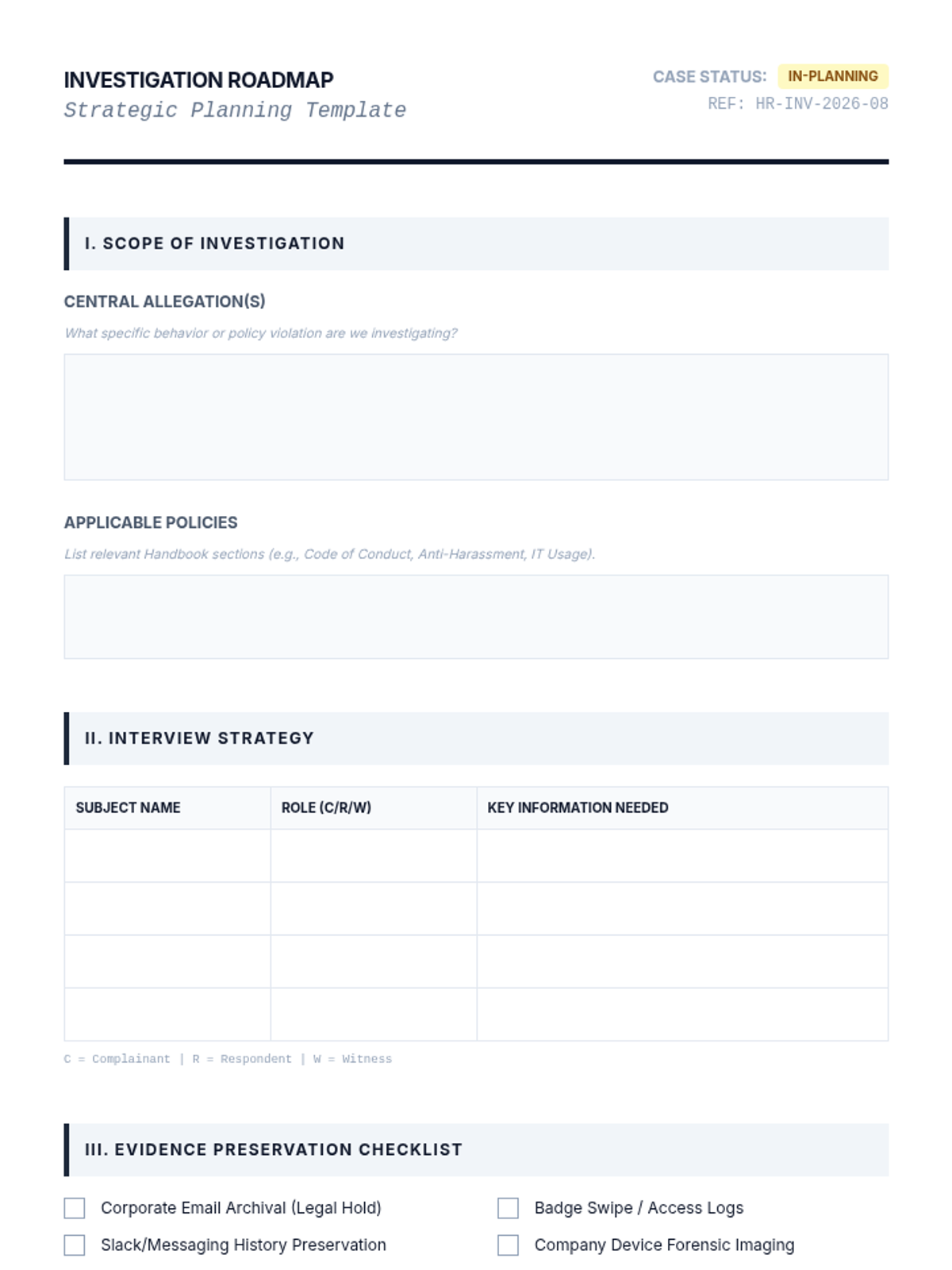
A strategic template for students to map out their investigation, including scope definition, interview sequencing, and evidence preservation tasks.
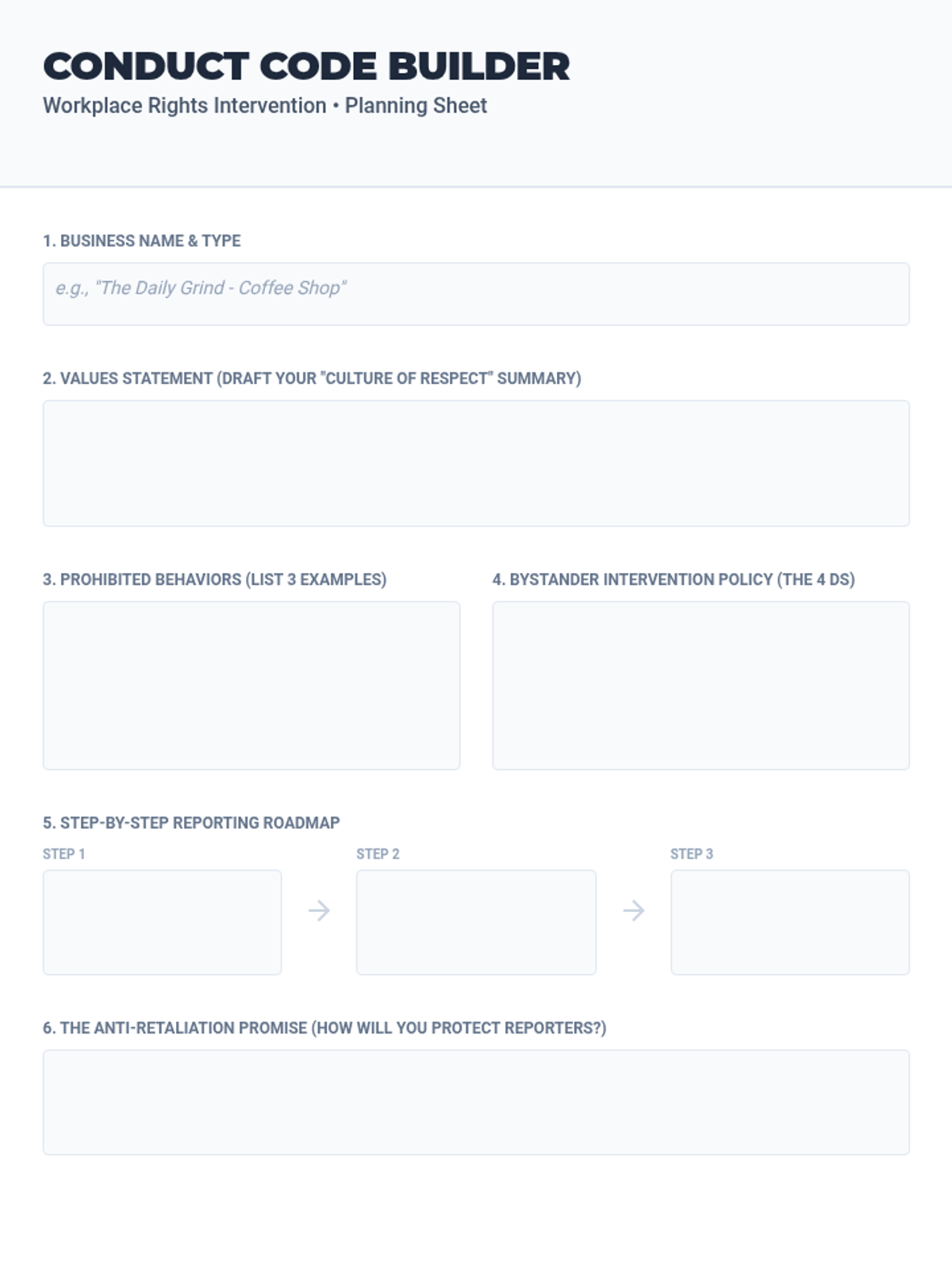
A planning worksheet for Lesson 5 where students draft the various components of their workplace code of conduct and reporting policy.
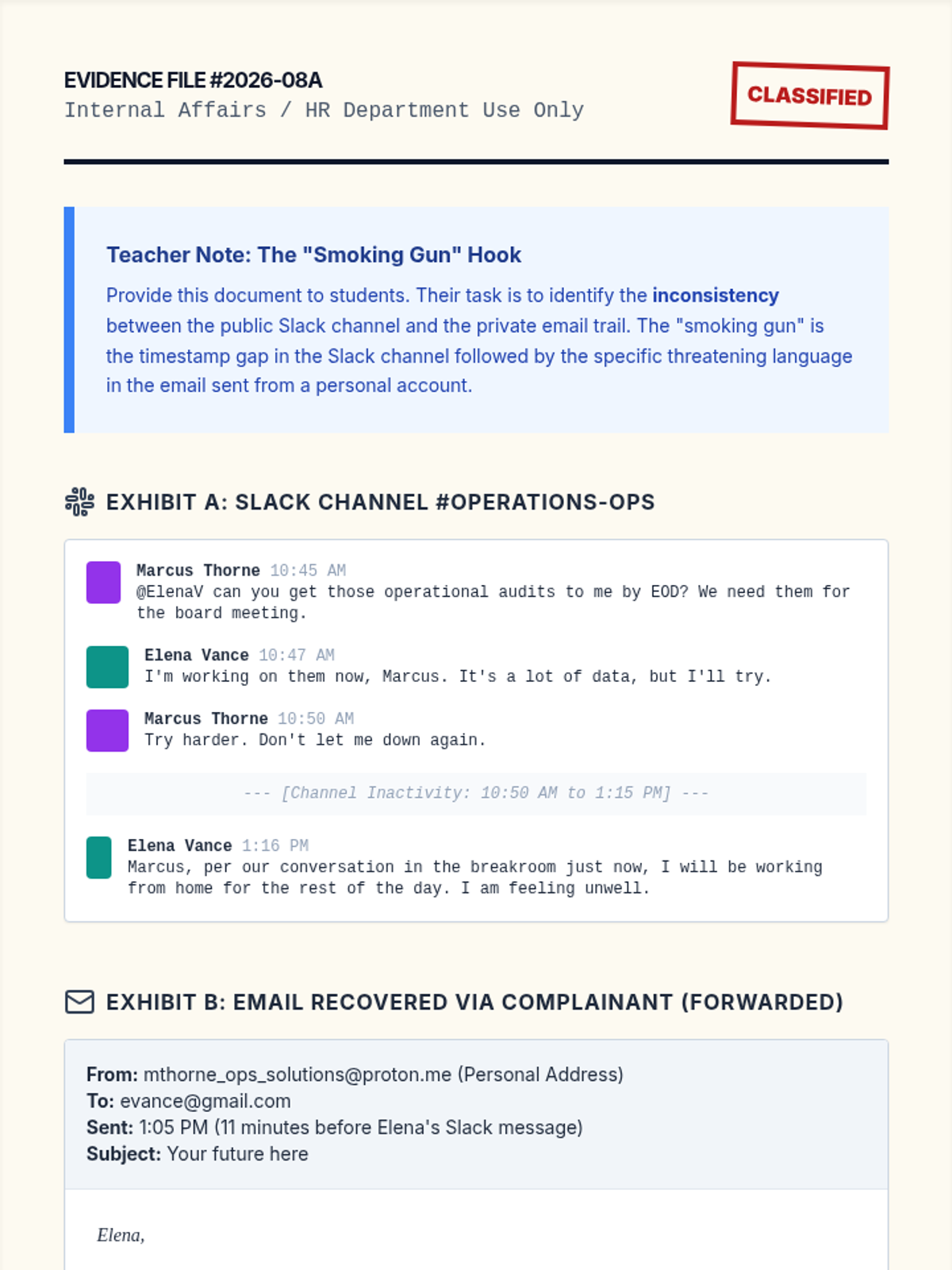
A mock case file containing Slack messages and emails designed for a graduate-level evidence analysis exercise. Students must identify inconsistencies and policy violations.
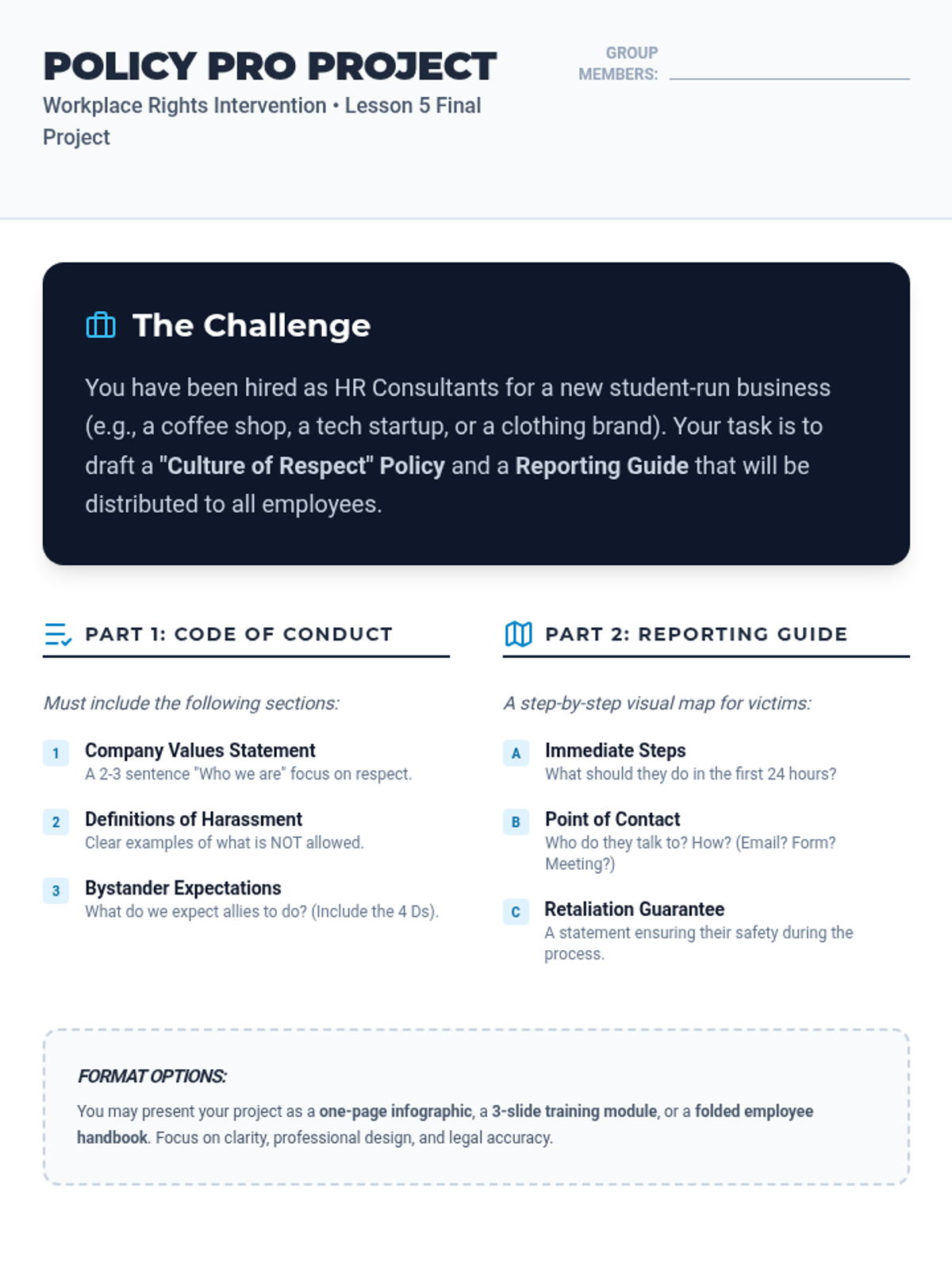
Final project guide for Lesson 5, tasking students to create a code of conduct and reporting guide for a fictional student-run business.
Slide deck for Lesson 2 focusing on investigation planning, interview sequencing, and evidence preservation strategies.
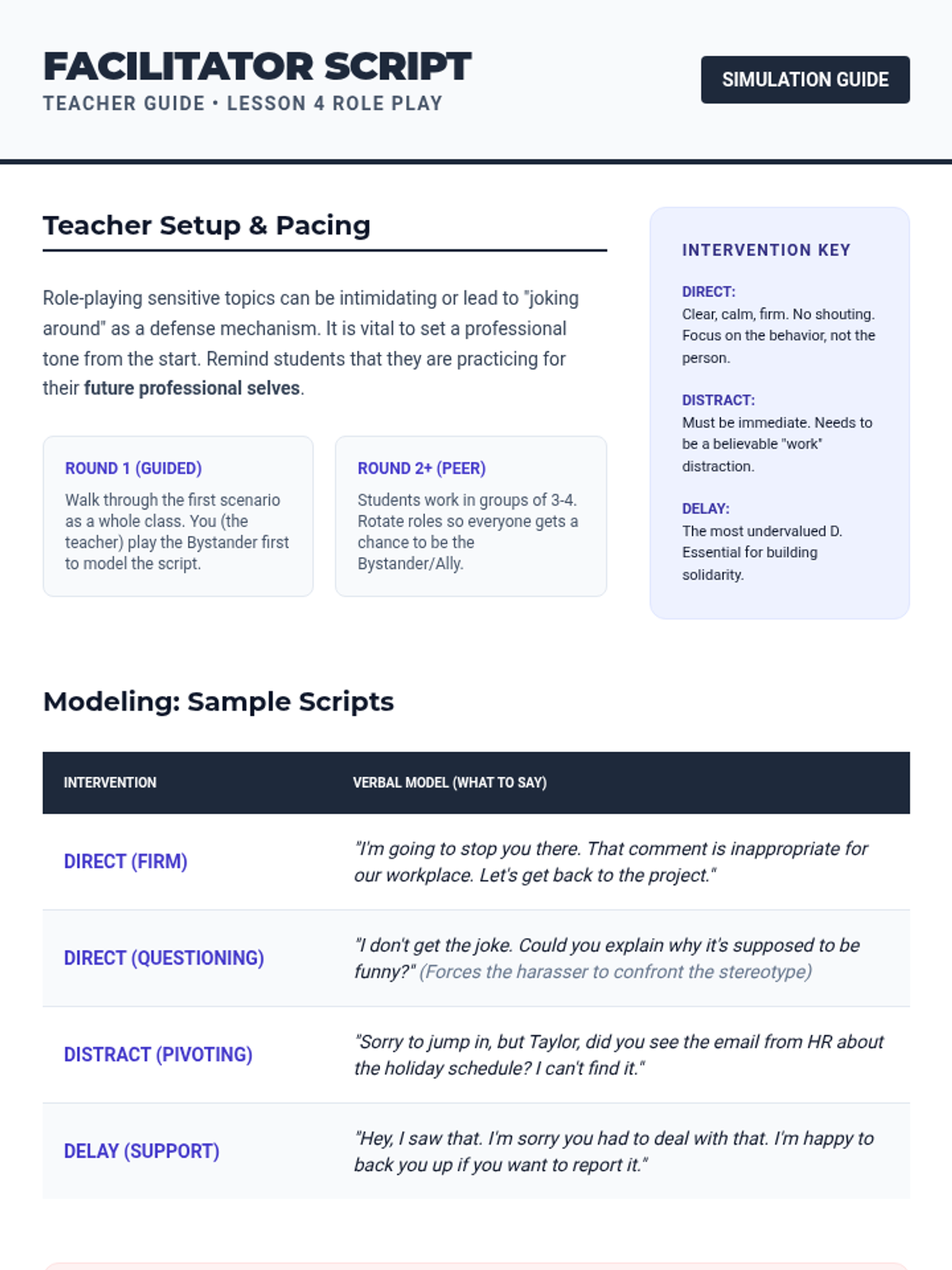
Teacher facilitator guide for Lesson 4 role-play simulations, including setup advice, verbal models for interventions, and safety protocols.
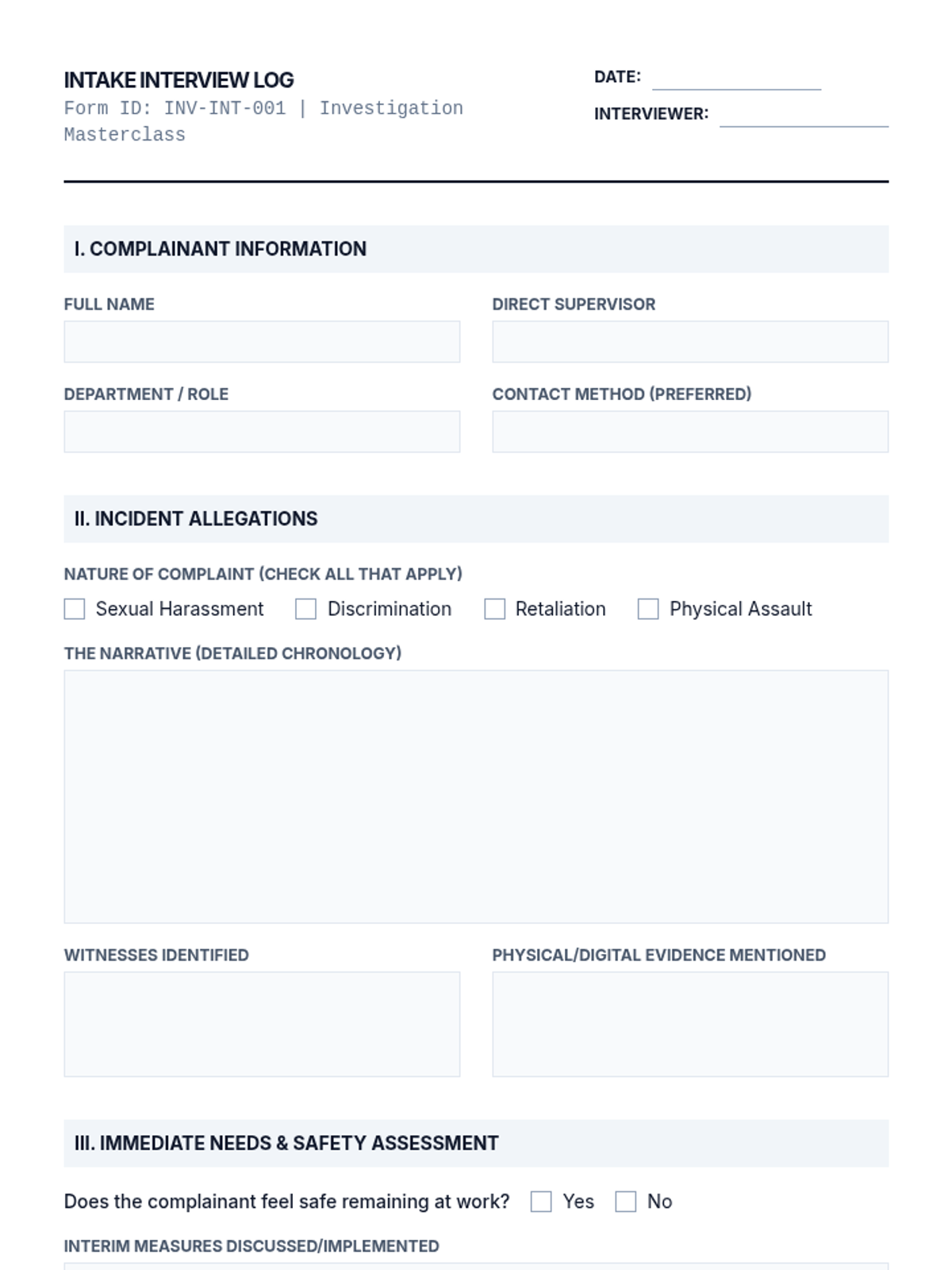
A formal intake log for students to use during Lesson 1 simulations to capture the details of a harassment complaint and assess the need for interim measures.
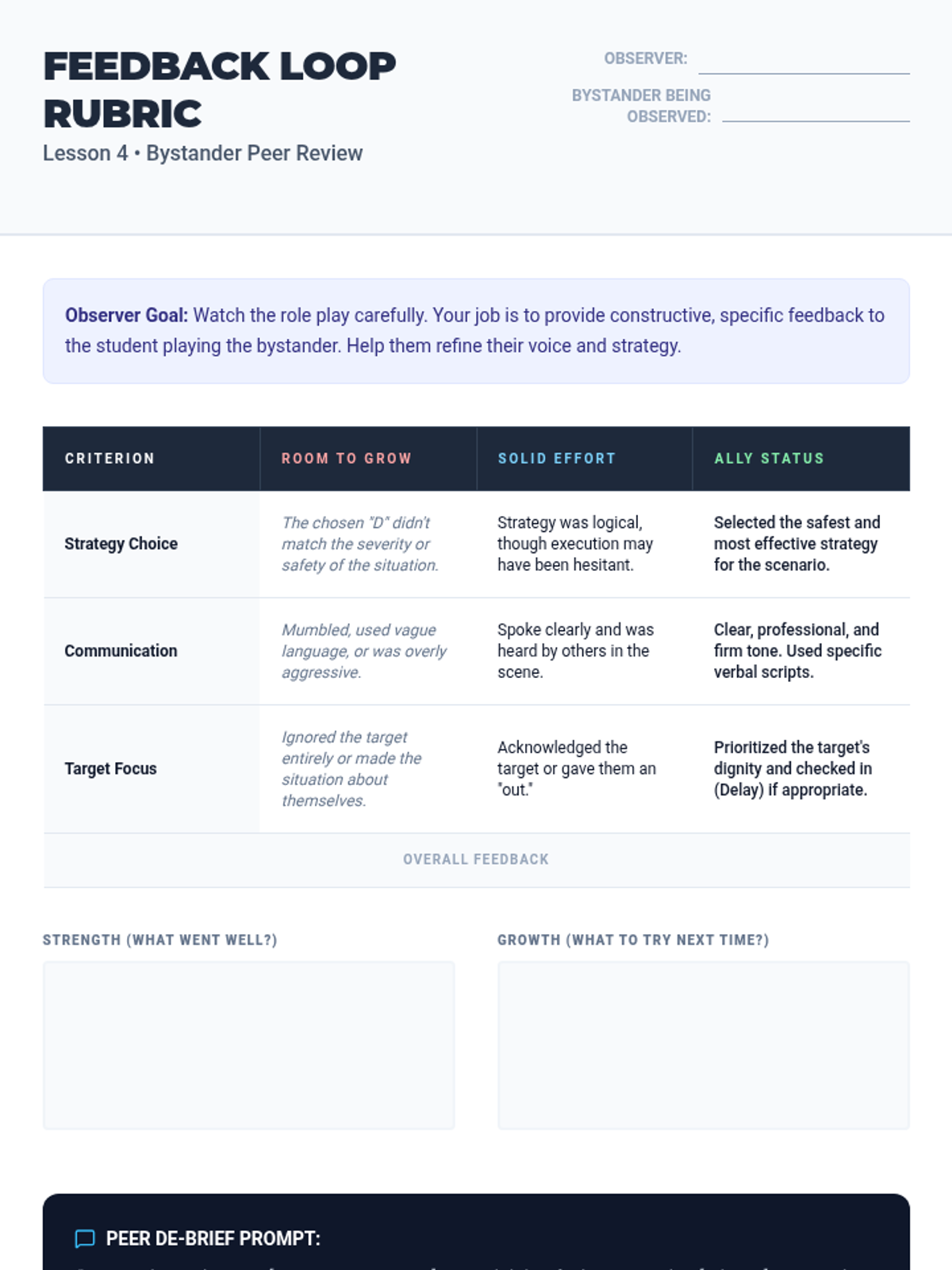
A peer-assessment rubric for Lesson 4 role-play activities, focusing on strategy choice, communication, and target-focused intervention.
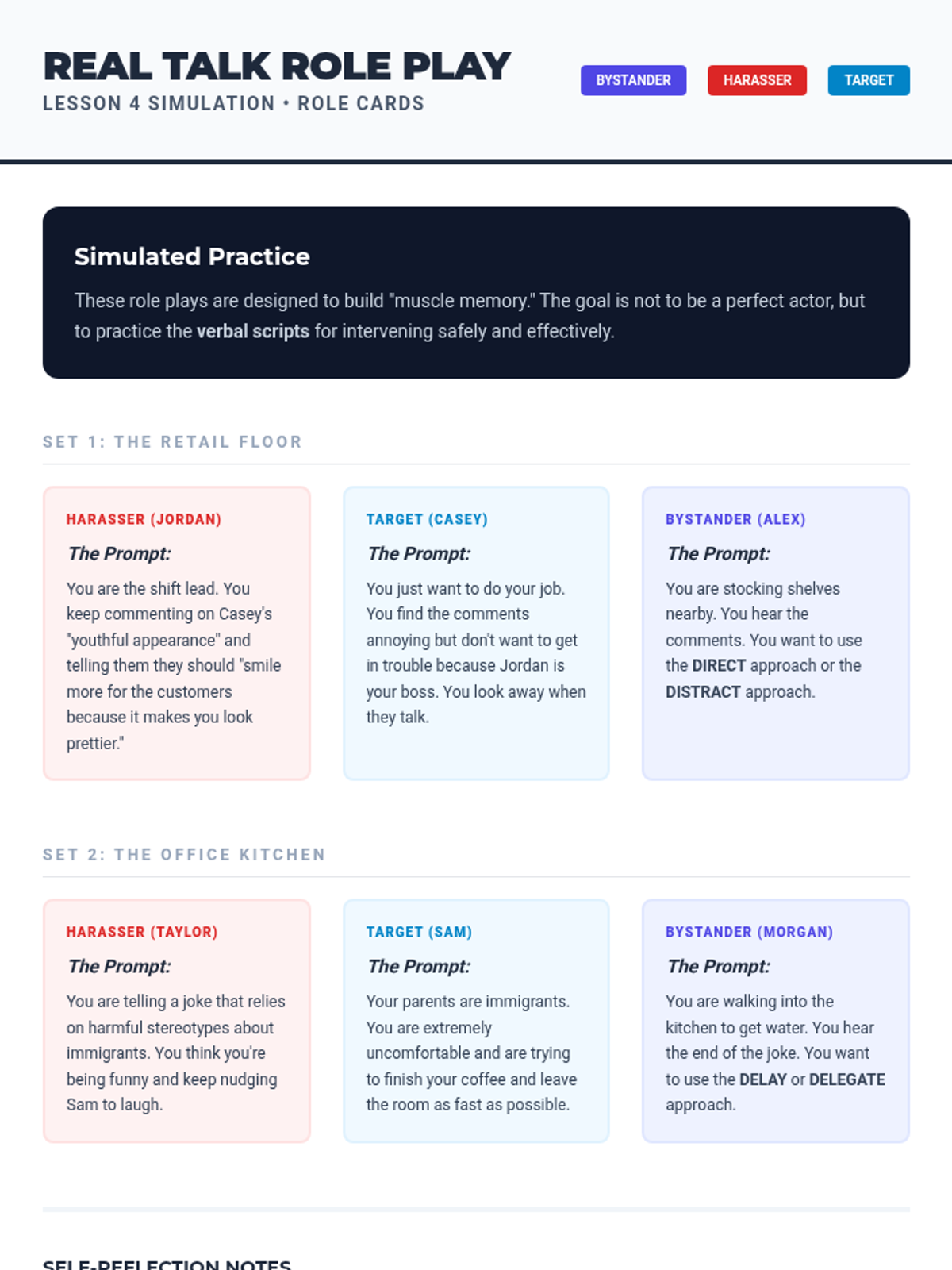
Role-play scenario cards for Lesson 4, including prompts for harassers, targets, and bystanders in different workplace settings.
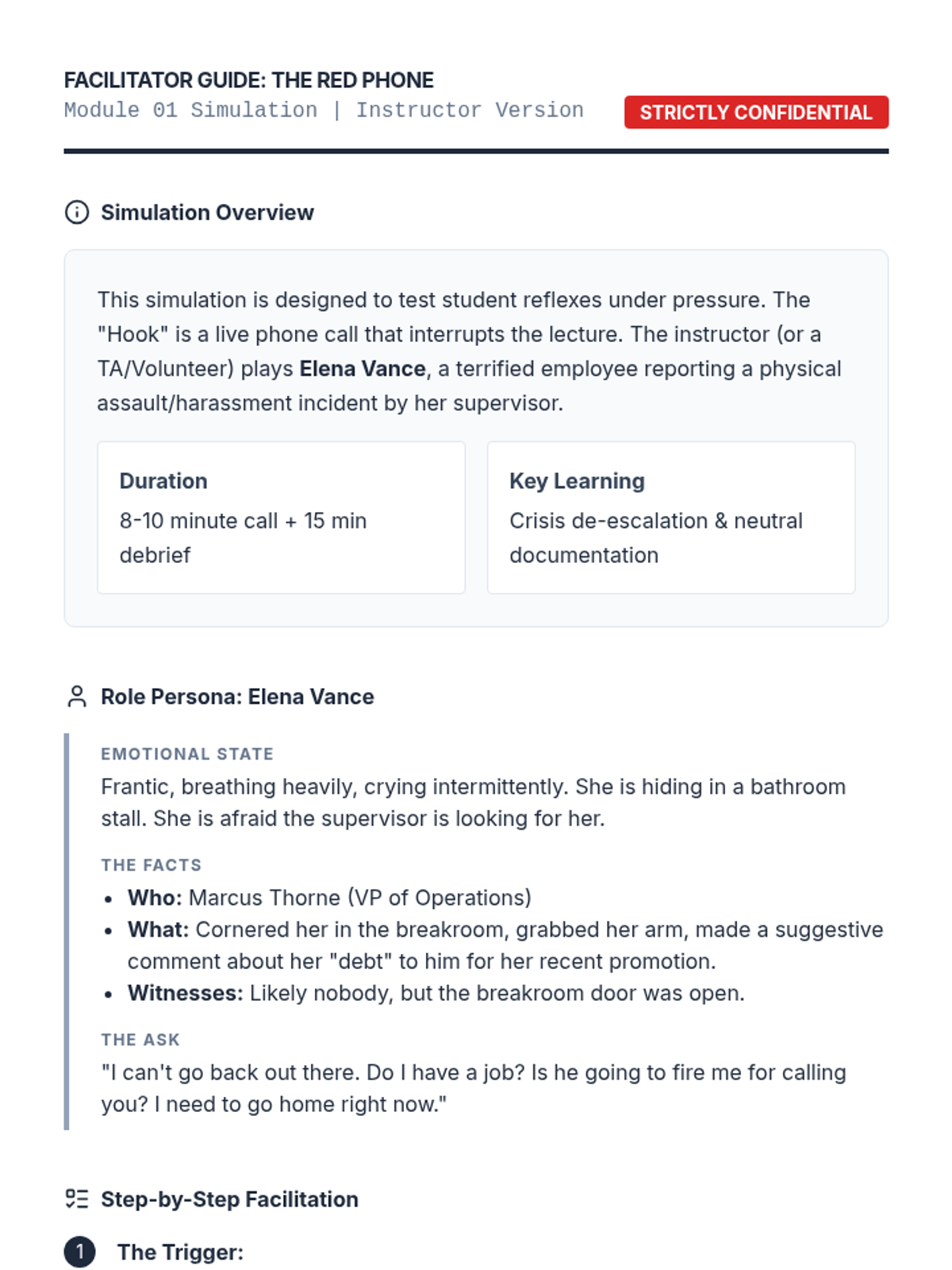
A teacher guide for Lesson 1 containing the setup and script for a high-stakes simulation where a student must handle a frantic complaint call live.