Stop-and-think strategies, impulse management, and SMART goal setting for personal growth. Develops internal motivation, stress reduction techniques, and resilience through proactive planning and monitoring.
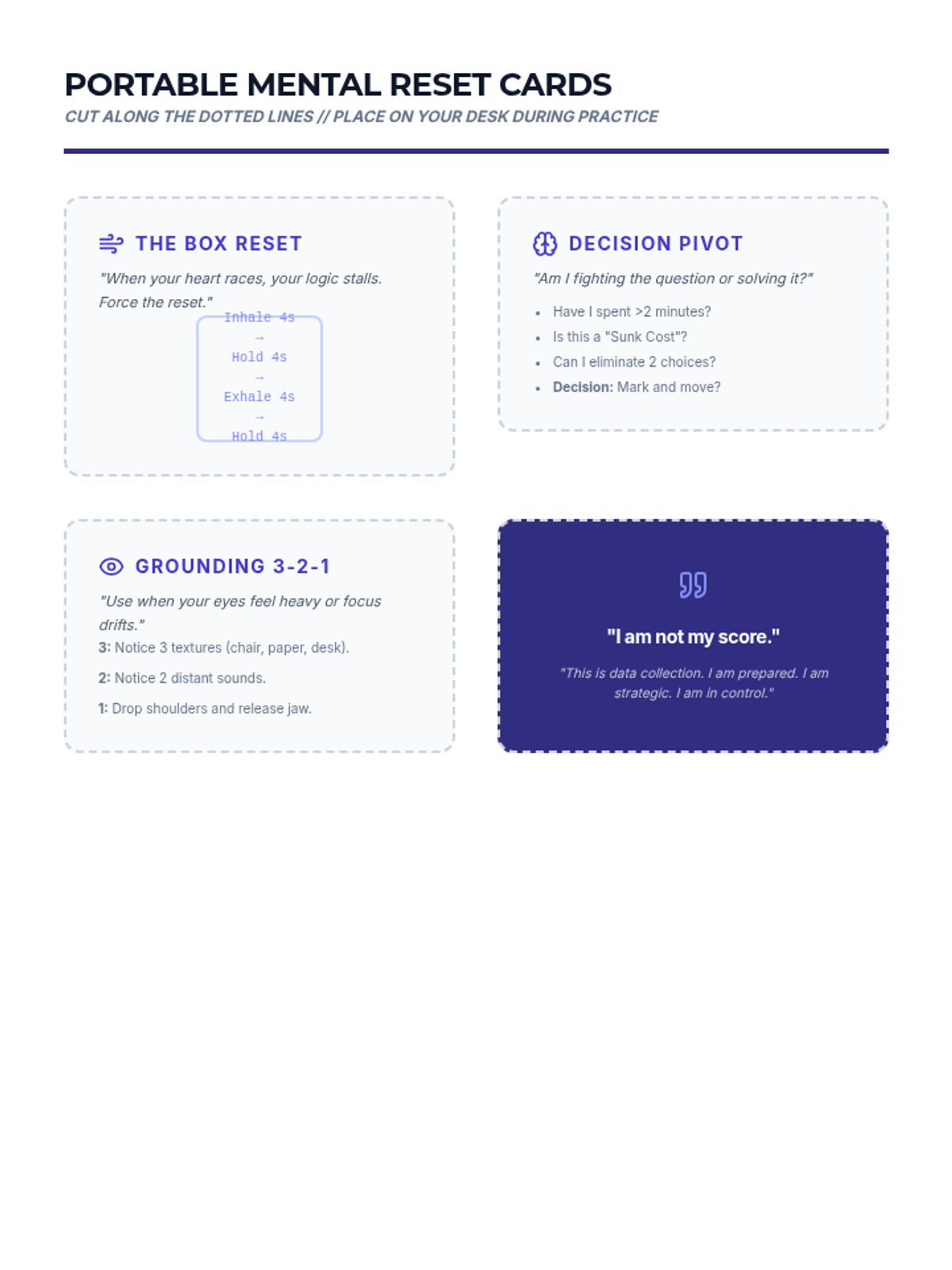
Small printable cards with breathing exercises, grounding techniques, and positive visualization prompts for students to use during practice.
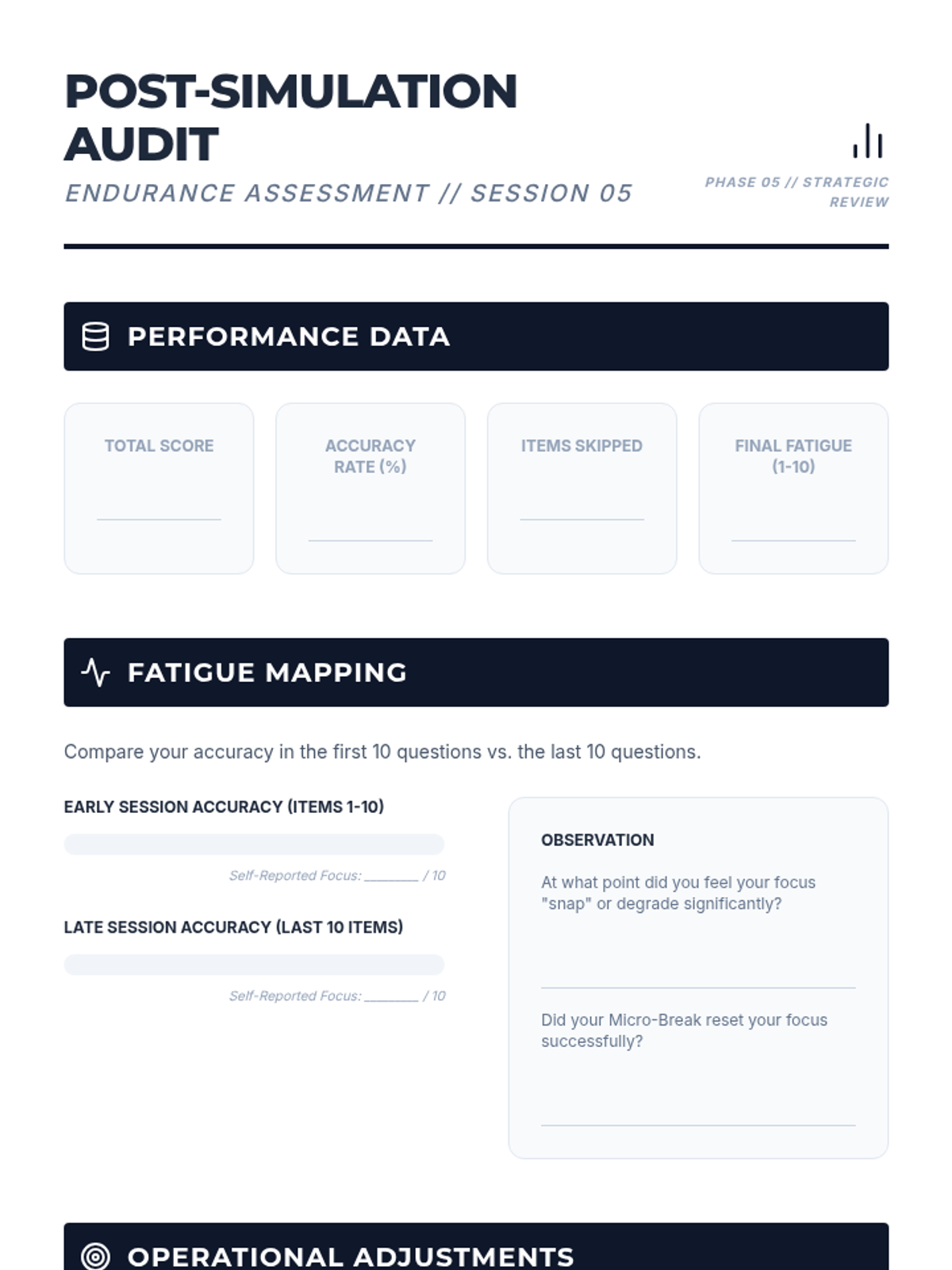
A post-simulation reflection worksheet for students to analyze their accuracy, fatigue levels, and strategic adjustments.
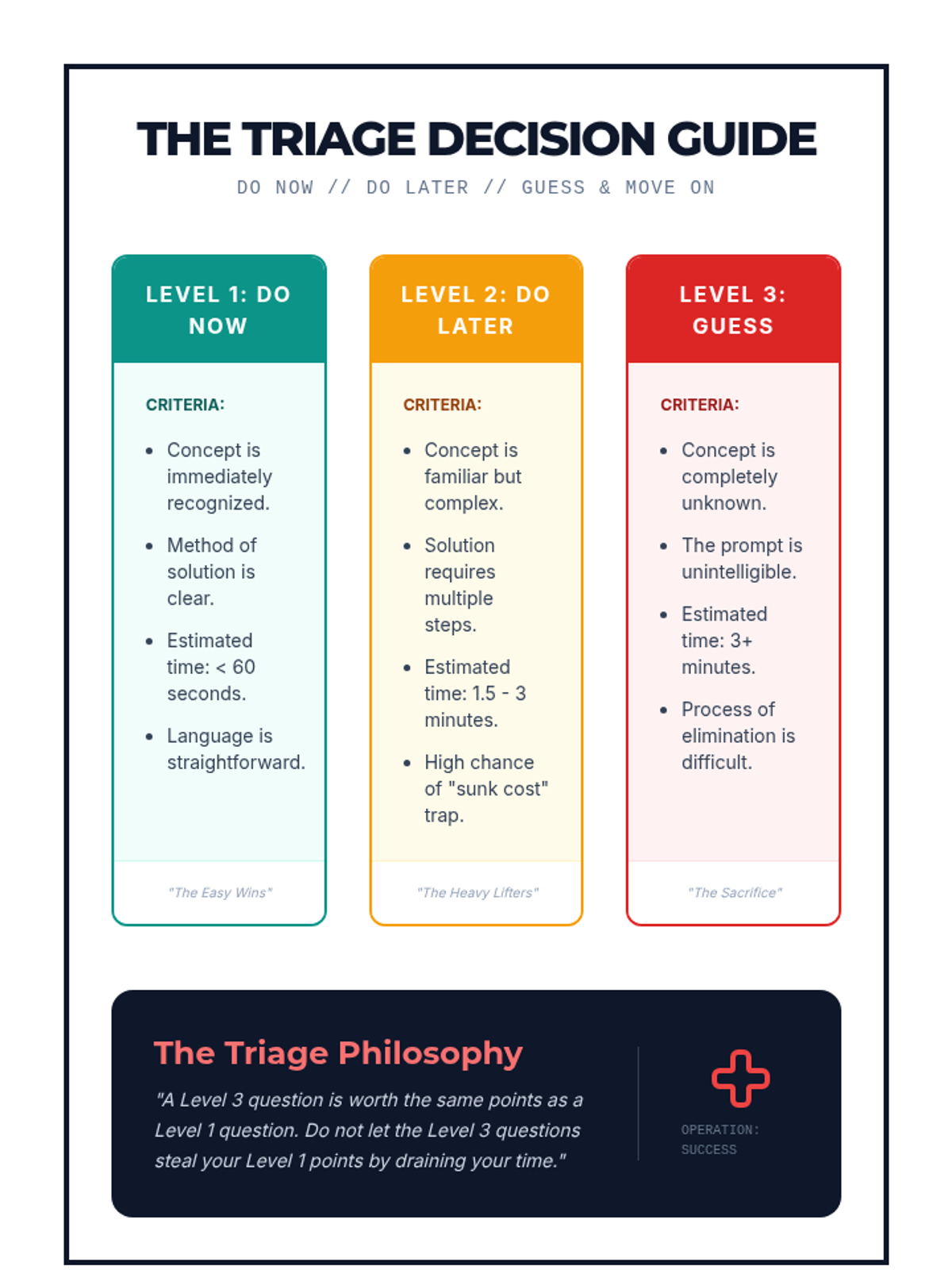
A quick-reference decision matrix for classifying test questions during the triage process.
Slides for the final lesson on endurance simulation, emphasizing sustained focus and fatigue management.
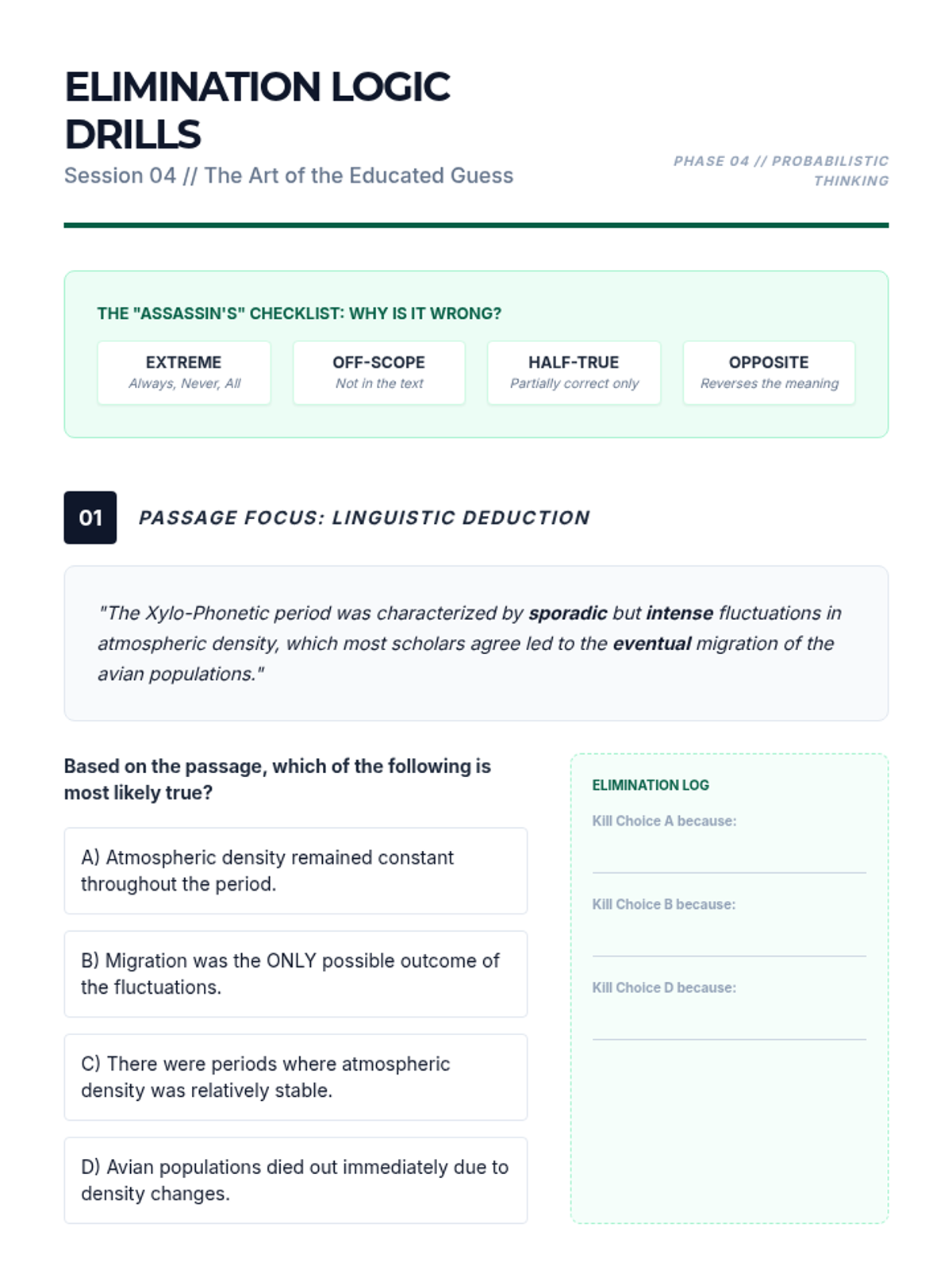
A worksheet for students to practice identifying distractor patterns and using the process of elimination to increase their guessing odds.
Slides for the fourth lesson on strategic guessing, covering probability, the Monty Hall problem, and identifying distractor patterns.
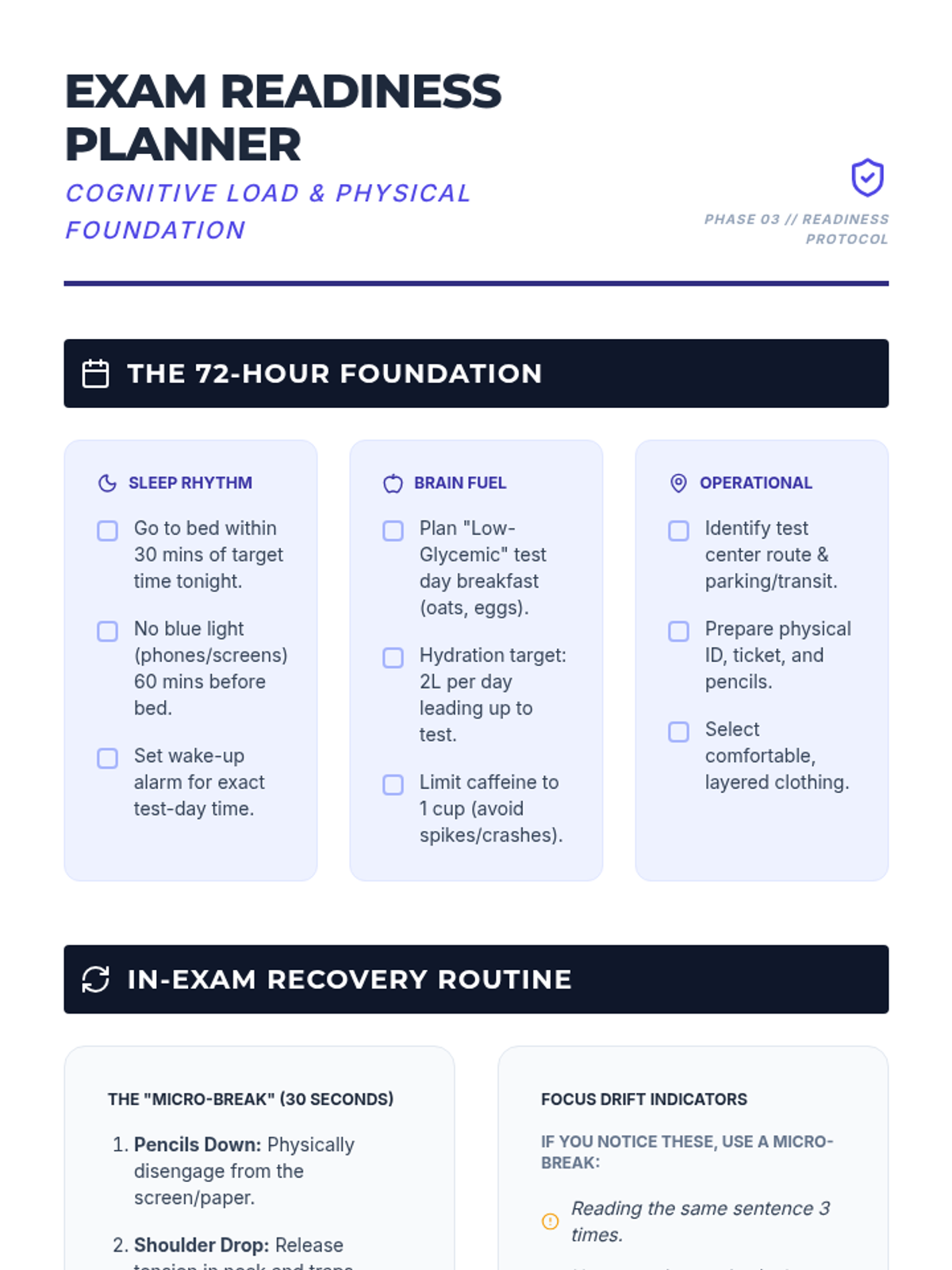
A comprehensive exam preparation and routine guide for students to manage anxiety and physical health leading up to a test.
Slides for the third lesson on managing test anxiety and mental fatigue, covering physiological resets and physical preparation.
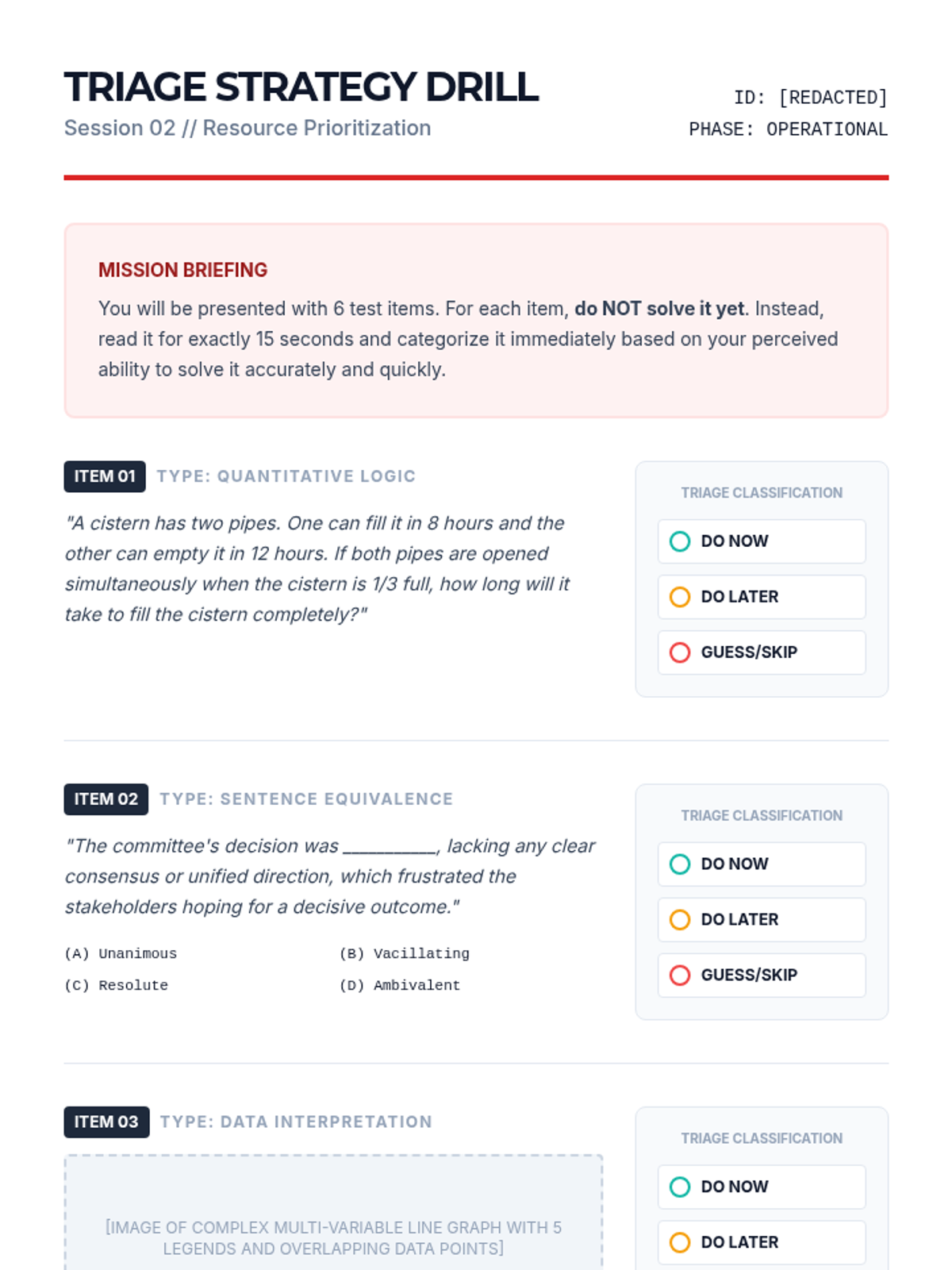
A triage classification drill for students to practice identifying easy, medium, and hard questions before solving them.
Slides for the second lesson on the triage method, featuring a simulation hook and the 3-category classification system.
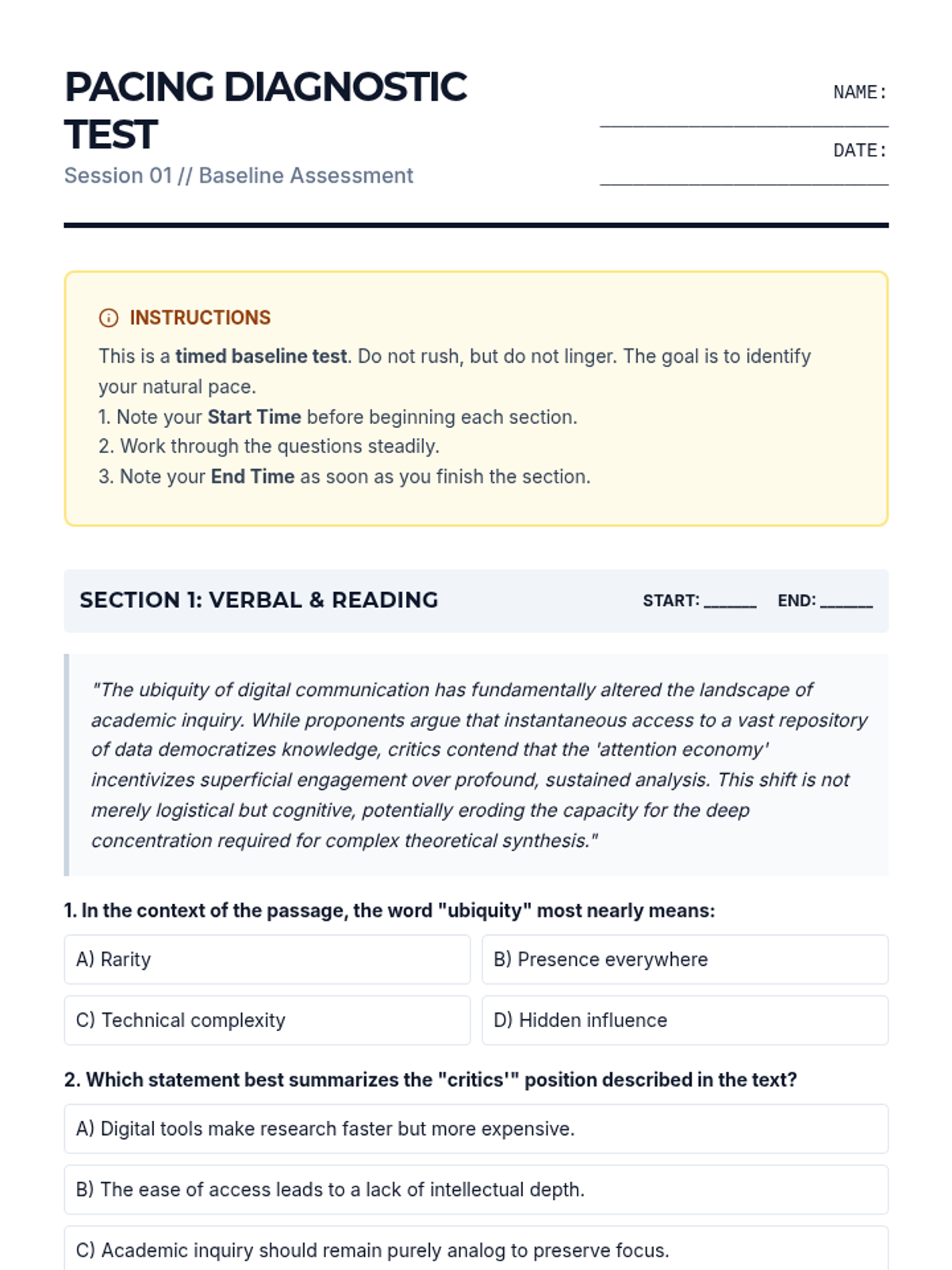
A diagnostic mini-test for students to measure their natural testing pace across different question types.
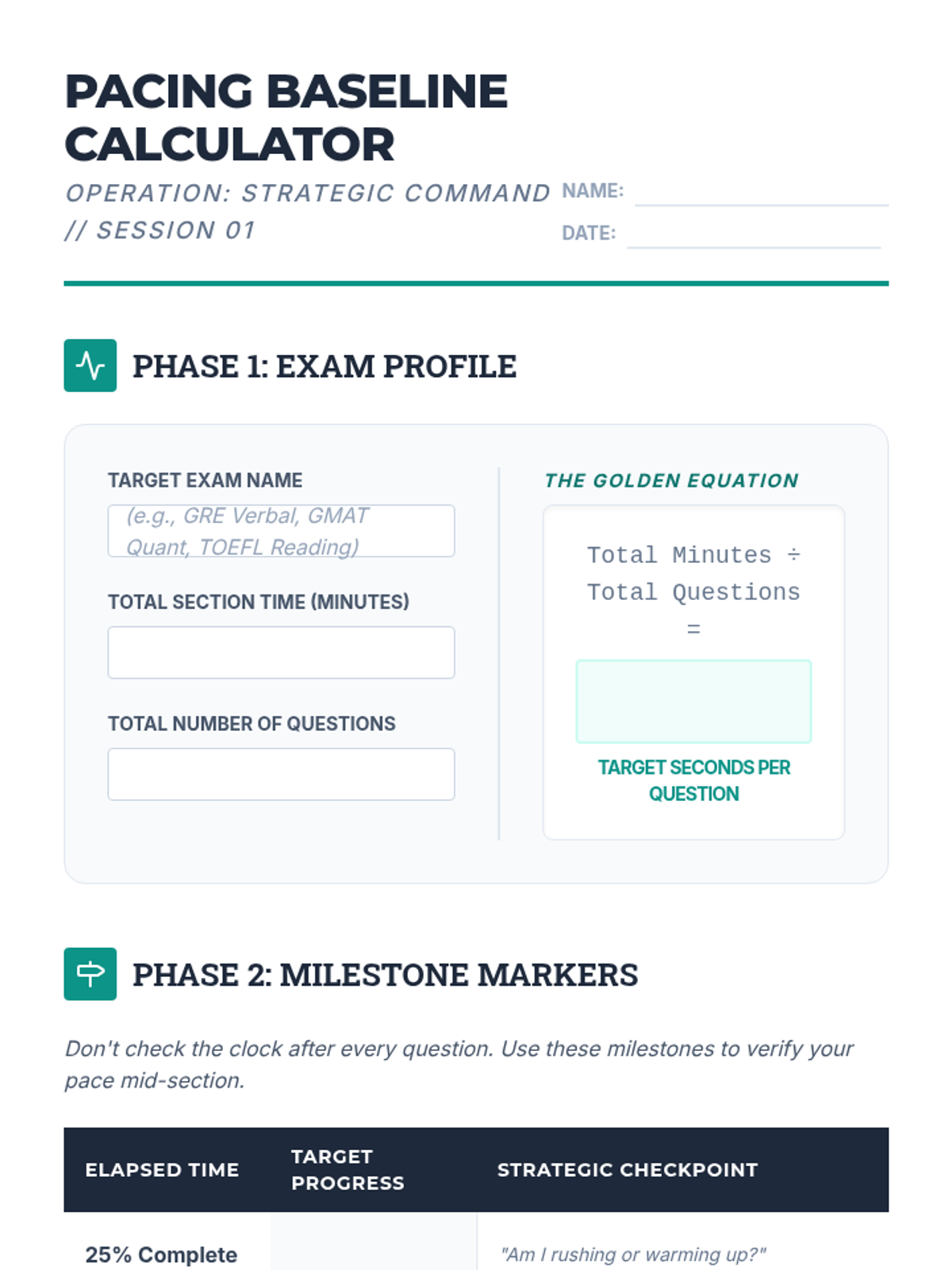
A calculation worksheet for students to determine their target pacing for specific high-stakes exams.
Introductory slides for the first lesson on pacing baselines, featuring a time perception hook and the logic of time allocation.
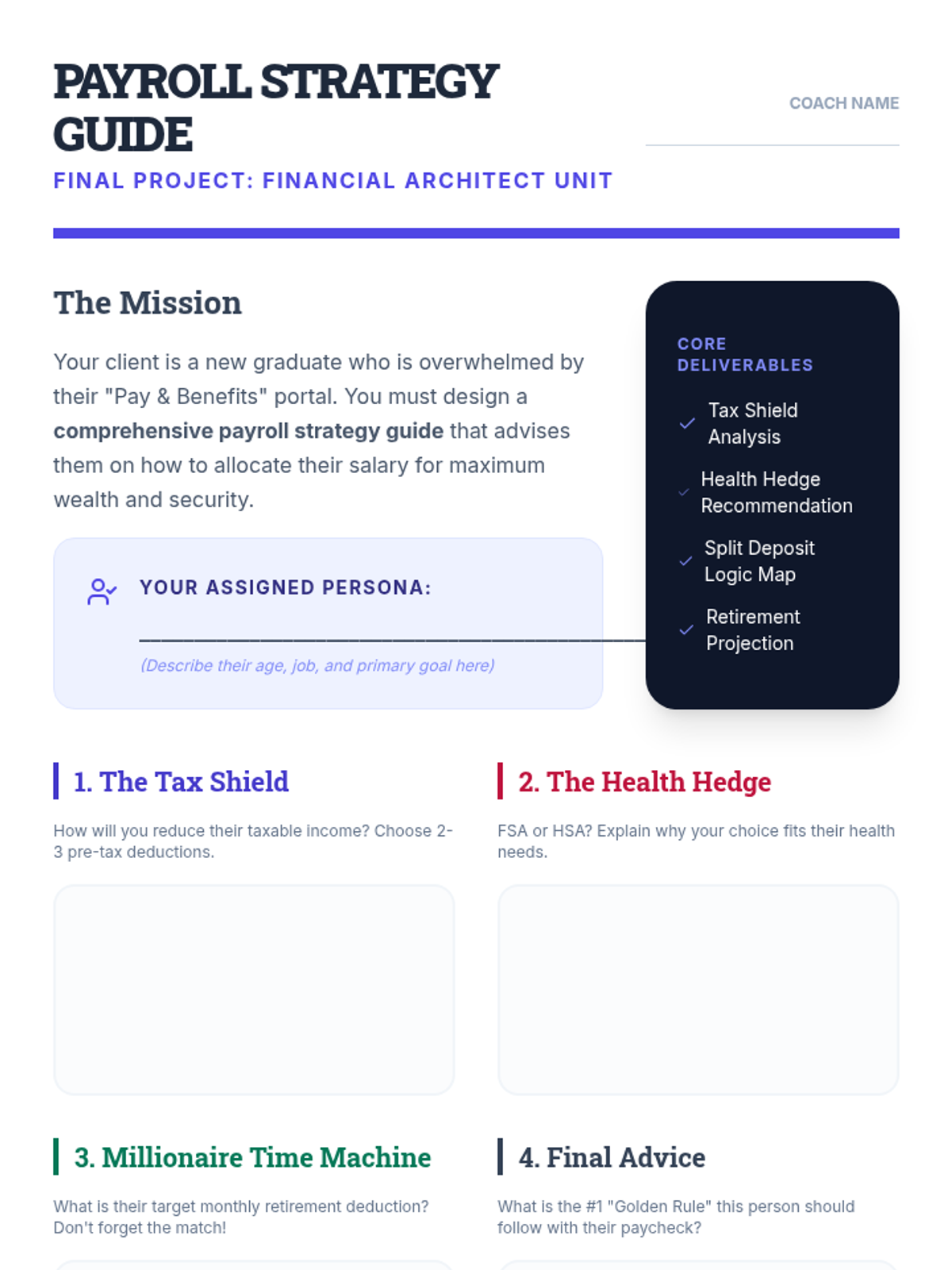
The culminating project handout where students synthesize their knowledge to create a comprehensive payroll strategy guide for a target persona.
Visual presentation for Lesson 5, introducing the culminating project where students act as financial coaches. Reviews key unit concepts like pre-tax savings, HSA benefits, and automation.
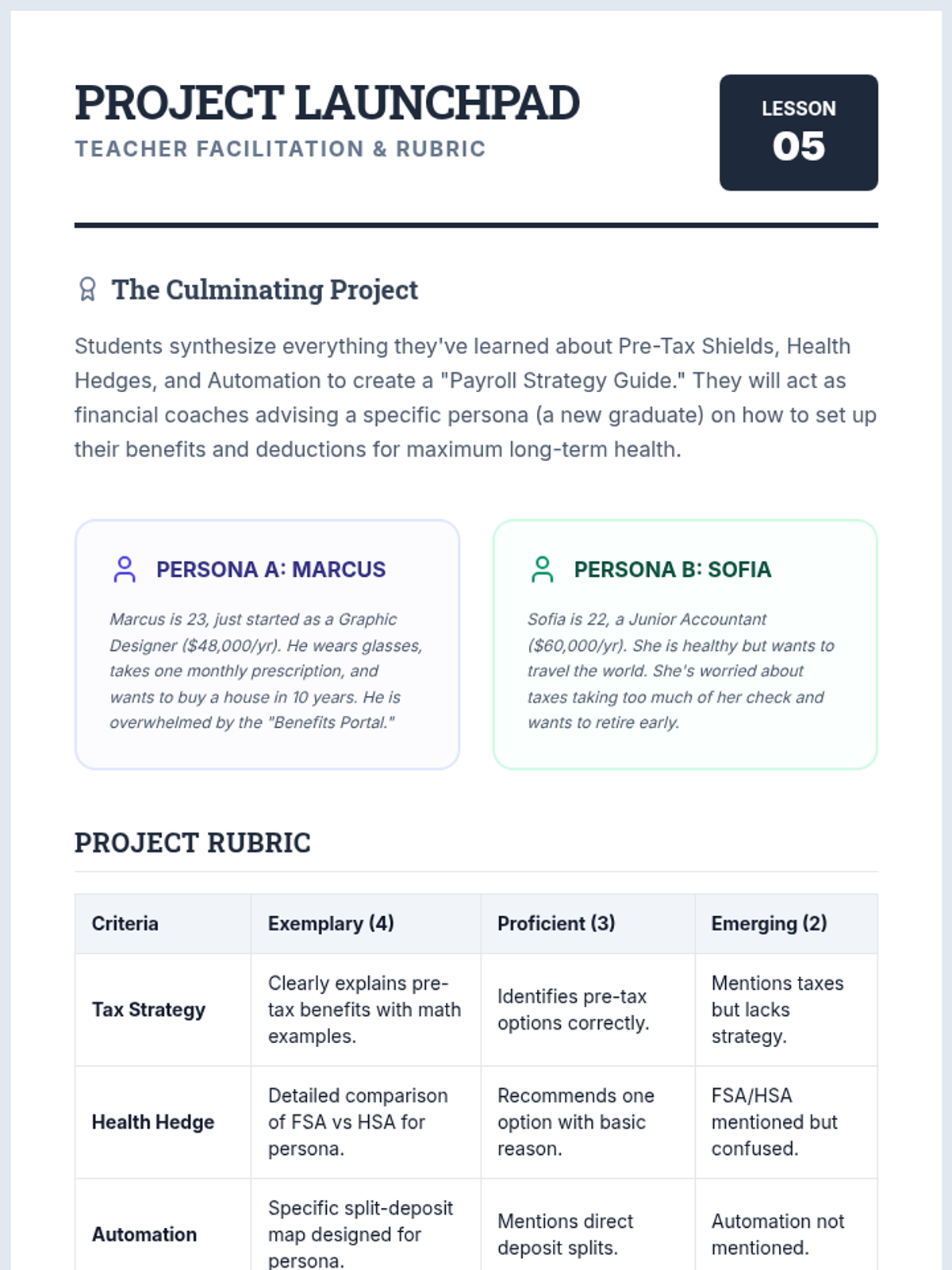
A comprehensive teacher guide for Lesson 5, including project rubrics, student personas for advising, and a facilitation plan for the final project.
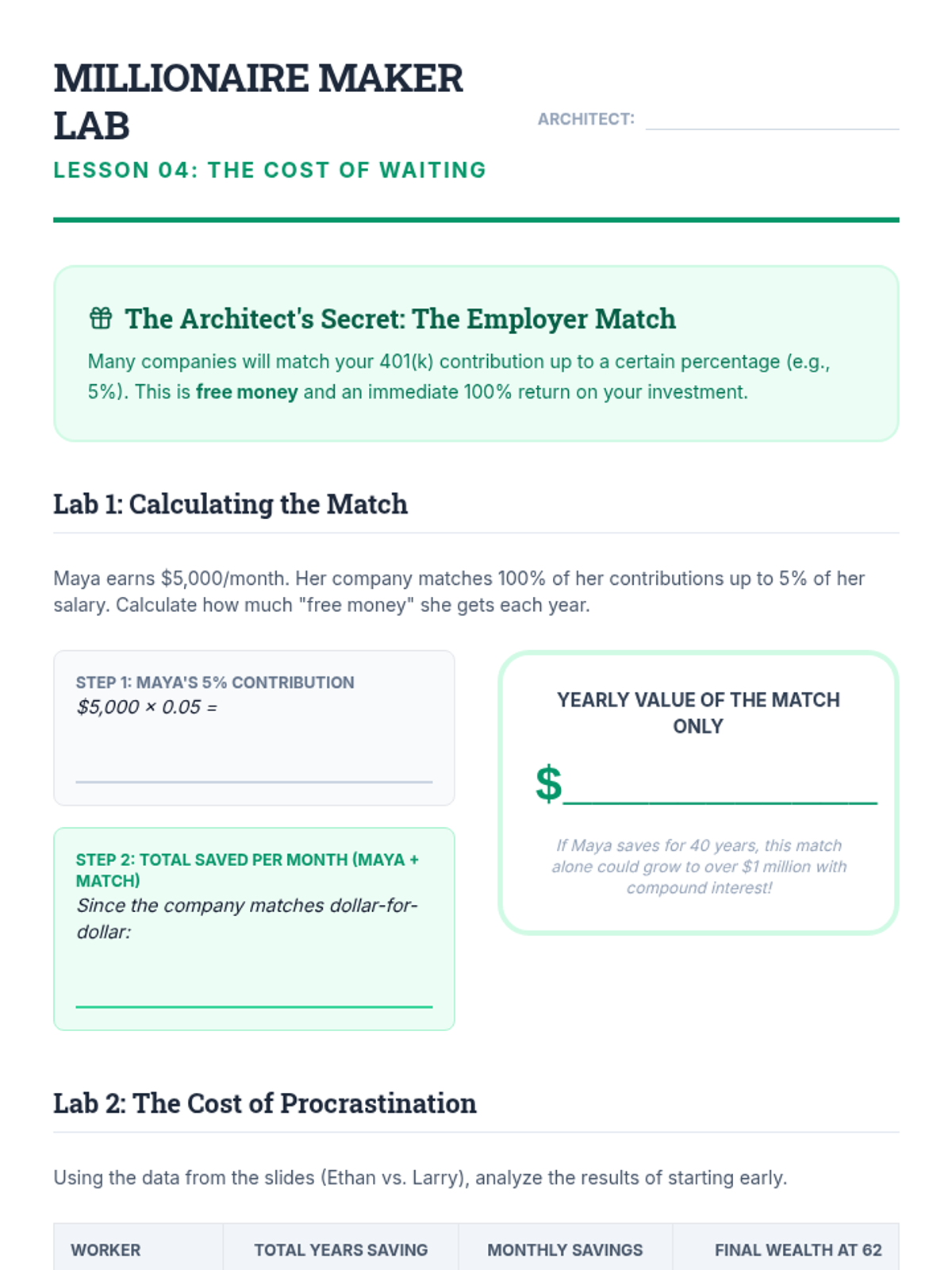
Student worksheet for Lesson 4, projecting the long-term growth of early retirement contributions and analyzing the impact of employer matching.
Visual presentation for Lesson 4, exploring the exponential power of compound interest through the "Penny Riddle" and the "Early vs Late" savings comparison.
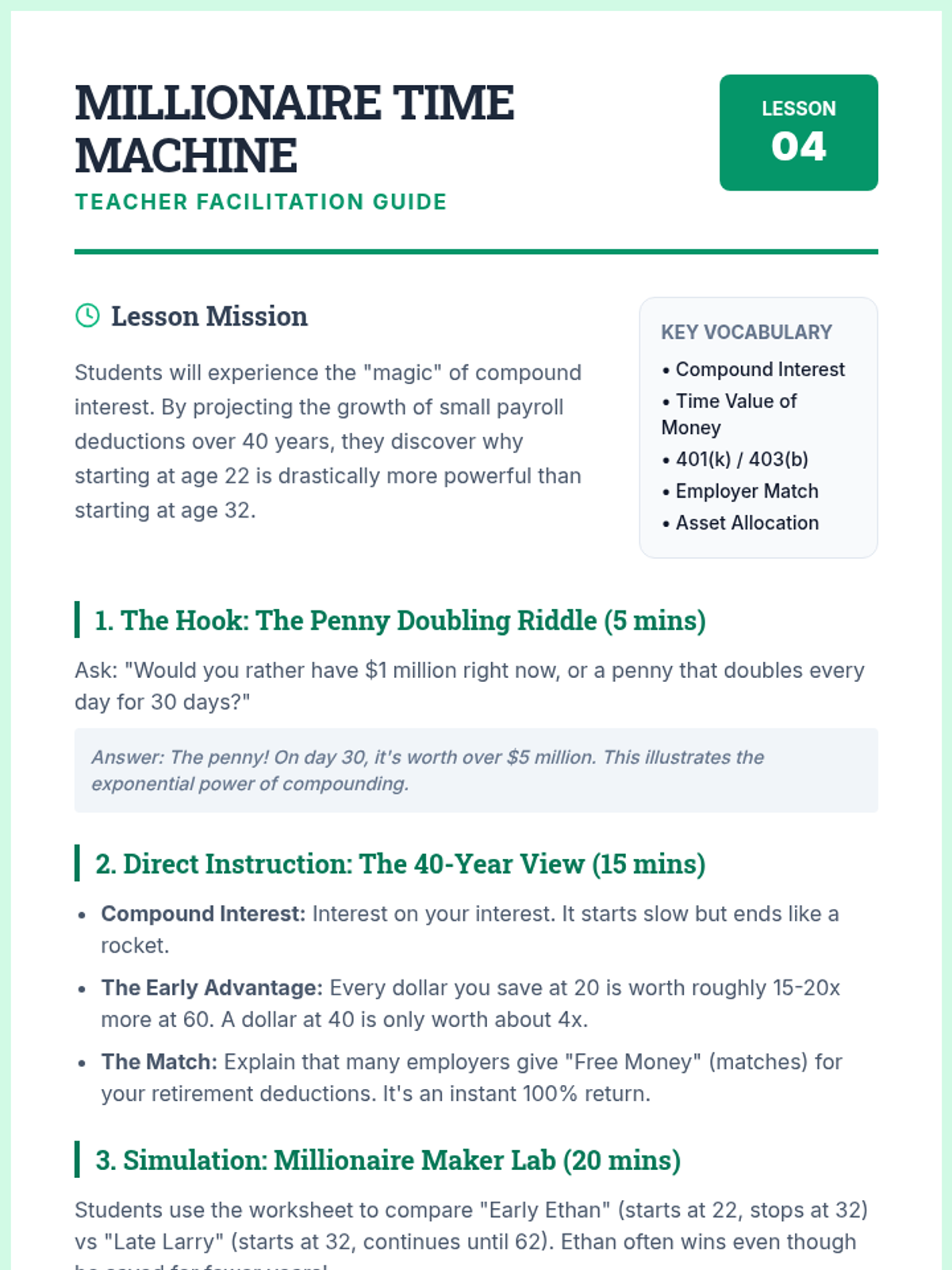
A comprehensive teacher guide for Lesson 4, including compound interest riddles, the 'Early vs Late' savings comparison, and a facilitation plan for retirement simulations.
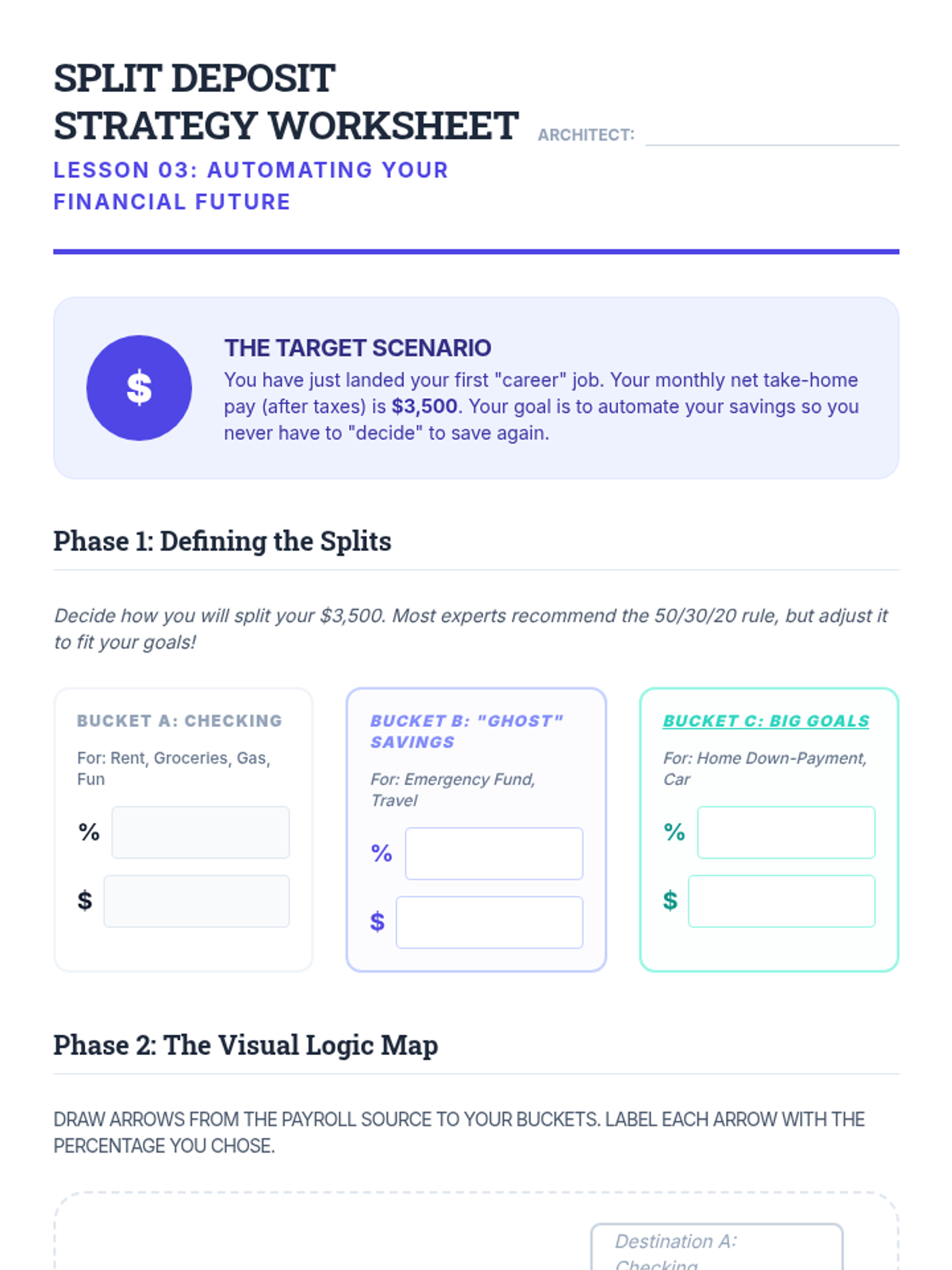
Student worksheet for Lesson 3, designing a split-deposit strategy to ensure consistent savings without manual effort.
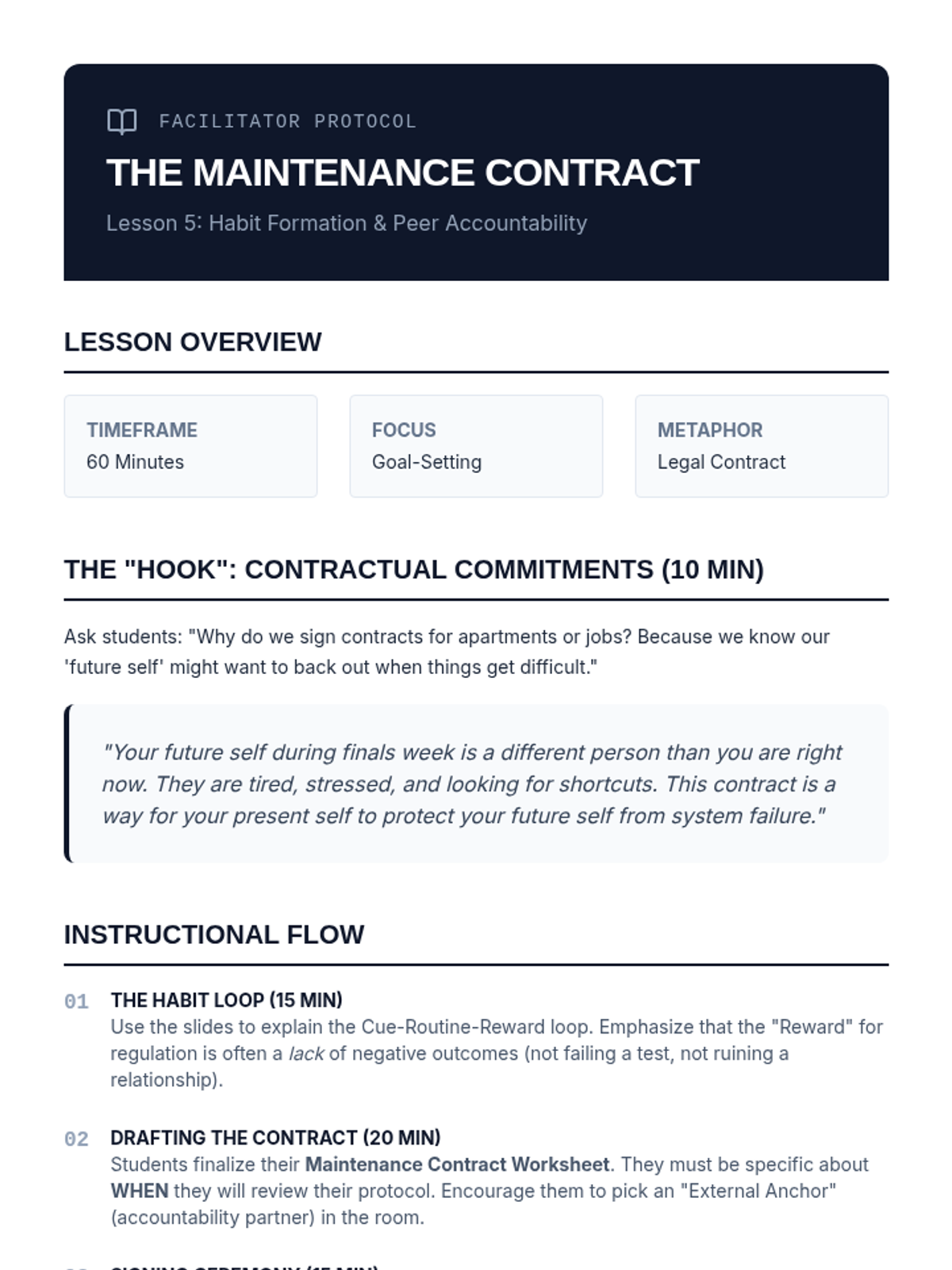
Facilitator guide for Lesson 5, outlining the instructional flow, discussion prompts, and key concepts for the maintenance contract and habit formation.
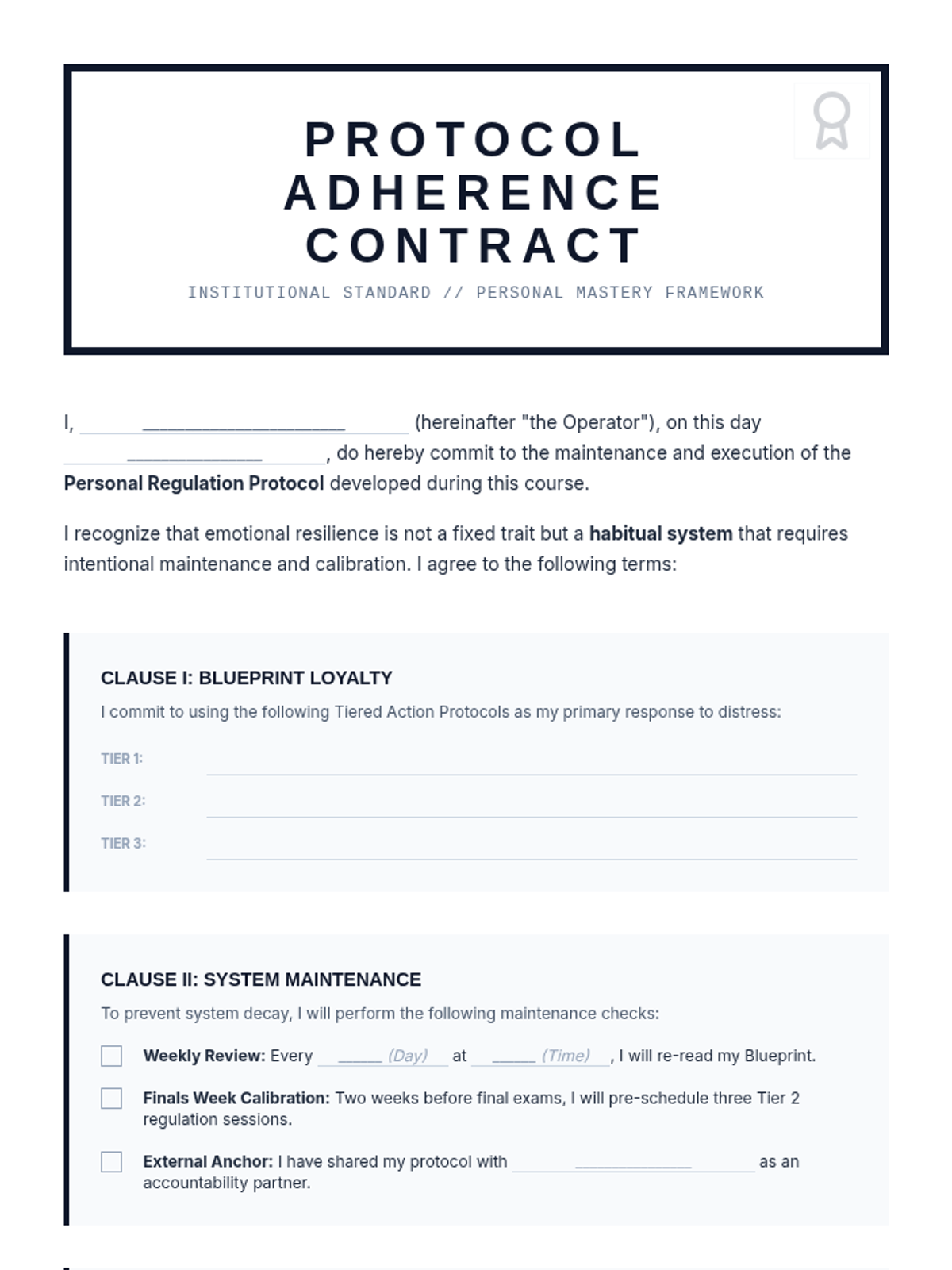
A formal maintenance contract for students to commit to their regulation protocols, establishing maintenance schedules and accountability partners.
Final slide deck for Lesson 5, focusing on habit formation, maintenance schedules, and the commitment to protocol adherence.
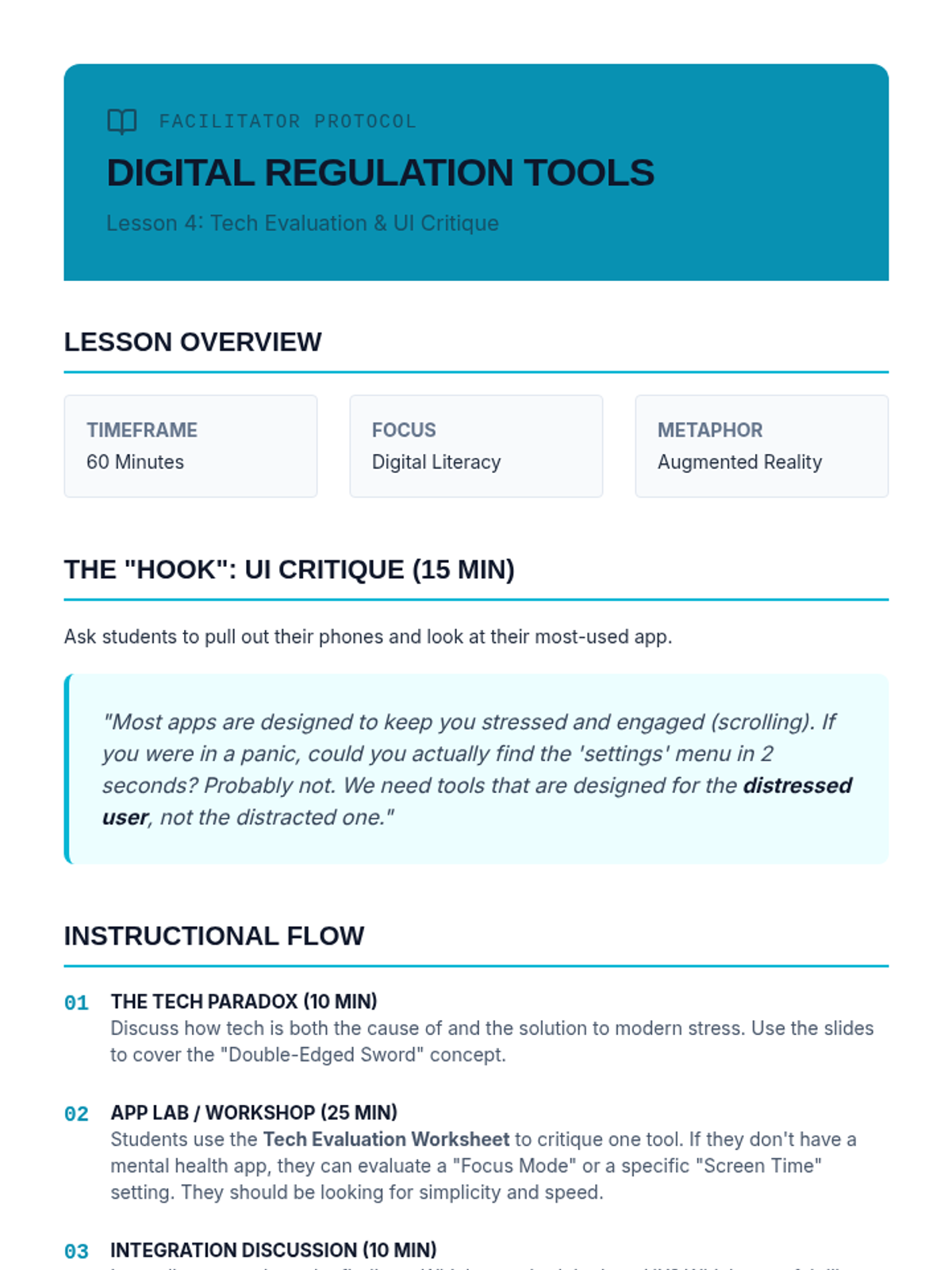
Facilitator guide for Lesson 4, outlining the instructional flow, discussion prompts, and key concepts for the digital tool evaluation and UI critique.
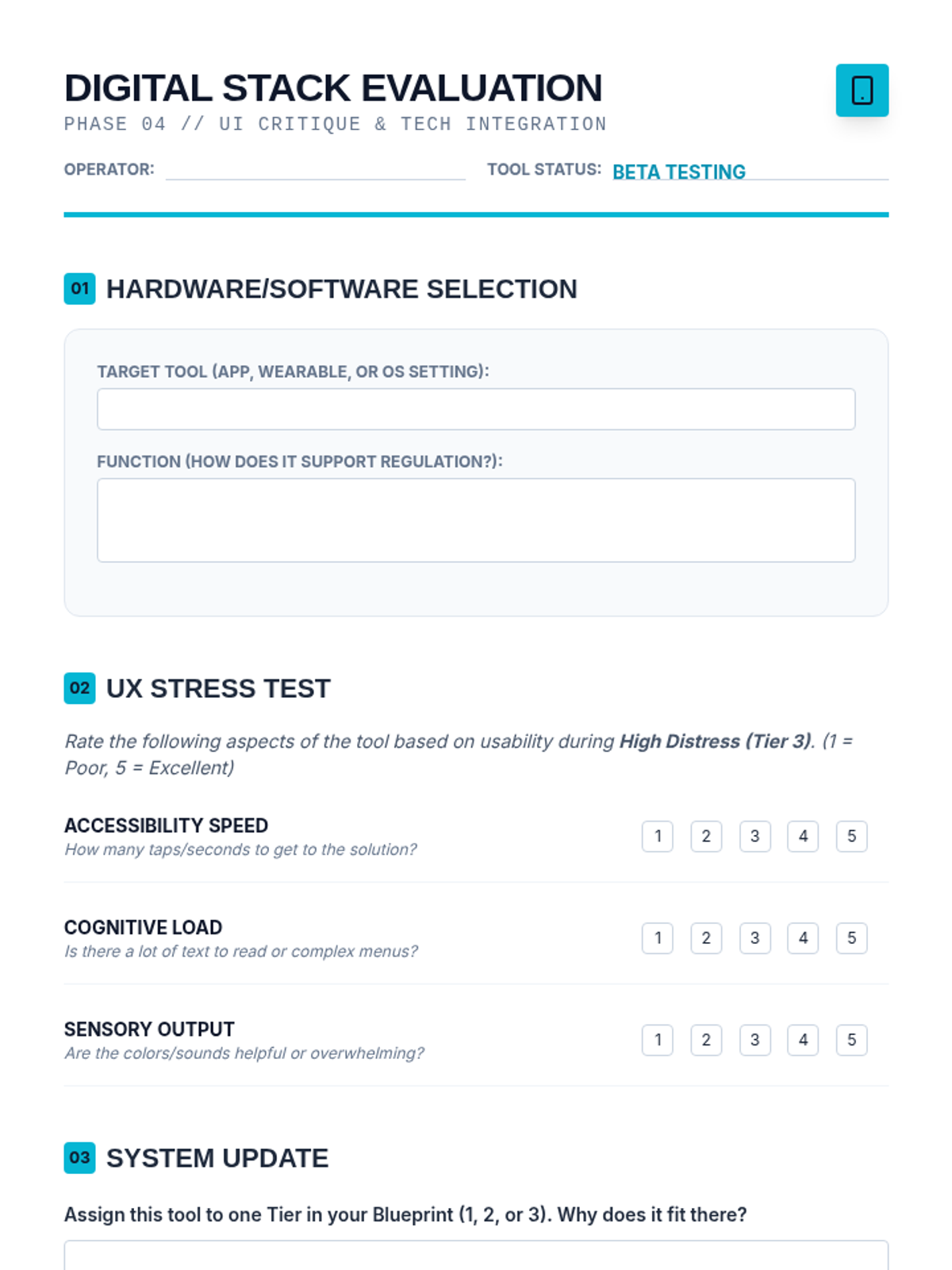
Worksheet for students to evaluate mental health apps and digital tools, specifically focusing on their user interface and accessibility during high-stress moments.
Slide deck for Lesson 4, introducing the concepts of digital support tools, UI critique for distress, and integrating tech into regulation protocols.
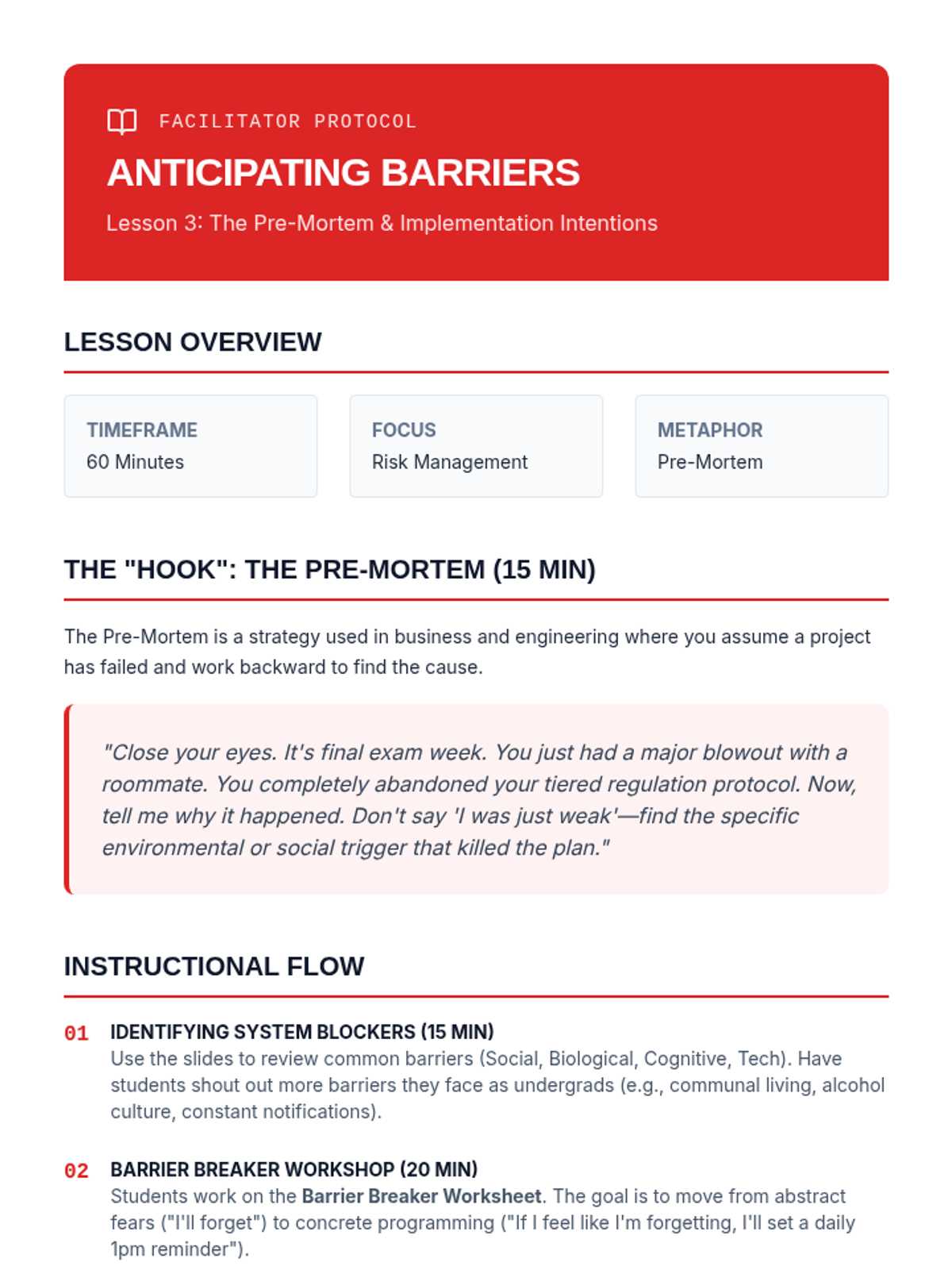
Facilitator guide for Lesson 3, outlining the instructional flow, discussion prompts, and key concepts for the "pre-mortem" and "If-Then" planning.
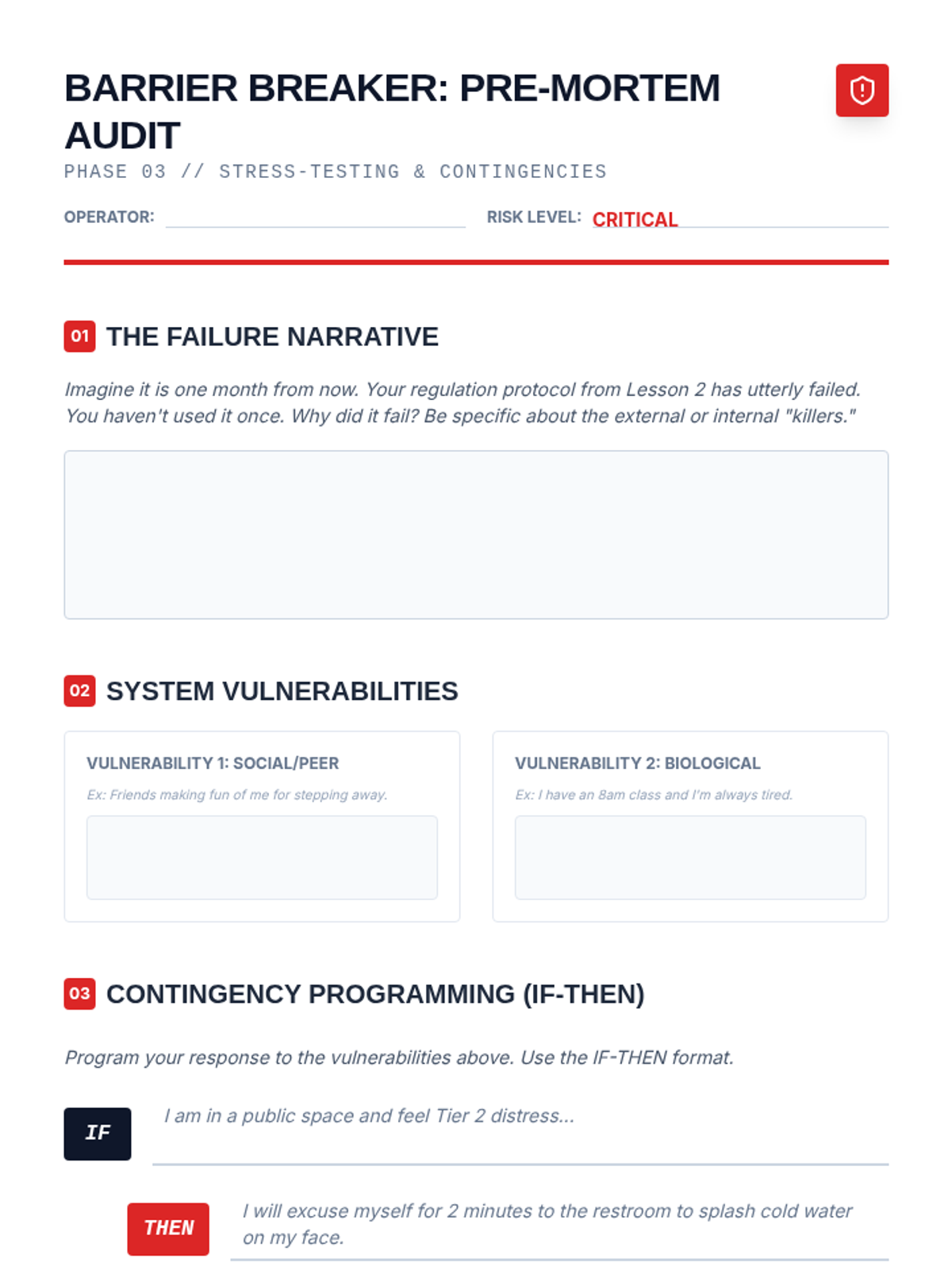
Worksheet for identifying potential obstacles and creating 'If-Then' implementation intentions to ensure protocol adherence during distress.
Slide deck for Lesson 3, introducing the concept of the "pre-mortem" and "If-Then" implementation intentions to overcome barriers to regulation.
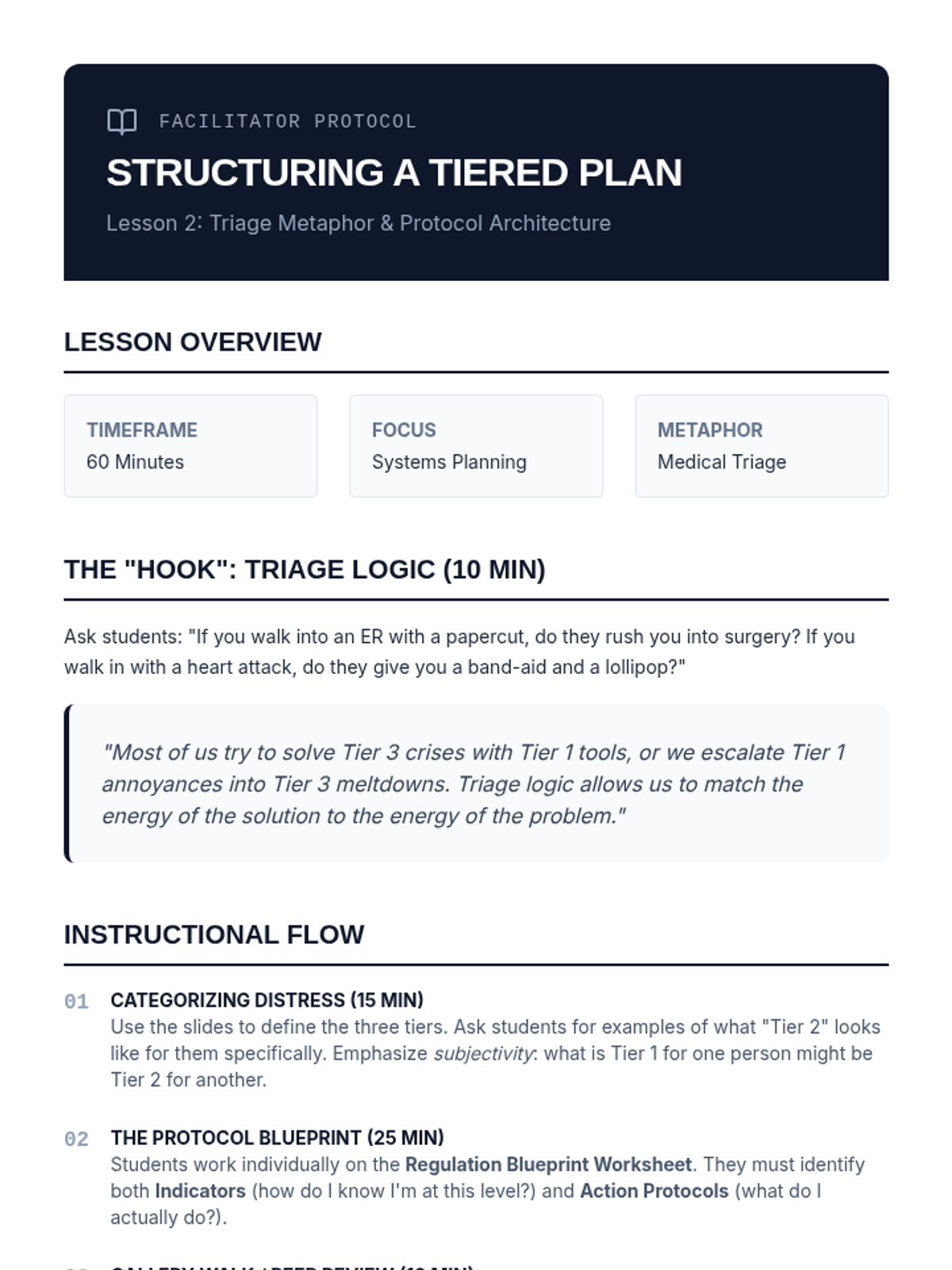
Facilitator guide for Lesson 2, outlining the instructional flow, discussion prompts, and key concepts for the tiered regulation plan.
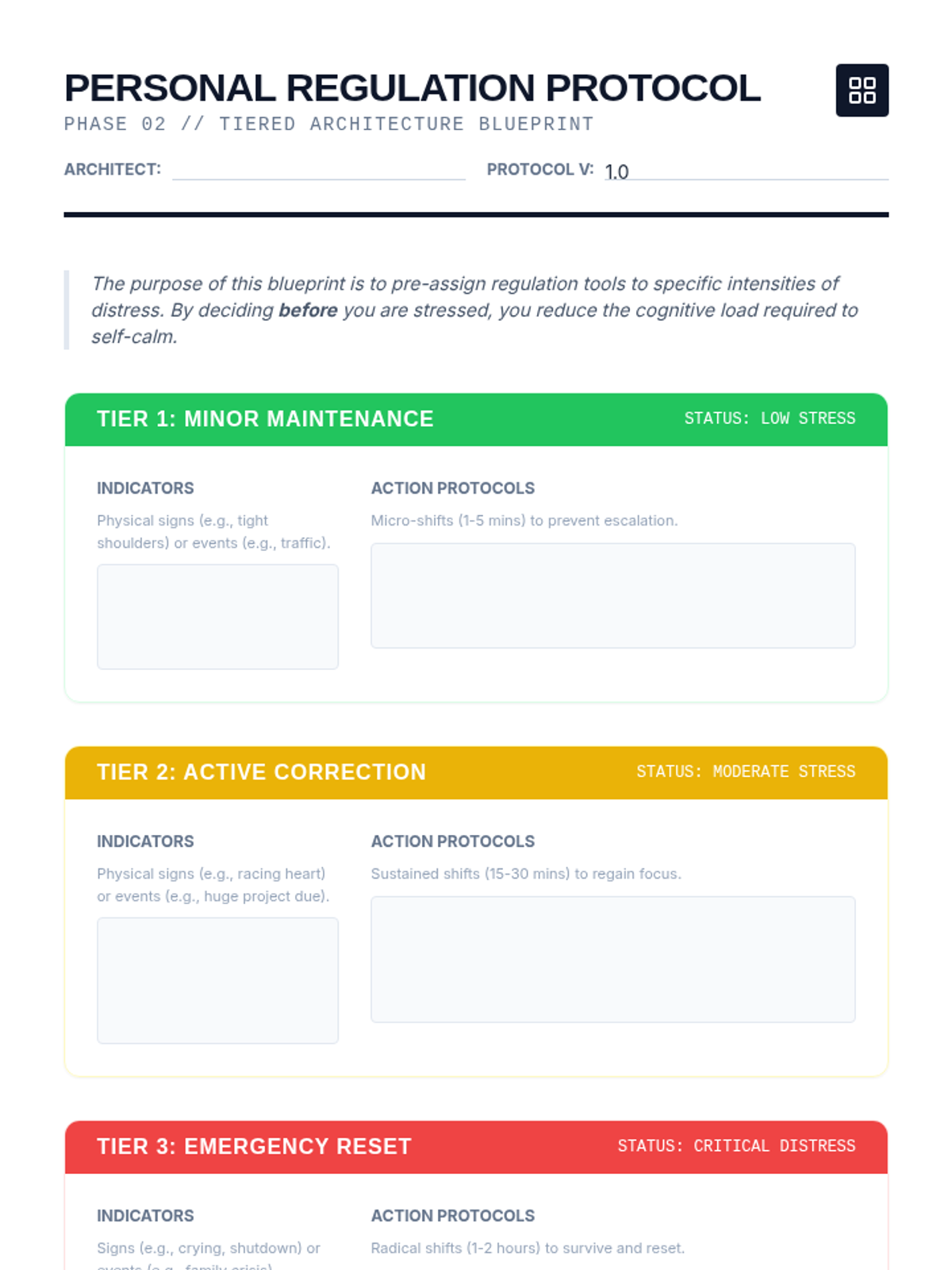
A comprehensive design worksheet for students to map out their three-tiered emotional regulation plan, including indicators and specific action protocols.
Slide presentation for Lesson 5 focusing on the transition from acute therapy to long-term habit formation and relapse prevention strategies.
Slide deck for Lesson 2, introducing the triage metaphor and the three-tiered system for emotional regulation.
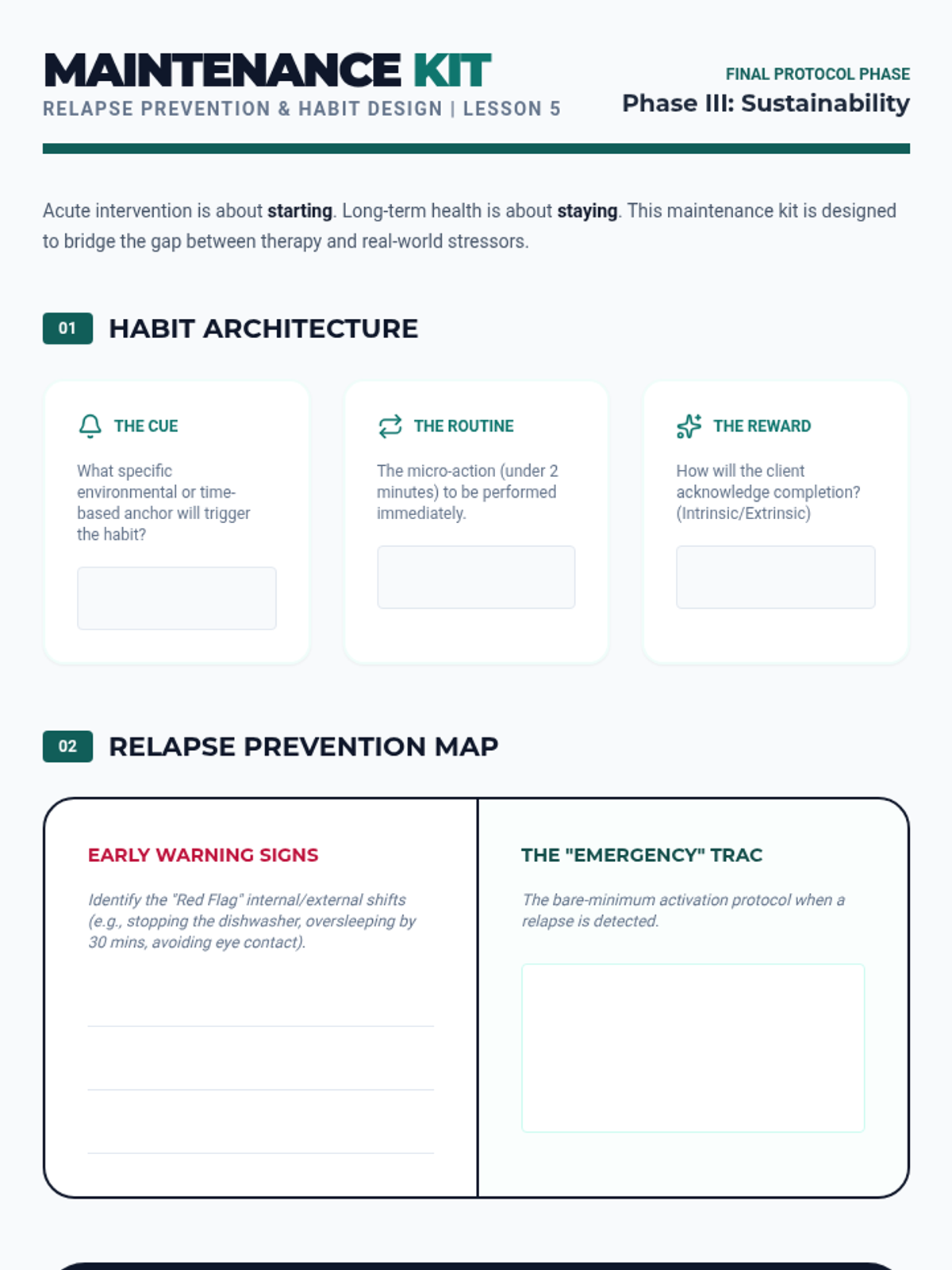
Final project worksheet for Lesson 5, helping students design a habit architecture and a comprehensive relapse prevention plan for clinical maintenance.
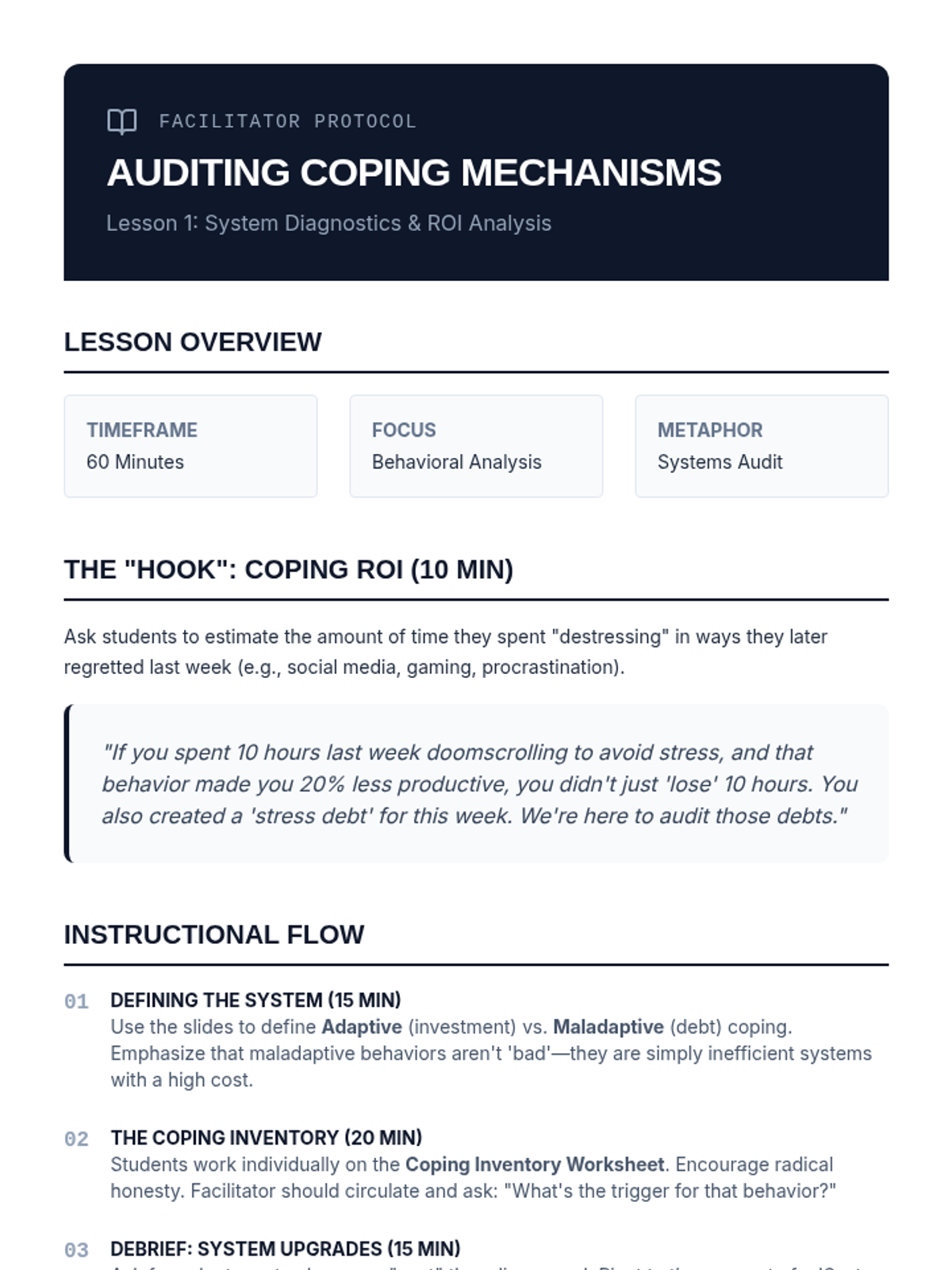
Facilitator guide for Lesson 1, outlining the instructional flow, discussion prompts, and key concepts for the coping mechanism audit.
Presentation for Lesson 4 exploring data analysis in therapy, including mood-activity correlations and troubleshooting unexpected outcomes.
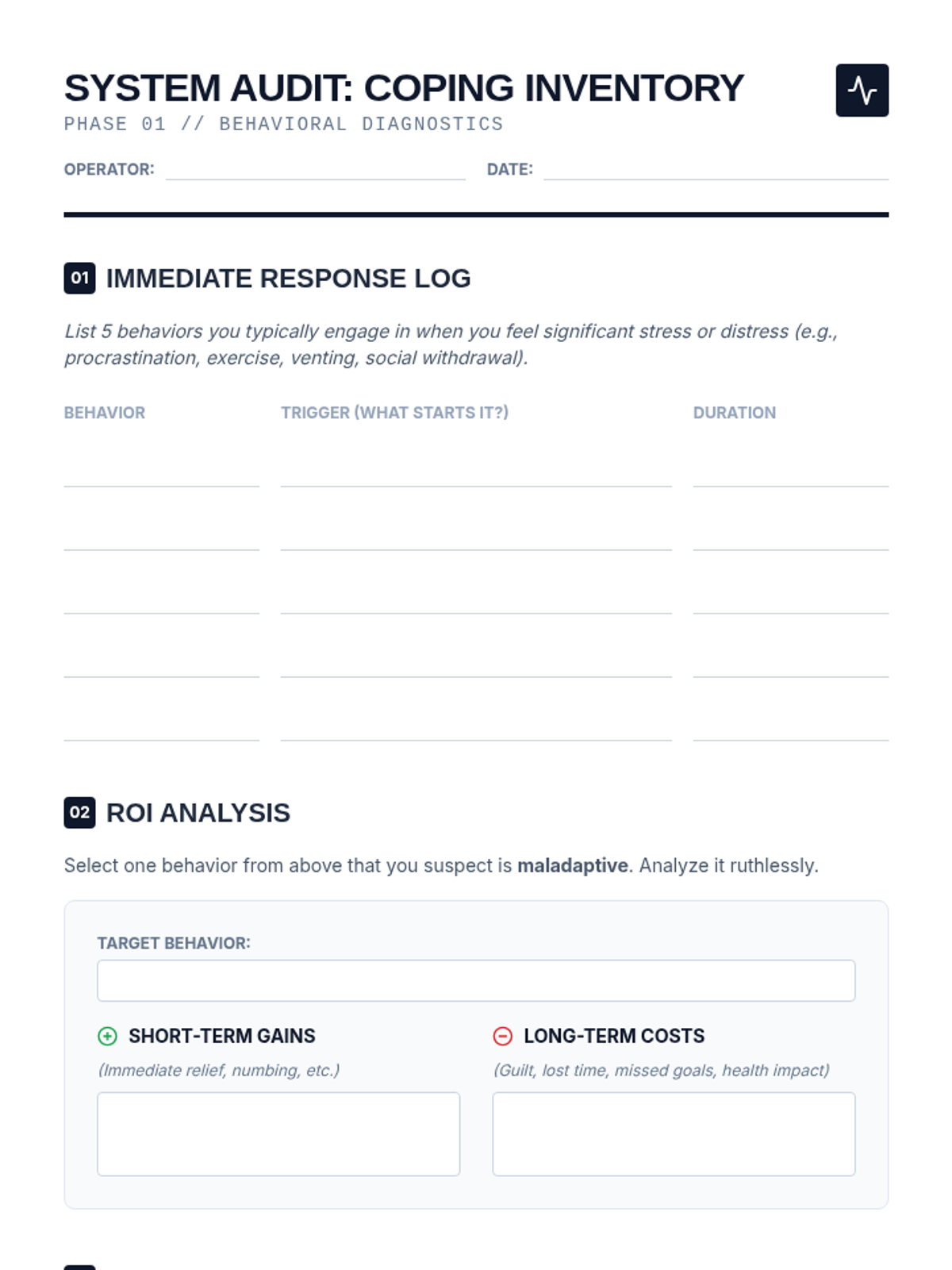
A structured worksheet for students to inventory their current stress responses and perform a cost-benefit analysis of maladaptive behaviors.
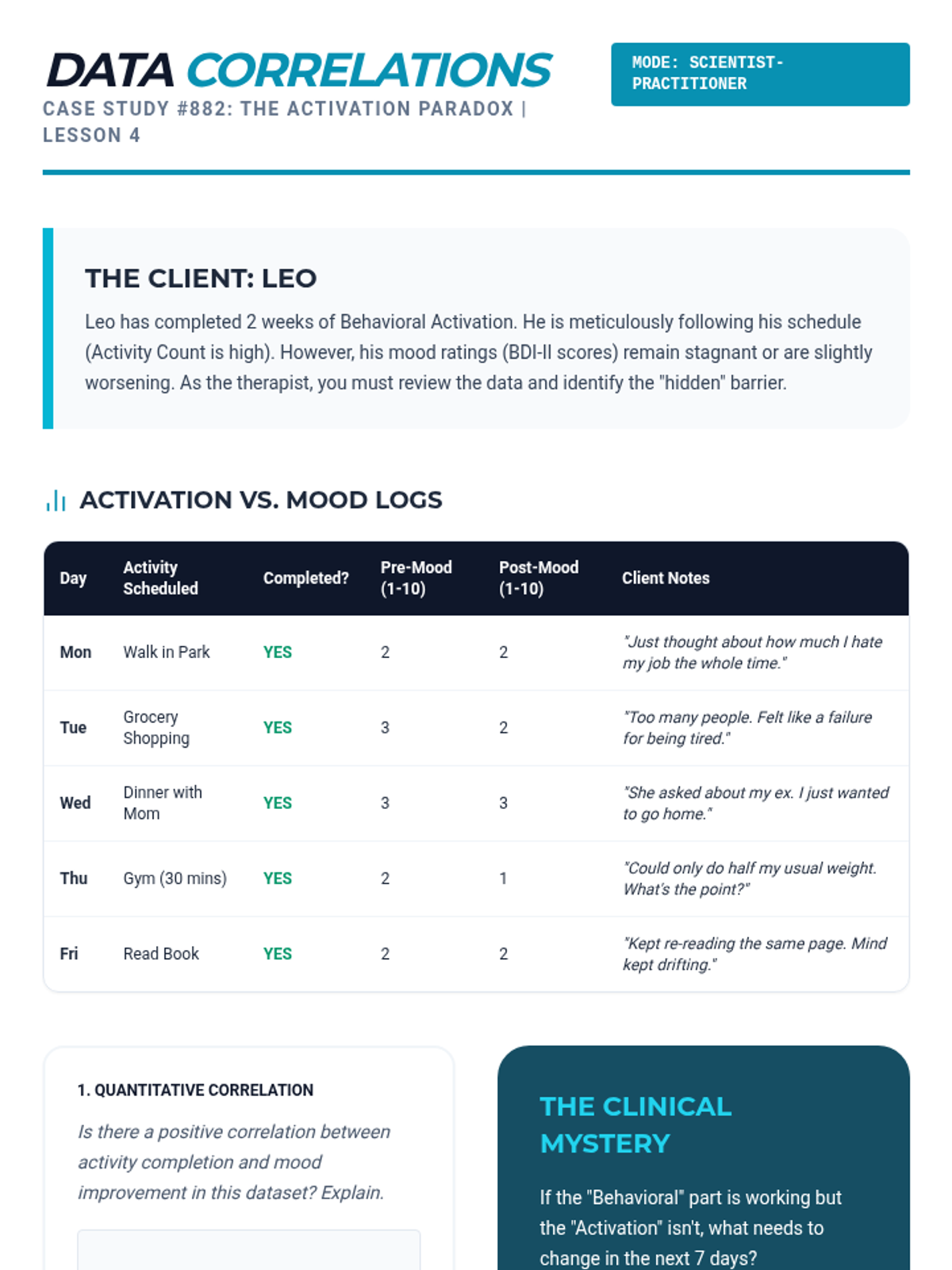
Case study worksheet for Lesson 4, requiring students to analyze clinical data and identify barriers to activation despite high activity levels.
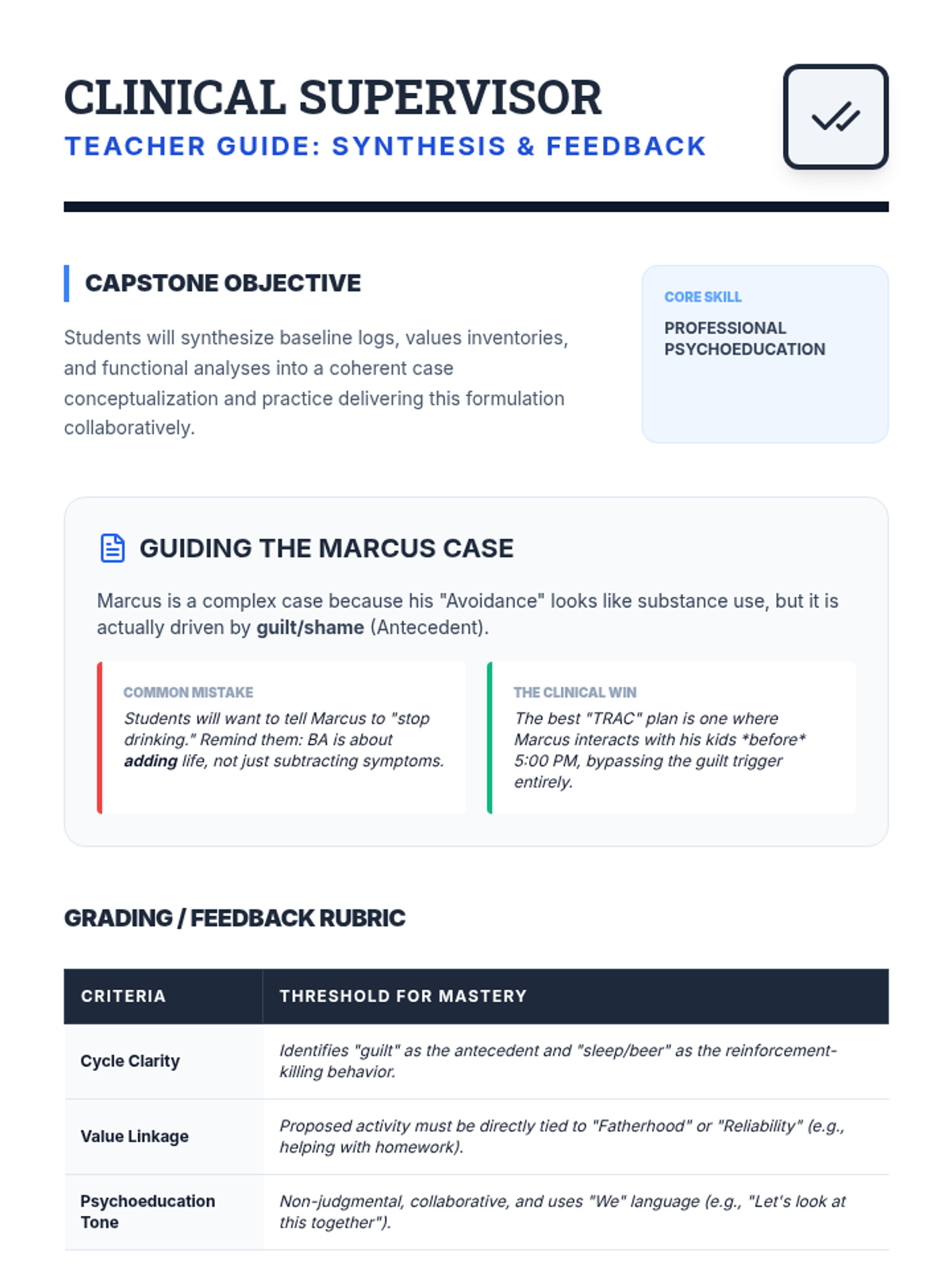
Final teacher guide for the sequence, providing grading rubrics for the Marcus case project and tips for facilitating collaborative psychoeducation.
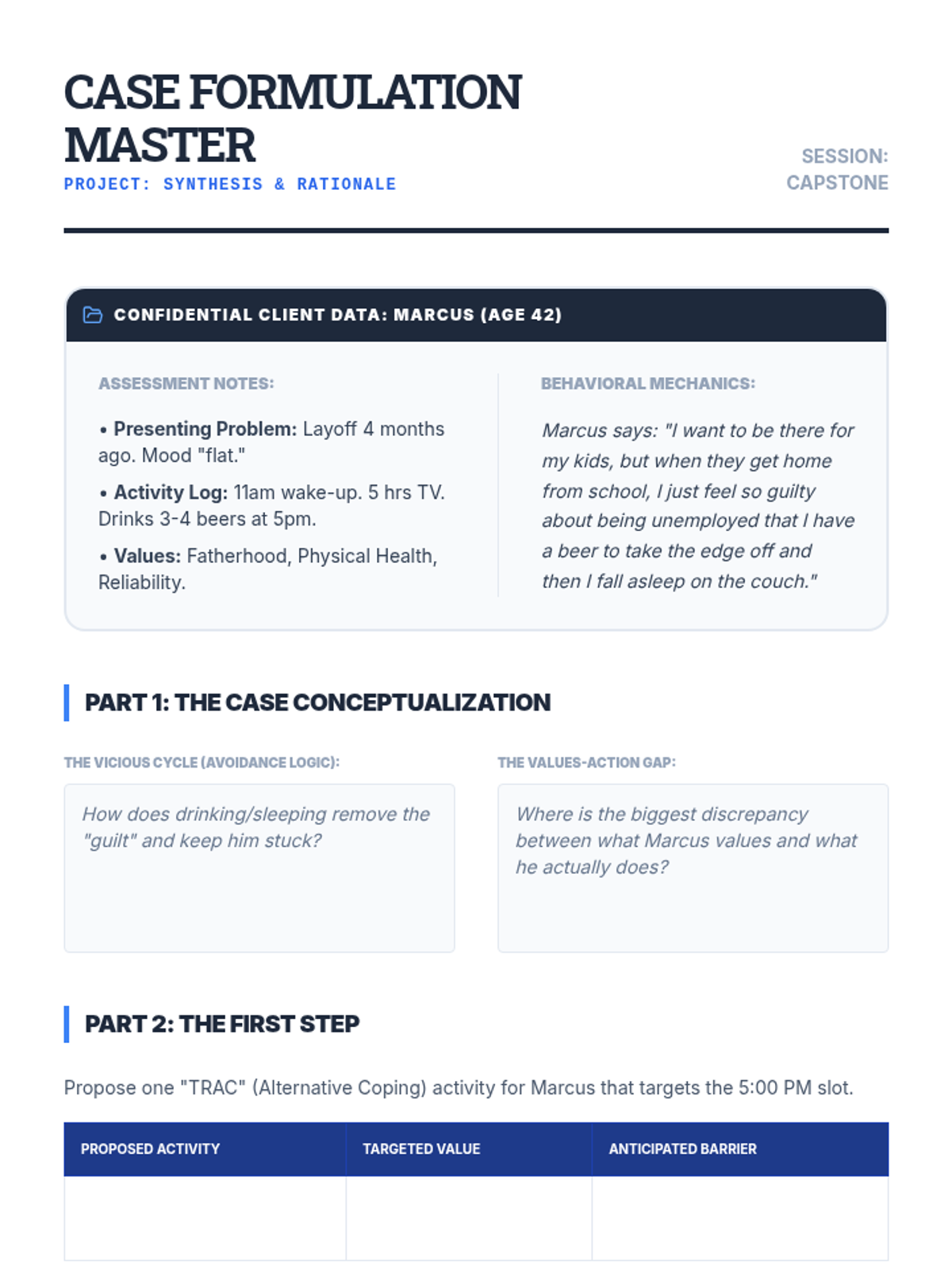
A final project worksheet for students to synthesize all course concepts into a case formulation for a fictional client, Marcus, including a treatment rationale and psychoeducation script.
Final slides for Lesson 5, focusing on synthesizing assessment data into a case conceptualization and delivering collaborative feedback to clients.
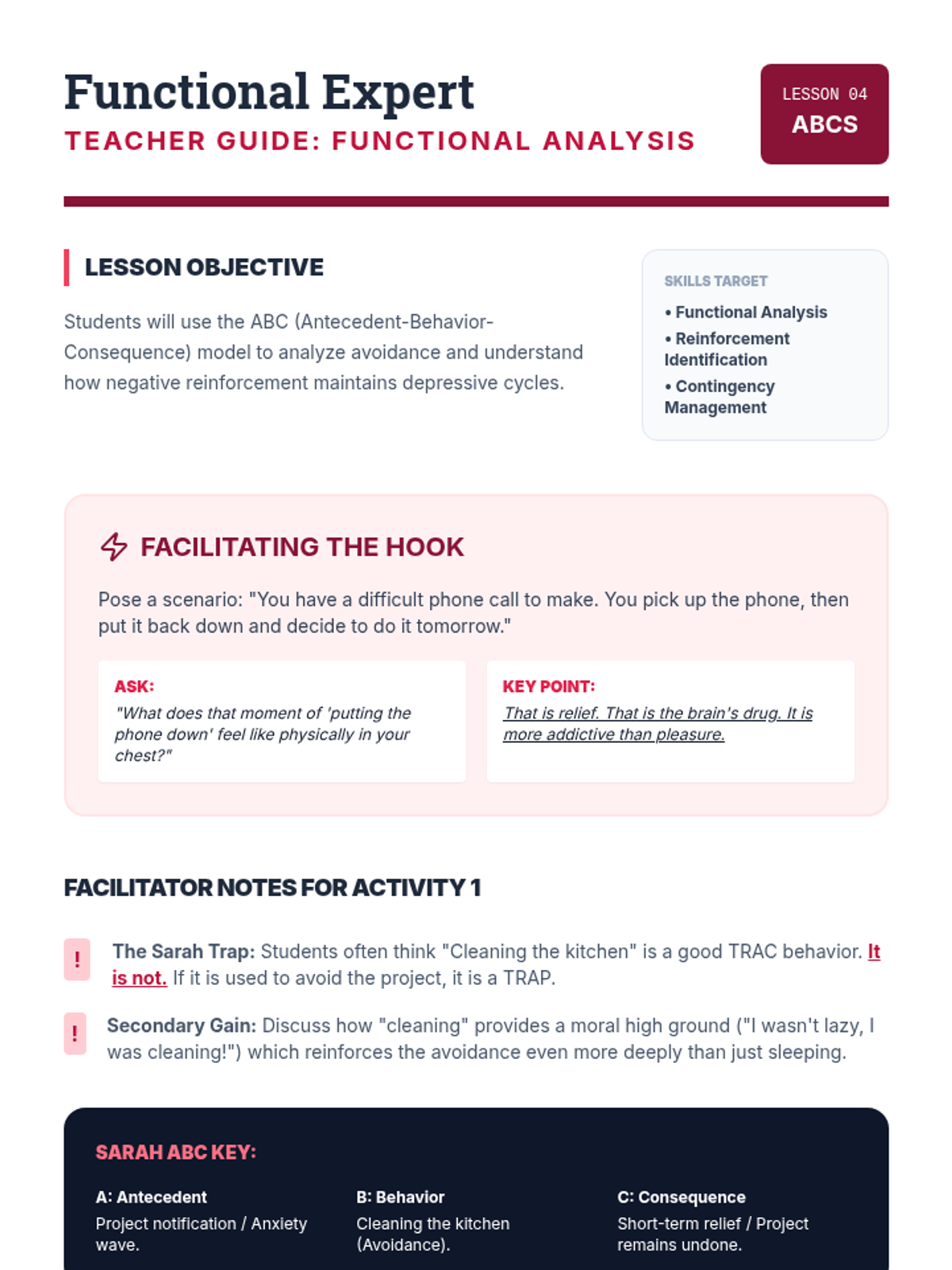
Teacher guide for Lesson 4, focusing on facilitating the "Relief vs. Reward" hook and deconstructing the "Sarah" case study to identify complex avoidance patterns.
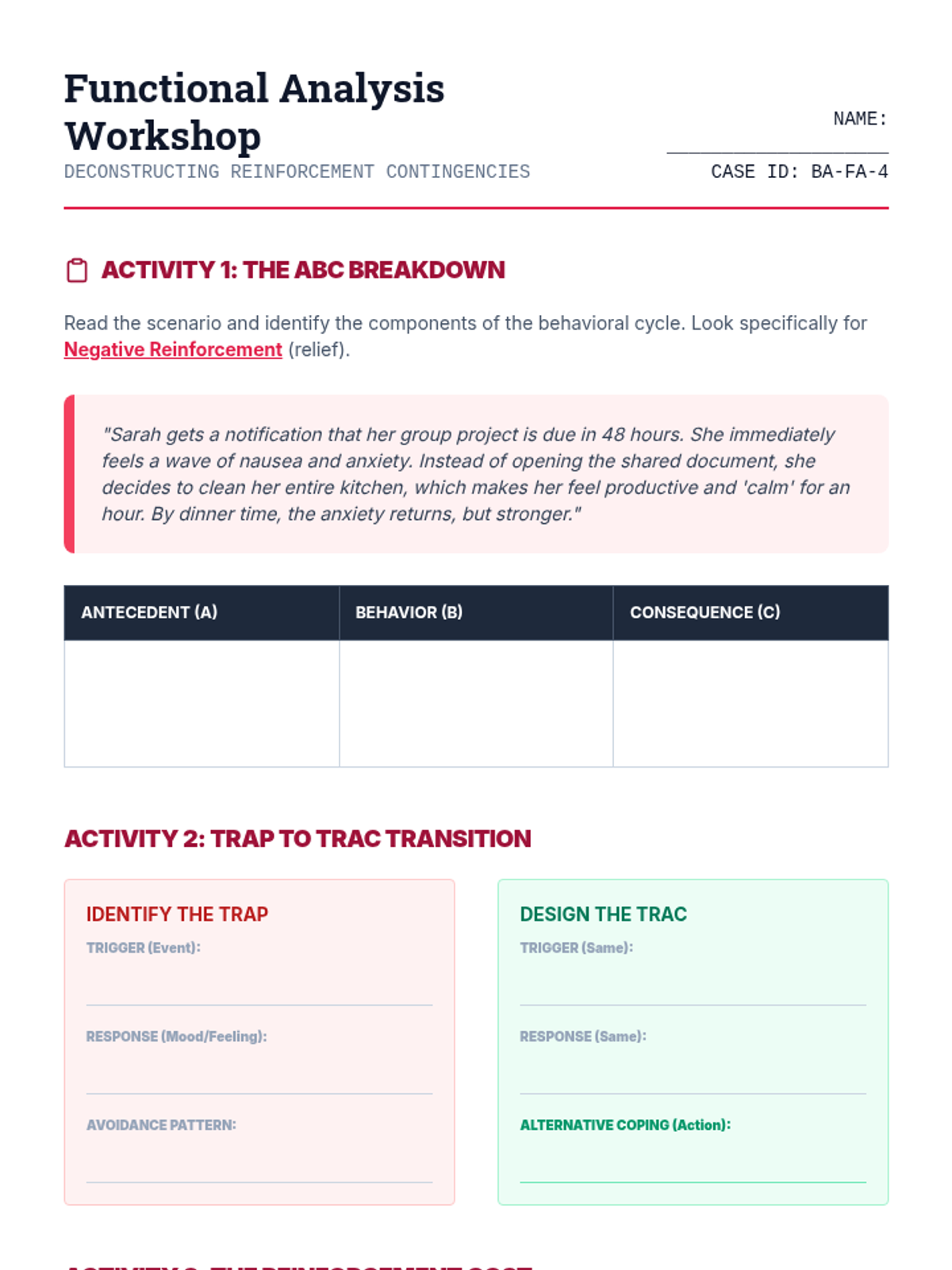
A functional analysis worksheet for students, featuring an ABC table activity, a TRAP vs. TRAC cycle transformation, and clinical reasoning on reinforcement costs.
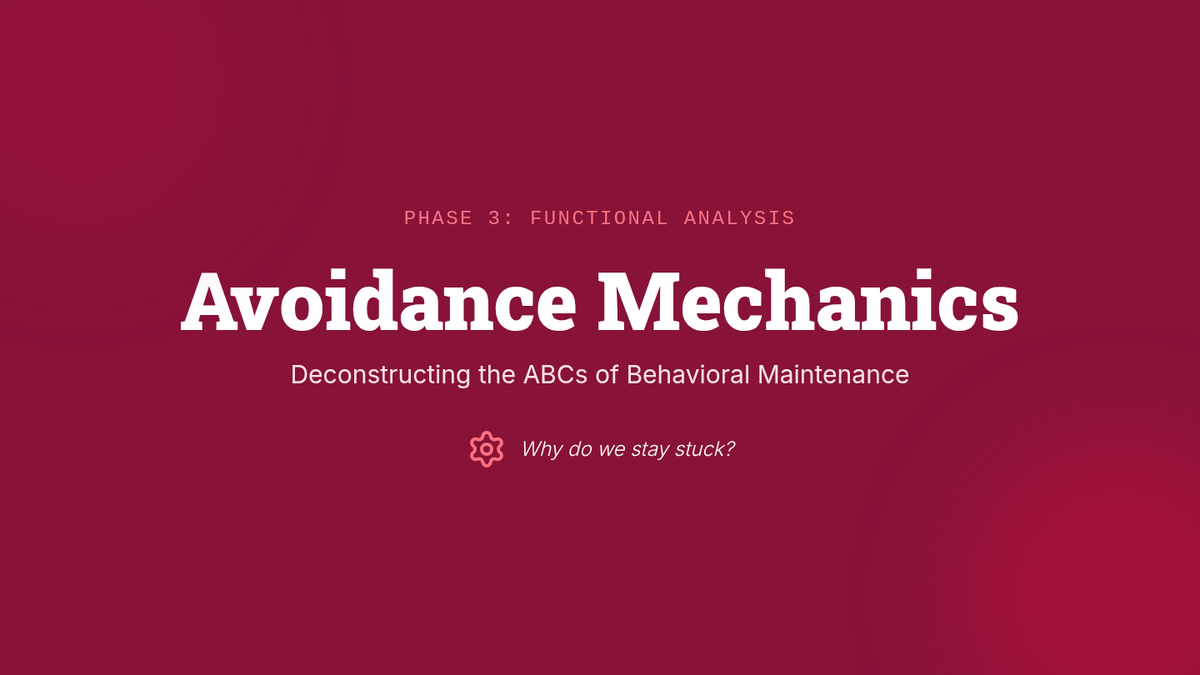
Slides for Lesson 4 focusing on the ABC model of behavior, negative reinforcement in avoidance, and the TRAP vs. TRAC framework for breaking cycles.
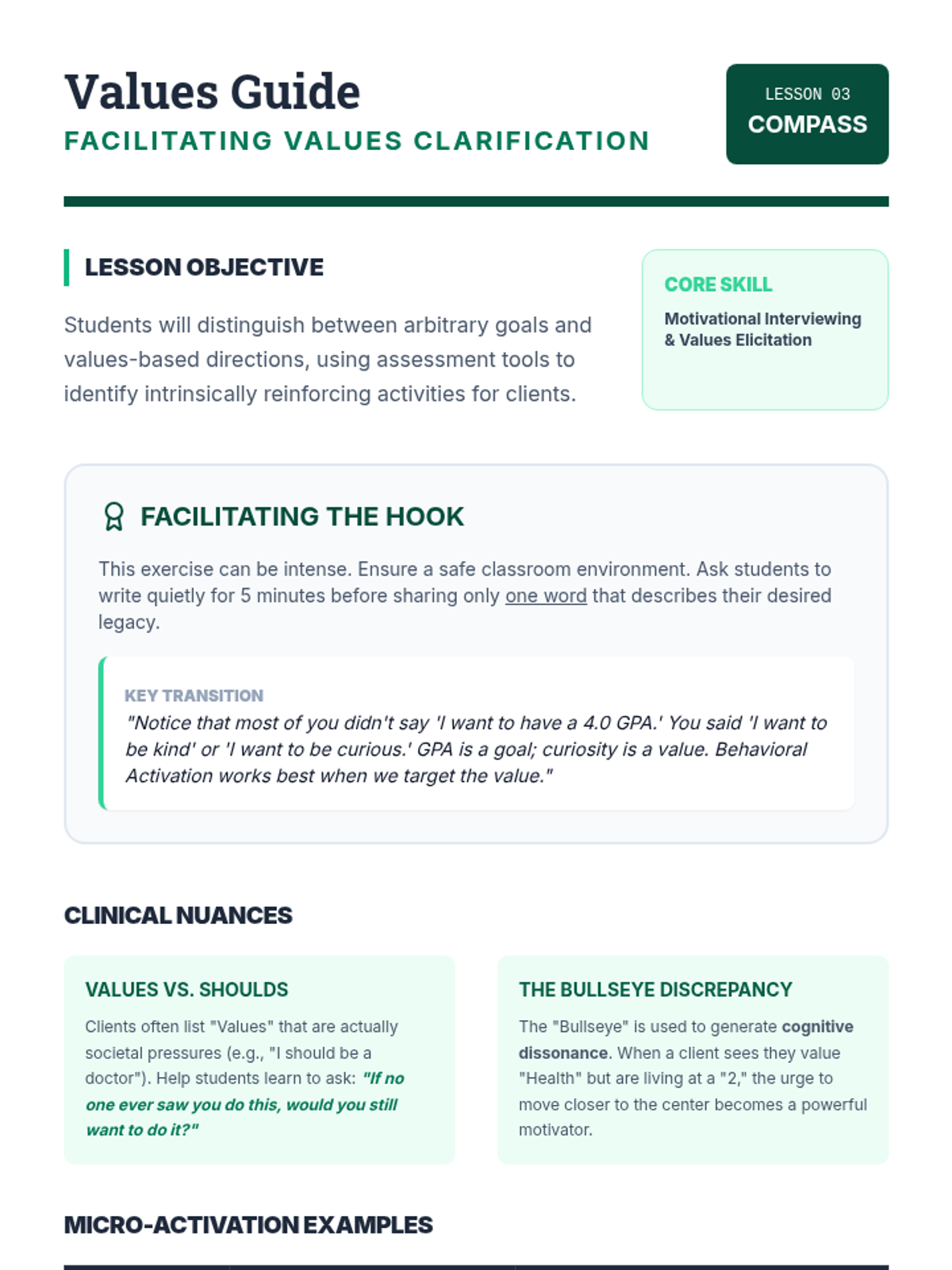
Teacher guide for Lesson 3, including tips for facilitating the "Funeral Speech" exercise, distinguishing "shoulds" from values, and examples of micro-activations.
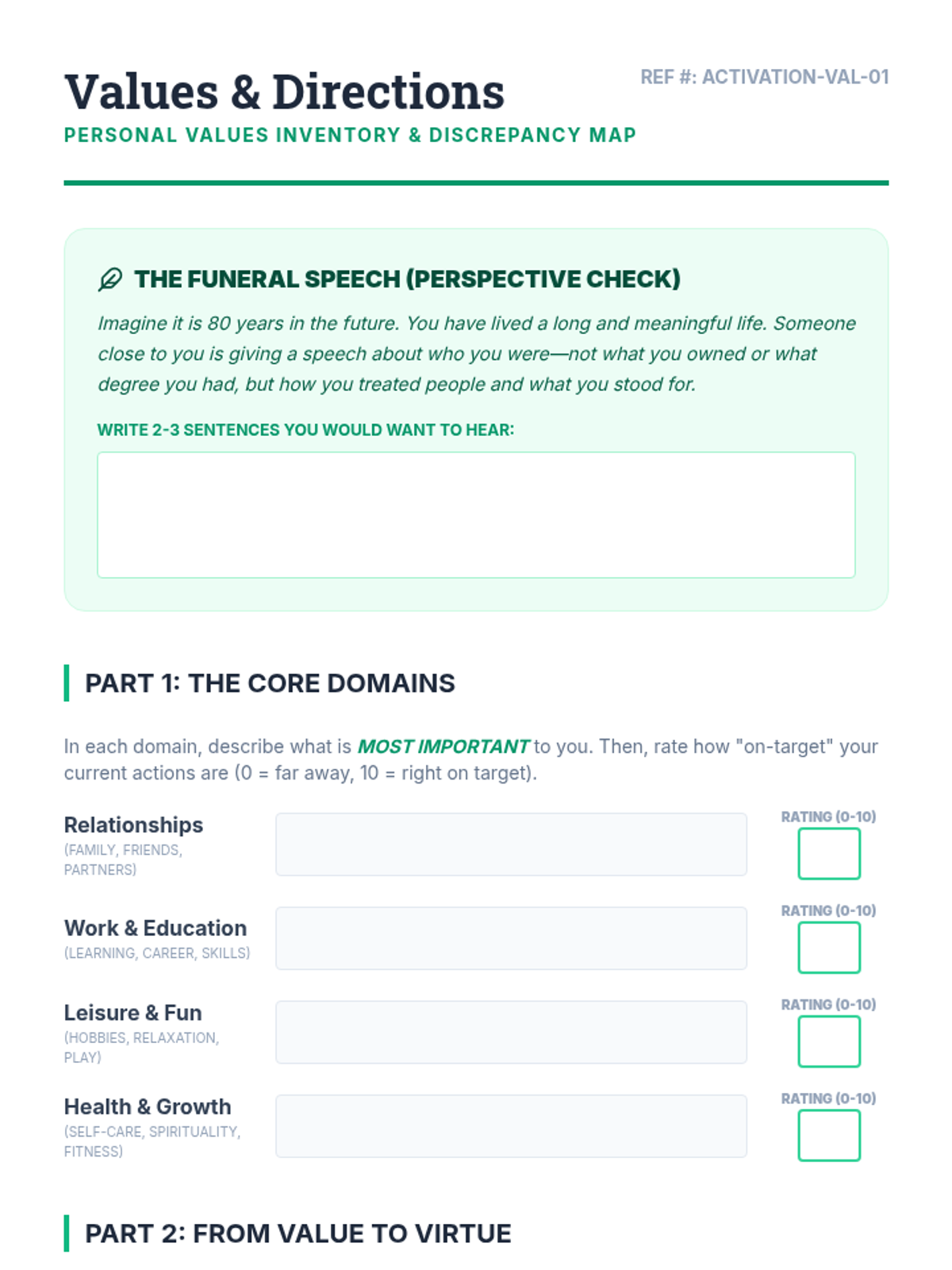
A values clarification worksheet for students, including the "Funeral Speech" exercise, a domain-based values inventory, and a brainstorming section for micro-activations.
Slides for Lesson 3 focusing on distinguishing goals from values, the intrinsic motivation of values-based action, and the "Values Bullseye" framework.
Presentation for Lesson 3 explaining the TRAP/TRAC framework and simulating real-world avoidance scenarios.
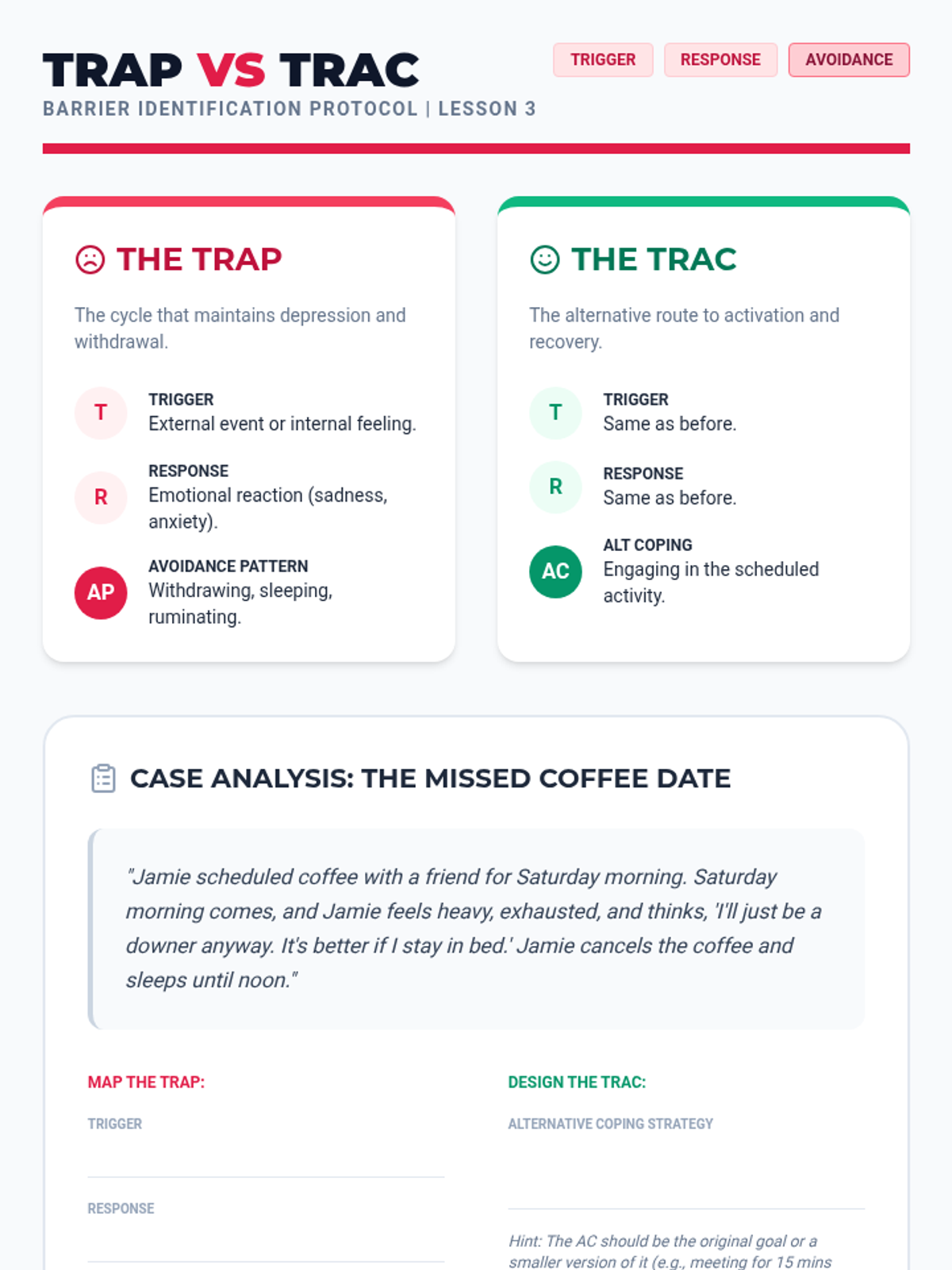
Student worksheet and activity guide for Lesson 3, focusing on mapping the TRAP (Avoidance) and designing the TRAC (Coping) pathways.
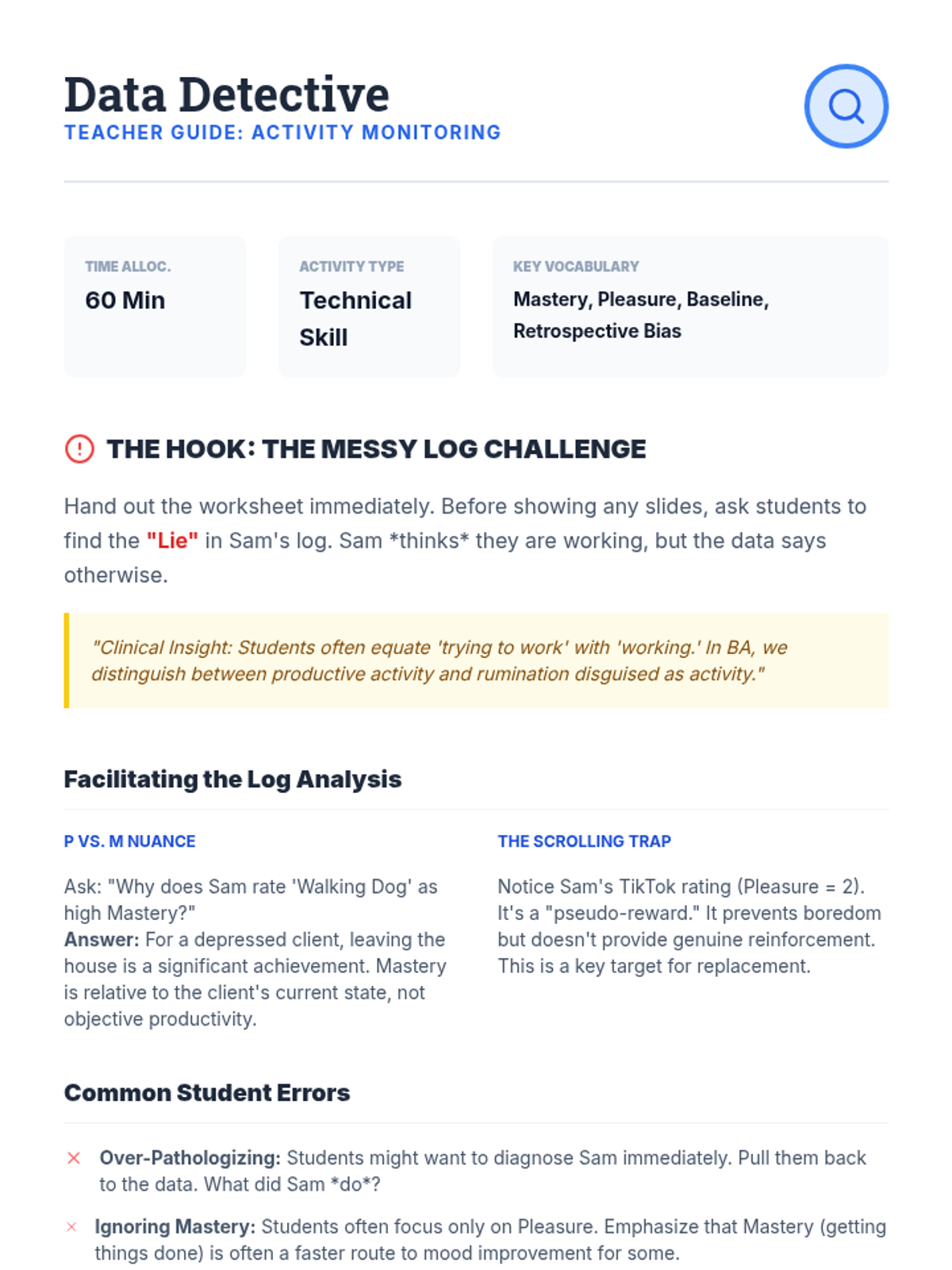
Teacher guide for Lesson 2, providing instructions for the "Messy Log" hook, clinical insights on Pleasure vs. Mastery, and guidance for worksheet analysis.
Slide presentation for Lesson 2, illustrating Task Fractionation techniques and the psychological transition from 'monoliths' to micro-steps.
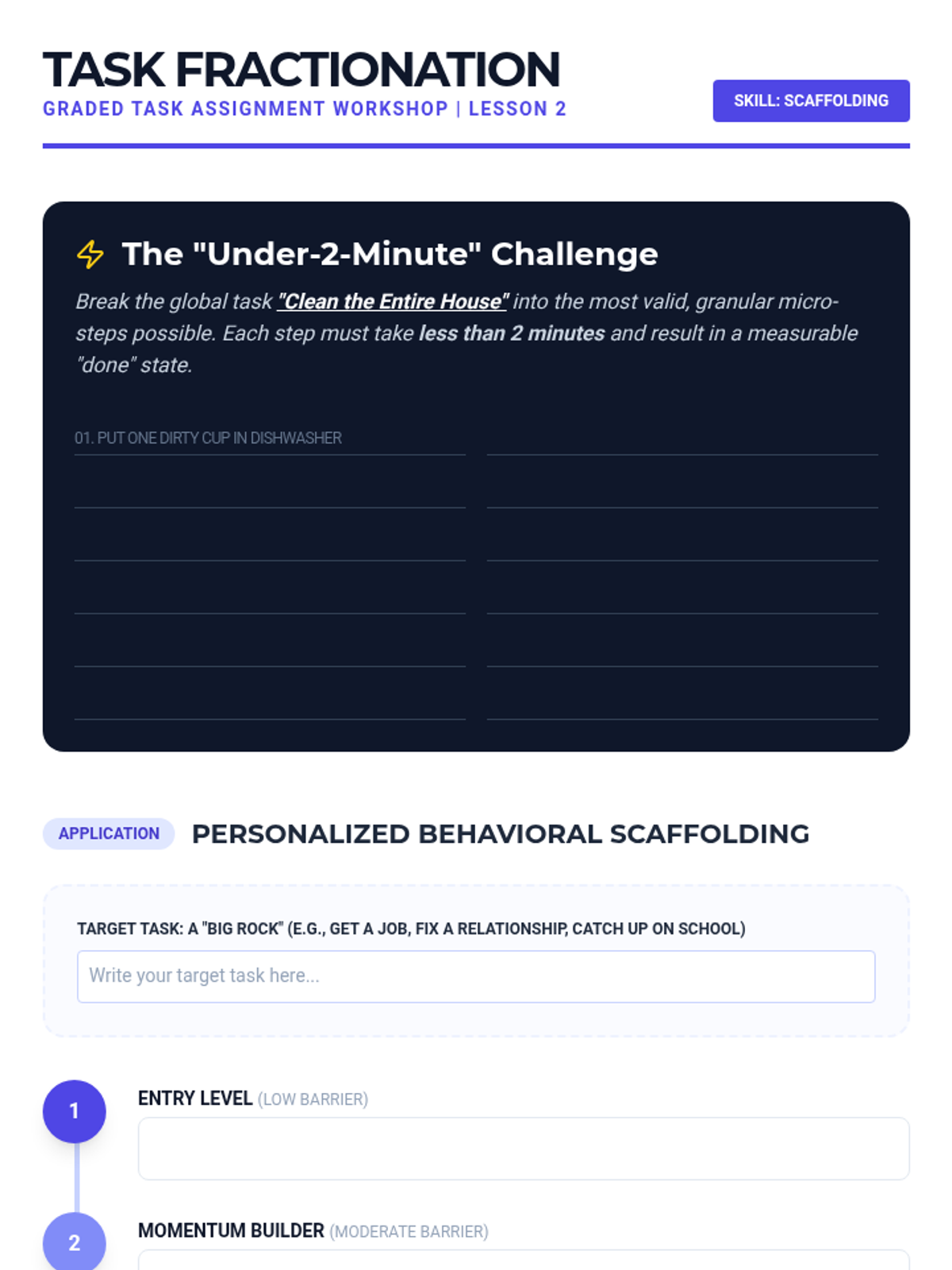
Student worksheet for Lesson 2 focusing on Task Fractionation, featuring a micro-step challenge and a personal behavioral scaffolding exercise.
Introductory presentation for Lesson 1, exploring the 'Outside-In' philosophy and the distinction between Mastery and Pleasure activities.
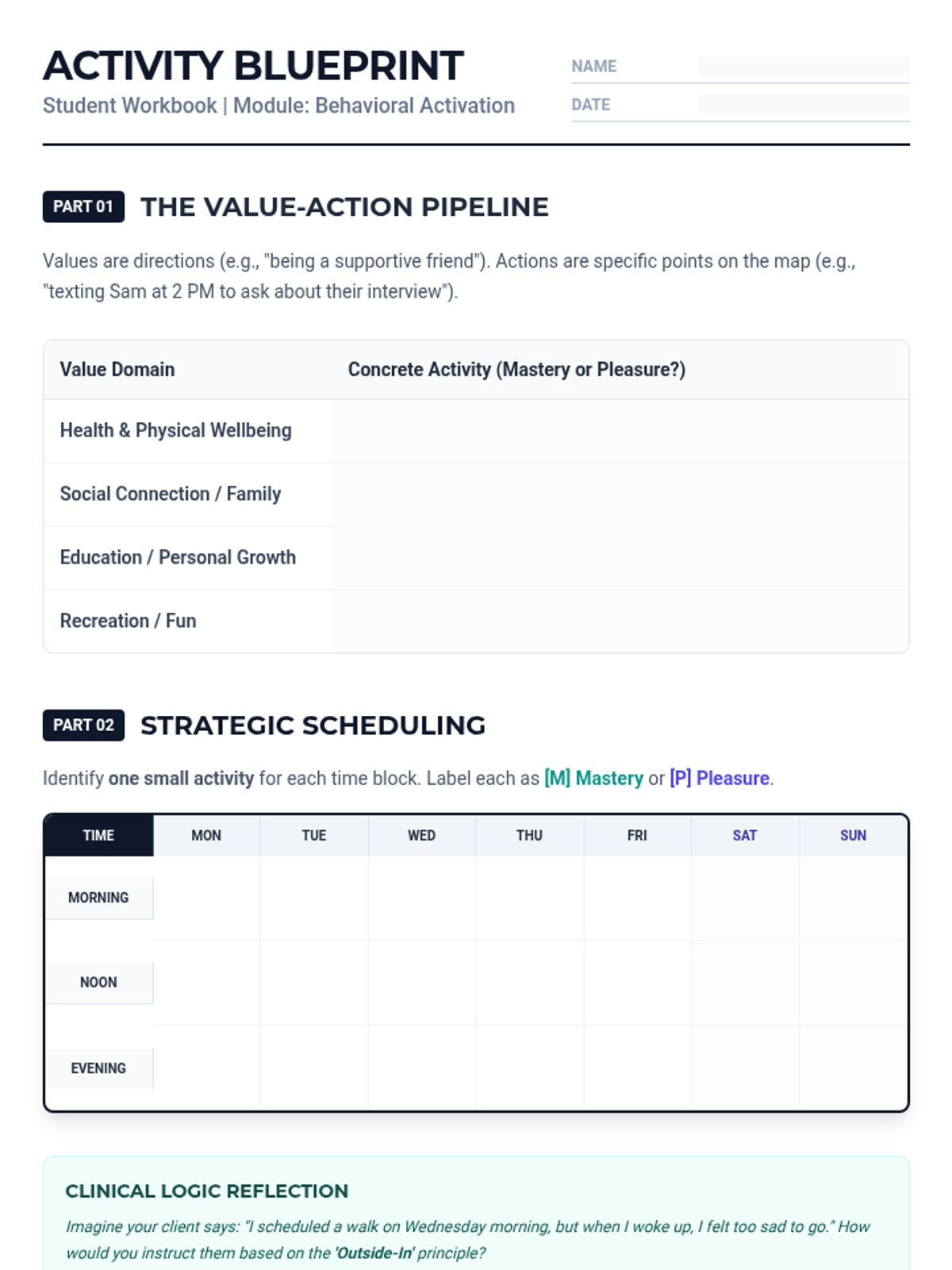
Student worksheet for Lesson 1, including a Value-Action Pipeline and a Weekly Activation Grid for practice in scheduling Mastery and Pleasure activities.
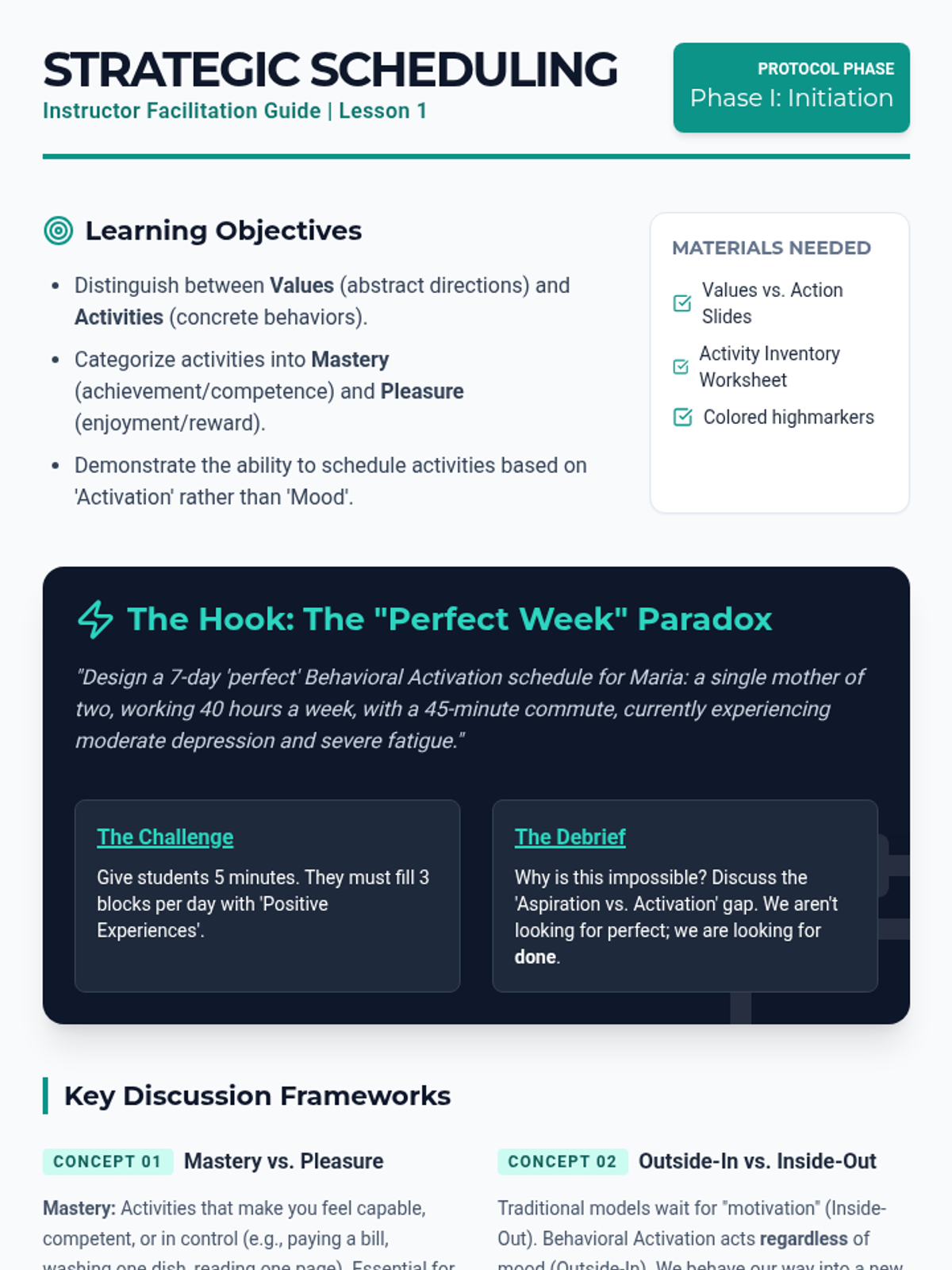
Instructor facilitation guide for Lesson 1, featuring the 'Perfect Week' hook and core clinical concepts of Mastery and Pleasure.
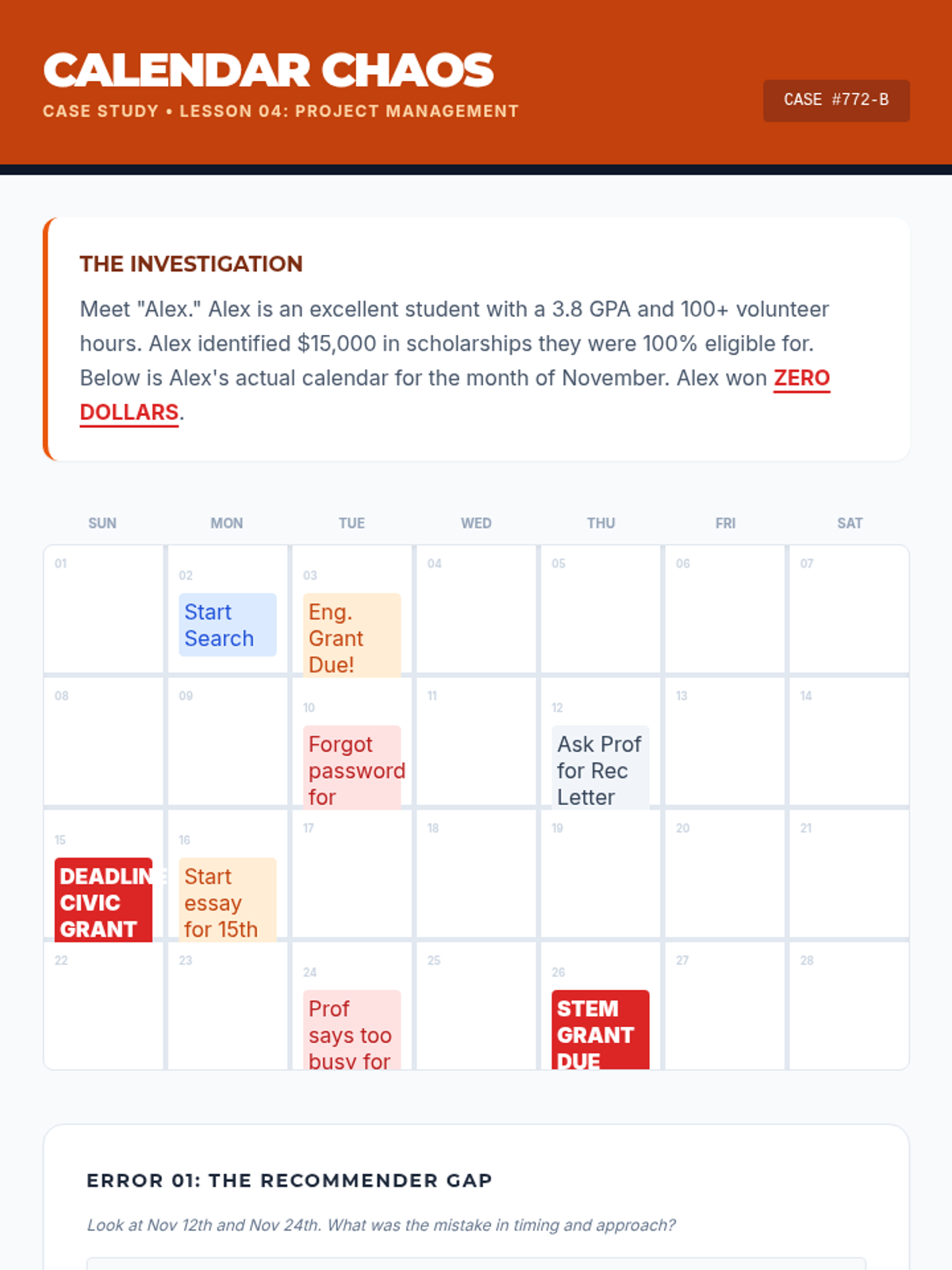
A case study activity where students analyze a disorganized student calendar to identify critical time-management and project-management errors in the scholarship application process.
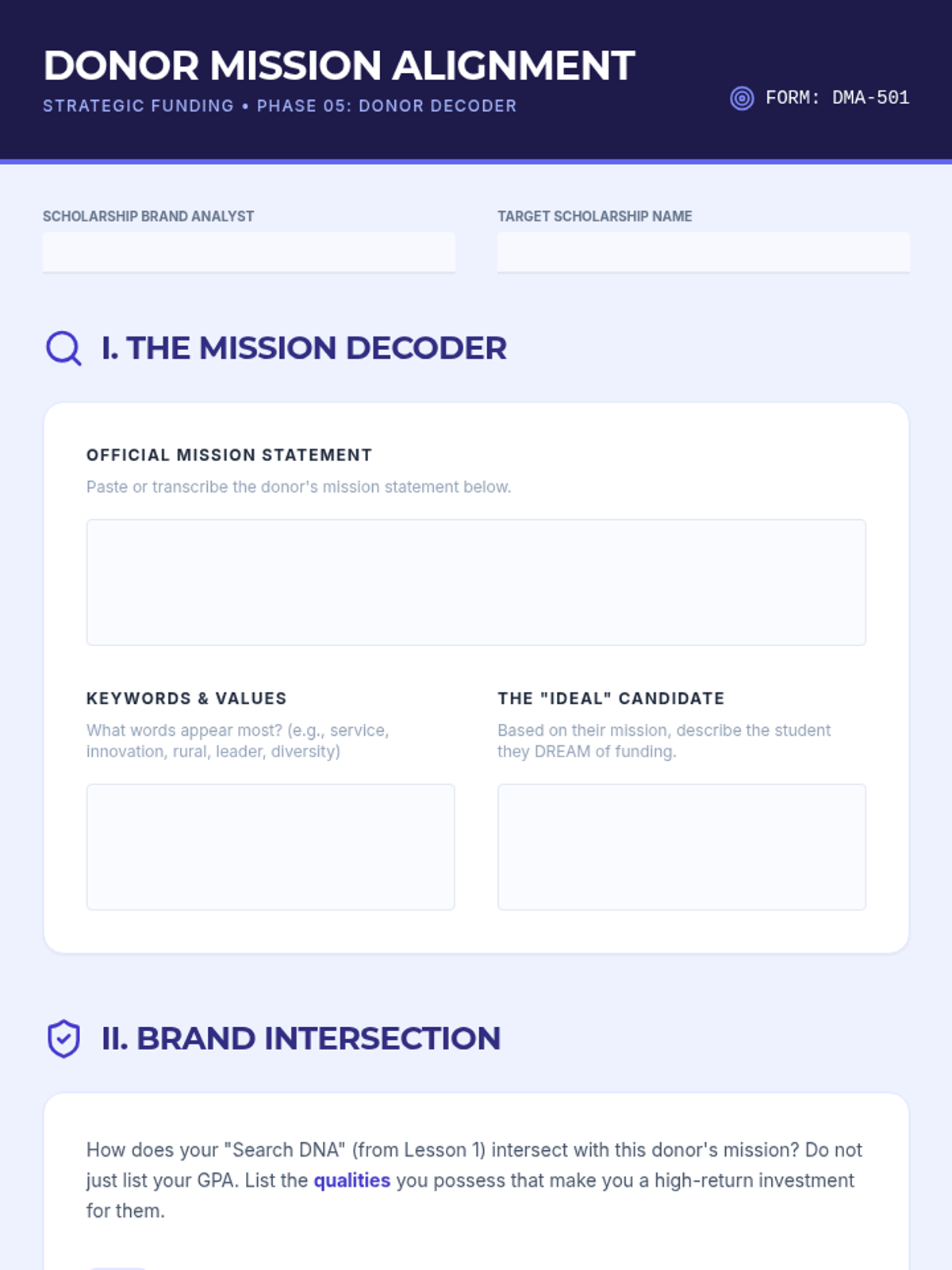
An alignment worksheet for students to research donor mission statements and justify how their personal brand connects to the funding organization's goals.
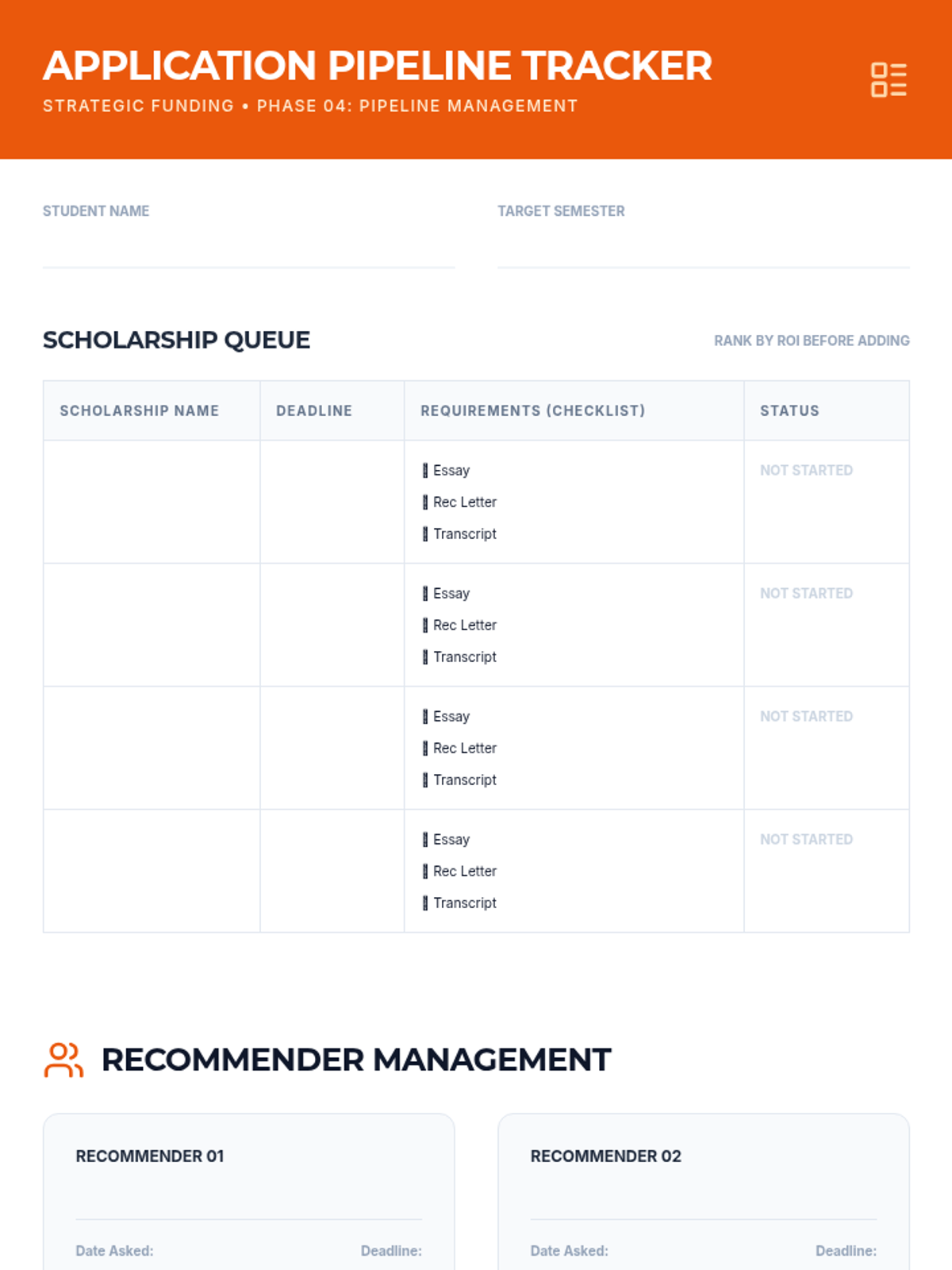
A comprehensive tracking worksheet for managing multiple scholarship deadlines, requirements, and recommender communication.
Instructional slides for Lesson 3, focusing on the concept of 'hourly rate' for scholarship applications and differentiating between high-competition and niche grants.
Instructional slides for Lesson 5, focusing on donor mission alignment and how to research organizations beyond their basic homepage.
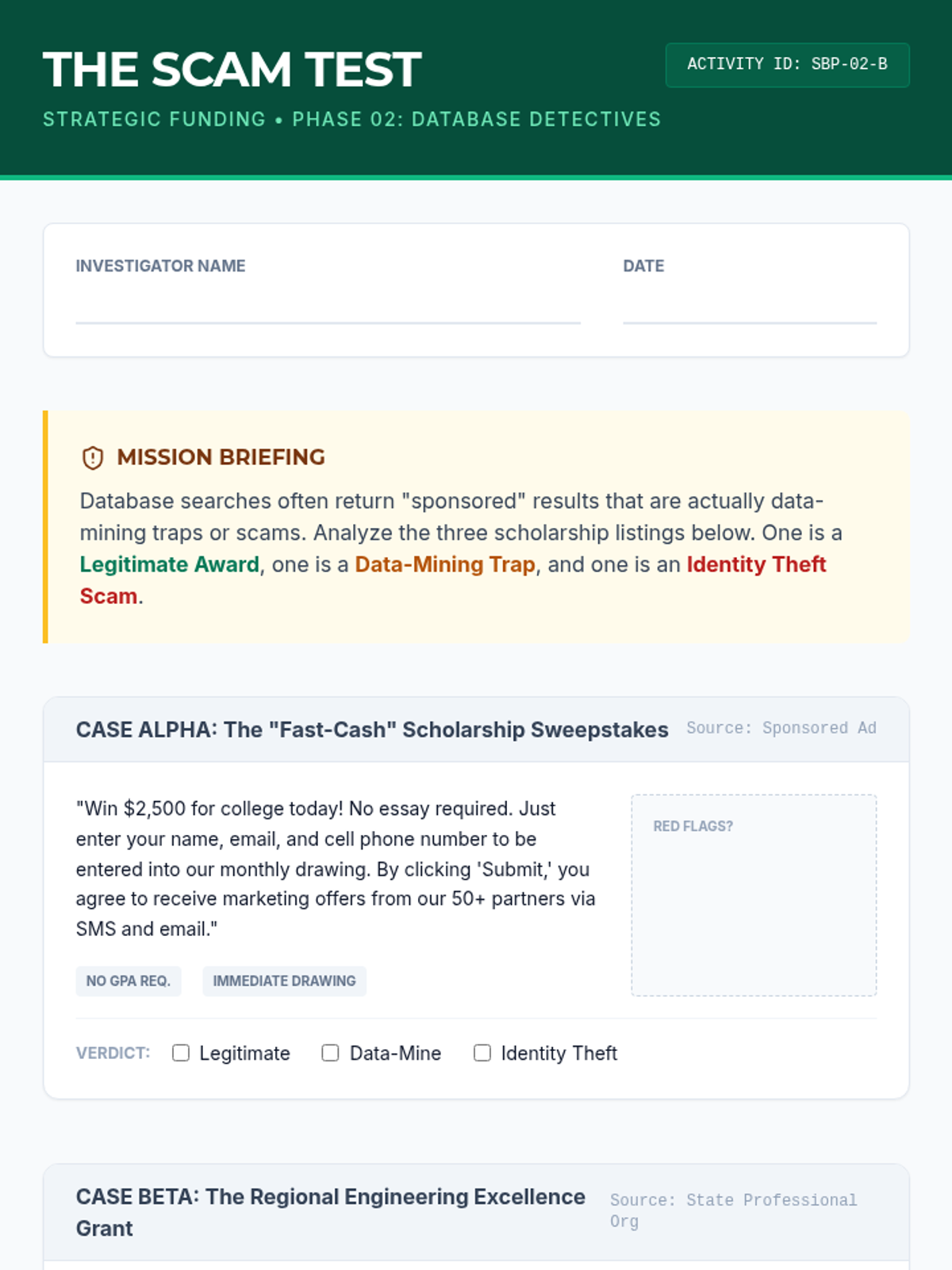
A case study activity where students analyze three scholarship listings to identify legitimate opportunities versus scams and data-mining traps.
Instructional slides for Lesson 4, covering building a tracking system, managing recommenders, and the importance of application infrastructure.
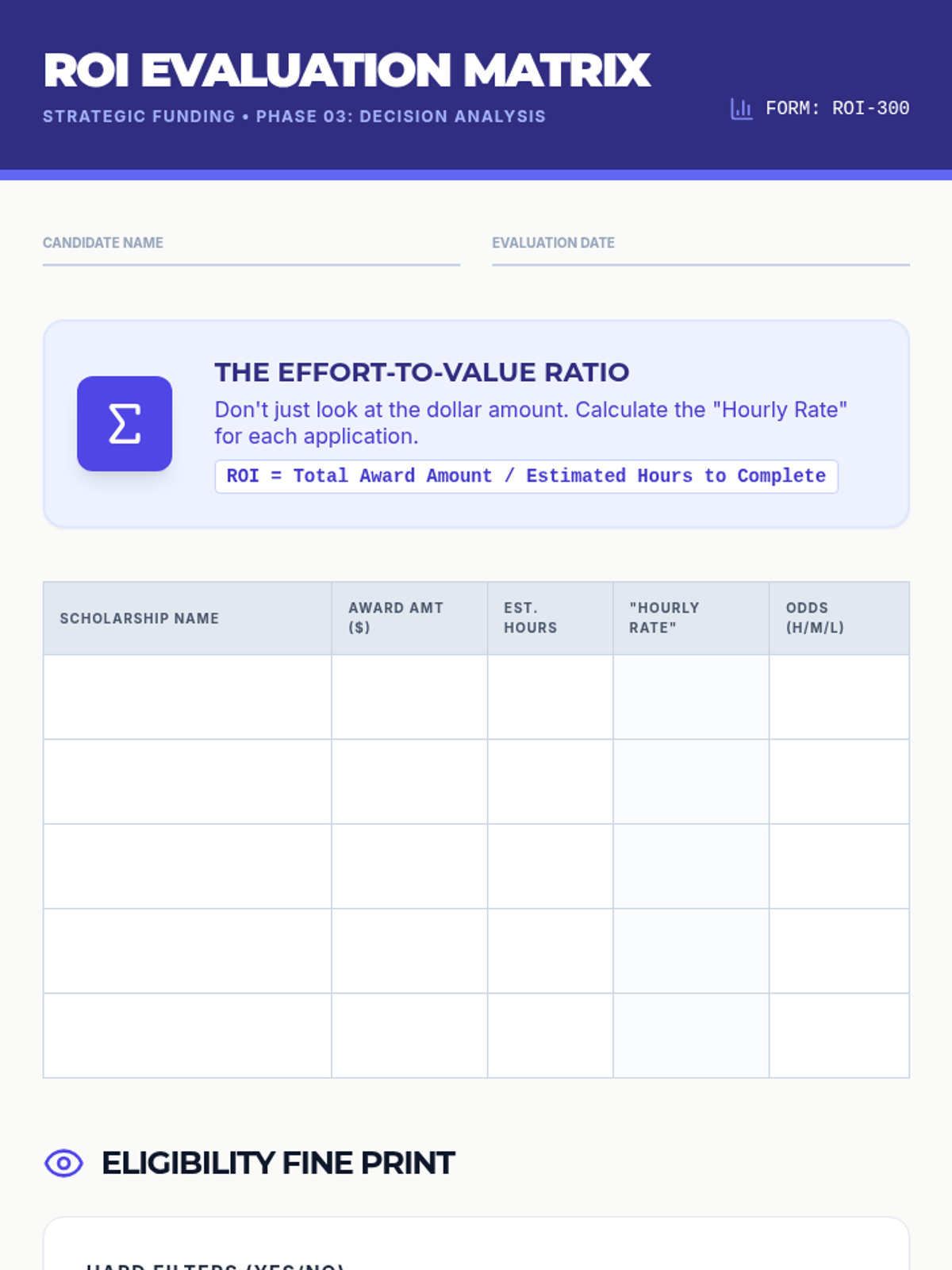
A decision-making worksheet for evaluating scholarships based on award amount, estimated effort, and eligibility odds to determine a student's personal ROI strategy.
Instructional slides for Lesson 2, covering database types, advanced Boolean search techniques, and red-flag detection for scholarship scams.
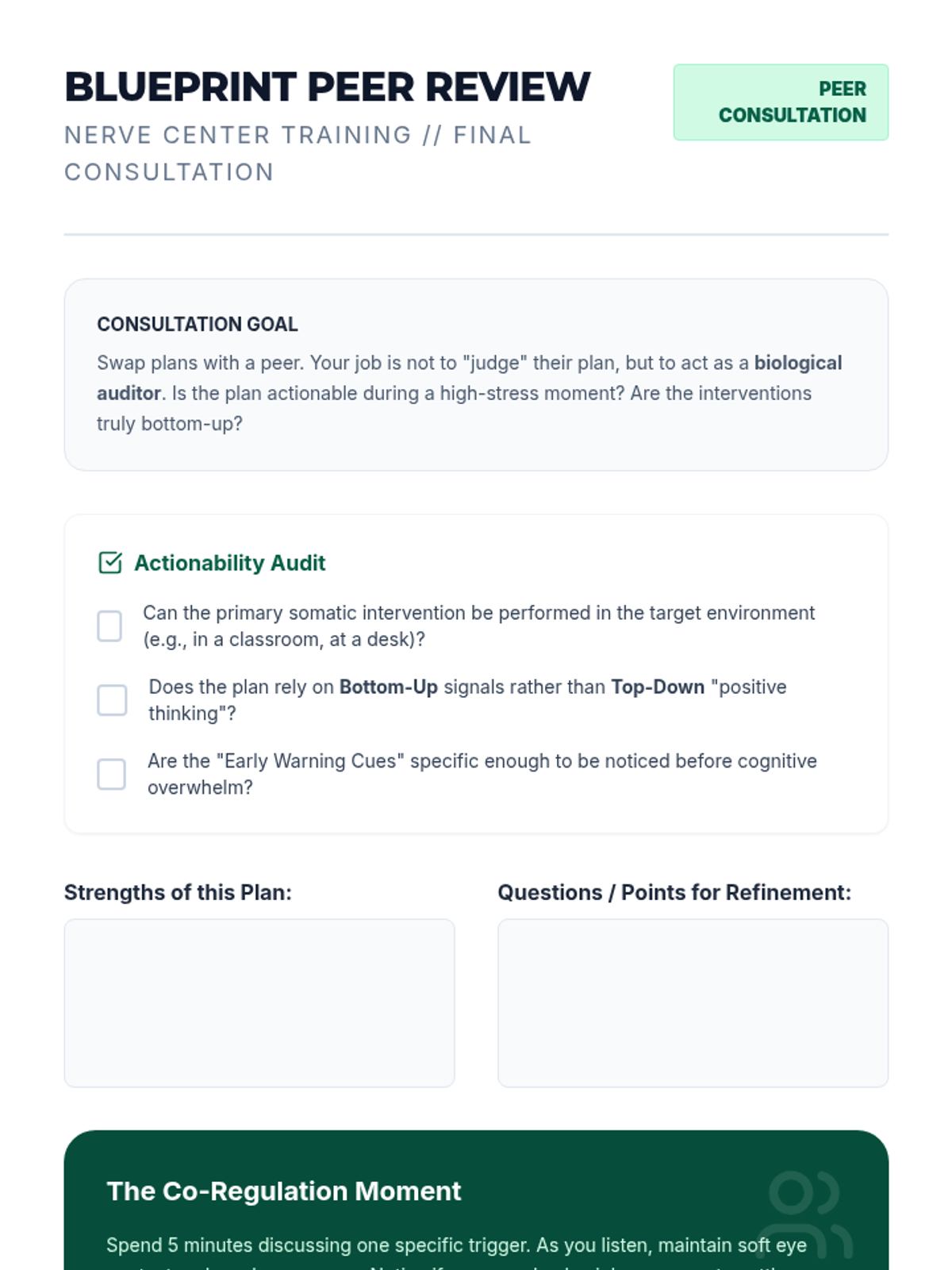
A peer review checklist and facilitation guide for students to audit each other's physiological safety plans, focusing on actionability and bottom-up efficacy.
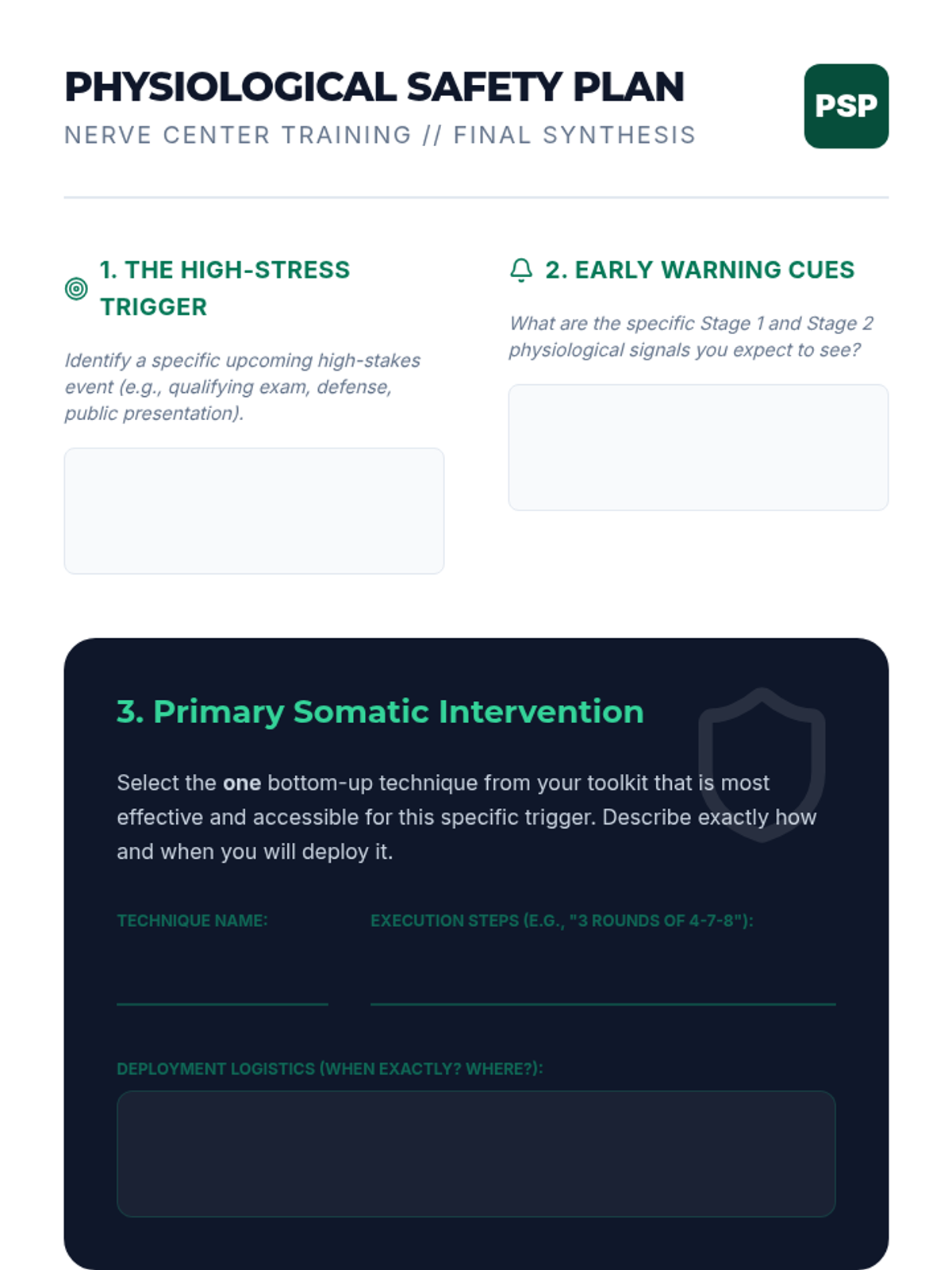
The culminating project template for the sequence: a personalized physiological safety plan that synthesizes triggers, cues, somatic interventions, and anchors.
Synthesis slides for Lesson 5, introducing the concept of mental rehearsal and the architecture of a physiological safety plan.
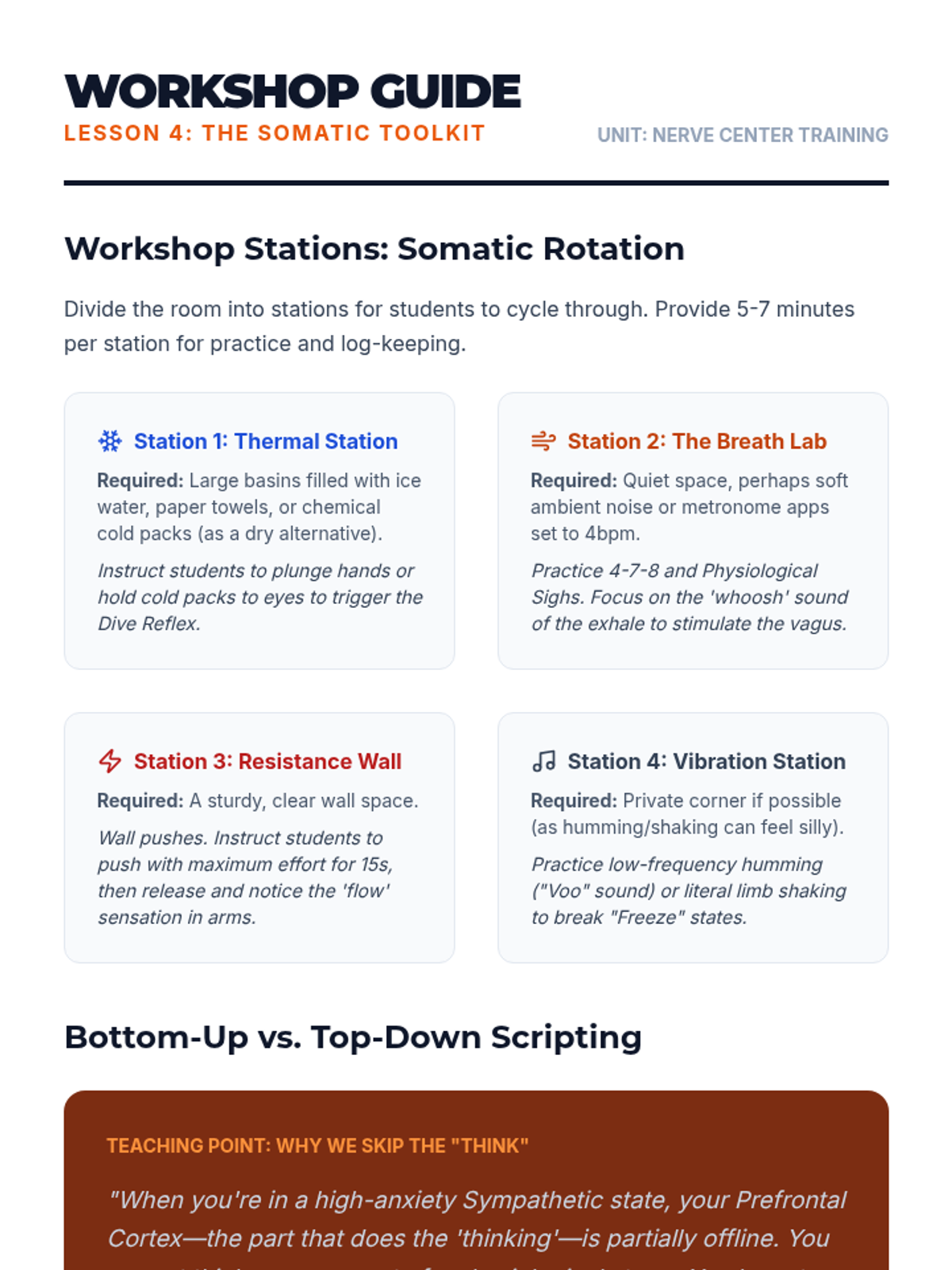
Facilitation guide for the Somatic Toolkit workshop, including station setup instructions and instructional scripts for bottom-up regulation.
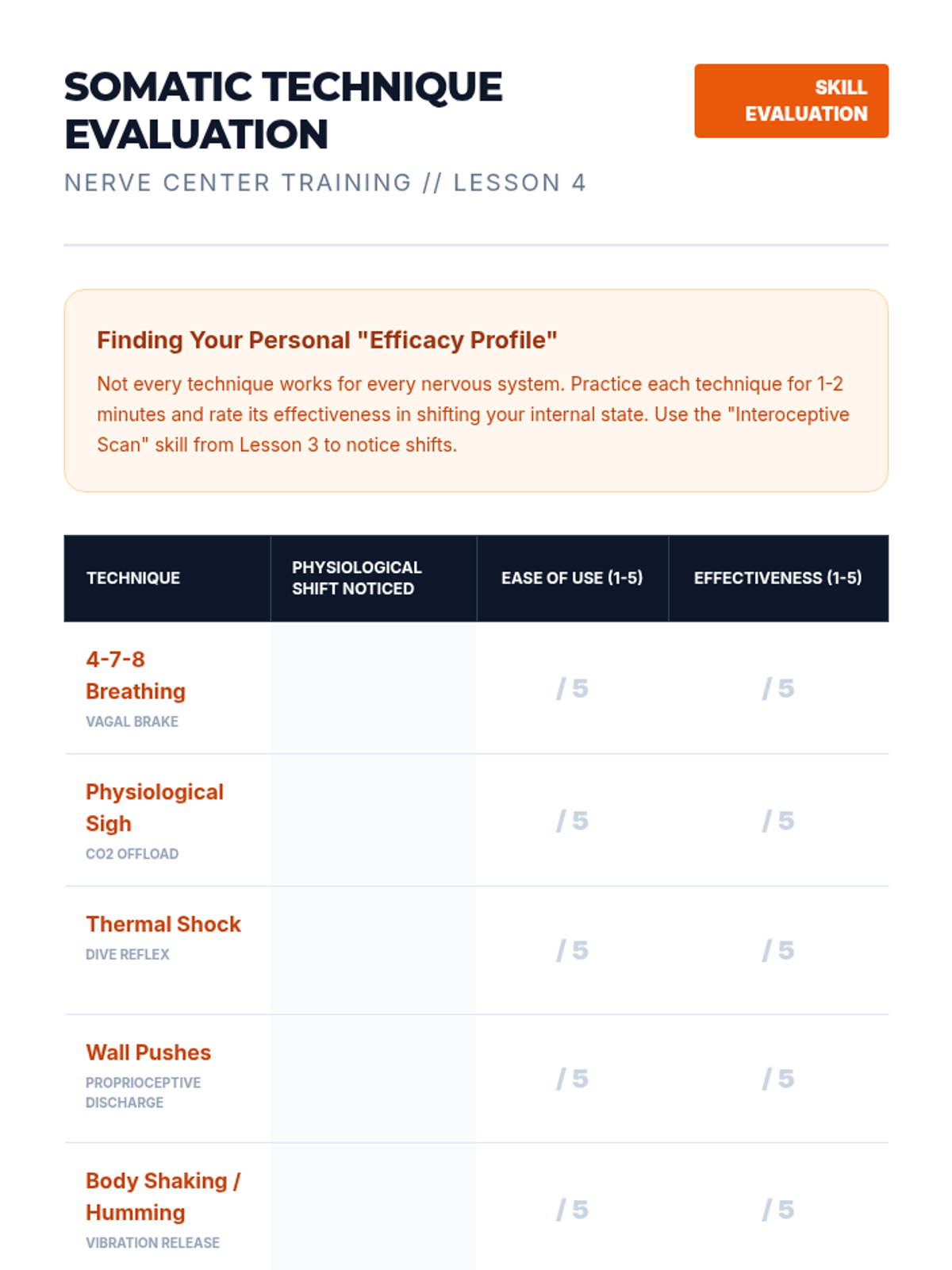
Student evaluation scorecard for somatic regulation techniques, allowing learners to test and rate the effectiveness of various bottom-up interventions.
Slides for Lesson 4, detailing bottom-up regulation techniques including the dive reflex, diaphragmatic breathing, and muscular discharge.
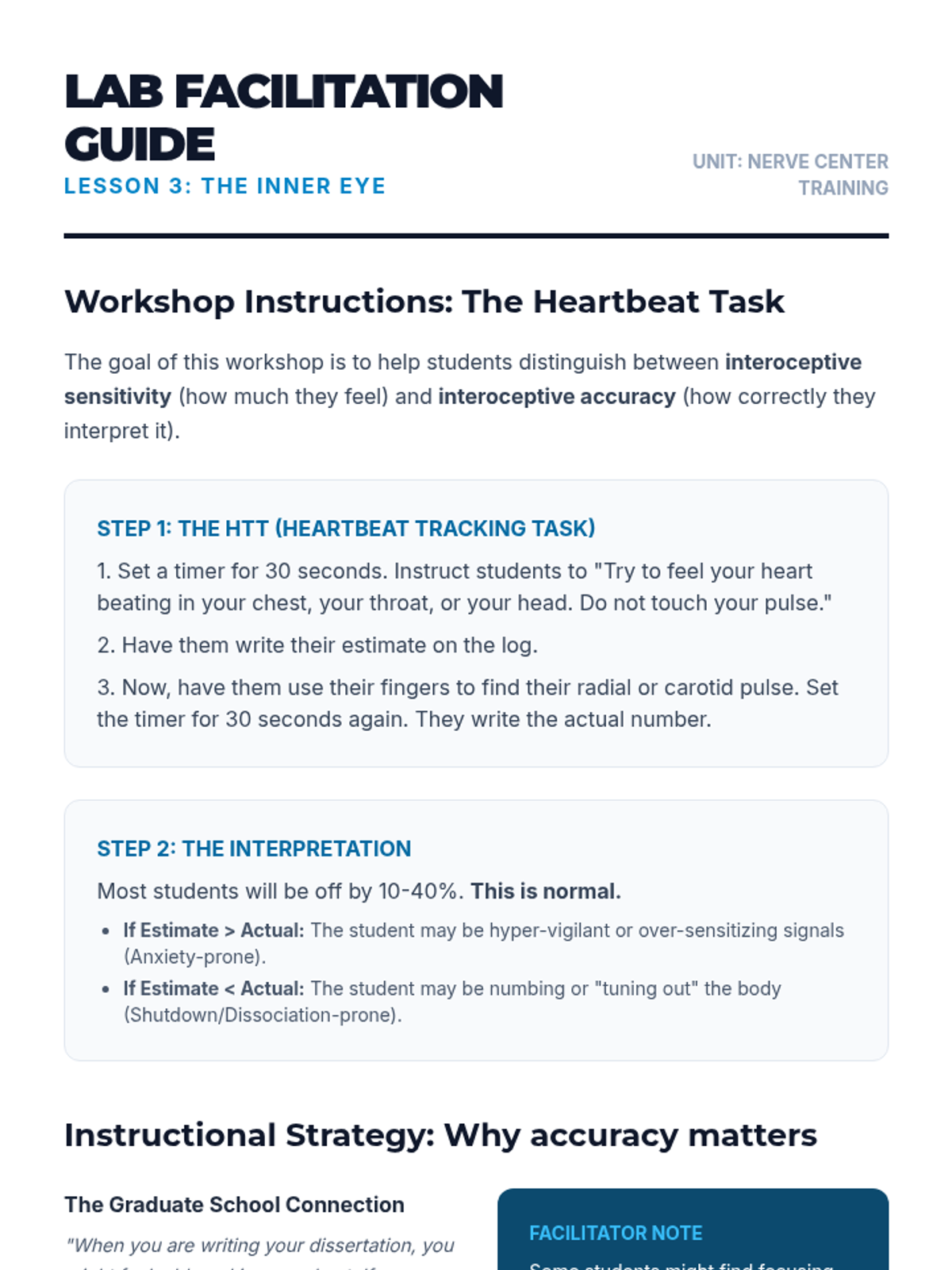
Teacher's guide for the Interoceptive Lab, including instructions for the Heartbeat Tracking Task and clinical interpretations of accuracy gaps.
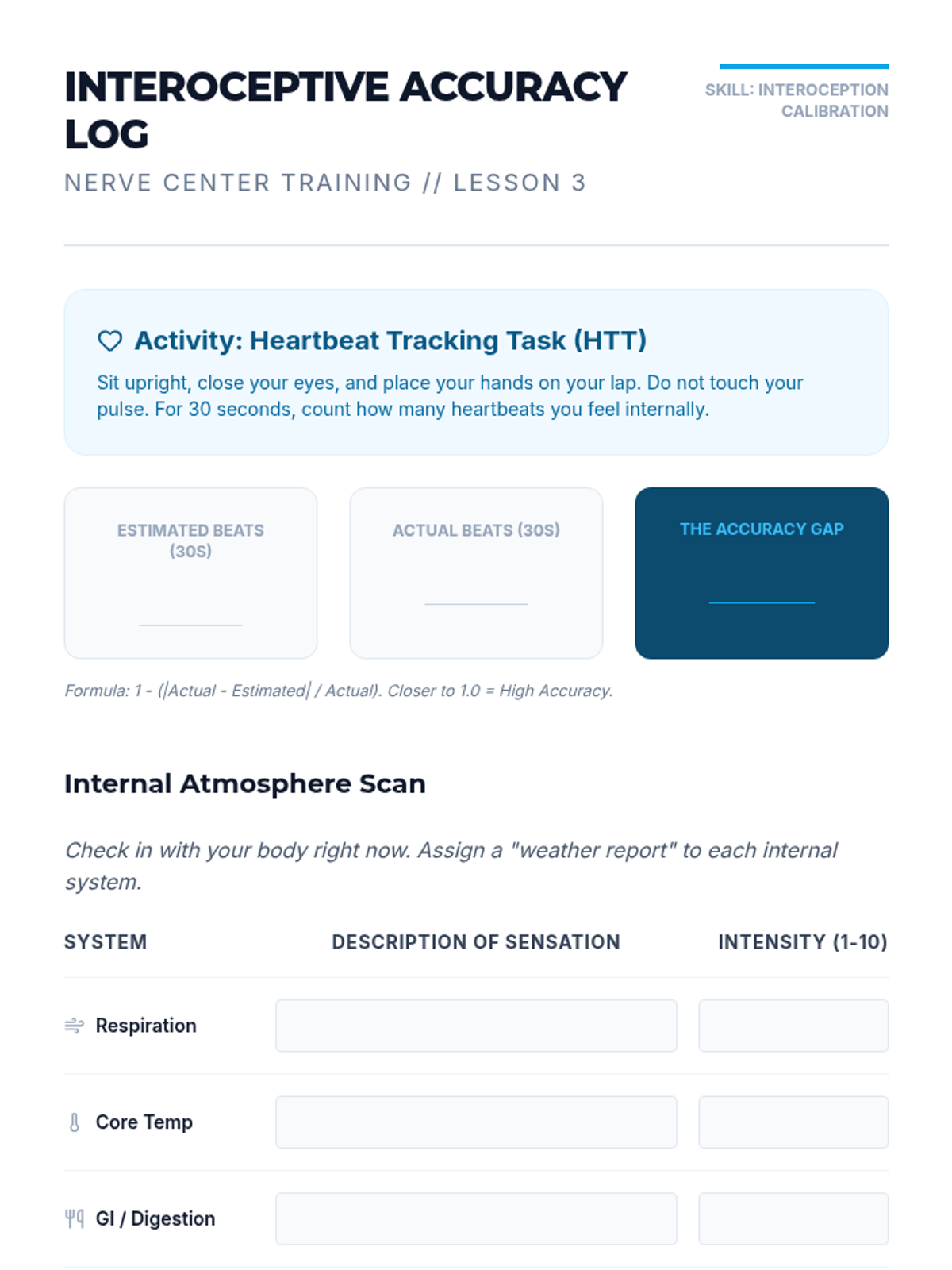
Student lab log for interoceptive accuracy tests and state-sensation mapping, including the Heartbeat Tracking Task (HTT).
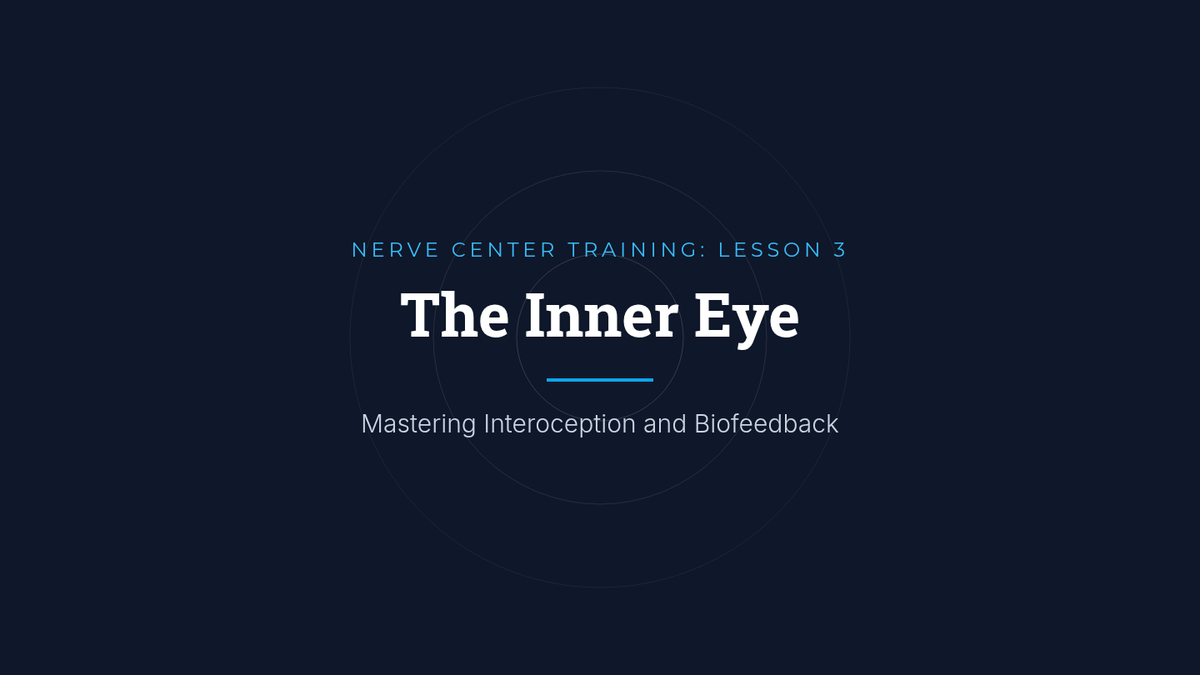
Slides for Lesson 3, covering the definition of interoception, its link to anxiety, and biofeedback techniques for improving internal awareness.
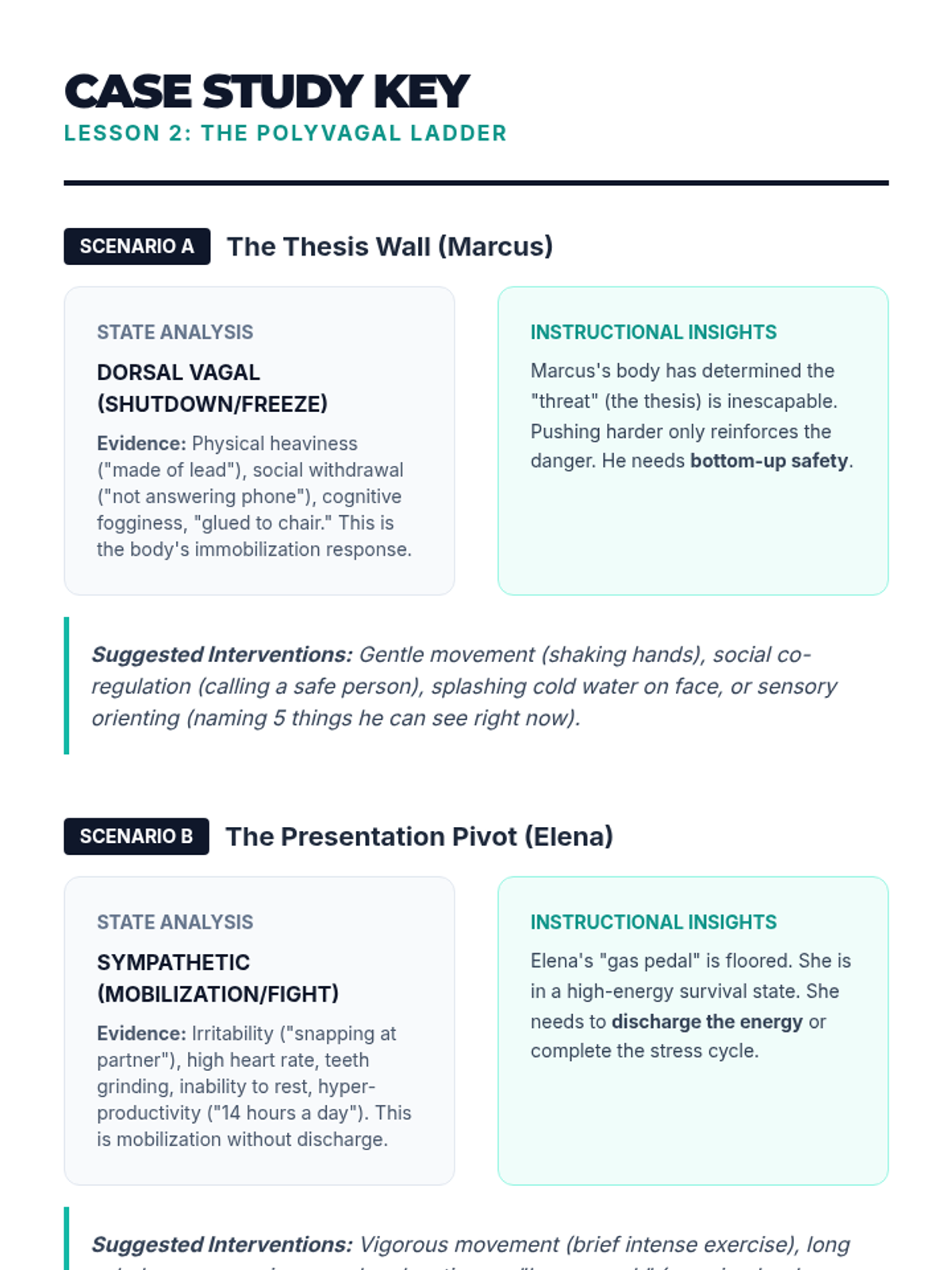
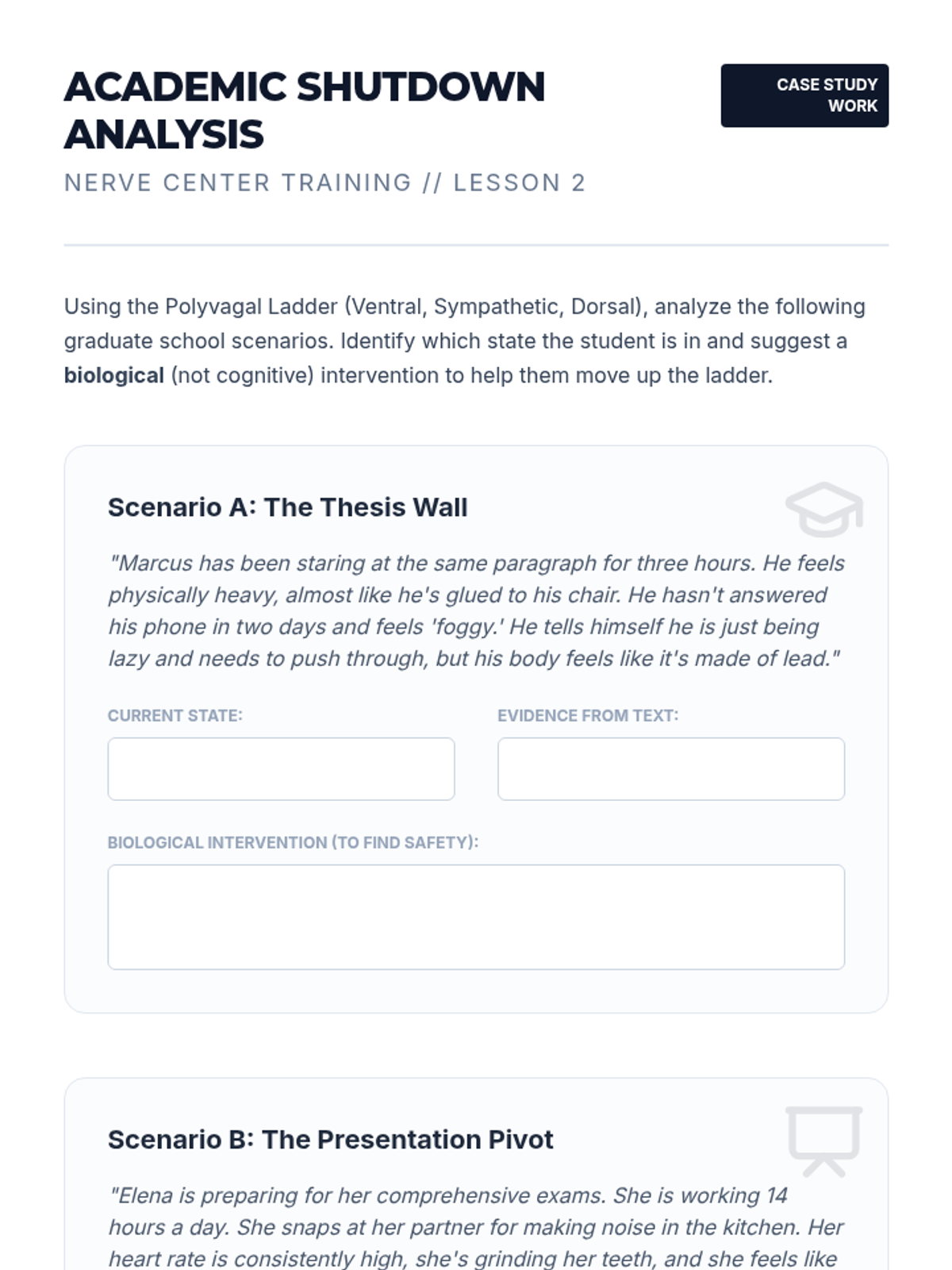
Answer key and facilitation notes for the Academic Shutdown Analysis activity, providing biological explanations and intervention strategies for each state.
Case study analysis activity for Lesson 2, helping students identify Polyvagal states in academic scenarios and map their own behavior profiles.
Slides for Lesson 2, explaining Polyvagal Theory, the hierarchy of response (Ladder), and identifying safe-state anchors.
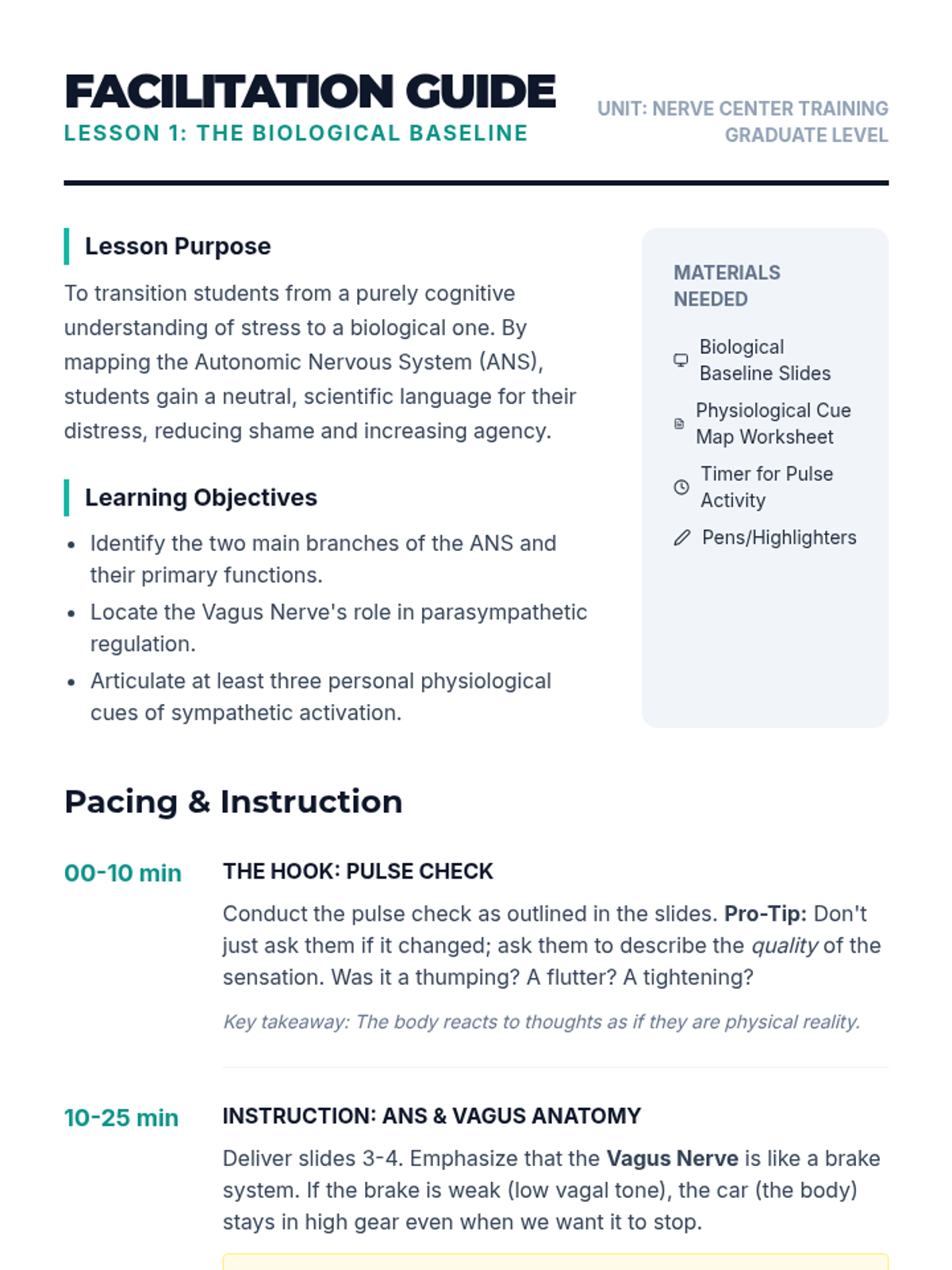
Teacher's facilitation guide for Lesson 1, including pacing, discussion prompts, and instructional tips for teaching the neurobiology of stress.
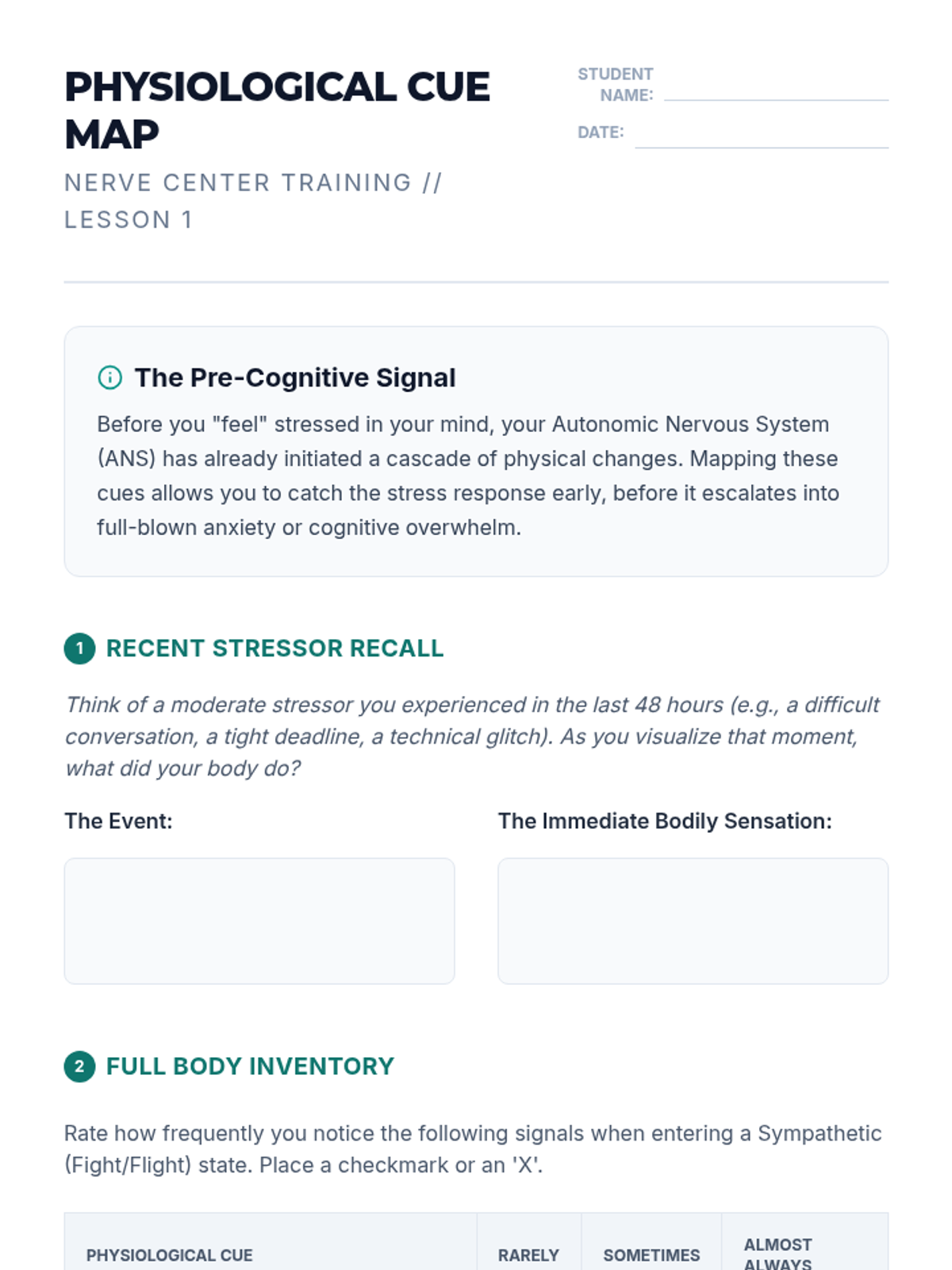
A student worksheet for identifying and mapping personal physiological signals of stress, helping students develop an early warning system for autonomic activation.
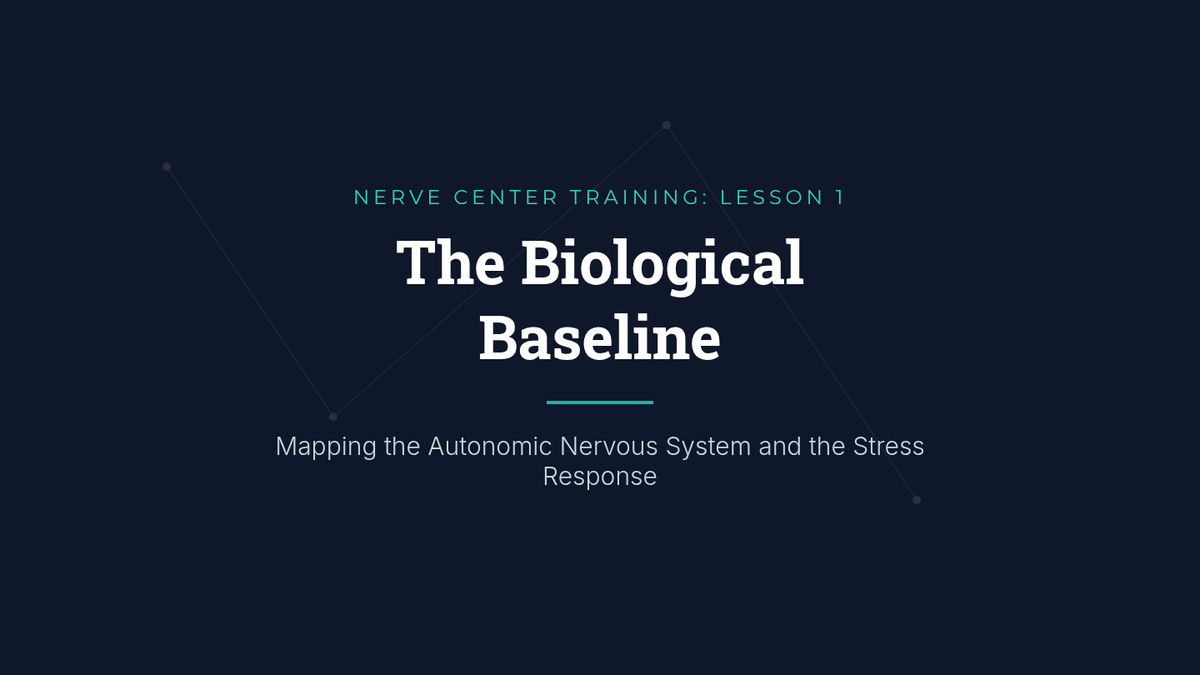
Introductory slides for Lesson 1, covering the basics of the Autonomic Nervous System, the Vagus Nerve, and identifying physiological stress cues.
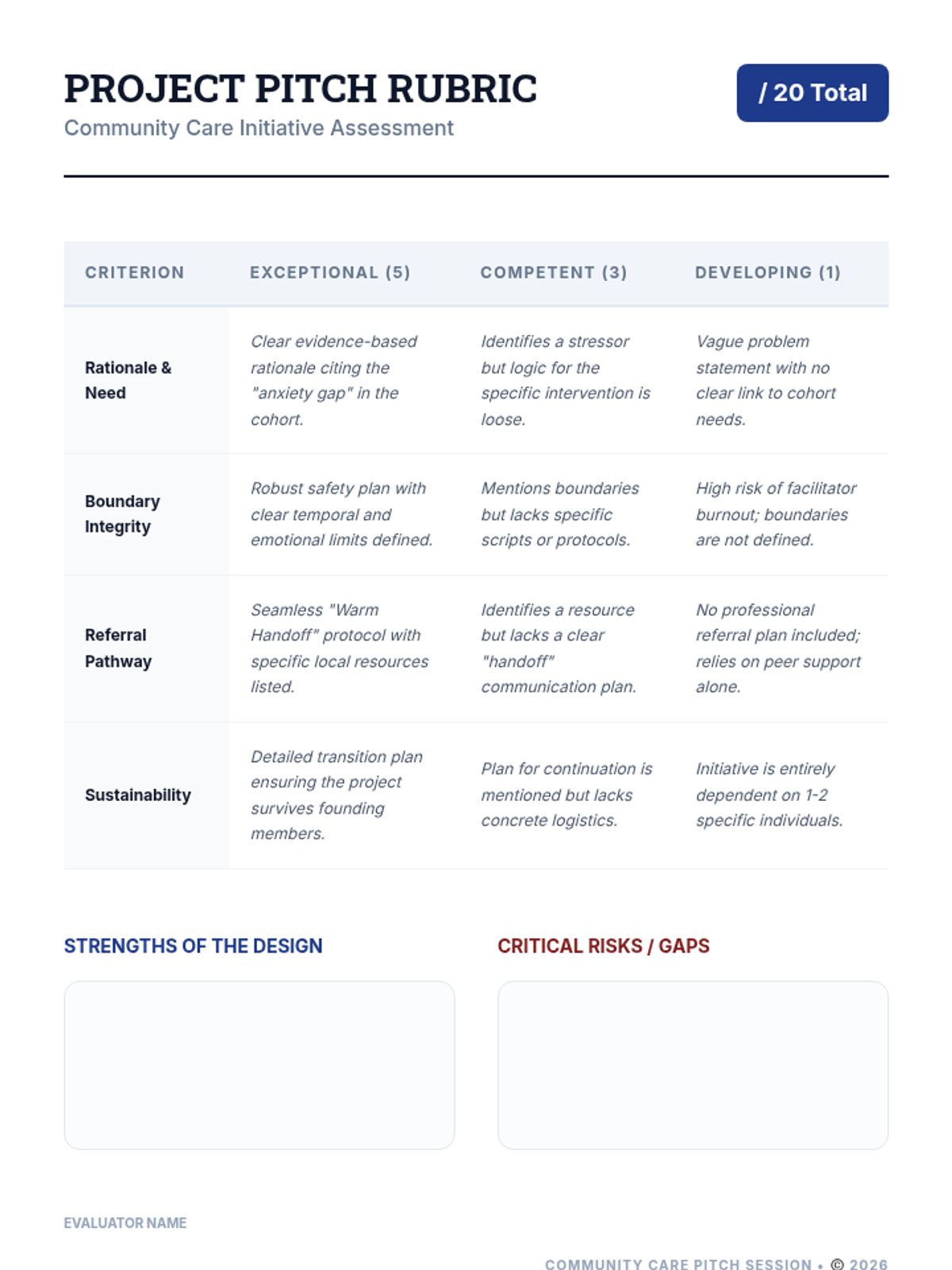
Final project rubric for evaluating the Community Care Initiative, focusing on rationale, boundaries, referral pathways, and sustainability.
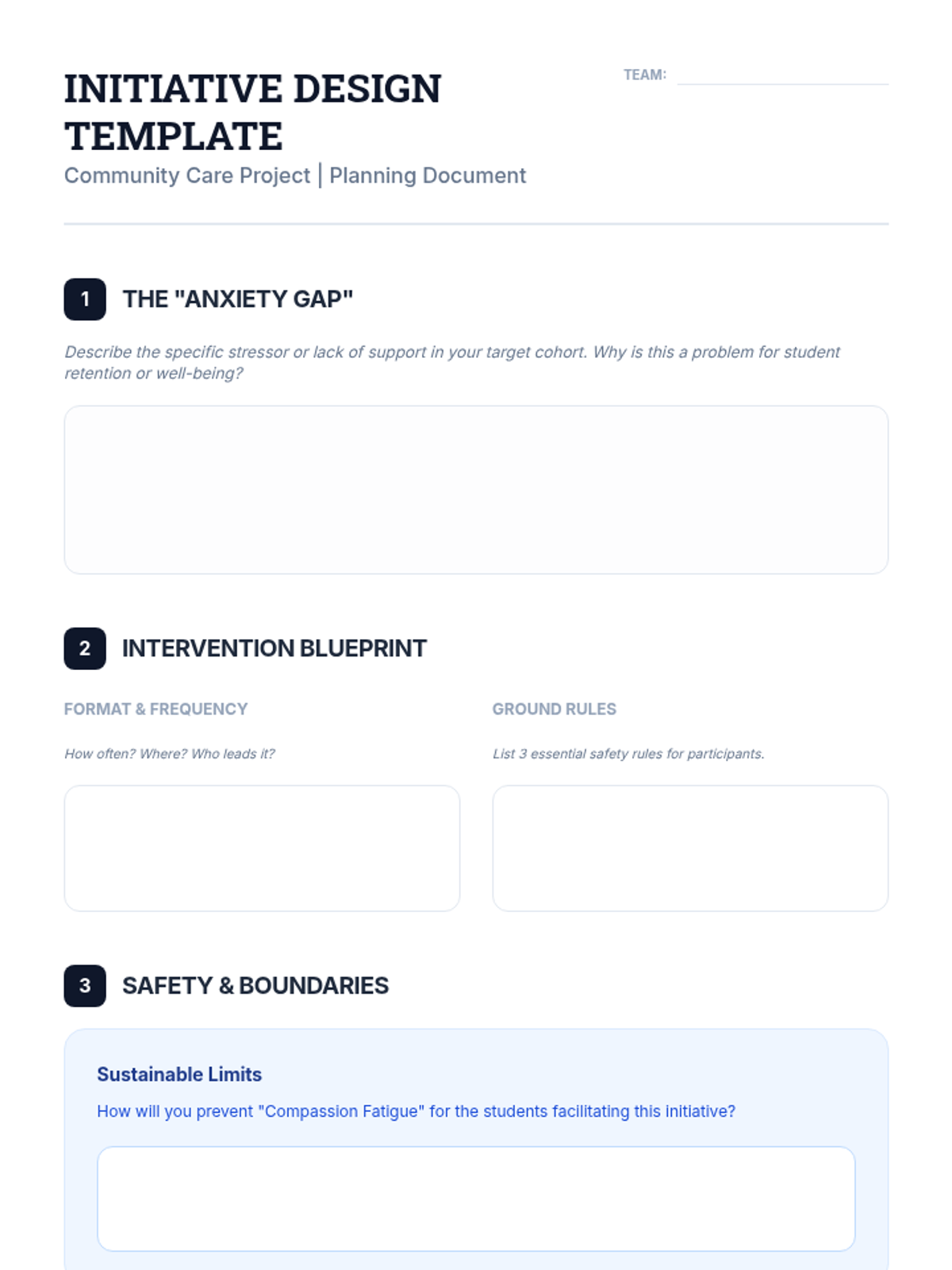
Student design workbook for planning the Community Care initiative, covering problem definition, logistics, safety boundaries, and sustainability.
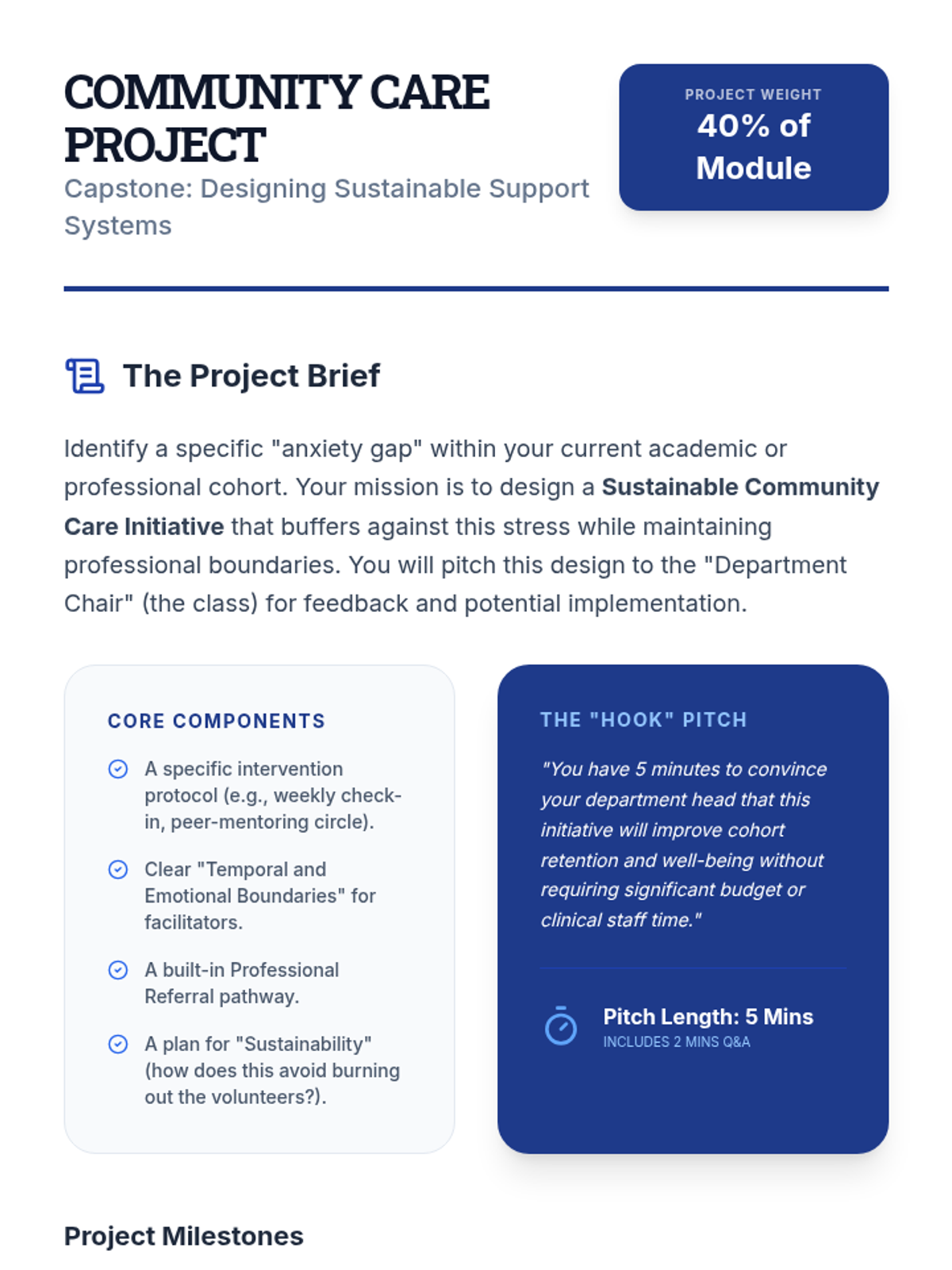
Final project brief for the Community Care initiative, detailing requirements, core components, and the "Department Pitch" assessment.
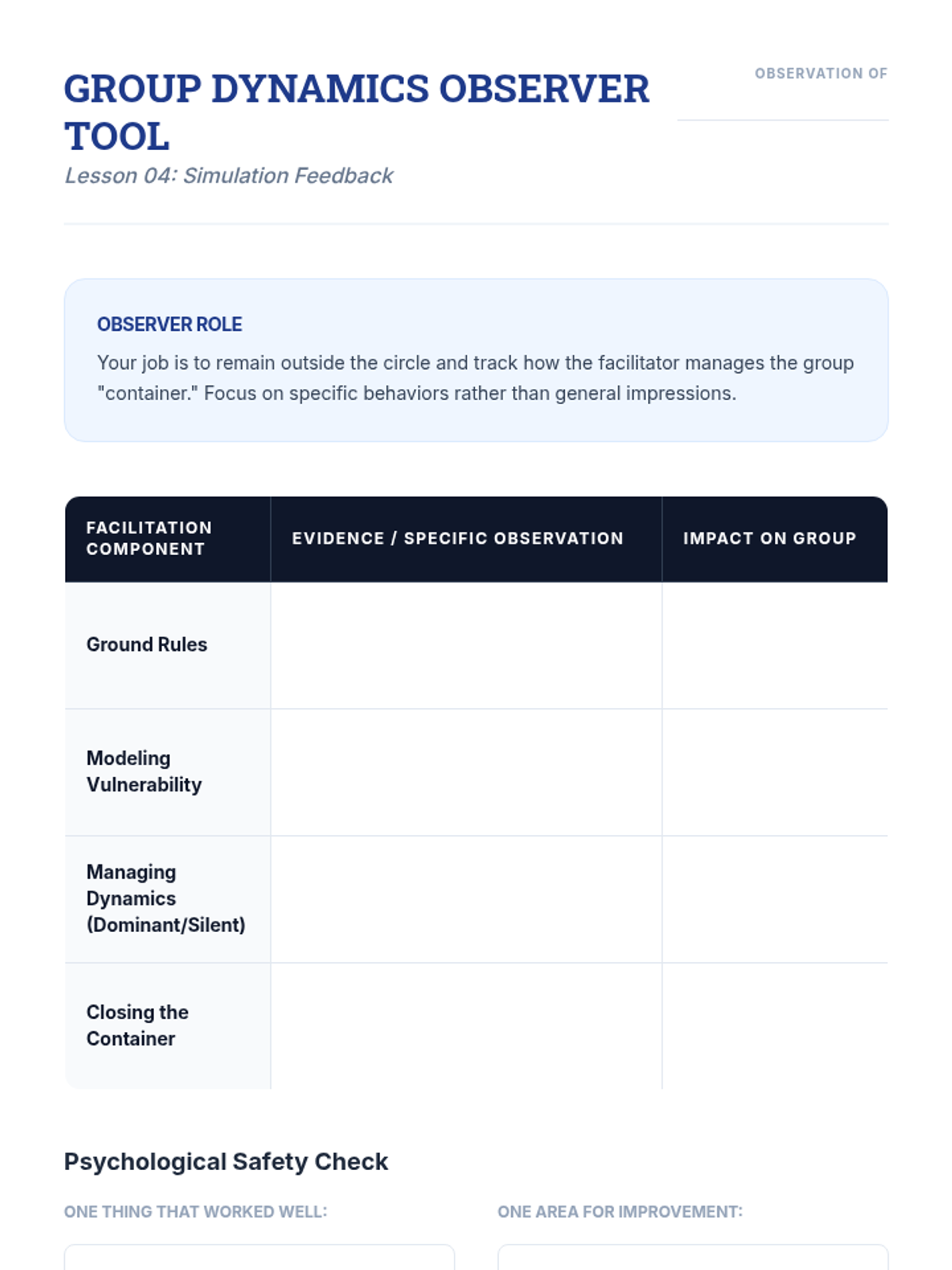
Observation and feedback tool for students to use while observing peer-led group facilitation simulations, focusing on psychological safety and dynamic management.
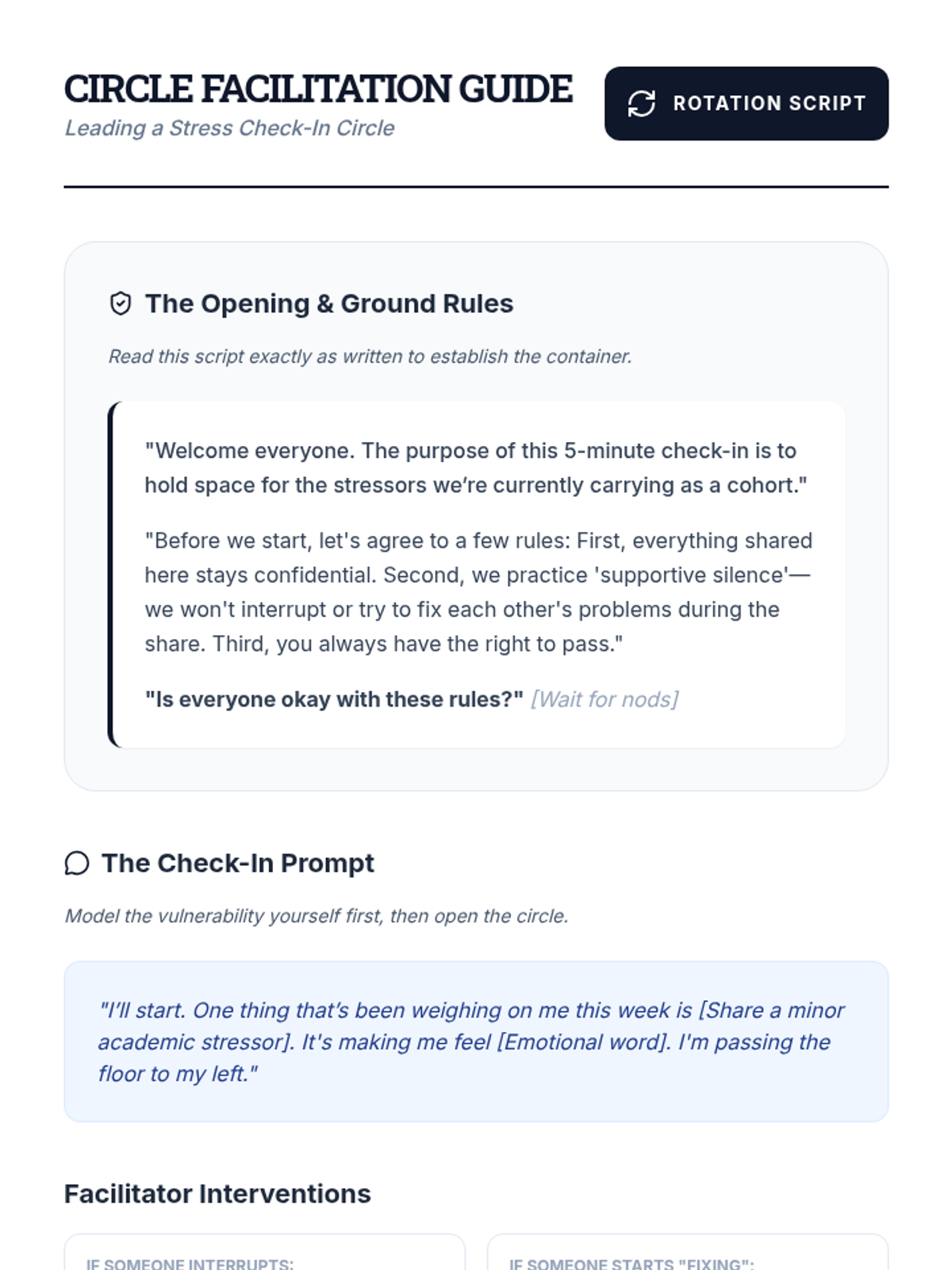
Practical script for students to lead a brief check-in circle, featuring opening ground rules, modeling prompts, and intervention strategies.
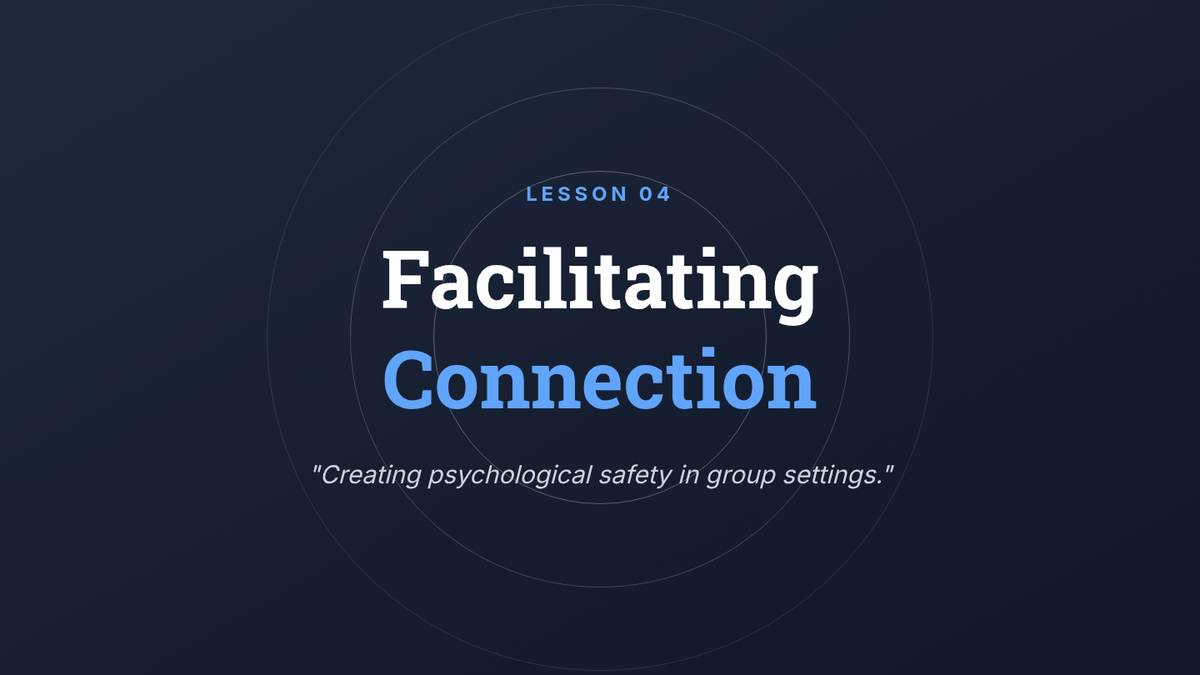
Facilitation Fundamentals Slides focusing on group dynamics, psychological safety, and managing difficult participants.
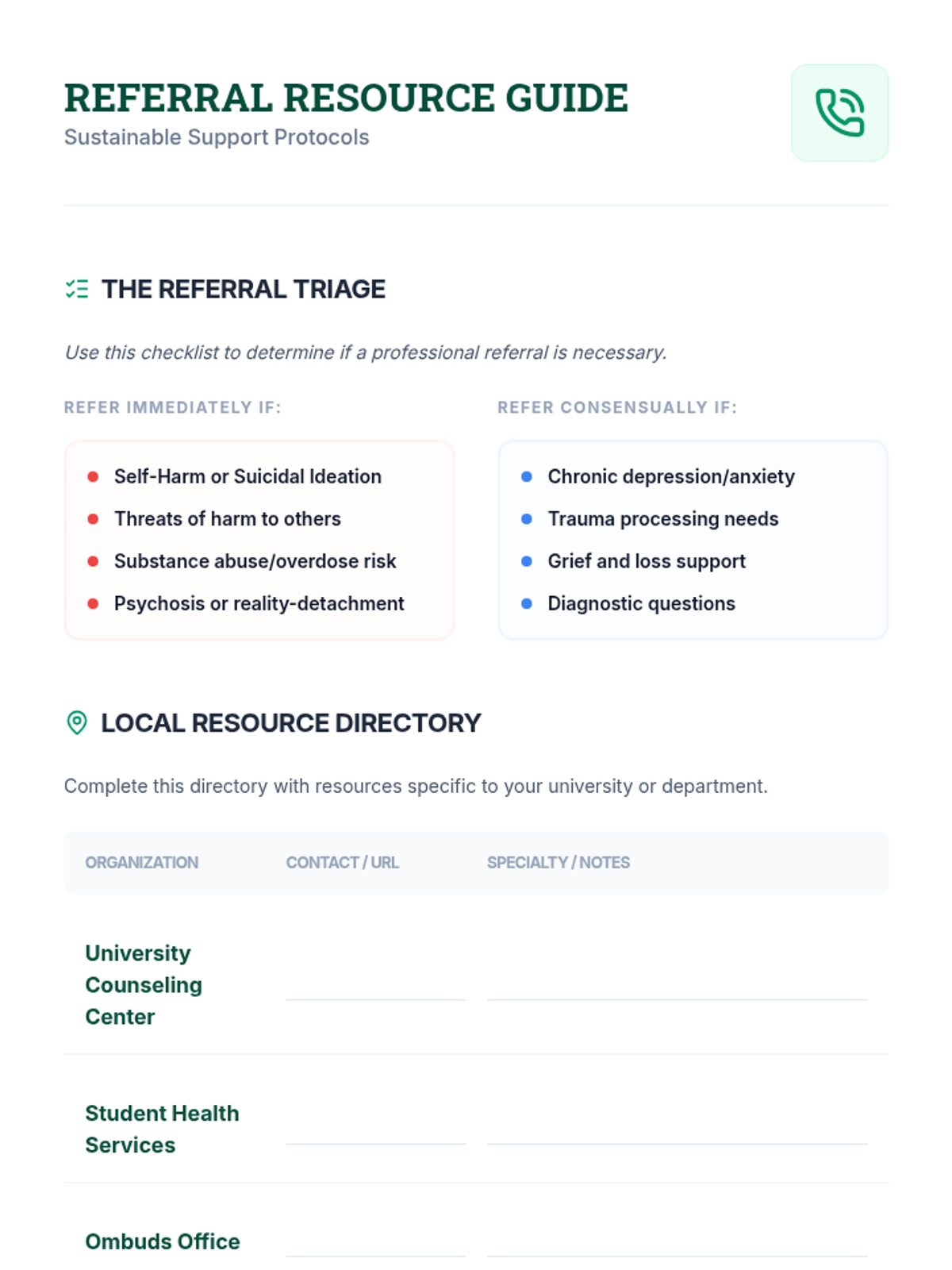
Reference guide and template for students to identify professional resources and practice the "warm handoff" referral protocol.
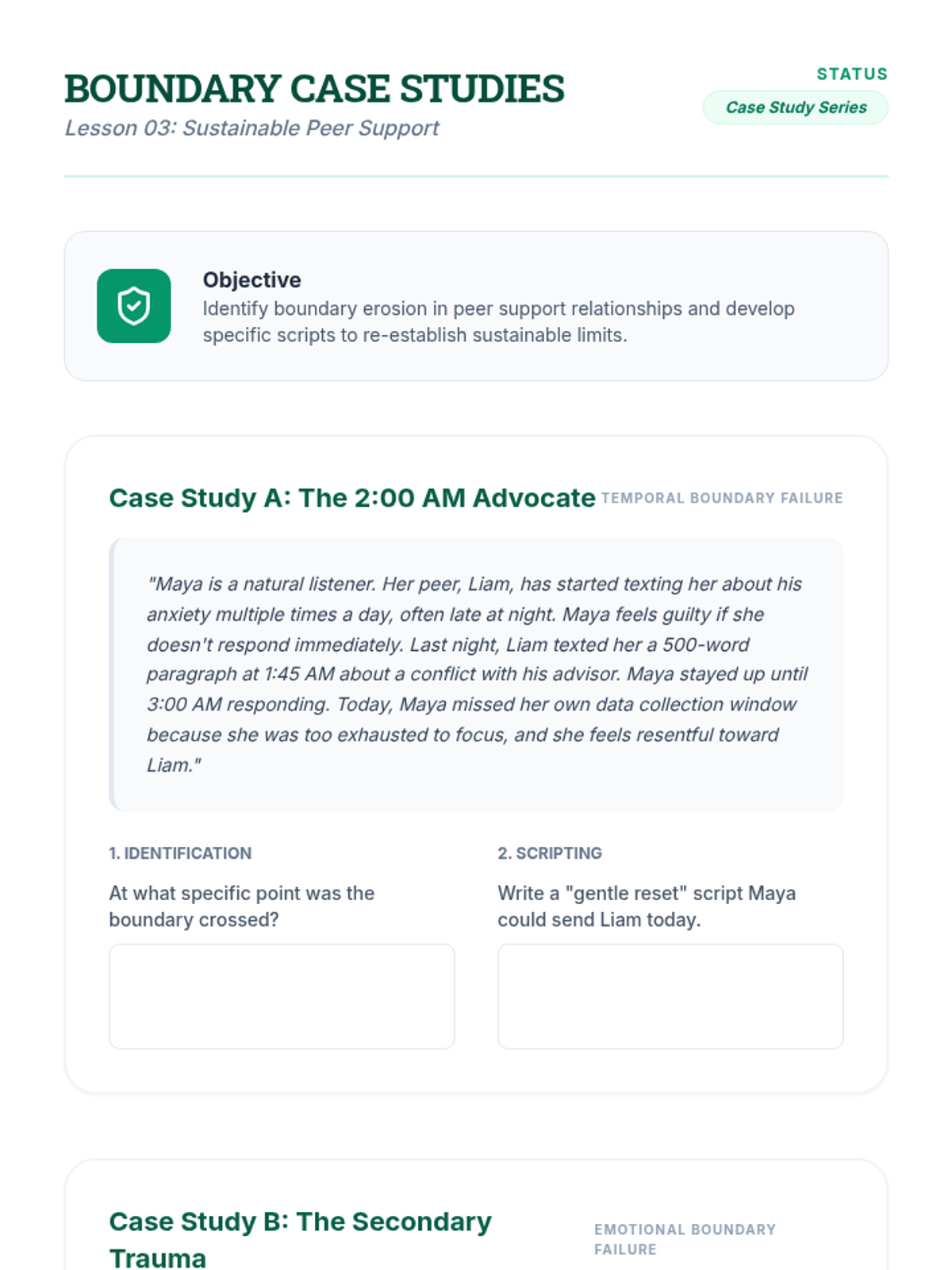
Case studies focusing on temporal and emotional boundary failures in peer support, including scripting exercises for boundary resetting.
Sustainable Support Slides focusing on compassion fatigue, different types of boundaries, and the professional referral process.
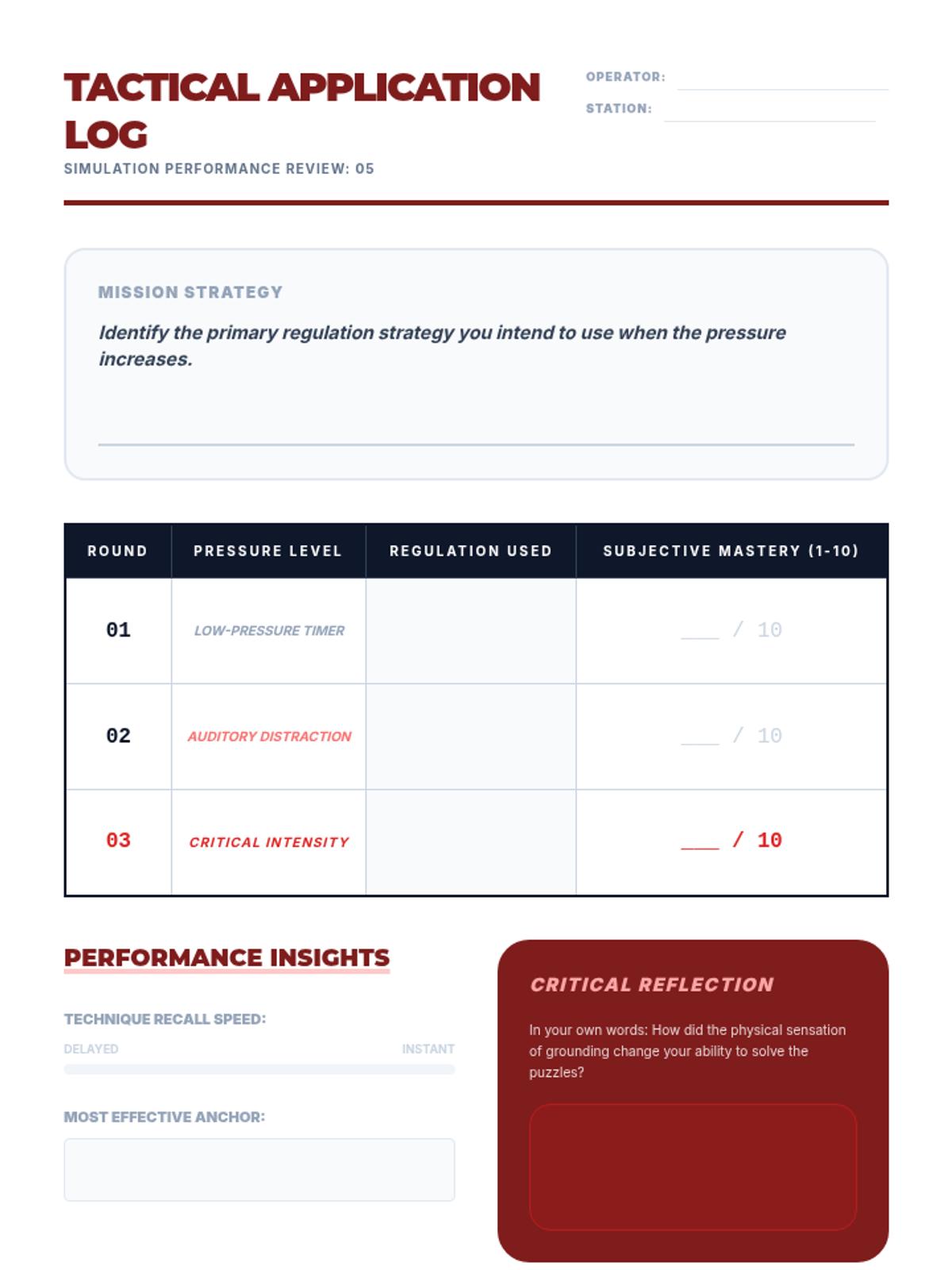
A performance tracking log for students to evaluate their use of regulation techniques during the final simulation under timed cognitive pressure.
Introductory slides for the Simulated Stress Response lesson, facilitating the final classroom simulation where students apply techniques under cognitive pressure.
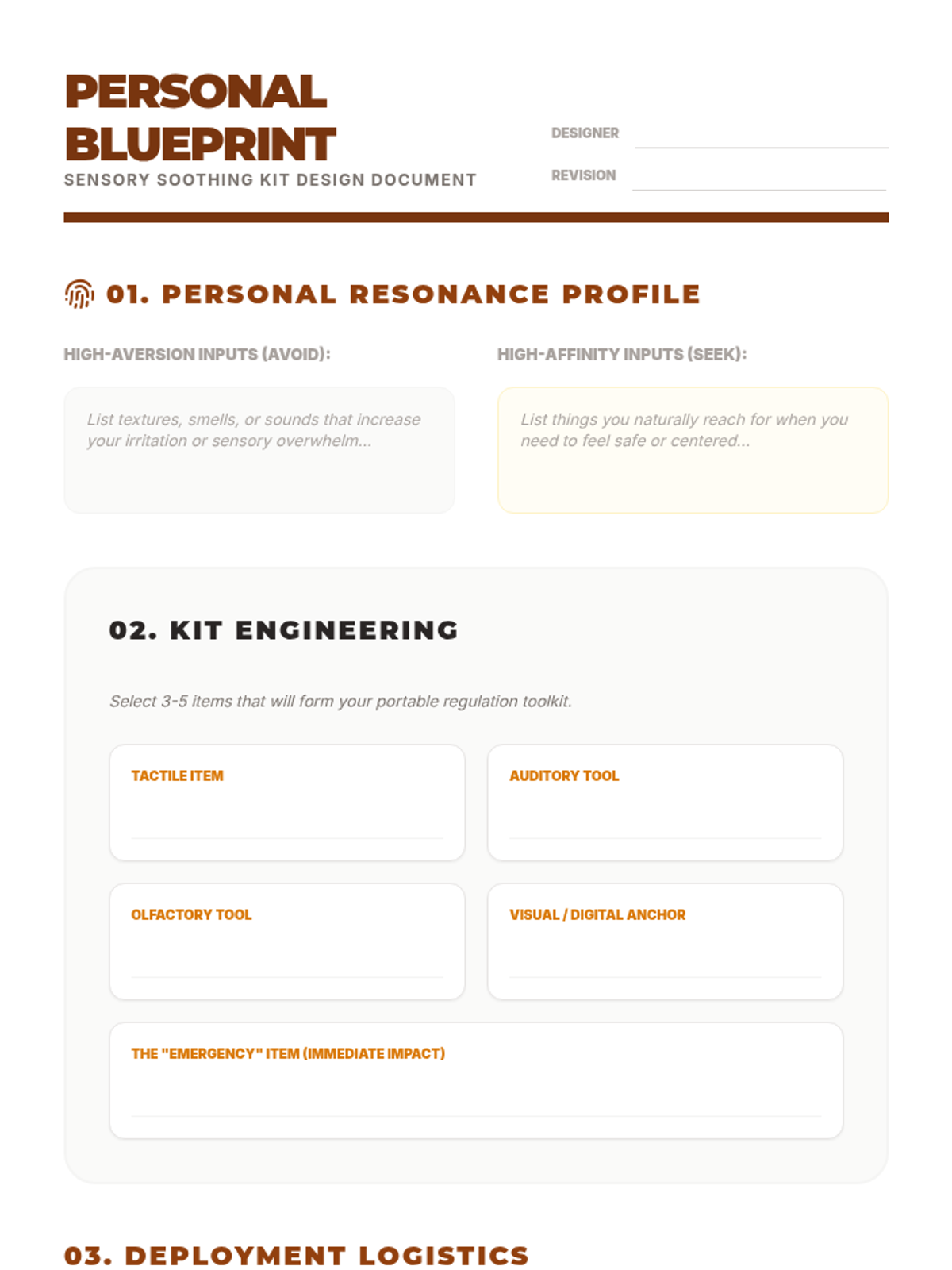
A project guide and planning document for students to design their personalized physical or digital sensory soothing kits.
Introductory slides for the Sensory Soothing Kit project, covering the psychology of decision fatigue, sensory inputs, and physical vs. digital implementation formats.
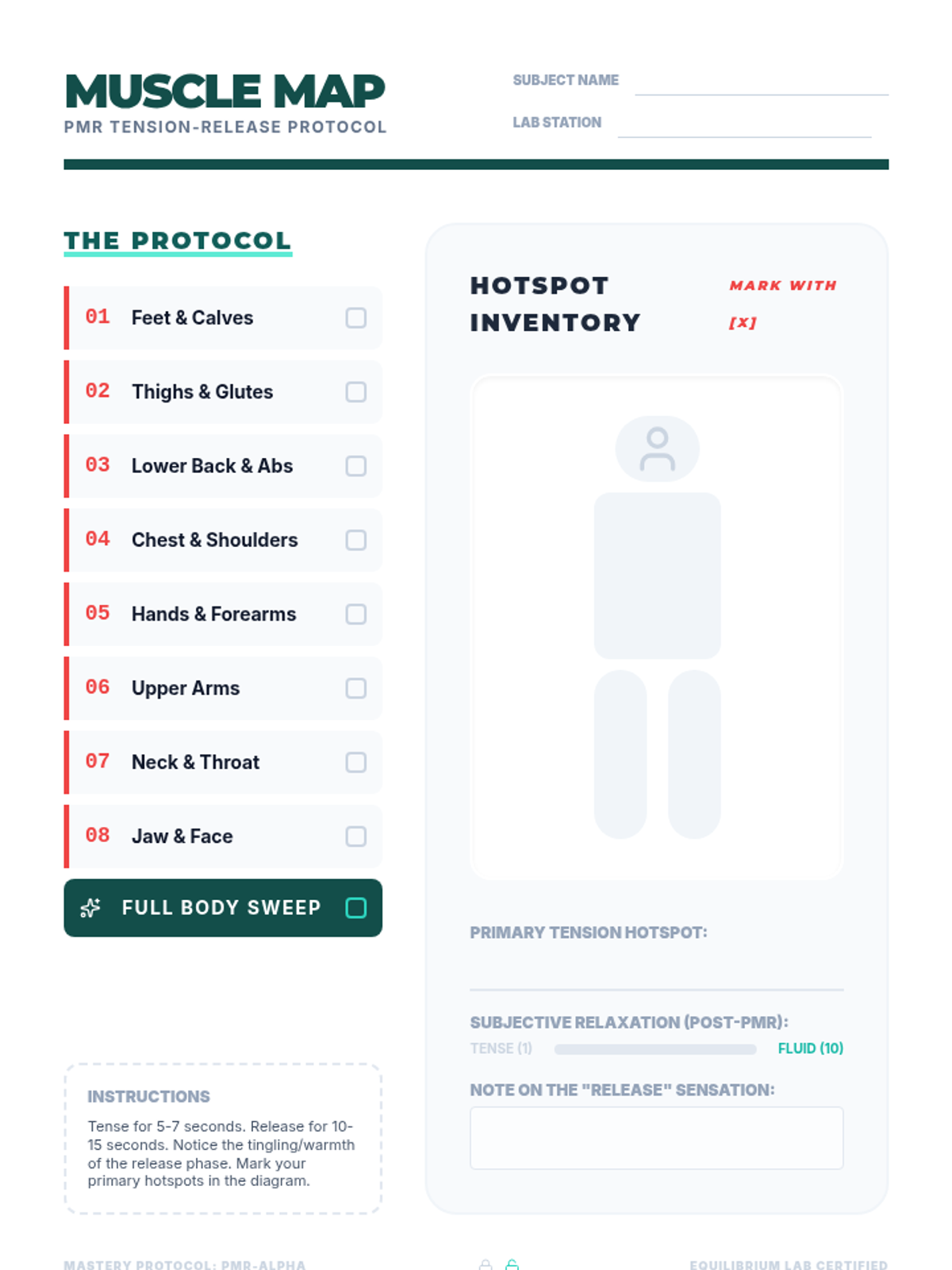
A visual checklist and hotspot mapping tool for students to track their physical response to Progressive Muscle Relaxation.
Technical slides for the Progressive Muscle Relaxation lesson, teaching the tension-relaxation contrast and the full-body PMR protocol.
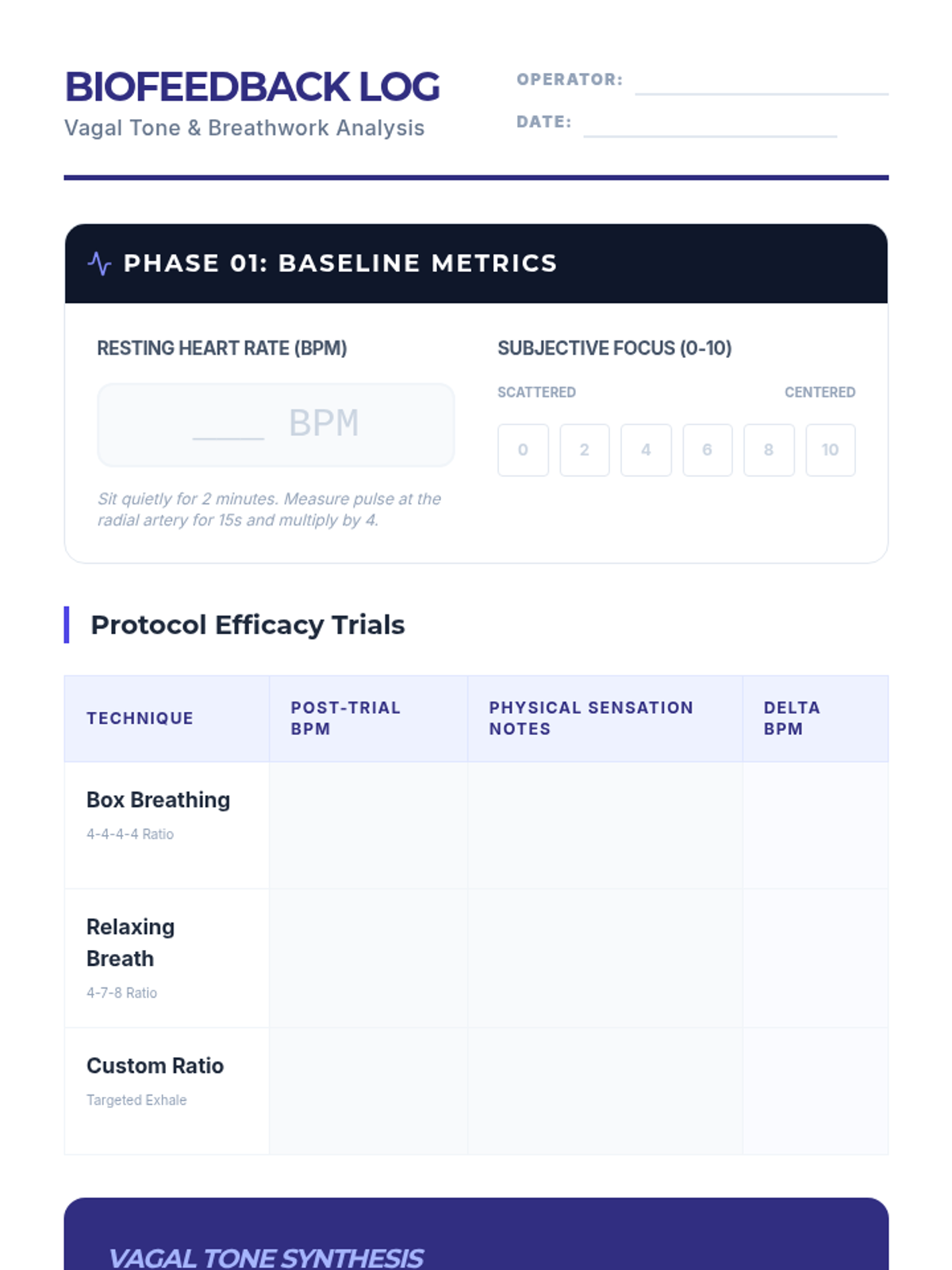
A technical biofeedback log for students to record heart rate data and subjective stress levels before and after practicing various breathing protocols.
Technical slides for the Controlled Breathing lesson, explaining vagal tone, the autonomic nervous system, and step-by-step protocols for Box and 4-7-8 breathing.
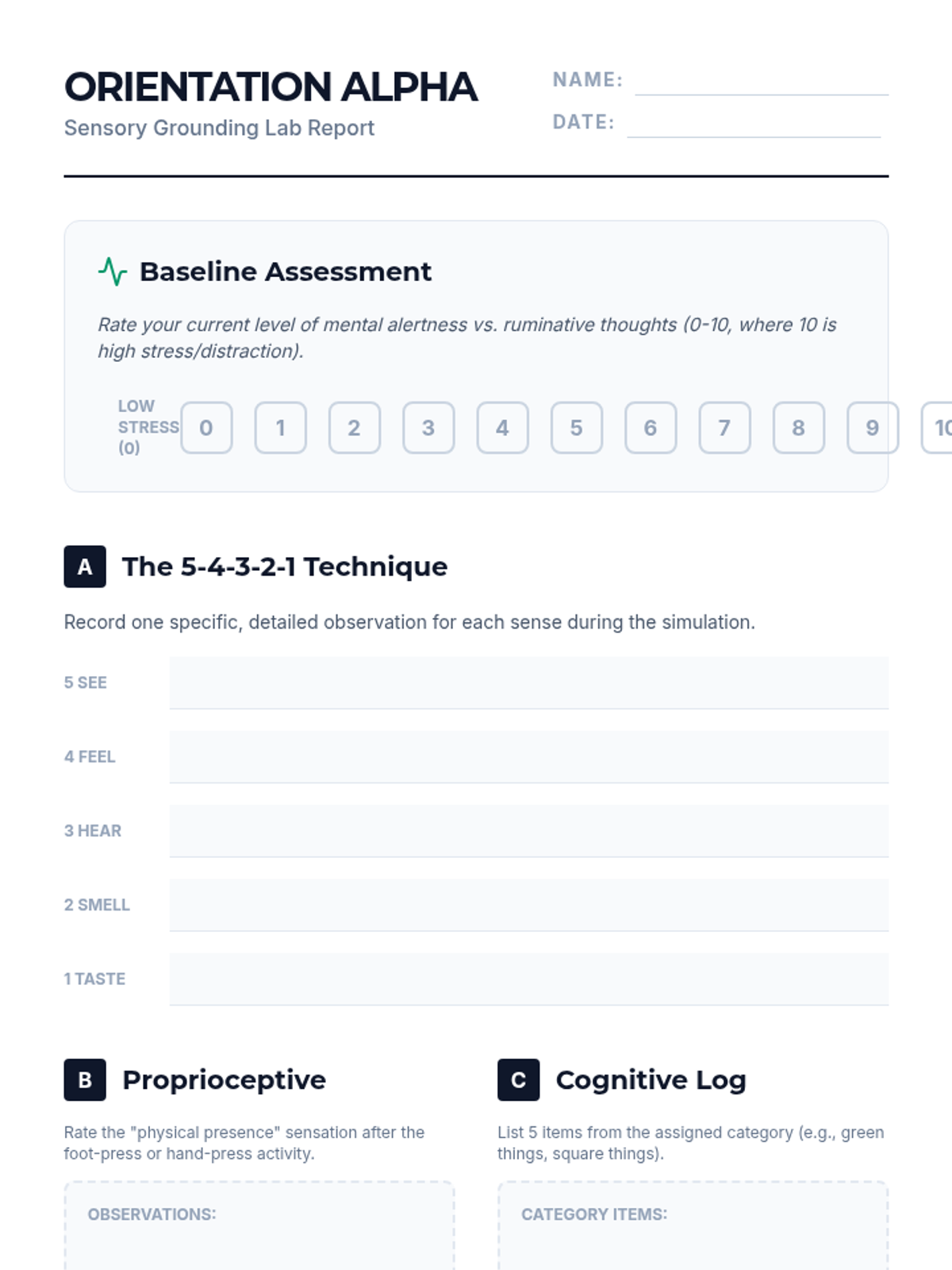
A structured lab report for undergraduate students to track and compare the efficacy of different sensory grounding techniques during a classroom simulation.
Introductory slides for the Sensory Grounding lesson, covering the science of ruminative loops, the ice cube challenge, and the 5-4-3-2-1 technique.