Mindful breathing and body scan meditation techniques integrated with daily self-care routines. Develops strategies for balancing life demands and advocating for personal wellness needs.
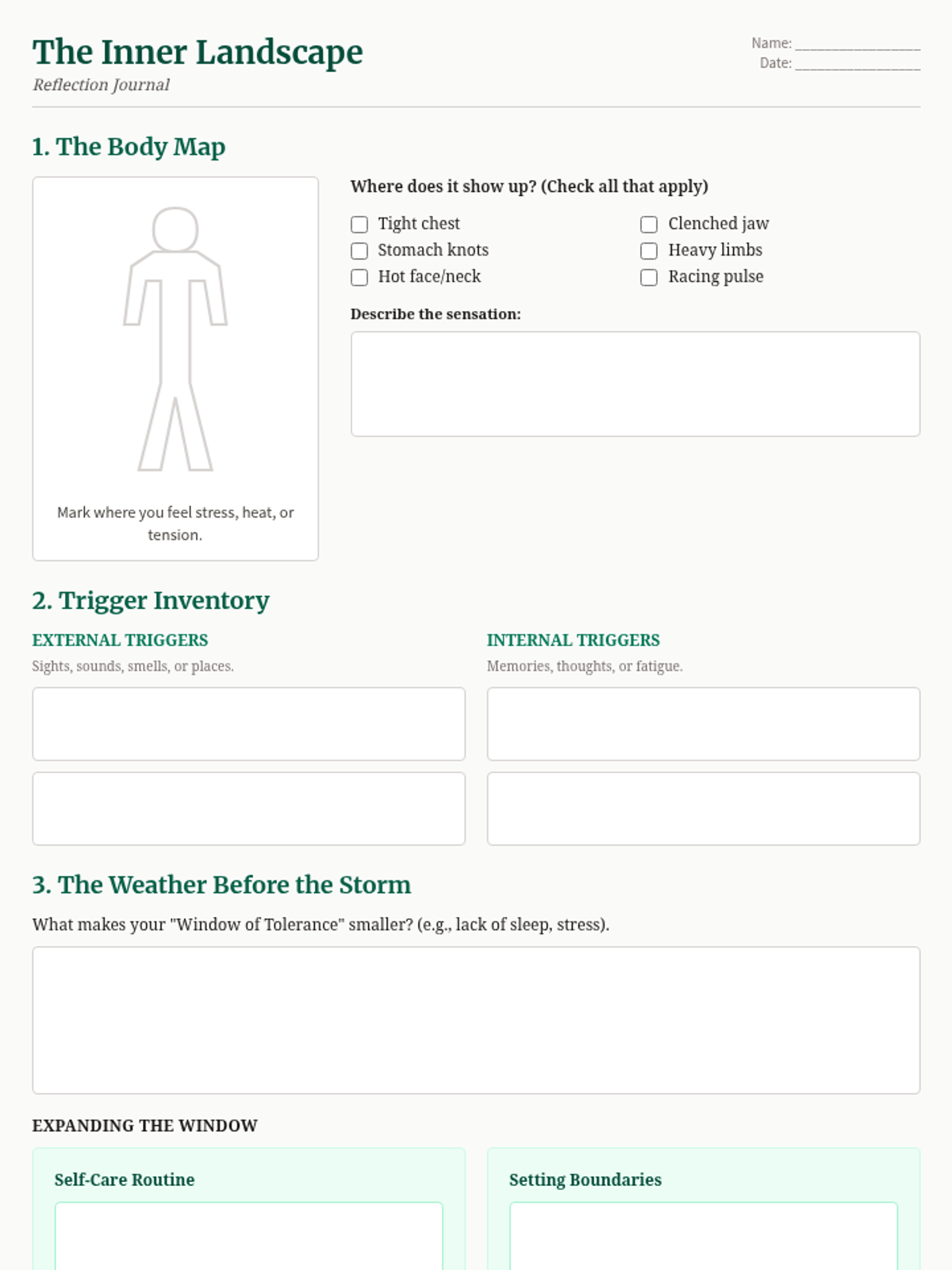
A 2-page reflection journal for students to map their physical sensations, identify triggers, and create a personalized safety plan.
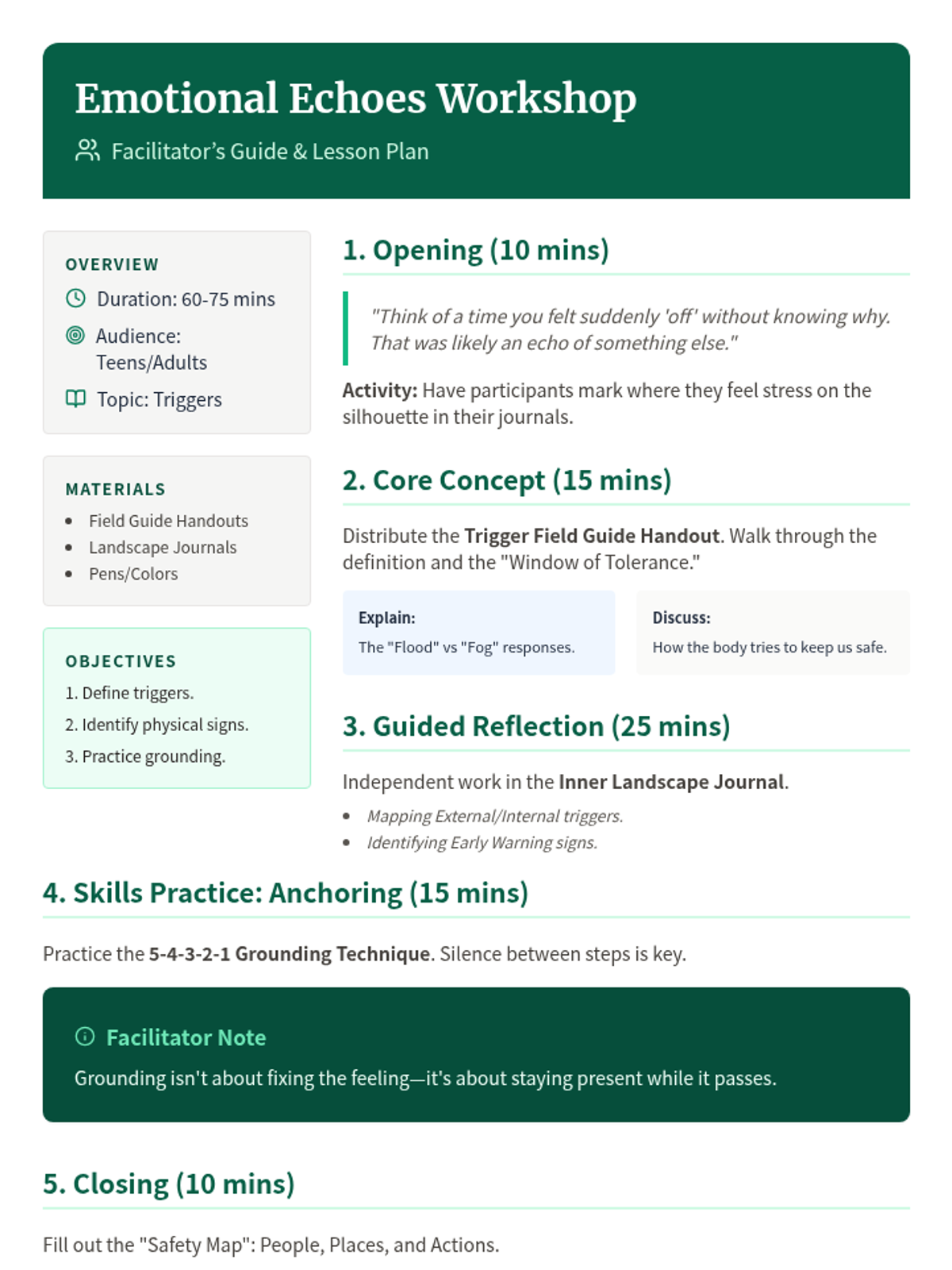
A facilitator's guide for a 60-75 minute workshop on mental health triggers, including scripts, activity breakdowns, and safety considerations.
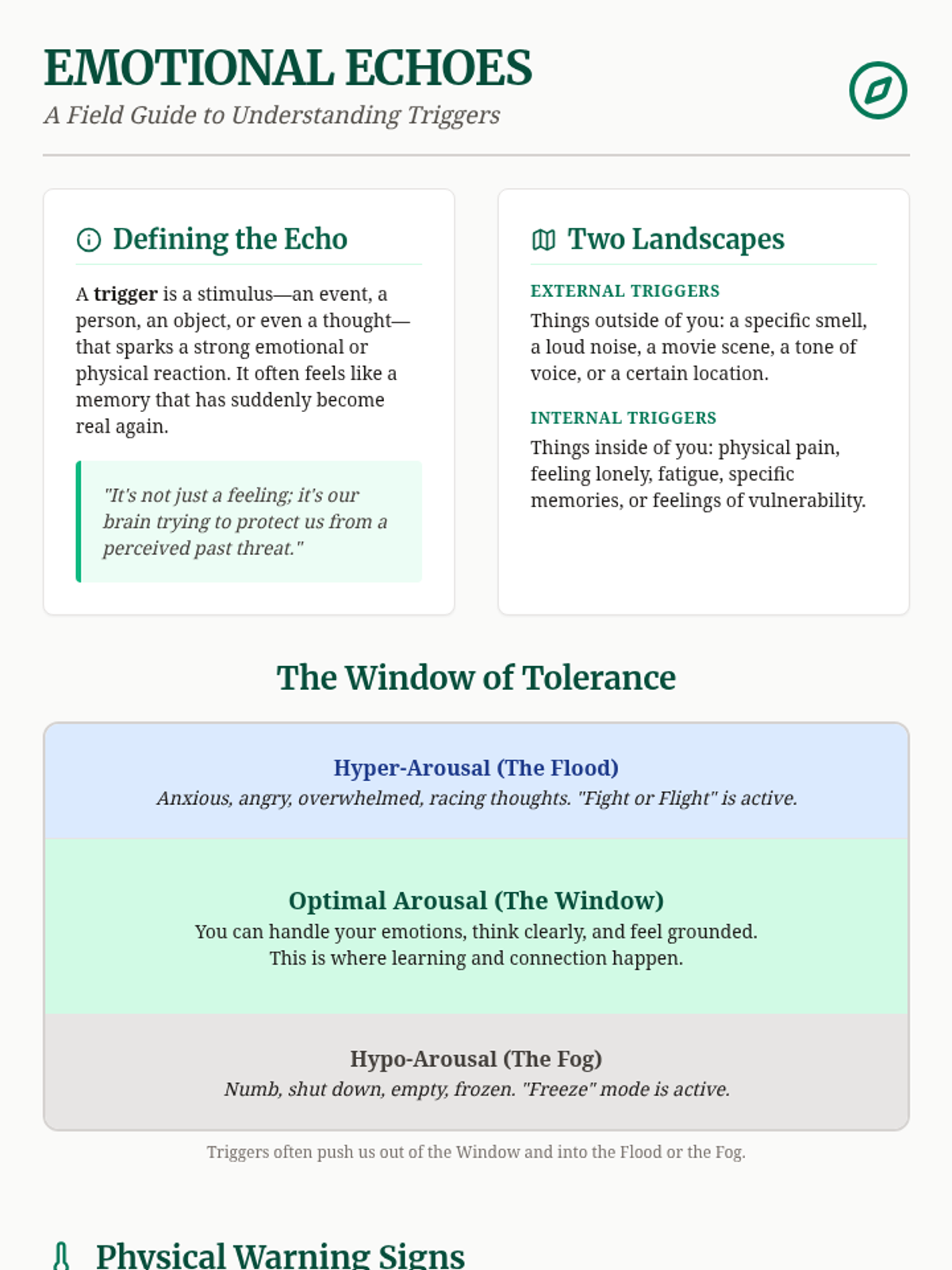
A 2-page informational handout explaining mental health triggers, the Window of Tolerance, physical warning signs, and immediate grounding techniques.
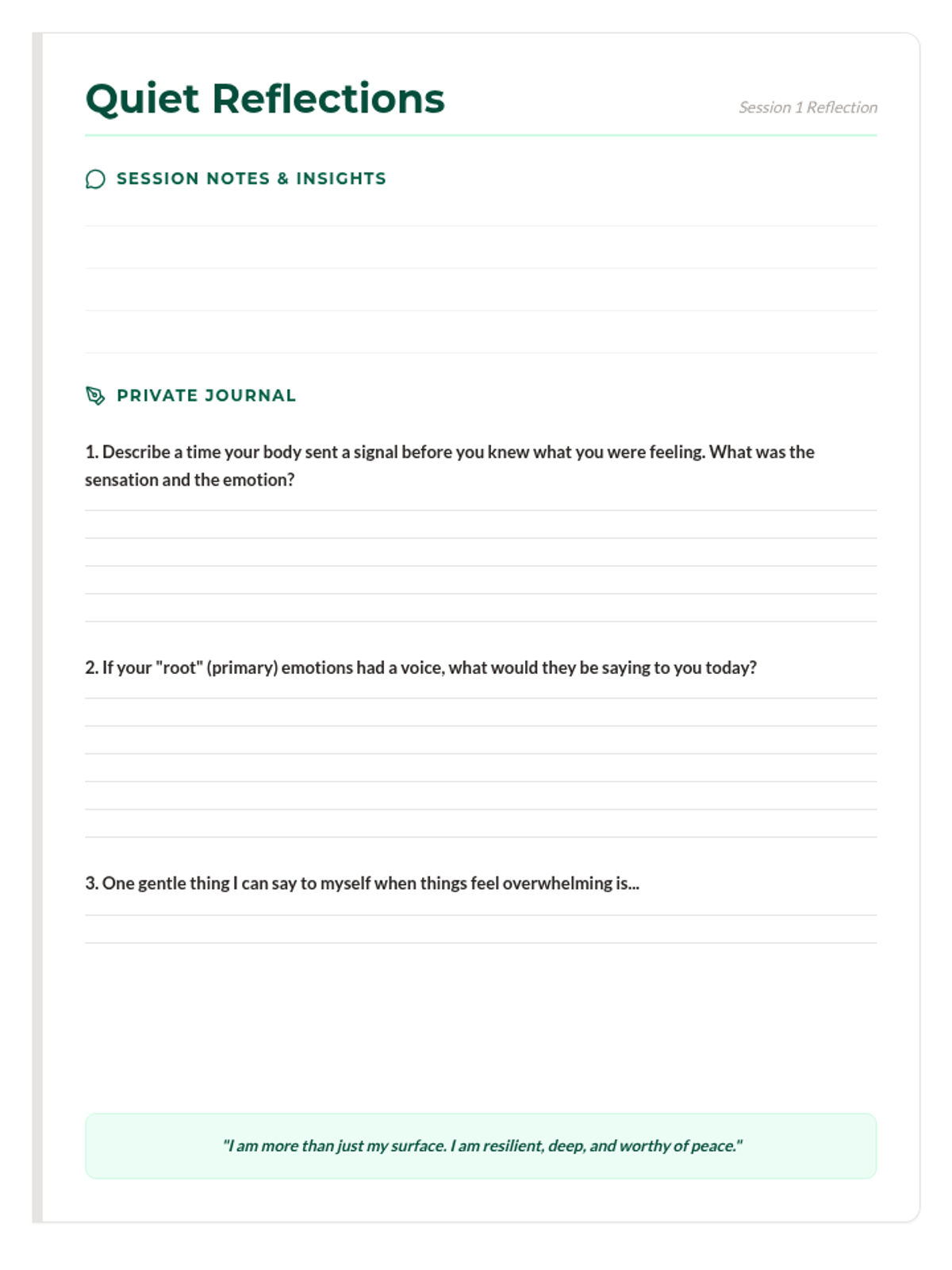
A collection of discussion questions and private journal prompts designed to help participants process the session's themes and practice self-reflection.
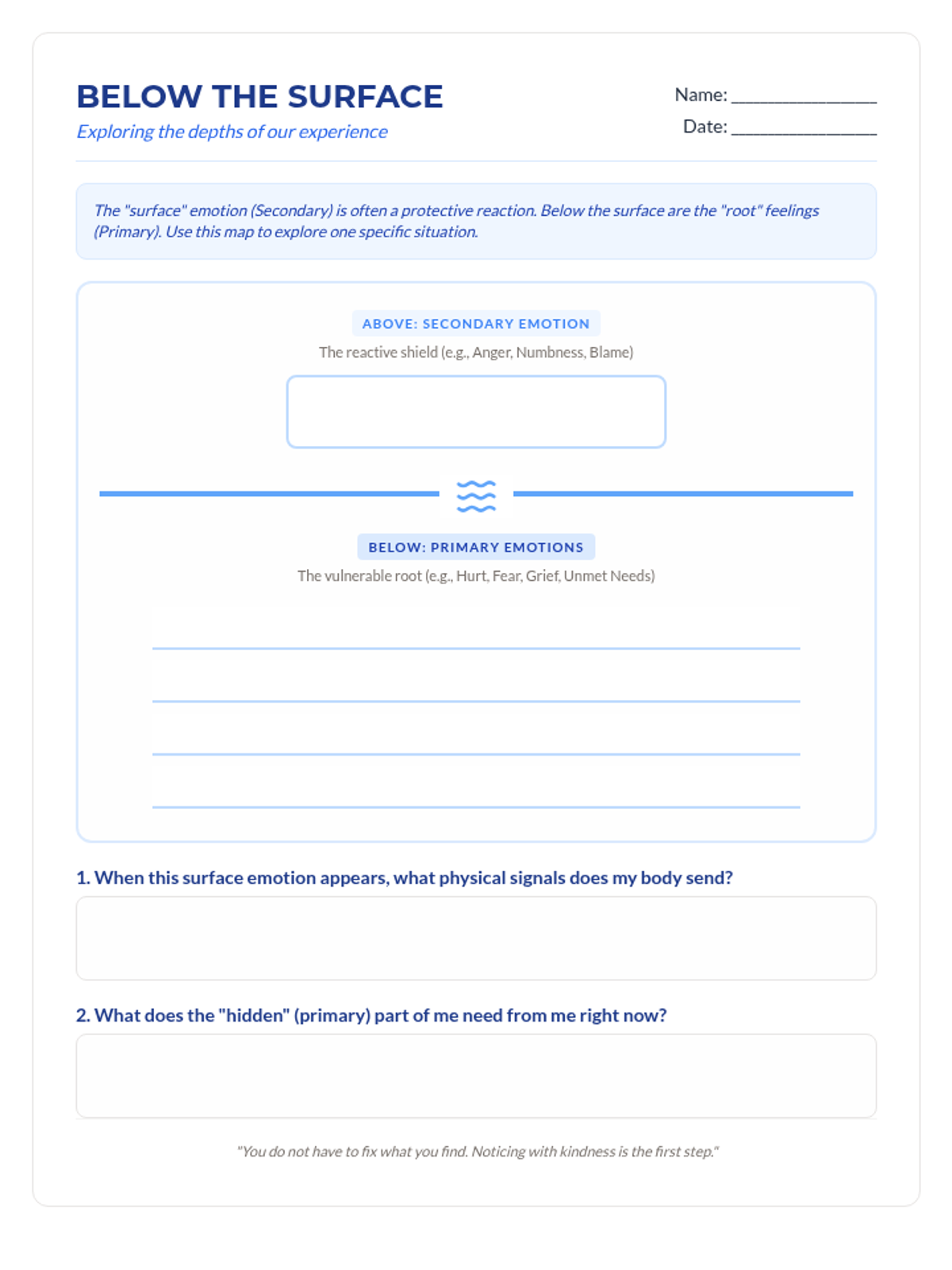
An activity worksheet for participants to explore the "iceberg" metaphor of emotions, identifying visible primary emotions and hidden secondary emotions.
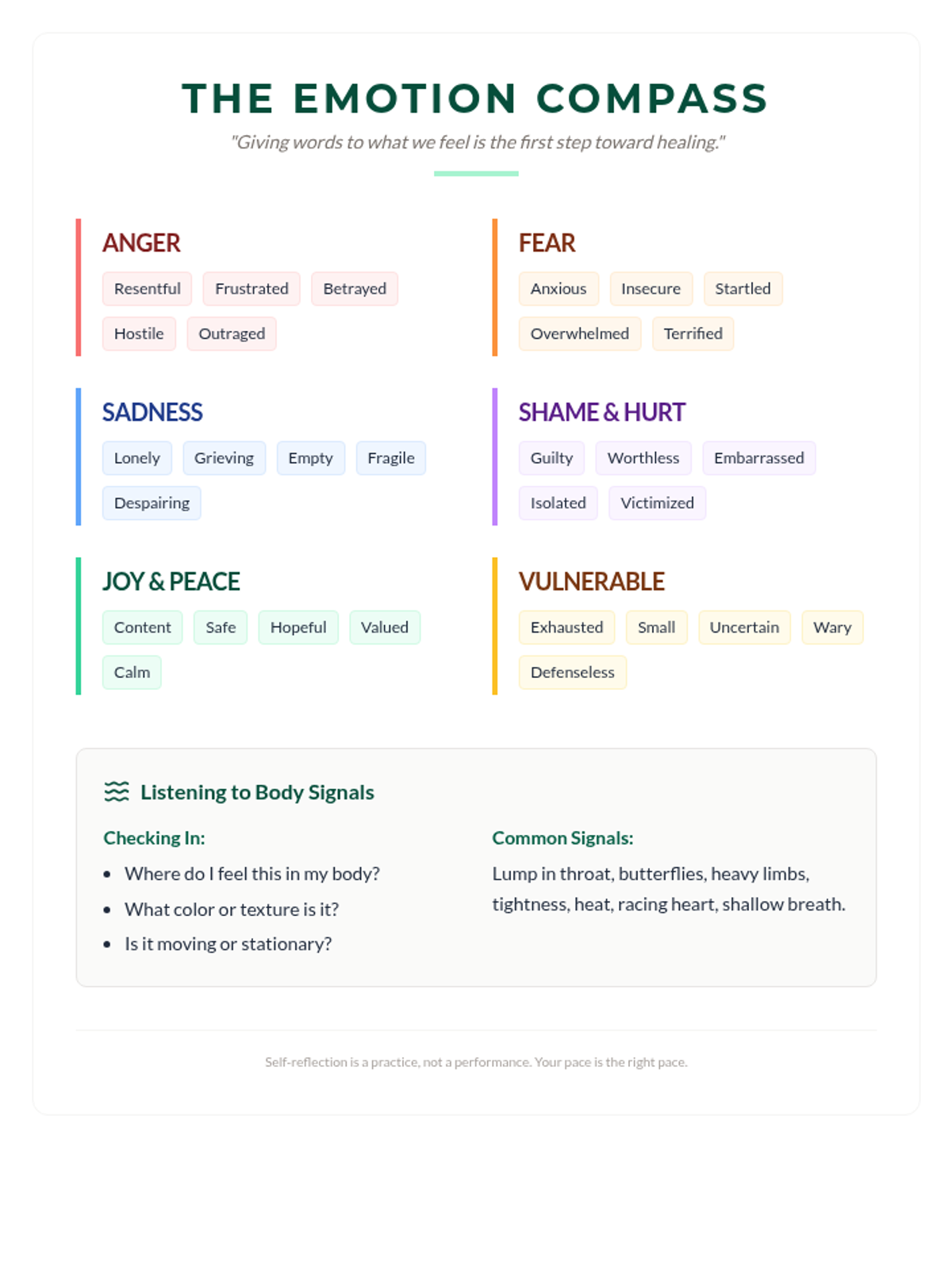
An emotion vocabulary reference guide for participants, categorizing complex emotions and providing a list of common somatic signals.
A visual presentation for the session, featuring concepts like somatic awareness, the iceberg metaphor for secondary emotions, and mindfulness prompts.
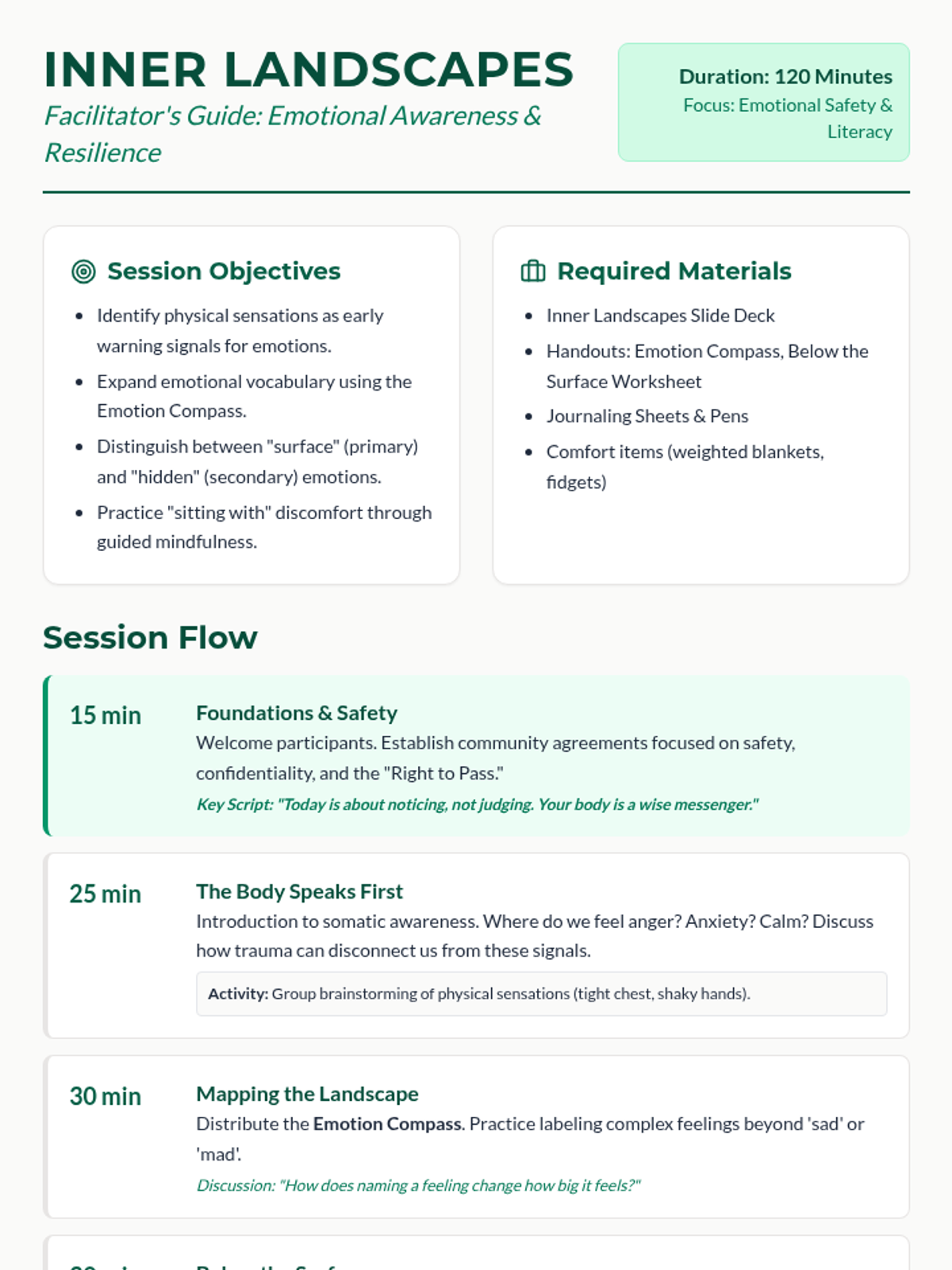
A comprehensive teacher guide for facilitators, outlining the 2-hour session flow, session objectives, pacing, and trauma-informed tips for working with survivors.
A set of slides focused on anxiety management for an autistic student. It uses simple language, concrete visuals, and emoji-based check-ins to teach grounding, breathing, and cognitive reframing techniques. Expansion includes guided practice, telehealth tips, brain breaks, and social scripts.
A visual slide deck designed to accompany the Battery Reset workshop. Features high-impact graphics explaining the difference between stress and burnout, the 16-21 pressure cooker, and strategies for energy management.
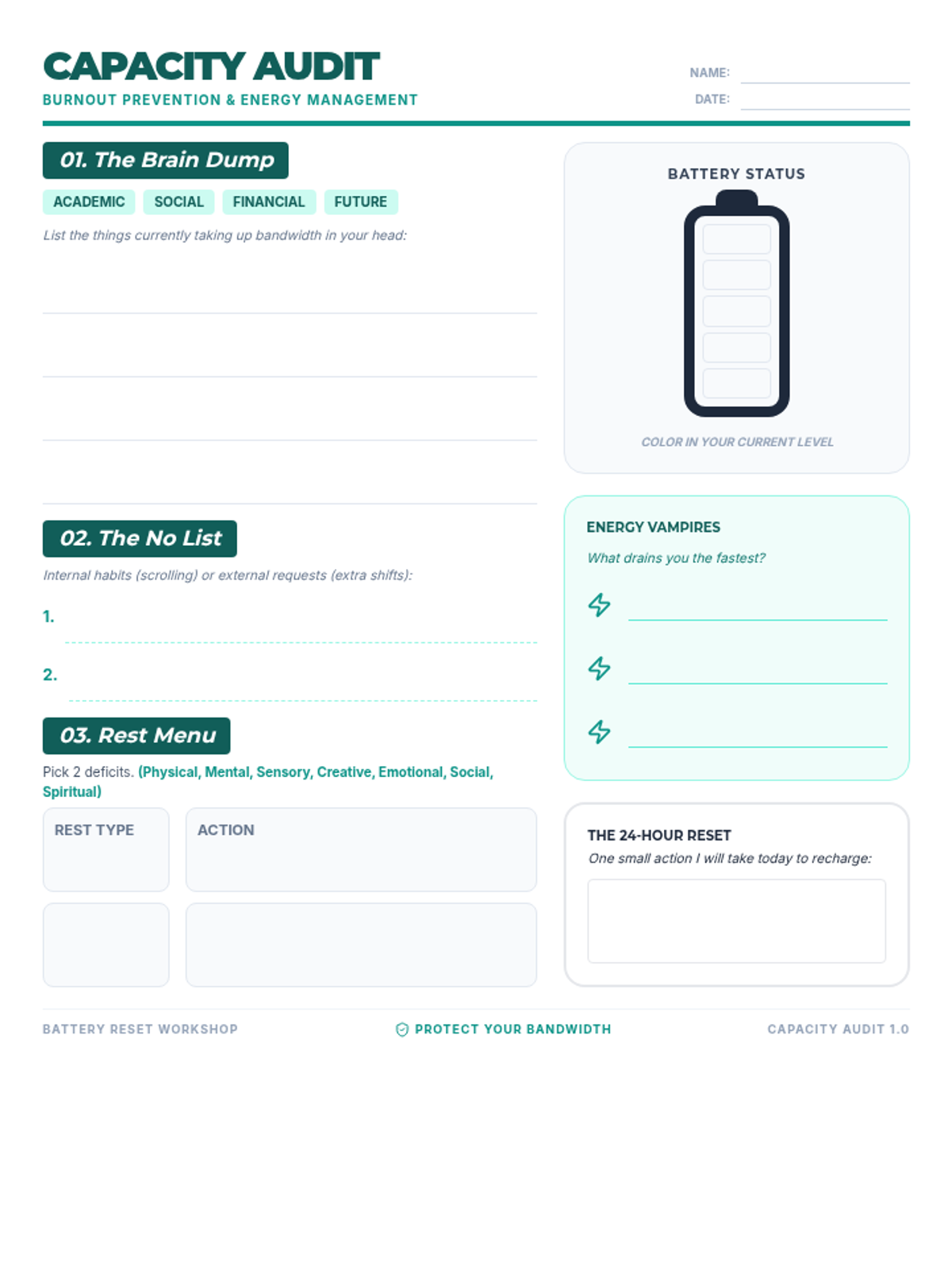
A comprehensive 3-page student workbook for the Battery Reset Stress Workshop. Features expanded self-reflection activities including an energy scan, physical stress mapping, nervous system ladder check-in, and personalized rest menu.
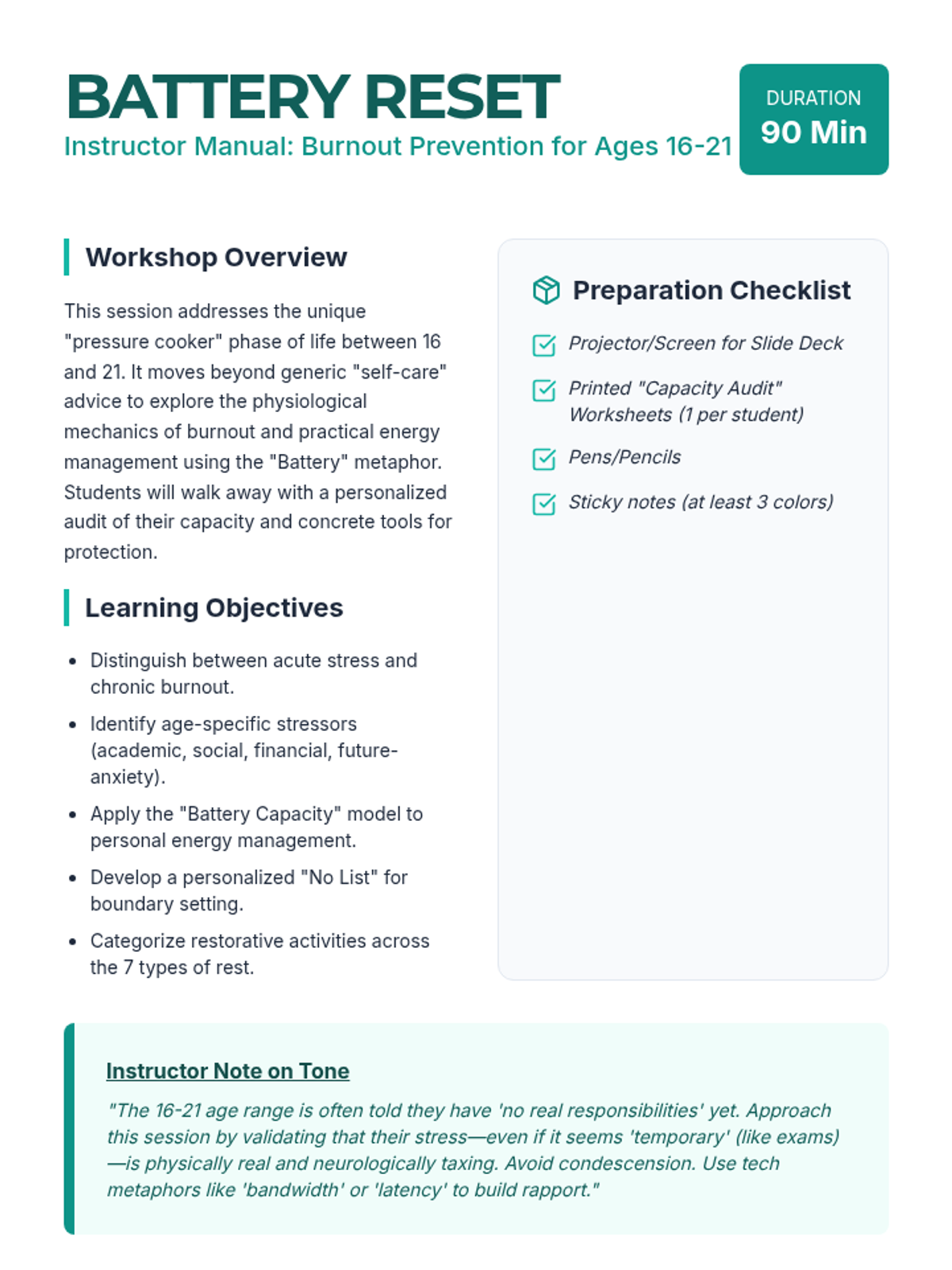
A comprehensive 8-page instructor guide for facilitating a 90-minute workshop on stress and burnout prevention for young adults (16-21). Includes psychological background, minute-by-minute facilitation notes, and resource lists.
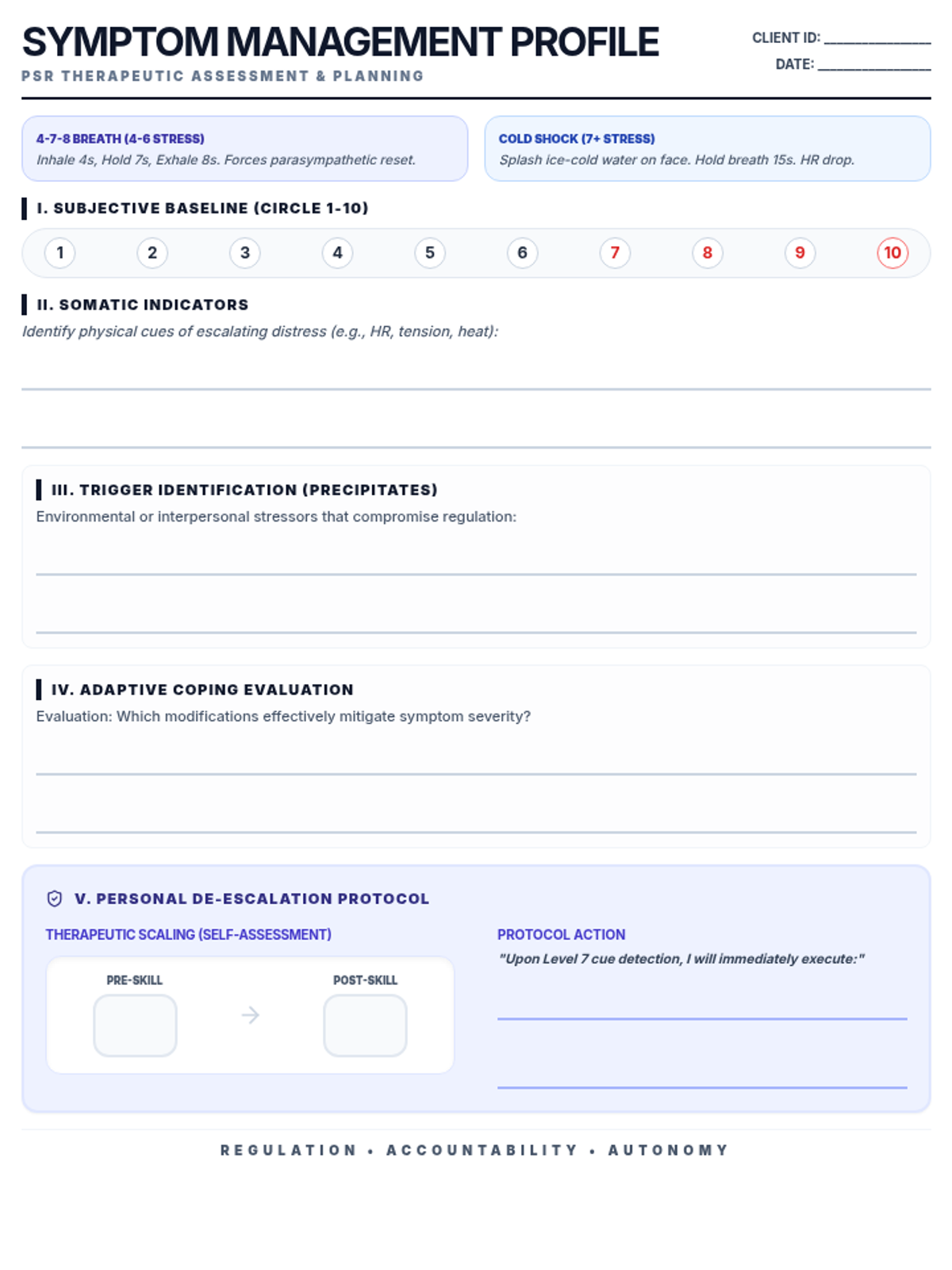
A clinically-toned 'Symptom Management Profile' for PSR group members. Features sophisticated terminology, somatic cue identification, precipitates analysis, and a structured 'Personal De-escalation Protocol' with therapeutic scaling. Revised for single-page layout and handwriting legibility.
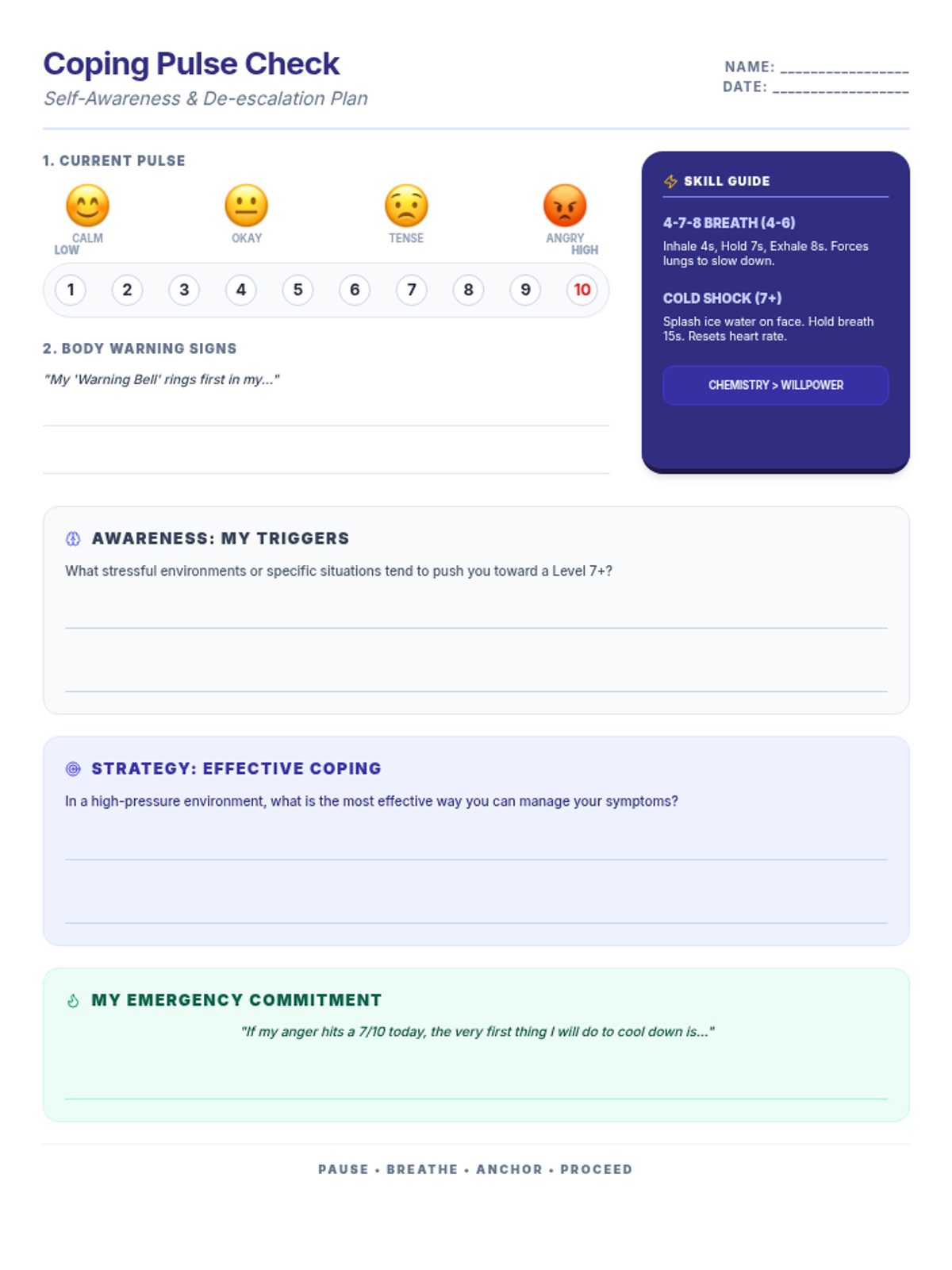
An expanded 'Pulse Check' worksheet for PSR group members. Includes reflective sections for identifying personal triggers, determining the most effective coping strategies in stressful environments, and setting a daily commitment for de-escalation. Includes a detailed emergency skill guide.
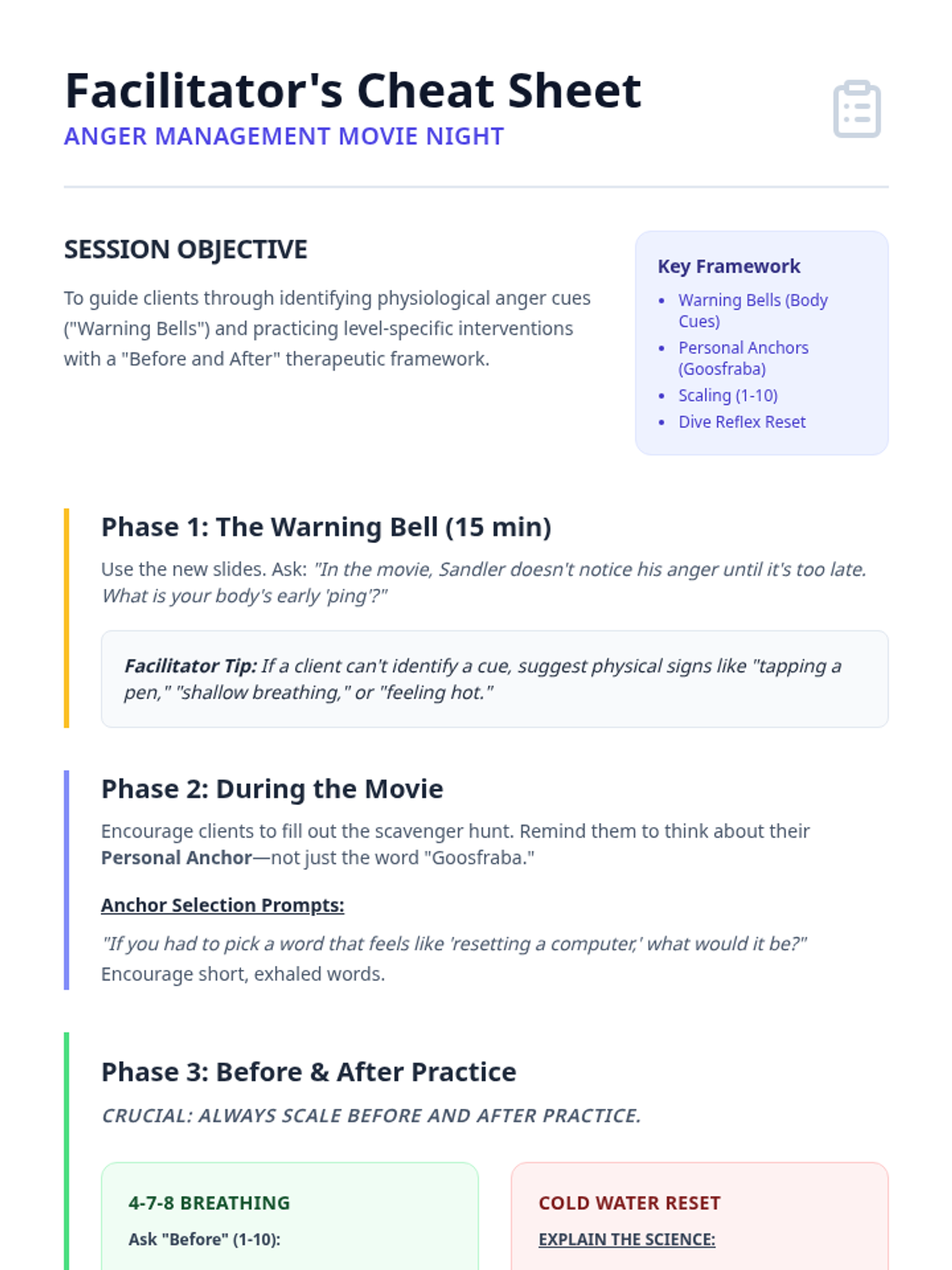
Updated facilitator guide for the 'Anger Management' session. Includes instructions for the 'Warning Bell' icebreaker, detailed therapeutic questioning frameworks for 'Before and After' scaling, and clinical explanations for the Mammalian Dive Reflex intervention.
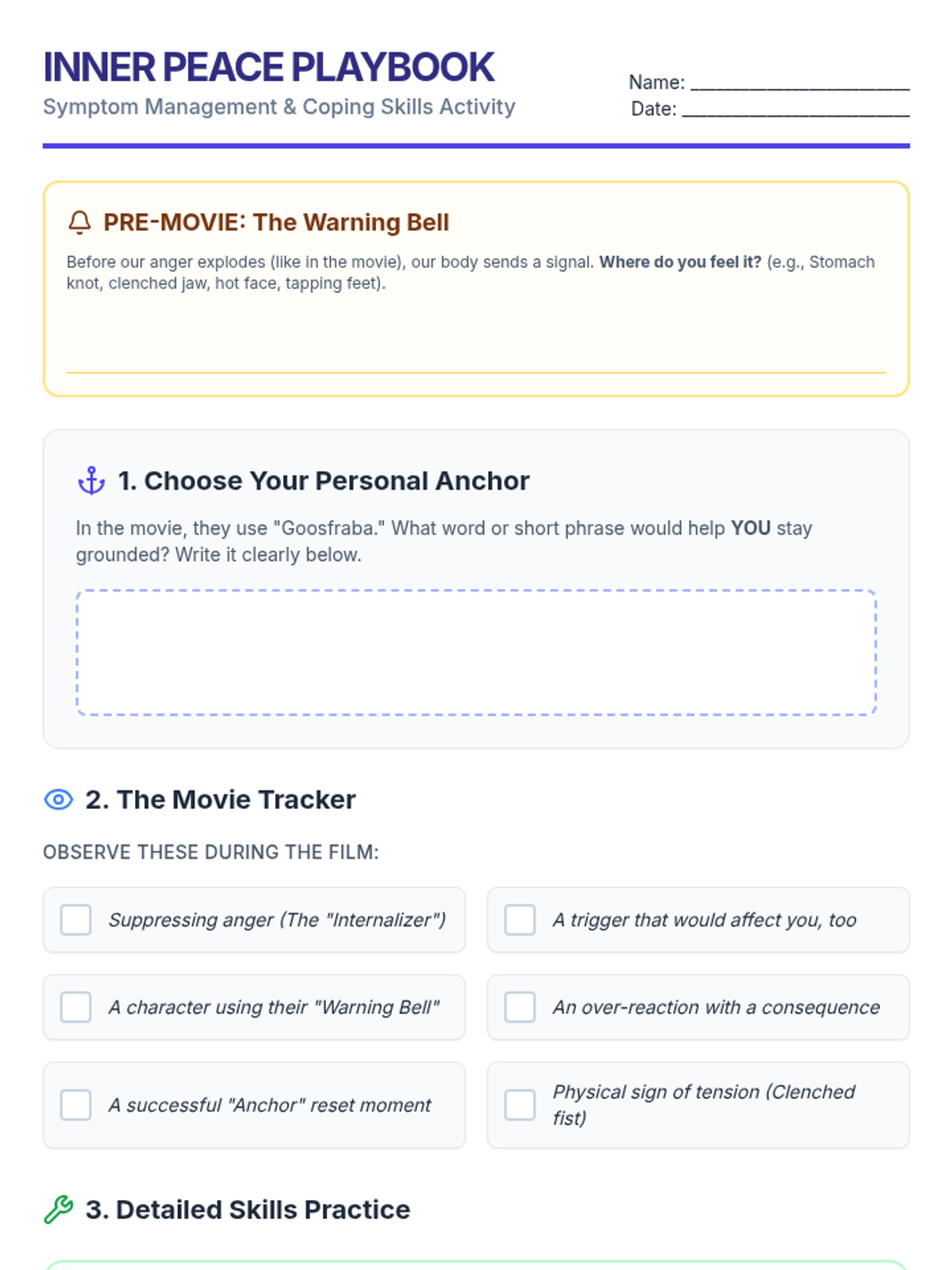
Updated interactive worksheet for the 'Anger Management' session. Replaced the icebreaker with 'The Warning Bell,' added detailed step-by-step instructions for 4-7-8 breathing and the Cold Water Reset, and included 'Before/After' self-rating boxes for clear therapeutic scaling.
Updated visual slide deck for the 'Anger Management' session. Replaced the old icebreaker with 'The Warning Bell,' added detailed steps for 4-7-8 breathing and the Cold Water Reset, and included 'Before and After' therapeutic scaling questions.
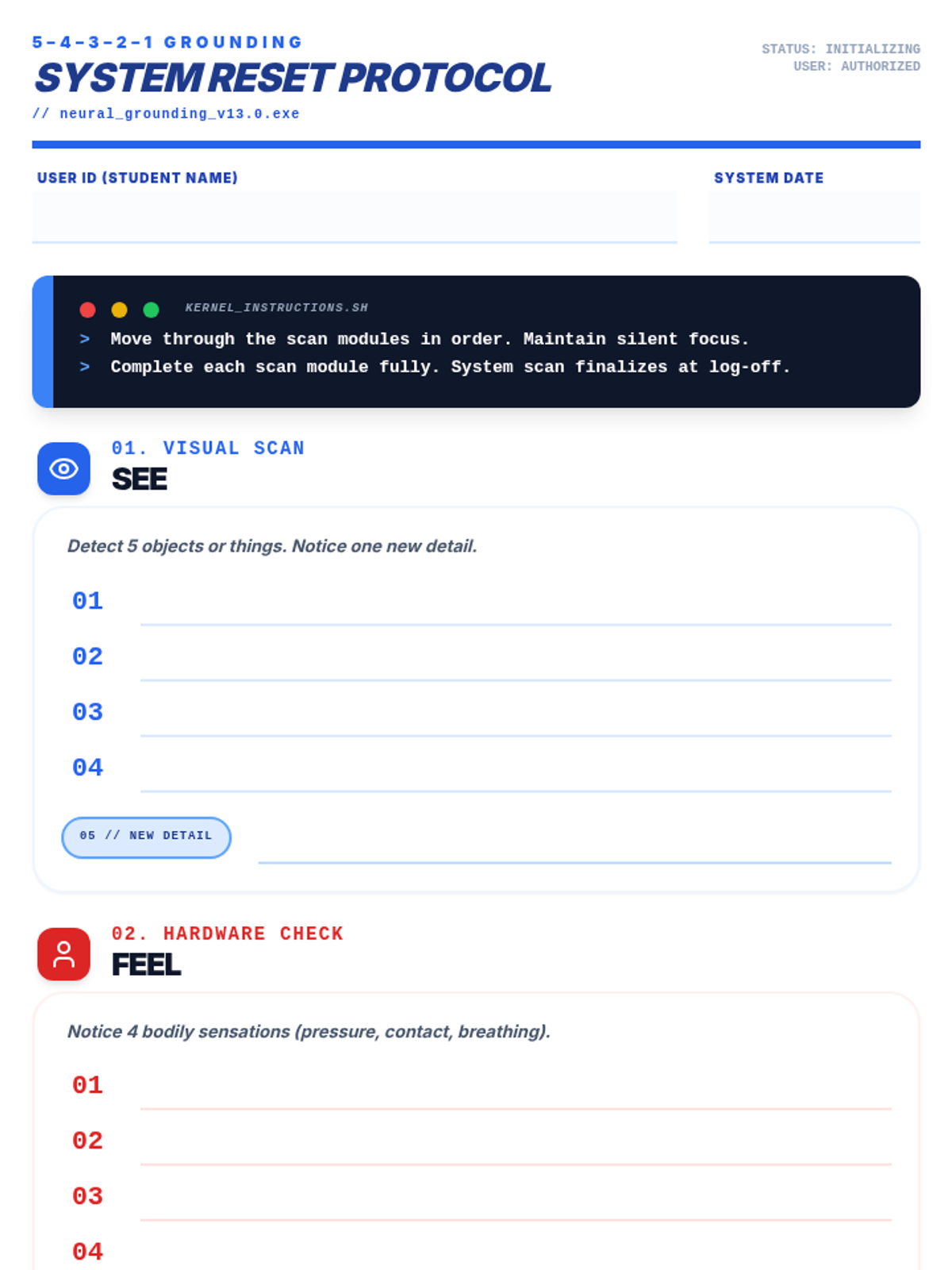
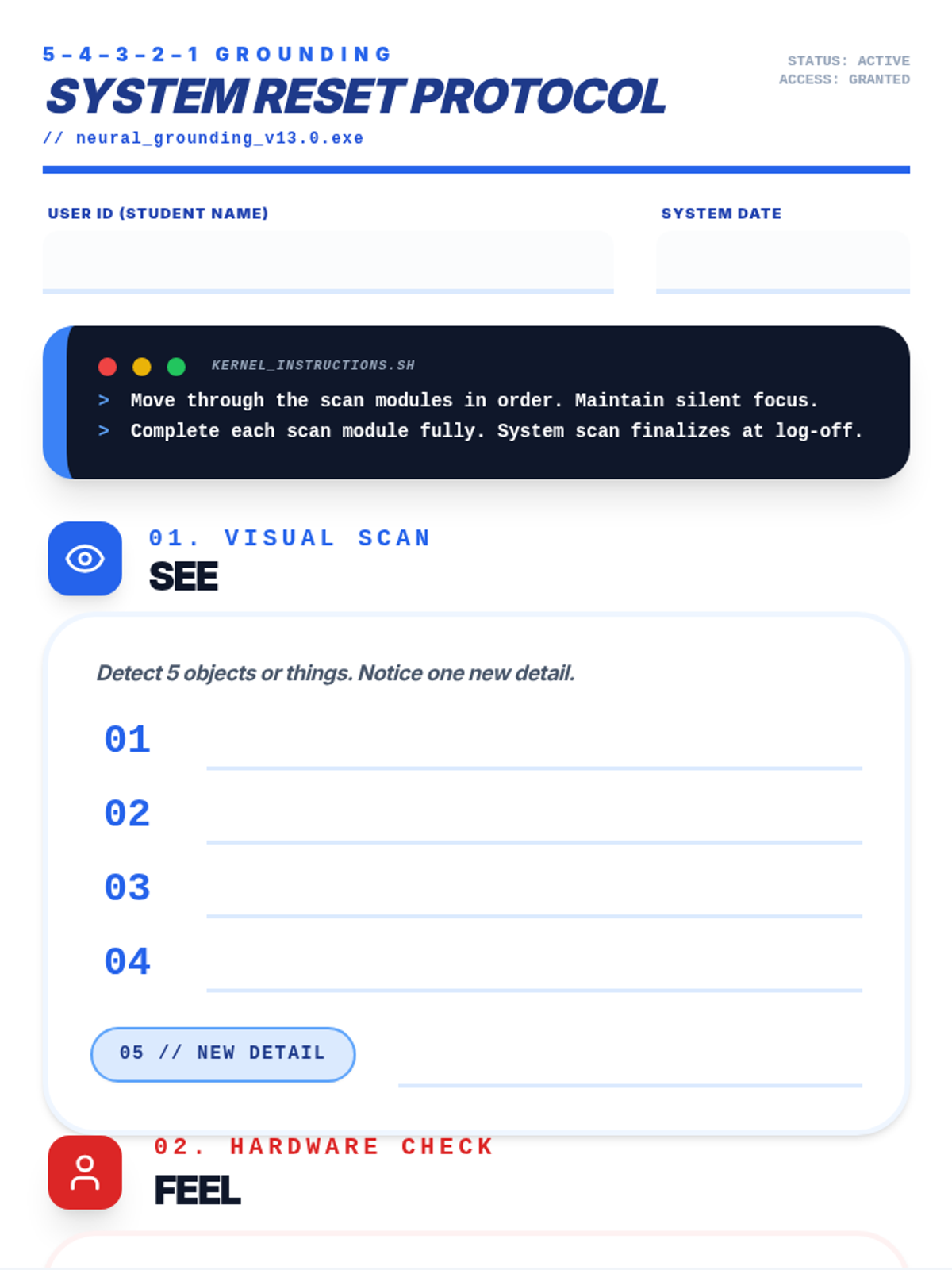
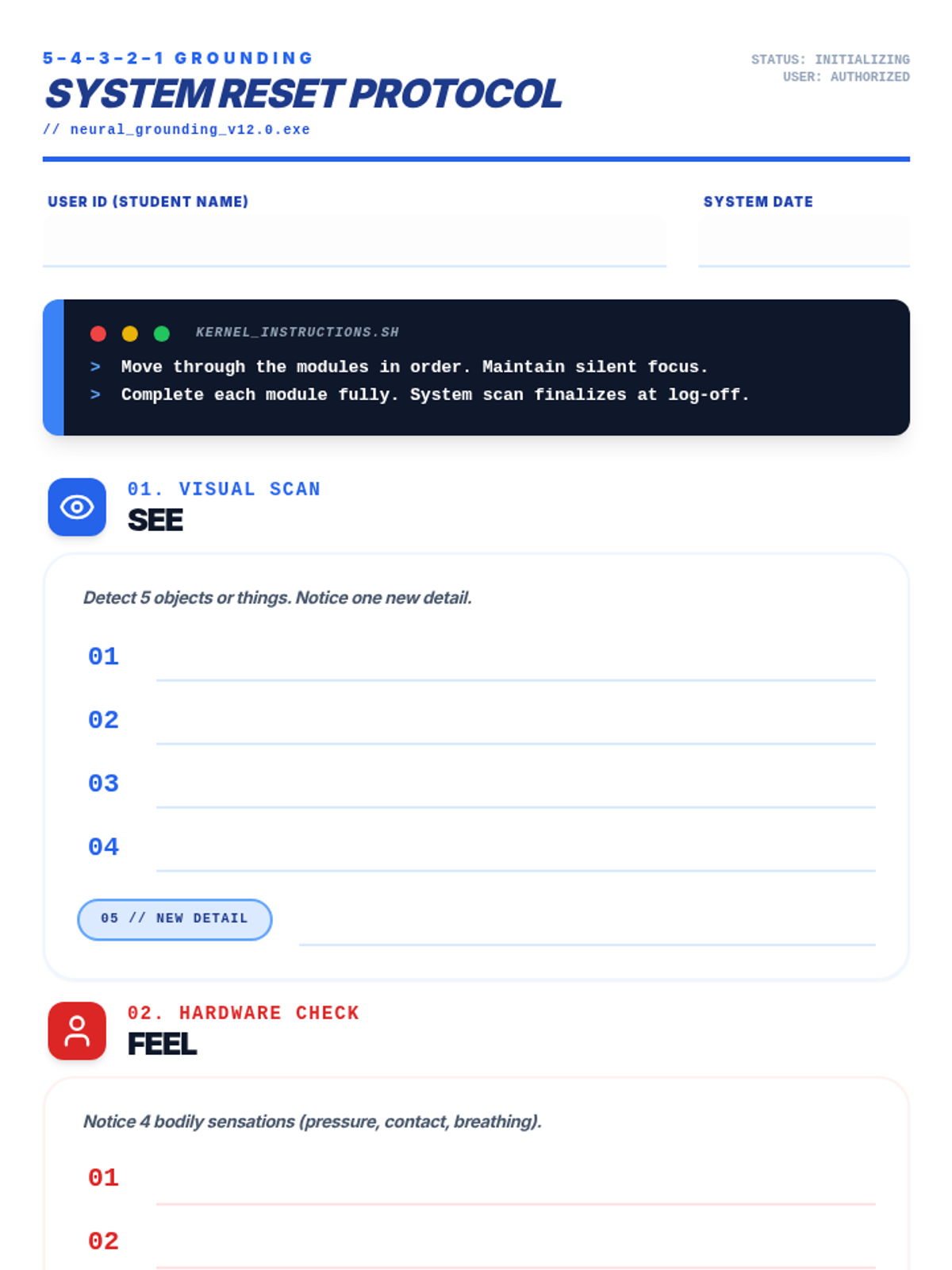
The definitive, stable 2-page version of the System Reset Protocol handout. Items are enlarged to fill both pages completely. Features high-impact headings, darker dashed writing lines for better visibility, and an ink-optimized light green Exit Ticket. Page distribution is optimized to prevent cut-offs, with modules 01-02 on Page 1 and 03-05 plus synthesis on Page 2.
The final, stable 2-page "Maximum Scale" version of the System Reset Protocol handout. Items are enlarged to fill both pages completely without overlapping or spilling into a third page. Features high-impact headings, spacious writing areas with visible dashed lines, and an ink-optimized light green Exit Ticket. All requested corrections are included.
A fully stable, 2-page version of the System Reset Protocol handout. Items are balanced across two pages to ensure a complete fill without overlapping or cutting off. Page 1 contains modules 01-02, and Page 2 contains 03-05 plus the Reflection Log and ink-optimized Exit Ticket. Features readable headings, visible dashed writing lines, and Lucide icons.
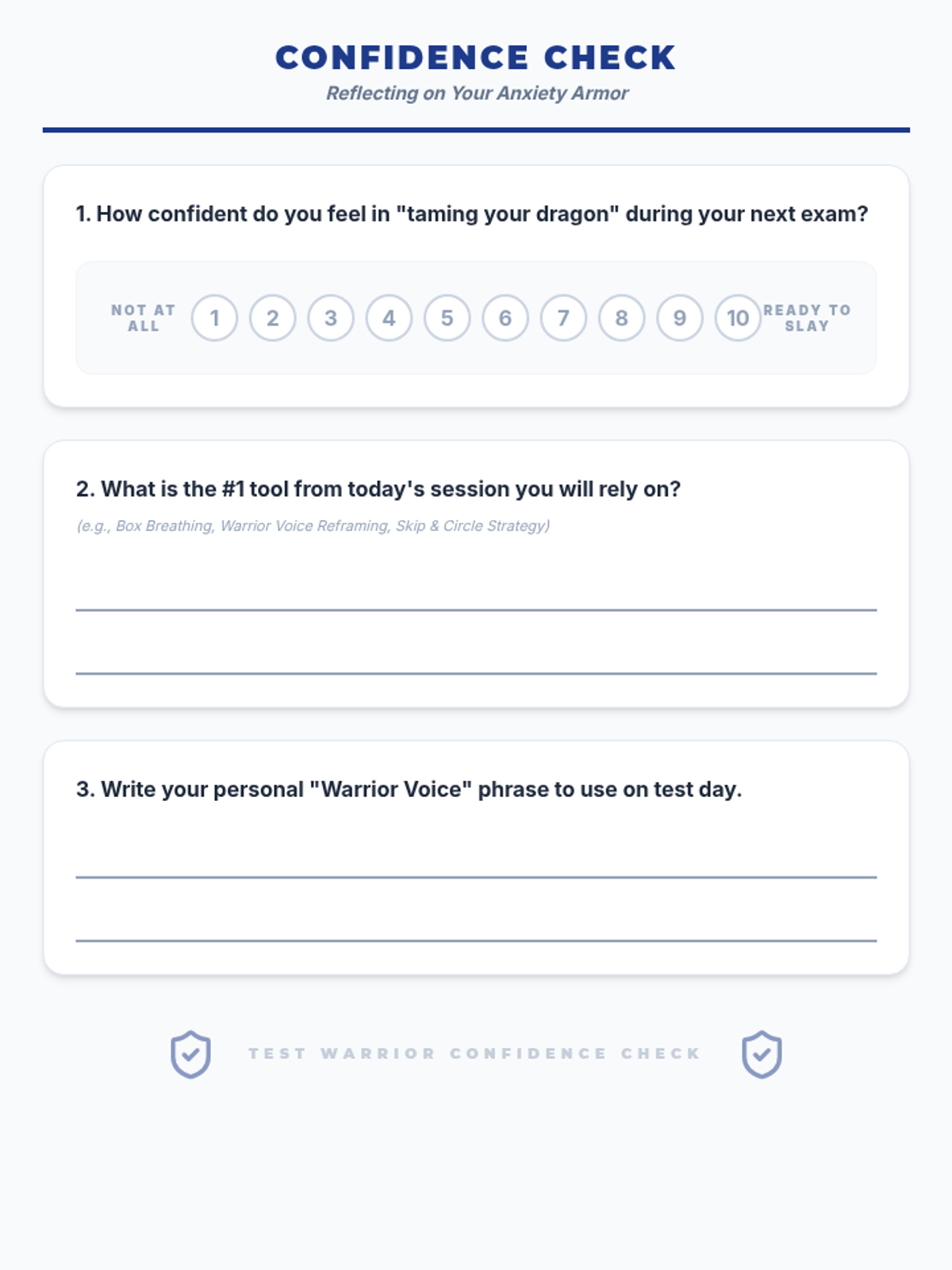
A final reflection exit ticket to assess student confidence and confirm their primary strategy for managing test anxiety, featuring optimized input areas and scales.
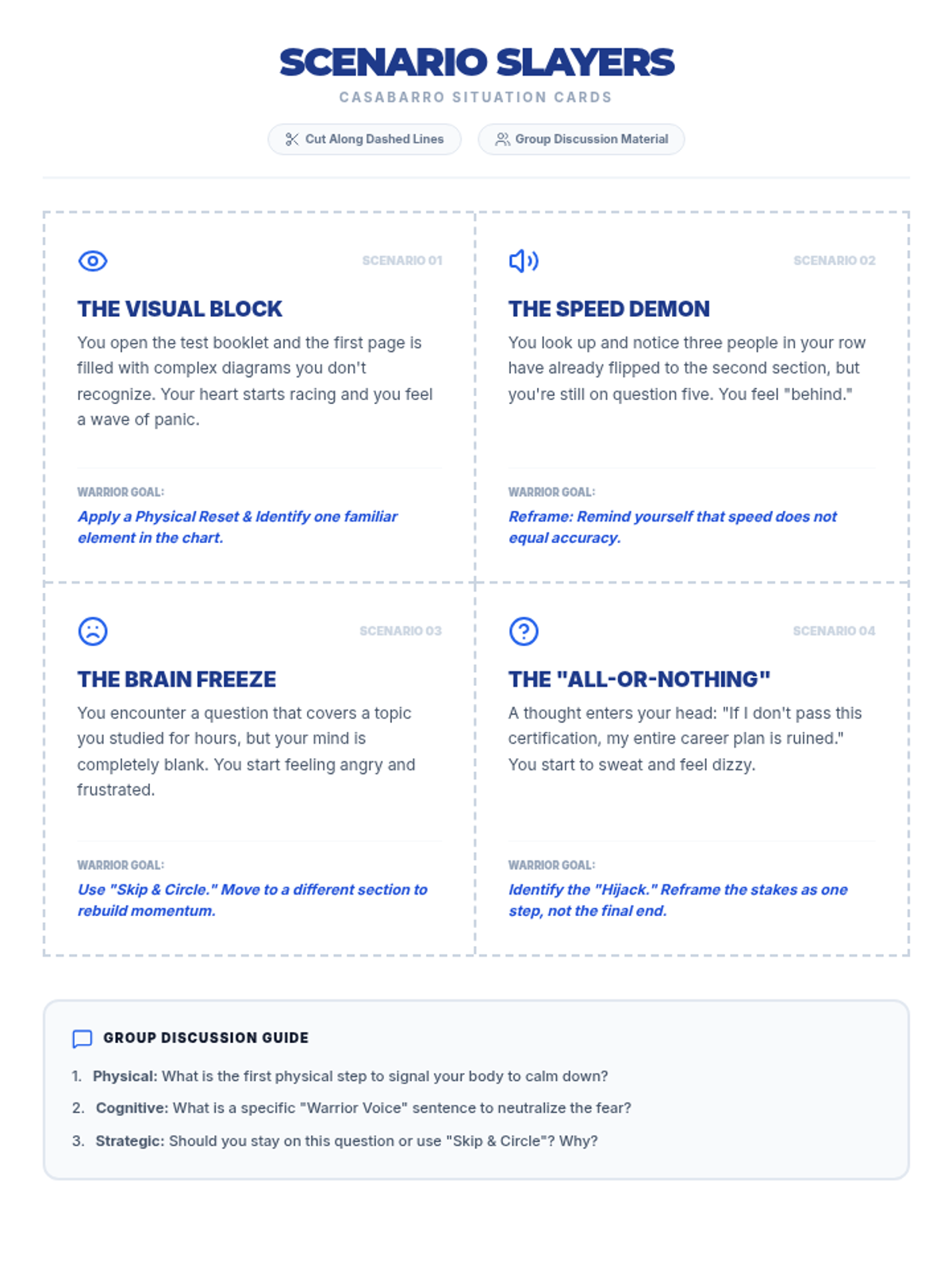
A printer-friendly set of scenario cards for small group activities, with fixed layouts to ensure all text remains visible and usable for student practice.
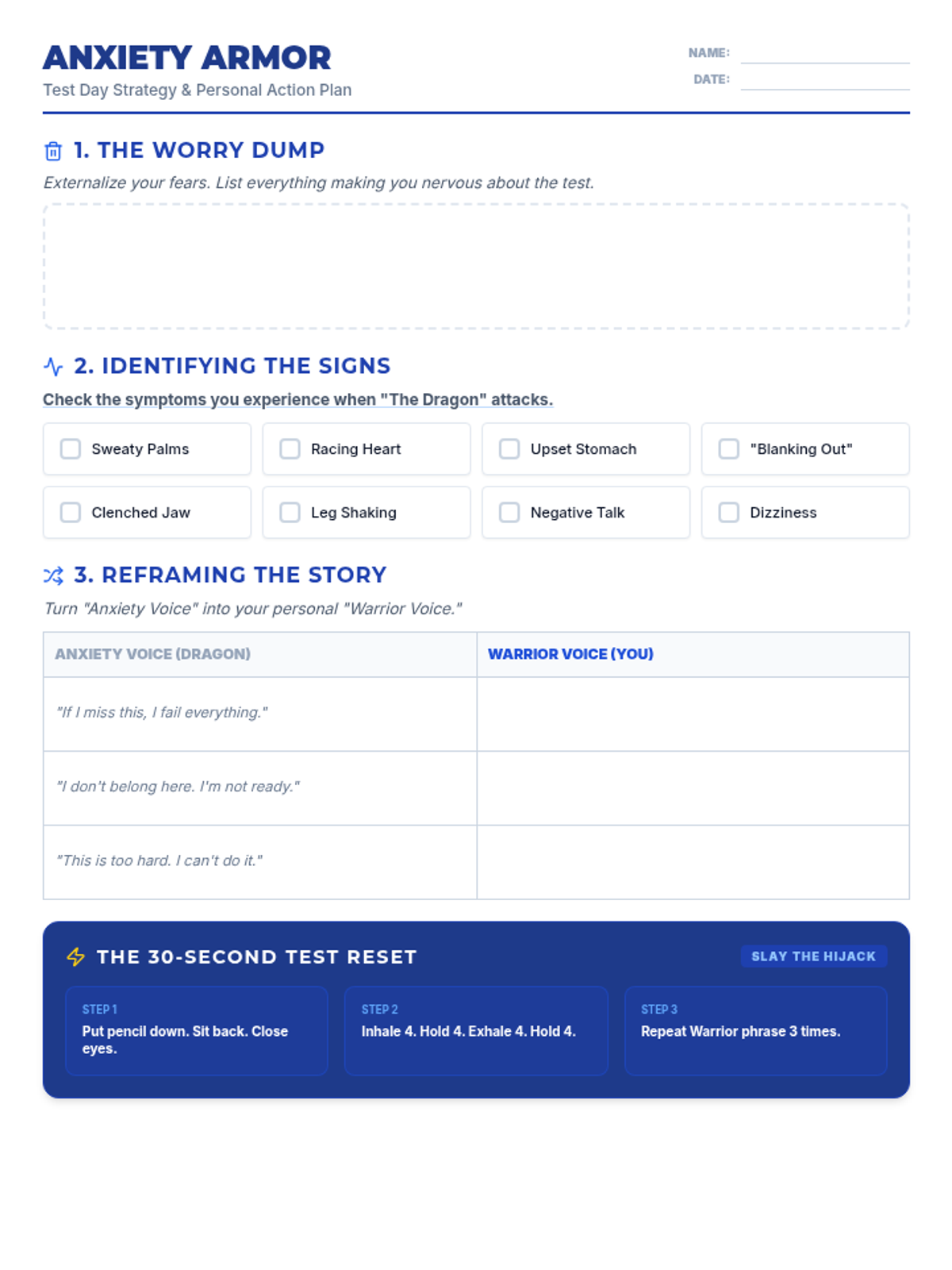
A student-facing handout featuring a 'Worry Dump' exercise, symptom checklist, and cognitive reframing practice table, with improved spacing for handwriting and optimized layout for single-page printing.
An enhanced presentation for the Casabarro test anxiety session, featuring improved contrast for readability, fixed breathing guide labels, and additional instructional content for a full 85-minute session.
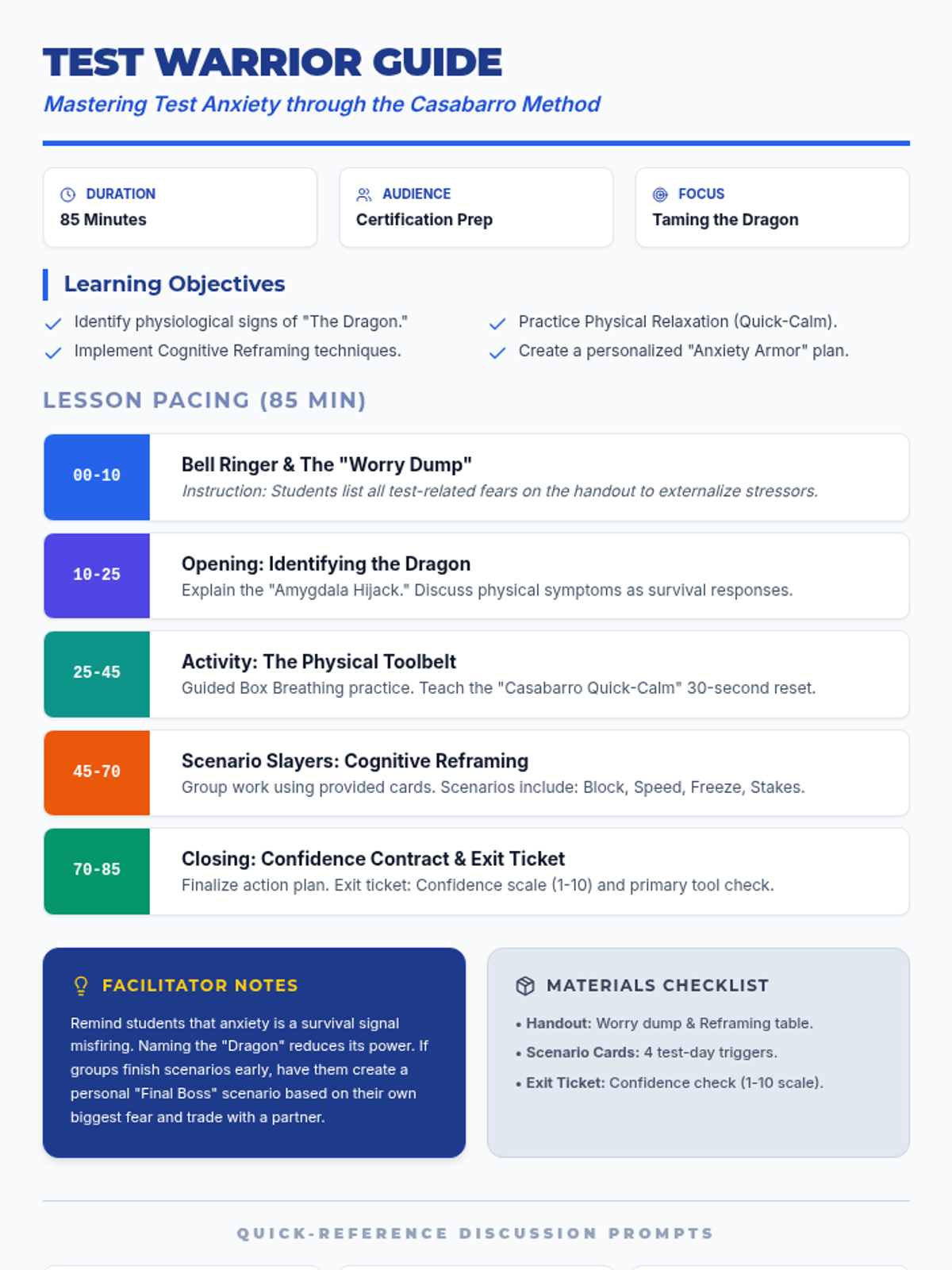
A comprehensive teacher facilitation guide for an 85-minute session on test anxiety, featuring optimized pacing layouts, material summaries, and facilitation notes aligned with Casabarro's method.
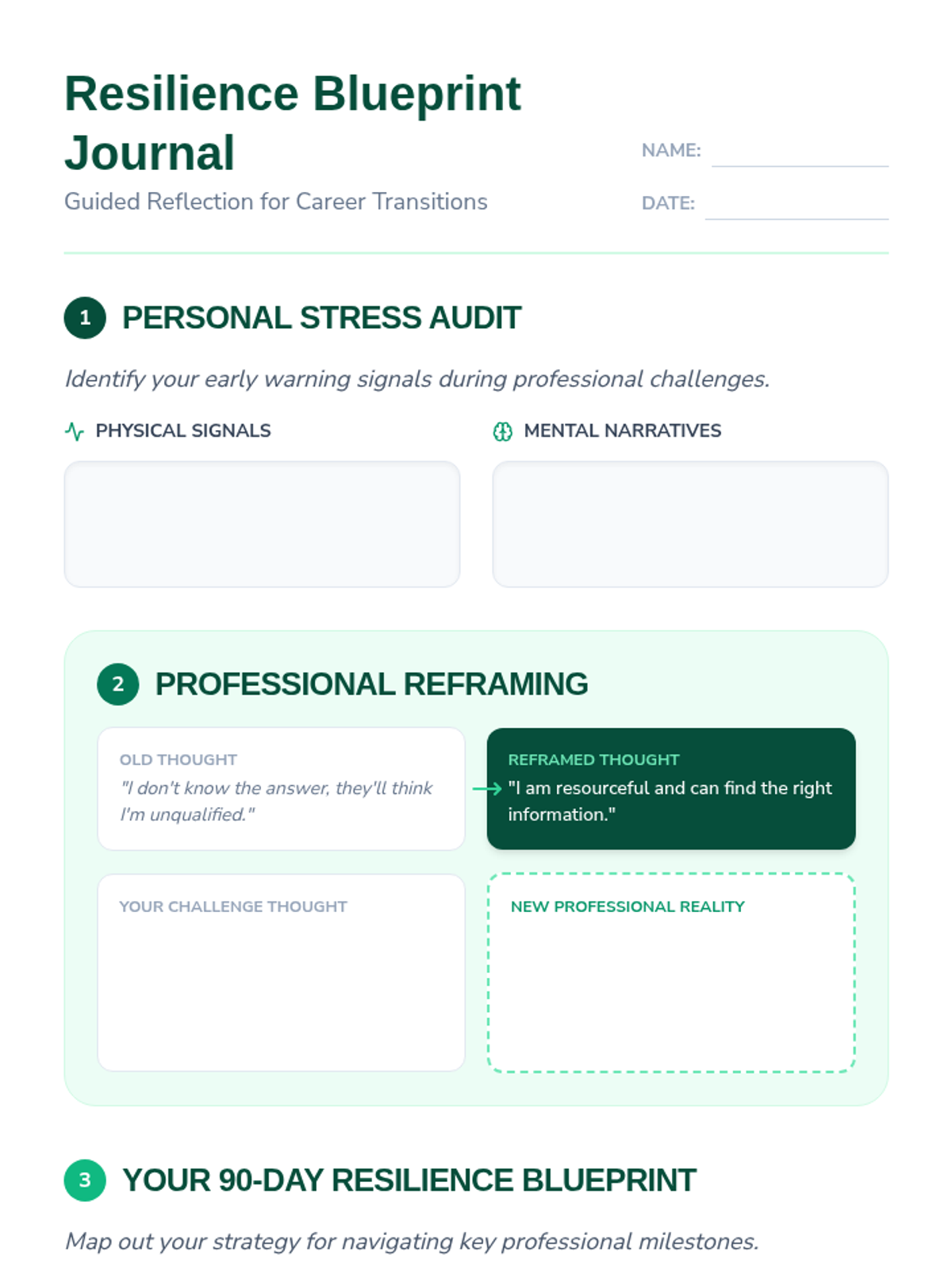
A guided reflection journal for students to document their personal stress triggers and create a customized 90-day resilience plan for their transition into the workforce.
A modern, minimalist slide deck for adult learners that visualizes the psychological transition to the workforce and provides instructional graphics for stress-management techniques.
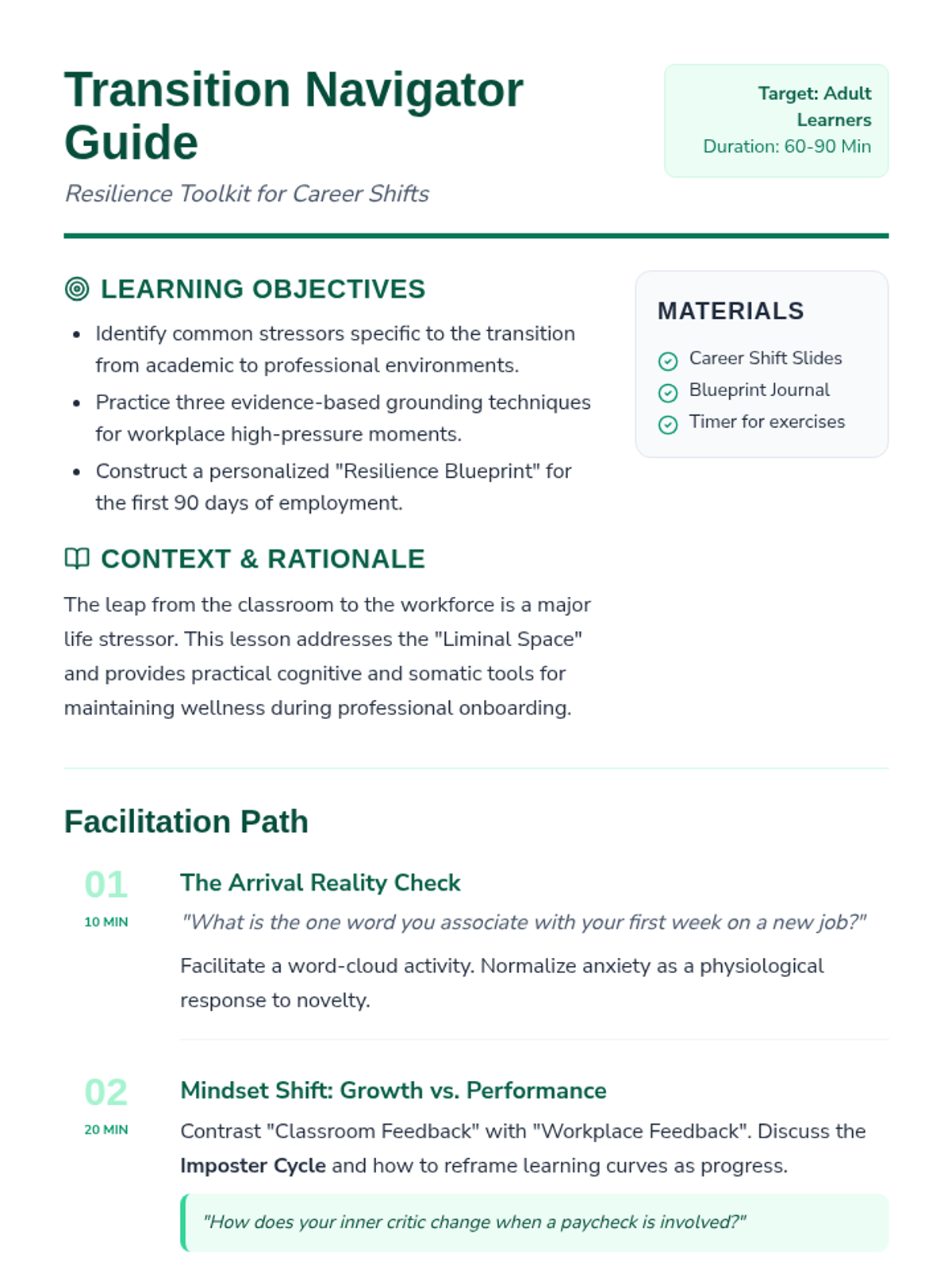
A comprehensive teacher guide for leading a wellness session on career transitions. It includes learning objectives, a timed instructional sequence, and facilitation tips specifically for adult learners.
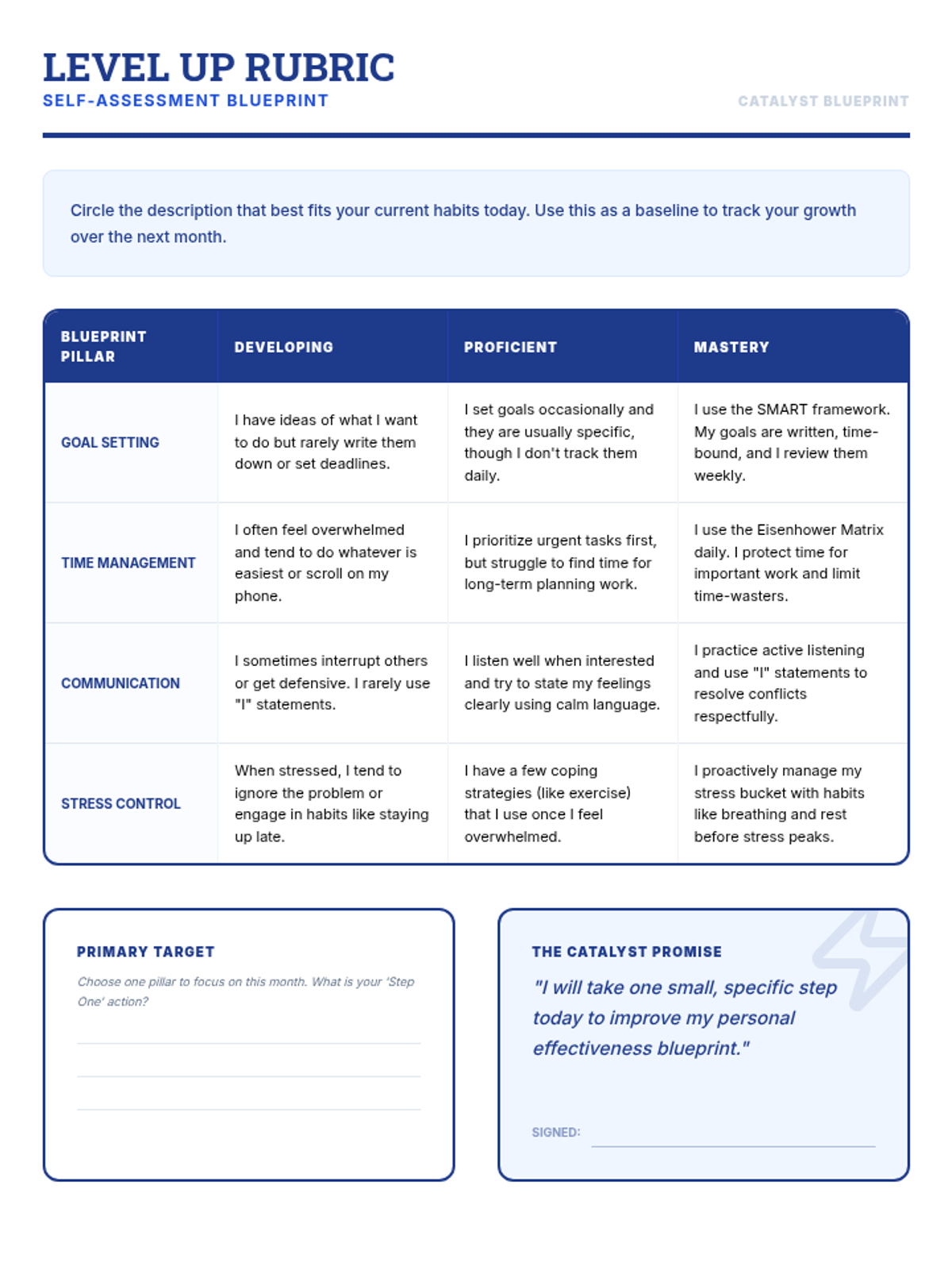
A self-assessment rubric titled 'Level Up Rubric' that allows students to evaluate their baseline skills across the four pillars of personal effectiveness and set targets for growth.
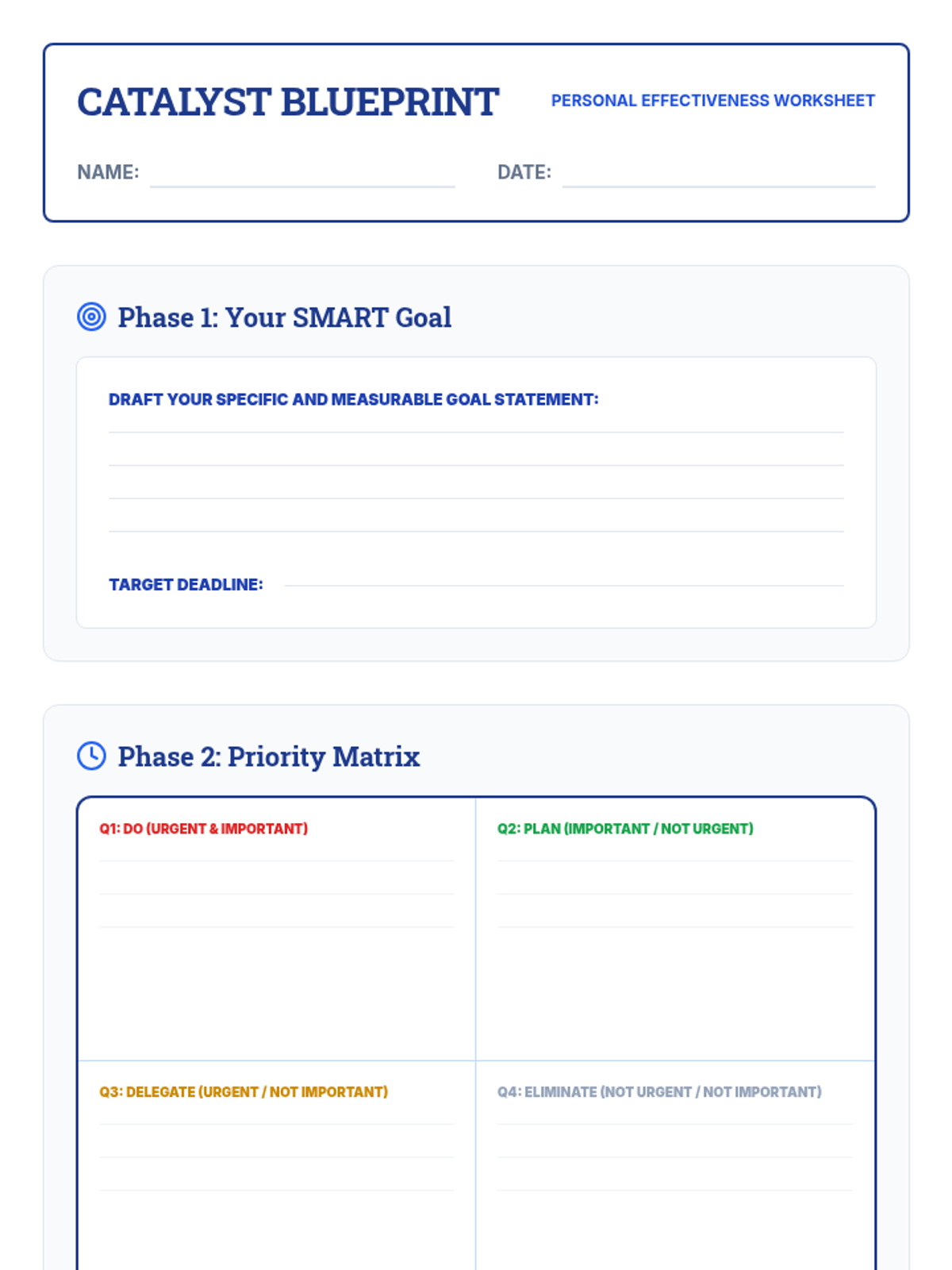
A structured student worksheet titled 'The Catalyst Blueprint' containing practical application areas for SMART goal setting, an Eisenhower Matrix grid, communication role-play prompts, and a stress management toolbox.
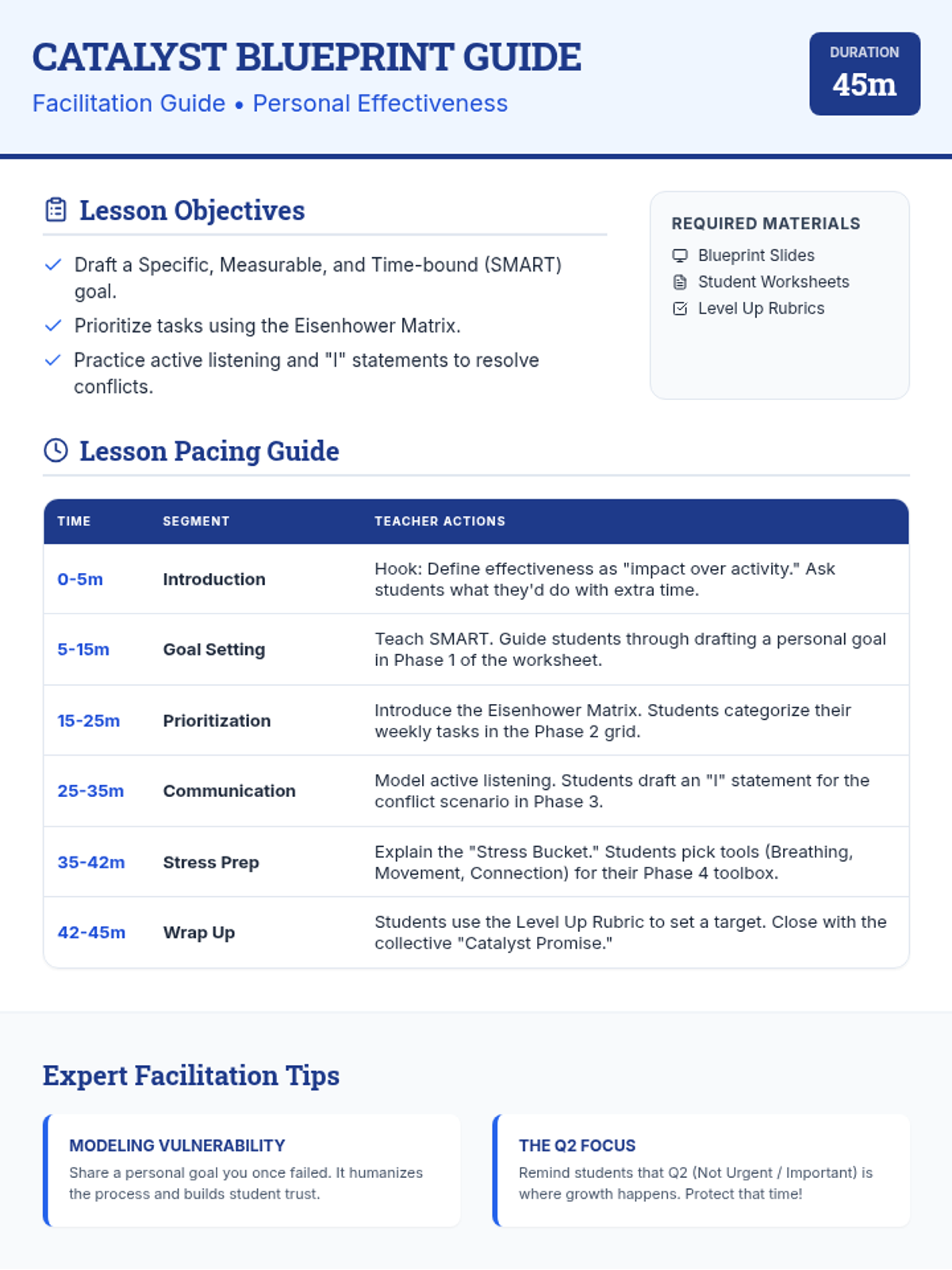
A comprehensive 45-minute teacher guide for facilitating 'The Catalyst Blueprint' lesson, featuring learning objectives, detailed pacing, activity instructions, and expert facilitation tips.
A professional slide presentation titled 'The Catalyst Blueprint' covering the four pillars of personal effectiveness: SMART goal setting, time management with the Eisenhower Matrix, active communication techniques, and stress management strategies.
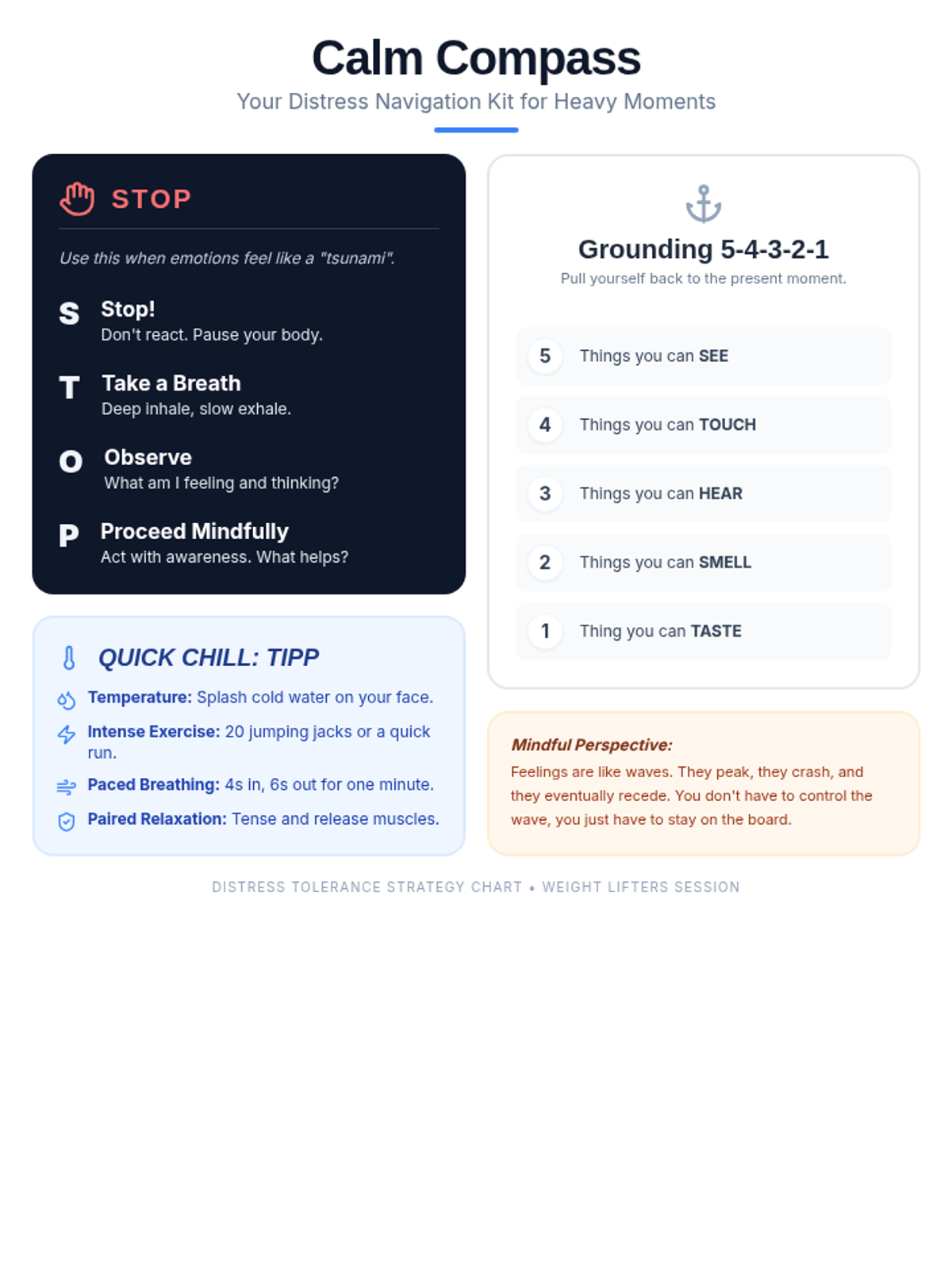
A visual coping strategy chart featuring DBT distress tolerance skills like STOP, TIPP, and 5-4-3-2-1 grounding. Revised for single-page layout and higher contrast.
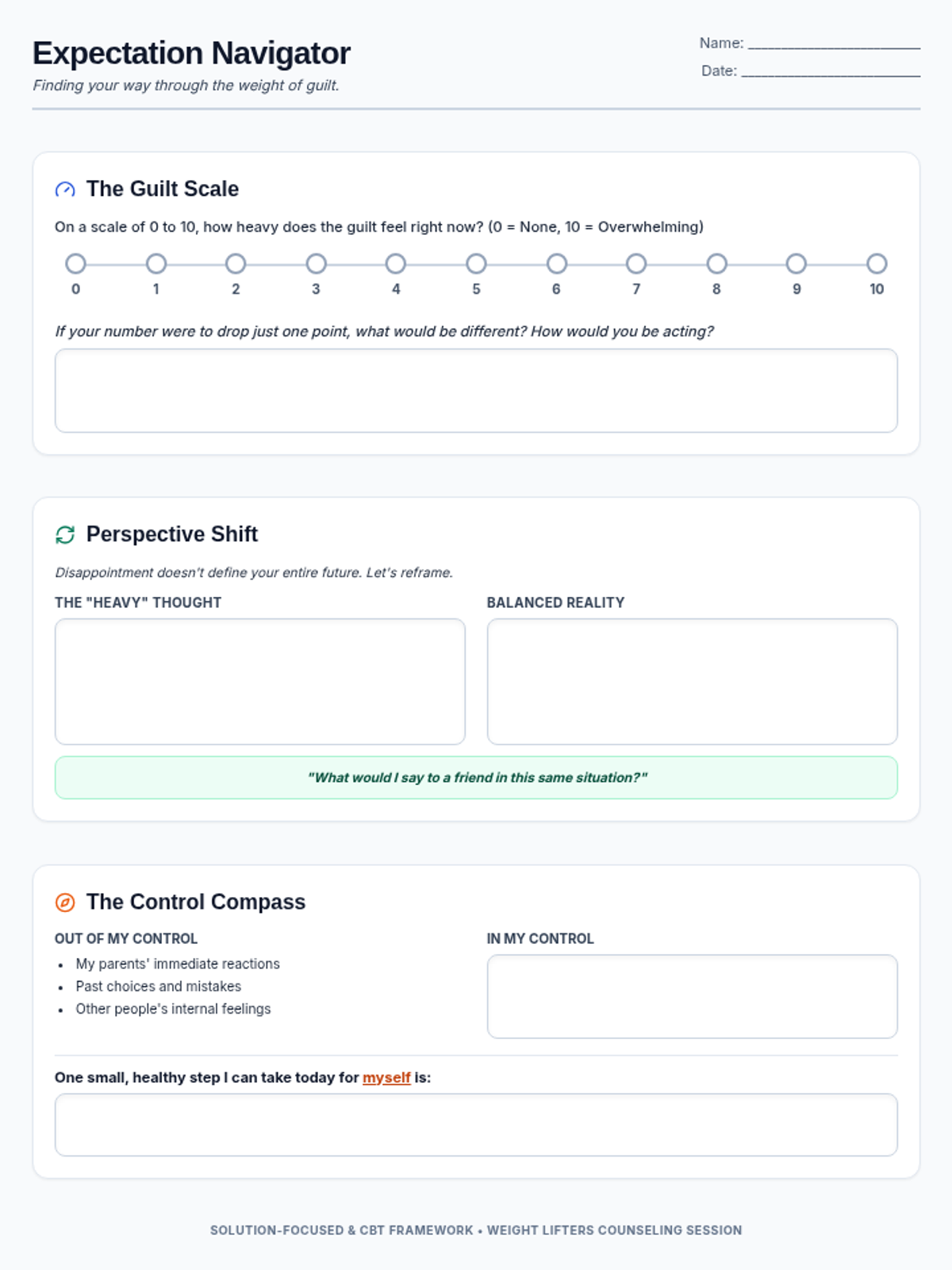
A counseling worksheet combining SFBT scaling, CBT reframing, and a control compass to help students navigate feelings of guilt and parental disappointment. Optimized for single-page printing.
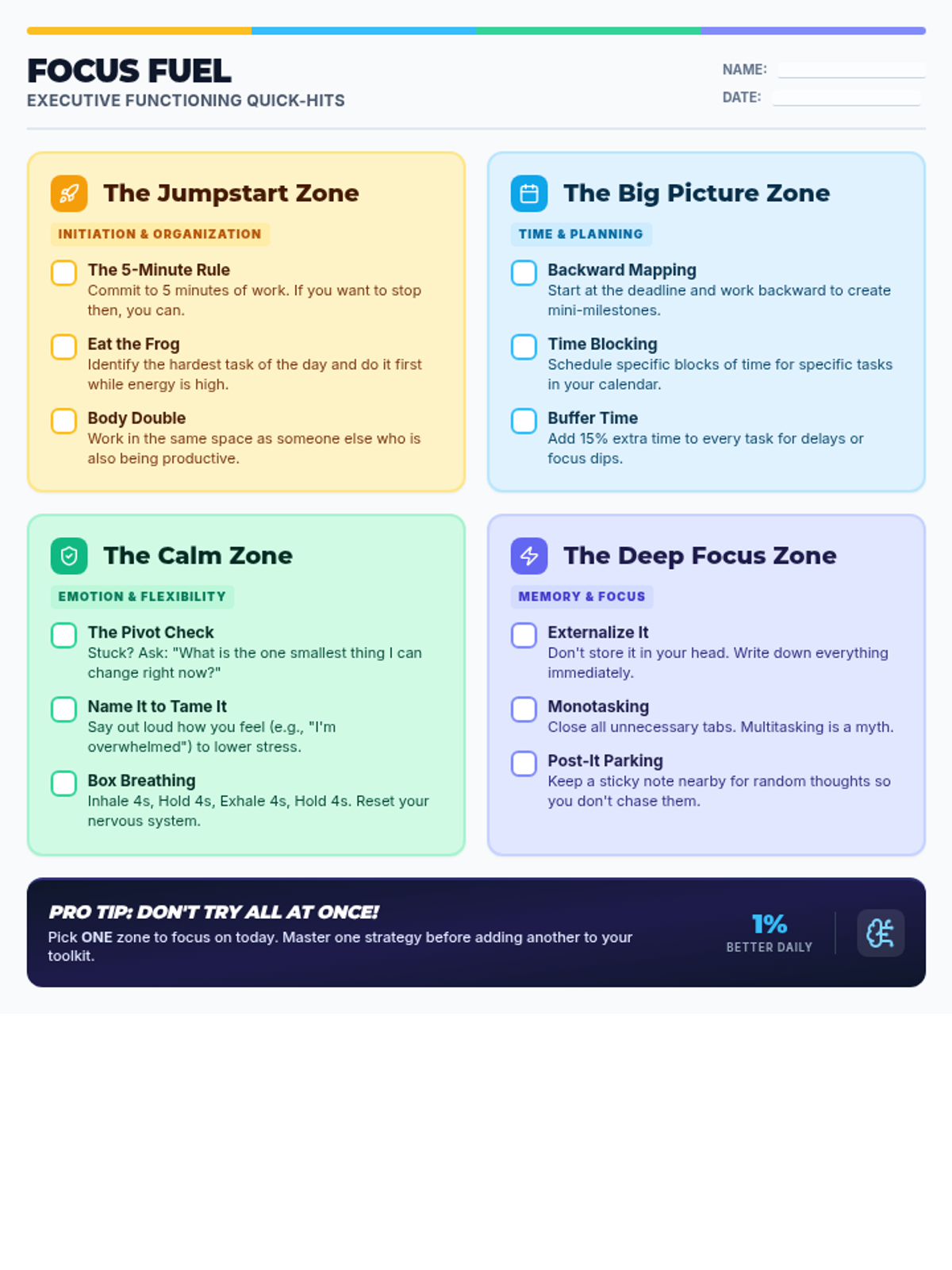
A vibrant, high-contrast one-page infographic for high school students. Features deeply color-coded zones for executive functioning strategies with a modern, checklist-style layout and a bold, professional aesthetic. Optimized for one-page printing with improved contrast and consistent styling.
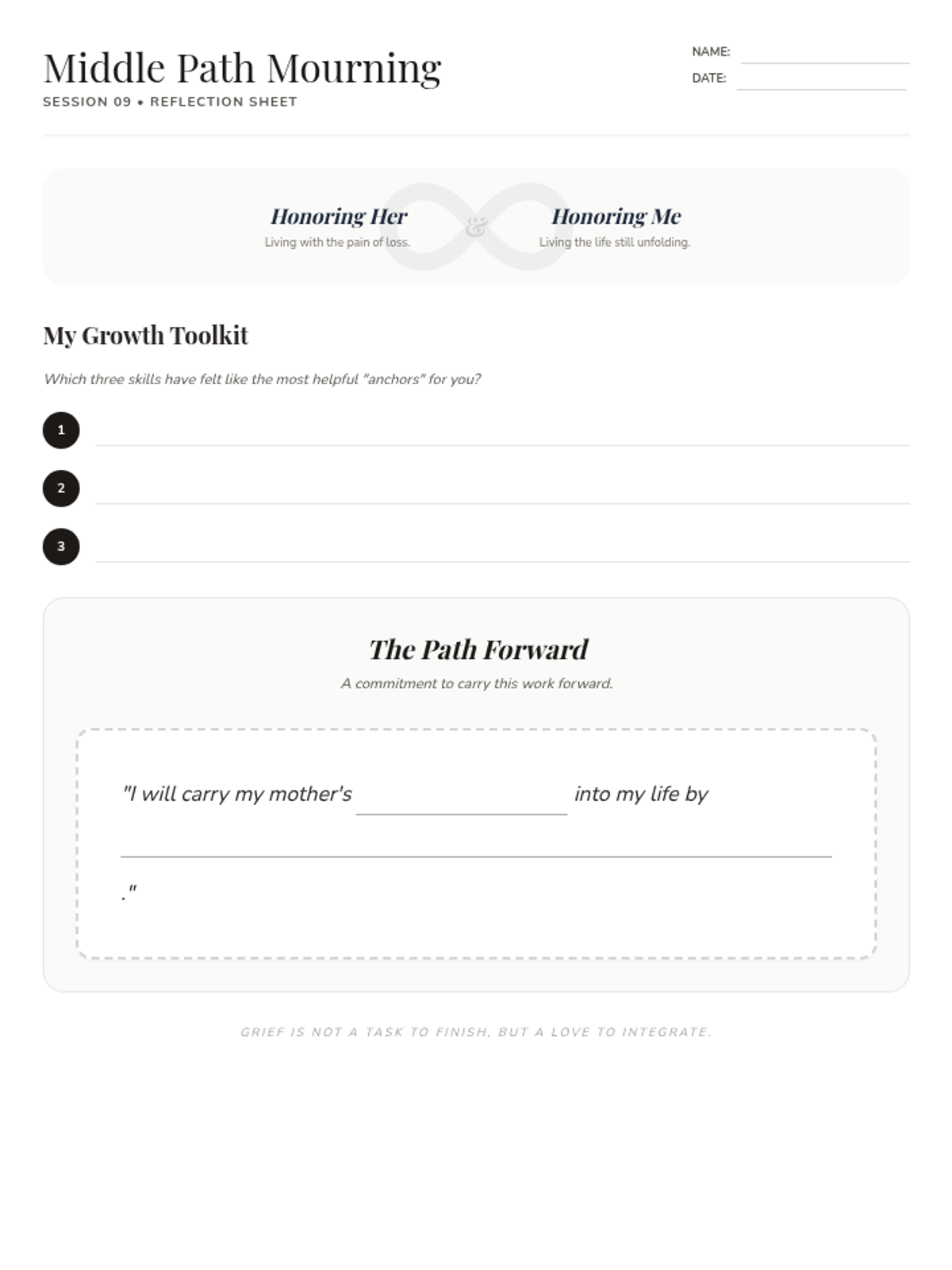
The final client reflection sheet, focusing on synthesis and the 'Middle Path' of grieving. Revised for single-page layout, light background for handwriting, and improved contrast.
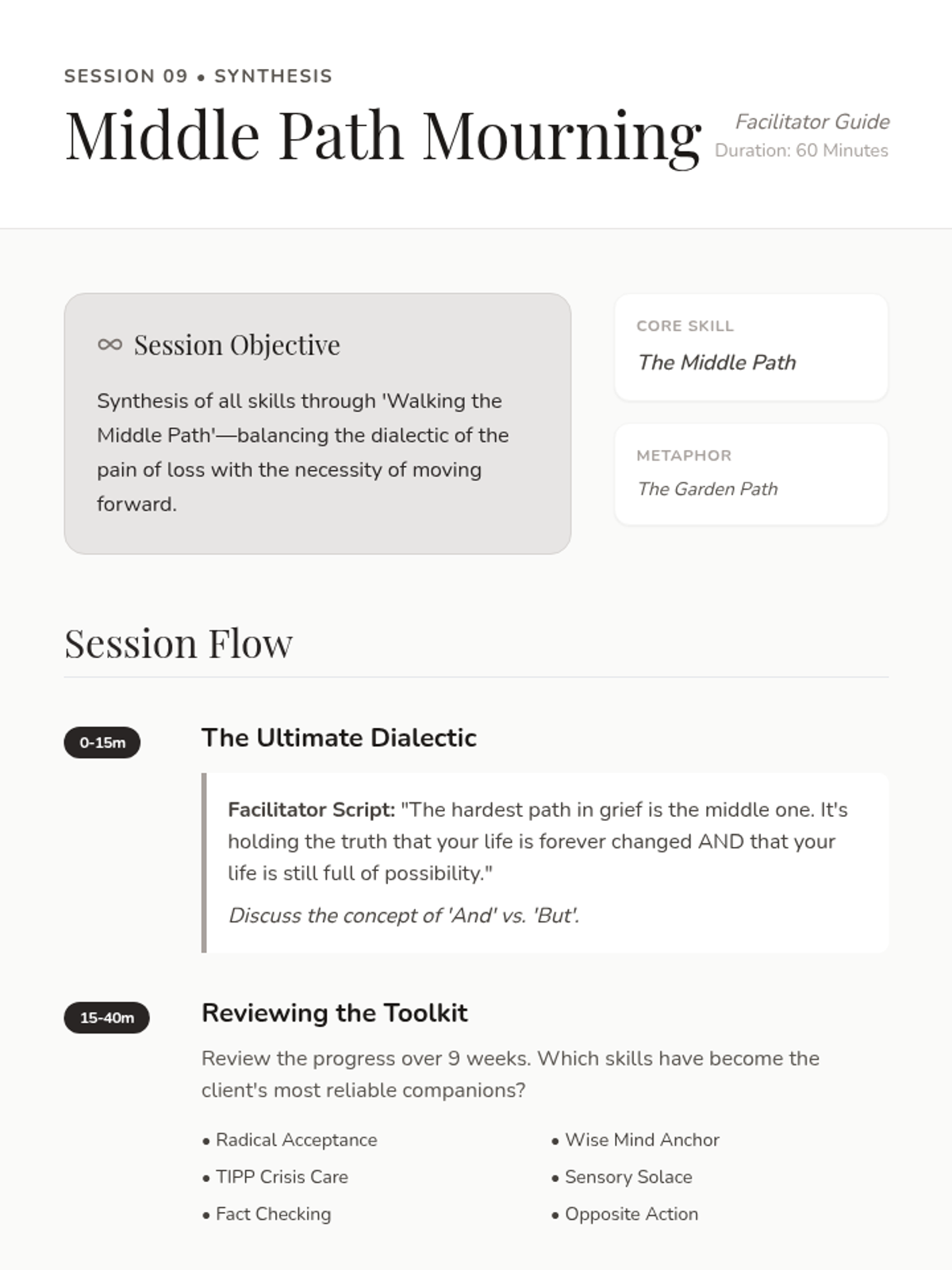
Facilitator guide for the final session, synthesizing all curriculum skills through the concept of 'Walking the Middle Path' to balance honoring the past with living in the present.
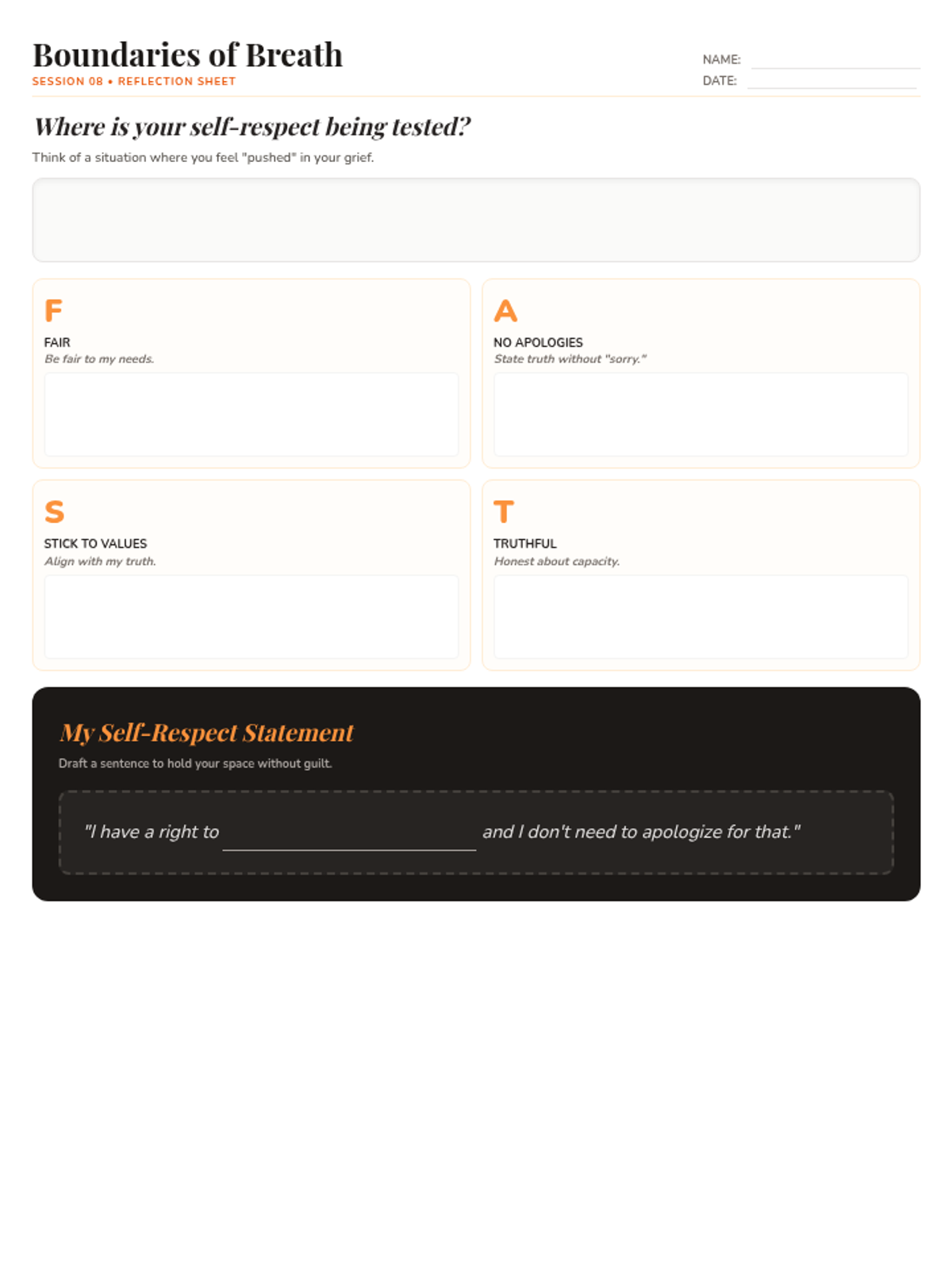
A student reflection sheet for Session 8, helping clients apply the FAST skill. Revised for single-page layout, increased font sizes, improved handwriting space, and better contrast.
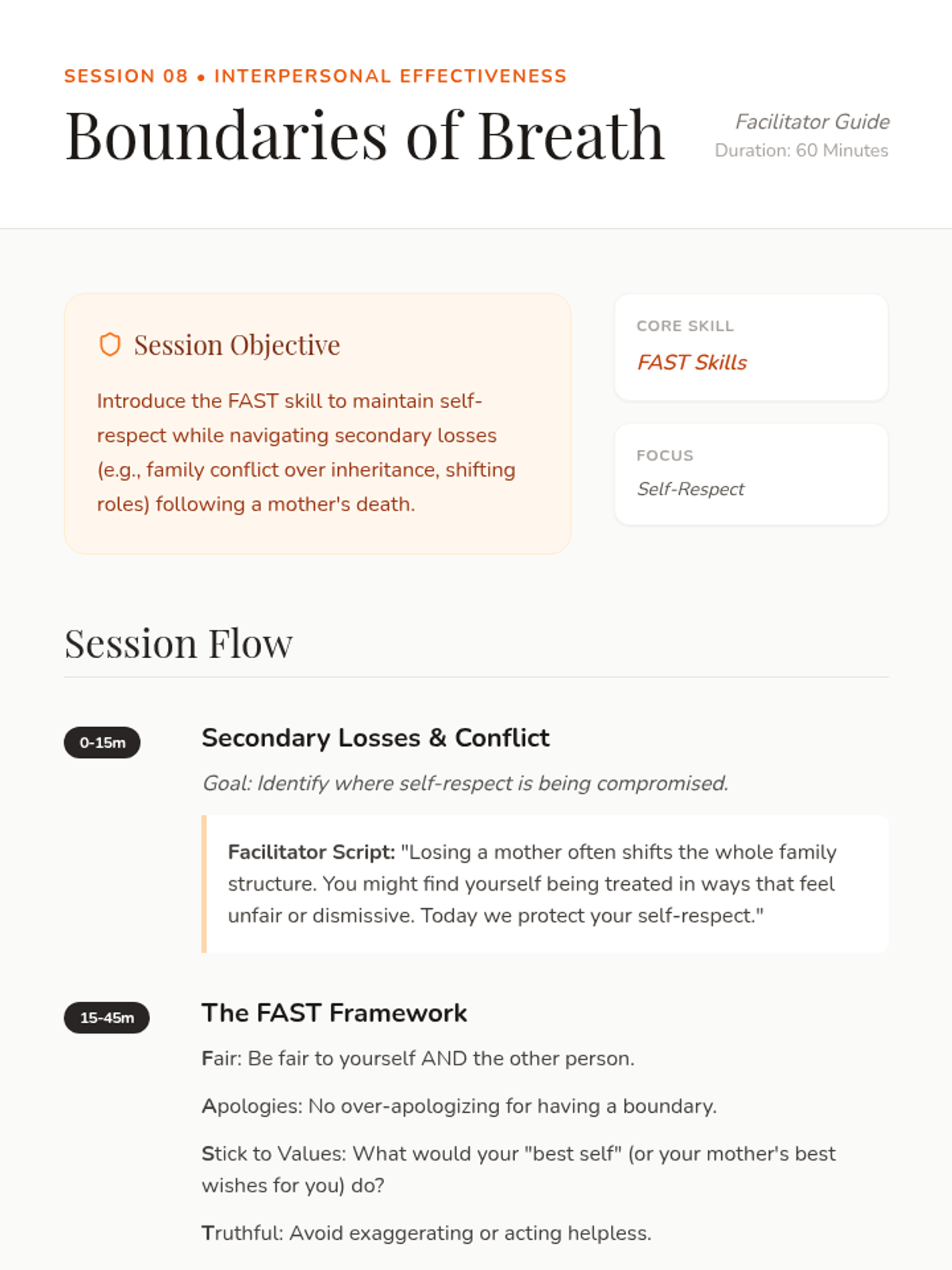
Facilitator guide for Session 8, focusing on the FAST interpersonal skill to help clients maintain self-respect and set boundaries during family conflicts and secondary losses after a mother's death.
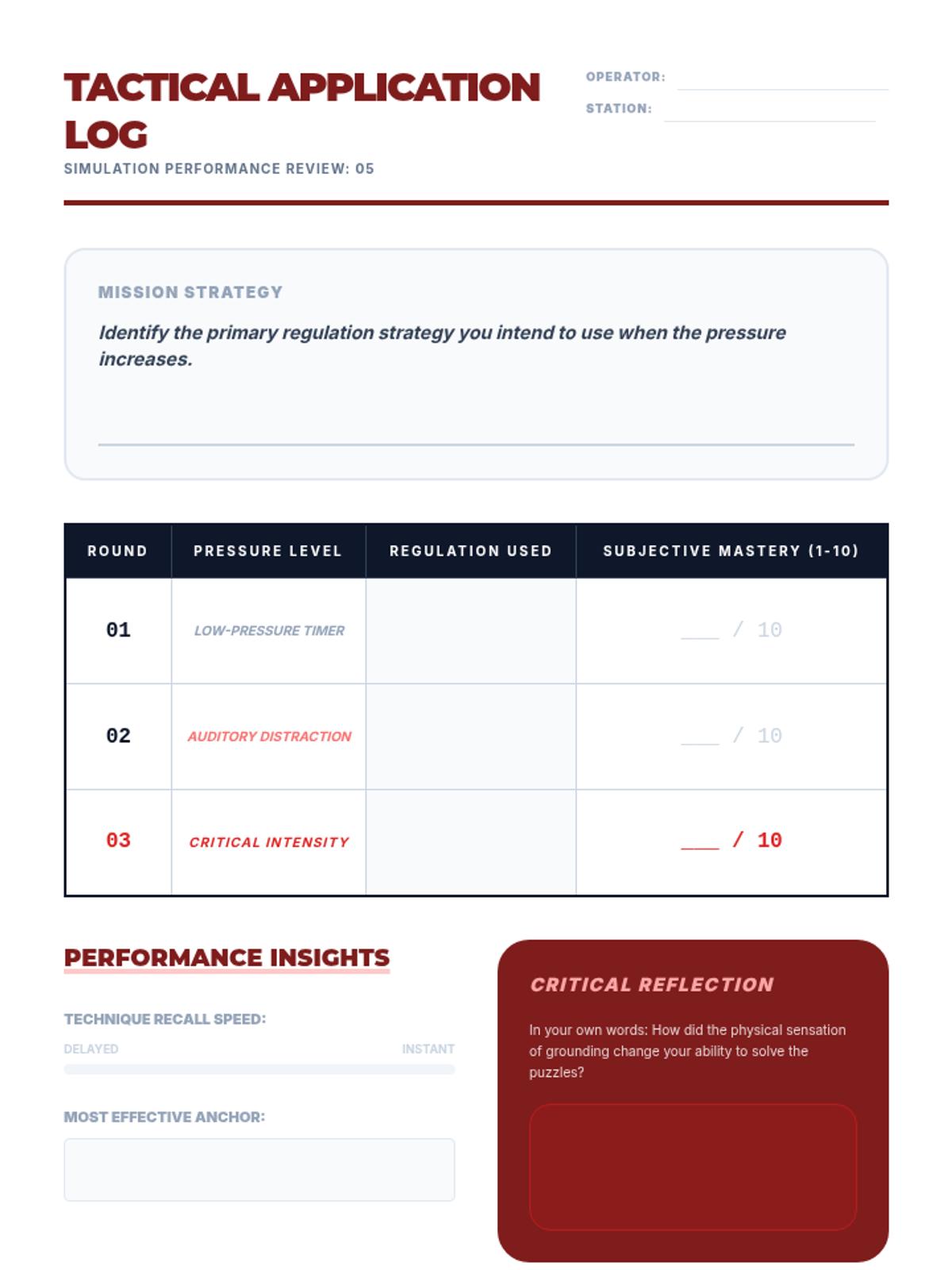
A performance tracking log for students to evaluate their use of regulation techniques during the final simulation under timed cognitive pressure.
Introductory slides for the Simulated Stress Response lesson, facilitating the final classroom simulation where students apply techniques under cognitive pressure.
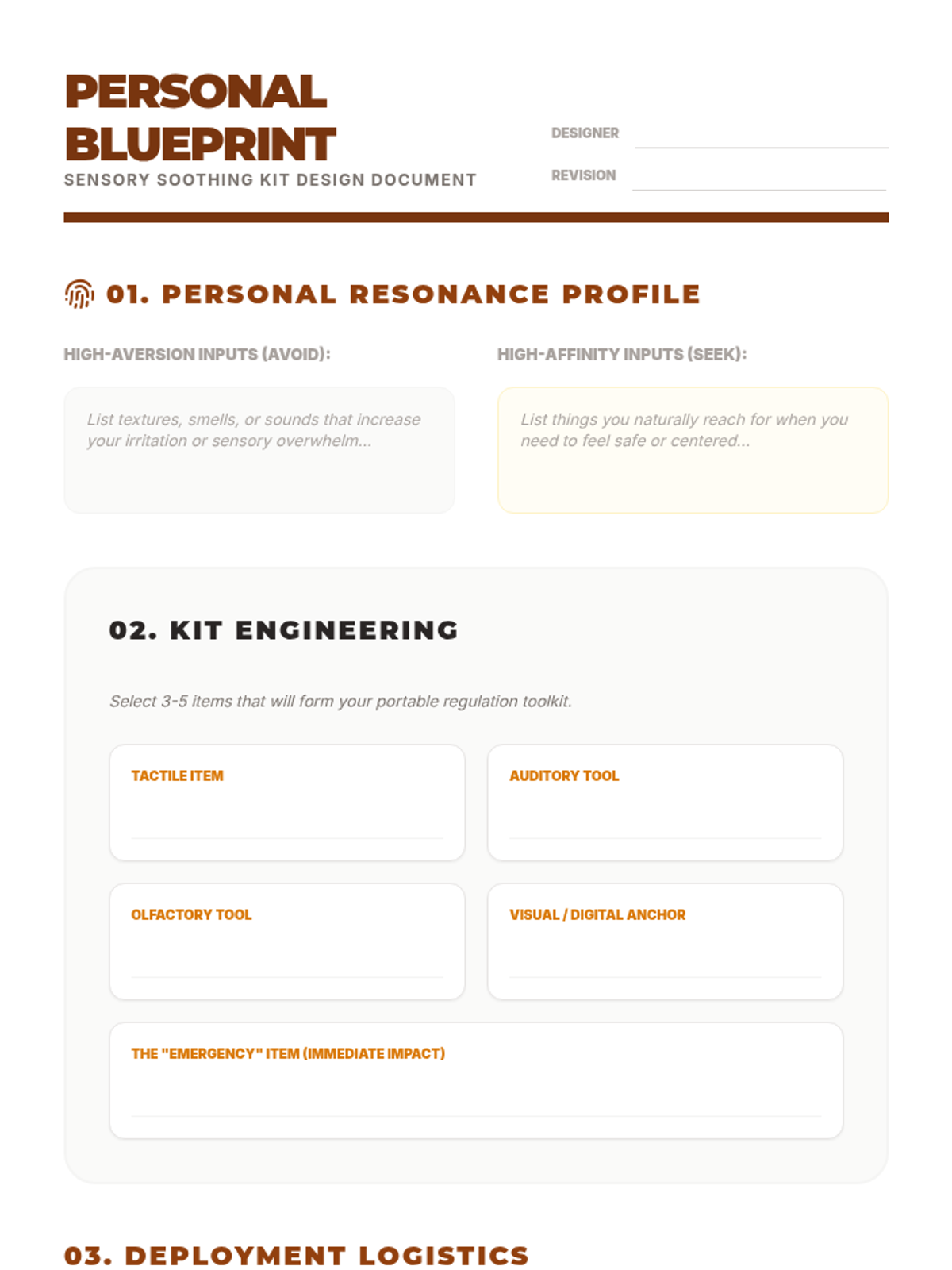
A project guide and planning document for students to design their personalized physical or digital sensory soothing kits.
Introductory slides for the Sensory Soothing Kit project, covering the psychology of decision fatigue, sensory inputs, and physical vs. digital implementation formats.
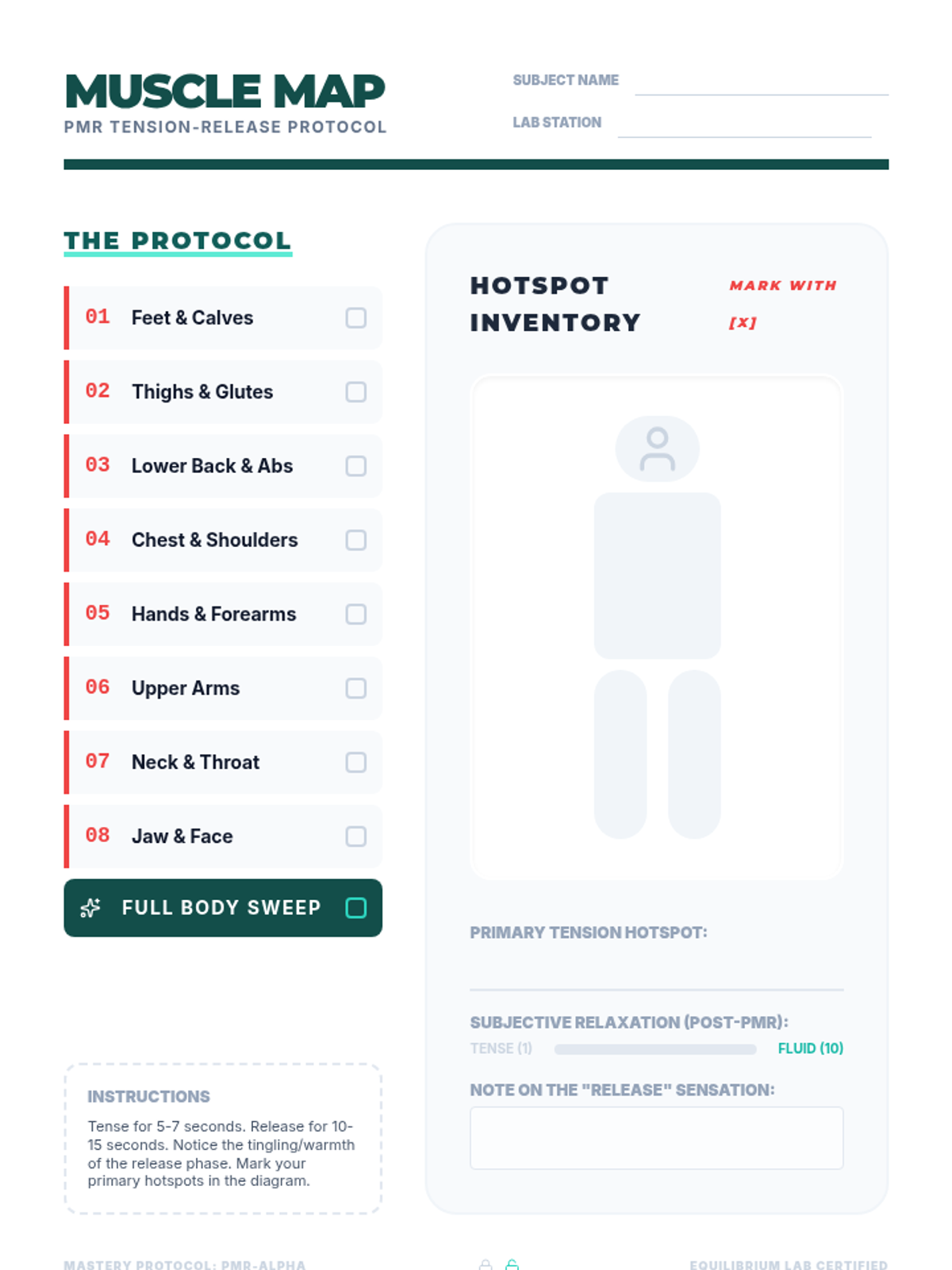
A visual checklist and hotspot mapping tool for students to track their physical response to Progressive Muscle Relaxation.
Technical slides for the Progressive Muscle Relaxation lesson, teaching the tension-relaxation contrast and the full-body PMR protocol.
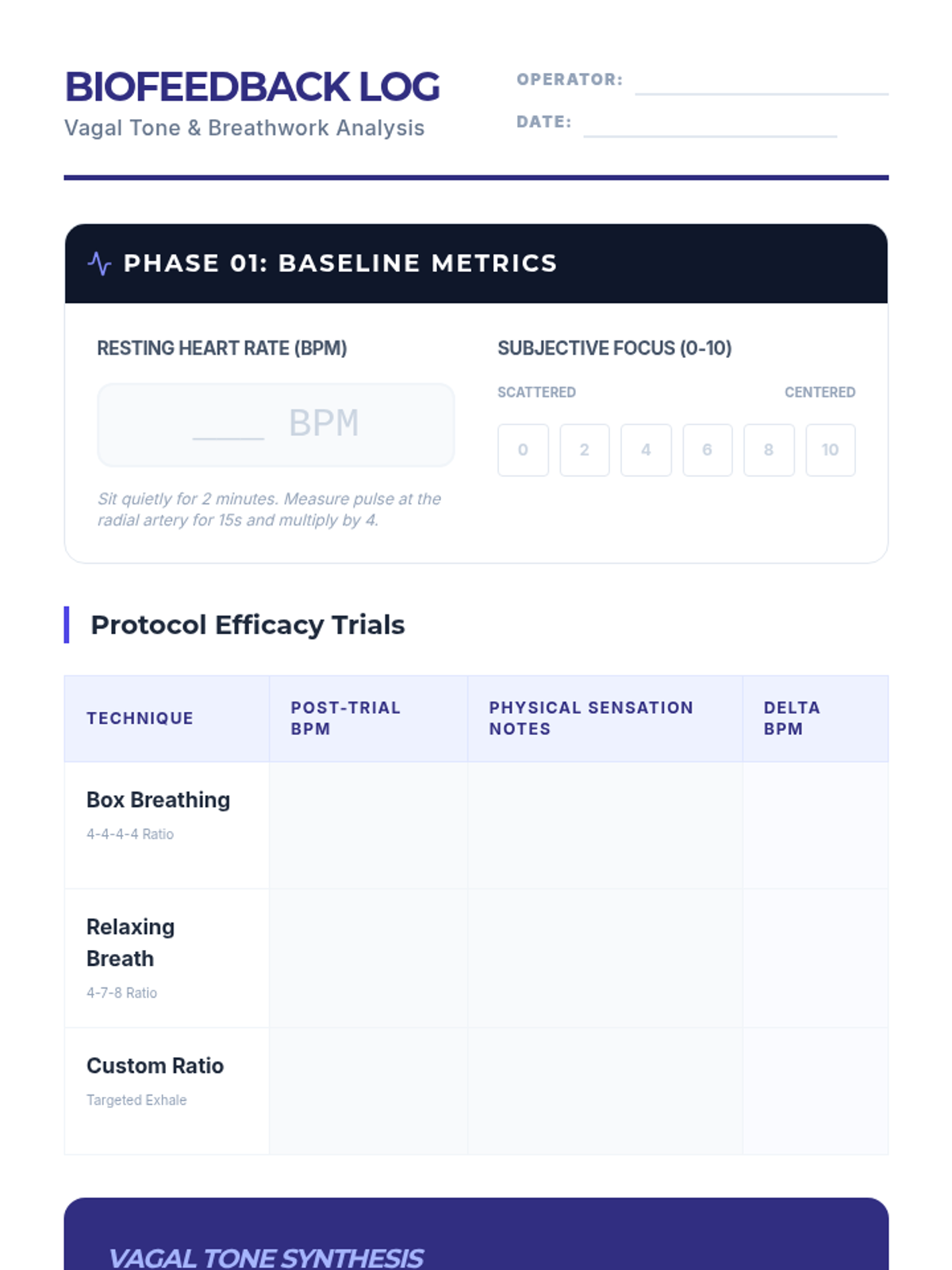
A technical biofeedback log for students to record heart rate data and subjective stress levels before and after practicing various breathing protocols.
Technical slides for the Controlled Breathing lesson, explaining vagal tone, the autonomic nervous system, and step-by-step protocols for Box and 4-7-8 breathing.
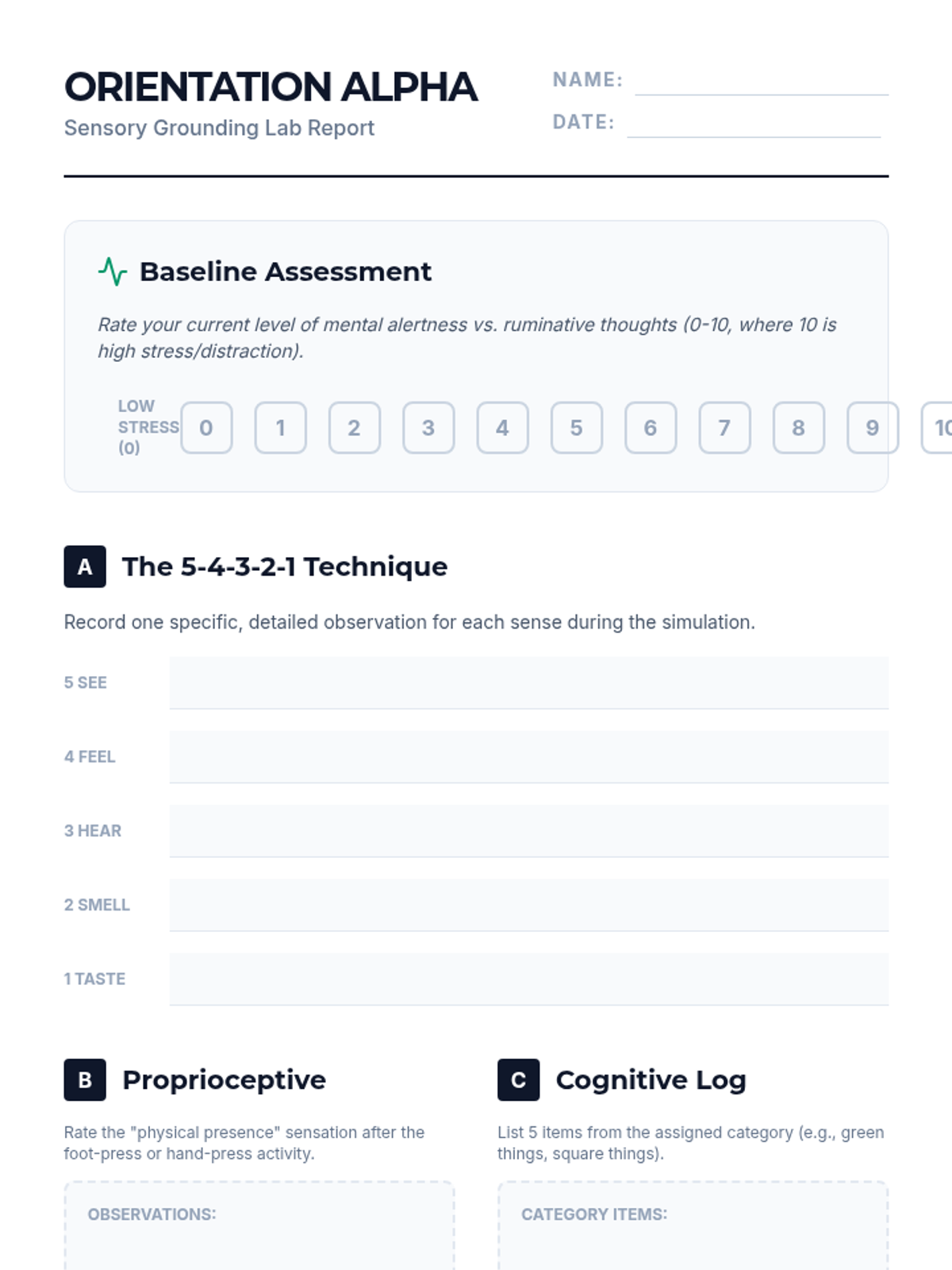
A structured lab report for undergraduate students to track and compare the efficacy of different sensory grounding techniques during a classroom simulation.
Introductory slides for the Sensory Grounding lesson, covering the science of ruminative loops, the ice cube challenge, and the 5-4-3-2-1 technique.
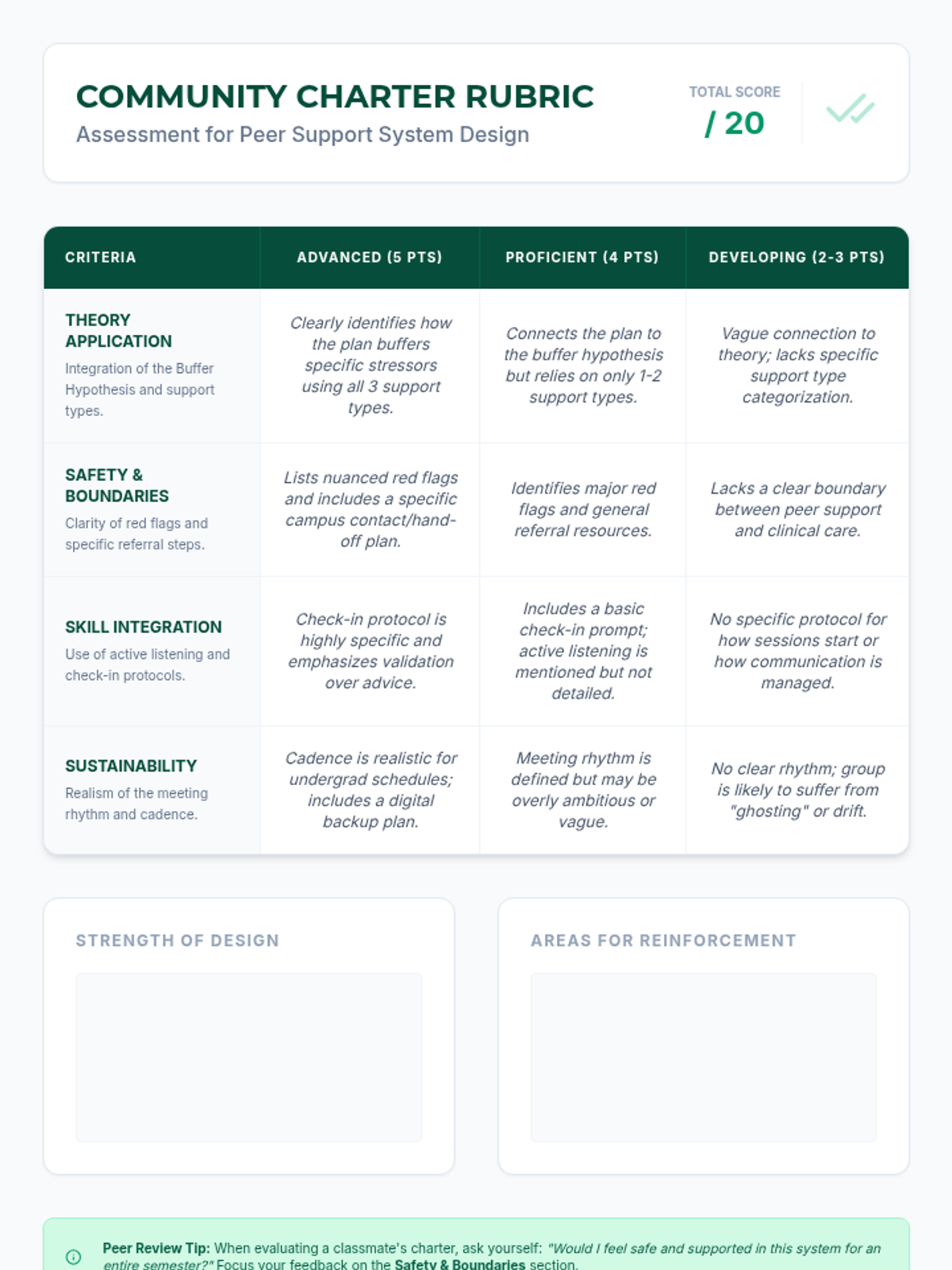
An assessment rubric for the final Community Charter project, evaluating theory application, safety planning, and sustainability.
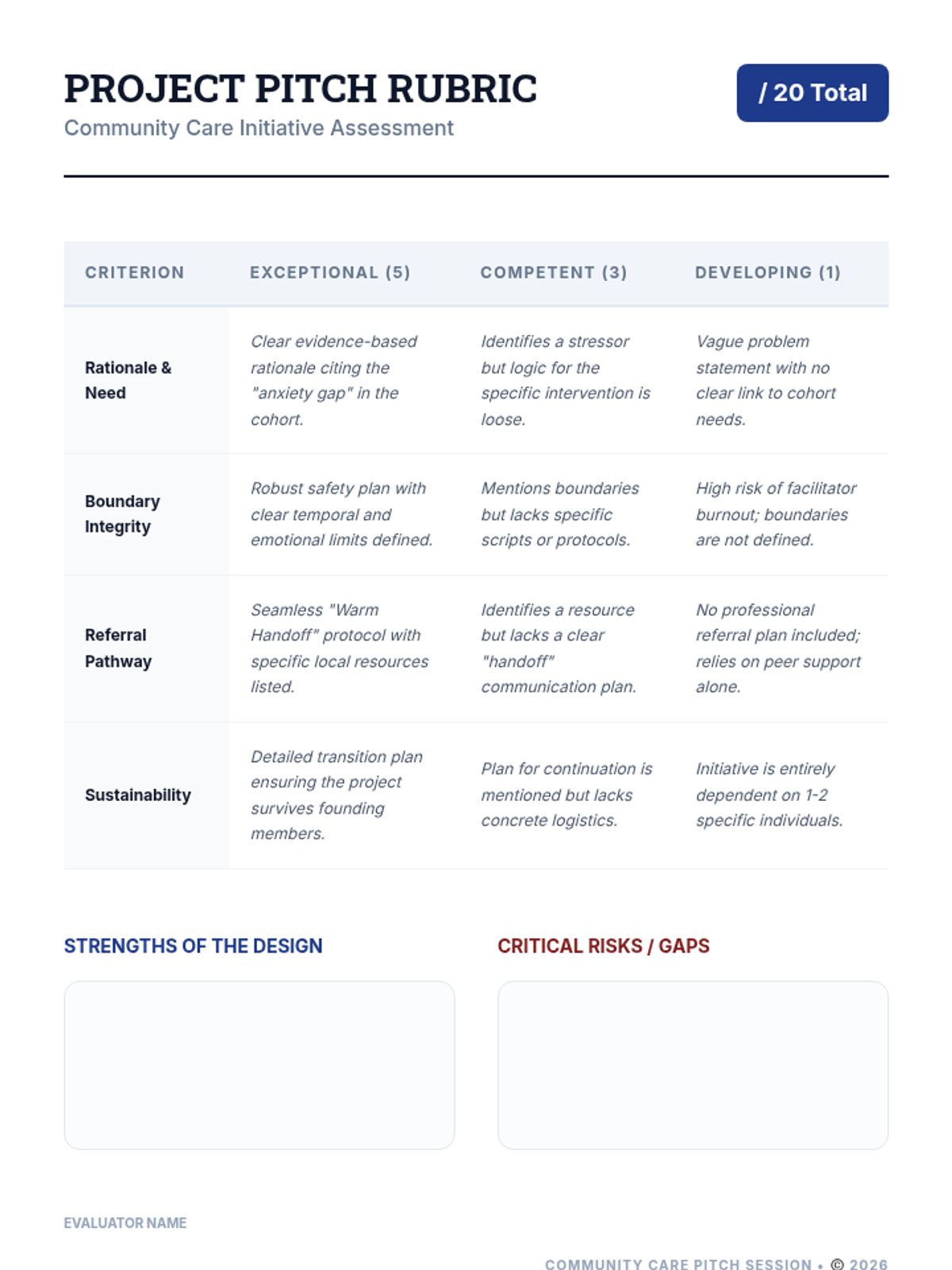
Final project rubric for evaluating the Community Care Initiative, focusing on rationale, boundaries, referral pathways, and sustainability.
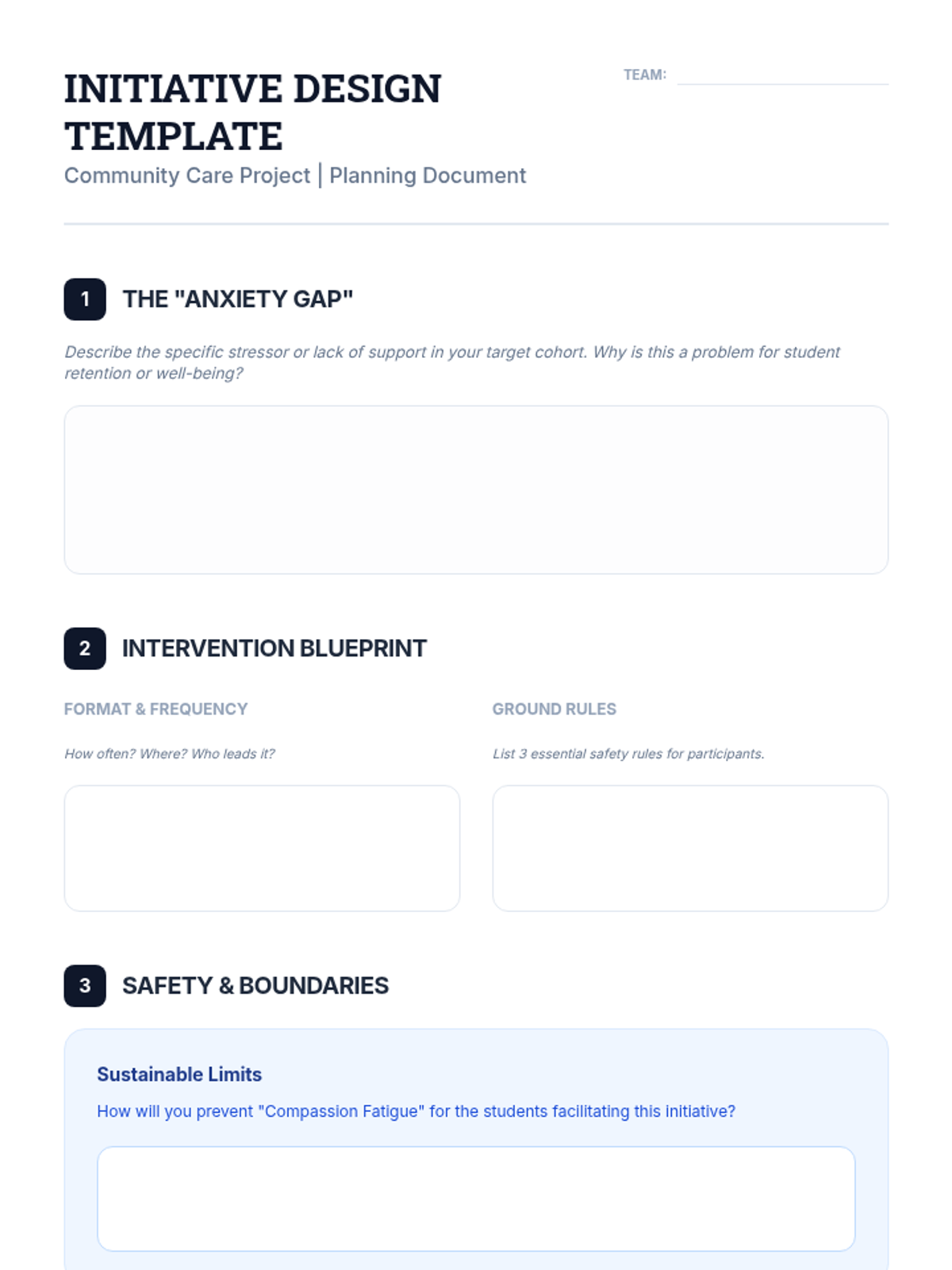
Student design workbook for planning the Community Care initiative, covering problem definition, logistics, safety boundaries, and sustainability.
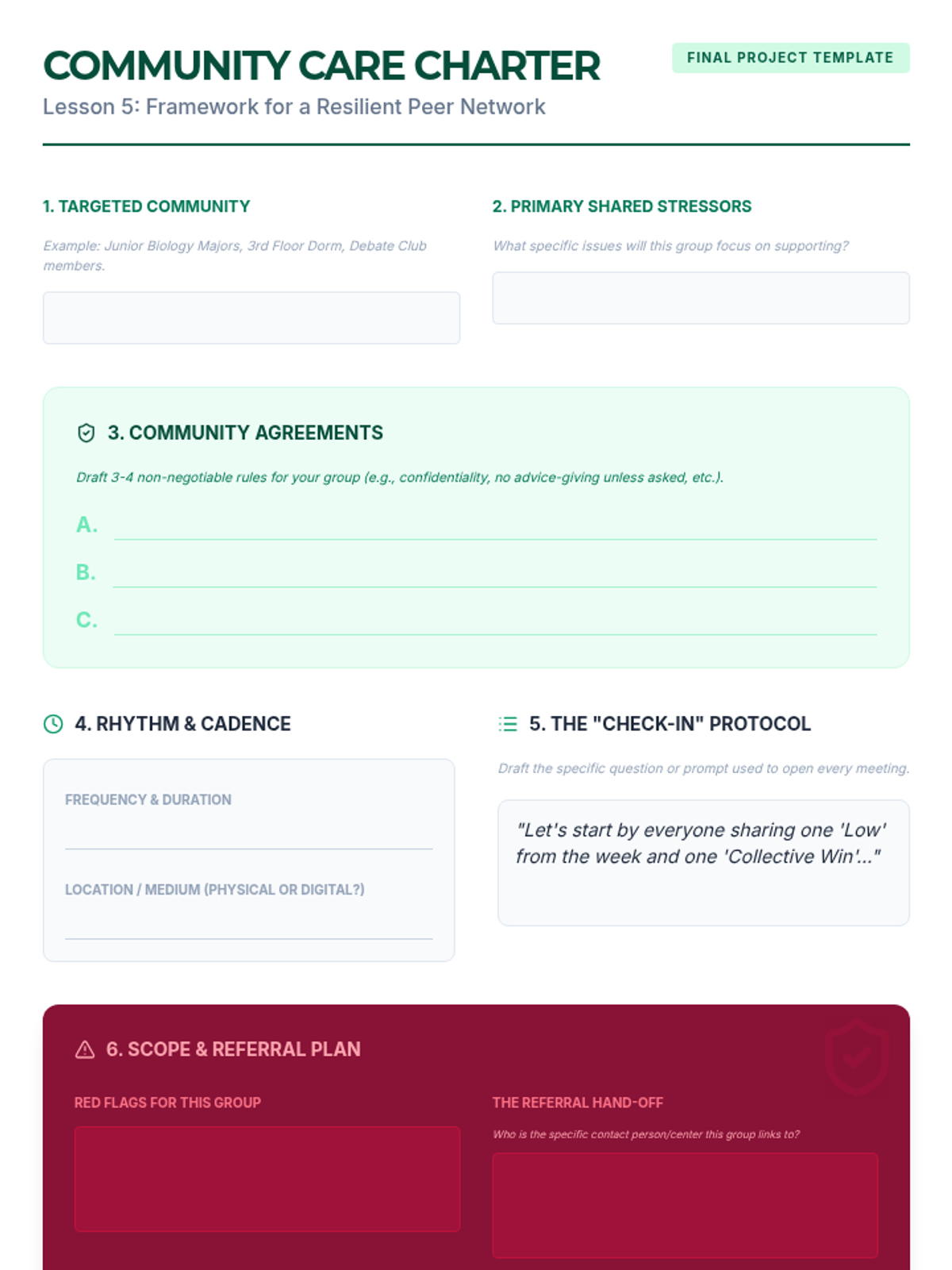
A design framework for a community care plan, producing a 'Community Charter' for peer support in a specific campus context.
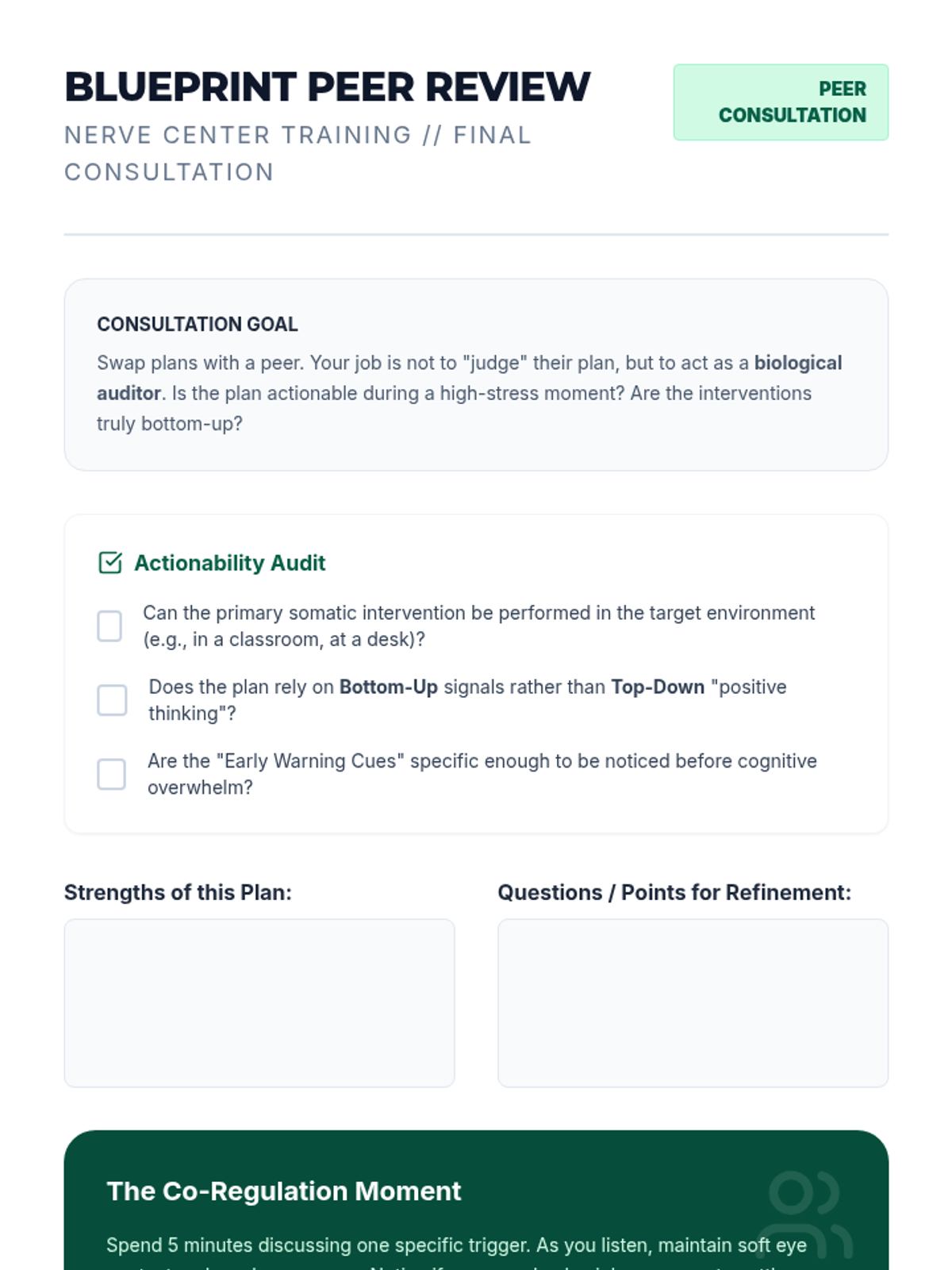
A peer review checklist and facilitation guide for students to audit each other's physiological safety plans, focusing on actionability and bottom-up efficacy.
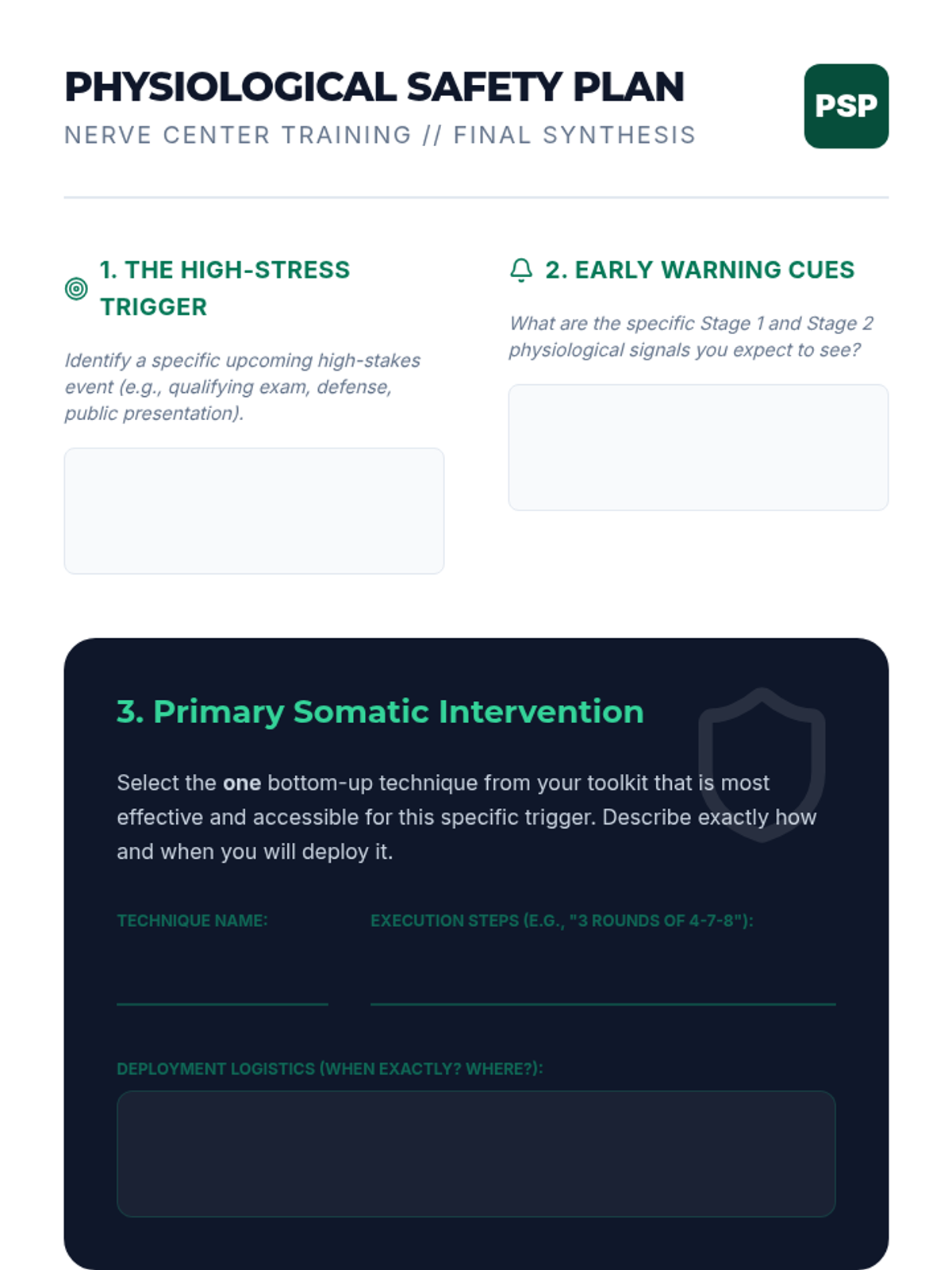
The culminating project template for the sequence: a personalized physiological safety plan that synthesizes triggers, cues, somatic interventions, and anchors.
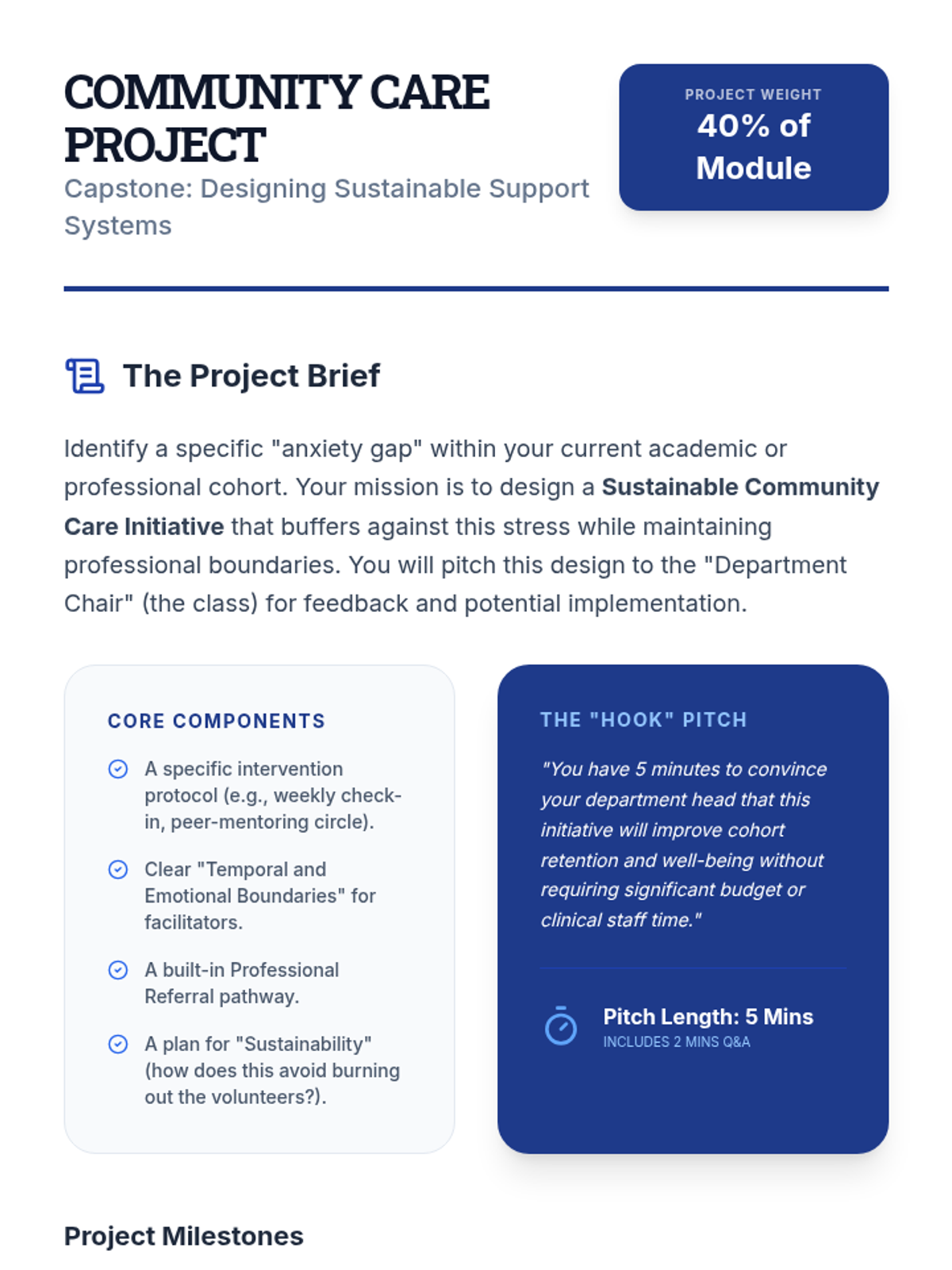
Final project brief for the Community Care initiative, detailing requirements, core components, and the "Department Pitch" assessment.
Visual slide deck for Lesson 5, introducing the concepts of mutual aid, sustainable networks, and the "Community Charter" project.
Synthesis slides for Lesson 5, introducing the concept of mental rehearsal and the architecture of a physiological safety plan.
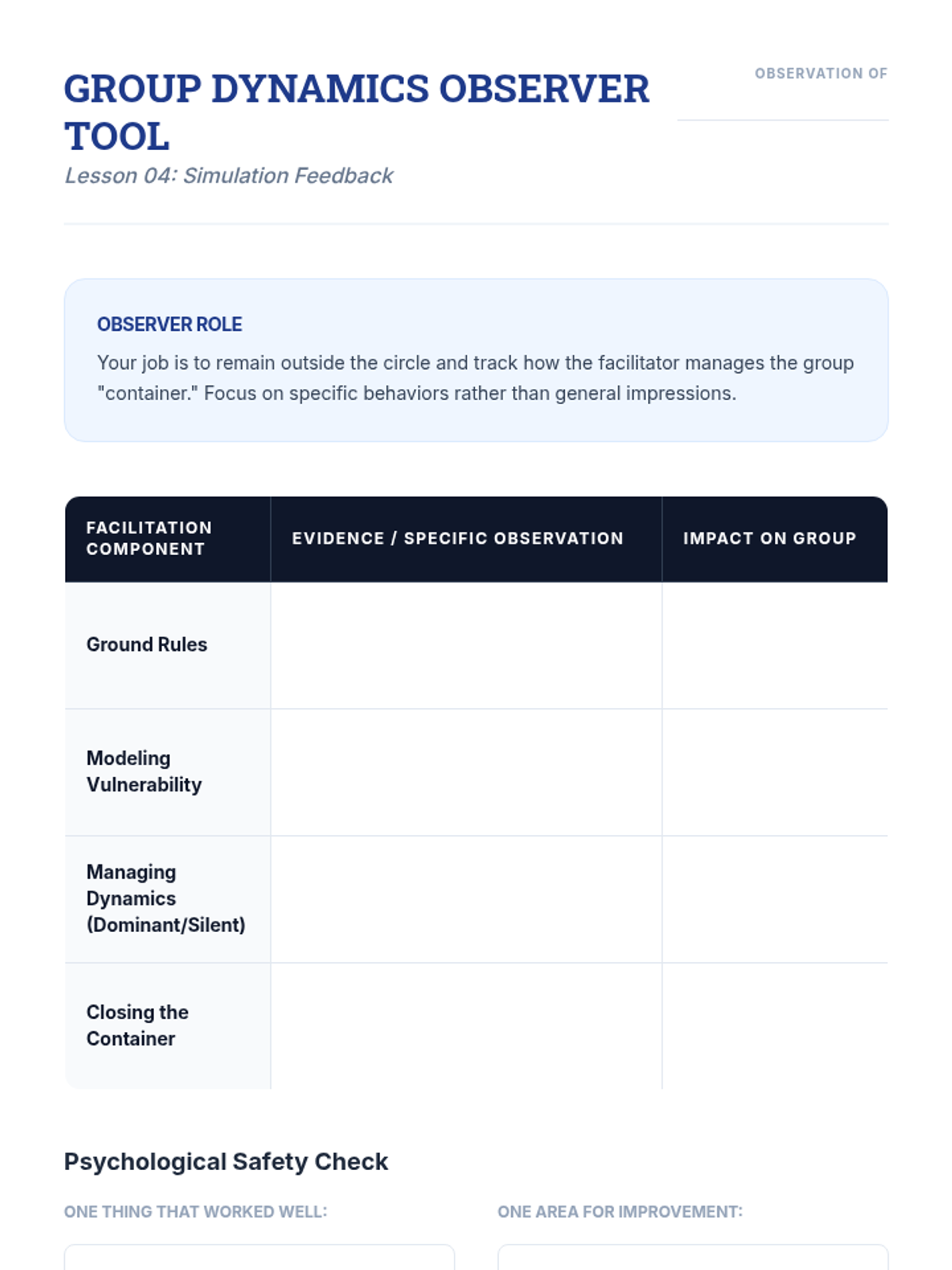
Observation and feedback tool for students to use while observing peer-led group facilitation simulations, focusing on psychological safety and dynamic management.
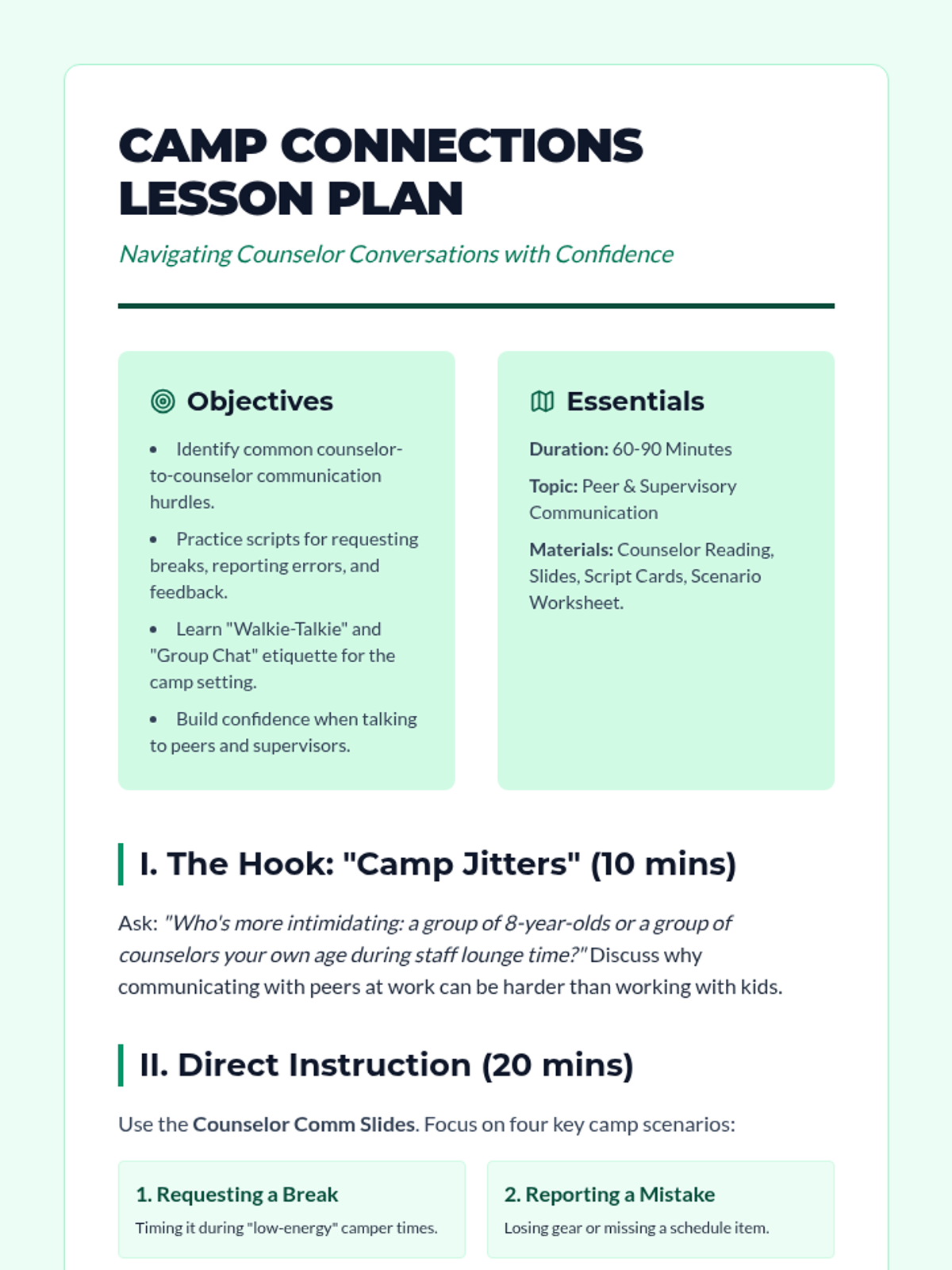
A detailed teacher's guide and lesson plan for the Camp Connections unit, focusing on communication between counselors and staff in a camp setting.
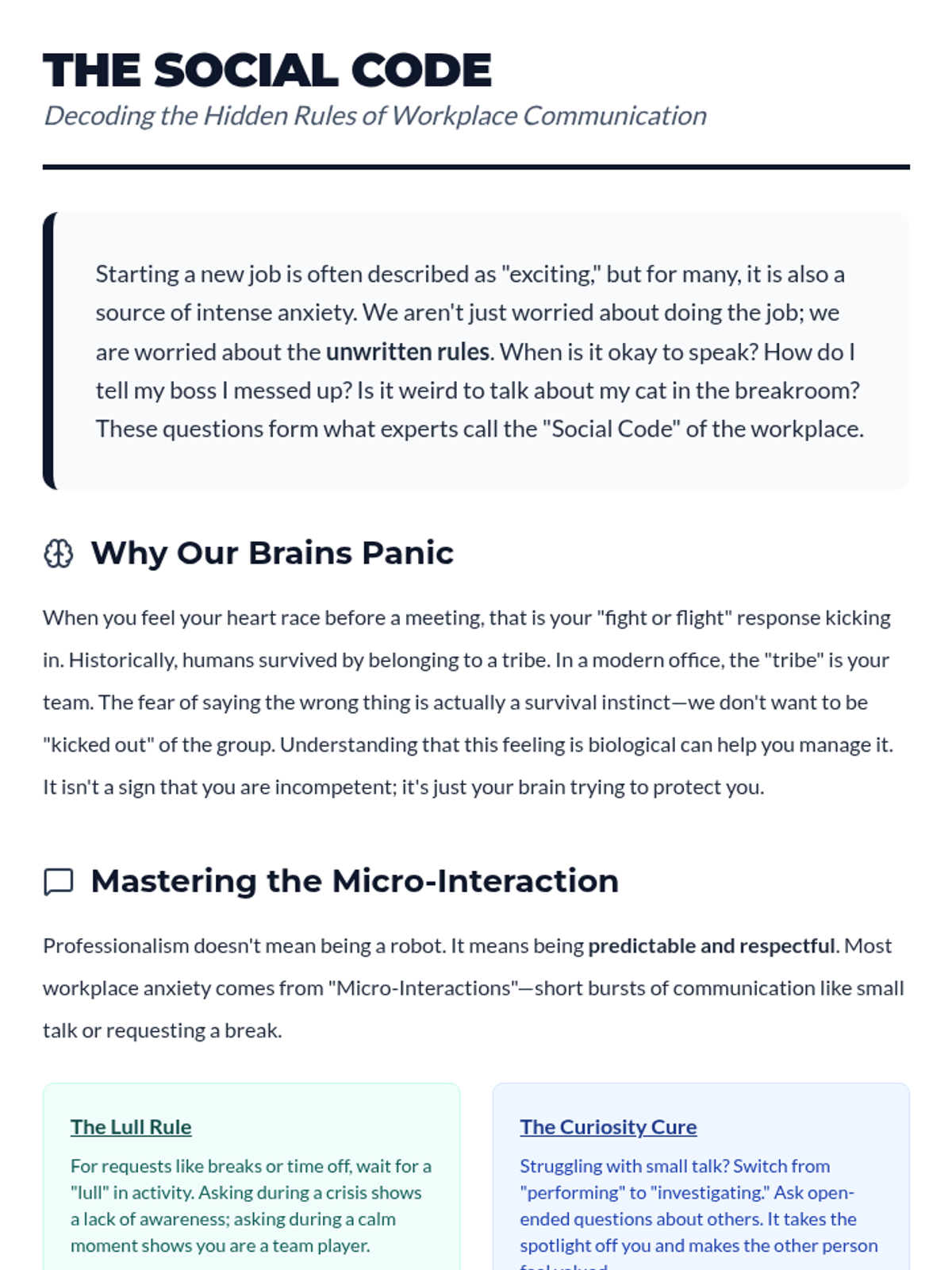
An informational reading passage exploring the psychology of workplace communication nerves and strategies for mastering professional interactions.
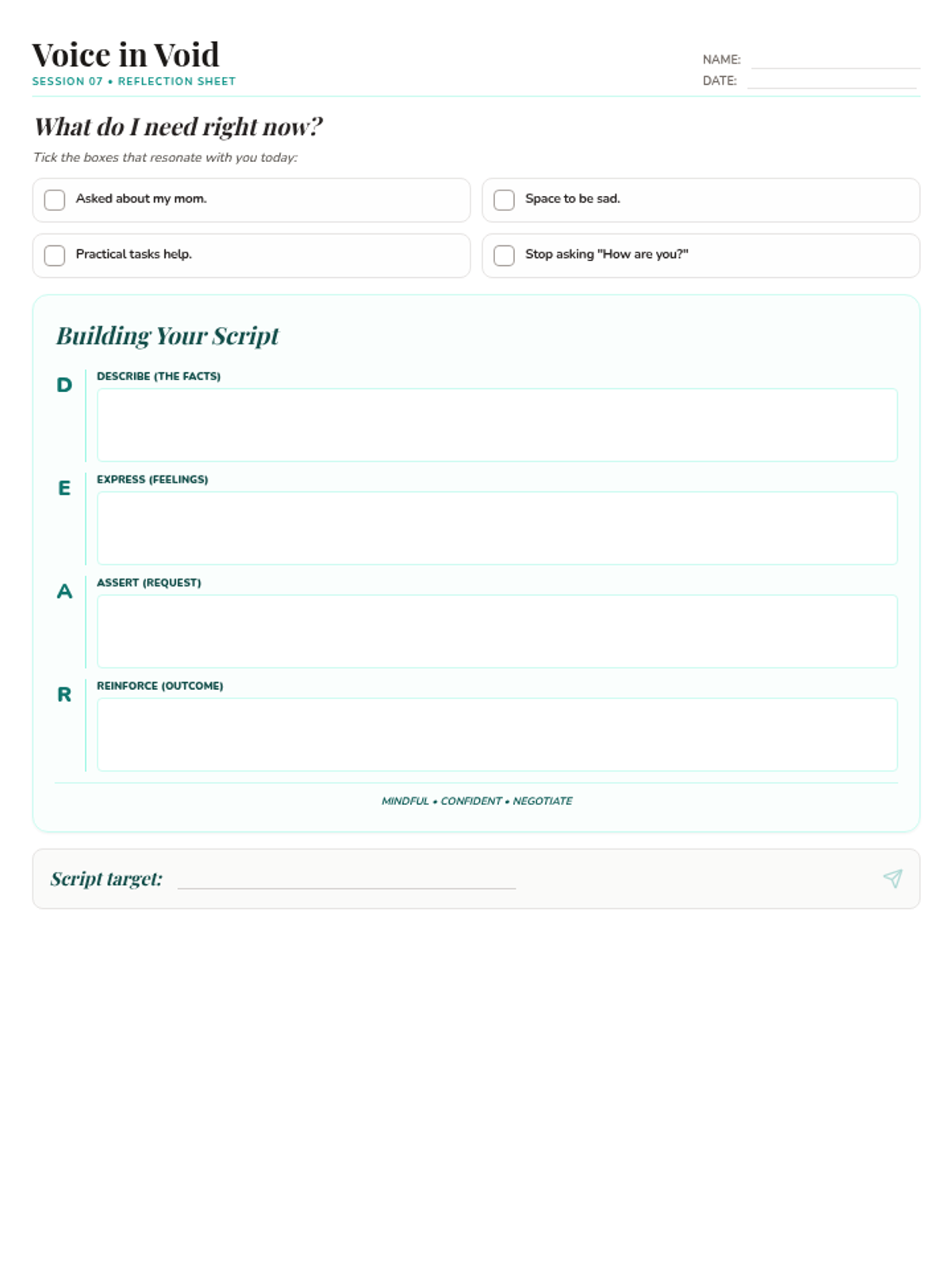
A student reflection sheet for Session 7, providing a needs assessment and a template for crafting a DEAR MAN script. Revised for single-page layout, increased font sizes, and improved handwriting space.
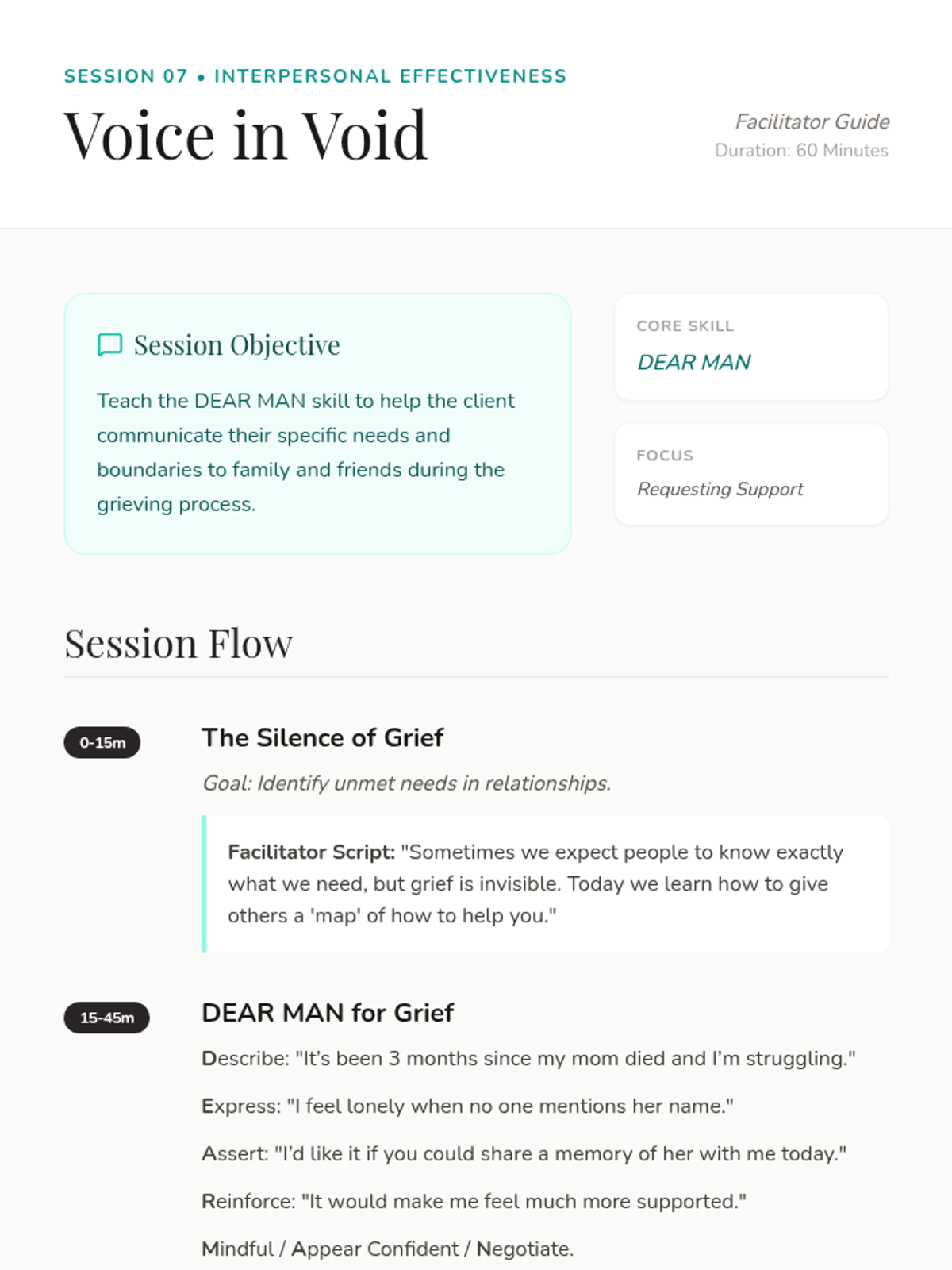
Facilitator guide for Session 7, teaching the DEAR MAN interpersonal effectiveness skill to help grieving clients articulate their needs and request support from their social network.
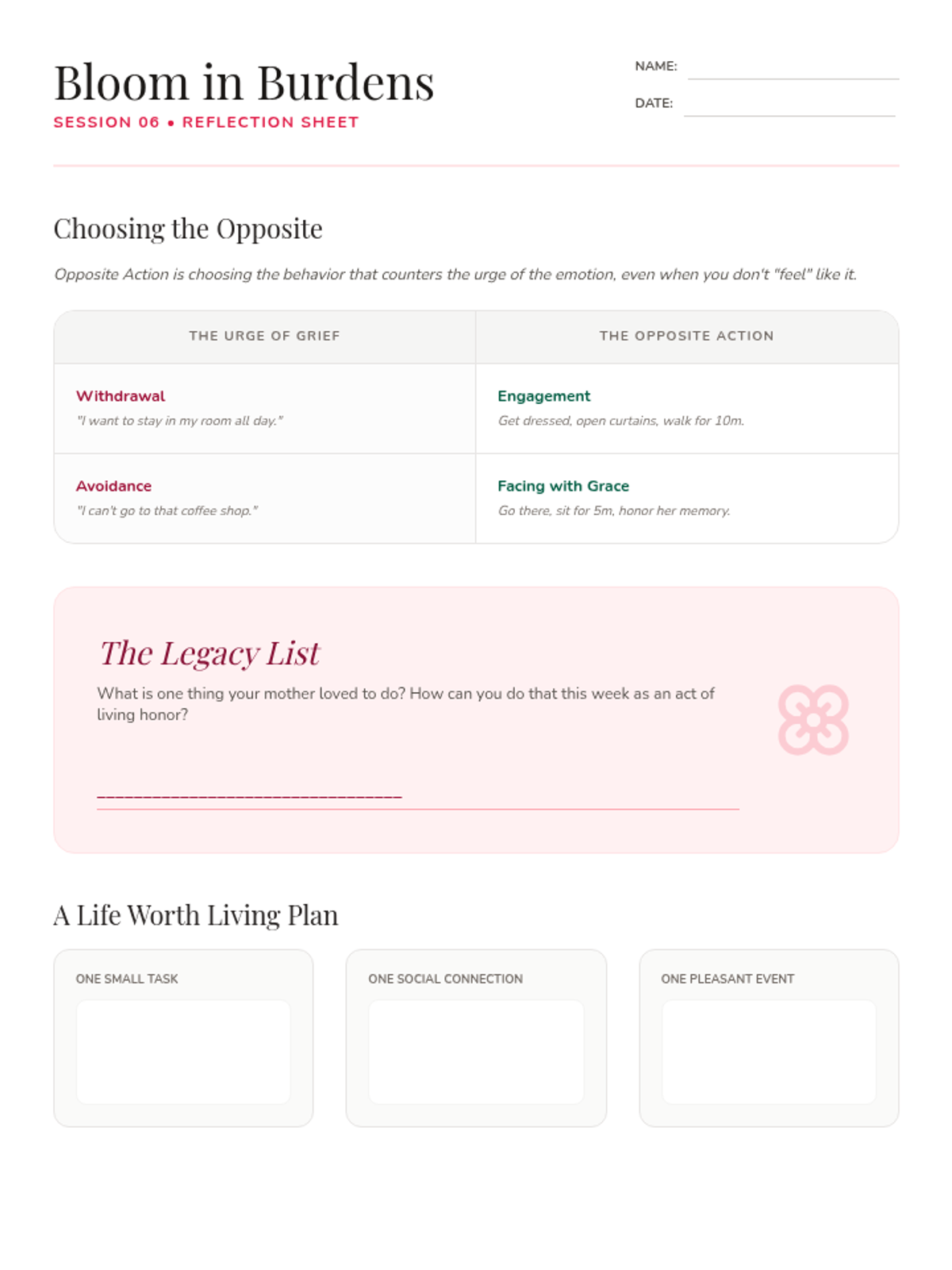
A student worksheet for Session 6, outlining Opposite Action strategies and a "Legacy List" to help clients build positive experiences. Revised for single-page layout and improved writing areas.
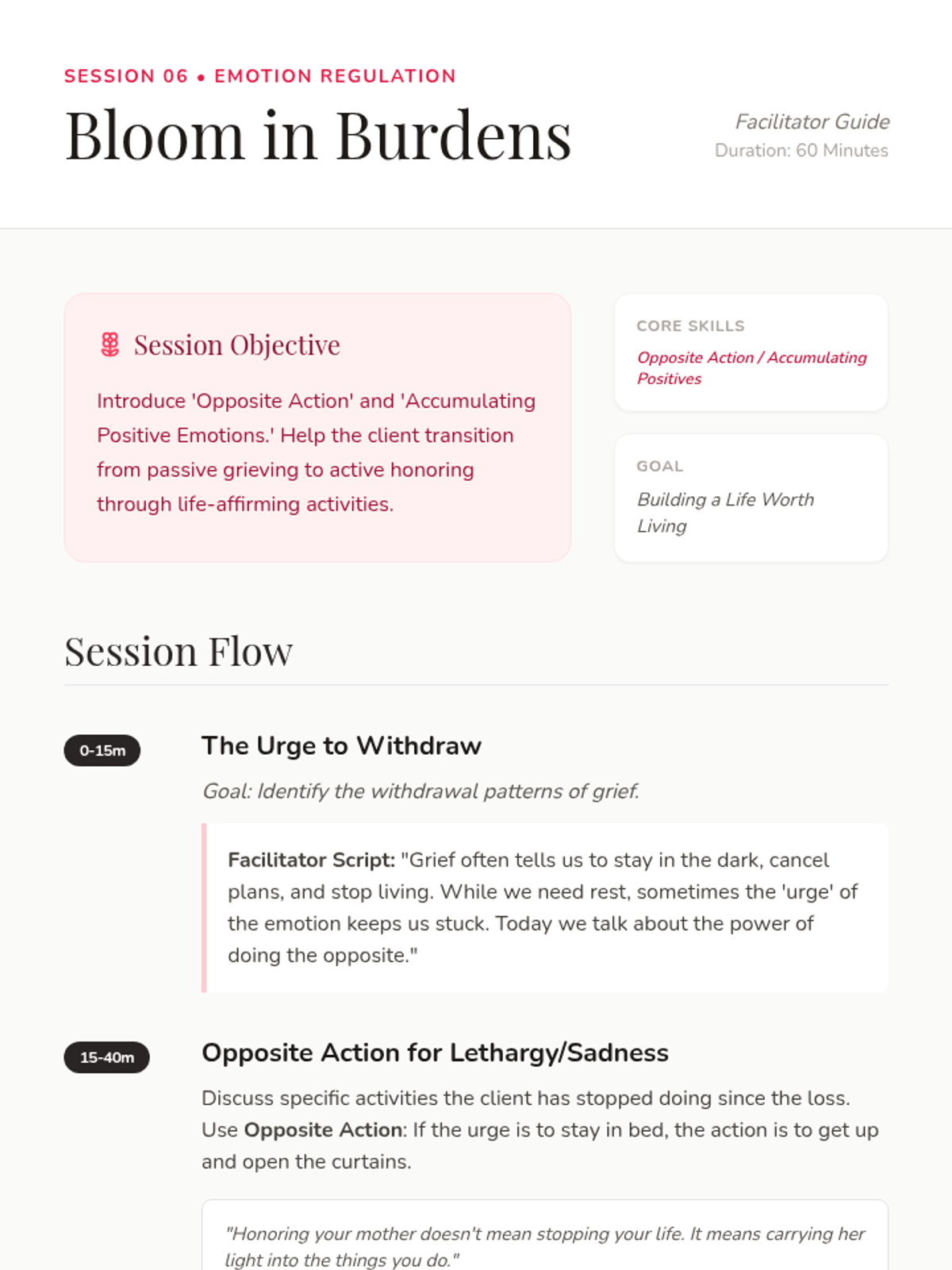
Facilitator guide for Session 6, implementing DBT skills like 'Opposite Action' to help clients overcome grief-induced withdrawal and intentionally build meaningful, positive experiences.
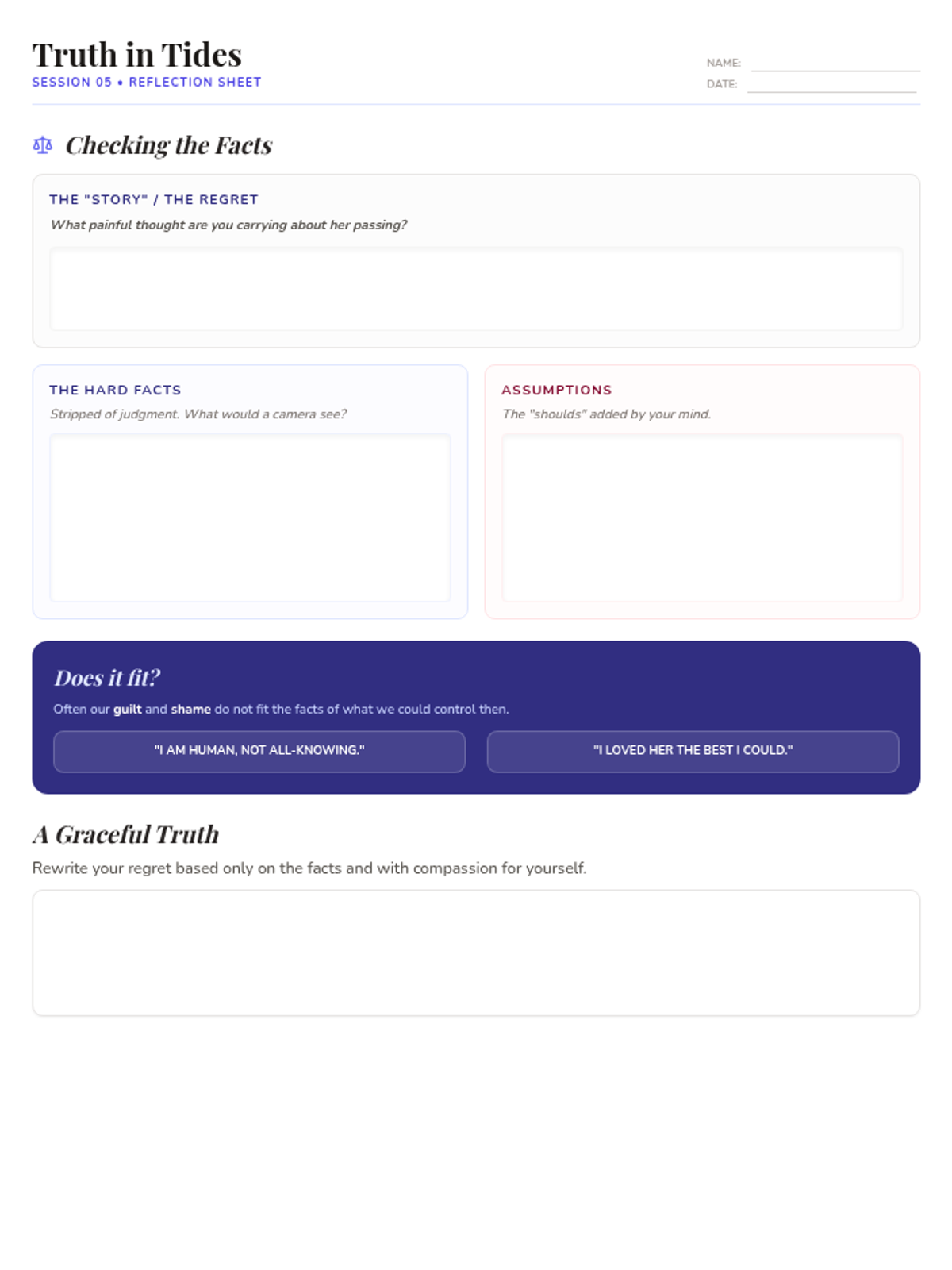
A student worksheet for Session 5, providing a structured "Check the Facts" table to help clients distinguish between objective events and judgmental narratives. Revised to fit one page, increase handwriting space, and improve contrast.
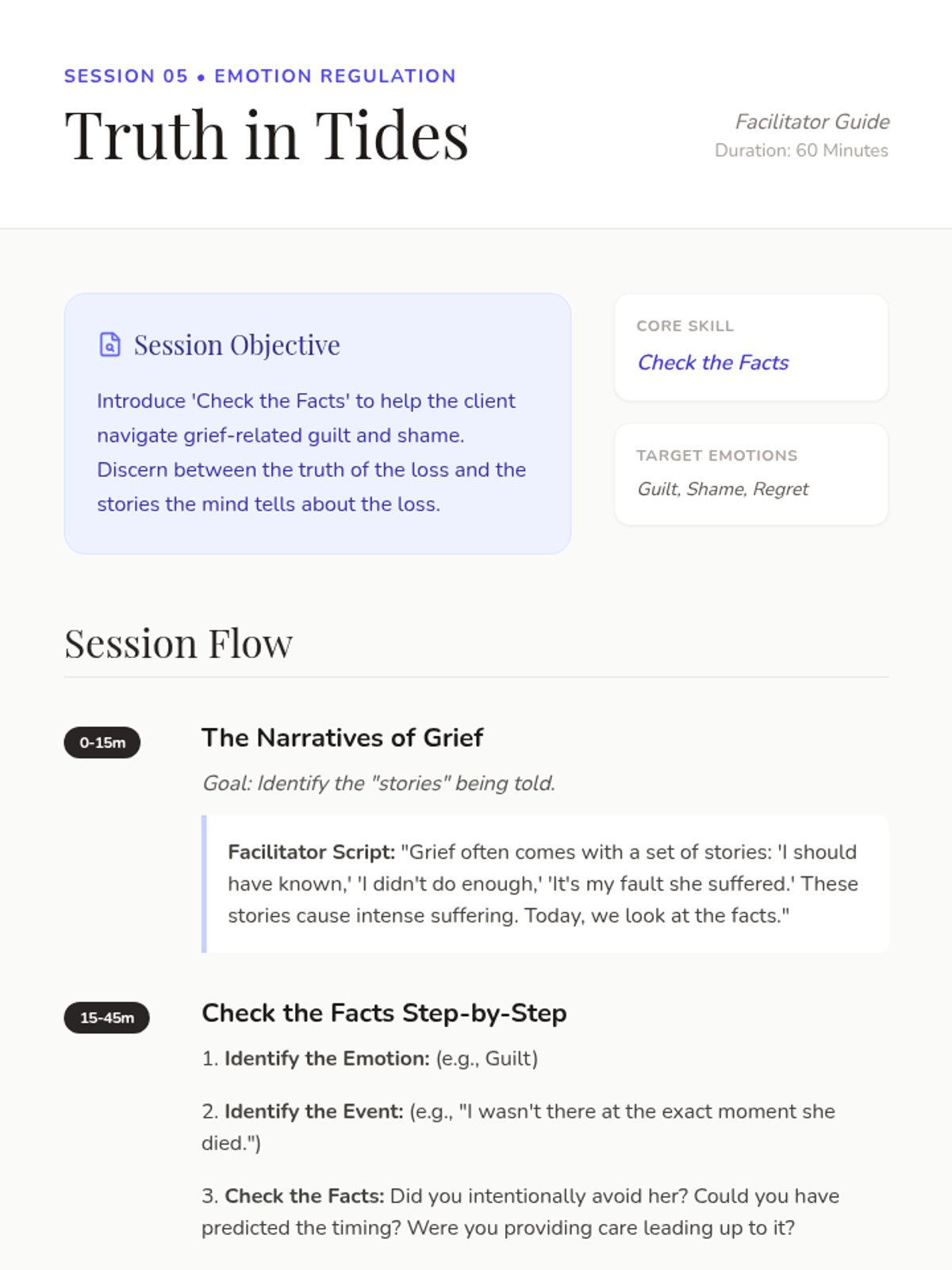
Facilitator guide for Session 5, applying the 'Check the Facts' DBT skill to address and reframe common grief-related guilt and regrets surrounding maternal loss.
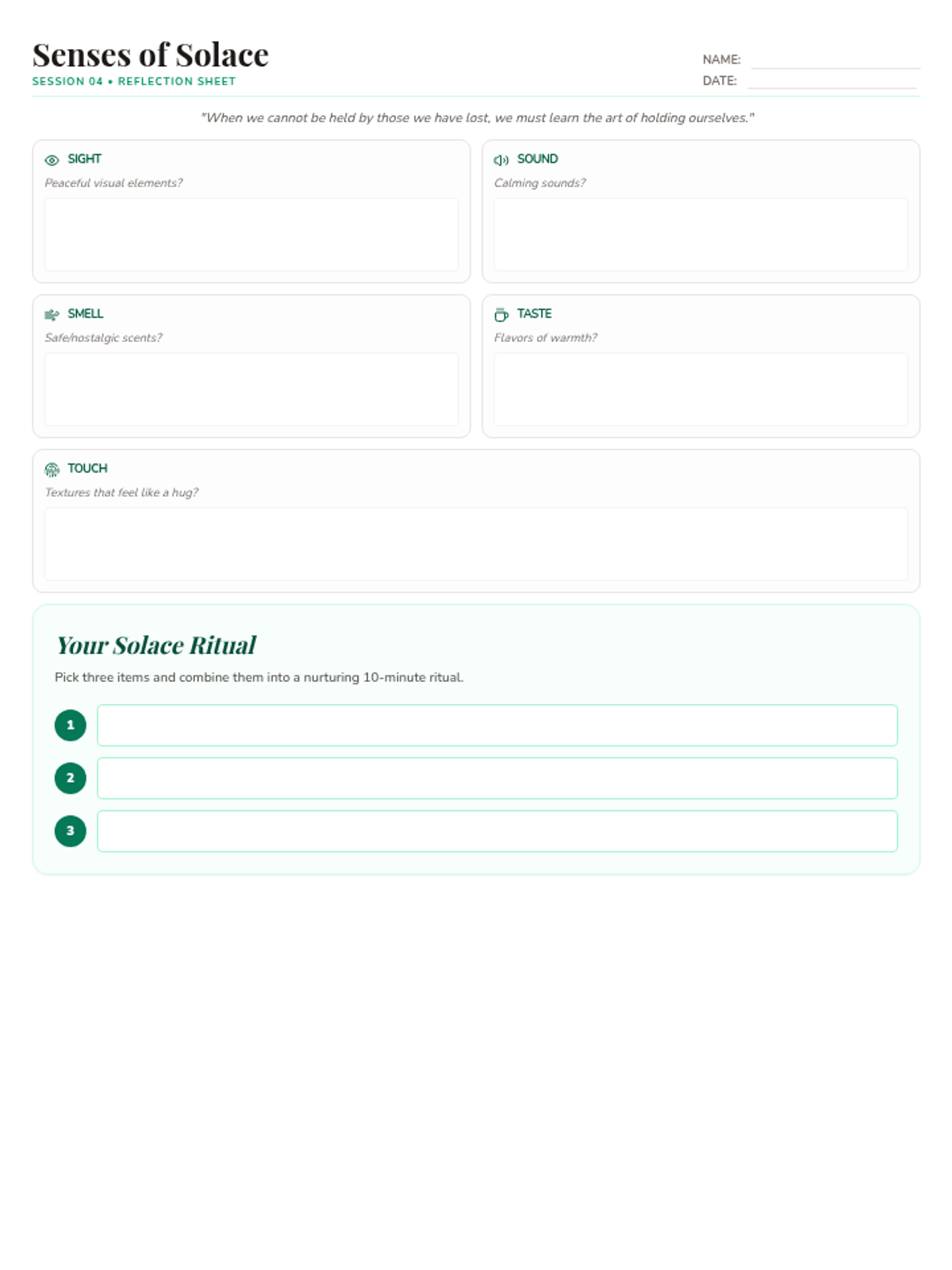
A client reflection sheet for Session 4, providing a sensory map for self-soothing and a template for creating a personalized "Solace Ritual." Revised for single-page layout, increased font sizes, and improved writing space.
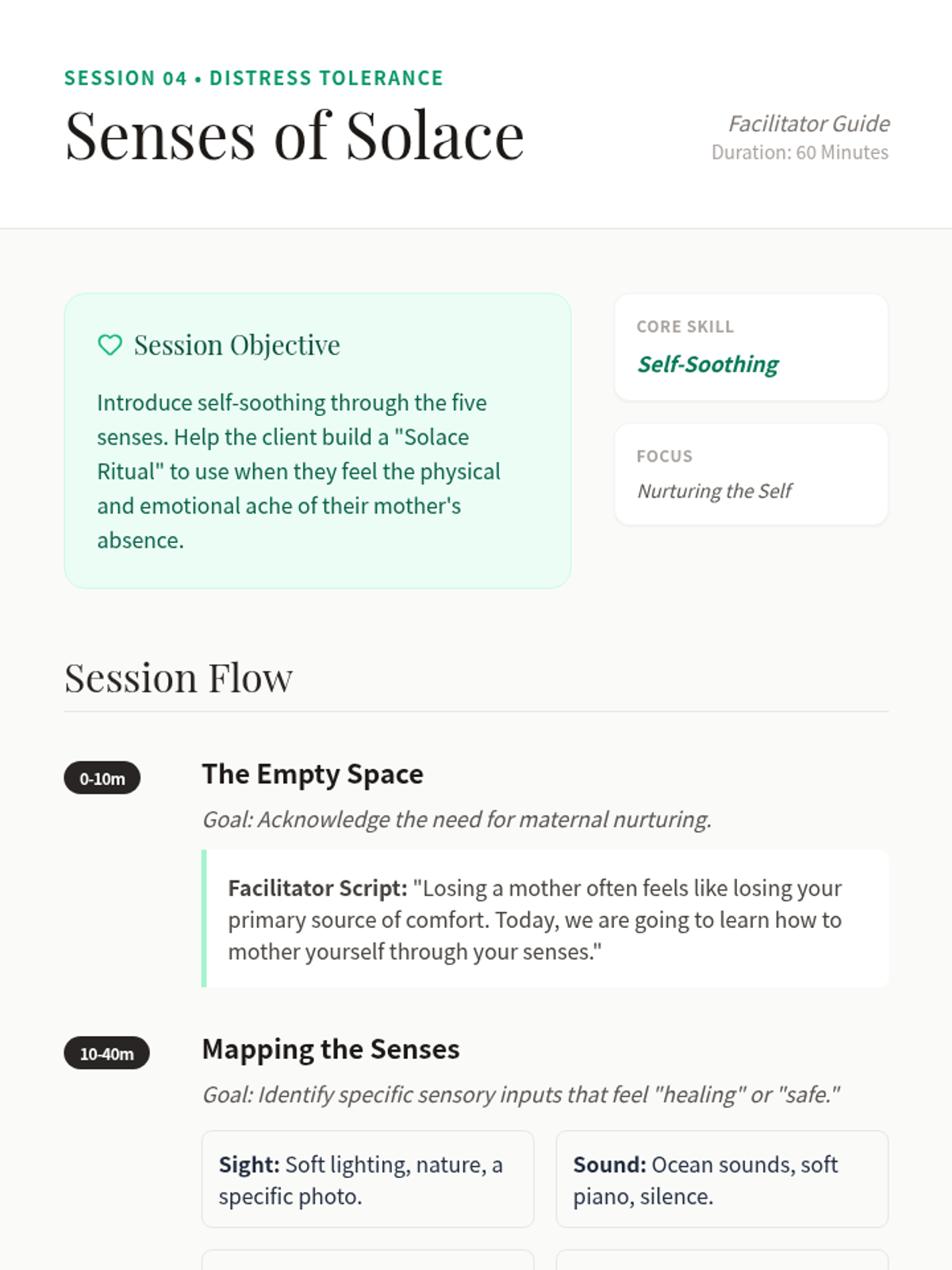
Facilitator guide for Session 4, focusing on self-soothing techniques through the five senses to address the void of maternal comfort and create personalized grounding rituals.
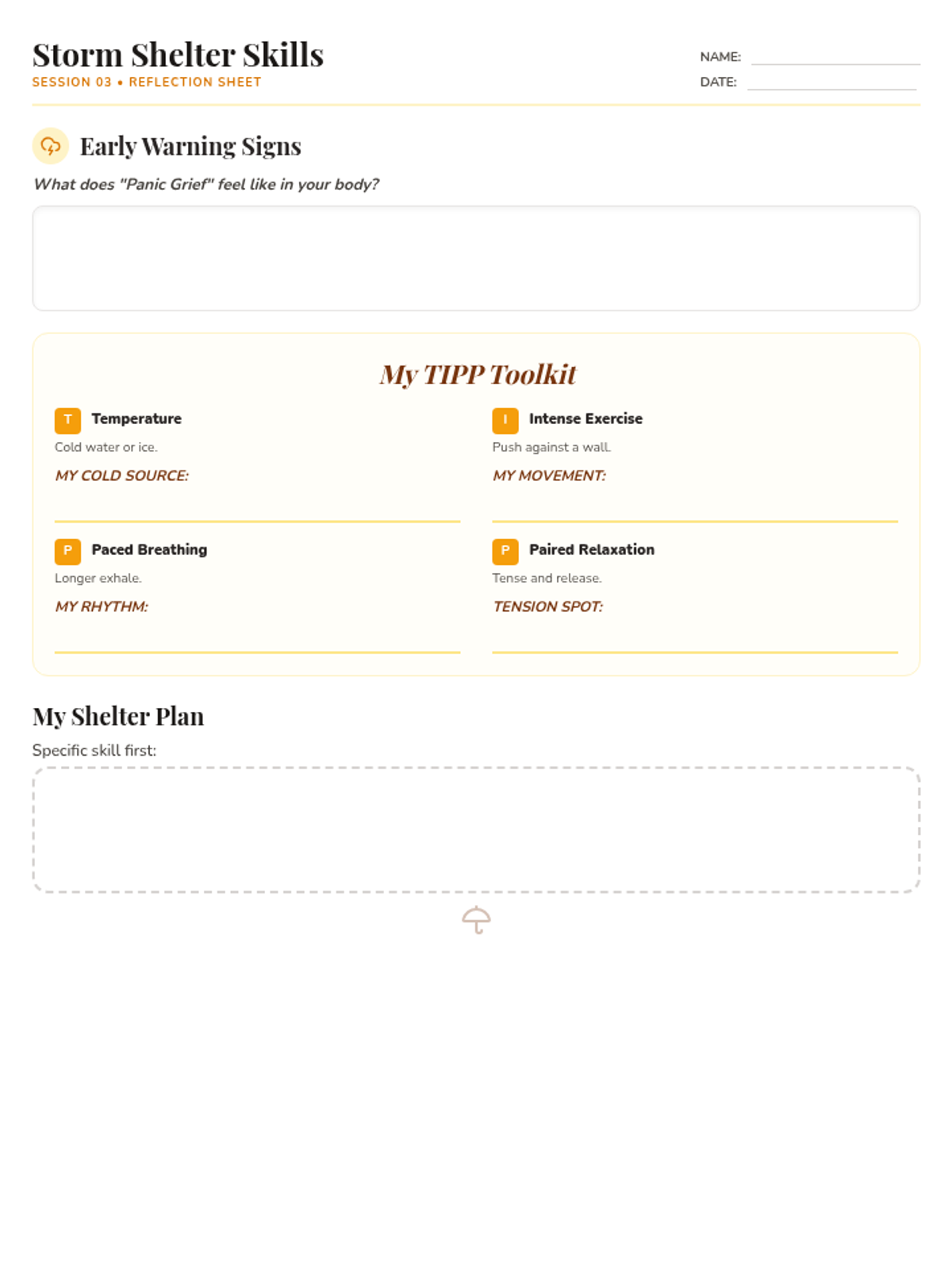
A client worksheet for Session 3, detailing the TIPP distress tolerance skills and providing space for the client to personalize their "storm shelter" crisis plan. Revised to fit one page and improve input field contrast and handwriting space.
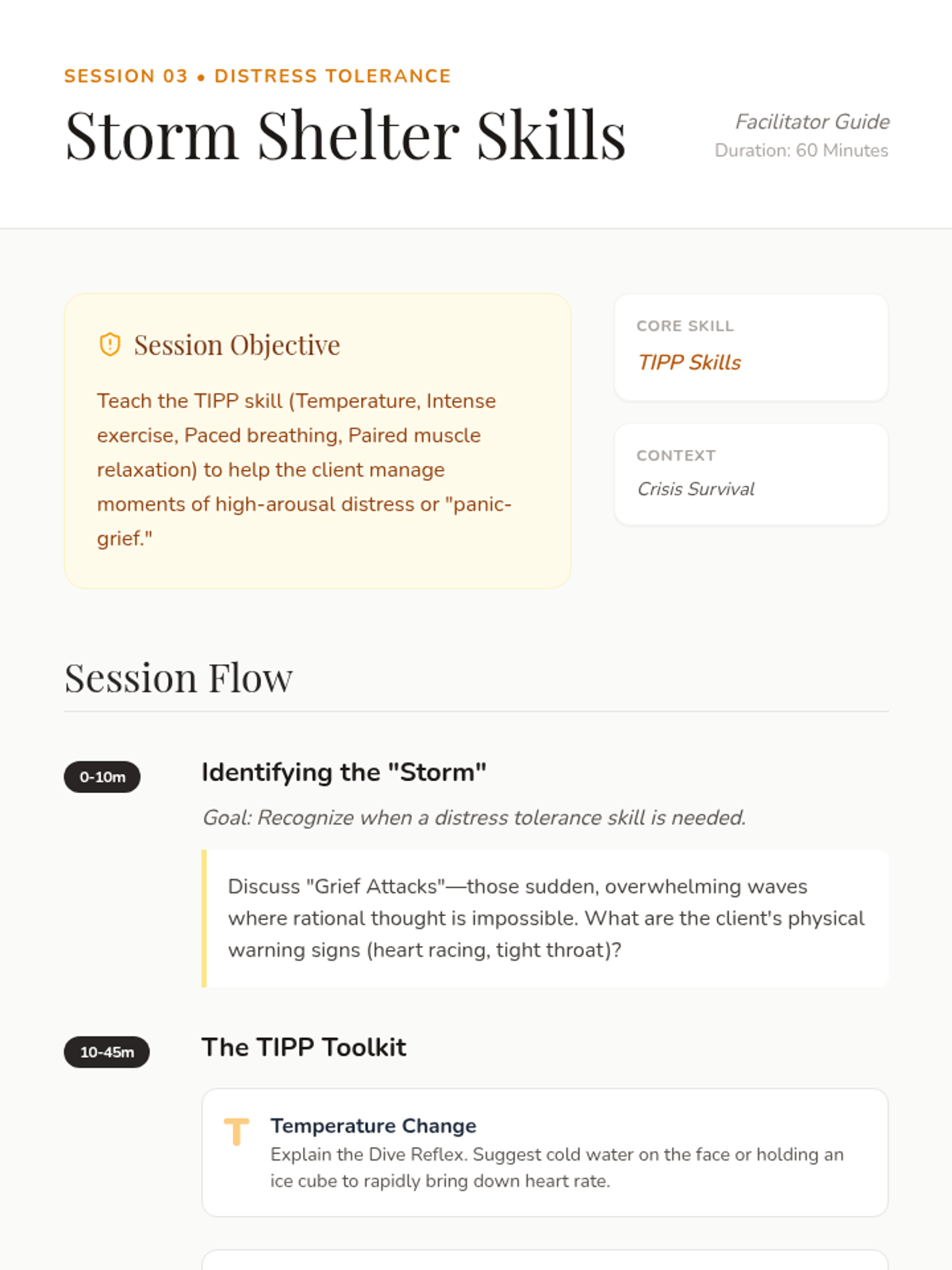
A facilitator guide for Session 3, introducing the TIPP distress tolerance skills specifically tailored for managing acute, overwhelming waves of grief.
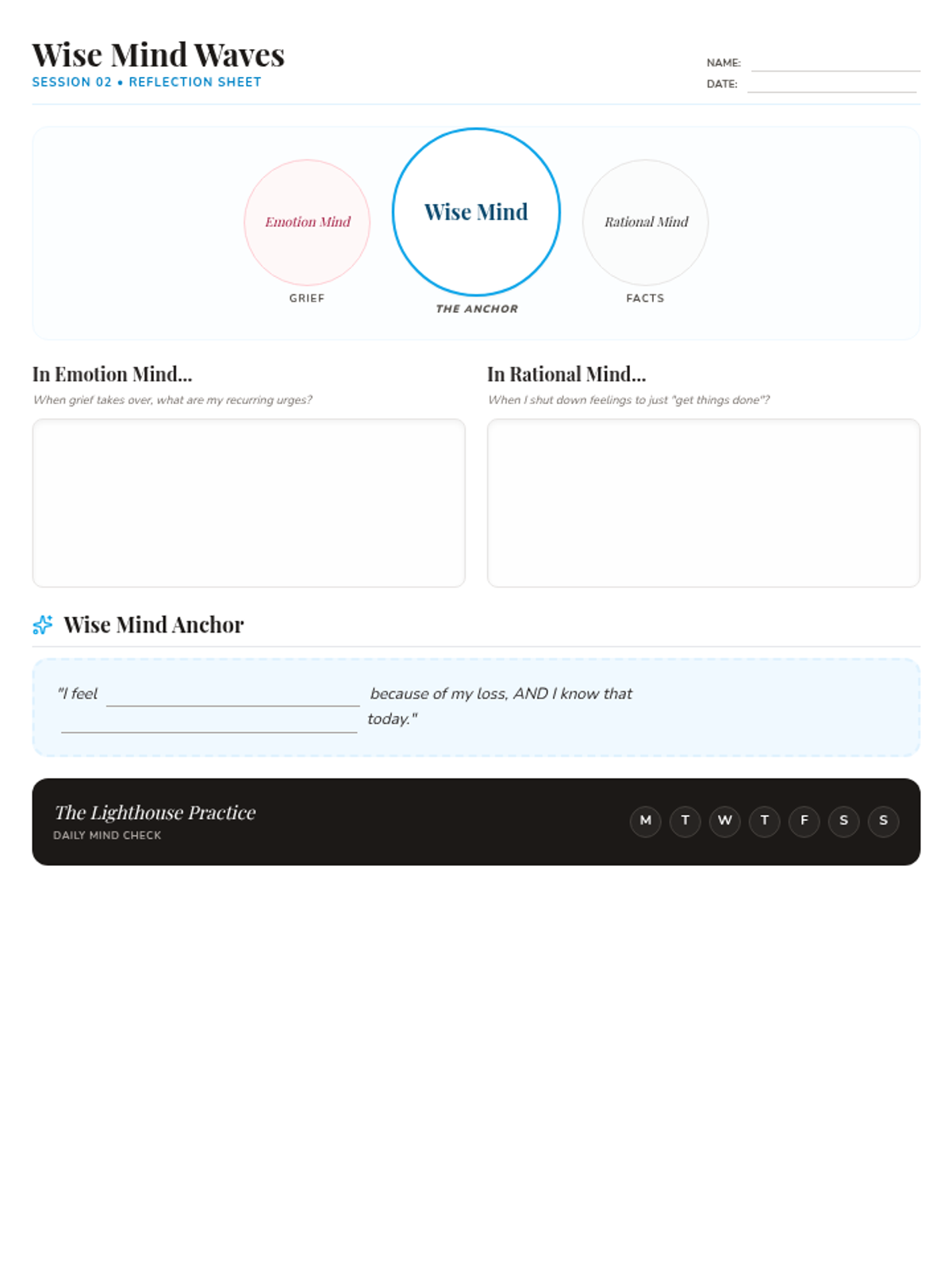
A client worksheet for Session 2, providing a visual model of Wise Mind and space for the client to reflect on their own Emotional and Rational mind states during grief. Revised for better contrast and cohesive single-page layout.
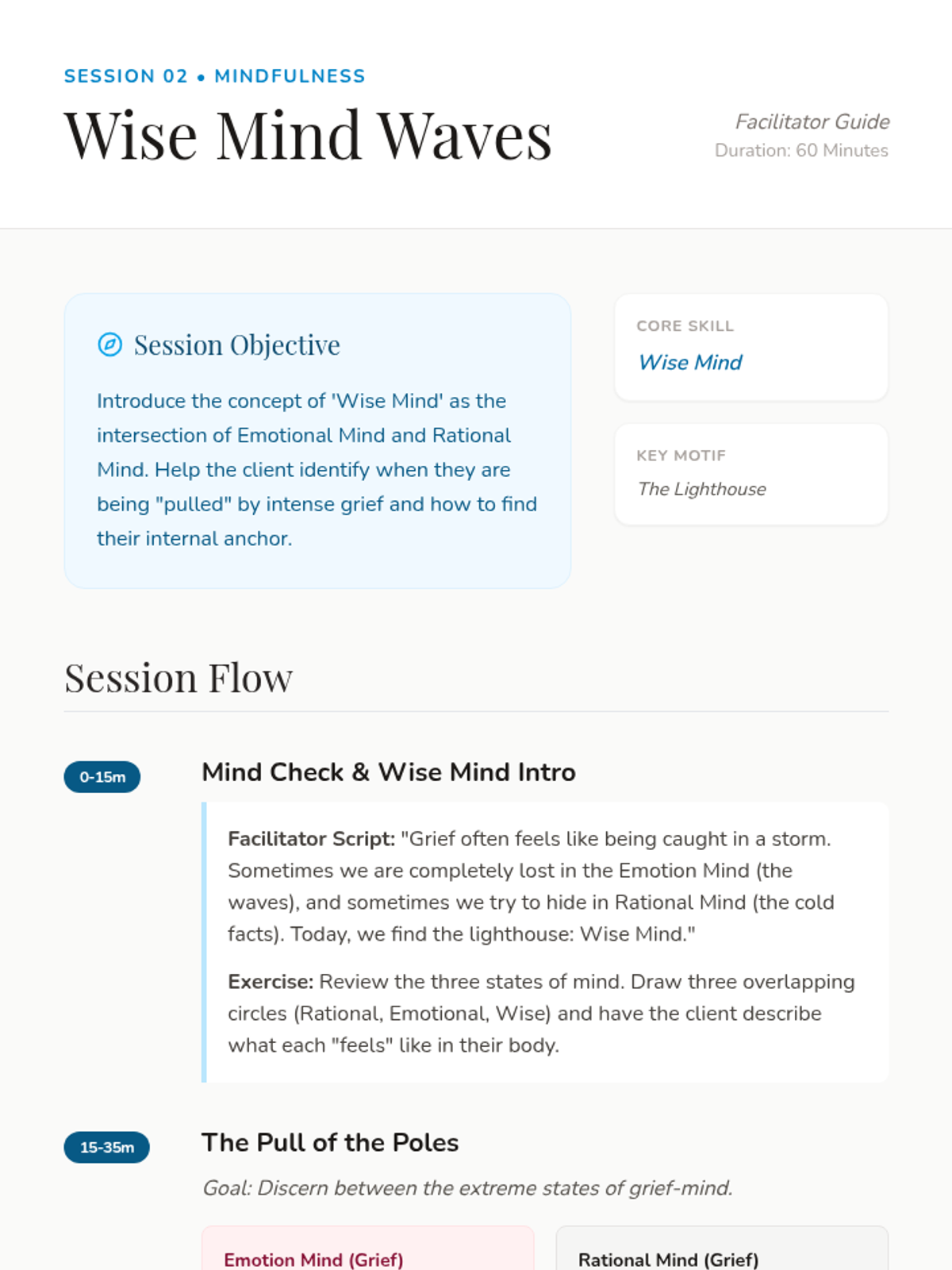
Facilitator guide for Session 2, focusing on the DBT concept of 'Wise Mind' to help clients balance the emotional intensity of grief with the practical needs of daily life.
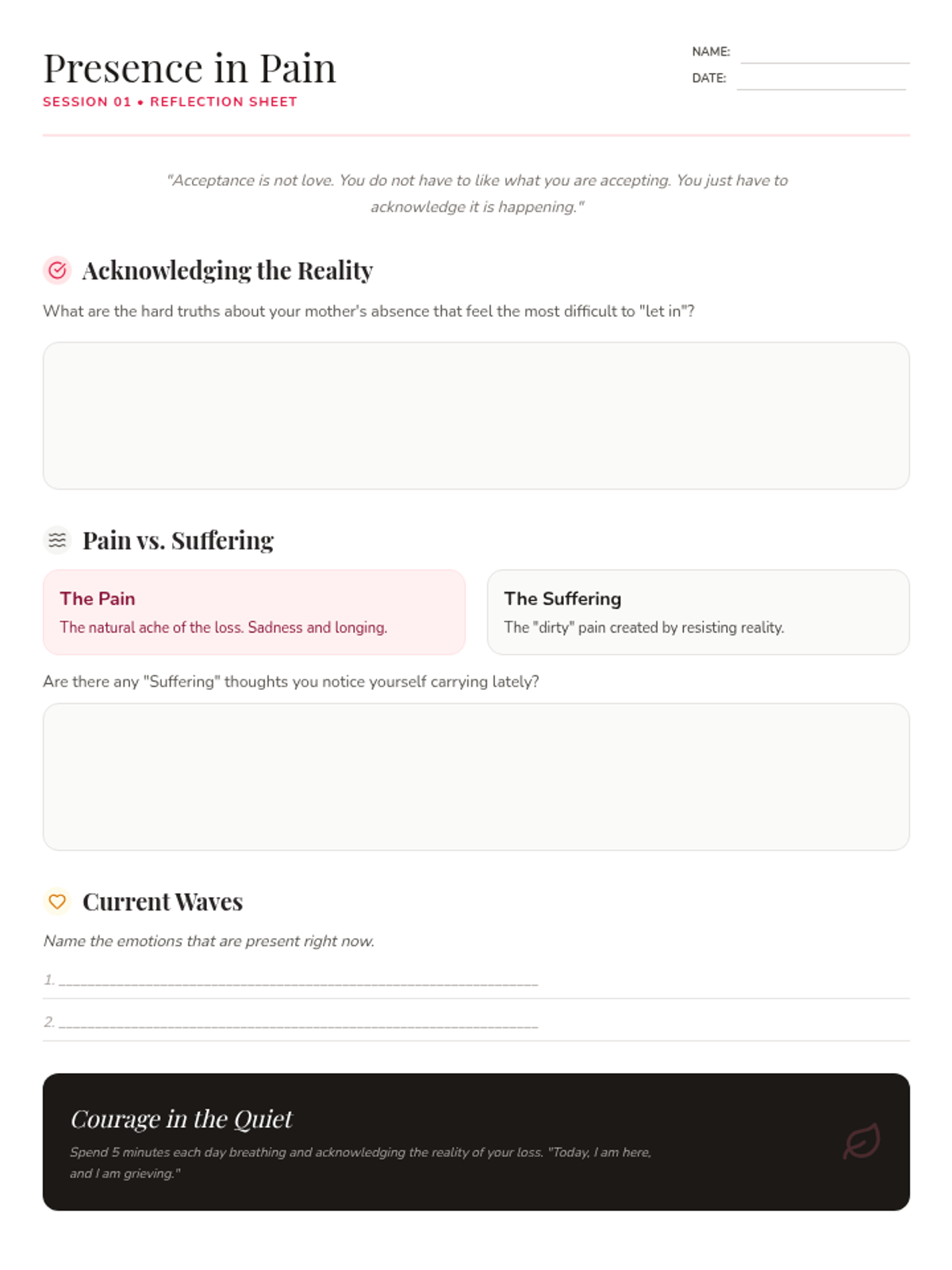
A student reflection worksheet for the first session, providing writing prompts and exercises on Radical Acceptance and distinguishing between primary pain and secondary suffering. Revised for better page-break management and increased writing space.
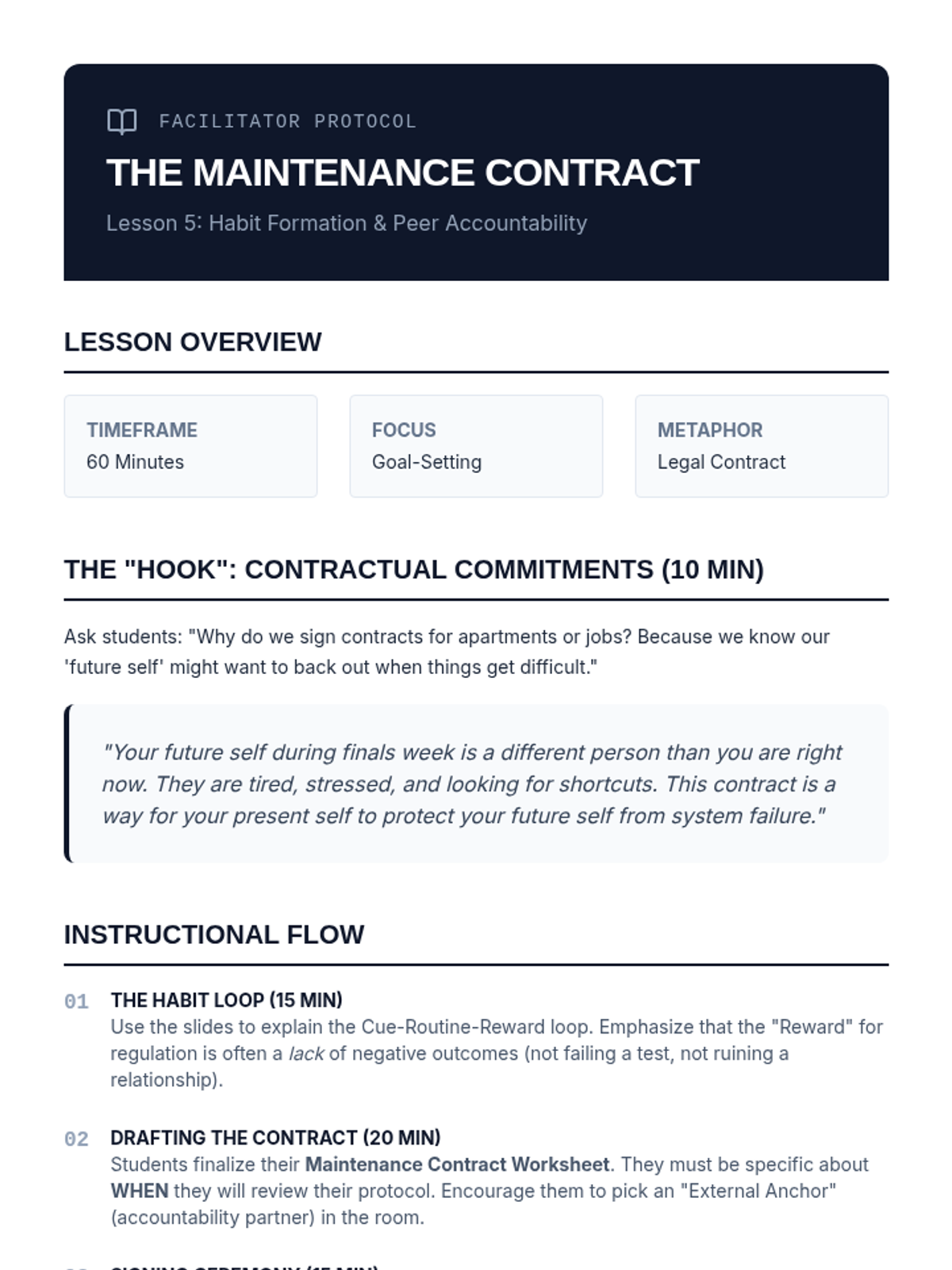
Facilitator guide for Lesson 5, outlining the instructional flow, discussion prompts, and key concepts for the maintenance contract and habit formation.
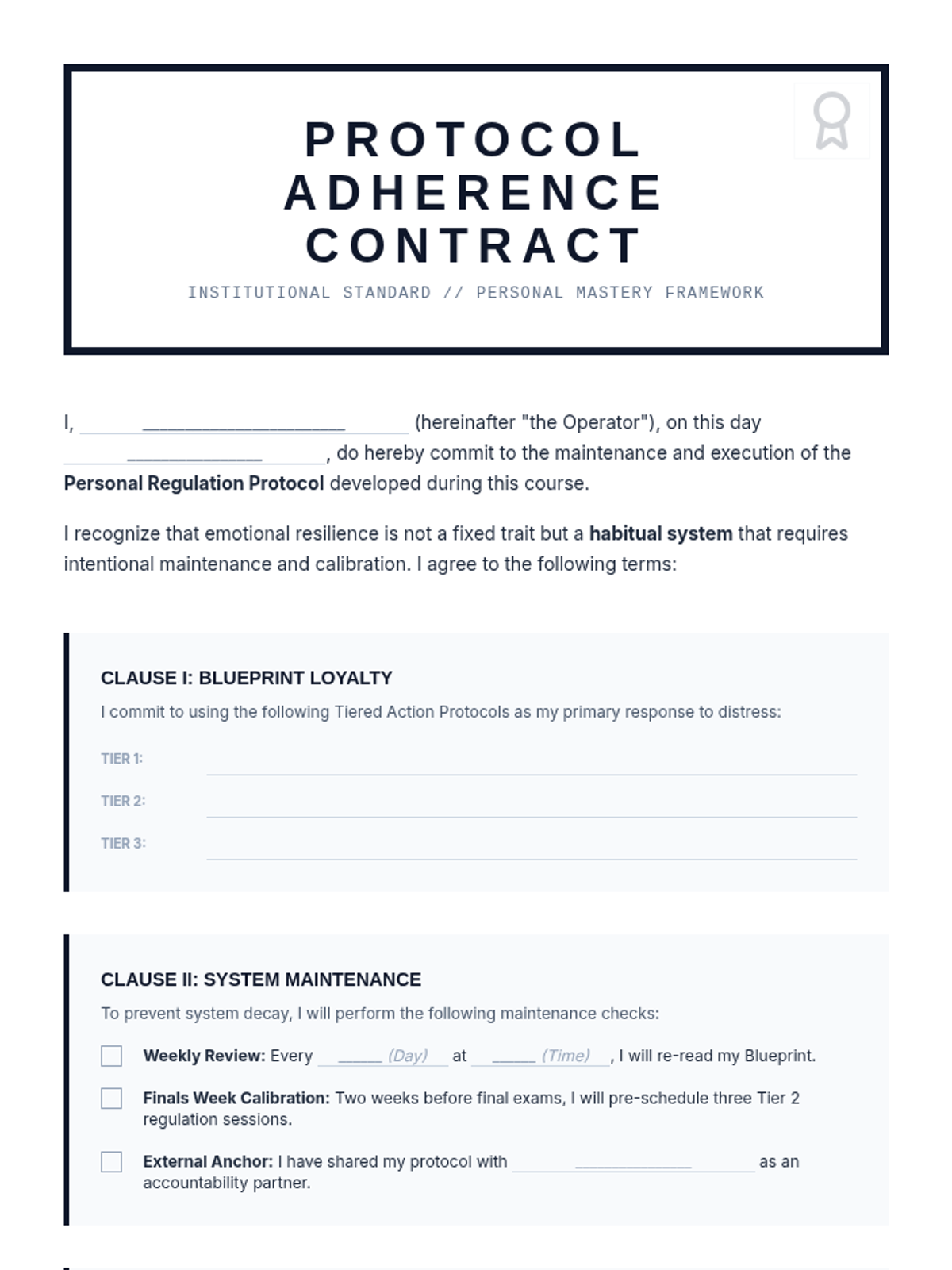
A formal maintenance contract for students to commit to their regulation protocols, establishing maintenance schedules and accountability partners.
Final slide deck for Lesson 5, focusing on habit formation, maintenance schedules, and the commitment to protocol adherence.
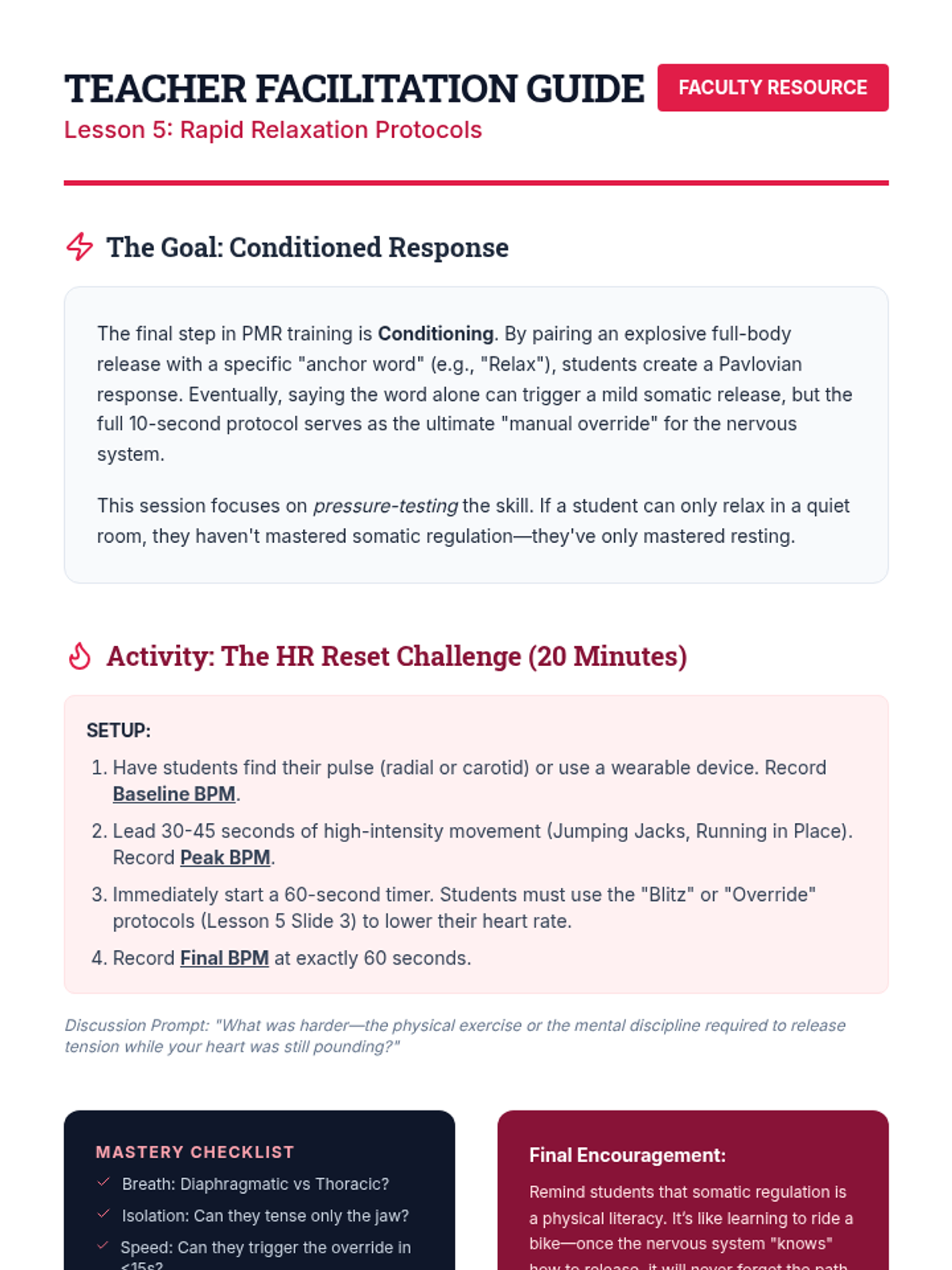
Teacher facilitation guide for Lesson 5, including the heart rate challenge instructions and tips for conditioning the relaxation response.
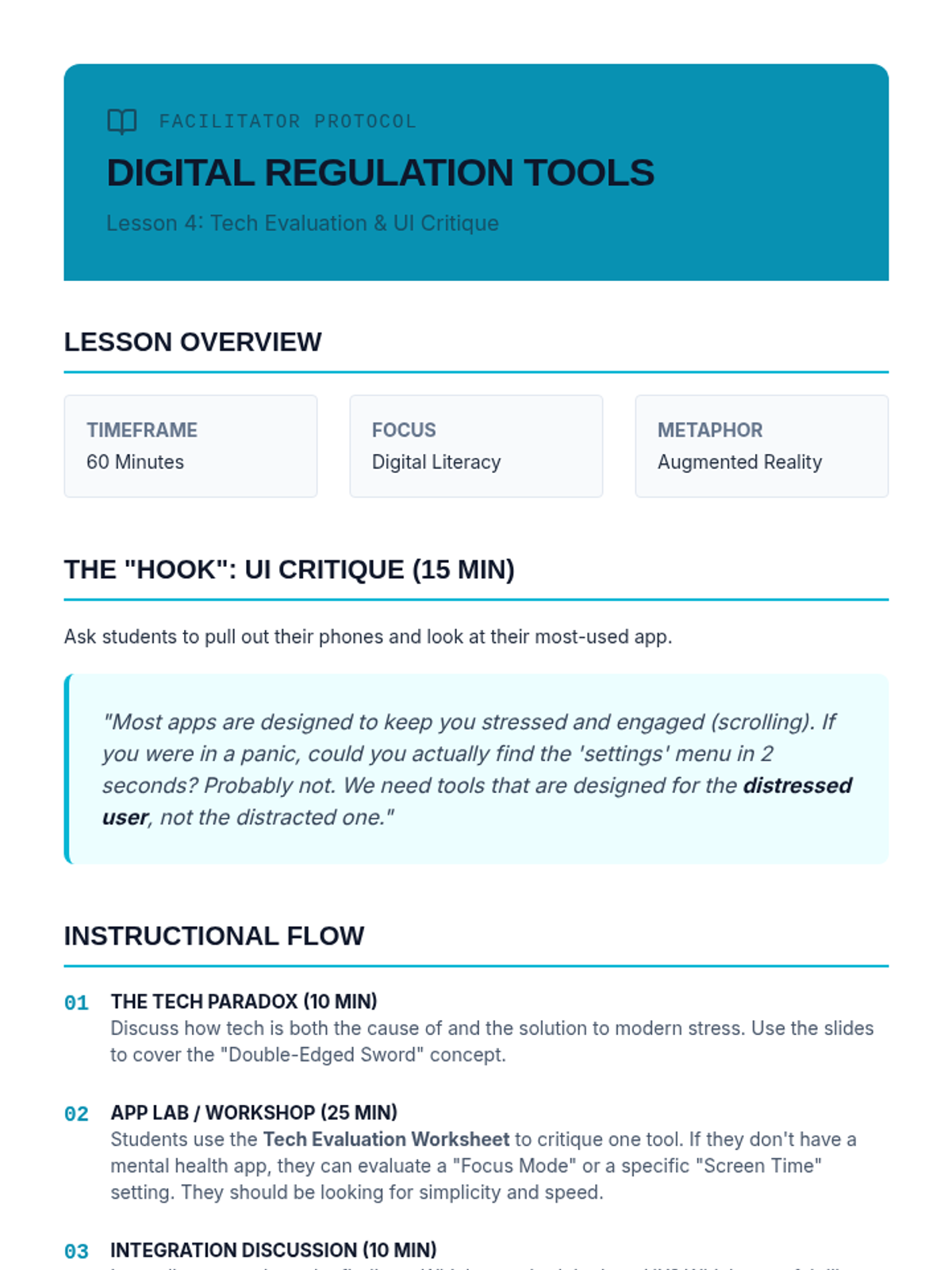
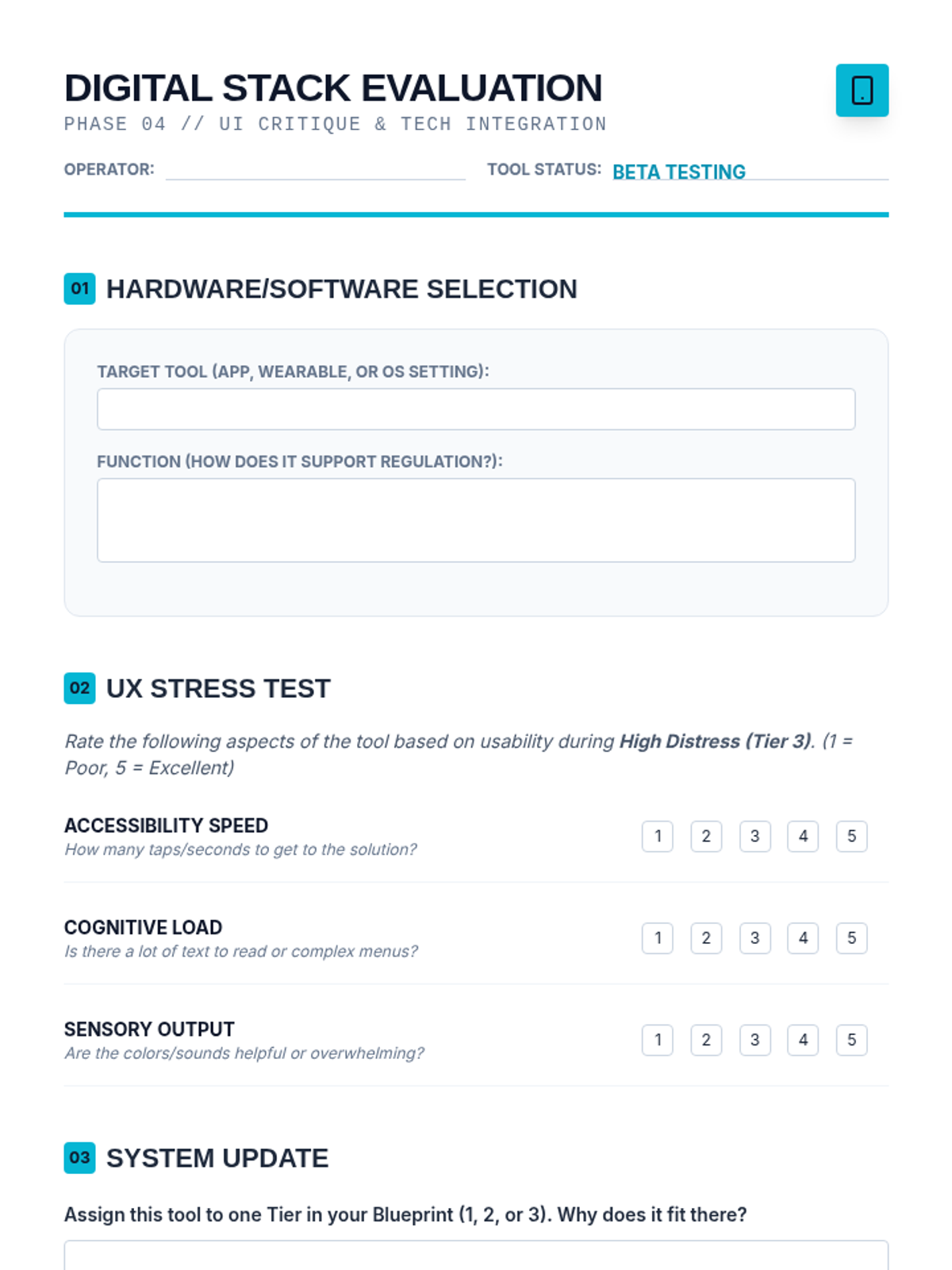
Facilitator guide for Lesson 4, outlining the instructional flow, discussion prompts, and key concepts for the digital tool evaluation and UI critique.
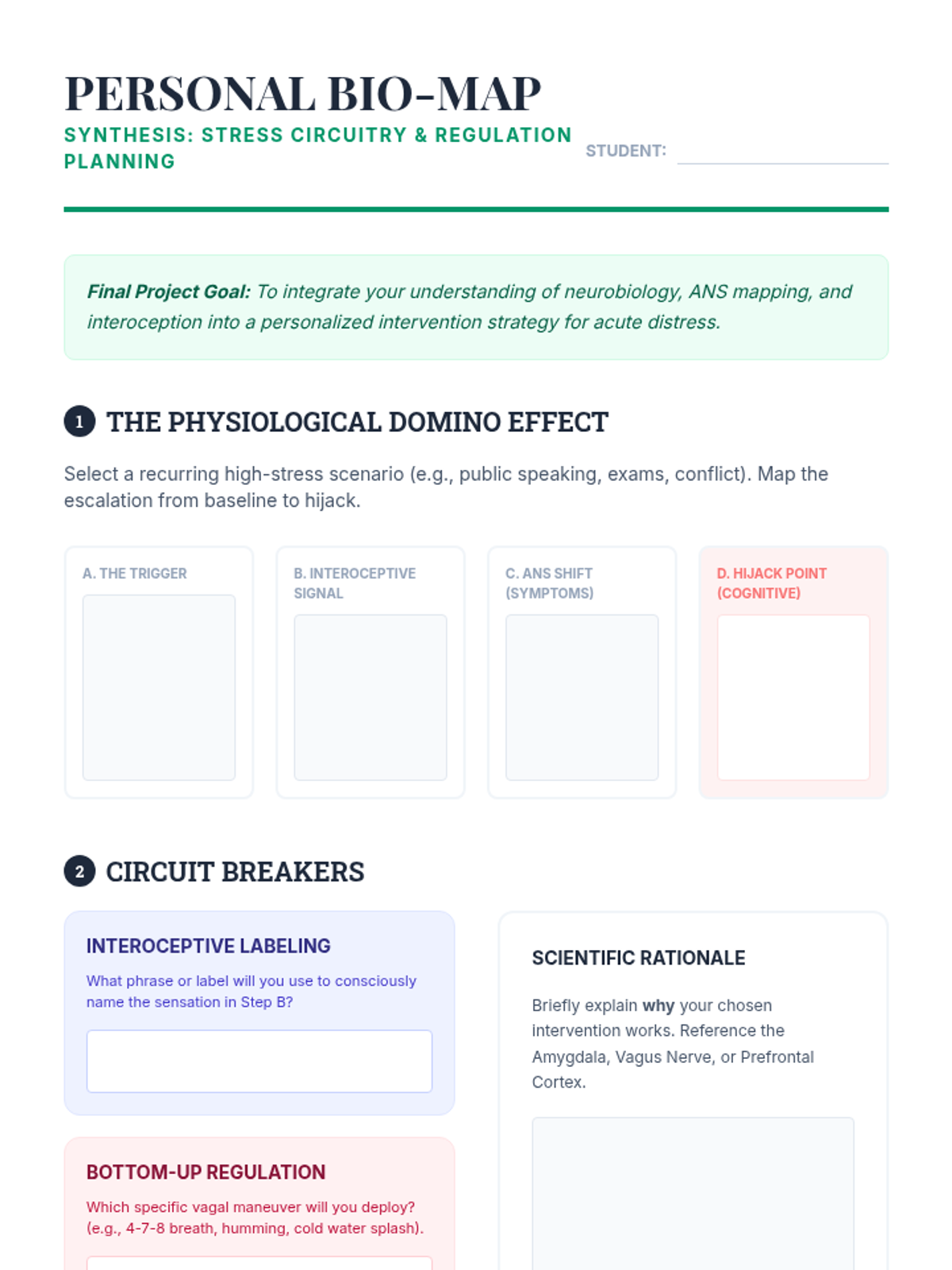
A synthesis project worksheet where students integrate neurobiology and self-regulation techniques to create a personalized 'Bio-Map' of their stress response.
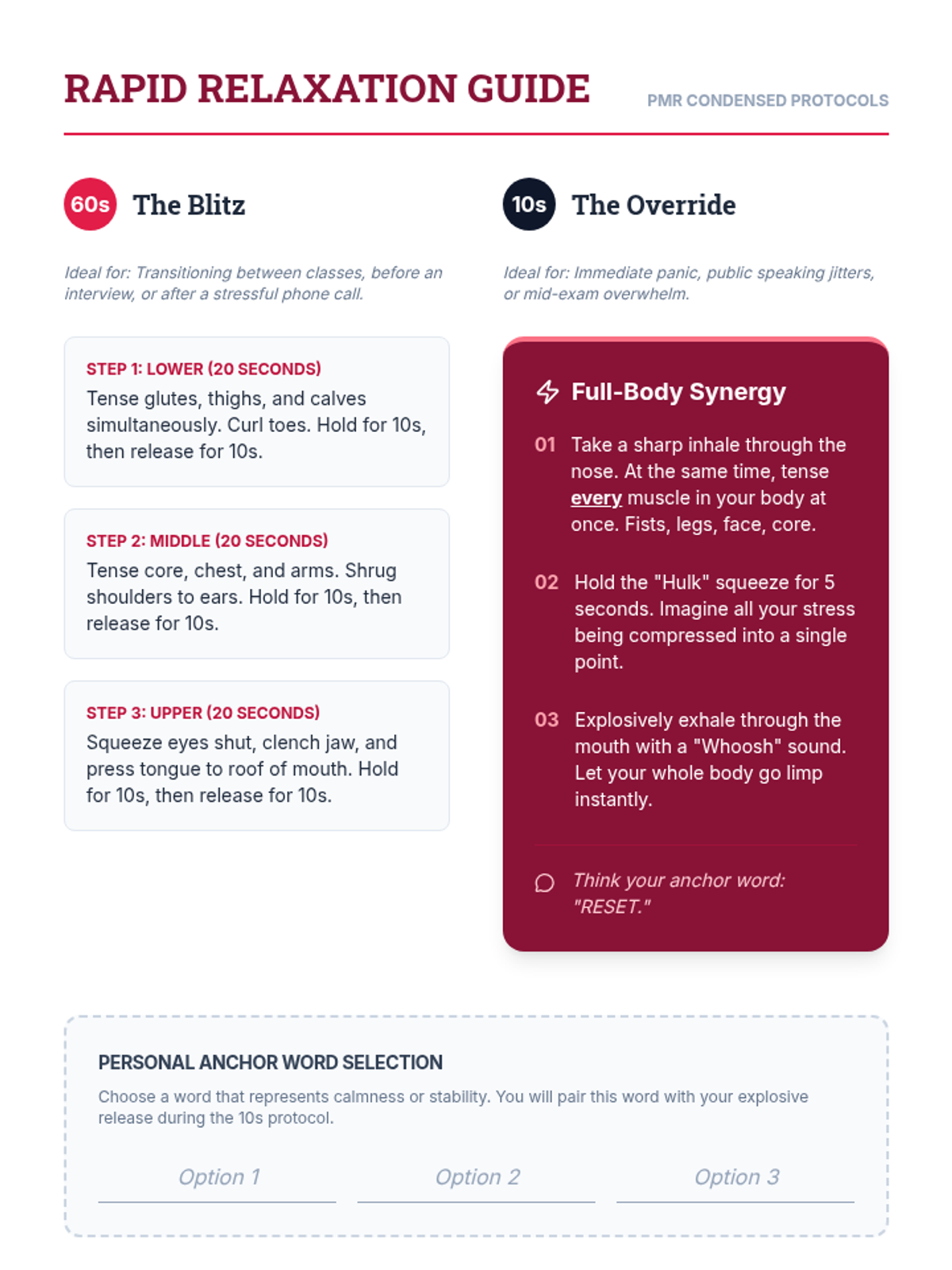
A small, high-density reference sheet for students summarizing the 60-second and 10-second rapid relaxation protocols.
Worksheet for students to evaluate mental health apps and digital tools, specifically focusing on their user interface and accessibility during high-stress moments.
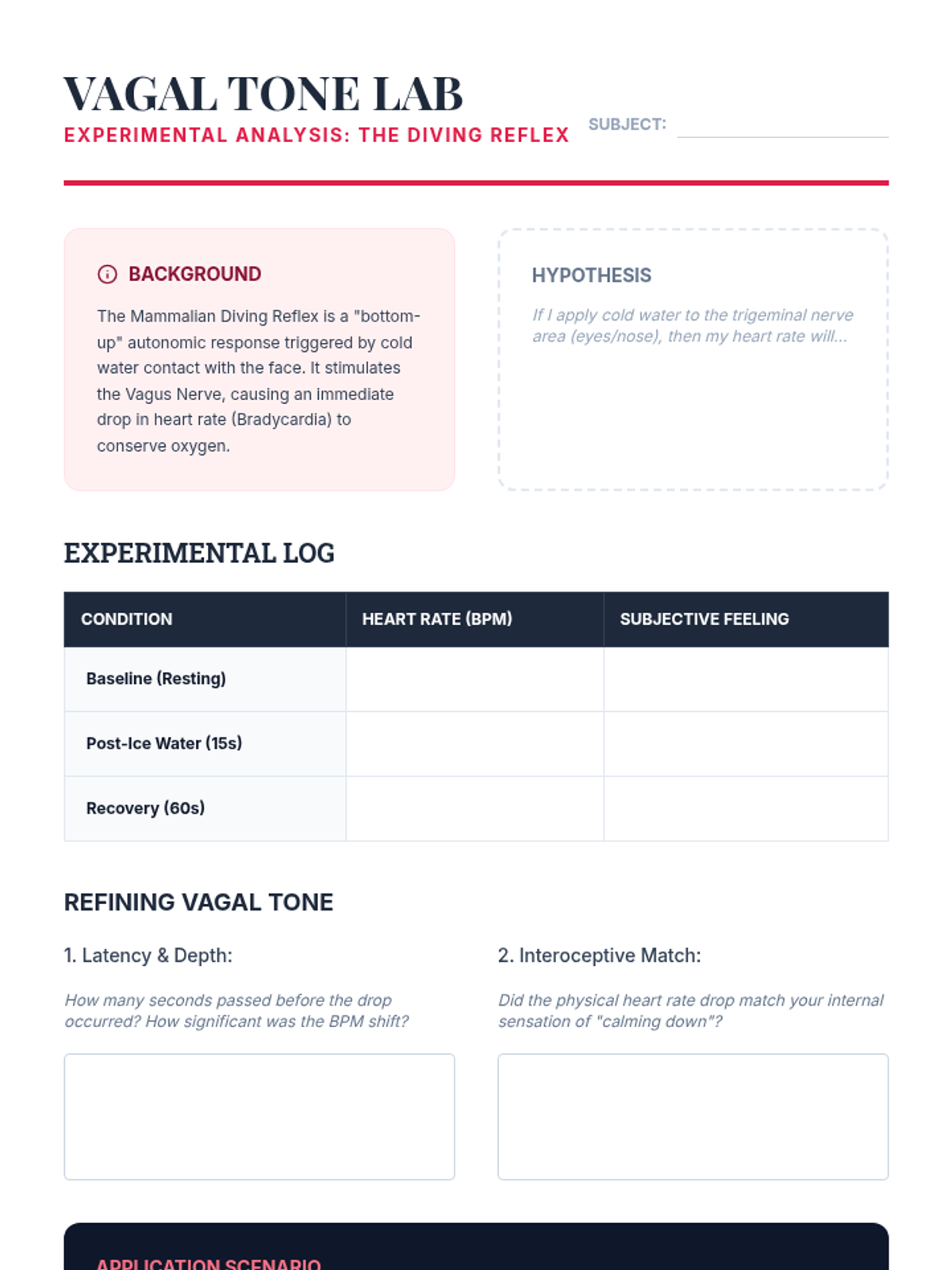
A lab report worksheet for students to record heart rate data during the diving reflex experiment and analyze the physiological shift.
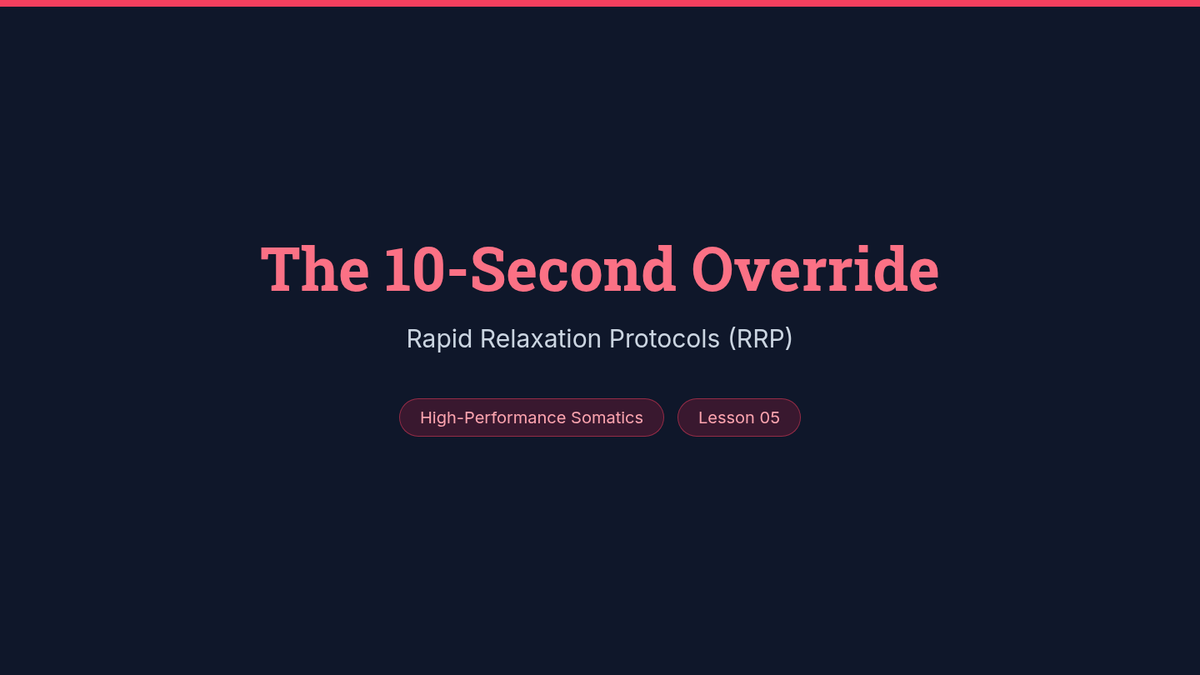
Visual presentation slides for Lesson 5, covering condensing PMR, 60-sec vs 10-sec protocols, and high-stress application.